Billionaire entrepreneur Mark Cuban warned that most CEOs lack the AI knowledge to navigate displacement by AI-native startups, framing the challenge as an “Innovator’s AI Dilemma” with shareholder litigation risk on both sides

The ‘Innovator’s AI Dilemma’

In a post on X Saturday, Cuban said that every entrepreneur who understands AI is creating companies aimed at completely replacing established players. If those startups gain momentum and cannot be acquired, CEOs face a tough choice: either dismantle and rebuild their companies as AI-native or stay the course and risk falling behind.

“Every entrepreneur that knows how to use AI is trying to find ways to build AI native companies that completely displace incumbents,” Cuban wrote on X.

Full story available on Benzinga.com

This post was originally published here

On Friday, global oil markets showed an unusual split between Brent crude changing hands for immediate delivery and the price investors are paying for Brent contracts tied to late June, a gap that signals traders expect the Strait of Hormuz disruption to be brief even as physical supplies tighten. That disconnect is landing alongside push for embargo arguments from Robin Brooks, who has said cutting off Iran’s oil exports is the kind of pressure campaign he believes is required to change state behavior.

In his Substack post, Brooks wrote that, despite the attention on the surging “spot” Brent number, the price he treats as the key benchmark is the front-month Brent futures contract, now the end-of-June contract, sitting at $112 a barrel. He describes the current setup as a scramble for prompt barrels after the Strait of Hormuz closure, while the futures curve reflects an assumption that conditions look better by June.

Why Brent Futures Are The Focus Now

In his post, Brooks lays out why the June futures contract matters more than the headline spot quote: futures embed expectations about when the conflict winds down and shipping routes normalize. Brooks also notes Brent was $72.5 before the war, so even the $112 futures level implies the market is not projecting a full return to pre-war conditions.

Brooks explains that when a futures contract gets close enough to expiration, it tends to get pulled toward the …

Full story available on Benzinga.com

This post was originally published here

Lucid Group (NASDAQ:LCID) shares closed down on Friday as the company faced challenges with its vehicle deliveries due to a supplier quality issue.

“During the quarter, deliveries of the Lucid Gravity were disrupted for 29 days due to a supplier quality issue with the second-row seats,” the firm said in a press release. 

This disruption impacted the production of the Lucid Gravity for 29 days, which has raised concerns about the company’s ability to meet customer demand.

During the first quarter, Lucid produced 5,500 vehicles and delivered 3,093, but the supplier issue has led the company to reaffirm its production guidance of 25,000-27,000 vehicles. To enhance shareholder engagement, Lucid is partnering with Say Technologies for a Q&A session during its upcoming earnings call on May 5, 2026.

The Consumer Discretionary sector, where Lucid operates, ranked 8 out of 11 sectors, closing unchanged, indicating that the stock’s decline may be more related to company-specific issues than broader market trends.

Technical Analysis

At $9.94, the stock is trading 4.1% below its 100-day simple moving average (SMA), suggesting a bearish trend in the intermediate term. Additionally, it is also trading 9.8% below its 200-day SMA, indicating continued weakness in the longer-term trend.

The stock’s 12-month performance shows a decline …

Full story available on Benzinga.com

This post was originally published here
President Donald Trump wants to spend $152 million to revive the historic Alcatraz prison.

The controversial move aims to transform the former island penitentiary into a modern high-security detention facility.

The proposal outlines initial funding to rebuild infrastructure and restart operations at the long-shuttered site near San Francisco.

BBC reports the plan has already sparked political backlash and logistical concerns.

Project Details And Strategic Intent

Trump’s budget seeks to reestablish Alcatraz as a cutting-edge correctional facility housing high-risk offenders.

Officials say the funding will cover early-stage reconstruction and operational setup.

The administration earlier signaled coordination between federal agencies, including the Justice Department and Homeland Security, to execute the plan. Trump stated the revamped prison would hold “America’s most ruthless and violent offenders.”

Political Pushback And Cost Concerns

Critics across …

Full story available on Benzinga.com

This post was originally published here

NATO Secretary General Mark Rutte will travel to Washington, D.C., from April 8012, for high-level meetings and events.

The visit comes amid rising tensions between the United States and its European allies over defense cooperation and the ongoing Iran conflict.

Rutte plans to meet President Donald Trump, Secretary of State Marco Rubio and Defense Secretary Pete Hegseth during his trip, according to official announcements.

Politico reports that the discussions are expected to address alliance unity, military commitments, and geopolitical tensions.

High-Stakes Diplomatic Engagement

Rutte will begin his visit on Wednesday with meetings at the White House and State Department. These talks aim to address strained relations within NATO and concerns over burden-sharing among member nations.

The visit follows recent criticism from Trump regarding NATO allies’ limited support …

Full story available on Benzinga.com

This post was originally published here
Retail investors talked up five hot stocks this week (March 30 to April 2) on X and Reddit’s r/WallStreetBets, driven by retail hype, Iran war, earnings, AI buzz, and corporate news flow.

Tesla Inc. (NASDAQ:TSLA), Micron Technology Inc. (NASDAQ:MU), Rocket Lab Corp. (NASDAQ:RKLB), Nike Inc. (NYSE:NKE), and Beyond Meat Inc. (NASDAQ:BYND), spanning investing, crypto, streaming, semiconductors, social media, and gaming, reflected diverse investor interests.

Tesla

  • Some retail investors mocked TSLA for the stock decline despite falling after missing delivery targets.
A comment on r/WallStreetBets subreddit.
Source: Reddit
  • The stock had a 52-week range of $214.25 to $498.83, trading around $360 to $361 per share, as of the publication of this article. It rose 27.53% over the year, fell by 17.30% and 19.82% over the last six months and year-to-date, respectively.
  • TSLA had a weaker price trend in the short, medium, and long term, with a moderate growth ranking, as per Benzinga’s Edge Stock Rankings.

Micron Technology

  • MU saw a volatile trading week as investor concerns over Google’s newly released TurboQuant AI algorithm, which could significantly compress memory requirements and potentially dampen long-term demand for high-bandwidth memory. However, analysts like Shawn Kim and Lennart Heim dismissed the market’s negative response, predicting that the technology will broaden AI adoption and fuel long-term demand. Consequently, they viewed the stock drop as a prime buying opportunity.
  • Some retail investors were joking about the volatility that MU’s stock has witnessed this week.

Full story available on Benzinga.com

This post was originally published here

Benzinga examined the prospects for many investors’ favorite stocks over the last week — here’s a look at some of our top stories.

U.S. stocks snapped a five-week losing streak with a strong rebound, as shifting signals from President Donald Trump around a potential Iran ceasefire briefly lifted investor sentiment. The S&P 500 posted its best weekly performance in months, recovering from a prolonged selloff even as volatility remained elevated. Optimism around diplomatic progress initially pushed oil prices lower and fueled a sharp rally, but markets quickly turned choppy as mixed messaging on the conflict reintroduced uncertainty.

Energy markets remained the dominant force, with crude surging back above $110 per barrel and triggering unusual pricing dynamics. The spike — driven by ongoing disruptions in the Strait of Hormuz and strong domestic refining demand — reinforced concerns about persistent inflation and its impact on economic growth. Despite the rebound in equities, elevated oil prices continued to cap upside and keep investors cautious.

Sector performance reflected the uneven recovery, with consumer-focused names under pressure as the war’s economic effects began to filter through earnings. Investors are now balancing signs of technical recovery against ongoing risks from geopolitics, inflation and energy markets, suggesting volatility is likely to persist in the near term.

Benzinga provides daily reports on the stocks most popular with investors. Here are a few of this past week’s most bullish and bearish posts that are worth another look.

The Bulls

EXCLUSIVE: Xanadu Jumps In Nasdaq Debut — Meet The Newest Quantum Stock,” by Erica Kollmann, reports that Xanadu Quantum Technologies Inc. (NASDAQ:XNDU) shares surged in their Nasdaq debut, jumping about 15% as investors cheered the company’s …

Full story available on Benzinga.com

This post was originally published here
Venture capitalist Chamath Palihapitiya warned private companies to go public immediately or risk being shut out of capital markets, citing shrinking investor appetite and AGI-driven valuation uncertainty, as companies like SpaceX, OpenAI, and Anthropic gear up for potential IPOs this year.

Speaking on an episode of the All-In podcast released late on Friday, Palihapitiya discussed the risks tied to the upcoming initial public offerings of several tech giants. He said the IPO market may be nearing saturation and warned that companies entering later in the cycle could face greater risks.

“I think the risk increases when you are at the tail end because the risk is that the diners will run out of space… you just can’t absorb incrementally trillions of dollars of new demand,” he said.

Sharing his views on the impending IPO frenzy and the potential risks involved, Palihapitiya compared the IPO pipeline to a Thanksgiving feast, stating that the initial companies to go public would have a competitive advantage, while those at the end of the chain might struggle …

Full story available on Benzinga.com

This post was originally published here

Anthropic has reportedly acquired stealth AI biology startup Coefficient Bio in an all-stock deal worth just over $400 million, as the AI startup behind the Claude chatbot eyes a potential IPO as early as October.

The acquisition was confirmed on Friday through a letter obtained by Newcomer.

A Moonshot For Science

Coefficient Bio was founded in September 2025 by Nathan Frey and Samuel Stanton, both formerly of Genentech‘s Prescient Design unit. Backed by venture firm Dimension, the startup develops AI models to automate complex laboratory workflows, including drug R&D planning and clinical regulatory strategy management.

The Newcomer reported that following the acquisition, Coefficient Bio will join Anthropic’s Health Care Life Sciences team, led by Eric Kauderer-Abrams.

Anthropic and Coefficient Bio did …

Full story available on Benzinga.com

This post was originally published here

Elon Musk has reportedly mandated the banks and advisors involved in SpaceX‘s upcoming initial public offering (IPO) to purchase subscriptions to the AI chatbot Grok.

The New York Times, citing sources, reported on Friday that some banks have agreed to spend millions annually on Grok and have begun integrating it into their IT systems as a mandatory condition for SpaceX IPO roles.

The company did not immediately respond to Benzinga‘s request for comment.

Wall Street’s Biggest Names Line Up As Bookrunners

The lead banks managing the IPO include Morgan Stanley (NYSE:MS), Goldman Sachs (NYSE:GS), JPMorgan Chase

Full story available on Benzinga.com

This post was originally published here

President Donald Trump has proposed a fiscal 2027 budget that would raise defense spending by some 44% while cutting non-defense discretionary programmes by 10%, according to a White House budget document released on Friday.

The proposed surge in defense spending to $1.5 trillion, up from about $1 trillion in 2026, “would ensure that the United States continues to maintain the world’s most powerful and capable military,” Budget Director Russell Vought wrote.

“President Trump promised to reinvest in America’s national security infrastructure, to make sure our Nation is safe in a dangerous world.”

Domestic Cuts Across Sectors

Trump’s proposal, which reflects his political priorities ahead of the 2026 midterm elections in November, comes amid mounting geopolitical tensions, with the administration deploying U.S. forces to the Middle East, even as rising fuel costs linked to the U.S.-Iran war add to economic strain at home.

The budget calls for …

Full story available on Benzinga.com

This post was originally published here

OpenAI‘s product and business chief Fidji Simo announced several leadership changes on Friday, after disclosing that she is taking medical leave due to a worsening neuroimmune condition called Postural Orthostatic Tachycardia Syndrome (POTS).

POTS Relapse Sidelines Product Chief

Simo, who joined OpenAI in May after serving as Instacart (NASDAQ:CART) CEO and spending more than a decade at Meta (NASDAQ:META), informed her staffers in a memo that she had been postponing medical tests and new therapies to remain focused on her job, according to a memo. However, she now needs to take time off to stabilize her health.

During an interview with CNBC in March, Simo revealed that she was diagnosed with POTS in 2019. The condition is a chronic disorder of the autonomic nervous system that makes it difficult for patients to maintain stable blood pressure, causing symptoms such as dizziness, fatigue and chest pain.

Full story available on Benzinga.com

This post was originally published here

Tesla, Inc. (NASDAQ:TSLA) stock may be hovering near $360, but one insider transaction just printed at a fraction of that — and it’s turning heads for the wrong reasons.

An SEC Form 4 filing shows Tesla Global VP Tom Zhu acquired 20,000 shares at just $20.57 per share. At first glance, that reads like a bold insider bet. But the reality is more nuanced — this wasn’t an open-market buy.

The $20 Catch

The transaction came through an options exercise, not a direct purchase in the market.

That distinction matters. Unlike traditional insider buying — where executives step …

Full story available on Benzinga.com

This post was originally published here

Ed Yardeni is making a clear call: “the market bottom is in”. Even after a volatile session, the veteran strategist told CNBC he’s sticking with that view — a sign of conviction at a time when markets are still searching for direction.

But one key signal isn’t lining up.

Volatility Isn’t Backing The Call

The Cboe Volatility Index, or VIX — widely seen as Wall Street’s “fear gauge” — is still hovering around the mid-20s, with a recent print near 24–27.

That’s not extreme panic territory, but it’s also far from calm. Volatility-linked ETFs like the iPath Series B S&P 500 VIX Short (BATS:VXX) and VIX Short-Term Futures ETF

Full story available on Benzinga.com

This post was originally published here
The United States is approaching a milestone that feels like a breaking point. The national debt has passed $39 trillion, and as it approaches the big 40, the math is becoming impossible to ignore.

Billionaire investor Jeffrey Gundlach—often dubbed “The Bond King”—believes the real issue isn’t just how much debt exists, but when the system stops functioning.

In a recent interview with Julia La Roche, Gundlach made it clear that the old playbook is no longer in play.

“We are no longer in a secular declining interest rate environment,” he said, signaling the end of a 40-year tailwind that made debt manageable.

At the same time, the U.S. is running roughly $2 trillion annual deficits, while interest costs have exploded from $300 billion to $1.4 trillion per year. That combination, Gundlach bluntly states, is “untenable.” The implication is that something has to give.

Inflation As a Tool

One path forward is as old as the postwar era—currency debasement. This strategy aims to repay debt in cheaper dollars through inflation.

After World War II, the U.S. used this exact approach, holding interest rates artificially low while inflation ran higher. The result was deeply …

Full story available on Benzinga.com

This post was originally published here

Industry experts are warning of rising cybersecurity risks from AI agents, saying these tools can identify and exploit system vulnerabilities faster and more persistently than human hackers.

Shlomo Kramer, founder and CEO of cybersecurity and networking company Cato Networks, told CNN, “The agentic attackers are coming. This is a watershed event in the history of cybersecurity.”

Experts warn that AI can both intensify existing risks and accelerate the creation of new software exploits, with Kramer cautioning that each new generation of models will bring more serious cybersecurity threats.  

“Behind Mythos is the next OpenAI model, and the next Google Gemini from Alphabet (NASDAQ:GOOG) (NASDAQ:GOOG), and a few months behind them are the open-source Chinese models,” he said.

AI Threats Trigger Cybersecurity Concerns

This warning …

Full story available on Benzinga.com

This post was originally published here
Tesla, Inc. (NASDAQ:TSLA) first-quarter delivery print didn’t collapse — but it didn’t inspire either. The EV giant reported 358,023 deliveries in the first quarter per their SEC filing, alongside production of 408,386 vehicles, pointing to a familiar pattern: output remains strong, but demand absorption is starting to look less convincing.

The gap between production and deliveries — roughly 50,000 vehicles — quietly raises questions about inventory build and underlying demand strength.

Model 3/Y Still Carry The Load

As expected, Tesla’s core lineup did the heavy lifting.

The Model 3/Y accounted for 341,893 deliveries, making up the overwhelming majority of volumes, while higher-end models — including Model S, X, and Cybertruck — contributed just 16,130 units.

That …

Full story available on Benzinga.com

This post was originally published here

Microsoft Corp. (NASDAQ:MSFT) will invest 1.6 trillion yen ($10 billion) in Japan through 2029 to expand AI infrastructure and cybersecurity cooperation, as the country faces a projected shortfall of more than 3 million AI workers by 2040, the company announced Friday.

The investment will be used to expand AI infrastructure and strengthen cybersecurity cooperation with the Japanese government, Reuters reported. As part of this initiative, Microsoft plans to train 1 million engineers and developers by 2030.

This announcement was made during a visit to Tokyo by Microsoft’s Vice Chair and President, Brad Smith.

The investment aligns with Japan’s Prime Minister Sanae Takaichi‘s vision to drive growth through advanced technologies while ensuring national security.

Local Partners, Sovereign Cloud Access

According to the report, Microsoft will collaborate with local companies such as SoftBank Group (OTC:SFTBY) (OTC:SFTBF) and Sakura Internet …

Full story available on Benzinga.com

This post was originally published here

In the fast-paced and cutthroat world of business, conducting thorough company analysis is essential for investors and industry experts. In this article, we will undertake a comprehensive industry comparison, evaluating NVIDIA (NASDAQ:NVDA) in comparison to its major competitors within the Semiconductors & Semiconductor Equipment industry. By analyzing crucial financial metrics, market position, and growth potential, our objective is to provide valuable insights for investors and offer a deeper understanding of company’s performance in the industry.

NVIDIA Background

Nvidia is a leading developer of graphics processing units. Traditionally, GPUs were used to enhance the experience on computing platforms, most notably in gaming applications on PCs. GPU use cases have since emerged as important semiconductors used in artificial intelligence to run large language models. Nvidia not only offers AI GPUs, but also a software platform, Cuda, used for AI model development and training. Nvidia is also expanding its data center networking solutions, helping to tie GPUs together to handle complex workloads.

Company P/E P/B P/S ROE EBITDA (in billions) Gross Profit (in billions) Revenue Growth
NVIDIA Corp 35.87 27.15 19.95 31.11% $51.28 $51.09 73.21%
Broadcom Inc 61.11 18.58 22.34 9.12% $11.15 $13.16 29.47%
Micron Technology Inc 17.36 5.73 7.17 21.0% $18.48 $17.75 196.29%
Advanced Micro Devices Inc 80.54 5.44 9.93 2.44% $2.86 $5.58 34.11%
Texas Instruments Inc 36.02 10.98 10.14 7.03% $2.07 $2.47 10.38%
Analog Devices Inc 58.61 4.63 13.50 2.46% $1.52 $2.04 30.42%
Qualcomm Inc 25.66 5.89 3.10 13.57% $4.11 $6.68 5.0%
Marvell Technology Inc 34.76 6.52 11.33 2.79% $0.75 $1.15 22.08%
Monolithic Power Systems Inc 87.05 15.57 19.38 4.95% $0.21 $0.41 20.83%
NXP Semiconductors NV 24.60 4.91 4.05 4.53% $0.98 $1.81 7.2%
ON Semiconductor Corp 214.48 3.19 4.27 2.33% $0.45 $0.55 -11.17%
GLOBALFOUNDRIES Inc 27.82 2.04 3.64 1.68% $0.73 $0.51 0.0%
First Solar Inc 14.03 2.24 4.11 5.62% $0.7 $0.67 11.15%
Tower Semiconductor Ltd 96.43 7.21 13.57 2.78% $0.13 $0.09 11.26%
Astera Labs Inc 87.16 13.27 22.39 3.41% $0.07 $0.2 91.77%
MACOM Technology Solutions Holdings Inc 103.78 12.71 16.85 3.64% $0.07 $0.15 24.52%
Credo Technology Group Holding Ltd 52.70 9.57 16.68 10.03% $0.16 $0.28 201.49%
Lattice Semiconductor Corp 4777 18.31 25.24 -1.08% $0.01 $0.1 24.16%
Rambus Inc 42.62 7.13 13.88 4.81% $0.09 $0.15 18.09%
Average 324.54 8.55 12.31 5.62% $2.47 $2.99 40.39%

Full story available on Benzinga.com

This post was originally published here

In today’s rapidly changing and highly competitive business world, it is vital for investors and industry enthusiasts to carefully assess companies. In this article, we will perform a comprehensive industry comparison, evaluating Micron Technology (NASDAQ:MU) against its key competitors in the Semiconductors & Semiconductor Equipment industry. By analyzing important financial metrics, market position, and growth prospects, we aim to provide valuable insights for investors and shed light on company’s performance within the industry.

Micron Technology Background

Micron is one of the largest semiconductor companies in the world, specializing in memory and storage chips. Its primary revenue stream comes from dynamic random access memory, or DRAM, and it also has minority exposure to not-and or NAND, flash chips. Micron serves a global customer base, selling chips into data centers, mobile phones, consumer electronics, and industrial and automotive applications. The firm is vertically integrated.

Company P/E P/B P/S ROE EBITDA (in billions) Gross Profit (in billions) Revenue Growth
Micron Technology Inc 17.36 5.73 7.17 21.0% $18.48 $17.75 196.29%
NVIDIA Corp 35.87 27.15 19.95 31.11% $51.28 $51.09 73.21%
Broadcom Inc 61.11 18.58 22.34 9.12% $11.15 $13.16 29.47%
Advanced Micro Devices Inc 80.54 5.44 9.93 2.44% $2.86 $5.58 34.11%
Texas Instruments Inc 36.02 10.98 10.14 7.03% $2.07 $2.47 10.38%
Analog Devices Inc 58.61 4.63 13.50 2.46% $1.52 $2.04 30.42%
Qualcomm Inc 25.66 5.89 3.10 13.57% $4.11 $6.68 5.0%
Marvell Technology Inc 34.76 6.52 11.33 2.79% $0.75 $1.15 22.08%
Monolithic Power Systems Inc 87.05 15.57 19.38 4.95% $0.21 $0.41 20.83%
NXP Semiconductors NV 24.60 4.91 4.05 4.53% $0.98 $1.81 7.2%
ON Semiconductor Corp 214.48 3.19 4.27 2.33% $0.45 $0.55 -11.17%
GLOBALFOUNDRIES Inc 27.82 2.04 3.64 1.68% $0.73 $0.51 0.0%
First Solar Inc 14.03 2.24 4.11 5.62% $0.7 $0.67 11.15%
Tower Semiconductor Ltd 96.43 7.21 13.57 2.78% $0.13 $0.09 11.26%
Astera Labs Inc 87.16 13.27 22.39 3.41% $0.07 $0.2 91.77%
MACOM Technology Solutions Holdings Inc 103.78 12.71 16.85 3.64% $0.07 $0.15 24.52%
Credo Technology Group Holding Ltd 52.70 9.57 16.68 10.03% $0.16 $0.28 201.49%
Lattice Semiconductor Corp 4777 18.31 25.24 -1.08% $0.01 $0.1 24.16%
Rambus Inc 42.62 7.13 13.88 4.81% $0.09 $0.15 18.09%
Average 325.57 9.74 13.02 6.18% $4.3 $4.84 33.55%

Full story available on Benzinga.com

This post was originally published here
In the dynamic and fiercely competitive business environment, conducting a thorough analysis of companies is crucial for investors and industry enthusiasts. In this article, we will perform an extensive industry comparison, evaluating Nike (NYSE:NKE) in relation to its major competitors in the Textiles, Apparel & Luxury Goods industry. By closely examining crucial financial metrics, market position, and growth prospects, we aim to offer valuable insights for investors and shed light on company’s performance within the industry.

Nike Background

Nike is the largest athletic footwear and apparel brand in the world. Footwear generates about two-thirds of its sales. Key performance footwear categories include basketball, running, and football (soccer). Its brands include Nike, Jordan (premium athletic footwear and clothing), NikeSkims (women’s athleisure), and Converse (casual footwear). Nike sells products worldwide through company-owned stores, franchised stores (including about 5,500 in China), and third-party retailers. The firm also operates e-commerce platforms in more than 40 countries. Nearly all its production is outsourced to contract manufacturers in more than 30 countries. Nike was founded in 1964 and is based in Beaverton, Oregon.

Company P/E P/B P/S ROE EBITDA (in billions) Gross Profit (in billions) Revenue Growth
Nike Inc 29.36 4.69 1.42 3.69% $0.77 $4.53 0.09%
Deckers Outdoor Corp 14.33 5.49 2.79 18.96% $0.65 $1.17 7.14%
On Holding AG 45.60 5.64 5.99 4.35% $0.1 $0.48 22.62%
Birkenstock Holding PLC 15.35 2.07 2.71 1.84% $0.11 $0.22 11.11%
Steven Madden Ltd 54.08 2.87 0.96 2.7% $0.04 $0.32 29.43%
Wolverine World Wide Inc 14.37 3.29 0.71 7.9% $0.05 $0.24 4.61%
Rocky Brands Inc 13.06 1.16 0.60 2.61% $0.01 $0.06 9.11%
Average 26.13 3.42 2.29 6.39% $0.16 $0.41 14.0%

Full story available on Benzinga.com

This post was originally published here

Amazon (NASDAQ:AMZN) has decided to impose a 3.5% “fuel and logistics-related surcharge” on third-party sellers availing its fulfillment services.

The surcharge, which comes into effect on April 17, is Amazon’s response to the oil price surge triggered by the Iran war, now in its fifth week. Amazon clarified in a note to sellers that the surcharge will apply to those in the U.S. and Canada and will be calculated on fulfillment fees rather than the items’ sale prices, reported CNBC on Thursday.

Amazon spokesperson Ashley Vanicek told the publication that the surcharge is “meaningfully lower” compared to those of other major carriers. On average, Fulfilment by Amazon (FBA) shipments incur an extra charge of 17 cents per unit, which varies by item size and dimensions.

The FBA service, popular among third-party sellers for picking, packing, and shipping items, has experienced “elevated costs in fulfillment and logistics” …

Full story available on Benzinga.com

This post was originally published here

Stabilis Solutions Inc (NASDAQ:SLNG) surged during Thursday’s session before pulling back in after-hours trading after the company disclosed the termination of a key LNG supply agreement.

SLNG closed the regular session up 4.29% at $4.62 but fell 11.66% after hours to $4.08.

Overview

Stabilis Solutions is a clean energy company focused on providing liquefied natural gas (LNG) solutions across North America. The stock has traded between a 52-week low of $3.21 and a high of $6.36.

Contract Termination

The company said it terminated a previously announced 10-year LNG supply agreement tied to its proposed Galveston liquefaction facility, according to a Form 8-K filed Thursday, for an …

Full story available on Benzinga.com

This post was originally published here
Skybridge Capital co-founder and former White House Communications Director Anthony Scaramucci alleged Friday that President Donald Trump‘s administration orchestrated a massive insider trading scheme tied to geopolitical announcements that yielded up to $400 million in illicit profits.

The $400 Million Strike Moratorium

In a recent video statement on X, Scaramucci detailed highly suspicious trading activity occurring just one hour before Trump announced a five-day moratorium on Iran strikes.

According to Scaramucci, insiders purchased $1.5 billion in notional S&P E-mini futures contracts. This was about four to six times the normal market volume. This took place alongside a simultaneous purchase of $192 million in crude oil futures.

“They made between $300 and $400 million dollars off those trades,” Scaramucci claimed. He further alleged that Trump fabricated a phone call with an Iranian official to justify the market-moving moratorium, noting that Iranian authorities denied the conversation ever took place.

“These people are making hundreds upon hundreds of millions of dollars trading on information that only exists inside the most powerful office in the world,” Scaramucci said. “This isn’t politics anymore. This is a financial operation running out of the White House.”

The White House did …

Full story available on Benzinga.com

This post was originally published here
Over the last six months, Thursdays have become the market’s problem child. 

Data from Bespoke Investment Group shows that over the last six months the S&P 500 (tracked by the SPDR S&P 500 ETF Trust (ARCA:SPY)) has averaged a 0.54% decline on Thursdays, by far the worst performance of any trading day during that period. 

Friday hasn’t fared much better, slipping an average of 0.08%, while the first three trading days of the week—Monday through Wednesday—have all recorded average gains.

The pattern has been so consistent that it raises eyebrows among traders looking for short-term seasonal trends. 

According to Bespoke’s six-month data, investors would have been far better off limiting exposure to just the first three days of the week. 

Hypothetically, an S&P 500 strategy that bought at the …

Full story available on Benzinga.com

This post was originally published here

Iran’s Speaker of the Parliament, on late Thursday, took to X to threaten a targeted exposure of American financiers, asking the public whether he should reveal Wall Street insiders he says are allegedly manipulating U.S. policy against Tehran.

Following The Money

Mohammad Bagher Ghalibaf, Iran’s Parliament Speaker, said Tehran has uncovered a coordinated financial campaign aimed at dictating America’s military posture.

“We followed the money,” Ghalibaf declared in his post. He alleged that just last week, “a handful of bankers and hedge funds met, decided to hold Washington’s Iran war policy hostage, then launched a campaign.” Concluding the explosive accusation, he posed a direct and menacing question to the internet: “Name names?”

Full story available on Benzinga.com

This post was originally published here

U.S. stock markets are shuttered today, April 3, in observance of Good Friday, marking a quiet start to the Easter holiday weekend across global financial hubs.

Exchange Closures And Trading Resumption

Both the New York Stock Exchange (NYSE) and the Nasdaq are closed today. While Good Friday is not a federal holiday, it remains a traditional non-trading day for U.S. equities.

Investors should note that regular trading hours will resume on Monday, April 6. According to the Securities Industry and Financial Markets Association, the U.S. bond market is entirely closed for the Friday holiday.

Banking And Postal Services

Despite the market freeze, most daily infrastructure remains operational. The U.S. Postal Service is maintaining normal operations, with mail delivery proceeding as scheduled.

Similarly, private carriers United Parcel Service …

Full story available on Benzinga.com

This post was originally published here

Investor Gary Black of The Future Fund LLC has reaffirmed that his decision to exit his position in Tesla Inc. (NASDAQ:TSLA) as the EV giant reported a Q1 delivery miss.

Exiting Tesla Was The Right Call

In a post on the social media platform X on Thursday, the investor shared that his firm had exited Tesla last year. “We took a lot of grief from $TSLA bulls on X when we exited the balance of our TSLA position last May at $358,” he said, adding that the move has been the “right call,” as Tesla has “struggled to turn around its core EV business” and shift towards a “highly competitive” autonomous driving sector “without advertising investment.”

Full story available on Benzinga.com

This post was originally published here
U.S. stocks finished mixed Thursday, with the Dow Jones Industrial Average slipping 0.13% to 46,504.67, while the S&P 500 edged up 0.11% to 6,582.69 and the Nasdaq climbed 0.18% to 21,879.18.

These are the top stocks that gained the attention of retail traders and investors through the day:

Sky Quarry Inc. (NASDAQ:SKYQ)

Sky Quarry’s stock soared by 101.58%, closing at $5.10. It reached an intraday high of $5.89 and a low of $3.75, with a 52-week range of $15.52 to $1.66. In the after-hours trading, the stock fell 3.14% to $4.94.

Sky Quarry shares rose after the company said it held talks with Nevada crude producers to boost local supply for its Foreland Refinery.

The update came as Brent crude topped $110 per barrel and regional refinery capacity tightened, positioning the company to benefit from stronger local fuel demand.

Sidus Space Inc. (NASDAQ:SIDU)

Sidus Space’s shares jumped 47.14%, closing at $3.09. The stock hit a high of $3.20 and a low of $2, with a 52-week high of $5.39 and …

Full story available on Benzinga.com

This post was originally published here
Elon Musk‘s SpaceX is targeting a valuation of more than $2 trillion in its upcoming initial public offering (IPO), making it a record-setting debut.

The commercial space firms is targeting a June listing at a valuation that would dwarf Saudi Aramco‘s much-hyped $29 billion debut in 2019. Executives at SpaceX plan to meet this month with prospective IPO investors and might include more details that would support the valuation, Bloomberg reported, citing sources it didn’t identify.

On Wednesday, SpaceX submitted a confidential draft initial public offering (IPO) registration to the U.S. Securities and Exchange Commission (SEC).

By filing confidentially, SpaceX can receive SEC feedback and make adjustments before its prospectus becomes public.

According to previous media reports, Bank of America, Goldman Sachs, JPMorgan Chase, and Morgan Stanley have all secured senior roles on the deal. …

Full story available on Benzinga.com

This post was originally published here

President Donald Trump fired Attorney General Pam Bondi on Thursday.

Her now‑infamous comment that “the Dow is over 50,000 dollars” has aged as badly as the market tape she pointed to back in February. 

Dow Since The ‘Over 50,000′ Boast

Bondi made her “Dow is over 50,000” remark during a contentious February 11 House Judiciary hearing, using record stock prices to swat away questions about the Jeffrey Epstein files and uncharged accomplices. 

At that point, the Dow had only recently notched its first historic close above 50,000 and was still hovering near record territory.

Since then, the index has tumbled. 

The Dow Jones Industrial Average …

Full story available on Benzinga.com

This post was originally published here
Venture investments saw “unprecedented spending” on AI compute and frontier labs, as investors poured $300 billion into 6,000 startups during the first quarter of this year.

Notably, funding for startups in the first quarter of 2026 alone accounted for nearly 70% of the total venture capital invested throughout all of 2025, a report by Crunchbase noted. This quarterly figure also exceeded the annual investment totals seen in any year prior to 2018.

Much of the capital in Q1 was concentrated in artificial intelligence startups, with a significant share directed toward a small group of U.S.-based companies through record-breaking deals.

Four of the five largest venture funding rounds ever documented occurred during this period. Leading the group were frontier AI firms OpenAI ($122 billion), Anthropic ($30 billion), xAI ($20 billion), along …

Full story available on Benzinga.com

This post was originally published here

Stripe, Coinbase Global, and Cloudflare are working together to form a nonprofit foundation called the x402 Foundation, which will manage the open x402 protocol for seamless online payments.

The foundation will be built under the Linux Foundation and will act as a neutral organization supporting x402, a universal payment standard. This standard allows payments to be built directly into everyday web interactions, so AI agents, APIs, and apps can send and receive money just as easily as they share data.

“By moving the x402 protocol under the stewardship of the Linux Foundation, we are ensuring that the future of agentic commerce remains neutral, …

Full story available on Benzinga.com

This post was originally published here

U.S. tech titans are beating the defense sector amid an escalating geopolitical situation—a rare phenomenon in the markets.

Since the Iran conflict began on Feb. 28, the iShares U.S. Aerospace & Defense ETF (BATS:ITA), the fund used as a proxy for tracking the defense sector, has lost about 8.7%. Meanwhile, shares of Nvidia Corp (NASDAQ:NVDA) have lost just 1.3%, and those of Apple Inc (NASDAQ:AAPL) have slipped about 4.3%.

This phenomenon represents a significant deviation from the past, when the defense sector tended to rally amid heightened global tensions. The basic rationale was that tensions would boost military spending.

Flipping The Traditional Playbook

Technology stocks were thought to be the sector most vulnerable amid escalating tensions. Rising inflation and interest-rate uncertainty, often triggered by conflict-driven energy shocks, tend to pressure high-growth sectors. Yet, this time, Big Tech has proven more resilient than expected.

U.S. tech stocks have re-emerged as …

Full story available on Benzinga.com

This post was originally published here
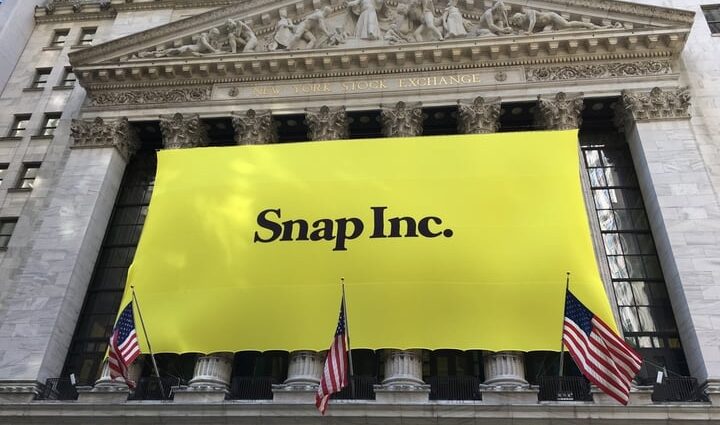
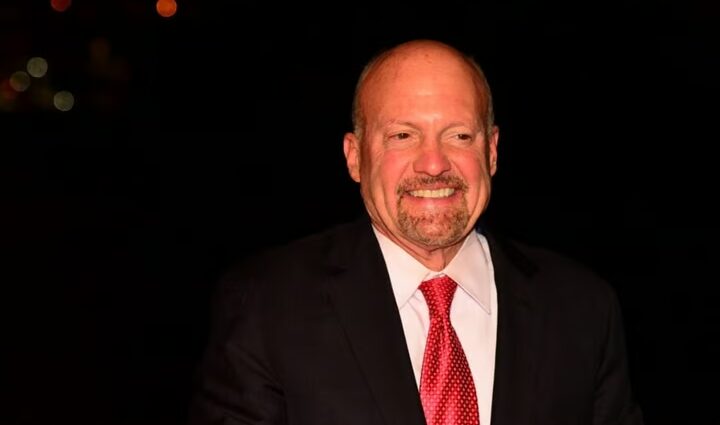
CNBC host Jim Cramer warned on Thursday that surging crude prices could trigger a painful equity selloff, arguing that oil’s parabolic move under President Donald Trump risks a 20% stock market drawdown.

Cramer’s 20% Selloff Warning

Cramer highlighted in an X.com post that crude oil is “up 87% for the year,” tying the move directly to Washington’s handling of energy and Middle East risk.

He blasted what he called a “mind-boggling misdirection play” from the president, suggesting policy rhetoric is ignoring the inflation shock building in real time at the pump.

In a stark historical claim, Cramer said, “Remember we don’t have any instances of oil being up 100% and the market NOT being down 20%. So here we go again…,” framing the current spike as a classic prelude to an equity air pocket. 

Full story available on Benzinga.com

This post was originally published here

Kura Sushi USA, Inc. (NASDAQ:KRUS) will release earnings for its second quarter after the closing bell on Tuesday, April 7.

Analysts expect the Irvine, California-based company to report quarterly loss of 20 cents per share, versus a loss of 14 cents per share in the year-ago period. The consensus estimate for Kura Sushi’s quarterly revenue is $77.59 million (it reported $64.89 million last year), according to Benzinga Pro.

On Jan. 22, Kura Sushi USA announced the election of Claudia Schaefer to the company’s board of directors.

Kura Sushi shares fell 2.4% to trade at $67.71 on Thursday.

Benzinga readers can access the latest analyst ratings on the Analyst Stock Ratings page. Readers can sort by stock ticker, company name, analyst firm, rating change or other variables.

Let’s have a look at how Benzinga’s most-accurate …

Full story available on Benzinga.com

This post was originally published here

KKR (NYSE:KKR) has announced the closure of its KKR North America Fund XIV, known as NAX4. 

This fund, dedicated exclusively to private equity investments in North America, has raised approximately $23 billion — making it the largest private equity fund focused solely on the region, KKR stated in a press release.

NAX4 attracted a wide array of investors, including public and private pension plans, sovereign wealth funds, and insurance companies, among others. The fund aims to continue its predecessor’s strategy of supporting companies with broad-based employee ownership programs, which KKR views as essential for fostering stronger companies and expanding financial opportunities.

“Raising our largest fund in this environment reflects the consistency of our approach and the work our teams are doing inside our portfolio companies …

Full story available on Benzinga.com

This post was originally published here

The lawyer who got Kalshi legalized in 2024 is now at the Department of Justice, suing three states to protect the prediction market industry.

Yaakov Roth, principal deputy assistant attorney general, filed federal lawsuits Thursday against Illinois, Arizona and Connecticut to block state gambling regulators from touching CFTC-registered prediction markets. Illinois Gov. J.B. Pritzker is named as a defendant.

What The Feds Are Arguing

CFTC Chairman Mike Selig said the agency would “defend market participants against overzealous state regulators” and warned against a “fragmented patchwork” of state-by-state rules.

The core claim: event contracts on platforms like Kalshi, Polymarket and Crypto.com are federal derivatives, not sports bets.

The complaints argue that state cease-and-desist orders make it impossible for exchanges to comply with the CFTC’s requirement to provide “impartial access” to all participants nationwide.

If a state bans the contract, the …

Full story available on Benzinga.com

This post was originally published here

Delta Air Lines, Inc. (NYSE:DAL) will release earnings for its first quarter before the opening bell on Wednesday, April 8.

Analysts expect the company to report earnings of 62 cents per share. That’s up from 46 cents per share in the year-ago period. The consensus estimate for Delta Air’s quarterly revenue is $14.8 billion (it reported $14.04 billion last year), according to Benzinga Pro.

Shares of airline companies traded lower on Thursday amid oil price gains after President Trump indicated that the U.S. would continue strikes against Iran over the next few weeks with no set timeline for ending the conflict.

With the recent buzz around Delta Air Lines, some investors may be eyeing potential gains from the company’s dividends too. As of now, Delta Air has an annual dividend yield of 1.13%, which is a quarterly dividend amount of 18.75 cents per share (75 cents a year).

To figure …

Full story available on Benzinga.com

This post was originally published here

Lamb Weston Holdings, Inc. (NYSE:LW) on Wednesday posted stronger-than-expected earnings and revenue for the third quarter.

The company reported third-quarter adjusted earnings per share of 72 cents, beating the analyst consensus estimate of 61 cents. Quarterly sales of $1.565 billion outpaced the Street view of $1.492 billion.

Lamb Weston raised its 2026 sales guidance to $6.45 billion to $6.55 billion from $6.35 billion to $6.55 billion. The company projects adjusted EBITDA of $1.08 billion to $1.14 billion (prior view: $1 billion to $1.20 billion).

“Our focus on operational rigor and cost discipline continues to drive strong productivity, and we now expect to exceed our cost reduction target of at least $250 million by fiscal year-end 2028,” said CEO Mike …

Full story available on Benzinga.com

This post was originally published here

Penguin Solutions Inc. (NASDAQ:PENG) on Wednesday posted upbeat second-quarter results and raised its full-year outlook.

Net sales were $343 million, down 6% year over year but above the $337.938 million estimate. Adjusted EPS was 52 cents, beating the 42-cent estimate, while GAAP diluted EPS rose to 58 cents from 9 cents.

CEO Kash Shaikh said, “Enterprises, governments, and neocloud providers are racing to build AI factories, as platforms scale to power the next generation of inference workloads. Our AI/HPC pipeline continues to expand, and we added five AI/HPC customers this quarter, including a Tier One financial institution deploying our MemoryAI™ CXL-based KV …

Full story available on Benzinga.com

This post was originally published here

Marex Group Plc has created the first structured note tied to a prediction market outcome, paying a 7% coupon if NVIDIA Corp (NASDAQ:NVDA) remains the world’s largest company in one year.

The deal is the latest evidence of how prediction markets are shaping the financial world.

How It Works

Polymarket runs markets where traders bet on which company will be the largest by market cap at the end of each month and at the end of the year.

Nvidia is currently the dominant favorite across all of them.

But the contracts are binary. If Nvidia loses the top spot, a trader who bet on it loses everything they put in.

The Marex note works differently.

The buyer’s capital is protected regardless of the outcome. If Nvidia is still No. 1 in a year, they collect a 7% coupon. If not, they get …

Full story available on Benzinga.com

This post was originally published here

Amazon.com, Inc. (NASDAQ:AMZN) traded flat as analysts reiterated bullish views and raised price targets, signaling steady investor confidence.

The company also drew attention for expanding AI partnerships and potential satellite deal talks, reinforcing its long-term growth strategy.

Wells Fargo analyst Ken Gawrelski maintains an Overweight rating on the stock and raises the price forecast from $304 to $305.

According to Benzinga Pro, AMZN stock has gained over 6% in the past year. Investors can gain exposure to the stock via Global X PureCap MSCI Consumer Discretionary ETF (NYSE:GXPD).

AI Pact With Reply

Separately, Reply has entered a strategic collaboration agreement with Amazon Web Services to accelerate cloud and artificial intelligence adoption across global markets, with a strong emphasis on scaling enterprise-grade generative AI solutions.

The agreement focuses heavily on advancing AI deployment using AWS infrastructure, while leveraging Reply’s specialized firms to build industry-specific solutions and governance frameworks aligned with evolving regulations.

Amazon Drives Public Sector AI Growth

In another development, CGI Inc. (NYSE:GIB)

Full story available on Benzinga.com

This post was originally published here

On Thursday, Rezolve AI PLC (NASDAQ:RZLV) said DBLP Sea Cow Limited, linked to CEO Dan Wagner, acquired 9 million shares since Jan. 1, 2026.

The company called the move a “vote of confidence” in its long-term strategy, with Wagner citing strong momentum in its AI-driven commerce platform.

The shares were purchased through a mix of direct issuance and private transactions, strengthening DBLP Sea Cow’s position as a key investor.

Rezolve AI Technical Analysis

At $3.19, the stock is trading 19.1% above its 20-day simple moving average (SMA), the stock’s average price over the …

Full story available on Benzinga.com

This post was originally published here

Elon Musk’s biographer Walter Isaacson says the SpaceX IPO filing may be a step toward something much bigger, calling the potential listing Musk’s “biggest act” and predicting he will eventually push to fold all his companies into one.

Isaacson said that ever since Musk was a kid with very few friends, the notion of humanity becoming a multiplanetary species has been what drives him most.

SpaceX confidentially filed its S-1 with the SEC this week, putting the company on track for a potential June listing.

Reports suggest the company could seek a valuation north of $1.75 trillion and raise up to $75 billion, which would make it the largest IPO in history.

Isaacson Says The Pieces Are Coming Together

Isaacson said if Musk could put data centers in orbit and then build …

Full story available on Benzinga.com

This post was originally published here

Oil above $110 is back—but the biggest moves aren’t showing up where you’d expect.

While giants like Exxon Mobil Corp (NYSE:XOM) and Chevron Corp (NYSE:CVX) grind higher, it’s a much smaller name that’s suddenly stealing the spotlight: Sky Quarry Inc. (NASDAQ:SKYQ). SKYQ stock was up over 80% on Thursday.

And the reason goes beyond just a sharp stock move.

Why Smaller Names React Differently

For oil majors, higher crude typically means better margins—but the impact is spread across refining, chemicals, and global operations. The result is steady, incremental upside.

For smaller players, …

Full story available on Benzinga.com

This post was originally published here
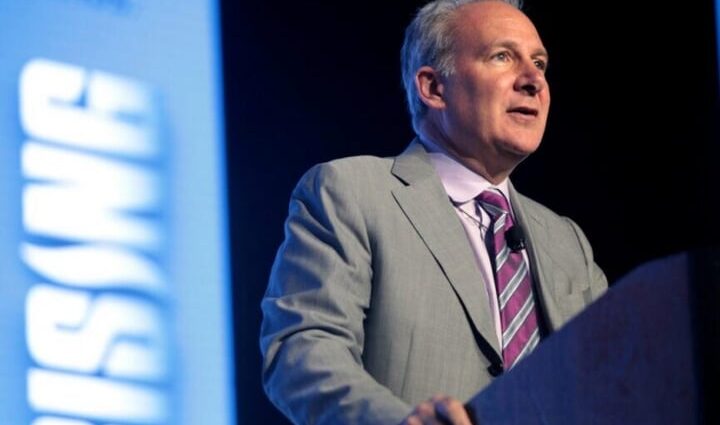
Viasat Inc (NASDAQ:VSAT) shares are climbing Thursday. The stock is participating in a massive sector-wide rally.

The Nasdaq is down 0.29% while the S&P 500 has shed 0.23%.

SpaceX IPO Buzz Lifts Sentiment

The move follows reports that SpaceX filed for a confidential initial public offering. The company may target a June debut at a $1.75 trillion valuation. This news sparked expectations of fresh capital inflows across the space economy.

M&A Chatter Adds Momentum

Additional upside stems from deal speculation involving Globalstar Inc (NYSE:GSAT). Reports suggest the company is in acquisition talks with Amazon.com Inc

Full story available on Benzinga.com

This post was originally published here

U.S. stocks traded lower midway through trading, with the Dow Jones index falling more than 100 points on Thursday.

The Dow traded down 0.27% to 46,441.45 while the NASDAQ fell 0.08% to 21,823.12. The S&P 500 also fell, dropping, 0.06% to 6,571.55.

Leading and Lagging Sectors

Real estate shares climbed by 0.8% on Thursday.

In trading on Thursday, consumer discretionary stocks fell by 1.1%.

Top Headline

Shares of Acuity Inc. (NYSE:AYI) fell around 5% on Thursday after the company reported mixed fiscal second-quarter 2026 results, as a revenue miss offset an earnings beat.

Quarterly net sales rose 4.9% year over year to $1.06 billion, falling short of the $1.09 billion consensus estimate. Adjusted earnings came in at $4.14 per share, ahead of expectations of $4.06.

Equities Trading UP
           

  • Sky Quarry Inc (NASDAQ:SKYQ) shares shot up 67% to $4.23 after the company announced that it’s in discussions with crude oil companies in Nevada about increasing local production that could …

Full story available on Benzinga.com

This post was originally published here

Kalshi asked the U.S. Patent and Trademark Office to classify its product under the gambling industry in a November trademark filing, even as CEO Tarek Mansour continues to argue publicly that his platform has nothing to do with sports betting.

The filing shows Kalshi tied its “prediction market” trademark application to “bookmaking services” and “sports betting and gambling tournaments.”

The company said its trademark strategy was “intentionally broad” and designed to protect the term from competitors in adjacent categories.

Kalshi’s Identity Crisis

The filing lands at an awkward time.

Kalshi is currently fighting lawsuits from Nevada, Massachusetts and Washington state, plus criminal charges in Arizona, all arguing its platform is an unlicensed gambling operation.

The company’s core legal defense rests on being a CFTC-regulated financial exchange, not a sportsbook.

A George Washington University study published in …

Full story available on Benzinga.com

This post was originally published here

Intel Corp. (NASDAQ:INTC) shares are climbing Thursday. This move comes despite a broader market retreat. The Nasdaq is currently down 0.28%. Meanwhile, the S&P 500 has shed 0.19%.

Massive Repurchase Deal In Ireland

The primary catalyst is a $14.2 billion agreement. Intel will repurchase Apollo Global Management’s (NYSE:APO) 49% stake in its Ireland Fab 34 joint venture for $14.2 billion, restoring full ownership. The buyback reverses a 2024 deal that gave Intel financial flexibility to fund advanced chip manufacturing.

The transaction will be funded with cash and about …

Full story available on Benzinga.com

This post was originally published here

Ares Management Corporation (NYSE:ARES) has closed on more than $9.8 billion for its Opportunistic Credit strategy. This includes the final closing of Ares Special Opportunities Fund III LP (ASOF III) and related transactions.

ASOF III, with more than $8.3 billion in equity commitments, has surpassed its target and the size of its previous fund. This fund is now one of the largest pools of private capital dedicated to opportunistic credit, the company said in a press release.

The strategy focuses on working with middle-market companies to provide flexible capital solutions, to support both organic and inorganic growth, refinancing, and returning capital to shareholders. ASOF III aims to fill the gap between traditional corporate lending and private equity by offering private debt, equity, and hybrid solutions.

“For …

Full story available on Benzinga.com

This post was originally published here
Top Wall Street analysts changed their outlook on these top names. For a complete view of all analyst rating changes, including upgrades, downgrades and initiations, please see our analyst ratings page.

  • Piper Sandler analyst Brian Mullan upgraded Wingstop Inc (NASDAQ:WING) from Neutral to Overweight and lowered the price target from $283 to $190. Wingstop shares closed at $144.87 on Wednesday. See how other analysts view this stock.
  • Roth Capital analyst Bill Kirk upgraded Tilray Brands, Inc. (NASDAQ:TLRY) from Neutral to Buy and maintained the price target of $10. Tilray Brands shares closed at …

Full story available on Benzinga.com

This post was originally published here
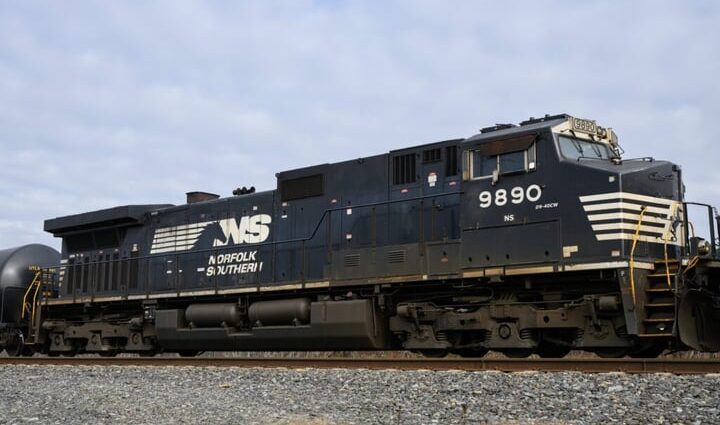
Western Digital Corp. (NASDAQ:WDC) shares fell on Thursday. This move follows a sharp 8.71% surge during Wednesday’s session. The broader markets also faced pressure. The Nasdaq fell 0.24%, while the S&P 500 shed 0.12%.

Geopolitical Friction Impacts Tech Sentiment

Market volatility follows President Donald Trump’s announcement to extend “Operation Epic Fury.” Trump warned of strikes on Iran for “two to three weeks” more. “We are going to hit them extremely hard,” Trump stated during his address.

This escalation has caused a historic decoupling between oil and equities.

The AI Storage’ Gold Mine’

CNBC’s Jim …

Full story available on Benzinga.com

This post was originally published here

Top Wall Street analysts changed their outlook on these top names. For a complete view of all analyst rating changes, including upgrades, downgrades and initiations, please see our analyst ratings page.

  • BTIG analyst Andre Madrid initiated coverage on StandardAero, Inc. (NYSE:SARO) with a Buy rating and announced a price target of $35. StandardAero shares closed at $26.25 on Wednesday. See how other analysts view this stock.
  • Roth Capital analyst Philip Shen initiated coverage on TOYO Co., Ltd. (NASDAQ:TOYO) with a Buy rating and announced a price target of $15. Toyo shares closed at …

Full story available on Benzinga.com

This post was originally published here
Top Wall Street analysts changed their outlook on these top names. For a complete view of all analyst rating changes, including upgrades and downgrades, please see our analyst ratings page.

  • BMO Capital raised the price target for Exelon Corporation (NASDAQ:EXC) from $51 to $52. BMO Capital analyst James Thalacker maintained an Outperform rating. Exelon shares closed at $48.88 on Wednesday. See how other analysts view this stock.
  • RBC Capital raised Methanex Corporation (NASDAQ:MEOH) price target from $55 to $65. RBC Capital analyst Nelson Ng downgraded the stock from Outperform to Sector Perform. Methanex shares closed at $59.04 on Wednesday. See how other analysts view this stock.
  • Stifel slashed price target for ServiceNow, Inc. (NYSE:NOW) from $180 to $135. Stifel analyst Brad Reback maintained a Buy rating. ServiceNow shares closed at $104.04 on Wednesday. See how other analysts view this stock.
  • Barclays slashed the price target for Lamb Weston Holdings, …

Full story available on Benzinga.com

This post was originally published here

The most oversold stocks in the consumer staples sector presents an opportunity to buy into undervalued companies.

The RSI is a momentum indicator, which compares a stock’s strength on days when prices go up to its strength on days when prices go down. When compared to a stock’s price action, it can give traders a better sense of how a stock may perform in the short term. An asset is typically considered oversold when the RSI is below 30, according to Benzinga Pro.

Here’s the latest list of major oversold players in this sector, having an RSI near or below 30.

Dollar General Corp (NYSE:DG)

  • On March 24, Dollar General named Jerry W. Fleeman Jr as CEO, effective Jan. 1, 2027, succeeding Todd Vasos. The company’s stock fell around 22% over the past month and has a 52-week low of $84.70.
  • RSI Value: 29.7
  • DG Price Action:

Full story available on Benzinga.com

This post was originally published here
Blue Owl Capital (NYSE:OWL) capped redemptions in both its funds at 5% after investors requested withdrawals of 22% and 41% in its private credit and technology-focused funds, respectively.

The firm attributed the above-average number of requests to “heightened market concerns around AI-related disruption to software companies.”

“We continue to observe a meaningful disconnect between the public dialogue on private credit and the underlying trends in our portfolio,” Blue Owl wrote in a letter to shareholders and reported by CNBC.

Shares of Blue Owl stock are down around 2% midday and the stock remains down almost 60% in a year.

Other firms have capped redemptions as the private credit market has come …

Full story available on Benzinga.com

This post was originally published here

Planet Labs PBC (NYSE:PL) shares are climbing Thursday. The stock is participating in a massive sector-wide rally.

SpaceX IPO Buzz Lifts Sector Sentiment

The move is being fueled by reports that SpaceX has confidentially filed for an initial public offering, potentially targeting a June debut at a valuation north of $1.75 trillion. If realized, it would mark the largest IPO on record—sparking expectations of fresh capital inflows and renewed investor focus across the space economy.

M&A Chatter Adds Momentum

Additional upside is coming from deal speculation surrounding Globalstar Inc. (NYSE:GSAT), which is reportedly in acquisition talks with

Full story available on Benzinga.com

This post was originally published here

President Donald Trump delivered his first nationally televised address on the Iran conflict, and instead of offering an off-ramp, he escalated.

He threatened to hit Iranian power plants and water desalination facilities “extremely hard” within two to three weeks, reiterated his April 6 deadline for the Strait of Hormuz to reopen, and went further.

“Iran’s ‘New Regime President’ is asking the United States for a Ceasefire… Until then, we are blasting Iran into oblivion or, as they say, back to the Stone Ages!!!,” Trump wrote on social media Wednesday.

WTI crude – as tracked by the United States Oil Fund (NYSE:USO) – surged 9% to $110 a barrel Thursday morning, and the stocks most exposed to jet fuel, diesel, and consumer spending are leading the selloff.

What Did Trump Actually Say — And Why Did Oil React?

Oil fell earlier this week precisely because traders expected Trump’s prime-time address to be an off-ramp.

The speech contained no plan for reopening the Strait.

Instead, the president outlined a 2–3 week intensification of the air campaign, threatened to destroy Iran’s electricity generating plants and water desalination facilities if no deal emerges.

Dennis DeBusschere, portfolio strategist at 22V Research, said the implications of Trump’s Hormuz handoff were stark. “Just pulling out of the gulf hands over some control of U.S. oil and gasoline prices to other countries, not least Iran,” DeBusschere said.

According to DeBusschere, that move amounts to ceding pricing power to actors with interests that directly diverge from Washington’s — and he described the rationale for such a …

Full story available on Benzinga.com

This post was originally published here
As of April 2, 2026, two stocks in the industrials sector could be flashing a real warning to investors who value momentum as a key criteria in their trading decisions.

The RSI is a momentum indicator, which compares a stock’s strength on days when prices go up to its strength on days when prices go down. When compared to a stock’s price action, it can give traders a better sense of how a stock may perform in the short term. An asset is typically considered overbought when the RSI is above 70, according to Benzinga Pro.

Here’s the latest list of major overbought players in this sector.

Franklin Covey Co (NYSE:FC)

  • On April 1, Franklin Covey reported better-than-expected second-quarter sales results. Paul Walker, President …

Full story available on Benzinga.com

This post was originally published here
U.S. stocks traded lower this morning, with the Nasdaq Composite falling around 1% on Thursday.

Following the market opening Thursday, the Dow traded down 0.84% to 46,176.67 while the NASDAQ fell 0.99% to 21,625.40. The S&P 500 also fell, dropping, 0.71% to 6,528.80.

Leading and Lagging Sectors

Energy shares climbed by 1.4% on Thursday.

In trading on Thursday, consumer discretionary stocks fell by 1.7%.

Top Headline

U.S. initial jobless claims declined by 9,000 to 202,000 in the fourth week of March, compared to market estimates of 212,000.

Equities Trading UP
           

  • Sky Quarry Inc (NASDAQ:SKYQ) shares shot up 71% to $4.33 after the company announced that it’s in discussions with crude oil companies in Nevada about increasing local production that could supply its Foreland Refinery.
  • Shares of Cocrystal Pharma Inc (NASDAQ:COCP) got a boost, surging 36% to $1.38 after the company announced that it has received Fast Track designation from the FDA for its CDI-988, the first oral antiviral candidate …

Full story available on Benzinga.com

This post was originally published here

Geopolitical instability has hampered Wall Street throughout 2026, but could cooling tensions in the Middle East help to support a relief rally throughout different sectors? 

With President Trump suggesting that the United States could end the war in ‘two to three weeks,’ optimism has begun to return to global markets. 

In the US, the S&P 500 posted its best day since May last year on the back of unconfirmed reports that Iranian President Masoud Pezeshkian is open to ending the war with guarantees, prompting a 2.91% rally. 

The Dow Jones Industrial Average also climbed 1,125.37 points, or 2.49%, as the prospect of an end to the conflict appeared to be nearing. 

Whether this is the beginning of the end to the ongoing uncertainty surrounding Iran and the Strait of Hormuz, which has sent global energy prices soaring, or whether the war could continue to confound markets, it’s certainly worth investors taking a moment to explore how markets could recover following a widespread rise in investor appetite for defensive stocks and safe haven investing. 

With this in mind, let’s take a deeper look at three key sectors and their leading stocks that could be well-positioned for growth should we finally see an end to the war in Iran: 

Shipping Stocks

The closure of the Strait of Hormuz has had a significant impact on shipping, with traffic passing through the busy shipping lane falling sharply. 

Data shows that an average of just five to six ships passed through the strait per day since the beginning of the conflict, marking a sharp fall from the average of 138 prior to the war. 

Not only were many companies directly affected by the inability to pass through the Strait of Hormuz, but many had to deal with far higher insurance premiums and rerouted demand throughout the conflict in March. 

“One of the biggest winners on Wall Street from a potential ceasefire will be …

Full story available on Benzinga.com

This post was originally published here
U.S. stocks were mostly flat, with the Dow Jones index falling around 0.1% on Thursday.

Shares of Penguin Solutions Inc (NASDAQ:PENG) rose sharply during Thursday’s session after the company reported better-than-expected second-quarter financial results and raised its FY26 guidance.

Net sales were $343 million, down 6% year over year but above the $337.938 million estimate. Adjusted EPS was 52 cents, beating the 42-cent estimate, while GAAP diluted EPS rose to 58 cents from 9 cents.

Also, Needham maintained its Buy rating on the stock and raised its price target from $25 to $27.

Penguin Solutions shares jumped 14.7% to $20.94 …

Full story available on Benzinga.com

This post was originally published here
Robinhood Markets Inc (NASDAQ:HOOD) shares are trading lower on Thursday. This downward move follows a key analyst update and broader weakness in the technology sector.

Needham Trims Price Target

Needham analyst John Todaro maintained a Buy rating on Robinhood on Thursday. However, Todaro lowered the price target from $100 to $90.

The adjustment comes as the platform navigates shifting trading volumes. Despite the trim, the new target still suggests an upside from current levels.

Broader Market Pressure

The decline in HOOD coincides with a wider market retreat. The Nasdaq Composite fell 0.98% Thursday, while the S&P 500 shed 0.73%. High-growth fintech names often see amplified volatility during such sessions.

Mixed March Trading Metrics

The company on Monday released preliminary March metrics. Equity …

Full story available on Benzinga.com

This post was originally published here

Polymarket bettors spent most of Q1 pricing Tesla Inc (NASDAQ:TSLA) deliveries below 350,000.

Wall Street’s consensus sat at 372,160.

The actual number, 358,023, handed traditional analysts a miss but validated the prediction market bettors who pivoted to the correct bracket days before the print.

Dan Ives, the Wedbush analyst with the Street’s highest Tesla price target at $600, called the delivery numbers “quite underwhelming” but said it was “not a shock” given the current EV backdrop.

He maintained his Outperform rating, arguing Tesla is shifting gears to focus on its AI strategy.

What The Prediction Markets Showed

This post was originally published here
Red Cat Holdings (NASDAQ:RCAT) shares are up on Thursday following news of securing new orders for its Black Widow drones from a NATO ally.

This development highlights the company’s growing presence in the defense sector as it continues to expand its capabilities in unmanned aircraft systems, while the broader market is experiencing a mixed day with major indices showing losses.

In March, a NATO ally selected Red Cat’s Black Widow small unmanned aircraft system (sUAS) through a competitive tender, with delivery scheduled for this calendar year. This contract underscores the demand for deployable systems in contested environments, as emphasized by CEO Jeff Thompson.

The broader market is experiencing losses, with the Technology sector down 0.96%. This context suggests that Red Cat’s gains may be driven by company-specific developments rather than overall market trends.

Technical Analysis

At $12.22, the stock is trading 15.9% below its 20-day simple moving average (SMA) and 11.1% below its 50-day SMA, indicating short-term weakness. However, it is trading 8.8% above its 100-day SMA and 16.8% above its 200-day SMA, suggesting a more favorable intermediate to long-term trend.

The relative strength index (RSI) currently sits at 42.53, indicating neutral momentum, while the moving average convergence divergence (MACD) shows a bearish signal, with …

Full story available on Benzinga.com

This post was originally published here

Rivian Automotive, Inc. (NASDAQ:RIVN) shares slipped in Thursday’s premarket session.

The EV maker reported first-quarter 2026 production of 10,236 vehicles and deliveries of 10,365 units.

A year earlier, Rivian produced 14,611 vehicles at its Normal, Illinois facility and delivered 8,640 units.

Rivian also reaffirmed its full-year delivery guidance of 62,000 to 67,000 vehicles.

The company is scheduled to report full financial results on April 30, 2026, after market close.

Peer Comparison

Tesla, Inc. (NASDAQ:TSLA) reported first-quarter production of more than 408,000 vehicles and deliveries of over 358,000 units, primarily driven by Model 3 and Model Y volumes. The company also deployed 8.8 GWh of energy storage products. Tesla will report earnings on April 22.

Ford Motor Company (NYSE:F) reported a U.S. retail share of 11.6% in the first quarter, supported by SUV demand and F-Series truck sales. Total sales declined 8.8% due to model transitions and prior-year comparisons.

Technical Analysis

At $14.80, Rivian is trading 3.7% below its 20-day simple moving average (SMA) of …

Full story available on Benzinga.com

This post was originally published here

In a normally functioning global oil market, the U.S. West Texas Intermediate crude trades at a discount to Brent.

This is not an accident of geography. It is a structural reality baked into the global energy system over decades.

WTI is a landlocked benchmark, priced at Cushing, Oklahoma — a storage hub in the middle of the country with no direct ocean access.

Brent, by contrast, is a seaborne crude blend priced off North Sea cargoes and used to benchmark oil flowing out of the Middle East, West Africa and the North Sea itself. Since Brent can be loaded onto a tanker and delivered anywhere in the world, it commands a premium — typically $2–$5 per barrel — that reflects its logistical flexibility and global reach.

That relationship which has held for much of the past two decades has now broken.

On Thursday, April 2, the WTI-Brent spread has flipped positive. U.S. crude futures — as tracked by the United States Oil Fund (USO) — are trading at over $3 above Brent.

These are levels not seen since 2009.

Chart: WTI Just Flipped Above Brent. It Hasn’t Happened Like This Since 2009.

The WTI-Brent Spread Was As Negative As $15 In March, Then Suddenly Flipped

When the U.S.-Israel military campaign against Iran began on February 27, Brent immediately absorbed the geopolitical shock. Iran’s closure of the Strait of Hormuz — through which 20% of global oil flows — sent seaborne crude prices into a stratosphere that WTI, insulated from shipping risk by its inland location, could not fully follow.

By Mar. 19, the Brent-WTI …

Full story available on Benzinga.com

This post was originally published here

Arm Holdings Plc (NASDAQ:ARM) dropped sharply Thursday as geopolitical fears rattled global markets, pulling semiconductor stocks lower despite supportive industry tailwinds.

The Nasdaq dropped 1.88%, while the S&P 500 declined 1.39%.

Geopolitical Friction Sparks Sector Sell-Off

Escalating conflict in the Middle East, particularly involving Iran, triggered a broad sell-off in semiconductor stocks. President Donald Trump’s remarks on Wednesday warning of potential military action pushed oil prices higher and pressured risk assets, including tech.

Major peers like Nvidia Corp. (NASDAQ:NVDA), Advanced Micro Devices Inc. (NASDAQ:AMD), and Intel Corp. (NASDAQ:INTC) also saw significant declines.

Top Executives Unload Shares

CEO Rene …

Full story available on Benzinga.com

This post was originally published here
Here are the latest developments in the U.S.–Israel–Iran war on Thursday at 9.15 AM ET, as the war that began on February 28 continues.

President Donald Trump marked one month of “Operation Epic Fury” with an address to the nation on Wednesday, claiming U.S. forces have scored swift, decisive victories. He warned that if talks fail, the U.S. could strike Iran’s power infrastructure and oil facilities within 2–3 weeks and vowed to “finish the job.”

In an open letter to Americans, Iranian President Masoud Pezeshkian urged them to question media narratives about Iran, highlighting the impact of U.S. and Israeli policies on regional tensions. He described Iran as a historically peaceful nation that has never initiated war, despite invasions and foreign pressures, and criticized U.S. military presence as a threat rather than a deterrent.

Iran Arrests Five Over ‘Hostile’ Links

Iranian authorities have arrested five individuals in Zanjan province, accusing them of links to “hostile” networks and acting as agents for enemy interests. The arrests come amid ongoing warnings against cooperation with U.S. or Israeli entities, reported Al Jazeera.

EU, China Stress Hormuz Shipping Safety

EU foreign policy chief Kaja Kallas discussed global economic and energy security concerns with China’s foreign minister Wang Yi, stressing the urgent need to restore safe navigation in the Strait of Hormuz amid Iranian attacks disrupting shipping. They also touched on EU-China relations.

Pakistan Ports Emerge As An Alternative

Amid disruptions to Gulf shipping, Pakistan’s Karachi and Gwadar ports have gained transshipment traffic, setting new records in cargo handling. Minister for Pakistan Maritime Affairs, Muhammad Junaid Anwar Chaudhry, told Al Jazeera that the country is managing multiple types of cargo as countries need alternatives to disrupted Gulf hubs.

Airstrikes Hit Iran’s Tallest Bridge Near Tehran

A major highway bridge linking Tehran to the city of Karaj, described as the Middle East’s highest bridge, was struck in a U.S.‑Israeli air attack, injuring multiple people and damaging infrastructure, as part of broader strikes on sites around Karaj, reported Al Jazeera.

US Says Iran Forces ‘Largely’ Destroyed

CENTCOM commander Brad Cooper stated that …

Full story available on Benzinga.com

This post was originally published here

Bitcoin (CRYPTO: BTC) closed the first quarter of 2026 down 23%, driving exhausted traders to pivot capital into a surprising alternative asset class: physical Pokémon cards.

Prominent crypto analyst Trader Mayne and pseudonymous collectibles expert CBS discussed on Wednesday how the Trading Card Game (TCG) market is absorbing liquidity as digital assets continue to trade sideways.

The “Bitcoin” Of Collectibles

Vintage Pokémon cards are exhibiting price resilience, with CBS highlighting the 1999 Base Set First Edition Charizard as the “Bitcoin of the TCG market.”

TCGs are attracting crypto capital thanks to their scarcity, liquidity, and decoupling from wider digital assets.

Unlike altcoins with constant token unlocks and inflationary supply, vintage cards have fixed, verifiable caps.

High-end graded cards operate with near-instant liquidity at trade shows and online marketplaces, allowing traders to flip $50,000 physical assets in minutes.

And while Bitcoin …

Full story available on Benzinga.com

This post was originally published here
Nike Inc. (NYSE:NKE) shares slid in Thursday’s premarket trading, extending a sharp 15.51% drop from the prior session that pushed the stock to a new 52-week low. The decline came despite a fiscal third-quarter earnings beat, as a weak forward outlook overshadowed the results.

Broader market pressure added to the negative sentiment. Nasdaq futures fell 2.09% early Thursday, while S&P 500 futures declined 1.16%.

Earnings Beat Met With Skepticism

Nike reported third-quarter revenue of $11.3 billion. Adjusted earnings reached 35 cents per share, topping the 26-cent estimate. Despite this, revenue remained flat year-over-year.

Nike’s sales and operating margin came in slightly ahead of consensus estimates, Telsey Advisory Group analyst Cristina …

Full story available on Benzinga.com

This post was originally published here
The Commerce Department, on Wednesday, initiated a call for proposals to assist American companies to “deliver full-stack AI technology packages to international partners”. The submission window for applications is open until June 30.

Companies are expected to collaborate and present proposals for a bundled AI system that covers all key layers of the AI ecosystem—hardware and infrastructure, data pipelines, AI models, security, and end-use applications—delivered together for specific markets or industries.

The Departments of State, Defense, Energy, and the Office of Science and Technology Policy (OSTP) will assist in evaluating the proposals. Selected proposals will receive benefits such as advocacy engagement, federal promotion, and federal financing tools.

The Commerce Department told Axios that it won’t use a standard scoring system or checklist to evaluate the proposals. Instead, it would require companies to include a statement  “describing how the proposal advances U.S. national interests.”

AI Exports To Shape Sovereignty

The AI exports program is being framed as …

Full story available on Benzinga.com

This post was originally published here

Mobix Labs, Inc. (NASDAQ:MOBX) shares are down during Thursday’s premarket session following the announcement of a reverse stock split aimed at increasing the per-share trading price to comply with Nasdaq listing requirements.

The stock’s decline comes as the broader market experienced losses. The S&P 500 and Nasdaq are both sliding, adding pressure to shares as investors digest implications for the company’s future.

Mobix Labs announced a 1-for-10 reverse stock split, which will take effect at 4:00 p.m. Eastern Time on April 6, 2026. This move is intended to increase the trading price of the company’s Class A common stock. This would allow it to regain compliance with Nasdaq’s minimum bid price requirement.

The broader market experienced declines on Wednesday, with the S&P 500 falling 1.56% and the Nasdaq dropping …

Full story available on Benzinga.com

This post was originally published here

Despite a sluggish start to the year, IREN Ltd.‘s (NASDAQ:IREN) stock is showing significant underlying strength, with its Benzinga Edge value score rising amid its transition into an artificial intelligence (AI) cloud provider.
While the stock has seen a nearly 10% year-to-date decline, climbing fundamental metrics and resolute analyst price targets suggest a massive potential upside for the infrastructure firm.

Rising Fundamentals Amidst Price Dips

According to Benzinga Edge’s Stock Rankings, IREN’s value score experienced a notable week-on-week surge, climbing from 24.34 to 41.18. This metric evaluates a stock’s relative worth by comparing its market price to fundamental measures such as assets, earnings, and sales.

This valuation improvement comes amid the stock’s recent price action, which is down 9.74% year-to-date. Furthermore, the Edge rankings show that while IREN‘s short- and medium-term price trends are downward, but its long-term trend remains positive, supported by a massive momentum score of 98.18.

Benzinga Edge's Stock Rankings for IREN.

Analyst Confidence In …

Full story available on Benzinga.com

This post was originally published here

Huntington Ingalls Industries, Inc. (NYSE:HII) shares are trading lower during Thursday’s premarket session.

On Wednesday, the firm revealed the launch of the future USS George M. Neal (DDG 131) by the Ingalls Shipbuilding division.

This milestone reflects the company’s ongoing commitment to advancing U.S. naval capabilities and is a testament to the hard work of its shipbuilders, as noted in a recent announcement detailing the event marking a major construction milestone.

The USS George M. Neal, a Flight III Arleigh Burke-class destroyer, was launched on April 1, 2026, and represents a significant advancement in surface combatant technology, featuring state-of-the-art radar and combat systems.

Following this launch, the ship will undergo outfitting and testing phases in preparation for sea trials, further solidifying Huntington Ingalls’ position as a leader in military shipbuilding.

Technical Analysis

At $398.01, Huntington Ingalls Industries is trading 5.2% below its 20-day simple moving average (SMA) of $407.27, indicating short-term weakness. The stock is also 7.4% below its 50-day SMA of $416.76, which suggests a bearish trend in the intermediate term.

The relative strength index (RSI) …

Full story available on Benzinga.com

This post was originally published here

Globalstar, Inc. (NYSE:GSAT) shares are up during Thursday’s premarket session following media reports claiming that Amazon.com, Inc. (NASDAQ:AMZN) is in talks to acquire the satellite communications company.

This potential deal could significantly bolster Amazon’s low-Earth-orbit satellite internet business as it aims to compete with SpaceX, The Financial Times reported.

As of December 31, 2025, Globalstar held cash and cash equivalents of $447.5 million, compared to $391.2 million as of December 31, 2024.

A deal with Globalstar could enhance Amazon’s satellite internet service, known as Leo, which is gearing up for commercial launch. The discussions come amid Amazon’s efforts to deploy around 1,600 satellites by mid-2026, while Globalstar has existing agreements with SpaceX for satellite launches.

Technical Analysis

At $76.50, the stock is trading 26.1% above its 20-day simple moving average (SMA) and 24.2% above its 100-day SMA, suggesting strong short-term momentum. The stock’s position indicates a bullish trend, as it is significantly above these key moving averages.

The relative strength …

Full story available on Benzinga.com

This post was originally published here

U.S. stock futures were lower this morning, with the Dow futures falling around 400 points on Thursday.

Shares of Alto Neuroscience Inc (NYSE:ANRO) fell sharply in pre-market trading after the company announced topline data from its Phase 2 proof-of-concept clinical trial evaluating ALTO-101 did not achieve statistical significant on primary electroencephalography or cognitive endpoints versus placebo.

Alto Neuroscience shares dipped 13.6% to $20.16 in pre-market trading.

Here are some other stocks moving lower in pre-market trading.

  • Akso Health Group – ADR (NASDAQ:AHG) fell 9.4% to $2.10 in pre-market …

Full story available on Benzinga.com

This post was originally published here

The Internal Revenue Service (IRS) reported on Tuesday that over 4 million U.S. children have been registered for the tax-advantaged Trump Accounts, with more than 1 million choosing the $1,000 pilot program contribution.

The IRS, working with the Treasury Department, has simplified the election process. As Frank J. Bisignano, IRS Chief Executive Officer, stated, “Families with eligible children born between 2025 and 2028 just need to check the box on a form to stake their claim for the $1,000 contribution. It’s that simple.”

The data reflects only the number of Form 4547 (Trump Account Election) filings submitted with individual tax returns to the IRS so far.

The “Trump Accounts” or “Invest America” accounts were established under President Donald Trump‘s One Big, Beautiful Bill. The initiative provides every child born between Jan. 1, 2025, and Dec. 31, 2028, a tax-advantaged investment account, seeded with $1,000 from the …

Full story available on Benzinga.com

This post was originally published here

Bloom Energy Corp. (NYSE:BE) shares declined in early Thursday trading, pressured by escalating geopolitical tensions and a broader market selloff.

The move followed a televised address by President Donald Trump at 9 p.m. ET Wednesday, in which he reiterated threats to “hit” Iran’s electric infrastructure and warned that military action could extend for another two to three weeks.

The absence of de-escalation language weighed on risk sentiment, sending S&P 500 futures down 1.24% and Nasdaq futures lower by 1.63%.

Short Interest Sees Notable Increase

Data shows short interest in Bloom Energy climbed during the recent reporting period. Positions rose from 22.04 million to 24.39 million shares. This brings …

Full story available on Benzinga.com

This post was originally published here

Senate Majority Leader Chuck Schumer (D-NY) has firmly stated that the Senate will not vote to leave NATO, despite President Donald Trump‘s recent contemplation of withdrawal.

Schumer took to X on Wednesday and highlighted that State Secretary Marco Rubio sponsored a bill in 2023 that requires a two-thirds vote of the Senate for the U.S. to withdraw from NATO.

“Thank you to @SecRubio for sponsoring the bill in 2023 requiring a two-thirds vote of the Senate to make sure clueless presidents couldn’t act on a whim,” wrote Schumer.

This move was made to ensure that the decision to leave the alliance would not be made impulsively by any president.

The Democratic leader also highlighted a 2023 post by Rubio, then a senator, in which he celebrated the bill’s passage.

Full story available on Benzinga.com

This post was originally published here

CoreWeave Inc. (NASDAQ:CRWV) shares fell in Thursday’s premarket session.

This decline follows significant insider selling and a broader retreat in Nasdaq futures.

Macro headwinds are weighing on the sector. Nasdaq futures dropped 1.63% while S&P 500 futures shed 1.24%.

Heavy Insider Liquidations Surface

Recent filings reveal substantial selling by top executives. CEO Michael Intrator sold 32,460 shares at $87.34 on March 25, totaling approximately $7.20 million. Following the transaction, Intrator retains direct ownership of 5,666,501 shares.

Meanwhile, Chief Development Officer Brannin McBee disposed of over $25 million in equity through “Sell-Options” transactions on March 23 and 30.

Short Interest Hits 22%

Bearish bets against the AI cloud …

Full story available on Benzinga.com

This post was originally published here

The CNN Money Fear and Greed index showed further easing in the overall fear level, while the index remained in the “Extreme Fear” zone on Wednesday.

U.S. stocks settled higher on Wednesday, with the Nasdaq Composite gaining more than 1% during the session.

President Donald Trump stated the U.S. could end its military campaign “within two or three weeks.” He noted that Iran would not need to agree to specific terms for a withdrawal.

In earnings, RH (NYSE:RH) shares dropped 19% on Wednesday as the company reported worse-than-expected fourth-quarter financial results and issued FY26 sales guidance below estimates on Tuesday. Nike Inc (NYSE:NKE) fell more than 15% despite the company reported better-than-expected financial results for the third quarter of fiscal 2026. The company said it sees fourth-quarter sales of $10.656 billion to $10.878 billion, …

Full story available on Benzinga.com

This post was originally published here

The S&P 500 rose on Wednesday, gaining 0.72% to close at 6,575.32, as optimism around a potential end to the Iran war lifted sentiment for a second straight session.

The Polygon-based (CRYPTO: POL) Polymarket crowd is turning cautious heading into Thursday. The April 2 market shows just a 5% chance for “Up” with early trading activity building on whether the S&P 500 will open higher or lower.

Why That Number Matters

Sentiment shifted sharply overnight after President Donald Trump signaled that the war could continue, despite earlier …

Full story available on Benzinga.com

This post was originally published here

CNBC’s Jim Cramer expressed skepticism over the latest market bounce, noting that the narrow rally is being heavily propped up by data center memory stocks capitalizing on an artificial intelligence storage shortage.

The AI Storage ‘Gold Mine’

Despite the major indices posting modest gains, Cramer warned investors that the advance lacks broad, dependable leadership. Instead, the market’s heavy lifting is being done by the “big four” of memory and storage: Micron Technology Inc. (NASDAQ:MU), Western Digital Corp. (NASDAQ:WDC), SanDisk Corp. (NASDAQ:SNDK), and Seagate Technology Holdings PLC (NASDAQ:STX).

As artificial intelligence (AI) requires unprecedented amounts of data to function, the demand for digital storage has skyrocketed.

Cramer noted that memory was historically a “bad business” plagued by low margins and commoditization. Today, however, the data center boom has transformed the landscape, and these tech companies are now sitting on a “gold mine.”

Unfortunately for consumers, the industry was caught “flat footed” by the sudden surge. While Micron is attempting to add capacity at scale, the …

Full story available on Benzinga.com

This post was originally published here

OpenAI’s Chief Operating Officer Brad Lightcap said legacy software companies could emerge as major beneficiaries of AI rather than casualties, describing it as a “contrarian opinion” amid the ongoing public software selloff.

OpenAI COO Makes the Contrarian Case

“If you’re long AI and long startups, then it might even make sense, as a contrarian opinion, to be long legacy software, too,” Lightcap said on Wednesday’s episode of the Uncapped with Jack Altman podcast.

Lightcap, who joined OpenAI in 2018 as Chief Financial Officer before becoming COO, said legacy companies restarting with AI have a head start — “you’ve got the benefit of existing teams,” legacy customer relationships, and the ability to learn faster …

Full story available on Benzinga.com

This post was originally published here

Four weeks in, the ongoing conflict in the Middle East has evolved into one of the most severe recent energy shocks, according to the International Energy Agency, the International Monetary Fund, and the World Bank.

Beyond the humanitarian toll, the conflict is disrupting global trade flows, driving volatility in oil and commodity markets, and amplifying inflation risks. In response, these institutions have formed a coordinated group. This group will monitor the crisis’s “asymmetric” effects—particularly on low-income countries and fragile supply chains.

So far, the effects of the crisis are polarizing. Energy and aluminum markets face immediate supply shortages, while the broader macroeconomic shock might paradoxically push industrial metals like copper into surplus.

Aluminum Under Pressure

Nowhere is the supply shock more visible than in aluminum, where the Strait of Hormuz has emerged as a critical chokepoint. Missile and drone strikes on major producers, including Emirates Global Aluminum and Aluminium Bahrain (Alba), have shut down operations.

According to ING, as reported by Bloomberg, roughly 3 million tons of annual capacity—nearly half of Middle Eastern output—has been knocked offline.

The crisis extends beyond physical damage. The effective closure of the Strait of Hormuz is choking off the flow …

Full story available on Benzinga.com

This post was originally published here

Shares of Globalstar, Inc. (NASDAQ:GSAT) rose sharply in pre-market trading after a report said Amazon.com Inc. (NASDAQ:AMZN) is in talks to acquire the satellite communications company, citing people familiar with the matter.

The Financial Times reported Wednesday that the companies were still negotiating some of the deal’s complexities after lengthy talks

Globalstar shares jumped 11.7% to $76.40 in pre-market trading.

Here are some other stocks moving in pre-market trading.

Gainers

  • Turbo Energy SA (NASDAQ:TURB) gained 91.9% to $4.51 in pre-market trading. Turbo Energy recently reported FY25 preliminary revenue range of $22.5 million – $23.5 million.
  • Semilux International Ltd (NASDAQ:SELX) gained 67.1% to $0.58 in pre-market trading after jumping 43% on Wednesday.
  • Visionary Holdings Inc (NASDAQ:GV) gained 37.2% to $0.28 in pre-market trading after the Toronto-based company announced a US$20 million investment cooperation agreement with Qingdao Xihai Rongke on Tuesday for an anti-aging project in China.
  • Battalion Oil Corp (NYSE:BATL) rose 36.6% to $5.26 in pre-market trading.
  • TMD Energy Ltd (NYSE:TMDE) surged 25.4% to $1.33 in pre-market trading after falling around 5% on Wednesday.
  • AleAnna Inc (NASDAQ:

Full story available on Benzinga.com

This post was originally published here

The U.S. Energy Department has unveiled plans to loan as much as 10 million barrels of crude oil from its Strategic Petroleum Reserve (SPR) located in Bryan Mound.

The department is set to accept proposals from interested companies until 11 a.m. Central Time on April 6. This initiative is a part of a broader agreement with 32 nations under the International Energy Agency (IEA) to release 400 million barrels of oil from reserves to ease supply pressures instigated by the ongoing war in Iran.

The oil will be loaned to companies, which will then return it with additional barrels as a premium. The Energy Department assistant secretary of hydrocarbons, Kyle Haustveit, stated that this approach would stabilize markets “at no cost to American taxpayers.”

SPR Release Fails To Cool Oil Surge

This decision …

Full story available on Benzinga.com

This post was originally published here

Amidst the fast-paced and highly competitive business environment of today, conducting comprehensive company analysis is essential for investors and industry enthusiasts. In this article, we will delve into an extensive industry comparison, evaluating NVIDIA (NASDAQ:NVDA) in comparison to its major competitors within the Semiconductors & Semiconductor Equipment industry. By analyzing critical financial metrics, market position, and growth potential, our objective is to provide valuable insights for investors and offer a deeper understanding of company’s performance in the industry.

NVIDIA Background

Nvidia is a leading developer of graphics processing units. Traditionally, GPUs were used to enhance the experience on computing platforms, most notably in gaming applications on PCs. GPU use cases have since emerged as important semiconductors used in artificial intelligence to run large language models. Nvidia not only offers AI GPUs, but also a software platform, Cuda, used for AI model development and training. Nvidia is also expanding its data center networking solutions, helping to tie GPUs together to handle complex workloads.

Company P/E P/B P/S ROE EBITDA (in billions) Gross Profit (in billions) Revenue Growth
NVIDIA Corp 35.87 27.15 19.95 31.11% $51.28 $51.09 73.21%
Broadcom Inc 61.11 18.58 22.34 9.12% $11.15 $13.16 29.47%
Micron Technology Inc 17.36 5.73 7.17 21.0% $18.48 $17.75 196.29%
Advanced Micro Devices Inc 80.54 5.44 9.93 2.44% $2.86 $5.58 34.11%
Texas Instruments Inc 36.02 10.98 10.14 7.03% $2.07 $2.47 10.38%
Analog Devices Inc 58.61 4.63 13.50 2.46% $1.52 $2.04 30.42%
Qualcomm Inc 25.66 5.89 3.10 13.57% $4.11 $6.68 5.0%
Marvell Technology Inc 34.76 6.52 11.33 2.79% $0.75 $1.15 22.08%
Monolithic Power Systems Inc 87.05 15.57 19.38 4.95% $0.21 $0.41 20.83%
NXP Semiconductors NV 24.60 4.91 4.05 4.53% $0.98 $1.81 7.2%
ON Semiconductor Corp 214.48 3.19 4.27 2.33% $0.45 $0.55 -11.17%
GLOBALFOUNDRIES Inc 27.82 2.04 3.64 1.68% $0.73 $0.51 0.0%
First Solar Inc 14.03 2.24 4.11 5.62% $0.7 $0.67 11.15%
Tower Semiconductor Ltd 96.43 7.21 13.57 2.78% $0.13 $0.09 11.26%
Astera Labs Inc 87.16 13.27 22.39 3.41% $0.07 $0.2 91.77%
MACOM Technology Solutions Holdings Inc 103.78 12.71 16.85 3.64% $0.07 $0.15 24.52%
Credo Technology Group Holding Ltd 52.70 9.57 16.68 10.03% $0.16 $0.28 201.49%
Lattice Semiconductor Corp 4777 18.31 25.24 -1.08% $0.01 $0.1 24.16%
Rambus Inc 42.62 7.13 13.88 4.81% $0.09 $0.15 18.09%
Average 324.54 8.55 12.31 5.62% $2.47 $2.99 40.39%

Full story available on Benzinga.com

This post was originally published here

In the ever-changing and fiercely competitive business landscape, conducting thorough company analysis is crucial for investors and industry experts. In this article, we will undertake a comprehensive industry comparison, evaluating Microsoft (NASDAQ:MSFT) and its primary competitors in the Software industry. By closely examining key financial metrics, market position, and growth prospects, our aim is to provide valuable insights for investors and shed light on company’s performance within the industry.

Microsoft Background

Microsoft develops and licenses consumer and enterprise software. It is known for its Windows operating systems and Office productivity suite. The company is organized into three equally sized broad segments: productivity and business processes (legacy Microsoft Office, cloud-based Office 365, Exchange, SharePoint, Skype, LinkedIn, Dynamics), intelligence cloud (infrastructure- and platform-as-a-service offerings Azure, Windows Server OS, SQL Server), and more personal computing (Windows Client, Xbox, Bing search, display advertising, and Surface laptops, tablets, and desktops).

Company P/E P/B P/S ROE EBITDA (in billions) Gross Profit (in billions) Revenue Growth
Microsoft Corp 23.11 7.02 9.02 10.2% $58.18 $55.3 16.72%
Oracle Corp 26.07 12.45 6.58 11.65% $8.16 $11.1 21.66%
Palo Alto Networks Inc 89.26 13.87 11.55 4.78% $0.64 $1.91 14.93%
ServiceNow Inc 62.30 8.39 8.20 3.31% $0.76 $2.73 20.66%
Fortinet Inc 33.53 48.52 9.13 51.3% $0.69 $1.52 14.75%
Nebius Group NV 889.48 5.59 48.69 -5.3% $0.01 $0.1 55.85%
Check Point Software Technologies Ltd 15.16 5.43 5.88 10.21% $0.37 $0.65 5.85%
Gen Digital Inc 19.29 4.86 2.46 8.02% $0.57 $0.97 25.76%
Dolby Laboratories Inc 24.58 2.24 4.41 2.04% $0.1 $0.3 -2.88%
UiPath Inc 21.19 2.77 3.73 5.21% $0.09 $0.41 13.56%
Monday.Com Ltd 30.37 2.79 2.93 6.1% $0.01 $0.3 24.59%
CommVault Systems Inc 40.83 15.91 3.08 8.33% $0.03 $0.25 19.5%
Qualys Inc 15.85 5.48 4.70 9.75% $0.06 $0.15 10.11%
Teradata Corp 18.70 10.37 1.47 16.48% $0.08 $0.26 2.93%
BlackBerry Ltd 84 2.68 3.75 1.87% $0.02 $0.11 -1.25%
Average 97.9 10.1 8.33 9.55% $0.83 $1.48 16.14%

Full story available on Benzinga.com

This post was originally published here

In the ever-changing and fiercely competitive business landscape, conducting thorough company analysis is crucial for investors and industry experts. In this article, we will undertake a comprehensive industry comparison, evaluating Apellis Pharmaceuticals (NASDAQ:APLS) and its primary competitors in the Biotechnology industry. By closely examining key financial metrics, market position, and growth prospects, our aim is to provide valuable insights for investors and shed light on company’s performance within the industry.

Apellis Pharmaceuticals Background

Apellis Pharmaceuticals Inc is a commercial-stage biopharmaceutical company focused on the discovery, development, and commercialization of novel therapeutic compounds to treat diseases with high unmet needs through the inhibition of the complement system, which is an integral component of the immune system, at the level of C3, the central protein in the complement cascade. Currently it has two marketed drugs that target C3, the central protein in the complement cascade: SYFOVRE (pegcetacoplan injection) and EMPAVELI (pegcetacoplan).

Company P/E P/B P/S ROE EBITDA (in billions) Gross Profit (in billions) Revenue Growth
Apellis Pharmaceuticals Inc 224.42 13.95 5.23 -15.29% $-0.05 $0.17 -5.94%
Alkermes PLC 24.51 3.21 4.01 2.78% $0.08 $0.34 -10.57%
TG Therapeutics Inc 12.12 8.27 8.79 3.67% $0.05 $0.15 78.0%
ACADIA Pharmaceuticals Inc 9.71 3.10 3.54 25.51% $0.02 $0.26 9.39%
Kiniksa Pharmaceuticals International PLC 64.17 6.49 5.61 2.57% $0.02 $0.11 64.95%
Average 27.63 5.27 5.49 8.63% $0.04 $0.21 35.44%

Full story available on Benzinga.com

This post was originally published here

Uber Technologies Inc. (NYSE:UBER) CEO Dara Khosrowshahi hopes to incorporate Tesla Inc. (NASDAQ:TSLA) Robotaxis on the ride-hailing platform one day.

Partnerships With Multiple Companies

In an appearance on the Moonshot Podcast on Wednesday, Khosrowshahi outlined that Uber was already in partnerships with 20 different companies in the autonomous driving space, including Alphabet Inc. (NASDAQ:GOOGL) (NASDAQ:GOOG), Nvidia Corp. (NASDAQ:NVDA), WeRide Inc. (NASDAQ:WRD), Pony AI Inc. (NASDAQ:PONY) and more.

“Just like we want every terrific licensed human driver on the platform, we’re going to want every terrific licensed robot driver on the platform as well,” he said during his appearance, adding that Uber would offer Robotaxis in over 15 different cities via its partnerships.

The CEO also expressed bullish sentiments regarding Uber’s Robotaxi goal. “We think that we will facilitate more autonomous and Robotaxi rides than anyone else in the world,” by 2029, he said.

Uber and WeRide recently …

Full story available on Benzinga.com

This post was originally published here

More than 200 child advocacy groups and experts are demanding that YouTube ban AI-generated “slop” from its kids’ platform, citing harm to young viewers and profits for the company.

AI Videos Flood YouTube Kids

On Wednesday, the open letter was organized by the children’s advocacy group Fairplay and addressed to YouTube CEO Neal Mohan and Alphabet Inc. (NASDAQ:GOOG(NASDAQ:GOOGL), Google CEO Sundar Pichai.

It was signed by 135 organizations, including the American Federation of Teachers and the American Counseling Association, along with researchers such as Jonathan Haidt, author of The Anxious Generation.

“AI-generated videos are really just an escalation of a myriad of problems that YouTube already has when it comes to interfacing with kids on their platforms,” said Rachel Franz, director of Fairplay’s Young Children Thrive Offline program, as …

Full story available on Benzinga.com

This post was originally published here

Sales of Rivian Automotive Inc. (NASDAQ:RIVN) fell consecutively for 4 months in the U.S. as the electric automaker gears up to launch the awaited R2 Crossover SUV.

Rivian Sales Fall For 4 Months

Rivian sales fell during the first quarter by over 26.5% YoY as the company sold 8,141 vehicles in Q1 2026 compared to the 11,070 units it delivered last year, according to a report by Electric Vehicles on Wednesday. During March, Rivian sold 2,925 units, an almost 1000 unit decline from the 3,910 units it sold in March 2025.

Rivian sold over 2,516 units in January and over 2,700 vehicles in February, with the report saying that the EV maker’s sales dropped to a new three-year low. The sales decline began in December last year.

Rivian’s R2 SUV

The news comes as Rivian’s R2 Crossover SUV aims to …

Full story available on Benzinga.com

This post was originally published here

Axe Compute Inc. (NASDAQ:AGPU) shares are trending on Thursday.

Shares of the GPU infrastructure provider designed for AI rose 12.64% after the bell, closing at $4.01. The increase followed a Securities and Exchange Commission filing announcing that Kyle Okamoto will assume the role of president, effective Wednesday.

The late-session surge comes after the stock jumped 117.07% during the trading day.

Industry Veteran Takes the Helm as President

According to Axe Compute, Okamoto, 42, brings deep sector credibility.

He most recently served as Chief Technology Officer at Aethir (CRYPTO: ATH), a distributed GPU cloud and AI computing platform. He has also held senior positions at Ericsson and Verizon

Full story available on Benzinga.com

This post was originally published here

U.S. crude oil ETFs skyrocketed overnight after President Donald Trump announced an extension of “Operation Epic Fury,” warning of relentless military strikes on Iran for another “two to three weeks.” The geopolitical escalation coincides with a historic decoupling between equities and oil markets.

Crude Oil Markets React

Energy markets reacted violently to the prolonged military timeline as Trump said, “We are going to hit them extremely hard over the next two to three weeks,” during his address.

The United States Oil Fund (NYSE:USO), which tracks WTI Crude futures, surged 5.85% in overnight trading to reach $131.35, while the United States Brent Oil Fund (NYSE:BNO), tracking Brent Crude, leaped 6.30% to hit $53.50.

Despite the surge, Trump downplayed domestic energy risks, claiming the U.S. is insulated. “We have so much gas,” he noted. “We produce more oil and gas than Saudi Arabia and Russia combined.”

Historic Market Divergence

The ongoing conflict has triggered an unprecedented fracture in broader financial markets. According to data from The Kobeissi Letter, the …

Full story available on Benzinga.com

This post was originally published here

The word-mention prediction market was buzzing before President Donald Trumps much-anticipated televised address, and bettors scored big based on which terms he used and which he avoided.

The Winners And Losers

After Trump’s repeated hints that the military campaign against Iran was nearing an end, many expected a de-escalatory address. Over $100,000 was wagered on the word “Ceasefire/Peace Deal” on Polymarket.

Far from it, Trump said that the war will continue until the “objectives are fully achieved” and threatened to strike Iran big if a deal is not made sooner.

Both “ceasefire” and “peace” were notably absent from his address. One user, Dragontree, who purchased 9,741 “No” shares when the odds were 35%, …

Full story available on Benzinga.com

This post was originally published here

SpaceX has filed a complaint with the Federal Communications Commission (FCC) against Amazon.com Inc. (NASDAQ:AMZN) over violations of orbital debris mitigation requirements for its Leo satellite internet service.

Dispensing Satellites Higher Than Stipulated

In a letter to the agency on Wednesday, SpaceX accused Amazon of violating its approved debris mitigation plan by “dispensing satellites 50-90 km higher than authorized and without adequate coordination or information sharing,” adding that the violations pose a threat to other systems.

Amazon didn’t immediately respond to Benzinga‘s request for comment.

SpaceX alleged that the approval says the e-commerce giant would place its satellites at an altitude of nearly 400km, but Amazon “launched eight times into orbits with insertion altitudes above 450 km without submitting any amended orbital
debris mitigation plan,” SpaceX said. The company also accused Amazon of not providing “sufficiently accurate ephemerides to facilitate post-deployment deconfliction.”

Starlink satellites had to execute “30 collision avoidance maneuvers” within hours of Amazon’s launch on February 12, 2026, which led to “unmitigable collision risks with dozens of operational …

Full story available on Benzinga.com

This post was originally published here

SpaceX has filed a complaint with the Federal Communications Commission (FCC) against Amazon.com Inc. (NASDAQ:AMZN) over violations of orbital debris mitigation requirements for its Leo satellite internet service.

Dispensing Satellites Higher Than Stipulated

In a letter to the agency on Wednesday, SpaceX accused Amazon of violating its approved debris mitigation plan by “dispensing satellites 50-90 km higher than authorized and without adequate coordination or information sharing,” adding that the violations pose a threat to other systems.

Amazon didn’t immediately respond to Benzinga‘s request for comment.

SpaceX alleged that the approval says the e-commerce giant would place its satellites at an altitude of nearly 400km, but Amazon “launched eight times into orbits with insertion altitudes above 450 km without submitting any amended orbital
debris mitigation plan,” SpaceX said. The company also accused Amazon of not providing “sufficiently accurate ephemerides to facilitate post-deployment deconfliction.”

Starlink satellites had to execute “30 collision avoidance maneuvers” within hours of Amazon’s launch on February 12, 2026, which led to “unmitigable collision risks with dozens of operational …

Full story available on Benzinga.com

This post was originally published here

President Donald Trump on Wednesday threatened to hit Iran “extremely hard” over the next two weeks and send the country into the “stone ages” during his televised address.

Trump Celebrates Wins

Trump, during his address marking one month since launching “Operation Epic Fury” against Iran, said that U.S. forces have achieved “swift, decisive” victories.

The President said that if no agreement is reached with Iran, the U.S. would launch strikes on the Islamic Republic’s power infrastructure, targeting its electric generating plants.

“We have not hit their oil, even though that’s the easiest target of all. Because it would not give them even a small chance of survival or rebuilding, but we could hit and it would be gone,” Trump said.

Newsom Calls Out Trump

Gov. Gavin Newsom (D-Calif.) on Wednesday criticized Trump over the Iran war, saying that it has greatly impacted everyday life in the U.S.

“Gas, food, and airfare prices are soaring,” Newsom said in a post on X.

Oil Prices Soar

Oil prices …

Full story available on Benzinga.com

This post was originally published here

President Donald Trump on Wednesday threatened to hit Iran “extremely hard” over the next two weeks and send the country into the “stone ages” during his televised address.

Trump Celebrates Wins

Trump, during his address marking one month since launching “Operation Epic Fury” against Iran, said that U.S. forces have achieved “swift, decisive” victories.

The President said that if no agreement is reached with Iran, the U.S. would launch strikes on the Islamic Republic’s power infrastructure, targeting its electric generating plants.

“We have not hit their oil, even though that’s the easiest target of all. Because it would not give them even a small chance of survival or rebuilding, but we could hit and it would be gone,” Trump said.

Newsom Calls Out Trump

Gov. Gavin Newsom (D-Calif.) on Wednesday criticized Trump over the Iran war, saying that it has greatly impacted everyday life in the U.S.

“Gas, food, and airfare prices are soaring,” Newsom said in a post on X.

Oil Prices Soar

Oil prices …

Full story available on Benzinga.com

This post was originally published here

As Iran’s Islamic Revolutionary Guard Corps (IRGC) tightens its financial grip on the world’s most critical oil chokepoint with a new toll system, President Donald Trump dismissed the regime’s power, declaring the United States entirely insulated from the crisis.

A De Facto ‘Toll Booth’

Following a 90% plunge in traffic through the Strait of Hormuz, as reported by CNBC, Iran has established a highly controlled shipping corridor near Larak Island. The IRGC is now charging tolls starting at $1 per barrel of oil, payable in Chinese Yuan or stablecoins.

Vessel operators must undergo rigorous vetting through IRGC-linked intermediaries. Ships are forced to provide cargo manifests and transponder data to prove they have no ties to the U.S. or Israel before receiving a passage permit.

“Iran’s IRGC has imposed a de facto ‘toll booth’ regime,” reported Lloyd’s List Intelligence, noting that Tehran’s parliament recently advanced a bill to institutionalize this financial control over the waterway.

Full story available on Benzinga.com

This post was originally published here

As Iran’s Islamic Revolutionary Guard Corps (IRGC) tightens its financial grip on the world’s most critical oil chokepoint with a new toll system, President Donald Trump dismissed the regime’s power, declaring the United States entirely insulated from the crisis.

A De Facto ‘Toll Booth’

Following a 90% plunge in traffic through the Strait of Hormuz, as reported by CNBC, Iran has established a highly controlled shipping corridor near Larak Island. The IRGC is now charging tolls starting at $1 per barrel of oil, payable in Chinese Yuan or stablecoins.

Vessel operators must undergo rigorous vetting through IRGC-linked intermediaries. Ships are forced to provide cargo manifests and transponder data to prove they have no ties to the U.S. or Israel before receiving a passage permit.

“Iran’s IRGC has imposed a de facto ‘toll booth’ regime,” reported Lloyd’s List Intelligence, noting that Tehran’s parliament recently advanced a bill to institutionalize this financial control over the waterway.

Full story available on Benzinga.com

This post was originally published here

PMGC Holdings Inc. (NASDAQ:ELAB) shares surged 133% during regular trading to $14.00 before dropping 50% in after-hours trading to $7.00. The volatility comes after the company announced a $4.55 million common stock issuance to Streeterville Capital, LLC under its $20 million equity line of credit (ELOC). Investors appear to be reacting to the mechanics of the ELOC and the potential dilution from future share issuances.

Details On Deals, Agreements

The stock movement is linked to PMGC Holdings Inc.‘s prospectus supplement filed on April 1, 2026, offering $4,551,804 in common stock directly to Streeterville Capital, LLC under an existing $20,000,000 equity line of credit facility signed in September 2025. This marks the fourth draw under the agreement, following prior draws in September 2025, and January and February 2026. …

Full story available on Benzinga.com

This post was originally published here

Gov. Gavin Newsom (D-Calif.) has criticized President Donald Trump amid the war with Iran, sharing that it has greatly impacted everyday life in the U.S.

Americans Paying The Price

In a post on the social media platform X on Wednesday, the Governor slammed Trump amid escalating tensions with Iran. “Gas, food, and airfare prices are soaring,” he said, adding that casualties among American troops were also on the rise as the war continues.

It’s worth noting that United Airlines Holdings Inc. (NASDAQ:UAL) CEO Scott Kirby had earlier said that rising jet fuel costs could result in a surge in airline ticket prices.

“Russia and Iran are getting sanction relief,” Newsom said, referring to the easing of sanctions against Russia following its invasion of Ukraine in 2022. “Donald Trump launched his war with Iran with no plan and Americans are paying the price,” Newsom said in the post.

Full story available on Benzinga.com

This post was originally published here

SkyBridge Capital founder and vocal Bitcoin (CRYPTO: BTC) bull Anthony Scaramucci pulled an April Fools’ prank, announcing he’s throwing his hat in the ring for the 2028 presidential elections.

Mooch For 2028?

In a video posted on X, Scaramucci said that after “months of deliberation” and expressing his opinions on how to manage the country, he has finally decided to take up the matter in his own hands.

“I’m running for President of the United States in 2028,” he announced. “Join me and help me heal America.”

Full story available on Benzinga.com

This post was originally published here

On Wednesday, U.S. stocks experienced a positive trend, with the Dow Jones index climbing over 224 points or 0.48% to 46,565.74. The NASDAQ rose by 1.16% to 21,840.94, while the S&P 500 increased by 0.72% to 6,575.32.

These are the top stocks that gained the attention of retail traders and investors through the day:

Globalstar Inc. (NASDAQ:GSAT)

Globalstar’s stock rose by 3.18%, closing at $68.53. The stock reached an intraday high of $72.98 and a low of $67.38, with a 52-week range of $17.24 to $74.88. In the after-hours trading, the stock shot up 15.36% to $79.06.

Globalstar shares surged overnight after reports that Amazon is in talks to acquire the satellite firm.

The report said negotiations are ongoing, with complexity stemming in part from Apple’s 20% stake, acquired through a $1.5 billion investment in 2024.

A potential deal would bolster Amazon’s low-Earth-orbit satellite ambitions as it looks to catch up with SpaceX’s dominant Starlink network. Amazon has already launched over 200 satellites and is racing toward a mid-2026 deployment target of roughly 1,600 satellites.

Globalstar’s ties to SpaceX—including launch agreements for next-generation satellites—add another layer of strategic importance, especially as separate reports suggest SpaceX may be preparing for a massive IPO.

Looking ahead, Globalstar’s next catalyst is its expected May 7 earnings report, with analysts forecasting a narrower loss of 1 cent per …

Full story available on Benzinga.com

This post was originally published here

Globalstar Inc.(NASDAQ:GSAT) shares jumped more than 15% in after-hours trading on Wednesday after a report said Amazon.com Inc. (NASDAQ:AMZN) is in talks to acquire the satellite communications company, citing people familiar with the matter.

Amazon Deal Talks Lift Globalstar Shares

The Financial Times reported Wednesday that the companies were still negotiating some of the deal’s complexities after lengthy talks. One major complication is Apple Inc.’s (NASDAQ:AAPL) 20% stake in Globalstar, which the iPhone-maker acquired in 2024 as part of a $1.5 billion investment to expand the satellite company’s constellation and ground infrastructure.

Amazon Pushes Harder Into Satellite Race

A deal with Globalstar could strengthen Amazon’s low-Earth-orbit satellite internet business, dubbed Leo, as it pushes toward commercial service. Amazon has launched more than …

Full story available on Benzinga.com

This post was originally published here

The International Energy Agency (IEA) is sounding the alarm on what it calls the most severe energy crisis in modern history, warning that the full impact of the Iran war is only beginning to hit markets.

‘Major, Major Disruption’ 

In a recent interview on Norges Bank Investment Management’s “In Good Company” podcast, IEA Executive Director Fatih Birol said the energy disruptions unleashed by the war have already outpaced previous oil shocks — and that the situation is deteriorating rapidly.

“The next month, April, will be much worse than March,” Birol cautioned, per CNBC, describing the current crisis as “potentially more disruptive” than the oil shocks of the 1970s. 

He said the international oil market has lost an estimated 12 million barrels per day of supply — more than the combined impact of the 1973 Arab oil embargo and the 1979 Iranian Revolution.

“When you look at [1973 and 1979], in both of them we lost each about five million barrels per day of oil,” Birol told host Nicolai Tangen

“These oil …

Full story available on Benzinga.com

This post was originally published here

A class action lawsuit was filed in the U.S. District Court for the Northern District of California yesterday, alleging that Perplexity AI shared users’ personal information with Meta Platforms Inc (NASDAQ:META) and Alphabet Inc.’s (NASDAQ:GOOG)(NASDAQ:GOOGL) Google, in violation of California privacy laws

The lawsuit — Doe v. Perplexity AI Inc., 3:26-cv-02803, US District Court, Northern District of California (San Francisco) — filed by a Utah man identified as John Doe stated that he shared personal information about his taxes, investments and family finances with the AI chatbot, believing those conversations were private, Bloomberg first reported.

Doe claimed the AI company integrated “undetectable” tracking software into its search engine code, which automatically sends users’ conversations to Meta, Google and other third parties.

“We have not been served …

Full story available on Benzinga.com

This post was originally published here

SANTA FE, N.M., April 1, 2026 /PRNewswire/ — Thornburg Income Builder Opportunities Trust (the “Trust”) ((TBLD) today announced a monthly distribution of $0.10417 per share on the Trust’s common shares, payable on April 20, 2026, to common shareholders of record as of April 13, 2026.

The Trust’s monthly distribution is shown below:

Amount

Payable Date

Ex-Dividend/Record Date

Change from
Previous
Declaration

$0.10417

April 20, 2026

April 13, 2026

No Change

Distribution rates are not performance and are calculated by summing the Trust’s monthly distribution per share over four quarters and dividing by the net asset value or market price per share, as applicable, as of the distribution announcement date. Distributions on common shares are generally paid from net investment income (regular interest and dividends) and may also include capital gains and/or a return of capital. The Trust’s distribution payable on April 20, 2026, includes a short-term capital gain and a return of capital but does not include a long-term capital gain. The specific tax characteristics of the distributions will be reported to the Trust’s common shareholders on Form 1099 after the end of the 2026 calendar year. The final determination for all distributions paid in 2026 will be made in early 2027 and reported to you on Form 1099-DIV. You should not use this notice as a substitute for your 1099-DIV.

The Trust’s fiscal year (10/01/2025 through 09/30/2026) cumulative distributions are shown below:

This post was originally published here

President Donald Trump will deliver a prime-time address to the nation at 9 p.m. EST on Wednesday, his first since the so-called “Operation Epic Fury” launched on Feb. 28.

“Big Short” legend Steve Eisman called this a “unipolar market” last week, meaning the Iran war is the single variable running the entire stock market.

Kalshi’s word-mention market for tonight’s address has already topped $2 million in volume in under 17 hours.

What The Market Expects

“Nuclear” at 97% and “Epic Fury” at 92% are locked in. “NATO” at 88% is guaranteed after Trump said he was strongly considering leaving, and told European allies to “go to the Strait, and just TAKE IT.”

“Oil” at 82%. How heavily Trump leans on oil language could signal whether he is serious about ending the operation with the Strait of Hormuz still closed, a scenario that would keep crude elevated well above $100.

“Hormuz” at 79%, down 10 points. Defense Secretary Pete Hegseth confirmed Tuesday that reopening the Strait is not a core military objective. BlackRock Inc (NYSE:BLK) CEO Larry Fink warned oil could hit $150 if Iran remains a threat to Hormuz after the war.

The Coin Flips

“Midnight Hammer” at 64%. This was the codename for last year’s strikes on Iran’s nuclear sites, which Trump claimed had obliterated the country’s nuclear program. Whether he references it tonight could signal how much of the address is a victory lap versus a forward-looking …

Full story available on Benzinga.com

This post was originally published here

Elon Musk’s SpaceX has confidentially filed its IPO paperwork with the SEC, putting the company on track for a potential July listing that could raise between $40 billion and $80 billion. That would dwarf Saudi Aramco’s $29 billion debut in 2019 as the largest IPO ever.

• EchoStar shares are climbing with conviction. What’s behind SATS gains?

The filing will force SpaceX to open its books for the first time. The space side reportedly cleared around $8 billion in profit on $15 billion to $16 billion in revenue last year, nearly all of it Starlink.

Then there’s xAI, folded in through February’s $1.25 trillion merger and burning roughly $1 billion a month with all the original co-founders already out the door. The IPO roadshow is a pitch that Starlink’s margins can carry xAI’s ambitions long enough for orbital data …

Full story available on Benzinga.com

This post was originally published here

PHILADELPHIA, April 1, 2026 /PRNewswire/ — abrdn National Municipal Income Fund (NYSE:VFL) announces that the Special Meeting of Shareholders was held and adjourned today, to allow for the solicitation of additional proxies to achieve the requisite quorum. The Fund has set a new adjournment date for its Special Meeting of Shareholders of Wednesday, April 15, 2026, at 11:00 am Eastern Time.


Full story available on Benzinga.com

This post was originally published here

Three months ago, this would’ve sounded absurd. Today, it’s math. Exxon Mobil Corp(NYSE:XOM) stock now trades at a higher forward P/E (price-to-earnings ratio) than Nvidia Corp (NASDAQ:NVDA).

Benzinga Pro data suggests their respective forward P/E ratios stand at 22.3x vs 21.4x (as on April 1)— flipping one of the market’s most dominant narratives: that AI commands the richest valuations.

It’s Not Just Higher Oil Prices

At first glance, it looks like oil has overtaken AI. But the reality is more nuanced.

Nvidia’s forward multiple has compressed as earnings expectations surge — the denominator is rising fast. …

Full story available on Benzinga.com

This post was originally published here

Commodity Futures Trading Chairman Michael Selig said today that the agency is in active discussions with all major sports leagues about prediction market integrity, as the industry’s biggest backer builds out institutional trading infrastructure.

“We’re talking to all the sports leagues because it’s critical that they’ve got the best information as to what’s manipulable in their markets and where the insider trading risks are,” Selig said.

From MLB To Every League

The comments come weeks after the CFTC signed a first-of-its-kind memorandum of understanding with Major League Baseball, establishing confidential information-sharing between the league and the federal regulator. Polymarket already holds exclusive prediction market partnerships with MLB, the NHL, MLS and UFC, suggesting NFL and NBA frameworks could follow.

Selig, speaking on the Faro Radio podcast, framed the push as urgent. “I’m concerned we’ll see the same with prediction markets if we keep pushing it offshore into the unregulated …

Full story available on Benzinga.com

This post was originally published here

Congress is pressing major private equity firms—including Apollo Global Management, KKR & Co., Carlyle Group, BlackRock and Blue Owl Capital—for detailed disclosures on their private credit operations.

The U.S. House Financial Services Committee wants info on sales practices, leverage, fees, incentives, audits, risk management, and potential economic vulnerabilities, according to Bloomberg.

This news comes as the private credit sector has experienced significant volatility in recent weeks. Rising rates, tighter liquidity, and a broader risk-off environment have combined to squeeze a corner of finance that expanded rapidly during the easy money era. 

Oaktree Capital Management elected to fully satisfy all redemption requests, representing 8.5% in its private credit fund for the first quarter. 

Meanwhile, Morgan Stanley (NYSE:MS) curbed redemptions after investors sought to withdraw nearly 11% of shares from its North Haven Private Income Fund …

Full story available on Benzinga.com

This post was originally published here

Micron Technology Inc. (NASDAQ:MU) shares climbed Wednesday, rebounding after a week of declines driven by concerns over potential disruption in AI memory demand.

Investors previously fled due to fears that the new TurboQuant algorithm from Alphabet Inc. (NASDAQ:GOOGL) (NASDAQ:GOOG) would slash demand for AI memory chips.

Analysts Dismiss Demand Concerns

Market experts are pushing back against bearish sentiment. Bank of America Securities analyst Vivek Arya maintained a $500 price target on Micron. Arya noted the improvement likely leads to a “6x increase in accuracy and/or context length, rather than 6x decrease in …

Full story available on Benzinga.com

This post was originally published here

SpaceX has reportedly submitted a draft initial public offering (IPO) registration to the U.S. Securities and Exchange Commission (SEC).

According to Bloomberg, SpaceX is targeting a June listing with a valuation of more than $1.75 trillion, making it the largest IPO in history, surpassing Saudi Aramco‘s $29 billion debut in 2019.

By filing confidentially, SpaceX can receive SEC feedback and make adjustments before its prospectus becomes public.

According to previous reports, Bank of America, Goldman Sachs, JPMorgan Chase and Morgan Stanley have all secured senior roles on the deal. Citigroup is also among the banks preparing the IPO.

International banks are also taking part in the process. Royal Bank of Canada, Mizuho Financial Group and Macquarie Group

Full story available on Benzinga.com

This post was originally published here

The Trade Desk Inc (NYSE:TTD) shares are trading lower on Wednesday. The move follows a brief Monday recovery. Investors are weighing increased bearish bets against lingering industry headwinds.

The Nasdaq is up 1.71% while the S&P 500 has gained 1.14%.

• Trade Desk stock is under selling pressure. Why is TTD stock trading lower?

Short Interest Surges

Short interest in the ad-tech giant rose during the last reporting period. Shorted shares increased from 46.29 million to 49.90 million. This now represents 11.4% of the company’s publicly available float. At current volumes, it would take 2.08 days for short sellers to cover.

Publicis Fallout Lingers

Confidence remains shaken by reports …

Full story available on Benzinga.com

This post was originally published here

Lamb Weston Holdings, Inc. (NYSE:LW) shares fell despite stronger-than-expected earnings and revenue as margin pressures weighed on sentiment.

Pricing headwinds and softer international demand overshadowed operational gains and a raised sales outlook.

• Lamb Weston Hldgs stock is taking a hit today. Why is LW stock dropping?

Quarterly Metrics

The company reported third-quarter adjusted earnings per share of 72 cents, beating the analyst consensus estimate of 61 cents. Quarterly sales of $1.565 billion outpaced the Street view of $1.492 billion.

Net sales at constant currency were essentially flat, as a 7% increase in volume was offset by a 7% decline in price/mix. 

Volume growth was …

Full story available on Benzinga.com

This post was originally published here

Key Takeaways:

  • A Chinese toymaker is finding big profits by ditching premium pricing and selling licensed blind box toys for just $1.50
  • KFC is introducing pizzas costing as little as $3.30, straying from its core chicken menu and highlighting a fierce price war to capture cautious consumers

image credit: Bamboo Works

We’re witnessing a couple of new so-called “races to the bottom” on China’s retail scene, driven by irrational competition, also known as “involution,” that’s quite common in the country. Whether it’s the trendy toy sector or the fast-food industry, companies are finding extreme ways to entice thrifty consumers. On one end, a toymaker called Bloks (0325.HK) has rolled out a new line of opaque blind boxes costing just 10 yuan, or about $1.50. On the other end, a much higher-profile name, Yum China (NYSE:YUMC) (9987.HK), has seen its flagship KFC chain roll out a new line of cheap pizzas for as little as 23 yuan. Both moves highlight how brands are frantically cutting prices to survive in a tough consumer market.

We’ll start with Bloks, which is one of a new generation of Chinese toymakers finding big business in their home market. Unlike the higher-profile Pop Mart (9992.HK), creator of the Labubu sensation, Bloks is decidedly focused on the lower end of the market. Pop Mart owns Labubu and most of its other characters, which it sells at premium prices. In contrast, Bloks licenses characters from other creators — including Transformers, Ultraman, and Disney (NYSE:DIS) properties like Toy Story and Zootopia — and sells them at rock-bottom prices.

We wrote about …

Full story available on Benzinga.com

This post was originally published here

Eni S.p.A. (NYSE:E) shares are trading lower on Wednesday.

The company secured long-term financing to advance a major energy transition project in Italy. The agreement highlights Eni’s continued push into renewable fuels while balancing traditional refining operations.

The company signed a 15-year, 500 million-euro ($580.75 million) loan with the European Investment Bank to convert part of its Sannazzaro refinery into a biorefinery.

The initiative supports Europe’s broader decarbonization and energy security goals.

Biorefinery Conversion Strategy

Eni plans to transform an existing hydrocracking unit using its proprietary Ecofining technology. The project also includes building a facility to process waste-based feedstocks such as used cooking oils and animal fats.

These materials will serve as inputs for producing hydrotreated vegetable oil biofuels. The company aims to integrate renewable production with its current refining infrastructure to optimize efficiency.

The upgraded site is expected …

Full story available on Benzinga.com

This post was originally published here

Eli Lilly (NYSE:LLY) shares rose on Wednesday after the FDA approved Foundayo, a new oral weight-loss drug, strengthening the company’s position in the obesity market.

In the ATTAIN-1 trial, adults on the highest dose lost an average of 27 pounds, or 12.4% of body weight. The once-daily pill will be available via LillyDirect at $25 per month for commercially insured patients and $149 for self-pay.

Foundayo marks Lilly’s second FDA-approved obesity treatment, with plans to expand into more than 40 countries following the U.S. launch.

Lilly said eligible Medicare Part D patients could access the drug for $50 per month starting July 2026. The company also noted it should not be used alongside other GLP-1 receptor agonists.

The approval comes as broader markets rise, with the S&P 500 up 1.2% and healthcare stocks gaining 1.16%. Lilly shares outperformed the sector, signaling strong investor response to the launch.

Technical Analysis

The stock is currently trading 1.3% above its 20-day simple moving average (SMA) and 5.4% below its 100-day …

Full story available on Benzinga.com

This post was originally published here

  • American Opportunities and Focus Growth ETF share classes are now trading
  • Expands investor access to Thornburg’s actively managed strategies

SANTA FE, N.M., April 1, 2026 /PRNewswire/ — Thornburg Investment Management, Inc. (“Thornburg”), a global investment firm overseeing $57 billion1 in assets, today announced the launch of two actively managed exchange-traded fund (ETF) share classes of its mutual funds: Thornburg American Opportunities Fund (NASDAQ:TAOZ) and Thornburg Focus Growth Fund (NASDAQ:TFGZ).

With these listings, Thornburg is helping advance the ETF landscape as one of the first firms to offer actively managed ETF share classes of mutual funds and is the first to list them on Nasdaq.

“We are pleased to offer clients a new and innovative way to access Thornburg’s investment strategies,” said Mark Zinkula, CEO of Thornburg. “Extending these mutual funds into ETF share classes underscores our commitment to meeting evolving client demand with actively managed, high-conviction strategies grounded in fundamental research.”

Thornburg received ETF share-class exemptive relief earlier this year and subsequently filed to add ETF share classes to the Thornburg American Opportunities Fund and Thornburg Focus Growth Fund.

Since launching its first active ETFs in January 2025, Thornburg’s ETF platform has grown to over $600 million in assets.

About Thornburg

Thornburg is an active, high-conviction …

Full story available on Benzinga.com

This post was originally published here

The U.S.-Iran war will likely not end with regime change but with an IRGC-dominated government as hardline as any before it, according to Former Under Secretary of Defense Michèle Flournoy, who served under President Obama.

Although the majority of Iranians oppose the regime, the IRGC remains deeply entrenched. Regime change would require elites and security forces to switch sides, and there are no signs of that happening, Flournoy said in an appearance on CNBC.

Polymarket traders agree, pricing a 78% chance the regime survives through 2026 on $12.6 million in volume.

Flournoy also argued there was no imminent threat justifying the operation, calling it a manufactured rationale emboldened by the administration’s experience in Venezuela.

The Strait Of Hormuz

The central problem, she argued, is the Strait of Hormuz, which is Iran’s primary leverage. It would be difficult for the Trump administration to declare victory while the Strait remains closed. …

Full story available on Benzinga.com

This post was originally published here

Nike, Inc. (NYSE:NKE) shares are trading sharply lower Wednesday after the company beat third-quarter expectations but issued a weaker-than-expected outlook.

The athletic apparel giant topped Wall Street estimates, but flat revenue growth, segment-level pressure, and a softer fourth-quarter forecast weighed on sentiment. Nike expects fourth-quarter sales of $10.656 billion to $10.878 billion, well below the $11.236 billion consensus estimate.

Earnings Beat, Growth Stalls

Nike reported third-quarter revenue of $11.28 billion, slightly ahead of expectations, while adjusted earnings came in at 35 cents per share, also beating estimates.

However, revenue was essentially flat year over year, highlighting uneven momentum across the business. Nike Brand sales posted modest gains, but direct-to-consumer revenue declined, dragged down by weaker digital performance.

Wholesale …

Full story available on Benzinga.com

This post was originally published here

Anthropic has inadvertently disclosed the instructions behind its Claude Code AI agent. The exposure could provide competitors with strategic insight into how the model is created and could introduce potential security risks.

The Wall Street Journal reports that the company has requested the removal of over 8,000 instances of the leaked source code from GitHub. This effort was made through a copyright takedown request, aiming to control the spread of the sensitive information.

The leak did not compromise customer data or the core mathematical frameworks of its AI models, a spokesperson for Anthropic told the WSJ. The incident was attributed to …

Full story available on Benzinga.com

This post was originally published here

Arm Holdings PLC (NASDAQ:ARM) shares traded higher Wednesday, tracking a broader rally in equities as both the S&P 500 and Nasdaq Composite advanced.

The State Street Technology Select Sector SPDR ETF (NYSE:XLK) rose 1.9%, reflecting strength across the tech sector.

Investor sentiment improved on expectations that Middle East tensions could ease in the near term.

Geopolitics Lift Market Mood

Markets turned positive after comments from President Donald Trump, who said the U.S. could end its military campaign “within two or three weeks,” adding that Iran may not …

Full story available on Benzinga.com

This post was originally published here

Conagra Brands Inc. (NYSE:CAG) shares moved lower Wednesday after the packaged food company reported mixed third-quarter results and issued a cautious outlook.

Revenue showed resilience, but margin pressures and a softer earnings forecast weighed on investor sentiment.

Quarterly Performance

Conagra reported adjusted earnings of 39 cents per share, missing the analyst consensus estimate of 40 cents. Sales totaled $2.79 billion, down 1.9% from a year earlier, but ahead of expectations of $2.76 billion.

Organic net sales rose 2.4%, driven by a 1.9% increase in price and mix, along with a 0.5% gain in volume.

The company …

Full story available on Benzinga.com

This post was originally published here

Airline stocks are taking flight this Wednesday. United Airlines Holdings Inc. (NASDAQ:UAL) and American Airlines Group Inc. (NASDAQ:AAL) saw significant price jumps during mid-week trading. Investors are reacting to shifting geopolitical headlines and cooling energy prices.

The Nasdaq is up 1.35% while the S&P 500 has gained 0.91%.

Trump Signals Potential De-escalation

The primary catalyst stems from the White House. President Donald Trump stated the U.S. could end its military campaign “within two or three weeks.” He noted …

Full story available on Benzinga.com

This post was originally published here

U.S. stocks traded higher this morning, with the Dow Jones index gaining more than 200 points on Wednesday.

Following the market opening Wednesday, the Dow traded up 0.53% to 46,586.90 while the NASDAQ rose 1.05% to 21,818.25. The S&P 500 also rose, gaining, 0.62% to 6,569.94.

Leading and Lagging Sectors

Industrials shares climbed by 1.8% on Wednesday.

In trading on Wednesday, energy stocks fell by 4%.

Top Headline

Shares of Nike Inc. (NYSE:NKE) dipped over 14% on Wednesday after the company reported better-than-expected financial results for the third quarter of fiscal 2026.

Nike reported third-quarter revenue of $11.28 billion, beating analyst estimates of $11.24 billion, according to Benzinga Pro. The athletic footwear and apparel company posted third-quarter earnings of 35 cents per share, beating analyst estimates of 31 cents per share.

Nike said it sees fourth-quarter sales of $10.656 billion to $10.878 billion, versus market estimates of $11.236 billion.

Equities Trading UP
           

  • Cyclerion Therapeutics, Inc. (NASDAQ:CYCN) shares shot up 337% to $6.82 after …

Full story available on Benzinga.com

This post was originally published here

AMC Entertainment Holdings Inc (NYSE:AMC) shares are trading higher Wednesday morning. The stock is riding a wave of renewed optimism regarding theatrical recovery.

Box Office Momentum Fuels Rally

The primary catalyst remains strong box office performance. Last week, AMC reported that “Project Hail Mary” delivered the company’s “biggest opening weekend” of 2026. This release generated AMC’s second-highest weekend for admissions revenue this year globally.

Stronger Comparisons Boost Sentiment

Management noted global admissions revenue for that weekend surpassed 2025 levels by more than 70%. These figures reinforce hopes that 2026 could be the strongest year for cinema …

Full story available on Benzinga.com

This post was originally published here

Gold has lost 15% since hitting a record $5,589 in January, but Suki Cooper, Standard Chartered’s global head of commodities research, says the worst of the selling may be behind it.

She argues that the sell-off follows a well-documented pattern in which investors liquidate gold to meet margin calls during market distress, a process that typically lasts four to six weeks before they rebuild their positions.

During the global financial crisis, it took more than four months. SPDR Gold Shares (NYSE:GLD) is currently trading around $435, down from its 52-week high above $509.

Gold Went From Most Overbought Since 1999 To Most Oversold Since 2013

Cooper notes that gold went from its most overbought level since 1999 in January to its most oversold since 2013. Options traders are pricing in volatility not seen since the pandemic.

As Benzinga previously reported, gold’s worst month …

Full story available on Benzinga.com

This post was originally published here

TAMPA, Fla., April 1, 2026 /PRNewswire/ — The DoubleLine Ultrashort Income ETF (ticker DLUX), an exchanged-traded fund actively invested in a diversified portfolio of investment-grade, short-term securities in the government, securitized and corporate fixed income markets, listed today on the NYSE Arca exchange.

Leading the investment teams managing the DoubleLine Ultrashort Income ETF (“DLUX” or “the Fund”) are Portfolio Managers Robert Cohen, head of DoubleLine’s Global Developed Credit team; Andrew Hsu, head of the firm’s Asset-Backed Securities team; and Vitaliy Liberman, head of the firm’s Agency Residential Mortgage-Backed Securities team.

DLUX seeks to achieve attractive returns through the active management of liquidity, interest-rate and spread risks. Liquidity and credit characteristics of the portfolio are managed in an effort to provide optimal returns versus a short-duration index while maintaining liquidity and preserving capital.

Under normal market conditions, the portfolio managers seek to construct the Fund’s investment portfolio with a dollar-weighted average effective duration of one year or less. Portfolio holdings will normally consist principally of investment-grade, U.S. dollar-denominated fixed income securities.

DLUX is benchmarked against the ICE BofA U.S. 3-Month T-Bill Index and has a management fee of 18 basis points (bps) of the Fund’s average daily net asset value.

“DLUX is a natural extension of DoubleLine’s active ETF suite,” said Scott Thomson, Director, ETF Capital Markets, at DoubleLine. “The Fund …

Full story available on Benzinga.com

This post was originally published here

Federal Reserve Governor Michael Barr warned Tuesday that stablecoins present money laundering and financial stability risks, citing a “long and painful history of private money created with insufficient safeguards” as stablecoin issues stall progress on the Clarity Act in Congress.

The Reserve Asset Risk

Barr focused his concerns on how stablecoin issuers manage reserves backing their tokens.

“The quality and liquidity of stablecoin reserve assets are critical to their long-run viability,” Barr said in prepared remarks for the Federalist Society. 

“At the same time, stablecoin issuers have an incentive to maximize the return on their reserve assets by extending the risk spectrum as far out as possible,” he added.

He warned that stablecoins will remain stable only if they can be reliably and promptly redeemed at par across a …

Full story available on Benzinga.com

This post was originally published here

Top Wall Street analysts changed their outlook on these top names. For a complete view of all analyst rating changes, including upgrades, downgrades and initiations, please see our analyst ratings page.

  • Piper Sandler analyst Hannah Rudoff upgraded nCino, Inc. (NASDAQ:NCNO) from Neutral to Overweight and lowered the price target from $30 to $22. Ncino shares closed at $14.98 on Tuesday. See how other analysts view this stock.
  • DA Davidson analyst Michael Shlisky upgraded Rivian Automotive, Inc.

Full story available on Benzinga.com

This post was originally published here

New multi-asset credit fund seeks to achieve a high level of total return by investing across the spectrum of higher yielding, sub-investment grade credit markets.

STAMFORD, Conn., April 1, 2026 /PRNewswire/ – RBC Global Asset Management (U.S.) Inc. (“RBC GAM-U.S.”) announced today the launch of the RBC BlueBay Credit Opportunities Fund (“the Fund”), a new investment strategy designed specifically for investors seeking income and total return opportunities from U.S. credit markets.

The Fund will primarily invest in high yield corporate bonds, loans, and structured credit, including asset-backed securities, mortgage-backed securities and collateralized loan obligations (CLOs). This multi-asset credit fixed income option seeks to generate diversified sources of income and returns by dynamically shifting across credit sectors and issuers to find the best relative value.

“The credit market appears to be abundant with idiosyncratic opportunities and high-yielding asset classes,” said Donald Sanya, CEO of RBC Global Asset Management (U.S.).”We believe dynamically combining these asset classes can help enable investors to build resilient portfolios that have the potential to generate compelling risk-adjusted returns.”

The RBC BlueBay Credit Opportunities Fund is co-led by Tim Leary, Senior Portfolio Manager at RBC Global Asset Management and Andrzej Skiba, Head of U.S. Fixed Income at RBC Global Asset Management.

“We …

Full story available on Benzinga.com

This post was originally published here

SanDisk Corp (NASDAQ:SNDK) shares are climbing Wednesday. The stock rose as the broader market recovers. This follows a volatile period for the memory sector.

Sector Rebound Following TurboQuant Panic

The memory industry recently faced a sharp selloff. Investors worried about Alphabet Inc. (NASDAQ:GOOGL) (NASDAQ:GOOG) and its new TurboQuant tool. The AI algorithm reportedly cuts memory requirements by six times. This development initially rattled the 2026 AI trade.

Analysts Dismiss Demand Destruction Fears

Market experts are pushing back against bearish sentiment. Bank of America Securities analyst Vivek Arya maintained a $500 price target on peer Micron Technology Inc. 

This post was originally published here

Chinese EV maker NIO Inc. (NYSE:NIO) just fired a major warning shot across the EV bow. Nio’s March deliveries exploded 136% year-over-year, a stark contrast to the broader EV slowdown and a clear message to Tesla Inc. (NASDAQ:TSLA) that its crown in key markets won’t go unchallenged. 

As NIO accelerates in China and Tesla extends its dominance in Europe and the U.S., the data increasingly points to an EV landscape where these two players are pulling away from the pack while battling each other.

NIO’s March Delivery Surge

NIO lit up the tape in March with a 136% year-over-year jump in vehicle deliveries, sharply improving sentiment around the name after a volatile stretch for Chinese growth stocks. 

The company’s …

Full story available on Benzinga.com

This post was originally published here

The international smartphone market is bracing for a potential 31% slump in shipments over the coming year, a consequence of escalating memory chip costs fueled by the demand from AI hyperscalers, according to Jeffries.

The firm noted a 70% quarter-on-quarter price surge in memory chips, driven by server-making companies’ increasing demand. The prices are projected to rise by an additional 50% in Q2 2026, Fortune reported on Wednesday.

Edison Lee, the China Head of Tech & Apple at Jefferies, shared this information with his team. Meanwhile, a note by Jefferies SVP Sonali Salgaonkar and her team revealed, “Post AI demand surge, servers are now 60-70% of offtake of memory chips vs. 30% earlier.”

Double-Digit Decline In Phone Market

Earlier this year, analysts had already predicted the steepest decline in the global smartphone market in 2026, with memory shortages driving up …

Full story available on Benzinga.com

This post was originally published here

Tilray Brands, Inc. (NASDAQ:TLRY) shares rose in Wednesday’s premarket trading after the company reported record results for the third quarter of fiscal 2026.

The stock’s positive momentum comes as the broader market experienced gains on Tuesday, with the S&P 500 futures rising 0.8%, indicating a favorable environment for growth stocks.

Earnings Snapshot

Tilray Brands reported third-quarter adjusted earnings of 2 cents per share, beating estimates for a loss of 14 cents per share, while revenue rose to $206.7 million, topping the $201.4 million consensus estimate.

Net revenue rose 11% to a record $206.7 million in the third quarter, up from $185.8 million a year earlier.

Tilray reported 73% growth in international cannabis net revenue and a 100% increase in cannabis flower sales volume year-over-year.

The company also highlighted that its Canadian adult-use and medical cannabis net revenue combined increased by 8% year-over-year, reinforcing its leadership position in the Canadian market.

Gross profit increased 6% to a record $55.0 million in the third quarter compared to $52.0 million a year earlier. Gross margin was 27% in the third quarter compared to 28%.

In addition, the …

Full story available on Benzinga.com

This post was originally published here

Oracle Corp. (NYSE:ORCL) shares are surging Wednesday morning. The gains follow news that the tech giant slashed roughly 18% of its global workforce.

Employees reportedly received termination emails at 6 a.m. Tuesday from “Oracle Leadership.” Access to systems was cut immediately without prior warning.

Funding The AI Build-Out

The move signals a pivot toward infrastructure. TD Cowen estimates the cuts will free up $8 billion to $10 billion in cash flow. This capital will fund a projected $156 billion AI data center build-out. Oracle recently reported a 95% jump in net income to $6.13 billion.

Managing Massive Backlogs

Oracle faces a staggering $553 billion in remaining performance obligations. This backlog rose 325% year-over-year. A $300 billion deal with OpenAI drove much of this growth. …

Full story available on Benzinga.com

This post was originally published here

Top Wall Street analysts changed their outlook on these top names. For a complete view of all analyst rating changes, including upgrades and downgrades, please see our analyst ratings page.

  • Piper Sandler cut the price target for nCino Inc (NASDAQ:NCNO) from $30 to $22. Piper Sandler analyst Hannah Rudoff upgraded the stock from Neutral to Overweight. nCino shares closed at $14.98 on Tuesday. See how other analysts view this stock.
  • HC Wainwright & Co. cut Apellis Pharmaceuticals Inc (NASDAQ:APLS) price target from $48 to $41. HC Wainwright & Co. analyst Douglas Tsao downgraded the stock from Buy to Neutral. Apellis Pharmaceuticals shares closed at $40.23 on Tuesday. See how other analysts view this stock.
  • BTIG slashed price target for Nike Inc (NYSE:NKE) from $90 to $75. BTIG analyst Robert Drbul maintained a Buy rating. Nike shares closed at $52.82 on Tuesday. See how other analysts view this stock.
  • Guggenheim slashed the …

Full story available on Benzinga.com

This post was originally published here

JPMorgan Chase & Co. (NYSE:JPM) CEO Jamie Dimon is pushing back on one of President Donald Trump‘s signature housing proposals, and the numbers back him up.

Speaking to CBS News in a Tuesday interview, Dimon dismissed the administration’s proposed ban on institutional investors buying single-family homes as largely meaningless.

“I hate to tell you this, it’s basically irrelevant,” Dimon said. “Only 1% of the homes are owned by what you would call large companies. I don’t think it’s gonna change any calculus.”

Trump has called for a ban on institutional investors buying single-family homes, targeting those who own more than 100 properties. But experts at LPL Financial put institutional ownership at just 0.5–3% of U.S. single-family homes, concentrated in markets like Atlanta, Phoenix, and Charlotte. Blackstone Inc. (NYSE:BX) has previously highlighted the same figures.

The Real Fix, …

Full story available on Benzinga.com

This post was originally published here

AppLovin Corporation (NASDAQ:APP) shares edged higher early Wednesday, recovering modestly after a difficult stretch that has left the stock down 40.93% year to date.

Tech Rally Lifts Sentiment

The broader technology sector gained momentum Tuesday, helping support the move. Investor sentiment improved on signs of easing geopolitical tensions in the Middle East. Nasdaq futures climbed 1.10% early Wednesday, while S&P 500 futures advanced 0.80%.

Geopolitical Developments

Markets reacted to fresh developments in the U.S.-Iran conflict. President Donald Trump said the U.S. could wind down its military campaign “within two or three weeks.”

Iranian President Masoud Pezeshkian signaled openness to ending hostilities, …

Full story available on Benzinga.com

This post was originally published here

A new Bankrate survey reveals 40% of U.S. adults have been hit by some form of financial fraud in the last year alone. That figure is up from 34% the year before, a clear signal that the problem is accelerating.

Nearly three-quarters of all Americans (73%) say they’ve been entangled in a financial scam at some point. This isn’t a niche problem affecting a careless few, it’s a near-universal American experience. And the consensus among experts is that the game has fundamentally changed, thanks in large part to the rise of artificial intelligence. 

Most people’s first line of defense against fraud is vigilance. Their second, and far less commonly used, is having a financial plan that is specific enough and well-structured enough that a disruption to one part of it does not unravel everything else. A fiduciary advisor helps build that kind of structure. SmartAsset’s free matching tool connects you with up to three advisors in your area after a short questionnaire, with free initial consultations and no obligation to hire.

“It’s never been easier to commit fraud,” says Mason Wilder, a research director at the Association of Certified Fraud Examiners. AI has supercharged the scammer’s toolkit, enabling them to clone voices, create convincing fake videos, and craft phishing emails that are virtually indistinguishable from the real thing.

That technological leap is making it tougher than ever to spot a scam. Kathy Stokes, who leads the fraud prevention program at AARP, said that the new technology …

Full story available on Benzinga.com

This post was originally published here

Newmont Corporation (NYSE:NEM) shares are surging Wednesday morning. The move follows a significant recovery in gold prices. Nasdaq futures are up 0.93% while S&P 500 futures have gained 0.69%.

Spot gold rose to approximately $4,700 per ounce, according to Trading Economics. Traders are reacting to signs of de-escalation in Middle East tensions. Lower oil prices often follow such geopolitical shifts, benefiting mining cost structures.

Geopolitical Shifts Impact Sentiment

President Donald Trump stated Tuesday the U.S. could end its military campaign “within two or three weeks.” Iranian President Masoud Pezeshkian also noted Iran is “open to ending hostilities” given formal security guarantees. White House Press Secretary Karoline Leavitt confirmed Trump will address the nation Wednesday at 9 PM ET.

Technical Analysis

Newmont is trading 0.1% above its 20-day SMA and …

Full story available on Benzinga.com

This post was originally published here

U.S. stock futures were higher this morning, with the Dow futures gaining around 200 points on Wednesday.

Shares of Beyond Meat Inc (NASDAQ:BYND) fell sharply in pre-market trading following downbeat fourth-quarter results.

Beyond Meat reported fourth-quarter revenue of $61.59 million, missing analyst estimates of $62.57 million, according to Benzinga Pro. The company reported an adjusted loss of 29 cents for the quarter, missing estimates for a loss of 13 cents.

Beyond Meat shares tumbled 10.9% to $0.62 in pre-market trading.

Here are some other stocks moving lower in pre-market trading.

  • ORIC Pharmaceuticals Inc (NASDAQ:ORIC) shares dipped 25% to $9.51 in pre-market trading following the release of …

Full story available on Benzinga.com

This post was originally published here

The latest annual results from Bank of Gansu and Jiangxi Bank show their margins are getting compressed by high interest payments on their time deposits and falling loan yields

image credit: Bamboo Works

Key Takeaways:

  • Bank of Gansu and Jiangxi Bank are seeing their net interest margins compress sharply as they get pressured to lower loan interest rates but remain stuck with costly time deposits
  • Their growing inability to generate profits means they may need capital support from their state-owned controlling shareholders, most likely diluting other shareholders

The latest annual results from Bank of Gansu Co. Ltd. (2139.HK) and Jiangxi Bank Co. Ltd. (1916.HK) — regional lenders anchored in two of China’s less developed provinces — paint a bleak picture of this corner of the Chinese financial sector.

Small regional banks like this pair are suffering the most in an industry-wide margin squeeze afflicting Chinese lenders. Loan demand is weak in a slowing economy, and the central bank’s low interest rate environment is crushing loan yields. At the same time, these smaller banks are struggling to reduce high costs for deposits. As their profitability comes under growing pressure, external capital support from their state-owned shareholders increasingly looks necessary. That would further undermine long-suffering private investors who have already seen the value of their shares shrivel.

Let’s start with Bank of Gansu, based in the country’s less affluent Northwest. Not only did the bank’s new lending shrink last year, but its net interest margin (NIM) also dropped to 1.09% from 1.18% in 2024, and 1.65% as recently as 2021, according to its report. As a result, net interest income, its primary revenue source, dropped 4.8% to 4.4 billion yuan ($637 million). Jiangxi Bank managed to boost its new lending, but its NIM narrowed even more, by more than 0.20 percentage points, to 1.41%, driving down its net interest income by nearly 10% to 7.7 billion yuan, according to its report.

The two banks are structurally more susceptible to margin pressure than big state-owned national lenders or regional banks in wealthier provinces.

Unlike those peers that benefit from deep pools of low-cost demand deposits generated by big corporate customers and high-velocity transaction flows, Jiangxi Bank and Bank of Gansu rely heavily on time deposits that carry much higher interest rates. That funding structure is a costly difference and …

Full story available on Benzinga.com

This post was originally published here

nCino Inc (NASDAQ:NCNO) on Tuesday reported better-than-expected fourth-quarter financial results and issued first-quarter sales guidance above estimates. Also, the company issued FY27 sales guidance with its midpoint above estimates.

nCino posted non-GAAP EPS of $0.37, far surpassing the $0.15 analyst estimate by 146.67%, marking its third straight quarter of triple-digit EPS beats.

Fourth-quarter revenue for the company grew 6% year over year to $149.7 million, exceeding the $147.57 million analyst estimate by 1.44%.

“Fiscal 2026 was a landmark year for nCino, with both the fourth quarter and full fiscal year marking company records for gross ACV bookings, and we again exceeded financial guidance across all …

Full story available on Benzinga.com

This post was originally published here

Visa Inc. (NYSE:V) is currently presenting a stark contrast between its quantitative technical metrics and Wall Street’s fundamental analysis. While the stock is down 13.82% year-to-date, leading to a deteriorating value profile, prominent analysts are doubling down on the payments giant’s long-term upside.

Technical Indicators Flash Warning Signs

Over the past week, Visa’s Benzinga Edge’s Stock Rankings‘ value score fell from 10.28 to a bottom-tier 10.10. This metric evaluates a stock’s relative worth by comparing its market price to fundamental measures of the company’s assets, earnings, sales, and operating performance.

Furthermore, the company’s price trend indicators show downward movement across short, medium, and long-term timeframes. Currently trading with a P/E ratio of 28.38, as per Benzinga, Visa also shows weakness in its price movement patterns, reflected by a low momentum score of 15.71.

Benzinga Edge's Stock Rankings for V.

Analysts Project Significant Upside

Freedom Capital Markets upgraded Visa from Hold to Buy in a …

Full story available on Benzinga.com

This post was originally published here

CHARLOTTE, N.C., April 1, 2026 /PRNewswire/ — This Notice provides information about the sources of the Fund’s monthly distributions. You should not draw any conclusions about the Fund’s investment performance from the amount of this distribution or from the terms of the Fund’s Managed Distribution Plan.

The Fund estimates that it has distributed more than its income and net realized capital gains; therefore, a portion of your distribution may be a return of capital. A return of capital may occur, for example, when some or all of the money that you invested in the Fund is paid back to you. A return of capital distribution does not necessarily reflect the Fund’s investment performance and should not be confused with ‘yield’ or ‘income’.

The amounts and sources of distributions reported in this Notice are only estimates and are not being provided for tax reporting purposes. Sources include net investment income (NII), short-term capital gains (ST), long-term capital gains (LT) and paid in capital. The actual amounts and sources of the amounts for tax reporting purposes will depend upon the Fund’s investment experience during the remainder of its fiscal year and may be subject to changes based on tax regulations. The Fund will send you a Form 1099-DIV for the calendar year that will tell you how to report these distributions for federal income tax purposes.

The following table provides an estimate of the Fund’s distribution sources, reflecting the fiscal year-to- date cumulative amount of distributions. The Fund attributes these estimates equally to each regular distribution throughout the year. Consequently, the estimated information as of the specified month-end shown below is for the current distribution, and also represents an updated estimate for all prior months in the year.

DATA AS OF 3/31/2026

ESTIMATED SOURCES OF DISTRIBUTION

PER SHARE
DISTRIBUTION

NII

LT GAINS

ST GAINS

PAID IN CAPITAL

ERH (FYE 8/31)

Current Month ($)

0.08514

0.06183

0.00000

0.00000

0.02331

Full story available on Benzinga.com

This post was originally published here

Boeing Company (NYSE:BA) shares moved higher in Wednesday’s premarket session after announcing a major defense production framework with the U.S. Defense Department.

The agreement aims to significantly expand the output of critical missile defense components, reinforcing Boeing’s role in global security infrastructure.

The company will collaborate with government agencies to accelerate production of PAC-3 seeker systems, which support advanced missile interception capabilities.

The multi-year framework highlights increasing demand for defense technologies amid evolving geopolitical risks.

Production Expansion And Strategic Investment

Boeing plans to triple the output of PAC-3 seekers over a seven-year period under the new agreement.

These components enable interceptors to detect and neutralize threats such as ballistic missiles and hypersonic weapons.

The company has already invested more than $200 million since 2024 to expand manufacturing …

Full story available on Benzinga.com

This post was originally published here

JPMorgan Chase (NYSE:JPM) CEO Jamie Dimon has revealed that the largest U.S. bank is mulling over the idea of offering prediction market services to its customers.

Speaking to CBS Evening News on Tuesday, Dimon said, “It’s possible one day we’ll do something like that.”

The CEO, however, made it clear that JPMorgan would steer clear of sports or politics, unlike Kalshi and Polymarket. He underscored the bank’s stringent rules on insider information, remarking, “There’s a bunch of stuff we won’t do.”

When questioned whether prediction markets were more similar to gambling or investing, Dimon suggested it could be perceived as both. He elaborated that while it largely mirrors gambling, it could also be seen as investing when one possesses extensive knowledge and is confidently taking the other side …

Full story available on Benzinga.com

This post was originally published here

As of April 1, 2026, two stocks in the health care sector could be flashing a real warning to investors who value momentum as a key criteria in their trading decisions.

The RSI is a momentum indicator, which compares a stock’s strength on days when prices go up to its strength on days when prices go down. When compared to a stock’s price action, it can give traders a better sense of how a stock may perform in the short term. An asset is typically considered overbought when the RSI is above 70, according to Benzinga Pro.

Here’s the latest list of major overbought players in this sector.

Alkermes Plc (NASDAQ:ALKS)

  • On March 24, Piper Sandler analyst David …

Full story available on Benzinga.com

This post was originally published here

Lindsay Corporation (NYSE:LNN) will release earnings for its second quarter before the opening bell on Thursday, April 2.

Analysts expect the company to report earnings of $1.68 per share. That’s down from $2.44 per share in the year-ago period. The consensus estimate for Lindsay’s quarterly revenue is $171.39 million (it reported $187.06 million last year), according to Benzinga Pro.

Lindsay, on Jan. 8, posted mixed results for the first quarter.

With the recent buzz around Lindsay, some investors may be eyeing potential gains from the company’s dividends too. As of now, Lindsay has an annual dividend yield of 1.24%, which is a quarterly dividend amount of 37 cents per share ($1.48 a year).

To figure out how to earn $500 monthly from Lindsay, we start with the yearly target of $6,000 ($500 x 12 months).

Next, we divide this amount …

Full story available on Benzinga.com

This post was originally published here

On CNBC’s “Halftime Report Final Trades,” Stephanie Link, chief investment strategist, head of investment solutions and portfolio manager at Hightower Advisors, picked ServiceNow, Inc. (NYSE:NOW).

According to recent news, ServiceNow announced on March 5 the launch of AI workforce tools for the government.

Joshua Brown, co-founder and CEO of Ritholtz Wealth Management, said he likes Netflix, Inc. (NASDAQ:NFLX).

Supporting his view, Oppenheimer analyst Jason Helfstein, on March 27, maintained Netflix with an Outperform rating and raised the

Full story available on Benzinga.com

This post was originally published here

Nike Inc. (NYSE:NKE) surpassed third-quarter 2026 earnings expectations despite an aggressive inventory reset that pressured its top line, as executives chart a definitive path to complete the sportswear giant’s turnaround by the end of the calendar year.

The ‘Intentional’ Inventory Reset

Nike reported the third-quarter revenue of $11.3 billion and earnings per share of $0.35, outperforming Wall Street estimates of $11.23 billion and $0.30, respectively.

However, the company faced significant short-term pressures as it actively cleared out excess classic footwear franchises to make room for fresh innovation.

“One of the most important actions we took this quarter was further removing unhealthy inventory… from the marketplace,” said President and CEO Elliott Hill.

He noted this aggressive clearing created a roughly five-point headwind to reported results, but emphasized it was an “intentional” and “necessary” maneuver to improve marketplace health and secure sustainable long-term growth.

Executing The ‘Win Now’ Strategy

While Hill acknowledged the broader turnaround is …

Full story available on Benzinga.com

This post was originally published here

Tesla, Inc’s (NASDAQ:TSLA) latest push into Japan isn’t just about service centers and Superchargers — it’s a reminder of something the market may be underestimating: not all EV growth is created equal for suppliers.

Because while Tesla scales, companies like Panasonic Holdings Corp (OTC:PCRFF) scale with it. And while BYD Co., Ltd. (OTC:BYDDF) (OTC:BYDDY) grows even faster, Panasonic doesn’t.

That asymmetry is easy to miss — but hard to ignore once you see it.

Tesla Growth Flows Through Panasonic

Tesla still runs on a hybrid battery model.

Even as it builds in-house capacity, it continues to rely heavily on partners — Panasonic remains its “biggest strategic …

Full story available on Benzinga.com

This post was originally published here

Target Hospitality Corp. (NASDAQ:TH) shares are up during Wednesday’s premarket session following the announcement of a significant multi-year contract.

The company is expected to generate over $550 million in revenue from this deal, which is aimed at constructing a data center hub for a top-five hyperscaler.

Also, Target Hospitality raised its preliminary 2026 sales outlook to $360 million–$370 million from $320 million–$330 million, signaling stronger expected revenue growth.

“As recent WHS contract awards come online and scale through 2026, along with the build‑out and completion of the Data Center Hub by mid‑2027, the company expects revenue and adjusted EBITDA to build through 2026 and into 2027,” the company said in a press release.

What’s The Deal?

Target Hospitality is set to leverage a substantial portion of its existing assets to construct the Data Center Hub, with an anticipated net capital investment of approximately $115 to $125 million. The contract is expected to generate committed minimum revenue over its …

Full story available on Benzinga.com

This post was originally published here

During times of turbulence and uncertainty in the markets, many investors turn to dividend-yielding stocks. These are often companies that have high free cash flows and reward shareholders with a high dividend payout.

Benzinga readers can review the latest analyst takes on their favorite stocks by visiting Analyst Stock Ratings page. Traders can sort through Benzinga’s extensive database of analyst ratings, including by analyst accuracy.

Below are the ratings of the most accurate analysts for three high-yielding stocks in the industrials sector.

ABM Industries Inc (NYSE:ABM)

  • Dividend Yield: 3.01%
  • UBS analyst Joshua Chan maintained a Neutral rating and cut the price target from $51 to $45 on March 11, 2026. This analyst has an accuracy rate of 64%
  • Truist Securities analyst Jasper Bibb maintained a Hold rating and slashed the price target from $47 to $45 on March 11, 2026. This analyst has an accuracy rate of 62%.
  • Recent News: On March 10, ABM posted mixed quarterly results.
  • Benzinga Pro’s real-time newsfeed alerted to latest ABM news.

This post was originally published here

Tilray Brands Inc. (NASDAQ:TLRY) shares are trading higher during Wednesday’s premarket session. Investors are reacting to two major catalysts: an imminent earnings report and a strategic product launch in the beverage sector.

Q3 Fiscal 2026 Earnings In Focus

Market participants are positioning themselves ahead of Tilray’s third-quarter fiscal 2026 financial results. The company plans to release these figures before the opening bell on Wednesday.

Historical data provides a bullish backdrop for the event. Notably, Tilray has beaten consensus earnings-per-share estimates in eight consecutive quarters.

Shock Top Unveils “High Voltage” Offering

Sentiment also received a lift from Tilray Beverages’ …

Full story available on Benzinga.com

This post was originally published here

Multiple Baidu Inc. (NASDAQ:BIDU) Apollo Go Robotaxis reportedly froze in China’s Wuhan, sparking concerns about the safety of Robotaxis and autonomous vehicles around the world today.

Baidu Robotaxi Outage

On Tuesday, multiple Baidu Apollo Go Robotaxis were hit by a system outage that suddenly stopped the Robotaxis in their tracks in Wuhan, located in China’s Hubei Province, according to a statement by local authorities.

Baidu didn’t immediately respond to Benzinga‘s request for comment.

The incident left passengers stranded and a purported video of the crash shared by user Zeyi Yang on X showcased a car crashing into an Apollo Go Robotaxi on a highway.

Full story available on Benzinga.com

This post was originally published here

Nobel Prize-winning economist Paul Krugman is warning of a catastrophic global oil shock, cautioning that impending physical shortages could drive prices as high as $372 per barrel and trigger a worldwide recession.

The End Of Grace Period

Despite current Brent crude futures hovering around $103 per barrel, Krugman warns that the market is severely underestimating a looming supply crunch.

In a Substack analysis, he noted that the initial price spike following Middle Eastern disruptions was largely speculative, buffered by oil already in transit at sea. However, with tanker deliveries to Asian markets ending this week and European deliveries halting the next, the situation is drastically shifting.

“The oil crisis is about to get physical,” Krugman wrote. Once the oil stops flowing, political “jawboning” will fail, and prices will be forced to rise to whatever level destroys enough demand to match restricted supply.

The $372 Worst-Case Scenario

Based on the historically low price elasticity of crude demand, Krugman modeled several potential price impacts.

In his “high disruption” scenario—where global supply falls by 16% …

Full story available on Benzinga.com

This post was originally published here

CNBC “Mad Money” host Jim Cramer has proposed three potential market shifts that could occur if the U.S.-Iran war comes to an end.

Cramer referred to Tuesday’s market activity as a “dry run” for what might transpire when the war eventually subsides. The S&P 500 and Nasdaq Composite ended 2.91% and 3.83% higher, respectively, following news suggesting a possible de-escalation in the Middle East.

He predicts three significant market shifts if the war concludes.

First, he foresees a drop in rates, marking a notable reversal for the 10-year Treasury since the war began. This is attributed to the realization of inflation risks stemming from the war, not just from heightened oil prices but also from the effect on ancillary products from the Gulf.

Second, Cramer expects a revival in growth stocks, as demonstrated by Tuesday’s gains in Nvidia (NASDAQ:NVDA) and Marvell Technology  (NASDAQ:MRVL), which closed 5.9% and 12.8% higher, respectively. He suggests that as rates decline, investors …

Full story available on Benzinga.com

This post was originally published here

U.S. stocks settled higher on Tuesday, with the Dow Jones index gaining more than 1,100 points during the session as President Donald Trump signaled a potential end to military operations in Iran within weeks.

However, stocks recorded losses last month, with the S&P 500 losing 5.1%, logging its worst monthly performance since 2022. The Dow dipped 5.4%, while the Nasdaq fell 4.8% in March.

Wall Street analysts make new stock picks on a daily basis. Unfortunately for investors, not all analysts have particularly impressive track records at predicting market movements. Even when it comes to one single stock, analyst ratings and price targets can vary widely, leaving investors confused about which analyst’s opinion to trust.

Benzinga’s Analyst Ratings API is a collection of the highest-quality stock ratings curated by the Benzinga news desk via direct partnerships with major sell-side banks. Benzinga displays overnight ratings changes on a daily basis three hours prior to the U.S. equity market opening. Data specialists at investment dashboard provider Toggle.ai recently uncovered that the analyst insights Benzinga Pro subscribers and Benzinga readers regularly receive can successfully be used as trading indicators to outperform the stock market.

Top Analyst Picks: Fortunately, any Benzinga reader can access the latest analyst …

Full story available on Benzinga.com

This post was originally published here

The most oversold stocks in the consumer discretionary sector presents an opportunity to buy into undervalued companies.

The RSI is a momentum indicator, which compares a stock’s strength on days when prices go up to its strength on days when prices go down. When compared to a stock’s price action, it can give traders a better sense of how a stock may perform in the short term. An asset is typically considered oversold when the RSI is below 30, according to Benzinga Pro.

Here’s the latest list of major oversold players in this sector, having an RSI near or below 30.

Standard Motor Products Inc (NYSE:SMP)

  • On Feb. 26, Standard Motor Products reported worse-than-expected fourth-quarter sales results. Mr. Eric Sills, Standard Motor Products’ Chairman and Chief Executive Officer said, “We were very pleased with our results in the period as the strong performance we experienced throughout the year continued. Sales for the quarter were up 12.2%, and up 22.4% for the full year. Excluding the impact of Nissens Automotive, sales for the quarter and year were up 4.3% and 4.0%, respectively. Adjusted …

Full story available on Benzinga.com

This post was originally published here

On Wednesday, April 1, 2026, Apple Inc. (NASDAQ:AAPL) celebrates 50 years of innovation, culture-shaping products, and unprecedented financial growth.

From Garage Beginnings to Global Tech Powerhouse

In 1976, Steve Jobs and Steve Wozniak turned a garage in California into the birthplace of Apple.

Wozniak had designed a computer circuit board for hobbyists and Jobs saw an opportunity to sell it commercially.

Apple Computer Inc. was officially incorporated the following year, setting the stage for decades of innovation.

To mark its 50th anniversary, Apple has refreshed its homepage with a special animation showcasing some of its most iconic products.

Celebrating Innovation with Iconic Products

The sketch-style video features the original Mac, iMac, iPod, App Store, Apple Watch, iPhone 17 Pro, Vision Pro and more in a creative, illustrative design.

The homepage states, “50 Years of Thinking Different At 50 years, it’s only natural to look back. But Apple has always looked forward, …

Full story available on Benzinga.com

This post was originally published here

Nio Inc. (NYSE:NIO) shares are up during Wednesday’s premarket session as the company reported impressive delivery results for March and the first quarter of 2026.

The stock’s rise follows a significant increase in vehicle deliveries, which has contributed to a positive sentiment around the electric vehicle sector, as broader markets also show gains.

In March 2026, Nio, a major rival of Tesla, Inc. (NASDAQ:TSLA), delivered 35,486 vehicles, marking a remarkable 136.0% year-over-year increase. In the first quarter, total deliveries reached 83,465 vehicles, reflecting 98.3% year-over-year growth and showcasing the company’s strong market performance. Cumulative deliveries reached 1,081,057 as of March 31, 2026.

The company’s flagship premium SUV, the All-New ES8, achieved its 80,000th delivery within just 181 days, reinforcing its position as a leader in China’s large SUV segment.

“Driven by its differentiated product capabilities and sustained user demand, the All-New ES8 continues to strengthen its leadership in the large SUV market,” the company said in a press release.

Nio’s Latest Earnings Results

In March, the Chinese electric vehicle maker released its fourth-quarter results.

The company reported quarterly revenue of 34.65 billion yuan ($4.95 billion), up 75.9% year over year and 59.0% sequentially. The figure exceeded the analyst consensus estimate of …

Full story available on Benzinga.com

This post was originally published here

The Commodity Futures Trading Commission is stepping up oversight as prediction markets surge in popularity, warning traders that insider trading will not be tolerated.

CFTC Cracks Down On Prediction Market Insider Trading

Speaking Tuesday at New York University’s School of Law, CFTC enforcement chief David Miller said insider trading on platforms like Kalshi and Polymarket is illegal and will be a top enforcement priority, reported Business Insider.

“A myth has spread that insider trading is permissible, or even encouraged, in the prediction markets,” Miller said.

He added, “Prominent individuals in finance, media, and particularly on social media, have contended that insider trading law does not apply to these markets.”

He continued, “These comments all suggest that insider trading is an important and acceptable part of the prediction market ecosystem. Not so.”

Miller said the CFTC will hire more staff to investigate cases and negotiate settlements, emphasizing that the agency has the resources to enforce rules despite …

Full story available on Benzinga.com

This post was originally published here

The S&P 500 surged on Tuesday, rising 2.91% to close at 6,528.52, marking its best single-day performance since May as hopes for an end to the Iran war lifted investor sentiment.

The Polygon-based (CRYPTO: POL) Polymarket crowd is leaning bullish heading into Wednesday. The April 1 market shows 79% of traders betting “Up,” with early trading activity building on whether the S&P 500 will open higher or lower. The odds were placed well above 80% earlier.

Why That Number Matters

Tuesday’s rally was driven by growing optimism that the conflict could wind down. President Donald Trump said U.S. forces could

Full story available on Benzinga.com

This post was originally published here

JFB Construction Holdings (NASDAQ:JFB) surged 2.29% to $6.26 in the pre-market session on Wednesday after its merger partner, Israeli drone maker XTEND, became the first U.S. company to receive U.S. Army Fuze Safety Board approval for its first-person view attack drone high-voltage safety system.

XTEND’s high-voltage safety system moves critical safety and arming functions into software, designed to eliminate the need for separate payload specialists and reduce preparation time through automated countdown and software-driven arming.

Defense Tailwinds Strengthen Merger Thesis

According to JFB Construction, U.S. defense budgets for tactical strike and unmanned systems programs are projected to exceed $100 billion annually in the coming years.

“This approval validates both our technology and the market shift …

Full story available on Benzinga.com

This post was originally published here

In the ever-evolving and intensely competitive business landscape, conducting a thorough company analysis is of utmost importance for investors and industry followers. In this article, we will carry out an in-depth industry comparison, assessing Tesla (NASDAQ:TSLA) alongside its primary competitors in the Automobiles industry. By meticulously examining key financial metrics, market positioning, and growth prospects, we aim to offer valuable insights to investors and shed light on company’s performance within the industry.

Tesla Background

Tesla is a vertically integrated battery electric vehicle automaker and developer of real world artificial intelligence software, which includes autonomous driving and humanoid robots. The company has multiple vehicles in its fleet, which include luxury and midsize sedans, crossover SUVs, a light truck, and a semi truck. Tesla also plans to begin selling a sports car and offer a robotaxi service. Global deliveries in 2025 were nearly 1.64 million vehicles. The company sells batteries for stationary storage for residential and commercial properties including utilities and solar panels and solar roofs for energy generation. Tesla also owns a fast-charging network and an auto insurance business.

Company P/E P/B P/S ROE EBITDA (in billions) Gross Profit (in billions) Revenue Growth
Tesla Inc 344.21 16.98 13.83 1.04% $2.91 $5.01 -3.14%
General Motors Co 22.78 1.10 0.39 -5.22% $0.42 $-1.12 -5.06%
Ferrari NV 32.97 13.35 7.37 9.89% $0.69 $0.93 3.79%
Thor Industries Inc 14.19 0.97 0.43 0.41% $0.1 $0.25 5.34%
Winnebago Industries Inc 21.08 0.71 0.30 0.39% $0.03 $0.09 6.0%
Workhorse Group Inc 0.04 0.83 0.19 -28.77% $-0.01 $-0.01 -4.97%
Average 18.21 3.39 1.74 -4.66% $0.25 $0.03 1.02%

Full story available on Benzinga.com

This post was originally published here

In today’s rapidly evolving and fiercely competitive business landscape, it is crucial for investors and industry analysts to conduct comprehensive company evaluations. In this article, we will undertake an in-depth industry comparison, assessing Micron Technology (NASDAQ:MU) alongside its primary competitors in the Semiconductors & Semiconductor Equipment industry. By meticulously examining crucial financial indicators, market positioning, and growth potential, we aim to provide valuable insights to investors and shed light on company’s performance within the industry.

Micron Technology Background

Micron is one of the largest semiconductor companies in the world, specializing in memory and storage chips. Its primary revenue stream comes from dynamic random access memory, or DRAM, and it also has minority exposure to not-and or NAND, flash chips. Micron serves a global customer base, selling chips into data centers, mobile phones, consumer electronics, and industrial and automotive applications. The firm is vertically integrated.

Company P/E P/B P/S ROE EBITDA (in billions) Gross Profit (in billions) Revenue Growth
Micron Technology Inc 15.94 5.26 6.59 21.0% $18.48 $17.75 196.29%
NVIDIA Corp 35.59 26.94 19.80 31.11% $51.28 $51.09 73.21%
Broadcom Inc 60.33 18.35 22.06 9.12% $11.15 $13.16 29.47%
Advanced Micro Devices Inc 77.94 5.26 9.61 2.44% $2.86 $5.58 34.11%
Texas Instruments Inc 35.62 10.86 10.02 7.03% $2.07 $2.47 10.38%
Analog Devices Inc 58.16 4.60 13.39 2.46% $1.52 $2.04 30.42%
Qualcomm Inc 25.96 5.96 3.14 13.57% $4.11 $6.68 5.0%
Marvell Technology Inc 32.26 6.05 10.51 2.79% $0.75 $1.15 22.08%
Monolithic Power Systems Inc 85.02 15.21 18.93 4.95% $0.21 $0.41 20.83%
NXP Semiconductors NV 24.76 4.95 4.08 4.53% $0.98 $1.81 7.2%
GLOBALFOUNDRIES Inc 27.97 2.05 3.65 1.68% $0.73 $0.51 0.0%
ON Semiconductor Corp 213.52 3.18 4.25 2.33% $0.45 $0.55 -11.17%
First Solar Inc 13.88 2.22 4.06 5.62% $0.7 $0.67 11.15%
Tower Semiconductor Ltd 90.45 6.76 12.73 2.78% $0.13 $0.09 11.26%
Astera Labs Inc 89.84 13.68 23.08 3.41% $0.07 $0.2 91.77%
MACOM Technology Solutions Holdings Inc 100.48 12.31 16.31 3.64% $0.07 $0.15 24.52%
Credo Technology Group Holding Ltd 51.58 9.36 16.32 10.03% $0.16 $0.28 201.49%
Lattice Semiconductor Corp 4638.50 17.78 24.51 -1.08% $0.01 $0.1 24.16%
Rambus Inc 40.77 6.82 13.28 4.81% $0.09 $0.15 18.09%
Average 316.81 9.57 12.76 6.18% $4.3 $4.84 33.55%

Full story available on Benzinga.com

This post was originally published here

In today’s rapidly changing and fiercely competitive business landscape, it is essential for investors and industry enthusiasts to thoroughly analyze companies. In this article, we will conduct a comprehensive industry comparison, evaluating Amazon.com (NASDAQ:AMZN) against its key competitors in the Broadline Retail industry. By examining key financial metrics, market position, and growth prospects, we aim to provide valuable insights for investors and shed light on company’s performance within the industry.

Amazon.com Background

Amazon is the leading online retailer and marketplace for third party sellers. Retail related revenue represents approximately 74% of total, followed by Amazon Web Services (17%), and advertising services (9%). International segments constitute 22% of Amazon’s total revenue, led by Germany, the United Kingdom, and Japan.

Company P/E P/B P/S ROE EBITDA (in billions) Gross Profit (in billions) Revenue Growth
Amazon.com Inc 29.05 5.44 3.15 5.43% $46.76 $103.43 13.63%
MercadoLibre Inc 43.88 12.99 3.03 8.62% $1.07 $3.78 44.56%
eBay Inc 21.37 8.84 3.84 11.31% $0.8 $2.12 14.97%
Coupang Inc 171.64 7.47 1.01 -0.56% $0.17 $2.54 10.92%
Dillard’s Inc 15.71 5.02 1.36 10.66% $0.3 $0.72 -3.03%
Ollie’s Bargain Outlet Holdings Inc 23.66 2.97 2.15 4.6% $0.13 $0.31 16.82%
Global E Online Ltd 79.10 5.54 5.64 6.69% $0.13 $0.15 28.05%
Macy’s Inc 7.80 0.98 0.22 11.04% $0.9 $2.97 -1.14%
Kohl’s Corp 5.42 0.36 0.09 3.13% $0.39 $1.85 -4.15%
Savers Value Village Inc 53.14 2.65 0.72 5.28% $0.07 $0.26 15.59%
Hour Loop Inc 35.30 8.88 0.44 -8.96% $-0.0 $0.03 3.03%
Average 45.7 5.57 1.85 5.18% $0.4 $1.47 12.56%

Full story available on Benzinga.com

This post was originally published here

The CNN Money Fear and Greed index showed some easing in the overall fear level, while the index remained in the “Extreme Fear” zone on Tuesday.

U.S. stocks settled higher on Tuesday, with the Dow Jones index gaining more than 1,100 points during the session as President Donald Trump signaled a potential end to military operations in Iran within weeks.

However, stocks recorded losses last month, with the S&P 500 losing 5.1%, logging its worst monthly performance since 2022. The Dow dipped 5.4%, while the Nasdaq fell 4.8% in March.

U.S. major averages also recorded losses last quarter, with the Nasdaq dipping more than 7%. The S&P 500 fell 4.6%, while the Dow tumbled 3.6% during the quarter.

In earnings, FactSet Research Systems Inc. (NYSE:FDS) on Tuesday reported upbeat results for the second quarter and raised its outlook. TD SYNNEX Corp.

Full story available on Benzinga.com

This post was originally published here

The National Transportation Safety Board (NTSB) has held Ford Motor Co. (NYSE:F) liable for two fatal collisions involving its BlueCruise Driver Assistance system.

Two 2024 Fatal Crashes

In a statement released on Tuesday by the agency, the NTSB said that Ford’s BlueCruise system failed to “stop for stationary vehicles” in 2024. The probe found that the system was ineffective in detecting driver distraction or disengagement and that it failed to differentiate between attention to the road and attention to objects blocking visibility.

The first incident took place in February 2024 in San Antonio with a stationary vehicle, which resulted in the death of the driver, while the Ford driver sustained minor injuries. The second crash happened in March 2024 when a Ford vehicle struck two cars in Philadelphia on Interstate 95, causing them to collide with a third vehicle.

The drivers of the Prius and Elantra, struck by the Ford vehicle, died in the accident, while the Ford driver sustained minor injuries. The third vehicle’s driver was uninjured. …

Full story available on Benzinga.com

This post was originally published here

On Tuesday, Telegram founder Pavel Durov highlighted reports that Apple Inc. (NASDAQ:AAPL) had removed multiple VPN and proxy applications from its Russian App Store.

Apple Pulls VPN Apps Amid Rising Censorship

The affected apps, including Streisand, V2Box, v2RayTun and Happ Proxy Utility, allowed users to connect through private servers or configure custom proxies, giving them more control than mainstream VPNs, Russian tech outlet Kod Durova reported.

“Apple just banned several VPN apps from the Russian App Store — targeting those that helped users bypass Russia’s DPI-based censorship. That’s not cool, Applee,” Durov wrote on X.

Full story available on Benzinga.com

This post was originally published here

Warren Buffett has voiced his apprehension regarding the escalating menace of nuclear weaponry, saying the prospect of Iran acquiring a bomb would heighten the risk of a dangerous conflict.

Buffett, the chairman and former CEO of Berkshire Hathaway (NYSE:BRK), speaking on CNBC’s “Squawk Box” on Tuesday, cautioned that the growing number of nuclear-armed nations is fundamentally altering the global risk scenario. He specifically highlighted the escalating geopolitical tensions involving Iran and North Korea.

“Just think of how you’d feel with North Korea having it and Iran wanting to get it,” the billionaire investor said. He also warned about the risks of a nuclear-armed leader acting under personal or political pressure.

 “The most dangerous thing is, actually, somebody that’s got their hand on the switch, who is dying themselves, or is facing enormous embarrassment,” Buffett said.

The 95-year-old has consistently expressed his concerns about nuclear proliferation, believing that the spread of nuclear capabilities heightens the chances of a catastrophic event. …

Full story available on Benzinga.com

This post was originally published here

Shares of nCino Inc (NASDAQ:NCNO) rose sharply in pre-market trading after the company reported better-than-expected fourth-quarter financial results and issued first-quarter sales guidance above estimates. Also, the company issued FY27 sales guidance with its midpoint above estimates.

nCino posted non-GAAP EPS of $0.37, far surpassing the $0.15 analyst estimate by 146.67%, marking its third straight quarter of triple-digit EPS beats.

Fourth-quarter revenue for the company grew 6% year over year to $149.7 million, exceeding the $147.57 million analyst estimate by 1.44%.

nCino shares jumped 18% to $17.68 in pre-market trading.

Here are some other stocks moving in pre-market trading.

Gainers

  • Hub Cyber Security Ltd (NASDAQ:HUBC) gained 56.7% to $0.16 in pre-market trading after the company announced leadership transition.
  • Binah Capital Group Inc (NASDAQ:BCG) gained 52.8% to $3.07 in pre-market trading after the independent financial advisor network reported fourth-quarter revenue growth of 13.2% and generally accepted accounting principles profitability in its first full year as a public company.
  • Xiao-I Corp (NASDAQ:AIXI) gained 37.5% to $0.16 in pre-market trading. Xiao-I shares gained 18% on Tuesday after the company issued an additional material update on its variable interest entity’s ongoing patent infringement lawsuit against Apple.
  • DeFi Technologies Inc (NASDAQ:DEFT) rose 35.4% to …

Full story available on Benzinga.com

This post was originally published here

JPMorgan Chase (NYSE:JPM) CEO Jamie Dimon is once again stepping into the role of capitalism’s most prominent defender, calling critiques of the U.S. economic system as no longer working for ordinary Americans “dead wrong” in a CBS News interview on Tuesday.

A self-described “red-blooded American patriot capitalist,” Dimon has long identified more with an economic philosophy than a political party. A recent CBS News poll found that most Americans believe it is harder to buy a home, raise a family and get a good job than it was for past generations.

‘Not Because Of Capitalism’

Dimon acknowledged capitalism has its drawbacks but argued it has lifted billions out of poverty. “Some businesses do bad things and …

Full story available on Benzinga.com

This post was originally published here

Ncino (NASDAQ:NCNO) held its fourth-quarter earnings conference call on Tuesday. Below is the complete transcript from the call.

This transcript is brought to you by Benzinga APIs. For real-time access to our entire catalog, please visit https://www.benzinga.com/apis/ for a consultation.

View the webcast at https://edge.media-server.com/mmc/p/qhrskam4/

Full Transcript

OPERATOR

Good day and thank you for standing by. Welcome to the Ncino 4th Quarter and Fiscal Year 2026 Financial Results Conference call. At this time all participants are in a listen only mode. Please be advised that today’s conference is being recorded. After the speaker’s presentation there will be a question and answer session. To ask a question, please press star 11 on your telephone and wait for your name to be announced. To withdraw your question, please press star 11 again. I would now like to hand the conference over to your speaker today. Harrison Masters, Vice President of Investor Relations Good

Harrison Masters

afternoon and welcome to Ncino’s fourth quarter and fiscal year 2026 earnings call. With me on today’s call are Sean Desmond, Ncino’s Chief Executive Officer and Greg Orenstein, Ncino’s Chief Financial Officer. During the course of this conference call we will make forward looking statements regarding trends, strategies and the anticipated performance of our business. These forward looking statements are based on management’s current views and expectations, entails certain assumptions made as of today’s date and are subject to various risks and uncertainties described in our SEC filings and other publicly available documents, the financial services industry and global economic conditions. Encino disclaims any obligation to update or revise any forward looking statements. Further on today’s call we will also discuss certain non GAAP metrics that we believe aid in the understanding of our financial results. A reconciliation to comparable GAAP metrics can be found in today’s earnings release which is available on our website and as an exhibit to the Form 8K furnished with the SEC just before this call as well as the earnings presentation on our investor relations website@investor.in with that I will turn the call over to Sean.

Sean Desmond

Thank you Harrison and thank you all for joining us today. I want to start by saying how proud I am of the entire Ncino team for the results we achieved in fiscal 26 and especially in the fourth quarter. We exceeded our financial guidance across every key metric and delivered an exceptional ACV result up 17% year over year, which we believe was largely driven by customers embracing our AI strategy and product innovation. The team executed incredibly well and we’re seeing the momentum in the market as more prospects are engaging with and choosing Ncino and existing customers are expanding and deepening their commitments with us in large part because of how we are embedding AI throughout the Ncino platform. I’ll get into the details shortly, but with over 170 customers of all sizes, including global enterprise, regional and community banks and credit unions, Having already purchased AI intelligence units as of the end of fiscal 26 we believe Ncino is rapidly becoming the de facto AI platform for financial institutions across the globe. For those of you just getting familiar with our story, Ncino plays a mission critical role for our customers and the global financial services market. Financial institutions will continue to struggle with legacy fragmented systems that limit growth, hinder financial performance, restrict their ability to leverage data as a competitive advantage and create poor user experiences. Ncino solves these problems with AI powered intelligent automation on a unified scalable platform. We are the only platform for managing lending, onboarding, account opening and portfolio management across all major lines of business for financial institutions across the globe. This is why the Ncino platform serves as a system of record for the most critical operations of banks, credit unions and IMBs of all sizes in now over 25 countries. Throughout fiscal 26 I talked about the confidence I had in our team, our technology and strategy and our market leading position. I also said the foundation was in place and that our fiscal 26 performance would come down to execution, including against our AI strategy. This past year’s results only strengthened my conviction about what’s ahead for Ncino as we walk hand in hand with our customers into a new era of AI where data, context, guardrails, security, trust and a deep understanding of how financial institutions operate matter more than ever as banks further embrace automation and think about using AI as an accelerant. To do this, they’re choosing Ncino because Ncino is their process. We connect their data, operate as their system of record and enable them to comply with numerous rules and regulations. Ncino is an essential Tier 1 mission critical platform that amplifies their ability to more profitably generate revenues in a regulatory compliant manner. At the start of fiscal 26 I laid out a few strategic initiatives where I believed we had an opportunity to excel with focused execution. I am very proud of what the team delivered in these areas and the fourth quarter put an exclamation point on what was a tremendous year for the company. First, in the US Enterprise market we delivered our best sales quarter in over four years which included a mortgage expansion with the top 40 bank and cross selling commercial to our largest consumer lending customer. Second, in emea we leaned in with new leadership, a new go to market strategy and a clear execution plan. We delivered our largest deal of the year with a marquee net new customer win in Austria and I’m thrilled with the momentum the EMEA team is seeing. I’m also thrilled with momentum we continue to see in Japan as highlighted by the fourth quarter signing of one of the largest banks in the world for a commercial lending transformation. I want to congratulate the Japanese team for tripling their total ACV in fiscal 26 from fiscal 25. Third, it’s gratifying to see our existing customers continue to validate our AI strategy as they move to our new platform pricing framework to access our growing AI capabilities. We saw expanded commitments from some of our largest accounts and our ACV net retention rate improved to 112% or 109% organically and in constant currency, up from 106% in fiscal 25. Consistent with what we saw throughout fiscal 26. We closed a number of early renewals in the fourth quarter, including a fresh five year commitment from our largest customer by ACV. And those customer commitments go beyond dollars. Critically, they come with trust More and more customers are choosing to share data with us because they want the insights and benchmarking that only Ncino can deliver. Today, almost 500 financial institution customers representing over $11 trillion in assets have granted Ncino the right to process their data into a proprietary and anonymized data set, one that powers the development of our products, fuels best in class industry insights and sharpens the accuracy of our intelligent services. This proprietary data set that Ncino has carefully aggregated and curated for the better part of a decade gives Ncino a unique, unmatched global perspective on how to more profitably and efficiently operate a financial institution, how work moves seamlessly through the bank, where bottlenecks form, where exceptions happen, and what great looks like at scale. We have already put this data set to work through our product called Ncino Operations analytics, which helps customers pinpoint inefficiencies, track cycle times and win rates and benchmark performance against anonymized peers. That benchmarking provides valuable and actionable insights as customers get a true baseline, a clear path to ongoing operational and process improvements, and real time demonstrable ROI as they adopt our AI capabilities. It also informs how we build AI and deploy agents that are practical, relevant, reliable and trustworthy in real bank environments. And it goes a step further. Because of our API foundation and Integration gateway, we can seamlessly connect data across a bank’s technology stack as well as the key third parties. That broad 360 degree view of a financial institution’s customers has been Ncino’s calling card in the market since we started the company. Before I turn things over to Greg to talk through our financials in more detail, I want to spend a few minutes addressing the elephant in the room as we have all heard the narrative that AI will replace SaaS for some categories of software. That may very well be true. But the highly regulated business of banking is different. And Ncino’s position and value proposition in banking is different from what you’re seeing across the broader SaaS landscape. Bottom line is, we believe AI will be a tremendous tailwind for Ncino as it becomes central to how financial institutions operate and compete and how we’re scaling and operating the company. Here’s how we see the world evolving and how Ncino fits in. AI is moving quickly from help me write and help me search to help me complete meaningful productive tasks so I can focus on other work to grow my business more efficiently and profitably. And in a financial institution, the work is not generic. It’s onboarding, it’s underwriting, it’s credit reviews, it’s monitoring, assessing and managing risk, it’s opening accounts, it’s work where the data is sensitive. Strictly adhering to the rules is essential. Regulatory compliance is non negotiable and the cost of being wrong can be extremely high, not only financially, but reputationally. To make all this work, AI needs a foundation to run on. In banking, that foundation is the data and regulatory infrastructure Ncino provides. That’s why we feel extremely confident about our position. We are the system of record and user experience for many of the most important processes in a financial institution. And every capability has been built with regulatory compliance in mind. As AI becomes more capable, that makes our platform even more relevant. Because AI needs a place where it can safely understand context and then take action in an efficient, controlled, secure, trusted and regulatory compliant way. You’ll hear a lot of discussion in the market about AI commoditizing the application layer. We understand why people raise that point because it’s undeniable that AI driven software makes writing code easier and cheaper. But in the highly regulated, mission critical world of banking, deploying that code in a safe and compliant way is harder. Because of this, we believe AI agents actually increase the value of our underlying platform and system of record. An agent can’t operate in a vacuum. It needs trusted data, industry contacts and guardrails. And it needs to be traceable and auditable. And the platform that connects the user to the data and records the actions taken becomes the natural home for these AI driven experiences. Ncino is that platform. All this leads to how we’re approaching AI agents. Our role based agents, what we call digital partners, were designed to work alongside banking professionals inside the Ncino platform. Guided by what we’ve learned from almost a decade and a half of usage patterns across our lending customer base and what those patterns mean for speed, consistency and results. Now let me connect that strategy to what we’re seeing in the business today. First, adoption is real and usage is growing. While much of the SaaS industry continues to debate how best to respond to the agent economy, community, regional enterprise and global banks, credit unions and IMBs are already using Ncino’s AI capabilities in production today, not just as a pilot or beta, but as part of how they do lending and banking work. Customers are not just buying AI access, they’re using it, and we can see that directly in the increasing consumption of intelligence units on our platform. With Banking Advisor Usage up over 25 times in March compared to usage in October for years we have said that Encino is not only in the software business, we are in the change management business and moving every customer from contract signing to implementation to pilot to using Ncino’s AI in production as an integral part of the day job is the sole focus of our forward deployed engineering team. We also continue to see the halo effect we talked about before. Encino’s AI innovation and product strategy is showing up as a clear differentiator in competitive conversations. I have mentioned over the past couple of quarters that it’s helping drive earlier renewals and it’s becoming another reason new customers are engaging with and choosing Encino and current customers are expanding their relationship with Encino. Second, when we talk about AI, we try to keep it simple. We care about outcomes. The question isn’t how many features or how many agents exist. The question is how much time and money did the financial institution save? How much risk was serviced earlier and mitigated, and how much did consistency, efficiency and profitability improve, all while helping to ensure the financial institution operates and in accordance with various rules and regulations and provides an enjoyable and compelling user experience for its customers. That’s why when we look at Banking Advisor and our digital partners, we focus on practical wins. In the past, a single relationship review meant painstakingly pulling documentation from systems, manually identifying the relevant data points, followed by hours and hours of analysis with agenti credit reviews released as part of the analyst digital partner family last quarter, Encino summarizes in seconds what changed, highlights the drivers, cites the underlying data and helps draft the follow ups. And the work stays inside Encino. With the right permissions, the right documentation and the right audit trail, the bank gets faster answers, more consistent reviews and more capacity for higher value work like being in front of customers and growing relationships. This focus on outcomes is exactly why we transitioned our pricing model and I’m pleased to report that as of the end of fiscal 26 we have already moved approximately 38% of our ACV away from seed based pricing to platform pricing. Third, our data is not just a competitive moat, it is the foundation for a new category of proprietary intelligence capabilities benchmarking, predictive risk operations, analytics and other capabilities and products you will hear about as the year progresses that we believe will create entirely new value for our customers and new revenue streams for Encino. We strongly believe that proprietary domain specific real world data is the most valuable asset in an AI economy and no other company has the data Encino has and that data mode compounds with every customer we add and every line of business we expand into. Finally, I want to emphasize something that is especially important in banking trust in a regulated environment, close enough isn’t good enough. AI has to be deployed in a way that respects policies and data privacy aligns with the bank’s risk tolerance which varies from institution to institution and produces results both the institution and regulators can confidently rely on. One of our stockholders recently conveyed they were reminded how embedded Ncino is within a bank’s internal and external controls, risk management and governance processes When a top five US bank explained to them that they have over 500 exemption workflows configured in Encino that guide every deterministic step of the lending process and that they rely on that process to manage risk, regulatory compliance and audit trails. That’s why we’re building AI into the Ncino platform where our customers already have the industry context, the controls and the ability to measure outcomes over time. As the agentic operating system for financial institutions, Encino will be the backbone delivering AI with the same compliance guardrails, the same regulatory audit trails, the same institutional policy logic and the same lending decision framework they have grown to trust and rely on. And that’s also why we believe our approach will uniquely scale not by asking banks to bolt generic AI onto complex processes, but by delivering banking specific AI that reflects how banks actually operate on a platform that has demonstrated time after time the ability to scale to support some of the largest financial institutions in the world. So stepping back, we feel really good about where we are. While still early, we’re seeing strong excitement and increasing momentum in AI adoption and growth in usage as measured by intelligence unit consumption. Our sales pipeline looks great and we believe our AI agents make Encino even more valuable and sticky to our customers because we connect the user, the process and the data in a trusted, controlled, regulatory compliant environment. In summary, we believe the agent economy expands our addressable market, the outperformance against our financial guidance, the acceleration of ACV bookings, the RE acceleration of subscription revenue growth, and the improvement and strength of our retention KPIs are all reflections of the impact AI is already having on the business. And we’re just getting started. As I wrap up my prepared remarks, I want to welcome a new member to the Encino Leadership team. I cannot be prouder of how our sales and marketing teams performed in fiscal 26 and to build on that momentum, we are further investing in our Go to Market organization. Today we are excited to announce that Encino has hired Keith Cattell as our new Chief Revenue Officer. Keith is a seasoned operator who brings deep financial services, enterprise sales, large global company and scaling expertise to the company. We believe Keith’s experience and vision are a great addition to the company to help us further accelerate our subscription revenues growth and take Encino to the next level. With that, I’ll hand the call over to Greg to walk through our financial results.

Greg Orenstein

Thank you Sean and thanks everyone for joining us this afternoon to review our fourth quarter and fiscal year 2026 financial results. Please note that all numbers referenced in my remarks are on a non GAAP basis unless otherwise stated. A reconciliation to comparable GAAP metrics can be found in today’s earnings release, which is available on our website and as an exhibit to the Form 8K furnished with the SEC just before this call. Turning to our fourth quarter results, total revenues were $149.7 million, an increase of 6% year over year and $594.8 million for fiscal 26, an increase of 10% over fiscal 25. Subscription revenues were $133.4 million in the fourth quarter, an increase of 7% year over year and $523.1 million for the full year, an increase of 12% over fiscal 25. Organic subscription revenues were $132.2 million in the fourth quarter, up 6% year over year, and $505.9 million for fiscal 26, an increase Of 8% year over year. As a reminder, our fourth quarter organic subscription revenues comparison is negatively impacted by an approximately 3% headwind resulting from one time subscription revenues that occurred in our international business in the fourth quarter of fiscal 25 as the result of a contract buyout. Please see Slide 14 of our fourth quarter earnings presentation for additional details on the components of our subscription revenues over performance. International Total revenues were $32.9 million in the fourth quarter, down 1% year over year or down 6% in constant currency. International total revenues were $131.5 million in fiscal 26, up 13% year over year or 11% in constant currency. International subscription revenues were $28.4 million in the fourth quarter, up 1% year over year or down 4% in constant currency. In light of the difficult comparison from the one time contract buyout last year previously noted, international subscription revenues were $109.5 million in fiscal 26, up 19% year over year or 16% in constant currency and 5% organically. We had our largest international gross bookings year in company history and with ACV as a leading indicator of future subscription revenues growth, we look forward to our international subscription revenues growth rate once again being accretive. Professional services revenues were $16.3 million in the fourth quarter, a decrease of 1% year over year. Full year professional services revenues were $71.6 million flat year over year. As we have previously highlighted, we are emphasizing professional services gross profit growth over professional services revenues growth and expect to see this reflected within our financial Results by the second half of fiscal 27, due in large part to our ongoing initiatives leveraging AI to accelerate our implementations. Non GAAP operating income for the fourth quarter of fiscal 26 was $34.7 million, or 23% of total revenues, compared with $24.4 million or 17% of total revenues in the fourth quarter of fiscal 25. Please see slide 14 of our fourth quarter earnings presentation for additional details on the components of our non GAAP operating income over performance. Non GAAP operating income for the full year was $129.4 million, or 22% of total revenues, compared with $96.2 million, or 18% of total revenues in fiscal 25. Non GAAP net income attributable to Ncino for the fourth quarter of fiscal 26 was $42.8 million, or $0.37 per diluted share, compared to $22 million or $0.19 per diluted share in the fourth quarter of fiscal 25. Non GAAP net Income attributable to Ncino for fiscal 26 was $122.7 million, or $1.07 per diluted share compared to $84.5 million or $0.72 per diluted share in fiscal 25. As expected, churn year over year continued to trend down …

Full story available on Benzinga.com

This post was originally published here

Beyond Meat (NASDAQ:BYND) held its fourth-quarter earnings conference call on Tuesday. Below is the complete transcript from the call.

This content is powered by Benzinga APIs. For comprehensive financial data and transcripts, visit https://www.benzinga.com/apis/.

View the webcast at https://edge.media-server.com/mmc/p/mcowxzh9/

Full Transcript

OPERATOR

Thank you everyone and welcome to the Beyond Me Inc. 2025 fourth quarter conference call. At this time, all participants are in listen only mode. Later, you’ll have the opportunity to ask questions during the question and answer session. Should you need assistance, please signal a conference specialist by pressing the Star key followed by zero. To ask a question, you may press Star then one on your touchtone phone. To withdraw your question, please press Star then two. Please note this event is being recorded. It is now my pleasure to turn today’s conference over to Rafael Gross, Partner of ICR Inc. Please go ahead.

Rafael Gross

Thank you. Hello everyone and thank you for participating in today’s call. Joining me are Ethan Brown, Founder, President and Chief Executive Officer and Luby Katua, Chief Financial Officer and Treasurer, Chief Financial Officer and Trustee, Treasurer. By now everyone should have Access to our fourth quarter and full year 2025 earnings press release filed today after market close. This document is available in the Investor Relations section of Beyond Meat’s website at www.BeyondMeet.com. before we begin, please note that during the course of this call management may make forward looking statements within the meaning of the federal securities laws. These statements are based on management’s current expectations and beliefs and involve risks and uncertainties that could cause actual results to differ materially from those described in these forward looking statements. Forward looking statements in our earnings release along with the comments on this call are made only as of today and will not be updated as actual events unfold. We refer you to today’s press release, our quarterly report on Form 10Q for the quarter ended September 27, 2025 and our annual report on Form 10K for the fiscal year ended December 31, 2025 to be filed with the SEC along with other filings with the SEC for a detailed discussion of the risks that could cause actual results to differ materially from those expressed or implied in any forward looking statements today. Please note that on today’s call management may reference adjusted ebitda, adjusted loss from operations and adjusted Net loss which are non GAAP financial measures. While we believe these non GAAP financial measures provide useful information for investors, any reference to this information is not intended to be considered in isolation or as a substitute for the financial information presented in accordance with gaap. Please refer to today’s press release for a reconciliation of these non GAAP financial measures to their most comparable GAAP measures. And with that, I’d now like to turn the call over to Ethan Brown.

Ethan Brown

Thank you Rafe and hello everyone. We entered a challenging year for our brand with an equally challenging quarter. We used this period however to accomplish a series of foundational building blocks for the company. First, we retired the majority of our 2027 convertible debt notes and second, we raised significant capital, two measures that fundamentally changed and strengthened our balance sheet. Third, we invested in an enterprise wide transformation initiative with a focus on rightsizing our operations and expanding our margins. Fourth, and as you will see reflected in our Q4 2025 numbers, we took another hard look at the assets, products and inventories we believe are not needed going forward and took action to disposition them. Fifth, we continue to lead the category in bringing clean plant based meats to the consumer while hammering away at persistent misinformation promulgated by the incumbent industry. Finally, we laid the groundwork for repositioning Beyond Meat to Beyond the Plant Protein Company so that we can bring the strength of our brand, technology and expertise to adjacent categories. Having touched on the significant actions we took to strengthen our balance sheet through the elimination of approximately $900 million in debt in the addition of approximately $149 million in cash on our previous earnings call, I will forego further detail here. Instead, I will focus my comments on a quick financial review of Q4 2025 before turning to our transformation work product narrative and our brand repositioning and entry into adjacent markets. What I hope will be clear from these comments, especially for the investor who desires to drill down a level deeper than headline numbers, is that we are highly focused on reducing baseline operating expense and cash use, increasing conversion efficiency in our production facilities and addressing category headwinds straight on even as we take significant steps to diversify beyond it. Financial results for the fourth quarter 2025 reflect persistent weak demand in the plant based meat category, resulting in lower volumes, the impact of which ripple throughout our P and L. This negative pressure was coupled with a number of significant nonroutine charges, many of which, though not all, stem from our transformation activities. Sales were 61.6 million, down 19.7% from the year ago period. Lower sales led to lower overhead absorption which together with higher trade negatively impacted gross margin. More significant, however, for large non routine or unusual items. These include such items as increased provision for inventory obsolescence, partly reflecting the strategic discontinuation of certain lower profit products and accelerated depreciation related to the cessation of our operational activities in China. The net result was a reported gross margin of 2.3%. Similarly, despite progress in reducing the baseline cost of operating our business, significant non routine items including large non cash charges increased our reporting operating expenses to 134.2 million versus $47.8 million in the year ago period. These included $48.1 million in non cash charges related to the write down to fair value of certain of the company’s long lived assets, a $38.9 million litigation related accrual and higher non cash stock compensation expense of approximately $13.3 million related to our convertible debt exchange transaction. Stripping out these non routine items and the impact of the transaction related change in non cash stock compensation, one can see that the run rate operating expense of our business is down considerably year over year. Finally, also reflecting the aforementioned transaction net income was $409.9 million in the fourth quarter of 2025 compared to a loss of $44.9 million in the year ago period, reflecting a $548.7 million gain on debt restructuring. To summarize, our fourth quarter 2025 results reflect both continuing challenges in the category as well as substantial noise in our reported numbers due to, among other factors, several of our transformation initiatives. I will now turn to this transformation activity where we are encouraged by the progress of our Transformation Office led by our Interim Chief Transformation Officer John Boken. As I noted, we’ve seen further reduction in underlying operating expenses excluding the nonroutine items and transaction related stock compensation increase for both the fourth quarter and full year 2025 on a year over year basis and we are pursuing other cost reduction measures going forward. Also setting aside certain non routine charges. We believe we are making progress against our goal to sustainably return to healthy gross margins. As previously shared, we’ve largely completed the consolidation of our production network and continue to improve asset utilization at our manufacturing facilities. Further, we’re now in the process of optimizing our new continuous production line at our facility in Columbia, Missouri and are investing in automation. These and other measures are already showing up in a year over year improvement in conversion costs across our network, a key component of our cogs reduction initiatives. Further, through our Transformation Office, we are seeking to reduce material costs through RFP actions, the cultivation of secondary sources and formulation improvements. We are further consolidating our warehouse network and reducing logistics expenses. We are exiting less profitable product lines and we are making substantial progress on driving down inventory. Finally, we remain very focused on cash management and significantly reduced our baseline cash use in the fourth quarter compared to prior periods excluding extraordinary items. I’ll now turn briefly to our ongoing efforts to dispel the persistent cloud of misinformation regarding our products. As I have noted countless times in these calls, the incumbent industry did a masterful job of seeding doubt in the mind of the consumer for the time being. We operate in an upside down world where protein from peas, lentils, fava beans and brown rice mixed with avocado oil and a limited number of other clean ingredients is disingenuously, though broadly cast as less than healthy. I believe this confusion will ultimately clear in the interim. We remain focused on innovating around taste and health and helping to communicate the latter via various accreditations and certifications, including our now 20 plus certifications from the Clean Label Project for our latest center of the plate innovations such as Beyond Steak Filet or Beyond Ground Fava. Consumers can now order directly from Beyond Test Kitchen, our direct to consumer platform. These products, their great taste, simple and clean ingredients and the impressive macronutrient content are winning accolades from consumers even before they reach retail stores. Beyond Steak Filet boasts 28 grams of protein, baba beans, wheat, gluten and mycelium and only 1 gram of saturated fat from avocado oil while boasting zero cholesterol and only 230 calories. Beyond Ground Fava delivers 27 grams of protein from fava beans and potato, 4 grams of fiber from psyllium husk, has no saturated fat or cholesterol and is only 140 calories. Moreover, Beyond Ground fava is made from only four ingredients, water, fava protein, potato protein and psyllium husk, and performs extremely well in dishes such as tacos, bolognese and protein bowls. Finally, I’ll now turn to a key and central communication. Notwithstanding the many changes occurring through our Transformation Office that I’ve discussed above, when I noted late last year that going forward you should not expect more of the same, I was most of all referring to the broadening of the aperture that you see as we move from beyond meat to beyond the plant protein company. I believe that no company has innovated with plants under more scrutiny than Beyond Ever. We’re now bringing the resulting hard fought expertise and capabilities, our commitment to health and clean ingredients, and our brand to adjacent categories where we believe we can be disruptive and win. Our first foray in this broader delivery of the power of plants to consumers is our exciting new drink platform Beyond Immerse. The Beyond Immerse platform, a clear and slightly carbonated beverage, is designed to provide the consumer with protein, fiber, antioxidants and electrolytes, effectively immersing the body in the nutritional benefits of plants. We launched Beyond Immersed as we now plan to do with all new retail innovation on the Beyond Test Kitchen to early fanfare and excitement, generating over 3 billion media impressions and selling out of our first limited run inventory quickly. Beyond Immerse is formulated to support muscle health and recovery, gut health, immune function and hydration. Each serving contains 10 or 20 grams of protein, 7 grams of fiber and only 60 or 100 calories depending on the level of protein. Beyond Immerse is made without added sugar, sugar, alcohols, artificial sweeteners or flavors, stabilizers, carrageenan and many other ingredients present in many popular protein drinks. Easier to drink than a thick protein shake and made without whey so it is dairy free. The product is designed for the casual to competitive athlete as well as the busy student or professional who wants protein, fiber, antioxidants and electrolytes at the gym, home, work or on the go. Moreover, we believe it is particularly well suited for DLP1 users. I personally find it satisfying post workout at breakfast or late afternoon when I’d like a boost between meals. It’s been fun to watch consumers enjoy it and like all things beyond, we continue to innovate and iterate based on what we believe is a state of the art science and consumer use and suggestions. Far from stepping away from our mission to change the source of protein at the center of the plate from animals to plants, we reaffirm it and take to these promising adjacencies to introduce our brand to a much larger number of consumers and currently participating in a plant based meat category. We do so not to dabble, but with a firm and serious belief that our technology, our brand, and our commitment to human health and the power of plants allows us to successfully deliver unique and compelling value within the certain segments we’ve identified. In the end, it is our aspiration that, though indirect, this expansion will lead more consumers back to beyond at the center of the plate as they enjoy our brand, clean ingredients and commitment to their health in less controversial, more convenient products like Beyond Immerse. As such, I close today’s comments as I have many others that we remain focused on building tomorrow’s global protein company of size and significance. With that, I’ll now turn the call over to Luby.

Luby Katua

Thank you Ethan and good afternoon everyone. I’ll begin with a review of our fourth quarter financial results before providing some brief comments on our outlook and additional matters regarding some of our recent disclosures. Total company net revenues decreased 19.7% to 61.6 million in the fourth quarter of 2025 from 76.7 million in the year ago period. The decrease was primarily driven by a 22.4% decrease in volume of products sold, partially offset by a 3.5% increase in net revenue per pound. Ongoing softness in volume of products sold primarily reflects weak category demand in many of our key geographies and channels and lower sales of chicken and burger products to QSR customers both in the US and abroad. Net revenue per pound increased primarily as a result of changes in product sales mix, favorable changes in foreign exchange exchange rates and price increases of certain of our products, partially offset by higher trade discounts. Breaking this down by channel US retail channel net revenues decreased 6.5% to 31.7 million in the fourth quarter of 2025 compared to 33.9 million in the year ago period. The decrease was primarily volume driven, which again largely reflects weak category demand, while net revenue per pound was flat. Although volume headwinds persist, we are beginning to see some benefit from recently announced distribution gains in the mass channel, which is helping to mitigate the general softness in US foodservice. Net revenues decreased 23.7% to 8 million in the fourth quarter of 2025 compared to 10.5 million in the year ago period. The decrease was primarily driven by a 25.1% decrease in volumes of products sold, partially offset by a slight year over year increase in net revenue per pound. Although category dynamics in the foodservice channel also remain weak, much of the decline in our business was due to the lapping of sales of chicken products to a US QSR customer in the year ago period. Turning to international international retail channel, net revenues decreased 32.5% to 8.8 million in the fourth quarter of 2025 compared to 13.1 million in the year ago period. The decrease in net revenues was primarily driven by a 33.5% decrease in volume of products sold, partially offset by a 1.5% increase in net revenue per pound. The decrease in volume of products sold was primarily driven by reduced burger sales in the EU and certain retail channels in Canada. Although our Canadian business generally remains healthy year over year, comparisons were negatively impacted in part by stocking activity in the year ago period in anticipation of potential tariffs. Finally, in international foodservice, net revenues decreased 31.8% to 13.1 million in the fourth quarter of 2025 from 19.3 million in the year ago period. The decrease in net revenues was driven by a 34.1% decrease …

Full story available on Benzinga.com

This post was originally published here

On Tuesday, Ncino (NASDAQ:NCNO) discussed fourth-quarter financial results during its earnings call. The full transcript is provided below.

This transcript is brought to you by Benzinga APIs. For real-time access to our entire catalog, please visit https://www.benzinga.com/apis/ for a consultation.

The full earnings call is available at https://edge.media-server.com/mmc/p/qhrskam4/

Full Transcript

OPERATOR

Good day and thank you for standing by. Welcome to the Ncino 4th Quarter and Fiscal Year 2026 Financial Results Conference call. At this time all participants are in a listen only mode. Please be advised that today’s conference is being recorded. After the speaker’s presentation there will be a question and answer session. To ask a question, please press star 11 on your telephone and wait for your name to be announced. To withdraw your question, please press star 11 again. I would now like to hand the conference over to your speaker today. Harrison Masters, Vice President of Investor Relations Good

Harrison Masters

afternoon and welcome to Ncino’s fourth quarter and fiscal year 2026 earnings call. With me on today’s call are Sean Desmond, Ncino’s Chief Executive Officer and Greg Orenstein, Ncino’s Chief Financial Officer. During the course of this conference call we will make forward looking statements regarding trends, strategies and the anticipated performance of our business. These forward looking statements are based on management’s current views and expectations, entails certain assumptions made as of today’s date and are subject to various risks and uncertainties described in our SEC filings and other publicly available documents, the financial services industry and global economic conditions. Encino disclaims any obligation to update or revise any forward looking statements. Further on today’s call we will also discuss certain non GAAP metrics that we believe aid in the understanding of our financial results. A reconciliation to comparable GAAP metrics can be found in today’s earnings release which is available on our website and as an exhibit to the Form 8K furnished with the SEC just before this call as well as the earnings presentation on our investor relations website@investor.in with that I will turn the call over to Sean.

Sean Desmond

Thank you Harrison and thank you all for joining us today. I want to start by saying how proud I am of the entire Ncino team for the results we achieved in fiscal 26 and especially in the fourth quarter. We exceeded our financial guidance across every key metric and delivered an exceptional ACV result up 17% year over year, which we believe was largely driven by customers embracing our AI strategy and product innovation. The team executed incredibly well and we’re seeing the momentum in the market as more prospects are engaging with and choosing Ncino and existing customers are expanding and deepening their commitments with us in large part because of how we are embedding AI throughout the Ncino platform. I’ll get into the details shortly, but with over 170 customers of all sizes, including global enterprise, regional and community banks and credit unions, Having already purchased AI intelligence units as of the end of fiscal 26 we believe Ncino is rapidly becoming the de facto AI platform for financial institutions across the globe. For those of you just getting familiar with our story, Ncino plays a mission critical role for our customers and the global financial services market. Financial institutions will continue to struggle with legacy fragmented systems that limit growth, hinder financial performance, restrict their ability to leverage data as a competitive advantage and create poor user experiences. Ncino solves these problems with AI powered intelligent automation on a unified scalable platform. We are the only platform for managing lending, onboarding, account opening and portfolio management across all major lines of business for financial institutions across the globe. This is why the Ncino platform serves as a system of record for the most critical operations of banks, credit unions and IMBs of all sizes in now over 25 countries. Throughout fiscal 26 I talked about the confidence I had in our team, our technology and strategy and our market leading position. I also said the foundation was in place and that our fiscal 26 performance would come down to execution, including against our AI strategy. This past year’s results only strengthened my conviction about what’s ahead for Ncino as we walk hand in hand with our customers into a new era of AI where data, context, guardrails, security, trust and a deep understanding of how financial institutions operate matter more than ever as banks further embrace automation and think about using AI as an accelerant. To do this, they’re choosing Ncino because Ncino is their process. We connect their data, operate as their system of record and enable them to comply with numerous rules and regulations. Ncino is an essential Tier 1 mission critical platform that amplifies their ability to more profitably generate revenues in a regulatory compliant manner. At the start of fiscal 26 I laid out a few strategic initiatives where I believed we had an opportunity to excel with focused execution. I am very proud of what the team delivered in these areas and the fourth quarter put an exclamation point on what was a tremendous year for the company. First, in the US Enterprise market we delivered our best sales quarter in over four years which included a mortgage expansion with the top 40 bank and cross selling commercial to our largest consumer lending customer. Second, in emea we leaned in with new leadership, a new go to market strategy and a clear execution plan. We delivered our largest deal of the year with a marquee net new customer win in Austria and I’m thrilled with the momentum the EMEA team is seeing. I’m also thrilled with momentum we continue to see in Japan as highlighted by the fourth quarter signing of one of the largest banks in the world for a commercial lending transformation. I want to congratulate the Japanese team for tripling their total ACV in fiscal 26 from fiscal 25. Third, it’s gratifying to see our existing customers continue to validate our AI strategy as they move to our new platform pricing framework to access our growing AI capabilities. We saw expanded commitments from some of our largest accounts and our ACV net retention rate improved to 112% or 109% organically and in constant currency, up from 106% in fiscal 25. Consistent with what we saw throughout fiscal 26. We closed a number of early renewals in the fourth quarter, including a fresh five year commitment from our largest customer by ACV. And those customer commitments go beyond dollars. Critically, they come with trust More and more customers are choosing to share data with us because they want the insights and benchmarking that only Ncino can deliver. Today, almost 500 financial institution customers representing over $11 trillion in assets have granted Ncino the right to process their data into a proprietary and anonymized data set, one that powers the development of our products, fuels best in class industry insights and sharpens the accuracy of our intelligent services. This proprietary data set that Ncino has carefully aggregated and curated for the better part of a decade gives Ncino a unique, unmatched global perspective on how to more profitably and efficiently operate a financial institution, how work moves seamlessly through the bank, where bottlenecks form, where exceptions happen, and what great looks like at scale. We have already put this data set to work through our product called Ncino Operations analytics, which helps customers pinpoint inefficiencies, track cycle times and win rates and benchmark performance against anonymized peers. That benchmarking provides valuable and actionable insights as customers get a true baseline, a clear path to ongoing operational and process improvements, and real time demonstrable ROI as they adopt our AI capabilities. It also informs how we build AI and deploy agents that are practical, relevant, reliable and trustworthy in real bank environments. And it goes a step further. Because of our API foundation and Integration gateway, we can seamlessly connect data across a bank’s technology stack as well as the key third parties. That broad 360 degree view of a financial institution’s customers has been Ncino’s calling card in the market since we started the company. Before I turn things over to Greg to talk through our financials in more detail, I want to spend a few minutes addressing the elephant in the room as we have all heard the narrative that AI will replace SaaS for some categories of software. That may very well be true. But the highly regulated business of banking is different. And Ncino’s position and value proposition in banking is different from what you’re seeing across the broader SaaS landscape. Bottom line is, we believe AI will be a tremendous tailwind for Ncino as it becomes central to how financial institutions operate and compete and how we’re scaling and operating the company. Here’s how we see the world evolving and how Ncino fits in. AI is moving quickly from help me write and help me search to help me complete meaningful productive tasks so I can focus on other work to grow my business more efficiently and profitably. And in a financial institution, the work is not generic. It’s onboarding, it’s underwriting, it’s credit reviews, it’s monitoring, assessing and managing risk, it’s opening accounts, it’s work where the data is sensitive. Strictly adhering to the rules is essential. Regulatory compliance is non negotiable and the cost of being wrong can be extremely high, not only financially, but reputationally. To make all this work, AI needs a foundation to run on. In banking, that foundation is the data and regulatory infrastructure Ncino provides. That’s why we feel extremely confident about our position. We are the system of record and user experience for many of the most important processes in a financial institution. And every capability has been built with regulatory compliance in mind. As AI becomes more capable, that makes our platform even more relevant. Because AI needs a place where it can safely understand context and then take action in an efficient, controlled, secure, trusted and regulatory compliant way. You’ll hear a lot of discussion in the market about AI commoditizing the application layer. We understand why people raise that point because it’s undeniable that AI driven software makes writing code easier and cheaper. But in the highly regulated, mission critical world of banking, deploying that code in a safe and compliant way is harder. Because of this, we believe AI agents actually increase the value of our underlying platform and system of record. An agent can’t operate in a vacuum. It needs trusted data, industry contacts and guardrails. And it needs to be traceable and auditable. And the platform that connects the user to the data and records the actions taken becomes the natural home for these AI driven experiences. Ncino is that platform. All this leads to how we’re approaching AI agents. Our role based agents, what we call digital partners, were designed to work alongside banking professionals inside the Ncino platform. Guided by what we’ve learned from almost a decade and a half of usage patterns across our lending customer base and what those patterns mean for speed, consistency and results. Now let me connect that strategy to what we’re seeing in the business today. First, adoption is real and usage is growing. While much of the SaaS industry continues to debate how best to respond to the agent economy, community, regional enterprise and global banks, credit unions and IMBs are already using Ncino’s AI capabilities in production today, not just as a pilot or beta, but as part of how they do lending and banking work. Customers are not just buying AI access, they’re using it, and we can see that directly in the increasing consumption of intelligence units on our platform. With Banking Advisor Usage up over 25 times in March compared to usage in October for years we have said that Encino is not only in the software business, we are in the change management business and moving every customer from contract signing to implementation to pilot to using Ncino’s AI in production as an integral part of the day job is the sole focus of our forward deployed engineering team. We also continue to see the halo effect we talked about before. Encino’s AI innovation and product strategy is showing up as a clear differentiator in competitive conversations. I have mentioned over the past couple of quarters that it’s helping drive earlier renewals and it’s becoming another reason new customers are engaging with and choosing Encino and current customers are expanding their relationship with Encino. Second, when we talk about AI, we try to keep it simple. We care about outcomes. The question isn’t how many features or how many agents exist. The question is how much time and money did the financial institution save? How much risk was serviced earlier and mitigated, and how much did consistency, efficiency and profitability improve, all while helping to ensure the financial institution operates and in accordance with various rules and regulations and provides an enjoyable and compelling user experience for its customers. That’s why when we look at Banking Advisor and our digital partners, we focus on practical wins. In the past, a single relationship review meant painstakingly pulling documentation from systems, manually identifying the relevant data points, followed by hours and hours of analysis with agenti credit reviews released as part of the analyst digital partner family last quarter, Encino summarizes in seconds what changed, highlights the drivers, cites the underlying data and helps draft the follow ups. And the work stays inside Encino. With the right permissions, the right documentation and the right audit trail, the bank gets faster answers, more consistent reviews and more capacity for higher value work like being in front of customers and growing relationships. This focus on outcomes is exactly why we transitioned our pricing model and I’m pleased to report that as of the end of fiscal 26 we have already moved approximately 38% of our ACV away from seed based pricing to platform pricing. Third, our data is not just a competitive moat, it is the foundation for a new category of proprietary intelligence capabilities benchmarking, predictive risk operations, analytics and other capabilities and products you will hear about as the year progresses that we believe will create entirely new value for our customers and new revenue streams for Encino. We strongly believe that proprietary domain specific real world data is the most valuable asset in an AI economy and no other company has the data Encino has and that data mode compounds with every customer we add and every line of business we expand into. Finally, I want to emphasize something that is especially important in banking trust in a regulated environment, close enough isn’t good enough. AI has to be deployed in a way that respects policies and data privacy aligns with the bank’s risk tolerance which varies from institution to institution and produces results both the institution and regulators can confidently rely on. One of our stockholders recently conveyed they were reminded how embedded Ncino is within a bank’s internal and external controls, risk management and governance processes When a top five US bank explained to them that they have over 500 exemption workflows configured in Encino that guide every deterministic step of the lending process and that they rely on that process to manage risk, regulatory compliance and audit trails. That’s why we’re building AI into the Ncino platform where our customers already have the industry context, the controls and the ability to measure outcomes over time. As the agentic operating system for financial institutions, Encino will be the backbone delivering AI with the same compliance guardrails, the same regulatory audit trails, the same institutional policy logic and the same lending decision framework they have grown to trust and rely on. And that’s also why we believe our approach will uniquely scale not by asking banks to bolt generic AI onto complex processes, but by delivering banking specific AI that reflects how banks actually operate on a platform that has demonstrated time after time the ability to scale to support some of the largest financial institutions in the world. So stepping back, we feel really good about where we are. While still early, we’re seeing strong excitement and increasing momentum in AI adoption and growth in usage as measured by intelligence unit consumption. Our sales pipeline looks great and we believe our AI agents make Encino even more valuable and sticky to our customers because we connect the user, the process and the data in a trusted, controlled, regulatory compliant environment. In summary, we believe the agent economy expands our addressable market, the outperformance against our financial guidance, the acceleration of ACV bookings, the RE acceleration of subscription revenue growth, and the improvement and strength of our retention KPIs are all reflections of the impact AI is already having on the business. And we’re just getting started. As I wrap up my prepared remarks, I want to welcome a new member to the Encino Leadership team. I cannot be prouder of how our sales and marketing teams performed in fiscal 26 and to build on that momentum, we are further investing in our Go to Market organization. Today we are excited to announce that Encino has hired Keith Cattell as our new Chief Revenue Officer. Keith is a seasoned operator who brings deep financial services, enterprise sales, large global company and scaling expertise to the company. We believe Keith’s experience and vision are a great addition to the company to help us further accelerate our subscription revenues growth and take Encino to the next level. With that, I’ll hand the call over to Greg to walk through our financial results.

Greg Orenstein

Thank you Sean and thanks everyone for joining us this afternoon to review our fourth quarter and fiscal year 2026 financial results. Please note that all numbers referenced in my remarks are on a non GAAP basis unless otherwise stated. A reconciliation to comparable GAAP metrics can be found in today’s earnings release, which is available on our website and as an exhibit to the Form 8K furnished with the SEC just before this call. Turning to our fourth quarter results, total revenues were $149.7 million, an increase of 6% year over year and $594.8 million for fiscal 26, an increase of 10% over fiscal 25. Subscription revenues were $133.4 million in the fourth quarter, an increase of 7% year over year and $523.1 million for the full year, an increase of 12% over fiscal 25. Organic subscription revenues were $132.2 million in the fourth quarter, up 6% year over year, and $505.9 million for fiscal 26, an increase Of 8% year over year. As a reminder, our fourth quarter organic subscription revenues comparison is negatively impacted by an approximately 3% headwind resulting from one time subscription revenues that occurred in our international business in the fourth quarter of fiscal 25 as the result of a contract buyout. Please see Slide 14 of our fourth quarter earnings presentation for additional details on the components of our subscription revenues over performance. International Total revenues were $32.9 million in the fourth quarter, down 1% year over year or down 6% in constant currency. International total revenues were $131.5 million in fiscal 26, up 13% year over year or 11% in constant currency. International subscription revenues were $28.4 million in the fourth quarter, up 1% year over year or down 4% in constant currency. In light of the difficult comparison from the one time contract buyout last year previously noted, international subscription revenues were $109.5 million in fiscal 26, up 19% year over year or 16% in constant currency and 5% organically. We had our largest international gross bookings year in company history and with ACV as a leading indicator of future subscription revenues growth, we look forward to our international subscription revenues growth rate once again being accretive. Professional services revenues were $16.3 million in the fourth quarter, a decrease of 1% year over year. Full year professional services revenues were $71.6 million flat year over year. As we have previously highlighted, we are emphasizing professional services gross profit growth over professional services revenues growth and expect to see this reflected within our financial Results by the second half of fiscal 27, due in large part to our ongoing initiatives leveraging AI to accelerate our implementations. Non GAAP operating income for the fourth quarter of fiscal 26 was $34.7 million, or 23% of total revenues, compared with $24.4 million or 17% of total revenues in the fourth quarter of fiscal 25. Please see slide 14 of our fourth quarter earnings presentation for additional details on the components of our non GAAP operating income over performance. Non GAAP operating income for the full year was $129.4 million, or 22% of total revenues, compared with $96.2 million, or 18% of total revenues in fiscal 25. Non GAAP net income attributable to Ncino for the fourth quarter of fiscal 26 was $42.8 million, or $0.37 per diluted share, compared to $22 million or $0.19 per diluted share in the fourth quarter of fiscal 25. Non GAAP net Income attributable to Ncino for fiscal 26 was $122.7 million, or $1.07 per diluted share compared to $84.5 million or $0.72 per diluted share in fiscal 25. As expected, churn year over year continued to …

Full story available on Benzinga.com

This post was originally published here

Tesla Inc. (NASDAQ:TSLA) CEO Elon Musk has said that the automaker has officially ended production of the premium Model S and X lines.

The Ending Of An Era

In the early hours of Wednesday, Musk marked the occasion via a post on the social media platform X. “Custom orders of the Tesla Model S & X have come to an end,” he said in the post. He added that Tesla still had units left in the inventory. Tesla will host a ceremony for the outgoing models, Musk confirmed in the post.

“We will have an official ceremony to mark the ending of an era. I love those cars,” he said, sharing a picture of himself during the product launch of the vehicles 14 years ago.

Tesla Model S and Model X Inventory, History

It’s worth noting that the official Tesla website still …

Full story available on Benzinga.com

This post was originally published here

UniFirst Corporation (NYSE:UNF) will release earnings for its second quarter before the opening bell on Wednesday, April 1.

Analysts expect the Wilmington, Massachusetts-based company to report quarterly earnings of $1.21 per share. That’s down from the $1.40 per share in the year-ago period. The consensus estimate for UniFirst’s quarterly revenue is $614.91 million (it reported $602.22 million last year), according to Benzinga Pro.

On March 11, UniFirst announced it will be acquired by Cintas (NASDAQ:CTAS).

Shares of UniFirst gained 0.9% to close at $251.59 on Tuesday.

Benzinga readers can access the latest analyst ratings on the Analyst Stock Ratings page. Readers can sort by stock ticker, company name, analyst firm, rating change or other …

Full story available on Benzinga.com

This post was originally published here

Iranian Foreign Minister Seyed Abbas Araghchi has leveled scathing accusations against U.S. Secretary of War Pete Hegseth, seizing on reports of an attempted multimillion-dollar defense investment to frame the ongoing conflict as a cynical “war of choice” for profit.

‘America First’ Under Fire

In a provocative social media post late Tuesday, Araghchi used a Financial Times report to attack the ethical foundations of the Donald Trump administration’s foreign policy.

The Foreign Minister suggested that the alleged attempt by Hegseth’s broker to buy into a defense fund while planning military action exposed a deeper, predatory motive behind the hostilities.

“Nothing says ‘America First’ like launching a war for a foreign regime while trying to profit as young soldiers are sent off to die,” Araghchi wrote. He further characterized the five-week-old conflict as a “war of choice” that has been “imposed on both Americans and Iranians.”

Full story available on Benzinga.com

This post was originally published here

While foreign central banks have rapidly liquidated $82 billion in U.S. Treasuries amid the Middle East conflict, according to a FT report, top financial experts are dismissing fears of a market collapse.

A ‘Feared’ Defense Against Bond Vigilantes

While the sudden offloading of U.S. debt by oil-importing nations has raised international alarms, Louis Navellier, founder and chief investment officer of Navellier & Associates, considers the drop largely “insignificant” at this time.

He argues that opportunistic traders looking to capitalize on the nation’s $39 trillion debt load will be stopped in their tracks by the current Treasury leadership.

“Treasury Secretary Scott Bessent is very well respected and even feared around the world, since he helped George Soros make $1 billion on the prediction that the Bank of England would have to unwind its currency peg,” Navellier told Benzinga.

While there are “bond vigilantes” preying on the demographic woes of Japan, Britain, and France, Navellier noted that Bessent is fully expected “to make sure that the bond vigilantes do not successfully attack U.S. Treasury securities.”

The Dollar Remains An ‘Oasis’

Currently, the 10-year Treasury yield has settled at 4.29%. Navellier attributes recent …

Full story available on Benzinga.com

This post was originally published here

Conagra Brands, Inc. (NYSE:CAG) will release earnings for its third quarter before the opening bell on Wednesday, April 1.

Analysts expect the Chicago, Illinois-based company to report quarterly earnings of 40 cents per share. That’s down from the 51 cents per share in the year-ago period. The consensus estimate for Conagra’s quarterly revenue is $2.76 billion (it reported $2.84 billion last year), according to Benzinga Pro.

On March 31, Conagra Brands announced a quarterly dividend payment of 35 cents per share.

Shares of Conagra fell 0.1% to close at $15.72 on Tuesday.

Benzinga readers can access the latest analyst ratings on the Analyst Stock Ratings page. Readers can sort by stock ticker, company name, analyst firm, rating change or other variables.

Let’s have a look at how Benzinga’s most-accurate analysts have rated the company

Full story available on Benzinga.com

This post was originally published here

Lamb Weston Holdings, Inc. (NYSE:LW) will release earnings for its third quarter before the opening bell on Wednesday, April 1.

Analysts expect the Eagle, Idaho-based company to report quarterly earnings of 61 cents per share, down from $1.10 per share in the year-ago period. The consensus estimate for Lamb Weston’s quarterly revenue is $1.49 billion (it reported $1.52 billion last year), according to Benzinga Pro.

On Dec. 19, the company reported second-quarter net sales growth of 1% year-over-year to $1.62 billion, ahead of the $1.59 billion estimate.

Lamb Weston shares gained 3.2% to close at $42.26 on Tuesday.

Benzinga readers can access the latest analyst ratings on the Analyst Stock Ratings page. Readers can sort by stock ticker, company name, analyst firm, rating change or other variables.

Let’s have a look at how Benzinga’s …

Full story available on Benzinga.com

This post was originally published here

MSC Industrial Direct Co., Inc. (NYSE:MSM) will release earnings for its second quarter before the opening bell on Wednesday, April 1.

Analysts expect the Melville, New York-based company to report quarterly earnings of 84 cents per share, up from 72 cents per share in the year-ago period. The consensus estimate for MSC Industrial Direct’s quarterly revenue is $931.83 million (it reported $891.72 million last year), according to Benzinga Pro.

On March 19, MSC Industrial Supply declared a cash dividend of 87 cents per share.

MSC Industrial Direct shares gained 2.6% to close at $92.27 on Tuesday.

Benzinga readers can access the latest analyst ratings on the Analyst Stock Ratings page. Readers can sort by stock ticker, …

Full story available on Benzinga.com

This post was originally published here

U Power Ltd. (NASDAQ:UCAR) shares jumped 20% in after-hours trading on Tuesday to $0.046 ahead of the company’s 10-for-1 reverse stock split, which takes effect at Wednesday’s market open.

According to Benzinga Pro data, stock of the Chinese energy technology company closed the regular session at $0.038, down 30.02%.

Split Details

According to a Mar. 25 Securities and Exchange Commission filing, the reverse split was originally scheduled for Monday before being postponed.

Post-consolidation, UCAR will trade under the same Nasdaq ticker but a new CUSIP number.

The filing states that fractional shares will not be paid in cash; instead, shareholders will have their holdings rounded up to …

Full story available on Benzinga.com

This post was originally published here

With U.S. stock futures trading higher this morning on Wednesday, some of the stocks that may grab investor focus today are as follows:

  • Wall Street expects UniFirst Corp. (NYSE:UNF) to report quarterly earnings at $1.21 per share on revenue of $614.92 million for the quarter, before the opening bell, according to data from Benzinga Pro. UniFirst shares rose 0.9% to close at $251.59 on Tuesday.
  • RH (NYSE:RH) reported worse-than-expected fourth-quarter financial results and issued FY26 sales guidance below estimates. RH said it expects fiscal 2026 revenue in a range of $3.58 billion to $3.72 billion, compared to the …

Full story available on Benzinga.com

This post was originally published here

On Tuesday, Metatek-Group (TSX:MTEK) discussed fourth-quarter financial results during its earnings call. The full transcript is provided below.

Benzinga APIs provide real-time access to earnings call transcripts and financial data. Visit https://www.benzinga.com/apis/ to learn more.

The full earnings call is available at https://www.gowebcasting.com/events/metatek-group-ltd/2026/03/31/fourth-quarter-and-fiscal-year-2025-results-conference-call/play

Full Transcript

Mark

The momentum we’ve seen is reflected in the growth of our Adjusted Backlog. Since early March, Adjusted Backlog has increased by approximately 23 million USD to around 69 million. Importantly, that increase was driven primarily by repeat business with an existing nation state customer in Africa. That’s a pattern we see consistently. Clients typically begin with a regional survey, then return to high grade priority areas and over time the work evolves into broader multi year programs. To date, every customer we’ve worked with has signed up for repeat work and our Adjusted Backlog continues to provide visibility into what we expect to convert over the next 12 to 18 months. Our results are driven primarily by how we deploy and sequence capacity rather than by underlying demand. Therefore, growth in the business is not linear. Through the year, activity builds as systems are deployed and projects progress, which means results tend to be weighted towards the middle and back half of the year in early 2026. That dynamic reflects deployment timing and external factors. Our second system, the DFTG system, was deployed during the second half of Q1 to its first customer, contracted in the UAE and operated as planned, completing approximately 12% of the scheduled data acquisition before the project was paused due to regional events. We have now agreed with a client to return once conditions are low, and in the meantime, the DFTG system is being redeployed to another region with its next project expected to begin in the second quarter. Importantly, this kind of flexibility is fundamental to how we operate the business as we routinely move capacity across regions and as conditions evolve. The ability to redeploy systems, manage risk and keep assets productive across regions is exactly how we nearly doubled our revenue in 2025. To summarize, fiscal 2025 was the year Metatek-Group showed that its operating model works at scale, and this model is ready to be expanded today. Demand is not the constraint. Capacity is. With two instruments now in the field and a growing backlog driven by repeat soaring customers, the opportunity ahead is about execution and scaling that capacity against sustained demand. Through our recent IPO, we successfully raised the capital we set out to raise, giving us exactly what we need to execute our plans. That capital strengthens our balance sheet and allows us to accelerate deployment, add capacity, and convert backlog in a disciplined way as the business scales. With that, I’ll turn it over to Nick., who will walk through the financial results in more detail, discuss capital allocation, and provide additional color on geographic performance, margins and costs. Nick.

Nick

thanks Mark. I’ll spend a few minutes walking through the financials, but rather than running line by line through the income statement, I wanted to focus on what actually mattered during 2025, what drove the results, what changed structurally in that business, and how that sets us up for future Full-year revenue for 2025 was 23.7 million, up 99% year over year. From a geographic standpoint, the mix shifted materially through the year. Approximately 59% of revenue was generated in Southeast Asia compared with 2024 when Africa represented 58% of revenue. That shift reflects the greater diversification of our client base and the expanding number of regions where we’re executing sovereign level programs. What 2025 clearly demonstrated is the revenue generating capacity of a single system when it’s deployed consistently against sufficient backlog. Almost 90% of the 23.7 million revenue was generated by the ESTG alone, operating across multiple regions over the course of the year at steady utilization. One system is capable of generating in the order of 20 to 25 million of annual revenue depending on project mix and operating conditions. And that’s not theoretical, that’s what we delivered in practice in 2025. Looking specifically at the fourth quarter, revenue was 7.5 million, up 69% year over year, driven primarily by work in Southeast Asia. That included project activity across Malaysia and Singapore and illustrates our ability to work across multiple nation state customers within a region and keep a system productively deployed as projects move through different phases. Achieving this level of income with one system is important because it shows how the business grows from here. As we move into 26 and 2027, growth is driven less by changing the model, but more by adding capacity. The DFTG as Mark described is now in service, having deployed recently in the second half of Q1 and our older ISTG instrument, which is currently being refurbished by Lockheed Martin and is capable of adding further revenue capacity of a similar order of magnitude is targeted for deployment at the beginning of 2027. Moving down the income statement, gross profit for the year was 14.2 million, or 60% of revenue, compared to 51% for the prior year and for the fourth quarter represented 62% of revenue. The margin expansion is primarily a function of scale and utilization, and we are pleased to have gross profit margins already at our long term operating target. It’s also worth noting that gross profit reflects the direct operating cost of running the aircraft and instruments, including crews, logistics, insurance and maintenance required to keep those assets productive in the field. In addition, certain projects executed through local partners, including work in Nigeria, carry a different cost structure where some in country costs are borne by the partner. In those instances, cost reported revenues are lower, but our gross margins are higher. Adjusted EBITDA for the year was 9.2 million, representing an adjusted EBITDA margin of 39% compared with 18% in 2024. For the fourth quarter, adjusted EBITDA margin was 44%. …

Full story available on Benzinga.com

This post was originally published here

Beyond Meat (NASDAQ:BYND) held its fourth-quarter earnings conference call on Tuesday. Below is the complete transcript from the call.

This transcript is brought to you by Benzinga APIs. For real-time access to our entire catalog, please visit https://www.benzinga.com/apis/ for a consultation.

Access the full call at https://edge.media-server.com/mmc/p/mcowxzh9/

Full Transcript

OPERATOR

Thank you everyone and welcome to the Beyond Me Inc. 2025 fourth quarter conference call. At this time, all participants are in listen only mode. Later, you’ll have the opportunity to ask questions during the question and answer session. Should you need assistance, please signal a conference specialist by pressing the Star key followed by zero. To ask a question, you may press Star then one on your touchtone phone. To withdraw your question, please press Star then two. Please note this event is being recorded. It is now my pleasure to turn today’s conference over to Rafael Gross, Partner of ICR Inc. Please go ahead.

Rafael Gross

Thank you. Hello everyone and thank you for participating in today’s call. Joining me are Ethan Brown, Founder, President and Chief Executive Officer and Luby Katua, Chief Financial Officer and Treasurer, Chief Financial Officer and Trustee, Treasurer. By now everyone should have Access to our fourth quarter and full year 2025 earnings press release filed today after market close. This document is available in the Investor Relations section of Beyond Meat’s website at www.BeyondMeet.com. before we begin, please note that during the course of this call management may make forward looking statements within the meaning of the federal securities laws. These statements are based on management’s current expectations and beliefs and involve risks and uncertainties that could cause actual results to differ materially from those described in these forward looking statements. Forward looking statements in our earnings release along with the comments on this call are made only as of today and will not be updated as actual events unfold. We refer you to today’s press release, our quarterly report on Form 10Q for the quarter ended September 27, 2025 and our annual report on Form 10K for the fiscal year ended December 31, 2025 to be filed with the SEC along with other filings with the SEC for a detailed discussion of the risks that could cause actual results to differ materially from those expressed or implied in any forward looking statements today. Please note that on today’s call management may reference adjusted ebitda, adjusted loss from operations and adjusted Net loss which are non GAAP financial measures. While we believe these non GAAP financial measures provide useful information for investors, any reference to this information is not intended to be considered in isolation or as a substitute for the financial information presented in accordance with gaap. Please refer to today’s press release for a reconciliation of these non GAAP financial measures to their most comparable GAAP measures. And with that, I’d now like to turn the call over to Ethan Brown.

Ethan Brown

Thank you Rafe and hello everyone. We entered a challenging year for our brand with an equally challenging quarter. We used this period however to accomplish a series of foundational building blocks for the company. First, we retired the majority of our 2027 convertible debt notes and second, we raised significant capital, two measures that fundamentally changed and strengthened our balance sheet. Third, we invested in an enterprise wide transformation initiative with a focus on rightsizing our operations and expanding our margins. Fourth, and as you will see reflected in our Q4 2025 numbers, we took another hard look at the assets, products and inventories we believe are not needed going forward and took action to disposition them. Fifth, we continue to lead the category in bringing clean plant based meats to the consumer while hammering away at persistent misinformation promulgated by the incumbent industry. Finally, we laid the groundwork for repositioning Beyond Meat to Beyond the Plant Protein Company so that we can bring the strength of our brand, technology and expertise to adjacent categories. Having touched on the significant actions we took to strengthen our balance sheet through the elimination of approximately $900 million in debt in the addition of approximately $149 million in cash on our previous earnings call, I will forego further detail here. Instead, I will focus my comments on a quick financial review of Q4 2025 before turning to our transformation work product narrative and our brand repositioning and entry into adjacent markets. What I hope will be clear from these comments, especially for the investor who desires to drill down a level deeper than headline numbers, is that we are highly focused on reducing baseline operating expense and cash use, increasing conversion efficiency in our production facilities and addressing category headwinds straight on even as we take significant steps to diversify beyond it. Financial results for the fourth quarter 2025 reflect persistent weak demand in the plant based meat category, resulting in lower volumes, the impact of which ripple throughout our P and L. This negative pressure was coupled with a number of significant nonroutine charges, many of which, though not all, stem from our transformation activities. Sales were 61.6 million, down 19.7% from the year ago period. Lower sales led to lower overhead absorption which together with higher trade negatively impacted gross margin. More significant, however, for large non routine or unusual items. These include such items as increased provision for inventory obsolescence, partly reflecting the strategic discontinuation of certain lower profit products and accelerated depreciation related to the cessation of our operational activities in China. The net result was a reported gross margin of 2.3%. Similarly, despite progress in reducing the baseline cost of operating our business, significant non routine items including large non cash charges increased our reporting operating expenses to 134.2 million versus $47.8 million in the year ago period. These included $48.1 million in non cash charges related to the write down to fair value of certain of the company’s long lived assets, a $38.9 million litigation related accrual and higher non cash stock compensation expense of approximately $13.3 million related to our convertible debt exchange transaction. Stripping out these non routine items and the impact of the transaction related change in non cash stock compensation, one can see that the run rate operating expense of our business is down considerably year over year. Finally, also reflecting the aforementioned transaction net income was $409.9 million in the fourth quarter of 2025 compared to a loss of $44.9 million in the year ago period, reflecting a $548.7 million gain on debt restructuring. To summarize, our fourth quarter 2025 results reflect both continuing challenges in the category as well as substantial noise in our reported numbers due to, among other factors, several of our transformation initiatives. I will now turn to this transformation activity where we are encouraged by the progress of our Transformation Office led by our Interim Chief Transformation Officer John Boken. As I noted, we’ve seen further reduction in underlying operating expenses excluding the nonroutine items and transaction related stock compensation increase for both the fourth quarter and full year 2025 on a year over year basis and we are pursuing other cost reduction measures going forward. Also setting aside certain non routine charges. We believe we are making progress against our goal to sustainably return to healthy gross margins. As previously shared, we’ve largely completed the consolidation of our production network and continue to improve asset utilization at our manufacturing facilities. Further, we’re now in the process of optimizing our new continuous production line at our facility in Columbia, Missouri and are investing in automation. These and other measures are already showing up in a year over year improvement in conversion costs across our network, a key component of our cogs reduction initiatives. Further, through our Transformation Office, we are seeking to reduce material costs through RFP actions, the cultivation of secondary sources and formulation improvements. We are further consolidating our warehouse network and reducing logistics expenses. We are exiting less profitable product lines and we are making substantial progress on driving down inventory. Finally, we remain very focused on cash management and significantly reduced our baseline cash use in the fourth quarter compared to prior periods excluding extraordinary items. I’ll now turn briefly to our ongoing efforts to dispel the persistent cloud of misinformation regarding our products. As I have noted countless times in these calls, the incumbent industry did a masterful job of seeding doubt in the mind of the consumer for the time being. We operate in an upside down world where protein from peas, lentils, fava beans and brown rice mixed with avocado oil and a limited number of other clean ingredients is disingenuously, though broadly cast as less than healthy. I believe this confusion will ultimately clear in the interim. We remain focused on innovating around taste and health and helping to communicate the latter via various accreditations and certifications, including our now 20 plus certifications from the Clean Label Project for our latest center of the plate innovations such as Beyond Steak Filet or Beyond Ground Fava. Consumers can now order directly from Beyond Test Kitchen, our direct to consumer platform. These products, their great taste, simple and clean ingredients and the impressive macronutrient content are winning accolades from consumers even before they reach retail stores. Beyond Steak Filet boasts 28 grams of protein, baba beans, wheat, gluten and mycelium and only 1 gram of saturated fat from avocado oil while boasting zero cholesterol and only 230 calories. Beyond Ground Fava delivers 27 grams of protein from fava beans and potato, 4 grams of fiber from psyllium husk, has no saturated fat or cholesterol and is only 140 calories. Moreover, Beyond Ground fava is made from only four ingredients, water, fava protein, potato protein and psyllium husk, and performs extremely well in dishes such as tacos, bolognese and protein bowls. Finally, I’ll now turn to a key and central communication. Notwithstanding the many changes occurring through our Transformation Office that I’ve discussed above, when I noted late last year that going forward you should not expect more of the same, I was most of all referring to the broadening of the aperture that you see as we move from beyond meat to beyond the plant protein company. I believe that no company has innovated with plants under more scrutiny than Beyond Ever. We’re now bringing the resulting hard fought expertise and capabilities, our commitment to health and clean ingredients, and our brand to adjacent categories where we believe we can be disruptive and win. Our first foray in this broader delivery of the power of plants to consumers is our exciting new drink platform Beyond Immerse. The Beyond Immerse platform, a clear and slightly carbonated beverage, is designed to provide the consumer with protein, fiber, antioxidants and electrolytes, effectively immersing the body in the nutritional benefits of plants. We launched Beyond Immersed as we now plan to do with all new retail innovation on the Beyond Test Kitchen to early fanfare and excitement, generating over 3 billion media impressions and selling out of our first limited run inventory quickly. Beyond Immerse is formulated to support muscle health and recovery, gut health, immune function and hydration. Each serving contains 10 or 20 grams of protein, 7 grams of fiber and only 60 or 100 calories depending on the level of protein. Beyond Immerse is made without added sugar, sugar, alcohols, artificial sweeteners or flavors, stabilizers, carrageenan and many other ingredients present in many popular protein drinks. Easier to drink than a thick protein shake and made without whey so it is dairy free. The product is designed for the casual to competitive athlete as well as the busy student or professional who wants protein, fiber, antioxidants and electrolytes at the gym, home, work or on the go. Moreover, we believe it is particularly well suited for DLP1 users. I personally find it satisfying post workout at breakfast or late afternoon when I’d like a boost between meals. It’s been fun to watch consumers enjoy it and like all things beyond, we continue to innovate and iterate based on what we believe is a state of the art science and consumer use and suggestions. Far from stepping away from our mission to change the source of protein at the center of the plate from animals to plants, we reaffirm it and take to these promising adjacencies to introduce our brand to a much larger number of consumers and currently participating in a plant based meat category. We do so not to dabble, but with a firm and serious belief that our technology, our brand, and our commitment to human health and the power of plants allows us to successfully deliver unique and compelling value within the certain segments we’ve identified. In the end, it is our aspiration that, though indirect, this expansion will lead more consumers back to beyond at the center of the plate as they enjoy our brand, clean ingredients and commitment to their health in less controversial, more convenient products like Beyond Immerse. As such, I close today’s comments as I have many others that we remain focused on building tomorrow’s global protein company of size and significance. With that, I’ll now turn the call over to Luby.

Luby Katua

Thank you Ethan and good afternoon everyone. I’ll begin with a review of our fourth quarter financial results before providing some brief comments on our outlook and additional matters regarding some of our recent disclosures. Total company net revenues decreased 19.7% to 61.6 million in the fourth quarter of 2025 from 76.7 million in the year ago period. The decrease was primarily driven by a 22.4% decrease in volume of products sold, partially offset by a 3.5% increase in net revenue per pound. Ongoing softness in volume of products sold primarily reflects weak category demand in many of our key geographies and channels and lower sales of chicken and burger products to QSR customers both in the US and abroad. Net revenue per pound increased primarily as a result of changes in product sales mix, favorable changes in foreign exchange exchange rates and price increases of certain of our products, partially offset by higher trade discounts. Breaking this down by channel US retail channel net revenues decreased 6.5% to 31.7 million in the fourth quarter of 2025 compared to 33.9 million in the year ago period. The decrease was primarily volume driven, which again largely reflects weak category demand, while net revenue per pound was flat. Although volume headwinds persist, we are beginning to see some benefit from recently announced distribution gains in the mass channel, which is helping to mitigate the general softness in US foodservice. Net revenues decreased 23.7% to 8 million in the fourth quarter of 2025 compared to 10.5 million in the year ago period. The decrease was primarily driven by a 25.1% decrease in volumes of products sold, partially offset by a slight year over year increase in net revenue per pound. Although category dynamics in the foodservice channel also remain weak, much of the decline in our business was due to the lapping of sales of chicken products to a US QSR customer in the year ago period. Turning to international international retail channel, net revenues decreased 32.5% to 8.8 million in the fourth quarter of 2025 compared to 13.1 million in the year ago period. The decrease in net revenues was primarily driven by a 33.5% decrease in volume of products sold, partially offset by a 1.5% increase in net revenue per pound. The decrease in volume of products sold was primarily driven by reduced burger sales in the EU and certain retail channels in Canada. Although our Canadian business generally remains healthy year over year, comparisons were negatively impacted in part by stocking activity in the year ago period in anticipation of potential tariffs. Finally, in international foodservice, net revenues decreased 31.8% to 13.1 million in the fourth quarter of 2025 from 19.3 million in the year ago period. The decrease in net revenues …

Full story available on Benzinga.com

This post was originally published here

Ncino (NASDAQ:NCNO) reported fourth-quarter financial results on Tuesday. The transcript from the company’s fourth-quarter earnings call has been provided below.

Benzinga APIs provide real-time access to earnings call transcripts and financial data. Visit https://www.benzinga.com/apis/ to learn more.

The full earnings call is available at https://edge.media-server.com/mmc/p/qhrskam4/

Full Transcript

OPERATOR

Good day and thank you for standing by. Welcome to the Ncino 4th Quarter and Fiscal Year 2026 Financial Results Conference call. At this time all participants are in a listen only mode. Please be advised that today’s conference is being recorded. After the speaker’s presentation there will be a question and answer session. To ask a question, please press star 11 on your telephone and wait for your name to be announced. To withdraw your question, please press star 11 again. I would now like to hand the conference over to your speaker today. Harrison Masters, Vice President of Investor Relations Good

Harrison Masters

afternoon and welcome to Ncino’s fourth quarter and fiscal year 2026 earnings call. With me on today’s call are Sean Desmond, Ncino’s Chief Executive Officer and Greg Orenstein, Ncino’s Chief Financial Officer. During the course of this conference call we will make forward looking statements regarding trends, strategies and the anticipated performance of our business. These forward looking statements are based on management’s current views and expectations, entails certain assumptions made as of today’s date and are subject to various risks and uncertainties described in our SEC filings and other publicly available documents, the financial services industry and global economic conditions. Encino disclaims any obligation to update or revise any forward looking statements. Further on today’s call we will also discuss certain non GAAP metrics that we believe aid in the understanding of our financial results. A reconciliation to comparable GAAP metrics can be found in today’s earnings release which is available on our website and as an exhibit to the Form 8K furnished with the SEC just before this call as well as the earnings presentation on our investor relations website@investor.in with that I will turn the call over to Sean.

Sean Desmond

Thank you Harrison and thank you all for joining us today. I want to start by saying how proud I am of the entire Ncino team for the results we achieved in fiscal 26 and especially in the fourth quarter. We exceeded our financial guidance across every key metric and delivered an exceptional ACV result up 17% year over year, which we believe was largely driven by customers embracing our AI strategy and product innovation. The team executed incredibly well and we’re seeing the momentum in the market as more prospects are engaging with and choosing Ncino and existing customers are expanding and deepening their commitments with us in large part because of how we are embedding AI throughout the Ncino platform. I’ll get into the details shortly, but with over 170 customers of all sizes, including global enterprise, regional and community banks and credit unions, Having already purchased AI intelligence units as of the end of fiscal 26 we believe Ncino is rapidly becoming the de facto AI platform for financial institutions across the globe. For those of you just getting familiar with our story, Ncino plays a mission critical role for our customers and the global financial services market. Financial institutions will continue to struggle with legacy fragmented systems that limit growth, hinder financial performance, restrict their ability to leverage data as a competitive advantage and create poor user experiences. Ncino solves these problems with AI powered intelligent automation on a unified scalable platform. We are the only platform for managing lending, onboarding, account opening and portfolio management across all major lines of business for financial institutions across the globe. This is why the Ncino platform serves as a system of record for the most critical operations of banks, credit unions and IMBs of all sizes in now over 25 countries. Throughout fiscal 26 I talked about the confidence I had in our team, our technology and strategy and our market leading position. I also said the foundation was in place and that our fiscal 26 performance would come down to execution, including against our AI strategy. This past year’s results only strengthened my conviction about what’s ahead for Ncino as we walk hand in hand with our customers into a new era of AI where data, context, guardrails, security, trust and a deep understanding of how financial institutions operate matter more than ever as banks further embrace automation and think about using AI as an accelerant. To do this, they’re choosing Ncino because Ncino is their process. We connect their data, operate as their system of record and enable them to comply with numerous rules and regulations. Ncino is an essential Tier 1 mission critical platform that amplifies their ability to more profitably generate revenues in a regulatory compliant manner. At the start of fiscal 26 I laid out a few strategic initiatives where I believed we had an opportunity to excel with focused execution. I am very proud of what the team delivered in these areas and the fourth quarter put an exclamation point on what was a tremendous year for the company. First, in the US Enterprise market we delivered our best sales quarter in over four years which included a mortgage expansion with the top 40 bank and cross selling commercial to our largest consumer lending customer. Second, in emea we leaned in with new leadership, a new go to market strategy and a clear execution plan. We delivered our largest deal of the year with a marquee net new customer win in Austria and I’m thrilled with the momentum the EMEA team is seeing. I’m also thrilled with momentum we continue to see in Japan as highlighted by the fourth quarter signing of one of the largest banks in the world for a commercial lending transformation. I want to congratulate the Japanese team for tripling their total ACV in fiscal 26 from fiscal 25. Third, it’s gratifying to see our existing customers continue to validate our AI strategy as they move to our new platform pricing framework to access our growing AI capabilities. We saw expanded commitments from some of our largest accounts and our ACV net retention rate improved to 112% or 109% organically and in constant currency, up from 106% in fiscal 25. Consistent with what we saw throughout fiscal 26. We closed a number of early renewals in the fourth quarter, including a fresh five year commitment from our largest customer by ACV. And those customer commitments go beyond dollars. Critically, they come with trust More and more customers are choosing to share data with us because they want the insights and benchmarking that only Ncino can deliver. Today, almost 500 financial institution customers representing over $11 trillion in assets have granted Ncino the right to process their data into a proprietary and anonymized data set, one that powers the development of our products, fuels best in class industry insights and sharpens the accuracy of our intelligent services. This proprietary data set that Ncino has carefully aggregated and curated for the better part of a decade gives Ncino a unique, unmatched global perspective on how to more profitably and efficiently operate a financial institution, how work moves seamlessly through the bank, where bottlenecks form, where exceptions happen, and what great looks like at scale. We have already put this data set to work through our product called Ncino Operations analytics, which helps customers pinpoint inefficiencies, track cycle times and win rates and benchmark performance against anonymized peers. That benchmarking provides valuable and actionable insights as customers get a true baseline, a clear path to ongoing operational and process improvements, and real time demonstrable ROI as they adopt our AI capabilities. It also informs how we build AI and deploy agents that are practical, relevant, reliable and trustworthy in real bank environments. And it goes a step further. Because of our API foundation and Integration gateway, we can seamlessly connect data across a bank’s technology stack as well as the key third parties. That broad 360 degree view of a financial institution’s customers has been Ncino’s calling card in the market since we started the company. Before I turn things over to Greg to talk through our financials in more detail, I want to spend a few minutes addressing the elephant in the room as we have all heard the narrative that AI will replace SaaS for some categories of software. That may very well be true. But the highly regulated business of banking is different. And Ncino’s position and value proposition in banking is different from what you’re seeing across the broader SaaS landscape. Bottom line is, we believe AI will be a tremendous tailwind for Ncino as it becomes central to how financial institutions operate and compete and how we’re scaling and operating the company. Here’s how we see the world evolving and how Ncino fits in. AI is moving quickly from help me write and help me search to help me complete meaningful productive tasks so I can focus on other work to grow my business more efficiently and profitably. And in a financial institution, the work is not generic. It’s onboarding, it’s underwriting, it’s credit reviews, it’s monitoring, assessing and managing risk, it’s opening accounts, it’s work where the data is sensitive. Strictly adhering to the rules is essential. Regulatory compliance is non negotiable and the cost of being wrong can be extremely high, not only financially, but reputationally. To make all this work, AI needs a foundation to run on. In banking, that foundation is the data and regulatory infrastructure Ncino provides. That’s why we feel extremely confident about our position. We are the system of record and user experience for many of the most important processes in a financial institution. And every capability has been built with regulatory compliance in mind. As AI becomes more capable, that makes our platform even more relevant. Because AI needs a place where it can safely understand context and then take action in an efficient, controlled, secure, trusted and regulatory compliant way. You’ll hear a lot of discussion in the market about AI commoditizing the application layer. We understand why people raise that point because it’s undeniable that AI driven software makes writing code easier and cheaper. But in the highly regulated, mission critical world of banking, deploying that code in a safe and compliant way is harder. Because of this, we believe AI agents actually increase the value of our underlying platform and system of record. An agent can’t operate in a vacuum. It needs trusted data, industry contacts and guardrails. And it needs to be traceable and auditable. And the platform that connects the user to the data and records the actions taken becomes the natural home for these AI driven experiences. Ncino is that platform. All this leads to how we’re approaching AI agents. Our role based agents, what we call digital partners, were designed to work alongside banking professionals inside the Ncino platform. Guided by what we’ve learned from almost a decade and a half of usage patterns across our lending customer base and what those patterns mean for speed, consistency and results. Now let me connect that strategy to what we’re seeing in the business today. First, adoption is real and usage is growing. While much of the SaaS industry continues to debate how best to respond to the agent economy, community, regional enterprise and global banks, credit unions and IMBs are already using Ncino’s AI capabilities in production today, not just as a pilot or beta, but as part of how they do lending and banking work. Customers are not just buying AI access, they’re using it, and we can see that directly in the increasing consumption of intelligence units on our platform. With Banking Advisor Usage up over 25 times in March compared to usage in October for years we have said that Encino is not only in the software business, we are in the change management business and moving every customer from contract signing to implementation to pilot to using Ncino’s AI in production as an integral part of the day job is the sole focus of our forward deployed engineering team. We also continue to see the halo effect we talked about before. Encino’s AI innovation and product strategy is showing up as a clear differentiator in competitive conversations. I have mentioned over the past couple of quarters that it’s helping drive earlier renewals and it’s becoming another reason new customers are engaging with and choosing Encino and current customers are expanding their relationship with Encino. Second, when we talk about AI, we try to keep it simple. We care about outcomes. The question isn’t how many features or how many agents exist. The question is how much time and money did the financial institution save? How much risk was serviced earlier and mitigated, and how much did consistency, efficiency and profitability improve, all while helping to ensure the financial institution operates and in accordance with various rules and regulations and provides an enjoyable and compelling user experience for its customers. That’s why when we look at Banking Advisor and our digital partners, we focus on practical wins. In the past, a single relationship review meant painstakingly pulling documentation from systems, manually identifying the relevant data points, followed by hours and hours of analysis with agenti credit reviews released as part of the analyst digital partner family last quarter, Encino summarizes in seconds what changed, highlights the drivers, cites the underlying data and helps draft the follow ups. And the work stays inside Encino. With the right permissions, the right documentation and the right audit trail, the bank gets faster answers, more consistent reviews and more capacity for higher value work like being in front of customers and growing relationships. This focus on outcomes is exactly why we transitioned our pricing model and I’m pleased to report that as of the end of fiscal 26 we have already moved approximately 38% of our ACV away from seed based pricing to platform pricing. Third, our data is not just a competitive moat, it is the foundation for a new category of proprietary intelligence capabilities benchmarking, predictive risk operations, analytics and other capabilities and products you will hear about as the year progresses that we believe will create entirely new value for our customers and new revenue streams for Encino. We strongly believe that proprietary domain specific real world data is the most valuable asset in an AI economy and no other company has the data Encino has and that data mode compounds with every customer we add and every line of business we expand into. Finally, I want to emphasize something that is especially important in banking trust in a regulated environment, close enough isn’t good enough. AI has to be deployed in a way that respects policies and data privacy aligns with the bank’s risk tolerance which varies from institution to institution and produces results both the institution and regulators can confidently rely on. One of our stockholders recently conveyed they were reminded how embedded Ncino is within a bank’s internal and external controls, risk management and governance processes When a top five US bank explained to them that they have over 500 exemption workflows configured in Encino that guide every deterministic step of the lending process and that they rely on that process to manage risk, regulatory compliance and audit trails. That’s why we’re building AI into the Ncino platform where our customers already have the industry context, the controls and the ability to measure outcomes over time. As the agentic operating system for financial institutions, Encino will be the backbone delivering AI with the same compliance guardrails, the same regulatory audit trails, the same institutional policy logic and the same lending decision framework they have grown to trust and rely on. And that’s also why we believe our approach will uniquely scale not by asking banks to bolt generic AI onto complex processes, but by delivering banking specific AI that reflects how banks actually operate on a platform that has demonstrated time after time the ability to scale to support some of the largest financial institutions in the world. So stepping back, we feel really good about where we are. While still early, we’re seeing strong excitement and increasing momentum in AI adoption and growth in usage as measured by intelligence unit consumption. Our sales pipeline looks great and we believe our AI agents make Encino even more valuable and sticky to our customers because we connect the user, the process and the data in a trusted, controlled, regulatory compliant environment. In summary, we believe the agent economy expands our addressable market, the outperformance against our financial guidance, the acceleration of ACV bookings, the RE acceleration of subscription revenue growth, and the improvement and strength of our retention KPIs are all reflections of the impact AI is already having on the business. And we’re just getting started. As I wrap up my prepared remarks, I want to welcome a new member to the Encino Leadership team. I cannot be prouder of how our sales and marketing teams performed in fiscal 26 and to build on that momentum, we are further investing in our Go to Market organization. Today we are excited to announce that Encino has hired Keith Cattell as our new Chief Revenue Officer. Keith is a seasoned operator who brings deep financial services, enterprise sales, large global company and scaling expertise to the company. We believe Keith’s experience and vision are a great addition to the company to help us further accelerate our subscription revenues growth and take Encino to the next level. With that, I’ll hand the call over to Greg to walk through our financial results.

Greg Orenstein

Thank you Sean and thanks everyone for joining us this afternoon to review our fourth quarter and fiscal year 2026 financial results. Please note that all numbers referenced in my remarks are on a non GAAP basis unless otherwise stated. A reconciliation to comparable GAAP metrics can be found in today’s earnings release, which is available on our website and as an exhibit to the Form 8K furnished with the SEC just before this call. Turning to our fourth quarter results, total revenues were $149.7 million, an increase of 6% year over year and $594.8 million for fiscal 26, an increase of 10% over fiscal 25. Subscription revenues were $133.4 million in the fourth quarter, an increase of 7% year over year and $523.1 million for the full year, an increase of 12% over fiscal 25. Organic subscription revenues were $132.2 million in the fourth quarter, up 6% year over year, and $505.9 million for fiscal 26, an increase Of 8% year over year. As a reminder, our fourth quarter organic subscription revenues comparison is negatively impacted by an approximately 3% headwind resulting from one time subscription revenues that occurred in our international business in the fourth quarter of fiscal 25 as the result of a contract buyout. Please see Slide 14 of our fourth quarter earnings presentation for additional details on the components of our subscription revenues over performance. International Total revenues were $32.9 million in the fourth quarter, down 1% year over year or down 6% in constant currency. International total revenues were $131.5 million in fiscal 26, up 13% year over year or 11% in constant currency. International subscription revenues were $28.4 million in the fourth quarter, up 1% year over year or down 4% in constant currency. In light of the difficult comparison from the one time contract buyout last year previously noted, international subscription revenues were $109.5 million in fiscal 26, up 19% year over year or 16% in constant currency and 5% organically. We had our largest international gross bookings year in company history and with ACV as a leading indicator of future subscription revenues growth, we look forward to our international subscription revenues growth rate once again being accretive. Professional services revenues were $16.3 million in the fourth quarter, a decrease of 1% year over year. Full year professional services revenues were $71.6 million flat year over year. As we have previously highlighted, we are emphasizing professional services gross profit growth over professional services revenues growth and expect to see this reflected within our financial Results by the second half of fiscal 27, due in large part to our ongoing initiatives leveraging AI to accelerate our implementations. Non GAAP operating income for the fourth quarter of fiscal 26 was $34.7 million, or 23% of total revenues, compared with $24.4 million or 17% of total revenues in the fourth quarter of fiscal 25. Please see slide 14 of our fourth quarter earnings presentation for additional details on the components of our non GAAP operating income over performance. Non GAAP operating income for the full year was $129.4 million, or 22% of total revenues, compared with $96.2 million, or 18% of total revenues in fiscal 25. Non GAAP net income attributable to Ncino for the fourth quarter of fiscal 26 was $42.8 million, or $0.37 per diluted share, compared to $22 million or $0.19 per diluted share in the fourth quarter of fiscal 25. Non GAAP net Income attributable to Ncino for fiscal 26 was $122.7 million, or $1.07 per diluted share compared to $84.5 million or $0.72 per diluted share in fiscal 25. As expected, churn year over year continued to trend down …

Full story available on Benzinga.com

This post was originally published here


ORIC Pharmaceuticals Inc
. (NASDAQ:ORIC) surged during Tuesday’s session before pulling back sharply in after-hours trading following the release of new clinical data for its lead drug candidate.

ORIC closed the regular session up 3.94% at $12.67 but fell 24.86% after hours to $9.52.

Overview

ORIC Pharmaceuticals is a clinical-stage biotech company focused on developing therapies to overcome resistance in cancer treatment. The stock has gained over 120% in the past year, trading between a 52-week low of $3.90 and a high of $14.93.

Clinical Data Catalyst

The company reported updated Phase 1b data for rinzimetostat (ORIC-944) in combination with darolutamide for patients with metastatic castration-resistant prostate …

Full story available on Benzinga.com

This post was originally published here

Venture capitalist Chamath Palihapitiya urged the cryptocurrency community on Tuesday to prepare for potential quantum threats to Bitcoin (CRYPTO: BTC) after Google’s latest study signaled it may be closer to reality than previously thought.

Google Study Raised Important Questions, Says Palihapitiya

In an X post, Palihapitiya said that Google’s paper was “quite reasonable” and raised “important technical questions.”

He added that if artificial general intelligence or superintelligent AI is coming soon, the smartest first target for it would be cracking something like Bitcoin.

“The crypto elders should start spending more effort organizing on a timescale that makes crypto quantum resistant / proof in these next few years with a conclusive roadmap,” he added.

Full story available on Benzinga.com

This post was originally published here