By JBizNews Desk — April 30, 2026

Commercial landlords across the country have begun sending formal notices to small-retailer tenants announcing average rent increases of 7–9 percent effective July 1 or upon lease renewal, directly citing sharply higher property insurance premiums, energy and utility costs, and rising operating expenses. These increases are not part of any single coordinated nationwide policy or government mandate applying uniformly in all 50 states. Instead, they reflect individual, case-by-case decisions by property owners and management companies when existing leases expire or come up for adjustment — a common practice that is fully legal in every state.

Commercial leases are private contracts, and landlords have the right to raise rents at the end of a lease term (or during the term if the lease explicitly allows escalations). There is no federal law capping commercial rent increases, and commercial rent control is extremely rare compared with residential rules. A few states and cities have added limited tenant protections, such as longer notice periods for large increases (for example, California’s SB 1103 requires extra advance warning for certain small “qualified commercial tenants” like microenterprises and small restaurants), but these rules do not prohibit the increases themselves.

This wave of notices arrives as small retailers, restaurants, and service businesses already face mounting insurance, labor, and energy pressures tracked throughout today’s coverage. For many independent operators, the higher rents could force tighter budgets, reduced hours, or difficult decisions on pricing and staffing at a time when cautious consumer spending and gas prices near $4.23 per gallon are limiting foot traffic.

What the Rent Hikes Mean for Small Retailers

• Monthly lease payments rising by hundreds to thousands of dollars depending on location and square footage.

• Many owners expected to negotiate shorter-term renewals, shared-space arrangements, or efficiency upgrades to offset the increase.

• Potential slowdown in store expansions, remodels, or new hiring as capital is redirected to cover fixed costs.

Economists described the trend as the latest example of cost pressures rippling through the small-business ecosystem, with Diane Swonk, chief economist at KPMG, noting that as diesel’s cost advantage erodes amid volatile fuel prices, fleets and small operators are increasingly open to electric alternatives but now face higher financing, utility, and real-estate hurdles; Heather Long, chief economist at Navy Federal Credit Union, pointed out the ripple effects for everyday businesses and families as cautious consumer spending weighs on growth; Oliver Allen, senior U.S. economist at Pantheon Macroeconomics, emphasized that this reflects broader trends of property owners passing sustained energy and insurance costs downstream; Nicole Bachaud, economist at ZipRecruiter, added that operational tightening could lead to more selective hiring and scheduling adjustments; and Gina Bolvin, president of Bolvin Wealth Management Group, advised small-retailer clients to review lease terms immediately and explore subleasing or efficiency upgrades to protect margins in the high-cost environment.

Outlook

While rent increases are a standard feature of commercial leasing and remain legal nationwide, the current wave underscores how energy-driven cost pressures are now flowing directly into fixed overhead for small businesses. For Main Street operators and the communities they serve, the coming months may require tighter budgeting, creative space-sharing, and proactive lease negotiations. Tomorrow’s small-business real-estate surveys and local tenant updates will reveal how widely these adjustments reshape storefront viability in different markets.

JBizNews Desk

© JBizNews.com. All rights reserved. This article is original reporting by JBizNews Desk. Unauthorized reproduction or redistribution is strictly prohibited


“Try a lot of new things. Keep what works.”

This has been an operational mantra at Clayton for more than a decade, inspired by Chairman and CEO Kevin Clayton’s embrace of the Japanese principle of kaizen – constant, patient, humble, unrelenting improvement.

That ethos – more discipline than buzzword, more practice than promise – frames a milestone moment this weekend at the Berkshire Hathaway Annual Shareholder Meeting in Omaha.

There, Clayton – one of the Berkshire Hathaway corporate family members – is not merely exhibiting a home. It is modeling a thesis in all its physical-world, walk-through glory: that the private sector, through iteration rather than hype, pomp and circumstance – through doing rather than just saying – can begin to close the widening gap between housing need and housing reality in America.

At the crux of that thesis is Clayton’s Single-section CrossMod home – an evolution of its CrossMod category that blends off-site construction efficiencies with site-built design cues, permanent foundations, and mortgage eligibility. But the product itself is only part of the story. The more meaningful narrative is what it represents: a real-world, scalable answer to a problem that has too often remained an abstraction – “missing middle housing.”

Fact is, “missing middle” has become both a diagnosis and a dry dream. It describes a glaring absence, true enough. What’s missing in missing-middle is a believable, real-world value proposition that tells stakeholders, “you want this.” What’s missing is not just housing – it’s the lived, tried-and-true example. The street-level validation. The “what’s in it for me?” clarity for neighbors, policymakers, and prospective buyers alike.

Clayton’s CrossMod means to fill that void.

“We’ve made a strategic move in recent years… aligning all of our different home products under the Clayton brand,” said Audrey Eason, Director of Communications at Clayton, in an exclusive conversation ahead of the Omaha showcase. “We’ve been positioning ourselves more as a provider of home solutions for a wider range of budgets, styles, and locations that home buyers need.”

That shift reflects a deeper realization: the old categorical boundaries – manufactured versus site-built, modular versus stick-built – are less relevant than the outcomes they produce. For decades, those distinctions shaped both perception and policy.

Today, they risk becoming the dead weight of the past.

“The lines have been blurring so much in recent years, especially with CrossMod driving that [blurring], that it feels like those old lines no longer make sense,” Eason said.

From blueprint to proof point

Clayton’s Omaha exhibit is designed to make that blurring visible and valuable – i.e., to present it as a hidden-in-plain-sight solution. The Single-section CrossMod on display from the Cedar series is intentionally modest in footprint but expansive in implication. It is built to fit narrow lots, urban infill sites, and density-constrained neighborhoods where traditional housing options often fail to meet cost or code compliance.

“And in the heart of that is the Single-section CrossMod home… another option for narrow urban infill lots or neighborhoods that need density solutions,” Eason said.

This matters because the affordability crisis is no longer abstract – it’s a pervasive, lived, painful reality. Data from the National Association of Home Builders shows that more than half of U.S. households cannot afford a $300,000 home. Rising land costs, labor shortages, regulatory burdens, and financing constraints have pushed new construction beyond the reach of the very buyers it once served.

Clayton’s response is not to solve the macro problem in one stroke. It is to chip away at it –product by product, market by market, partnership by partnership.

“CrossMod is at the heart of a lot of that,” Eason said, referring to policy and market momentum. “It’s been such a great tool… for attacking those outdated stigmas… showing the American people that modern manufactured housing is a viable, innovative, energy-efficient solution.”

That “tool” framing is telling. CrossMod is not positioned as a silver bullet. It is one of many instruments Clayton is refining through kaizen—testing, learning, scaling what works.

Affordability that lives in the details

Where CrossMod begins to move from concept to conviction is in the math – both upfront and over time.

Eason points to a price range of roughly $250,000 to $350,000 for Single-section CrossMod homes with land – levels that begin to reconnect new construction with the “missing middle” buyer cohort.

“How you’re able to bring the total home price with land… closer to like $250,000 to $350,000… is a game-changer in many markets,” she said.

But price alone does not define attainability. Operating costs at the kitchen table level matter just as much – sometimes more.

“It’s the total cost of homeownership,” Eason emphasized. “Even if they can… afford that price tag, it’s the monthly and annual costs that add up.”

Energy efficiency becomes a behind-the-walls but powerful lever. In the Omaha showcase home, estimated monthly energy costs are about $118 versus a typical $177 – seemingly incremental savings that compound into meaningful financial relief over time.

“That doesn’t seem like a big difference,” Eason noted, “but at the end of the year… and compounded over time, it really makes a difference.”

In a market where affordability is being squeezed not just by home prices but by insurance premiums, utilities, and cost-of-living pressures, those margins in every monthly and yearly expense category matter.

The policy bridge

If product innovation is one side of the equation, policy alignment is the other.

CrossMod’s evolution has been closely tied to federal financing recognition, including its acceptance into programs supported by Freddie Mac, and broader legislative momentum such as the proposed 21st Century ROAD to Housing Act.

These developments begin to address long-standing frictions—appraisal challenges, zoning barriers, and financing limitations—that have historically constrained factory-built housing.

“CrossMod… opened the door to better and better conversations,” Eason said. “Showing off a product that more groups were getting excited about… untethered the stigmas around zoning restrictions.”

Still, policy reform is uneven and often slow-moving. As Scott Cox observes in a The Builder’s Daily analysis, housing reforms frequently stall not because solutions are unknown, but because alignment across stakeholders proves elusive.

Clayton’s approach, again, is iterative rather than confrontational – using product credibility to build trust with local officials, developers, and communities.

“It’s all about people and building relationships and trust and opening up a dialog,” Eason said.

Improvement rather than innovation.

From rural roots to urban street relevance

One of the most consequential shifts in Clayton’s strategy is geographic.

Historically, manufactured housing has been pushed to beyond the “drive-‘til-you-qualify” margins – literally and figuratively – often relegated to rural or exurban locations. CrossMod, particularly in its Single-section form, is designed to change that.

“With zoning parity… they’re able to get closer to their jobs, closer to the cities, to their schools,” Eason said.

This locational flexibility addresses a core flaw in the traditional affordability equation: the tradeoff between price and proximity. For decades, buyers have been forced to “drive until they qualify,” sacrificing access to jobs and community in exchange for affordability.

CrossMod offers a different proposition—bringing attainable housing closer to where people already live and work.

That shift is being enabled not just by product design, but by partnerships.

“We’re really good at building homes, but developers are really, really good at knowing their own markets,” Eason said.

Those partnerships allow Clayton to plug into local expertise on land development, infrastructure, and regulatory navigation – accelerating deployment and scaling.

“Seventy percent of a home is built in a facility… it takes three days to build,” she added. “Then… about 50 to 60 days for that home to be placed… in the neighborhood.”

Speed, in this context, is not just efficiency—it is a competitive advantage in a supply-constrained market.

The neighborhood of the future

If kaizen is about continuous improvement, it is also about cumulative vision – what emerges when incremental gains begin to stack.

For Clayton, that vision is not a separate category of housing. It is integration.

“A typical home buyer could go into a neighborhood… and choose from any mix of manufactured, multi-story, or site-built homes,” Eason said.

That future is already taking shape in pilot projects – from Blue Haven in North Carolina to urban infill efforts in Kansas City – where different housing types coexist within the same community fabric.

“We’re starting to see it all blend together a little bit more,” she said.

This blending may ultimately be the most disruptive aspect of Clayton’s approach – not because it introduces something entirely new, but because it normalizes what has long been segmented.

Kaizen as strategy, not slogan

In the end, Clayton’s Omaha moment is less about unveiling a product than about validating a process.

The company is not claiming to have solved housing affordability. It is demonstrating that progress is possible through disciplined iteration – trying many things, keeping what works and building from there.

That mindset stands in contrast to an industry – and a policy environment – that often swings between grand ambitions and stalled execution.

Kaizen offers a different path: steady, grounded, cumulative.

And in a housing market defined by scarcity, skepticism, and structural constraint, that may be exactly what is needed.

This post was originally published on here

It has been a busy week in the courts and HousingWire is here to update you on all of the real estate lawsuit developments. 

The Compass v. NWMLS battle continues

Compass is seeking to dismiss the counterclaims asserted against it by Northwest MLS (NWMLS), according to a motion filed last Thursday. 

In the filing Compass claims that “only a monopolist like NWMLS would sue its own customer (Compass) for daring to stand up for competition and homeowner choice.”

“With its counterclaims, NWMLS tries to manufacture tort liability from Compass’s efforts to help its brokers comply with their fiduciary duties and offer homeowners different options to market their homes,” the filing states.

The motion continues on to claim that the counterclaims “an unveiled threat to Compass and any other Seattle area brokers who might consider opposing NWMLS’s mandates or breaking from the conspiracy of brokers it has organized.”

This comes after NWMLS filed counterclaims against Compass in early April alleging that the firm’s “three-phase marketing program” is a deceptive pocket listing scheme that violates Washington’s Consumer Protection Act by hiding inventory and manipulating days-on-market data. 

The counterclaims are part of a lawsuit filed by Compass against NWMLS in April of last year, in which Compass claimed that NWMLS is a  “monopolist” and that its listing policy, which does not allow for office exclusive listings, is anticompetitive. 

In an emailed statement NWMLS CEO Justin Haag claimed that “Compass’s recent attempt to frame market transparency as a ‘monopoly’ is a distraction from the real issue: the creation of shadow inventory that benefits a single brokerage at the expense of the general public.”

“While Compass labels its “three-phased marketing” ploy as innovative, it is in fact nothing more than an exclusionary practice that hides material information and listings from the buyers who need them most. Northwest MLS is built on the belief that every broker and every homebuyer deserves equal access to every listing and all the information about each listing,” Haag added.

“By withholding listings and key information from other brokers and the public, Compass is manipulating critical market data, including days on market and price change history, which degrades the accuracy and reliability of the data Northwest MLS compiles and that all brokers, appraisers, and consumers rely upon.

Northwest MLS is not “blocking” self-proclaimed “innovation” – we are blocking exclusionary practices and deception. We believe a fair market is an open market. We will continue to defend the pro-competitive rules that benefit all brokers and consumers and protect the public’s right to a transparent, competitive, and honest real estate market.”

Compass did not wish to comment on its filing. 

Three-way membership agreement lawsuits look to rise from the ashes

Despite federal courts in Louisiana and Michigan dismissing the DeYoung and Hardy suits, the plaintiffs in both antitrust suits are seeking to bring their legal claims back.

Earlier this week, a federal court in Louisiana granted the DeYoung plaintiffs’ motion to file a second amended complaint. This came after the court dismissed federal antitrust and Fair Housing Act claims filed in early January 2025 by brokers Carla DeYoung and Carlos Alvarez, along with agents Tammy Jo Williams and Darlene Currie against the National Association of Realtors (NAR), the Greater Baton Rouge Association of Realtors (GBRAR), the New Orleans Metropolitan Association of Realtors (NOMAR), ROAM MLS and several other Louisiana based defendants at the end of March. However, these claims were dismissed without prejudice providing the plaintiffs with the opportunity to file an amended complaint.

In the second amended complaint, the plaintiffs repled the federal claims the court had previously dismissed. Again, the plaintiffs alleged that the defendants have “engaged in anticompetitive and exclusionary practices, including conditioning access to MLS data and MLS-related platforms […] on compulsory membership in local, state and national Realtor associations.” 

In regard to the amended complaint, a spokesperson for the NAR wrote in an email that the trade group “supports pro-competitive, pro-consumer local broker marketplaces, which local associations may choose to provide as a member benefit.”

“Each local MLS sets their own requirements for determining access to the platform and for governing participants’ conduct on the platforms,” the spokesperson wrote. “We will continue to defend our position, which is supported by the court’s prior dismissal of the plaintiffs’ federal claims.”

As for the Hardy suit, the plaintiffs filed an appeal in the Sixth Circuit Court of Appeals last Thursday regarding the final judgement issued in the lawsuit in late March.

Filed in August 2024, the Hardy suit claims that the requirement that all agents and brokers in Michigan be members of NAR, their state Realtor association and a local board of Realtors in order to list a property on Realcomp (the local MLS) represents an antitrust violation. 

In the final judgement ruling, the court found the plaintiffs’ claims that they could not access information in the MLS anywhere else to be “misleading and contradicted by reality,” resulting in the dismissal of the lawsuit.

According to a NAR spokesperson, the trade group “”believes the district court correctly dismissed this case and continues to stand by the pro-competitive, pro-consumer local broker marketplaces, which local associations may choose to provide as a member benefit.”

“Like other national membership organizations, NAR’s integrated structure is essential to the value we provide our members, and we remain committed to policies that promote competition, transparency, and value for brokers and consumers alike,” the spokesperson added. “We will continue to defend our position on appeal.”

Another antitrust suit seeks to channel its inner phoenix 

Jorge Zea, the plaintiff in the aptly named Zea antitrust lawsuit filed an amended complaint on Monday after his lawsuit was fully dismissed in mid-April. The ultimate dismissals of NAR, as well as the Connecticut Association of Realtors (CT Realtors), Connecticut-based Smart MLS, Arizona-based West and Southeast Realtors of the Valley (WeSERV) and 11 Florida-based associations and MLS came as a result of the  report and recommendations of Magistrate Judge William Matthewman, who called Zea’s complaint “deficiently pled.”

Originally filed in August, the lawsuit claims that the defendants engaged in a “coordinated scheme” to restrict consumer choice and maintain elevated prices, harming his brokerage model.

Zea runs www.snapflatfee.com, a brokerage that charges sellers a listing fee in exchange for limited services. Zea’s firm syndicates listings data to the MLS data feeds and forwards all buyer leads “regardless of their origin” directly to the seller.

In the amended complaint, Zea reiterates his claims that the defendants “collectively” decline to “implement or enforce” the “mandatory” rules that NAR has put in place  to “mitigate anticompetitive practices, including commission-based steering, suppression of listing agent contact, and unfair barriers to alternative service models.”

In an emailed statement, a NAR spokesperson wrote that the trade group feels that the district court was correct in dismissing the case.

“As we have previously stated, the National Association of Realtors fosters a fair, transparent, and competitive real estate marketplace. Steering is a prohibited practice under NAR policy and the Realtor Code of Ethics. The Code of Ethics is enforced by state and local Realtor associations, and the enforcement of MLS rules are handled by each MLS,” the spokesperson wrote. “We will continue to defend our position.”

It is 2026 and we’re still talking about commission lawsuits

Earlier this week, both Compass and United Real Estate notified the Batton homebuyer commission lawsuit court that they had both decided to opt-into the Tuccori homebuyer commission lawsuit settlement agreement in motions to stay the Batton proceedings, pending the approval of their settlements. These motions were denied on Thursday, keeping in line with earlier decisions to not stay the proceedings pending the approval of other Tuccori opt-in settlements. 

Compass did not wish to comment on the settlement and United Real Estate did not immediately return HousingWire’s request for comment. 

These settlements come as other Tuccori opt-in settlements come under fire from the Batton and Lutz plaintiffs. 

On Tuesday, the Batton plaintiffs filed a motion for preliminary injunction seeking to prevent NAR from proceeding with its settlement due to two appeals the plaintiffs currently have pending with the Seventh Circuit Court of appeals, claiming that the settlement was the result of a “reverse auction.” On Wednesday, Judge LaShonda Hunt denied this motion, reaffirming the same ruling she made regarding the Batton plaintiffs’ quest to stop Anywhere Real Estate’s settlement with the Tuccori plaintiffs from proceeding. 


A spokesperson for the trade group told HousingWire that NAR “stands by its settlement of buyer-side broker commissions lawsuits through its recent settlement in Tuccori, which addresses substantially similar claims to those raised in Batton.”

“NAR maintains that the settlement process established by the Tuccori court is in the best interests of the class and constitutes a fair and reasonable agreement, which was reflected in the court’s recent decision to grant a stay in Batton,” the spokesperson wrote. “NAR will continue to vigorously defend the settlement it reached after mediation and negotiations before the court-appointed mediator, Judge James Holderman.”

Similarly, the Lutz homebuyer commission lawsuit plaintiffs also filed a motion for a preliminary injunction asking the court to prevent HomeServices of America and Douglas Elliman from proceeding with their Tuccori opt-in settlements. 

“These plaintiffs never sued the Defendants, but are now selling Defendants a release of Plaintiffs’ claims here in exchange for fees. Defendants bought this release from plaintiffs who not only did not sue them, but could not without their consent, given Defendants’ professed lack of personal jurisdiction over them in Illinois,” the filing states.

The Lutz plaintiffs continue on to call the settlements a “reverse auction,” claiming that the defendants “picked a plaintiff with weaker claims and weaker counsel in an effort to negotiate a more favorable settlement,” and noting that the opt-in settlements came after the court overseeing the Lutz lawsuit denied most of the defendants’ motion to dismiss the Lutz lawsuit.

The firms announced their decisions to opt-in to the Tuccori settlement in mid-April. Neither defendant immediately returned HousingWire’s request for comment.

While not a homebuyer commission lawsuit, the legal battle in the Hooper home seller commission lawsuit continued this week with James Mullis and the Gibson lawsuit plaintiffs appealing the court’s awarding of attorneys fees in the Hooper suit related to home seller commission lawsuit settlements reached with eXp World Holdings and Weichert Realtors.The Gibson plaintiffs had previously objected to these settlements calling them “sweetheart deals” and “reverse auctions” as the Batton plaintiffs have done with the Tuccori settlements. These attempts to intervene in the Hooper suit were unsuccessful, as the Batton plaintiffs’ have thus far been in the Tuccori suit.

eXp did not immediately return HousingWire’s request for comment and HomeServices declines to comment.

This post was originally published on here

Last week, 76 members of Congress, specifically the Real Estate Caucus and the Build America Caucus, signed a bipartisan letter “expressing serious concerns” over section 901 of the 21st Century ROAD to Housing Act.

The letter, signed by 38 democrats and 38 republicans, urged House leadership to remove or substantially alter the highly contentious Section 901, arguing it could reduce housing supply and negatively impact renters.

Section 901, added at the last minute to the U.S. Senate’s version of the legislation before it passed on March 12, would ban institutional investors that own 350 or more single-family homes from purchasing additional single-family properties, other than manufactured housing. 

Section 901 would exempt renovate-to-rent projects and existing build-to-rent (BTR) communities from immediate disposition. However, it would mandate that those homes be sold to individual homeowners within seven years. 

Similar rules would apply to developers building new BTR communities, requiring that those rental homes be sold to individual homeowners within seven years of completion.

However, these provisions would only apply to single-family and duplex homes. Triplexes, fourplexes and traditional multifamily properties are generally exempt, although the legislation’s text is ambiguous enough to possibly leave those exemptions open to interpretation in the future. 

In conversations with HousingWire’s The Builders’ Daily, representatives from organizations that advocate on behalf of the rental housing industry say that they have lobbied hard to remove or significantly alter Section 901. 

Rather than delivering hypothetical arguments, industry leaders brought real-world examples to Capitol Hill of how the proposal is already impacting the BTR industry. If passed, Section 901 would make it difficult for investors and developers to profit on BTR projects, thereby discouraging investment and potentially impacting supply.

The uncertainty, to a large extent, has already frozen capital flow into new BTR construction, and research from the Urban Institute estimates that the legislation could “decrease the number of rental units built each year by at least 72,000”. 

With the provision’s fate uncertain, capital flow into BTR construction has shrunk to a trickle for the time being. While some developers tell The Builder’s Daily that the uncertainty surrounding the legislation hasn’t affected them yet, others confirm they have already lost out on deals. 

A concerted lobbying effort 

In January, President Donald Trump signed an executive order targeting institutional investors. Later, the administration revealed that BTR would be exempt from any institutional investor ban. The U.S. House of Representatives passed its own version of the 21st Century ROAD to Housing Act without Section 901, but the Senate’s version of the bill, which passed a month later, included the controversial section. 

Since then, organizations that advocate on behalf of the rental housing industry have assertively lobbied Congress, urging members to reject or significantly alter Section 901 to allow carve-outs for BTR. 

To date, those conversations have mostly taken place in the House. Getting access to Senators has been much more difficult, said Owen Caine, AVP, Federal Legislative Affairs at the National Apartment Association (NAA).

“I think the Senate just kind of shut down. After they passed their bill, I think their hope was that the House would just kind of take it and move it and keep moving the way that they did. And thank God for us that that wasn’t the case, ultimately. But even today, I think it’s still very tricky to get in and have this conversation with many US senators in a productive way, because they’re still just pivoting back to what they already did, as opposed to trying to find a way to compromise with the House, which has a different viewpoint on this moving forward,” Caine explained.

The two chambers will need to reach an agreement on the legislation before it heads to the Oval Office. It’s been in limbo for the last several weeks, as members of the House have pushed back on Section 901. Last week’s letter, signed by a bipartisan group that wants to see Section 901 removed or modified, shows signs that the industry’s concerns are being taken seriously.

It gives housing leaders some hope that there will be a positive resolution, despite lingering uncertainty.

The NAA was one of many organizations that took part in the advocacy efforts, sending roughly 900 members to Capitol Hill in late March. In one day, those members held about 300 meetings with legislators and their staff. 

“I think the advocacy was very effective in kind of pumping the brakes on how fast this was going in the Senate and provided some time for us to get our members in town during our fly in, for us to meet with offices, individually and as a group, and continue those conversations in hopes of finding legislative solutions to what is an otherwise great piece of legislation that we’re supportive of, except this one last section at the end,” Caine said. 

Adrianne Todman, CEO of the National Rental Home Council (NRHC), a trade association that lobbies on behalf of the single-family rental and BTR industry, called the letter “a wake-up call for other policymakers.”

Todman has had numerous conversations with federal legislators and their staff since March and reports a positive response. Todman presented lawmakers with real-world evidence of what is already happening to the BTR industry, instead of hypothetical scenarios. 

“I have yet to have spoken to and educated a lawmaker or that person’s staff who didn’t understand,” Todman explained. 

Marcus Wiedower, a former state legislator in Georgia and Vice President of External Affairs at Hillpointe, a multifamily and BTR developer, said that he was one of many industry professionals who spoke with federal officials over the last several weeks. These conversations included meetings with representatives Mike Flood (R-NE) and Emanuel Cleaver, II (D-MO), co-sponsors of the House legislation. 

“Being a former legislator myself, I understand how sometimes we miss the bar,” Wiedower said. 

How Section 901 has impacted the BTR industry

Hillpointe is mostly a traditional multifamily developer, but the company also has a BTR brand that delivers townhomes and duplexes. According to Wiedower, BTR accounts for less than 10% of Hillpointe’s business. To date, the firm has not yet been affected by the uncertainty, but if the legislation passes, it would effectively kill Hillpointe’s BTR brand. 

“Now, where it has affected us in banking is, if there is a townhome or cottage component for us, we have had some banks get nervous about lending. Now they have not [stopped], because obviously, we leverage banks from our fund. But, you know, they are asking questions and being cautious about writing a loan on any project that has that component,” Wiedower explained. 

For other BTR developers, the impacts have been more immediate. Florida-based Southern Impression Homes, which builds townhomes and single-family homes for sale, has already lost out on deals. 

“We actually had a couple of projects that were single-family, individually platted communities that were at the end of our inspection periods, and we had to just cancel the deal. Because we couldn’t justify moving forward with that level of risk related to the bill,” Southern Impression Homes President and CEO Chris Funk said. 

“The equity markets for built-to-rent and multifamily were both incredibly tight before [Section 901] went out. After it went out, I can’t tell you how many deals have either been put on hold or died altogether”, Funk added.

Investors say that they can’t justify pouring capital into BTR assets if they have no clear path to making a return on their investment. 

“Any uncertainty will put a chill on the transaction market, because you have to price in that uncertainty, and we don’t know right now whether there could be an exit for these assets. The biggest issue, as we all know, is the provision they inserted, kind of at the last-minute — section 901,” said Peter Ciganik, Partner at GTIS Partners, which invests in and develops BTR projects. “When you have that, you can’t responsibly underwrite an exit scenario.”

Tony Julianelle, CEO and Partner at Atlas Real Estate, which invests in BTR communities and has acquired thousands of rental homes, agrees. 

“I can tell you right now that capital for new construction projects is completely frozen, both equity and debt. So there are lenders who are saying we won’t even look to underwrite or refinance a built-to-rent product today, because we don’t understand what the exit options are due to this pending legislation,” Julianelle said. 

Picking winners and losers

Industry professionals argue that Section 901 picks winners and losers. Owning is bad, and renting is good. Traditional apartments, fourplexes and triplexes are permissible, but single-family homes and duplexes for rent are not. 

Ting Qiao, co-founder and CEO of Wan Bridge, a BTR developer in Texas, said that his business hasn’t been impacted by the legislation in any meaningful way. Wan Bridge builds townhomes and single-family homes for rent, but Qiao said that most of the company’s deliveries come from fourplexes, which would be exempt from Section 901. As a result, lenders are still willing to write checks for those projects. 

“About 60 to 70% of our product are [fourplexes]. That’s our bread and butter, and we saw a lot of demand from apartment renters who would like to live in those kinds of communities,” Qiao said. 

Many industry insiders worry that the legislation’s wording is ambiguous enough to potentially affect rental housing types beyond single-family homes and duplexes, depending on how it is interpreted. Others say that discriminating against certain types of rental housing, while favoring others, is misguided.

Senator Elizabeth Warren (D-MA) was instrumental in getting Section 901 added into the legislation at the last minute. While the Senate has been largely reluctant to make changes to the bill, this provision has received pushback from the upper chamber, including from members of Warren’s own party. 

Senator Brian Schatz (D-HI), in an impassioned speech on the Senate floor in March, railed against Section 901. While he agrees with banning large investors from buying up individual homes, he says that Section 901 was written incorrectly, in a way that unfairly targets the build-to-rent industry. Section 901, Schatz said, was a “drafting error” that can easily be corrected. 

“If you do a triplex, you’re fine. If you do a duplex, you must sell after seven years. This is positively Soviet. It is arbitrary. We have decided owning is good, renting is bad. We have decided triplexes are fine, duplexes are not. We have decided that hedge funds can have their way with apartment complexes, but not on the single-family home side,” Schatz argued.

Furthermore, many argue that the legislation would discourage large investors from renovating distressed homes, which often sit vacant for years. Investors that spend at least 15% of the purchase price on improvements would be granted an exemption. However, Julianelle argues that the 15% threshold is very high.

Assuming an average purchase price of $400,000, investors would need to spend $60,000 on improvements per home to qualify for that exemption. Atlas Real Estate purchases and renovates many homes, but spends somewhere in the mid-$20,000 range per home, falling well short of the 15% mark.  

“[15%] is just a meaningful number. I mean, you’re buying very distressed assets at that point,” Julianelle said. “And it’s not like there’s a plethora of those assets that are available.”

The cost of uncertainty

Some analysts go so far as to argue that even if Section 901 is completely excised from the final draft of the 21st Century ROAD to Housing Act, it has already taken a long-term toll on BTR investment players. 

According to data from Chandan Economics and Arbor Realty Trust, BTR starts made up more than 7% of all single-family construction in 2025, up from the historical 2.3% average. With single-family rentals expanding their footprint, the sector has drawn heightened political scrutiny from both sides of the aisle, as homeownership becomes less attainable for many Americans.

As a result, there is always a risk that similar legislation could reemerge, depending on where political winds blow. 

“Some capital will not return even if the bill is altered, out of fear of what could happen in the future,” wrote Chris Nebenzahl, Vice President, Rental Research at John Burns Research and Consulting

For now, BTR industry stakeholders are holding their breath as they await what compromise, if any, the House and Senate will reach. Meanwhile, every day this uncertainty lasts is another day that projects are put on hold.

This limbo has real-world consequences, said George Ratiu, VP, Research, at NAA. 

Many projects, even those with significant upfront investments such as permitting and land development, are frozen due to uncertainty about the legislation. Assuming that Section 901 isn’t included in the final draft of the legislation, developers – and renters – could still feel the effects in the form of higher costs. 

“When we restart [construction], what are we going to face in terms of lumber, in terms of wages, in terms of fuel, just to get supplies to the construction site? So that’s why, to me, simply delaying or not resolving this…is simply tacking on additional cost, which down the line, as it always does in any business, would get passed to the consumer, either in the form of fewer options available, or, in many cases, potentially higher prices,” Ratiu said. 

This post was originally published on here

As North Carolina House Democrats take another swing at sweeping housing reform, a Democratic senator is seeking to streamline environmental reviews to accelerate construction.

Sen. Woodson Bradley filed the “Let Them Build Act” on Thursday afternoon, days after House colleagues filed a bill titled “Relieving Housing Bottlenecks” to address the state’s affordable housing crisis.

For New Yorkers, the title may sound familiar. A bill with the same name and similar purpose is a sticking point in negotiations over the state budget. New York Gov. Kathy Hochul made reforming the 50-year-old State Environmental Quality Review Act a priority this year.

The New York legislation followed California Gov. Gavin Newsom signing a law last year exempting most urban infill housing from the California Environmental Quality Act, or CEQA.

Bradley’s bill is the leanest of the three, but it mirrors the deregulatory philosophy driving California’s enacted law and New York’s executive push.

Differences and Similarities

The North Carolina and New York bills center on cutting duplicative environmental review for qualifying residential projects. Bradley’s bill would eliminate separate state environmental documents when federal or local reviews already meet state standards. New York’s bill would reclassify certain housing projects as “Type II actions” — pre-determined to have no significant environmental impact.

Both bills share nearly identical carve-out language, stating they are not intended to override local zoning, weaken water or air quality standards, or bypass public notice requirements.

New York’s version is far broader in ambition and investment. Hochul’s agenda is embedded in a $25 billion, five-year Housing Plan, and environmental review delays add an estimated $82,000 per unit in New York City alone.

Bradley’s bill would require local housing authorities to create publicly accessible dashboards tracking permit review times, agency backlogs and project approval timelines. Authorities also would submit annual performance and funding reports to the General Assembly.

What’s Next with Let Them Build Act

The North Carolina bill will be assigned to a committee. How far it goes will depend on a Republican-controlled legislature viewing deregulation as a palatable path to building more housing. Previous broad reform attempts that stripped zoning control from local governments have failed — putting the House bill at risk.

Bradley’s bill will likely face opposition from environmental groups and local governments. Opposition to New York’s legislation offers a preview.

In Kingston, two hours north of New York City, the planning board warned the SEQRA changes could undermine responsible development. Kingston’s Common Council and Conservation Advisory Council echoed those concerns, each citing impacts on neighborhoods, infrastructure, and local environments.

Critics also objected to including the reforms in the state budget, which limited public debate. New York was already conducting a formal SEQRA regulatory update with months of public input. Pushing changes through the budget discussions would effectively override that process, critics noted.

Local opposition is not guaranteed. Kingston Mayor Steve Noble publicly backed Hochul’s plan, suggesting Bradley may find unlikely allies even where resistance emerges.

This post was originally published on here

AD Mortgage released a new broker technology survey this week, which shows mortgage professionals are increasingly using artificial intelligence and digital tools but still face gaps in training, integration and adoption decisions.

Based on responses from more than 250 mortgage brokers nationwide, the “Technology in the Mortgage Industry: 2026 Broker Survey” offers a snapshot of how originators are incorporating new technology into their workflows, according to the company’s announcement.

The report found that brokers rate their current technology level at an average of 7.22 out of 10, suggesting a largely tech-enabled market that has not yet reached full maturity. More than half of respondents (54%) said they have not yet decided which new technologies to implement next, indicating that many firms are still in a transition phase.

The survey comes as originators face a prolonged volume slowdown, margin compression and higher operational costs. Many lenders and brokers are turning to automation, AI and integrated platforms to reduce manual tasks, manage compliance and improve borrower experience.

AD Mortgage’s findings show that while willingness to adopt new tools is high, enablement is lagging. A total of 83% of respondents said they are ready to adopt new technology, but satisfaction with training averaged just 6.49 out of 10. In addition, 57% of brokers said they need additional training and support to fully leverage the tools available to them.


“Our survey makes it clear that the industry is ready to embrace technology, but adoption alone isn’t enough,” Max Slyusarchuk, CEO of AD Mortgage, said in a statement. “The next phase is about making these tools more accessible, better integrated, and easier to use so brokers can fully realize their benefits.”

Artificial intelligence is already part of the daily toolkit for many respondents. The survey found that 55% of brokers use AI daily or regularly, and 72% expect significant growth in AI use over the next three years.

Integration emerged as a central concern. More than 82% of brokers said integration across systems is highly important, and 33.5% specifically look to lenders for support in implementing new technology.

Rather than standalone point solutions, brokers signaled a preference for connected ecosystems that tie together loan origination systems, pricing engines, CRM platforms, document management and communication tools.

This article was generated using HousingWire Automation and reviewed by a HousingWire editor before publication. The system helps convert company announcements and industry data into HousingWire-style news coverage.

This post was originally published on here

This 4,500-square-foot townhouse at 126 East 74th Street on the Upper East Side, asking $10.5 million, has a unique architectural history in addition to a designer’s touch. Built in 1880, the home was constructed in the stately Victorian-era Italianate style of its neighbors. It was transformed in 1924 by William Shire, who created a facade resembling a Mediterranean villa while preserving the grand Victorian details within. The home’s unique facade remains remarkably unchanged since then, but its interiors have gotten a complete overhaul to meet modern standards in both design and livability.

The years since its construction saw the building occupied by a series of well-heeled residents, all of whom overhauled the home’s interiors. According to Daytonian in Manhattan, Eustace and Maud Seligman, who purchased the home in the 1920s, undertook renovations that were far more extensive than mere interior upgrades.

Architect Edward I. Shire was hired to modernize the classic brownstone; following the work of Frederick Junius Sterner, who was known for turning Victorian brownstones into Mediterranean- and Tudor-style villas, Shire created a stucco-clad Mediterranean villa for the new owners. Highlights include an ornate Spanish-style wrought iron grill, Palladian windows, a Doric loggia on the second floor with iron railings and three sets of French doors, and a pair of Spanish-tiled roofs.

More recently, renowned designer Miles Redd brought timeless style and modern convenience to the home’s interiors, which have been featured in Elle Décor.

The Mediterranean motif was repeated in twisted wrought iron fixtures and balusters, stuccoed walls, heavy beams, and ornate fireplaces. An elevator serves all floors and the roof, and the home’s basement holds updated mechanicals as well as room for storage and a full bath.

In keeping with the traditional townhouse configuration, the home’s kitchen anchors the garden floor, thoroughly renovated to 21st-century standards. Details include bespoke millwork, energy-efficient heated flooring, and plenty of storage. A built-in banquette invites casual dining, and a large dining room has a working fireplace.

The dining room provides access to a sunny, south-facing landscaped rear garden for outdoor living. This verdant private space offers bluestone pavers, a planted perimeter, and mature cherry blossom trees, surrounded by historic stone walls.

Beneath ceilings of nearly 12 feet, the open parlor floor is suitably glamorous. A 70-foot-long living room is framed by arched details and period moldings, enhanced by a wood-burning fireplace and a wet bar. In the back, a dramatic glass-walled loggia opens onto a terrace overlooking the garden.

The third floor is occupied by the primary suite and an attendant library. The bedroom has an adjacent sitting room that overlooks the garden below. A marble-clad ensuite bath has a walk-in shower and a soaking tub.

On the top floor are three more bedrooms and two full baths. Considered design details give each room a unique personality.

An elevator provides accessibility and convenience not often found in a townhouse. Looking toward the future, approved plans for a fifth-floor extension mean the possibility of added living space or a rooftop terrace.

[Listing details: 126 East 74th Street at CityRealty]

[At Sotheby’s International Realty-Eastside Manhattan Brokerage by Nikki Field and Jeanne H. Bucknam]

RELATED:

The post For $10.5M, a sunny yellow Mediterranean villa on the Upper East Side first appeared on 6sqft.

This post was originally published here

Realty of America has expanded into Tennessee with the launch of its first office in the state, marking another step in the company’s national growth strategy.

The new operation will be led by veteran broker Kyle Felts and will initially serve the middle Tennessee region, with plans to expand further statewide.

The Tennessee launch comes less than two years after Realty of America began operations. The company has grown to more than 3,100 agents nationwide during that time and reported more than $3.8 billion in volume on last year’s RealTrends Verified rankings.

That total was good enough for a No. 62 national rank for volume and No. 42 rank or sides.

Felts brings two decades of experience in real estate, having entered the industry in 2004.

He later founded Bradford Real Estate, building the firm into a regional brokerage with about 150 agents and roughly $500 million in annual sales volume.

At Realty of America, Felts is expected to apply a similar model focused on agent independence and business growth.

The company said agents in Tennessee will have access to shared resources and opportunities tied to the firm’s national platform while continuing to operate their individual businesses.

Realty of America operates with a structure that emphasizes agent ownership and revenue sharing. The company said it has distributed more than $5.5 million in revenue share to agents while maintaining a model without corporate debt or outside funding.

Officials said the middle Tennessee launch is expected to serve as a foundation for continued growth across the state as the brokerage builds out its presence in the Southeast.

This article was generated using HousingWire Automation and reviewed by a HousingWire editor before publication. The system helps convert company announcements and industry data into HousingWire-style news coverage.

This post was originally published on here

Here’s a truth that’s going to sting a little: if you’re still walking into listing appointments armed with the same pricing presentation you used in 2021 (or earlier!), you’re bringing a butter knife to a sword fight. The housing market has fundamentally shifted, and the agents who haven’t shifted with it are watching listings expire, price reductions pile up and sellers walk out the door to the agent who “believes in their price.”

Let me be clear — I’m not talking to new agents here. If you’ve been in this business for a decade or more, you’ve seen markets turn before. You survived 2008. You adapted post-COVID. But this current moment has a unique wrinkle that makes the pricing conversation harder than it’s ever been: sellers are armed with a lot of misinformation, but they believe every word with religious conviction.

The Zillow effect on steroids

Every seller in America now has a Ph.D. in Real Estate from the University of Zillow. They’ve watched their neighbor’s home sell for $50,000 over asking in 2021, and they’ve decided that’s the baseline — not the anomaly. They’ve refreshed their Zestimate so many times they could recite it in their sleep. And when you walk in with a CMA that tells a different story, you’re not just delivering data — you’re attacking their intelligence, and even their identity.

Think about that for a moment. When a seller says, “My home is worth $600,000,” they’re not making a market analysis based on data. They’re making a statement about their life, their neighborhood, their taste, their investment savvy. And when you say, “Actually, the data supports $535,000,” you’re not correcting a number — you’re challenging who they are.

This is why the old pricing scripts don’t work anymore. “The market determines the price” sounds logical, but it bounces off an emotional wall. “We need to be competitive” gets translated as “You don’t believe in my house.” And the classic, “We can always come down later” — well, every experienced agent knows that’s the most expensive sentence in real estate.

The doctor analogy

Here’s how I reframe it for sellers, and I’d encourage you to try this approach: Imagine you go to the doctor because you’ve been having chest pains. The doctor runs tests, looks at the results, and says, “You need to make some changes — diet, exercise, medication.” Now, you could say, “I don’t like that diagnosis. I’m going to find a doctor who tells me I’m fine.” You could absolutely do that. You’ll find one, too. But that doesn’t change the reality of what’s happening inside your body.

That’s the overpricing trap that sellers tumble into. It’s finding the agent who tells you what you want to hear instead of what you need to hear. And the agents who do that — who take overpriced listings just to get the sign in the yard — they’re not doing the seller a favor. They’re using the seller’s home as a billboard for their own business while the property sits, gets stale and eventually sells for less than it would have if it had been priced right from the start.

The shift from presentation to diagnosis

Veteran agents need to stop presenting and start diagnosing. The old model was: pull comps, put them in a fancy booklet, show up with a laptop, click through slides and deliver the number at the end like a grand reveal. That model, however, assumed the seller was a blank slate waiting to be educated. Today’s seller is anything but a blank slate. They’ve already done their research (as good or incorrect as it might be). They already have a number in mind. Your job isn’t to educate — it’s to earn enough trust that they’ll let you challenge their assumptions.

How do you do that? You lead with questions, not answers. Before you ever open your CMA, ask: “What do you think your home is worth, and how did you arrive at that number?” Let them talk. Listen. Understand the emotional architecture behind their price. Then — and only then — can you walk them through the data in a way that meets them where they are, rather than where you wish they were.

The three-price strategy

One framework I’ve seen work exceptionally well for experienced agents is what I call the Three-Price Strategy. You present three scenarios: the aspirational price (what they want), the competitive price (what the data supports) and the aggressive price (what would generate immediate activity). You’re not telling them they’re wrong — you’re showing them a spectrum of outcomes and letting them choose how they want to price their home.

Here’s the key: for each price point, you attach a timeline and a probability. “At $600,000, based on current absorption rates, we’re likely looking at 90-plus days on market with a probability of price reductions. At $550,000, the data suggests 30-45 days with strong showing activity. At $525,000, we’d likely generate multiple offers within the first two weeks.”

Now, you’re not arguing — you’re forecasting, and forecasting feels collaborative rather than confrontational. Your seller is still in the driver’s seat, but now they have a roadmap to choose the path they like best while being informed to what it means.

The courage to walk away

Here’s the part nobody wants to talk about: sometimes the best thing an agent can do is walk away from a listing. If a seller insists on a price that you know — based on decades of experience — will result in a stale listing, a price reduction, and an eventual sale well below market value, taking that listing isn’t a win. It’s a liability, and will create more headaches for you than by just walking away.

Your reputation is your business. Every overpriced listing with your name on it is a public advertisement that you either don’t know the market or don’t have the backbone to have hard conversations. Neither message serves you.

The pricing conversation has changed. The question is whether you’re willing to change with it — or whether you’ll keep using scripts from a market that no longer exists, wondering why the results have dried up. The agents who thrive in this next chapter won’t be the ones who tell sellers what they want to hear. They’ll be the ones who earn the right to tell them the truth.

Darryl Davis, CSP, has spoken to, trained, and coached more than 600,000 real estate professionals around the globe. He is a bestselling author for McGraw-Hill Publishing, and his book, How to Become a Power Agent in Real Estate, tops Amazon’s charts for most sold book to real estate agents.

This column does not necessarily reflect the opinion of HousingWire’s editorial department and its owners.

To contact the editor responsible for this piece: tracey@hwmedia.com

This post was originally published on here

A new public art installation in Lower Manhattan pays tribute to “Little Syria,” New York City’s first Arabic-speaking community, which was displaced in the 1940s when the area was largely demolished to make way for the Brooklyn-Battery Tunnel.  On Thursday, the city’s Parks Department unveiled “Al Qalam: Poets in the Park” by artist Sara Ouhaddou at Elizabeth H. Berger Plaza in the Financial District. The piece honors the once-thriving neighborhood, which from the 1880s to the 1940s was home to a vibrant community of influential poets and writers. Ouhaddou reflects on that legacy through abstract calligraphy inspired by Islamic architecture, with the names of nine notable authors inscribed on the sculpture’s surface.

“This project is deeply important to me not just because it is set in NYC—one of the most culturally rich cities in the world—but also because it is, in many ways, one of the defining projects of my life and my artistic practice,” Ouhaddou said.

“Questions of language, writing, translation, and diaspora have since become central to my practice and will never leave me,” she added. “With this work, I hope to offer something that might, in its own way, resonate with others, whether they are visitors, passersby, historians, or descendants connected to this very particular place.”

Syrian men smoking argileh (water pipes), circa 1910-15

Located just south of the World Trade Center along Washington Street, Little Syria was the nation’s earliest and largest Arabic community. The enclave’s beginnings date back to 1880, when immigrants from modern-day Lebanon, Syria, and Palestine settled along Washington Street. The community was home to about 1,200 Syrians.

It was known for its Turkish coffeehouses, pastry shops, smoking parlors, dry goods merchants, silk stores, and a vibrant community of writers, as 6sqft previously reported.

Children on Washington Street in 1916, Image via WikiCommons

Founded in 1916, al Rabita al Qalamiyya, a writers’ association, played an influential role in the Arab literary renaissance by developing innovative forms of modern Arabic literature.

However, following the Immigration Act of 1924, which imposed strict immigration restrictions on arrivals from Asia and the Middle East, and the start of construction on the Brooklyn-Battery Tunnel in 1940, the once-thriving enclave faded.

NYC Parks / Daniel Avila

Ouhaddou’s new artwork aims to celebrate the literary legacy of the neighborhood and shine a light on the often forgotten facets of the city’s diverse history. On the plaza’s central lawn, a three-dimensional representation of the Arabic word “al Qalam,” or “The Pen,” is depicted in abstract calligraphy inspired by the geometry of Islamic architecture.

Along the surface of the sculpture are the names of nine writers from the Little Syria community, transliterated into an “abstract alphabet.”

NYC Parks / Daniel Avila

South of the sculpture, two gently curving mosaic panels function as backrests for existing stone benches. The mosaics feature excerpts from works by the honored writers, also rendered in Ouhaddou’s signature script.

Writers and poets featured on the sculpture include al Rabitah’s Elia Abu Madi, Naseeb Arida, Kahlil Gibran, Nadra Haddad, Mikhail Naimy, Ameen Rihani, as well as three prominent figures from the broader literary community who were not members: Abbas Abu Shakra, ‘Afifa Karam, and Agabia Malouf.

The Washington Street Historical Society has also created an augmented reality app that allows visitors to point their phones at the mosaics to hear or read excerpts in Arabic and English, along with short biographies of the writers.

Elizabeth H. Berger Plaza opened in 2021 and, like the sculpture it now hosts, pays homage to the legacy of Little Syria. The landscape is defined by undulating paths with irregular flagstone paving, an oval lawn, raised berms framed by curved rustic walls, cypress and cedar trees, and a variety of shrubs and perennials that offer a scenic refuge from the busy city streets.

These features evoke the landscapes and heritage of the Middle Eastern immigrants who settled in Little Syria in the 19th century.

In 2017, Ouhaddou was selected through a competition hosted by the city’s Department of Cultural Affairs to create a site-specific artwork for the plaza. The Washington Street Historical Society sponsored the design, fabrication, and installation of the artworks and has established a maintenance fund for their ongoing care and preservation.

Fabrication was completed by UAP, EventScape, and Miotto Mosaic Art Studio, with installation handled by Harder Landscaping.

“The culture and history of New York City’s Little Syria will never be forgotten,” Mayor Zohran Mamdani said. “When the community was razed in the 1940s to make way for the Brooklyn-Battery Tunnel, it did not disappear; it lives on across our city, from Atlantic Avenue in Brooklyn to the literary legacy this artwork so beautifully celebrates.”

He added: “I am proud New Yorkers and visitors alike will be invited to rediscover the poetry, architecture and excellence of Little Syria through Sara Ouhaddou’s thoughtful tribute.”

RELATED:

The post New sculpture in FiDi honors ‘Little Syria,’ NYC’s first Arabic-speaking community first appeared on 6sqft.

This post was originally published here

Real estate agents may lawfully discuss neighborhood crime rates and school quality with clients without violating the Fair Housing Act’s prohibition on racial steering, the U.S. Department of Housing and Urban Development (HUD) announced April 24.  

The move reverses guidance that’s led major industry players to remove or restrict such information.

New guidance, issued in a letter by HUD’s Office of Fair Housing and Equal Opportunity, directly contradicts years of industry practice during the Biden administration.  

The letter names Realtor.com, Redfin and Trulia as having removed crime data from their platforms, citing concerns of racial bias.

It also accuses the National Association of Realtors (NAR) of imposing a “professional gag order” on its members.

“Contrary to publicly available materials from industry leaders on steering, real estate agents and brokers do not violate the Fair Housing Act merely by discussing with prospective homebuyers or renters the prevalence of crime or the quality of schools in neighborhoods,” HUD assistant secretary Craig Trainor wrote.

The guidance was prompted by President Donald Trump’s recent executive order, “Restoring Equality of Opportunity and Meritocracy,” which Trainor said superseded Biden-era policies.

“Removing crime data does not help Americans make ‘informed decisions’ about where to buy a home. It achieves the opposite effect,” he wrote.

Under the Fair Housing Act, racial steering is defined as “directing prospective homebuyers interested in equivalent properties to different areas according to their race,” the letter stated.

Trainor emphasized that intent is key.

“Statements made without the intent to direct a client based on his race or the prevailing racial characteristics of a neighborhood do not constitute unlawful racial steering,” he wrote.

The letter explicitly warns that state and local fair housing agencies receiving federal funds “should not issue findings of discrimination based on real estate professionals providing school and crime data to customers in an equal and consistent manner.”

Language also cited 2023 advice from NAR telling members they could be “inadvertently steering clients” by answering questions about schools — and that “implicit bias might inadvertently lead to fair housing violations.”

Trainor called those statements “misguided.”

“Industry guidance instructing Realtors not to answer client questions related to crime or schools does a disservice to purchasers, renters, real estate agents and fair housing principles,” he wrote.

HUD is now urging real estate organizations to “revisit ethics training materials” and reconsider statements that perceived to “stifle agent speech.”

NAR did not immediately respond to HousingWire‘s request for comment.

This post was originally published on here

A federal judge in Texas dismissed with prejudice a high-profile discrimination lawsuit against Colony Ridge Development while sharply criticizing a proposed settlement agreement that would have directed millions of dollars toward infrastructure and immigration enforcement rather than compensating alleged victims.

In an order filed on April 28 in the U.S. District Court for the Southern District of Texas, Judge Alfred H. Bennett said the proposed settlement between the Consumer Financial Protection Bureau (CFPB), the Department of Justice (DOJ) and Colony Ridge “bears little relationship to the claims asserted in the complaint.”

The CFPB and DOJ sued Colony Ridge in 2023, alleging the developer violated the Equal Credit Opportunity Act and Fair Housing Act by targeting Hispanic consumers with predatory seller-financing practices. The case was the first predatory mortgage lending case brought by the DOJ and was the CFPB’s first federal court lawsuit related to the Interstate Land Sales Full Disclosure Act.

Actions led to widespread defaults and foreclosures, per lawsuit

The lawsuit alleged borrowers were funneled into high-cost loans without meaningful assessments of their ability to repay, contributing to widespread defaults and foreclosures.

Federal regulators alleged Colony Ridge issued high-interest seller-financed loans without verifying borrowers’ income, debts or other financial obligations, while marketing the loans as requiring no credit checks and promoting that “everyone qualifies.”

According to the complaint, roughly 91% of nearly 28,500 transactions recorded between 2017 and 2022 involved at least one Hispanic consumer, even though Hispanic residents accounted for about 38% of the Houston metropolitan area’s population.

The government also alleged Colony Ridge misrepresented whether lots included access to water, sewer and electrical infrastructure, while failing to disclose flooding risks and the substantial costs buyers could face to prepare the land for residential construction.

The lawsuit further alleged that Colony Ridge initiated foreclosures on at least 30% of its seller-financed lots within three years of purchase and routinely resold foreclosed properties at higher prices.

No direct compensation to borrowers allegedly harmed

In the April 28 order, Bennett wrote that the proposed agreement, which was presented at an April 10 hearing, would have allocated $48 million for infrastructure improvements and $20 million to “increase law enforcement presence and effectiveness,” including support for immigration enforcement. Bennett wrote that the settlement failed to provide direct compensation to borrowers allegedly harmed by the company’s practices.

“Remedies should be tailored to the injury and address the wrongs alleged,” Bennett wrote, adding that the agreement addressed issues “not pled and provides relief not sought.”

Bennett also expressed concern that increased immigration enforcement could further marginalize the Hispanic consumers the lawsuit was intended to protect. He said the settlement “risks exacerbating harm to the very consumers the complaint purported to protect.”

Following the April 10 hearing, the parties filed a joint stipulation dismissing the case with prejudice and withdrew their request for the court to retain jurisdiction over the settlement agreement. Bennett said the dismissal was effective upon filing and denied the earlier joint motion for dismissal as moot.

The order noted that the parties remain free to resolve the matter privately, but Bennett declined to “put its imprimatur on a Settlement Agreement that does not meaningfully resolve the claims presented.”

Back in February 2026, Colony Ridge agreed to pay $68 million to settle allegations of predatory practices against Hispanic borrowers, with part of the funds to be used to support immigration-related law enforcement.

Neither Colony Ridge nor the CFPB and DOJ responded to HousingWire’s requests for comment at the time of publication.

This post was originally published on here

America has a housing problem – we seem to agree on that – but little else.

We don’t have a shortage of ideas about how to fix it – we have a shortage of political will to act on the ones that actually work.

I was reminded of this recently when I testified before two state housing subcommittees. Two bills had been submitted to legalize small lots and lot splits across the state – modest, proven reforms. I gave my three minutes and then, along with the other speakers, fielded questions from the committee. What followed was a masterclass in how not to think about housing policy.

“You can’t intend for this to apply to my district? We have half-acre lots, and my constituents already are short of parks and amenities.” This legislator’s district sits within a reasonable commute of several job centers.

Apparently, we don’t want to put housing on underutilized land close to where people work.

“If you allow small houses next to ‘regular’ houses, won’t that crush the values of the existing homes? We can’t allow that.”

Leaving aside the lack of academic evidence to support the idea that attractive new small homes hurt the value of nearby older homes, this objection pairs perfectly with the next one.

“I see nothing here that would prevent these from being small luxury homes too expensive to be affordable.”

So, if I understand this correctly, we can’t use underutilized land, and the small homes can’t be expensive but also can’t be affordable.

A Venn diagram with no overlap.

I don’t mean to ridicule these legislators, and I’m not impugning their motives – I don’t know them and won’t speculate. But taken together, the logic of the conversation is simply incoherent.

Unfortunately, this subcommittee did not have a monopoly on muddled thinking. Across the country, housing policy is paralyzed by a set of completely incompatible goals:

New housing can’t be built near anyone (no “character change” allowed), but it also can’t be far from work (due to climate change).

It can’t be priced so low as to affect nearby existing home values, but it must be affordable for households earning at or below the median income. Oh, and we should commit to a price before knowing our costs.

We can’t waste water, but we have to have big yards.

We absolutely support homeownership, but not construction-defect reform or single-family homes.

We need more housing! But not if a builder is going to make money from an upzoning.

We need more housing! But not enough to bring prices down. Yet how does anyone expect housing to become more affordable if home values must keep rising?

Property tax increases will force our constituents out of their homes! But we want their prices to rise! I guess the goal is higher prices but lower property taxes?

We’re happy if we build lots of apartments and rent falls! We’re sad if home prices fall!

We can’t change the character of neighborhoods (never mind that they changed in the past to become what they are today), but we can’t sprawl either. And we won’t define sprawl as low density – we’ll just label anything that isn’t infill as sprawl, even when it’s denser than the city it sits next to.

For years, whenever the argument has been made that large institutional funds drove up home prices, I’ve countered: “Then you must believe they’ve also driven down rents.”

Fewer homes available to buy means higher prices. More homes available to rent means lower rents. The economic illiteracy embedded in our housing debate is staggering.

I would argue that the big funds did put a floor under prices when they began buying. In Atlanta, when prices were in free fall after the Global Financial Crisis, institutional buying made a real difference. Consider what that actually accomplished.

First, did we want home prices to fall further? I thought we were trying to protect home equity? Second, the funds snapping up short sales and foreclosures pushed buyers toward new construction, which finally started to pencil out, since new-build costs had been well in excess of existing home values before that. I thought we wanted more homes?

I could go on, but all of you live this. There is no realism in our housing discussions about choices and consequences. Until that changes, we will continue on the path we’re on –homeownership rates drifting down, prices drifting up – at least until demographics catch up with us.

It’s not complicated, mysterious, or in need of “new ideas.” You want to solve our housing problem? Do the following:

  1. Allow higher density near job centers and transportation networks
  2. Allow flexible styles of units – boarding houses, SROs, etc. The reflexive objection that SROs aren’t good enough ignores the alternative: a tent on the sidewalk.
  3. Allow ADUs by right everywhere and allow lot splits so they can be for-sale or for-rent.
  4. Allow small lots by right everywhere. There is a proven template: Houston’s Chapter 42 is the single most successful housing reform I’ve seen.

We know what works because we’ve done it before.

America once had affordable housing. When it did, we allowed a wide variety of housing types and let entrepreneurs risk their own capital to meet the housing needs they saw in the market. No grand government program. No years of “piloting.” Just the freedom to build. We could have that again. The solutions are sitting right in front of us. All we have to do is choose them.

P.S. Both bills made it out of committee but died later. We can’t preempt local control!

Except that’s how we got into this mess.

This post was originally published on here

UWM Holdings Corp. is pressing its campaign to acquire Two Harbors Investment Corp. (TWO), issuing an open letter to the seller shareholders Thursday evening that details a sweetened proposal that valued the real estate investment trust (REIT) at $12 per share, positioning the bid as superior to the pending sale to CrossCountry Intermediate Holdco.

UWM said it has delivered a revised offer that allows Two Harbors investors to elect either $12 in cash per share or 2.3328 shares of UWM Class A common stock, with no cap or proration on the cash election. 

The new cash option is 70 cents per share, or just over 6%, higher than the $11.30 per share cash consideration under Two Harbors’ amended merger agreement with CCM announced on Tuesday.

CCM had to increase its offering from $10.80 after an UWM’s unsolicited proposal on April 20. CCM founder Ron Leonhardt said the firm is “pot committed” to the deal on stage during HousingWire’s The Gathering in Austin on Wednesday. 

UWM also said it increased a committed unsecured bridge facility from Mizuho Bank to $1.3 billion, up from $1.2 billion in its proposal, to support the higher cash component. The bridge financing has “no ratings trigger, no borrowing-base test, and no market contingency,” it says.

The lender urged Two Harbors shareholders to press the REIT’s board to declare the UWM proposal a “superior offer” and to negotiate a merger agreement ahead of Two Harbors’ May 19 special meeting to vote on the CCM transaction.

UWM’s letter is the latest step in a months-long contest for Two Harbors’ mortgage servicing rights (MSR) platform and origination business. 

Two Harbors originally agreed to an all-stock transaction with UWM in December 2025 at the same 2.3328 exchange ratio now back on the table, implying roughly $11.94 per share based on UWM’s stock price at the time, according to the letter. That deal was later terminated when UWM stock fell strongly and Two Harbors pivoted to an all-cash sale to CCM.

“Since that time, UWMC stock has been impacted by short selling, arbitrage activity, global events and, in our view, the actions of your own Board,”the letter states. “The intrinsic value of UWMC, however, has not changed; if anything, it has improved. Our 2026 results have tracked the projections we shared with your Board and your financial advisor in connection with the December agreement, and our most recent quarter, the results of which will be made public next week, was better than our expectations.”

In its letter, UWM accuses Two Harbors’ board of “entrenchment” for increasing deal protections and the termination fee payable to CCM after receiving UWM’s competing offer — from $25.4 million to $50 million — while only requiring CCM to match the $11.30-per-share cash election UWM had proposed.

“They did not negotiate on your behalf with us. Instead, they just had CrossCountry raise the bare minimum to match what is essentially the floor value of our prior offer and then made it harder for UWMC to offer you more value by agreeing to a higher termination fee with CrossCountry,” the letter states. 

UWM also questioned the structure of CCM’s financing. Based on “scant public information,” the letter says, UWM believes CCM is relying on an MSR-backed borrowing base facility whose availability at closing would be subject to collateral-value tests and advance-rate volatility. By contrast, UWM argued, its unsecured bridge facility from Mizuho is not tied to MSR collateral and is fully committed for the entire cash election.

The company said it plans to file a Form 8-K with the Securities and Exchange Commission (SEC) to disclose the full terms of its April 30 proposal and prior April 20 offer, arguing that shareholders “should not have to rely on the Board’s characterization” of its bid.

In a note to clients, analysts at Keefe, Bruyette & Woods framed UWM’s amended proposal as a pressure on the TWO board,” which likely increases the probability that CCM matches or improves its offer, particularly given the strategic value of TWO’s MSR platform and the fact that CCM has already raised its bid once. 

“While we continue to see this transaction as a positive for UWMC, accretion is likely to be fairly neutral given the interest expense related to the deal if 100% of shareholders chose cash (if we assume a roughly 6% cost of funds),” the analysts said.

CCM declined to comment on this development.

This post was originally published on here

Realtracs, Tennessee’s largest multiple listing service, is expanding beyond its regional base with new national brokerage participation that will bring listings from Compass International Holdings, the parent company of Compass, the six Anywhere Real Estate brands and @properties Christie’s International Real Estate, and United Real Estate onto its platform.

The Nashville-based MLS said in an announcement on Thursday that Compass has agreed to provide a data feed of all its active listings to Realtracs and to subsidize membership costs for its real estate professionals who choose to join Realtracs as full members. United Real Estate has also committed to contributing its listings, with additional brokerages in talks to participate, according to the MLS.

Realtracs currently supports more than 19,000 real estate professionals across six states. By adding listings from large national brokerages, the MLS said it aims to create a broader, more comprehensive listing environment that increases access and choice for brokers and agents nationwide.

“We support broker, agent and client choice. Our role is not to dictate a single model. It is to provide the infrastructure that allows those strategies to coexist within one connected system, without breaking cooperation or limiting opportunity,” Stuart White, president and CEO of Realtracs, said in the announcement.

The move comes as MLSs and brokerages adapt to new listing and compensation models in the wake of regulatory scrutiny and commission litigation. Many brokerages and MLSs are rethinking how cooperation is structured, how data is shared and how to support multiple approaches to listing, buyer representation and compensation.

Realtracs framed the expansion as part of a broader shift toward MLS platforms that can accommodate a range of business strategies while maintaining a single, connected system for cooperation and data integrity. Bringing multiple regional and national brokerages into one ecosystem can reduce data fragmentation and help agents avoid juggling multiple partial listing sources.

For brokers and agents, broader listing participation in a single MLS can simplify search, improve market coverage and reduce the need to join overlapping systems, while also creating more options for how they structure listings and client relationships. For sellers, more connected listing distribution can mean greater exposure across markets.

Realtracs’ announcement comes less than a week after Midwest Real Estate Data (MRED) announced that it was opening its MLS, including its Private Listing Network (PLN), to any licensed real estate agent nationwide and has secured a nationwide listing feed and membership subsidies from CIH.

In April, Realtracs announced that it had replaced its traditional MLS participation agreement with a new Brokerage Services Agreement that explicitly affirms brokers own their listings and the associated data.

This article was written by Brooklee Han and generated with the assistance of HousingWire Automation. It was reviewed by a HousingWire editor before publication. The system helps convert company announcements and industry data into HousingWire-style news coverage.

This post was originally published on here

In a wide-ranging conversation at NAIOP’s National Forums Symposium this week in Salt Lake City, former U.S. Senator Mitt Romney shared candid insights on leadership, economic uncertainty, artificial intelligence and the future of American institutions. Drawing from decades in both public service and private equity, Romney offered a sobering – but ultimately hopeful – assessment of where he sees the country stand today.

A Defining Moment of Disruption

Romney didn’t mince words when describing the current moment.

“This is a turbulent, difficult time to make any predictions,” he said. “It is an inflection point in global history.”

He compared today’s environment to major turning points like the Industrial Revolution and the rise of the semiconductor – but emphasized that artificial intelligence may surpass them all in impact.

“AI is quite significantly more dramatic in terms of the impact it’s going to have on the economy, on geopolitics, on our families’ lives. It is a completely disruptive technology,” he said.

At the same time, he pointed to compounding challenges: rising national debt, geopolitical competition with China, and a growing mental health crisis among young people.

“With all those things going on, this is probably a time for strong leadership, capable leadership,” Romney said, noting that extraordinary leaders are making their mark in corporate America and in religious institutions, but that, “politically, I think we’re coming up a little short, not so much in the states as it is at the federal level.”

The Risks We’re Not Addressing

When asked what leaders should be paying more attention to, Romney returned to AI – but with a warning that what concerns him most is the lack of coordinated oversight and the absence of international cooperation.

“When we were working on the nuclear weapon, we had all of the technologists in one place, making sure the technology didn’t escape,” he said. “With regards to AI, it’s going on entirely in the private sector… run like cowboy capitalism.”

Why the Private Sector Matters Most

Romney, who built his business career at Bain Capital, made a point that resonated strongly with the audience of commercial real estate leaders.

“What you do is harder than what Washington does,” he said, acknowledging the real risks associated with commercial real estate development. “If you mess up, you’ll lose your money, your job, and maybe the jobs of a lot of people.”

He contrasted that with government accountability and underscored the importance of economic strength.

“The reason we [the U.S.] have dominated the world is not because of the brilliance of our representatives. It’s because of the extraordinary strength of our economic engine.”

“I used to think that if a company had a really good strategy, they would be successful,” he said, “And [if they have] a bad game plan, a bad strategy, they’re not going to succeed.”

“The biggest surprise to me, the biggest lesson learned through my private sector career and public sector career, is the impact of a leader,” he said.

Leading Through Turnaround Moments

Romney drew on his experience leading the 2002 Winter Olympics turnaround that rescued the games from massive debt to illustrate how leaders should act in times of crisis.

“The first thing we did was a strategic audit, looking at every aspect of the enterprise and taking everything apart,” he explained. “Then we asked ourselves, what do we have to do well to succeed? What is the absolute critical thing [we] have to have? What’s our purpose?”

“The one thing we have to have run perfectly is the field of play for the athletes, and everything else comes second,” he summarized.

Assembling the right team of skilled individuals to earn financial grants, secure sponsorships, build venues, run operations, manage volunteers, and manage media relations was a critical yet difficult task.

Romney said he expects that the team who will lead the 2034 games hosted again in Salt Lake City, as well as the 2028 summer games in Los Angeles, have learned from their experience. 

“The key thing for the Olympics is for the host city to change the mindset from, “How can I make the most money out of these Olympics?” to “How can I  serve the athletes to make sure they have a fabulous experience and serve the people who come here from the rest of the world?”

A Pragmatic Approach to Healthcare Reform

Reflecting on his years as governor of Massachusetts, Romney discussed the origins of the state’s landmark healthcare reform.

“At the time, we had almost 10% of the state population who didn’t have health insurance, and I recognized that. But I recognized there was no way that the state could pay to give everybody health insurance,” he said.

The solution was a market-based approach: require those who can afford insurance to buy it, subsidize those who cannot, and repurpose existing funds.

This took bipartisan cooperation across the state, including with former U.S. Senator Ted Kennedy (D), who helped coordinate across the federal government to adjust the rules on Medicaid in the state.

“It ended up working,” Romney said. “Today, almost everybody in the state has health insurance.”

He noted that while elements were later adopted nationally, he believes “a state-by-state model was the right way.”

Trust in Institutions

Romney emphasized that America’s economic success is rooted in something deeper than policy: trust.

“We have absolute conviction that we are a nation of laws, and that justice is blind,” he said.

However, he warned that this foundation may be eroding.

“There’s a sense that is somewhat in jeopardy, and that who you know makes a difference,” pointing to increasing politicization, particularly in judicial appointments, as a concern for long-term stability.

Despite his concerns, Romney expressed confidence in America’s ability to adapt, highlighting the country’s culture of experimentation and competition as a key advantage.

“The great advantage America has, in my opinion, is the elixir of freedom,” he said. “That’s what has allowed us to outperform the world.”

Even if challenges escalate, he believes the system will respond – either through crisis or leadership. “I’m convinced that we will probably have a crisis or two associated with AI and with our debt and with our education system, all the things I described as problems,” he said. “We will have a crisis that will wake us up, or a leader that will stand up before the crisis occurs.”

A Call for Truthful Leadership

Romney closed with a reflection on what the country needs most from its leaders.

“We need leaders who tell the truth, whether it’s good news or bad news,” he said.

And while he ruled out another presidential run, he made clear what he’s looking for in the next generation.

“Someone who can rise to the occasion, is willing to tell us the truth about the challenges we have and is willing to address them,” he said.

Featured image by Brie Pereboom. Find her on Instagram @BriePereboom.

This post was originally published here

Tanya Reu-Narvaez, a 24-year veteran of Anywhere Real Estate, has been named chief people officer of Compass International Holdings (CIH), parent company of Compass, Anywhere Real Estate and @properties Christie’s International Real Estate, according to an announcement on Friday.

Reu-Narvaez will lead the People Enablement Team for CIH. She’ll oversee enterprise talent strategy, including total rewards, talent acquisition, professional and organizational development, engagement and culture enablement. The role spans nine brands and four business lines that support roughly 340,000 real estate professionals and broker-owners in every major U.S. city and roughly 120 countries and territories, according to the company announcement.

In the announcement, CIH said that centralizing people operations under a single executive is a key integration lever as brokerages and real estate services firms look for cost efficiencies, improved recruiting and consistent culture across brands in a slower housing market marked by compressed margins.

“I could not be more excited to have Tanya lead our people enablement team,” Robert Reffkin, the chairman and CEO of CIH, said in a statement. “She knows that real estate is a people business, and she has the vision and experience to make every employee feel empowered. That energy will ripple through the entire company and help our real estate professionals be more successful.”

At Anywhere, Reu-Narvaez focused on executive talent attraction, internal talent mobility and fostering a people-first culture to support business and strategic transformation, the company said. She also led initiatives to support broker-owner development and succession, creating new growth paths for real estate professionals across brands.

The company said her work contributed to high engagement and retention, outcomes that are increasingly important for brokerage operators trying to stabilize agent count and productivity while managing elevated turnover and competitive recruiting from national brands and large teams.

In her new role, Reu-Narvaez is expected to focus on building a more connected, in-office culture at CIH and on leveraging talent expertise globally to support agents and broker-owners. The company said her experience in building scalable organizations is intended to accelerate growth across its combined footprint.

For large brokerage platforms, a unified people strategy can affect core business metrics, including agent recruitment and retention, broker-owner succession planning, and the adoption of shared technology and operating systems. A centralized chief people officer is increasingly common among multibrand real estate companies that want to align compensation, benefits and leadership development with longer-term growth and M&A plans.

The company said Reu-Narvaez’s philosophy centers on a people-first culture as a driver of business results, with an emphasis on clear career paths, executive and manager coaching, cross-enterprise collaboration and building industry expertise. She prioritizes potential over pedigree and views culture as a competitive advantage.

“I believe every person at this company matters,” Reu-Narvaez said in a statement. “As our real estate professionals come together on one platform, it’s the people they interact with — those who help them learn, greet them in the office, and answer their questions — who make this company truly special and agent-centric. We’re ultimately investing in the success of every agent and broker we serve.”

Reu-Narvaez is active in the broader housing industry. She has served on the national boards of the National Association of Hispanic Real Estate Professionals (NAHREP) and the Asian Real Estate Association of America (AREAA).

Her community and industry recognition includes NAHREP’s inaugural Ernest J. Reyes Founders Award for advancing Hispanic homeownership. She has been named one of HousingWire‘s Women of Influence and was recognized by Business Insider as one of 25 HR leaders who build innovative, inclusive workplaces.

This article was generated using HousingWire Automation and reviewed by a HousingWire editor before publication. The system helps convert company announcements and industry data into HousingWire-style news coverage.

This post was originally published on here

Nearly four years ago, Colorado voters approved a special fund to address the affordable housing crisis following Covid-19.

Meeting the fund’s objectives, however, proved harder for participating cities than expected. State legislators are now scrambling to fix that.

The Senate passed House Bill 1313 on Thursday with amendments. It is headed back to the House, which passed the bill in early April.

Without the fixes, many cities risk losing those funds because they can’t increase the affordable housing stock by 3% annually as the law requires. It’s particularly challenging for cities where naturally occurring affordable housing already exists.

Colorado’s experience with Proposition 123 shows that ballot-box housing fixes require the same revisions as any legislation.

Solving housing affordability is complex, especially when dealing with recalcitrant local governments.

Florida’s 2023 Live Local Act is a prime example. The law created funding sources for workforce housing and zoning reforms that pre-empt local authority. Lawmakers have revised it three times, each time closing avenues local governments used to sidestep it.

Updates locked in height, floor area and density rules after cities quietly downzoned commercial areas to limit development. They added definitions for “commercial,” “industrial,” and “mixed-use” after municipalities argued ambiguity gave them cover to deny projects. They banned local moratoriums on Live Local applications.

The 2026 version added attorney’s fees for prevailing parties in Live Local lawsuits, penalizing governments that lose. It still hasn’t been enough. Even now, Sarasota County is in a legal standoff after commissioners unanimously voted to block rural projects, citing legislative gaps.

For Colorado, several legislative housing reform efforts joined with the initiative and pre-empted local zoning authority. Cities have fought back against Gov. Jared Polis on those laws through lawsuits.

How Prop 123 spreads the money

 In addition to the 3% annual growth requirement, Prop 123 splits its revenue allocations between two state housing and financing agencies. One agency uses its share to provide land banking, equity investments, and low-cost loans for rental development.

Down payment assistance, homelessness prevention and local planning grants flow through the second agency’s share. Participating local governments must also streamline permitting and submit formal affordable housing growth plans to qualify for funds.

The program has shown progress. Gary Community Ventures, the advocacy group behind the initiative, says roughly 10,000 units have been built or are under construction.

A Colorado Sun review found $500 million of the $568 million awarded through last year went to preserving and building affordable housing. Of the $500 million, $403 million covered building ground-up affordable housing, while the rest went to preserving existing housing.

Prop 123’s math problem

While it was working for some cities, the 3% annual-growth minimum became a bigger challenge for others.

City officials and housing advocates began warning that even aggressive building programs could not clear the bar. Higher interest rates, labor shortages and rising construction costs slowed projects across the state.

Cities with large existing stocks of income-restricted housing faced an even steeper climb. Under the original rules, many cities that signed up early risked losing fund access for three years when their growth rates fell short.

“It set goals that certain jurisdictions were never, never going to be able to hit,” state Rep. Rebekah Stewart said during a late March hearing.

Stewart noted affordable housing goals exceeded the number of building permits some cities issue annually, calling the targets unrealistic.

Zach Martinez, Gary Community’s policy director, said in the hearing that “back-of-the-envelope math” served as the basis for structuring the ballot initiative.

Fixing the math

The fix now moving through the Capitol would change how that test works. Rather than a flat 3% requirement, the bill would tie local revenue allocation targets to recent permitting history and job growth. Expectations then would match what the market can reasonably deliver.

Cities would earn extra credit for the hardest projects: deeply affordable units, donated-land homes and high-opportunity neighborhood developments. Preserving existing affordable units would also count toward compliance, rather than penalizing cities that already have existing stock of affordable housing options.

Lawmakers are trying to turn Proposition 123 from a rigid checklist into a performance framework that cities can realistically meet. The measure that looked like a quick ballot win is now getting the slow, technical rewrite it probably needed from the start.

“The concept here is not to let local governments off the hook, but to create a system that actually is grounded in reality that will change with economic conditions and the reality of Colorado,” Martinez said.

This post was originally published on here

In a weaker-than-expected demand environment, declining new-home sales prices, rising incentives, and geopolitical uncertainty, select homebuilders have tapped the brakes on new deliveries and deliberately slowed their sales pace to secure margins. 

Not all builders are following this blueprint, including M/I Homes and Ashton Woods

Smith Dougas Homes stands as another exception to a broader rule. 

Earlier this year, when Smith Douglas Homes reported its Q4 2025 earnings, the Georgia-based builder affirmed its commitment to a contrarian strategy of prioritizing pace over margins. As many competitors scaled back, Smith Douglas Homes delivered a record 2,908 home deliveries last year.

During Q1 2026, Smith Douglas Homes continued to prioritize pace over price. Year over year, home closings decreased 7%, and revenue fell by 8%, but net new orders jumped 28%, active community count increased 24% and backlog orders increased 10%.

Built-to-order homes remain about 40% of deliveries, with specs accounting for 60%.

Maintaining a strong pace

Gregory Bennett, Vice Chairman, CEO and President of Smith Douglas Homes, said on a Q1 2026 earnings call on Wednesday that demand has been relatively strong over the past couple of months despite economic and global political volatility. 

“We’re seeing seasonal traffic. We had good, strong traffic through March. April has been a slight decline, but still seasonally good,” Bennett said. 

Smith Douglas Homes prioritizes pace over price largely on the back of its efficient, first-time-right build time of just 57 business days. On prior earnings calls, executives likened the team’s production model to that of an assembly line that relies on a consistent flow of starts, quick completions and rapid turnover.

This, business leaders say, is a key differentiator. 

“We continue to view our ability to deliver homes quickly and reliably, with an offering of home choice and personalization, as a key competitive advantage,” said Russell Devendorf, Smith Douglas Homes’ CFO and Executive VP. 

However, this strong sales pace came at the expense of margins, which fell to 19.6% last quarter, down from 23.8% a year prior. Average sales prices also fell 1.2% year over year, and incentives and price reductions continued to erode margins by 730 basis points last quarter, relatively flat with Q4 2025. 

“We had a really good beat and exceeded our internal expectations on sales. That’s a reflection of us doing, you know, some additional price discovery in our communities, really driving our sales,” Devendorf said. 

Incentives, particularly mortgage rate buydowns, continue to drive both sales and margin degradation. 

The builder shifted late in the quarter from broadly marketing a 4.99% 30-year fixed rate to promoting a 3.99% 5/1 adjustable rate mortgage (ARM), while still offering both options. The 3.99% ARM appears to be the most effective incentive in driving traffic and sales.

For Smith Douglas Homes’ entry-level buyers, a focus on lower monthly payments is crucial for affordability. 

Funding growth through increased SG&A spending

Last quarter, SG&A spending was 17.4% of revenue, up from 14.7% a year prior, another contributor to shrinking margins. Part of this was because overall revenue fell, but the bulk of the increase in SG&A spending came from funding new divisions and expansions within existing markets. 

The builder operates in Georgia, Alabama, North Carolina, South Carolina, Tennessee and Texas, and launched a new division in Dallas in 2025 and another new division in Gulf Shores, Alabama, earlier this year.

As these divisions build out and existing divisions grow organically, executives expect SG&A spending to tick down. 

“The increase is actually not that bad, from our perspective,” Devendorf said. “Dallas was a new division last year. We divisionalized Chattanooga [in 2024]. We’re opening up the Gulf Coast, where we hope to have some sales in the next few months. We’ve got a lot of fresh G&A that’s hitting the books without any volume. That again just reflects our continued growth and scale.”

There are other divisions where Smith Douglas Homes plans to expand operations, including the Greenville division, created in 2024, and Central Georgia, a spin-off from the Atlanta division. 

The company is also eyeing growth opportunities in established divisions that haven’t yet reached the desired scale. The builder relies on an R team philosophy and targets a minimum of two R teams per division, with roughly 200 starts each, or at least 400 starts per division. 

Given this goal, executives believe that they can grow further in some major markets where they already have established operations. 

“We’re not quite there in a couple of our legacy divisions, like Charlotte. In Nashville, we’re not there yet. At a minimum, we wanna get [to two R teams]. That’s just the minimum, but we really feel like in some of those legacy divisions, we should be closer to three R teams, or 600 closings, specifically Raleigh,” Devendorf said. 

Given the rapid expansion, executives believe that their increased G&A investment has been well worth it. 

“When you look at the G&A relative to the community count increase, our community count was up 24%, but our G&A was only up $2.9 million on a gross dollar basis. To me, that’s pretty efficient,” Devendorf said. 

Construction costs are down, lot costs are up

Construction costs, which ticked down slightly over the last year, were a positive. Even if the war in Iran pushes up material costs later in the year, executives said they will strive mightily to keep those increases from being passed on to their consumers, who are already stretched thin. 

“That message is going through to our trade and our suppliers to say, ‘Look, you know, we don’t have the ability to take price [increases], we can’t pass that through.’ We’re holding a pretty tough line on that,” Bennet said. 

However, assuming construction costs don’t inch up, higher land prices remain a concern.

“The big, the big driver still for us in margin degradation is the lot cost. Lot costs, as a percentage of revenue, were up about 300 basis points versus last year. That’s just the impact of the higher basis for land deals that we entered into in the last couple of years,” Devendorf explained. 

About 30% of controlled lots are under option with land bankers, 40% are under option with developers, and 30% are with the underlying land seller. 

Playing the long game

On the earnings call, executives emphasized that their operational model is designed to navigate cycles, both peaks and valleys, rather than depending on favorable market conditions. 

Smith Douglas Homes takes a long-term view of the market and believes that keeping a strong pace during down cycles better prepares them for success when conditions improve. 

“We believe maintaining sales pace allows us to preserve market share, generate cash flow and continue investing in our community pipelines, which ultimately drives scale and strong returns over the full housing cycle,” Devendorf said.

This post was originally published on here

ONE Sotheby’s International Realty has recruited a veteran luxury real estate adviser as the brokerage continues expanding its new development business across South Florida.

Angel Gonzalez has joined the firm after more than a decade working in luxury residential sales and development projects. The move comes as demand for high-end and branded residences remains strong across the region.

Gonzalez has closed more than $700 million in transactions and has worked on large-scale developments across multiple markets.

He is licensed in Florida, New York and California and has focused on advising developers from initial project launch through final sales.

He reported just under $50 million in annual volume on last year’s RealTrends Verified rankings — then working at Douglas Elliman as part of the Eklund Gomes Team, with activity spanning south Florida and Beverly Hills.

“ONE Sotheby’s International Realty has built a powerhouse new development team with a reputation for successfully representing some of the area’s most prestigious projects,” said Gonzalez. “There’s a clear vision for growth and their platform allows you to operate across multiple markets with a caliber of service and global reach that truly stands apart. I’m excited to step into this next phase and be part of what they’re building.”

Daniel de la Vega, president and CEO of ONE Sotheby’s International Realty, said Gonzalez’s background aligns with the brokerage’s growth strategy.

“Angel understands how to position and sell luxury product at the highest level,” he said. “He brings a combination of market intelligence, developer relationships, and execution that aligns perfectly with our strategic direction, and we look forward to seeing him build upon his exceptional success.”

At ONE Sotheby’s, Gonzalez will join the sales team for an upcoming luxury hotel-branded tower in Miami.

His experience includes involvement in several major developments, including Five Park Miami Beach — a project valued at nearly $1 billion developed by Terra Group and Crescent Heights — as well as The Well Bay Harbor Islands, a $200 million project also led by Terra Group.

Gonzalez also worked on sales tied to The Ritz-Carlton Residences South Beach, a branded development by Flag Luxury Group led by Dayssi Olarte de Kanavos.

This article was generated using HousingWire Automation and reviewed by a HousingWire editor before publication. The system helps convert company announcements and industry data into HousingWire-style news coverage.

This post was originally published on here

It’s difficult to understate the impact that artificial intelligence is having on all aspects of the mortgage industry. From lead generation and borrower qualification to loan servicing and customer retention, companies must find ways to streamline processes to bring more customers in the door and keep their bottom line healthy.

At HousingWire’s The Gathering in Austin this week, AI was a central theme. Here are some of the ways executives and front-line personnel can look to effectively deploy AI tools on an internal or external basis.

Pennymac debuts rebranded servicing tech

David Spector, chairman and CEO of California-based PennyMac Financial Services, on Wednesday introduced the audience to the company’s proprietary, cloud-based AI servicing technology. The system has been rebranded as “Plaisse,” a French phrase that means “to please.”

“Plaisse was developed ‘by servicers, for servicers’ to address the unique challenges of our industry with the goal of enabling efficiencies in the mortgage loan servicing journey with a best-in-class experience for homeowners,” Pennymac explained in a social media post.

The top five U.S. mortgage lender is also growing its AI presence in the originations space. In October 2025, Pennymac announced its purchase of an equity stake in Vesta and became the first major lender to join the Vesta loan origination system platform.

Spector said the move was designed to give Pennymac a legacy-free, state-of-the-art LOS run by experts. The partnership was fully deployed as of February, he said, and is already producing benefits through faster speeds and lower costs to close.

While Vesta and Plaisse aren’t merging, having two modern AI-based platforms will enable better internal communication and customer service. “The production and servicing worlds are just moving closer and closer together. These worlds are colliding,” Spector said.

Fairway’s massive AI deployment

Leaders at Fairway Home Mortgage discussed their company’s two-year enterprise AI journey with TRUE, a loan decisioning software provider. TRUE CEO Steve Butler was the moderator for the session.

Fairway’s Caleb Ondrusek and Deedra Massey Bosworth said their company made a deliberate decision about three years ago to build a strong data foundation, rather than focusing on AI solutions for mid-process or post-closing tasks.

They told the audience that AI has great potential to transform the mortgage process, but doing it successfully hinges on having an intuitive user experience and a willingness to take measured risks.

“We kind of realized we have to start at the beginning … make sure that we have solid data at the beginning that matches all the documentation that the borrower provides, and then we can carry that forward throughout the process,” said Bosworth, Fairway’s senior vice president of technical product management.

Fairway leaders said they went all in on enterprise AI solutions rather than isolated pilot-use cases. They’ve deployed these across more than 600 branch locations and are being used by more than 2,000 loan officers. The larger scale reveals key dynamics that smaller deployments cannot, they said.

“That enterprise level really allows us to develop a process,” Bosworth said. “Our idea is to eliminate steps in the process, not add steps.”

Ondrusek, the company’s executive vice president of technology and innovation, said that change management is at the heart of a successful AI deployment since the industry generally has a poor track record of technology adoption. The message from lending executives should be to set intent while affirming they want to augment human tasks rather than replacing people.

“If I had some advice for people just starting out on this journey, it’s really going to come down to having a workforce plan before you start,” Ondrusek said.

CreditXpert: Can LOs compete with chatbots?

Mike Darne, vice president of marketing at CreditXpert, led a session where he argued that AI-powered chatbots like ChatGPT and Claude have become de facto agents for prospective borrowers.

These tools can often coach consumers on credit scores, loan-level price adjustments, mortgage rate impacts and the mechanics of a transaction before they ever speak to a loan officer. Darne said this is not a passing fad but a structural shift in how consumers enter the mortgage funnel. Lenders should respond with better execution, not just better marketing.

Darne said LOs should meet clients with a holistic financial plan rather than a prequalification letter, which he said often serves as “an invitation to go out and shop.”

“This guy I talked to last week, he said, ‘Any time I get a lead, my assumption is that this person is aggressively shopping out there. And I’ve got to respond. I’ve got to build trust,’” Darne said.

He went on to explain that credit repair is a human-driven process that often achieves lower-quality results as more borrowers leave the sales funnel and don’t return.

Conversely, he argued that credit optimization can help 60% to 70% of borrowers achieve a better score within 30 days, per CreditXpert data. The company uses predictive analytics and machine learning built with 25 years of data to generate precise improvement plans and communicate the likely outcome to the borrower upfront.

“We’re not talking about a niche part of the market,” Darne said. “Over the past couple months, I’ve been spending a lot of time just going out and speaking to our clients at the end-user level. And the ones that are winning are doing just this.”

This post was originally published on here

A tale of two Spring Selling housing markets set the scene for LGI Homes’ Q1 2026 earnings release this week.

Structurally, it’s not a market short on demand.

Behaviorally and psychologically, though, it’s got homebuilders struggling to convert it.

Team LGI’s performance – and every other public homebuilder in the current earnings cycle, for that matter – holds a high-resolution lens up to that split personality.

Across the homebuilding landscape this spring, the pattern is increasingly clear: traffic is holding, interest is real, but conversion – from contract to closing – has become the friction point. LGI’s Q1 results do not merely describe that condition.

They put it into laser focus.

Few public homebuilders have built their model as rigorously and intentionally around affordability as LGI. For years, the company has focused on helping renters become homeowners through a highly controlled system: standardized floor plans, disciplined land acquisition, and a sales process centered on offering attainable monthly payments as a household solution.

That system is still intact, but the environment in which it operates has narrowed.

In Q1, LGI generated $319.7 million in revenue from 881 closings, with the average sales price up 2.9% year-over-year to $362,924. At the same time, the company delivered an adjusted gross margin of 23.4%, exceeding expectations and prompting an increase in its full-year guidance to 22%–24%. 

That performance points to an organization that manages its internal levers – price, cost, and pace – with discipline across every operational workflow. LGI is not simply relying on incentives to move product. It is preserving margin while maintaining volume, a balance many peers have struggled to maintain.

Chairman and CEO Eric Lipar attributed that performance to structural consistency:

“We continue to benefit from the structural advantages of our self-developed land pipeline and our disciplined approach to pricing and inventory management.”

That discipline extends beyond gross margin.

CFO Charles Merdian emphasized the operational side of the equation:

“We remain focused on leveraging our SG&A through disciplined cost control and efficient execution across our markets.”

Those internal controls – the financial and operational performance data shows – have been doing more work than usual. Because, for LGI’s strategic configuration of price-product-and-location offerings, the external constraint hasn’t been a lack of demand.

Rather, it has been the buyers’ ability to qualify.

Where the friction rears Up

LGI reported 1,221 net orders during the quarter, alongside a 45.6% cancellation rate.

At the same time, backlog expanded to 1,699 homes, up 63% year-over-year and 22% sequentially.

Those figures, taken together, describe a market that is active but unstable. Buyers are stepping forward. Contracts are being signed. But a meaningful share of those contracts never make it to the closing table.

Lipar noted that:

“Affordability and consumer confidence remain important considerations for our buyers, particularly in a volatile interest rate environment.”

That is not a statement about weak demand. It is a statement about constrained conversion.

And it aligns closely with what broader affordability data shows.

Entry-level constraint continues to be the math

At a 6% mortgage rate and a $413,595 median new home price, approximately 65% of U.S. households – about 88.2 million – are priced out of the market.

That reality establishes the baseline. From there, the price-attainability equation becomes tricky. Because so many households sit right at the edge of mortgage qualification, even a $1,000 increase in home price – which raises required income by roughly $300 – can push more than 156,000 buyers out of the market.

This is not minor pressure. It is a structural constraint, and few strategists in homebuilding appreciate the nuances of buyer qualify-ability as do LGI’s Eric Lipar and team.

It also explains LGI’s operating results more clearly than any single company metric.

LGI’s customer base sits within the narrow band of households clustered around mortgage qualification thresholds. When monthly payments shift – even modestly – large numbers of potential buyers move in or out of eligibility.

Mortgage rates carry similar weight. NAHB analysis shows that a 25-basis-point decline – from 6.25% to 6% – would bring approximately 1.42 million additional households into the market.

That is the elasticity LGI is exposed to, and has been so since the company forged its strategy and operational skillsets amid the Global Financial Crisis.

And it works in both directions.

From affordability data to operating reality

LGI’s quarter reflects that strategic elasticity in real time. Backlog growth shows that the demand funnel is filling. The elevated cancellation rate shows that the funnel is also leaking.

Those are not conflicting signals. They are sequential outcomes of the same condition.

Buyers are entering the process, often drawn by LGI’s value proposition – a clear path from renting to ownership based on monthly payment. But many are encountering qualification limits before closing. Income thresholds, debt-to-income ratios and payment ceilings are acting as hard “nos” in the buyer’s journey.

When those limits clock in, contracts fall out.

That dynamic is not unique to LGI. But it is more visible here because of the company’s positioning.

LGI operates closer to the margin than most builders. Its customer is not insulated from rate movements or price changes. Its customer is defined by them.

That is why the cancellation rate is so revealing.

It is not simply an operational metric. It is a real-time indicator of how tight the financial qualification band has become, and a pre-indicator of how a few economic or policy points here or there could make a fast, big difference in LGI outcomes.

A narrower operating window

Affordability constraints are not confined to high-cost coastal markets. NAHB’s geographic analysis shows that in a majority of U.S. states, more than 65% of households cannot afford a median-priced new home. In higher-cost states and metros, that share rises significantly higher.

Even in lower-cost regions, affordability gaps persist because incomes do not scale proportionally with home prices and borrowing costs.

For LGI, this changes the nature of its competitive advantage.

Historically, the company has relied on geographic and operational arbitrage – heat-seeking markets where its standardized product and disciplined land strategy could deliver a compelling monthly payment relative to renting.

That advantage continues to apply for LGI, but it is stingier.

Affordability is no longer primarily a function of home price. It is a function of the relationship among price, interest rates, and household income. That relationship has tightened across markets, narrowing the margin for error.

Why LGI still functions as a bellwether

Wolfe Research’s Trevor Allinson recently observed that LGI “likely has the most torque to improving market conditions.”

Torque, in this context, refers to responsiveness.

LGI’s model is built to convert incremental –  subtle but meaningful – improvements in affordability into volume. When rates decline, when monthly payments ease, when qualification thresholds shift downward – even slightly – the company is positioned to respond quickly. Orders convert. Cancellations decline. Backlog turns into closings.

But the same structure amplifies downside when conditions move in the opposite direction.

That dual sensitivity is what makes LGI a useful proxy for the critical entry-level segment of buyer demand. It doesn’t merely participate in the entry-level housing market; rather, it lays bare the underlying mechanics of affordable market-rate homeownership. And those mechanics are currently defined by a gap between qualification and disqualification.

The brief

LGI’s Q1 results do not point to a market that is breaking down. They point to one that is finely balanced.

Execution remains critical – on land, on cost, and on SG&A. LGI’s ability to exceed margin expectations while maintaining volume reflects this. But beyond internal discipline, outcomes are increasingly dictated by math in the domain of externalities.

  • Small changes in rates.
  • Small changes in prices.
  • Small changes in monthly payments.

Each has an outsized effect on who can buy – and who’s consigned to the sidelines.

NAHB’s data lays out the numbers that characterize that qualification and hesitation sensitivity. LGI’s results show it in real-world action.

LGI Homes is not signaling a collapse in demand. It is signaling hard constraints on conversion. The buyer is still there. The intent is still there. So, too, is the closing table with its unbendable measures of who qualifies and who doesn’t. The margin for qualification is tight – and, for now, that margin determines the market’s pace.

This post was originally published on here

The New York Knicks are hosting a free watch party for game six of their first-round NBA playoff series. Fans can venture to Madison Square Garden on Thursday night to watch the game on giant screens outside the world’s most famous arena starting at 5:30 p.m. The team heads into tonight’s game against the Atlanta Hawks up 3-2 in the best-of-seven series.

Free and open to the public, the watch party will be held at Plaza 33 on 33rd Street between Seventh and Eighth Avenues. The main entrance will be closest to Seventh Avenue near the Penn Station entrance.

A second viewing area will also be set up closer to Eighth Avenue, allowing additional fans to gather and watch on another screen. Fans can begin entering the space 90 minutes before tip-off.

Attendees can expect giveaways, a live DJ, appearances by Knicks alumni, and more.

No pre-registration is required. Fans may bring small bags and pack food or drinks, except alcoholic beverages. Attendees are encouraged to bring a blanket, as folding chairs are not permitted, and oversized bags are also prohibited.

For those who cannot make it to the watch party, the Knicks are also taking over bars across all five boroughs during playoff games, where fans can watch the game at full volume alongside other supporters. A list of participating locations can be found here.

For previous playoff games this round, the team has hosted parties inside Madison Square Garden and Central Park.

Plaza 33 is a pedestrian plaza in the heart of the Penn District that opened in 2024. Designed by MNLA, the space provides a public space with trees, seating, and lighting right next to Penn Station. The outdoor plaza offers free events, music, and workshops throughout the year and is surrounded by several new restaurants and retail stores, as 6sqft previously reported.

RELATED:

The post Knicks are hosting a free playoff watch party outside of MSG for Game 6 first appeared on 6sqft.

This post was originally published here

Intercontinental Exchange Inc., the operator of the New York Stock Exchange (NYSE) and parent company of ICE Mortgage Technology, on Thursday reported first-quarter 2026 net income attributable to shareholders of $1.4 billion. That figure was up 77% from $797 million in the same period last year, as higher trading activity and growth across its exchanges, fixed income and mortgage technology businesses boosted results.

Diluted earnings per share rose 80% year over year to $2.48, while adjusted diluted earnings per share increased 37% to $2.35 for the quarter ended March 31.

The company reported record net revenue of $3 billion for the quarter, up 20% from a year earlier. Operating income increased 36% to a record $1.7 billion, while adjusted operating income climbed 29% to $1.9 billion.

During the company’s Thursday morning earnings call, chief financial officer Warren Gardiner shared that the first-quarter results represent the strongest quarter in ICE’s history.

ICE chair and CEO Jeff Sprecher said customers increasingly turned to the company’s markets, data and technology platforms amid “significant macroeconomic and geopolitical uncertainty.”

Its exchanges segment generated $1.8 billion in net revenue during the quarter, a 30% increase from a year earlier. Energy trading revenue rose 46% to $814 million, while financial segment revenue increased 65% to $256 million.

Fixed income and data services revenue increased 10% year over year to $657 million. Mortgage technology revenue rose 6% to $539 million, driven by gains in origination technology and closing solutions. Origination technology revenue increased 10% to $192 million, while closing solutions revenue climbed 20% to $57 million.

The mortgage technology segment reported a GAAP operating loss of $13 million, compared with a $27 million loss a year earlier. On an adjusted basis, the segment posted operating income of $212 million and a 39% operating margin.

Gardiner said that the mortgage technology segment delivered its “strongest quarterly performance since Q4 2022,” despite a mortgage origination market that remains below normalized levels.

“The broader mortgage origination market remains well below its long-run normalized potential, and yet we are growing, which speaks to the strategic value of what we have built,” he said.

Gardiner added that the company returned $848 million to shareholders during the quarter, including more than $550 million in share repurchases and $297 million in dividends.

ICE said unrestricted cash totaled $863 million as of March 31, while outstanding debt stood at $20.4 billion. The company generated $1.3 billion in operating cash flow during the quarter.

For the second quarter, the company forecast GAAP operating expenses of $1.28 billion to $1.29 billion, along with adjusted operating expenses of $1.03 billion to $1.04 billion.

ICE also said it expects Q2 2026 GAAP non-operating expenses to range from $160 million to $165 million, while adjusted non-operating expenses are projected at $180 million to $185 million.

This post was originally published on here

Highlands Residential Mortgage has acquired The Equitable Mortgage Corp., giving the Texas-based lender an immediate footprint in central Ohio’s competitive home purchase market.

Founded in 1995, Columbus-based Equitable Mortgage has funded more than $6 billion in residential loans over the past three decades, serving borrowers and real estate agents in central Ohio and parts of Florida, according a the company announcement.

Terms of the acquisition were not disclosed.

The M&A deal brings Highlands Residential into a key Midwestern market at a time when lenders are looking to grow mostly through acquisitions and branch roll-ins rather than de novo expansion, given higher mortgages rates, thin margins and limited refinance volume.

“Equitable Mortgage has created something special over the past three decades,” Brian Bennett, president of Highlands Residential Mortgage, said in a statement. “It is rare in our business to find a quality group of people with such a long tenure together and an outstanding reputation of delivering for their customers. We are excited to welcome the Equitable team to the Highlands family and look forward to
helping them build on the strong foundation they have established.”

Corey Caster, executive vice president and chief production officer at Highlands Residential, said the Equitable team has operated a “strong, relationship-driven business,” which Highlands views as a foundation for future growth.

Bruce Calabrese, CEO of Equitable Mortgage, framed the deal as a way to gain scale and technology while retaining the company’s local operating model. “Highlands provides the scale, tools, and platform to take what we’ve created to the next level, while staying true to the way we’ve always done business,” he said.

Highlands Residential Mortgage, headquartered in Allen, Texas, was founded in 2010 and operates branches in 17 states. It is licensed in 44 states and positions itself as a retail-focused, nationally distributed lender.

Per Modex data, Highlands Residential has 193 producing loan officers and posted a volume of $2.26 billion in 2025. Year to date, the company’s volume is $755.98 million.

Equitable Mortgage has 18 producing LOs and a year-to-date volume of $72.03 million. In 2025, the company produced $245.67 million in volume, Modex reported.

This article was generated using HousingWire Automation and reviewed by a HousingWire editor before publication. The system helps convert company announcements and industry data into HousingWire-style news coverage.

This post was originally published on here

North Carolina House Democrats will take another shot at sweeping housing reform. Several cycles of defeat on similar legislation loom in their rearview mirror.

Undaunted by a string of previously unsuccessful efforts and banking on a redoubled surge of political will to address housing affordability, lawmakers introduced House Bill 1056, titled “Relieving Housing Bottlenecks,” on Monday.

The measure anchors a broader Democratic-backed cost-of-living package. It would ban corporations from owning large portfolios of single-family homes, eliminate minimum parking requirements for new developments and allow residential construction in all commercially-zoned areas.

“For too many North Carolinians, the basic necessities have become too hard to afford,” Rep. Vernetta Alston, one of the bill sponsors, said in a press conference.

Tar Heel State lawmakers have tried for years to pass state-level legislation. The measures pre-empt local zoning authority to address a housing affordability crisis. Last year’s bid yielded only a minor change, one that prevents cities from setting building codes more stringent than state minimums.

Still, North Carolina has seen little traction in efforts for major housing legislation. Neighboring Virginia passed reforms this year. Those included a “yes in God’s backyard” bill. It allows faith-based organizations to build affordable housing “by right” on properties they own.

North Carolina’s housing reform measure faces long odds in a Republican-controlled General Assembly. Leaders referred it to the House Appropriations Committee. That group has shown no intention of taking it up. The measure lists 29 Democratic sponsors and no Republican co-sponsors.

Lawmakers could split out different parts, as they did last year, and potentially reach a goal or two.

Affordability crisis

In recent years, North Carolina has attracted a blue-chip array of business relocations. The state also wins on population growth, but both trends carry a cost.

Demand outstripped housing supply during and after the COVID-19 pandemic. The bill states that median home prices have risen by more than 50% statewide since 2015. More than one in three renter households is considered cost-burdened, paying over 30% of their income on housing.

Rent prices rose significantly but then flattened and trended downward amid the apartment construction boom in Charlotte and Raleigh. CoStar analyst Chuck McShane wrote that 2026 year-over-year asking rents in Charlotte fell at their steepest pace in more than a decade in the first quarter.

Home prices also rose significantly. Although they have eased, homes remain largely unaffordable for first-time buyers.

Corporate ownership cap

The legislation takes an aggressive approach. It borrows from proposed federal ideas, including a cap on single-family rentals by corporations.

The bill’s boldest provision bars corporations, investment trusts or other entities from owning more than 25 single-family homes. The cap applies to rentals, speculation or other non-owner-occupancy uses.

Officials would aggregate holdings of affiliated entities. Violations count as unfair or deceptive trade practices. Courts could order divestiture and $10,000 civil penalties per home.

Exemptions cover nonprofits, community land trusts, builders selling to owner-occupants and lenders on foreclosed homes. Lenders could not hold those for rental or speculation beyond 24 months.

Democrats filed a milder 2023 bill capping urban-county ownership at 100 homes. It died in committee.

Zoning and parking reforms

With the legislation, local governments must permit residential development by right in all commercially zoned areas. Densities match the jurisdiction’s least restrictive residential zone. Industrial zones stay excluded.

It bans minimum parking requirements on new development. Experts say the change cuts costs and frees land for housing. Both take effect July 1, 2027.

New programs

The bill creates a Municipal Housing Approval Acceleration Program the North Carolina Housing Finance Agency would administer. Under the program, local governments would be reimbursed up to 125% of costs to speed residential permitting.

A Workforce Housing Preconstruction Revolving Loan Program offers up to $1 million loans. Developers target housing for 60% to 120% of area median income. Eighty percent of loans go to Tier 1 and Tier 2 counties with economic distress.

Funding outlook

The bill appropriates $120 million from the General Fund. It shifts $40 million from the Economic Development Project Reserve. Funds support the programs in fiscal 2026-2027.

Possible path to success

Republicans have so far shown little appetite for sweeping state intervention in local land-use decisions. But with housing costs emerging as a top election-year concern for voters in both parties, even GOP leaders may find it harder to ignore pieces of the Democrats’ plan that promise quicker permitting, more construction and modest relief for middle-income households.

This post was originally published on here

In Corina Lessa’s view, “real estate is the most powerful force shaping human civilization.” 

“Behind the real estate industry, there are leaders that are making the decisions that are shaping his industry,” Lessa, the broker-owner of Tampa Bay Key Real Estate told attendees on Thursday at the Women of Influence Forum during HousingWire’s The Gathering in Austin.

According to Lessa, many leaders in the industry are “completely invisible,” creating a void that is being filled by voices, many of whom are not even industry practitioners. 

“The story is being told by someone, and that someone is not just describing the story, they are actually defining it, defining our entire industry,” she said. “So we have a problem and the problem is the visibility gap. And we are missing so many of the great voices — a lot of the voices that are in this room, a lot of voices of women.” 

This lack of visibility leads to an erosion of trust with consumers, who ultimately will just listen to the noisiest voice they find, she said. 

“It can be a social media influencer or a commentator. It can be anyone that is being loud, and the consumer is then watching and listening to this information that they are then using to make the most important financial decision of their lives,” Lessa said.

“They are leaving a lot of the established leaders on the sidelines, and then you see a lot of those leaders with their heads down, looking at their phones, watching and reading the comments and being pissed about it just because they did not speak up.” 

‘Trust is the currency of leadership’

Throughout her career — first with a travel agency before transitioning into real estate over a decade ago — Lessa said she has learned that trust is not only built through relationships but through “visibility and voice.” 

“I realized that trust is the currency of leadership,” Lessa said. “And here’s the uncomfortable truth: People are making a lot of life-changing decisions and they are sometimes looking at leaders that are not the most qualified — they’re the noisiest and that makes them visible.” 

This realization led Lessa to build upon the “ABCs of leadership” framework she learned during her time at Harvard University. According to the existing framework, leaders are architects that build structures, organizations and systems; bridges that connect people, systems and communities; and catalysts that move people into action. 

“Harvard doesn’t name another one and that is ‘D’ for decoder,” Lessa said. “Modern leaders must be interpreting the complexities of our industry. Why? Because real estate is not the first language of the consumer. I think we can all agree that our industry is so complicated.” 

In today’s housing environment, Lessa said it is not enough for leaders to be architects, bridges and catalysts, they must also translate the complexities of the industry.

“A leader today must interpret regulations, must simplify decisions for investors. And if no one is seeing you, no one is hearing what you’re saying, if they don’t listen to your perspective, they are in the dark and you can’t make any impact,” Lessa said.

“The story of our companies, of our industry, it’s being written not only in boardrooms, not only in small spaces, it’s being written out there in the minds of the consumers. And consumers are desperately looking for trust.” 

Setting ego aside

With consumers on the hunt for trustworthy sources, Lessa said being invisible is no longer an option. Leaders need that foundation of trust if they hope to have any influence over consumers and impact their lives or the housing industry. 

“If you call yourself a leader, but you are not making an impact, can you really call yourself a leader? It is all about the impact,” Lessa said. 

But she noted that even the most capable leaders have a hard time shaping the narrative and therefore shaping the future. In her mind, visibility is a starting point. 

“Visibility is about responsibility, Visibility is not about ego, or about how many followers you have or attention,” she said. “It’s the responsibility and courage to put a face to leadership, to be in the conversations, to be leading the conversations, to shape the narrative, to earn the trust before someone else does.” 

For Lessa, housing will remain one of the most powerful forces shaping modern life. The future is not going to be decided only by institutions and companies, she said, but by human leaders.

“Every industry has a story, has a narrative and the question is not anymore what the story is, but who is telling it,” Lessa said. “And if it is not you, then who? Because if we don’t fill the gap, if we don’t shape the narrative, someone else will.” 

This post was originally published on here

Valuation and mortgage solutions company Atlas VMS on Thursday announced the launch of Atlas LoanShield, an insurance-backed appraisal warranty designed to protect mortgage lenders from financial losses tied to appraisal defects that lead to loan repurchase demands.

Loan repurchase risk remains a key concern for originators and aggregators as agencies and investors continue to scrutinize underwriting and collateral quality. Industry research cited by Atlas shows the average loan repurchase costs lenders $32,288, with appraisal-related issues contributing to more than half of all repurchase cases.

Atlas LoanShield is structured to guarantee the accuracy and reliability of appraisal reports issued by Atlas VMS. If a defect in an Atlas appraisal triggers a buyback demand, the warranty is intended to shield lenders from related financial loss, according to the company.

Atlas said the program is available at no cost to lenders that opt in, carries no deductible and applies across all loan products except U.S. Department of Agriculture (USDA) loans. The warranty is positioned as a tool to reduce repurchase exposure, increase lender confidence in collateral valuations and support additional compliance assurances, which can contribute to faster underwriting and loan closings.

“Appraisals sit at the center of every mortgage transaction, yet lenders have historically carried the risk when something goes wrong,” Erik Morin, CEO of Atlas VMS, said in a statement. “By standing behind the work we deliver with a true appraisal warranty, we’re giving lenders added protection, greater confidence in valuation quality, and one less obstacle standing between them and a smooth, compliant closing.”

The launch comes as buyback concerns have resurfaced across the industry. In recent years, some lenders have reported heightened repurchase activity from the government-sponsored enterprises (GSEs) and secondary market investors, particularly on loans originated during periods of elevated volume and compressed turn times. Collateral and valuation defects are frequent drivers of these demands.

For capital markets and risk managers, products like Atlas LoanShield are part of a broader trend to transfer or mitigate specific sources of loan-level risk, whether through insurance structures, representations and warranties frameworks, or tighter quality control and pre-funding reviews.

For production teams, an insurance-backed warranty on appraisals may influence which appraisal management companies (AMCs) make a lender’s approved panel, especially in higher-risk channels or products.

Atlas framed LoanShield as part of a strategic shift in its positioning. The company said “VMS” now stands for Valuation & Mortgage Solutions, signaling an expanded remit beyond traditional AMC services and deeper integration across the lending life cycle.

The rollout follows a year of rapid growth for Atlas. The company now operates in 43 states and reports more than 400% year-over-year growth as it approaches its three-year anniversary. In July 2025, Atlas acquired AIM-Port, an order management platform, to accelerate its move into valuation technology while bringing more automation and workflow tools to lender appraisal processes.

Atlas described LoanShield as the next step in that strategy, combining its valuation capabilities with insurance-backed financial protection. The program underscores how AMCs and valuation providers are looking to differentiate in a crowded market by addressing lender pain points around repurchase risk, audit findings and post-closing defect remediation.

“We are committed to driving innovation across the valuation and mortgage solutions space — leaning into technology and finding new ways to elevate the lending experience for every stakeholder across the mortgage lifecycle,” Morin said.

This article was generated using HousingWire Automation and reviewed by a HousingWire editor before publication. The system helps convert company announcements and industry data into HousingWire-style news coverage.

This post was originally published on here

NorthstarMLS and California Real Estate Brokers, Inc. (CREB), which is the majority shareholder of MetroList MLS, have both entered strategic partnerships with Broker Public Portal (BPP) that will expand the reach of Cribio.com, the industry-owned consumer home search platform, the organizations announced this week.

NorthstarMLS said it will use BPP technology to power a new consumer-facing search experience, while CREB will send MetroList listings to Cribio and has taken an ownership stake in BPP as a Unit Holder. The moves deepen industry backing for MLS- and broker-controlled alternatives to third-party listing portals.

NorthstarMLS taps BPP to power “next-generation” search

NorthstarMLS, which serves brokers and agents across Minnesota and parts of neighboring states, is partnering with BPP to deliver what it describes as a “next-generation” MLS consumer platform built around data accuracy, transparency and direct broker connections.

“We are keeping real estate professionals front and center to the consumer home search experience,” Tim Dain, the NorthstarMLS CEO, said in a statement. “This partnership reflects a deliberate strategy to invest in a consumer search platform built on accurate MLS listing data, fair display principles and direct connections between buyers and listing brokers.”

NorthstarMLS will use BPP’s technology stack to upgrade its public-facing search site, while also pushing listings to Cribio.com, BPP’s national home search platform. That expansion gives participating brokers and sellers additional consumer reach within an industry-led network that does not rely on advertising, paid placement or lead resale models.

“Broker Public Portal keeps the relationships brokers and agents have with their clients at the forefront,” said NorthstarMLS board chair Claire Shaw. “It positions them to compete more effectively while reinforcing the value of the MLS in an increasingly digital marketplace.”

BPP CEO Dan Troup framed the move as an example of how MLSs can deploy AI tools in a controlled way.

“NorthstarMLS is setting the pace for AI innovation in real estate, taking decisive action rather than waiting for others to move,” Troup said in the announcement. “As more MLSs look to modernize their digital presence, partnerships like this help define the future of home search. One where accurate listing data, fair display and direct broker connections are foundational, not optional.”

CREB sends MetroList data to Cribio, becomes BPP Unit Holder

In a separate but related move, CREB, the majority shareholder of Northern California’s MetroList MLS, has partnered with BPP to place MetroList listings on Cribio.com and has invested in BPP as a Unit Holder.

“As brokers, we have a responsibility to ensure our listings are showcased in environments that align with our values and preserve the integrity of our data,” Isom Coleman, the president of CREB, said in a statement. “Partnering with Broker Public Portal gives us the opportunity to regain control, placing our listings on a platform that prioritizes transparency, data accuracy and direct connections between the consumer and the professionals who represent those properties.”

With CREB’s investment, MetroList’s data will be integrated into Cribio’s national footprint, according to the announcement. MetroList is a key MLS for the greater Sacramento region and parts of Northern California, making its participation an important addition to BPP’s coverage.

“Providing brokers with a trusted, industry-aligned consumer search experience is central to the role we play in supporting the marketplace,” said Dave Howe, CEO and president of MetroList MLS. “This partnership reflects a shared commitment to ensuring the listing data is presented accurately, broker contributions are properly represented and that the consumers are connected directly to the professionals best positioned to serve them.”

Troup said CREB’s decision to become a Unit Holder underscores growing broker interest in how and where listings appear online.

“California Real Estate Brokers, Inc. is making a clear statement about the importance of where and how listings are displayed,” Troup said. “By choosing an industry-owned platform, they are reinforcing a model that puts accuracy, transparency and broker connection at the center of the consumer experience.”

CREB’s Unit Holder status places it among a growing group of MLSs and brokerages that have taken an equity stake in BPP. Those members share governance over the platform’s direction and economics, with an explicit focus on data integrity, broker representation and consumer trust.

Why this matters for MLSs and brokers

The dual announcements highlight a broader trend of MLSs and brokerages investing directly in industry-owned consumer platforms as they recalibrate relationships with major portals. By aligning with BPP and Cribio, NorthstarMLS and CREB/MetroList are betting on models that:

  • Keep listing brokers and agents as the primary consumer contact
  • Apply Fair Display Guidelines rather than pay-to-play placement
  • Use MLS-sourced data and AI tools in a governed, attribution-focused environment

For brokers, participation in BPP-backed platforms can add another distribution channel that emphasizes direct lead flow and accurate data, rather than advertising-based or referral-fee structures. For MLSs, it offers a path to modernize consumer-facing technology while maintaining more control over how listing data is used.

This article was generated using HousingWire Automation and reviewed by a HousingWire editor before publication. The system helps convert company announcements and industry data into HousingWire-style news coverage.

This post was originally published on here

The annual Macy’s Flower Show opened last week in Herald Square, transforming the famed department store’s flagship with lush floral art that celebrates America’s gardens. In its 51st year, the event features regional botanicals and large-scale displays designed to highlight the country’s diverse floral landscapes. Running through May 10, this year’s show also includes a partnership with Valentino Beauty, which is presenting an exhibit that transports guests to a reimagined Roman palazzo, complete with immersive fragrance experiences, stunning floral arrangements, and other striking design elements.

For more than five decades, the show has given visitors a chance to see thousands of vibrant flowers bloom together across the store’s iconic window displays, balconies, and main floor.

The show debuted in California in 1946 to promote fragrances in the cosmetics department before moving to Herald Square in 1975, where it quickly became an annual tradition, as 6sqft previously reported.

This year’s theme, “Homegrown,” celebrates America through flowers, fiber, and “timeless handicrafts,” coinciding with the nation’s 250th anniversary. The display features towering planters, stained-glass garden panels, and yarn-wrapped trees designed to reflect the country’s story through craftsmanship, artistry, and multisensory experiences.

Valentino Beauty, this year’s partner, will take over the flagship’s mezzanine with an immersive fragrance installation. Inspired by the brand’s Born in Roma collection, the experience recreates a palazzo centered on chromatic storytelling, where a “floral voyage” unfolds across multiple spaces tied to each scent and color profile.

Each room features curated design details, ranging from “velvet-draped” interiors to garden-inspired environments, creating a blend of nature and scent. Guests will be able to engage with the installation, which includes photo opportunities and other interactive elements.

“Valentino Beauty is thrilled to be partnering with Macy’s for their 2026 Flower Show, a true creative statement from a quintessential retailer,” Claudia Marcocci, global brand president of Valentino Beauty, said.

“Flowers bring beauty to this world, and we embrace this beauty with the contrasting story of Born In Roma: some delicate, some vibrant, some classic, and some modern.”

After the immersive journey, visitors are welcomed into a retail and gifting space designed by artist TABOO!, featuring vibrant, all-over artwork that captures expressions of love.

In celebration of Mother’s Day, the Herald Square store is hosting a series of customer events throughout the show, including storewide beauty and spring fashion activations, live styling demonstrations, beauty master classes, gifts with purchase, and more.

The celebrations continue nationwide on May 9 with “Celebrations Sunday,” when Macy’s will host in-store events across eight locations featuring brunch-themed styling, fragrance consultations, monogramming and engraving, hands-on activities, and brand-led experiences.

Visitors can also shop a limited-edition assortment of Flower Show merchandise, including apparel, tote bags, key chains, magnets, watercolor sets, Frango chocolates, and an exclusive Apotheke candle.

Select prix-fixe Mother’s Day brunch offerings will also be available at Stella 34 at Macy’s Herald Square.

The show has been brought to life in partnership with landscape design studio ManscapersNY, with fresh flowers provided by The Bouqs Co. Additional partners include LEGO Blooms & Beyond, EFFY Fine Jewelry, and Sunglass Hut.

“This year’s ‘Homegrown’ theme celebrates our country’s floral landscapes through an immersive journey across America brought to life with craftsmanship, artistry and multisensory experiences,” Sharon Otterman, chief marketing officer at Macy’s, said.

“From our iconic Herald Square beauty floor in partnership with Valentino Beauty to a new pop‑up at Macy’s State Street, we’re creating moments of surprise and delight that only Macy’s can deliver,” she added.

Last year’s celebration marked the 50th edition of the Macy’s Flower Show. In honor of its semicentennial, the show was extended to three weeks of programming. It featured a partnership with YSL Beauty, which created an immersive experience encouraging guests to embrace freedom and celebrate the transformative power of nature.

RELATED:

The post Macy’s Flower Show returns to Herald Square celebrating America’s gardens first appeared on 6sqft.

This post was originally published here

WASHINGTON — Buying a first home in America has rarely been more difficult, as elevated mortgage rates, limited inventory, and persistently high prices continue to sideline millions of would-be buyers — even as government and nonprofit assistance programs expand to record levels.

Across the housing market, prospective buyers are facing a convergence of financial barriers. Higher borrowing costs, tighter lending standards, and a shortage of affordable listings are creating a bottleneck that disproportionately impacts first-time buyers, who typically lack the savings and credit depth of repeat homeowners. In many markets, renters are delaying purchases indefinitely or abandoning homeownership plans altogether.

New data from LendingTree highlights the widening affordability gap. As of early 2026, homeowners with mortgages are paying 36.9% more per month than renters, translating to roughly $548 extra monthly or more than $6,500 annually. In 22 of the 100 largest U.S. metropolitan areas, the cost of owning exceeds renting by at least 50%, underscoring how sharply the economics have shifted against entry-level buyers.

Income requirements further illustrate the divide. Analysts estimate that prospective buyers now need to earn approximately $111,000 per year to afford a typical home, compared to about $76,000 for renters — a gap that places homeownership out of reach for a large share of American households.

Mike Fratantoni, Chief Economist at the Mortgage Bankers Association, said demand remains supported by a resilient labor market, even as affordability pressures intensify. “We are seeing continued interest from buyers,” Fratantoni noted, adding that in many areas, rising inventory relative to last year is beginning to shift conditions toward a more balanced market. Still, 30-year fixed mortgage rates hovering near 6.5% continue to weigh heavily on purchasing power.

At the same time, policymakers and housing advocates are expanding efforts to bridge the gap. Down Payment Resource, a leading housing data firm, reported in its Q1 2026 Homeownership Program Index that there are now 2,679 homebuyer assistance programs nationwide, marking a 2% increase from the prior quarter and extending a steady upward trend.

These programs span a wide range of targeted support, including grants and low-interest loans for veterans, educators, law enforcement personnel, and first responders, as well as new initiatives aimed at expanding access to manufactured housing and multi-unit properties. The goal is to reduce upfront costs, particularly the down payment barrier that remains one of the biggest hurdles for first-time buyers.

But despite the growing number of programs, structural affordability challenges persist. With the median U.S. household income around $86,000, homeownership still requires earning roughly $25,000 more per year than what most Americans make — a gap that assistance programs alone have struggled to close.

Housing analysts say meaningful improvement will likely depend on a combination of factors rather than a single solution. Increased construction of lower-priced homes, even modest declines in mortgage rates, and stable rent growth that allows renters to build savings are all seen as critical to restoring balance.

Some regions are beginning to show early signs of progress, particularly where inventory has improved and bidding wars have cooled. However, those gains remain uneven, and many first-time buyers continue to find themselves priced out of neighborhoods near employment centers and transportation hubs.

For now, the trajectory is clear: while support programs are expanding, the fundamental math of homeownership remains challenging — leaving a growing number of Americans on the sidelines of the housing market.

JBizNews- Desk

Housing and mortgage professionals should prepare for a coming wave of intergenerational wealth transfers driven largely by real estate assets, according to Cody Barbo, co-founder and CEO of Trust & Will.

Speaking with HousingWire CEO Clayton Collins at The Gathering in Austin this week, Barbo said the next two decades are expected to bring an estimated $124 trillion in wealth transfers, with much of that wealth tied to housing assets. He argued that mortgage lenders, servicers and real estate agents have an opportunity to strengthen long-term customer relationships by helping clients navigate estate planning.

“We’ve just failed as a country on financial literacy and estate planning,” Barbo said during the session.

Trust & Will, which Barbo described as “TurboTax for estate planning,” offers online wills and trusts in all 50 states. The company says it has helped more than 1 million families create estate plans through its digital platform.

Barbo said the company was predicated in part by his own experience after his wife’s father died without a trust in place. The family spent roughly two years navigating probate before they could sell his Texas home.

“Even if it’s called out in a will, the will still goes through probate,” Barbo said. “It just creates a really uncomfortable time and a lot of friction for loved ones.”

The discussion focused heavily on the role housing professionals can play as trusted advisers beyond the initial transaction. Collins said lenders and agents increasingly aim to become “clients for life” businesses by maintaining relationships with homeowners long after a purchase closes.

Barbo said top-performing agents often build relationships with entire families, not just the homebuyer, positioning themselves to assist during future property transfers or inheritance situations.

“The power of an agent’s relationship with the family, if they make the investment and continue that relationship post-transaction, can really be meaningful,” he said.

Barbo also pointed to demographic trends that could reshape servicing portfolios and customer retention strategies, citing the roughly 3.5 million deaths per year in the U.S. Barbo projected that number could rise significantly over the next decade as baby boomers age, putting wealth transfers front and center.

He urged lenders and servicers to examine how much business is lost when borrowers die, and whether firms have relationships with heirs who inherit homes or other assets.

Barbo also touched on the company’s partnerships with banks, financial advisers and insurance firms. He cited Fifth Third Bank as an example, saying the bank offers free wills to retail banking customers as part of its customer retention strategy.

According to Barbo, the program has also helped banks identify broader customer wealth holdings, including second homes and investment properties that were previously unknown to the institution.

Today, estate planning documents still generally require paper signatures and notarization in many states, although Barbo said fully digital estate planning is expanding and could become more common over the next several years.

The ultimate goal, he said, is to create a continuously updated digital platform that reflects life events such as marriage, children, divorce or illness, rather than static documents that often go untouched for decades.

“The power that you can have doing it for yourself, but what you can do for your customers, empowering them with education, call to action and an incentive, is incredible,” Barbo said.

This post was originally published on here

William Raveis Real Estate has partnered with Cloze to power its new Raveis365+ technology platform, adding AI-driven relationship intelligence to the brokerage’s existing Microsoft-based communication and tech stack for more than 4,500 agents along the East Coast, the companies announced Wednesday.

The Raveis365+ platform uses Cloze as its relationship intelligence layer, connecting sales, marketing, CRM and lead management tools across the brokerage’s technology ecosystem into a single, unified agent experience, according to the announcement from Cloze.

Cloze consolidates current activity, client data and communication history into one view for each contact and client journey, aiming to keep relationship-building at the center of the transaction. Days after launch, nearly one-third of William Raveis’ 4,500-plus agents had already adopted Raveis365+ powered by Cloze, the companies said.

“As a real estate leader, we empower our agents with AI technology that drives measurable value,” Ryan Raveis, co-president of William Raveis, said in the announcement. “Raveis365+ powered by Cloze is designed to connect, not compete, with the tools our agents rely on, along with AI built around the relationships that are at the heart of everything we do. We’re not deploying this technology to check a box — we are confident that our agents will see significant business results.”

The launch comes as brokerages race to modernize their tech stacks with AI tools that promise productivity gains without eroding the central role of the real estate agent. For firms competing on agent value proposition, the focus has shifted from standalone CRMs to fully integrated, AI-enhanced systems that help agents manage relationships, prioritize outreach and convert leads more efficiently.

Maia AI assistant and workflow automation

At the center of the Cloze experience is Maia, Cloze’s AI assistant, which agents can use via text or voice commands. Through Maia, agents can add contacts, draft emails, schedule follow-ups and transcribe client meetings inside the Cloze platform, according to the company.

Maia also connects to other core real estate tools integrated with Cloze. For example, agents can initiate a new buyer offer in SkySlope or generate branded marketing materials in MAXA through voice commands, reducing the need to jump between systems.

Background intelligence and contact management

Behind the scenes, the Cloze Intelligence Engine runs continuously, updating connections and flagging relationships that may need attention. That includes identifying past clients who may be ready to move, surfacing key milestone dates and keeping automated nurture programs running across email, text and calls.

Agents start with an organized, complete contact database because Cloze automatically ingests relationships from email, phone and existing systems. That approach is intended to shorten the setup period that often limits adoption of traditional CRMs and to help agents quickly see value in the platform.

“AI only earns its place in an agent’s day if it makes that day genuinely better — not more complicated,” Dan Foody, CEO and co-founder of Cloze, said in the announcement. “The brokerages that will thrive are the ones that use AI to deepen relationships, not weaken them. William Raveis has built one of the most respected brokerages in the country on the strength of personal relationships — and Raveis365+ keeps the personal touch at the center of those relationships, expanding the circle of support.”

Why it matters for brokerages

William Raveis previously built its exclusive communication and technology platform with Microsoft. The shift to layering Cloze on top of that stack reflects a broader industry trend: large brokerages are looking to add AI functionality through specialized partners rather than rebuilding core systems from scratch.

For brokerage leaders, integrated AI relationship intelligence can help drive higher agent productivity, more consistent follow-up and better insight into pipeline health across offices. For agents, the value proposition centers on time savings, more targeted outreach and a single system that coordinates CRM, marketing and transaction-related tasks without replacing their existing front-line tools.

William Raveis has begun rolling out Raveis365+ powered by Cloze to its agent base, with additional AI capabilities expected to be added over time, according to the announcement.

This post was originally published on here

Indianapolis-based MIBOR Broker Listing Cooperative (BLC) has announced a partnership with Gitcha to incorporate a buyer-focused listing service into its platform — expanding how agents access and share market data.

The collaboration introduces the Buyer Listing Service into the BLC, providing nearly 10,000 members with tools designed to surface real-time buyer demand alongside traditional property listings.

Leaders said the integration is intended to shift buyer activity from informal channels — such as private groups and personal networks — into a centralized system where agents can more easily collaborate.

MIBOR BLC President and CEO Shelley Specchio added that the move reflects an effort to evolve the MLS model by balancing visibility between buyers and sellers.

“MIBOR BLC must continue to evolve by deliberately strengthening the marketplace we are entrusted to facilitate,” she said. “When both sides of the marketplace are visible, cooperative, and respected, the entire industry moves forward together.”

Through the partnership, agents will gain access to structured data on buyer preferences, including desired locations property features budgets and financing timelines.

By centralizing that information, the organizations said the platform will allow members to identify emerging demand patterns and match buyers with available inventory more efficiently.

Gitcha founder and CEO Dan Cooper said the initiative builds on earlier collaboration between the two organizations.

“MIBOR BLC was an early visionary in recognizing how the MLS industry can support the agent community with better cooperation and insights by strengthening buyer representation,” he said. “They helped shape the platform, and they are leading the way for MLSs nationwide.”

Officials said the addition of buyer demand data could also benefit stakeholders beyond agents, including builders investors and local planners who rely on housing trends to inform decisions.

MIBOR BLC provides listing services across 17 counties in central Indiana.

This article was generated using HousingWire Automation and reviewed by a HousingWire editor before publication. The system helps convert company announcements and industry data into HousingWire-style news coverage.

This post was originally published on here

Subprime mortgage expert Keri Findley has opened her residential real estate financing opportunities fund to outside investors seeking exposure to mortgage servicing rights (MSRs) and home equity loans, the firm said Wednesday.

The fund, structured as a real estate investment trust (REIT), launched in 2025 but initially relied on internal capital and allocations from a limited number of institutional investors at Tacora Capital Management, Findley’s $1.5 billion asset-based lender.

In the home equity arena, Tacora has already struck a deal to buy up to $300 million of home equity investments from Point, a fintech company focused on the HEI product, Bloomberg reported.

HEIs have drawn scrutiny from state regulators and face legal challenges from homeowners questioning whether the contracts should be treated more like reverse mortgages, with the same consumer protection and disclosure requirements. Findley has served on Point’s board of directors since 2017.

Findley previously built and ran the structured credit business at hedge fund Third Point LLC from 2009 to 2017, focusing on complex mortgage and asset-backed securities in the wake of the subprime crisis.

Earlier in her career, she was an analyst at alternative investment firms EOS Partners and D.B. Zwirn & Co., giving her a background in special situations and nontraditional credit that Tacora is now applying to residential real estate.

Tacora said it’s targeting segments of the mortgage market that remain underserved by traditional bank and securitization channels. This gap has widened as nonbank lenders now originate the majority of U.S. mortgages, while banks have reduced balance-sheet exposure to housing-related assets.

“The proliferation of new ways to structure and service mortgages have increased complexity, precipitating opportunities to identify and capture the mispricing of real estate-linked assets and meaningfully improve servicing,” Findley said in a statement.

“These conditions provide an enduring opportunity to apply our expertise in creative deal construction for innovative companies and hard-to-finance loans.”

The REIT seeks to deliver capital appreciation, stable cash flow and capital preservation in a variable rate environment by combining exposure to MSRs and home equity. MSRs typically benefit from higher rates and slower prepayments, while home equity is more sensitive to home prices and credit performance, giving managers room to balance rate and credit risks across cycles.

Tacora plans to layer in opportunistic investments in bond and loan trading at distressed prices in the secondary market. The strategy targets net returns in the mid to high teens, depending on market conditions, according to the firm.

Demand for the approach may come from university endowments, public pensions, large Registered Investment Advisers (RIAs), family offices and at least one sovereign wealth fund, the company said.

These investors are searching for yield and diversification away from public markets and conventional core fixed income as rate volatility and regulatory capital requirements reshape bank and government-sponsored enterprise participation in the mortgage market.

Tacora, founded in 2021, focuses on deals in the $10 million to $50 million range, targeting companies that do not yet qualify for traditional financing — what it describes as a “bridge to bankability.” An early example was its 2013 financing of student loans to support SoFi’s growth.

This post was originally published on here

Class Valuation has introduced a new underwriting and appraisal assurance program designed to streamline mortgage lending workflows and reduce risk tied to property valuations.

The product, the Class Valuation Underwriting Engine (CVUE), combines artificial intelligence analysis with human review to deliver appraisals that lenders can accept without conducting their own internal review, according to the company.

Company data indicates that about one in four appraisals is returned for revisions during underwriting, often delaying closings by one to three days.

The new program is designed to reduce these delays by identifying and validating low-risk appraisals earlier in the process.

Class Valuation CEO John Fraas said the approach shifts responsibility for appraisal risk.

“For the first time, an AMC is stepping in front of the risk and standing behind its appraisals. That’s what CVUE does,” Fraas said in a statement. “After piloting the program, we’ve proven that lenders don’t need to review every appraisal to protect against buyback exposure.

“Class Valuation assumes that risk on qualifying files, giving lenders certainty of execution, a dramatic reduction in underwriting workload and fewer delays caused by appraisal revisions.”

The company said the program can eliminate appraisal revisions on qualifying files and reduce turnaround times by two to three days.

It also estimates that lenders can reduce appraisal review workloads by about 80% and save roughly $100 per file by limiting manual reviews to higher-risk cases.

The program includes repurchase risk protection for eligible appraisals, transferring certain financial risks from lenders to the appraisal management company.

The underwriting engine was tested in a pilot program involving more than 20 lenders, including several large institutions. According to the company, the results showed improved processing speed and reduced operational friction.

The guarantee applies primarily to lower-risk appraisals, which Class Valuation estimates represent about 80% of appraisal volume.

Eligible loans include conforming purchase and refinance mortgages sold to Fannie Mae and Freddie Mac, as well as Federal Housing Administration (FHA)-insured loans backed by Ginnie Mae.

Class Valuation said the program does not require additional technology integration, allowing lenders to adopt the system without significant operational changes.

This article was generated using HousingWire Automation and reviewed by a HousingWire editor before publication. The system helps convert company announcements and industry data into HousingWire-style news coverage.

This post was originally published on here

Freddie Mac posted a strong start to 2026, reporting $3.6 billion in first-quarter net income as lower mortgage rates boosted refinancing activity and the government-sponsored enterprise (GSE) continued to build capital. Its profit rose from $2.5 billion in the fourth quarter of 2025.

Speaking during the company’s earnings call on Thursday morning, Jim Whitlinger, the company’s executive vice president and chief financial officer, said that net income increased 27% year over year, while Freddie Mac’s total mortgage portfolio grew to $3.7 trillion.

The company provided roughly $116 billion in liquidity to the housing market during the quarter and helped 380,000 families buy, refinance or rent homes.

Freddie Mac also became the first GSE to securitize loans using VantageScore 4.0, Whitlinger said, following a recent move by regulators to expand credit scoring options in the mortgage market.

“These results demonstrate the earnings power of Freddie Mac,” Whitlinger said, citing higher net interest income and continued portfolio growth.

“We delivered strong first quarter results, with net income of $3.6 billion and net revenues of $6.1 billion, Freddie Mac CEO Kenny Smith added.

The rise in net revenue was driven largely by a 10% increase in net interest income to $5.6 billion. Freddie Mac also recorded a $320 million benefit for credit reserves, compared with a $280 million provision expense in Q1 2025. Whitlinger said the reserve release reflected stronger expectations for home-price growth.

Freddie Mac’s net worth climbed to nearly $74 billion at the end of March, up 18% from a year earlier, although the company remains below its regulatory capital requirements. Whitlinger said Freddie Mac’s total required capital stood at $161 billion, including stress and stability buffers.

Its single-family business generated $3 billion in net income during the quarter, up 32% year over year, as refinance activity accelerated amid lower mortgage rates earlier in the year.

Freddie Mac acquired $103 billion in new single-family business during the quarter, with refis accounting for 42% of total volume. That marked its highest quarterly refinance share in four years. New business was up from $78 billion posted in Q1 2025.

Whitlinger said Freddie Mac acquired more than twice as many refinance loans as it did a year earlier, helping nearly 100,000 additional households refinance over the past two quarters compared with the same period a year ago.

“This isn’t just a statistic,” Whitlinger said. “Each of those loans potentially represents a lower mortgage payment, the retirement of higher-cost debt, or improvements to accommodate a growing family in an existing home.”

The GSE financed 281,000 mortgages and enabled 79,000 first-time homebuyers to purchase a home, its press release explained.

Freddie Mac said the majority of homes and rental units it financed during the quarter were affordable to families earning 120% or less of the area median income. Among homebuyers purchasing a primary residence, 52% were first-time buyers.

The company’s single-family credit profile remained strong, with an average credit score of 758 on newly acquired loans and a serious delinquency rate of 0.6%.

In multifamily, Freddie Mac reported $582 million in first-quarter net income, up 9% year over year. New multifamily business volume increased 25% to $13 billion, with roughly two-thirds categorized as mission-driven affordable housing. Net revenue for multifamily was $1 billion.

Whitlinger also highlighted Freddie Mac’s continued shift toward fully guaranteed multifamily securitizations. The company securitized $24 billion in multifamily loans during the quarter, nearly all of which were fully guaranteed transactions.

This post was originally published on here

What a difference a year makes. A year into the job and fresh off Stone Point Capital’s strategic investment in Keller Williams, CEO Chris Czarnecki is still taking stock of what sets the residential brokerage business apart.

On stage this week at HousingWire’s The Gathering in Austin, he described an industry defined less by structure and more by the relentless drive of the people in it — a realization that’s shaping how Keller Williams approaches growth, investment, and mergers and acquisitions.

Czarnecki, who stepped into the CEO’s role in March 2025, told the audience, “What I actually have found to be incredibly interesting and that I didn’t fully appreciate is the dynamic nature of this space and the people. They are always focused on expanding their business, looking for opportunities, looking for tech enhancements — any advantage they possibly can to get another deal done.”

That mindset, he added, mirrors the high-performance environments he knew from banking and dealmaking. “When you have people that are passionately invested in their success … life’s just more fun,” he added.

Capital meets culture

Czarnecki said his first year as CEO has been focused on accelerated investment as KW looks to provide and add services to directly help its brokers run more efficient and effective businesses. Rather than altering the company’s identity, he framed Stone Point’s investment as an accelerant.

“With that as sort of a foundation and a clear understanding of who we were, the Stone Point partnership has been one that has allowed us to honestly accelerate our investment on everything that’s around that,” he said.

That includes tens of millions of dollars directed toward marketing, technology and platform innovation. The company has “reimagined our tech stack,” opened its ecosystem to more third-party tools and rolled out financing programs to help franchisees scale, Czarnecki said.

Those are “ just simple examples — everything around the core of KW has had a fresh look and a fresh set of opportunity and a fresh set of capital,” he added.

New M&A mindset

For a company long known for organic growth, Keller Williams is now leaning more deliberately into mergers and acquisitions — although not in a way that changes its core, Czarnecki emphasized.

He described the firm’s M&A strategy as falling into three buckets: adding services for agents, supporting franchisee growth and pursuing selective corporate acquisitions.

“None of which are changing who the core of KW is,” he said. “All of them are simply additive to what we’re already bringing.”

One example is company’s planned integration of a longtime marketing partner, Michael Lewis Marketing. “They’ve supported our franchisees for 20-plus years,” he said.

The move reflects a broader shift toward providing agents with more turnkey services.

“The agents today want more services, and they want more things done quickly and efficiently for them to be able to just focus on their core business,” Czarnecki said.

Local deals, national implications

While headline-grabbing deals such as Compass-Anywhere and Real-REMAX dominate industry chatter, Czarnecki pointed to a different trend — a surge in local and regional consolidation. But that’s not to say that big acquisitions are off the table.

“It hasn’t been the best transaction market for four years now,” he said. “As those folks look at the suite of services being offered elsewhere … you see a natural point where at least a number of the smaller players are stepping back and saying maybe now is the time to make a move.”

Keller Williams is positioning itself to meet that moment, equipping franchisees with financing tools and operational support to pursue acquisitions.

“We’ve built a lending program within KW — who knows our business or who can help finance our business better than the people who know it well,” he said.

Activity is already picking up in certain markets, he added, with “some pretty big opportunities in Florida … and some other markets” as local players reassess their options.

Defining success

Looking ahead, Czarnecki isn’t chasing volume for its own sake. Instead, he outlined a measured vision for the next three to five years.

“If we do a few transactions in those three buckets that I talked about, it’ll be a whole bunch,” he said.

Success, in his view, means adding a handful of meaningful capabilities, helping franchisees scale through acquisitions and executing selectively at the corporate level.

“That’ll be more than a full plate,” he said.

Photo by AJ Canaria Creative Services LLC

This post was originally published on here

North Carolina-based Hive MLS has introduced a redesigned website that incorporates artificial intelligence tools aimed at enhancing how buyers interact with property listings online.

The updated platform, HiveMLS.com, includes a new home design and room visualization feature developed through an integration with Roomvo.

The feature allows users to modify elements within listing photos — such as flooring wall colors and finishes — to better understand how a property could look after updates.

The addition of visualization technology reflects a broader effort to make online listings more interactive while maintaining the role of brokers in guiding transactions, leaders said.

Hive MLS CEO Daniel Jones said the platform is designed to support brokers by improving how listings are presented.

“Brokers benefit from a more powerful way to present their listings and help buyers see what’s possible,” he said. “Every technology we offer and build is focused on strengthening the broker’s role: driving more engagement, supporting their conversations with clients, and helping their listings stand out.”

The Roomvo integration allows users to experiment with design changes directly within listing images — offering a preview of potential renovations or updates.

Company officials said the feature is intended to help buyers look beyond cosmetic issues and better evaluate properties that may otherwise be overlooked due to outdated interiors.

Roomvo CEO Pawel Rajszel said the goal is to give users a clearer understanding of a property’s potential.

“At Roomvo, we believe everyone deserves to see the full potential of a home,” he said. “Integrating our technology with the new HiveMLS.com website makes buyers’ imagination a reality, allowing them to experience a space not just as it is today, but as it could be tomorrow.”

This article was generated using HousingWire Automation and reviewed by a HousingWire editor before publication. The system helps convert company announcements and industry data into HousingWire-style news coverage.

This post was originally published on here

As both commuting times and gas prices continue to grow, having everything you need in one building becomes increasingly appealing. Enter live-work-play (LWP) developments, buildings that combine residential with office, retail and occasionally even industrial areas.

Noticing the growing popularity of LWP developments, CoworkingCafe’s latest report focuses on identifying the top U.S. cities with the most live-work-play developments completed over the past 10 years and tracking their evolution during that time. Here are the top entries:

No. 1 New York

Limited space for expansion makes New York the perfect breeding ground for mixed-use developments. Over the past decade, the Big Apple launched 119 new LWP buildings, with 2025 standing out due to the boom in live-work-play structures – 31 new mixed-use constructions opened their doors that year alone. Coworking spaces within LWP structures also went up, reaching 17 flex offices that are ready to accommodate New York’s hybrid workers.

No. 2 Miami and Chicago

Miami and Chicago share the second spot, with 15 LWP developments each. While Miami experienced a sharp spike in mixed-use structures after 2020, recording 11 new buildings, Chicago witnessed steady LWP growth before and after the COVID-19 pandemic. Although the two cities evolved differently, the distribution of residential, office and retail is remarkably similar. For both, multifamily areas dominate LWP constructions, with office and retail covering less of the total LWP square footage compared to the national average (27% for office and 11% for retail).

No. 3 Seattle

With 14 live-work-play developments, Seattle claims the third-highest number of mixed-use structures built in the past decade. Half of these buildings host coworking spaces, which comes as no surprise given that office space takes up a whopping 49% of total LWP square footage in Seattle – the second-highest percentage of office areas in our rankings.

No. 4 Philadelphia and Atlanta

Philadelphia and Atlanta share the fourth spot with 11 live-work-play buildings each. The main distinction between the two is how space breaks down within each city’s LWP buildings. Philadelphia has the third-highest office area in local LWP constructions, with 43% of the total square footage taken up by office space.

Atlanta, by contrast, has the second-lowest office square footage. Even though Atlanta has just 17% office space within mixed-use developments, the city has the sixth-highest number of coworking spaces, with three flex offices nestled within its LWP structures. As for LWP growth, both cities saw steady increases throughout the years.

No. 5 Columbus, Ohio, and Portland, Oregon

With 10 LWP developments apiece, Columbus and Portland share a spot in this ranking. The evolution of LWP buildings follows a similar pattern in both cities – each started strong, with three developments opening in 2016. Columbus saw more mixed-use developments before 2020, with the LWP trend experiencing a slight cool-down post pandemic. Portland has a bit more office square footage in LWP developments than Columbus (32% compared with 28%) which is possibly why the Rose City has a coworking space within its mixed-use developments and Columbus doesn’t.

No. 6 Denver and Nashville, Tennessee

While the LWP evolution is similar for both cities (three mixed-use developments before the pandemic and six after), the trajectory of coworking within these LWP buildings differs. Nashville gained two flex offices between 2022 and 2026, while Denver lost two, going from three to one. This drop likely reflects the small office area found in Denver’s live-work-play structures, which takes up just 19% of the total LWP square footage. Nashville, on the other hand, mirrors the national trend, with office taking up 27% of the total square footage. The Tennessee entry also differentiates itself with the premium quality of its buildings, as all of the LWP developments in Nashville have Class A ratings.

No. 7 Kansas City, Missouri; Cleveland; and Austin, Texas

While all three entries share seventh spot, Cleveland and Austin stand out through their high share of office areas. Out of the total live-work-play square footage for each city, office takes up 31% in Cleveland and 33% in Austin (the fifth-highest percentage of office). By comparison, Kansas City is below the national average, with 17% taken up by office areas. The quality of the LWP developments is also top-notch, with all mixed-use structures in Austin and Cleveland and seven in Kansas City carrying Class A ratings.

No. 8 Washington, D.C., and San Francisco

The nation’s capital and San Francisco share eighth place with seven LWP buildings apiece. San Francisco has the fourth-largest office area within LWP buildings, at 34%. Washington sits at the opposite end, holding the second-lowest share of office area within LWP developments (16%). San Francisco also has the third-highest number of coworking spaces in mixed-use developments; out of the seven LWP structures, six host flex offices. Washington also has a coworking space within its mixed-use developments.

No. 9 Jersey City, New Jersey; Los Angeles; and Rochester, New York

With six mixed-use constructions each, Jersey City, LA and Rochester share ninth place. Jersey City and Rochester stand at opposite ends of the spectrum when it comes to office area in local LWP buildings. While Rochester has the highest share of office space (51%) within live-work-play structures, Jersey City has the lowest (9%). And yet, within that 9%, five coworking spaces took root, marking the fourth-highest flex office share in LWP developments.

As for LA, the city stands out when it comes to quality. LA is one of the few cities where all of the mixed-use developments have Class A ratings, offering residents and workers modern amenities and high-end designs.

No. 10 Cincinnati, Houston and Dallas

Among our last three entries, Dallas is the only one that completed more LWP developments after 2020. Houston and Cincinnati were early to the live-work-play movement of the past decade, opening four and three new buildings, respectively. With retail taking up 16% of the total LWP square footage, Houston has the second-largest shopping area in our list. Although all three entries have more office space than the national average, only Dallas has a coworking space within its mixed-use developments.

Conclusion

As urban areas continue to densify and the lines between living, working and shopping blur further, live-work-play developments are becoming a more visible part of the American cityscape. With coworking spaces increasingly finding a home within these mixed-use structures, LWP buildings are becoming not just a lifestyle choice but a practical solution for the growing hybrid workforce.

This post was originally published here

Allen Price will quickly correct you if you call home equity investment (HEI) customers “borrowers” or the product a “loan.”

“These are not borrowers because they are not borrowing money. This is not a loan but a contract,” said Price, head of sales at BSI Financial Services, which services HEI portfolios for top originators in the space.

That distinction sits at the center of a growing identity debate for HEIs — one now spilling into lawsuits, regulatory scrutiny and broader questions about where the product fits in the housing finance ecosystem. In some cases, it has led companies to pull back from certain markets or avoid the product altogether.

Under an HEI, a homeowner receives upfront cash in exchange for a share of the home’s future value. They remain in the property, cover taxes, insurance and maintenance, and either settle when the home is sold or buy back the investor’s stake. 

The pitch is simple — no monthly payments. That makes the product appealing to homeowners who can’t or don’t want to take on new debt, particularly those shut out of traditional credit markets.

Data from the Urban Institute on shared equity products (SEPs) helps to explain the demand. In 2024, roughly 35% of applications for cash-out refinances, home improvement loans and home equity lines of credit (HELOCs) were denied, compared to just 9.8% of home purchase loans. About one in four HEI users had credit scores below 600 — levels that typically preclude mortgage financing.

Homeowners who utilize HEIs typically tap about 15% of their home value, and more than 40% of these consumers are 55 or older. While still a niche product, the market has scaled as the three largest providers — Point, Hometap and Unlock — originated roughly 54,000 agreements between 2015 and 2025, according to the research.

“The products are becoming more popular for a lot of homeowners. The market is scaling and, as such, that necessarily is going to raise regulatory attention,” said Cliff Andrews, president of the Coalition for Home Equity Partnership (CHEP), a trade group founded in 2024 by Hometap, Point and Unlock that was later joined by Splitero. “We welcome the regulatory attention.” 

Litigation is also building across states.

In Colorado, a lawsuit filed in April alleges homeowners were “trapped” in contracts that could require up to $278,000 to exit after receiving about $87,000 upfront. The plaintiffs claim the product was marketed as a “simple, debt-free alternative.” And a class-action suit filed in California in March alleges a $97,000 payout in 2017 grew to $375,000 after eight years, implying an effective interest rate near 35%.

As early HEI vintages reach maturity, homeowners are starting to confront the reality of repaying a share of their home’s appreciation. That dynamic is already fueling disputes, although Price said cases remain limited relative to the total number of originations.

“Consumers are now realizing in real time, my house appreciated X percent over the past five, six, seven, eight years, and I need to give the originator 20% or 30% of that,” Price said. “Companies understand that once that redemption period begins, there’s going to be some angst around giving up that share of appreciation. The lawsuits are expected.”

Non-interest-based product?

There’s an ongoing, unsettled debate about whether HEI products carry an implicit rate and could be characterized as a loan. 

“It is absolutely accurate to market and describe shared-equity products as non-interest-based products,” said Jim Riccitelli, CEO at Unlock. “But it is critically important to understand the distinction between an interest rate, which applies to a loan, and an investment rate of return, which applies to a shared-equity product.

“That said, no interest rate doesn’t mean no cost or ‘no payment obligation,’ and shared-equity products are never marketed that way.”

For Andrews, the legal challenges are increasingly less about how HEIs function and more about how they’re disclosed. Some disputes, he said, may stem from earlier vintages or uncapped structures. Today, most originators include homeowner protection caps — typically limiting investor returns to 18% to 20% annually — to mitigate extreme outcomes.

“We’ve heard that this [the product] is going to lead to forced sales and this is equity stripping,” Andrews said. “The present value benefit of these products is almost dismissed.”

Riccitelli said that none of the originator members of the CHEP has ever initiated a foreclosure.

But consumer attorneys take a different view.

Thomas Scott-Railton of Gupta Wessler LLP, who has represented consumers in several recent lawsuits, argues the products fit within the definition of a mortgage. He said some legal challenges center on disclosure rules, but they also raise issues around state interest rate limits and federal prohibitions on mandatory arbitration agreements. Viewed through a mortgage lens, he said, the products are illegal. 

“Courts have said — and this principle goes back hundreds of years — that when you’re evaluating loan products, you have to look at substance over form,” Scott-Railton said. “When it comes to predatory lending, ever since there was the first law capping interest rates, there’s been a product designed to make loans look like something else.”

In one of his cases, a homeowner in New Jersey received just under 44% of her home’s value but was required to repay 70%, with a capped annual return rate of 18%.

“The caps are set so high that they don’t meaningfully protect consumers compared to traditional mortgage products,” he said. “They don’t shield borrowers from the biggest risk, which is a large balloon payment that often forces a home sale to repay it.”

Product under scrutiny

Federal oversight of HEIs remains limited, with the Consumer Financial Protection Bureau (CFPB) largely leaving enforcement to states. 

According to the Urban Institute research, the products fall under a mix of federal and state laws — including the Fair Credit Reporting Act, Federal Trade Commission Act and Fair Housing Act — as well as broader prohibitions on unfair, deceptive or abusive acts and practices. But they are not classified as “credit” under the Truth in Lending Act.

The result is a patchwork of interpretations, with some states moving to regulate HEIs under mortgage frameworks. States including Colorado, Connecticut, Georgia, Illinois, Maryland, North Carolina, Oregon, Washington and Wisconsin have taken steps in that direction, according to the Urban Institute. 

In Washington, a federal appeals court ruled that Unison’s flagship product meets the definition of a reverse mortgage under state law.  The company did not reply to HousingWire‘s request for comment on this story.

The most high-profile case is in Massachusetts, where Attorney General Andrea Joy Campbell sued Hometap, alleging the product functions as an illegal reverse mortgage. The case is now in discovery, with an October 2026 deadline.

Campbell alleges the company “deliberately markets” to “house-rich, cash-poor” homeowners, including older borrowers and those with low credit scores, while Hometap has previously called the lawsuit “unfounded” and “meritless.” Hometap deferred to CHEP for this story.

In Maine, meanwhile, Gov. Janet Mills recently signed legislation to adopt a comprehensive statewide HEI framework, defining the products as “shared appreciation mortgage loans.” The law targets features that advocates like the National Consumer Law Center say can lead to large, unpredictable lump-sum payments and forced home sales.

Andrews said the outcome in Maine was “rushed,” not “evidence-based,” and imposed mortgage-style requirements that the product cannot easily meet. “When you can’t comply, you can’t operate. So, it functionally becomes, unfortunately, a de facto ban.”

CHEP says it is working with states including Maryland, Connecticut, Illinois, Washington and Oregon on legal frameworks. It defends licensing, supervision, enhanced disclosures, counseling, cost caps, rescission periods and foreclosure protections.

Because HEIs are structured as equity investments rather than traditional credit, the lack of a tailored regulatory framework continues to create uncertainty, the Urban Institute said. Unlike mortgages, HEIs have no amortization, stated interest rate or monthly payments (making APR disclosures difficult), and underwriting is based on the amount of home equity rather than income or credit.

“A clearer, standardized regulatory framework designed to fit the unique structure of SEPs would improve consumer protections while lowering the cost of capital and, ultimately, the cost of these products to homeowners,” Urban Institute researchers Laurie Goodman and Katie Visalli wrote.

Capital markets adjust

Regulatory uncertainty is rippling into the secondary market for HEIs. Credit rating agencies are factoring uncertainty into their ratings, which directly affects securitization structure and costs. Because of this risk, lower-risk tranches are smaller than they otherwise might be, raising funding costs.

Securitization in the space is still relatively new. Unlock executed the first deal in 2021 that included HEI assets, while Point completed the first all-SEP securitization that same year. Unlock followed with the first rated SEP securitization in 2023. Today, Unlock, Hometap, Point, Splitero and Unison all have outstanding deals, with most of these companies contributing collateral to 2025 issuances.

“From an investor’s perspective, the appetite for the product is still very strong,” Price said. “It has always been understood and always been expected that as the shared equity product continues to mature, that the regulatory and the compliance landscape would catch up.”

Still, not all players are staying the course. Redwood Trust, which entered the space in early 2025, exited a few months ago as part of a broader shift toward a more capital-efficient model.

“We are actively reallocating both capital and human resources away from more balance sheet-intensive activities and toward our core mortgage banking platforms, where we see stronger near-term growth, more consistent returns, and the ability to better leverage third-party capital at scale,” a Redwood spokesperson said. “We continue to believe in the long-term relevance of HEI as a product.” 

Traditional reverse mortgage players are also watching from the sidelines.

Longbridge Financial said that until the regulatory framework is clearer, broader participation from the reverse mortgage sector is unlikely — even as the product addresses a similar borrower need, according to Tim Wilkinson, the firm’s vice president of capital markets.

This post was originally published on here

A builder lines up a deal. Land is identified. Plans are drawn. The numbers work. The lender says yes. And then — somewhere between approval and execution — the ground shifts.

The timeline stretches, the draw gets delayed, the capital tightens or worse, disappears altogether. By the time it’s clear what’s happening, it’s already too late. This is the quiet reality shaping construction in 2026.

Because the problem right now isn’t demand, and it’s not even rates. It’s trust.

The data says things should be improving

On paper, the market looks like it’s stabilizing. Builder sentiment has climbed off its 2023 lows, according to the National Association of Home Builders (NAHB). Forecasts suggest single-family construction could rise this year. Rates, while volatile, have come off their peaks.

And yet activity doesn’t match the narrative. Projects are delayed, pipelines are thinning and deals are falling apart late, after time, money and momentum are already committed.

That’s not a demand problem. It’s an execution problem.

Homebuilders aren’t pulling back because buyers disappeared. They’re pulling back because the margin for error has collapsed—and the cost of getting it wrong has gone up.

When financing gets uncertain, timelines stretch or capital partners hesitate mid-project, one bad deal doesn’t just hurt—it wipes out the next three.

So builders hesitate, lenders tighten and the entire system slows down—not because opportunity isn’t there, but because confidence isn’t.

The market is solving for the wrong variable

For years, the industry has treated rate as the primary lever. The math was simple: Lower rates drive volume and higher rates slow it down. But that framework assumes something builders no longer take for granted: that capital performs.

These days, you can’t just ask, “What does it cost?” You have to ask: “Will it show up? Will it move on time? Will it hold through the life of the project?”

Those are different questions. And they’re harder to answer.

Credit is available, but execution is not guaranteed

By traditional definitions, capital hasn’t disappeared, but the conditions behind it have changed. NAHB data show lenders have continued to tighten standards—lower loan-to-cost ratios, higher equity requirements and more scrutiny of deals—for the past 16 quarters.

That shift sounds incremental, but it isn’t, because it changes what builders can actually do once they’re approved.

More cash goes into each deal, so fewer projects can run at once. Timelines stretch, and growth slows. And that’s where the real shift shows up. Not in whether capital exists, but in whether it performs.

Builders aren’t questioning if they can get a construction loan. They’re questioning whether that capital will show up on time, fund consistently and hold steady through the life of the project.

That doubt is the constraint.

Where things actually break

The failure points aren’t abstract; in fact, they’re operational. They show up in places builders can’t afford them:

  • Loan structures that demand more upfront cash
  • Draw schedules that slip weeks or months
  • Lenders whose own capital sources are under pressure

Even when the terms look good, the risk lies beneath the surface. And when something breaks, it rarely happens early. It happens after time, money and momentum are already committed.

One of our builder clients had successfully completed and exited 89 consecutive projects.

Project number 90 was larger — a $24 million deal. The bank approved it. Everything moved forward. Then, just weeks before closing, the bank pulled out.

By that point, the builder had already invested roughly $2 million into feasibility, engineering and pre-development work—capital that couldn’t simply be recovered.

They had to scramble to replace the financing. They eventually did with us. The project moved forward. But the lesson stuck: Even long-standing banking relationships—and a near-perfect track record—don’t guarantee execution.

And when capital fails late in the process, the cost isn’t theoretical; it’s immediate. That’s not a rate problem. That’s a reliability problem.

The compounding effect no one models

This is where the damage accelerates because these aren’t isolated issues. They stack.

NAHB data shows builders are being required to bring more cash to close. At the same time, construction input costs have come off their peaks but remain elevated. Put those together, and the math changes:

  • More equity per deal means fewer deals in motion 
  • Delayed draws equals cash strain 
  • Payment slowdowns equal subcontractor risk 
  • Longer cycles equal reduced overall output 

Individually, each is manageable, but together they create a choke point.

Why chasing rate can backfire

In this environment, optimizing for rate can actually make things worse because rate doesn’t fix:

  • Delayed draws
  • Capital interruptions
  • Inconsistent execution

A slightly cheaper loan that doesn’t perform costs considerably more than a slightly more expensive, but dependable, one. That’s the shift happening quietly across the industry. The builders still moving aren’t necessarily getting better pricing. They’re getting more dependable capital.

Financing is no longer a cost, it’s a strategic growth tool

Financing has to move beyond a line item and become part of the operating system. It determines:

  • How fast projects move
  • How many projects can run at once
  • How much risk a builder can absorb

That’s the dividing line emerging in 2026. Builders who treat financing as transactional are feeling the squeeze; where builders who treat it as infrastructure—something that needs to perform consistently—are still growing.

The question that matters now

The question isn’t what capital costs, it’s whether it performs. Because in a market where margins are tighter, timelines matter more and liquidity is under pressure, uncertainty carries a cost of its own.

And right now, that cost is showing up everywhere.

Click Here

This post was originally published on here

At a time when it seems like most real estate brokers can’t agree on anything, one thing they can agree on is that The Real Brokerage’s acquisition of REMAX, announced on Monday, came as a surprise. 

“To me it came a bit out of left field because I don’t think anybody had talked about Real,” Gary Ashton, the broker-owner of The Ashton Real Estate Group of REMAX Advantage, said. “There has been lots of talk about acquisitions and mergers, but not with Real.”

John Wood, the broker-owner of North Carolina-based REMAX United, shared a similar view. 

“We get that mergers on Wall Street have to happen privately and we, as franchisors, don’t get advance notice, but the initial thought was ‘Wow! This is happening,’” he said.

Despite the initial shock of the news, Wood said he wasn’t too surprised because, in his view, “at some level all brands are for sale.” 

Housing market makes consolidation expected

Given the slower housing market conditions of the past four years, Phillip Cantrell, the broker-owner of Benchmark Realty, said consolidations like the deal between Real and REMAX are to be expected.

“In conditions like these past few years, the margins of the traditional model brokerages have been massively compressed. The response has been for the brokerage to either modify its model or scale, and scale fast. For some, this has been a struggle because both the larger traditional and fee-based models that have already achieved scale and are continuing to grow organically, [nibble] away at market share — further eviscerating the margins of those who have not yet scaled. In that light, what we are seeing is very logical,” Cantrell wrote in an email. 

So while the acquisition itself was not unexpected, the two partners, Real, a cloud-based firm, and REMAX, a legacy brick-and-mortar franchisor, came as a surprise to many who feel like this is an odd coupling. 

“It will be interesting to see how a brand that set up their entire system on desk fees and office space and local leadership is able to merge with a company that has no offices and no desk fees,” Parker Pemberton, the founder and CEO of Pemberton Real Estate, said. “You really have two polar opposite perspectives when it comes to agent recruitment sales pitches.”

Excited about Real’s tech

In the initial announcement, the two firms have expressed excitement regarding the deployment of Real’s technology across REMAX’s network, but some are questioning how that roll out will go.

“I think you are going to see a lot of uncomfortable agents,” Pemberton said. “Thinking about the seasoned agents at REMAX that are used to the systems and processes they have, now having to adopt an online portal — that is going to be a big change for some people.” 

Hoby Hanna, the CEO of Howard Hanna Real Estate Services, agrees.

“REMAX has had a tough time in adopting new technology in the past, so it will be interesting to see how they execute on that,” Hanna said. “Can they get adopted by the sales people in an independent culture? That will be their big lift and I think that is what they are betting on, but it will be a challenge across an international platform of independent minded agents.”

For his part, Wood, a REMAX franchisor, is curious as to what new tools and technology his firm will have access to thanks to this acquisition.

“Real is an up and coming company that has a different platform and a different way of doing business, and we are all going to be very interested to see what those tools and steps are that we can integrate into our business,” Wood said.

Coexist and thrive

In the face of some of this pessimism and uncertainty about the coupling of Real technology and REMAX, Ashton and his business partner Debra Beagle, the CEO and managing broker-owner of The Ashton Real Estate Group of REMAX Advantage, believe that new technology and the REMAX model can not only co-exist, but be extremely successful, as they look to their own firm as an example. 

Despite being based in Tennessee, the firm has teams in Florida and Denver who work off of their platform, despite being based thousands of miles away. 

“We have this hybrid model, which is totally out of the norm for REMAX, but we have been very successful with it and it shows that the two models can live fully together,” Beagle said. “We have found that when you partner the level of professionalism and service our REMAX agents have with that technology, we are proof that this works.” 

Ashton agrees that the combination has a lot to offer both agents and consumers. 

“I think it is actually a good combination because in the public’s view, REMAX is an established brand with a lot of brand equity, but I don’t think the public is really aware of Real,” Ashton said. 

Although the acquisition has generated its fair share of industry chatter, brokers don’t believe this news will change a lot for the day-to-day operations of their agents. 

“The reality for those of us out in the field and those of us who own franchises is that nothing is really going to change anytime soon,” Wood said. “We have to continue doing what we do, which is as a company taking care of our agents and making sure our agents take care of the consumers.” 

In Pemberton’s view, what will determine the future success of Real REMAX Group is local leadership and local agents. 

“At the end of the day, the consumer doesn’t care where you work,” he said. “They care about who you are as an agent, how you show up for them and if your broker helped you do that at a higher level, then that is fantastic.”

This post was originally published on here

United Wholesale Mortgage announced Wednesday that independent mortgage brokers working with UWM can now access both FICO and VantageScore credit scoring models for conventional loans, a move aimed at giving brokers more flexibility when evaluating borrowers.

In a press release, the Michigan-based lender said brokers using its no-cost credit reports will automatically receive both credit scoring models.

Under the expanded offering, brokers will be able to compare borrower eligibility and pricing using both FICO and VantageScore credit scores and select the option that best fits a borrower’s financial profile.

UWM said VantageScore may provide advantages for borrowers with limited credit histories or those who have recently improved their financial standing. In some cases, borrowers who already qualify under FICO could receive better pricing if their VantageScore is higher, potentially resulting in more favorable loan-level price adjustments (LLPAs)

The announcement comes as mortgage lenders and the broader housing finance industry continue exploring alternatives to traditional credit scoring methods.

Last week, the Federal Housing Finance Agency (FHFA) announced a pilot program to allow the use of VantageScore 4.0 for loans sold to Fannie Mae and Freddie Mac, along with plans to introduce FICO 10T and a new pricing grid tied to the updated credit models.

During the press conference last week, FHFA Director Bill Pulte said Fannie and Freddie are prepared to begin working with approved lenders to accept VantageScore 4.0. Pulte confirmed that lenders have already delivered about $10 million in loans using the model to Freddie Mac as part of an operational test, with securitization of these loans expected soon.

The announcement came in tandem with an announcement from the U.S. Department of Housing and Urban Development to adopt FICO 10T and VantageScore 4.0 for Federal Housing Administration (FHA) loans in the coming months, although officials did not provide a timeline.

The Trump administration has long pushed for changes to mortgage credit scoring, citing industry concerns over rising costs.

In July 2025, Pulte announced that Fannie and Freddie would begin accepting VantageScore 4.0. But the government-sponsored enterprises are continuing to use three-bureau “tri-merge” credit reports for now, despite some industry calls to move to a single-report model.

This post was originally published on here

The planned acquisition of REMAX Holdings by The Real Brokerage is set to reshape the residential real estate landscape, combining a fast-growing, cloud-based brokerage with one of the industry’s largest global franchise networks.

Valued at roughly $880 million including debt, the deal will create a new holding company — Real REMAX Group — with more than 180,000 agents across over 120 countries.

Industry observers say the transaction reflects a broader push toward scale and efficiency as brokerages navigate a slower housing market and pressure on commissions.

Steve Murray, senior advisor for HousingWire and founder of RealTrends and RTC Consulting, said the real opportunity in the deal lies in how the combined company leverages technology across a massive network.

“One of the things that [Real] brings to the table, which would assist in strengthening REMAX’s franchises and even selling more, is offering their platform to all the REMAX franchises,” he said. “You would assume it’s a very substantial, well-rounded, beginning-to-end platform for operating a brokerage company.”

“It has to function really well for them to be a public company and do all the reporting and all the compliance they have to do.”

Real REMAX Group is expected to generate about $2.3 billion in revenue and $157 million in adjusted EBITDA before synergies — with projected cost savings of $30 million by 2027.

Everything we know about the deal

The transaction is structured as a mix of cash and stock, with REMAX shareholders able to elect cash or shares, subject to limits.

Real shareholders are expected to own 59% of the combined company, with REMAX shareholders holding the remainder, the Wall Street Journal said.

The combined platform will support approximately 1 million transaction sides in North America and 1.8 million globally. REMAX and Motto Mortgage will continue operating under their existing brands, while Real remains the core brokerage.

Real CEO Tamir Poleg will lead the combined entity, which will be headquartered in Miami with ongoing operations in Denver, the companies said.

The deal is expected to close in the second half of 2026, pending approvals.

Strategically, the companies aim to unify brokerage, franchising, fintech and ancillary services — including mortgage and title — while deploying Real’s AI-powered platform across the REMAX network.

At its core, the deal brings together two fundamentally different brokerage models.

Real operates a digital-first, agent-centric platform, emphasizing high commission splits, revenue sharing and equity incentives.

Its model is built for scalability, with minimal physical infrastructure and a focus on recruiting agents and growing transaction volume.

REMAX, by contrast, operates a traditional franchise system, generating revenue through franchise fees, agent dues and brand licensing — with independent broker-owners running local offices.

Cost structure and integration outlook

Much of the integration focus is expected to center on reducing duplicative overhead while maintaining franchise performance.

Murray said the franchise sales and service side of REMAX is likely to remain intact, given its importance to revenue generation, while corporate functions may be consolidated.

He added that areas such as HR, legal, finance and marketing are more likely to be streamlined over time — potentially resulting in some senior-level job reductions as the companies integrate operations.

“My guess is they’ll consolidate as many of those functions as they can into their existing headquarters in Florida,” Murray said. “I imagine that over the period of six months to a year, Real will decide what personnel they need to run REMAX, and in my view, that doesn’t include keeping the whole headquarters staff above franchise sales and service.”

Technology as the unifying layer

A central thesis of the deal is Real’s technology platform — particularly its reZEN system — becoming the backbone of the combined company.

Murray said extending that platform across thousands of REMAX offices could significantly reduce operating costs and simplify brokerage operations.

“If you picture this down the road, you have Real REMAX Group with all of the owned brokerages and all the franchises operating in one platform,” he said. It reduces the cost to operate a franchise, because now you have this really good platform, and it’s one platform that takes care of everything.

“It replaces all kinds of software that these brokers have to have to run their businesses, whatever it might be.”

Beyond cost savings, Murray pointed to the scale of the combined entity as a major advantage — especially in terms of data and analytics.

“It may improve [REMAX’s] ability to sell franchises because they have this platform and the amount of data that Real would have,” he said. “Given the fact that they’re doing about a million transactions in North America, that’s a ton of data about sellers, buyers, agents, markets and everything else.

“Look at it in terms of sticking an AI system on that [data] to develop critical information about the operation of their business.”

By combining Real’s growth engine with REMAX’s global brand and footprint, the companies are betting they can create a more durable, diversified model that balances growth with recurring revenue.

For agents, brokers and franchise owners, key questions now center on execution — how quickly technology is deployed, how costs evolve and whether the combined platform can deliver on its promise of efficiency and scale.

This post was originally published on here

The U.S. Department of Housing and Urban Development (HUD) has proposed rolling back protections for gender identity and sexual orientation in nearly 50 housing regulations, a move that is drawing criticism from affordable housing advocates who say the changes could further marginalize vulnerable communities.

The proposed revisions to HUD’s Equal Access Rule were published in the Federal Register on Tuesday. The changes would remove references to “gender” and “gender identity” from HUD regulations and replace them with “sex,” as defined by President Donald Trump’s January 2025 executive order, “Defending Women from Gender Ideology Extremism and Restoring Biological Truth to the Federal Government.”

Per the proposed rule, HUD said the revisions are intended to “harmonize” its regulations with the executive order by ensuring access to certain HUD-funded facilities is determined “based on his or her immutable biological classification as either male or female rather than the ever-shifting concept of self-assessed gender identity.”

The proposal would also allow grant recipients, housing providers and operators of HUD-funded programs with single-sex or sex-specific facilities — including emergency shelters and facilities with shared sleeping quarters or bathrooms — to request “reasonable assurances and evidence” to verify an individual’s sex.

Tai Christensen, co-founder and CEO of Origin & Oak Creative and an affordable and equal opportunity housing advocate, said the proposal moves in the wrong direction at a time when the industry should be focused on expanding housing access.

“I strongly oppose HUD’s proposed changes to its Equal Access regulations,” Christensen said in a statement. “At a time when we should be expanding access to safe, affordable housing, this rule risks further marginalizing the most vulnerable individuals and others already facing housing insecurity.”

Christensen added that housing policy should focus on reducing barriers to homeownership and housing stability.

“From a housing and mortgage industry perspective, our focus should remain on creating opportunities for creditworthy borrowers, including those in disadvantaged communities who are working to achieve homeownership and build intergenerational wealth,” she said.

The public comment period for the proposed rule remains open through June 29, 2026.

This post was originally published on here

When Nykia Wright was named permanent CEO of the National Association of Realtors (NAR) in August 2024, she was tasked with righting a ship, which in her opinion had “lost its way.”

“What we are trying to do is get that confidence back and the only way to do that is to be transparent,” Wright told attendees of HousingWire’s The Gathering on Wednesday morning. 

A lack of transparency within the organization was a chief complaint among association members and Wright is aiming to use the trade group’s about face regarding transparency to lead one of the largest brand turnarounds in real estate history. 

“We have covered a lot of ground over the past couple of years, but we also want to acknowledge that we have a long way to go,” Wright said. 

Central to the turnaround is NAR’s 2026-2028 Strategic Plan, which the association unveiled and approved in November 2025. One of the main pillars of the strategic plan is the quarterly reports NAR is providing members regarding the association’s progress on the plan. 

“We are making sure that everyone understands where we are at any given moment,” Wright said. “A big piece of that is when people understand exactly what we’ve committed to, then they can come in on top to add other areas that we need to be focusing on. They can say ‘Here is a gap. Have you thought about that?’”

In addition to increasing transparency, Wright said the plan is also focused on getting the industry back on track, getting Realtors successfully to their next transaction and navigating the current affordability challenges faced by consumers. 

Challenges getting consensus

As Wright and her team at NAR have worked to meet with members and find ways to satisfy their needs and demands of the association, she said the lack of consensus among members is often a challenge in more ways than just the obvious. 

“When talking about an association, it is so fragile because you can be doing a lot for a lot of people, but if you go too close to the line, you could be entering the territory of collusion,” Wright said. “Each time you get closer to overall agreement, you have to test the waters to make sure you aren’t entering into antitrust territory.” 

Avoiding antitrust and legal issues in general is a topic that has taken center stage as NAR looks to the future. Wright said that just two months after being named permanent CEO of NAR, she requested that the team meet with top antitrust attorneys across the country to evaluate NAR’s portfolio of rules.

“We needed to derisk the portfolio of rules,” Wright said. “This had not been done in years. I wanted to get a fresh set of eyes on them and see if there were any rules or policies that contradicted each other and also see which rules, in the new world of antitrust, were ripe for more litigation.” 

A direct result of this derisking effort was NAR’s decision to give local MLSs control over things like MLS access and disciplinary action. Due to this decision, Wright said NAR is staying out of the current debate surrounding coming soon listings and private listings.

“If we were talking about this three years ago, the answer would have been different because of antitrust,” Wright said. “As it relates to MLSs today, we are not telling them what to do because if we do, we are walking right back into antitrust issues and we cannot afford to be in that situation ever again.” 

The value of NAR membership

For the real estate professionals who have questioned the value of NAR membership over the past few years, Wright said she doesn’t believe there is anywhere else in America you could get the value NAR provides members for their annual dues fee of $201. Chief among these benefits are the research and data, the education and advocacy NAR provides members. 

“The advocacy alone, what we do on behalf of the entire ecosystem, even for those who are not part of the National Association of Realtors, what [we] do on behalf of consumers who don’t even know that we’re doing that every day is certainly worth more than $201,” Wright said. “What the National Association of Realtors does in exchange for those $201 is get opinions from the local, state, and national level to help move the housing industry forward and protect and preserve that right for homeowners as well as Realtors in the ecosystem.” 

While the task of turning around NAR can be challenging at times, Wright said she sees plenty of reasons to remain optimistic, including from the members themselves. 

“Knowing that we are in this fight with those type of serious-minded, code of ethics-grounded people is really optimistic,” Wright said.

This post was originally published on here

The mortgage industry’s rush toward the adoption and use of artificial intelligence could risk the acceleration of inefficient processes unless lenders first modernize the underlying infrastructure powering loan origination and securitization.

That’s according to Figure Technology Solutions CEO Michael Tannenbaum, who spoke to HousingWire President Diego Sanchez at The Gathering in Austin on Wednesday. Tannenbaum argued that blockchain technology, rather than AI alone, will play a central role in reducing fraud, lowering costs and speeding up mortgage transactions.

“AI is going to make lending faster,” Tannenbaum said. “But if you just digitize a bad process, you don’t necessarily do anything. You’re compounding it faster and faster. … Use this phrase, ‘You can’t AI your way into Triple A [securitization ratings].’”

Tannenbaum said Figure’s platform differs from competitors by using blockchain technology to verify loan data and place it on an immutable ledger. That verified data, he said, supports a broader marketplace that includes securitization activity and more than 300 lending partners.

The company has focused much of its growth on home equity lending. Tannenbaum said Figure originated nearly $1.2 billion in volume in March, marking the company’s largest month on record and representing roughly 100% year-over-year growth.

He contrasted Figure’s approach with recent “crypto mortgage” products that allow borrowers to use cryptocurrency holdings such as Bitcoin or Ethereum as qualifying assets without liquidating them.

“That’s a niche solution to a real problem,” Tannenbaum said. “What we’re doing is a systematic solution, whereas I would call the crypto mortgage a point solution or a workaround.”

Tannenbaum explained that Figure positions itself as an alternative infrastructure provider for lenders, comparing the company’s role to that of government-sponsored enterprises Fannie Mae and Freddie Mac. He said lenders use Figure’s origination platform and capital markets network while continuing to originate loans under their own brands.

Of Figure’s 300 partners, Tannenbaum told the audience that 204 of them accounted for roughly 32% of all home equity growth between 2022 and 2025, citing Home Mortgage Disclosure Act data as his source. He added that 93 partners that previously had no home equity business are now originating more than $1 million per month through Figure’s platform.

The company’s blockchain-based registry technology, known as DART (which stands for Digital Asset Registry Technology), functions similarly to the mortgage industry’s existing loan registration systems, he said. But it automates ownership updates and helps prevent fraud such as “double pledging,” where the same loan collateral is pledged multiple times.

Tannenbaum said blockchain-based verification could have mitigated some of the issues that contributed to the 2008 financial crisis, particularly around faulty or misrepresented loan data.

“I don’t think blockchain prevents a crisis,” he said. “But the liar-loan issues we saw during that period could have been prevented.”

As lenders weigh long-term technology investments amid rapid advances in AI, Tannenbaum urged mortgage companies to focus on infrastructure capable of supporting future capital markets.

“The pace of AI is so rapid, it’s hard to plan for six months,” he said. “If I were sitting here writing a 10-year check, I’d be thinking, ‘Do I want to be part of the future and get on board today, or am I going to be playing catch-up down the line?’”

This post was originally published on here

CoStar Group delivered its 60th consecutive quarter of double-digit revenue growth in the first three months of 2026, posting results at the high end of guidance and raising its profit outlook for the year.

The online real estate marketplace operator reported $897 million in revenue for the quarter ended March 31 — up 23% from $732 million a year earlier.

Net income reached $3 million compared with a net loss of $15 million in the prior-year period.

Adjusted net income rose 49% to $94 million, while adjusted EBITDA doubled to $132 million, exceeding midpoint of guidance by 26%.

CEO Andrew Florance opened a Q1 earnings call by addressing activist investor efforts that had aimed for leadership change and a pivot away from Homes.com.

“[The activist campaign] over the last year did weigh heavily on Homes.com sales and potential partnerships,” he said. “Real estate leaders were reading a steady drumbeat of negative coverage. Nonetheless, we made durable progress through it.

“With that distraction now behind us, we can now apply even more focused energy to accelerating Homes.com revenue and the revenue in every other business in the portfolio.”

Third Point, the activist investor pushing for change, sold its CoStar shares in early April.

Homes.com shows strong ROI, pricing power

Homes.com revenue grew 58% to $26 million in the first quarter, with agent subscribers surging to 35,175.

Net new bookings for the division reached $11 million, and the March annual revenue run-rate hit $106 million — up 92% year over year.

The company provided new data on member performance, analyzing the first 11,400 Homes.com subscribers.

On average, a subscriber earned $36,400 more in commissions in their first year as a member against an average annual subscription cost of $3,400 — an 11-fold return on investment.

Agents who had earned $50,000 or less in the prior year saw their average commissions jump from $26,000 to $82,000 after joining, the company said.

“Based on these results, we will raise subscription fees for new customers on May 1 and evaluate measured potential renewal increases,” Florance said.

Organic traffic to Homes.com rose 119% in the first quarter compared with the prior-year period.

The company’s new Homes AI application — launched in February — drove user engagement sharply higher, according to Florance. In April, time on-site for AI users reached 18 minutes versus four minutes and 32 seconds for non-AI users.

“Put plainly, when consumers experience Homes AI, they spend roughly four times longer than they do on conventional residential search,” Florance said. “This is precisely the dynamic that precedes meaningful consumer share shift and is exactly the proof point we expected our AI investment to produce.”

Residential segment nears profitability

Total residential revenue reached $425 million in the quarter, up 32% year-over-year, with organic growth of 13%.

The residential segment’s adjusted EBITDA improved by $56 million, and management expects the segment to reach profitability in the second quarter of 2026.

Apartments.com generated $312 million in revenue, up 10% for the 15th consecutive quarter of double-digit growth.

The platform delivered 220 million visits, 370,000 tours, and 300,000 applications submitted directly on the site. The monthly renewal rate held at 99%.

CoStar also launched Smart Search — a natural language feature — and the first AI-powered voice search in multifamily marketplaces on Apartments.com.

Florance said renters who use SmartSearch spend 94% more time on-site and view 63% more listings.

Company raises full-year expectations

For the full year 2026, CoStar reaffirmed revenue guidance of $3.78 billion to $3.82 billion — representing approximately 17% growth at the midpoint.

The company raised adjusted EBITDA guidance to a range of $780 million to $820 million.

“The outperformance in adjusted EBITDA was primarily due to lower personnel costs and cost-saving efforts as we continue to find efficiencies from AI, personnel and other expense initiatives,” said Chief Financial Officer Christian Lown.

The company repurchased 11.4 million shares for $505 million in the quarter and plans $700 million in total repurchases for 2026.

Florance closed the call with an emphatic assessment of the company’s trajectory.

“The data this quarter across [commercial real estate], across [Apartments.com], and especially across Homes.com confirms one thing: the strategy is working,” he said. “I have never been more confident in our plan to deliver double-digit revenue growth and significant earnings expansion through 2030 and beyond.”

This post was originally published on here

Housing starts spiked in March to their highest point in more than a year, but economists caution that this increase is likely temporary as ongoing economic and geopolitical uncertainty roil a near- and mid-term outlook. 

According to the U.S. Census Bureau’s new residential construction data released on Wednesday, housing starts in March jumped to levels not seen since December 2024. 

However, other key measures of new housing production activity – permits issued, new housing completions and units under construction – all fell, signaling the kind of underlying weakness in the homebuilding market that unnerves homebuilders and mutes new activity.

Forecasts call for relatively flat growth or a very modest uptick in housing starts for the whole of 2026. 

Still, the March results came in strong, exceeding economists’ and investors’ expectations. Housing starts increased in March by a higher-than-expected adjusted annual rate of 1.5 million units. The results reflect a 10.8% gain compared with the roughly 1.35 million starts in February.

Single-family starts rose 8.9% annually and 9.7% month-over-month to a seasonally adjusted annual rate of 1.03 million units. Multifamily starts grew by an even larger 15.5% annually and 13.3% compared to February to a 470,000-unit annual pace. 

February’s housing starts were relatively weak, declining by 2.65% compared with January. An uptick in starts during March could at least partially be the result of weather-related conditions in January and February that delayed projects, according to First American Senior Economist Sam Williamson. 

“The turnaround suggests the February pullback was likely amplified by unfavorable winter weather rather than a clean signal of weakening underlying demand. Severe winter storms and cold weather in late January likely disrupted construction activity in parts of the country, while warmer weather in March helped builders restart projects,” Williamson said in a provided statement.

Generally, housing starts have grown much faster in the Northeast and Midwest over the last year. Those markets didn’t experience a surge in new construction earlier this decade, and generally have an undersupply of new homes. Meanwhile, many high-growth Sun Belt markets are still working through an excess of new housing supply after homebuilders increased speculative development following the COVID pandemic. 

Unsurprisingly, total new housing starts increased the most in the Northeast (38%) and the Midwest (7.8%) last month. The South experienced a smaller 3.0% increase, and new starts actually fell by a substantial 15% in the West. However, the South continues to generate the highest volume of new construction, accounting for about 53% of all new housing starts in March. 

Warning signs continue to flash

While new starts trended positive last month, new permits, completions and units under construction – measures of both homebuyer demand and homebuilder confidence in sustainable demand – all show symptoms of market weakness, both present and near-future. 

Permits decreased by 10.8%, including a 3.8% drop for single-family and a 21.5% decrease for multifamily. Additionally, units under construction fell 9.8% year over year. When broken down by housing type, single-family units under construction nosed down 7.3%, while multifamily units under construction cratered by 11.8%. 

Single-family completions also slowed by 14.5% compared with March 2025, and multifamily completions slowed down by 9.1%. Put together, total completions were down 13.5% on an annual basis. 

What this means for the homebuilding market

The unexpected boost in starts last month doesn’t mean that there will be a boom in new construction in the months ahead and during the remainder of the year. While starts picked up in March, homebuilder confidence also ticked down to its lowest level since last summer. Economic uncertainty and higher mortgage rates weighed on the outlook. 

“The rebound does not point to a construction surge,” Williamson explained, pointing to weak homebuilder sentiment. “Momentum is stabilizing, but confidence isn’t there yet. Builders are staying active, just not accelerating. The housing market is still underbuilt, but affordability pressures and cautious sentiment point to a slow, uneven recovery, not a boom.”

The National Association of Home Builders (NAHB) also foresees a slow recovery, forecasting a 1% uptick in housing starts for 2026 as a whole before an anticipated 5% increase in 2027, assuming that rates stay below 6.0% for an extended period. 

However, even a modest increase or flat growth in housing starts this year would stand as an improvement over 2025, when starts declined by 7%

Zillow Senior Economist Orphe Divounguy additionally noted that rising resale inventory — active listings grew 5.5% between February and March — could impact the new home market. 

“Rising competition from resale inventory could continue to weigh on new home sales and thus, future building projects. Rising construction costs and labor shortages could also temper new development,” Divounguy said. 

This post was originally published on here

Real Estate Experts ERA Powered has entered into a strategic partnership with Legacy Real Estate & Associates, which will operate under the name Legacy Real Estate Experts ERA Powered, expanding its presence across the San Francisco Bay area.

The combined California organization includes more than 300 affiliated sales professionals operating across offices in Campbell, Fremont, Pleasanton and Livermore.

Brett Jennings founded Real Estate Experts ERA Powered in 2014 — growing business across residential and commercial segments and earning recognition from RealTrends Verified. The company recently reported nearly $675 million in annual volume.

“While scale was a factor, it ultimately came down to our shared values, common vision and commitment to serving clients and agents at the highest level,” said Jennings. “Legacy has built a remarkable reputation rooted in community and professionalism, which aligns deeply with our philosophy.

“We believe our role is to be trusted advisors, not salespeople, and together we can expand that across the West Coast.”

Legacy Real Estate & Associates, led by Bill Aboumrad, has also maintained a strong regional presence, consistently sitting around $1 billion in annual sales volume, RealTrends Verified data shows.

Aboumrad said the partnership is structured as a strategic collaboration rather than a traditional acquisition.

“This is a strategic, values-aligned partnership — not a traditional real estate acquisition,” he said. “Legacy isn’t changing who we are; we’re changing what’s possible. Most brokerages operate within one ecosystem, but this partnership allows us to bridge the best of multiple platforms.

“The result is a deeply aligned leadership team with a reach that spans well beyond the real estate industry, positioning us favorably for growth in the Bay Area and beyond.”

Beth Lazar joined Real Estate Experts ERA Powered in 2021 and oversees brand strategy and organizational development.

“What makes this partnership so exciting is not just what we’re building, but who we’re building it with,” she said. “We came together around shared values and a common mission – helping people create a better life through real estate — and together, we’re creating greater opportunities for the clients and agents we serve, grounded in true expertise.”

This article was generated using HousingWire Automation and reviewed by a HousingWire editor before publication. The system helps convert company announcements and industry data into HousingWire-style news coverage.

This post was originally published on here

At the secluded shoreline of Morris Cove, “East of Eden,” the Sag Harbor Village home at 10 Bluff Point Lane, is a perfect lazy summer retreat, complete with a private dock and bulkheaded frontage. Asking $7,150,000, the property is next door to the former estate of writer John Steinbeck and actress Elaine Steinbeck, defining the waterfront enclave’s laid-back creative cachet.

The property is anchored by an original 1930s cottage. The home has been redesigned for summers to come by architect James Merrell according to the owners’ creative vision, with custom redwood clapboard siding, topped by a copper roof.

Hidden from sight past historic wooden gates and down a quiet lane, the house is surrounded by mature trees and landscaped gardens. Added conveniences include three-car parking and EV charging for modern living, seamlessly integrated with its historic timelessness.

Within, details like aged Indonesian teak flooring, walls, and ceilings, and cedar-clad beams extend the indoor-outdoor experience. Every room delivers magical water and garden vistas.

Living and dining spaces are served by a bright and capable kitchen with water views. Two guest quarters make room for friends and family.

The primary suite hovers above the water for a front-row seat at sunset. The adjacent bath has radiant heat flooring and plenty of light.

At the lowest level is a waterfront guest room/lounge. Beyond is a flexible entertaining space clad in teakwood, perfect for a home office and gym. This unique bonus space is enhanced by a cedar-lined closet, a full bath, and a wine cellar. From here, step out onto a stone-clad patio.

On the grounds, a heated gunite plunge pool and a Balinese pavilion offer more summer respite. A private dock accommodating vessels up to 28 feet awaits both enjoyment and escape.

[Listing details: 10 Bluff Point Lane by Jack Pearson and Denise Wilder of Compass]

RELATED:

The post For $7.15M, this Sag Harbor 1930s cottage is a timeless waterfront refuge first appeared on 6sqft.

This post was originally published here

Atlantic Avenue Mortgage remained the top broker and third-party originator of Home Equity Conversion Mortgages (HECMs) in February, according to the newest data published Tuesday by HECMWorld using data from Reverse Market Insight (RMI).

The report tracks endorsements for HECMs, the federally insured reverse mortgage product backed by the Federal Housing Administration (FHA). The rankings reflect total broker and third-party originator endorsements over a rolling 12-month period ending in February 2026.

Atlantic Avenue recorded 901 endorsements over the past 12 months, including 64 in February, far ahead of its closest competitors, according to the report.

California-based loanDepot ranked second with 448 endorsements over the trailing 12-month period, including 35 in February. loanDepot was followed by Maryland-headquartered Caliver Beach Mortgage LLC with 381 endorsements. C2 Financial Corp. (189) and West Capital Lending Inc. (153) rounded out the top five.

Among the largest monthly gains, Barrett Financial Group posted 14 endorsements in February, while Opulence Funding LLC recorded 13. Atlantic Avenue led all companies for the month with 64 endorsements, followed by loanDepot with 35 and Caliver Beach Mortgage with 30.

Carrington Mortgage Services ranked sixth with 151 endorsements over the past year, while NEXA Lending tied for ninth place with 110 endorsements.

Several traditional mortgage and banking companies also appeared on the list, including Better Mortgage, PrimeLending, Guaranteed Rate Affinity and Mutual of Omaha Mortgage, reflecting continued participation in the reverse mortgage market by mainstream lenders.

The report, sponsored by Mutual of Omaha, said the rankings account for ties when companies reported identical endorsement totals.

This post was originally published on here

The pending acquisition of Two Harbors Investment Corp. would allow CrossCountry Intermediate Holdco to build the “perfect mortgage company” in the vision of founder Ron Leonhardt.

 “It actually allows us to control the borrower experience from start to finish,” Leonhardt said on stage during HousingWire’s The Gathering in Austin on Wednesday. “We are pot committed.”

The comments came one day after Two Harbors announced it had amended its merger agreement to increase the all-cash price CrossCountry will pay to $11.30 per share, up from $10.80 per share under the original March 27 agreement.

The amendment follows an unsolicited competing proposal submitted on April 20 by UWM Holding Corp. The Two Harbors board unanimously approved the amended merger agreement and scheduled a special meeting for shareholders on May 19.

Leonhardt said the deal “gives us that whole complete customer experience, and there’s a lot of financial synergies on the servicing and subservicing.” CrossCountry Mortgage (CCM) plans to compete with other subservicers once the deal closes.

The proposed acquisition fits into a strategy outlined by Leonhardt in 2024, after two challenging years for the industry, when the company had a “great balance sheet.”

“This is a balance-sheet business; if you don’t have a balance sheet, you can’t play,” he said. “So I made the decision to keep our servicing. I had a big bank offer me $1.3 billion for our servicing at the time, and I thought about taking it. I’m like, ‘Well, they must want it for a reason, so I kept it.’”

In January 2024, Leonhardt decided CrossCountry would look more like PennyMac and Mr. Cooper, as his team was doing all the “hard work” for somebody else to make the money.

What followed was a strategy to acquire mortgage servicing rights (MSRs), with the company taking eight months to build the team. CrossCountry reached a book of about $200 billion in owned MSRs by the fourth quarter of 2025, according to Inside Mortgage Finance. Two Harbors had about $162 billion.

“We are hopeful that we can get the Two Harbors deal closed; it gives us close to $400 billion in servicing. But, more importantly, it gives us control of the service, which also means that we can give a better customer experience,” Leonhardt said.

The deal also fits into the strategy beyond the recapture game. In 2022, CCM bought a nonqualified mortgage (non-QM) platform, which Leonhardt said has reached more than $10.5 billion in securitizations.

“I don’t think you can count on origination income solely to make money,” he said. “So, we have servicing income, we have asset management, and origination is going to feed both of those arms, which means I can get fairly aggressive on pricing to keep driving originations.”

While its focus remains on the retail channel, CCM’s strategy also emphasizes retaining servicing amid a less fragmented industry. But Leonhardt said the previous model of selling MSRs still works for many players.

“When I started my company, you could get a 20-to-one leverage ratio,” Leonhardt said. “It’s significantly harder to enter, especially a retail model, as far as net worth requirements … and it doesn’t matter how big you are. My costs go up every year, so there are significant barriers to make that jump. I started off as a two-man shop and worked all the way up. I don’t really think that opportunity is there.”

This post was originally published on here

REMAX Holdings headquarters could shift from Colorado to Florida under an $880 million acquisition by The Real Brokerage announced Monday.

The companies are set to combine under a new entity — Real REMAX Group — bringing together REMAX’s global franchise network and brand with Real’s AI-driven, cloud-based platform.

The transaction calls for integrating REMAX’s Denver Tech Center headquarters into Real’s Florida operations, though some functions may remain in Colorado, the Denver Gazette reported.

“What they are purchasing is what they don’t have and what we are getting is what we don’t have,” Brad Whitehouse, broker-owner of REMAX Professionals, told local reporters. “What we are gaining over time are efficiencies and technologies that we haven’t had access to, and what they are gaining is the world’s most recognizable real estate brand The two are an intriguing fit.”

Potential relocation has also introduced uncertainty for Colorado-based brokers and staff, particularly given REMAX’s longstanding presence in the Denver market, local reporting shows.

The Denver Gazette said it remains unclear whether the company will retain its existing headquarters.

Despite the acquisition’s announcement coming with a tag of $880 million, The Wall Street Journal has suggested an effective valuation closer to $550 million when factoring in debt and ownership structure.

Shareholders are expected to have the option to take cash or equity in the combined entity.

The combined platform is expected to encompass roughly 180,000 agents and more than 8,500 franchisees, including REMAX’s network of about 145,000 agents across 120-plus countries.

REMAX and Motto Mortgage are expected to continue operating under their existing brands, alongside Real.

This article was written by Jonathan Delozier and generated with the assistance of HousingWire Automation. It was reviewed by a HousingWire editor before publication. The system helps convert company announcements and industry data into HousingWire-style news coverage.

This post was originally published on here

Illinois Realtors members can now gain access to Midwest Real Estate Data (MRED). The Realtor association serving the Prairie State exclusively told HousingWire about this new partnership on Wednesday. 

The announcement comes less than a week after MRED announced that it was opening its multiple listing service, including its Private Listing Network (PLN), to any licensed real estate agent nationwide and has secured a nationwide listing feed and membership subsidies from Compass International Holdings (CIH). 

Historically, MRED has worked with state and local Realtor associations within its service area to provide Realtors with access to its MLS, making IL the latest association to join MRED’s roster.

“What this represents is our number one belief that the MLS continues to provide a critical service to Realtors, not just in Illinois, but nationally,” Jeff Baker, the CEO of IL Realtors, told HousingWire. “The MLS creates the best, most efficient and most consumer friendly marketplace for realtors to serve sellers and buyers.” 

With MRED expanding nationally, Baker said this move now provides an opportunity for agents across the country seeking MRED access to become members IL Realtors. 

“Real estate professionals across the country, often for their own business reasons, want to belong to multiple MLS systems in different regions of the country,” he said. “So, Illinois Realtors is simply making itself available to those Realtors, in particular, to the ones outside of Illinois to obtain that service.”

Baker noted that this move was not meant to target non-Realtor association members seeking MRED access. 

“We’re not targeting non-members,” he said. “Our emphasis is if there are Realtors outside the state of Illinois, who for whatever their business reasons are, would like to have access to MRED, then we’re available to help provide that access.”

Baker said IL Realtors members should have access to MRED within the next week or so and that real estate professionals can currently pre-register on the association’s website. 

“Illinois Realtors is about Realtors,” Baker said. “At the end of the day, what we aim is to do is to create the best environment for Realtors here in Illinois and, to the extent that we can, make real estate better for Realtors everywhere.”

This post was originally published on here

The Federal Reserve held its benchmark interest rate steady at a target range of 3.5% to 3.75% on Wednesday, marking its third consecutive pause. With higher inflation fueled by geopolitical tensions and a resilient labor market, the central bank left no room for a rate cut — keeping mortgage rates elevated for the foreseeable future.

“Developments in the Middle East are contributing to a high level of uncertainty about the economic outlook,” the Federal Open Market Committee (FOMC) said in a statement. “The Committee would be prepared to adjust the stance of monetary policy as appropriate if risks emerge that could impede the attainment of the Committee’s goals.”

Voting for the monetary policy action were eight officials. Stephen I. Miran preferred to lower the target range for the federal funds rate by 25 basis points at this meeting.

The decision arrives just as the Department of Justice (DOJ) dropped its investigation into the Fed regarding Chair Jerome Powell’s congressional testimony on a $2 billion headquarters renovation project. The DOJ’s move clears a major political obstacle for Kevin Warsh’s confirmation to succeed Powell, with Warsh advancing to a full Senate confirmation vote after clearing the committee stage on Wednesday.

“This is the Fed’s final meeting before Jerome Powell’s term as Chairman ends in May, closing a chapter that began in 2018 and included the pandemic, the inflation surge, and the fastest tightening cycle in decades,” George Ratiu, vice president of research at the National Apartment Association, said in a statement.

With the 10-year Treasury yield hovering around 4.3%, investors continue to demand compensation for inflation risk. Policymakers will likely “stay cautious in the months ahead, even under new leadership, because the next inflation flare-up is a risk they can’t ignore,” Ratiu added.

Recent economic data justifies the Fed’s caution. The Consumer Price Index jumped 3.3% in March, up from 2.4% annualized growth in February. The all-items index rose 0.9% month over month, marking the largest increase in nearly four years. Meanwhile, theU.S. Bureau of Labor Statistics reported that nonfarm payrolls grew by 178,000 in March and the unemployment rate held steady at 4.3%.

“Overall, the Fed appears poised for a continued ‘wait and see’ approach,” Charles Goodwin, vice president and head of bridge and debt-service-coverage ratio lending at Kiavi, said a statement. “Expect mortgage rates to stay in the current ~6.3% range for the foreseeable future. The inflation or labor narratives would need to change meaningfully to see movement in either direction.”

At HousingWire‘s Mortgage Rates Center, 30-year conforming loan rates averaged 6.39% on Wednesday morning, down 3 basis points from last week. Rates for 30-year Federal Housing Administration (FHA) loans dropped 2 bps to 6.13% and jumbo loan rates fell 3 bps to 6.26%.

Even a surprise rate cut wouldn’t guarantee immediate relief for borrowers due to secondary market dynamics, according to Dave Meyer, chief investment officer at BiggerPockets.

“MBS prices are likely to be very sensitive to inflation numbers in the coming months, and markets will likely want to see several months of geopolitical stability and lower inflation prints before bringing down yield expectations,” Meyer said. “The best path to sustainably lower mortgage rates is winning the fight against inflation.”  

Investors largely expect the Fed to maintain current rates through the end of the year, according to the CME Group‘s FedWatch tool. First American senior economist Sam Williamson noted that markets have already priced in the inflation risk.

“Earlier this year, investors expected at least one rate cut by year-end, potentially as early as April, as tariff-related price pressures eased and disinflation resumed,” Williamson said. “Since then, the market-implied path has moved higher amid firmer inflation and energy-market uncertainty, with no cut now the base case for year-end.”

The rate outlook hinges on two diverging paths, Williamson added.

“Oil-market disruptions could fade, reopening the case for cuts, or the shock could begin to weigh more visibly on real incomes, hiring and output growth. Until that picture becomes clearer, markets are no longer treating easing as the default path.”

Editor’s note: This is a developing story and will be updated.

This post was originally published on here

Trump administration officials and housing industry leaders are pushing a deregulatory agenda that’s focused on reducing costs, modernizing financial regulations, and strengthening U.S. dominance in energy, artificial intelligence and digital assets, according to a discussion Wednesday at HousingWire’s The Gathering in Austin.

Speaking with HousingWire Editor in Chief Sarah Wheeler, Courtenay Dunn, senior director of government affairs for Intercontinental Exchange (ICE), said the administration’s housing priorities have remained consistent despite a crowded policy agenda in Washington.

“The two priorities across the administration from day one have been a deregulatory agenda and an overall focus on reducing costs,” Dunn said.

She added that “the elimination of fraud, waste and abuse” has also been a key theme.

Dunn pointed to ongoing efforts around mortgage credit score modernization as part of a broader push to lower costs for homeowners. This traces back to legislation advanced during President Donald Trump’s first administration that was sponsored by Sen. Tim Scott (R-S.C.)

The administration’s broader economic agenda of the present day extends beyond housing, Dunn told the audience. It includes “American energy dominance,” artificial intelligence, cybersecurity and digital assets.

Dunn added that energy policy has direct implications for housing through supply chains, construction costs, electricity pricing and homeownership expenses.

“I mean, data centers, grid issues, anything that involves electricity or just the actual cost of not only building but owning a home, because there’s cost involved in owning a home too,” she said. “We focus so much on the discussion about buying a home, but there’s certainly a litany of costs that are associated with owning a home.

“All of those factor into energy dominance,” Dunn said, adding that the administration also wants the U.S. to control the financial markets tied to commodities and energy pricing rather than relying on foreign competitors such as China.

The conversation also highlighted congressional efforts to establish clearer rules for digital assets through legislation such as the CLARITY Act, a bill that would establish a regulatory framework for digital commodities. Dunn said the administration wants the U.S. to lead globally in financial technology and artificial intelligence while ensuring consistent regulatory standards.

“We want to make sure that there are regulatory rails around the use of digital assets,” she said.

Cybersecurity has emerged as another major focus area for federal agencies, according to Dunn, who said officials from the Department of the Treasury, the White House and financial regulators have been coordinating through a series of roundtables to examine AI innovation, fraud prevention and risk mitigation.

“I can’t actually think of something that’s more important than cybersecurity,” Dunn said, describing the issue as critical to both national security and the financial system.

Dunn also noted bipartisan interest in modernizing older financial laws and parts of the regulatory framework established after the 2008 financial crisis. She said many existing rules were written decades before today’s data-driven financial systems emerged.

At the same time, she cautioned that regulatory overhauls can take years to implement because agencies must conduct formal rulemaking processes and companies need time to operationalize changes.

“Mortgage as an asset class is one of the most complex regulatory classes there is,” Dunn said. “If you pull one string, it does something else.”

The panel also touched on the growing role of prediction markets and alternative data platforms in financial decision-making. Dunn pointed to ICE’s recent $600 million investment in the prediction market platform Polymarket and maintains relationships with firms focused on retail market sentiment.

She said investors are increasingly seeking real-time information to guide hedging strategies, capital allocation and market analysis, including in housing.

“People want as much information as they can to make decisions,” Dunn said. “The more information all of us have to understand what’s going on in the markets, the more transparency I think is really welcomed.”

This post was originally published on here

The proposed redesign of Park Avenue could bring back lush green spaces to the iconic corridor’s medians. The city’s Department of Transportation (DOT) unveiled two potential plans to overhaul an 11-block stretch from East 46th to East 57th Streets, both of which would widen the medians and remove one traffic lane in each direction to create pedestrian space. Renderings released on Wednesday show expanded sidewalks, additional trees, benches, and bike lanes in one of the proposals. To gain feedback from New Yorkers, DOT released an online survey seeking public feedback for both design concepts.

The city is gathering comments from the public on the two design concepts and potential elements, like plantings, seating, and pedestrian and bicycling spaces. You can find the survey here.

“With this new redesign, we are putting the ‘Park’ back into Park Avenue and upgrading Midtown Manhattan by providing residents and visitors alike with more usable public space,” Mayor Zohran Mamdani said.

“Our city’s public spaces must better serve the public, and my administration has made this a priority through bold infrastructure investments and street redesigns,” he added. “Working together with our partners across the City and State, we will ensure that NYC’s streets are the envy of the world.”

Option 1. Credit: Starr Whitehouse Landscape Architects and Planners
Option 2, featuring bike lanes. Credit: Starr Whitehouse Landscape Architects and Planners

This iconic portion of Park Avenue sits above the Grand Central Terminal train shed, which is currently undergoing a major capital rehabilitation led by the Metropolitan Transportation Authority’s (MTA) Metro-North Railroad and requires the removal of the existing medians.

While the medians are already heavily planted, they are narrow and offer limited space for people to linger. Many may also be surprised that the redesign is not entirely new, but instead would return the avenue to an earlier configuration that featured more pedestrian space and less room for vehicles. In fact, the original park along the median gave the avenue its name, according to the New York Times.

The proposed redesigns were shaped by community engagement, including public surveys, stakeholder interviews, workshops, and meetings with community boards and local organizations. Throughout the process, participants expressed support for expanded public space, improved accessibility, and a more pedestrian-centric streetscape.

Aerial View of the Park Avenue Medians, Bettman Archives (1924). Courtesy of NYC DOT

Park Avenue’s redesign effort began in 2018 with a competition sponsored by the Fisher Brothers to reimagine the corridor’s medians. Participants submitted ideas ranging from an aquarium to a High Line-style walkway. The winner, “Park Park,” envisioned a series of raised platforms designed to host concerts, art galleries, a restaurant, and more, as 6sqft previously reported.

In January 2022, City Council Member Keith Powers announced new plans to revitalize Park Avenue’s medians. The initiative aimed to gradually transform the avenue’s malls into “new, world-class, active open space” over a 20-year period as Metro-North continues work on the train shed.

In August 2024, DOT released a request for proposals (RFP) seeking designs to transform the traffic medians on Park Avenue between East 46th and East 57th Streets with more green space and pedestrian-friendly areas.

Last June, the DOT selected landscape architecture firm Starr Whitehouse to lead the project.

Additionally, the agency will host public events over the coming weeks to gather feedback. The first meeting was held on April 29, and the next meeting will be on May 2 from 10 a.m. to 12 p.m. at St. Bartholomew’s Church.

The DOT will also hold a virtual meeting with Manhattan Community Board 6 on May 4 at 7 p.m., followed by another session on May 28, with additional details to be announced.

The project is part of a broader effort to expand public space in Midtown, launched under former Mayor Eric Adams’ administration. Another major initiative underway is a plan to revamp Fifth Avenue from Bryant Park to Central Park.

Poised to be the first major alteration to the famed retail corridor in its 200-year history, city officials have described the vision for the boulevard as a grand shopping street similar to the Champs-Élysées in Paris and Ginza in Tokyo, as 6sqft previously reported.

RELATED:

The post NYC wants your feedback on Park Avenue redesign first appeared on 6sqft.

This post was originally published here

Kevin Warsh, President Donald Trump’s nominee to serve as the 17th Federal Reserve chair, cleared the Senate Banking Committee on Wednesday in a 13-11 vote, moving him closer to confirmation before current Fed Chair Jerome Powell’s term expires May 15.

Warsh’s advancement came just hours before the Federal Open Market Committee (FOMC) finishes its two-day meeting and is expected to keep benchmark rates steady between 3.5% to 3.75%.

The earliest the full Senate could vote on Warsh’s nomination is the week of May 11, according to Reuters.

The Associated Press reported that Sen. Tim Scott (R-S.C.), chair of the Senate Banking Committee, said Warsh is “battle tested” and stressed the importance of breaking “the bind of Bidenomics on households across this nation.”

Sen. Elizabeth Warren (D-Mass.) said that Warsh’s nomination “will bring the president one step closer to completing his illegal attempt to seize control of the Fed and artificially juice the economy.”

The party-line vote came just a week after Warsh faced rounds of questioning from senators at his confirmation hearing. Warsh’s nomination had been delayed by Sen. Thom Tillis (R-N.C.), who pledged to block any nominees until the Department of Justice‘s probe into Powell — tied to alleged cost overruns on renovations at the Fed’s Washington, D.C., headquarters — was thrown out.

Jeanine Pirro, U.S. Attorney for the District of Columbia, announced last Friday that the investigation was being dropped.

Warsh, a former Fed governor and Morgan Stanley banker, is expected to face pressure from Trump on interest rates should he be confirmed. During his confirmation hearing, however, he rejected suggestions that he would bend to political pressure on interest rates, telling lawmakers he would not serve as Trump’s “human sock puppet.”

During the hearing last week, Democrats pointed to Trump’s repeated public calls for lower rates and questioned whether Warsh’s recent views on monetary policy align too closely with the president’s demands.

Lawmakers also scrutinized Warsh’s financial disclosures and his more than $100 million in investments, including stakes held through vehicles such as The Juggernaut Fund LP and THSDFS LLC. Warsh said he has agreed with federal ethics officials to divest “virtually all” of his holdings and move the proceeds into cash or Treasury bills if confirmed.

Republicans largely defended Warsh and focused on inflation, arguing the Fed made major policy mistakes following the COVID-19 pandemic. Warsh called for “fundamental policy reforms,” including shrinking the Fed’s balance sheet, along with relying more heavily on interest rates instead of asset purchases and reducing detailed forward guidance to financial markets.

The hearing underscored the political pressures surrounding the Fed as Trump has publicly demanded lower borrowing costs. Warsh maintained that Trump never sought commitments on future rate decisions and said he would have refused such requests if asked.

This post was originally published on here

New York City’s first full casino has arrived. After many years and a competition for downstate gaming licenses, Resorts World New York City opened in Queens on Tuesday as the first casino in the five boroughs to offer live table games. Located next to the Aqueduct Racetrack in Jamaica, the existing gambling facility, which opened in 2011, has expanded into a full-scale casino, transforming its third floor with more than 240 table games and thousands of slot machines, with more to come later this year. The casino also led a hiring and training effort that created 1,250 new jobs, including 950 table-game dealers, ahead of its launch following final testing by the New York State Gaming Commission.

Genting Chairman KT Lim and Nas during a ceremonial first roll of the dice on April 28. Photo courtesy of Gee.

“Once the Gaming Commission’s final testing is complete, live table games will be open and operating right here in Queens for the first time in the history of NYC. We are ready to welcome New Yorkers to this exciting new experience,” Robert DeSalvio, president of Genting Americas East, which operates Resorts World, said.

“Resorts World now employs over 2,200 team members and have already doubled our workforce and expect thousands more as the integrated resort is developed over the next three years,” he added.

The workforce is also supported by Resorts World’s Introduction to Gaming workforce development program, which began in 2022 and has helped train more than 350 local residents in gaming operations. In addition, the casino’s World Dealer School has trained and hired more than 400 local residents, with another 500 graduates expected by May.

Credit: Resorts World NYC

As 6sqft previously reported, the $5 billion expansion plan for Resorts World called for 6,000 slot machines, 800 gaming tables, a new hotel with 2,000 hotel rooms, 7,000 parking spaces, and 12 acres of new public green space.

The 5.6 million-square-foot proposal also included a 7,000-seat concert venue and an “innovation campus” featuring a sports academy for high school athletes led by Queens native and former professional basketball player and broadcaster Kenny “The Jet” Smith.

Beyond the casino site, Resorts World has also proposed a $2 billion community benefits package, including a commitment to build up to 50,000 units of workforce housing across the city, as well as a $100 million infrastructure improvement package.

The launch of live gaming at the casino is expected to generate hundreds of millions of dollars for the Metropolitan Transportation Authority through its $500 million license fee, as well as additional tax revenue. Additional funds will also be directed to the state’s public education system, to which Resorts World has already contributed $5 billion since launching in 2011.

Tuesday’s grand opening was attended by a mix of elected officials, as well as hip-hop artist Nas, who has publicly backed the project.

Resorts World NYC was one of three downstate casino proposals awarded a license in December, following a lengthy and contentious approval process that saw several high-profile bids from some of the city’s most influential developers rise and fall.

The other winning bids include New York Mets owner Steve Cohen’s Metropolitan Park proposal, the largest of the three projects, and Bally’s Bronx Casino at the former Trump-owned Ferry Point Park in Throggs Neck. That project advanced after surviving a City Council vote last July that initially rejected a key rezoning needed for approval.

Other rejected or abandoned casino proposals included the Bjarke Ingels’ Freedom Plaza near the U.N., “The Avenir” across from the Javits Center, a proposal in Coney Island called “The Coney,” and MGM Empire City in Yonkers.

While Resorts World was an existing facility, both Metropolitan Park and Bally’s Bronx are entirely new projects that will require construction from the ground up. Both casinos are expected to open in 2030.

All winning projects will be held accountable for commitments made during the application process through oversight by a third-party monitor.

“I have stood with Resorts World through every step of this process because I believed in the vision and I believed in their promise to Queens, given their 15-year record of delivering,” Sen. Joseph P. Addabbo Jr., chairman of the State Senate Committee on Racing, Gaming and Wagering, said.

“Today, that promise is fulfilled. The jobs are here, the investment is here, and the positive impact on our community starts with the first hand dealt and the first roll of dice.”

RELATED:

The post Resorts World opens as first casino to offer live table games in NYC first appeared on 6sqft.

This post was originally published here

As G train riders may face the third straight summer of service disruptions, Brooklyn officials on Tuesday called on the Metropolitan Transportation Authority to limit future shutdowns to overnight hours. The agency last week shared plans with local lawmakers to shut down G train service for 10 weekends and overnight on more than two dozen weekdays. Commuters have endured repeated service disruptions in recent years as work to modernize the line’s antiquated signaling system continues to be delayed. Council Member Lincoln Restler and Brooklyn Borough President Antonio Reynoso rallied with local businesses in Greenpoint on Tuesday to demand that the MTA find a better plan.

Photo Credit: John McCarten/NYC Council Media Unit on Flickr

Only served by the G train, Greenpoint and its small businesses are the most affected by any service disruptions.

“I do not accept another summer of shutdowns for G train riders. Enough is enough,” Reynoso said.

“From the World Cup to Pride, this is going to be an extremely busy June for NYC. This should be a boon for the local economy, but that’s impossible if North Brooklyn and Greenpoint are cut off from the rest of the city.”

The plan includes closing service north of the Bedford-Nostrand station on three weekends in June, two in August, one in September, and three in December.

The $624 million modernization effort is replacing the line’s 1930s-era signal system with communications-based train control (CBTC) technology, which the MTA says will improve speeds by allowing trains to run closer together. The project requires 24/7 service outages to install the new system.

During the outages, the MTA also carries out upgrades to the line, including repairs and deep cleaning at G train stations, as well as the installation of 5G cellular service in underground sections of the line, as 6sqft previously reported.

Service was first suspended in 2024 for six weeks, forcing riders to rely on free shuttle buses making stops at G stations. The outages have a particularly significant impact on Greenpoint residents, as the G train is the only subway line serving the neighborhood.

Last year, the MTA again scheduled summer disruptions on the line, including shutdowns between Court Square and Bedford-Nostrand Avenues on select weeknights and weekends. According to Assembly Member Emily Gallagher, the MTA said the 2025 shutdown would be the last.

“These shutdowns impact social connections, weekend work shifts, and our wallets. They punish people for choosing to live in Greenpoint,” Gallagher said in a post on X.

“We were told that last year’s shutdowns would be the end. They made this schedule without communication, much less collaborative planning.”

An MTA representative told the New York Post that the disruptions are not confirmed and remain subject to change, and advised New Yorkers to monitor the agency’s website for updates.

While Greenpoint residents may look forward to the promised service improvements, they will have to wait longer than anticipated after the project’s initial 2027 completion date was pushed back.

In July, the MTA announced that work is scheduled for completion north of Hoyt-Schermerhorn by the end of 2027 and between Hoyt-Schermerhorn and Church Avenue by 2028, but the upgraded system will not be activated until 2029 due to delays in installing 5G radio technology in subway cars, which is required for CBTC to function across both trains and tracks.

RELATED:

The post With G train shutdown pitched for third straight summer, Brooklyn officials urge MTA to rethink plan first appeared on 6sqft.

This post was originally published here

Mortgage applications decreased 1.6% from one week earlier, according to data from the Mortgage Bankers Association (MBA)’s weekly mortgage applications survey for the week ending April 24.

On an unadjusted basis, the index decreased 1% compared with the previous week.

The refinance index decreased 4% from the previous week and was 51% higher than the same week one year ago.

The seasonally adjusted purchase index increased 1% from one week earlier. The unadjusted purchase index increased 2% compared with the previous week and was 21% higher than the same week one year ago.

Mortgage rates increased slightly last week, with the 30-year fixed rate rising to 6.37%. The increase in rates led to a 4% decline in refinance application volume. However, purchase activity for conventional loans picked up almost 2% for the week,” said Mike Fratantoni, MBA’s senior vice president and chief economist.

“More notably, purchase applications were more than 20% above last year’s pace. After a brief pause, in part because of the elevated geopolitical uncertainties, potential homebuyers certainly appear to be moving forward this spring and taking advantage of the more favorable inventory conditions in most parts of the country.”

The refinance share of mortgage activity decreased to 42.5% of total applications, down from 44.2% the previous week. The adjustable-rate mortgage (ARM) share of activity increased to 8.3% of total applications.

The Federal Housing Administration (FHA) share of total applications decreased to 17.2%, down from 18.2% the week prior. The U.S. Department of Veterans Affairs (VA) share remained unchanged at 15% from the week prior. The U.S. Department of Agriculture (USDA) share also remained unchanged at 0.5% from the week prior.

The average contract interest rate for 30-year fixed-rate mortgages with conforming loan balances of $832,750 or less increased 2 basis points to 6.37%, while rates for 30-year fixed mortgages with jumbo loan balances greater than $832,750 increased 2 bps to 6.45%.

The average rate for 30-year fixed mortgages backed by the FHA decreased 1 bps to 6.09% and the average rate for 15-year fixed mortgages increased 2 bps to 5.77%. Rates for 5/1 adjustable-rate mortgages increased 18 bps to 5.66%.

Xactus Mortgage Intent Index

Xactus‘s Mortgage Intent Index — which analyzes aggregated, anonymized credit-pull activity across the Xactus Intelligent Verification Platform — decreased to a reading of 146.0, a drop of 3.9 change week over week but a 4.31% jump year over year.

chart visualization

“The interest rate environment, shaped by macroeconomic and global uncertainty, continues to drive intent volumes. Even a modest increase in rates this week led to an approximate 4% decline in mortgage intent week over week,” said Thomas Lloyd, Xactus’s chief strategy officer.

“Despite the pullback, the index maintained year-over-year growth of roughly 4.3% compared to the same week last year.”

This post was originally published on here

The housing market is starting to look familiar again.

New listings are back near pre-2020 norms. Price cuts are holding in a typical range. Homes are moving.

On the surface, it looks like 2017.

But the data tells a different story.

In this week’s Housing Market Tracker, Logan Mohtashami pointed to what he called a “chart daddy hat trick”: higher weekly pending sales, higher new listings and higher inventory. He also described it as “clearly an outperforming week” for housing.

Those signals matter. But the more important takeaway is what they say about where we are in the housing cycle.

This is not a market heading into a slowdown.

It’s a market coming out of one.

Same data. Opposite direction.

Metric 2017: Pre-2018 slowdown 2026: Post-2023 trough recovery What it signals
New listings 84,293 83,395 Near normal levels
Price cuts 30.6% ~34% Stabilizing, not accelerating
Absorption 1.14 0.98 Balanced, functioning market
Median price $300,000 $449,000 Different base, different cycle
Trajectory Late-cycle slowdown risk Early-cycle recovery Direction matters

On the surface, the market looks similar. Underneath, it is doing the opposite.

2017 was late-cycle fragility, 2026 is early-cycle normalization

In 2017, the housing market still looked functional. Supply was steady. Demand had not fully cracked. Price cuts were not flashing broad distress.

But the cycle was moving toward a slowdown. Higher rates and affordability pressure eventually exposed that fragility.

Today’s market is moving from the other direction.

The housing market already went through its reset. The 2022 rate shock froze demand, and by 2023, the data showed a market defined by limited new listings, cautious buyers and reduced transaction volume.

Now, supply is returning. Demand is responding. And the market is beginning to clear.

The cycle completion signal

The path matters:

  • 2017: Functional market before the slowdown
  • 2018–2022: Rate pressure, pandemic distortion and affordability reset
  • 2023: Market trough defined by supply starvation
  • 2024–2025: Gradual recovery
  • 2026: Return to functional market conditions

The most important shift is that the constraint has changed.

For the past few years, the market’s biggest problem was a lack of available homes and buyers willing or able to transact at prevailing rates. Now, as inventory and new listings rise, the key question is whether demand can absorb that supply without forcing broader price pressure.

Last week’s data suggests the market is absorbing that supply without added price pressure.

There are important structural differences between then and now. Years of underbuilding have limited inventory, and elevated homeowner equity has reduced the risk of forced selling. That helps explain why supply is returning gradually rather than flooding the market.

But those differences reinforce the current trend rather than contradict it. This is what normalization looks like.

The market is clearing, not cooling

Last week’s national data reinforces the shift:

  • New listings rose to 83,395, up 7% week over week.
  • Inventory climbed to 765,048 homes, continuing its gradual rebuild.
  • Weekly pending sales reached 80,258, a multiyear high for this calendar week.
  • Price cuts held at 34.22%, continuing a broader trend of stabilization.

That combination is the signal.

More supply came online, and buyers met it. Demand strengthened, but inventory still grew. The market did not seize under additional supply. It processed it.

This is not a hot market. It is not a soft market.

It is a functioning market.

What about new construction?

The next question is whether that normalization is strong enough to pull new supply into the market.

Data from the U.S. Census Bureau, compiled by the National Association of Home Builders, shows housing starts have stabilized after declining from post-pandemic highs but remain below peak levels.

Annual starts peaked above 1.6 million units in 2021 and 2022, fell to 1.42 million in 2023, and have since hovered in the mid-1.3 million range through 2025, with early 2026 data showing modest improvement.

That matters. It suggests this recovery is being driven more by existing homes returning to market than by a full construction rebound.

In past cycles, new construction often led the recovery. This time, it is following it.

Why this matters now

For the past two years, the dominant question has been whether the housing market was heading into another downturn.

The data increasingly suggests a different answer:

We already went through it.

What we are seeing now is not early-stage weakness. It is late-stage recovery.

What to do with this signal

Agents: Pricing discipline matters more than timing. The market will transact, but only at the right price.

Lenders: Volume recovery depends on rate stability. Demand is still rate-sensitive, but it is showing up when conditions allow.

Investors: Look for markets where inventory is rising and price cuts are stabilizing. That combination signals real demand.

Executives: The national story matters less than where the market is clearing efficiently. Strategy is now local, not just cyclical.

The bottom line

This looks like 2017 housing. It isn’t.

In 2017, the market was functional but moving toward fragility. In 2026, the market is functional because it is moving out of fragility.

This isn’t 2017 all over again. It’s what 2017 looks like when you’re coming out of a downturn, not heading into one.

To track real-time pricing, demand and market signals at the national, metro and ZIP-code level, explore HousingWire Intelligence. For deeper context on rates, demand signals and the macro backdrop shaping housing activity, read HousingWire’s Housing Market Tracker weekly analysis.

HousingWire used HousingWire Data to source this story. This article is based on single-family residence data through April 24, 2026. For enterprise clients looking to license the same market data at a larger scale, visit HousingWire Data.

This post was originally published on here

Keller Williams Realty has acquired Michael Lewis Marketing Suite (MLMS), a longtime marketing services partner that supports more than 130,000 Keller Williams-affiliated real estate agents and brokerages, the company announced Wednesday from the stage at HousingWire’s The Gathering

The Austin-based franchisor said the deal will bring MLMS fully in-house as part of its core marketing platform. Financial terms of the deal were not disclosed.

Founded in 2013, MLMS provides a comprehensive offering that includes brand strategy, graphic design, print solutions and consulting. The company has delivered more than 800 custom designs for Keller Williams agents and brokerage leaders, according to the announcement.

“For more than a decade, Michael’s world-class marketing suite has helped our affiliated agents and brokerages thrive, no matter the market,” Chris Czarnecki, CEO and president of Keller Williams, said in a statement. “As a testament to that overwhelming success, we’re excited to bring MLMS fully in-house.”

Czarnecki framed the acquisition as a way to deepen Keller Williams’ systems-and-tools approach for agents operating in a slower housing market and amid rising customer acquisition costs.

“At KW, we know the right models, powered by the right tools, drive powerful results,” Czarnecki said. “This key move strengthens both, giving our entrepreneurs the leverage to build even bigger.

As part of the acquisition, Keller Williams said its affiliated agents and brokerages will gain access to:

  • Full-service, list-to-close marketing solutions intended to streamline execution and drive production for agents and teams
  • A high-end design and branding division to help brokerages and agents create distinctive visual identities and individualized brand strategies, from consultation through execution
  • Marketing support aimed at fueling brokerage growth and retention
  • Onboarding and agent activation services to accelerate productivity and consistency
  • Expanded design capabilities to deliver fast, consistent, market-ready assets at scale

For real estate broker-owners and team leaders, the move signals Keller Williams’ intent to centralize more of the marketing stack rather than relying solely on third-party vendors. In a market where margins are tightening, franchise systems are increasingly using corporate-level investments in marketing, technology and operations to drive retention and per-agent productivity.

“Keller Williams has always been the place where entrepreneurs can build, expand and own their brand,” said Michael Lewis, CEO and creative director of MLMS. “Now, every KW-affiliated brokerage and agent will have access to a true ‘easy button’ for branding and list-to-close services.”

Effective immediately, Lewis will serve in an advisory role at Keller Williams, focusing on integrating, training and scaling MLMS offerings across the company’s ecosystem, according to the announcement.

“Our affiliated agents and brokerages are the KW brand in local markets,” Sandra Howard, chief marketing officer at Keller Williams, said in a statement. “With this acquisition and full integration in our marketing team, we’re strengthening the foundation of how our affiliated agents build, market and scale their business and their brands inside a system designed for long-term success.”

Keller Williams plans to fully deploy MLMS solutions across its network by the end of the third quarter of 2026.

This article was generated using HousingWire Automation and reviewed by a HousingWire editor before publication. The system helps convert company announcements and industry data into HousingWire-style news coverage.

This post was originally published on here

Fannie Mae reported first-quarter 2026 net income of $3.7 billion on Wednesday, extending its streak of quarterly profits to 33 consecutive quarters as the government-sponsored enterprise (GSE) benefited from stable revenues, lower expenses and continued strength in its guaranty business.

Fannie Mae reported that net income rose from $3.5 billion in the fourth quarter of 2025 and slightly exceeded the $3.66 billion it earned in the same period last year. Its net worth increased to $112.7 billion as of March 31, up from $109 billion at the end of last year.

“We opened the year strong,” Peter Akwaboah, the company’s chief operating officer and acting CEO, said during an earnings call on Wednesday. He added that the results reflected “the sustained health of our guaranty business, the discipline of our execution and the strength of our balance sheet.”

Akwaboah said the company is navigating “an already challenging housing market” made more uncertain by the broader macroeconomic environment. But he also said Fannie Mae remains focused on “providing uninterrupted liquidity in all economic cycles to support stability and affordability to the U.S. housing market.”

Bill Pulte, director of the Federal Housing Finance Agency (FHFA) and chairman of Fannie Mae’s board, said in a statement that “Fannie Mae is a far more effective and leaner company than it was a year ago, with solid earnings, lower expenses, and $112.7 billion in net worth.”

The company’s quarterly revenues were essentially flat at $7.3 billion, driven largely by guaranty fees tied to its $4.1 trillion guaranty book of business.

Chryssa C. Halley, Fannie Mae’s chief financial officer, characterized the results as indicative of the GSE’s “durability.”

“Net revenues in the quarter were stable at $7.3 billion, administrative expenses were lower, and our growing net worth put Fannie Mae in a solid position to serve the housing market and fulfill our mission,” she said in a statement.

Administrative expenses fell 19% from the previous quarter to $745 million, which the company attributed to cost-cutting efforts and operational efficiencies.

“We are committed to sustaining a smaller cost base by remaining focused on operational efficiency, including by automating manual processes and increasing productivity with AI,” Halley said on the earnings call.

Fannie Mae said it provided $116 billion in liquidity to the mortgage market during the quarter, supporting about 154,000 home purchases, 121,000 refinances and 110,000 rental units. More than half of its single-family purchase loans went to first-time homebuyers, while more than 80% of multifamily units financed were affordable to renters earning below the area median income.

Executives also highlighted technology and market initiatives during the call, including increased purchases of mortgage-backed securities (MBS) and the rollout of new credit scoring options.

“Since quarter end, we enabled two new credit score models, including immediate use of VantageScore 4.0 to support affordability and access through industry innovation and competition,” Akwaboah said.

Fannie Mae’s single-family business generated $3.17 billion in net income during the quarter, up 19% from the prior quarter, helped by lower credit-loss provisions and reduced expenses. Single-family acquisition volume rose modestly to $98.7 billion as refinance activity increased.

Meanwhile, the multifamily division earned $546 million, down 36% from the prior quarter as credit-loss provisions climbed amid rising delinquencies and weaker property valuations on some troubled loans. The multifamily serious delinquency rate increased to 0.78%, up from 0.74% at the end of 2025.

Halley noted that Fannie Mae’s “net interest margin increased slightly from 2025 levels” and that its “total guarantee book continued to reprice higher in the first quarter as higher average guarantee fees in our larger single-family business outweighed a decline in average guarantee fees in the multifamily business.”

Halley said market volatility late in the quarter did not materially affect first-quarter performance, although the company is “closely monitoring factors that could influence the credit performance of our guaranty book.”

This post was originally published on here

Castlelake and Redwood Trust have formed a joint venture to purchase up to $8 billion of prime jumbo mortgages, the companies announced Wednesday.

Under the partnership, Minneapolis-based asset manager Castlelake will gain programmatic purchasing power for fully documented prime jumbo loans, while California-based Redwood’s Sequoia platform will source, aggregate and perform due diligence on loans that meet defined eligibility criteria. 

The joint venture may also acquire seasoned jumbo loans from bank balance sheets. Jumbo loans form a segment that relies heavily on private capital and securitization rather than government-backed channels. 

Lucas Jackson, head of North American residential mortgage finance at Castlelake, said the joint venture will provide the company’s investors access to “high-quality, fully documented prime jumbo assets.”

The joint venture signals continued institutional appetite for high-credit, non-agency jumbo mortgages. It could provide a more stable outlet for jumbo originators and aggregators at a time when banks are reevaluating mortgage exposure on their balance sheets.

According to Redwood, Sequoia’s loan acquisition volume more than doubled over the past year as it gained share in the jumbo market. The company framed the joint venture as part of a strategy to scale its platforms alongside institutional capital providers.

Since its founding in 1994, the Sequoia platform has purchased roughly $100 billion in loans and securitized more than $50 billion, according to the announcement.

Meanwhile, Castlelake has acquired or financed more than $10 billion in residential and commercial loans since 2024 and manages about $36 billion in assets. It is a strategic partner of Brookfield Asset Management.

This article was generated using HousingWire Automation and reviewed by a HousingWire editor before publication. The system helps convert company announcements and industry data into HousingWire-style news coverage.

This post was originally published on here

The first images have been revealed for a new 18-story luxury condo taking shape on a tree-lined block in Murray Hill. Developed by the Continuum Company and Aksoy Holding and designed by INC Architecture & Design, The Morgan at 38 East 35th Street will include contemporary residences ranging from studios to three-bedrooms, along with select duplexes and penthouses. The developer has also launched a teaser website for the building along with the newly released renderings.

Located on a quiet stretch of East 35th Street between Park and Madison, The Morgan offers 137 residences, with private outdoor space for select units. Every home is designed to maximize light, proportion, and flow, with large windows, ceiling heights of over 13 feet in some homes, and a curated material palette that includes white oak flooring, custom cabinetry, and fully integrated appliances.

The units are complemented by an amenity suite designed by Paul Duesing Partners that spans a full floor and extends into a private landscaped courtyard.

Conceived as a private members’ club, the space includes a fitness center, yoga studio, spa with a sauna and steam room, co-working rooms, as well as social spaces such as a private dining room, residents’ lounge, and “The Conservatory,” an event space with courtyard access. Other offerings include a 24-hour attended lobby, concierge, and on-site management.

“The Morgan is designed for living your best New York life, centrally located so you can get to Uptown or Soho in less than 15 minutes, with easy access to cultural destinations and the city’s best restaurants,” Ian Bruce Eichner, chairman and CEO of Continuum, said.

“Then, you can escape and come home to your private boutique building with a club-like experience.”

The building’s central location places residents near Nomad, Bryant Park, Grand Central Terminal, and Madison Square Park, offering easy access to world-class public spaces, dining, retail, and public transportation. Its namesake, the Morgan Library and Museum, is just one block north.

The building rises at the former site of a few historically significant structures, including the Metropolitan Synagogue and the Community Church of New York, one of the city’s oldest congregations dating to 1825, according to CityRealty.

Redevelopment of the property has been proposed for decades, including a failed plan by the church to construct a 70-story tower on the site. Preservationists successfully opposed the proposal, leading to a downzoning of the block.

In 2022, the congregation voted to sell the church and four adjacent brownstones to the Continuum Company for nearly $66 million. The state attorney general approved the sale of the nonprofit property to a for-profit developer that same year, and the deal closed in 2024.

Corcoran New Development’s Noble Black and Nick Riback are representing the building.

“The Morgan presents a rare opportunity to live between Park and Madison Avenues on a quiet, tree-lined street–an increasingly unique offering in Midtown Manhattan,” Jodie Stasse, executive vice president of Corcoran New Development, said.

RELATED:

The post First look at The Morgan, an 18-story luxury condo rising on a tree-lined block in Murray Hill first appeared on 6sqft.

This post was originally published here

Virginia has become the latest state to clear the way for churches and other faith groups to build affordable housing on their land, borrowing a page from a California precedent-setting attainable housing win-win innovation.

Virginia-based faith groups have a four-year window beginning Jan. 1, 2027, to start affordable housing projects after the state legislature approved amendments proposed by Gov. Abigail Spanberger, a set of measures she recently signed into law.

The new state law arrives as church-land housing evolves from a blueprint to test-case to repeatable template. California was the first state to establish a statewide “Yes in God’s Backyard” framework, granting by-right approval and environmental exemptions to 100% affordable housing projects on land owned by religious institutions and nonprofit colleges.

Since the law took effect in 2024, churches in cities such as Inglewood, Culver City, Fresno and Santa Cruz have moved ahead with projects that would hardly have been politically possible a decade ago.

California’s Senate Bill 4 sparked a national attention and widening embrace in other states. By late 2025 and into 2026, at least seven states had enacted similar laws. This year, Florida mandated by-right approval, a year after giving municipalities the option.

Others have considered similar changes but fallen short. Colorado lawmakers passed numerous housing reform bills over several years. However, Colorado legislators could not get a faith-based housing by-right measure across the finish line last year.

Massachusetts folded a YIGBY bill into a broader housing package this year. It is still working through the legislature. Connecticut lawmakers have a standalone bill moving through the legislature.

California faith-based projects proceed

In Culver City, a United Methodist congregation is contributing two-thirds of its campus for a 95-unit affordable development now under construction. A church in Inglewood is turning a former school building into 60 apartments for seniors and low-income renters.

In Fresno, a congregation in one of the city’s poorest neighborhoods recently broke ground on a 21-unit senior complex, billed as the first project in Fresno County to use California’s church-land law.

During the March groundbreaking, Fresno Mayor Jerry Dyer described the 21 units as places where seniors could gather with family, including grandchildren, while living steps from their church.

“That is something we think is very special,” Dyer said.

About 270 miles south of Fresno sits Laguna Beach, an affluent coastal city. Neighborhood Congregational Church spent years working with the city and neighbors on affordable housing plans. After SB 4 took effect in 2024, the church proposed 72 units. Proposed cuts to federal rental assistance programs and neighborhood pushback resulted in two reductions. Current plans call for 28 units.

“However, our commitment to provide affordable housing and a welcoming space for spiritual growth remains unchanged,” the church said on its website.

The Terner Center for Housing Innovation at the University of California, Berkeley, estimates California’s framework could unlock roughly 171,000 acres of developable land.”

What it means for churches

Many congregations see housing as a direct extension of their religious mission, especially in neighborhoods where rising costs are pushing out longtime residents. Others want to stabilize finances and maintain aging buildings as attendance at church services declines, by ground-leasing parking lots or underused parcels to nonprofit developers.

California’s law is tightly drawn. Projects must be 100% affordable, meet state design standards and pay prevailing wages on larger developments. The land must have been in qualifying ownership before Jan. 1, 2024.

With Virginia now on board, these policy experiments are no longer confined to the West Coast. The question for other legislatures is whether they follow California’s affordability-only model, Virginia’s more tailored approach or Florida’s mandatory framework.

The outcome could determine how quickly thousands of acres of church property translate into actual homes.

This post was originally published on here

The multifamily sector faced harsh headwinds over the last couple of years, including stagnant rents and high vacancy rates. A new analysis paints an outlook of cautious optimism, although risks remain. 

NAIOP’s Spring 2026 CRE Sentiment Index indicates that commercial real estate leaders expect conditions to slightly improve over the next 12 months. Multifamily developers are no exception, NAIOP President and CEO Marc Selvitelli told HousingWire’s The Builder’s Daily.

“It wasn’t all that long ago that we were largely in the trough when it came to multifamily, but I think we’re starting to see that change,” Selvitelli said. 

Where multifamily rents are headed

There are a couple of reasons for measured optimism, Sevitelli said. First, a surge of development earlier in the decade brought a wave of new supply to the market, contributing to downward pressure on rents and occupancy. 

Selvitelli said that a growing number of property developers, owners and managers sense that the multifamily market has begun to absorb this supply and that rents will tick up over the next year. Yardi forecasts a 1.2% increase in advertised rent growth nationally for 2026 and 2.0% for 2027. 

Still, high vacancy rates remain a challenge, as rates of occupancy fell 0.5% annually in February to 94.5%. Additionally, U.S. Census Bureau data released on Tuesday found that the rental vacancy rate increased to 7.3%, up 20 basis points from a year ago. 

Multifamily development skyrocketed in the immediate aftermath of the COVID pandemic, largely due to low borrowing costs and the rising cost of homeownership. Multifamily housing starts peaked in 2022, before bottoming out in early 2024. This surge in development pressured both rents and occupancy rates.

Starts have picked up since then, injecting a healthy level of new supply into the market, but construction still hasn’t recovered to the levels seen three years ago. 

Similar to the single-family market, the surge in multifamily development was overwhelmingly concentrated in rapidly growing Sun Belt cities, leading to an oversupply of new units and negative rent growth in those markets. 

The latest Yardi Matrix Multifamily National Report found that multifamily rents grew slightly in March, with year-over-year growth coming in at just 0.1% last month. Over the past two years, rents increased just 1.68% nationally. 

While this growth was slow and well below the historical annual March growth rate of 3.6% between 2012 and 2019, this marks the first time that multifamily rents rose since last summer, indicating some positive momentum. 

Rental growth varies greatly depending on the geographic area. All of the top ten markets for annual rent growth, led by New York, San Francisco, Chicago, Minneapolis and Kansas City, are located in the Northeast, Midwest or West. Conversely, markets with the greatest decrease in rents, led by Austin, Denver, Tampa, Phoenix and Orlando, are overwhelmingly concentrated in the Sun Belt. 

However, there are indications that certain Sun Belt markets may be turning a corner. Austin, for example, posted the weakest annual rent growth, but experienced the second-largest monthly increase in rents from February to March.

Cautious optimism abounds, but uncertainty remains

Construction slowed in part because capital markets tightened. Interest rates increased, construction costs ticked up and rent growth stagnated, making it difficult for projects to pencil.

Sevitlli said that he is seeing the capital markets open back up for multifamily projects, but economic volatility has caused some hesitancy. 

“There are still some reservations. If you asked me this question six months ago, I’d have said the capital markets look even better than they do today, but that’s largely, in my opinion, more indicative of geopolitical risk right now than anything else,” he explained. 

The CRE Sentiment Index additionally found that commercial real estate professionals, including multifamily developers, expect construction costs to rise more rapidly over the next year. 

“I think that’s reflective of the geopolitical risk that’s out there. The rising fuel costs certainly add to the tab of transporting any of the goods needed to build a multifamily project,” Selvitelli said. 

The Yardi Matrix report also noted the risks that the war in Iran presents to multifamily developers. 

“If the conflict persists, elevated energy prices could place sustained pressure on household formation. Affordability pressures are already elevated, and higher energy costs—particularly at the pump—erode discretionary income and disproportionately impact lower-income households, further limiting renters’ ability to absorb rising housing costs,” the report read. 

In Sevitelli’s view, while the overall direction is positive, external factors beyond developers’ control remain the biggest uncertainty. Regardless of how geopolitical risks unfold, the pace of recovery will likely be slow. 

“When you drill down into multifamily, I think that there’s cautious optimism that we’re going to see some increase in rent growth and maybe a little bit in occupancy rates, but I wouldn’t say that it is a boom scenario we’re looking at right now either,” he said. 

This post was originally published on here

U.S. Department of Housing and Urban Development (HUD) Secretary Scott Turner said the agency is rescinding energy-efficiency requirements tied to loans backed by the Federal Housing Administration (FHA) and U.S. Department of Agriculture (USDA). Turner announced the move Tuesday at HousingWire’s The Gathering in Austin.

A 2024 rule under the Biden administration had made new homes ineligible for FHA or USDA mortgages unless they complied with the 2021 International Energy Conservation Code (IECC), which imposed stricter building standards.

The rollback will initially apply to new construction. The FHA and USDA loan programs will comply with the energy efficiency standards that were in effect prior to the publication of the 2024 rule.

“If a home was to receive an FHA or USDA mortgage, it was deemed ineligible if it did not comply with the IECC,” Turner said. “Today, I am rescinding this onerous rule because it literally can bring an increase of $20,000 to $31,000 per single-family project.” 

Turner added that while proponents argued the upfront costs would be offset over time, the payback period could last decades. According to him, the average price of a home in some areas is $300,000, but the median price is $400,000.

“During the Biden administration, they said: ‘Well, these upfront costs will be able to be recovered. But what they didn’t revise, or didn’t say, is that it is going to take 90 years to do that,” he added.

HousingWire Lead Analyst Logan Mohtashami welcomed the news.

“Deregulation, especially lowering the cost, is a positive in housing. The builders care about their profit margins. Any initiative to help with the cost is a benefit to anybody,” Mohtashami said.

“Things can like this can affect future production faster. And that’s the whole idea of deregulating some things and giving it back to the private sector,” he added. “Again, builders aren’t going to build unless they can make money on it. This is something that helps that process as fast as we can possibly get. There’s no magic touch. There’s no silver bullet in terms of getting construction going fast, but this is one of the things that can happen initially to get projects built out later on when they run the numbers.”

Under the Trump administration, HUD published an extension that delayed the rule deadline for its programs until Dec. 31, 2026. In July 2025, HUD and USDA issued a Request for Information (RFI) seeking additional comment from stakeholders to help inform the agencies’ review of the 2024 standard.

According to the HUD and USDA, the move is in alignment with a recent ruling from the U.S. District Court for the Eastern District of Texas, which found that the Biden-era determination would decrease housing availability. The standard had only been deployed in a few states.

“We are focused on removing all the unnecessary restrictions that artificially drive up new home prices,” Secretary of Agriculture Brooke Rollins said in a statement.

This post was originally published on here

Keller Williams Realty has hired Christopher Brodhead as chief revenue officer, a new role that will oversee revenue growth strategy across the real estate franchise’s ecosystem, according to an announcement on Tuesday

In this role Brodhead will be responsible for aligning Keller Williams’ revenue-driving functions under a unified growth plan intended to support agents, franchises and affiliated leaders.

“We’re excited to welcome Chris to Keller Williams,” Chris Czarnecki, CEO and president of Keller Williams, said in the announcement. “At the end of the day, KW is a people development business, and he’ll help us continue to build what’s next, so our affiliated agents, franchises, leaders and our culture continue to grow.”

The hire comes as large brokerages and franchise networks focus on scalable revenue models and tighter integration between productivity, ancillary services and profitability. Centralizing revenue leadership under a C-suite role is increasingly common among firms looking to grow share in a slower transaction market and amid heightened pressure on margins.

Brodhead brings more than 20 years of experience in leadership, business development, capital formation and investor relations, according to the company. He has led growth initiatives, scaled sales organizations and guided companies through periods of rapid expansion and transformation.

Most recently, Brodhead was principal and chief growth officer at Alesco Advisors, an SEC-registered investment advisory firm based in Rochester, New York. Before that, he served as a managing director at Benefit Street Partners, Franklin Templeton’s private credit specialist investment manager, following its acquisition of certain assets and personnel from Broadstone Real Estate.

“I’m excited to join Keller Williams because it represents something rare at scale, a company deeply grounded in the success of its people,” Brodhead said. “KW’s agent-centric culture, commitment to education, and clear sense of purpose create a powerful foundation.”

Brodhead said his mandate is to build on Keller Williams’ existing systems rather than overhaul them. 

“The opportunity in front of us is not to reinvent what already works, but to explore additional avenues of growth,” he said. “KW is a company built on models, systems, and values that put people first. I’m honored to be part of the next chapter.”

He added that he views the role as a way to make the company’s growth efforts “aligned, measurable, and built for the long term.”

Czarnecki said adding a chief revenue officer is intended to further connect the company’s growth initiatives around agent performance.

 “Adding Chris to the team will help us further drive what matters most, our agents and their ability to grow and succeed at the highest level,” he said.

This article was generated using HousingWire Automation and reviewed by a HousingWire editor before publication. The system helps convert company announcements and industry data into HousingWire-style news coverage.

This post was originally published on here

LPT Realty founder and CEO Robert Palmer took the stage Tuesday at HousingWire’s The Gathering in Austin, Texas — outlining growth strategy built on team empowerment, agent retention and a deliberate separation from mortgage origination.

Palmer, who spent roughly 20 years in the mortgage business, has made a pointed decision not to attach a mortgage company, RP Funding, to LPT Realty. The firm offers only servicing and refis, not origination.

Palmer’s remarks came as LPT Realty continues to build momentum.

The firm climbed from No. 10 to No. 7 in transaction sides on this year’s RealTrends Verified brokerage rankings, increasing its total to 61,041 sides.

He said LPT made a strategic choice not to compete with its own agents and teams on mortgage, instead letting them pick the best local mortgage provider, loan officer or joint venture (JV) partner.

“I think it’s become an excuse for large brokerages that are losing money to say, ‘Oh, we need the ancillaries,’” Palmer said. “I love to say it looks great in the spreadsheet. Every big lender and big real estate brokerage who do a JV — you know, spreadsheet together — they’re going to make all this money because they’re going to underpay the loan officers and expect the Realtors to fall in line and use them. And in reality, that doesn’t happen.”

He pointed to recent pivots from major players, including Compass and Anywhere, away from large-scale joint ventures.

“The problem is if you actually pay loan officers what they’re worth — which I think they should be paid — it doesn’t look as good on the spreadsheet anymore,” Palmer said. “And it’s not all of a sudden this super margin creative play for real estate brokerages.”

LPT has remained profitable for two consecutive years while growing 50% to 70% annually, according to Palmer.

“We run the brokerage like a business instead of running the brokerage as a loss leader,” he said. “I think that irresponsibility is what brought me into the industry and why I was confident to leave mortgage behind.”

“Whoever has that consumer relationship is really appreciated influence — you know, [over] who they’re going to do business with,” Palmer said. “And we don’t have that as a cloud brokerage. But the teams here [do], the agents do.”

A ‘team-first’ model for agents at every level

Palmer rejected the industry’s historical tendency to prune lower-producing agents, noting that a large percentage of the industry falls into that bucket.

He recalled watching his mother struggle as an agent, moving between real estate and mortgage work.

“When the market is down and we’re in a 4 million-home sales market like we’ve been in, that marginal agent or lower-producing agent is going to lose the most,” Palmer said. “They’re very dependent on that activity in the industry. But on the flip side, when we get to the boom — we call it boomsday at LPT — the market turns around and we get back to 4.8 million or 5 million home sales.

“That’s going to feel like a bonanza, even though it’s not a great number by historical standards, and we’re going to need those agents to step up and help serve consumers.”

The firm now counts nine of the top 20 teams in the United States and more thousand-unit-plus teams than any other brokerage, Palmer said.

Unlike many models that impose maximum caps on what teams can pay agents, LPT allows team leaders to set compensation as high as they want.

“If they want to put an agent on a 95/5 [split] because they’ve been with them for five years and they don’t need their leads anymore, we support that as a brokerage without changing their economics, where most brokerages don’t,” Palmer said. “That allows our teams to look more like traditional brokers, traditional franchises — and offer that team-for-life construct so the agents don’t have to look at the team as a stepping stone.”

Organic growth and two strategic acquisitions

Rather than acquiring legacy franchise brokerages, Palmer said LPT has focused on organic growth and two technology purchases; Humaniz, a team recruiting platform; and Reside, a coaching and team efficiency platform that also provides outsourced CFO services for teams.

“The idea of buying a larger legacy franchise brokerage, I worry, do they become a cloud brokerage because we bought them, or do we end up becoming a legacy franchise brokerage?” Palmer said.

He said with more than 500 teams inside LPT, growth feeds itself.

“Even if we didn’t attract any new teams — which we do continue to do — we would still grow as a brokerage as we help those teams grow inside of our network,” said Palmer.

He added that both Humaniz and Reside remain brokerage-agnostic. “It’s not about making teams move to LPT,” Palmer said. “It’s about helping teams grow.”

On private listings and the one thing he’d change

Palmer said LPT’s guiding principle on private listings is agent choice, though he called the concept largely irrelevant for most of the firm’s markets where the average sales price is roughly $390,000 to $400,000.

“I understand the idea of private listing if you’re in Manhattan,” Palmer said. “I’ve got a home out in Montana in a neighborhood where everything was a private listing. Nothing has ever hit the MLS. I understand there are certain areas and neighborhoods and properties where that’s necessary.

“But where I live in Central Florida, it’s irrelevant. With a half-million dollar home that was built by a builder in the last couple years, we would be doing a disservice [to add it to] a private listing network.”

Asked what he would change about the industry with a magic wand, Palmer pointed to the lag between effort and reward in real estate.

“The efforts an agent is putting out today — the open houses they’re holding, the neighbors they’re talking to — is not going to turn into any type of revenue for them for [about] four, five, six months down the road,” he said. “We see too many great entrepreneurs who have the potential and the talent, and they just don’t have the ability to last through that lag.

“I think it’s the absolute hardest part of this industry.”

This post was originally published on here

The recent Reside Oceanside Mastermind Conference in Florida marked the first major in-person gathering for the brokerage-agnostic coaching platform since it was acquired by Robert Palmer — who leads LPT Realty and its parent LPT Aperture Holdings.

Attendees included team leaders, coaches and brokerage operators from across the U.S. and Canada. Palmer, who announced the acquisition in February, said additional platform developments are in progress but not yet public.

“We’re building infrastructure that most of the industry hasn’t even seen yet,” he said. “And we’re being intentional about how and when we share it.”

Reside co-founders including Jon Cheplak highlighted continuity in leadership and strategy, while pointing to added resources under new ownership.

“What mattered most to me was ensuring Reside ended up in the right hands, he said. “This means aligned values, shared vision, and more resources to take it further. After this event, I can say with certainty: it did.”

Cheplak will continue in a leadership role as coach-in-chief, working with team leaders on performance and coaching initiatives.

Conference organizers emphasized that Reside is brokerage agnostic. Attendees represented companies including eXp Realty, Keller Williams, REMAX, Coldwell Banker and Side, as well as independent brokerages.

Kara Hinshaw, a team leader in attendance, said the platform allows participants to focus on growth rather than affiliation.

“This isn’t about where you hang your license,” she said. “It’s about how far you want to go and being in a room that pushes you there.”

Ross Hardy, a coach and team leader within the Reside platform, said in-person interaction stood out.

“Getting to meet so many of my coaching clients face-to-face was the highlight,” he said. “Being able to pour back into the people who have helped build our business — that’s what matters. The community around Reside is different. The staff, the speakers, the operators in the room, they’re my kind of people.”

Several attendees said insights from the event are applied directly to team management.

“Everything I learn in rooms like this comes back to my team,” said Jamie Seneca, a team leader and one of Reside’s original members “We’re not building a company where only the top 20 percent produce. We’re building a company where producing is the standard.”

The event underscored continued demand for brokerage-agnostic coaching platforms as agents and team leaders seek ways to scale in a changing real estate market.

This article was generated using HousingWire Automation and reviewed by a HousingWire editor before publication. The system helps convert company announcements and industry data into HousingWire-style news coverage.

This post was originally published on here

Mortgage industry executives say the shift to new credit score models and lender choice could raise mortgage delinquencies, reshape pricing grids at the government-sponsored enterprises (GSEs) and ultimately push costs back onto borrowers, even if the costs for scores fall on the front end.

U.S. Department of Housing and Urban Development (HUD) Secretary Scott Turner and Federal Housing Finance Agency (FHFA) Director Bill Pulte on April 22 announced moves to adopt FICO 10T and VantageScore 4.0 as alternatives to FICO Classic. 

The FHFA signaled loan-level price adjustments (LLPAs) for loans submitted under the new models, which some in the industry believe will be more costly for lenders.

Recent studies suggest that for about $12 trillion in mortgages originated between 2013 and 2023, Fannie Mae and Freddie Mac collected an estimated $110 billion to $119 billion in revenue from LLPAs based on Classic FICO Scores.

“If we move to VantageScore 4.0 — generally their scores are higher, doesn’t necessarily mean the credit is better, a very different algorithm — it (fee income) would drop by about $8 billion. If we move to lender choice for the highest score chosen at all times, the GSE income is at $93 billion,” said Jennifer McGuinness, CEO of Pivot Financial. 

How many people believe that when this happens, if it ever does, that the GSEs are not going to look to collect the $17 billion? The LLPAs grids will be adjusted to add an extra expense factor to the rest of the grid. And is that what’s in the best interest of our borrower?”

McGuinness and other industry experts spoke on stage Tuesday during a session at HousingWire’s The Gathering in Austin. The debate happens as federal agencies move to modernize credit scores amid increasing prices, a step defended by trade groups. 

“We want many choices, because that keeps markets robust and restraints price increases. And we want modern tools,” said Rob Zimmer, director of external affairs for the Community Home Lenders of America (CHLA). “Now the mortgage industry is culturally conservative because the margins are small.”

According to Zimmer, “it won’t take a genius to guess that Congress and the (Trump) administration” notice a lack of consensus, and “they’re not taking the lead on this.”

Gamification risk

Andrew Davidson, president of Andrew Davidson & Co., added that while the delinquency levels line up pretty well among the various credit scores, the distributions are very different.

“We’re so used to the idea of a credit score being about the borrower. What we don’t realize is that these scores are very different. They group the borrowers in very different ways. There’s no simple mapping between the scores,” Davidson added.

According to him, if people start choosing the higher of the two scores, there’s a potential increase of 40% in delinquency across the entire range.

According to a recent paper published by Davidson’s team, 35% of the 245 million scored consumers in the dataset had at least one bureau score that differed from the traditional tri-merge result by 10 points or more. Another 18% had a variance of at least 20 points, while 7% saw differences of 40 points or more.

“The investors aren’t that interested in whether or not it works. They’re interested in protecting themselves, and their biggest focus is on adverse selection,” Davidson said. “What they need to be assured is that the system is not being gamed — that you’re using this to save money, not to provide the misinformation about the risk.”

One of the main concerns is with gamification — lenders or consumers adopting a “highest score” selection method, which could lead to substantial increases in credit risk, with potential delinquency increases reaching high levels.

Greg Sher, managing director at NFM Lending, believes gamification is a real risk. This could occur if Fannie and Freddie — which were supposed to focus on homeownership and never supposed to be “cash cows,” he said — will try to get back the lost revenues via LLPAs.

“Loan officers are way too slick; they’ll find a way. For instance, you can tell a borrower to pull their credit report prior to you pulling the credit report. In a lot of instances, that’s free, costs nothing,” Sher said. “They can just deliver the highest score for you that’s been gamified. How are we going to police that? It’s not going to happen? Well, it’s impossible to police.” 

But Sher provided a positive outlook too, taking into account the development of artificial intelligence and new technologies.

“We really need to hang on to that,” Sher said. “This conversation right here is just a bridge from all this craziness, all this ratcheting up of the prices, to be in a world where we don’t even potentially need credit scores.”

This post was originally published on here

A proposal in Congress to eliminate a rule that reduces Social Security benefits for working retirees comes as more Americans rethink what retirement looks like and opt for flexible, phased transitions instead of a hard stop.

The Senior Citizens’ Freedom to Work Act, introduced by Sen. Rick Scott (R-Fla.) and Rep. Greg Murphy (R-N.C.), would repeal the retirement earnings test. That provision reduces benefits for individuals who claim Social Security before reaching full retirement age and continue to work, CNBC reported.

“This bill will get rid of the unfair retirement earnings test so that seniors who want to stay in the workforce can do so without being punished or robbed of their hard-earned benefits,” Scott said during a March 25 Senate aging committee hearing.

CNBC added that under current law, beneficiaries who begin collecting benefits early — typically before ages 66 to 67 — face income limits. In 2026, individuals below full retirement age can earn up to $24,480 annually before penalties apply.

Beyond that, the Social Security Administration withholds $1 in benefits for every $2 earned.

For those reaching full retirement age in 2026, the limit rises to $65,160, with $1 deducted for every $3 earned above the threshold before their birthday. The penalty disappears once full retirement age is reached.

Although withheld benefits are later recalculated and restored, critics say the policy discourages continued employment.

Johnny Taylor Jr., president and CEO of the Society for Human Resource Management, told CNBC the earnings test can be especially burdensome for lower-income workers.

“For people who make a lot of money, it doesn’t matter to them,” Taylor said. “But if you’re in that middle income or lower bracket, where losing dollars in the moment will mean the difference between you being able to pay for your medicine or food, then that is a disincentive (to work), period, full stop.”

Policy debate, financial implications

Supporters of repealing the earnings test argue it reflects outdated policy.

Created in 1935 during the Great Depression, the rule was designed to encourage older workers to leave jobs for younger Americans. Critics say it is now widely misunderstood and counterproductive, CNBC added.

Still, concerns remain about the impact on Social Security’s finances. The program’s trust funds are projected to be depleted by 2034.

The bill has been referred to committees in both chambers, where its prospects remain uncertain as lawmakers weigh its costs against shifting retirement realities.

Retirement becomes more flexible

The legislative push aligns with broader shifts in how Americans approach retirement.

Rising living costs and debt are driving many to remain in the workforce longer or transition gradually, according to Fidelity Investments’ 2026 State of Retirement Planning Study.

The survey found 72% of Americans expect to retire on their own terms, up from 67% a year earlier, while 61% plan to phase into retirement rather than stop working abruptly.

Many anticipate supplementing income through gig work (35%), starting a small business (29%) or consulting part time (26%).

Financial pressures are a major factor shaping these decisions. More than half of respondents (51%) said rising living costs compete with saving for retirement, while 36% cited inflation and 35% pointed to monthly expenses as top concerns.

Health care also looms large, with 81% expecting high costs in retirement.

This post was originally published on here

Companies that stay grounded in a clear identity are better positioned to make smart decisions than those that chase every new trend, said Keller Williams executive Sandra Howard — speaking at HousingWire’s The Gathering in Austin, Texas.

Addressing an audience of real estate and mortgage leaders, she argued that most firms operate in the same macro environment but react very differently. Some stay steady and make decisions with clarity, she said, while others respond chaotically by constantly changing products, messaging and priorities.

The difference, she said, is not one big strategic misstep but “drift” — a series of small, seemingly reasonable decisions that gradually pull a company away from its core purpose and value proposition.

Why tough markets reveal brand weaknesses

According to Howard, easy markets “mask” weak strategy. When transaction volume is high and “everyone is printing money,” it’s easy to believe that marketing and product decisions are working. But when conditions tighten, she said, the same habits are exposed.

Under pressure, many firms respond by getting louder and busier: more campaigns, more products, more messages. That instinct can backfire.

“When everything in front of you is an option and you say yes to every opportunity, every project, every idea, then you conclusively have no strategy,” she said.

For housing professionals, this matters because limited budgets and staff capacity in today’s market mean that unfocused marketing can dilute brand relevance, confuse customers and waste spend. Leaders need a clear filter to decide what to do — and what to stop doing.

Conviction as a decision filter

Howard framed brand conviction as a practical operating tool, not a slogan. Companies with a strong point of view, she said, feel it most clearly when they make trade-offs: they know what they must say yes to, and just as importantly, what they will not do.

Without that clarity, teams are more likely to:

  • Chase trends or copy competitors
  • Say yes to every “reasonable” request
  • Make exceptions that feel safe in the moment but erode the brand over time

Those patterns increase the risk that existing customers don’t actually know why they chose the company. If clients can’t articulate what sets a brand apart, Sandra warned, they are vulnerable to switching when a competitor “speaks their language” more clearly.

“Hard markets don’t break you, they reveal you,” she said, arguing that downturns expose whether a company has a coherent identity or just a collection of disconnected initiatives.

Identity as an advantage, not a constraint

Sandra emphasized that clarity about “who you are” should be timeless, but how that identity is expressed must evolve with the market and audience.

She contrasted core truths with changing tactics:

  • Timeless: the company’s belief system, value proposition and the kind of customer it serves
  • Variable: messaging, channels, formats and specific programs used to reach that audience

She used Keller Williams as an example, saying the company’s core belief is that it is “the company where entrepreneurs thrive.” That shows up in how it treats agents as business owners rather than just producers, emphasizes personal growth as a path to professional growth, shares success with others and relies on models that have been tested across multiple market cycles.

Those elements, she said, provide a framework for deciding what Keller Williams should build and how it should show up, even as specific expression changes over time.

What leaders should ask now

Howard urged leaders to step back from day-to-day noise and ask what is happening inside their business while they are at conferences or reacting to headlines:

  • Are teams chasing trends or copying competitors?
  • Are they saying yes to initiatives that don’t fit the firm’s core identity?
  • Do customers know clearly why they chose the company — and could they explain it?

The goal, she said, is not to avoid change but to avoid changing the wrong things. Companies, teams and individual agents will always feel pressure to drift. The competitive advantage goes to those that define and protect their core identity while updating how they communicate and deliver it.

“The key is that as you think about identity as an advantage, you don’t change who you are. You actually know what not to change,” she said.

For housing professionals navigating extended uncertainty, the message is that disciplined focus on brand truth can serve as a decision-making anchor — helping prioritize limited resources, maintain client loyalty and build momentum while competitors are distracted.

This article was generated using HousingWire Automation and reviewed by a HousingWire editor before publication. The system helps convert company announcements and industry data into HousingWire-style news coverage.

This post was originally published on here

UWM Holding Corp. may not win the bid to acquire Two Harbors Investment Corp., but an unsolicited proposal for the real estate investment trust just forced CrossCountry Intermediate Holdco to raise its offering.

Two Harbors announced Tuesday that it amended its merger agreement to increase the all-cash price CrossCountry will pay to $11.30 per share. The price is up from $10.80 per share under the original March 27 agreement. Two Harbors’ Series A, B and C preferred stock will still be redeemed after closing at $25 per share plus any accumulated and unpaid dividends, consistent with existing terms.

The amendment follows an unsolicited competing proposal submitted on April 20 by UWM. The details of that proposal were not disclosed.

After reviewing the proposal with its financial and legal advisers, the Two Harbors board determined that the CrossCountry transaction, as amended, remains superior since it offers greater certainty of value through fixed, all-cash consideration that is not subject to a financing condition.

The Two Harbors board unanimously approved the amended merger agreement and scheduled a special meeting for shareholders on May 19. The board recommends the approval of the transaction.

“Our increased bid reflects our continued excitement for this transaction and our strong conviction in the strategic and financial merits of combining CCM and Two Harbors,” Ron Leonhardt, founder and CEO of CrossCountry Mortgage, said in a statement.

He added that CrossCountry’s and Two Harbors’ capital markets teams, along with RoundPoint Mortgage Servicing, are already working on the integration, and that the company has made “significant progress” in securing required federal and state regulatory approvals.

The companies continue to expect the transaction to close in the third quarter of 2026, subject to approval by shareholders and customary regulatory approvals.

Bill Greenberg, TWO’s president and CEO, said in a statement that the deal “pairs the country’s leading retail originator with RoundPoint’s best-in-class servicing platform, creating a fully integrated mortgage company.” 

In the first quarter, Two Harbors generated a comprehensive loss of $24.7 million. The company added $151.8 million in unpaid principal balance (UPB) of mortgage servicing rights (MSRs) through flow-sale acquisitions and recapture. Meanwhile, it funded $92.3 million in UPB in first-lien mortgages and brokered an additional $38.2 million in UPB in second-lien loans.

Upon completion of the transaction, Two Harbors’ common stock will be delisted from the New York Stock Exchange, the real estate investment trust will cease to be publicly traded, and it will become a wholly owned subsidiary of CrossCountry.

Houlihan Lokey Capital Inc. is serving as financial adviser to Two Harbors. Citi is acting as exclusive financial adviser to CrossCountry.

This post was originally published on here

As the real estate brokerage space continues to consolidate, creating large national firms with massive scale, critics have claimed this move will lead to a homogenization of formerly disparate brands. 

However, Sue Yannaccone, who was recently promoted to chief operations officer of Compass International Holdings (CIH) the parent company of Compass, @properties, Christie’s International Real Estate and the six Anywhere Real Estate brands, sees scale as a competitive advantage. 

After nearly three decades in the real estate industry, the last decade of which spent at Anywhere Real Estate, Yannaccone knows a thing or two about leveraging a brokerage or a brand’s scale. 

In her first interview as COO of Compass International Holdings, Yannaconne explains to real estate leaders at HousingWire’s The Gathering in Austin, Texas, what integration with the Anywhere brands looks like and why scale is the next iteration of real estate.

“Scale can be a super power if leveraged the right way. We had these six brands, nine business, mortgage, title global relocation, but we need to be able to leverage that scale, so we looked for the areas that we could integrate,” Yannaccone told attendees of HousingWire’s The Gathering on Tuesday morning. “Where did we not need to do something eight or nine different ways, but then where did we need to be hyper differentiated to provide value to our customers, the real estate professionals and to the brands.” 

Differentiation is key

In order to achieve that hyper differentiation in areas where it is needed, Yannaccone said it’s important to remain “fiercely focused on enabling independence in the marketplace.” 

“When we partner with these companies as franchisees, that should be additive,” Yannaccone said. “We have separate leaders for all of those businesses and anyone who knows our brokerage or franchise leaders knows that they have their own culture and what we do is help provide the fuel to get some octane for the growth that I believe is required to move forward.” 

Right now many firms in the industry, including Compass International Holdings, have turned to mergers and acquisitions to fuel growth, and while she believes this is an effective growth strategy, she also feels strongly about the role organic growth should play in a business. 

“I don’t think you can ever stop your organic growth machine,” she said. “That is something that you as a broker-owner have control over, more so than actually doing M&A. You should always have that machine or organic growth and always be looking at the opportunity for agent, mortgage or title talent to join your organization.” 

When it comes to doing acquisitions, Yannaccone believes you need to have a clear reason behind why you want to acquire a company in order to create a successful merger. 

“Growth for growth’s sake doesn’t make any sense,” she said. “If you are not thinking, ‘What value does this bring to me, my agents and the consumers,’ then how are you going to know what synergistic benefits you’ll gain to allow you to then reinvest in your value proposition to help fuel more growth.” 

These are questions CIH has had to dissect as it has navigated the massive merger between Compass and Anywhere. While it is early days, Yannaccone said so far the integration of two firms has gone smoothly. 

“I think a lot of people have questions about how it is going to work for independently owned franchises. Are they going to have to do the three-phased marketing plan? Are they going to use the platform? And what I have to remind everyone is that franchisees are independent, and we cannot tell a broker-owner how to run their business,” Yannaccone said. 

While they are working to bring all agents over to the integrated technology platform, something Yannaccone said there is significant demand for, what CIH is primarily looking to do is provide more options to franchisees, brokers and agents.

“Fundamentally it is about choice. We can’t and we wouldn’t dictate how someone runs their business — and I think that is a lot of the dialogue right now — but we are in the business because of real estate professionals, and it is critical that we continue to lean in and learn what matters and continue to provide those offerings. It is about giving more options to folks for how they want to move their business forward.” 

Looking ahead, Yannaccone said she anticipates seeing further industry consolidation and change. 

“The consolidation is inevitable,” she said. “I think you are going to continue to see a push for change and being open to new and different ways of doing things. I just hope that through all of this we don’t lose sight of who we are ultimately doing this for, which is the homeowner and helping them to realize their dream.”

This post was originally published on here

Referral networks and the fees associated with them are under fire in the real estate industry, but referrals are how Jason Mitchell built his business. 

In 2024, Mitchell’s referral network helped his team, the Jason Mitchell Group (JMG), close 10,279 transaction sides totalling $5.1 billion in sales volume, more than any other team in the nation, according to RealTrends Verified Data. According to Mitchell, the success of his team has sprung from his ability to leverage the relationships so much of the real estate industry is built on. 

“Every day it feels like this company is suing that company, but the reality is we all need each other,” Mitchell told attendees of HousingWire’s The Gathering Tuesday morning. “We’re connected — mortgage and real estate are so connected. I like the spirit of competition, but at the same time we do need each other.” 

Mitchell was an early innovator and adopter of the referral network, creating a referral engine that consistently propels his team to the top of rankings. 

“Consumers need trusted real estate agents to work with them,” Mitchell said.

He noted that the majority of agents do very few transactions a year, meaning that consumers have a very high chance of working with someone who does not have a lot of experience.

“Our industry is full of part-time people where this isn’t their full-time career and these great referral companies are helping consumers by connecting them with great real estate professionals and that is a win for consumers,” Mitchell said. 

Ensuring a great consumer experience

For Mitchell, the lawyers and regulators currently trying to pick apart these relationships are working against consumers and part of what he feels is breaking the industry and he has had a front row seat to these lawsuits, with his firm facing legal challenges from state regulators in Arizona and New York, as well as the Consumer Financial Protection Bureau (CFPB). Although JMG ultimately received a clean bill of health from these regulators, who had originally alleged his firm was violating the Real Estate Settlement Procedures Act (RESPA), said the process is “never fun,” even though he knew his firm was doing the right things. 

“It is not about steering as much as it is about ensuring a great consumer experience,” Mitchell said of why capture rates among his referral network partners is so high. “It is about making sure that if you get a referral from any partnership that the consumer has a great transaction with the agents that you have.” 

Over the course of a four year review by the CFPB, Mitchell said his firm never had to change anything about how they do business, leading him to feel that the regulators don’t understand how business across many different industries operates.

Referrals are part of most businesses

“In what business aren’t there referrals?” he posited. “The whole world works on a referral in some way shape or form. If you are not providing consumers with an opportunity to work with a trusted professional by asking them if they are currently working with an agent and providing them with recommendations if they aren’t, you are doing them a disservice. The odds are, if they go find their own agent that isn’t trusted and vetted, they aren’t going to find a good one.” 

As for the critics who claim that referrals drive up the cost to consumer, Mitchell said the math, at least for the agents on his team, does not support these claims. 

“If you have independent contractors receiving a referral that know they have to pay 100 basis points on that deal, if instead of charging 3% or 2.5%, which is what their typical fee would be on a a buyer broker agreement, they’re charging 4%, then they are gouging the consumer,” he said. “But if you look at our group of agents their average co-broke is 2.6% on self-generated leads and 2.6% on a referral.” 

In Mitchell’s view, if the level of commission an agent charges a consumer regardless of where the lead came from stays consistent, then the cost for the referral is coming from the pocket of the real estate professional and not the consumer.

“If a partner is the reason we get to transact, and we give the consumer a great experience, I have no problem in saying the partner deserves a part of the proceeds, as long as that fee doesn’t come from the consumer,” Mitchell said. 

With so much industry noise coming from lawsuits, consolidation and the broker-portal relationship, Mitchell said he feels it is imperative that he remains focused on where he feels JMG excels. 

“I need to stay focused on what we do best and that is [to] make sure we have great agents and that we keep building our relationships with our partners and the cards will fall as they will,” he said. “I think we will always find a way to make it right for the consumer because if you don’t, you lose.”

This post was originally published on here

A 27-foot-tall recreation of a Buddha statue destroyed by the Taliban 25 years ago now towers over 10th Avenue from the High Line. The High Line installed Tuan Andrew Nguyen’s “The Light That Shines Through the Universe” last week above the intersection of 10th Avenue and 30th Street as part of its Plinth program. Carved in Vietnam, the sandstone sculpture recreates one of the Bamiyan Buddha statues destroyed in Afghanistan in 2001 and serves as a monument to cultural loss and resilience. The commission, which replaces the popular giant pigeon sculpture “Dinosaur,” will be on view for 18 months.

Local men standing near the larger “Salsal” Buddha statue, c. 1940. Photo via Wikimedia

“This sculpture is a towering, 27-foot call to remembrance, asserting that our collective memory and our shared humanity remain the most enduring antidote against those who seek to break and scatter the human spirit,” Alan van Capelle, executive director of Friends of the High Line, said.

“What happened to the Buddhas of Bamiyan is not unique and is particularly resonant for many people across this country today who face a real fear of erasure and cultural persecution. A work of this magnitude requires a platform of equal magnitude, and I hope its debut on the Plinth offers people a powerful place to connect and find strength in this moment.”

The installation references the Bamiyan Buddhas, two colossal 6th-century statues once located in central Afghanistan. Now a UNESCO World Heritage Site, all that remains are two empty cutouts in the mountain where the statues once stood.

Before their destruction, the statues held significance for a range of cultures and religions. They reflected centuries of cultural exchange along the Silk Road, as the Bamiyan Valley served as a key crossroads at the intersection of trade routes linking China, India, and Persia.

The sculpture’s title references the affectionate nickname local communities gave the larger statue, “Salsal,” which translates as “the light that shines through the universe.” Nguyen’s commission is not an exact replica of Salsal but an “echo,” intended to evoke the memory of the lost cultural relics.

In his work, Nguyen reimagines the Buddha’s hands, which were lost to centuries of damage long before the statues were fully destroyed. Cast from melted-down brass artillery shells and arranged in ritual gestures symbolizing “fearlessness” and “compassion,” the hands serve as symbols of healing and empathy.

Appearing prosthetic-like, they also evoke limb loss and ongoing humanitarian crises in war-torn regions. A visible gap between the hands and the body is intended to suggest that while some damage is irreparable, there remains hope for healing the land, spirit, and people affected by devastation.

Through the use of melted-down artillery shells, Nguyen, who lives in Vietnam, also examines the legacy of the Vietnam War and the continued violence and trauma that affect local communities today. Considered by many to be the largest aerial bombardment in history, the war left the country littered with unexploded bombs, shells, and grenades that failed to detonate.

Nguyen’s work explores themes of loss and transformation, repurposing symbols of violence by melting them down and reshaping them into expressions of healing, resilience, and hope.

Alongside the sculpture’s unveiling, the High Line will host a free monthly lecture and guided meditation series at the Plinth. Taking place from May through October and presented in partnership with the Rubin Museum of Himalayan Art, the series will include lessons on Buddhist mudras, lectures on healing through ritual, the history of Buddhism along the Silk Road, and more.

High Line Plinth is located at the Spur, a dedicated area for rotating contemporary art commissions. Opened in June 2019, the Spur is the final part of the original elevated rail to be converted into public space. It runs east along West 30th Street and ends above 10th Avenue, as 6sqft previously reported.

Nguyen’s work marks the fifth Plinth commission. The previous commission was a giant pigeon sculpture by Iván Argote. The 16-foot-tall hyper-realistic sculpture aimed to challenge the typical power dynamic between humans and birds by elevating the pigeon above car-filled streets and High Line visitors.

Other past installations include Simone Leigh’s “Brick House” in 2019, Sam Durant’s “Untitled (drone)” in 2021, and Pamela Rosenkranz’s “Old Tree” in 2023.

RELATED:

The post Colossal Buddha sculpture opens on the High Line first appeared on 6sqft.

This post was originally published here

The palatial duplex at 15 Central Park West that once belonged to Sting is once again for sale. Spanning 5,417 square feet, the trophy home in the Robert A.M. Stern-designed “limestone Jesus” has dizzying park views in addition to its celebrity history. As 6sqft previously reported, the rocker bought the mansion-sized condo in 2008 for $27 million and sold it for a tidy profit in 2017 for $50 million. Nearly a decade later, the penthouse is asking $45 million.

Sting and his wife, Trudie Styler, hired Lee Mindel to design the interiors. While the couple found a buyer for the home in 2017, no one actually ever moved in, according to the New York Post. The next owner will still find Sting’s “personal custom touches,” according to the paper, like the round glass fireplace in the great room.

“No one has lived there since Sting,” Douglas Elliman broker Michael Lorber, who has the listing, told the Post.

With 44 feet of Central Park frontage via oversized windows, it’s easy to see past the tranquil beige interiors. A 500-square-foot terrace extends the home’s made-for-entertaining capabilities.

The lower floor is anchored by a curving stair. A large, open living room opens onto the terrace through tall French doors. A modern two-sided fireplace divides the space into separate zones. A crimson powder room adds a splash of rock ‘ n ‘ roll energy.

As the more intimate half of the living space, a library has built-in shelving. A sleek, capable kitchen gets a second staircase for speedy access to the rooms upstairs.

On the second floor, the primary suite puts those Central Park views front and center. For convenience, there are two dressing rooms and two luxurious bathrooms, one with a private sauna.

There are two more bedrooms with en-suite baths on this floor. A large room with a bath could be a fourth bedroom or home office, served by the aforementioned second staircase. The home’s top floor can be accessed via elevator for maximum accessibility and privacy.

15 Central Park West offers residents a suite of amenities befitting its reputation. Top-tier perks include a landscaped motor court, on-site parking, a state-of-the-art fitness center, a skylit lap pool, spa facilities, a screening room, private dining and catering services, wine storage, a library, a business center, and more

[Listing details: 15 Central Park West 16/17B at CityRealty]

[At Douglas Elliman by Michael Lorber and Alexander Boriskin]

RELATED:

The post Sting’s former Central Park West pad is back on the market for $45M first appeared on 6sqft.

This post was originally published here

The celebrated chefs behind some of New York City’s most acclaimed restaurants are opening a new spot in one of the city’s most iconic buildings. James Beard Award-winning duo Rita Sodi and Jody Williams will open a location of their Bar Pisellino at the base of the landmarked Flatiron Building, which is currently being converted from offices into condominiums. The new restaurant marks the first restaurant outside of the West Village for Sodi and Williams, who are behind beloved downtown restaurants Via Carota, I Sodi, Buvette, and The Commerce Inn.

Bar Pisellino, which opened on Grove Street and Seventh Avenue in 2019, is an all-day Italian cafe offering espresso, cocktails, and light bites.

Taking up the base of the Flatiron Building, the new outpost will have a “larger, more high-profile setting,” according to a spokesperson for the building. The restaurant, featuring “soaring ceilings and restored architectural arches,” will offer outdoor seating and direct access from Fifth Avenue and Broadway.

Bar Pisellino Flatiron is expected to open in 2027, with construction beginning this summer.

“The Flatiron Building’s legacy is such an iconic part of New York, and we are thrilled to be part of it,” Sodi and Williams said in a statement. “We cannot wait to bring that spirit to Bar Pisellino.”

In another impressive move, further uptown, the chefs were selected by the Metropolitan Museum of Art to reimagine its restaurant program. The museum announced last fall that Sodi and Williams will boost existing offerings and develop new dining concepts, starting in 2027 at the Met’s Fifth Avenue location and later, at the Trie Cafe at the Met Cloisters.

The Flatiron Restaurant and Cafe’s menu in 1906, courtesy of the Buttolph Collection, Rare Books Division, courtesy of The New York Public Library’s Digital Collections

While it will be the first time the Flatiron Building will have apartments, the Beaux-Arts building did have a restaurant when it opened in 1902. The Flat Iron Restaurant and Cafe occupied the basement of the building, with reportedly enough space to serve 1,500 guests.

On the early 1900s menu? Oysters, clams, soups, and roasts. Later on, the restaurant/jazz club Taverne Louis opened, introducing ragtime to New Yorkers.

Courtesy of the Flatiron Building

The Brodsky Organization and the Sorgente Group, with SLCE Architects, are leading the conversion of the former office building into 37 condominiums. More than 10 units have entered contract over the last year, including a sprawling five-bedroom apartment listed for $58.5 million.

AD100 designer William Sofield’s Studio Sofield is designing all residences, as well as the amenity spaces. And for the first time, the Flatiron Building will be illuminated at night when it reopens with a new LED lighting scheme from L’Observatoire International.

RELATED:

The post The Flatiron Building is getting a new restaurant from the chefs behind Via Carota first appeared on 6sqft.

This post was originally published here

A rapidly aging U.S. population is accelerating demand for smart home technology that allows older adults to remain in their homes longer. Financing options, including the tapping of home equity, are emerging to help pay for it.

Roughly 11,000 Americans turn 65 each day and about one in four U.S. residents is now at least 60 years old — with most people over 50 expressing a preference to stay in their homes, according to AARP.

That is helping fuel the growth of “age tech,” a category that includes smart home systems, health monitoring devices and artificial intelligence tools designed to support independent living, according to a report from The New York Times.

Industry groups told the Times recently that hundreds of companies have entered the space in recent years, raising significant investment as demand grows.

At the same time, housing and health care professionals say that financing these upgrades remains a central challenge — one that could increasingly be addressed through housing wealth.

Experts say that retrofitting a home for aging in place can range from relatively simple modifications to costly installations of connected health systems and monitoring devices. For many homeowners, especially retirees, home equity represents their largest untapped financial resource.

Proceeds from a reverse mortgage or similar equity-based products can be used to install smart home systems, improve accessibility or even move into a more suitable home equipped with these features.

Room for improvement

Dr. Jing Wang, dean of the Florida State University College of Nursing, last year told HousingWire‘s Reverse Mortgage Daily that the U.S. is still catching up when it comes to integrating housing, health care and technology for seniors.

“That number never goes down. It always goes up. Who doesn’t want to stay in their own home and age in their own home?” Wang said of the desire to age in place.

But she emphasized that needs vary widely across age groups and health conditions — and the housing stock is not fully prepared for more advanced care scenarios.

“I think, overall, the U.S. is really underdeveloped to reach the senior care needs for aging in place, which is a spectrum,” she said.

While builders are experimenting with smart home features in new construction, Wang noted that most adoption is still happening through retrofits — often after homeowners move in.

Smart home systems are increasingly stepping in where human caregiving is limited or unavailable.

These tools range from relatively simple devices — such as smart speakers, connected thermostats and video calling platforms — to more advanced systems that monitor health and detect behavioral changes.

About 25% of caregivers now use remote monitoring tools like apps, cameras or wearable devices — nearly double the share from five years ago, according to AARP.

Artificial intelligence is also expanding what these systems can do — from identifying subtle changes in speech or movement to prompting users about medications, hydration or daily routines, the Times said.

Personal stories of independence supported by tech

For many families, these technologies are already making a tangible difference.

Dr. Megan Jack, a neurosurgeon in Cleveland, told the Times that she relies on a suite of smart tools to help care for her 76-year-old mother, who has Alzheimer’s disease and lives in a separate unit on her property.

With a demanding work schedule that often keeps her in surgery for hours, remote access is essential.

“It’s been invaluable that I can both make sure she’s safe and make sure everything is going well, but also give her the independence and the freedom that she still deserves,” Jack told the Times.

Her setup includes a smart pill dispenser, app-controlled television, digital messaging systems and monitoring cameras — all designed to balance safety with autonomy.

Similarly, families are turning to companion technologies for emotional as well as physical support.

Devices like tabletop robots and even robotic pets can provide interaction, reminders and routine — particularly for seniors living alone or with cognitive decline.

In one case, a robotic dog helped an 80-year-old woman with dementia maintain a sense of purpose.

For many older Americans, the combination of home equity and smart technology may ultimately determine whether aging in place is not just a preference — but a practical reality.

This post was originally published on here

As public homebuilders work to reduce their spec inventory and strike price-pace-and-incentives balances that best fit their land positions and operational fortes, Century Communities strategists are betting they can win on underpricing peers and rebuilding margins on the back of operational excellence and production velocity.

So while other top-15 ranked public builder competitors have chosen a binary path, ceding pace in favor of protecting margins, Century’s choice has a been spec-dominant approach and affordable price point that does not capitulate on gross margins.

This strategy sets the Colorado-based builder apart, at least among some peers, and the company’s Q1 2026 earnings reinforced that distinction. In a market defined by margin pressure and heavy incentives, Century Communities grew its margins and reduced incentive use last quarter.

The nuance here is that spec and overproduction don’t mean the same thing. Building ready-to-own homes at scale – but not overbuilding beyond measured order paces – has been the balance Century Communities strategists have sought, and have started to achieve.

The builder’s gross homebuilding margin reached 17.8% last quarter – in line with Q2 and Q3 last year – and rose 240 basis points from the prior quarter, rebounding from a sharp Q4 decline to 15.4%.

According to a press release, the company’s margins rose partially due to a 90-basis-point drop in warranty accruals and stronger-than-expected rebate collections, partially offset by purchase accounting.

However, Century Communities also methodically reduced its deliveries last quarter. This shift in strategy, while staying true to its spec-dominant blueprint and emphasis on affordability, resulted in a more modest sales and delivery pace. It also contributed to higher margins and lower incentive use, and highlighted two of Century Communities’ strengths – flexibility and control.

Moderating pace

Century Communities ended last year with a sprint, setting company records with more than 3,000 new home deliveries and about 2,700 new orders during Q4 2025. Last quarter’s results reveal a much slower pace, with just over 2,000 deliveries. 

This was by design. 

“While in the fourth quarter of last year, we focused more on pace versus price, we took the more balanced approach in the first quarter of 2026 that we outlined on our conference call last quarter, Century Communities CEO and President Robert Francescon said during a conference call held on April 22. 

Executives didn’t elaborate further on the strategic reasoning behind this slower pace, but a closer look at the company’s 2025 earnings offers some clues. 

Century Communities’ gross homebuilding margins dropped to 15.4% during Q4, down 450 basis points from Q1. The builder was busy incentivizing sales of spec homes in older communities during Q4, which hurt margins. 

Last quarter, amid fewer deliveries and fewer old communities dragging down margins, incentive use fell 50 basis points to 12.5% of sales price. Incentive use was lowest in January, and increased each month as the quarter progressed. 

“In terms of the peak [of incentives], hopefully, it was Q4 at the end of last year, and things are tempering slightly,” Robert Francescon said. 

However, Century Communities increased its number of homes started by more than 20% compared to Q1 of last year. This represents a strong yearly shift as the homebuilder prepared for the spring selling season. 

Staying with a spec-dominant approach

The company’s investor deck highlights that they continue to lean into a spec-dominant machine, with specs accounting for 98% of deliveries last quarter. This blueprint flies in the face of wider industry trends. 

Most public homebuilders have worked to reduce their spec exposure in recent quarters, and even those that lean heavily on specs rarely exceed the 75% threshold. The reason for this: speculative construction typically results in lower margins than built-to-order homes. 

However, Century Communities stayed true to its strategy last quarter. The company claims that spec construction tightens the contract-to-delivery window, offering greater cost clarity and margin protection in uncertain cost environments.

It also reduces supply chain delays and improves build efficiency. The result, executives say, is stronger bottom-line performance, faster inventory cycles and improved return on equity, along with more flexible, quick move-in options for buyers seeking rate certainty.

Century Communities cut its cycle times by 15% year over year to 114 days and cut direct costs per home by 2% sequentially, a meaningful shift given how risky a spec-heavy model can be in a softer market. During weaker conditions, spec construction can become a liability without quick delivery and careful pricing, so the company is working to turn it into an advantage through faster construction, improved efficiency and better capital turnover.

The company also actively worked to manage its inventory levels, as finished specs at the end of the first quarter were down 16% sequentially and 31% year over year, resulting in less than three finished specs per community. 

Amid a commitment to spec, Century Communities also stands by its focus on the entry-level, affordable segment. While other competitors, such as Beazer Homes, work to reduce their exposure to the most affordable buyer segment to secure margins, Century Communities posted an average sales price of $365,000, one of the lowest among the public homebuilders. 

Maintaining flexibility amid volatility

On the earnings call, executives acknowledged that the war in Iran and the ensuing economic disruptions impacted its buyers, who are sensitive to volatility and rising mortgage rates

For one, the company reduced its official guidance by 5% due to “the impact of the conflict in the Middle East with lower consumer confidence and higher interest rates and gas prices adversely affecting our order activity.”

“While demand at the start of the quarter was roughly in line with year-ago levels, geopolitical issues and increased economic uncertainties, coupled with higher interest rates and gas prices, further eroded consumer settlement, which weighed on our order activity most meaningfully in March, typically the highest sales month of the quarter,” Executive Chairman Dale Francescon said on the conference call. 

Executives pointed out that April started stronger than March, giving the team hope that brighter days are on the horizon. However, there is still a great deal of uncertainty, which is why Century Communities’ land flexibility is so important. One overlooked threat in a weak demand cycle is land exposure. 

Executives reiterated that its traditional land option strategy provides flexibility, reduces risk and limits exposure to land banking while supporting growth. This blueprint enabled the company to revise deal terms and capture lower land prices. Only about 3% of communities are tied to land banks, defying a growing industry emphasis on land banking.

With significant lot control backed by modest deposits, the builder can manage construction pace while maintaining cost discipline and positioning for future demand improvement.

“Based on our current owned and controlled lot count, we have the ability to grow our deliveries by 10% or more annually once market conditions improve. So long as slower market conditions persist, we will continue to balance pace and price, control our cost and inventory levels and return capital to our shareholders,” Dale Francescon said. 

Key Takeaways

In many ways, Century Communities’ strategy, marked by fewer deliveries and an emphasis on price over pace, mirrored those of many of its public homebuilding peers. However, it differentiates itself through a strong focus on affordability and a spec-heavy model supported by shorter cycle times and lower costs.

Century’s operational model, marked by short cycle times, spec dominance and a flexible land strategy, is designed to enable quick delivery when demand strengthens, without ramping up exposure and introducing risk. 

With an added layer of economic volatility in the mix since the beginning of March, Century Communities plans to lean on this strategy to react to market changes in real time.

This post was originally published on here

New York City’s airspace, one of the nation’s busiest, is getting a new addition: electric flying taxis between John F. Kennedy International Airport and Manhattan. Joby Aviation on Monday announced the completion of the first point-to-point trip of its electric air taxi, developed as part of a federal program aimed at accelerating the introduction of air taxis into U.S. airspace, according to Bloomberg. Starting this week, the test flights, meant to demonstrate the zero-emission, ultra-quiet vehicle, will include human pilots but no passengers, running between JFK and Manhattan destinations at West 30th Street and East 34th Street, as well as the downtown heliport.

Monday’s demonstration marked the first point-to-point trip of an electric vertical takeoff and landing vehicle, also known as an eVTOL, Joby said in a press release. Flights are traveling along existing helicopter routes operated by Blade Urban Air Mobility, a division of Joby.

The air taxi is part of the Federal Aviation Administration’s (FAA) Electric Vehicle Takeoff and Landing Integration (elPP) Pilot Program, for which the Port Authority was selected for participation earlier this year.

Joby was chosen by the Port Authority as a partner for the project, and the company will also participate in similar initiatives in 11 other states.

According to Joby, the vehicles will turn one of the slowest commutes in the five boroughs into the fastest. Working with Delta Air Lines and Uber, the air taxis are expected to offer an end-to-end travel experience that turns a 60- to 120-minute drive into a seven-minute flight.

To safely navigate the busy airspace, the flights are supported by TruWeather, which provides weather intelligence, and are monitored by NUAIR, which offers live tracking support.

In an interview with Bloomberg, Joby CEO JoeBen Bevirt said the air taxis are “a hundred times quieter” than helicopters. Instead of the low-frequency thumping of a helicopter known to shake buildings and disturb residents, he said the company’s aircraft produces more of a “whoosh,” a broadband sound that blends into the background and dissipates quickly over distance.

Joby conducted a test flight of the vehicle from the downtown Manhattan heliport in 2023.

“New York has always been a city that defines the future by demanding better,” Bevirt said. “We first flew here in 2023, and now, building on years of experience moving people across this city, we’re showing what the next chapter looks like: a quiet, zero operating emissions air taxi service designed to better serve New Yorkers.”

The aircraft’s quiet design is significant, as increased helicopter traffic for tourism, charters, and commuter services has driven a surge in noise complaints across the city in recent years. In 2023, residents filed 59,000 complaints to 311, up from 3,300 in 2019, according to Bloomberg.

Safety is also a key concern following a high-profile crash last year in which a helicopter went down in the Hudson River, killing a Siemens AG executive, his wife, and their three children. Joby says its aircraft are built with redundancies across multiple systems to enhance safety and reliability. The vehicles feature six propellers, each driven by two electric motors connected to separate battery packs, along with three flight computers.

“The bridges, tunnels, airports, and rail lines that the Port Authority operates move hundreds of millions of people through this region every year, and our job is to make sure that network keeps pace with the future,” Port Authority Chairman Kevin O’Toole said.

“This cutting-edge aircraft is exactly the kind of innovation we have a responsibility to test, understand, and help shape for the good of the region and the public,” he added. “These flights advance our work to determine how next-generation aviation technology can serve the people of New York and New Jersey.”

The flights are part of Joby’s 2026 Electric Skies Tour, a national showcase marking the country’s 250th anniversary and highlighting the company’s technology. Joby is still in the final stages of FAA certification, after which it would be permitted to begin commercial operations in the U.S.

RELATED:

The post Electric ‘air taxis’ are traveling between JFK Airport and Manhattan this week first appeared on 6sqft.

This post was originally published here

The Changing Landscape

“This is not a forecast. A forecast is a prediction, the validity of which my ego and I are professionally responsible for. What I offer here is speculation – something that is likely enough to write about but not so likely that my ego hangs in the balance.” – George Friedman

“When the facts change, I change my mind. What do you, sir?” – attributed to John Maynard Keynes

For over a decade I have operated under the belief that we will never build enough single-family housing in our growing metros. I came to this conclusion watching entitlements become ever more difficult, time-consuming, and costly – a pattern I first observed in California that has since spread to most markets, from different starting points but on the same trajectory.

I have seen nothing to change my mind about supply constraints. But I have begun to question the demand side of the equation.

For most of the post-war era, the homebuilding industry operated with the wind at its back. Population grew steadily. Women entering the workforce created two-income households and expanded the buyer pool for a generation. The Baby Boom produced sequential demand waves – entry-level, then move-up, then luxury – that kept rolling for three decades. Globalization held input costs in check. And a 40-year secular decline in interest rates, from 18 percent in 1981 to below 3 percent in 2021, compounded purchasing power at virtually every step.

Most of those tailwinds are now reversing.

Population growth is slowing sharply – natural increase turns negative around 2030, leaving immigration as the only demographic backstop, and immigration is now a policy variable rather than a reliable input. Women’s entry into the workforce – which created a generation of two-income households and expanded the buyer pool – has run its course as a tailwind; the labor force participation gap between men and women has narrowed from 46 points to 11, leaving little remaining lift from that source.

The generational demand wave is fading as Boomers age out. Supply chains are being rebuilt for resilience rather than lowest cost, and that resilience carries a price. Rates have normalized; sub-3 percent was a once-in-a-generation anomaly, not a floor to return to.

These are structural changes, not cyclical ones. And when combined with affordability that is already stretched, they point toward a potentially materially different operating environment.

The demand picture is weaker than the headline numbers suggest

Slower immigration means significantly reduced household formation projections – in time, down to levels where, for the first time in decades, it is at least conceivable that supply could eventually meet demand without heroic production assumptions. That alone would represent a regime shift.

But there is a second demand-side problem that receives less attention than it deserves. When we measure affordability, we almost always use median household income against median home price. That ratio captures the existing stock of households well. What it misses is the income profile of households forming at the margin – the incremental buyers that new construction actually depends on.

New household formation is increasingly concentrated in non-family households – singles, roommates, unmarried partners – whose median income is substantially lower than married-couple households. The overall median household income is sustained by decades of established, higher-earning married couples. The marginal formation income is meaningfully lower. Run a standard price-to-income affordability calculation using marginal formation income rather than overall median, and the market looks significantly worse than the headline number implies – and the gap is structural, growing a little each year as the household mix continues its long-running shift.

Geography: net domestic migration becomes the game

If the demographic picture is broadly correct and immigration is low, net domestic migration becomes the dominant demand driver for growth markets. International migration, when it was running at elevated levels, added net new households to the national count.

Domestic migration does not – it is a zero-sum redistribution. One market’s gain is another’s loss, and the national housing need is unchanged – although it can create the need for more housing, since houses can’t move with people.

International migration historically did two things for domestic migration: it added households directly, and it pressured prices in gateway markets over time, widening the price differential that makes other markets attractive to NDM (net domestic migration) movers.

Significantly reduced international migration may slow both mechanisms – meaning the price gap that drives NDM from gateway to other markets could compress rather than expand, reducing the advantage to moving.

The supply-shortage era may be ending

The industry has spent the better part of a decade focused on supply – and rightly so. The shortage was real and the urgency of solving it crowded out attention to anything else. But there is a risk that this frame is now working against clear thinking.

The timing of any transition is genuinely uncertain – existing pent-up demand, the slow play of demographic effects, and the unknown new baseline on international migration and household structures all resist precise forecasting. What we can say is probably not in the next few years, but certainly within a time frame that matters to long-term business plans.

In the intermediate term, land shortages in specific markets will persist, and the supply-constrained framing will remain correct. But the trajectory is toward a regime shift: from structural undersupply in most markets to a mix of undersupply, equilibrium and oversupply.

Builders and developers who are still calibrating their land pipelines, capital allocation, and product strategy to a shortage-era playbook will find themselves badly positioned for that transition in some locations.

The uncomfortable truth is that the supply problem we spent years trying to solve may be on its way to solving itself in many markets – through reduced demand rather than increased production.

What would it take for this analysis to be wrong?

Demographics are largely fixed at this point. Even a dramatic increase in birth rates would take decades to reach the housing market, and there is no evidence of developed countries reversing this kind of trend despite a variety of proposed solutions. A marriage boom would produce more dual-income households but fewer households on net. Net domestic migration is by definition a zero-sum game.

So, it comes down to international migration policy. Historically the country has moved between relatively open and relatively closed postures, with those cycles tending to be long-lived. But a policy reversal is possible, and its effects on household formation would be meaningful. That is a political projection everyone will have to make for themselves.

Does this mean everyone should be short land? No. There will be metros – large and small – that will grow through natural advantages, pro-business policies, and favorable price differentials to feeder markets, where demand is likely to outstrip supply for years to come.

But there will be fewer of them than in the past. Identifying markets with durable NDM will be more important than ever – especially for longer-term land plays where the consequences of getting it wrong compound over time.

What this means for builders and developers individually is a longer discussion. But the central conflict is already visible: smaller households with less purchasing power need smaller, cheaper product – while land use policy, through density restrictions, per-unit fees, and entitlement friction, systematically produces the opposite. The builders who find ways to resolve that conflict will be best positioned for what comes next.

It’s not easy to let go of an idea I’ve held for such a long time.

But the data says it’s time to reconsider.

This post was originally published on here

Brandon Wells, president and CEO of The Group Real Estate, doesn’t buy into the fear that artificial intelligence will replace real estate agents (AI).

But he also doesn’t buy into most of the AI tools being sold to brokerages today.

“I think there’s a lot of AI slop out there,” Wells said on the latest episode of the RealTrending Podcast with host Tracey Velt. “I think there’s a lot of vendors that are just, you know, putting large language model tools into their existing software, and I don’t really know that that’s accomplishing anything.”

The Group, a northern Colorado brokerage founded in 1976 and the birthplace of the Ninja Selling system, has grown primarily through organic methods under Wells’ leadership since he stepped into the CEO role in 2018.  

Rather than chasing mergers and acquisitions, Wells said the firm’s success has come from investing in brokers through training, education and a culture of abundance — bolstered by an employee-owned model that encourages knowledge sharing rather than hoarding trade secrets.

“In a typical independent contractor setting, there’s a lot of scarcity,” Wells said. “There’s a lot of people that want to hide their trade secrets, and there’s less abundance. I think one of the benefits of having an ownership model where everybody has a vested interest in not only their own personal success but the brokerage success — it’s created this abundance of sharing.”

Private listings: Net negative if unchecked

On the industry’s heated debate over private listings, Wells was measured but firm.

He said he struggles to see how keeping listings entirely off the open market benefits sellers, arguing that maximum exposure typically yields the best results.

“I do not think you can convince me [that] a world that having listings be solely private is of benefit to sellers,” Wells said. “I believe in any product, maximum exposure to the vast, largest audience that we can reach is going to always warrant the best results. Now, there are very many circumstances where I understand private listings could be of benefit to a certain party, but I struggle to understand that it’s a benefit to all.

“And I think it’s more riddled in risk, because I think that is more about what is in the best interest of the brokerage than what’s in the best interest of the customer.”

He said The Group uses office exclusives as a temporary tool — to prepare a property for market, gather feedback from 250 agents and fine-tune pricing before a full launch.

But he warned that without guardrails, private listings tilt toward brokerage benefit over consumer benefit.

How independents win amid consolidation

As large franchises and public brokerages continue to merge and acquire, Wells sees an opening for regional independents.

He said private independents grew market share by 2% in the past year, and he attributed that momentum to flexibility and the democratization of technology.

“Independents are in a really strong position, because if there’s one thing that I’ve learned in my 20-plus years in this industry, it’s that — especially independent contractors as salespeople — they don’t like to be lumped into the same kind of offering,” Wells said. “They like their independence. They like their own creativity, and they really like to differentiate.”

He added that automation and AI have made sophisticated resources accessible to smaller players.

With internal tools like Claude Code for “vibe coding,” The Group has started building its own platforms to manage agent goals and productivity rather than signing expensive vendor contracts.

“What was once really hard to obtain or to achieve or to be able to provide as resources, I think, has become a lot more accessible for the small guy, which gives a big competitive advantage back into the court of the independents,” Wells said.

On recruiting, retention and consumer honesty

When asked what works in recruiting and retention, Wells did not cite incentives or splashy technology.

Instead, he pointed to genuine care and a healthy culture.

“I think, honestly, what’s working is true, genuine care of the success of the agents that are within your walls,” Wells said. “Unfortunately, I think our industry has a bad rap of looking at people as objects, whether that means they’re a revenue number or just a body count. For us, what really works in recruiting is that genuine care on wanting to help brokers understand what is working from shared experiences of their peers.”

Wells acknowledged that market conditions have grown tougher, requiring more education around financing and seller concessions. But he rejected the notion that agents should blame the market for poor results.

“Look one office down and you see somebody having their best year yet — it’s predicated on the effort that brokers are putting in, not the market conditions,” he said.

AI overreaction and raising the bar

Wells identified AI fears as the trend agents are most overreacting to. The trend they are underestimating: rising consumer expectations.

“I think the consumer has really high expectations, and I think we’re still behind the curve on what we’re offering as an industry and truly listening to the consumer journey,” he said. “I think it’s confusing. I think it’s cluttered.”

Asked what he would change overnight, Wells returned to a longtime frustration: low licensing standards.

“I think our industry gets a bad rap because the barrier to entry is too low, and I think — for the people who are truly running this like a profession — they get harmed pretty badly in the eyes of the consumer due to the hobbyists,” he said.

Listen to the podcast

This article was generated with the assistance of HousingWire Automation. It was reviewed by a HousingWire editor before publication. The system helps convert company announcements and industry data into HousingWire-style news coverage.

This post was originally published on here

A third go at trying to reboot starter-home construction in Minnesota is on life support at the state Legislature, with supporters scrambling to revive it before the session ends.

High-profile zoning reform bills failed in a House committee and missed key Senate deadlines late last month, potentially dooming the effort as had happened over the past two years.

The bipartisan Starter Homes Act – House File 3895 and Senate File 4123 – would loosen local mandates on minimum lot sizes, parking and design requirements. The bills also would require cities to allow duplexes, triplexes and accessory dwelling units in more neighborhoods.

Th difficult path of political will for such measures has become a cautionary tale for housing advocates nationwide. They are discovering how hard it is to pass starter-home legislation, even as acute affordability crises lay siege on their towns and cities.

Lawmakers in other states face similar fights, pitting pro-housing advocates against local officials who recoil from state mandates. Major bills regularly stall or get watered down amid fierce resistance from suburban communities and local government lobbies.

Utah lawmakers killed a starter homes bill this year. Colorado Gov. Jared Polis signed a housing affordability bill last month, but the state Senate killed a starter homes bill. In Arizona, two starter home efforts have failed.

Solving for a housing shortage

Minnesota housing supporters, including AARP, pitched the bill as a targeted response to a statewide housing shortage estimated at 100,000 homes. They argue decades of exclusionary zoning have pushed starter homes out of reach for many first-time buyers.

Backers now point to a Lakeville City Council decision last week to temporarily halt new home construction applications as an ominous sign.

“If this becomes a trend, it will have a chilling effect on the growth of our state’s economy and further erode the affordability of housing in Minnesota,” House bill co-sponsors state Rep. Spencer Igo and Rep. Michael Howard said in a joint statement.

The council resolved to assess how regional development plans would affect the city’s long-term comprehensive plan. Council member Dan Wolter said at the meeting that the city already has three years of approved projects.

“This really is a minor administrative change,” Wolter said.

Legislation’s uncertain path

The state legislation would require cities to adopt administrative approvals for new housing types, open more land to intensive residential use and curb aesthetic rules and homeowners association mandates that inflate construction costs. But city officials and some legislators said the state was overreaching. Opponents warned the measure would preempt local plans, shift costs onto municipal budgets and not guarantee affordability in hot markets.

After hours of testimony, several Democrats joined Republicans to kill the bill 7-5 in its first House committee.

“This was not a good outcome,” state Rep. Larry Kraft, one of the bill’s co-authors, told Finance & Commerce. “I’m not encouraged about its path.”

Starter homes have nearly vanished from homebuilders’ project lists, dropping from roughly 40% of new construction in the early 1980s to single digits in recent years. Experts link the decline partly to restrictive zoning and rising development costs. In Minnesota, entry-level homes have all but disappeared from the Twin Cities market, making the latest Capitol setback all the more striking.

Supporters say they are now looking to insert pieces of the proposal into larger omnibus bills before the Legislature adjourns May 18.

This post was originally published on here

This corner townhouse at 2102 Albemarle Terrace is a rare example of preserved historic character, set among Brooklyn’s most celebrated collection of 20th-century Colonial Revival architecture. Behind its architecturally significant facade, contemporary design and convenience make this Flatbush home as move-in ready as it is notable. Asking $2,999,999, the property offers another rare luxury: a driveway and a private garage.

As the largest home within the tree-lined Albemarle-Kenmore Terraces Historic District, the 3,300-square-foot townhouse has five bedrooms on three floors as well as two full baths and two half-baths. Major systems have been brought into the 21st century, including new electrical, plumbing, and roofing.

Within, you’ll find well-preserved original millwork and moldings, restored casement windows, and a mix of new and original hardwood floors. Arranged around a grand center hall, the parlor floor is anchored by a formal living room with herringbone flooring and a fireplace.

A formal dining room features built-in shelving. The dining room is served by a thoroughly modern kitchen. This floor also offers a powder room and access to the back yard for easy outdoor dining and entertaining.

On the second floor are two large bedrooms and a full bath. A third bedroom is smaller, but blessed with an attached, sun-filled “sleeping porch” space.

The home’s skylit top floor is occupied by a singularly luxurious primary suite. The main bedroom offers a dressing room, full bath, and another chamber perfect for use as a nursery or home office. A washer and dryer on this floor adds more convenience.

At the lowest level, a finished basement offers a large, open bonus space with a wet bar. Also down here are a second laundry room, a half bath, and storage.

This historic corner home is just a few blocks from Prospect Park. The Church Avenue subway station, with the B and Q trains, is a block away.

[Listing details: 2102 Albemarle Terrace by Louis Belisario and Joe Cruz of Revived Residential]

RELATED:

The post This landmarked $3M Flatbush townhouse is architecturally significant and expansively livable, garage included first appeared on 6sqft.

This post was originally published here

Instead of paying sky-high ticket prices and $150 NJ Transit train fares, New York soccer fans can attend free World Cup watch parties hosted in every borough. Mayor Zohran Mamdani and Gov. Kathy Hochul, along with the NYNJ 2026 World Cup Host Committee, on Monday announced five official fan experiences to be held throughout the six-week tournament. “If you can’t get to the World Cup, the World Cup is coming to you,” Hochul said.

Rendering of NY/NJ World Cup 26 & Telemundo Fan Village at Rockefeller Center. Courtesy of Rockefeller Center

The events will be free to attend, but online registration is expected to be required. Some events last a few days, while others take place for several weeks.

The official FIFA fan events will take place at the following locations:

  • Queens: USTA Billie Jean King National Tennis Center (June 11-June 27)
  • Manhattan: Rockefeller Center (July 6- July 19)
  • The Bronx: Bronx Terminal Market (June 13-June 14)
  • Brooklyn: Brooklyn Bridge Park (June 13-July 19)
  • Staten Island: Staten Island University Hospital Community Park (June 29-July 2)

Last fall, Rockefeller Center announced, in partnership with Telemundo, a two-week fan village as Manhattan’s flagship fan experience. As part of the event, the iconic ice rink will transform into a soccer pitch and the Channel Gardens will become a “living tribute to the eight nations that have lifted the FIFA World Cup trophy and the legends who defined those historic moments,” according to a press release.

“When I think back on my first World Cup, some of my most meaningful memories weren’t in the stadium, they were in the fan zones, surrounded by thousands of people brought together by a pure love of the game,” Mamdani said in a statement.

“That’s what we’re building here: a World Cup that belongs to New Yorkers. By bringing these free fan events to every borough, we’re making sure everyone can be part of that joy.”

Other live viewing events outside of the city will take place at the Sports Illustrated Stadium in Harrison, New Jersey, Stony Brook University on Long Island, and Kensico Dam Plaza in Westchester. Canalside in Buffalo will also be home to three community parties to watch the U.S. Men’s National Team on June 12, June 19, and June 25.

Officials expect more than 1.2 million visitors to travel to the region for the World Cup, which will be the largest edition of the tournament ever, featuring 104 matches across 16 cities in the U.S., Canada, and Mexico.

Some elected city officials and local neighborhood groups have expressed concern about a lack of coordination over public programming for both the World Cup and celebrations for America’s 250th anniversary on July 4. As 6sqft noted last week, an emergency order issued by the Parks Department and approved by the mayor gives the agency the ability to deny permits for new, large-scale events like concerts and festivals from June 11 to July 19. According to the New York Times, returning events would not be impacted.

On Monday, Mamdani said more fan events and pop-ups will be announced in the coming weeks, including a partnership with the Department of Transportation’s Open Streets program.

The City Council last week introduced a package of legislation to support local businesses during the tournament, including bills that would create a “cultural passport” to encourage visitors to check out local places and institutions across the city and another to launch a guide to festivals, parties, and cultural corridors tied to the participating teams.

Other bills call for an expansion of public restrooms with high foot traffic and the co-naming of several thoroughfares and public places, including “Thierry Henry Way” next to Rockefeller Center, and “Pelé Way” in Queens.

There will be eight matches played at MetLife, starting with the June 13 matchup of Brazil vs. Morocco and ending with the World Cup Final on July 19.

RELATED:

The post New York announces free FIFA World Cup fan events in every borough first appeared on 6sqft.

This post was originally published here

In a rapidly shifting commercial real estate environment, discipline and patience prove just as important as strategy. In a recent episode of NAIOP’s Inside CRE podcast, Kathryn Hamilton, CAE, vice president for marketing and communications, NAIOP, spoke with Jordan Lott, president and CEO of Lake Washington Partners, to explore how the family-owned firm is navigating today’s challenges while staying focused on long-term success.

From its founding, Lake Washington Partners has taken a generational view of real estate. The firm operates across 10 states and multiple asset classes, including industrial, multifamily and mixed-use. But what sets it apart is how it evaluates growth.

“We don’t view each building individually,” Lott explained. “We’re trying to build one of the U.S.’ great real estate portfolios.”

This portfolio-first mindset has guided the company’s evolution from its industrial roots to a more diversified platform. Each investment is evaluated not just on its own merits, but on how it strengthens the broader portfolio over time. The firm may hold assets across generations.

“If you’re building a building with the mindset that your kids are going to own it 30 years from now… you make very different decisions,” Lott pointed out.

Today’s real estate environment is marked by higher interest rates, tighter capital and broader economic uncertainty. As a result, “[Lake Washington Partners] have chosen to be ultra-conservative at this point in the cycle,” Lott said, though the firm remains active and opportunistic, just focused on the fundamentals. “We’re not trying to financially engineer an outcome.”

Industrial, where the firm got its start, is still a core focus, and Lott expects long-term demand to remain strong. Their presence in multifamily is growing, too – and while Lott acknowledged that near-term rent growth may be limited, he’s confident in long-term fundamentals. “People are always going to need a place to live,” he said, and in a world with increasing unaffordability, there is upward pressure on apartment rents.

One of the biggest hurdles developers face today is entitlement risk, Hamilton noted. Lengthy approval processes, regulatory challenges and community opposition can all delay projects and increase costs. “How do you approach municipal relationships and community alignment so that projects make it across the finish line?” she asked.

“Entitlements are challenging across the country,” Lott agreed, and ultimately add to the cost of a building.

“I will call out Hanover County [located in central Virginia, 12 miles north of Richmond] where we’ve done several projects over the last few years, as being incredible to work with and really forward-thinking about wanting developers to come into their market and to get projects done.”

Shifting gears, Hamilton asked Lott how the firm’s investment decision making today is driven by data and technology versus experience and instinct.

Lott believes strong data combined with disciplined decision-making is what ultimately drives success. And as the use of AI proliferates, Lott emphasized the importance of human judgment.

“I always ask myself, is this a great real estate, or are we just trying to get a deal done?” he said.

Looking ahead, Lott offered straightforward advice for developers preparing for the next cycle: “Take the long-term approach to everything you do. Make sure you operate with integrity always. And be patient.”

Listen to the full episode of the Inside CRE podcast.

This post was created with the assistance of AI tools; all content was reviewed by the author.

This post was originally published here

NEXA Lending CEO Mike Kortas is dismissing claims that the company misappropriated trade secrets and confidential customer data after being sued by rival lender loanDepot in federal court.

The complaint alleges that NEXA knowingly assisted two former loanDepot employees in taking proprietary information before leaving the company and using it to solicit borrowers. The lawsuit comes as loanDepot is resuming operations in the wholesale channel.

In a conversation with HousingWire, Kortas said that the lawsuit, filed April 20 in the U.S. District Court for the Northern District of Mississippi, is “basically stupid.”

“It’s a means for their attorney to chump up some costs for themselves, if you ask me,” Kortas added. “We don’t have, and never had, any of their information, nor do we care.  In fact, I wouldn’t copy their model if I knew it because mine is better.”

Kortas also said he told loanDepot “multiple times” that NEXA does not have their information. “Some people are just sue happy and want to use the legal system as a weapon,” he said. “loanDepot needs to learn to better operate against brokers rather than try to attack them. They won’t bully NEXA, I assure you.”

Kortas added thtat he looks forward to having the lawsuit thrown out and “asking for all attorney fees as per case law history.”

A representative from loanDepot said it had no comment about the suit.

According to the lawsuit, the employees — identified as Jennifer Spicer and Velvet Chalet Robbins, both mortgage originators in northern Mississippi — had access to nonpublic customer data such as names, addresses, financial information, and other sensitive records protected under federal and state privacy laws.

loanDepot claims the employees accessed and transferred confidential and trade secret information in the months leading up to their departures, and that NEXA “aided and abetted” the alleged misconduct. The company also alleges that a NEXA manager directed or encouraged the employees to obtain the information from loanDepot systems.

“NEXA knowingly assisted, if not orchestrated, the Former Employees’ breaches of these contractual and legal restrictions to obtain a competitive advantage over loanDepot,” the suit says.

The lawsuit includes claims under the federal Defend Trade Secrets Act and the Computer Fraud and Abuse Act. It also includes state-level claims ranging from violations of the Mississippi Uniform Trade Secrets Act, tortious interference with business relationships and conversion of confidential information.

loanDepot said it has initiated separate arbitration proceedings against the former employees.

The company is seeking monetary damages, including punitive damages and legal fees, as well as injunctive relief requiring NEXA to return or stop using the disputed information. The complaint also asks the court to order a forensic review to determine how the data was accessed and shared.

loanDepot alleges that NEXA has refused to return the information despite demands and continues to retain it.

This post was originally published on here

Just after announcing an $880 million acquisition of REMAX Holdings, Tamir Poleg, CEO of The Real Brokerage, described the deal as historic for the real estate industry — combining two companies whose leaders say share a common vision for an evolving business.

In an interview with HousingWire, Poleg and REMAX Holdings CEO Erik Carlson said conversations between the two companies accelerated recently but were rooted in years of mutual respect.

“There’s no adult on this planet who is not familiar with the REMAX brand,” Poleg said. “Even before I started in real estate, I knew the name REMAX. I had a lot of appreciation. It was just there in the back of my mind.”

Announced Monday, the all-stock and cash transaction is set to combine Miami-based Real’s roughly 33,000 agents and proprietary AI-enabled brokerage platform with Denver-based REMAX’s globally recognized brand and approximately 8,500 franchise offices.

The new holding company — called Real REMAX Group — would support more than 180,000 real estate professionals across more than 120 countries and territories.

Carlson, who became REMAX’s CEO in 2023, emphasized that cultural alignment between the two organizations was a critical factor in moving forward with the deal.

“When you think about integration, when you think about bringing scale together, when you think about what makes success and what makes failure — I think having the right people on the bus is really important,” he said. “And these two, not only employee bases, have cultural alignment. I think agents in the field do too. So I’m very optimistic and very excited about the future of the Real REMAX Group.”

A spokesperson for Real said that REMAX and Motto Mortgage, “the first and only national mortgage brokerage franchise brand in the U.S., will continue to operate under their current brands,” but did not offer further details.

Technology integration and optionality

When asked about the plan for REMAX franchisees, Poleg said the company intends to offer reZEN — Real’s integrated transaction management and back-office platform — to REMAX franchisees on an optional basis, not as a mandate.

He noted that many REMAX broker owners are facing margin compression because they pay for multiple external tools that are not integrated and still rely on manual processes.

“What we can bring to the table is a deep understanding of their back-office operations, because we operate a massive brokerage and the technology that we developed can help instill a lot of efficiency in their operations, which is the reZEN platform,” Poleg said. “We don’t force it. It’s not mandatory, but we think that the ones that will opt in will enjoy better economics and better efficiency.”

On top of the platform, Poleg said Real Wallet, One Real Mortgage and One Real Title would also be offered to the entire REMAX network.

Competitive landscape and scale

Asked about how competitors such as eXp World Holdings and Compass might respond to the consolidation, Poleg said Real REMAX Group’s focus will remain internal.

“I think that what we did today is kind of historic in terms of the real estate industry,” he said. “We’re combining two of the best companies in the field into one, providing a lot of upside for all stakeholders — for agents, for franchisees, for employees, for shareholders — and this is what we’re focused on.”

The combined company, as it stands, supported roughly 1.8 million transaction sides globally in 2025.

Closing timeline and shareholder support

Poleg said he does not foresee hurdles to shareholder approval — citing that major shareholders on both sides have already committed to supporting the transaction.

REMAX co-founder and chairman Dave Liniger, who controls about 38% of REMAX Holdings’ voting power, has agreed to vote in favor of the deal. Officers and directors of Real and their affiliates, holding roughly 16% of Real’s shares, have also agreed to support the transaction, the companies said Monday.

The deal is expected to close in the second half of 2026, subject to shareholder approval, regulatory clearances and court approval in British Columbia.

Upon closing, Poleg will serve as chairman and CEO of Real REMAX Group.

“We have an amazing community of agents and best-in-class technology,” he said. “When we looked at different players in the marketplace, we saw that REMAX is an amazing brand with a global presence and great brand equity — and we just saw that these two companies are extremely complimentary. It starts with culture. It starts with the people. As soon as I got to know Erik, when he joined REMAX, we understood that we get along well as individuals.

“The only thing is the regulatory approval that we will be seeking. Then we’re off to the races of building a great company together.”

Flávia Furlan Nunes contributed reporting to this story.

This post was originally published on here

New Yorkers know space is always at a premium in small kitchens. However, this doesn’t mean that you have to miss out on the stylish and functional items that make cooking easier. From kitchen appliances and tools to storage and organization, these are 21 items that can help you save space in a small kitchen.

All of these products have been hand-selected by Team 6sqft. We may receive a commission for purchases made through these affiliate links. All prices reflect those at the time of publishing.

Appliances, cookware, bakeware

You can flip this toaster oven up and away when not in use, and it only takes up half the space in this position. The toaster oven has eight functions: air fry, roast, broil, bake, pizza, toast, bagel, and dehydrate. The appliance uses 75 percent less fat compared to traditional frying.
Nina Air Fryer Toaster Oven Combo, 8-in-1, $250/Sale $150 at Amazon

You may have thought you’d never have enough room to grill in your kitchen. But this innovative and compact model lets you grill indoors without any smoke. The griddler has reversible plates, so it can be used as a half grill, half griddler, full grill, full griddler, contact grill, and a panini press. The grease-reducing plates mean there’s very little smoke ( and no smoke at lower temperatures). The temperature range is 175 degrees Fahrenheit to 450 degrees Fahrenheit, and there are pre-programmed settings for beef, fish, pork, and poultry.
Cuisinart Griddler with Smoke-Less Mode, $170/Sale $150 at Amazon

Slow cookers tend to be bulky, but this one has a slim, space-saving design. However, the 6-quart capacity makes plenty of food. There are presets for meat/stew, chili/beans, soup/broth, and poultry, as well as high, medium, low, and keep warm modes. The inner pot is made of ceramic, making it easy to sear and braise food. And unlike many slow cookers, the tempered glass lid lets you view the contents. Color choices include Atlantic blue, cabernet red, dusty moss, and more.
Thyme & Table 6-Qt Programmable Slow Cooker, $80 at Walmart

With this compact espresso maker that’s only 5 inches wide, you can enjoy delicious espresso drinks with sacrificing valuable countertop space. Features include a pressure gauge, removable tank, oversized cup warmer, and removable drip tray. There’s also a stainless-steel tamper and a dosing ring, pressure gauge, 20-bar Italian pump, and professional steam milk frother. The easy-to-use controls include only four buttons: one/off, 1 cup, 2 cup, and steam. Color choices are silver, black, and rose gold.
Maestri House Semi-Automatic Espresso Maker, $140/Sale $132

Make latte art-level microfoam for your latte and espresso drinks without a steam wand – and you can also use it for matcha, collagen powder, jams, and more. This slim, handheld device has a speed dial for precise texture control and turns milk to velvety foam in less than a minute. It has a USB-C rechargeable battery and can be stored on the compact stand. Color choices are black, space gray, Christmas green, dusty rose, metallic blue, and more.
Maestri House LunaFro Max Handheld Electric Foam Maker, $35 at Amazon

Loose baking pans and sheets can take up a lot of space. However, this 11-piece bakeware set includes two storage organizations to keep everything neat and organized without taking up much space. The set includes a muffin pan, loaf pan, square pan, two circle pans, rectangle pan, medium baking sheet, large baking sheet, and cooling rack. The nonstick bakeware is made of ceramic and is free from toxic materials. It’s oven-safe to 550 degrees, and provides even heat distribution. Color choices are cream, black, gray, sage, marigold, navy, slate, and perracotta.
Caraway Nonstick Ceramic Bakeware Set, $445 at Amazon

This 6-quart air fryer has a generous interior, but the circular design is space-saving. It has a 1800-watt heating system and high-heat air circulation. It can reach temperatures of up to 450 degrees, and the streamlined silhouette includes a viewing window. The 10 cooking functions are air fry, bake, roast, reheat, and dehydrate, and there are presets for meat, fish, poultry, fries, and veggies. Some of the many color choices include slate grey, Atlantic blue, sand white, faded rose, and dusty moss.
Thyme & Table 6-quart Air Fryer, $89 at Walmart

If you like choices when brewing coffee, this space-saving single-serve coffee maker can be used with K-Cup pods, but it is also compatible with ground coffee when you don’t want to use pods. The coffee maker can make classic, rich, specialty, and iced coffee. It has a 56-ounce removable water tank and can also brew several sizes, from 6 to 24 ounces. Also, the foldaway milk frother lets you make lattes, cappuccinos, macchiatos, and more.
Ninja Pods & Grounds Specialty Single-Serve Coffee Maker, $130/Sale $100 at Amazon

If you’re pressed for space, and it may be difficult to reach a wall plug, this compact espresso machine is cordless and can heat 7 to 8 cups of espresso before it needs to be charged again. And although it’s compact, the 20-bar pressure pump extracts oils and aromas from the coffee and produces a generous crema layer. The espresso machine (which also includes a tamper kit) can heat cold water to 198 degrees Fahrenheit in 3 minutes. You can use it at home with the stand, but when on the go, you can just pour the coffee directly into your coffee cup or mug. Connecting to the app lets you adjust the water temperature, pressure, and pre-infusion time.
IKAPE KAPO K2 Pro Portable Espresso Maker, $219/Sale $197 at Amazon

Organization

This durable stand is a popular dorm room selection, but it also works well in a small kitchen. The stand has adjustable shelves on both sides, and can be used to create a coffee bar – holding a coffee maker and espresso machine along with cups and mugs, and coffee beans. Or, you can use it to hold a mini fridge, microwave, pots and pans, and other kitchen items. The stand has non-skid feet, thickened particle board, and a thickened steel frame that can hold up to 150 pounds. Power management on the side includes three AC outlets, a 6.5-foot power cord, and an on/off switch, so you don’t have to unplug anything.
Mini Fridge Stand Coffee Bar Cabinet Station, $149 at Amazon

If you don’t have room to dry your dishes on the countertop, this dish drying rack has extendable arms and goes over the sink. You have the option to extend the handles to hang it over the sink when the dishes are wet, and then retract the handles to store everything on one side of the sink when the dishes are dry. The container has areas for dishes, bowls, cups, and cutlery. It is waterproof and rustproof, and the handles include non-slip silicone. Accent color choices are silver, red, black, gold, and white.
JASIWAY Dish Drying Rack in Sink, $34/Sale $26 at Amazon

If you have a small kitchen but more space in the dining room or living area, consider this sideboard buffet cabinet, which has 2 shelves on each side, providing plenty of space for storing plate sets, cookware, and more. There’s also room on top for plants, lamps, photographs, and more. If you’re really pressed for space, you can put your TV on top of the sideboard.
CHITA 70” Sideboard Buffet Cabinet, $600/Sale $520 at Amazon

If you have just one drawer to donate to silverware, make it count with this compact utensil organizer. The drawer has five angled compartments and can hold up to 24 pieces of cutlery.
Joseph Joseph DrawerStore Compact Utensil Organizer for Kitchen Drawer, $14/Sale $10 at Amazon

This clear spice rack is made of durable acrylic and designed not to rust, stain, warp, brown, or turn yellow. The 4-tier set (which consists of eight pieces) is expandable from 13” to 25.” It can hold up to 56 4-ounce spice jars.
MIUKAA Clear Acrylic Spice Drawer Organizer, $33/Sale $25 at Amazon

This food storage container set is stackable in two ways: the containers can be stacked on top of each other, and when not in use, the bowls (and lids) nest neatly to save even more space. The borosilicate glass containers are BPA-free, oven and freezer-safe, and dishwasher safe. The containers are leak-proof and airtight. The lids also have a built-in steam valve for splatter-proof heating in the microwave. Color choices are white stone and desert sage.
Bentgo Signature 18-Piece Leak-Proof Glass Food Storage Container Set, $80 at Amazon

Corral all of your cleaning products under your sink with this two-tier sink organizer, which comes in a two-pack. The under-cabinet organizer can adjust in height from 11 inches to 13 inches. Made from carbon steel, with a baked finish, the organizer resists rust and stains.
Sevenblue 2-Pack Under Sink Organizer, $39/Sale $26 at Amazon

This steel wire organizer has five adjustable shelves, making it versatile enough to be used to hold appliances, bowls of fruit, paper towels, and pantry supplies. The durable wire organizer has a weight capacity of 1,750 pounds.
Amazon Basics 5-Shelf Adjustable Heavy Steel Wire Storage Shelves, $52 at Amazon

Other essentials

This stylish trash can is slim, so it can fit into narrow spaces. The stainless steel 13-gallon trash can has an inner bucket that is easy to remove. The stainless-steel trash can is fingerprint-resistant and has a sturdy step-on pedal, making it hands-free to operate. The soft-close lid is quiet, and the back handle makes it easy to transport the trash can. Color choices are silver, black, sandy beige, and white.
SONGMICS 13-Gallon Slim Trash Can, $90 at Amazon

Whether serving food in the kitchen or another room, this three-tier stackable serving stand holds up to 4 pounds per tier and has an anti-wobble design. Each of the three tiers has a stainless-steel food-safe platter (and divots to make it easy to remove the platters). The tiers can swivel 360 degrees, and the vertical design saves space. When not in use, the serving stand collapses to just 3 inches in height for compact storage.
3-Tier Stackable Serving Stand, $74 at Totem

Clean and wipe at the same time with this slim paper towel holder with a spray pump inside. The paper towel holder has a balanced tension arm with just the right amount of resistance to let you tear off the desired number of paper towels. At the center of the paper towel holder is the paper towel pump, which you can pull up by the finger hook. The 6-ounce pump reservoir can provide 175 pumps before the reservoir needs to be refilled.
Simplehuman Standing Paper Towel Holder with Spray Pump, $70/Sale $65 at Amazon

This knife set includes a compact Acacia Wood Knife Block that’s only 2.3 inches wide. The knife set includes a bread knife, carving knife, chef knife, Santoku knife, serrated utility knife, utility knife, paring knife, and honing Rod. The full-tang, ergonomic knives have Pakkawood handles and German steel, ultra-sharp blades that can effortlessly cut, carve, slice, chop, mince, and dice.
Cutluxe Knife Block Set 8-Piece, $189/Sale $134 at Amazon

RELATED:

The post 21 space-saving kitchen essentials that fit in your NYC apartment first appeared on 6sqft.

This post was originally published here

New Yorkers know space is always at a premium in small kitchens. However, this doesn’t mean that you have to miss out on the stylish and functional items that make cooking easier. From kitchen appliances and tools to storage and organization, these are 21 items that can help you save space in a small kitchen.

All of these products have been hand-selected by Team 6sqft. We may receive a commission for purchases made through these affiliate links. All prices reflect those at the time of publishing.

Appliances, cookware, bakeware

You can flip this toaster oven up and away when not in use, and it only takes up half the space in this position. The toaster oven has eight functions: air fry, roast, broil, bake, pizza, toast, bagel, and dehydrate. The appliance uses 75 percent less fat compared to traditional frying.
Nina Air Fryer Toaster Oven Combo, 8-in-1, $250/Sale $150 at Amazon

You may have thought you’d never have enough room to grill in your kitchen. But this innovative and compact model lets you grill indoors without any smoke. The griddler has reversible plates, so it can be used as a half grill, half griddler, full grill, full griddler, contact grill, and a panini press. The grease-reducing plates mean there’s very little smoke ( and no smoke at lower temperatures). The temperature range is 175 degrees Fahrenheit to 450 degrees Fahrenheit, and there are pre-programmed settings for beef, fish, pork, and poultry.
Cuisinart Griddler with Smoke-Less Mode, $170/Sale $150 at Amazon

Slow cookers tend to be bulky, but this one has a slim, space-saving design. However, the 6-quart capacity makes plenty of food. There are presets for meat/stew, chili/beans, soup/broth, and poultry, as well as high, medium, low, and keep warm modes. The inner pot is made of ceramic, making it easy to sear and braise food. And unlike many slow cookers, the tempered glass lid lets you view the contents. Color choices include Atlantic blue, cabernet red, dusty moss, and more.
Thyme & Table 6-Qt Programmable Slow Cooker, $80 at Walmart

With this compact espresso maker that’s only 5 inches wide, you can enjoy delicious espresso drinks with sacrificing valuable countertop space. Features include a pressure gauge, removable tank, oversized cup warmer, and removable drip tray. There’s also a stainless-steel tamper and a dosing ring, pressure gauge, 20-bar Italian pump, and professional steam milk frother. The easy-to-use controls include only four buttons: one/off, 1 cup, 2 cup, and steam. Color choices are silver, black, and rose gold.
Maestri House Semi-Automatic Espresso Maker, $140/Sale $132

Make latte art-level microfoam for your latte and espresso drinks without a steam wand – and you can also use it for matcha, collagen powder, jams, and more. This slim, handheld device has a speed dial for precise texture control and turns milk to velvety foam in less than a minute. It has a USB-C rechargeable battery and can be stored on the compact stand. Color choices are black, space gray, Christmas green, dusty rose, metallic blue, and more.
Maestri House LunaFro Max Handheld Electric Foam Maker, $35 at Amazon

Loose baking pans and sheets can take up a lot of space. However, this 11-piece bakeware set includes two storage organizations to keep everything neat and organized without taking up much space. The set includes a muffin pan, loaf pan, square pan, two circle pans, rectangle pan, medium baking sheet, large baking sheet, and cooling rack. The nonstick bakeware is made of ceramic and is free from toxic materials. It’s oven-safe to 550 degrees, and provides even heat distribution. Color choices are cream, black, gray, sage, marigold, navy, slate, and perracotta.
Caraway Nonstick Ceramic Bakeware Set, $445 at Amazon

This 6-quart air fryer has a generous interior, but the circular design is space-saving. It has a 1800-watt heating system and high-heat air circulation. It can reach temperatures of up to 450 degrees, and the streamlined silhouette includes a viewing window. The 10 cooking functions are air fry, bake, roast, reheat, and dehydrate, and there are presets for meat, fish, poultry, fries, and veggies. Some of the many color choices include slate grey, Atlantic blue, sand white, faded rose, and dusty moss.
Thyme & Table 6-quart Air Fryer, $89 at Walmart

If you like choices when brewing coffee, this space-saving single-serve coffee maker can be used with K-Cup pods, but it is also compatible with ground coffee when you don’t want to use pods. The coffee maker can make classic, rich, specialty, and iced coffee. It has a 56-ounce removable water tank and can also brew several sizes, from 6 to 24 ounces. Also, the foldaway milk frother lets you make lattes, cappuccinos, macchiatos, and more.
Ninja Pods & Grounds Specialty Single-Serve Coffee Maker, $130/Sale $100 at Amazon

If you’re pressed for space, and it may be difficult to reach a wall plug, this compact espresso machine is cordless and can heat 7 to 8 cups of espresso before it needs to be charged again. And although it’s compact, the 20-bar pressure pump extracts oils and aromas from the coffee and produces a generous crema layer. The espresso machine (which also includes a tamper kit) can heat cold water to 198 degrees Fahrenheit in 3 minutes. You can use it at home with the stand, but when on the go, you can just pour the coffee directly into your coffee cup or mug. Connecting to the app lets you adjust the water temperature, pressure, and pre-infusion time.
IKAPE KAPO K2 Pro Portable Espresso Maker, $219/Sale $197 at Amazon

Organization

This durable stand is a popular dorm room selection, but it also works well in a small kitchen. The stand has adjustable shelves on both sides, and can be used to create a coffee bar – holding a coffee maker and espresso machine along with cups and mugs, and coffee beans. Or, you can use it to hold a mini fridge, microwave, pots and pans, and other kitchen items. The stand has non-skid feet, thickened particle board, and a thickened steel frame that can hold up to 150 pounds. Power management on the side includes three AC outlets, a 6.5-foot power cord, and an on/off switch, so you don’t have to unplug anything.
Mini Fridge Stand Coffee Bar Cabinet Station, $149 at Amazon

If you don’t have room to dry your dishes on the countertop, this dish drying rack has extendable arms and goes over the sink. You have the option to extend the handles to hang it over the sink when the dishes are wet, and then retract the handles to store everything on one side of the sink when the dishes are dry. The container has areas for dishes, bowls, cups, and cutlery. It is waterproof and rustproof, and the handles include non-slip silicone. Accent color choices are silver, red, black, gold, and white.
JASIWAY Dish Drying Rack in Sink, $34/Sale $26 at Amazon

If you have a small kitchen but more space in the dining room or living area, consider this sideboard buffet cabinet, which has 2 shelves on each side, providing plenty of space for storing plate sets, cookware, and more. There’s also room on top for plants, lamps, photographs, and more. If you’re really pressed for space, you can put your TV on top of the sideboard.
CHITA 70” Sideboard Buffet Cabinet, $600/Sale $520 at Amazon

If you have just one drawer to donate to silverware, make it count with this compact utensil organizer. The drawer has five angled compartments and can hold up to 24 pieces of cutlery.
Joseph Joseph DrawerStore Compact Utensil Organizer for Kitchen Drawer, $14/Sale $10 at Amazon

This clear spice rack is made of durable acrylic and designed not to rust, stain, warp, brown, or turn yellow. The 4-tier set (which consists of eight pieces) is expandable from 13” to 25.” It can hold up to 56 4-ounce spice jars.
MIUKAA Clear Acrylic Spice Drawer Organizer, $33/Sale $25 at Amazon

This food storage container set is stackable in two ways: the containers can be stacked on top of each other, and when not in use, the bowls (and lids) nest neatly to save even more space. The borosilicate glass containers are BPA-free, oven and freezer-safe, and dishwasher safe. The containers are leak-proof and airtight. The lids also have a built-in steam valve for splatter-proof heating in the microwave. Color choices are white stone and desert sage.
Bentgo Signature 18-Piece Leak-Proof Glass Food Storage Container Set, $80 at Amazon

Corral all of your cleaning products under your sink with this two-tier sink organizer, which comes in a two-pack. The under-cabinet organizer can adjust in height from 11 inches to 13 inches. Made from carbon steel, with a baked finish, the organizer resists rust and stains.
Sevenblue 2-Pack Under Sink Organizer, $39/Sale $26 at Amazon

This steel wire organizer has five adjustable shelves, making it versatile enough to be used to hold appliances, bowls of fruit, paper towels, and pantry supplies. The durable wire organizer has a weight capacity of 1,750 pounds.
Amazon Basics 5-Shelf Adjustable Heavy Steel Wire Storage Shelves, $52 at Amazon

Other essentials

This stylish trash can is slim, so it can fit into narrow spaces. The stainless steel 13-gallon trash can has an inner bucket that is easy to remove. The stainless-steel trash can is fingerprint-resistant and has a sturdy step-on pedal, making it hands-free to operate. The soft-close lid is quiet, and the back handle makes it easy to transport the trash can. Color choices are silver, black, sandy beige, and white.
SONGMICS 13-Gallon Slim Trash Can, $90 at Amazon

Whether serving food in the kitchen or another room, this three-tier stackable serving stand holds up to 4 pounds per tier and has an anti-wobble design. Each of the three tiers has a stainless-steel food-safe platter (and divots to make it easy to remove the platters). The tiers can swivel 360 degrees, and the vertical design saves space. When not in use, the serving stand collapses to just 3 inches in height for compact storage.
3-Tier Stackable Serving Stand, $74 at Totem

Clean and wipe at the same time with this slim paper towel holder with a spray pump inside. The paper towel holder has a balanced tension arm with just the right amount of resistance to let you tear off the desired number of paper towels. At the center of the paper towel holder is the paper towel pump, which you can pull up by the finger hook. The 6-ounce pump reservoir can provide 175 pumps before the reservoir needs to be refilled.
Simplehuman Standing Paper Towel Holder with Spray Pump, $70/Sale $65 at Amazon

This knife set includes a compact Acacia Wood Knife Block that’s only 2.3 inches wide. The knife set includes a bread knife, carving knife, chef knife, Santoku knife, serrated utility knife, utility knife, paring knife, and honing Rod. The full-tang, ergonomic knives have Pakkawood handles and German steel, ultra-sharp blades that can effortlessly cut, carve, slice, chop, mince, and dice.
Cutluxe Knife Block Set 8-Piece, $189/Sale $134 at Amazon

RELATED:

The post 21 space-saving kitchen essentials that fit in your NYC apartment first appeared on 6sqft.

This post was originally published here

Donald Trump said last week that his administration will examine how banks are treating homeowners affected by the last year’s Los Angeles wildfires, singling out Wells Fargo for criticism after meetings with local officials.

In a post on Truth Social, Trump said he met with Los Angeles Mayor Karen Bass and Los Angeles County supervisor Kathryn Barger, among other leaders, to discuss recovery efforts following the fires that “ravaged Los Angeles, and the surrounding area.” He praised insurance companies for their treatment of homeowners but said banks “have a long way to go.”

“The Banks must treat those people, who so horribly lost their Homes in this tragic fire, very fairly and well,” Trump wrote, adding that his administration would be “looking into their actions, effective immediately.”

In a joint statement on Bass’s website, the officials said they had “a very positive discussion” with the president about federal disaster aid and rebuilding funds, “as well as the support of the President to continue joining us in pressuring the insurance companies to pay what they owe — and for the big banks to step up to ease the financial pressure on L.A. families.”

Trump also wrote that Wells Fargo “has been very difficult to deal with” but did not provide details about the actions he intends to review. A spokesperson for Wells Fargo declined to comment when reached by HousingWire.

Donna Schmidt, president and CEO of DLS Servicing, said that although mortgage servicers who are clients of her company have “not identified anything of concern related to forbearance activity either in the affected Los Angeles area or nationally,” risk is still relevant.

“Those properties stuck in permitting or insurance limbo do not provide confidence to the agencies at risk that the matter will be resolved any time soon,” Schmidt said. “Their risk increases proportionally with each delay. Local government ineptitude is not the banks’ nor the agencies’ burden to carry.”

Recovery efforts

The January 2025 Los Angeles wildfires destroyed about 12,000 homes and caused more than $50 billion in damage, with most losses tied to the Eaton and Palisades fires, which were contained by Jan. 31, 2025.

Fueled by drought, low humidity and powerful Santa Ana winds, the fires burned roughly 59 square miles, killed an estimated 440 people and displaced more than 200,000 residents.

In January 2025, California Gov. Gavin Newsom announced that five major lenders — JPMorgan Chase, Wells Fargo, Bank of America, U.S. Bank and Citigroup — would offer 90-day mortgage forbearance to homeowners in fire-affected areas of Los Angeles and Ventura counties. The relief included pauses on credit reporting and the possibility of extended assistance.

In September 2025, Newsom signed Assembly Bill 238 into law, which required lenders to provide up to 12 months of mortgage forbearance for borrowers experiencing financial hardship tied to the disaster.

In January 2026, Trump signed an executive order allowing the federal government to bypass certain state and local regulations in rebuilding efforts after last year’s wildfires, saying that California officials have delayed the recovery.

Under that order, the Department of Homeland Security — through the Federal Emergency Management Agency (FEMA) and the Small Business Administration — was directed to review rules that could override state and local permitting requirements for federally funded rebuilding projects.

In March, the California Mortgage Bankers Association (CMBA) testified before the California Assembly Banking & Finance Committee that AB 238 can provide short-term mortgage relief for January 2025 wildfire victims, but forbearance needs guardrails and a defined path forward.

This post was originally published on here

This Week In A Nutshell: Mortgage rates are likely to remain fairly steady this week. 

Upcoming Attractions


The key event on the docket this week is Wednesday’s Fed meeting, which is likely to be Chair Jerome Powell’s last before his term ends May 15. It looks very likely that Kevin Warsh will be in place before the June 17 meeting. The Fed is all but certain to hold rates steady and signal no cuts in the near future. One question will be how they talk about the possibility of cuts later in the year. But much of the focus will be on whether Powell says he will leave the Board when his chairmanship ends. More on that below. 

The most important data points this week will be the first read of Q1 GDP on Thursday and March PCE inflation. GDP growth is expected to increase to just over 2% from 0.5% in Q4 while core inflation is expected to accelerate in March to a 3.2% annual rate from 3.0% previously. And, of course, a breakthrough in the negotiations between the US and Iran has the potential to move markets, despite the story fading from the headlines.

Last Week’s Highlights


Geopolitical events continued to dominate last week. The Strait of Hormuz remained essentially closed as peace negotiations dragged on. Kevin Warsh had his confirmation hearing before the Senate, but the real breakthrough came on Friday when Jeanine Pirro closed her office’s criminal investigation of the Fed, which had been holding up Warsh’s confirmation. It now seems likely Warsh will be ready to assume the chairmanship on May 15 when Powell’s term ends. 

Finally, March retail sales data was strong, even after stripping out gas spending. It appears larger tax refunds have been a tailwind for consumers, but Chase’s credit card data suggests it’s a temporary phenomenon that won’t last into April.

Diving a Little Deeper


Most of the time, the Fed succession process focuses on policy differences between the outgoing and incoming chair (of which there are plenty, though it’s unlikely to affect rates in the foreseeable future). This time, there’s been an unusual amount of palace intrigue. With Jeanine Pirro’s investigation closed, the remaining question is whether Powell stays on the Board of Governors, which he may address on Wednesday.

  • While Powell’s term of Fed chair ends May 15, his term on the Board of Governors ends January 2028 because while chair terms are 4 years, governor terms at 14 years.
  • The Federal Open Markets Committee (FOMC), which makes interest rate decisions, consists of twelve voting members, seven governors from the Board and twelve regional bank presidents (five of whom vote at each meeting).
  • Only one Fed chair in history has stayed on the Board after stepping down and that was at then President Truman’s request. Powell has not committed to following tradition, mostly because he needed leverage as the White House pursued a criminal investigation. With that investigation over, it seems likely Powell will announce a full retirement this Wednesday. But he has said previously that he would make a decision based on “what I think is best for the institution and the people we serve.”
  • If he does not leave, the White House can still install Warsh as Chair. When Fed governor Adriana Kugler abruptly resigned in August, the White House had anticipated this potential issue and placed CEA chair Stephen Miran in her seat with the understanding that he was warming a seat for the eventual chair. So if Powell stays, then the President only has Warsh’s seat, but if Powell goes, then the President can nominate another member of the Board.
  • In either case, Powell’s decision should not have a huge impact on rates in the near terms. Staying would increase the strain between the White House and the Fed, but it’s not clear how that should affect rates. Leaving would give the President four seats out of seven on the Board, but it’s not clear any of the individuals in those seats would want to alter the institutional structure of the Fed.

Redfin Housing Market Reports


U.S. Home Prices Inched Up 0.1% in March

  • Home prices ticked up 0.1% month over month on a seasonally adjusted basis.
  • Prices rose 1.7% on a year-over-year basis–the slowest growth rate on record.
  • On a local level, prices fell in 13 major metros month over month, with the biggest declines in Texas and the biggest increase in San Francisco.

More Than 50,000 Home-Purchase Contracts Fell Through in March

  • 13.4% of home-sale agreements that went under contract in March were canceled. House hunters are getting cold feet as costs stay high and economic uncertainty is in the air.
  • Contract cancellations are most common in big-time buyer’s markets like San Antonio and Orlando, where home searchers have a lot of options.
  • They’re least common in Nassau County, Montgomery County and Milwaukee–three of just five seller’s markets in the U.S.

The post Redfin Economists’ Weekly Take: Rates Likely to Hold Steady–Unless Fed Meeting or Iran War Rattle Markets appeared first on Redfin Real Estate News.

This post was originally published here

The New York City Council is advancing reforms that could unlock up to 35,000 new homes on small and oddly-shaped lots across the five boroughs. During an American Institute of Architects (AIA) luncheon on Friday, Council Speaker Julie Menin proposed changes to the city’s construction codes that would allow for new housing on roughly 3,000 tiny, underutilized lots without requiring lengthy zoning approvals. Menin also announced the creation of a new panel, the Council Advisory Group on Housing Affordability, to help guide the Council’s policies addressing the city’s housing crisis.

“Across the five boroughs, there are thousands of small, underutilized lots that have the potential to deliver tens of thousands of new homes, but outdated rules and unnecessary red tape are standing in the way,” Menin said.

“That’s why we’re taking a proactive approach by convening a first-of-its-kind Advisory Group on Housing Affordability and advancing smart, targeted reforms to our Construction Codes,” she added. “At a moment when vacancy is at historic lows and rents are at record highs, we have an obligation to act boldly and deliver real results for New Yorkers.”

According to the Council, about 2,850 small lots across the five boroughs are vacant or underbuilt. Under the proposed reforms, these sites could be developed as-of-right with housing in buildings up to eight stories, which are generally cheaper to build and tend to rent or sell at lower prices than taller buildings.

While the city’s construction codes are intended to ensure building safety, Menin said some regulations and red tape unnecessarily hinder housing development.

The proposed reforms would maintain safety on small lots while allowing new, “appropriately-sized” housing in buildings 15 to 27 feet wide.

Officials say developing these sites would create jobs and generate tax revenue, while converting often-abandoned, trash-filled lots into accessible housing for New Yorkers.

The plan comes as the city faces a continued housing shortage, with a 1.4 percent vacancy rate, the lowest in more than five decades. Additionally, median Manhattan rent is about $5,000 per month as of March, while active listings have declined for 19 consecutive months.

Menin added that the new advisory group, made up of subject matter experts, advocates, organized labor, and community organizations, will guide the reforms.

The group will be co-chaired by Gary LaBarbera, president of the Building and Construction Trades Council of Greater New York; Barika Williams, executive director of the Association for Neighborhood and Housing Development; and James Simmons III, CEO and founder of Asland Capital Partners.

“By taking a hard look at outdated rules and unlocking the potential of small lots across the five boroughs, we have a historic opportunity to create tens of thousands of new homes while putting thousands of New Yorkers to work in good-paying, union jobs,” LaBarbera said.

“As co-chair of this Advisory Group, I’m proud to partner with Speaker Menin, industry experts, and community stakeholders to make sure these reforms are smart, safe, and deliver for working people. Expanding housing supply and strengthening our workforce go hand in hand, and this initiative is a meaningful step forward on both fronts.”

This is not the first time the city has looked to small lots as a source of new housing. In 2019, the city’s Department of Housing Preservation and Development launched “Big Ideas for Small Lots NYC,” a design competition that solicited proposals for housing on 23 unusually small or narrow lots across the city.

While the city selected five finalists out of more than 400 proposals submitted, no designs were ultimately utilized by developers.

RELATED:

The post Council proposes construction code updates to build 35,000 new homes on thousands of small lots across NYC first appeared on 6sqft.

This post was originally published here

Ginnie Mae will temporarily exclude loans in Federal Housing Administration (FHA) Trial Payment Plans (TPPs) from issuer delinquency calculations, responding to higher reported rates, the corporation announced last week. 

In 2025, the FHA updated its single-family loss mitigation waterfall and reinstated required TPPs before certain workout options, such as partial claims, can be approved. Under that structure, delinquent borrowers must first complete a TPP before receiving a final loss mitigation solution.

As servicers have evaluated more delinquent FHA loans for assistance under the new waterfall, the volume of loans in TPP status has increased and pushed issuer delinquency rates higher, Ginnie Mae said.

“However, as the new loss mitigation policy matures, the volume of TPPs is expected to normalize,” Ginnie Mae president Joseph Gormley said in a memorandum on April 24. “Therefore, Ginnie Mae will temporarily exclude loans on TPPs when calculating delinquency ratios for compliance purposes until the volume of TPPs returns to expected levels.” 

Intercontinental Exchange (ICE)’s April 2026 Mortgage Monitor shows that the national delinquency rate reached 3.72% in February, up 7 basis points from January and up 20 bps from a year earlier. FHA mortgages account for more than 80% of the recent rise, with seriously delinquent FHA loan volumes up more than 40% over that period.

Ginnie Mae’s March report shows FHA delinquencies averaged 9.2% from October 2025 through February 2026 — up 90 basis points from the prior year. But early-stage metrics remain stable: new delinquencies averaged 5.2%, and 60-day delinquencies held around 1.8%. Meanwhile, the ratio of pooled FHA loans that are seriously delinquent has increased by 128 basis points.

“A meaningful deterioration in mortgage credit performance would typically be reflected in a rapid increase in loans rolling from current or early‑stage delinquency into 90+ day delinquency. The data does not show such a shift,” the report says. “The data suggests that the recent increase in reported delinquency levels for FHA loans in Ginnie Mae pools is driven primarily by the longer resolution timeline created by the TPP requirement.”

Ginnie Mae’s policy change is effective with the monthly reporting due April 2, 2026, which covers March 2026 data. 

For issuers, this means loans in TPPs will not count as delinquent for purposes of ratio compliance, even though they remain reported as delinquent in standard monthly loan-level reporting.

Ginnie Mae said it will regularly monitor the impact of TPP loans on issuer delinquency performance and will give at least 60 days’ notice before returning to its standard calculation through a future memorandum.

Looking ahead, Ginnie Mae also said it expects to review its delinquency threshold policy more broadly in the context of today’s marketplace, signaling potential longer-term changes to how delinquency risk is measured and enforced for issuers.

Flávia Furlan Nunes reported and wrote this article with drafting assistance from HousingWire Automation, an editorial tool that helps transform announcements and industry data into HousingWire-style news coverage.

This post was originally published on here

Ginnie Mae will temporarily exclude loans in Federal Housing Administration (FHA) Trial Payment Plans (TPPs) from issuer delinquency calculations, responding to higher reported rates, the corporation announced last week. 

In 2025, the FHA updated its single-family loss mitigation waterfall and reinstated required TPPs before certain workout options, such as partial claims, can be approved. Under that structure, delinquent borrowers must first complete a TPP before receiving a final loss mitigation solution.

As servicers have evaluated more delinquent FHA loans for assistance under the new waterfall, the volume of loans in TPP status has increased and pushed issuer delinquency rates higher, Ginnie Mae said.

“However, as the new loss mitigation policy matures, the volume of TPPs is expected to normalize,” Ginnie Mae president Joseph Gormley said in a memorandum on April 24. “Therefore, Ginnie Mae will temporarily exclude loans on TPPs when calculating delinquency ratios for compliance purposes until the volume of TPPs returns to expected levels.” 

Intercontinental Exchange (ICE)’s April 2026 Mortgage Monitor shows that the national delinquency rate reached 3.72% in February, up 7 basis points from January and up 20 bps from a year earlier. FHA mortgages account for more than 80% of the recent rise, with seriously delinquent FHA loan volumes up more than 40% over that period.

Ginnie Mae’s March report shows FHA delinquencies averaged 9.2% from October 2025 through February 2026 — up 90 basis points from the prior year. But early-stage metrics remain stable: new delinquencies averaged 5.2%, and 60-day delinquencies held around 1.8%. Meanwhile, the ratio of pooled FHA loans that are seriously delinquent has increased by 128 basis points.

“A meaningful deterioration in mortgage credit performance would typically be reflected in a rapid increase in loans rolling from current or early‑stage delinquency into 90+ day delinquency. The data does not show such a shift,” the report says. “The data suggests that the recent increase in reported delinquency levels for FHA loans in Ginnie Mae pools is driven primarily by the longer resolution timeline created by the TPP requirement.”

Ginnie Mae’s policy change is effective with the monthly reporting due April 2, 2026, which covers March 2026 data. 

For issuers, this means loans in TPPs will not count as delinquent for purposes of ratio compliance, even though they remain reported as delinquent in standard monthly loan-level reporting.

Ginnie Mae said it will regularly monitor the impact of TPP loans on issuer delinquency performance and will give at least 60 days’ notice before returning to its standard calculation through a future memorandum.

Looking ahead, Ginnie Mae also said it expects to review its delinquency threshold policy more broadly in the context of today’s marketplace, signaling potential longer-term changes to how delinquency risk is measured and enforced for issuers.

Flávia Furlan Nunes reported and wrote this article with drafting assistance from HousingWire Automation, an editorial tool that helps transform announcements and industry data into HousingWire-style news coverage.

This post was originally published on here

NEXA Lending announced on Monday that it has hired Christopher Griffith as the company looks to expand its focus on VA lending and loan officer development.

Griffith, who is the owner and founder of Vetted VA, will focus on elevating performance across NEXA’s third-party origination (TPO) channel while advocating for a shift in how lenders approach veteran borrowers. Griffith will continue his role as Director at Vetted VA.

He said the industry should move away from transactional relationships and toward a model centered on education, trust and long-term support.

“Stop focusing on the transaction. Start focusing on the person,” Griffith said.

NEXA Lending CEO Mike Kortas wrote on Facebook that Griffith’s title is “EVP VA Growth and Strategy.”

“It has always been a mission of mine, based on early life experiences, to serve Veterans. Yet with Chris out there doing Vetted VA, it was already well served and the space was a little crowded. But now I can really serve one of my passions…. To give a little back to those that defend my right to do what I do in this great country,” Kortas’ post read.

“Between NEXA Lending and NEXA Cares Foundation, look for many VA changes at NEXA. Really can’t wait to use the foundation, Vetted VA and Midnight Canyon Ranch in unison for some wonderful Vets.”

In NEXA’s official press release, Kortas also said that Griffith’s hiring aligns with the company’s broader strategy of equipping loan officers with tools and training to better serve specialized borrower segments, including veterans.

“Veterans deserve more than a transaction — they deserve professionals who understand them, advocate for them and fight to get it right,” Kortas said.

Griffith said his move to NEXA provides a larger platform to push for higher standards across the industry.

“If you’re not willing to be held to a higher standard, you won’t grow in a meaningful way,” he said. “Veterans deserve to encounter professionals who are genuinely seeking to help, people who operate with a pure heart and clear intent in how they serve, and this move to NEXA Lending matters because it gives me a larger platform to hold people accountable to that standard.”

Kortas said the addition of Griffith is intended to help raise performance expectations across the brokerage’s network.

“We’re not here to be average — we’re here to lead, innovate and give loan officers every possible advantage to serve their clients at the highest level,” he said.

The addition also follows several key hires and promotions at NEXA, which rebranded in October 2025. In January, NEXA hired Todd Bitter as national sales director. Other hires and career changes at the company include the appointment of Von Maharaj as NEXA’s chief financial officer and the promotion of Rana Mortensen to chief administrative officer.

NEXA also hired Tammy Richards as chief strategy officer in October and, before that, named Jason DuPont as chief operating officer and Geri Farr as chief growth officer.

This post was originally published on here

NEXA Lending announced on Monday that it has hired Christopher Griffith as the company looks to expand its focus on VA lending and loan officer development.

Griffith, who is the owner and founder of Vetted VA, will focus on elevating performance across NEXA’s third-party origination (TPO) channel while advocating for a shift in how lenders approach veteran borrowers. Griffith will continue his role as Director at Vetted VA.

He said the industry should move away from transactional relationships and toward a model centered on education, trust and long-term support.

“Stop focusing on the transaction. Start focusing on the person,” Griffith said.

NEXA Lending CEO Mike Kortas wrote on Facebook that Griffith’s title is “EVP VA Growth and Strategy.”

“It has always been a mission of mine, based on early life experiences, to serve Veterans. Yet with Chris out there doing Vetted VA, it was already well served and the space was a little crowded. But now I can really serve one of my passions…. To give a little back to those that defend my right to do what I do in this great country,” Kortas’ post read.

“Between NEXA Lending and NEXA Cares Foundation, look for many VA changes at NEXA. Really can’t wait to use the foundation, Vetted VA and Midnight Canyon Ranch in unison for some wonderful Vets.”

In NEXA’s official press release, Kortas also said that Griffith’s hiring aligns with the company’s broader strategy of equipping loan officers with tools and training to better serve specialized borrower segments, including veterans.

“Veterans deserve more than a transaction — they deserve professionals who understand them, advocate for them and fight to get it right,” Kortas said.

Griffith said his move to NEXA provides a larger platform to push for higher standards across the industry.

“If you’re not willing to be held to a higher standard, you won’t grow in a meaningful way,” he said. “Veterans deserve to encounter professionals who are genuinely seeking to help, people who operate with a pure heart and clear intent in how they serve, and this move to NEXA Lending matters because it gives me a larger platform to hold people accountable to that standard.”

Kortas said the addition of Griffith is intended to help raise performance expectations across the brokerage’s network.

“We’re not here to be average — we’re here to lead, innovate and give loan officers every possible advantage to serve their clients at the highest level,” he said.

The addition also follows several key hires and promotions at NEXA, which rebranded in October 2025. In January, NEXA hired Todd Bitter as national sales director. Other hires and career changes at the company include the appointment of Von Maharaj as NEXA’s chief financial officer and the promotion of Rana Mortensen to chief administrative officer.

NEXA also hired Tammy Richards as chief strategy officer in October and, before that, named Jason DuPont as chief operating officer and Geri Farr as chief growth officer.

This post was originally published on here

The Real Brokerage Inc. has agreed to acquire REMAX Holdings Inc. in a transaction valuing the franchisor at about $880 million, a deal that would combine one of the fastest-growing U.S. brokerages with one of the industry’s largest global franchise networks.

The all-stock and cash transaction, announced Monday, will create a new holding company called Real REMAX Group that will support more than 180,000 real estate professionals across over 120 countries and territories, according to the companies’ joint announcement. On a pro forma basis, the combined firm would have generated about $2.3 billion in 2025 revenue and $157 million in adjusted EBITDA before synergies.

Real, a Miami-based, technology-focused brokerage with roughly 33,000 agents in the U.S. and Canada, will marry its AI-enabled brokerage platform and proprietary reZEN software with Denver-based REMAX’s globally recognized brand and roughly 8,500 franchise offices. The companies say more than 100,000 of the platform’s agents are based in the U.S. and Canada.

Under the agreement, REMAX and Motto Mortgage will continue to operate under their existing brands and franchise models, while Real will remain an owned brokerage brand. The combined business will span brokerage, franchising, fintech and ancillary services, including integrated mortgage and title offerings.

“This acquisition is an important step on our journey to build a technology platform that empowers real estate professionals and improves the consumer experience,” Tamir Poleg, chairman and CEO of Real, said in an announcement. “Bringing together Real’s technology and operating model with REMAX’s global reach and franchise model is a transformational moment for the industry.”

Erik Carlson, CEO of REMAX Holdings, said the combination is designed to give franchisees and agents “greater choice, higher productivity and expanded support” by layering Real’s technology stack on top of the existing REMAX network.

What the deal means for agents and franchisees

The companies are positioning the transaction as a scale and efficiency play in a brokerage sector still digesting rising costs, lawsuits over commissions and a slower housing market. For housing professionals, the key changes are expected to show up in technology, economics and brand positioning rather than in immediate structural disruption:

  • Technology access: Agents under either Real or REMAX brands are expected to gain access to reZEN, Real’s integrated transaction management and back-office platform, along with AI tools and financial services such as Real Wallet.
  • Franchise economics: REMAX franchisees are projected to benefit from stronger agent attraction and retention, new revenue opportunities and lower operating costs through shared services and technology efficiencies, while keeping their existing business models and brand identities.
  • Scale and deal flow: Real and REMAX together supported roughly 1 million transaction sides in North America and 1.8 million transaction sides globally in 2025, according to the release. Larger networks can command better terms with vendors, tech providers and ancillary service partners.

For brokers and team leaders evaluating their long-term affiliations, the combination may signal a more aggressive push toward integrated, AI-driven platforms at scale. It also suggests that legacy franchise brands and newer virtual brokerages see more upside in partnership than in continued competition, especially as commission structures and agent value propositions evolve quickly.

Financial terms and structure

The deal assigns REMAX Holdings an implied enterprise value of about $880 million, or 7x fully synergized 2025 EBITDA. RE/MAX shareholders will be able to elect to receive either $13.80 in cash per share or 5.152 shares of Real REMAX Group, subject to proration that caps aggregate cash consideration between $60 million and $80 million.

Real shareholders will receive one share of Real REMAX Group for each Real share, following a planned 10-for-1 share consolidation immediately prior to closing. After the transaction closes, Real shareholders are expected to own roughly 59% of the combined company and REMAX shareholders about 41% on a fully diluted basis, assuming the midpoint of the available cash consideration.

The companies said the transaction is expected to be accretive to Real’s earnings and adjusted EBITDA margin in the first full fiscal year after closing, excluding one-time merger and integration costs. They project approximately $30 million in annual run-rate cost synergies, largely from shared services, corporate costs and technology efficiencies, with most of the savings realized by 2027. That level of savings would add roughly 100 basis points of margin expansion once fully realized.

On a stand-alone basis, Real reported an adjusted EBITDA of about $62.9 million in 2025, while REMAX Holdings generated about $93.7 million in adjusted EBITDA, for a combined $156.6 million, according to figures included in the announcement.

Real has secured a $550 million financing commitment led by Morgan Stanley Senior Funding Inc. and Apollo Global Funding LLC to refinance REMAX’s existing debt, fund the cash consideration and cover transaction costs. The companies expect strong cash flow at the combined entity to support rapid deleveraging to below 2x net debt to adjusted EBITDA by the end of the second full fiscal year post-close.

Leadership, headquarters and timing

Upon closing, Poleg will serve as chairman and CEO of Real REMAX Group. Real’s chief operating officer, Jenna Rozenblat, will serve as chief integration officer for the transaction. The combined company will have a 10-member board that includes three directors from the current REMAX Holdings board.

The new holding company will be headquartered in Miami, with significant operations remaining in the Denver area. Its shares are expected to trade on Nasdaq under Real’s current ticker, REAX.

The transaction, which has been approved by both companies’ boards, is expected to close in the second half of 2026, subject to shareholder approval, regulatory clearances and court approval in British Columbia, where certain elements of the deal will be executed via a plan of arrangement. RE/MAX co-founder and chairman Dave Liniger, who controls about 38% of RE/MAX Holdings’ voting power, has agreed to vote his shares in favor of the deal. Officers and directors of Real and their affiliates, holding roughly 16% of Real’s shares, have also agreed to support the transaction.

Why it matters for the brokerage landscape

The planned acquisition underscores how scale, technology and diversified revenue streams are reshaping the brokerage business. For large franchisors facing margin pressure and slower growth, aligning with a younger, cloud-native brokerage can accelerate tech adoption and open up new fee-based services. For tech-forward brokerages, acquiring a global brand and established franchise network can add stable, recurring revenue and international reach that would be difficult and time-consuming to build organically.

For agents, team leaders and franchise owners, the key questions in the coming months will center on how quickly and effectively Real’s platform is deployed across the REMAX network, how economics and fee structures evolve for each brand, and how regulators view concentration in certain markets. The companies’ promise to maintain separate brands and models will be tested against integration goals and cost-savings targets.

Housing professionals watching this transaction will want to track the proxy filings and integration updates for more detail on proposed technology rollouts, fee changes, and any plans around ancillary services — especially mortgage and title — which are increasingly central to brokerage profitability.

This post was originally published on here

Former Rocket Pro executive Mike Fawaz, who left the company in February, is launching a new broker platform in May, and he’s partnering with a previous archrival: United Wholesale Mortgage (UWM).

The new platform, Dearborn, Michigan-based Origna8.com, will provide brokers with technology, marketing, recruiting, leads and lender partnerships under one roof. Former Rocket Pro general manager Dan Sogorka, who departed in January, will be the CEO. The nationwide platform, which will work with multiple mortgage products, had about 25 employees in mid-April.

During his tenure at Rocket, Fawaz frequently criticized UWM CEO Mat Ishbia’s “All-In” ultimatum, which penalized brokers for sending loans to Rocket. Fawaz previously called Ishbia a “playground bully” and helped launch Rocket’s “Bully Shield” initiative to pay legal fees for brokers sued by UWM.

But “after sitting with Mat and learning about what he’s done, spending a ton of time looking at the UWM vision, mission, leadership and what they’re trying to do for the broker community, there’s no other place I would rather be,” Fawaz told HousingWire.

Fawaz acknowledged his past statements but said his perspective shifted after viewing the industry from outside the walls of Rocket. “I got to really take a nonbiased look,” Fawaz said. “Whatever statements I made, I still stand by them because I was on the other side of the world. But today, I can tell you I see things a lot differently.” 

Ishbia, who welcomed the partnership, said Fawaz has a track record as a fierce competitor.

“Obviously, Mike’s been an adversary of ours at UWM and me – and obviously, he’s a winner and a leader,” Ishbia said. “The only thing he’s going to get from me is what every other broker gets from me, which is partnership, care, service, turn times, pricing, product, technology, dominance.”

While the new platform maintains an open-door policy, Fawaz does not expect Rocket to join the platform, citing a preference for pure wholesale lenders.

“I want to partner with lenders that are all in for the broker community,” Fawaz said. “If you’re a wholesale lender and you have a retail side, I don’t think we’re going to do anything with you.”

Ishbia echoed this sentiment, reinforcing his stance on multichannel lenders. “We’re a wholesale lender, and there’s no brokers in America that work with both UWM and Rocket because my stance has been that, and it’s going to continue as that stance, to be clear, and always has been,” Ishbia added. 

For UWM, the partnership follows the recent collapse of its Two Harbors Investment Corp. deal. Ishbia declined to comment on the failed acquisition but said the partnership with Fawaz demonstrates that UWM is “here to serve the brokers, and we want to make sure that we deliver excellence for them so they have every opportunity to grow and thrive.”

When asked about potential noncompete agreements with Rocket, Fawaz pointed to his family’s experience fleeing civil wars in the Middle East and Africa in search of freedom in the U.S., where he arrived in 1998 “with a pair of flip-flops.”

“This freedom tells me that I only know mortgages, so I have to do mortgages,” Fawaz said. “I believe in what I’m doing, and because of that, I decided to build Origna8. I decided to partner with UWM, and I decided to partner with several other lenders that believe in the broker community.”

This post was originally published on here

When Jesse Allen arrived at Rate in late 2024 to lead its reverse mortgage division, he was immediately tasked with continuing the growth trajectory for the Chicago-based mortgage lending giant.

Rate has long been a leading forward mortgage lender, ranking No. 9 nationally in 2025 with $45.6 billion in volume, according to Inside Mortgage Finance. Its place in the reverse lending landscape is relatively small, with the company endorsing 235 Home Equity Conversion Mortgages (HECMs) in 2025, good for 17th in the country, Reverse Market Insight reported. Still, that represented 54% growth from the prior year.

Allen, a longtime reverse mortgage professional with previous stops at OneTrust Home Loans and American Advisors Group, recently sat down with HousingWire’s Reverse Mortgage Daily for a wide-ranging interview. The San Diego-based executive and board member for the National Reverse Mortgage Lenders Association (NRMLA) discussed Rate’s business strategy, proprietary products, competition from the home equity investment space and more.

This interview has been edited for length and clarity.

Neil Pierson: You came to Rate 18 months ago to lead the reverse mortgage division. What have you been able to do since then to bring your vision and strategy to life?

Jesse Allen: That’s been a fast 18 months. The short version of that story is we were able to quickly build on the existing platform that was here. Rate has been passively doing reverse for years — 100 loans or so a year, just because of the power of the brand and the distribution.

Before I joined the team, they had put some effort into really growing the business, and they doubled the business in 2024 versus the year before. But it got to a place where they decided to really go after it as a growth business versus a product offering. And that’s when my team and I plugged in.

We built on anything and everything that was working, like a lot of the infrastructure they had in place with the traditional forward mortgage loan officers in getting them trained. Last year, we saw the number of traditional LOs that participate in reverse go up by 60% year over year.

We had to scale the entire platform, from the LOS to the CRM. We’re gaining share — in March we were 100 basis points better on market share, probably one of the fastest-growing lenders. So we’re pretty happy with the progress, but we have a ton of work to do.

Pierson: Everyone can see you’re growing in the HECM market, but proprietary products are what most companies are relying on today for growth. What is Rate doing in that arena right now?

Allen: 55-plus lending is how we go to market. And within that, we have a full suite of reverse products and all of the mainstay, proprietary products that are available in the marketplace. We have five different investors with these products. We offer all of them on a nondelegated principal agent basis, so we don’t have our own proprietary products, but honestly, I don’t see the need for it.

Most of the investors, we have great relationships with them — Longbridge Financial, Finance of America, Mutual of Omaha, Smartfi Home Loans, Nationwide Equities. We trust their service levels; we know their operators. With everything else we had to do, deploying our own proprietary loans wasn’t at the top of the list, so we decided to just add all their products.

Proprietary, as a mix of our business, is a really significant portion of the growth. Last year, I would say, it accounted for 30% of our client transactions and probably 55% or 60% of our dollar volume.

I think that a full product suite is important because HECM is an important cornerstone to the industry. But there are some guideline reasons where that product doesn’t. fit. Similar to forward mortgages, where if the government or conventional products don’t fit, you want to come in with non-QM, I think proprietary reverse is a way to think about how to serve clients that the Federal Housing Administration (FHA) doesn’t.

It’s been a great, natural evolution, and it’s certainly broadened the number of clients we can serve as an industry. Finance of America’s HomeSafe Second is an example of that — a second-lien product that didn’t exist before. That opens up the box to help more clients who are comfortable with their debt service. They don’t want to refi, but they want to tap their equity with some of the benefits of a reverse mortgage.

Pierson: Let’s change gears and talk about Hispanic homeownership, since that’s really driving U.S. homeownership growth in general. Rate has made a concerted effort to serve underserved borrower communities like this, so how does that fit into your strategy for reverse?

Allen: I think it’s safe to say Rate did put a stake in the ground several years ago around serving the multicultural client — and specifically, Hispanic clients — end to end.

We’re in the early stages as it relates to reverse. As a great example, we’ve identified where we can move the needle while working on the technology components to catch up, which in reverse is always a long journey.

We took a look at all of Rate’s retail loan officers, vice presidents who are trained and certified to participate in the multicultural business. They’re bilingual, in many cases. All these VPs that are working with the Hispanic market and are also certified to do reverse, we’ve aligned them to a Spanish language specialist. We’ve seen some early success there, but we have a lot of work to do to fully engage in that strategy.

Pierson: A recent report showed a large financial gap for many seniors who seek reverse mortgage counseling. It struck me as interesting, because some have argued that to grow the reverse mortgage market, you need to go after wealthier, non-needs-based clients. But there’s evidently many people who still need a reverse mortgage for emergency funds. How do you balance the needs of this group while growing sales through other types of borrowers?

Allen: It’s a great question. In fact, we’ll do a couple of sessions at the upcoming NRMLA Western Regional Meeting on how we, as originators, should support the appropriate use of the appropriate product with the appropriate client at the right time.

Proprietary product evolution is happening at light speed, based on the historical perspective in the industry. And I think that emergence of product complexity makes it harder for loan officers while creating a ton of incremental opportunity. I think the industry needs to continue focusing on, how do we help loan officers identify the right product for the right client at the right time?

I bring that up because it’s sort of connected to this question about product expansion, growing the pie and really identifying that next tranche of more strategic use cases who want to monetize their equity for better retirement outcomes. That’s a massive opportunity for the industry and, frankly, for families and communities. People need to monetize their equity without the debt service.

It is also true that we can’t forget the legacy buyer in the space, the more needs-based client. Maybe they had a foreclosure notice. Maybe they’re running behind with taxes or they’re inundated with unsecured debt. We know that 97% of people who go into retirement today do so with debt. Mortgage is a big piece of that unsecured debt.

While the industry is very enamored with pie growth and serving new clients with proprietary product innovation — and rightly so — it is equally important to stay focused on our legacy clients and serving those who are in most need, which was the catalyst for the industry to begin with.

Pierson: Lastly, let’s talk about home equity investments (HEIs) which have been a controversial product recently. There are lawsuits being filed against providers all over the country. The products aren’t just for senior borrowers, but they can compete against traditional reverse mortgages. How do you frame your client conversations around HEIs?

Allen: It’s a big topic. I would say the existence of these home equity investment products and more creative HELOC programs — like Longbridge’s HELOC for Seniors and Finance of America’s HomeSafe Second — send a very clear message that equity release is a really big deal. We need to help consumers access their equity in responsible ways in order to drive better retirement outcomes.

I’m not an expert on the HEI business, but I think the important piece is about consumer education, disclosure and a well-trained sales force. So you think about third-party, independent counseling that we’ve had in reverse for years. I don’t believe that’s required for an HEI program. I do think you need this overlay of safeguards, depending on who you’re serving.

When it gets down to the client discussion, what I say to family members or our financial adviser referral partners is, “The devil’s in the details.” You have to understand the product, and you’ve got to work the math. These products can be very confusing.

We have robust disclosures in mortgage banking. I think alternative product solutions are healthy, but they still require rigorous consumer safeguards, and I think the reverse mortgage industry, frankly, could be a good template to use when you start thinking about alternative products.

This post was originally published on here

Oriented strand board (OSB) has been a trusted staple in construction for decades. Builders have relied on its consistency, familiarity and structural performance in an industry where predictability often outweighs experimentation. But as fire risk intensifies, building codes evolve and insurance pressures mount, even the most established materials are being reevaluated.

What emerges is not a complete reinvention of construction materials, but a new wave of OSB innovation. One that adapts proven products to meet modern demands without disrupting workflows. LP BurnGuard™ FRT (Fire-Retardant-Treated) OSB reflects this shift, offering builders a familiar material with enhanced performance for today’s fire-resistant construction needs.

Innovating within a mature material category

Innovation in construction doesn’t always require reinventing the wheel. More often, it means improving what already works, a philosophy that sits at the core of LP Building Solutions’ approach. “We work in the future. We’re out here to try and solve problems that the construction space doesn’t really know they have yet and solve those issues without creating new ones,” said Jeremy Branan, Product Manager of Growth and Innovation at LP Building Solutions.

Rather than replacing traditional OSB, LP Building Solutions is focused on elevating it. The goal was to maintain the structural integrity and the familiarity builders expect while enhancing performance to meet changing environmental and regulatory pressures.

This approach reflects a broader trend across multifamily building materials, where incremental innovation is often more impactful than disruption. Builders want solutions that integrate seamlessly into existing processes, not ones that require retraining crews or rethinking jobsite operations.

The growing pressure to rethink fire-resistant construction

Increased building density, heightened wildfire activity and stricter building codes are simultaneously fueling the demand for fire-resistant construction. These multiple forces are fundamentally changing how developers select building materials.

Traditional fire-retardant-treated (FRT) plywood has long been the default solution in this space. However, it comes with trade-offs, including inconsistencies in chemical application and potential structural degradation.

At the same time, premium fire-rated materials may exceed budget constraints, leaving a gap in the market for a mid-tier solution that balances cost and performance. LP BurnGuard™ FRT OSB was developed to address that gap, aligning performance with real-world builder constraints.

A fundamentally different approach to OSB innovation

What sets LP BurnGuard™ FRT OSB apart is not just its purpose, but its production process. Unlike traditional FRT panels, which are commonly treated after manufacturing, this product integrates fire-retardant chemistry directly into the wood strands during production.

This approach improves consistency across the entire panel, including cut edges, reducing variability and increasing predictability during inspections. For builders, that consistency translates into reduced risk and greater confidence in long-term performance.

It also simplifies sourcing. With manufacturing centralized to the LP Roxboro, North Carolina, facility, builders know exactly what they are getting with each shipment, helping eliminate variability that can arise from multi-step treatment processes.

Designed for adoption: No disruption on the jobsite

One of the most critical factors in the adoption of new multi-family building materials is ease of use. Even the most advanced product will struggle to gain traction if it introduces complexity on the jobsite.

LP Building Solutions addressed this directly by ensuring LP BurnGuard™ FRT OSB installs exactly like standard OSB. No specialized tools, fasteners or processes are required. This familiarity removes a key barrier to adoption. Builders can integrate the product into existing workflows without additional training, cost or operational friction.

Multifamily construction is driving early adoption

While fire-resistant construction is relevant across all construction types, multifamily development has emerged as a primary driver of adoption. Higher density, shared structures and stricter code requirements make fire performance a critical consideration.

A combination of regulatory pressure, insurance scrutiny and developer risk management is shaping demand. At the same time, increased project volume and scale are accelerating the need for materials that balance performance and cost.

Balancing cost with long-term value

Cost remains central to material selection decisions. LP positioned LP BurnGuard™ FRT OSB to be competitive with traditional FRT plywood, ensuring builders can adopt the product without a pricing disadvantage.

Beyond upfront costs, the product introduces potential efficiencies within broader assemblies. Greater flexibility in sourcing complementary materials can help offset costs and improve overall project economics. These factors reinforce a key value proposition: improved performance without introducing new financial or operational burdens.

Addressing misconceptions about fire-retardant materials

Despite advancements in OSB innovation, misconceptions about fire-retardant materials remain. The most common assumption is that these products make structures fireproof. “This product is designed to change how the wood burns and thus better control flame spread,” said Branan.

The goal is not to prevent fire entirely, but to improve outcomes by slowing its spread.

A new standard for familiar materials

As building codes evolve and fire risk becomes a more prominent concern, fire-resistant construction is moving from a niche requirement to a broader industry standard. LP BurnGuard™ FRT OSB reflects a larger shift in multifamily building materials, focused on enhancing proven products rather than replacing them. By combining familiarity with improved performance, it offers builders a practical path forward.

Looking ahead, OSB innovation will continue to center on balancing performance, cost and ease of use. Materials that meet all three will define the next phase of construction, helping builders adapt without sacrificing efficiency or confidence.

Click Here

This post was originally published on here

For decades, mortgage lending has been built around a single objective: to make homeownership affordable.

The 30-year fixed-rate mortgage became the dominant structure because it lowers monthly payments, expands borrower eligibility, and fits cleanly into underwriting frameworks built around debt-to-income ratios. It works—and it worked at scale.

But in optimizing for affordability, the industry made an implicit trade-off:

It deprioritized capital efficiency.

Affordability vs. Efficiency

Lower monthly payments do not mean lower cost. They mean the cost is extended over time.

A 30-year amortizing loan reduces payment burden by stretching repayment across decades. But that same structure increases total interest paid, slows equity accumulation, and directs borrower cash flow toward principal reduction regardless of individual financial priorities.

For a borrower who plans to remain in a home for 20 or 30 years, that trade-off can make sense.

But that is no longer the median borrower profile.

The assumptions behind the system

The modern mortgage system treats amortization as the default path to financial progress: pay down principal, build equity, create wealth over time.

That model depends on a specific set of assumptions:

  • long-term property ownership 
  • stable income 
  • limited need for liquidity 
  • minimal refinancing or restructuring 

Those assumptions are becoming less reliable.

Borrowers move more frequently.
Refinance cycles—while rate-dependent—remain a structural feature of the market.
Liquidity and flexibility are increasingly prioritized, particularly in a higher-rate, more volatile environment.

Yet the system continues to default to a single structure designed for a different borrower reality.

When amortization misaligns

Amortization is not inherently inefficient. It becomes inefficient when it does not align with the borrower’s intent.

Consider a borrower who expects to sell within five to seven years. In that scenario, a meaningful portion of each payment is directed toward principal that may never be fully realized as long-term equity. The borrower is effectively prepaying a benefit they may not use.

Or take a high-income borrower prioritizing liquidity and alternative investments. Forcing excess cash flow into home equity may carry a higher opportunity cost than maintaining flexibility.

In both cases, the issue is not the interest rate. It is the structure.

The industry tends to price mortgages as if the rate is the primary variable. In reality, structure often determines financial efficiency.

Rethinking the mortgage payment

A mortgage payment isn’t just an obligation—it’s one of the largest recurring capital allocation decisions a household makes.

Every dollar directed toward principal is a dollar that cannot be used elsewhere:

  • maintaining liquidity 
  • investing in higher-yielding assets 
  • managing short-term financial volatility 
  • preserving optionality in uncertain markets 

The traditional mortgage system assumes that forced equity accumulation is always beneficial. In practice, that depends entirely on the borrower’s objectives and time horizon.

Why this matters now

This misalignment is becoming more visible in the current environment.

Higher rates have reduced refinance incentives, increasing the importance of getting the initial structure right. At the same time, affordability constraints are pushing lenders and borrowers to reconsider how payments are constructed—not just how large they are.

Meanwhile, advances in financial data—real-time income verification, asset visibility, and cash-flow analysis—are making it easier to understand how borrowers actually manage capital, rather than relying on static proxies.

The combination creates pressure for a more flexible, intent-aligned approach to mortgage design.

Expanding the framework

Once the conversation shifts from affordability to capital efficiency, the range of viable structures expands.

Shorter amortization schedules may better serve borrowers focused on rapid equity accumulation.

Hybrid or adjustable-rate mortgages can align with shorter expected holding periods.

Interest-only features—often misunderstood—can provide strategic flexibility for borrowers prioritizing liquidity or capital deployment.

This is not about replacing the 30-year mortgage. It is about recognizing that it is one solution among many—and often an over-applied default.

A system built on standardization

The dominance of the 30-year mortgage is not accidental. Standardization simplifies underwriting, pricing, and securitization. It creates consistency across origination, servicing, and capital markets.

But standardization also limits adaptability.

A system optimized for uniformity will inevitably struggle to accommodate variation in borrower behavior. The result is a market that is highly efficient at scale—but often misaligned at the individual level.

What this means for lenders

For lenders, this shift is less about product proliferation and more about borrower segmentation.

The opportunity is not to replace existing products, but to better match them to borrower intent:

  • distinguishing short-term vs. long-term ownership profiles 
  • identifying liquidity-sensitive borrowers 
  • aligning structure with expected time horizon and financial strategy 

As data improves, the competitive advantage will shift toward lenders who can move beyond qualification and toward optimization.

Not just: Can the borrower afford this loan?
But: Is this the right structure for how the borrower will actually use capital?

From product-driven to intent-driven

Mortgage design has historically been product-driven. The next evolution will be intent-driven.

The industry succeeded in expanding access to homeownership through affordability. The next phase is improving outcomes through alignment.

Because in a market where borrowers behave differently from the product’s assumptions, efficiency is not determined by the loan itself.

It is determined by how well the structure matches the borrower.

Gerald M. Green is a 33-year veteran of the mortgage industry with deep expertise in
evaluating, implementing, and improving loan origination systems.

This column does not necessarily reflect the opinion of HousingWire’s editorial department and its owners. To contact the editor responsible for this piece: zeb@hwmedia.com.

This post was originally published on here

Builders are generating more online leads than ever, but many are missing what matters most: speed. The homebuying journey now begins with an online inquiry, a form submission or a request for pricing and the outcome is increasingly determined by how quickly a builder responds.

New Home Star is working with builders to address this shift, helping them rethink how speed-to-lead impacts conversion, customer experience and overall sales performance. What was once a general concept has become a measurable operational priority.

Despite that, many builders are still struggling to meet the expectations of today’s buyers. Response times can stretch to 48 hours or longer, particularly when there is no dedicated online sales function in place. That disconnect between buyer expectations and builder response is where opportunities are lost and where competitive advantage is increasingly won.

Why speed to lead matters more than ever

The demand for faster information has driven an evolution in consumer behavior. Buyers are researching multiple communities and submitting inquiries to several builders in rapid succession. That means the first response often determines who earns the conversation.

Industry benchmarks suggest that responding within minutes significantly increases the likelihood of qualifying a lead. Even short delays can lead to steep declines in engagement. The practical reality is simple: If a buyer does not hear back, they move on.

This is not unique to housing. It reflects a broader shift in how consumers expect to interact with businesses. Speed is not just about responsiveness. It is about capturing intent at the exact moment it exists. Once that moment passes, the likelihood of a conversion drops sharply.

The hidden gap between technology and execution

Most builders already have the tools needed to improve response times. The challenge is not access to technology. It is how that technology is used, or if it is being used at all. The core of this problem lies with the customer relationship management (CRM) system. Despite widespread adoption, CRMs are frequently underutilized. Even basic implementation by loan originators is lacking, such as sending an immediate email or text message in response to an inquiry.

This failure leads to a major disconnect. Home builders may successfully generate thousands of leads, but a lack of automation and established processes leads to slow, inconsistent follow-up and response times. This ultimately translates to significant lost opportunities. The issue is not a matter of technical capability, but rather a breakdown in training, leading to failures in execution, alignment and accountability.

The role of the online sales concierge

One of the most effective ways builders are addressing this challenge is through a dedicated online sales concierge model. The online sales concierge (OSC) serves as a centralized point of contact for inbound leads. Instead of routing inquiries directly to on-site sales agents who may be busy with walk-ins or appointments, the concierge ensures immediate and consistent engagement.

Builders that implement this model tend to see faster response times and more structured lead management. This approach also creates a clearer handoff between marketing and sales teams. Leads are captured, acknowledged and qualified before being passed to the field team.

However, success in using an OSC requires more than just having the service available. It hinges on setting clear response expectations, providing proper training and integrating the OSC’s work with CRM workflows. High-performing OSCs commonly aim for a five-minute response time, which is usually achieved through the support of automation and consistent performance monitoring through reporting.

Automation as the foundation for speed

Automation is the foundation of any effective speed-to-market strategy. Modern CRM platforms allow builders to trigger instant responses the moment a lead is submitted. These responses typically include an email or text message that acknowledges the inquiry and sets expectations for follow-up.

This immediate engagement and automation ensure that no lead goes untouched during the critical first minutes. It also creates consistency across all inquiries, regardless of time of day or team availability. That said, automation is only part of the solution, and should be paired with a timely human follow-up to move the conversation forward. The combination of automated outreach and rapid personal engagement is what drives meaningful improvements in conversion.

Where AI fits into the future of lead response

As builders continue to refine their processes, AI is beginning to play a role in speed-to-lead strategies. The primary challenge in lead response is availability. Even well-staffed teams cannot respond to every inquiry instantly, especially during peak times or outside business hours.

AI offers a way to extend coverage by providing immediate responses, qualifying leads and routing them appropriately. Early use cases focused on after-hours engagement and overflow support. This allows builders to maintain responsiveness without significantly increasing staffing. While adoption is still in early stages, AI is expected to become an important layer in the overall response strategy as builders seek to reduce delays and improve consistency.

Building a repeatable playbook

Leading builders are moving toward more formalized speed-to-lead playbooks. These playbooks define how leads are handled from the moment they are captured through initial engagement and qualification. Key components typically include response-time expectations, CRM automation standards, defined roles for online sales teams and performance tracking.

Reporting is a critical element. Dashboards that track response times and conversion rates allow leadership to identify gaps and measure improvement over time. Without this level of visibility, speed-to-lead remains difficult to manage. With it, builders can continuously refine their approach and demonstrate clear business impact.

The operational shift that drives results

The most important change builders can make is operational, not technological. Establishing a dedicated online sales function and committing to a defined response-time standard lays the foundation for improvement. Once that structure is in place, builders can begin measuring performance, identifying inefficiencies and optimizing their processes.

This shift requires alignment across teams. Marketing, sales and leadership must agree on expectations and accountability. When speed to lead is treated as a core business metric, it becomes possible to scale improvements and drive consistent results.

The future of speed to lead in home sales

Speed-to-lead is becoming a defining factor in home sales performance. As buyers continue to expect faster, more seamless interactions, builders who prioritize response time are better positioned to capture demand and improve conversion rates.

Investments in CRM automation, online sales teams and emerging technologies like AI are helping builders move in that direction. The long-term advantage will belong to those who can combine speed with consistency, creating a responsive and reliable experience from the very first interaction.

Click Here

This post was originally published on here

Securing homeowners’ insurance is reshaping the homebuying process itself. Premiums are rising, carriers are pulling back from entire states and buyers are increasingly discovering, sometimes days before closing, that the home they plan to purchase is either too expensive to insure or cannot be insured at all. What was once a routine, last-step check is now introducing unnecessary uncertainty into the transaction. 

These challenges are doing more than delaying closings. Millions of homeowners are uninsured, underinsured or completely priced out of securing coverage. Homeowners insurance premiums rose 8.5% in 2025 after an 18% increase in 2024, pushing average annual costs to record levels.  As costs climb, it becomes a key factor in whether a deal will move forward at all. 

Builders face a new transaction risk

For builders, this creates a new layer of operational risk that cannot be solved at the eleventh hour. Insurance has traditionally been treated as a downstream task, handled late in the process after financing is secured. But in today’s lending environment, that approach is breaking down. Rising insurance costs are beginning to affect borrower qualification, increase debt-to-income ratios and, in some cases, push borrowers out of eligibility entirely. 

The solution is not simply better access to insurance, but a shift in when and how insurance enters the transaction. Integrating insurance earlier in the homebuying process is emerging as a practical way to reduce the friction found later on. By surfacing coverage options and potential insurability issues up front, builders can create a more predictable experience for buyers and avoid last-minute surprises that derail deals.

According to Zillow, 15% of individuals asked about buying a home said they were looking for home insurance as one of their first three steps. This disconnect highlights how misaligned the traditional process has become with the current realities for homebuyers. 

With a more proactive model, builders can work with an experienced insurance agency to pre-underwrite properties and generate home insurance quotes earlier in the purchase journey. This approach flags potential insurability issues upfront before they become closing-day surprises. 

At the same time, price volatility is changing consumer behavior, with more homeowners actively shopping for new policies and reevaluating coverage as premiums rise year over year. 

This is especially important in new construction, where first-time buyers are often navigating the process and rely heavily on the builder’s partner ecosystem. Access to insurance guidance at the point of purchase can help buyers make more informed decisions and give builders greater confidence that transactions will proceed as planned. 

“Westwood Insurance Agency brings real market breadth to a process that has historically offered homebuyers little choice and even less transparency,” said Tom Kriby, VP of Client Development and Partnerships at Westwood Insurance Agency. “The result is a smoother transaction for buyers, builders and lenders alike.” 

That depth of knowledge is increasingly important as the insurance market fragments. No single carrier can consistently provide competitive coverage across all risk profiles and regions. Therefore, a more integrated model, one that connects builders, agencies and multiple carriers earlier in the process, allows for greater flexibility and visibility. 

The competitive advantage of proactive partnerships

For lenders and builders alike, this shift is less about convenience and more about risk management. “The availability and affordability of coverage has become a material factor in transaction outcomes and customer experience,” said Kriby. “The organizations that navigate this environment most effectively are those that are building the right partnerships and thinking proactively about how to reduce insurance-related friction in the journeys their customers are taking.”

Rising rebuilding costs are up nearly 30% over the past few years, and are continuing to pressure premiums and reshape the underwriting standards across the market. For builders operating anywhere in the financial services ecosystem, the takeaway is clear. More than half of buyers are reporting that insurance is a contingency in their final offer. Homeowners insurance can no longer be left as the final box to check at the end of the transaction. Coverage availability and affordability are now directly shaping whether deals move forward, how smoothly they close and how buyers experience the process.

The builders who will navigate this environment most effectively are not reacting to insurance challenges at closing. They are building the right partnerships, integrating insurance earlier into their workflows and proactively reducing friction before it reaches the buyer. With premium growth expected to remain elevated due to risks such as climate change, inflation and rebuilding costs, insurers are expected to continue to adjust pricing and availability well into 2026.  In a market where certainty is harder to secure, the shift toward integrating insurance earlier in the homebuying process is not just operational. It is a competitive advantage.

This post was originally published on here

To my shock, housing demand rebounded last week even though the war with Iran continues and mortgage rates are higher today than before the war started. Last week is one of the more positive reports since I started writing the Housing Market Tracker at the end of 2022. Everything I want to see in our weekend tracker for a healthy, positive housing market happened.

We have had a lot of dramatic events in 2026: an epic snowstorm, headlines about layoffs and AI taking all the jobs, and, most noticeably, the war with Iran. But so far, the housing market has weathered these storms as well as it could have. This weekend, the data shows that last week was clearly an outperforming week.

Let’s take a look to see what is going on.

Weekly pending sales

Our weekly pending home sales data provides a week-to-week perspective, though results can be affected by holidays and short-term fluctuations such as Easter weekend. Two weeks ago, I chalked up the housing demand recovery to the Easter rebound, but last week, there was a noticeable pickup in demand in our weekly pending home sales data.

That data is at a multiyear high in demand for the calendar week; maybe some of this is a rebound from the recent mortgage rate declines. I’m not sure if we can grow much from these levels, as this is a multiyear high in weekly pending sales, but it will be exciting to watch in the upcoming weeks.

Weekly pending sales usually take 30-60 days to hit the sales data. Typically, mortgage rates above 6.64% and those breaking over 7% really impact the data negatively. Under 6.25% has been the sweet spot over the past several years, excluding short-term variables. Mortgage rates did get close to 6.25% recently, but they’re not quite there yet.

Weekly pending sales last week over the last two years:

  • 2026: 80,258
  • 2025: 67,892

Mortgage purchase application data

Purchase application data is a forward-looking indicator: growth here leads home sales by roughly 30-90 days. Last week, we saw a 10% week-to-week gain and a 12% year-over-year increase. That’s a nice snapback here from softer data due to higher rates because of the Iran conflict. Mortgage rates have fallen from a high of 6.64% to a low of 6.29% recently, so that was definitely one factor in this positive move. 

For purchase apps, what I really value is at least 12-14 weeks of positive week-to-week data. If we can get that positive week-to-week data to go with year-over-year growth, then we have something cooking. For 2026, we are basically flat on the week-to-week data, while showing positive year-over-year data up until rates rose. 

Here’s 2026 so far:

  • 7 positive week-over-week prints
  • 7 negative week-to-week prints
  • 1 flat week-to-week print
  • 8 weeks of double-digit year-over-year growth
  • 13 weeks of positive year-over-year growth
  • 2 negative year-over-year print

chart visualization

New listings

Last week had the most exciting new listings report for me in a while. I have been waiting for a normal year in new listing data for years, which means we would have at least a few weeks where this data line just trends between 80,000 and 100,000. This level was normal between 2013 and 2019. Last year, we got above 80,000 for a few weeks, but we couldn’t grow past that. Last week, we rose above that level and I hope we can grow from here. 

Context for those who think the sky is falling anytime we get growth in new listings: during the housing bubble crash, new listings ranged from 250,000 to 400,000 per week for several years.

Here is last week’s new listings data for the past two years:

  • 2026: 83,395
  • 2025: 69,891

chart visualization

Housing inventory

Another huge, huge positive for me this week: inventory growth. We were on the verge of heading into negative territory with lower new listings data, which isn’t very healthy. While inventory growth has slowed significantly from last year, it is still growing. Higher weekly pending sales, higher new listings and higher inventory are a chart daddy hat trick — this is as good as it gets!

Inventory growth is running at 4.98% year over year, down from 33% last year, but this week is a big victory.

  • Weekly inventory change: (April 17-April 24): Inventory rose from 743,006 to 765,048
  • Same week last year: (April 18-April 24): Inventory rose from 719,403 to 728,758

chart visualization

Price-cut percentage

Now the only thing that could have made this tracker perfect was the price cut percentage being flat at least, but it did take a slight decline this week, as demand has had a nice kick recently. 

Typically, about one-third of homes undergo price reductions before they sell, reflecting the dynamic nature of the housing market. 

In my 2026 home-price forecast, I had a negative 0.62% call for the year nationally. However, mortgage rates were lower than I thought they would be at the start of this year, and the FHFA’s announced purchase of mortgage-backed securities pushed mortgage spreads lower than I expected earlier in the year. I believed we would get toward the 1.80% level later.

The price-cut percentage is lower than last year and has been most of the year; this week’s decline caught my eye. 

The price-cut percentage for last week:

  • 2026: 34.22%
  • 2025: 36%

chart visualization

10-year yield and mortgage rates

In the 2026 HousingWire forecast, I anticipated the following ranges:

  • Mortgage rates between 5.75% and 6.75%
  • The 10-year yield fluctuating between 3.80% and 4.60%

As crazy as this sounds, even with all the nutty headlines about the Iran war, Jerome Powell, Kevin Warsh and inflation, mortgage rates didn’t move much, as spreads have kept volatility in check. I talked about Kevin Warsh and what his Fed Chair appointment could mean for housing in this episode of the HousingWire Daily podcast.

Warsh’s fate as Fed Chair is a constantly moving target as news broke Friday that the Department of Justice was dropping the probe against Jerome Powell (which would pave the way for a vote for Warsh), which I wrote about here with a ton of charts. But then comments from President Trump on Saturday seemed to contradict that stance.

For now, as long as the Iran war doesn’t worsen and as the labor data doesn’t get better, 6.64% might have been the high of the year for mortgage rates, and the 10-year yield at 4.48% could be the top.

chart visualization

Mortgage rates ended the week at 6.32% according to Mortgage News Daily and 6.39% according to the Polly rate lock data.

Mortgage spreads

Mortgage spreads remain a positive story for housing in 2026, as mortgage rates would have easily been over 7% in 2023 and 2024, and close to 7% in 2025, given the current 10-year yield level and the worst spread levels back then. Spreads have improved over the last few weeks, almost getting back to the lows in 2026, which is a multiyear low at that.

chart visualization

Historically, mortgage spreads have ranged from 1.60% to 1.80%. Last week, spreads closed at 2%, down from 2.05% the week before.

However, I wanted to compare last week’s rates to the worst levels of spreads over the past three years, given the 10-year yield’s current level.

  • If we had the worst mortgage spread levels of 2023, mortgage rates would be 7.50% today, not 6.32%.
  • If we had the worst levels of 2024, mortgage rates would be 7.12% today.
  • If we had the worst levels of 2025, mortgage rates would be 6.93% today.

The week ahead: Iran, Fed meetings, inflation, housing starts and more

It’s the weekend, which means we tend to get crazy headlines about the Iran war, including news on Saturday that ceasefire meetings fell through. It will make for an interesting Sunday night for future pricing and Monday morning for bonds and oil prices. 

This week we have the Federal Reserve meeting, which will most likely be the final one with Powell as Fed chair. We will also get the inflation report, home-price data and housing starts data. We are getting to the point where food inflation will start to creep into some of the data lines. The longer this war goes on, the more inflation will hit some of the data lines. So hopefully, we’ll get some closure soon on this topic.

Amid all the news and data, I will be headlining The Gathering in Austin this week. Talk about timing!

This post was originally published on here

With refinance activity constrained and purchase volume under pressure, lenders are being forced to rethink their sustainable growth plans. The answer is becoming clear: home equity. As millions of homeowners remain locked into low mortgage rates, they are turning to second liens and mortgages to access equity without disrupting their primary loan.

Tom Davis, Chief Sales Officer at Deephaven, explains why home equity is no longer a niche product but has emerged as one of the most significant opportunities in today’s lending environment.

He shares how originators can reposition their approach and what it takes to compete as retention and recapture dynamics shift across the industry.

Home equity is today’s biggest lending opportunity

HousingWire: You see home equity as a “generational opportunity.” What makes this cycle different, and why aren’t more lenders treating equity as a core strategy?

Tom Davis: The backdrop is simple: The U.S. is very equity-rich. Seventy percent of borrowers have mortgage rates below 5%, effectively freezing the traditional cash-out refinance market. Borrowers don’t want to give up those low rates, so they’re looking for other ways to access liquidity.

At the same time, U.S home equity has surpassed a record high of $35 trillion in tappable equity across U.S. households. A significant portion of wealth is tied to housing. In fact, there are roughly 24M millionaires in the U.S., and an estimated 75% of that wealth is built through home equity. That reality is reshaping how borrowers think about liquidity and how to use it for practical needs. 

The typical U.S. home is now 40-50 years old, driving a surge in renovation activity. Industry forecasts call for more than $600 billion in home improvement spending in 2026, as more homeowners plan to stay in place long term. Reinvesting in aging homes has become a practical and strategic decision.

Beyond renovations, demand is driven by high consumer debt, which has reached $5 trillion as borrowers consolidate high-interest obligations such as credit cards. Self-employed borrowers are leveraging equity to fund businesses, and investors are using it to expand portfolios without disrupting low-rate first liens. The use cases are broad, but the common theme is that equity is now the primary liquidity tool.

As for why lenders haven’t fully embraced it, most are still focused on purchase volume. But that leaves a gap. Originators underestimate both the size of the opportunity and the role equity plays in retaining clients. The data shows that more than 70% of borrowers don’t return to their original loan officer for their next transaction. That’s a major missed opportunity, and equity products are among the best ways to stay connected with that borrower. 

Why borrowers need alternatives to refinancing

HW: How should originators shift the conversation from refinancing to equity solutions like HELOCs or closed-end seconds?

TD: This is where the role of the originator evolves into more of a financial advisor. Instead of defaulting to a refinance, originators need to walk borrowers through the economics. If someone has a $500,000 mortgage at 3% and needs $50,000, it rarely makes sense to refinance the entire balance at today’s higher rates. A second lien loan allows them to preserve that low first mortgage while accessing the funds they need.

Using tools like blended rate calculators helps illustrate this clearly. When borrowers see the difference between total payments and long-term costs, the decision often becomes obvious. It’s about giving them options and helping them make the most financially sound choice.

If you put a borrower into a worse financial position, you risk losing them permanently. But if you guide them correctly, you build trust and create a long-term relationship.

HW: Deephaven has leaned into a broader equity portfolio, including closed-end seconds, DSCR second liens and digital HELOC options. How important is product variety right now, and where do you see the biggest opportunity to improve product delivery?   

TD: It’s critical. The equity market is growing quickly and is expected to represent a meaningful share of total originations. But borrowers don’t all have the same needs. Some want fixed payments and stability, which makes closed-end seconds attractive. Others need flexibility, especially investors or self-employed borrowers, where HELOCs or alternative documentation products make more sense.

That’s why having a full suite of options matters. It allows originators to match the product to the borrower’s situation rather than forcing a one-size-fits-all solution. At Deephaven, we’ve built an arsenal of products to give originators that flexibility across primary, secondary and investment properties.

Retention and recapture are the real battle

HW: Let’s talk about customer retention. How do equity products fit into a broader recapture strategy, especially as servicers become more aggressive?

TD: Servicers have mastered retention. Years ago, client retention rates were around 25%. Today, they’re over 70% and, in some cases, even higher after a second transaction. Once a loan is sold, servicers immediately begin targeting those borrowers with new offers. They have the data, the analytics and the timing down to a science.

If originators aren’t offering home equity products, they’re not just missing a deal today; they’re also losing the borrower to future transactions. That’s the bigger risk. With more than 40% of American homeowners now mortgage-free, a significant portion of the market has no relationship with a lender at all. 

The most successful originators treat equity as a core part of their retention strategy. They stay engaged with past clients, offer relevant solutions and position themselves as the go-to resource. Equity products create natural reasons to reconnect, whether it’s renovations, debt consolidation or investment opportunities.

How originators can build an equity strategy 

HW: Where do you see the biggest gaps in today’s digital HELOC landscape?   

TD: Most digital HELOC solutions are highly automated, but they lack flexibility. They rely heavily on automated valuation models and rigid underwriting parameters, which means if a borrower doesn’t fit neatly into the box, the deal falls apart.

What we’ve focused on is a hybrid approach. You still get the speed and efficiency of digital, but with manual off-ramps when needed. That includes the ability to use appraisals for more accurate valuations, to review bank statements for nontraditional income and to handle edge cases more effectively.

That human element makes a big difference. Borrowers aren’t always standard, and originators need tools that can adapt to real-world scenarios. 

HW: What does it take for originators to successfully integrate these products into their business? 

TD: It starts with training and mindset. The difference between average and top-performing originators is their level of expertise. The best professionals invest in understanding these products and how to position them.

From there, it’s about being strategic. Instead of chasing low-probability leads, focus on segments with real opportunity. Investors, for example, account for a significant share of transactions and often complete multiple deals per year. That’s a much higher lifetime value than a traditional borrower.

The same applies to referral partners. A small percentage of real estate agents control the majority of listings. If you can bring differentiated expertise, especially in non-agency and equity solutions, you can break into those relationships.

Finally, it’s about leveraging your existing database. Every past client likely has equity. Reaching out with a simple, value-driven conversation can open the door to new opportunities. The best originators stay connected, provide solutions and continuously create value.

Click Here

This post was originally published on here

The share of first-time homebuyers has fallen to 21% of all transactions — the lowest level since the National Association of Realtors (NAR) began tracking the data in 1981.

For real estate agents, the shift is not a temporary blip. It’s a structural change reshaping how agents build their businesses, talk about value and prepare for a future in which the traditional pipeline of new homebuyers has stalled.

“When first-time buyers fall to just 21% of the market, it fundamentally shifts the agent business from one built on volume to one centered on expertise and long-term value,” said Alex Vidal, president of ERA Real Estate. “For decades, first-time buyers made up closer to 40% of transactions, creating a reliable entry point for new client relationships, but we haven’t seen that level since before the Great Recession.”

The decline carries a hidden consequence for the profession itself; fewer first-time buyers means fewer entry points for new agents, said Ruth Krishnan, head of the Compass-affiliated Krishnan Team in San Francisco.

“If there are fewer first-time homebuyers, it will be harder for new agents to enter the real estate business,” she said. “Many new agents cut their teeth on first-time homebuyers. It’s not unusual for someone to meet a buyer at an open house and start working with them.

“Alternatively, many first-time homebuyers often reach out on Zillow and begin working with [the] agent [who] shows up to show them the house, which is often a younger agent who is working the leads of a bigger team that is paying for those leads.”

In Texas, agents are seeing a similar dynamic play out.

“It definitely changes things,” said Lauren Kennemer, a Compass Realtor based in Austin. “For a long time, first-time buyers were how a lot of agents built their business and future pipeline. With fewer of them in the market, there’s been a shift toward really leaning into repeat clients and referrals.

“So, instead of focusing on volume, agents are focusing more on relationships — staying in touch, being a resource and thinking long-term.”

Not every market is feeling the shift equally. In Cottage Grove, Minn., broker-owner Justin Fox of REMAX Professionals said the impact has been less pronounced.

“Aside from [fewer] overall units sold, which isn’t necessarily related to first-time buyers, we haven’t seen a meaningful impact in our market,” he said. “Homes priced at or below our median sales price, that are priced appropriately, are still moving and freeing up those sellers to move up.

“Although townhouses and condo sales aren’t as robust as single-family homes, I believe much of that is due to insurance rates and their impact on the monthly association fees.”

Why boomers staying put means fewer homes for everyone

Baby boomers now dominate both the buying and selling sides of the market, accounting for 42% of purchases and 55% of sales, according to NAR.

Meanwhile, older millennials (roughly ages 36–45) — now the highest-earning buyer cohort at a median income of $132,700 — are purchasing larger homes and leveraging accumulated equity rather than entering the market for the first time, according to those surveyed by NAR.

The aging of the baby boom generation has not produced the flood of inventory many analysts anticipated.

“Baby boomers own a disproportionate share of U.S. housing and, for now, they’re largely staying put,” said Ginger Wilcox, president of Better Homes and Gardens Real Estate. “The long-anticipated wave of listings has not materialized because many homeowners are remaining in their homes longer than expected, even as lifestyle and care needs evolve. That reality continues to constrain inventory.”

Fox offered additional perspective on what happens when boomers do sell.

“Many are not repurchasing replacement homes,” he said. “Accordingly, owners exiting the market [not repurchasing] may begin to lower demand if they are not replaced by first-time buyers or buyers re-entering home ownership after an ownership break [due to] credit issues, family changes or strategic financial breaks.”

In San Francisco, Krishnan said many boomers are choosing to stay despite having more space than they need.

“I’ve not personally seen a ton of the baby boomers selling,” Krishnan said. “Many sellers that I speak to in this demographic have low interest rates on their homes and love living in San Francisco. Even though interest rates are not as high as they once were, when they’re looking to downsize in San Francisco, they just don’t really see the value of what they can get versus what they will give up, given the interest rates.

“So, even though the house is more than they need, in many cases, they’re just staying put. Many of these people see their mortgage as an asset, and I think, at least in San Francisco, until interest rates go down, many baby boomers will choose not to sell.”

Vidal said many boomers choosing to downsize often have significant equity and cash.

“That’s allowing them to outcompete first-time buyers for a limited supply of smaller or more affordable homes,” he said. “The result is a market where inventory remains constrained, competition stays elevated and affordability challenges persist — particularly at the lower end of the price spectrum — unless new supply meaningfully increases.”

How agents must change conversations about value

With repeat purchasers now representing nearly 80% of buyers, agents cannot rely on the emotional pitch of the “American Dream” alone.

Today’s buyers arrive with very specific expectations, Wilcox said.

“First-time buyers are entering the market later in life and with a clearer sense of what they want than previous generations,” she said. “They have been watching the market longer, they know their priorities and they think carefully about how a home will function across the full arc of their lives, not just right now.

“Buyers are prioritizing livability over square footage. A smaller home with a flexible, well-designed layout appeals more than a larger one that doesn’t adapt to how people live.”

Fox took a blunt approach to the rent-versus-buy conversation.

“With all of the online experts saying it’s cheaper to rent, people need to be reminded that renting is 100% interest,” he said. “When renting, you will never benefit from principal paydown. In 30 years, a renter will have nothing to sell. In 30 years, a homeowner will own their home outright and can sell it for cash to fund their retirement or pass along to their heirs.”

For repeat buyers, the conversation looks fundamentally different.

“They already ‘get’ homeownership, so it’s less about selling the dream and more about helping them make smart moves,” said Kennemer. “They’re thinking about equity, timing and what makes sense for their next stage of life.

“So, our role is more about guidance — helping them look at the bigger picture and make decisions that actually move them forward, not just into another house.”

In high-cost markets like San Francisco, the path to homeownership often involves multiple steps over many years.

 “The vast majority of first-time home buyers do not have the initial budget to buy their forever home,” Krishnan said. “Instead, they purchase the best home that they can afford at that time. Over the next five or six years, they save more and gain equity. It’s not unusual for Bay Area residents to move up substantially in their careers, and when the stars are properly aligned, the home also appreciates during that time.

“They take the equity from their first home, plus their additional savings, and they buy the next home. Sometimes it can take three homes to get to the end of the journey.”

Preparing for a generational handoff

For agents and brokerages, affordability remains the single biggest hurdle, but the nature of that hurdle varies by market.

“In our markets we have pretty robust down payment assistance programs available, so down payment isn’t generally a roadblock,” Fox said. “It’s the monthly payment, which includes insurance and property taxes that makes the biggest impact. In many markets, dramatic increases in property taxes are forcing lower-income buyers, as well as investors, to consider different areas with lower property tax burdens.

“In all areas, we’re coaching our clients to consider things that could affect homeowners insurance rates, such as older roofs and past water damage.”

In San Francisco — even with intense competition — brokerages are finding small ways to ease the burden.

“I know that Compass recently signed a deal with Rocket Mortgage that allows clients working with Compass agents to get 1% off the interest for the first year,” Krishnan said. “This doesn’t solve the cash issue, but at least it helps a bit with initial affordability.”

Fox does not expect the low first-time buyer share to persist for years.

“Rising costs forced many buyers to pause their searches, but we’re already seeing many return as they’ve readjusted their finances and living situations,” he said. “Insurance and mortgage rates seem to be normalizing, so many of the wait-and-see-type are also returning. Agents need to focus on their value and their relationships.”

Vidal agreed that demographics will eventually force a reset.

“If first-time buyers were to remain at historic lows for an extended period, it would create continued pressure on prices, sustained demand in the rental market and force brokerages to rethink long-term growth strategies — but it’s not a permanent state,” he said. “Demographics alone make that clear: millions of homes currently owned by baby boomers will eventually transition, even if some are retained as rentals along the way.”

Kennemer offered a warning for a scenario in which first-time buyers never recover their market share.

“First-time buyers are what keeps everything moving. Without them, the pipeline gets thinner,” she said. “So, the industry is going to have to adjust — whether that’s better financing options, new ways to help people get into homes or just doing a better job of building relationships earlier.

“The agents who think long-term and adapt to that are the ones who will stay ahead.”

This post was originally published on here

Proprietary reverse mortgages have gained a lot of traction over the past year and now account for more industry volume than federally insured Home Equity Conversion Mortgages (HECMs). With the help of loan officers Nathan Guerrero and Jackson Matheson, Tennessee will soon join the list of states to allow private-label reverse mortgages.

Guerrero, a reverse mortgage specialist and president of Mortgage South, and Matheson, an LO with Fairway Home Mortgage, played instrumental roles in the creation of the Tennessee Reverse Mortgage Innovation Act. The bill has passed both chambers of the state Legislature and is expected to be signed into law by Gov. Bill Lee in the near future.

In an interview this week with HousingWire‘s Reverse Mortgage Daily (RMD), Guerrero and Matheson explained how the lobbying effort went and what they hope will happen once senior homeowners in the state have more options for unlocking their home equity.

Matheson, a U.S. Army veteran who entered the mortgage business in 2020, said he was motivated to change the state law after repeatedly losing leads for jumbo reverse mortgages in the Nashville area.

He connected with the Tennessee Mortgage Bankers Association (TMBA), where Guerrero — a longtime industry professional — had been laying legislative groundwork for years. Along with lobbyist Chuck Welch and strategic legislative sponsors, they shepherded the bill through the General Assembly.

“I’ll say now, humbly, there was no chance of me doing it by myself without the Mortgage Bankers Association,” Matheson said. “This was a little bit reactive — like 20% reactive. We had to fix it for today, but I think it’s 80% proactive for the future and letting our industry continue to grow.”

Mortgage South, founded in 1986, was responsible for the state’s first HECM origination in 1993. Guerrero has been with the company since 2005 and is now a co-owner alongside his wife, Candy. He began to see the need for proprietary products after the Federal Housing Administration implemented major changes — including lower principal limits and higher upfront mortgage insurance premiums — to the HECM product nearly a decade ago.

“I can tell you from experience, getting anything like this done comes down to relationships and making those investments over time,” Guerrero said. “By doing that … we kind of had the traction and the credibility to be able to facilitate us using our political capital for this year to pursue changing the reverse mortgage law.”

Longbridge Financial works with Matheson and Guerrero to finance many of their deals. CEO Chris Mayer said his company welcomes the long-awaited change in Tennessee law.

“Tennessee has long been an underserved market for seniors who want to access their home equity but don’t fit neatly into the federal HECM program,” Mayer told RMD via email. “This legislation changes that. For older homeowners in Tennessee, proprietary reverse mortgages offer a flexible, responsible path to financial security in retirement with many more options than the HECM program — and that access is long overdue.”

Matheson said that while the law in Tennessee is changing, lenders and investors will have to make changes to offer proprietary products before the business sees a boost.

“I’m not sure what that timeline is going to be … but at some point, it’s just going to give us more flexibility and more options to present to borrowers for different solutions, whatever that case may be,” he said. “And I would say the primary one is the jumbo capability, just the higher loan amounts as Nashville, Knoxville, Memphis and Chattanooga have definitely seen huge [home price] appreciation and are starting to outpace the HECM loan limit or the maximum claim amount.”

Guerrero said the legalization of private-label reverse mortgages in the state is somewhat of a relief as it will shield originators from any further changes to the HECM program. After years of declining volumes in that space, the U.S. Department of Housing and Urban Development (HUD) has solicited industry feedback on potential changes, although a timeline for announcing and implementing anything is not yet known.

“It was always a concern of mine that they would come in at a whim, change the FHA product, and we’re sitting out here dangling in the wind with no other options in the state of Tennessee, and then trying to get a bill passed,” Guerrero said. “So by doing that [getting the bill passed], I think it also protects us in a way, to have other options available in the private market, regardless of what the FHA loan is doing.”

Proprietary reverse mortgages are now allowed in about 30 states. They are frequently structured to exceed the HECM limit, but they can also serve borrowers who don’t qualify for FHA products for various reasons.

“The HECM limit for 2026 is $1.25 million, but we’re seeing demand for proprietary all the way down to a couple hundred thousand dollars,” Dan Hultquist of REVERSE plus and Movement Mortgage told RMD in February.

“That’s pretty fascinating to me, because we always called them jumbo loans. We’re finding that approximately 50% of the demand is for jumbo, but the other 50% is condos, expanded age eligibility or paying off unsecured debt at closing — which is also something that HUD absolutely needs to consider.”

This post was originally published on here

The mid-spring earnings cycle has produced a common-language reality check for America’s public homebuilders: the operating backdrop worsened faster than many management teams expected.

In such a context of nearly-universal challenge, doing less-worse may count as a win.

Meritage HomesQ1 2026 numbers serve as a case in point

Orders fell 5% year over year, closings declined 13%, home closing revenue dropped 17%, gross margin fell to 17.5%, and diluted EPS came in at $0.82, down 51% from a year earlier.

That is not the financial and operational performance of a spring selling season behaving as spring selling seasons are supposed to, nor as this one was budgeted to do last Fall.

Worse-than-expected conditions are what they are

Steven Hilton, Meritage’s executive chairman, characterized the turn in conditions this way:

“As we were starting to recover from the lost phase of sales, military operations in Iran commenced at the end of February, increasing interest rates, gas prices and inflation, all of which negatively impacted consumer confidence.”

The consequence, Hilton said, was not an obliteration of demand, but rather, a more costly path to convert it to orders and deliveries:

“We also acknowledge that the current market conditions are causing potential homebuyers to hesitate and that capturing demand for the near term will require higher-than-anticipated use of incentives.”

Hilton’s take – like those of D.R. Horton, KB Home, PulteGroup, Lennar, and other public homebuilding company strategists before him in the earnings cycle – may be a useful square one for understanding the quarter.

Every national or multi-regional public builder is dealing with a version of the same problem: affordability math, mortgage-rate volatility, cost-of-living strain, fragile consumer psychology, and a buyer who may be qualified and have the wherewithal, but who is not yet convinced.

The difference, as always, comes down to what each builder can and does do about it.

Meritage’s self-definition is clarion clear.

It has carved out a self-defining position as an affordable spec builder focused on entry-level and first-move-up buyers, with a streamlined operating model built on cycle-time velocity, inventory availability, realtor engagement and price predictability.

Its own investor materials boil the strategy down to a few operating choices: start homes before releasing them for sale, maintain move-in ready inventory, offer a 60-day closing-ready guarantee, simplify plans and SKUs, and deliver affordable entry-level and first move-up homes.

In this market, that strategy comes with painful trade-offs. Those aren’t avoidable.

What is avoidable is an unforced error in dealing with the challenges and trade-offs, one of which is playing away from an organization’s hard-won competencies.

A spec-heavy model puts pressure on margins when demand softens and incentives rise. But it also gives Meritage a clearer tactical operating lane than builders whose model depends more heavily on buyers waiting through a longer build cycle.

Playing to strength

Phillippe Lord, Meritage CEO, laid out the distinction this way:

“We continue to lean into our strategy in this competitive market. Through our 60-day closing guarantee, move-in ready homes and strong realtor engagement, we offer certainty and consistency to our customers.”

That certainty is not theoretical, a marketing abstract nor a fuzzy negotiable. Rather, it’s an operational bulwark.

Meritage delivered nearly 70% of Q1 closings from homes sold within the quarter, achieving a 254% backlog conversion rate. That number matters because it shows the operating model working as designed: turning available supply into closings quickly, even when consumers are hesitant. Hilton connected the dots this way:

“Our 60-day closing guarantee, available supply of new completed spec inventory, and year-over-year improved cycle times contributed to another quarter with an exceptional backlog conversion rate of 254%,” Hilton said.

Still, cycle-time velocity does not solve margin pressure.

Meritage’s gross margin fell 450 basis points year over year, with incentives, higher lot costs and lost fixed-cost leverage offset only partly by direct cost savings, lower compensation expense and faster cycle times. SG&A also rose as a share of revenue, to 11.8%, because lower revenue reduced leverage even as SG&A dollars declined.

“Although SG&A dollars declined year-over-year, we lost leverage on lower home closing revenue and had to spend more sales and marketing dollars to earn each sale,” said Meritage CFO Hilla Sferruzza, putting the operating cost challenge in terms any business owner can grasp. Sferruza’s succinct explanation pretty much nails today’s market: the buyer is still there, but every sale is harder, more expensive and more susceptible to wrangling.

Meritage’s answer is not to chase volume at any price. Lord said the company deliberately moderated pace where markets and submarkets would not support its long-term absorption target.

“This quarter, we again committed to finding the right balance between velocity and margin in the current macroeconomic environment and did not pursue four net sales per month where community-level market dynamics would not support it.”

A point of sharp contrast here.

Meritage wants four sales per community per month because the operational evenflow model works best at that level. But the quarter showed management refusing to buy into that pace with brute force, given the margin dollars, where the trade-off did not make sense. 

In tougher markets such as Austin, parts of Florida and Charlotte, the company pulled back. In more elastic markets such as Dallas, Houston, and Phoenix, incremental volume could still be captured with less costly incentives.

The land strategy follows the same discipline.

Meritage reduced land acquisition and development spend by 30% year over year to $326 million and ended the quarter with about 75,500 lots owned or controlled, equal to roughly 5.2 years of supply. The company secured only about 400 net new lots in Q1, including the impact of roughly 850 terminated lots. 

Keeping options open

Sferruzza characterizes Meritage’s land posture as cautious, and optionality-forward, rather than rigid:

“As we shift more land to off-balance sheet, we are doing so very slowly and cautiously, remaining hyper-focused on margin and IRR, and only considering land deals with sufficient margin to absorb the additional costs,” Sferruza said. “We do not believe that all or most land today belongs off-book.” 

That point matters beyond Meritage.

In a cycle where “land-light” has become an industry mantra, Meritage is effectively saying the real discipline is not whether land sits on or off the balance sheet. The discipline is whether the deal works, whether the margin can absorb the structure, and whether optionality is worth the cost.

The company’s forward outlook reflects reset expectations and confidence in controllable execution. Meritage updated full-year 2026 guidance for closing volume and revenue to “at or within 5%” of full-year 2025 results and guided Q2 gross margin to around 18%, modestly above Q1’s 17.5%.

Wall Street’s post-call read, in broad terms, was that the first quarter missed on several operating fronts, but the margin outlook was not as bad as feared. Analysts also cited direct-cost savings, lower spec inventory, and potential sequential leverage as reasons Q1 may prove to be a low point rather than the start of a deeper margin slide.

Standing apart among peers

Meritage aims to set itself apart, and this is a key differentiator for its team in this cycle. The organization is not immune to buyer hesitation. It is not insulated from incentives, lot-cost pressure, interest-rate volatility, or consumer-confidence shocks. Its quarterly results confirm those headwinds.

But Meritage does have a defined, differentiable model, and it is testing it in real time: affordable homes, available quickly, sold through a realtor-centered go-to-market engine, supported by shorter cycle times, tighter starts, disciplined land underwriting, and a balance sheet designed to preserve flexibility.

Lord wrapped up this week’s earnings call with a bright line around what he and the Meritage team believe sets them apart from peers and other residential real estate alternatives:

“We are a top-5 homebuilder focused on spec building, supported by streamlined operations. Our go-to-market strategy differentiates us from peers and is anchored in 3 tenets, including our 60-day closing guarantee, move-in-ready inventory, and strong realtor engagement.”

For Meritage, the question is no longer whether the model works in a strong market. The more important test is whether it can protect value, cash, and share as the market makes every sale harder, both for the buyers and the sellers.

Q1 did not fully answer that question. However, it did show that Meritage still intends to compete on the promise it has made to buyers and investors alike: affordability, speed, certainty, and operating discipline, even when certainty is scarce.

This post was originally published on here

Confronting heavier incentives, price cuts, tepid demand and margin pressure, PulteGroup opened the year with a mix-shift pivot that leans more heavily on build-to-order and active adult sales.

Pulte’s Q1 2026 earnings call, held on Thursday, indicates that the nation’s third-largest homebuilder by sales volume made progress on this goal, despite an added layer of economic uncertainty sprinkled into the operating backdrop. 

Rather than chasing volume, Pulte focused on profitability.

This meant that the builder actively reduced its new spec deliveries, selling through old spec inventory and matching new starts with sales cadence.

What’s more, PulteGroup adapted its course to play to its strengths, with a greater share of active adult and build-to-order sales, both of which tend to drive higher margins. 

While other builders, such as M/I Homes, reaffirmed their commitment to maintaining pace with spec deliveries, Pulte is taking a contrarian approach. 

“We have said we are not going to chase volume. We are going to get our company back to a build-to-order model, which we are doing,” PulteGroup’s President and CEO Ryan Marshall said on the earnings call. 

Long viewed as one of the more margin-resilient public homebuilders, Pulte believes this strategic shift will allow it to exit 2026 with stronger margins than it started with.

Still, execution will be challenging, and the payoff is unlikely to materialize overnight.

A shifting product mix

Pulte is executing on plans to shift the enterprise’s business back to a historic mix of 60% BTO and 40% spec. This will take some time, likely until at least Q1 of next year. However, Marshall said that he is happy with his team’s progress so far. Build-to-order inventory now accounts for 43% of net new orders, up from 40% last year. 

“This quarter was just the first step in a process that will take several quarters to complete, but I am encouraged by such early success,” Marshall said. 

Pulte reduced its total spec inventory by nearly 900 homes from a year ago and its specs under production by 24% year-over-year, underscoring progress toward its stated goal.

Another benchmark is keeping the number of finished specs per community to a level typically between 1.0 and 1.5. Pulte finished the quarter with 1.4 finished specs per community, on the higher end of the range.

When asked whether the team is working on lowering that number closer to the bottom of that range, Marshall responded:

“The way I would guide you on that is that we are inside the target range that we want for specs, and we are very comfortable operating at the lower end or the higher end of that range. We want to be inside that range. Beyond that, the range will be driven by specific community-level decisions and the type of buyer we are going after, and whether it is a true entry-level or more of a move-up type community. That is the reason we gave a range on that,” Marshall said.

In addition to a greater emphasis on BTO, Pulte also plans to continue growing its Del Webb active adult brand, which delivers the best margins of any product or customer segment Pulte serves. Not long ago, Del Webb accounted for about 20% of closings.

Last quarter, the active adult brand represented 23%, first-time 38%, and move-up 41%. Del Webb is expected to soon climb to 25% of closings. 

Price and margin pressures grow

Marshall sounded optimistic about Pulte’s standing and future growth outlook. However, average sales prices (ASP) continued to fall across all buyer groups, and margins compressed even further. The average sales price fell 5% year over year to $542,000. 

“ASP was down mid-single digits across each buyer group and reflects the generally competitive conditions and elevated incentives that exist in many markets across the country,” PulteGroup’s Executive Vice President and CFO Jim Ossowski said. 

Incentives now account for 10.9% of gross sales price, up 290 basis points from last year and 100 basis points from last quarter. Elevated incentives are a major contributor to compressed margins, Ossowski pointed out. 

Gross profit margins also fell to 24.4%, down 310 basis points compared with a year ago, and up slightly on a quarter-over-quarter basis. 

The builder forecasts that margins will likely compress even further next quarter, but official guidance calls for a resurgence in the latter half of the year, with the full-year margin guide at 24.5% 

“I would note that we expect Q2 gross margins to be the low point for 2026. We are forecasting gross margins to recover in the back half of the year as we benefit from increased closings of higher margin active adult and build-to-order homes,” Ossowski explained. 

Incentive use will likely stay elevated across the homebuilding industry for some time due to a difficult macro environment and competitive homebuilding landscape, Ossowski said. However, he also believes that Pulte’s incentive rate will tick down, as the product mix that it is leaning into more heavily – less price- and interest-rate-sensitive homebuyers – generally requires fewer incentives. 

“We are assuming a higher incentive load, but we would expect it to likely come down, driven by a couple of factors. One would be more build-to-order and more move-up and active adult business, where we tend to incentivize less. We have also cleared a lot of the finished spec inventory, which we were carrying with a higher incentive load,” he explained. 

Geographic breakdown

Marshall noted that Florida has been a major bright spot for Pulte, despite reports that many other builders are struggling in that state in recent quarters due to affordability constraints, flattening population growth and high insurance costs. This isn’t necessarily a surprise, since Pulte’s Del Webb brand plays well among the Sunshine State’s high population of retirees. 

Still, the growth in Florida is impressive. Net new orders grew 18% in the state year over year, compared to a 3% increase company-wide. 

“We are very happy with most of what we are seeing out of Florida, and this has been the third or fourth quarter in a row where we highlighted the strength of the Florida market. If you went back a year ago, I think we were an outlier, outperforming a market that was arguably a little tougher. Florida has continued to get better over the last 12 months, and it is at the best point that we have seen it in a while,” Marshall said. 

Marshall also pointed to the Midwest as a positive region.

“Our Midwest business also tends to be more move-up and active adult, which, as we have highlighted, continues to be one of the stronger consumer groups,” he said. 

Spring selling season demand is solid, despite uncertainty

Pulte’s closings fell 7% year over year, but the builder is clearly willing to sacrifice on sales pace to maintain a higher profit margin than most of its public competitors. 

Despite some economic uncertainty and volatility, it is too early to say what the long-term impacts will be from the war in Iran, Marshall said. The earnings call revealed that the first quarter developed like a typical spring selling season, as it normally does, with orders increasing each month. 

“Given everything that is happening in the world, demand has actually held up better than might be expected, and could certainly improve if global tensions eased and interest rates came back toward 6%. 

Marshall did acknowledge that there is a high level of uncertainty and that costs could go up if economic disruptions continue for too much longer. After all, as Marshall said, “we did not have any of the current geopolitical disruption on our bingo card” to start the year. 

“We are in a conflict. If it continues, there will be real cost increases. But we are not going to overreact to the whipsawing of markets up and markets down based on what is happening on a day-to-day basis from the conflict,” he explained. 

However, he also reported that the spring selling season was quite strong. In particular, move-up and active adult buyers, who are less sensitive to mortgage rate volatility and economic uncertainty, performed well. 

“When rates came down to 6%, maybe even a touch below 6%, things were moving along really well. Despite the things that are going on globally, it is still, I think, a very good spring selling season, and we are pretty pleased with what we have delivered and how it has set us up for the full year,” Marshall said. 

This post was originally published on here

The fight over Illinois Gov. J.B. Pritzker’s sweeping housing reform agenda is intensifying as both sides harden their positions.

Supporters and detractors by the thousands delivered their opening arguments Thursday at the first major hearing on Pritzker’s six-bill package.

Pritzker’s BUILD plan seeks to lower costs by making construction easier and faster statewide. It would override local zoning rules by legalizing duplexes, triplexes, four-flats and accessory dwelling units.

It would also eliminate single-family zoning on lots larger than 2,500 square feet. A tiered density system would allow up to eight units on lots exceeding 7,500 square feet.

The plan puts Gov. Pritzker, a possible 2028 Democratic presidential hopeful, in step with a national push for housing affordability. Democratic Michigan Gov. Gretchen Whitmer, also mentioned in 2028 presidential discussions, is fighting for similar reform in her state. Republican Indiana Gov. Mike Braun signed housing reform into law last month, expanding by-right housing approvals and limiting some local zoning authority.

Illinois, like many states, faces a housing affordability problem – not enough homes are being built to keep prices in check. Restrictive zoning and delayed approvals are key reasons why. The state faces a shortage of roughly 270,000 housing units, according to government estimates. That gap has pushed rents and home prices well above what many residents can afford.

At the hearing, Emily Bloom-Carlin, housing and community development director at the Metropolitan Planning Council, cited the toll downzoning took on Chicago. A joint study with the Urban Institute examined five decades of Chicago zoning and found that neighborhoods banning apartments and multi-unit housing saw rising costs, falling affordability and increased racial segregation.

“The kind of restrictive zoning that those neighborhoods were down-zoned into is already the baseline in most Illinois neighborhoods,” Bloom-Carlin said.

Pritzker’s housing plan draws supporters, skeptics

In Chicago, city lawmakers have instituted programs to boost missing-middle housing and have ended parking mandates, though those changes are just now taking effect. Bloom-Carlin pointed to housing reforms in Austin that increased supply and improved affordability, a case Michigan reform proponents have also cited in their push.

Chicago leaders have not taken a hard position for or against Pritzker’s plan. Jung Yoon, chief of policy in the Chicago mayor’s office, said the city “has a nuanced position” and supports expanding housing production statewide. But Yoon added that several provisions raise concerns about home rule authority, municipal operations and the city’s ability to tailor solutions to local needs.

Chicago’s stance reflects a softer version of broader municipal opposition – that a one-size-fits-all mandate will not work. Local governments across the state, as elsewhere in the country, want to retain control.

More than a dozen municipalities sent representatives to oppose the bills Thursday. Many called for a voluntary framework that lets communities opt into density reforms rather than face a mandate.

“We’re not opposed to many of these approaches,” said John Noak, mayor of Romeoville, about 30 miles from downtown Chicago. “We just believe it is the right and the duty of individual communities to adapt them where they make sense and where they actually work.”

This post was originally published on here

SoFi Technologies this week unveiled a new fully digital home equity line of credit (HELOC) experience, expanding its push into mortgages as more homeowners choose to tap equity rather than move.

The company said the new HELOC offering will allow members to access home equity through an end-to-end digital process within the SoFi platform, with features including verified preapprovals, competitive interest rates and flexible borrowing options.

The rollout is part of SoFi’s broader effort to consolidate more of the homeownership journey into a single digital experience, including purchase mortgages, refinances and home equity products.

Eric Schuppenhauer, SoFi’s head of borrowing, said in an interview with HousingWire that the company has been offering HELOCs through a “brokered solution” but noticed borrowers wanted the flexibility of a HELOC option too.

“While a broker model is good, it doesn’t necessarily provide you with the same flexibility that you can do by controlling the experience yourself,” he said. “Our members in particular, they’re looking for liquidity options, and the best way to do a remodel, or pay for education or pay for a vacation, may actually be by tapping into their home equity.

Schuppenhauer said the lock-in effect of borrowers wanting to keep their 2% to 3% rates is driving the desire to access equity.

“Instead of doing a cash-out refi … we also just think that [the HELOC is] a good, thoughtful way to finance big-ticket purchases, remodels, etc. And so by virtue of that, we just felt like we needed to bring the solution forward.”

In tandem with announcing the HELOC offering, SoFi also announced the creation of a Real Estate Advisory Council made up of more than 50 industry leaders from across major U.S. housing markets.

Members include agents from firms such as Compass, Sotheby’s International Realty and The Real Brokerage. The council will provide market insights, advise on product development and help connect buyers to SoFi’s platform.

Schuppenhauer said the idea for the council was inspired by a company event held in New York City. “In talking to Realtors at that event, it became very clear to me and to others on the team that we needed to listen to the real estate community, because they know what their clients need best.

“We do mortgages nationwide,” he added. “We wanted to hear from the real estate community. How do we empower you to be able to serve your clients better and therefore our members better?”

In a company press release, SoFi said nearly three-quarters of homeowners plan to stay in their homes over the next two years, a trend it said is driving increased demand for home equity products. The company said it serves more than 135,000 homeowners and saw home loan originations nearly double year over year in 2025.

As for the rest of 2026, Schuppenhauer imagines mortgage rates trending lower and “remains bullish” on the purchase market.

“We will see an overall reduction in mortgage rates. It might be a little bit slow at first, but I think as soon as we get below 6%, you’re going to see an increase in the purchase market, and you’re also going to see an increase in both cash-out as well as term refi,” he said.

“I think we only really need about 50 basis points in mortgage rates. We’re probably going to see a very vibrant purchase market.”

This post was originally published on here

New York City Mayor Zohran Mamdani has created the Office of Deed Theft Prevention, a new unit housed in the Department of Finance to coordinate citywide efforts to combat fraudulent property transfers, according to an announcement on Friday.

“The theft of a home is the theft of a family’s future,” Mamdani said in a statement. “Deed theft preys on the New Yorkers who can least afford it. Today, we are bringing the full force of City government to bear to stop it — to protect homeowners, defend generational wealth and make clear that this City will not tolerate the exploitation of our communities.”

The mayor also named Peter White — an attorney with Access Justice Brooklyn who has spent years representing homeowners facing foreclosure and alleged deed theft — as the office’s first director. In his new role, he is expected to shape the city’s strategy on early detection of deed fraud, homeowner assistance and integration of new state enforcement tools.

Deed theft schemes typically involve forged signatures, fraudulent notarizations or deceptive contracts that result in the unlawful transfer of title from an owner to a scammer or shell company. Thousands of deed theft complaints have been filed across the city over the past decade, with concentrations in Brooklyn and Queens, the mayor’s office said.

City officials noted that Black homeowners and communities have been disproportionately targeted, exacerbating racial wealth gaps and destabilizing neighborhoods. For the housing industry, the schemes can cloud title ownership, trigger litigation, stall transactions and undermine confidence in public land records.

The new office is designed to bring a “whole-of-government” approach to the problem by coordinating among the Department of Finance, which records property documents; the Sheriff’s Office; the New York City Commission on Human Rights; the Department of Consumer and Worker Protection; and the Department of Housing Preservation and Development. It will also work with state and local partners, including the New York attorney general and local district attorneys.

Created under Executive Order 16, the Mayor’s Office of Deed Theft Prevention leverages recent state legislation strengthening tools to investigate and prosecute deed theft. It will flag suspicious property filings, coordinate with law enforcement, conduct public education and outreach, promote preventative safeguards and improve data sharing across agencies.

This article was generated using HousingWire Automation and reviewed by a HousingWire editor before publication. The system helps convert company announcements and industry data into HousingWire-style news coverage.

This post was originally published on here

More than three years after mortgage rates began their climb from historic lows, a subtle but significant housing market shift is underway.

Homeowners are finally letting go of sub-5% rates, “comeback buyers” are re-entering the search and regional markets are moving in opposite directions — all shaping what Coldwell Banker Real Estate calls a spring shopping season defined by cautious optimism.

The company’s 2026 Home Shopping Season Report, based on a survey of more than 700 real estate agents nationwide, found that 43% of agents are reporting a busier home shopping season than last year.

For many sellers, the decision to list is no longer about timing the market. It is about necessity, Coldwell Banker Affiliates President Jason Waugh told HousingWire.

“Life doesn’t stop, even when the marketplace has kind of been in this holding pattern the last three and a half years, almost four years,” he said. “Now, life events are dictating decisionmaking.”

Thirty-six percent of agents say sellers are listing due to personal life circumstances — job transfers, family growth, downsizing or aging in place.

Among sellers currently working with Coldwell Banker affiliated agents, 35% have mortgage rates below 5% and are still planning to sell this spring.

“So, 6.23% was the average for this week,” said Waugh. “That’s the lowest average in the last three spring markets. That’s still up significantly over a five or even a four, but ultimately, price appreciation is slowed and life events are taking shape.”

‘Comeback buyers’ return with unchanged budgets

Seventy-seven percent of agents surveyed say they are working with homebuyers who paused their search in the last two years and are now re-entering the market.

These “comeback buyers” account for about 20% of today’s home shoppers.

The majority — 75% — are returning with roughly the same budget as their initial search. Only 24% have increased their budgets, most notably in the Midwest, where many agents describe a seller’s market this spring.

“It’s never just one thing in real estate, right?” Waugh said. “There’s always going to be unique situations. One of the real interesting trends that I’m paying close attention to is multigenerational living, and that’s continuing to see an increase. Some of that is affordability, some of that is baby boomers [opting to avoid] higher costs in senior living.

“Folks are taking care of their aging parents and you also have younger adults moving back home. In some instances, it’s multiple transactions becoming one transaction in that multigenerational home.”

Buyers done waiting for lower rates

Eighty percent of agents say homebuyers this spring are actively on the market and are not waiting for mortgage rates or market conditions to improve before purchasing.

Only 20% of agents say their buyers are waiting for better conditions.

Agents in the Northeast are most likely to report working with active buyers, while those in the South are most likely to say their buyers are waiting for rates to fall.

“I think there’s an acceptance — where it’s been almost four years in this current cycle,” Waugh said. “We, as people, have a willingness to adapt to an environment that is stable. What we don’t like is uncertainty and volatility. If rates just stay stable, people can adapt. There was volatility, in both directions, up and down, for so long.

“I think there’s acceptance for the new norm. I don’t think anybody is under the illusion that rates are going to be three again, or even 4% in the near term.”

Climate risks, insurance costs

Environmental risks are becoming a bigger factor in homebuying decisions compared with just one year ago, particularly in regions most exposed to extreme weather.

Thirty-one percent of agents say climate-related risks — including home insurance costs, wildfire risks and flood zones or hurricane exposure — are a larger factor in buyer decision-making than in 2025.

That share rises to 35% in the South and 39% in the West. Only 27% of agents say climate risks rarely influence buyer behavior.

“The impact is the insurance costs,” Waugh said. “In Hawaii, Maui and Oahu, it was mandatory now for hurricane insurance. That’s a significant additional cost. It’s part of the acquisition costs. Is that really necessary, or should that be consumer choice? With respect to climate, it is really the impact it is having on costs — or if it’s even an insurable property.”

Regional divide deepens

Roughly three-in-four agents in the Midwest and Northeast characterize their markets as sellers’ markets — compared with just 13% in the South and 22% in the West.

Conversely, 56% of agents in the South and 46% in the West describe their markets as buyers’ markets.

Nationally, only a quarter of agents say their market is balanced.

“You have to blend the macro trends with the hyper local marketplace,” said Waugh. “Whether it’s from a consumer perspective or or even as a real estate professional, you have to lean into and know what is happening in your hyper local market.  Trust the local experts.”

This post was originally published on here

Newrez originated roughly $10 million in mortgages scored with VantageScore 4.0 that Freddie Mac has now securitized, the company announced Friday. The move is part of a pilot that helped federal housing agencies greenlight wider use of modern credit scores. 

Newrez, a top-five mortgage lender and servicer, said that its “loan delivery limited engagement” with Freddie Mac demonstrated that VantageScore 4.0 can be used end-to-end for loans delivered to a government-sponsored enterprise (GSE). 

Other lenders are expected to follow suit. On Wednesday, Federal Housing Finance Agency (FHFA) Director Bill Pulte announced the pilot program that will allow the use of VantageScore 4.0 exclusively for loans delivered to Fannie Mae and Freddie Mac, future use of FICO 10T and a new pricing grid that reflects the updated models.

U.S. Department of Housing and Urban Development (HUD) Secretary Scott Turner also signaled the use of FICO 10T and VantageScore 4.0 for Federal Housing Administration (FHA) loans in the coming months, without providing more details. 

During a press conference the same day, Pulte said Freddie Mac had already received about $10 million in VantageScore 4.0-only loans as part of the pilot. 

Under a limited rollout, about 20 approved lenders may choose between VantageScore 4.0 and Classic FICO scores using tri-merge credit reports. Lenders not participating must continue using Classic FICO scores from all three bureaus. It is the most significant update to GSE credit score requirements in nearly three decades

“Newrez applauds the Trump Administration and FHFA Director Bill Pulte for their continued leadership in advancing credit score modernization and expanding access to homeownership for hardworking Americans,” Newrez President Baron Silverstein said in a statement. 

Silverstein added that Newrez’s investments in origination, technology, secondary markets and delivery operations show “what is achievable when a leading lender and a GSE partner with shared purpose.”

VantageScore 4.0 and FICO 10T incorporate trended data and additional inputs such as on-time rent payments, which were not considered in the legacy Classic FICO model that has dominated the mortgage market. FHFA and HUD officials have framed the change as a way to better capture the risk profile of creditworthy borrowers who have historically been underserved under the older scoring framework.

The pilot is central to FHFA’s broader credit score modernization timeline and gives originators a clearer view of the operational changes they will need to make in systems, product guidelines and investor communications.

Flávia Furlan Nunes reported and wrote this article with drafting assistance from HousingWire Automation, an editorial tool that helps transform announcements and industry data into HousingWire-style news coverage.

This post was originally published on here

Jerome Powell’s tenure as Federal Reserve chair is coming to an end as the Department of Justice (DOJ) has ended its investigation of alleged cost overruns on the Fed headquarters’ renovations.

This paves the way for Kevin Warsh to head the Fed — maybe as soon as May. The timing couldn’t be more perfect, as yesterday’s HousingWire Daily podcast was a solo act by me in trying to explain how Warsh can help with mortgage rates, something President Donald Trump wants to happen as soon as possible.

Before I address this topic, I want to give you my take on rates.

Mortgage rates and bonds

Since 2015, whenever I do my mortgage rate forecasts, I never target rates first. I target where I believe the 10-year Treasury yield can range for a calendar year, and how mortgage rates can range in that forecast.

In the 2026 HousingWire forecast, I anticipated the following ranges:

  • Mortgage rates between 5.75% and 6.75%
  • The 10-year yield fluctuating between 3.80% and 4.60%

This is based on my slow dance theory, which I have promoted for years — that 65% to 75% of the range for the 10-year yield and mortgage rates is due to Fed policy and how it guides the market. I often reference this chart to prove my point on the relationship between the 10-year yield and mortgage rates.

As you can see below, the trend with the fed funds rate and the 30-year mortgage is similar.

chart visualization

The final piece of the puzzle is mortgage spreads, the difference between the 10-year yield and the 30-year mortgage rate. The spreads were as high as 3.11% in 2023 and gradually got to a low of 1.82% in 2026.

When I talk about wanting the slow dance to be more intimate, it means that as the spreads compress, the gap between the 10-year yield and 30-year mortgage rate gets closer, giving us lower rates for longer than before.

chart visualization

With that in mind, what about Warsh? Can he really cut rates?

No, he can’t cut rates by himself, but he will have a much different tone about rate cuts than Powell and will sound more dovish. All of this is likely to change if and when a Democrat is in the White House, but the fact that Warsh will be more dovish doesn’t matter; there are limits to his power due to the voting power of the Federal Open Market Committee.

If the labor market does weaken further, Warsh will be much more deliberate about trying to cut rates than Powell, and he will stay this way until Trump leaves office. So, for now, it’s a positive for mortgage rates, but it still needs more data to justify more rate cuts than were already priced into the markets before the Iran war started — which were only two or three at best.

All in all, not shocking news from the DOJ that they’re dropping the Fed probe. This is the only way to get the Senate to confirm Warsh, which is what Trump wants.

But we all need to be realistic on what can happen here, especially as the war persists and oil prices are elevated. Still, it should be better for the housing market if the Fed chair talks about housing needing help than to deflect these questions. 

This post was originally published on here

The U.S. Department of Justice (DOJ) on Friday dropped its investigation into the Federal Reserve regarding Jerome Powell’s congressional testimony on the central bank’s headquarters renovation. The decision could ease the path for Kevin Warsh‘s confirmation as Powell’s successor.

Jeanine Pirro, U.S. Attorney for the District of Columbia, announced that she’s closing the investigation and directing the Fed’s internal watchdog to review the matter.

“This morning the Inspector General for the Federal Reserve has been asked to scrutinize the building costs overruns — in the billions of dollars — that have been borne by taxpayers,” Pirro said in a post on X. “Accordingly, I have directed my office to close our investigation as the IG undertakes this inquiry. Note well, however, that I will not hesitate to restart a criminal investigation should the facts warrant doing so.”

The move comes days after Warsh, President Donald Trump’s nominee to serve as the 17th Fed chairman, faced sharp questioning at his Senate confirmation hearing. Warsh told lawmakers he would not be the president’s “sock puppet” on interest rate decisions.

During the hearing, Sen. Thom Tillis (R-N.C.) pledged to block any Fed nominees until the DOJ completed its probe of Powell. Tillis expressed disdain for the investigation while acknowledging Warsh’s “extraordinary credentials.”

The likelihood of Warsh’s confirmation stood at 85% before May 15 and 95% before June 1 as of 11 a.m. ET on Friday, according to the federally regulated prediction market Kalshi.

Meanwhile, data from the CME Group‘s FedWatch Tool on Friday shows a growing share of market participants who expect rate cuts starting in July, although most project rates will remain unchanged for the rest of the year.

In March, federal judge James E. Boasberg blocked DOJ subpoenas served to the Fed. He concluded the effort appeared designed to “harass and pressure” Powell to lower interest rates or resign.

Pirro called the decision “outrageous” and pledged to appeal. The judge later denied her office’s request to reconsider the ruling.

The DOJ served the Fed with grand jury subpoenas in January, threatening a criminal indictment against Powell. The dispute centered on Powell’s testimony regarding the Fed’s $2.5 billion headquarters renovation, but Powell stated in a video that the renovation concerns were merely a pretext for the subpoenas.

Editor’s note: This is a developing story and will be updated with more information.

This post was originally published on here

Work finally began this week on long-delayed dedicated bus lanes along a congested stretch of Madison Avenue. On Friday, the city’s Department of Transportation (DOT) Commissioner Mike Flynn announced that work has started on extending double bus lanes along the avenue from 23rd to 42nd Streets, a project aimed at improving commutes for about 92,000 daily riders who often deal with bus speeds as low as 4.5 miles per hour. The agency expects the project to be finished over the next several weeks.

A cross-section of the proposed redesign. Credit: Metropolitan Transportation Authority

Madison Avenue currently has two bus lanes, two travel lanes, and one parking lane from 60th Street to 42nd Street, serving 34 local and express bus routes. According to DOT data, buses along the corridor are frequently slowed by traffic below 42nd Street. Despite this, 55 percent of people are riding buses along the stretch, even though there is no dedicated lane for them.

To address the issue, the DOT proposed in 2025 extending the double bus lane design down to 23rd Street, with plans to complete the project last year. However, the project was indefinitely stalled under former Mayor Eric Adams’ administration after the city “missed the last painting season,” Deputy Mayor for Operations Julia Kerson told Gothamist in January.

DOT data shows that double bus lanes can significantly increase bus speeds. On nearby Fifth Avenue, the introduction of double lanes boosted local bus speeds by six to 12 percent and express bus speeds by 11 to 20 percent, as 6sqft previously reported.

Upon taking office in January, Mayor Zohran Mamdani directed the DOT to move forward with the long-delayed project. The move marks another transportation initiative stalled or killed under the Adams administration, which Mamdani has sought to revive early in his term.

That month, Mamdani also announced the city would restore the original “road-diet” plan for Greenpoint’s dangerous McGuinness Boulevard, which had been scaled back amid allegations that a neighborhood film production company bribed a senior administration official.

He has also revived the bike lane redesign for Astoria’s 31st Street, which was partially built under Adams but later ordered removed by a judge after the project was found to have failed to follow proper procedures.

“For too long, New Yorkers have been forced to watch critical infrastructure projects be slowed, scaled back, or scrapped altogether by an administration that lacked urgency. That ends now,” Mayor Zohran Mamdani said.

“By moving forward with work on Madison, we are choosing a city that works for the many, not the few. Faster, more reliable buses mean thousands of working people get where they need to go on time. And by shortening commutes, we’re returning invaluable time to New Yorkers. That’s what a functional transit system should deliver for every New Yorker,” he added.

In addition to revisiting previously stalled projects, the Mamdani administration has advanced several other transportation initiatives since January. On Wednesday, the mayor announced that the DOT will begin installing center-running bus lanes along Brooklyn’s Linden Boulevard between Fountain Avenue and Conduit Avenue in East New York.

A similar project is also underway on Brooklyn’s Flatbush Avenue, which is receiving dedicated center lanes from Livingston Street to Grand Army Plaza. The redesign includes dedicated boarding areas with covered seating, shorter crossing distances, and 29,000 square feet of new pedestrian space along the corridor.

Last May, the DOT also unveiled plans for a dedicated lane on 34th Street between Third and Ninth Avenues for buses, trucks, and emergency vehicles, a project expected to improve speeds by up to 15 percent for more than two dozen bus routes that serve the corridor. The plan was halted in October after the Trump administration threatened to withhold funding for other projects due to the lack of coordination between city and state officials and the federal government, as 6sqft reported

RELATED:

The post Work on Madison Avenue bus lane redesign begins first appeared on 6sqft.

This post was originally published here

Extell Development this week filed plans for an 86-story residential tower on the Upper West Side, advancing a proposal for the neighborhood’s next tallest building. Plans filed Wednesday with the city’s Department of Buildings (DOB) call for a 1,200-foot-tall tower with 430 apartments at 80 West 67th Street, also known as 77 West 66th Street, on the former Disney campus. The project would surpass Extell’s tower across the street at 55 West 66th Street by more than 400 feet, becoming the tallest building in the neighborhood.

Photo © Ondel Hylton

The plan calls for 25,000 square feet of retail space, 187 enclosed parking spaces, and amenity spaces. The proposal details a slightly smaller project than the 90-story building depicted in massing diagrams last spring, when Landmark West and Manhattan Community Board 7 urged the Department of City Planning to amend the site’s zoning to require affordable housing.

The site qualifies for “as of right” development under existing rules, meaning that the project does not require a special permit or variance by the City Planning Commission. The city granted the designation decades ago as part of its effort to attract ABC to the Upper West Side, as reported by West Side Rag.

Extell CEO Gary Barnett last year appeared before Community Board 7 and said he could build more than 100 affordable units across two smaller buildings in an effort to avoid a prolonged legal battle like the one tied to the company’s project at 50 West 66th Street.

Council Member Gale Brewer and the community board pushed for additional affordable housing, with Brewer saying any affordability should be permanent and on-site.

The filing marks the latest addition to the former Disney/ABC campus, which Extell purchased in 2022 along with a nearby site at 54 West 67th Street for a combined $931 million from Silverstein Properties and Seven Valleys, according to The Spirit.

In January, the firm filed plans for a 25-story, 58-unit tower at 37 West 66th Street. The 355-foot-tall structure will span about 231,000 square feet and include ground-floor retail space in addition to the residential component.

Extell filed plans to demolish the 14-story, nearly 300,000-square-foot commercial building at the site in early 2025, as 6sqft previously reported. The site is expected to contain 158 residential units in total, suggesting Extell plans to build at least one additional structure on the lot. Other buildings slated for the site include a 9-story, 50-unit building at 30 West 67th Street, and a 7-story, 31-unit building at 7 West 66th Street.

RELATED:

The post Extell files plans for 86-story, 430-unit apartment building on the Upper West Side first appeared on 6sqft.

This post was originally published here

Intercontinental Exchange (ICE) on Friday released its March 2026 ICE First Look report, which showed seasonal improvement in mortgage performance, with delinquencies and non-current loan volumes declining and prepayment activity jumping to a near four-year high, even as serious delinquencies and foreclosure inventories continued to climb.

The national mortgage delinquency rate fell 37 basis points in March to 3.35%, according to the report, broadly in line with typical seasonal improvement for the month. The rate, however, remained 14 basis points higher than in March 2025, underscoring that overall performance is slightly weaker than a year ago.

“March brought the seasonal improvement we typically expect to see this time of year,” said Andy Walden, head of mortgage and housing market research at ICE. “Delinquencies moved lower, with improvement across the earlier stages of mortgage performance as fewer loans rolled into delinquency.”

Prepayment speeds, a key indicator for mortgage servicing and MBS investors, rose sharply. The single-month mortality (SMM) rate climbed 24 basis points from February to 1.06%, the highest level in nearly four years and 78% above March 2025. ICE attributed the pickup to borrowers responding to a lower-rate environment.

On the inflow side, performance improved across the delinquency pipeline. New delinquency inflow fell 23% on a seasonal basis in March and was effectively flat compared to the same month last year. Rolls into 60- and 90-day delinquency also improved over the month, reflecting fewer loans progressing into more severe stages of distress.

Cure activity strengthened notably. Total cures rose to 547,000 in March, up 27% from February, with cures among loans 90 or more days past due also posting a strong month-over-month increase. The total number of loans 30 or more days past due or in foreclosure fell by 194,000 to 2.12 million, although that figure remained 8.2% above year-ago levels.

Despite the seasonal improvement, ICE reported a continued build-up in serious delinquencies and foreclosure pipelines. There were 154,000 more borrowers who were 90 or more days past due or in active foreclosure compared with March 2025. Foreclosure starts rose 17% from last year’s levels and foreclosure sales increased 21%.

Active foreclosure inventory reached 273,000 loans in March, up from 213,000 a year earlier and the highest level since February 2020. That six-year high in foreclosure inventory signals that distressed loans are taking longer to resolve and that more borrowers are moving into the foreclosure process.

“While overall mortgage performance remains healthy for most borrowers, the continued buildup in late-stage delinquencies and foreclosure pipelines remains worth watching,” Walden said.

This article was generated using HousingWire Automation and reviewed by a HousingWire editor before publication. The system helps convert company announcements and industry data into HousingWire-style news coverage.

This post was originally published on here

The lock-in effect is persisting as mortgage rates stay above 6%, leading homeowners to increasingly opt to stay put and invest in renovations rather than move, according to a new survey from Citizens Financial Group.

The survey points to a growing “stay and upgrade” trend, with 44% of homeowners saying that renovating their current home is the most realistic housing option over the next few years. Just 13% say buying a home feels achievable in today’s economic environment.

“Homeowners are redefining success and taking a more pragmatic approach to their living situation,” Fabien Thierry, head of home equity lending at Citizens, said in a statement. “Today, more homeowners define success as feeling financially secure where they are (43%) and investing in their current home to make it work long term (31%), and that shift is changing how they think about home improvements and financing needs.”

Many homeowners cite the cost of purchasing a new home (36%) and the desire to keep their current mortgage rate (19%) as key reasons for choosing renovation over relocation.

Demand for home improvement remains strong, with 71% of homeowners planning a renovation project within the next two years. Two-thirds (66%) say they would be willing to sacrifice other major purchases to fund these projects.

At the same time, the survey highlights growing financing needs alongside a lack of understanding. Nearly two-thirds (63%) of homeowners say they are likely to need financing for a home purchase or improvement within the next five years, but 39% say they do not understand how financing options work.

In the survey, homeowners pointed to several areas of confusion, including hidden fees (27%), uncertainty around using home equity except in emergencies (32%), and limited familiarity with home equity options overall (27%).

In an interview with HousingWire, Thierry said that Citizens is focusing on digital tools and education to improve client understanding and experience to mitigate the confusion.

“There’s some work that needs to be done around fee transparency, reframing the product [and explaining] what it is. I think there’s some basic awareness in education that still needs to happen, and that came very clearly through that survey. What we are doing at Citizens is investing in our positioning overall,” he said.

Part of investing in the company’s positioning is adjusting its marketing strategy.

“We have evolved over the last couple of years, where we started now just having a lot of content that exists, like video content that exists on platforms such as YouTube, where now we provide a lot of education on what the product is and how that could be a good fit for those clients.”

Affordability concerns are also shaping renovation choices. Nearly two-thirds (64%) of homeowners say they are focusing on necessary repairs or replacements, while just 17% are pursuing discretionary or luxury upgrades. Cost pressures are also pushing more homeowners toward do-it-yourself projects, with 30% opting to handle renovations themselves rather than hire outside help.

“I think the renovation wave is definitely here to stay,” Thierry said. “Over the years, that product has been more useful for a rainy day fund or emergency fund. We’re seeing now that homeowners are adapting it and using it as a financial tool, and renovation is a great example of how that product is getting used.”

Thierry added that, in addition to renovation, homeowners are using their home equity for debt consolidation and financial planning purposes.

“The trend that we’re seeing is the convergence of affordability, elevated rates and compressed inventory overall,” he said. “It’s been interesting, though, looking at how homeowners are reacting to this. … They are adapting to the situation rather than waiting for that perfect scenario where everything will align, but rather they decided to go and invest in their existing homes.”

This post was originally published on here

Brands by Integra has entered the Arizona market through a partnership with Phoenix-based brokerage CITIEA, establishing a platform the company says will support broader regional and national expansion, according to a company announcement.

The move marks Brands by Integra’s first acquisition in Arizona and is part of a planned growth strategy across the Southwest focused on adding agents and acquiring brokerages. CITIEA will operate on the Brands by Integra expansion platform and maintain its franchise affiliation with Compass International Holdings, giving its agents access to Compass technology and a global referral network.

Brands by Integra are ranked No. 100 by sales volume and No. 69 by transaction sides on the 2026 RealTrends Verified top brokerage rankings.

Market entry tied to listing demand

The Arizona launch is built around a pipeline of listing opportunities generated through CITIEA’s exclusive relationship with 72SOLD, a company known for its 72-hour home selling program. That program helped rank 72SOLD among the top 250 fastest-growing U.S. companies on the 2024 Inc. 5000 list, the companies said.

Brands by Integra plans to use that seller demand to scale CITIEA by recruiting top agents from Tucson to Northern Arizona who can step into a steady flow of listing appointments.

“The opportunity in Arizona is immediate,” said Jim D’Amico, CEO of Brands by Integra. “We are entering the market with a proven system that consistently generates home seller demand, and we intend to grow to meet that demand by adding agents and partnering with CITIEA.”

Why this matters: In a low-inventory, high-rate environment where listings are scarce, brokerages that can plug agents into predictable seller pipelines and marketing systems have a competitive advantage in recruiting and retention.

Anchor for regional growth strategy

The partnership with CITIEA is intended to serve as an anchor for Brands by Integra’s broader Southwest strategy. The company plans to pursue additional brokerage acquisitions in Arizona and nearby states to support listing volume generated by its marketing and home seller programs.

This approach reflects a shift from geographically opportunistic M&A toward expansion that follows confirmed consumer demand and repeatable lead-generation systems.

Leadership continuity and national roles

As part of the transaction, Teresa Hague will remain president of CITIEA and continue to lead operations in Phoenix. Greg Hague, founder of 72SOLD, will collaborate with Brands by Integra in a national leadership role focused on listing strategy and program expansion.

CITIEA has about 160 real estate agents who closed nearly 1,700 units and nearly $1 billion in transaction volume, according to the announcement. The existing leadership team will oversee the integration of CITIEA into the Brands by Integra platform while supporting future growth initiatives.

Homes2X model to expand across 18 states

Beyond 72SOLD, CITIEA also brings the Homes2X seller solution to the Brands by Integra portfolio. Homes2X is designed to give homeowners immediate access to most of their home equity while still allowing them to participate in any upside if the property sells for a premium.

Brands by Integra plans to roll out Homes2X across all 18 states where it operates, positioning the program as a consumer-facing alternative for sellers seeking flexibility and liquidity without fully exiting future appreciation.

National platform and integrated services

Brands by Integra operates in 18 states with about 2,000 agents across more than 70 Century 21, Coldwell Banker and affiliated offices. The company’s growth thesis centers on partnering with strong independent brokerages and boosting performance through shared systems, technology and marketing programs.

The organization also offers an integrated services stack through NewFed Mortgage, NewFed Insurance and James Rose Asset Management, giving agents and their clients access to mortgage, insurance and wealth-building services under one umbrella.

Through its leadership role with Fresh Start Housing Corporation, a 501(c)(3) nonprofit, Brands by Integra also supports housing-related community initiatives.

This article was generated using HousingWire Automation and reviewed by a HousingWire editor before publication. The system helps convert company announcements and industry data into HousingWire-style news coverage.

This post was originally published on here

Most agents prepare for a client meeting by thinking about what they are going to say. The best agents prepare by thinking about how they are going to listen.

That distinction is often what separates a good agent from a great one. And it shows up within the first 15 minutes.

We talk a lot in this industry about conversion, about scripts, about the perfect listing presentation. But the agents who consistently build loyal, long-term client relationships are not the ones with the most polished pitch. They are the ones who make a client feel genuinely seen from the very first interaction. That is not a soft skill, that is a business strategy.

The first 15 minutes are not a warm-up

There is a tendency to treat the opening of a client meeting as a preamble; small talk before the real conversation begins. Top agents know better. Those first few minutes are where trust is either established or quietly eroded, where a client decides whether you are someone they want in their corner for one of the most significant financial and emotional decisions of their life.

That means showing up with intention. Not just on time, but prepared. Knowing the basics of what brought this client to you, what they have shared in any prior communication, and what kind of experience they are likely hoping for. Walking in cold and winging it might occasionally work, but doing the work in advance always does.

Lead with curiosity, not credentials

One of the most common mistakes agents make in that first meeting is spending too much time establishing their own credibility before they have earned the right to do so. The impulse is understandable; you want the client to know they are in good hands. But leading with your accolades before you have asked a single meaningful question sends a subtle message: that this meeting is about you, not them.

Flip the script. Open with genuine curiosity. Ask what they are most excited about. Ask what they are most nervous about. Ask what has brought them to this point. You will learn more in the first five minutes of real listening than in 30 minutes of presenting, and your client will feel the difference immediately.

Set expectations before they have to ask

One of the things that distinguishes great agents in that first meeting is their willingness to be direct about the process before the client has to wonder about it. What does working together actually look like? How do you communicate? What should they expect in the first week, the first month? What is your role, and what will you need from them?

Clients who feel informed feel confident. Clients who feel confident trust you faster. And trust, established early, makes every conversation that follows easier, the hard ones included.

Match your energy to the room

Not every client needs the same version of you, and the best agents are skilled readers of the room. Some clients want warmth and reassurance. Others want data and directness. Some need you to slow down; others want you to get to the point. Picking up on those cues quickly and adjusting accordingly is not people-pleasing. It is emotional intelligence applied to your business, and it is a skill worth developing deliberately.

Pay attention to how a client speaks, what they emphasize, what seems to make them relax. Those signals are there in the first 15 minutes if you are paying attention.

What the first 15 minutes really communicate

Every client you meet is asking themselves a version of the same question: can I trust this person with something that matters deeply to me? The first 15 minutes are your answer to that question, not in what you say, but in how you show up.

Prepared, present, and genuinely curious about them.

That is what great agents do. Not occasionally, but every single time. Because they understand that consistency is its own form of excellence, and that the tone you set in those first few minutes echoes through the entire relationship that follows.

Juliet A. Clapp is a Senior Vice President and Northeast Managing Partner for The Agency.

This column does not necessarily reflect the opinion of HousingWire’s editorial department and its owners.

To contact the editor responsible for this piece: tracey@hwmedia.com

This post was originally published on here

EquityProtect has launched the EquityProtect Property Protection Scorecard, a quarterly report tracking deed theft and property title fraud legislation across all 50 states and the District of Columbia.

The Scorecard classifies each jurisdiction on a five-tier framework ranging from enacted law with criminal penalties to no legislative action.

The FBI reported 58,000 victims of real estate fraud between 2019 and 2023, with $1.3 billion in combined losses. In 2024 alone, 9,359 complaints were filed with $173.6 million in losses.

Sixteen states have no deed-fraud-specific law. Nearly half of all dollar losses from real estate fraud are absorbed by seniors — despite seniors representing just 19% of victims, EquityProtect said.

Reversing a fraudulent title costs victims an average of $50,000 to $150,000 in legal fees. One in three title companies experienced at least one seller impersonation fraud attempt in 2024, the company added.

Seven states — Texas, Michigan, New York, Illinois, Georgia, Tennessee and Oklahoma — have enacted what EquityProtect calls “meaningful” deed fraud statutes since 2023.

Eight more states have active bills. But the Scorecard’s central finding is that even the strongest state law cannot stop a fraudulent deed from being recorded.

EquityProtect cited that county recorders process nearly 300,000 documents per day and are legally required to record documents presented in proper form.

“We built the Property Protection Scorecard because homeowners deserve to know exactly how exposed they are — not in general, but in their state and community,” said Ryan Marshall, CEO of EquityProtect. “Our findings reinforce a critical truth: legislation is an important step, but it is not protection. Most laws punish deed theft after it happens — they don’t prevent it.

“That gap is exactly why EquityProtect exists, and why we will publish this Scorecard every quarter to help property owners understand the difference between a law on the books and a lock on their title.”

The full Scorecard is available here.

This article was generated using HousingWire Automation and reviewed by a HousingWire editor before publication. The system helps convert company announcements and industry data into HousingWire-style news coverage.

This post was originally published on here

It’s time to call out the narrative around private listings networks. The media seems to regurgitate press release talking points without delving into what the growing presence of private listing networks actually mean for buyers, sellers and agents across the country. It seems fiction has become fact — and we need to set the record straight.

The latest news about a Chicago MLS creating a national MLS for private listings and active listings makes me wonder: Why are facts like days on market and price corrections optional? To me, this is another attempt to control how inventory is disseminated to the public that’s disguised as innovation, but it does nothing but add another layer of confusion for consumers and agents.

Some say sellers deserve a choice when it comes to marketing their home. But sellers have always had choices. The argument is that days on market hurts value for the seller. Well, so does the odometer on your car when selling it, but you can’t hide it and claim a level playing field.

Those who want to “premarket” say they want to test the price. Test the price against what, exactly — a small, closed audience instead of the entire market? Doesn’t it hurt the price and the seller when a deal gets done internally and is not exposed to the public? 

Many private exclusives are not shared. And what’s worse, we’ve had agents bringing willing buyers into the very same buildings where these private listings exist, and they are never made aware. How exactly does this help the seller?

Here are the facts

When you are selling your home, you want the most exposure possible to get the highest price. The simplicity of our market works brilliantly if you let it. Price it right, market it to everyone and share information transparently. True price discovery cannot be gauged without the full participation of the market.

When there are multiple bidders on a property, oftentimes the price gets driven up. When you see a packed open house, it tells you the home is very much in demand. Private listings fracture the real estate market at a time when we are in an inventory drought in this country. How long will brokerages, regulators and the Department of Justice sit idle and let this happen?

We are at a tipping point as consolidation allows companies grow immense market share. These players are able to use influence to create a tiered system while trying to defeat the aggregators. The Consumer Policy Center has issued stark warnings about these practices, while another report from the Consumer Federation of America acknowledged that private listings are a growing concern for people of color and first-time homebuyers. Tell me again how helpful this program is?

Most consumers start their search on Zillow, Homes.com or Realtor.com. Why? Because that is where most of the information lives. Consumers want to see it all, and they do not want to go to five different websites to find it. Real estate agents also want to get all the information so that they can service their buyers.

Real estate agents are fiduciaries and must put their clients first. The day of reckoning is coming as sellers who settled for prices marketed under a private listing network begin recognizing that they were duped. Even if they signed a disclosure, as many states are in the process of requiring, the standard that we hold real estate professionals to is higher than the consumer because agents understand how detrimental limited exposure can be.

About eight years ago, we were selling a townhouse and had gotten multiple offers from all the big firms. As the seller was sorting out all the offers, an agent from a firm I had never heard of appeared with his buyer, who blew everyone out of the water. The seller got 27% over asking price from this unknown brokerage, which had a buyer that was willing to pay more and beat the competition.

This story is the only story every agent should consider as they pitch a private listing network. By ignoring facts, you are hurting everyone.

Bess Freedman is CEO of Brown Harris Stevens in New York.

This column does not necessarily reflect the opinion of HousingWire’s editorial department and its owners. To contact the editor responsible for this piece: tracey@hwmedia.com.

This post was originally published on here

This week, federal housing leaders Scott Turner and Bill Pulte held a joint press conference where they announced the rollout of new credit score models designed to lower costs for mortgage borrowers while continuing to mitigate risk for lenders.

Turner was clear that in the next few months, the U.S. Department of Housing and Urban Development (HUD) will start the process to accept both FICO Score 10T and VantageScore 4.0. “America was built on competition” he said, indicating that the decision would allow “more data to be considered, as new models include borrower utility data and rental history that were previously not included.”

This simultaneous approval and rollout also allows the validated FICO and VantageScore models to compete in a fair and equitable manner for Federal Housing Administration (FHA) loans. In addition, it ensures that the most robust and up-to-date models are being used, which will lead to transparency and market stability for FHA and Ginnie Mae products.

Pulte, the director of the Federal Housing Finance Agency (FHFA), announced that there would be a pilot program for Fannie Mae and Freddie Mac to “operationally test” the acquisition of loans underwritten with VantageScore 4.0. He indicated that up to 21 of the nation’s largest lenders could take part in the pilot and that the selling guides for the government-sponsored enterprises (GSEs) were being updated.

Pulte noted that Freddie Mac has already purchased $10 million in loans tied to VantageScore 4.0, that Fannie Mae has not yet acquired any of these loans, and that no securitizations to date have included loans using VantageScore 4.0. Additionally, he said that the FICO 10T data analysis would be released in the coming months, while confirming that the GSEs must implement separate loan-level pricing adjustment (LLPA) grids for VantageScore and FICO to “accurately reflect the risk weighting of the different models.”

Turner and Pulte say the changes are “advantageous, especially for first-time homebuyers.” Both officials focused on the theme of “new modern credit scoring models” and the value-add proposition for renters who want to become homeowners. “If you paid your rent for 10 years, it should be factored into your credit score,” Pulte said.  

The resounding theme of the press conference was about making credit scoring “cheaper” for borrowers at the time of loan origination. Today, both FICO 10T and Vantage Score 4.0 are being offered for 99 cents — and each are offered at no charge when FICO Classic is purchased in tandem.

What does this mean for homebuyers?

The question now is, does this truly advance a new era for homebuyers? The simple answer is no, since there is more work to be done, but the market should react positively to the announcement since it’s the first time in a while we’ve heard from Pulte and Turner. The fact that they’re communicating about long-standing initiatives is positive.

But let’s dig deeper. The reason that the announcement is not as exciting as it could be is that lenders are not the only stakeholders in the mortgage process. The ultimate “takeout” for Fannie and Freddie is the bond buyer, not them.

To achieve liquidity in the mortgage market, there are a minimum of 10 touch points, and each point represents a party that needs to make risk-based decisions on whether to accept VantageScore 4.0 and what their requirements may be to allow it. The visual below represents the high-level life cycle of a mortgage and gives an overview of the entities that will have to get on board for there to be any material traction in the mortgage industry.

Fannie Mae and Freddie Mac also need many of these counterparties to maintain their businesses. While they are not warehouse lenders themselves, they are linked to the warehouse lending ecosystem, as they provide the liquidity for agency loans originated, while the aggregators are the same liquidity providers for nonagency loans.

Fannie and Freddie, like any other aggregator or balance-sheet asset holder, must hedge the assets on their balance sheet and employ leverage, in the form of bond repurchase agreements and other strategies, to manage their portfolio.

How will the models be evaluated and implemented?

When each of these parties assesses the differentiated risk profiles of the historic and current credit models, they will look at multiple metrics and conduct comprehensive due diligence. This assessment will include, without limitation:

  • Financial stability
  • Operational resilience
  • Historical experience
  • Performance-based data
  • Regulatory compliance
  • Security
  • Saturation risk

Each party that approves the use of either vendor or model will require their clients to have certain contractual protections. This involves not only their service-level agreements with fulfillment entities — such as right to audit, breach notifications, etc. — but also disclosure from the model provider and vendors themselves.

Most of the parties shown in the chart above will have to take this detailed analysis to their credit committees, where the organization will then have to make an informed decision about whether they will proceed to allow a new vendor or new models. For those where the score is used for transaction-based execution, a deep dive analysis will need to be conducted into the models, as well as refinements made to their own pricing and/or trading models, to determine and refine pricing context and controls.

To begin this analysis, LLPA grids for both VantageScore 4.0 and FICO 10T need to be released by Fannie and Freddie for the market to review. Generally, if the relevant party believes they will lose money, they are not going to change their current course, since the unknown risks may be too much for their current financing or investment strategies without additional data to analyze.

The reality is, if lenders are unable to get the warehouse lenders, the aggregators, the bond buyers and bond repo providers on board to roll out these new models and allow additional vendors, they will not be able to use them. And if the ratings agencies take a much heavier hand to the VantageScore model when determining subordination levels for securitization, etc., issuers will sit in a similar position — that it does not make business sense to proceed with a change.

Now, let’s say that the market participant gets past the above steps. They move on to their next challenge, which is implementation for their organization. Their systems must be adjusted to accept multiple scoring models. The relevant systems impacted include, without limitation:

Every aggregator must then update their guidelines to reflect the newly approved model or vendor, and every fair lending team must analyze, for example, disparate impact analysis across two models, not to mention the additional compliance requirements and other similar matters.

This is not easy. It is expensive, time-consuming and requires training throughout the organizations. If they are a hedge fund or a real estate investment trust, they are also going to have to get their fund administrator on board with this, as well as any independent directors and/or trustees for acquisition vehicles. This may require an adjustment to their investment strategy, which may need to be approved by investors.

If the company is a lender and 90% of its aggregator partners are not making the change to allow a new vendor or model — and their warehouse lenders were to, for example, increase the required “haircuts” for their financing if originating with VantageScore — it is highly unlikely they make the change for a minority percentage of opportunity. This could lead to confusion and potentially slow down production.  

A business moving from a single process flow to a multi-tier process flow is challenging. Organizations will then have to fully roll out and train the parties impacted. All of this costs a lot of money and takes significant time.

What are Turner and Pulte really saying?

The following is an analysis to identify if all this potential effort as referenced above is worth it, based upon what Pulte and Turner spoke about during the press conference.

Turner stated that “America was built on competition” and Pulte agreed.

I have raised this issue before, as I do not understand how approving and allowing another credit scoring model that is 100% owned via a joint venture by the “Big 3” credit bureaus (Experian, Equifax and TransUnion) equates to promoting competition.

In my humble opinion, it does not. If anything, the system is now creating an actual monopoly, which is defined as a market structure where a single entity controls prices and has the power to exclude competition.

Today, there are four separate legal entities involved in credit reporting and scoring: Experian, Equifax, TransUnion and FICO. They are at arm’s length to each other, and while FICO may have been the only scoring model historically, it did not preclude other companies from creating, attempting to create or marketing a score.

If VantageScore were to obtain material market share, this would provide enhanced power to the credit bureaus to fully control the pricing of all reporting and scoring. In addition, they could in fact get in the way of FICO’s operational execution and offered price to unjustly enrich themselves and promote dominance. This is a moral hazard we, as an industry, should not want to create.

If the intent of the new credit scoring model’s rollout is truly to promote actual competition, why is FHFA not rolling out FICO 10T simultaneously to VantageScore 4.0? HUD has chosen to launch these two updated models simultaneously, and I believe this is in the best interest of all market participants.

Both newer scoring models were approved at the same time in 2022, and the intent has always been for the models to “replace” FICO Classic. At no time was it contemplated that the VantageScore 4.0 model would go live side by side with FICO Classic for Fannie and Freddie usage.

By not rolling out FICO 10T simultaneously, FHFA is not providing the industry with the opportunity to assess the models at the same time. This will lead to a lack of transparency for market stakeholders and may even affect the market’s stability as it pertains to the predictability of default assumptions. This also creates extra expense and duplicative work for market stakeholders when FICO 10T goes live, so why not do it at the same time?

In addition, why isn’t the FICO 10T data analysis being released now? Why is it going to come out between now and the summer when Fannie and Freddie have completed their work? The answer is that they could release it now and have chosen not to — hence this is not allowing for fair competition.

It seems that the reason for the delay is that Fannie and Freddie are now awaiting additional data for VantageScore 4.0 between April 2023 and September 2025, as evidenced by a post on Fannie Mae’s website. The data that is completed should not be held up, as the VantageScore data that’s been released is through March 2023, so an “apples to apples” analysis can be completed now.

I urge market stakeholders to contact FHFA and the GSEs to seek release of the completed FICO 10T analysis.

Pulte and Turner indicated “more data to be considered, as new models include borrower utility data and rental history, which were previously not included.”

While it’s true that newer models do include rental data, only about 13% of all renters have some rental payments reported. And only about half of this number (approximately 7% of renter households) are actively participating in ongoing monthly reporting.

While this could be beneficial to a borrower who consistently makes their payments on time, it can also be a risk. If their rental payments are reported late, this could negatively impact their credit score and future rental lease approvals as well.

As it pertains to utility data, only 2.4% to 3% of consumers are estimated to have any utility tradelines reflected in a routine and ongoing manner. Three in four electric utilities do not report any payment data at all, and most utility data reported comes when an account becomes severely delinquent or is sold to a third party for collections.

There are ways to opt into self-reporting services, where a consumer may attempt to require their utility providers to report, but the consumer is often charged a fee to do so.

What was also surprising to me is that Turner and Pulte focused their discussion points on rental and utility data, when in my opinion, the most significant impact of the new credit scoring methodologies is the trended data component. This now provides for scores to take into consideration performance over time and not just single point in time.  

In addition, there’s a bifurcation of certain categories to get better credit risk context. A good example is how FICO segments unpaid medical collections and non-medical collections into separate buckets. It has also adjusted its model for new personal loan credit risk trends, since personal loans have become a bigger part of consumer debt profiles.

Note, however, that VantageScore prematurely removed all medical collections from its model. A proposed rule may have been forthcoming but never came to fruition, so this is why Turner and Pulte may not have wanted to speak on the topic.  

Additionally, the treatment of “authorized user” accounts is also a beneficial addition. This was addressed beginning with FICO Model 8. As a professional who regularly deals with repurchases and breach-related issues, this can be an indicator of possible fraud or identity concerns, so the extra focus is beneficial.

Finally, the most important thing to keep in mind here is that it’s not the data that differentiates the VantageScore and FICO models, as they both use the same data from the Big 3 bureaus. What differentiates them is how the data is used.

FICO will not use data that does not have six months of history, while VantageScore will use a single month. Can a pattern of utilization or credit behavior be derived from one month of information? My opinion is no. FICO does not score inactive files or those that only have bankruptcy information reported, as this could be detrimental to the consumer.

Finally, just because more scores can be created doesn’t mean more mortgages can be originated.

Turner indicated this will be “advantageous, especially for first-time homebuyers.”

This statement was a bit surprising. Turner spoke about first-time homebuyers and the VantageScore 4.0 model in this context, and it is a well-known fact that the model includes a negative adjustment if a borrower does not have a mortgage. This could actually be detrimental to a first-time homebuyer in certain instances.

Pulte said that “maybe FICO scores going forward will include rental and utility data, like Vantage.”

This is an incorrect statement. FICO was the first to have utility and rental data in its models. These metrics were released by FICO in 2014, as part of FICO Model 9, while VantageScore did not introduce these concepts until 2017.

Pulte said that “we are in business, as Freddie Mac acquired $10 million in loans with VantageScores.”

Depending on the balance of the loans in question, $10 million equates to roughly 20 individual mortgages. The mortgage business produces $1.5 trillion to $2.5 trillion annually. At best, this is pricing the equivalent of a mini-bulk of whole loans.

If this is what the FHFA based its decision on, I believe this would be a first, as I have never seen a counterparty make a material investment or risk-based decision based upon 0.000588% of a single year’s production. Clearly, additional “operational testing” will need to be completed.

Finally, Pulte confirmed that the GSEs will have to implement separate LLPA grids for VantageScore and FICO to “accurately reflect the risk weighting of the different models” and alluded to this being complete.

But the Fannie Mae and Freddie Mac  announcements include no effective dates and provides only general comments: “If approved for use of Vantage 4.0, lenders will be provided further instructions.” This sounds like they’re going to begin the process of lenders applying to be selected for the pilot, but not that they’re ready with the new LLPA grids.

In summary, this week’s press conference, while a positive step for the market by virtue of Pulte and Turner engaging with the industry and providing updates on long-standing matters, has also left us with many unanswered questions.

At this time, based on the analysis herein, I believe the next best step is to make additional inquiries to FHFA, Fannie and Freddie to seek the release of the FICO 10T data through March 2023. The markets should also be provided with guidance on the timing of the actual execution and release of the material information that is still outstanding.

Without limitation, this should include the LLPA grids for VantageScore 4.0 and FICO 10T, which would allow for an assessment of all referenced components. We should make clear, as an industry, that we should proceed with one implementation process simultaneously and not two.


This post was originally published on here

Mayor Zohran Mamdani on Friday announced the creation of the city’s first-ever Office of Deed Theft Prevention to crack down on scammers who take ownership of homes through fraud and deception. The new office comes just days after Council Member Chi Ossé was arrested after defending a Bed-Stuy homeowner facing eviction from a brownstone she has called home for six decades.

Deed theft is when someone steals a house, usually by falsifying paperwork, forging signatures, or tricking owners into signing over deeds. Scammers, who target seniors, immigrants, and people of color, will then evict the homeowner and sell the property at a profit.

According to New York Attorney General Letitia James, complaints about deed theft have increased by 240 percent from 2023 to 2025, with the highest concentration in Central Brooklyn and Southeast Queens. Last year, there were 517 complaints registered, compared to 149 complaints in 2023.

Between 2013 and 2023, the New York City Sheriff’s Office reported at least 3,500 deed theft complaints.

In 2023, Gov. Kathy Hochul signed legislation making it easier for the attorney general and local district attorneys to investigate and litigate deed theft. The legislation, co-authored by James and sponsored by State Senator Zellnor Myrie and Assembly Member Landon C. Dais, established deed theft as a crime.

The city’s new Office of Deed Theft Prevention aims to complement the statewide laws by expanding enforcement, flagging suspicious property filings, conducting public education and outreach, and improving data-sharing across city agencies.

“The theft of a home is the theft of a family’s future,” Mamdani said. “Deed theft preys on the New Yorkers who can least afford it. Today, we are bringing the full force of City government to bear to stop it – to protect homeowners, defend generational wealth and make clear that this City will not tolerate the exploitation of our communities.”

The new office will be part of the Department of Finance and work with the Sheriff’s Office, the Commission on Human Rights, the Department of Consumer and Worker Protection, and the Department of Housing Preservation and Development, among others.

Mamdani appointed Peter White, an attorney with Access Justice Brooklyn who has worked to protect homeowners from foreclosure and deed theft, to lead the new office.

“I am deeply humbled to join the Mamdani administration as the Director of the Mayor’s Office of Deed Theft Prevention,” White said. “I have worked to protect New York City homeowners throughout my career, and will carry that passion into my new role serving New Yorkers.”

On Wednesday, Ossé and three others were arrested after gathering in support of Carmella Charrington, who is facing eviction from her Bed-Stuy home. As the New York Times reported, law enforcement officers arrived at the home on Jefferson Avenue to execute a judge’s eviction order, but protesters blocked them from entering the building. Charrington was jailed at Rikers last week on civil contempt charges related to the dispute over the home’s ownership, according to the Times.

Attorney General James said her office reviewed the case and said it was not deed theft, but a property dispute involving a conservator representing her father, who received approval to sell the property to an LLC. The LLC moved to evict Charrington, who says it was a fake sale, beginning in 2024.

“I showed up because I could not, in good faith, allow the displacement of a Black family in my district,” Ossé said in a video posted on social media following his release.

The council member said Charrington’s legal measures had not been exhausted and that she “deserved due process.”

“Sometimes the perpetrators use illegal methods. Sometimes, their methods are technically legal. In all cases, the practice is cruel and wrong, and everything that is legal isn’t right or just,” he added.

Ossé has also urged Hochul to halt evictions from properties subject to deed theft complaints or during legal disputes.

Mamdani said the new deed theft prevention office would have a budget of $500,000 in the current fiscal year and $1 million for the next. He promised to create the new office as part of his platform while running for mayor last year, but had originally called for $10 million in funding.

The post Mamdani creates NYC’s first office to prevent deed theft first appeared on 6sqft.

This post was originally published here

In its quarterly earnings report a few months ago, M/I Homes business executives said the top-15-ranked homebuilder would maintain a spec-heavy approach – carefully and methodically – to build sales momentum leading up to and into the spring selling season. 

The latest quarterly financial and operational performance attests to M/I’s embrace of that strategy, as about half of its deliveries were spec homes in Q1 2026. 

However, as other homebuilders who’ve leaned into emphasizing production pace over price in a bumpy, choppy Spring Selling season have shown, this blueprint comes with tradeoffs.

While M/I Homes maintained positive sales figures, this order pace came at the expense of lower margins and closing prices. 

Sales ticked up 3% compared with the first quarter of last year, and M/I Homes’ monthly sales pace ran consistent with 2025. However, the average sales price fell 4% to $459,000, down from $476,000 a year ago. 

M/I Homes President, CEO and Chairman Robert Schottenstein, during a Q1 2026 earnings call on Wednesday, acknowledged that he was a bit surprised by the dip in the average closing price. 

Schottenstein characterized much of the decline as a mix shift, i.e., an increasing share of attached townhomes, which generally sell at lower prices than detached homes. However, reading between the lines, it’s hard to argue that the current environment, marked by uncertainty and consumer hesitancy, doesn’t take at least some of the responsibility. 

“We knew [the ASPs] would be lower. I didn’t think it would be maybe quite this much lower,” Schottenstein acknowledged. 

A look at M/I Homes’ spec strategy

M/I Homes takes a market-by-market and community-by-community approach to determine each location’s product mix, including the amount of spec inventory. 

“We’re also trying to continue to be focused on when we put specs out there. Let’s make sure we put the right specs out there on the right lots,” said Phillip Creek, executive vice president and CFO. 

Schottenstein acknowledged that maintaining a high spec count isn’t ideal, but it is the best way to manage a strong sales pace amid an environment of tepid demand and lagging to-be-built orders. M/I Homes reported a total backlog sales value of $1.20 billion last quarter, a 23% decrease year-over-year. As a result, spec sales have become a main driver of pace. 

“We’ve always, always tried to generate more to-be-built than spec sales. Having said all that, we’re also trying to successfully balance pace. And we’ve – initially, when we first got into rate buydowns, it was strictly for specs. But for some time now, we’ve been heavily focused on rate buy-downs for to-be-builts as well because they do generate higher margins. And it should go without saying, but I guess I’ll say it anyway, all of that gets poured into the strategy,” Schottenstein said. 

The impact of the war in Iran

Since the beginning of March, the United States economy has faced a new barrage of economic volatility, rising mortgage rates, higher gas prices and lower consumer sentiment.

This volatility affected M/I Homes’ performance last quarter, at least a little. 

Schottenstein argued that there were green shoots during January and February, with positive sales and traffic momentum. However, that slowed down somewhat in March.

New contracts were up 3% year-over-year last quarter. This included an 11% increase in January and a 7% uptick in February. However, that momentum stalled in the latter portion of the quarter, as March saw a 6% yearly decline in new contracts. 

“During this period, we saw improved traffic and heightened homebuyer activity as we began the spring selling season. However, market conditions slightly shifted at the end of February and into March as events in the Middle East pushed mortgage rates up higher, impacted gas prices, and contributed to further market uncertainty.” 

Executives said that there wasn’t any noticeable impact on material prices yet.

They remained optimistic about the market’s overall future, despite noting a high degree of economic and geopolitical uncertainty.  

“There’s just so much uncertainty,” Schottenstein said. “During our last conference call, we weren’t talking about a war. We weren’t talking about $4 gas prices. In 90 days, look how things like that have changed. It’s very, very hard to predict what’s going to happen. Conditions right now are marked with uncertainty. Having said that, I think housing is holding up pretty damn well. I’ve seen a whole lot worse, and so has anyone that’s been in this business more than a couple of years.” 

Rising incentives

In response to rising mortgage rates — the average 30-year fixed-rate mortgage is now around 6.3%, up from roughly 6.0% at the end of February — M/I Homes continued to lean on mortgage rate buydowns to drive sales. M/I Homes doesn’t report a specific incentive rate, but the quarterly earnings indicate that incentives clearly put downward pressure on margins. 

Despite a comparatively strong sales pace, quarterly revenues fell 6% from a year ago, and gross profit margins fell 390 basis points year over year to 22.0%. 

“In managing all of this, mortgage rate buydowns continue to be an important part of our sales strategy,” Schottenstein said. 

As Schottenstein explained, the vast majority of M/I Homes buyers want a 30-year fixed-rate mortgage. M/I largely offers a 4.875% rate on spec homes, and a rate near 5.0% for to-be-built homes. 

“There are some exceptions. It’s probably more than two, three, or five exceptions, but we have 200-plus communities. The vast majority of our communities, those programs are what is working for us now and resulted in our 3% year-over-year increase in sales,” Schottenstein said. 

Geographic breakdown

M/I Homes operates in 10 states and 17 major markets, predominantly in the Midwest and the South. While the South performed better for M/I Homes during and immediately after the COVID pandemic, Schottenstein said that the Midwest now generally offers higher margins than the Sun Belt. 

He pointed to Midwestern markets such as Chicago, Minneapolis, Columbus and Cincinnati as strong markets where M/I Homes expects to grow operations 5% to 10%  a year for the foreseeable future. 

On the other end of the spectrum, Schottenstein called Florida one of the more challenging markets, although the Orlando division continues to perform quite well. 

“For a while, our Florida markets had some of the best margins in the company. That’s not the case today,” he said. 

He pointed to Southwest Florida, widely seen as one of the most challenging homebuilding markets in the country, as a sore point. Submarkets in that region of the state have seen some of the steepest price corrections in the country, as rising costs, strong hurricanes and skyrocketing insurance rates have deterred buyers. 

“I think right now, if I had to identify any part of our business that is feeling the pinch more than others, it would be the West Coast of Florida, really from Tampa down through Sarasota. That appears to be the most challenging right now. It’s not horrible, but it’s just nowhere near what it once was. We’re working through it.”

Key Takeaways

M/I Homes is following a pace-over-price strategy, in a similar vein to competitors such as Hovannian Enterprises, KB Home and Lennar. Amid an environment of declining backlog orders and to-be-built sales, M/I Homes elected to maintain positive sales momentum with spec sales, which appears to have negatively impacted sales prices and margins. 

However, M/I Homes is also working to strike a smart balance – building enough spec homes for the remainder of the spring selling season, without delivering too much inventory that lingers on the market and drives up incentives. 

Executives are cautiously optimistic that profit margins have reached a low point. However, with economic and geopolitical uncertainty potentially clouding the picture for the foreseeable future, only time will tell. 

This post was originally published on here

Midwest Real Estate Data (MRED) is opening its multiple listing service, including its Private Listing Network (PLN), to any licensed real estate agent nationwide and has secured a nationwide listing feed and membership subsidies from Compass International Holdings, the organizations announced Friday.

The move extends MRED’s reach beyond its current footprint serving real estate professionals across Illinois, Iowa, Wisconsin and Indiana, where agents input about 250,000 listings annually, according to the company announcement. It also positions MRED as one of the first regional MLSs to formally court national participation in its private network at a time when listing access, off-MLS marketing and broker choice are under heightened scrutiny.

Compass listings and subsidies

Compass International Holdings will provide MRED with a data feed of its nationwide inventory of listings, including Private Exclusive and Coming Soon properties, the companies said. Those listings will be available to MRED’s Private Listing Network participants, subject to homeowner and agent permission.

Compass will also subsidize a portion of MRED membership costs for the first 100,000 Compass agents who join as full MRED members. That financial support could lower adoption barriers for Compass agents who want access to MRED’s PLN and its public listing tools but do not already work in MRED’s traditional Midwest markets.

“Giving homeowners choice in marketing their listings is the right thing to do,” Compass International Holdings Chairman and CEO Robert Reffkin said in the announcement. “We also want to support MLSs, like MRED, that value, support, and protect their customers, who are real estate agents, from retaliation by other MLSs and portals, and ensure that agents can fulfill their fiduciary duties to their home seller and home buyer clients.”

How MRED’s model works

MRED’s PLN is designed to give listing agents more ways to represent sellers who do not want or are not yet ready for broad public marketing. In addition to the PLN, MRED offers tools to publicly market active listings while allowing listing brokers to manage price history, days on market and automated valuation model display, the organization said.

MRED said it maintains a policy that public display filtering must be based on objective criteria and cannot depend on which brokerage or agent represents a listing. The MLS also pledged to “protect and safeguard” agents who participate in its PLN from being banned or penalized by third-party portals and internet data exchange (IDX) feed recipients.

“MRED has been providing sellers with options and buyers with transparency through our Private Listing Network for a decade,” MRED CEO Rebecca Jensen said. “The MLS is meant to facilitate cooperation between agents in support of their clients’ needs, not dictate marketing or business model practices. Our recent improvements in listing display options continue our goal of listening to evolving needs from our subscribers. We are thrilled to expand our service offering nationwide with Compass International Holdings and hope that other brokerages also want to participate.”

Why this matters for brokers and agents

The expansion comes as MLSs, brokerages and portals are reevaluating how listings are shared and marketed, particularly around “off-MLS” or private inventory. For listing agents, the MRED-Compass arrangement could expand the audience for private and coming soon listings beyond local boundaries while keeping them in an MLS-governed environment instead of relying solely on in-house networks or informal email lists.

For buyer agents, broader access to a national pool of private and coming soon inventory could improve search coverage at a time when low active inventory in many markets has pushed more deal-making into private channels. The commitment to objective filtering and protections from portal or IDX retaliation also speaks directly to agent concerns about listings being hidden or deprioritized based on brokerage affiliation.

For MLS executives and brokerage leaders, the move raises questions about whether other regional MLSs will pursue similar national partnerships or whether national brokerages will selectively align with MLSs that allow more flexible marketing and display rules for private inventory.

The expansion also comes as state legislatures — not just MLSs — begin weighing in on private listing networks. Washington and Wisconsin have already enacted laws requiring broad public marketing of listings, while lawmakers in New York, Connecticut, Hawaii and Illinois have introduced similar bills that would either mandate public exposure within a defined timeframe or require sellers to formally opt out with disclosures.

That growing legislative push could further complicate the national rollout of private listing networks, turning what has largely been an industry policy debate into a regulatory one.

Tracey Velt reported and wrote this article with drafting assistance from HousingWire Automation, an editorial tool that helps transform announcements and industry data into HousingWire-style news coverage.

This post was originally published on here

In this inaugural edition of The Price Point—a weekly series where Redfin data journalists explore current housing inventory across a rotating combination of budgets and metro areas—we’re starting with a rather fickle figure: $500,000. 

The half-million mark yields vastly different results depending on where you look; it can mean a starter home or a forever home; downtown living or a long commute; a grassy backyard or a community pool. This week, we’re looking at how $500,000 shakes out in Tampa, FL, Chicago, IL and Denver, CO. 

What $500,000 Gets You In Tampa, FL: Amenity-Rich Condos and Waterfront Single-Family Homes


The Tampa market, like others in the Sun Belt, has cooled off some since the pandemic, when it was one of the hottest migration destinations in the country (and local home prices shot up accordingly). This means $500,000 stretches much further today than it did a few years ago.

At this price point, buyers have access to the heights of both urban convenience and suburban  breathing room.

Left: 1,112 sq ft condo in Tampa listed for $479,999 by Redfin agent LeiYana Stevenson 

Right: 2,507 sq ft home in New Port Richey listed for $489,000 by Redfin agent Monica Karcz  

Case in point: The above 1-bedroom, 1.5 bathroom condo (left) in the heart of Tampa’s Channel District is currently listed for just under $480,000 and boasts—among many other amenities—20-foot floor-to-ceiling windows, a private balcony, two reserved parking spaces and access to a rooftop pool.

Just 30 minutes outside of the city, meanwhile, buyers can find four-plus-bedroom single-family homes situated on local waterways (right) for nearly the exact same price.

“With 61 zip codes carrying a Tampa address, buyers have so much to choose from in the $500,000 range,” said senior Redfin agent Dawn Liedtke. “It is very neighborhood-specific in terms of what type of home or features you can get, but generally speaking, that price point will get you a decently upgraded property, no matter what.”

What $500,000 Gets You In Chicago: City-Center Condos and Historic Suburban Houses


Chicago has long been one of the country’s great value housing markets, and that reputation holds at $500,000. Plus, like in Tampa, this price point supports a variety of lifestyles.

In Chicago’s city center, you can get a somewhat spacious (2-bedroom, 1.5 bathroom), semi-updated unit in a high-rise condo building along the riverfront for $475,000.

Left: 1,316 sq ft condo in Chicago listed for $475,000 by Redfin agent Layching Quek 

Right: 1,900 sq ft home in Chicago listed by Redfin agent Nichole Dinino 

Buyers should expect to get more living space for $500,000 in Chicago’s many suburbs—particularly in these extra affordable ones—but homes can skew older and often feature tight layouts. The above listing (right) in the Northwest Chicago neighborhood of Irving Woods is a great example. 

According to a recent Redfin analysis, the Chicago market is currently balanced, meaning buyers and sellers have relatively equal negotiating power. But Redfin agents in the area say the $500,000 price point is generally more competitive. 

“Right now, this segment is very active,” senior agent Cindy Agate told Redfin News. “Homes that are well-priced and updated typically see strong interest, and in many cases, multiple offers—especially in desirable neighborhoods and suburbs.”

What $500,000 Gets You In Denver: Downtown Duplexes and Renovated Ranches


In Denver, $500,000 sits at a more transitional edge of the market. It’s enough to get in, but not without compromise—and the nature of that compromise depends heavily on where and how buyers want to live.

“At the $500,000 price point in the Denver metro area, buyers are typically shopping in the entry-level tier,” said Redfin senior agent Tammi Scott. In more central neighborhoods, Scott added, this budget “most often translates to a condo or townhome”—or a duplex like the one below (left).

Left: 1,000 sq ft duplex in Denver listed by Redfin agent Elizabeth Zimmermann 

Right: 1,100 sq ft home in Denver listed by Redfin agent Stephanie Collins 

Further out from the city’s urban core, however, offerings shift toward a more traditional single-family experience. For slightly over $500,000, the above listing (right)—a 3-bedroom ranch with ample outdoor amenities, including a large backyard, turf area and storage shed—is standard fare.

Denver’s appeal, of course, extends beyond the homes themselves. The city’s access to world-class skiing, hiking, fishing and other year-round outdoor activities remains a major draw. At $500,000, buyers are purchasing that lifestyle as much as they are any property.

Editor’s note: This is a weekly column. The listing status and prices of featured homes are subject to change.

The post The Price Point: What $500,000 Buys Across America Right Now appeared first on Redfin Real Estate News.

This post was originally published here

The debate over FICO versus VantageScore has followed a familiar script: A headline price gets amplified into a savings narrative, that narrative becomes policy and then the secondary market quietly starts doing the math the advocates forgot to run.

In a multi-trillion-dollar mortgage-backed security (MBS) market, the score fee is a rounding error. What is not a rounding error is the uncertainty premium investors attach when they can no longer trust the shared language of underwriting. In fixed income, that premium has a name: spread widening. Spread widening lands on the borrower.

Pricing is the headline. Economics is the story

VantageScore can be delivered for 99 cents per mortgage origination score, sometimes bundled at no charge alongside a FICO pull. FICO’s direct-license structure runs 99 cents per score plus a $65 funded-loan fee, which includes refreshes. On a line-item basis, the savings narrative writes itself. On a capital markets basis, it falls apart immediately.

Capital markets price cash flows under uncertainty, not vendor discounts. The dominant cost drivers in the mortgage system are guarantee costs, credit enhancement, servicing and repurchase risk, and secondary market execution. Milliman’s research is explicit: lender choice affects not just default expectations but prepayment behavior, and prepayment behavior flows directly into MBS valuation and the mortgage rates borrowers actually pay.

There is also a structural tell in how this price war is being prosecuted. Credit bureaus can subsidize VantageScore at origination while keeping their economics intact elsewhere in the data stack. The 99 cents is a tactical price, cross-subsidized today and revisable once market share is secured.

Lender choice is an option. Options are never free.

The Federal Housing Finance Agency (FHFA) policy created something rarely seen at this scale in mortgage finance: a loan-by-loan lender-choice regime. Originators may deliver either Classic FICO or VantageScore 4.0, selecting whichever score optimizes approval and pricing on a given loan. From a capital markets perspective, that is not a vendor competition policy. It is the creation of an embedded option, and embedded options carry a price.

When lenders exercise that option systematically across a portfolio, the result is adverse selection. Borrowers who score higher on one model carry specific risk characteristics that migrate upward into better-looking score buckets without the underlying credit quality following. Milliman’s analysis, drawn from approximately 45 million mortgages across 2013 through 2023 vintages, quantified the effect directly.

30% Within-band default increase under lender choice

Lender choice produced within-band default rates approximately 30% higher on average within a given credit score cohort, even where aggregate model performance appeared broadly similar. The 780 to 850 bucket looks cleaner under score migration. It performs materially worse. That is signal contamination. (Milliman, Oct. 2025)

What the FOIA record reveals

Freedom of Information Act (FOIA) disclosures have indicated that both Fannie Mae and Freddie Mac had reservations about VantageScore’s approval as far back as 2022, that the GSEs did not recommend approving the score and that they warned single-file underwriting carried greater risk than the tri-merge standard.

Reporting on those materials indicates that FHFA itself had earlier concluded that requiring delivery of both scores would prevent adverse selection because lenders would not be able to choose. That is a direct acknowledgment, by the policy body that designed the choice framework, that choice creates exploitable dynamics.

How secondary markets reprice uncertainty

Liquidity in the agency MBS market depends on standardization, transparency and investor confidence. Securities Industry and Financial Markets Association (SIFMA) data reflects issuance in the hundreds of billions year-to-date and comparable average daily trading volume. Large asset managers hold agency MBS in the high single-digit trillions.

At that scale, basis points dominate dollars. Fannie Mae updated its MBS disclosure files ahead of the November 2025 lender choice rollout, adding new VantageScore 4.0 fields. The investor pricing problem is not that a different number appears on the tape. It is that a different relationship now exists between that number and realized performance, compounded by ongoing uncertainty about how lenders will exercise choice going forward.

12.5 bps Estimated mortgage rate increase from lender choice uncertainty

Milliman’s estimate of higher mortgage rates from the uncertainty and risk premium channel alone, before any LLPA changes are considered. Compounded over a 30-year mortgage, this is a material, recurring cost to borrowers that no score-fee differential offsets. (Milliman, Nov. 2025)

Where the competition case holds and where it breaks

Intellectual honesty requires acknowledging where the VantageScore case is genuinely strong. Direct cost reduction is real for high pull-volume lenders, particularly early in the origination funnel. The argument that newer models can expand scorable populations through alternative data such as rent history is legitimate and worth continued examination. Additional scoring models should be welcomed in the market, provided they are introduced responsibly.

That means extensive performance testing across loan pools segmented by credit range band, with results validated across multiple economic cycles before those models are permitted to influence capital market execution at scale.

The argument breaks when cheap input cost is presented as lower total system cost. Milliman’s loan-level price adjustment (LLPA) analysis estimates that restoring actuarial equivalence under lender choice would require aggregate LLPA increases on the order of 15%, concentrated in weaker credit cohorts. A joint trade coalition of lenders, investors and insurers warned FHFA that the initiative was overly complex, potentially costly to consumers and missing key transition safeguards. Secondary markets converted that warning into wider spreads.

A liquidity-first position

The mortgage industry does not need to choose between competition and stability. New scoring models should be welcomed, tested rigorously across loan pools in defined credit range bands and validated through multiple economic cycles before they carry weight in the conforming market. The credit market signal is the bedrock of capital markets. It is what investors, servicers and institutions depend on to keep liquidity flowing into housing finance at scale.

Getting the sequencing right, test first, deploy second, is how the market expands access without compromising the trust that keeps it open.

Without a consistent, validated and trusted signal, capital becomes cautious, spreads widen and access tightens for the borrowers this system is designed to serve. Protecting it is not optional.

Sources

  • Milliman (Feb. 2026): The Impact of Lender Choice on Mortgage Pricing   media.milliman.com
  • Milliman (Oct. 2025): Lender Choice Introduces a Bias to Default Rates   media.milliman.com
  • Milliman (Nov. 2025): Assessing the Impact of Lender Choice on LLPAs   media.milliman.com
  • FHFA: Credit Scores Policy   fhfa.gov
  • Fannie Mae: November 2025 Disclosure Enhancements for VantageScore 4.0   capitalmarkets.fanniemae.com
  • Scotsman Guide: Fannie, Freddie Leaders Resisted VantageScore Approval in 2022   scotsmanguide.com
  • National Mortgage News: FOIA Reveals Grow Calls to Rethink FHFA Credit Changes   nationalmortgagenews.com
  • SIFMA: US Mortgage Backed Securities Statistics   sifma.org
  • SEC / Federal Register: Concept Release on RMBS Disclosures (Oct. 2025)   federalregister.gov
  • TransUnion: VantageScore 4.0 Mortgage Pricing Announcement   newsroom.transunion.com

Eric Lapin is Managing Partner at FinFusion Consulting.

This post was originally published on here

I started in mortgages in 2007 for a brokerage office in Salem, Oregon. Within my first year and a half, I was one of the top-producing loan officers in the office. At the same time, the world around me was coming apart.  I didn’t realize at the time that the industry I had just joined was starting to exhale.

The mid-2000s boom was over, companies were shrinking, and loan officers who had spent years building businesses were leaving the industry cold turkey. Every week seemed to bring another round of layoffs, closures, or panic (implode-o-meter anyone?).

I remember thinking, like a lot of people did back then, that maybe the mortgage business would never come back. Thankfully, I had a boss who kept me grounded. His advice was simple: focus on the fundamentals. Stick to the 30-year conventional. Learn FHA. Learn VA. Ignore the noise. Do not chase every new product that suddenly shows up when the market gets weird. That advice stuck with me because he was right. When the market gets unstable, the fundamentals matter more than ever.

I share that because I know what it feels like to wonder whether there is still a place for you in this business. At one point, I had to leave the mortgage industry entirely just to make sure I could pay my bills. That is part of the reality of this business.

Mortgage is cyclical. It always has been. This industry breathes. It inhales and exhales.

When it inhales, everything feels easy. Rates cooperate. Margins are stronger. Recruiting is aggressive. New branches open. Everybody wants in. 

But when it exhales, the belt tightens. Margins get squeezed. Production slows. Companies cut expenses. Leaders get more cautious. Loan officers start wondering how much longer they can hang on.

And eventually, after holding that breath for long enough, we all start asking the same question: When does the next inhale begin? I think we may finally be getting close.

As we prepare our 2026 continuing education content, we spend a lot of time reviewing licensing data and NMLS trends. The latest public NMLS report from the third quarter of 2025 shows something that caught my attention.

The total number of nationally licensed individuals is still down. That part is not surprising. What is surprising is that state-specific licensing activity is increasing.

In other words, there may be fewer people in the business overall, but the people who are still here are adding states to their purview.

Nobody spends more money (or time) on licensing, renewals, continuing education, compliance, and state expansion unless they believe there is opportunity on the other side of it. The people who survived the boom of 2021 and the downturn that followed are not hanging around by accident. They made deliberate choices that equipped them to expand and reach into new markets. The folks who make it through this exhale are taking similar swings. They are following referral network, looking at population shifts, affordability, and broker opportunities in neighboring states.

They are making investments because they believe those investments will pay off.

It is not happening evenly across all states. Some licensing categories in California, Texas, New York, and Hawaii have declined. But even in California and Texas, some state-specific license categories are growing. To me, that does not signal retreat, rather, originators are becoming more selective. They are not licensing in every possible state just because they can. They are licensing where they think there will be return on investment. That is what smart businesses do near the bottom of a cycle.

HousingWire reported in early 2026 that the broker channel was gaining market share while retail lender market share was shrinking (through RETR data). I think there is probably truth in that. But more than anything, I think what we are really seeing is flexibility; the people who survived the last few years are adapting.

Originators are adjusting their margins, re-evaluating their channels, and strategically expanding into new states. And while that may seem like the obvious play during an exhale, those are the business practices that set shops up for massive growth when the mortgage industry finally takes a breath again.

And if I could challenge mortgage executives to focus on one thing right now, it would be this: invest in your people, not just in recruiting, not just in compensation, but invest in culture, invest in training, and invest in leadership. 

I know plenty of originators who are being recruited right now with huge signing bonuses and promises of bigger splits. But the companies that win in the long run are rarely the ones throwing around the biggest checks. They are the ones where people feel valued and supported. They are the ones where leaders communicate with clear vision and values. They are the ones where training is treated as critical infrastructure. When people feel set up for success and valued, they stay. Even when the market gets hard and someone waves a signing bonus at them. 

I do think we are close to the bottom of the exhale. So double down on the fundamentals, invest in your team, and the next inhale will be wind in your sails. 

Nathan Knottingham is the co-founder of WestPort.
This column does not necessarily reflect the opinion of HousingWire’s editorial department and its owners. To contact the editor responsible for this piece: zeb@hwmedia.com.

This post was originally published on here

As New Jersey’s statewide housing market shows signs of cooling, one city is bucking the trend entirely.

Newark recorded a 7.66% year-over-year increase in median list price for single-family homes as of April 18, while the state median fell 0.79% over the same period, according to HousingWire Data.

The disparity could be a sign a broader realignment in New Jersey’s housing landscape — one where buyers priced out of expensive enclaves are looking west across the Passaic River.

“Newark has been rediscovered,” said Michael Rosa, broker-owner of Newark-based Rosa Agency, a family business founded in 1976. “Newark had a period of time, especially when you’re talking about back in the late 60s, where there were the riots and things of that nature. That kind of hung over Newark — that stigma — for a long period of time. Newark has gotten over that.”

Location driving demand

Statewide, inventory rose 7.70% to 10,146 homes and new listings surged 44.05% year-over-year.

But in Newark, even with inventory climbing 34.31% to 137 homes, demand has remained robust enough to push prices higher.

Rosa attributed the strength to Newark’s proximity to Manhattan and a wave of new luxury apartment construction that has changed perceptions of the city.

“More recently, there’s just been so much investment going on over here,” he said. “You have the airport, the proximity to New York City and all the different sections Newark has. Like the Ironbound section as an example, you have a real melting pot here of different types of cultures, restaurants — things of that nature that really attract people once they actually come see it and get to know it.”

table visualization

Newark’s median list price stands at $492,500 — well below the statewide median of $619,950.

The city’s price per square foot is $223, compared to $304 statewide. Those gaps, Rosa said, make Newark an increasingly attractive alternative to Hoboken, Jersey City and New York City itself.

Bidding wars persist for properly priced homes

Newark’s registers as a slight seller’s market with 2.9 months of inventory — compared to just 1.8 months of supply statewide. Newark homes are spending a median 56 days on market and 14.6% of listings saw price decreases.

Still, Rosa said competition remains fierce for well-priced properties.

“If something is priced correctly, yes, many times we’re still getting over asking price, even though we’re not strategically trying to underprice it,” Rosa said. “There’s a demand, there’s low inventory and people will pay above if they see the value of the property.”

The city’s housing stock skews older and larger than the state average.

Newark’s average single-family home is 101 years old, with 4.3 bedrooms and 2.7 bathrooms across 5,291 square feet. The median absorbed price — what buyers are actually paying — was $425,000 year-to-date.

Affordability pressures causing some buyers to flee

While Newark benefits from buyers seeking value close to New York, Rosa acknowledged that many New Jersey residents are leaving the state entirely for more affordable options.

“Pennsylvania is a good example, and the southern states are a good example, but that’s usually when people are retiring,” he said. “Jersey has just gotten too expensive for them.”

Year-to-date HousingWire Data show Newark’s median price has climbed steadily from $481,275 in January to $487,863 in March, before a slight dip to $485,667 in April.

New listings peaked in January at 55 and have since tapered to 46 in April — while absorption has slowed from 65 homes in February to 38 in April.

Still, Rosa said the city’s long-term trajectory remains positive, driven by commuters, empty nesters and first-time buyers who want more space for less money.

“People tend to look to areas where they can get back and forth to the city,” he said. “Newark offers that, and I think that that’s been a strong part of keeping our pricing up. I see more people feeling comfortable here.

“The Ironbound section has always been a pretty strong community, but you’re seeing more that people coming from the outside, settling and making their moves here.”

This post was originally published on here

Reverse Focus co-founder and longtime HECMWorld editor Shannon Hicks announced Thursday that he will leave the reverse mortgage technology and media firm on May 1 to become chief content officer at HighTechLending.

Hicks has spent the past 15 years helping to build HECMWorld into an education and marketing platform focused on Home Equity Conversion Mortgages (HECMs), according to a company announcement. Through commentary, podcasts and market analysis, he has been a visible industry voice helping reverse mortgage professionals communicate with borrowers and explain complex retirement and housing decisions.

As a co-founder of ReverseFocus.com Inc., Hicks also contributed to the development of the company’s Sales Engine CRM and turnkey reverse mortgage website platform, tools used by lenders and originators nationwide for borrower outreach, workflow and campaign management.

“We are grateful for Shannon’s many contributions to Reverse Focus and HECMWorld,” Eric Hiatt, CEO of Reverse Focus, said in the announcement. “His passion for clear, practical education has left a lasting impact on the industry. We wish him continued success in his new role at HighTechLending, where he will focus on broader consumer education across home equity and reverse mortgage products.”

Hicks said the move marks a new phase in his work around borrower education and communication.

“As I begin this next chapter, I want to sincerely thank the listeners, viewers, partners and advertisers who have supported our work over the past 15 years,” Hicks said. “HECMWorld started as a small educational project and grew into a platform that allowed me to engage with a national audience. I’m deeply grateful for the trust and community that formed around that work, and for the many friendships built along the way.”

“Shannon has built his career translating complex financial products into clear, confident decisions for both lenders and the consumers they serve,” David Peskin, president and CEO of HighTechLending, told HousingWire‘s Reverse Mortgage Daily.

“With EquitySelect, we’re creating an entirely new category in home lending and that requires more than a product launch; it requires education, trust, and clarity at scale. Shannon has spent his career doing exactly that: simplifying complex products so lenders, credit unions, and homeowners can better understand and confidently use solutions like EquitySelect.”

Reverse Focus growth strategy

Reverse Focus said it remains focused on expanding its technology and marketing stack for reverse mortgage originators even as Hicks departs. The company recently acquired Apiro Marketing, a move that brought in additional branding, content and lead generation capabilities to pair with its existing CRM and website products.

The integration of Apiro’s services with Reverse Focus’s software is intended to create a more complete front-end solution for reverse mortgage lenders, from digital lead capture through campaign management. For originators competing in a low-volume, high-scrutiny environment, bundled marketing and workflow tools can reduce vendor sprawl and help teams manage smaller budgets more efficiently.

HECMWorld will continue to publish educational content and industry analysis under an expanded marketing and content team, the company said.

“We have full confidence in our team’s ability to build on the strong foundation Shannon helped create and to serve our sponsors, partners and the reverse mortgage community even more effectively,” said Andrew Montesi, head of growth and content at Reverse Focus.

AI and automation focus

Reverse Focus is also accelerating work on AI-powered features across its CRM, website platform and marketing products. The firm said it is building tools aimed at workflow automation, intelligent lead nurturing, predictive analytics and search engine optimization.

Those capabilities mirror a broader trend across mortgage and real estate technology, where lenders are looking to automate outreach, improve follow-up on stale leads and segment borrowers more precisely using data. For reverse specialists, AI-driven content and campaigns could support more personalized education around complex products and eligibility requirements.

“We remain deeply committed to the continued development and integration of AI tools that will drive the next generation of reverse mortgage technology,” Hiatt said. “Our focus is on building smarter, more powerful solutions that help our clients generate better leads, close more loans and succeed in an increasingly competitive and complex market.”

The leadership change underscores Reverse Focus’s evolution from a reverse mortgage content and CRM provider into a broader technology and marketing platform. For lenders and originators, the company’s road map signals continued investment in tools designed to lower customer acquisition costs, support regulatory-compliant education efforts and help teams adjust to shifting demand in the HECM and home equity lending markets.

This post was originally published on here

Sixty-four percent of Americans say they feel confident they have enough money to live comfortably throughout retirement — down from last year — according to the Employee Benefit Research Institute (EBRI)’s 2026 Retirement Confidence Survey.

The 36th annual survey, conducted online in January, is jointly produced by EBRI and Greenwald Research.

Worker confidence fell to 61%, down 6 percentage points from 2025, while retiree confidence fell 5 percentage points to 73%.

“Retirement confidence has clearly softened this year and the data show why,” said Craig Copeland, director of wealth benefits research at EBRI. “Americans are contending with a mix of immediate financial pressures and long-term uncertainty. Many workers are struggling with debt, inflation and rising housing and health care costs, while retirees are increasingly worried about the future of Social Security and Medicare.

“Together, those pressures are making it harder for people to feel secure about their retirement.”

Seventy percent of retirees and 80% of workers said they are concerned the government will make changes to the U.S. retirement system.

Only about half of workers and 60% of retirees said they are confident Social Security and Medicare will continue to provide benefits of equal value in the future, the survey said.

Debt, health care, housing costs strain households

Sixty-five percent of workers said debt is a problem for their household. Half of workers have credit card debt — and nearly one-third have more than $25,000 in non-mortgage debt.

Nearly 60% of workers said the cost of health care is hurting their ability to save for retirement, while 40% of retirees said health care expenses in retirement have been higher than expected.

Seven in 10 workers and half of retirees are concerned that rising housing costs will affect their retirement.

Although the median expected retirement age for workers remained 65, a growing share said they do not plan to retire. Most retirees retired before age 65, with a median retirement age of 62.

Many lack guidance

More than 40% of workers and 25% of retirees said they do not know where to go for financial or retirement planning advice.

“These findings underscore how retirement planning is becoming more complex for Americans across life stages,” said Lisa Greenwald, CEO of Greenwald Research. “People are not only worried about whether they have saved enough, but also about how rising costs, health care needs and policy changes could reshape retirement itself.

“The results show a clear need for more guidance, better planning tools and solutions that help people turn savings into lasting financial security.”

The survey was conducted online among 2,544 Americans ages 25 and older.

This article was written by Jonathan Delozier and generated with the assistance of HousingWire Automation. It was reviewed by a HousingWire editor before publication. The system helps convert company announcements and industry data into HousingWire-style news coverage.

This post was originally published on here

Smorgasburg’s 16th season may be its biggest yet. The long-running open-air market, which originated in Williamsburg, announced it is expanding to Central Park next month. Starting May 14, over 25 vendors will set up at the Columbus Circle entrance of the park. The new Smorgasburg location comes as the company prepares to open a new 32,000-square-foot Pan-American restaurant on Governors Island.

The Central Park market will take place every Thursday, Friday, and Saturday starting May 14. Running from 12 p.m. to 8 p.m., the market will offer food and beverages from more than 25 vendors.

Smorgasburg returned for the season to Marsha P. Johnson State Park in Williamsburg and Prospect Park’s Breeze Hill earlier this month. This year’s roster includes 52 returning favorites and 22 new vendors, many representing brands founded by immigrants or offering multigenerational family recipes, as 6sqft previously reported.

New vendors include 82 Bowl, a Korean BBQ concept, Ambo, offering Indian comfort food, and Chenzi, which sells Fuzhounese street food.

Every week through October, the Williamsburg location is open on Saturdays and Prospect Park on Sundays. Smorgasburg also operates a market at the World Trade Center on Thursdays and Fridays.

Six Coasts replaces Island Oyster, which closed in 2025. Photo © Julienne Schaer

The Governors Island restaurant, Six Coasts, will offer food and drink inspired by the “six coastal identities across the Americas,” from Nova Scotia to Baja to Bahia and the Caribbean. The menu will include seasonal seafood and tropical cocktails, with a 100-seat outdoor bar on the waterfront. The restaurant is expected to open in May.

RELATED:

The post Smorgasburg to open in Central Park first appeared on 6sqft.

This post was originally published here

Roughly half of outstanding U.S. mortgages still carry rates below 4%, a legacy of the pandemic-era refinancing boom that continues to choke housing turnover and keep many owners anchored in place. Redfin said in market analysis published in 2024 that about 82% of homeowners with mortgages hold rates below 6%, a dynamic Chief Economist Daryl Fairweather described as a powerful lock-in effect that leaves owners reluctant to trade cheap debt for far costlier financing.

That divide traces directly to the emergency policy response of 2020 and 2021, when the Federal Reserve cut its benchmark rate to near zero and mortgage borrowing costs collapsed. In a 2024 speech, Federal Reserve Chair Jerome Powell said the central bank understood that higher rates now weigh on interest-sensitive sectors, while Freddie Mac data show the average 30-year fixed mortgage rate fell to a record low of 2.65% in January 2021 before climbing above 6% and, at times, near 7% in the current cycle.

The result: homeowners who refinanced or bought during that period hold financing terms that look almost impossible to replace. Realtor.com has said the so-called lock-in effect remains one of the biggest reasons existing-home supply stays constrained, and Chief Economist Danielle Hale said in company commentary that many owners simply “don’t want to give up” ultra-low monthly payments. Data from the National Association of Realtors reinforce the point, with Chief Economist Lawrence Yun repeatedly saying elevated mortgage rates and limited inventory continue to suppress sales activity even as underlying demand for housing persists.

The pressure shows up clearly in transaction data. According to the National Association of Realtors, existing-home sales in 2024 remained near historically weak levels, and Lawrence Yun said in recent releases that “home sales have been essentially stuck” because affordability remains difficult and owners with low-rate mortgages have little incentive to list. Fannie Mae economists have delivered a similar assessment, saying in housing outlooks that the spread between existing homeowners’ mortgage rates and prevailing market rates has become a structural drag on mobility.

That immobility matters far beyond real estate agents and homebuilders. Economists at Bank of America and Goldman Sachs have said in research notes covered by Reuters and Bloomberg that reduced housing turnover dampens spending on renovations, furniture, appliances and moving-related services. Redfin has also argued that the lock-in effect limits labor mobility because workers who might otherwise relocate for a job face a much steeper housing payment if they move, a point Daryl Fairweather tied to broader economic frictions in public comments cited by major outlets.

Affordability has deteriorated sharply for new buyers, even if many existing owners sit on favorable debt. Mortgage Bankers Association Chief Economist Mike Fratantoni said in recent market commentary that purchase demand remains highly sensitive to rate moves because home prices and financing costs together keep monthly payments elevated. Weekly survey data from the Mortgage Bankers Association and rate tracking from Freddie Mac show that even modest declines in mortgage rates tend to bring buyers back, underscoring how constrained demand has become under current financing conditions.

Home prices, meanwhile, have stayed unexpectedly firm because supply remains so thin. S&P Dow Jones Indices said in its latest Case-Shiller release that national home prices continue to sit near record highs, and index manager Brian D. Luke said annual gains reflect “continued resilience” in the housing market despite affordability strains. That combination of high prices and high rates leaves first-time buyers squeezed while incumbent owners enjoy both low financing costs and, in many cases, substantial home equity accumulated over the past several years.

Policymakers and housing economists do not expect a quick reset. In its economic and housing outlook, Fannie Mae said mortgage rates could ease gradually but likely remain above the levels that prevailed during the refinancing boom, meaning the lock-in effect should persist. Jerome Powell has said the Federal Reserve does not set mortgage rates directly and that longer-term borrowing costs depend on broader market conditions, inflation expectations and Treasury yields, a reminder that even eventual Fed easing may not recreate the cheap financing of 2020 and 2021.

For builders, lenders and investors, the next phase hinges on whether lower rates arrive fast enough to unlock inventory without reigniting price pressure. Lennar and D.R. Horton executives have said on earnings calls that builders continue to use mortgage-rate buydowns and incentives to attract buyers, effectively stepping into a market where resale supply remains constrained. Until a larger share of owners feel comfortable giving up mortgages that start with a three or even a two, the U.S. housing market looks set to remain defined by scarcity, weak turnover and a widening divide between those who already own and those still trying to get in.

JBizNews Desk

Buffini & Company announced that Darin Dawson is assuming the role of CEO while founder and former CEO Brian Buffini steps into a new role as chairman.

Dawson, who has 20 years of real estate industry experience, was chosen to lead operational execution, scale distribution and drive the company’s technology development.

As chairman, Buffini will focus on creating content and events and providing industry thought leadership. He took over as CEO in January following Dermot Buffini’s decision to transition to board adviser and international brand ambassador.

“I founded this company to impact and improve lives, and that mission has never burned brighter,” Brian Buffini said in a statement. “As chairman, I’m free to do what I do best, create world-class content, lead from the stage, and champion Working by Referral.

“Darin is the right leader to run the company I built, and together, we’re going to take Buffini & Company to heights I’ve always dreamed of.”

Dawson previously co-founded the video messaging platform BombBomb, which grew to more than 100,000 users across 48 countries.

He joined Buffini & Company in 2024 as chief revenue officer, leading product development, marketing and sales.

“Brian built something extraordinary, a company that has genuinely changed millions of lives,” Dawson said. “I’m honored to lead the next chapter. My job is to take Brian’s vision and build scalable systems that deliver on it. With Brian leading the mission and me running the operation, this company has never been in a stronger position to grow.”

This article was generated using HousingWire Automation and reviewed by a HousingWire editor before publication. The system helps convert company announcements and industry data into HousingWire-style news coverage.

This post was originally published on here

Tactical discounts, escalating incentives, absorption-at-any-cost strategies, … you all well know the routine of buying sales and making next to no money in Spring 2026.

But that’s not for everybody. Exceptions are out there, public and private.

Taylor Morrison has chosen a playbook and is well into executing a game plan that leans on the company’s strengths rather than mitigating its weaknesses or capitulating to the near-future no-net-margin reality.

Its Q1 2026 performance – and, more importantly, the strategic intent behind it – suggests a deliberate choice: prioritize customer conviction over transactional coercion. In a broad sense, it’s a strategy of mindset over math, of winning hearts and minds, and of competing on value rather than vying for a price-level strike point that could slip lower by the day.

That distinction matters. In today’s market, where demand is neither collapsing nor surging but instead fragmenting and hesitating, the homebuilders that win won’t simply be those who cut prices the fastest. They’ll be those who understand – at a granular, almost intimate level – why a buyer says “yes.”

Taylor Morrison – its Q1 2026 financial and operational performance attests – is making a solid claim to be such a builder.

Performance that picks a lane

At a headline level, Taylor Morrison’s first quarter reflects the challenges and pitfalls of the broader environment. Revenue declined 26.8% year-over-year, and closings volume fell 26% to 2,268 homes. Gross margins compressed to 20.6% adjusted, down from 24.8% a year ago.

However, underscoring those numbers is a set of decisions that distinguish Taylor Morrison from many of its peers.

As Taylor Morrison Chair, President and CEO Sheryl Palmer framed it:

“Most importantly, as we prioritize the balance between price and pace, we achieved our first quarter sales with a significant increase in the share of to-be-built orders to 38% from 28% in the fourth quarter.”

Therein lies the company’s strategic pivot. Not chasing pace. Not sacrificing price. But recalibrating the mix – toward homes buyers choose and choose now, not homes builders must push.

This shift shows up clearly in the data:

  • To-be-built (BTO) mix rose to 38%
  • Incentives declined sequentially by more than 100 basis points
  • Finished spec inventory dropped 30%

Team Taylor Morrison meant to do that. It’s operational discipline grounded in a philosophical stance: demand should be earned, not manufactured. Demand can and should be a pull, not a push.

The margin story is the strategy story

Margins are under siege, as builders public and private are saying everywhere —from legacy land costs, incentive pressure and construction cost volatility.

Taylor Morrison’s margin narrative is not about defense. It’s about strategic and operational repositioning. Think strategic jujitsu.

CFO Curt VanHyfte made that explicit:

“To-be-built homes carry higher gross margins than spec closings. And as those sales convert to closings, we expect this mix improvement to be the primary driver of margin recovery.”

Many builders are attempting to stabilize margins through cost control alone – SG&A discipline, cycle-time improvements, procurement efficiencies. Taylor Morrison is doing those things too. SG&A dollars fell 16% year-over-year.

But its primary lever is different: customer-driven mix.

That’s a harder path. It requires:

  • Product that resonates emotionally and functionally
  • Locations that justify the price
  • A sales experience that builds confidence rather than urgency

It also requires patience. Build-to-order is slower than spec. It introduces timing risk. It demands stronger buyer conviction.

But when it works, it produces something far more durable than a quarterly absorption spike: margin integrity. What’s more, it pays forward by protecting land-basis internal rates of return rather than further eroding them with steeper and steeper concessions.

Product, place, and the power of differentiation

Taylor Morrison’s strategic pivot is holistic. It is rooted – not merely in the price, pace, and incentives spectrum – but rather in deliberate choices around product segmentation and land positioning.

Palmer again, in a prepared statement:

“Our strategic priorities center on a refocusing of our expertise in the discerning entry-level, move-up and resort lifestyle segments, with land investments focused on well-located, core submarkets that best align with our product offerings and target consumer groups.”

That alignment – product to place to buyer – is where the company is staking its competitive and strategic advantage.

Nowhere is that clearer than in the Esplanade resort lifestyle segment. Palmer highlighted the following:

“With Esplanade consistently generating superior home prices, mid- to high 20% gross margins and strong demand resiliency, the growth in this unique segment of our portfolio is expected to be an important driver of our future performance.”

In other words, Taylor Morrison is leaning into buyers who are less rate-sensitive, more discretionary and more motivated by lifestyle value.

That’s not a retreat from affordability pressures. It’s a recognition that not all demand behaves the same way – and that competing on price alone is a losing proposition against scale players.

Community count as a forward lever

If Taylor Morrison’s Q1 is about recalibration, its full-year 2026 is about setup.

Taylor Morrison plans to open more than 125 new communities this year – a roughly 30% increase over 2025.

This matters for two reasons:

  1. Freshness Drives Demand: New communities create new reasons to buy—new locations, new product, new emotional appeal.
  2. Future Margin Embedded in Today’s Openings: These communities, particularly in core submarkets and premium segments, carry a different economic profile than legacy communities being worked through today.

As Palmer put it:

“We have positioned 2026 to be a year focused on setting the stage for reacceleration of growth in 2027 and beyond.”

This is neither a quarter-to-quarter nor a down-cycle strategy. It’s a portfolio mix shift and a strategic embrace of a longer-horizon future.

Land strategy: flexibility without overreach

While some peers have leaned heavily into land banking and asset-light models, Taylor Morrison is taking a more balanced approach.

Erik Heuser, Executive VP & Chief Corporate Operations Officer, described it this way:

“The result is a diversified and flexible pool of structures that allow us to cost effectively control lots off balance sheet or defer cash outflows to improve our returns and manage our portfolio risk.”

The company controls 51% of its lots off-balance-sheet, with a mix of:

  • Land banking
  • Joint ventures
  • Seller financing
  • Traditional options

This is not a binary bet on “land-light.” It’s a portfolio approach to capital investment efficiency.

And importantly, it aligns with the broader strategy: control risk, preserve flexibility and invest in locations that support value-driven pricing power – not just volume.

The customer as operating system

What truly separates Taylor Morrison right now is not any single tactic. It’s the centrality of the customer in its operating model.

Palmer’s commentary consistently returns to buyer behavior – preferences, confidence, personalization.

Consider this:

“This reacceleration in demand for to-be-built homes suggests that historic buyer preferences are reemerging… as our new community openings support compelling value propositions for our shoppers to personalize their new home.”

Or this:

“Design center open houses… drove to-be-built sales activity with a strong average conversion rate of 23%.”

These are not merely marketing tactics. They speak to a structural commitment and investment in engagement – bringing buyers into the process, increasing emotional traction, and ultimately freeing Taylor Morrison from the need for financial incentives.

Even technology investments reflect this orientation. The company’s AI-powered contact center and online reservation system are designed to enhance the buyer experience, not just streamline operations.

Competing without racing to the bottom

For second-tier public builders, the strategic dilemma is clear: how do you compete with scale players like D.R. Horton, Lennar, and PulteGroup without eroding your own economics?

Taylor Morrison’s answer is emerging:

  • Compete on who the buyer is, not just what they can afford
  • Compete on product and experience, not just price
  • Compete on margin quality, not just volume

This is not an easy path. It requires:

  • Precision in land acquisition
  • Discipline in starts and spec levels
  • Deep customer insight
  • Operational consistency

But it offers something the alternative does not: the potential to sustain margins and brand equity through a volatile cycle.

Sum and total

Taylor Morrison’s first quarter does not tell a story of outperformance in the traditional sense. Orders were down year-over-year. Margins are below peak levels. The macro environment remains uncertain.

But it does tell a story of intentionality, of a homebuilder that knows who it is and who it wants to be.

In a market where many builders are reacting – adjusting incentives, chasing pace, managing through near-term volatility – Taylor Morrison is positioning.

  • A higher-quality order book
  • A more resilient margin profile
  • A customer base that chooses, rather than concedes

Simply: choosing to win buyers, not buy them.

If that strategy holds – and if the community expansion and mix shift play out as planned – it may not just separate Taylor Morrison from its second-tier peers.

It may redefine what “competitive advantage” looks like.

This post was originally published on here

Cotality has hired residential real estate and proptech veteran Jason Nicosia as senior principal of national real estate solutions, the company announced Thursday.

In the senior leadership role, Nicosia will serve as a strategic adviser to Cotality’s enterprise real estate clients, helping align the company’s data and technology products with clients’ long-term business goals and growth strategies.

Nicosia has built his career in the residential brokerage and proptech ecosystem, with a focus on national franchise expansion and complex enterprise sales for large, multimarket brands. He has worked with C-suite leaders at major real estate organizations on technology adoption and data-driven decision-making.

Before joining Cotality, Nicosia held leadership roles at Better Homes and Gardens Real Estate and Anywhere Real Estate (formerly Realogy), where he led national sales and franchise growth initiatives.

For brokerages and enterprise real estate firms, the hire underscores how data and property intelligence are becoming central to decisions about market expansion, productivity and tech stack consolidation. As national brands navigate slower transaction volumes, margin pressure and shifting agent models, many are turning to enterprise-level analytics to guide strategy and identify new revenue opportunities.

“We are thrilled to have Jason join the team,” Mike Ceppetelli, senior vice president and head of sales at Cotality, said in a statement. “Jason’s deep understanding of the real estate ecosystem and his reputation as a trusted advisor to industry leaders make him the perfect fit for this role. His expertise will be instrumental as we continue to deliver the innovative tools our enterprise and developer clients need to thrive in today’s market.”

“I have spent my career focused on helping real estate organizations scale and evolve,” Nicosia said. “I am excited to join Cotality and continue that mission, serving as a dedicated resource for our clients and helping them leverage our world-class property intelligence to stay ahead of the curve.”

This post was originally published on here

A California home builder sought to build three additional houses on lots it had owned for more than two decades in a coastal county.

That should have been easy. It had already built four nearby homes. But it wasn’t.

Years of court hearings followed when a state agency overrode San Luis Obispo County’s authority and denied the building permits.

On Thursday, the California Supreme Court ruled the agency went too far in denying Shear Development’s permits to build infill homes in an established neighborhood.

The unanimous decision stripped the California Coastal Commission of the jurisdictional basis it had used to override the county’s approval of the homes in Los Osos. The ruling sets new legal guardrails on how far the agency can reach into local permitting decisions.

Chief Justice Patricia Guerrero ordered the commission to vacate its 2020 permit denial and dismiss the appeal for lack of jurisdiction. Her ruling reversed a 2024 Court of Appeal decision that had sided with the commission.

Pacific Legal Foundation, the nonprofit law firm that represented Shear at no cost, framed the decision as a check on regulatory opportunism.

“Today’s decision is a win for every property owner along California’s coast,” Jeremy Talcott, an attorney at Pacific Legal Foundation, said in a statement. “The Coastal Commission cannot simply decide to reinterpret legislation based on its own whims.”

The ruling arrives as builders nationwide face regulatory and financial obstacles to new housing production. Even when state reforms and local approvals align, local fee structures can determine whether permitted projects ever break ground.

Pacific Legal Foundation is separately challenging nearly $100,000 in inclusionary zoning fees on an eight-unit San Luis Obispo project, arguing the fees amount to unconstitutional extortion. Thursday’s ruling adds a legal precedent to the fight over who controls the housing pipeline.

Years of disputes

Shear Development purchased eight residential lots in unincorporated Los Osos in 2003 and received county approval in 2004 to build homes in two phases. Four residences rose in the first phase. The second phase was deferred pending the construction of a community sewer system, which came online in 2016.

In 2019, the San Luis Obispo County Board of Supervisors approved the remaining three homes. One lot had been removed after endangered Morro shoulderband snails were found.

The board found adequate water and sewer capacity with required conservation retrofits. But two Coastal Commission members appealed to the full commission, which denied the permit in July 2020.

The commission claimed appellate jurisdiction on two grounds: that the site lay within a sensitive coastal resource area, and that single-family dwellings were not “the principal permitted use” because zoning designated three coequal principal uses.

Sensitive habitat and permit triggers

Relying primarily on a single map in the county’s Estero Area Plan, the commission argued that the infill parcels fell within the Los Osos Dune Sands Habitat sensitive resource area. The court rejected that reading, finding the designation was meant to protect high-quality dune habitat outside the urban reserve line, not developed neighborhood lots within it.

The court also rejected the commission’s claim that a site’s designation with multiple principal permitted uses automatically triggers appellate authority. Guerrero wrote that the commission may only appeal when a proposed development falls within none of the designated principal permitted uses.

That holding carries weight countywide, where every coastal zone zoning category carries more than one principal permitted use. Under the commission’s now-rejected theory, every coastal development permit in the county was subject to commission appeal, rendering other statutory jurisdictional triggers meaningless.

New rules for court review

The ruling also resets how courts handle these disputes. When a developer challenges the commission’s right to intervene, judges must now conduct an independent review rather than defer to the agency’s interpretation of a local coastal program.

The commission wanted deference. The court said no. In its ruling, the court said judges must reach their own conclusions.

Judges must weigh both interpretations when a county and the commission read the same document and reach opposite conclusions, Guerrero wrote. She added that judges must consider which agency knows the material better and which has interpreted it consistently longer.

If neither holds a clear edge, Guerrero ruled that neither earns deference. That was the case here, and the court sided with the county.

This post was originally published on here

This $4.95 million, three-bedroom condo at 160 Central Park South was the one-time home of rock icon David Bowie and model Iman, and views of the park and Manhattan from its windows are just as iconic. Built in 1929, the Essex House is the rare Art Deco residence that offers condominium convenience and privacy suitable for 21st-century rock royalty.

Bowie and Iman lived at the home from 1992 to 2002 before moving to Soho. As 6sqft previously reported, the home hit the market in 2017 for $6.95 million, with the musician’s Yamaha piano included in the deal.

Starting with an elegant foyer, the home’s layout balances space for entertaining and private living. At almost 2,000 square feet, the move-in-ready condo makes a perfect pied-à-terre or primary home, with plenty of options to reconfigure to your needs.

A 40-foot-long great room is served by a modern kitchen. It’s hard not to get distracted by the breathtaking views from every room.

Adjacent to the great room, a luxurious bedroom suite has the same views. Behind-the-scenes upgrades are framed by classic prewar details.

Opposite this wing, a quiet living space offers two south-facing bedrooms and two baths. There’s plenty of closet space and a washer and dryer for added convenience.

In true rock star style, the prestigious full-service condominium offers owners the rare perk of access to hotel amenities, including 24-hour room service and restaurant dining, housekeeping concierge service, a business center, and a spa, in addition to a state-of-the-art fitness center and valet parking. The Essex House permits short- and long-term rentals and pieds-a-terre.

[Listing details: 160 Central Park South #915 by Christina Soares Hungria Paschoal of Sotheby’s International Realty-East Side Manhattan Brokerage]

RELATED:

The post David Bowie’s former Central Park South home asks $4.95M first appeared on 6sqft.

This post was originally published here

Ahead of the United States’ 250th anniversary this summer, the Brooklyn Public Library released this week a list of 250 notable books on American history. “250 for 250” features titles published between 1776 and 2025 and reflects a wide range of perspectives on American history and storytelling, beginning with Thomas Paine’s “Common Sense.” More than 600 books were considered by a committee of nearly two dozen librarians.

“These are the books that we believe have influenced this country and contributed to where we are today,” Jess Harwick, the librarian who coordinated the selection committee, said.

“As librarians, we know that it’s not just about the books themselves, but rather what they represent—a wide variety of American perspectives and voices sharing the stories of our streets, neighborhoods, and nation as a whole.”

Additionally, a small group of notable Americans was asked to select a book from the list and write a short essay on its significance to them and the nation.

Participants include Ethan Hawke, who reflected on “The Outsiders” by S.E. Hinton; Constance Wu, who wrote about “Gilead” by Marilynne Robinson; Julian Shapiro-Barnum, who discussed “American Born Chinese”; Ilana Glazer, who wrote about “The 1619 Project” by Nikole Hannah-Jones; and Britt Lower, who reflected on “Just Kids” by Patti Smith, among others.

In a statement, Linda E. Johnson, president and CEO of BPL, said the list highlights the “full range” of the “human experience.”

“Books remain one of our most powerful tools for defending democracy. They help us understand ourselves, each other, and the world around us,” Johnson said. “Together, the books on this list tell a story of our nation, our commitment to the ideals of freedom and justice for all, and that ongoing search for common ground.”

“As we continue to pursue a perfect union, this extraordinary list considers the full range of the American—and human—experience,” she added.

The list adds renewed excitement to Independence Day in NYC, which already has a full slate of events planned for the nation’s semi-quincentennial. From July 3 to July 8, “Sail4th 250” will bring six days of festivities across the five boroughs, including the arrival of the largest fleet of tall ships ever to sail into New York Harbor.

In addition, the New York Public Library will display its rare copy of the Declaration of Independence from July 1 to July 3, one of the few surviving “fair copies” handwritten by Thomas Jefferson. The document will be shown as part of the library’s exhibition “Revolution: 1776 and Beyond,” which will explore New York’s role in the American Revolution and its influence on global revolutions.

RELATED:

The post Brooklyn Public Library releases list of 250 influential books for America’s 250th anniversary first appeared on 6sqft.

This post was originally published here

HomeServices of America has introduced a new platform designed to bring multiple stages of the home buying and selling process under one system.

The platform — called OnePoint — combines brokerage, mortgage, title and insurance services through the company’s network of affiliated businesses.

Leaders said the offering is intended to provide a single point of coordination for clients navigating real estate transactions.

Under the OnePoint model, customers work with a coordinated team across different service areas within the HomeServices network. The company said this structure is designed to simplify communication and improve efficiency throughout the transaction process.

Chris Kelly, president and CEO of HomeServices of America, said the platform reflects longstanding consumer preferences for more cohesive services.

“Some major brokerages offer a few of these services, but often in a fragmented or patchwork manner,” said Kelly. “OnePoint mirrors what consumers have consistently noted in survey after survey over the years — an overwhelming desire for a holistic, integrated real estate experience, and a near consensus that their use of a full suite of services makes for an easier transaction.

“For the real estate agent, offering their clients a full slate of services exponentially augments the relationship.”

By keeping services within the same network, the model is intended to provide consistency and accountability while reducing reliance on outside vendors. Clients are supported by professionals within the organization across each stage of the transaction.

The platform also incorporates technology designed to connect different parts of the process —  while maintaining direct interaction with service teams.

Company executives said the integrated approach is aimed at addressing common pain points in real estate transactions, including delays and miscommunication between separate providers.

“With OnePoint, there’s no more bouncing between unrelated companies to access essential services,” Kelly added. “Instead, consumers work with a coordinated team, supported by emerging technology and led by real people. At every step, they’re guided by professionals within the HomeServices family.

“With all the talk of end-to-end platforms, only HomeServices is truly in a position to deliver on this promise of a more simplified way to buy and sell real estate.”

This article was generated using HousingWire Automation and reviewed by a HousingWire editor before publication. The system helps convert company announcements and industry data into HousingWire-style news coverage.

This post was originally published on here

A new traveling pop-up exhibition from the New York Botanical Garden (NYBG) will recreate New York City’s natural landscape as it appeared 400 years ago. Running Saturday, April 25 through November 15, “Before New York” will be on display in every borough, featuring digital renderings, large-scale photographs, and soundscapes that reconstruct the city’s landscape as it existed before Henry Hudson arrived in 1609, with experiences tailored to each borough. The exhibition will open at the garden’s Ross Gallery, with additional pop-up locations and programming expected to be announced in the coming weeks.

“Before New York” will feature panoramic images rendered using scientific data, depicting landmark features, plants, and landscapes as they appeared 400 years ago, before colonization, when the region was home to the Indigenous Lenape people. These images will be presented alongside current photos, offering context into how drastically nature has changed.

Data-driven soundscapes, including reconstructed bird calls, will evoke the region’s prehistoric geography and natural environment as it existed before the modern street grid. The exhibition will also examine how neighborhoods developed in relation to the landscape and natural features, alongside ongoing efforts to create a more sustainable urban environment.

The exhibition is based on research by NYC ecologist Dr. Eric W. Sanderson, vice president of urban conservation at the NYBG’s Center for Conservation and Restoration Ecology.

“I am immensely excited to bring ‘Before New York’ to NYC. The natural history of our own backyard has so much to teach us, in the face of grave threats to our Earth and biodiversity and the opportunities we all have to make a difference,” Sanderson said.

“It is my hope that this exhibition will bring to life the people, plants, animals, and landscape who have shaped our city’s past, present, and future—and inspire everyone who sees it to champion the conservation of nature into the future.”

Sanderson, as detailed in his book “Mannahatta: A Natural History of New York City,” describes 17th-century Manhattan as having biodiversity per acre that rivaled modern national parks like Yellowstone and Yosemite. The landscape that became New York City, called “Welikia,” meaning “my good home” in the Munsee-Lenape language, was home to thousands of species and the Indigenous Lenape people for 8,000 to 10,000 years before Hudson arrived.

Sanderon’s The Welikia Project, an online resource maintained by the Urban Conservation team at NYBG, illustrates block-by-block ecosystems and geologic foundations of the land prior to colonization, pairing current landmarks with a rendering of what the site looked like 400 years ago. The project extended ecology studies from Manhattan to all five boroughs.

Sanderson will lead the opening lecture for “Before New York” on April 28 at 11 a.m. in Ross Hall. He will discuss how he and his colleagues spent 25 years reconstructing the Bronx’s features, plant life, and landscape as it existed four centuries ago.

Admission is free with garden grounds access. Register here.

The Urban Conservation team will also host special events at pop-up locations across the city, tailored to each borough. Programming will include a public lecture by Sanderson on the borough’s historical ecology, a guided neighborhood walking tour focused on restoration, and an arts program interpreting each borough’s ecological history and restoration efforts through creative practice.

“Before New York” is also informed by Sanderson’s 2009 book “Mannahatta: A Natural History of New York” and his forthcoming atlas and gazetteer, “Before New York: The Natural Geography of the City,” which is slated for release on November 3.

RELATED:

The post ‘Before New York’ pop-up exhibition recreates NYC’s landscape as it looked 400 years ago first appeared on 6sqft.

This post was originally published here

Efforts to revamp New York State environmental laws to lower barriers to building housing more quickly threw the state’s annual budget process into limbo.

Negotiations blew past an April 1 budget deliberation deadline, with a proposed overhaul of the State Environmental Quality Review Act emerging as a point of impasse.

The outcome could determine whether New York builds hundreds of thousands of homes – or doesn’t.

SEQRA, as the law is known, has governed environmental review of development projects for 50 years. Gov. Kathy Hochul says it has become a tool to block housing.

She wants it scaled back – significantly.

Hochul made SEQRA reform a pillar of her “Let Them Build” agenda, embedded in her executive budget. Under her plan, certain housing projects would be exempt from review entirely. In New York City, projects up to 250 units – or 500 units in higher-density districts – would qualify automatically.

Outside the five boroughs, projects on previously disturbed land with existing water and sewer access would also be exempt. The threshold for triggering any environmental review would jump from the current level of three units to 100, statewide.

Following California

New York State’s push mirrors California’s playbook. Last June, Gov. Gavin Newsom signed legislation exempting most urban infill housing from the California Environmental Quality Act, or CEQA. Supporters said CEQA had become a legal weapon for project opponents rather than an environmental safeguard. California’s reform didn’t come easily. Newsom spent years battling environmental groups and local opponents before signing the CEQA overhaul last June.

Porting that extent of regulatory reform to New York State has proven complicated. The Senate included a narrowed version of Hochul’s proposal in its budget. It caps exemptions by municipality size and requires water and sewer connections. The version also creates a limited review track for multifamily projects, restricting scrutiny to core environmental concerns and excluding factors like shadows and viewsheds.

New York State’s Assembly took a different direction. It left SEQRA entirely out of its budget plan, parking its version in a standalone bill. That divide is why the issue has stalled. Assembly Speaker Carl Heastie flagged it early as a likely pressure point.

Now it sits unresolved, weeks after the deadline, alongside climate law changes and auto insurance as the budget’s biggest fights.

Battle between opponents and supporters

Opposition from environmental groups has been strong since Hochul introduced the plan.

“We reject the whole premise that SEQRA is the reason we don’t have affordable housing,” Adrienne Esposito, executive director of Citizens Campaign for the Environment, said during a roundtable discussion Hochul organized in late March.

Environmental groups and local land trusts want stronger protections near floodplains and contaminated sites. They argue that sewer deficits and infrastructure gaps do more to block housing than environmental review.

Supporters say the current process drives up costs and blocks housing production without delivering better environmental outcomes.

Notably, local governments typically push back on housing reforms if they would pre-empt their control. But they have sided with Hochul on this one.

“Local governments bear the brunt of these delays” because of SEQRA reviews, Stephen Acquario, executive director of the New York State Association of Counties, said in a statement. “Counties and municipalities conduct thorough local land use review, apply local zoning standards, and require compliance with environmental permits – yet projects are frequently stalled for years in state environmental review even after clearing all local hurdles.”

This post was originally published on here

Auction volume moved closer to pre-pandemic norms in the first quarter of 2026, with both foreclosure and real estate-owned (REO) auction activity rebuilding in a pattern that points to continued normalization rather than a new distressed-property crisis, according to Auction.com‘s Q1 2026 Market Dispatch report released Wednesday.

Completed foreclosure auctions reached 66% of their first-quarter 2020 level, up about 10% from the fourth quarter of 2025 and 33% year over year.

Scheduled foreclosure auctions climbed to roughly 69% of their Q1 2020 level, an 11% quarterly gain and 16% annual increase, signaling more inventory is poised to move through the pipeline in the coming quarters.

REO auction volume also advanced, reaching 49% of its Q1 2020 baseline, up 6% from the prior quarter and 26% from a year earlier. The bid-to-title (BTA) rate edged down to 26.2% in Q1 2026, a 1% decline from Q4 2025 but 14% higher than a year ago. This indicates that real estate investors and other buyers are still taking a larger share of properties to title compared to 2025 despite the sequential slowdown.

For servicers and investors, the data suggests a gradual, systemwide return of distressed inventory rather than a sudden spike in defaults, with more predictable flows by loan type and geography.

Buyer demand strengthened more clearly at REO auction than at foreclosure auction in Q1 2026.

The REO auction sales rate — properties sold as a percentage of available inventory — rose 12% from Q4 2025 and 36% from a year earlier. Auction.com data indicates this improvement likely reflects lower seller pricing at REO auctions compared to a year ago, as detailed in the firm’s distressed pricing metrics.

At foreclosure auction, the sales rate increased 2% quarter over quarter but remained 12% below its year-ago level. Seller pricing at foreclosure auction decreased slightly from Q4 2025 but was still higher than a year earlier.

Relative to pre-pandemic norms, the two channels are normalizing on different paths. The overall foreclosure auction sales rate in Q1 2026 ran at about 103% of its Q1 2020 level, while the REO auction sales rate was closer to 90% of the Q1 2020 benchmark.

Competitive intensity at REO auction improved from late 2025 but remained softer than a year earlier. Average bidders per REO auction increased to 2.7, up 8% from Q4 2025 but down 14% from Q1 2025, suggesting better engagement than in the prior quarter but less bidder pressure than during early 2025.

Buyer quantity demanded and price tolerance also varied widely by metropolitan area, underlining the need for servicers and investors to fine-tune strategies at the metro level rather than rely on a single national playbook.

Local demand patterns show wide dispersion

Market-level demand remained uneven across metropolitan statistical areas (MSAs) in Q1 2026.

Among foreclosure auctions, 26 MSAs — about 27% of those tracked — posted higher sales rates than a year ago, while 70 MSAs, or roughly 72%, saw sales rates decline.

Among the highest-volume MSAs with improving foreclosure auction sales rates, New York City, Houston, Phoenix, St. Louis and Cleveland recorded year-over-year gains ranging from about 2% to 7%.

Among the highest-volume MSAs with declining sales rates, Chicago, Atlanta, Dallas-Fort Worth and Detroit posted declines of roughly 3% to more than 30% compared with Q1 2025.

The MSAs with the highest overall sales rates in Q1 2026 included Providence, Rhode Island; Milwaukee; and Richmond, Virginia. Markets with the lowest sales rates included Minneapolis-St. Paul; Albuquerque, New Mexico; and Lafayette, Louisianaa.

Buyer price demand — the share of estimated retail market value (ERV) that buyers are willing to pay at auction — improved from late 2025 at both REO and foreclosure sales, but year-over-year trends diverged.

At REO auction, buyers were willing to pay an average of 67.3% of ERV in Q1 2026, up from 64.6% in Q4 2025 but down from 68.6% in Q1 2025. That level represents about 102% of the Q1 2020 benchmark, indicating that REO buyer price demand has largely normalized above its pre-pandemic reference point, according to Auction.com.

At foreclosure auction, buyers were willing to pay an average of 67.6% of ERV, up from 66.8% in the prior quarter and essentially unchanged from a year earlier. That equates to roughly 94% of the Q1 2020 level, signaling that foreclosure auction buyer price demand remains slightly below pre-pandemic norms even as it improves sequentially.

Buyer price demand also split almost evenly between markets recording gains and declines. Forty-eight MSAs, or about 49%, saw higher buyer price demand than a year ago, and 49 MSAs, or about 51%, recorded declines.

By state, foreclosure supply growth was widespread. Forty-five states reported higher BTA volume than a year ago in Q1 2026, and 18 states recorded BTA volumes above their Q1 2020 levels, signaling that foreclosure supply has fully normalized in a subset of lower-48 markets.

Seller pricing adjusted gradually in Q1 2026 and helped narrow bid-ask spreads at both REO and foreclosure auctions, reflecting more nuanced responses to local demand rather than a uniform shift in pricing strategy.

In total, 62 MSAs increased seller pricing from a year ago, while 35 MSAs reduced pricing. Among the highest-volume MSAs with rising seller pricing, Atlanta, Houston, Dallas, Phoenix and Tampa logged increases ranging from roughly 1% to the low teens.

Among high-volume MSAs with declining seller pricing, Miami, New York, Chicago, St. Louis and Baltimore posted year-over-year decreases of about 2% to nearly 12%.

The MSAs with the highest seller pricing levels in Q1 2026 included New Orleans and the Florida metros of Ocala and North Port–Sarasota. Markets with the lowest seller pricing levels included Binghamton and Albany, New York, along with Peoria, Illinois.

This article was generated using HousingWire Automation and reviewed by a HousingWire editor before publication. The system helps convert company announcements and industry data into HousingWire-style news coverage.

This post was originally published on here

A state judge has paused Mayor Zohran Mamdani’s plan to relocate a men’s homeless intake shelter from the shuttered Bellevue facility in Kips Bay to the East Village after residents filed a lawsuit. Judge Sabrina Kraus issued the order on Wednesday, blocking the city from opening the intake center at 8 East Third Street on May 1 as originally planned and setting a May 7 court date for the administration and plaintiffs. Last month, Mamdani announced plans to close the Bellevue shelter, citing decades of neglect and deteriorating conditions, and to relocate its roughly 250 residents to existing shelters in the East Village.

The Bellevue shelter. Photo by Beyond My Ken on Wikimedia

Once the city’s largest men’s homeless shelter, the Bellevue facility on East 30th Street in Kips Bay served as an entry point for single men and adult families seeking emergency shelter in the city. The building, converted from Bellevue Hospital’s psychiatric ward in 1984, can house up to 850 people.

The 1931 structure has long been plagued by fire safety violations, building code issues, and incidents of violence, with portions of the facility cordoned off due to maintenance issues, according to The City.

Efforts to shutter the site date back years. In 2008, former Mayor Michael Bloomberg sought to close the site, and the city’s Economic Development Corporation later proposed converting it into a luxury hotel and conference center, though those plans were eventually abandoned.

At the time, critics opposed relocating the shelter’s intake services to a site in Crown Heights, arguing that most street-homeless individuals live in Manhattan and would be less likely to travel to Brooklyn to seek services, as 6sqft previously reported.

With the shelter now empty, city officials this week gave Gothamist a look inside the dilapidated 9-story structure. The auditorium sits abandoned, with pigeons nesting in the windows, while exposed wiring, pipes, and large portions of the ceiling are missing from the ceiling of the former solarium.

Joseph Piwowarski, associate commissioner of the city’s Department of Design and Construction, told Gothamist that the building’s steam and plumbing systems are well beyond their lifespan and frequently leak. He added that, given the facility’s age, lead and asbestos are likely present throughout the facility.

A spokeswoman for City Hall told the New York Times that conditions at the shelter had been “unacceptable” for years.

“The decision to vacate was necessary for safety, and based on clear expert guidance,” she told the Times. “Now, we have an urgent obligation to act. Transferring shelter intake to 8 East Third Street is critical to ensuring that every New Yorker in need has access to safe, dignified shelter without delay.”

The city has already relocated residents to two shelters in Brooklyn and had planned to move intake services to two existing men’s shelters in the East Village on May 1.

A lawsuit filed Monday by Village Organization for the Integrity of Community Engagement, the group of residents seeking to block that plan, argues the administration has rushed the process without proper review or adequate public notice. The suit also raises concerns about whether the facilities would comply with the Americans with Disabilities Act.

“This is an important start, and we appreciate the judge’s fast action on this crucially important matter,” Trisha Goff, a member of the group and a longtime neighborhood resident, said. “But it is only the beginning. There’s much more work to be done. Now there’s time for due process, to listen to the community, and to find a far better solution to this challenging problem.”

City officials note that both East Village sites have long operated as shelters and substance use treatment programs, run by the nonprofit group Project Renewal. The intake center would include 117 short-term beds for men, who typically stay less than 24 hours.

“Leaving people in a space that is falling apart is a failure of our responsibility to care for our fellow New Yorkers. The decision to vacate was necessary for safety, and based on clear expert guidance,” Sneha Choudhary, a City Hall spokesperson, told Gothamist. “We look forward to addressing the immediate need to relocate shelter intake with the court.”

While the judge’s order halts the relocation of intake services, construction at the site can continue. The next hearing is scheduled for May 7.

The Legal Aid Society and the Coalition for the Homeless issued a joint statement after the court’s ruling, criticizing residents’ opposition as “NIMBYism” while also raising concerns about the site’s accessibility.

“The site at 8 East Third Street has long served as a shelter and previously functioned as a men’s intake center, making its current use consistent with its history. Opposition from some neighbors lacks a good-faith basis and appears to be little more than NIMBYism, given both that history and the urgent need for a functioning, legally compliant shelter intake facility,” the groups said.

They added that they have “serious concerns” about the building’s accessibility and the city’s ability to comply with the Butler settlement, the Americans With Disabilities Act, and other disability protections, particularly given the accelerated timeline.

“The city has committed to making the site fully accessible, and we are actively negotiating the specific steps it will take to operate as an intake facility and to ensure the site is accessible to all single men seeking shelter,” the statement said.

RELATED:

The post Judge halts plan to move men’s homeless intake shelter to East Village after lawsuit first appeared on 6sqft.

This post was originally published here

U.S. existing-home sales fell in March, extending a sluggish start to the spring selling season as elevated borrowing costs and strained affordability continued to weigh on demand. The National Association of Realtors said in its monthly release that completed transactions for previously owned homes dropped 3.6% from February to a seasonally adjusted annual rate of 4.02 million, a figure that underscored how little relief buyers have seen even as inventory improves.

Lawrence Yun, chief economist at the National Association of Realtors, said in the group’s report that “home buying and selling remained sluggish in March due to the affordability challenges associated with high mortgage rates.” In the same release, NAR said sales fell 5.9% from a year earlier, showing that the housing market remains constrained not simply by a lack of listings but by the cost of financing and the pressure that higher monthly payments continue to place on households.

Mortgage costs remain central to the slowdown. Freddie Mac said in its weekly survey that the average rate on a 30-year fixed mortgage stayed near 7% through much of the period leading into March closings, far above the pandemic-era lows that fueled a buying boom. Sam Khater, chief economist at Freddie Mac, said in a recent statement that “mortgage rates continue to climb,” adding that the increase in financing costs “is making the spring homebuying season more expensive.” That dynamic matters because existing-home sales typically respond quickly to changes in rates, and many would-be buyers have delayed moves rather than absorb sharply higher borrowing costs.

The affordability squeeze has hit even as more homes come onto the market. The National Association of Realtors said total housing inventory at the end of March rose 8.1% from February to 1.11 million units, equal to a 3.3-month supply at the current sales pace. Lawrence Yun said in the report that “increased housing inventory and lower mortgage rates are essential to bring home buyers back into the housing market.” Even with inventory improving, supply remains below the level many economists consider consistent with a balanced market, helping keep prices elevated and limiting the extent to which buyers benefit from a broader selection.

Prices, meanwhile, continued to climb. NAR said the median existing-home price in March rose 4.8% from a year earlier to $393,500, a record for the month of March. In comments accompanying the data, Yun said multiple offers still appeared on a meaningful share of homes, a sign that demand has not disappeared but instead has become highly selective and concentrated around properties that meet buyers’ budgets. That combination of slower sales and rising prices leaves the market in an unusual position: activity remains subdued, but homeowners who do sell still often command strong valuations.

Broader economic sentiment has offered little support. The University of Michigan said its consumer sentiment index fell sharply in April, with survey director Joanne Hsu stating that “consumers perceived multiple warning signs that raise the risk of recession,” according to the university’s preliminary release. While sentiment surveys do not directly determine home purchases, they often shape households’ willingness to take on large financial commitments, particularly when mortgage rates, insurance costs and property taxes remain elevated.

The labor market has held up better than housing, but not strongly enough to offset affordability concerns. The Bureau of Labor Statistics said in its March employment report that nonfarm payrolls increased by 178,000, while the unemployment rate held at 4.3%. In its release, the BLS said job gains continued in several sectors, but the pace did not suggest the kind of accelerating income growth that could quickly restore purchasing power for first-time buyers. For housing, steady employment helps prevent a deeper downturn, yet it has not been enough to overcome the payment shock created by higher rates and still-rising home prices.

Other housing indicators have pointed to the same soft patch. Reuters and CNBC have both reported in recent months that pending home sales and mortgage applications remained uneven as buyers adjusted to volatile rates and limited affordability. Diane Swonk, chief economist at KPMG, said in remarks cited by CNBC that housing “remains one of the most interest-rate-sensitive sectors of the economy,” a view widely shared across Wall Street and among real-estate economists. The implication for executives, lenders and homebuilders is that housing may stay subdued unless financing costs ease materially or wage growth outpaces home-price gains.

Regional performance in March showed the downturn spread broadly, though not uniformly. The National Association of Realtors said sales declined in the Midwest, South and West from the prior month, while the Northeast posted a modest gain. In the same report, NAR said the South remained the largest market by volume, meaning weakness there carried outsized weight for the national total. That regional split suggests local inventory conditions and price points still matter, but the national story remains dominated by financing costs and affordability rather than a simple shortage of homes for sale.

What comes next hinges largely on interest rates, buyer confidence and whether the recent increase in listings continues into the heart of the spring market. Federal Reserve officials have repeatedly signaled, in public remarks and policy statements, that they need greater confidence inflation is moving sustainably toward target before cutting rates. For the housing market, that means relief may not arrive quickly. If mortgage rates stay near current levels, sales could remain muted even with more inventory available; if rates retreat, pent-up demand could reappear quickly. For lenders, brokers, builders and consumer-facing businesses, the next few months will offer a critical read on whether housing simply endures a slow patch or slips into a longer period of stagnation.

JBizNews Desk

Greg Hague, founder of 72SOLD and a 50-year real estate industry veteran, has been appointed director of home sale strategy at Compass International Holdings (CIH), the company announced on Thursday. 

In the new role, Hague will provide voluntary, no-cost strategy training to more than 300,000 agents across CIH’s portfolio of brands. The training is aimed at helping agents influence sales outcomes through listing positioning, buyer demand creation, showing strategy and negotiation techniques, according to the announcement.

“My passion has always been helping real estate professionals unlock what’s possible for the clients they serve,” Hague said in a statement. “It’s about mastering how to position, market, show and negotiate homes in ways that drive better results. When agents have access to the right strategies and the freedom to use them, the impact for sellers can be significant.”

CIH said Hague’s approach is designed to complement the company’s existing listing marketing strategies, giving agents additional tools they can “adopt and adapt” as they see fit. Participation is optional and agents retain full discretion over whether and how to incorporate the strategies into their business.

“Greg and I share a belief that the future of this industry is one where agents are empowered to lead, and sellers have more choice in how their homes are marketed and sold,” Robert Reffkin, chairman and CEO of CIH, said in a statement. “The best outcomes happen when the professional closest to the client has the flexibility and tools to act in their client’s best interest.”

Hague brings experience that spans brokerage, law and real estate product development. A licensed real estate attorney, he chose to focus his career on real estate sales and strategy. He began selling homes in the 1970s at his father’s firm in Cincinnati and has personally listed and sold thousands of homes, the company said. 

He later founded 72SOLD, a home sale strategy consulting and training business based in Scottsdale, Arizona. The firm operates in major U.S. markets and was ranked No. 211 on the Inc. 5000 list of America’s fastest-growing private companies, and the fastest-growing real estate company in the Southwest, according to the announcement. 

Hague has also built a supporting infrastructure around his strategies, including a proprietary CRM, in-house advertising agency, buyer lead generation platform, appointment-setting center and an AI partnership with PolyAI.

This article was generated using HousingWire Automation and reviewed by a HousingWire editor before publication. The system helps convert company announcements and industry data into HousingWire-style news coverage.

This post was originally published on here

I keep a blank sheet of paper on my desk.

Not for decoration. It’s a reminder of the single greatest advantage a developer can have in 2026: the freedom to start from zero. No legacy baggage. No underwater notes. No commitments made in 2021, when money was cheap, land was flying, and everyone’s pro forma looked like a winner.

Just a white piece of paper and the discipline to build what actually pencils today.

The weight of yesterday’s pro forma

Across the country, particularly in high-growth markets like Dallas-Fort Worth, many projects underway today were conceived under 2021 conditions: low interest rates, aggressive growth projections, and highly competitive land prices.

Those assumptions no longer hold.

The result is a growing number of communities that are difficult to exit, challenging to reposition, and, in some cases, economically impractical to pause. Developers are often committed to land-basis levels, infrastructure decisions, and builder relationships that made sense at the time but are misaligned with today’s cost structure and buyer demand. Continuing under those constraints is less a strategy than a necessity.

Projects move forward not because they are optimized for today’s market, but because they must. The underlying financial models, once viable, are now under pressure, and the margin for error has narrowed considerably.

Designing for today’s buyer, not yesterday’s assumptions

A clean start changes the equation. Without the need to retrofit legacy plans, developers can design communities aligned with current demand signals. In emerging and workforce-oriented submarkets such as Grandview, Sanger, and Weatherford, this means a sharper focus on attainable price points, practical lot configurations, and amenities that deliver perceived value rather than theoretical appeal.

Today’s buyers are more rate-sensitive, more payment-conscious, and less willing to pay for features that do not directly enhance livability. Communities that reflect those preferences through product mix, lot sizing, and cost discipline are better positioned to maintain velocity.

This is not merely a design advantage; it is a financial one. Every decision, from lot width to amenity scope, directly affects deliverable pricing and, ultimately, absorption.

Underwriting in the present tense

Perhaps the most meaningful distinction of a “white-paper” approach lies in its underwriting.

Projects initiated today can be modeled using current construction costs, realistic timelines, and absorption assumptions that reflect current financing conditions. There is no need to reconcile a 2021 land basis with 2026 exit pricing or to rely on optimistic projections to close feasibility gaps.

This enables more transparent alignment with capital partners, more sustainable pricing for builders, and more credible return expectations. It also instills a level of discipline essential in a higher-rate environment: if a deal does not work on today’s numbers, it does not move forward. In practical terms, this often means underwriting longer absorption cycles, accepting more moderate leverage, and prioritizing durability over speed.

Builder alignment as a risk strategy

Starting fresh also reshapes builder relationships. Many legacy projects are tied to builder agreements established under different market conditions, and those agreements may no longer reflect current capacity, product fit or sales pace. In contrast, new developments allow builder selection to occur early and deliberately, before infrastructure is committed and plans are finalized.

This early alignment can significantly alter a project’s risk profile. Builders who are well matched to a submarket, appropriately capitalized, and committed to consistent delivery provide a stabilizing force in uncertain conditions. Conversely, misalignment can compound risk in ways that are difficult to correct midstream.

In this context, builder selection becomes less of a procurement decision and more of a strategic one.

Timing the supply cycle

The broader supply picture in markets like DFW adds another layer of complexity and opportunity. Estimates suggest that between 90,000 and 110,000 lots are currently moving through the pipeline, representing roughly two to three years of supply under normalized absorption. At first glance, that overhang appears to be a headwind for new development.

But timing matters. Projects acquired and entitled today are unlikely to deliver finished lots at the peak of that supply. Instead, they are positioned to come online as existing inventory is absorbed and the market begins to rebalance. In effect, the current slowdown in acquisition activity, driven by oversupply concerns, creates a window for disciplined buyers to secure land at reset pricing.

By the time development cycles run their course, those projects may enter a market with less competition and improved fundamentals.

A narrow but meaningful window

Real estate cycles tend to recalibrate quickly once conditions stabilize. As interest rates normalize and capital regains confidence, land prices typically follow. Competition returns, and the margin for disciplined entry narrows.

Developers who use the current window to structure projects with clean capital stacks, realistic underwriting, and market-aligned products will be positioned to benefit from that shift. Those who delay may find themselves reentering a more competitive landscape at higher basis levels.

In that sense, the blank sheet of paper is not merely symbolic. It represents optionality, the ability to align every decision with current conditions and future expectations rather than past commitments.

In a market defined by transition, that flexibility may prove to be one of the most durable advantages. A blank canvas is more valuable than most people realize right now.

This post was originally published on here

Joe Ventrone’s April 17 opinion piece comments on decoupling real estate commissions based on a recent Consumer Federation of America/Urban League report, on past research by me as a CFA senior fellow, and on my more recent research as a senior fellow at the Consumer Policy Center, among other consumer sources. 

The article suggests that settlement of the Sitzer-Burnett lawsuit two years ago has not lowered housing costs or created a more competitive marketplace.  To his credit, at the time, Ventrone warned me and others that this would occur.

In 2024, I expected that the settlement would encourage more buyers to try negotiating commissions and more agents to be willing to do so since sellers and their agents would no longer be setting these commissions. By early 2025, however, it became evident that commission rates were not budging. In retrospect, there are compelling reasons for the persistence of the old pricing.

What happened?

Importantly, the industry was highly motivated to maintain 5% to 6% rates.  The sale of about 4 million homes each year by about 2 million licensed agents provided the latter with a huge incentive to maintain relatively high rates.  Agents succeeded in doing so by persuading buyers that, despite buyer contractual obligations, sellers would continue to compensate buyer agents. Listing agents, also buyer agents for other clients, agreed to persuade sellers to provide this compensation.

Buyers lack knowledge

Just as importantly, buyers and sellers lack the ability (i.e., lack of knowledge) and motivation (e.g., preoccupation with the timing and price of the sale) to negotiate rates effectively. The minority who try to do so face the legitimate concern that if they employ discount agents, their agent may be discriminated against by traditional agents determined to maintain the old pricing. Sellers, in particular, may fear that if they do not offer buyer agents traditional rates, these agents will favor other sellers.

As recognized by the U.S. Department of Justice and others, the settlement only partially decoupled rates.  If commissions were completely uncoupled – sellers and buyers negotiated and paid compensation only to their own agent – would there be more competitive pricing? Not necessarily – each agent would retain the ability to set their own rates. Yet, sellers and buyers would have a much greater opportunity and ability to negotiate the commission rates of their own agent. 

Would negotiated commission rates lower housing costs? 

This issue is obscured by the widespread agreement that buyer commissions are currently included in home sale prices, where they can be easily financed. 

However, the undeniable fact is that if commissions were to decline from 6% to 4%, housing costs would be lower —$8,000 less on the sale of a $400,000 home. This potential cost saving makes it worthwhile to continue working toward a more price competitive housing marketplace – one where rates are not uniform but reflect the competence and efforts of individual agents.

Stephen Brobeck is a senior fellow with the Consumer Federation of American and has researched brokerage issues for three decades.  Since early 2025, he has undertaken this research as a senior fellow at the Consumer Policy Center, a consumer think tank.

This column does not necessarily reflect the opinion of HousingWire’s editorial department and its owners.

To contact the editor responsible for this piece: tracey@hwmedia.com

This post was originally published on here

We’re seeing a small spring rebound, with new listings of homes for sale ticking up.

New listings of U.S. homes for sale rose 3% year over year during the four weeks ending April 19, the biggest increase since November. 

Pending home sales fell 1.2% year over year, the smallest decline in about a month. Mortgage-purchase applications rose 10% week over week. 

Some home sellers and buyers have entered the market as mortgage rates decline. The weekly average mortgage rate fell to 6.3% from 6.46% two weeks earlier, bringing the median monthly housing payment down 1.4% year over year. Additionally, there were some signs last week that the end was in sight for the Iran war, which sent oil prices down temporarily. That may have brought some home sellers and buyers off the sidelines as they felt more confidence in the economy. 

Still, this spring’s homebuying season is off to a slow start. Mortgage rates are still above the sub-6% rates we saw briefly in February, and home-sale prices are up 2% year over year. In addition to elevated costs, some Americans are shying away from selling or buying homes because the economy feels shaky, partly due to concerns about job security and the Iran war

“The leaves are turning green, the flowers are blooming, and more sellers are listing their homes in hopes of moving before the next school year starts,” said Adrianna Berlin, a Redfin agent in Grand Rapids, MI. “While some people are holding off on selling or buying because they’re holding out hope that mortgage rates will plummet, most have come to terms with today’s costs. The people who need to move this summer are starting to list their homes or prepare for listing.”

A recent Redfin analysis found that late April is the best time to list a home for sale nationwide, though the prime window varies by region.  

For Redfin economists’ takes on the housing market, please visit Redfin’s “From Our Economists” page. 

Leading indicators 


Indicators of homebuying demand and activity
Value (if applicable) Recent change Year-over-year change Source
Daily average 30-year fixed mortgage rate 6.32% (April 22) Down from 6.64% about a month earlier  Down from 6.98% Mortgage News Daily 
Weekly average 30-year fixed mortgage rate 6.3% (week ending April 16) Down from 6-month high 2 weeks earlier  Down from 6.62% Freddie Mac
Mortgage-purchase applications (seasonally adjusted) Up 10% from a week earlier (as of week ending April 17) Up 14% Mortgage Bankers Association 
Google searches of “homes for sale” Up 5% from a month earlier (as of April 18) Up 18% Google Trends
Touring activity Up 32% from the start of the year (as of April 18) At this time last year, it was up 35% from the start of 2025 ShowingTime

Key housing-market data


U.S. highlights: Four weeks ending April 19, 2026

Redfin’s national metrics include data from 400+ U.S. metro areas and are based on homes listed and/or sold during the period. Weekly housing-market data goes back through 2015. Subject to revision. 

Four weeks ending April 19, 2026 Year-over-year change Notes
Median sale price $394,687 2%
Median asking price $427,475 2.7%
Median monthly mortgage payment $2,740 at a 6.3% mortgage rate -1.4%
Pending sales 89,393 -1.2%
New listings 107,644 3% Biggest increase since November
Active listings 1,110,922 -2.6% Biggest decline since 2023
Months of supply  4.2 Unchanged 4 to 5 months of supply is considered balanced, with a lower number indicating seller’s market conditions 
Share of homes off market in two weeks  38.9% Essentially unchanged
Median days on market 46 +4 days
Share of homes sold above list price 24.9% Down from 26%
Average sale-to-list price ratio  98.7% Down from 98.8%

Metro-level highlights: Four weeks ending April 19, 2026

Redfin’s metro-level data includes the 50 most populous U.S. metros. Select metros may be excluded from time to time to ensure data accuracy. 

Metros with biggest year-over-year increases Metros with biggest year-over-year decreases

Notes

Median sale price Detroit (14.8%)

San Francisco (11.7%)

Cleveland (11%)

Providence, RI (10.6%)

Pittsburgh (9.7%)

Austin, TX (-3.6%)

Riverside, CA (-3.4%)

Seattle (-3%)

Minneapolis (-2.7%)

Las Vegas (-2.4%)

Declined in 18 metros

Pending sales West Palm Beach, FL (19.6%)

Miami (10.6%)

Milwaukee (6.2%)

Austin, TX (4.3%)

Pittsburgh (3.7%)

Houston (-14.5%)

Seattle (-11.7%)

Providence, RI (-9.6%)

Nassau County, NY (-9.4%)

Detroit (-9.2%)

New listings Milwaukee, WI (22.2%)

Montgomery County, PA (20.6%)

Pittsburgh (15.4%)

Washington, D.C. (14.4%)

Minneapolis (14%)

Tampa, FL (-10.9%)

Riverside, CA (-10.7%)

Jacksonville, FL (-10.2%)

Las Vegas (-9.7%)

Orlando, FL (-8.1%)

Refer to our metrics definition page for explanations of all the metrics used in this report.

The post More Homeowners Are Putting Up ‘For Sale’ Signs As the Days Get Warmer appeared first on Redfin Real Estate News.

This post was originally published here

More investor deals are getting harder to finance cleanly on standard DSCR, not always because the investment is weak, but because current rents do not tell the whole story.

That pressure is showing up in the numbers. ATTOM’s March 2026 Single-Family Rental Market Report found that potential rental yields declined in 54.8% of analyzed U.S. counties as high home prices compressed returns. In plain English, more deals are falling short on paper even when investors still see long-term value in the property. 

That is where No-Ratio financing is drawing more attention. For investors buying before rents are in place, refinancing to rehab, or replacing hard money with longer-term financing, the issue is not always whether the deal makes sense. Sometimes the issue is whether the property can clear a standard DSCR screen today.

Why standard DSCR is not always the whole story

Standard DSCR works best when the property is already performing. If rents are stable and the income story is clear, the ratio can do its job.

But not every investor deals like that. Some properties are in transition. Some are being repositioned. Some are being bought before rents are in place. Some have weak or negative cash flow now, even though the investor’s plan is based on what the property can become after rehab, lease-up, or better management.

That is where No-Ratio financing fits. In Homelife’s March 2026 DSCR explainer, the company calls No-Ratio the “third lane—not the first.” Standard 1.0+ DSCR sits in lane one. Softer DSCR options sit in lane two. No-Ratio is the lane for deals where current cash flow does not tell the whole story and the decision leans more on leverage, credit, reserves, property type, and investor strength. 

This is not a general-consumer mortgage product. It is an investor tool. Based on current HomeLife criteria, the typical borrower is an experienced real estate investor with past or present rental-property ownership, usually a primary residence, and a 700-plus middle credit score, although exceptions may be available in some cases.

Scenario 1: buying before rents are in place

This is one of the clearest No-Ratio use cases.

An investor finds a property with upside, but current rents are missing, weak, or not yet stabilized. A standard DSCR lender may stop there. A No-Ratio structure allows for a different question: does this purchase still make sense based on the investor, the equity position, and the plan?

That is exactly why this lane matters on transitional deals. The property may not fit a clean DSCR box today, but the business case may still be strong.

Scenario 2: refinancing or cash-out to rehab and stabilize

A property may not cover debt service during the rehab phase, but the investor still needs capital to improve it.

In that case, the goal is not just to refinance. The goal may be to unlock cash, complete the work, stabilize the asset, and refinance later into a cleaner DSCR loan once the property performs better. Homelife’s March 2026 DSCR explainer frames No-Ratio as a bridge strategy for exactly that kind of scenario. 

Scenario 3: replacing hard money with a long-term loan

Hard money can help when speed matters, but it is not always the best structure to carry a property for long.

If a short-term loan is coming due and the property is still not ready for standard DSCR, a No-Ratio loan can sometimes provide a longer-term structure that gives the investor more breathing room.

This is where No-Ratio becomes a timing solution. For some investors, the real need is time: time to finish the work, time to improve rents, and time to move from a transitional phase into a more stable exit.

Where the portfolio No-Ratio option fits

Some deals need even more flexibility.

In those cases, a portfolio No-Ratio option can create another lane when the property and borrower profile justify it. That does not mean every deal belongs there. It means some investor files are more complex, and a portfolio execution can create room where a more formula-driven program may not.

That is why No-Ratio is better understood as a strategy tool than a label. The real question is not only whether the property covers debt service today. It is whether the financing structure gives the investor’s plan enough room to work.

The bottom line

A good investor deal and a clean DSCR ratio are not always the same thing.

When current rents do not reflect the real opportunity, No-Ratio can give experienced investors another way to move forward without forcing the deal into the wrong underwriting box. It is not a substitute for a weak plan. It is a financing option for properties in transition — and for investors who know how they plan to stabilize, improve, refinance, or exit.

If standard DSCR is only telling part of the story, the smarter question may not be whether the deal is dead. It may be whether the financing structure fits the strategy.

Darrin J. Seppinni is president of HomeLife Mortgage.
This column does not necessarily reflect the opinion of HousingWire’s editorial department and its owners. To contact the editor responsible for this piece: zeb@hwmedia.com.

This post was originally published on here

For a hundred years, the Mortgage Bankers Association (MBA) has moved mortgage policy in Washington. Last Wednesday, it brought 50 loan officers with it. 

Loan officers are going to Washington.

For a hundred years, that sentence had not been true.

For a hundred years, the MBA has been the mortgage industry’s voice in Washington. An office blocks from the White House. A policy staff that reads FHFA notices the way priests read liturgy. An advocacy calendar that has moved real bills. The institution carried the work every year.

The producers were doing different work, at the closing table and on the phone at 6:47 a.m. with a buyer whose rate had locked overnight.

Last Wednesday, the MBA brought them in.

On April 15, during the MBA’s National Advocacy Conference, 50 loan officers from 26 states walked into 44 Senate and House offices. Abdel Khawatmi from New Jersey. Darlene Franklin from Colorado. Sue Meitner from Pennsylvania. About 90% of them had never advocated for anything in Washington before. They carried the MBA’s 2026 policy priorities, and they carried what the MBA wanted in that room: the borrower.

Ryan Kiefer, a First Community Mortgage branch manager in Cincinnati, has personally closed loans for more than 3,000 families. His branch has helped more than 35,000. This was his first time doing advocacy. Dave Savage and Kristin Messerli asked him, and he said yes:

“It stopped being about policy in theory and became about real people. The moment it turned into real stories, they leaned in, asked better questions.”

FirstHome IQ is a three-year-old 501(c)(3) co-founded by Kristin Messerli, Dave Savage and Todd Bookspan, with a 14-strong board drawn from across the industry. Kristin Messerli runs it as executive director, and she has been saying this for a year:

“Local loan officers are the most powerful advocates for housing affordability in this country. And almost nobody is using them that way.”

Finally, Washington did.

Kristin Messerli doesn’t remember who called whom first. The MBA was building out its grassroots advocacy. FirstHome IQ had spent three years organizing producers. In January, the MBA invited FirstHome IQ to bring a cohort to NAC. By April, they were walking onto the Hill.

The MBA’s 2026 advocacy agenda was already set before the producers arrived. Push the House to fix the Senate-passed 21st Century ROAD to Housing Act, which cleared the upper chamber 89 to 10. Move the industry away from the tri-merge credit report structure. Land the Basel III re-proposal somewhere the industry can live with. A fourth fight had just been won: the Homebuyers Privacy Protection Act, which ended the practice of flooding borrowers with competing offers the moment their credit was pulled, signed in September, effective six weeks before NAC.

In December, when the national credit bureaus raised prices, MBA CEO Bob Broeksmit put it this way:

“Once again, the national credit bureaus are abusing their government-granted oligopoly by gouging consumers. Today’s news only strengthens our call to move away from the tri-merge credit report structure.”

That is a load-bearing institutional argument, the kind the MBA has been carrying to the Hill for a 100 years.

The 50 producers brought something else on Wednesday. The family paying the tri-merge fee. The first-time buyer who aged into her forties before she found a house. The borrower in a specific district whose loan closed, or didn’t, on whatever the House decides to do with the ROAD Act. The names attached to the numbers.

Todd Bookspan spent more than two decades as a top-one-percent originator nationally. In all of it, he had never once set foot inside a Congressional office on industry business:

“This is the first time I actually felt invited to go there and do something.”

Dave Savage, who chairs the FirstHome IQ board, has spent 30 years building producers. He put the shift in the terms he uses with them:

“Historically, loan officers have not been in these rooms. That has all changed. How do we scale it to hundreds?”

Owen Lee, the MBA’s incoming Chair, put the mechanism plainly afterward:

“Advocacy on Capitol Hill is really about education of the lawmakers, and nothing educates them more than a story from the front line back home in their district.”

The CEOs and government-affairs heads have carried the policy argument for a century. The producers carry the witness.

The 50 producers who went to NAC were witnesses.

Matt Adler closed loans for 570 families last year in Troy, Michigan, through Lake Michigan Credit Union. Dave Savage had pushed him to get on the plane to DC. On Wednesday, he walked into four Michigan offices on the Hill: Haley Stevens, Elissa Slotkin, Gary Peters and Sri Thanedar. He talked about buyer fatigue. A story that had become routine for him over the past three years, first-time buyers who had stopped looking:

“They were tired of getting outbid or not finding homes amongst a small, stale inventory. Buyer fatigue is one of the most telling reasons that the average first-time buyer age increased to forty years old.”

He had braced for lackeys. He found staff who took notes. He went home and told his kids he was proud he’d gone, and that he wanted to be an example to them.

In a California Member’s office, Todd Bookspan sat with producer Jeremy Forcier and walked a staffer through HR 1340, the bill to double the capital gains exemption on home sales, a figure Congress set in 1997 and hasn’t touched. In California, where values have more than quadrupled since, the math has turned punitive for anyone who has owned long enough to consider selling. The staffer listened, then stopped them. Her grandmother, she said, had owned a house forever, the one where her mother and aunt grew up. She was hesitant to sell because of what she’d owe. The house was staying off the market. The staffer wasn’t reading a brief. She was telling them about her family. That is what the room sounded like on Wednesday, once a producer was in it.

Across the Hill, Caroline Frauman, tax counsel to Representative Gwen Moore of Wisconsin, kept Michael Creed and the other Wisconsin producers past their 30 minutes, asking questions. When they stood to leave, she asked if she could follow up.

The national originator count has been collapsing since 2021. By 2025, 221,000 remained, down 46% in two and a half years. Last year also registered the first annual rebound since the pandemic. The ones who survived have a great deal to say about what is happening to American families, and until last Wednesday, nobody had organized them to say it inside the rooms where policy gets written.

Kristin Messerli has been clear about what last Wednesday was:

“Policy is happening with or without them. Loan officers have a crucial voice to share that both protects and supports the consumer and helps move the industry forward.”

FirstHome IQ’s plan for next year scales up. All 50 states at NAC. Hundreds of loan officers in the cohort. A standing producer presence on the Hill, year after year, with borrowers in every district.

Owen Lee, who chairs the MBA next year, sees where this is going:

“We don’t have an established avenue to communicate with loan officers, and that’s one thing I’d like to change.”

A fly-in is an event. A standing constituency is a political force. If the cadence holds, producers become a permanent feature of the MBA’s advocacy infrastructure, walking into Congressional offices on the same schedule CEOs and government affairs heads have kept for a century, and carrying what the briefs don’t:

A name. A district. A family. A rate lock at 6:47 a.m.

The producers are in the room now. They are not leaving.

Bri Lees is a fractional CMO and mortgage marketing thought leader.

This post was originally published on here

Success in business is rarely a solo act.

Great careers are often shaped by great mentors, and exceptional teams make for exceptional companies. 

Allan Merrill, Chairman, President and CEO of Beazer Homes, attests to both truisms. Under Merrill’s leadership, Beazer Homes has become a leader in delivering durable, energy-efficient homes, becoming the first national homebuilder to deliver 100% of its new homes to match or exceed the Department of Energy’s Zero Energy Ready Home standards.

That achievement – standing apart by standing for customer values – was made possible by Merrill’s vision and leadership, but also by the company’s more than 1,000 employees in divisions across the country. 

In an interview with HousingWire’s The Builder’s Daily, Merrill discussed how Beazer Homes addresses affordability through sustainability, and how his team cultivates culture through charity and service. 

But first, we discussed his background and journey to Beazer Homes, one that was paved through a mixture of hard work, forward thinking and guidance from influential mentors. 

The path to Beazer Homes

Merrill’s interest in homebuilding began with a college job working for a homebuilder. While working there, he gained valuable experience – literally from the ground up – in multiple facets of homebuilding. 

“I was working on land development things, and then land acquisition things. And then the next summer, I was working in sales. So I went back and did it again, and I felt like there was an entrepreneurialism to it. There was a development piece, like you got to see things that you did. There was something very tangible. And having had the experience of being a sales counselor, only briefly, that idea of being able to help somebody achieve a dream, the emotion associated with that, was super rewarding,” he said.

Once he graduated from the University of Pennsylvania’s Wharton School, Merrill began a career on Wall Street, working for Dillon, Read & Co., which later became part of UBS. Two of the managing directors at the company were on the boards of homebuilding companies, one for Ryland Homes and another for Pulte. 

“Relatively early in my career, they started taking me [along with them], as a person who knew a little bit about housing. Despite my youth and inexperience in banking, they would take me to board meetings, so I got a level of engagement in the industry that was good fortune.”

A little later in his career, Barbara Alexander, a former boss and someone that Merrill called “the hardest-working woman on Wall Street”, created a career-defining opportunity for him. That opportunity came from Brian Beazer, the founder of UK-based Beazer PLC, which was previously a publicly-listed company in the United Kingdom. 

Merrill was tasked with handling the sale of the company’s U.S. homebuilding business after another firm acquired Beazer PLC in 1991. However, instead of selling, Merrill advised Beazer to buy another homebuilder. At the time, homebuilding was at a low point, so there were companies available at favorable valuations. 

“It was 1992, and I said to him, ‘You know, I really think we ought to be buyers, not sellers.’ It wasn’t the Great Financial Crisis, but that was a time of great distress in the housing industry. Home sale volumes had really collapsed. And so I pitched him on this idea of buying another homebuilder.”

Following that advice, Beazer purchased Watt Housing Corp. and waited until market conditions improved to take the expanded Beazer Homes public on the New York Stock Exchange in 1994. Merrill later joined Beazer Homes in 2007, first as Executive Vice President and CFO.

In 2011, he was named President and CEO.

“There’s no way I knew, being in the New York Stock Exchange in February of 94’ with the company ringing the bell, that on its 25th and on its 30th anniversary, I’d be there as CEO ringing the same bell,” Merrill said. 

Sustainability and the affordability equation

Beazer Homes’ emphasis on energy efficiency and durability took off after Merrill became CEO 15 years ago. The builder focuses on improving affordability largely by reducing monthly payments and ongoing costs, something that Merrill sees as a key differentiator.

Designing homes that are durable and require less ongoing maintenance is a big part of that affordability equation. As a homeowner, there is nothing worse than spending thousands of dollars on repairs and maintenance. Beazer Homes is laser-focused on reducing those ongoing costs. 

For example, in most homes, HVAC systems include an outdoor unit and an indoor component, often placed in an attic or closet. Beazer instead locates all equipment in conditioned space, protecting it from harsh temperature swings that cause wear and inefficiency. That design choice may increase initial costs, but it lowers operating, maintenance and replacement expenses over time, improving overall affordability.

On the sustainability front, Beazer’s typical home uses about 50% less energy on average than most competing new homes. The Beazer team has concentrated heavily on controlling the building envelope, since it plays a crucial role in a home’s performance and durability. 

Standard homes have as many as seven air exchanges per hour, essentially replacing conditioned air every eight minutes or so. Beazer’s houses stretch that to only one or two exchanges in an hour. This tighter construction keeps the home more comfortable, minimizes energy waste and better protects against moisture, pests and long-term damage.

Building those sustainable and durable homes costs a bit more upfront, but pays dividends in the long run, Merrill said. 

“You’re going to spend less money maintaining and servicing your home because of the choices that we’ve made. And we really felt like, for 15 years, that has been a lane that is not crowded. People have not chosen to compete in that lane, and as affordability has become such a prominent part of the housing space, I think we’re in the right spot.”

Beazer Homes’ shifting product mix

After reaching a high standard of energy efficiency in its individual homes, Beazer Homes has shifted its focus to developing solar communities, a strategy it has pursued since late 2023. These solar communities are expected to account for about 20% of Beazer’s product mix by the end of this year. 

Solar will make Beazer’s homes even more energy efficient and provide homebuyers with more long-term cost savings. 

“Our homes are so efficient that a very small amount of solar can get those homes to a place where they are roughly generating what they require.”

On a high level, Merrill pointed to the emergence of data centers, which use a massive amount of power, as another reason why solar is so beneficial. Data centers are expected to account for 12% of all U.S. electricity use by 2028. Solar communities can offset some of that load. 

“I don’t think generally we as a society understand that a limiting condition in GDP growth is power. We can only grow the economy so fast, given a power constraint. Solar is so efficient. It creates an opportunity for us to accelerate development in our communities and make the pie bigger for everybody. If we can add a little bit of capacity through what we’re doing in solar, I think it isn’t just good for our homeowners, it’s also good for the communities where we operate.”

Beazer Homes is also actively shifting a greater share of its deliveries to communities with selling prices of more than $500,000. The strategic rationale is easy to understand, as those higher-priced communities generally offer higher margins

Merrill expanded on this strategy, noting that it is about more than price. Beazer Homes is looking to place its energy-efficient homes in places where buyers value those cost-saving features.

Submarkets that are productive for volume and price-driven homebuilders aren’t well-suited for Beazer Homes, which typically can’t compete with those builders on price. As a result, Beazer Homes is shifting to locations where buyers are more likely to value performance and total cost of ownership. 

“We’ve never been the low price leader. That’s not the brand or market position that we operate in. We want to be in locations where we have an opportunity to create an experience for a homebuyer, where they understand the home that we’ve created and the neighborhood that we’ve created are different and better in really measurable ways. So that’s been kind of the shift, as we have been allocating capital to land acquisition.”

How Beazer cultivates culture through service

Merrill also spoke on how Beazer Homes creates a strong company culture by emphasizing service and making employees feel like they are part of something bigger and greater. 

“The truth is, we compete every day for talent. We compete with other builders, but frankly, we compete with other industries. So how do you attract and retain people? You show them a through line where what they’re doing matters and has impact, and where their job also allows or affords them to have a life-work balance, to feel really positive about a give-back opportunity.”

In March, Beazer Homes announced that they have raised more than $10 million for the Fischer House Foundation, a nonprofit that provides free housing for families of veterans and active-duty military that are undergoing medical treatment. 

The partnership developed after Beazer Homes team members began running an annual half-marathon together. The annual race began nearly a decade ago, when Merrill’s assistant challenged him to run a half-marathon, despite having no running background.

What started as a small endeavor snowballed. This year, more than 300 employees and partners traveled and took part in the half-marathon challenge together. Those participants, just like in past years, raised money to support the Fisher House Foundation’s mission. 

Beazer Homes also has an annual national day of service, where employees across all divisions can elect to spend the day volunteering at various nonprofit organizations. The initiative has been a big hit, attracting over 800 participating employees last year. Events like this are one way Beazer Homes creates a unified company culture across its various divisions and geographic areas of operation. 

“That idea that you could look across the company, and you could see on social media and internal platforms what your colleagues and other places were doing and share that experience, that’s the sticky stuff that holds organizations together, and our team has really embraced that.”

This post was originally published on here

A bipartisan group of lawmakers is advancing multiple pieces of legislation designed to strengthen retirement savings options for millions of unpaid family caregivers.

Two companion bills introduced in the House and Senate would modify retirement account rules to better reflect the realities caregivers face.

Under one proposal, the Improving Retirement Security for Family Caregivers Act, eligible caregivers could contribute up to the maximum Roth IRA limit even with reduced earnings.

The second measure, the Catching Up Family Caregivers Act, would allow returning caregivers to make enhanced catch-up contributions — currently up to $11,250 — for five years regardless of age, CNBC reported.

Other pending legislation would provide tax credits and expand the use of health savings accounts to help offset caregiving-related expenses.

“These two bipartisan bills would give these individuals a better opportunity to build a secure financial future and help ensure they are not penalized for the vital care they provide,” said Sen. Susan Collins (R-Maine), a co-sponsor of the legislation.

The bills have been referred to the House Ways and Means Committee and the Senate Finance Committee.

As the population ages, more relatives are stepping into unpaid caregiving roles, often at significant personal and financial sacrifice.

A recent survey by Pew Research Center found that roughly 10% of U.S. adults care for a parent age 65 or older, with additional shares caring for spouses or partners. Among those with older parents, nearly one-quarter report serving as caregivers, with rates rising as parents age.

Among adults who have a parent 65 or older, 24 % said they are caregivers — with that share climbing to 31 % when the parent is 75 or older.

In-home care costs continue to serve as a driver of reverse mortgage demand as seniors weigh their ability to pay for it with retirement savings or Social Security.

Women account for roughly 60% of caregivers, according to a 2025 report by AARP and the National Alliance for Caregiving, and they often face steeper retirement challenges. Figures from Vanguard indicate women have lower average 401(k) balances than men.

This article was written by Jonathan Delozier and generated with the assistance of HousingWire Automation. It was reviewed by a HousingWire editor before publication. The system helps convert company announcements and industry data into HousingWire-style news coverage.

This post was originally published on here

The spring housing market is doing what it typically does this time of year: inventory is rising and new listings are coming online at a faster pace.

But pricing has not moved with it.

That timing gap is becoming one of the most important signals for housing professionals right now.

This builds on last week’s analysis of how housing cycles unfold — where pricing, buyer behavior and market conditions tend to fall out of sync before markets adjust. What we’re seeing now is how that dynamic is playing out in real time.

Inventory rebounds as new listings rise

New listings jumped 10.9% week over week, climbing to 77,919 homes. Total active inventory rose 2.5% to 743,006 properties.

On the surface, that looks like a straightforward seasonal ramp. But the sequencing matters.

As Logan Mohtashami wrote in his latest HousingWire Market Tracker, “housing data snapped back” after the prior holiday-impacted week. Part of last week’s move reflects a post-Easter normalization, not a sudden structural shift in demand.

Still, the direction is clear: more homes are coming to market.

At the same time, the median list price remains elevated near $445,000. That creates a clear dynamic for housing professionals: supply is adjusting faster than seller expectations.

Seller behavior signals pricing pressure

Even with prices holding steady at the national level, seller behavior is starting to shift.

About 34.7% of listings have taken a price cut. Another 8.9% have been relisted, often signaling that initial pricing missed the market.

Homes are also taking time to move. The average days on market stands at 118, with a median of 56 days, reinforcing a pattern seen across many markets: pricing is increasingly determining which homes transact and which require adjustment.

This is not a demand collapse. It is a timing issue.

Nationally, median list prices are down just 1.1% year over year, a relatively modest shift. But beneath that stability, seller behavior tells a different story, with a growing share of listings requiring price cuts or relisting to meet current demand.

Buyers are still active, but selective. Demand is stable, not surging, and is most responsive when homes are priced correctly.

Mortgage rates support demand, but do not drive it

Mortgage rates have improved and moved closer to a key threshold for buyer activity. According to the latest HousingWire Market Tracker, rates ended the week at 6.29% based on Mortgage News Daily data, with 6.25% continuing to serve as an important level for demand in recent years.

That helps explain why pending sales are holding up. Weekly pending home sales rose to 73,241, up from 71,775 a year ago.

But rates alone are not driving this market. Mohtashami notes that recent gains in activity reflect seasonal normalization rather than a true surge in demand.

Unlike earlier in the year, when supply was more constrained, the current market is seeing inventory build while pricing remains anchored. That short-term mismatch is now showing up in seller behavior.

The opportunity is in the lag

When inventory rises but pricing remains anchored, a gap forms between seller expectations and buyer behavior.

That gap is where negotiations happen.

It is also where opportunity forms first.

In several Florida markets, including North Port-Sarasota and Tampa, about half of all listings have already reduced price. Phoenix is showing similar patterns, with more than 48% of homes taking cuts. At the same time, markets such as Boston, Providence and Detroit are seeing faster inventory growth, creating more choice for buyers and more competition among sellers.

There are still pockets of stronger demand. Markets including San Francisco and Columbus continue to show tighter inventory and faster-moving conditions for well-priced homes.

But those conditions are no longer universal. The market is becoming more fragmented, and that fragmentation is being shaped by pricing alignment.

What it means for housing professionals

For agents, pricing strategy is becoming more important than timing. Listing into rising inventory without adjusting expectations increases the risk of sitting, cutting and relisting. At the same time, their buyers are gaining leverage — but selectively — with the best opportunities emerging where sellers have already started to adjust.

For investors, the signal is not just where inventory is rising, but where pricing pressure is building. Markets with elevated price cuts may offer clearer entry points than markets that are simply adding supply.

For lenders, increased inventory can support transaction volume, but conversion will depend on whether buyers and sellers can close the pricing gap.

A market working through timing

This is not a market searching for direction. It is a market working through timing.

Supply is coming online. Demand is steady enough to support movement. But pricing has not fully recalibrated yet, and that adjustment is happening in real time.

To track real-time pricing, demand and market signals at the national, metro and ZIP-code level, explore HousingWire Intelligence. For deeper context on rates, demand signals and the macro backdrop shaping housing activity, read HousingWire’s Housing Market Tracker weekly analysis.

HousingWire used HousingWire Data to source this story. This article is based on single-family residence data through April 17, 2026. For enterprise clients looking to license the same market data at a larger scale, visit HousingWire Data.

This post was originally published on here

U.S. land prices have climbed sharply since before the pandemic, underscoring how a persistent shortage of buildable lots now extends beyond homes and into the raw material of residential development itself. In a report released April 21, Realtor.com said median listing prices for land reached $62,365 per acre in the first quarter, up 76.6% from the first quarter of 2019, while active land listings fell 23.6% over the same stretch; Joel Berner, senior economist at Realtor.com, said in the report that “the pandemic didn’t only drain home inventory, it drained land inventory, and that loss is permanent.”

The numbers matter because lot scarcity feeds directly into homebuilding costs at a time when the broader housing market already faces affordability strain. National Association of Home Builders Chairman Carl Harris said in a recent industry statement that builders continue to face “elevated financing and development costs,” and the group has repeatedly argued that lot shortages remain a central constraint on new supply, according to NAHB releases and survey data. That dynamic helps explain why rising land values now carry significance well beyond rural acreage investors: they shape where homes get built, what they cost and whether entry-level construction pencils out.

The pressure on developable land also fits with a longer-running imbalance in U.S. housing supply. Freddie Mac said in its housing research that the country continues to face a substantial housing shortfall, with the mortgage-finance company describing supply as “insufficient” relative to household formation and demographic demand. While Freddie Mac has updated its estimates over time, its economists have consistently said the deficit leaves the market vulnerable to price spikes whenever construction slows or financing tightens, a backdrop that gives added weight to Realtor.com’s finding that fewer parcels now come to market even as prices rise.

Land values have historically moved with home prices, but the current cycle reflects a more structural squeeze because once lots enter the development pipeline, they rarely return to inventory. Joel Berner said in Realtor.com’s analysis that “when a builder develops a parcel, that land never returns to the market,” framing the decline in listings as more than a temporary pandemic distortion. That view aligns with comments from Federal Reserve officials and regional bank researchers who have said housing supply remains unusually inelastic; in a speech published by the Federal Reserve Bank of Dallas, President Lorie Logan said housing services inflation can stay elevated when supply adjusts slowly, a point with implications for both builders and policymakers.

For developers, the lot market has become another layer of risk in an already difficult financing environment. NAHB Chief Economist Robert Dietz said in recent association commentary that higher interest rates and tighter credit conditions have made it harder to move projects forward, particularly for smaller builders that depend on acquisition and development loans. Public builders have echoed that concern in earnings materials and conference calls, with companies including D.R. Horton and Lennar repeatedly telling investors that lot pipelines and land discipline remain central to margins and community growth, according to their latest filings and transcripts.

The regional picture also helps explain why national averages can mask sharper local stress. U.S. Census Bureau and Department of Housing and Urban Development data show that single-family permitting and starts remain concentrated in fast-growing Sun Belt markets, where population growth and business relocation have intensified competition for developable land. Economists at Realtor.com said in the report that the inventory drawdown reflects years of absorption rather than a short-lived supply shock, and that framing dovetails with migration data from the Census Bureau, which continue to show strong growth in states where entitlement, infrastructure and labor constraints already limit how quickly new lots can come online.

The affordability implications extend to consumers even if they never buy land directly. Lawrence Yun, chief economist at the National Association of Realtors, has said in public remarks that “housing affordability remains a major challenge” because supply has not kept pace with demand, and rising input costs continue to filter into final home prices. Higher lot costs can push builders toward larger homes or higher-end communities where margins better absorb land and financing expenses, leaving first-time buyers with fewer options, a pattern that housing analysts at Moody’s Analytics and Zillow have also highlighted in market commentary.

Investors and policymakers now have a fresh signal that the housing bottleneck starts earlier in the chain than many headline home-price measures capture. Realtor.com’s first dedicated land listing analysis put active listings at 426,986 in the first quarter, and Joel Berner said the market reflects a lasting scarcity rather than a cyclical dip. What comes next will depend on whether lower borrowing costs, zoning changes and infrastructure investment can unlock more buildable supply; until then, the land market looks set to remain a quiet but powerful driver of home prices, construction strategy and housing affordability across the U.S.

JBizNews Desk

FSBO.com on Wednesday announced the launch of a new loan officer portal designed to integrate mortgage professionals earlier into the for-sale-by-owner (FSBO) home selling process, as the company looks to create a more structured and collaborative transaction model.

The platform allows loan officers to assist sellers with listing creation, marketing and buyer screening, while also guiding financing from the initial listing through closing.

The company — which was acquired by FSBO Holdings, led by NEXA Lending CEO Mike Kortas and Homepie CEO Brad Rice — said the tool is intended to bring greater consistency and predictability to FSBO transactions, which have traditionally been more fragmented than agent-led deals.

More than 300 loan officers from NEXA Lending have already signed up to use the platform. Kortas, who is also CEO of FSBO Holdings, told HousingWire that many joined before seeing the product and are paying a monthly subscription fee of $299.

Kortas said he is personally training these loan officers on how to use the system, drawing on strategies he used earlier in his career.

“This is exactly what I did, this was my marketing when I was a top loan officer in the country,” Kortas said, describing the approach as loan officer-led marketing that brings in both buyers and sellers earlier in the transaction.

Through the portal, loan officers can help sellers create and optimize property listings, set timelines, ensure prospective buyers are preapproved and promote properties. Sellers can post a basic listing for free, but upgraded listings — including additional photos, descriptions and tools — are unlocked when working with a loan officer on the platform.

“Loan originators have always been behind the scenes guiding deals, solving problems, and helping transactions get to the finish line,” Rice said in a statement. “What FSBO.com is doing is bringing that value to the forefront, where it belongs, and allowing loan officers to play a more visible, impactful role from day one.”

Kortas said that FSBO.com’s website infrastructure was completely rebuilt while preserving existing pages to maintain search traffic, which he said currently stands at about 50,000 monthly unique visitors. With loan officers driving additional activity, he said the company expects traffic to exceed 300,000 monthly users by mid-summer.

The platform is structured to be loan officer-centric in its early stages, with a separate agent-facing portal planned for a later release. Kortas said loan officers are expected to bring real estate agents into transactions, rather than replace them.

“Loan officers can refer their real estate agents business instead of the other way around,” he said. “This draws a tremendous amount of listings to Realtors.”

Industry participants have increasingly explored hybrid approaches that blend self-directed selling with professional support, particularly as affordability pressures and elevated mortgage rates reshape buyer and seller behavior.

Kortas argued that most FSBO transactions ultimately fail, and said the portal is designed to connect sellers with agents when needed. Under the model, loan officers can introduce sellers to agent partners early in the process, often offering full-commission listings while also attempting to find a buyer directly.

“It becomes a race of who can find the buyer first,” Kortas said, adding that agents typically still secure the buyer in most cases.

The company said it plans to expand that hybrid approach with the upcoming launch of “FSBO Pro Agent,” a service that will allow sellers to transition from a self-managed sale to full-service agent representation within the same platform.

This post was originally published on here

Real estate fraud has evolved rapidly, and professionals across the industry already recognize that today’s schemes are more complex and convincing than ever.

What has changed most is the scale — driven by artificial intelligence (AI) that can generate realistic emails, cloned voices and even live deepfake video impersonations of buyers, sellers or agents.

In 2025, the FBI’s Internet Crime Complaint Center (IC3) logged 1,008,597 cyber-enabled crime complaints, with losses surpassing $20.8 billion — a 26% rise from the prior year.

Real estate fraud alone led to 12,368 complaints and $275.1 million in losses.

Business email compromise — often targeting home closings and wire transfers — accounted for $3.04 billion in losses across 24,768 complaints.

IC3 received more than 22,000 AI-related complaints in 2025, with adjusted losses exceeding $893 million.

What to do when encountering fraud

IC3 instructs victims to retain all original documentation when reporting fraud.

That begins with preserving evidence in its native format — saving full email files instead of screenshots, downloading attachments directly, retaining text messages with timestamps intact and avoiding forwarding or editing files in ways that could strip metadata.

This step is especially important in cases involving AI-generated content.

The National Association of Realtors cite how this level of preservation and documentation is needed to effectively combat scammers using deepfake technology. Original files allow forensic experts to examine hidden data and detect manipulation.

Experts also urge professionals to preserve entire communication threads and document how contact began, whether through a listing platform, referral or unsolicited outreach. That includes a record of phone numbers, email addresses, usernames and any shifts in communication patterns.

An explainer from American Bankers Association notes that deepfake scams often include subtle irregularities such as mismatched audio, unusual urgency or inconsistencies in tone.

Potential fraud victims are advised to include detailed financial information in IC3 complaints, including transaction dates, dollar amounts, recipient accounts and involved institutions.

Collect all related documents — wire instructions, settlement statements, title records and confirmation receipts — and keep them organized and unaltered.

Rapid reporting of any incident increases the likelihood that transactions can be intercepted before funds are fully transferred.

Store original files securely and create backups to prevent loss. When sharing information with investigators or financial institutions, provide copies rather than originals and document when and how the files were transmitted, experts add.

Avoid becoming the weak link

AI-driven fraud continues to reshape the risk landscape in real estate, making scams more scalable, more believable and harder to detect.

In this environment, the ability to document and report fraud effectively is as important as preventing it.

By following IC3-aligned practices — preserving original evidence, capturing context, securing financial records, reporting quickly and maintaining chain of custody — real estate and title professionals as well as consumers can improve the chances of stopping fraud in its tracks.

This post was originally published on here

The majority of mortgage industry trade groups and professionals reacted in a supportive but pragmatic way following an announcement from federal housing agencies that detailed moves to modernize mortgage underwriting by introducing newer credit scoring models. They largely welcomed the shift while emphasizing that the real test will be in execution and follow-through.

The announcement in question occurred during a joint press conference on Wednesday hosted by the U.S. Department of Housing and Urban Development (HUD) and the Federal Housing Finance Agency (FHFA).

HUD announced plans to allow FICO 10T and VantageScore 4.0 for Federal Housing Administration (FHA) loans, while the FHFA is launching a pilot for VantageScore 4.0 at Fannie Mae and Freddie Mac, with FICO 10T to follow.

HUD Secretary Scott Turner said that the FHA plans to adopt both models in the coming months, but he did not provide a timeline. He said the changes are intended to expand access to credit while maintaining underwriting rigor.

FHFA Director Bill Pulte added that the agency plans to introduce a new pricing grid tailored to the updated models and is in discussions with Fair Isaac Corp. and VantageScore about reducing credit score costs, potentially to as low as 99 cents per score.

Pulte said the newer models could better account for borrower behavior such as on-time rent payments, which are not always captured in traditional scoring systems.

Industry professionals largely framed the decision as a positive development.

Isaac Boltansky, head of public policy at Pennymac, said the move introduces “much-needed competition into a critical segment of the mortgage process,” adding that a more competitive landscape could lead to a “more transparent and cost-effective mortgage experience” for consumers.

The Mortgage Bankers Association (MBA) echoed that view and lauded the announcement, with CEO Bob Broeksmit calling the announcement “an important next step” in modernizing the credit scoring framework.

“Expanding the set of acceptable credit scoring models to include VantageScore 4.0 and FICO 10T will help foster a more transparent and dynamic market, broaden access to sustainable credit, and put downward pressure on costs for GSE and FHA borrowers,” Broeksmit said in his statement.

At the same time, Broeksmit emphasized that implementation will require coordination across lenders, investors and regulators, and said the MBA is seeking additional guidance to ensure a smooth rollout. The group also reiterated its push for further reforms, including changes to the tri-merge credit reporting requirement.

The Community Home Lenders of America (CHLA) also praised the move but stressed that it should be seen as a first step rather than a complete solution.

“This is a very good first step,” said Scott Olson, CHLA’s executive director, while urging policymakers to pursue longer-term changes to increase competition — inclduing the potential for Fannie Mae and Freddie Mac to develop their own credit scoring capabilities.

The group has been vocal in criticizing the dominance of FICO in the mortgage market, citing sharp price increases in recent years, and has called for faster adoption of alternative scoring models.

Not all reactions were enthusiastic. Some observers downplayed the immediate impact, noting that the rollout will begin as a limited pilot program.

Jennifer McGuinness, CEO of Pivot Financial, told HousingWire that the announcement “is really nothing new,” pointing to indications that only a small group of lenders will initially participate and that many operational details remain unclear.

“Fannie and Freddie are going to proceed with a pilot of up to 21 lenders. Director Pulte indicated the lenders ‘do not know’ they have been selected, and the Fannie and Freddie press releases have links for lenders to inquire if they are ‘interested.’”

“The two more material points from today were his confirmation that there would be a separate grid for Vantage released in the future and that the FICO 10T data will be released by [the] summer,” she added.

This post was originally published on here

In Hamilton Heights, a co-op building opened a lottery this week for affordable apartments available for purchase. On the corner of West 142nd Street and Riverside Drive, the pre-war building was acquired by the city in 2003 and sold to a nonprofit group to rehabilitate and turn it into affordable housing as part of the city’s currently-paused Third Party Transfer (TPT) program. Earlier this month, a lottery opened for 24 units at 644 Riverside Drive, priced from $100,794 for a one-bedroom to $156,331 for a five-bedroom.

The Park Towers HDFC apartments available for purchase have been fully upgraded, with new stainless steel appliances and hardwood floors. The upper floors boast great views of the Hudson River and the George Washington Bridge.

New Yorkers must earn 120 percent of the area median income to be considered eligible, which ranges from $70,462 annually for a single-person household to $303,360 for an 11-person household. Buyers must be first-time homeowners, have at least 10 percent for a down payment, and plan to live at the residence full-time.

There are nine one-bedrooms, nine two-bedrooms, two three-bedrooms, three four-bedrooms, and one five-bedroom unit available through the lottery. Amenities include a shared laundry room and an elevator.

Maintenance fees range from $1,209/month for one-bedrooms to $2,102/month for five-bedrooms.

Established in 1996, the TPT program allows the city’s Department of Finance and Department of Housing Preservation and Development to foreclose on financially and physically distressed rentals and transfer them to a third party to rehabilitate and turn them into cooperatives, if the tenants are interested.

A partnership between the nonprofit Urban Homesteading Assistance Board and Settlement Housing Fund, dubbed SHUHAB, took over 644 Riverside Drive and its sister property at 640 Riverside Drive in 2005. Tenants of the run-down buildings agreed to be part of the program with the promise that they could purchase their apartments for $2,500. Renovations on No. 644 began in 2006, but took more than eight years to complete, as DNAinfo reported at the time.

As of October 2024, No. 640 has not been converted to a tenant-owned co-op as promised two decades ago because of construction delays, according to the Columbia Spectator.

The city paused TPT in 2019 after complaints that the program disproportionately seized debt-ridden properties owned by Black and Brown homeowners and landlords. Council Member Pierina Sanchez introduced legislation this year to reform the program to expand the definition of distressed properties and add protections for smaller landlords who have been disproportionately targeted in the past.

Last April, the city seized its first building from a negligent landlord in seven years. As 6sqft reported, the 49-unit building at 2201-2205 Davidson Avenue in the Bronx was foreclosed on after a decade of tenant organizing. The landlord, David Kornitzer, owed $28 million in back taxes, emergency repairs, and other fees.

Nonprofit developer Neighborhood Restore and private manager Lemle and Wolff are renovating the building and helping current tenants transition to homeownership through permanently affordable co-ops.

An informational webinar on the co-op and application process for 644 Riverside will be held on Wednesday, May 6, at 6:30 p.m. Register here. Seminar attendance is not mandatory to purchase.

Qualifying New Yorkers can apply for the co-ops until May 26, 2026. Find more details on how to apply here. A 20 percent preference is given to applicants who live in Manhattan Community District 9, and 10 percent for city employees or military veterans.

Questions regarding this offer must be referred to NYC’s Housing Connect department by dialing 311.

The post Lottery opens for 24 affordable co-ops in Hamilton Heights, starting at $100K first appeared on 6sqft.

This post was originally published here

Michigan lawmakers returned from spring recess with housing affordability clearly in their sights.

A bipartisan group shepherding a package of bills this week picked up strong support from a coalition of housing advocates and business groups, including the Home Builders Association of Michigan. That backing could help pass an initiative Gov. Gretchen Whitmer launched earlier this year to cut red tape, boost housing supply and counter competing legislation from local governments.

The push comes as Whitmer approaches the end of her final term, lending the housing agenda the weight of a legacy initiative. She has overseen record state housing investment, hitting an early milestone of 75,000 new and rehabilitated units before raising the target to 115,000. The state has since logged nearly 87,000 units toward that goal.

The Housing Readiness bills, like similar reforms in California, Oregon, Montana and Texas, would supersede some local zoning authority — a flashpoint that has drawn resistance from municipal governments.

Local government pushes an alternative

The Michigan Municipal League countered in March with its own bill proposing a collaborative approach to building more housing.

“With bipartisan support, the MI Home Program provides tools and incentives that empower local governments,” Lansing Mayor Andy Schor said in a statement. “It combines state support with local implementation. It rewards flexibility and encourages local innovation.”

In March, the city council in Detroit suburb Sterling Heights voted to oppose the housing readiness package and to back the MI Home Program instead.

“A one-size-fits-all approach to zoning does not work, especially for cities like Sterling Heights that are largely built out and have long-established neighborhoods central to our character and service delivery,” Sterling Heights Mayor Michael Taylor said in a statement after the vote.

Pre-empting local governments

The Whitmer-backed bills would reduce minimum parking requirements, modernize lot-size and setback rules, expand access to accessory dwelling units and allow multiunit buildings in more locations. Builders say those changes are essential to closing a supply gap that has deepened for two decades. Michigan produced roughly 54,000 new housing units in 2005 but only about 15,000 in 2024 — a collapse that has priced out working- and middle-class families statewide.

“The Housing Readiness Plan can help lower costs by reducing land use, modernizing outdated laws and regulations, and cutting lag and costly delays,” Dawn Crandall, executive vice president at the Home Builders Association of Michigan, said in announcing the coalition’s support. “Michigan needs policies to keep up with real-world conditions, and we know exactly what contributes to rising homebuilding and residential expenses.”

Whitmer tied the package to her broader “Build, Baby, Build” housing agenda, unveiled in her February State of the State address. At its center is a proposal for a state affordable housing tax credit layered on top of the federal Low-Income Housing Tax Credit — a program Michigan’s regional neighbors already use. Affordable housing groups have proposed a roughly $42 million annual credit to leverage additional federal dollars and spur the construction of homes for working families.

The governor has also pushed to eliminate what she calls “nonsensical construction requirements” — rules she says raise costs, slow permitting and keep shovels out of the ground.

“Housing availability and affordability are fundamental to economic mobility and growth in Michigan,” Joshua Lunger, the Grand Rapids Chamber of Commerce’s senior vice president of advocacy, said when Whitmer announced her plan. “The Michigan Housing Readiness Package eliminates unnecessary code and regulatory obstacles so we can meet housing needs in Michigan.”

This post was originally published on here

Federal agencies on Wednesday took steps to bring newer credit scoring models into the mortgage underwriting process, marking a significant shift in how borrower risk is evaluated.

U.S. Department of Housing and Urban Development (HUD) Secretary Scott Turner announced the adoption of FICO 10T and VantageScore 4.0 for Federal Housing Administration (FHA) loans in the coming months, without providing more details. 

“I want to emphasize that this will benefit only applicants, again, that are creditworthy and trustworthy; we’ve been through a great financial crisis,” Turner said Wednesday in a media conference. “So, this is the rigor, it will stay in place, but we want to make it more available and more affordable.”

Meanwhile, Federal Housing Finance Agency (FHFA) Director Bill Pulte announced a pilot program that will allow the use of VantageScore 4.0 exclusively for loans delivered to Fannie Mae and Freddie Mac, future use of FICO 10T and a new pricing grid that reflects the updated models. He also said the agency is in discussions with Fair Isaac Corp. (FICO) and VantageScore to reduce credit score costs to as low as 99 cents.

“We are happy to announce that, effective immediately, Fannie Mae and Freddie Mac are accessing new, modern credit scores that give American homebuyers the credit they deserve for paying their rent. If you pay on time, you are more likely to pay your mortgage on time for decades,” Pulte said.

Response to lender pleas

The Trump administration has been pressing for changes to mortgage credit scoring, citing lender complaints that costs have climbed sharply in recent years. Pulte said in July 2025 that the government-sponsored enterprises (GSEs) would accept VantageScore 4.0. For now, the GSEs are expected to continue using three-bureau “tri-merge” reports, even as some industry participants argue for a single-report approach.

Since the July announcement, lenders have been waiting for details on how VantageScore 4.0 loans will be delivered — changes that depend on updates to the GSEs’ pricing grids and technology platforms.  

In a statement, VantageScore said that the changes can “significantly reduce costs for American consumers and mortgage lenders by as much as $1 billion in the first year of mortgage credit score competition.”

“This historic announcement by both FHFA and the FHA will result in modernization of the mortgage industry, delivering reduced mortgage risk, reduced costs for consumers and mortgage lenders, and enhanced mortgage access for creditworthy Americans,” said Silvio Tavares, president and CEO of VantageScore.

FICO sent a statement to HousingWire that also expressed support for the move.

“FICO supports FHFA’s announcement that the long-anticipated historical data for FICO Score 10T will be released to the mortgage market to enable industry evaluation as part of the agency’s credit score modernization efforts,” the statement read in part. “Broad access to this historical data will allow the mortgage ecosystem to independently evaluate score performance across portfolios and economic cycles.”

The company also reinforced remarks from Pulte and Turner about the evolution of the credit score market, noting that FICO 10T is available for free with the purchase of FICO Score Classic, and that FICO 10T via the FICO Mortgage Direct License Program is available for $0.99 and a funding fee of $65.

Pilot program underway

Pulte said Fannie Mae and Freddie Mac are ready to begin working with approved lenders to accept VantageScore 4.0. Lenders have already delivered roughly $10 million in such loans to Freddie as part of an initial operational test, with securitization expected soon. The nation’s 21 largest lenders are participating in the pilot, he added.

“Fannie and Freddie will also have new separate pricing guides for VantageScore loans to accurately reflect the way the different models work,” Pulte said, adding that the loan-level price adjustments (LLPAs) are already finished but the market should “stay tuned” for potential cuts.

Regarding the risks of allowing only one credit score model to be delivered, Pulte said this is “not rocket science.” And to the extent there was ever a public offering for the GSEs, “it would increase the likelihood of a successful IPO.” 

During the limited rollout, approved lenders may choose between VantageScore 4.0 and Classic FICO scores using tri-merge credit reports. Lenders not participating must continue using Classic FICO scores from all three bureaus.

Similar implementation efforts are underway for FICO Score 10T, starting with the release of historical credit score data expected this summer.

Pressure on pricing

Pulte said the FHFA has pushed FICO to offer more competitive pricing. In October 2025, FICO introduced a direct program allowing resellers to generate and distribute scores themselves.

Under the traditional model, FICO charges resellers about $10 per score. In its newer “performance pricing” model, lenders pay a $4.95 royalty per score plus a $33 fee per borrower on funded loans — an approach aimed at lenders with high fallout rates.

“Right before we came up here today, I did get a phone call from the CEO of FICO,” Pulte said. “VantageScore was at about $5 per loan, and they went down to 99 cents alone … and FICO had taken their prices from $4.95 up to $10. And the FICO CEO has offered to, pending details of a FICO direct program, take the FICO score from $10 down to 99 cents with the success fee.”

Pulte said the agency’s focus may next turn to the credit bureaus, signaling broader scrutiny of mortgage-related costs: “We want people to make money, but we want people to be able to afford the American dream, and that means companies can’t rip off consumers anymore.”

Sarah Wolak contributed reporting to this story.

This post was originally published on here

When selling or valuing a brokerage firm, the companies that command the most serious attention are rarely those built on commission income alone. Production matters. Agent count matters. Market share, retention and profitability all matter. But sophisticated buyers look beyond the familiar operating metrics. They want to understand how durable the earnings are, how concentrated the revenue stream may be, and whether the company has built value beyond the traditional brokerage model. 

That is where title ownership becomes strategically important. 

For broker-owners thinking about growth, succession, or an eventual sale, a title company can do far more than add another business line. In the right structure, it can strengthen earnings, diversify revenue and materially improve how a brokerage is viewed in a sale process. More importantly, it can shift the narrative from a company driven primarily by agent production to one with broader economics and a more durable value proposition. 

Most brokerages are still judged on a familiar set of fundamentals. Buyers look at agent count, recruiting strength, retention, transaction volume, market presence and overall profitability. Those indicators remain important, but they also reveal the central vulnerability of the brokerage model.

Revenue is heavily tied to agent performance and the constant need to maintain productive headcount in a market that can shift quickly. A brokerage may perform well for years and still carry a narrow earnings story if too much of its value depends on one source of income doing all the work. 

A title company adds revenue tied to the closing

A title company changes that equation because it adds revenue tied directly to the closing itself. Brokerage income rises and falls with agent production and commission splits. Title income is tied to getting the transaction to the finish line. From a buyer’s standpoint, that distinction matters. It broadens the earnings base, reduces reliance on commission revenue alone, and introduces another source of cash flow connected to completed transactions. 

Diversification has an impact

In a sale process, that kind of diversification can have real impact. A brokerage without ancillary income is easier to compare against competing firms and easier to value against standard industry benchmarks. A brokerage with an ownership interest in title presents differently. It shows an ability to capture value across more of the transaction, not just from the commission side. That can move the discussion beyond production metrics and toward a more expansive view of enterprise value. 

This becomes especially relevant during diligence. Buyers are not simply reviewing top-line numbers and margin performance. They are assessing the quality of earnings, the durability of revenue, and whether the company has multiple channels for generating cash flow through changing market conditions. A title company can strengthen that profile, particularly when it is profitable, properly documented, and supported by a history of repeat business. 

That last point matters. The value of a title company is not just in processing files or handling settlement services. The deeper value is in the relationships behind the business. Agents, lenders, builders, attorneys, investors, and developers who repeatedly direct closings to the same title operation create a stream of business that is difficult to replicate quickly. In an M&A context, those  relationships suggest continuity, trust, and a level of revenue stability that buyers are always trying to identify. 

Improving EBITDA

When title income is meaningful and transferable, it can influence both valuation and deal structure. It can improve EBITDA and strengthen the overall earnings profile of the company. It can also give buyers greater confidence in the business, which may support stronger terms and reduce some of the perceived risk around future performance. Businesses with more than one credible earnings stream are often easier for buyers to underwrite, particularly when those earnings are tied to actual transaction flow rather than future recruiting assumptions. 

There is another important layer to this. Title ownership can make a brokerage look more complete in the eyes of an acquirer. It reflects a broader approach to monetizing the transaction and can signal that leadership has built a business with more depth than agent count alone would suggest. In a market where many buyers are looking for infrastructure, resilience, and long-term value creation, that distinction matters. 

Not every title relationship adds value automatically

Buyers will still examine ownership, structure, compliance, profitability and whether the income can reasonably continue after a sale. If the title piece is loosely structured, thin on margins or overly dependent on a small circle of individuals, it is likely to be discounted. Simply having a title relationship is not enough. The business must be real, profitable and durable. 

But when it is, the impact can be significant. A well-run title company should not be viewed as a side note or a simple ancillary line item. In the right setting, it becomes part of the brokerage’s core value story. It adds earnings, reduces dependence on commission revenue alone, and gives buyers a broader and more attractive company to evaluate. 

That is what makes title ownership so compelling in brokerage M&A. When it is profitable, consistent and tied to real transaction flow, it creates the kind of cash-generating position buyers notice.

In the context of a sale, that can elevate the value story, improve the company’s attractiveness as an acquisition target, and ultimately strengthen the brokerage’s position at the table. 

Peder Weierholt, C.O.O. REMA Co. is the Chief Operating Officer of Real Estate Mergers and Acquisitions Co.

This post was originally published on here

When selling or valuing a brokerage firm, the companies that command the most serious attention are rarely those built on commission income alone. Production matters. Agent count matters. Market share, retention and profitability all matter. But sophisticated buyers look beyond the familiar operating metrics. They want to understand how durable the earnings are, how concentrated the revenue stream may be, and whether the company has built value beyond the traditional brokerage model. 

That is where title ownership becomes strategically important. 

For broker-owners thinking about growth, succession, or an eventual sale, a title company can do far more than add another business line. In the right structure, it can strengthen earnings, diversify revenue and materially improve how a brokerage is viewed in a sale process. More importantly, it can shift the narrative from a company driven primarily by agent production to one with broader economics and a more durable value proposition. 

Most brokerages are still judged on a familiar set of fundamentals. Buyers look at agent count, recruiting strength, retention, transaction volume, market presence and overall profitability. Those indicators remain important, but they also reveal the central vulnerability of the brokerage model.

Revenue is heavily tied to agent performance and the constant need to maintain productive headcount in a market that can shift quickly. A brokerage may perform well for years and still carry a narrow earnings story if too much of its value depends on one source of income doing all the work. 

A title company adds revenue tied to the closing

A title company changes that equation because it adds revenue tied directly to the closing itself. Brokerage income rises and falls with agent production and commission splits. Title income is tied to getting the transaction to the finish line. From a buyer’s standpoint, that distinction matters. It broadens the earnings base, reduces reliance on commission revenue alone, and introduces another source of cash flow connected to completed transactions. 

Diversification has an impact

In a sale process, that kind of diversification can have real impact. A brokerage without ancillary income is easier to compare against competing firms and easier to value against standard industry benchmarks. A brokerage with an ownership interest in title presents differently. It shows an ability to capture value across more of the transaction, not just from the commission side. That can move the discussion beyond production metrics and toward a more expansive view of enterprise value. 

This becomes especially relevant during diligence. Buyers are not simply reviewing top-line numbers and margin performance. They are assessing the quality of earnings, the durability of revenue, and whether the company has multiple channels for generating cash flow through changing market conditions. A title company can strengthen that profile, particularly when it is profitable, properly documented, and supported by a history of repeat business. 

That last point matters. The value of a title company is not just in processing files or handling settlement services. The deeper value is in the relationships behind the business. Agents, lenders, builders, attorneys, investors, and developers who repeatedly direct closings to the same title operation create a stream of business that is difficult to replicate quickly. In an M&A context, those  relationships suggest continuity, trust, and a level of revenue stability that buyers are always trying to identify. 

Improving EBITDA

When title income is meaningful and transferable, it can influence both valuation and deal structure. It can improve EBITDA and strengthen the overall earnings profile of the company. It can also give buyers greater confidence in the business, which may support stronger terms and reduce some of the perceived risk around future performance. Businesses with more than one credible earnings stream are often easier for buyers to underwrite, particularly when those earnings are tied to actual transaction flow rather than future recruiting assumptions. 

There is another important layer to this. Title ownership can make a brokerage look more complete in the eyes of an acquirer. It reflects a broader approach to monetizing the transaction and can signal that leadership has built a business with more depth than agent count alone would suggest. In a market where many buyers are looking for infrastructure, resilience, and long-term value creation, that distinction matters. 

Not every title relationship adds value automatically

Buyers will still examine ownership, structure, compliance, profitability and whether the income can reasonably continue after a sale. If the title piece is loosely structured, thin on margins or overly dependent on a small circle of individuals, it is likely to be discounted. Simply having a title relationship is not enough. The business must be real, profitable and durable. 

But when it is, the impact can be significant. A well-run title company should not be viewed as a side note or a simple ancillary line item. In the right setting, it becomes part of the brokerage’s core value story. It adds earnings, reduces dependence on commission revenue alone, and gives buyers a broader and more attractive company to evaluate. 

That is what makes title ownership so compelling in brokerage M&A. When it is profitable, consistent and tied to real transaction flow, it creates the kind of cash-generating position buyers notice.

In the context of a sale, that can elevate the value story, improve the company’s attractiveness as an acquisition target, and ultimately strengthen the brokerage’s position at the table. 

Peder Weierholt, C.O.O. REMA Co. is the Chief Operating Officer of Real Estate Mergers and Acquisitions Co.

This post was originally published on here

Brian Cooke wants his company to become the nation’s No. 1 mortgage brokerage for veterans and servicemembers who utilize U.S. Department of Veterans Affairs’ (VA) loan programs. Less than a year after launching World Home Loans, he’s well on his way to achieving that goal.

Cooke — who’s based in Southern California and licensed in 18 states — has been in the mortgage industry for more than 20 years, including stops at Provident Funding and Movement Mortgage. In 2018, he co-founded SunnyHill Financial, where he became one of the top brokers in the country across multiple loan products.

About three years ago, he began to chart a new course.

“It was Memorial Day 2023 when I had my all-in declaration that I would direct all my energy, efforts, marketing spend, to help make an impact for vets in America, because a lot of people out there complain that they get taken advantage of. But I wanted to actually do something about it,” Cooke said in an interview with HousingWire.

In his first year of business with World Home Loans, Cooke continues to be a beacon of success. The HousingWire Mortgage Rankings show that he ranked No. 7 nationally among the Top Brokerage Originators with $252.6 million in volume across 668 loans. The list focuses exclusively on brokered loan production, isolating performance within the broker channel regardless of other origination channels.

Cooke said his team now has 14 people, including eight processors, and most of their business is tied to purchase lending. 

“We’re small, but we do a decent amount of volume — probably about $500 million a year in VA business,” he said. “For 90% to 95% of lenders out there, it’s just another box, another program to offer. Who dives into actually training their originators, training their processors on the VA product? Very few.”

Cooke says that World Home Loans currently offers 30-year fixed-rate VA purchase loans at 5.125% with no points, adding that this figure isn’t much higher than recent low points before the conflict in Iran sent rates higher. The company also has five-year adjustable-rate VA mortgages at 4.75% with no points — a product he claims many major lenders don’t offer and many veterans don’t know exists. 

And the company expects to build more brand awareness in the near future through a pilot commercial partnership with Military.com.

“They’re probably the most authoritative web domain for the military with the amount of traffic they get,” Cooke said. “We’re working with them to kind of perfect their algorithms for generating leads. They want to build a mortgage and insurance marketplace on their website for vets. They selected us for that, which is a milestone for us as we’re going through the ebbs and flows of the commercial partnership and perfecting performance on both ends.”

Successful career transition

Vipul Hapani was a client at Vema Mortgage when he realized he could help others in his situation — first-generation immigrants aspiring to live the American dream and own a home.

“I was very thankful to my broker for getting me the loan. It struck me: This person is giving happy moments to all his clients. Why can’t I try that?” Hapani said. “The more I helped people, the more referrals I received. In almost six years in the industry, I have not spent a single dollar on marketing. It’s just word of mouth.”

Previously a physical therapist, Hapani brought a personalized approach and multitasking skills to his new career. He scaled rapidly at Vema, securing state licenses and recruiting loan officers before eventually becoming an equity partner.

His rapid growth propelled him to become one of the top brokerage originators in the country in 2025. Hapani ranked No. 3 with $351.5 million in volume across 739 loans, according to HousingWire’s rankings.

Hapani considers purchase loans his bread and butter, noting that refinances ebb and flow with industry cyclicality. That means maintaining close relationships with real estate agents — the partners who “will feed you when the market slows down.”

While he focuses heavily on conventional loans, Hapani has also started originating home equity and non-QM products.

His borrowers are primarily within the Asian community, with an average home price of $600,000 to $700,000 in the mid-tier housing market. Based in Charlotte, Hapani noted that supply issues in North Carolina’s largest market eased significantly in 2025 compared to previous years.

Builders came into the market with a lot of inventory they couldn’t move, so they threw in plenty of incentives for borrowers. “The Charlotte and Raleigh markets are currently oversupplied. There are more sellers on the market compared to buyers right now,” Hapani said.

His service doesn’t end at the closing table. He follows up with clients three weeks after closing to ensure their payment accounts are set up, checks in every six months and conducts annual reviews. For example, he’ll go over their home value, calculate how much equity they have and determine if they need further financial help.

To close loans efficiently, Hapani employs a processing team of nine but relies heavily on lender underwriting teams, who reduce his workload by an estimated 60%. “My main focus is looking at the client’s profile to see if they qualify and what options I can offer them,” Hapani said.

Carving out a niche

Similar to Hapani, top loan officer Thuan Nguyen — the founder and CEO of California-based Loan Factory — leads a production machine powered by roughly 10 loan officers. Each of them are supported by an assistant and a processor, with about 30 people focused on the company’s pipeline alone. 

Nguyen told HousingWire that he’s able to spend most of his time on marketing and building systems rather than on direct client contact, relying on his licensed team to handle day-to-day borrower interactions. Automated email campaigns under his name keep his brand in front of past and prospective clients so that when they’re ready for a mortgage, they come back to him.

As an immigrant from Vietnam, Nguyen says that while his clientele is diverse in terms of borrower type, ranging from first-time buyers to real estate investors, about 50% of his clients are Vietnamese. 

“I’ve been so strong in the Vietnamese community after so many years — a lot of people know me, so that is my strength,” he said. “Most of my clients are conventional loans, and I need to expand that to FHA, VA and jumbo loans.” 

Nguyen has been recognized as a top loan officer for several years running. His motivation comes from what he describes as a “passion” for building better systems and better technology to help people. In HousingWire’s broker rankings, he placed No. 4 with a volume of $304.6 million across 958 loans in 2025.

“The competition is very tough out there, and we need to work harder to grow our business,” he said. “If we stop, if we slow down, our business will slow down. In this market, it is not easy to be successful, and I know that, so that is why I’m not hesitating to build up the right team.”

This post was originally published on here

Physical climate risk is already cutting into real estate investment trust (REIT) revenues and could grow significantly worse without intervention, according to a report from First Street released Wednesday.

The analysis, which examined more than 45,000 properties held by 65 REITs across 61 countries, found that nearly all firms face some level of exposure to climate-driven losses tied to hazards such as flooding, wildfires and severe wind.

About 98% of REITs would experience revenue loss in a severe weather event occurring once every 100 years, the report said. More than half could see losses of at least 10%, while nearly one-third could lose more than 20% of annual revenue.

Jeremy Porter, chief economist at First Street, told HousingWire that the number will only increase — and the results will show up in company earnings reports and investor guidance. Climate-driven disruption costs the typical REIT approximately 1.1% of annual revenue, totaling an estimated $3.1 billion across the index.

That figure does not account for insurance, which is becoming more expensive and harder to obtain in higher-risk markets, leaving companies to change their approach instead of relying on traditional insurance policies.

Porter said that some REITs are “self-insuring,” meaning they set aside their reserves to cover potential losses rather than paying premiums to an insurer.

Broad but uneven exposure

The financial impact escalates sharply in extreme scenarios. A 1-in-100-year event would result in average losses of about 15% of annual revenue, while rarer 1-in-500-year events could push losses close to 30%, the report found. Across the index, a 1-in-100-year event would translate to about $43 billion in total losses.

“An investment in real estate is, at its core, a geographic commitment,” the report said, noting that unlike other asset classes, properties cannot be relocated to avoid risk.

Climate exposure is widespread but uneven, with a subset of REITs facing disproportionately high risk due to geographic concentration or asset mix. The report found that while most firms fall into a moderate risk category, a smaller group faces significantly higher potential losses — a disparity that broad market averages tend to obscure.

The U.S. dominates global REIT portfolios, accounting for more than 80% of asset locations and roughly two-thirds of rentable square footage. Many of the most heavily invested markets — including parts of California, Texas and Florida — also rank among the most exposed to climate hazards.

“We know that real estate is concentrated in your Miamis and your New Yorks and your Houstons — and, you know, some areas that we know have high levels of physical climate risk — but the markets that are still driving up prices and still producing returns that investors are looking for,” Porter said.

“I think as long as investors are watching places that are disproportionately at risk of physical climate risk, they’re there. They are likely to start to respond to risks more frequently in the future, but we’re already seeing them respond to actual exposure.”

Need for granular data

Wildfire currently represents the most severe financial risk due to its potential to destroy assets and disrupt operations for extended periods. Flooding contributes through frequency and geographic reach, while increasing wind intensity is expected to become the primary driver of future losses.

Looking ahead, the report projects that annual expected losses will rise more than 15% by 2056 under a midrange climate scenario if portfolios remain unchanged. In that case, average losses in a 1-in-100-year event would climb to about 18.5% of annual revenue.

“We know climate disasters are going to become more frequent. Even if we all stopped putting carbon in the air today, that wouldn’t change,” Porter said. “There’s just this momentum that’s going to take us out the next few decades so we know what’s coming.

“I think being aware, having the data, understanding that climate risk is material — but it’s not the end-all, be-all of your investment decision process — and just figuring out how to layer it into what you already know you are. You’re already looking at market investability, you’re already looking at demographics, you’re already looking at geopolitical risk. All these other indicators are really important. There is a piece that we’re missing in a lot of spaces, which is physical climate risk.”

The findings underscore a growing need for more granular risk analysis, particularly at the asset level, rather than relying on broad sector metrics or environmental, social and governance (ESG) scores, the report said.

First Street also found that REITs already incorporating forward-looking climate data into their investment decisions tend to have lower modeled exposure. These firms had nearly 7 percentage points less revenue at risk in severe weather scenarios compared to peers, although the report cautioned that the relationship is not necessarily causal.

“Over the last five, six or seven years or so, we’ve actually seen quite a bit of increasing sophistication and awareness around physical climate risk, but I still think it’s lagging,” Porter said. “I still think we’re at the very early stages of figuring out how to actually price it into equities and how investors may use that information in their decision-making processes.”

This post was originally published on here

Lacey Conway has been appointed senior vice president at HomeServices of America, expanding her role across the company’s national brokerage and homeownership services platform, according to an announcement on Wednesday.

In the announcement, HomeServices of America said Conway will join the corporate leadership team and work closely with operating company leaders and their executive teams to support growth, culture and talent strategy across the network.

In her new role, Conway will focus on the value propositions that attract and retain top producers and managers, the company announcement said, with an eye toward long-term performance across HomeServices’ varied markets. 

Conway has one of the industry’s more diverse leadership résumés. She previously served as CEO of Latter & Blum, one of the largest independent residential brokerages in the Southeast, then moved into a senior leadership role at Compass after Latter & Blum was acquired by Compass in 2024. Most recently she was president of Long & Foster, a HomeServices of America company. 

“One would be hard-pressed to find a residential real estate brokerage executive with Lacey’s depth and breadth of experience,” Chris Kelly, president and CEO of HomeServices of America, said in the announcement. “Her trajectory has been extraordinary, and we are all extremely pleased to have her support our many enterprise initiatives.”

Conway said that in her new role she is focused on leveraging the breadth of the HomeServices network to enhance both consumer and agent experiences.

“I am humbled by the opportunity to work alongside what I believe to be the industry’s most prolific, experienced leadership team,” Conway said. “Chris [Kelly] has pieced together a senior team of individuals with diverse backgrounds and experience, who are working to further both the customer and agent experience alike. I’ve no doubts that we will be positively impacting our industry.”

Conway steps into the senior vice president position as part of a broader leadership transition. The role aligns with the shift of longtime executive vice president Candace Adams into a senior advisor position with HomeServices of America. The company said Conway and Adams will work together to advance HomeServices’ positioning as a national brokerage that offers a suite of homeownership services — including brokerage, mortgage, title and insurance — under one umbrella.

“I want to sincerely thank Candace for her years of exceptional leadership and the lasting impact she’s had on HomeServices,” Kelly said. “She has been instrumental in shaping our organization and I’m grateful that she will continue to share her expertise in a senior advisor role for the benefit of our leadership team and the broader enterprise.”

In 2025, HomeServices of America closed 212,810 transaction sides totaling $135.91 billion in sales volume according to RealTrends Verified Data. This performance earned the firm the No. 4 rank in the nation in the 2026 RealTrends Verified Rankings.

This article was written by Brooklee Han and generated with the assistance of HousingWire Automation. It was reviewed by a HousingWire editor before publication. The system helps convert company announcements and industry data into HousingWire-style news coverage.

This post was originally published on here

Brian Cooke wants his company to become the nation’s No. 1 mortgage brokerage for veterans and servicemembers who utilize U.S. Department of Veterans Affairs’ (VA) loan programs. Less than a year after launching World Home Loans, he’s well on his way to achieving that goal.

Cooke — who’s based in Southern California and licensed in 18 states — has been in the mortgage industry for more than 20 years, including stops at Provident Funding and Movement Mortgage. In 2018, he co-founded SunnyHill Financial, where he became one of the top brokers in the country across multiple loan products.

About three years ago, he began to chart a new course.

“It was Memorial Day 2023 when I had my all-in declaration that I would direct all my energy, efforts, marketing spend, to help make an impact for vets in America, because a lot of people out there complain that they get taken advantage of. But I wanted to actually do something about it,” Cooke said in an interview with HousingWire.

In his first year of business with World Home Loans, Cooke continues to be a beacon of success. The HousingWire Mortgage Rankings show that he ranked No. 7 nationally among the Top Brokerage Originators with $252.6 million in volume across 668 loans. The list focuses exclusively on brokered loan production, isolating performance within the broker channel regardless of other origination channels.

Cooke said his team now has 14 people, including eight processors, and most of their business is tied to purchase lending. 

“We’re small, but we do a decent amount of volume — probably about $500 million a year in VA business,” he said. “For 90% to 95% of lenders out there, it’s just another box, another program to offer. Who dives into actually training their originators, training their processors on the VA product? Very few.”

Cooke says that World Home Loans currently offers 30-year fixed-rate VA purchase loans at 5.125% with no points, adding that this figure isn’t much higher than recent low points before the conflict in Iran sent rates higher. The company also has five-year adjustable-rate VA mortgages at 4.75% with no points — a product he claims many major lenders don’t offer and many veterans don’t know exists. 

And the company expects to build more brand awareness in the near future through a pilot commercial partnership with Military.com.

“They’re probably the most authoritative web domain for the military with the amount of traffic they get,” Cooke said. “We’re working with them to kind of perfect their algorithms for generating leads. They want to build a mortgage and insurance marketplace on their website for vets. They selected us for that, which is a milestone for us as we’re going through the ebbs and flows of the commercial partnership and perfecting performance on both ends.”

Successful career transition

Vipul Hapani was a client at Vema Mortgage when he realized he could help others in his situation — first-generation immigrants aspiring to live the American dream and own a home.

“I was very thankful to my broker for getting me the loan. It struck me: This person is giving happy moments to all his clients. Why can’t I try that?” Hapani said. “The more I helped people, the more referrals I received. In almost six years in the industry, I have not spent a single dollar on marketing. It’s just word of mouth.”

Previously a physical therapist, Hapani brought a personalized approach and multitasking skills to his new career. He scaled rapidly at Vema, securing state licenses and recruiting loan officers before eventually becoming an equity partner.

His rapid growth propelled him to become one of the top brokerage originators in the country in 2025. Hapani ranked No. 3 with $351.5 million in volume across 739 loans, according to HousingWire’s rankings.

Hapani considers purchase loans his bread and butter, noting that refinances ebb and flow with industry cyclicality. That means maintaining close relationships with real estate agents — the partners who “will feed you when the market slows down.”

While he focuses heavily on conventional loans, Hapani has also started originating home equity and non-QM products.

His borrowers are primarily within the Asian community, with an average home price of $600,000 to $700,000 in the mid-tier housing market. Based in Charlotte, Hapani noted that supply issues in North Carolina’s largest market eased significantly in 2025 compared to previous years.

Builders came into the market with a lot of inventory they couldn’t move, so they threw in plenty of incentives for borrowers. “The Charlotte and Raleigh markets are currently oversupplied. There are more sellers on the market compared to buyers right now,” Hapani said.

His service doesn’t end at the closing table. He follows up with clients three weeks after closing to ensure their payment accounts are set up, checks in every six months and conducts annual reviews. For example, he’ll go over their home value, calculate how much equity they have and determine if they need further financial help.

To close loans efficiently, Hapani employs a processing team of nine but relies heavily on lender underwriting teams, who reduce his workload by an estimated 60%. “My main focus is looking at the client’s profile to see if they qualify and what options I can offer them,” Hapani said.

Carving out a niche

Similar to Hapani, top loan officer Thuan Nguyen — the founder and CEO of California-based Loan Factory — leads a production machine powered by roughly 10 loan officers. Each of them are supported by an assistant and a processor, with about 30 people focused on the company’s pipeline alone. 

Nguyen told HousingWire that he’s able to spend most of his time on marketing and building systems rather than on direct client contact, relying on his licensed team to handle day-to-day borrower interactions. Automated email campaigns under his name keep his brand in front of past and prospective clients so that when they’re ready for a mortgage, they come back to him.

As an immigrant from Vietnam, Nguyen says that while his clientele is diverse in terms of borrower type, ranging from first-time buyers to real estate investors, about 50% of his clients are Vietnamese. 

“I’ve been so strong in the Vietnamese community after so many years — a lot of people know me, so that is my strength,” he said. “Most of my clients are conventional loans, and I need to expand that to FHA, VA and jumbo loans.” 

Nguyen has been recognized as a top loan officer for several years running. His motivation comes from what he describes as a “passion” for building better systems and better technology to help people. In HousingWire’s broker rankings, he placed No. 4 with a volume of $304.6 million across 958 loans in 2025.

“The competition is very tough out there, and we need to work harder to grow our business,” he said. “If we stop, if we slow down, our business will slow down. In this market, it is not easy to be successful, and I know that, so that is why I’m not hesitating to build up the right team.”

This post was originally published on here

Note to readers: This is a primer-style analysis of a Bipartisan Policy Center explainer by senior policy analyst Emma Waters and policy analyst Rebecca Orbach, focused on what the 119th Congress may do next on housing legislation.

Why this package matters for housing professionals

Congress is closer than it has been in years to passing a large, bipartisan housing bill. The Senate’s 21st Century ROAD to Housing Act passed 89-10 in March, after the House passed its own Housing for the 21st Century Act 390-9 in February. Both are broad “omnibus” packages aimed at:

  • Modernizing legacy federal housing programs
  • Streamlining regulations across HUD, USDA and related agencies
  • Incentivizing pro-housing zoning and land-use reforms in states and localities
  • Expanding affordable housing finance channels

For builders, lenders, servicers, real estate brokerages and institutional investors, this is the closest thing to a “new rules of the game” package you’re likely to see this Congress.

The details will determine who can own and finance single-family rentals, how community banks support residential development, and how federal funds flow into production, rehab and homelessness services over the next decade.

The House and Senate versions are not identical, so leadership must now either:

  •  Have the House pass the Senate bill as-is
  •  Amend it and send it back to the Senate
  •  Use a formal or informal conference to reconcile differences

The Bipartisan Policy Center (BPC) notes that the Senate bill already incorporates 18 overlapping sections from the House bill and pulls in language from at least 41 related bills, most with bipartisan support. That makes it a credible “vehicle” for final action – but three flashpoints could still reshape the outcome.

The three big fault lines

1. Institutional investor limits in single-family housing

What the Senate bill does

Section 901 of the 21st Century ROAD to Housing Act would:

  • Ban “large institutional investors” from purchasing single-family homes (other than manufactured) nationwide
  • Define “large institutional investor” as any for-profit entity (fund, corporation, LLC, etc.) with direct or indirect control over 350 or more single-family homes
  • Allow a set of exceptions – including new construction for sale, build-to-rent and renovate-to-rent, and some senior housing – but require those properties to be disposed of within seven years after purchase (with up to three extra years if a tenant’s lease is still active)
  • Time-limit the ban itself, with all Section 901 restrictions sunsetting after 15 years

To put the threshold in context, BPC cites Realtor.com data showing:

  • Investors that bought more than 350 homes between 2015 and 2025 accounted for only 1% of total single-family purchases
  • Investors with fewer than 10 homes made up more than half of all investor buys

On paper, the provision targets a small slice of the market. In practice, it goes straight at the business models of large single-family rental platforms and some institutional build-to-rent sponsors.

Who is pushing back – and why

Industry groups including the National Multifamily Housing Council and the Mortgage Bankers Association, as well as think tanks like AEI and the Terner Center, have raised particular concern over the seven-year forced sale requirement. Their case:

  • Build-to-rent companies are adding an estimated 47,000 to 120,000 new rental homes per year
  • A significant share of that supply serves households that cannot currently buy in “high-opportunity” neighborhoods but want single-family-quality housing and schools
  • Short investment horizons and mandatory divestitures could make it harder to underwrite new projects, raise equity, or lock in long-term financing
  •  That, in turn, could reduce new supply and undercut the rest of the bill’s pro-production agenda

From an operator or lender standpoint, the risk isn’t only about existing portfolios. The provision could change:

  • Asset-hold assumptions in current and future funds
  • Exit strategies (sale to small investors vs. sale back to owner-occupants)
  • Availability and pricing of debt, particularly longer-term, fixed-rate structures

Why it’s in the bill – and why it might stick

BPC notes that supporters of Section 901 argue:

  • In certain metros, institutional buyers have outcompeted individual owner-occupant buyers, especially in entry-level price bands
  • The administration signaled that a ban on institutional purchases was a precondition for full White House support
  • The Treasury secretary has rulemaking authority to smooth implementation and “keep the housing ecosystem stable”
  • The 15-year sunset assures markets this is not a permanent restructuring of property rights

For HousingWire and The Builder’s Daily readers, the takeaway is not that institutional SFR is going away. The more immediate question is how much flexibility Treasury will have in defining “control,” handling joint ventures, and interpreting the exceptions for new construction and rehab. Those details will determine whether large platforms pivot, pause, or partner in new ways with smaller capital providers and local builders.

2. A temporary ban on a U.S. central bank digital currency

What Section 1001 does

The Senate bill would prohibit the Federal Reserve from creating a central bank digital currency (CBDC) – a “digital dollar” available to the general public – through 2030.

  • The Fed has already said it would not launch a CBDC without congressional authorization
  • The Trump administration earlier this year issued an executive order against establishing a CBDC
  • Similar prohibitions have passed the House in separate bills (H.R. 3633 and H.R. 1919)

The CBDC fight is not housing-specific, but it has become wrapped into the housing package as a political sweetener to secure support from House Republicans and the administration.

Why it matters at the margins for housing

Opponents of a CBDC emphasize surveillance and control risks – essentially, the concern that the government could monitor or restrict individual transactions. Supporters argue a CBDC could:

  • Improve financial inclusion for unbanked households
  • Speed settlement times and lower costs in the payments system
  • Help maintain the U.S. dollar’s global role

For mortgages and real estate, a CBDC could have implications down the line for:

  • How down payments and closing funds are transmitted
  • Settlement efficiency and fraud risk in wire transfers
  • New models for delivering and tracking housing subsidies or rent assistance

Section 1001 postpones those debates to at least 2030. The core policy question now is not how digital money might reshape housing finance; it’s whether the temporary (rather than permanent) nature of the ban is enough to keep certain Republicans on board. BPC flags that the lack of permanence has already become a new sticking point, even among CBDC skeptics.

3. Community banking provisions left on the cutting-room floor

What the House bill had – and the Senate bill dropped

The House Housing for the 21st Century Act included an entire Title VI on community banking with 13 sections. Those provisions, drawn from roughly a dozen previously introduced bills, aimed to:

  • Support new community bank formation
  • Streamline and tailor examination processes for smaller, well-capitalized banks
  • Adjust other regulatory requirements that community banks say limit their ability to serve local markets

The Senate’s 21st Century ROAD to Housing Act omits the community banking title entirely.

Why House sponsors care

House Financial Services Chair French Hill (R-Ark.) and other House backers see Title VI as integral to housing, not a side issue. BPC highlights one key data point: in 2024, banks under $10 billion in assets held 57% of 1-4 family residential construction and development loans.

In many markets, particularly for small and mid-sized builders and infill developers, community banks are the dominant – and sometimes only – source of construction and AD&C financing. Easing their regulatory load is viewed in the House as directly supportive of housing supply.

Numerous organizations lined up in favor of including these provisions in the House package and are now lobbying to restore them in any final deal. Some House members are signaling that no community banking title may mean no final bill.

Implications for builders and lenders

For homebuilders reliant on local and regional banks, the difference between the House and Senate texts is material:

If the House prevails and Title VI (or a version of it) is restored, community banks could see modest but meaningful regulatory relief that supports continued or expanded AD&C lending.

If the Senate position holds, the broader housing package could pass without addressing the regulatory environment that constrains small banks’ capacity to finance new homes.

BPC’s framing suggests this is one of the likeliest bargaining chips in any House-Senate negotiation, particularly given the House title’s bipartisan pedigree in committee.

Other areas where details still matter

BPC notes additional differences between the House and Senate bills in:

  • CDBG (Community Development Block Grants)
  • HOME Investment Partnerships
  • USDA’s Rural Housing Service programs
  • Homelessness and supportive housing programs

These are less likely to derail the entire package but will matter locally. For public housing authorities, nonprofit developers, and city housing departments, the final version will determine:

  • What kinds of zoning and permitting reforms are required to unlock new federal dollars
  • How flexible funds can be in mixing new construction, preservation and tenant-based assistance
  • How rural supply and rehab programs are administered and sized

For private-sector actors, pay close attention to how any final bill ties federal funds to local pro-housing reforms. That will directly affect entitlement timelines, density bonuses and infrastructure support in many metros.

What to watch next – and how to prepare

BPC closes by underscoring that the process from here is uncertain. The path could be:

  • A fast House vote on the Senate bill if leadership decides not to reopen divisive issues
  • An informal set of negotiations producing a revised package acceptable to both chambers
  • A more traditional conference process that openly trades institutional investor rules, CBDC language and the community banking title against each other

For housing ecosystem leaders, the practical steps now include:

  • Scenario planning for institutional SFR: assess portfolio exposure to a 350-home threshold, seven-year hold limits and forced exits; model JV or spin-out structures that might comply.
  • Engagement with community bank partners: jointly track whether the Title VI banking provisions resurface and what that would mean for AD&C capacity over the next cycle.
  • Local policy alignment: assume some form of pro-supply conditionality on federal grants and begin mapping where current zoning and permitting regimes fall short.
  • Regulatory watch: if the bill passes with Treasury rulemaking authority intact, the real “fine print” will arrive in subsequent regulations. Trade groups will be critical intermediaries.

The BPC analysis underscores that, on substance, the House and Senate are aligned on a broad push to modernize housing programs and expand supply. The remaining friction points are mainly about who gets to own and finance single-family homes, how community banks are regulated, and whether larger political fights over digital money get attached to the deal.

Those answers will shape the operating environment for housing and mortgage players well into the 2030s.

This post was originally published on here

National Housing Conference (NHC) President and CEO David Dworkin is urging the U.S. Department of Housing and Urban Development (HUD) to withdraw a proposed rule that would tighten eligibility verification requirements for federally assisted housing — make prorated assistance temporary for mixed-status households.

Dworkin said the policy will create new problems while increasing family instability, raising costs and worsening homelessness.

“It would force tens of thousands of people, including children who are American citizens, into an impossible choice between staying together and keeping a roof over their heads,” he said. “HUD’s concerns about immigration can and should be addressed through enforcement of existing laws, not by effectively evicting families who are here legally.

“That’s not sound housing policy. It’s a step backward that undermines decades of policy precedent that already balanced statutory compliance, family stability, administrative feasibility and prudent stewardship of scarce federal housing resources.”

Dworkin also argued the proposed changes would drive up costs for taxpayers while reducing the number of households served.

“The proposal isn’t just misguided housing policy; it is also bad budget policy,” he said. “By pushing out mixed-status families who receive partial assistance and replacing them with households requiring full subsidies, the policy would cost taxpayers more while helping fewer people. At the same time, it would saddle housing providers with new bureaucratic burdens that distract from their core mission of providing safe, stable homes and discourage the partnerships we depend on to expand supply.

“At a moment when housing instability is rising across the country, we should be focused on solutions that expand access and strengthen communities, not policies that predictably increase homelessness.”

The proposed rule — announced in February by HUD Secretary Scott Turner — would require every resident in HUD-funded housing to provide proof of U.S. citizenship or eligible immigration status, including those in “mixed-status households” where some members are eligible for assistance and others are not.

Current policy allows such households to receive prorated assistance based on the number of eligible residents.

“Under President Trump’s leadership, the days of illegal aliens, ineligibles and fraudsters gaming the system and riding the coattails of American taxpayers are over,” Turner said when the proposal was announced. “HUD’s proposed rule will guarantee that all residents in HUD-funded housing are eligible tenants. We have zero tolerance for pushing aside hardworking U.S. citizens while enabling others to exploit decades-old loopholes.”

HUD said the rule is intended to close loopholes and ensure taxpayer-funded housing assistance does not benefit undocumented individuals or ineligible noncitizens living in assisted units.

This article was written by Jonathan Delozier and generated with the assistance of HousingWire Automation. It was reviewed by a HousingWire editor before publication. The system helps convert company announcements and industry data into HousingWire-style news coverage.

This post was originally published on here

The National Association of Mortgage Brokers (NAMB) has formed a partnership with the Chenoa Fund, a down payment assistance program, to help mortgage brokers better serve first-time and underserved homebuyers who struggle with upfront homebuying costs, the organizations announced on Wednesday.

Through the collaboration, NAMB members will gain enhanced access to Chenoa Fund programs, tools and training aimed at expanding affordable homeownership opportunities across the country. NAMB, founded in 1973, is a national volunteer-led trade group representing mortgage brokers and homebuyers.

The Chenoa Fund program is administered by CBC Mortgage Agency (CBCMA) and provides down payment assistance (DPA) in the form of repayable and forgivable second mortgages for qualified borrowers.

“Mortgage brokers are deeply rooted in the communities they serve and play a critical role in helping borrowers make some of the most important financial decisions of their lives. That’s why we see this as a long-term partnership between CBCMA and NAMB,” Miki Adams, president of CBC Mortgage Agency, said in a statement.

“By working together, we can better support brokers, strengthen advocacy and education, and create real, measurable value for both organizations while helping more families and communities thrive.”

The partnership includes joint educational initiatives and webinars so brokers can understand program guidelines, eligibility and operational best practices for DPA. Training will focus on how to structure loans with down payment assistance, compliance considerations, and how to reach borrowers who are creditworthy but lack sufficient funds for a down payment and closing costs.

“NAMB is proud to partner with the Chenoa Fund to expand access to affordable homeownership opportunities,” NAMB President Kimber White said. “This partnership equips our members with innovative tools and training that will help them better serve first-time and underserved homebuyers, while reinforcing our commitment to responsible lending and sustainable homeownership.”

The collaboration underscores both organizations’ stated focus on housing accessibility and financial inclusion. For brokers, the relationship may streamline how they learn about and deploy DPA in purchase transactions, which can be a competitive differentiator in low-inventory, high-cost markets.

This article was generated using HousingWire Automation and reviewed by a HousingWire editor before publication. The system helps convert company announcements and industry data into HousingWire-style news coverage.

This post was originally published on here

Asset manager Castlelake has acquired a majority ownership stake in Resfin Partners, the parent company of mortgage correspondent business Eastview and lender to residential real estate investor Lendmarq, the firm announced on Wednesday.

Over a multiyear relationship, Castlelake has acquired more than 4,000 senior structured loans from Eastview and Lendmarq, representing more than $2 billion in funded volume, according to the announcement. 

Those loans have included residential transition loans (RTLs), single-family rental/debt-service-coverage ratio (DSCR) loans, ground-up construction loans and multifamily bridge loans. Terms of the transaction were not disclosed.

“This investment strengthens our residential mortgage finance platform and deepens a relationship with Eastview and Lendmarq that is built on a strict, shared focus on asset quality and value,” said Lucas Jackson, head of North American residential mortgage finance at Castlelake. 

The acquisition underscores how the company is moving closer to the point of origination in business-purpose and investor-focused residential lending. By shifting from a loan buyer to a majority owner of key sourcing platforms, Castlelake can gain earlier visibility into credit quality and pipeline volume while potentially lower its cost to access these assets. 

Meanwhile, Eastview and Lendmarq, now backed by a $36 billion asset manager, have more stable liquidity and execution. Founded in 2005, Castlelake already holds ownership stakes in four other sourcing platforms across specialty finance and aviation finance.

“We look forward to partnering with Eastview and Lendmarq’s leadership teams to support disciplined growth, expand origination capabilities, and continue serving borrowers and investors across the residential real estate market,’ Jackson said. 

Flávia Furlan Nunes reported and wrote this article with drafting assistance from HousingWire Automation, an editorial tool that helps transform announcements and industry data into HousingWire-style news coverage.

This post was originally published on here

As New York City deals with rising sea levels, heavier rainfall, and aging infrastructure, officials are increasingly confronting a future that will be wetter and more climate-vulnerable. Efforts are underway to improve the resilience of the city against extreme weather driven by climate change while expanding greener and more accessible public spaces. These efforts come as President Donald Trump’s administration continues to cancel or freeze funding for programs that address climate change, including $325 million in disaster prevention funds for New York. In honor of Earth Day, we’ve put together a list of seven major green infrastructure projects that are working toward a safe and sustainable future for New Yorkers.

Vital Parks for All

Photo by Ben Hider for the New York Restoration Project

Public green spaces have long been an important resource for New Yorkers, providing areas for recreation and respite. However, with many park facilities now past their intended lifespan and demand for park space increasing, the city’s Parks Department (NYC Parks) has undertaken major upgrades to ensure parks can accommodate current and future generations.

Vital Parks for All is the department’s $3.2 billion commitment to ensuring public spaces across the five boroughs remain the critical infrastructure that they are. Launched in June 2024, the plan seeks to preserve existing park facilities, equitably deliver new park resources to underserved communities, and educate New Yorkers on how they can celebrate and support their parks.

“Our parks and green spaces are critical public resources to providing a livable and equitable city, and our parks system is strongest when it is green, resilient, and supported by a community of engaged and empowered New Yorkers,” a spokesperson for NYC Parks told 6sqft.

“The Vital Parks initiative provides a framework for thinking about and driving change in our public green spaces, ensuring that we’re able to revitalize aging park facilities, deliver new resources where they’re needed most, and empower New Yorkers with the data they need to advocate for their parks.”

NYC Parks has made a $136 million investment to plant more street trees in the city’s most vulnerable communities, $80 million to acquire properties in underserved areas to improve livability and ecological resilience, and $100 million to advance 19 wetland restoration projects in at-risk neighborhoods.

Last month, Mayor Zohran Mamdani announced that 10 NYC parks in underserved neighborhoods will receive $50 million in new investments, continuing city efforts to expand access to green space. The improvements are expected to benefit more than 116,500 New Yorkers.

Alongside the plan, the agency also released an interactive map, the Vital Park Explorer. Through the tool, New Yorkers can explore city data to see their community board’s access to more than 20 park services, ranging from greenways and volunteer groups to dog runs and hiking trails.

Users can also view a Park Condition Score for each site, a composite measure that reflects factors such as cleanliness, safety, and amenities, including playground equipment, landscaping, and restroom facilities.

Prospect Park Bluebelt

Rendering of the Prospect Park Bluebelt. Credit: NYC DEP

Brooklyn is set to receive its first-ever Bluebelt, a nature-based flood prevention system that uses natural landscape features, such as streams, ponds, and wetlands, to better manage extreme rainfall fueled by climate change. In December, the city announced it would invest $68 million in the new infrastructure, which will help protect Prospect Park, nearby neighborhoods, and the Prospect Park Zoo, which closed for eight months in 2023 due to flood damage.

The project was shaped by a year-long study by the DEP into flooding in surrounding Brooklyn neighborhoods and stormwater flow through Prospect Park. Working with NYC Parks and the Prospect Park Alliance, the agencies analyzed the park’s landscape and water systems to identify ways to improve drainage, as 6sqft previously reported.

Map of the planned Bluebelt system. Credit: DEP

Bluebelts are an emerging stormwater infrastructure system in the five boroughs. The first was launched on Staten Island, where it spans much of the island’s southern half. As explained by NYC H2O, bluebelts often blend into surrounding parkland and can be mistaken for ordinary green space, rather than the sustainable infrastructure systems they are.

The systems have a wide range of landscape design measures and engineered features. Meandering streams slow the water naturally, allowing sediment that would otherwise be carried downstream to settle before reaching larger bodies of water.

Forebays are specially constructed, rock-lined basins where water is further slowed and sediment is captured. Waterfall-like features, such as step-pool systems, function in a similar way by reducing water velocity as it moves through a series of drops and pools.

DEP is expanding the Bluebelt system wherever feasible across all five boroughs. The agency currently manages 545 acres of bluebelts and natural areas in the Bronx, Queens, and Staten Island. Construction on the Prospect Park project is scheduled to start in 2029 and finish in 2032.

Rain Gardens

Credit: DEP

Many New Yorkers may walk past these inconspicuous, fenced dirt patches along city streets without taking a moment to notice them, unaware that they are a critical tool in protecting neighborhoods from flooding.

Built by the Department of Environmental Protection (DEP), there are more than 11,000 rain gardens across the five boroughs. These small curbside installations are a cost-effective and resilient way to manage stormwater during extreme weather events.

Typically located next to stormwater catch basins, rain gardens contain highly porous engineered soil and a variety of plants selected for their ability to absorb water and thrive in urban conditions.

Credit: DEP

Together, these systems help capture and filter thousands of gallons of stormwater before it enters the sewer system, reducing the risk of combined sewer overflows into local waterways during storms. Rain gardens are estimated to collect roughly 8 million gallons of water per year, according to the DEP.

Beyond reducing stormwater overflow, rain gardens also help filter pollutants and improve water quality while adding greenery to city streets, particularly in low-lying, flood-prone areas.

“The DEP continues to expand nature‑based stormwater solutions across NYC. Green infrastructure, like planted curbside rain gardens and Bluebelts, helps drain rainwater off the streets to reduce neighborhood flooding and protect local waterways,” a DEP spokesperson told 6sqft.

South Brooklyn Marine Terminal + Empire Wind

Credit: Equinor

An expansive, 122-acre swathe of Brooklyn’s historic industrial waterfront is poised to become one of the nation’s largest offshore wind ports, with the potential to remove more than 34 million tons of CO2 from the environment. Led by the city’s Economic Development Corporation, the $3.5 billion redevelopment project is transforming the dilapidated marine terminal into thousands of apartments and a 60-acre, all-electric port, as well as an interconnection site for Equinor’s Empire Wind 1 project.

Located roughly 30 miles southeast of Long Island, Empire Wind spans 80,000 acres and is being developed in two phases. Empire Wind 1 will deliver 810 megawatts of renewable energy to Brooklyn, powering about 500,000 NYC homes, and is expected to play a key role in the city’s goal of reaching 9 gigawatts of offshore wind capacity by 2035 and 100 percent clean electricity by 2040.

Empire Wind will be the first offshore wind project to deliver power directly to the five boroughs, bringing it onshore at the Sunset Park Onshore Substation, next to the South Brooklyn Marine Terminal. Fifty-four turbines will be built as part of Phase 1, each with a 15-megawatt capacity, and each turbine rotation will generate enough energy to power a NY home for about 1.5 days.

As part of its agreement with the city, Equinor has agreed to contribute $5 million to an ecosystem fund that will help New Yorkers enter the offshore wind industry and accelerate wind innovation. The company will also open an offshore wind learning center at its Brooklyn office that will be open to the public, as 6sqft previously reported.

The project came under scrutiny from the Trump administration in December, when it froze five major offshore wind projects on the East Coast, citing “national security concerns.” Trump has also referred to offshore wind projects as “losers,” arguing they lose money, damage landscapes, and kill birds, according to the Associated Press.

In response, Equinor sued the federal government to resume construction. In January, District Judge Carl J. Nichols ruled that work on the project could continue while he considers the “merits” of the government’s order to suspend it, saying the government had not adequately addressed key arguments in the developer’s filings.

Lower Manhattan Coastal Resiliency Project

Wagner Park. Credit: Battery Park City

New York City’s coastal location has played a vital role in its development as a global city, with millions arriving in the five boroughs by ship through its harbor, passing landmarks like the Statue of Liberty with the skyline rising behind it. However, in the face of extreme weather events, flooding, and sea level rise driven by climate change, parts of the city will need to adapt to stay afloat.

To confront these risks, the city released the Lower Manhattan Climate Resilience Study in 2019, which examined current and future climate threats across the area. It found that by the 2050s, 37 percent of Lower Manhattan buildings would be at risk of storm surge, rising to nearly 50 percent by 2100. By that time, 20 percent of streets could also face daily flooding due to a projected sea level rise of more than six feet.

Since then, the city has launched the Lower Manhattan Coastal Resiliency (LMCR) project, a wide-ranging initiative aimed at reducing flood risk from coastal storms and sea level rise across Lower Manhattan.

With a projected cost of up to $7 billion, the LMCR includes five key components: Brooklyn Bridge–Montgomery Coastal Resilience, Seaport Coastal Resilience, Battery Park Coastal Resilience, East Side Coastal Resilience, and the North, South, and West Battery Park City Resilience projects.

As part of the Battery Park City project, workers are creating an integrated coastal flood risk management system along the northern border of Battery Park, across Pier A Plaza, through Wagner Park, and to the Museum of Jewish Heritage.

In July, Wagner Park reopened after a two-year overhaul that elevated it 10 feet to conceal a buried floodwall beneath the central lawn, protecting it from storm surge. It also features a 63,000-gallon underground cistern for rainwater reuse and gardens planted with native, salt-resistant species. The park is now designed to withstand a 100-year storm and is expected to offer protection against severe storms through the 2050s based on projected sea level rise.

“The Battery Park City Resiliency Projects are a critical part of the city’s broader initiative to protect Lower Manhattan residents, property and infrastructure against the rising threats of climate change,” a Battery Park City Authority spokesperson told 6sqft.

“With Wagner Park now reopened and construction advancing in North/West Battery Park City, we are proud to deliver a world-class integrated coastal flood protection system that sets a new standard for resilient waterfront design.”

East River Park. Credit: DDC

Construction on the Brooklyn Bridge–Montgomery Coastal Resilience Project began in the fall of 2022, while the $1.45 billion East Side Coastal Resilience project opened its first two public areas in 2022 and 2023.

In May, two additional public spaces opened at East River Park, which is being elevated 8 to 10 feet to accommodate a floodwall beneath it. The previous summer, the city reopened Ballfields 1 and 2 with an upgraded drainage system and other improvements designed to withstand climate impacts.

Tibbetts Brook Daylighting

Rendering of Tibbetts Brook. Credit: NYC DEP

A stream in the Bronx’s Van Cortlandt Park, buried for more than a century, is being restored as part of an effort to improve water flow and reduce flooding and sewage overflow into the Harlem River. The process, known as “daylighting,” removes concrete and other coverings above waterways in an effort to restore natural flow and surrounding ecosystems, according to Smithsonian Magazine.

Daylighting has grown in popularity as cities across the United States face increased flooding from more frequent and intense rainstorms. The process also brings additional benefits, allowing cities to introduce new plantings and create new green spaces. Environmentalists have advocated for the daylighting of Tibbetts Brook for decades.

Starting in Yonkers and running through Kingsbridge before reaching Spuyten Duyvil Creek, Tibbetts Brook once flowed entirely above ground before it was buried in 1912 to make space for development, according to Starr Whitehouse.

Since then, clean water from the buried stream has entered the Harlem River, adding about 2.2 billion gallons of freshwater to antiquated pipes that carry combined sewage and stormwater to treatment plants. In 2021, rainfall from Hurricane Ida overwhelmed the system, sending floodwaters up to six feet deep in Van Cortlandt Park and turning parts of the nearby Major Deegan Expressway into a river.

Rendering of Tibbetts Brooks. Credit: NYC DEP

As part of the $133 million plan, roughly 1.8 miles of the stream will be brought back above ground from Hester and Piero’s Mill Pond to the river. The project is expected to prevent the brook’s clean water from entering the sewer system and reduce sewage overflow into the Harlem River by roughly 220 million gallons per year. It is also expected to be one of the city’s most cost-effective green infrastructure investments, leveraging natural systems to create a “greener, more connected public realm.”

Led by Starr Whitehouse in collaboration with Hazen and Sawyer, the project also includes ecological upgrades along the daylighted brook and extends the Putnam Greenway by 1.2 miles from Van Cortlandt Park to West 230th Street, complementing the ongoing expansion of the Harlem River Greenway. The improvements are expected to enhance park access and help reduce flooding by expanding green space.

While construction to daylight the brook was initially set to begin in 2025, the start was delayed as the city worked to complete key land deals and easements. In the meantime, the city has been removing invasive species from the area since August 2024, according to Secret NYC. The initiative is now expected to break ground this year, with the fully daylighted stream slated to open around 2030.

Arverne East

Arverne East. Credit: Local Office Landscape/Bernheimer Architecture

Currently taking shape on a formerly vacant 116-acre oceanfront site in the Arverne and Edgemere neighborhoods of Far Rockaway, Queens, Arverne East is slated to become NYC’s first net-zero community. With a price tag of nearly $1 billion, the project is expected to generate more energy than it consumes through passive house construction and an innovative geothermal system, making it a model for sustainable development across the five boroughs.

Spanning from Beach 32nd Street to Beach 56th Place, the site was acquired by the city and cleared for development in the 1970s, but remained largely untouched for about 50 years. The project will ultimately include 1,650 housing units, with a mix of affordable, market-rate, and homeownership opportunities.

Arverne East Nature Preserve. Credit: Francine Fleischer

It also includes a 35-acre nature preserve, designed by Starr Whitehouse, which opened to the public in April 2024 as part of the project’s first phase. Stretching between Beach 44th Street and Beach 56th Place, the preserve features a winding pathway that guides visitors through five distinct ecologies: maritime forest, shrubland, grassland, swale, and dunes.

The preserve’s welcome center. Credit: NYC Parks

The preserve also includes a 6,000-square-foot welcome center designed by WXY, which incorporates the same sustainability measures as the broader development and is fully fossil fuel-free, with a closed-loop geothermal system for heating and cooling and a rooftop solar array to power the building

Beyond the center, Arverne East will feature a range of resilient design elements to protect against flooding, which has historically impacted the Rockaways during extreme weather events. The development includes permeable surfaces, planted areas, and bioswales to manage stormwater, while buildings are elevated three to eight feet above existing grade, exceeding the city’s flood elevation standard by up to four feet.

Arverne East is being developed by L+M Development Partners, the Bluestone Organization, and Triangle Equities, in partnership with the city’s Department of Housing Preservation and Development, NYC Parks, and the Department of Transportation.

Arverne East Building D, the first residential phase of the project, is slated to break ground at the end of April. The phase will deliver 320 homes, including 220 affordable rentals and 90 affordable homeownership units.

RELATED:

The post 7 green infrastructure projects shaping NYC’s climate future first appeared on 6sqft.

This post was originally published here

Parts of Brooklyn’s Linden Boulevard, one of the borough’s most dangerous corridors, will be redesigned with center-running bus lanes and other safety upgrades by 2027. Mayor Zohran Mamdani on Tuesday announced that the city’s Department of Transportation (DOT) will begin installing the lanes later this year along the stretch between Fountain and Conduit Avenues in East New York. The changes aim to improve safety along the corridor, which saw more than 440 traffic-related injuries and one death between 2021 and 2025. Those crashes have been linked to the road’s current design, which encourages speeding, forces pedestrians to cross multiple lanes of traffic, and leaves buses stuck behind double-parked cars, according to amNY.

Rendering of a redesigned Linden Boulevard at Crescent Street

“This project will deliver faster, more reliable buses for the 60,000 New Yorkers who rely on them every day — parents getting their kids to school, workers trying to clock in on time, families picking up groceries on the way home,” Mamdani said.

“And redesigning this historically dangerous corridor will make it safer for everyone who has to cross it. When we make our buses faster and our streets safer, we’re making a clear choice about the kind of city we want to be: one that puts people first,” he added.

Linden Boulevard is designated as a Vision Zero Priority Corridor and ranks among Brooklyn’s most dangerous streets for traffic deaths and injuries. Along this stretch, one person is injured in a traffic crash every four days, on average. Some lawmakers have begun referring to it as the “boulevard of death,” as reported by Gothamist.

A four-year-old was struck and killed by an SUV on Linden Boulevard and Rockaway Parkway last month. Two days later, a man standing on Linden was hit by a driver and killed, according to Gothamist.

Additionally, 54 percent of residents along the corridor commute by public transportation, and 57 percent of households do not have access to a private vehicle. With the nearest subway station more than half a mile away, many residents rely on buses serving the corridor, including the B13, B14, B15, B20, BM5, and Q8, which can move as slowly as 4 miles per hour.

To address these long-standing traffic conditions, the city will install eight new bus boarding islands, which will also serve as pedestrian refuge islands and shorten crossing distances. The DOT will also add two new signalized intersections at Pine and Emerald Streets to reduce gaps between crosswalks and better connect the East New York and Jewel Streets areas. In addition, five slip lanes will be closed or redesigned to improve safety and support bus operations.

According to the agency, the changes will make the boulevard safer for pedestrians and speed up bus service, better connecting riders to six nearby subway lines, including the A, C, J, Z, L, and 3 trains.

The redesign advances a community vision outlined in the city’s Jewel Streets Neighborhood Plan, led by the Department of Housing Preservation and Development. In addition to traffic safety upgrades, the plan calls for roughly 5,000 new homes, including 1,400 homes on a 17-acre city-owned site, a new sewage system for the neighborhood, which regularly floods.

DOT is currently reimagining the Conduit corridor, with the agency hosting a second round of public workshops starting this week.

The Linden Boulevard redesign should be completed by 2027, according to the city.

“Dedicated bus lanes keep buses moving and projects like the proposed redesign of Linden Boulevard are gamechangers to improve safety and bus service for riders,” MTA NYC Transit President Demetrius Crichlow said.

“It’s a win for everyone using the roads — safer for pedestrians, bus operators, bus riders and motorists, and with connections to six bus routes and six subway lines, it strengthens the transit network overall.”

Linden Boulevard joins a growing list of major NYC corridors receiving traffic safety and bus speed upgrades. This month, work resumes on the redesign of Flatbush Avenue, which will also receive center-running bus lanes. The project is expected to speed up commutes for 132,000 daily bus riders, who currently travel at average speeds of under 4 miles per hour.

Last month, ground broke on a project to improve crosstown Bronx bus service and enhance street safety near Yankee Stadium. The project will add westbound bus-only lanes, including converting the 161st Street underpass for bus-only use. It will also include pedestrian safety upgrades, along with rider amenities such as shelters, benches, and leaning bars, as well as infrastructure to make bus boarding safer and more accessible.

Last May, DOT unveiled plans for a dedicated busway on 34th Street between Third and Ninth Avenues in Manhattan. Modeled after the successful 14th Street busway, the redesign could increase speeds by up to 15 percent for the more than two dozen bus routes that serve the corridor, as 6sqft previously reported.

The plan was halted in October after the Trump administration threatened to withhold funding for other projects due to the lack of coordination between city and state officials and the federal government, as 6sqft reported. Federal Highway Administration Administrator Sean McMaster said the agency had several concerns with the busway, including the absence of a plan “to accommodate truckers” and “maintain access for emergency vehicles.” Because the street is connected to the National Highway System (NHS), the project falls within the purview of the U.S. Department of Transportation.

RELATED:

The post Brooklyn’s dangerous Linden Boulevard to get center-running bus lanes, pedestrian islands first appeared on 6sqft.

This post was originally published here

  • 13.4% of home-sale agreements that went under contract in March were canceled. House hunters are getting cold feet as costs stay high and economic uncertainty is in the air. 
  • Contract cancellations are most common in big-time buyer’s markets like San Antonio and Orlando, where home searchers have a lot of options. 
  • They’re least common in Nassau County, Montgomery County and Milwaukee–three of just five seller’s markets in the U.S. 

Nearly 53,000 U.S. home-sale agreements fell through in March, equal to 13.4% of homes that went under contract that month–up from 12.5% a year earlier. That’s tied with 2023 as the highest March share on record aside from 2020, when the uncertainty surrounding the start of the pandemic caused many buyers to back out of deals.


This is based on a Redfin analysis of MLS pending-sales data. The data is seasonal; typically, there’s a higher share of cancellations at the end of the year and a lower share in the spring. That’s why we compare this March to past Marchs. Please note: Homes that fell out of contract during a given month didn’t necessarily go under contract that same month. This data is subject to revision. 

There are several reasons home-purchase agreements are falling apart at a higher rate than usual for this time of year:

  • It’s a buyer’s market. There are 600,000 more home sellers than buyers in the U.S. housing market. That gives buyers negotiating power when they’re entering into a home-purchase agreement with sellers, and it makes it easier for buyers to include contingencies like the inspection contingency, which allows buyers to back out during a certain period, knowing they have plenty of other options. They may cancel a deal because an issue comes up that they don’t want to repair, because they find a house they like better, or because they simply changed their mind. 
  • Housing costs are high. Mortgage rates jumped in March, and home-sale prices are rising. Some buyers back out after going under contract when they take a deeper look at their future monthly payments, closing costs and other associated payments. 
  • Economic uncertainty. The Iran war is causing turmoil in financial markets and pushing mortgage rates up. It’s also contributing to an air of financial uncertainty for buyers, some of whom are changing their minds about making major purchases as a result. 

“Buyers are getting cold feet,” said Patricia Ammann, a Redfin Premier agent in Arlington, VA. “There have been layoffs, ups and downs in the market and geopolitical turmoil–and on top of all that, housing costs are still high. Because buyers are considering committing to spending so much money in uncertain times, they’re extremely picky, which is leading some of them to back out before a deal closes.”

Contract Cancellations Are Most Common in San Antonio and Other Major Buyer’s Markets


In San Antonio, 18.7% of home-purchase agreements were canceled in March, the highest share of the 43 major U.S. metros Redfin analyzed. It’s followed by four other Sun Belt metros: Orlando, FL (18.1%), Riverside, CA (18.1%), Atlanta (18%) and Las Vegas (17.8%). 

All five of those are big-time buyer’s markets. In San Antonio, for instance, there are more than twice as many sellers as buyers. That allows buyers to back out of one deal and fairly easily move on to the next one. 

Contract cancellations are least common in Nassau County, NY, where just 3.5% of deals fell through in March, the lowest share among the metros Redfin analyzed. Next are Montgomery County, PA (5.7%), Milwaukee (6.1%), New York (7.4%) and Seattle (8.5%). 

Nassau County, Montgomery County and Milwaukee are three of just five seller’s markets in the U.S. Buyers in those places are rarely backing out because if they do, it may be tough to find another home. 

Cancellations Increased Most in Riverside and Atlanta


Contract cancellations rose most in Riverside, to 18.1% in March from 15.1% a year earlier. Next come Atlanta, where 18% of contracts were cancelled, up from 15.3%, and Columbus, OH (14.8%, up from 12.2%). 

Cancellations declined in 10 metro areas. The biggest decline was in Miami, where 14.5% of homebuying agreements were canceled, down from 16.1%. Next come Cleveland (14%, down from 15.1%), Nassau County (3.5%, down from 4.4%), Milwaukee (6.1%, down from 7%) and Fort Worth, TX (16.2%, down from 17.1%). 

Metro-Level Summary: Canceled Home-Purchase Agreements, March 2026

43 of the most populous U.S. metro areas

Redfin analyzed the 50 most populous U.S. metros and included the 43 with sufficient data

U.S. metro area March 2026: Pending sales that fell out of contract, as % of overall pending sales March 2025: Pending sales that fell out of contract, as % of overall pending sales
Anaheim, CA 12.6% 12.6%
Atlanta, GA 18.0% 15.3%
Austin, TX 12.5% 12.9%
Baltimore, MD 11.5% 11.1%
Boston, MA 9.5% 7.3%
Chicago, IL 12.5% 11.4%
Cincinnati, OH 13.5% 12.2%
Cleveland, OH 14.0% 15.1%
Columbus, OH 14.8% 12.2%
Dallas, TX 14.4% 14.6%
Denver, CO 14.5% 13.6%
Detroit, MI 14.5% 14.9%
Fort Worth, TX 16.2% 17.1%
Houston, TX 15.3% 13.3%
Indianapolis, IN 12.7% 13.0%
Jacksonville, FL 17.4% 16.4%
Las Vegas, NV 17.8% 15.7%
Los Angeles, CA 15.1% 13.8%
Miami, FL 14.5% 16.1%
Milwaukee, WI 6.1% 7.0%
Minneapolis, MN 9.2% 7.5%
Montgomery County, PA 5.7% 5.6%
Nashville, TN 12.8% 11.6%
Nassau County, NY 3.5% 4.4%
New Brunswick, NJ 9.8% 9.1%
New York, NY 7.4% 7.3%
Newark, NJ 9.3% 8.7%
Orlando, FL 18.1% 17.8%
Philadelphia, PA 10.4% 10.2%
Phoenix, AZ 16.4% 15.2%
Pittsburgh, PA 12.9% 12.3%
Portland, OR 13.3% 12.8%
Providence, RI 10.1% 7.6%
Riverside, CA 18.1% 15.1%
Sacramento, CA 13.8% 13.1%
San Antonio, TX 18.7% 16.8%
San Diego, CA 14.9% 14.4%
Seattle, WA 8.5% 8.3%
Tampa, FL 17.2% 16.9%
Virginia Beach, VA 13.8% 12.1%
Warren, MI 11.1% 10.5%
Washington, DC 10.3% 9.6%
West Palm Beach, FL 12.7% 13.5%
National—U.S.A. 13.4% 12.5%


The post More Than 50,000 Home-Purchase Contracts Fell Through in March appeared first on Redfin Real Estate News.

This post was originally published here

With the cost of living and housing on the rise in many metro areas, more and more homebuyers are turning to multigenerational living as a solution. 

According to the National Association of Realtors’ (NAR) 2026 Home Buyer and Seller Generational Trends Report released earlier this month, 14% of buyers purchased a multigenerational home in 2025. Data from Redfin in March 2025 shows that “nearly one in five Americans share their homes with multiple generations, while Zillow reported that one of the national trends to define 2025, was the rise in searches for “multi-use homes.” 

“Searches for ADU, guest house, casita and in-law suite grew, reflecting demand for multigenerational living, rental income potential and flexible floor plans,” the Zillow Zeitgeist 2025 report stated.

Out in Hawaii, Dyan Nonaka, the leader of eXp Realty’s The Agency Team Hawaii, told HousingWire that roughly one out of every four buyers he and his team work with have multigenerational living considerations when searching for a property. According to Nonaka, affordability is one of the primary factors behind many buyers’ searches for multigenerational properties. 

The Agency Team rankings No. 1 by transaction sides and volume in the state of Hawaii, according to 2025 RealTrends Verified rankings.

“The first driver is definitely the cost of housing, but then the second cost people take into consideration is the cost of care,” he said. “Typically I see this more with caring for older generations than kids. The cost of long-term assisted care living is extremely high so this is one way to negotiate that.”

According to Daryl Fairweather, Redfin’s chief economist, Redfin’s data shows that roughly 6% of people who struggle to afford housing have moved in with their parents, while an additional 6% moved in with other family members. 

“It seems like as people are struggling to afford housing, [so] they’re turning to multigenerational living as an alternative,” she said.  

Affordability is always an ‘underlying issue’

Fairweather agrees with Nonaka that affordability is always an “underlying issue” for this type of homebuyer, but that the affordability challenges could go beyond just housing. 

NAR’s deputy chief economist and vice president of research Jessica Lautz shares a similar view. 

“I think an overarching theme to multigenerational housing is because of costs and affordability constraints, whether that comes down to the actual house itself or to caregiving both for older care and for child care,” Lautz said. “There’s lots of ways to pool funds,Pr and it may not be just the mortgage. It could be grocery costs and offsetting utility costs or even maintenance which could really be helpful, especially in thinking about older adults and their ability to work on the upkeep of the home. Finding ways to share costs and maintenance and resources makes a lot of sense to some households.”

In the Salt Lake City metro area, Ryan Kirkham, the managing broker of Summit Sotheby’s International Realty, said as home prices in the area have risen, he has seen more and more buyers interested in properties suitable for multigenerational living. 

“Two or three decades ago, affordability was not a challenge, but all of a sudden now it is. Sometimes you see parents helping with down payments or co-signing or helping with closing costs, but you are also seeing people look for homes with a mother-in-law apartment or the ability to put an ADU in to help with housing for another generation,” he said. 

HousingWire Data shows that the median sales price of a property in the Salt Lake City metro area in April 2016 was $317,570. In April 2026, however, the median sales price is $672,607, up over $350,000 in just 10 years.  

Gen X dominate multigenerational buyers

According to NAR’s 2026 Generational Trends report, Gen X buyers (those aged 46 to 60) make up the largest share of multigenerational homebuyers at 19%. 

Lautz attributes this to Gen X being the most common generational cohort to be a “sandwich generation” right now.

“For Gen Xers, they are equally as likely to have a young adult living at home with them as they are an older parent or relative,” Lautz said. 

But she added that some older millennials are also seeking the benefits of multigenerational living.

“For older millennials, it often reduces child care costs and for older generations they are able to live at home longer because they have someone to help them in the house,” Lautz added. 

Out in Utah, while Kirkham sees a lot of Gen X buyers looking for multigeneration living, he said they aren’t the only ones. 

“There isn’t just one specific generation that we are seeing helping another. I’m a Gen Xer and I see a lot of people in my generation making places or looking for homes with space for their baby boomer parents,” he said. “But I’m also seeing some younger, more recent college graduates who have great jobs looking for places that can accommodate their Gen X or younger Baby Boomer parents.” 

What to know when working with multigenerational buyers

When working with clients looking for multigenerational properties, Kirkham said buyers are very attuned to how the properties fit in with any health-related concerns older family members may have.

“Stairs can oftentimes be an issue and also making sure that there is a large enough, functioning bathroom on the main floor,” he said. “On the flip side, if the parents are buying property suitable for their adult kids to share, they may prioritize things like separate entrances or the ability for everyone to have their own space.”

According to Kirkham, properties that are already set up for multigenerational living can be hard to come by in the Salt Lake City area and due to the uptick in interest, they tend to go quickly. 

Nonaka said he faces similar challenges out in Hawaii. 

Properties in high demand, due diligence vital

“These properties are always in high demand and usually fetch a higher price point because people see the value in having that additional unit on the property,” he said. “This definitely limits the home search for folks looking for this type of property, but it is good for sellers with this kind of home because it increases demand.” 

As this trend continues to gain popularity across the country, for agents who may find themselves working with buyers looking for a property suitable to multigenerational living, Fairweather said they should be aware of the value homes with separate spaces for family members or rental income have.

“Those homes are probably more likely to get multiple offers and have more competition because they are rare,” she said. 

While difficulty finding a suitable property is one thing Nonaka said agents working with multigenerational buyers should keep in mind, he also says that it is important for agents to be up to date with local zoning laws and to do their due diligence on the property they are showing. 

“There was an era where they made it easier to build ADUs, so a lot of homes did, but sometimes they didn’t always do them legally and just enclosed a garage without a permit,” Nonaka said. “So, there is a range in terms of the stuff that is legal land permitted versus the inventory that is not. I think it’s important for agents to have expertise on understanding the zoning laws and understanding how to evaluate a property. There are nuances with the laws, like sometimes you can have a stove in an ADU and sometimes you can’t — it depends on the permitting when it was built. So, agents must have that expertise to assist folks and put them in the right situation so they don’t find themselves overpaying for something that they will have zoning violations with in the future.” 

Looking ahead, with the cost of living and the cost of housing continuing to rise in many areas, economists believe the trend of multigenerational living and homebuying will continue to gain traction. 

“I think it’s a sticky trend. It peaked during the pandemic, but it’s [still staying for] a high share of households,” Lautz said. “I don’t think this is going anywhere and part of it is demographics-based where we can see a large baby boomer generation who wants to stay in a home setting who has close ties to friends and family. Their main motivational factor is to move to be close to friends and family. As we think about this generation, who has a close tie to younger generations and family members around them, I would expect that this data would increase.”

This post was originally published on here

There’s a clear pattern HousingWire and RealTrends have tracked for years — and the 2026 RealTrends Verified rankings reinforce it — the continued rise of fast-growing, cloud-based, low-fee brokerages.

Houston-based Epique Realty fits that mold, but with a twist, building its model around agent benefits first, then layering in compensation, technology and growth.

The cloud-based brokerage has quickly climbed the ranks of RealTrends Verified’s top brokerages by transaction sides, landing at No.15 among brands in 2025 production after a period of rapid national expansion. But behind that growth is a model that raises familiar questions: Is it sustainable? And can it be replicated?

A benefits-first foundation

Epique’s leadership didn’t start with the goal of building a brokerage, according to Sam Rodriguez, who sits on the board of directors and leads national expansion efforts. Instead, the founders set out to find a brokerage that offered more support for agents — and, failing that, built their own.

“They [the founders] were already all in real estate. They went looking for a brokerage that did more,” Rodriguez said. When they couldn’t find it, the founders — Josh Miller, Christopher Miller and Janice Delcid — built it, focusing on a company benefits stack that couldn’t be beat, he said.

Today, Epique offers more than 90 benefits to agents, including health care-related offerings, transaction coordination, marketing support and even pet insurance coverage. “It was always going to be about 100% supporting the agent,” Rodriguez said.

The approach stands in contrast to traditional brokerage models that have leaned heavily on splits and commission structures — and more recently, to “100% commission” models that reduce costs but offer fewer services.

The sustainability question

The obvious challenge is financial viability. Rodriguez said the company’s structure — built around partnerships and shared revenue streams — is what makes the model work. Epique uses strategic partnerships and revenue-sharing initiatives to offset costs, including a newer program that distributes certain company revenues to agents regardless of production or recruiting activity.

“We’re actually trying to find ways [to] share back, treating the agents like real partners by providing them other streams of income,” he said.

That structure also extends to its compensation model, which includes both revenue share and equity components. The company is preparing for a reverse initial public offering (IPO) in 2026, a move Rodriguez said is designed to strengthen its financial position and provide additional value to agents.

A reverse IPO (often called a reverse merger) is when a private company becomes publicly traded by merging with an existing public company — usually a shell company — so it can skip the traditional IPO process. It’s typically faster and less expensive than a standard IPO but can carry higher risk because the public entity may come with hidden liabilities or less regulatory scrutiny upfront. eXp Realty is another firm that chose this path.

“We’re just trying to get to that level as quickly as possible but in a less expensive manner,” Rodriguez said of the reverse IPO strategy.

Still, skepticism persists — both from agents and competing brokerages. “The No. 1 question we get is how it’s sustainable,” Rodriguez said. “Agents all say it’s too good to be true … and then later on they’re like, ‘OK… it’s all real.’”

Growth without a ‘growth department’

Epique’s rise has been fueled in part by agent attraction — a common lever among cloud-based brokerages — but Rodriguez emphasized that early recruiting focused heavily on experienced teams and small, independent brokerages that could bring immediate production.

“Recruiting always solves everything. But recruiting the right type of people makes the world of a difference,” he said.

At the same time, the company has taken an unusual stance: It does not maintain a formal growth division. Instead, it prioritizes retention, even establishing an internal group focused solely on that metric.

“We don’t have a growth committee. We’re not trying to be the fastest growing on the planet,” Rodriguez said.

That philosophy has also influenced recruiting decisions. Rodriguez said the company has turned away high-producing teams when leadership believed they were not a cultural fit.

“We’d rather protect the culture than bring in that volume at the risk of hurting the rest of our growth,” he said.

Culture as the retention play

If benefits drive initial interest, culture appears to drive retention. Rodriguez said agents often “come for the benefits but stay for the culture,” pointing to collaboration, training and a decentralized leadership structure as key differentiators.

One notable feature is the company’s network of more than 300 area leaders who provide local, in-person support in a largely virtual model. “They’re physically located in each marketplace, helping with training, onboarding and keeping that culture piece intact,” Rodriguez said.

That hybrid approach — cloud-based infrastructure with local touch points — attempts to address a long-standing criticism of virtual brokerages: lack of connection.

Technology and the AI push

While benefits dominate the conversation, Epique is also positioning itself as a tech-forward company, with a focus on internally developed systems and artificial intelligence. Rodriguez described the firm as aiming to be “the first AI real estate brokerage,” supported by proprietary back-office tools and ongoing development efforts.

“We’re building a lot of our own internal tech and our proprietary back-office system,” he said. At the same time, the company is open to acquisitions as it builds out its tech stack.

Where it’s growing — and what’s next

Epique’s strongest footprint remains in Texas, where it launched, followed by Michigan, Florida and California.

The brokerage is now active in roughly 40 states, with additional expansion planned in markets like Atlanta, Seattle and parts of California. “There’s still a lot of room for growth. We’re still a very well-kept secret out there,” Rodriguez said.

Rodriguez expects continued growth in cloud-based brokerage models, particularly those that combine revenue share, equity incentives and expanded agent services. “I don’t believe we’ve hit the stride yet. There’s a ton of room for growth,” he said.

A model to watch — not copy-paste

For independent brokerages evaluating similar strategies, Rodriguez said the biggest misconception is that the model is simply too expensive to execute. “We get stuck in the mindset, ‘It’s too expensive, it’s never been done before,’” he said.

In reality, he added, it requires building the business differently from the outset — particularly around cost structures and vendor relationships. “If you build the company that way from the beginning, it can be possible,” Rodriguez said.

Whether Epique’s approach becomes a broader industry standard remains an open question. Rodriguez hopes it does. “Our goal wasn’t just to revolutionize it for our agents — it was to push the whole industry to do more,” he said.

But even he acknowledges that replication won’t be simple — especially for legacy firms trying to retrofit benefits into existing models. For now, Epique’s growth suggests there is at least a segment of agents willing to trade traditional structures for a different value proposition.

This post was originally published on here

The Real Brokerage has added The Solutions Group — a Florida-based real estate team led by Lindsay Sanger Norton — as part of its continued expansion across the state.

The team brings more than 60 agents and over $300 million in annual sales volume, increasing the company’s presence across the Space Coast and central Florida markets.

Based in Melbourne, Fla., the team primarily serves clients in Brevard County, with additional activity in Volusia and Indian River counties.

Norton brings more than two decades of real estate experience, including time as a top-producing agent and team leader. She also spent 10 years as a franchise owner with REMAX and individually reported $4.26 million in annual volume on last year’s RealTrends Verified rankings.

“After spending nearly my entire career with one company, this was a big move for me,” Norton said. “I was looking for a more modern, forward-thinking brokerage that truly supports agents. At Real, I’m gaining a collaborative environment where agents work together rather than compete, along with a streamlined technology platform and innovative tools that make our business more efficient. It checked every box for me and my team.”

Her background includes a focus on agent development and recruiting — along with multiple industry recognitions at the local and national levels.

Real Chief Growth Officer Jason Cassity said the addition aligns with company growth strategy.

“Lindsay has built an impressive business centered on agent development, collaboration and community impact,” said Cassity. “Her leadership and experience, combined with the scale of her team, will further strengthen our growing presence in Florida.”

This article was generated using HousingWire Automation and reviewed by a HousingWire editor before publication. The system helps convert company announcements and industry data into HousingWire-style news coverage.

This post was originally published on here

Despite claims that the National Association of Realtors (NAR) conducted a “reverse-auction” by opting into the Tuccori homebuyer commission lawsuit settlement agreement, the trade association has been granted a partial stay in the Batton suit, in which it is a defendant. 

At a hearing last Thursday, Chicago-based federal court Judge LaShonda Hunt ruled that all discovery in the Batton lawsuit is temporarily stayed. This came after the Batton plaintiffs pushed back against NAR’s motion to stay the suit pending the final approval of its settlement in the Tuccori lawsuit.

The Batton plaintiffs claimed that NAR was asking the court to “compel” them “to stand aside while it proceeds with its reverse-auction Tuccori settlement that, if approved, will extinguish a significant portion [but not all] of Plaintiffs’ claims against NAR in this case.”

The judge also denied the Batton plaintiffs motion to appoint the Tuccori plaintiffs’ attorneys as interim co-lead counsel in the Batton lawsuit. 

These legal losses come after the Batton plaintiffs had their motions to prevent Hanna Holdings and Anywhere Real Estate from proceeding with their Tuccori opt-in settlements denied

All parties must file a joint status update on June 2, 2026, and Judge Hunt said the update should include an update on the Tuccori lawsuit and settlements and any relevant appeals.

NAR did not immediately return HousingWire’s request for comment on Judge Hunt’s ruling. 

With the Tuccori opt-in settlement appearing to proceed toward its fairness hearing, HomeServices of America has decided to join the list of firms opting into the agreement. The firm notified the court in the Lutz homebuyer commission lawsuit, in which HomeServices of America is a defendant, of this decision on Monday. 

In a statement, the company said that the settlement does not “include any admission of wrongdoing.” 

“While we strongly disagree with the allegations in these cases, this step allows us to bring clarity and stability to our companies, agents and franchisees,” the company statement reads. “Our focus remains on supporting our agents and delivering value to the consumers and communities we serve. We made the decision to resolve these matters after careful consideration of the time, cost and uncertainty associated with prolonged litigation. While we believe the claims lack merit, this resolution allows us to move forward without distraction and provides a comprehensive path to concluding these matters on behalf of our companies, agents, and parent entities. It enables us to remain focused on what we do best — serving our clients and supporting our agents.”

A preliminary approval hearing date regarding the settlement has not yet been set.

This post was originally published on here

There’s a quiet decision happening inside brokerages every day, and it rarely shows up in a meeting or a production report. It happens in the minds of your top agents. Is this the place where I can grow, or just the place where I’m expected to perform?

That distinction, between being managed and being led, is what ultimately determines where high-producing agents choose to build their careers. And right now, more of them are paying attention to it than ever before.

High producers want more than a system that works

There’s a long-standing belief in real estate that agents move for better splits, better tech or better branding. That’s part of the story, but it’s not the full picture.

Top agents don’t just want a place to close transactions. They want a place that helps them expand, not only their business, but how they think, operate and grow.

A well-managed brokerage gives them structure. Systems are in place, expectations are clear and accountability exists. That matters, especially for agents producing at a high level who rely on consistency.

But management alone has a ceiling. It measures performance. It tracks what already happened. It keeps things running. Leadership is what pushes performance forward.

The difference isn’t theoretical. Agents feel it.

Management looks at numbers and asks what was produced. Leadership looks at the person and asks what they’re capable of producing next.

That difference may sound subtle, but for a high-performing agent, it’s everything. A managed environment keeps agents consistent. A led environment helps them break through plateaus. One reinforces where they are. The other expands where they can go.

Why this matters more now

The market isn’t standing still. Inventory challenges, shifts in how listings are marketed and changing consumer expectations are forcing agents to adapt quickly.

Top producers know they can’t rely on what worked even a few years ago. They’re paying closer attention to the environments they’re in and asking better questions.

Where am I sharpening my skills? Who is helping me think differently? Where am I being challenged in a way that actually moves my business forward?

Because in a shifting market, staying the same quietly costs you ground.

The hidden ceiling of being “well-managed”

This is where many brokerages unintentionally lose strong agents. On paper, everything looks solid. The systems are tight. Production is tracked. Accountability is enforced.

But something feels missing, right?

No one is pushing those agents to the next level. No one is helping them identify blind spots or refine how they operate. The focus stays on what they’re producing, not who they’re becoming.

For an ambitious agent, that eventually feels limiting. Not because the environment is broken, but because it’s not expansive.

What leadership looks like from the agent’s side

From the outside, leadership gets described as culture, coaching or support. From the agent’s perspective, it shows up in more practical ways.

It looks like conversations that go beyond transactions and into direction. It looks like someone who remembers what you’re working toward and checks back in on it. It looks like feedback that sharpens your approach, even when it’s uncomfortable.

It also looks like being in an environment where growth is expected, not optional.

The best agents don’t need to be pushed. They need to be developed.

The real connection to production

Leadership doesn’t always show up immediately in the numbers, but over time, it shows up literally everywhere. In stronger client conversations. In better pricing strategies. In higher conversion rates. In more consistent referrals and repeat business.

When agents improve how they think, they improve how they perform. And that compounds.

A question worth asking

Whether you’re an agent, a team leader, or running a brokerage, this question matters more than most: Am I in an environment that’s helping me grow, or just expecting me to produce?

Because those two paths lead to very different outcomes over time.

One maintains what you have. The other expands what’s possible. Management keeps a business running. Leadership expands what that business can become.

For brokerages, that affects retention. For agents, it directly impacts trajectory, income and long-term opportunity. And in a market where the gap between average and exceptional continues to widen, the agents who align themselves with real leadership won’t just keep up.

They’ll be the ones moving ahead.

Darryl Davis, CSP, has spoken to, trained, and coached more than 600,000 real estate professionals around the globe. He is a bestselling author for McGraw-Hill Publishing and his book, How to Become a Power Agent in Real Estate, tops Amazon’s charts for most sold book to real estate agents.

This column does not necessarily reflect the opinion of HousingWire’s editorial department and its owners.

To contact the editor responsible for this piece: tracey@hwmedia.com

This post was originally published on here

Mortgage applications increased 7.9% from one week earlier, according to data from the Mortgage Bankers Association’s (MBA) weekly mortgage applications survey for the week ending April 17, 2026.

On an unadjusted basis, the index increased 9% compared with the previous week.

The refinance index increased 6% from the previous week and was 52% higher than the same week one year ago.

The seasonally adjusted purchase index increased 10% from one week earlier. The unadjusted purchase index increased 12% compared with the previous week and was 14% higher than the same week one year ago.

Mortgage rates declined last week as financial markets responded positively to the Middle East ceasefire and the lower trend in oil prices, with the 30-year fixed rate decreasing to 6.35%,” said Mike Fratantoni, MBA’s SVP and chief economist. “Refinance application volume increased by 6%, while purchase application volume increased an even stronger 10% and was up 14% compared to last year’s pace. This increase was led by conventional purchase loans up 11% over the week.”

Fratantoni continued, “Despite the geopolitical uncertainty, housing demand is being supported by a still resilient job market, and homebuyers are experiencing a buyer’s market in most of the country, given the higher levels of inventory relative to last year.”

The refinance share of mortgage activity decreased to 44.2% of total applications from 45.5% the previous week. The adjustable-rate mortgage (ARM) share of activity decreased to 8.0% of total applications.

Both the Federal Housing Administration (FHA) and U.S. Department of Agriculture (USDA) shares of total applications remained unchanged at 18.2% and 0.5% from the week prior, respectively. The U.S. Department of Veterans Affairs (VA) share of total applications, meanwhile, decreased to 15.0% from 15.7%.

The average contract interest rate for 30-year fixed-rate mortgages with conforming loan balances decreased to 6.35% from 6.42%, and the average contract interest rate for 30-year fixed-rate mortgages with jumbo loan balances decreased to 6.43% from 6.48%.

The average contract interest rate for 30-year fixed-rate mortgages backed by the FHA decreased to 6.10% from 6.14%, while rates for 15-year fixed-rate mortgages decreased to 5.75% from 5.85%. The average contract interest rate for 5/1 ARMs decreased to 5.48% from 5.63%.

Xactus Mortgage Intent Index

Xactus‘s Mortgage Intent Index — which analyzes aggregated, anonymized credit-pull activity across the Xactus Intelligent Verification Platform — increased to a reading of 146.0, a 3.99% jump week-over-week and 5.04% change year over year

visualization

“The market continues to show clear sensitivity to the interest rate environment. As rates eased this week, the Xactus Mortgage Intent Index increased approximately 4% week over week,” said Thomas Lloyd, Xactus’ chief strategy officer. Lloyd continued, “More significantly, the index is roughly ~5% higher than the same week last year, erasing four weeks of year-over-year decline.”

This post was originally published on here

Planet Financial Group — the parent company of Planet Home Lending — has launched a refreshed brand identity and logo designed to unify its growing platform across origination, servicing, subservicing, asset management and affiliated services.

The Meriden, Connecticut-based specialty finance firm said its rebrand as Planet, announced Wednesday, reflects how the business already operates today, serving more than 500,000 residential and commercial customers through a vertically integrated platform. The brand update simplifies the company’s name and logo, standardizes its visual system and aligns messaging across all business lines.

“Homeownership is often measured not in years, but in generations, and it relies on the stability and partnership of the companies that serve individuals and investors,” Michael Dubeck, Planet’s CEO and president, said in a statement. “At the core of our work is a simple idea: the home is the center of our customers’ universe.”

Dubeck said the revised identity is intended to communicate that focus “more clearly, across every part of Planet.”

The company emphasized that its product set, services and client teams will not change as part of the rebrand. Customers and partners will continue to work with the same people and processes, and Planet’s long-standing tagline, “We’ll Get You Home,” will remain in place.

What will change is how the brand shows up in the market: Planet plans to roll out a simplified name and logo, a refreshed visual identity system and more unified messaging over the coming months. The phased transition will include updates to the company’s website, digital tools, marketing materials and client communications.

The company said the new identity also sharpens its focus around four commitments that guide its behavior and decision-making: empathy, expertise, responsiveness and certainty. Those principles are intended to frame both customer experience and internal culture.

For lenders, servicers and investors that partner with Planet, the rebrand signals how the firm is positioning itself as an integrated platform rather than a collection of separate business units. In a market where margin compression and higher funding costs are forcing consolidation, brand clarity and cross-channel consistency can be important for winning subservicing mandates, correspondent relationships and co-issue flow.

“As our customers’ lives evolve, their needs evolve with them,” Dubeck said. “From the first dream of owning a home to the decisions they make years later, they can count on Planet to provide the people, products and expertise they need at every stage of our relationship.”

According to Inside Mortgage Finance, Planet Home Lending was the 12th-largest U.S. mortgage lender in 2025 with more than $28.5 billion in volume, up 58% from 2024. The company also placed 58 individuals on the inaugural HousingWire Mortgage Rankings based on 2025 production.

In the second quarter of 2025, Planet reported that its servicing portfolio grew to $134 billion, up 22% year over year and good for sixfold growth since mid-2020. During those three months, it also completed a $125 million add-on to a $475 million debt security issuance in 2024.

Planet, which has been in business for nearly 20 years, focuses on the production and servicing of mortgages for homeowners and investors. Its offerings span origination, servicing, sub-ervicing, asset management and affiliated services.

For housing professionals, brand refreshes typically don’t change day-to-day operations, but they can signal where a company is investing and how it wants the market to see its platform. For counterparties evaluating subservicing or capital markets relationships, Planet’s unified brand and emphasis on consistency across channels may factor into vendor selection, especially as more originators look for end-to-end partners that can support customers over the full homeownership lifecycle.

This post was originally published on here

Many children are drawn to busy construction sites with lumbering excavators digging deep piles of dirt – but not everyone gets to see a construction site up close. Growing up, MaryVictoria Montanari idolized her father, the late Victor L. Barr Jr., an internationally acclaimed architect and partner at the Martin Organization before founding his own architectural firm in the early 1990s. She spent her childhood exploring construction sites wearing a hard hat and tool belt.

Montanari, a recipient of the 2025 Developing Leaders Award, went on to work as an executive assistant to Karen Daroff at Daroff Design in Philadelphia. In this position, Montanari learned about both design and commercial real estate, and how all the members of a team – developers, brokers, designers, architects, etc. – come together on a project. She now works as an associate principal, practice strategy leader, hospitality, with NELSON Worldwide.

Outside of work, Montanari is a member of NAIOP’s Greater Philadelphia chapter and an active member of the chapter’s events and Battle of the Bands committees. She serves as an executive committee member for the Leukemia and Lymphoma Society’s Philadelphia Big Climb and as a board member on the Committee of Seventy, a nonprofit, nonpartisan organization that advocates for the improvement of government in Philadelphia.

NAIOP asked this enterprising young leader about career advancement and the role of AI in CRE.

NAIOP: How has being a member of NAIOP helped your career?

Montanari: NAIOP has expanded my network tenfold. I have met many leading decision makers in Philadelphia through NAIOP signature events, programming and volunteer positions on committees. The membership base of NAIOP is filled with professionals who are eager to give back to young people in their careers; many executive members are passionate about mentorship and fueling the next generation of commercial real estate professionals. This has given me the confidence to connect and converse with senior men and women in prominent real estate companies because I have been able to get to know many of them on a personal level through NAIOP. Lastly, the Battle of the Bands is a prime CRE event on the Philadelphia calendar every year, and serving on the planning committee has polished my leadership skills immensely.

NAIOP: What is one piece of practical advice you would give to Developing Leaders who are just starting out in their careers?

Montanari: Take the time to learn about the people you meet and don’t only stick to business conversation. I am extremely proud of the professional network that I have built, and I am even more proud to consider so many people in that network as friends, too. If you’re going to spend so many hours with people in this industry, at conferences, in business meetings, or in all-day design charettes, you might as well enjoy it! The authentic relationships I have built through networking will span years and career changes, and it’s this “realness” that will take you far.

NAIOP: How do you use artificial intelligence currently? What role do you see AI playing in commercial real estate in the coming years?

Montanari: As the leader of a hospitality design team, I am awed by the time and money AI saves our team during the proposal process for new hotel and casino projects. We showcase the creative boundaries we can push by generating a variety of renderings in a matter of minutes, rather than the days it has historically taken. I see AI’s role in the future as continuing to be an aid for our industry, but I don’t believe it will ever totally replace the brokers, architects and engineers who are so critical to our success.. This industry is people driven and relationship driven at the end of the day, but I’m sure our record keeping and documentation will see an increase in efficiency with AI.

NAIOP: What is something you’re passionate about?

Montanari: Before becoming a mom, I probably would have said I’m passionate about the Philadelphia Eagles (which I am), or physical fitness or traveling, but this question has a different meaning now. Making sure that my family gets the best part of me every day when I get home from work is important to me. I try to be immensely present every minute that I get to spend as a mom and wife because those are the moments I can’t ever get back once they’re gone.

Read more about the 2025 Developing Leaders Award winners in Development magazine. Applications for the 2026 Developing Leaders Award are now open.

This post was originally published here

Rechat has launched its new Service Network — allowing brokerages to manage mortgage, title, insurance and other providers while giving agents the ability to introduce those providers to clients.

The service is available to all Rechat users starting today.

Operators define which providers appear and how they are positioned while agents can choose when to introduce them to clients, the company said.

“The industry has long treated ancillary services as a CRM checkbox or a manual referral,” said Shayan Hamidi, CEO at Rechat. “Service Network was built to solve that breakdown at scale by embedding service engagement directly into the workflows agents use every day.

“It turns service introductions from an inconsistent experience into a reliable one for every client.”

Nest Realty founder Jonathan Kauffmann called having trusted vendors integrated right into daily workflows a huge win.

“We’re thrilled to see Rechat launch Service Network,” he said. “It takes the guesswork out of the process for our agents and makes it incredibly easy for them to connect clients with the right pros at exactly the right time.”

Research shows how consistently clients get connected to providers varies widely across brokerages offering the same services, according to Rechat.

Leaders said the difference is rarely the quality of the provider but whether the brokerage has designed a system that makes it easy for agents to connect clients with providers at the right moment.

“Every brokerage has a trusted network. What most don’t have is a system to put that network in front of clients consistently,” said Audie Chamberlain, Rechat’s vice president of strategic growth and communications. “That’s the problem Service Network solves and it’s the kind of infrastructure our operating system can own.”

This article was generated using HousingWire Automation and reviewed by a HousingWire editor before publication. The system helps convert company announcements and industry data into HousingWire-style news coverage.

This post was originally published on here

In November 2025, Equifax published a statement making the case that FICO is the villain in the mortgage credit cost story. It was just one more shot across the bow from the 3Bs at FICO; a battle we’ve been watching play out in real time for years.

The numbers don’t lie: FICO’s per-score price has gone up 1,800% since 2020. It’s damning. It’s also a bureau pointing a finger at the single competitor to VantageScore, an entity Equifax co-owns with Experian and TransUnion.

FICO fires back just as hard. In their own published blogs, they document that the bureaus marked up the FICO score approximately 100% for decades, buying the score and doubling the price before it ever reached a lender. In a piece published in MBA Newslink just last month, they call the bureaus’ ownership of VantageScore an “inherent conflict of interest” and say the bureaus have “immense market power” to tilt competition in their own favor. They’re not wrong. Nobody in this fight is wrong about what the other guy is doing. That’s exactly the problem. Everyone’s shifting blame. Nobody’s fixing anything. Zero accountability. And the industry (and its consumers) keeps paying.

Here’s an opinion that’s sure to get some pushback from those of us immersed in the 100 year war over credit reporting and pricing: FICO and the bureaus are indeed villains. No question. They’ve abused the privileged positions they were handed, and they deserve every bit of the heat they’re taking. But those privileges came from somewhere. They’re all bad fruit from the same rotten tree. And that tree is the FHFA. The policy and regulatory framework that handed one company a de facto monopoly on credit scoring and handed three companies a government-mandated oligopoly on credit data, then left both structures untouched for decades while lenders and borrowers paid the bill.

FICO’s mortgage score price was locked in contracts with the three credit bureaus for nearly thirty years. From 1989 until 2018, the royalty barely moved. Not because FICO didn’t want to raise it. Surely they did. But because the contracts didn’t allow it. FICO has made this claim repeatedly in their own blog posts, articles, interviews, and white papers. The 2018 increase was the first meaningful pricing change in almost three decades. The industry (according to the FICO narrative) is experiencing thirty years of suppressed price increases hitting all at once, not five years of greed.

And when those contracts were renegotiated starting in 2012 FICO got the right to raise prices once a year with advance notice to the bureaus, who then issue their own rate sheets to resellers. FICO goes first. The bureaus follow. The CHLA (Community Home Lenders of America) put it plainly in their own report, issued recently: “If FICO did not raise prices each fall, neither would the others.” I’d push back on that conclusion. The bureaus are perfectly capable of finding their own excuse to raise prices, with or without FICO leading the way. But the contract structure makes it easy; every time FICO pulls the trigger, the bureaus collect more. 

Meanwhile, the bureaus have been marking up the FICO score approximately 100%, though it’s admittedly very difficult to get an accurate breakdown of that figure. FICO has repeatedly published this claim. The 3Bs buy the score, double the price, and pass it to resellers. The resellers then tack on their own markup before the file reaches the lender. Three dominoes, each one taking a cut. Under the current rules, nobody’s required to break out who took what.

So the industry goes after FICO. Understandably. One company, one CEO, one face to fight.  Will Lansing  makes tens of millions a year and publicly talks about raising prices even further. The mortgage industry represents about 25% of FICO’s total business, and the profit margins are outlandish. Their score has no competition in conforming mortgage. Easy target. The bureaus get much less of the anger, even though they built the contracts, took the markup, and followed every increase with one of their own. There’s an advantage in an oligopoly: the illusion of competition and the ability to spread the incoming barrage across a wider plain.

Now VantageScore is being positioned as the solution. The FHFA’s interim policy opens the door to VantageScore 4.0. Equifax’s infographic projects $600 million in savings and north of 33 million additional new entrants to the housing market (but with an actual net of 2 million qualified buyers). Is it the competitive savior the mortgage industry is hoping for on the scoring model side?

It isn’t.

Equifax, Experian, and TransUnion own VantageScore. They also control the data, the pricing, and the distribution channels for both FICO and VantageScore. FICO in MBA Newslink: the bureaus have “immense market power and both the ability and incentive to manipulate different levers” in favor of the score they own. Under a tri-merge requirement, there is nothing to stop them from conditioning access to credit data on lenders using VantageScore, or pricing FICO out of reach. VantageScore at 99 cents is a loss leader. The question is what it costs in five years if they knock FICO off its perch and three companies own everything with no independent alternative in sight.

And then there’s the debate around tri-merge versus single-bureau pull that seems to have gone off a cliff. The argument for pulling from one bureau instead of three makes sense on costs. It makes little sense, at this point, on anything else. Servicers can’t price MSRs or portfolios without consistent tri-source data. Investors have priced risk against thirty years of tri-merge convention. A hard pivot to a single bureau is trading one problem for a worse one.

But the answer isn’t staying with what we have either. What we need is a unified vision and a coalition across the residential lending spectrum that encourages creative solutions.

We already solved a version of this problem. Less than 20 year ago, the appraisal industry was the wild west: lenders were pressuring appraisers to hit predetermined numbers, valuation fraud and price manipulation had become rampant, and independent judgment had collapsed. The AMC (appraisal management company) model was built to fix exactly that: a firewall between lenders and appraisers designed to curb the fraud and restore independence.

And critically, the fix wasn’t to pick one appraiser and mandate everyone use them (imagine what an appraisal would cost today if that were the solution). It was a panel model. Approved pools. Lender choice within a regulated framework. Competition on quality and price, not captivity to a single provider.

The CFPB recognizes dozens of consumer reporting agencies operating across auto, insurance, banking, and rental markets. Firms like Innovis, LexisNexis Risk Solutions, Cotality, and others. They collect and report consumer credit data at scale. They’re FCRA-compliant. They already have the infrastructure.

Here’s what I’d like to see: FHFA opens a formal application process for credit reporting agencies to become GSE-approved data providers. You build toward a pool of at least ten. Lenders pick any three. You keep tri-merge. You keep the data quality. You introduce real pricing competition across bureaus, real competition on FICO markups, and a market where no three companies can hold the entire industry hostage because there is nowhere else to go. 

When bureaus are actually competing against each other for lender business, the 100% markup on the FICO score (or whatever the real number is) becomes unsustainable on its own. You can’t double the price of a commodity when nine other vendors are selling the same thing without the surcharge. Competition at the bureau level fixes the markup problem without anyone having to legislate it away.

At the same time we work to get VantageScore actually implemented and see what that brings.

FICO’s price increases are real and they’ve been painful. I’m not walking that back. The bureaus’ conflicts of interest are real. Both grievances are legitimate. But every ounce of energy the industry spends attacking each other and trying to win the tri-merge vs. single-pull or “is it FICO or is it the 3Bs?” debates is energy not spent pushing FHFA to fix the structure that made all of it possible. 

The $540 blended cost per closed loan isn’t the ceiling. Without structural reform, it’s the floor. Let’s take the fight to the people who set the rules.

Coby Hakalir is a mortgage industry consultant, podcaster, writer, and content creator.
This column does not necessarily reflect the opinion of HousingWire’s editorial department and its owners. To contact the editor responsible for this piece: zeb@hwmedia.com.

This post was originally published on here

After years of serving as a convenient political target, artificial intelligence is entering a new phase of the debate: one shaped not only by state and local experimentation, but also by a more assertive federal posture. A recent Executive Order on AI directed the Justice Department to create a Litigation Task Force to challenge state AI rules deemed inconsistent with federal policy — including on grounds that such laws unconstitutionally burden interstate commerce or are preempted by existing federal regulations.

AI is streamlining operations and reinforcing economies across the board. In my career, I’ve witnessed how AI powers innovation in travel, particularly operational infrastructure, personalized search, and booking efficiency. Yet, with things novel, local legislators are sometimes wary and strike first. 

AI-powered rental platforms have perhaps endured more lashes from state and local policymakers than all other industries combined. Why? Because elected officials want to show their constituents that they’re doing something to solve the housing affordability crisis, and unfairly blaming these technologies for withholding units from the long-term rental market and “price-fixing” is easier than pro-construction reform.

Lack of housing supply is the primary driver of high rents, not modern technology. Freddie Mac estimates a shortage of 3.7 million housing units nationwide, and Realtor.com puts the gap at over 4 million homes — explicitly linking the shortfall to zoning rules, permitting delays, and regulatory barriers. But tackling that challenge by relaxing zoning restrictions, streamlining permitting, and financing infrastructure like roads and sewer for new developments takes more work than pointing the finger at companies like Airbnb that provide technology for the management and marketing of short-term rentals. 

While establishing reasonable rules around short-term rentals makes sense, chasing technology used to manage them out of town does not. Thwarting efficiency won’t offset housing demand; adding more places to live will.

Many city councils, state legislatures, and state attorneys general have also been attempting to pin the blame for high rents on property management software for long-term rentals made by a company called RealPage. The software provider offers landlords market-based pricing tools, similar to the technology used in the lodging industry that was described by the Ninth Circuit U.S. Court of Appeals as simply a “tool in the struggle for commercial advantage”. 

Rather than rolling up their sleeves to develop a pro-building policy agenda, too many lawmakers have been saying, “Look, constituents – the big, bad AI company is the reason you’re forking over more of your paycheck for rent than you’d like.” Finally, the federal government has created a pathway for calling such laws into question.

The DOJ’s recently established AI Litigation Task Force will identify and challenge state laws targeting artificial intelligence, often pushed through by politicians who don’t fully understand the technology. Hopefully, data analysis to suggest fair market prices will, once again, be available for use in cities and states where government officials have been villainizing companies harnessing modern technology for short and long-term rental management in order to excuse their own role in the housing affordability crisis.

For rental platforms, AI algorithms analyze location, demand, seasonality, and competitor pricing to suggest appropriate rates. Rather than trying to force small and large investors to guess at the right price for units, policymakers could focus on helping constituents find ways to benefit from tourism and economic filtering in housing. From local business partnerships, to improved infrastructure made possible by a stronger local economy, to responsible tourism initiatives that generate jobs, the answer is to capitalize on opportunities, not undercut companies that enable them. 

Most importantly, to address concerns that short- and long-term rental platforms are driving up housing prices, state and local leaders should better balance the scale of supply and demand. When there are more places available to live than folks who are looking, prices drop. Austin, Texas, for example, has more than 11,500 short-term rental listings — one of the highest in the country — and hasn’t banned data-based rent tools used be landlords. But the city has experienced one of the largest rent declines in the nation thanks to a recent construction boom. In cities like San Francisco and states like New York that have restricted the use of market-based pricing technology, housing shortages deserve the blame for high prices.



The DOJ should accelerate its plan to rein in cities and states on warpaths against AI. Extinguishing innovation will not change the market dynamics that have emerged from years of housing policy decisions that have held back needed construction. AI is not the enemy…in fact, it can be America’s greatest ally.

Brandon Palumbo is a public policy professional specializing in technology and regulatory issues. 
This column does not necessarily reflect the opinion of HousingWire’s editorial department and its owners. To contact the editor responsible for this piece: zeb@hwmedia.com.

This post was originally published on here

New data from the Federal Reserve Bank of New York shows a surprising phenomenon: The average age of first-time homebuyers getting a mortgage has barely budged over the past two decades, remaining in the mid-30s. At first glance, that doesn’t seem to make sense. You’d think that given the steep rise in home prices versus incomes, it’s primarily the young who delay purchases as they get stuck in rentals waiting for paychecks, and banking savings. The evidence says not so. Expanding on the New York Fed’s findings, a new study from the American Enterprise Institute’s Housing Center concludes that the same problem is haunting would-be buyers at all age levels. “When purchasing power declines, fewer people buy homes at 28—but also fewer purchase at 38 or 48,” writes the author, the Housing Center’s co-director Ed Pinto. “The result is a broad-based drop in home ownership.”

The AEI also points to a disturbing trend that amounts to the de-democratization of American housing. “The less-rich are getting squeezed out, and that trend is uniform across all age groups,” Pinto told Fortune.

The overriding problem is well known. It’s the notorious affordability issue, and as Pinto points out, the crux isn’t excessively high mortgage rates: That monthly nut is now about average compared to the historic norm. It’s the huge divergence between median home prices and household incomes that’s stymied would-be buyers; what families are paying for the cape or colonial as a multiple of their paychecks has jumped from 4.3 in 2003 and 5.1 in 2017 to nearly 6.0 today. The surprise is that all age groups are getting pounded about equally. Mining data from the Census Bureau and its American Community Survey, the AEI shows that from 2000 to 2022, the home ownership rate in every age cohort dropped in the 8% to 10% range. For 35-year olds, it went from 60% to 50%, for those aged 40 from 70% to 59%, and for the 50 contingent from 78% to 69%. As for 30 to 39 year olds, the big first-time group, the figures more or less mirrored those across the entire spectrum, falling from 60% on average to under 50%.

The AEI also calculates the share of house-key holders by income, specifically for that “first-timers” group. As of 2022, only one-quarter of families earning $50,000 to $75,000 owned homes, rising to just 30% in the $75,000 to $100,000 tier. By comparison, 70% to 80% of households making $175,000 and up have captured the longstanding American Dream. Pinto reckons that in each age category about evenly, the more affluent households are claiming a bigger and bigger share of the ownership pie. “As the pool of first-time buyers gets smaller across the board, the marginal families get excluded across the board,” he says. Hence, though overall home ownership has fallen, it’s those income-stressed households, not the well-to-do, that have suffered most of the drop.

Pinto explores the scenarios that could restore lost affordability

Pinto notes that the market has already entered a gradual correction phase following the blowout that peaked in early 2022. The AEI tagged home price appreciation (HPA) at just 1% year-over-year in March, and projects slight declines for 2026, 2027 and 2028. “We’re seeing slow progress” he says. “As long as prices are flat and incomes are rising 3% a year, affordability is improving.” But he adds that the gap is still so large that if nothing else changes, the lower and middle-income families stuck on the sidelines could get locked out for years to come. Today, America suffers from a severe supply shortage. The main culprit: A dearth of lots allowed for starter homes permitted under state and city zoning laws and regimes. To relieve those bottlenecks, Pinto advocates state and municipal programs that moderately reduce lot sizes. That would allow builders to erect far more small starter homes. The reduction in land costs and the reduced square footages combined, he says, would lower prices by 15% to 20%.

No, contrary to legend, it’s not mostly the young who are getting excluded from landing a yard and three bedrooms. It’s families at all ages. It’s time for America to adopt supply-boosting policies to help all potential buyers get into a home.

This story was originally featured on Fortune.com

This post was originally published here

Independent real estate brokerage FirstTeam has joined Zillow Preview, allowing its agents and their sellers to publicly pre-market listings on Zillow and Trulia before they go active. 

The Newport Beach, California-based firm said the agreement turns pre-market visibility into a prospecting and growth channel for its agents, who can now reach buyers at the earliest stage of their home search.

Through Zillow Preview, FirstTeam agents can advertise properties before they are listed in the MLS, as long as they comply with local MLS and Clear Cooperation policies. Those listings gain exposure on Zillow Group’s consumer platforms, including Zillow and Trulia.

“At FirstTeam, we’ve always believed in getting the most eyeballs on our listings when we represent our clients. Doing this deal with Zillow was a no-brainer,” Michele Harrington, the CEO of FirstTeam, said in the company announcement. “Zillow Preview gives our agents access to more exposure than any other platform out there. When they asked us to be one of their affiliate brokers, the answer was obvious.”

Zillow, which averages 235 million unique monthly users, said Zillow Preview is designed to give listing agents a way to build momentum and demand ahead of an official on-market date. According to Zillow data cited by the companies, 70% of buyers and sellers use Zillow at some point in their real estate journey.

“Zillow Preview gives our team access to millions of highly engaged buyers on the largest real estate platform in the country, reinforcing our commitment to independence and to putting our agents first,” Harrington said. “In this rapidly changing market, independence is a competitive advantage, allowing our agents to move faster, win more business, and giving us a powerful edge in recruiting and retention.”

In signing on to Zillow Preview, FirstTeam joins nearly 60 other brokerages and franchisors who have already subscribed to the product, including The Keyes Family of Companies, Side, United Real Estate, REMAX, HomeServices of America, Keller Williams and SERHANT. 

Zillow first announced Zillow Preview in mid-March, just weeks after Compass International Holdings, which now owns Anywhere and @properties Christie’s International Real Estate, announced an exclusive deal with Rocket Companies and Redfin to showcase its coming soon listings during its Q4 2025 earnings call.

In late March, eXp Realty announced non-exclusive pre-marketing deals with Realtor.com, Homes.com and ComeHome.com, which is HouseCanary’s real estate portal that has partnered with Google to showcase listings in Google search results in select markets, to syndicate its coming soon listings.

In 2025, agents at FirstTeam closed 5,978 transaction sides totaling $6.12 billion in sales volume according to RealTrends Verified Data

This article was written by Brooklee Han and generated with the assistance of HousingWire Automation. It was reviewed by a HousingWire editor before publication. The system helps convert company announcements and industry data into HousingWire-style news coverage.

This post was originally published on here

Canadian homebuilder Glenview Homes, based in Ottawa, announced that it will enter the United States market with a new Texas division. 

Homebuilding operations and business veteran Blake Roberts will head up the newly formed division. Operations will begin in Houston, but Glenview Homes’ strategy calls for expansion into other Texas markets and potentially other states down the road. 

The pairing makes sense for both parties. 

In Roberts, Glenview Homes gets an experienced homebuilding leader with about two decades of experience in the Texas market. He previously worked at Century Communities for about four years, first as Houston Division President, then as Regional President of Texas. Before that, he was President and CEO of Camillo Properties and its various homebuilding subsidiaries. 

For Roberts, the opportunity to spearhead Glenview Homes’ expansion into Texas was one that he didn’t want to pass on. 

“My general background from very early on in my career has been entrepreneurial-based,” Roberts told HousingWire’s The Builder’s Daily. “The entrepreneurial side is really where my passion lies in the business.”

An emphasis on customer experience

Glenview Homes is a family-owned and operated business. Sol Shabinsky founded the company in 1966, and three generations of the family have grown Glenview Homes into a leading builder in the Ottawa market. 

Roberts explained that he is excited to work for a private homebuilder once again and that he is impressed by Glenview Homes’ emphasis on customer service. 

As Roberts put it, the homebuilding industry has become more focused on scale and efficiency over time, often at the expense of the customer experience. Glenview Homes is a family-run company that builds homes for specific buyers and prioritizes a thoughtful, customer-centered approach over a more standardized transactional process. 

Putting people in the right home is a major reason Roberts is passionate about the homebuilding business. Success starts with listening carefully to customers and identifying their needs before presenting any options, Roberts said. Instead of just showing homes based on price, builders should help shape the experience by offering clear guidance and curated choices that align with the buyer’s vision. 

Moving away from a transactional mindset allows for a more thoughtful, customer-centered process.

“What Glenview has done is, they’ve really put a product and customer-facing strategy together, where we’re not going to just build as many houses as we can just to build houses,” said Roberts. “We’re going to build houses for specific people, and make that experience a top-notch experience. And I think this market is losing that in some form or fashion, where it’s become more of a numerical game than it is an experience.”

The Texas expansion

Glenview Homes’ expansion into Texas is partially one of familiarity. Managing Director Jake Shabinsky attended the University of Texas, and the owners have some family ties to the state. However, the expansion into the Lone Star State is also opportunity-based. 

Which is not to say that Texas isn’t one of the more ferociously competitive markets in the country, crowded with operations of every major public national homebuilder, as well as many of the nation’s most well-rooted, powerful regional and local private homebuilders.

Still, from across the Canada border, Texas beckons, and Glenview Homes strategists believe they can bring differentiable value to the market arena.

“The US market on the homebuilding side is probably, in a lot of cases, more conducive than a lot of options they have there in Canada,” Roberts said. “Texas, arguably, is one of, if not the most, conducive markets for homebuilding. It’s a very business-friendly environment. It’s a very development-friendly environment. It’s a place where cost control and the trade base are still very capable and easy to obtain.”

Glenview Homes will begin operations in Texas, and could begin vertical construction on its first homes within six months or so, if all goes according to plan. After that, the builder hopes to push into other major markets such as Dallas, Austin and San Antonio.

Beyond that is a possibility, but standing up operations in Texas will be the first priority. 

The team plans to initially acquire lots in larger projects, but ultimately wants to develop their own communities. 

Building a new homebuilding division starts with hiring the right people, Roberts said, since a strong, experienced team makes everything else possible in homebuilding. From there, it becomes about executing the fundamentals, including developing the right products, establishing the brand, creating market visibility and leveraging relationships with developers to secure development opportunities. 

“Creating a team, in my opinion, that’s the primary pillar, right? We can do anything in homebuilding with the right people around us. So that’s kind of the key piece— trying to build a team that can follow the vision and the strategic goals that we have in place,” Roberts explained.

This post was originally published on here

Canadian homebuilder Glenview Homes, based in Ottawa, announced that it will enter the United States market with a new Texas division. 

Homebuilding operations and business veteran Blake Roberts will head up the newly formed division. Operations will begin in Houston, but Glenview Homes’ strategy calls for expansion into other Texas markets and potentially other states down the road. 

The pairing makes sense for both parties. 

In Roberts, Glenview Homes gets an experienced homebuilding leader with about two decades of experience in the Texas market. He previously worked at Century Communities for about four years, first as Houston Division President, then as Regional President of Texas. Before that, he was President and CEO of Camillo Properties and its various homebuilding subsidiaries. 

For Roberts, the opportunity to spearhead Glenview Homes’ expansion into Texas was one that he didn’t want to pass on. 

“My general background from very early on in my career has been entrepreneurial-based,” Roberts told HousingWire’s The Builder’s Daily. “The entrepreneurial side is really where my passion lies in the business.”

An emphasis on customer experience

Glenview Homes is a family-owned and operated business. Sol Shabinsky founded the company in 1966, and three generations of the family have grown Glenview Homes into a leading builder in the Ottawa market. 

Roberts explained that he is excited to work for a private homebuilder once again and that he is impressed by Glenview Homes’ emphasis on customer service. 

As Roberts put it, the homebuilding industry has become more focused on scale and efficiency over time, often at the expense of the customer experience. Glenview Homes is a family-run company that builds homes for specific buyers and prioritizes a thoughtful, customer-centered approach over a more standardized transactional process. 

Putting people in the right home is a major reason Roberts is passionate about the homebuilding business. Success starts with listening carefully to customers and identifying their needs before presenting any options, Roberts said. Instead of just showing homes based on price, builders should help shape the experience by offering clear guidance and curated choices that align with the buyer’s vision. 

Moving away from a transactional mindset allows for a more thoughtful, customer-centered process.

“What Glenview has done is, they’ve really put a product and customer-facing strategy together, where we’re not going to just build as many houses as we can just to build houses,” said Roberts. “We’re going to build houses for specific people, and make that experience a top-notch experience. And I think this market is losing that in some form or fashion, where it’s become more of a numerical game than it is an experience.”

The Texas expansion

Glenview Homes’ expansion into Texas is partially one of familiarity. Managing Director Jake Shabinsky attended the University of Texas, and the owners have some family ties to the state. However, the expansion into the Lone Star State is also opportunity-based. 

Which is not to say that Texas isn’t one of the more ferociously competitive markets in the country, crowded with operations of every major public national homebuilder, as well as many of the nation’s most well-rooted, powerful regional and local private homebuilders.

Still, from across the Canada border, Texas beckons, and Glenview Homes strategists believe they can bring differentiable value to the market arena.

“The US market on the homebuilding side is probably, in a lot of cases, more conducive than a lot of options they have there in Canada,” Roberts said. “Texas, arguably, is one of, if not the most, conducive markets for homebuilding. It’s a very business-friendly environment. It’s a very development-friendly environment. It’s a place where cost control and the trade base are still very capable and easy to obtain.”

Glenview Homes will begin operations in Texas, and could begin vertical construction on its first homes within six months or so, if all goes according to plan. After that, the builder hopes to push into other major markets such as Dallas, Austin and San Antonio.

Beyond that is a possibility, but standing up operations in Texas will be the first priority. 

The team plans to initially acquire lots in larger projects, but ultimately wants to develop their own communities. 

Building a new homebuilding division starts with hiring the right people, Roberts said, since a strong, experienced team makes everything else possible in homebuilding. From there, it becomes about executing the fundamentals, including developing the right products, establishing the brand, creating market visibility and leveraging relationships with developers to secure development opportunities. 

“Creating a team, in my opinion, that’s the primary pillar, right? We can do anything in homebuilding with the right people around us. So that’s kind of the key piece— trying to build a team that can follow the vision and the strategic goals that we have in place,” Roberts explained.

This post was originally published on here

Kevin Warsh, President Donald Trump’s nominee to serve as the 17th chairman of the Federal Reserve, faced sharp questioning from senators on Tuesday at his confirmation hearing. Warsh asserted that he would not be the president’s “sock puppet” when determining interest rate decisions.

Warsh, a former Fed governor who served during the 2008 financial crisis, faced specific questions from Democrats about his independence from Trump and his undisclosed investments, while Republicans rallied to his defense and urged swift confirmation.

The hearing, which took place before the Senate Banking Committee, lasted over two hours and repeatedly returned to two themes — whether Warsh would resist political pressure from the White House on interest rates, and whether his estimated nine‑figure holdings and opaque investment structures pose conflicts of interest.

Sen. Elizabeth Warren (D-Mass.) accused Warsh of being Trump’s “sock puppet,” citing the president’s repeated public demands for lower interest rates and his comments that rates would fall “when Kevin gets in.”

Democrats repeatedly tried to pin Warsh down on his relationship with Trump and his willingness to defy the president. Warren asked him flatly whether Trump lost the 2020 election. Warsh did not answer directly, saying only that Congress had certified the election and pivoting to concerns about inflation.

When Warren pressed Warsh to name “one aspect” of Trump’s economic agenda he disagrees with, Warsh deflected with a joke about Trump calling him “central casting.” That prompted Warren to say that his evasions of her questions showed he “lacked the courage and independence” the job requires.

Warsh also faced questions about his more than $100 million in investments, including stakes held through vehicles such as The Juggernaut Fund LP and THSDFS LLC. Warren also asked whether any of those vehicles invest in companies tied to Trump or his family, any firms implicated in money laundering, Chinese‑controlled companies or financing vehicles associated with Jeffrey Epstein.

Warsh responded by saying he has reached an agreement with the Office of Government Ethics (OGE) and the Fed’s own ethics officials, and has “agreed to divest virtually all of my financial assets,” with the large majority to be sold before he is sworn in, if confirmed.

Warren also questioned whether Warsh would disclose the buyers of his stakes once he divests, suggesting the public might reasonably worry that allies of Trump could pay top dollar to gain insight into Fed thinking. Warsh again pointed to his OGE agreement and said he would move the proceeds into “plain vanilla” holdings such as cash or Treasury bills.

Investigations into Powell, Cook

Other Democrats questioned whether Warsh’s public views on interest rates have tracked economic conditions or political demands.

Sen. Chris Van Hollen (D‑Md.) noted that in the years after the 2008 crisis, when unemployment remained high, Warsh was among the more hawkish voices at the Fed and warned against keeping rates too low for too long.

More recently, Van Hollen said, Warsh has swung toward supporting lower rates in ways that “conveniently align” with Trump’s calls for aggressive cuts despite still‑elevated consumer prices.

When Van Hollen asked whether a cut from the current policy rate of roughly 3.5% to 1% or less by the end of 2026 would be expected to push prices up, Warsh declined to give a straight answer. He said the effect would depend on how the Fed’s balance sheet was managed at the same time.

Other Democrats zeroed in on the Fed’s ethics record and the Trump administration’s unprecedented interventions at the central bank.

Sens. Jack Reed (D‑R.I.) and Tina Smith (D‑Minn.) raised questions about the ongoing criminal investigation of current Fed Chair Jerome Powell over a multibillion‑dollar headquarters renovation project. Warsh refused to weigh in, noting the matter is before the courts, but pledged in general terms to uphold Fed independence.

Several senators also cited Trump’s failed attempt to fire Fed Governor Lisa Cook over what they described as politically motivated allegations. They pressed Warsh to say whether removing a sitting governor under these circumstances would, as Supreme Court Justice Brett Kavanaugh has warned, “weaken, if not shatter,” the Fed’s independence.

Warsh declined to endorse Kavanaugh’s language, saying only that he would follow the high court’s rulings and the Federal Reserve Act.

Insights from the GOP

Republicans took a sharply different tone. Committee Chair Tim Scott (R‑S.C.) framed the hearing as a chance to “refocus the Federal Reserve on its dual mandate” of stable prices and maximum employment, while blaming what he called the “policy errors” of 2021 and 2022 for cumulative price increases of 25% to 35% since the COVID-19 pandemic.

Scott invited Warsh to outline how he would tackle affordability and keep the Fed “out of the lane of external influences.”

Warsh responded that the central bank needs “fundamental policy reforms,” including a new inflation framework and far greater reliance on the interest rate tool instead of the Fed’s balance sheet. He also supports a retreat from detailed forward guidance that, he argued, led officials to cling too long to incorrect forecasts.

Sen. Thom Tillis (R-N.C.) notably pledged to block any Fed nominees until the Department of Justice completes its probe of Powell. During the hearing, Tillis continued to express his disdain with the investigation while simultaneously acknowledging Warsh for having “extraordinary credentials.”

“If we put everybody in prison in the federal government that had a budget go over, we’d have to reserve an area roughly the size of Texas for a penal colony,” Tillis said. “Let’s get rid of this investigation so I can support your confirmation.”

Republicans repeatedly highlighted Warsh’s promise to shrink the balance sheet over time, arguing that its growth since 2008 has disproportionately boosted asset prices and widened inequality while doing less for households without significant financial holdings. Warsh agreed, describing large‑scale asset purchases as “fiscal policy in disguise” and saying the Fed should return to using rates as its primary tool.

Several GOP senators also pushed back on the idea that Trump’s public demands for lower rates inherently threaten Fed independence, arguing that presidents of both parties have long lobbied the central bank behind the scenes. Sen. John Kennedy (R‑La.) asked Warsh directly whether he would be Trump’s “human sock puppet.”

“Absolutely not,” Warsh replied, adding that Trump “never asked me to commit to any particular interest rate decision,” and that he would have refused if asked.

Democrats disputed that account, pointing to a report from The Wall Street Journal that Trump pressed Warsh in a White House meeting on whether he would support rate cuts if chosen to lead the Fed.

The WSJ wrote that Trump said Warsh supports lowering rates, adding that others he has spoken to share that view. “He thinks you have to lower interest rates,” Trump said of Warsh in the report. “And so does everybody else that I’ve talked to.”

Sen. Ruben Gallego (D‑Ariz.) read from the story and asked whether Trump or Warsh — or the Journal’s sources — were not telling the truth. Warsh stood by his sworn testimony and did not answer whether he or Trump was telling the truth, but he suggested the WSJ reporters “need better sources or better journalistic standards.”

Senators in both parties signaled deep interest in how Warsh would handle the economic impact of artificial intelligence and other fast‑moving technologies. Warsh has argued that an AI‑driven investment boom could raise the economy’s underlying potential and be “structurally disinflationary,” allowing lower rates over time.

Warsh said the Fed will need “much better data” and a major overhaul of how it measures inflation and productivity, including broader use of “trimmed” measures that strip out extreme price moves. He argued that monetary policy must remain flexible and that central bankers must be willing to “correct mistakes fast” when conditions change.

The committee ended the hearing by notifying members that they have until noon on Wednesday to submit written follow‑up questions. Warsh is expected to respond by Thursday afternoon as members weigh whether to advance his nomination to a full Senate vote.

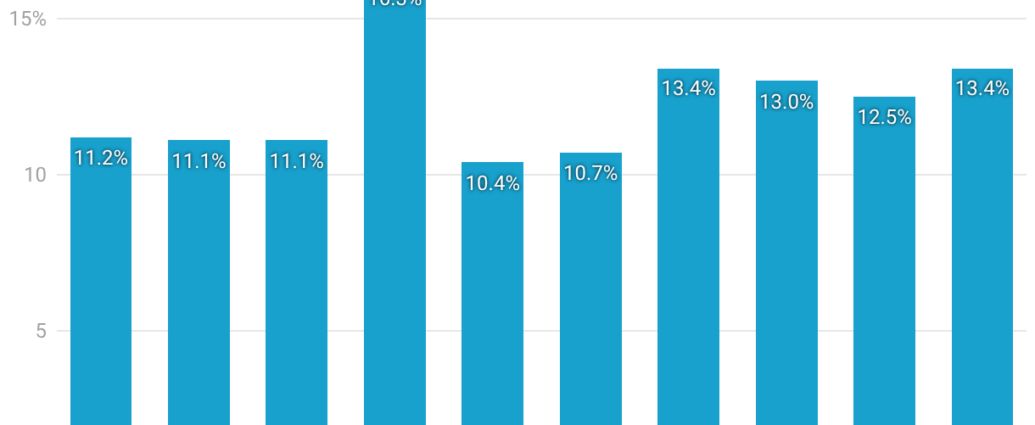
Industry reactions

Mortgage professionals are focused on how investor sentiment and rates will be impacted by the hearing and Warsh’s vision for the Fed.

Thomas Hulick, CEO of Strategy Asset Managers, said that the markets are “focusing on signals” for how Warsh would approach inflation, rate policy and the Fed’s broader communication strategy.
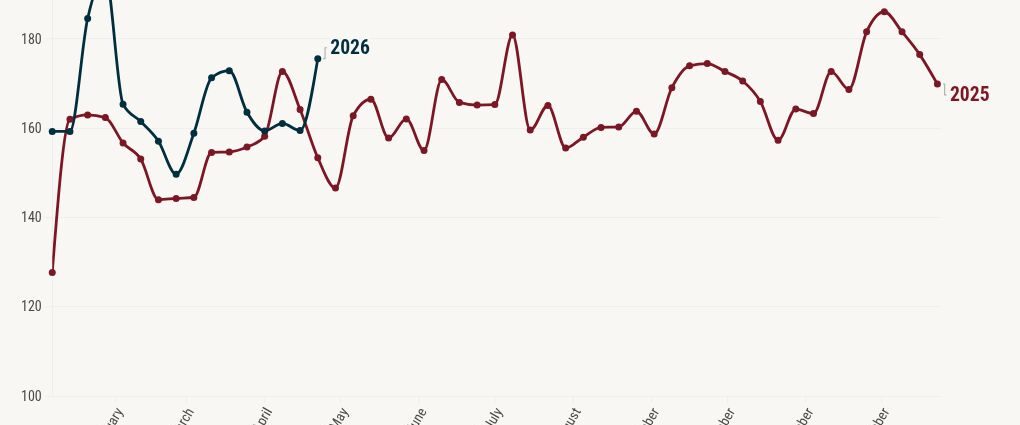
“His background across both policy and markets implies a more pragmatic, data-driven approach at a time when investors are looking for more clarity and consistency,” Hulick said in a statement. “He has also been a notable critic of recent Fed policy, particularly around inflation and balance sheet expansion, pointing to a potentially more disciplined approach to inflation and less reliance on tools like quantitative easing.

“That said, any perceived shift in how the Fed responds to economic data could introduce near-term volatility as markets recalibrate expectations, especially with Powell’s term set to expire on May 15.”

Michael McGowan, managing director of investment strategy at Pathstone, said that Warsh’s track record points to a “hawkish policy bias.” He noted that Warsh has historically favored a smaller, less accommodative Federal Reserve.

“That stance appears at odds with the idea of a fully accommodative Fed, but it may reflect a broader policy trade-off,” McGowan said. “If Treasury Secretary Bessent can secure meaningful reform of the Supplementary Leverage Ratio, allowing banks to hold more Treasuries, the Fed could step back from balance sheet support.

“The implications for the Treasury market are significant, with both upside and downside risks for liquidity and volatility.”

Jennifer McGuinness, CEO of Pivot Financial, told HousingWire that it was clear from Warsh’s comments that he would not take any stance against Trump. She added that his “record of disagreeing with prior Fed chairs should be seen as an indicator that he has his own opinions.”

“The clear question here is whether he can overcome his clear conflicts of interest, such as being the son-in-law of Ronald Lauder — the heir to the Estee Lauder fortune and a sizable Trump donor — not to mention his prior Wharton classmate,” McGuinness said via email.

“In addition, will he be able to keeps an ‘arms length’ distance from the vast Wall Street and Tech players he has grown accustomed to working with in the past 15 years, since leaving the Fed in 2011? In my opinion, it will be hard for him to keep his distance from these parties, thus he may face more intense scrutiny than other Fed chairs once confirmed,  even apart from the fact that he would be the wealthiest Fed Chair confirmed in US history. He may be divesting of certain investments but that doesn’t mean his family is.”

This post was originally published on here