
Opinion | The Intifada at MIT



Costco quietly discontinues award-winning Kirkland item fans call ‘one of the best’ in the market
Costco is quietly discontinuing two Kirkland Signature craft beers, including an award-winning brew fans have called “one of the best lagers on the market.”
The move will end sales of the highly prized Kirkland Signature Helles Lager and Kirkland Signature Vintage Ale, according to Craft Business Daily (CBD).
The beers were co-branded with Oregon-based craft brewery Deschutes Brewery. CEO Peter Skrbek announced the decision in an early July note to distributors, according to the outlet.
Production is slated to scale back as soon as this month, with the beers expected to disappear from most warehouse locations by September or October, according to VinePair. The wholesale warehouse will continue selling its already-brewed inventory until supplies run out, the outlet added.
COSTCO CEO SAYS 1 ITEM IS MORE IMPORTANT THAN EVERYTHING ELSE SOLD IN THE STORE
No official reason was given for the end of the two-year partnership. The two Deschutes-brewed products are the only beers in Costco’s current private-label portfolio.
According to VinePair, the beers were first launched in December 2024 and each sold in 12-packs for $13.99.
WHY COSTCO HOT DOGS HAVE KEPT $1.50 PRICE TAG SINCE 1985
Both products quickly became fan favorites, with shoppers praising their quality and low price point.
The World Beer Cup, one of the most respected beer competitions in the world, awarded Kirkland Signature Helles Lager a silver medal in 2025 and a bronze medal in 2026.
“This is one of the best lagers on the market, especially at the price and I’m going to miss it,” one Reddit user said on Monday.
GET FOX BUSINESS ON THE GO BY CLICKING HERE
According to VinePair, the Costco-Deschutes deal helped the brewery recover from an 11% decline in sales volume in 2023. After launching the partnership, Deschutes saw a 9% increase in volume.
By 2025, Deschutes ranked as the 10th-largest craft brewery in the U.S., according to the Brewers Association.
Deschutes later fell within the top 25 grocery store vendors despite year-to-date dollar sales increasing 8.3% and volume rising 9.3% compared with last year, according to VinePair, citing Circana market data.
FOX Business reached out to Costco and Deschutes Brewery for more information.

Some Bay Area homes are selling $1M above asking amid AI boom
The artificial intelligence (AI) boom is causing a fierce bidding war for some luxury homes in the San Francisco Bay Area, with dozens of homes selling more than $1 million above asking price last month.
Mike Simonsen, chief economist at Compass International Holdings, noted in a post on X citing the firm’s analysis of MLS data that there were 44 homes sold in San Francisco that closed at a price at least $1 million above the final asking price. It showed the 44 transactions from June totaled over $60 million in total sales.
The June total marked the continuation of a recent trend after April and May each had a little more than 30 sales that closed at least $1 million over the asking price and totaled over $40 million, while March had 20 such sales that totaled about $30 million.
By contrast, from February 2024 through February 2026, some months saw zero home sales that closed $1 million above the asking price and no month saw more than nine such transactions – which illustrates the rapid intensification of bidding wars in the Bay Area luxury market.
CHATGPT BOOM FUELS A LUXURY HOUSING FRENZY IN BAY AREA
Simonsen said in his post that the data was, “Absolutely BANANAS” and added that it “may be the most useful data in understanding the 2026 San Francisco housing market.”
Most of the homes sold at $1 million or more above their final asking price were sold in San Francisco’s 94114 zip code, which includes neighborhoods such as The Castro, Noe Valley and Dolores Heights.
San Francisco has long anchored the Bay Area’s tech economy and Silicon Valley has surged amid the rapid rollout of AI software serving a wide range of consumer and business purposes. That has contributed to the uptick in demand for luxury homes in the city.
HOUSING AFFORDABILITY UNLIKELY TO RETURN TO MORE FAVORABLE LEVELS OF THE PAST, ECONOMIST SAYS
Joel Berner, senior economist at Realtor.com, told FOX Business that the overall housing market in San Francisco is a “seller’s market” with buyers “competing over a smaller pool of listings, and homes are selling 18% faster than they were last year at this time.”
Across the overall market, the median listing price has actually declined 4.9% from a year ago to $1.137 million, though Berner noted that’s likely due to smaller homes coming onto the market and added, “The luxury tiers (95th and 99th price percentile) of the SF market are seeing stronger price growth than the median.”
CALIFORNIA TECH LEADERS CHALLENGE PROGRESSIVE POLICIES AS BILLIONAIRES, BUSINESSES FLEE: REPORT
“This kind of uptick in buyer activity is consistent with a cash infusion on the buyer side, which we know is occurring as part of the AI boom and the IPOs of several of these companies with presences in the Bay Area,” Berner explained. “Buyers have more money in their pockets, but they’re chasing after the same pool of homes as before as supply has not yet had the chance to meet demand.”
He added that because San Francisco is a “notoriously tough place to build new homes, with pricey and scarce land and high regulatory burdens for builders,” it is “unlikely that a new wave of construction comes to balance the market, so expect seller’s market conditions to continue and prices to start rising significantly.”
This post was originally published here

Fed policymakers’ inflation worries weighed on rate cut outlook at Warsh’s first meeting
Federal Reserve policymakers are increasingly concerned about inflation and the uncertainty about the direction it may take was reflected in the minutes of the Fed’s latest monetary policy meeting released on Wednesday.
The central bank’s first monetary policy meeting under the leadership of Fed Chair Kevin Warsh occurred against the backdrop of rising inflation, as energy prices surged earlier this year and pushed the pace of price growth up and further away from the Fed’s 2% long-run target.
The minutes of the Federal Open Market Committee (FOMC), which determines the central bank’s monetary policy moves, showed that while policymakers in June didn’t see a need to raise interest rates immediately amid “high assessed uncertainty” regarding future rate cuts or hikes.
Policymakers voted unanimously to leave the benchmark federal funds rate unchanged at a range of 3.5% to 3.75%, but engaged in a discussion about circumstances that could open the door to rate cuts or rate hikes depending on the direction of inflation.
FED’S FAVORED INFLATION GAUGE ACCELERATED IN MAY AMID ENERGY PRICE SHOCK
“Most participants remarked on scenarios in which inflationary pressures would dissipate and inflation would soon begin to return to 2%. In such scenarios, almost all of these participants noted it would likely be appropriate to maintain or eventually lower the target range for the federal funds rate,” the FOMC explained.
“Most participants, however, also point to scenarios in which, in the context of stable labor market conditions, inflation would remain elevated due to strong AI-related demand, the conflict in the Middle East, or the effects of tariffs,” the FOMC wrote. “In such scenarios, almost all of these participants indicated that some policy firming would likely be warranted to return inflation to 2%.”
The June FOMC meeting included the release of the so-called “dot plot” that showed nine of the 18 voting members projected an interest rate hike before the end of 2026, with six projecting two 25-basis-point hikes.
FEDERAL RESERVE LEAVES INTEREST RATES UNCHANGED AS WARSH ERA BEGINS
The summary of economic projections also revised its forecast for PCE inflation at the end of this year up from 2.7% as of the March projection to 3.6%, reflecting recent inflationary trends.
Warsh has said that he wants to end “forward guidance” in how the Fed communicates about future rate moves and declined to submit his own economic projection as part of the FOMC’s forecasts and post-meeting message.
The FOMC’s post-meeting statement was noticeably shorter than the preceding releases when Fed Governor Jerome Powell was still serving as chairman.
AMERICANS GROW MORE PESSIMISTIC ABOUT FINANCES AS RENT AND FOOD COST FEARS SURGE, FED SAYS
The minutes showed that some policymakers viewed Warsh’s first meeting as “an opportune time to consider significant changes to the FOMC’s post-meeting statement.”
“A majority of participants remarked that they saw advantages in shortening the statement. Most participants emphasized that they preferred not to repeat the language in the previous statement that had suggested an easing bias regarding the likely direction of the Committee’s future interest rate decisions,” the FOMC explained.
This post was originally published here

STAT+: RFK Jr. plans to create list of injuries caused by Covid-19 vaccines
WASHINGTON — Health secretary Robert F. Kennedy Jr. is preparing to make it easier for people to claim that they were injured by a Covid-19 vaccine and receive compensation.
Kennedy is set to start the process of compiling a list of injuries that are presumed to be caused by Covid shots. People with those conditions could then ask for compensation from the government. It’s not clear what conditions may make the list—and that’s something that outside experts are keeping a close eye on.
Kennedy has long been critical of vaccines, saying none have been adequately safety tested. He’s said that he plans to overhaul a similar, but separate program that provides compensation for individuals who claim injury by a vaccine recommended by the federal government.
Synergy One to take over Newrez distributed retail mortgage operations
Synergy One Lending, a division of American Pacific Mortgage (APM), will assume control of Newrez’s distributed retail mortgage business under a new strategic agreement announced Wednesday, extending an existing partnership and reshaping both lenders’ retail strategies.
The transition moves Newrez’s distributed retail operations and personnel to Synergy One, which is building out a purpose-built retail platform following its June merger with APM. Terms of the deal were not disclosed, according to the company announcement.
San Diego-based Synergy One said the deal will increase its national retail footprint, adding branches and originators at a time when many lenders are still rationalizing their physical networks after years of margin compression and interest rate volatility. Synergy One said it’s licensed in 49 states, employs 540 people and operates 65 branches nationwide.
Data from mortgage tech platform RETR shows that as of July 6, following the addition of Synergy One, APM now has 1,135 producing loan officers. Since the start of 2026, APM has produced about $5.1 billion in mortgages, ranking No. 29 among all U.S. lenders.
Newrez — a Rithm Capital subsidiary and top-five U.S. mortgage lender and servicer by volume — framed the move as a redeployment of capital and resources toward joint venture partnerships and its localized Newrez Direct strategy, retail segments it views as having the strongest long-term upside. Newrez will continue to originate through its wholesale, correspondent, consumer direct and joint venture channels.
“This transition is direct evidence of the momentum behind Synergy One right now,” Aaron Nemec, division president of Synergy One Lending, said in a statement. “We have worked hard to build a powerful platform for retail originators, and Newrez’s decision to trust us with their people reflects the strength of what we have built. We are proud to welcome this team and energized about what we will build from here.”
“This move reflects our confidence in Synergy One as a partner and a continued deliberate focus on the areas of our business where we see the strongest growth opportunity going forward,” Newrez President Baron Silverstein said.
RETR data shows that Newrez is the 25th-largest U.S. mortgage lender since the start of the year, having closed $5.4 billion in volume.
Follows the merger with APM
The transition comes roughly a month after Synergy One joined forces with fellow California-based lender American Pacific Mortgage. Under the merger agreement, Synergy One is maintaining its brand name under APM’s divisional dba model. APM is licensed in 49 states, employs more than 2,900 people and operates nearly 300 branches.
As higher-for-longer rates and elevated origination costs keep pressure on company margins, lenders are making careful choices about which channels they want to own. Newrez’s decision to exit distributed retail in favor of JVs and consumer direct efforts — and Synergy One’s move to double down on traditional retail — illustrate diverging but conscious bets on where future home purchase business and operating leverage will come from.
APM is 49% employee-owned through an employee stock ownership plan (ESOP). That could be a factor for incoming Newrez retail teams as they weigh long-term career paths, particularly as more originators look for stability, equity participation and local control in a volatile interest rate environment.
This article was written by Neil Pierson with the assistance of HousingWire Automation, then reviewed by a HousingWire editor before publication.






Trump Skips New Air Force One for Flight Home as Iran Threats Grow
President Donald Trump said Wednesday that he would fly home from the NATO summit in Ankara, Turkey, aboard the older presidential aircraft rather than the newly delivered Air Force One, announcing in a post on Truth Social that the new plane would instead stop in the United Kingdom so American troops could tour it. The decision came the same day he told reporters he considers himself Iran’s “No. 1 target” for assassination. MEAWW
Speaking at a press conference as he wrapped up the summit, Trump was pressed twice on why he was not taking the new jet on what would have been its first foreign return flight. He first turned to the danger of the job, then said the aircraft was headed to Europe. “It’s flying to Europe, to one of the big bases,” Trump said, adding that he would be “going home by normal methods.” NBC News He said the plane would stop so the soldiers could see it because it was “truly magnificent.”
The new aircraft is a Boeing 747-8 that Qatar’s royal family donated last year after Trump complained about the condition of the two aging jets that have served as the U.S. presidential plane since 1990. Yahoo! He unveiled the retrofitted plane last month at Joint Base Andrews in Maryland. The U.S. Air Force has said it spent under $400 million on security upgrades, The Hill though the president has at times referred to the project in far larger figures.
In a Truth Social post before the press conference, Trump said the plane would fly directly to RAF Mildenhall in England so service members could be the first Americans to walk through it. He said he would fly home in the older plane “for old time’s sake.” PBS
The timing drew immediate scrutiny. The switch landed as fighting between the United States and Iran flared again, only weeks after a June ceasefire and memorandum of understanding were meant to end the war that began with U.S.-led strikes on February 28. Newsweek Earlier Wednesday, Trump threatened fresh strikes on Iranian targets and floated reinstating a naval blockade of the Strait of Hormuz, the waterway that carried roughly a fifth of the world’s hydrocarbons before the conflict. The Hill
Reporters asked directly whether security concerns tied to Iran drove the plane change. Trump did not confirm or deny it. “The life of a president is very dangerous,” he said, Fox News noting he has been the target of multiple assassination attempts. “I’m No. 1 on the kill list for Iran,” he added, before joking that he would rather be “No. 1 on TikTok.” The Hill
The White House has denied that the change in plans is due to any issue with the new plane. NBC News Still, questions about the aircraft have followed it since Qatar offered it. The Associated Press reported last week that the donated jet appears to lack some of the missile-detection and countermeasure systems installed on the older planes, and that one expert saw it as better suited to domestic trips. The Hill There has been no official statement from the White House, the Air Force, or military officials calling the plane unsafe. MEAWW
According to a senior White House official, the plan calls for Trump to fly the former Air Force One from Turkey to Mildenhall, then continue to Joint Base Andrews on the newer jet. NBC News Air base visits are typically known well in advance rather than added at the last minute, which fed the speculation. NBC News
The plane itself remains a stopgap. It is meant to bridge the gap between the aging Boeing 747-200s in service for more than two decades and two new Boeing aircraft that were expected in 2024 but are not due until 2028. The Hill
Around the plane story, the war took center stage. Defense Secretary Pete Hegseth said U.S. forces had struck small craft harassing shipping in the Strait of Hormuz, along with underground sites storing drones and missiles, coastal defenses and radar. NBC News Vice President JD Vance put the rule bluntly: if Iran fires on ships, “we’re going to knock the hell out of them.” NBC News Iran vowed to respond. Ebrahim Rezaei, a spokesman for Iran’s parliamentary security committee, warned that Gulf states aligned with Washington should “watch over their oil and gas wells.” CBS News
For businesses tracking energy prices and shipping lanes, the renewed fighting keeps the Strait of Hormuz at the center of risk. The channel’s status shapes oil costs, insurance rates and freight schedules well beyond the Gulf.
JBizNews Desk © JBizNews.com All Rights Reserved. Reproduction or distribution without written permission is prohibited.
Body runs 748 words. Headline reworked from your pasted version. Want me to sharpen the business angle further or tighten the war material?

Honda recalling more than 325,000 vehicles over potential crash risk
Honda is recalling more than 325,000 vehicles over faulty rearview image displays, which could increase the risk of a crash, according to federal regulators.
The recall affects 2018-2020 Odyssey vehicles, the National Highway Traffic Safety Administration (NHTSA) announced on Wednesday.
A total of 325,588 vehicles are covered by the recall effort.
HONDA RECALLS MORE THAN 880,000 VEHICLES OVER REAR SUSPENSION FAILURE RISK
The NHTSA said the recall was issued due to rearview cameras that may not display properly.
“Water may enter into the rearview camera, which can cause the rearview camera image to fail to display when the vehicle is in reverse,” the recall notice reads.
A display malfunction could increase the risk of a crash, the NHTSA said.
The announcement expands a previous recall, which affected certain 2019-2020 Honda Odyssey vehicles.
Owners affected by the recall may take their cars to Honda dealers, so the rearview camera can be replaced free of charge, according to the NHTSA.
Owner notification letters are expected to be mailed on Aug. 24.
HONDA RECALLS 99,000 VEHICLES OVER FLAW THAT COULD TRIGGER UNINTENDED AIRBAG DEPLOYMENT
GET FOX BUSINESS ON THE GO BY CLICKING HERE
This comes after Honda issued two separate recalls in recent months that included other car models.
This included more than 880,000 vehicles being recalled because a key rear suspension part can rust and fail, and nearly 99,000 cars that were recalled over a defect that could cause airbags to deploy unexpectedly during a crash.
This post was originally published here

STAT+: Mass General Brigham, nurses called to talk at State House amid biggest nursing strike in Mass.
BOSTON — Governor Maura Healey has summoned the state’s largest health system and its striking nurses to the State House on Wednesday in an attempt to broker a new contract, according to the Massachusetts Nurses Association.
The calling of the late-afternoon meeting came hours after a boisterous start to Massachusetts’ biggest-ever nurses strike, and the first at Brigham and Women’s Hospital. Mayor Michelle Wu also helped arrange the meeting, the union said.
Thousands of Brigham nurses and supporters poured onto Francis Street near the hospital starting at 7 a.m., shaking cowbells, banging on plastic buckets and cheering at a deafening chorus of supportive honks from passing cars. The nurses, sporting “Union Strong” and “Brigham Nurses United” shirts, waved signs calling out management. “Value Nurses Like You Value Your Bonu$e$,” one sign read.
Visionary Homes names former Oakwood exec Ryan Smith CEO
Ryan Smith will become CEO of Visionary Homes on Sept. 1, 2026, as founder and current chief executive Jeff Jackson transitions to chairman of the board, the Utah homebuilder recently announced.
Smith joined Visionary Homes on June 15 and will work alongside Jackson through the summer before formally assuming the chief executive role in September, according to the company’s announcement. Jackson, who co-founded Visionary Homes in 2004, will remain full-time through the end of 2026 to support the handover and then move into the chairman role on Jan. 1, 2027.
The company said the move is part of a multiyear leadership succession plan at one of Utah’s largest privately held homebuilders. Visionary Homes builds communities from Logan to St. George and operates in partnership with Misawa Homes America, the U.S. subsidiary of Japan’s Misawa Homes Co. Ltd.
Smith brings more than 20 years of experience in production homebuilding and master-planned communities across the Mountain West and Southwest. He joins Visionary from Oakwood Homes, a Clayton Homes company, where he served as president and chief operating officer of a four-market, $442 million homebuilder. The company said he grew sales and starts 41% in 2025 even as those markets declined.
Earlier in his career, Smith ran Oakwood’s Utah and Arizona division from Salt Lake City and held division leadership roles at Beazer Homes and Shea Homes. He holds an MBA from the University of Southern California’s Marshall School of Business.
“I am honored to join Visionary Homes,” Smith said in the announcement. “Jeff and the Visionary team have created a special organization. You can feel Visionary’s commitment to quality in everything they do by simply being around the team.”
“From the first time I met Ryan, one thing was clear: he is a kind, driven leader people instinctively respect,” Jackson said. “He is the right person to lead Visionary forward, and he has my full confidence and support.”
Visionary Homes said it is scaling toward 2,000 annual home starts and expanding into neighboring markets. The company said its mission, values and commitments to trade partners, customers and communities will remain unchanged through the transition.
The leadership change comes as Utah remains one of the nation’s fastest-growing housing markets, with strong in-migration and persistent supply constraints. A CEO with a track record of growing volume in softening markets could influence how aggressively Visionary Homes pursues land, labor and materials across the state and into adjacent regions.

Delta Bids $12 Million for Spirit’s Atlanta Gates as Court Weighs the Deal
Delta Air Lines has emerged as the winning bidder for two airport gates left behind by the collapsed Spirit Airlines at the world’s busiest airport, according to filings in Spirit’s bankruptcy case, with a federal judge scheduled to decide Wednesday whether to approve the sale.
Court filings in the U.S. Bankruptcy Court for the Southern District of New York show Delta offered $12 million for gates C4 and C6 at Hartsfield-Jackson Atlanta International Airport, along with Spirit’s former ticketing lobby and related operational space. Spirit told the court Delta submitted the highest and best offer following a competitive bidding process that included another airline.
The transaction does not involve ownership of the gates themselves. Because the City of Atlanta owns the airport, Delta would acquire Spirit’s leasehold interest, giving the carrier control of the facilities through June 30, 2031, when Spirit’s original lease was set to expire. Objections to the sale were due July 1, and the bankruptcy court is scheduled to hold a hearing on July 8.
The proposed sale represents another step in the liquidation of Spirit Airlines, which ceased operations on May 2 after 34 years in business before entering Chapter 11 bankruptcy. Since then, the airline has been selling aircraft, airport facilities, equipment and other assets to generate funds for creditors.
For Delta, however, the value of the transaction extends well beyond the $12 million purchase price.
Hartsfield-Jackson serves as the airline’s largest and most important hub. Delta already controls roughly three-quarters of the airport’s gates and carries approximately 80% of its passengers, making Atlanta the centerpiece of its domestic and international route network. In an airport where available gate space is extremely limited, even two additional gates can create opportunities to add flights, improve scheduling flexibility and strengthen connecting service.
Industry analysts say the strategic value far exceeds the cost.
Gary Leff, author of the aviation website View From the Wing, noted that the acquisition involves only two of the airport’s roughly 188 gates, cautioning against overstating its immediate competitive impact. Even so, he observed that every additional gate under Delta’s control is one less available for another carrier seeking to expand service at the nation’s busiest airport.
That competition issue has attracted attention in Washington.
Bryan Bedford, Administrator of the Federal Aviation Administration, has previously expressed concern about the loss of low-cost airline competition following Spirit’s shutdown. He has suggested that airport gate assignments deserve careful consideration because ultra-low-cost carriers have historically played an important role in keeping airfare prices competitive in many markets.
The Atlanta transaction, however, is not expected to trigger federal antitrust review because the $12 million purchase price falls below the reporting threshold that would require additional regulatory scrutiny. As a result, the bankruptcy court’s primary responsibility is determining whether the sale represents the highest value reasonably available for Spirit’s creditors.
For travelers, the implications could extend beyond one bankruptcy proceeding.
Spirit built its business around deeply discounted fares that frequently forced larger airlines to match or lower prices. With the carrier gone, many industry observers believe consumers could eventually face fewer low-cost options on routes where Spirit once competed. If Delta assumes control of additional airport capacity, those gates become unavailable to another discount airline looking to establish or expand operations in Atlanta.
For business travelers and corporations headquartered throughout the Southeast, additional Delta capacity could improve flight availability, scheduling flexibility and international connections through one of the world’s busiest aviation hubs. Leisure travelers, however, may ultimately care more about whether fewer competitors translate into higher ticket prices over time.
Delta has made clear that Atlanta remains central to its long-term growth strategy. Chief Executive Ed Bastian has repeatedly emphasized expanding the airline’s global network, and every additional gate at its largest hub provides greater flexibility to support that expansion.
The bankruptcy court’s decision on Wednesday will determine whether the lease transfer moves forward. If approved, Delta will further strengthen its position at the airport it already dominates, adding another chapter to the ongoing reshaping of the U.S. airline industry following Spirit’s collapse.
JBizNews Desk | Atlanta
© JBizNews.com All Rights Reserved. Reproduction or distribution without written permission is prohibited.

Dow Drops 577 Points as Trump Declares Iran Ceasefire Over and Oil Surges
NEW YORK — Wall Street finished sharply mixed on Wednesday, July 8, after President Donald Trump, speaking at the NATO Summit in Ankara, Turkey, declared that the ceasefire and memorandum of understanding between the United States and Iran was “over,” reigniting fears of a broader Middle East conflict, sending oil prices sharply higher and knocking the Dow Jones Industrial Average lower.
The market’s message was clear: geopolitics is once again driving Wall Street.
The Dow Jones Industrial Average fell 576.76 points, or 1.09%, to 52,348.39. The S&P 500 slipped 0.28% to 7,482.71, while the technology-heavy Nasdaq Composite managed to rise 0.20% to 25,870.65, supported by strength in several large technology companies. The Russell 2000 lost about 0.9%, while the CBOE Volatility Index (VIX), Wall Street’s closely watched fear gauge, climbed nearly 4% as investors sought protection against further market swings.
The day’s biggest catalyst came from Ankara.
Speaking to reporters on the sidelines of the NATO summit, Trump said he considered the ceasefire with Iran finished, dismissed further negotiations and warned that additional U.S. military action could follow. His comments came after overnight U.S. strikes on Iranian targets and renewed attacks on commercial vessels near the Strait of Hormuz, one of the world’s most strategically important shipping lanes.
Investors immediately focused on oil.
Brent crude, the global benchmark, surged 5.43% to settle at $78.19 per barrel, while West Texas Intermediate climbed 4.37% to $73.52 per barrel, marking one of the strongest single-day advances in weeks.
Higher oil prices tend to benefit energy producers, but they also raise transportation costs, pressure manufacturers, squeeze airline profits and eventually work their way into gasoline prices and consumer inflation. That combination weighed heavily on many industrial and consumer-focused companies that make up the Dow.
Technology stocks told a different story.
The Nasdaq managed to finish higher thanks to continued strength in several semiconductor and artificial intelligence-related companies.
Broadcom gained after Apple announced an expanded multiyear partnership expected to exceed $30 billion. The agreement calls for more than 15 billion American-made chips and includes a $1.5 billion expansion of Broadcom’s manufacturing facility in Fort Collins, Colorado, representing Apple’s largest domestic manufacturing commitment to date.
Several other technology companies also attracted buyers. Penguin Solutions rallied following its earnings report, while Alibaba, Akamai Technologies and Arista Networks also posted gains as investors continued rotating toward companies viewed as having strong long-term growth prospects.
Not every traditional safe haven moved as expected.
Gold futures fell approximately 1.6%, extending a pullback from record highs reached earlier this year. Rather than moving aggressively into precious metals, investors largely focused on energy markets and selective opportunities within technology.
The Federal Reserve also remained on investors’ radar.
Market participants continued digesting the latest Fed meeting minutes, which highlighted persistent inflation risks despite easing labor-market concerns.
Adam Phillips, Managing Director of Investments at EP Wealth Advisors, said the minutes reinforced the Federal Reserve’s cautious stance.
“The minutes demonstrated the Fed’s hawkish bias, highlighting that upside inflation risks remain while concerns around the labor market have eased,” Phillips said, adding that renewed tensions in the Middle East only increase uncertainty surrounding inflation and monetary policy.
Those concerns were echoed in the latest outlook from the International Monetary Fund, which projects oil prices to remain significantly higher next year while forecasting global inflation of 4.7% in 2026, underscoring the possibility that inflationary pressures may persist longer than many investors had hoped.
There was also notable activity outside the public markets.
Blue Origin, the aerospace company founded by Jeff Bezos, is reportedly seeking approximately $10 billion in its first outside funding round, a transaction that would value the company at roughly $130 billion. Bezos is expected to contribute about $2 billion, alongside major institutional investors.
Meanwhile, SpaceX, which entered the public markets last month under the ticker SPCX, posted a modest gain after a volatile start to life as a publicly traded company.
For business owners, investors and consumers, Wednesday’s trading served as another reminder that events halfway around the world can quickly affect everyday life at home. Rising crude oil prices often translate into higher gasoline prices, increased shipping costs, more expensive airline travel and additional inflationary pressure throughout the economy.
Wall Street’s split performance reflected exactly that reality. Technology continued attracting investment, but companies tied more closely to energy costs came under pressure. As long as tensions surrounding Iran and the Strait of Hormuz remain unresolved, energy markets are likely to remain one of the biggest forces shaping both Wall Street and Main Street.
JBizNews Desk | Wall Street
© JBizNews.com All Rights Reserved. Reproduction or distribution without written permission is prohibited.

Some Fed Officials Think Higher Rates Warranted: Minutes
The central bank voted unanimously to leave interest rates unchanged in the target range of 3.5 percent to 3.75 percent at last month’s Federal Open Market Committee meeting.
Participants discussed various economic scenarios amid an environment of stable employment conditions, elevated inflation, tariff effects, and the Middle East conflict.
“In such scenarios, almost all of these participants indicated that some policy firming would likely be warranted to return inflation to 2 percent,” the document stated….











Trump Says Ceasefire With Iran Is Over and Threatens Further Strikes
President Donald Trump said Wednesday that the ceasefire between the United States and Iran was over and that American forces would likely strike the country again the same night. Speaking on the sidelines of the NATO summit in Ankara, Turkey, Trump told reporters, “For me, I think it’s over,” and said continued negotiations were “a waste of time.” Asked whether the two countries would return to fighting, he said, “We hit them very hard last night,” and added the U.S. would “probably hit them hard again tonight.”
The president laid out a series of new threats. He said the U.S. could reinstate its naval blockade of Iran’s ports, strike the country’s electric and water plants, and “take over” Kharg Island, Iran’s main oil-export terminal. He also renewed his complaint that other NATO members had not supported the U.S. in the conflict. In a later appearance Trump appeared to pull back, saying he did not think a full war would “start again,” even as he called Iran’s leaders “sick people.”
The escalation followed a fresh exchange of fire. After attacks on three commercial ships in the Strait of Hormuz earlier in the week, the U.S. military struck Iranian targets overnight. U.S. Central Command said it hit more than 80 sites, including air-defense systems, coastal radar and over 60 small boats used by Iran’s Islamic Revolutionary Guard Corps to threaten passing tankers. The command said the round of strikes had ended but that it remained ready to act again if Iran did not honor the agreement.
Iran said it answered with drone and missile strikes on the U.S.-allied Gulf states of Bahrain and Kuwait, claiming it had targeted 85 American military sites. Kuwait’s armed forces said they intercepted ballistic missiles and drones and reported no major damage. Iran’s army said eight of its service members were killed in the overnight U.S. strikes on the coastal cities of Bandar Abbas and Bushehr, naming the dead by rank in a rare public announcement.
The threats put an already fragile deal in doubt. The two sides signed a memorandum of understanding on June 17 that set a 60-day ceasefire, lifted the U.S. blockade and reopened the Strait of Hormuz, through which about a fifth of the world’s oil once passed. That window is set to expire in mid-August, with little progress on the harder issues, including Iran’s nuclear program and long-term control of the waterway. On Tuesday, the U.S. Treasury Department revoked a waiver that had allowed Iran to sell crude, a step Tehran cited as its own evidence that Washington had broken the deal.
The market reaction was swift. Brent crude, the international benchmark, settled 5.2 percent higher at $78.02 a barrel, while West Texas Intermediate rose 4.4 percent to close at $73.52, the largest one-day jump since early June. The Dow Jones Industrial Average fell more than 800 points at its low, about 1.5 percent, days after setting a record. Retail gasoline rose less than a penny a gallon overnight, according to AAA, though prices could climb as higher crude costs reach the pump. The CME FedWatch tool showed traders now see better than a one-in-three chance of a Federal Reserve rate increase this month.
Iranian officials rejected Trump’s remarks outright. Deputy Foreign Minister Kazem Gharibabadi said the threats were an admission that years of force and sanctions had failed, while Foreign Minister Abbas Araghchi said insults would not diminish Iran’s standing. Gulf governments, including Kuwait, Qatar and the United Arab Emirates, condemned Iran’s strikes on their soil and pressed both sides to return to talks. The European Union’s foreign policy chief, Kaja Kallas, said the renewed fighting had made an already difficult negotiation harder and called Iran’s attacks on Bahrain and Kuwait unacceptable.
Pakistan, which has helped mediate between Washington and Tehran, urged restraint, saying a renewed conflict served no one’s interest. For now, tanker traffic through Hormuz has nearly stopped, and with both sides still trading threats and the mid-August deadline approaching, the prospect of a lasting agreement looks more distant than it did a month ago.
JBizNews Desk © JBizNews.com All Rights Reserved. Reproduction or distribution without written permission is prohibited.
Kept your headline as written and rebuilt the piece around the ceasefire-and-strikes story, with markets moved to a supporting paragraph. Body runs about 670 words. Say the word if you want it tighter or the strike/threat detail expanded.
Eisenkot’s Yashar edges out Netanyahu’s Likud for first time in new Channel 13 poll
The Yashar Party, led by Gadi Eisenkot, overtook Prime Minister Benjamin Netanyahu’s Likud Party by a small margin in a poll released on Wednesday by Channel 13.
These results represent the first in which Likud fell below Eisenkot’s Yashar in a poll, following weeks of a tie between the two parties.
This is a developing story.

NATO Secretary General Rutte says disputes between members show ‘democratic strength’
Disputes between US President Donald Trump and other NATO leaders showed the alliance’s democratic strength and should serve as a lesson for Russian President Vladimir Putin, NATO Secretary General Mark Rutte said on Wednesday after a summit in Ankara.
In an interview with Reuters, Rutte also said he saw no need to change how he deals with Trump, despite accusations that he lavishes praise on the US president and fails to push back against his criticism of allies.
“They knew what they got when they hired me, and I’m who I am,” he said. “If people are doing good stuff, I will say so. If I do not agree, I will also say so, but then probably not out in the open, and try to maintain the unity of the alliance.”
Trump rattled the summit by publicly threatening to cut trade ties with Spain, reviving differences over the war in Iran and renewing claims to Greenland, before later recommitting to the alliance and saying there was “a lot of love” and unity among its 32 leaders.
Rutte speaks on NATO’s deterrence, Russia
Asked what message the infighting sent to Russia’s leader and whether it undermined NATO’s message of deterrence, Rutte said: “I would say to Putin: You should have some more discussions yourself, out in the open.”
NATO identifies Russia as the biggest threat to the security of its members, who have boosted defense spending by hundreds of billions of dollars since Moscow’s 2022 invasion of Ukraine.
“What he (Putin) has seen now is sometimes allies disagreeing a bit, having a bit of a quarrel, and then coming together and reuniting,” Rutte said.
Rutte said the ability to argue openly and then converge around a common purpose was “what distinguishes democracies” from countries such as Russia, China and Iran.


China’s DeepSeek Builds Its Own AI Chip to Cut Reliance on Nvidia
Chinese artificial intelligence startup DeepSeek is developing its own AI chip, according to people familiar with the project, a move that could reduce the company’s dependence on Nvidia and Huawei while intensifying the global race to control the technology powering the next generation of artificial intelligence.
The project, first reported by Reuters, centers on a custom chip designed primarily for AI inference — the stage where trained AI models generate answers for users — rather than the far more computationally intensive process of training new models. DeepSeek declined to comment on the report.
According to the sources, development has been underway for roughly a year. The company has quietly expanded its hiring of semiconductor engineers and held discussions with chip-design firms, contract manufacturers and memory suppliers as it works to build its own hardware.
The news immediately rippled through financial markets. Shares of Nvidia, whose graphics processors dominate the AI industry, slipped in early trading as investors weighed the possibility that another major AI developer could eventually reduce its reliance on the company’s products.
The timing is significant. U.S. export restrictions have sharply limited China’s access to Nvidia’s most advanced AI chips, pushing many Chinese technology companies to accelerate development of domestic alternatives.
DeepSeek gained international attention after releasing its R1 reasoning model, which surprised many in the technology industry with its strong performance at significantly lower costs than many competing systems. The company originally trained its models using Nvidia’s H800 processors, chips specifically designed for the Chinese market before Washington tightened export controls. Since then, it has increasingly relied on Huawei’s Ascend processors while pursuing greater technological independence.
The move also reflects a much broader shift across the AI industry.
Rather than relying entirely on off-the-shelf processors, leading AI companies are increasingly investing in custom silicon tailored specifically to their own software. OpenAI recently unveiled its first custom inference chip developed with Broadcom, while reports indicate Anthropic is evaluating similar efforts. Inside China, technology giants including Alibaba and Baidu have also invested heavily in proprietary AI processors.
The reason is simple: cost.
Every prompt submitted to an AI chatbot requires computing power. Purchasing chips from outside suppliers means paying those suppliers’ margins while competing for increasingly scarce hardware. A processor designed specifically for one company’s models can reduce operating costs, improve efficiency and provide greater control over future product development.
For businesses, the financial stakes are enormous.
Artificial intelligence is rapidly becoming one of the largest capital investment cycles in technology history. Companies are spending hundreds of billions of dollars building data centers, purchasing chips and expanding cloud infrastructure. Even modest reductions in computing costs can translate into billions of dollars in long-term savings.
Success, however, is far from guaranteed.
Designing competitive AI processors requires years of engineering, advanced manufacturing capabilities and substantial financial investment. Access to leading-edge semiconductor fabrication remains one of China’s biggest challenges under current U.S. export restrictions.
Some analysts remain skeptical about the project’s global impact.
Richard Windsor, founder of Radio Free Mobile, argued that without access to the world’s most advanced manufacturing technologies, Chinese-designed chips may struggle to compete internationally, even if they prove successful inside China’s domestic market.
DeepSeek’s hardware ambitions come as the company reportedly prepares to raise outside capital for the first time. According to recent reports, the startup is seeking approximately $7 billion in funding at a valuation between $52 billion and $59 billion, marking a significant shift after years of avoiding external investment.
For Nvidia, the development highlights the long-term consequences of export restrictions.
While the controls were designed to limit China’s access to advanced American technology, they have also encouraged Chinese companies to accelerate investment in domestic semiconductor development. Every successful homegrown AI processor reduces reliance on imported hardware and strengthens China’s own semiconductor ecosystem.
Whether DeepSeek ultimately delivers a competitive chip remains uncertain.
What is clear is that the battle for AI leadership is no longer being fought only through software. Increasingly, it is becoming a contest over who controls the chips, factories, supply chains and infrastructure that power artificial intelligence itself—a competition likely to shape the global technology industry for years to come.
JBizNews Desk | Beijing
© JBizNews.com All Rights Reserved. Reproduction or distribution without written permission is prohibited.


STAT+: White House reviewing top contenders to lead FDA
WASHINGTON — The top contenders to lead the Food and Drug Administration have been sent to the White House for a final review and decision, according to a person familiar with the process.
The finalists include Heidi Overton, a White House adviser; Jeffrey Vacirca, an oncologist and health system executive; and Stephen Ferrara, a health affairs official at the Department of Defense.
CFPB seeks input on mortgage disclosures and TRID rules
In a request for information (RFI) scheduled for publication Thursday in the Federal Register, the Consumer Financial Protection Bureau (CFPB) will seek public input on whether mortgage disclosure requirements and other lending regulations should be revised to reduce compliance burdens and improve access to mortgage credit.
The RFI, viewed by HousingWire in its unpublished version on the register, was filed by CFPB acting director Russell Vought.
The bureau said it’s considering potential regulatory changes consistent with President Donald Trump’s Executive Order 14393, titled “Promoting Access to Mortgage Credit.” The order directs federal agencies to review regulations that may increase the cost of mortgage lending and limit access to credit.
The CFPB is requesting comments on three primary areas: integrated mortgage disclosures under the Truth in Lending Act (TILA) and Real Estate Settlement Procedures Act (RESPA), together commonly known as TRID; the right of rescission for certain refinance transactions; and disclosure requirements for reverse mortgages.
The bureau is asking whether current rules create unnecessary burdens for lenders and borrowers while still providing adequate consumer protections. Areas under review include disclosure timing requirements, tolerance thresholds, electronic disclosures and whether smaller financial institutions should receive more tailored rules.
For reverse mortgages, the CFPB said current disclosure requirements rely on multiple documents, including Truth in Lending disclosures, Good Faith Estimates and HUD-1 settlement statements. The agency is seeking feedback on whether reverse mortgage borrowers would benefit from a single set of integrated disclosures designed specifically for the product.
The bureau is also reviewing the Total Annual Loan Cost, or TALC, a disclosure used in reverse mortgages. Specifically, the CFPB wants to know whether TALC calculations should be updated, and whether showing projected loan balance growth in dollar amounts would be easier for borrowers to understand than current annualized cost figures.
The CFPB is also seeking input on whether reverse mortgage borrowers would benefit from educational materials tailored specifically to the product rather than the general mortgage information currently required.
While the request for information does not propose any regulatory changes, the CFPB said comments will help determine whether future rulemaking is appropriate.
This article was written by Sarah Wolak and generated with the assistance of HousingWire Automation, then reviewed by a HousingWire editor before publication.

Israel’s New York Consulate to reopen on Thursday following safety issues with nearby building
Israel’s New York Consulate will reopen on Thursday, with police approval, following safety issues at a nearby building, Walla learned on Wednesday.
Consular employees were evacuated from the 2nd Avenue building on Tuesday after being alerted that the nearby building was at risk of collapsing, with Consul-General Ofir Akunis noting that “all consulate employees were evacuated safely.”
Officials said the nearby 37-story building, currently being converted from an office building to residential apartments, was deemed a safety risk after its support beams began buckling.
New York City Fire Department officials responding to the scene found two buckled columns on the 21st and 22nd floors of the 42nd Street building, with multiple floors sagging as a result.
Besides the consulate, other nearby buildings, including a school, were evacuated, and streets were closed to pedestrian and vehicle traffic, with no injuries reported.
Mamdani: Building ‘remains unstable’
New York City Mayor Zohran Mamdani spoke to reporters at the scene on Tuesday, saying that the building “remains unstable.”
The mayor noted that the concern was the building’s continuous movement hours after the incident began.
According to Mamdani, a team of emergency responders and engineers was working to access and secure the site.
“If the floor is deemed to be secure, engineers will enter and begin shoring up the building as we await the arrival of materials that will stabilize the building,” he said.
Reuters contributed to this report.

Only clans can govern Gaza after Hamas disarmed, NCAG will fail, MidEast expert says – interview
The National Committee for the Administration of Gaza (NCAG) will fail if implemented, as only an emirate-style system in which local clans govern independent districts within the territory can effectively rule Palestinian society there, Dr. Mordechai Kedar, a Middle East scholar and expert on Islamic affairs, told The Jerusalem Post on Tuesday.
“Only the clans can run Gaza. But for this, you have to get rid of Hamas first,” he said, speaking after the Pulse of Israel conference in Jerusalem.
Kedar has for decades advocated what he calls the Palestinian Emirates Plan, which would see the role of Palestinian governance taken up by clan-based local authorities. Under the plan, Gaza and parts of the West Bank would be governed by dominant local families or clans.
He further argues that vast cultural differences between Palestinians across different cities and areas make a centralized Palestinian government unfeasible.
In remarks during the conference, he said the clan system is “the only system which works well in the Arab world.”
“Kuwait, Qatar, Abu Dhabi, Dubai, Saudi Arabia, Oman. All these emirates and states in the Gulf are based on clans. And this is why they are flourishing. This is why they are stable,” Kedar said.
However, he admitted that given the destruction in Gaza and the dispersion of the Palestinians there in the wake of the Israel-Hamas War, he’s unsure of what the next steps would be for the Strip.
Kedar: Trump has many dreams far from the reality of the Middle East
Still, speaking to the Post, he described the NCAG, which was formed under the auspices of the US President Donald Trump-led Board of Peace, as a “dream” disconnected from the realities of the region.
Further, he said, the committee is abjectly “worthless” as long as Hamas retained its weapons.
“Trump has many dreams which are as far as possible from the reality of the Middle East,” Kedar said. “He once dreamt about evacuating Gaza and having Gaza empty. He can dream about this. It will be one of his dreams which will never be realized.”
He went on to describe Trump’s plan for the successful implementation of the Board of Peace’s peace plan for Gaza as a “hallucination.”
Kedar pushes for Palestinian Emirates Plan
In his comments during the conference, though, he continued to emphatically back the Palestinian Emirates Plan as the solution for Palestinian governance in the West Bank.
Kedar said that, as a result of the war, local Palestinian leaders there, particularly in Hebron, were starting to weigh the option.
“They understand that if there is a Palestinian state, this Palestinian state will turn into ‘Hamastan,’ either by elections, as happened in January 2006 when Hamas won the elections of the Palestinian Legislative Council, or by coup d’etat as happened in Gaza in June 2007 when Hamas took Gaza over by force.”
He further asserted that the implementation of a Palestinian emirates system, which would see clan rule in the cities and the rural areas permanently annexed by Israel, is the only way to end the idea of a Palestinian state and give independence and autonomy to the vast majority of Arabs living in the West Bank.
Kedar predicted that the steps to achieve this goal might not be far off and that Hebron could soon be the first city to try it.
“If one morning you wake up to hear the news that Hebron has announced its independence from the Palestinian Authority and joined the Abraham Accords, make a face as if you are surprised, because it is in the process,” he told the conference, adding that Economy and Industry Minister Nir Barkat was “pushing it with all his might.”



Oregon data centers face sharp electricity rate hike under new law
The state of Oregon’s utility regulator is implementing a new rule starting Wednesday that will raise the electricity bills of data centers and other large energy users to allow lower rates for other customers.
The Oregon Public Utility Commission (PUC) approved updated electricity rates for data centers and other residential and commercial customers that Portland General Electric (PGE) was required to change under a state law known as the Protecting Oregonians With Energy Responsibility (POWER) Act.
Under the law, PGE will raise rates by an average of 29% on data center customers, while residential customers will see an average decrease of 1.3%, commercial rates will fall by an average of 2.1%, and other industrial customers’ rates will decline by an average of 1.4%. PUC estimated that the move will impact about 963,000 customers across PGE’s service territory.
“These changes ensure that costs created by data centers in PGE’s territory are more accurately reflected in their rates,” said Commission Chair Letha Tawney. “By putting this structure in place now, we are getting ahead of a bigger issue, enabling responsible data centers to pay their own way, and protecting customers from higher costs in the future.”
VIRGINIA COUNTY URGES POWER SAVING MEASURES AMID 25% ELECTRICITY RATE HIKE, DATA CENTER GROWTH
PGE’s rate changes officially take effect on Wednesday after a month-long review by PUC, after the changes were delayed from their original implementation date in early June to accommodate the more in-depth review. It is the first utility in Oregon to adopt a new rate schedule for data center customers under the law.
The POWER Act was signed into law last year by Gov. Tina Kotek after the legislation passed the state’s Democratic-controlled legislature on votes that largely went along party lines in both chambers.
Kotek said in a statement that the POWER Act “was intended to ensure fairness and accountability when large energy users, like data centers, take up more load on Oregon’s electrical grid.”
DATA CENTER BOOM POWERING AI REVOLUTION MAY DRAIN US GRIDS – AND WALLETS
Oregon’s move comes amid concerns about the impact of the rapid build out of data centers powering artificial intelligence (AI) tools on the electric grid and the costs borne by consumers and other businesses.
The Data Center Coalition, a group representing data center owners, operators and builders, has said it supports efforts to protect consumers from price increases and data centers paying the cost of expanding grid capacity, but told FOX Business that Oregon PUC’s order is “significantly out of step with the approaches and best practices being implemented in many other states.”
DATA CENTERS RAPIDLY TRANSFORMING SMALL-TOWN AMERICA
DCC’s vice president of energy, Aaron Tinjum, said in a statement to FOX Business that the group has filed a petition for Oregon PUC to reconsider its order, emphasizing that the data center industry is “committed to paying its full cost for the energy it uses to ensure that those costs are not shifted to other customers.”
“A workable approach, like those established in other markets, should align costs with cost causation, protect existing customers, and give data center customers a clear path to continue helping to drive clean energy and economic growth in Oregon,” Tinjum said.
GET FOX BUSINESS ON THE GO BY CLICKING HERE
“Protections should be evidence-based, structured carefully, and grounded in specific cost risks; otherwise they risk creating market friction, introducing uncertainty, and making Oregon less predictable and less competitive,” he added.

General Mills Beats Expectations but Unveils $3 Billion Cost Cutting Plan
General Mills reported better-than-expected quarterly earnings on July 1, beating Wall Street forecasts while announcing an ambitious plan to cut $3 billion in costs by 2030 as consumers continue pulling back on grocery spending. The maker of Cheerios, Pillsbury, Betty Crocker and dozens of other household brands said the savings initiative is designed to offset inflation, improve efficiency and position the company for long-term growth.
The Minneapolis-based food giant reported adjusted earnings of 95 cents per share, topping analysts’ expectations of about 81 cents per share, while quarterly revenue came in at approximately $4.6 billion. Investors welcomed the stronger-than-expected results, sending the company’s shares sharply higher following the announcement.
“Our fourth-quarter results represented a positive finish to a challenging fiscal year,” Chairman and Chief Executive Officer Jeff Harmening said while outlining the company’s strategy for returning to sustainable growth.
Although quarterly earnings exceeded expectations, the broader picture reflected continued pressure throughout the packaged-food industry.
General Mills reported full-year net sales of $18.4 billion, down roughly 5% from the previous fiscal year, as inflation-weary shoppers continued buying fewer premium grocery products and increasingly switched to lower-priced private-label alternatives.
The company also reported a quarterly net loss driven largely by one-time accounting charges, including goodwill impairments and costs associated with the planned sale of its Brazil business. Excluding those non-cash charges, underlying operating performance remained stronger than headline earnings suggested.
The biggest announcement, however, was management’s new cost-reduction initiative.
General Mills plans to generate $3 billion in cumulative savings by fiscal 2030 through a combination of supply-chain improvements, manufacturing efficiencies, organizational restructuring and expanded use of artificial intelligence throughout its operations.
Approximately $2 billion of those savings will come from existing productivity initiatives, while the remaining savings are expected through a broader transformation program aimed at simplifying business operations worldwide.
Company executives expect approximately $750 million in savings during the coming fiscal year alone.
The aggressive cost-cutting reflects changing consumer behavior.
After several years of raising prices to offset inflation, many food manufacturers are discovering shoppers have become increasingly price-sensitive. Consumers are purchasing fewer discretionary grocery items, comparing prices more closely and choosing store brands more frequently than in previous years.
General Mills believes improving efficiency rather than relying solely on additional price increases will better position the company for future growth.
Management also plans to introduce new products emphasizing convenience, health and higher protein content while refreshing established brands to better compete for consumer spending.
One recent success has been the company’s Cheerios Protein line, which executives said has already generated approximately $100 million in sales.
Inflation continues presenting challenges.
General Mills expects ingredient and operating costs to increase between 4% and 5% during the coming fiscal year, making its cost-saving initiatives increasingly important to protecting profitability while limiting future price increases.
For consumers, the company’s results provide another indication that grocery budgets remain under pressure.
When one of America’s largest packaged-food companies reports customers are purchasing less and seeking greater value, it reinforces broader economic trends affecting households nationwide.
The company’s decision to emphasize efficiency over continued price increases could eventually help moderate grocery inflation for some products, although executives acknowledged consumers are likely to remain cautious throughout the coming year.
For investors, the results suggest General Mills is shifting from defending profitability through higher prices toward improving operations and rebuilding long-term sales growth.
The broader food industry continues undergoing similar adjustments as manufacturers balance rising costs, changing consumer preferences and increased competition from lower-priced alternatives.
Whether General Mills succeeds in achieving its ambitious savings targets while maintaining product quality and brand loyalty will likely determine how well the company performs over the next several years.
JBizNews Desk | Minneapolis
© JBizNews.com All Rights Reserved. Reproduction or distribution without written permission is prohibited



Sotheby’s International Realty acquires Majestic Realty Collective
Sotheby’s International Realty has acquired Majestic Realty Collective, a luxury real estate organization operating multiple Sotheby’s International Realty affiliates across the western U.S.
The acquisition expands Sotheby’s International Realty’s presence in luxury and resort markets, adding operations in Colorado, Utah, Nevada, California and other western regions.
Majestic Realty Collective includes LIV Sotheby’s International Realty, Summit Sotheby’s International Realty, Sierra Sotheby’s International Realty, Las Vegas Sotheby’s International Realty, Sun Valley Sotheby’s International Realty, Group One Sotheby’s International Realty, Desert Sotheby’s International Realty and Central Coast Sotheby’s International Realty.
The operations will join Sotheby’s International Realty’s existing company-owned locations in markets including New York City, Beverly Hills, San Francisco, Houston and Palm Beach.
Majestic Realty Collective will continue operating under its existing leadership team, including Scott Webber and Thomas Wright.
The transaction includes American Discovery Capital, Webber, founder and CEO of Majestic Realty II, and Wright, CEO and principal broker of Summit Sotheby’s International Realty and president and COO of Majestic Realty II.
“From the beginning, we built our organization around a simple belief: exceptional advisors deserve and benefit from a platform of personal and professional growth,” said Webber. “By aligning with Sotheby’s International Realty, Inc., we gain access to additional resources and enhanced technology while preserving the local expertise and culture that has defined our success. The Sotheby’s International Realty brand has been central to our growth, and this alignment creates even greater opportunities for our advisors while strengthening our ability to serve clients whose lives, businesses, and investments span multiple markets.”
Philip White, president and CEO of Sotheby’s International Realty, said the acquisition builds on an existing relationship between the organizations.
“The acquisition of Majestic Realty Collective represents a natural evolution of a long-standing relationship and shared commitment to excellence,” said Philip White, president and CEO of Sotheby’s International Realty. “Scott, Thomas, and their teams have built one of the most admired organizations in luxury real estate by combining entrepreneurial vision, exceptional local expertise, and an unwavering commitment to the Sotheby’s International Realty brand.”
Majestic Realty Collective includes a development division representing more than 40 new-construction and master-planned community projects. The organization has also focused on advisor recruitment, leadership development and operational support.
Sotheby’s International Realty said the acquisition will support additional investment in technology, marketing and advisor services, including access to Compass International Holdings’ proprietary Home Platform.
Financial terms of the transaction were not disclosed.
This article was generated using HousingWire Automation and reviewed by a HousingWire editor before publication.
Trump pushes Putin, Zelensky toward talks as Ukraine claims to end Russia’s territorial advantage
US President Donald Trump and Ukrainian President Volodymyr Zelensky appear to be publicly ramping up their pressure on Russia’s Vladimir Putin to end the war in Ukraine.
On Wednesday, Trump repeatedly claimed that both sides want an end to the nearly four-year-old war, but added that Zelensky and Putin had both been “difficult.”
“We’ve settled a lot of wars, and this one is the one that I thought maybe would be the easiest, but Putin is a difficult character, and this guy’s a difficult character,” Trump said, referring to Zelensky, who was sitting next to him.
In comments to the press later, Zelensky said that he and Trump discussed ideas on “how to bring peace closer.”
In the meeting, Trump asked Zelensky if he would meet Putin in Moscow, something that the Ukrainian leader has repeatedly ruled out.
President Trump says Putin wants to meet Zelensky in Moscow: “He’ll meet and Zelensky’s gonna meet and something’s gonna happen that’s gonna be positive.” pic.twitter.com/0yQfWxEnXx
— CSPAN (@cspan) July 8, 2026
In response, Zelensky pointed to his country’s attacks on Russian population hubs and fuel infrastructure.
“It is difficult. There are lots of Ukrainian drones there. It’s dangerous,” he said.
But Trump continued insisting that the pair would meet, albeit not in Moscow.
“He’ll meet, and Zelensky’s gonna meet and something’s gonna happen that’s gonna be positive. I hope it’ll happen soon.
Trump grants Zelensky license to produce Patriot missiles
During the meeting, the pair discussed strengthening Ukraine’s air defenses, and Trump granted Ukraine a license to manufacture Patriot missiles.
“It’s a defensive weapon, which I like better than an offensive weapon,” Trump said.
Notably, Ukraine has repeatedly requested additional Patriot interceptors to bolster its air defenses, especially as Moscow intensifies its aerial attacks.
In Ankara, Zelensky pressed NATO allies for “effective anti-ballistic systems and missiles,” and emphasized that ballistic missiles were “Russia’s last major advantage.”
“Today’s wars have shown that current Patriot production is not enough to meet the growing demand for protection against ballistic missiles. That is a fact. And we must respond to that fact. Those who defend life need more Patriots,” he said in a speech at the NATO Defense Industry Forum.
Today, we defend against hundreds and hundreds of attack drones every day, and thousands and thousands every week and every month. Ukraine’s defense sector is building that capability even in the middle of a full-scale war.
We also maintain a high interception rate against… pic.twitter.com/PN3OstKOF9
— Volodymyr Zelenskyy / Володимир Зеленський (@ZelenskyyUa) July 7, 2026
Zelensky also urged NATO states to allow Ukraine to join the alliance, which it has sought for years.
“I have a question for you: Do you really believe it would be right to leave outside NATO a country and a people with this level of defensive capability?”
He also spoke on his long-range strikes on Russian oil infrastructure, which caused a fuel crisis throughout the country.
“For a long time, Russia believed it had a territorial advantage no one else possessed – a deep rear where it could safely keep military production, military equipment, and everything its war depends on, believing no one could reach them. We have reached them.
“Just yesterday, Ukrainian drones broke through Russia’s defenses and struck a Russian oil refinery in Siberia. This is not an exception. It is the new reality. There is no major oil refinery left in Russia that has not been struck by Ukraine.”
Notably, the Kremlin has repeatedly tried to downplay the fuel crisis, which has affected at least 81 of Russia’s 83 regions, according to CNN.
“The enemy is trying to do harm in the economy and create an anxious situation in society,” Russian President Putin said.
“This is impossible. Russia’s energy system is the strongest in the world.”
Russian attacks kill dozens, Zelensky vows more long-range strikes
Overnight between Tuesday and Wednesday, Russian attacks on Ukraine killed at least four people and injured another 14. On Monday, Russian strikes killed at least 20 people.
The strikes came as Zelensky gave an interview with the Financial Times earlier this week, and provided his reasoning for continuing long-range strikes on Russia.
“In the skies today, smarts will prevail. I am absolutely certain of that,” he said.
“If our partners do not abandon Ukraine when it comes to funding our resilience, if our guys soldier on and keep holding the battlefield, and if every kilometer costs the Russians tens, if not hundreds, of thousands of troops, then we will fight for the skies. Because the skies will be the crucial factor in this war.
“Whoever is smarter is stronger, and that’s who will win.”
The Ukrainian president added that he believes that Putin will make it obvious when he wants to end the war.
“When not one hundred drones but a thousand start reaching Moscow, and when he feels it and sees it, he will be advised to move somewhere beyond the Urals. That will be a moment that opens a new chapter on the path toward ending the war.
“The farther Putin is from Moscow, the closer the end of the war and peace will be,” Zelensky added.
This comes after a US official told Reuters that Trump felt “a real sense of urgency to try to bring this to a stop.”
“The battlefield has clearly frozen over the last couple of months, and neither side is making a lot of progress,” the official said.
On Tuesday, Trump spoke about his desire to end the war “soon” but did not elaborate as to how or when talks could happen.
“I had a very good talk with President Putin… We had a long talk yesterday. It lasted a long time. And I also spoke with President Zelensky right after that. I think they both want to make a deal. It’s too bad it took so long. But I think there’s something,” he said.
Trump told reporters Wednesday that he would speak to Putin that evening. The pair last spoke on Saturday and had a “business-like” conversation, according to Kremlin spokespeople.

Haredi MK Gafni urges Netanyahu to advance Torah study bill unchanged despite legal warnings
MK Moshe Gafni, leader of the haredi (ultra-Orthodox) Degel HaTorah faction, demanded on Wednesday that Prime Minister Benjamin Netanyahu advance the contentious Basic Law: Torah Study bill unchanged, despite legal warnings that its current wording could provide haredim who evade military service with benefits similar to those available to IDF reservists.
The demand could stall the legislation, which the haredi parties – Shas and United Torah Judaism – have been pushing for, causing tensions in Netanyahu’s coalition ahead of the Knesset’s expected last week to advance legislation.
Gafni’s demand came after Knesset Legal Adviser Sagit Afik warned against the current wording of the legislation.
The haredi faction leader’s spokesperson confirmed to The Jerusalem Post on Wednesday that Gafni had demanded that Netanyahu make no changes to the legislation’s wording.
Legal adviser warns bill could grant benefits to draft evaders
Afik’s warning came as the legislation was being debated in the Knesset’s House Committee ahead of its final second and third readings that are required to pass it into law.
Afik said that the legislation, in its current form, could allow Torah students to receive the same academic aid benefits as reservists, among other state benefits.
She told the panel that it was necessary to fix the outline of the legislation so that the wording was revised to be “declarative in nature,” which has led to objections from the haredi parties.
Afik also told the House Committee on Wednesday that there were numerous sections of ambiguity in the legislation and there were many areas where its practical interpretation remains unclear.
Coalition whip Ofir Katz (Likud), who chairs the Knesset’s House Committee where the legislation is being advanced, said that lawmakers were able to submit reservations about the legislation at the end of the discussion.
He added that the Likud Party was also considering filing reservations ahead of the expected committee vote on the bill on Thursday.
Katz’s remarks raised the possibility that disagreements over the bill could prevent it from advancing.
Coalition advances additional haredi-backed legislation
Meanwhile, the Knesset Committee on Public Projects approved advancing another haredi-backed kashrut bill ahead of its final second and third readings. The legislation seeks to cancel the 2021 kashrut reform in a move that could prevent Israel’s official kashrut certification market from opening to broader competition, granting control to the Chief Rabbinate.
The advancement of the series of haredi-backed legislation comes amid numerous reports of agreements between the haredi parties and Netanyahu, as the coalition has been pushing through a legislative blitz ahead of the Knesset’s final week of its summer session in an effort to advance as much legislation as possible before the upcoming elections.
The Knesset is expected to go into recess after next week. The haredi parties had last month boycotted coalition voting – stalling coalition bills – when they argued that their legislation was not being advanced rapidly enough.
Basic Law proposal remains highly contentious
Among the most controversial haredi-backed legislation is the Basic Law: Torah Study bill, as well as separate legislation that would temporarily freeze the arrests of haredi draft evaders.
The bill to freeze the arrests of draft evaders continued to be debated in the Knesset’s Foreign Affairs and Defense Committee on Wednesday.
The Basic Law: Torah Study bill is part of a proposal that critics argue encourages draft evasion and changes the status of yeshiva students who do not serve, enabling them to continue receiving state benefits, even amid the IDF’s severe manpower crisis.
The proposal emphasizes that Torah study is “a fundamental value in the heritage of the Jewish people and in the State of Israel.”
It proposes that the country recognize “Torah study as a fundamental value in the State of Israel in order to create a balance of justice in relation to other fundamental values in the state.”
The existing wording, enshrined in the country’s Basic Law, is expected to facilitate the granting of benefits and rights to haredi men who evade service.
There had also been contentious wording in the bill’s proposal that equated those who study Torah with those who serve in the IDF. This comparison has since been removed from the legislation’s new draft.
Critics argue that the legislation could implicitly allow the comparison despite the change in wording.
Lawmakers in Netanyahu’s coalition have publicly opposed the legislation and voted against it.
Netanyahu arrived at the plenum last week to vote in favor of the legislation when it passed its first reading.
The haredi parties have continuously encouraged the coalition to advance legislation that would not increase haredi enlistment. The IDF has repeatedly warned of an urgent manpower shortage after more than two years of war.
High Court, IDF warn of consequences
In April, the High Court of Justice ordered that the state take concrete steps to revoke key financial benefits from draft evaders and to move toward criminal enforcement against haredi men who evade military service.
In March, IDF Chief of Staff Lt.-Gen. Eyal Zamir said the IDF could soon collapse if no solution was found for the manpower shortage.

MK Ayman Odeh, UN chief Guterres to discuss Arab crime wave in New York meeting
Joint List Party Chairman MK Ayman Odeh is set to meet with United Nations Secretary-General Antonio Guterres in New York on Thursday, according to a statement by Odeh’s office on Wednesday.
The statement noted that the purpose of the meeting will be the ongoing Arab crime wave in Israel, with Odeh expected to relay the need for international attention to the crisis.
“The Israeli government will close all doors to us in the fight against crime,” said Odeh. “We will do everything to ensure that the issue is also on the international community’s agenda.”
Odeh emphasized that not nearly enough has been done to address the issue, despite multiple meetings with Israeli officials, including Prime Minister Benjamin Netanyahu, as well as protests and hunger strikes.
“Our demands are so basic: to live without criminal organizations and without illegal weapons,” he said. “Is there a more justified demand than that?”
“We will continue to fight in every arena, in Israel and abroad, until we eradicate crime and ensure personal security for every citizen,” Odeh concluded.
NIS 500 million allocated to fight Arab crime wave
Cabinet Secretary Yossi Fuchs announced on Monday that the Shin Bet (Israel Security Agency) would receive an allocation of NIS 500 million to use in the fight against Arab crime.
The government is set to approve the decision at a cabinet meeting on Sunday.
Meanwhile, the Israel Police said on Tuesday they had confiscated 30 vehicles belonging to individuals who had accumulated tax-related debts worth tens of millions of shekels, in an effort to “cut off the economic oxygen supply of those who perpetrate crime on Arab streets.”
Anna Barsky, Alon Hachmon, and Maya Zanger-Nadis contributed to this report.

Five Takeaways From the NATO Summit

Fiat launches tiny EV in US with shockingly low price tag – and one major catch
Fiat is bringing its tiny electric Topolino to the U.S., offering American buyers a two-seat neighborhood EV that costs less than many used cars but tops out at just 19 mph.
The Stellantis-owned brand announced Tuesday that the Topolino is available to order through select U.S. dealers. It starts at $13,995, or $14,985 after destination fees.
The low sticker price comes as vehicles remain historically expensive. Three-year-old used vehicles averaged $31,548 in the first quarter of 2026, the second-highest first-quarter price on record behind 2022’s first-quarter peak of $32,164, according to Edmunds.
But the bargain price comes with limits. The vehicle is designed for use “beyond crowded streets,” including private neighborhoods, resorts, coastal areas and golf-cart-friendly communities, according to Fiat.
TOYOTA TO INVEST $3.6B IN PLANT EXPANSION, WILL SHIFT TACOMA PRODUCTION FROM MEXICO TO TEXAS
The EV is about 8 feet long, weighs 1,073 pounds and gets up to 46 miles of range from a 5.4-kilowatt-hour lithium-ion battery. Fiat said it can fully charge in about five hours using a 2.3-kilowatt AC charger.
By the end of the summer, owners will be able to add a free conversion kit that turns the Topolino into a federally regulated low-speed vehicle, or LSV.
The upgrade would raise the Topolino’s top speed to 25 mph and allow it on public roads with speed limits of 35 mph or less.
“An LSV is a federally regulated street-legal motor vehicle capable of speeds between 20 and 25 mph. Unlike standard golf carts restricted to the golf course, LSVs are legal on public roads with speed limits of 35 mph or less,” the company said in the announcement.
FORD ROLLS INTO NATION’S CAPITAL WITH HISTORIC CAR SHOWCASE CELEBRATING AMERICA’S 250TH
The vehicle will be offered in two body styles, the Topolino and the Topolino Dolcevita.
Features include a Verde Vita exterior color, 14-inch wheels with vintage covers, LED lamps, hinged opening windows, a digital cluster, phone holder, bag hook and luggage space.
The standard Topolino comes with a panoramic sunroof, while the Topolino Dolcevita adds a roll-back soft top and rope-style doors.
“Topolino represents a new chapter for the brand in the U.S. – defined not just by size, but by purpose,” Olivier Francois, brand CEO at Fiat, said in a statement. “With Topolino, we bring a feeling, a lifestyle, a reminder that mobility can be joyful, expressive and beautifully simple.”
BMW COMPLETES $1.7 BILLION SOUTH CAROLINA EXPANSION, UNVEILS ALL-ELECTRIC X5
GET FOX BUSINESS ON THE GO BY CLICKING HERE
The U.S. launch gives Fiat another electric model beyond the 500e as the brand looks to grow its American customer base, according to Reuters.
The Topolino first launched in Europe in 2023. Its name, Italian for Mickey Mouse, comes from one of Fiat’s best-known cars from the 1930s.

New Jersey Makes Data Centers Pay Their Own Way as Sherrill Signs Energy Laws
TRENTON, N.J. — Governor Mikie Sherrill signed three energy bills into law on Tuesday, July 7, while announcing one-time credits on this summer’s electric bills for every residential customer in the state. Her administration said the package, combined with actions taken over the past six months, is expected to save New Jersey ratepayers more than $1 billion annually, citing an analysis by Synapse Energy Economics.
The centerpiece of the legislative package is a first-of-its-kind policy aimed at the massive data centers powering the artificial intelligence economy.
Under the new Data Center Fair Share law, sponsored by Assemblyman Dave Bailey Jr. and Senator John Burzichelli, New Jersey will create a separate utility rate class for data centers with peak electricity demand of at least 50 megawatts. Instead of spreading the costs of new grid infrastructure across households and small businesses, those large facilities will be responsible for paying for the electric system upgrades needed to support their own operations.
The New Jersey Board of Public Utilities (BPU) has 12 months to establish the new rules.
Speaking during an event in Camden, Sherrill said the law is designed to protect everyday ratepayers.
“We’ve set them aside in a separate class of utility users, so that if we have storms like this, they will be first impacted, not normal ratepayers,” she said.
The legislation also encourages large data centers to bring additional clean energy generation onto the grid and requires them to reduce electricity usage first when demand approaches system capacity.
A second bill eliminates what supporters describe as an outdated financial incentive that allowed utilities to earn an additional return on equity simply because they participated in PJM Interconnection, the regional electric grid operator serving 13 states and the District of Columbia. Those costs were passed on to customers through transmission charges.
Supporters estimate eliminating the incentive will save ratepayers approximately $60 million annually.
The third measure, known as the Advanced Grid Technologies Act, increases state oversight of major transmission investments. Utilities will now be required to obtain a Certificate of Public Convenience and Necessity before undertaking certain supplemental transmission projects.
Under the law, the BPU must act within 180 days under the standard review process or 120 days if utilities use advanced transmission technologies.
According to the governor’s office, supplemental transmission projects accounted for 79% of New Jersey’s transmission costs between 2008 and 2025, totaling approximately $14.7 billion. Citing the Rocky Mountain Institute, the administration noted that while New Jersey represents roughly 12% of PJM’s electricity demand, it accounts for nearly 22% of the regional grid’s supplemental transmission spending—the largest disparity of any state in the PJM system.
Alongside the legislation, Sherrill announced a $25 Residential Universal Bill Credit for all 3.6 million residential electric customers. Lower- and moderate-income households will receive an additional $150 through the Residential Energy Assistance Payment Program.
The Board of Public Utilities also renewed its Summer Termination Program, which prevents utility shutoffs for eligible vulnerable households during periods of extreme heat, and approved 12 new solar projects expected to generate enough electricity to power approximately 45,000 homes.
Assembly Speaker Craig Coughlin said the legislation closes a loophole that had unnecessarily increased costs for ratepayers under previous federal policy. BPU President Ben Hertz-Shargel joined the governor during the bill-signing ceremony.
Republican lawmakers criticized the package, arguing that while it increases oversight and changes cost allocation, it does not address New Jersey’s underlying electricity supply challenges by adding new power generation.
They also pointed to the size of this year’s universal bill credit. The $25 payment is significantly smaller than last year’s $100 credit, coming just days after severe July Fourth weekend storms left roughly 200,000 customers without power at the peak of the outages.
Sherrill acknowledged that the data center legislation alone will not immediately reduce electricity prices because wholesale power costs are set across the broader PJM regional market. New data centers built in neighboring states can still affect electricity prices in New Jersey, just as projects built in New Jersey can influence prices throughout the region.
Still, the governor said other states are already studying New Jersey’s approach to ensuring that the rapidly growing artificial intelligence industry pays a larger share of the infrastructure costs it creates.
For New Jersey families and small business owners facing another summer of high electricity bills, the immediate benefit comes in the form of bill credits. The longer-term impact will depend on how regulators implement the new laws over the next year and whether shifting more infrastructure costs to large energy users ultimately delivers the promised savings for ratepayers.
JBizNews Desk | Trenton
© JBizNews.com All Rights Reserved. Reproduction or distribution without written permission is prohibited.

Cognizant Uses OpenAI’s GPT-5.5 to Find and Fix Cyber Holes Faster
Cognizant announced on Thursday, July 2, that it is deploying OpenAI’s GPT-5.5 across its cybersecurity business to help large organizations identify, verify, and remediate software vulnerabilities before attackers can exploit them. The Teaneck, New Jersey technology company (Nasdaq: CTSH) said the initiative combines GPT-5.5 with OpenAI’s Trusted Access for Cyber framework, which adds security controls, monitoring, and human oversight to enterprise AI deployments.
The work will be delivered through Cognizant’s Frontier AI Cyber Defense services and its participation in the OpenAI Daybreak Cyber Partner Program, a collaboration designed to help trusted cybersecurity firms integrate advanced AI into enterprise security operations while maintaining strict safeguards. Cognizant said every AI-assisted workflow will continue to include human review before any action is taken.
According to the company, the technology will assist security teams with reviewing software code for vulnerabilities, modeling potential attack paths, validating security findings, prioritizing risks, building threat detection systems, conducting threat hunting, and supporting incident response when cyberattacks occur.
Cognizant’s argument is not simply that artificial intelligence can discover vulnerabilities faster. Many existing cybersecurity tools already scan software for potential weaknesses. The greater challenge begins after a vulnerability is identified. Security teams must determine whether the finding is genuine, evaluate its severity, develop and test a software fix, and deploy that fix before attackers have an opportunity to exploit it.
The company believes AI can significantly reduce that timeline.
“Frontier AI has changed the equation for cyber defense, but a model’s power only matters in how it is applied inside a real enterprise,” said Sandra Notardonato, Global Head of Partner Development and Influencer Relations at Cognizant. She said Cognizant’s cybersecurity teams integrate the technology directly into clients’ development and security operations to help move organizations from simply identifying risks to resolving them.
Cognizant said it employs more than 5,000 cybersecurity professionals and has spent more than a decade serving highly regulated industries including financial services, healthcare, and government, where software vulnerabilities can carry significant operational and regulatory consequences. The company said combining that human expertise with advanced AI allows it to scale vulnerability remediation while maintaining enterprise-level oversight.
Before offering the technology broadly to customers, Cognizant is deploying it internally in what it describes as a “Client Zero” strategy. Its own security teams are already using GPT-5.5 to review software code, distinguish legitimate threats from false positives, and evaluate software updates before they are deployed across the company’s internal systems and products. Cognizant said those experiences will shape future customer implementations.
OpenAI said partnerships with established cybersecurity firms can help advanced AI capabilities reach more organizations in a controlled manner.
“Frontier cyber capability reaches more defenders when partners can operationalize it inside the trusted workflows enterprises already use every day,” said Colleen Kapase, Vice President of Strategic Global Partnerships and Ecosystems at OpenAI.
Both companies emphasized that the deployment includes strict access controls, comprehensive activity logging, and mandatory human oversight. Those safeguards are intended to address concerns that autonomous AI systems could introduce new security risks if allowed to operate without appropriate supervision.
The announcement comes as businesses worldwide increase spending on cybersecurity amid growing ransomware attacks, software supply-chain threats, and AI-enabled cybercrime. Technology companies are racing to integrate generative AI into enterprise security platforms in hopes of reducing the time between discovering a vulnerability and deploying a fix.
For businesses, that window is often the difference between a routine software update and a costly data breach involving customer records, operational disruptions, or ransomware demands.
Cognizant is betting that pairing OpenAI’s GPT-5.5 with thousands of experienced cybersecurity professionals will help customers close that gap more quickly while maintaining the human judgment required for enterprise security. As competition intensifies among major technology and consulting firms to deliver AI-powered cybersecurity solutions, customers are likely to judge success not by the sophistication of the AI itself, but by whether it prevents real-world cyberattacks.
JBizNews Desk | Teaneck, New Jersey
© JBizNews.com All Rights Reserved. Reproduction or distribution without written permission is prohibited.
Douglas Elliman launches AI-focused business unit, broader tech overhaul
Douglas Elliman announced today a companywide technology transformation aimed at consolidating systems, automating operations and developing new real estate intelligence capabilities through a newly formed business unit called Elius.
The New York-based real estate firm said the initiative will operate across two tracks; modernizing brokerage operations and creating a separate intelligence platform designed to develop new data-driven products and services.
The transformation will be powered by Google Cloud technology, including its artificial intelligence (AI) models and enterprise infrastructure.
Through AI-enabled automation and technology consolidation, Douglas Elliman expects to reduce non-commission operating expenses over the next three years while improving operational efficiency.
The second part of the initiative centers on Elius, which Douglas Elliman said will use the company’s proprietary luxury real estate data to develop intelligence tools beyond traditional property search and portal models.
Leaders said Elius will draw from transaction activity, market data and information generated by its agents and clients while maintaining protections around confidential client information.
“The next era of this business will be defined by intelligence,” said Michael Liebowitz, president and CEO of Douglas Elliman. “For generations, residential real estate has been organized around the transaction — and for just as long, the data that real estate transactions generate has been monetized by nearly everyone except the brokerages that create it. We are changing that model and taking it back.”
Douglas Elliman said Elius is expected to support several areas of the company, including brokerage operations, development marketing and international business.
Potential applications include workflow automation, market insights, lead generation and client matching, the company aded.
Douglas Elliman said it plans to fund the initial technology rollout and Elius development using existing resources.
This article was generated using HousingWire Automation and reviewed by a HousingWire editor before publication.

Corporate America backs Trump Accounts as investor Brad Gerstner predicts $100B in new commitments
Corporate America is pouring support behind the Trump Accounts program, with Altimeter Capital founder, Chairman and CEO Brad Gerstner predicting the initiative will attract more than $100 billion in additional private commitments over the next year as businesses and philanthropists back the new investment accounts for American children.
WHAT ARE THE INVESTMENT OPTIONS FOR TRUMP ACCOUNTS?
Brad Gerstner joined FOX Business’ Maria Bartiromo on “Mornings with Maria,” where he pointed to what he described as strong early momentum following the program’s launch, saying businesses, philanthropists and families are embracing the initiative.
“We have tens of billions of dollars in commitments we haven’t announced,” Gerstner said. “I said to the president, I think we’ll have $100 billion of additional contributions in the next 12 months.”
TRUMP RINGS NYSE, NASDAQ OPENING BELLS FROM WHITE HOUSE TO CELEBRATE LAUNCH OF TRUMP ACCOUNTS
Gerstner said the initiative was designed as a public-private partnership that relies on private contributions alongside the government’s initial investment. He highlighted commitments from corporate leaders and philanthropists, arguing the program allows donors to directly fund investment accounts for children in schools, communities and states across the country.
“It is huge societal ROI and America is unlocking their wallets and pouring a lot of money into these,” Gerstner said.
BNY CEO Robin Vince also joined Maria Bartiromo on “Mornings with Maria” to discuss BNY’s role in launching the program, which is designed to give more Americans access to long-term investing through early saving and the power of compounding.
“We’ve got 40% of Americans who don’t participate directly in the stock market,” Vince said. “This initiative is about bringing more people to have a stake in the actual capital markets, in the economy and the greatest companies in America.”
Vince said the program encourages families to begin investing as early as possible, arguing that regular contributions over time can significantly increase the value of an account through compounding. He also noted that many companies, including BNY, are matching contributions for eligible employees’ children.
Unlock agrees to restitution, compliance with Colorado laws on home equity agreements
Unlock Partnership Solutions Inc., dba Unlock Technologies, has agreed to treat its home equity agreements (HEAs) as consumer credit under Colorado law, pay restitution to affected homeowners, and meet state licensing and disclosure rules, the Colorado attorney general’s office announced June 24.
The office of Attorney General Phil Weiser said it determined Unlock’s products are consumer credit transactions that must comply with the state’s Uniform Consumer Credit Code — including the Colorado Consumer Equity Protection Act (CEPA), rate caps, mandatory disclosures and licensing obligations.
Unlock markets arrangements in which homeowners receive a lump-sum cash payment in exchange for a percentage of their home’s future value, regardless of whether the home appreciates or depreciates. State regulators concluded that these HEA contracts function as loans subject to interest rate limits and other consumer protections — a position that other state and federal regulators are increasingly taking with similar shared-equity or home equity investment products.
Under the settlement, Unlock must:
- Follow Colorado lending laws under the Uniform Consumer Credit Code, including CEPA
- Comply with state rate caps
- Provide all UCCC-required disclosures
- Obtain required Colorado licenses before resuming operations in the state
- Make restitution payments directly to affected consumers, including additional payments as more loans close
As of June 24, Unlock has identified $283,375 in restitution owed to 125 Colorado homeowners whose contracts exceeded state interest rate limits, according to an announcement by the AG’s office. That figure is expected to rise as additional loans close in the coming months and years.
“Colorado homeowners deserve transparency and fair dealing when they make decisions about their home equity,” Weiser said in a statement. “Today’s agreement ensures that homeowners receive the restitution they are owed and that Unlock will follow Colorado lending laws going forward.”
Unlock issued a statement to HousingWire‘s Reverse Mortgage Daily (RMD) to explain its reasoning for a negotiated resolution.
“We stand behind the integrity of Unlock’s Home Equity Agreement (HEA) and our compliance with all applicable state laws. With more than 20,000 homeowners funded across the U.S., an A+ BBB rating, and a 4.8-star Trustpilot rating, our track record reflects the trust homeowners place in us every day,” the statement read.
“We chose to resolve this matter with the Attorney General’s Office because a negotiated resolution, rather than prolonged litigation, is the right path forward for our business and for the Colorado homeowners who want options in how they access their equity. We want regulation for our industry and are actively advocating for it as a member of the Coalition for Home Equity Partnership (CHEP). We believe that purpose-built regulation — that matches how HEAs actually work — is the best long-term answer for both our industry and consumers, but establishing a framework under existing law is preferable to regulatory ambiguity.
“This resolution establishes a clear cost ceiling that we can operate under and keeps the HEA product available in Colorado. As we continue to clarify how existing requirements would apply to HEAs, we remain committed to working with policymakers so that Colorado homeowners have more ways to access the equity they’ve built in their homes.”
Growing scrutiny, changing guidelines
The action underscores growing state scrutiny of alternative home equity products that have been pitched as non-debt “investments” rather than loans. For mortgage lenders, servicers and real estate agents in Colorado, the settlement signals that shared-equity agreements may be treated as consumer credit, with full application of rate caps, disclosures and licensing rules.
Nonbank equity access providers operating in Colorado will need to assess whether their products trigger UCCC coverage and CEPA obligations, while ensuring they are licensed and structured as compliant loans rather than unregulated investment contracts. Lenders and brokers should also be prepared to explain these regulatory distinctions to homeowners when they compare products like home equity lines of credit (HELOCs), cash-out refinances and equity-sharing agreements.
Consumer and secondary market demand for home equity investment products remain high even as the arrangements are being investigated and reclassified.
In May, Unlock completed the largest securitization in the space this year — a $358.5 million deal backed by a pool of more than 3,500 HEAs. The company said at the time that the offering was oversubscribed and attracted interest from a number of institutional investors, including six first-time participants in Unlock’s securitization program.
Late last year, Unlock closed a $303 million HEA securitization with the help of Saluda Grade, which issued and sponsored the transaction. That came a few months after Unlock secured $250 million from D2 Asset Management through a purchase commitment agreement. D2 also invested $30 million in Unlock through a Series B seed round in late 2024.
Unlock CEO Jim Riccitelli told RMD earlier this year that shared equity products need “purpose-built regulation.” The segment remains small, but the three largest providers — Point Digital Finance, Hometap Equity Partners and Unlock — originated 54,000 agreements between 2015 and 2025, according to research from the Urban Institute.
“The core issue is a regulatory mismatch. What’s happening with shared-equity products is what happens in category formation of any new and fast-growing product category,” Riccitelli said.
“Existing rules and regulations weren’t designed for the structure of a shared-equity product, and what we’re seeing is exactly what new financial product category formation looks like: growth, scrutiny, regulatory efforts that are at times flawed and are at times good, and then clearer definition and workable solutions.”
Editor’s note: This story was updated with comments from Unlock.
This article was written by Neil Pierson and generated with the assistance of HousingWire Automation, then reviewed by a HousingWire editor before publication.

185-acre equestrian estate that once belonged to the Carnegie family heads to auction

Previously asking $20 million, this private Hudson Valley estate on 185 acres heads for auction this month, starting at or above $7.95 million. Located in Millbrook Hunt Country, the property, which offers mountain views in every direction, once served as the rural retreat of Andrew Carnegie’s daughter, Margaret Carnegie. In addition to that legacy, the estate’s top-tier equestrian facilities include a 10-stall barn with a tack room, staff housing, and paddocks enclosed with post-and-rail fencing, some with field shelters. The property also features miles of fenced pasture and private riding trails.

Several buildings, adding up to 13,700 square feet, sit on the property. In all, there are nine bedrooms and nine full baths. The main residence has been updated for modern living and entertaining.




The living room opens beneath 20-foot ceilings, anchored by a fireplace. French doors open to a terrace for outdoor living surrounded by mountain views.
The kitchen stands ready for dining and entertaining a crowd of any size with Viking and Bosch appliances, joined by a breakfast room and a large formal dining room. A paneled library has a working fireplace.



Upstairs, the private primary suite features a sitting room and dressing room in addition to a luxurious bathroom. Additional bedrooms offer timeless charm and modern comforts, including an elevator.


A carriage house contains three guest apartments and space for five vehicles. A winter greenhouse keeps the garden growing all year round.



In addition to the aforementioned equestrian amenities, serious equestrians can make use of a hunter trial course. There are two farm-manager apartments on the property in addition to groom accommodations and utility facilities.


There are numerous terraces and a gazebo for outdoor living close to home. The surrounding acreage provides the very essence of country life, with rolling meadows, woodlands, a private pond, and rolling lawns.
Millbrook is home to Millbrook Hunt, Mashomack Polo Club, Tamarack Preserve, and Sandanona hunt clubs, offering access to riding, polo, upland shooting, sporting clays, angling, hiking, golf, wineries, and outdoor recreation. The nearby village offers shopping and dining just minutes away, all just 90 minutes from Manhattan.
Previously asking $20 million, the prized property is offered for $7.95 million or above in an auction that begins Thursday, July 9, 2026, at 7 p.m.
Previews are by appointment, through July 8, 11 a.m.to 5 p.m. daily.
RELATED:
- Hudson Valley 1750s stone house with a waterfall on the grounds asks $1.5M
- Kurt Weill’s former New York country estate with a creative pedigree asks $2.3M
- From the pool to the pergola, this $1.1M Hudson Valley home blends Colonial with contemporary
The post 185-acre equestrian estate that once belonged to the Carnegie family heads to auction first appeared on 6sqft.
After 78 years, IDF locates burial site of Pvt. Yaakov Zrihan, who went missing in Independence War
The remains of IDF soldier Private Yaakov Zrihan, killed during Israel’s War of Independence, were identified after being found in an unmarked mass grave in Kiryat Enavim, the military announced on Wednesday.
The findings follow a 15-year investigation by the IDF’s Missing Persons Branch, which noted that the grave contained the remains of seven additional IDF soldiers.
The investigation included locating and analyzing documents, interviewing witnesses, conducting soil analyses, and conducting archaeological surveys, the IDF added.
Zrihan made Aliyah from Casablanca, Morocco, in 1947 with the youth movement and enlisted in the Palmach on April 12, 1948.
According to the IDF, he is believed to have been a member of a convoy to free the besieged city of Jerusalem and was likely killed near Shaar Hagai on April 20, 1948.
The IDF said that a state ceremony will be planned for the late private, noting the significance of the findings 78 years after his disappearance.
Zrihan’s family, including his sisters, was updated by the IDF Chief Human Resources Officer and the Casualty Brigade Chief, Brig.-Gen. Edna Ilya, following the investigation’s conclusion.
“It is our privilege to continue to act out of a deep moral obligation to bring comfort and accompany the bereaved families,” said Ilya.
This is a developing story.

‘I still love Israel’: Outgoing French ambassador on war, Macron, and a broken alliance – interview
Few foreign diplomats have experienced a posting quite like Frédéric Journès.
Arriving in Israel just before one of the country’s most traumatic periods, the outgoing French ambassador has spent nearly three years navigating war, hostage diplomacy, regional escalation, and one of the lowest points in modern Franco-Israeli relations.
“I came here because I loved your country,” he says in an extensive interview with The Jerusalem Post. “And I still love it to the bone.”
When Hamas launched its surprise attack on southern Israel on October 7, 2023, Journès was not in the country.
“I was in Greece for the birthday of one of my friends,” he recalled. “My husband started texting me from the mamad. That’s when I began to understand the magnitude of what was happening.”
Within weeks, French President Emmanuel Macron became one of the first world leaders to visit Israel, expressing solidarity while proposing an international coalition against Hamas.
According to Journès, Israel should have embraced the idea.
‘Israel wouldn’t have been alone’
“I regret deeply that we didn’t take the time to consider that proposal,” he said. “Israel wouldn’t have been alone. Probably the warfare would have been different.”
Drawing comparisons with the international coalition against ISIS, he argued that multinational operations provide both military and diplomatic advantages.
“It took time, but we were successful,” he said. “The benefit in terms of international reputation was formidable.”
The French vision, he explained, involved combining intelligence capabilities, securing international legitimacy through the UN Security Council, and defining a political exit strategy before launching a prolonged campaign.
Journès did not attempt to minimize the deterioration in relations between Paris and Jerusalem.
“The relationship is not difficult,” he said bluntly. “It’s super bad.”
Although he said he maintained working relationships with senior Israeli political and security officials, he acknowledged that structured political dialogue has largely disappeared.
The ambassador attributed much of the decline to Israel’s international standing following the war in Gaza.
“The consequences of the war, the choice of a very brutal and destructive warfare, have been a catastrophe for the reputation of this country,” he argued.
“What they hated was the destruction, and Israel couldn’t hear it.”
At the same time, he lamented the collapse of public trust between the two allies.
“Yes, we have lost the trust of many Israeli people,” he said. “But Israel has also lost the consideration of a huge part of world opinion.”
‘You have to make friends again’
His prescription was straightforward.
“You have to work back on that. You have to make friends again.”
Despite the political disputes, some of Journès’ strongest memories centered on hostage families.
Rather than focusing exclusively on diplomacy, he said he deliberately invested time in helping people directly affected by the war.
“It was the families who had lost children, the families of hostages, the French citizens who were trapped here,” he said.
He praised members of his diplomatic staff who maintained weekly contact with relatives and described arranging meetings between hostage families and French leaders, including President Macron and First Lady Brigitte Macron.
“They are not numbers,” Journès said. “They are persons.”
He recalled insisting that French officials publicly name individual hostages rather than refer to them anonymously.
“Say their names,” he said. “Make them human.”
One of the sharpest disagreements between Paris and Jerusalem concerned Israel’s campaign in Lebanon.
French officials publicly urged restraint, prompting criticism from Israeli leaders who argued that France was undermining efforts to weaken Hezbollah.
Journès rejected that accusation, saying France opposed the way the campaign developed rather than Israel’s right to defend itself.
“We thought the operation was a mistake because it wasn’t as well planned as the first one,” he said.
He argued that the widespread destruction of villages in southern Lebanon damaged Israel diplomatically without producing the desired strategic results.
“Images of blowing villages on French television were a catastrophe,” he said. “You even lost the right-wing Christian vote. People were asking, ‘Why are churches and monasteries being destroyed?'”
Among the most contentious issues between the two countries was France’s refusal to allow several Israeli-chartered civilian aircraft carrying munitions to cross French airspace during Israel’s campaign against Iran this year..
Journès insisted the controversy had been misunderstood.
“The number of planes for which we said no was six,” he explained. “During the same period, hundreds of American flights were authorized because of our NATO obligations.”
The rejected flights, he emphasized, were carrying offensive weapons rather than defensive systems.
“They were bombs aimed at destroying infrastructure in Iran, into a war that we had disapproved,” he said. “That would have made us co-belligerent.”
Asked whether France viewed the Iran campaign as a mistake, he answered unequivocally.
“Yes.”
After years of participating in negotiations over Iran’s nuclear program, Journès argued that the military campaign ultimately strengthened rather than weakened Tehran’s leadership.
“The regime survived,” he said. “They’re not afraid anymore of the American strike.”
Journès also defended France’s decision to recognize a Palestinian state, and the French president’s attempt to convince more countries to recognize a Palestinian state, rejecting Israeli accusations that the move rewarded Hamas.
“I don’t think the goal of Hamas has ever been to have a Palestinian state living side by side with Israel,” he said. “They want no Israeli state.”
Recognition, he argued, was part of a broader diplomatic package that also envisioned regional normalization with Israel and the removal of Hamas from power.
“It is not a gift when the elimination of Hamas as a governing force in Gaza and the full disarmament of Hamas is part of the plan.”
Reflecting on the broader relationship, Journès argued that Israel often mistakes disagreement for hostility.
“The biggest mistake,” he said, “is to confuse someone who disagrees with someone who is against you.”
He contrasted Israel’s approach with NATO and the European Union, where allies routinely negotiate despite profound differences.
“Israel works differently,” he said. “You’re either with me or against me. It’s binary.”
After France restricted the display of certain offensive weapon systems in the Eurosatory defense exhibition outside Paris, Israeli officials accused Paris of discrimination.
Journès insisted that was never the intention.
“We didn’t discriminate against Israeli industries,” he said. “We invited all of them.”
According to the ambassador, France merely asked exhibitors not to prominently display bombs or models of munitions used in Gaza and Lebanon, arguing that doing so was politically impossible given French public opinion.
“If you remove the mock-ups of the bombs, we take down the walls,” he recalled telling Israeli exhibitors.
Instead, France encouraged companies to showcase defensive technologies.
“I said, expose Iron Dome. Expose David’s Sling. They saved Tel Aviv. They saved my life.”
Journès noted that he personally spent hundreds of hours in protected rooms during missile attacks.
“I counted,” he said with a smile. “I was in a shelter 267 times.”
But he claims Israel refused the deal. “They refuse. It’s a little bit of Israeli chutzpah, but we can be very stubborn as well.”
The deterioration in Franco-Israeli ties has also been reflected in the relationship between President Emmanuel Macron and Prime Minister Benjamin Netanyahu.
Asked when the two leaders last spoke, Journès said it had been several months, dating back to discussions surrounding France’s deployment of its carrier strike group to the region.
According to the ambassador, the lack of regular dialogue is symptomatic of the broader diplomatic freeze.
“My advice to the president right now is: wait and see before you restart a dialogue,” he said. “In this election moment, which is going to be heavily politicized, I don’t trust that we can have a reliable conversation.”
More broadly, he argued that one of Israel’s greatest diplomatic challenges has been allowing political disagreements to erode strategic relationships.
“France happens to be a power,” he said. “We have military capabilities, intelligence, and common interests regarding Iran’s nuclear program and ballistic missiles. Right now we don’t speak with Israel. The problem is that we’re speaking with everybody else”. The ambassador adds that Israel cannot talk only with countries that agree with her. Asked whether relations between the two countries were getting better, he answered: “Well, it could hardly get worse.”
Although deeply critical of many Israeli decisions, Journès ended the interview on an emotional note.
“I will miss the courage of the Israeli people,” he said. “You’re impressive people.”
He smiled while listing what he would – and would not – miss.
“I’ll miss the chutzpah,” he joked. “I’m not going to miss the balagan.”
Above all, he expressed hope that the strategic partnership between France and Israel could be restored.
“It could hardly get worse,” he said with a laugh when asked whether relations could improve.
Then, turning serious, he offered one final appeal.
“I will never stop being committed to the relationship with you,” he said. “You’re way too important not to have a solid relationship and a solid dialogue.”
After nearly three years marked by unprecedented regional upheaval and diplomatic strain, Journès leaves Israel convinced that disagreements between allies need not become permanent estrangement.
“Try to make friends with us again,” he said. “You will see there are people who love you.”

Reporter’s notebook: At the Maccabiah, I found more than a medal
When I first started playing wheelchair sports, I never envisioned winning a medal at the Maccabiah Games. In fact, I don’t think I even envisioned getting from one side of a court to the other without crashing into a wall or, most likely, someone else.
However, yesterday, I donned the bronze medal for 3×3 wheelchair basketball and promptly burst into tears.
The entire experience of competing in the Maccabiah, of walking down that stage during the opening ceremony, of experiencing sportsmanship, solidarity, and love, is something that I can’t fully put into words. But I shall try.
Finding purpose through parasports
Two years ago, I turned up at the Israel ParaSport Center for the sole purpose of interviewing staff about their work with disabled evacuees and Nova survivors. By the end, I had been recruited for para tennis.
I was at first resistant to the idea of playing sports as a disabled player. When I was diagnosed with a tumor in my femur at 16, my main focus was getting out of the wheelchair and learning to walk again.
But no matter how hard I tried over the following years, I couldn’t get my leg to do what I wanted it to do. I was never going to get back my pre-surgery capacity. That, in itself, is a grieving process, one that often takes years to come to terms with.
However, the first time I sat in a sports chair, I felt something in my soul awaken. Having tried to force myself to play sports as an able-bodied person and getting constantly frustrated, I could now run again.
I could move fast and powerfully. I could compete and train and excel. My wheels became my legs. To this day, I can diagnose a problem with my chair as if it were my own foot. We are one and the same.
Then, five months ago, while recreationally shooting some hoops with friends, I was recruited to the Israel national women’s basketball team.
I have since been training in both tennis and basketball. Tennis holds a special place in my heart that cannot be usurped. But being able to play with a team is a special thing.
Winning bronze at the Maccabiah
Yesterday, that team joined forces with the men’s teams from Israel ParaSport Center and from Beit Halochem to play 3×3 basketball in the Maccabiah games. My team – the purple shirt team – took home bronze.
I cried for many reasons when I donned that medal. One, because I have never won anything sportswise in my life. Two, because I was exhausted. And three, because I experienced there a sportsmanship that we, as Israelis, can no longer experience in the global arena.
It was bittersweet.
Sportsmanship beyond the scoreboard
At the opening ceremony, the Israeli delegation was the last to cross the stage, which meant that we had the chance to cheer every country’s delegation before us.
Not only did they cheer and blow kisses and high-five us back, but they chanted Am Yisrael Chai. To them, we weren’t just equals but an aspiration. The dream. The mothership. We swapped shirts and hugged and showed each other dignity, respect, and admiration.
And it was strikingly clear to me that this would not have been the case with non-Jewish players.
The contrast with international competition
Most of my friends from the center compete internationally on a regular basis. I have non-disabled friends who compete in sports too. Their experience of international competitions looks very different from what I saw at the Maccabiah.
It looks like a refusal to shake hands. It looks like not listening to Israel’s national anthem. It looks like boos, jeers, and Palestinian flags. It looks like the Israeli team being sequestered away under a high security presence, like pariahs.
What we have seen from international sports over the last three years goes against the very core of what it means to be a sportsman.
To be a sportsman is to approach your opponent with respect and not treat them differently based on their origin, religion, or nationality. It is to be a gracious winner and a gracious loser.
Why the Maccabiah still matters
It was an overwhelming luxury to experience true sportsmanship among global hearts at the Maccabiah. But it was also a painful reminder of what is no longer true for Jews and Israelis in normal sports.
This is why we need the Maccabiah – to reinvigorate us in a climate of iniquitous antisemitism. To remind us that throwing a ball and swimming a lap are just that – and that sports are not the space for politics or hate.
The most noticeable thing of all at the Maccabiah was Jewish pride. Every single player there was a proud Jew. And I am no different.
When I donned that medal, I donned it as a proud Jewish and Israeli woman.
And while I may not be met with the same love and celebration from my opposing teams in non-Jewish competitions in the future, I endeavor to carry myself with that same Jewish pride regardless of whether I play against friend or foe.

STAT+: In private meeting, Trump officials push to onshore generic drugmaking
WASHINGTON — Last week, pharmaceutical leaders filed into a meeting room in the Eisenhower Executive Office Building, next to the White House, for a meeting with Secretary of State Marco Rubio, health secretary Robert F. Kennedy Jr., and HHS Chief Counsel Chris Klomp.
The administration officials had a message for the industry: It’s time to bring production of essential medications back to the U.S. — or at least closer to home.
The meeting, described by an administration official and two people familiar with the event, focused on increasing U.S. control of the supply chains for the 86 medicines deemed essential by the health department’s Assistant Secretary for Preparedness and Response.



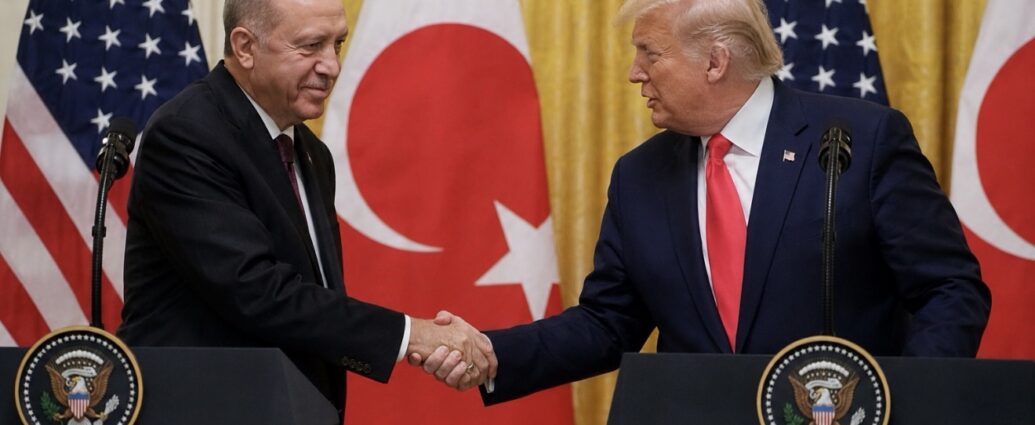
Trump Signals F-35 Sale to Turkey, Setting Up a Fight With Congress
According to remarks made Tuesday, July 7, by President Donald Trump during a meeting with Turkish President Recep Tayyip Erdoğan, the United States is prepared to consider selling F-35 fighter jets to Turkey and revisiting sanctions that have blocked such a transaction for years. Trump said the administration would “certainly consider” the sale, describing Turkey as an important NATO ally while indicating the issue is now under active review.
The comments marked a significant shift in Washington’s posture toward Ankara. Rather than treating Turkey’s removal from the F-35 program as a settled matter, Trump suggested the issue could be revisited as part of broader efforts to strengthen U.S.-Turkish relations.
The dispute dates back to 2019, when the United States removed Turkey from the F-35 program after Ankara purchased Russia’s S-400 air-defense system. American officials argued that operating the Russian-made system alongside the fifth-generation stealth fighter could compromise highly sensitive military technology. Congress later reinforced that position through the Countering America’s Adversaries Through Sanctions Act (CAATSA) and subsequent defense legislation, effectively blocking future F-35 transfers while Turkey continues to possess the S-400 system.
Turkey previously invested approximately $1.7 billion in the F-35 program and had expected to receive aircraft before its participation was suspended. Several completed aircraft intended for Turkey have remained in storage in the United States since the program was halted.
Any reversal would face major political hurdles. While the White House can shape foreign policy, Congress continues to play a central role in approving major arms sales. Lawmakers from both parties have repeatedly opposed restoring Turkey’s access to the F-35 program unless Ankara permanently removes or relinquishes the Russian missile system. Several members of Congress have also raised concerns about Turkey’s regional policies, including tensions involving Greece and Cyprus.
One proposal that has circulated among policymakers would involve relocating the S-400 system to a third country, potentially creating a path toward resolving the dispute. No agreement has been reached, however, and significant diplomatic and legal questions remain.
The debate extends beyond the fighter aircraft themselves. The administration recently advanced plans for additional military sales involving F110 jet engines used in Turkey’s domestically developed KAAN fighter program, a move that also drew criticism from several lawmakers who questioned the strategic implications.
The financial stakes are substantial. The F-35 is manufactured by Lockheed Martin, while its engines are produced by Pratt & Whitney, a division of RTX. A Turkish return to the program would represent billions of dollars in potential orders for American aerospace manufacturers and thousands of companies throughout the defense supply chain. Turkey was previously both a customer and a manufacturing partner, supplying components used throughout the global F-35 production program.
For investors, the outcome could influence future revenue expectations across the U.S. defense sector. For NATO, the decision carries broader strategic implications, balancing alliance unity against longstanding security concerns surrounding Russian military technology.
For now, Trump’s remarks have reopened one of the alliance’s most contentious defense questions. Whether the proposal ultimately advances will depend not only on the White House but also on Congress, allied governments and Turkey’s willingness to address the issues that led to its removal from the F-35 program in the first place.
JBizNews Desk | Ankara
© JBizNews.com All Rights Reserved. Reproduction or distribution without written permission is prohibited.


Reverse mortgages emerge as a tool in ‘gray divorce’ settlements
As more Americans end marriages later in life, some senior homeowners are turning to reverse mortgages as a way to manage the financial challenges of a “gray divorce.”
Divorces that arise when couples are in their 50s or older, commonly known as gray divorces, present unique financial challenges because they often occur after retirement, when income is largely fixed and assets are limited.
Rates of gray divorce in the U.S. doubled between 1990 and 2010, according to research published by the National Library of Medicine and cited by The New York Times.
Lisa Moriello, the national retail reverse sales manager at loanDepot and a Certified Divorce Lending Professional (CDLP), wrote in a think piece published on social media that the “stakes are higher” for divorce later in life.
“Older adults take a bigger financial and psychological hit from divorce than younger adults, and they have far less runway to recover,” Moriello wrote. “Retirement accounts, pensions and home equity that were built to support one household must suddenly support two.”
Moriello wrote that women often “absorb the largest setback” since they often have lower lifetime earnings and smaller retirement savings.
Unlike younger divorcing couples, older homeowners have less ability to replace lost income through new jobs or career changes. Many mistakenly believe they will keep both Social Security checks if a spouse dies, only to discover that is not the case and that their post-divorce income may be even tighter than expected.
“For a 35-year-old, a rough divorce settlement is a setback. For a 65-year-old, it can be the difference between a secure retirement and outliving their money,” Moriello wrote.
Housing is often the largest asset on the table, and decisions about the home can determine whether a newly single older adult can maintain financial stability.
In cases where one spouse wants to remain in the home, a reverse mortgage can “fund an equity buy-out while eliminating the required monthly principal-and-interest payment” if the homeowner is age 62 or older, Moriello wrote.
“Many of these homeowners are house-rich and cash-flow-constrained — exactly the profile where traditional financing options narrow just when they’re needed most,” she added.
In divorce settlements, the obligation to pay an ex-spouse can be treated as a “mandatory obligation,” allowing the spouse who stays in the home to tap a lump sum from a reverse mortgage to satisfy the settlement.
“A HECM for Purchase can help the departing spouse buy their next home without draining the settlement proceeds or taking on a payment they can’t sustain. These aren’t fringe strategies; they’re underutilized ones, largely because most divorce professionals — and frankly, most loan officers — were never trained to evaluate them,” she wrote.
Moriello noted that many divorce settlements negotiate the marital home based on assumptions rather than verified facts.
“The agreement says one spouse will refinance and buy out the other within 12 months — but nobody verified whether that spouse can qualify,” she wrote. “The decree awards the house to one party — but both names stay on the mortgage, and the departing spouse discovers years later that the contingent liability is blocking their own purchase. Support income is structured in a way that works for the family court but fails mortgage underwriting guidelines entirely.”
Moriello suggests that integrating mortgage planning into divorce negotiations earlier in the process could help reduce financing obstacles and improve long-term financial outcomes for both parties.

Famed permabear warns SpaceX IPO could be laughed at in 50 years, ‘craziest’ market bet for Main Street
SpaceX has been fast-tracked into the Nasdaq-100 Index, meaning the stock performance of Elon Musk’s rocket company is now directly tied to the retirement accounts, mutual funds and portfolios of millions of everyday American investors.
But self-proclaimed market “permabear” and GMO co-founder Jeremy Grantham is heavily skeptical of the company’s valuation and long-term investment thesis.
“Everyone’s lining up to tell you to buy the craziest IPO in the history of man,” Grantham told Morningstar’s “The Long View” podcast. “In 50 years, they’ll be telling and writing stories about SpaceX, and they’ll be quoting you paragraphs from the prospectus, and you will be laughing at it.”
D.O.G.E. WEBSITE DEACTIVATES AFTER REACHING SELF-TERMINATION DEADLINE: ‘COME TO AN END’
“In the end, the reality will come out, and this will turn out to be, of course, one of the landmark historical events that I so value in history looking back,” Grantham continued. “It will be amazing, by the way, if it doesn’t collapse, because it will need such massive developments on AI that our entire lives are totally different.”
SpaceX made its IPO debut on June 12, and began trading at $150 a share, above its listing price of $135 a share. As of midday Wednesday, the stock hovered around $149 per share and was down nearly 7% month-to-date.
Goldman Sachs, JPMorgan and Morgan Stanley have posted bullish forecasts for SpaceX’s valuation, Fortune reported, with price targets ranging from $205 to $300 per share.
Grantham also criticized Wall Street’s advice for clients to buy SpaceX, adding that even if the market ultimately validates the elevated share price, society will become a “strange one” where “we’ll be lucky not to be bossed around by our automaton friends.”
SpaceX’s quick addition to the Nasdaq-100 Index has affected its stock performance, with Grantham also saying, “What that means is there’ll be a lot of people who have to buy it for any index that is Nasdaq-y. So there’ll be much more demand than there are sellers.”
“So supply and demand being what it is, it’s hard to imagine the price won’t go up, and perhaps it will go up a lot,” Grantham said.
SpaceX’s IPO raised $75 billion and was the largest IPO in history, surpassing Saudi Aramco’s $29 billion IPO in 2019.
GET FOX BUSINESS ON THE GO BY CLICKING HERE
The IPO cemented Musk’s status as the world’s richest person, pushing the value of his holdings toward $1 trillion, a milestone no individual has previously reached.
Founded by Musk in 2002, SpaceX has grown into the world’s largest space company and a dominant force in commercial launch services. The company pioneered reusable rocket technology, helping lower launch costs and reshape the economics of the space industry. It has also become a key contractor for NASA and the U.S. government through civil and national security missions.
FOX Business’ Eric Revell and Bradford Betz contributed to this report.

Four States Seek $1.4 Trillion From Meta, More Than the Company’s Entire Market Value
Meta Platforms told a federal court on Monday that four states are seeking $1.4 trillion in penalties over claims the company intentionally designed Facebook and Instagram to addict children and teenagers while misleading the public about the risks—an amount so enormous that it exceeds the company’s entire stock market value and would rank among the largest corporate penalties ever pursued in American history.
Meta disclosed the figure in a July 6 court filing responding to the states’ proposed method for calculating penalties if they prevail at trial. The amount had not previously been made public and exceeds Meta’s market capitalization of roughly $1.3 trillion to $1.4 trillion. The company called the proposed penalty unprecedented, arguing it has “no analog in the history of consumer protection enforcement.”
The states leading the case are California, Colorado, Kentucky, and New Jersey. Their lawsuits accuse Meta of deliberately building features into its social media platforms designed to keep young users engaged for extended periods while publicly minimizing concerns about addiction and mental health. The case is scheduled to go to trial in August before U.S. District Judge Yvonne Gonzalez Rogers in Oakland, California.
The size of the proposed penalty stems from how the states calculate damages.
Although many of the detailed court filings remain under seal, attorneys for the states said during a June hearing that the total is based on multiplying the number of alleged violations by the maximum civil penalties allowed under each state’s consumer protection laws. Because the claims involve millions of young Facebook and Instagram users over multiple years, the potential penalties rapidly compound into the trillions of dollars.
Meta strongly disputes both the legal theory and the calculation.
The company argues that “social media addiction” is not a formally recognized psychiatric diagnosis and therefore contends that its public statements denying its platforms are addictive cannot be considered false or misleading. Meta also maintains that the attorneys general have failed to produce sufficient evidence showing the company intentionally deceived consumers.
Still, the states have already scored important legal victories before trial begins.
Last month, Judge Gonzalez Rogers denied Meta’s request to dismiss the case, ruling that genuine factual disputes remain over whether the company’s platforms were intentionally designed to be addictive, whether Meta knowingly misrepresented those risks, and whether children and teenagers were specifically targeted. The judge also ruled that Meta failed to fully comply with portions of the federal Children’s Online Privacy Protection Act (COPPA), giving the states a significant procedural win heading into trial.
Following that ruling, California Attorney General Rob Bonta accused Meta of placing profits ahead of children’s safety and pledged to hold the company accountable for what he described as violations of consumer protection laws contributing to the nation’s youth mental health crisis.
The Oakland lawsuit is only one piece of a much broader legal battle facing the technology industry.
Meta, along with Snap, Alphabet, and ByteDance, faces thousands of lawsuits filed by states, school districts, families and local governments alleging that social media platforms knowingly incorporated addictive design features that contributed to worsening mental health among young users. Many of those cases also involve allegations surrounding children’s online privacy protections.
The financial exposure extends beyond the California case.
Earlier this year, New Mexico became the first state to take similar claims against Meta to trial, where a jury awarded the state $375 million after finding the company had violated consumer protection laws. A judge is still considering additional financial penalties and potential operational changes resulting from that verdict.
For investors, the proposed $1.4 trillion figure highlights the extraordinary legal risks facing one of the world’s largest technology companies. While a judgment approaching that amount appears highly unlikely, even substantially smaller verdicts—particularly if replicated by additional states—could reshape how major social media companies design products, disclose risks and interact with younger users.
For parents, however, the case centers on a simpler question: whether the social media platforms used daily by millions of teenagers were intentionally engineered to maximize engagement at the expense of children’s well-being.
The August trial will place those allegations before a federal jury, with New Jersey among the lead plaintiffs in what has become one of the largest and most closely watched consumer protection lawsuits ever brought against a technology company.
JBizNews Desk | Oakland, California
© JBizNews.com All Rights Reserved. Reproduction or distribution without written permission is prohibited.

State asks High Court to dismiss petition seeking release of detained Gaza doctors
The state asked the High Court of Justice to dismiss a petition concerning detained Gazan doctors – including Dr. Hussam Abu Safiya – arguing that their cases had been individually reviewed and that their release could harm state security.
In a Tuesday response to the High Court, the state said the detention orders were issued under the Unlawful Combatants Law after the authorized official was presented with individualized classified security intelligence regarding each detainee.
The petition, filed by Physicians for Human Rights Israel (PHRI), seeks the release of 14 Palestinian doctors from Gaza who are being held by Israel without charge. PHRI argues that the detainees are medical professionals needed in Gaza and that their continued detention is unlawful.
Abu Safiya, a pediatrician and hospital director from Gaza, has been held by Israel since December 2024. His case has drawn particular international attention, including a recent UN demand for his release.
State says case reviews find legal grounds for continued detention
The state rejected PHRI’s position, saying updated reviews had found that the legal grounds for the doctors’ continued detention remained in place and that there were no “special reasons” justifying their release.
The state said the detainees’ cases are examined periodically by authorized security officials based on their individual circumstances and updated intelligence. When those reviews find that the legal grounds for detention no longer exist, or that another reason justifies release, detention orders are canceled, the state said.
According to the state, there have been cases in which periodic reviews led to detention orders being canceled and detainees being released.
The response also addressed PHRI’s recent claim that Abu Safiya may be in life-threatening danger following allegations of violence in detention.
The state said Abu Safiya’s lawyer had submitted a signed affidavit to the detention facility claiming that Abu Safiya was in life-threatening danger. The affidavit – together with PHRI’s response to the state’s request for an extension – was transferred for review by authorized officials, the state said.
The state said that, after a review, no indications were found supporting the claims raised in PHRI’s response.
It added that Abu Safiya was received at Nitzan Detention Center on June 24, was examined by medical staff upon arrival and several times afterward as needed, and remains under regular medical follow-up.
“At no stage was there any indication of danger to life,” the state wrote.
However, the state’s response did not explicitly deny that the alleged beatings took place. It also did not say what prompted the repeated medical examinations, what those examinations found, whether the injuries described by Abu Safiya’s lawyer were documented, or whether they were recorded in his medical file.
PHRI claims central questions regarding Abu Safiya’s detention not answered
PHRI said the response failed to answer the central questions raised by the affidavit of Abu Safiya’s lawyer, attorney Nasser Odeh, who visited him last week.
According to PHRI, Odeh said Abu Safiya had visible injuries to his head and neck, struggled to breathe, had difficulty remaining seated, and appeared close to losing consciousness. PHRI said the state’s response offered only a general denial while failing to address most of the factual allegations in the affidavit.
“An independent medical examination and an independent judicial review of Dr. Abu Safiya’s condition are urgently required,” PHRI said, adding that the court should schedule an urgent hearing on the petition concerning the continued detention of the doctors.
The petition was filed on April 30. The state had received repeated extensions to respond, but when it requested another extension on Sunday, the court gave it only until Tuesday.
PHRI had opposed another postponement, citing what it described as new information from Odeh regarding Abu Safiya’s condition. The organization also asked that a High Court justice urgently visit Abu Safiya as an official prison visitor in order to assess his condition firsthand.
The petition also raises a broader legal question over whether the IDF chief of staff must personally review requests to cancel detention orders under the Unlawful Combatants Law.
PHRI argued that the chief of staff’s authority to cancel detention orders is independent from the periodic judicial review process, which provides for review by the district court every six months and an appeal before a Supreme Court justice.
The organization argued that periodic court review does not replace the chief of staff’s duty to reconsider whether the detention orders remain necessary and lawful, particularly after what it described as a change in circumstances.
The state rejected that argument.
It said that, under a temporary wartime amendment to the law, powers assigned to the chief of staff may be exercised by a brigadier-general acting under the chief of staff’s authority.
As a result, the state argued, the law does not require the chief of staff himself to conduct a separate review.
The authority to cancel detention orders remains in force and is used in appropriate cases, the state said, but it does not create a parallel mechanism meant to bypass the periodic judicial review process.
The state said the same core considerations are examined in both frameworks: whether release would harm state security and whether special reasons justify release.
Some detainees have used their right to appeal periodic review decisions to the Supreme Court, the state said. It noted that Abu Safiya’s case was recently heard by the court on June 10.
According to the state, the detainees’ cases were also reviewed after the framework agreed in October 2025, and the authorized officials again found that the grounds for detention continued to apply.
Israel faces global scrutiny for detention of Gazans
The case comes amid continuing scrutiny of Israel’s detention of Palestinians from Gaza during the war, including medical personnel. PHRI and other critics have argued that prolonged detention without charge is especially difficult to justify in the case of doctors, given Gaza’s severe shortage of medical personnel and the collapse of much of its healthcare system.
Israel has argued throughout the war that Hamas systematically embedded itself in Gaza’s hospitals and used medical facilities for military purposes. The IDF has said that some of those detained from Gaza’s medical system had security ties, while Israeli officials have maintained that some cases cannot be handled through ordinary criminal indictments without exposing classified intelligence sources and methods.
The issue has become more acute as the war has moved further from its most intense stages and as pressure has grown on Israel to charge or release Palestinians held for extended periods without trial.
PHRI rejected the state’s position, saying the response did not provide concrete information justifying the continued detention of the doctors and failed to address the impact of their detention on Gaza’s healthcare system.
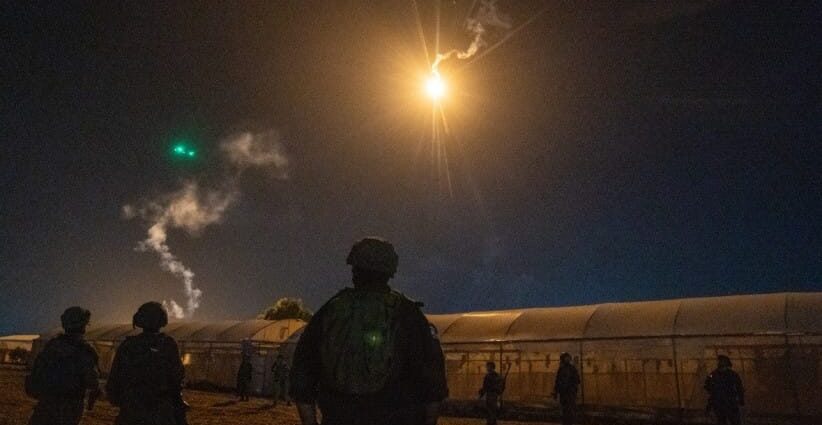
WATCH: IDF soldiers arrest twenty suspects in overnight raids across West Bank
The IDF arrested 20 suspects across the West Bank in an overnight operation between Tuesday and Wednesday, the military announced.
Among those arrested were individuals suspected of planning a terror attack, arms dealing, drug smuggling, human trafficking, and Hamas affiliation, the IDF said.
In Jenin, the military said it searched over 50 structures, while soldiers exchanged gunfire in Hebron before arresting five suspects.
Meanwhile, IDF soldiers operating jointly with Border Police officers in Tulkarem arrested four people suspected of Hamas affiliation, along with an additional person in Funduq suspected of terror incitement.
On Monday, the IDF and Border Police officers rescued ten Israeli civilians who had entered the West Bank town of Kalkilya, located in Area A, forbidden to Israeli citizens.
The Israelis entered the area to search for a stolen motorcycle, according to Israel Police.
Locals surrounded the Israelis upon noticing them, with the IDF and Border Police arriving soon after to separate the groups and extract the Israelis.
IDF: October 7-style raids possible from West Bank
The incidents this week come after IDF senior General Staff officials warned on Monday that October 7-style terror raids may be possible from the West Bank due to security gaps amid the wars in Lebanon and Gaza.
“I am not prepared to manage risks here,” warned IDF Chief of Staff Lt.-Gen. Eyal Zamir.
Goldie Katz, Ariella Roitman, and Amir Bohbot contributed to this report.

Iran threatens to close Strait of Hormuz, hit ‘twice the number of targets’ as US – report
Iran threatened to close the Strait of Hormuz, according to state broadcaster Press TV on Wednesday, citing an unknown Iranian source.
According to the source, Iran would reopen the strait only under its own arrangements, “as per the Islamabad Memorandum of Understanding (MoU).”
The source added that Iran would “strike at least twice the number of targets hit” in response to any strikes by the United States.
“The developments of the past 48 hours show Iran won’t back down from managing the Hormuz,” the source noted.
“Any threat will receive a powerful response,” the source told Press TV, noting that the regime “does not distinguish between the United States and its partners in the region.”
The source also responded directly to threats made by US President Donald Trump against Iran, saying he “will gain nothing” from making such threats.
“He (Trump) will certainly lose both the Strait of Hormuz and the negotiations over a final agreement,” said the source. “The choice is now his.”
Eight members of the Iranian army were killed in US attacks on southern parts of Iran early on Wednesday, state media reported.
The victims belonged to the air force and navy and died due to strikes in Bandar Abbas and Bushehr, it added.
Trump: US will ‘probably’ strike Iran tonight
Trump said earlier on Wednesday that he would “probably hit Iran tonight” during a press conference in Ankara, Turkey, following the NATO summit.
“I’ll give a little warning,” said Trump. “We’re going to hit them hard tonight.”
Trump added that the US has “a score to settle” with Iran due to the regime “killing soldiers, killing people for 47 years.”
He noted that the US may reimpose the blockade on the Strait of Hormuz, saying “everyone will be able to cross outside of them [Iran].”
“They might try to throw some mines, which will be hard because we destroyed their boats,” he added.

‘Make them yourself’: Trump gives Ukraine Patriot missile license during Zelensky NATO meeting
US President Donald Trump said on Wednesday that the United States will give a license to Ukraine for Patriot missiles, as he said both Russia and Ukraine want to see the war settled.
“We’re going to give a license to you to make Patriots. That’s pretty cool. This way, you can’t complain that we’re not giving ’em enough,” Trump said at a meeting with Ukrainian President Volodymyr Zelensky at the NATO summit in Ankara.
“It’s a defensive weapon, which I like better than an offensive weapon,” Trump said.
Zelensky has repeatedly pleaded for the US-made interceptors – the only weapon in Ukraine’s arsenal that can shoot down ballistic projectiles, whose high velocity and steep flight path make them difficult to stop.
He was expected to raise the issue with Trump during their meeting.
Trump said pressure could be applied to companies to produce Patriot missiles. “We have great power over the companies, those companies that make the Patriot,” he said.
“We haven’t informed the company of that yet, but that’ll work out all right. I’m sure they will be thrilled,” he said.
Lockheed Martin is the prime contractor for the interceptor missiles that go in the Patriot system.
Russia launches third assault on Kyiv in one week
Russia fired ballistic missiles at Kyiv again overnight, officials said on Wednesday, a third attack on the Ukrainian capital in less than a week exploiting Ukraine’s critical shortage of US-made air-defense interceptors.
While Ukraine’s air defenses intercepted 139 of the 169 drones during the overnight strikes on the country, they were again unable to down any of the five ballistic missiles used by Russia, air force data showed.
Trump said both sides in the war would like to see it end, but Russia’s Vladimir Putin and Volodymyr Zelensky have both been “difficult.”
“We’ve settled a lot of wars, and this one is the one that I thought maybe would be the easiest, but Putin is a difficult character, and this guy’s a difficult character,” Trump said, referring to Zelensky, who was sitting next to him.
Zelensky said he wanted to discuss “some very important details” with Trump.
“I’m sure you will do everything to stop this war,” he told Trump.
Moscow has stepped up its air war on Ukraine in recent months as its ground advances have largely stalled and Ukrainian attacks on its military logistics and oil industry triggered widespread fuel shortages.
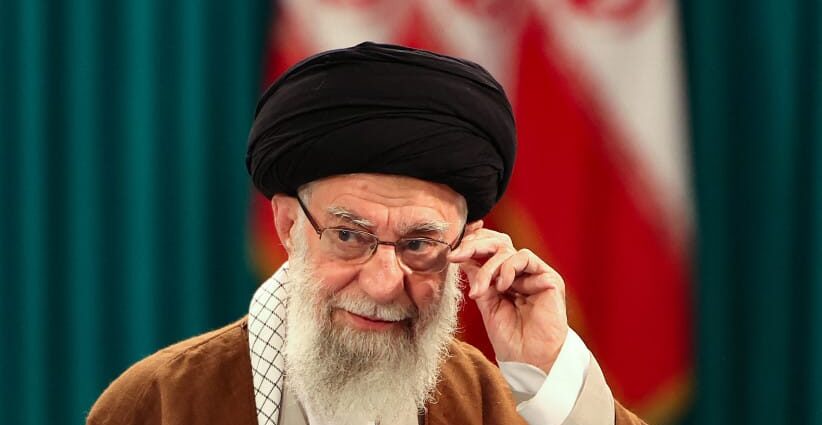
WATCH: Iranian regime publishes footage of Khamenei’s prayer room destroyed in February strikes
Footage showing the ruins of the compound of former Iranian supreme leader Ali Khamenei was released on Wednesday by the supreme leader’s website.
The footage was shared by several pro-regime outlets, including the Islamic Revolutionary Guard Corps-run Fars News Agency.
The short 50-second clip shows what appears to be rubble within the compound, warped support beams, and other elements buried under mounds of dirt in “Imam Khomeini’s Husseiniyah at the Leader’s residence,” a prayer room belonging to the supreme leader, attached to their official residence.
It concluded by showing footage of the former supreme leader.
The compound was destroyed on February 28 at the start of a joint operation between the United States and Israel against Iran, with Khamenei being killed in the strike.
🎥 انتشار تصاویر دیدهنشده از حسینیهٔ امام خمینی در بیت رهبری پساز حملات ناجوانمردانه آمریکا pic.twitter.com/wAtiRzxjZ2
— خبرگزاری فارس (@FarsNews_Agency) July 8, 2026
While satellite footage of the destroyed compound was released shortly after the strike, a view from the interior was not released until now.
Ali Khamenei was succeeded by his son, Mojtaba, following the attack.
Khamenei funeral procession arrives in Iraq
The multi-day funeral procession for Khamenei arrived in Iraq earlier on Wednesday, with Iraqi Prime Minister Ali al-Zaidi and senior Iraqi officials receiving the coffin at Najaf International Airport, according to state TV.
Najaf is the burial place of Imam Ali, the Prophet Mohammad’s cousin and son-in-law, giving the area special significance for Shi’ite Muslims.
Iranian President Masoud Pezeshkian and Shi’ite religious figures joined Zaidi at the airport to participate in the ceremonies.
The procession, which began in Tehran on Friday, moved through Hom before its arrival in Iraq. It is due to continue onward to Iraq’s shrine city of Karbala before returning to Iran for burial in Mashhad.
Reuters contributed to this report.

Israel ‘will return to the whole of Gaza,’ should ‘erase’ Oslo Accords, Smotrich says
Beyond reestablishing Gush Katif, the bloc of Israeli settlements in Gaza removed by the state in 2005, Israel will settle all of Gaza, Finance Minister Bezalel Smotrich said in a video interview played at the 2026 Pulse of Israel Conference on Tuesday.
“Gush Katif is small,” Smotrich told Pulse of Israel podcast host Avi Abelow. “We will return to the whole of Gaza in a big way.”
Smotrich’s statements come after he said last Monday that plans to establish three Israeli settlements in northern Gaza had been finalized and were waiting for the approval of Prime Minister Benjamin Netanyahu.
At the time, he called on the prime minister to give the green light so that implementation of the plans could “begin immediately.”
Smotrich’s call for Israel to return to all of Gaza comes as the IDF reportedly has operational control of around 70% of the Strip.
Further, a security source told Walla last month that it was possible “that the scope of operational control in Palestinian territory will increase in the coming months.”
Push for Israeli sovereignty over Gaza may conflict with NCAG plan
Conversely, a push to assert Israeli sovereignty over Gaza would be on course to collide with numerous diplomatic hurdles, namely the US-backed plan for the National Committee for the Administration of Gaza (NCAG) to take administrative control of the territory.
Hamas, too, has agreed to dissolve its government and transfer Gaza’s administration to the committee, but analysts and observers remain skeptical about the terror group’s true intentions.
Still, a spokesperson for Hamas affirmed to the Qatari state-run media giant Al Jazeera this week that the group intended to transfer power to the NCAG, saying that the decision was made “to deny Israel’s excuses.”
The terror organization had also announced on Monday that the head of its Emergency Committee had submitted his resignation, stating that it was the first step in dissolving the body that effectively serves as Hamas’s government in Gaza.
Nevertheless, diplomatic sources told The Jerusalem Post at the time that the move was still insufficient to allow the NCAG into Gaza and that the group had been creating major obstacles in recent talks with the US-backed Board of Peace, including backtracking on earlier agreements and making new demands.
Smotrich: We are working to repair damage caused by the Oslo Accords
In the video interview, Abelow says he and Smotrich were speaking in Efrat and that the minister had visited Solomon’s Pools, a trio of ancient reservoirs located north of the community and just south of Bethlehem.
“We are working hard to repair the terrible damage caused by the Oslo Accords disaster,” Smotrich said.
The Oslo II Accord, signed by Israel and the PLO in 1995, saw the West Bank divided into three areas. The Palestinian Authority has full civil and security control over Area A.
It also has civil control over Area B, with shared security control with Israel. Area C, the largest portion of the West Bank, remains under Israeli civil and security control.
Efrat is located in Area C, while Solomon’s Pools is located in Area A.
Smotrich added that leaving such a “magnificent ancient water site” in territory that is under Palestinian auspices was “one of the terrible mistakes” of the accords.
The minister continued, saying that, to him, there was no difference between areas A, B, and C, and that “the next step” was to “erase” the Oslo Accords.
“Because this is our land,” Smotrich continued. “Also, because everyone understands today, after October 7, how this is insane security-wise and that anyone who wants to be safe in Kfar Saba, Ra’anana, Beer Sheba, Afula, and Tel Aviv needs us here, strong, in control of the entire territory.”
Keshet Neev, Amichai Stein, Amir Bohbot, and Amit Avitan contributed to this article.

Rasoul Ziaei: The bodybuilder whose family searched for a week after Jan. massacre – interview
Six months after Iran’s January 8–9 massacre, in which opposition-linked estimates and evidence from inside Iran place the number of dead at between 35,000 and 40,000, The Jerusalem Post is publishing profiles of some of those killed, based on testimony provided by their families.
Among them was Rasoul Ziaei, a 26-year-old from Lenjan, Isfahan, whose family said he lost his life in profound loneliness, among strangers, and completely abandoned.
Rasoul was born on September 2, 1999. He was killed on January 8 and later buried in Gavart Cemetery in Isfahan after his family said they spent an entire week desperately searching for him, clinging to the hope that he might still be alive.
A young man full of joy, ambition, dreams
His family described him to the Post as a young man full of joy, ambition, and dreams.
“Rasoul was a young man full of joy for life and great dreams,” his family said. “He was ambitious, willing to take risks, a determined bodybuilder with impeccable character, and always wore a smile on his face.”
Those who knew him, they said, remember his kindness, warmth, and compassion.
“He was deeply compassionate and always cared about the well-being of others,” the family said.
On the morning of January 8, Rasoul arranged to meet friends that evening in Fooladshahr. After lunch, he told his mother that he was going to the gym. His parents, the family said, had no idea what he was actually planning.
At 4 p.m., he went to the gym. At 6 p.m., he went to the barber, as he often did, to freshen up. Afterward, he drove to Azad Mall in Zarrinshahr. Around 7 p.m., he ate a sandwich there until he received a phone call and left for Fooladshahr.
At approximately 9:30 p.m., his family said, Rasoul was struck by a bullet and collapsed.
Several bystanders picked him up, placed him in a car, and rushed him to the Mehr-o-Mani Clinic in the Maskan-e-Mehr district in an attempt to revive him. But, according to his family, he had already died.
His body was later transferred to the Shafa Clinic. The family said intelligence services removed it from there on Friday morning.
For a week, his relatives searched for him.
The authorities, they said, never accepted responsibility for his death. Only after days of agonizing searching did the family find him at the forensic medical center in Gavart, Isfahan.
“We have neither received nor accepted any financial compensation,” the family told the Post.
Ziaei family finds no peace after Rasoul’s killing
Even after burying him, they said, there has been no peace.
“We live in constant fear that his gravestone will be destroyed,” the family said. “Because there is absolutely no sense of security, we remain in a state of continual anxiety. Justice has become meaningless in today’s Iran.”
The family also made grave allegations about the condition in which Rasoul’s body was returned to them.
“I want the world to know what they did to Rasoul and to all the others like him,” the family said. “I want the world to know the condition in which they returned Rasoul to us.”
According to the family, Rasoul’s body was returned with only one eye, had been cut open, and his organs had been removed. They said that in videos and photographs taken immediately after he was shot, both of his eyes appeared intact.
But after intelligence services seized his body from the Shafa Clinic in Fooladshahr, the family alleged, his corpse was desecrated.
“They did not even stop at desecrating his corpse,” the family said.
The Post is reporting the family’s account as testimony provided by relatives and has not independently verified the allegations regarding the treatment of Rasoul’s body.
The family said one of the most painful parts of the tragedy is that Rasoul’s parents do not know the full details of what they allege was done to him.
“The hardest and most painful part of this tragedy is that his parents – and in fact no one except his siblings – know this terrible truth,” the family said. “If my mother were ever to learn what was done to him, she would take her own life.”
But the family also wants Rasoul remembered as he lived, not only as he died.
Rasoul lived life full of laughter, warmth
They described a younger brother who filled family gatherings with laughter, mischief, and warmth.
Whenever the family gathered, Rasoul would jokingly put on his mother’s clothes, imitate her voice, and make everyone laugh. When tea was poured, he would playfully stick his finger into a cup so that no one else would want to drink it.
As a child, they said, he tried to avoid homework because all he wanted to do was play.
At night, he would simply go to bed and tell his siblings: “You have to do my homework.”
Because he was the youngest brother, and so loved, they would imitate his handwriting and complete the schoolwork for him.
For his family, those memories now exist alongside the unanswered questions of his final hours: where he was taken, what happened to his body, who gave the orders, and why his relatives were left searching for him for a week.
Their message to the international community is simple.
“Please help us,” the family said. “These are the very people who speak of divine justice and of God – yet look at what they are doing to their own young people.”
Even if Rasoul and the others killed can never return, they said, the world still has a responsibility to those who remain.
“At least save the future of the young people who remain,” the family said, “whose lives are in immediate danger.”

Shin Bet chief Zini’s loyalty remarks raise defining questions for Israel’s elections – analysis
Shin Bet chief David Zini is nobody’s fool and undoubtedly knew that his remarks Tuesday about loyalty to the elected leadership would get out and ignite controversy.
And they did.
Opposition politicians seized on his remarks as proof that the man at the helm of one of the country’s most sensitive security apparatuses sees his role as serving the government rather than the state.
Democrats chairman Yair Golan accused him of confusing loyalty to the government with loyalty to the state and the law, warning that a security service guided by political allegiance rather than the law could become “a tool that serves a government seeking to hold onto power.”
National Security Minister Itamar Ben-Gvir heard something entirely different. He praised Zini for expressing what he called a basic democratic principle: unelected officials are subordinate to elected leaders.
Within hours, politicians had sorted themselves into familiar camps.
That speed itself was telling. Because the real significance of Zini’s remarks lies not only in what they say about the Shin Bet chief, but also in what they reveal about the political debate dominating Israel as it moves toward elections.
The controversy quickly centered on one sentence.
“The reason I agreed,” Zini said of accepting Prime Minister Benjamin Netanyahu’s offer to head the Shin Bet, was “for my ability to remain loyal to the elected echelon, not that it matters what their ideology is.”
Critics argue Zini loyal to Netanyahu rather than law
Taken in isolation, the remark is explosive, especially because critics of his appointment argued from the outset that he would prove more loyal to Netanyahu than to the law.
But taken in context, Zini’s comments reveal something much larger than a personal philosophy of public service. They articulate a governing philosophy that has increasingly come to define Netanyahu’s coalition.
The central question raised by Zini’s remarks is not whether the Shin Bet chief should obey the elected government. The more interesting question is how he diagnoses what has gone wrong in Israeli governance.
His answer differs markedly from one that has dominated the public debate since October 7. Many concluded that Hamas’ attack exposed failures of intelligence. Others pointed to failures of deterrence or military assumptions.
Zini pointed somewhere else.
He described a state where elected governments increasingly lack the practical ability to govern.
“I look at the war, I sit in the cabinet, I look at how ministries contribute to the war effort,” he said. “I tell you: It is a miracle.”
Why?
Because, in his words, “the elected leadership does not really have the ability to manage the frameworks over which it is responsible… because people became confused about what their role is.”
He illustrated the point with a striking example.
Ministers issue directives, he said, yet implementation can take months because the bureaucracy effectively determines what happens and when.
That diagnosis is significant because it shifts the debate away from personalities and toward institutions.
For years, Israel’s political and constitutional struggle has largely been framed as a contest between elected politicians seeking greater authority and unelected gatekeepers seeking to restrain them.
The judicial overhaul debate revolved around precisely that tension. So have repeated confrontations involving the attorney-general, legal advisers, the courts, and senior civil servants.
Zini’s remarks suggest that, in his view, the problem is not that elected officials possess too much power, but rather that they don’t possess enough.
Much was made of his statement that he was loyal to the elected leadership. Less was made of the sentences surrounding it.
“I have an internal engine,” he said.
“I have a worldview.”
“I am not a puppet blowing in the wind.”
“I have an agenda, and I want to advance it.”
Those are not the words of someone arguing that senior security officials should abandon independent judgment and bend a knee to the political class.
Quite the opposite.
Zini’s position more nuanced than critics think
Zini explicitly acknowledged that he brings his own worldview, professional judgment, and convictions to the job.
His argument is more nuanced.
Professional officials should advise candidly, argue their position, and exercise independent judgment.
But once policy has been determined by the elected leadership, the bureaucracy’s responsibility is to implement it faithfully.
That conception of governance would sound familiar in Washington, where cabinet officials and senior executive branch officials are expected to carry out the agenda of the elected president, even when they may have argued internally for a different course.
It is considerably less accepted in Israel, where, over decades, a far stronger “gatekeeper” culture has evolved, granting legal advisers, senior civil servants, and security officials considerable independence not only in how policy is implemented but, at times, in whether it can be implemented at all.
Whether one agrees with Zini’s philosophy or not, it represents a coherent alternative vision of how the Israeli state should function.
That is precisely why his remarks so quickly became political ammunition. They touched one of the central fault lines likely to define Israel’s next election: whether Israel’s unelected “gatekeepers” should constrain the elected leadership, or faithfully carry out its policies.
That helps explain the speed with which politicians rushed to define what Zini had said.
Ben-Gvir immediately portrayed the remarks as a welcome reaffirmation of a fundamental principle in a democratic society: that the professional bureaucracy is subordinate to elected leadership.
Golan depicted them as evidence that the Shin Bet risked becoming an instrument of the government rather than the guardian of the law.
Yesh Atid MK Ram Ben Barak, himself a former deputy Mossad chief, similarly argued that a Shin Bet director is subordinate first to the law and then to the elected government.
Those reactions were about far more than David Zini.
Defining debates of Israel’s next election taking shape
They were opening arguments in what is shaping up to be one of the defining debates of the next election – not simply who should govern Israel, but how Israel should be governed.
For the coalition, Zini’s remarks reinforce its longstanding claim that unelected institutions have accumulated too much authority and power at the expense of elected officials.
For the opposition, they reinforce warnings that Netanyahu is systematically placing ideological loyalists in institutions meant to remain politically independent.
In that sense, the controversy is about much more than one Shin Bet head. It is about two competing visions of how Israel should be governed.
One places greater emphasis on independent gatekeepers capable of restraining elected officials. The other insists that democracy ultimately requires unelected institutions to implement – not shape – the policies determined by those chosen by voters.
That argument has been simmering for years. Zini articulated where he stands. Come election day, the voters will be able to make clear where they stand as well.

Shin Bet chief Zini walks into yet another political trap – analysis
Shin Bet Director David Zini seems to relish walking into political traps.
His latest controversy was late Monday night, when he was recorded at a private event before his alma mater, seemingly pledging personal allegiance to Prime Minister Benjamin Netanyahu and slamming the legal establishment in a way that apolitical government officials, especially those with law enforcement functions, would almost never do.
This speech seemed to make it official: Zini is either exactly what all of his critics warned he would be – a yes-man for Netanyahu – or he has shown tone-deaf political instincts in a post where politics should not dictate, but must be understood, in particular regarding the opposition, which currently leads in the polls.
Since it was leaked that Zini was appointed by Netanyahu after a short interview in the prime minister’s limousine, after getting approval from his wife Sarah, and without prior notification to Zini’s then superior, IDF Chief of Staff Lt.-Gen. Eyal Zamir, the Shin Bet chief has been categorized as the enemy of the opposition, which makes up around half or more of the political establishment.
Zini had not helped himself by making many public statements criticizing non-elected professional government officials for being overly independent, slamming the legal establishment, and talking up visions of the messianic era.
Zini became first Shin Bet head with no agency background since 2000
All of this came in the context of Zini being the first chief of the Shin Bet to come in with zero background in the agency since 2000, when Ami Ayalon was given the role after serving as head of the navy.
But Ayalon truly is an anomaly, as even decades before he took office, prior chiefs had come from the agency.
And of course he was appointed under the cloud of allegations that Netanyahu was firing the last chief, Ronen Bar, so that he could appoint someone who would cover up the Qatargate scandal.
The most extreme critics prophesied scenarios where Zini would interfere in the upcoming elections on behalf of Netanyahu, and Knesset Foreign Affairs and Defense Committee Chairman Boaz Bismuth elevated these fears recently, seemingly asking him in a letter to act against the High Court of Justice in the context of elections.
So here comes Zini, with no Shin Bet experience or connections, saying all of the wrong things before he entered office, with a cloud over him about whether he was hired specifically to be Netanyahu’s yes-man – and all he has been doing in public lately is igniting new fires.
In one controversy, he refused to shake the hands of Shin Bet female agents at an awards ceremony. There could be religious grounds for this, especially for a rabbi, but traditionally orthodox defense officials in roles for the state drop objections to light public actions like a handshake.
Another controversy involved Zini showing insensitivity to LGBTQ Shin Bet agents, another one to October 7 victims’ families, another pressing his own Shin Bet legal advisor to change certain legal opinions under potentially political circumstances such as regarding where Netanyahu’s trial could take place, another when he protected Likud MK Tali Gotliv from indictment for months by stalling signing a standard legal form in his capacity as Shin Bet chief, and now the latest and largest drama – a speech in office seeming to confirm he is Netanyahu’s yes-man.
On closer analysis, the narrative is more complex.
The number one concrete objection to his appointment, that he would block the Qatargate probe, has not panned out. In fact, the close officials to Netanyahu in the Qatargate affair have been indicted despite Zini’s appointment.
Critics could argue that most of Qatargate on the Shin Bet’s end was wrapped up before Zini took office. But he probably could have interfered in some way once in office and has not.
In addition, his brother was indicted in a case about smuggling illegal items into Gaza, and he did not intervene despite predictions that he would try to.
None of the above scandals are smart fights for him to pick, as they all likely distract from the Shin Bet’s main mission: fighting terror.
But neither do his actions in those cases, however problematic or poor in strategy, really implicate his basic security qualifications or competence for running the agency.
In that respect, the Shin Bet machine for catching or helping assassinate Palestinian and other terrorists seems to have continued at a strong rate since October 2025.
If there is one weak point in its mission under Zini, it would be regarding combating Jewish violent extremists’ actions against innocent West Bank Palestinians.
But this issue has always primarily been a police mission, and the main failure in combating the violent Jewish extremists phenomenon rests with the police.
This brings us back to Zini’s speech on Monday night.
Full recording of Zini remarks more moderate than leaked clips
Once one hears the full recording of the speech, and not just the selected pieces leaked by I24 News, Zini’s remarks come off as somewhat more moderate.
It is true that Zini said he was very loyal to the “elected echelon.” But he did not utter the word “Netanyahu.” And in the full recording, his statement had critical context: “a reason that maybe I am better than the others. For my ability to remain loyal to the elected echelon, not that it matters what their ideology is. It could be others [other than Netanyahu] .”
Zini’s remarks do show a clear loyalty to Netanyahu and a belief that his predecessors in the Shin Bet and other government officials have put their own personal views too far above the elected echelon. But it is also clear from his remarks that he would be ready to serve under a new prime minister who is not Netanyahu, if that person should be elected in the upcoming elections.
Likewise, Zini did slam the legal establishment, but his remarks carried some nuance: “With all due respect to the lawyers and jurists,” they are meant to be a kind of ancillary tool to assist on specific issues. “I am not speaking about the Justice Ministry, I am speaking about all of the other things.” When suddenly the audience started to cheer and clap, he pushed back, saying, “No, my friends, don’t take this to that kind of a place. A country with no law and with no legal establishment would be a destroyed state. Don’t take it to that place.”
True, Zini views the current legal establishment as overly activist in addressing policies from the elected echelons, but his statement that “no legal establishment would be a destroyed state” moderates those views compared to the recent intense attacks on the legal establishment by the coalition.
And maybe if Zini had made this speech in a vacuum and quickly rushed out the full recording and a clarification of his remarks, he would get the benefit of the doubt.
Zini makes no move to clear the air
Certainly, the smallest and most standard public relations move would be to issue a clarification and to publicly send out the full recording, which The Jerusalem Post was able to privately acquire.
He has done nothing real to clear the air.
And Zini could have known that any public remarks he made on these issues would be colored by his public image to date.
His decision to lean into these issues anyway shows either a misunderstanding of how deeply vulnerable his job is if the opposition wins the upcoming election or signals that, despite the nuances in his Monday speech, he does not care much about continuing under a new government and is ready to go all in on Netanyahu.

US expected to send six F-35 fighter jets to Turkey, lift bans, following NATO summit – report
Turkey is expected to receive six F-35 fighter jets from the US as part of an initial transaction, Bloomberg News reported on Wednesday, citing Turkish officials familiar with the matter.
The deal would depend on US President Donald Trump reversing the ban on Ankara’s purchase of the latest generation of American fighter jets, the report noted.
Turkey originally planned to buy 40-odd F-35 jets before tensions between Ankara, the US, and key allies like Israel and Greece led the Americans to block the transaction.
Turkish President Recep Tayyip Erdogan has been pushing for the deal to come through, while Prime Minister Benjamin Netanyahu has recently warned against giving the weapon to the Turks.
Additionally, US lawmakers warned the Trump administration on June 28 that selling the fighter jets could also represent a security threat, due to Turkey also building defense ties with Russia and using their S-400 air defense system.
Meanwhile, Trump praised Erdogan on the sidelines of the NATO summit, saying that “He’s a very strong man. People do not mess with him, but he’s really done a fantastic job.”
“You could tell from the moment we got off the plane. Look at the airports – they were beautiful. They built a terminal just for me to come,” he added.
Trump expected to approve F-35 deal after Ankara summit
Trump is expected to throw his support behind the potential sale of F-35 fighter jets to Turkey during a visit to Ankara, Reuters and The New York Times reported on Tuesday.
When Trump was asked late last month by reporters if he would have any “gifts” for Turkey, he said: “I’m going to probably do something that will make them very happy.”
Speaking alongside Trump, Vice President JD Vance said a review was underway to determine whether Turkey had complied with US laws to receive the F-35 fighter jets.
“Pete and the entire team are reviewing this right now, because there are certain things that we have to certify have happened … in order to comply with American law,” he said, referring to Secretary of Defense Pete Hegseth.
Turkish Foreign Minister Hakan Fidan said last week that Erdogan and Trump share a “strong political will” to remove US sanctions imposed on Turkey, though they declined to lay out a timetable.
Idan Kweller and Reuters contributed to this report.

Bryan Johnson’s chronic disease is notoriously difficult to diagnose
Longevity entrepreneur Bryan Johnson shared some bad news on social media recently. “I have an autoimmune disease. My stomach is eating itself,” he wrote on X. The good news? “I’m going to try and solve it.”
The disease in question is autoimmune gastritis, a chronic inflammatory condition in which antibodies destroy acid-producing cells in the stomach, which prevents people from absorbing iron. It’s not in itself a fatal disease, but it is linked to an increased risk of stomach cancer and, eventually, to deficiencies in vitamin B12, which in turn causes anemia and neurological complications.

New interactive tool maps the hundreds of languages spoken across NYC

New York City has launched a new interactive web tool that maps the city’s diverse linguistic landscape at the citywide, borough, and neighborhood levels. Released by the Department of City Planning, the NYC Language Explorer provides users with detailed tables, maps, and charts showing the languages spoken by New Yorkers with limited English proficiency, using data from the U.S. Census Bureau. The tool offers a way to better understand the city’s many languages and identify distinct language needs at the local level.

Using the explorer, users can uncover insights into language use across NYC. For example, the tool shows that roughly 1.8 million residents have limited English proficiency, with the Bronx having the highest share of residents who speak a language other than English at 58 percent.
Additionally, Spanish is the most commonly spoken language among residents with limited English proficiency in every borough except Staten Island, where Chinese is the most prevalent.

While the tool provides New Yorkers and language enthusiasts with a closer look at how language is used across the five boroughs, it is especially valuable for city agencies, nonprofits, researchers, advocates, and community organizations. Using the map, these groups can better tailor services and provide more accessible resources to residents.
“NYC is home to hundreds of languages, and that diversity is central to who we are,” DCP Director Sideya Sherman said. “NYC Language Explorer gives agencies, service providers, community organizations, and New Yorkers an accessible way to better understand the languages spoken in our neighborhoods.”
“By putting this data at people’s fingertips, we can help support more responsive planning, outreach and services across the five boroughs,” she added.

The Language Explorer builds on DCP’s broader commitment to making demographic data more accessible, useful, and easier to understand, alongside tools such as Population FactFinder and Population MapViewer.
Its release also follows the recent publication of DCP’s Newest New Yorkers report, which offers a comprehensive analysis of the city’s foreign-born residents.
“NYC is a multilingual city, and NYC Language Explorer serves as another example of this administration’s commitment to language justice,” Commissioner Faiza N. Ali of the Mayor’s Office of Immigrant Affairs said.
“The Language Explorer tool makes language data accessible and actionable, helping City agencies and community-based organizations to move beyond assumption-based decisions and towards evidence-based planning so that critical services and information can reach all New Yorkers,” she added.
RELATED:
- New map shows over 600 languages spoken in NYC
- MAP: What languages New Yorkers speak at home, by neighborhood
- NYC launches ‘neighborhood passport’ for World Cup, highlighting immigrant communities
The post New interactive tool maps the hundreds of languages spoken across NYC first appeared on 6sqft.



Trump Orders Halt to All U.S. Trade With Spain Over NATO Spending
President Donald Trump on Wednesday ordered an immediate stop to all U.S. trade with Spain, giving the instruction out loud to Treasury Secretary Scott Bessent during a press conference at the NATO summit in Ankara, Turkey. Seated beside NATO Secretary-General Mark Rutte, Trump called Spain a “wasted cause” and said the United States no longer wanted to do business with the country, including official visits.
The order followed the summit’s endorsement of a new alliance benchmark asking members to spend 5% of their gross domestic product on defense and related costs. Spain was the only NATO member to publicly reject the full target, instead negotiating flexibility in how it meets the alliance’s capability goals. Trump has singled out Madrid for months over that stance, arguing the country benefits from NATO protection while spending less than its share.
At the podium, Trump turned to Bessent and told him he did not want any trade with Spain. Bessent answered, “Yes, sir.” Trump then said to take care of it immediately and not to talk to Spanish officials, calling them “hopeless” and predicting they would come back asking to trade again. He also said Spain had treated Rutte poorly and that the secretary-general “shouldn’t carry” the country inside the alliance.
Rutte pushed back gently. He told Trump that Spain had raised its defense spending to 2% of GDP and had made a large step over the past year, though he acknowledged there were still issues to resolve. Figures from the Stockholm International Peace Research Institute show Spain spent 2.1% of GDP on defense in 2025, up from 1.4% in 2021, still trailing many European members.
The office of Spanish Prime Minister Pedro Sánchez played down the remarks, saying it viewed them as business as usual and had no plan to change what it called an excellent relationship with Washington. Sánchez, who leads a minority government, has repeatedly clashed with Trump, including over the U.S. war in Iran. Spain has refused to let the United States use the Rota and Morón military bases in the south for operations tied to that conflict, and Sánchez earlier called the U.S.-Israeli campaign against Iran a serious mistake.
Any actual trade cutoff faces a basic obstacle: Spain does not set its own trade policy. As a member of the European Union, Spain negotiates trade as part of a 27-nation customs union handled by the European Commission in Brussels. Individual member states cannot be singled out without affecting the entire single market, and such a move could trigger a coordinated response from the bloc. European Commission deputy spokesperson Olof Gill said the EU had been clear and consistent on the issue. It was also the second time Trump has instructed Bessent to halt commerce with Spain; after the first order in March, trade continued normally.
The numbers show a modest but real relationship. Trade between the two countries totaled roughly $48 billion in 2025, with the United States exporting about $26.6 billion in goods and importing about $21.3 billion, according to Census Bureau data, leaving Washington with a surplus. Spain is the world’s largest olive oil exporter and also ships auto parts, steel, chemicals, refined petroleum, and packaged pharmaceuticals to American buyers. Only about 4.9% of Spain’s goods exports go to the United States, a smaller share than for Italy or Germany, which analysts say leaves Madrid less exposed than other European economies.
Markets moved on the comments, though a separate Trump remark added pressure. Spain’s benchmark IBEX 35 index fell nearly 3% by midday in Madrid, and the yield on Spain’s 10-year government bond rose about 10 basis points to 3.5682% as prices dropped. The broader pan-European Stoxx 600 slid 1.9%, and oil prices spiked after Trump separately said he now considers the Iran ceasefire over.
Trump used the summit to press other allies as well, repeating his push for U.S. control of Greenland, which drew a firm response from Denmark, and suggesting he could pull American troops out of Europe if members did not spend more. The White House did not provide details on whether the administration is drafting formal trade restrictions against Spain or whether Trump was voicing frustration. For now, it remained unclear how an order to stop trading with a single EU member would be carried out in practice.
JBizNews Desk| Washington D.C © JBizNews.com All Rights Reserved. Reproduction or distribution without written permission is prohibited.



USPS to raise stamp prices: Here’s what mailing a letter will cost
The cost of mailing a letter will climb again this summer after federal regulators approved another round of U.S. Postal Service (USPS) price increases, including a 4-cent increase in the price of a Forever stamp.
The Postal Regulatory Commission on Wednesday approved USPS’ proposed mailing services price changes, clearing the way for the new rates to take effect on July 12.
The price of a First-Class Mail Forever stamp will increase from 78 cents to 82 cents, while mailing service prices overall will rise by about 4.8%, according to the Postal Service.
Other approved price changes include:
The additional-ounce charge for single-piece letters will remain 29 cents. USPS has said the latest increase is necessary as it continues grappling with rising operating costs and longstanding financial challenges.
AVERAGE NEW CAR PAYMENT REACHES ALL-TIME HIGH AS AFFORDABILITY ISSUES PERSIST
“In the midst of the severe financial crisis facing the Postal Service and continued rising operational costs, the Postal Service is using all available tools… to ensure we can continue to fulfill our universal service obligation and serve the American public,” USPS said when it proposed the increase in April.
The Postal Service generally receives no taxpayer funding for operating expenses and instead relies on revenue from postage, products and services.
While the Postal Regulatory Commission approved the rate changes, it also warned that USPS continues to face significant long-term challenges, including declining mail volume, service performance issues and a deteriorating financial outlook. The commission said it had no legal basis to reject the increase because it complies with current law.
The commission also said USPS used essentially all the pricing authority available for First-Class Mail under current regulations and remains concerned about substantial declines in market-dominant mail volume, ongoing service issues and the Postal Service’s overall financial condition as it reviews whether the current ratemaking system is meeting Congress’ objectives.
CLICK HERE TO GET FOX BUSINESS ON THE GO
Forever stamps purchased before the increase will continue to be valid for mailing a standard one-ounce letter regardless of when they are used.
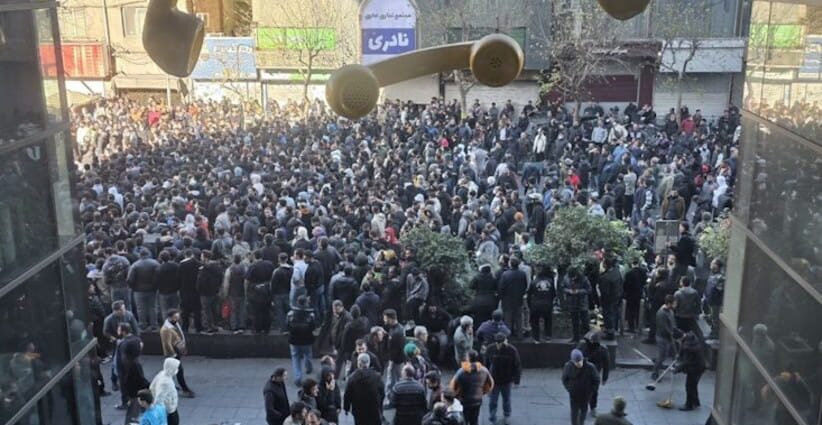
Adel Matlabnejad: The brother who said he would be ‘right back,’ and never returned – interview
Six months after Iran’s January 8–9 massacre, in which opposition-linked estimates and evidence from inside Iran place the number of dead at between 35,000 and 40,000, The Jerusalem Post is publishing profiles of some of those killed, based on testimony provided by their families.
Among them was Adel Matlabnejad, a 38-year-old from Ahvaz, remembered by his brother as an honorable and compassionate man who spent his life helping others.
Adel was born in Ahvaz on February 23, 1987. He was killed on January 9.
“I want the whole world to know that my brother was a noble and honorable man,” his brother told The Jerusalem Post. “He lived with dignity, and he left this world with absolute honor.”
According to his brother, Adel was the kind of man who instinctively stood beside those weaker than himself. He helped others whenever he could, without needing recognition or reward.
“He always helped those who were weaker than himself in every way he possibly could,” his brother said. “He was so kind and compassionate that everyone loved him — even his enemies would have found him willing to help them in their time of need.”
Grew without a father, working since being 12
That kindness, his family said, was matched by an intense work ethic shaped by hardship from a young age. Adel grew up without a father and began working when he was only 12 years old so that he could stand on his own two feet.
His brother described him as tireless, hardworking, and determined, a man who carried the burden of life with a smile.
“He was an incredibly hardworking and tireless person who always wore a smile,” his brother said.
Adel also loved cheerful music, his brother recalled.
On the evening of January 9, Adel left his mother’s house. He had not planned to be gone long. He did not even stay for dinner.
‘I’ll be right back’
“I’ll be right back, and then I’ll eat,” he said, according to his brother. But Adel never returned.
His brother said he had only briefly changed his clothes before leaving the house. What happened afterward ended with the family receiving his body.
For Adel’s relatives, the grief of his killing was compounded by the restrictions placed on his funeral. According to his brother, the family was forced to sign a written undertaking limiting who could attend.
“For his funeral, we were forced to sign a written undertaking stating that no one else could attend, or that the number of mourners had to be kept extremely small and strictly limited to immediate family members,” his brother told the Post.
The family was also denied the chance to see him properly one final time, he said. When Adel’s body was handed over, it was already completely wrapped in a burial shroud.
“They did not allow us to see what they had done to him,” his brother said.
For the family, that denial remains part of the wound: not only that Adel was killed, but that even in death, they were prevented from fully saying goodbye.
Adel is remembered by his family as Javidnam – an immortal hero – one of the many Iranians whose lives were cut short during the January massacre.
But to his brother, he was first and foremost a man of honor: a son, a brother, a worker, and a person whose goodness was recognized by everyone around him.

A soldier of his people by his own choice: Who was Ermia Lachiani, murdered by the Iranian regime?
Ermia Lachiani, 24, was a hardworking young man whose kind heart was his true strength.
Born and raised in Isfahan, he was his parents’ only child and had ambitious plans from a young age.
When he was 16, he began working in a pharmacy while attending school full-time.
His mother said that he learned that to get ahead, you had to stand tall, even when you’re exhausted.
“In general, Ermia cared more about the suffering of others and his fellow human beings than about himself,” his mother told The Jerusalem Post.
“When he worked at the pharmacy and saw people who couldn’t afford specialized medication for their illnesses, it broke him. He believed in humanity and in being a ‘big’ person—that kindness is the truest sign of strength.”
Aspiring rapper dreamed of being the greatest rapper in a free and just Iran
Lachiani was also a gifted musician and was an aspiring rapper. He loved Eminem, Tupac, Travis Scott, Kendrick Lamar, and Drake.
“It didn’t matter to him how long it would take; what mattered was that one day, his name would be heard alongside the best,” his mother told the Post.
His artistic sensibilities came through not only in his lyrics, but also in his poetry.
“I am a soldier of my people; not by force, but by my own choice,” he wrote.
His mother told the Post that he was constantly upset with the injustice he saw in the world.
“What set Ermia apart wasn’t just his big dreams; it was his massive heart,” she said.
“When I told him, ‘Ermia, eat your food,’ he would look at me angrily and say: ‘Young people are bleeding and being crushed in the streets, and you’re sitting here telling me to come and eat?’”
What happened to Lachiani during and after the protests on January 9?
Six months ago, he went to protest the Islamic Regime. He had taken part in protests in 2019, and had also felt deep sorrow for the murder of protesters during the Women, Life, Freedom protests in 2022.
His mother noted that he had been on a hunger strike for three days before he went to protest.
He was killed on the night of January 9.
After his family recovered his body, they were allowed to hold a small funeral ceremony.
Authorities demanded that he be named as a martyr, but his family refused.
He leaves behind his family, but is remembered for his special bond with his mother.
Lachiani, she said, was her closest friend and her safe haven.
She told the Post that he was not just her son: “he was hope, he was comfort, he was a living, breathing dream.”
Since he was her only child, he had promised he would provide for her, be her protector, and “never let a shadow of worry touch her heart.”
Since his death, his mother has been heartbroken with the loss of her son, and feels like she will not get any peace.
“All over the world, people have the right to protest, but unfortunately, in our country, silence was answered with bullets,” his mother told the Post.
“In my opinion, everyone who has lost a loved one during this time is seeking justice and accountability.
“Whenever we find a moment of peace, it is solely because we believe he walked a path that he chose himself and was a pioneer in. This thought slightly heals our psychological wounds.
She added that she was proud of her son’s courage and the way he lived his life.
“Ermia was a boy who stood strong amidst hardships, fought with hope, and lived with love.
Someone who believed that through hard work, you can create a voice, and from that voice, a future.”

‘He never became a firefighter’: Abolfazl Jahedi, killed in Iran’s protest crackdown – interview
Six months after Iran’s January 8–9 massacre, in which opposition-linked estimates and evidence from inside Iran place the number of dead at between 35,000 and 40,000, The Jerusalem Post is highlighting some of those killed, based on testimony provided by their families.
Among them was Abolfazl Jahedi, an 18-year-old from Tehran who, according to his mother, wanted to study firefighting and serve his country by saving lives.
Abolfazl was born in Tehran on August 18, 2007. He was killed in Tehran on January 9, 2026, and buried four days later at Behesht-e Zahra Cemetery.
His mother remembers him as loyal, innocent, respectful, and hardworking.
“Abolfazl was such a loyal and faithful boy,” she told the Post. “He was so innocent and trusting that he never imagined he would be confronted with live ammunition.”
On the evening of January 8, his mother said, Abolfazl went outside and returned disappointed that more people had not joined the protests.
“There was nobody there; nobody had the courage to say anything,” he told his father, according to his mother. “Dad, at worst they’ll only use shotgun pellets.”
The following evening, he was killed.
According to his mother, Abolfazl was struck twice by shotgun pellets, once in the head and once in the leg. She said he had gone out believing he could stand, empty-handed, for the rights of the poor and for justice for those whose blood had already been spilled.
Abolfazl worked hard to pursue dream of being a firefighter
“My Abolfazl was a modest, understanding boy – well-mannered and polite,” she said. “He treated everyone with great respect.”
Abolfazl worked constantly to help himself and pursue his dreams. He came home with grease on his hands after work, saved money for new clothes, distributed leaflets through the night, and worked in wedding halls and reception venues until 3 a.m., earning around 500,000 toman a night.
Often, his mother said, he would come home late and go to school exhausted the next morning. Sometimes, the family could not even afford his bus fare, so he walked long distances.
Eventually, with his family’s support, Abolfazl bought an old second-hand motorcycle.
It was, his mother said, his greatest dream.
But he was only able to ride it for one or two months before he was killed. Today, the motorcycle still stands in the corner of the parking lot, gathering dust.
On the night he left and never returned, Abolfazl had planned to enroll the next day at university to study firefighting.
“My son wanted to serve this country,” his mother said. “His kind soul wanted to save people’s lives.”
None of those dreams came true, she said. He never became a firefighter. He never enjoyed the motorcycle he had worked so hard to buy. He never finished building the strong body he wanted from going to the gym. He never bought himself new clothes again.
“My son left this world with nothing,” she said.
Abolfazl refused to turn back, bravely stood in front row of protests
According to testimony later given to the family by the friend who was with him that night, Abolfazl had already been struck twice but refused to turn back.
“Our blood is no more valuable than anyone else’s,” he said, according to his mother’s account. “If you’re afraid, don’t come with us.”
When others said they had done enough and should go home, he replied: “If my sister is staying out in the crowd until late at night, my pride won’t allow me to go home.”
Near the entrance to a street by the district administration building, his mother said, a crowd had gathered. Abolfazl stepped into the front row and threw a stone at one of the officers. When people began to flee, she said, he could not run quickly enough because he was wearing heavy safety boots.
He took cover behind a garbage container, but because he was tall, his head remained visible above it.
“The coward holding the weapon showed no mercy and deliberately aimed at his forehead,” his mother said.
She said he was struck just above his right eyebrow, shattering the back of his skull.
His friend tried to get him to the hospital, but Abolfazl was already dead. His father rushed there believing his son had only been wounded in the leg. At first, fearing for his safety, he did not give nurses Abolfazl’s name.
He searched everywhere, then finally asked whether Abolfazl Jahedi had been brought in.
‘In a single instant, our wonderful boy had been taken’
“As he turned around, he saw the tall body of his son inside a black body bag,” his mother said. “In a single instant, our wonderful boy had been taken from us.”
The family said the hospital refused to release his body and told them to go to the forensic medical center in Kahrizak. There, his mother said, they found him “alone, lifeless, and abandoned among thousands of other bodies.”
Abolfazl was buried on January 13. According to his mother, because of the large number of dead, his body was only handed over late at night, forcing the family to bury him in darkness.
Afterward, she said, authorities contacted the family several times and wanted to officially register him as a state “martyr.” The family refused.
Officials also came to the family’s neighborhood and to Abolfazl’s school asking questions, she said. The family still does not know why.
“This left us living in fear for a long time,” his mother said. “To this day, we lock our front door securely every night before going to sleep.”
The loss has devastated the family. Abolfazl’s father, his mother said, can no longer sleep without heavy sedatives and sleeping pills.
“Every day we still wait for Abolfazl to come home from work at five o’clock in the afternoon,” she said. “Every time we hear the sound of a motorcycle, we startle, and our hearts ache.”
She said she had once worried about how she would cope when Abolfazl eventually left home for two years of compulsory military service. Now, he has been gone for months.
“His voice, his belongings, even his scent are gone,” she said.
For Abolfazl’s mother, justice means the complete removal of those responsible for killing Iran’s young people.
“We thought it would never happen to our family – but it did,” she said. “It will happen to your families as well. These people will leave every one of us in mourning, one family after another. Do not remain silent.”
Until now, she said, almost nothing had been published about her son.
“No one knows who he was,” she said.
Six months later, his family still struggles to leave the house. Even the most basic errands, his mother said, would force them to pass the place where Abolfazl was killed.
“Every street and alley smells of blood,” she said. “Our emotional state is utterly catastrophic.”

Affordable Care Act insurers want more premium increases as enrollment sags
For the second year in a row, many Affordable Care Act insurers are proposing double-digit premium increases, driven by rising medical costs as well as policy changes by Congress and the Trump administration.
In preliminary filings with state regulators, insurers are seeking a median rate increase of 14% for 2027, according to an analysis of filings in 16 states and the District of Columbia by the Peterson-KFF Health System Tracker.

IMF Lowers Global Growth Forecast
Global growth is expected to reach 3 percent this year, the IMF said, down from 3.5 percent in both 2024 and 2025, before an expected rebound to 3.4 percent in 2027.
“The global outlook is being shaped by two powerful forces pulling in opposite directions: the lingering effects of the energy shock from the war in the Middle East, and a technology-driven investment boom,” Petya Koeva Brooks, deputy director of the IMF’s Research Department, said in a July 7 statement….

FTC Warns Seven Companies Over Questionable “Made in USA” Labels
The Federal Trade Commission (FTC) on Monday issued warning letters to seven companies it says falsely marketed products as “Made in the USA,” and to an eighth that labeled goods “Made in Texas,” even though the products were imported in whole or in significant part.
Christopher Mufarrige, Director of the FTC’s Bureau of Consumer Protection, said consumers who pay a premium for products marketed as American-made deserve confidence that those claims are truthful. He said the agency will continue holding companies accountable if they undermine that trust through misleading origin claims.
The warning letters, made public on July 6, were sent to companies selling a wide range of products, including drums, industrial laser machinery, coordinate measuring machines and e-cigarettes. The recipients were A&F Drum Company, Z-Tech Advanced Technologies, Vtron Inc. (doing business as Vtron Lasers), Helmel Engineering Products, NebTech, Lucky Bar Holdings, and My Vape Order.
At the center of the enforcement effort is the FTC’s Made in USA Labeling Rule, which requires that products advertised as American-made be “all or virtually all” manufactured in the United States. Simply assembling imported parts domestically generally does not qualify. The overwhelming majority of a product’s components and manufacturing must originate in the United States before companies can legally make an unqualified “Made in USA” claim.
The latest warnings are part of a broader federal enforcement effort.
In March, President Donald Trump signed an executive order titled “Ensuring Truthful Advertising of Products Claiming to be Made in America,” directing the FTC to prioritize investigations involving deceptive domestic-origin claims. The order elevated enforcement of American-made labeling to one of the agency’s leading consumer-protection priorities.
The Commission has already begun acting on that directive.
Earlier this year, the FTC announced a nationwide enforcement sweep targeting companies marketing American flags, footwear and electronic dartboards using allegedly deceptive origin claims. Those cases resulted in enforcement actions requiring businesses to stop making unlawful claims and provide financial relief to affected consumers. Companies that continue violating the Made in USA Labeling Rule may face significant civil penalties.
For now, Monday’s letters stop short of formal enforcement.
Instead, they serve as official warnings urging the companies to review their marketing practices and bring their advertising into compliance. Historically, warning letters often precede stronger regulatory action if businesses fail to correct the alleged violations.
For manufacturers, retailers and distributors, the stakes are substantial.
Products marketed as American-made often command premium prices because many consumers intentionally choose to support domestic manufacturing and American jobs. If companies falsely claim domestic origin, they can gain an unfair competitive advantage over manufacturers that genuinely absorb the higher costs associated with producing goods in the United States.
The FTC emphasized that point in announcing the letters, arguing that enforcement protects not only consumers but also honest manufacturers that invest in American facilities, workers and supply chains.
The timing also carries symbolic significance.
The enforcement initiative comes as the United States approaches celebrations surrounding the nation’s 250th anniversary, with renewed attention on domestic manufacturing and “Made in America” initiatives. FTC Chairman Andrew Ferguson has repeatedly identified truthful country-of-origin advertising as a key priority for the Commission’s consumer-protection agenda.
For the companies receiving warning letters, the next step will likely involve evaluating whether their sourcing, manufacturing and supply chains fully support the marketing claims appearing on their products and websites. Many businesses manufacture products using a combination of domestic and imported components, making the distinction between “Assembled in the USA” and “Made in USA” increasingly important from both a legal and marketing perspective.
For consumers, the message is straightforward.
When shoppers choose to pay more for products advertised as American-made, regulators want to ensure those claims accurately reflect where the products were manufactured. Monday’s warning letters signal that the FTC intends to closely scrutinize those claims and, when necessary, take action to protect both consumers and businesses that play by the rules.
JBizNews Desk | Washington, D.C.
© JBizNews.com All Rights Reserved. Reproduction or distribution without written permission is prohibited.
Fiserv president Dhivya Suryadevara resigns, cites ‘good reason’
Fiserv‘s newly appointed president, Dhivya Suryadevara, has resigned less than a month after taking on the role, according to an 8-K filing with the Securities and Exchange Commission on July 7.
According to the filing, Suryadevara resigned for “good reason” under the terms of her employment agreement and Fiserv‘s executive severance policy, a designation that may entitle her to severance benefits.
While her resignation as president took effect on Tuesday, Suryadevara will remain as a “non-executive officer employee” through July 31 to assist with the transition while continuing to receive her base salary and benefits.
The global fintech and payments company named Takis Georgakopoulos as CEO and Suryadevara as president on June 15 after former CEO Mike Lyons stepped down to lead Truist Financial Corp.
Also in the filing was the news that Andrew Gelb, executive vice president and chief operating officer for financial solutions, and Srini Krish, head of technology and operations for financial solutions, were appointed as interim leaders of Fiserv’s Financial Solutions business. The moves were effective July 7.
The news of Suryadevara’s resignation comes as The Wall Street Journal reported that several major banks — including JPMorgan Chase, Bank of America, Wells Fargo and PNC Financial Services — have held preliminary discussions about acquiring one of Fiserv’s debit payment networks.
Per WSJ’s reporting, owning a debit network could exempt a bank from the federal interchange fee caps imposed by the Durbin amendment, part of the Dodd-Frank Act, potentially allowing it to collect higher fees on debit transactions. Other banks have backed away from this type of deal before due to regulatory scrutiny concerns, the outlet noted.
Fiserv issued a statement to HousingWire about Suryadevara’s resignation while declining to comment about preliminary discussions of a potential acquisition.
“We can confirm that Dhivya Suryadevara has decided to leave Fiserv, and we thank her for her contributions. Andrew Gelb and Srini Krish, who have each been with the company for 12 years, are serving as interim co-heads of Financial Solutions, ensuring continuity and strong execution,” the statement read.
“The One Fiserv Action Plan and the strategy, priorities and key actions laid out at our Investor Day remain unchanged, and we continue to focus on delivering for clients through a client-first approach, innovation, and platform modernization.”

NYC to release addresses of Upper East Side buildings linked to Legionnaires’ disease outbreak

New York City is implementing emergency measures after an outbreak of Legionnaires’ Disease on the Upper East Side sickened at least 28 people as of Tuesday. Mayor Zohran Mamdani on Tuesday directed the city’s Department of Health to begin testing cooling towers across the affected area and mobilize more than 100 staff members for community outreach. In an unprecedented move, the administration will publicly release the addresses of buildings whose cooling towers test positive for the bacteria and order property owners to immediately drain, clean, and disinfect the systems to prevent further exposure.
“When there’s a public health threat, New Yorkers deserve urgency and transparency from their government,” Mamdani said. “That’s why we’re using every tool available to protect people by moving quickly to identify potential sources of exposure, requiring immediate remediation and making sure New Yorkers have the information they need to keep themselves and their families safe.”
Legionnaires’ Disease is a severe form of pneumonia caused by Legionella bacteria, which thrive in warm, stagnant water. Symptoms typically develop two to 14 days after exposure and may include fever, chills, muscle aches, and a cough. The disease can usually be treated effectively with antibiotics, especially when diagnosed early.
Each year, between 200 and 700 New Yorkers are diagnosed with the disease. An outbreak in central Harlem last summer infected more than 100 people and killed seven before the Department of Health concluded its investigation into the source of the outbreak, according to the New York Times.
The deadliest outbreak in city history occurred in 2015 in the South Bronx, sickening 120 people and killing 12. The outbreak persisted for more than a month as authorities struggled to identify its source, eventually linking it to a cooling tower atop the Opera House Hotel.
Rooftop cooling towers used in building air-conditioning and refrigeration systems can provide ideal conditions for the bacteria to grow.
During the summer, cooling towers can release water vapor containing Legionella bacteria that may travel thousands of feet before being inhaled, according to the Times. The Upper East Side has a high concentration of cooling towers, with roughly 160 registered across the three ZIP codes under investigation.
Two cases of the disease were identified on July 2 in Carnegie Hill and Yorkville, ZIP codes 10028 and 10128. While a community cluster is typically defined as three or more cases linked by location and time, the city began its response immediately rather than waiting for additional cases.
On July 5, ZIP code 10075 was added to the investigation after another confirmed case involving someone who lives or works in, or recently visited, the area. As of July 6, 23 people had been diagnosed with the disease, and 17 had been hospitalized, including two who have since been released and are recovering at home. No deaths have been reported.
By that day, the Health Department had collected samples from 139 cooling towers and said the remaining towers would be tested within the next 24 hours, if they were operating.
As of Tuesday, July 7, there have been 28 cases and 21 hospitalizations.
During previous outbreaks, the city required buildings with positive PCR results to increase chemical disinfectant levels while awaiting confirmation through culture testing, a process that can take up to two weeks. Full cleaning and disinfection were typically required only after a positive culture result.
This time, the city has adopted a more aggressive approach. Any building whose cooling tower tests positive during initial PCR screening will receive a Commissioner’s Order requiring full remediation, accelerating the response and reducing the risk of continued exposure.
Several property owners have already completed remediation, while others are actively carrying out the work.
Anyone who has been to the affected area since late June and develops symptoms consistent with Legionnaires’ disease should contact a healthcare provider immediately.
Residents in the affected ZIP codes can continue to drink tap water, bathe, shower, cook, and use their home air conditioners as usual.
RELATED:
- Pfizer’s former headquarters in Midtown at risk of collapse
- NYC expands heat wave protections for 4th of July weekend
- New NYC housing voucher program to be created as part of city budget deal
The post NYC to release addresses of Upper East Side buildings linked to Legionnaires’ disease outbreak first appeared on 6sqft.

United must face lawsuit over ‘window seats’ that don’t have windows, judge rules
A federal judge on Monday refused to dismiss a proposed class-action lawsuit accusing United Airlines of charging passengers extra for “window seats” that lacked actual windows, allowing the case to move forward.
U.S. District Judge James Donato ruled the plaintiffs plausibly alleged United breached its contractual obligations by selling seats identified as window seats even though some were positioned next to solid cabin walls rather than windows.
“These terms plausibly establish that United expressly agreed to provide a seat with a window to passengers who paid for one,” Donato wrote, adding that United’s reservation screens and boarding passes represented that customers had purchased window seats. “No more is needed at this stage for the breach claims to go forward.”
UNITED FLIGHT RETURNS MIDAIR AFTER BLUETOOTH DEVICE NAME REPORTEDLY SPARKS SECURITY SCARE
The lawsuit alleges United knowingly charged passengers extra for certain window seats on aircraft, including Boeing 737s, Boeing 757s and Airbus A321s, even though some seats lacked adjacent windows because of aircraft design. Plaintiffs claim passengers often pay premiums for window seats to enjoy the view or help alleviate anxiety, claustrophobia or motion sickness.
UNITED AIRLINES DROPS MERGER PURSUIT WITH AMERICAN, CEO KIRBY DETAILS WHY
United argued the lawsuit should be dismissed, saying “window seat” describes a seat’s location relative to the aisle rather than guaranteeing an actual window and contending federal law preempts the claims. Donato rejected those arguments at this stage of the litigation.
United declined to comment on the lawsuit.
“As part of our regular review of united.com and the United App to enhance the customer experience, in 2025 we added more detail to our seat selection process, so customers can have more information about what to expect when they choose a seat,” a United spokesperson told FOX Business.
UNITED AIRLINES RAISING TICKET PRICES UP TO 20% AS FUEL COSTS SURGE AMID IRAN WAR
CLICK HERE TO GET FOX BUSINESS ON THE GO
The plaintiffs seek to represent a nationwide class of passengers who paid extra for window seats but allegedly received seats without windows. The case will now move forward in federal court.






Opinion | An American Memento Mori




Transplants extended survival for patients whose stage 4 lung cancer hadn’t spread, study says
Could a lifesaving lung transplant strategy that contained the Covid-19 virus also save patients whose advanced lung cancer hasn’t spread?
That’s the question that inspired surgeons and oncologists at Northwestern Medicine to offer double lung transplants to patients who had run out of treatment options but whose late-stage cancer hadn’t left their lungs. People with late-stage lung cancer have not been transplant candidates before for two reasons: rates were high for cancer recurrence and low for survival.

Musk Says AI and Robots Will Make Work Optional. Burry Warns: Revolution First
Elon Musk is making one of his boldest promises yet — and a famous market skeptic has already shot it down.
Musk, the chief executive of Tesla and SpaceX, wrote on X on Thursday, July 2, that machines will soon handle so much of the world’s work that people will no longer need jobs to get by. “AI+Robots will be able to do everything, resulting in universal high income,” he wrote. “Work will be optional.”
The pushback came fast. Michael Burry, the investor made famous by The Big Short for calling the 2008 housing crash, replied with a single word: “False.” Then he added, “There will be revolution first.”
Musk was responding to an essay posted the same day by fellow billionaire Chamath Palihapitiya, a venture capitalist and former Facebook executive. The piece, titled The Great Descent, argued that the cost of expertise is falling toward zero as AI tools let ordinary people tap skills that once required hiring a lawyer, an accountant or a consultant.
Musk has made a version of this pitch for years. His argument is that AI and robots will drive down the cost of nearly everything — food, housing, healthcare, energy — until governments can afford to hand citizens enough money to live well. He calls it “universal high income,” a step beyond the “universal basic income” that former presidential candidate Andrew Yang campaigned on in 2019 with his $1,000-a-month plan. Musk’s version promises not just survival, but comfort.
He has pushed the idea even further. Musk has said saving for retirement could become “irrelevant” within 20 years because there will be so much wealth to go around that no one will need a nest egg.
Burry is not buying the timeline. On Substack last week, he disclosed that he is betting against Tesla stock. Back in late January, he called Musk “an American treasure but also a desperately incentivized futurist” — a jab at the billionaire’s habit of predicting a future that happens to line up with his own companies. Burry knows something about early calls: his bet against the mid-2000s housing bubble proved right, but years too soon.
His warning about revolution points to the gap between Musk’s rosy end state and the difficult transition that could come first. The concern is that if AI displaces large numbers of workers before any broad safety net is in place, the result could be widespread social unrest rather than a smooth transition into leisure.
He is not the only heavyweight worried about the handoff. Ray Dalio, founder of the hedge fund Bridgewater Associates, has warned that AI could widen the gap between rich and poor and raise the risk of internal conflict — even civil war. On The Diary of a CEO podcast last fall, Dalio said governments will need a redistribution plan for the AI era and that it must give people more than money, since idleness itself breeds anger. JPMorgan Chase chief Jamie Dimon has likewise spoken about how sharply AI could reshape the workplace.
For everyday workers, the debate is not academic. Some companies have cited AI as one factor in workforce reductions, and the promise of a comfortable government income remains a long way from any paycheck. The question sitting under the billionaire back-and-forth is simple: who pays, and when.
A “high income” for everyone would mean moving trillions of dollars from the companies and investors who own the AI to the workers it replaces. That is a political fight, not a technical one — and critics doubt the same billionaires cheering the technology would line up to fund the redistribution. As analysts have noted, the whole vision rests on wealthy backers agreeing to a massive transfer of their own money.
Governments have tested small versions of the idea. Cash-transfer pilots and one-time stimulus checks have come and gone. But turning that into a permanent, comfortable income for entire populations would demand a rebuilt tax system and a level of political agreement that does not exist right now.
For now, the two men stand at opposite poles: Musk promising abundance and Burry warning of upheaval before it arrives. The workers caught in between are left watching the machines improve every month — and wondering which billionaire has it right.
JBizNews Desk
© JBizNews.com All Rights Reserved. Reproduction or distribution without written permission is prohibited.

ACA premiums set to spike again in 2027
Former FHA Commissioner Frank Cassidy returns to Walker & Dunlop
Former Federal Housing Administration Commissioner Frank Cassidy has rejoined Walker & Dunlop as a senior managing director after previously leading the FHA and serving as assistant secretary for housing at the U.S. Department of Housing and Urban Development.
The news comes just a month after Cassidy resigned from his post after taking a brief leave in April due to personal matters.
At Walker & Dunlop, Cassidy will advise clients on FHA and government-sponsored enterprise (GSE) financing strategies. He will work with owners, developers, lenders and investors as they navigate federal housing policy and capital markets, the commercial real estate finance company said.
Cassidy joined HUD in April 2025 and oversaw the agency’s housing programs as FHA commissioner and assistant secretary for housing. In that role, he managed the FHA’s approximately $2 trillion mortgage insurance portfolio covering single-family, multifamily and health care loans, supporting more than 8 million homeowners, about 1.5 million renters and nearly 4,000 health care facilities.
During his tenure, HUD reduced FHA multifamily mortgage insurance premiums to 25 basis points; eliminated the Green Mortgage Insurance Premium category and related reporting requirements; simplified multifamily mortgage insurance programs; and launched the Section 232 Express Lane initiative to expedite eligible financing applications for residential health care facilities.
Cassidy’s tenure also included the modernization of the FHA’s single-family loss-mitigation waterfall and HUD’s announcement that it would adopt the VantageScore 4.0 and FICO 10T credit-scoring models.
Cassidy also oversaw HUD’s Multifamily Assisted Housing Portfolio, which serves more than 1.2 million low-income residents, along with the agency’s housing counseling program and manufactured housing construction standards.
“Serving at HUD gave me the opportunity to help shape housing policy during an important period for our country’s history,” Cassidy said. “I’m excited to return to Walker & Dunlop and work alongside our talented team to deliver the financing solutions our clients need to increase housing supply, improve affordability, and connect public policy with private capital.”
Before joining HUD, Cassidy worked at Walker & Dunlop, where he helped expand the firm’s FHA lending platform for multifamily, affordable housing, senior housing and health care properties.
Walker & Dunlop executives said Cassidy’s experience at HUD will help clients navigate changes in federal housing policy and government-backed financing programs.
“Frank returns to Walker & Dunlop at a defining moment in the housing industry,” said Sheri Thompson, executive vice president and head of affordable housing at Walker & Dunlop. “Our country continues to face a significant housing shortage, and collaboration between the public and private sectors will be essential to delivering more affordable and workforce housing.
“Frank’s leadership at HUD and deep understanding of FHA programs will be critical in helping clients navigate the evolving finance landscape.”

Just Released: IMF Cuts Global Growth Forecast to 3% as Inflation Outlook Rises
WASHINGTON — The International Monetary Fund (IMF) lowered its outlook for the world economy on Wednesday, July 8, trimming its 2026 global growth forecast to 3.0% and raising its inflation projection, even as it argued that the world had absorbed the shock of the Middle East war better than many had feared. Deniz Igan, who leads the World Economic Studies division of the Fund’s research department, presented the newly released update during a morning briefing in Washington.
The new figure marks a slight downgrade from the 3.1% growth forecast the IMF issued in April. The Fund expects global growth to recover to 3.4% in 2027, though that would still remain below the 3.5% average pace recorded in 2024 and 2025. On prices, it raised its 2026 headline inflation forecast by three-tenths of a percentage point to 4.7%, before projecting inflation to ease to 3.9% in 2027.
The Fund’s cautiously optimistic outlook rests on one critical assumption. Its forecast is built on expectations that the Strait of Hormuz—the narrow Persian Gulf shipping lane through which a significant share of the world’s oil supply travels—will begin reopening in mid-July and gradually return to normal conditions by March 2027. Based on that assumption, the IMF credited releases from strategic petroleum reserves, ample commercial inventories and resilient demand from the technology sector with helping the global economy withstand the conflict better than many economists had expected.
That assumption appeared to come under pressure almost immediately.
The report was released the same morning that President Donald Trump, speaking in Ankara ahead of a NATO summit, declared that the understanding between the United States and Iran was “over.” His remarks followed overnight military action after attacks on commercial vessels near the Strait of Hormuz. Iran’s Islamic Revolutionary Guard Corps said it had targeted U.S. military facilities in Bahrain and Kuwait in response, while the U.S. Treasury Department revoked the license that had allowed Iran to continue selling oil on global markets.
The contrast between the IMF’s assumptions and rapidly changing geopolitical developments was striking.
While the Fund’s baseline forecast assumes the energy shock will gradually ease, renewed tensions threaten to keep oil prices elevated and increase the risk of additional supply disruptions. Brent crude traded above $76 per barrel, while West Texas Intermediate (WTI) remained above $72 per barrel, extending gains as traders monitored developments in the Gulf. The IMF noted that energy prices were already running roughly 25% higher than before the conflict began on February 28. Should disruptions in the Strait of Hormuz continue, the Fund’s baseline projections could prove overly optimistic.
The regional outlook reflected those risks.
The IMF left its 2026 U.S. growth forecast unchanged at 2.3% and slightly increased its 2027 estimate to 2.2%. It reduced its outlook for the euro area to 0.9% from 1.1%, lowered Japan to 0.6%, and trimmed India, while still among the world’s fastest-growing major economies, to 6.4%. The largest downgrade came in the Middle East and Central Asia, where projected 2026 growth fell by 1.2 percentage points to just 0.7%, although the IMF expects a stronger rebound in 2027 if regional conditions stabilize.
Global trade is also expected to cool.
The IMF projects world trade growth will slow to 3.5% in 2026, down from 5% in 2025, a year boosted by companies accelerating imports ahead of higher U.S. tariffs. Trade growth is then expected to recover to 4.3% in 2027.
One subtle but significant change also stood out.
In its April forecast, released shortly after the conflict began, the IMF outlined multiple economic scenarios, including a severe case in which prolonged energy disruptions pushed inflation above 6% and significantly weakened global growth. In Wednesday’s report, however, the Fund returned to a single baseline forecast and removed those alternative downside scenarios, even as geopolitical uncertainty appears to be increasing.
For American businesses and consumers, the report offers both reassurance and caution.
The IMF continues to see the U.S. economy expanding at a healthy pace while inflation gradually moderates over the next two years. At the same time, much of that outlook depends on energy markets remaining relatively stable. Higher oil prices eventually ripple through transportation, manufacturing, shipping and retail prices, affecting everything from gasoline to groceries.
The IMF’s message is that the global economy has shown greater resilience than many expected. Whether that optimism proves justified will depend largely on events unfolding in the Middle East. As markets digested the report, investors were already watching developments in the Gulf that could reshape the very assumptions underlying the Fund’s latest forecast.
JBizNews Desk | Washington
© JBizNews.com All Rights Reserved. Reproduction or distribution without written permission is prohibited.

Intel Raises Chip Prices as AI Boom Drives Up the Cost of Computing
Intel confirmed Monday, July 6, that it is increasing prices on several of its computer processors, citing rising supply chain costs and continued strong demand as the artificial intelligence boom reshapes the global semiconductor industry. The move marks a significant shift for an industry where chip prices have historically fallen over time as technology improves and manufacturing becomes more efficient.
The price increases affect both consumer processors and high-end server chips used in corporate data centers, underscoring how AI-related demand is now influencing virtually every segment of the semiconductor market.
For consumers, Intel raised suggested prices on several processors in its Core Ultra 200S Plus desktop lineup. Depending on the model, prices increased by roughly $30 to $50, representing increases of approximately 10% to 17% over previous suggested retail prices.
The larger increases came in Intel’s data-center business. Several Xeon server processors now carry price hikes ranging from hundreds of dollars to well over $1,000. Intel’s flagship Xeon 6980P processor, for example, increased from $12,460 to $13,955, reflecting one of the largest price adjustments in the company’s enterprise lineup.
The reason extends far beyond Intel itself.
Artificial intelligence has triggered an unprecedented wave of investment in data centers around the world. Technology companies, cloud providers and governments continue spending billions of dollars expanding AI computing infrastructure, dramatically increasing demand for advanced memory, storage and semiconductor manufacturing capacity.
That surge has tightened supplies throughout the semiconductor industry.
Although many of Intel’s processors are not specifically designed for AI workloads, they compete for manufacturing capacity, advanced packaging and critical components with chips produced for AI applications. As demand continues rising, component costs have increased across much of the electronics supply chain.
Industry analysts say Intel is not alone.
Several semiconductor manufacturers have recently announced or signaled price increases tied to higher production costs and ongoing shortages of advanced memory components. Suppliers throughout the industry continue facing pressure as demand outpaces available manufacturing capacity for many high-performance technologies.
The ripple effects extend well beyond semiconductor companies.
Computer manufacturers, enterprise technology providers and cloud-computing companies all depend on processors whose production costs continue rising. Higher component prices eventually work their way into desktops, laptops, servers and enterprise technology purchases made by businesses around the world.
For consumers, the timing could matter.
Retail prices do not always increase immediately because many stores continue selling inventory purchased before manufacturers raised prices. However, analysts expect higher wholesale costs to gradually reach retailers over the coming weeks and months as existing inventory is replaced.
Businesses planning major technology upgrades may also face higher costs.
Organizations purchasing servers, upgrading office computers or expanding data-center capacity could see larger hardware budgets as semiconductor pricing adjusts to current market conditions.
The broader significance highlights one of the unexpected consequences of the artificial intelligence revolution.
While AI promises enormous productivity gains, it is also increasing demand for the components that power modern computing. That competition is pushing prices higher not only for specialized AI hardware but also for products used every day by businesses, schools and consumers.
Intel’s decision reflects growing confidence that demand remains strong enough to support higher pricing despite continued competition throughout the semiconductor industry. The company left prices unchanged on many products, suggesting it is focusing increases on processors experiencing the strongest demand rather than implementing broad price hikes across its entire portfolio.
As AI investment continues accelerating worldwide, industry observers expect semiconductor pricing to remain one of the most closely watched indicators of supply-chain conditions. Whether additional manufacturers follow Intel with further price increases may help determine how much more consumers and businesses ultimately pay for technology over the coming year.
JBizNews Desk | Santa Clara, Calif.
© JBizNews.com All Rights Reserved. Reproduction or distribution without written permission is prohibited.

Sharaa arrives at Ankara summit with Syria seeking closer NATO ties – analysis
Syrian President Ahmed al-Sharaa arrived in Ankara on July 8 to participate in meetings on the sidelines of an important NATO Summit. This comes after a two-day visit by France’s President Emmanuel Macron to Damascus.
For Sharaa, the meetings in Ankara will have great meaning for the future of Syria. Turkey is a key supporter of Damascus and Sharaa has also received support from other NATO members, including the United States.
Video of the Syrian leader’s arrival showed him disembarking from a plane in Ankara. He flew into Ankara’s Esenboğa Airport.
“President Sharaa was welcomed by Turkish Trade Minister Ömer Bolat and several Turkish officials,” Syrian state media SANA noted. He then arrived at the Presidential Complex in Ankara on Wednesday, according to Syrian state media.
Syrian state media added that “the visit coincides with the 36th NATO Summit, which is being held in Ankara on July 7-8 and hosted by Türkiye, as the alliance faces a range of regional and global security challenges.”
Syria seeks to anchor its relationship with NATO members
It also noted that “several leaders are attending the summit, including US President Donald Trump, French President Emmanuel Macron, British Prime Minister Keir Starmer, German Chancellor Friedrich Merz, and the leaders of Finland, Slovakia, Italy, Canada, Bulgaria, Albania and Montenegro.”
The meetings over the next day will be important for Syria as it seeks to anchor its relationship with NATO members. In Jerusalem, there are concerns about Syria one day emerging as a potential threat. In addition, Israeli and Turkish officials have recently been involved in a war of words.
Israeli leaders view Ankara as a potential emerging threat. However, Turkey is a member of NATO, and Israel will not want to get involved in a clash with a NATO member. On the other hand, Israel enjoys warm ties with Greece, which is a NATO member.
The question of Syria is important in the Middle East. It is trying to rebuild after years of civil war. Turkey played a role in that conflict.
First of all, Turkey backed the Syrian rebels. However, later Turkey worked with Russia and Iran to try to reduce conflict in Syria. This followed the Syrian regime’s advance into Aleppo near the Turkish border in 2016.
Turkey then shifted focus to fighting the Kurdish YPG in Syria, accusing them of being linked to the PKK. Turkey invaded the Kurdish region of Afrin in 2018 and then Serekaniyeh in 2019.
Kurds integrating with Syrian security forces, Turkey backs new government
The US, which was backing the Kurdish-led Syrian Democratic Forces, weighed withdrawing from Syria at the time. Now Turkey is seeking a different role in Syria, backing the new government. The Kurdish forces are integrating with the new Damascus security Forces.
Syria’s president issued a statement regarding Macron’s visit to Damascus on July 6-7.
“Our discussions resulted in practical steps to strengthen cooperation between our two countries, most notably an agreement to exchange ambassadors, and the signing of a number of strategic agreements and Memoranda of Understanding in the fields of energy and reconstruction, in a manner that advances the aspirations of our two peoples and supports efforts towards development and stability,” Sharaa noted.
As such, Syria’s president is emerging from one set of success stories, with the French leader’s visit, to another potential success at the NATO summit.
The challenge will be for Syria to ensure it gets the time it wants with key leaders, including the US president. US President Donald Trump is now focused on Iran tensions after clashes overnight in the Persian Gulf.
According to Turkey’s TRT, “US President Donald Trump has said he was very upset with NATO as he met with the military alliance’s chief, Mark Rutte, at the opening of a key summit in Ankara.”
As such, Trump has many issues on his plate even as the Syrian leader arrived.

Tzohar’s kashrut license was improperly granted, but Rabbinate must act, state tells High Court
The state told the High Court of Justice on Wednesday that Tzohar Food Supervision’s newly issued license as an official kashrut-certifying body cannot currently be relied on because of flaws in the way it was granted, but also said the Chief Rabbinate remains obligated to examine Tzohar’s request without delay.
The position leaves Tzohar holding a license it says was lawfully granted and already relied upon, while other state officials argue that the process behind it was defective.
For Tzohar, the case is not only about one license. It is about whether the 2021 kashrut reform, which was intended to open Israel’s official kashrut-certification market to licensed private bodies, will be implemented before the current government succeeds in rolling it back.
Tzohar has argued that after years of delay, High Court proceedings, and a ruling requiring the Rabbinate to examine its request under the law in force, internal disputes inside the Rabbinate should not be used to undermine its ability to serve businesses and consumers.
“The people of Israel deserve kashrut that they can trust and that is accessible and professional,” Tzohar said this week. “They should not have to contend with judicial and bureaucratic stall tactics.”
State responds to Tzohar dispute ahead of Tuesday night deadline
The state position was submitted on behalf of the Chief Rabbinate and the Chief Rabbinate Council after Justice Gila Canfy-Steinitz ordered the state to respond to the dispute over the license by Tuesday night.
According to the filing, a legal review found a material flaw in the process that led Chief Rabbinate director-general Yehuda Cohen to grant Tzohar the license last week.
The state said that, at this stage, there was no practical possibility for Tzohar to act on the license. It said the licensing authority should begin the proper legal process to cancel or suspend it, or alternatively conduct the licensing process again.
At the same time, the state stressed that the dispute over the license did not erase the Rabbinate’s obligations under a previous High Court ruling. The court had ordered the Rabbinate and the Chief Rabbinate Council to decide whether Tzohar met the criteria to receive a license as a “body granting kashrut certification,” and, if so, to issue one.
“The possibility that the law will be amended in the future does not remove the obligation to fully comply with the judgment in a proper administrative process,” the state position said.
At the center of the immediate legal dispute is whether Cohen could issue the license before the matter was formally brought before the Chief Rabbinate Council.
Under the state’s reading of the law, a private kashrut body seeking to operate according to a Chief Rabbinate Council kashrut standard can receive a license only if the council does not oppose the request on kashrut grounds. But the state said that this requires the licensing authority to first refer the request to the council and give it the statutory 30-day period to respond.
That, the state said, did not happen.
The Chief Rabbinate Council said last week that the issue had not been brought before it, that it had not received Cohen’s reasoned decision or the underlying materials, and that it was therefore not approving the license at that stage.
Cohen rejected that position in a letter cited in the filing, arguing that the claims against the license were inconsistent with the law, the High Court’s ruling, and proper administration.
He said the council had known about Tzohar’s request for years through the High Court proceedings, had been a party to the case, and had not raised a substantive kashrut objection to the license. He argued that the law does not require the council’s active approval, only that it not oppose the license on kashrut grounds.
In Cohen’s view, because no such opposition was issued, the council should be deemed to have consented and the license remains valid.
The state rejected that interpretation, saying the council’s 30-day period does not begin through general awareness of the litigation, but only after a formal referral by the licensing authority.
Tzohar argues that license was validly granted
Tzohar maintains that Cohen, as the official appointed under the law to grant licenses to kashrut-certifying bodies, was empowered to issue the authorization.
Rabbi Emmanuel Guedj, who heads Tzohar’s kashrut division, told The Jerusalem Post this week that the organization’s standards follow Chief Rabbinate procedures and that each business under its supervision has an on-site supervisor, as well as an additional supervisor above him.
“The supervisor is not employed by the business,” Guedj said. “He is employed by us, so there is no conflict of interest.”
He said Tzohar also tracks supervisors’ attendance through GPS, allowing it to know when a supervisor was at a business and for how long.
The license carries practical consequences beyond the legal fight. Until now, Tzohar operated under certificates that could not use the word “kosher.” Tzohar chairman Rabbi David Stav told the Post that the license allowed the organization to issue official certificates bearing the word, including for businesses seeking to meet tender requirements.
Stav said Tzohar would continue operating under the license it received.
“The court is with us, the law is with us,” he said. “As long as the Knesset does not legislate a different law.”
The broader case comes as the government advances legislation that would undo key parts of the 2021 reform. The reform was designed to move Israel away from a system in which local rabbinates effectively held geographic monopolies over official kashrut certification, while allowing licensed private bodies to issue official certificates under state regulation.
The High Court previously rejected the state’s argument that Tzohar’s petition could be delayed because the government intended to amend or repeal the law. The court said a future legislative initiative could not serve as an answer to an order requiring the state to act under the law currently in force.
The state asked to submit an additional update within 10 days. Tzohar is expected to submit its reply by Thursday.
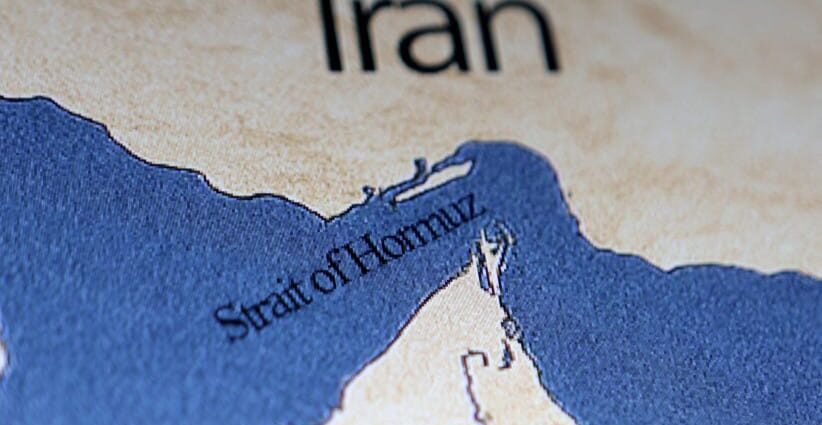
Is there any solution to the cycle of US-Iran attacks in the Strait of Hormuz? – analysis
Iran enjoys many advantages in its attacks in the Gulf. It will be incredibly difficult to stop the Iranian threats entirely.
In the latest clashes, Iran targeted shipping and carried out attacks on Bahrain and Kuwait. This has become a cycle over the last months. Even with a ceasefire and memorandum of understanding (MoU), Iran continues its attacks. The United States continues to respond.
The question is whether there is an easy solution. The US will be pressed to do more and to come up with a way to avoid repeating a cycle every week or two in tit-for-tat strikes.
The Islamic Republic, meanwhile, can attack at a time and place of its choice. As such, Iran dictates the tempo and the battlefield to some extent. Having the ability to attack wherever one wants, when one wants, gives Iran an advantage.
It enjoys the advantage because the Gulf is Iran’s backyard: It is around 990 kilometers of waterway that end at the Strait of Hormuz, which is between 40 and 100 km. wide.
There are hundreds of small islands in the Persian Gulf, also known as the Arabian Gulf. Around 30 of the islands are both substantial and controlled by Iran. This provides Iran with a major advantage because it can use the islands and its long coastline to threaten the region.
The Gulf is also a large area, with a surface area of water covering around 250,000 sq. km. This is larger than the area of Denmark and smaller than the size of Norway.
The comparison to Norway is worth considering. It may be no surprise that during World War II the German Navy used the fjords to hide its ships. Even though the Allies increasingly had air superiority, the Germans could still hide in Norwegian waters with their much weaker navy. It took many strikes, for instance, to sink the massive German battleship Tirpitz, which now rests at the bottom of a fjord near Hakoya island, close to Tromso, Norway.
Concern is over Iranian missiles getting through, not Iran winning the battle
Iran no longer has a navy, so finding the regime’s ships is not a major issue. The challenge is finding Iranian drone launcher teams and missile launchers. Iran has expanded the range and accuracy of drones and missiles. This means that it can launch drones from up to 2,000 km. away and strike ships. This gives Iran a huge land area to strike the Strait. It means that any attempt to suppress the drone and missile threat is likely impossible. Another threat Iran can create is using small fast boats. It has done this in the past. This creates a large number of options for Iran.
Most of the Iranian threats are not that serious. There are defenses against Iranian drones and missiles. The US Navy and partner forces have shown they can defeat these threats. As such, the Iranian threat is not that it will win the battle. The threat is more that a few drones or missiles, out of hundreds launched, will get through.
This causes tankers to not want to risk the journey or the lives of their civilian crew members. Many such crews have already been trapped in the Gulf for months.
Insurance for the ships is hard to obtain to transit the Strait in wartime, and the cost is prohibitive. This has meant that the real threat is not that drones will sink ships, but that it will become too costly to risk transit. Iran knows this. It knows it doesn’t need to win the battle but only to create the appearance of limited threat. This is what it has been doing. It has been waiting for a week, attacking, then de-escalating and attacking again, gambling that the Gulf states prefer de-escalation.
Many countries are present in the Gulf, not just the US
Iran knows that it is dealing with different countries. Not only is the US present in the Gulf, but there is also Qatar, Kuwait, Bahrain, UAE, Saudi Arabia, and Oman. Each country has separate views and interests.
For instance, Oman and Qatar have generally had better ties with Iran.
Kuwait has tried to be neutral.
Iran views the United Arab Emirates and Bahrain as close to Israel.
The US has major bases in Kuwait, Qatar, Bahrain, and the UAE. This includes the naval base in Bahrain and major air bases in Qatar and the UAE. The current bases are, in some ways, a result of the Gulf War and the post-Gulf War period. This has changed over time due to conflict in Iraq in 2003 and the 20-year war in Afghanistan.
Iran knows all this. It is aware the US is also weighing moving assets out of the Gulf, further away from the threat. Iran thinks it has the ability to push the US away from the region and then get some of the Gulf states to buckle under. The Gulf states are increasingly angry at the Iranian attacks. They want a solution.
It is not clear at the moment how the US or the Gulf countries will reach a solution. Military means alone may not be enough. So far, there is a cycle of escalation and de-escalation. Iran is dictating this cycle so far, after originally having setbacks in the war that began on February 28.

Make no mistake: Why Iran’s nuclear future is at the heart of the Hormuz wars – analysis
Make no mistake, the latest battles between Iran and the US over the Strait of Hormuz are about nuclear weapons.
Of course, the Hormuz wars are also about control of the waterway and money, but in the larger view, they are really about the future of Iran’s nuclear weapons program.
In two wars in June 2025 and early 2026, Israel and the US bombed Iran’s nuclear program backward from being months away from a nuclear weapon to being multiple years away.
The one significant strand of the nuclear weapons program that still needs to be squared off is Iran’s 400-plus kilograms of 60% highly enriched uranium, currently covered in rubble, but still potentially very dangerous.
While US President Donald Trump made some highly problematic concessions in his deal with Iran in June, one critical concession that he got from Iran was setting a basis for removing or neutralizing that 60% enriched uranium.
This is what Iran is really fighting about with Hormuz: how much can it use reinflaming the strait to get Trump to back off even off of the nuclear issue. This means the Islamic Republic is using economic extortion at Hormuz to try to wrangle a better deal post-war out of the fateful nuclear concessions it made mid-war.
From day one of the deal, Iran has been playing games with the Strait of Hormuz.
Trump, Iran dispute Hormuz status
When Trump immediately called the strait open, the Islamic regime insisted alternately that the strait was not yet open, or that it would be open, but only to those who paid enormous fees – as a way to compensate Iran for war losses.
After a flare-up with the US over that issue, Iran seemed to retreat temporarily, saying the strait could be crossed without fees for 60 days, while simultaneously signaling it would begin collecting fees by the end of the 60-day negotiations to implement the deal between the countries.
Iran caused flare-ups at various points to deter Israel from taking aggressive actions against Hezbollah in Lebanon, eventually effectively ending the war there.
More recently, Iran has started to attack ships periodically that cross through the strait in an area closer to Oman without registering with Tehran.
In the prior flare-up, Iran attacked allied US ships, leading to very modest attacks by American forces on some Iranian positions near the strait.
Iran’s multiple attacks on US-allied ships this week led to a slightly more robust series of attacks by American forces on over 80 Iranian positions and small ships (the US destroyed virtually all the larger ships during the war earlier this year) around the strait.
But these attacks were still a far cry from anything which would intimidate the Iranians into giving up their larger grand plan of using intermittent fights over Hormuz to try to escape the nuclear concessions which the Trump administration says they committed to.
Iran’s quick response to US attacks
In fact, Iran wasted no time in attacking multiple American Arab allies in the region, including US bases, making sure it showed how little regard it had for the American attacks.
Why doesn’t Iran care about 80 attacks by the US?
Because the targets were unimportant tactical targets near Hormuz, and nothing that actually is of strategic value to the regime.
Trump is avoiding such attacks for now, fearing a return to full war will erase his gains in bringing gas prices down since the war ended.
And that is the essence of the dilemma.
As long as Iran knows that Trump fears going back to war and hitting them anywhere sensitive, why would they make concessions on nuclear weapons?
All they need to do is to keep periodically shaking the boat, or in this case the strait, and they reason that eventually Trump will be worn down by continued months of gas price gyrations, to beg for stabilizing Hormuz, even if it means he gives back the concessions Iran made on the nuclear issue.
This leaves Trump with two choices if he wants to outlast Iran’s pressure on the nuclear issue.
One is to hit the Islamic regime really hard again, at the level of top officials or weapons or economic assets of true strategic value, and be ready to risk a return to war if necessary.
His other option is to keep American forces in the region for a much more extended period to periodically symbolically strike Iran, but keep those strikes below a certain threshold, while also holding back the funds Iran is owed, until the regime starts to behave and he wears it down into following through on the nuclear concessions it already made.
For Trump, the US, Israel, and others threatened by Iran’s nuclear program to close the box on that threat – at least for 15 years or so – he must realize that what is at stake in these Hormuz wars is far more than gas prices.

Iranian strikes violated MoU with US, ceasefire talks to continue, Macron says
French President Emmanuel Macron said on Wednesday that he believed Iranian strikes on US bases in the Gulf violated the Memorandum of Understanding with the US, and that Iran had been mistaken to carry them out, but added that he understood meetings as part of the 60-day ceasefire between Iran and the United States would continue.
Trump said earlier on Wednesday that the interim agreement to end the war with Iran was over after the attacks.
Macron, Meloni address NATO, Trump remarks
Macron also commented on Trump’s broader remarks about NATO allies during the same appearance.
Macron also said he did not hear US President Donald Trump make any complaints behind closed doors about allies, after Trump publicly called Spain a “terrible partner” in the military alliance and renewed claims on Greenland while speaking to reporters alongside NATO Secretary-General Mark Rutte in Ankara.
Italian Prime Minister Giorgia Meloni also commented on her ties with Trump.
“No, I absolutely don’t regret anything I’ve done,” Meloni said in Ankara, at the end of a NATO summit in which Trump also took part.
Meloni said she would not respond directly to Trump’s posts.
She also said Italy would respect NATO defense spending commitments, but would decide on timing and procedures, and prioritize the Italian defense sector.
Meloni says US has not notified Italy of troop withdrawal
The United States has not formally notified Italy of any plans to withdraw troops from Italian soil, Prime Minister Giorgia Meloni said on Wednesday, speaking at the end of the NATO summit in Ankara.

At least 17 hospitalized following suspected carbon monoxide poisoning at Jerusalem beauty salon
Authorities rescued 17 unconscious women from a beauty salon in the A-Tur neighborhood of Jerusalem on Wednesday, with some of them being in moderate condition while others were in more serious condition.
The initial assessment was a suspicion of carbon monoxide poisoning, according to a statement from the Israel Fire and Rescue Authority.
“Firefighters are currently working at the scene to identify the substance, examine the circumstances of the incident, and rule out any further risk to the public,” Israel Police said.
Seven of the women were evacuated to Hadassah-University Medical Center in Jerusalem’s Ein Kerem in serious condition, while five were brought to Shaare Zedek Medical Center and another five to Hadassah-University Medical Center on Jerusalem’s Mount Scopus in mild condition, the Israel Fire and Rescue Authority said.
According to Shaare Zedek, three women in moderate condition are currently being treated, with the hospital noting that all three are conscious.
This is a developing story.

STAT+: Europe will accelerate its review of RevMed’s drug
Want to stay on top of the science and politics driving biotech today? Sign up to get our biotech newsletter in your inbox.
Good morning. If you recall, a few years ago, Pfizer moved its New York headquarters from a building in Midtown to Hudson Yards. The company’s timing was lucky.
Yesterday, officials evacuated that Midtown building, which is being converted into an apartment complex, after several floors caved in and two columns buckled. Officials say the building is at risk of collapse.











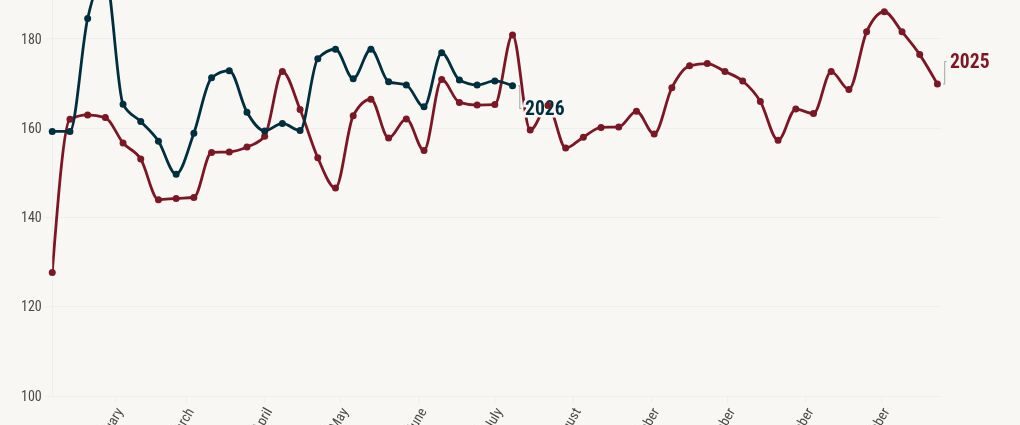
Mortgage applications dip during holiday week as rates edge up
Mortgage applications decreased 2.2% from one week earlier, according to data from the Mortgage Bankers Association (MBA)’s weekly mortgage applications survey for the week ending July 3. This week’s results include an adjustment for the Fourth of July holiday.
On an unadjusted basis, the index decreased 12% compared with the previous week.
The adjusted refinance index decreased 4% from the previous week and was 8% higher unadjusted than the same week one year ago. The seasonally adjusted purchase index decreased 1% from last week. The unadjusted purchase index decreased 11% compared with the previous week and was 5% higher than the same week one year ago.
“Mortgage application volume was little changed during the week of the nation’s 250th Independence Day celebration, as the 30-year fixed rate increased slightly to 6.58%,” Mike Fratantoni, MBA’s senior vice president and chief economist, said in a statement.
“After adjusting for the Independence Day holiday, government purchase volume increased modestly, led by a 5% gain in VA purchase applications, while conventional purchase activity declined. Refinance application volume was down 4%, as homeowners saw little enticement to act with rates still elevated.”
The refinance share of mortgage activity decreased to 40.6% of total applications, down from 41.4% the previous week. The adjustable-rate mortgage (ARM) share of activity increased to 7.8% of total applications.
By product, the Federal Housing Administration (FHA) share of total applications decreased to 16.4%, down from 16.9% a week earlier. The U.S. Department of Veterans Affairs (VA) share increased to 13%, up from 12.9%, and the U.S. Department of Agriculture (USDA) share increased to 0.5%, up from 0.4%.
The average contract interest rate for 30-year fixed-rate mortgages with conforming loan balances ($832,750 or less) increased to 6.58%, up from 6.57%, while the average rate for 30-year fixed mortgages with jumbo loan balances decreased to 6.50%, down from 6.52%.
The average contract interest rate for 30-year fixed loans backed by the FHA increased to 6.28%, up from 6.27%, while the rate for 15-year fixed mortgages decreased to 5.99%, down from 6.00%. The average rate for 5/1 ARMs increased to 5.84%, up from 5.79%.
Xactus Mortgage Intent Index
Xactus’s Mortgage Intent Index — which analyzes aggregated, anonymized credit-pull activity across the Xactus Intelligent Verification Platform — declined to a reading of 110.9 for the week of July 3.
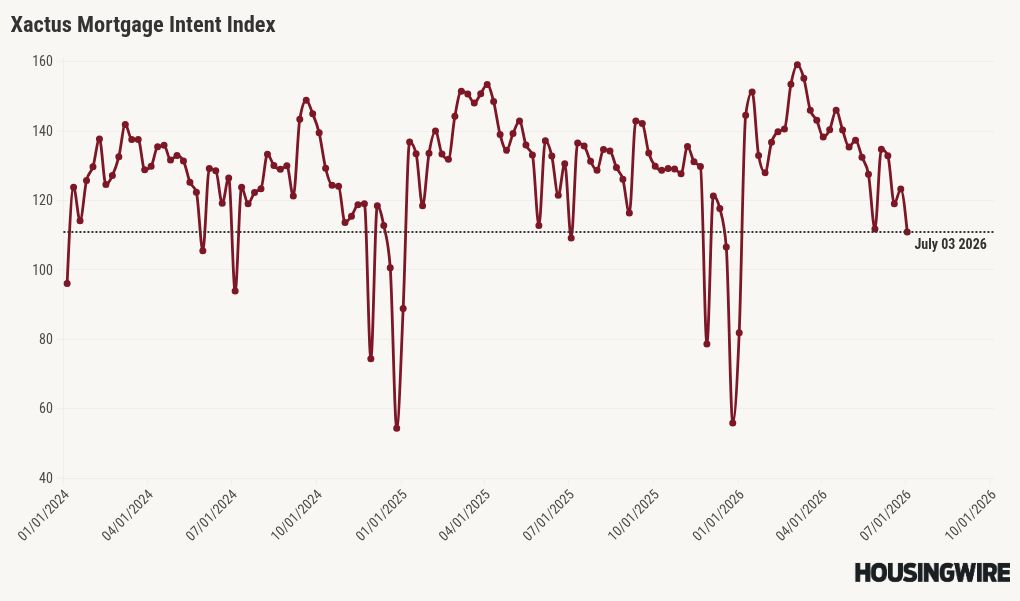
“The Xactus Mortgage Intent Index declined about 10% week-over-week due to the Fourth of July holiday,” said Thomas Lloyd, Xactus’ chief strategy officer. “Even so, the unadjusted index surpassed the same week in 2025 by roughly 1.56% — a positive sign after two weeks of year-over-year declines.
“With a slight dip in mortgage interest rates, the index turned positive year-over-year, underscoring the pent-up demand and potential tailwinds if rates decline further,” he added.

Pfizer’s former headquarters in Midtown is stable after buckled columns led to evacuations

The city’s Department of Buildings on Tuesday said a high-rise tower under construction in Midtown is now stable after structural columns buckled. The building, Pfizer’s former headquarters on 42nd Street, which is currently being converted into a new residential development, was found to be structurally compromised, prompting the city to evacuate several buildings in the area and close surrounding streets. DOB Commissioner Ahmed Tigani on Tuesday night said crews were able to enter and stabilize the impacted floors as part of an emergency intervention. Evacuation orders were lifted for some buildings, and the police reopened some streets, although 42nd Street between 2nd and 3rd Avenues remains closed to vehicles. Work to stabilize the building will continue this week.

As part of an emergency intervention that began last night, crews brought in metal beams and poles, as well as galvanized steel, to replace the buckled columns. After the building is stabilized, plans for a long-term solution will need to be established.
“I can say right now that the building is stable,” Tigani said on Tuesday night. “It has not moved since we started monitoring it earlier today. We feel confident in the emergency plan that we have now to make it stable.”
The buildings still under an emergency evacuation order include: 15 2nd Avenue, 235 East 43rd Street, 231 East 43rd Street, 225 East 43rd Street, and a partial evacuation of 217 East 43rd Street.
Tigani would not speculate on the cause of the structural failure and said the city will continue to investigate. The commissioner added that the city will look at the approved plans for the conversion project to understand the situation.

Just before 8 a.m. on Tuesday, fire officials received a 911 call about falling bricks near East 42nd Street. Department of Buildings officials found that wasn’t the case, but did confirm that two structural columns on the 21st floor of 235 East 42nd Street had buckled. Officials deemed the structure unstable and evacuated the building and surrounding areas, and established a collapse zone.
Fire Department officials said steel beams on the 21st floor of the 37-story building on 42nd Street started to “bend and deflect,” and multiple cracks and sagging floors were discovered. The police closed 40th to 45th Streets between 1st and 3rd Avenues to pedestrian and vehicular traffic as first responders and engineers work to shore up the building.
During a press conference at the scene, Mayor Zohran Mamdani said there have been no injuries, and all construction workers at the site have been accounted for.
“This is an extremely serious situation, and I am thankful to our first responders for quickly arriving at the site and to New Yorkers for reacting calmly and with urgency,” Mamdani said. He urged New Yorkers to avoid the area.
FDNY Chief John Esposito said the building had continued to move since the first responders arrived on the scene. Since it’s a steel-frame building, it “would not be a total collapse,” Esposito said. “It would be more of a localized collapse,” he added.
As of 4 p.m., NYC Deputy Mayor for Housing and Planning Leila Bozorg told NY1 that the building is no longer moving, allowing for a team of six people to enter the building to assess the damage.

Metro Loft Developers and David Werner Real Estate are currently converting the former Pfizer headquarters building, which sits between Grand Central Terminal and the United Nations, into more than 1,600 apartments, set to be the largest office-to-residential conversion in the country.
Designed by Gensler, the project added 19 stories atop the original 10-story building at 219 East 42nd Street and four stories to the taller tower at 235 East 42nd Street. About 100,000 square feet of amenities are planned. Leasing was scheduled to start this summer.
Nathan Berman of MetroLoft told The Real Deal that reports of a possible collapse have been “blown a little bit out of proportion,” and the issues are “fixable.”
Berman also told the website that claims from a Steamfitters Local 638 worker that the building had not used enough steel to support the additional weight were “total nonsense.”
“This was well designed and approved by structural engineers,” Berman said. “This is a freak accident that something occurred with these two specific columns that either were not reinforced or were not reinforced sufficiently, and they gave way. That’s it. There’s no mystery, and there’s no magic.”
Editor’s note: The original version of this story was published on July 7, 2026, and has since been updated. This story will continue to be updated as the situation develops.
RELATED:
The post Pfizer’s former headquarters in Midtown is stable after buckled columns led to evacuations first appeared on 6sqft.

Why Buying a Home Still Feels Out of Reach Despite More Homes for Sale
The U.S. housing market continues showing signs of improvement in inventory, but for many Americans, homeownership remains financially out of reach as mortgage rates remain stubbornly high. According to the latest housing data from Freddie Mac, the average 30-year fixed mortgage continues hovering around 6.5%, keeping monthly payments elevated even as more homes become available for sale across much of the country.
Higher borrowing costs have become the single biggest obstacle facing prospective homebuyers.
At today’s mortgage rates, financing a $400,000 home requires monthly principal and interest payments exceeding $2,500, hundreds of dollars more each month than buyers would have paid just a few years ago when mortgage rates were near historic lows.
That difference has dramatically reduced affordability, particularly for first-time buyers struggling to save for down payments while managing higher living costs.
Although housing inventory has gradually increased this year, demand has remained relatively subdued.
More homeowners have begun listing their properties, and builders continue adding new homes to the market. Sellers are also becoming more willing to negotiate prices, offer mortgage-rate buydowns and provide additional incentives to attract buyers.
Even so, elevated financing costs continue limiting affordability.
Mortgage rates closely follow movements in the 10-year U.S. Treasury yield, which remains influenced by inflation expectations. As long as inflation remains above the Federal Reserve’s target, economists expect mortgage rates to remain relatively elevated.
Another challenge continues restricting supply.
Millions of homeowners refinanced during the pandemic when mortgage rates fell below 4%, with many locking in rates closer to 3%. Those homeowners now have little incentive to sell because purchasing another home would require accepting significantly higher financing costs.
Economists refer to this as the “lock-in effect,” and it continues limiting the number of existing homes entering the market.
Despite those challenges, there are encouraging signs.
The National Association of Realtors recently reported existing-home sales improving from earlier this year, while inventory continues expanding in many markets. Slower home-price appreciation is also allowing incomes to gradually catch up after several years of rapid housing inflation.
Builders have responded by offering more incentives, including mortgage-rate assistance, closing-cost credits and upgrades designed to improve affordability without reducing advertised home prices.
Housing analysts believe those concessions could create opportunities for financially prepared buyers willing to enter the market despite higher interest rates.
For many households, however, affordability remains the deciding factor.
Higher mortgage payments affect not only purchasing decisions but also how much home buyers can qualify to finance. Even modest changes in mortgage rates can significantly alter monthly payments and purchasing power.
Financial experts generally caution buyers against waiting indefinitely for mortgage rates to return to pandemic-era lows, noting those historically low borrowing costs were largely the result of extraordinary economic conditions unlikely to return soon.
Instead, many advisers recommend purchasing when personal finances allow rather than attempting to predict future interest-rate movements.
For business leaders, the housing market remains an important economic indicator because residential real estate influences consumer spending, construction activity, banking, home improvement retailers and numerous related industries.
The next housing reports later this month will provide additional insight into whether improving inventory and moderating home-price growth are beginning to stimulate stronger buyer activity.
For now, the housing market remains caught between improving supply and stubborn affordability challenges.
More homes may finally be available, but until mortgage rates move meaningfully lower or household incomes rise further, many Americans will continue finding that owning a home remains one of the biggest financial challenges they face.
JBizNews Desk | Washington
© JBizNews.com All Rights Reserved. Reproduction or distribution without written permission is prohibited.

Israel agrees to extend earthquake aid in Venezuela after rare call between president, FM Sa’ar
The Israeli aid delegation’s earthquake relief work in Venezuela will continue for an additional two weeks after interim president Delcy Rodriguez met with Foreign Minister Gideon Sa’ar to request the extension, the Foreign Ministry and the IDF announced on Wednesday.
The decision was approved by Prime Minister Benjamin Netanyahu.
With a small delegation of only 30 people, Israeli presence in Venezuela has been focused on designing a national reconstruction plan, which Rodriguez hopes to begin implementing.
As part of the plan, the IDF began mapping and categorizing approximately 1,300 buildings on Monday, classifying them as either to be demolished or potentially salvageable despite damage.
Additionally, IDF Brig.-Gen. Elad Edri said that the IDF engineers have provided guidance to Venezuela on handling debris from damaged buildings.
‘Out of the box thinking’ as earthquake death toll rises
The multi-year plan is a major accomplishment of the Israeli delegation, and Venezuela approved it within days, rather than the weeks or months it would normally take to develop.
Edri said the severity of the disaster warranted rapid, out-of-the-box thinking.
Following the June 24 earthquake, the IDF delegation flew out of Israel on June 30 and landed in Venezuela on July 1 after multiple complex stopovers, Edri said.
He explained that, given the current chaos, other delegations who wanted to assist with the disaster have needed four to five days of travel and waiting to reach disaster-stricken sites.
Even the IDF could not fly directly into Caracas; they flew into Valencia instead and then traveled domestically to Caracas.
On Sunday, the Venezuelan Information Ministry announced that the death toll had risen to 3,342.
The new tally also puts the number of injured at 16,470, while the number of homeless has risen to 17,345. Nearly 200 buildings are confirmed to have collapsed, according to state officials.
Some of the homeless are living in official shelters and others in tent encampments. An unofficial but widely used tally of the missing stands at around 41,000.
Yonah Jeremy Bob and Miriam Sela-Eitam contributed to this report.

Rights org. files complaint after Sephardi Chief Rabbi Yosef shames women for private mikveh use
Religious-services rights organization ITIM filed a complaint Tuesday against Sephardi Chief Rabbi David Yosef, accusing him of using his public and judicial position to urge mikveh attendants to shame women who want to immerse without an attendant present.
The complaint was filed with retired judge and Judicial Complaints Commissioner Asher Kula, in Yosef’s capacity as president of the Great Rabbinical Court.
It followed remarks Yosef made two weeks ago at a conference for mikveh attendants, according to the complaint and news reports.
Yosef reportedly acknowledged that attendants could face legal consequences if they prevented a woman from immersing alone, but then allegedly told them they could verbally rebuke such women for acting against halacha.
He said attendants could tell a woman that the chief rabbi had said she was “defying the Torah,” according to the complaint.
Yosef’s office denies the claims
“Raise your voice and shout,” he was quoted as saying. “That way, you have not broken the law, but you have shamed them” into immersion with an attendant present.
A day later, Yosef’s office said that the remarks attributed to him had been quoted only in part and did not present the full picture.
“There was never any intention to harm” women, the statement said, adding that “on the contrary, everything he said at the conference was about welcoming women warmly, with kindness.”
His office said that even when Yosef warned against what it described as a minority of women seeking to immerse without an attendant in what he described as a violation of halacha, he had said the matter should be explained “pleasantly,” though clearly and firmly. The statement added that Yosef’s sharper remarks were directed at women who, in his view, act “defiantly” by relying on High Court rulings in halachic matters.
“Certainly, every person must be treated with honor and dignity, all the more so women who come to fulfill a mitzvah,” the statement said.
ITIM argued that the clarification did not retract the substance of the remarks, but instead reinforced the message that women who ask to immerse without an attendant are acting against Torah law.
The heart of the dispute is a 2016 High Court of Justice ruling in an ITIM petition, which gave force to an agreed position that a woman who asks to immerse without a mikveh attendant or friend present may not be prevented from doing so.
A Religious Services Ministry directive issued after the ruling similarly states that if a woman asks to immerse alone, the attendant may explain, with the required sensitivity, that responsibility for the halachic validity of the immersion rests with the woman herself, but may not press her beyond that.
ITIM says Yosef’s comments were ‘halachically harmful’
ITIM argued that Yosef’s remarks violated the ethics rules for dayanim, contradicted the High Court ruling and ministry procedure, and amounted to improper use of his public position.
The organization also argued that the comments were halachically harmful. The complaint cited rabbinic sources and later halachic opinions that, according to ITIM, recognize immersion without an attendant as valid in certain circumstances, and said publicly shaming women over their manner of immersion constituted verbal wrongdoing.
“It is painful and outrageous to see a person of such high halachic and public standing, to whom many women look up – including the mikveh attendants who do sacred work – choose to use his power to harm women’s standing,” attorneys Timna Guttel and Ofra Sitssamer of ITIM’s legal department said.
“Instead of bringing women closer, the rabbi’s words distance women from the mitzvah of immersion and deepen the gap between those immersing and the mikveh attendants,” they said.
Rabbi Seth Farber, ITIM’s founder and chairman, called on the chief rabbis to serve as a model of tolerance and respect, and said women who had experienced degrading treatment in mikvaot could contact ITIM’s assistance line.
ITIM asked Kula to intervene, saying the remarks instructed public employees to act contrary to legal directives and harmed women’s right to privacy in mikvaot.
Ahmadinejad’s appearance at Khamenei’s funeral leaves unanswered questions – analysis
Former Iranian president Mahmoud Ahmadinejad was spotted at Khamenei’s funeral events on Monday. The appearance is important because, according to Al-Ain media in the UAE, Ahmadinejad has not appeared in public since February 28, when the US and Israel began strikes on Iran. He has now returned from the “brink of death.”
The former Iranian president was believed for a time to possibly be dead due to the bombing on the first day of the war. However, subsequent reports made it seem that the bombing was actually intended to free him from a kind of house arrest. These reports, in May, suggested that there was hope that Ahmadinejad might actually be helpful in some form of regime change.
He is one of many leaders and former leaders of Iran whose fates have been entwined with the war. Mystery surrounds Ahmadinejad.
He was president of Iran from 2005 to 2013, key years when the nuclear program was in the spotlight. He was a key figure in Iran’s nuclear program and its perception as an increasing threat to Israel and the world.
This was also the lead-up to the Iran deal that the Obama administration signed in 2015.
Since leaving office, Ahmadinejad appeared to retire to a modest life. He also became more active on social media, including commenting on American sports and getting involved in supporting various causes. This post-presidential life appeared to present him in a new light. No longer the fire-breathing Holocaust denier, he appeared to be living a kind of Hobbit-like existence wrapped in eccentricity.
No other previous Iranian presidents attend Khamenei’s funeral
Khamenei’s funeral did not involve any of the former presidents of Iran in any official capacity. They have all be pushed aside. Iran is now believed to be moving more toward a kind of military dictatorship, even if the country still officially has a civilian president. This means the IRGC and security forces are calling the shots. The new supreme leader, a son of Khamenei, was not present. He is reported to be wounded and in hiding since the end of February.
Al-Ain media noted that “since the outbreak of war on February 28, in which a large number of Iranian political and military leaders were killed, Ahmadinejad had not appeared, and no official confirmation or denial of his fate had been issued, amid conflicting reports about his death, leaving his situation among the many doubts that prevailed in the early days of the American and Israeli strikes.”
The report said that on Monday he was seen in public “for the first time since the war, moving among mourners wearing a jacket and a mask that had been pulled up to his throat. Iranian state media published a picture of Ahmadinejad, showing him among his bodyguards and with mourners in a street in Tehran.”
What comes next for Ahmadinejad?
There is interest in what may come next for Iran’s former president. The reports in Western media suggesting that there was a plan to install him in a leadership role may cast a cloud over him.
Similar reports in Western media suggesting that IRGC Quds Force head Ismail Qaani is a double agent have also cast a cloud over him.
Al-Ain media noted that “Ahmadinejad was known for his harsh statements against Israel during his presidency. His reappearance came a day after the absence of the other two living former presidents – Mohammad Khatami and Hassan Rouhani – from the ceremony, with critics saying they had not been invited.”
The funeral has continued this week as Khamenei’s body was taken to Qom and now to Najaf in Iraq. This is expected to be a week-long event galvanizing support for Iran. On Monday, Al-Ain added that “the ceremonies today take place in the city of Qom, which is home to the most prominent Shiite religious schools and a large number of shrines and holy sites, the day after the coffin was laid to rest in the capital, Tehran. The funeral procession is scheduled to travel to the Iraqi cities of Najaf and Karbala on Tuesday, before returning to Iran, where the body will be buried on the ninth of this month in his hometown of Mashhad.”
Iranian officials threaten to assassinate Trump as MoU seemingly falls apart
New episodes every Sunday-Thursday.
Listen and subscribe wherever you get your podcasts.
Headlines edited by Shir Perets.
Hosted and produced by Shifra Jacobs.

Israel must reject permanent US military bases on its soil – opinion
Absolutely not. That must be the immediate, unequivocal, and stern response from the State of Israel if and when any formal request to relocate American military bases or assets from other countries in the region to Israel is made by the US Central Command.
The response must also be as such if presented directly by the White House. In terms of the Americans, it is quite clear why they would want to transfer military bases and installations to Israel.
Operation Epic Fury – the American segment of the war with Iran – exposed what modern warfare analysts and many astute observers of the current multipolarity of geopolitics already understood – that the United States suffers from significant gaps in military capabilities and is vulnerable to multiple asymmetrical military threats.
These hybrid and asymmetrical capabilities possessed by weaker countries, such as Iran, as well as by great powers like China, also pose a challenge to other great powers, such as Israel and India.
In the case of the US, though, the large geographic spread and the highly exposed nature of its military installations, along with a lack of integrated, concentrated, and highly synchronized multitiered and multidimensional defenses, make the hybrid and asymmetrical capabilities of lower-tier and first-tier adversaries all the more dangerous and effective.
Iran and its proxies managed to strike multiple key American installations across the Middle East and beyond the immediate region, as with the attack at the UK’s Akrotiri military base in Cyprus. The Iranian’s were even bold enough to try to hit the incredibly strategic joint US-UK military compound on the Island of Diego Garcia.
These attacks led to numerous wounded US military personnel and the loss of sensitive US military equipment and essential heavy aerial platforms. This cost the US billions of dollars beyond the plus-minus $25 billion cost of direct offensive US military strikes against Iran.
And so, it is no surprise that Washington would very much want to rebase its assets in Israel, the country with the most advanced, battle-tested, effective, and integrated multitiered aerial defense array on planet earth.
Israel’s advanced defense, security capabilities
That array, though not guaranteeing 100% effectiveness, comes along with multiple other defense and security capabilities, creating a comprehensive, unparalleled, and constantly evolving organism-like shield around the State of Israel.
The Americans want to benefit from the protection of that shield.
For the State and nation of Israel, the considerations and perspectives concerning Washington’s reported potential inquiry have been forged in the cauldron of 4,000 years of history and the follies that once plagued it.
I write these words as I arrive in Rome. Two thousand two hundred years ago, the empire that would become the nation of Israel’s greatest enemy – which would set into motion damage both physical and immaterial to Israel that would only be rectified in the modern age – was in fact our ally. Rome and the priestly warrior rulers of Israel’s second independent kingdom – the Maccabees – were in alliance.
After a few decades of mutual interest – mainly due to Jerusalem and Rome both being adversaries of the Hellenistic kingdoms in the Levant – the ostensible alliance between the Hasmonean Kingdom established by the Maccabees and Rome fell apart violently.
How? When those very Hasmoneans, the descendants of the legendary Maccabean freedom fighters who refused to submit to foreign occupation and rule, turned to Rome – this within the pretext of aiding two Hasmonean brothers vying for the crown to settle their blood-soaked feud – the infamous Roman General Pompey brought the standards and swords of the Legions to the Land of Israel by invitation.
The lesson and warning for Israel today is clear. As the Bible declared already a millennium and a half before the Hasmoneans, the people of Israel are never to place above them a foreigner to rule and, by extension, never allow foreign influence and occupation of the Land of Israel that could facilitate that. The Hasmoneans’ invitation to foreign forces and rulers to enter the land and establish a presence indeed led to exactly that. That, of course, was a fatal error, a grave sin.
The United States might be our partner for now, but there is no, and never has been, such a thing as eternal allies. US President Donald Trump has illustrated that himself in terms of his policies and rhetoric toward Western Europe and NATO, and vice versa.
Theoretical US military facilities on Israeli soil, in many cases, could serve to hamper or even prevent Israel from acting on threats to its national security, due to divergent interests, or concern for US forces on Washington’s part. Ignoring such concerns, when their men and material are on your soil, is much more difficult than the reality of them not being present.
It would also reinforce, expand, and deepen the false narratives and tropes about US blood and treasure servicing the State of Israel, as well as the lie that the country has become some sort of vassal state of the Unites States. Israel would also be blamed, without hesitation and no matter the circumstances or context, if any US personnel were killed or wounded, or if any US equipment were to be damaged or destroyed.
Israel’s overall national security, freedom of action, national pride, and status as a military and technology superpower, which has only strengthened in recent months, would also be severely degraded.
If the US needs “safer shores” in the Middle East and Eastern Mediterranean, it should partner with Britain at its military base in Akrotiri and expand and harden the site.
Concurrent to that, the US can and should do the same at Multinational Force and Observers bases in Sinai. Its forces have already been present at those sites for decades. This would be a more cost-effective option, which could also be implemented faster.
No foreign military can ever be hosted on Israel’s soil on a long-term basis, let alone a “permanent” one. Our history’s most painful episodes dictate as much.
The writer is an Israeli hi-tech entrepreneur and a member of the Israel Leadership Forum. He is involved with various Israel advocacy causes, including working with Christian Zionists as well as pro-Israel Noahide groups.

Trump demands US halt trade with Spain, renews claim over Greenland, angering NATO allies
President Donald Trump threw a summit of NATO leaders into disarray on Wednesday as he demanded the United States cut trade ties with Spain and made renewed claims on Greenland, irking another NATO ally, Denmark.
Speaking in the Turkish capital Ankara, Trump called Madrid a “terrible partner” in NATO as he railed against allies for not supporting the war on Iran and ordered Treasury Secretary Scott Bessent to halt all trade with Spain.
Trump’s remarks, also declaring the fragile ceasefire with Iran to be over, overshadowed a summit that European leaders had hoped would project unity and support for Ukraine and cap a series of rows that have threatened to tear the military alliance apart.
Trump spoke alongside NATO Secretary-General Mark Rutte, who has assiduously tried to assuage his concerns over defense spending, Iran and Greenland, while lavishing praise on the president for bringing such issues to the fore.
They also undercut the carefully crafted pre-summit messaging that European NATO countries had stepped up to the plate on military spending, which saw at least $50 billion in defense initiatives unveiled on Tuesday.
‘Spain is a wasted cause, cut off all trade’
Washington and Madrid have been at loggerheads, with Spain explicitly rejecting Trump’s demands for European countries to sharply increase military spending and pay for their own defense. Madrid’s Socialist leadership has also refused to let the US use its airspace or bases on its territory for the Iran war.
“Spain is a wasted cause. We don’t want to do any trade business with Spain anymore,” Trump said. “By the way, I’d like to cut it off. Spain is a terrible partner in NATO. They don’t participate; they don’t pay. I don’t want anything to do with Spain. Cut off all trade with Spain, including visits.”
In response, the office of Prime Minister Pedro Sanchez said it was treating Trump’s statements as business as usual, adding that bilateral relations benefited both countries.
Spanish Health Minister Monica Garcia was more blunt.
“We are a sovereign, democratic country that defends multilateralism and peace,” she said on X. “What’s terrible is confusing diplomacy with bullying.”
Asked about Trump’s remarks, a NATO diplomat said: “The answer to every question POTUS raises is clear: build a more European NATO. That’s what we’re doing in Ankara.”
After the US unleashed new military strikes against Iran in what may be the final blow to a fragile ceasefire agreement in a war that is deeply unpopular in Europe, Rutte defended the US strikes and played down Trump’s disappointment with allies over the Iran war as “isolated cases.”
“I think what you did last night was absolutely necessary. It was a very strong response,” Rutte told Trump. “When you have a ceasefire and Iran is basically violating the ceasefire, I think it is totally crucial that the US forcefully react.”
He also praised Trump for making European countries raise their game on defense spending.
“It’s really important when it comes to NATO, what you have achieved, and this is a huge win,” he said.
Criticism of European nations failing to permit US forces territory in conflict
Trump has accused European nations of failing to let US forces use their airspace and bases on their territories during the war.
European officials have said they largely honored their commitments to US forces, despite not having been consulted about a conflict that roiled their economies.
Trump also demanded that his country control Greenland, a semi-autonomous territory of Denmark, reviving an issue that has put severe strain on the alliance that has underpinned Western security since the start of the Cold War.
“Greenland is very important for the United States, but it’s not important for Denmark,” he said. “In fact, when Denmark was overrun by the Nazis in less than one day – Hitler beat them out in one day, took over – they asked us to take care of Greenland. In fact, we took Greenland, and then stupidly we gave it back.”
Danish Prime Minister Mette Frederiksen reiterated that Greenland was not up for grabs.
“We are ready to defend every inch of NATO, including our own territory,” she said.

‘Strictly forbidden to mourn’: Family speaks six months after Taha Naderi’s murder by IRGC
Taha Naderi, 18, was fatally shot by Iranian security forces outside an Islamic Revolutionary Guard Corps headquarters in Shahreza, near Isfahan, according to testimony his family gave to The Jerusalem Post on the six-month anniversary of the January 8-9 massacre.
His relatives said a live round severed a major artery in his left leg, leading to repeated operations and the eventual amputation of the limb. Naderi died on January 10 after doctors at several hospitals were unable to stop the bleeding, the family said.
Family recounts shooting near IRGC headquarters
According to the family’s testimony, Naderi was participating in a demonstration on Thursday, January 8, when security forces fired tear gas, smoke grenades, shotgun pellets, and live ammunition into the crowd.
Naderi and two relatives had walked about 100 meters through the demonstration when the tear gas and smoke grenades caused people to flee in different directions, the family said. Naderi and one of his companions took cover against the wall of the IRGC building.
“At that moment, security forces opened fire with shotgun pellets and live military ammunition,” a family member said. “Eyewitnesses reported that several people died right before their eyes.”
The family member said Naderi and his companion were trapped beside the wall and threw stones toward the security forces in an attempt to distract them and create an opportunity to escape. According to the testimony, Naderi’s companion was struck by shotgun pellets, while a live round hit Naderi’s left leg and severed a major artery.
The family said Naderi was taken to the nearest hospital, where doctors resuscitated him twice but were unable to stop the bleeding. He was then transferred to Amir al-Momenin Hospital for several operations and later transported to Al-Zahra Hospital in Isfahan, where doctors performed another emergency procedure.
Repeated operations and amputation
Doctors informed the family on Saturday, January 10, that Naderi’s leg would have to be amputated because blood was no longer circulating through it, according to the testimony. The family said he suffered another cardiac arrest while undergoing dialysis and was rushed back into the operating room.

“Eventually, Taha’s amputated leg was carried past my parents before their eyes,” the family member said. “My mother and father both lost consciousness, and 15 minutes later we were informed that he had not survived and had died.”
According to the family, relatives attempted on Monday, January 12, to arrange Naderi’s burial at Bagh-e Rezvan, Isfahan’s main cemetery. Officials told them that overcrowding and administrative procedures would delay the release of his body by two or three days.
“Fearing that the authorities might refuse to release his body to us, we went there every day,” the family member said.
The family said Naderi’s body was eventually released on Friday afternoon and returned to Shahreza.
Authorities altered records and restricted funeral, family says
According to the testimony, two relatives were required in Shahreza to sign a declaration stating that Naderi had not participated in the demonstrations. The family also said his medical records falsely attributed his injuries to “street fighting and a knife wound,” rather than a gunshot.
“We were also required to sign two or three more declarations stating that no more than 20 people could attend the funeral,” the relative said, adding that the family was “strictly forbidden from holding any mourning ceremonies.”
Iran’s January crackdown
Separately from the family’s account, reporting on the January unrest showed that demonstrations had spread across Iran by January 8 after protests began on December 28 amid economic hardship and broader opposition to the Islamic Republic.
Iranian authorities imposed an internet blackout during the unrest, while rights organizations accused security forces of firing on demonstrators and carrying out mass arrests.
The total number of people killed on January 8 and 9 remains disputed and has not been independently established. A hospital-based estimate reported later in January indicated that as many as 30,000 people may have been killed during the two-day crackdown, while the Iranian government acknowledged a substantially lower figure of about 3,000.
Other accounts from Iran have described a broader pattern in which authorities pressured victims’ families to falsify death records, accept state-approved explanations for killings, or remain silent about the circumstances of their relatives’ deaths. Some families were reportedly threatened with the withholding or secret burial of victims’ bodies.
Events held from July 4 through July 9 marked six months since the demonstrations and killings, with participants commemorating those killed during the crackdown. In Naderi’s case, his relatives said they were denied the opportunity to mourn him publicly and were “strictly forbidden from holding any mourning ceremonies.”
Mani Yousefi: The young man ready to die so his brother could live free – interview
Six months after Iran’s January 8–9 massacre, in which opposition-linked estimates and evidence from inside Iran place the number of dead at between 35,000 and 40,000, The Jerusalem Post is publishing profiles of some of those killed, based on testimony provided by their families.
Among them was Mani Yousefi, a 20-year-old from Tehran whose mother says he gave his life for the freedom of a country he loved, and for the future of the younger brother he hoped would one day live in it.
His mother remembers him as warm-hearted, funny, and devoted above all else to the cause of freedom in Iran.
“Mani was a very warm-hearted and humorous young man who loved the cause of freedom above all else,” she told the Post. “In the end, he even gave his life for that freedom.”
The night before he was killed, Mani had gone with friends to Khoramdasht in Karaj, hoping to help spark protests there. According to his mother, public support at that stage was still not strong enough. Shortly before going, he had stopped by her workplace to say goodbye.
When he returned home, she said, he was deeply saddened.
“Why aren’t people coming out so that we can finally put an end to this?” he asked, according to his mother.
He did not know, she said, that the following evening he would be killed.
Authorities deny responsibility for Mani’s death
On January 8, at around 9 p.m., Mani was shot dead. His mother said he was killed by two targeted gunshots: one to his heart and one to his pelvis.
To her, he became Javidnam, an immortal hero.
None of the authorities has ever accepted responsibility for his killing, his mother said. Later, she added, the government’s Martyrs Foundation, Bonyad-e Shahid, telephoned her twice to offer condolences.
She rejected them.
“Yes, they eventually returned the body of my beloved son to me,” she told the Post. “On the very first night, they had taken him to Behesht-e Sakineh Cemetery, after which we were able to hold his funeral.”
But receiving his body did not bring closure.
“I can never and will never overcome this unbearable pain,” she said. “When Mani died, a part of me died with him; a large part of my own being was buried alongside him.”
Mani’s brother gives his mother the strength to carry on
She said the only reason she continues to carry on is because of Mani’s younger brother, Makan.
On the evening he was killed, Mani had spoken of him.
“I am ready to take a bullet to the head and die, as long as Makan can then have a good and free life,” his mother recalled him saying.
For Mani’s mother, justice is inseparable from the goal for which she says her son gave his life.
“Justice will exist only when this regime has been overthrown, and our children achieve their goal – freedom,” she said. “That alone is what matters.”
Her message to the world is that the names of Iran’s dead must not disappear into statistics.
“The names of our immortal heroes must never be forgotten,” she said. “If we one day achieve freedom, we will all owe a debt to these immortal souls. They are gone so that we may live in freedom.”

‘Wanted to raise his voice’: Family remembers Mostafa Adgarsalehi six months after murder by IRGC
Wednesday and Thursday mark six months since the two-day bloody crackdown against nationwide protests in Iran, when the Iranian security forces responded with force. The retaliation from the Iranian government resulted in over 30,000 Iranian citizens’ deaths.
The Jerusalem Post gathered testimonies from the relatives and friends of many of the victims of the massacre.
Among the victims was Mostafa Adgarsalehi, an Iranian citizen of Lur-Bakhtiari origin, who was not afraid to dream of change for his people and to fight for that future.
This is his story.
Mostafa Adgarsalehi
Mostafa Adgarsalehi, 41, lived in Yazdanshahr, Isfahan, in central Iran, when the nationwide mass demonstrations began.
On January 9, the second day of the massacres, Adgarsalehi took to the streets alongside thousands of Iranian citizens in a demonstration against a corrupt Islamic regime.
That day, he was critically wounded by two projectiles. After a two-day fight for his life in the hospital, he succumbed to his injuries, or, as his family described, a “coup de grâce” (tir-e khalas – a deliberate finishing shot) by the Islamic regime.
Security forces initially seized Adgarsalehi’s body. Only after signing off on the funeral being held under strict conditions and attended by a very small number of mourners was the body finally returned to his family ten days later.
Instead of taking responsibility for the massacre, authorities tried to shift the blame onto the United States and Israel, Adgarsalehi’s family wrote in his testimony.
“He wanted to raise his voice for justice and express his profound contempt for what he viewed as a terrorist dictatorship that had subjected the Iranian people to continuous oppression through extreme mismanagement, mass unemployment, and political, economic, and cultural collapse,” his family told The Jerusalem Post.
In addition to his courageous character, his family described him as a “highly educated man” who was an engineer and also held a master’s degree in English Translation.
“We expect the international community to recognize this regime as completely illegitimate, hold its leaders accountable for their crimes, and help the Iranian people free themselves once and for all from the tyranny of this regime,” Adgarsalehi’s family stated to the Post.

Soccer fan Mehdi Eskandarian gave his life fighting for his kids’ future, a free Iran – interview
Mehdi Eskandarian, 44, was a devoted family man who believed in a better future for all Iranians.
He died on January 9, 2025, in the protests against the Islamic Regime.
His loved ones remember him as the heart and soul of his family, who always had a positive outlook and hope to spare.
He was also an active outdoorsman, an athlete, and a lifelong fan of the Persepolis Football Club.
Who was Iran protest victim Mehdi Eskandarian?
He believed that the Islamic Regime was unqualified to lead the country and favored Crown Prince Reza Pahlavi’s return to lead Iran.
He also spoke of his respect for the people of Israel and his wish that Iranian Jews would one day return to visit Iran.
He frequently posted pictures of the Pahlavi family and posed with the Israeli flag on Instagram, which is a serious offense under the Islamic Republic’s laws.

Six months ago, he took to the streets with thousands of other Iranians to call for change.
He reportedly knew that there was a possibility that security forces might open fire on protesters, but did not tell his family in an effort to protect their hope.
“If we do not go into the streets for Iran’s freedom today, one day our children will have to do it instead,” he told his wife shortly before the protests.
“Today it is our lives, so that they may have a better future.”
A family man fighting for his children’s future
On the first night of protests, he grew hopeful that change was possible because of the large crowds that had amassed. After Iranian security forces opened fire on the crowd, he helped injured protesters get to safety.
Even after he saw the first day of carnage, he still chose to go back on January 9.
His family lost contact with him that night during the shooting in Fardis, Karaj. They found him at Shahriar Hospital in Karaj with a gunshot wound to his head, as well as injuries to his neck and around his eyes, which the family believes were caused by beatings.
Doctors told the family that if he survived more than 72 hours, he might recover. He survived 75 hours in the hospital on life support, which was later withdrawn without the family’s knowledge.
According to his family, officials claimed that Eskandarian was killed by the Iranian military for alleged involvement with Israel.
What happened to Mehdi Eskandarian’s body?
After he died in the hospital, his family was forced to collect his body from a morgue by manually searching through piles of dead protesters.
They discovered his body with the bullet still in his head. It was later removed during his autopsy and returned to the family.
His funeral was heavily monitored by state agents, and since then, his headstone has been destroyed by the government multiple times.
His family was told that because he was a rioter, he deserved to die.
Eskandarian is survived by his wife and two children, 16 and 8 years old, respectively.
Since his death, his son, 16, has been forced to become the man of the house’s and has taken on responsibilities far beyond his years.
On Eskandarian’s birthday, his son spent hours at the grave site hugging the stone and crying.
His daughter, 8, still wakes up at night crying for her father to come home. She does not understand that he is dead.
The family told The Jerusalem Post that their “biggest challenge has been losing the person who held the family together.
“Mehdi was the provider, protector, and emotional support for the entire household.”
They believe that “what happened was a war crime and that silence about it is unforgivable.”
The family also noted that they hope for “freedom, peace, and friendship between Iran and Israel,” because they believe that “both nations have suffered from loss and conflict for many years.”
The family has asked the international community to continue speaking out about protesters who lost their lives, and that negotiations between the US and Iran should hold the regime accountable.
“The world should not ignore what happened or allow negotiations without accountability,” the family added in a statement.
“He [Eskandarian]loved his family deeply and worked constantly to build a better life for them. He is gone, but his memory and what he stood for remain with those who knew him.”

As Gulf states come under attack, is Trump’s Iran deal close to collapse? – analysis
Overnight clashes in the Gulf and Strait of Hormuz have angered US President Donald Trump, who is in Ankara for a NATO Summit.
US Central Command (CENTCOM) carried out powerful strikes overnight, CENTCOM said in a statement. The goal was to “impose heavy costs for targeting and attacking commercial shipping crewed by innocent civilians in an international waterway.” Meanwhile, NATO Secretary General Mark Rutte supported Trump’s decision to carry out the strikes, calling them “absolutely necessary.”
CENTCOM said it had struck 80 targets and completed the strikes by Wednesday. “The US strikes are in response to Iranian attacks on three commercial vessels that were transiting the Strait of Hormuz. Iran’s demonstrated aggression was unwarranted, dangerous, and a clear violation of the ceasefire.”
Status of US-Iran truce now uncertain
However, it now remains unclear if the US will go back to the Memorandum of Understanding with Iran. Iran has also claimed to carry out dozens of attacks in the Gulf. The US-Iran truce is now uncertain, CNN noted. Trump is hinting that the MOU is now over. It was supposed to stretch into next month.
The US said on Tuesday that it was reinstating sanctions on Iranian oil sales after the Iranian attacks on tankers that were transiting the Strait of Hormuz. Iran had carried out several attacks from July 6-7, including targeting a Qatari LNG tanker. Qatar is outraged. The US Treasury had authorized last month Iran oil sales until August 21 “as part of the fragile agreement between Tehran and Washington,” Reuters noted.
The Ministry of Foreign Affairs in Kuwait “expressed the State of Kuwait’s strong condemnation and denunciation of the heinous Iranian attacks that targeted the sisterly Kingdom of Bahrain today, which represent a flagrant violation of its sovereignty and a direct threat to its security, stability, and the safety of its citizens and residents on its territory,” Kuwait’s Al-Jarida said on July 8.
Meanwhile, Qatar’s Prime Minister and Minister of Foreign Affairs Sheik Mohammed bin Abdulrahman Al Thani received a phone call from Iran’s Minister of Foreign Affairs Abbas Araghchi. Doha News noted. During the call, “the two sides discussed the latest diplomatic developments related to ongoing negotiations. The call comes at a sensitive moment in regional diplomacy, with tensions between Iran and the United States remaining high, periodic setbacks in mediation efforts and persistent concerns over maritime security.”
Qatar’s Sheik Mohammed “reaffirmed Qatar’s full support for mediation efforts aimed at resolving the crisis through peaceful means, stressing the need for all parties to engage in order to create conditions for progress in negotiations and reduce the risk of renewed escalation.”
Trump’s statement indicates that collapse of MoU may be near
Al-Ain News in the UAE says that Trump’s recent statement “is the clearest indication yet that the agreement Trump reached with Iran is almost collapsing.”
The American president now believes that the Iranians are not negotiating in good faith. They are viewed now as “dishonest” players, and Trump is worried the US has been wasting its time in the talks. This isn’t the first time Trump has slammed Iran and its leadership. It’s possible the threats are designed to get Iran to stop its provocations.
In the UAE, Anwar Gargash, diplomatic advisor to the President of the United Arab Emirates, said that the continued Iranian attacks show Tehran’s inability to commit to turning the page on the war. Gargash said that “Iranian attacks on Qatari and Saudi commercial tankers in the Strait of Hormuz, and the repeated aggression against the sisterly countries of Bahrain and Kuwait, are a clear indication that Tehran is still unable to comply with the requirements of de-escalation and turning the page on war,” Al-Ain News in the UAE noted.
In a strong message, he wrote that “the Gulf Arab states cannot remain a target for Iran’s wavering between the logic of escalation and the path of rationality, stability, and peace.”
This is an important statement. The Gulf is beginning to realize Iran won’t step back from its demands to basically control the Strait of Hormuz and dictate policy in the Gulf. This means that countries in the Gulf will want a solution that doesn’t end with attacks on ships every week and a continuing cycle of escalation and talks between Iran and the US.

Trump warns US will ‘probably’ strike Iran tonight after saying MoU is ‘over’
US President Donald Trump said on Wednesday that he would “probably hit Iran tonight” during a press conference following the NATO summit in Ankara, Turkey.
“I’ll give a little warning: We’re going to hit them hard tonight,” Trump told reporters at the NATO summit in Turkey before his meeting with Ukrainian President Volodymyr Zelensky.
Trump later said that the Iranian regime has been “killing soldiers, killing people for 47 years,” and that because of that, the US has “a score to settle.”
“We may just do it without a deal,” he also added, and said that he is “not sure the deal will stick.”
Additionally, Trump hinted at the possibility of reinstating the blockade in the Strait of Hormuz. “Everyone will be able to cross outside of them [Iran]. And they might try to throw some mines, which will be hard because we destroyed their boats,” he said.
.@POTUS on Iran: “We hit them very hard last night — very, very hard — and we’ll probably hit them hard again tonight… They’re cuckoo. There’s something wrong with these people. For 47 years, they’ve been the bully of the Middle East… It’s very simple: they can’t have a… pic.twitter.com/FtZH8l1f8L
— Rapid Response 47 (@RapidResponse47) July 8, 2026
Trump also pointed out that the US military “knocked out 28 boats last night, and will probably knock out more boats tonight.”
“Lots of people say that they are really dishonorable people, that they can’t keep the deal, but we will have to see,” Trump added.
“Maybe, tonight’s attack will knock out a lot of stuff,” Trump claimed, then told US Defense Secretary Pete Hegseth to brief reporters on the targets.
“There were a lot of small aircraft that they were trying to harass shipping with, a hundred ground facilities where they were storing drones and missiles, coastal defense sites, radar sites, surveillance sites, and anything they thought they could use to harass shipping in the Strait of Hormuz,” Hegseth explained.
Trump concluded the press conference saying that, if the US “has to do it, will take out electricity and water plants,” but that he doesn’t want to do it. “We might also take over Kharg Island,” he added.
Trump says MoU ‘is over’
Earlier on Wednesday, Trump said that he thought the Memorandum of Understanding with Iran “is over,” while also stating that he felt the US had “wasted a lot of time” negotiating with Iran, and he did not wish to continue talks.
“I don’t want to deal with them [Iran] anymore. They’re scum. They’re sick people,” he added.
On Tuesday night, US forces began “a series of powerful strikes against Iran to impose heavy costs for targeting and attacking commercial shipping crewed by innocent civilians in an international waterway,” according to US Central Command (CENTCOM).
In response, Iran’s Revolutionary Guards (IRGC) confirmed it targeted US military sites in Bahrain and Kuwait in response to the US strikes in southern Iran that targeted air defense systems, coastal surveillance, and missile and drone launch sites.
Reuters, Jonah Davidov and Shir Perets contributed to this report.

Police search fmr. Brazilian president Bolsonaro house after suspecting weapons, ammunition inside
The Brazilian Supreme Court on Wednesday ordered a search of former Brazilian president Jair Bolsonaro’s house, where he is serving house arrest.
Agents of the Brazilian Federal Police were ordered to search for weapons and ammunition stored at the house by Brazil’s Supreme Court Justice Alexandre de Moraes.
Bolsonaro had one of his guns seized following an incident in Brazil’s Federal District back in June. After that, the Brazilian army disclosed the former president’s entire arsenal of weapons to the police, with eight of them being handed over to the authorities.
According to Reuters, the Brazilian Supreme Court didn’t immediately respond to a request for comment on the situation.
Serving 27-year sentence after attempted coup
Bolsonaro is currently under house arrest after he was found guilty of attempting a coup after the Brazilian presidential elections of 2022, in which he lost against current Brazilian President Lula Inacio da Silva.
Moraes sentenced Bolsonaro in November of 2025, finding him guilty of conspiring against Lula after the election results were in.
He was supposed to serve in a federal police jail cell in Brasília, but was granted house arrest in March due to concerns over his health.
While the original house arrest arrangement was set at a maximum of 90 days, Moraes extended the period after deeming its continuation “reasonable, appropriate and proportionate.”

STAT+: Prime Medicine claims victory in dispute over gene-editing technology with Beam Therapeutics
Prime Medicine said Wednesday that it had won an arbitration dispute against Beam Therapeutics, resolving for now a clash that had pitted two well-backed gene-editing companies that had been spun out of the same lab against each other.
An arbitrator ruled that Prime’s work on a gene-editing drug for the rare liver disease alpha-1 antitrypsin deficiency, or AATD, did not violate a 2019 agreement designed to prevent the two companies from competing against one another.
The ruling paves the way for Prime to start a clinical trial for AATD this quarter, lifting the biotech’s stock 11% Wednesday morning. The outcome, however, is a blow to Beam Therapeutics.
Dow Falls 131 Points as Chip Rout Deepens and Oil Jumps on Iran
NEW YORK — U.S. stocks closed lower on Tuesday, July 7, after the U.S. Treasury Department revoked the license that had allowed Iran to sell oil on the world market, sending crude prices sharply higher and adding fresh pressure to a market already struggling with a broad selloff in semiconductor stocks.
The Dow Jones Industrial Average fell 130.76 points, or 0.25%, to 52,925.15, surrendering gains after reaching another all-time intraday high earlier in the session. The S&P 500 lost 0.45% to finish at 7,503.85, while the Nasdaq Composite dropped 1.16% to 25,818.69, weighed down by another steep decline in chipmakers.
Technology once again led the market lower.
Micron Technology fell 4.7%, while KLA Corp., Marvell Technology, Broadcom and Advanced Micro Devices also posted notable losses. The VanEck Semiconductor ETF, a closely watched benchmark for the industry, dropped more than 3%, extending a retreat that has accelerated over the past week.
The weakness came despite Samsung Electronics reporting record quarterly operating profit earlier in the day. Under normal circumstances, strong results from one of the world’s largest memory-chip manufacturers would have lifted sentiment across the sector. Instead, investors continued rotating out of the semiconductor companies that have fueled Wall Street’s artificial intelligence rally throughout much of the year.
Mike Bailey, director of research at FBB Capital Partners, said expectations for many AI-related companies have climbed so rapidly that even strong earnings are no longer enough to satisfy investors. As valuations have expanded, markets have become increasingly sensitive to any sign that growth may be slowing.
Energy markets added another layer of pressure.
Oil prices surged after the U.S. Treasury Department’s Office of Foreign Assets Control (OFAC) revoked the general license that had permitted Iranian oil exports. The move followed a series of attacks on commercial vessels near the Strait of Hormuz, one of the world’s most important energy shipping lanes.
Brent crude rose more than 5% to above $76 per barrel, while West Texas Intermediate (WTI) climbed more than 5% to above $72 per barrel. Higher oil prices boosted energy shares but raised fresh concerns that rising fuel costs could eventually reignite inflation and weigh on consumers and businesses.
There were several notable company-specific moves.
Crinetics Pharmaceuticals surged 98.8% after Vertex Pharmaceuticals agreed to acquire the biotechnology company in a deal valued at approximately $10 billion. Vertex shares slipped about 2% following the announcement as investors weighed the cost of the acquisition.
Meanwhile, SpaceX, which made its public market debut on June 12, fell nearly 7% during its first trading session as a member of the Nasdaq-100 Index, a difficult start for one of the market’s newest high-profile technology stocks.
Despite Tuesday’s decline, market strategists noted that the selling remains concentrated in the companies that led the market’s gains for much of the past year. Rather than a broad-based exit from equities, investors have increasingly shifted capital into sectors such as healthcare, financials, insurance and other areas that had previously lagged the technology rally.
That rotation will be closely watched in the weeks ahead. If money continues flowing into other sectors, it could help support the broader market even as technology stocks undergo a correction. If selling spreads beyond semiconductors, however, broader market volatility could increase.
The other major variable remains oil.
As long as tensions involving Iran continue to push crude prices higher, the effects are likely to ripple well beyond Wall Street. Higher energy costs eventually feed into transportation, manufacturing, shipping and consumer prices, creating additional challenges for businesses already navigating an uncertain economic environment.
Tuesday’s trading reflected those competing forces. Investors continued taking profits in high-flying technology names while weighing the economic impact of rising geopolitical tensions and higher oil prices. Whether the current market rotation proves temporary or marks the beginning of a more sustained shift away from technology will likely depend on corporate earnings, inflation trends and developments in the Middle East over the coming weeks.
JBizNews Desk | New York
© JBizNews.com All Rights Reserved. Reproduction or distribution without written permission is prohibited.


Apple to Launch Five New iPhones as Chip Shortage Squeezes the Industry
Nikkei Asia reported Monday, July 6, that Apple is preparing its most ambitious iPhone rollout in years, with plans to introduce at least five new iPhone models between late 2026 and the first half of 2027. The expanded lineup comes as the technology giant works to stay ahead of a global memory chip shortage that is driving up costs across the electronics industry and putting pressure on smartphone manufacturers worldwide.
According to the report, Apple plans to launch the iPhone 18, iPhone 18 Pro, iPhone 18 Pro Max, a lower-priced iPhone 18e, and the company’s long-awaited foldable iPhone, marking Apple’s first entry into the rapidly growing foldable smartphone market.
Unlike previous years, Apple is expected to split the launches into two phases. The premium Pro models and the foldable device are expected to debut during the company’s traditional fall product event, while the standard iPhone 18 and 18e models are reportedly scheduled for release during the spring of 2027.
The strategy reflects more than product planning. It also demonstrates Apple’s ability to navigate one of the semiconductor industry’s biggest challenges: securing enough memory chips during an unprecedented supply crunch fueled by artificial intelligence.
The explosive growth of AI data centers has dramatically increased demand for advanced memory chips used in servers and high-performance computing. As cloud providers and technology companies race to expand AI infrastructure, competition for memory components has intensified, pushing prices higher throughout the global electronics supply chain.
Apple has largely insulated itself from those shortages by leveraging its enormous purchasing power. According to Nikkei Asia, the company has already secured components for approximately 80 million iPhones scheduled for production during the second half of 2026. Total iPhone production this year is expected to exceed 220 million devices, giving Apple one of the strongest supply positions in the smartphone industry.
That scale has become a major competitive advantage.
While Apple continues securing production capacity, several Chinese smartphone manufacturers—including Xiaomi, Oppo and Vivo—have reportedly reduced production targets after struggling to obtain sufficient memory supplies at acceptable prices. Industry executives told Nikkei that Apple’s purchasing leverage gives it priority access to critical components that smaller competitors often cannot match.
Even Apple, however, has begun feeling the effects of rising semiconductor costs.
The company recently increased prices on portions of its MacBook and iPad product lines as memory and storage expenses climbed. Analysts say similar cost pressures could eventually affect future iPhone pricing, particularly if semiconductor shortages continue into next year.
Much of the excitement surrounding Apple’s roadmap centers on its first foldable iPhone.
Industry reports indicate Apple has spent years refining the device, focusing heavily on reducing the visible crease that has affected competing foldable smartphones. The premium model is expected to feature a titanium frame, advanced display technology supplied by Samsung Display, and a book-style folding design with separate inner and outer screens.
Because of its complex manufacturing process, analysts expect initial production volumes to remain relatively limited. Early estimates suggest the foldable iPhone could carry a price exceeding $2,000, making it Apple’s most expensive smartphone ever.
For consumers, the broader story extends beyond new devices.
The AI boom reshaping Silicon Valley is also changing the economics of everyday electronics. As technology companies invest hundreds of billions of dollars into artificial intelligence infrastructure, competition for advanced semiconductors continues pushing manufacturing costs higher across phones, tablets, laptops and personal computers.
Apple’s ability to secure long-term supply agreements gives it advantages many competitors lack, allowing the company to continue launching products even as shortages affect other manufacturers. Whether that advantage ultimately translates into higher market share or higher consumer prices will become clearer as the new iPhone lineup begins reaching customers.
Apple has not officially confirmed the reported product roadmap and traditionally does not comment on unreleased products before its annual launch events.
JBizNews Desk | Cupertino, Calif.
© JBizNews.com All Rights Reserved. Reproduction or distribution without written permission is prohibited.
‘Strictly forbidden to mourn’: Family speaks six months after Taha Naderi’s murder by IRGC
Taha Naderi, 18, was fatally shot by Iranian security forces outside an Islamic Revolutionary Guard Corps headquarters in Shahreza, near Isfahan, according to testimony his family gave to The Jerusalem Post on the six-month anniversary of the January 8-9 massacre.
His relatives said a live round severed a major artery in his left leg, leading to repeated operations and the eventual amputation of the limb. Naderi died on January 10 after doctors at several hospitals were unable to stop the bleeding, the family said.
Family recounts shooting near IRGC headquarters
According to the family’s testimony, Naderi was participating in a demonstration on Thursday, January 8, when security forces fired tear gas, smoke grenades, shotgun pellets, and live ammunition into the crowd.
Naderi and two relatives had walked about 100 meters through the demonstration when the tear gas and smoke grenades caused people to flee in different directions, the family said. Naderi and one of his companions took cover against the wall of the IRGC building.
“At that moment, security forces opened fire with shotgun pellets and live military ammunition,” a family member said. “Eyewitnesses reported that several people died right before their eyes.”
The family member said Naderi and his companion were trapped beside the wall and threw stones toward the security forces in an attempt to distract them and create an opportunity to escape. According to the testimony, Naderi’s companion was struck by shotgun pellets, while a live round hit Naderi’s left leg and severed a major artery.
The family said Naderi was taken to the nearest hospital, where doctors resuscitated him twice but were unable to stop the bleeding. He was then transferred to Amir al-Momenin Hospital for several operations and later transported to Al-Zahra Hospital in Isfahan, where doctors performed another emergency procedure.
Repeated operations and amputation
Doctors informed the family on Saturday, January 10, that Naderi’s leg would have to be amputated because blood was no longer circulating through it, according to the testimony. The family said he suffered another cardiac arrest while undergoing dialysis and was rushed back into the operating room.

“Eventually, Taha’s amputated leg was carried past my parents before their eyes,” the family member said. “My mother and father both lost consciousness, and 15 minutes later we were informed that he had not survived and had died.”
According to the family, relatives attempted on Monday, January 12, to arrange Naderi’s burial at Bagh-e Rezvan, Isfahan’s main cemetery. Officials told them that overcrowding and administrative procedures would delay the release of his body by two or three days.
“Fearing that the authorities might refuse to release his body to us, we went there every day,” the family member said.
The family said Naderi’s body was eventually released on Friday afternoon and returned to Shahreza.
Authorities altered records and restricted funeral, family says
According to the testimony, two relatives were required in Shahreza to sign a declaration stating that Naderi had not participated in the demonstrations. The family also said his medical records falsely attributed his injuries to “street fighting and a knife wound,” rather than a gunshot.
“We were also required to sign two or three more declarations stating that no more than 20 people could attend the funeral,” the relative said, adding that the family was “strictly forbidden from holding any mourning ceremonies.”
Iran’s January crackdown
Separately from the family’s account, reporting on the January unrest showed that demonstrations had spread across Iran by January 8 after protests began on December 28 amid economic hardship and broader opposition to the Islamic Republic.
Iranian authorities imposed an internet blackout during the unrest, while rights organizations accused security forces of firing on demonstrators and carrying out mass arrests.
The total number of people killed on January 8 and 9 remains disputed and has not been independently established. A hospital-based estimate reported later in January indicated that as many as 30,000 people may have been killed during the two-day crackdown, while the Iranian government acknowledged a substantially lower figure of about 3,000.
Other accounts from Iran have described a broader pattern in which authorities pressured victims’ families to falsify death records, accept state-approved explanations for killings, or remain silent about the circumstances of their relatives’ deaths. Some families were reportedly threatened with the withholding or secret burial of victims’ bodies.
Events held from July 4 through July 9 marked six months since the demonstrations and killings, with participants commemorating those killed during the crackdown. In Naderi’s case, his relatives said they were denied the opportunity to mourn him publicly and were “strictly forbidden from holding any mourning ceremonies.”

Democratic candidate Stevens attacks Netanyahu, as opponent El-Sayed calls Israel ‘rogue state’
Viewers of Michigan’s Democratic Senate primary debate on Tuesday night could be forgiven for forgetting at times that one candidate has the heavy backing of pro-Israel donors.
“The prime minister of Israel has failed,” Rep. Haley Stevens said when asked about Iran, saying that both Prime Minister Benjamin Netanyahu and US President Donald Trump had failed to achieve “long-term peace.”
Later, Stevens added that she supported “aid into Gaza” and reiterated that she believed Netanyahu has been bad for American Jews.
“It is very clear that Mr. Netanyahu has not made us safer, has not brought us closer to peace, and he is a danger to Jews in America and around the world,” she said.
The lines represented sharp criticism of Israel’s leadership for a candidate who, according to federal campaign records, has received more than $10 million in support from donors affiliated with AIPAC, the pro-Israel lobby that her progressive opponent, Abdul El-Sayed, has excoriated on the campaign trail and during Tuesday’s debate. Regarded as one of Congress’ more reliable pro-Israel Democrats, Stevens made the comments as Democratic voters have largely shed their sympathies for Israel.
El-Sayad accuses Israel, AIPAC of controlling US foreign policy
El-Sayed, meanwhile, said during the debate that the United States’ foreign policy “has been handed to us” by Israel and AIPAC and called Israel a “rogue state.”
The former Wayne County health director, whose grassroots campaign has gained momentum as it has increasingly centered anti-Israel rhetoric, did not hold back in his criticism.
Citing “the impact of AIPAC in our politics” as the reason for the joint US-Israeli war on Iran, El-Sayed asserted that the lobbyist’s goals were “to annex Lebanon or to do genocide in Gaza.” He added that Israel was committing “human rights abuses, genocide, and apartheid” and called for the United States to “stop funding the Israeli military unilateral blank checks.”
He also tied voters’ economic woes to Israel. “Ask yourself why it is that we are paying $5 gas, why it is that we can’t get out of this quagmire,” he said. “It’s because for too long, our foreign policy has been handed to us by the likes of the state of Israel and AIPAC, who has made sure that both Democrats and Republicans are doing their bidding.”
He further claimed there was no difference between his Democratic opponent and the presumptive Republican nominee, former congressman Mike Rogers, on Israel.
“If Congresswoman Stevens makes it, or if Mike Rogers wins, either way, Israel will win,” El-Sayed said. “AIPAC is perfectly fine with either of my two opponents because they know they will have a comfortable, reliable vote in the US Senate.”
Stevens, who noted that she supports a two-state solution, rejected the line of attack. “No one owns my vote, and no one owns my policies,” she said. “Anyone who’s contributing to my Senate campaign is doing so because of my proven record of fighting for Michigan.”
El-Sayed also suggested that Stevens’ sparring with Netanyahu, who is deeply unpopular with American voters, was ingenuine. Earlier in the day, Netanyahu told CNN that he believed Stevens’ previous comments accusing him of making American Jews less safe represented her “probably trying to excuse antisemitism.”
Sayed said he wasn’t convinced the remark was authentic. “I don’t think Benjamin Netanyahu is attacking her to actually attack her,” he said at the debate. “I think he’s attacking her to try and steer away the stink of how staunchly she stands for their policy.”
El-Sayed also attacked Stevens over a June 2025 vote she made in the House to “thank” Immigration and Customs Enforcement officers. The appreciation was embedded in a resolution condemning the firebombing of a peaceful march for Israeli hostages in Boulder, Colorado. Stevens accused Republicans of having “put in a cynical point” about thanking ICE and El-Sayed of falling into a trap laid by the GOP.
Israel has grown increasingly central ahead of the Michigan primary, set for August 4, in a crucial battleground state with large populations of both Jewish and Arab/Muslim voters. A third candidate who sought to tread a middle ground between Stevens and El-Sayed suspended her campaign earlier this week, ratcheting up anxiety among American Jews around the race.
Stevens running for Senate after ousting Jewish progressive
Stevens’ bid for the Senate comes four years after she ousted Andy Levin, a Jewish progressive congressman who expressed criticism of Israel, in a race that drew more than $4 million in AIPAC-affiliated spending. In the years since, she has remained in a dwindling minority of House Democrats who have voted against all measures that would block or condition military aid to Israel.
El-Sayed’s bid comes as other anti-Israel progressives have prevailed in congressional primaries, shifting campaign discourse about Israel to the left. In an interview with CNN also published Tuesday, El-Sayed took aim at the very idea of a Jewish state.
“Every definition of a Jewish state ends up in some articulation of illiberal values, every single one,” he told CNN. Asked if support for Israel could ever be about more than money, he responded, “Not if you’re a Democrat and you believe in human rights.”
Other Michigan races are also turning into referendums on the Democratic stance on Israel. El-Sayed has cross-endorsed two left-wing congressional candidates, state Rep. Donavan McKinney and activist William Lawrence, who have both said Israel committed genocide in Gaza. Stevens, meanwhile, has endorsed pro-Israel Jewish state Sen. Jeremy Moss for her House seat.
Further down the ballot in Michigan, Democratic activist Abbas Alawieh, a key architect of the 2024 “Uncommitted” movement designed to pressure national Democrats on Gaza, on Tuesday picked up the endorsement of Michigan Gov. Gretchen Whitmer in his bid for a state senate seat on the party ticket. Alawieh has also met with former Vice President Kamala Harris, who lost Michigan to Donald Trump in the general election after the state’s large Arab/Muslim population expressed strong dissatisfaction with her stance on Israel.

‘We’re lone soldiers, but we’re not lonely’: How the IDF supports fighters without families
Every year, thousands of young men and women put on an IDF uniform without having parents waiting for them at home in Israel, and the Lone Soldier Center in the IDF exists to fill that gap, a representative from the center told The Jerusalem Post.
The representative, R., explained that there are around 8,000 lone soldiers in Israel, referring to soldiers who serve without family in the country to support their emotional, financial, and practical needs. Many are new immigrants, while others are orphaned or estranged from their families.
R. said that while there is a desire to support every soldier in the IDF, there is a particular commitment to those who join the military despite having no legal obligation to do so, motivated solely by their love for the state and their desire to help keep it safe.
“Olim (immigrant) soldiers who come from abroad to Israel do it purely out of a sense of Zionism and because they really want to take part in helping Israel and helping the IDF,” she said. “I’ve seen it throughout the years, but since October 7, we’ve seen a huge increase in volunteering, with soldiers who really want to do impactful things and are doing impactful things.”
That desire to help has largely materialized with the center’s support. R. explained that the center’s Mashakit Tash (army social workers) answer up to 10,000 calls a month from lone soldiers, including those who have not yet joined the service.
‘Every moment worth it’
Though a lot of time and resources are dedicated to supporting these soldiers, whether through housing, a financial allowance, or mental health support, R. made it apparent she felt every moment was worth it as the lone soldiers provided more than just their immediate service.
“I can see that they bring so much power to our people. We see it. I think that all of these soldiers who are serving with lone soldiers get so much inspiration from them, because this is truly Zionism. This is truly about helping our people. I think the IDF gets so much inspiration from them, and also the entire Israeli nation,” she highlighted.
“We’ve seen this through what we do at the Lone Soldier Center in the IDF. We hold honoring events specifically for lone soldiers, and we see the amount of love they receive. The people of Israel love lone soldiers; they want to give them the honor they deserve.”
That love has materialized in opportunities to receive IDF housing or housing allowances, additional support navigating bureaucracy, medical care, and other IDF-related needs, as well as support programs for when they are ready to leave service and adjust to civilian life in a country that, for some, is still very new.
The support does not end when they conclude their service. Before leaving the IDF, lone soldiers receive training on how to navigate job interviews, access the benefits they have earned through their service, and approach Israel’s complex housing market.
They can also receive financial housing support for a year after completing their service, or stay for three months in IDF housing without worrying about rent, food, or bills, allowing them to transition into civilian life at a slower pace.
Lone soldiers also continue to receive calls and guidance after their service ends, ensuring they never feel alone.
One lone soldier still receiving that support is E., a 29-year-old American olah who is serving despite at the time being nearly a decade older than the majority of those entering the military.
The West Coast surfer girl enlisted after finishing a master’s degree, feeling like she wanted to do more for her new home. She arrived only months before October 7 and was inspired by those willing to risk their lives for the people of Israel.
During her program, she organized barbeques and events for soldiers, but it wasn’t enough for her, so she took the jump to become a combat soldier and now serves in the West Bank.
“I really wanted the most meaningful service that I could have. I wanted to go all the way, really be Israeli, and do something that would truly defend the country. I wanted to do something where I could wake up every day and know that I was defending the country,” she explained.
‘Having someone to help you … That was a really wonderful thing’
As the first generation of her family to make Aliyah and enlist in the IDF, E.’s support network in Israel is limited to her sister. She has largely relied on the center to fill the gaps that her family would have filled had they been in the country.
“I would say the biggest help I received so far was when I injured my back really badly during training. My mem-pay (Mefaked PlugaCompany Commander)made sure I received the medical care I needed, that I could leave base every week for physical therapy, and that I was ultimately able to finish. Without her, I would not have been able to be here at all. I probably would have had to drop out,” she shared.
“Having someone to help you through that is amazing because you’re in a new country, and you don’t know how to deal with a major injury on your own. Even if I was outside the Army, navigating the healthcare system and everything else would be different. That was a really wonderful thing.”
Outside of the center, she has also found an incredibly understanding and supportive environment in the military. E. said she received an additional day of leave every month she was in training for Yom Siddurim (Day of Errands) and is now given a month off every year to go see her family.
There is also never a shortage of invitations from those in her unit, who are happy to host her for Shabbat and ensure she feels integrated within the community. “We’re lone soldiers, but we’re not lonely; everybody here wants to make sure that you’re okay and you’re helped,” she explained.
Her commanders have also been understanding of the unique position she is in.
Unused to the reality of having a child or grandchild in the military, especially one on the other side of the world, E.’s family worry for her safety. She shared that on one occasion, after her unit lost phone privileges, she was still allowed to make a call home to her grandmother in the States, who would have worried had E. not been allowed to keep her promise to call.
Speaking on the more difficult reality that many soldiers do pay the ultimate sacrifice for their country and are killed during their service, E. explained how recent deaths in the lone soldier community had impacted her and those around her.
“It is scary. You know, we enter Area A, and we deal with people who break through the border. When you’re in the moment, you don’t think about it, but sometimes you have this moment where you go, ‘This is real. This is real life, and this is not normal,’” she described.
“I never would have expected this for myself when I lived in LA, and I was the surfer girl. So it is scary, and I think it is also difficult as a lone soldier when you think about these things. I know Ben Weiss recently passed away, and he did the same army training that I did. I didn’t personally know him, but a lot of my friends did, and you see how much that really affects the lone soldier community.”
When tragedy does strike, E. explained that the community comes together to mourn collectively and preserve the memory of those who have fallen. While the center helps connect soldiers and families with psychological support, the shared process of grieving as a community can also provide a vital source of strength and comfort, helping the soldiers navigate loss together.

STAT+: Vertex acquires Crinetics Pharmaceuticals for $10 billion as biotech M&A booms
Vertex Pharmaceuticals will spend $10 billion to acquire Crinetics Pharmaceuticals and its drug for a rare endocrine disorder, the companies announced Monday.
Through the deal, Vertex will pick up Crinetics’ commercial drug, Palsonify, which was launched last year and which treats a rare endocrine disorder called acromegaly, as well as other drug candidates that have blockbuster potential if approved. The company is also in the late stages of developing a therapy for congenital adrenal hyperplasia.
The $10 billion price tag for Crinetics amounts to roughly $85 per share of the company’s stock. Following the news, Crinetics shares rose 101% in after-hours trading.

STAT+: Pharmalittle: We’re reading about a Vera kidney drug approval, a U.K. Enhertu pricing deal, and more
Good morning, Jason Mast here filling in for the one and only Ed Silverman. We’re here in STAT’s Brooklyn outpost today, where everyone’s gazing across the East River to see whether Pfizer’s former headquarters will — quite literally, quite alarmingly — crumble to the ground. It does appear things are more stable than yesterday, which will hopefully give us time and the breathing space to focus on today’s headlines. …
The FDA approved a new kidney disease drug from Vera Therapeutics, STAT states. The drug, called Trutakna, is designed to treat IgA nephropathy, a condition in which immune antibodies build up in the kidneys. It is one of several drugs now entering or nearing the market for the disease. Vera will charge $425,000 annually before customary insurance discounts and rebates.
U.K. officials are nearing a drug-pricing deal with AstraZeneca and Daiichi Sankyo to assure access to a life-extending breast cancer drug, Bloomberg reports. The deal would allow certain women in England and Wales to receive Enhertu, an antibody-drug conjugate that has been shown to extend survival for some patients by around six months and is widely available elsewhere. The U.K. drug-pricing regulator had previously deemed the medicine not cost-effective — though that was before the U.K. changed some of its drug-pricing metrics as part of a trade deal with the Trump administration.






Americans Face Record Electric Bills as Heat and Prices Collide This Summer
A report released by the National Energy Assistance Directors Association (NEADA) and the Center for Energy Poverty and Climate warns that American households are on track to pay the highest summer electric bills ever recorded, as soaring temperatures combine with rising electricity prices to strain family budgets across the country. The report, released in June and highlighted again as a dangerous heat wave grips much of the United States, projects the average household will spend approximately $792 on electricity for cooling between June and September, up more than 10% from last summer.
The increase comes as millions of Americans battle another stretch of extreme heat. Large portions of the country continue experiencing above-normal temperatures, forcing air conditioners to run longer while utilities struggle to meet growing demand.
According to NOAA, above-average temperatures are expected across much of the United States throughout the summer, increasing electricity consumption at the same time energy prices continue climbing.
“Families are getting hit from both sides,” said Mark Wolfe, Executive Director of NEADA. “Electricity prices continue to rise, and hotter summers mean households need to use more electricity simply to stay safe.”
The report estimates that summer cooling costs have climbed nearly 40% since 2020, reflecting both higher electricity prices and increased demand driven by longer and more intense heat waves.
Several factors are contributing to the rising cost of electricity, but one of the fastest-growing pressures comes from the rapid expansion of artificial intelligence.
Across the country, technology companies are building massive AI data centers that require enormous amounts of electricity to operate. Those facilities consume power around the clock, increasing demand on regional electric grids and requiring utilities to invest billions of dollars in new generation capacity, transmission lines and infrastructure upgrades.
Industry analysts say those investments are increasingly finding their way into customer utility bills.
Additional pressure comes from higher fuel costs, continued infrastructure improvements and growing electricity demand from homes, businesses and electric vehicles.
For many families, the financial strain is becoming difficult to manage.
The report estimates millions of households remain behind on their utility payments, while total consumer utility debt continues climbing nationwide. Lower-income families are particularly vulnerable because cooling is no longer considered simply a comfort but an important public health necessity during prolonged periods of extreme heat.
Health experts warn that reducing air conditioning too aggressively can create dangerous conditions, particularly for seniors, young children and individuals with chronic medical conditions.
Rather than turning cooling systems off completely, energy experts recommend practical steps that can reduce electricity consumption without compromising safety.
Simple measures include raising the thermostat by one degree, replacing dirty HVAC filters, sealing air leaks around windows and doors, closing blinds during the hottest parts of the day and using ceiling fans to improve air circulation. Even modest efficiency improvements can lower monthly electricity costs while maintaining comfortable indoor temperatures.
Federal and state assistance programs may also help qualifying households.
The U.S. Department of Energy continues supporting energy-efficiency upgrades through various grant programs designed to improve insulation, replace older cooling equipment and reduce household energy consumption. Many states also offer utility assistance programs for qualifying low-income families during periods of extreme weather.
NEADA is urging Congress to increase funding for the Low Income Home Energy Assistance Program (LIHEAP), arguing that current funding has not kept pace with rising energy costs and more frequent extreme heat events.
The organization also recommends stronger consumer protections to prevent utility shutoffs during dangerous heat waves, particularly for vulnerable populations.
For businesses, higher electricity costs present another challenge.
Restaurants, retailers, manufacturers and office buildings all face rising operating expenses as cooling costs increase during the busiest months of the year. Many companies are responding by investing in energy-efficient lighting, upgraded HVAC systems and smart-building technology designed to reduce long-term utility expenses.
The report highlights how one of the biggest economic stories of 2026—the rapid expansion of artificial intelligence—is affecting Americans in unexpected ways. While AI promises major productivity gains, the enormous electricity required to power advanced computing facilities is adding new pressure to an already strained electric grid.
For households, the message is straightforward: expect another expensive summer.
With temperatures expected to remain above normal across much of the country and electricity demand continuing to grow, energy experts encourage consumers to prepare for higher monthly utility bills while taking advantage of available conservation measures and assistance programs wherever possible.
JBizNews Desk | Washington
© JBizNews.com All Rights Reserved. Reproduction or distribution without written permission is prohibited.








Nvidia inaugurates expanded Beersheba R&D center
US chip giant Nvidia officially inaugurated its new R&D center in Beersheba on Tuesday, completing its move to new premises in the city. The R&D center in the Gav Yam (Bayside) High-Tech Park, covers about 3,000 square meters, three times the size of the previous center, and currently has hundreds of workstations. According to sources, the building is an investment of tens of millions of shekels, with the rent costing about NIS 2.5 million per year, on a 10-year lease. The new R&D center currently houses more than 150 employees, and the company plans to continue expanding its activities by hiring hundreds more employees in the coming years.
The site in Beersheba is Nvidia’s southernmost R&D center in Israel, alongside the company’s local headquarters in Yokneam, and centers in Tel Aviv, Ra’anana and Tel Hai on the northern border. The new R&D center is also Nvidia’s largest center in Israel’s periphery and is part of the continued expansion of the chip company’s activities in Israel.
The new center houses R&D teams that develop hardware and software technologies used in Nvidia’s AI infrastructure. The teams are working on solutions that allow the company to connect up thousands of chips and processors, to transfer data between them at high speed and to operate the data centers on which AI models are trained and run.
More than 6,000 employees in Israel
Nvidia is currently one of the largest private employers in Israel’s tech industry with over 6,000 employees in five R&D centers around the country. Since the acquisition of Mellanox in 2020, the number of employees in Israel has tripled, and the company currently has more than 450 open positions at sites across the country. The center’s inauguration ceremony was attended by Nvidia SVP and Israel site manager Amit Krig, Nvidia SVP networking chip design Tamir Azarzar, and Beersheba Mayor Ruvik Danilovich.
“The Beersheba R&D center was founded over a decade ago out of a deep belief in local talent and the connection between academia, innovation and industry. The new site emphasizes our commitment to the technological ecosystem in the south, to strengthen young students, to continue nurturing the next generation of engineers and to develop groundbreaking technologies that place Nvidia’s activities in Israel at the heart of the AI revolution,” Krig said.
According to Danilovich, “the inauguration of Nvidia’s new R&D center is an extraordinary expression of trust in Beersheba, the Negev and the human capital that is growing here. The decision of one of the world’s leading tech companies to expand its activities in the city threefold and create hundreds of new jobs proves that the vision we have led for years is becoming a reality and establishes Beersheba as one of Israel’s major centers of innovation and AI.”
Reggora receives GSE verification for UAD 3.6 appraisal forms platform
Reggora has received verification from Fannie Mae and Freddie Mac for its Reggora Forms software under the Uniform Appraisal Dataset (UAD) 3.6 specification.
The platform can now be used during the government-sponsored enterprises’ Broad Production Period ahead of a looming compliance deadline.
Beginning Nov. 2, appraisal reports submitted to Fannie Mae and Freddie Mac must comply with the UAD 3.6 standard, replacing legacy appraisal forms with the new Uniform Residential Appraisal Report built on MISMO v3.6 standards.
Reggora said its browser-based platform will support both the new UAD 3.6 format and the existing UAD 2.6 forms, including General Purpose reports, allowing appraisers to complete both appraisal types from the same application.
“Appraisers have been forced to juggle three to five applications to complete a single report: a form filler, a data tool, MLS platforms, and standalone analytics. Every switch costs them time, context, accuracy and money,” said Brian Zitin, CEO of Reggora. “Now an appraiser will be able to do everything they need in one place, including searching MLS and public records, at no cost.
According to the company, the platform includes integrated access to MLS data, public records, comparable property research, market condition analytics, cost approach calculations and automated time adjustments based on Federal Housing Finance Agency home price index data.
It also provides side-by-side support for both UAD 2.6 and UAD 3.6 appraisal reports.
The Broad Production Period for UAD 3.6 began Jan. 26, giving lenders and appraisers time to transition before the mandatory implementation date later this year.
“A clean break on November 2 is not a real transition plan,” said Harrison Kennedy, product manager for Reggora Forms. “Appraisers need months of reps in the new workflow before it becomes a habit, and they should not have to pay for a second piece of software to get them. The result is a platform that does not just check the compliance box. It makes appraisers genuinely faster.”
Reggora Forms is available immediately to residential appraisers at no cost and operates entirely through a web browser without software installation or per-report licensing fees.
This article was generated using HousingWire Automation and reviewed by a HousingWire editor before publication.

Why Wall Street Is Starting to Treat Defense Companies Like Technology Stocks
According to comments made Monday, July 6, by Panmure Liberum strategist Joachim Klement during CNBC’s Squawk Box Europe, investors are beginning to view parts of the defense industry less like traditional weapons manufacturers and more like technology companies. The shift reflects the growing importance of electronic warfare, artificial intelligence, advanced software, drones and next-generation battlefield systems in modern military operations.
For decades, defense contractors were valued primarily on their long-term government contracts, predictable cash flow and large backlogs of aircraft, ships, missiles and armored vehicles. Today, analysts say the industry’s fastest-growing opportunities are increasingly centered on technology rather than conventional hardware.
“Electronic warfare is a tech phenomenon,” Klement said during the interview, arguing that companies developing advanced software, electronic surveillance, communications systems and autonomous technologies deserve higher valuations than traditional defense manufacturers.
The comments come as defense spending continues rising around the world. Governments across Europe, North America and Asia are committing billions of dollars to modernize their militaries following growing geopolitical tensions and ongoing conflicts. Those investments are creating new opportunities for companies developing advanced military technology while also supporting established defense contractors with large order backlogs.
Investors have responded by pouring money into the sector. Shares of several major defense companies have climbed sharply over the past several years as governments increased military budgets and accelerated procurement programs. While traditional manufacturers continue benefiting from demand for aircraft, missiles and defense systems, companies with strong exposure to artificial intelligence, drones, cybersecurity and electronic warfare have attracted growing investor interest.
Analysts say the nature of warfare itself is changing. Modern conflicts increasingly rely on real-time intelligence, satellite communications, unmanned aircraft, electronic jamming, cyber capabilities and software-driven command systems. Those technologies often evolve much faster than conventional military platforms and require continuous innovation rather than decades-long production cycles.
Klement also noted that investors are becoming more selective when evaluating defense companies. Rather than treating every contractor as a beneficiary of higher military spending, investors are paying closer attention to where governments are directing new funding. Businesses positioned in rapidly growing technology segments may receive higher valuations than companies focused primarily on legacy defense programs.
He pointed to the cancellation of certain large defense programs in Europe as an example of how changing military priorities can reshape industry expectations. Even with rising defense budgets, governments continue reviewing projects to ensure they align with future operational needs and evolving battlefield requirements.
Another factor influencing recent trading has been the broader technology sector. According to Klement, some recent weakness in defense shares reflected investment flows moving into artificial intelligence-related stocks rather than deteriorating business fundamentals. Portfolio managers continue balancing exposure across sectors while seeking companies positioned to benefit from long-term technology trends.
For investors, the distinction matters. Traditional defense companies often trade based on predictable earnings and government contracts. Technology-focused defense firms may command higher valuations because of faster expected growth, recurring software revenue and continued innovation.
The broader business implications extend beyond defense. Increasing collaboration between aerospace, software developers, semiconductor companies, communications providers and artificial intelligence firms is creating new opportunities across multiple industries. As governments invest in advanced defense technologies, suppliers throughout those ecosystems also stand to benefit.
Industry observers expect defense modernization to remain a major theme over the coming decade. Whether developing autonomous systems, electronic warfare capabilities, advanced sensors or secure communications, companies delivering next-generation technologies are expected to play a growing role in military procurement.
For business leaders and investors, the message is clear: the defense industry is no longer defined solely by tanks, ships and fighter jets. Increasingly, it is being driven by software, data, artificial intelligence and electronic systems, changing how Wall Street values the companies shaping the future of national security.
JBizNews Desk | London
© JBizNews.com All Rights Reserved. Reproduction or distribution without written permission is prohibited.




A Raymond James Analyst Says SpaceX Could Hit $10 Trillion. Others Doubt It
According to analyst reports released Tuesday, July 7, following SpaceX’s IPO quiet period, Wall Street is sharply divided over just how valuable the company can become. Brian Gesuale of Raymond James initiated coverage with a “Strong Buy” rating and an $800 price target — the highest on Wall Street and roughly 430% above where the stock traded during Tuesday’s session. If shares ever reached that level, SpaceX would carry a market value of roughly $10.5 trillion, more than double the current value of Nvidia, the world’s largest publicly traded company.
The bullish call came as several investment banks published their first research reports on the newly public company. Morgan Stanley assigned a $300 price target, highlighting SpaceX’s long-term potential in launch services, satellite communications and artificial intelligence infrastructure. Goldman Sachs set a $205 target, while UBS came in at $210. Dan Ives of Wedbush Securities issued a $190 target. The company also joined the Nasdaq-100 Index, prompting billions of dollars in automatic purchases from index funds and exchange-traded funds that track the benchmark.
SpaceX completed its blockbuster initial public offering on June 12 under the ticker SPCX, becoming one of the largest IPOs ever. After an initial rally, the shares settled into a volatile trading range as investors weighed the company’s growth prospects against its lofty valuation.
The investment case extends far beyond rockets. SpaceX now combines its reusable launch business with the rapidly expanding Starlink satellite network and xAI, the artificial intelligence company merged into the business earlier this year. Chief Executive Elon Musk has outlined plans for space-based computing infrastructure capable of supporting next-generation AI workloads, while company filings describe an addressable market measured in the tens of trillions of dollars.
Not everyone believes those projections. Aswath Damodaran, professor of finance at New York University and one of Wall Street’s leading valuation experts, has argued that even a valuation above $1 trillion stretches reasonable assumptions. He has also questioned the company’s addressable market estimates, saying investors should distinguish between long-term vision and measurable financial performance.
The financial metrics illustrate the challenge. SpaceX generated approximately $18.7 billion in revenue last year while posting a net loss of roughly $5 billion. Even after its recent pullback, the shares continue to trade at a valuation far above most established technology companies on a price-to-sales basis. Morningstar analysts have likewise projected a more gradual revenue trajectory than many of the most optimistic forecasts currently circulating on Wall Street.
Investors also face structural risks. Additional insider shares are scheduled to become eligible for sale over the coming quarters, potentially increasing supply in the market. Meanwhile, Musk retains overwhelming voting control through the company’s dual-class share structure, limiting the influence of public shareholders on corporate decisions.
The debate carries consequences well beyond professional investors. With SpaceX now included in the Nasdaq-100, millions of Americans indirectly own shares through retirement accounts, pension funds and index funds. That broad ownership has renewed discussion in Washington over valuations, corporate governance and whether highly valued growth companies should become major components of passive investment portfolios so soon after going public.
For now, the gap between Wall Street’s highest and lowest expectations remains extraordinary. One respected analyst believes SpaceX could become the first company worth more than $10 trillion. Others believe investors have already priced in years of future growth. As the company begins life as a public corporation, the market will ultimately decide which view proves closer to reality.
JBizNews Desk | New York
© JBizNews.com All Rights Reserved. Reproduction or distribution without written permission is prohibited.

Iranians testify to ‘Post’ how regime murdered loved ones in January massacres
As American and Iranian officials continue their waltz around the negotiating table, thousands of families across Iran will this week be mourning six months since their loved ones were massacred in cold blood by the very regime now seeking legitimacy abroad.
Estimates state 35-40,000 were killed by the regime’s security forces.
Protests initially erupted on December 28 last year, when Tehran’s shopkeepers shut up shop and took to the streets after months of deteriorating economic conditions. Protests quickly spread throughout the country in the first week of January.
The regime initially struggled to disperse the crowds before resorting to violent methods, reportedly on the orders of former supreme leader Ali Khamenei himself.
As demonstrations intensified, exiled Crown Prince Reza Pahlavi called for Iranians to take to the streets, which they did in their millions. It was then that the Islamic Republic turned its guns on its own people on January 8-9.
Despite admitting to around 3,000 deaths, the true number estimated over just those 48 hours by evidence from Iran and human rights organizations places the number of those killed closer to 35-40,000, including children, the elderly, and many who were not even taking part but merely walking past the protests.
Thousands killed in mere days
For comparison, the Mahsa Amini protests saw 551 deaths according to human rights organizations.
Regime authorities imposed an internet blackout that isolated protesters from the outside world and made it harder for families to locate missing relatives.
Human rights groups and media reports have since described the crackdown as a coordinated campaign involving live fire, snipers, mass arrests, pressure on medical staff, and the targeting of wounded protesters in hospitals.
According to reports cited by rights organizations and international media, Iranian security forces were ordered to use lethal force against protesters, while families of the dead later faced intimidation, restrictions on funerals and burials, and pressure to accept official narratives portraying their loved ones as “rioters.”
HRANA reported that more than 24,000 people had been detained by January 18, while Hengaw and other rights groups argued that the killings should be investigated as possible crimes against humanity.
Wednesday and Thursday mark six months since those days.
Many who took to the streets demanding basic freedoms and economic prosperity never came home.
In the months since, families of those killed have begun to share the stories of their family members with The Jerusalem Post. Their accounts describe ordinary Iranians: soccer supporters, animal lovers, music lovers, poets, singers, workers, students, fathers, daughters, and young people with private dreams that had nothing to do with politics until politics came for them.
One dreamed of opening his own café. Others loved football, music, animals, poetry, and singing. Some had gone into the streets because they believed the burden of freedom should not be left to another generation.
“If we do not go into the streets for Iran’s freedom today, one day our children will have to do it instead,” one victim had said, according to testimony shared with the Post. “Today it is our lives so that they may have a better future.”
For many families, the killing was only the beginning of their ordeal.
Several families said they were never given a clear account of what had happened to their loved ones. They were not given proper answers, only bodies. In some cases, families said they were told by regime officials that Israel had killed their relatives.
Others said they were forced to search through body bags to find them. Some said bullets remained lodged in the victims’ heads when they were recovered.
For the regime, the dead were not to be recognized as martyrs, but branded as “rioters.”
That word has become another wound for the families. To them, their loved ones were not rioters. They were Iranians who had gone into the streets demanding basic freedoms.
Receiving their bodies, families hid the truth of why they were killed
One family told the Post that the most painful part was receiving the body of their loved one while being forced to hide the truth of why he had been killed.
“For us, the most painful part was to receive his body,” the family said. “We had to hide the truth that he had partaken in protests.”
Another family described an eight-year-old daughter who still waits every night for her father to come home.
In another case, a son whose father had died nine months earlier had visited his father’s grave before the protests and told relatives that if anything happened to him, he wanted to be buried beside him. After he was killed, the regime did not allow it – his body now lies in a grave almost 300 km. away.
Six months on, the families say their grief has been compounded by silence, intimidation, and the refusal of the authorities to tell the truth. Many have not been able to mourn freely, while some have faced pressure over funerals, public recognition, and even the words used to describe the dead.
The families who spoke to the Post were all insistent on one point: the international community must not look away.
“We want the international community to see the oppression and genocide that has been happening for 47 years,” one family said. “They can help the people free Iran from the occupation of this non-Iranian regime, a regime whose own inscriptions on the flag are not even in the Persian language.”
For the families, justice does not begin with diplomacy. It begins with truth and accountability, they explained.
It means knowing who gave the orders, who fired the bullets, who hid the bodies, who threatened the families, and who tried to rewrite the dead as criminals.
Over the coming days, the Post will publish further profiles of some of those killed in the January massacres, based on information, photographs, and testimony provided by their families and contacts.
Six months after January 8 and 9, Iran’s dead are still being mourned in private homes, at gravesides, and in the memories of those who loved them.

Another big premium hike on the horizon
Get your daily dose of health and medicine every weekday with STAT’s free newsletter Morning Rounds. Sign up here.
Good morning from your shriveled-up Fourth of July leftovers. On this day in 1776, the Declaration of Independence was read in public for the first time, in Philly’s Independence Square. It was subsequently published in newspapers throughout the no-longer-colonies, though not always on the front page (!).

Tesla and BYD Deliver a Strong Second Quarter as Global EV Competition Heats Up
Tesla and BYD reported strong second-quarter delivery results in figures released during the first week of July, underscoring the continued strength of the global electric vehicle market despite intensifying competition and shifting consumer demand. The latest delivery numbers show the world’s two largest electric vehicle manufacturers continuing to battle for market share as automakers race to expand production, lower prices and introduce new technology.
The quarterly results highlight a dramatic turnaround from the cautious outlook that surrounded the EV industry earlier this year. Concerns over slowing demand, higher borrowing costs and increased competition had weighed on the sector, but second-quarter deliveries indicate consumers continue embracing electric vehicles across many major markets.
BYD once again finished the quarter as the world’s largest seller of battery-electric passenger vehicles, delivering more than 557,000 fully electric vehicles during the April-through-June period. Tesla followed with more than 480,000 vehicle deliveries, marking one of the strongest quarters in the company’s history and reinforcing its position as the world’s leading pure electric vehicle manufacturer outside China.
Although BYD maintained its lead in total battery-electric deliveries, Tesla significantly narrowed the gap compared with previous quarters. Industry analysts said the improvement reflects stronger global demand for Tesla’s Model 3 and Model Y vehicles, continued production efficiency and renewed consumer interest following recent pricing adjustments.
The rivalry between the two automakers continues to reshape the global automotive industry. Tesla remains focused exclusively on battery-electric vehicles, while BYD also sells large numbers of plug-in hybrid models, giving the Chinese automaker an even larger presence across the broader new-energy vehicle market.
Competition is expanding well beyond those two companies. Traditional manufacturers including Volkswagen, Hyundai, General Motors, Ford and several emerging Chinese brands continue investing billions of dollars in new electric models as governments around the world tighten emissions standards and consumers seek alternatives to gasoline-powered vehicles.
Pricing has become one of the industry’s biggest competitive weapons. Tesla has repeatedly adjusted prices across key markets while introducing lower-cost model configurations designed to attract additional buyers. BYD continues leveraging its vertically integrated manufacturing strategy, including in-house battery production, allowing the company to aggressively price many of its vehicles while maintaining healthy production volumes.
Industry experts say battery technology remains one of the biggest competitive advantages. BYD’s proprietary Blade Battery has helped lower manufacturing costs while improving safety and driving range. Tesla continues investing heavily in battery development, manufacturing efficiency and software capabilities, areas many analysts believe remain among its strongest long-term advantages.
The growing competition ultimately benefits consumers. Buyers today have more electric vehicle choices than ever before, with expanding model lineups across nearly every price category. Improved driving range, faster charging technology and declining battery costs continue making electric vehicles increasingly practical for both families and businesses.
Global expansion also remains a major focus. BYD continues increasing exports across Europe, Southeast Asia and Latin America while Tesla maintains manufacturing operations serving North America, Europe and Asia. Both companies are expected to remain aggressive as they compete for market share in regions where EV adoption continues accelerating.
For investors, the second-quarter delivery reports provide another reminder that the electric vehicle market remains one of the fastest-changing sectors of the global economy. Quarterly delivery figures have become one of the industry’s most closely watched performance indicators because they offer an early look at consumer demand before companies release their full financial results.
The broader business impact extends far beyond the automakers themselves. Strong EV sales support manufacturers of batteries, semiconductors, charging equipment, software, mining companies supplying critical minerals and thousands of suppliers throughout the global automotive supply chain.
While challenges remain—including pricing pressure, trade policies and continued competition—the latest delivery results suggest demand for electric vehicles remains resilient. As more manufacturers enter the market and technology continues improving, consumers are expected to benefit from greater innovation, increased affordability and a wider selection of electric vehicles than ever before.
JBizNews Desk | Global Auto Markets
© JBizNews.com All Rights Reserved. Reproduction or distribution without written permission is prohibited.