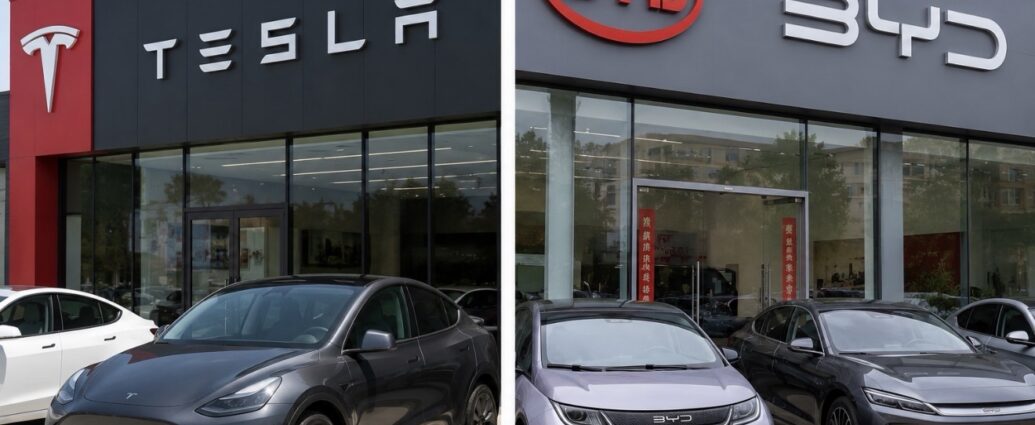
Tesla and BYD reported strong second-quarter delivery results in figures released during the first week of July, underscoring the continued strength of the global electric vehicle market despite intensifying competition and shifting consumer demand. The latest delivery numbers show the world’s two largest electric vehicle manufacturers continuing to battle for market share as automakers race to expand production, lower prices and introduce new technology.

The quarterly results highlight a dramatic turnaround from the cautious outlook that surrounded the EV industry earlier this year. Concerns over slowing demand, higher borrowing costs and increased competition had weighed on the sector, but second-quarter deliveries indicate consumers continue embracing electric vehicles across many major markets.

BYD once again finished the quarter as the world’s largest seller of battery-electric passenger vehicles, delivering more than 557,000 fully electric vehicles during the April-through-June period. Tesla followed with more than 480,000 vehicle deliveries, marking one of the strongest quarters in the company’s history and reinforcing its position as the world’s leading pure electric vehicle manufacturer outside China.

Although BYD maintained its lead in total battery-electric deliveries, Tesla significantly narrowed the gap compared with previous quarters. Industry analysts said the improvement reflects stronger global demand for Tesla’s Model 3 and Model Y vehicles, continued production efficiency and renewed consumer interest following recent pricing adjustments.

The rivalry between the two automakers continues to reshape the global automotive industry. Tesla remains focused exclusively on battery-electric vehicles, while BYD also sells large numbers of plug-in hybrid models, giving the Chinese automaker an even larger presence across the broader new-energy vehicle market.

Competition is expanding well beyond those two companies. Traditional manufacturers including Volkswagen, Hyundai, General Motors, Ford and several emerging Chinese brands continue investing billions of dollars in new electric models as governments around the world tighten emissions standards and consumers seek alternatives to gasoline-powered vehicles.

Pricing has become one of the industry’s biggest competitive weapons. Tesla has repeatedly adjusted prices across key markets while introducing lower-cost model configurations designed to attract additional buyers. BYD continues leveraging its vertically integrated manufacturing strategy, including in-house battery production, allowing the company to aggressively price many of its vehicles while maintaining healthy production volumes.

Industry experts say battery technology remains one of the biggest competitive advantages. BYD’s proprietary Blade Battery has helped lower manufacturing costs while improving safety and driving range. Tesla continues investing heavily in battery development, manufacturing efficiency and software capabilities, areas many analysts believe remain among its strongest long-term advantages.

The growing competition ultimately benefits consumers. Buyers today have more electric vehicle choices than ever before, with expanding model lineups across nearly every price category. Improved driving range, faster charging technology and declining battery costs continue making electric vehicles increasingly practical for both families and businesses.

Global expansion also remains a major focus. BYD continues increasing exports across Europe, Southeast Asia and Latin America while Tesla maintains manufacturing operations serving North America, Europe and Asia. Both companies are expected to remain aggressive as they compete for market share in regions where EV adoption continues accelerating.

For investors, the second-quarter delivery reports provide another reminder that the electric vehicle market remains one of the fastest-changing sectors of the global economy. Quarterly delivery figures have become one of the industry’s most closely watched performance indicators because they offer an early look at consumer demand before companies release their full financial results.

The broader business impact extends far beyond the automakers themselves. Strong EV sales support manufacturers of batteries, semiconductors, charging equipment, software, mining companies supplying critical minerals and thousands of suppliers throughout the global automotive supply chain.

While challenges remain—including pricing pressure, trade policies and continued competition—the latest delivery results suggest demand for electric vehicles remains resilient. As more manufacturers enter the market and technology continues improving, consumers are expected to benefit from greater innovation, increased affordability and a wider selection of electric vehicles than ever before.

JBizNews Desk | Global Auto Markets

© JBizNews.com All Rights Reserved. Reproduction or distribution without written permission is prohibited.


The Trump administration is escalating its crackdown on immigration-related fraud, launching its first major investigation into alleged H-1B and PERM visa abuse, labor trafficking, and the displacement of American workers, Labor Department Inspector General Anthony D’Esposito told FOX Business on Wednesday.

D’Esposito announced the probe exclusively on “Mornings with Maria,” calling it the latest step in the administration’s expanding anti-fraud campaign ahead of Vice President JD Vance‘s nationwide fraud initiative event in Milwaukee set for later in the day.

“This is another example where fraud is fueling violent crime,” he said. “Much of the visa and the human trafficking that we see when it comes to this foreign labor is tied to cartels, is tied to transnational gangs, and this is the work that we should be doing, not only to make America safe again, but to make America more affordable again.”

D’Esposito said investigators have already begun to issue dozens of subpoenas.

DR OZ WARNS MEDICARE SCAMMERS ARE STEALING BILLIONS – AND YOUR PERSONAL INFORMATION COULD BE NEXT

“This is not just people working in factories or actual labor,” he said. “These are people working in medical facilities and doctors’ offices that are actually putting people in harm’s way.”

GET FOX BUSINESS ON THE GO BY CLICKING HERE

This is a breaking news story; check back for updates.

This post was originally published here. 

Toyota Motor North America announced Monday, July 6, that it will invest $3.6 billion to expand its San Antonio, Texas, manufacturing campus, adding a new vehicle assembly line and shifting production of its popular Tacoma pickup truck from Mexico to the United States. The company said the project will create approximately 2,000 new jobs, significantly expand production capacity and further strengthen its long-term commitment to U.S. manufacturing.

The investment represents one of Toyota’s largest manufacturing commitments in recent years and comes as automakers continue adjusting their production strategies amid higher tariffs, evolving trade policies and growing political pressure to manufacture more vehicles in the United States.

The expansion will add a new 2.5-million-square-foot assembly facility to Toyota’s existing San Antonio campus. Once completed, the company expects the site to become one of its largest truck manufacturing operations in North America, producing the Tacoma, Tundra and Sequoia under one roof.

Toyota said the transition from Mexico will occur gradually over the next several years, with Tacoma production moving from its older assembly plant in Baja California to Texas. The company emphasized that it is not abandoning Mexico, noting that Tacoma production will continue at its newer Guanajuato facility while the transition takes place.

The announcement reflects broader changes taking place throughout the global automotive industry. Rising tariffs on imported vehicles, steel, aluminum and automotive parts have encouraged manufacturers to reconsider where they build vehicles destined for American consumers. Producing more vehicles inside the United States reduces exposure to changing trade policies while shortening supply chains and transportation costs.

Toyota’s San Antonio plant already serves as one of the company’s flagship truck facilities. The campus currently assembles the full-size Toyota Tundra, including hybrid models, along with the Toyota Sequoia SUV. Adding Tacoma production transforms the facility into Toyota’s primary North American truck manufacturing hub.

The company also continues investing elsewhere on the campus. A new rear axle manufacturing facility is expected to begin operations later this year, allowing Toyota to produce additional components closer to final vehicle assembly and further localize its supply chain.

With Monday’s announcement, Toyota’s total investment in the San Antonio operation climbs to approximately $8.3 billion since construction first began in 2003. Employment at the facility is expected to grow to roughly 6,000 workers once the expansion is fully completed.

The project also delivers a major economic victory for Texas. State officials, Bexar County and the City of San Antonio assembled an incentive package valued at more than $300 million, including infrastructure improvements, tax incentives and workforce development assistance designed to secure the investment and the thousands of jobs accompanying it.

Construction is expected to begin this year, while hiring will occur in phases through the end of the decade. According to state filings, Toyota plans to add hundreds of workers annually before reaching approximately 2,000 new employees by 2030.

For consumers, the shift is unlikely to produce immediate changes. Tacoma production will continue uninterrupted during the transition, and Toyota has not announced any pricing changes related to the move. Instead, the investment reflects a long-term strategy designed to position the company for future growth while reducing manufacturing risks associated with international trade uncertainty.

Industry analysts say Toyota’s announcement could influence decisions by other global automakers evaluating where to build future vehicles. As manufacturers invest billions of dollars in new factories, electric vehicles and advanced technologies, production location has become an increasingly important competitive and political consideration.

The expansion also reinforces Texas’ growing position as one of America’s leading automotive manufacturing states. Along with Toyota, numerous suppliers and related manufacturers continue expanding throughout the region, creating additional employment opportunities beyond the assembly plant itself.

For business leaders and investors, Toyota’s decision highlights an ongoing trend reshaping American manufacturing. Companies are increasingly prioritizing domestic production, not only because of tariffs but also because of supply chain resilience, workforce availability and proximity to customers.

Whether additional automakers follow Toyota’s lead remains to be seen, but Monday’s announcement represents another significant step toward expanding vehicle manufacturing inside the United States while creating thousands of well-paying manufacturing jobs expected to support the Texas economy for decades.

JBizNews Desk | San Antonio, Texas

© JBizNews.com All Rights Reserved. Reproduction or distribution without written permission is prohibited.

French President Emmanuel Macron landed in Syria on Monday evening, making him the first Western leader to visit the nation since last year’s rise to power of Ahmed al-Sharaa, a former member of al-Qaeda. 

Macron flew into Damascus for the historic visit on an Air Force jet equipped with Elbit Systems’ Directed Infrared Countermeasures (DIRCM) designed to defend aircraft against infrared-guided missile threats, particularly those launched from man-portable air-defense systems (MANPADS). 

The fully automatic and autonomous DIRCM system employs an advanced electro-optic turret and laser technology to disrupt or jam the missile’s tracking ability by optically breaking its lock on the target. This interference aims to prevent the missile from maintaining its course toward the aircraft – thereby protecting everyone on board.

Haim Stern, a director of Business Development and Marketing at Elbit Systems, was quoted in a company blog as saying that the DIRCM systems provide “a fundamental level of protection” against surface-to-air missiles which is “important for virtually all aircraft, regardless of their mission or region.” 

In its mission to provide defense to aircraft, the company supplies security systems to Israeli commercial aircraft as well as for the IDF. 

Outside Israel, Elbit has also supplied its technology to many other nations. In total, its systems have been active on planes and helicopters for over a combined 500,000 hours. Several NATO nations such as Germany and Italy, and others such as Brazil, use it extensively in their respective air forces.

French-Israeli defense relations 

The presence of Israeli defense technology on Macron’s flight to Syria comes despite French opposition to IDF technology and to Israel’s defense industry in recent years.

In June 2024, France banned Israeli defense companies from the Eurosatory military defense exhibition in Paris, and at last month’s 2026 event, several Israeli stands were boarded up by French authorities. Many in Israel’s defense industry believe that the moves are partly based on economic interests, such as eliminating competition for French arms companies.

Although Macron came out in support of Israel and its right to self-defense immediately after October 7, France’s view of Israel has shifted since then, evidenced by its decision to halt the flow of military aid to the Jewish state in the autumn of 2025. France is also opposed to Israel’s wars in Gaza and Lebanon. It was among the countries that declared a Palestinian state in 2025, joining Norway, Spain, and Ireland’s 2024 recognition. 

Historic visit

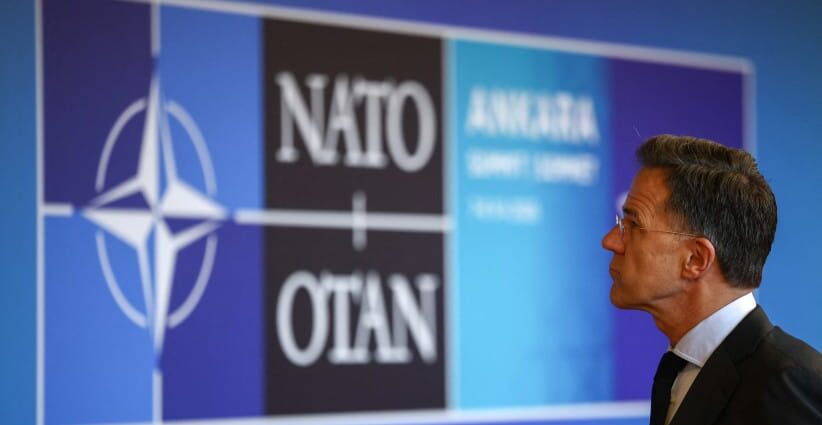
Macron’s trip this week is aimed at furthering economic and political relations between Syria and France – as well as discussing developments in the Middle East, most notably the Israel-Iran conflict. He later flew to Turkey for the 36th NATO summit in Ankara.

The French president’s visit represents an opportunity to continue the work that Syria and France began in May 2025, when Sharaa – who has also begun building positive relationships with other Western leaders, such as US President Donald Trump – visited Paris to discuss lifting sanctions on Damascus. 

It is the first visit by a French president to Damascus since 2009, symbolizing a significant next step in the partnership between the two countries.

“I have come to express France’s commitment to the Syrian people” “for a sovereign Syria, united in its diversity and at peace with its neighbors. Together, let’s open a new chapter of stability and peace,” Macron wrote in a post on X/Twitter.

Despite these optimistic words, just minutes after Macron left to meet Sharaa in the presidential palace on Tuesday morning, explosive devices detonated near his hotel, injuring at least 18 people. Macron didn’t hear the explosions and arrived safely at his meeting with the Syrian president.

Like neighboring Lebanon, Syria was a French Mandate territory after the fall of the Ottoman Empire. Lasting from 1923 to 1946, the French Mandate for Syria and Lebanon partitioned the territories into the modern-day independent nations of Syria and Lebanon. 

The French president’s visit to Syria comes as Paris hopes to support the Middle Eastern country. Macron has made several visits to the region, notably to Lebanon in January 2025 and Saudi Arabia in December 2024. 

This post was originally published on here. 

American Jews view NYC Mayor Zohran Mamdani more favorably than Israeli Prime Minister Benjamin Netanyahu, a new poll by the Associated Press-NORC Center for Public Affairs Research revealed Tuesday.

The survey, carried out on 1,022 Jewish adults nationwide between June 11 and June 17, found that 44% of American Jews view Mamdani either very favorably or somewhat favorably, whereas just 32% of respondents said they have a favorable opinion of Netanyahu.

39% of US Jews viewed Mamdani unfavorably, and 59% viewed Netanyahu unfavorably.

A strong majority of US Jews viewed Donald Trump unfavorably (70%), whereas only 29% had a favorable opinion. This differed from the national average (including Jews and non-Jews), which was 38% favorable and 59% not.

The respondents were then asked whether they approve or disapprove of the way Trump is handling a variety of issues.

Majority of Jews do not approve of Trump policies

A strong majority of Jews did not approve of how Trump is handling the economy (74% disapproval), immigration (69% disapproval), and Iran (73% disapproval). The question of Trump’s handling of Israel led to a narrower split, but nevertheless a majority (58%) of Jews disapproved.

When asked how important Israel is to them personally, a majority (58%) of US Jewish adults answered “extremely or very important,” and 28% said “somewhat.” Only 12% said Israel was not an important matter for them personally.

Interestingly, 38% of Jewish respondents said they felt the US was “too supportive” of Israelis. 28% said Israelis are not supported enough by the US, and 32% said the support is at the right level. A majority of 43% of Jewish respondents said the US is not supportive enough of Palestinians.

Among Jewish adults, 33% were in favor of an independent Palestinian state that includes the West Bank, the Gaza Strip, and East Jerusalem, and 36% opposed. 30% were neutral.

7% of US Jews say Hamas’ October 7 was justified

Perhaps the most extraordinary results came from a series of questions asking respondents whether actions of Israel and Hamas were justified.

7% of US Jews said Hamas’ attack on Israel on October 7, 2023 was justified, and 14% said Hamas’ refusal to disarm after the ceasefire in October 2025 was justified.

Nevertheless, a strong majority (79%) said Hamas’ attack on Israel on October 7, 2023 was not justified, and another strong majority of Jews (73%) said Israel’s immediate military response to Hamas’s attack was justified.

When asked whether they believe Israel has committed genocide in Gaza, 49% of US Jews said no and 30% said yes. 21% declined to answer.

It is worth noting that the majority of Jewish respondents in the survey were not religious.

When asked how often they attend religious services, 34% said never, 18% said less than once a year, and 16% said one or twice a year.

Only 10% of respondents were Orthodox, whereas 43% of respondents identified as Reform and 23% as Conservative. 19% said they had no particular denomination.

This post was originally published on here. 

Unemployment data in the hi-tech sector are reaching new highs, with more than 16,000 workers recently registering as unemployed, Inbal Mashash, director general of the Israel Employment Service told 103FM on Tuesday.

“We are seeing a trend of an increase in the number of job seekers in hi-tech. This is a record number for normal times. If we look at trends in recent years, compared with 2022, this is a threefold increase. That is definitely concerning and indicates a problem,” she said.

Regarding the profile of the job seekers, Mashash noted that the damage is felt most strongly among developers. “Half of them are software workers, where there is very high exposure to artificial intelligence. That is why we are seeing a very strong correlation and connection between the fact that the number of job seekers has risen and the expansion of the use of artificial intelligence. These are people from the core of the industry, with more than eight years of seniority and experience.”

During the interview, Davidov asked how the Employment Service helps those experienced workers who lost their jobs to new technologies. Mashash replied: “In the era of artificial intelligence, everyone must undergo upskilling, and this is not only about the hi-tech sector. Our role is to look at the labor market as a whole, which is changing at a very fast pace.”

“The hi-tech sector is the engine of growth for the economy. We see that there are about 14,000 open positions in the sector, and another 4,000 technology jobs outside it. We assume that some of the people who undergo certain training programs will find themselves back in the sector.”

Employment Service working to integrate people in traditional industries

The director general of the Employment Service added about the organization’s active efforts that, “We are working in cooperation with the Innovation Authority, the AI headquarters and the Manufacturers Association, and are working to integrate them into non-technological sectors, such as traditional industries. There is a double benefit when those people are integrated there.”

Toward the end of the interview, Mashash assessed that the negative trend has not yet run its course: “We expect there will be another increase in the coming months, and then it will gradually moderate.”

This post was originally published on here. 

Hardline Iranian lawmakers have urged the Islamic regime to assassinate US President Donald Trump during his visit to Turkey for the NATO summit, according to social media posts by regime officials and Iranian media reports.

“Now that Donald Trump is within our reach and has come to Turkey for the NATO summit, let’s officially and without any pretense target his location in Türkiye with missiles,” Parliamentarian Hamid Rasaei published on the Iranian social media site Virasty.

Iranian hardline lawmaker Mojtaba Zarei also called for the death of Turkish President Recep Tayyip Erdogan over his hosting of Trump, saying he hoped someone would carry out a “martyrdom operation” in Ankara.

“Death to Erdogan, who is hosting the killer of the martyred imam at the NATO summit in Turkey, even as the funeral procession of this divine leader is being held in Iran and Iraq,” Zarei said. “I wish I were a brave Turkish citizen so I could send the killer to hell in the streets of Ankara in a martyrdom operation.”

Zarei was the same lawmaker who in February called on Jordanian supporters of the Islamic Republic to seize American bases.

On Wednesday morning, the semi-official Kayhan paper published a headline reading “I want Trump’s head.”

In the article, the editor of the paper called for the Iranian government to officially announce a cash prize for Trump’s assassination, claiming that Iran had already amassed over 100 million dollars for that purpose.

MoU on thin ice as both Iran and US attack

Though far from the most heavily targeted country in the region, Turkey intercepted Iranian fire during the height of Tehran’s attacks on Middle Eastern nations in March. There are four known instances of Iranian ballistic missiles either being aimed at or intercepted over Turkish airspace.

Trump’s visit to Ankara comes as the fragile Memorandum of Understanding was again shaken by the Islamic Republic, which began attacking tankers in the Strait of Hormuz. Washington responded by launching new military strikes on Iran and revoking a license that had temporarily allowed the sale of Iranian oil.

Speaking on his arrival on Tuesday, Trump made no secret of his disappointment in the lack of involvement from NATO allies in the war on Tehran, saying he likely would have missed the summit had it not been for his close relationship with Erdogan. 

Jerusalem Post Staff contributed to this report.

This post was originally published on here. 

US President Donald Trump said Wednesday that he felt that the Memorandum of Understanding (MoU) with Iran was nullified following overnight strikes between the US and Iran in the Strait of Hormuz. 

“To me, I think it’s over,” he said at the NATO summit in Ankara, Turkey, in comments to the press.

Trump also stated he felt the US had “wasted a lot of time” negotiating with Iran, and he did not wish to continue talks.

“I don’t want to deal with them [Iran] anymore. They’re scum. They’re sick people.”

“I’m with you [on Iran],” responded NATO Secretary General Mark Rutte.

Earlier, Rutte had insisted the US strikes were “absolutely necessary,” noting that Iran had violated the ceasefire, which was signed three weeks ago.

“When you have a ceasefire and Iran is basically violating the ceasefire, I think it is totally crucial that the US forcefully react,” Rutte told reporters.

US-IRGC trade strikes once again, MoU collapsing

On Tuesday night, US forces began “a series of powerful strikes against Iran to impose heavy costs for targeting and attacking commercial shipping crewed by innocent civilians in an international waterway,” according to US Central Command (CENTCOM).

In response, Iran’s Revolutionary Guards (IRGC) confirmed it targeted US military sites in Bahrain and Kuwait in response to the US strikes in southern Iran that targeted air defense systems, coastal surveillance, and missile and drone launch sites.

When asked about the strikes, Dutch Prime Minister Rob Jetten stressed the importance of showing Iran that breaches of the “fragile” ceasefire in the Middle East will not be accepted.

“At the same time, you must apply maximum diplomatic pressure to make sure talks continue, and a solution is reached,” he said.

Breaches of ceasefire must be met with force until diplomatic pressures prevail

Senior diplomatic advisor to the president of the UAE, Dr. Anwar Gargash, said in a statement on X/Twitter that he believed Iran was unable to commit to peace. 

“The Iranian attacks on Qatari and Saudi commercial tankers in the Strait of Hormuz, and the repeated aggression against the two sisterly nations of Bahrain and Kuwait, are a clear indication that Tehran is still unable to commit to the requirements of de-escalation and turning the page on war,” he wrote.

“The Arab Gulf states cannot remain a target for Iran’s hesitation between the logic of escalation and the path of rationality, stability, and peace.”

Kuwait’s Ministry of Foreign Affairs released a statement on X, condemning Iran’s actions with its “strongest denunciation of the repeated heinous Iranian aggressions against the State of Kuwait.” 

The ministry affirmed that “continuation of these brazen aggressions, at a time when regional and international efforts aimed at de-escalation are underway, constitutes a systematic undermining of efforts to reduce tensions and strikes at the supporting international will for this path.”

It also emphasized that Kuwait maintains the right to take all necessary measures to preserve its sovereignty and security.

Oman also condemned attacks on Kuwait, calling for restraint and diplomacy to contain the escalation and promote peace, according to Iran International, an independent news agency. 

Reuters and Esther Davis contributed to this report.

This post was originally published on here. 

Apple announced Wednesday it is investing more than $30 billion in chip manufacturing in the U.S. 

The investment, in partnership with Broadcom, is set to produce 15 billion chips, creating hundreds of U.S. jobs. Broadcam’s facility in Fort Collins, Colorado, is expanding its capabilities to produce the chips. 

“This is another major win for America and another sign that the Trump administration’s economic agenda is delivering results,” a Trump administration official told Fox News Digital. “Apple has made investing in the United States a clear priority, and we hope other companies will follow its lead. We commend Apple for recognizing this opportunity and taking meaningful steps to strengthen America’s chip supply chain.”   

APPLE UNVEILS HISTORIC $500B INVESTMENT IN US MANUFACTURING, INNOVATION: ‘BULLISH ON THE FUTURE’

Apple CEO Tim Cook touted its partnership with Broadcom and both companies’ “commitment to American manufacturing and innovation.”

“The cutting-edge components built in Fort Collins are essential to delivering the incredible performance and connectivity our customers expect, and we’re proud to deepen our investments in U.S.-based suppliers that share our commitment to excellence and innovation,” Cook said in a statement. “We’re grateful to the President and his administration for supporting important projects like this.”

APPLE BUILDING AMERICAN-MADE AI SERVERS AHEAD OF SCHEDULE IN NEW HOUSTON FACILITY, ANSWERING TRUMP CALL

“Broadcom is proud to continue to work with Apple after decades of success together, and we share a strong commitment to American innovation,” Broadcom president CEO Hock Tan stated. “With Apple’s newest commitment, we’re pleased to expand our manufacturing footprint in Fort Collins, where we create groundbreaking technology that connects people around the world.”

Apple announced a whopping $600 billion investment in a four-year period since the beginning of the second Trump administration, including the manufacturing of AI servers at a facility in Houston. 

APPLE TO WORK WITH INTEL ON US CHIP DESIGN AND PRODUCTION, TRUMP SAYS

Apple previously told Fox News Digital in October that it was partnering with local contractors to build the facility, and is working closely with Houston City College to recruit and hire local talent.

A source familiar with the conversations told Fox News Digital that President Donald Trump made a direct appeal to Cook to “go big” on American jobs and reshoring its manufacturing base, and that Cook told the president he would “step up,” which led to a commitment to the $600 billion investment in America. 

GET FOX BUSINESS ON THE GO BY CLICKING HERE

This post was originally published here. 

Housing affordability is expected to improve with the pace of home price growth slowing to a rate that’s lower than inflation, a new report finds.

Realtor.com on Wednesday released a midyear update to its 2026 housing market forecast that estimates home price growth will slow to 1.2% this year, a rate that’s slower than the original forecast for the year and is slower than the pace of inflation. That means home prices would be effectively declining in real, inflation-adjusted terms.

“Against a backdrop of both familiar and new challenges, the economy has proved resilient. As a result, the first half of 2026 delivered stability more than momentum in the housing market,” said Realtor.com senior economist Danielle Hale.

“The housing market is inching forward as sellers reset expectations, price growth cools, and buyers gain more negotiating power,” Hale said. “Looking ahead, we expect momentum to build through the second half of the year as more sidelined buyers and sellers find terms that will work for both sides.”

WHY AMERICAN ARE FLOCKING TO THIS FLORIDA RETIREMENT HOT SPOT

Mortgage rates are projected to hold steady at 6.3%, the same level they were at when 2025 ended, as a resurgence of inflation caused by the Iran war undercut the prospects of interest cuts in the first of the year that could’ve helped mortgage rates decline.

The slower pace of home price growth is expected to help lower monthly mortgage payments on a year-over-year basis, which the updated forecast suggests will decline 1.9% this year – more than the initial projection of a 1.3% dip.

GOVERNMENT REGULATIONS ADD NEARLY $132K TO COST OF NEW HOME, BUILDERS SAY

By contrast, the average monthly mortgage payment rose 1.9% in 2025 and was up 7% on average from 2013 to 2019.

Existing home sales are expected to see modest improvement from a year ago, rising from 4.06 million in 2025 to an estimated 4.1 million this year – though the growth is projected to be lower than the original forecast of 4.13 million homes sold in 2026.

“Buyers and sellers have shown a lot of staying power this year,” Hale said. “This is a market where people are adjusting and showing up rather than giving up. Sellers are meeting the market with more realistic asking prices, which is helping deals get done.”

RECORD DECLINE IN HOME ASKING PRICES OFFERS BUYERS AN AFFORDABILITY BOOST

Inventory of existing homes for sale is also expected to grow at a slower rate than previously anticipated, rising 3.6% year over year rather than the 8.9% gain projected under Realtor.com‘s initial forecast for this year.

New home sales have softened as mortgage rate buydowns and price cuts that helped encourage buyers to approach builders have lost their pull amid the stabilization of prices.

GET FOX BUSINESS ON THE GO BY CLICKING HERE

Builders have pulled back on permits and new home starts the most sharply in the South and West, which had driven much of the national construction and have recovered more fully from supply shortages.

Across the country, the homebuilding deficit remains at an estimated 4 million homes, with the biggest opportunity in the Northeast and Midwest, which face the most significant shortages.

This post was originally published here. 

Wedbush Securities initiated coverage of SpaceX with an Outperform rating and a $190 price target in a research note released Wednesday, July 1, arguing the aerospace and satellite company is evolving into one of the world’s most valuable technology platforms as investors increasingly look beyond rockets and focus on its broader growth potential.

The bullish call comes as Wall Street continues to evaluate SpaceX following its public debut. Technology analyst Dan Ives said the company should not be viewed simply as a launch provider but as a business with three powerful growth engines: reusable rockets, the rapidly expanding Starlink satellite network and long-term opportunities tied to artificial intelligence infrastructure.

According to Wedbush, SpaceX’s collection of businesses gives it a unique position in the technology sector. While commercial launch services remain the company’s foundation, analysts believe recurring revenue from Starlink and future AI-related opportunities could ultimately become even more valuable than its traditional aerospace operations.

Starlink continues to be one of the biggest drivers behind investor enthusiasm. The satellite internet business has expanded across consumer, commercial and government markets, providing broadband service in dozens of countries while adding customers in aviation, maritime, defense and enterprise sectors. Analysts believe the steady stream of subscription revenue gives SpaceX an increasingly predictable financial foundation as it continues investing in future technologies.

Another major piece of the investment story is Starship, the company’s next-generation launch system. Although development continues to require significant capital and extensive testing, Wedbush believes Starship could reshape the economics of space transportation by dramatically reducing launch costs while opening entirely new commercial markets. Future applications could range from larger satellite deployments to deep-space exploration and expanded government missions.

Those ambitious projects require enormous investment. SpaceX continues spending aggressively on research, manufacturing and infrastructure, a strategy that has weighed on near-term profitability. Wedbush argues those investments should be viewed as building long-term competitive advantages rather than signs of weakness, saying the company is positioning itself for years of future growth.

Not everyone on Wall Street agrees. Analysts remain sharply divided over SpaceX’s valuation, with price targets varying widely as investors debate how quickly the company can monetize its growing collection of businesses. Supporters point to its leadership in reusable rockets, satellite communications and emerging technology. More cautious analysts argue the stock already reflects exceptionally optimistic expectations for future growth.

The company is also expected to receive additional attention from institutional investors as it joins the Nasdaq-100, requiring many index-tracking funds to purchase shares. Historically, inclusion in major stock indexes often boosts demand in the short term, although analysts note that long-term performance ultimately depends on business execution rather than index membership alone.

For investors, SpaceX represents something rarely seen in public markets: a company operating across aerospace, communications, software, government contracting and advanced technology simultaneously. That combination has made it one of the most closely watched growth stories on Wall Street, with investors trying to determine whether it should be valued more like a traditional aerospace company or a high-growth technology leader.

The broader significance extends well beyond one company. The lines separating aerospace, telecommunications, artificial intelligence and cloud computing continue to blur, creating entirely new business models that did not exist just a decade ago. SpaceX sits near the center of that transformation, making it one of the companies investors will watch most closely as the technology sector continues evolving.

Whether the company ultimately reaches the lofty valuations projected by its biggest supporters remains to be seen. For now, Wedbush’s initiation reflects growing confidence among some analysts that SpaceX has the potential to become one of the defining technology companies of the next generation.

JBizNews Desk | Hawthorne, Calif.

© JBizNews.com All Rights Reserved. Reproduction or distribution without written permission is prohibited.

US Defense Secretary Pete Hegseth canceled a planned visit to Israel on Wednesday in which he was meant to meet with Prime Minister Benjamin Netanyahu and Defense Minister Israel Katz, a source told The Jerusalem Post.

Hegseth, who is in Ankara alongside US President Donald Trump for the NATO summit, was expected to make a brief visit against the backdrop of the American strikes against Iran.

The US strikes took place overnight, in response to a series of attacks carried out by Tehran against three commercial tankers in the waters of Oman, near the Strait of Hormuz.

Iran reports injuries after US strikes

Iranian state media reported several injuries after US forces began launching what CENTCOM described as “a series of powerful strikes against Iran to impose heavy costs for targeting and attacking commercial shipping crewed by innocent civilians in an international waterway.”

Later, Iran’s Revolutionary Guards claimed they targeted 85 US military sites in Bahrain and Kuwait, “in response to US ceasefire violations,” shortly after Kuwait’s military reported sirens due to hostile missile and drone attacks.

The strikes also came hours after Washington announced it was canceling sanctions relief on Iranian oil sales, one of the main steps included in the memorandum of understanding between the sides, in a move it said was intended to punish Iran for the attacks and renew economic pressure on it.

Esther Davis contributed to this report.

This post was originally published on here. 

Justice Minister Yariv Levin on Wednesday called on the government to disobey a High Court of Justice ruling that ordered a new Knesset vote for the appointment of the attorney Michael Rabello as state comptroller.

“Attorney Rabello should assume the position,” Levin said in a Kol Berama interview, calling to ignore the High Court ruling that Rabello’s election had a fundamental defect to it and was invalid.

“There should not even be any consideration for the possibility of holding new elections. I think there is no one from the entire coalition who holds a different stance [on the matter],” Levin also said.

Levin’s remarks come after the High Court of Justice had ruled unanimously on Thursday that the Knesset’s controversial vote to appoint Rabello as state comptroller was invalid and that new elections must be held.

There has still been no response from Knesset Speaker Amir Ohana on how he will respond to the High Court ruling regarding holding the revote, after he previously rejected the last proposal to redo the elections.

No sitting state comptroller since the revote decision 

The High Court’s decision to hold the revote came just days before Rabello was due to begin his term; therefore, since Sunday, there has been no sitting state comptroller in the country. 

In its ruling, the court stated that a “fundamental defect occurred in the secrecy of the ballot” that requires the annulment of the vote and the holding of a new election. The ruling was made through a unanimous vote by a five-judge panel.

By law, the process for electing the state comptroller must be done through a secret ballot to keep the integrity of the vote intact and remove political pressure from the appointment.

During the vote in June, Prime Minister Benjamin Netanyahu’s ruling Likud party had reportedly ordered its lawmakers to document themselves casting their vote for Rabello – who is also Netanyahu’s personal attorney – as a way to place pressure on them.

Rabello was elected after a disputed two-round Knesset vote. In the first round, retired Supreme Court justice Yosef Elron received 60 votes, and Rabello received 57, leaving both candidates short of the required 61-vote majority.

A second round was then held. Opposition lawmakers alleged that coalition MKs had been asked to photograph or film their ballots behind the curtain, despite the requirement that the state comptroller be elected by secret ballot.

The vote was halted and restarted, after which Rabello defeated Elron 61-57.

A series of petitions followed, including those from Yesh Atid and the Movement for Quality Government in Israel. The petitioners argued that documenting votes turned the secret ballot into a loyalty test and could have prevented MKs from voting freely.

Eisenkot: The current government will ‘dismantle the foundations of democracy’

The tensions also come amid the government’s escalating rift with the judiciary.

On Sunday, the government unanimously approved a proposal declaring it will not comply with a High Court of Justice ruling regarding the Second Authority Council, following petitions arguing that appointments to its membership were political. 

Such a rejection of a High Court ruling marked a first in which the government openly defied such an order and could lead to a constitutional crisis if the government does not accept the Second Authority Council’s decisions, thereby going against the High Court.

Levin and Communications Minister Sholomo Karhi had issued the government proposal. 

Opposition party leaders in the bloc seeking to replace Prime Minister Benjamin Netanyahu in the upcoming elections condemned Levin’s statements regarding the state comptroller revote, warning that they could cause severe democratic harm.

Yashar Party leader Gadi Eisenkot said that Levin led the Judaical reform “at the cost of tearing Israeli society apart while Netanyahu hid behind him, and is one of the leading contributors to the lowest point in the State of Israel’s history. “

“He is an enemy of Israeli democracy.”

“Netanyahu and his government continue to dismantle the foundations of democracy on the eve of the most consequential elections in Israel’s history,” Eisenkot added.

Democrats Party leader Yair Golan said that the justice minister was “behaving like a common criminal and calling for defiance of a High Court ruling.”

“Why? Because they are terrified that Israel will have a state comptroller who will actually do the job.”

“They want a puppet on a string, and they are willing to burn the country down, break the law, and create a constitutional crisis in order to appoint one,” Golan added.

Sarah Ben-Nun contributed to this report. 

This post was originally published on here. 

The main entrance to Haaretz’s Tel Aviv office was smashed by a masked vandal on Wednesday morning, the newspaper confirmed.

Security footage showed the individual reaching through the entrance grates and tossing two bricks at a glass door, which punched a hole through the entrance before he fled. 

Haaretz released a statement in response to the attack, saying, “Following the incident, the newspaper filed a complaint with the police. Alongside the immediate steps the newspaper is taking to protect the personal safety of its employees, including increasing security at the building’s entrance, Haaretz will continue to fulfill its professional and public mission to practice free and independent journalism – and will not surrender to these violent attempts of intimidation and silencing.”

This is the second incident of this type in a few days, as Channel 12’s glass entrance in Tel Aviv was shattered this Sunday. 

Second news outlet targeted in days, rhetoric morphing into violence

The incidents come amid heated public discourse and campaigns by right-wing activists and government officials criticizing certain news companies for their coverage in Israel.

Michal Peylan, Channel 12’s welfare reporter, took to X/Twitter to comment on Sunday’s incident, saying  “Every sane person, whose heart has not yet been completely destroyed and whose eyes have been completely blinded by hatred, hopes to understand how dangerous it is to live in a country where the government, its head, the minister responsible for the media, and the minister responsible for the security of citizens will not say a word today about the insane violence against journalists. (And will also continue to incite against them, of course).”

In response to the Haaretz incident, MK Naama Lazimi released a statement, condemning the government for creating the atmosphere that led to the attacks. 

“We are no longer in the ‘preview,'” she said. “We are in the midst of civil terror fueled by the government against Israeli democracy. The regime’s machine of poison and incitement is being translated on the ground into operational orders for incited lawbreakers, with one clear goal: to shut mouths, eliminate the free and independent press, and turn Israel into a dark dictatorship.”

She continued, “We will throw this rotten and dangerous leadership out at the ballot box, restore sanity to the country, and ensure that anyone who had a hand in the destruction of democracy pays the price. We will win, and we will fix the system from its foundations.”

Miki Levin contributed to this report.

This post was originally published on here. 

Brands by Integra has expanded its presence in Georgia through the addition of Century 21 Crowe Realty, a brokerage based in Locust Grove.

As part of the transition, the brokerage will operate under the Century 21 Integra name. Clint Crowe will remain broker of record and continue overseeing the office during the integration.

Crowe founded Crowe Realty in 2009 before affiliating with the Century 21 brand in 2020. The brokerage has grown to nearly 100 agents serving the greater Atlanta and middle Georgia markets.

“We are excited to welcome Clint Crowe and his outstanding team to the Integra family,” said Rob D’Amico, president of operations for Brands by Integra. “Century 21 Crowe Realty has built an exceptional reputation by putting clients first and investing in its agents. By joining Century 21 Integra, their agents will gain access to enhanced technology, marketing, operational support and collaborative opportunities while continuing to deliver the trusted, local service their communities have come to expect. We look forward to supporting their continued success for years to come.”

Crowe is a second-generation real estate professional and former law enforcement officer. According to the company, he has focused on agent development and residential real estate throughout his career.

This article was generated using HousingWire Automation and reviewed by a HousingWire editor before publication.

This post was originally published on here. 

IDF soldiers killed a Hezbollah terrorist in the Lebanese town of Bint Jbeil on Tuesday as part of an exchange of gunfire carried out while a soldier was conducting a search of a structure where a reservist was wounded last week, the Israeli military said Wednesday.

The military initially said the terrorist opened fire at Israeli forces operating in the building before being shot down. It added no soldiers were wounded in the incident, though a IDF military working dog was shot dead during the exchange of fire before his handler returned fire.

Later on Wednesday, the IDF said it would “investigate all the details of the incident, including the manner in which the terrorist was eliminated,” after an Army Radio report questioned the military’s account of the events.

According to Army Radio, citing soldiers present at the scene, Israeli troops initially wounded the terrorist before attempting to negotiate with him in an effort to convince him to exit the structure.

The terrorist had refused, and was shot at by one of the soldiers after he had moved closer to his weapon, Army Radio added.

“The IDF is investigating all the details of the incident, including the manner in which the terrorist was eliminated,” an IDF statement read. “The matter will be investigated and lessons will be learned. At the end of the investigation, the IDF will present the findings transparently.”

The military also said that any inaccuracies in its initial statement describing the incident were the result of “human error.”

Separately, Border Police officers operating in the Jerusalem area detained a terrorist brandishing a knife and throwing stones at security forces from the direction of Bethlehem, Israel Police confirmed.

While officers worked according to protocol to arrest the terrorist, the suspect continued to pose a threat, leading officers to fire at his lower body.

The suspect was then arrested and taken in for further questioning.

One of multiple West Bank terrorism incidents in recent days

On Tuesday night, the IDF confirmed it was investigating reports of gunfire near Kiryat Arba, near Hebron. 

Troops found a bullet that had struck a building in the area and began conducting searches to determine the circumstances of the incident and locate possible threats.

This post was originally published on here. 

Shin Bet Director David Zini sparked the largest controversy of his term late Tuesday night when I24 News released selected excerpts from a speech he gave earlier to his Yeshiva alma mater, in which he discusses the importance of loyalty to the executive branch and also attacks the legal establishment.

While Zini did intend to express support for following the political echelon’s directives and also intended to criticize the legal establishment, The Jerusalem Post has received the full recordings of his remarks, which leave a somewhat more moderate and nuanced series of messages

Speaking about when Prime Minister Benjamin Netanyahu appointed him, with his entering office as Shin Bet chief in October 2025, Zini said, “When the prime minister asked if I wanted to be the head of the Shin Bet,” Zini’s many critics would have demanded that he refuse the offer. Instead he explained that he accepted the role, but did also tell the prime minister, “that there are also candidates who could be better than me from within the Shin Bet – why won’t you make an offer to them?”

Continuing, Zini said in the full recording, “And the reason that I agreed was for a reason that maybe I am better than the others. For my ability to remain loyal to the elected echelon, not that it matters what their ideology is. It could be others [other than Netanyahu].”

“The elected leadership is not really empowered to manage” areas which are under their authority because unelected professional experts in the government ministries or the defense establishment “have become confused about their role.”

Next, he said in frustration that ministers can issue an order, the order can be approved by other relevant officials, and yet “it will take eight months for the order to be implemented.”

He said this was a significant problem which needed to be addressed: “There is a danger of people who come [into bureaucratic government roles] with a [politicized] agenda and a worldview… Many people talk in slogans about democracy, but living it on a day-to-day basis is not that easy.”

According to Zini, many senior bureaucratic officials in government take over a metaphorical train where their post is to be the train conductor and manager, but they then get lost in thinking that they are supreme, when really they still must receive orders from the elected echelon about which direction to take the train in and what the train’s destination and mission should be.

While Zini’s remarks do show a clear loyalty to Netanyahu and a belief that his predecessors in the Shin Bet and other government officials have put their own personal views far above the elected echelon, it is also clear from his remarks that he would be ready to serve under a new prime minister who is not Netanyahu, if that person should be elected in the upcoming elections.

Regarding the legal establishment, Zini stated, “With all due respect to the lawyers and jurists,” they are meant to be an ancillary tool to assist with specific issues. “I am not speaking about the Justice Ministry, I am speaking about all of the other things.”

At this stage in the video, the audience suddenly started to cheer and clap, after which he pushed back, saying, “No, my friends, don’t take this to that kind of a place. A country with no law and with no legal establishment would be a destroyed state. Don’t take it to that place,” which silenced the applause.

“Not that I do not have criticism [of the legal establishment, but that is not the topic [of this speech]. I want to speak about the deeper issues at the heart of the matter,” in which he lectured the group about the importance of details and nuances.

Once again, Zini clearly placed himself on the side of the spectrum that views the current legal establishment as overly activist in addressing policies from the elected echelons, but his statement that “no legal establishment would be a destroyed state” seems to moderate those views as compared to the intensity of some of the recent coalition attacks on the legal establishment.

Golan says Zini’s statement ‘dangerous’

Democrats party leader Yair Golan called Zini’s statement “one of the most dangerous statements ever made by someone who headed Israel’s security system.”

“Anyone who enters the role with a political agenda and declares that their job is to serve the government and not the state is a danger to the country’s security,” Golan stated in a post on X/Twitter.

“We are at the start of an election campaign. A security service led out of loyalty to the political echelon and not to the law could turn from a tool that protects democracy into a tool that serves a government that wants to cling to power. This is not just a threat to the integrity of the elections and to public trust in the state’s institutions – it’s a real security threat that could harm the country’s stability and its ability to deal with threats from within and without.”

In contrast, National Security Minister Itamar Ben-Gvir praised Zini for what he said, saying that it was “the fundamental thing in a democratic country.”

“Now watch the left-wing lunatics and the sycophants of the judicial junta attack him in a fury,” Ben-Gvir wrote. “Don’t fear, David, don’t fear!”

Democrats MK Naama Lazimi said that Zini was “Loyal to the king and not to the kingdom.”

She added that, particularly in a time before elections and while the government was “rebelling against the rule of law,” Zini’s words were an “existential threat to democracy and the security of the state.

“The head of a secret organization that serves the government’s political agenda instead of Israel’s citizens is a weapon aimed at the public and a real threat to the integrity of the elections,” Lazimi stated.

Yesh Atid MK Rami Ben Barak warned Zini not to get confused.

“The Shin Bet chief is subordinate first and foremost to the law and then to the elected government,” she wrote. “There are no private agendas for any head of an organization in the State of Israel.”

Former Shin Bet chief Yoram Cohen also criticized Zini’s statements, saying that “The sole loyalty of a security body head, and of every public servant, is first and foremost to the State of Israel, its laws, and its citizens.”

Zini, Cohen stated, was “alarmingly ignoring critical concepts for the success of security organizations, which are upholding statehood and the rule of law.”

Likud MK Ariel Kallner said that Zini’s words on his loyalty raised a serious suspicion that “on the next October 6th, he will wake the Prime Minister.”

Kaller added that he missed former Shin Bet chief Ronen Bar.

In contrast, MK Simcha Rothman said that Zini’s statements were “self-evident to anyone who cares about the rule of law or democracy.

“Governmental power must be in the hands of an elected government and not in the hands of a closed junta of a bureaucratic and judicial oligarchy,” he stated.

“Look at who is attacking him and you will understand who the dangerous fascists are whom we must not allow to come near power.”

This post was originally published on here. 

Iran possesses chemical weapons, Prime Minister Benjamin Netanyahu claimed during an interview on Newsmax’s The Record With Greta Van Susteran on Tuesday.

“They definitely have chemical weapons,” he said. “That I can tell you. And that is another threat that they pose.”

He also said that Iran had lost its capability to produce nuclear weapons during Operation Roaring Lion.

“We destroyed a lot of their infrastructure, a lot of their centrifuges, a lot of the associated factories and facilities that they use for manufacturing nuclear weapons, and we knocked out 20 of their top nuclear scientists – 20 of their top nuclear scientists,” he explained. “So we pushed it back considerably.”

However, he also warned against complacency towards the regime.

“It doesn’t mean that they’re left to their own devices; they’ll go back to it. It’s like, you know, when you excise a piece of cancer, a lump of cancer from your body, you know, it may come back. But you know one thing: if you wouldn’t do it, you could die.”

US was threatened by Iranian missiles, Netanyahu says

The United States, Netanyahu said, had been threatened by Iran as well, which is why US President Donald Trump chose to join the war.

“America was threatened with a very great danger. Because if this regime that chants death to America, death to Trump, will destroy America and so on, if you give that regime the ability to have ballistic missiles that could reach the United States ultimately, and they could arm it with nuclear weapons, then every single American would be in danger,” he said.

“That’s why President Trump decided to do this. He does what he thinks is good for the United States. And in this case, I would say it was essential for the security of the United States.”

The Iranian government was also oppressive to its own people, Netanyahu said.

“Understand, this is a regime that has, you know, there are about 90 million people in Iran, and the vast majority, like 80%, hate this regime,” he said. “They basically consider it theological thugs who took over the country and, you know, hold them at gunpoint. In fact, they shoot them. They murdered and maimed over 40,000 Iranians who are praying for their liberty.”

Iran weakened by US, Israeli strikes

Overall, Netanyahu said, the Iranian regime had been heavily weakened by the US and Israeli strikes, with much of their infrastructure destroyed.

“Iran is tottering. The IRGC, the revolutionary guards that basically control Iran, they lost a lot of their money machines. That is, the various industries they used to milk for funds and give them money.

“The Iranian people are in abject poverty,” he added. “And the dictators and their goons who tyrannize them, they live like kings. By the way, the same is in Gaza, the same with Hezbollah, with their proxies, the same thing, you know. They take care of themselves, and they care nothing for the people. So I don’t think this will last. I think eventually the people will throw them out. We’ll have to give them a little assistance.”

This post was originally published on here. 

US President Donald Trump did not announce in Ankara on Tuesday that he was selling F-35s to Turkey; he did something more important: alongside Recep Tayyip Erdogan, at the opening of the NATO summit, he explained why, in his view, opposition to the deal is no longer self-evident.

“This is a decision we are going to make,” he said, adding that the US would consider the move because its relations with Turkey are better, in his words, than with other countries that Washington thought would be more loyal. Erdogan quickly completed the message, saying Turkey had already been promised five planes and that Trump “always keeps his commitments.”

There, more than in the formal statement itself, the real argument was exposed. Trump does not see Erdogan the way Israel does. To him, Turkey is a NATO power with a strong military, a country that could have chosen “a different path” regarding Israel and Iran, and chose not to do so. He praised Ankara for not joining the fighting “on the other side,” and hinted that it may have refrained from doing so because of him.

In Israel, the reading is entirely different. Ankara hosts Hamas, is intensifying the diplomatic confrontation with Israel, considered – according to the US president – attacking Israel alongside Iran, clashes with Greece and Cyprus, and is trying to expand its influence in the eastern Mediterranean. Behind the debate over the arms deal lies a much heavier question: what is Erdogan’s Turkey today in the eyes of Washington, and in the eyes of Trump?

The F-35s have become a symbol of that dispute. Trump wants to bring Turkey back to the center of the Western system. After years in which Ankara paid a price for purchasing Russia’s S-400 system, such as US sanctions imposed in 2020 under CAATSA and removal from the F-35 program, he is signaling that this chapter, in his view, can be closed. “I don’t want to sanction friends,” he said, opening the door to easing pressure on Turkey and to a more forgiving approach toward a wayward but still vital ally.

His logic is not complicated. Turkey controls the passage between the Black Sea and the Mediterranean, has influence in Syria, knows Iran well, fields one of NATO’s largest armies, and, in Trump’s view, may help stabilize the region, curb Russian influence and keep Ankara within the Western camp. In his eyes, pushing Turkey away did not change its behavior; bringing it back into the American framework may, perhaps, better serve US interests.

Turkey expanding influence, cannot be seen as ally

In Israel, it is hard to accept that interpretation. Erdogan’s Turkey is no longer seen in Israel as a complex Western ally whose deviations can be tolerated. Over recent years, it has gradually become a regional rival. Political support for Hamas, the harsh statements against Israel since October 7, the involvement in Syria, the disputes with Greece and Cyprus, and Turkey’s ambitions in the eastern Mediterranean are not seen in Jerusalem as a random collection of crises.

They, in Israel’s view, point to a pattern of behavior in which a state expands its influence at the expense of its neighbors. The Israeli question, therefore, is not limited to Turkey’s NATO membership. It concerns whether it can still be regarded as a “normal” Western ally.

That is also the source of Israel’s opposition to the deal, which is not limited to the air force. In recent years, the security establishment has come to view the maritime arena as one of the main friction points in the coming decade. Gas discoveries, shipping lanes, energy facilities, and the project to connect Israel to the European electricity grid via an undersea cable through Cyprus and Greece have made the eastern Mediterranean a strategic asset.

At the same time, Turkey is advancing the concept of the “Blue Homeland,” which expands its claims and influence in the maritime sphere and challenges some of the existing arrangements. The concern in Israel is that Turkey’s military strengthening will affect not only the air balance, but also Ankara’s confidence as it applies pressure around those strategic assets.

Israel signaling Turkey’s threat towards region

Against this backdrop, Benjamin Netanyahu’s highly public appearance alongside the commander of the navy shortly after Trump’s and Erdogan’s statements does not appear accidental. It was a deliberate signal. Israel wanted to make clear that it does not see Turkey only as a future aerial threat, but as a broader strategic challenge, one that could affect freedom of navigation, energy infrastructure, and the growing cooperation with Greece and Cyprus. In Athens and Nicosia as well, developments are being closely watched. For them, the issue is not only the number of aircraft Turkey may receive, but the renewed legitimacy Washington may be giving Ankara’s regional policy.

For Erdogan as well, the F-35 is much more than a plane. A return to the procurement track would be a diplomatic victory for him. He would be able to argue that despite the S-400 affair, despite the sanctions and despite the clashes with Israel, the US recognizes Turkey’s status as a regional power without which the new order cannot be shaped. For him, opening the door is almost as important as the deal itself, because it restores Ankara to the status from which it was pushed years ago.

Still, the gap between Trump’s statements and a signed deal remains large. The S-400 is still a legal and political obstacle, and opposition in the US Congress is expected to be significant. Beyond the political consideration, there is also professional opposition: the fear that a Russian system deployed in Turkey could help gather information on the F-35’s stealth capabilities, thereby harming not only Israel but all countries operating the aircraft. Even a determined president would find it difficult to turn the Ankara statements into a deal without a complex fight in Washington.

Even if the deal is not completed soon, the message Trump delivered in Ankara is clear. For years, it seemed that preserving Israel’s qualitative military edge was the starting point for every American discussion of advanced weapons sales in the region. His remarks suggest a shift in emphasis: Israel remains a close ally, but it is no longer the only consideration. In Trump’s view, Turkey too is a strategic asset that must be brought back into the center of the game.

That is why the debate over the F-35 goes beyond the aircraft itself. It touches on the way the US balances between two of its most important allies in the eastern Mediterranean. If Trump does succeed in returning Turkey to the F-35 track, the significance will not be limited to another arms deal. It will be an American declaration that the new regional order will also be built around Turkey. For Israel, this is not only a security problem, it is a possible change in the starting point of American policy in the region.

This post was originally published on here. 

Thousands of federal civil servants who academic researchers see as partners in conducting their work were fired. An unprecedented number of scientific projects funded by previous administrations were terminated. Universities were pressured to abandon diversity programs and work to curb health disparities. On a Friday evening, the government tried to push through a dramatic change to how it reimburses universities for research overhead. 

All of these actions in the first year of the Trump administration were rapidly challenged in federal court, in many cases resulting in the administration having to walk back policies because they ran afoul of the Administrative Procedures Act, which governs how new policies and regulations are rolled out.

Andrew Twinamatsiko, who is director of the Center for Health Policy and the Law at Georgetown University and runs a health care litigation tracker, describes what happened last year as “tempests that we could weather” until there’s a new administration, when “there can be ways of reverting back to the baseline that we used to have.” 

Continue to STAT+ to read the full story…

This post was originally published here. 

A cardiologist reviews an echocardiogram flagged by an algorithm she did not choose, trained on data she has never seen, deployed by a health system that did not ask for her input. The algorithm recommends a diagnosis. She disagrees. She overrides it. The patient does well.

No one will remember this moment. But if she had acquiesced and the patient suffered harm, she would be the one in the deposition, with her license on the line. Not the engineer who built the algorithm. Not the vendor who sold it. Not the health system that deployed it.

Read the rest…

This post was originally published here. 

After Doug met Jane, he felt good. So too did Gabriella, his wife. Doug — a retired minister and writer — needed someone to talk to, and in conversation about his many accomplishments, Jane was indefatigable. For at least a few hours, Doug’s boredom vanished, and Gabriella no longer felt like an activities director on a cruise ship.

I wrote about Doug and Gabriella in my May Neurotransmissions column about ambiguous loss. Doug told me he was “bored, bored, bored,” and Gabriella said she struggled to find activities to relieve that boredom.

Jane was a solution. What she gave to Doug didn’t simply pass the time. It was a meaningful relationship. Except Jane wasn’t a person. She was an artificial intelligence chatbot.

Continue to STAT+ to read the full story…

This post was originally published here. 

The residential real estate market today is fundamentally different than just a few years ago. In April, 5.8% of homes were taken off the market, reaching delisting rates not seen since March 2020. Plus, economic uncertainty and rising inflation have made generating sufficient income a challenge for many agents.

Despite this, many brokers operate as if transaction volume will return to normal. That’s a risk. If the last decade has taught us anything, it’s that you can’t predict where the market will go.

To set your business up for long-term success, brokers need the recurring revenue streams that property management delivers. Property management was once so labor-intensive that it risked distracting brokers from their primary business. But today, property management has been streamlined by AI and automation. It’s more scalable than ever.

The revenue problem: Transactional businesses need stability

Existing home sales have fallen to roughly 4.1 million annually, well below historic norms. These aren’t the conditions that many brokers built their cost structures around, and the slow market means many are struggling to turn a profit.

As earnings have declined, fewer agents are working in real estate full-time. Only 71% of agents list real estate as their only profession, a record low number since the National Association of Realtors began tracking the data in 2005.

If they want to retain productive agents and create additional revenue streams that make their business more resilient to the ebbs and flows of the market, brokers need to offer new opportunities.

Enter property management. Unlike intermittent real estate sales, property management generates regular monthly revenue. This means stability and certainty during slow sales cycles. And beyond that, recurring payments can also be a source of fuel for your company’s growth.

What many brokers still get wrong about property management

Historically, property management earned a reputation for operational headaches because it required time-consuming and difficult-to-scale activities:

  • Managing inquiries around the clock
  • Coordinating showings
  • Processing applications
  • Screening prospective renters
  • Managing owner communication

In the past, that reputation for being labor-intensive was largely earned. But today, in part due to cloud-based software and increasingly to AI, it’s a different story. Those workflows that made property management difficult to scale are increasingly automated. It’s time for perception to catch up with this technological reality.

How AI and automation have made property management more scalable

Today, AI and automation tools remove much of the repetitive, manual work of property management. 

AI virtual agents respond instantly to prospective renters at all hours, day and night, answering questions and even qualifying leads before moving them through the leasing funnel. Self-scheduling tools let prospects schedule a tour without your agents lifting a finger. And the boom in self-guided showings means you don’t even need a real estate agent present during the tour.

And that other big headache: The midnight mechanical failure. Well, maintenance request routing and tracking are now easily automated.

The result? Small teams can manage significantly larger portfolios than before. Here’s a perfect example: We work with a two-person property management team that doubled the size of their portfolio from 80 to 160 units, all because of the technology they use.

And the best part is, the right AI and automation tools even help convert more leads because the data shows prospective renters like the flexibility these tools deliver.

In fact, our customers see 61% of conversations with our virtual AI agent happening outside of business hours, but that technology means you don’t have to deal with phone calls or emails that interrupt dinnertime or weekends. And in addition to giving you your time back, faster responses mean happier customers for you, as their properties have fewer days on market. 

The accidental landlord opportunity is already sitting in most CRMs

Of course, before you even get to property management, you’ll first need to find property owners to work with. You might not have to look too far.

More and more homeowners are opting to rent out their properties rather than sell for less than their asking price. Accidental landlords are on the rise nationally.

But brokers don’t need to sit idly by while properties stay off the market. Single-family rental inventory is increasing, and the owners of these homes are being thrust into property management, many for the first time. They’re likely looking for help — that’s your opportunity.

In fact, you probably already have relationships with some accidental landlords. Check your CRM for clients with expired or withdrawn listings and former sellers who delayed moving.

When a homeowner becomes an accidental landlord, they often need guidance on how to price the rental, market the property, screen tenants and follow compliance requirements. Brokers are uniquely positioned to provide these services because you already have the local market and industry expertise.

The best time to diversify: Right now

Some brokers have already broadened their service mix, expanding into mortgage, title and other related services. But when your goal is to create more resilient, recurring revenue, property management is a natural fit.

Not only does property management leverage your existing market knowledge, but it’s also an opportunity to strengthen relationships with clients who are thinking about renting instead of selling. And when they do eventually sell, you’re ready to help with that, too. You’ll remain part of a homeowner’s journey for years rather than weeks.

Now, AI and automation have made property management easier to scale by eliminating much of the tedious administrative work and repetitive tasks that have historically bogged down property managers’ time.

For brokers willing to embrace modern technology, property management is one of the most practical and scalable growth opportunities in residential real estate.

Vanessa Anderson is the CEO of ShowMojo and Tenant Turner, leasing platforms for single-family and multi-family rentals. 
This column does not necessarily reflect the opinion of HousingWire’s editorial department and its owners. To contact the editor responsible for this piece: zeb@hwmedia.com.

This post was originally published on here. 

As artificial intelligence (AI) becomes embedded across the mortgage lifecycle, lenders are rethinking how they use data to drive decisions and automate workflows. Chris McEntee, Vice President of Corporate and Product Development at ICE, discusses how AI mortgage lending is transforming mortgage business intelligence, why data governance is becoming more important than ever and what organizations need to build AI-ready mortgage operations that can scale with confidence.

HousingWire: What are your thoughts on how lenders should approach business intelligence in their organization?

Chris McEntee: Business intelligence is undergoing a major transformation because of AI. Historically, it focused on collecting data, cleaning it and presenting it through reporting tools and dashboards that helped leaders make decisions. Those visualization tools remain important, but AI is changing what happens next.

I’d like my automated tools, if they’re driven by AI, to notify me as soon as that emerges, and that’s going to require a very direct connection to business intelligence and business data.

HW: How is ICE working with its clients to support the various ways data is needed?

CM: Lending is incredibly diverse, so how organizations consume data depends on their business model, product strategy and customer channels. Some lenders use data to automate marketing campaigns or respond to refinance opportunities in real time. Others combine their own enterprise data with ICE’s proprietary market data and third-party sources to improve decision-making.

The sophistication varies widely. Some organizations have enterprise data science teams managing complex real-time environments, while others simply want better visibility into their pipeline or marketing performance.

Regardless of size, the priority is accurate data and strong data governance. Organizations need a clear source of truth and confidence that third-party data won’t create conflicts, especially when automated processes depend on it. Many clients come to us collaboratively, asking how others have approached similar implementations. We want to help them build the best solution for their business.

HW: Why is data governance so important to AI growth and development, as well as measuring business performance more broadly?

CM: People sometimes think governance puts a wet blanket on innovation. It’s actually the opposite. Governance establishes clear rules around how data is stored, managed and used while bringing together stakeholders across cybersecurity, infrastructure, engineering and product development. It helps organizations move responsibly from proof of concept to production.

As AI tools become more sophisticated, accuracy becomes critical. A false signal, inaccurate data or compliance issue can quickly create larger problems. “If I get the first task wrong, the following five tasks are going to be off.”

That’s why organizations focus heavily on testing, quality control and validating outputs before automation scales. Good governance starts with entitlements, controls and understanding how data flows through every process. Clean data creates reliable automation. Dirty data simply cascades through every downstream task.

HW: With so many companies offering business intelligence and data solutions, what differentiates ICE as a leader in this space?

CM: We begin with two major systems of record: our servicing and origination platforms. That gives lenders a trusted source of truth for managing enterprise data and producing meaningful reports. Beyond that, we can inject data directly into workflows. Whether it’s enterprise data, ICE market data or third-party information like rates, fees or fraud data, we help lenders bring it together where decisions are being made.

One of our biggest advantages is flexibility. Customers can use their own proprietary data, integrate third-party providers or combine multiple sources. We don’t believe data has to come from a single place.

Ultimately, our differentiation comes from flexibility, scalability and the breadth of data we can deliver into mortgage workflows, helping lenders make faster, more informed decisions and support AI-ready mortgage operations.

Click Here

This post was originally published on here. 

Loan originator pipeline growth has followed a familiar formula: originate a purchase loan, capture a refinance when rates fall and hope the borrower returns for their next home purchase.

But in today’s housing market, that model is producing fewer opportunities. Purchase volume remains constrained, refinance activity is limited and lenders are searching for new ways to generate sustainable revenue. The next phase of growth may not come from finding new borrowers. It may come from serving existing ones differently.

Millions of homeowners have substantial home equity in retirement and are entering a new stage of financial planning. Rather than looking for lower interest rates or a larger home, they’re seeking ways to unlock cash and incorporate home equity into their long-term financial plans. Yet many loan originators lose touch with borrowers long before those conversations begin.

At Finance of America, this represents one of the most overlooked opportunities in today’s mortgage market. Through its lifecycle lending approach, the company helps forward originators expand beyond traditional purchase and refinance business so they can continue serving homeowners as their financial needs evolve. By incorporating reverse mortgage solutions into their practice, originators can extend relationships well beyond the initial transaction while creating new sources of growth.

Borrower needs don’t stop at retirement

The average lead model is built around the beginning of homeownership. But for millions of homeowners, the most significant financial decisions occur decades after that initial transaction.

As retirement approaches, priorities begin to shift. Protecting monthly budgets becomes more important than building home equity. Homeowners begin exploring ways to fund healthcare expenses, supplement retirement income, preserve investment portfolios or create greater financial flexibility using the home equity they’ve built. However, many loan originators aren’t part of those conversations.

“Many originators are fishing in only half the lake,” Kris Buglino, Wholesale Account Executive Manager at Finance of America, says. “They’re focused on purchase and refinance business while overlooking a growing segment of homeowners whose financial needs have evolved. The lenders finding growth today aren’t fishing harder. They’re simply fishing more of the lake.”

Rather than replacing forward lending, reverse lending expands it by allowing lenders to serve borrowers throughout the entire homeowner lifecycle.

The hidden opportunity inside every database

When business slows, originators immediately look for new lead sources. However, the better opportunity often already exists inside their customer relationship management (CRM) systems.

Loan originators have spent years building databases filled with past clients. Those borrowers are now aging, accumulating home equity and entering retirement with different financial goals than they had when they originally obtained their mortgages.

Instead of constantly acquiring new leads, lenders can identify existing customers who may benefit from conversations about strategically using their home equity. To help originators uncover those opportunities, Finance of America developed ReverseMatch, a proprietary eligibility engine that analyzes existing customer databases and identifies homeowners who may benefit from a reverse mortgage conversation based on factors such as age, available home equity and property location.

Rather than asking lenders to rebuild their marketing strategy, the goal is to provide greater visibility into opportunities they already possess. The philosophy is straightforward: Growth does not require more leads; it requires a better understanding of the borrowers already in the pipeline and the right solutions to match their needs.

Becoming a trusted expert instead of a transaction

For many originators, the greatest value of reverse lending extends beyond production volume. It changes the nature of client relationships. Rather than participating in a single mortgage transaction, loan originators become part of broader financial discussions involving retirement income and long-term financial security.

Those conversations naturally create opportunities to collaborate with financial advisors, wealth managers, CPAs, elder law attorneys and insurance professionals who increasingly recognize home equity as an important component of retirement planning.

Instead of competing for isolated mortgage transactions, originators become part of a coordinated team helping homeowners make more informed financial decisions.

Over the past decade, Finance of America-approved partner Karl Kuhn has steadily incorporated reverse mortgage lending into his practice, expanding beyond traditional purchase and refinance business while building long-term relationships with financial professionals and retirement advisors.

“We’re finally being invited to the table with financial advisors, wealth managers, CPAs, insurance professionals and elder law attorneys,” Karl Kuhn, VP, Reverse Mortgage Manager at American Portfolio Mortgage Corporation dba Town Square Mortgage, says. “They’re all looking for funding solutions, and home equity has become part of that conversation.”

That collaborative approach also creates stronger relationships. Helping one homeowner often introduces the loan originator to family members, financial professionals and future generations of borrowers.

“Instead of losing those opportunities, we’ve been able to continue serving borrowers while creating an additional source of production,” Kuhn says.

Those conversations also create opportunities to build relationships with borrowers’ adult children, many of whom are navigating their own homeownership journeys. By helping families through retirement conversations today, originators often become trusted mortgage resources for the next generation tomorrow.

As one relationship expands into multiple trusted connections, the value extends well beyond the original loan. In an environment where differentiation has become increasingly difficult, advisory relationships can become a meaningful competitive advantage.

Lowering the barrier to entry

Despite growing interest, many forward originators remain hesitant to enter the reverse mortgage space. The hesitation rarely stems from a lack of opportunity. Instead, many worry about product complexity, longer sales cycles and the learning curve required to become proficient.

Finance of America’s wholesale reverse mortgage team was built specifically to help forward originators confidently integrate reverse lending into their existing business. Rather than simply offering products, the company acts as an extension of each partner’s team through dedicated training, borrower education resources, educational marketing support, scenario guidance and operational expertise throughout the lending process.

“They’re an extension of my team,” Kuhn says. “The product knowledge, training and communication allow me to focus on my clients while knowing I have experts supporting me throughout the process.”

The objective isn’t to replace an originator’s existing business model. It’s designed to help lenders confidently expand it, allowing them to recognize new opportunities without feeling responsible for mastering every nuance of reverse mortgage lending on day one.

Lenders are preparing for the next phase of the market

The mortgage market will continue to evolve, but one trend is already clear: America’s homeowner population is aging while home equity continues to grow. Those demographic shifts are creating greater demand for conversations around retirement planning, liquidity and long-term financial flexibility.

For originators, the opportunity extends beyond adding another loan product. It represents an opportunity to build longer-term relationships, strengthen networks and remain relevant throughout every stage of a homeowner’s financial journey.

“The lenders winning today aren’t abandoning their primary market,” Buglino says. “They’re simply recognizing that the lake is bigger than they thought.”

For Finance of America, that’s what lifecycle lending is all about. Helping homeowners build home equity and helping them strategically use it aren’t separate businesses — they’re part of a more complete lending strategy. For forward originators, recognizing that opportunity requires more than a new product; it requires a new way of thinking about the homeowner journey.

Click Here

This post was originally published on here. 

Artificial intelligence (AI) is quickly becoming part of every conversation in homebuilding. But as builders invest in AI to improve sales, marketing and operations, many are overlooking the factor that will determine whether those investments succeed: organizational knowledge. AI is only as valuable as the information it can access.

Most builders already generate vast amounts of buyer data through websites, CRM systems, marketing platforms and daily customer interactions. The challenge isn’t collecting more information. It’s connecting that information into a single source of organizational knowledge that can inform every customer interaction and every business decision.

With the help of New Home Star, builders that successfully centralize buyer conversations, preserve institutional knowledge and connect data across the sales journey will be best positioned to unlock AI’s full potential. From improving speed-to-lead and personalizing buyer experiences to identifying market trends and reducing administrative work, AI for builders becomes significantly more valuable when it understands how a builder’s business actually operates.

The best AI strategy starts with a business problem, not the technology

The excitement surrounding AI for builders has led many organizations to search for places to apply the technology before clearly identifying the business problem they are trying to solve. That approach often leads to disappointing results.

Instead, builders should start with an end goal and ask where AI can create measurable business value. Can it accelerate repetitive tasks, improve decision-making, deliver better customer experiences or reduce manual work for sales teams?

One of the clearest examples is speed-to-lead. Every buyer inquiry should receive an immediate response followed by consistent outreach that becomes increasingly personalized as more information is gathered. Because the process is repetitive and measurable, it represents an ideal opportunity for AI to improve execution while allowing sales professionals to spend more time building relationships.

But identifying the right use case is only half the equation. The effectiveness of AI depends entirely on the quality and accessibility of an organization’s institutional knowledge, as well as the level of training the AI has to execute those tasks. Without that foundation, even the most sophisticated technology produces limited results.

The most valuable builder data isn’t where homebuilders think it is

Many organizations believe they simply need more data. In reality, most builders already collect an enormous amount of information. Marketing platforms track website activity, advertising engagement and email performance. CRM systems capture contacts and pipeline stages. Analytics platforms measure digital behavior.

The larger problem is that these systems rarely tell the complete story. The richest buyer intelligence begins when a prospective customer interacts with the sales team. Conversations reveal motivations, timelines, objections, competing communities and the specific features buyers value most. Yet much of that information remains trapped inside conversations, personal notebooks or employee memory.

Capturing those interactions automatically creates an entirely different level of organizational intelligence. Phone calls can be logged and transcribed. Emails and text messages can be connected to customer records. Buyer meetings can generate searchable summaries. Rather than asking salespeople to document every interaction manually, builders can make knowledge capture part of the normal workflow.

Why institutional knowledge is emerging as an asset for modern builders

Disconnected information creates challenges throughout an organization. Homebuilder marketing teams understand campaign performance but not necessarily why qualified buyers choose one community over another. Sales managers see individual conversations but struggle to identify recurring objections across multiple markets. Executives rely on dashboards that often lack the context behind customer behavior. Perhaps most importantly, when experienced employees leave, valuable customer knowledge often leaves with them.

New Home Star believes builders should think beyond simply storing information inside a builder CRM. The opportunity is to create an intelligence layer that connects conversations, CRM activity, website behavior, marketing engagement and customer communications into a single knowledge ecosystem.

Once information is centralized, organizations can begin answering more strategic questions:

  • Why are buyers deciding not to move forward?
  • Which objections are appearing across multiple communities?
  • What percentage of buyers are relocating?
  • Which competitors are buyers also considering?
  • What questions are buyers repeatedly asking?
  • Which messages are creating appointments rather than just leads?

Rather than creating endless dropdown fields or manual reports, homebuilder AI can interpret unstructured conversations and surface patterns that would otherwise remain hidden.

Why connected knowledge improves every customer interaction

The benefits of connected organizational knowledge extend far beyond reporting. Sales teams gain complete visibility into every customer interaction, allowing them to deliver faster, more personalized communication while reducing manual administrative work.

Homebuilder marketing teams move beyond broad campaigns toward messaging based on actual buyer motivations. Instead of assuming what matters to customers, they can understand recurring patterns about affordability, relocation, interest rates or competitive communities directly from customer conversations.

For buyers, the biggest improvement is continuity. Customers should never feel like they have to repeat the same information every time they interact with someone new. Every conversation should build upon the last, creating a seamless experience throughout the homebuying journey.

AI doesn’t replace personal relationships. Instead, it helps the organization remember everything the customer has already shared so employees can focus on delivering the human experiences that truly influence purchasing decisions.

AI success starts long before the first prompt

Success with AI requires more than just adopting new technology; it demands the operational discipline to sustain it. Organizations must recognize that even the most advanced tools cannot fix fundamentally flawed processes. 

That begins with structuring the builder CRM strategy around the builder’s actual sales process, establishing clear lifecycle stages, ownership rules and reporting standards. Equally important is consistent adoption. Calls, emails, appointments, notes and customer activities need to be captured reliably before AI can generate meaningful insights.

The final step is ensuring those systems create value for the people using them. Rather than functioning solely as management oversight, the builder CRM data should help sales professionals understand who to contact next, what has already occurred and which activities can be automated. AI is most valuable when it reduces repetitive work rather than creating additional administrative tasks.

The next competitive advantage

As AI capabilities continue to evolve, technology itself will become increasingly accessible. The differentiator won’t be which builders use AI, but which builders have spent years building the organizational knowledge that allows AI to generate meaningful business value. The organizations investing in connected knowledge today are preparing not just for today’s tools, but for every generation of AI that follows.

Those organizations will be better at personalizing customer experiences, identifying market trends sooner, onboarding employees faster and making better decisions because their AI understands their unique business rather than relying on generic industry information.

For builders preparing for the next wave of AI, the priorities are clear: strengthen the CRM, connect communication channels, automatically capture customer interactions and organize institutional knowledge into a unified, accessible system. Only then can builders establish effective, functional workflows with this foundational data.

The builders making those investments today won’t just have better AI. They’ll have AI that understands their customers, their markets and the expertise their organization has built over time, creating an advantage that becomes more valuable with every advancement in AI.

Click Here

This post was originally published on here. 

Explosions were heard in the city of Bushehr in Iran on Wednesday morning, Iranian news outlets reported.

Earlier, US Central Command (CENTCOM) confirmed that the United States had struck southern Iran on Qeshm Island, in Bandar Abbas, and in Sirik overnight.

Iranian state media reported several injuries after US forces began launching what CENTCOM described as “a series of powerful strikes against Iran to impose heavy costs for targeting and attacking commercial shipping crewed by innocent civilians in an international waterway.”

Later, Iran’s Revolutionary Guards claimed they targeted 85 US military sites in Bahrain and Kuwait, “in response to US ceasefire violations,” shortly after Kuwait’s military reported sirens due to hostile missile and drone attacks.

Iran’s semi-official Fars News Agency reported 10 explosions in Sirik and four in Mesen on Qeshm Island.

One US official told Reuters that the strikes targeted Iranian air defense systems, coastal surveillance, surface-to-air missiles, anti-ship cruise missiles, and drone launch sites.

The strikes on Wednesday were four or five times bigger in scope and power than the strikes 10 days ago, another US official told Axios.

US revokes license authorizing Iranian oil sales

The Iranian Foreign Ministry condemned a US Treasury move to revoke the temporary suspension of sanctions on Iranian oil sales, saying that Iran “holds the United States responsible for violating the memorandum of understanding, and will take any measures we deem necessary to safeguard our interests and national security.”

Iran’s foreign ministry added that “The US has repeatedly violated the terms of the memorandum of understanding over the past 20 days, either directly or through the actions of the Zionist entity against Lebanon.”

On Tuesday, the US revoked a general license that authorized the sale of Iranian oil, as a US official warned that Iran’s actions in the Strait of Hormuz were “wholly unacceptable.”

A source with knowledge of the attacks told The Jerusalem Post that Iran was responsible for launching at least five drones and missiles at three ships in the strait over the past day.

The US move came after three tankers reported being struck by unknown projectiles in and near the Strait of Hormuz in recent days, the British navy-affiliated agency UKMTO said in a report.

There was no immediate comment from Tehran or any claim of responsibility.

Reuters and Amichai Stein contributed to this report.

This post was originally published on here. 

The International Olympic Committee provisionally lifted its suspension of the Russian Olympic Committee on Tuesday, marking a significant step towards Russia’s reintegration into the Olympic fold ahead of the Los Angeles 2028 Games.

Following Russia’s invasion of Ukraine in February 2022, the ROC was suspended in October 2023 for recognizing regional Olympic councils in Russian-occupied parts of Ukraine – Luhansk, Donetsk, Kherson and Zaporizhzhia.

The IOC said on Tuesday its executive board had lifted that suspension, which will see Russian athletes back in many international competitions including LA28 Olympic qualifiers, but had not yet decided whether Russia could display its flag and colors or have its anthem played at the Games.

“We don’t condone any wars, including this one. We will continue to support Ukraine like we have since this started. But I don’t believe athletes should pay the price,” IOC President Kirsty Coventry told a press conference. “We don’t want to hold athletes accountable for the actions of their government.”

The decision marks the latest step by the IOC to ease Russia’s return to international sport after urging federations in December to readmit Russian and Belarusian youth athletes (under-23s).

“We made it clear that all athletes had the possibility to compete at the Olympic Games. This is what this decision speaks to. It allows Russian athletes to take part in sports competitions. We thought it was really important for athletes to have that possibility,” Coventry said.

Russian sports minister Mikhail Degtyarev said the IOC’s decision should clear the way for Russian athletes to make a full return to the international sporting stage.

“Our country’s return to the Olympic family is a green light for international federations to reinstate all our athletes,” Degtyarev said.

Russian athletes competed as neutrals at the 2024 Paris Olympics and at the 2026 Milano Cortina Winter Games.

A ‘shameful decision’

But there was criticism, with Ukraine’s foreign ministry calling the decision ‘troubling’ and urging countries hosting competitions to uphold a ban on Russian state symbols.

Ukrainian skeleton racer Vladyslav Heraskevych, who was disqualified from the 2026 Winter Olympics over a helmet carrying a message about Ukraine, told Reuters the IOC’s decision was “absolutely shameful”.

Athlete-led advocacy group Global Athlete and FairSport said the decision showed little accountability by the IOC amid an ongoing conflict.

“This decision represents a fundamental departure from the principles of Olympism. By welcoming Russia back into the Olympic fold despite its history of state-sponsored doping and its ongoing war against Ukraine, the IOC has chosen to rewrite, to lower, its own standards for stakeholder accountability,” they said in a joint statement.

Fragmented participation?

The decision, however, is unlikely to trigger a full participation of Russian athletes across all sports, with many international federations still maintaining separate bans for them.

The World Athletics Council last week reaffirmed its decision to exclude Russian and Belarusian athletes from international competition, four years after it initially imposed sanctions over the invasion of Ukraine.

World Athletics voted to end its eight-year doping ban of the Russian Athletics Federation in 2023, but the separate ban over the invasion of Ukraine has kept out their athletes.

Several other international federations have similar suspensions in place.

Asked whether the IOC’s decision could lead to a fragmented participation of Russian athletes ahead of the LA Olympics, Coventry said: “We don’t foresee any patchwork.”

Olympic qualifying events have already taken place for some sports, with most kicking off their qualifiers later in 2026 and 2027.

The IOC had said in imposing its ban in 2023 that Russia recognizing regional Olympic councils in occupied parts of Ukraine violated the Olympic Charter and the territorial integrity of Ukraine’s Olympic Committee.

On Tuesday it said: “The ROC confirmed that it does not, and will not, conduct any activities in these territories. The IOC EB will continue to closely monitor the situation relating to any ROC activities in those territories, and reserves the right to take any further measures if deemed necessary.”

Russian doping scandals

In addition to Russia being ostracized over its invasion of Ukraine, its athletes’ return to competition comes against the backdrop of one of the most damaging doping scandals in Olympic history.

The country has been under scrutiny since a 2015 World Anti-Doping Agency-commissioned report found evidence of systematic doping in Russian athletics, followed by findings that a state-sponsored cover-up operated around the 2014 Sochi Winter Olympics.

The IOC said all Russian athletes now returning to international competition would have to meet relevant anti-doping requirements.

Russia was barred from competing under its flag at several subsequent Games, with many athletes admitted only as neutrals, and WADA imposed a four-year ban in 2019 after Moscow was found to have manipulated laboratory data – a sanction later cut to two years by the Court of Arbitration for Sport. Russian officials have repeatedly denied the existence of a state-backed doping program.

“We ask to ensure that adequate testing is done on Russian athletes coming into the LA28 Games,” Coventry said.

This post was originally published on here. 

Utah prosecutors played a video on Tuesday that an investigator said showed the man accused of killing Charlie Kirk last year in a sniper’s position on the roof of a university campus building from which the prominent conservative activist was shot.

The evidence was presented during the second day of a preliminary hearing in Provo, Utah, in which prosecutors are trying to convince District Court Judge Tony Graf to bring Tyler Robinson, 23, to trial.

Investigators allege he shot Kirk, 31, at Utah Valley University while the ally of US President Donald Trump debated with students.

Robinson faces seven criminal charges, including aggravated murder. Prosecutors plan to seek the death penalty in one of the nation’s highest-profile homicide cases.

Utah investigator David Hull, testifying as the video was shown, said the images were recorded as the shot was fired, “and the individual then stands up and then moves across the building to the north.” Hull identified the person as Robinson.

The hearing, expected to last all week, is the first public test of prosecution evidence concerning Kirk’s September 10, 2025, assassination, one of a series of attacks that have intensified concern over US political violence. Erika Kirk, his widow, was in the courtroom for a second day. She has taken over leadership of Turning Point USA, the influential youth conservative network her husband co-founded.

Alleged shooter Robinson yet to plead guilty or innocent

Robinson has not yet entered a plea. His lawyers have yet to comment on his guilt or innocence.

Dressed in a red T-shirt and shorts, blending in with students, Robinson made contact with representatives of Turning Point USA the day of the shooting, Hull said, citing surveillance video. He gave no further details on the interaction as the group set up for one of Kirk’s trademark events where he challenged college students to question his conservative views.

Video from September 10 also showed Robinson checking out access to the roof from where the shot was fired and having lunch at a fast-food restaurant at the university, Hull said.

In the first two days of the hearing, the defense has tried to raise doubt that Robinson was responsible by suggesting someone else may have been involved.

Lawyer Kathryn Nester asked Hull on Tuesday about a handgun found in a backpack on the campus after the shooting. Hull responded that investigators determined the handgun was not evidence in the case.

Another prosecution witness, Utah investigator Jennifer Faumuina, said FBI testing found Robinson’s DNA and his roommate Lance Twiggs’ DNA on a screwdriver recovered from the sniper position and a towel wrapped around a rifle believed to be the murder weapon.

Casting doubt on the results, defense lawyer Michael Burt called FBI forensic examiner Amanda Bakker as a witness and questioned her for over two hours on the reliability of the DNA tests she carried out on the evidence.

Motives investigated, stances on sexuality and gender questioned

A possible motive was raised on Tuesday during arguments on whether a friend of Kirk could enter a statement into evidence.

The statement from Turning Point USA board member David Engelhardt says Kirk’s political views were informed by his religious beliefs.

Prosecutors said they believe Robinson targeted the activist because of Kirk’s religiously conservative stances on sexuality and gender. The defense said the conflation of religion and politics could prejudice potential jurors.

In texts to his roommate included in earlier court filings, Robinson said he killed Kirk because “I had enough of his hatred.” Prosecutors have quoted Robinson’s mother as saying his political views had moved left recently and he had become “more pro-gay and trans-rights oriented.”

This post was originally published on here. 

An apple in a child’s lunchbox is still a good choice. Cherries, peaches, and apricots can also be part of a healthy diet. But inside some of the sweetest fruits hides a chemical defense mechanism the plant developed for itself, and it is found precisely in the part most of us are not supposed to eat: the seed or pit.

The main substance is called amygdalin. It belongs to a group of cyanogenic glycosides, natural compounds found in the seeds of several fruits from the rose family. When a seed is chewed, ground, or crushed, amygdalin can be released and broken down, eventually producing a small amount of cyanide. Cyanide is a known and dangerous poison that impairs the cells’ ability to use oxygen.

Here it is very important to be precise. Eating a whole apple is not dangerous. Even if a child accidentally swallows one or two apple seeds without chewing them, in most cases the seeds will pass through the digestive system without breaking down in any significant amount. The problem is not accidental swallowing, but deliberate chewing, crushing, or grinding of a large quantity of seeds.

Apricot seeds contain a higher concentration of amygdalin, which is why they have drawn special medical attention. For years, apricot seeds or amygdalin extracts have been sold in different places around the world with false promises of treating cancer. This is a dangerous and unsupported claim, which could expose people to cyanide poisoning instead of real medical treatment.

Symptoms of cyanide poisoning can include headaches, dizziness, confusion, nausea, vomiting, shortness of breath, weakness, seizures and, in severe cases, loss of consciousness. These are rare in the context of ordinary fruit, but they are possible after unusual consumption of crushed seeds or dubious supplements. Children are especially sensitive because of their lower body weight.

Pits must be removed before giving fruit to children

The guidance for parents is simple: there is no need to remove apples from the house, but children should be taught not to chew seeds or crack pits. In cherries, apricots, and peaches, the pits should be removed before serving them to young children, both because of the choking risk and because of amygdalin. In toddlers, round and hard fruits require age-appropriate cutting.

There is also a cautionary point for adults. People who make smoothies, purees, liqueurs, or homemade jams should not grind fruit pits into food. Seeds are not a health supplement. They do not “cleanse the body,” do not strengthen the immune system, and are not a natural treatment for disease. They are part of the fruit meant to stay off the plate.

There is also a difference between a small apple seed and the hard pit of an apricot or peach. The large pit has a hard shell and an inner kernel. Some people crack it open and eat the inner kernel, and that is where the risk is greater. The more crushed the seed is, the more available the active substance is for breakdown.

Not every natural thing is good for you

The health message should be balanced. Fruit is a recommended food. It provides fiber, water, vitamins and polyphenols, and contributes to a varied diet. There is no reason to turn apples into a danger. But there is reason to stop treating every part of a plant as edible just because it is natural.

If a child chewed a large number of seeds or ate crushed apricot seeds, and symptoms such as vomiting, weakness, unusual sleepiness, dizziness, or difficulty breathing appear, medical advice or contact with a poison center should be sought immediately. In most cases of accidental swallowing, there is no need to panic, but when in doubt, it is better to ask.

The fruit remains healthy. The seed, on the other hand, is meant to protect the plant, not nourish us. Sometimes the line between food and poison lies exactly in the tiny part we are used to throwing away.

This post was originally published on here. 

The coffin of Iran’s former Supreme Leader Ayatollah Ali Khamenei arrived in Iraq’s holy city of Najaf on Tuesday after funeral ceremonies in Iran, bringing a multi-day procession to one of Shi’ite Islam’s most sacred sites following the leader’s death in a February 28 US-Israeli strike.

Iraqi Prime Minister Ali al-Zaidi and senior Iraqi officials received the coffin at Najaf International Airport ahead of funeral ceremonies and a mass public procession, state TV reported.

Najaf holds special significance for Shi’ites worldwide as the burial place of Imam Ali, the cousin and son-in-law of the Prophet Mohammad.

Iranian President Masoud Pezeshkian also arrived in Najaf to participate in the ceremonies.

The official reception at the airport was attended by Iraqi political leaders and Shi’ite religious figures, before the coffin is carried through the city in public mourning events expected to draw large crowds on Wednesday.

Processions a religious commemoration and propaganda opportunity

Iran’s state-organized funeral ceremonies, which began on Friday, have been designed as both a religious commemoration and a demonstration of continuity by the Islamic Republic following the death of the leader who ruled Iran for nearly four decades.

The procession moved from Tehran to the Shi’ite seminary city of Qom before arriving in Iraq.

Iraqi authorities tightened security around Najaf ahead of the arrival as large numbers of mourners traveled from across Iraq and neighboring countries.

The procession is due to continue to the Iraqi shrine city of Karbala before the coffin returns to Iran for burial in Mashhad later this week.

This post was originally published on here. 

Samsung Electronics reported preliminary second-quarter results on Tuesday that shattered its own profit records, yet the numbers set off a global selloff in chip stocks that pulled U.S. markets down from record highs.

In an earnings guidance filing, Samsung said operating profit for the April-to-June quarter reached roughly 89.4 trillion Korean won, about $58.4 billion — a nearly 19-fold jump from the 4.7 trillion won it earned a year earlier. Revenue came in around 171 trillion won, roughly 130% higher than the same quarter in 2025. The surge was powered by record sales and soaring prices for memory chips — DRAM, high-bandwidth memory and NAND flash — that feed the world’s artificial-intelligence servers.

It was Samsung’s third straight record quarter, and the profit figure cleared Wall Street’s consensus of about 87.3 trillion won. But investors sold anyway.

Samsung shares closed nearly 7% lower in Seoul, and South Korea’s KOSPI index tumbled more than 7%. The reason was simple: the stock had already run up roughly 150% this year, so a blockbuster quarter was baked into the price. “The stock had priced in a historic quarter for months,” said Zavier Wong, a market analyst at eToro, adding that confirmation of good news is often what people sell into.

The selling crossed the Pacific. The Nasdaq Composite fell 1.16% to 25,818.69, while the S&P 500 slid 0.45% to 7,503.85. The Dow Jones Industrial Average lost 130.76 points, or 0.25%, to close at 52,925.15 after earlier touching a new all-time intraday high.

Chipmakers led the retreat. Micron closed down 4.7%, with KLA, Marvell Technology, Broadcom and AMD also falling, and the VanEck Semiconductor ETF dropped more than 3%. Adding to the pressure, Reuters reported that China’s DeepSeek is building its own AI chip, a potential new threat to Nvidia.

Beneath the one-day move sits a bigger worry: whether the AI spending boom that has driven memory prices to extraordinary levels can keep going. Samsung’s results were “dragged down by concerns that AI infrastructure spending can’t keep growing at the pace that has been driving memory prices,” Wong said. The chip rally has been the engine of this year’s stock gains, so any doubt about its staying power hits the broad market, not just tech.

Analysts flagged how high the bar has climbed. Adam Crisafulli of Vital Knowledge noted that second-quarter earnings are likely to be strong in absolute terms, but expectations are now far more bullish than they were heading into the first-quarter season, leaving little room to disappoint. Albert Yong, managing partner at Petra Capital Management, said Samsung’s strong results had largely been priced in after the share rally, and that investors remain worried about the durability of the AI boom.

For everyday Americans, the connection runs through retirement accounts. The biggest 401(k) and index-fund holdings are heavily weighted toward the same handful of chip and technology names that swung Tuesday. When a single earnings report in Seoul can knock a percentage point off the Nasdaq, it shows how concentrated the market has become around the AI trade — and how much ordinary savers are riding on it.

There were pockets of strength. Samsung’s foundry business returned to monthly profitability in June for the first time in three years, and the company has secured a $16.5 billion contract from Tesla to manufacture AI chips. Rival SK Hynix has seen its market value more than double this year on the same memory demand.

Samsung releases full second-quarter results on July 30, when investors will see exactly how much of the record profit came from the memory business and whether the mobile division absorbed higher chip costs. Until then, the market’s message is clear: even a historic earnings report is no guarantee of higher share prices when expectations have already reached extraordinary levels.

JBizNews Desk | Seoul, South Korea

© JBizNews.com All Rights Reserved. Reproduction or distribution without written permission is prohibited.

The pursuit of Greater Israel is a corrosive fantasy, veteran Democratic politician Rahm Emanuel is expected to tell a Tel Aviv audience on Wednesday, calling it “destructive and fanatical” as the chant “from the river to the sea.”

Emanuel, who has held multiple top roles in the Democratic Party, in Congress and in the Obama White House, is a potential 2028 presidential candidate. 

He will warn that Prime Minister Benjamin Netanyahu is leading the country to a “dead-end” that has turned the country into a “pariah” and is threatening Israel’s historic alliance with the United States, according to an advance copy of his speech shared with the Jewish Telegraphic Agency on Tuesday.

He blamed as “our mistake” America’s assumption that “the best thing Washington could do for Jerusalem was to blindly and silently stand behind your government, without conditions, without demands, and without consequences.” That path has led to policies including Israeli extremists terrorizing West Bank Palestinians and Gazans suffering from a lack of food that means “Israel has never been so isolated,” a situation that he terms “a countdown clock” for Israel’s security.

Instead, his remarks state, “we need a fundamentally new and different approach to the alliance.”

Emanuel also criticized Palestinians for creating obstacles to peace

At the same time, he criticized the Palestinians for what he said were mistakes and obstacles to peace over the years. He lambasted their supporters in the US who support replacing Israel with a Palestinian state stretching from the Jordan River to the Mediterranean Sea.

“Those chanting ‘from the river to the sea’ need to hear this loud and clear: they will never have their way,” he declares in his prepared remarks. “But those calling for a greater Israel must also hear this loud and clear: you’re never going to have your way, either. Both are fantasies chanted by fanatics.”

Emanuel, who is a former US congressman from Illinois as well as a former Chicago Mayor and served as White House Chief of Staff under President Barack Obama, is considering a presidential run in 2028. His trip has garnered media attention given that his ideas on Israel could signal the direction of his party on the issue, particularly as they come from a Jewish politician with close ties to the country. Emanuel once volunteered as a civilian with the Israeli army and his father was an Israeli citizen.

His trip to Israel to underscore the importance of the Israeli-US alliance and to advocate for a new regional diplomatic initiative comes at a time when politicians in his Democratic Party are increasingly disavowing Israel to gain an edge in upcoming elections as the country’s reputation plummets.

A Pew Research Center Poll published in April found that 60% of Americans had an unfavorable view of Israel, but its standing was worse among Democrats and Democratic-leaning Independents, where 8 out of 10 had negative views about Israel.

Topics of Emanuels speech

According to his prepared speech, Emanuel is set to highlight his deep connection to the Jewish state and his family’s sacrifice in bringing about its creation, noting that his uncle, who was a member of the pre-state underground, is buried on Jerusalem’s Mt. of Olives. His father, Benjamin, was born in Jerusalem in 1927 and fought in Israel’s 1948 War of Independence before immigrating to the United States, where he raised his family in Chicago.

Emanuel plans to recount Israel’s history of overtures in the name of peace and in the face of Palestinian violence during the second intifada and the October 7, 2023, Hamas-led attack on southern Israel.

He will explain that he understands Israel’s cynicism regarding any future arrangement with the Palestinians since Israel’s past offers of Palestinian sovereignty in exchange for security were frequently met with violence.

“I understand why, even if you oppose the Netanyahu government, you’re so prone to dismiss criticism from the outside world,” Emanuel wrote, underscoring that a “corrupt Palestinian leadership has never lived up to the Palestinian people’s legitimate aspirations for sovereignty and self-determination.”

Still, he wrote, Israel’s future can’t be “held hostage to a past defined exclusively by recriminations,” warning that such a stance will endanger its “historic alliance with the US,” which is now “at a crossroads.” Israel must embark on a path that pairs military and diplomatic efforts, rather than relying solely on military prowess, he wrote.

Israel is isolating itself from international allies

“Israel will be alone if its leaders choose to attempt to annex the West Bank and pursue the fantasy of a greater Israel,” Emanuel plans to say.

“America will not and cannot be complicit or complacent in that endeavor,” he wrote, explaining that it has erred in the past by “blindly and silently” supporting Netanyahu’s government.

The speech calls for an end to the “American taxpayer’s subsidy of Israel’s defense budget,” maintaining that Israel should buy US arms with the same financial terms and restrictions as every other ally “that abides by our laws.”

The speech laid out a broad-based policy with regard to a two-state resolution to the Israeli-Palestinian conflict that rejects extremist Israeli violence against Palestinian civilians and illegal West Bank settlement building but does not spell out prescriptions for divisive issues such as the future of Jerusalem or using the pre-1967 lines for determining the borders of a Palestinian state.

Emanuel does not mention the US-based political advocacy group J Street in his speech, but the text picks up on the 23-state policy idea that J Street put forward last year, involving 21 Arab states, alongside Israeli and Palestinian ones, that would include recognition of Israel by the Arab League.

Such a regional integration would allow for Israel and the larger Middle East to become a technological and transit hub for trade between Europe and India, he plans to say.

A plan for regional peace

To achieve this regional peace, Emanuel continues, the Arab states would have to support a Palestinian governing entity that would accept the Jewish historic connection to Israel, stop teaching its children to hate Israel and end the “heinous practice” of financially rewarding terrorists who kill Jews.

Israel, he wrote, would have to halt unilateral actions in the West Bank, stop nurturing harmful organizations and support “real partners in pursuit of peace.”

This scenario rests on a three-part US policy in the region that would leverage the Arab world’s desire for stability, Israel’s need for security, and Palestinian demands for sovereignty.

“The political benefits for all parties would be far greater than a two-state solution could ever offer. But to get there, everyone would need to make good on their piece of the bargain,” he wrote in his speech.

The alternative path, he wrote, is one that has seen Israel isolated and turned it into a pariah state.

“Israel has failed to convert its military wins into strategic advantages,” Emanuel is expected to say, noting that the country has “lost Europe” and its support in the US is plummeting. US unconditional support for Israel without demands and consequences has been a mistake, he added in his speech, in which he blamed Israel’s poor global standing on Netanyahu’s policies.

A centrist Jewish Democrat embracing a policy promulgated by J Street, a group founded in 2008 to counter the influence of what was then the mainstream pro-Israel lobby AIPAC, illustrates the degree to which the American Israel Public Affairs Committee and its credo of creating a bipartisan consensus of support for Israel has eroded.

Emanuel plans to recall his own tensions with Netanyahu, who during his time as White House Chief of Staff labeled him a “self-loathing” Jew for opposing West Bank settlement construction.

Netanyahu, he wrote in his prepared remarks, “cannot fight indefinitely against a world that has stopped believing you have the right to fight. You must instead find a new sustainable path to peace, security, and prosperity.”

Alternatively, he wrote, the US would stand “shoulder-to-shoulder” with Israel as it pursued peace and security.

This post was originally published on here. 

Israeli sports-tech company Pixellot has renewed its partnership with the Maccabiah Games to provide worldwide broadcast coverage of the world’s largest Jewish sporting event through a dedicated interactive streaming channel, allowing families, athletes and fans around the globe to follow the action in real time.

The partnership, valued at tens of thousands of dollars, marks the second consecutive year of the broadcast initiative and builds on Pixellot’s long-standing support of the Maccabiah by expanding access to competitions across multiple sports, age groups and skill levels.

Using Pixellot’s automated production technology and digital platform, competitions in basketball, football and a variety of other sports will be captured and streamed on a globally accessible channel. Alongside the live events, viewers will also have access to additional features and wraparound programming designed to bring the atmosphere of the Games to audiences in Israel and throughout the Jewish diaspora.

“We are pleased to partner with the Maccabiah Games once again and support this remarkable celebration of sports and community,” said Pixellot CEO Doron Gerstel. “Our technology was built precisely for moments like this –giving athletes at every level the platform they deserve, while keeping families and communities globally connected, even when they cannot be there in person. This is a prime example of how Israeli innovation makes sports truly accessible to everyone.”

The initiative is designed to ensure that parents, relatives and supporters who are unable to attend the Games in person can still follow athletes throughout the tournament, creating an interactive viewing experience that connects communities across continents.

Maccabiah CEO: Pixellot to make Maccabiah ‘more accessible than ever’

Maccabiah CEO Roy Hessing said the partnership reflects one of the event’s central missions of strengthening ties among Jewish communities worldwide.

“The Maccabiah is all about uniting Jewish communities from around the globe, and our goal is to ensure that geography is no barrier to experiencing the games,” Hessing said. “Through our collaboration with Pixellot, thousands of families, friends and fans can follow the competitions and athletes in real time, becoming an active part of the world’s largest Jewish sporting event.”

“This initiative allows us to broaden our reach and make the Maccabiah more accessible than ever before,” he added.

The digital platform is, as expected, providing comprehensive coverage throughout the Games, giving participants across all divisions greater exposure while enabling supporters around the world to share in the Maccabiah experience regardless of where they are.

This post was originally published on here. 

NATO leaders unveiled arms deals worth tens of billions of dollars in Turkey on Tuesday, driving home the message that they are heeding US calls to spend more to defend Europe even as President Donald Trump said he felt let down and renewed his push to control Greenland.

Leaders were convening for a summit in the capital Ankara, hoping to project unity after another bruising year, in which the Iran war once again exposed cracks in the alliance that has underpinned Western security since the end of World War Two.

In a meeting with President Tayyip Erdogan, Trump said he might have boycotted the NATO summit altogether had it not been for his warm relations with the Turkish leader, and did not rule out further troop withdrawals from Europe.

“Well, we’re going to see. I was very disappointed with NATO,” he said, singling out Britain, France, Germany and Italy for not doing enough to support the US war on Iran.

Trump added that “we weren’t treated well” by the allies, even as he reiterated that he did not want or need their help.

“Before I asked, they said they wouldn’t be there, and we’ve invested trillions of dollars in NATO,” Trump said.

Trump said he had spoken to Russian President Vladimir Putin and Ukrainian President Volodymyr Zelenskiy before the summit about ending the war that started in February 2022 when Russia invaded its neighbor.

“I think they both want to make a deal. It’s too bad it took so long … Something’s going to come out,” Trump said.

While sharply criticizing longstanding allies, Trump announced Washington would lift sanctions on Turkey that were imposed in 2020 over Ankara’s purchase of Russian air defense missiles. He also expressed a willingness to sell Turkey F-35 fighter jets.

The move would be a major gesture to Erdogan and remove a longstanding irritant in bilateral ties.

Rutte wants a defence industry revolution

NATO members have repeatedly tried to show Trump that they are stepping up.

NATO Secretary General Mark Rutte said on Monday that Europeans had made “staggering” increases in defense spending.

Before Trump’s arrival, Rutte trumpeted a series of initiatives and deals at a defense industry forum, and called for a defense industry “revolution” across the alliance, warning over Russia’s massive military spending as well as China, North Korea and Iran.

“We don’t have the luxury of time. We need capabilities now to ensure we remain ready. The security situation demands it,” Rutte said. “The hum of machinery must become a roar.”

The deals, estimated to be worth at least $50 billion according to one NATO official, included European countries buying surveillance drones from US company Northrop Grumman NOC.N, and NATO buying planes from Sweden’s Saab.

Saab shares at one point rose more than 5% as investors bet on the company benefiting from European rearmament. Morgan Stanley upgraded the stock.

Separately, the British government said in a statement that 12 European nations including the UK, France and Germany will spend more than $50 billion over the next 10 years to develop long-range precision weapons to strengthen NATO’s defense capabilities.

Starmer will unveil the UK-led initiative in Ankara on Wednesday, and the countries are set to release a joint statement with additional details.

Europe’s defense sector has often been criticized as fragmented and saddled with red tape and rivalries between companies and countries. That has left Europe more reliant on purchases of US weapons.

Weak economic growth and the need to maintain generous state welfare provisions have also made defense spending a tougher sell in Europe.

Iran war prompted Trump to revive criticism of NATO

Tensions within NATO, already strained over Ukraine and Trump’s desire to wrest Greenland from fellow NATO member Denmark, have deepened since the US attacked Iran in February. Trump has repeatedly criticized NATO members for insufficient support in the conflict, threatening to quit the alliance.

On Tuesday, he renewed his push to wrest Greenland from Denmark.

“That should be controlled by the United States, not by Denmark,” he said.

“That’s what hurt my relationship with NATO, because Greenland doesn’t help Denmark. Denmark doesn’t spend money to really help Greenland, but it’s an important part for the United States.”

Speaking at the summit, Denmark’s Prime Minister Mette Frederiksen said she expected allies to respect her country’s sovereignty and accept that Greenland is not for sale.

European officials insist they largely honored commitments to let the US use their airspace and bases, despite not having been consulted about a deeply unpopular war that roiled their economies.

The US has also announced troop withdrawals from Europe and ​launched a six-month review of its military ⁠presence there.

European ​officials had said they were braced for a repeat of some of Trump’s recent criticism and could not be sure of a positive outcome, in part due to Trump’s volatile relationship with some leaders, most recently seen in a feud with Italian Prime Minister Giorgia Meloni.

NATO members are expected to reaffirm support for Ukraine, with Zelenskiy urgently calling for more air defense supplies.

Underscoring the stakes, Russia hammered the Kyiv region with missiles and drones on Monday, killing at least 28 people and exposing Ukraine’s critical shortage of US-made air-defense interceptors.

This post was originally published on here. 

Pakistan has launched two new overland trade corridors through Iran and China, offering Central Asian countries alternative routes to Pakistani ports after Islamabad closed its main transit crossings with Afghanistan because of security concerns. 

The corridors, which became operational in April 2026, run through Iran’s Gabd-Rimdan border crossing and China’s Sost Dry Port.

They were introduced after Pakistan indefinitely closed the Torkham and Chaman crossings in October 2025 following persistent cross-border militancy. 

More than 14,000 metric tons of cargo have already been transported through the two routes. 

One corridor was formally inaugurated during a coordination ceremony in Karachi attended by senior representatives from Uzbekistan, Kyrgyzstan and Tajikistan. 

An alternative Central Asian route to access global markets

Pakistan presented the routes as a permanent alternative for Central Asian countries seeking access to global markets without relying on Afghan transit. 

The first convoy carried frozen meat and other exports to Tashkent and Bishkek through Iran. 

Pakistan also dispatched its first export shipment from the Karachi Export Processing Zone to Kyrgyzstan via the Sost Dry Port under the TIR (Transports Internationaux Routiers) regime. 

The 3,300-kilometer Bishkek-Karachi corridor, operating under the Quadrilateral Traffic in Transit Agreement  has since completed its first reciprocal commercial shipments, with Kyrgyz transport fleets delivering minerals and textiles to Pakistan. 

Separately, the Hemani Group transported a 23.9-tonne consignment to Kyrgyzstan using the Pakistan Single Window (PSW) electronic customs system. 

The new corridors provide Central Asian countries, including Uzbekistan and Kyrgyzstan, with overland access to the Arabian Sea through Pakistan while bypassing Afghanistan. 

Uzbekistan has already begun using the Gabd-Rimdan route to transport agricultural equipment and industrial raw materials. 

Pakistan is also expanding the role of Gwadar Port within Phase 2 of the China-Pakistan Economic Corridor. Located about 400 kilometers east of the Strait of Hormuz, the port is expected to handle increasing cargo volumes moving through the new land corridors as regional trade routes continue to diversify. 

The new network also expands the use of the TIR transit regime and the Pakistan Single Window system, which electronically processes customs documentation for cross-border shipments. 

This post was originally published on here. 

Burglars grabbed jewelry in a lightning raid on a French museum holding works by luxury glassmaker Rene Lalique and his family, staff there said, less than a year after a heist at the Louvre in Paris shocked the nation.

The masked thieves smashed through the door at Musee Lalique in the eastern Alsace region and took around 20 pieces, together worth several millions of euros, on Sunday morning, France Info and other media said.

The jewelry was taken “in a very short space of time,” the museum said on Instagram. The burglars set off security systems, staff had identified the missing pieces, and police were studying CCTV footage as they launched a search, it added.

It did not go into greater detail on what was stolen.

Museum houses over 650 pieces

The museum in the town of Wingen-sur-Moder, 60 km (40 miles) northwest of Strasbourg, houses more than 650 pieces, according to its website, including Art Nouveau jewelry, Art Deco glass and crystal.

Rene Lalique, who died aged 85 in 1945, began his career as a jeweler and was known for using “glass, enamel, horn, ivory and semi-precious stones in his creations,” the website added.

“The museum will be closed for the forthcoming days in order to make sure it can then be reopened with full security,” it added.

Thieves broke into Paris’ world-famous Louvre museum last October. Several suspects have been arrested, but the priceless exhibits have not been recovered.

This post was originally published on here. 

A super PAC formed to counter the influence of pro-Israel political action committees confirmed that it will boost Abdul El-Sayed in Michigan’s Democratic US Senate primary, despite the candidate’s pledge to refuse all super PAC funding.

A spokesperson for American Priorities PAC, the anti-AIPAC PAC, told the Jewish Telegraphic Agency on Tuesday that its vow two days earlier to “do whatever it takes” to help El-Sayed “means spending.”

The move would put El-Sayed, who has mounted a popular insurgent campaign for a seat viewed as a must-win for Democrats, in the company of other progressives this election cycle who specifically railed against pro-Israel super PACs when swearing off corporate funding, while also benefiting from spending by the newly created pro-Palestinian super PAC. 

Super PACs have no limits on fundraising but by law are prohibited from directly coordinating with a campaign — so American Priorities could theoretically raise money to run ads and other get-out-the-vote operations to boost El-Sayed without his consent.

El-Sayed has yet to comment publicly on American Priorities’ plans. 

‘Money out of politics’

A physician and former county health director, El-Sayed is scheduled to debate his opponent, U.S. Rep. Haley Stevens, on Tuesday night in Grand Rapids.

A third candidate, state Sen. Mallory McMorrow, dropped out of the race over the weekend, which American Priorities said motivated its pledge to help El-Sayed. The primary is set for Aug. 4.

El-Sayed has made refusing PAC money a key element of his platform. “Money out of politics” forms part of the slogan that brands many of his yard signs. A new ad released by his campaign on June 30 claimed he was “the only candidate for Senate” who has taken “No Corporate PAC Money.”

The American Priorities spokesperson did not immediately respond to a follow-up to clarify what El-Sayed’s anti-PAC pledge would mean for the group’s spending plans. Requests for comment to the El-Sayed and Stevens campaigns also were not immediately returned. 

Stevens, a pro-Israel moderate who has welcomed PAC support, has so far had at least $10 million in AIPAC-affiliated funding directed to boost her campaign, according to Federal Election Commission data. AIPAC-affiliated ads for her have trumpeted policies, including proposed restrictions on immigration enforcement, that AIPAC-funded ads in different races this year have lambasted.

Avoiding PAC money and treating AIPAC as a ‘bogeyman’

American Priorities has complicated the narrative for the progressive wave of the 2026 primary cycle, which has made pro-Palestinian causes and opposition to corporate funding twin priorities while treating AIPAC as a particular bogeyman.

American Priorities also spent to help democratic socialists Claire Valdez and Darializa Avila Chevalier in their successful primary runs for New York congressional seats last month, even as Valdez pledged to “end Citizens United,” the 2010 Supreme Court decision that allowed unlimited political spending by corporations and unions, and Avila Chevalier called to “abolish Super PACs.” 

The spending allowed the candidates’ opponents to accuse them of hypocrisy but failed to derail their success at the ballot box. American Priorities also spent heavily in favor of Adam Hamawy, a doctor who served in Gaza who won his crowded New Jersey congressional primary in June.

This post was originally published on here. 

The U.S. men’s national team saw its World Cup run come to an end in front of the largest soccer audience the country has ever produced. Fox Corp. said on Tuesday, July 7, that its coverage of Monday night’s USA-Belgium round-of-16 match in Seattle drew 30 million viewers, the most-watched soccer telecast in U.S. history. Add the 12 million who watched the Spanish-language broadcast on Telemundo and Peacock, and the total American audience reached 42 million, according to preliminary Nielsen figures and Adobe Analytics data released by the networks.

That is a staggering number for a sport that spent decades on the margins of American television. It topped the record set only a week earlier, when the USA-Bosnia and Herzegovina group-stage game pulled in 26.4 million on Fox. The Belgium match peaked at 36.9 million viewers between 9:15 and 9:30 p.m. Eastern, right as Belgium pulled away in a 4-1 win that knocked the U.S. out of the tournament it is co-hosting.

The audience tells one story. The money behind it tells another.

Fox paid a reported $485 million for the English-language U.S. rights to the 2026 World Cup, a price several industry analysts have called two to three times below what those rights would fetch in an open market. The reason Fox got a bargain and is now cashing in comes down to geography. This is the first World Cup in 30 years played in U.S. time zones, which means marquee games land in prime time instead of at breakfast. Team USA’s run gave Fox its most valuable inventory of all.

Advertising rates climbed with each round. During the group stage and early knockout matches, spots ran around $300,000, sources told Front Office Sports. For later rounds, prices reached an estimated $1 million to $2 million. Fox charged close to $1 million for some commercials in Team USA’s opening games and could command more as the tournament advanced.

A new wrinkle added even more. FIFA introduced two three-minute hydration breaks per match this year, officially to protect players from summer heat. For Fox, they became a windfall. The breaks let the network run full-screen commercials inside the match itself, something soccer never allowed before. The Hollywood Reporter estimated those in-game spots sold for $200,000 to $750,000 each, and pegged the total value of the breaks across the tournament at $250 million to $600 million.

Put it all together and the two U.S. rights holders are on track for a combined $850 million in ad sales, according to estimates cited by Sportico. That is more than double the $384.3 million Fox and Telemundo booked during the 2018 tournament in Russia, the last summer World Cup.

For the sport’s American backers, Monday’s number is validation. Telemundo called its 12 million audience the largest for any U.S. men’s national team soccer match in Spanish-language history, with 6.7 million streaming on Peacock and 4.8 million watching the linear broadcast. Streaming, not just traditional TV, is carrying more of the load than in any prior tournament.

Still, it helps to keep the World Cup’s place in the American advertising market in perspective. Luke Stillman, managing director at consultancy Madison & Wall, put it bluntly: in the U.S., the World Cup is a $400 million to $500 million event inside a $60 billion to $70 billion television ecosystem. For comparison, the 2025 Super Bowl averaged 127.7 million viewers, and last month’s NBA Finals between the New York Knicks and San Antonio Spurs averaged 20.6 million on ABC and ESPN. Soccer is growing rapidly in the United States, but it has not yet reached football’s scale.

The brands showed up anyway. Official FIFA partners including Coca-Cola, Visa, Hyundai and, for the first time, Lenovo anchored the sponsor roster, while Bank of America, Verizon and American Airlines signed on as tournament sponsors. On the advertising side, Michelob Ultra, Lay’s, Home Depot, Budweiser and Quaker all ran national campaigns tied to the games.

The commercial question now is what happens without the home team. Team USA’s elimination removes the single biggest draw from Fox’s remaining schedule. The tournament runs through the July 19 final in New York and New Jersey, and later-round matches will still command premium advertising rates. But the network no longer has the one storyline that turned casual American viewers into a record-breaking audience.

For one night in Seattle, though, 42 million people proved the American appetite for soccer is real—and worth a fortune to whoever owns the broadcast.

JBizNews Desk
© JBizNews.com All Rights Reserved. Reproduction or distribution without written permission is prohibited.

Asian markets opened sharply lower on Wednesday, hit by a fresh wave of selling in semiconductor stocks and a jump in oil prices after the United States struck Iran overnight. The twin blows landed within hours of each other. Late Tuesday in Washington, the U.S. Treasury Department revoked the license that had allowed Iran to sell its oil on world markets, and U.S. Central Command followed with a new round of military strikes inside Iran. Together they sent crude prices up roughly 6% and rattled a region already nervous about chips.

South Korea took the hardest hit. The Kospi index plunged 3.34% to 7,400.24 shortly after the open, its lowest level since late May. Japan’s Nikkei 225 fell 1.34% to 67,341.86, sliding to a level last seen in mid-June.

The pain was concentrated in the same memory-chip giants that had led the region’s blistering 2026 rally. Samsung Electronics dropped 4.32%, extending a slide that began a day earlier when the company’s record earnings guidance failed to satisfy investors who had bet on even bigger numbers. Rival SK Hynix fell 4.77%, slipping toward the 2 million won mark. In Japan, tech-investment heavyweight SoftBank Group eased 1.18%.

One name bucked the trend. Kioxia, the Japanese memory maker, rose 1.16% at the open, a rare spot of green in an otherwise red screen.

The selloff was a second act. On Tuesday, Samsung’s “sell the news” drop was severe enough to trigger a rare circuit breaker in South Korean trading, a mechanism that briefly pauses activity when moves get too violent. Wednesday’s open picked up where that left off.

What’s driving the chip slide

The immediate trigger came from Wall Street. Overnight, the Philadelphia Semiconductor Index — the main gauge of U.S. chip stocks — fell sharply again, and the Nasdaq Composite dropped 1.16% to close at 25,818.69. The Dow Jones Industrial Average slipped 0.25% to 52,925.15 after touching a record high earlier in the day, while the S&P 500 lost 0.45% to 7,503.85.

Underneath the numbers is a bigger worry. Investors are starting to question whether the enormous sums Big Tech is pouring into artificial intelligence can keep justifying the sky-high prices of the chips that power it. Samsung’s results made the point in miniature: profit soared nearly 19-fold from a year earlier to a company record, yet the stock still fell because expectations had climbed even higher. When a record isn’t good enough, nervous investors sell.

Oil and the Iran shock

The energy story added a second layer of stress. On July 7, the U.S. Treasury Department’s Office of Foreign Assets Control scrapped a waiver issued only weeks ago that had let Iran sell crude oil internationally, replacing it with a far narrower authorization. The move came after a string of attacks on tankers in the Strait of Hormuz, the narrow waterway through which a large share of the world’s oil passes.

Hours later, U.S. Central Command said it had carried out strikes inside Iran, targeting air-defense systems, command networks, coastal radar and anti-ship missile sites, and destroying several Iranian Revolutionary Guard patrol boats.

Oil markets reacted fast. West Texas Intermediate crude, the U.S. benchmark, climbed about 5.25% to roughly $72.15 a barrel, while international standard Brent crude rose about 5.7% to near $76.14. For a region that imports almost all of its energy, higher oil prices are a direct threat — they raise costs for manufacturers, squeeze household budgets, and feed inflation just as central banks had hoped to ease off.

Why it matters beyond the trading floor

For everyday consumers across Asia, the two stories connect at the wallet. Pricier oil means costlier fuel and shipping, which eventually shows up in the price of goods. And the memory chips made by Samsung, SK Hynix and Kioxia sit inside the phones, laptops, cars and data centers that people and businesses buy every day. When these companies stumble, the effects ripple through supply chains, jobs and investment plans well outside the stock market.

The bigger question now is whether Wednesday’s drop is a healthy pause after a red-hot run or the start of something deeper. South Korea’s Kospi and Japan’s Nikkei are both still up strongly for 2026, powered by the AI-driven chip boom. But with oil climbing and the U.S.-Iran conflict flaring again, the mood has turned cautious. Traders across the region will be watching two things above all in the days ahead: whether chip stocks find their footing, and how far oil runs if the standoff with Iran gets worse.

JBizNews Desk
© JBizNews.com All Rights Reserved. Reproduction or distribution without written permission is prohibited.

Mortgage rates edged slightly lower Tuesday, offering a modest break for homebuyers during the busiest stretch of the summer housing season. While the move may save borrowers a little money, economists say the broader outlook suggests mortgage rates are likely to remain elevated well into the future.

According to Zillow, the average interest rate on a 30-year fixed-rate purchase mortgage stood at 6.635% on July 7, down from 6.664% the previous day. The average 30-year refinance rate measured 6.728%, while the 15-year fixed mortgage averaged 5.722%.

Although the decline was small, it follows several weeks of rising borrowing costs that have kept affordability under pressure for prospective buyers.

The recent increase in mortgage rates has been driven less by changes in the Federal Reserve’s benchmark interest rate than by investors’ expectations about where monetary policy is headed.

At its June meeting, the Federal Reserve left its benchmark federal funds rate unchanged at 3.50% to 3.75%, but policymakers adopted a more hawkish tone. Updated economic projections showed the median expectation for the federal funds rate rising to 3.8% by the end of 2026, signaling that at least one additional rate increase remains possible if inflation does not continue to moderate.

That marks a significant shift from much of the past two years, when financial markets were focused almost entirely on the timing of future rate cuts.

Inflation remains the central obstacle.

The latest Consumer Price Index showed consumer prices rising 4.2% over the previous 12 months, reinforcing the Federal Reserve’s concern that inflation has not yet returned to its long-term target.

Helping offset some of that pressure was last week’s softer-than-expected employment report.

The U.S. economy added only 57,000 jobs in June, well below economists’ expectations, while payroll figures for April and May were revised lower. Slower hiring generally pushes Treasury yields lower, and because mortgage rates closely track the yield on the 10-year U.S. Treasury, weaker employment data provided modest downward pressure on borrowing costs.

Housing economists caution that buyers should not expect rates to fall dramatically anytime soon.

Selma Hepp, chief economist at Cotality, said mortgage rates are unlikely to decline meaningfully until inflation slows further and long-term Treasury yields retreat. Likewise, Robert Dietz, chief economist for the National Association of Home Builders, has said mortgage rates below 6% may not become common again until 2027.

For families shopping for a home, even small differences matter.

On a $400,000 mortgage, the difference between borrowing at 6% and 6.6% can increase monthly payments by well over $150, adding tens of thousands of dollars over the life of a 30-year loan. That affordability gap continues to sideline many first-time buyers despite a gradual increase in homes available for sale.

Regional housing markets are also beginning to diverge.

According to the latest S&P CoreLogic Case-Shiller Home Price Index, several markets that experienced rapid pandemic-era appreciation—including Tampa, Phoenix, Dallas, and Miami—have begun recording year-over-year price declines. Meanwhile, more established markets in the Northeast and Midwest, including New York, Chicago, and Boston, continue posting price gains supported by stronger local employment and more limited housing inventory.

Builders say the country’s housing shortage remains the larger structural challenge.

Industry estimates suggest the United States is still short roughly 1.2 million housing units, meaning affordability problems are unlikely to disappear simply because mortgage rates eventually decline.

For now, Tuesday’s move offers only modest relief.

Prospective buyers hoping for a return to the historically low mortgage rates of recent years will likely need to remain patient. Until inflation moves decisively lower and the Federal Reserve becomes more comfortable easing monetary policy, borrowing costs are expected to remain well above the levels that fueled the housing boom earlier this decade.

JBizNews Desk | Washington, D.C.

© JBizNews.com All Rights Reserved. Reproduction or distribution without written permission is prohibited.
At least 21 have people have been confirmed dead in a landslide in China’s western province of Gansu after the end of search and rescue operations, state news agency Xinhua reported on Wednesday.

The landslide hit a valley in Tanchang county early on Tuesday morning, trapping 33 people.

Most of those affected were residents from nearby villages hired as temporary labourers at a state-run forestry farm that encompasses the valley, state-run China Newsweek said.

The mountainous region with steep valleys and crisscrossing rivers is prone to natural disasters including flash floods and landslides, especially during the rainy season.

This is a developing story.

This post was originally published on here. 

Egyptian President Abdel Fattah el-Sisi inaugurated Egypt’s new State Strategic Command Headquarters, known as the “Octagon,” on Saturday in the New Administrative Capital east of Cairo.

The ceremony included the signing of the facility’s official charter and the raising of the Armed Forces flag over one of the Middle East’s most ambitious military command centers.

The Octagon is not just a headquarters building. It is a fortified military and administrative city, built on a scale intended to announce Egypt’s regional ambitions in concrete, steel, and secure communications systems.

Egyptian state information described the complex as covering about 22,000 acres and comprising 13 strategic and logistical zones. The site includes eight interconnected octagonal outer buildings arranged around two central command structures, a design meant to symbolize the integration of Egypt’s armed forces and state institutions.

By comparison, the Pentagon in Arlington, Virginia, covers about 29 acres as a building, while the wider Pentagon reservation is far smaller than the Egyptian complex.

The Pentagon has about 6.5 million square feet of floor space. The Octagon has been reported to have about 50.5 million square feet, or roughly 4.6 million square meters, of floor area, making it several times larger by built space and vastly larger by overall site area. Egypt presents the complex as a hub for military command, secure communications, crisis management, data exchange, and coordination among state institutions.

Egypt’s military buildup has renewed attention in Israel

The headquarters’ opening capped years of major military buildup and drew renewed attention in Israel, where Egypt’s expanding military capabilities have long generated concern among some analysts.

Egypt and Israel share a border, and together they form Gaza’s two land borders, giving both countries a direct stake in the war’s fallout.

Since Hamas’ October 7, 2023, attack on Israel triggered the war in Gaza, relations between Jerusalem and Cairo have become more strained. While the two countries continue to coordinate on security matters, the war has exposed deep disagreements over Gaza’s future and security arrangements along their shared frontier.

Israel’s border with Egypt is about 152 miles long and is one of Israel’s quietest. Yet relations have never truly warmed.

“It is not really cold peace as Israelis like to define it, but more like a cold war between the countries with no shots being fired,” Lt. Col. (res.) Eli Dekel, a researcher of Israeli intelligence and infrastructure systems in Arab countries, told The Media Line. “What we are seeing is a marked deterioration in comments made in Egyptian media and by officials. Since the war, the amount of loathing and hate has skyrocketed.”

“Public diplomacy has grown increasingly confrontational, with Cairo adopting sharper rhetoric, pursuing legal and diplomatic pressure against Israel, and expressing concern over the trajectory of the war in Gaza,” Mariam Wahba, a research analyst at the Foundation for Defense of Democracies, told The Media Line. “At the same time, many of the mechanisms that matter most, particularly security coordination, have continued because neither side can afford a complete breakdown. The result is a relationship that is politically colder but strategically resilient.”

In a volatile Middle East, the survival of that coordination is no small thing.

Despite the tensions, the peace accords remain intact. Neither country has formally downgraded relations, though Egypt has not appointed a replacement for its former ambassador to Israel and has delayed approval of Israel’s new envoy to Cairo.

“This is really impressive,” Michael Harari, a former Israeli ambassador and policy fellow at Mitvim, the Israeli Institute for Regional Foreign Policies, told The Media Line. “However, Egypt increasingly views Israel as unpredictable, and Israeli suggestions that Egypt’s military buildup constitutes a threat only add to the tensions.”

Egypt has repeatedly warned against any scenario that would result in the mass displacement of Palestinians from Gaza into the Sinai Peninsula. Those concerns intensified after US President Donald Trump floated proposals suggesting that Gaza’s population should be relocated elsewhere in the region as part of a broader postwar plan and the rehabilitation of the Palestinian territory after years of war.

Israel’s right-wing government was enthusiastic about the plan President Trump put forward in early 2025. Egyptian officials slammed the idea, viewing it as crossing a strategic red line and arguing that absorbing large numbers of Palestinians would fundamentally alter Egypt’s national security, threaten Sinai’s stability, and permanently undermine the Palestinian cause—a threat Egypt still perceives as active because of support from within the Israeli government.

“It is seen by Egypt as an attempt to push the Palestinian problem into Egypt,” Harari said.

According to Harari, Israel and Egypt perceive the relationship differently.

“In recent years, Israel has understandably looked at its surroundings with great suspicion,” he said, saying Egypt did understand this in the immediate aftermath of Hamas’ surprise offensive. “But Israel does not understand how the issue of Palestinian relocation is perceived as a national security threat.”

Egyptian forces deployed along the border exceed limits set by the peace agreement

Israeli analysts have pointed to a gradual increase in Egyptian forces along the border, saying some deployments exceed limits set by the peace agreement.

Under the 1979 Egypt-Israel peace treaty, the Sinai Peninsula is divided into zones with strict limits on Egyptian forces. The recent deployment of regular army and mechanized units into areas closest to the Israeli border has raised strategic concern within Israeli security circles. That concern has grown alongside Egypt’s broader military buildup during the years of el-Sisi’s rule.

Dekel pointed to massive investments in underground infrastructure and missile stockpiles.

“From the day the peace agreement was signed, it was temporary in the eyes of the Egyptians,” Dekel said. “There are currently four times more forces than agreed to along the border.”

While the sides remain mutually suspicious, the tensions are unlikely to turn into war.

“Israel has enough threats; it does not need to deal with the huge Egyptian military in addition,” Dekel said.

Egypt is not the only country expanding its military posture. Israel has also increased defense spending and carried out operations across the region during the war.

“Both sides have an interest in upholding the agreement,” Harari said. “However, there is increasing concern in Egypt about the lack of willingness in the Israeli government to engage in political dialogue with the Palestinians, while encouraging relocation from Gaza.”

The current Israeli government, widely described as the most right-wing in the country’s history, includes senior ministers who have ruled out Palestinian statehood and encouraged Palestinian relocation from Gaza, putting Israel at odds with much of the Arab world, including Egypt.

Sinai is home to several terrorist organizations that continue to challenge the government of el-Sisi. The issue of military presence along the border became even more sensitive after Israeli forces took control of a narrow strip of land along the Gaza-Egypt border known as the Philadelphi Corridor.

That move raised disputes over security arrangements established under previous agreements. Egypt has insisted that any changes to border arrangements must respect existing understandings, while Israel has argued that tighter control is necessary to prevent the smuggling of weapons into Gaza.

Despite growing tensions, security cooperation between Israel and Egypt has never completely stopped. For years, the two countries have coordinated closely against jihadist groups operating in Sinai. Israel has supported Egypt’s counterterrorism campaign through intelligence sharing and by approving temporary increases in Egyptian troop deployments in Sinai beyond the limits originally established in the peace treaty.

That cooperation reflects the reality that the peace agreement serves vital interests for both sides. For Israel, peace removed the threat of a conventional war with a major Arab military. For Egypt, the treaty ensured decades of border stability and vital US military assistance.

“It leaves Egypt free to deal with greater threats in the region,” Harari said. “Israel isn’t supposed to see Egypt’s military buildup as a threat.”

“Egypt’s regional ambitions are, for the time being, not primarily directed at confronting Israel,” Wahba added. “Egypt’s security environment is increasingly complex, with conflict in Sudan, instability in Libya, tensions with Ethiopia and mounting domestic pressures all competing for Cairo’s attention.”

Still, mutual suspicion has never entirely disappeared. Egypt has spent the past decade modernizing its armed forces, purchasing advanced fighter aircraft, naval vessels, submarines, and air defense systems while expanding military infrastructure across the country. Israeli analysts, including Dekel, do not see Egypt as an immediate military threat, but there is broad concern that much of the new equipment exceeds the requirements of Egypt’s sustained counterinsurgency effort in Sinai.

“Egypt’s military modernization deserves careful attention, especially given the scale and speed,” Wahba said. “But it should not automatically be interpreted as preparation for conflict.”

The inauguration of the Octagon, therefore, comes at a delicate moment. Its unveiling inevitably draws attention in Israel, where the combination of Egypt’s military modernization, ongoing border disagreements, and the Palestinian issue raises questions about the long-term trajectory of the relationship.

“The peace treaty has repeatedly proven more durable than the political relationship surrounding it … because it reflects enduring strategic interest rather than mutual trust,” Wahba concluded. “The war has made cooperation more complicated and more necessary than ever.”

This post was originally published on here. 

Venezuela’s Interim President Delcy Rodríguez thanked Israel this week for sending “a highly specialized and professional group” after the twin earthquakes that recently shook the country. The team, she said, was brought in through the efforts of Venezuela’s Jewish community, allowing the Venezuelans “to connect with the Israeli government,” and was helping determine which damaged buildings might still hold survivors and whether they still contain bodies needing to be recovered.

The death toll from the June 24 earthquakes has risen to 3,535, with 16,740 people injured and 17,854 left without housing.

Israel jumped into action immediately, with the country’s Foreign Ministry, Health Ministry, KKL-JNF, SID Israel, and others, including IsraAID, sending delegations days after the quakes.

The specialized team that the country’s acting president was referring to was specifically the 30-member IDF delegation led by Brig.-Gen. Elad Edri, at Venezuela’s request, with the specific mission of engineering assessment. Israeli experts began mapping roughly 1,300 damaged buildings, categorizing which should be demolished and which might still be salvageable. They advised on debris, including ways it could be recycled into future construction, and helped propose a multi-year plan for mapping and rebuilding disaster areas.

This is what Israel does, and why our country can sometimes make us so proud. It sends doctors, engineers, search-and-rescue specialists, and disaster experts to places where people are trapped, wounded, missing, or grieving. It does so because we know that every life matters, because technical skill carries moral responsibility which not every country can afford, and because the Jewish state has learned, through bitter experience, the urgency of arriving quickly when seconds and structures decide whether people live or die.

‘You do not need to be Israel’s friend, for Israel to help you’

The lesson from Venezuela is brought even more into focus when one considers the recent diplomatic relations between the two. It is a lesson. You do not need to be Israel’s friend for Israel to help you.

For two decades, its leadership helped turn hostility to Israel into a political language. Former president Hugo Chávez condemned Israel during the 2006 Lebanon war in extreme terms, accusing Israel of “going mad and inflicting on the people of Palestine and Lebanon the same thing they have criticized, and with reason: the Holocaust. But this is a new Holocaust.”

In August 2006, Reuters reported that Chávez had called for Israeli leaders to face a trial for genocide, stating the Jewish state had “done something similar or, perhaps worse, who knows, than what the Nazis did.”

In 2008, during a diplomatic disagreement with neighboring Colombia over the latter’s intrusion into Ecuador, Chávez said: “the Colombian government has become the Israel of Latin America.”

In 2009, during the Israel-Hamas War, Venezuela expelled Israel’s ambassador and broke diplomatic relations. A year later, Chávez accused Israel and the Mossad of plotting against him and denounced Israel as a “terrorist and murderous state.”

Under Chávez, Caracas also saw a deepening relationship with Iran. Under Chávez’s successor, Nicolás Maduro, Venezuela and Iran signed a 20-year cooperation plan in 2022, binding two sanctioned regimes together in economics, energy, aviation, technology, and political defiance of the West.

There is no need to pretend that these acts never happened lest anyone confuse humanitarian aid with political forgetfulness. Israel has no obligation to erase the record of those who have vilified it, embraced its enemies, or helped normalize some of the ugliest rhetoric used against the Jewish state.

Israel’s strength of character on display for the world

But Israel’s strength is that it can remember this and still act.

Received with gratitude by local Jews and acknowledged by its interim president, Israeli uniforms in Venezuela are a reminder that the caricature the world sometimes portrays of Israel collapses a different reality appears. The state so often accused of cruelty sends experts to help save lives and rebuild homes, even to those who do not wish diplomatic relations with us.

Israel’s humanitarian instinct is part of the country’s national character.

That does not mean Venezuela will change course diplomatically. But it does mean the Venezuelan people have seen, on the ground, Israelis there helping day in and day out since the disaster occurred.

Because Israel shows up, and when it does, even its fiercest critics have no choice but to say thank you.

This post was originally published on here. 

The U.S. Treasury Department revoked the license that had allowed Iran to sell its oil on the world market on Tuesday, July 7, choking off a key source of revenue for Tehran after attacks on commercial ships in the Strait of Hormuz. The department’s Office of Foreign Assets Control (OFAC) said it withdrew the authorization because the understanding reached with Iran last month was contingent on compliance, and U.S. officials said Iran had failed to uphold its commitments.

A senior U.S. official said Iran’s actions in the Strait of Hormuz were unacceptable and warranted consequences while emphasizing that Washington remains committed to pursuing a broader diplomatic agreement if Tehran changes course.

The Treasury action effectively unwinds an arrangement that was only weeks old. Under last month’s interim agreement, Iran had been permitted to continue limited oil exports through August 21 while negotiations continued. Tuesday’s move dramatically shortens that timeline. Existing transactions must now be wound down by July 17, with any payments required to remain in blocked, interest-bearing accounts inside the United States. New oil sales under the license are no longer permitted.

The decision follows a fresh escalation in one of the world’s most important energy corridors.

According to the United Kingdom Maritime Trade Operations (UKMTO), three commercial vessels were attacked in or near the Strait of Hormuz in recent days. The incidents included damage to the Qatari liquefied natural gas carrier Al-Rekayyat, along with attacks involving an oil tanker and another commercial vessel. Dr. Majed Al Ansari, spokesperson for Qatar’s Ministry of Foreign Affairs, confirmed the incident involving the LNG carrier. U.S. military forces later responded with strikes against Iranian targets, according to U.S. Central Command, although the Treasury action stands as a separate economic response.

Energy markets reacted immediately.

Brent crude, the international benchmark, settled approximately 3% higher at $74.16 per barrel, while U.S. West Texas Intermediate (WTI) finished 2.8% higher at $70.44. Following news of the Treasury’s license revocation, prices continued climbing in after-hours trading, with Brent approaching $76 per barrel and WTI rising above $72, representing gains of roughly 5% from the previous trading session.

“Obviously today is the next level of breakaway from the memorandum of understanding,” said Bob Yawger, director of energy futures at Mizuho, describing the market’s reaction to the deteriorating relationship between Washington and Tehran.

For Iran, the financial consequences could be significant.

Oil exports remain one of the country’s primary sources of hard currency, generating billions of dollars annually. China continues to be the largest purchaser of Iranian crude, making restrictions on export sales particularly meaningful for Tehran’s already strained economy.

Maritime analysts believe the attacks may have been intended to increase pressure on Gulf shipping routes rather than simply disrupt individual vessels.

Michelle Wiese Bockmann, senior maritime intelligence analyst at Windward, said the recent incidents appear designed to destabilize shipping along the southern corridor protected by the U.S. Navy while encouraging greater reliance on routes where Iran maintains stronger influence.

For American consumers, however, the immediate concern is fuel prices.

The Strait of Hormuz carries roughly 20% of the world’s seaborne oil, making it one of the most strategically important waterways in global commerce. Any disruption to shipping through the strait can quickly affect crude prices, which eventually filter down to gasoline stations, airlines, trucking companies and businesses dependent on transportation.

Higher diesel prices are especially important because they affect freight transportation across the United States. Increased fuel costs for trucks, railroads and delivery companies often work their way into the prices consumers pay for groceries, household goods and countless everyday products.

There is also a balancing effect.

As one of the world’s largest oil producers and exporters, the United States benefits financially when global energy prices rise. Domestic producers generally earn higher revenues during periods of elevated crude prices. At the same time, households, manufacturers, airlines, shipping companies and small businesses typically face higher operating costs as fuel becomes more expensive.

Investors will now turn their attention to U.S. inventory data.

The American Petroleum Institute estimated that domestic crude stockpiles fell by roughly 399,000 barrels last week, while the Energy Information Administration is scheduled to release its official inventory report on Wednesday. Those figures will help determine whether tightening global supply is also being reflected inside the United States.

For now, the Treasury’s decision marks one of Washington’s strongest economic responses since the latest Hormuz crisis began. While U.S. officials continue to leave the door open for negotiations, the revocation of Iran’s oil-sales license sends a clear message that future sanctions relief will depend on Tehran’s actions, not simply ongoing diplomacy.

JBizNews Desk | Washington, D.C.

© JBizNews.com All Rights Reserved. Reproduction or distribution without written permission is prohibited.

Hundreds Evacuated as Buckling Columns Trigger Massive Midtown ‘Frozen Zone’ at Mamdani’s Signature Housing Project

Construction workers converting the former Pfizer headquarters into apartments called 911 at roughly 8 a.m. on Tuesday, July 7, after they watched steel support columns begin to buckle on the 21st floor, the New York Police Department said. The workers evacuated the building on their own. Within hours, the city had emptied the tower and shut down a wide stretch of Midtown East, bringing one of New York City’s most ambitious housing redevelopment projects to a standstill.

The building at 235 East 42nd Street, at the corner of Second Avenue, is a 1960s office tower being transformed into housing as part of one of the city’s largest office-to-residential conversion projects. At a Tuesday afternoon briefing, Mayor Zohran Mamdani said two structural columns had buckled, several upper floors were sagging, and cracks had opened on the 21st floor. He described the situation as extremely serious and said the building continued shifting after city inspectors arrived.

Fire Chief John Esposito said the steel columns had begun to bend and deflect and that the structure was still moving while emergency crews remained on scene. While officials said a full collapse into surrounding streets appeared unlikely, they warned that a localized internal collapse remained possible. Fire Commissioner Lillian Bonsignore said the FDNY deployed approximately 150 firefighters and EMS personnel along with more than 50 emergency units to stabilize the situation.

The NYPD established what officials called a frozen zone, closing streets from 40th through 45th Streets between First and Third Avenues to both pedestrians and vehicles. Seven nearby buildings were evacuated as a precaution, including the Hampton Inn Manhattan Grand Central at 231 East 43rd Street, where hotel guests were removed from their rooms, and the Kennedy International School at 225 East 43rd Street, which was operating a summer camp serving approximately 400 children. The Israeli Consulate at 800 Second Avenue was also evacuated.

Authorities confirmed that no injuries were reported and that every construction worker had safely exited the building.

The implications extend far beyond a single Midtown block.

The former Pfizer headquarters is the centerpiece of 235 GC LLC’s redevelopment plan to create approximately 1,600 apartments, including more than 400 affordable housing units, in what developers and project architect Gensler have described as the largest office-to-residential conversion in New York City history. The development has become a centerpiece of the city’s effort to convert aging office towers into desperately needed housing as remote work reshapes Manhattan’s commercial real estate market.

The project is being developed by Metro Loft, led by veteran conversion developer Nathan Berman, together with David Werner Real Estate Investments. GACE Consulting Engineers serves as the project’s structural engineer. Financing totals hundreds of millions of dollars, including a $720 million construction loan provided by Madison Realty Capital in May 2025, in addition to earlier financing arranged through the Northwind Group. Any prolonged shutdown or major redesign could delay completion beyond the current 2027 target and increase project costs.

In a statement, a Metro Loft spokesperson thanked first responders, emphasized that public safety remains the company’s highest priority, and said the structural issues are confined to a limited section of one of the project’s two buildings. The company also stated that the overall structure is not believed to be at risk of complete collapse, consistent with the assessment provided by FDNY officials.

City officials offered a preliminary explanation for the failure. The building had been expanded to 37 stories, and as additional weight was added above the 21st floor, load-bearing columns experienced increased structural stress. A union tradesman at the scene, Cliff Johnson of Steamfitters Local 638, alleged that foundation work supporting the additional height had not been performed properly, though city officials have not reached any conclusions regarding the cause.

The development also carries an existing regulatory history. According to Department of Buildings records, the construction entity associated with the project received seven safety violations during 2025 totaling more than $32,000 in penalties. One citation issued in December carried a $10,000 fine for allegedly failing to notify the department of an incident involving serious injury or death.

By Tuesday evening, officials reported cautious progress. The Department of Buildings said inspectors had completed an initial assessment of the damaged area and authorized contractors to begin installing temporary shoring to stabilize the affected columns. Officials said the damaged structural members had shown no additional movement since the morning inspection. Deputy Mayor for Housing and Development Leila Bozorg told reporters around 4 p.m. that the building had remained stable for several hours, describing that development as encouraging. Residents of one evacuated building, located at 222 East 44th Street, were later allowed to return home.

Officials cautioned that stabilization work would continue overnight and that there was no timetable for reopening surrounding streets or allowing displaced residents, hotel guests and businesses to return. Governor Kathy Hochul said she remained in contact with city officials and confirmed that state building inspectors had joined the response.

For now, the Midtown project that was expected to showcase New York City’s effort to transform vacant office towers into housing has instead become a costly reminder of the engineering, financial and construction risks that accompany some of the largest redevelopment projects in the country.

JBizNews Desk | New York

© JBizNews.com All Rights Reserved. Reproduction or distribution without written permission is prohibited.

Two lots of Pedigree-branded dog food were recalled over the potential presence of metal and plastic.

Mars Petcare US issued the voluntary recall on July 2 for 13.2 oz cans of High Protein Chopped Chicken & Duck Flavor for dogs, according to a company announcement.

The affected products include lot codes 613C3KKCFC and 613C1KKCFC.

SHAMPOO RECALLED OVER POTENTIAL BACTERIA CONTAMINATION, INFECTION RISK

The recalled items did not meet Mars and Pedigree safety and quality standards, the company said. As part of the quality control process all Pedigree products go through, these two lots were sent to a third-party vendor for destruction.

But Mars later discovered that the product had been fraudulently diverted and sold into the U.S. marketplace.

“The potential presence of sharp metal and plastic foreign material in the cans could pose a hazard to your dog,” the company announcement reads.

The company warned that health risks to dogs ingesting sharp foreign objects can include choking and lacerations or blockages in the gastrointestinal tract.

Anyone who purchased the affected dog food is instructed not to feed it to their pet and to contact Pedigree for a replacement.

Consumers who are concerned after feeding the recalled product to their dog are urged to contact their veterinarian.

CHECK YOUR AC: 13,000 UNITS RECALLED OVER FIRE RISK

CLICK HERE TO GET FOX BUSINESS ON THE GO

The company said no illnesses or injuries have been reported.

“Mars is working with authorities to determine how these products entered the marketplace. We are committed to protecting pets and helping consumers identify and remove the affected products from use,” the company said.

This post was originally published here

The United Arab Emirates is pressing ahead with a multibillion-dollar plan to route its oil, gas and cargo around the Strait of Hormuz entirely, the country’s foreign trade minister said in an interview laying out the strategy in mid-June. Dr. Thani Al Zeyoudi, the UAE’s Minister of Foreign Trade, said the Gulf state is working toward what he called “zero Hormuz dependency” — and that it will keep building whether or not the waterway stays open. The National

“We’re moving toward having zero Hormuz dependency, and that’s regardless of whether it’s open or not,” Al Zeyoudi said. “It’s going to open and we hope that will happen quickly, but we will not stop the new plan.” Bloomberg

The timing is pointed. The Strait of Hormuz — the narrow channel between Iran and Oman — normally carries about a fifth of the world’s crude oil and liquefied natural gas. Iran has effectively controlled the strait since shortly after the war with the United States began on February 28, virtually shutting the passage for roughly 20% of the world’s oil. NPR That closure drove fuel, food and shipping costs higher around the globe.

A June 15 interim peace deal between Washington and Tehran is meant to reopen the strait and lift the dueling naval blockades NPR, and oil prices fell sharply on the news. But shippers remain cautious, and Iranian officials insist they will impose a transit fee once the deal’s 60-day window expires. Council on Foreign Relations That uncertainty is exactly what the UAE says it wants to design out of its economy.

At the center of the plan is a major expansion of the UAE’s eastern ports — Fujairah, Khor Fakkan and Dibba — all of which sit on the Gulf of Oman, outside the strait. Al Zeyoudi said the country also intends to build at least one new harbor along that coastline. The National

Connecting those ports to the country’s oilfields, gasfields and petroleum facilities will require new pipelines, rail lines and roads linking the eastern coast to inland sites. The National

The energy piece is moving fastest. The UAE is accelerating a second pipeline that would double crude export capacity through Fujairah and is evaluating a third petroleum line on top of that. Outlook Business Today a single 1.5 million barrel-per-day pipeline to Fujairah is the country’s only overland crude lifeline. Pipeline-journal Planned expansion could lift total capacity above 3.5 million barrels a day, according to figures cited by Reuters. Marine Insight Officials are also weighing ways to move petrochemicals, LNG and other products without touching Hormuz.

Al Zeyoudi said the projects remain in the planning stage with no disclosed timeline or price tag, but acknowledged they would require billions of dollars. Outlook Business

He was candid about the limits. Crude oil is the easy part, because it can be pushed through pipelines. Liquefied natural gas, aluminum and container imports are far harder to shift. The Liberty Daily The UAE also leans heavily on Gulf ports such as Jebel Ali for imports and regional trade, so moving more cargo east would raise transport costs Marine Insight — though the minister said expanded rail and road links should hold those costs down while Jebel Ali and Khalifa Port keep serving as hubs.

The recent shutdown was a live stress test. During the conflict the UAE kept some crude moving through its existing Fujairah pipeline and leaned harder on eastern ports israelnationalnews, while redirecting cargo through ports in countries including Egypt and India and turning to air freight to keep supply chains intact. israelnationalnews

The Emirates are not racing alone. Saudi Arabia pushed its Hormuz-bypassing East-West Pipeline to a full 7 million barrels a day during the war, diverting oil to Red Sea terminals at Yanbu. Zero Hedge Iraq is expanding its northern pipeline through Turkey, and Kuwait has held early talks with Saudi Arabia and the UAE about cross-border lines. Zero Hedge The states with the fewest options — Kuwait, Qatar and Bahrain — remain almost entirely dependent on Hormuz Council on Foreign Relations, leaving them exposed if Iran revives its threats.

For businesses and households far from the Gulf, the stakes are simple. Every barrel that can skip the strait is a barrel less vulnerable to the next standoff — and less likely to spike prices at the pump, on store shelves and in shipping contracts. Moody’s Ratings expects crude to average between $90 and $110 this year IndexBox, a reminder of how heavily the closure still weighs on the global economy.

The UAE, for its part, is hedging both ways. Even as it builds to escape the chokepoint, the government said this week that the “uninterrupted flow of traffic through the Strait of Hormuz” israelnationalnews remains essential to regional and global prosperity.

JBizNews Desk © JBizNews.com All Rights Reserved. Reproduction or distribution without written permission is prohibited.

According to a securities filing released after the market closed Monday, July 6, Rivian Automotive plans to sell 75 million new shares of Class A common stock, raising approximately $1.5 billion to help fund future growth. The offering, led by Goldman Sachs, sent Rivian shares sharply lower Tuesday as investors reacted to the dilution created by the additional stock.

The decline erased much of a recent rally that had followed stronger-than-expected vehicle delivery results. Rivian said proceeds from the offering will help fund equity contributions required under its financing agreement with the U.S. Department of Energy, which is backing construction of the company’s new manufacturing facility in Georgia. The underwriting group also received a 30-day option to purchase an additional 11.25 million shares, potentially increasing the total proceeds.

While the company’s underlying business has shown signs of improvement, issuing new shares reduces the ownership percentage of existing investors, often pressuring a stock price in the short term. That dynamic played out quickly after the announcement, with Rivian recording one of its steepest single-day declines in months.

The offering came only days after Rivian reported second-quarter deliveries of 12,194 vehicles, exceeding its own guidance of 9,000 to 11,000 units. The company also raised its full-year production outlook to between 65,000 and 70,000 vehicles, reinforcing management’s confidence in demand despite continued challenges across the electric-vehicle industry.

Rivian also provided preliminary financial results that exceeded Wall Street expectations. The company estimated second-quarter revenue between $1.55 billion and $1.65 billion, above analyst forecasts, while cash and short-term investments increased to approximately $5.3 billion at the end of June. Company officials said the recent strength in Rivian’s share price created an attractive opportunity to strengthen the balance sheet.

Much of the capital will support development of the R2, Rivian’s lower-priced sport utility vehicle designed to reach a broader segment of consumers beyond the company’s premium R1T pickup and R1S SUV. The R2 is expected to be produced at the Georgia manufacturing complex, a project supported by billions of dollars in federal financing.

Wall Street remains divided on the company’s outlook. Some analysts argue Rivian’s improving production numbers justify continued investment, while others believe the shares already reflect much of the expected recovery. The company continues to burn significant capital as it expands manufacturing capacity, making periodic equity offerings an expected part of its long-term financing strategy.

For the broader electric-vehicle industry, Rivian’s latest capital raise highlights the enormous cost of scaling production in an increasingly competitive market. Building factories, expanding supply chains and launching new vehicle platforms require billions of dollars long before they generate meaningful profits. Access to capital therefore remains one of the industry’s biggest competitive advantages.

Investors will receive a clearer picture of Rivian’s financial health when the company reports complete second-quarter earnings later this month, including updated cash flow, margins and progress toward launching the R2 platform.

JBizNews Desk | Irvine, California

© JBizNews.com All Rights Reserved. Reproduction or distribution without written permission is prohibited.

As part of the steps to establish the Department of Internal Police Investigations (DIPI) as an independent body, Attorney Avi Amiram was appointed in late June to the search committee tasked with selecting the department’s next director. 

Adv. Amiram, one of Israel’s leading criminal defense attorneys, who works in close professional partnership with Adv. Eli Golschmidt, a former Labor Party MK, recently represented the commander of “Force 100”, a suspect in the Sde Teiman affair. 

The committee, to be chaired by Ministry of Justice Director-General Itamar Donenfeld, was officially announced following a public call for applications issued this week. 

Alongside Attorney Amiram, who brings with him many years of legal experience in the criminal field and was appointed to the role by Justice Minister Yariv Levin, the committee will also include a retired judge (to be appointed by the Chairman of the State Control Committee, MK Alon Schuster), an investigations expert on the Civil Service Commission, and the Civil Service Commissioner himself. 

The establishment of the DIPI in its new form is part of a significant reform aimed at ensuring the investigative body’s independence. 

DIPI unit will be authorized to conduct investigations into police, Shin Bet personnel

Under the new structure, the unit will be authorized to conduct investigations and file indictments against police and Shin Bet personnel independently, without direct subordination to the State Attorney’s Office or the attorney- general. 

The need for the change arose following repeated reports by the State Comptroller and the Public Defender’s Office, which highlighted deficiencies in the handling of police offenses under the old model.

The director, to be selected by the committee that includes attorney Amiram, will be required to hold qualifications equivalent to those of a judge and possess a rich professional background in investigations. The term of office will also last six years.

In addition to the department director, a special coordinator, at the rank of retired judge, will be appointed to adjudicate professional disputes between the DIPI and other law enforcement authorities, thereby completing the organizational structure of the new body, which aims to bolster public trust in the law enforcement system. 

This post was originally published on here. 

The United States is bombing Iran. On Tuesday, July 7, U.S. Central Command said American forces had begun launching powerful strikes against Iranian targets, and hours later a senior U.S. official said the strikes were still ongoing. Explosions were reported across southern Iran near Bandar Abbas, Qeshm Island and the port of Sirik. The fragile ceasefire that has held since last month is now on the brink of collapse, and oil prices are climbing.

CENTCOM said the strikes answered Iranian attacks on three commercial ships in the Strait of Hormuz, calling Tehran’s actions a clear violation of the ceasefire and vowing to impose heavy costs for hitting vessels crewed by civilians. A senior U.S. official told Fox News the strikes are “significantly larger” than the limited round the U.S. carried out last month. The targets inside Iran include air defense systems, coastal surveillance posts, surface-to-air and anti-ship missile sites, drone launch sites and port facilities.

President Donald Trump, speaking at a NATO summit in Ankara, referred to the broader U.S. campaign, begun February 28, as Operation Epic Fury. The United Kingdom Maritime Trade Operations center raised its threat level for the strait to severe, warning that deliberate hostile action is likely and that mine risk and Iranian naval pressure on vessels persist.

The trigger was the ships. Earlier Tuesday, a tanker was struck by a drone off Oman, a day after the Qatari liquefied natural gas carrier Al Rekayyat took an engine-room fire and a Saudi crude tanker was damaged nearby. Qatar and Saudi Arabia both condemned the attacks as assaults on international shipping and global energy supplies.

This is the gravest test yet of the memorandum of understanding that Trump and Iranian President Masoud Pezeshkian signed June 17. Iran’s deputy foreign minister, in a statement via the FARS news agency, called the strikes a serious breach and said Tehran would take decisive measures. Foreign Minister Seyed Abbas Araghchi said talks on a final deal will not resume until the memorandum’s terms are met, starting with a ceasefire and an Israeli withdrawal from Lebanon. The warning followed Trump’s Monday vow to “make a deal or finish the job.”

Oil markets moved fast. Brent crude, the international benchmark, settled 3% higher at $74.16 a barrel on Tuesday, while U.S. West Texas Intermediate rose 2.8% to $70.44. Both climbed further after hours once Washington opened a second front, with Brent up 5.6% to $76.04 and WTI up 5.4% to $72.25.

That second front was economic. The Treasury Department’s Office of Foreign Assets Control revoked the license that had let Iran sell oil and petrochemicals. Former U.N. ambassador Nikki Haley, on CNBC, argued Iran had been emboldened by earlier concessions, saying released frozen assets and oil waivers left Tehran collecting billions by the day.

For ordinary Americans, a crisis in a distant waterway lands at the gas pump and in the grocery aisle. The U.S. Energy Information Administration has projected wholesale gasoline running roughly 50% above pre-conflict forecasts this year, with diesel higher still. Diesel is the one to watch, because it moves the trucks and trains carrying food, packages and building supplies, so spikes reach store shelves within weeks.

One thing is keeping prices from spiking harder. OPEC+, led by Saudi Arabia, agreed over the weekend to raise production quotas again, and Saudi Aramco cut its Arab Light crude price for Asian buyers by $11 a barrel. That extra supply is why Brent, even after Tuesday’s jump, sits well below the $105 peaks of earlier in the war.

For businesses that live on fuel costs — airlines, truckers, manufacturers and small operators — the message is that the Hormuz risk never left. With U.S. strikes still underway and Iran vowing to hit back, the next move belongs to Tehran, and markets will be watching the strait for where prices head next.

JBizNews Desk © JBizNews.com All Rights Reserved. Reproduction or distribution without written permission is prohibited.

Shares of TeraWulf Inc. soared more than 16% Monday after the company announced a 20-year lease agreement with artificial intelligence company Anthropic to develop one of the nation’s largest AI-focused data center campuses, a deal expected to generate approximately $19 billion in revenue over its initial term.

The agreement, disclosed in a filing with the U.S. Securities and Exchange Commission (SEC), marks a major transformation for TeraWulf, which began as a Bitcoin mining company and is rapidly repositioning itself as a provider of AI infrastructure.

The project will be built at Justified Data Center Campus in Hawesville, Kentucky, where Anthropic will lease approximately 401 megawatts of data center capacity—enough electricity to power a mid-sized city. Construction will be completed in phases, with the first facilities expected to begin operating during the second half of 2027 and full buildout targeted for early 2028.

Anthropic also secured two optional five-year lease extensions, potentially extending the partnership for decades.

“This agreement validates our strategy and establishes a long-term revenue stream with one of the world’s leading AI companies,” said Paul Prager, TeraWulf’s Chairman and Chief Executive Officer.

The announcement represents another major milestone in the race to build the computing infrastructure needed to support artificial intelligence.

Companies developing AI models—including Anthropic, OpenAI, Google and others—require enormous amounts of computing power, fueling unprecedented demand for specialized data centers capable of housing thousands of advanced AI processors.

The Kentucky campus highlights another growing trend: repurposing former industrial sites into technology hubs.

The 750-acre property previously housed a Century Aluminum smelter before production ceased several years ago. Instead of manufacturing aluminum, the site will now host one of America’s newest AI computing centers.

Alongside the Anthropic announcement, TeraWulf also revealed plans to sell its majority stake in the Abernathy Joint Venture in Texas to an investor group led by Fluidstack for approximately $530 million. The proceeds will allow the company to concentrate capital on wholly owned AI infrastructure projects.

Investors welcomed both announcements.

The stock has already been one of Wall Street’s strongest performers this year as enthusiasm for artificial intelligence continues driving demand for power generation, data centers and high-performance computing facilities.

The deal also reflects a broader shift taking place across the digital infrastructure industry.

Many companies that once focused on cryptocurrency mining are redirecting their expertise toward AI data centers, where long-term leases with major technology companies provide more predictable revenue than the highly volatile cryptocurrency market.

For businesses, the agreement underscores the enormous investment flowing into AI infrastructure. Billions of dollars are being committed not only to software development but also to the physical facilities, electricity and networking systems required to power next-generation artificial intelligence.

For local communities, projects of this size can create construction jobs, long-term employment and new tax revenue, while transforming former industrial properties into high-value technology assets.

As competition intensifies among the world’s leading AI companies, demand for large-scale data centers is expected to remain one of the fastest-growing segments of the technology industry for years to come.

JBizNews Desk | Hawesville, Kentucky

© JBizNews.com All Rights Reserved. Reproduction or distribution without written permission is prohibited.

Britain on Tuesday summoned Iran’s Chargé d’Affaires, Tehran’s most senior diplomat in London, after two Romanian nationals were given lengthy jail sentences over the stabbing of a journalist working for a Persian-language media group in London.

The two men, Nandito Badea, 21, and George Stana, 25, who British prosecutors said were acting as proxies for the Iranian government, were sentenced last week to eight years and 12 years in jail respectively for their role in the 2024 attack.

They had pleaded not guilty to charges of wounding with intent but were convicted at London’s Woolwich Crown Court in June.

Iran International journalist stabbed outside home in 2024

Pouria Zaratifoukolaei, known as Pouria Zeraati, a British journalist of Iranian origin who works for Iran International, was stabbed three times in the leg near his home in southwest London in March 2024.

British lawmakers said last year that Iran posed a significant and wide-ranging threat to Britain. Iran’s embassy in London said it rejected the “unfounded, politically motivated and hostile allegations.”

The embassy did not immediately respond to a Reuters request for comment on the British government’s latest move.

The British Foreign Office statement said the judge had “concluded that this attack (on the journalist) was carried out in the interests of, and on behalf of, the Iranian state.”

“This follows a longstanding pattern of hostile activity by the Iranian intelligence services on UK soil,” it said.

“Iran’s actions attempt to undermine UK sovereignty and security and are completely unacceptable – it must cease these activities immediately,” it said.

This post was originally published on here. 

Haredi (ultra-Orthodox) demonstrators burned trees and attempted to block traffic at Jerusalem’s Bar-Ilan Intersection on Tuesday in protest of the city’s light rail construction, Israeli media reported.

The protests follow an N12 News report that haredi protests have cumulatively caused over NIS 400 million in damage to the Jerusalem light rail’s unfinished Green Line since construction began about six years ago.

Bar-Ilan Street, one of several traversed by the new light rail line, has been the scene of many of these protests.

During a protest last week, haredi demonstrators damaged pipes that were set to be installed on the new light rail line, N12 reported.

According to N12, the protests have caused Kfir, the company that operates Jerusalem’s light rail, to change opening dates and routing in several sections of the line.

For example, the section between Givat Shaul and Ammunition Hill was originally set to begin service by the end of 2025. However, severe vandalism by protesters has pushed the section’s opening to 2027, with the potential for further delays.

Instead, the first section to open will be the one between the existing HaTurim Station and the Malha Mall area, already in advanced testing and slated to begin operations by the end of 2026.

Vandalism continues despite arrests

The protests continue despite dozens of indictments filed against protesters over the past six years, N12 reported, citing the Jerusalem District Attorney’s Office.

Charges against protesters include disorderly conduct, rioting, unlawful assembly, and criminal trespassing, the office said.

In addition, Jerusalem’s municipality has filed civil lawsuits against demonstrators for the damages caused by vandalism and schedule delays.

This post was originally published on here. 

Israel Police arrested a 19-year-old Modi’in Illit resident on Friday on suspicion of committing indecent acts against a minor.

According to the police report, the suspect first approached the victim’s 9-year-old brother shortly before sundown on Friday. The 9-year-old fled the scene, but the suspect managed to grab the 5-year-old and take him to a bomb shelter in a residential building. 

There, he allegedly committed an indecent act against the child and documented the act on his cell phone. 

The police arrived on the scene shortly thereafter, having received a report from the 9-year-old that “a big guy” had kidnapped his brother. They located and arrested the suspect, who was taken in for questioning and then jailed. They also opened an investigation into the matter. 

On Monday, after the initial investigation was completed and evidence was collected, the State Prosecutor filed a declaration with the Central District Attorney’s Office seeking an extension of his detention in anticipation of an indictment before the end of the week. 

His detention was extended until July 9 under medical supervision. The police statement did not specify the nature of the medical issue. 

Haifa resident detained, indicted, after brutally beating his ex-wife in front of their children

On Thursday, police filed an indictment against a 50-year-old Haifa resident for aggravated assault of his ex-wife, which he conducted in front of their two minor children. 

According to the indictment, on June 26, the man punched his ex-wife in her face and chest, strangled her, slammed her head against the wall, and verbally assaulted her as their children watched. Police arrived after receiving a report of a domestic dispute. 

The children tried to save their mother, but were unsuccessful, and the beatings continued until the police arrived. 

The indictment was filed alongside a request to keep the suspect detained until the end of his legal proceedings. 

Two Jerusalem residents summoned to court after endangering children’s lives in moving vehicles

A man was summoned to the Jerusalem District Court after he was caught by police driving under life-endangering conditions, according to a June 30 police statement. 

Jerusalem Police catch a Jerusalem man transporting a baby on his mother’s knees in the front, and four other unrestrained children in the back seat (CREDIT: ISRAEL POLICE SPOKESPERSON’S UNIT).

Jerusalem Police caught the man transporting a baby on his mother’s knees in the front seat without any car seat, seat belt, or restraint device whatsoever. What is more, four additional children were riding in the back of the car, standing on the seats, unbuckled. 

One day earlier, a 22-year-old east Jerusalem resident was summoned to court after being stopped by police and caught with 11 passengers in his vehicle, including seven children packed into the trunk.

Israel Police catch a 22-year-old east Jerusalem resident driving with seven children packed into the trunk of his car (CREDIT: ISRAEL POLICE SPOKESPERSON’S UNIT).

This posed a significant threat to the children’s lives, police noted. They were immediately removed from the car to ensure their well-being. 

This post was originally published on here. 

The IDF is investigating reports of gunfire near Kiryat Arba, close to Hebron, the IDF Spokesperson’s Unit said Wednesday morning.

Troops found a bullet that had struck a building in the area and are conducting searches to determine the circumstances of the incident, locate possible threats, and secure the area.

This is a developing story.

This post was originally published on here. 

US Senator Bernie Sanders on Tuesday urged Maine’s embattled Democratic Senate nominee Graham Platner to end his campaign following a sexual assault allegation on Monday that Platner has denied.

“I have spoken with Graham Platner about the best path forward for Maine,” Sanders, a prominent progressive backer of Platner and his biggest national ally, said in a statement.

“In light of these very serious allegations, I have recommended that he step aside.”

Sanders, a Vermont independent who caucuses with Democrats, joins a growing list of Democrats abandoning Platner after a woman accused him of forcibly having sex with her nearly five ‌years ago. Senate Democratic leaders and their allied super PAC have said they won’t invest in Maine, a critical battleground state that Democrat Kamala Harris won in 2024, if Platner remains on the ballot.

Kirsten Gillibrand, chair of the Democratic Senatorial Campaign Committee, and Chuck Schumer, the top Senate Democrat, issued a joint statement to the same effect, calling for Platner to withdraw from the race and allow the party to choose a new nominee. 

Democratic Congresswoman Rashida Tlaib also withdrew her endorsement for Platner on Tuesday, calling on him to “exit the race immediately.”

“These allegations are devastating and must be taken seriously,” she wrote on Twitter/X.

Republicans hold a 53-47 majority in the Senate, meaning Democrats need to net four seats to win control. Losing Maine would make that path significantly harder, requiring the party to hold seats in Georgia and Michigan — states President Donald Trump won in 2024 — while flipping four seats in Republican-held states such as North Carolina, Ohio, Alaska, Iowa and Texas.

While Trump only won North Carolina by 3 percentage points, he carried the other states by a double-digit margin, underscoring Democrats’ uphill battle.

Platner has remained silent after saying in a social media video on Monday that he was taking time “to reflect on the best path forward.”

He can be replaced on the ballot if he drops out by July 13. The Maine Democratic Party would have until July 27 to select a new nominee.

Candidates vie for Senate run

Potential candidates, including Democrats who lost last month’s primary for governor, were already positioning themselves for a likely Senate run on Tuesday.

Former state Senate President Troy Jackson filed federal paperwork on Tuesday to form an exploratory committee that allows him to start fundraising, the Bangor Daily News reported.

Nirav Shah, the former director of the Maine Center for Disease Control and Prevention, said the party should hold an open and transparent process to select a new nominee.

“Anyone running for this nomination should agree to at least one televised debate and hold multiple public town halls across every corner of the state,” he said in a statement on X that notably emphasized he is “not an establishment politician” or “an insider.”

Republican incumbent well-funded

The Democratic nominee will face Republican Senator Susan Collins, who chairs a panel that oversees the nation’s federal discretionary spending, in November.

Collins, 73, has a nearly $10 million war chest and is backed by multiple super PACs. The Senate Leadership Fund has pledged to invest $42 million in Maine, and Pine Tree Results PAC has spent almost $7 million boosting her campaign.

The Pine Tree Results PAC has canceled its ad reservations for next week, according to the ad-tracking firm AdImpact, which suggests Republicans expect Platner to drop out this week.

In a statement on Monday, Collins called the allegations against Platner “appalling.”

“Nevertheless,” she said, “it is not up to me to choose the Democratic nominee for Senate.”

Jerusalem Post Staff contributed to this report.

This post was originally published on here. 

US President Donald Trump stated that a decision on the sale of F-35 fighter jets to Turkey will be made during the NATO summit in Ankara, at a press conference with Turkish President Recep Tayyip Erdogan on Tuesday.

Trump also said that sanctions against Turkey, which were imposed in retaliation for Ankara’s purchase of Russian military equipment, would be lifted.

Erdogan claimed at the conference that he had been promised five of the jets and said he and Trump would discuss KAAN jet engines. He added that he hoped the promise would lead to positive developments throughout the leaders’ summit.

He also stated that he will talk to Trump about the ongoing Ukraine-Russia war during meetings on the sidelines of the summit.

Regarding the Ukraine-Russia war, Trump told reporters present in Ankara that he thinks “they both want to make a deal” and hopes it is settled soon.

Trump landed in Ankara earlier on Tuesday and was greeted by Erdogan.

Trump to support Turkey’s bid for F-35s

The meeting comes amid reports by Reuters and The New York Times saying that Trump will back Turkey’s bid to return to the F-35 program.

According to two sources from Reuters and another one from The NYT, Trump will support a potential sale of the US’ most advanced fighter jet.

On Monday, Prime Minister Benjamin Netanyahu openly opposed the sale during an interview with Fox and Friends, saying that the US must not give such a weapon to “a regime infected by the Muslim Brotherhood.”

“Turkey is a great country, but it’s governed by a man who calls openly for the annihilation of Israel,” Netanyahu said in reference to Erdogan.

Reuters contributed to this report.

This post was originally published on here. 

When it comes to finding the perfect location for a rental property, WalletHub’s July 7 report gives the thumbs-up to Arizona, whose cities of Scottsdale, Gilbert, and Chandler took the top three spots. In total, eight Arizona locations ranked among the top 25 cities as the country’s best bets for rentals.
Analyzing more than 180 top rental markets, WalletHub based its ranking on 21 key measures, including affordability, insurance, vacancy rates, square footage, cost of living, quality of life, job market, recreation, weather, and quality of schools.
“In the best cities for renters, rent can cost you as little as around 15% of your income. You’ll also have access to robust laws that protect renters, such as limiting deposits to only a month or two of rent,” WalletHub analyst Chip Lupo said in the report….

This post was originally published here. 

It’s time to cut the capital gains tax. Right now. If there’s a 3.0 reconciliation budget bill that requires only 50 Republican votes plus Veep Vance for 51, the GOP can do it. Put a capital gains tax cut in that 3.0. It’ll add growth to the GOP message. Polls show that in addition to the voter ID bill, voters want government fraud to be cleaned up, and they’d like middle class tax cuts for growth.

Yet we need some leadership from the Senate majority leader, John Thune, and we also have to convince President Trump. He does want a reconciliation 3.0 bill for the SAVE America voter ID citizenship bill and for military spending replenishment, both of which are fine by me — but we need a cap gains tax cut that will benefit average middle class working folks.

Right now empty nesters don’t need their multi-bedroom homes, but they really can’t afford to pay a $500,000 capital gains tax which comes mainly from President Biden’s 21 percent inflation during his four years in the White House.

Last night I talked to Newt Gingrich about this issue and here’s what the former House Speaker said: “There are millions of Americans whose children have grown up their houses too big. They’d like to sell it. But the current tax consequence is so great they won’t sell it.” Indexing capital gains, he added, “it’s very simple. Should you have to pay tax on inflation? Now, if you don’t pay tax on inflation, suddenly you have a much bigger interest in investing.” Mr. Gingrich concluded that “when we cut the capital gains tax, when I was speaker, revenue was at $60 billion from capital gains. After we cut it, it jumped to $200 billion”

Sure enough, absolutely. Actually, no one should have to pay a tax on inflation. So if we index the capital gains tax for inflation, people would just pay tax on the real appreciation of their home or other assets, and that is much fairer.

We’re not just talking about the rich by the way, but really middle-class homeowners who might have bought their house maybe 30 or 40 years ago, and the inflation mounts up. Why should they be soaked just because the Federal Reserve printed too much money, or the federal government spent too much money? The answer is that they shouldn’t.

Many of us have been fighting this battle for decades. Yet now if we want to end the housing recession, indexing capital gains would unlock probably a million homes for sale on the market that would be available at a decent price for Gen Z and millennial affordability.

Here’s another key point. The capital gains tax exemption for the sale of a home should be doubled. Right now it’s at $250,000 for a single person, and $500,000 for married filing jointly couples.

These levels have not been changed since 1997, nearly 30 years ago. There’s been a lot of inflation since then. So why not raise the capital gains tax exemption to $500,000 for singles and $1 million for married couples filing jointly? It’s guaranteed that the unlocking effect because of lowering capital gains taxes will produce a flood of revenues for the federal fisc, and will greatly loosen up the frozen housing market.

The trend for existing home sales is about 5 million a year over time. But in recent years, it slumped to 4 million a year. A drop of one million a year. Cutting the capital gains tax will boost these sales and probably new housing starts as well.

It would be great to get lower mortgage rates and easier regulations at the local level. Closing the border by Mr. Trump will stop all of the illegal migrants who bid up rental homes and home ownership prices. And according to a paper published by the Federal Reserve Bank of Dallas, this wave of migration accounted for roughly 30 percent of home-price growth. Cutting the capital gains tax would be huge. Let’s get going on it.

This post was originally published here. 

Most Israelis believe that Israel’s security is not a central consideration for US President Donald Trump, according to a survey published on Tuesday by the Israel Democracy Institute.

The Israeli Voice Index, conducted in June by the Viterbi Center for Public Opinion and Policy Research, found that just 28% of Israelis believe Trump prioritizes Israel’s security, a new low down from 44% in the previous survey in May.

The survey, based on a sample of 754 Israeli participants (151 of whom are Arab), found that just 38% of Jewish Israelis believe Israel’s national security situation is better off than it was prior to the start of the war with Iran earlier this year.

Notably, the findings showed that most Jewish Israelis believe the current strain in US-Israel relations is temporary, while Arab Israelis are more divided on the issue.

On the issue of security, 72% of respondents said the IDF should maintain a permanent presence in southern Lebanon regardless of any friction the move may cause with the United States.

Regarding the recent protests and riots by haredim over the IDF draft (ultra-Orthodox), nearly half of participants said they believe the Israel Police are too lenient in how they deal with the demonstrators. On the other hand, the vast majority of haredim said that police treatment was too harsh.

On that note, about half of haredim polled said they were disappointed in their political leaders, while just a third of Israelis overall said they identified a political party that fit their opinions.

Election issues and antisemitism

On the subject of the Basic Law: Torah Study bill currently making its way through the Knesset, just over half of respondents said it was too close to an election to advance such an important piece of legislation.

A small majority said they supported an election for a new state comptroller amid the recent voter-confidentiality controversy.

The survey further found that a majority of Israelis cited antisemitism as impacting their summer vacation getaways, with 41% saying it affected their choice of destination, while 15% said they will not travel abroad at all.

This post was originally published on here. 

Several former Stockton Mortgage Corp. employees have denied allegations that they misappropriated trade secrets and interfered with the company’s business after leaving to join competitor Ixonia Bancshares, operating as Novus Home Mortgage, according to court filings.

Eighteen defendants filed their answers Monday in the U.S. District Court for the Northern District of Alabama, responding to a third amended complaint filed by Stockton Mortgage on June 22.

The suit, initially filed by Stockton in October 2025, accuses 18 former employees and Novus of orchestrating the departure of employees and “defecting en masse,” as well as violations of their nonsolicitation and confidentiality agreements.

The amended complaint called the case a “nefarious conspiracy” and a “months-long covert scheme to divert active and prospective borrowers of SMC to Novus.”

“In the course of their illicit actions, Defendants stole SMC’s intellectual property, as well as confidential and proprietary borrower data, resulting in the tortious interference with SMC’s actual and expected business relationships,” the amended complaint stated.

In the July 6 filings, defendants admitted that they resigned from Stockton Mortgage and later accepted employment with Novus in the same or similar roles. They denied, however, that they engaged in wrongdoing, including claims of breach of fiduciary duty, tortious interference and civil conspiracy.

The defendants also denied allegations that they improperly interfered with Stockton Mortgage’s business relationships or business expectancies, and they disputed the company’s request for damages and other relief. Novus also denied any wrongdoing.

The filings argue that Stockton Mortgage failed to state valid legal claims, suffered no compensable damages and failed to adequately identify any protectable trade secrets.

In addition, the defendants denied using or disclosing any trade secrets belonging to Stockton Mortgage. They argued that any information the company claims as confidential was either publicly available, lacked independent economic value or was not adequately protected to qualify for trade secret status.

Each defendant asked the court to dismiss the claims against them, award their attorneys’ fees and litigation costs, and grant a jury trial on all issues eligible for one. All of the filings, aside from Novus’s, were made by Daniel J. Wisniewski, the counsel for the individual defendants.

Neither Stockton, Novus’s legal team nor Wisniewski returned HousingWire‘s requests for comment at the time of publication.

The filings represent each defendant’s response to the allegations and do not constitute a ruling on the merits of the case. The litigation remains pending.

This post was originally published on here. 

Gotham FC, the reigning National Women’s Soccer League champions, will make Queens their permanent home alongside the New York City Football Club (NYCFC). On Tuesday, Gov. Kathy Hochul and Mayor Zohran Mamdani announced the team’s move from New Jersey to Etihad Park, the city’s first-ever professional soccer stadium under construction in Willets Point, in 2028. The fully electric stadium, designed by HOK, is slated to open for NYCFC’s season next spring, establishing Queens as a major hub for soccer across the five boroughs.

Courtesy of Gotham FC

Developed by NYCFC, Related Companies, and Sterling Equities, the seven-story stadium topped out in March. The venue will feature 25,000 seats and dedicated spaces for Gotham FC, including its own locker room and club merchandise area.

Located across from Citi Field, the stadium will feature a striking, “activated cube” entranceway, which will be illuminated on match days with vibrant colors and imagery to provide a dynamic experience for visitors. S9 Architecture and Turner Construction Company are design and construction partners on the project, as 6sqft previously reported.

“From Sam Kerr’s legendary four-goal comeback to Midge Purce’s championship-clinching heroics, Gotham FC has given us some of the greatest moments in women’s soccer,” Mamdani said. “Now the next electrifying chapter of that story will be written in NYC.”

“Bringing Gotham FC to Queens means that the young girl kicking a ball around Jackson Heights, Jamaica or the South Bronx will be able to take the train and watch some of the best players in the world in her own city,” he added.

Credit: NYCFC

Gotham FC has been playing in Harrison at Sports Illustrated Stadium since 2020. The team’s relocation to Etihad Park aims to match the ambitions of the club itself, a two-time NWSL champion and the reigning league titleholder.

Carolyn Tisch Blodgett, governor of Gotham FC, said the move reflects the club’s commitment to its fans and the continued growth of women’s sports.

“From day one, our ambition has been bigger than championships,” she said. “We are building one of the world’s most iconic clubs and helping define the future of women’s sports. Our move to Etihad Park reflects that ambition.”

“World-class athletes deserve world-class environments, and this move allows us to keep raising the standard for our players, supporters and the game itself,” she added. “Gotham FC is showing what is possible when you invest boldly in women’s soccer, and we are committed to building an experience worthy of the fans who have believed in this club from the beginning.”

NYC Mayor’s Office

Building on the club’s growing investments, Gotham FC is set to receive a new state-of-the-art training hub in Whippany, New Jersey, designed by SHoP Architects next summer.

Announced last month, the project will transform the former New York Red Bulls training facility into a purpose-built hub focused on player performance, recovery, and well-being. It will be among the first facilities to meet the NWSL’s new training standards.

Gotham FC is also set to face the Washington Spirit at Citi Field on July 15 in a rematch of one of women’s professional soccer’s biggest rivalries. The match will mark the first women’s sporting event held at the home of the New York Mets and will take place four days before the men’s FIFA World Cup final at MetLife Stadium.

RELATED:

The post Gotham FC will move to Queens in 2028 first appeared on 6sqft.

This post was originally published here. 

American workers who never use artificial intelligence (AI) may be more likely to be laid off than those who use AI more regularly, according to new data.

Gallup research found that 62% of workers who have been laid off were non-users of AI who used it once per year or less often. By contrast, only 50% of currently employed workers were non-users of AI, with 22% described as infrequent AI users who utilize it a few times per month or year. Among laid-off workers, 16% were infrequent AI users.

Currently employed workers were also more likely to report using AI on a daily basis or a few times per week, with 28% of current workers reporting that compared with 22% of laid-off workers in their prior role.

FORD REHIRES EXPERIENCED ENGINEERS AFTER AI MISSES THE MARK

“This pattern holds even after accounting for age, education, type of industry and the length of time since being laid off, suggesting that workers who are AI non-users appear to have been more vulnerable in the job market,” Gallup said.

One particularly vulnerable group was tech workers who reported using AI on a monthly basis or less frequently, as they were three times more likely (18%) to have been laid off than tech workers who used AI at least monthly (6%).

Gallup added that workers in the tech sector were already facing elevated layoff exposure in comparison to other industries, which contributed to there being a stronger pattern between the level of AI use and layoffs than in other sectors.

MICROSOFT CUTS 4,800 POSITIONS, INSISTS JOBS ‘NOT BEING REPLACED BY AI’

The survey also found that American workers are continuing to report that their employers are downsizing their workforces, and they don’t see artificial intelligence (AI) or automation as driving the cuts.

Gallup found that the share of U.S. employees who reported layoffs at their company was about 21% in the first quarter of 2026, as it held relatively steady after the share of such reports nearly tripled from the second quarter of 2022 to the third quarter of 2025.

TOP TOBACCO COMPANY TO CUT THOUSANDS OF JOBS

Workers who experienced layoffs were asked by Gallup to describe the primary reason they were laid off and very few – just 1% of respondents – mentioned reasons related to AI and automation.

However, that doesn’t necessarily mean that AI or automation didn’t contribute to employers’ decisions to move forward with layoffs, as respondents cited other reasons like organizational restructuring and downsizing (15%), or the elimination of a role (3%).

GET FOX BUSINESS ON THE GO BY CLICKING HERE

That could suggest that AI is factoring into business leaders’ consideration of their workforce structure and decisions to hire or downsize even if it wasn’t articulated to the laid off workers as the reason they lost their job.

This post was originally published here. 

America’s airlines are heading into the busiest travel season of the year with a rare advantage: jet fuel prices have fallen sharply, travel demand remains strong and Wall Street expects profits to improve. But don’t expect those lower fuel costs to translate into cheaper airline tickets anytime soon.

In a July 1 research note, Bank of America raised its price targets across much of the airline industry, saying the combination of lower fuel costs, steady passenger demand and improving ticket prices should boost second-quarter earnings. While investors may benefit, travelers are unlikely to see much relief at the checkout.

The turnaround has been significant. Airline stocks rallied more than 20% in June as oil prices eased following the cease-fire in the Middle East. Jet fuel, one of the industry’s largest operating expenses, has fallen roughly 35% from its spring highs, providing a meaningful lift to airline profit margins.

Fuel is typically the second-largest expense for most airlines after labor. When fuel prices decline, carriers can generate substantially higher profits without selling a single additional ticket.

Reflecting that improved outlook, Bank of America increased its price targets on several major airlines, including Delta Air Lines, United Airlines, American Airlines, Southwest Airlines, Alaska Air Group, JetBlue Airways, Frontier Airlines and Allegiant Air.

The bank believes airlines are benefiting from an unusually favorable combination of lower costs and resilient demand.

Airfares have remained elevated despite the drop in fuel prices. According to the U.S. Travel Association’s Travel Price Index, airline fares increased sharply year over year, demonstrating that travelers continue booking flights even at higher prices.

Not every airline is benefiting equally.

Delta Air Lines and United Airlines continue to outperform many competitors thanks to their growing premium-cabin business, expanding international networks and lucrative loyalty programs. Delta’s long-standing partnership with American Express, for example, generates billions of dollars annually and provides a steady stream of high-margin revenue beyond ticket sales.

By comparison, airlines that rely more heavily on price-sensitive leisure travelers, including American Airlines and JetBlue, remain more vulnerable to shifts in consumer spending and generally carry heavier debt loads.

The industry’s pricing power has also been strengthened by limited competition.

The collapse of Spirit Airlines removed a significant amount of low-cost capacity from the market, reducing downward pressure on fares. At the same time, production delays at Boeing and Airbus continue limiting deliveries of new aircraft, preventing airlines from adding enough seats to fully meet demand.

That imbalance between supply and demand helps explain why travelers shouldn’t expect lower fares despite cheaper fuel.

Most summer tickets were sold months ago, when fuel prices were considerably higher. Airlines generally do not lower prices after seats have already been booked. Instead, the savings flow directly to their bottom line.

Meanwhile, with aircraft deliveries still constrained and demand remaining strong, airlines have little incentive to reduce prices.

Another major catalyst is the 2026 FIFA World Cup, which is driving record passenger traffic and tourism spending across host cities throughout North America. The tournament has helped keep flights full during what was already expected to be one of the busiest travel seasons in years.

Investors will soon learn whether the industry’s optimism is justified.

Delta Air Lines is scheduled to report quarterly earnings on July 10, becoming the first major U.S. airline to release results. Its comments on travel demand, pricing and booking trends will likely shape expectations for the rest of the industry. Delta CEO Ed Bastian and United CEO Scott Kirby have both recently indicated that travel demand strengthened heading into the summer.

One risk remains. If airlines become too aggressive in restoring capacity later this year because of lower fuel prices, an increase in available seats could eventually place downward pressure on fares.

For now, however, the industry continues to enjoy an unusual combination of packed airplanes, lower fuel costs and healthy consumer demand.

For travelers, the message is simple: don’t expect last-minute bargains this summer. With limited seats, strong demand and airlines focused on maximizing revenue, booking early remains the best strategy.

JBizNews Desk | Fort Worth, Texas

© JBizNews.com All Rights Reserved. Reproduction or distribution without written permission is prohibited.

Artificial intelligence is reshaping more than the technology industry—it’s rapidly changing America’s electric grid. The enormous amount of electricity needed to power AI data centers is fueling a wave of consolidation across the utility sector, and the biggest example yet is NextEra Energy’s proposed $67 billion all-stock acquisition of Dominion Energy.

The companies announced the agreement in May, saying the combined business would become the world’s largest regulated electric utility and position itself to meet the exploding demand for electricity created by artificial intelligence.

The deal isn’t simply about becoming bigger. It’s about building enough power to support one of the fastest-growing industries in the world.

AI models require massive data centers packed with thousands of computer chips running around the clock. Those facilities consume enormous amounts of electricity, with some using as much power as an entire small city. Technology companies including Microsoft, Amazon, Google, Meta and others continue investing billions of dollars in new AI infrastructure, creating an unprecedented surge in electricity demand.

That demand is particularly intense in Virginia, home to the world’s largest concentration of data centers. Dominion Energy already supplies much of that region, making it one of the utilities at the center of the AI boom.

NextEra Energy, the parent company of Florida Power & Light, is already North America’s largest electric utility by market value and one of the world’s largest producers of wind and solar energy. By combining with Dominion, the company would dramatically expand its ability to serve the rapidly growing data-center market.

Together, the two companies expect to have a pipeline of roughly 130 gigawatts of large-customer demand, much of it tied to AI projects. For perspective, one gigawatt can supply electricity to hundreds of thousands of homes.

NextEra Chief Executive John Ketchum said the merger is about achieving the scale necessary to build new power plants, transmission lines and other infrastructure faster and more efficiently as electricity demand accelerates.

Building that infrastructure won’t come cheaply. The combined company expects to invest approximately $138 billion to strengthen and expand the electric grid while projecting annual earnings growth of 9% or more through 2032.

Under the terms of the agreement, Dominion shareholders would receive approximately 0.81 shares of NextEra Energy for each Dominion share they own. When completed, existing NextEra shareholders would own roughly 74.5% of the combined company, while Dominion shareholders would own the remaining stake.

The proposed merger is part of a much broader trend sweeping the utility industry.

As electricity demand rises for the first time in decades, power companies are racing to secure the capital needed to build new generation capacity. Several major utility and power-sector acquisitions have already been announced this year as companies position themselves for what many executives believe will be years of AI-driven electricity growth.

For consumers, the merger raises an important question: who ultimately pays for all of this new infrastructure?

Consumer advocates and regulators will closely examine whether the billions of dollars needed to expand the grid could eventually lead to higher electricity rates for households and small businesses. Both companies have emphasized that affordability will remain a priority as they seek regulatory approval.

The transaction still faces review from multiple federal and state regulators, a process expected to take many months. Until approvals are granted, customers should not expect any immediate changes to electric service or utility bills.

The larger story, however, extends well beyond this single merger.

Artificial intelligence is creating demand unlike anything the electric industry has experienced in decades. Utilities that once planned primarily for population growth and economic expansion are now preparing for massive new electricity loads driven almost entirely by AI computing.

For investors, the merger reflects growing confidence that electricity demand will remain strong for years. For businesses, it highlights the enormous infrastructure required to support the AI economy. And for consumers, it serves as another reminder that artificial intelligence is quietly reshaping industries far beyond Silicon Valley—including the companies that keep America’s lights on.

JBizNews Desk | Juno Beach, Florida

© JBizNews.com All Rights Reserved. Reproduction or distribution without written permission is prohibited.

North Carolina housing advocates have tried for years to pass state-level zoning reform. They kept falling short.

Broad reforms met the same fate in the recently ended session – except one: parking reform. What started as a stormwater management bill became one of the most aggressive parking reforms in the country.

It passed with rare bipartisan force. A diverse coalition backed it, ranging from the Sierra Club to Americans for Prosperity to small farmers.

How it passed could serve as a model for coalition building.

Gov. Josh Stein signed the bill Monday. It eliminates most off-street parking requirements statewide for commercial and residential development, effective Jan. 1. The law follows a path other states and cities have increasingly taken to make new housing more affordable. California led the way, and other states and cities have followed.

The Parking Lot Reform and Modernization Act builds on what several North Carolina cities have already implemented. It bars local governments from requiring developers to build a minimum number of parking spaces, whether for commercial or residential projects. It also lets local governments offer incentives, including tax breaks, to developers who add stormwater controls. Coastal counties are exempt, a late addition addressing concerns about vacation-rental parking.

“This is a huge economic driver in addition to driving down the cost for surface park spaces for a home, which averages $5,000 to $10,000 per space, and a parking deck space that would be anywhere from $25,000 to $65,000,” State Rep. Donnie Loftis, a lead bill sponsor, said during a June 30 floor speech.

In a surge of bipartisan spirit, lawmakers also passed a full budget for the first time in more than 1,000 days.

Years in the making

House Bill 162 was built on a predecessor, House Bill 369, which passed the House unanimously in June 2025. That version stalled in the Senate. Lawmakers revived it this year, adding the coastal exemption to secure broader support.

North Carolina cities set the precedent for this reform. Raleigh eliminated its own parking minimums in March 2022, and Durham and Gastonia followed. Charlotte still enforces mandates, making it an outlier under the new law.

The House voted 111-2 on June 30 to concur with Senate changes, sending the bill to Stein’s desk. The Senate had approved it 44-1 a week earlier.

An unusual coalition

The bill drew support from a “strange bedfellows” mix of environmentalists, developers and housing advocates. Loftis said during his floor speech that the coalition included more than 130 groups, rattling off a list that spanned Realtors, developers, the apartment association, small business groups, “tree huggers” and “dirt pushers.”

Local governments have historically fought state preemption, but Loftis said they backed this bill, too.

“We had the spectrum from the far left to the far right and anything in between to get this bill across the finish line,” Ryan Carter, policy director for conservation group Catawba Riverkeeper and lead on the bill, told HousingWire TBD. “The broader coalition sealed the deal.”

His group spearheaded the effort because reducing pavement can also cut stormwater runoff and flooding.

“The worst thing you can do for the environment is build a parking lot,” Carter said.

Part of a larger push

A broader Democratic housing package introduced this spring sought to cap corporate ownership of single-family homes at 25 properties and allow residential construction in all commercially zoned areas.

House Bill 1056 stalled in the House Appropriations Committee after its April 28 referral. It carried 29 Democratic sponsors and no Republican support. Lawmakers split off the parking provision, a strategy that ultimately succeeded.

Supporters say the parking law could ease affordability pressure by lowering construction costs. Critics note it doesn’t mandate new housing – it only removes a regulatory obstacle.

Still, the near-unanimous votes mark a rare consensus in a Republican-controlled legislature that had resisted broader housing intervention. Backers say the bill proves that narrower, bipartisan reforms can succeed where sweeping packages tend to fail.

This post was originally published on here. 

Some Social Security beneficiaries will receive two checks this July as a quirk in the calendar shifted the payment timeline for an adjacent month.

The Social Security Administration (SSA) ordinarily disburses payments for Supplemental Security Income (SSI) on the first day of a given month. The SSI program provides monthly payments to certain older adults who have little or no income, as well as to disabled individuals, which differentiates it from Social Security’s standard retirement benefits.

When the first of the month falls on a weekend or a federal holiday, SSI payments for that month are made on the last business day of the preceding month to ensure that beneficiaries have received their funds before the new month begins, and they face potential expenses.

Due to the way the 2026 calendar falls, two SSI payments will go out in July – one went out last week on July 1, while another will go out on Friday, July 31, for the month of August because Aug. 1 falls on a Saturday.

SOCIAL SECURITY RECIPIENTS COULD SEE A BIGGER COST-OF-LIVING ADJUSTMENT IN 2027 AS INFLATION RISES

The 2026 calendar will cause this dynamic to play out two more times this year for SSI payments.

Both October and December will see a pair of SSI payments go out to beneficiaries due to November 1 falling on a weekend and January 1 being a federal holiday on a Friday.

LARRY FINK CALLS FOR SOCIAL SECURITY REFORM, SAYS INVESTING A PORTION OF FUNDS COULD STRENGTHEN THE PROGRAM

SSI payments are typically made via direct deposit, though beneficiaries without bank accounts or who want to receive the funds through a different mechanism can get them on Direct Express cards.

SSA moved to discontinue paper checks at the end of the federal government’s last fiscal year in September following a Trump administration order earlier in 2025 that mandated all federal payments transition to electronic transfers, such as direct deposit to bank accounts or transfers to debit cards.

HOW SOCIAL SECURITY RECIPIENTS CAN BOOST THEIR BENEFIT CHECKS

Data from the SSA showed that as of last September, more than 68 million Americans were receiving Social Security benefits and of that figure, around 390,000 or 0.6% were receiving paper checks.

The SSA website offers methods by which beneficiaries can enroll in direct deposit through the My Social Security platform, or by phone through either the SSA or the Treasury Department’s electronic payment solution center.

GET FOX BUSINESS ON THE GO BY CLICKING HERE

This post was originally published here. 

Gotham FC, the reigning National Women’s Soccer League champions, will make Queens their permanent home alongside the New York City Football Club (NYCFC). On Tuesday, Gov. Kathy Hochul and Mayor Zohran Mamdani announced the team’s move from New Jersey to Etihad Park, the city’s first-ever professional soccer stadium under construction in Willets Point, in 2028. The fully electric stadium, designed by HOK, is slated to open for NYCFC’s season next spring, establishing Queens as a major hub for soccer across the five boroughs.

Courtesy of Gotham FC

Developed by NYCFC, Related Companies, and Sterling Equities, the seven-story stadium topped out in March. The venue will feature 25,000 seats and dedicated spaces for Gotham FC, including its own locker room and club merchandise area.

Located across from Citi Field, the stadium will feature a striking, “activated cube” entranceway, which will be illuminated on match days with vibrant colors and imagery to provide a dynamic experience for visitors. S9 Architecture and Turner Construction Company are design and construction partners on the project, as 6sqft previously reported.

“From Sam Kerr’s legendary four-goal comeback to Midge Purce’s championship-clinching heroics, Gotham FC has given us some of the greatest moments in women’s soccer,” Mamdani said. “Now the next electrifying chapter of that story will be written in NYC.”

“Bringing Gotham FC to Queens means that the young girl kicking a ball around Jackson Heights, Jamaica or the South Bronx will be able to take the train and watch some of the best players in the world in her own city,” he added.

Credit: NYCFC

Gotham FC has been playing in Harrison at Sports Illustrated Stadium since 2020. The team’s relocation to Etihad Park aims to match the ambitions of the club itself, a two-time NWSL champion and the reigning league titleholder.

Carolyn Tisch Blodgett, governor of Gotham FC, said the move reflects the club’s commitment to its fans and the continued growth of women’s sports.

“From day one, our ambition has been bigger than championships,” she said. “We are building one of the world’s most iconic clubs and helping define the future of women’s sports. Our move to Etihad Park reflects that ambition.”

“World-class athletes deserve world-class environments, and this move allows us to keep raising the standard for our players, supporters and the game itself,” she added. “Gotham FC is showing what is possible when you invest boldly in women’s soccer, and we are committed to building an experience worthy of the fans who have believed in this club from the beginning.”

NYC Mayor’s Office

Building on the club’s growing investments, Gotham FC is set to receive a new state-of-the-art training hub in Whippany, New Jersey, designed by SHoP Architects next summer.

Announced last month, the project will transform the former New York Red Bulls training facility into a purpose-built hub focused on player performance, recovery, and well-being. It will be among the first facilities to meet the NWSL’s new training standards.

Gotham FC is also set to face the Washington Spirit at Citi Field on July 15 in a rematch of one of women’s professional soccer’s biggest rivalries. The match will mark the first women’s sporting event held at the home of the New York Mets and will take place four days before the men’s FIFA World Cup final at MetLife Stadium.

RELATED:

The post Gotham FC will move to Queens in 2028 first appeared on 6sqft.

TD Bank on Monday, July 6, named Jill Gateman as head of its U.S. commercial banking business, consolidating several major lending units under a single leader as the Mount Laurel, New Jersey-based bank sharpens its focus following a costly regulatory overhaul. The bank announced the appointment in a statement, with Leo Salom, president and chief executive of TD Bank U.S., praising Gateman’s track record inside the company.

“Jill is an exceptional leader who has been instrumental in advancing TD’s Commercial Banking business,” Salom said.

Under the new structure, TD is folding its Corporate, Commercial, Small Business and Regional Banking segments together beneath Gateman’s leadership. That gives her oversight of a broad portfolio that includes corporate and regional commercial banking, small business lending, treasury management, government banking, middle-market banking, asset-based lending, franchise finance, commercial real estate, healthcare lending and equipment finance. In practical terms, she now leads the division that finances businesses of nearly every size, from small local companies to large corporations.

Gateman is a familiar leader inside TD. She joined the Canadian-owned bank in 2023 to oversee its middle-market, asset-based and sponsor-backed finance businesses, and in 2024 she was promoted to co-head of U.S. commercial banking. Monday’s announcement places the combined operation under her sole leadership, streamlining what had previously been a shared management structure.

The leadership change comes as TD continues working through one of the most challenging periods in its history. The bank spent the past two years responding to a U.S. money-laundering scandal that resulted in billions of dollars in penalties and federal restrictions on future growth, including a cap on the size of its U.S. assets. The crisis prompted leadership changes across the organization and a renewed focus on strengthening compliance, improving oversight and simplifying operations. Consolidating commercial banking under one executive reflects that strategy.

TD Bank remains one of the country’s largest financial institutions. Known by its slogan “America’s Most Convenient Bank,” it ranks among the 10 largest U.S. banks by assets and serves more than 10 million customers through approximately 1,100 locations across the Northeast, Mid-Atlantic, Washington, D.C., the Carolinas and Florida. Its U.S. headquarters are located in Mount Laurel, New Jersey, making it one of the state’s largest financial employers.

For business owners and communities, the appointment carries significance beyond an executive promotion. Commercial banking provides the financing that helps small businesses expand, manufacturers purchase equipment, healthcare providers invest in new technology and municipalities manage public funds. The executive leading that division plays an important role in determining how efficiently businesses can access capital and financial services.

By bringing those operations under one experienced leader, TD is signaling that it wants a more coordinated approach to serving commercial customers while maintaining the stronger controls regulators now expect.

The appointment also marks another step in TD’s effort to move beyond its regulatory challenges and refocus on long-term growth. Commercial banking remains one of the bank’s core businesses, and leadership believes a streamlined structure will position the company to better serve customers while operating under heightened regulatory oversight.

As TD works to rebuild momentum, Gateman will oversee one of the bank’s most important business lines, balancing growth opportunities with the stronger compliance standards the institution has committed to maintaining.

JBizNews Desk | Mount Laurel, New Jersey

© JBizNews.com All Rights Reserved. Reproduction or distribution without written permission is prohibited.

Tesla’s push into humanoid robots could eventually reshape not only manufacturing but the way companies generate recurring revenue, according to industry executives who believe the real opportunity lies beyond selling robots outright.

Speaking in an interview published Monday, Jerry Wang, Global Executive Chairman of Faraday Future and CEO of AIxCrypto Holdings, said the biggest profits in robotics may come from leasing and operating robots rather than simply manufacturing them.

The comments come as Tesla CEO Elon Musk continues to position the company’s Optimus humanoid robot as one of Tesla’s most important long-term growth opportunities.

Musk has repeatedly said Optimus could eventually become more valuable than Tesla’s electric vehicle business, with plans to begin larger-scale production by the end of 2026.

Rather than focusing solely on robot sales, Wang argues companies should think of humanoid robots as long-term revenue-producing assets.

Instead of selling a robot once, manufacturers could lease robots to factories, warehouses, hospitals and businesses, generating recurring monthly income while continuously improving the machines through software updates and real-world operating data.

The model resembles the evolution of cloud software, where recurring subscriptions have largely replaced one-time software purchases.

Industry interest continues accelerating.

Companies including Figure AI, Agility Robotics, Boston Dynamics, and several Chinese manufacturers are investing billions of dollars into humanoid robotics as advances in artificial intelligence make machines increasingly capable of performing repetitive physical tasks.

The rapid expansion is also creating opportunities throughout the supply chain.

Chipmakers, memory manufacturers, sensor companies and battery producers all stand to benefit as humanoid robots require enormous computing power to process vision, movement and decision-making in real time.

Despite the excitement, significant hurdles remain.

Tesla has not yet begun commercial sales of Optimus, and the robots currently operate primarily inside Tesla facilities. Industry experts also note that manufacturing costs remain well above Musk’s long-term target price, making widespread commercial adoption dependent on further technological advances and higher production volumes.

Regulatory standards, workplace safety requirements and customer acceptance will also influence how quickly humanoid robots move from pilot programs into everyday business operations.

For investors, the debate highlights a broader question facing the robotics industry: whether future profits will come primarily from hardware sales or from long-term service and leasing models.

If companies ultimately treat robots more like subscription platforms than traditional equipment, recurring revenue could become one of the sector’s most valuable assets.

With Tesla, Figure AI and other competitors racing to commercialize humanoid robots, the coming years may determine not only who builds the best machines, but who develops the most profitable business model around them.

JBizNews Desk | Austin, Texas

© JBizNews.com All Rights Reserved. Reproduction or distribution without written permission is prohibited.

The United States revoked on Tuesday a general license that authorized the sale of Iranian oil, as a US official warned that Iran’s actions in the Strait of Hormuz were “wholly unacceptable” and would be met with consequences after attacks on tankers in the strategic waterway.

A source with knowledge of the attacks told The Jerusalem Post that Iran was responsible for launching at least five drones and missiles at three ships in the strait over the past day.

Oil prices rose more than 5% following the announcement. The US Treasury said it would allow a wind-down period to July 17 for Iran’s oil transactions that had been allowed under the now revoked license.

The US official said negotiators continued to work in good faith toward a final agreement with Iran despite the latest escalation.

The US move came after three tankers reported being struck by unknown projectiles in and near the Strait of Hormuz in recent days, the British navy-affiliated agency UKMTO said in a report. There was no immediate comment from Tehran or any claim of responsibility.

Iran’s Hormuz strikes threaten fragile deal with US

The attacks and the US response threaten to put a fragile diplomatic understanding between Washington and Tehran on shaky ground, raising the risk that further retaliation could derail negotiations over a broader agreement.

Another US official, speaking on condition of anonymity, said initial indications were that Iran had fired at three commercial vessels.

The potential escalation comes as both sides had been working toward a deal that included limits on Iran’s nuclear program and relief from some sanctions, including restrictions on oil exports.

Iranian attacks prolong disruption of shipping through Strait of Hormuz

The Strait of Hormuz, a narrow waterway between Iran and Oman, is one of the world’s most important energy chokepoints, with roughly a fifth of global oil consumption and large volumes of liquefied natural gas shipments passing through each day.

Any prolonged disruption could push up energy prices and increase pressure on consumers and governments already facing higher fuel costs.

Oil exports remain a critical source of revenue for Iran, providing billions of dollars in hard currency that help fund government spending and support an economy weakened by years of US sanctions.

Despite restrictions, Tehran has managed to expand shipments in recent years, largely to China, making oil sales one of the country’s most important economic lifelines.

Any renewed effort to curb those exports could put additional pressure on Iran’s finances and its ability to sustain domestic programs and regional activities.

This post was originally published on here. 

Employees at the Israeli Consulate in New York were evacuated from their workplace on 2nd Avenue in Manhattan on Tuesday after receiving an alert that a nearby building was at risk of collapse. 

Consul General Ofir Akunis noted that “all consulate employees were evacuated safely.”

The nearby high-rise under construction remained at risk of collapse on Tuesday after two of its support columns buckled, officials said as engineers worked to stabilize it.

The New York City Fire Department said it received a call just before 8 a.m. about bricks falling from the 37-story building located on 42nd Street, which is being converted from an office building to residential apartments.

Officials responding to the scene found two columns had buckled on the 21st and 22nd floors, and multiple floors of the building were sagging, the department said.

Nearby buildings, including a school, were evacuated and streets were closed to pedestrian and vehicle traffic, with no injuries reported.

‘The building remains unstable’

New York City Mayor Zohran Mamdani said the concern was that the building was still moving hours after the incident was reported. A team of emergency responders and engineers was working to access and secure the site, he said.


“The building remains unstable,” the mayor told reporters at the scene.

“If the floor is deemed to be secure, engineers will enter and begin shoring up the building as we await the arrival of materials that will stabilize the building,” Mamdani said.

John Esposito, chief of the Fire Department of the City of New York, said preparations for a partial collapse had been made but officials thought any collapse would be contained.

“The way this building is constructed, it’s a steel frame building, so it would not be a total collapse; it would be more of a localized collapse, but that remains our concern that it’s moving,” he said.

The building near Grand Central Terminal was once Pfizer’s corporate headquarters. It is being converted into a 1,600-unit apartment building, with completion due in 2027, according to the architectural firm Gensler’s website.

Idan Kweller contributed to this report. 

This post was originally published on here. 

Just before the Jerusalem Film Festival opens on Thursday, and only a few months before the national elections, Culture and Sport Minister Miki Zohar has released a video on social media boasting about how the changes he initiated in the Cinema Law have stopped Israeli filmmakers from making movies that show Israel in a negative light.

In the video, a director and his assistant, clad in keffiyehs, are making a movie that consists of scenes of Israeli soldiers and West Bank settlers abusing a cute Palestinian child by popping his pink balloon and harming other Palestinian civilians. As they film each scene, they reach for an ATM that gives them piles of shekels.

Zohar appears, preventing the assistant from withdrawing more money from the ATM, and says, “Cut.” He goes on to say: “For years, the formula was simple. Defame Israel, and get a check from the government. No more. The cinema reforms that I initiated take our money away from movies that Israel haters love, [and give it] to movies that we, Israelis, love. The era of defaming IDF soldiers at the taxpayers’ expense has ended. Not on my watch!”

At the end, he stands in front of the slogan, “Right-wing action wins!”

The video comes just after a key member of the Likud party, MK Yuli Edelstein, announced he was leaving the party. Those remaining in the Likud, the party of Prime Minister Benjamin Netanyahu, are jockeying for position, and this video can be seen as one way to win popular support.

The reforms Zohar is talking about represent a major change in the funding of Israeli films, because much of the funding for movie budgets in Israel comes from government-financed film funds. Early in 2025, he spearheaded a reform that prioritizes films with the potential for commercial success over more serious films and strengthens regional film funds at the expense of other funds.

These reforms revamp how the film funds allocate money by bringing government-appointed lectors into the process, whose mission is to prioritize crowd-pleasing comedies, such as the two Saving Shuli movies, which sold millions of tickets. In December, he announced the establishment of a professional committee to reexamine government budgeting for the cinema industry, which has led to a withdrawal of some film funding. 

Zohar establishes new film awards

He also established new film awards, whose winners were determined by government-appointed judges, to rival the Ophir Awards, the Israeli Academy for Film and Television’s awards. Some creators boycotted these new awards, while others participated.

Zohar made these reforms because of a perception that serious Israeli filmmakers tend to be overly critical of the government. He was especially incensed that the Ophir Awards gave the Best Picture prize in 2025 to The Sea, a drama by Shai Carmeli-Pollak about a Palestinian boy who goes to Tel Aviv to see the beach for the first time in his life.

Zohar denounced the Israeli Academy’s choice of The Sea in September as “absurd,” “anti-Israeli,” and a “slap in the face of Israeli citizens,” and said, “Under my watch, Israeli citizens will not pay from their pockets for a ceremony that spits in the faces of our heroic soldiers.”

Culture ministers in Israel have courted controversy in recent years by criticizing movies they feel are unpatriotic without seeing them, as former Culture Minister Miri Regev did with Samuel Maoz’s Foxtrot in 2017. In The Sea, the boy and his father are eventually arrested, but most of the Israelis they meet go out of their way to be helpful. It was unclear whether Zohar had seen the movie.

Zohar also condemned Nadav Lapid’s movie, Yes, a blistering attack on Israeli attitudes and policies, which was recently released in the US.

Zohar and Regev’s attitude toward the film industry was a major policy reversal for a government that once treated filmmakers as its pride and joy, trumpeting achievements of Israeli films at festivals around the world on its official website. The Cinema Law, which increased funding to the film industry, which had been in the doldrums for decades, was passed by the Knesset with great fanfare and support from all major parties in 2001.

Said one veteran producer, who preferred not to be named, “It makes no sense for the government to give any money to hit movies like Saving Shuli. These movies are a commercial product that is very popular, and they make lots of money for the producers. The idea of the film funds is to support more serious filmmaking, and yes, these kinds of films often take a critical look at society. That’s not unique to Israel. It’s true of all serious movie making.”

A low for Israel’s film industry

The Israeli film industry is at its lowest ebb in decades, perhaps ever, as more film festivals around the world openly or covertly boycott Israeli movies. Israeli filmmakers whose films were once widely shown around the world both in theaters and at festivals are now snubbed everywhere. Even Lapid, known for his criticism of Israel, inspired a boycott threat when he was invited recently to take part in a film festival in Marseille, and chose to withdraw.

Response to Zohar’s video was mixed. Some of those commenting on his various social media accounts were supportive, saying that it was about time for the government to cut funding to films critical of Israel. But many more excoriated Zohar and the Netanyahu government for trying to divert attention from more critical issues, such as the government’s refusal to appoint an official commission of inquiry into the handling of the October 7 massacre.

Guy, an X/Twitter user, spoke for many when he wrote, “Hey, it’s funny that you’re showing an IDF soldier struggling with a balloon. Because to remind you, in the year before 7/10, when explosive balloons and kites were flying around here, you stayed silent like a mute. A government of cowards.” 

This post was originally published on here. 

Israel’s 103-75 loss to Croatia in the World Cup qualifiers was about far more than one disappointing night.

Ariel Beit Halachmi’s squad was thoroughly outplayed by a bigger, more physical Croatian side, but the defeat also served as the latest reminder of the deeper issues surrounding the national team and the Israel Basketball Association.

Coming on the heels of a loss to Germany, the blue-and-white closed the first stage of qualifying with a 2-4 record, a mark that now carries over into the second group stage and leaves Israel facing an uphill battle when qualifying resumes at the end of August.

Against Croatia, Israel never looked capable of mounting a serious challenge. Just as it had against Germany, the team stumbled out of the gate, falling behind 9-0 before Khadeen Carrington finally got Israel on the scoreboard. Croatia quickly built a double-digit lead and controlled the game from start to finish, taking a 25-12 advantage after the first quarter and extending the margin to 47-31 by halftime.


Adam Ariel tried to spark a comeback after the break, scoring 17 points – a national team career high – while Yam Madar led Israel with 21 points and Netanel Artzi added 10. But Croatia continued to dictate play throughout the second half as Ivica Zubac recorded 18 points and 10 rebounds, Dario Šaric finished with 17 points, 11 rebounds and seven assists, while David Škara and Antonio Jordano scored 13 points apiece in the convincing victory.

Afterward, Beit Halachmi did not hide his frustration.

“It was a tough loss, no doubt about it. We didn’t play well, and overall the game was completely under their control. Our chances are slim, but we can’t give up. This is the Israeli national team, and I hope that in the next window we’ll have our best players available. Despite all the difficulties, they have to come this time. We need everyone. At the end of the day, this is Israeli basketball, and this is the Israel National Team. This loss is disappointing and unacceptable, and it’s time for the players to take responsibility for this as well.”

A much bigger problem

The comments reflected a much bigger problem than one poor performance.

This international window was an unmitigated disaster for Israel on a number of fronts. The country’s NBA players, including Portland Trail Blazers All-Star Deni Avdija as well as Brooklyn Nets prospects Ben Saraf and Danny Wolf, were not released by their clubs, while numerous other players were unavailable because of injuries, whether legitimate or otherwise. The result was a significantly weakened roster that was never equipped to compete at the highest level.

There also appeared to be little urgency from either the Israel Basketball Association or many of the players themselves. After opening qualifying with losses to both Germany and Croatia in late 2025, Israel’s chances of reaching the World Cup were already slim. Although the blue-and-white swept Cyprus, so did every other team in the group, meaning the 2-4 record carried into the next phase leaves Israel at the bottom of Group K before it even begins.

Next up are six games against teams from the corresponding group that includes Poland, the Netherlands, Latvia and Austria. With Israel sitting last in the standings before those games even tip off, convincing players to report during the August, November and February international windows could become an even greater challenge. Any player dealing with a minor injury or whose club is reluctant to release him will have little incentive to participate in games that, realistically, have very little impact on Israel’s qualification hopes.

The argument can always be made that the national team’s best players must represent Israel regardless of the circumstances, particularly with future opportunities such as EuroBasket at stake. But the reality is that the IBBA will ultimately select the best available roster whenever the next major tournament arrives.

That, however, should not have been the approach.

The IBBA needed to establish from the very beginning that every qualifying window mattered and that representing the national team was a priority. Instead, the organization allowed the situation to deteriorate. Having Beit Halachmi serve as both head coach and general manager only complicated matters further.

The warning signs extended beyond player availability. The public dispute over Omer Mayer’s participation in the Under-20 European Championships, combined with the paperwork error that prevented Noam Yaacov from playing against Germany, suggested an organization struggling with issues both on and off the court.

Association must secure release of top players

The association also needed to fight harder to secure the release of its top players. It should have pushed the Trail Blazers on Avdija and continued to press the Nets in an effort to bring Saraf and Wolf to the national team. The answer may still have been no, but making every possible effort would have sent an important message to the players and, perhaps more importantly, to the fans that wearing the national jersey remains the organization’s highest priority.

The Israel National Team is very valuable to the continued growth of basketball in the country, and it must be treated that way. The IBBA represents the fans, the players, the media, and Israeli basketball as a whole. After a qualifying window that ended with two lopsided defeats and a national team facing an increasingly uncertain future, it is time for the organization to show that it understands exactly what that responsibility means.

See more Israeli sports coverage at www.sportsrabbi.com/en

This post was originally published on here. 

Compass recently added Palm Beach luxury real estate professional Daniel Ekerold to its Florida roster, the brokerage said Tuesday.

Ekerold, who is coming to Compass from Douglas Elliman, is known for working with ultra-high-net-worth clients, hedge fund principals, developers and investors, according to the company announcement.

In 2025, Ekerold closed eight transaction sides worth $17.84 million, earning him the No. 816 rank in the state for sales volume, in the 2026 RealTrends Verified rankings.

For Ekerold and his team, the move to Compass comes as they look to expand their footprint in Palm Beach and across South Florida.

“In this business, trust and discretion are everything,” Ekerold said. “Clients want someone who can anticipate challenges, communicate clearly and execute at a high level. That’s always been the foundation of how we operate.”

Originally from South Africa, Ekerold is a graduate of the University of Cape Town. Before entering real estate, he served in the Royal Marines, worked aboard private mega yachts, built and operated service companies and led a nonprofit organization.

“Daniel Ekerold is another great addition to Compass,” Adam Vellano, principal broker of Florida at Compass, said in the announcement. “Daniel’s hyper-local market pulse and turnkey concierge approach make him one of the most knowledgeable agents in the area, and we are proud to welcome him to the team.”

This article was written by Brooklee Han and generated with the assistance of HousingWire Automation, then reviewed by a HousingWire editor before publication.

This post was originally published on here. 

The hearing regarding Zillow’s motion for a preliminary injunction in its ongoing antitrust battle with Midwest Real Estate Data (MRED) and Compass International Holdings may have concluded last Thursday, but the parties are still waiting for an answer. 

This week, all three parties must file post-hearing briefs by Thursday with any replies to another party’s brief due by the following Monday. But while last week’s hearing primarily focused on Zillow’s motion for a preliminary injunction that would prevent MRED from suspending its IDX and VOW listing data feeds to Zillow, the greater lawsuit rests on Zillow’s claim that MRED and Compass conspired to cut off the listing portal’s access to the Chicagoland MLS listing feed.

And it is this antitrust argument that Judge John Tharp will be examining when he rules on Zillow motion, as in order to be awarded a preliminary injunction, a plaintiff must show that it would be irreparably harmed without it and that it is likely to prevail at trial.

Zillow makes its case 

Over the course of the two-day hearing, Zillow sought to show the court that MRED and Compass had worked together to suspend Zillow’s listing feed. The listing portal argued that MRED “changed” the “objective criteria” participants are used to filter its IDX listing data to target Zillow and its listing access standards policy at the behest of Compass and that the MLS suspended Zillow’s listing feed not because of a neutral rule violation, but because Zillow’s policy threatened Compass’s business model.

Under Zillow’s policy, listings are banned from Zillow if they are not available for display on IDX or VOW feed powered websites within one business day of the property being publicly marketed, which impacts listings Compass markets as private exclusives before taking them public via the MLS, as the firm advertises the existence of these listings in a “black box” on its site.  

Zillow also argued that its policy is pro-competitive and good for consumers because it promoted transparency and provides consumers with access to all available inventory, while MRED’s enforcement of its IDX display rule resulting in the suspension of Zillow’s feed hurt consumers, reduced transparency and protects Compass from competition. 

Zillow attempted to illustrate its arguments by showing communications between Compass and MRED leaders and questioning leaders at both firms about these communications. 

MRED claims neutrality

MRED stressed that the its “objective criteria” rule is neutral and the result of the  2008 settlement between the Department of Justice (DOJ) and the National Association of Realtors (NAR), that prevented MLSs from selectively hiding listings from consumer-facing web portals and not concerted action with Compass. Under the policy, IDX participants may filter listings only using objective criteria, such as geography, price, property type and listing type. However, according to MRED’s arguments, Zillow was filtering listings based on marketing history, which is not one of the criteria allowed under the policy. 

Additionally, Rebecca Jensen, MRED’s CEO, noted in her testimony that MRED has been working toward expanding nationally since she took the helm at the MLS over a decade ago and that these aspirations did not simply come about because Compass offered a pathway toward rapid national expansion. 

Testimony also showed that in the view of the Chicagoland MLS, Zillow, not Compass, is the one attempting to dictate industry policy through its listing access standards. 

Jensen also said she was “disgusted” by Zillow’s admission in planning documents that it knew that its listing access standards policy may violate the IDX display rules of some MLSs, yet they went through with deploying the policy anyway.

Who is the anticompetitive one?

As for Compass, the Robert Reffkin-helmed firm also pushed back on Zillow’s claims that it conspired with MRED, with its attorney arguing that Compass acted unilaterally and lawfully when it complained to MRED and other MLSs about Zillow’s listing bans. During his testimony on Thursday, Reffkin said that Zillow executives repeatedly said they would not allow brokers to market listings outside Zillow and that Zillow offered Compass financial incentives if it stopped promoting off-portal marketing strategies.

He also testified that Zillow executives warned they would use “carrots and sticks” to stop marketing outside Zillow. Reffkin argued that this was anticompetitive as it sought to protect Zillow’s business model while harming others businesses. 

The brokerage defendant also argued that Zillow’s policy not only interferes with a seller’s ability to choose how they market a property, but also does not increase listing transparency, as the firm claims the policy punishes competing public marketplaces rather than hidden listings. 

The waiting game

Judge Tharp will take all of these arguments as well as those outlined in the post-hearing motions and replies all parties will file by next Monday. It is unknown how long the court will take to rule on the motion, but it may take weeks if not months for the parties to have an answer. 

In a July 2 entry on the court docket, Judge Tharp noted that both Zillow’s motion for a preliminary injunction and MRED’s motion to compel arbitration, remained under advisement.

This post was originally published on here. 

The IDF at 8:00 a.m. (3:00 p.m. Israel time) on Monday started mapping out and categorizing buildings in Venezuela as either due to be demolished or potentially salvageable despite being damaged, following the tragic June 24 earthquakes, which killed at least 3,300 people, but probably thousands more.

Led by IDF Brig. Gen. Elad Edri, the Israeli delegation is much smaller and has a different focus than recent missions to Turkey and elsewhere.

If, in some past missions, the IDF delegation had over 400 members to assist, Edri noted that this delegation has only around 30, at Venezuela’s request.

IDF’s focus in Venezuela centered around providing engineering

Further, if, in other instances, the IDF was used for immediate rescue missions, Edri said that the IDF’s focus in Venezuela has been providing engineering experts to assess the vulnerability of damaged buildings that are still standing.

In addition, Edri explained that the IDF engineers have provided guidance to Venezuela on how to handle debris from the damaged buildings.

According to multiple options that the IDF engineers offered to the Venezuelan government, he stated that Caracas decided on trying to reincorporate debris into later building efforts through a recycling process.

Another example of how this operation has been different is that IDF Col. Golan Vach, who is well-known in Israel having run the Turkey rescue mission in 2023 and also managed the mission to find the body of Israel’s final hostage, Ran Gvili in early 2026, has not been involved.

Had the mission been a regular rescue mission, it is possible that he might have been.

Venezuela received IDF soldiers with open arms

Despite this, Edri said that Venezuela has received the smaller expert team with open arms, that the soldiers have kept their uniforms on with the symbol of Israel prominently displayed, that they have visited with the 5,000 Venezuelan Jewish community, and have been well protected by local Venezuelan security forces.

The Venezuelan government’s receipt of Israeli assistance contrasts with the complete cut-off in relations between the countries dating back to 2009.

During a visit to the Jewish community for a Friday night Shabbat prayer service and dinner, he said that the Venezuelan-Jewish attendees had tears in their eyes from seeing the IDF uniforms up close.

A major accomplishment of the Israeli delegation was to develop and propose a multi-year plan for mapping and rebuilding the disaster areas, which Venezuela approved only in a matter of days, which would normally take weeks or months to come up with.

Edri said that the severity of the disaster warranted more rapid out-of-the-box thinking.

Following the June 24 earthquake, the IDF delegation flew out of Israel on June 30 and landed in Venezuela on July 1 after multiple complex stopovers, said Edri.

In addition, he said that other delegations who wanted to assist with the disaster have sometimes needed four to five days of travel and waiting in order to arrive at the disaster site given the current state of chaos in Venezuela.

Even the IDF could not fly directly into Caracas; instead, it flew into Valencia and then traveled to Caracas domestically.

Edri anticipated that the IDF delegation would return to Israel on July 12, but an IDF spokesperson added that the date could be adjusted in accordance with instructions from the Israeli political and diplomatic echelon. 

This post was originally published on here. 

On an unassuming Brooklyn block near the banks of the re-emergent Gowanus Canal, this one-of-a-kind property at 128 2nd Street includes two free-standing buildings connected by a common backyard. The resulting 4,500 square feet of interior space on an L-shaped double lot adds up to a modern urban compound that goes beyond townhouse living. Asking $6,750,000, the property includes a beautifully renovated three-story townhouse plus a garage, open studio space, and two residential lofts for rental income opportunities.

The century-old townhouse has been re-imagined from top to bottom with an eye for modern design. Twenty-first-century additions include custom millwork, radiant-heated wide plank wood floors, and a passive heating system, French drains, central air, architectural staircases, and walls of glass.

The home’s primary living space offers its own creative surprise in the organic form of “the bubble,” a functional sculpture that emerges from the living room wall, offering a cozy reading nook with an integrated wood-burning fireplace. It’s the perfect spot to curl up for a nap or an afternoon read.

The large, open kitchen is a showcase of modern design, with Viking and Miele appliances, stone countertops, and custom millwork. A dining area has room for 10. Also on this floor is a powder room that continues the industrial-meets-organic vibe.

At the back of this open space, a wall of accordion glass reveals a landscaped backyard. An ipe wood deck borders a green lawn surrounded by ferns, vines, and flowering plants.

Up an architectural stair, a spacious bedroom suite adjoins an open living space. Architectural flourishes include built-in shelving and a stainless steel wet bar.

On the top floor is the primary bedroom suite with a spacious walk-in closet. The attendant primary bath is a verdant sanctuary with a built-in terrarium and a skylight. A second bedroom and bath complete this floor.

Down a lighted path off the backyard, the second structure is a 20-foot-by-40-foot building, also with three floors. A curb-cut leads to a roll-up garage door and indoor parking for two vehicles in an open garage that could easily be used for gallery space or grand-scale entertaining.

The two floors above comprise floor-through lofts, each with a kitchen, bathrooms, and a private balcony. One of the two offers a separate bedroom and laundry facilities.

[Listing: 128 2nd Street, #COMPOUND by Bruce Goveia and Brian K. Meier of Berkshire Hathaway HomeServices New York Properties]

RELATED:

The post This $6.75M Gowanus compound combines a townhouse, gallery, garage, and lofts in one unusual property first appeared on 6sqft.

This post was originally published here. 

Mortgage rates took a brief U-turn last week, but they resumed their upward path again this week as hawkish statements from the Federal Reserve over inflation and monetary policy are guiding the direction of borrowing costs.

At HousingWire‘s Mortgage Rates Center on Tuesday, rates for 30-year conforming loans averaged 6.77%, up 4 basis points from one week ago. Rates for 30-year jumbo loans were up 9 bps to 6.75%, while 30-year loans backed by the Federal Housing Administration (FHA) rose 6 bps to 6.35%.

The figures represent a reversal of what happened last week as rates fell across the board.

“Last week’s modest decline in mortgage rates helped sustain borrower interest, with home purchase demand up slightly and continuing to outpace last year’s levels,” Bob Broeksmit, president and CEO of the Mortgage Bankers Association (MBA), said in written commentary.

“Buyers are benefiting from a more balanced housing market as inventory improves and home-price growth moderates in many areas. If these trends continue, they should bolster housing activity through the summer.”

Inflation and home price growth

The Fed isn’t alone in its inflationary concerns. On Tuesday, the Federal Reserve Bank of New York released its Survey of Consumer Expectations for June. The responses from roughly 1,300 households showed that consumers believe the rising inflation trends of the past several months will continue over the short and medium term.

The New York Fed’s report said that median inflation expectations for one year from now increased to 3.7% in June, up from 3.5% in May and the highest level for the monthly survey since September 2023. In May, the Consumer Price Index (CPI) climbed to an annual rate of 4.2%, the fastest pace of growth since April 2023. CPI figures for June will be released July 14.

But the survey also found that median estimates for home price growth dropped to 3.2% annually, down from 3.5% in May and slightly above the 12-month trailing average of 3.1%. Moderate price appreciation across much of the country continues to be a tailwind for housing market growth, despite mortgage rates that remain near the higher end of 2026 forecasts.

Home price data released Tuesday by Cotality showed year-over-year growth of 0.8% in May. Pockets of hotter growth were found in Midwest states like Illinois, Indiana and Nebraska, where annual appreciation ranged from 5% to 5.9%. San Francisco had the highest growth among the country’s 100 largest metro areas at 8.9%, followed by Chicago at 6.2%. Contrary to consumer beliefs, the company expects national price growth to accelerate to 4.8% by April 2027.

At the other end of the spectrum, Cotality noted that markets like Austin (-2.8%) and Cape Coral, Florida (-3.3%) “appear to have hit their price floors” as monthly changes this spring are nearly flat and indicate “active stabilization.”

“The U.S. housing market in mid-2026 remains firmly entrenched in a geographic split, shaped fundamentally by an affordability gap and a wealth gap that continues to divide buyers across the nation,” Cotality chief economist Selma Hepp said in a statement.

“On one hand, buyers who are well-insulated from mortgage rate volatility — bolstered by substantial accumulated home equity and robust wealth gains — are continuing to look at high-value regions like San Francisco, driving a strong near-9% annual rebound in a market that remains fundamentally healthy and structurally undervalued relative to long-term income baselines. On the other hand, elevated mortgage rates, property taxes, insurance and other costs of homeownership continue to keep buyers out of the market.” 

Ishbia on the Fed, FHA rules and GSE condo loans

In his monthly “3 Points” video released last week, Mat Ishbia, chairman and CEO of United Wholesale Mortgage (UWM), touched on a few topics tied to mortgage affordability and availability.

Ishbia mentioned the first meeting of the Federal Reserve under new Chair Kevin Warsh. While the central bank in June held benchmark rates steady for a fourth straight meeting and officials are now indicating a rate hike is more likely than a cut in 2026, Ishbia has a different line of thinking.

“The next six to 12 months, it’s going to be more bullish — as in lower rate opportunity — with Kevin Warsh running it than the previous Fed chairman,” Ishbia said, referencing Jerome Powell.

“When this war [in Iran] ends, the CPI data slows down a little bit, there’s a big opportunity for rates to come down … which means refinance opportunity and a positive thing for the mortgage market and for consumers.”

Ishbia also believes the U.S. Department of Housing and Urban Development‘s recent request for information about potential changes to minimum property requirements for FHA loans will be beneficial for the market, if adopted. The last major changes to these regulations occurred more than 20 years ago, and the mortgage industry has sought less stringent regulations for repair conditions, second appraisals and more.

“There’s some unnecessary burdens and things that are maybe outweighing the benefits that [FHA loans] provide, and so they’re really digging into this,” Ishbia said. “The fact that they’re looking at it, asking for public comment, is a positive thing across the board, because they’re saying, ‘Hey, we understand that maybe our policies are a little outdated. We can make this process better.’”

He also touched on pending regulations from the government-sponsored enterprises (GSEs) for condominium projects. Some industry professionals are pushing to delay changes by a year, Ishbia said, over worries that more of these loans will become nonwarrantable under Fannie Mae and Freddie Mac standards. The National Association of Mortgage Brokers (NAMB) are among those opposed to ending the limited review process in favor of higher due-diligence requirements.

“Overall, the industry is saying, ‘We understand what you’re trying to do, but we’ve got to delay this because it’s going to cause a major disruption in the condo market,’” Ishbia said.

This post was originally published on here. 

President Emmanuel Macron of France and Syrian President Ahmed al-Sharaa announced a sweeping package of economic and infrastructure agreements on Tuesday, July 7, at a reconstruction forum in Damascus — hours after two bombs tore through a nearby street, wounding at least 18 people and laying bare the security risk hanging over Syria’s push to rebuild. The Élysée Palace said Macron was already at the presidential palace when the explosions hit and was unharmed. The visit went ahead as planned.

The economic message was the whole point of the trip. Macron arrived Monday night with a delegation of French business leaders, the first French president to visit Syria in 18 years and the first Western leader since Bashar al-Assad was ousted in December 2024. He came to sign deals — and to signal that France wants a front-row seat in a rebuild that could run into the hundreds of billions of dollars.

At the center of the package was a framework declaration for comprehensive cooperation and a major maritime, air transport and logistics agreement with French shipping giant CMA CGM, whose chairman and CEO Rodolphe Saadé joined the trip. CMA CGM already holds a 30-year contract to develop the Port of Latakia, signed in 2025 for €230 million, and later committed another €200 million to expand the port’s handling capacity. The new deal pushes the company into air cargo handling at Damascus airport.

Macron also put France’s name on Syria’s financial plumbing. He said France would provide technical assistance directly to the Central Bank of Syria and help restructure a banking sector shattered by 14 years of war. “We want to continue working on the restructuring of the banking sector,” Macron said. Additional protocols covered water treatment and energy projects in Homs province, civil aviation, and a memorandum with the French Development Agency to rebuild state institutions. The two countries also agreed to restore full diplomatic ties and reappoint ambassadors.

For al-Sharaa, the pitch to investors was geography. He framed Syria as a future transit hub linking the Mediterranean, the Gulf and Iraq — and tied it directly to the disruption in global shipping. “Syria has a strategic location linking the Mediterranean with the Gulf and Iraq, and is only a few hours by sea from Marseille,” he said. “After the Strait of Hormuz crisis, the world realized the value of safe and stable corridors here.”

That line matters well beyond Damascus. With traffic through the Strait of Hormuz still choked, companies and governments are hunting for alternative routes to move oil and goods between Europe and the Middle East. Syria is betting its coastline can become one of them.

Al-Sharaa laid out a long shopping list for foreign capital: modernized airports and air-navigation systems, offshore energy exploration, upgraded electricity and water networks, university hospitals, food processing, digital infrastructure and a rebuilt civil registry. “Our industrial cities are ready to become a platform for your investments,” he told the room. “We are building a modern investment environment governed by the rule of law and strong institutions.”

Energy is already drawing interest. Syria has signed a memorandum with TotalEnergies, U.S.-based ConocoPhillips and QatarEnergy to explore for oil and gas in its territorial waters. TotalEnergies chief Patrick Pouyanné was also part of Macron’s delegation.

The groundwork was laid over the past year. Macron pushed Europe and the United States to drop most sanctions on Syria, and the European Union lifted its economic penalties in May 2025. Clearing those barriers is what lets French and other Western firms sign contracts at all.

But Tuesday’s blasts underscored why many companies are still holding back. The two explosions — caused by devices planted in a garbage bin and a parked car, according to Syria’s Interior Ministry — went off near the Four Seasons Hotel, where Macron had spent the night. They came less than a week after a café bombing killed around 10 people in the same city. No group claimed responsibility for either attack.

That is the hard math for investors. Syria needs hundreds of billions of dollars, and it has already signed memorandums with several countries and companies — but many of those pledges have yet to become actual projects. Reconstruction money tends to wait for stability, and stability is exactly what Tuesday’s bombs called into question.

Macron tried to keep the focus on the opportunity. He said France would set up expanded joint economic committees, working alongside Gulf countries, to support the rebuild. “There are also many opportunities for our partnership,” he said. Whether Western capital follows the handshakes will depend less on the deals signed inside the palace than on the streets outside it.

JBizNews Desk | Damascus

© JBizNews.com All Rights Reserved. Reproduction or distribution without written permission is prohibited.