





STAT+: Pharmalittle: We’re reading about a lawsuit over lab tests for meds, a Bristol myeloma drug, and more
And so, another working week will soon come to a close. Not a moment too soon, yes? This is, you may recall, our treasured signal to daydream about weekend plans. Our agenda is still taking shape, but we plan on promenading with the official mascots, catching up on our reading, and hanging with a visiting short person. We also hope to have time for our weekly listening party, where the rotation will likely include this, this, this, this and this. And what about you? As noted previously, this is a marvelous time to enjoy the great outdoors. City streets beckon. And beaches and woodsy trails are closer than you think. You could also curl up with a good book if the weather fails to cooperate, tidy around your castle, or get a head start on back-to-school shopping — the economy could always use a boost. Well, whatever you do, have a grand time. But be safe. Enjoy, and see you soon. …
The U.S. Food and Drug Administration approved an oral treatment for advanced multiple myeloma made by Bristol Myers Squibb, marking the debut of a new class of medicine for the blood cancer and the first drug cleared by U.S. regulators using a more sensitive measure of remission, STAT explains. The drug, which will be sold under the brand name Zenbexus, is part of a Bristol research effort to develop a new and more potent class of blood cancer drugs called CELMoDs that work by redirecting a cell’s natural machinery to eliminate cancer-causing proteins.
A U.S. appeals court ruled that a lower-court judge erred in dismissing a $6.7 billion lawsuit accusing Bristol Myers Squibb of cheating former Celgene shareholders by delaying federal approval for three drugs, Reuters writes. In a 3-0 decision, the appeals court decided UMB Bank was entitled to represent Celgene shareholders as a trustee despite an error in how it was appointed. The case arose from Bristol Myers’ purchase of Celgene for $80.3 billion in 2019. Celgene shareholders who held “contingent value rights” were entitled to an extra $9 per share in cash if Bristol Myers won timely U.S. regulatory approvals for three drugs.

‘Lifelines’ Review: Balkan Wonderland

Stocks Open Near Records as Retail Sales Sink, Reddit Jumps 14%
U.S. stocks opened little changed Friday, August 14, as Wall Street weighed a surprisingly weak consumer-spending report against lower expectations for another Federal Reserve rate increase, while renewed U.S.-Iran tensions kept oil and inflation risks in focus.
The Dow Jones Industrial Average opened up 2.8 points, or 0.01%, at 53,842.80. The S&P 500 gained 7.6 points, or 0.10%, to 7,806.60, while the Nasdaq Composite rose 48.1 points, or 0.18%, to 26,851.15. The muted opening comes one day after the S&P 500 closed at another record high.
The biggest economic surprise arrived before the bell. U.S. retail sales fell 0.6% in July, dramatically weaker than the 0.1% increase economists expected and reversing June’s 0.2% gain. More importantly, the closely watched control-group measure — which strips out autos, gasoline, building materials and restaurants and feeds more directly into GDP calculations — fell 0.4% instead of rising the expected 0.3%.
The weakness does not necessarily mean the consumer suddenly collapsed. June benefited from Amazon moving Prime Day forward from July and competing retailers launching promotions at the same time, while lower gasoline prices reduced July service-station receipts. Still, the report is an important warning that households may be becoming more cautious after months of high gasoline prices and elevated borrowing costs. Consumer spending accounts for more than two-thirds of the U.S. economy.
The softer spending report also gives the Federal Reserve another reason to remain patient. Markets had already reduced the probability of a September rate increase to roughly one-in-three after this week’s cooler CPI and producer-price reports. The 10-year Treasury yield was around 4.65% Friday morning, keeping borrowing costs historically high even as shorter-term rate expectations have eased.
Individual stocks are moving far more dramatically than the indexes. Reddit surged roughly 14% in early trading after S&P Dow Jones Indices said the social-media company will join the S&P 500. JPMorgan estimates index funds tracking the benchmark could ultimately need to purchase about 16.7 million Reddit shares, nearly three times the stock’s average daily trading volume.
Applied Materials fell about 4% to 5% despite reporting strong results and forecasting fourth-quarter revenue of approximately $10.25 billion, well above the $9.54 billion Wall Street consensus. The problem is expectations: Applied Materials shares have more than doubled this year, and investors are demanding evidence that the semiconductor-equipment giant can grow faster than competitors including ASML, Lam Research and KLA.
Other AI-linked names are moving sharply as well. Sandisk gained roughly 3%, Nebius rose about 5%, while Broadcom and Strategy fell between 2% and 3%. The dispersion shows how selective the AI trade has become: investors are still rewarding companies tied to the infrastructure boom, but valuations now leave little room for disappointing guidance or slowing growth.
Oil remains the biggest outside risk. Crude rose earlier Friday after the United States threatened to maintain its naval blockade of Iran indefinitely, adding another layer of uncertainty around the Strait of Hormuz. Brent traded near $88.50 a barrel earlier in the morning and WTI near $82.80, with both benchmarks heading toward weekly gains as shipping through one of the world’s most important energy corridors remains disrupted.
The economic calendar is not finished. The University of Michigan’s preliminary August consumer-sentiment report is scheduled for 10:00 a.m. ET, along with updated inflation expectations, while business-inventory data is also due. At the exact 10:00 a.m. cutoff for this recap, the university had not yet posted the August figures publicly, so JBizNews is not publishing an unverified number. July sentiment stood at 55.2, while one-year inflation expectations were 4.2%.
For the rest of Friday, investors will be watching consumer sentiment, Treasury yields, oil prices and any new U.S.-Iran or Strait of Hormuz developments. After three days of relatively friendly inflation data but Friday’s surprisingly weak retail report, Wall Street is now confronting a different question: whether slower inflation is arriving alongside a meaningful slowdown in consumer demand.
JBizNews Desk | Wall Street
© JBizNews.com All Rights Reserved. Reproduction or distribution without written permission is prohibited.
MK Elazar Stern leaves Yesh Atid party, announces he will resign from Knesset
Long-time Yesh Atid MK Elazar Stern announced on Friday that he would be leaving the party, as well as resigning from the Knesset.
Stern has been a member of the Yesh Atid party since 2015, and previously served as the Intelligence Minister from 2021 to 2022.
In a letter Stern sent to party leader Yair Lapid, the MK said that under Lapid’s leadership “was a political home for me that allowed me to express my positions in various fields and, most importantly, to maintain hope among the majority of citizens of the State of Israel that one day the Judaism of the Jewish and democratic State of Israel will be a uniting Judaism, not an inciting and divisive one.”
He also wrote that Lapid had once told him that the two of them “were friends before politics and we will be friends after it.”
Stern was convinced, he said, that if he remained in Israeli politics, “we will have more plots and collaborations that will allow us to get the State of Israel out of the very serious situation that the current government has brought us into.”

Lapid responded to Stern’s resignation, thanking him for his time in politics and for their friendship.
“Elazar was a partner in many achievements of the Yesh Atid party in Israeli politics, as well as in the establishment of the change government, in which he served as a minister,” Lapid wrote in a post on X/Twitter.
“Elazar was my friend even before politics, and he will remain my friend even after politics. I thank him for long years of friendship and partnership in working for the State of Israel, and I wish him success on his continued path.”
Yashar party leader Gadi Eisenkot also bid Stern farewell in a post on X.
“Elazar Stern is a committed and experienced public figure whose heart is in the right place, and whose expertise is important and valued,” Eisenkot said.
“In the most recent Knesset, which dragged Israeli society into the abyss and required parliamentary experience and a backbone of iron-clad values, Stern was one of the leading and most prominent figures in the struggle against the Draft Dodger Legislation. Stern and I have a long-standing friendship, and I appreciate his dedication and actions, and I hope to see him continue in public service for the people of Israel.”
Segalovitz announces resignation from Knesset
Earlier this month, former deputy national security minister Yoav Segalovitz also announced his resignation from the Knesset and departure from the Yesh Atid party.
“Over the years, I had the privilege of influencing issues close to my heart, both as a Knesset member and as deputy public security minister,” Segalovitz said. “I would like to thank Yair Lapid, the members of Knesset, and the party’s activists for their partnership, trust, and joint work on behalf of the State of Israel.”
Miriam Sela-Eitam contributed to this report.

Etna Ash Shuts Sicily’s Catania Airport, Longest Closure Since 2002
Sicily’s busiest airport has now been shut for five straight days because volcanic ash and jet engines cannot occupy the same sky. Ash from Mount Etna has closed Catania’s airport for a fifth consecutive day, stranding holiday travelers during the biggest travel week of the year, and the airport will stay closed until early Saturday — Ferragosto, the August 15 holiday at the peak of the Italian summer season. Etna sits 30 kilometers, about 20 miles, from the runway, and while its activity interrupts flights there regularly, this is the longest such emergency since 2002.
The hazard is mechanical, not theoretical. Volcanic ash is pulverized rock. Pulled into a jet engine, it melts in the combustion chamber and re-hardens on the turbine blades, which can shut the engine down in flight. So when ash drifts into a flight corridor, aviation authorities close that block of airspace outright rather than let planes pick their way through it. Italian authorities have been shutting the affected sectors around eastern Sicily one at a time as the plume moves, most recently extending the closure to a sector labeled B3, while the National Institute of Geophysics and Volcanology has kept its aviation notice at red, the top level, with vents at roughly 2,750 and 2,360 meters feeding extensive lava fields.
The scale of the disruption is unusual even by Etna’s standards. Between August 6 and 12, roughly 630 flights were diverted to other airports and more than a third of the 1,974 flights scheduled at Catania were canceled. That is better than one flight in three simply erased from the board. Bloomberg put the count at more than 1,350 flights affected over the course of the week. Airport operator SAC’s own figures showed about 400 departures canceled between August 8 and 11 and another 52 on August 12, with roughly 700 flights lost once canceled arrivals are counted. Ryanair, easyJet, ITA Airways and Wizz Air, the four largest carriers at Catania, have absorbed most of the damage.
Passengers have been sleeping in the terminal. Travelers stranded by the prolonged closure have spent days inside the building, bedding down wherever they can and killing time playing cards.
The rest of Sicily is carrying the overflow, and it is showing. On August 12 alone, SAC listed 50 Catania departures leaving instead from Palermo, Trapani and Comiso, with 40 arrivals rerouted to Palermo, 12 to Trapani and five to Comiso; Comiso itself briefly halted flights on the evening of August 11 when ash fell there. Palermo’s mayor said his city’s airport had taken on 190 flights originally booked through Catania, and passengers dumped there complained they got little help getting onward — demand for buses and taxis spiked, and the extra traffic pushed delays at Palermo itself. A traveler landing 130 miles from where the ticket said they were going still has to cross the island, and on Ferragosto weekend that ride is neither cheap nor guaranteed.
The cloud has reached past Italy. A volcanic ash advisory issued Tuesday evening placed the heaviest concentration over Sicily, with thinner ash between eastern Malta and as far south as northern Libya.
For anyone booked through Catania, the practical steps are narrow but they matter. Confirm the flight directly with the airline before leaving for the airport, because the closure has been extended in increments and the terminal has repeatedly filled with people whose flights were already gone. Americans connecting through a European hub should check every leg, not just the transatlantic one — the long-haul segment can operate perfectly while the final hop into Sicily disappears. Under European Union passenger rules, a volcanic eruption counts as an extraordinary circumstance, which means airlines generally do not owe cash compensation for the cancellation. What they do still owe is care and a way out: meals, accommodation where an overnight is forced, and either rerouting or a refund. Passengers should ask for that in writing rather than assume it will be offered.
The repeated shutdowns have also reopened an old argument in Italy about the airport itself. Civil Protection Minister Nello Musumeci has said he flagged the vulnerability of Catania’s Fontanarossa airport back in 1999, when he was president of the Province of Catania and put forward a plan for the site that never won backing. The proposals under discussion run toward hardening Sicily’s secondary fields — Comiso and Trapani in particular — so that eastern Sicily has real capacity to fall back on rather than an overflow arrangement that buckles the moment Etna clears its throat.
Even once the airspace reopens, the airport will not snap back. Aircraft and crews are scattered across four airports and out of position, and clearing a week’s backlog into a holiday weekend takes days, not hours.
JBizNews Desk | Catania, Italy
© JBizNews.com All Rights Reserved. Reproduction or distribution without written permission is prohibited.
Portland revamps downtown zoning, office conversions in focus
About a third of commercial real estate in downtown Portland, Oregon, is vacant, city officials say, a byproduct of the COVID-19 pandemic and hybrid work models.
City officials in one of the nation’s top-25 cities by population, with an estimated economic output of $80 billion, are now trying to rewrite zoning rules for its downtown core to turn empty office and retail space into housing the city badly needs.
Portland’s city council has not finalized its zoning changes yet. The draft currently on the table lacks financial incentives.
Other cities have moved faster and included financial incentives. New York, Washington, D.C., Boston, Seattle, Los Angeles and even midsize Midwest cities such as Grand Rapids, Michigan, have paired zoning changes with tax abatements or direct subsidies to convert offices into apartments.
The Portland Planning Commission voted unanimously on July 14 to send a package of zoning changes to City Council.
The package, called the Central City Code Amendments Project, could reach a Council vote this fall or winter. That timeline has already slipped once. Planners in January 2026 aimed to conclude Council hearings by fall. The project’s July update pushed that goal line to fall or winter instead.
The zoning rewrite is one piece of a broader push to address the city’s housing affordability. In downtown, city officials studied taxing property owners who leave space empty. Property owners also strongly opposed it, and the study found it wouldn’t work anyway.
A more consequential change came in March when Gov. Tina Kotek signed legislation to fix a Portland affordable housing mandate that had backfired. The mandate had come with no public incentives, resulting in developers building fewer housing units when Portland needed more.
Downtown’s vacancy problem
If eventually adopted, the zoning package would mark the most significant rewrite of downtown development rules since 2018. That’s when the city adopted its Central City 2035 plan, just before the pandemic upended office demand.
The Central City covers just 3% of Portland’s land. Planners expect it to absorb a quarter of the city’s residential and job growth through 2045.
Downtown office vacancy has stayed near historic highs for years. It stood at 29.6% in the second quarter of 2026, according to a report from commercial real estate firm Kidder Mathews. Direct vacancy has held roughly flat for two straight quarters.
What the draft changes
The latest draft directly targets housing production. It raises building heights in targeted parts of downtown. It opens Central Employment zones, currently reserved for commercial use, to housing.
The draft also removes housing bans in parts of Lower Albina and the Central Eastside. It loosens citywide limits on ground-floor apartments. New design standards aim to keep street-level units from deadening the sidewalk.
Developers building larger 2- and 3-bedroom units for families would receive incentives under the draft.
The biggest change lets residential projects exceed code height limits entirely. Projects qualify if they don’t cast new shadows on parks or nearby homes. The exemption applies outside historic districts and protected view corridors.
Planning commissioners also expanded where ground-floor housing can go. They cut the required setback along Governor Tom McCall Waterfront Park from 50 feet to 25 feet.
The height provision drew the most testimony at the Planning Commission stage. It will likely draw the sharpest fight at City Council.
Taxing empty space
Portland, so far, has largely skipped the direct-subsidy approach other cities use. But the city council commissioned a study on how a tax might work on commercial properties that had been vacant for six or more months.
The vacancy fee idea drew fierce opposition from Portland’s real estate industry. A Portland State University survey supported that resistance with data. Of more than 400 developers and property owners surveyed, 99% said they were not intentionally keeping space vacant.
Researchers concluded the fee probably wouldn’t work. Weak demand, safety concerns and high buildout costs drive Portland’s vacancy, not owner indifference, they found.
“I’m still trying to understand how a vacancy tax ever made it this far as a serious policy discussion in Portland,” Desiree Flanary, director of property and transaction tax services with commercial real estate firm CBRE, wrote on LinkedIn.
An affordability rule that backfired
Portland’s inclusionary housing program took effect in February 2017. It required buildings of 20 or more units to set aside affordable units. The rule aimed to build affordability directly into new construction.
Instead, multifamily construction collapsed. Portland issued just 1,709 multifamily permits in 2018, the program’s first full year. That marked a 64% drop from the roughly 3,915 units per year the city averaged from 2012 through 2017.
State Sen. Khanh Pham supported the 2017 mandate as a community activist, but led the charge to fix it this time. At the time, Pham expected developers to absorb the cost themselves.
“Contrary to what I blindly said 10 years ago, when inclusionary zoning is unfunded, we found that developers didn’t just let the cost come out of their own pockets,” Pham said when she introduced the new bill in February.
Fixing unintended consequences
Some developers built elsewhere instead, she said, choosing other cities or states over Portland. Those who did build in Portland often capped projects at 19 units specifically to dodge the mandate.
“That means that during a period of economic growth, many developers deliberately chose to build fewer homes,” Pham said, adding that the pattern likely cost the city hundreds of housing units that could have drawn more residents and eased rents through added supply.
Portland fixed the rental side of the program in 2024. The city added deeper property tax abatements, at an estimated public cost of $230,000 per unit.
That cost roughly matches what fully subsidized affordable buildings already cost to build. The fix appears to have worked.
The gap between small and large multifamily permit applications has since narrowed. That gap had signaled developers dodging the 20-unit threshold.
Pham’s legislation banned unfunded inclusionary zoning, while giving cities more flexibility to design their own affordability rules. Cities must cover those costs through cash payments, tax exemptions or fee waivers.
Portland already complies with the new rental housing standard. The city has until Jan. 1, 2029, to fix its still-underfunded condo mandate.
The bill drew an unusual coalition of supporters. Habitat for Humanity Portland Region and the Portland Metro Chamber both backed it.
Portland City Council President Jamie Dunphy called it “the most bizarre coalition of supporters I’ve ever seen” in a public hearing earlier this year.

90 Flights Back Up in Three Hours as Ben Gurion Airport Buckles Under Summer Surge
Ben Gurion Airport is pushing through one of its busiest days of the summer with roughly 90,000 passengers and about 600 aircraft movements expected Friday, but the problem is not simply volume. It is timing.
Within a span of just three hours, roughly 90 flights accumulated in a backlog, compressing arrivals and departures into a window the airport’s ground systems were not built to absorb all at once. Passengers were left sitting aboard aircraft after boarding, families waited for hours at baggage claim, and crews struggled to move luggage quickly enough to keep departures on schedule.
The Israel Airports Authority says there is no strike and no shortage of workers. Instead, it describes a traffic-jam problem in the sky that eventually becomes a traffic-jam problem on the ground.
Flights scheduled across an entire day do not necessarily arrive evenly. Restrictions in European airspace, particularly around Greece, can hold aircraft back and then release them in clusters. Add heavy August vacation traffic and continued U.S. aerial-refueling activity consuming airport capacity, and dozens of flights can suddenly arrive or attempt to depart within the same narrow window.
That is what happened Friday.
Once the wave reaches Ben Gurion, the bottleneck spreads quickly. Aircraft need parking stands. Baggage needs to be unloaded. New luggage has to be sorted and loaded. Ground crews must turn planes around, buses have to move passengers where jet bridges are unavailable, and incoming aircraft still need somewhere to go.
When 90 flights stack up in three hours, one delay begins feeding the next.
Passengers reported sitting aboard aircraft for hours after boarding because their luggage had not yet been loaded. Others who had already landed in Israel waited for extended periods beside baggage carousels, including families traveling with children just hours before the start of the Sabbath.
On a Friday in Israel, that timing matters in a way it would not on an ordinary weekday. As the Sabbath approaches, public transportation begins shutting down and observant travelers face a hard deadline to reach their homes, hotels or hosts before sundown. A delay of two or three hours can therefore become more than an inconvenience, leaving passengers without the train or bus they expected to take and forcing last-minute transportation arrangements at the same moment thousands of others are trying to do the same.
For travelers, that distinction matters. A flight can technically be operating and still leave passengers stranded for hours because the aircraft cannot be serviced, parked or cleared quickly enough to depart.
The airport’s congestion also reflects a broader capacity problem that has been building for months.
Israel Airports Authority Director General Sharon Kedmi warned in May that extensive U.S. military aerial-refueling operations at Ben Gurion were consuming a substantial portion of the airport’s available space and operational resources. At the time, he said civilian operations were effectively functioning at about one-third of normal capacity because of the military presence.
Friday’s congestion shows what happens when that reduced flexibility collides with peak summer demand.
European airspace restrictions add another layer. Greece sits directly along major flight paths between Israel and much of Europe, so disruptions there do not have to close Ben Gurion to cause trouble in Tel Aviv. Aircraft held elsewhere can arrive late together, creating precisely the type of concentrated surge that overwhelms baggage handling and parking capacity.
The Airports Authority says reinforced teams have been deployed and that available personnel are working at full capacity despite the summer heat. Transportation Minister Miri Regev described the situation as an unusually complicated combination of normal seasonal congestion, security constraints and wider aviation restrictions.
That does not make the wait shorter for passengers.
The practical lesson for anyone flying through Ben Gurion Friday is that the departure board alone does not tell the whole story. A flight showing as scheduled may still face a lengthy ground delay, while an incoming aircraft arriving late can push the next departure further behind.
For passengers arriving before the Sabbath, there is another clock running. Travelers should not assume that the train, bus or other ground transportation they planned to use will still be operating if their flight or baggage is delayed by several hours. Building extra time into the trip and having a backup transportation plan can make the difference between a difficult arrival and being stranded at the airport as the Sabbath begins.
Travelers connecting through Europe face an additional risk: delays around Greece or elsewhere can distort the entire sequence of aircraft arriving in Israel. Checking the first flight in an itinerary is therefore not enough. Each segment needs to be monitored separately.
The baggage problem can outlast the flight delay itself. When large numbers of aircraft arrive together, bags from one flight can compete for the same handlers, vehicles and carousel capacity as luggage from several others. Passengers who land on time can therefore still spend hours waiting inside the terminal.
And even after the immediate backlog clears, the airport does not simply reset. Aircraft, crews and departure slots are left out of position, meaning delays can continue rippling through the schedule long after the original surge has passed.
Ben Gurion is not closed. It may be something more frustrating for travelers: open, operating and overloaded at the same time — with the Sabbath approaching and far less room for delays than on an ordinary travel day.
JBizNews Desk | Tel Aviv, Israel
© JBizNews.com All Rights Reserved. Reproduction or distribution without written permission is prohibited.

STAT+: Drug-testing lab that has sparked controversy sues group that develops drug standards over criticism
A laboratory that tussled with regulators over impurities found in some widely used medicines has accused the group U.S. Pharmacopeia of making false and misleading remarks about its methods for uncovering safety problems.
In a lawsuit filed in a U.S. court, Valisure argued that USP, an independent organization that develops standards for medicines, inaccurately claimed it has used “unvalidated methods” for quality testing that can lead to “misleading results” and “unnecessary concern.”
Valisure maintained USP made these remarks in a 2023 white paper as part of an effort to portray its own testing methods as “inherently and universally safe, while suggesting that other testing approaching undermine public confidence” in medicines. Moreover, the lab alleged USP did so to promote trust in a system that “financially benefits” itself.

Trump Slaps Up to 100% Tariffs on Imported Drones, Pushing Production Toward U.S.
President Donald Trump has imposed tariffs of as much as 100% on imported drones and key components, a sweeping move aimed at reducing U.S. dependence on foreign — particularly Chinese — drone technology and forcing more production onto American soil.
The new tariffs were announced Thursday night and are already moving U.S. drone stocks Friday morning.
The highest rate, 100%, applies to drones considered especially sensitive for national security, including aircraft with a maximum takeoff weight above 25 kilograms, or about 55 pounds, and drones equipped with thermal-imaging capabilities.
Docking stations and certain critical components for those systems will also face the 100% levy.
Smaller and less-sensitive drones will generally face a 25% tariff.
Imports from several U.S. allies will receive lower rates if substantially all of their hardware, software and technology originate within those countries or the United States. Qualifying drones and components from the European Union, Japan, South Korea, Switzerland, Taiwan and Liechtenstein will face a 15% tariff, while qualifying British products will face 10%.
Most of the tariffs take effect 21 days after the proclamation was signed, while tariffs covering some less-sensitive drone components will begin after 180 days.
The administration says the move follows a Commerce Department investigation that concluded the United States is too dependent on foreign suppliers to meet its drone needs, creating vulnerabilities in defense, cybersecurity and critical supply chains.
The White House is also authorizing an onshoring program designed to give companies investing in U.S. drone and component manufacturing preferential treatment.
That could have major consequences beyond the defense industry.
Drones are increasingly used in construction, agriculture, utility inspections, surveying, filmmaking, emergency response, policing, infrastructure maintenance and package delivery.
Companies relying on imported equipment could therefore face significantly higher costs unless suppliers shift production to the United States or qualify for one of the lower tariff rates.
Domestic drone manufacturers immediately benefited.
Shares of Unusual Machines jumped roughly 14% in premarket trading Friday, while Red Cat Holdings rose more than 7% and AeroVironment gained about 3%.
The policy also represents another front in Washington’s effort to reduce Chinese dominance of critical technology supply chains.
China has become the dominant producer of commercial drones and many of the motors, batteries, cameras, communications systems and electronics inside them. Even drones assembled elsewhere can rely heavily on Chinese components.
The new tariffs are designed to attack that dependence at both levels — the finished aircraft and the parts inside them.
For U.S. companies, the calculation now becomes straightforward: continue importing and absorb the tariff, raise prices, change suppliers or manufacture more of the product domestically.
That makes the measure more than another trade dispute.
It is an attempt to rebuild an entire American supply chain around a technology that has rapidly become essential to both modern warfare and everyday business.
JBizNews Desk | Washington
© JBizNews.com All Rights Reserved. Reproduction or distribution without written permission is prohibited.





Hormuz Shipping Remains Near a Standstill as Two More Tankers Are Attacked
Commercial shipping through the Strait of Hormuz remained severely restricted Friday morning after two more vessels were attacked, keeping one of the world’s most important energy corridors far below normal traffic levels and renewing pressure on oil prices.
Only nine commercial vessels crossed the strait Thursday, compared with roughly 130 to 140 ships a day before the Iran war.
That means traffic through Hormuz is still running at only a small fraction of normal levels despite limited movement beginning to resume.
The latest disruption followed attacks on two vessels operated by Abu Dhabi National Oil Company while they were transiting the strait. No casualties were reported.
The attacks reinforce the biggest problem facing shipowners: even if a vessel is technically allowed to pass, insurers, crews and operators must decide whether the voyage is worth the physical and financial risk.
That risk is already showing up in energy markets.
Brent crude moved back toward $88 a barrel Friday morning, while West Texas Intermediate also climbed as traders priced in the possibility that Gulf exports could remain constrained longer than expected.
The Strait of Hormuz is one of the most important chokepoints in the global economy.
Before the war, roughly one-fifth of the world’s oil and liquefied natural gas supply moved through the waterway, connecting major producers including Saudi Arabia, the United Arab Emirates, Kuwait, Iraq and Qatar with customers in Asia, Europe and elsewhere.
The disruption is already beginning to redraw global oil flows.
Asian refiners have increased purchases from alternative suppliers, including the United States, as companies try to reduce their dependence on cargoes that must pass through Hormuz.
U.S. crude exports to Asia have risen sharply, giving American producers an unexpected advantage from the disruption.
For businesses that consume fuel, however, the economics move in the opposite direction.
Restricted shipping pushes up tanker rates, marine-insurance premiums, freight expenses and inventory costs even before the higher price of crude itself reaches businesses and consumers.
That means a company does not need to buy oil directly to feel the effect.
Trucking companies pay more for diesel. Airlines pay more for jet fuel. Manufacturers pay more to move raw materials. Retailers eventually absorb higher transportation costs on imported goods.
The important number Friday is therefore not simply the price of Brent crude.
It is nine ships.
Against the roughly 130 to 140 vessels that normally crossed Hormuz every day before the war, the waterway remains effectively operating at emergency levels.
Until commercial traffic begins returning in meaningful volume, Hormuz remains one of the largest unresolved risks hanging over global energy prices, shipping costs and inflation.
JBizNews Desk | Strait of Hormuz
© JBizNews.com All Rights Reserved. Reproduction or distribution without written permission is prohibited.

U.S. Retail Sales Fall 0.6% as Consumers Pull Back in July
American consumers unexpectedly cut spending in July, delivering one of Friday morning’s most important economic signals and adding new pressure to the Federal Reserve’s September rate decision.
The U.S. Census Bureau reported at 8:30 a.m. EDT Friday that retail and food-services sales fell 0.6% in July from June, to a seasonally adjusted $763.6 billion.
Economists had expected sales to edge higher.
Despite the monthly decline, Americans are still spending considerably more than they were a year ago. Retail and food-services sales were 5.0% above July 2025, while total sales during the May-through-July period were 6.3% higher than during the same three months last year.
The report therefore does not show that consumers suddenly stopped spending. What changed is the direction of momentum.
June sales rose 0.2%. July reversed that gain and more.
Several large categories drove the decline.
Motor-vehicle and parts dealers saw sales fall 1.8% from June, while nonstore retailers — which include much of online shopping — dropped 2.2%.
Gasoline-station sales declined 0.9%.
Electronics and appliance stores fell 0.5%.
Excluding both automobiles and gasoline stations, retail sales were still down 0.2%, showing that the weakness was broader than just cars and fuel.
There were pockets of strength.
Clothing and accessories stores posted a 1.9% increase, health and personal-care stores gained 0.7%, miscellaneous retailers rose 0.5%, and food services and drinking places increased 0.5%.
Furniture and home-furnishing stores rose 0.3%, while building-material and garden-supply dealers also gained 0.3%.
The online-sales decline deserves particular attention.
Several major retailers moved promotional events earlier into the summer this year, including Amazon’s Prime Day, creating an unusually strong comparison with the previous month. That means some of July’s drop may reflect when consumers spent their money rather than a fundamental collapse in demand.
The Census figures are also reported in dollars and are not adjusted for inflation, meaning higher prices can make sales appear stronger even when consumers are purchasing fewer actual goods.
Still, the report matters because consumer spending represents the largest component of the U.S. economy.
For much of 2026, American households have continued spending despite elevated borrowing costs, higher energy prices and persistent inflation. That resilience has allowed businesses to keep raising revenue even as interest rates remained restrictive.
Friday’s report introduces a different possibility: consumers may finally be becoming more selective.
That is especially important for the Federal Reserve.
Until this week, investors were largely debating whether persistent inflation would force policymakers to raise interest rates again in September.
Then came softer consumer inflation Wednesday, cooler wholesale inflation Thursday and now weaker retail spending Friday morning.
Taken together, those reports reduce the urgency for another immediate rate increase.
The Fed still has a problem, however.
Inflation remains above its 2% target, and several policymakers continue to argue that keeping monetary policy too loose for too long could allow price pressures to become entrenched.
But raising borrowing costs when consumers are beginning to slow creates a different risk: weakening an economy that may already be losing momentum.
Markets reacted quickly Friday morning, with Treasury yields moving lower after the report as investors reduced expectations for another near-term rate increase.
For businesses, the takeaway is more practical.
Retailers heading toward the fall shopping season now have another reason to watch inventories closely. Restaurants are still showing strength. Apparel held up well. Autos and online retail weakened sharply.
And companies selling discretionary goods may discover that consumers who spent aggressively earlier this year are becoming considerably more careful about where the next dollar goes.
One month does not establish a trend.
But Friday’s report is important because it marks the first clear warning this week that cooling inflation may not simply be good news.
It may also be telling businesses that demand itself is starting to cool.
JBizNews Desk | Washington
Business News That Respects Your Time.
© JBizNews.com All Rights Reserved. Reproduction or distribution without written permission is prohibited.

Paramount Weighs an Oversight Board to Shield CNN’s Independence
Paramount Skydance has discussed creating an editorial board whose job would be to keep the company’s executives out of CNN’s newsroom once it takes ownership of the network. The Wall Street Journal reported the discussions Wednesday, citing people familiar with the matter. “We always remain open to internal improvements to journalistic integrity,” the company said in a statement.
The idea is not new in American media. The template is the Dow Jones Special Committee, which Rupert Murdoch agreed to create in 2007 as a condition of buying The Wall Street Journal — a standing body that describes itself as safeguarding the editorial independence of the Journal and Dow Jones and monitoring their adherence to professional standards.
Timing matters for how the move gets read. Paramount’s internal discussions began before California and 11 other states sued to block its merger with Warner Bros. Discovery. CNN has separately reported that similar conversations occurred at the network’s own highest levels when Warner Bros. Discovery was planning to split itself into two companies, meaning they predate Paramount’s involvement entirely. Warner executives weighed the same maneuver during that split, before Paramount bid for the company.
Whatever its origins, the proposal now sits inside a live legal fight. Twelve state attorneys general, led by California’s Rob Bonta, filed suit on July 13 in federal court in Northern California to stop the deal. The complaint alleges the merger violates the Clayton Act of 1914, and the Writers Guild of America filed a separate action the following day. The Justice Department’s Antitrust Division had already cleared the transaction in mid-June, so the states are the remaining obstacle. A similar state coalition succeeded earlier this year in freezing Nexstar’s acquisition of Tegna ahead of trial, which is the precedent both sides are watching.
Paramount chief executive David Ellison argued last week that the lawsuit is not really a competition case at all, but an attempt to keep him from owning CNN. He made the same case in a guest essay for The New York Times on Aug. 4. An oversight board answers that argument directly: if the objection is editorial control, hand the editorial control to someone else.
Hollywood executive Ari Emanuel, an Ellison ally, floated exactly that on CNBC, calling an editorial board over the news organizations an easy solve for the concerns about the Ellison family controlling both CNN and CBS News.
Here is the part that makes it expensive. An oversight board would complicate the cost savings Paramount will want from a combined company, because merging CBS News and CNN is precisely where the production and newsgathering savings sit. A body with standing authority over editorial matters is a body that can object to consolidating two newsrooms into one. Paramount would be trading operating leverage for regulatory goodwill, and the leverage is worth real money in a business where news divisions rarely carry themselves.
Skepticism about the arrangement traces to what has already happened at Paramount’s existing news operation. The company installed Bari Weiss atop CBS News, and her removal of senior producers and correspondents from “60 Minutes” generated controversy the conglomerate appeared unprepared for. CBS journalists have described political interference in the newsroom, which the news division disputes. That record is what an oversight board at CNN would be asked to reassure people about.
Congressional pressure continued Wednesday on a separate track. Representative Jamie Raskin, ranking Democrat on the House Judiciary Committee, requested a transcribed interview with Ellison, citing the Times essay in which the executive pledged to stop staying silent, and noting that four prior letters went unanswered. Raskin gave him until Aug. 26. As the minority party, Democrats cannot compel his appearance, and Ellison has declined earlier invitations to testify.
For a board to mean anything, the details will have to be spelled out and enforceable: who appoints the members, what they can veto, and whether the arrangement survives the closing or expires with it. The state attorneys general have already argued in their complaint that one of Paramount’s public commitments was not legally enforceable — the same objection any voluntary board would invite. Structure, not intention, is what will decide whether this counts as a concession or a press release.
JBizNews Desk | New York
© JBizNews.com All Rights Reserved. Reproduction or distribution without written permission is prohibited.

STAT+: FDA approves Bristol multiple myeloma treatment, marking debut of novel drug class
The Food and Drug Administration on Thursday approved an oral treatment for advanced multiple myeloma made by Bristol Myers Squibb, marking the debut of a new class of medicine for the blood cancer and the first drug cleared by U.S. regulators using a more sensitive measure of remission.
The Bristol drug, iberdomide, will be sold under the brand name Zenbexus. It will be used in combination with two other drugs, Darzalex and dexamethasone, to treat patients with multiple myeloma who have received at least one prior line of therapy.
“With the Zenbexus approval, Bristol is the first company to bring a novel class of drugs to patients with multiple myeloma, opening venues for many more potential combinations,” said Cristian Massacesi, Bristol’s chief medical officer, in an interview with STAT ahead of the approval announcement.
As he pushes for ultra-Orthodox draft, Moti Leitner aims to put the Haredi Public on a new path
As the current haredi parties in the Knesset – Shas and United Torah Judaism (UTJ) – have received increasing criticism over their stance regarding ultra-Orthodox enlistment amid the IDF’s severe manpower shortage, a new haredi party has emerged ahead of the upcoming elections.
The Haredi Public Party has been aiming to enter the Knesset or receive representation on the lists of Shas and UTJ and to take a different approach, supporting haredi enlistment to the IDF.
Prime Minister Benjamin Netanyahu has relied on Shas and UTJ as key coalition partners for years. Throughout the government’s term, the haredi party leaders have pushed for legislation that critics argue would not increase haredi conscription.
Following the October 7 Hamas massacre and the ensuing war, a central issue in the upcoming elections has become the draft of haredim to the IDF. Opposition party leaders in the bloc seeking to replace Netanyahu have pledged not to sit in a government with the haredi parties largely due to their stance over haredi conscription.
Moti Leitner, deputy mayor of Beit Shemesh, who leads the new Haredi Public Party, laid out what he wants to do differently from the current ultra-Orthodox parties, in a recent interview with The Jerusalem Post.

New Haredi Public Party’s Leitner says ultra-Orthodox men should serve in military or national service
While Leitner said he believes some haredi men who study Torah full-time in yeshivot should be able to continue doing so, he argued that the large majority of ultra-Orthodox men should serve in the military or do national service.
“There are tens of thousands of haredim, for whom studying all day in yeshiva doesn’t suit, who want to be more in the world of action, who want to go and acquire a profession.
“They must take responsibility. They must understand that the way to protect the one who sits and studies in yeshiva is for them to take responsibility [and enlist],” Leitner said.
“And if they don’t enlist in the security forces, in national service, in civilian service, there’s no one who will do it.”
Leitner told the Post that if his party were to receive representation in the Knesset, it would open the possibility for genuine haredi conscription, and the party would push for core curriculum subjects to be taught in haredi schools.
Leitner also said the party has planned to work toward bridging the divide between haredi communities and the rest of Israeli society, while allowing ultra-Orthodox olim (new immigrants) to better acclimate to life in the country.
Leitner himself enlisted in the IDF later in his life and went back to complete his high school matriculation exams after not having been taught core curriculum studies when he was growing up in a haredi community.
When asked if haredi communities could accept being drafted into the IDF, Leitner explained that there are numerous groups in the ultra-Orthodox society, and that the response to enlistment would vary between communities.
“Haredi society isn’t a collective, it isn’t monolithic, it isn’t one uniform bloc. It’s dispersed groups, different ethnic communities.
“You can’t speak of them as a collective. And therefore there certainly will be communities and groups whom such a process will cause to close in on themselves even further.
“Exactly as our forefathers did in the lands of the Diaspora, they’ll know how to do it [accept those who serve] today, too.
“We can build our shared future, that of haredi society, alongside the other publics living here in this country, out of mutual respect,” he said.
Leitner explained what he believes is the best way to draft haredim to the IDF, following the government’s past term in which legislation was passed last month to enshrine Torah study in a Basic Law, which is expected to open the ability for yeshiva students to receive state benefits, along with a separate bill to freeze the arrests of haredi draft evaders.
The passage of the legislation came after severe legal warnings that it was unbalanced and would not increase haredi enlistment, as well as outrage from bereaved families and reservists. The haredi parties had boycotted coalition voting when legislation they were seeking to advance was stalled.
Opposition party leaders such as former prime minister Naftali Bennett and Yisrael Beytenu leader Avigdor Liberman held a hardline stance against state funding toward haredi draft evaders.
They have said that their approach would be to block state funding to anyone who evades service as a way to pressure others to enlist.
Leitner says freezing state funding, threatening arrests have opposite effect on conscription
Regarding such an approach, Leitner said he believes it would have the opposite effect and not be beneficial in increasing haredi conscription.
“I think populist conceptions haven’t led us anywhere better over the past decade. Inflammatory discourse, discourse that inflames tempers, discourse that leads to dehumanization and delegitimization of different groups in the sector, in Israeli society – they’re part of the problem. The solution is also to speak respectfully.”
Leitner said that rather than enforcing sanctions on draft evaders, it would be more beneficial to use positive incentives to encourage haredi conscription.
“I think positive incentives have very great power to move people to do good things,” he said.
“If people didn’t have to pay a mortgage and rent at the end of the month, and for their children’s education, many of them would choose to stay at home and grow wiser, or idle,” he added.
“And haredi society, like all human beings, responds to incentives, but not to sanctions and not to hatred, and not to attempts to harm the working haredi mother and the haredi child who studies.
“If you want to strengthen and incentivize soldiers who serve, by all means, fund it further; get people who already today aren’t studying [to hear the message]: ‘Come to the army,’” Leitner said.
He stressed that it is important for the government to begin enforcing the country’s education system to oversee and make sure that all schools are teaching core curriculum subjects such as math, English, and civics.
“We’ll see to it that every haredi child in the State of Israel whose parents want it will be able to acquire the tools of English and math,” he said.
“Not to teach children today English, math, and other tools, such as basic life skills, is like not teaching a child to read,” he continued.
“It’s like releasing a child without knowledge, without an alphabet, without basic reading. It’s a Jewish, moral, conscientious, national obligation.
“The government, the state, should long ago have intervened and looked, listened to the cry of those parents who want this [core curriculum education], and given them a solution.”
“They didn’t do it because it was convenient to continue with the status quo… until it blows up in all our faces.
“And it will blow up, if we don’t deal with it,” he said.
The party also has made plans to help olim. Leitner said that many olim arrive with their families and find it difficult to be accepted into educational institutions.
“They find that they have no one there for them to help them with the procedures and the municipal bureaucracy; that they have no assistance for the first year, no close and long-term accompaniment, yeshivas, life solutions of the kind they were used to,” Leitner explained.
“We want the Jews of the Diaspora to make aliyah. We want to look after them, to beef up budgets, additional billions, to enable the immigrant public here from every sector.”

Building education institutions for Haredi olim
He said that he also plans on providing haredi olim with educational institutions “like the ones they’re used to, to let them educate their children in the way they believe in, and to find them many solutions.”
Speaking on his plans to improve the haredi community as a whole, Leitner said that he would address “what the public wants – quality of life, integrity, unity, a livelihood earned by one’s own labor; to give young people, and people who marry and have to bear the burden of a livelihood, the ability to acquire a profession and to earn a living with dignity,” he said.
Leitner also warned that if the haredi community is not better integrated with Israeli society, it could endanger the state as a whole.
“With the current conduct, we endanger ourselves, our existence, our public, our families, our communities, and we also endanger the state we live in.
“We understand that a strong, thriving, and prosperous haredi society does not contradict the state’s success. And to a certain extent the two depend on each other.
“If haredi society succeeds, the whole state will thrive and succeed,” Leitner added.
“If haredi society goes on being consumed by the challenges it faces today – it is the poorest society in Israel, and haredi children are the poorest children in Israel – if this continues and deteriorates, and it is deteriorating these days, this isn’t stagnation; it’s regression.
“By every economic parameter and vector, we’ll drag ourselves and the country downward. And that’s worrying, and it’s painful, and it’s sad. That is why we declared that the time has come to act,” Leitner said.

Anthropic Backers Eye a $2 Trillion IPO, Topping SpaceX’s Record
Investors in Anthropic expect the artificial intelligence company to go public in October at a valuation of $2 trillion or more, which would make it the largest initial public offering in history — surpassing SpaceX, which listed in June at $1.77 trillion. The company filed paperwork with the Securities and Exchange Commission in June and is in a quiet period. Morgan Stanley, Goldman Sachs and JPMorgan are leading the offering, targeted at Nasdaq.
One caveat belongs in the first breath: this number is not the company’s. Six Anthropic backers told the Financial Times that revenue growth could support a valuation more than twice the company’s most recent level, and the projections come from investors rather than from Anthropic. Senior executives have not set an IPO valuation target even in private conversations. Investors modeled it themselves.
The arithmetic behind those models rests on one number. Anthropic reported $47 billion in annualized revenue in May. Backers expect $100 billion to $120 billion by year-end — more than tenfold growth inside a single year. The company last raised at a $965 billion post-money valuation, after institutional investors put nearly $100 billion into it during 2026, lifting it above OpenAI for the first time in May.
Set beside SpaceX, the comparison is less lopsided than the headline number suggests. SpaceX priced at $1.77 trillion on 2025 revenue of $18.67 billion and a 2025 net loss of $4.94 billion — a bet largely on Elon Musk, given that the company was burning cash and was far smaller by revenue than any other trillion-dollar company. That works out near 95 times sales. Anthropic at $2 trillion on $120 billion of revenue would be about 17 times sales. On that measure the AI company would be the cheaper of the two record-setters.
Whether the revenue figure means what it appears to mean is the live question. The research firm IDC estimates Anthropic’s annualized revenue at $40 billion to $50 billion, with consumer subscriptions contributing under $2 billion. Part of the gap is accounting: Anthropic books some revenue on a gross basis, counting the full enterprise spend routed through reseller arrangements on Amazon Web Services, Google Cloud and Microsoft Azure rather than the portion it keeps. A public S-1 will force a standardized presentation for the first time. At 17 times revenue the multiple looks reasonable; at IDC’s number it is closer to 45 times.
Margins are the other unresolved variable. Anthropic’s gross margin — revenue less compute costs — sits at roughly 40%, and the company has told investors it intends to reach 77% by 2028. Compute is the cost of goods sold in this business, and closing 37 points of margin over two years is the assumption doing the heaviest lifting in any bull case.
The bulls are not shy about it. One investor argued that a company growing at 800% a year would command at least 30 times revenue at the low end, implying $3 trillion, and noted that AI-adjacent names such as Palantir and Nebius have traded near 55 times sales this year. Another told the Financial Times that $2 trillion was a lowball figure. Jim Cramer defended the number on CNBC, arguing that a high multiple is sustainable when it is backed by real revenue growth rather than sentiment.
The risks are specific rather than atmospheric. Anthropic’s top model is priced more than 2.5 times higher than OpenAI’s flagship, while Chinese open-weight alternatives can be run for a fraction of that, and some companies are already capping AI spending or shifting to cheaper, less capable models. Revenue growth slowed measurably in June during an 18-day period when the Commerce Department’s Bureau of Industry and Security barred foreign nationals from accessing the company’s two most capable models, though investors said business rebounded afterward. The company is also in a dispute with the administration and the Defense Department, which labeled it a supply-chain risk.
Structure will matter as much as valuation. SpaceX set the template in June by selling about 4.2% of the company at a fixed price of $135, using a small float to establish a price for the other 95.8%, alongside staged insider lock-ups and limited public voting power. The offering was heavily oversubscribed, with retail investors allotted an unusually large share. A thin float can hold a headline valuation aloft on modest trading volume, which cuts both ways once lock-ups expire.
For readers weighing what this means beyond the AI trade, the useful frame is that October now carries the largest listing ever attempted, priced off projections that will not be independently verifiable until an S-1 becomes public. A $2 trillion debut asks public investors to place an extraordinary value on continued growth — and to accept, for now, a revenue figure that the company’s own filing has not yet had to defend.
JBizNews Desk | New York
© JBizNews.com All Rights Reserved. Reproduction or distribution without written permission is prohibited.


Teens asked ChatGPT about arson punishment before setting fire to Givatayim Japanika restaurant
Two teens indicted for setting fire to a Japanika in Givatayim – Hanan Yaakov, 18, and Osher Bayach, 18, both from Rehovot – were revealed to have used ChatGPT to ask what the punishment for arson was before setting out to light the restaurant on fire.
According to the indictment, filed by attorney Tamar Teitelbaum of the Tel Aviv District Attorney’s Office, Yaakov and Bayach conspired during the night between July 11 and 12 to set fire to the Japanika restaurant in Givatayim. At 1:10 a.m., according to the allegations, the plan was already underway.
At around 2:25 a.m., the two left Rehovot and traveled together to Bnei Brak. On Zeitlin Street, they obtained an electric scooter and three plastic bottles, each containing 1.5 liters of flammable liquid, for a total of approximately 4.5 liters. According to the indictment, they also obtained gloves, a face mask, and a means of ignition.
From there, the two continued on the scooter from Bnei Brak toward Givatayim. They wore black hoodies and carried the three bottles of flammable liquid in a bag hanging from the scooter’s handlebars. At around 4:17 a.m., they arrived near the restaurant.
According to the indictment, at that point, the two pulled their hoods over their heads. Yaakov put on gloves and a face mask in an attempt to conceal his identity and make identification more difficult. Bayach remained near the restaurant and waited on the scooter, while Yaakov approached the restaurant alone, carrying the bag and the means of ignition.

Employee was inside Japanika when it was set on fire
The restaurant was lit at the time, and an employee was inside. Yaakov, according to the indictment, began emptying the three bottles of flammable liquid one after another. He poured the liquid over the doors and windows facing the street, along the entranceway, onto planters and vegetation, and across the area in front of the restaurant.
Immediately afterward, the indictment alleges, Yaakov ignited the flammable liquid. Within moments, a fire broke out and spread to the vegetation, a table, a shade structure, the doors, windows, and restaurant entrance. Yaakov ran back toward Bayach, got onto the scooter, and the two fled the scene together. No one was injured in the incident, but the restaurant sustained damage estimated at approximately NIS 13,500. The two are charged with aggravated arson.
However, the section detailing how investigators allegedly linked the two young men to the arson appears in the prosecution’s request to keep them in custody until the end of legal proceedings. Prosecutors say they have a series of pieces of evidence beginning with the pair’s departure from Rehovot and continuing through their escape from the scene of the fire.
According to the prosecution, security cameras documented Yaakov and Bayach leaving Rehovot, arriving in Bnei Brak, traveling toward the restaurant, the arson itself, and then their escape route back to Bnei Brak.
The evidence also includes testimony from the drivers who transported the two from Rehovot to Bnei Brak and back. One of the drivers also provided investigators with photographs, and his testimony indicated that during the trip, the two defendants connected their mobile phones to the vehicle’s music system.
Yaakov’s phone also provided investigators with a series of findings, according to the prosecution. A forensic extraction of the device uncovered communications between him and Bayach before the incident, taxi bookings made before and after the arson, and the phone’s location at the time of the incident, which prosecutors say corresponded with security camera footage. Investigators also found searches and navigation requests for an address in Bnei Brak and for the Japanika restaurant.
According to the detention request, analysis of Yaakov’s communications showed that he was the one who booked the drivers who transported the two and that his phone’s location data corresponded with the route documented on camera. Prosecutors further allege that when he arrived in Bnei Brak, he activated an “operational” SIM card in his phone.
Suspected arsonists used ChatGPT to inquire about punishment
An additional detail found on Bayach’s phone became a central part of the evidence presented by the prosecution. According to the detention request, before the arson, he corresponded with ChatGPT and asked questions concerning the burning of a business and the potential punishment.
Among other things, according to the prosecution, Bayach asked: “What is the punishment for burning down a store,” “What does extended prison sentences mean,” and “What does the severity of the case mean.” He later also asked: “If the place was closed, there was no one around.”
After the arson, according to findings from the extraction of his phone, Bayach followed reports about the incident. Prosecutors say he viewed articles published about the restaurant fire and documented them.
A moment from the interrogation room has also now taken on additional significance for the prosecution. Yaakov generally denied the allegations against him and exercised his right to remain silent. However, during a break in one of his interrogations, while Bayach had still not been arrested and before investigators had confronted Yaakov with the evidence, he asked an investigator: “If you know everything, why isn’t there another person under arrest with me?”
Prosecutors present the statement as part of the overall body of evidence against the two. Bayach also exercised his right to remain silent during questioning.
The evidence also includes Fire and Rescue Services documents detailing the means used to extinguish the fire and the damage caused to the restaurant, as well as photographs of the scene taken by forensic investigators.
Bayach flees arrest, charged with impersonation
Almost a month after the arson, on August 5, police arrived in Rehovot to arrest Bayach. However, according to the second charge against him, the arrest turned into a foot chase. Police encountered Bayach near 49 Yaakov Tuchman Street, identified themselves as officers, and asked for his name. Prosecutors allege that Bayach falsely told them his name was “Yuval Bitau.” When the officers tried to establish his identity, he began running and fled from them.
Bayach ran through Yaakov Tuchman and Struma streets and between buildings as officers chased him and called on him to stop. According to the indictment, he ignored their calls and continued fleeing until police caught up with him and arrested him at the entrance to a building at 155 Yaakov Tuchman Street. As a result of that incident, Bayach is charged, in addition to arson, with impersonating another person and obstructing a police officer in the performance of his duties.
The prosecution is now asking the court to keep Yaakov and Bayach behind bars until the conclusion of legal proceedings against them. The detention request describes the alleged act as a “serious and premeditated violent offense” carried out jointly and argues that arson poses a grave danger to the public, because “it begins with a match, and who knows where it will end.”
Prosecutors particularly emphasized that the restaurant was not empty when it was set on fire. “The respondents came specifically in the dead of night to Givatayim, equipped with approximately 4.5 liters of flammable liquid and dressed in clothing intended to conceal their identities. They set fire to a lit restaurant, where an employee was present at the time.”
Middle Israel: Iran’s Strait of Hormuz piracy is a reckless, losing strategy – opinion
Piracy, you want to believe, has always been loathsome, and also a recipe for defeat.
It wasn’t. In ancient times, looting ships was a perfectly legitimate profession; in later times it was even a source of great honor. Queen Elizabeth I, for instance, knighted Sir Francis Drake for having raided Spain’s distant colonies and robbed its merchant ships.
Worse, that glorified pirate’s exploits were actually engines of his country’s journey to imperium, underscored by his role in the British Navy’s defeat in 1588 of the Spanish Armada as it prepared to storm England’s shores.
Similarly, North African pirates’ raids on American ships made George Washington and his successor, John Adams, pay millions of dollars to the sultanates of Tripoli, Tunis, Morocco, and Algiers.
Unfortunately, then, there is reason to suspect the Iranian seizure of the Strait of Hormuz will reward its culprits the way piracy rewarded others before them. Fortunately, it won’t.

This is textbook piracy
Yes, the Iranian move is textbook piracy. Pirates molest blameless ships and wrest treasures that are other people’s toil. The Iranians, by trapping 500 ships and 6,000 sailors, while demanding cash for passage in waters that aren’t theirs, and for services no one requested, are doing just that.
If, indeed, they are inspired by what happened opposite North Africa to the young US, the Iranians should be cautioned that ultimately, in the days of Thomas Jefferson, the US sent battleships to the Mediterranean and ended the piratic raids on American ships.
In fact, those pirates’ failures ran much deeper. Deployed by regimes that broke away from the Ottoman Empire, they were part of an effort to use robbery as a substitute for economic development. Their American targets were the opposite of that, a young nation that idealized work and excelled at it. The piratic regimes could sting that emerging civilization, but were no match for its economic force.
This is what is now at play in the Persian Gulf, where Iran might register some tactical gains, but will ultimately face strategic defeat.
The Iranian blockade should not have come as a surprise.
As New York Times correspondent Michael Crowley’s June 2 investigation reported, a prospective Iranian closure of the strait was repeatedly considered in Pentagon war games over the years.
Yes, Donald Trump’s erratic conduct in the face of the Iranian move suggests he personally was caught off guard. Hence his continuous zigzagging between attacks, negotiations, and verbal shots from the hip. Only time will tell what this behavior is all about: ignorance, frivolity, sheer idiocy, or, conversely, stratagem, decoy, and counter-surprise.
Yet whatever Trump’s plans and actions, the Iranian ploy cannot last, much less succeed.
The Strait of Hormuz’s role as a key oil transit route is replaceable
Economically, the strait’s role as a waystation between oil producers and consumers is not irreplaceable. Oil pipes can lead Arab crude to Asia via Saudi ports, and to Europe via Mediterranean ports. It will only take a few years to build such pipelines.
Energetic blackmail has backfired in the past, and will backfire in the future. The 1970s Arab oil embargo initially quadrupled oil prices, but then led Western producers to find new oil fields, and Western consumers to slash energy consumption. By the 1980s, the oil crunch became an oil glut, with prices plunging at one point to hardly $10 per barrel.
Set aside, then, the criminality of Tehran’s ostensibly brilliant seizure of international waters, and its attempt to blackmail the rest of the world. From the viewpoint of the Iranian people’s economic future, this move is a shot in the foot.
Iran’s blockade of Hormuz is even more reckless militarily. Breaking the American Navy’s counter-blockade is beyond the mullahs’ naval means. This means that in addition to the long-term damage their piracy will inflict on their economy, they are squeezing most Iranians’ already decimated incomes and paltry meals.
Finally, politically, Iran’s piracy will win it the enmity of all its victims, first and foremost its Arab neighbors.
Yes, as of now the Arab world is surrendering to its Muslim rival’s bullying. Represented in this by Oman, Arab governments are seemingly accepting Tehran’s suggestion to charge, jointly with Muskat, passage fees through Hormuz.
In fact, Iran’s assault on its Arab neighbors – including, most spectacularly, last month’s attack on a gas tanker 100 miles north of Cairo – will be recalled for generations. Arabs know better than all others that Iran’s piracy is part of the Islamic Republic’s imperialism, as are the militias it planted in a host of Arab countries.
Suspicion between the Arabs and the Persians harks back centuries. What fed the Sunni-Shi’ite rift during the seventh century CE later returned when, in 1969, the Iranian shah wrested from Iraq its side of the Shatt al-Arab River, to which Iraq later responded with Saddam Hussein’s invasion in 1980 and eight-year war. Now, Iran attacked not one, but eight Arab countries, with rockets, missiles, and drones. In due course, they will respond.
As for the non-Arab world, some of its countries will ultimately realize that Tehran has become a global troublemaker that is bad for their business. Some will get it sooner and others later, but at some point they will have to wonder: if Iran can do highway robbery in Hormuz, why won’t, say, Madagascar try a similar number in the Channel of Mozambique, or Morocco in Gibraltar?
Unlike what some now say, there is no genius, or even just wisdom, in Iran’s seizure of Hormuz. It’s an act of desperation that only messianic fanatics could devise, and only ignorant adventurers can order. It’s the beginning of the end of the ayatollahs’ quest to impose theocracy on Iran, and Shi’ism on all Muslims, and Iran’s sway on an unsuspecting world. They already lost the Iranians; they certainly won’t get the Muslims, let alone the rest of the world, or even just Hormuz.
www.MiddleIsrael.net
The writer, a Hartman Institute fellow, is the author of the bestseller, The Jewish March of Folly (Yedioth Books 2026), now available in English on Amazon.
The question is not ‘Bibi: Yes or no?’ but the answer is, ‘Which Israel?’ – opinion
As another election approaches, Israel needs to ask a question more consequential than whether Prime Minister Benjamin Netanyahu stays or goes: What kind of country must we become to flourish in a reality we cannot completely change?
There is an old French expression attributed to the 19th-century writer Alphonse Karr: Plus, ça change, plus c’est la même chose – the more things change, the more they stay the same.
For Israelis, it is an uncomfortable thought.
We are a nation built upon precisely the opposite proposition. Zionism was an extraordinary declaration that history could be changed.
Jews would no longer accept exile, vulnerability, or powerlessness as immutable conditions. We would change our destiny.

And we did.
Yet almost 80 years after independence, perhaps we need to confront another truth: some things have changed remarkably, while others stubbornly remain.
We have one of the world’s most formidable militaries, yet our children still run for shelters. We have transformed our diplomatic position, yet face growing international isolation and antisemitism.
We have peace with Egypt and Jordan and the extraordinary promise of the Abraham Accords, yet we still inhabit a neighborhood containing forces committed to our destruction.
Iran remains Iran. Its proxies may be weakened, rebuilt, or replaced. America’s embrace can tighten and loosen with administrations, personalities, and interests. The world’s sympathy can turn remarkably quickly.
And within Israel, confidence in institutions once treated almost as sacred – the government, the IDF, intelligence services, and political leadership – has been badly shaken.
So what exactly are we trying to change?
And what happens when we cannot?
Viktor Frankl offered a profound answer: “When we are no longer able to change a situation, we are challenged to change ourselves.”
There is a story that captures the idea even more simply.
The tale of the mother who chose to change her perspective
A rabbi regularly saw a woman in his synagogue crying and praying for her desperately ill son. Then she disappeared. Nearly a year later, he saw her again. This time she was smiling and seemingly at peace.
Seeing her changed demeanor, the rabbi assumed the obvious.
“Your son’s condition has improved?” he asked her.
“No, rabbi,” she replied gently. “It hasn’t changed. But I have.”
That is not a story about surrender.
The mother did not stop loving her child. She did not stop seeking his recovery. She had simply discovered that her ability to live could not remain entirely dependent upon receiving the outcome for which she prayed.
Perhaps Israel needs to discover something similar.
What is this election actually for?
We are approaching another Israeli election. But listening to our political discourse, one might reasonably ask: For what purpose?
Is the great objective simply to keep Netanyahu in office or remove him?
If not, why does so much of our political rhetoric revolve around precisely that question?
Netanyahu matters. Leadership matters. Accountability matters. October 7 matters. The composition of the next government matters enormously.
But surely the purpose of an election cannot simply be to answer the question: Bibi – yes or no?
Iran will be there the morning after the election. So will the Palestinians. So will Hezbollah and other hostile forces. So will antisemitism. So will a complicated America. So will our demographic, economic, and social challenges. So will the fractures within Israeli society.
Perhaps we are asking our elections to do something elections cannot do: rescue us from reality.
Instead of asking only who should govern Israel, we should be asking what Israel must become.
How do we build a society capable not merely of defeating threats but absorbing them without being psychologically, socially, and politically transformed by them?
How do we restore trust without returning to blind faith in our sacred cows?
How do we remain vigilant without becoming permanently afraid?
How do we fight antisemitism without allowing antisemites to define our identity?
How do we value America without making every fluctuation in Washington a national emotional crisis?
How do we pursue the promise of the Abraham Accords while recognizing the realities of the neighborhood in which those accords must survive?
Those are questions of resilience.
And resilience is not passive.
Sun Tzu understood this
More than 2,000 years before the modern State of Israel, Sun Tzu described a principle that sounds remarkably contemporary: skilled warriors first make themselves resistant to defeat and then wait for the opportunity to defeat their enemy.
The distinction is profound.
We cannot control whether an adversary makes a mistake. We can control whether we are strong enough to survive until he does.
That means resilience is itself a strategic capability.
Israel understandably invests enormous resources in what we can do to our enemies: intelligence, aircraft, missiles, cyber capabilities, and offensive operations.
But what if an equally important question is what our enemies can do to us without breaking us?
Can they fracture Israeli society? Can they destroy confidence in our institutions?
Can they turn Left against Right, religious against secular, Jewish against Arab?
Can they convince Israelis that everyone outside our political camp is an existential threat? Can they exhaust us?
Can they make young Jews abroad question their relationship with Israel?
Can they make Israelis believe that international legitimacy is the ultimate measure of whether our country deserves to exist?
If they can, then an enemy does not necessarily have to defeat the IDF to achieve a strategic victory.
Learn from Iran, without becoming Iran
There is also something uncomfortable we can learn from our Iranian adversaries.
Not their ideology. Not their brutality. Not their regime. Rather, their patience and resilience.
For decades, Iran has operated under sanctions, military pressure, internal instability, and international isolation. It has suffered enormous setbacks, its proxies have been attacked, its commanders and scientists have been killed, and its infrastructure has been struck.
Yet Iran repeatedly absorbs punishment, adapts, rebuilds, and continues pursuing objectives measured not in election cycles but in decades.
We should ask ourselves why.
Part of the answer is strategic resilience: redundancy, patience, distributed capabilities, and an acceptance that setbacks do not necessarily constitute defeat.
Israel should never emulate the Iranian regime. But refusing to learn from an enemy because we despise him is strategically foolish.
Our resilience must be democratic rather than authoritarian. It must come from trust rather than fear, social cohesion rather than coercion, education rather than indoctrination, and shared purpose rather than enforced conformity.
That means resilience must become a national project.
It belongs in our schools, where young Israelis should learn not only mathematics and history but how to navigate disinformation, disagreement, and uncertainty.
It belongs in national service and the IDF.
It belongs in government, where institutional redundancy and preparedness must matter as much as political survival.
It belongs in our relationship with Diaspora Jewry.
And above all, it belongs in our politics, where disagreement must stop being synonymous with betrayal.
Israelis have demonstrated that we can get used to missiles. The harder question is whether we can learn to live with uncertainty without allowing it to destroy our faith in one another.
The more things change, the more some things remain the same.
Frankl’s answer was not despair. It was agency.
The mother in the synagogue could not change the reality she desperately wanted changed. But neither did she permit that reality to consume her.
Perhaps, after nearly 80 years devoted to changing the Jewish condition, Israel has reached another stage of Zionism.
We must never stop trying to change our circumstances. We must confront Iran, pursue peace, expand the Abraham Accords, strengthen our relationship with America, fight antisemitism, repair our institutions, and demand better leadership.
But our ability to flourish cannot depend upon succeeding at all of them.
Sometimes victory means changing the world around us.
Sometimes victory means becoming strong enough that the world around us cannot determine who we become.
Perhaps this election should be about learning the difference.
The writer is a global strategist and a strategic adviser at the Jerusalem Center for Security and Foreign Affairs. He can be reached at globalstrategist2020@gmail.com
My Word: It’s a funny old world – opinion
We are ostensibly in what should be “Silly Season” – a period of mainly frivolous, non-news stories. So much for that. Known in Hebrew as “Onat hamelafefonim” (“Cucumber season”) – this year, the hard news, and hard-to-digest news, still abound. Nonetheless, in the heat of the moment, I want to share a joke with readers. It’s an Irish joke. A bad one.
Last week it was widely reported that the Irish government purchased a €53 million plane primarily to transport the Taoiseach (prime minister) and other ministers and officials on official state business, but dropped the FalconEye technology, co-developed by Dassault Falcon and Israeli defense giant Elbit Systems, which is essential for the aircraft to land in foggy weather. The republic does not want to award Israeli companies defense contracts.
Talk about a crash course in the irrationality of antisemitism. It’s not the fog that’s preventing them from seeing clearly. It’s blind hatred. It’s one thing for countries like Ireland to pull out of the Eurovision Song Contest because they didn’t want to share the stage with an Israeli singer. (It was no great loss to the Eurovision or to Ireland, which, unlike Israel, has fared poorly in the music competition in recent years.) It’s another thing to literally ground your government in frequent bad weather rather than permit Israeli technology to save the day.
The Irish reportedly still use Airbus helicopters and maritime patrol aircraft fitted with Elbit avionics, so maybe the joke really is on the government – it’s only the politicians who are at risk.
I leave it to others to list the many Israeli contributions in the tech, health, and agriculture spheres that the Irish officials would be denying their country and the world were they to really try to boycott all products of the Jewish state. Maybe they lost their way boycotting Israeli-invented WAZE. They’ve certainly lost their moral compass.

Irish antisemitism rises post-October 7
Irish indignation over all things Israeli goes back a long way but has strengthened over the allegations of “genocide” in Gaza. The allegations started the day after Hamas-led terrorists invaded southern Israel on October 7, 2023. The terrorists deliberately perpetrated a genocidal attack that left 1,220 dead, more than 5,000 wounded, and 251 taken into captivity in Gaza. The accusations against Israel started before Israel had even responded to the mega-atrocity.
The “baby-killer” blood libel is by now so entrenched that it’s almost impossible to set the record straight, but a UNICEF-led report published last week showed the extent of the lies and hypocrisy.
The results showed acute malnutrition rates across Gaza ranged between 0.2% and 0.8%, comparable to or lower than those recorded there prior to the Israel-Hamas War. More significantly, they were notably lower than those reported in neighboring countries, including Egypt, Jordan, and Syria. Most of the world simply swallowed the fake “famine” news story whole.
Meanwhile, in the “No Jews, No News” category, a UN report from June states that in Yemen: “Around five million people – or 47% of the population – are currently experiencing crisis or worse levels of acute food insecurity (Phase 3 and above)… a further 1.4 million people are trapped in the ‘emergency’ phase, with the number expected to grow as the year progresses.”
While the world was focusing on the fabricated famine in Gaza, the children of Yemen were being starved to death as a result of the jihadist Houthi regime, Hamas’s partner in crime.
And pity the Christian communities in Africa, where jihadists continue their murderous rampages and hostage taking. According to some sources, more than 60 Christians have been killed in Nigeria alone in the last 30 days. The world ignores these atrocities at its peril.
Mecca pact signed by Turkey, Pakistan, Saudi Arabia
In noteworthy news elsewhere last week, the so-called Mecca pact was signed by Turkey, Pakistan, and Saudi Arabia. Formally known as The Mecca Joint Defense Agreement, it has been described as a NATO-like alliance theoretically determining that an armed attack against any one of the member states would be regarded as an attack against the entire trio.
It was signed by Saudi Crown Prince Mohammed bin Salman, Turkish President Recep Tayyip Erdogan, and Pakistani Prime Minister Shehbaz Sharif, and the location of the signing ceremony said a lot. The signing took place in Mecca, underscoring the joint Islamic background to the treaty between the three Sunni states.
If ever a peace treaty between Saudi Arabia and Israel were reached, they’d have to pick a different venue for the signing ceremony, because non-Muslims are not permitted to enter Mecca, Islam’s holiest city. Their very presence is considered a defilement.
Keep that in mind next time you hear charges of Israeli “apartheid.” Consider what the response would be were the Jewish state to bar non-Jews from Jerusalem, Judaism’s holiest city.
It’s not funny, but every time I hear Saudi Arabia being described as “moderate,” it makes me smile. Turkey’s membership in NATO is itself a bad joke, while NATO is between a lame joke and a lame duck.
This week, journalist Roi Kais, from Israel’s KAN public broadcasting station, broke a story that was peculiar, if not funny. Under the limitations of military censorship, which prevented him from immediately naming and shaming the two countries involved, Kais revealed that officials from one Middle Eastern country advised another state in the region to pursue an agreement with Israel as a tactic to lull it into a false sense of security while preparing for a confrontation in the future.
A guessing game was immediately launched to identify the possible countries – given that Israel is already in talks with neighboring Lebanon and there have been discussions about an agreement of some kind with Syria under its jihadist-turned-president Ahmed al-Sharaa.
Since any regime can change swiftly, Israel in any case should be wary of future shifting sands, even with countries with which it officially has peace agreements, including Jordan and Egypt. And following the October 7 disaster, it would be foolhardy to rely on the concept of quiet deterrence. Our enemies are laughing all the way to the West Bank.
The Romans had a phrase for it: “Si vis pacem, para bellum,” “If you want peace, prepare for war.” Mind you, I’m happy to say that Israel today, despite its problems, is still alive and kicking, which is more than can be said of the Roman Empire.
In his thought-provoking column in this paper last week, David Weinberg wrote about the Palestinian Authority inventory of Jewish historical sites presented to UNESCO’s World Heritage List as “Palestinian” or “Islamic” heritage locations while erasing their Jewish connection.
UNESCO readily joined in the joke long ago, replacing Jewish history from the area in favor of a Palestinian narrative, even on Jerusalem’s Temple Mount, exclusively known by the Arabic “al-Haram al-Sharif” in UN-speak.
The list includes the Dead Sea Scrolls, discovered at Qumran, an area under Israeli control that they would like to become part of a future Palestinian state. In 2010, Jordan made a similar claim to the Dead Sea Scrolls, which were found in a cave between 1947 and 1956, when the area was under British, and then Jordanian, rule.
Like the fight to rename the holy sites in Jerusalem, Judea, and Samaria – to replace signs of the Jewish connection with an Islamic identity – so, too, with the scrolls. The fact that most of the scrolls are biblical texts written in Hebrew and predate the birth of Islam is apparently irrelevant.
Most Israeli children above the age of six would find the letters familiar; Jews everywhere still use the language in prayer. The average Jordanian or Palestinian would not be able to recognize the letters or language, but somehow it’s OK to appropriate them.
It only goes to show that the hypocrisy of Palestinians and their supporters is good for a laugh any time of the year.

Yen Slides Back Toward 160 as the Rate Gap Outlasts Intervention
The yen was hovering around 159.36 per dollar on Thursday, back within sight of the 160 level that has historically signaled Tokyo may step into the market again. That leaves it having given up about half the gains from the rally that followed the record joint yen-buying operation Japan and the United States ran at the end of July. A senior analyst at Gaitame.com Research Institute noted the pair has now completed a 50% retracement of the intervention-driven decline, with the next technical target in the mid-160s.
The reason is not complicated, and it is the same reason the intervention was always going to be a holding action.
American interest rates sit at 3.5% to 3.75%. Japan’s policy rate is 1.0%. Money parked in dollars earns roughly three and a half times what money parked in yen earns. That gap pays a return every single day, to everyone, automatically. An intervention is a one-time purchase — governments spend reserves to buy yen, the price moves, and then the daily arithmetic resumes. Buying a currency once cannot outlast the reason people are selling it.
The scale of what was spent makes the point. Japan’s finance ministry reportedly sold as much as $59 billion to buy yen on July 30, when the currency sat at 40-year lows, and Tokyo and Washington later confirmed they had acted together — the first joint operation since 1998, with Treasury Secretary Scott Bessent and Finance Minister Satsuki Katayama both pledging to repeat it if needed. Other estimates put the Japanese side nearer $75 billion and the much smaller American operation somewhere between $5 billion and $10 billion. The yen began the year at 156 to the dollar, weakened to 163 by late July, strengthened to 157 after the intervention, and was back at 159 by Aug. 11. Tens of billions of dollars bought roughly a week.
Tokyo now appears to be reaching for the tool that actually addresses the gap. Prime Minister Sanae Takaichi’s government supports a near-term rate increase by the Bank of Japan, with September or October the likely timing, according to people familiar with the matter. The central bank is concerned that yen weakness is raising import prices and feeding inflation, and the government sees a rate move as reinforcing the intervention. The prime minister’s office said the choice of tools belongs to the BOJ’s judgment, and that the bank should work with the government toward stable 2% inflation. The BOJ’s summary of opinions from its July meeting flagged growing risks of faster inflation, with one board member suggesting the pace of hikes could quicken.
The yen firmed briefly on that report, to 159.18 from about 159.46, and then went nowhere. There has been little sign of the dollar-selling that a genuinely narrowing rate differential would produce, reflecting persistent underlying dollar demand and a widespread view that a single BOJ hike would not be enough to lift the currency. A quarter-point move against a gap of more than two and a half points does not change the trade.
What Washington got out of helping is worth spelling out, because it is unusual. Japan is the largest foreign holder of U.S. Treasuries, and one economist at Julius Baer wrote that the American motive was likely keeping Treasury yields stable by limiting pressure from Japanese selling. Analysts described the operation as an effort to stop a yen and Japanese government bond selloff from spilling over into already-rising U.S. yields. That makes the yen a borrowing-cost story for American companies, not just an exchange-rate story.
There is also a case that the framing itself is off. One analysis this month argued the yen market is not actually disorderly — volatility is not extreme, spreads are not gapping and business is getting done — and that what markets are really pricing is doubt about Japanese policy: an accommodative central bank fueling the carry trade, a bank that owns half of all Japanese government bonds, and an administration planning to expand spending on technology, defense and consumption. Japan’s dependence on imported energy makes the Iran war a further drag on the currency. Dollar-priced oil bought with a falling yen compounds both problems at once.
For businesses on this side of the Pacific, the practical read is that Japanese-made goods, components and machinery stay cheap in dollar terms, and that anyone selling into Japan keeps facing a customer whose purchasing power is shrinking. The weak yen is squeezing Japanese real incomes and has become a political problem at home.
One currency strategist at MUFG put the bind plainly: recent price action makes it hard for the BOJ to skip a September hike without disappointing the market and inviting more yen selling. The central bank has been maneuvered into raising rates to defend a currency rather than to manage its economy. Whether that is enough depends less on Tokyo than on the Federal Reserve, where market pricing has pointed to the possibility of another hike this year — which would widen the gap again and undo the whole exercise.
JBizNews Desk | Tokyo
© JBizNews.com All Rights Reserved. Reproduction or distribution without written permission is prohibited.

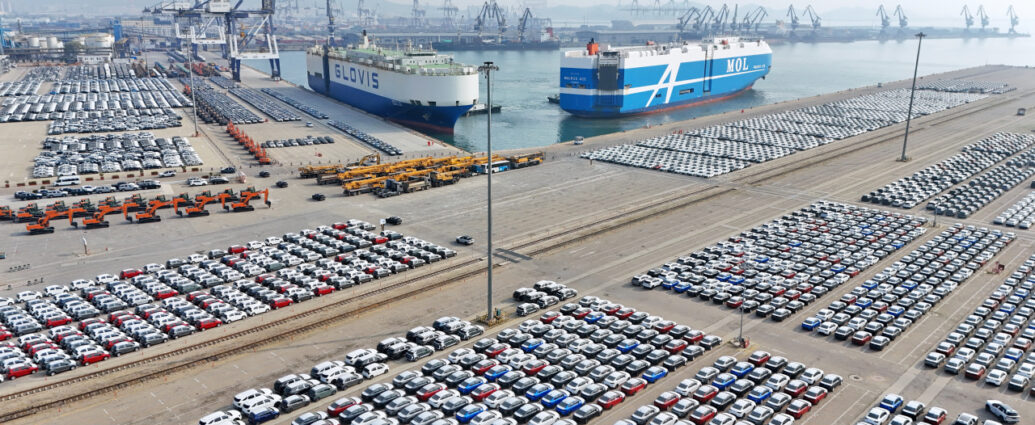



Almost three years after Oct. 7, ‘Hostages Square’ becomes official name of Tel Aviv Museum plaza
Nearly three years after October 7, the Tel Aviv-Jaffa Municipality has officially renamed Tel Aviv Museum plaza to “Hostages Square,” at the unveiling of the new signs on Tuesday.
Over the last three years the plaza has served as a central hub for the campaign to bring the hostages home, becoming a gathering place for families of the hostages and their supporters. It was used to raise awareness for the hostages and as a key site for protesters rallying for a deal to bring them home.
The new signage officially recognized a name that the public had adopted since October 7, honoring and remembering the former Gaza hostages.
Tel Aviv-Jaffa Mayor met with Hostage families after unveiling
Following the unveiling, Tel Aviv Mayor Ron Huldai met with representatives of the hostage families, telling them that the decision to rename the plaza was “intended to ensure that this chapter in the history of the State of Israel, from October 7, 2023, until the return of the final hostage, Ran Gvili, on January 26, 2026, will be remembered for generations.”
“A courageous and determined struggle took place here, led by heroic families who did everything to bring their loved ones home,” Huldai said, adding that it was a privilege for Tel Aviv-Jaffa to be the home for these families.

“The square became a center of solidarity, mutual responsibility, and an uncompromising demand: Bring them, all of them, home.”
Renaming the plaza to Hostages Square ensures that the hostages, their families, and “the commitment to never give up on anyone,” will be preserved.
Since October 7 the plaza has hosted mass rallies, Kabbalat Shabbat ceremonies, installations, community activities, and more. When the final hostage deal was signed in October 2025, the square was a place where the public gathered to mark their return home.
“Now, with the decision to grant the square official status, the Tel Aviv Yafo Municipality seeks to preserve the significance of the site for future generations. Naming the plaza ‘Hostages Square’ expresses the commitment to commemorate the place where pain and hope came together and to ensure that the memory of the struggle to bring the hostages home remains an inseparable part of the story of Tel Aviv Yafo and the State of Israel,” Huldai added.
“We will not allow this story to be forgotten, not one letter, not one act, not one breath.”
American defense start-up launches new Anthem cruise missile in Morocco military test
American start-up Covenant Industries successfully conducted a live launch of its innovative new Anthem cruise missile last week in the Tan Tan area of southern Morocco, as part of a joint military exercise involving the US military and the Moroccan Armed Forces.
The test marked the operational launch of the new Africa Multidomain Training and Experimentation Center (AMTEC). The new facility, established amid close cooperation between Washington and Rabat, is intended to become a permanent “military laboratory” for advanced warfare technologies.
During the test, US and Moroccan forces, together with company engineers, set up a temporary launch site in the dunes of the Sahara Desert and tested the missile’s communications systems, launch mechanisms, and the collection of communications and climate data in real time.
Covenant was founded in 2024 by Michael Kaufman, an American investor and entrepreneur operating out of Israel. The company, which has subsidiaries in Israel and Germany, has so far maintained an exceptionally low public profile and has no official website. That has not prevented it from raising hundreds of millions of dollars from major Silicon Valley funds, including Founders Fund and Andreessen Horowitz.
As part of the wave of defense tech companies, Covenant focuses on developing advanced warfare technologies at relatively low cost. Anthem is intended to be its flagship product, offering a cheaper alternative that is easier to mass produce than heavy and expensive cruise missiles such as the US Tomahawk, while maintaining long range capabilities and precision strike capacity.

New initiative enables access to US military testing grounds
The launch in Morocco was made possible through an initiative by the office of the US Secretary of the Army, which allows private technology companies to gain rapid access, within 30 days, to military testing grounds belonging to the US and its allies.
Covenant was the first company to make use of the initiative. The test represents a critical milestone toward serial production as early as the beginning of 2027.
Massive delays at Ben-Gurion partially due to presence of US refueling tankers, authority admits
The Israeli Airport Authority addressed the unusually heavy congestion at Ben-Gurion Airport on Friday morning, partially blaming the dozens of flights delayed on the presence of US refueling planes.
The authority also stated that traffic congestion and restrictions in European airspace, particularly Greece, had contributed to the delays at the airport.
Approximately 90,000 travelers were expected to pass through Ben-Gurion Airport that day, the authority said.
In some cases, passengers were already on board their planes while their luggage remained on the ground. At the same time, passengers who landed at Ben-Gurion Airport reported lengthy waits to receive their baggage.
Passengers on an Israir flight to Salzburg, which was scheduled to depart at 6:30 a.m., also found themselves waiting on board the aircraft.

Flight delays not due to strike, IAA confirms
The Israel Airports Authority also clarified that the delays were not the result of a strike. According to the authority, an unusually heavy concentration of about 90 flights accumulated within a period of roughly three hours, directly affecting the pace of baggage handling, both the loading of luggage onto departing flights and its unloading from arriving aircraft.
The authority said the congestion was being addressed and that efforts were underway to reduce the delays and restore normal operations as soon as possible.

Cleveland Clinic Flies Prescriptions to Patients’ Homes in U.S. First
Cleveland Clinic is now sending prescriptions to patients by air. A pharmacy technician at its Beachwood campus loads a filled order into a secure drop box, an autonomous drone picks it up, flies to the patient’s address, hovers roughly 300 feet overhead and lowers the package to the ground on a tether. The drone never lands. The pod sets the medication down, winches back up, and the aircraft returns to its charging station.
The service went live Monday, Aug. 3, and has been running daily since. Cleveland Clinic says it is the first long-term deployment of a prescription drug drone delivery program by a U.S. health system, which is the distinction that matters commercially — hospitals have flown medical drone pilots for years, but this one is built to operate as a standing part of patient care rather than a demonstration.
The operator is Zipline, the drone logistics company that has been flying medical payloads since 2016. The company has delivered tens of millions of medical products worldwide and now serves more than 5,000 hospitals and healthcare facilities, and says each aircraft runs more than 500 safety checks every second in flight.
The launch is deliberately small. Deliveries are limited to patients within a five-mile radius of Cleveland Clinic’s Beachwood Administrative Campus, which serves as the drones’ home base. Eligible patients are those already enrolled in the health system’s pharmacy home delivery program; the pharmacy team notifies them through their patient portal when a medication qualifies. The option is voluntary and carries no extra charge.
What flies is limited too. Controlled substances are not being transported by drone at this stage, and refrigerated items are excluded, leaving shelf-stable prescriptions as the initial payload. Patients follow the aircraft through a tracking link sent in the MyChart portal.
The operating case is speed. Matt Soder, executive director for Cleveland Clinic specialty and community pharmacies, said a courier run traditionally takes several hours from notification to the patient’s door, where the drone route is measured in minutes. For a patient starting an antibiotic or waiting on a refill, that compresses a same-day errand into a wait shorter than the drive to the pharmacy would have been.
Volume showed up immediately. Bri Robinson, who manages the health system’s home delivery pharmacy, said on launch day that the pharmacy opened at 7 a.m. and had already sent five to ten orders to patient homes.
Lindsey Amerine, chief pharmacy officer at Cleveland Clinic, framed the program as an extension of the system’s existing delivery operation rather than a standalone experiment, saying it strengthens home delivery and extends the reach of its services beyond the walls of its facilities. Zipline’s president of U.S. healthcare, Hillary Brendzel, made the customer argument in plainer terms: one less errand to run, and more time back in people’s days.
For the healthcare business, the economics sit in the last mile. Pharmacy home delivery has been growing for years, but it is carried by courier fleets and parcel networks whose costs scale with drivers, vehicles, fuel and traffic. An autonomous aircraft that completes a short hop in minutes and returns to a charging station changes that cost curve, and it changes what a health system can promise a patient about timing. That is why the first long-term deployment matters more than any of the pilots that preceded it — a program designed to run indefinitely has to survive on its unit economics, not on grant funding or novelty.
The expansion path is already mapped. Cleveland Clinic plans to add locations and to use the drones for additional medications, lab samples, medically tailored meals and medical supplies. Lab samples are the item to watch: moving specimens between collection sites and central labs is one of the most routine, most vehicle-dependent logistics problems in medicine, and it is the kind of repetitive short-distance run that autonomous aircraft handle best.
Regulation remains the gate on how fast any of this scales. Routine flights beyond a pilot’s visual line of sight require federal approval, and Cleveland Clinic and Zipline say they cleared the regulatory and technical requirements before launching. Every new service area will need the same clearances, which is why a program of this kind starts inside a five-mile circle rather than across a metropolitan region.
For now, the practical picture is narrow and real: a few thousand households on Cleveland’s east side can have a prescription arrive in the yard in minutes, and the rest of American healthcare is watching whether the numbers hold up well enough to copy.
JBizNews Desk | Cleveland
© JBizNews.com All Rights Reserved. Reproduction or distribution without written permission is prohibited.
As foreign elections shape Israel’s alliances, Jerusalem seeks to control the diplomatic whiplash
One could get whiplash watching governments dramatically change their policies toward Israel depending on who is voted into office.
Take Colombia, for instance.
On Monday, just three days after the inauguration of its new right-wing president, Abelardo de la Espriella, the Colombian government announced that it was recognizing Israel’s sovereignty over the Golan Heights, making it only the second country, after the US, to do so. The new government has also announced its intention to move the country’s embassy to Jerusalem.
Why is this so significant? Because just a few months ago, Colombia was firmly in the anti-Israel camp.
Under left-wing president Gustavo Petro, the country reversed what had been strong Israeli-Colombian ties. It intervened against Israel in South Africa’s genocide case at the International Court of Justice, suspended purchases of Israeli arms, banned coal exports to Israel, and – as a final blow – severed diplomatic relations.

This from a country that, during the early part of the century, was one of Israel’s closest partners in Latin America, with particularly strong military ties.
Colombia’s reversal is unusually dramatic, but it is not unique. Israel has become more than just another country on the diplomatic map. It has become an ideological marker, a means by which political movements advertise who they are and what they stand for.
How Slovenia flipped from Palestinian recognition to Israeli rapprochement
Consider Slovenia.
Under its previous left-wing government, Slovenia recognized a Palestinian state, imposed an arms embargo on Israel, banned imports from Israeli settlements and took a leading role in efforts to pressure Israel inside the European Union.
Its national broadcaster also boycotted this year’s Eurovision Song Contest because Israel was allowed to participate, refusing even to air the event and broadcasting Palestinian films instead.
Then Janez Janša returned to power.
His new right-wing government revoked the restrictions on arms trade, moved to reverse Slovenia’s recognition of a Palestinian state, and announced that it would relocate the country’s embassy from Tel Aviv to Jerusalem. Israel, in turn, announced that it would open its first embassy in Ljubljana.
Venezuela offers a variation on the same theme. The change there did not come through an election, but through a change of regime and of the country’s broader alliances.
Hugo Chávez severed relations with Israel in 2009, and under Chávez and Nicolás Maduro, hostility toward Israel was part of Venezuela’s close alignment with Iran.
On Tuesday, following Maduro’s removal and the interim government’s turn toward Washington, Venezuela and Israel agreed to restore consular services – a limited step toward normalization that followed Israel’s humanitarian mission after June’s devastating earthquakes.
It is not yet a restoration of full diplomatic relations, but it shows how quickly relations with Israel can change when a government moves away from Iran and closer to the US.
The electoral pendulum has swung elsewhere as well.
Brazil moved toward Israel under Jair Bolsonaro, elected in 2018; backed away under Luiz Inácio Lula da Silva, who won the 2022 election; and may change direction yet again in October, when Lula faces Bolsonaro’s strongly pro-Israel son Flávio.
In Hungary, the movement went the other way: Péter Magyar’s defeat of Viktor Orbán in 2026 cost Israel its most dependable ally inside the EU and led Hungary to reverse its planned withdrawal from the ICC.
Foreign policy always changes when governments change. But with Israel, the shifts are often unusually rapid, sweeping, and symbolic.
Why? Why do relations with Israel flip-flop to such a degree?

Israel ties become ideological marker as countries sever and restore relations
The primary reason is that Israel has become an ideological banner in the domestic politics of other countries.
For the populist Right – represented by leaders such as Janša in Slovenia and de la Espriella in Colombia – supporting Israel is no longer merely a foreign-policy position. It has become a central element of a political identity built around nationalism, Western values, opposition to political Islam, and resistance to the established foreign-policy consensus.
Conversely, for significant parts of the global Left, opposition to Israel and anti-Zionism have become a telltale sign of progressive identity.
For the far Left in particular, the Israel-Palestinian issue is not simply another matter to be filed alongside trade relations with Japan or border disputes in Africa. It is a core identity issue. A politician’s position on Israel signals what ideological camp he belongs to, what values he embraces, and how he views the world.
Once Israel becomes an identity marker, changes in the political leadership naturally lead to significant changes in policy.
There is also an unusually broad range of symbolic measures available to governments seeking to advertise those changes: recognizing a Palestinian state, moving an embassy to Jerusalem, imposing sanctions on Israeli officials, banning settlement products, joining international legal proceedings, or shifting votes at the UN.
These are high-visibility steps that generate considerable political attention. Yet many of them can be taken – and reversed – relatively quickly. They generally do not require the restructuring of a country’s economy or military alliances.
Moreover, cutting or boosting ties with Israel often carries a high ideological reward but a relatively low immediate domestic risk.
When Petro severed diplomatic relations with Israel, Colombia’s GDP did not collapse, its borders were not immediately threatened, and most Colombians did not experience any change in their daily lives.
That does not mean there were no costs: Colombia had benefited from Israeli military equipment, intelligence cooperation, and commercial ties. But the costs were neither immediate nor dramatic enough to outweigh the ideological benefit Petro derived from the move.
The lack of an immediate price makes Israel an easy way for governments to signal ideological purity.
How does Israel adapt its diplomacy amid shifting global alliances?
Another factor is that many of these decisions largely fall within the executive’s purview.
A new leader can change a UN vote, recognize a state, recall an ambassador, or announce an embassy relocation without having to jump through all the legal and legislative hoops required to alter relations with a major trading partner or withdraw from a critical defense treaty.
This phenomenon is not entirely unique to Israel. Cuba, Taiwan, Russia, and Venezuela have also become ideological symbols at various times and in various countries. But in Israel’s case, this phenomenon is especially pronounced.
As a result, Israel’s foreign relations in many democracies have become highly vulnerable to electoral swings.
So how can Israel navigate those shifts?
This is not merely a European or Latin American concern. Increasingly, Israelis are asking what will happen after US President Donald Trump leaves office in January 2029.
Considering the rise of democratic socialists in the Democratic Party, could a future Democratic president dramatically reverse policies toward Israel, just as governments elsewhere have done? Imagine, for a minute, US-Israel ties under a Ro Kahana or Alexandria Ocasio-Cortez presidency.
If ideological affinity can disappear with one election, Israel cannot build its foreign relations on that affinity alone. That was the significance of a speech delivered last week by former strategic affairs minister and ambassador to the US Ron Dermer at an Israel on Campus Coalition conference in Washington.
Dermer said favorable public opinion can provide “shock absorbers when problems arise,” but that ultimately “being important to that country becomes more critical” than whether its people believe they share values with Israel.
This reflects what a senior Israeli official said during the Obama administration. His dream, he said, was to have military, intelligence, and business ties so intertwined that even if a president hostile to Israel were elected, he or she would be unable to break those ties, because it would significantly harm American interests.
Israel has tried to apply that logic before.
More than two decades ago, Ariel Sharon’s government signed an agreement to import 50 million cubic meters of water annually from Turkey’s Manavgat River for 20 years.
The water was more expensive than desalinated water, but Sharon saw the agreement as more than a solution to Israel’s water shortage. It was an effort to broaden a strategic relationship already anchored in military and intelligence cooperation, giving Ankara something more to lose if ties deteriorated.
The water never arrived. The project was abandoned in 2006 because the cost of transporting it in specially built tankers made it economically unfeasible. Nor is there any reason to believe that it would have prevented the long deterioration in ties under Turkish President Recep Tayyip Erdogan.
But it might have raised the cost of that deterioration. And that is the point: Interdependence cannot guarantee friendship, but it can make hostility more expensive.
Dermer’s point was not that shared values are meaningless. It was that shared values alone are insufficient. Common interests provide greater durability when leaders, governments, and public opinion change.
And that, essentially, is the lesson for Israel.
Israel cannot prevent the election of leaders hostile to it. What it can try to do is build enough shared interests into its relationships to make them difficult and costly to dismantle.
That means building ties beyond the government of the day. It means extensive military and intelligence cooperation, trade and investment, technological partnerships, and parliamentary relationships. It also means maintaining contacts across the political spectrum, including with opposition parties that may one day come to power.
The more people, businesses, and government bodies benefit from ties with Israel, the harder it will be for a new leader to dismantle them with the stroke of a pen. Multiyear agreements, long-term defense cooperation, and deep business ties are harder to unwind overnight. They do not make reversals impossible, but they do raise the price.
Moving an embassy to Jerusalem is a welcome diplomatic achievement. But it will not, by itself, keep Colombia in Israel’s corner after de la Espriella leaves office. Defense cooperation, commercial relationships, and institutional ties may not do so either – as we have seen in the recent past – but they will ensure that a future Colombian government has something tangible to lose by reversing course.
Israel cannot prevent electoral whiplash abroad. It can, however, weave enough strands of mutual interest into its relationships to make them harder to unravel. And the time to do that is precisely when a friendly leader is in power – using the goodwill of the moment to build ties that will outlast the leader.
The secret Smotrich kept from his wife: Israel was going to war with Iran – interview
In January 2025, Finance Minister Bezalel Smotrich voted against the hostage deal, called the prisoners it released murderers with blood on their hands, and then did the one thing nobody in his camp expected. He stayed.
The demands that he resign came from the people who had elected him. National Security Minister Itamar Ben-Gvir walked out and came back. Smotrich absorbed it, said little, and remained finance minister. Eighteen months later, at the Finance Ministry headquarters in Jerusalem on Wednesday, he explained why.
“I knew that we were going to a campaign to remove an existential threat, a nuclear Iran, an Iran that was tripling the pace of its ballistic missile production,” he told The Jerusalem Post this week at the Finance Ministry headquarters in Jerusalem. Bringing down the government meant elections, and elections meant no campaign. So he stayed, and told nobody.
“I could not tell anyone about it. Not even my wife. Because it was a secret.”
Operation Rising Lion began five months later, on June 13.

It is the cleanest illustration of the argument Smotrich has been making for three years and is now asking voters to buy one more time: that influence is worth more than exit, that the price of staying is paid in public and the return arrives in private, and that a man who has never resigned from this government has shaped it more than anyone who has. Ten weeks before the October 27 election, with Religious Zionism polling at or barely above the 3.25% threshold, that argument is on the ballot.
Where he says the method worked
The most recent test came this month, over the Board of Peace‘s 15-point roadmap for Gaza, and Smotrich claims the outcome as his.
His account of Prime Minister Benjamin Netanyahu is not flattering. The prime minister, he says, did not initially grasp what he had been handed. “He thought he could keep juggling it. And I think I managed to put a very serious brake on him.”
First came the public letter he and Settlements and National Missions Minister Orit Strock sent demanding the security cabinet reconvene and revoke its approval. Then came the private conversation. “I sat with him in the room and he understood the event.”
The record does not contradict him. On August 9 Netanyahu told the cabinet flatly that Israel rejects the 15-point document and that the IDF will not withdraw until Hamas is genuinely disarmed.
What bothers Smotrich most is the international force. The ISF was supposed to enter Gaza and disarm Hamas, except that no country would send troops to fight it. “Suddenly it turns out the ISF is not supposed to fight Hamas at all. It is supposed to supervise us.”
His fear has a name, and it is not Gaza. “The great fear is that there will be a kind of Lebanonization of Gaza”: a governing body on the surface, an armed faction underneath holding the weapons, the money, and the population. He never accepted the original 20-point plan either, because of the pathway to Palestinian statehood he reads into it, though he credits US President Donald Trump for keeping the destruction of Hamas as the stated aim.
He wanted something else entirely, and did not get it: take the Strip, install a military government, encourage emigration. The cabinet chose not Hamas, not the Palestinian Authority, and not Israel, which left a vacuum nobody has filled. “Nobody will do the work for us. Nobody will come and shed their blood and disarm Hamas.”
Where it broke
Then there is the vote that cost him two members of his own faction, and possibly the election.
Smotrich asked for several minutes before answering, and started with his family. Two sons in combat units, one of them seriously wounded in Givati and still in rehabilitation, the other finishing nearly three years in the Paratroopers. A cousin he grew up with like a brother, a father of five, who left everything on Simchat Torah and was killed five months later. Brothers, brothers-in-law, and nephews on extended reserve duty. A neighborhood where for long stretches of the war there were not enough men left to make a minyan (prayer quorum) on Friday night.
“I do not think anyone needs to convince me of the importance of the draft.”

His anger at the haredi (ultra-Orthodox) leadership is not in doubt and predates the legislation. Almost three years of war, he says, and they still have not found a way to say the one sentence that mattered: we are with you in this trouble. He describes pressing Shas leader Arye Deri on it repeatedly. “I told him, I do not need to prove that I am part of this war. I am there. My children are there. My family is there. You are not there.” Where was the mass prayer rally? Why were the rabbis not in the rehabilitation wards every day?
And yet he voted with them, and he will not accept that this makes him their instrument. What distresses him equally, he says, is what the issue has become: “a kind of hate campaign against the haredi public.” They are not evading out of laziness. They are idealistic, modest in their needs, and wrong about the state in a way he calls ingratitude. “The State of Israel is the place with the greatest flourishing of Torah that has ever existed in the Jewish people. Who, if not the State of Israel?”
His defense rests on a framework that does not exist. The bill he describes, the one he says justified everything, required haredi leadership to actively vote in favor rather than abstain, set a 50% enlistment target within five years, and imposed sanctions on daycare, housing, and transportation subsidies for failure. Its value was declarative: once the leadership votes yes and the rabbis assent, enlistment becomes legitimate, and legitimacy is the only thing he says a law can actually deliver.
That bill never passed. Maximalists in his own camp, he says, refused anything short of 100%. “I said, friends, this is a process. Let us go with 80%. Not perfect, but 80%.” Two years earlier, he argues, it would already have put thousands of haredim in uniform.
What passed instead, in the Knesset’s final days, was narrower and carried no sanctions at all. Basic Law: Torah Study cleared its final readings on July 13 by 63 to 52. The freeze on arrests of draft evaders passed the next day, 58 to 54, over the Knesset legal adviser’s objection that it suspended enforcement while demanding nothing in return. Smotrich separates them. The Basic Law he defends outright, as protection for hesder yeshivas, which combine Torah study with military service, against a High Court petition he says is already written. The arrests measure he defends more narrowly: the arrests accomplish nothing except Jews fighting Jews on the roads.
On that he turns on the attorney-general directly. “If she really wanted to draft haredim, she would send buses to the kiosks and to working haredim. She sent them to the yeshivas because she does not want to draft haredim. She wants to break up the national camp.” Gali Baharav-Miara remains in office after the High Court unanimously annulled her dismissal in December.
The cost arrived within days. Immigration and Absorption Minister Ofir Sofer, among the coalition figures who fought the legislation, announced he would not stand again. MK Moshe Solomon, who voted against the Basic Law and lost his committee seats for it, followed. Deputy Foreign Minister Sharren Haskel resigned her post.
Smotrich will not say a bad word about Sofer, calling him an excellent minister with the largest soul in the government, and saying he tried to talk him out of it.
What he wants instead of coercion is an operation: dedicated hesder yeshivas and pre-military academies for haredi recruits, funded by the state, youth movements, soldiers’ houses built for men who cannot sleep in the existing ones. He told the General Staff on the first day of the war that anything haredi enlistment costs comes out of his budget. Three years on, he says, roughly 6,000 haredim registered for Shlav Bet, the track for older recruits, and the army took about 150.
Quoting MK Simcha Rothman (RZP), he offers a definition of populism: “Deal now, hostages now, peace now, messiah now, draft now.” Everything real is a process.
The bill comes due
Whether any of this survives contact with voters is now the question, and the arithmetic is unforgiving.
He will not run with Ben-Gvir. “I really do not want it. I do not think it is good.” Ben-Gvir has ruled it out from his side too, telling 103FM the parties draw on different electorates and that one plus one does not always make two. Netanyahu has pushed for a merger for months, and Likud has not ruled out reserving a slot for Smotrich on its own list.
He does not regret 2022. Fourteen seats produced the 64 that made him finance minister. But he concedes a cost that has nothing to do with Israeli politics: abroad, the two names are spoken in one breath, with no distinction drawn. “There is a price.”

Meanwhile, the ground he needs is being contested. Unity, launched on August 6 by Gilad Erdan and Yuli Edelstein, is running explicitly on universal conscription, aimed squarely at coalition voters who cannot stomach the exemptions. Yoaz Hendel and Chili Tropper have Zionist Home-The Reservists. A Kan poll on August 9 put both below the threshold, and neither bloc was at 61.
Smotrich’s answer is the oldest one in Israeli politics: do not throw your vote away. “Too much is at stake.” He is preparing reserved slots on his list for groups he considers under-represented and promises new faces.
The alternative, as he frames it, is Gadi Eisenkot, whom he treats with unusual care and unmistakable intent. “He is a dear man with many merits, a former chief of staff. And he is a man of the left. That is not an insult.” Eisenkot left the government mid-war over Rafah, and had that view prevailed, Smotrich argues, Hamas would be back on the fences today. He also claims, with what he called responsibility, that European governments and figures in the US Democratic Party are already talking to Lapid, Bennett, and Eisenkot about reversing this term’s settlement decisions. He offered nothing to support it.
Where the record disagrees
On his own portfolio he is confident to the point of immovability, and this is where the interview strains hardest against the evidence.
He grades himself highly on the war economy and points to the shekel, the stock exchange, foreign investment, employment, falling inflation, and the interest rate cut, against more than NIS 300 billion in war spending. Cost of living has one answer, repeated three times: competition. Break up the dairy producers, break up the importers. He blames what he calls the communists in Likud for killing the dairy reform.
The personal import exemption is his favorite example and his clearest defeat. He raised it from $75 to $150; the Knesset struck the order down on February 24 by 59 to 25, with Likud members leading the revolt. He signed a replacement at $130, and the Knesset struck that down too, on June 1.
On housing he says prices are falling faster than the state is willing to admit, putting the real decline near 15%. The Central Bureau of Statistics does not agree: its May release recorded an annual drop of about 1.2%, an average price around NIS 2.33 million, and new-build prices down about 3.8% over the year.
And on Army Radio he insists nobody wants to close the station, only to privatize it, because an army broadcaster exists in Israel and North Korea and nowhere else. The government he sits in voted unanimously in December to shut it down by March 1, on Israel Katz’s proposal and over the attorney-general’s objections, with Netanyahu making the North Korea comparison himself. The petitions are still at the High Court.
‘I only have seven seats’
For all the influence he claims, Smotrich is candid about the limit of it. Asked what he got wrong, he does not reach for the war.
“During the war there were many things that I thought at some point I should have done differently. And that’s fine; in the end, I only have seven seats. I have enormous influence, but I’m not prime minister.”
On October 7 he takes a share and assigns the rest to the doctrine. “We also bear responsibility, along with many other actors, but mainly the conception of 20 or 30 years. This did not start on that morning.” He offers his record as proof of consistency: fighting Oslo as a schoolboy, fighting the disengagement, three weeks in Shin Bet (Israeli Security Agency) detention, a 2017 article arguing Israel would have to retake Gaza, warnings in the 10 months before the attack that Hamas was not deterred.
Pressed on where the fight over the courts ends, he draws one line without hesitation. “Since the Altalena we have shown responsibility and said that Jews do not raise a hand against Jews. We will always fight against that.”
Everything else, he insists, is a process. He has 10 weeks to persuade roughly 150,000 voters that they can afford to wait for it.




Ramsey personality took Trump’s $1,000 for his son — then warned parents about one big mistake
When the federal government began depositing a $1,000 seed contribution into newly launched Trump Accounts for eligible children in July, personal finance expert and Ramsey Solutions personality George Kamel didn’t hesitate to claim the funds for his own young son.
Though Kamel gladly took “a little money back” from Uncle Sam, he issued a cautious warning to parents across America about the program’s tax fine print — and the costly mistake well-meaning families could make.
“As someone who has a 1-year-old and 3-year-old, I took advantage of this. And on the Fourth of July, that $1,000 came into the account for my son, and I went, ‘Woo! A little money back from the government that I’ve given so much to,’” Kamel told Fox News Digital.
“If you can understand the power of compound growth, then this Trump Account was worth it just to get your mind thinking about it,” he continued. “But the truth is, the tax benefits are not great on this.”
WHY RAMSEY FINANCIAL EXPERT SAYS THERE’S ‘NO MAGIC AGE’ TO CLAIM SOCIAL SECURITY
The initiative, which debuted as part of the Trump Accounts rollout in 2026, is a provision of the new tax legislation that will provide $1,000 to every eligible newborn U.S. citizen whose parents enroll the child in the program. No contributions are necessary, but parents can deposit up to $5,000 per year, which will be invested in a qualifying U.S. stock index fund.
During a July 31 public Cabinet meeting, President Donald Trump said that more than 7 million Trump Accounts had been opened since the program’s launch date.
“Here’s the math on this: If you get the free $1,000, well, that could grow to almost half a million or more by the time my kid is 65, without ever adding anything to it,” Kamel said before mentioning other ways to invest in children’s futures.
“Save the 529 plan for education. That has way better tax advantages. You’re using after-tax income, you withdraw it tax-free, it grows tax-free. That is the best move for education expenses,” he explained. “When it comes to other things, like a custodial Roth IRA is great, but you need earned income. So the real power of the Trump Account is that there is no earned income needed.”
At age 18, without any additional contributions, the account is estimated to be worth about $5,800. By age 55, it could reach roughly $200,000. Kamel also said it could grow to about $5 million by age 65.
However, Kamel’s primary warning was directed at parents who rush to invest for their children while neglecting their own debt, emergency funds or retirement savings.
“I love that we’re bringing this conversation to the forefront with these Trump Accounts… But the sad truth is most Americans aren’t investing for themselves, let alone have the ability to invest for their kids,” he said. “We tell people, hey, become debt-free, don’t owe other people money, have an emergency fund so that you have the margin to build wealth for yourself. And once you’re investing 15% of your own income into your own retirement, then and only then should you be thinking about investing for your kids.”
GET FOX BUSINESS ON THE GO BY CLICKING HERE
“The truth of the matter is, a lot of kids are having to support their aging parents who didn’t plan for their own retirement. So now they’re having to fund their retirement while trying to support their own life and their own kids. So this has put a real bind and burden on the younger generations,” Kamel continued. “And I don’t wanna do that to my kids.”
“So if you can get this early, this mindset, that compound growth is the key… I hope that you have the ability to leave that legacy where your kids went, ‘Wow, I can’t believe the advantage that my parents gave me by setting me up in this way.’”
FOX Business’ Alexandra Koch contributed to this report.

Robinhood Opens Early-Stage Startups to Ordinary Investors
Robinhood is pushing further into private markets, launching a new publicly traded venture fund that gives ordinary investors access to early- and growth-stage startups that historically have been available mainly to venture-capital firms, institutions and wealthy accredited investors.
Robinhood Ventures Fund II began trading on the New York Stock Exchange Thursday after raising about $225.5 million, creating a new vehicle that allows retail investors to buy exposure to a portfolio of private companies through a publicly traded fund.
The strategy is aimed in part at companies connected to Y Combinator and other startup ecosystems where some of the most valuable technology businesses begin years before they ever consider an initial public offering.
That matters because the structure of the American stock market has changed dramatically.
Many high-growth companies now remain private for much longer than they did a generation ago. Instead of going public relatively early and allowing everyday investors to participate in much of their growth, startups can raise billions of dollars privately from venture firms, sovereign wealth funds and institutional investors while delaying an IPO for years.
By the time those companies finally reach the stock market, some of the largest gains may already have gone to private investors.
Robinhood is trying to give its customers a way into that earlier stage.
Rather than requiring investors to qualify as accredited investors or commit large sums directly to venture funds, the new vehicle can be bought and sold through the public market like other listed investments.
That does not make startup investing risk-free.
Early-stage companies fail at much higher rates than established public corporations, private-company valuations can be difficult to determine, and investments may remain illiquid for years. Even when a startup succeeds, there is no guarantee it will eventually go public or be acquired at a higher valuation.
But the launch represents an important shift in who gets access to venture investing.
Robinhood built its original business around making stock and options trading easier for individual investors. It later expanded into retirement accounts, crypto, credit cards and other financial products.
Private-market access is becoming another front in that expansion.
It also puts Robinhood into a much larger competition taking shape across Wall Street.
Asset managers, brokerages and private-equity firms are increasingly looking for ways to package private investments for individual customers as wealthy and institutional investors pour more money into companies outside traditional public exchanges.
The opportunity is large because the number of major private companies has grown alongside their valuations.
Some startups now reach valuations of tens of billions or even more than $100 billion while remaining privately held, creating businesses that are effectively public-company size without public-company access.
For retail investors, that has created an unusual problem: they can easily buy shares of mature companies such as Apple, Microsoft or Amazon, but may have almost no direct access to the next generation of companies competing to become them.
Robinhood’s new venture fund is attempting to bridge that gap.
If the model gains traction, investors may increasingly be able to gain exposure to startups long before a traditional IPO.
And that could gradually change one of the most fundamental divisions in American finance — the line separating Wall Street’s private market from the ordinary investor.
JBizNews Desk | New York
© JBizNews.com All Rights Reserved. Reproduction or distribution without written permission is prohibited.
‘This is what occupation looks like’: MK Cassif says IDF tried to prevent him from entering Kusra
IDF troops attempted to prevent Hadash-Ta’al MK Ofer Cassif from entering the West Bank village of Kusra, Cassif said on Friday, claiming the IDF was “allowing settlers to freely establish their outposts.”
“I arrived today in the village of Kusra to see with my own eyes what is happening and to try to assist the besieged Palestinian families, who are being denied food, water, and medicine solely to protect a settler terror outpost that was reestablished today,” he stated.
“At the entrance to the village, the [IDF] delayed me, claiming it was Area B. A short time later, they even declared the area a closed military zone, apparently especially for me. Only after about 20 minutes, and following the intervention of the Knesset Sergeant-at-Arms, was I allowed to enter.”
A short while later, Cassif updated that he had successfully entered the village and met with the families living there.
“This is exactly what apartheid looks like. This is exactly what occupation looks like. We will not give up. We will continue to fight against the terror of the occupation and for a just peace,” he wrote.
The Jerusalem Post has reached out to the IDF for comment and to clarify whether Kusra has been declared a closed military zone.
This is a developing story.
Two teenagers indicted over arson attack against Givatayim Japanika restaurant
The State Attorney’s Office filed an indictment with the Tel Aviv District Court against Hanan Yaakov, 18, and Osher Bayech, 18, both from Rehovot, accusing them of setting fire to a Japanika restaurant in Givatayim about a month ago.
According to the indictment, the two obtained an electric scooter, flammable material, and equipment to start a fire before arriving near the restaurant.
After concealing their identities, Yaakov poured the flammable material and set it alight while an employee was inside the restaurant.

The prosecution has requested that the two remain in custody until the conclusion of the legal proceedings against them.
Two indicted for throwing grenade at Japanika
Two men from Bat Yam were also indicted on Thursday for allegedly repeatedly throwing a fragmentation grenade at a Japanika restaurant until it exploded while an employee was inside, in Kiryat Ono.
The July 13 attack came amid a wave of grenade, gunfire, and arson attacks on branches of the restaurant chain that police have investigated against the backdrop of an organized-crime dispute.
Sarah Ben-Nun contributed to this report.
Parashat Shoftim: Wholehearted – and well
Among many people, a tamim – a “simple” or “naive” person – is considered someone who is easily deceived, who believes everything he hears, and does not exercise sound judgment. Yet in the language of the Torah, the word has an entirely different meaning. Tamim expresses wholeness and completeness.
The sacrifice offered in the Temple had to be tamim – whole and without blemish. Jacob, our forefather, the chosen of the Patriarchs, is also described as an ish tam – a “wholehearted man,” an expression denoting a person who is complete, upright, and free of moral defect. In Judaism, then, being tamim is not a shortcoming, but a great virtue.
This idea is expressed in one of the central verses of this week’s Torah portion, a verse that conveys a profound principle of Jewish faith.
The Torah describes practices that were widespread in the ancient world: turning to sorcerers, magicians, diviners, and those who claim to communicate with the dead, in the belief that they could reveal the future or control hidden forces. Many people were drawn to these phenomena because they appeared to possess power and influence. Yet the Torah unequivocally rejects them. It teaches that human beings do not possess an independent power to change reality through mysterious forces, and that such practices are not a genuine source of knowledge or control.
Our Sages extended this prohibition to superstitions that developed over the generations. Often, even educated and intelligent people adopt baseless practices: a “lucky” shirt, a sequence of actions believed to bring success, and the like. It is interesting to see that even those who do not believe in the Creator at all may cling to such beliefs. As one thinker put it: “There is no person who does not believe in something.” The question is whether one chooses to believe in a truth that is stable and grounded, or in beliefs that have no real foundation.

Indeed, after the Torah lists all these forms of sorcery and divination, it concludes with a short, clear, and unequivocal statement: “You shall be wholehearted with the Lord your God” (Deuteronomy 18:13).
Rashi: We should accept our fates ‘wholeheartedly’
Rashi explains this as a fundamental principle of faith:
“Walk with Him wholeheartedly and look forward to Him, and do not investigate the future. Rather, whatever happens to you, accept wholeheartedly, and then you will be with Him and share in His portion.”
At first glance, one might think that the wholeheartedness of which the Torah speaks is the same kind of naivety that the world tends to disparage – as the common saying goes, “A fool believes everything.” It might seem as though the Torah is asking a person not to question, not to investigate, but simply to accept everything. For this reason, throughout the generations, there have been those who have portrayed believers as ignorant and unintelligent people who blindly do whatever they are told without thinking.
But this is not the meaning at all. The wholeheartedness of which the Torah speaks is inner wholeness and confidence in one’s path. A complete person is not swept away by every new idea and is not impressed by every passing belief. Once a person has established for himself that there is a Creator of the world, that He guides reality, gave us the Torah, and watches over every detail, he has no need to seek other sources of security or success. He finds stability in a steadfast path that does not change with the spirit of the times.
One of the foundations that distinguishes Jewish faith is its emphasis on learning, inquiry, and understanding. Throughout the generations, an enormous body of literature has developed seeking to explain the foundations of faith, the reasons behind the commandments, and their meaning – from the simple interpretation of Scripture to the worlds of Jewish philosophy, Kabbalah, and esoteric thought. A person needs only to ask questions and delve deeper, and ultimately, he will find an answer to everything.
Superstitions, by contrast, generally rest on habit, fear, or popular tradition, without any clear foundation. A person who needs amulets, lucky signs, or various rituals in order to feel secure is, in fact, revealing a lack of inner security. The truly whole person finds his security in his faith in the Creator of the world, and as a result, his heart is more at peace.
Rabbi Levi Yitzchak: One’s wholeheartedness brings them closer to God
This idea is also expressed by the great Rabbi Levi Yitzchak of Berditchev:
“The principle is that the way of the Creator, blessed be He, is to do good, and especially toward Israel, His close and beloved people, who are called children of God. Surely, a father fulfills his child’s needs and desires before the child even has to ask. And a person who has such faith in the Creator will certainly have his needs fulfilled. This is the meaning hinted at in the words, ‘You shall be wholehearted with the Lord’: when you attain a state of wholeness, when you have faith in the Creator, blessed be He, that He will certainly fulfill your needs, then you will know that you are indeed ‘with the Lord your God’ – that surely, the Lord is with you” (Kedushat Levi, Shoftim).
His words illuminate a profound principle: the greater a person’s wholeheartedness, the closer his relationship with God becomes. A person who believes with a full heart merits, in Rabbi Levi Yitzchak’s words, that God accompanies him and bestows His goodness upon him.
It thus becomes clear that being a “wholehearted Jew” is a title of honor. It describes a person who has found a stable and clear path and is not shaken by every passing idea or changing spiritual trend. Precisely this wholeheartedness – in its deeper sense of wholeness – creates a close bond with the Creator and gives a person stability throughout his life. From a broader perspective, it often becomes clear that the person who does not chase after every novelty, but remains faithful to the path he has carefully chosen for himself, is the one who ultimately goes farther than all those who pride themselves on being sophisticated.
Yet we should not forget the words of Rabbi Naftali of Ropshitz:
“Wholeheartedness is greater than wisdom, but great wisdom is required of a Jew before he reaches the level of ‘You shall be wholehearted with the Lord your God.’”
The writer is the rabbi of the Western Wall and Holy Sites.
American Christian missionary kidnapped in Niger back in US hands, on his way home – report
Kevin Rideout, an American missionary pilot who was kidnapped in Niger‘s capital Niamey in October last year, has been released and is in US hands, The New York Times reported late on Thursday, citing two US officials.
Rideout is on his way to the United States, the Times said, adding that he was in good health based on proof-of-life images that were provided to American officials in the past 48 hours.
The US State Department and the White House did not respond to requests for comment on the report outside regular business hours.
Reuters had reported in October that the missionary, who is a pilot for the evangelical missionary agency Serving in Mission, was seized by three unidentified men as he headed to the airport, citing an unnamed diplomat, but did not identify Rideout by name at the time.
The kidnappers then headed toward the western Tillaberi region of Niger, where Islamist terrorists linked to Islamic State and al-Qaeda are active.

Niger, like its neighbors Mali and Burkina Faso, has been battling jihadist insurgencies for over a decade.
The US issued a travel warning to Niger days after the kidnapping, warning its citizens against traveling to Niger, citing crime, unrest, terrorism, health, and kidnapping.
US missionary believed to have been held by al-Qaeda affiliate
Reuters had later reported in March that the US was pushing to resume intelligence gathering in neighboring Mali, partly driven by a desire to find the kidnapped missionary, who at the time was believed to be held in Mali by the local al-Qaeda affiliate, Jama’at Nusrat al-Islam wal-Muslimin (JNIM).
According to the New York Times, details of how and where Rideout was released remained unclear. It was also unclear which group was holding Rideout at the end of his captivity, as he may have been moved recently, the Times added.
Over 2,000 evacuated in western Germany due to raging wildfire near Belgian border
More than 2,000 people evacuated their homes in western Germany on Friday, after a wildfire near the Belgian border spread towards a village, local authorities said.
Residents were asked to leave their homes in the village of Gey at around 4:00 a.m. and go to an assistance center set up at a primary school in a nearby village, they said in a statement.
They were urged to carry only essential belongings, identification papers and necessary medicines.
“This forest fire threatens to hit the local community hard,” Mona Neubaur, deputy premier of the state of North Rhine-Westphalia, posted on X/Twitter.
Mayor Stephan Cranen said that although the evacuation was complete, the situation remained critical and the flames were now around 300 meters from the village, regional public broadcaster WDR reported.

Cranen was quoted as saying one of the wildfires that remain out of control had spread overnight towards a former munitions depot in the nearby town of Dueren.
Unexploded WWII ammunition causes detonations in German wildfire
There is unexploded World War Two ammunition in parts of the surrounding forest because the hilly terrain prevented complete clearance of the area, and occasional detonations were heard during the wildfire, firefighters were quoted as saying.
About 300 hectares were burning as two German army tanks helped firefighters by clearing access routes through the forest area that were difficult to reach.
Large swathes of Germany are tackling dry conditions and high risks of forest fires.
Croatia wildfire forces hundreds to evacuate, 36 confirmed injured, seven critically
A wildfire in Croatia driven by strong winds descended on the tourist town of Omis overnight, engulfing houses, forcing about 1,000 people to evacuate and injuring dozens, fire brigade and health officials said on Friday.
Flames enveloped settlements and trees over 1,000 hectares, turning the night sky red above Omis, a scenic town on Croatia’s prized Dalmatian coast surrounded by trees and rocky hills.
Of thirty-six people treated by ambulance services in the city of Split, about 25 km. to the north, 14 were hospitalized and seven had life-threatening injuries, health officials said.
Emergency shelters, opened in several towns on the stretch from Omis to Split, accommodated about 1,000 people overnight.
“It was a strong fire, it swept everything on its way… there has been huge material damage,” Chief Fire Commander Slavko Tucakovic said.

The fire appeared to have calmed on Friday morning and there were no open flames, he said. Part of the firefighting force and four aircraft were redeployed to another fire further south in the Peljesac peninsula, a forested area known for vineyards.
Prime Minister Andrej Plenkovic was on the way to Omis with several government ministers, local media reported.
Climate change driving wildfires across Europe
Hot weather and drought that scientists link to climate change have created ideal conditions for wildfires across Europe this summer, especially in France, Spain, and Greece. The Balkans has also endured several heatwaves.
The fires have threatened tourism at the heart of holiday season. Hundreds of holidaymakers fled a beach town in northern Greece by boat on Thursday as a blaze raced across a forest towards the shore.
In Croatia, 286 firefighters, 90 fire vehicles, and four aircraft battled the fire through the night, Tucakovic said. A stretch of a major coastal highway was shut.
“Everything flared up in a second,” Goran Lović, the owner of a cafe near where the fire broke out in Lokva Rogoznica, told the Jutarnji List newspaper.
“It just happened all of a sudden, there was an open flame in the part where there is a forest and no houses.”

AI Boom Could Produce the First $100 Billion Data-Center IPO
Vantage Data Centers is exploring a potential public offering that could value the company at about $100 billion, underscoring how quickly artificial intelligence is turning data-center operators into some of the most valuable infrastructure businesses in the world.
The Colorado-based company could seek to raise roughly $10 billion in an IPO as soon as 2027, according to people familiar with the discussions. A transaction at that level would make it the largest data-center IPO on record.
Vantage is also considering alternatives, including a full or partial sale, and no formal process has been launched.
The valuation is striking because Vantage does not make AI chips or consumer software. It owns and operates the massive facilities that provide the power, cooling and connectivity needed to run them.
That business has become increasingly valuable as technology companies race to secure computing capacity for increasingly power-hungry artificial-intelligence models.
Vantage has raised roughly $11 billion since late 2023, including a $9.2 billion equity investment led by DigitalBridge and Silver Lake.
The potential offering would come amid a broader rush by investors to gain exposure to the physical infrastructure behind AI.
The bigger shift is where investors are finding value in the AI boom. The winners are no longer limited to chipmakers and software companies. The buildings, electricity, cooling systems and land required to keep AI running are becoming an investment class of their own.
For Vantage, a $100 billion valuation would put a dramatic number on that transformation.
JBizNews Desk | Denver
© JBizNews.com All Rights Reserved. Reproduction or distribution without written permission is prohibited.

How will legal challenges fare against CMS rule on gender-affirming care?
The Trump administration’s campaign to eradicate transgender health care for young people has run into a series of legal roadblocks: Judges have ruled against Justice Department subpoenas, a declaration from the health secretary, and parts of the president’s executive order halting all federal support for this care. But a new rule finalized this week by the Centers for Medicare and Medicaid Services may prove more difficult to challenge.
The agency announced Tuesday it was barring the use of federal Medicaid and CHIP dollars to pay for pediatric gender-affirming medications and surgery. Then on Thursday, the Department of Health and Human Services released a report on diagnostic coding practices among gender-affirming care clinicians and referred hundreds of health care groups to the Justice Department for investigation into those practices. Despite many court losses, the administration has successfully pressured at least dozens of hospitals into closing or pausing gender-affirming care programs.

Two years after rules overhaul, have methadone clinics really changed?
Methadone clinics are finally getting their report card.
In 2024, with the specialized addiction treatment providers facing backlash from patient groups and scrutiny from lawmakers, the federal government issued a long-awaited overhaul of regulations that determine how the clinics operate.

Opinion: MAHA and insurance companies both want to treat human bodies like cars
After doing three loops around the parking lot, you finally see a free spot. You step on the gas to claim it, but an SUV cuts in front of you and steals the space. You stomp on the brakes, jerking to a halt. You might forgive the other driver, but your Toyota remembers.
Later, as you drive home, your eyes wander to the restaurant that just opened on the corner. Your car loudly beeps you back to attention, the dashboard scolding, “keep eyes on the road.” Your car is watching you, and that hard stop and brief glance to the side are data sent directly to your car insurer, churning into an algorithm that decides your future premiums.

Opinion: U.S., U.K. health care systems share a fatal flaw
At a church on the outskirts of Liverpool, older residents amble in for community lunch. In Sunderland, mothers swap stories as they are guided through play exercises with their babies at a local hub. On the St Matthew’s estate in Leicester, children spill out of school and onto a new football pitch.
These scenes are unremarkable, the everyday rhythms of community life. None of it looks much like health care. But this relational, daily support keeps people healthy and resilient outside of the clinical system — while remaining largely peripheral to how we fund, measure, and debate health.
IDF to probe soldiers’ conduct in West Bank’s Kusra, investigate time taken to evacuate extremists
The IDF will conduct a probe into the events that occurred in the West Bank village of Kusra over the past week, and the findings will be presented to Chief of Staff Eyal Zamir, a representative of the military spokesperson confirmed to The Jerusalem Post on Friday.
“This was a serious incident, and it will be investigated,” the representative said.
According to a report published by N12, the investigation will cover, among other things, why it took soldiers 48 hours to initially evacuate the illegal outpost set up by extremist settlers, and why it took an additional day to remove the outpost a second time after the extremists returned.
Additionally, the IDF will probe the conduct of troops who were reportedly sent to evacuate the outpost but didn’t carry out their duty.
According to N12, the IDF will also look into the manner in which the Palestinian families of the town were evacuated on Thursday after being instructed to leave.

Chaos and confusion reign in West Bank town Kusra as extremists remain
The chaos in Kusra began on Tuesday, and on Wednesday, dozens of settler extremists clashed with IDF forces after security forces evacuated one of the outposts. Footage seen by The Jerusalem Post showed extremists dismantling fences, blocking roads, and surrounding the area.
Since then, settler leaders, including the heads of the Yesha Council and Beit El Council, publicly denounced the violence occurring, warning that it was seriously damaging to Israel and the settlement movement.
Yisrael Ganz, chairman of the Yesha Council and head of the Binyamin Regional Council, said there was no justification for violence against Palestinians or Israeli security forces.
“The events in Kusra are serious and are not our way,” Ganz said.
“There is no place for privately deciding to establish a hilltop outpost in the yard of a house, even when it is an illegal house or there is an attempt to take control of the area,” he said. “There is absolutely no justification for violence against innocent people or against the security forces.”

Hertz Sinks 12% After Ackman Dumps Stake Over Share Offering
Hertz Global Holdings closed Thursday at $2.47, down almost 12%, after Bill Ackman’s Pershing Square Capital Management disclosed it had sold out of the car-rental company entirely. The stock was off as much as 16% during the session, wiping out an earlier gain. The decline put Hertz’s market value under $1 billion.
The disclosure came in Pershing Square’s interim report published Thursday, which said the firm exited Hertz in July. The sale itself is a month old. The market only learned of it Thursday morning, which is why a stale trade moved the stock.
The reason Ackman gave is more damaging than the sale. On a call Thursday, he said the firm closed the position after Hertz’s June equity offering of roughly 37 million shares priced at $2.70 and tied to exchangeable notes, calling the deal bungled and unnecessary. Chief Investment Officer Ryan Israel said Pershing lost confidence in management after a funding plan the firm did not think was needed, adding that it was unlike anything they had seen a company do. Pershing’s position was that Hertz had just posted solid first- and second-quarter results with strong liquidity, which made an overnight share sale on poor terms hard to explain. Ackman and Israel said they still like the operating team; the objection is to how management handles capital.
That distinction matters, because the operating numbers have been improving. Hertz reported second-quarter revenue of $2.4 billion against a $2.28 billion estimate, an adjusted loss of 11 cents a share where analysts looked for a 24-cent loss, and fleet utilization up 80 basis points to 79% on a 1% smaller fleet. Adjusted corporate EBITDA came in at $81 million, up from $18 million a year earlier and above the top of management’s revised guidance. Renting out a slightly smaller fleet slightly more of the time is exactly the lever a rental company has, and Hertz pulled it.
The June sequence is what broke the relationship. On June 24 the stock fell 41% after the company cut its second-quarter EBITDA guidance to a range of $50 million to $80 million, blaming weak used-car prices — a direct hit, since Hertz continually sells vehicles out of its fleet and falling resale values land straight in earnings. Alongside that, the company unveiled a $400 million financing package of $300 million in convertible senior notes and a $100 million common stock offering, with more than 37 million shares made available for hedging. Investors read that as dilution arriving at the worst possible price and sold.
Ackman’s complaint, in plain terms: the company raised equity cheap while telling the market its business was getting better, and did it in a structure that put a large block of borrowed stock into hedging hands. Thursday’s close sits 8.5% below the $2.70 offering price — meaning the buyers of that deal are also underwater.
The size of the position is worth keeping straight. Pershing held 15.2 million shares, about 5.84% of Hertz’s stock and the tenth-largest holding in its portfolio, but only about 0.27% of the firm’s equity book — roughly one dollar in every 370 Ackman manages. Against near $2.4 billion positions in Brookfield and Amazon, Hertz was a rounding error. It still cost him: the report showed Hertz subtracting 1.1% from Pershing’s gross performance this year through Aug. 11, one of the fund’s worst names. A small stake can do outsized damage when it falls far enough.
For Hertz, the arithmetic runs the other way. Losing a holder of one in every seventeen shares removes the most visible name on the register, and it interrupted something the company badly needed. The stock had been rallying on the earnings beat and on heavy short interest, a combination retail buyers had been pressing. Shares failed to clear $3 and reversed below $2.50, leaving the stock down roughly 52% for the year.
The balance sheet is where the real question sits. Hertz reported $984 million in liquidity, close to the entire market value of its equity — but fleet financing, the revolving credit line and secured noteholders all rank ahead of shareholders for that money. Equity holders are last in line, which makes the stock a bet on recovery rather than a claim on cash.
Management’s own outlook implies the second half has to do the heavy lifting. The company guided to adjusted corporate EBITDA of $275 million to $325 million for the third quarter with positive earnings per share, against a full-year range of $225 million to $275 million. A full-year target below a single quarter’s target only works if the first half was in the hole, which it was. Everything now depends on used-car prices holding up and on the summer rental season delivering. Ackman decided in July he did not want to wait and find out.
JBizNews Desk | Wall Street
© JBizNews.com All Rights Reserved. Reproduction or distribution without written permission is prohibited.
UK Reform party leader Nigel Farage defeats main opponent Count Binface to return to parliament
Reform UK leader Nigel Farage regained his parliamentary seat on Friday in an election he triggered to bolster his position against allegations of financial impropriety, a strategy that was undermined when his main challenger, a comedian dressed as a trash can, won more than a quarter of the vote.
Farage, one of Britain’s leading Brexit campaigners, in a highly unusual move, did not turn up at the vote count in the southern English seaside resort of Clacton because he said the police had advised him there was a campaign to disrupt the result. He also canceled a victory speech planned for later on Friday.
“I am damned if I am going to stand on a stage, having won a resounding victory… and be demeaned and humiliated by nobodies,” Farage told supporters at a party before the result was announced.
The election was triggered after Farage resigned from parliament last month to seek a fresh mandate from voters in what he described as a war against an establishment bent on discrediting him over taking undeclared gifts from donors.
The result, while a victory, underscored the political risks of Farage’s gamble. With a parliamentary investigation into his finances set to resume, the vote may have done little to remove a threat he wanted to sideline.

Comedian character wins over one-quarter of votes in UK parliament election
After Britain’s main parties pulled out of the race, calling it a self-serving stunt, Farage’s main challenger ended up being Count Binface, a figure created by comedian Jonathan Harvey, who has become a fixture of fun at British elections.
While Farage took 62.8% of the vote, Count Binface, whose policies included capping the price of ice cream cones and conscripting anyone using a speakerphone on public transport, secured 26.7%.
After enjoying a lengthy lead in the opinion polls, Reform has seen its popularity wane, driven partly by the funding accusations made against Farage, who is under investigation in parliament over whether he should have declared a £5 million gift from a cryptocurrency billionaire investor.
After declaring his decision to trigger the election in Clacton little more than a ploy to distract from those allegations, other British parties pulled out of the race, leaving even some of Farage’s strongest supporters questioning whether the veteran politician had been wrong-footed.
Laura Richards-Gray, a politics lecturer at Birkbeck University in London, said the absence of major-party opponents undermined his attempt to turn it into what he called a “people versus the establishment” contest.
“This has backfired, particularly nationally, as Farage lost control of the narrative,” she said, adding some voters saw the election as “a waste of time and money.”
Farage’s position has not been helped by a rise in support for the governing Labour Party.
Since Andy Burnham became prime minister last month, Labour has been enjoying a bounce in ratings, with the party leading Reform 28% to 25%.
Burnham has dominated the airwaves and social media in his first few weeks in office, and while the next national election is expected in three years’ time, he appears to be consolidating a left-leaning bloc around Labour.
Reform, on the other hand, is competing for a divided right-wing vote with the Conservative Party and the anti-immigration party Restore Britain gaining in support.
Farage still under investigation for undeclared billionaire gift
Despite winning this vote, the parliamentary watchdog is expected to continue its investigation into his financial declarations once he returns to parliament.
At the heart of the investigation is whether he should have declared the gift from a Thailand-based billionaire before the 2024 national election. Under parliamentary rules, members of parliament must declare any donations received in the year preceding an election within one month of taking office.
Farage has admitted receiving the money, but not declaring it, saying he has done nothing wrong because it was a personal gift.
If the parliamentary authorities, who are investigating, conclude that Farage breached declaration rules, he could face a suspension from parliament, and another vote to retain his seat, where the main parties would probably field candidates.
Israel Katz and the Likud are ‘boom-boom-booming’ politics away – opinion
If you have not yet seen Defense Minister Israel Katz’s “boom, boom, boom” primaries video, you should.
You are in for a treat – and also a revealing glimpse into just how pitiable Israeli party politics can become, and what even the most senior officials, including those who are supposed to spend their days making decisions of life and death, feel compelled to do.
The video is embarrassing, but the story behind it is even more telling.
Until this week, Katz was preparing to run in the Likud primaries, scheduled for next week. The video included the message that Katz is the first real right-wing defense minister in the country’s history.
Then Prime Minister Benjamin Netanyahu asked the party’s governing body to approve a special exemption that would guarantee the defense minister a place on the Likud list without having to compete in the primary.
The justification was that Katz is too busy dealing with Israel’s security challenges to spend his time campaigning.

On its face, the idea sounded reasonable. Israel is still fighting threats on multiple fronts, the IDF is stretched, and the defense establishment is grappling with manpower shortages, procurement needs, and the lessons of nearly three years of war.
A defense minister should probably have better things to do than shake hands with Likud activists.
The problem is that Katz has somehow found plenty of time for exactly that.
PM’s request that Katz be exempt from competing in Likud primaries is ironic
He has developed a reputation over the last two years of attending countless bar mitzvahs, weddings, and assorted celebrations of Likud activists and political power brokers, even when they come at the expense of important national security meetings.
One striking example was last week when Rabbi Yoshiyahu Pinto held an engagement party for his son. Katz reportedly skipped a security cabinet meeting to attend.
Other political and security figures – two additional ministers and the former Mossad chief David Barnea – were there as well.
There are two problems with this.
The first is the obvious one: Why would the defense minister, the man responsible for overseeing the IDF, miss a security cabinet meeting for an engagement party?
The second is a question of ethics. Pinto is not merely a prominent rabbi with political connections; he is a convicted criminal who served time in prison after pleading guilty to attempting to bribe a senior police officer.
Why do senior Israeli ministers feel the need to attend his family celebrations?
The answer says something uncomfortable about the state of Israeli politics. If you want to get ahead, it means that doing your job is not enough.
You need to shake the right hands, attend the right celebrations, and rub shoulders with the right political operators – even when some of them have criminal records. The objective is to remain, as Ariel Sharon once put it, on the political wheel.
We can also be fairly confident that Netanyahu is not rescuing Katz from the primaries simply out of concern that his defense minister is overworked. Katz also does not really have any electoral value. Very few people are going to vote for Likud because of him.
Within parts of the defense establishment, many of his decisions are viewed as deeply political, sometimes seemingly designed as much for the Likud base as for Israel’s security needs.
So why give him a guaranteed slot?
One possible explanation is simple political expediency.
Netanyahu needs Katz happy. The last thing a prime minister heading into an election wants is a disgruntled defense minister turning against him, particularly one who has spent the last two years inside the rooms where some of Israel’s most consequential military decisions were made.
A safe place on the Likud list gives Katz every incentive to remain loyal.
Defense minister is kept happy to keep Netanyahu happy
But this phenomenon is not limited to Likud.
On the other side of the political map, Naftali Bennett is confronting a very different problem. He is experiencing something that usually happens to him much later in an election campaign: his support is falling.
Bennett has a history of beginning campaigns with impressive polling numbers only to finish considerably lower. A few months ago, he appeared to be Netanyahu’s most formidable challenger, polling above 20 seats and at times approaching 25.
Today, he is hovering closer to the low teens.
That is a dangerous place for him to be, particularly since many of those voters are also being courted by other opposition parties.
As his numbers have declined, Bennett has returned to the campaign style that has characterized him in the past: moving aggressively from issue to issue, searching for the subject that might reconnect him with voters.
One day it is the haredi (ultra-Orthodox) draft; another it is Qatar, which Bennett has said he will declare an enemy state. Then there was a video he made pointing at the holes in the security fence along the Jordanian border.
There is also the cost of living and the monopolies, which he says he will break up.
More recently, he has begun holding what might best be described as political living-room conversations in Likud strongholds, sitting with longtime Netanyahu supporters and trying to explain why they should consider voting for him.
One video from this week was particularly revealing.
Bennett is sitting near the beach in Ashdod speaking with a man who describes himself as a longtime Netanyahu supporter.
The man explains that he cannot support Bennett because he broke his promise before the 2021 election not to form a government with Yair Lapid or with an Arab party, and then did exactly that when he created the so-called change government.
Bennett does not really dispute the accusation. Instead, he adds a part of the story the man apparently does not know.
Before Bennett formed his government, he said, Netanyahu had repeatedly courted Mansour Abbas, the leader of Ra’am, in an effort to build a coalition of his own. Netanyahu met Abbas multiple times and even asked Bennett to meet with him.
When it seemed that Netanyahu might succeed in getting Abbas to sit with him, some of Netanyahu’s most loyal media supporters suddenly began speaking about the Arab politician in positive terms.
People who today portray cooperation with an Arab party as almost an act of treason were, at the time, enthusiastic about the possibility.
Only after Netanyahu failed to form a government did Bennett move forward with Lapid, Abbas, and the coalition that eventually replaced him.
What makes the video interesting is not that Bennett is trying to persuade the man sitting across from him. He probably will not. The real target for Bennett is center-right voters who dislike Netanyahu but remain suspicious of Bennett.
The story behind Abbas-Netanyahu fall through
They need to hear that the story they have been told about 2021 is incomplete. Netanyahu did not reject Abbas on principle. He tried to work with him and failed because of a veto by Bezalel Smotrich, who refused to sit with Abbas.
Bennett tried afterward and succeeded.
This is not just political history. It could become one of the most important questions Israel faces after the October 27 election.
Based on current polling, there is a real possibility that neither political camp will be able to form a government on its own. Netanyahu may not have enough seats with his current right-wing and ultra-Orthodox partners.
The opposition parties – led by figures such as Eisenkot and Bennett – may also fall short with their natural partners.
If that happens, Israel will once again confront the question it has spent years trying not to answer honestly: Is cooperation with an Arab party legitimate?
There are arguments on both sides, and much will depend on which Arab parties are elected, what they stand for, and what kind of coalition they are prepared to support.
But voters deserve to have that debate based on facts.
And that is what connects Bennett’s video to Katz’s “boom, boom, boom” video.
They are very different politicians facing different political challenges, but both stories expose the same problem: Israeli politics has become an arena in which almost everything is filtered through personal survival, partisan loyalty, and carefully constructed narratives.
Even facts.
Netanyahu’s supporters can condemn Bennett for relying on Abbas while ignoring Netanyahu’s own attempt to do so. Bennett can reinvent himself around a different issue every week, hoping that one of them will stop his slide in the polls.
Katz can be too busy with national security to compete in a primary while apparently still finding time for political celebrations.
And everyone carries on as if these contradictions do not exist. This is what Israelis should be thinking about as they prepare to vote.
The election should not just be about who can produce the best video, who can frighten voters most effectively, or who can mobilize the most loyal political base.
It should be about what these politicians actually intend to do with power.
Those questions matter far more than “boom, boom.”
The writer is a co-founder of the MEAD Forum, a senior fellow at the Jewish People Policy Institute, and former editor-in-chief of The Jerusalem Post. His latest book (with Amir Bohbot), While Israel Slept, is a bestseller in the United States.

Aviva Posts Strong First-Half Profit Growth
China’s export of electric trucks across Asia spikes, as Iran war fuels higher oil costs
China’s exports of electric trucks to other Asian countries have spiked, adding to a surge in domestic sales as higher fuel costs as a result of the Iran war accelerate regional electrification.
China’s rapid adoption of e-trucks – from lighter vehicles to tractor-trailers – has partially shielded the world’s biggest auto market from the impact of the conflict. Now other countries are scrambling to follow.
In the four months after the US and Israel launched the war on February 28, China’s exports of heavy e-trucks more than doubled from the same period last year to 16,823 vehicles. Half went to South and Southeast Asia, with shipments to South Asia up more than fivefold and to Southeast Asia nearly tripling.
South and Southeast Asia are particularly dependent on the Middle East for oil, and Iran’s closure of the Strait of Hormuz has triggered some of the biggest jumps in diesel prices, according to GlobalPetrolPrices.com, creating an opening for China, the world’s largest e-truck maker.
Diesel prices are up 48% in Sri Lanka since the start of the war and 57% in the Philippines, according to GlobalPetrolPrices.com, while the fuel is 15% higher in China, government data shows.

“The war has opened the door to these new markets,” said Zhaoting Yue, vice president of international marketing at Sany, the world’s biggest maker of electric heavy trucks.
Sustained growth of e-trucks could put dent in carbon emissions
Exports remain relatively small, dwarfed by China’s exports of cars and bikes, while regional truck fleets number in the millions. But if growth is sustained and follows a similar arc to e-truck adoption in China, it could make a notable dent in diesel consumption and carbon emissions.
E-trucks in China have gone from almost zero in 2021 to 30% of truck sales last year, with 140,000 e-trucks sold in the first half of this year. Diesel use in China began falling last year.
Sany previously focused on Europe but is pivoting to Southeast Asia and developing cheaper models, Yue told Reuters. In June, the company shipped its largest single order, 880 heavy trucks, he said, declining to say where because the contract was private.
“Before oil prices rose, buyers in these countries might have needed 28 months to recoup their investment in an electric heavy truck,” Yue said. “Now, it takes only 18 months.”
Sany expects the war to sustain rapid growth for at least the next year, particularly in Asia, Africa, and Latin America, he added.
In the United States and Europe, electric delivery vans are increasingly mainstream, but the rollout of larger e-trucks has been far slower. Tesla, for example, which promised to revolutionize the economics of trucking with its electric Semi almost a decade ago, has dropped its goal of “volume production” of the truck by this year.
By not burning diesel, China’s e-truck fleet will save the equivalent of 141 million barrels of oil this year, more than 3% of China’s total and equal to all its imports from Kuwait, according to the Centre for Research on Energy and Clean Air.
By comparison, China’s e-truck exports in the first half replaced fuel at an annual rate of 1.6 million barrels, the Helsinki-based center estimates.
E-trucks double the price of diesel before fuel savings
Hurdles to e-truck adoption include higher purchase prices for the vehicles and gaps in charging infrastructure.
In Australia, an e-truck costs about A$500,000 ($350,000), twice the diesel equivalent, although that is quickly recouped by fuel savings that even before the war cut operating costs by as much as 70% compared to diesel, said Daniel Bleakley, co-founder of Australian electric trucking firm New Energy Transport.
To boost charging infrastructure, Sany is selling customers systems to generate and store power, as well as charge its trucks, said Yue.
The rapid adoption of Chinese electric passenger cars in many markets will also help expand charging networks and provide a boost to truck adoption, said CREA co-founder Lauri Myllyvirta.
“High fuel prices are going to focus minds and get businesses to move fast,” he said.
Katz orders IDF to prepare to transfer West Bank civilian enforcement to police after Kusra chaos
Defense Minister Israel Katz announced on Friday that he had instructed the IDF to prepare a plan to transfer all civilian enforcement authority for Israeli communities and residents in the West Bank to the Israel Police, as part of a broader effort to redefine the military’s role in the territory.
According to Katz, the proposed plan would shift responsibility for civilian law enforcement and public order involving the Israeli population in the West Bank from the IDF to the police.
“The IDF’s role is to fight Palestinian terrorism and focus on defending the borders and the communities against threats,” Katz said in a statement.
“All responsibility for enforcing civilian matters and maintaining law and order will be transferred to the police,” he added.
Kariv: Katz’s instruction to IDF goes against Israeli, int’l law
MK Gilad Kariv (The Democrats) decried the move as “contrary to Israeli law, international law, and our country’s clear national security interests.”
“This directive will not be implemented, but it sends a clear message to IDF troops on the ground: Do not act against Jewish terrorism and the hilltop youth gangs. Commanders who do act will be punished,” Kariv stated, accusing Katz of functioning as an “Iron Dome protecting Jewish terrorism in the [West Bank].”
US World War Two memorial vandalized with soap, graffiti, government vows to find perpetrator
The World War Two memorial in Washington was vandalized with bubbly soap and graffiti on Thursday, prompting vows from the US government to find the perpetrator.
The fountain bubbled over with suds and someone painted “Clean hands Dirty $” on one surface, splattering the area with red and green paint. Uniformed police and National Guard troops converged on the scene, which was cordoned off with yellow crime scene tape, keeping visitors away.
One investigator in plainclothes bent over the site of the graffiti, measuring the damage with a tape measure, Reuters pictures showed. Workers arrived to remove the graffiti, the Washington Post reported, citing Park Police officers at the site.
Dedicated in 2004, the memorial features 56 granite pillars around the edge of an elliptical plaza on the National Mall as a monument to the 400,000 Americans who died and 16 million who served in the armed forces during the conflict, according to the National Park Service.
“The vandalism that occurred is an utter disgrace and will not be tolerated,” the Interior Department, which oversees the National Park Service, said in a statement. “Our US Park Police are on the scene and the investigation is ongoing. The public should know we will find the person responsible for this disgusting act.”

Memorial was ‘sacred place of remembrance,’ nonprofit says
The Friends of the National WWII Memorial, a nonprofit group dedicated to preserving the memorial, called the vandalism “unacceptable,” saying the memorial was a “sacred place of remembrance.”
“There are many places in our country for expression, debate, and disagreement. A national memorial honoring those who served and those who never returned home should never be used as a canvas for vandalism,” the Friends said in a statement.
The US role in World War Two is largely a matter of national pride and unity even in highly polarizing times, though many Americans still debate whether the US should have dropped two atomic bombs on Japan to end the war.
The vandalism comes as US President Donald Trump has launched a personal and sometimes politically divisive campaign to alter memorials around Washington.
Shipping traffic falls further in Strait of Hormuz as US, Iran compete over claims to control
Shipping traffic at the Strait of Hormuz fell below the month average towards the end of the week due to volatile sentiment between the United States and Iran, with both countries making competing claims over its control.
The Strait of Hormuz is “under Iran’s control and management,” the recently appointed head of Iran’s Basij paramilitary unit said on Thursday.
Meanwhile, the United States on Thursday said it could maintain a naval blockade of Iran indefinitely and would ratchet up economic pressure on Tehran as ceasefire talks have floundered.
Commodity vessel transits at Hormuz picked up slightly on Thursday, but remained lower than the month’s daily average of 12, based on Kpler data in August so far.
A total of nine vessels transited the strait on Thursday, up from five the previous day, according to Kpler data. The nine vessels included five entries heading into the Gulf and four exits into the Gulf of Oman, mostly via the Iranian shipping route.

Risk of attacks on vessels persists in Strait of Hormuz
Shipping risk persisted. Abu Dhabi National Oil Company said two of its vessels were attacked while transiting the Strait of Hormuz on Thursday evening, with no injuries reported, as the United Arab Emirates accused Iran of carrying out the attack.
Meanwhile, 19 commodity vessels passed through the Bab el-Mandeb strait on Thursday with their transponders on, broadly stable from 20 on the previous day, Kpler data showed.
Some vessels may be sailing at the key waterways with their transponders turned off, which is not considered in the counts.
Hacker group claims mass data theft from dozens of companies, including Philips, Shell, Fiserv, GE
A prolific hacking group known for exploiting software vulnerabilities to attack multiple targets simultaneously claimed it had stolen large volumes of data from nearly 50 companies worldwide, including Philips, Shell, Fiserv, and GE, according to a posting on the group’s website.
Philips said it had been targeted by Cl0p while Shell said it was aware of a recent “possible incident,” confirming an earlier report on Thursday by Dutch media outlet BNR.
“We are working with our security teams and relevant experts to investigate the situation,” a Shell spokesperson said.
“Philips has identified and contained an attempted cybersecurity compromise of a specific enterprise server related to internal data,” Philips said in a statement, adding that the incident does not impact customer environments.
A spokesperson for Fiserv said the company is aware of the threat actor’s claims, but “based on our comprehensive review to date,” it had found no evidence that customer, banking, transaction, or personal data had been compromised, or that its operating environment had been affected.

A GE spokesperson said the company is aware of the claim, and had “initiated our cyber response protocols and are working to assess the potential issue.”
Reuters could not independently verify the hacking group’s claims regarding the kind of data it stole and how much. The hackers did not respond to a request for comment.
Hackers exploiting vulnerabilities in engineering, manufacturing software
While it’s not clear how the hackers allegedly accessed the companies, Ransom-ISAC, an industry information sharing group, issued a notice July 22 warning that the hacking group was exploiting vulnerabilities in PTC Windchill and FlexPLM, software used to aid in engineering and manufacturing processes.
Boston-based PTC did not immediately respond to a request for comment. The company has issued multiple security notices to its website, dating to June 18, urging customers to apply a patch for a vulnerability and sharing details about an unnamed attacker attacking its products.
Brandon Parsons, threat intelligence manager with Ascent Solutions and the author of the Ransom-ISAC advisory, said some companies began receiving notices from Cl0p on July 19 or July 20. The group focuses on vulnerabilities in key software packages rather than specific companies, he said, calling them “professional data extortionists.”
“They don’t really target a specific company, they target a specific zero day vulnerability and go after it,” Parsons said, referring to previously unknown bugs that software vendors haven’t yet issued patches for.

Coach Surges, Kate Spade Slides, Tapestry Shares Fall 17%
Tapestry owns two handbag brands. Coach is booming. Kate Spade is not. On Thursday the stock fell as much as 16.9%, to $127.78 — about a sixth of the company’s value gone in one morning.
The split between the two brands is stark. Last quarter Coach sold $1.64 billion worth of goods, up 15% from a year ago. Kate Spade sold $235 million, down 7%. Out of every $8 the company took in, roughly $7 came from Coach.
The profits tell it even better. Coach made $546 million. Kate Spade lost $29 million.
The odd part is that the quarter was good. Sales rose 9%. Profit beat what Wall Street expected. For the full year, sales hit $8 billion and profit per share jumped 38%. The company raised its dividend 16%.
So why did the stock get hammered?
Because of the forecast for next year. Tapestry said it expects sales of $8.4 billion to $8.5 billion. Analysts wanted about $8.46 billion. The middle of the company’s range landed roughly $10 million short — about one-tenth of one percent.
One-tenth of one percent cost the company a sixth of its value. That happens when a stock is priced for everything to go right. Shares had already climbed about 20% this year and were expensive by any measure. At that price, a rounding error is enough to knock it over.
Worth noting: the profit forecast was actually a touch better than expected. Investors ignored it and focused on the sales line.
Kate Spade’s trouble is not new. Sales fell 11% over the past year. Chief Executive Joanne Crevoiserat said progress came slower than planned. Last month the company hired Scottish designer Jonathan Saunders to lead the brand’s look, and it has already cut about 30% of Kate Spade’s handbag styles. The idea is to do for Kate Spade what worked at Coach a few years ago: fewer styles, better design, less discounting. That takes seasons to show up, not weeks.
There is a quieter worry in the numbers. Sales in North America grew 7% last quarter. A year ago they grew 8%. The quarter before, about 20%. American shoppers are slowing down. Overseas is the opposite — China up 28%, Europe up 19%. Tariffs are taking a small bite too.
What is clearly working: Tapestry picked up about 11 million new customers over the year, and roughly 1 in 3 were Gen Z. Young shoppers buying Coach is the whole engine behind these results. The company also brought in nearly $2 billion in cash from operations.
For anyone watching the stock, the question is simple. Is this a company growing 14% a year with one weak brand it is fixing? Or a company where the good half has to carry the bad half forever? Thursday’s drop was not a judgment on the business. It was a judgment on the price.
JBizNews Desk | New York
© JBizNews.com All Rights Reserved. Reproduction or distribution without written permission is prohibited.

Frontier flight declares medical emergency after 4 flight attendants develop headaches, nausea
A Frontier Airlines flight reportedly declared a medical emergency Thursday after four flight attendants became sick with headaches and nausea shortly before landing in Florida.
Frontier Flight 1046 was traveling from Cleveland to Fort Lauderdale-Hollywood International Airport when the pilots requested that emergency medical personnel meet the Airbus A321 at the gate, according to air traffic control communications reported by PYOK.
The aircraft landed at Fort Lauderdale-Hollywood International Airport without incident, where emergency responders were waiting, according to the outlet.
As the aircraft approached South Florida, one of the pilots alerted air traffic controllers to a “developing medical” situation on board.
BUDGET AIRLINE JETSTAR TO CHARGE PASSENGERS FOR STORING BAGS IN OVERHEAD COMPARTMENTS
“If you could call the tower and have them meet at our gate for a developing medical,” the pilot said in the radio call.
When asked about the nature of the medical emergency, the pilot said multiple flight attendants were experiencing symptoms.
“All my flight attendants have headaches, and now three, now four, are nauseous,” the pilot said.
RYANAIR PASSENGER RECOUNTS BEING PARTLY SUCKED OUT AIRPLANE WINDOW: ‘I AM LUCKY’
The aircraft, a 10-year-old Airbus A321, departed Cleveland shortly before 8 a.m. on Thursday. It was scheduled to return to Cleveland at 11:30 a.m., but that flight was canceled, according to PYOK.
The cause of the flight attendants’ illnesses was not immediately known, and their conditions after landing were unclear.
GET FOX BUSINESS ON THE GO BY CLICKING HERE
FOX Business has reached out to Frontier Airlines for comment.
WATCH: ‘I know how to act responsibly’: Smotrich outlines election strategy, plan to draft haredim
The far-right Religious Zionist Party (RZP) will not aim for political alliances ahead of the next elections and does not intend to run together with National Security Minister Itamar Ben-Gvir in the elections, Finance Minister Bezalel Smotrich told The Jerusalem Post in a Wednesday interview, laying out his plans for the party in the next government.
Recent polls have shown RZP just passing the electoral threshold and receiving approximately five seats ahead of the upcoming October 27 elections.
Smotrich said that he believed his party could be successful running alone and did not consider Ben-Gvir as a partner for a joint run.
“I think that right now the Religious Zionist public can and should run on its own as a big, strong, significant party,” Smotrich told the Post.

In the 2022 elections, RZP ran with the far-right Otzma Yehudit Party, led by Ben-Gvir.
RZP head Smotrich says that he doesn’t need to run with Ben-Gvir in 2026
“I proved, over all the recent years, that I know how to act responsibly, so that the National Camp wins,” Smotrich said.
When asked if he regretted running with Ben-Gvir, Smotrich said he did not.
“The fact is it [the alliance] brought 64 mandates, put me as finance minister, and brought the National Camp [led by Netanyahu] the victory, after four election campaigns, and then a left-wing government with terror supporters,” Smotrich said.
He added that he remained a partner of Netanyahu and had not resigned from his government during the term, though Ben-Gvir did.
“Ben-Gvir resigned and came back. I, on the one hand, stayed as a responsible [partner]. On the other hand, I also knew how to draw red lines,” he said.
Smotrich to ‘Post’: I would have done many things differently during the war
When asked if there were mistakes made in the government’s past term, Smotrich said that “during the war there were many things that I thought at some point I should have done differently.”
“And that’s fine; in the end, I only have seven seats. I said before that I have enormous influence, but I’m not prime minister,” he added.
RZP currently holds seven seats in the Knesset. Smotrich is also the head of the Settlements Administration, a Defense Ministry body established in 2023 that manages matters in West Bank settlements and advances construction and housing in the area.
The far-right minister’s statements calling for West Bank annexation often draw sharp international condemnation, as well as criticism for harming Israel’s global standing.
The party has received recent criticism as most of its members of Knesset supported contentious haredi (ultra-Orthodox) legislation that was recently passed in the Knesset, which opponents argue encourages draft evasion even amid the IDF’s severe manpower crisis.
Smotrich said that his stance was that haredim should be enlisted in the IDF, and if his party is part of the next coalition, it would attempt to come up with a “framework to draft haredim.”
“I’ll promise them that I’m going to draft haredim, and I’ll persuade them that the way to do it is by consent, that the haredi leadership will give legitimacy, and then there’ll be a national program that works to draft haredim, it’ll be a process, but at the end of it, the haredim will enlist in the army, and integrate into Israeli society.”
Smotrich also said that he viewed the haredi parties as coalition partners in the next government, and that he planned on following Netanyahu’s political camp.
Smotrich sharply criticized opposition party leaders in the bloc seeking to replace Netanyahu in the upcoming elections, such as Yashar Party leader Gadi Eisenkot and B’Yachad Party leader Naftali Bennett.
He said that Eisenkot would “set up a left-wing government that will evacuate settlements [in the West Bank], and push for a Palestinian state.
“Look at [opposition leader Yair] Lapid and Bennett and also at Eisenkot, who are already conducting talks today, about how you roll it back, do a ‘delete,’ undo, all that we’re doing this term,” Smotrich said.
He added that he believed the opposition and Yisrael Beytenu leader MK Avigdor Liberman would be unable to form a government without Ra’am Party (United Arab List) leader Mansour Abbas and left-wing Democrats Party leader Yair Golan.
When asked about the cost of living, which data have shown has risen in the country, Smotrich said he had attempted to lower the rates through measures such as enacting a controversial reform of the country’s dairy sector, which did not receive enough support from the coalition.
“The cost of living is an enormous challenge; the only way to solve it is competition, competition, competition,” he said.
Smotrich said the party would seek to continue its work in the next government, to “work quietly, thoroughly and professionally, and to do good things for the State of Israel and the People of Israel.”

US lost 45 Reaper drones in Iran war, raising supply concerns for future hostilities – report
The US lost at least 45 MQ-9 Reaper drones during Operation Epic Fury, equaling 25% of its prewar fleet, the Washington Post reported Thursday evening citing three US officials familiar with the matter.
Some of the drones weren’t shot down by anti-drone measures, a fourth official told the newspaper, claiming that in a number of cases, communication between the drone and operator had failed.
The US Department of Defense declined to comment on the report.
In July, a US defense official said Iran had downed roughly 30 Reapers, and Iran has claimed to have done so frequently since the start of the war in February.
MQ-9 Reaper drones can cost as much as $50 million per unit, though some cost less due to specific equipment. With a flight time longer than most UAS systems and a payload of up to 1,700 kg, the system poses a deadly danger to enemy targets.

During the war with Iran, the US relied on Reaper drones heavily. In May, Chief of Staff Gen. Kenneth S. Wilsbach told the House Armed Services committee that during the war, the Reaper was “perhaps the most valuable player” and that it had been utilized in “many many strikes.”
Munitions reportedly running low as defense officials deny reports
Reports that the US is running low on Reapers come as other reports of supply shortages have circulated in recent weeks.
US President Donald Trump reportedly expressed his frustration over US munitions shortages earlier this month, CNN reported. Trump was reported to have brought up the issue during a cabinet meeting, the report said.
Publicly, Trump denied the notion of a shortage, writing on Truth Social that the US has “massive amounts of ‘munitions.'” Amid rumors that he had singled out Defense Department head Pete Hegseth for criticism, the White House rejected that claim and Trump himself praised the Pentagon chief in another Truth post.
Despite public denials, the Defense Department recently ordered defense industry leaders to increase weapons production. Deputy Defense Secretary Steve Feinberg wrote that the US must “dramatically accelerate our program schedules and expand our production capacity now,” according to a memo obtained by The Washington Post.
While most reports of shortages have focused on missiles, a potential shortage of drones could still pose a significant challenge, especially as the White House weighs whether to bring the Iran War back to full speed or seek an end to the hostilities.
Danya Saperstein and Jerusalem Post Staff contributed to this report.
Netanyahu’s coalition falls to 48 seats as Likud drops behind Eisenkot’s Yashar once more – poll
As the Likud continues its internal struggles ahead of the party’s primaries and ongoing clashes in the West Bank, the coalition bloc lost one seat this week and now stands at just 48 Knesset seats, according to a Maariv poll published on Friday.
The coalition’s decline is a direct result of Likud losing one seat, dropping to 21 mandates, two fewer than Gadi Eisenkot’s Yashar, which stands at 23.
The Zionist opposition bloc reached 57 seats and, together with Zionist Home-The Reservists, led by Chili Tropper and Yoaz Hendel, could secure a majority of 61 seats. The Arab parties received an additional 11 seats.
The poll also showed that The Democrats party has recovered one seat this week to reach 10 mandates.
Additionally, Gilad Erdan’s newly minted Unity Party failed to cross the electoral threshold, receiving just 1.7% of the vote.

Blue and White also remained below the threshold for a second consecutive week at 1.9%, while Israel First, led by Sharren Haskel, received 0.6%, and Balad received 1.5%.
The party closest to crossing the threshold is the Economic Party, led by Prof. Yaron Zelekha, which received 2.5%. Altogether, the parties that failed to pass the electoral threshold account for the equivalent of about five Knesset seats.
The latest poll results indicated that the Knesset composition would be as follows:
Yashar: 23
Likud: 21
B’Yachad: 14
Yisrael Beytenu: 10
Democrats: 10
Otzma Yehudit: 8
United Torah Judaism: 8
Shas: 7
Hadash-Ta’al: 6
Ra’am: 5
Religious Zionist Party: 4
Zionist Home: 4
Survey showed combined Arab party, Segalovich joining Ra’am would benefit faction
The survey also examined a scenario in which three Arab parties – Hadash, Ta’al, and Balad – run together, while Yoav Segalovich joins Ra’am in the party’s second slot.
The arrangement was found to benefit all four parties, as the joint Arab list would gain two seats, bringing it to eight, and Ra’am would gain one to reach six.
In that scenario, Prime Minister Benjamin Netanyahu’s coalition would fall to 47 seats, one fewer than under the current scenario, while the Zionist opposition would lose two seats, dropping to 55.
The survey also found that Eisenkot widened his lead over Netanyahu in public preference for prime minister into double digits, with 49% supporting Eisenkot compared with 38% for Netanyahu.
Majority believe Israel should strike if threatened by Iran, even without US support
In addition, a majority of Israelis, 64%, believe that if, following an agreement between the United States and Iran, Israel were to identify an immediate threat from Iran requiring military action, it should carry out a strike even on its own and without US approval.
The survey was conducted by Lazar Research, headed by Dr. Menachem Lazar, in cooperation with Panel4ALL, on August 12-13 among a representative sample of Israel’s adult population aged 18 and over, including Jewish and Arab respondents. A total of 3,112 people were invited to participate, with 506 respondents completing the survey, a response rate of 16%. The maximum margin of sampling error is 4.4%.
Israelis immigrate abroad to find quiet away from constant war and political uncertainty
When Iris Meiri-Snir moved from Israel to northern Italy last month, she gave up a job she loved, proximity to her children and grandchildren, and the social and professional ties she had built over a lifetime.
She and her husband, Hagai Agmon-Snir, left for their home in Mevaseret Zion, an explicitly ideological choice that places them among a growing number of Israelis building their lives elsewhere.
Meiri-Snir was vice principal at a leading Jerusalem high school, while Agmon-Snir, a neuroscientist, spent decades working on coexistence initiatives involving Palestinians, Haredim, LGBTQ Israelis and other communities. As the country pushed right-ward, they found themselves increasingly on the fringe.
“Leaving is our way of expressing our opposition,” he said, adding that he would encourage others who felt the same way to do likewise.
For years, the couple belonged to the optimistic camp that believed Israeli society could still return to the liberal values they upheld. By the time they decided to move to Arona, a town on Lake Maggiore in northern Italy, that conviction had disappeared. Despite their comfortable lives in Israel, they no longer felt they could justify staying.

They have been public about their journey out of their homeland, speaking with JTA and Israel’s Channel 11. “If I ignore all the political and social crap happening around me, what do I have to complain about here?” he told the Kan public broadcaster in an interview filmed before the couple left Israel. “We’ve got it pretty good.”
“But it’s no longer possible to be part of what’s happening here,” he added, arguing that a “fascist current” in Israel had moved into the mainstream.
Study found Israeli immigration has maintained record highs
The Snirs are not alone. A Tel Aviv University study showed that Israeli immigration has remained at record levels, with an estimated 40,000 and 50,000 citizens exiting for at least a year in each of the past three years, a record run of emigration that began amid the political upheaval of 2023. It continued through the wars that followed the Oct. 7 Hamas-led attack that year.
The authors of the study said the current numbers do not yet pose a significant economic or security risk, but warned that could change if emigration continues to rise. They pointed to what they called a “dangerous” increase in the so-called brain drain, or the departure of highly educated, high-earning Israelis. A separate Israel Tax Authority study found that emigrants’ incomes before leaving were about 50% higher than the national average, with doctors and engineers disproportionately represented.
The movement, however, is not all in one direction. More than 22,500 new immigrants arrived in Israel in 2025, including about 8,500 from Western countries such as the United States, France, Britain and Canada. Overall aliyah fell by about a third, largely because of a steep decline in arrivals from Russia, but immigration from several Western countries rose: French aliyah more than tripled between 2023 and 2025, while North American immigration also increased.
For some of those newcomers, the same wars and upheaval that have helped drive Israelis abroad have instead strengthened their desire to live in Israel, where they seek solidarity with a people under siege. More than 2,300 North American Jews were planning to move to Israel this summer, about 15% more than in recent years, according to Nefesh B’Nefesh, which facilitates aliyah.
Across social media, dozens of groups cater to Israelis considering emigration, a move known as yerida — the inverse of aliyah — though native-born Israelis more commonly use the English loanword “relocation.” In one English-speaking Facebook group, members cited security fears, repeated wars, financial instability, the high cost of living and dissatisfaction with the education system.
For new arrivals to Israel some of the pressures are particular to life as an immigrant. People in the group described struggling with the language, the absence of family nearby and, particularly among Europeans, frustration with a welfare system they felt offered far less help than their native countries during illness, unemployment or other crises.
One woman posting said she had become disillusioned with the aliyah dream she felt had been sold to her by the Zionist Federation, but later softened that criticism, telling JTA in a private message that the organization had done “so much good” for her family and that she had written the post while angry about the war.
Ishai, originally from San Francisco and now exploring a move to Prague, said the cost of living and “endless and pointless wars” were part of why he wanted to leave. His disillusionment with Israel’s treatment of Palestinians began during his military service in the West Bank and intensified after Oct. 7. Like Agmon-Snir, he used the word “fascist” to describe what he sees taking hold in Israeli society. Most Israelis, he said, have “zero ambition for a better place in any meaningful way.”
“They either worship Bibi or think he’s the source of all the problems,” he said, referring to Prime Minister Benjamin Netanyahu by his nickname.
With elections approaching, Ishai, who asked to be identified only by his first name because “this kind of talk could get me killed or at least fired,” said he saw little prospect of change at the ballot box.
“They all proclaim the exact same policies,” he said. Yair Golan, the former deputy IDF chief who leads the left-wing Democrats party, was the only major politician saying anything “even remotely towards peace,” Ishai said, though in his view Golan still advocated ruling Palestinians “with an iron fist.”

Jaffa-based content creator moving to Greece
Anna Lukatsky, a Jaffa-based stylist and content creator, is moving to the Greek island of Paros for seven months after the High Holidays. The political climate played a role in the decision, she said, but was far from the determining factor, and she deliberately chooses not to dwell on it. “I have nothing to say politically beyond what has already been said.”
Oct. 7 did, however, reinforce a feeling that she should stop putting off the life she wanted. “There is never a good time to fulfill a dream. When things are good, it’s not a good time, and when things are bad, you can’t,” she said. “Anything can happen. Now is the time to live.”
She is going with her two daughters, 15 and 16, and their father — her longtime partner — whom she married only two weeks ago in an online Utah ceremony, mainly to help secure a European visa. Practical questions such as schooling and what comes next do not appear to trouble her much. Her daughters, both musicians, are not enrolled in school in Greece but will continue music lessons over Zoom. She seemed equally unfazed by what would happen to the belongings they leave behind.
“Who cares about a sofa or a plate when I’m moving to Paros?”
Beyond Paros, she has no fixed plans for what the family will do next — and where — only “plenty of dreams still to fulfill.”
While Israeli communities have formed in other Greek destinations such as Thessaloniki, Lukatsky said she was not seeking one out in Paros.
“I see myself by the sea in Greece, financially secure, writing my book, with time for my family,” she said.
Several weeks after moving to Arona, Meiri-Snir said life had become “very busy,” much of it socially. She and Agmon-Snir are part of a local circle of Israelis who meet regularly for dinners and other gatherings, while also spending time with a wider group of mostly European expats who meet each week for lunch. So far, she said, they have no regrets about the move.
Meiri-Snir described the reception from locals as uniformly warm, and said the couple were already recognized at local establishments.
“We don’t hide that we’re from Israel,” she told JTA over WhatsApp. People sometimes greet them with “shalom” or tell them they hope things will be all right in Israel.
“We haven’t felt any antisemitism at all,” she said.
Meiri-Snir was careful not to generalize from their experience. “I’m not trying to erase other people’s experiences of antisemitism,” she said, adding that she expected the atmosphere could be different in larger cities such as Milan or Bologna.
“Here it’s an area of small towns and villages, and the atmosphere is different,” she said. “
People are mostly concerned with their own affairs, and the attitude toward us here has been very pleasant and positive. That might surprise Israelis.”
Iraq seeks Saudi, Syrian ties as it faces pressure to rein in Iran-backed militias – analysis
Iraq is trying to reach out to Syria and Saudi Arabia as it seeks to find a way out of a local crisis over Iranian-backed militias. Reports indicate that the powerful Iranian-backed Badr Organization in Iraq is now trying to prevent the militias being reined in. Iraq is pushing a new law to put militia arms under state control by the end of September.
This matters because Iraq is bordered by countries that are now entering into a new alliance. Saudi Arabia, Turkey and Pakistan are increasing their joint work together as part of an alliance. Iraq is in the middle.
Recently, Iranian-backed militias in Iraq carried out attacks on Saudi Arabia. The US and Saudi Arabia responded. The militias threatened new attacks. Iraq has sought to resolve the crisis. Baghdad is now doing outreach to Syria and Saudi Arabia among other countries.
For instance, Rudaw media in Iraq’s Kurdistan Region noted that “the president of Iraq’s Supreme Judicial Council (SJC) met with Syria’s interim President Ahmed al-Sharaa in Damascus on Thursday to discuss strengthening legal and judicial cooperation between the two countries, following earlier talks between delegations from both sides over the dossier of Islamic State (ISIS) detainees.”
“During the meeting, they discussed ways to enhance Iraqi-Syrian cooperation in the judicial and legal fields, in a manner that contributes to developing cooperation mechanisms between the judicial institutions of the two countries,” Iraq’s Supreme Judicial Council (SJC) said.

Ali al-Zaidi needs to balance Iran-backed militias with US input
Rudaw added that “the meeting between Sharaa and SJC President Faiq Zaidan followed talks between delegations from the two countries over the file of ISIS detainees transferred to Iraq from detention centers in northeast Syria (Rojava) earlier this year.”
“During the meeting, they discussed ways to enhance cooperation between the two brotherly countries in the judicial and legal fields, in addition to discussing several issues of mutual interest,” the Syrian presidency posted on X/Twitter.
Meanwhile a high-level Iraqi security delegation arrived in Saudi Arabia on Thursday. Rudaw noted that this happened as the Iraqis are seeking key talks. Iraqi state media reported that the Iraqi delegation is led by Abdul-Amir al-Shammari, director of the office of Iraq’s commander-in-chief of the armed forces.
Iraq’s Prime Minister Ali al-Zaidi is also the commander in chief of the armed forces. He wants to rein in the militias. However, he is between Iran and a hard place. The IRGC Quds Force head Esmail Qaani was in Iraq this week to try to pressure Baghdad not to disarm the militias.
Iraq’s militias have threatened US forces and Israel in the past. They have kidnapped journalists and carried out hundreds of attacks on the Kurdistan Region of northern Iraq.
Rudaw says that the Saudi Arabia “visit comes against the backdrop of drone attacks on Saudi oil facilities that Riyadh said originated from Iraq, a claim Baghdad has denied.”
“The high-level Iraqi security delegation arrived today [Thursday] in the Kingdom of Saudi Arabia to discuss a number of security files and shared issues,” state-run Iraqi News Agency (INA) reported.
Rudaw noted that “the Iraqi delegation includes Deputy Intelligence Agency Chief Falah Shaghati, Air Defense Commander Muhannad al-Asadi, and Counter-Terrorism Service Chief Zaid Hoshi, Saudi-funded Al Arabiya channel reported.”
Rudaw added that “the Saudi defense ministry, meanwhile, framed the targeting as part of its response to the ‘reprehensible drone attacks carried out against the Kingdom by Iran-backed militias in Iraq,’ emphasizing ‘the Kingdom’s determination to deter the perpetrators and its right to respond.’”
Islamist group claimed attacks on US interests
What may come next? Iraq wants decent ties with Riyadh. It knows that as Saudi Arabia and Turkey work together that tolerance for the militias will decrease. An attack on Saudi Arabia will no longer be met with appeasement. Iraq’s prime minister has also been backed by the Trump administration. As such he wants to find a way out of the proverbial “hard place” that Baghdad now finds itself.
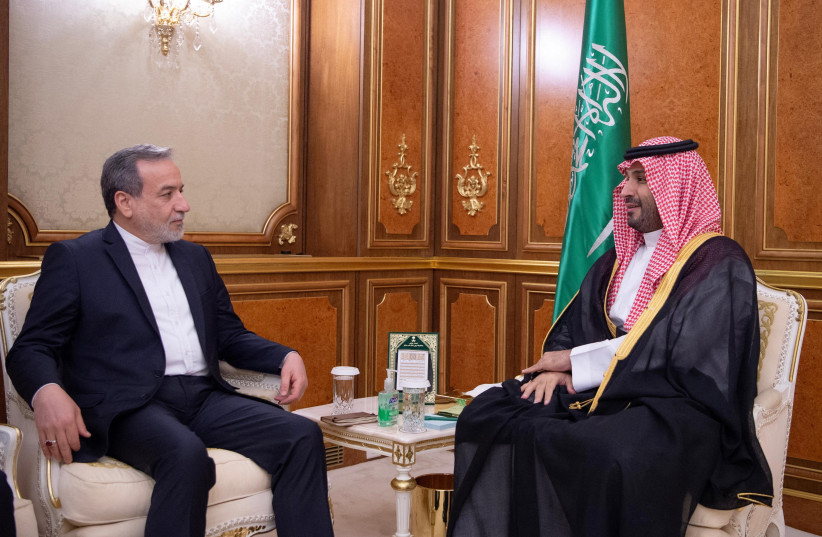
Iraq’s work with its own autonomous Kurdistan Region is also important. The region is a key partner of the US. It also has good ties with Damascus and Turkey. As such, Iraq is seeking to increase ties with Erbil, the capital of the Kurdistan Region.
“Provocations from armed groups pose significant threats to Iraq’s regional and international standing, Kurdistan Region President Nechirvan Barzani said in an interview aired on Wednesday, stressing support to the Iraqi government’s campaign to disarm the groups amid the scheduled withdrawal of US forces,” Rudaw noted.
“By God, if Iraq does not solve the issue of the factions, it will face international and regional isolation,” the KRG’s President Barzani said in an interview Iraq’s al-Sharqiya TV.
“The Islamic Resistance in Iraq (IRI) – which comprises several armed factions aligned with Iran – overlaps with the state-sponsored Popular Mobilization Forces (PMF). IRI has sided with Iran in its six week-long war against the US and Israel from February 28 to mid-April.
Throughout the war, the umbrella group claimed more than 750 attacks on US forces within Iraq and against regional countries, applying considerable pressure on Iraq’s proclaimed neutrality in the war,” Rudaw added. This provides context of how the Kurdistan Region is now key to encouraging Baghdad to pressure the militias and rein them in.
Along with Riyadh, the US and others, Baghdad is facing pressure to do more than offer words regarding the militias. Action is needed. Baghdad has only a few months to show that it will act.
Turkey, Saudi Arabia and Pakistan forge new alliance as Middle East order shifts – analysis
A new deal this week between Turkey, Saudi Arabia and Pakistan illustrates how the Middle East’s regional powers are working together.
This has raised some eye brows about the ramifications of the deal, because these countries are all key US partners in the region. Turkey is a NATO ally. Where does this leave Israel? And why was Egypt excluded? Egypt is a friend of Saudi Arabia but it was not included in the deal?
In Jerusalem there are some voices that argue that the emergence of powerful Sunni countries working together could hint at future opposition to Israel. Turkey is a vocal critic of Israel. Saudi Arabia was once believed to be a possible partner in the Abraham Accords. As such, the new deal illustrates that while the Abraham Accords remain relevant, Israel could be missing opportunities.
Bellicose rhetoric in Jerusalem against Syria has caused concern in Ankara, Riyadh and also Washington. There are questions about whether Israel wants peace and to expand the Abraham Accords or whether more militant voices in Jerusalem will seek to talk up conflict with Damascus and Ankara.
The new emergence of an alliance between what may be termed “middle powers” in the region illustrates how countries want to work closely together amid growing uncertainty over the future of the world order. The Ukraine war, October 7 war and also the Iran war have accelerated global chaos.

Pact resembles NATO, especially with regards to Article 5
The chaos erodes the US-led world order that emerged after the Cold War and also after the Gulf War. Saudi Arabia needed the US to help defend it in 1990 against the threat of Saddam Hussein’s Iraq. Now, Riyadh wants to work closely with other countries as it wonders about the future.
The new alliance will include joint exercises and deepen defence industry cooperation under a military pact, Reuters reports. Reuters added that “the three Sunni Muslim US allies, alarmed by a regional conflagration that has brought Iranian missile fire onto Gulf oil exporters, signed the ‘Mecca Joint Defence Agreement’ on August 7.
They said the accord stipulates that an armed attack against any member would be regarded as an attack on all, similar to NATO’s Article 5 collective defence clause.”
The Middle East is witnessing the emergence of two different models for regional cooperation. One is represented by the Abraham Accords, which marked their sixth anniversary this year and sought to reshape the region through normalization, economic growth and technological cooperation between Israel and the UAE and Bahrain.
Morocco is also a key member. Other Middle Eastern countries were expected to join. What about the new alliance, embodied in the Mecca Joint Defence Agreement between Saudi Arabia, Pakistan and Turkey, a security pact centered on military cooperation and collective defense.
Although these initiatives are not necessarily incompatible, they reflect different strategic priorities that have emerged after years of regional conflict.
Jared Kushner, who played a key role in the Abraham Accords, wrote on X/Twitter on August 13 that “for too long, the region was trapped by old ideas and failed frameworks that managed conflict rather than solved it, and too often created incentives that perpetuated division and instability.”
He added that “the idea behind the Abraham Accords was simple: instead of reinforcing the things that divide people, build bonds that bring them together. Increase understanding. Expand trade and investment. Deepen security cooperation. Create tangible benefits that make people’s lives better and give everyone a stake in peace.”
Kushner says that “the Middle East is once again at an inflection point. There are breakthrough opportunities today that many will say are impossible. But we have seen what can happen when leaders reject conventional thinking, focus on common interests, and have the courage to pursue a better future.”
Turkey, Saudi Arabia and Pakistan announced their new agreement in response to a new security environment following the escalation with Iran.
The agreement calls for closer political and military coordination, expanded joint exercises, defense industrial cooperation and collaboration in areas such as unmanned systems, artificial intelligence and electronic warfare. US President Donald Trump will likely welcome this because he wants to see US allies shouldering the burden for defense.
Saudi Arabia brings substantial financial resources to the new deal. It also holds a central position in the Arab and Islamic world. US President Trump made early important foreign visits to Saudi Arabia in his first and second term.
Turkey is one of NATO’s largest militaries and has an increasingly sophisticated local defense industry. Trump was in Turkey earlier this year for a NATO meeting. He also met Syria’s president when he went to Turkey. Saudi has backed US support for Syria’s new government.
By contrast, some voices in Jerusalem have claimed that Israel will fight a future conflict with Syria. This has raised eyebrows in the Middle East.
Cold War mirrored in new defense pacts
The Saudi-backed agreement reflects broader changes in regional strategic thinking. For decades, Gulf security rested on American military support. The US had bases in Saudi Arabia in the 1990s and built important bases in Kuwait, Qatar, Bahrain and the UAE.
This new agreement of Saudi Arabia, Turkey and Pakistan does not necessarily represent a shift in regards to how these countries will work with the US. It illustrates their desire for greater regional coopertion at a time when conflicts involving Iran, the Red Sea and Iraq have demonstrated the limits of relying on outside powers.
During the Cold War countries had to choose with the USSR or the US. The Islamic Revolution in Iran sought to carve out a third way between the two. When the Soviet Union fell apart most countries came to accept the US-led world order.
However, over the last decade these countries have come to wrestle with what a new multi-polar world order may look like. They want to hedge and prepare for the future. The Abraham Accords represented one future. However, there is a sense that Jerusalem is increasingly hostile to Saudi Arabia, Syria and other countries.
If Israel won’t find a way to accommodate Riyadh’s demands regarding a shift in policy regarding the Palestinians, Saudi Arabia is showing it will move on and find other partners.

The Abraham Accords were designed to reduce old divisions by creating new relationships that crossed historical political and religious lines. Israel and several Arab states have increasingly worked together on technology, intelligence, defense and investment.
The Abraham Accords represented an economic and diplomatic revolution. The new defense agreement that Saudi Arabia, Turkey and Pakistan have entered into reflects a sense that they need to work together as the world rapidly changes.
There is also a broader strategic question. Could these two visions eventually converge? Saudi Arabia sits at the center of both discussions. It remains the country whose normalization with Israel would fundamentally transform the Abraham Accords. At the same time, it is now helping construct one of the region’s new defense partnerships.
Instead of seeing the two developments as contradictory, they could become complementary. A more advanced regional security strategy could strengthen deterrence against common threats, while normalization could expand economic opportunities and reduce the likelihood of future conflict.
Whether that vision materializes will depend on developments in Gaza, the trajectory of Iran, and the willingness of regional leaders to continue building new partnerships.
The anniversary of the Abraham Accords comes at a moment of transition. The region is increasingly shaped by a combination of factors. The challenge for policymakers will be to examine the ramifications of the new deals being achieved and to see if Israel and the Abraham Accords countries might find a way to partner with other states.
US could not verify Israeli warnings of Iran plots against Trump, sources say
The US has received several warnings from Israel over the past year that Iran intended to assassinate President Donald Trump, including before a secret Air Force One ruse in Turkey, that US intelligence officials could not independently verify, according to a current US official and two former officials.
The warnings, passed to US intelligence agencies and in some cases relayed directly by Israeli officials to senior White House officials, included possible plots to shoot Trump with a sniper or recruit someone to attack him with a knife at a large public event, the sources said. The tips began in the lead-up to the 12-day war in June 2025 and intensified prior to the US decision to go to war in Iran in February, the sources said.
The most detailed warning came ahead of the NATO summit in Ankara in July, the US official and the other person familiar with the matter said. Israeli officials briefed the White House about intelligence that indicated Iran may try to kill Trump, potentially with a shoulder-launched missile, while he traveled on Air Force One for the summit, the officials said.
The US intelligence community has long assessed that Iran wants to retaliate for Trump’s killing of Iranian military commander Qassem Soleimani in 2020. But the Central Intelligence Agency has not been able to corroborate some of the specific threats against Trump’s life shared by Israeli intelligence since early last year, the officials said.
In the case of the NATO episode, a Turkish official said the country’s intelligence agencies also did not have any evidence to corroborate the Israeli claim about the threat to Trump’s life, an assessment the host country shared with Americans.

Despite the lack of verification, White House officials and the Secret Service have taken steps to mitigate the threats out of an abundance of caution, including an extraordinary deception operation during the Turkey trip that involved moving Trump from Air Force One to a different aircraft for his flight out of the country.
That episode underscores how Israeli intelligence is influencing the Trump administration’s decision-making about Iran at a time of heightened tensions with Tehran, and broader disagreement between US and Israeli intelligence assessments on Iran’s threat overall.
Earlier this year, American intelligence agencies assessed that Iran was not actively building a nuclear weapon, even as Israel argued Tehran posed an urgent threat. Despite the reports from the US intelligence community, Trump moved forward with strikes in Iran in February. Trump also took into consideration intelligence shared by Israel that Tehran had tried to assassinate him before launching the military campaign, Reuters previously reported.
A spokesperson for the Israeli embassy disputed that Israel was using its intelligence to influence US policy on Iran.
“The same people who claim that Israel is trying to influence US policy through alleged intelligence sharing would just as soon accuse Israel of concealing critical information if it benefited their own agenda,” the spokesperson said.
The White House and CIA both declined comment.
Secret Service spokesman Anthony Guglielmi declined to discuss specific intelligence matters but said the agency remains focused on Trump’s security amid recent assassination attempts and an increase in threats against the president.
“The US Secret Service continuously analyzes a wide range of information to guide our protective operations in real time and across every location we secure,” he said.
Close alliance between Israel, US
The US has long relied heavily on Israeli intelligence on Middle East matters, particularly as they relate to Iran.
The current and former officials said Israeli intelligence on Iran typically flows to the CIA or the National Security Agency through formal channels and is subsequently analyzed, two former US officials said.
The US intelligence agencies often cannot verify Israeli intelligence but will use other forms of information to make judgment calls on its authenticity and accuracy, the officials said.
In several instances over the course of the two US military offensives in Iran, the CIA assessed it had “low confidence” in the Israeli intelligence about the threats posed by Iran, including any plans to assassinate Trump, according to one former official and another person familiar with the matter.
It is unclear how widely those assessments have been circulated inside the administration.
The NSA declined to comment.
Two of the former US officials described to Reuters several instances in which senior Israeli officials and representatives over the last year called the White House, including in the Situation Room, to brief senior Trump officials on Iranian threats directly.
The direct engagement comes amid a breakdown in US intelligence sharing inside the Trump administration.
Last year, amid increased tension with the Office of the Director of National Intelligence, the CIA stopped working on joint assessments with the National Intelligence Council, the former officials said.
The council is the US intelligence community’s elite analytical group overseen by ODNI to turn out reports reflecting the view of the broader intelligence community, with the CIA being the largest contributor to its assessments.
Fewer recent Iran assessments by the NIC have stemmed partly from recent layoffs at ODNI, the officials and another person familiar with the matter added.

Stolen Names, AI Fakes Put North Koreans on U.S. Payrolls
Here is how the scheme works. A software developer sitting in Pyongyang, China or Russia applies for a remote American IT job using the name, Social Security number and date of birth of a real American whose identity was stolen or rented. Artificial intelligence writes the résumé and cover letter, and pastes the applicant’s face onto forged identity documents. When the video interview comes, AI generates a live deepfake so the face on screen matches the stolen paperwork. Once hired, the company ships a laptop to a U.S. address belonging to a paid American accomplice, who plugs it in and installs remote-access software so the login traffic looks like it is coming from Phoenix rather than North Korea. The salary lands in a U.S. bank account, and the bulk of it is wired to the regime.
That pipeline has now reached inside the federal government. Todd Hemmen, deputy assistant director of the FBI’s Cyber Division, disclosed during a July 28 panel at the Digital Government Institute’s conference in Washington that the bureau had identified a North Korean remote IT worker employed by the federal government the week prior. The individual reportedly worked for the agency for several months before being detected. The FBI has not named the agency or described the worker’s duties, and it remains unclear whether sensitive information was accessed or taken. The case marks a rare confirmed instance of a sanctioned North Korean working inside a government agency.
The disclosure landed days after Washington and its allies escalated their warnings to American employers. On July 31, authorities from eleven countries — the United States, Japan, South Korea, the United Kingdom, Australia, Canada, New Zealand, France, Germany, Italy and the Netherlands — issued a joint alert urging companies to strengthen identity verification and hiring controls, warning that the labor was generating foreign currency for Pyongyang’s nuclear weapons program. It was the first time France, Germany, Italy and the Netherlands co-signed a warning on this specific threat, a signal that the targeting has spread well beyond American and South Korean employers.
The dollar figures already established in U.S. courtrooms explain the urgency. An Arizona woman, Christina Chapman, helped North Korean workers obtain jobs at 309 U.S. companies including Fortune 500 corporations, using 68 identities stolen from American victims, and was sentenced to eight and a half years in prison in a scheme that generated more than $17 million for the regime. In a separate case, Kejia Wang of Edison, New Jersey, and Zhenxing Wang were sentenced for placing North Korean workers at more than 100 U.S. companies using the stolen identities of at least 80 Americans, producing over $5 million for the North Korean government. Kejia Wang received 108 months. The cleanup cost businesses in 28 states and the District of Columbia at least $3 million in legal fees and computer remediation. The FBI said eight individuals have been sentenced to prison in 2026 alone.
The exposure is broader than the prosecutions suggest. Security researcher Stykas told WIRED ahead of a Black Hat briefing that he found evidence of 1,640 companies across 57 countries affected by North Korean operations, with roughly 700 to 800 suffering damaging intrusions including root-level access to servers and cloud environments. CrowdStrike reported that the North Korea-linked group it tracks as Famous Chollima accounted for 47% of all state-backed hands-on-keyboard intrusions against the technology sector between April 2025 and March 2026. The workers are not only collecting salaries. They have also stolen proprietary data from U.S. companies and used it for extortion.
For employers, the practical fix starts at the point of hire, not at the firewall. The joint alert recommends rigorous review of identification documents, a preference for in-person interviews or closely scrutinized live video, and monitoring systems that flag anomalous account behavior — frequent changes to names or bank details, payment accounts whose names do not match the employee, multiple accounts sharing an identification document or IP address, altered identity images, unnaturally long login sessions, and profiles full of translation errors. Payment preferences are a recurring tell: applicants who refuse direct deposit and ask instead for money transfer services, cryptocurrency, or wages routed to a third party.
The harder problem is that the one control most hiring managers trusted has been compromised. The alert lists in-person interviews as an example of stronger verification, but also warns that third-party proxies may sit for interviews or make in-person contact on the operative’s behalf — in one documented case, a real American walked into a facility with a genuine government ID and passed screening for someone he had likely never met. Hemmen said AI now runs through the entire operation, from application through employment.The federal case suggests gaps in government hiring and contractor vetting despite years of warnings
, and it moves the question out of the security department and into human resources. Verification of who is actually doing the work — not just who appeared on the call — is now a continuing obligation rather than a one-time check at onboarding.
JBizNews Desk | New York
© JBizNews.com All Rights Reserved. Reproduction or distribution without written permission is prohibited.
Settler violence rises, Israelis, foreigners question the cost of government inaction – editorial
You know the situation is bad when one of Israel’s staunchest supporters, US Ambassador Mike Huckabee, angrily calls out ‘Israeli terrorists.’
The envoy was referring to dozens of settler extremists who entered and took control of Palestinian homes in the Kusea and Jalud areas of the West Bank. In footage seen by The Jerusalem Post, the extremists appear to be dismantling fences, blocking roads, and besieging the area.
According to Yesh Din – Volunteers for Human Rights, residents of the Tell Talpiyot outpost, established in January in Area B, set up a new offshoot of the original outpost on Sunday, in the form of a sukkah near the homes of the two families.
The organization said the settlers imposed the siege that same evening. They blocked the access roads to the homes with piles of stones and, during the night, damaged electrical cables and the connection to the solar panels and vandalized the water pipes.
When the Border Police and IDF forces arrived and began to evacuate, the extremists confronted them, resulting in clashes.

According to Huckabee’s statements on Thursday, “The IDF and police came at our request to remove the Israeli terrorists who are doing this. The actions of those doing this to this family’s home are criminal. Actions by those who carried out this horrific act of terror meant to intimidate and harass this family are disgusting. No excuse for such thuggish behavior.”
Huckabee’s comments came after a senior White House official told KAN News that the United States considers that Israel is not doing enough to prevent West Bank settler violence.
According to the KAN report, the official plans to broach the issue with the Prime Minister’s Office and have it explain why the security establishment has not been able to get the situation under control.
Sadly, the answer seems clear: The government has no interest in quelling the extremists and their terror campaign against Palestinians in the West Bank.
Settlers have no motivation to behave
As the Post’s Yonah Jeremy Bob wrote on Thursday: If you are a Jewish extremist in the West Bank and know that the defense minister may support you, along with National Security Minister Itamar Ben-Gvir, who runs the police already supporting you, why not act up?
Bob wrote that “Defense Minister Israel Katz got rid of administrative detention for Jews in January 2025, even though there are over 3,000 Palestinians still in administrative detention… If you will not be indicted and not even get a restraining order, why not fight the IDF and attack Palestinians if you are a violent Jewish extremist? What do you have to lose?”
The “hands off” policy starts at the top. Prime Minister Benjamin Netanyahu, in an interview with CNN last month, shrugged off the phenomenon of settler violence and deflected responsibility for reining in the extremists by blaming leniency by the courts.
“It’s 150 or so kids, teens who are brought into the West Bank,” he said. “They are not, by the way, part of the settler community. The overwhelming majority of settlers are model citizens – they serve in the army and obey the law.”
It’s true that the vast majority of Israelis living in the West Bank are law-abiding, and their military and volunteer service to the country since October 7 has rivaled and surpassed most sectors of Israeli society. And it’s also true that the issue of settler violence has received a disproportionate amount of coverage around the world, in comparison to attacks against Israelis by Palestinian terrorists.
Extremist violence numbers surge
At the same time, the extremists in their midst are going wild. The number of serious incidents of “nationalistic crime” committed by extremist Jewish settlers in the West Bank surged by 63% during the first half of 2026, compared to the same period last year, KAN reported this week.
According to the report, 660 settler attacks were recorded in the first six months of 2026, up from 405 during the same period in 2025.
Whether Huckabee has any clout with Netanyahu and whether his statements will force the prime minister to act against the phenomenon is unclear.
What is clear, though, is that the issue is foremost on the minds of Jewish and non-Jewish supporters of Israel around the world who ask: How can we defend your inaction against these injustices?
When Israelis go to the polls in October, one of the primary questions they need to ask themselves is whether they want a government that will continue to allow extremism to run unfettered in the West Bank and blacken Israel’s name.
Latvia issues air threat alert, rescinds after fighter jets shoot down drone
European Union and NATO member Latvia issued an air threat alert for some of its eastern parts that border Russia and Belarus, its Armed Forces said on X/Twitter on Friday.
Less than an hour later, it ended the air threat alert, stating that allied fighter jets had shot down a drone in its airspace.
✅ APDRAUDĒJUMS BEIDZIES!
Informējam, ka apdraudējums gaisa telpā ir beidzies.
Sabiedroto iznīcinātaji ir sekmīgi notriekuši gaisa telpā ielidojošo bezpilota lidaparātu!
Papildu informācija sekos Nacionālo bruņoto spēku sociālo mediju kontos “Latvijas armija”.
— NBS (@Latvijas_armija) August 14, 2026
Finland, which also shares a border with Russia, imposed a temporarily restricted area for aviation and maritime traffic in the eastern Gulf of Finland, its defense forces said on X.
This is a developing story.

U.S. Cuts Off Iran’s Oil Money and Says the Squeeze Will Get Tighter
Iran makes its money selling oil. Right now it can barely sell any, because American warships are sitting at the only door out.
Treasury Secretary Scott Bessent said this week the United States is preparing economic measures against Iran “that have never been seen.” He described the plan as “economic isolation like the world has never seen,” combined with the ongoing blockade at the Strait of Hormuz that keeps anything from moving in or out of Iranian ports.
Here is why that hurts. Nearly every barrel Iran sells has to travel through the Strait of Hormuz — a narrow neck of water at the mouth of the Persian Gulf, with Iran on one side. There is no back door. No pipeline that gets around it, no land route big enough to matter. When the U.S. Navy stops ships from reaching Iranian ports, Iran’s main source of income simply stops arriving. And it works the other direction too: the goods Iran needs to import can’t get in either.
Secretary of War Pete Hegseth said Thursday the military can keep it up indefinitely, because the Navy has enough ships to rotate fresh ones in as tired ones come home. One of those swaps is happening now — the carrier USS George Washington is on its way from the Pacific to relieve the USS Abraham Lincoln, which has been at sea since November. The point is not the ships themselves. The point is that the blockade doesn’t have an expiration date built into it.
You can see the pressure landing by watching what Tehran does. Iran announced Thursday it is joining the BRICS New Development Bank, with its central bank governor saying the country wants monetary cooperation with member states. That is a government looking for a new way to move money because the old ways are shut. Iran’s military command, for its part, has declared that no ship may pass through the strait without Tehran’s permission — a statement, not a fact on the water. Traffic through the waterway stays severely constrained and the world is drawing down its oil stockpiles.
Now the part that matters at your kitchen table, because pinching Iran pinches the shipping lane everybody else uses.
Fertilizer prices paid to manufacturers are up more than 20% from a year ago, and nitrogen fertilizer is up 46%, tied to the disruption in that strait. Fertilizer is what farmers put in the ground now to grow what you buy next year, so that number is a preview of future grocery bills. Diesel has passed $7.50 a gallon in some states, and diesel is what moves every product in America from the port to the shelf. Inflation ran 3.4% in July. Before the war started, it was 2.4%. That extra point is roughly what the conflict is costing an average household.
There is a bright spot, and it’s a real one. Oil prices have been falling — crude traded around $81 a barrel Thursday — because traders long ago factored in the blockade. Only news that changes how long it lasts moves the price now, and the market has stopped fearing a sudden shock.
What comes next is the piece Bessent left blank. He didn’t say what the new economic measures are. In practice, “isolation the world has never seen” means going after the workarounds: the buyers still quietly taking Iranian cargo, the shipping companies that move it, and the banks that settle the payments. That is a slower squeeze than a blockade, but a harder one to escape, because it follows the money instead of the ship.
For American families, the honest bottom line is that the pressure campaign is working on Iran and costing us something too. Iran is scrambling for financial lifelines. Americans are paying about a point of extra inflation. Both those things are true at once, and Thursday’s statements from Treasury and the Pentagon say the arrangement holds for a while yet.
JBizNews Desk | Washington, D.C.
© JBizNews.com All Rights Reserved. Reproduction or distribution without written permission is prohibited.


Year-round outdoor dining is coming back to NYC

Year-round outdoor dining is coming back to the five boroughs. The New York City Council on Thursday passed legislation that allows restaurants to offer roadway dining in the winter, reviving a program that first launched as a way to keep businesses afloat during the start of the pandemic when indoor dining was prohibited. Current rules, approved by the Council in 2023, restrict roadway dining to April through November and force restaurants to follow specific design standards and disassemble and store the dining structures.
At the height of the outdoor restaurant program in 2020, about 12,000 establishments participated, according to Council Speaker Julie Menin. Today, just 1,600 restaurants take part in the program.
The Council’s Dining Out NYC program, which took effect in 2024, came as a result of complaints about the dining sheds taking away parking spots and attracting rats. The new program created additional regulations that made it harder for many restaurants to participate, including requiring businesses to disassemble and store dining structures in the winter, pay new fees, and follow specific design standards, as 6sqft previously reported.
“The Council is voting to bring year-round outdoor dining back, cut unnecessary red tape, and directly address cleanliness and quality-of-life concerns,” Menin said. “This is about making it easier for small businesses to thrive while creating more vibrant neighborhoods for New Yorkers and visitors alike.”
Sponsored by Council Member Lincoln Restler, Intro 655 removes seasonal restrictions for roadway restaurant set-ups and allows for the streetside eateries to be weatherproofed and winterized. Plus, restaurants cannot operate outdoors after 11 p.m.; previously, closing time was midnight. The Council passed the bill by a vote of 37-5.
“The Adams era regulations nearly broke outdoor dining, but this legislation will successfully restore outdoor dining to more neighborhoods across the five boroughs,” Restler said.
“Too many restaurants and cafes have been locked out of our roadway dining program by unnecessary red tape and seasonal restrictions. We are transforming the public realm by making it easy for thousands of restaurants to offer roadway dining.”
The legislation will also create a process for restaurants to convert seasonal licenses to year-round this fall, according to Restler. Design standards will be updated to allow for side and overhead coverings to make the setups more comfortable for bad weather. As required by the previous program, restaurants are required to have a moveable floor that is lifted and cleaned once a week.
Legislation approved on Thursday includes mandating operators clear setups of “trash, debris, graffiti, vermin, food scraps, and unsanitary conditions” and allowing restaurants to pay revocable consent fees in quarterly installments.
Open Plans, a nonprofit advocating for safe streets, had pushed for year-round curbside dining and fewer fees for restaurants.
“Outdoor dining does more than support our local restaurants. It gives people more places to sit, eat, gather, and spend time in their neighborhoods, taking space previously allocated for private cars and returning it to the community,” Sara Lind, co-executive director at Open Plans, said in a statement.
“We’re thrilled that the Council has taken this vital step to make outdoor dining year-round, and proud that years of advocacy have helped turn this vision into policy.”
Mayor Zohran Mamdani has signaled he will sign the legislation to expand outdoor dining.
“Mayor Mamdani has made clear that we must make outdoor dining year-round and eliminate unnecessary bureaucracy that makes it harder for small businesses to participate in one of our city’s most popular programs,” Dora Pekec, a spokesperson for the mayor, told the New York Times.
RELATED:
- NYC Council will bring back year-round outdoor dining
- NYC’s first curbside restaurant week celebrates outdoor dining
- New legislation would make NYC outdoor dining year-round again
- NYC outdoor dining to shrink by over 80 percent under new rules
The post Year-round outdoor dining is coming back to NYC first appeared on 6sqft.


Apple agrees to pay $150,000 to settle discrimination lawsuit over employee’s Shabbat observance
Apple has agreed to pay $150,000 to settle a federal lawsuit alleging that the company failed to accommodate a Jewish employee’s observance of Shabbat, and later fired him after he complained of religious discrimination.
The lawsuit, which was filed by the US Equal Employment Opportunity Commission in September 2025, accused Apple of discriminating against Tyler Steele, a longtime employee of one of its stores in Reston, Virginia.
Steele converted to Judaism in the spring of 2023, and while his manager initially approved his request not to be scheduled on Fridays and Saturdays due to his observance of Shabbat, another manager that replaced the previous one later rescinded the accommodation.
According to the complaint, Steele’s new manager, Anthony Dosch, denied his requests to have the days off in September 2023, allegedly telling him that month that he “could become a rules Nazi with regards to our policies.”
Days after Hamas’ October 7 massacre, Dosch also warned Steele not to get into politics or debates about the conflict at work, and a month later issued him a misconduct warning claiming that Steele had body odor that violated the store’s policies.

EEOC said Apple violated Title VII of the Civil Rights Act of 1964.
The EEOC alleged that Steele later complained to Apple officials in November 2023 about antisemitic behavior and the denial of his religious accommodation. Steele was fired from the store in January 2024, after reminding Dosch that he could not work on a Friday the following month for religious reasons.
“Employees should not have to violate their religious beliefs to keep their jobs or live in fear of retribution because they requested an accommodation,” EEOC Philadelphia Regional Attorney Debra Lawrence said in a statement at the time the lawsuit was filed.
In its lawsuit, the EEOC accused Apple of religious discrimination and retaliation in violation of Title VII of the Civil Rights Act of 1964.
Apple and the EEOC unveiled the settlement in an Aug. 7 filing in federal court in Virginia, nearly a year after the initial complaint. The settlement is awaiting court approval.
Apple denied the allegations and did not admit wrongdoing as part of the settlement, which required the company to award Steele $80,000 in back pay and $70,000 in compensatory damages and interest.
Under the settlement, the company will also be required to update its religious accommodation policies and conduct trainings with some employees in its Virginia operations within 90 days.

200K magnetic ‘Goody King’ building block toys recalled over ingestion hazard that led to surgery for 2 kids
More than 200,000 magnetic building toys were recalled over an ingestion hazard after two children who swallowed magnets required surgery, according to federal regulators.
About 213,500 Goody King Magnetic Building Cubes and Blocks sets are affected by the recall, the U.S. Consumer Product Safety Commission announced Thursday.
The building cubes can break or open, allowing the magnets inside to become loose, posing an ingestion hazard for children that could even lead to death.
TOYOTA RECALLS 655K CAMRYS GLOBALLY OVER DISPLAY DEFECT THAT CAN KNOCK OUT SAFETY INDICATORS
“When high-powered magnets are swallowed, the ingested magnets can attract each other, or other metal objects, and become lodged in the digestive system. This can result in perforations, twisting, and/or blockage of the intestines, blood poisoning and death,” the commission said.
Importer Yi Suen Commerce is aware of two children who have ingested magnets from the cubes and needed surgery to remove them.
The company also knows of at least 27 reports of the cubes breaking or opening, causing the magnets to become loose and accessible to children.
Consumers are urged to stop using the recalled magnetic building cubes immediately and contact Yi Suen Commerce for a full refund.
POPULAR REESE’S, ALMOND JOY ICE CREAM BARS RECALLED OVER LABELING ERROR
CLICK HERE TO GET FOX BUSINESS ON THE GO
The cubes contain small, powerful magnets that allow the cubes to stick together and create 3D designs. The toy sets are available in various themed designs and colors, including forests, dinosaurs and unicorns.
The toy sets were sold online at Amazon from January 2024 through July 2026 for between $17 and $50 in sets of 45, 56, 100, 120, 150 and 300.

Saudi and Iraqi Tankers Dock in U.S., Refilling Oil Stockpiles
Crude oil from the Middle East is landing on American docks again for the first time in months, and the barrels have already shown up in the government’s books. U.S. crude imports averaged 7.3 million barrels a day in the week ended Aug. 7, up 1.14 million barrels a day from the week before — enough to push commercial crude inventories 17.4 million barrels higher, to 424.4 million, the largest one-week build since January 2023 against a market that had been looking for a small drawdown.
Put in everyday terms, the country took in roughly an extra day’s worth of refinery feedstock in a single week, after months of running the tanks down.
One of those cargoes came ashore in the tri-state area. The Liberia-flagged tanker Aqualoyalty, chartered by New Jersey refiner PBF Energy, loaded at Egypt’s Sidi Kerir terminal and unloaded about 750,000 barrels at Paulsboro, New Jersey. The supertanker Front Gaula took on Saudi crude at the Red Sea port of Yanbu and sailed for the United States by way of the Suez Canal.
Getting Saudi oil to America now takes a detour that would have made no sense two years ago. Instead of loading on the Persian Gulf side and running the Strait of Hormuz, Saudi Arabia pipes crude across the country on its East-West line to Yanbu on the Red Sea and ships it out from there. A fully loaded supertanker cannot fit through the Suez Canal, so the vessel offloads part of its cargo into Egypt’s SUMED pipeline on the Red Sea side, sails through light, and picks the barrels back up on the Mediterranean side. It is slower and costlier than the old route, and it works.
The other source of the surge was a window that opened and closed. A memorandum signed by Washington and Tehran in June briefly freed vessels that had been penned up at Hormuz, and American refiners and traders bought what came out. Combined with the Yanbu route, that puts U.S. imports of Middle Eastern crude on track for roughly 600,000 barrels a day this month, the most since the war started.
That figure is worth keeping in proportion. The United States averaged 490,000 barrels a day of Middle East Gulf crude in 2025, about 8% of its total crude imports — closer to 1 barrel in 13. Even at this month’s higher pace, Gulf oil is a supporting player in American supply, not the main event. What it does supply is a specific grade: medium sour crude that Gulf Coast and West Coast refineries are built to run, with the West Coast taking nearly half of it because it has little pipeline access to Canadian barrels.
The relief is real but uneven. Gasoline stockpiles fell by about a million barrels in the same week, to 208.7 million, and remain 6% under their five-year average, with distillate — diesel and heating oil — running roughly 12% under. Refineries were operating at 96.2% of capacity, which is close to flat out. Crude is arriving faster than the plants can turn it into fuel, so the surplus is sitting in tanks rather than showing up at the pump.
Prices moved the way the numbers suggest. Brent was near $88.52 a barrel when the inventory report landed and West Texas Intermediate was around $82.76, and crude slipped toward $82 on Thursday, ending a five-day advance. The International Energy Agency still sees the world short about 1.8 million barrels a day this quarter. A full American storage tank does not fix a global shortfall; it buys American refiners time.
The traffic is also running in the other direction. At least two dozen empty supertankers have been signaling U.S. ports as their destination, coming to load American crude for buyers in Asia and Europe who lost their usual Gulf barrels. Redirecting Saudi cargoes to the United States has tightened supply for Asian refiners, who have turned to U.S. oil to fill the hole. U.S. crude exports actually fell 627,000 barrels a day in the same reporting week, which is part of why the domestic build was so large.
Whether the flow holds depends on the strait. Gulf crude and condensate exports were still running about 40% below pre-war levels in July, at roughly 10.7 million barrels a day, with traffic through Hormuz and Bab el-Mandeb well under normal and attacks on vessels increasing. Talks on reopening the waterway remain stuck, and the administration is moving toward tighter sanctions and continued enforcement of the naval blockade on Iranian ports.
For now, the practical answer for American refiners is the one already on the water: buy the barrels that can reach the open sea without passing Iran, pay the extra freight and canal costs to move them the long way around, and keep the tanks full while the window is open. Paulsboro got its cargo. The next one is a longer sail than it used to be.
JBizNews Desk | New York
© JBizNews.com All Rights Reserved. Reproduction or distribution without written permission is prohibited.

‘Just Like Before Oct. 7’: Gaza Lookouts Warn of Terror Buildup
Israeli soldiers whose job is to sit and watch the Gaza border said Thursday that they are seeing armed men move freely and plant explosives on the Hamas side of the line — and that nothing is being done with what they report. Several told Channel 12 the feeling is the same one they had in the months before the October 7, 2023, attack, when their warnings went nowhere.
The line they are watching is the Yellow Line, the boundary drawn under the October 2025 ceasefire that splits Gaza between the area Israeli forces hold and the area Hamas still controls. Israeli troops sit on one side of it. The soldiers say armed operatives on the other side have worked out that they will not be fired on, and are testing that boundary a little further each day.
The complaint carries particular weight because of who is making it. The lookouts, known in Hebrew as tatzpitaniyot, are mostly young women serving in IDF Unit 414. Before October 7 they repeatedly flagged Hamas fighters rehearsing an assault, and were dismissed; some of them later said the fact that they were women was part of why. Five of them were killed and seven taken captive when Hamas overran the Nahal Oz base that morning. Noa Marciano was killed in captivity, Ori Megidish was rescued by troops, and the remaining five came home in later ceasefire exchanges.
Their frustration now is the same. One soldier said she feels helpless watching activity she cannot stop. Another questioned the point of monitoring a screen for eight hours a day if nothing follows from what she identifies. Others said their bigger worry is for the combat troops posted only a few hundred meters from the men they are watching.
The restraint they are running into is deliberate, and it is diplomatic rather than military. Israel quietly stopped striking in Gaza for more than a week while the United States pressed a plan to disarm Hamas. That pause ended Wednesday with a strike on a Hamas commander in northern Gaza. Strikes widened Thursday: the IDF said it killed a Hamas company commander, identified in Palestinian media as Hudhaifa Kawarea, in a hit on a motorcycle west of Khan Younis, and a second strike in Gaza City killed Jamal Abu Kamil, head of police for the Gaza City district, whom the army said took part in the October 7 invasion.
What is meant to fix the situation on the border is the disarmament plan itself, and next week it gets its most senior push yet. A Board of Peace official said Jared Kushner, board high representative Nickolay Mladenov and executive board member Tony Blair are due to land in Israel on Sunday, Aug. 16, before traveling to Cairo, where the Palestinian technocratic committee slated to administer Gaza has been meeting for months. The date is not yet locked down.
The trip has two goals. The first is to get Israel to reinstate its halt on strikes and to meet the humanitarian obligations it took on in the October 2025 ceasefire. Once that happens, the Board of Peace believes it can go to Hamas and start collecting weapons.
The obstacle is political. Hamas accepted the 15-point disarmament framework two weeks ago. Netanyahu then rejected it publicly, saying Israeli forces will not pull back any further until Hamas has actually given up its weapons. Board of Peace officials have signaled they are watching Israeli conduct rather than Israeli speeches, noting that the strikes had in fact stopped. An Arab diplomat familiar with the talks doubts real movement is possible until Netanyahu walks the rejection back, which is improbable with Israel’s election set for October 27.
The commercial stakes sit behind all of it, because reconstruction money does not move until the security question is settled. One piece did move Thursday: EU foreign policy chief Kaja Kallas said Israel has extended the mandate for the bloc’s monitoring mission at the Rafah crossing between Gaza and Egypt through the end of June 2027, along with an EU program that trains Palestinian police and advises on rebuilding Gaza’s court system. The mission, staffed by police from Italy, Spain and France, was set up in 2005, shelved for nearly two decades after Hamas seized Gaza in 2007, and restarted in February. More than 10,000 people have crossed since. Israel had let the authorization lapse in late June as relations with Brussels soured over the war.
For the soldiers on the border, none of that changes the view on the screen. They are watching a line that is being probed daily, under orders that keep them from responding — and saying out loud that they have seen this pattern before.
JBizNews Desk | Jerusalem
© JBizNews.com All Rights Reserved. Reproduction or distribution without written permission is prohibited.

Trump to Impose Tariffs on Imported Drones, Drone Components
Trump signed a proclamation imposing the ad valorem tariff on drones weighing more than 55 pounds and units that have thermal imaging capabilities, including some from U.S. allies.
“The actions in this proclamation will, among other things, encourage increased domestic production of [drones] and [drone] components and reduced reliance on foreign sources and foreign supply chains,” Trump stated in the proclamation.
A tariff of 25 percent was added to drones weighing less than 55 pounds….
CENTCOM refutes reports of sailors jumping from USS Lincoln as conditions aboard face scrutiny
US Central Command (CENTCOM) refuted claims that soldiers had tried to jump off of the USS Abraham Lincoln in a post on X/Twitter on Thursday night.
In the post, CENTCOM said “USS Abraham Lincoln has maintained among the highest crew reenlistment rates (84.4%) of all aircraft carriers in the US Navy. The Sailors and Marines of the Abraham Lincoln Carrier Strike Group remain resilient and resolved after more than 260 days at sea, 10,000 aircraft flights, and 1.5 million pounds of ordnance expended.”
🚫 CLAIM: Over the past 48 hours, multiple media outlets have reported several false claims related to USS Abraham Lincoln’s (CVN 72) deployment to the Middle East. One report alleged seven Sailors died in a brawl aboard the aircraft carrier and others have recently suggested a… pic.twitter.com/U1Hg6l1pjN
— U.S. Central Command (@CENTCOM) August 13, 2026
“No service members aboard the aircraft carrier have died, and the one Sailor who fell overboard Aug. 3 was quickly and safely recovered,” CENTCOM added, countering reports that soldiers on board the Lincoln were jumping ship.
The post called the claims “rampant misreporting,” adding that such claims are disrespectful to the soldiers on board.
Senator demands formal investigation into conditions on board
US Senator Richard Blumenthal (Connecticut) demanded a formal inquiry into the conditions aboard the USS Abraham Lincoln in a letter sent Wednesday to US Defense Secretary Pete Hegseth and Acting US Navy Secretary Hung Cao.

Blumenthal, who himself served in the US Marine Corps Reserve, sent the letter following reports of several US Navy service members stationed aboard the USS Abraham Lincoln attempting to jump overboard as the aircraft carrier enters its ninth month of deployment at sea.
The Navy later confirmed that a sailor went overboard earlier in the month but that the circumstances around the incident were still under investigation.
Two American newspapers that cover matters related to the US military, Navy Times and Stars and Stripes, originally reported on the matter earlier this week.
The carrier has spent nearly 250 consecutive days at sea without making land since its departure from San Diego in November 2025. It was originally deployed for duty in the South China Sea before being rerouted to the Middle East ahead of the outbreak of Operations Epic Fury in February 2026.
“The Lincoln’s extended deployment raises broader questions about the Navy’s ability to sustainably generate carrier forces while preserving service member well-being, maintenance, schedules, fleet readiness, and the capacity to respond to future contingencies,” wrote Blumenthal in his letter.
Blumenthal gives US Navy two weeks to provide answers
Citing reports of supply shortages, water contamination, and several other issues that have arisen over the past months, Blumenthal granted the US Navy two weeks, until August 27, to provide answers.
In his questions posed to the naval force, Blumenthal requested details surrounding Lincoln’s extended deployment, how the Navy assesses the mental health and morale of its soldiers, and how it has worked to solve the quality-of-life problems that have been reported on board the carrier.
Further, Blumenthal asked the Navy to explain what military objective Lincoln’s ongoing deployment is meant to achieve and how the US Defense Department “assess[es] whether the carrier’s continued presence is necessary to accomplish that objective.”
The Trump Admin must explain what they are doing to support sailors on the USS Abraham Lincoln who have been continuously at sea for nearly 7 months. Widespread reports of supply shortages, plumbing issues, deteriorating mental health & more demand immediate attention. pic.twitter.com/8eIdTHELfV
— Richard Blumenthal (@SenBlumenthal) August 12, 2026
US Senator Ruben Gallego (Arizona) echoed Blumenthal in a post to X/Twitter on Thursday, saying that he is looking into conducting an official oversight visit with a bipartisan Senate Delegation due to the reports.
“Unlike Donald Trump, I’ve seen active duty. The way he’s treating our service members as he carries out this illegal war is not just disgusting; it’s dangerous,” Gallego wrote. “These sailors are owed a sense of when they will go home.”
“The stories of crew members threatening to jump off the ship are a frightening alarm bell as to how bad the situation has become: moldy showers, sporadic hot water, rationed meals and soap, broken toilets, and grueling 12- to 16-hour shifts with no days off.”
“Congress must do its duty to provide oversight and hold the administration accountable for these actions,” he said.
I’m seeking an official oversight visit with a bipartisan Senate Delegation to the USS Lincoln to investigate the reported alarming conditions.
Unlike Donald Trump, I’ve seen active duty. The way he’s treating our service members as he carries out this illegal war is not just…
— Senator Ruben Gallego (@SenRubenGallego) August 13, 2026
Later on Thursday, Hegseth rejected the claims, saying that the reports about Lincoln’s conditions are “misrepresented.”
USS Theodore Roosevelt to reportedly relieve Lincoln
Late last week, Cao and several other senior Navy officials had reportedly held a town hall-style meeting with the families of the service members aboard the Lincoln.
One of the spouses told Cao and the other officials that her husband had sent her a message on Thursday saying that “he hopes he doesn’t wake up tomorrow,” reported Stars and Stripes, citing one of the meeting attendees.
According to the spouse, officials didn’t directly address that or other similar statements presented to them by concerned family members, but did affirm that those aboard Lincoln had access to mental health professionals, chaplains, and doctors.
Navy Times reported that Cao said that the US Navy is preparing the USS Theodore Roosevelt carrier strike group to relieve Lincoln, but could not provide a timeline due to “operational security.”
Later on Thursday, the Wall Street Journal reported that the USS George Washington aircraft carrier is being sent to replace Lincoln as part of a “previously scheduled rotation plan,” citing US officials familiar with the matter.
Annabelle Loma, the wife of one of the service members who tried to jump from the aircraft carrier, told Navy Times that her husband had been repeatedly overextended before his attempt.
“He’s scared,” Loma told Navy Times. “He thinks he’ll get a dishonorable discharge, and just because he was burnt out, his 13-year career is ruined, just like that. That’s not fair, that’s not right. That’s not what he should be worrying about right now.”
According to Navy Times, the Lincoln’s ombudsman had initially called Loma to inform her of the incident and that her husband was put on medical hold.
She has not heard anything else from the US Navy “in recent weeks,” Navy Times reported.
Both papers gave details of several other attempts made by service members to jump overboard, including an incident where the jumper was restrained by other soldiers who happened to be on watch.
“When she can email me, she’s definitely down,” Shelby Sander, whose mother is stationed on Lincoln, told Navy Times. “I think they’ve had five weeks of non-stop combat operations or something like that, so that makes it really tough to communicate consistently or even know if we’ll be able to. It sucks.”
“I don’t know how to enjoy starting my senior year when my mom isn’t here, you know?” Sanders said. “Will she be back before homecoming? My birthday? Christmas? I have no idea, and that’s all that I think about.”
Manuel Guevara, the father of a soldier serving on Lincoln, told Navy Times that his son had sounded “exhausted, down and worried the last time they spoke.”
“Us being out there keeps wars out of our country, but it sucks having your family away. It makes the homecoming that much sweeter, but the uncertainty of when that day will come starts to eat away at you,” Guevara shared with Navy Times.
“I don’t want to worry that the circumstances of this deployment will get the best of my son, and he doesn’t make it back home,” Guevara said. “That’s an unbearable burden on my heart.”
Reuters contributed to this report.
Better founder Vishal Garg lines up voting majority to retake control
Vishal Garg, the founder and former CEO of Better Home & Finance Holding Co., is seeking to regain control of the company after securing support from shareholders holding a majority of its voting power.
Garg has retained attorney Alex Spiro in connection with the shareholder action, according to an announcement Thursday evening.
In a letter delivered to Better’s board, Garg said he has signed declarations from shareholders representing a majority of the company’s voting power in support of the positions outlined in an Aug. 10 letter to Better. The declarations could be used to call a special meeting of shareholders if the board does not make the requested changes.
The letter and announcement come just 10 days after it was announced that Daniel Lewis, a board member, would be succeeding Garg as Better’s interim CEO. Garg told HousingWire then that he remained “Better’s founder, a board director, its single largest voting shareholder.”
During the same week, Better’s Q2 2026 earnings were released. The company posted an adjusted EBITDA loss of $14 million in the second quarter and expects that loss to rise to between $15 million and $18 million in Q3 2026.
In previous earnings reports, Better said it expected to reach profitability by the end of Q3 2026, following 11 consecutive quarters of losses. The company went public in 2023 through a merger with special purpose acquisition company Aurora Acquisition Corp., and its stock has since fallen more than 90%.
To remedy the losses, Garg said in his proposal that he would work for $1 until Better becomes profitable and repurchase $30 million of the company’s stock, including $10 million within the first five trading days.
Garg’s proposal also demanded that all directors other than himself, Michael Farello and Hugh Frater resign. He proposed working with a newly constituted board to focus on profitability, shareholder value and long-term leadership.
He also proposed launching a retained search for Better’s long-term CEO with a new board and special committee. After a successor is appointed, Garg said he would transition to either chairman or chief product and innovation officer.
The plan also calls for Better to continue its cost-reduction efforts and scale its Tinman AI platform, as well as complete the sale of its U.K. banking business. The sale is expected to generate about $74 million in gross proceeds, subject to regulatory approval.
Garg pointed to improvements in Better’s underlying business as evidence that the company’s turnaround is gaining traction. Since the first quarter of 2024, revenue and funded loan volume have each increased more than 2.5 times.
Quarterly revenue rose from about $20 million in the first quarter of 2024 to $54.7 million in the second quarter of 2026. Funded loan volume increased from about $600 million to $1.67 billion over the same period.
Better has also reduced its cost to produce a loan from about $12,000 to less than $3,000, which Garg attributed to the expansion of Tinman AI. He said Better could be generating between $5 million and $10 million in positive adjusted EBITDA per month absent the macroeconomic effects associated with disruptions in the Strait of Hormuz.
“Better is at an inflection point,” Garg said. “We spent years rebuilding this company around technology, dramatically lowering the cost to originate a mortgage and putting Better in a position to scale.”
The shareholder action comes after significant volatility in Better’s shares following recent leadership changes at the company. Garg said Better’s current valuation does not reflect the operational improvements underway and that changes are needed to restore shareholder confidence and protect long-term value.
Garg’s counsel has told Better’s board that the shareholder declarations can be provided to the company’s outside counsel on an attorneys’-eyes-only basis to verify that Garg has sufficient voting support to pursue the proposed actions.
Ryan Grant, president of NEO Home Loans powered by Better, said that the proposal is essentially “noise” and a “battle to control the board.”
“We just can’t really concern ourselves with it right now,” he told HousingWire. “Like we know exactly what we need to do to run a profitable organization. … We have to continue on the path that we’re on.”
Grant said that the “power struggle” is “drama” at this point. “It’s almost indifferent at this point as to who the CEO is, as long as the CEO doesn’t change our existing prioritization. Both of them have their strengths. Both of them have their weaknesses, just like the rest of us.”
This article was written by Sarah Wolak and generated with the assistance of HousingWire Automation, then reviewed by a HousingWire editor before publication.

Air India Starts Drug-Testing All 5,000-Plus Pilots at Once
Air India began mandatory drug testing for every one of its pilots on Thursday, after the captain of an August 4 Phuket-Delhi flight tested positive for marijuana. More than 5,000 pilots at Air India and Air India Express are covered. Not a sample, not a spot check — 10 out of 10 pilots, one time.
India’s standing rule requires airlines to randomly test at least 10% of flight crew each year. That is 1 pilot in 10. Air India told pilots in a memo that it nevertheless felt it was important to go further. The random program continues under Directorate General of Civil Aviation guidelines, with Thursday’s screening layered on top as a one-time event.
American carriers run at more than double that rate, every year, permanently. The Federal Aviation Administration’s 2026 minimum is 25% of safety-sensitive employees randomly drug-tested annually, plus 10% for alcohol. That is 1 pilot in 4 for drugs and 1 in 10 for alcohol. Selections must be random, unannounced and spread across the calendar, so nobody can predict when the call comes. Board a Delta, United or American flight and there is roughly a 1-in-4 chance the captain was pulled for a surprise test in the past twelve months.
Run the math over a career and the gap widens. A U.S. pilot flying 20 years can expect about 5 random drug tests. An Indian pilot on the 1-in-10 rule can expect about 2.
The American net is also wider than the random pool suggests. Pilots are tested before hiring, after an accident, when a supervisor has reasonable suspicion, and on a follow-up schedule for years after any prior violation. The requirement covers flight attendants, dispatchers, mechanics, flight instructors, security personnel and air traffic controllers, not only the cockpit.
The tests Air India is running screen for substances and medications prohibited under aviation rules, and are being administered alongside training at the airline’s Gurugram academy, at briefing centers after flights, and at locations tied to pilots’ home bases.
The penalties separate the two systems most sharply. In India, a first confirmed positive does not automatically cancel a pilot’s license — the pilot is referred to a rehabilitation program and can return to flying after completing it. In the U.S., a verified positive or a refusal to test can cost the job and the certificate, and a second verified positive permanently bars that person from the safety-sensitive role. Marijuana counts even for pilots in states where it is legal to buy, because the program is federal.
Very little turns up. The FAA may hold the rate at 25% only if the industry-wide positive rate stays under 1%. In 2024 it came in at 0.816% — about 1 positive in every 120 tests. The alcohol violation rate was 0.131%, closer to 1 in every 800.
For U.S. travelers, the practical distinction is which carrier they are on. The federal testing rules apply to airlines certificated in the United States to operate under Part 121 or Part 135. A foreign carrier flying into Newark, Kennedy, Chicago or San Francisco sits outside that pool. Its pilots are tested under their home regulator — for Indian carriers, 1 in 10 a year, and rehabilitation rather than revocation on a first positive.
The incident that triggered the sweep is still open. Both pilots were pulled from the flying roster after mandatory post-flight screening, and India’s Aircraft Accident Investigation Bureau is treating the August 4 flight as a serious incident, with Airbus and France’s air safety investigation bureau assisting.
Air India carries reputational weight into this. The airline is still under scrutiny from the June 2025 Ahmedabad crash, and a marijuana-positive commander on a flight that also suffered a technical fault compounds it. Testing all 5,000-plus pilots at once buys a clean baseline the carrier can show passengers and regulators.
It does not move the standard. The 1-in-10 requirement remains the rule in India. Raising it would take the Directorate General of Civil Aviation, the way the FAA sets and reviews the American rate every December.
JBizNews Desk | New York
© JBizNews.com All Rights Reserved. Reproduction or distribution without written permission is prohibited.

1st RMB Clearing Bank in Europe Raises Questions for Global Financial System: Analysts
Other major European banks could also follow for economic reasons despite the European Union’s de-risking policy from China, as the communist regime pushes for the yuan to go global.
Germany’s largest bank, Deutsche Bank, is the world’s largest euro clearing bank and classified as a Global Systemically Important Bank by the Financial Stability Board….
US Treasury Secretary Bessent says US to apply measures ‘never seen before’ on Iran
US Treasury Secretary Scott Bessent said on Thursday that the United States is going to apply measures that have “never been seen” on Iran.
“Watch this space for more announcements coming next week because we are going to apply measures like have never been seen in the history of economic isolation on a country,” Bessent said in an interview on on Newsmax’s “Rob Schmitt Tonight” program.
“It will be a combination of economic isolation like the world has never seen before, and the continued blockade in the Strait of Hormuz that will keep anything from going in or out of the Iranian ports,” Bessent said.
This came shortly after US Vice President JD Vance told Fox News that “goal number one is to keep oil and gas cheap for the American people all across our country. Goal number two is to ensure that Iran never acquires a nuclear weapon,” emphasizing the importance of an economic approach to confronting Iran.
CENTCOM Commander Cooper visits Israel
CENTCOM Commander Adm. Brad Cooper visited Israel on Monday and spoke to senior IDF commanders about US-Israeli military relations and the war with Iran.

Cpt.Tim Hawkins, a spokesperson for US Central Command (CENTCOM) told The Jerusalem Post that reports that Cooper said during his visit to Israel that he had pushed for renewed strikes against Iran were untrue.
Hawkins told the Post that claims that Cooper had pushed for a resumption of the conflict against Iran were “an outright fabrication. It’s not true at all.”
Israel sends 80-person rescue delegation to earthquake-hit Colombia
The Israeli aid delegation to Colombia, dubbed the “Alliance of Friends,” took off Thursday night to assist in the aftermath of the country’s devastating earthquake, the Home Front Command announced in a statement.
With representatives from the IDF, the Ministry of Defense, and the Ministry of Foreign Affairs, the 80-person delegation took off from the Nevatim Airbase and will “immediately begin a rescue and assistance mission” upon its arrival.
According to Home Front Command’s Maj.-Gen. Shai Klapper, the main goal of the expedition is to provide immediate life-saving assistance through mapping destruction sites.
The delegation, headed by the commander of the Home Front Command’s National Rescue and Rescue Unit, Brig.-General (res.) Yossi Pinto, includes both regular duty soldiers and reservists.
On Wednesday night, Prime Minister Benjamin Netanyahu said an aid delegation would be sent to Colombia, after Colombia’s President Abelardo de la Espriella requested Israel do so.

Israel has sent aid delegations to unfriendly countries
De la Espriella was inagurated only four days before the earthquake, replacing the decidely anti-Israel Gustavo Petro. De la Espriella’s new administration was expected to renew relations between the countries. In its first week, it pledged to move the Colombian embassy to Jerusalem, and recognized the Golan Heights as Israeli territory.
Despite Colombia’s de la Espriella’s warm approach, Israel has regularly dispatched rescue teams to countries after natural disasters, regardless of diplomatic relations.
After Venezuela’s twin earthquakes in June, in which over 6,000 people were killed, Israel sent a delegation to Venezuela. At the time, Israel and Venezuela hadn’t had official relations since Nicolas Maduro severed ties in 2009.
The delegation, also headed by Pinto, led to the eventual reintroduction of consular relations between the countries, with Venezuelan Foreign Minister Felix Plasencia specifically stating Israel’s emergency efforts as the reason for the move
“Both governments recognize the importance of the relationship between the State of Israel and the Jewish community in Venezuela, which constitutes an important historic bridge of friendship between the two countries,” Venezuela’s and Israel’s governments said in a joint statement.
Esther Davis and Yonah Jeremy Bob contributed to this report.
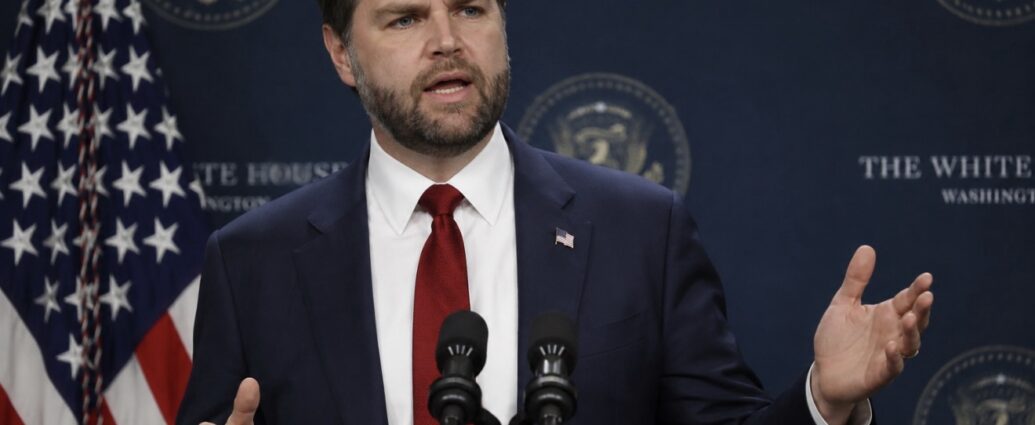
Vance: The Iran Goals Are Cheap Oil and No Nuclear Weapon
Vice President JD Vance said Thursday that American strategy in the confrontation with Iran comes down to two aims: keeping oil and gas prices stable for Americans, and making certain Tehran never obtains a nuclear weapon. Speaking on Fox News, he said he is confident both are being achieved, while allowing the outcome is unpredictable because Iran has repeatedly failed to honor commitments it made. He described the goal as returning the Strait of Hormuz to a state where energy prices are steady, and said the administration is using diplomatic, military and economic tools selectively toward that end.
Stated plainly, the White House is telling the public it will be judged on the price at the pump as much as on centrifuges.
On price, the claim largely holds. Vance noted oil was down on the day and far below the levels of the conflict’s early weeks. Brent traded above $100 a barrel in March, its highest since 2022, after attacks on the UAE port of Fujairah and strikes on Iran’s Kharg Island export hub. Thursday it sat near $82 for U.S. crude, ending a five-day advance, with Brent around $88. That is roughly a fifth off the peak — and still well above pre-war levels.
Stability is not the same as normal supply. Gulf crude and condensate exports were running about 40% below pre-war levels in July, at roughly 10.7 million barrels a day. Ship-tracking data showed eight to 15 vessels crossing Hormuz on each of the first days of August, against about 130 transits a day before the war — closer to one ship in ten. The International Energy Agency’s latest monthly report puts the world short about 1.8 million barrels a day this quarter. There is real disagreement about how tight things are: one analysis this week argued that oil under $90 is not the price of a genuine shortage, and that counting bypass pipelines, regional flows may be running not far below pre-war levels.
The domestic picture has improved sharply in the past week. U.S. crude imports averaged 7.3 million barrels a day in the week ended Aug. 7, up 1.14 million a day, lifting commercial crude inventories 17.4 million barrels to 424.4 million, the biggest weekly build since January 2023. Imports of Middle Eastern crude are on track for roughly 600,000 barrels a day this month, the most since the war started, helped by Saudi cargoes routed overland to the Red Sea and then through the Suez Canal. Fuel stocks are the weak spot: gasoline inventories are about 6% below their five-year average and distillate about 12% below.
The tension in the two-goal formula is the blockade. Washington imposed a naval blockade on Iranian ports on April 13 and reimposed it in early August after renewed attacks on commercial vessels. The administration has estimated the blockade costs Iran roughly $500 million a day, with the Pentagon putting Iran’s lost oil revenue at about $4.8 billion by the start of May. That is pressure on the nuclear question. It is also barrels kept off the water, which works against the price goal in the short run — the same instrument pulling in two directions at once.
Tehran has made that trade-off explicit. Iran’s foreign ministry spokesman said this week that the United States must lift the blockade before conditions exist to fully reopen Hormuz, and that Iran and Oman are negotiating over shipping routes in the strait. A memorandum signed by the two governments on June 17 to open the waterway to commercial ships collapsed within weeks in disputes over which routes vessels could use. Talks remain deadlocked, and the administration is moving toward broader sanctions alongside continued enforcement.
Vance’s remarks follow comments from President Trump earlier in the week asserting that the United States has total control of the Strait of Hormuz and questioning any Iranian assurance. The waterway normally carries about a fifth of global oil supply.
For businesses, the practical read is narrower than the rhetoric. Crude has settled into the low $80s, American storage tanks are refilling, and refiners are running near capacity. None of that is the same as the strait reopening. Freight rates, marine insurance and delivery times for anything moving through the Gulf still reflect a waterway operating at a fraction of normal traffic, and they will keep doing so until ships can sail it routinely. The price of oil has stabilized. The route has not.
JBizNews Desk | Washington, D.C.
© JBizNews.com All Rights Reserved. Reproduction or distribution without written permission is prohibited.

Trump Puts Steam Catapults Back on Navy Carriers, Costing Billions
President Trump signed a national security memorandum Thursday ordering the Navy to drop the electromagnetic system it uses to launch fighter jets off aircraft carriers and go back to steam catapults, a change expected to cost billions of dollars. The memo directs that Ford-class carriers still to be built — starting with the Doris Miller, under construction at Huntington Ingalls Industries’ Newport News Shipbuilding yard — use steam-powered catapults and hydraulic elevators, the arrangement carried on the older Nimitz-class ships. The first three ships of the class, the Gerald R. Ford, the John F. Kennedy and the Enterprise, keep the electromagnetic system.
Here is what the argument is actually about.
A carrier deck is roughly 1,100 feet long, which is nowhere near enough runway for a loaded fighter to reach flying speed on its own. So the ship throws the plane. For about seventy years the throwing was done with steam piped off the ship’s reactors into a piston that runs down a track under the deck and drags the aircraft forward by a shuttle. It is loud, hot, wasteful of fresh water, and it works. The Ford class replaced it with the Electromagnetic Aircraft Launch System, built by General Atomics, which uses linear induction motors — essentially a very long electric motor laid flat under the deck — to pull the shuttle instead.
The reason the Navy wanted the electric version is control. Steam gives you a big shove with limited ability to dial it in. An electromagnetic catapult can set launch energy precisely for each aircraft type, which reduces stress on airframes and widens the range of aircraft a carrier can operate — importantly, small drones that a steam shot would tear apart. It also needs fewer sailors and less topside plumbing.
The reason the president wants it gone is that on the first ship it has not performed as promised. In testing from March to June 2022, the system on the Ford averaged 614 launches between mission-affecting failures, against a requirement of 4,166 — roughly one failure per 600 launches instead of one per 4,000, with each unplanned shutdown triggering about an hour of cooldown and restart before flight operations resume. The Advanced Arresting Gear, the electric system that catches planes on landing, ran at 460 cycles between failures in the same window. The weapons elevators that move bombs from the magazines to the deck have had their own trouble, with 109 failures logged across roughly 20,000 dispatches during one weapons load.
Trump has been making the case in blunt terms for years, telling sailors aboard the George Washington in Japan that the electric system costs billions and requires experts from MIT when it breaks, while steam can be fixed with a hammer and a blowtorch. Last month at a defense summit in Pennsylvania, he said the electric catapults cost billions more and are not nearly as good, and are too complex.
The counterargument, and the reason the Navy and its contractors resisted for nine years, is that a Ford-class hull is not a Nimitz hull with a different catapult bolted on. The class introduced more than 23 new technologies at once, including new reactors, a new radar and electric weapons elevators, all drawing on a common power architecture. The ship is designed as a floating power plant, and future weapons — lasers in particular — need that power. Analysts have long warned that a carrier built around steam cannot easily run high-draw directed-energy weapons and a flight deck at the same time, while a ship optimized for electrical output can do both. Pulling steam lines back through a design that removed them is not a swap. It is a redesign.
That redesign is where the billions go, and it is worth being clear about who receives them. Newport News Shipbuilding is the only yard in the country that builds nuclear carriers, so the engineering work, the changed drawings and the schedule slip all run through one contractor with no competitor to bid against. General Atomics loses future catapult work. The Navy pays for both sides of the reversal.
The class already carries a record on that front. The Ford was estimated at $10 billion and came in at about $13 billion for the ship alone, before research and development. The Government Accountability Office attributed roughly half of a $480 million cost increase on the Kennedy to schedule slippage tied to elevator integration. Oversight bodies have repeatedly faulted the decision to install equipment into the ships before land-based testing was finished, which forced expensive retrofits. The lesson usually drawn from that history is to avoid building around immature technology. It is not obvious that the lesson is to rip out mature-by-now technology and reinstall the previous generation, and that is the substance of the dispute now settled by memorandum rather than by study.
The memo carries other provisions that got less attention and may matter more to the industrial base. It establishes a fifth public shipyard dedicated to submarine repair and a new component repair center, both aimed at cutting the backlog that has kept attack submarines tied up waiting for maintenance. That backlog is a genuine constraint on fleet availability, and public yards are a labor problem more than a technology problem.
The Doris Miller was awarded in 2019, is expected to be laid down this year at Newport News and had been planned for commissioning around 2034. Redesigning her propulsion-adjacent systems this late will move that date, though by how much has not been said. The practical question for the Navy is whether a ship ordered in 2019, redesigned in 2026 around 1950s launch technology, and delivered in the mid-2030s is the ship anyone will want in the 2060s, which is when she would still be sailing.
JBizNews Desk | Washington, D.C.
© JBizNews.com All Rights Reserved. Reproduction or distribution without written permission is prohibited.

Court Orders Kalshi to Block Washington State Bettors From Most Markets
A King County Superior Court judge in Seattle has ordered the prediction market Kalshi to stop taking wagers from Washington State residents on sports, elections, politics, entertainment, culture, technology and science, and mentions, after finding the company was likely running an illegal gambling operation under the Washington Gambling Act and the state’s Consumer Protection Act. The order was signed Wednesday and is already in force. Judge John McHale gave Kalshi until Aug. 19 to put up a geofence based on internet address and residency, and until Sept. 2 to replace it with a stricter third-party blocking system.
Strip away the terminology and the dispute is simple. Kalshi sells contracts that pay out if a stated event happens and expire worthless if it does not. The company calls that trading. Washington State law defines gambling as staking something of value on the outcome of a contest of chance or a future contingent event, and the state argued Kalshi’s contracts fit that definition. The judge agreed the state is likely right.
The list of banned categories does not cover everything on the platform, but it covers the part that pays the bills. The state attorney general’s office said the restricted markets amount to a substantial share of Kalshi’s business, which in recent years has leaned increasingly on sports wagering. Washington State Attorney General Nick Brown said the company has grown wealthy promoting wagers on sports, elections, natural disasters and events tied to the Iran war. The order also bars Kalshi from advertising the covered wagers to consumers in the state.
McHale wrote that Kalshi had willfully ignored guidance issued by the Washington State Gambling Commission in December, which said offering or participating in event-based contracts is not authorized there. That finding matters beyond this case, because it goes to whether the company knew where the line was.
Kalshi’s defense is the same one it has run everywhere: that it answers to federal regulators in Washington, D.C., not to Olympia. A company spokeswoman said Kalshi is regulated exclusively by the Commodity Futures Trading Commission. The company holds a CFTC designation as a contract market and argues the federal Commodity Exchange Act overrides state gambling law. McHale rejected that argument outright. Kalshi asked the Washington State Court of Appeals to put the injunction on hold, and the appeals court refused.
That preemption question is now splitting courts along state lines, which is the real business problem. The Third Circuit affirmed an injunction on April 6 that stops New Jersey from enforcing its gambling laws against Kalshi. Three months later, on July 7, U.S. District Judge Analisa Torres denied the company’s bid to block New York from enforcing its own. A firm operating out of one federal registration now faces one answer in Trenton and the opposite answer across the Hudson.
The scoreboard has been running against the company. Gaming attorney Daniel Wallach counted 23 judicial rulings on injunctions in prediction-market cases, with states winning 19 — roughly five out of every six. Kalshi is already barred from offering sports event contracts in Nevada, Michigan and Massachusetts. Washington State now joins them, with a broader list of blocked categories than most.
The compliance side is where the cost lands. An address-and-residency geofence is due in six days, and a more robust system built on a third-party platform follows two weeks later. Building location controls that satisfy a court is standard work for licensed sportsbooks, which have run them for years. It is newer for a company that has spent its short life arguing that state borders do not apply to it. Every state that wins a ruling adds another set of rules, another map to maintain and another category list to enforce.
The local market shows what Kalshi was competing against. Legal sports wagering in Washington State exists only in person at tribal facilities, with no licensed online sportsbooks, which meant a phone app taking sports bets had the field to itself. The judge cited research finding structural and functional similarities between prediction markets and online gambling, and pointed to a 2021 study in the state showing online gamblers were close to four times as likely to develop problem gambling as those betting at tribal casinos.
None of this settles the underlying question. This is a preliminary injunction, meaning the state has shown it will probably win, not that it has won. The lawsuit filed in March is still ahead of both sides, and the split between federal appeals courts points toward an eventual answer from the U.S. Supreme Court. Until then, Kalshi has to run a different product menu in every state, and the menu in Washington State just got a great deal shorter.
JBizNews Desk | Seattle
© JBizNews.com All Rights Reserved. Reproduction or distribution without written permission is prohibited.



LARRY KUDLOW: 156.4 million American adults love the new S&P 500 record high
Once again, the inflationistas who are really rooting against new Fed head Kevin Warsh have been proven wrong. The June inflation numbers went negative. The July inflation numbers did almost the same thing. Consumer prices were basically flat, and producer prices the same.
I don’t really think much of the producer price index the way it’s been reconfigured by the Bureau of Labor Statistics, but anyway it was flat, 0.0 percent, for July. So for the last 3 months, the PPI is running 1.3 percent at an annual rate. And the CPI is up 0.5 percent at an annual rate. You can chop and slice and dice these numbers 100 different ways, but the reality is, disinflation is setting in this summer.
And just to confuse the matter, if you look at the old Producer Price Index, before the BLS mucked it up, and when it used to actually represent wholesale prices, the old way shows two negative prints in June and July and a 0.7 percent annual rise over the past 3 months. Now, that doesn’t mean that the inflation battle is over. It just means that Mr. Warsh was correct in not moving to raise the Fed’s target rate in his first few months in office.
Mr. Warsh is steady as you go, with a clear commitment to bring inflation back to its 2 percent target. A feat that his predecessor, Jay Powell, couldn’t achieve for five years. And as the Wall Street Journal editorial board points out, Mr. Warsh is not using “forward guidance” because it’s not necessary and people should focus on the actual data — not a dozen Federal Reserve regional presidents babbling all over the country. And the chairman himself is not leaking to certain reporters about what he intends to do. In other words, Mr. Warsh is cleaning up the system.
Now in terms of the inflation numbers, for context, the Cleveland Fed’s median CPI for the last 12 months is 2.7 percent. And its 16 percent trimmed mean is 2.6 percent. Mr. Warsh watches these alternative measures. So, the Fed is likely to stay on hold for a while, to see if the underlying inflation numbers come down to the 2 percent target. Along the way, they will hopefully be reducing their balance sheet holdings of Treasuries and treasury-backed securities.
Yet progress is progress, the Warsh critics are wrong. And the S&P 500 stock market index hit a new record high today, 7,800. And I know some people don’t like it when President Trump boasts about the stock market records. But I like it. As he put it on Tuesday night: “The country is doing well. The stock market, a fantastic record. We have 79 records so far in a short period of time.”
That’s right, I like it a lot. And you know who else likes it? Roughly 156 million American adults. That’s right. Ordinary working folks are participants in the stock market. It’s not just the wealthy pied-à-terre crowd in NYC, or rich people for short. It’s roughly 58 percent of adults, according to the Gallup poll, which comes to about 156 million American adults who own stock one way or another: index funds, ETFs, IRAs, brokerage accounts, bank accounts, even union pension funds.
That last one’s kind of my favorite, because most of the union leaders, most of them corrupt and stealing from those pension funds, filled with lefty Trump haters, even they benefit because a big chunk of their funds are invested in stocks. So the market’s having another great year, with a booming high-tech and manufacturing related economic prosperity, that all has a lot to do with Trumpian policies.
Is that going to help in the midterm elections? I’m going to bet that it does help. Americans love Trumpian free enterprise prosperity, not socialism.


Why Saudi Arabia failed to defeat the Houthis – and could now be dragged back into war – opinion
The drums of war are beating once again along the Saudi-Yemeni border. As Houthi drones and ballistic missiles resume their trajectories toward Saudi airspace and international shipping lanes, reports out of Riyadh suggest the Kingdom is quietly mobilizing for another round of military operations.
But do not mistake this flash of steel for strategic strength. If Saudi Arabia finds itself facing a permanent, hostile proxy state on its southern border, it is not because the Houthis are invincible. It is because Riyadh spent a decade trapped in a labyrinth of its own strategic miscalculations.
Understanding Yemen: A tale of two distinct entities
To understand why the richest monarchy in the Arab world failed to pacify its poorest neighbor, one must understand that Yemen was never truly one country. It was a forced marriage between North and South.
For nearly a millennium, North Yemen’s mountains were governed by a fiercely independent, militant Zaydi Shia Imamate. It was a warrior society that even the Ottoman Empire at its peak could never fully tame. South Yemen was an entirely different universe: a Sunni-majority maritime society shaped by Indian Ocean trade routes and decades of British administration.
The fractured union (1990)
When the two halves hastily unified in 1990, the South did not merge with the North; it was swallowed by it. The resulting state was less a unified nation and more a ticking geopolitical time bomb.

The 2014 Houthi takeover
When that bomb finally exploded in 2014, the Houthis, a Zaydi revivalist movement, weaponized and financed by the Islamic Republic of Iran, swept out of their northern mountain fortresses to seize Sana’a. The alliance between Houthi forces and loyalists of former President Ali Abdullah Saleh was crucial to the initial takeover but proved fatal for Saleh. In 2017, the Houthis executed Saleh after he attempted to break away, highlighting the group’s internal ruthlessness and power-sharing tactics.
The coalition counter-offensive and the critical role of the UAE
Riyadh’s response was a massive conventional air campaign. Yet conventional air power does not win asymmetric civil wars. The anti-Houthi coalition clawed back territory only through ground operations orchestrated by the United Arab Emirates and battle-hardened local fighters of the South.
It was a UAE-backed lightning war that reached the gates of Al-Hudaydah, the Houthis’ primary maritime artery for Iranian smuggling and piracy. Victory was within reach. Citing a humanitarian crisis, UN Secretary-General António Guterres brokered the Stockholm Agreement in 2018.
Instead of delivering the decisive blow, Saudi Arabia halted the offensive; Al-Hudaydah remained under Houthi control, and the movement retained the logistical artery that later sustained its war effort.
Political missteps: The Muslim Brotherhood and coalition friction
Had Saudi Arabia used that stalemate to consolidate its alliance, the story might have ended differently. Instead, Riyadh committed its most fatal political blunder: it attempted to build a post-war Yemeni government around the Islah Party, the Muslim Brotherhood’s local branch This decision was a disaster. For Abu Dhabi, political Islam is an existential red line. For the secular, independence-minded southern fighters, northern Islamists were a non-starter. By forcing an Islah-dominated government onto the South, Saudi Arabia alienated its most effective military allies on the ground.
Rather than fixing this fractured alliance, Riyadh chose the illusion of peace. It entered a prolonged, politically costly ceasefire with the Houthis, legitimizing them as a governing authority while the group quietly restocked its arsenals with Iranian missiles, suicide drones, and anti-ship weapons.
The ultimate manifestation of Riyadh’s strategic blindness came over the last two years. As Israel and the United States degraded Iran’s military and its so-called “Axis of Resistance,” shattering Hezbollah’s leadership and decapitating Hamas, the Houthis were left isolated and vulnerable. Additionally, Israeli and American airstrikes significantly degraded Houthi infrastructure.
Miscalculation: Turning weapons on allies
It was a historic geopolitical window to crush a disrupted enemy. Instead of turning the screws on the Houthis, Saudi Arabia did the unthinkable: Riyadh moved against UAE-backed southern forces, culminating in airstrikes on military shipments for the Southern Transitional Council at Mukalla, out of fear of a rising independent South Yemen. The episode showed how Saudi Arabia had come to view its nominal allies as a more immediate political challenge than the Houthis.
The bill for a decade of bad math has now come due.
The cost of miscalculation
Today, the Houthis hold the Bab al-Mandeb Strait hostage, choking global energy corridors that feed the East. Saudi Arabia is preparing to fight again, but enters the arena alone. By prioritizing Islamist forces over military realities and choosing a hollow ceasefire over tactical resolve, Riyadh alienated the Emiratis and lost the trust of southern forces.
If Saudi Arabia steps back into the Yemeni furnace, it will do so without the only partners who delivered meaningful battlefield gains. Riyadh did not lose Yemen because it lacked military power; it lost because it repeatedly confused political ambition with strategic judgment. That is the true cost of a decade of strategic miscalculation.
The strategic pivot: Embracing the non-Islamist South Yemen and Somaliland
Ultimately, Riyadh’s deepest failure was not tactical but psychological: a persistent historical anxiety over the rise of a powerful, independent South Yemen. For decades, Saudi policymakers viewed a sovereign South as a threat to their hegemony. But in the brutal arithmetic of the modern Middle East, this fear has proven the ultimate miscalculation. A non-Islamist, fiercely anti-Houthi South Yemen is not a threat to the Kingdom; it is its vital shield. South Yemen alongside Somaliland represent a natural geopolitical buffer capable of securing Saudi Arabia’s southern flank and safeguarding the Bab al-Mandab Strait from Iranian encirclement. This vision is already championed by the United Arab Emirates and aligned with Israeli interests in guaranteeing unhindered maritime commerce through the Red Sea.
A recent defense pact with Pakistan and Turkey will not solve Saudi Arabia’s fundamental problem: no external alliance can win a war against the Houthis in the mountains of northern Yemen.
If Riyadh wants to escape the Yemeni furnace, it must conquer its own ghosts. The path to victory lies in abandoning the illusion of aligning with Sunni Islamist forces against Shia Islamists and embracing secular southern forces. Only by securing the South can Saudi Arabia contain the North, stabilize the region, and turn a decade of bad math into strategic triumph.
The existential threat: Confronting the head of the octopus in Tehran
Ultimately, Riyadh must recognize that trimming Houthi branches is futile without confronting the head of the octopus in Tehran. No matter the financial or diplomatic cost, Saudi Arabia cannot neutralize the danger on its borders without actively aligning with the Iranian people and their leader, Prince Reza Pahlavi, in their fight to dismantle the regime.
The Islamic Republic poses an existential threat to Saudi Arabia, as it does to Iran itself, Ukraine, and Israel. This threat cannot be mitigated through political zigzags, diplomatic appeasement, or delegations to Tehran. Without decisive, unyielding resolve, mirroring the strategic clarity shown by Israel, Saudi Arabia’s grand developmental visions, particularly its multi-billion-dollar Red Sea projects, remain vulnerable. In the current volatile landscape, a single act of Houthi piracy or drone warfare can turn Riyadh’s economic dreams into ashes.
The writer is communications director to Prince Reza Pahlavi, and an Iranian journalist who previously served as editor-in-chief of news at Manoto TV, a UK-based Persian-language television network.

STAT+: Commure terminates payments under its customer referral programs tied to AI products
Commure, a $7 billion health software company that sells artificial intelligence tools to medical clinics, has terminated a program through which it was paying parties for referrals to new customers, according to company emails obtained by STAT.
The emails, sent by Commure’s chief legal officer, Dan Brian, inform members of the partnership program that their payment agreements will be terminated 30 days from receipt of the company’s notice. One email, dated Aug. 6, states that anything owed under the agreement as of the termination date will be “paid in full.”
The notice was sent to members of the program six days prior to the publication of a STAT investigation that found the company offers to pay thousands of dollars to customers and other parties to refer its AI products to new business prospects. STAT first asked about the referral arrangements in an email to Brian on June 5.
Jared Kushner plans to visit Israel, Egypt next week for Gaza talks – report
Jared Kushner, Special Envoy for Peace and US President Donald Trump’s son-in-law, is planning to visit Israel and Egypt next week to discuss the situation in Gaza, five sources with knowledge of the plan told Axios on Thursday.
Kushner will meet with Nickolay Mladenov, the “high representative” for the Gaza Board of Peace, as well as meeting with Netanyahu and other senior Israeli officials, Axios reported.
He is also expected to meet with mediators from Egypt Qatar, and Turkey in Cairo, a source told Axios.
This trip would be the first time Kushner has visited Israel since January, coming as the Board of Peace are trying to move towards the next phase of the Gaza peace plan.
CENTCOM Commander Cooper visits Israel
CENTCOM Commander Adm. Brad Cooper visited Israel on Monday and spoke to senior IDF commanders about US-Israeli military relations and the war with Iran.
Cpt.Tim Hawkins, a spokesperson for US Central Command (CENTCOM) told The Jersualem Post that reports that Cooper said during his visit to Israel that he had pushed for renewed strikes against Iran were untrue.
Hawkins told the Post that claims that Cooper had pushed for a resumption of the conflict against Iran were “an outright fabrication. It’s not true at all.”
Minnesota’s Democratic nominee is an Israel critic, but she is not El-Sayed 2.0
Peggy Flanagan, the likely next senator from Minnesota, defeated a moderate pro-Israel congresswoman, accuses Israel of genocide and says she would oppose offensive weapons sales to Israel.
If the victory Tuesday of the state’s lieutenant governor over Rep. Angie Craig sounds like an echo of last week’s election in another midwestern state, Michigan, listen a little closer: Flanagan differs from Abdul El-Sayed in critical if subtle ways when it comes to Israel and Jews.
Flanagan has not joined El-Sayed and a number of left-wing challengers for Congress in saying that she would oppose US funding for defensive weapons like the Iron Dome missile program.
Her platform says she would have joined the two incumbent Minnesota senators, Amy Klobuchar, who is running for governor, and whom she hopes to replace, and Tina Smith “in voting to halt offensive weapons sales to Israel.”
That places her within the current Democratic mainstream: 40 out of 47 senators who caucus with the Democrats voted in April for the bill banning offensive weapons when it came up.
Her platform also calls for “a two-state solution which allows for a secure Israel and Palestinian self-determination.” El-Sayed will not commit to recognizing Israel’s existence as a Jewish state, or to a two-state solution.

Temple Israel defaced with hateful messages on Oct. 7 anniversary
The crisis moment in El-Sayed’s relationship with his state’s Jewish community came when he appeared to equivocate in condemning a violent attack on a Detroit area synagogue in March when pre-school was in session.
Flanagan was unequivocal: “Our Jewish communities are facing unprecedented levels of violence and threats,” she wrote then on social media. “It is on all of us to call anti-semitism out when we see and hear it, and to make sure that all of our faith communities are treated with respect. Hate brings no one more safety, more dignity, or more peace.”
She is equally as adamant when the threat is closer to home. In 2025, on the anniversary of the October 7, 2023 attack, a different synagogue called Temple Israel in Minneapolis was vandalized with graffiti in the shape of two inverted triangles, a symbol associated with Hamas, and reading “Al-Aqsa Flood,” Hamas’ name for its attack on Israel.
“Last night, Temple Israel in Minneapolis was defaced with anti-Semitic hate,” Flanagan wrote. “My heart is with the congregants of Temple Israel and our entire Jewish community. Hate has no home in Minnesota, and every house of worship should be a safe place to pray.”
There are things that Flanagan has done and said that nonetheless unsettled the pro-Israel community.
Some Jewish Democrats voiced concern to the Minnesota Star Tribune that Flanagan played into antisemitic tropes by singling out the American Israel Public Affairs Committee in her campaign against Craig, a page out of El-Sayed’s playbook in defeating AIPAC-backed Rep. Haley Stevens, and the playbook of a number of progressive congressional candidates this year.
During the lead-up to the primary, Flanagan was vocal about her opponent Craig’s support from the pro-Israel lobby, calling her “AIPAC’s candidate.”
A Flanagan spokesperson told the paper that she has “consistently condemned antisemitism and will continue standing with Jewish Minnesotans against hate.” Flanagan’s campaign did not return a request for comment.
Flanagan had the support of Israel-critical progressives, including Sen. Bernie Sanders, the Vermont senator who authored the proposed ban on the sale of offensive weapons, and Rep. Ilhan Omar of Minnesota. Like them, and unlike Smith and Klobuchar, she has accused Israel of genocide.
She also drew the endorsement of progressive Jewish organization Bend the Arc.
“She is a close friend of the Twin Cities Jewish community and a trusted ally in the fight against antisemitism,” wrote Bend the Arc’s CEO, Jamie Beran. “She understands that Jewish safety is bound up with the safety and freedom of all our neighbors.”
Now, Flanagan will take on Republican nominee Michele Tafoya, a former NFL sideline reporter who has expressed support for Israel and its war with the US in Iran. Minnesota has not elected a Republican US Senator since 2002. Flanagan is favored to win in a state which has trended increasingly blue in recent years.
Flanagan also says she will not support New York’s Chuck Schumer if he chooses to seek another term as party leader in the Senate. Schumer is a pro-Israel stalwart.
Republicans, who control the Senate, have unanimously voted against Sanders’ resolutions, rendering them essentially symbolic tools for Democrats to voice disapproval of the Israeli government.
If progressive Israel critics like El-Sayed and Troy Jackson in Maine win in November and help flip the Senate, and especially if Schumer gives up leadership, the pathway to blocking weapons sales to Israel would become clearer than ever.
Pamela Laufer-Ukeles returns to tennis after 20 years and a battle with breast cancer
Pamela Laufer-Ukeles knows exactly what it feels like to stop playing tennis for the sake of focusing on her career and family.
She did it for 20 years.
She also knows what it feels like to question whether you can trust your body.
Breast cancer taught her that.
And she knows what it feels like to discover, slowly and deliberately, that perhaps you can.
Tennis taught her that.

The lessons she received from playing tennis and from surviving breast cancer now intersect on the courts of Ra’anana, where the 50-year-old law professor and competitive tennis player is preparing for Sharsheret’s upcoming tennis tournament – an event that brings together two parts of her life that once seemed completely separate.
One is the sport she first discovered when she was an eight-year-old girl.
The other is the cancer diagnosis that changed how she viewed her health, her priorities, and her own vulnerability.
The result is a story that involves more than simply winning a tennis match.
Although Laufer-Ukeles would certainly like to win.
“I’ll train, and I’ll show up and give it my best shot,” she said. “That’s all I can do.”
That attitude has served her well.
Tennis talent discovered at day camp
Laufer-Ukeles first picked up a racket at age eight at a summer day camp. She had never played before, but the instructor immediately noticed something.
“Have you ever played before?” she was asked.
She hadn’t.
Soon, tennis became a major part of her life.
She played junior tennis from ages eight through 14, competed regularly, and earned Eastern Tennis Association rankings. She trained three or four times a week and sometimes played tournaments every weekend. Her parents invested heavily in her development, and the sport gave her an early education in competition, discipline, and perseverance.
She even played some tournaments in Europe, making the semifinals in a particularly juniors tournament in France.
Her game was built around a strong forehand and serve. At just 5-foot-3, she learned early that the net could be a difficult place for her against taller opponents, so she became primarily a baseline player.
By the time she reached Columbia University, tennis was still a major part of her identity, although for the past few years she had quit playing juniors and now was only playing for her high school team, which still involved training but with less pressure. She walked onto the college team and practiced with it for about a year, but ultimately decided to leave.
She wanted to concentrate on studies.
The decision made sense at the time. She watched student-athletes balance demanding schedules and felt that the limitations placed on her academic choices were not worth the trade-off.
So she put down the racket.
And largely left it there.
For approximately two decades, tennis gave way to school, career, marriage, and children.
She tried coming back intermittently, but the results were frustrating. Her instincts still belonged to an athlete, while her body was no longer conditioned like one. She suffered injuries, including a knee injury that left her unable to walk normally for months, and each setback made it easier to stop again.
Looking back, she has no hesitation about what she would tell her younger self, who barely hesitated before stopping regular play.
“Big mistake,” she said with a laugh. “Shouldn’t have done it.”
An unexpected diagnosis
In February 2019, at age 43, Laufer-Ukeles discovered that life had another lesson waiting.
She had asked her primary-care physician for a mammogram simply because she had heard about friends in the United States who had been diagnosed with breast cancer. In Israel, women are only referred to get mammograms at age 50 without a specific request.
She had never had one before.
She did not feel sick.
She did not have a reason to think something was wrong.
But the mammogram led to an ultrasound, which led to the discovery of triple-negative breast cancer.
The diagnosis was traumatic in more ways than one.
During the ultrasound, she recalled, the radiologist discussed the possibility of cancer with an intern before properly explaining the situation to her. The doctor eventually told her that she had a medium-sized cancer and would likely lose her hair.
She had come in for a routine screening.
Suddenly, she was thinking about cancer, chemotherapy, and what would happen to her family.
“I was very scared,” she said.
She underwent extensive treatment, including surgery, chemotherapy, and radiation.
And when it was over, the physical treatment was not the only thing she had to recover from.
There was the emotional aftermath.
There was the vulnerability.
And there was the unsettling realization that the body she had always depended on could suddenly betray her without warning.
For years, she had been a cerebral person – an academic who spends much of her professional life thinking, writing, and teaching. But cancer made her realize that she needed something else, too.
She needed to move.
She needed to be outside.
She needed to feel physically capable again.
She needed to regain trust in her body.
She needed to focus on her physicality and her health.
She needed tennis.
The timing was almost strange enough to seem scripted.
Laufer-Ukeles began returning to tennis around the time COVID-19 was arriving in 2020. When courts were open, tennis offered a way to get out of the house without being in close proximity to other people.
At first, she played casually with local friends.
Then she saw tournaments.
And she remembered the player she had once been.
“I remember when I used to do that,” she thought.
So she started training.
Three or four times a week became normal. She hired a coach. She began competing in Masters tournaments. She started running and lifting weights, recognizing that simply playing tennis was no longer enough to prepare her body for the demands of the sport.
This time, she approached the game differently.
She stretched. She strengthened. She took care of her body.
And gradually, something returned that cancer had taken away.
Trust.
“When you have cancer, you’re not necessarily sick when you’re diagnosed,” she explained. “So, you doubt your health.”
Tennis provided a way to challenge that doubt.
The rules were familiar.
Work hard. Prepare. Compete. See what your body can do.
The same lessons she had learned as a child were waiting for her decades later.
“If I trained and I worked hard, I would see the results on the court,” she said.
Only now, the stakes felt different.
Tennis was no longer simply about becoming a better player. It was about reconnecting with herself.
“It reminded me of my youth,” she said. “It reminded me of my ability to count on my body and have trust in my body.”
She thrived.
The competitiveness came rushing back. So did the joy.
And then came the Maccabiah.
Laufer-Ukeles’s first Maccabiah experience was almost entirely accidental.
After returning to competitive tennis, she searched online for Masters tournaments in Israel. The next tournament she found happened to be the Maccabiah.
Her reaction was essentially: There is no way I’m playing that.
Her husband disagreed.
He signed her up.
The organizers initially called to tell her she couldn’t participate. The Maccabiah, after all, was for highly competitive athletes, and she had only recently returned to the sport.
Then circumstances changed.
There were cancellations.
There weren’t enough women in her age group.
The organizers called again.
Did she want to play?
She did.
Before that Maccabiah, she had played only a tournament or two since returning to competitive tennis. She had managed to finish second in one of them, giving her enough of a ranking to justify her place.
Then, only about a year after completing cancer treatment, she went to the Maccabiah and won silver in singles and bronze in doubles.
The experience was transformative.
She trained specifically for the event, ran extensively, and pushed herself physically to prepare for the heat and the demands of the competition.
Four years later, she returned to the 2026 Maccabiah with a ranking that earned her a place in the tournament on merit.
This time, she won bronze in her age group.
She has come to view the Maccabiah as one of the toughest tournaments she plays.
The competition is stronger because athletes arrive from around the world. The scheduling can be unpredictable. Matches can take place in the middle of Israel’s summer heat, sometimes twice in the same day.
There is no easy way through it.
Which is precisely why she loves it.
The Maccabiah gives her something to work toward. It gives her a reason to be in peak physical condition. And it has introduced her to people from around the world.
These days, she can play five days a week.
Tennis is no longer something she returned to.
It is simply part of who she is again.
The irony is that tennis also eventually helped Laufer-Ukeles find her voice about cancer.
When she was diagnosed, she did not want the entire community to know. Her close friends and family knew, but she was uncomfortable with the vulnerability that came with being identified as someone who had cancer.
She was scared.
She was worried about her children.
And she did not want to be defined by her illness.
She also felt profoundly isolated.
Through connections, she was introduced to Sharsheret, which provided access to women who had experienced breast cancer and could speak to her about what she was facing.
That support mattered enormously.
But even then, something was missing.
She did not have a regular in-person support group. She did not have a social worker she could meet with regularly. She wanted the opportunity to sit with women who understood exactly what she was experiencing and simply talk.
Years later, that circle has finally begun to close.
Sharsheret has invited her to participate in its support groups in Israel, and she has already attended two meetings.
For someone who once felt so isolated, the experience has been powerful.
She now finds herself sitting with other women discussing treatment, screening, preventative measures, diet and the challenges of survivorship.
It is something she wishes she had had when she was first diagnosed.
And that is why she is now willing to speak publicly.
“I want people who are diagnosed not to feel so isolated,” she said.
Her message is simple but powerful: breast cancer does not have to be the end of the story.
She is living proof.
For Laufer-Ukeles, the connection between Sharsheret, breast cancer, and tennis makes perfect sense.
The sport changes the conversation.
Rather than focusing exclusively on illness, it puts the emphasis on strength, perseverance and survivorship.
That matters as society can still instinctively associate sickness with weakness.
Laufer-Ukeles admits that she once did the same thing.
But cancer changed her perspective.
She does not pretend treatment was easy. It wasn’t. She went through an exhausting course of treatment and experienced the physical and emotional toll that comes with it.
But she also discovered that there can be strength on the other side of vulnerability.
Tennis became part of that process.
So can community.
So can mental-health support.
So can simply seeing another woman who has been through cancer and is now living a full, active life.
That, she believes, is one of the most important things Sharsheret can offer.
There is still a lack of awareness, she says, not only about how common breast cancer is but about how much support can mean to someone during treatment and after it.
The upcoming tournament in Ra’anana therefore represents more than a day of tennis.
It is an opportunity to bring women together, raise awareness, support Sharesheret’s work and demonstrate a different image of what survivorship can look like.
‘Everyone has a story,” notes Liora Tannenbaum, Sharesheret’s Israel Regional Director. “Where they are coming from or what they are dealing with isn’t always known to the people around them, even those they are close to. The first time I met Pamela, all the roads converged in one sitting… learning about the journey she had been on and is still navigating, her passion for tennis and the role it had and continues to play in her life, and how Sharsheret could connect so many of these dots. Her willingness to share her story publicly and champion all that we are trying to achieve here is what makes this event so meaningful.’
And Laufer-Ukeles will be right in the middle of it.
She regularly plays at the Ra’anana Municipal Tennis Center, where she has found a community she deeply appreciates. Her coach, Oded Yatskin, is also donating his time to support the Sharsheret tournament.
She is grateful for the people making the event possible and hopes it succeeds both as a fundraiser and as a way of strengthening Sharsheret’s presence and ability to support women.
She has been particularly impressed by the positive attitude of the people involved.
There were, she noted, plenty of people who might have looked at an ambitious fundraising event and said it wouldn’t work.
Instead, a group of people simply decided to make it happen.
She wants to be part of that effort.
And yes, there is still the small matter of the tennis.
Asked whether she expects to win the tournament, Laufer-Ukeles laughs.
There is probably a little pressure now.
After all, she is one of the faces of the event.
But pressure is familiar territory. So is perseverance.
She will train. She will show up. She will compete. And she will give it everything she has.
Because after everything she has been through, perhaps that is the greatest lesson tennis has given her.
The scoreboard matters. The medal matters. The competition matters.
But sometimes the greatest victory happens long before the first ball is served.
It happens when you decide to step back onto the court.



Navy Plans Mideast Carrier Swap After Lincoln’s 250 Days at Sea
The U.S. Navy is preparing to send a replacement aircraft carrier into the Middle East, moving the USS George Washington in to take over the work the USS Abraham Lincoln has been doing since the winter. The handoff has not happened yet, and officials say it was scheduled before the current round of public complaints about life aboard the Lincoln. Swapping carriers takes several weeks on its own, because the incoming and outgoing ships operate side by side for a stretch before the older one pulls out.
The Lincoln’s numbers explain why a fresh ship is coming. It left on deployment in November and was rerouted to the Middle East in January, just ahead of the U.S. war with Iran. That has put it past 250 days deployed, including roughly 200 days without a single port call. A normal carrier deployment runs about six to seven months and includes regular port stops to resupply food and give crews a break. The Lincoln has run roughly a third longer than that, with none of the pauses.
What the ship has been doing is, at bottom, an economic mission. The Lincoln flew a central role in the U.S. bombing campaign against Iran and has since worked the naval blockade of Iranian ports. The USS George H.W. Bush is also in the Arabian Sea as part of the effort to pressure Tehran into reopening the Strait of Hormuz, where hundreds of ships sit stuck. That waterway is the only way in and out of the Persian Gulf, and it normally carries about a fifth of the world’s oil.
Traffic there is a fraction of what it was. Ship-tracking data showed between eight and 15 vessels crossing the strait on each of the first days of August, against roughly 130 transits a day before the war — closer to 1 in 10 than to anything like normal commerce. Every one of those missing transits is cargo that has to go somewhere else, at a longer distance and a higher insurance cost, which is why the war shows up on freight bills and fuel receipts far from the Gulf.
Oil is carrying the strain without panic. Crude slipped toward $82 a barrel Thursday after a five-day run, as traders weighed whether any deal to reopen the strait is close. The International Energy Agency’s latest monthly report put the global market short by 1.8 million barrels a day this quarter, even as U.S. crude inventories jumped 17.4 million barrels in a week, the biggest build since early 2023. Tight supply abroad, unusually full tanks at home.
On the other side of the ledger, the blockade is doing measurable damage to Iran’s revenue. The administration has put the cost to Tehran at roughly $500 million a day, and the Pentagon estimated Iran had lost about $4.8 billion in oil revenue by the start of May. Keeping that pressure on is exactly what requires a carrier parked in the region, which is why the Navy is replacing the Lincoln rather than simply bringing it home.
The replacement comes with a trade-off in Asia. The George Washington is permanently assigned to the Pacific as the Navy’s forward-deployed carrier with the 7th Fleet, and the service describes it as the symbol of the U.S. commitment to a free and open Indo-Pacific. The ship and its strike group were in the Strait of Malacca on Thursday. Moving it west shifts American naval weight out of the shipping lanes that carry most of Asia’s trade at a moment when Washington is trying to watch China, North Korea and Iran at once.
Congress has been pressing on the crew question for weeks. Rep. Marlin Stutzman, an Indiana Republican, said he intends to seek a Pentagon update, saying sailors need to know they are being properly cared for. Rep. Mike Levin, a California Democrat, said personnel in their ninth month of deployment have earned rest. Sailors and their families have described food shortages and the toll of months at sea without a break. Secretary of War Pete Hegseth said Thursday that conditions aboard the ship had been misrepresented, telling reporters in Panama that every crew is given everything the department can provide. The Navy said it takes personnel health seriously and has medical, mental health and religious staff aboard to address concerns.
The clock from here is measured in weeks, not days. Once the two carriers overlap and the swap is finished, the Lincoln faces a trip of at least two weeks back to its home base in San Diego — and then, almost certainly, a long stretch in the yard. Ships run this hard come back needing work, and every extra month at sea today turns into shipyard time and maintenance spending later. That bill lands well after the headlines about this rotation have passed.
JBizNews Desk | Washington
© JBizNews.com All Rights Reserved. Reproduction or distribution without written permission is prohibited.

Tyson Foods to close 2 facilities, pursue sale of another amid ‘historic’ cattle shortage
Tyson Foods announced Thursday it will close two facilities and is pursing the sale of another as it makes “strategic changes” to its beef business.
The company will end operations at its Joslin, Illinois, beef plant and its Eagle Mountain, Utah, case-ready facility, while pursuing a sale of its Pasco, Washington, beef facility, according to a Tyson Foods press release.
“Tyson Foods will anchor its beef business around three strategically located beef facilities in the central United States: Dakota City, Nebraska; Holcomb, Kansas and Amarillo, Texas, to create a more competitive footprint amidst one of the most historic cattle shortages the country has ever experienced,” the company said.
HIGH BEEF PRICES HITTING CONSUMERS AS MEATPACKING GIANT WARNS OF SUPPLY STRUGGLES
“Recent USDA cattle inventory data, which included continued evidence of limited heifer retention, indicates these supply constraints are likely to persist, requiring strategic action.”
Tyson Foods said it will assist affected employees in applying for jobs at other facilities.
GET FOX BUSINESS ON THE GO BY CLICKING HERE
This is a breaking news story. Please check back for updates.



Jewish settler ambushed near Kiryat Arba, forces rescue abducted woman
Club-wielding Palestinians ambushed a Jewish settler near Kiryat Arba, Army Radio reported on Thursday evening.
According to the report, the woman alerted authorities, which led to the Kiryat Arba police chief to rush to the scene. Upon his arrival, he was pelted with stones, leaving him slightly injured in the head, Army Radio said.
Despite this, he managed to fire shots in the air, after which the assailants fled, the report stated.
Woman abducted to Hebron by relatives, rescued in good health
In a separate incident, a woman in her 20’s living in central Israel who had been forcibly taken to Hebron was located and rescued by authorities on Thursday evening, KAN reported citing a police statement.

Israeli police, IDF troops and Palestinian Authority police were involved in the rescue operation.
The woman had reportedly been taken to the West Bank city by her relatives, who were detained and will be transferred to the Tel Aviv district for further investigation, police said.
During the operation, KAN reported, forces were deployed outside of the city, stopping a suspicious vehicle and alerting police to the scene, whereafter the woman was found.
The woman was in good health at the time of her rescue, police said.
Acrisure Mortgage names Todd Boss president
Acrisure Mortgage announced Thursday that it has appointed Todd Boss as president, succeeding Joe Nunziata, who was recently promoted to president of Acrisure Real Estate Services.
Boss will oversee the day-to-day operations of Acrisure Mortgage, including its nationwide mortgage platform, sales organization and strategic growth initiatives, and will report to Nunziata, who now oversees Acrisure’s mortgage, title and real estate businesses.
Boss has more than 30 years of mortgage industry experience and joined Acrisure Mortgage’s executive leadership team in 2009. He most recently served as chief sales officer, where he led the growth and development of the company’s national sales organization.
During his tenure, Boss helped expand Acrisure Mortgage’s national footprint and focused on building relationships with customers, employees and business partners.
“Todd is a tremendous team builder, business developer and leader,” Nunziata said in a statement. “For more than 15 years, he has played an instrumental role in our growth and has earned the trust and respect of our employees, customers and business partners.”
Acrisure Mortgage said it has more than 630 employees nationwide and is licensed in 49 states. Per RETR data, the company has 98 producing LOs as of Aug. 10. Their 12-month volume is $1.8 billion, with the bulk in conventional and Federal Housing Administration loans.
As president, Boss will focus on operational efficiency, national growth, technology and innovation, along with the customer experience for borrowers, builders, real estate professionals and employees.
“I am honored to have the opportunity to lead Acrisure Mortgage,” Boss said in a statement. “This company has always been about people — our employees, our customers and our partners.”
Boss’ appointment is part of Acrisure’s broader effort to align its mortgage, title and real estate operations under Acrisure Real Estate Services. Nunziata will lead the broader platform while Boss oversees the mortgage business.
This article was generated using HousingWire Automation and reviewed by a HousingWire editor before publication.