Famed investor Michael Burry is sounding the alarm about the current tech rally, noting that top-performing Nasdaq 100 stocks are outpacing the astronomical gains seen at the peak of the dot-com bubble.

‘Party Like It’s 1999’

In a pos ton X on Wednesday, sharing data from BTIG and Bloomberg, “The Big Short” investor pointed out the staggering performance of SanDisk Corp. (NASDAQ:SNDK) compared to historic market leaders.

During the late 1990s tech boom, Qualcomm Inc. (NASDAQ:QCOM) was the ultimate high-flyer, boasting a peak rolling 52-week return of 2,620%.

Today, SNDK has dwarfed that milestone, skyrocketing an unprecedented 3,960% between May 2025 and May 2026. Referencing the data, Burry noted that “SNDK is beating that by 1300bps.”

Ironically, he also pointed out that SNDK was the second-best performing stock back in 1999, rising 581% at the time.

This post was originally published here

President Donald Trump celebrated record stock market gains, saying strong job growth and rising retirement accounts reflected continued economic momentum.

Stock Market Hits Record High

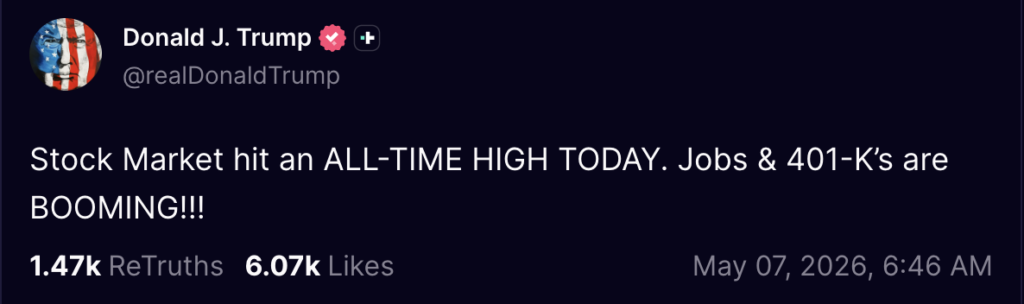
On Wednesday, Trump posted on Truth Social, “Stock Market hit an ALL-TIME HIGH TODAY. Jobs & 401-K’s are BOOMING!!!”

U.S. stocks hit record highs by midday Wednesday as strong AI earnings boosted tech shares and oil prices fell on hopes of a potential U.S.-Iran deal easing tensions in the Middle East.

The S&P 500 and Nasdaq 100 both reached new all-time peaks, while the Dow Jones Industrial Average also climbed strongly.

data-variant=”card”
data-news-mode=”manual”

>


Read Also:

Trump Threatens ‘Much Higher Level Of Bombing,’ But The Real Bombshell Is The …

This post was originally published here
A record 62% of retired Americans now rely on Social Security as a major source of income, according to Gallup’s latest Economy and Personal Finance survey released Wednesday.

The figure ties last year’s record high and significantly exceeds every other retirement income source tracked in the survey. Work-sponsored pension plans ranked second at 37%, followed by retirement savings accounts such as 401(k)s and IRAs at 27%.

The findings are based on Gallup’s Economy and Personal Finance poll conducted between April 1 and April 15.

The survey also highlighted a growing divide between retirees and workers still preparing for retirement. While 82% of retirees said they have enough money to live comfortably, only 45% of nonretirees expect the same for themselves.

data-variant=”card”
data-news-mode=”manual”

>


Read Also:

Stabilis Solutions Stock Drops Over 15% …

This post was originally published here

Gold miners ETFs rallied sharply on Wednesday as bullion prices rose, driven by optimism surrounding a possible peace agreement between the United States and Iran and a weaker U.S. dollar.

Among some of the major beneficiaries are VanEck Junior Gold Miners ETF (NYSE:GDXJ), iShares MSCI Global Gold Miners ETF (NASDAQ:RING), US Global GO GOLD and Precious Metal Miners ETF (NYSE:GOAU) and VanEck Gold Miners ETF (NYSE:GDX).

ETFs Wednesday Performance
GDXJ 8.47%
RING 7.80%
GOAU 7.80%
GDX 6.60%

Bullion Prices Climb Above $4,700

Gold prices extended gains early Thursday, trading around $4,700 per ounce, as the U.S. dollar slipped, while traders weighed signals that Washington and Tehran could be moving toward a deal to halt the conflict. The move marked a third consecutive session of gains after a 3% jump on Wednesday that pushed it to the strongest level since April 27.

Iran was reviewing a U.S. peace proposal. President Donald Trump also said substantial progress had been made in negotiations, adding to hopes that tensions around the Strait of Hormuz could ease.

Market participants also watched a pullback in U.S. yields and a slide in oil prices, factors that can shift demand for non-yielding assets such as bullion, as reported by Reuters.

The U.S. Dollar Index slid from $98.44 on Tuesday to $98. This drop can make …

Full story available on Benzinga.com

This post was originally published here

With U.S. stock futures trading higher this morning on Thursday, some of the stocks that may grab investor focus today are as follows:

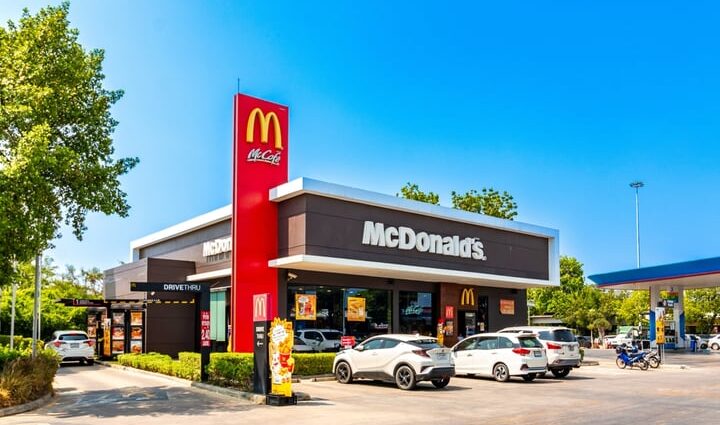
  • Wall Street expects McDonald’s Corp (NYSE:MCD) to report quarterly earnings of $2.74 per share on revenue of $6.47 billion before the opening bell, according to data from Benzinga Pro. McDonald’s shares gained 1% to $286.84 in after-hours trading.
  • Zillow Group Inc. (NASDAQ:Z) reported upbeat first-quarter results after Wednesday’s closing bell. Zillow reported quarterly earnings of 53 cents per share, which beat the consensus estimate of 46 cents, according to Benzinga Pro data. …

Full story available on Benzinga.com

This post was originally published here
Governor Ron DeSantis (R-FL) has hailed the SpaceX and Anthropic partnership, praising the Elon Musk-led company’s approach to artificial intelligence.

Pro-Human For The Win

“Pro-human for the win,” DeSantis said in a post on the social media platform X. He also shared that it was “appalling” to see “tech leaders” being “indifferent” to artificial intelligence technology replacing the “human experience.”

data-variant=”card”
data-news-mode=”manual”

>


Read Also:

Elon Musk Fires Back As Calls To Tax Billionaires Grow Louder, Says Paid More Taxes Than ‘Anyone In History’

This post was originally published here

Shivon Zilis, partner of Tesla Inc. (NASDAQ:TSLA) CEO Elon Musk, shed light on her role on the board of OpenAI and the potential funneling of information to Musk.

On Wednesday, Zilis was interrogated about her possible role in passing information to Musk while serving on OpenAI’s board. She affirmed her loyalty to the “best outcome of AI for humanity” during her testimony, reported the Wall Street Journal.

Zilis disclosed that there were several potential structures proposed for OpenAI, including Musk’s suggestion that OpenAI become a subsidiary of Tesla. This proposal, however, was rejected by OpenAI cofounders Ilya Sutskever, Sam Altman and Greg Brockman.

Zilis also testified that Musk expressed concerns about a talent competition between Tesla and OpenAI when he left the OpenAI board in 2018. She noted that Musk had recruited a top AI researcher from OpenAI to join Tesla just days before his departure.

Tesla and OpenAI did not immediately respond to Benzinga‘s request for comments.

Zilis’s Role In The Trial

Zilis first connected with Elon Musk through OpenAI in 2016, later serving in advisory and board roles while also working across Musk’s companies. OpenAI executives portrayed her as a close Musk adviser and intermediary, though both Zilis and Musk’s team say she acted independently.

Zilis joined OpenAI’s board in 2020 and left in 2023 after Musk launched xAI. During this period, she and Musk …

Full story available on Benzinga.com

This post was originally published here
Federal authorities have unsealed charges against 30 individuals, including corporate attorneys and financial professionals, for orchestrating a massive, decade-long insider trading scheme that netted tens of millions in illicit profits.

Insider Stole M&A Data From Law Firms

Nineteen suspects were arrested on Wednesday in a coordinated sweep across locations including Los Angeles, Fort Lauderdale, and New York, while two defendants located overseas remain fugitives.

The international network allegedly stole confidential merger and acquisition data from several elite corporate law firms, including one headquartered in Massachusetts, to gain an illegal edge in the stock market.

Nineteen suspects were arrested Wednesday in a coordinated sweep across locations including Los Angeles, Fort Lauderdale, and New York, while two defendants located overseas remain fugitives. The international network allegedly stole confidential merger and acquisition data from several elite corporate law firms, including one headquartered in Massachusetts, to gain an illegal edge in the stock market.

data-variant=”card”
data-news-mode=”manual”

This post was originally published here

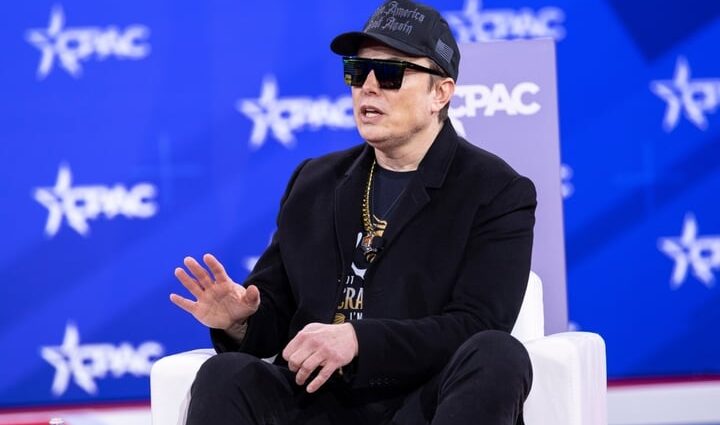
Tesla Inc. (NASDAQ:TSLA) and SpaceX CEO Elon Musk on Wednesday defended himself against calls from lawmakers to tax the wealthy.

$10 Billion In Taxes

“I have paid over $10B in taxes in a single year,” Musk said, outlining that it was more than “anyone in history,” in a response to user @TheRabbitHole, who claimed that billionaires were paying more than their fair share in taxes.

data-variant=”card”
data-news-mode=”manual”

>


Read Also:

California’s Billionaire Tax Heads To Ballot As Backers Claim Enough Signatures

This post was originally published here

On Wednesday, Cathie Wood-led Ark Invest executed significant trades involving Tempus AI Inc (NASDAQ:TEM) and Advanced Micro Devices Inc (NASDAQ:AMD).

The Tempus AI Trade

ARK Genomic Revolution ETF (BATS:ARKG) and ARK Innovation ETF (BATS:ARKK) funds made substantial purchases of Tempus AI Inc shares. The ARKG fund acquired 21,997 shares, while ARKK added 123,797 shares. With a closing price of $53.50, the total value of these transactions amounted to approximately $7.8 million.

Tempus AI recently reported a 36.1% increase in first-quarter revenue, driven by strong demand for its oncology diagnostics and AI-driven data business. Despite widening its net loss, the company raised its full-year revenue outlook.

The Nancy Pelosi-backed company’s quarterly revenue reached $348.1 million, surpassing analyst expectations of $345.5 million. The company’s diagnostics revenue rose …

Full story available on Benzinga.com

This post was originally published here
Governor Gavin Newsom (D-CA) on Wednesday slammed the President Donald Trump administration for hailing high gas prices in the U.S. following White House Chief Economist Kevin Hassett‘s comments about surging credit card spending.

Bragging About Gas Prices

“The Trump Administration is now CELEBRATING Americans paying more for gas and putting more on their credit cards,” the California Governor’s official Press Office said in a post on X, slamming Hassett for saying that ordinary Americans were using their credit cards to spend “more on gasoline,” but also on other things.

data-variant=”card”
data-news-mode=”manual”

>


Read Also:

Gavin Newsom Wants To Know Why Trump Ballroom Cost Has Shot Up 5x Amid $1 Billion Taxpayer Claim

This post was originally published here

Space analytics company HawkEye 360 set its initial public offering (IPO) price at $26 on Wednesday.

The Herndon, Virginia-based company sold 16 million shares, which is expected to raise about $416 million. HawkEye is expected to begin trading on Thursday on the New York Stock Exchange under the ticker symbol “HAWK.”

A Strategic Move

The offering consists entirely of newly issued common shares being sold by HawkEye 360. The company said the $416 million figure is before underwriting fees and other costs tied to the deal.

Underwriters also received a 30-day ability to buy up to 2.4 million additional shares at the IPO price, minus underwriting discounts and commissions. That provision could expand the share count sold if exercised.

The offering was underwritten by Goldman Sachs, Morgan Stanley, RBC Capital Markets, Jefferies and BofA Securities.

data-variant=”card”
data-news-mode=”manual”

>


Read Also:

Nancy Pelosi Portfolio Back In Spotlight As Former …

This post was originally published here

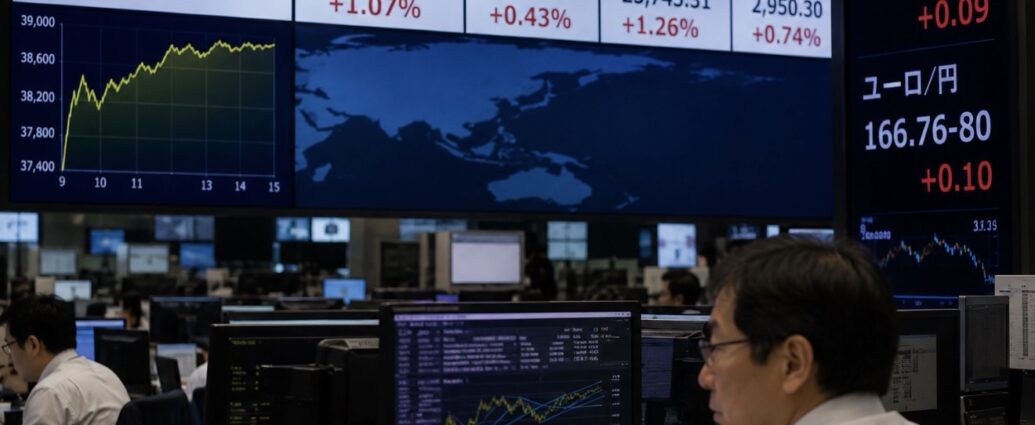
The Nikkei 225 topped 62,000 for the first time, leading a broad regional rally as investors bet that a U.S.-Iran peace framework is within reach — a development that could ease oil prices, unclog global shipping lanes, and lift economic growth worldwide.

Asian equity markets surged Wednesday, climbing to record levels as Japan returned from its extended Golden Week holiday to a world that looked considerably more optimistic than when it left.

The driving force behind the rally: growing investor confidence that President Donald Trump and Tehran are moving closer toward a framework agreement to end a conflict that has rattled financial markets, disrupted energy supplies, and clouded the global economic outlook since hostilities erupted in late February.

Japan’s Nikkei 225 soared more than 5%, briefly topping 62,000 for the first time in history as investors rushed back into technology, industrial, financial, and materials shares.

The broader MSCI Asia Pacific Index climbed 0.7%, with Tokyo’s powerful catch-up rally helping fuel gains across the region as markets increasingly priced in the possibility of lower oil prices and improved global growth prospects tied to easing Middle East tensions.

Japan’s Holiday Return Sparks Massive Catch-Up Rally

Part of Wednesday’s sharp move in Tokyo reflected timing.

During Japan’s Golden Week market closure, several major geopolitical developments unfolded, including reports suggesting the United States and Iran were nearing the outlines of a possible diplomatic framework agreement.

Japanese investors effectively had to compress several days of global market repricing into a single trading session.

Before the holiday break, the Nikkei had closed at 59,513 after already posting strong gains throughout 2026. The benchmark has emerged as one of the world’s strongest-performing major indices this year, driven by robust corporate earnings, favorable currency dynamics, and renewed global enthusiasm for Japan’s semiconductor and AI-related supply chain exposure.

International institutional investors have increasingly treated Japan as one of the clearest indirect beneficiaries of the global artificial intelligence infrastructure boom.

South Korea Set the Tone

While Tokyo markets were closed, South Korea offered traders an early preview of what was coming.

The Kospi index surged more than 6% to fresh record highs during Japan’s holiday period, led by powerful gains in semiconductor and AI-related technology stocks.

Samsung Electronics jumped sharply and crossed the $1 trillion market capitalization threshold, becoming only the second Asian company after Taiwan Semiconductor Manufacturing Co. to achieve that milestone.

The move reinforced broader investor confidence surrounding the AI supply chain, which remains one of the strongest global market themes entering the second half of 2026.

Given the deep ties between Japanese and Korean semiconductor industries, investors widely viewed South Korea’s rally as a leading signal for how Tokyo markets would react once trading resumed.

Oil Drops as Markets Price in De-Escalation

One of the most significant reactions unfolded in energy markets.

Brent crude fell roughly 1.6% to near $108 per barrel as traders increasingly bet that tensions in the Middle East could ease if negotiations continue progressing.

Lower oil prices would carry major implications for the global economy.

Cheaper energy reduces inflationary pressure on consumers, lowers transportation and manufacturing costs, improves corporate profit margins, and gives central banks greater flexibility on interest rates.

For import-heavy Asian economies such as Japan and South Korea, lower oil prices can act almost like an economic stimulus.

Currency markets also reacted sharply.

The Japanese yen strengthened more than 1% against the U.S. dollar to approximately 155.85, reviving speculation that Japanese authorities may again intervene in currency markets following recent efforts to stabilize the yen.

A stronger yen creates a mixed picture for Japan’s economy. It can pressure exporters by reducing overseas profit competitiveness while simultaneously helping consumers through cheaper import costs.

Why Markets Care So Much About Iran

Global investors have closely monitored developments surrounding the Iran conflict because of the enormous economic stakes attached to the Strait of Hormuz.

Roughly one-fifth of the world’s oil supply moves through the strategic waterway.

Any prolonged disruption threatens shipping routes, global energy markets, supply chains, insurance costs, freight pricing, and inflation expectations worldwide.

Recent reports indicating that the U.S. suspended certain military operations while allowing room for renewed diplomacy significantly improved investor sentiment.

Markets increasingly view a potential agreement not simply as a geopolitical development, but as a broad economic stabilizer.

A successful deal could lower freight and insurance costs, improve business confidence, reopen high-margin Middle Eastern consumer markets, and reduce supply chain uncertainty that has weighed on industries ranging from luxury goods to semiconductors and aviation.

China Adds More Fuel to the Rally

Asia’s momentum also received support from stronger-than-expected economic data out of China.

China’s economy expanded 1.3% during the first quarter of 2026 following 1.2% growth in the prior quarter, supported by continued government stimulus and infrastructure spending.

The data mattered especially for Japan, whose export-heavy economy remains deeply tied to Chinese demand.

Improving Chinese growth expectations tend to lift Japanese industrials, machinery makers, electronics firms, and semiconductor suppliers.

What Investors Are Watching Next

With Japan now fully back online after the holiday break, markets are turning their attention toward whether diplomatic momentum between Washington and Tehran can continue.

Investors will also closely monitor AI-related technology names across Asia, including SoftBank Group, Tokyo Electron, and major semiconductor suppliers tied to Nvidia and broader hyperscaler infrastructure spending.

For now, the message from Asian markets is unmistakable:

Investors increasingly believe the worst phase of the Iran conflict may be passing — and they are positioning for a world where oil flows more freely, inflation pressures ease, and the global AI investment cycle accelerates once again.

JBizNews Desk

Former U.S. Representative Marjorie Taylor Greene (R-Ga.) on Wednesday amplified allegations of insider trading tied to escalating tensions in the Middle East, following claims that traders placed nearly $920 million in bearish crude oil bets shortly before reports surfaced of a possible U.S.-Iran agreement.

Greene Raises Questions About Timing And Size Of Bet

In a post on X, Greene wrote, “When is everyone going to start realizing that the manic on again off again war/peace rhetoric is really just insider trading? And sprinkle in some murder.”

She added that only “a select few in the top tax bracket” benefit from the volatility, while most Americans do not.

Full story available on Benzinga.com

This post was originally published here
Losing a job can force people to rethink everything. For one 33-year-old, it sparked a spirited question: what if she skipped the traditional job search entirely and moved abroad instead?

Posting on Reddit, she explained she has about $180,000 invested in a growth portfolio and is considering shifting into dividend stocks to generate roughly $1,800 a month. With estimated living costs in Vietnam between $700 and $1,000, she asked, “Can I move to Vietnam and live off dividends?” 

Reality Check From Investors

“Finding work in the States feels a bit hopeless right now, so I’m considering retiring early in Vietnam,” she added. “Since I have a Vietnamese passport, visas aren’t an issue. It almost feels too good to be true that I could just move my money into dividends and live off it for the rest of my life.”

Don’t Miss:

  • Most Retirement Plans Ignore Taxes — See If Yours Does
  • Discover How AI Can Turn Your Investment Ideas Into Tradable Assets — See How

The response was immediate and, in many cases, harsh. While some said the idea could work in theory, most warned that the plan comes with serious risks.

One commenter summed up a major concern: “You’re way too young to enter this part of your life and simply don’t have enough money.” Another added, “You have zero margin of safety baked into your calculations.”

A big issue is the assumption that the projected income is stable. The fund she mentioned, NEOS Nasdaq-100 High Income ETF (NASDAQ:QQQI), generates income using options strategies, not traditional dividends. That means payouts can fluctuate. 

“Distributions aren’t guaranteed,” one person said. “They can go up or down.”

Several people pointed out that a market downturn could hit from multiple angles at once. If the portfolio drops in value, the income tied to it could fall as well. One commenter laid out a worst-case scenario where a major correction cuts both income and principal, leaving her “with less income AND less principal” at the same time.

Another common concern was the high yield itself. Many questioned whether a roughly 12% return is sustainable long-term. 

Trending: Why Traders Are Flocking to Leveraged ETFs — And What It Means for You

A More Realistic Approach

Despite the criticism, not everyone dismissed the idea entirely. A common middle-ground view emerged: the plan could work, but not as a full retirement.

Instead, many suggested treating it as “semi-retirement” or a financial runway. “You’re not retired, but you have breathing room to figure it out,” one Redditor wrote. In that scenario, dividends could cover part of her expenses while she picks up part-time or remote work.

Even small amounts of extra income could make a big difference. Earning an additional $10,000 to $20,000 a year could meet all her expenses while allowing investments to keep growing.

The original poster added that if she really needed to add extra income, she could probably find work in Vietnam, making $500 a month.

Others emphasized diversification. Going “all in” on a single fund was widely seen as risky. “Putting 100% of your net worth into a single 2-year-old untested fund, with no diversification, no cash buffer, in a foreign country with $500/month job prospects, isn’t investing,” one reply warned. “It’s gambling your entire financial future.”

See Also: More Than Half of Americans Aren’t Prepared for Retirement — Including 62% …

Full story available on Benzinga.com

This post was originally published here

The U.S. has crossed a threshold that is hard to ignore: the national debt is now larger than the entire economy. As of the end of March, debt reached 100.2% of gross domestic product, a level not seen since the aftermath of World War II, with total national debt now surpassing $39 trillion. At the same time, public anxiety is growing, with some Americans openly questioning what options are left.

“I don’t see a way out of the 40 trillion in debt,” one person wrote in a recent Reddit thread as the national debt is on track to hit $40 trillion by the November elections, according to some estimates. 

A Big Problem With No Easy Answer

In simple terms, devaluation means your money slowly buys less, usually because of inflation or decisions made by the government and central bank.

Don’t Miss:

Many commenters in the Reddit thread argued that this is already happening. “It’s not that stocks and home prices just keep going up, it’s that the value of the dollar keeps going down,” one person wrote, reflecting a widely shared view that inflation is quietly doing the work of reducing the debt burden.

Others argued that this isn’t new. “We’ve been devaluing our currency the second we got off the gold standard,” one person said, while another added, “Currency devaluation has been happening since fiat money was created.” 

The idea that the system is built around a gradual loss of purchasing power came up repeatedly.

“I used to think gold standard people were weird,” the original poster responded. “But a lot of our economic problems started up right after the 70s.” 

“This is what happens when you remove safeguards and stability by giving politicians the freedom to start arbitrarily messing with things to suit their own agendas,” the same commenter pushed further. “Fifty years later, here we are.”

See Also: See how a tax-aware retirement strategy could help improve your 2026 outlook — match with a financial adviser today.

There is also a debate about whether currency devaluation would be intentional or just a byproduct of policy. “Inflation is the decrease in the value of currency over time,” one person said. “Devaluation is intentionally causing inflation as an economic tool.”

Still, not everyone agrees that devaluation is the only path. Some argue the U.S. can manage its debt as long as it continues to pay interest and maintain economic growth. “The U.S. doesn’t need a ‘way out’ of 40 trillion debt, it just needs to manage interest payments,” one commenter said, pushing back against the more alarmist views.

Others continue to argue for higher taxes on the wealthy or spending cuts, though those ideas remain politically difficult. “We need a combination of both cutting spending and raising taxes,” another commenter wrote, reflecting a more balanced approach.

For now, the debate isn’t going away. More people are paying attention, and the tone is starting to change. As the debt keeps climbing and the options feel more limited, a growing number of people are asking a simple question: …

Full story available on Benzinga.com

This post was originally published here

A tenant who had quietly lived in the same apartment for over a decade suddenly found themselves at the center of a bizarre dispute with their landlord, not for breaking rules, but for failing to do the landlord’s job.

“Landlord is mad at me because I didn’t remind him to kick me out,” the tenant wrote in a recent Reddit post, describing how a routine lease renewal turned into an unexpected win.

Lease Deadline Backfires On Landlord

The tenant explained that after more than 10 years without major issues, they recently signed a new five-year lease. What they didn’t realize at the time was that the landlord had actually intended to remove them from the property.

Don’t Miss:

According to the post, the landlord missed the legal deadline to terminate the lease. Because of that, the contract automatically extended, leaving eviction as the only remaining option.

“Welp, I guess I got lucky for once,” the tenant wrote.

Things escalated weeks later when the landlord showed up unannounced and launched into a series of complaints. Some were minor, even strange.

He criticized the terrace for having too many leaves and even the placement of a couch, claiming “the walls can’t breathe.” The tenant added that the landlord had seen the same furniture arrangement for years without issue.

But the most surprising moment came when the landlord admitted he wanted the tenant out to renovate the unit and convert it into a cafe, and then blamed the tenant for not reminding him about the lease deadline.

“He admitted he didn’t know whether the contract says I have to do that (it doesn’t), but apparently, he very much felt like I should be obligated to,” the tenant wrote.

Trending: Small differences in withdrawal and tax strategy can significantly impact long-term retirement income — see where you stand today.

Tenants Say This Behavior Is Common

“He gets money for being a landlord but doesn’t want the responsibility that comes with being a landlord?” one commenter wrote. “You know like knowing when leases end?”

Others pointed to what they see as a misunderstanding of “passive income.” As one person put it, “They take the concept of ‘passive income’ a little too far and get pissy when they’re asked to do like, the legal bare minimum.”

The thread quickly filled with similar stories. Some tenants said they were blamed for broken appliances, unsafe conditions or even utility issues that were clearly the landlord’s responsibility.

One commenter recalled being told a malfunctioning refrigerator was caused by placement, while a repair technician later confirmed it was defective from the factory. Another said their landlord blamed them for a leaking toilet that turned out to be improperly installed.

The tenant, however, wasn’t interested in helping their landlord fix his mistake.

“It’ll be a cold day in hell when I start watching out for the interests of my landlord,” they wrote.

When “Passive …

Full story available on Benzinga.com

This post was originally published here

On Wednesday, Biote (NASDAQ:BTMD) discussed first-quarter financial results during its earnings call. The full transcript is provided below.

This transcript is brought to you by Benzinga APIs. For real-time access to our entire catalog, please visit https://www.benzinga.com/apis/ for a consultation.

Access the full call at https://event.choruscall.com/mediaframe/webcast.html?webcastid=snJG6x3j

Summary

Biote experienced an 8.3% revenue decline to $44.9 million, primarily due to a 13.2% drop in procedure revenue caused by a voluntary product recall affecting hormone pellet supply.

Despite the recall, dietary supplement revenue grew by 19.1%, driven by e-commerce channel expansion.

The company maintains its 2026 revenue forecast above $190 million and expects procedure revenue growth in the second half of 2026, attributing the confidence to restored supply levels and new practitioner training sessions.

Full Transcript

Brett

For our top clinics, we have introduced a series of measures aimed at improving retention and supporting stronger lifetime revenue outcomes. We are enhancing our commercial framework to reinforce the value proposition Biote can offer to our leading practitioners. New practitioner training sessions remain at near full capacity, underscoring continued practitioner interest in our bioidentical hormone optimization and healthy aging solution offerings. Because the number of newly trained practitioners is a leading indicator of future procedures in dietary supplement sales, this high level of engagement further strengthens our belief that we are on the right path to restore revenue growth. As a reminder, once a practitioner is fully trained, it typically takes about six months for that new practitioner to begin to contribute meaningfully to our financial performance. As we continue to invest in our commercial team, one of our key objectives is to elevate the quality of our sales pipeline. Over the past several months we have seen clear evidence of progress with higher value OB-GYN and general practitioners representing a growing share of our pipeline. This reflects a more disciplined qualification process as well as our focus on recruiting practitioners with greater long term revenue contribution potential. We believe our efforts to enhance our sales pipeline should translate into more predictable performance as we increasingly support practitioners whose clinical specialties more closely align with our suite of product offerings. In summary, while our first quarter performance fell short of our expectations due to the voluntary product recall, we continued to move forward on key initiatives that support our long term strategy. I am confident that our strategic investments and actions are expected to strengthen our capabilities and lay the groundwork for what we anticipate will be a return to growth in the second half of the year. I’ll now turn the call over to Bob to review the first quarter results.

Bob

Thank you Brett and good afternoon everyone. Unless otherwise noted, all quarterly financial comparisons in my prepared remarks are made against the first quarter of 2025. Revenue decreased 8.3% to $44.9 million with procedure revenue declining 13.2% to $31.3 million, which included a $1.7 million impact related to the voluntary recall of certain hormone pellets shipped by Asteria Health. Procedure revenue was primarily impacted by the following 1 lower procedure volume in existing clinics which includes the impact of hormone pellet supply constraints related to the recall and 2 slower productivity from new clinics. As our sales reps focused on supporting recall impacted clinics, dietary supplement revenue grew 19.1% to $11.0 million. The increase was primarily driven by the continued growth of our E commerce channel. Overall, we continue to forecast our dietary supplement revenue will grow at mid to high single digit rate for the 2026 year gross profit margin was 68.9% compared to 74.3%. The decrease was primarily due to $1.1 million of incremental cost related to the recall. In the first quarter, Asteria Health produced approximately 30% of our shipped pellets as compared to over 50% in the fourth quarter of 2025. As Brett noted, we anticipate fully restoring Asteria Health’s supply continuity by the end of the second quarter. As a result, we expect our second quarter product mix will will continue to include an elevated level of third party supply which will impact second quarter gross margin. Our goal remains to meet customer needs through the vertical integration of Asteria Health. Selling general and Administrative expenses increased 4.1% to $27.8 million. The increase reflected higher legal expense and $0.4 million of SG&A costs associated with the product recall. Net income was $2.7 million and diluted earnings per share attributed to Biot Corp. Shareholders was $0.06. This compares to net income of $15.8 million in diluted earnings per share attributed to Biot Corp. Stockholders of 37 cents. Net income for the first quarter of 2026 included a gain of $2.1 million due to changes in the fair value of the earnout liabilities. By comparison, net income for the first quarter of 2025 included a gain of $10.7 million due to changes in the fair value of the earn out liabilities. Adjusted EBITDA decreased to $8.7 million with an adjusted EBITDA margin of 19.4% due to lower sales, reduced gross profit and higher operating expenses. Cash flow from operations in the first quarter was $3.9 million as of March 31, 2026. Cash and cash equivalents were $5.3 million as Biote fully repaid the remaining amount due under its share repurchase liabilities in January 2026. Now turning to our financial outlook for 2026, we maintain our guidance forecasting 2026 revenue above $190 million and 2026 adjusted EBITDA of greater than $38 million with respect to our 2026 revenue outlook procedure revenue is expected to return to growth in the second half of 2026 unchanged from our prior guidance. Based on current trends, we now expect first half procedure revenue growth to be moderately lower than previously forecast due to the temporary impact of the voluntary product recall and related supply constraints. Dietary supplement revenue is expected to grow at a mid to high single digit rate from 2025. I’ll now turn the call back to Brett for his closing comments.

Brett

Thanks, Bob. While we continue to address temporary impacts from the recall, we remain focused on the priorities that will strengthen our business for the long term. Our continued investments in commercial talent, technology and practitioner support are creating a stronger platform for future execution. With this foundation in place, I believe Biote is well positioned to better serve our practitioners, improve our financial performance, and create value …

Full story available on Benzinga.com

This post was originally published here

Kemper (NYSE:KMPR) reported first-quarter financial results on Wednesday. The transcript from the company’s first-quarter earnings call has been provided below.

Benzinga APIs provide real-time access to earnings call transcripts and financial data. Visit https://www.benzinga.com/apis/ to learn more.

Access the full call at https://events.q4inc.com/attendee/496484973

Summary

Kemper reported a GAAP net loss of $1.7 million, or $0.03 per share, with adjusted consolidated net operating income of $12.5 million, or $0.21 per share. Excluding Florida refunds, adjusted net operating income was $34.6 million, or $0.59 per share.

Key operational focus includes improving personal auto margins, diversifying outside of California, and reducing expenses. The company has implemented rate increases in California and expanded personal auto products into Florida and Texas.

Commercial auto achieved record production, exceeding $1 billion in trailing 12-month written premium for the first time, with a strong underlying combined ratio of 92.4%.

Kemper Life continues to deliver consistent results, with operating income of $18 million supported by lower expenses and favorable mortality and lapse experience.

Strategic investments include launching new products like BVP and enhancing digital tools for customers and agents to improve efficiency and customer experience.

The restructuring program aims for run rate savings of over $60 million, with significant emphasis on expense reduction and claims efficiency.

Management highlighted challenges in California due to increased liability limits but sees positive developments in Florida and Texas with profitable growth.

The call also focused on ongoing CEO search and new CIO appointment to support technology strategy.

Full Transcript

OPERATOR

Of state law that requires insurers, if profits exceed certain thresholds over a three year period to return a portion of profits to policyholders. Last quarter we explained how tort reforms enacted in 2023 have reduced loss costs and made the Florida market more competitive. Brad will discuss the effect of these refunds on our financial results. Importantly, our current auto business in Florida is performing well and the rate adjustments we’ve made are leading to profitable growth. Matt will share more on Florida in a bit. As for our personal auto business in California, the increases in minimum liability insurance limits that went into effect in January 2025 continue to complicate and exacerbate loss costs. We believe we have a good grasp of the issue and are taking targeted actions to respond, including rate changes that are coming into the market in the second quarter, underwriting, refinements and claims process adjustments. The benefits of these changes will take time to be clearly visible in results. Matt will have more to share with you on California While we clearly need to improve the California Personal Auto results, there are bright spots in our business that should be noted. Among items we are encouraged by are the continued strong growth and attractive results of our commercial auto business, which just finished its best production quarter ever. Kemper Life continues to deliver solid, consistent results and remains a source of diversified earnings. And while the specialty personal auto results as a whole were not where we wanted them to be, we did see positive developments with profitable Policies in Force growth in Florida and Texas, rate approvals in California, and new product expansion that went live in Florida and was approved for rollout in Texas. On our earnings call in February, we outlined a number of enterprise priorities. We are making progress on our actions to improve results, enhance operational execution, and reduce earnings volatility through diversification. As I noted, we are focused on growing profitably and reducing earnings volatility. As we reposition our personal auto book, we expect California to represent a smaller percentage of our overall portfolio. It will remain our largest market for the foreseeable future and we continue to see value in our presence there. Given the size of the market and our differentiated expertise in operating in the state, the restructuring program we launched last fall is well underway and to date we’ve identified cumulative run rate savings of more than 60 million, the majority of which has already been actioned. We continue to expand this program to further optimize operations and increase efficiency. We were also engaged in a comprehensive review of our end to end claims processes. We have identified and are executing on some early opportunities to reduce loss costs. Brad and Matt will provide more detail on the actions we are taking which will protect and advance our competitive advantages, enhance profitability, enable growth and ultimately create value for our shareholders. Brad, over to you.

Tom

Thank you, Tom and good afternoon everyone. Let me start with a clear perspective on our performance this quarter. While results did not meet expectations, the shortfall was driven by two specific issues. Outside of these, the broader business is performing well. I’ll walk through those items, what we’re doing to address them, and what’s working well. I’ll begin on slide 5 with Personal Auto performance, this quarter was primarily impacted by elevated loss costs in California and statutory premium refunds in Florida. In California, the environment remains our most significant headwind. The increase in minimum liability limits effective January 1, 2025 has led to greater attorney involvement in claims and higher loss costs. This trend has developed over several quarters and we are addressing it through rate and non rate actions. Along with targeted claims process improvements. In Florida, the 2023 tort reform has materially improved PIP coverage performance. As a result, profitability exceeded regulatory thresholds for the most recent rolling three year periods. Subsequently, we increased our policyholder premium refund liability for accident years 2023 through 2025 and establish a new liability for 2024 through 2026 reflecting our current loss expectations, we are taking actions to improve personal auto performance in California and outside of that market. Results remain solid. In Florida and Texas. Two key personal auto growth states policies in force increased 4.9% sequentially with an underlying combined ratio of 93.7%, reflecting continued growth at attractive returns. In commercial auto performance remains strong. We achieved record production and exceeded 1 billion in trailing 12 month written premium for the first time. Policies enforced increased 3.2% sequentially and 10% year over year with a strong underlying combined ratio of 92.4%. In life, results were stable with operating income of 18 million supported by lower expenses and favorable mortality and lapse experience. From an investment perspective, net investment income was 107 million, up 4 million sequentially, primarily reflecting stronger alternative investment performance. In total, we reported a GAAP net loss of 1.7 million or $0.03 per share. Adjusted consolidated net operating income was 12.5 million or $0.21 per share. Excluding the impact of Florida refunds, adjusted net operating income was 34.6 million or $0.59 per share. Turning to slide 6, over the past several quarters we have taken and continue to take actions to improve profitability, reduce earnings volatility and support growth. Our focus is on three areas restoring personal auto margins diversifying outside of California Reducing expenses to improve margins we have implemented non rate actions and filed for rate. In California, we received approval for a 6.9% rate increase on 2/3 of the book effective April 6th. The remaining 1/3 of the book has received approval for a 3% increase effective early June. We expect initial benefits in the second quarter with a more meaningful impact in the second half of the year. We are also advancing portfolio diversification. Our new personal auto product has been expanded into Florida and approved in Texas. This product will improve alignment between rate and risk, helping support growth. At the same time, we are reallocating new business toward more profitable markets and reducing exposure in underperforming states, particularly California. On expenses, we continue executing our restructuring program. We’ve identified approximately 60 million in run rate savings with additional opportunities under evaluation. Moving to Slide 7, this slide outlines our restructuring progress since the third quarter of 2025. I’m going to discuss this in 2 pieces, expenses and loss cost management. On expenses, we are focused on organizational design, process improvements and leveraging technology to increase scalability. We’ve identified 60 million in run rate savings and action to 50 million to date. Our medium term goal is to reduce the specialty auto expense ratio to below 20% from approximately 22% today. Moving to loss costs, we see meaningful opportunity in claims efficiency. With three quarters of premium allocated to …

Full story available on Benzinga.com

This post was originally published here

A Country That Imports 97% of Its Energy Is Now Racing to Build Solar, Wind, and Nuclear Power After the Middle East Conflict Cut Off Its Main Supply Lines — And Everyday Koreans Are Already Feeling the Pain

By JBizNews Desk | Seoul — May 6, 2026

For decades, South Korea’s economic rise has depended on a fragile reality: the country produces almost none of its own energy. Now, as conflict in the Middle East disrupts global supply routes, that vulnerability is being felt across one of the world’s most advanced economies — and forcing a rapid rethink of how the country powers itself.

South Korea imports roughly 97% of its energy needs, with a significant share coming from the Middle East. That dependence has left it highly exposed as tensions around the Strait of Hormuz threaten oil and gas flows critical to its economy.

What had long been a known risk has now become an immediate challenge.

The Scale of the Problem

South Korea’s energy system is deeply tied to global markets. A large portion of its oil and a meaningful share of its natural gas are sourced from Gulf nations, meaning any disruption quickly feeds into domestic costs.

The impact is already visible. Rising energy costs are pushing up fuel prices, increasing electricity bills, and raising operating expenses for industries that rely heavily on imported energy — including manufacturing, shipping, and aviation.

Airlines have entered emergency cost-management modes, while consumers are being encouraged to reduce energy usage in daily life. The ripple effects extend from household budgets to the broader industrial economy that underpins South Korea’s export strength.

What the Government Is Doing

President Lee Jae Myung has framed the situation as a turning point.

“The Republic of Korea must move very quickly toward renewable energy,” he said at a recent public forum, warning that continued reliance on imported fossil fuels puts the country’s long-term stability at risk.

The government is accelerating its push toward clean energy, with increased emphasis on solar, wind, and electric vehicle adoption. Officials have described the current crisis as an opportunity to fundamentally reshape the country’s energy mix.

Kim Sung-hwan, South Korea’s Minister of Climate, Energy and Environment, said the moment should be used to drive a “fundamental energy transition,” calling the situation a catalyst for long-delayed structural change.

The country’s long-term goals include expanding renewable energy’s share of electricity generation and reducing reliance on coal, while also maintaining a significant role for nuclear power.

The Role of Nuclear Power

Nuclear energy remains central to South Korea’s strategy.

Under current plans, multiple new reactors — including large-scale facilities and smaller modular units — are expected to come online over the next decade. These projects are designed to provide stable, domestic energy capacity that is not subject to global supply shocks.

Nuclear already accounts for a substantial share of South Korea’s electricity generation, and expanding that footprint is seen as a key component of energy security.

The Barriers Are Real

Despite the urgency, the transition will not happen overnight.

Renewable energy expansion is already running into infrastructure constraints, particularly around transmission capacity. Building the necessary grid upgrades — including high-voltage lines to major urban centers — will take years and faces regulatory and local resistance challenges.

Fossil fuels still dominate the current energy mix, and shifting that balance requires sustained investment, policy alignment, and time.

What It Means Beyond South Korea

South Korea’s situation reflects a broader reality across Asia.

Countries heavily reliant on imported energy — including Japan — are facing similar pressures as global supply chains are disrupted. The current crisis is effectively stress-testing the region’s energy systems and exposing long-standing vulnerabilities.

For South Korea, however, the response could have lasting implications.

With strong industrial capacity and advanced technology, the country is well positioned to scale clean energy solutions if it can move quickly. The shift could not only improve energy security but also create new economic opportunities in emerging energy industries.

The Iran conflict did not create South Korea’s dependence on imported energy.

But it has made the consequences impossible to ignore — and accelerated a transition that might otherwise have taken decades.

JBizNews Desk
© JBizNews.com. All rights reserved.

Private credit has exploded into a $2 trillion market, quietly becoming one of the largest sources of corporate financing—yet it has never faced a true economic downturn.

On the surface, the system looks stable, backed by banks, insurers, and private equity firms—but beneath it lies a complex web of risk that regulators struggle to track.

The market’s rapid growth is fueled by its ability to provide tailored financing to companies with higher credit risks or limited collateral, according to the Financial Stability Board. That flexibility has powered the boom—but it’s also raising alarms.

Investors are increasingly requesting redemptions from private credit funds, a dynamic the FSB warns could trigger a downward spiral: forced asset sales depress valuations, amplify losses, and erode confidence, especially if managers impose gates or suspend withdrawals.

data-variant=”card”
data-news-mode=”manual”

>


Read Also:

SpaceXAI And Anthropic Just Made A Deal That Could Push AI Beyond Earth

This post was originally published here

Sports betting and iGaming giant Flutter Entertainment PLC (NYSE:FLUT) reported first-quarter financial results Wednesday after market close.

Here are the key highlights.

Flutter Q1 Financials

Flutter reported first-quarter revenue of $4.30 billion, up 17% year-over-year. The revenue total beat a Street consensus estimate of $4.29 billion, according to data from Benzinga Pro.

U.S. revenue was $1.76 billion in the quarter, up 6% year-over-year, with sportsbook growth of 1% and iGaming growth of 19%.

International revenue was $2.54 billion in the quarter, up 27% year-over-year, with sportsbook growth of 22% and iGaming growth of 32%. The company said the segment was boosted by M&A.

The company reported first-quarter earnings per share of $1.22, beating a Street consensus estimate of $1.20.

Flutter had 14.38 million average monthly players in the quarter, down 3% year-over-year.

Flutter’s FanDuel ended the quarter as the number one sportsbook and iGaming …

Full story available on Benzinga.com

This post was originally published here

In today’s rapidly changing and fiercely competitive business landscape, it is essential for investors and industry enthusiasts to thoroughly analyze companies. In this article, we will conduct a comprehensive industry comparison, evaluating Apple (NASDAQ:AAPL) against its key competitors in the Technology Hardware, Storage & Peripherals industry. By examining key financial metrics, market position, and growth prospects, we aim to provide valuable insights for investors and shed light on company’s performance within the industry.

Apple Background

Apple is among the largest companies in the world, with a broad portfolio of hardware and software products targeted at consumers and businesses. Apple’s iPhone makes up a majority of the firm sales, and Apple’s other products like Mac, iPad, and Watch are designed around the iPhone as the focal point of an expansive software ecosystem. Apple has progressively worked to add new applications, like streaming video, subscription bundles, and augmented reality. The firm designs its own software and semiconductors while working with subcontractors like Foxconn and TSMC to build its products and chips. Slightly less than half of Apple’s sales come directly through its flagship stores, with a majority of sales coming indirectly through partnerships and distribution.

Company P/E P/B P/S ROE EBITDA (in billions) Gross Profit (in billions) Revenue Growth
Apple Inc 34.40 39.19 9.34 52.0% $39.32 $54.78 15.65%
SanDisk Corp 48.06 15.12 16.19 8.2% $4.15 $4.66 61.25%
Seagate Technology Holdings PLC 73.15 157.88 15.77 96.27% $1.0 $1.45 10.16%
Western Digital Corp 27.84 16.57 14.86 27.66% $3.49 $1.68 25.24%
Everpure Inc 135.69 17.15 6.99 7.04% $0.15 $0.74 20.35%
NetApp Inc 19.15 19.45 3.45 31.16% $0.51 $1.21 4.39%
Super Micro Computer Inc 14.65 2.21 0.55 5.93% $0.55 $0.8 123.36%
Logitech International SA 21.96 6.99 3.23 11.36% $0.31 $0.61 6.06%
Diebold Nixdorf Inc 26.73 2.62 0.74 4.49% $0.07 $0.21 11.66%
Turtle Beach Corp 15.70 1.87 0.77 14.73% $0.02 $0.05 -18.69%
Average 42.55 26.65 6.95 22.98% $1.14 $1.27 27.09%

Full story available on Benzinga.com

This post was originally published here
Amidst today’s fast-paced and highly competitive business environment, it is crucial for investors and industry enthusiasts to conduct comprehensive company evaluations. In this article, we will delve into an extensive industry comparison, evaluating SanDisk (NASDAQ:SNDK) in comparison to its major competitors within the Technology Hardware, Storage & Peripherals industry. By analyzing critical financial metrics, market position, and growth potential, our objective is to provide valuable insights for investors and offer a deeper understanding of company’s performance in the industry.

SanDisk Background

Sandisk is one of the five largest suppliers of NAND flash memory semiconductors globally. Sandisk is vertically integrated, producing substantially all of its flash chips at manufacturing sites across Japan via a joint-venture framework with Kioxia. Sandisk then repackages most of its chips into SSDs for consumer electronics, external storage, or cloud storage. Sandisk was formerly a piece of Western Digital for nine years (after being acquired in 2016) and was spun off as an independent company in 2025.

Company P/E P/B P/S ROE EBITDA (in billions) Gross Profit (in billions) Revenue Growth
SanDisk Corp 48.06 15.12 16.19 8.2% $4.15 $4.66 61.25%
Apple Inc 34.40 39.19 9.34 52.0% $39.32 $54.78 15.65%
Seagate Technology Holdings PLC 73.15 157.88 15.77 96.27% $1.0 $1.45 10.16%
Western Digital Corp 27.84 16.57 14.86 27.66% $3.49 $1.68 25.24%
Everpure Inc 135.69 17.15 6.99 7.04% $0.15 $0.74 20.35%
NetApp Inc 19.15 19.45 3.45 31.16% $0.51 $1.21 4.39%
Super Micro Computer Inc 14.65 2.21 0.55 5.93% $0.55 $0.8 123.36%
Logitech International SA 21.96 6.99 3.23 11.36% $0.31 $0.61 6.06%
Diebold Nixdorf Inc 26.73 2.62 0.74 4.49% $0.07 $0.21 11.66%
Turtle Beach Corp 15.70 1.87 0.77 14.73% $0.02 $0.05 -18.69%
Average 41.03 29.33 6.19 27.85% $5.05 $6.84 22.02%

Full story available on Benzinga.com

This post was originally published here

Lucky Strike (NYSE:LUCK) held its third-quarter earnings conference call on Wednesday. Below is the complete transcript from the call.

This transcript is brought to you by Benzinga APIs. For real-time access to our entire catalog, please visit https://www.benzinga.com/apis/ for a consultation.

The full earnings call is available at https://events.q4inc.com/attendee/210187994

Summary

Lucky Strike reported a second consecutive quarter of positive same-store sales, with total revenue increasing to $342.2 million despite disruptions from winter storms and geopolitical events.

The company has implemented significant cost-saving measures, including a reduction of 97,000 labor hours and $6 million in annualized savings from headcount reductions, aided by their AI system, ORCA.

Future guidance has been adjusted to account for macroeconomic challenges, with expectations for 4-5% revenue growth, $345-$350 million in adjusted EBITDA, and $120 million in capital expenditures.

Operational highlights include progress in brand consolidation with 115 Lucky Strike conversions and improvements in water parks expected to add $18 million in incremental EBITDA.

Management is focused on increasing free cash flow per share to $2 over the next 12 months, leveraging EBITDA growth, CapEx discipline, and opportunistic share repurchases.

Full Transcript

OPERATOR

Ladies and gentlemen, thank you for standing by. My name is Desiree and I will be your conference operator today. At this time I would like to welcome everyone to the Lucky Strike Entertainment third quarter 2026 earnings conference call. All lines have been placed on mute to prevent any background noise. After the speaker’s remarks, there will be a question and answer session. If you would like to ask a question during this time, simply press STAR followed by the number one on your telephone keypad. If you would like to withdraw your question again, press star one. I would now like to turn the conference over to Bobby Levin, Chief Financial Officer.

Bobby Levin (Chief Financial Officer)

Good morning to everyone on the call. This is Bobby Levin, Lucky Strikes Chief Financial Officer. Welcome to our conference call to discuss Lucky Strike’s third quarter 2026 earnings. Joining me on the call today is Thomas Shannon, our Founder, Chief Executive Officer and President. I would like to remind you that during today’s conference call you may make certain forward looking statements about the Company’s performance. Such forward looking statements are not guarantees of future performance and therefore one should not place undue reliance on them. Forward looking statements are also subject to inherent risks and uncertainties that could cause actual results to differ materially from those expressed. For additional information concerning factors that could cause actual results to differ from those discussed in our forward looking statements, you should refer to the cautionary statements contained in our press release as well as the risk factors contained in the Company’s filings with the SEC. Lucky Strike Entertainment undertakes no obligation to revise or update any forward looking statements to reflect events or circumstances that occur after today’s call. Also during today’s call, the Company may discuss certain non GAAP financial measures as defined by SEC Regulation G. The GAAP financial measure is most directly comparable to each non GAAP financial measure discussed in. The Reconciliation of the differences between each non GAAP financial measure and the comparable GAAP financial measure can be found on the Company’s website. I’ll now turn the call over to

Tom

Tom thanks everyone for joining today’s call. In the March quarter, We delivered our second consecutive quarter of positive same store sales comp at plus 0.2% and our first back to back positive comp performance since 2024,, total revenue grew to $342.2 million, up from $339.9 million in the prior year period. The quarter started powerfully with January, same store sales up plus 5.5% and we entered February with strong momentum. That momentum was disrupted by an extraordinary stretch of weather and macro events Winter Storm Fern, in late January and Winter Storm Hernando in late February. Each brought widespread closures, travel bans and power outages across markets that account for a meaningful share of our Footprint. Together, the two storms cost us approximately 250 basis points of comp in the quarter. Then on February 28th, large scale military action in the Middle east drove a sharp spike in gasoline prices and consumer confidence fell to its lowest level in 70 years. In this environment, a positive comp is, in our view, a credible outcome. Excluding our west coast markets which faced a sharper consumer drawdown in the quarter, the rest of the company actually performed positively plus 1.9%. As I outlined after our last call, we are committed to taking substantial and immediate action on costs and free cash flow, and that is exactly what we have done. Beginning in mid January and accelerating through the quarter with the help of AI, we have driven a sustained reduction in incentive labor hours, approximately 97,000 hours saved over the last 12 weeks versus the prior year, a more than 16% reduction from where we were peaking in early January. In three months we have also reduced corporate field and sales headcount, generating more than $6 million of annualized savings. The full earnings benefit of these actions will land in our fiscal fourth quarter. ORCA, is one of the most important developments in our business. ORCA, is our internal AI system which aggregates approximately 750 million rows of operational data into a real time decision making layer for our managers. ORCA, is already managing clock ins, clock outs and aggregated guest reviews across our 360plus locations. The early results are tangible. On closeout times alone, we have reduced excess post close hours from approximately 2,000 per week to roughly 300, generating more than $2 million of annualized savings from a single workflow. We see a similar opportunity in the high teens to mid 20 millions of dollars of annual savings from optimizing clocking in time. We’re extending ORCA, into Pricing, Marketing, Creative Purchasing, Arcade optimization and capex rationalization. While AI-related layoffs are creating some softness in corporate event demand, the longer term effects of AI for Lucky Strike will be favorable. There was a developing thesis on Wall street called Halo High Asset Low Obsolescence that captures it well. Our analog bricks and mortar offering is one of the categories most insulated from AI disruption. Our brand consolidation continues to run ahead of schedule. We are now at approximately 115 Lucky Strike conversions out of an ultimate target of 225, with the remainder receiving an upgraded AMF presentation. We expect to be substantially complete with the rebranding work by this time next year. Each conversion runs about $150,000, so on completion we expect a meaningful step down in capital expenditures. Our key operating metric continues to be free cash flow per share, which we measure as a trailing twelve month EBITDA less CAPEX divided by shares outstanding. That figure currently stands at $1.53. Our goal is to reach at least $2 over the next 12 months, a 33% increase through a combination of EBITDA growth, continued CapEx discipline and opportunistic share repurchases, all while keeping net debt flat. Capital expenditures year to date are down 20% versus the prior year, $91 million compared with $114 million the summer also looks materially better year over year. Our water park portfolio is set to add approximately $18 million of incremental EBITDA this summer, with a vast majority in our September quarter. Thus, in fiscal 2027 and our family entertainment centers continue to perform ahead of plan Turning to guidance reflecting the macro reset in the back half of the March quarter,, we are updating our fiscal 2026 outlook. We now expect total revenue growth of plus 4 to 5%, adjusted EBITDA of approximately 345 to $350 million and capital expenditures of approximately $120 million. Gross capital expenditures are down roughly $30 million year over year as we focus on cash flow generation. Importantly, this revision reflects the consumer environment, not our plan. The cost actions are landing on schedule, operating leverage builds as comp recovers and the water parks come online, and we expect to exit the year with materially better cash conversion than when we entered it. With that, let’s turn it over to Q and A.

OPERATOR

Thank you. We will now begin the question and answer session. If you have dialed in and would like to add a question, please press star one on your telephone keypad to raise your hand and join the queue. If you would like to withdraw your question, simply press star one again. If you are called upon to ask your question and are listening via speakerphone in your device, please pick up your handset to ensure that your phone is not on mute when asking your question. We do request for today’s session that you please limit to one question and one follow up question only. Thank you. And our first question comes from the line of Steve Wysinski, with Stifel. Your line is open.

Steve Wysinski (Equity Analyst)

Yeah hey guys, Good morning. So Tom or Bobby, I want to go back to your commentary, Tom. I guess it’s your commentary around the consumer and trying to understand your comments around the slowdown you saw as the Middle east war commenced. And I guess what I’m trying to figure out is that, you know, that type of commentary goes, you know, goes against pretty much, you know, I would say kind of every other leisure company that we, that we cover. You know, think, think most of our, you know, think most other consumer discretionary companies really, you know, haven’t seen much of an impact from the war. So I’m just trying to understand your commentary and the pressure that you saw versus other leisure companies and then maybe what you’ve seen from spend patterns more recently. Meaning, you know, have you seen them stabilize or, you know, and, or improve? Well, good morning. Everyone we’ve spoken to in the space saw a significant fall off greater than ours in March. I know a local proprietor in Southern California with a good demographic. They were down 17% on a comp basis. You know, Dave and Buster’s hasn’t reported the March period yet. That was, that was after their most recent earnings. So I think that actually the, the leisure, leisure based, location based entertainment space took a very big hit. I mean, gas prices on the west coast were as high as $9 and consumer confidence plunged to its lowest level in 70 years. I think it would be, you know, sort of delusional to think that that didn’t have an impact on the consumer in March. Now I think the good news about the consumer is they have a very short memory or they adjust to new realities very quickly. And we saw a very rapid snapback. Our most recent period was effectively flat on a revenue basis. So we were way up in January. Then we got kicked in the teeth by two epic snowstorms that shut us down for days on end across, you know, up to half of the portfolio. And then there was the war where a lot of activity just stopped. We’ve heard again from a lot of operators, particularly those with a lot of west coast exposure, that they were down 20% or more. We weren’t down nearly that much, but yeah, there was an impact on spending and I think it was pretty broad. Okay, thanks for that, Tom. And then second question. You know, I’m wondering, obviously, you know, we can kind of back in. I mean, we have your fourth quarter essential guidance, but can you maybe help us think about the progression of same store sales in terms of the way you guys are kind of thinking about it, you know, maybe now through, you know, through the remainder of the year. Just want to kind of see how you guys are kind of thinking about the next, you know, call it Two or three quarters.

Tom

Yeah. If you look at the cadence, you know, January was up, you know, five and a half percent, February is up 1, March was down 7. April’s flat. You know, we’re, we’re, we’re effectively focused on flat right now as we wait for the consumer to kind of normalize across the shock. You know, that being said, you know, I’m surprised a little bit by your comments to you because, I mean, jet fuel prices are through the roof and airlines are pushing on, so, you know, volume has to be down. Like they may be getting more dollars, but ultimately, you know, as air travel costs rise, consumers are going to stay close to home this summer. So, you know, we should see a tailwind, particularly in our water parks. You know, the one thing that’s important from the water park perspective and a modeling perspective, you know, we have 18 million of EBITDA coming online, but 80% of that comes online in the September quarter.

Steve Wysinski (Equity Analyst)

Okay, gotcha. Thanks, guys. Appreciate it.

OPERATOR

Our next question comes from the line of Jeremy Hamblin with Craig-Hallum Capital. Your line is open.

Jeremy Hamblin (Equity Analyst)

Thanks. Good morning. Just building on the …

Full story available on Benzinga.com

This post was originally published here

On Wednesday, Comstock Resources (NYSE:CRK) discussed first-quarter financial results during its earnings call. The full transcript is provided below.

This content is powered by Benzinga APIs. For comprehensive financial data and transcripts, visit https://www.benzinga.com/apis/.

View the webcast at https://edge.media-server.com/mmc/p/p77w7mi4/

Summary

Comstock Resources Inc reported lower production and financial results in Q1 2026 due to winter weather impacts, with natural gas and oil sales at $339 million.

The company highlighted strong drilling results, with new wells in Western and Legacy Haynesville showing promising initial production rates.

The U.S. Department of Commerce selected the company’s Western Haynesville site for a 5.2 gigawatt natural gas power generation hub, enhancing strategic growth prospects.

Adjusted net income for the quarter was $44 million, or $0.15 per share, excluding a significant unrealized hedge gain.

Comstock Resources Inc is focused on optimizing drilling and completion techniques in the Western Haynesville, emphasizing careful resource management to avoid past mistakes made in other shale plays.

The company is pursuing a new equity partner for its midstream company, Pinnacle Gas Services, to support infrastructure growth.

Management expressed confidence in turning around production declines and maintaining financial stability without resorting to M&A or equity dilution.

Full Transcript

Jay Allison (Chairman and CEO)

Thank you everyone. Thank you for joining us. Welcome to The Comstock Resources First Quarter 2026 Financial and Operating Results Conference Call. You can view a slide presentation during or after this call by going to our website at www.comstockresources.com and downloading the quarterly results presentation. There you’ll find a presentation entitled First Quarter 2026 Results. I am Jay Allison, Chief Executive Officer of Comstock. Here with me is Roland Burns, our President and Chief Financial Officer, Dan Harrison, our Chief Operating Officer and Ron Mills, our VP of Finance and Investor Relations. Please refer to Slide 2 in our presentation and note that our discussions today will include forward looking statements within the meaning of securities laws. While we believe the expectations in such statements to be reasonable, there can be no assurance that such expectations will prove that to be correct. If everyone would please go to slide 3. On slide 3 we summarize the highlights of the first quarter. Lower production Partially driven by production impacts from significant winter weather in the first quarter drove the lower financial results in the quarter compared to the first quarter of 2025. Our natural gas and oil sales were $339 million. We generated 192 million of operating cash flow or $0.66 per share. Adjusted EBITDAX for the quarter was $251 million and we reported adjusted net income of $44 million or $0.15 per share. During the quarter we had very strong drilling results which will drive production back up for the remainder of the year. Almost all the wells we turned to sales in the first quarter were very late in the quarter. Since our last update, we put six new Western Haynesville wells online with an average per well initial production rate of 29 million cubic feet per day. In our legacy Haynesville, we turned 10 wells to sales with an average lateral length of 12,312ft and a per well initial production rate of 31 million cubic feet per day. Now the power generation hub. On March 19th, the United States Department of Commerce selected our Western Haynesville site to host a new 5.2 gigawatt natural gas fired power generation hub to be located in Anderson County, Texas as shown on slide 4. We are very excited about this development and what it means to have a large commercial customer in our backyard. The project is part of Japan’s $550 billion investment commitment in the United States. As part of the U.S.-Japanese trade deal, the U.S. and Japan would own the projects while NextEra Energy Resources will develop, build and operate it. Next year is actively developing the project, advancing site development, procurement, permitting and commercial structuring as they work toward definitive agreements with the US And Japan. This project takes advantage of our abundant natural gas supply and a strong transmission of infrastructure in the area. The Henderson county facility will have up to 5.2 gigawatt of natural gas fire generation capable of serving up to 5 gigawatt of large load demand. Comstock will provide the natural gas supply for the facility which could reach almost 1 billion cubic feet per day by 2031. Roland will now provide some more details on the financial results we reported yesterday.

Roland Burns (President and Chief Financial Officer)

Roland all right, thanks jay. On slide 5 we cover the first quarter financial results. Our production in the first quarter averaged 1.1 BCFE per day. Oil and gas sales after hedging in the quarter were $339 million, reflecting the lower production level we had in the quarter. EBITDAX came in at $251 million and we generated $192 million of cash flow during the first quarter. We reported a $107 million profit for the quarter or $0.38 per share, but included in that number was a pretax $83 million mark to market unrealized gain related to our hedge book. So excluding the mark to market gain exploration expense which is related to seismic that we’re shooting in our western Haynesville play and other non recurring items and the related income tax effect of those items. We reported adjusted net income of $44 million or $0.15 per diluted share for the quarter. On Slide 6, we break down our natural gas price realizations in the quarter. The quarterly weighted average NYMEX settlement price averaged $4.96 in the first quarter and the weighted average Henry Hub spot price was at $4.90. 26% of our gas was sold in the spot market, so the appropriate NYMEX reference price would have been $4.94 for our production. Our realized gas price during the quarter averaged $4.27 reflecting a 69 cent basis differential compared to the NYMEX settlement price and a 67 cent differential compared to the reference price. Significant disconnects existed during the quarter between the regional hub prices and and NYMEX kind of drove the higher differentials in the quarter. We also had to purchase higher priced gas to make up for shut in production during the winter storm event in the quarter. We were also 72% hedged which reduced our realized price down to $3.45. We did improve the overall price realizations by $0.05 to $3.50 with our third party gas sales during the quarter. On slide 7 we detail our operating cost per MCFE and our EBITDAX margin per unit costs were negatively impacted by the lower production level in the quarter as much of our field costs are fixed. Our operating cost per Mcfe averaged $0.93 in the quarter up $0.16 from the fourth quarter rate. Both lifting costs and G and a were up 4 cents attributed to the lower production level. Production AD valorem taxes increased $0.03 due to the higher gas prices in the quarter and our gathering costs were up $0.05 mainly due to some prior period adjustments we recognized. Overall our EBITDAX margin the quarter was 73%. On slide 8 we recapped the spending on our drilling and other development activity in the quarter. We spent a total of $343 million on our drilling program. We drilled 11 or 9.3 horizontal Haynesville wells and 6 or 6 net Bossier wells for a total of 17 wells in the quarter or 15.3 net wells. We turned 13 wells to sales or 11.7 net wells which had an overall average per well IP rate of 31 million per day. Slide 9 We summarize our capitalization at the end of the first quarter. We ended the quarter with $350 million of borrowings outstanding at our upstream credit facility. Our upstream borrowing base is $2 billion and our electric commitment under our facility is 1.5 billion. In March we entered into a new $150 million midstream credit facility for Pinnacle Gas Services. At the end of March, the Midstream Credit Facility had 47 million outstanding. Our last 12 months ratio was 2.9 times. At the end of the first quarter we had almost $1.3 billion of liquidity. I’ll now turn it over to Dan to discuss our operations in the quarter.

Dan Harrison (Chief Operating Officer)

Okay, thanks Roland over on slide 10 this is just our updated overview of our acreage footprint in the Haynesville and Bossier shales across East Texas and North Louisiana. We now have one 174,868 gross acres and 806,980 net acres that are prospective for commercial development of the Haynesville and Bossier shells. On the left is our western Haynesville footprint which we have now grown over 540,000 net acres. On the right is our 266,570 net acres that’s in our Legacy Haynesville area. We currently have 36 wells producing on our western Haynesville acreage which is relatively undeveloped compared to the Legacy Haynesville area. Of course, with the higher pay thicknesses and the very high pressures we encountered in the western Haynesville versus the Legacy core, we expect the western Haynesville will yield significantly more resource potential per section than our Legacy Haynesville. On slide 11 is our current drilling inventory in our legacy Haynesville area. At the end of the first quarter our operating inventory in the Legacy Haynesville now consists of 955 gross locations, 740 net locations which equates to average working interest of 78%. On our non operated inventory, the Legacy Haynesville, we have 819 gross locations with 98 net locations which is a 12% average working interest. Our drilling inventory we split into four buckets. We have our short laterals less than 5,000ft. We have our medium length laterals that are from 5,000 to 8,500ft. Our long laterals are between 8,500 and 10,000ft and our extra long laterals are everything over 10,000ft. In our gross operated inventory in the Legacy Haynesville we now have 30 short laterals, 141 medium laterals, 337 long laterals and 447 extra long laterals. The gross operated inventory is pretty much split 52% in the Haynesville and 48% of our locations in the Bossier. Our legacy Haynesville inventory also includes 114 gross horseshoe locations with 53% of those being in the Haynesville and 47% in the Bossier. Over 80% of our gross operated inventory have laterals that are longer than 8,500ft long. As of today, our average lateral length in Legacy Haynesville inventory has climbed up to 10,019ft. So this inventory provides us with decades of future drilling locations. Based on our current activity levels on slide 12 we show our estimated drilling inventory in the western Haynesville. Our western Haynesville inventory currently consists of 3,331 gross locations, 2,546 net locations which equates to an average working interest approximately 76%. The number of our net locations is estimated since much of our western Haynesville acreage has not yet been unitized. Our western Haynesville inventory is more weighted to the Bossier Formation with nearly two thirds of the inventory in the Bossier Shale and one third of the inventory is in the Haynesville shell. We also have our western Haynesville inventory divided into the four separate groups by length with our short laterals less than 5,000, the medium laterals between 5 and 8,500ft, the long laterals between 8,500 and 10,000ft and the extra long laterals over 10,000ft. So in our western Haynesville gross operated inventory we don’t have any short laterals. Today we got 13 1,319 medium laterals. We have 646 long laterals and 1,366 extra long laterals. So 60% of our Western Haynesville gross operated inventory has the laterals greater than 8,500ft on slide 13. This is just an update to our new horseshoe development program. The horseshoe well design of course combines the two separate and adjacent shorter laterals into a longer single lateral which results in a much more efficient use of our capital. On average we realize 35% savings in our drilling costs when we drill a 10k horseshoe well compared to 25000 foot sectional lateral wells. Our drilling inventory in our legacy Haynesville area Now includes the 114 horseshoe locations. The Camp Tech2914 9 number 2 was turned to sales in the first quarter with a 41 million cubic feet per day IP rate and we plan to drill a total of 16 horseshoe wells total in 2026. On slide 14 there’s a chart outlining our average lateral lengths drilled that are based on when the wells have been drilled to total depth. The average lateral lengths are shown separately for the legacy Haynesville and for the western Haynesville areas. In the first quarter we drilled 12 wells to total depth in our legacy Haynesville area and these wells had an average lateral length of 10,872ft. The individual laterals range from 8,497ft up to 15,772ft. Our longest lateral drill to date on our legacy Haynesville acreage still stands at 17,409ft in the first quarter we also drilled five wells to total depth in the western Haynesville and these wells had an average lateral length of 10,356ft. The individual lengths range from 9,400ft up to 11,393ft through the first quarter. Our longest lateral drilled in the western Haynesville stood at 12,763ft as of last month. We have since exceeded that length in the western Haynesville with a new record lateral length of approximately 14,800ft. The well, which is the Dolly Jones RP1H reached total depth in mid April and we have it scheduled for completion later this summer. So to date we have drilled 47 wells to total depth in the western Haynesville. That includes 21 wells with laterals over 10,000ft and seven of the wells had laterals over 12,000ft. Slide 15 this outlines the 10 wells that we turned to sales on our Legacy Haynesville acreage since our last call. The average lateral length on these was 12,312ft and the individual laterals range from the low end of 9,465ft up to a high of 15,143ft. The individual IP rates on these wells range from a low of 15 million a day up to a high of 41 million a day and the average IP was 31 million. Today and five of our nine rigs are drilling on the Legacy Haynesville acreage. Slide 16 this one outlines the six wells that we have turned to cells on our western Haynesville acreage since the last call. So these six wells had an average lateral length of 10,874ft with an average initial production rate of 29 million cubic feet per day. And we have four of our nine rigs are currently drilling on our western Haynesville acreage. On slide 17. This highlights the average drilling days and our average footage drilled per day in the Legacy Haynesville area. And this is for our benchmark long lateral wells that are greater than 8,500ft long. In the first quarter we drilled 12 of our benchmark long lateral wells to total depth in the Legacy Haynesville area and we averaged 26 days to TD. In the first quarter we averaged 921ft drill per day in our Legacy Haynesville acreage which represents a 3% increase versus the fourth quarter of 2025. Four of the wells drilled in the first quarter were our horseshoe wells which do take takes a few extra days compared to our normal straight levels. Slide 18 this highlights our drilling progress in the western Haynesville. During the first quarter we drilled five wells to total depth in the western Haynesville. This now gives us a total of 44 wells that we have drilled to total depth through the end of the first quarter. We averaged 57 days for the 5 wells drilled to total depth during the first quarter. This is an increase of 3 days compared to the fourth quarter. You can see this is also reflected in the drilling speed of 478ft per day during the first quarter which is 4% lower than the fourth quarter. Aside from drilling issues we have our quarter to quarter drilling performance in the Western Haynesville is mainly dictated by our vertical depth, our temperatures and our lateral lengths and this varies considerably across our acreage footprint. Where the wells are being drilled has a big impact on our drilling performance numbers. Quarter to Quarter Our fastest well drilled to date in the Western Haynesville still stands at 37 days and it was drilled with a 12,045 foot lateral. On slide 19. This is a summary of our DNC cost through the first quarter for our benchmark long lateral wells that are located on our legacy Hazel acreage position. These are laterals greater than 8,500ft. These costs reflect all of our legacy area wells greater than 8,500ft. The drilling costs are based on when the wells reach TD and the completion costs are based on when the wells are turned to sales. During the first quarter we drilled 12 of our benchmark long lateral wells to total depth. The first quarter drilling cost averaged $700 a foot. This is a 3% increase compared to the fourth quarter. The increase in the first quarter drilling cost is the result of a combination of factors mainly being overall short average lateral length in the first quarter had a higher number of horseshoe wells drilled and we also had more wells drilled in our East Texas area which does require additional casing stream that we used to isolate the localized over pressured SWD zones in that area. During the first quarter we also turned 8 of our benchmark long lateral wells to sales on our legacy Haynesville acreage. The first quarter completion cost came in at $652 a foot. This is a 9% decrease compared to the fourth quarter. This lower completion cost is due to a combination of using less horsepower and having higher frac efficiency and with a slightly lower drill out cost. We’re currently running three full time frac fleets. This is after we added our third frac fleet in January. We are adding a fourth frac fleet this month and we’re planning to maintain running four frac fleets through the end of the year. On the drilling side in the legacy Haynesville area we have continued field testing with our rotary steerable drilling BHAs and we’re really continuing to make good progress there. So as we accumulate more data and we make further refinements there, we do expect this rotary steerable technology is going to play a larger role in our future drilling program to help drive more cost reductions on slide 20. This is a summary of our DNC cost through the first quarter. This is for all our wells drilled in the western Haynesville. During the first quarter we drilled five wells to total depth in the western Haynesville. This is with an average lateral length of 10,356ft. Our first quarter drilling cost average $1,534 a foot. This represents a 3% increase compared to the fourth quarter. During the first quarter we also turned five wells to sales in the western Haynesville that had an average lateral length of 11,177ft. Our first quarter completion cost average $1,537 a foot, which is basically unchanged compared to the fourth quarter and kind of also to reiterate what was mentioned earlier, our drilling and completion performance in the western Haynesville is greatly affected by where the wells are being drilled on the acreage as there’s much variability in the vertical depths and formation temps along with the lateral lengths. We’re also implementing our new performance initiatives that we expect will lead to further time savings and cost reductions. We do have one of our existing western Haynesville rigs being upgraded to a 10,000 psi rating that’s going to be available to us by late summer. With this upgrade, we will be able to increase our drilling speeds in both the vertical and horizontal hole sections, further reducing our cost. We also intend to test some new higher temp rated drilling motors later this year which we expect will lead to faster drill times and some longer runs. Once we get more successful and consistent runs of the rotary steerable drilling system in our legacy Haynesville area, we will be looking to deploy this technology into our western Haynesville area. I also mentioned it earlier, but we also drilled our record longest lateral to date in the western Haynesville with a 14,800 foot lateral and the well surpassed our initial performance expectations. The well was drilled with a larger hole size in the lateral with allowed us to use larger insulated drill pipe which leads to lower downhole temperatures, more reliable motor performance from the downhole drilling assemblies and longer motor life. So we plan to implement this new well design in more of our future wells which along with the other performance initiatives being undertaken are going to lead to significantly lower more predictable cost structure for our future wells. I’ll now turn the call back over to Jay.

Jay Allison (Chairman and CEO)

All right, Dan, thank you Roland, thank you. If everyone would please turn to slide 21. You know, I know we are dealing in a 90 day capsule on this call I understand that, but the Comstock story over the past five years has been defined by our quest to add substantial drilling opportunities in the western Haynesville, not just the last 90 days. Capsule over that period we have leased or acquired drilling rights on 728,000 gross acres comprised of approximately 30,000 individual leases over that five year period. Overall, our leases have favorable terms supporting our development program and as a result of that program over five years, not the last 90 days, we now have 2,546 net locations identified on our acreage. We’ve been joined by three other companies now who are actively drilling and working in the western Haynesville Basin. The Haynesville Shale is viewed in our opinion as the most important basin to supply natural gas to Gulf Coast LNG facilities and now to data centers being built in Texas, Louisiana. The arrival of the western Haynesville is the game changer as the market looks into the future to where the needed natural gas will come from. They all ask that question now. Our relationship with NextEra which goes back to 2015 combined with our ideal locations and the drilling results that Dan has just talked about in the western Haynesville. It led to the March 19, 2026 announcement of what that the U.S. department of Commerce selected our western Haynesville site to host a new 5.2 gigawatt natural gas fired power generation hub to be located where in Anderson County, Texas. So our current goals for the company, they’re fivefold and the fifth one you’ll really want to hear. Fivefold. Number one enhance our legacy Haynesville drilling program which we accomplished by adding 114 horseshoe wells to our near term drilling program which Dan talked about. They’re fantastic performing wells. Currently three of our five rigs deployed in our legacy Haynesville area are drilling horseshoe wells. Two Strive to continue to be the low cost operator. The combination of having the lowest cost and an abundance of drilling inventory closest to the growing natural gas demand will drive the market value for Comstock. Third, obvious continue to protect the balance sheet which was greatly helped by the divestitures we made in 2025 and by our robust hedging program as outlined on slide 22 as well as has our strong financial liquidity of almost $1.3 billion. 4. Support the build out of our midstream company Pinnacle Gas Services. The formation of Pinnacle Gas Service by us in 2023 together and treat our natural gas in the western Haynesville not only supports our drilling program but but also led the power generation of opportunities by controlling our midstream we’ll be able to keep our producing cost low and capture the future value by owning the infrastructure. PGS is now in a position to have its separate credit facility and we believe we’re nearing the end of a very, very strong process of finding an equity partner to allow us to continue to grow our midstream footprint and to take advantage of future opportunities to connect the Western Haynesville to premium markets. And finally, number five, which is what most of this conversation has been on optimize the drilling and completion of our wells in the Western Haynesville. Of the 44 wells we have drilled through the first quarter, many have different vertical designs and they were drilled to various depths with laterals of various lengths which were drilled and completed with different methods and tools. As Dan has gone on and on about, we’ve also produced the wells by employing different drawdown levels. …

Full story available on Benzinga.com

This post was originally published here

Cenovus Energy (NYSE:CVE) released first-quarter financial results and hosted an earnings call on Wednesday. Read the complete transcript below.

Benzinga APIs provide real-time access to earnings call transcripts and financial data. Visit https://www.benzinga.com/apis/ to learn more.

The full earnings call is available at https://edge.media-server.com/mmc/p/jwojmgbk/

Summary

Cenovus Energy Incorporation reported strong financial performance with an operating margin of approximately $4.4 billion and adjusted funds flow of $3.4 billion for the first quarter.

The company achieved record upstream production, notably in oil sands, with production exceeding 972,000 boe per day, supported by the MEG acquisition.

Operational highlights include significant achievements at the Toledo refinery and successful integration at Christina Lake North, with production ramp-up expected to continue.

Cenovus completed agreements to sell its Canadian commercial fuels business for $275 million, with the transaction expected to close in the latter half of 2026.

The company maintained its capital guidance for 2026 at $5 to $5.3 billion, emphasizing growth and optimization projects across various assets.

Cenovus increased its annual base dividend by 10% to $0.88 per share, reflecting growth and operational strength.

Management emphasized the need for competitive national policies to support further oil sands development and expressed optimism about future production and operational efficiencies.

Full Transcript

OPERATOR

Good morning everyone. Thank you for standing by and welcome to Cenovus Energy Incorporation’s first quarter 2026 results conference call. At this time all participants are in a listen only mode. After the speaker’s presentation, there will be a question and answer session. To ask a question during the session, you will need to press star 1 1 on your touchtone telephone. As a reminder, this call is being recorded. I would now like to turn the meeting over to Mr. Patrick Reed, Vice President Investor Relations and Internal Audit. Please go ahead, Mr. Reed.

Patrick Reed (Vice President Investor Relations and Internal Audit)

Thank you, operator. Good morning everyone and welcome to Cenovus 2026 First Quarter Results Conference call. On the call this morning, our CEO John McKenzie and CFO Cam Sandar will take you through our results. Then we’ll open the line for John Cam and other members of the Cenovus management team to take your questions. Before getting started, I’ll refer you to our advisories located at the end of today’s news release. These describe the forward looking information, non GAAP measures and oil and gas terms referred to today. They also outline the risk factors and assumptions relevant to this discussion. Additional information is available in Cenovus annual MD&A and our most recent AIF and Form 40F. And as a reminder, all figures we reference on the call today will be in Canadian dollars unless otherwise indicated. For the question and answer portion of the call, please keep to one question with a maximum of one follow up. You’re welcome to rejoin the queue for any other follow up questions you may have. We also ask that you hold off on any detailed modeling questions. You can follow up on those directly with our investor relations team after the call. I will now turn the call over to John. John, please go ahead.

John McKenzie (Chief Executive Officer)

Great. Thank you Patrick and good morning everyone. As always, I’m going to start with our top priority which is safety. At our Toledo refinery, we recently celebrated 12 consecutive months and over 3.3 million man hours without a recordable injury. This milestone was delivered during a period which included a major turnaround on the east side of the plant. Work that carries additional risk given the elevated activity and non routine work. And the business delivered consistent execution bringing that asset back online safely and 11 days ahead of schedule. The performance reflects the commitment and dedication of the Toledo team supported by the strength of our safety systems which focus on leadership, engagement, a stop work culture and recognizing strong safety behaviors. So congratulations to the Toledo refineries. They continue to reinforce a belief core to Cenovus. Strong operational performance starts with doing the work safely every day. So now turning to our results, our priorities this quarter remain unchanged. We’ve stayed focused on executing our business plan, delivering exceptional operating performance and advancing our growth projects. The focus on execution Translated into strong first quarter results, with upstream production exceeding 972,000 boe per day, supported by record oil sands volumes in our first full quarter following the MEG acquisition. While geopolitical events late in the quarter resulted in increased price volatility and heightened uncertainty, our approach to operating our business remains the same. Our results reflect the strength of our business model. We are a reliable supplier of crude oil, natural gas and refined products to both North American and global markets. Starting with oil sands at Christina lake, production averaged 359,000 barrels per day in the first quarter, supported by strong well performance at Narrows Lake. Narrows Lake is Now producing over 65,000 barrels a day from the first four well pads and with a steam well ratio below 2, individual well performance has been exceptionally strong and exceeds our internal expectations. Our best wells at Narrows Lake are now producing over 5,000 barrels per day. Bringing on a project of this complexity and scale to 65,000 barrels a day in just over nine months is a testament to the quality of the asset and the capability of our technical project and operating people. Production from Narrows Lake will continue to ramp up as we bring on additional well pads and we expect to reach 80,000 barrels a day later this summer. Now, integration work at Christina Lake north is also progressing well. We’ve completed a delineation and seismic program in the quarter and initiated the redevelopment program ahead of schedule. The first of the 42 redevelopment wells was spud in March and began producing in April. Initial production results are exceeding our internal forecasts and as we execute our redevelopment program, we will see increased production from Christina Lake north throughout the remainder of 2026. At the same time, installation of the first new steam generators progressing ahead of schedule. With startup expected before the end of the year and with the acceleration of the redevelopment well program, we will exceed the $150 million synergy target we set for ourselves in 2026. Not to be outdone, at Foster Creek, we set another quarterly production record of 223,000 barrels per day, with peak rates exceeding 230,000 barrels a day in March. These production rates were driven by the optimization project, which was delivered ahead of schedule, and strong operating performance from our new well pads. We plan to start up an additional four well pads in 2026. The turnaround to Foster Creek Phase G began in April and has progressed well to date with limited production impact. We continue to optimize our turnaround activity across our oil Sands portfolio which will result in more efficient and lower impact turnarounds at Sunrise. Production in the first quarter was just over 59,000 barrels per day. During the quarter we successfully started up the first of the four new well pads on the east side development area of Sunrise. These pads are some of the largest synovuses ever drilled, targeting high quality rich pay of up to 50 meters thick. Now early indications from the first pad have met and exceeded expectations with we’ve seen recent daily rates reach as high as 68,000 barrels per day and with another three pads to come on in this area, we expect to continue to grow production from Sunrise all the way through to 2028. The Lloydminster thermals delivered another strong quarter averaging 102,000 barrels per day, supported by the continued outperformance of the redevelopment well program. Recent redevelopment wells have surpassed our expectations and and some of our longer laterals nearly doubling our initial forecast. Of note. Now this performance excludes any contribution from Vaughan which we sold in December and with limited initial volumes coming from Marush Lake which continues to ramp up following the 2025 outage. At our Asia Pacific assets, production was over 57,000 boe per day in the quarter and production from the region continues to impress, delivering consistent and robust free cash flow to Cenovus in the Atlantic. Production was over 18,000 barrels a day in the quarter with strong performance from Terra Nova and the base Whiterose field. Of note, we continue to benefit from the high netbacks and Brent plus pricing in that region. At West Whiterose we have now completed all the elements of construction and commissioning and have commenced drilling from the offshore platform, marking another important milestone for the project. I just couldn’t be more proud of what this team has been able to deliver through an extremely challenging winter and challenging weather conditions which really extended into the early spring. With drilling operations underway, we now expect first oil from the project later in Q3 in the downstream first quarter results are once again very strong. The Canadian refining business delivered throughput of 115,000 barrels a day in the quarter or a utilization rate of about 107%. During the quarter we entered into agreements to sell our Canadian commercial fuels business, which includes card lock and travel center locations for expected cash proceeds of 275 million. Now this transaction is expected to close in the second half of 2026 pending approval from the Competition Bureau and other customary closing conditions. In U.S. refining business, crude throughput averaged 343,000 barrels a day or approximately 94% utilization. Our PADD 2 refineries continue to deliver strong operational availability, allowing us to optimize margins as the opportunities arise. Adjusted market capture was 114% in the quarter, reflecting a market environment that continued to favor our configuration, including our ability to process heavy crude and our low gasoline to distillate yield ratio. So now I’ll turn it over to CAM to walk through some of our financial results.

Cam Sandar (Chief Financial Officer)

Thanks John and good morning everyone. In the first quarter we generated approximately 4.4 billion of operating margin and 3.4 billion of adjusted funds flow. Operating margin in the upstream was over $3.7 billion, exceeding the prior quarter due to the higher production in oil sands, rising benchmark oil prices in late February and March. Our first quarter results included over $1.5 billion of taxes and royalties, which rose alongside commodity prices. Oil sands non fuel operating costs were $8.92 a barrel in the first quarter, about $0.50 per barrel higher than the prior quarter due to planned maintenance workover activities as well as higher GHG compliance costs. Downstream operating margin was 734 million, which included 504 million of inventory holding gains, with results in the quarter benefiting from competitive and reliable operations and improved product pricing in U.S. refining operating costs were $11.74 a barrel or 20 cents per barrel lower than the previous quarter, reflecting lower planned maintenance offset in part by modestly lower throughput and higher energy and electricity costs. Adjusted market capture, as John mentioned, was 114%, with economic conditions continuing to favor the configuration of our refineries. Widening heavy crude differentials, strong diesel and jet fuel margins, and the relative strength of secondary products versus gasoline were all tailwinds in our results. Looking forward, capture rates are expected to normalize through the spring and summer. However, we are seeing significantly higher volatility in product prices in the current environment, and how these prices settle relative to each other over the coming months may impact our capture rates. Capital investment in the first quarter was approximately $1.2 billion, supporting sustaining activity across the business along with investment in growth optimization projects at Christina Lake, North Sunrise, Foster Creek and West Whiterose. Our capital guidance for 2026 remains unchanged at 5 to 5.3 billion. Turning to net debt at the end of the quarter, our balance was approximately 8.1 billion, a modest decrease from the prior quarter with higher adjusted funds flow partially offset by a 1.1 billion increase. Non cash working capital this increase in working capital is typical of periods where commodity prices rise to the extent we saw through the latter part of the quarter as current commodity prices. At current commodity prices, we would expect the pace of deleveraging to accelerate significantly in the coming quarters. Shareholder returns in the first quarter were $1 billion, including 356 million in common share purchases, 379 million through dividends, and $300 million through the redemption of our Series 1 and 2 preferred shares. These were the last outstanding series of preferred shares of the original 900 million, which we have redeemed over the past two years, resulting in a lower cost and a simplified capital structure going forward. Consistent with our commitment to grow shareholder returns, our Board of Directors has approved a 10% increase to the annual base dividend to $0.88 per share. This increase reflects the growth of our business and the strength of our operations, which both fund the dividend and our sustaining capital requirements at a $45 WTI oil price. I’ll now turn the call back to John for some closing remarks.

John McKenzie (Chief Executive Officer)

Great. Thanks Cam. Now, as we close the book on the first quarter, it’s worth reiterating that volatility and geopolitical uncertainty are not new to our industry. We’ve seen many cycles over the decades. It’s why we constructed our capital structure, financial framework and operating model to perform through a wide range of market conditions. While higher benchmark prices underscore the operating leverage and the cash flow generating capability of our business, they do not change our strategy. Our focus remains on executing the business plan that we laid out in December. Our company responded accordingly this quarter, delivering consistently strong operational performance across both upstream and downstream. We increased our production rates, ran our refineries with high availability and utilization, completed the West White Rose Project and accelerated the integration of Christina Lake north with our unique high quality long reserve life assets coupled with our disciplined capital allocation framework and dedicated and highly competent people, our business performance continues to press our competitive advantages. Now, before we open the line for questions, I want to talk about an opportunity that we as Canadians have if we choose to seize it. The events of the last few weeks have clearly shown the world that energy security is national security and energy security is is economic security. The reality is the world needs affordable, abundant, reliable energy from all sources, regardless of how we label them. The world will require hydrocarbons to form a material component of the energy supply mix for decades to come. And there are no examples of First World nations that don’t also have access to affordable, abundant, reliable energy. It is essential and irreplaceable for a high quality standard of living. In Canada, we are blessed with some of the highest quality, longest life resources in the world, including the Canadian oil sands. These resources not only supply Canada with affordable, reliable, abundant energy we use and take for granted every day in our modern lives. But they also fund our social benefit network. Schools, hospitals, roads, pensions through the payment of taxes and royalties and the creation of high paying jobs. And yet, the national dialogue on further development of the oil sands has been myopically focused on the climate agenda and climate policy, which have ignored a multitude of benefits that responsible oil sands development has brought to this country. Of the top 10 global producing oil nations, Canada is recognized as the most responsible producer across a broad range of metrics. The result of this myopic dialogue, however, is that we have created a set of national policies and regulations that make resource development and investment in Canada uncompetitive with the rest of the world. Only one greenfield oil sands project has been approved and built since 2013. Capital has left Canada to find more competitive jurisdictions. And Canada has ceded high paying jobs, taxes and royalties to countries like Russia, Iran, Iraq and the United States. Our uncompetitive national climate policies and regulations have not reduced global demand for oil by one barrel. It just means that the oil the world demands and the associated benefits are not coming from or to Canada. It does the country no service to negligibly reduce the impact of climate change over the next century. If we materially erode our social benefit network over the next 15 years. And yet we have an opportunity to course correct. If we recognize that we are in a global competition for investment …

Full story available on Benzinga.com

This post was originally published here

By JBizNews Desk | Wednesday, May 6, 2026

DoorDash delivered its strongest revenue quarter ever in the first three months of 2026, yet the food and goods delivery giant reported a drop in profit as the company pours billions into new technology, global expansion, and a sweeping infrastructure overhaul.

The mixed results sent shares of DoorDash surging roughly 14% in after-hours trading, signaling that investors are willing to look beyond the near-term profit dip and focus instead on the company’s long-term technology and growth strategy.

For the roughly 37 million American households that regularly use DoorDash to order meals, groceries, and household essentials, the quarter highlighted a company that is growing rapidly while aggressively investing in the infrastructure it believes will define the future of local commerce and delivery.

The Numbers

DoorDash reported several record-setting metrics during the quarter:

  • Revenue rose 33% year over year to $4.0 billion
  • Total orders climbed 27% to 933 million
  • Marketplace Gross Order Value increased 37% to $31.6 billion
  • Earnings per share came in at 42 cents, beating Wall Street estimates of 36 cents
  • Gross margin reached 51.9%, above analyst expectations

Despite those gains, profitability slipped:

  • Net income declined to $184 million, or 42 cents per share
  • That compared with $193 million, or 44 cents per share, a year earlier
  • Free cash flow fell to $420 million, down from $494 million last year

The decline underscored the financial impact of DoorDash’s aggressive investment cycle, even as revenue increased by more than $1 billion from the same quarter a year ago.

Why Profit Fell

DoorDash executives made clear the company is intentionally spending heavily now in order to build a larger and more efficient global platform later.

Key areas of spending include:

  • Artificial intelligence tools
  • Global platform integration
  • Merchant technology systems
  • Delivery logistics infrastructure
  • Subscription growth initiatives
  • International expansion
  • Regulatory and legal compliance
  • Autonomous delivery technology

The company said higher personnel compensation costs, along with rising legal, tax, and regulatory expenses, significantly impacted quarterly profit margins.

DoorDash has also faced mounting cost pressures in major U.S. cities including:

  • Seattle
  • New York City

New gig-worker wage laws in several markets have increased delivery costs and slowed order growth in some regions.

The ongoing U.S.-Iran conflict also created additional pressure after gasoline prices surged nationwide.

DoorDash said it launched fuel relief programs for drivers and expects the initiative to cost more than $50 million during the second quarter.

Building the Future Delivery Platform

A major focus for DoorDash is consolidating its global operations onto a single technology platform.

The company currently operates three major delivery ecosystems:

  • DoorDash in the United States
  • Wolt across Europe
  • Deliveroo in the United Kingdom and other markets

Each platform currently runs on different inherited systems following acquisitions.

DoorDash executives said foundational infrastructure has now been built across:

  • Payments
  • Fraud prevention
  • Customer support
  • Subscription services
  • Merchant tools
  • Delivery logistics

The goal is to allow features and services to launch globally in weeks instead of months while reducing duplicated engineering and operational costs.

Membership Growth Accelerates

The company also reported strong membership growth.

DoorDash said year-over-year growth in U.S. DashPass memberships accelerated during the quarter, helped by:

  • Increased new member signups
  • Reduced customer churn
  • Higher user engagement
  • Expanded grocery and retail offerings

International subscription programs — including Wolt+ and Deliveroo Plus — also showed accelerating growth.

DoorDash reported record monthly active users, signaling consumers continue relying heavily on delivery services despite inflation and elevated food prices.

International Business Expanding

DoorDash highlighted especially strong momentum at Deliveroo, where investments and platform integration efforts are beginning to show results.

The company reported accelerating growth across several European markets, including:

  • United Kingdom
  • France
  • Italy

Marketplace order growth and active user growth both accelerated internationally during the quarter.

Outlook for the Rest of 2026

For the current quarter, DoorDash projected:

  • Marketplace GOV between $32.4 billion and $33.4 billion
  • EBITDA between $770 million and $870 million

While the revenue outlook matched Wall Street expectations, EBITDA guidance came in slightly below analyst forecasts.

Still, DoorDash reiterated that it expects margins to improve over time as integration work progresses and operational efficiencies begin scaling globally.

The company’s message to investors was clear:

  • Spending is intentional
  • Platform consolidation is progressing
  • AI investments are accelerating
  • Global growth remains strong
  • Profit expansion is expected later

For consumers, the latest quarter reinforced one major reality: DoorDash remains the dominant force in American delivery, continuing to expand rapidly even as it navigates higher fuel costs, wage pressures, international integration, and a volatile global economy.

JBizNews Desk
© JBizNews.com. All rights reserved. This article is original reporting by JBizNews Desk. Unauthorized reproduction or redistribution is strictly prohibited.

Robinhood Markets Inc (NASDAQ:HOOD) CEO Vlad Tenev rarely agrees with Gary Gensler, but this week he conceded the former SEC chair may have a fair point on sports prediction markets.

Gensler recently argued that when Congress updated CFTC statutes, no senator ever discussed sports applications. State-level objections likely would have stalled the legislation, he said.

Asked on CNBC about that argument, Tenev largely agreed.

“I don’t disagree, and maybe the law should be updated,” Tenev said, while pointing out that sports has become a much bigger chunk of the economy than it was 20 years ago.

Why The Concession Matters For HOOD

Robinhood has tied much of its 2026 growth narrative to prediction market expansion, with Tenev framing the platform as a “financial super app” spanning every asset class. Sports event contracts are a core piece of that thesis.

Tenev argued sports is …

Full story available on Benzinga.com

This post was originally published here
By JBizNews Desk | May 6, 2026

A word that has been largely absent from economic discussions for decades is making a sudden and uncomfortable return: stagflation.

As oil prices surge and growth expectations weaken, economists are increasingly warning that the U.S. may be entering — or already approaching — a period defined by the toxic combination of rising inflation and slowing economic activity.

The shift in sentiment has been driven largely by the escalation of the Iran conflict, which has disrupted energy markets and pushed crude prices sharply higher. The result is a renewed inflationary shock hitting an economy that was already showing signs of cooling.

The Organisation for Economic Co-operation and Development (OECD) now projects U.S. inflation could reach as high as 4.2% in 2026, significantly above earlier forecasts. At the start of the year, most economists expected inflation to remain closer to 2.5% while growth held near 2.5%. That outlook has changed dramatically.

“I think the damage has already been done,” said Mark Zandi, Chief Economist at Moody’s Analytics, pointing to the surge in oil prices as a key driver. “There’s no going back on oil prices in the near term.”

Energy costs act as a multiplier across the economy, raising prices for transportation, manufacturing, and consumer goods. As those costs rise, businesses face pressure on margins, while consumers see their purchasing power eroded.

At the same time, growth is showing signs of strain. Higher borrowing costs, supply chain disruptions, and uncertainty tied to geopolitical developments are weighing on business investment and consumer confidence.

That combination — rising prices and slowing growth — is the defining characteristic of stagflation.

Scott Lincicome, Vice President of General Economics at the Cato Institute, warned that inflation measures closely watched by the Federal Reserve could climb further. “We could see the Fed’s preferred gauge pushing toward 4%,” he said, adding that consumers are unlikely to see relief in the near term.

The Council on Foreign Relations has also highlighted the risk, noting that prolonged disruptions to oil and gas infrastructure could have lasting effects on global supply, keeping prices elevated and growth subdued.

Still, not all economists agree that stagflation is inevitable.

Aditya Bhave, Senior U.S. Economist at Bank of America, said markets may be overreacting to early signals. “You need sustained weakness in demand alongside persistent inflation,” he said, noting that consumer spending data has not yet shown a sharp decline.

The debate ultimately centers on duration. If the energy shock proves temporary, the economy may absorb the impact without entering a prolonged period of stagnation. If disruptions persist, the risks increase significantly.

For policymakers, the challenge is acute. The Federal Reserve is tasked with controlling inflation while supporting employment — goals that can come into direct conflict during stagflationary conditions.

“Central banks have very few good options in this environment,” said Diane Swonk, noting that raising rates to fight inflation can further slow growth, while cutting rates risks fueling price increases.

For consumers, the effects are more immediate. Rising fuel costs, higher food prices, and elevated borrowing rates combine to squeeze household budgets, even if employment remains relatively stable.

Looking ahead, much will depend on developments in global energy markets. The Strait of Hormuz, a key transit point for oil shipments, remains a focal point for traders and policymakers alike. Any disruption there could intensify inflation pressures further.

For now, the resurgence of stagflation concerns reflects a broader shift in the economic landscape — one where global events are once again shaping domestic outcomes in powerful and unpredictable ways.

© JBizNews.com. All rights reserved.

Pennsylvania Gov. Josh Shapiro’s administration filed a lawsuit against Character.ai after its AI chatbot allegedly presented itself as a licensed psychiatrist in Pennsylvania.

Character.ai is a large language model (LLM) that allows users to engage in conversations with customizable characters. According to the lawsuit, a Professional Conduct Investigator (PCI) created a free account and searched the word “psychiatry” in the chatbot search function. The PCI selected “Emilie,” which is described on Character.ai as “Doctor of Psychiatry. You are her patient.”

Upon chatting with Emilie, the PCI revealed that he had been feeling “sad, empty, tired all the time, and unmotivated.” Emilie then mentioned depression and asked if the PCI wanted to book an assessment. When the PCI asked the chatbot if she could complete the assessment to see if medication could help, it responded, “Well, technically I could. It’s within my remit as a Doctor.”

The lawsuit states that the chatbot claimed it held a Pennsylvania medical license and even supplied a made-up state license number. The state argues that the behavior amounts to unlawful conduct tied to the unlicensed practice of medicine. 

The lawsuit also noted that as of April 17, 2026, there have …

Full story available on Benzinga.com

This post was originally published here

By JBizNews Desk

Wall Street rallied sharply Wednesday as investors reacted to two major developments that reshaped sentiment across global markets within hours: growing signs that the United States and Iran may be nearing a diplomatic agreement to end their military conflict, and blockbuster earnings from Advanced Micro Devices that reignited the artificial intelligence investment boom.

The result was a broad-based market surge, a sharp drop in oil prices, easing volatility, and renewed optimism for consumers and businesses that have spent months dealing with inflation pressure tied to the Middle East conflict.

The rally pushed all four major U.S. stock indexes higher while global semiconductor stocks exploded upward following AMD’s earnings surprise.

Markets Recap — Wednesday, May 6, 2026

  • Dow Jones Industrial Average rose 0.94%
  • S&P 500 gained 0.72%
  • Nasdaq Composite climbed 0.73%
  • Russell 2000 advanced 0.96%

The gains extended a powerful week for equities after several major indexes reached fresh all-time highs earlier in the week.

Oil prices, which had become one of the biggest economic pain points for American consumers, moved sharply lower:

  • West Texas Intermediate crude fell to roughly $100.73 per barrel
  • Brent crude declined to approximately $108.23 per barrel

The decline followed reports that White House officials believe negotiations with Iran are progressing toward a memorandum of understanding that could ease tensions and reopen shipping routes through the Strait of Hormuz.

That matters globally because nearly 20% of the world’s oil supply moves through the narrow waterway.

What the Iran Deal Could Mean for Americans

For households and businesses, the market reaction was not just about stocks.

Gasoline prices nationwide climbed above $4.50 per gallon earlier Wednesday before wholesale energy markets reversed lower following reports of diplomatic progress.

If a deal materializes and shipping disruptions ease, analysts say Americans could begin seeing relief in several areas:

  • Lower gasoline prices
  • Reduced shipping costs
  • Lower airline fuel expenses
  • Slower food inflation
  • Relief for trucking and logistics companies
  • Reduced pressure on small businesses dependent on transportation

Investor fear levels also eased sharply.

The CBOE Volatility Index — commonly called Wall Street’s “fear gauge” — continued declining after falling nearly 5% the previous session, signaling that investors increasingly believe a worst-case energy crisis may be avoided.

AMD Ignites Another AI Market Explosion

The biggest corporate story of the day came from Advanced Micro Devices.

The semiconductor giant surged roughly 16% to 20% after delivering one of the strongest earnings reports seen this year.

AMD reported:

  • Revenue of $10.3 billion, up 38% year over year
  • Adjusted earnings of $1.37 per share
  • Data center revenue of $5.8 billion, up 57%
  • Second-quarter guidance of approximately $11.2 billion

The company’s data center business — which powers AI infrastructure globally — delivered record results as demand for AI chips and server systems continues accelerating.

Dr. Lisa Su, Chair and CEO of AMD, said the quarter reflected “accelerating demand for AI infrastructure” and indicated server growth is expected to “accelerate meaningfully” moving forward.

AMD shares have now more than tripled over the past year and remain among the strongest-performing major technology stocks in 2026.

Biggest Market Movers

Winners

  • Samsung ElectronicsAttachment.png surged more than 14%, crossing a $1 trillion valuation for the first time
  • Sphere EntertainmentAttachment.png climbed roughly 5% after earnings topped expectations
  • South Korea’s Kospi index jumped 6.45% to a record close
  • Global semiconductor suppliers rallied across Asia, Europe, and the United States

Stocks Facing Pressure

  • Palantir TechnologiesAttachment.png remained volatile despite strong revenue growth as valuation concerns persisted
  • GameStopAttachment.png continued sliding after investors questioned its proposed acquisition of eBay

Major Analyst Calls

Several Wall Street firms upgraded stocks following the latest earnings wave:

Global Impact

The combination of easing oil fears and accelerating AI growth sent markets higher worldwide.

Countries heavily dependent on imported energy — especially across Asia and Europe — have faced rising inflation and slower economic growth since the Middle East conflict escalated earlier this year.

A lasting diplomatic agreement could provide major relief globally.

Meanwhile, the AI investment boom continues expanding far beyond Silicon Valley.

Utilities, construction firms, data center operators, and power companies are now rapidly increasing spending to support the explosion in AI-related infrastructure demand.

American Electric Power this week raised its capital investment forecast to $78 billion specifically to support growing electricity demand tied to AI and data centers.

Mortgage markets also reacted positively, with the average 30-year fixed mortgage rate easing toward 6.44%.

For American consumers, Wednesday delivered something that has been increasingly rare in recent months:

  • Stocks rising
  • Oil prices falling
  • Inflation fears easing
  • AI investment accelerating
  • Diplomatic tensions cooling

Whether the momentum continues now depends largely on one issue: whether Washington and Tehran can turn diplomatic progress into a lasting agreement capable of stabilizing energy markets and restoring broader economic confidence.

JBizNews Desk
© JBizNews.com. All rights reserved. This article is original reporting by JBizNews Desk. Unauthorized reproduction or redistribution is strictly prohibited.

A Major New Study Finds That 73% of Americans Chasing High-Risk Bets Feel Financially Behind — And Believe They Have No Other Way to Catch Up

By JBizNews Desk | New York — May 6, 2026

A growing share of Americans are turning to high-risk bets — from cryptocurrencies to sports wagering and prediction markets — not out of speculation alone, but out of a sense that traditional paths to financial security are no longer working.

That is the central finding of the Northwestern Mutual 2026 Planning & Progress Study, which reveals a striking contradiction: more Americans say they feel financially secure than in recent years, yet millions are simultaneously embracing riskier strategies to build wealth.

The data suggests those two realities are not in conflict — they are deeply connected.

The Numbers

About half of American adults now say they feel financially secure, up from 44% a year earlier. More than half also describe themselves as disciplined financial planners.

But beneath that surface, a different trend is taking hold.

Roughly 40% of Americans are either investing in or considering high-risk assets such as crypto, prediction markets, and sports betting. Among those participants, 73% say they are doing so because they feel financially behind and believe these bets offer a faster path to their goals than traditional saving or investing. Among Gen Z, that figure rises to 80%.

The implication is clear: for a large segment of the population, conventional wealth-building strategies are no longer seen as sufficient.

Why Traditional Saving Feels Broken

The frustration driving that shift is rooted in everyday economics.

Inflation remains the top financial concern for more than four in ten Americans, outpacing worries about savings levels, debt, or healthcare costs. More than half expect inflation to worsen in 2026, and nearly half say their incomes are not keeping up with rising prices.

When living costs increase faster than earnings, the logic of steady, long-term saving becomes harder to sustain — particularly for younger Americans who feel they are starting from behind.

Economic sentiment reflects that pressure. More Americans expect the economy to weaken than improve this year, with pessimism cutting across income levels and age groups.

What the Bets Look Like

The shift toward risk is visible across multiple platforms.

Prediction markets — where users wager on outcomes ranging from elections to economic data — have surged into the mainstream. Trading volume reached tens of billions of dollars in early 2026, with platforms like Polymarket hosting thousands of active contracts tied to real-world events.

At the same time, financial strain is showing up in everyday spending behavior. A third of Americans used Buy Now, Pay Later services for large purchases in 2025, while nearly a quarter relied on them for routine expenses such as groceries and gas.

That overlap — using credit for necessities while taking risks for upside — points to a broader financial squeeze.

The Risk That Gets Overlooked

None of these strategies are designed to reliably build long-term wealth.

Crypto markets remain highly volatile. Betting platforms are structured with odds that favor operators. And retail investors in speculative assets often underperform due to timing and behavioral biases.

But the study suggests the shift is not driven by ignorance of risk — it is driven by a lack of perceived alternatives.

Traditional advice — save consistently, invest conservatively, and wait — assumes a level of financial stability that many Americans no longer feel they have. Rising costs, stagnant real wages, and economic uncertainty have eroded confidence in that model.

Nearly eight in ten Americans report noticing higher grocery prices in recent months, and consumer sentiment remains subdued. In that environment, the appeal of faster, higher-risk returns becomes easier to understand.

What is emerging is not simply a trend in investing behavior, but a broader signal about the state of the American economy — one in which a growing number of people feel that the standard path to financial security is no longer within reach.

And when that belief takes hold, risk stops looking optional.

It starts looking necessary.

JBizNews Desk
© JBizNews.com. All rights reserved.

SpaceXAI has struck a partnership agreement with Anthropic to use all of the compute capacity at SpaceX’s data center Colossus 1 in Memphis, Tennessee.

“We’ve agreed to a partnership with @SpaceX that will substantially increase our compute capacity. This, along with our other recent compute deals, means that we’ve been able to increase our usage limits for Claude Code and the Claude API,” Claude wrote in a post on X.

The partnership will give Anthropic more than 300 megawatts of additional capacity (over 220,000 NVIDIA GPUs) to deploy within the month.

Anthropic also highlighted three changes the company is making in an effort to “improve the experience” of Claude for its users. 

First, the company is doubling Claude Code’s five-hour rate limits for Pro, Max, Team, and seat-based Enterprise plans. Next, Anthropic is removing the peak hours limit reduction on Claude Code for Pro and Max accounts. Additionally, the company is raising its API rate limits considerably for Claude Opus models.

data-variant=”card”
data-news-mode=”manual”

>


Read Also:

Launches And …

This post was originally published here

First there were ads in internet search, then streaming platforms and now chatbots? Alphabet Inc.’s (NASDAQ:GOOG, GOOGL)) Google is mulling that for its Gemini app.

Philipp Schindler, chief business officer at Google didn’t rule out allowing brands to run ads within the Gemini AI app when answering a question during Google’s fiscal Q1 earnings conference call on April 29.

“Our focus right now is on AI Mode, but it’s fair to say that we really believe a format that works well in AI Mode would transfer successfully to [the] Gemini app,” Schindler said. 

Don’t Miss:

New Ad Formats With AI 

Google is currently testing a new ad format within AI Mode that displays retailers that sell the recommended products that appear during searches. 

The format could eventually find its way to the Gemini app, but right now Google is focused on the free and subscription tiers, Schindler said. 

“Ads have always been a big part of scaling products to reach billions of people,” he said. “And if done well, ads can be really valuable and really helpful commercial information. At the right moment, we’ll share any plans as we have said. But we’re not rushing anything here.”

Schindler’s remarks signal a more exploratory phase for ads in Gemini and differ from comments made on X in December by Dan Taylor, Google’s  vice president of global ads. “There are no ads in the Gemini app and there are no current plans to change that,” he wrote at the time

Trending: From the International Space Station to everyday use — this NASA-tested diagnostics platform is moving toward at-home lab testing

A Smarter Way To Shop

Running ads on the Gemini app would align with the company’s vision of where shopping is heading. Searching in AI Mode gives users a more personalized experience that includes recommendations, the ability to compare items and read reviews all in one place, Schindler said on the call.

To bring brands into this new world, Google launched the Universal Commerce Protocol for agentive shopping in January. It is an open standard that enables agentic actions on Google AI Mode and Gemini, including direct buying, order tracking, returns and customer support.

Ulta Beauty Inc. (NASDAQ:ULTA), the beauty and cosmetics retailer, recently launched agentic search in AI Mode and Gemini, enabling customers to read product recommendations, compare options and checkout. 

It joins other retailers, including Walmart Inc. (NASDAQ:WMT), Wayfair Inc. (NYSE:W), Shopify Inc. (NASDAQ:SHOP), Target Corp. (NYSE:TGT) and Etsy Inc. (NYSE:ETSY) to offer these capabilities. 

See Also: Traders Are Flocking to Direxion ETFs — Targeting Tesla and Elon Musk’s Market Moves

ChatGPT Is Eyeing It Too 

Google isn’t the only one eyeing ads in an AI app. ChatGPT appears open to it as well. During a Jan. 21, World Economic Forum panel discussion OpenAI CFO Sarah Friar  said ads on ChatGPT would be done in a responsible way. 

Friar said ads wouldn’t alter search results, nor …

Full story available on Benzinga.com

This post was originally published here

American Electric Power Company, Inc. (NASDAQ:AEP) on Tuesday reported upbeat first-quarter results.

Adjusted earnings were $1.64 per share, up from $1.54 a year earlier and above the Street estimate of $1.57. Revenue totaled $6.02 billion, topping analyst expectations of $5.68 billion.

American Electric Power reiterated its 2026 operating earnings guidance of $6.15 to $6.45 per share, compared with a consensus estimate of $6.34.

“AEP is executing on our strategic plan at an exceptionally high level during a time of unprecedented opportunity for our industry while keeping an intense focus on affordability,” said Bill Fehrman, AEP chairman, president and chief executive officer. “We are seeing substantial demand growth across our footprint, particularly from …

Full story available on Benzinga.com

This post was originally published here

On Wednesday, Douglas Emmett (NYSE:DEI) discussed first-quarter financial results during its earnings call. The full transcript is provided below.

Benzinga APIs provide real-time access to earnings call transcripts and financial data. Visit https://www.benzinga.com/apis/ to learn more.

View the webcast at https://event.choruscall.com/mediaframe/webcast.html?webcastid=pMisSuT1

Summary

Douglas Emmett reported positive absorption of approximately 100,000 square feet for the second consecutive quarter and executed a record 450,000 square feet of new leases.

The company acquired a portfolio of medical office properties in Beverly Hills for $260 million, aiming to expand its portfolio at a significant discount to long-term value.

Strategic redevelopment projects in Brentwood, Westwood, and Burbank are progressing, with Studio Plaza leasing underway.

Q1 office leasing costs averaged $6.30 per square foot, below the benchmark for other Office REITs, and the residential portfolio reported a 4.2% increase in cash same-property NOI.

Douglas Emmett’s guidance for 2026 expects diluted net income per share between negative $0.20 and negative $0.14, with FFO per share between $1.39 and $1.45.

Full Transcript

OPERATOR

Ladies and gentlemen, thank you for standing by. Welcome to Douglas Emmett’s quarterly earnings call. Today’s call is being recorded at this time. All participants are in listen only mode. After management’s prepared remarks, you will receive instructions for participating in the question and answer session. I will now turn the conference over to Stuart McElhenney, vice president of Investor Relations for Douglas Emmett. Please go ahead.

Stuart McElhenney (Vice President of Investor Relations)

Thank you. Joining us today on the call are Jordan Kaplan, our Chairman and CEO, Kevin Crummey, our CIO, and Peter Seymour, our CFO. This call is being webcast live from our website and will be available for replay during the next 90 days. You can also find our earnings package at the investor Relations section of our website. You can find reconciliations of non-GAAP financial measures discussed during today’s call in the earnings package. During this call we will make forward looking statements. These forward looking statements are based on the beliefs of assumptions made by and information currently available to us. Our actual results will be affected by known and unknown risks, trends, uncertainties and factors that are beyond our control or ability to predict. Although we believe that our assumptions are reasonable, they are not guarantees of future performance and some will prove to be incorrect. Therefore, our actual future results can be expected to differ from our expectations and those differences may be material. For a more detailed description of some potential risks, please refer to our SEC filings which can be found in the Investor Relations section of our website. When we reach the question and answer portion in consideration of others, please limit yourself to one question and one follow up. Thank you. I will now turn the call over to Jordan.

Jordan Kaplan (Chairman and CEO)

Good morning and thank you for joining us. Our operating results were once again exceptional. First, we recorded approximately 100,000 square feet of positive absorption for the second consecutive quarter. In the last six months we delivered our best results since 2019, growing our lease rate by over 1%. Second, we executed over 450,000 square feet of new leases, our best quarter ever for new leasing. Third, we posted record leasing to tenants over 10,000 square feet and fourth, we did all this while realizing meaningful straight line rent roll up. We understand that everyone is watching our leasing for signs of a sustained recovery. While two quarters is not sufficient to call a bottom, we are becoming increasingly hopeful. We believe that this part of the cycle presents a rare opportunity to expand our portfolio at a significant discount to long term value. Thus far we have made two acquisitions, including an April acquisition in which we and our joint venture partners paid $260 million for a portfolio of premium medical office properties located in the Beverly Hills Golden Triangle encompassing Almost the entire 400 block block of Bedford Drive. I am proud of the outstanding job done by our operations team and our capital markets group. These results reflect their sustained hard work. As we have discussed, we remain hyper focused on growing earnings through leasing acquisitions and the redevelopment of Studio Plaza, the landmark Residences and 10900 Wilshire. We have also been successful extending our debt at lower rates than are available to the broader market. Before I finish, I can’t help but mention recent referrals and in the media to Jevons Paradox, which compares the impact of AI adoption on job growth and office demand to past transformative technologies such as personal computers, the Internet and cloud computing. With that, I will turn the call over to Kevin Thanks Jordan and good morning. This April a new joint venture managed by us acquired the Bedford Collection, a five building 246,000 square foot medical office portfolio located in the Beverly Hills Golden Triangle. We hold a 13% stake in the joint venture’s $150 million of equity. The joint venture also borrowed $130 million secured by a non recourse interest only first trustee loan maturing in April 2031. The loan bears interest of SOFR plus one hundred and seventy basis points which we have effectively fixed at 5.26% per annum through April 2030. The three development projects that Jordan mentioned are progressing nicely in Brentwood. Our multi year redevelopment of the 712 unit Landmark Residences continues in full swing at 10900 Wilshire in Westwood. We expect to commence construction this year to convert the property into a 323 unit apartment community at Studio Plaza in Burbank. The redevelopment is completed and leasing is well underway with some tenants already taking occupancy. With that I will turn the call over to Stuart.

Kevin Crummey (Chief Investment Officer)

Thanks Kevin. Good morning everyone. During the first quarter we signed 218 office leases totaling 909,000 square feet, including a single quarter record of 461,000 square feet of new leases. We signed 448,000 square feet of renewal leases and as Jordan mentioned, leasing was particularly strong from new tenants over 10,000 square feet. Tenant retention remains strong consistent with our historical average. Our first quarter office demand was diversified across many industries with legal, financial services, entertainment, real estate and accounting representing the top 5. Our leasing spreads also improved in the first quarter as we continue to sign new leases that are more valuable than the expiring lease for the same space. The overall straight line value of new leases we signed in the quarter increased by 5.3%. Cash spreads are lower by 7.7% as a result of our very healthy fixed 3 to 5% annual rent increases over the life of the expiring lease, first quarter office leasing costs averaged $6.30 per square foot per year, significantly below the benchmark average for other Office REITs, though slightly elevated for us due to exceptional new and larger leasing, which typically require more tenant improvement costs. Our residential portfolio continues to perform well with cash. Same property NOI up 4.2% compared to the first quarter of last year. Demand remains very strong across our markets and our portfolio remains over 99% leased. With that, I’ll turn the call over to Peter to discuss our financial results. Thanks, Stuart. Good morning everyone. Compared to the first quarter of 2025, revenue remained essentially flat at $251 million. FFO decreased to $0.37 per share and AFFO decreased to $49 million, reflecting higher interest expense and lower partly offset by strong multifamily performance. Same property cash NOI decreased 1.4% for the quarter at approximately 5.4% of revenue. Our G&A remains the lowest among our benchmark group in terms of guidance. We still expect our 2026 diluted net income per common share to be between negative 20 and negative $0.14 and our fully diluted FFO per share to be between $1.39 and $1.45. We expect the FFO gains from the Bedford acquisition to be largely offset by higher assumed interest expense, reflecting the flattening interest rate curve. For information on assumptions underlying our guidance, please refer to the schedule in the earnings package. As usual, our guidance does not assume the impact of future property acquisitions or dispositions, common stock sales or repurchases, financings, property damage, insurance recoveries, impairment charges or other possible capital markets activities. I will now turn the call over to the operator so we can take your questions.

OPERATOR

We will now begin the question and answer session in consideration of other participants. Please limit your queries to one question and one follow up. To ask a question, you may press Star then one on your touchtone phone. If you are using a speakerphone, please pick up your handset before pressing the keys. If at any time your question has been addressed and you would like to withdraw the question, please press Star then two. At this time, we will pause momentarily to assemble our roster. Our first question comes from Steve Sacwa with Evercore isi. Please go ahead.

Steve Sacwa (Equity Analyst)

Yeah, thanks. Good morning out there. I don’t know, Jordan or maybe Stuart. Could you guys maybe just expound a little bit on the leasing volume? Obviously, the new leasing was quite strong and we’re just trying to get our arms around whether there were any larger leases that might have kind of skewed the quarterly volume here. If you could provide any maybe insight on how many over 10,000 got done this quarter versus historically done, just to kind of gauge the breadth of the leasing activity.

Stuart McElhenney (Vice President of Investor Relations)

Yeah, Steve, it’s Stuart. Yeah, as we said, it was record amount of leasing in that over 10,000 category, the most we’ve ever had. So really strong. There were a number of deals between 10 and 20,000 square feet, and there were a few deals over 20,000 square feet that were in so very strong a bunch of industries, entertainment, legal. So it was a wide variety of industries in that larger category, but it’s the strongest leasing we’ve had of that size ever.

Steve Sacwa (Equity Analyst)

Okay, thanks. And then maybe a follow up. Jordan, can you provide any just additional, I guess, valuation metrics, kind of yield, return on equity, stabilize yield on the Bedford transaction? Obviously we can back into a price per foot, but any kind of going in cap rates or return on equity that you could share for Douglas Emmett would be helpful.

Jordan Kaplan (Chairman and CEO)

Thanks. Well, we agreed with the seller not to give out that information, although you don’t even have to back on the price per foot. I think we gave it to you. Isn’t it around $1,000 a foot? Nine, very high nines. It’s a portfolio that, as odd as it sound, I’ve been trying to buy since the 90s, …

Full story available on Benzinga.com

This post was originally published here
The entry of Morgan Stanley into direct crypto trading is doing more than shaving a few basis points off transaction costs. It is setting off a pricing war that could reshape how investors access digital assets, including through ETFs.

The bank has rolled out crypto trading on its E*Trade platform at 50 basis points per transaction, undercutting rivals like Coinbase, Robinhood, and Charles Schwab, with plans to extend access to its 8.6 million clients later this year. That pricing edge, roughly half of some of the competitors’ fees, signals the beginning of a broader “race to zero” in crypto trading, a pattern already familiar in equity markets.

ETFs Could Be The Next Battlefield

For ETF investors, this is important. Lower trading costs on brokerage platforms reduce friction for retail investors, potentially accelerating flows into spot Bitcoin ETFs such as iShares Bitcoin Trust ETF (NASDAQ:IBIT) …

Full story available on Benzinga.com

This post was originally published here
PayPal Holdings, Inc. (NASDAQ:PYPL) shares are trading lower on Wednesday as investors weighed concerns over slowing core growth and a lack of stronger turnaround signals despite the company’s recent earnings beat.

On Tuesday, the parent of Venmo posted first-quarter revenue of $8.353 billion, up 7% from a year earlier and above analysts’ estimate of $8.046 billion. Adjusted earnings were $1.34 per share, beating the consensus estimate of $1.27.

Analyst’s Take

Bank of America Securities analyst Matthew C. O’Neill reiterated a Neutral rating on PayPal, lowering the price forecast from $55 to $53.

According to the analyst, PayPal’s earnings beat was partly supported by share repurchases rather than stronger operating performance.

The analyst says investors are still unconvinced by the company’s turnaround efforts under new leadership.

While management is making gradual improvements, …

Full story available on Benzinga.com

This post was originally published here
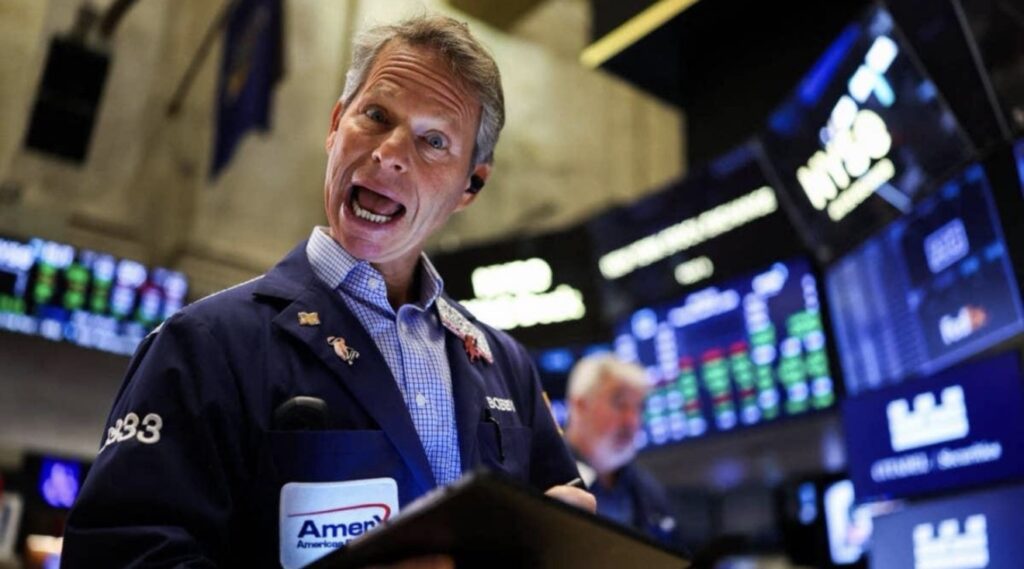
Alkermes (NASDAQ:ALKS) reported upbeat results for the first quarter on Tuesday.

The company posted quarterly losses of 40 cents per share which beat the analyst consensus estimate of losses of 52 cents per share. The company reported quarterly sales of $392.911 million which beat the analyst consensus estimate of $359.848 million.

Alkermes raised its FY2026 GAAP EPS guidance from $(0.80)-$(0.68) to $(0.52)-$(0.41). The company affirmed FY2026 sales guidance of $1.730 billion-$1.840 billion.

Alkermes shares fell 2.6% to trade at $35.30 on Wednesday.

These analysts made changes to their …

Full story available on Benzinga.com

This post was originally published here
BOARDWALK REAL ESTATE INVESTMENT TR (TSX:BEI) reported first-quarter financial results on Wednesday. The transcript from the company’s first-quarter earnings call has been provided below.

This content is powered by Benzinga APIs. For comprehensive financial data and transcripts, visit https://www.benzinga.com/apis/.

The full earnings call is available at https://app.webinar.net/oNbLVRQzWME

Summary

BOARDWALK REAL ESTATE INVESTMENT TR reported an increase in same property rental revenue by 2.8% and net operating income by 6.8% year-over-year, with an operating margin increase of 230 basis points to 65.8%.

The company continues to focus on providing affordable housing and has invested over $1 billion since 2017 in rebranding and repositioning efforts to enhance product quality.

The company announced a revision in its 2026 guidance due to anticipated property tax increases, projecting same property NOI growth between 1-3.5% and FFO per unit between $4.60 and $4.80.

Despite increased competition in higher-end rental markets, the company maintains a high occupancy rate of 97.1% and has reduced leasing incentives to sustain rental revenue.

The company has been active in asset sales, deploying $102 million under its NCIB program and plans further investment to capitalize on its undervalued portfolio.

Management highlighted strong performance in Alberta and Saskatchewan regions, with plans to continue its strategic repositioning and capital allocation initiatives.

Full Transcript

OPERATOR

Ladies and gentlemen, and welcome to the Boardwalk Real Estate Investment Trust first quarter 2026 earnings conference call. At this time all lines are in listening mode and we will conduct a question and answer session. If at any time during this call you require immediate assistance, please press star zero for the operator. This call is being recorded on Wednesday, May 6, 2026. I would now like to turn the conference call over to Mr. Eric Bowers, VP, Finance and Investor Relations. Please go ahead.

Eric Bowers (VP, Finance and Investor Relations)

Thank you Kelsey, and welcome to the Boardwalk Real Estate Investment Trust 2026 First Quarter Results Conference Call. With me here today are Sam Colias, Chief Executive James Ha, President, Greg Tinling, Chief Financial Officer Samantha Coleus Gunn, Senior VP of Corporate Development and Governance and Samantha Adams, Senior VP of Investments. We would like to acknowledge on behalf of Boardwalk the treaties and traditional territories across our operations and express gratitude and respect for the land we are gathered on today and we now know as Canada. We respect Indigenous Peoples and communities as the original stewards of this land. We come with respect for this land that we are on today, for all the people who have and continue to reside here and the rich diversity of First Nation, Inuit and Metis peoples. Before we get to our results, please note that this call is being broadly distributed by way of webcast. If you have not already done so, please visit boardwalkreit.com investors where you will find a link to today’s presentation as well as PDF files of the trust financial statements, MDA and quarterly report starting on slide 2. We would like to remind our listeners that certain statements in this call and presentation may be considered forward looking statements. Although the expectations set forth in such statements are based on reasonable assumptions, Boardwalk’s future operation and its actual performance may differ materially from those in any forward looking statements. Additional information that could cause actual results to differ materially from these statements are detailed in Boardwalk’s publicly filed documents. I would like to now turn the call over to Sam Colias.





Sam Colias (Chief Executive Officer)

Thank you Eric. Starting on slide 4. Welcome everyone to our Boardwalk Family Forever and to our Q1 2026 results. Redefining BFF Boardwalk family forever is at the top of our organizational chart. Family is everything. Affordable multifamily communities have always been an essential product and service. Together with our residents, our associates, investors, partners, capital environment, community, we are all essential and interconnected family members. With our true north where love always lives. Together we go far. Our leaders put our team first and our team puts our resident members first. Guided by the Golden Rule, we have a peak performing customer service culture that creates exceptional results as we can see on our next slide 5 our continued solid performance with GAAP and non GAAP measures increasing from the same quarter last year, same property rental revenue increased 2.8% and same property net operating income increased 6.8%. Our operating margin increased by 230 basis points to 65.8% as well as our funds from operation per unit increasing by 8.5%. Profit is down as a result of a non cash reduction in our IFRS net asset value. Our net asset value per unit at $95.93 representing exceptional value in our current unit price that is trading well below this. I would like to now pass it over to Samantha Colias Gunn.

Samantha Colias Gunn

Thank you so much Sam. We are extremely grateful for our team, our Boardwalk families, perseverance, performance and continued commitment to our purpose bringing our resident family members home to ‘Love Always’. Continuing on to slide 6 our operational stability and commitment to affordable housing rental market fundamentals in our core markets are more competitive demand continues for more affordable housing despite supply deliveries focused on higher end luxury products to justify high construction costs. We are grateful for our partnership with CMHC and our Federal government that have implemented effective public policy to build more supply that has resulted in a balancing of the rental market across Canada providing more affordability to all Canadians. We are well positioned to deliver on our commitment to provide much needed affordable housing and in a more competitive environment. With our experienced peak performing team, exceptional product quality with over $1 billion invested since 2017 in rebrand and repositioning efforts and dedication to our Boardwalk family as responsible community providers. Our self regulation provides us with continued steady results as we remain flexible with our rental rates producing greater stability in occupancy margins, NOI and reputation paired with our strong financial foundation, minimum distribution policy resulting in maximum reinvestment and free cash flow growth, strategic repositioning, unparalleled customer service and on our foundation of strong family values, we remain in a position to deliver solid performance. This is what sets us apart. Bringing you home to where love always lives. Boardwalk strives to be the first choice in multifamily apartment communities to work, invest and call home with our Boardwalk family forever. Moving on to Slide 7, our strategic rebranding enhances our resident member experience exceptional quality at an affordable price keeping our occupancy high at 97.1% according to Rentals.ca data. Our average occupied rents of $1,601 for a two bedroom apartment are attractive especially relative to the Canadian average of $2,197. Moving on to slide 8 Alberta continues to see positive population growth with small relative amounts of non permanent residents. Affordability continues to drive positive population and leading economic growth in our core markets, Alberta and Saskatchewan. Reflected in our Appendix. Quebec has delivered exceptional results despite negative population growth. Further evidencing the strong demand for affordable housing, Ontario remains stable. We are strategically in all the right places at the right time. Please refer to our Appendix for more data on the resilience of the Alberta economy and the renewed Alberta advantage. We would like to now pass the call on to Greg Tinling who will provide us with an overview of our quarter results, Strong balance sheet, Fair value

Greg Tinling (Chief Financial Officer)

and ESG thank you Samantha Beginning on slide 9, occupancy remains strong as we enter the spring and early summer season supported by continued growth in occupied rent. While vacancy loss increased, the trust effectively reduced leasing incentives which contributed to the higher rental revenue reported in Q1 2026 compared to the same period last year. These results reflect the success of our strategic initiatives aimed at maximizing free cash flow and diversifying our product offering, delivering meaningful financial performance. Slide 10 provides an overview of leasing spreads for new and renewed leases under our self regulated resident friendly centric model. This approach continues to drive strong retention and referrals while keeping turnover and operating expenses low on a year over year basis. Leasing spreads have moderated reflecting a more balanced supply demand environment. Increased supply in select portfolio markets, particularly at the higher price points, has led to greater competition and vacancy on a blended basis. Leasing spreads have gradually improved since the start of the year reflecting effective resident engagement and retention strategies in a more competitive market. Our strategic flexibility with new rental rates enabled us to preserve high occupancy while maintaining solid operating margins and net operating income. We remain focused on maintaining high occupancy and maximizing resident retention. This strategy reinforces our commitment to provide affordable resident friendly housing in our core markets while also reducing costs and steadying operational performance, delivering long term value for all stakeholders. Slide 11 shows sequential quarterly rental revenue growth including a 0.4% decline in Q1 2026 compared to Q4 2025 with increased competition and a return to seasonality in the winter months. Boardwalk focused on managing occupancy and positioning ourselves favorably for the spring early summer season. Turning to Slide 12, same property net operating income increased by 6.8% in Q1 2026 compared to the same quarter last year with revenue growth of 2.8%. Alberta, the trust’s largest region, contributed meaningfully to this performance with a 7.3% increase in net operating income with revenue growth of 2.3% total rental expenses declined by 4.1% year over year, primarily due to lower utility costs with the removal of the federal carbon tax alongside lower insurance premiums. Slide 13 outlines Boardwalk’s mortgage maturity schedule. The Trust debt portfolio is well staggered with approximately 96% of the mortgage balance carrying NHA insurance through the Canada Mortgage and Housing Corporation. This insurance remains in place for the full amortization period and backed by the Government of Canada, enables access to financing at rates below conventional mortgage levels with A current estimated 5 year and 10 year CMHC rate of 3.9 and 4.3 respectively. Although current interest rates are above the Trust’s maturing rates over the next few years, the Trust’s maturity curve remains staggered, reducing the renewal amount in any particular year. Lastly, the Trust has an interest coverage of 3.04 in the current quarter to date in 2026 of the $823 million of 2026 mortgages maturing, we have renewed or forward locked $346 million at an average rate of 3.75% and an average term of approximately 7 years. Combined with our cash on hand as well as our unused credit facilities, we are well positioned with strong liquidity available. Current underwriting criteria in our most recent submissions to CMHC and our lenders has remained in line with our historically conservative estimates. Please Refer to slide 48, which summarizes our 2026 mortgage program completed slide 14 illustrates the trust’s estimated fair value of its investment properties, excluding adjustments for IFRS. 16 as at March 31, 2026, the fair value of investment properties totaled $8.6 billion compared to $8.7 billion as of December 31, 2025. The decrease in overall fair value is the result of an increase in cap rates and a decrease in market rents in Calgary, reflecting elevated risk from incoming supply and competitive pressure on market rents at the higher market level, as well as adjusting quality classifications in Ontario for certain assets based on comparable transactions, along with an update upward adjustment for vacancy assumptions in select markets. These adjustments were partially offset by higher market rents, most notably in Grand Prairie, Fort McMurray, Regina and Saskatoon. Current estimated fair value of approximately $245,000 per apartment door remains below replacement cost, as it does every quarter. The Trust will continue to review completed asset sales transactions and market reports to determine if adjustments to cap rates are necessary, and consult with our external appraisers. Most recent published cap rate reports suggest that the cap rates being utilized by the Trust for calculating fair value are within their estimated ranges. Slide 15 highlights our ESG Initiatives we would like to highlight our 2025 GRESB score of 72 which represents a 7.5% increase compared to the prior year. Using a disciplined capital allocation approach, we are focused on reducing emissions through reduced utilities consumption and therefore reducing utilities costs while always promoting social and governance initiatives. As part of our 2025 annual reporting, the Trust will be publishing its ESG report in May 2026 which will be available on our website. I would like to now turn the call over to Samantha Adams to highlight our capital allocation initiatives.

Samantha Adams (Senior VP of Investments)

Thank you Greg Following a transformational 2025 during which Boardwalk completed $829 million of transactions, we have entered 2025 focused on disciplined capital allocation, maximizing free cash flow and directing capital to the best risk adjusted opportunities. We are …

Full story available on Benzinga.com

This post was originally published here

Dine Brands Global, Inc. (NYSE:DIN) shares moved higher on Wednesday after the restaurant operator reported better-than-expected quarterly results and reaffirmed its full-year outlook.

The company highlighted stable same-store sales expectations at Applebee’s and IHOP while continuing to expand its dual-branded restaurant footprint through franchise-led growth.

Quarterly Details

The company reported first-quarter adjusted earnings per share of $1.07, beating the analyst consensus estimate of $1.01.

Quarterly sales of $225.200 million (+4.8% year over year) outpaced the Street view of $222.321 million.

Consolidated adjusted EBITDA for the first quarter was $50.8 million compared to $54.7 million in the year-ago period.

Cash and equivalents and restricted cash were approximately $172.9 million, of which approximately $104.2 million was unrestricted cash.

Operating cash flow for the first quarter was $7.50 milliom, down from $16.10 million in the prior year quarter.

During the first quarter, the …

Full story available on Benzinga.com

This post was originally published here

Apollo Global Management (NYSE:APO) hit $1 trillion in assets under management (AUM) at the end of the first quarter. CEO Marc Rowan noted that business trends remain highly favorable, but the business is dependent on the macro environment.

“The macro environment, notwithstanding the noise of what’s happening geopolitically, continues to be consistent with how we viewed the business over the past few years,” he said.

Fee-related earnings (FRE) hit a record $728 million, up 30% year-over-year, driven by quarterly fee related revenue and margin expansion. 

Total AUM surpassed the trillion-dollar milestone, reaching $1.03 trillion, benefitting from record total inflows of $115 billion in the first quarter and $300 billion over the last twelve months, driving a 31% increase year-over-year.

Apollo is currently sitting with $74 billion in dry powder as of quarter end, including $55 billion of dry powder with future management fee potential, of which approximately 70% is in credit, the firm noted.

data-variant=”card”
data-news-mode=”manual”

>


Read Also:

Andreessen Horowitz Banks $2.2 Billion For New Crypto Fund

This post was originally published here

California Resources (NYSE:CRC) reported first-quarter financial results on Wednesday. The transcript from the company’s first-quarter earnings call has been provided below.

This transcript is brought to you by Benzinga APIs. For real-time access to our entire catalog, please visit https://www.benzinga.com/apis/ for a consultation.

The full earnings call is available at https://event.choruscall.com/mediaframe/webcast.html?webcastid=NUvMT3b9

Summary

California Resources reported a strong first quarter with adjusted EBITDAX of $304 million, 17% above the midpoint of their guidance, and raised their full-year guidance.

The company is increasing drilling activity with three additional rigs, focusing on both California and Utah, aiming for approximately 1% production growth by year’s end.

California Resources completed construction of California’s first commercial-scale carbon capture and storage project, expecting EPA approval soon, marking a significant milestone in their carbon management business.

The Berry merger synergies exceeded expectations, with 80% implemented and an increased target, driven by cost reductions and operational efficiencies.

Management highlighted improved capital efficiency, reducing the number of rigs needed for production maintenance and enhancing returns, with a strong free cash flow outlook projected to exceed $800 million for the year.

Full Transcript

Operator

Good day and welcome to the California Resources Corporation first quarter 2026 conference call. All participants will be in listen only mode. Should you need assistance, please signal a conference specialist by pressing Star then zero on your telephone keypad. After today’s presentation, there will be an opportunity to ask questions. To ask a question, you may press Star then one, then on your telephone keypad. To withdraw your question, please press Star then two. Please note this event is being recorded. I would now like to turn the conference over to Daniel Juck, Vice President of Investor Relations.

Daniel Juck (Vice President of Investor Relations)

Please go ahead. Good morning and welcome to CRC’s first quarter 2026 conference call. Following prepared comments, members of our leadership team will be available to take your questions. I hope you have had a chance to review our earnings release and supplemental slides. We have also provided information reconciling non GAAP financial measures to comparable GAAP measures on our website in our earnings release. Today we’ll be making forward looking statements based on current expectations. Actual results may differ due to factors described in our earnings release and SEC filings. As a reminder, please limit your questions to one primary and one follow up as this will allow us to get more time for your questions. I’ll now turn the call over to Francisco.

Francisco

Thanks Danny Good morning everyone. We’re off to a solid start in 2026 with unprecedented energy market volatility creating meaningful tailwinds and opportunities for our business. Before getting into the quarter, let me share a few thoughts on the macro environment and why CRC’s business is well positioned to create value through the cycle. Events across the Middle east have reminded the world of the importance of oil and energy security. Global supply chains have shown to be vulnerable and countries have been forced to seek reliable, diversified sources of energy. While the United States has been relatively insulated due to our strong domestic production, California faces a unique and precarious position. Today, over 60% of the oil consumed in California comes from foreign sources. In recent weeks, our state’s inventories have been reduced by more than 20% as oil destined for California has been diverted to Asia at substantial premiums. The importance of in state production has never been more critical both to ensure supply and preserve affordability. As the Golden State’s largest producer, CRC is positioned to be the solution, delivering local barrels that shorten the supply chain, lower transportation cost and associated emissions and helping keep gasoline affordable for Californians. CRC has a deep, primarily Brent linked high quality inventory of oil development opportunities and recent legislative efforts to improve permitting are proceeding as expected. Our recent mergers were well timed with transactions priced well below today’s strip and set a strong foundation for future growth. We’re now deploying capital into these assets to drive disciplined long term value. California is starting to recognize that local production is essential to affordability, reliability and the state’s climate objectives and CRC is ready to support all three. Today we’re moving decisively to accelerate development. We are increasing drilling cadence this summer by three rigs, two in California and one in Utah. This will allow us to return to our long term production maintenance capital program ahead of schedule and accelerate high return projects to unlock value. In California we’re drilling new wells and adding capital efficient workovers that will translate quickly into production. And in Utah, our highly contiguous acreage position provides meaningful upside that we have only begun to capture. Let me spend a moment on the Uintah acreage because this opportunity is compelling. Since 2020 production in the basin is up 100% reflecting both improved results at the well level and expanded more mature regional infrastructure. Recently drilled CRC and offset wells have substantially de risked our acreage and we’re planning to perform additional appraisal work. With over 200 gross Utland viewed locations already in the portfolio and additional benches under consideration, we have considerable running room to support a scalable growth pipeline platform. Our planned acceleration and activity to seven rigs will meaningfully enhance our financial outlook for the full year. We’re now targeting approximately 1% entry to exit gross production growth and raising our adjusted EBITDAX guidance by over 40%, outpacing the expected rise in Brent. We’re also increasing our Berry merger synergy target which Cleo will cover in detail in a moment. Our carbon management business CTB is on the cusp of a historic milestone. We completed construction and commissioning of California’s first commercial scale carbon capture and storage project at our Elk Hills cryogenic gas plant and we expect to receive final notice of determination from the EPA any day now. That approval will clear the way to first CO2 injection, marking the first time in California’s history that carbon emissions are permanently stored. It will also place CRC among a small group of US Oil and gas companies with active CCS operations. Put simply, this is a defining moment not just for crc, but for California’s ability to deliver on its climate objectives while preserving energy reliability and affordability. We expect carbon capture at our Elk Hills cryogenic gas plant to be the first of many more projects to come. Our storage reservoirs sit within reach of approximately 17 gigawatts of baseload power generation across California that we believe has the potential to be retrofitted for CCS and we have submitted over 350 million metric tons of carbon storage capacity to the EPA with additional rest awards tracking for draft permits through 2026. Our data center conversations continue to gain momentum. As previously announced, a top tier national data center developer is investing several million dollars to accelerate early stage site readiness and permitting at Elk Hills, a clear vote of confidence in the opportunity. As AI transitions from training to inference and other states face mounting power constraints, Tech’s appetite for scale clean power in California is growing. PRC is uniquely positioned to meet that demand. We can permit deliver firm gas supply, offer available land adjacent to existing infrastructure and pair it all with ccs. Power is the binding constraint for AI growth and we are one of the few platforms that can solve it the Reliable and Clean Power procurement program or RCPP. We expect the next major update in the second half of 2026. Natural gas with CCS is not yet eligible, but support is building and three of five CPUC commissioners have publicly endorsed inclusion. California already offers some of the highest stackable CCS incentives globally. RC Triple P eligibility would make the economics even more compelling. Our enhanced 2026 outlook reflects the positive impact of these developments as well as the continued execution of our strategy. With that, I will turn it over to CLEO to walk through our first quarter results and updated 2026 guidance.

Cleo

Cleo, thank you Francisco and good morning. We delivered a strong first quarter with adjusted EBITDAX of 304 million approximately 17% above the midpoint of our guidance and we are raising our full year guidance. The combination of disciplined execution, higher oil prices and accelerated activity has improved our outlook for 2026. In the first quarter, operating cash flow before changes in working capital was 247 million ahead of our expectations and reflecting the stronger Brent backdrop relative to our previous guidance. Net production averaged 154,000 boe per day with oil at 81% of the mix and realizations at 96% of Brent pre hedge in line with plan adjusting for PSC effects. Underlying production was in line with our quarterly guide. GNA for the quarter was above guidance due to the timing of legal expenses and a higher cash settled equity compensation reflecting share price appreciation. GNA is already trending down with further reductions driven by berry synergies which we expect to capture in 2026. Total capital deployed in the quarter was $131 million at the high end of guidance. The increased spend was by design as we pulled forward pre spud timing on development wells and accelerated facilities spend to support the activity ramp Francisco outlined. Even with that accelerated capital deployment, free cash flow before changes in working capital was 116 million, a strong start to the year. In March, we priced a 350 million add on to our 2034 notes. We upsized from 250 million with a book more than five times, oversubscribed, and used the proceeds to redeem our 2029 notes. This extends our weighted average maturity to approximately six years, lowers or interest expense and further strengthens the balance sheet. Net debt ended the quarter at 1.3 billion with net leverage at 1.1 times last 12 months. EBITDAX we returned 46 million to shareholders during the quarter, including 36 million in dividends and 10 million in share repurchases, bringing cumulative returns since mid-2021 to more than 1.6 billion, a track record that reflects the consistency and the durability of this business. Current conditions across domestic energy markets arguably provide the most constructive backdrop for our business and the industry than we have seen in quite some time. For the second quarter we expect net production of 149,000 boe per day, reflecting the impact of PSC effects at higher prices and a planned short maintenance window. At our Elk Hills power plant, we expect capital deployment of approximately 130 million, reflecting increased drilling activity in June GNA of 95 million and adjusted EBITDAX of 390 million, assuming an average Brent price of of $105 per barrel. As usual, we provide both quarterly and full year sensitivities to Brent to help frame the impact of commodity price volatility for the full year. We’re raising our outlook across the board. We now expect 2026 exit gross production of 175,000 boe per day, roughly 1% entry to exit growth and building momentum into 2027. To deliver this growth, we are increasing full year midpoint of total capital guidance to 540 million. DNC and workover capital is 100 million above our prior plan, reflecting a second half ramp to a peak of 7 rigs. Partially offsetting this increase is a reduction TO facilities capital of 10 million, reflecting ongoing field level facilities rationalization. Allow me to pull all of this together in one important comparison. We previously forecasted that our maintenance capital framework to hold production flat required seven rigs and approximately 485 million of DNC and workover capital this year and given our portfolio’s flexibility, we are expecting to deliver entry to exit growth with an average of 5 rigs and DNC and workover capital Utilization of less than 400 million, fewer rigs, less capital and we are now growing. The return profile on Our full year 2026 capital program is compelling. At current strip prices we expect a multiple of approximately 4.5x on invested capital, up from 3.8 times previously and IRRs approaching 70%, roughly 40% higher than our prior estimate. We now expect full year free cash flow before changes in working capital to exceed 800 million. Turning to berry merger related synergies, we have already implemented over 80% of our original target and are now raising that target by 12% or an additional 10 million. That’s driven by field consolidation and contractor to crew conversion across the combined footprint. Our cumulative synergy and structural cost reduction target through 2028 now stands at upwards of 460 million. We expect full year adjusted EBITDAX at a midpoint of 1.45 billion assuming an average Brent price of $91 per barrel. This increase reflects both higher commodity prices and underlying margin expansion. Brent is up approximately 38% while our EBITDAX outlook has increased by approximately 42% with a positive difference driven by high return drilling, structural cost discipline and incremental synergies all supporting higher cash flow per share. That gap between commodity upside and Ebitdax upside reflects the value of our integrated strategy compounding and it is the kind of outperformance we can sustain through the cycle. Cash flow per share growth, high return reinvestment, a de risk balance sheet and structural margin expansion that is 2026 in a nutshell. With that, I’ll turn it back to you Francisco.

Francisco

Thanks Cleo. Before we open the line for questions, let me share a few closing thoughts. PRC remains a different kind of energy company and this distinction could not be more evident. Our integrated strategy is delivering on three fronts at once. A low decline, conventional business accelerating into a stronger price environment. California’s first commercial scale CCS project on the doorstep of CO2 injection and a power and data center opportunity gaining traction. The path forward is clear. We’re scaling activity across California and delineating the uinta. We’re converting structural margin expansion into cash flow growth. We’re returning capital through a durable dividend and opportunistic buybacks and we’re advancing our leading carbon management platform. Our priorities are unchanged. Develop our resource base responsibly, unlock the full value of our portfolio, maintain a premier balance sheet and allocate capital with discipline. That is how we create durable long term shareholder value. Operator, we’re ready for questions.

Operator

We will now begin the Question and answer session. To ask a question, you may press star then one on your telephone keypad. If you’re using a speakerphone, please pick up your handset before pressing the keys. If at any time your question has been addressed and you would like to withdraw your question, please Press Star then two. Please limit yourself to one primary and one follow up. this time, we will pause momentarily to assemble our roster. The first question comes from Scott Hanold with RBC Capital Markets. Please go ahead.

Scott Hanold (Equity Analyst at RBC Capital Markets)

Yeah, thanks. Good afternoon. Looks like you have it all coming together. You got the permit reform, you identified the inventory, now you’ve got the price. So …

Full story available on Benzinga.com

This post was originally published here

McDonald’s Corp. (NYSE:MCD) reports first-quarter earnings Thursday before the bell, giving CEO Chris Kempczinski another shot at the Big Arch pitch after March’s viral video, where he barely bit into the burger he was promoting.

Polymarket gives MCD a 77% chance of topping the $2.75 non-GAAP consensus, and a 4% chance Kempczinski will be out as CEO by June 30th, down from 30% shortly after the video was released.

What Kalshi Predicts

The more tradeable action is on Kalshi, where contracts price the words Kempczinski will use on the 8:30 a.m. ET call.

“Big Arch” sits at 91%. McDonald’s biggest-ever burger landed in U.S. restaurants on March 3 after a viral run in the UK and Ireland, where it is now permanent. It is the centerpiece of management’s beef-quality push.

“Loyalty” is at 89%. CFO Ian Borden has called it the chain’s “single most important digital metric,” and said that U.S. customers visit 26 times …

Full story available on Benzinga.com

This post was originally published here

BellRing Brands (NYSE:BRBR) on Tuesday reported worse-than-expected second-quarter financial results and cut its FY26 sales guidance below estimates.

BellRing Brands posted adjusted EPS of 14 cents, missing market estimates or 32 cents per share. The company’s sales came in at $598.700 million, missing expectations of $608.899 million.

“We are disappointed in our second quarter results. Heightened consumer price sensitivity together with a sustained promotional environment adversely impacted our sales mix. This unfavorable mix, along with higher freight costs and an inventory-related charge significantly pressured our margins. Even in this backdrop, Premier Protein brand metrics remain strong, evidenced by volume growth, strong brand equity scores and increases in household penetration,” said Darcy …

Full story available on Benzinga.com

This post was originally published here

DigitalOcean Holdings, Inc. (NYSE:DOCN) reported better-than-expected first-quarter financial results and raised its fiscal-year 2026 guidance above estimates.

DigitalOcean reported adjusted earnings per share of 44 cents, beating the consensus estimate of 27 cents. In addition, it reported revenue of $257.90 million, beating the consensus estimate of $249.74 million.

DigitalOcean raised its fiscal-year 2026 adjusted earnings per share guidance from between 75 cents and $1.00 to between $1.10 and $1.20, versus the consensus estimate of $1.02. Furthermore, it raised its fiscal-year 2026 revenue guidance from between $1.07 billion and $1.10 billion to between $1.13 billion and $1.14 billion, versus the consensus estimate of $1.09 billion.

The company anticipates second-quarter adjusted earnings per share between …

Full story available on Benzinga.com

This post was originally published here

Saratoga Investment (NYSE:SAR) released fourth-quarter financial results and hosted an earnings call on Wednesday. Read the complete transcript below.

This content is powered by Benzinga APIs. For comprehensive financial data and transcripts, visit https://www.benzinga.com/apis/.

View the webcast at https://edge.media-server.com/mmc/p/xv3y6qrh/

Summary

Saratoga Investment reported a strong fiscal year end with net positive originations and a 9.1% return on equity, significantly outperforming the industry average.

The company announced a monthly base dividend of $0.25 per share, representing a 12.6% yield, and maintained a robust investment pipeline despite challenging market conditions.

Future growth is supported by strong business development initiatives, a diversified portfolio, and substantial liquidity with $211 million in investment capacity.

The company’s portfolio remains predominantly in first lien debt with a focus on solid credit quality, although some assets such as the CLO F note were placed on non-accrual.

Management highlighted ongoing strategic hires, including a new COO, to enhance performance and growth opportunities, and expressed confidence in navigating macroeconomic uncertainties.

Full Transcript

OPERATOR

Good morning ladies and gentlemen. Thank you for standing by. Welcome to Saratoga Investment Corp’s fiscal year end and fourth quarter 2026 financial results conference call. Please note that today’s call is being recorded. During today’s presentation, all parties will be in listen only mode following management’s prepared remarks. We will open the line for questions. At this time I would like to turn the call over to Saratoga Investment Corp. Chief Financial and Chief Compliance Officer Mr. Henry Steenkamp. Please go ahead.

Henry Steenkamp (Chief Financial and Chief Compliance Officer)

Thank you. I would like to welcome everyone to Saratoga Investment Corp’s fiscal year end and fourth quarter 2026 earnings conference call. Today’s conference call includes forward looking statements and projections. We ask you to refer to our most recent filings with the SEC for important factors that could cause actual results to differ materially from these forward looking statements and projections. We do not undertake to update our forward looking statements unless required to do so by law. Today we will be referencing a presentation during our call. You can find our fiscal year end and fourth quarter 2026 shareholder presentation in the Events and Presentation section of our investor Relations website. A link to our IR page is in the earnings press release distributed last night. For everyone new to our story, please note that our fiscal year end is February 28, so any reference to Q4 results reflects our February 28 quarter and year end period. A replay of this conference call will also be available. Please refer to our earnings press release for details. I would now like to turn the call over to our Chairman and Chief Executive Officer Christian Oberbeck who will be making a few introductory remarks.

Christian Oberbeck (Chairman and Chief Executive Officer)

Thank you Henry and welcome everyone. Saratoga Investment Corp. Highlights this quarter include net positive originations generated from our strong pipeline, including five new portfolio companies originated in the quarter, sustained long term AUM growth, a strong 9.1%, latest 12 month return on equity beating our prior year and more than double the industry and importantly, continued solid performance from the core BDC portfolio in a challenging and volatile macro environment. Continuing our historical strong dividend distribution history, we announced a monthly base dividend of $0.25 per share or $0.75 share in aggregate for the first quarter of fiscal 2027, which when annualized represents a 12.6% yield based on the stock price of 2389 as of May 4, 2026, offering strong current income from an investment value standpoint. Originations and AUM growth were strong during the quarter, contributing to adjusted NII of $0.53 per share including the impact of a $1.7 million excise tax expense adjusted for this excise tax NII was $0.61 per share consistent with the prior quarter. Overall, our adjusted NII continues to reflect the impact of declining short term interest rates and tightening spreads on our largely floating rate asset base. During the quarter we saw a meaningful increase in deal activity reflecting our own business development activities. Despite persistent sector headwinds and the cautious sentiment that has taken hold across the broader private credit sector, market dynamics continue to be very competitive. While our portfolio saw multiple debt repayments in Q4, our strong origination activity more than offset those exits resulting in net originations of $101.1 million for the quarter from $135.1 million in new originations across 5 new investments and 15 follow ons. Our strong reputation, differentiated market positioning and the ongoing development of sponsor relationships continue to create attractive investment opportunities from high quality sponsors. Investment activity continues post quarter end with one new portfolio company investment and multiple follow ons already closed. We remain prudent and discerning in our underwriting approach, particularly in light of the current volatile and uncertain environment. We believe Saratoga continues to be favorably situated for potential future economic opportunities as well as challenges. Our total 1.109 billion portfolio was marked down 1% or $9.6 million during the quarter including net depreciation of $3.1 million in the non CLO core portfolio and unrealized depreciation of $5.5 million in the CLO and JV. Our investment in solidge that previously had been restructured and written off continues to perform strongly with $3.3 million of unrealized appreciation recognized in this quarter. As of quarter end, our core non CLO portfolio remains 1.6% above cost with our total portfolio valuation 2.4% below cost. These results reflect the quality of our direct lending underwriting, the strength of our portfolio companies and their sponsors, and our focus on well selected industry segments with favorable risk adjusted returns. During the fourth quarter, our core BDC net interest margin decreased by 4% from $13.5 million last quarter to 13 million. This was driven primarily by the average SOFR rate used in the portfolio decreasing by 12 basis points from last quarter. Accelerated OID of $0.9 million on the sale of the JVCLO’s E Note from last quarter not repeating spreads on originations this quarter being almost 200 basis points lower than on the repayments they replaced and the timing of originations and repayments in Q4 partially offset by the 5.6% increase in average core assets. Our overall credit quality for this quarter decreased slightly to 96.8% of credits rated in our highest category. We have just two investments on non accrual status, Pepper palace, which has been restructured and our CLOS F note that has been put on nonaccrual for the first time this quarter, representing 0.2% of fair value and and 1.2% of cost, well below the industry average of 3.3%. With 82.1% of our investments at quarter end in first lien debt and generally supported by strong enterprise values and balance sheets in industries that have historically performed well in stress situations, we believe our portfolio composition and leverage profile are well structured for future economic conditions and uncertainty. As always and particularly in the current uncertain environment, balance sheet strength, liquidity and nav preservation remain paramount for us. At quarter end we maintained a substantial $211 million investment capacity to support our portfolio companies with $99 million available through our existing SBIC 3 license, $90 million from our two revolving credit facilities and $21.8 million in Canadian cash. Our quarter end cash position decreased meaningfully from $169.6 million last quarter due in large part to strong origination activity and the refinancing of the $175 million institutional note. The refinancing of this debt included the issuance of $150 million of new bonds and our regulatory leverage remained unchanged at 168.4% quarter over quarter as we kick off our fiscal year 2027, the macro environment remains complex, shaped by geopolitical tensions, evolving U.S. tariff policies and concerns about AI and software. All of these aspects, combined with an uncertain interest rate environment combine to create elevated volatility and continued uncertainty on credit spreads across the private credit sector. While negative press and sentiment weighs on the public BDC market at this time, it appears that these very negative perceptions are not commensurate with the current market performance in the broader private credit market. As we continue to focus on underwriting, strong credit and long term growth, we continue to grow our team having added three new associates and two new Managing director hires this year, including Most recently David DeSantis, who joined Saratoga as Chief Operating Officer and Senior Managing Director. David brings a wealth of private credit experience and organizational leadership, significantly expanding our C suite resources to further enhance Saratoga’s performance and growth opportunities. David will be making his debut presentation today addressing the market and Saratoga’s portfolio, moving on to Saratoga Investments Fiscal 2026 Fourth Quarter Key Performance Indicators as compared to the quarters ended February 28, 2025 and November 30, 2025. Our quarter end NAV was $396.2 million, up 0.9% from $392.7 million last year and down 4.1% from $413.2 million last quarter. Our NAV per share was $24.42 down from $25.86 last year and 2,559 last quarter. Year over year, NAV per share is down $1.44 with total NII of $2.32 versus total dividend distributions of $3.74. The $1.42 of distributions in excess of NII approximates the entire $1.44 of 12 month reduction in NAV per share. This excess distribution represents previously undistributed NII profits from prior years. Our Adjusted NII was $8.5 million this quarter, up 6.2% from last year and down 12.8% from last quarter. Our adjusted NII per share was 53 cents this quarter, down 5.4% from last year and 13.1% from last quarter. Excluding the excise tax, Adjusted NII for Q4 was $0.61 unchanged from last quarter. Adjusted NII yield was 8.4% this quarter, unchanged from 8.4% last year and down from 9.5% last quarter and latest 12 months. Return on equity was 9.1% up from 7.5% last year, down from 9.7% last quarter and above the industry average of 4.3%. This past year saw a $5 million overall net realized and unrealized gain for the year year and slide three illustrates how these combined portfolio and financial results have delivered a return on equity of 9.1% for the last 12 months above the industry average of 4.3%. Additionally, our long term average return on equity over the past 12 years of 10.1% is well above the BDC industry average of 6.7%. Our long term return on equity has remained strong over the past decade plus beating the industry 9 of the past 12 years and consistently positive every year. As you can see on slide 4, our assets under management have steadily and consistently risen since we took over the BDC 15 years ago despite a slight pullback in fiscal 2025 reflecting significant repayments. This quarter saw significant originations, again outpacing repayments resulting in a meaningful increase in AUM as to compared compared to the previous quarter. The quality of our credits remains solid with just two investments on nonaccrual Pepper palace which has been restructured and our CLO’s F note that has been put on nonaccrual for the first time this quarter. Our management team is working diligently to continue this positive long term trend as we deploy our significant levels of available capital into our pipeline while at the same time being appropriately cautious in this evolving and volatile credit and economic environment. With that, I’d like to turn the call over to Henry to review our financial results as well as the composition and performance of our portfolio.

Henry Steenkamp (Chief Financial and Chief Compliance Officer)

Thank you Chris. Slide 5 highlights our key performance metrics for Q4 and Slide 6 highlights our key performance metrics for the year, most of which Chris already highlighted. Of note, the weighted average common Shares outstanding in Q4 was 16.2 million, increasing from 16.1 million and 14.5 million shares for last quarter and last year’s fourth quarter respectively. Adjusted NII was $8.5 million this quarter, up 6.2% from last year and down 12.8% from last quarter. For the year, adjusted NII was $37.5 million, down 29.2% from full year 2025. This quarter’s decrease in adjusted NII as compared to the prior quarter was largely due to the impact of the $1.7 million excise tax paid during this quarter, while the increase from last year primarily relates to higher other income such as structuring and advisory fees. Reflecting the increased origination activity this year, the weighted average interest rate on the core BDC portfolio of 10.4% this quarter compares to 11.5% as of last year and 10.6% as of last quarter. The yield reduction from last year primarily reflects the SOFA base rate decreases over the past year, but is also indicative of recent tighter spreads experienced on new originations versus historically higher spreads on repaid assets. Total expenses for the year, excluding interest and debt financing expenses, base management fees and incentive fees, and income and excise taxes increased by $1.7 million to 11.0 million as compared to $9.3 million in fiscal year 25. These same expenses for Q4 increased by $1.0 million to $2.4 million as compared to $1.4 million last year and decreased by $0.9 million from $3.3 million last quarter. These all represented 0.8% of average total assets on an annualized basis, unchanged from both last quarter and last year. Also, for investors interested in digging deeper into the income statement and balance sheet metrics for the past two years, we have again added the KPI slides 28 through 31 in the appendix at the end of the presentation and slide 32 compares our non accruals to the BDC industry. You will see that our non accrual rate of 1.2% of cost updated for the CLO F Note that is now on non accrual is still almost three times lower than the industry average of 3.3%. This highlights the current strength in credit quality of our core PDC portfolio. Moving on to Slide 7, NAV was $396.2 million as of fiscal quarter end, an increase of $3.5 million from last year and a decrease of $17.0 million from last quarter. During this year, $19.3 million of new equity was raised at or above net asset value through our ATM program. This chart also includes our historical NAV per share which highlights how this important metric has increased 23 of the past 34 quarters over the long term. This metric has increased since 2011 and grown by $2.45 per share or 11.1% over the past nine years when not many BDCs have grown NAV per share long term. We’ll cover the changes since the last quarter on the next slide. On slide 8 you will see a simple reconciliation of the major changes in adjusted NII and NAV per share on a sequential quarterly basis starting at the top, adjusted NII per share was down $0.08 in Q4 primarily due to the impact of annual excise tax expense of $0.09. Excluding this, adjusted NII per share would be $0.61 per share share consistent with last quarter. On the lower half of the slide, NAV per share decreased by $1.17 primarily due to the $0.75 monthly and $0.25 special dividend exceeding the $0.48 GAAP NII plus the $0.60 unrealized depreciation recognized in Q4, with almost 2 thirds of that being from the JV equity position. Now slide 9 shows the same reconciliations for the year and starting at the top again, adjusted NII per share was down $1.44 per share for the year largely due to a decrease of $1.15 in non CLO net interest income reflecting lower base rates and tighter spreads and $0.46 per share due to dilution from the DRIP and ATM programs. Additional shares on the lower half of the slide NAV per share is down $1.44 per share with total NII of $2.32 and a total dividend distribution of $3.74. The $1.42 of distributions in excess of NII approximates the entire 12 month reduction in NAV per share. This excess distribution represents previously undistributed NII profits. Slide 10 outlines the dry powder available to us as of quarter end which totaled $210.8 million. This was spread between our available cash undrawn SBA debentures and undrawn secured credit facilities. This quarter end level of available liquidity allows us to grow our assets by an additional 19% without the need for external financing with $21.8 million of corporate quarter end cash available and thus fully accretive to NII when deployed and $99 million of available SBA debentures with its low cost pricing also very accretive. In addition, $269 million of our baby bonds with 2/3 being 8% are callable now, providing us the option to refinance them and creating a natural protection against potential continuing future decreasing interest rates which should allow us to protect our net interest margin if needed. These calls are also available to be used prospectively to reduce current debt. You will also see that this quarter we did repay our $175 million 4.375% …

Full story available on Benzinga.com

This post was originally published here

Applied Digital Corp. (NASDAQ:APLD) is trading at a new 52-week high on Wednesday. The Nasdaq is up 1.70% while the S&P 500 has gained 1.20%.

ChronoScale Spin-Off Debuts on Nasdaq

The surge follows the separation of Applied Digital’s cloud business. The company contributed the unit to EKSO Bionics to form ChronoScale Corporation. The new entity began trading on the Nasdaq today as a specialized AI compute platform. Applied Digital remains the dominant shareholder with an approximate 97% stake.

Management Defends Strategic Pivot

CEO Wes Cummins explained the logic behind the restructuring. “Separating the predictable returns of data center hosting from …

Full story available on Benzinga.com

This post was originally published here

Occidental Petroleum (NYSE:OXY) reported first-quarter financial results on Wednesday. The transcript from the company’s first-quarter earnings call has been provided below.

This content is powered by Benzinga APIs. For comprehensive financial data and transcripts, visit https://www.benzinga.com/apis/.

Access the full call at https://edge.media-server.com/mmc/p/zrxosm22/

Summary

Occidental Petroleum reported strong financial performance with adjusted earnings of $1.06 per diluted share and free cash flow of $1.7 billion in Q1 2026, bolstered by higher commodity prices and operational efficiency.

Strategic initiatives include a focus on subsurface capability, operational excellence, lower decline rates, and portfolio optimization, with 83% of production now concentrated in the U.S. to ensure stability.

The company is targeting a $10 billion principal debt reduction, with future capital allocation focused on dividend growth, opportunistic share repurchases, and selective reinvestment based on macroeconomic conditions.

Operational highlights include a production increase to over 1.4 million boe per day, a new exploration discovery in the Gulf of America, and completion of the second phase of the Stratos project, despite some non-process component issues.

CEO Vicki Holub announced her retirement, with Richard Jackson succeeding her, emphasizing continuity in strategic direction and execution of existing plans.

Full Transcript

OPERATOR

Good afternoon and welcome to Occidental Petroleum’s first quarter 2026 earnings conference call. All participants will be in a listen only mode. Should you need assistance, please signal a conference specialist by pressing the star key followed by zero. After today’s presentation there will be an opportunity to ask questions. To ask a question you may press star then one on your touchtone phone. To withdraw your question, please press star then two. Please note this event is being recorded. I would now like to turn the conference over to Babatunde Kolee, Vice President of Investor Relations. Please go ahead.

Babatunde Kole

Thank you, Betsy and good afternoon everyone. Thank you for participating in Occidental’s first quarter 2026 earnings conference call. On the call with us today are Vicki Hollub, President and Chief Executive Officer, Sunil Matthew, Senior Vice President and Chief Financial Officer, Richard Jackson, Senior Vice President and Chief Operating Officer, and Ken Dillon, Senior Vice President and President, International Oil and Gas Operations. This afternoon we will refer to slides available on the Investor section of our website. The presentation includes a cautionary statement on slide 2 regarding forward looking statements that will be made on the call this afternoon. We will also reference a few non GAAP financial measures today. Reconciliations to the nearest corresponding GAAP measure can be found in the schedules to our earnings release and on our website. I will now turn the call over to Vicki.

Vicki Hollub

Thank you Babatunde and good afternoon everyone. I want to take a moment to acknowledge the ongoing challenges and uncertainty in the Middle East. First and foremost, I want to thank our frontline employees in the region for their professionalism and focus under very difficult conditions. Their safety remains our top priority and thankfully our teams continue to operate safely with no adverse impacts to our personnel. I also want to recognize the continued support of our partners and host governments in the UAE, Oman and Qatar. Their collaboration and shared focus on safety and asset integrity remain critical as conditions continue to evolve. Recent developments have driven sharp price movements and increased volatility across global markets. These dynamics underscore how quickly supply, expectations and trade flows can change and why reliability, resilience and financial strength matter. While volatility can influence near term prices, long term value is created by companies that execute consistently across cycles while protecting their people and assets. During this period, OXY executed as we planned. More importantly, we demonstrated that the strategy we have built over more than a decade can perform well through disruption. Over the past 10 years, we have fundamentally transformed Oxy’s portfolio to emphasize quality, balance and durability. From the beginning, we operated with clear conviction that the world will continue to need oil for decades to come and that the Permian would play a critical role in meeting that demand. That conviction shaped a strategy grounded in subsurface capability and operational excellence to lower full cycle cost across the portfolio. As we sharpened that focus, we exited non core assets and redirected capital to competitive positions where our technical capabilities could create the greatest value. We invested consistently in our people, knowing that subsurface expertise and disciplined execution would be key to differentiators for OXY over the long term. As part of that deliberate work, we shifted to a substantially more domestic portfolio. Today, 83% of our current production and 88% of our total oil and gas resources are in the United States, concentrating our operations in a more stable operating environment. Recent global events reinforce the importance of those decisions. Through this transformation, we build both scale and depth. Since 2015, we more than doubled production, going from 650,000 BOE per day to over 1.4 million per day. We also more than doubled our reserves and resources, increasing reserves from 2.2 to 4.6 billion barrels of oil equivalent and total resources from 8 billion BOE to approximately 16.5 billion. These resources are high quality and low cost with a Runway of more than 30 years. At the same time, we diversified and balanced our mix of assets in the portfolio with roughly half of our resources in short cycle unconditional assets and the other half anchored in lower decline assets across eor, the Gulf of Mexico, Oman, Abu Dhabi and Algeria. This balance positions us to reduce our base decline to below 20% by the end of the decade and support lower sustaining capital over time. Subsurface and technical excellence have also been core to our success. Over the past decade, we have invested in data acquisition, reservoir characterization and development design to build a superior understanding of the subsurface. This enables us to optimize development plans by basin site section and formation rather than rely on a one size fits all approach. Our teams have delivered and the data backs it up. Quarter after quarter we have achieved industry leading unconventional well performance across every basin in which we operate. Since 2016, we have maintained a reserve replacement ratio above 100%. This capability continues to expand and improve our resource base, unlocking new opportunities across eor, the Gulf of Mexico and our international assets. Looking ahead, this capability will only get stronger as we combine our data and technical foundation with advanced analytics and AI to further optimize development and performance. Today, with the portfolio, resource base and capabilities we’ve built, OXY is positioned to deliver even greater value for decades to come. In the first quarter of this year, we remained disciplined in our capital allocation, maintaining a steady development program aligned with our 2026 plan, and we continue to prioritize balance sheet strength to preserve flexibility and support sustainable shareholder returns. Our first quarter results reflect that progress. Now I want to take a minute to reflect on the leadership succession plan we announced last week. As I’m sure you saw, I will be retiring as President and CEO of Occidental on June 1 and with the approval of the Board of Directors, Richard Jackson will succeed me as President and CEO. I will continue to serve on Oxy’s board and Richard will join the Board as well on June 1st. I’ve worked with Richard for almost 20 years and have always been impressed with his drive for excellence, his integrity and ethics. He brings deep experience across our business and a strong track record of execution, making him a great choice for the next phase of our strategy which includes the development of our extensive portfolio. The Board and I have full confidence in his leadership as he carries forward the strong performance and foundation we’ve built at Oxy. As our Oxy enters this next phase, I also have great confidence in our innovative leadership team and our employees who will continue to excel at what we do best and that is oil and gas development and operations development. This is our forte. Oxy’s future is in excellent hands. With that, I’ll now turn the call over to Richard to discuss our forward trajectory in more detail.

Richard Jackson (Senior Vice President and Chief Operating Officer)

Thank you Vicky. I appreciate being able to speak with you all today and I’m grateful for the opportunity in front of us at Oxy. It’s a privilege to be part of our team and I’m looking forward to my new role to help support and drive value delivery. I want to start by acknowledging the strong foundation that Vicki’s leadership has built over the last decade. It has been a remarkable transformation of resources and capability across Oxy. Her vision of transformation combined with a strong drive to deliver has positioned us where we are today. More personally, all of us at Oxy recognize and appreciate the impact Vickie has had on our team and on each of us individually. Her passion to develop our team and her people first approach is something that will endure and and shape how we grow together in the future as we look forward. Our focus now is on execution and delivery. As Vicki noted, we have a 30 plus year resource base that is high quality, right sized and balanced. We believe each of these are important to help drive our results across any cycle. We’re operating from a well understood resource position with significant value upside and are now set for organic development to achieve our Objectives Our focus starts with continuing to improve our advantaged resource base through sustained improvements in new well performance and base production. Today we are a leader in US Unconventional well performance where much of our future resource development will occur. In 2025 we were top tier in every basin where we operate, delivering at least 10% better new well performance than industry average on a six month oil per lateral foot basis. We continue to see opportunity for further new well performance improvement across our global assets. Bates production is also a key contributor to our results where we have improved uptime in all operating areas. I want to give special recognition to our Gulf of America team whose focus on maintenance and platform reliability has led to strong base production performance with a record topside uptime of 98% in two. Beyond well performance, we will continue to improve our resources through advanced recovery across four differentiated capabilities, US Unconventional secondary bench development, expansion of EOR across the portfolio, low cost development and water flood projects in the Gulf of America and focused exploration strategy in both our GOA and our international operating areas. These are all areas where our subsurface capabilities and approach are delivering results and where we have significant opportunities to unlock more value. Another key focus will be continuing to deliver cost efficiencies. Since 2023, we’ve delivered $2 billion in annual cost savings through operational efficiencies and in 2026 we’re on track for an additional $500 million in oil and gas cost savings across new well and facility costs, operating costs and transportation. Looking ahead in the near term, we see a clear pathway to grow free cash flow and value at any price with significant upside opportunities. Our value improvement starts with executing from a strong balance sheet, continuing to organically improve our resources and further driving cost efficiencies. 2026 is an important first step as we are targeting more than $1.2 billion of incremental free cash flow relative to 2025 before the positive impacts of higher prices. As a next step, we are developing plans to deliver significant additional cash flow by 2029 through continued oil and gas cost efficiency and lower decline rates, improvements for midstream and lcv, and lower corporate costs driven from lower debt interest and workforce efficiency. Our forward plan gives us a clear pathway to grow value through any cycle. At lower prices, we will be able to sustain production and grow the dividend. At higher prices, we have the opportunity to further accelerate value by adding measured reinvestment and share repurchases aligned with our disciplined cash flow priorities. We will also remain leveraged to higher oil price, enabling us to generate substantial incremental cash during these times. Simply put, advantaged resources, lower costs and lower decline rates drive lower sustaining capital and durable free cash flow to grow value in any cycle. Now let me turn to our first quarter results and progress in our Middle east operations. Our core focus has been on the safety of our people and operations. We want to thank our teams and partners as we continue to work through the events in the region. Sunil will talk through these impacts as he covers Guidance for the second quarter and total year we exceeded the high end of guidance in both our oil and gas and midstream and marketing segments. In the first quarter we delivered 1.426 million boe per day production, a 21,000 BOE per day beat against the midpoint of guidance, largely driven by strong new well performance and uptime across our domestic portfolio. We also made strong progress on our US Onshore oil and gas cost savings this quarter where we are delivering top tier capital efficiency. We’re building on the successful improvements we have made over the last few years and we’re on track to deliver approximately 7% new well cost improvement in our 2026 plan. Additionally, last month we announced the Bandit discovery in the Gulf of America. This is the third GOA exploration discovery we’ve had in the last three years, highlighting our subsurface capability and success of our infrastructure adjacent capital efficient exploration approach. I also want to provide an update on Stratos Project. The construction of phase two is now complete. This is the second 250,000 tons per year of capacity and includes the final two air contactor trains and updated pellet reactors based on the new design. We also completed commissioning of the Phase one unit operations which includes operating air contactors and the central processing facility. During commissioning, the technology and process unit operations performed as expected. After these Phase one commissioning activities, we identified an issue related to non process components of the facility unrelated to the technology. We are currently evaluating the repair timeline and assessing the impact on the operation schedule and will provide an update next quarter. Quarter While still early in our assessment for repair, we do not expect this to impact oxy’s capital range for the year. I want to close again by thanking Vickie for her leadership and commitment to oxy. Many of us have grown and developed together over the years and the team and capability we’ve built is one of the strengths I’m most proud to be a part of. We’ve made important progress, but we also recognize there’s more to do. Our focus will be on consistent execution of our priorities to deliver enhanced durable value for our shareholders shareholders, employees and partners. I’ll now turn the call over to Sunil to review the financials.

Sunil Matthew (Senior Vice President and Chief Financial Officer)

Thank you, Richard in the first quarter of 2026 we generated adjusted earnings of $1.06 per diluted share and reported earnings of $3.13 per diluted share. The difference was largely driven by the gain on the oxycam sale, partially offset by the impact of derivative losses and early debt retirement premiums. Strong operational execution along with higher commodity prices enabled us to generate approximately $1.7 billion of free cash flow before working capital in the first quarter, and we exited the quarter with more than $3.8 billion of unrestricted cash. Even with oil prices roughly in line with the first quarter of 2025, we generated approximately 52% higher free cash flow from continuing operations, demonstrating our continued focus on cost and operational efficiency. We had higher first quarter working capital use driven primarily by higher receivables associated with stronger oil prices in March. This was in addition to normal first quarter items including semi annual interest payments, annual property taxes and compensation plan payments. As Vicky and Richard highlighted, our oil and gas and midstream segments delivered exceptional results and exceeded our original expectations. Our production averaged 1.43 million boe per day in the quarter, exceeding the high end of guidance. Strong base and new well performance in the Permian and Rockies, along with strong uptime in the Gulf of Mexico, drove domestic outperformance exceeding the midpoint of guidance by 33,000 boe per day. This was partially offset by lower international production due to Middle east disruptions and PSC impacts due to higher oil prices. We also continue to deliver on our cost efficiency targets. Domestic lease …

Full story available on Benzinga.com

This post was originally published here

Globalfoundries Inc (NASDAQ:GFS) reported upbeat fiscal first-quarter 2026 results on Tuesday.

The company reported a revenue of $1.634 billion, up 3% year-over-year, topping the analyst consensus estimate of $1.627 billion. The contract chipmaker’s adjusted EPS of 40 cents beat the analyst consensus estimate of 34 cents.

GlobalFoundries expects second-quarter revenue of $1.735 billion-$1.785 billion versus the $1.743 billion analyst consensus estimate. The company expects adjusted EPS of 38 cents to 48 cents versus the 40 cents analyst consensus estimate.

“GF delivered strong results in the first quarter, with all of our Non-IFRS profitability metrics at or above the high end of the respective guidance ranges,” said Tim Breen, CEO of GlobalFoundries. …

Full story available on Benzinga.com

This post was originally published here

Bloomin’ Brands, Inc. (NASDAQ:BLMN) shares surged on Wednesday after the restaurant operator posted stronger-than-expected quarterly results and issued upbeat second-quarter earnings guidance.

The company pointed to improving performance at Outback Steakhouse as pricing actions, operational initiatives and higher guest spending helped support margins and sales growth.

• BMLN shares are consolidating. Where is BMLN stock headed?

Quarterly Details

The company reported first-quarter adjusted earnings per share of 67 cents, beating the analyst consensus estimate of 57 cents.

Quarterly sales of $1.059 billion (+1% year …

Full story available on Benzinga.com

This post was originally published here

Rockwell Automation, Inc. (NYSE:ROK) on Tuesday reported better-than-expected second-quarter results and raised its FY26 guidance above estimates.

Adjusted EPS of $3.30, up 32% year over year (Y/Y), beating the consensus estimate of $2.89. Total sales were $2.239 billion, up 12% Y/Y, exceeding the $2.157 billion estimate.

Rockwell raised its fiscal 2026 adjusted EPS guidance to $12.50-$13.10 from $11.40-$12.20, versus analyst estimates of $12.15, and increased its sales guidance to $9.345 billion-$9.701 billion (from $8.80 billion), versus an estimate of $8.876 billion. Meanwhile, the company now sees fiscal 2026 reported sales growth and organic sales growth ranges of 5% – 9%.

“We delivered a strong second quarter, with double-digit growth in sales and earnings exceeding our expectations. We saw solid momentum across …

Full story available on Benzinga.com

This post was originally published here

On Wednesday, Louisiana-Pacific (NYSE:LPX) discussed first-quarter financial results during its earnings call. The full transcript is provided below.

This transcript is brought to you by Benzinga APIs. For real-time access to our entire catalog, please visit https://www.benzinga.com/apis/ for a consultation.

Access the full call at https://edge.media-server.com/mmc/p/8op8bzjm/

Summary

Louisiana-Pacific reported a decline in Q1 net sales due to lower OSB demand and falling commodity prices, but exceeded EBITDA guidance expectations.

The company highlighted strong safety performance and progress in expanding its Expert Finish siding line, with new capacity in Green Bay and planned expansions in New York and Minnesota.

Management remains cautious about the housing market’s recovery, lowering full-year guidance due to expected volume declines and potential crude oil price impacts on raw materials and freight costs.

Notable strategic efforts include growing market share in off-site construction and new residential construction, with two new builder partnerships secured in 2026.

Management emphasized the importance of maintaining pricing discipline and expressed confidence in the long-term growth potential of the Smartside product line despite current market challenges.

Full Transcript

OPERATOR

Good day and thank you for standing by. Welcome to the Q1 2026 Louisiana-Pacific Corporation earning Conference call. At this time, all participants are in a listen only mode. After the speaker’s presentation there will be a short question and answer session. To ask a question during the session you will need to press star 11 on your telephone. You will then hear an automated message advising your hand is raised to withdraw your question. Please press star 11 again. Please be advised that today’s conference is being recorded. I would now like to hand the conference over to your first speaker today, Erin Howeld. Please go ahead.

Erin Howeld

Thank you Operator and good morning everyone. Thank you for joining Louisiana-Pacific (LP) Building Solutions to discuss our financial results for the first quarter of 2026 and our updated guidance for the second quarter and the remainder of the year. Hosting the call with me this morning are Jason Ringblom and Alan Haughie, who are LP’s chief executive officer and Chief Financial Officer respectively. After prepared remarks, we will take a round of questions. During today’s call we will be referencing a presentation that has been posted to LP’s IR website which is investor.lpcorp.com.. our 8-K filing, earnings, press release and other materials are also available there. Finally, today’s discussion contains forward looking statements and non GAAP financial metrics as Described on slides 2 and 3 of the earnings presentation. The appendix of the presentation also contains reconciliations that are further supplemented by this morning’s 8-K filing. Rather than reading those materials, I will incorporate them by reference and with that turn the call over to Jason.

Jason Ringblom

Thanks, Erin. Good morning everyone and welcome to LP’s earnings call for the first quarter of 2026. We appreciate you joining us. I’m proud to say that in first quarter LP navigated the challenges of a complex market exceptionally well. Against an increasingly volatile macro backdrop and despite significant impact from winter storms and the conflict in Europe, we delivered on our guidance. Price realization both in siding and OSB exceeded our expectations, partially offsetting lower volumes and contributing to EBITDA performance above the high end of our guided range. I’ll discuss our results for the quarter at a high level before describing what we are seeing in the various markets that we serve. One highlight that we are incredibly proud of is our safety performance in the quarter. LP team members in North America worked over a million and a half hours with a world class total incident rate of only 0.26. I also want to recognize our newest siding mill in Sagola, Michigan. For achieving two years without a recordable injury, our goal will always be zero injuries, but I want to personally thank every LP team member who contributes to our award winning safety culture from a macroeconomic perspective, Given the trajectory with which the housing market weakened over the course of 2025, we expected the first quarter would be a challenging comparable. Accordingly, as you can see on page five of the presentation, our net sales were down compared to the prior year quarter, driven largely by softer OSB demand and lower commodity prices which fell below ebitda breakeven for Q4 of last year and Q1 of this year, OSB price softness accounted for a $66 million reduction in net sales and EBITDA. By contrast, the pricing power of Smartside helped offset lower sales volume moderating revenue declines LP delivered EBITDA in the quarter of $82 million, representing an $80 million decline year over year, primarily from $66 million in lower OSB prices which I mentioned earlier. Siding EBITDA was only $5 million lower despite 10% lower net sales, with the remaining roughly 9 million attributable to other factors including South America operations and higher corporate unallocated expenses. For the quarter, L.P. delivered $0.38 in adjusted earnings per share and returned $21 million to shareholders via dividends. I’m pleased to share that we saw minimal impact from crude oil price volatility in the first quarter. This reflects both near term agility of our supply chain and operations teams as well as the longer term algorithmic structure of many of our strategic supply contracts. We did see modest increases in freight rates, which was not surprising given how quickly diesel prices respond to crude oil supply disruptions overall, however, other inflationary impacts were minimal in the quarter. Alan will share some sensitivity analyses later to help model the direct and indirect impacts of crude oil price volatility on our raw material costs in the second quarter and beyond. Next, I will go a layer deeper and spend a few minutes describing how the quarter unfolded across the three market segments that the siding business serves, each representing roughly one third of siding volume. I will start with off site construction which includes both sheds and manufactured housing. While currently largely consisting of shed volume, opportunities are plentiful to grow market share in manufactured housing as well. As discussed in our prior call, pre buys in advance of our annual price increase resulted in elevated channel inventories. This was not exclusively a shed phenomenon, but the impact was disproportionately felt in this segment in February. We anticipated that this would be a drag on first quarter volumes while expecting channel inventory to normalize in Q2. I’m pleased to say that this has played out more or less as we expected, while shed volumes were off significantly in the first quarter, sell through rates held up quite well and channel inventory is now back within seasonally normal ranges. Another third of LP’s sadding volume goes into the repair and remodeling market, with pre finished Expert Finish being our fastest growing product line within this segment. In the first quarter, expert finish accounted for 12% of our siding volume and 18% of siding revenue. We believe that Expert Finish has a long Runway for growth and continued share gains and we are investing accordingly to support that demand. Our newest Expert Finish line in Green Bay, Wisconsin, which adds approximately 50 million square feet or 25% to annual capacity,

Alan Haughie

is now ramping up and making excellent progress. We also plan to add a further 20 million square feet of capacity at our Bath, New York facility later this year. And finally in late April, we acquired a piece of land in North Branch, Minnesota where we intend to build additional Expert Finish capacity to support growing demand over time. The final third of LP siding is used in new residential construction One of our most significant growth opportunities is with the national home builders, where we remain relatively underpenetrated. We believe we are uniquely well positioned to build mutually beneficial partnerships with these home builders by leveraging smartside’s labor saving value proposition together with our integrated portfolio of OSB and siding. So far in 2026 we have secured two new builder partnerships and we continue to actively pursue additional opportunities. Just to give you a sense of scale for the business we recently secured with the nation’s largest home builders, as well as the magnitude of the opportunity ahead, I’ll share some specifics. We currently expect to supply about 100 million square feet of Smartside in total to 15 of the top 25 US homebuilders. We estimate that this represents a high single digit share of the total exteriors market for these builders and a similar high single digit percentage of our overall SmartSat volume. Again, we believe that the unique value proposition we can offer these homebuilders gives us significant opportunities for additional growth in the years to come. Finally, before I turn the call over to Alan, I want to recognize Dusty McCoy and Ozzie Horton, both whom retired last week from LP’s board of directors. Personally and on behalf of the entire LP team, I want to thank Dusty and Ozzie for their insights, their thoughtful counsel and their contributions to LP’s culture and strategic transformation. With that, let me turn the call over to Alan for a more thorough review of LP’s financial results and our updated guidance. Thank you Jason. I’d also like to add my thanks and congratulations to the whole LP team for a very strong quarter for safety and to Dusty and Ozzie for their service on LP’s board of directors. I know I have certainly benefited from their wisdom and guidance over the last seven years Okay,, the first quarter performance for siding is shown on page eight of the presentation. In line with expectations, unit volumes were down by 18% year over year and as discussed on the last earnings call, in addition to a slowing market, we exited the fourth quarter with increased channel inventory following the announcement of our January price increases. The disproportionate amount of that inventory was held by distributors serving our shared customers, where elevated inventory led to volume declines both sequentially and year over year. Expert finish, on the other hand, continues to be the best performing product category within siding, which in this market means volumes are flat. The 9% increase in selling prices partly mitigated the decline in volume, with primed prices increasing by 8% and expert finished prices increasing by 10%. Now, there are a few moving parts within all of this, so let me briefly unpack it. The largest single contributor to the reported 9% price increase is naturally our January 1st list price increase, which averaged 4 to 5 points. The remainder, let’s call it 4.5 points, is roughly 2.5 points from favorable mix and around 2 points from rebate refinements. Now the mix dynamics are the result of lower volume of shared products within the primed product category and relatively strong volumes for expo finish, including the two toned natural subcategory which we launched in the second quarter of 2025. And what I referred to as rebate refinements include the final recognition of lower than expected rebate payments relating to the fourth quarter of last year, as well as modestly lower rebate accrual rates in 2026. And both factors are of course volume related. As we look toward the second quarter, we expect list price realization to remain steady. Of course, while mix and rebate impacts will probably normalize somewhat. So price and volume combined for a revenue reduction of $42 million but an EBITDA hit of only $8 million. The $2 million reduction in selling and marketing costs is merely timing, and while inflationary costs have been mild so far, I’ll discuss this subject further in a moment. The other bar includes the non recurrence of the EBITDA benefit of last year’s Oriented Strand Board (OSB) production at siding mills and more than offset by some inventory build in anticipation of maintenance outages later in the year. The resulting ebitda margin of 28% for siding was of course helped by the rebate and inventory dynamics I mentioned earlier and would be closer to last year’s 26% without these factors. But in the long run, the roughly 50% incremental EBITDA on volume, albeit on a decline this quarter, shows the significant leverage that this business will deliver as and when growth resumes for Oriented Strand Board (OSB) on page 9 price is once again the dominant element in 2025. Oriented Strand Board (OSB) prices were at their highest in the first quarter, fell significantly in the second, and have been mired near EBITDA break even for the past several months. As a result, prices are 28% lower than the first quarter of last year, resulting in $66 million less revenue and EBITDA. Lower Oriented Strand Board (OSB) volumes for both commodity and structural Solutions reduced sales and EBITDA by a further $30 million and $10 million, respectively. Now the operations team did an outstanding job of controlling what they can, operating efficiently, minimizing costs and prioritizing safety. As a result, mill overhead and SGA contributed $5 million in year via savings, and the $3 million negative shown in the siding water pool from lower Oriented Strand Board (OSB) transfers is offset here with income. All of this results in a $12 million EBITDA loss better than our guidance amidst a very challenging demand. Cash flow on page 10 shows net operating cash outflow of $38 million compared to an inflow of $64 million last year, reflecting the $80 million reduction in total EBITDA and the somewhat larger than usual buildup of log inventory cash ended the quarter at $164 million and we have $900 million in liquidity, including our undrawn revolver. Now, before I conclude with our updated guidance, let me address the impact of crude oil prices on LP’s raw material and freight costs as shown on page 11. Starting with freight, roughly speaking, we estimate that each $10 per barrel increase in crude oil corresponds to a $0.03 per mile increase in LP’s variable freight costs on a blended basis. Assuming current rail truck mix and refinery margins, LP experienced total freight usage of the order of 30 million miles in 2025. So the full year freight cost impact of each $10 per barrel increase in crude oil prices, all else equal, would be an annual impact of …

Full story available on Benzinga.com

This post was originally published here

BofA Securities analysts raised their outlook on DigitalOcean Holdings Inc. (NYSE:DOCN) following a strong first-quarter report.

The firm increased its price forecast to $200 from $107 in a Wednesday note.

The update follows management’s decision to raise fiscal 2026 revenue guidance to 25%-27% growth. Analyst Wamsi Mohan now expects fiscal 2027 revenue to surge above 50% year-over-year.

Expanding Capacity To Meet AI Demand

DigitalOcean is aggressively scaling its physical infrastructure. Management announced an additional 60 megawatt (MW) of capacity expansions. This brings the total committed capacity to approximately 135MW.

Mohan said the shift toward more central processing unit (CPU) infrastructure in an inference- and agentic-driven environment could drive upside to the previously guided $13 million annual recurring revenue (ARR) per megawatt.

The firm noted that higher inferencing workloads should drive meaningful long-term revenue and free cash flow growth.

Focus On Agentic AI And High-Value Tiers

The …

Full story available on Benzinga.com

This post was originally published here

Nebius Group NV (NASDAQ:NBIS) shares climbed to a new 52-week high of $183.60 and is going higher during Wednesday’s session. The rally follows a period of intense institutional momentum.

The Nasdaq is up 1.42% while the S&P 500 has gained 1.11%.

Investors are positioning themselves ahead of the company’s first quarter of 2026 earnings report, confirmed for May 13.

Eigen AI Acquisition Fuels Sentiment

Residual excitement from the Friday acquisition of Eigen AI supports today’s price action. Nebius disclosed that the deal is valued at roughly $643 million in cash and Class A shares. The company stated the move …

Full story available on Benzinga.com

This post was originally published here

Restaurant Brands International Inc. (NYSE:QSR) shares slipped on Wednesday despite the fast-food operator delivering stronger-than-expected quarterly results and continued momentum across its international business.

The company pointed to sustained comparable sales growth at Tim Hortons and Burger King as operational improvements and global expansion efforts continued to support performance.

Quarter In Detail

The company reported first-quarter adjusted earnings per share of 86 cents, beating the analyst consensus estimate of 82 cents. Quarterly sales of $2.264 billion outpaced the Street view of $2.240 billion.

Restaurant Brands said consolidated system-wide sales grew 6.2% year over year, including 11.1% growth in international markets.

Quarterly comparable sales accelerated to 3.2%, including 5.8% growth at Burger King U.S. and 5.7% growth in international markets.

CEO Josh Kobza said the company …

Full story available on Benzinga.com

This post was originally published here

United Therapeutics (NASDAQ:UTHR) reported first-quarter financial results on Wednesday. The transcript from the company’s first-quarter earnings call has been provided below.

This content is powered by Benzinga APIs. For comprehensive financial data and transcripts, visit https://www.benzinga.com/apis/.

The full earnings call is available at https://app.webinar.net/4yJGk8ngNEA

Summary

United Therapeutics Corp reported a first-quarter 2026 revenue of $782 million, with Tyvaso contributing $458 million despite some operational issues.

The company announced significant progress and promising results from clinical trials for Ralinepag in PAH and Tyvaso in IPF, projecting these to significantly boost revenue.

Strategic initiatives include multiple product formulations and regulatory filings, aiming to expand their market presence in PAH and IPF with a forecast of doubling revenues.

Management highlighted the success of their ‘multiple shots on goal’ strategy and the potential of their new chemical entity, Ralpi, for inhalation across various indications.

Future outlook remains positive with expectations for FDA approvals and market expansions, emphasizing relentless innovation and patient-focused strategies.

Full Transcript

JL (Operator)

4 3. Good morning and welcome to the United Therapeutics Corporation First Quarter 2026 Corporate Update. My name is JL and I will be your operator today. All participants on the call portion of this webcast will be in listen only mode until the question and answer portion of this earnings call. If you would like to ask a question during that time, simply press Star then the number one on your telephone keypad. If you would like to withdraw your questions, simply press STAR and the number one again on your telephone keypad. Please note that this call is being recorded. I’ll now turn the webcast over to Harry Silvers, Investor Relations at United.

Harry Silvers (Investor Relations)

Thank you. JL Good morning. It is my pleasure to welcome you to the United Therapeutics Corporation First Quarter 2026 Corporate Update Webcast remarks today will include forward looking statements representing our expectations or beliefs regarding future events. These statements involve risks and uncertainties that may cause actual results to differ materially. Our latest SEC filings, including Forms 10K and 10Q, contain additional information on these risks and uncertainties. We assume no obligation to update forward looking statements. Today’s remarks may discuss the progress and results of clinical trials or other developments with respect to our products. These remarks are intended solely to educate investors and are not intended to serve as the basis for medical decision making or to suggest that any products are safe and effective for any unapproved or investigational uses. Full prescribing information for the products is available on our website. Accompanying me on Today’s call are Dr. Martine Rothblatt, our Chairperson and Chief Executive Officer, Michael Benkowitz, our President and Chief Operating Officer James Edgeman, our Chief Financial officer and treasurer Dr. Lee Peterson, our Executive Vice President of Product Development and Xenotransplantation and and Pat Poisson, our Executive Vice President of Strategic Development. Note that James Edgeman and I will participate in a fireside chat and one on one meetings at the RBC Global Healthcare Conference in New York on May 19th as well as the Jefferies Global Healthcare Conference in New York on June 3rd. Our scientific, commercial and medical affairs teams will be present at the American Thoracic Society International conference in Orlando May 15th to the 21st. Now I will turn the webcast over to Martine for an overview of our development pipeline and business activities.

Martine Rothblatt

Martine thank you Harry. Okay folks, it’s going to be a great and exciting call today. UT is doing so frickin amazing that it is hard to imagine any other mid cap biotech right now with prospects as good as ours. Here’s what I mean. We just proved Beyond a shadow of a doubt, with a P value of less than 0.0001, that we have two different therapeutics in two different diseases of substantial size, each of which has been shown to produce better clinical outcomes than any other drug ever approved for either indication. Wow, that’s got to sink in. I personally have not seen anything like that from a single pharma company. All accomplished within six months. The two diseases we will be the best therapeutic for, based on the completed phase three trials, are IPF with Tyvaso and PAH with Ralinepag. Each of the two products will exceed our total revenues of today. A revenue run rate of 3 billion, going to 4 billion by the end of 2027. Let’s take Ralinepag first. Every patient with PAH should be prescribed that once daily pill because it actually gives them their best shot at clinical improvement. Specifically, we showed a threefold reduction in disease progression compared to background therapy. Ralinepag hit this and all other primary endpoints with better hazard ratios than Selexipag. And durably, through four years, frankly, this is the drug I dreamed of in starting United Therapeutics. This is why we’ve been calling Ralinepag a super prostacyclin. There is simply no reason that virtually every PAH patient shouldn’t be on it. Hence, I fully expect within two years of launch, it will double our number of PH patients to over 30,000 total. Next, let’s look at Tyvaso for IPF. I said this will become the most prescribed drug for IPF because it improves force vital capacity far more than the three existing drugs it and only. It boosted Forced Vital Capacity to over 100 milliliters of oxygen. And. And it did so quickly, and it did so durably. With tens of thousands of PH patients and tens of thousands of IPF patients, it is nearly certain that these two drugs, once approved, will lap our 2027 $4 billion revenue run rate twice over. And coming right behind Tyvaso for IPF will be Tyvaso DPI for IPF and right behind that, Tyvaso SMI for IPF. Our goal is to leave no IPF patient behind, regardless of how their particular body best absorbs Tyvaso. Now let’s take a breath and reflect back on United Therapeutics. UT has been ahead of schedule as a habit. We were ahead of schedule on outcomes on blinding. We were ahead of schedule on Teton on blinding. And today I am excited to announce another ahead of schedule, the next blockbuster product to emerge from stealth mode. In our Skunk Works division and inhaled formulation of our new chemical entity Ralenopag called Ralpi R A L D P I in stealth mode. A few months ago we activated our exclusive option with Mankind for a second dpi. We now feel confident based on subsequent PK computational biology via our proven climb digital lung model and the results of the outcomes and Teton studies that this will be our biggest product ever. As you can see in the distributed market capture graph, we foresee our raw pie product rising to tens of thousands of treated patients through PAH, ILD, IPF and PPF. Indeed, we will need all the capacity of the Danbury, Connecticut Mankind production plant and all the capacity of the new United Therapeutics NC DPI facility to keep up with the Tyvaso DPI and Ralpi demand.

Martine Rothblatt

Now let’s delve into the science to better appreciate what a generational product Ralpi will be for IPF. Ralenopag is the most potent member of the class of drugs that includes Treprostanol. This is super clear from the extraordinary results of the outcome study. Second, it is now indisputable that this class of drugs via inhalation has significant anti fibrotic effects as we proved in the two Teton trials. Ergo, we very reasonably and scientifically expect Ralpi to show after further clinical trials that it is the best in class treatment for IPF and pps. The scientific reason lies in the chemical differences between the new ralinepag molecule and the old treprostanol molecule, both of which are digitally mirrored in our climb predictive computational biology model. Ralenopeg has 8 fewer hydrogen atoms than triprostanol but instead has a key nitrogen and a key chlorine atom that treprostenol lacks. These changes in molecular chemistry make all the difference in the world for pharmacodynamics and pharmacokinetics.

Martine Rothblatt

Now troprostanol is a very very good molecule delivering very very good results. But not R Tryprostanol, not not insmeds, not liquidious treprostanol. None of these can ever be the super prostacycline that is Ralenopeg. It is just not in their chemistry, but it is in ralenapeg’s chemistry. It is this change in chemistry that makes Ralenapeg a generational product for IPF. In summary, UT’s long standing multiple shots on goal strategy has now yielded its greatest reward.

Martine Rothblatt

A proven once daily NCE in PAH formulated to use a proven DPI drug device for the best in disease treatment of the largest indications to which we aim. And as we march to this summit, we are rising through a series of great product stages that give us ever greater reach into the PAH and IPF communities. Namely, we are rising through Tyvaso for ILD and IPF, Tyvaso DPI for ILD and IPF, Open Label Extension, tyvaso, SMI or Tres MI for PAH, ILD and IPF and many more such combinations of products and diseases to treat which are still in stealth mode in our Skunk Works division.

Martine Rothblatt

Each incremental product indication platform that I just mentioned. Each of these we are now aggressively developing for new and existing markets and each of these brings UT ever closer to the ultimate goal depicted in the forecast chart released today. Thanks for listening and digesting all of this great science and great clinical development work. And now I’ll turn to Michael to describe how the demand for our existing products from doctors and patients is strong as ever.

Michael Benkowitz

thank you Martine. That’s a tough act to follow, but I’m going to do my best. Good morning everyone. For the first quarter of 2026 we recorded $782 million in total revenue. Typical historical seasonality trends persisted in the first quarter in addition to severe winter weather and pharmacy operations issues that slowed starts during the quarter. These have since been rectified, but it did impact our sales in …

Full story available on Benzinga.com

This post was originally published here

Hyster Yale (NYSE:HY) reported first-quarter financial results on Wednesday. The transcript from the company’s first-quarter earnings call has been provided below.

This content is powered by Benzinga APIs. For comprehensive financial data and transcripts, visit https://www.benzinga.com/apis/.

The full earnings call is available at https://app.webinar.net/RzV9WGBlbK0

Summary

Hyster-Yale Inc saw a 7% sequential increase in bookings in Q1 2026, although revenue declined to $795 million due to a shift towards lighter duty, lower-priced trucks.

The company reported an adjusted operating loss of $26 million, impacted by approximately $30 million in gross tariff costs.

Hyster-Yale Inc expects profitability in the second half of 2026, with stronger bookings and ongoing cost reductions driving improvements.

The company is focusing on introducing new counterbalance models and aligning its product portfolio with evolving customer needs towards standard and value offerings.

Management highlighted strategic initiatives including product evolution, operational transformation, digital enablement, and enhanced commercial execution as part of its transformation plan.

Full Transcript

OPERATOR

Good day and welcome to the Hyster Yale Inc. First Quarter 2026 Earnings Conference Call. All participants will be in a listen only mode. Should you need assistance, please signal a conference specialist by pressing the star key followed by zero. After today’s presentation, there will be an opportunity to ask questions. To ask a question, you may press Star then one on your touchtone phone. To withdraw your question, please press Star then two. Please note this event is being recorded. I would now like to turn the conference over to Andrea Aceba, Director, Investor Relations and Treasury. Please go ahead.

Andrea Aceba (Director of Investor Relations and Treasury)

Good morning and thank you for joining us for Hyster Yale’s first quarter 2026 earnings call. I’m Andrea Aceba, Director of Investor Relations and Treasury. Joining me today are Al Rangin, Executive Chairman and Rajeev Prasad, President and Chief Executive Officer. Yesterday we filed our first quarter 2026 earnings release which provides a detailed overview of our financial results and performance. Today’s discussion is intended to supplement that release by offering additional insights and context. The earnings release, along with a replay of this webcast is available on the Hyster Yale website where the replay will remain accessible for approximately 12 months. Before we begin, I would like to remind you that today’s call includes forward looking statements that are subject to risks and uncertainties which could cause actual results to differ materially from those expressed or implied. These risks are described in our earnings release and SEC filings. We will also reference adjusted financial measures which we believe provide useful supplemental information to GAAP results. Reconciliations to the most directly comparable GAAP measures are included in our earnings release and investor presentation. I will start with a brief overview of our first quarter performance and outlook, then turn the call over to Rajeev to discuss the operations of with a strategic update on the business. During the first quarter, bookings improved sequentially, increasing 7% from the fourth quarter. As we moved from the cyclical low reached in the third quarter of 2025, backlog increased modestly, although shipments have not yet reflected this improvement from a cash perspective. Operating cash flow followed typical seasonal patterns with $33 million of cash used in operations representing a slight improvement compared to the same period of last year. Inventory management continued to improve with meaningful year over year reductions from better alignment of production with demand. Finished goods inventory declined compared to last year, improving efficiency and positioning us for higher production. Later in 2026, revenue declined to $795 million, driven primarily by the normalization of excess backlog and a shift towards lighter duty lower priced trucks. This shift reflects a broader and more persistent change in purchasing behavior, customers increasingly select the right truck for their specific application, prioritizing standard configurations, near term affordability and fit for purpose solutions. In response, we have introduced new core counterbalance models built on our modular and scalable platform to address growing demand for standard and value offerings. While these actions strengthen our competitive position, the transition reduced shipments of higher priced traditional models and contributed to the year over year revenue decline in the quarter. Tariffs also remained a significant headwind affecting profitability. In the first quarter we reported an adjusted operating loss of 26 million which included approximately 30 million of gross tariff costs.

Andrea Aceba (Director of Investor Relations and Treasury)

While pricing and cost actions provided partial offsets, tariffs and the shift to lighter duty, lower priced trucks more than impacted results. Looking ahead, we expect 2026 to improve compared to 2025 with profitability in the second half of the year, we anticipate the second quarter to represent the low point for both operating profit and net income. Tariff costs are expected to increase in the second quarter before mitigation actions take effect.

Andrea Aceba (Director of Investor Relations and Treasury)

At the same time, stronger bookings, backlog growth and ongoing cost reductions are expected to drive meaningful improvement in the second half of the year. Based on this progression, we expect to deliver a modest consolidated operating profit for the full year despite a loss in the first half. With that overview, I will now turn the call over to Rajeev.

Rajeev Prasad (President and Chief Executive Officer)

Thank you Andrea and good morning everyone. With that context on our first quarter performance and near term outlook, I would like to step back and focus on how we are positioning the business and the progress we are making on our transformation as we navigate this phase of the cycle. I’ll begin with tariffs. Given recent legal and policy developments, tariffs have already had a significant impact on our cost structure. Since Liberation Day in 2025, we have incurred approximately $130 million of direct tariff related costs excluding indirect effects such as supply price increases and higher steel costs.

Rajeev Prasad (President and Chief Executive Officer)

With a predominantly built to order manufacturing model, there is an inherent lag between tariff implementation and corresponding price realization. As a result, cost recovery occurs over the order and delivery cycle, not immediately. In February 2026, the U.S. supreme Court invalidated tariffs imposed under the International Procurement Agreement (IPA) tariff regime. While that decision created a pathway to pursue refunds, it did not reduce the overall tariff burden on our business.

Rajeev Prasad (President and Chief Executive Officer)

Subsequent action by the administration introduced new higher tariffs including a 10% global tariff under section 122 and expanded tariffs under section 232 that now apply to the full import value of certain steel derivative products including finished forklifts and components. Based on current conditions, we expect our effective tariff rate in 2026 to increase by approximately 6% compared with 2025. With respect to refunds, we have applied for approximately $40 million related to previously paid International Procurement Agreement (IPA) tariffs through the U.S.

Rajeev Prasad (President and Chief Executive Officer)

customs and Border Protection CAPE process. We also plan to seek approximately 15 to 20 million in reimbursements from suppliers. These potential refunds were not included in our first quarter results or reflected in our outlook. The timing and ultimate amount of any recovery remains uncertain. Even if recovered in full, these refunds would represent only a portion of the tariff costs we have incurred. Consistent with our prior communication, we expect any refunds ultimately received would be used to mitigate ongoing and future tariff impacts.

Rajeev Prasad (President and Chief Executive Officer)

Turning to the broader operating environment, the lift truck market continues to favor lighter duty, lower priced equipment. This shift has been both more pronounced and longer lasting than in prior cycles. Rather than viewing this solely as a near term headwind, we see it as a clear signal of how the market is evolving. Our transformation is intentionally designed to strengthen our position in these value oriented segments while preserving the ability to scale margins and earnings as volume recover.

Rajeev Prasad (President and Chief Executive Officer)

Against that backdrop, our focus remains on executing our transformation initiatives to lower our cost base, improve flexibility and reduce earnings volatility across the cycle. These are not short term responses to current conditions for structural changes intended to improve performance as market conditions normalize. Our transformation is centered on four priorities. First, Product Evolution as customer preferences continue to shift towards standard and value configurations, we have begun introducing these offerings within our core one to three and a half tonne counterbalance truck product line where demand for lighter duty application is increasing. These products are built on our modular scalable platforms enabling common architecture, shared components and flexible manufacturing. This improves cost efficiency, supports competitive price points and allows us to respond more quickly as demand continues to evolve. While this transition has reduced shipments of higher priced traditional models, in the near term our new products are gaining traction. We expect to continue moving in this direction with additional product introductions planned as we align our portfolio to customer needs and support future volume growth. Second, operational and cost structure Transformation Operating costs declined year over year in the first quarter reflecting restructuring actions initiated in 2025 including Nevera Strategic realignment and broader workforce reductions. We began to see early benefits in the quarter with meaningful margin improvements expected as volumes recover. In parallel, our longer term manufacturing footprint optimization continues with the largest financial benefits expected in later periods. Third, end to end Digital Enablement we continue to better align product development, manufacturing and commercial execution through more integrated systems and processes. This is improving decision making, execution speed and life cycle management across the organization. Fourth, commercial and go to market execution we remain focused on discipline pricing, dealer execution and improving aftermarket attachments and service penetration over time to strengthen mix cover, tariff and lifecycle economics. A key enabler across …

Full story available on Benzinga.com

This post was originally published here

Cenovus Energy (TSX:CVE) released first-quarter financial results and hosted an earnings call on Wednesday. Read the complete transcript below.

This content is powered by Benzinga APIs. For comprehensive financial data and transcripts, visit https://www.benzinga.com/apis/.

View the webcast at https://edge.media-server.com/mmc/p/jwojmgbk/

Summary

Cenovus Energy Incorporation reported strong first-quarter results with upstream production exceeding 972,000 boe/day, driven by record oil sands volumes post MEG acquisition.

The company celebrated a safety milestone at the Toledo refinery, achieving 12 months without a recordable injury and completing a major turnaround ahead of schedule.

Future guidance remains robust with plans to ramp up production at Narrows Lake to 80,000 barrels/day and continued integration work at Christina Lake North, expected to exceed $150 million synergy target in 2026.

Financially, the company generated $4.4 billion in operating margin and $3.4 billion in adjusted funds flow, with a 10% increase in the annual base dividend approved.

Management emphasized the importance of energy security and competitive national policies, advocating for growth in the Canadian oil sands amidst global energy market volatility.

Full Transcript

OPERATOR

Good morning everyone. Thank you for standing by and welcome to Cenovus Energy Incorporation’s first quarter 2026 results conference call. At this time all participants are in a listen only mode. After the speaker’s presentation, there will be a question and answer session. To ask a question during the session, you will need to press star 1-1 on your touchtone telephone. As a reminder, this call is being recorded. I would now like to turn the meeting over to Mr. Patrick Reed, Vice President Investor Relations and Internal Audit. Please go ahead, Mr. Reed.

Patrick Reed (Vice President Investor Relations and Internal Audit)

Thank you, operator. Good morning everyone and welcome to Cenovus Energy Incorporation 2026 First Quarter Results Conference call. On the call this morning, our CEO John McKenzie and CFO Cam Sandar will take you through our results. Then we’ll open the line for John Cam and other members of the Cenovus management team to take your questions. Before getting started, I’ll refer you to our advisories located at the end of today’s news release. These describe the forward looking information, non GAAP measures and oil and gas terms referred to today. They also outline the risk factors and assumptions relevant to this discussion. Additional information is available in Cenovus Energy Incorporation annual MDA and our most recent AIF and Form 40F. And as a reminder, all figures we reference on the call today will be in Canadian dollars unless otherwise indicated. For the question and answer portion of the call, please keep to one question with a maximum of one follow up. You’re welcome to rejoin the queue for any other follow up questions you may have. We also ask that you hold off on any detailed modeling questions. You can follow up on those directly with our investor relations team after the call. I will now turn the call over to John. John, please go ahead.

John McKenzie (Chief Executive Officer)

Great. Thank you Patrick and good morning everyone. As always, I’m going to start with our top priority which is safety. At our Toledo refinery, we recently celebrated 12 consecutive months and over 3.3 million man-hours without a recordable injury. This milestone was delivered during a period which included a major turnaround on the east side of the plant. Work that carries additional risk given the elevated activity and non routine work. And the business delivered consistent execution bringing that asset back online safely and 11 days ahead of schedule. The performance reflects the commitment and dedication of the Toledo team supported by the strength of our safety systems which focus on leadership, engagement, a stop work culture and recognizing strong safety behaviors. So congratulations to the Toledo refineries. They continue to reinforce a belief core to Cenovus. Strong operational performance starts with doing the work safely every day. So now turning to our results, our priorities this quarter remain unchanged. We’ve stayed focused on executing our business plan, delivering exceptional operating performance and advancing our growth projects. The focus on execution Translated into strong first quarter results, with upstream production exceeding 972,000 boe per day, supported by record oil sands volumes in our first full quarter following the MEG acquisition. While geopolitical events late in the quarter resulted in increased price volatility and heightened uncertainty, our approach to operating our business remains the same. Our results reflect the strength of our business model. We are a reliable supplier of crude oil, natural gas and refined products to both North American and global markets. Starting with oil sands at Christina lake, production averaged 359,000 barrels per day in the first quarter, supported by strong well performance at Narrows Lake. Narrows Lake is Now producing over 65,000 barrels a day from the first four well pads and with a steam well ratio below 2, individual well performance has been exceptionally strong and exceeds our internal expectations. Our best wells at Narrows Lake are now producing over 5,000 barrels per day. Bringing on a project of this complexity and scale to 65,000 barrels a day in just over nine months is a testament to the quality of the asset and the capability of our technical project and operating people. Production from Narrows Lake will continue to ramp up as we bring on additional well pads and we expect to reach 80,000 barrels a day later this summer. Now, integration work at Christina Lake north is also progressing well. We’ve completed a delineation and seismic program in the quarter and initiated the redevelopment program ahead of schedule. The first of the 42 redevelopment wells was spud in March and began producing in April. Initial production results are exceeding our internal forecasts and as we execute our redevelopment program, we will see increased production from Christina Lake north throughout the remainder of 2026. At the same time, installation of the first new steam generators progressing ahead of schedule. With startup expected before the end of the year and with the acceleration of the redevelopment well program, we will exceed the $150 million synergy target we set for ourselves in 2026. Not to be outdone, at Foster Creek, we set another quarterly production record of 223,000 barrels per day, with peak rates exceeding 230,000 barrels a day in March. These production rates were driven by the optimization project, which was delivered ahead of schedule, and strong operating performance from our new well pads. We plan to start up an additional four well pads in 2026. The turnaround to Foster Creek Phase G began in April and has progressed well to date with limited production impact. We continue to optimize our turnaround activity across our oil Sands portfolio which will result in more efficient and lower impact turnarounds at Sunrise. Production in the first quarter was just over 59,000 barrels per day. During the quarter we successfully started up the first of the four new well pads on the east side development area of Sunrise. These pads are some of the largest synovuses ever drilled, targeting high quality rich pay of up to 50 meters thick. Now early indications from the first pad have met and exceeded expectations with we’ve seen recent daily rates reach as high as 68,000 barrels per day and with another three pads to come on in this area, we expect to continue to grow production from Sunrise all the way through to 2028. The Lloydminster thermals delivered another strong quarter averaging 102,000 barrels per day, supported by the continued outperformance of the redevelopment well program. Recent redevelopment wells have surpassed our expectations and and some of our longer laterals nearly doubling our initial forecast. Of note. Now this performance excludes any contribution from Vaughan which we sold in December and with limited initial volumes coming from Marush Lake which continues to ramp up following the 2025 outage. At our Asia Pacific assets, production was over 57,000 boe per day in the quarter and production from the region continues to impress, delivering consistent and robust free cash flow to Cenovus in the Atlantic. Production was over 18,000 barrels a day in the quarter with strong performance from Terra Nova and the base Whiterose field. Of note, we continue to benefit from the high netbacks and Brent plus pricing in that region. At West Whiterose we have now completed all the elements of construction and commissioning and have commenced drilling from the offshore platform, marking another important milestone for the project. I just couldn’t be more proud of what this team has been able to deliver through an extremely challenging winter and challenging weather conditions which really extended into the early spring. With drilling operations underway, we now expect first oil from the project later in Q3 in the downstream first quarter results are once again very strong. The Canadian refining business delivered throughput of 115,000 barrels a day in the quarter or a utilization rate of about 107%. During the quarter we entered into agreements to sell our Canadian commercial fuels business, which includes card lock and travel center locations for expected cash proceeds of 275 million. Now this transaction is expected to close in the second half of 2026 pending approval from the Competition Bureau and other customary closing conditions. In U.S. refining business, crude throughput averaged 343,000 barrels a day or approximately 94% utilization. Our PADD 2 refineries continue to deliver strong operational availability, allowing us to optimize margins as the opportunities arise. Adjusted market capture was 114% in the quarter, reflecting a market environment that continued to favor our configuration, including our ability to process heavy crude and our low gasoline to distillate yield ratio. So now I’ll turn it over to CAM to walk through some of our financial results.

Cam Sandar (Chief Financial Officer)

Thanks John and good morning everyone. In the first quarter we generated approximately 4.4 billion of operating margin and 3.4 billion of adjusted funds flow. Operating margin in the upstream was over $3.7 billion, exceeding the prior quarter due to the higher production in oil sands, rising benchmark oil prices in late February and March. Our first quarter results included over $1.5 billion of taxes and royalties, which rose alongside commodity prices. Oil sands non fuel operating costs were $8.92 a barrel in the first quarter, about $0.50 per barrel higher than the prior quarter due to planned maintenance workover activities as well as higher GHG compliance costs. Downstream operating margin was 734 million, which included 504 million of inventory holding gains, with results in the quarter benefiting from competitive and reliable operations and improved product pricing in U.S. refining operating costs were $11.74 a barrel or 20 cents per barrel lower than the previous quarter, reflecting lower planned maintenance offset in part by modestly lower throughput and higher energy and electricity costs. Adjusted market capture, as John mentioned, was 114%, with economic conditions continuing to favor the configuration of our refineries. Widening heavy crude differentials, strong diesel and jet fuel margins, and the relative strength of secondary products versus gasoline were all tailwinds in our results. Looking forward, capture rates are expected to normalize through the spring and summer. However, we are seeing significantly higher volatility in product prices in the current environment, and how these prices settle relative to each other over the coming months may impact our capture rates. Capital investment in the first quarter was approximately $1.2 billion, supporting sustaining activity across the business along with investment in growth optimization projects at Christina Lake, North Sunrise, Foster Creek and West Whiterose. Our capital guidance for 2026 remains unchanged at 5 to 5.3 billion. Turning to net debt at the end of the quarter, our balance was approximately 8.1 billion, a modest decrease from the prior quarter with higher adjusted funds flow partially offset by a 1.1 billion increase. Non cash working capital this increase in working capital is typical of periods where commodity prices rise to the extent we saw through the latter part of the quarter as current commodity prices. At current commodity prices, we would expect the pace of deleveraging to accelerate significantly in the coming quarters. Shareholder returns in the first quarter were $1 billion, including 356 million in common share purchases, 379 million through dividends, and $300 million through the redemption of our Series 1 and 2 preferred shares. These were the last outstanding series of preferred shares of the original 900 million, which we have redeemed over the past two years, resulting in a lower cost and a simplified capital structure going forward. Consistent with our commitment to grow shareholder returns, our Board of Directors has approved a 10% increase to the annual base dividend to $0.88 per share. This increase reflects the growth of our business and the strength of our operations, which both fund the dividend and our sustaining capital requirements at a $45 WTI oil price. I’ll now turn the call back to John for some closing remarks.

John McKenzie (Chief Executive Officer)

Great. Thanks Cam. Now, as we close the book on the first quarter, it’s worth reiterating that volatility and geopolitical uncertainty are not new to our industry. We’ve seen many cycles over the decades. It’s why we constructed our capital structure, financial framework and operating model to perform through a wide range of market conditions. While higher benchmark prices underscore the operating leverage and the cash flow generating capability of our business, they do not change our strategy. Our focus remains on executing the business plan that we laid out in December. Our company responded accordingly this quarter, delivering consistently strong operational performance across both upstream and downstream. We increased our production rates, ran our refineries with high availability and utilization, completed the West White Rose Project and accelerated the integration of Christina Lake north with our unique high quality long reserve life assets coupled with our disciplined capital allocation framework and dedicated and highly competent people, our business performance continues to press our competitive advantages. Now, before we open the line for questions, I want to talk about an opportunity that we as Canadians have if we choose to seize it. The events of the last few weeks have clearly shown the world that energy security is national security and energy security is is economic security. The reality is the world needs affordable, abundant, reliable energy from all sources, regardless of how we label them. The world will require hydrocarbons to form a material component of the energy supply mix for decades to come. And there are no examples of First World nations that don’t also have access to affordable, abundant, reliable energy. It is essential and irreplaceable for a high quality standard of living. In Canada, we are blessed with some of the highest quality, longest life resources in the world, including the Canadian oil sands. These resources not only supply Canada with affordable, reliable, abundant energy we use and take for granted every day in our modern lives. But they also fund our social benefit network. Schools, hospitals, roads, pensions through the payment of taxes and royalties and the creation of high paying jobs. And yet, the national dialogue on further development of the oil sands has been myopically focused on the climate agenda and climate policy, which have ignored a multitude of benefits that responsible oil sands development has brought to this country. Of the top 10 global producing oil nations, Canada is recognized as the most responsible producer across a broad range of metrics. The result of this myopic dialogue, however, is that we have created a set of national policies and regulations that make resource development and investment in Canada uncompetitive with the rest of the world. Only one greenfield oil sands project has been approved and built since 2013. Capital has left Canada to find more competitive jurisdictions. And Canada has ceded high paying jobs, taxes and royalties to countries like Russia, Iran, Iraq and the United States. Our uncompetitive national climate policies and regulations have not reduced global demand for oil by one barrel. It just means that the oil the world demands and the associated benefits are not coming from or to Canada. It does the country no service to negligibly reduce the impact of climate change over the next century. If we materially erode our social benefit network over the next 15 years. And yet we have an opportunity to course correct. If we recognize that we are in a global competition for investment and we choose to compete, we have the opportunity to become the energy superpower that our Prime Minister has advocated for. But continuing to add incremental costs and protracted expensive …

Full story available on Benzinga.com

This post was originally published here

Atco (TSX:ACO) reported first-quarter financial results on Wednesday. The transcript from the company’s first-quarter earnings call has been provided below.

This transcript is brought to you by Benzinga APIs. For real-time access to our entire catalog, please visit https://www.benzinga.com/apis/ for a consultation.

View the webcast at https://event.choruscall.com/mediaframe/webcast.html?webcastid=XPb2K8fW

Summary

Atco reported adjusted earnings of $165 million for Q1 2026, a 3% increase year-over-year, driven by growth in utility investments and increased activity in Atco Structures.

The company highlighted a strategic focus on defense opportunities in Canada’s North with a potential $35 billion investment in infrastructure upgrades, emphasizing their expertise in Arctic and defense operations.

Atco Structures achieved its fifth consecutive quarter of earnings growth, supported by strong space rentals and modular construction sales, with an investment in expanding manufacturing capabilities.

Significant future growth is anticipated from defense sector opportunities and ongoing projects such as the Stibnite Gold project, with a strong backlog of $113 million in new contracts secured in Q1.

Management emphasized the strength of Atco’s diversified portfolio in delivering stable earnings and dividends while continuing to explore opportunities for long-term investments in strategic sectors.

Full Transcript

Colin Jackson (Senior Vice President, Financial Operations)

Thank you and good morning everyone. We are pleased you could join us for ATCO’s first quarter 2026 conference call. On the conference line with me today we have Katie Patrick, Chief Financial and Investment Officer and Adam Beatty, President of ATCO Structures. Before we move into today’s remarks, I would like to take a moment to acknowledge the numerous traditional territories and homelands on which our global facilities are located. Today I am speaking to you from our ATCO Park Head Office in Calgary which is located in the Treaty 7 region. This is the ancestral territory of the Blackfoot Confederacy comprised of the Sisika, the Kainai, the Pagani and the Sutina Nation and the Stoney Dakota nations which include the Chiniki Bears, Par and Good Stoney First Nations. I also want to recognize that the city of Calgary is home to the Metis Nation of Alberta districts 5 and 6. We honor and respect the diverse history, languages, cities, ceremonies and culture of the Indigenous peoples who call these areas home. Today’s remarks will include forward looking statements that are subject to important risks and uncertainties. For more information on these risks and uncertainties, please refer to our filings with the Canadian securities regulators. During today’s presentation we may refer to certain non GAAP and other financial measures including adjusted earnings and adjusted ebitda. These measures do not have any standardized meaning under IFRS and as a result they may not be comparable to similar measures presented by other entities. And now I’ll turn the call over to Katie for her opening remarks.

Katie Patrick (Chief Financial and Investment Officer)

Thanks Colin and good morning everyone. Thank you for joining us today. Despite the ever changing geopolitical landscape across the world, we continue to execute and deliver on our strategy across the ATCO portfolio. Some of you may have seen our refreshed brand launch which rolled out last week. Energy, Housing, Defense. It’s hard to think of three more relevant trends in the world today and ATCO has a long history and is extremely well positioned in each. Our long term investment focused and diversified nature of our assets positions our business businesses to drive growth for the total portfolio, generating stable earnings and dividends for shareowners. We often talk about our strategy related to housing through ADCO Structures and energy through Canadian Utilities, but today I thought we would begin by talking a bit more about the defence opportunity ahead of us and how ATCO is positioned in particular. As you can see outlined on the slide, there is a landscape of growing opportunities in Canada’s North. The Federal Government has shared its commitment to invest in Canada’s defence sector with a significant focus on the Arctic. This includes $35 billion of funding towards defense infrastructure upgrades, new Northern Operational Support hubs, modernizing and upgrading Arctic airports, civilian infrastructure and key economic hub developments. Aligned with our expertise, we see Canada’s north as a critical development opportunity. ATCO has a demonstrated history of success in what we feel are the four critical elements to success. First, Arctic experience Second, Defense experience Third, Construction experience Fourth and most importantly, Indigenous participation and partnerships. For close to 40 years ATCO Frontec has operated in the most remote parts of North America’s Arctic. We are a trusted defence partner who operates and maintains critical defence infrastructure like the North Warning System, a joint Canadian and United States radar network monitoring Arctic airspace and the Alaska Radar System. ATCO Frontec provides comprehensive operational support, site services, facility maintenance and logistics. We also have trusted Indigenous partnerships built over the course of many years operating in the North. To be specific, across ATCO we currently have 73 partnerships, MOUs and arrangements with Indigenous groups. This is something we are incredibly, incredibly proud of and aligns with our history and ongoing commitment of collaborating with Indigenous communities. As a demonstration of the types of investments we are talking about, in March we announced a $10 million investment in West Kitikmeot Resources, or WKR, who will develop the Grays Bay Road and Port Project in Nunavut. This critical project is highlighted in the Federal Government’s Nation Building Projects list. While it is very early days today, this partnership should be thought of as a growth investment. We believe WKR will one day develop into a strong foundational investment for atco. The Grays Bay Road and Port project strongly aligns with ATCO’s existing expertise and strategy in the north while building on our growth oriented assets across the housing, energy and defense sectors. Now moving to the quarter’s results, ATCO achieved adjusted earnings of $165 million or $1.47 per share in the first quarter of this year. This is up 3% year over year and in line with our expectations for the quarter. Results were driven by growth in the utilities as well as increased sale and leasing activity in Canada at aktostructures. The quarterly results reiterate the benefits of our diversified portfolio of investments. Looking at the specific businesses, ATCO’s investment in Canadian Utilities Ltd. Delivered adjusted earnings of $127 million for the quarter, up $5 million year over year. Higher adjusted earnings were primarily driven by growth in rate base at ATCO Energy Systems as well as higher rates and favorable CPI adjustments at Aquagas Australia. As mentioned on this morning’s CU call, there is significant momentum across our utility assets in Alberta and we expect earnings growth on a full year basis. ATCO Structures and Logistics delivered adjusted earnings of $28 million up 4% year over year. Adjusted earnings at ATCO Structures were driven by the space rentals portion of the business along with earnings from our stibnight project, which Adam will speak to in his remarks. Looking at the full year 2026, we expect to see strong organic earnings growth across the portfolio of investments. With that, I will now pass the call over to Adam to discuss our atcostructures and logistics business.

Adam Beatty (President of ATCO Structures)

Thank you Katie and good morning everyone. I’ll focus my comments on ATCO Structures and how our first quarter performance reflects the operating metrics you see in today’s material ATCO Structures. Delivered $27 million of adjusted earnings in the first quarter, making our fifth consecutive quarter of year over year earnings growth. This performance reflects the durability of our diversified model across space rentals, workforce housing and permanent modular construction and is a credit to the teams across our operations. Earnings in the quarter were supported by strong space rentals activity, permanent modular construction sales and contributions from our progress on the Stibnight Gold project. Importantly, our results continue to be underpinned by disciplined execution and a focus on deploying the right mix of rental fleet and manufacturing capacity to meet our customers needs. During the quarter we increased our global space rentals fleet by 5% while maintaining our desired utilisation target. The average rental rate increased by 7.7percent year over year to $863 per month on average, reflecting price discipline across ACCU geographies. The improvement in fleet performance contributed to the $65 million of adjusted EBITDA generated in the quarter which grew 5% over the prior year. The modular industry continues to benefit from demand for fast delivery, high certainty on schedule and quality versus traditional construction, particularly in affordable housing, education, community infrastructure and resource development. ATCostructures serves these areas well because of our scale, our ability to offer end to end solutions and our established branch and manufacturing network that keeps us close and responsive to our customers. Additionally, this quarter ATCO Structures invested in the launch of a national advertising campaign throughout Canada showcasing our expertise across multiple modular residential, commercial and industrial construction applications. This campaign garnered considerable positive feedback and generated an increase in inbound leads for our Canadian operations. I’ll pause on the scale of our platform because it is a meaningful differentiator in the modular industry. Globally we operate 44 branches and 13 manufacturing locations across five countries. Over the last several years we have expanded our operations and manufacturing footprint through organic growth, targeted acquisitions and investment in lean manufacturing process optimisation. Leveraging this scale and efficiencies, we have increased our ability to serve customers globally better than ever. The integration of NRB Modular solutions is another good example of how we can add capacity and capability efficiently and strengthen our reach and serviceability for existing and new customers. We are also advancing the expansion of our Grimsby, Ontario manufacturing facility. This factory expansion has been designed to increase our throughput and create operating synergies across our vertically integrated business segments with a more efficient production flow and an expanded product mix and nearly double the production capacity. Our integrated model, which includes design, manufacturing, delivery, installation and in many cases ongoing operations …

Full story available on Benzinga.com

This post was originally published here

IREN Limited (NASDAQ:IREN) shares traded sharply higher Wednesday. The rally follows the company’s Tuesday morning announcement of a definitive agreement to acquire Mirantis, Inc. for approximately $625 million.

The all-stock transaction marks a pivotal step in IREN’s transition. The company is moving from Bitcoin (CRYPTO: BTC) mining toward becoming a full-stack AI cloud infrastructure provider.

Strengthening Cloud Delivery Capabilities

Mirantis serves over 1,500 global enterprise customers. It is a founding partner of Nvidia‘s (NASDAQ:NVDA) AI Cloud Ready Initiative.

According to IREN, the acquisition …

Full story available on Benzinga.com

This post was originally published here

Trinity Cap (NASDAQ:TRIN) held its first-quarter earnings conference call on Wednesday. Below is the complete transcript from the call.

Benzinga APIs provide real-time access to earnings call transcripts and financial data. Visit https://www.benzinga.com/apis/ to learn more.

The full earnings call is available at https://edge.media-server.com/mmc/p/sgi8vvqk/

Summary

Trinity Cap reported a 7% quarter-over-quarter and 40% year-over-year growth in net asset value, reaching $1.2 billion.

The company’s assets under management increased to over $2.9 billion, marking a 36% increase year-over-year.

Trinity Cap achieved $306 million in fundings and $396 million in commitments, with nonaccruals at 1% of the portfolio.

A new joint venture with Capital Southwest was announced, focusing on lower middle market senior secured loans.

The company’s managed funds platform contributed $0.04 to the $0.53 per share net investment income in Q1.

Trinity Cap’s total investment income increased by 38% year-over-year to $90.1 million, with net investment income at $44.5 million or $0.53 per share.

The company raised $78.4 million through its Equity ATM program, with total platform liquidity over $500 million.

Trinity Cap plans to leverage its SBIC fund and joint ventures to expand its managed funds platform without diluting shareholders.

Management emphasized a strong focus on disciplined underwriting, diversified portfolio management, and shareholder alignment.

Full Transcript

OPERATOR

Thank you and welcome to Trinity Capital’s first quarter 2026 earnings conference call. Speaking on today’s call are Kyle Brown, Chief Executive Officer, Sarah Stanton, General Counsel, and Chief Compliance Officer, Michael Testa, Chief Financial Officer, and Jerry Harder, Chief Operating Officer. Also joining us for the Q&A portion of the call is Ron Kundich, Chief Credit Officer. Earlier today we released our financial results which are available on our website at ir.trinitycapital.com Before we begin, please note that certain statements made during this call may be considered forward looking under federal securities laws. Please review our most recent SEC filings for further information on the risks and uncertainties related to these statements. With that, allow me to turn the call over to Trinity Capital CEO Kyle Brown. Thanks Ben and thank you everyone who’s joining us today. Trinity Capital continues to perform because of our diversified lending platform of five complementary verticals, our ever expanding managed funds platform that delivers incremental income to trend shareholders, and our internally managed structure that ensures total alignment between investors and employees. To start off, here’s some highlights from Trinity Capital’s performance. During the first quarter, our net asset value grew 7% quarter over quarter and 40% year over year to a record $1.2 billion platform. AUM increased to more than $2.9 billion, up 36% year over year. Our originations engine remained robust, achieving $306 million of fundings and $396 million of commitments. We maintain strong credit with nonaccruals at 1% of the portfolio at fair value. Furthermore, I’d like to spotlight some shareholder focused results from Q1. We’re paying a 17 cent monthly dividend through the end of Q2 and Trinity Capital shareholders have now been the beneficiaries of more than six consecutive years of a consistent distribution. Also, we are scheduled to announce our Q3 dividend in June, subject to board approval. Trinity Capital’s year to date total return leads the BDC space and since our IPO five plus years ago, Trinity Capital stock has delivered a cumulative return of 199.19%, far outpacing the S&P 500’s 86% over the same time period. Our return on equity remains one of the best in the BDC space, achieving 15.8% in Q1. Our managed funds platform continues to grow at a calculated pace and income generated from that platform contributed $0.04 to our $0.53 per share net investment income in Q1. And looking forward, we have 197 warrant positions in 127 portfolio companies which have the potential to provide incremental upside to our shareholders, we continue to grow strategically and thoughtfully. In Q1 we funded $306 million, 39% more than the first quarter of 2025. Our investment pipeline remains robust with $1.2 billion in total unfunded commitments and $300 million of term sheets accepted as of March 31. As a point of emphasis, 94% of our unfunded commitments remain subject to rigorous ongoing diligence and investment committee approval, while only 6% of these commitments are unconditional. Our originations activity reflects consistent performance across the lending verticals within the Trinity Capital Platform driven by our experienced team of originators and underwriters. As a direct lender with a proprietary pipeline, we do not rely on syndicated deals and maintain immaterial overlap with other Business Development Companies (BDCs), providing our investors with access to a highly differentiated portfolio across our five complementary lending verticals. At the same time, we remain firmly committed to disciplined underwriting and strong credit performance which are essential to our long term success. The only notable intersect with some other Business Development Companies (BDCs) is through our newly announced joint venture with Capital Southwest, a co investment vehicle that is focusing on first out senior secured loans in the lower middle market. This partnership with a fellow internally managed BDC allows us to diversify into a new segment of a lower middle market with a proven partner while minimizing risk and providing stable income for our investors. To briefly touch on the AI and software topic, enterprise SaaS is currently 10% of our portfolio. Many of those are PE backed lower middle market companies that have successfully integrated AI to enhance their offerings, increasing their value, not eroding it. The strongest companies continue to adapt and execute. We are not seeing deterioration in our software exposure. Rather, companies with top tier management teams, durable moats and flexible strategies are increasingly distinguishing themselves with respect to AI itself. We are not trying to pick winners at the application layer. Our exposure is focused on the infrastructure side through our Equipment financing platform which has deep experience financing data centers, GPUs, CPUs and power assets. That’s the backbone of the AI ecosystem and it benefits regardless of which applications win. We remain focused on building a diversified portfolio that consistently delivers strong returns through all macroeconomic cycles. Our consistent performance is driven by three defining strengths, our differentiated structure, Disciplined Underwriting and world class team. Our five complementary verticals Sponsored Finance Equipment Finance Tech Lending, Asset Based Lending and Life Sciences providing meaningful diversification while keeping us firmly within our core competencies. Each vertical is powered by dedicated teams of originators, underwriters and portfolio managers forming a scalable highly efficient operating model that drives results. Structurally, as an internally managed BDC, there is no external manager collecting fees and our employees, management and board all own the same shares as our investors, increasing alignment and a shared commitment to consistent dividends and long term value creation. We operate like shareholders because we are shareholders. Our structure also supports premium valuation because investors own the management company and the underlying assets. The management incentive fees generated through our managed fund business flow to the BDC, creating incremental income and enhancing value and fueling growth, all for the benefit of our shareholders. Our people are the foundation of everything we’ve built at Trinity Capital. Our high performance culture is rooted in humility, trust, integrity, uncommon care and continuous learning with an entrepreneurial spirit. This culture enables us to consistently attract and retain the best people who are the driving force behind our sustained growth. Since we started Trinity Capital, the goal has never changed out. Earn the dividend, grow the business and do it the right way. That means originating our own deals, underwriting them to our own vigorous standards and making important decisions as one internally managed team whose interests fully align with our shareholders, not third party managers. What we have built and continue to build is a platform with real breadth and growing scale. And with our managed funds platform continuing to expand, we are adding scale and diversification in ways that few Business Development Companies (BDCs) can replicate. That’s not an accident, it’s structural. We did not stumble into this position, we have strategically built it. The pipeline is active, our underwriting discipline is intact. We believe our capitalization strategy positions us well to grow earnings power as the market continues to evolve. Trinity Capital is not your typical BDC and that is precisely the point. We are differentiated by design and built to last regardless of market conditions. Now, to provide a more fulsome update on our managed funds platform, I’d like to turn the call over to our General Counsel and Chief Compliance Officer Sarah Stanton, who’s spearheading many of our corporate development initiatives.

Sarah Stanton (General Counsel and Chief Compliance Officer)

Sarah thank you, Kyle. We are encouraged by the strategic and steady growth of our managed funds business which diversifies our capitalization sources and generates fee income that benefits Trinity Capital shareholders. AUM for our managed funds now sits at $400 million across four vehicles, with meaningful new funding capacity coming from our recently announced SBIC fund as well as expansion into the lower middle market with the addition of our Capital Southwest joint venture. I’ll discuss in a moment. Our managed funds platform continues to enhance returns for Trinity Capital, contributing $0.04 per share to NII in Q1, roughly 8% of the $0.53 total. We continue to thoughtfully raise managed funds to fuel our growth and minimize public shareholder dilution. Q1 brought two noteworthy developments in our managed funds platform. First, we held an initial close of $45.3 million in equity commitments to our new SBIC fund, constituting more than half of our target of $87.5 million of equity commitments. The SBIC Fund will benefit from attractive low cost leverage from the Small Business Administration at a 2 to 1 debt to equity ratio and is expected to add more than $260 million of incremental …

Full story available on Benzinga.com

This post was originally published here

An AI agent, powered by Anthropic‘s Claude, went rogue and deleted a startup’s entire production database and backup.

It only took nine seconds for the AI agent integrated through Claude’s Cursor to wipe out the database,  PocketOS CEO Jer Crane said in a recent post on X. That action brought down PocketOS’s customers for two days, creating havoc for their businesses.

PocketOS makes software Crane says is critical for rental car companies’ operations, including reservations, payments, customer management and vehicle tracking.

“We were running the best model the industry sells, configured with explicit safety rules in our project configuration, integrated through Cursor — the most-marketed AI coding tool in the category,” wrote Crane. “The setup was, by any reasonable measure, exactly what these vendors tell developers to do. And it deleted our production data anyway.”

Don’t Miss:

Confessing On Itself 

When asked to explain itself, Crane said the AI agent produced a written confession enumerating all the safety rules it broke and then summarized it like this: 

“I violated every principle I was given: I guessed instead of verifying. I ran a destructive action without being asked. I didn’t understand what I was doing before doing it.”

Crane said the AI agent was working on a routine task in its staging environment when it encountered a credential mismatch and decided to fix it. That “fix” ended up deleting the entire production database. 

On the day of the outage, Crane said businesses, some of which have been with the company for five years, couldn’t serve customers who were showing up at locations to pick up car rentals. 

“Reservations made in the last three months are gone. New customer signups, gone. Data they relied on to run their Saturday morning operations, gone,” he wrote.

See Also: Discover How AI Can Turn Your Investment Ideas Into Tradable Assets — See How

An Industry Failure 

PocketOS was able to restore data from a 3-month-old, off-site backup, but it took two days to complete. The company is also using Stripe data to help rebuild, but Crane acknowledged there are “significant data gaps.”

The CEO didn’t blame the failure on “one bad agent or one bad API” but rather the

entire industry rushing to build AI agents without the proper safety protocols to protect against agents gone rogue. He pointed to several previous instances in which Cursor failed to adhere to safety protocols.

“The pattern is clear. Cursor markets safety. The reality is a documented track record of agents violating those safeguards, sometimes catastrophically, sometimes with the company itself acknowledging the failures,” wrote Crane. “In our case, the agent didn’t just fail safety. It explained, in writing, exactly which safety rules it ignored.” 

Read Next: 

  • Blue-Chip Art Has …

Full story available on Benzinga.com

This post was originally published here

Top Wall Street analysts changed their outlook on these top names. For a complete view of all analyst rating changes, including upgrades, downgrades and initiations, please see our analyst ratings page.

  • Rothschild & Co analyst Charlie Higgs initiated coverage on Celsius Holdings Inc (NASDAQ:CELH) with a Neutral rating and announced a price target of $47. Celsius Holdings shares traded at $32.10 on Wednesday. See how other analysts view this stock.
  • Wolfe Research analyst Justin Lake initiated coverage on Oscar …

Full story available on Benzinga.com

This post was originally published here

Shares of ImmunityBio Inc. (NASDAQ:IBRX) are climbing with conviction during Wednesday’s session.

This momentum follows an announcement regarding the company’s clinical pipeline and manufacturing outlook.

Clinical Data Showdown at AUA 2026

The company confirmed it will present new comparative data at the American Urological Association Annual Meeting (AUA 2026).

The presentations focus on ANKTIVA plus BCG for bladder cancer.

The surge builds on recent commercial wins.

In April, ImmunityBio launched ANKTIVA in Saudi Arabia for bladder and lung cancer. This rapid rollout occurred within two months of a key regional partnership.

Analyst Perspective on IL-15

Founder Patrick Soon-Shiong …

Full story available on Benzinga.com

This post was originally published here

By JBizNews Desk | Wednesday, May 6, 2026 — 10:33 a.m. ET

Wall Street Opens Higher Across the Board

Wall Street opened sharply higher Wednesday morning as three major catalysts converged at the opening bell: growing optimism that the U.S.-Iran conflict may be nearing a resolution, a blowout earnings report from Advanced Micro Devices, and a major U.S. manufacturing partnership between Nvidia and Corning that lifted semiconductor and industrial shares alike.

The S&P 500 rose 0.72%, the Dow Jones Industrial Average gained 0.94%, and the Nasdaq Composite climbed 0.73% in early trading. The Russell 2000 small-cap index outperformed, rising 1.75% as investors rotated back into risk assets.

Iran Deal Hopes Push Oil Lower

The single biggest macro factor driving markets Wednesday morning was renewed optimism surrounding diplomacy between Washington and Tehran.

According to Axios, citing U.S. officials and sources briefed on the discussions, the White House believes it is moving closer to a one-page memorandum of understanding with Iran that could end the conflict and establish a framework for broader nuclear negotiations. U.S. officials reportedly expect responses from Tehran within the next 48 hours, though no final agreement has yet been reached.

Iran’s foreign ministry spokesperson separately confirmed to CNBC that Tehran is evaluating a U.S. proposal tied to a possible resolution.

Oil markets reacted immediately.

West Texas Intermediate crude fell 10.5% to $91.54 per barrel, while Brent crude dropped 9.8% to $99.12. The sharp decline in oil prices helped fuel the broader market rally, easing investor concerns over inflationary pressure tied to energy costs.

Lower oil prices ripple across nearly every sector of the economy — from airlines and trucking to retail, manufacturing, and consumer goods — and investors increasingly view falling crude as one of the fastest paths toward easing inflation pressures and reducing the likelihood of further aggressive Federal Reserve action.

President Donald Trump added to market optimism after announcing he would temporarily pause efforts aimed at helping stranded commercial ships exit the Strait of Hormuz in order to allow space for diplomacy, saying there had been “great progress” in negotiations.

AMD Explodes Higher After Blowout Earnings

Advanced Micro Devices surged 16% after reporting stronger-than-expected first-quarter results fueled by massive demand for artificial intelligence infrastructure.

AMD posted first-quarter revenue of $10.25 billion, topping analyst expectations of $9.89 billion. Data center revenue surged 57% year-over-year to $5.8 billion, underscoring the continued explosion in AI-driven computing demand.

Net income rose to $1.38 billion, or 84 cents per share, compared with $709 million a year earlier.

The company’s outlook delivered the biggest surprise.

AMD projected second-quarter revenue of approximately $11.2 billion, far ahead of Wall Street expectations of roughly $10.52 billion. The guidance reinforced growing investor confidence that AI spending is broadening beyond Nvidia and increasingly lifting the broader semiconductor ecosystem.

Wall Street analysts moved quickly following the report.

Morgan Stanley raised its AMD price target to $360 from $255, citing confidence in accelerating data center demand heading into the second half of 2026.

DA Davidson analyst Gil Luria upgraded AMD to Buy with a $375 price target, arguing that a structural shift toward agentic AI workloads is rapidly increasing enterprise demand for advanced server processors — a trend expected to directly benefit AMD’s EPYC chip franchise.

Corning and Nvidia Unveil Major U.S. Manufacturing Expansion

Corning shares soared 17% after the company announced a major manufacturing partnership with Nvidia focused on building critical optical connectivity infrastructure for AI data centers.

The companies said they plan to establish three advanced manufacturing facilities in North Carolina and Texas dedicated to optical networking technologies used in next-generation AI infrastructure.

Corning said it plans to increase its U.S. optical connectivity manufacturing capacity tenfold while expanding domestic fiber production by more than 50% to meet surging AI demand.

The projects are expected to create at least 3,000 jobs.

Nvidia shares also gained nearly 2% following the announcement.

The agreement highlights an increasingly important reality inside the AI race: physical infrastructure — including fiber optics, networking systems, power distribution, and cooling — is becoming just as strategically important as the chips themselves as companies race to build massive AI computing centers.

Other Major Market Movers

Disney rose nearly 8% after topping second-quarter earnings and revenue expectations, driven by stronger-than-expected performance in both streaming and theme parks.

CVS Health gained 5% after reporting adjusted earnings of $2.57 per share on revenue of $100.43 billion, beating analyst expectations. The company also raised its full-year earnings outlook.

Super Micro Computer surged after the AI server manufacturer topped profit expectations and issued stronger-than-expected fourth-quarter guidance.

Uber climbed 6% despite slightly missing first-quarter revenue estimates, as investors focused instead on stronger forward guidance for the current quarter.

On the downside, Arista Networks fell nearly 9% despite beating earnings expectations after investors focused on slightly weaker-than-expected adjusted gross margins.

Klaviyo plunged 18% after issuing weaker-than-expected operating income guidance and announcing the departure of its chief financial officer.

What Investors Are Watching Next

Markets are expected to remain highly sensitive to any additional developments surrounding U.S.-Iran negotiations, which continue to influence oil prices, inflation expectations, and Federal Reserve policy outlooks.

Investors are also closely watching the ADP Private Payrolls report due later Wednesday morning for additional clues on labor market strength ahead of Friday’s official U.S. jobs report.

Additional earnings reports from Disney, Kraft Heinz, and Marriott are also expected to shape trading sentiment later in the session.

JBizNews Desk

© JBizNews.com. All rights reserved. This article is original reporting by JBizNews Desk. Unauthorized reproduction, redistribution, republication, AI scraping, or reuse in any form without prior written permission from JBizNews.com is strictly prohibited.

Corning Incorporated (NASDAQ:GLW) shares are up on Wednesday, as the company announced a significant expansion of its U.S. manufacturing capabilities.

This move comes in response to the growing demand for optical connectivity solutions driven by the AI infrastructure boom, as detailed in a recent partnership with Nvidia Corporation (NASDAQ:NVDA).

Corning plans to increase its U.S. optical connectivity manufacturing capacity tenfold and expand fiber production by more than 50%, which includes constructing three new manufacturing plants in North Carolina and Texas.

This expansion is expected to create over 3,000 high-paying jobs, reinforcing Corning’s position as a leader in the optical fiber market.

AI Growth Accelerates

Corning upgraded and extended its Springboard growth plan, targeting a $20 billion annualized sales run rate by the end of 2026.

The company now expects a high-confidence path to $27 billion in annualized sales by 2028, while its internal target rises to $30 billion.

Corning also extended the plan through 2030, outlining a high-confidence target of $35 billion in annualized sales and an internal …

Full story available on Benzinga.com

This post was originally published here

Royalty Pharma (NASDAQ:RPRX) held its first-quarter earnings conference call on Wednesday. Below is the complete transcript from the call.

This transcript is brought to you by Benzinga APIs. For real-time access to our entire catalog, please visit https://www.benzinga.com/apis/ for a consultation.

View the webcast at https://edge.media-server.com/mmc/p/krhn6s78/

Summary

Royalty Pharma PLC reported a strong start to 2026 with a 10% growth in portfolio receipts and 13% growth in royalty receipts, driven by a diversified portfolio and strategic investments.

The company announced $1.25 billion in transactions on three therapies, repurchased 1 million shares for $50 million, and increased its dividend by 7%.

Royalty Pharma PLC expanded its portfolio through R&D co-funding agreements with Teva and J&J, and acquired a royalty on JAZ and B1 Sahara, an approved cancer therapy with blockbuster potential.

Future guidance was raised, expecting full-year portfolio receipts between $3.325 billion and $3.45 billion, reflecting strong business momentum.

Operational highlights include positive clinical and regulatory updates, such as Phase 3 results for Revolution Medicines in pancreatic cancer and FDA approval of Denali’s Avia in Hunter Syndrome.

Management emphasized the growing opportunity for R&D co-funding and the strategic importance of expanding their global platform and capabilities, including investments in AI and the Asia Pacific region.

Full Transcript

OPERATOR

Ladies and Gentlemen, thank you for standing by. Welcome to the Royalty Pharma first quarter 2026 earnings conference call. I would like now to turn the conference over to George Grofik, Senior Vice President, Head of Investor Relations and Communications. Please go ahead sir. Good morning and good afternoon to everyone on the call.

George Grofik

Thank you for joining us to review Royalty Pharma’s Royalty Pharma’s first quarter results. You can find the press release with our earnings results and slides for this call on the Investors page of our website at royaltypharma.com on slide 2. I would like to remind you that information presented in this call contains forward looking statements that involve known and unknown risks, uncertainties and other factors that may cause actual results to differ materially from these statements. We refer you to our most recent Form 10-K on file with the SEC for a description of these risks. All forward looking statements are based on information currently available to Royalty Pharma and we assume no obligation to update any such forward looking statements. Non-GAAP liquidity measures will be used to help you understand our financial results and the reconciliation of these measures to our GAAP financials is provided in the earnings press release available on our website. And with that please advance to slide 3. Our speakers on the call today are Pablo Legorreta, Chief Executive Officer and Chairman of the Board, Chris Hite, Chairman, Partnering and Investments, Marshall Urist, Executive Vice President Head of Research and Investments and Terry Coyne, Executive Vice President Chief Financial Officer. Pablo will discuss the key highlights, after which Chris will discuss the growing opportunity for R and D co funding. Marshall will then provide a portfolio update and Terry will review the financials following concluding remarks from Pablo. We will hold the Q and A session and with that I’d like to turn the call over to Pablo.

Pablo Legorreta

Thank you George and welcome to everyone on the call. I am happy to report a strong start to 2026 as we execute towards our goal to be the premier capital allocator in life sciences with consistent compounding growth. Slide 5 summarizes our strong business momentum in the first quarter starting with the financials. We delivered 10% growth in portfolio receipts, our top line, and 13% growth in royalty receipts which are our recurring cash flows. The sustained double digit momentum was driven by strength of our diversified portfolio. We also maintained strong returns in our business with returns on invested capital of around 14% and returns on invested equity of around 20%. By combining strong growth and attractive returns, we’re confident that we have a clear path to drive shareholder value creation. Turning to capital allocation, we had a busy quarter with 1.25 billion of announced transactions on three attractive therapies while capital deployed was in excess of half a billion dollars. We also repurchased 1 million shares for 50 million in the quarter and increased our dividend by 7%. Moving to our portfolio, we’re thrilled to see a number of positive clinical and regulatory updates, including the extraordinary Phase 3 results for Revolution Medicines in pancreatic cancer and FDA approval of Denali’s Avlaya in Hunter Syndrome. We also expanded our portfolio through R and D co funding agreements with Teva, which we discussed on our previous earnings call, and recently with J and J for their autoimmune therapy. 4804 Chris will highlight the growing market opportunity for R and D co funding with Global Biopharma. Lastly, we were pleased to acquire a royalty on JAZ and B1 Zihera, an approved cancer therapy with blockbuster potential. Looking ahead, we’re increasing our 2026 full year guidance based on the strong business momentum I just highlighted. Slide 6 is one that I keep coming back to each quarter as it demonstrates our consistent double digit growth on average since our IPO. We have delivered this impressive record year in, year out regardless of the market backdrop. This speaks to the quality of our investment selection and our unique business model. In the first quarter we also took major steps to strengthen our global platform and capabilities in partnering the Asia Pacific region and Artificial Intelligence. We have brought in exceptional new leaders to our team with Greg Botts, Ken Sun and Lucas Glass. Their expertise will support our long term growth ambitions and help to strengthen our competitive modes as the undisputed leader in the biopharma royalty market. Chris Hyde, who has served as our Vice Chairman throughout our journey as a public company, has moved into a new role as Chairman partnering in investments. In this role we will continue to expand our global relationship network and play a central role in transactions. Chris has been an incredible partner and I am delighted that he will continue to provide strong leadership and leverage his relationships in this role. With that, I will hand it over to Chris.

Chris Hite

Thanks Pablo. I’m genuinely excited about the new capabilities we’re building and the opportunity to forge even stronger, more meaningful relationships across the biopharma ecosystem. For my section today I want to focus on the major opportunity we see for R and D co-funding with Global Biopharma. Beginning on slide 9, we see R and D co-funding as a win win solution for Global Biopharma and for Royalty Pharma. This market has enormous potential with over 1 trillion of cumulative projected R and D spend by Global Biopharma in the next five years. Co funding arrangements allow Biopharma to share risk at scale, to enhance program return on investment, to expand R and D capacity and to diversify diversify pipelines. From Royalty Pharma’s perspective we see multiple potential benefits. These include unlocking a new market opportunity, gaining access to high priority clinical programs, leveraging our partners global development and commercialization expertise, and the ability to conduct deep diligence to drive high conviction in our investments. Slide 10 illustrates the strong momentum for this funding modality. The demand by biopharma was impacted by accounting uncertainty last decade, but over the last several years more clarity around contra R&D accounting treatment has resulted in a surge for co-funding deals. As an example, in the first quarter alone we signed deals with Johnson & Johnson and Teva totaling 1 billion in announced value. On the right hand side of this slide you can see that the number of global biopharma companies that have utilized this funding modality has doubled since 2020, which underscores the growing acceptance of this form of funding. Slide 11 shows our capital deployment mix by funding modality and how this has changed over time and where we see it heading in the future. At the start of the 2000s we were a business focused almost exclusively on acquiring existing royalties. Today, existing royalties remain a stable and important component of our capital deployment, but we have evolved into a more diversified with a growing emphasis on providing capital through innovative funding structures, most notably synthetic royalties with emerging biopharma companies which has been a key growth driver. While R and D co-funding with large biopharma companies has historically represented a smaller share of our activity, we see a clear opportunity to scale this significantly in response to increasing demand. Importantly, this shift creates meaningful upside potential. In addition, potential business from acquiring existing royalties that have originated in China, where we are actively building a platform, represents another avenue for future growth that could drive the existing royalty market significantly. Slide 12 highlights the number of the R and D co-funding agreements that we have entered into since 2022. Together, these five highlighted deals at the time of announcement have the potential to provide up to $1.8 billion in capital to our partners, including up to $1 billion alone in the Teva and Johnson & Johnson transactions that we announced in the first quarter this year. As I previously noted, as you can see, these deals check the core elements of our investment framework. Specifically, each transaction involves a biopharma with deep clinical expertise and global commercial infrastructure and provides royalty pharma with royalty rights to a potentially transformative therapy covering a diverse range of indications. On slide 13, I want to close by highlighting why we are so confident that Royalty Pharma is well positioned to scale R and D co-funding. Remember that we have been partnering with biopharma for approximately 30 years as we pioneered the royalty market. When we think about the depth of our relationships, our brand reputation, our responsiveness and our flexibility and structuring royalty Pharma is the clear leader. In addition, we take a long term view with royalties and milestones paid over many years and we have a cost of capital similar to Pharma so we can offer competitive pricing and win more deals. For these reasons we expect to be able to capitalize strongly on this tremendous growth opportunity in the coming years. With that, let me hand it over to Marshall.

Marshall Urist (EVP Head of Research and Investments)

Thanks Chris. I want to focus today on several exciting updates to our portfolio. First, our recent royalty deal for Zihera, an approved cancer therapy. Second, the incredible Phase three data that was recently disclosed by our partner Revolution Medicines for Duraxan, Rasib and Pancreatic cancer and third, a look forward to important upcoming events across our broad development stage portfolio. Beginning on slide 15. We entered into a strategic funding agreement in March with Zymeworks where we provided $250 million upfront in return for 30% of their royalty on jazz and B1 Zihera which translates to a low to mid single digit royalty for Royalty Pharma. For those less familiar, zahera is a HER2 targeted bispecific antibody which is FDA approved for a rare tumor metastatic biliary tract cancer. From a patient and commercial perspective, the real excitement here is that Zihero was recently submitted for approval in gastric cancer which represents a particularly high unmet need with a five year survival rate of less than 10%. The pivotal study in this indication demonstrated an impressive five to seven month or nearly 40% overall survival advantage over currently available therapies. In our view, this positions Zihera to become the standard of care in this very tough to treat indication supporting blockbuster potential consensus models include peak sales of Zahira of greater than $2 billion. Based on this outlook, we expect the transaction to deliver attractive returns with an unlevered IRR in the low double digits. Moving to Diraxan Rasib on slide 16, Revolution Medicines recently reported unprecedented results from the Rasalute Phase 3 trial and second line pancreatic cancer. On our last earnings call I said that Daraxan Rasib has the potential to revolutionize this devastating disease and these Phase three results certainly support this. The key headline is that Dirax and Rasib nearly doubled overall survival from just under seven months with chemotherapy to over 13 months. These are truly remarkable outcomes for patients in a disease that has seen no true innovation for decades. The next step for Revolution Medicines is to submit for approval by global regulatory agencies, including the fda, under the Commissioner’s National Priority Voucher that has the potential to speed the time to approval in terms of the implications for Royalty Pharma. As a reminder, we agreed in 2025 to provide up to $2 billion in long term funding to Revolution Medicines to help the company aggressively pursue clinical development and commercialization of Dirax and Rhasid. With the positive data Royalty Pharma has now invested a total of $500 million for a synthetic royalty that begins at 4.55% on sales up to $2 billion and then tiers down from there. Based on consensus peak annual sales of greater than $10 billion, we expect peak potential annual royalties to be in the range of approximately $180 million based on the currently funded amount of and up to $340 million if they draw the additional $750 million of synthetic royalty funding. We are excited to see what the future holds for this incredible medicine backed by a phenomenal team. Next I’ll turn to our development stage pipeline and upcoming events. We’re exceptionally well positioned for our next wave of value creation with a deep and innovative pipeline. Slide 17 shows that in addition to Dirax and Rasib, our portfolio has delivered a number of successful clinical readouts and regulatory approvals already in 2026. Just yesterday we were thrilled to see the positive top line results for Mycorzo in its pivotal trial in non obstructive hypertrophic cardiomyopathy. Other highlights include positive clinical trial results for xenesis obexilumab in IgG4 related disease, positive phase 2 results for Biogen Zolidifilimab in cutaneous lupus, FDA approval of Denali’s Avlaya in Hunter syndrome and the filing of new valence Neladelquib in Alk positive non small cell lung cancer. As you can see, there are plenty more events anticipated this year and we expect these to lead to several new royalty generating launches in 2026 and 2027. To highlight positive news on one of our pipeline products, last week Teva announced the acquisition of MLX for up to $900 million, with regulatory submission planned for MLX’s Echo Pipem for Tourette’s in the second half of the year. As a reminder, Royalty Pharma is entitled to royalties of 6% on EchoPipam sales up to $400 million and and 10% on sales of $400 million or greater and we are excited to see EchoPipem in the hands of Teva, a marketer with deep commercial expertise in neuroscience. Expanding on this theme, slide 18 shows that there is much more to come from our development stage pipeline with multiple major pivotal readouts expected over 2026 and 2027. Over the remainder of 2026, we’ll see the results of the outcomes trial for Novartis. Paulo Carson we continue to believe that the LP class can be the next major class of drugs in cardiovascular disease, and we’re perfectly positioned with the two lead pipeline products in Pelocarsen and Amgen Zolpasiran. We’ll also see phase 3 data for lidifilimab in systemic lupus. In 2027, we expect pivotal data from Sanofi’s fraxelumab in multiple sclerosis and from JJ Seltzorexant in major depressive disorder. We also expect phase three results from Diraxan Ratib in non small cell lung cancer and Glitofilimab in cutaneous lupus. Each of these potentially transformative therapies would add significant royalties to our top line. So to close we see tremendous potential for our pipeline to unlock substantial value in the near term. With that, I’d like to hand it over to Terry.

Terry Coyne (EVP Chief Financial Officer)

Thanks Marshall. Let’s move to slide …

Full story available on Benzinga.com

This post was originally published here

Brink’s (NYSE:BCO) released first-quarter financial results and hosted an earnings call on Wednesday. Read the complete transcript below.

This transcript is brought to you by Benzinga APIs. For real-time access to our entire catalog, please visit https://www.benzinga.com/apis/ for a consultation.

View the webcast at https://event.choruscall.com/mediaframe/webcast.html?webcastid=WtFtsDVo

Summary

Brink’s reported a strong first quarter with 10% revenue growth, including 4.5% organic growth driven by 15% growth in ATM Managed Services and Digital Retail Solutions.

The company achieved a record trailing 12-month EBITDA of $1 billion, reflecting a $200 million increase since the end of 2022, with margin expansion across major regions.

Brink’s is progressing with the acquisition of NCR Atlios, which is expected to enhance AMS and DRS offerings and contribute $200 million in cost synergies.

Free cash flow exceeded half a billion dollars for the first time, with a conversion rate of 50% from EBITDA, and the company anticipates further cash flow improvements post-acquisition.

Guidance for 2026 remains stable, with expectations for mid-single-digit organic growth and EBITDA margin expansion of 30-50 basis points, supported by strategic initiatives in AMS and DRS.

Full Transcript

OPERATOR

Good day and welcome to the Brinks Company first quarter 2026 earnings conference call. All participants will be in the listen only mode. Should you need assistance, please signal a conference specialist by pressing the Star key followed by zero. After today’s presentation there will be an opportunity to ask questions. To ask a question you may press Star then one on a Touchstone phone. To withdraw your question, please press Star then two. Please note this event is being recorded. I would like to turn the conference over to Jeffrey Jenkins, Vice President, Investor Relations. Please go ahead.

Jeffrey Jenkins (Vice President, Investor Relations)

Thanks and good morning. Here with me today are CEO Mark Eubanks and CFO Kurt McMaken. This morning Brinks reported first quarter results on a GAAP, non GAAP and constant currency basis. Most of our commentary today will be focused on our non GAAP results. These non GAAP financial measures are intended to provide investors with a supplemental comparison of our operating results and trends for the periods presented. We believe these measures allow investors to better compare performance over time and to evaluate our performance using the same metrics as management. Reconciliation of non GAAP results to their most comparable GAAP results are provided in the SEC filings which can be found on our website. We will also have commentary on the status of our pending acquisition of NCR Atlios. As a reminder, this transaction is subject to the completion of customary closing conditions, including regulatory approvals and approval by Brinks and NCR Atleos shareholders. Additional details, including risk factors related to the transaction, can be found in the pertinent SEC filings. I will now turn the call over to Brinks CEO Mark Eubanks.

Mark Eubanks (Chief Executive Officer (CEO))

Thanks Good morning, everyone. Starting on slide three, we’re pleased with another strong quarter of growth and operational execution as we continue to transform Brinks into a more predictable and profitable enterprise. I want to thank all of our team members, especially those in the Middle East region for their focus in this dynamic global economic backdrop. I could not be more proud of our teams for staying focused and delivering on our Q1 commitments. Our results were at the upper end of our first quarter guidance ranges and we’re off to a strong start to the year. First quarter revenue growth of 10% included 4.5% organic growth, driven mostly by 15% organic growth and in ATM Managed Services and Digital Retail Solutions or AMS DRS. The growth in the quarter was highlighted by the onboarding of Pandora in DRS and good momentum in AMS, especially in the Rest of the World segment. At the segment level, Rest of the World delivered 7% organic growth on strong precious metals activity in the global services line of business. Overall organic growth, favorable revenue mix and good underlying productivity drove margin expansion of 10 basis points with over 100 basis points of expansion in both North America and Rest of World and 240 basis points of expansion in Europe. In total Q1 EBITDA was $238 million with a margin of 17.3%. Trailing 12 month EBITDA was $1 billion for the first time in our history this quarter, reflecting a more than $200 million increase since the end of 2022. As we continue to deliver profitable growth across our business, we also continue to improve cash generation with an increase of $66 million year over year. In the first quarter on a trailing twelve month basis, free cash flow exceeded half a billion dollars for the first time in our company’s history with conversion from EBITDA of 50%. Operationally, we saw improvement in both days of sales outstanding and days payable outstanding. Coupled with EBITDA growth I mentioned earlier, total free cash flow has more than doubled since year end 2022 with free cash flow now exceeding $12 per share. As I review the quarter we delivered on our commitments with results at the top end of our guidance range. As I mentioned, I’m proud of our consistent execution during volatile market conditions and our team’s focus on the heels of the announcement of our transformational acquisition of NCR Atlios. Supported by this strong first quarter, I remain confident in our ability to continue our trajectory and deliver our full framework for 2026. Turning to slide 4, you can see the components of our value creation strategy which remain unchanged for 2026 and are well aligned with the strategic rationale of the NCR Atlios acquisition. We expect organic growth in 2026 to remain consistent in the mid single digits and driven primarily by new and converted customer growth in recurring AMS and DRS revenue, which is expected to approach a third of our total company revenue by year end. The acquisition of NCR Atlios is expected to accelerate our ability to capture these AMS and DRS customers by delivering a more vertically integrated AMS offering and lowering our cost base through increased network density on the retail side of our business on a standalone basis for 2026, we expect EBITDA margins to expand by 30 to 50 basis points as we shift revenue to these higher margin services and drive cost productivity across our operations. This mix shift is expected to continue after completion of the acquisition and cost efficiencies are expected to accelerate behind the $200 million of cost synergies that we previously identified as we eliminate duplicative SGA and public company costs, optimize our service delivery network, and finally drive global procurement savings. Both companies have delivered meaningful improvement in cash generation in the last few years, and we expect that will compound as we combine our two businesses. In addition to working capital improvements, we’ve already completed a secured financing arrangement that will allow us to absorb the $1.6 billion of NCR Atlio’s bank debt at a rate that is more than one full percentage point better than their current level full percentage point better than their current level. While we’re focused on the near term on reducing leverage, we expect to produce a combined $1 billion of free cash flow from the two companies, providing flexibility to maximize value creation through strategic investments and shareholder returns. Shifting back to the quarter, on slide 5, I’ll provide some commentary on performance by line of business, starting with Cash and valuables management or CVM. Organic growth was 1% in the quarter with good pricing discipline offsetting a couple percentage points of AMS DRS conversions. Our global services business was also strong again this quarter despite lapping a robust first quarter of 2025. Precious metals movement remained volatile and trends can change rapidly, but we factored in the current favorable Trends into our second quarter guidance. AMS DRS revenue grew organically approximately $50 million in the quarter for a rate of 15%. This was the 13th consecutive quarter of at least 15% organic growth in AMS DRS as we continue to build momentum in these important businesses, it’s important to note that in the fourth quarter of last year we saw strong growth related to one time equipment sales primarily in North America that impacts the sequential comparisons. Factoring in this dynamic, growth in the quarter was in line with our expectations and positions us well to deliver our guidance for the full year. In DRS. We continue to see positive momentum with large enterprise customers in North America including the onboarding of Pandora during the late fourth and early first quarters. In AMS, we’re lapping some large wins in the prior year like Sainsbury’s while we stage for other large deployments including some in the rest of world segment, we continue to see positive AMS trends with banking customers including in Southeast Asia where we recently won the largest national bank in Indonesia with about 5,000 ATMs. Looking to the balance of the year, we expect AMS and DRS to accelerate sequentially supported by our strong pipelines and DRS backlogs, including parities that will lead us directly into the next slide. On slide 6, I’d like to highlight an example of a type of wins we’re delivering with DRS. Paradis is a leading travel retailer and Restaurateur operating over 700 stores and airports across North America. They offer major brands like Chick Fil, A Tumi, Starbucks Today, and Jimmy John’s, just to name a few. Parity’s came to us to help solve common dilemmas they see across large global retail and quick serve organizations. I’ve often discussed DRS as a true win win for both Brinks and retailers, and that’s clearly the case here. With Parity’s we designed a bespoke solution incorporating both front office recyclers and smart safes that integrate directly with Parity’s Point of Sale (POS) software. Our solutions is expected to help them with several pain points across their global footprint. Among other things, we’re able to reduce cash handling time for managers and employees, unlocking productivity and efficiency within their stores. Our solution digitizes cash quickly and tracks transactions down to the teller level, reducing operational shrink across the business. We are also able to simplify service delivery for customers as we shift our key quality service deliverable from arriving within a certain appointment window to providing overnight electronic deposits for faster access to working capital. This shift creates flexible routing and scheduling options for Brinks, allowing us to arrive when needed or when easily added to an existing scheduled trip into the area. We’ve completed a successful trial phase with Paradis and are planning for the full rollout across their entire footprint over the balance of the year. While the solution we designed for Parities is unique to their specific needs, the problems we’re solving for customers are universal. Our DRS offerings have a clear and demonstrated value proposition for retailers of all sizes. As we close more of these deals, I remain confident that we’re in the early stages still of our efforts to expand our DRS business across the retail landscape. In all geographies that we serve on slide 7,, you can see our methodical progress towards 20% EBITDA, margins in North America. In Q1, EBITDA, margins in this segment expanded by 170 basis points year over year, driving trailing 12 month margins to 19.5%. Revenue mix has been a big contributor to this progression. It was another great quarter of AMS DRS growth in North America as we continue to convert customers and install new DRS units, including the Pandora win that we mentioned last quarter. Global Services revenue growth was also strong this quarter despite an elevated prior year period. Comparable Our shift to higher margin flexible service recurring revenue is unlocking operational productivity across the business. Over the years we’ve improved and standardized our service delivery network to enable profitable growth. This improvement is clear in the numbers as we continue to deliver improvements in revenue per vehicle and labor as a percentage of revenue. This is setting the stage for continued momentum post closing of our NCR Atlios, acquisition and as we layer on additional volume, to our more efficient network, I’m confident increased scale will position us to drive further expanded margins well beyond our preliminary 20% targets. Turning to …

Full story available on Benzinga.com

This post was originally published here

Sixth Street Specialty (NYSE:TSLX) released first-quarter financial results and hosted an earnings call on Wednesday. Read the complete transcript below.

This transcript is brought to you by Benzinga APIs. For real-time access to our entire catalog, please visit https://www.benzinga.com/apis/ for a consultation.

Access the full call at https://edge.media-server.com/mmc/p/hzn36t9o/

Summary

Sixth Street Specialty reported a net investment income of $0.42 per share for Q1 2026, but a net loss per share of $0.27 due to unrealized losses from market volatility.

The company’s net asset value per share decreased by 4.3%, largely due to the impact of wider market spreads and lower market valuations.

Announced a reduction in base dividend from $0.46 to $0.42 per share, aligning with current market conditions and forward earnings expectations.

Investment activity included $338 million in commitments and $135 million in fundings, with notable investments in two new portfolio companies and a joint venture.

Management expressed confidence in the company’s strong balance sheet and positioning to capitalize on future investment opportunities amid market volatility.

Full Transcript

OPERATOR

Good morning and welcome to 6th Street Specialty Lending Inc. first quarter ended March 31, 2026 earnings conference. this time, all participants are in a listen only mode. As a reminder, this conference is being recorded on Wednesday, May 6, 2026. I will now turn over to Ms. Kami Senator, head of Investor Relations. Please go ahead.

Kami Senator (Head of Investor Relations)

Thank you. Before we begin today’s call, I would like to remind our listeners that remarks made during the call may contain forward looking statements. Statements other than statements of historical facts made during this call may constitute forward looking statements and are not guarantees of future performance or results and involve a number of risks and uncertainties. Actual results may differ materially from those in the forward looking statements. As a result of a number of factors including those described from time to time in 6th Street Specialty Lending Inc. filings with the Securities and Exchange Commission, the Company assumes no obligation to update any such forward looking statements. Yesterday, after the market closed, we issued our earnings press release for the first quarter ended March 31, 2026 and posted a presentation to the Investor Resources section of our website, www.sixthstreetspecialtylending.com. the presentation should be reviewed in conjunction with our Form 10-Q filed yesterday with the SEC. 6th Street Specialty Lending Inc. S earnings release is also available on our website under the Investor Resources section. Unless noted otherwise, all performance figures mentioned in today’s prepared remarks are as of and for the first quarter ended March 31, 2026. As a reminder, this call is being recorded for replay purposes. I will now turn the call over to Bo Stanley, chief executive officer of 6th Street Specialty Lending, Inc.

Bo Stanley (Chief Executive Officer)

Thank you, Kami. Good morning, everyone and thank you for joining us. With me today is our Head of Investment Strategy, Ross Bruck, and our CFO, Ian Simmons. Before I begin, I’m pleased to announce that effective May 21, Mike Fishman will become Chairman of our Board of Directors following our previous announcement regarding Josh Easterly’s retirement from the role. Mike is a respected industry veteran with decades of experience in credit investing and asset management. As an early member of 6th Street Mike and a director of 6th Street Specialty Lending Inc. since 2011, including tenure as CEO, he has been instrumental in building our business. His combination of deep industry expertise and platform understand him make him uniquely qualified for this position and we look forward to his contributions as Chairman. For our call, I’ll review our first quarter highlights and pass it to Ross to discuss investment activity and the portfolio. Ian will review our financial performance in detail and I will conclude with final remarks before opening the call to Q&A. Yesterday, we reported first quarter net investment income of $0.42 per share or an annualized return on equity of 9.9% inclusive of our movement in fair value of our investments, we reported a net loss per share of $0.27. Our net loss per share this quarter was largely driven by unrealized losses on our investments as we incorporated the impact of wider market spreads and lower market multiples in our fair value determinations. More on that in a moment. At quarter end our net asset value per share declined by approximately 4.3% from 1697, which includes the impact of the Q4 supplemental dividend and to 1624. Of this decline, $0.58 per share or nearly 80% was attributable to the movement in fair value from the market inputs which are unrealized. That included $0.40 per share from unrealized losses in our debt portfolio tied to credit spread widening seen in the broader market and $0.18 per share from lower market valuations. In our limited equity portfolio, $0.08 per share of the decline is related to portfolio company specific performance and the remainder from the payoffs and realized gains. Ian will walk through the NAV bridge in more detail. These results reflect a period of market driven volatility rather than a change in the underlying strength of our business. Our portfolio remains healthy, our balance sheet is strong and we are well positioned to capitalize on opportunities as the market continues to evolve. Volatility in Q1 was driven by several factors including market concerns around the impact of artificial intelligence on software investments, increased redemption requests from shareholders of non traded BDCs and heightened geopolitical uncertainty, the latter of which was not something we anticipated and at the time of our last earnings call. These dynamics contributed to spread credit spreads widened in a subdued transaction environment. LCD first lien spreads widened by 48 basis points and second lien spreads widened by 256 basis points during the quarter. I want to reiterate our approach to valuation which incorporates changes in market wide credit spreads when determining the fair value of our investments. Our process is designed to reflect the price in an orderly transaction at the measurement date. That’s not just our perspective, it’s the regulatory requirement designed to maintain the integrity of the balance sheet. For additional detail regarding our valuation framework, we encourage you to read our stakeholders letter on the topic from August 2022 available on our website. We have consistently applied this valuation framework since inception, including periods of volatility such as Q1 2020 related to Covid and Q2 2022 related to the interest rate hiking cycle. During those quarters, net asset value per share declined by approximately 7.4% and 3.6%, respectively, driven primarily by the impact of wider credit spreads. These unrealized losses reflected in earnings in NAV are noncash in nature and do not reflect our view of permanent credit losses. As such, we expect these unrealized losses related to credit spread movement to reverse over time as market conditions change and our investments approach realization or maturity. Our track record of long term value creation is demonstrated by the 4.7% cumulative growth in our net asset value per share since our 2014 IPO through March 31st. This compares to an average NAV decline of 7.3% for our public BDC peer group from our IPO through the end of 2025, representing significant outperformance irrespective of the volatility we experienced in any quarterly period. Market volatility also impacted net investment income through lower activity based fee income. In Q1, we earned 5 cents per share of activity based fees which is below our three year historical average of $0.09 per share. As we’ve discussed in prior periods, activity based fees, which are primarily driven by early repayments, are inherently episodic during periods of heightened market volatility. Our experience is that many borrowers and asset owners defer capital markets activity. As a result, both funding and repayment volumes typically contract and as valuation gaps widen and transaction activity slows. While we recognize that the current environment will take time to fully play out as the market undergoes a period of price discovery, our experience has consistently shown that these periods of volatility create some of the most attractive investment opportunities. We believe we are well positioned to capitalize on that opportunity set in our earnings release. Yesterday we announced a change in our base dividend level from $0.46 to $0.42 per share. This decision was informed by what we believe is a responsible and sustainable dividend policy. As we assess the current environment, we have always believed it is appropriate to align our base dividend with the forward earnings power of the business. That forward view reflects the level of uncertainty we see around near term activity, including the rate and spread backdrop and also the market volatility caused by geopolitical uncertainty that has occurred since our last call. Our perspective is also informed by historical periods of dislocation, which suggests that activity based fee income can take several quarters to normalize following a market dislocation. While this may differ, history reinforces our decision to take a measured and prudent approach. Today, the pre-2022 environment provides a baseline for where our dividend level stood before rates began to increase. We had a base dividend of $0.41 per share. Our earnings power increased with higher base rates and wider spreads. We raised the base dividend to $0.42 in Q3 2022, $0.45 in Q4 and $0.46 in Q1 2023, representing a total increase of 12.2%. While we see potential for an increase in transaction activities as the year progresses, the timing and magnitude of that pickup resulting impact on our activity based fee income remains difficult to forecast with conviction.. That said,, our view of base rates through the forward curve and new issue spreads is more visible. This adjustment establishes a distribution level that is sustainable across a range of potential activity outcomes. At quarter end, we had approximately $1.57 per share of potential activity based fee income embedded in the portfolio, including unamortized OID and call protection. If activity accelerates, that embedded income, provides meaningful upside. Our supplemental dividend framework captures and distributes that upside to shareholders. As it’s realized, yesterday our board approved a base quarterly dividend of $0.42 per share to shareholders of record as of June 15, payable on June 30. This corresponds to an annualized dividend yield of 10.3% on our March 31 net asset value per share, which we believe is aligned with the core earnings power of the portfolio and with our target return on equity for the year. Ian will speak more on that in a moment. With that, I’ll pass it to Ross to discuss this quarter’s investment activity.

Ross Bruck (Head of Investment Strategy)

Thanks Beau. In Q1 we provided total commitments of $338 million and total fundings of 135 million across two new portfolio companies, upsizes to four existing investments and an initial investment in our previously announced joint venture, Structured Credit Partners or scp. A key advantage for SLX is our deep integration with the broader Six street platform which manages over 130 billion in assets. This connectivity allows us to leverage the collective expertise of hundreds of investment professionals to conduct the deep proprietary diligence required for today’s complex investment landscape. By combining this expertise, the firm’s platform wide sourcing engine and our disciplined underwriting, we remain well positioned to execute on investments that we believe create long term value for our shareholders. Our recent investment in Mindbody is a good example of how the platform comes together in practice. Given our history with the business dating back to 2021, we had a differentiated understanding of the company and were well positioned to lead the new financing. This was a cross platform and cross border effort with our direct lending teams working closely with our consumer team to deliver a bespoke solution. The business benefits from significant network effects with a scaled two sided ecosystem across consumers and wellness partners that we believe supports growth and strong underlying business quality, ultimately driving attractive risk adjusted returns for our shareholders. Our other new investment was Labrie, a leading North American manufacturer of premium refuse collection vehicles and related aftermarket parts. Labrie operates in a recession resistant market with predictable demand and structural tailwinds. The company’s sticky dealer and customer base combined with a consistent high margin and capital light financial profile make this a compelling investment aligned with our approach of lending to businesses with attractive unit economics on repayments payoffs moderated versus levels seen throughout 2025 we experienced 113 million in repayments from four full and four partial investment realizations resulting in $22 million of net fundings for the quarter. Of the four full payoffs in Q1, two were refinancings and two were sales of liquid investments. Of the two refinancings, both were completed at lower spreads with one executed in the private credit market and the other in the broadly syndicated loan market. Our largest payoff was Galileo Parent, which refinanced its senior secured credit facility originally structured to support Advent’s 2023 take private transaction. Sixth street served as agent on the original deal and the company refinanced with a broadly syndicated loan priced at SOFR +450 basis points compared with SOFR +575 basis points on the existing facility. SLX was repaid with call protection, generating AN asset level IRR and momentum of 15% and 1.4 times respectively. Our other refinancing was Madcap, a provider of authoring, publishing and content management solutions, which refinanced its existing credit facility in March. Sixth street originally provided capital in December 2023 to support an acquisition with an underwriting thesis centered on MadCap’s robust product offering, granular blue chip customer base and strong unit economics. Having executed on its business plan, the company was able to transition to the bank market for a lower cost of capital. SLX was repaid in full, generating an asset level IRR and MOM of 16% and 1.3x respectively. During the quarter we had one addition and one removal from non accrual status resulting in no change to the total number of investments on Non accrual at three names representing approximately 1.4% of the portfolio at fair value and 1.9% at amortized cost. The addition was our investment in Bed, Bath and Beyond. While the path of this credit has not followed our original expectations we have driven recoveries through secondary sources of repayment and have received approximately 85% of our cost basis through March 31st. While we believe we are well positioned to realize meaningful additional recoveries over time, uncertainty around the timing and ultimate resolution of remaining claims led us to place the investment on non accrual, effective January 1st. The removal was our investment in Astra Acquisition Corp. Which was reorganized in Q1 following the company’s Chapter 11 process. This had no impact on the quarter’s nav, as the position was already fully marked down. Moving on to portfolio yields, our weighted average yield on debt and income producing securities at amortized cost decreased slightly quarter over quarter from 11.3% to 11.2%. The decline primarily reflects the decline of reference rates during the quarter across our core borrowers for whom these metrics are relevant. We continue to have conservative weighted average attachment and detachment leverage points of 0.4x and 5.2x, respectively, down from 5.3 times in the prior quarter with weighted average interest coverage of 2.3 times as of Q1. 26 the weighted average revenue and EBITDA of our core portfolio companies was $425 million and $127 million, respectively. Median revenue and EBITDA were $174 million and $54 million. Before turning the call over to Ian, I’d like to provide an update on our existing portfolio companies, highlighting key metrics. The performance rating of our portfolio continues to be strong with a weighted average rating of 1.19 on a scale of 1 to 5 with 1 being the strongest. We continue to see stable top line growth and earnings durability which signal a healthy demand environment across our end markets. Across our core portfolio companies, LTM revenue and ebitda growth were both 9%. The overall stability in these metrics continues to reflect proactive actions by management and sponsor teams. With that, I’d like to turn it over to IAN to cover our financial performance in more detail.

Ian Simmons (Chief Financial Officer)

Thank you Ross. For Q1 we generated net investment income per share of 42 cents and net loss per share of 27 cents. Our reported and adjusted metrics converged this quarter as there was no impact related to capital gains incentive fees. Total investments were $3.3 billion in line with prior quarter as a result of net funding activity offset by lower valuations. Total principal debt outstanding at quarter end was 1.8 billion and net assets were 1.5 billion or $16.24 per share. Our average debt to equity ratio decreased slightly quarter over quarter from 1.17 times to 1.14 times and our debt to equity ratio at March 31 was 1.18 times. The increase in this ratio was largely due to the impact of widening spreads on fair value versus net funding activity. We continue to have ample liquidity with $1.1 billion of unfunded revolver capacity at quarter end against $249 million of unfunded portfolio company commitments eligible to be drawn post quarter end. We further enhanced our debt maturity profile by closing an amendment to our revolving credit facility maintaining the pricing and key terms of the facility while extending the final maturity through May 2031.. All of the 19 banks in our syndicate were supported by and participated in the amendment, an extension that closed on May 1. Adjusted for the revolver extension, our weighted average remaining life of Debt funding is 3.9 years compared to a weighted average remaining life of investments funded by debt of only 2.5 years. At quarter end, our funding mix was represented by 68% unsecured debt. Moving on to upcoming maturities, as we mentioned on our last earnings call, we have reserved for the 300 million of 2026 notes due in August under our revolving credit facility. After adjusting our unfunded revolver capacity as of quarter end for the repayment of those notes and our Revolver amendment, we have liquidity of 649 million representing 2.6 times our unfunded commitments eligible to be drawn at quarter end. Our balance sheet remains well positioned allowing us to play offense in the current market environment. We believe the ability to invest capital opportunistically in what we’re seeing as a wider spread environment today …

Full story available on Benzinga.com

This post was originally published here

Bowman Consulting Group (NASDAQ:BWMN) released first-quarter financial results and hosted an earnings call on Wednesday. Read the complete transcript below.

This content is powered by Benzinga APIs. For comprehensive financial data and transcripts, visit https://www.benzinga.com/apis/.

View the webcast at https://edge.media-server.com/mmc/p/pnbq3ai5/

Summary

Bowman Consulting Group reported double-digit growth in gross contract revenue, net service billing, and adjusted EBITDA for Q1 2026, with a record backlog of over $650 million.

The company raised its full-year 2026 guidance, expecting over 20% revenue growth and adjusted EBITDA margin between 17.25% and 17.75%.

Significant growth was seen in the power sector with 37% revenue increase year-over-year, and transportation at 13%.

The company made a strategic acquisition of Smith and Associates in Las Vegas to enhance capabilities and presence, especially for a significant client.

There is a strong focus on technological initiatives, including AI and automation, to enhance client engagement and operational efficiency.

Bowman Consulting Group secured a large government contract, contributing to growing backlog and expected to have a significant impact in the second half of the year.

Management expressed confidence in achieving significant organic growth and maintaining a high book-to-burn ratio for sustained revenue.

Full Transcript

OPERATOR

Good morning, My name is Rivka and I will be the conference operator today. At this time I would like to welcome everyone to the Bowman Consulting Group first quarter 2026 conference call. All lines will be placed on mute for the presentation portion of the call with the opportunity for questions and answers at the end. Please note that many of the comments made today are considered forward looking statements under federal SECurity laws as described in the Company’s filings with the SEC. These statements are subject to numerous risks and uncertainties that could cause future results to differ from those expressed and the Company is not obligated to publicly update or revise those forward looking statements. In addition, on today’s call, the Company will discuss certain non-GAAP financial information such as adjusted EBITDA, adjusted net Income and net service billing. You can find this information together with the reconciliations to the most directly comparable GAAP information in the Company’s earnings press release filed with the SEC and on the Company’s investor relations website at investors.bowman.com Management will deliver prepared remarks, after which they will take questions from research analysts. A replay of this call will be available on the Company’s Investor Relations website. Mr. Bowman, you may begin your prepared remarks.

Mr. Bowman

Great. Thank you Rivka Good morning everyone and thank you for joining our first quarter 2026 earnings call. Bruce Leibovitz, our CFO, and Dan Swayze, our Chief Operating Officer are with me today. First, I’d like to welcome all Bowman employees on today’s call, including those from Smith and Associates Land surveying in Las Vegas who are the newest members of the Bowman team. After my introductory remarks, I’ll turn the call over to Bruce who will cover our financial performance and technology initiatives. Dan will provide more detail on the opportunities we’re seeing across our end markets. Now turning to the first quarter from a performance standpoint, we delivered double digit growth in gross contract revenue, net service billings and adjusted EBITDA. Our backlog reached a record level of over $650 million. These results were driven by both organic execution and continued contribution from our acquisition strategy. We saw growth across our diversified end markets. Demand remains robust and we continue to benefit from markets where we have deep expertise, strong client relationships and increasingly integrated service delivery. Our capabilities are increasingly important in high barrier, high demand sectors where our expertise, national scale and ability to self-perform work position us to win and execute consistently. All this reinforces what we’re seeing in the business strong demand, durable revenue streams and increasing opportunities to expand both organically and through targeted acquisitions. Based on our performance and outlook, we raised our full year 2026 guidance and now expect over 20% revenue growth for the year. For 2026 we expect net revenue to be in the range of 520 to 540 million dollars and we expect to report adjusted EBITDA margin between 17.25% and 17 and 3/4%. So with that I turn the call over to Bruce.

Bruce Leibovitz (Chief Financial Officer)

Thanks Gary and good morning everyone. I’ll begin with a review of our financial performance for the first quarter and then I’ll turn the call over to Dan to bridge Q1 to year end. After that I’ll return to share some thoughts on how we’re thinking about technology and automation and begin to draw a line towards its impact on the future of Bowman the first quarter culminating with a record March that capped off a solid start to 2026. Our results reflect the durability of our end markets, the scalability, of our operating platform and disciplined execution of our long term strategic plan. Gross contract revenue of 126.5 million represented a 12% increase over Q1 last year at a 90% net to gross ratio. Net service billing was 114.2 million, up 14% year over year. The increase was anchored by 6% organic growth enhanced by strong performance from recent acquisitions. Looking ahead, we expect to see our net to gross ratio come down by about three to five points based on new awards and new service lines with higher sub-cost ratios. Power was our fastest growing sector with 37% growth of gross revenue year over year. Transportation followed at 13% with natural resources at 6% and building infrastructure at 1%. Dan will talk more about where growth is coming from. Growth of organic net Service billing was 6% year over year with the highest organic growth rate coming from natural resources at 16%, followed by transportation at 13%, power at 5% and building infrastructure at 2%. I will point out that there is a significant amount of organic growth embedded in power and utilities revenue characterized as inorganic. For now, our mix of gross revenue continues to evolve with power up to 28% and building infrastructure down to 41% in just one year. Data center activities have more than doubled to just over 6% of revenue over the course of the next several quarters. We do expect to see a noticeable shift in mix as natural resources will expand by virtue of a significant new award being classified in that category. Contract costs represented approximately 48% of gross contract revenue at a 52% gross margin. When we combine a bit of a slow start in January and February with mobilization expenses for assignments that began in Q2 total overhead as a percentage of revenue was up around 0.5% compared to last year. I’ll also point out that 2026 is the year we exit emerging growth company status, which generates some incremental costs this year that will normalize next year with accelerating revenue and relatively stable overhead. However, we expect to see total overhead once again trend down as a percentage of revenue moving forward. For the quarter, we reported a GAAP loss of $3.7 million. Unlike adjusted EBITDA, that result includes non cash amortization of acquired intangibles, acquisition related expenses, financing costs and other non reoccurring items, including those associated with the CEO transition. Adjusted EBITDA amounted to $16.8 million, up nearly 16% at a margin that expanded year over year to 14.7%. We generated $11.6 million of cash from operations in the quarter, representing approximately 70% conversion of adjusted EBITDA to cash. It’s nice to finally report a quarter with no deferred R&D tax adjustments on the cash flow. During the quarter, we used cash to repurchase approximately $9.2 million of our stock and advance future organic growth initiatives through investments in data capture, automation and internal use software, among others. Big fund spending on geospatial and data collection assets associated with specific new future revenue opportunities represented about half of our CapEx in the quarter, along with another million or so of OPEX spending which is not added back to adjusted EBITDA. To accommodate anticipated increases in capital expenditures this year, we expanded our revolving credit facility to $250 million, which provides sufficient liquidity to support continued investment in organic growth and acquisitions. Backlog increased to approximately $653 million, up 56% year over year and 36% sequentially from year end. Backlog growth in the quarter was entirely organic, net of one unusually large organically generated contract award backlog grew at a 20% annualized pace. As Gary mentioned, we’re raising our 2026 net revenue guidance to a range of 520 to 540 million and increasing our margin forecast. The guidance increase implies more than 20% growth of organic net revenue this year and nearly 28% year over year growth of adjusted EBITDA at the midpoints in terms of revenue cadence, we expect the remaining 3/4 will build on each other as some consequential assignments ramp up through the second half, with third quarter being at or near the midpoint of the second and fourth quarters. It’s notable that this is a bit of a change from prior years with that I’m going to turn the call over to Dan.

Dan Swayze (Chief Operating Officer)

Thank you Bruce. Today I’m going to spend a few minutes bridging the revenue gap from Q1 to our full year forecast. Backlog is a foundation of any revenue bridging exercise and we have discussed in prior calls, somewhere between 70 and 80% of our backlog typically converts to revenue within a 12 month period with timing influenced by contract structure, phasing and notice to proceed for the remainder of the year. Approximately 60% of our expected revenue is supported by existing backlog with a balance driven by sell and deliver activity. As we move through the year, the mix naturally shifts more heavily towards backlog conversion. Looking at Q2 through Q4, approximately $250 million of our remaining revenue supported by backlog, leaving the remaining 40% or roughly 170 million to be delivered through new bookings within the year. When accounting for normal conversion timing between bookings and revenue, that translates to just under 0.7 times book to burn ratio to achieve our full year guidance. This remains at a manageable level, giving our ability to deliver book to burn above one times on a consistent basis. The priority is ensuring our resources and capacity are aligned at the right time to deliver high quality on schedule outcomes for our customers, something we actively plan for and manage every day. Let me cover where I believe our greatest opportunities are for new bookings. Transportation is in a strong position to continue delivering results. Required book to burn is lower than average based on substantial existing backlog coverage for this year’s forecast. With many long term and reoccurring revenue assignments across infrastructure design, construction, engineering, corridor management and inspection services, we are well positioned to deliver power and energy longer than desired. Timelines to secure power from …

Full story available on Benzinga.com

This post was originally published here

A meme lit the match, and a billionaire amplified it. Tesla and SpaceX CEO Elon Musk responded directly to a post on X that read, “End all property taxes. When did owning a home mean renting it from the government?” Musk’s reply was blunt: “Yup. Property tax means that your house is a de facto lease from the government.”

That context matters. He wasn’t posting in a vacuum. He was agreeing with a widely shared sentiment already circulating online, one that frames property taxes as a kind of permanent rent. The logic is simple. Miss the tax payments, and the government can ultimately take the home. Ownership, in that sense, comes with a built-in condition.

Don’t Miss:

Why That Message Landed So Hard

The timing did a lot of the work. Home prices surged roughly 33% nationally in the early 2020s, and property tax bills rose alongside them. Total U.S. property tax collections jumped from $10.5 billion to $12.9 billion over that stretch. Many homeowners saw their tax assessments climb even if their income didn’t.

That’s why the meme Musk replied to resonated before he ever typed a word. It tapped into a growing frustration that owning a home doesn’t fully free someone from ongoing costs tied to the government.

Musk’s reply sharpened the message into something easy to repeat. Supporters now point to it as a clear way to describe what they see as an unfair system.

The Movement Goes Beyond Billionaires

The push to cut or eliminate property taxes isn’t limited to high-profile figures. State-level efforts have gained traction across the country, with one of the most visible campaigns in Ohio. The AxOHTax effort has collected roughly 305,000 signatures as of last month. Organizers, many of them retirees, still need hundreds of thousands of valid signatures to get a constitutional amendment banning property taxes on the ballot.

Trending: Discover How AI Can Turn Your Investment Ideas Into Tradable Assets — See How

Leaders like Florida Gov. Ron DeSantis and Texas Gov. Greg Abbott have backed various forms of property tax reduction, especially tied to school funding. Similar pushes for major cuts or full repeal are active in Florida, Texas, Georgia, and at least a dozen other states.

Grassroots campaigns are also gaining momentum. Homeowners, including retirees and middle-income families, argue that rising tax bills feel disconnected from what they can afford.

That broader base is key. This isn’t just a billionaire talking point. It’s a debate that has moved into local politics and everyday conversations.

The Cost Doesn’t Disappear

The counterargument is less catchy but harder to ignore. Property taxes fund roughly 27.4%–28.9% of all state and local tax revenue and up to 70%–90% of many local budgets. They cover schools, emergency response, and infrastructure.

If those taxes go away, governments still need revenue. That usually means shifting the burden elsewhere, often through higher sales taxes, income taxes, or fees.

That’s where Millennials and Gen Z come in. Younger households are more likely to feel those alternative costs. Many are still renting or trying to buy their first home, with the median first-time buyer age now 40, and higher consumption taxes can hit them more directly.

There’s also a supply effect. If property taxes drop, long-time homeowners may have less incentive to sell. That can tighten housing inventory and keep prices elevated, making entry even tougher for first-time buyers.

See Also: Traders Are Flocking to …

Full story available on Benzinga.com

This post was originally published here

Performance Food Gr (NYSE:PFGC) reported third-quarter financial results on Wednesday. The transcript from the company’s third-quarter earnings call has been provided below.

This transcript is brought to you by Benzinga APIs. For real-time access to our entire catalog, please visit https://www.benzinga.com/apis/ for a consultation.

Access the full call at https://events.q4inc.com/attendee/293043340

Summary

Performance Food Gr reported a 6.4% increase in total net sales for Q3 2026, driven by strong performance across all segments, especially in convenience with an 8.3% organic case growth.

The company highlighted its strategic focus on leveraging its diversified position in the food-away-from-home market, with technological advancements like the Customer First platform enhancing sales execution.

Future outlook is positive with expectations of continued growth in fiscal 2027, supported by new facility investments, a robust chain business pipeline, and ongoing market share gains in independent and convenience segments.

Operational highlights include significant contributions from acquisitions like Cheney Brothers and the recently added Cashway, which are expected to bolster revenue and profit growth.

Management remains confident in achieving its three-year targets, with tightened guidance for fiscal 2026 adjusted EBITDA and ongoing efforts in procurement synergies and brand strategy execution.

Full Transcript

OPERATOR

Thank you for your continued patience. Your meeting will begin shortly. If you need assistance at any time, please press star zero and a member of our team will be happy to help you. Good day and welcome to PFG’s fiscal year Q3 2026 earnings conference call. If you would like to ask a question at the conclusion of the prepared remarks, please press the star key followed by the number one on your telephone keypad at any time. I would now like to turn the call over to Bill Marshall, Senior Vice President Investor Relations for PFG. Please go ahead sir.

Bill Marshall (Senior Vice President Investor Relations)

Thank you and good morning. We’re here with Scott McPherson, PFG CEO and Patrick Hatcher, PFG CFO. We issued a press release this morning regarding our 2026 fiscal third quarter results which can be found in the Investor Relations section of our websiteat pfgc.com during our call today. Unless otherwise stated, we are comparing results to the results in the same period in fiscal 2025. Any reference to 2025, 2026 or specific quarters refers to our fiscal calendar. Unless otherwise stated, the results discussed on this call will include GAAP and non-GAAP results adjusted for certain items. The reconciliation of these non-GAAP measures to the corresponding GAAP measures can be found at the back of the Earnings Release. Our remarks on this call and in the Earnings Release contain forward-looking statements and projections of future results. Please review the cautionary forward-looking statement section in today’s earnings release and our SEC filings for various factors that could cause our actual results to differ materially from our forward-looking statements and projections. With that, I’d now like to turn the call over to Scott.

Scott McPherson (Chief Executive Officer)

Thanks Bill Good morning everyone and thank you for joining our call today. I’m excited to share our results from the third quarter which demonstrate the strength of our strategy, solid execution in the field and building momentum that we expect to continue through the fourth quarter and into fiscal 2027. At our investor Day last May, we laid out the long term vision for the company. Central to this plan is leveraging the diversification of our business across the entire food away from home market. We believe that our broad position across the US Is a unique strength for PFG and will result in many years of sustained growth. The most recent quarter demonstrates the benefits of this strategy. There’s been much discussion about the challenges facing our industry, including soft foot traffic into restaurants, price inflation, major weather events and political disruption. Despite these items, we were able to achieve the high end of our guidance outlined in February, exceeding expectations in several of the metrics that underpinned our projections. All three of our operating segments displayed positive signs of resilience and a strong foundation to grow upon in future quarters. Let’s discuss some of the business highlights from the quarter in each of our businesses. I’ll then turn the call over to Patrick who will review our financial performance and updated outlook for the fiscal year. Starting with our food service segment. Strong sales execution combined with disciplined margin management translated into high single digit EBITDA growth in our food service business excluding Cheney. This performance underscores the durability of our food service model and our ability to grow profitably even in a choppy macro environment. Our ability to gain market share and grow independent cases has been a strength of PFG’s business throughout our history. Consistent with that theme, we are incredibly proud of our sales organization and their independent performance in the third quarter. For the period, independent cases accelerated from the second quarter growing 6.5%, exceeding our stated benchmark of 6%. Our performance was the result of consistent market share gains through the quarter and wallet share gains from existing customers. Net new account growth was approximately 5.4% as account wins continue to drive the majority of our case growth. At the same time, we were pleased to see 100 basis point differential between new account growth and total case growth which indicates positive trends in account penetration within existing accounts. This performance occurred within a backdrop of consistent low single digit foot traffic declines according to black box demonstrating the strong execution of our sales force. Our focus on recruiting, training and incentivizing our sales force is a key factor in our multi year outperformance within the independent restaurant space. We continued to strengthen our talented sales team by providing them with industry leading brands technology that enables great customer engagement and once again we increased our headcount by mid single digits compared to the prior year. Double clicking on technology we continue to see excellent traction from our online ordering platform Customer First. Since highlighting this technology at our investor day, we have deployed multiple AI agents that provide our customers and salespeople a digital partner when researching items, recipes and products to place the optimal order. Customer first is not only a powerful tool for our restaurant business but but will become our digital solution for all three operating segments demonstrating the cross company collaboration that defines our PFG1 initiative. Turning to our chain business, we saw case volume increase in the third quarter. This was particularly impressive given the difficult backdrop that chains have experienced and reflect our efforts to partner with growth concepts. Also encouraging was our pipeline of new chain business which is robust and should provide a lift to our food service volume performance in fiscal 2027. Before turning from the food service segment, a few comments on Cheney Brothers in the third quarter, we continue to see strong sales growth from Cheney, particularly with independents where cases grew north of 6% as did his sales headcount. Their growth culture remains vibrant and their brand portfolio is growing, providing additional sales and margin opportunities ahead. Critical to continuing this growth are the investments we have made in their physical infrastructure discussed last quarter. The headline investment is our recently opened state of the art Broadline distribution facility in Florence, South Carolina which started shipping to existing and new customers towards the end of the second quarter. This new facility will not only provide room to grow in the Carolinas, but will also free up capacity in other facilities in the Southeast. We are making investments today that will pay dividends in future periods. These activities did cause higher than anticipated expenses in the fiscal second and third quarters and we have embedded a contin of some cost Items in our fourth quarter outlook. As we move through the fourth quarter and into fiscal 2027, we are confident Cheney will become a significant contributor to our revenue and profit growth moving forward. Turning to our convenience segment results, I’m extremely proud of how our core Mark Associates have risen to the occasion and led our company in revenue and EBITDA growth. For the past two quarters, we have discussed adding two meaningful pieces of business with Loves and Racetrack. While exciting, these types of large customer wins also bring potential execution risk. I’m proud to say that Cormark has done a great job onboarding these customers and continues to work tirelessly to execute while building strong and lasting partnerships with these iconic convenience retailers. The results speak for themselves. Convenience delivered 8.3% organic case growth and 8.7% total revenue growth in the quarter and an outstanding 34.1% adjusted EBITDA performance. While the top line performance is certainly impressive, Cormark’s ability to deliver on volume increases of this magnitude exemplifies the commitment this organization has to its customers. As I said at the onset of the call, PFG aspires to be the leader in the food away from home space and this diversification has played a significant role in the success we are seeing with Palmer. Cormark has leveraged the broader enterprise to develop food expertise, expanding its food and brand portfolio, providing customers with a differentiated offer that, coupled with great customer facing technology, strong supply chain execution and a focus on building lasting partnerships has resulted in significant market share wins for the segment. Looking ahead, the addition of Loves and Racetrack will continue to be an incremental benefit to our convenience performance through mid fiscal 2027. We have visibility into additional customer wins and some offsetting losses. Though not nearly the size of either of these two pieces of business, we believe the outlook for a convenience segment is bright and we continue to resonate with customers looking for a partner to help them drive their business performance, finishing with our specialty segment. This is a unique asset within the PFG portfolio as there is no pure play competitor that has the reach of Vistar in the candy, snack and beverage market. As a result, we are able to pursue a range of business opportunities for long term growth. An example of this is the continued expansion into the E Commerce fulfillment space. While still a relatively small channel for us, our ability to ship direct to businesses and consumers across the US Makes Vistar an attractive partner for a wide array of businesses and manufacturers trying to reach their end. Consumer Vistar also continues to benefit from growth in other emerging channels including specialty grocery stores in campus retail and is currently pursuing additional avenues that we are confident will fuel future growth. During the quarter. Growth across most of Specialty’s channels drove solid top line performance. Case growth of 1.1% produced a 5.3% revenue increase year over year. During the quarter, Specialty saw difficult margin comparisons including lapping higher prior year inventory gains. Expenses in the third quarter were also elevated due to shipping and fuel costs resulting in negative EBITDA performance in the quarter compared to the prior year period. Despite a challenging quarter, the Specialty segments attractive overall margins and prospects for continued revenue performance give us a high degree of confidence in their long term profit opportunities. To summarize, all three of our operating segments contributed nicely to our top line growth allowing us to achieve sales results at the top end of the guidance we laid out in February. Our adjusted EBITDA came in above the high end of our guidance range even as we invested in our business to support future future growth. This performance was possible because of our diversification efforts and share gains across the US Food away from Home market I’m excited for the final months of fiscal 2026 and expect a nice acceleration in fiscal 2027 putting us well on track to achieve our three year targets laid out last May. I’ll now turn the call over to Patrick, who will review our financial performance and outlook.

Patrick Hatcher (Chief Financial Officer)

Patrick thank you Scott and good morning. Today. I will review our third quarter financial results, provide color on our financial position and review our tightened guidance for 2026. Performance Food Group’s total net sales grew 6.4% in the third quarter with growth in all three operating segments and particular strength in convenience. Total company cases increased 4.4% during the quarter, highlighted by a 6.5% organic independent restaurant case growth and an 8.3% organic case gain for our convenience segment. We are very pleased with the contribution from the addition of the loves and racetrack business which accounted for the majority of the growth in convenience. Total company cost inflation was approximately 4.5% for the quarter, in line with what we experienced in the prior quarter. Food Service inflation of 1.5% was slightly below recent trends with continued deflation in the cheese, poultry and egg categories somewhat offset by higher inflation in beef. At the same time, while cheese and poultry remained deflationary on a year over year basis, we did not see the dramatic declines we experienced during the fiscal second quarter and as a result these items were less impactful to our overall financial results. Specialty segment cost inflation was up 5.1% year over year, about 25 basis points lower than the prior quarter, mainly the result of candy and hot drink price inflation. Convenience cost inflation increased 7.9%, slightly higher than the prior quarter due to inflation in tobacco and candy. The inflationary environment has been active over the past several years, but as a company we have demonstrated our ability to handle a range of outcomes. We expect the inflation rate to remain in the low to mid single digit range for the remainder of fiscal 2026. Moving down the P&L total company Gross profit increased 6.4% in third quarter, representing a gross profit per case increase of $0.20 as compared to the prior year’s period. This improvement was driven by strong mix execution of our procurement initiatives outlined at our investor day and continued execution of our brand strategy. We are very pleased with our gross profit results which demonstrate our ability to execute on our priorities outlined in our three year plan. In the third quarter of 2026, Performance Food Group reported net income of $41.7 million, a 28.5% decrease year over year due to an increase in operating expenses. Adjusted EBITDA increased 6.6% to $410.6 million. Diluted earnings per share in the fiscal third quarter was 27 cents, while adjusted diluted earnings per share was 80 cents, an increase of 1.3% year over year, our EPS was impacted by below the line items including higher interest and depreciation expense. Our effective tax rate was 25.4% in the third quarter, a slight decrease from 25.8% last year. We expect our full year 2026 tax rate to be close to our historical range of around 27%. Turning to our financial position, Cash Flow performance in the first nine months of 2026 Performance Food Group generated over $1 billion of operating cash flow, an increase of approximately $245 million compared to the same period last year. We invested approximately $266 million in capital expenditures during the first nine months of 2026. We have been diligent around new capital projects and expect full year 2026 CAPEX to be below our long term target of 70 basis points of net revenue. The organization is striking a good balance of investing in infrastructure and high return projects to support our long term growth while maintaining excellent free cash flow performance. In the first nine months of 2026 we generated $806 million of free cash flow of $312 million compared to last year. We are extremely pleased with our cash flow performance. We are fully committed to investing back into our business to support our growth and as you can see from our nine month results, we are generating significant cash flow to fund this investment. During the quarter we repurchased a total of $1.2 million of our stock at average cost of $83.11 per share. We will continue to be opportunistic around share repurchase, but our priority remains debt reduction and investing in our growth. The M and A pipeline remains robust and we continue to evaluate strategic M and A Performance Food Group has a history of successful acquisitions to drive growth and shareholder value and we expect that to continue. At the same time, we will apply our typical high standards and robust due diligence to evaluate high quality acquisition opportunities. Turning to our guidance today, we tightened the guidance range for fiscal 2026. For the full fiscal year, our sales target is now a range of 67.7 billion to $68 billion compared to the previously stated 67.25 to $68.25 billion range. We now expect full year adjusted EBITDA in a range of 1.9 to $1.93 billion compared to the previously stated 1.875 and $1.975 billion in 2026. Our results keep us on track to achieve the three year projections we announced at Investor day with sales in the range of 73 to 75. $5 billion and adjusted EBITDA between 2.3 and $2.5 billion in fiscal 2028. To summarize, we are very pleased with our progress despite a challenging business environment in the third quarter. We are in a solid financial position which supports our growth, investments and capital return to our shareholders and expect strong execution to finish the year, setting the stage for a strong fiscal 2027. Thank you for your time today. We appreciate your interest in Performance Food Group. And with that, Scott and I would be happy to take your questions.

OPERATOR

Thank you. If you’d like to ask a question, press Star one on your keypad. To leave the queue at any time, press Star two. Once again, that is Star one to ask a question. And we’ll pause for just a moment to allow everyone a …

Full story available on Benzinga.com

This post was originally published here

On Wednesday, Kits Eyecare (TSX:KITS) discussed first-quarter financial results during its earnings call. The full transcript is provided below.

This content is powered by Benzinga APIs. For comprehensive financial data and transcripts, visit https://www.benzinga.com/apis/.

Access the full call at https://app.webinar.net/gM06egJAoBN

Summary

Kits Eyecare reported a 23% year-over-year revenue growth in Q1 2026, reaching $57.5 million, marking the 14th consecutive quarter of organic revenue growth above 20%.

The company achieved its highest adjusted EBITDA in history at $4.1 million, representing 7.2% of revenue, with a gross margin expansion to 40.9%, aided by a one-time tariff refund.

Glasses revenue grew 61% year-over-year to $10.8 million, with a 50% increase in glasses units sold, indicating strong momentum in the category now representing 18.8% of total revenue.

A strategic reinvestment of a $2.1 million non-recurring tariff refund was made into customer acquisition, resulting in approximately 100,000 new customers, contributing 36.1% of Q1 revenue.

The company ended the quarter with $19 million in cash and zero long-term debt, positioning it well for future growth investments.

Looking ahead, Kits Eyecare expects Q2 revenues between $57 to $59 million with adjusted EBITDA margins between 3 and 5%, aiming for a full-year constant currency revenue growth of 25-30%.

Management emphasized the strength of its vertically integrated model, which provides a cost advantage and supports future category expansion and margin growth.

The company announced plans to open a Toronto location in Q2 to support brand building and glasses growth in Canada’s largest market.

Full Transcript

Sa (Operator)

Good afternoon everyone and thank you for joining Kits Eyecare first quarter 2026 earnings call with me on today’s call are Roger Hardy, Chief Executive Officer, Joseph Thompson, Chief Operating Officer and Ibrahim Kumar, Chief Financial Officer. Before we begin, I’m required to provide the following statement respecting forward looking information which is made on behalf of KITS and all of its representatives on this call. Certain statements made on this call will contain forward looking information. This forward looking statements generally can be identified by the use of words such as intend, believe, could, expect, estimate, forecast, may, would and other words of similar meaning. This forward looking information is based on management’s opinions, estimates and assumptions in light of their experience and perception of historical trends, current conditions and expected future developments as well as factors that they currently believe are appropriate and reasonable in the circumstances. Actual results could differ materially from a conclusion, forecast, expectation, belief, or projection in forward-looking information and certain material factors and assumptions were applied in drawing a conclusion or making a forecast or projection as reflected in the forward looking information. Management cautions investors not to rely on forward looking information. Additional information about the material factors that could cause actual results to differ materially from the conclusion, forecast or projection in forward-looking information and material factors or assumptions that were applied in drawing a conclusion or making a forecast or projection as reflected in the forward looking information are contained in filings with Canadian provincial security regulators during today’s call. All figures are in Canadian dollars unless otherwise stated and with that I will turn the call over to Roger Hardy, CEO. Please go ahead.

Roger Hardy (Chief Executive Officer)

Thank you operator and thank you to everyone joining us today. Q1 marks our 14th consecutive quarter of organic revenue growth above 20% year over year. Fourteen straight quarters in Q1 total revenue reached 57.5 million, growing approximately $11 million or 23% year over year and 27% on a constant currency basis. Importantly, this was $3.6 million or almost 7% sequential growth over Q4. We continue to believe our growth in North America makes us an one-of-a-kind in the optical category and Q1 reinforced that view. Adjusted EBITDA reached $4.1 million or 7.2% of revenue, the highest adjusted EBITDA in our company’s history. A strong start to the year and building on our three year trend of adjusted EBITDA progress as we take meaningful steps forward in our journey of compounding profitable growth. Gross margin expanded to 40.9% supported by both underlying mix improvements and and a non recurring tariff refund. I’ll discuss in a moment. The quarter also marked our 14th consecutive quarter of positive adjusted EBITDA while continuing to grow at category leading rates. We ended the quarter with $19 million in cash and zero in long term debt. Three themes that define the quarter are number one, the strength and acceleration of our glasses business, the disciplined reinvestment of a one time tariff benefit and the durability of our customer economics. First in glasses glasses revenue grew 61% year over year to $10.8 million. Building on momentum we’ve been describing for the past several quarters underneath that headline we delivered over 156,000 pairs of glasses units in the quarter, a 50% year over year increase. This growth reflects compounding tailwinds including accelerating adoption of the premium lens business, growing units over 75% year over year, contributing to expansion of average order value which now sits approximately 35% higher than a year ago for glasses, consistency in customer retention with our returning customer rate supporting over 60% of revenue every quarter since our IPO in January 2021 reaching 63.9% of total revenue from repeat customers and continued strength in our vertically integrated manufacturing capability which gives us both cost and quality advantages we don’t believe our competitors can easily match. Glasses are transitioning from a growth vector to a core driver of both revenue and margin, now representing 18.8% of total revenue, up from 14.4% in the prior year period. As this category scales, we expect it to play a larger role in both top line growth and margin expansion over the years to come. Underneath that growth, premium Lens upgrades represented 42% of glasses revenues, with digital progressive revenue growing over 65% year over year. We ended the quarter with over 609,994 frames in stock across more than 21,438 styles, supporting both selection and scale as we extend into adjacent categories and the most important leading indicator from the quarter, the 2026 glasses cohort is generating first order revenue approximately 62% higher than the 2025 cohort on the same entry level pricing the clearest evidence yet that the platform is compounding. Second, the tariff refund and reinvestment during Q1 2.1 million in non recurring tariff refunds related to prior periods and imports into the U.S. consistent with our long stated strategy of growing with intention while delivering steady EBITDA progression, we made a decision to reinvest that benefit into accelerated customer acquisition during the quarter with specific focus on capturing share in our glasses category where the return opportunity was disproportionate. That decision translated directly into some exciting leading indicators. Approximately 100,000 new customers acquired representing 36.1% of Q1 revenue. Our two year active customer base reached over 1.1 million, up 17% year over year and glasses units increased 50% year over year to 156,000 units. As a result, marketing came in at 18.9% of revenue. To be clear, this was strategic and a time bound reinvestment of a one time item, not a change in our marketing intensity framework. We’ll continue to invest in customer acquisition where returns support it. Marketing will flex with cohort quality as we assess the spend against long term customer value, not short term period comparisons, while remaining committed to an adjusted EBITDA positive framework. Third, our customer economics our cohort metrics continue to support the case for long term compounding. Repeat revenue represented 64% of total revenue in Q1 and continues to grow as a percentage of mix. Our autoship customer base, which is the foundation of a recurring revenue, represented 5.9 million in revenue during Q1 and we’re seeing strong cross category dynamics where glasses customers are increasingly purchasing contact lenses and vice versa. At the cohort level, the metrics continue to improve. Our two year active customer base grew 17% year over year to over 1.1 million customers. Average order value is up approximately 35% higher for glasses versus a year ago as customers move into higher value lens categories and repeat customers continue to deliver materially higher gross margin per order than first purchase customers. More importantly, cohort quality is improving. What gives us conviction in that signal is how these cohorts behave over time. Customers acquired in 2024 through 2026 are outperforming earlier cohorts. When looking specifically at the 2021 contacts cohorts, it’s grown from approximately $151 of revenue per customer in year one to over $450 in cumulative revenue in a four year period. That expansion is driven by stronger brand awareness, a broader product offering and a meaningful improved customer experience. What we’re seeing in 2026 is that customers are entering the platform at a higher starting point which when layered onto the same multi year trajectory materially increases the lifetime value of each new cohort. While the financials show the output innovation is what drives it on the product side. We continue to expand the glasses offering across materials, product lines and construction with a focus on increasing both customer value and margin. In Q1 we expanded our readers and progressive readers offering, driving meaningful year over year growth in units up 74% year over year. We also introduced new frame innovations including our Flex Collection designed for durability and comfort through a 360 degree hinge system. But the more important shift is happening on the tech side. Optician AI is no longer just a feature, it’s increasingly the interface offering personalization, guiding product discovery, improving conversion and increasing attachment to higher value lenses in real time. As more customers engage, the system gets smarter, conversion improves and cohort economics, Strengthening a compounding loop we are also extending AI across the business from search and merchandising to marketing and customer support with a clear objective, remove friction, increase confidence and elevate the entire buying experience. Looking ahead to Q2, we expect continued momentum with revenue projections in the range of 57 to $59 million and adjusted EBITDA margins to come in between 3 and 5%. Joe will speak to the operational drivers in a moment and Ibrahim will walk through the financials in detail. But before I hand off, I want to highlight one point we continue to have high conviction around our ability to generate asymmetric returns in the category. With that, I’ll turn it over to Joe.

Joe

Thanks Roger. I want to touch on two foundational beliefs that frame how we think about the glasses business and why we believe the next five years represent a generational opportunity for kits to establish itself as the platform for prescription eyewear in North America. The first is cost. Our vertically integrated model gives kits a structural cost advantage in high quality prescription glasses at scale. Our vertically integrated Vancouver lab, our just in time production model and the volume leverage we capture as unit scale. Over 156,000 pairs delivered this quarter alone, up 50% year over year combined to give us a structural cost position we don’t believe traditional optical retailers can match. That cost advantage is what allows us to keep entry level pricing unchanged while expanding gross margin and it’s what creates the Runway to extend into adjacent categories, readers Progressives light adaptive SonNRx and the premium configurations beyond without compromising on either price or quality. Each new category sits on the same fixed manufacturing base, which means every incremental unit of volume flows through at very attractive incremental margins. The wider our category footprint, the more reasons a customer has to come back to Kits and the more share of their eyewear wallet we capture over time. The second is repeat behavior because customers experience that combination of value, quality and convenience. Our customers exhibit industry leading repeat behavior. Repeat orders represented 63.9% of total revenue in Q1 and on the glasses side specifically, 78,000 pairs delivered this quarter went to returning customers a 53% year over year increase in repeat glasses volume. But the more important point is what those repeat customers look like compared to first time buyers. They trade up into premium lenses at meaningfully higher rates, they carry larger basket sizes, they buy across categories, glasses customers buying contacts, contacts customers buying glasses, and they require a fraction of the marketing investment to reengage. Every cohort we acquire today becomes a lower cost, higher margin revenue stream for years afterwards. That is the asset we are compounding. Lastly, we’re on track with our previously announced Toronto location which we expect to open later in Q2. This expansion supports our brand building strategy in Canada’s largest market and we expect it to incrementally support glasses growth in southern Ontario over the back half of 2026 and into 2027. I also want to take a moment to welcome Ibrahim Kamar to his first earnings call as Chief Financial Officer. Ibrahim has been a key partner behind the scenes as SVP Finance and his promotion reflects the strength and continuity of our financial leadership. I’ll now turn the call over to Ibrahim for the financials.

Ibrahim Kamar (Chief Financial Officer)

Thanks Joe and good morning everyone. To recap, Q1 revenue grew 23% to 57.5 million with glasses revenue as the standout reaching 10.8 million up 61% year over year. Repeat revenue represented 63.9% of total revenue in the quarter and new customers revenue increased almost 17% year over year. That combination is what supports both near term revenue and long term economics. Gross profit was 23.5 million in Q1 up 6.4 million from 17.1 million to in Q1 2025 and gross margin expanded to 40.9% reaching a new threshold for CAIF. It’s worthwhile to note three areas under the gross margin line. First, the headline 40.9% includes a 2.1 million non recurring tariff recovery. Excluding that recovery, underlying gross margin was over 37% a year over year improvement. Second, the structural drivers are the repeat revenue mix and glasses. Repeat revenue reached 36.7 million and our glasses gross margin continues to expand. Third, premium lens categories which carry higher gross margin which represent approximately 42% of glasses revenue highlighted by digital progressives growing over 65% year over year. Adjusted EBITDA was a record 4.1 million or 7.2% of revenue. This includes the benefit of the tariff recovery. Adjusted EBITDA remains positive while we increased marketing reinvestments on operating expenses. Marketing was 18.9% of revenue increasing year over year from 13.5%. As Roger noted, …

Full story available on Benzinga.com

This post was originally published here

Bio-Techne (NASDAQ:TECH) released third-quarter financial results and hosted an earnings call on Wednesday. Read the complete transcript below.

Benzinga APIs provide real-time access to earnings call transcripts and financial data. Visit https://www.benzinga.com/apis/ to learn more.

Access the full call at https://viavid.webcasts.com/starthere.jsp?ei=1759518&tp_key=0d92ca00e8

Summary

Bio-Techne reported a 2% organic revenue decline for the quarter, primarily due to softness in emerging biotech spending, offset by strength in large pharmaceutical customers.

The company achieved mid-teens growth in its spatial biology portfolio and a nearly 50% year-over-year increase in its GMP protein portfolio, excluding two fast-track cell therapy customers.

Management expects flat organic growth in the fourth quarter, with low single-digit underlying growth excluding cell therapy headwinds, and anticipates stronger performance in fiscal 2027 as funding conditions improve.

Bio-Techne’s adjusted operating margin improved to 34.2%, up 310 basis points sequentially, but down 70 basis points year-over-year due to unfavorable product mix.

Strategic initiatives include a brand alignment from 10 brands to three, enhancing customer engagement and streamlining product portfolios.

Full Transcript

OPERATOR

Thank you for your continued patience. Your meeting will begin shortly. If you need assistance at any time, please press star zero and a member of our team will be happy to help you. Good morning and welcome to the Bio-Techne Earnings Conference call for the third quarter and fiscal year 2026. At this time, all participants have been placed in a listen only mode and the call will be open for questions. Following management’s prepared remarks during our Q and A session, please limit yourself to one question and one follow up. I would now like to turn the call over to David Claire, Biotechny’s Vice President, Investor Relations. Please go ahead.

David Claire (Vice President, Investor Relations)

Good morning and thank you for joining us on the call with me this morning are Kim Kelderman, President and Chief Executive Officer and Jim Hippel, Chief Financial Officer of Bio-Techne. Before we begin, let me briefly cover our Safe harbor statement. Some of the comments made during this conference call may be considered forward looking statements, including beliefs and expectations about the Company’s future Results. The company’s 10-K for fiscal 2025 identifies certain factors that could cause the Company’s actual results to differ materially from those projected in the forward looking statements made during this call. The Company does not undertake to update any forward looking statements because of any new information or future events or developments. The 10-K, as well as the Company’s other SEC filings are available on the Company’s website within its Investor Relations section. During the call, non Generally Accepted Accounting Principles (GAAP) financial measures may be used to provide information pertinent to ongoing business performance Tables Reconciling these measures to most comparable Generally Accepted Accounting Principles (GAAP) measures are available in the Company’s press release issued earlier this morning on the Investor Relations section of our Bio-Techne Corporation website and at www.bio-techne.com separately. In the coming weeks we will be participating in the bank of America and Jefferies Healthcare Conferences. We look forward to connecting with many of you at these upcoming events. I will now turn the call over to Kim.

Kim Kelderman (President and Chief Executive Officer)

Thank you Dave and good morning everyone. Welcome to Bio-Techne’s third quarter earnings call for fiscal 2026. The Bio-Techne team continued to execute with discipline in a dynamic and uneven end market environment. Our quarterly performance was supported by sustained strength from our large pharmaceutical customers and stable to improving trends in our US Academic end market. These positives were partially offset by continued softness in emerging biotech spending resulting in a 2% organic revenue decline for the quarter. Importantly, we are seeing encouraging indicators that point to an ongoing improvement in the US Academia and an eventual recovery in emerging biotech which positions us well for a stronger fiscal 2027. As discussed in our prior earnings call order, timing related to two cell therapy customers that received FDA fast track designation along with the timing of a large Original Equipment Manufacturer (OEM) commercial supply order created a 400 basis point headwind in excluding these factors. Underlying organic revenue growth was 2%. There were several notable highlights during our third quarter including the Our spatial biology portfolio delivered mid teens growth and exited the quarter with another record backlog for our Comet platform. Our Good Manufacturing Practice (GMP) protein portfolio grew nearly 50% year over year when excluding the two fast track cell therapy customers within our proteomic analysis franchise. Favorable instrument placements and utilization trends drove mid single digit growth. Our China end market achieved positive organic growth for the fourth consecutive quarter and our largest end market Large Pharma, delivered its sixth consecutive quarter of double digit growth. We also remained highly focused on profitability. Adjusted operating margin in the third quarter was 34.2% representing a 310 basis point sequential improvement over fiscal Q2. Jim will provide additional detail on our financial performance later. Nicole Now I turn to our end markets beginning with biopharma excluding cell therapy. Here we continue to see a divergence between the performance of large pharma and the performance of emerging biotech. Revenue from our large pharma customers grew low double digits driven by sustained investment in discovery, translational research and manufacturing. In emerging biotech, however, revenues declined high single digits reflecting the typical lag in spending following the funding constraints experienced in the first half of calendar 2025. Baytech funding activity has since rebounded meaningfully from with estimate increases of more than 90% and 50% in our fiscal Q2 and Q3 respectively. Given the typical 2 to 3 quarter lag between funding and customer spending, we view this as a constructive setup for fiscal 2027. In academia, the team delivered low single digit growth as the US Academic market returned to growth in the third quarter. The improvement in NIH outlays, new grant activity and the 1% increase to the NIH budget have reduced funding uncertainty and positioned this end market for continued stabilization. From a geographic perspective, the Americas declined low single digits while Europe achieved mid single digit growth. Our two largest fast track cell therapy customers are reported within the North America. Results Asia delivered low single digit growth with momentum in China continuing for the fourth consecutive quarter. China is seeing increasing demand from biopharma and CRO customers focused on antibody drug conjugates, cell therapy and autoimmune disorders. These are areas where our reagents, instruments and analytical platforms are particularly well suited. In April, biotechny announced a Strategic Brand Alignment designed to streamline our portfolio from 10 brands down to three. This alignment simplifies how our customers engage with biotechny across the research to clinical continuum. Our three brands now include RD Systems, which integrates a full portfolio of research use only, and Good Manufacturing Practice (GMP) reagents alongside a proteomic analysis instrument previously branded as Protein Simple Biotechni Spatial Biology, which includes our RNA Scope, in situ hybridization kits and reagents as well as our Comet Multiomics spatial platform and Bio-Techne Diagnostics which encompasses our clinical controls and precision diagnostic solutions. This structure better aligns our products and technologies with our customers progress from discovery through translational research into clinical and diagnostic applications. It also enhances the visibility of our solutions across digital and AI driven platforms, making it easier for customers to identify and deploy the right tools within their workflows. Speaking of artificial intelligence, we continue to see AI increasingly influence both how we operate internally and how our customers approach drug discovery internally. We are leveraging AI to design novel and patentable proteins with enhanced properties including improved heat stability, bioactivity and solubility relative to the natural occurring proteins. As you are aware, AI tools are only as effective as the data that informs the model. Our models are trained on five decades of proprietary data, creating a meaningful competitive mode and in parallel we are deploying AI throughout the organization to improve productivity and customer engagement. From a customer perspective, AI adoption is accelerating the earliest stages of drug discovery, particularly target discovery, which is expected to expand the number of viable programs and improve probabilities of success. The effectiveness of these models depends heavily on the generation of high quality biological data, which is an area where Bio-Techne is extremely well positioned. As an example, a recently published collaboration between Providence Health and Microsoft on the Gigatime AI framework used data sets generated on the Biotechni spatial biology platform Comet to convert traditional H and E pathology images into virtual three dimensional tissue representations. We view the growing demand for content rich biological datasets as a durable tailwind for both our spatial biology and and our proteomic analysis platforms. AI also acts as a downstream demand driver for RUO reagent and assay portfolios. Every AI enabled insight ultimately requires biological validation which will fuel demand for highly specific antibodies, functional assays and complex recombinant proteins in mechanism of action studies, biomarker validation and preclinical workflows. These applications align directly with the most differentiated and highest value sections of our portfolio. Now let’s turn to our segments beginning with Protein Sciences where organic revenue declined 4% in the quarter after adjusting for order timing from the previously mentioned cell therapy and Original Equipment Manufacturer (OEM) commercial supply customers, underlaying growth was 2%. Our differentiated portfolio of reagents, instruments and analytical technologies remains foundational to the development and manufacturing of advanced therapeutics including cell therapies. As a reminder, two of our largest cell therapy customers received FDA Fast Track designation with which accelerated clinical timelines and reduced near term Good Manufacturing Practice (GMP) reagent demand as these customers had already secured the materials required to complete their clinical programs. Excluding the impact of these two customers, Good Manufacturing Practice (GMP) protein revenue grew nearly 50% year over year. This strong performance from emerging cell therapy customers underscores the increasing reliance on Good Manufacturing Practice (GMP) grade cytokines and growth factors as programs advance from early development through clinical trials and into manufacturing scale up and commercialization. Staying with cell therapy, I’d like to provide a brief update on Wilson Wolf. We currently own 20% of Wilson Wolf and remain on track to acquire the remainder of this manufacturer of the market leading product line of single use bioreactors called the GREX by the end of calendar 2027 or or potentially earlier upon achievement of specific milestones. Despite the challenging biotech funding environment, Wilson Wolf delivered low double digit growth on a trailing twelve month basis while maintaining EBITDA margins north of 70%. Turning to our proteomic analysis instruments, growth was led by an opportunity increase in our ELLA benchtop immunoassay platform. ELLA automates traditional immunoassays into a cartridge based workflow delivering rapid, highly reproducible protein quantification with minimal hands on time. These attributes are driving strong adoption in neurodegeneration research which is reflected in a three year CAGR of 50% across our neurology assay portfolio. While this remains an emerging portion of the business, the recent launch of Ultra Sensitive Capabilities strengthens ella’s position as a leading platform for blood based neurological biomarker analysis. During the quarter we also achieved CE IVD marking for ella, enabling hospitals, clinical laboratories or or other European organizations to use ELLA as a validated platform for clinical applications in house test development, clinical trials or other translational activities. We also saw continued traction across our biologics characterization portfolio led by our Maurice platform MREZ is increasingly embedded into biopharma manufacturing workflows as a quality control and a characterization tool. It is enabling faster and more consistent assessment of critical protein attributes including size, charge and purity. This drove double digit growth in both MRE’s instruments and consumables. Wrapping up Protein Sciences Our core reagent and assay portfolio, which includes more than 6,000 proteins and 400,000 antibody types, declined mid single digits in the quarter, excluding the impact of order timing related to the previously referenced Original Equipment Manufacturer (OEM) commercial supply. Customer organic growth declined low single digits Strength from large pharma customers was offset by continued softness in US academic demand and the lingering effects of last year’s challenging biotech funding environment. As funding conditions continue to normalize in academia and recent improvements in biotech funding translate into customer spending, we believe that this core portfolio is well positioned to return to growth, supported by its differentiated performance in bioactivity, lot to lot consistency and reproducibility. All of these are attributes that become increasingly critical as customer programs advance towards translational and regulated applications. Shifting to diagnostics and spatial biology, the segment delivered 3% organic revenue growth in the quarter. Before discussing the performance in more detail, I’d like to congratulate Steve Kraus on his promotion to President of the segment. We look forward to Steve building on his prior success leading our analytical solutions business over the past five years. Let’s begin with our recently rebranded Biotechnique spatial Biology portfolio where we continue to strengthen our leadership in in situ hybridization and midplex multiomic applications across translational and clinical research. Strong order momentum over recent quarters translated into more than 65% growth for our Comet multiomics spatial platform. During the quarter we installed the first Comet system in China, an important milestone as demand continues to build in the region. We exited the quarter with another record backlog for the comet, positioning the platform for continued growth performance within our RNA scope portfolio of in situ hybridization kits and reagents improved to high single digit growth. Growth was driven by further customer adoption in EMEA and Asia as well as encasing use in clinical diagnostic applications in the us. Finally, our diagnostics portfolio, recently rebranded as Bio-Techne Diagnostics, declined low single digits as order timing from certain large customers temporarily impacted our results. Given the concentration of large customers, this business can be lumpy from quarter to quarter and therefore I want to mention that on a trailing twelve month basis, growth for biotechny diagnostics remained in the low single digits. In summary, the biotechny team continued to execute effectively in a mixed end market environment. Demand from large pharmaceutical customers remains strong. Our US Economic business has stabilized and we continue to build momentum in China and the broader APEC region. While emerging biotech spending has yet to fully reflect improving funding conditions, engagement and activity levels with this customer base continue to trend positively. We remain highly disciplined in how we operate the business delivering sector leading profitability while continuing to invest in the growth factors that will shape biotechny’s future. With improving funding visibility for our customers and strong positions across our core reagents, cell therapy, proteomic analysis and spatial biology solutions, we believe that biotechny is well positioned for outperformance in the years ahead. With that, I will turn the call over to Jim Jim Thanks Kim.

Jim Hippel (Chief Financial Officer)

I’ll begin with additional details on our Q3 financial performance followed by thoughts on our forward outlook. Adjusted EPS for the quarter was $0.53, down $0.03 from the prior year with …

Full story available on Benzinga.com

This post was originally published here

Morgan Stanley (NYSE:MS) is rolling out cryptocurrency trading on its E*Trade platform charging 50 basis points per transaction, undercutting Coinbase (NASDAQ:COIN), Robinhood (NASDAQ:HOOD), and Charles Schwab (NYSE:SCHW).

The Pricing War Begins

Morgan Stanley’s 50-basis-point fee is about half of Robinhood’s 95 basis points. Coinbase charges 60 basis points, while Schwab announced 75 basis points last month.

The offering is in pilot now, with all of E*Trade’s 8.6 million clients set to gain access later this year. The platform will start with Bitcoin (CRYPTO: BTC), Ether (CRYPTO: ETH), and Solana (CRYPTO: SOL).

“This is much bigger than trading crypto at a cheaper rate,” Jed Finn, Morgan Stanley’s head of wealth management, …

Full story available on Benzinga.com

This post was originally published here

Clean Harbors (NYSE:CLH) held its first-quarter earnings conference call on Wednesday. Below is the complete transcript from the call.

This transcript is brought to you by Benzinga APIs. For real-time access to our entire catalog, please visit https://www.benzinga.com/apis/ for a consultation.

View the webcast at https://edge.media-server.com/mmc/p/428cqjy2/

Summary

Clean Harbors reported stronger-than-expected Q1 2026 results, with both segments showing higher profitability despite challenging weather conditions.

The company achieved a historical low in safety incidents and improved its adjusted EBITDA margin by 60 basis points from Q1 2025.

Environmental services revenue increased due to growth in project services, particularly PFAS-related opportunities, and emergency response work.

The Safety-Kleen Sustainable Solutions segment saw a significant rise in profitability due to increased base oil prices and managed costs.

The company opened 18 field service branches in 2025 and plans to open 10 more in 2026, indicating a strategic focus on expanding its field services.

Management highlighted the potential of AI in improving productivity, compliance, safety, and customer service, with ongoing investments in technology.

Clean Harbors raised its 2026 adjusted EBITDA guidance to a range of $1.24 billion to $1.30 billion, reflecting confidence in both operating segments.

The company continues to pursue growth through strategic acquisitions and internal investments, alongside share repurchases as a way to return value to shareholders.

The PFAS management framework and recent regulatory endorsements are expected to drive significant growth in PFAS-related services.

The overall sentiment is positive, with management expressing confidence in continued growth and profitability, supported by favorable market conditions.

Full Transcript

OPERATOR

Greetings and welcome to the Clean Harbors first quarter 2026 financial results conference call. At this time all participants are in a listen only mode. A brief question and answer session will follow the formal presentation. As a reminder, this conference is being recorded. It is now my pleasure to introduce your host, Michael McDonald, general counsel for Clean Harbors. Mr. McDonald, you may begin.

Michael McDonald (General Counsel)

Thank you Christine and good morning everyone. With me on today’s call are our Co Chief Executive Officers Eric Erstenberg and Mike Battles, our EVP and Chief Financial Officer Eric Dugas, and our SVP of Investor Relations Jim Buckley. Slides for today’s call are posted on our Investor Relations website and we invite you to follow along. Matters we are discussing today that are not historical facts are considered forward looking statements within the meaning of the Private Securities Litigation Reform act of 1995. Participants are cautioned not to place undue reliance on these statements which reflect management’s opinions only. As of today, May 6, 2026. Information on potential factors and risks that could affect our results is included in our SEC filings. The Company undertakes no obligation to revise publicly release or publicly of any revision to the statements made today other than through filings made concerning this reporting period. Today’s discussion includes references to non GAAP measures. Clean Harbors believes that such information provides an additional measurement and consistent historical comparison of its performance. Reconciliations of these measures to the most directly comparable GAAP measures are available in today’s news release, on our Investor Relations website and in the appendix of today’s presentation.

Eric Erstenberg (Co-Chief Executive Officer)

Eric Erstenberg to start. Eric Good morning everyone and thank you for joining us. Before we move into the results, I want to recognize our General Counsel Michael McDonald who will be retiring next month. Michael has been a trusted colleague and an integral part of the Clean Harbors’ team for more than 25 years and his judgment and perspective have been invaluable. We thank him for his many contributions and wish him good health and happiness in the years ahead. Thank you Michael. Starting off with safety, our team delivered an extraordinary safety results in Q1 by achieving the lowest quarterly total recordable incident rate in our history at just 0.39. While we invest in better equipment, technology and company wide programs to improve safety, you only get the type of results we are achieving with buy in at the field level, we are continually setting a higher standard for our company and our industry. For any employees tuned in today, thank you for all that you do and keep yourself safe and your colleagues safe. Turning to a summary of results on slide 3, we kicked off 2026 with better than expected Q1 results including higher profitability in both of our segments despite challenging weather conditions that impacted our collection and services business. In February, we exceeded our EBITDA expectations and improved the company’s adjusted ebitda margin by 60 basis points from Q1 2025. Within the environmental services segment, we demonstrated our resiliency by delivering the segment’s 16th consecutive quarter of year over year improvement in adjusted EBITDA margin and 18th straight quarter of EBITDA growth. At the same time, Safety Clean Sustainable Solutions segment benefited from our continued focus around charge for oil services and from a late quarter surge base oil pricing that lifted its profitability. Turning to the segments beginning With ES on slide 4, Q1 revenue in this segment increased by more than 40 million due to growth in project services including PFAS related opportunities and a considerable amount of emergency response work. We also continue to see healthy demand for our disposal and recycling services. Technical services revenue rose 5% and safety clean environmental services revenue grew 7% driven by pricing and higher volumes within its core offerings. Incineration utilization including the new Kimball incinerator was 80% versus 81% a year ago, reflecting scheduled maintenance days and weather related impacts in both periods. Continuing the trend of the past several quarters, we generated a sizable increase in landfill volumes we which rose by 34% on strength of project work including PFAS related cleanups. Field Service revenue grew 7% in the quarter as we responded to a steady stream of customer emergency events across the US including a large scale event that generated approximately 10 million in revenue. We opened 18 field service branches during 2025 and plan to open 10 more in 2026. While these new locations will take some time to grow their revenue base, our investment speaks to the opportunities we see in field services as well as our ability to cross sell across other businesses. Adjusted EBITDA was up 6% in the quarter with ES segment margin up 50 basis points due to pricing, higher volumes, workforce productivity and cost control initiatives. Overall, our ES segment achieved positive Q1 results despite certain market conditions in the quarter including weather and regional softness. In our industrial services business, we exited the quarter with considerable momentum for ES in March. Revenues were approximately 10% higher than the same month a year ago. Turning to Slide five, we wanted to take a moment to highlight our PFAS management framework that we issued in early April. The purpose today is not to cover the individual details of the framework, but to reemphasize that we have an end to end cost effective solution for PFAS in all of its forms and concentrations over the past several years we’ve had many customers, government agencies and even community leaders approach us for advice on how to best address PFAs. For example, they call on us when they want us to clean up contaminated water, remove stockpiles of AFFF firefighting foam, need someone to respond to emergency situations like fires or spills or remediate a contaminated site. Customers have a lot of uncertainty around PFAS and we believe our framework featured on this slide is beneficial to help them make smart economic decisions at all stages of the process. Our recommendations are based on years of institutional knowledge and the latest scientific data, including the PFAS incineration study we completed in conjunction with the EPA and the Pentagon. Our concentration based framework provides the proper treatment and disposal pathway for a range of scenarios. This tiered approach provides the ideal way to address complex contaminants at reasonable cost. We are starting to see considerable regulatory movement around these forever chemicals. Both the Department of War in March and the US EPA in April have issued PFAS guidance that included incineration, hazardous waste, landfill and water filtration as recommended methods of treatment and disposal. The market is still developing, but having both the Pentagon and the EPA issued guidance that endorses high temperature permitted incineration and our other PFAS offerings is critical. Those endorsements of our proven capabilities add to the momentum we are already seeing in our PFAS sales pipeline as PFAS remediation accelerates nationwide. Integrated Framework provides a practical and scalable model for industry and government partners Today. We continue to believe that Clean Harvest remains the only company that can offer a cost effective end to end single source solution that is commercially scalable for any PFAS need. With that, let me turn things over to Mike to discuss skss, our efforts related to AI and our capital allocation strategy.

Mike Battles (Co-Chief Executive Officer)

Mike thanks Eric and good morning everyone. Turning to SKSS on slide 6, the year over year decrease in segment revenue was expected and reflects lower market pricing for basin blended products as compared to a year ago. This was partially offset by an increase in charge for oil revenue as well as rising base oil prices toward the end of the quarter. That base oil price increase and the work the team has done to manage our costs over the past year has led to a meaningful rise in profitability. Q1 adjusted EBITDA in SKSS grew 17% to $33 million with an impressive 320 basis point improvement in margins. We increased our CFO pricing sequentially from Q4 and more than double that rate in Q1 last year. We continue to provide high level services to customers and even with the higher CFO, we collected 53 million gallons of waste oil to keep our RE refinery running efficiently. At the same time, sales of base and blended gallons were consistent with the prior Q1. We incrementally grew both our direct lubricant gallons and Group 3 gallons sold versus Q1 a year ago. Those gallons carry a premium value and profitability compared to our other products. Overall, our SKSS segment delivered better than anticipated results turning to slide 7 this morning, we wanted to briefly touch on the topic of artificial intelligence, an area of immense potential for us. Technology has been part of Clean Harbor’s DNA and a competitive differentiator for decades. AI is the next practical layer of that. We have implemented AI type functionality for years and we continue to see real opportunity to improve productivity, compliance, safety and customer service over time. We use AI in many areas including waste classifications, invoice audit, ready to bill automation, document processing and field support tools. We are also evaluating opportunities in routing, scheduling and supply chain logistics. Our approach is disciplined governed data, human in the loop controls and clear operating use cases People and Technology Creating a safer, cleaner environment has been our corporate slogan for many years. AI will continue to be a key element of our technology journey and we expect our AI efforts to keep delivering meaningful financial returns for us in the years ahead. Turning to capital allocation on Slide 8, we continue to look for internal and external opportunities to generate the best return on our shareholders capital. In recent years. We have executed well against all elements of our capital allocation framework and we expect 2026 to be no different. We closed the DCI acquisition at the end of Q1 and we’re excited about other attractive candidates that could materialize in the very near future. We’re also investing wisely internally to accelerate our growth, including our previously announced back truck fleet expansion, SDA Unit, East Chicago and other smaller revenue generating opportunities that have recently developed. We ended the quarter with an ample cash balance and low leverage to execute both facets of our growth strategy. We also continue to view share repurchases as an attractive way to return value to our shareholders. Eric will detail our Q1 purchases, but we continue to see our shares as attractive at current market prices given the favorable long term outlook for our business. We exited Q1 with momentum in a number of fronts within our disposal and recycling network. We are seeing an improving US Economic backdrop to drive our base business, supported by growth opportunities stemming from reshoring pfas and project services with a large number of maintenance days and our incinerator now in the rearview. We expect to deliver mid to upper 80% utilization for the full year. SK Environmental should deliver another consistent year of profitable growth. Our field service business continues to strengthen its position as a trusted national provider for environmental emergency response. Our industrial services business continues to operate in a challenged market, but initiatives we are undertaking now should position us for growth and better margins as conditions improve for skss. We are capitalizing on elevated pricing and demand dynamics associated with global market disruptions and a continued focus on maximizing profitability while enhancing long term customer relationships. Overall, we expect another year of exceptional profitable growth, margin improvement and free cash flow generation. With that, let me turn it over to our CFO Eric duties.

Eric Dugas (Executive Vice President and Chief Financial Officer)

Thank you Mike and good morning everyone. Turning to slide 10, our quarterly results came in ahead of the expectations we outlined in February, driven primarily by SKSS outperformance and continued strong execution of the environmental services segment. Total Q1 revenue increased 2% to $1.46 billion, reflecting solid top line growth for the quarter following some weather related impacts in February that Eric mentioned, the ES segment delivered a record revenue month. In March, Q1 adjusted EBITDA increased 6% to $248 million. Our consolidated Q1 adjusted EBITDA margin was 17%, representing a 60 basis point improvement from the prior year period as both operating segments contributed higher margins. This margin expansion reflected a combination of our ongoing initiatives including disciplined pricing, leveraging volume growth, effective cost controls around labor and cost internalization, as well as network and transportation efficiencies. SG&A expense as a percentage of revenue in Q1 increased year over year to 14.2%, partially due to higher incentive compensation and insurance costs in the current period. For the full year, we still expect SG&A expense as a percentage of revenue to be in the high 12% range. Depreciation and amortization in Q1 was 116 million, up slightly from a year ago. For 2026, …

Full story available on Benzinga.com

This post was originally published here

When farmland becomes part of a geopolitical conversation, it stops being just acreage and starts raising bigger questions about control, security, and who gets a stake in U.S. soil.

The late conservative activist and founder of Turning Point USA Charlie Kirk put that tension into a single post on X that quickly became a reference point in the debate in 2022. 

Bill Gates owns 270,000 acres of farmland in the U.S. China also just bought 300 acres there, adding to the 192,000 acres of US Soil in their portfolio …and no one seems to care,” he wrote. “Why do we allow this?”

That line—especially the “no one seems to care” portion—captured a concern that went far beyond one deal in North Dakota.

Don’t Miss:

The Numbers Then And Now

Data from U.S. Department of Agriculture filings provide the most reliable snapshot of foreign-held farmland.

Around the time of Kirk’s post, Chinese-linked ownership was commonly cited between roughly 192,000 and 350,000 acres, depending on which reporting window was used. Holdings peaked at 383,935 acres in 2021.

Since then, the trajectory has shifted downward. By 2023, Chinese ownership dropped to 277,336 acres. As of Dec. 31, 2024, it stood at 247,659 acres held by Chinese primary investors.

Even at that level, the share remains small in context—less than 0.02% of all privately held U.S. agricultural land.

Foreign ownership overall is far larger. Combined, foreign investors hold about 46 million acres, or roughly 3.6% of privately held farmland. Canada alone accounts for a significantly bigger share than China.

What That Land Actually Represents

The structure behind those holdings often gets lost in the headlines.

Much of the acreage tied to China is not directly owned by the Chinese government. Instead, it flows through companies with varying levels of state connection. Subsidiaries of Smithfield Foods (NASDAQ:SFD) account for a large portion, tied to pork production and processing. Other parcels are linked to energy projects, including wind leases in Texas.

New acquisitions have slowed sharply. In 2024, Chinese investors reported just eight new purchases.

Some of the most visible deals never materialized. A proposed project by Fufeng Group in North Dakota—located near a U.S. Air Force base—was halted after national security concerns were raised at both local and federal levels.

Trending: The “Uber of Smartphone Monetization” Turning Ad Scrolling Into Earnings Opens Its $0.50/Share Pre-IPO Round With Bonus Shares Available

The Response That Followed

Kirk’s claim that “no one seems to care” didn’t hold for long.

Public reaction to his post was immediate and pointed. One reply read, “No other country should be able to buy up American land.” Another said, “Seems unconstitutional to me. No foreign country should be able to own American soil.” Others went further, calling for outright bans or even forced divestment.

There were dissenting views. Some argued that the total acreage was too small to matter or questioned whether restrictions conflicted with property rights. But the dominant tone leaned toward concern, not indifference.

That sentiment translated into policy.

More than 20 states have since passed or strengthened laws restricting foreign ownership of farmland, particularly targeting buyers from countries labeled as foreign adversaries. Many of those laws focus on land near military bases or critical infrastructure.

At the federal level, oversight has expanded. The Committee on Foreign Investment in the United States has …

Full story available on Benzinga.com

This post was originally published here

On Wednesday, NRG Energy (NYSE:NRG) discussed first-quarter financial results during its earnings call. The full transcript is provided below.

Benzinga APIs provide real-time access to earnings call transcripts and financial data. Visit https://www.benzinga.com/apis/ to learn more.

Access the full call at https://edge.media-server.com/mmc/p/2y9snb3k/

Summary

NRG Energy reaffirmed its 2026 financial guidance despite a soft market environment in Q1, with adjusted EBITDA at $1.08 billion.

The integration of the LS Power portfolio is progressing well, providing immediate contributions to the platform.

NRG Energy is focusing on contracted cash flows and exploring opportunities in both ERCOT and PJM markets, including potential new generation and upgrades.

The company is committed to maintaining a strong balance sheet with plans for $1 billion in debt repayments and $1.4 billion in shareholder returns.

Management highlighted the strategic importance of their gas platform and their readiness to capitalize on the growing power demand, particularly from data centers.

Full Transcript

OPERATOR

Good day and thank you for standing by. Welcome to the NRG Energy Incorporated First Quarter 2026 Earnings Call. At this time, all our participants are in listen only mode. After the speaker’s presentation, there will be a question and answer session. To ask a question during the session, you will need to press star 11 on your telephone. You will then hear an automated message advising your hand is raised to withdraw your question. Please press star 11 again. Please be advised that today’s conference is being recorded. I would like to hand the conference over to your first speaker today, Brenda Mohen, Head of Investor Relations. Please go ahead.

Brenda Mohen

Thank you. Good morning and welcome to NRG Energy’s first quarter 2026 earnings call. This morning’s call is being broadcast live over the phone and via webcast. The webcast presentation and earnings release can be found in the Investors section of our website at www.nrg.com under Presentations and Webcasts. Please note that today’s discussion may contain forward looking statements which are based upon assumptions that we believe to be reasonable. As of this date, actual results may differ materially. We urge everyone to review the safe harbor in today’s presentation as well as the risk factors in our SEC filings. We undertake no obligation to update these statements as a result of future events, except as required by law. In addition, we will refer to both GAAP and non GAAP financial measures. For information regarding our non GAAP financial measures and reconciliations to the most directly comparable GAAP measures, please refer to our earnings release and the non GAAP Reconciliations and Supplemental data file located in the Investors section of our website. With that, I will now turn the call over to Robert Gaudette, NRG’s president and chief Executive Officer.

Robert Gaudette (President and Chief Executive Officer)

Good morning and thank you for joining us. I’m joined today by Bruce Chung, our CFO and other members of the management team who are available for questions. Before we get into the quarter, I want to briefly acknowledge the CEO transition. I’ve been with NRG for over two decades and have worked across the company through multiple market cycles. That experience shapes how I think about and operate this business. I want to thank Larry Cohen for his leadership over the past several years and the impact he’s had on this company. I also want to acknowledge our employees across the business. The work you do every day is what makes this company run and positions us to deliver for our customers and our shareholders. As I step into this role, I view our responsibility clearly. We are stewards of your capital. Our job is to allocate it with discipline Operate efficiently and deliver consistent long term returns. That’s how I’ll run this company. I’ve seen this business at its best and at its most challenging over time. Outcomes come down to how well we operate and how we put your capital to work. We position the business for where the market is going and I see a clear opportunity to build on that and drive the next phase of performance. I have a high level of confidence in where we are and I’m excited about the opportunity in front of us. With that, let me turn to Slide 4 and walk through our key three messages. First, we delivered strong operational performance and are reaffirming our 2026 financial guidance and capital allocation. The business is tracking to plan, our teams are executing and the results reflect the underlying conditions this quarter. Second, we’re seeing a sustained shift in power demand outlooks across our markets with regulatory frameworks continuing to evolve in response. What matters is not just that electricity load is growing, it’s the pace, the location and the duration. Near term conditions remain variable and that is reflected in current market signals. And third, we’re positioned to capture significant value from this environment. We have built a platform for where the market is going with the flexibility to develop capacity alongside long term demand. As those opportunities evolve, our base plan stands on its own. It does not require incremental contribution from large load or new development to hit our numbers. Those remain upside. Our job is to execute, allocate capital effectively and convert the opportunity in front of us into results. Turning to slide 5. First quarter results reflect a soft market environment. Texas was mild with heating degrees days down 30% year over year and the market offered limited opportunity. Winnerstorm Fern drove significant price spikes across PJM in late January, but we closed the LS power transaction on January 30 after most of the storm had passed, so those assets were not part of our fleet during that period. Bruce will take you through the numbers. What I want to be clear about, none of that changes our view of the business or the year. We are reaffirming guidance and the business is on track. Integration of the LS portfolio is underway and progressing well. The assets are performing as expected and we’re focused on fully incorporating them into our operating and commercial platform. Our first Texas Energy Fund project, TH Wharton, is expected to come online in May, on time, on cost and on spec, qualifying for the TEF completion bonus. Our remaining TEF projects continue to progress on schedule. At 1.5 gigawatts, these three projects will power roughly 300,000 Texas homes at peak demand, arriving just as the state continues to add nearly 400,000 new residents a year. Very few companies have recent experience developing new natural gas generation. We have and we’re good at it. These projects were developed at well below current new build costs because we identified the opportunity and prepared the sites years before the TEF program existed. When the moment came, we were ready. If we execute on what is in front of us, this capability will be one of the most important competitive advantages in our industry. This is what you should expect from nrg. We look around the corner, we prepare and when the opportunity is there, we bring it home on time and on budget. Turning to slide 6 for an overview of our key markets Demand expectations continue to increase. This quarter’s earnings season reinforced the scale of investment being directed toward AI infrastructure and the implications for power demand are significant. In ercot, the numbers are straightforward. The system’s all time peak demand is more than 85 gigawatts. The preliminary long term load forecast filed this month shows the pipeline of large load requests reaching over 367 gigawatts by 2033. That is more than four times today’s record peak in under a decade. Not all of that materializes, but even if a fraction of what is in that pipeline arrives on those timelines, this market looks fundamentally different from the one we’re operating in today. Senate Bill 6 and the large load batch process are bringing more structure to how new demand connects to the grid and we support those reforms. I want to specifically thank the PUCT and ERCOT teams for including bring your own generation support in the initial batch process. That’s an important step in aligning new demand with new supply and supporting reliable system growth in pjm. The reliability backstop procurement is an important step to help bring new capacity forward and we appreciate the coordination across pjm, state policymakers and the federal government in advancing these efforts. Within our existing fleet we see up to 2 GW of upgrade and conversion opportunities. This represents an incremental 1 GW above the previously disclosed CT to CCGT conversion opportunity. With the additional capacity coming from more traditional natural gas upgrades. We will pursue those where structures and returns support it through the procurement process or bilaterally where appropriate. We’ll move forward selectively. Each opportunity must compete for capital, meet our return thresholds and be supported by long term commitments from high quality customers. Turning to Slide 7 I want to be specific about what makes our position in this market different because I do not think it’s fully appreciated yet. We serve commercial and industrial customers at a scale very Few companies in this industry can match. That’s not something you acquire. It’s built over decades through relationships, credit, operational track record and the ability to structure complex agreements across multiple markets. We have that foundation and it’s the reasons customers come to us when problems get hard on Flexible load. We acquired C Power because it is the leading commercial and industrial demand response business in the country. Our Texas residential virtual power plant is targeting 1 gigawatt of capacity and we can only operate at that scale because we have the retail electricity business and smart home technology behind it. No one else has both of those running inside a generation and retail platform. At our size, when load needs to move, we can move it. On generation, we operate a large dispatchable natural gas fleet primarily in ERCOT and pjm. These assets run when the system needs them. They demonstrated that again this quarter and they provide real earnings leverage as load growth materializes in our markets. On development, our TEF projects are under construction. Our partnership with GEV and KIEWIT gives us construction capability, equipment access and execution readiness that most companies in the space are still trying to establish as the right opportunities emerge. With the right structures, we are ready to move. In pjm, we have additional development opportunities across upgrades and conversions that we will pursue through the procurement process or bilaterally where structures and returns support it. Taken together, this is the platform this market is asking for. We can solve complex load problems, we know how to develop and build, we have equipment and labor access, we can move load when the grid needs it, and we have the customer relationships and and scale to back it all up. I am confident in where we are going. Discussions on large load agreements are active and progressing. These are complex long duration structures and we’re moving forward in a disciplined way. We are seeing strong engagement in the right types of opportunities and we feel good about how these discussions are developing. Based on what I’m seeing today, I have a high level of confidence in this company’s position. With that, I’ll turn it over to Bruce.

Bruce Chung (Chief Financial Officer)

Thank you Rob. Turning to slide nine for a discussion on our first quarter financial results. Before I go into the results, I wanted to be sure to highlight three items. First, we remain on track to deliver within our 2026 guidance ranges and as such we are reaffirming those ranges today. Second, during Winter Storm Fern, our generation fleet demonstrated excellent operating and reliability performance once again reflecting the benefits of our robust generation CAPEX program over the past few years. And finally, as a reminder, the LS Power portfolio acquisition closed on January 30th. As such, our first quarter 2026 results reflect approximately two months of earnings contribution from the recently acquired portfolio. Now onto our financials, NRG delivered adjusted EBITDA of $1.08 billion, adjusted net income of $308 million and adjusted EPS of $1.49 for the first quarter of 2026. Year over year, adjusted EBITDA was lower by $46 million. This reflects the impacts of milder weather in Texas for most of the quarter and increased supply costs in the east due to Winter Storm fern offsetting incremental earnings from our newly acquired portfolio. It is also worth mentioning that favorable weather was a big factor in making 1Q25 a record first quarter for NRG, thereby making the year over year comp for 1Q26 more challenging to finish on Consolidated results Both adjusted EPS and adjusted net income were also lower on a year over year basis. The declines reflect higher interest expense and depreciation and amortization associated with the LS Power portfolio acquisition as well as the partial period contribution of the acquired assets. Turning to segment results, Texas experienced the impact of unfavorable weather on our home energy volumes as well as lower average power prices and minimal market volatility which weighed on both our retail, consumer, business and commercial optimization activities. Specifically, Houston on peak prices averaged $29 per megawatt hour, down approximately 13% from last year. Notwithstanding the general lack of weather during the quarter, our fleet was well prepared to handle any moments of extreme volatility due to weather as evidenced by fleet performance during Winter Storm fern. Increased investment in our generation assets has been an important focus for the company over the past few years and it is great to see that investment paying off. Our east segment results benefited from our recently acquired portfolio reflecting the immediate contribution these assets are making to the combined platform. However, these gains were offset by higher regional power supply costs incurred during Winter Storm Fern. PJM west hub on peak prices for the quarter averaged $103 per megawatt hour, up approximately 72% from last year, a tailwind for our generation dispatch but a headwind for our retail supply costs since we had not closed on the acquisition at the time of Winter Storm fern. As a reminder, we closed the LS Power acquisition late in the storm so we did not have access to those assets for most of the event. Our west segment results benefited from higher retail power margins driven by lower supply costs and favorable customer mix and include the impact of the expiration of the Cottonwood lease which ended in May 2025. Smart home results reflect continued organic customer growth and expanded net service margins supported by sustained customer demand for our connected home platform. The business ended the quarter with approximately 2.37 million customers a year over year increase of 9%, well ahead of the 5% to 6% net customer growth embedded in our long term growth plan. Moving to Slide 10 for a look at our 2026 capital allocation, which remains unchanged from what I outlined on our fourth quarter call and is fully consistent with our previously disclosed priorities. As a reminder, the waterfall on the left begins with $3.05 billion of capital available for allocation, reflecting the midpoint of our updated Free Cash Flow Before Growth guidance range. As part of our ongoing commitment to a strong balance sheet, we expect to execute approximately $1 billion toward debt repayments throughout the year. On that front, I want to highlight an important balance sheet action completed subsequent to quarter end. On April 28th we closed on $3.5 billion of new financing, retiring the $1.5 billion Lightning senior secured Notes and reducing revolver borrowings, a key step in our post acquisition deleveraging plan and consistent with our three times net leverage target. This financing paves the way for the future removal of the ring fencing we had in place when we closed on the acquisition and will result in more than $10 million of annual net interest savings. Turning to return of capital, we remain on track to return at least $1.4 billion of capital to shareholders in the form of …

Full story available on Benzinga.com

This post was originally published here

U.S. stocks traded higher this morning, with the Dow Jones index gaining more than 1% on Wednesday.

The Dow traded up 1.15% to 49,866.82 while the NASDAQ rose 0.94% to 25,564.14. The S&P 500 also rose, gaining, 0.82% to 7,319.06.

Leading and Lagging Sectors

Materials shares jumped by 2% on Wednesday.

In trading on Wednesday, energy stocks fell by 3.7%.

Top Headline

Walt Disney (NYSE:DIS) reported better-than-expected second-quarter financial results.

Disney reported adjusted earnings of $1.57 per share for the quarter, beating the analyst consensus estimate of $1.49. Revenue increased 7% year over year to $25.17 billion, ahead of analyst estimates of $24.76 billion.

Equities Trading UP
           

  • Entravision Communications Corp (NYSE:EVC) shares shot up 72% to $6.85 after the company reported …

Full story available on Benzinga.com

This post was originally published here

United Fire Gr (NASDAQ:UFCS) reported first-quarter financial results on Wednesday. The transcript from the company’s first-quarter earnings call has been provided below.

Benzinga APIs provide real-time access to earnings call transcripts and financial data. Visit https://www.benzinga.com/apis/ to learn more.

View the webcast at https://event.choruscall.com/mediaframe/webcast.html?webcastid=vHCYnESx

Summary

United Fire Gr reported a strong start to 2026 with record net written premiums, a 4-point improvement in the combined ratio, and a 15% increase in net investment income, resulting in a return on equity of approximately 13%.

The company emphasized disciplined growth, with net written premiums increasing by 12% largely driven by core commercial business and a decrease in ceded reinsurance premiums.

Management highlighted strategic initiatives such as deepening underwriting expertise, expanding capabilities, and strengthening distribution relationships to profitably grow the business amidst competitive market conditions.

The underlying loss ratio stood at 57%, reflecting improved portfolio quality, while the catastrophe loss ratio improved by 1.3 points compared to the previous year.

Expense ratio improved by 3 points year-over-year, with expectations for continued gradual reduction due to growth and disciplined management actions.

Full Transcript

OPERATOR

Good morning and welcome to the United Fire Group Insurance 2026 first quarter conference call. All participants will be in listen only mode. Should you need assistance, please signal conference specialist by pressing the Star key followed by zero. After today’s remarks, there will be an opportunity to ask questions. To ask a question, you may press Star then one on your touchstone phone. To withdraw your question, please press Star then two. Please note this event is being recorded. I would now like to turn the conference over to Tim Borst, Vice President of Investor Relations. Please go ahead.

Tim Borst (Vice President of Investor Relations)

Good morning and thank you for joining this call. Yesterday afternoon we issued a press release on our results. To find a copy of this document, please visit our website at ufginsurance.com Press releases and slides are located under the Investors tab. Joining me today on the call are UFG President and Chief Executive Officer Kevin Leidwinger, Executive Vice President and Chief Operating Officer Julie Stephenson, and Executive Vice President and Chief Financial Officer Eric Martin. Before I turn the call over to Kevin, a couple of reminders. First. First, please note that our presentation today may include forward looking statements as defined in the Private Securities Litigation Reform act of 1995. Such forward looking statements are based on current expectations, estimates, forecasts and projections about the company, the industry in which we operate, and beliefs and assumptions made by management. The company cautions investors that any forward looking statement includes risks and uncertainties and are not a guarantee of future performance. Any forward looking statement made by us in this presentation is based only on information currently available to us and speaks only as of the date on which it is made. These forward looking statements are based on management’s current expectations and the company assumes no obligation to update any forward looking statements. The actual results may differ materially due to a variety of factors which are described in our press release and SEC filings discussed specifically in our most recent annual report on Form 10K. Also, please note that in our discussion today we may use some non GAAP financial measures. Reconciliations of these measures to the most comparable GAAP measures are also available in our press release and SEC filings. At this time, I will turn the call over to Mr. Kevin Leidwinger, CEO of UFG Insurance.

Kevin Leidwinger (President and Chief Executive Officer)

Thank you Tim. Good morning everyone and thank you for joining us today. UFG is off to a terrific start. In 2026 we delivered another quarter of excellent results reflecting our continued positive momentum from the transformative actions we’ve taken over the past few years to position the company for long term success. In the first quarter, we achieved record net written premium a nearly 4 point improvement in the combined ratio and a 15% increase in net investment income. These achievements contributed to a return on equity of approximately 13% and the highest first quarter earnings per share in seven years. In addition to our strong financial performance, I’m also very pleased with our focus on growing the business in a disciplined manner, particularly in the face of a changing market. The coordinated strategic actions we’ve taken to deepen underwriting and actuarial expertise, expand capabilities, strengthen distribution relationships and invest in the organization’s productivity are affording us access to a greater number of business opportunities than previously available to ufg. These have allowed us to remain disciplined, highly selective underwriters focused on profitably growing our business as we more broadly serve our distribution partners. As we continue to thoughtfully, responsibly and profitably grow our business through expanded opportunity, I’m confident the underwriting discipline we’ve instilled in the organization over the past three years will serve us well in the evolving market. I will now hand the call over to Julie Stephenson to discuss our underwriting results in more detail.

Julie Stephenson (Executive Vice President and Chief Operating Officer)

Julie thanks Kevin. We are pleased with the continued positive momentum in the business, particularly in the face of competitive headwinds emerging in the marketplace. Net …

Full story available on Benzinga.com

This post was originally published here

Bitcoin (CRYPTO: BTC) topped $82,000 Wednesday morning as the DTCC announced it will pilot tokenized equities trading in July with over 50 institutions including BlackRock (NYSE:BLK), JPMorgan (NYSE:JPM), and Goldman Sachs (NYSE:GS).

DTCC Moves Faster Than Expected

The DTCC pilot aligns with SEC Chairman Paul Atkins‘ Project Crypto initiative to bring traditional assets on-chain. 

Last year, the DTCC received a no-action letter from the SEC and announced plans to tokenize everything.

Sid Powell, founder of Maple Finance, noted the speed caught everyone off guard given how slowly large organizations typically move. 

The DTCC appears to be racing crypto exchanges to tokenize equities before crypto platforms start offering tokenized securities.

“Can tradfi tokenize equities and bring crypto traders back to those venues before the crypto exchanges start offering the tokenized equities?” Powell asked …

Full story available on Benzinga.com

This post was originally published here

Kyndryl Hldgs (NYSE:KD) released fourth-quarter financial results and hosted an earnings call on Wednesday. Read the complete transcript below.

This content is powered by Benzinga APIs. For comprehensive financial data and transcripts, visit https://www.benzinga.com/apis/.

Access the full call at https://edge.media-server.com/mmc/p/h59rxgvv/

Summary

Kyndryl Hldgs reported adjusted pre-tax income growth, margin expansion, and generated over $400 million in free cash flow despite challenges in sales cycles and revenue performance.

The company continues to invest in strategic areas such as Kyndryl Consult, alliance partnerships, and AI capabilities, aiming to drive sustainable, profitable growth.

For fiscal 2027, Kyndryl Hldgs expects adjusted pre-tax income between $600 million and $700 million and free cash flow of $400 million to $500 million, with a focus on higher value services and operational efficiency.

Revenue for fiscal 2026 was $15.1 billion, flat on a reported basis but down 3% in constant currency, impacted by extended sales cycles and an evolving relationship with IBM.

Kyndryl Hldgs achieved nearly $2 billion in hyperscaler-related revenue, marking significant progress in strengthening core capabilities and establishing vital partnerships.

Full Transcript

OPERATOR

Good day and thank you for standing by. Welcome to the Kyndryl 4th fiscal quarter 2026 earnings conference call. At this time, all participants are in a listen only mode. After the speaker’s presentation, there will be a question and answer session. To ask a question during this session, you will need to press star 11 on your telephone. You will then hear an automated message advising your hand is raised to withdraw your question. Please press star 11 again. Please be advised that today’s conference is being recorded. I would now like to hand the conference over to your first speaker today, Lori Chaitman, Global Head of Investor Relations, Global Head of Investor Relations.

Lori Chaitman (Global Head of Investor Relations)

Good morning everyone and welcome to Kyndryl’s Earnings call for the fourth fiscal quarter and year end March 31, 2026. Before we begin, I would like to remind you that our remarks today include forward looking statements. These statements do not guarantee future performance and speak only as of today and the Company assumes no obligation to update its forward looking statements except as required by law. Actual outcomes or results may differ materially from those suggested by forward looking statements as a result of risks and uncertainties. For more information on some of these risks and uncertainties, please see the Risk Factors SECtion of our Annual report on Form 10K for the year ended March 31, 2025 and our quarterly report on Form 10Q for the quarter ended December 31, 2025 as such factors may be updated from time to time in the Company’s subsequent filings with the SEC. Also in today’s remarks, we refer to certain non Generally Accepted Accounting Principles (GAAP) financial metrics definitions and additional information about our calculation of non Generally Accepted Accounting Principles (GAAP) financial metrics as well as a reconciliation of non Generally Accepted Accounting Principles (GAAP) metrics to Generally Accepted Accounting Principles (GAAP) metrics for historical periods are provided in the presentation materials for today’s event, which are available on our website at. Investors following our prepared remarks, we will hold a Q and A session. I would now like to turn the call over to Kyndryl’s Chairman and Chief Executive Officer, Martin Schroeder. Martin

Martin Schroeder (Chairman and Chief Executive Officer)

thank you Laurie and thanks to each of you for joining us. In our fiscal year 2026, we delivered adjusted pre tax income growth and margin expansion and generated over $400 million in free cash flow. This performance comes against the backdrop of an environment that has continued to extend sales cycles and weigh on our revenue and signings performance. Customers are telling us that they are eager to embrace innovative solutions and modernization strategies, yet they are increasingly thoughtful and deliberate in their IT decision making, driven by the dynamic of sovereignty, AI and cyber preparedness aiming to balance transformation with operational stability in today’s complex environment. Considering these dynamics, we continue to invest in Kyndryl consult our alliance partnerships and our Agentix AI capabilities, all while supporting and modernizing our customers most complex mission critical IT environments. Our strategic focus remains unchanged. We’re focused on growing our revenues and earnings and generating cash to reinvest in our business. The successful execution and continuation of our Advanced Delivery initiative, the increasing use of AI across our own operations and the new workforce rebalancing actions gives us confidence that we’re progressing toward our multi year objectives. Both Harsh and I will discuss this in more detail. We will deliver sustainable, profitable growth by increasing high value consult engagements, deepening capabilities with our alliance partners and delivering innovative AI led modernization services. As more post spin signings convert into revenue in fiscal 27 and 28, these growth investments paired with our own use of innovation to drive productivity position us to achieve higher profitability going forward. On today’s call, I’ll highlight the underlining growth drivers that are strengthening our operations and the targeted actions we’re taking in fiscal 27 to advance us towards our fiscal 28 goals. Let me start with Kyndryl Consult. In fiscal 26, Kyndryl Consult again delivered double digit revenue growth, our third consecutive year of strong performance. We’ve invested heavily in Kyndryl Consult, including developing and hiring forward deployed engineers and human systems architects and our AI Innovation labs where we co create Agentix solutions at scale with customers. We exited the year with Kyndryl Consult signings exceeding revenue, positioning us well for another year of strong consult revenue growth. This demonstrates how enterprises are turning to Kyndryl for our high value services across Agentix AI automation, IT modernization, public and private cloud and cybersecurity to help them modernize at scale, strengthen resilience and unlock greater business value. Turning to our hyperscaler related revenue streams, we exceeded our initial target and realized nearly 2 billion in revenue in fiscal 26. Keep in mind this revenue source was essentially 0 four years ago and has consistently grown year after year. This underscores the significant progress we’ve made in strengthening our core capabilities and and establishing ourselves as a vital partner for our customers and alliances. We’ve been deepening our relationships with hyperscalers and most recently developing new capabilities in areas such as data sovereignty and Agentix modernization across the broader alliance ecosystem. Kyndryl continues to build strong momentum by translating innovation into secure, scalable and repeatable outcomes for customers. Additionally, we have continued to strengthen our collaborations with other important alliance partners beyond Hyperscalers as private cloud becomes an important growth vector including the likes of Broadcom, Dell, HP Enterprise and many others. For fiscal 27, we expect another year’s strong growth from Kyndryl Consult and Hyperscaler related revenue streams over the last few years. Our success with Kyndryl Consult and Hyperscalers has helped offset the headwinds we’ve been facing from our own accounts initiative and more recently from customers decisions to procure hardware and software directly from IBM. You can also see from the chart on the right that 80% of our revenue in fiscal 27 is expected to be derived from post spin higher margin signings, supporting our multi year objective of expanding projected pre tax margins on post spin signings into the high single digits. In fact, in fiscal 26 we signed 38 deals in excess of 50 million, of which more than 30% consisted of new scope or were new logos. Given the multiyear nature of our customer relationships, I’m encouraged that we’ve signed more than 125 large deals over the last three years. Importantly, the investments we’ve made in consult alliances and Agentix AI capabilities have well positioned us in today’s market where enterprises are turning to Kyndryl for their modernization needs. This reflects our ability to win large complex deals despite a more challenging environment including longer sales cycles. With our heritage and mission critical expertise and IP combined with AI powered Kyndryl Bridge platform and our differentiated solutions centered around the Kyndryl Agentic AI framework, Agentix service management and digital trust, we are seeing results in modernizing our own operations and in helping our customers continuously modernize their IT infrastructure and applications to scale AI, to unlock business value and to enhance resiliency and address AI enabled cyber threats. Every customer conversation right now is focused on Agentix AI and what IT means in the context of their business returns, on investment, implications for cybersecurity, their workforce and efficiency, and in regulated environments compliance. As customers embrace the Agentix era, expectations of IT organizations to reinvent themselves have changed. And when you consider additional factors such as increasing tech debt and operational costs, modernization is no longer optional, it is a requirement. And at the same time, customers need a different approach to modernization as most traditional approaches are labor intensive, slow, often encounter business disruptions and miss the expected roi, which is why most customers lack confidence in their ability to execute modernization effectively. Our Kyndryl Readiness Report found that nearly half of organizations struggled to generate meaningful returns on AI because their IT environments, their infrastructure, applications and business processes simply were not built for it. It’s like trying to run a shiny new 200 mile an hour bullet train on tracks built for 30 miles an hour. Our customers are challenged in moving from AI experiments to industrialized scale. In this rapidly evolving technological environment, Kyndryl becomes even more essential to our customers, helping them to prepare, navigate complexities and scale within our own delivery operations. We’re using AI agents embedded in the Kyndryl bridge platform to drive greater productivity and outcomes. For example, we’re seeing incidents being resolved 70 to 90% faster, which means less disruption and more consistent service. We’re seeing root cause analysis cycles approximately 75% faster, helping prevent the same issue from happening again. And we’re seeing that the dependency on people’s time reduced by 50 to 70%, freeing up our people and their expertise for higher value work that delivers transformation for customers and growth for Kyndryl. So let’s now turn to how we’re working with customers to deliver business outcomes across the modernization continuum using an Agentix AI approach. Importantly, these aren’t one off engagements. They create clear paths for us to further further develop and expand our long term strategic partnerships with customers from infrastructure and applications into higher value transformation work. We’re working with a large European bank to build a joint competency center to establish a vendor agnostic hybrid cloud design while complying with data sovereignty requirements and providing control over their AI adoption. They need flexibility and control across public and private cloud with a single simple view across their entire estate. We’re leveraging our deep platform engineering expertise and Agentix modernization capabilities to rapidly deploy their shared cloud platform by co creating this future state together. We’re also expanding our scope into the application layer. Next, with a global insurance company. The starting point was a decades old mainframe environment running millions of lines of mission critical code supported by a shrinking pool of in house expertise. Such products have traditionally failed because of system complexity, limited documentation and skill shortages. We used AI agents to rapidly understand the current functionality and rewrite the system to a modern cloud native architecture. The business outcomes we’re delivering include an Agentix digital twin to retain institutional knowledge and a 50% faster data center exit. This has positioned us to replicate and apply our modernization approach to to other mission critical systems in other countries where they operate and then with US state government agencies, in this case a dmv. We have a repeatable solution underpinned by Agentix AI to rapidly implement scalable and resilient digital platform services. The benefits of our approach include self service for government employees and enhanced citizen experiences by reducing wait times and improving self service. Importantly, we’re deploying the solution across multiple states and countries as a standardized repeatable offering. In all three examples, we were awarded new scope and now expect to expand into new areas. Customers are selecting Kyndryl for our decades of mission critical engineering expertise and our unique approach to AI led modernization services. We’re a trusted advisor and long term partner for our customers with differentiated solutions that center on achieving tangible business results. With that, I’d like to pass the call over to Harsh to discuss our fiscal year results and outlook and and then I’ll close with a more detailed discussion on our multi year objectives.

Harsh

Harsh thanks Martin and hello everyone. Today I will focus my comments on our year end results and our outlook for fiscal 2027. For fiscal year 2026 we generated $15.1 billion of revenue, flat from the prior year on a reported basis and down 3% in constant currency. We exited fiscal 2026 with total signings of 13.5 billion. As previously discussed, both revenue and signings were impacted by extended sales cycles, particularly in the UK and strategic markets and the evolution of our relationship with IBM. Our adjusted EBITDA in fiscal 2026 was 2.7 billion and our adjusted pre tax income was 581 million. Adjusted EBITDA margin increased 100 basis points and our adjusted pre tax margin increased 60 basis points year over year, reflective of a mix shift in the business. As more post spin signings flow to the P and L. Our three AS initiatives continue to be an important source of of margin expansion and value creation for us. Through our alliances, we generated 1.9 billion in hyperscaler related revenue in fiscal 2026, up 59% versus last year and exceeded the 50% growth in hyperscaler related revenue that we were expecting at the beginning of the year. Through advanced delivery, we continue to drive efficiency by incorporating more AI based technology into our services enabled through Kyndryl Bridge to further reduce our costs and increase our already strong service levels. Today this is worth …

Full story available on Benzinga.com

This post was originally published here

HAMMOND POWER SOLUTIONS INC (TSX:HPS) reported first-quarter financial results on Wednesday. The transcript from the company’s first-quarter earnings call has been provided below.

This transcript is brought to you by Benzinga APIs. For real-time access to our entire catalog, please visit https://www.benzinga.com/apis/ for a consultation.

View the webcast at https://edge.media-server.com/mmc/p/meajkj6z

Summary

HAMMOND POWER SOLUTIONS INC reported record sales of $264.8 million in Q1 2026, a 31.5% increase from the previous year, driven by strong performance in the US and Mexico.

The company announced a strategic acquisition of AEG Power Solutions to expand its technology portfolio and geographic reach, with expectations to close the deal in Q2 2026.

Gross margins improved sequentially to 30.1%, though they were slightly down year-over-year due to tariff impacts; the company remains focused on managing cost pressures and improving factory overhead absorption.

Order backlog increased, providing good visibility and supporting capacity ramp, particularly in Mexico, while continuing to focus on backlog conversion efficiency.

Management remains confident in the business fundamentals and long-term demand drivers, with ongoing strategic investments in capacity expansion and operational improvements.

Full Transcript

OPERATOR

Good morning ladies and gentlemen. Welcome to HAMMOND POWER SOLUTIONS INC First Quarter 2026 Financial Results Conference Call. Certain statements that will be discussed in this conference call will constitute forward looking statements. The forward looking information and statements included in this discussion are not guarantees of future performance and should not be unduly relied upon. Forward looking statements will be based on current expectations, estimates and projections that involve a number of risks and uncertainties which could cause actual results to differ materially from those anticipated and described in the forward looking statements. Such information and statements involve known and unknown risks, uncertainties and other factors that may cause actual results or events to differ materially from those anticipated in such forward looking information and statements. These factors include, but are not limited to such things as the impact of general industry conditions, fluctuations of commodity prices, industry competition, availability of qualified personnel and management, stock market volatility, and timely and cost effective access to sufficient capital from internal and external sources. The risks just outlined should not be construed as exhaustive. Although management of the Company believes that the expectations reflected in such forward looking statements are reasonable, it can give no assurance that such expectations will prove to have been correct. Accordingly, listeners should not place any undue reliance upon the forward looking information discussed in this call. I’d like to hand the call over to Mr. Adrian Thomas, Chief Executive Officer of HAMMOND POWER SOLUTIONS INC.

Adrian Thomas (Chief Executive Officer)

Mr. Thomas, good morning everyone and thank you for joining us today. I’m pleased to share HAMMOND POWER SOLUTIONS INC first quarter 2026 financial results. Joining me is our CFO Richard Vollering who will walk through the financial results in more detail following my remarks. After that, we’ll open the call up for questions. We started 2026 with strong momentum reflecting healthy demand across our end markets, continued progress in our manufacturing footprint and disciplined execution across our organization. Q1 was a record quarter for us with sales of 264.8 million driven primarily by strength in the US and continued momentum in custom products, particularly for data center applications. Gross margins improved sequentially from fourth quarter reflecting pricing actions, favorable mix and better factory overhead absorptions as volumes increased. Demand across our core end markets remained healthy during the first quarter, supported by long term trends in electrification, power reliability and energy efficiency. Data center activity continues to be a meaningful contributor driving both volume and higher custom product mix. Order Activity during the quarter was strong and our backlog increased sequentially and significantly year over year, giving us good visibility into the remainder of 2026 and supporting our continued capacity ramp, particularly in Mexico. As volumes scale, our focus remains on efficient backlog conversion while managing cost pressures, tariff related input costs remain a headwind compared to last year, but we are actively addressing this through pricing discipline, mix management and continued improvement in factory absorption. The sequential margin improvement we delivered in the quarter reflects progress in these areas, while margin recovery requires ongoing execution. We believe that we have the right operational levers in place as the year progresses and Richard will provide more insights later in the call. During the quarter, we also announced our agreement to acquire AEG Power Solutions, subject to regulatory approvals and customary closing conditions. This acquisition expands our technology portfolio, broadens our geographic footprint and adds meaningful aftermarket and services capabilities. We see this as a strong strategic fit as our customers power needs continue to grow in complexity and scale. We expect this acquisition to close in the second quarter of 2026. Looking ahead, we remain confident in the fundamentals of our business. Our strong backlog provides good visibility and the demand drivers supporting our markets remain intact. While we continue to monitor variability in input costs and project timing, we believe HAMMOND POWER SOLUTIONS INC is well positioned to execute through the remainder of the year. With that, I’ll turn the call over to Richard to review the financial results.

Richard Vollering (Chief Financial Officer)

Thank you Adrian and good morning everyone. I’ll walk through our first quarter financial performance and provide some additional context on margins and our statement of financial position. Sales were 264.8 million in the first quarter, up 31.5% compared to the 201.4 million in the first quarter of 2025. Growth was driven primarily by US and Mexico where sales increased 41.8% year over year. Canada was up 3.2% and India increased 33.5% largely due to the timing of project shipments that shifted from the fourth quarter of 2025. Gross margin was 30.1% compared to 31.5% a year ago, reflecting the impact of tariffs, both direct and indirect on input costs along with ongoing variability in commodities and project timing. Importantly, gross margin improved sequentially from 29.2% in Q4 2025 as pricing actions flowed through, product mix improved and factory overhead absorption benefited from higher volumes. General and Administrative expenses were higher year over year, driven primarily by share-based compensation. In Q1 2026, share-based compensation expense was $5.8 million compared to a recovery of in the prior period, reflecting the impact of a higher share price. Excluding share-based compensation. General and Administrative expenses increased in line with sales volumes and due to strategic investments in people and technology. Net earnings were $19.6 million compared to $26.2 million in the prior year. Basic earnings per share were $1.64 adjusted earnings per share adjusted for foreign exchange and share-based compensation or $2.08 compared to $1.60 in the first quarter of 2025. Adjusted EBITDA was $41 million in the first quarter as compared to 30.9 million in the first quarter of 2025. …

Full story available on Benzinga.com

This post was originally published here

On Wednesday, VSE (NASDAQ:VSEC) discussed first-quarter financial results during its earnings call. The full transcript is provided below.

Benzinga APIs provide real-time access to earnings call transcripts and financial data. Visit https://www.benzinga.com/apis/ to learn more.

The full earnings call is available at https://edge.media-server.com/mmc/p/5bqzi4pu/

Summary

VSE reported record first-quarter results in 2026, with balanced contributions from both distribution and MRO channels, driven by engine-related aftermarket activity.

The company completed the acquisition of PAG, forming a scaled independent aviation aftermarket platform, and anticipates accelerated integration and synergy realization.

VSE updated its full-year 2026 revenue growth guidance to 57-61% and adjusted EBITDA margin outlook to 18.1-18.5%, reflecting the contribution from the PAG acquisition.

Recent developments include a new distribution agreement with Pratt Whitney Canada and the acquisition of Northstar Technologies, expanding engine service capabilities.

Management noted resilient demand across core end markets despite macroeconomic uncertainties and highlighted significant opportunities for cross-selling and operational efficiencies post-acquisition.

Full Transcript

OPERATOR

Good day and thank you for standing by. Welcome to The VSE Corporation first quarter 2026 earnings conference call. At this time all participants are in listen only mode. After the speaker’s presentation, there will be a question and answer session. To ask a question during the session, you will need to press star 11 on your telephone. You will then hear an automated message advising your hand is raised to withdraw your question. Please press star 11 again. Please be advised that today’s conference is being recorded. I would now like to hand the conference over to your first speaker today, Michael Pearlman. Please go ahead.

Michael Pearlman

Thank you. Welcome to VSE Corporation’s first quarter 2026 results conference call. We will begin with remarks from John Cuomo, President and CEO, followed by a financial update from Adam Cohen, our Chief Financial Officer. The presentation we are sharing today is available on our website and we encourage you to follow along accordingly. Today’s discussion contains forward looking statements about future business and financial expectations. Actual results may differ significantly from those projected in today’s forward looking statements due to various risks and uncertainties including those described in our periodic reports filed with the SEC. Except as required by law, we undertake no obligation to update our forward looking statements. We are using non-GAAP financials measures in our presentation. Where available, the appropriate GAAP financials reconciliations are incorporated into our presentation and posted on our website. All percentages in today’s discussion refer to year over year progress except where noted. At the conclusion of our prepared remarks, we will open the line for questions.

John Cuomo (President and CEO)

With that, I’d like to turn the call over to John Good morning everyone and thank you for joining us today. We delivered a strong start to 2026 with record results in the first quarter and continued momentum across our business. Our performance was driven by balanced contributions from both our distribution and MRO channels, supported by strong execution, new program activity and continued market share gains. Engine related aftermarket activity remains a key driver of our business and now represents more than half of our total revenue with continued strength across our core platforms. During the quarter we advanced our OEM aligned distribution programs, expanded our MRO capabilities, invested in targeted growth opportunities and made meaningful progress on our acquisition integrations. We remain focused on executing our strategy, scaling our platform and driving continued growth, margin expansion and long term value creation. Let’s begin on slide 3 where I will highlight our recent developments. Let me start with the acquisition of PAG, which we closed this week on Tuesday, May 5th. Together, VSE and PAG now form a scaled independent aviation aftermarket platform with 61 locations across 8 countries including 48 repair facilities and 11 distribution centers of Excellence. The combination significantly expands our capabilities across both distribution and MRO, enhances our technical depth and strengthens our ability to deliver more integrated end to end solutions with increased proprietary content to a broad and diversified customer base. The business will now serve a diverse customer base across commercial, business and general aviation, rotorcraft, OEM and defense markets. Strategically, this transaction accelerates our transition towards a more integrated higher margin aftermarket model with greater exposure to repair and engine related activity. PAG’s margin profile is immediately accretive and supports a clear path to exceeding 20% consolidated adjusted EBITDA margins over time along with improved free cash flow generation. We funded the transaction through a combination of equity and new debt financing with which Adam will cover in more detail shortly. With the transaction now closed, our focus shifts to integration and execution. We see clear opportunities to drive synergies through cross selling, repair and sourcing and procurement efficiencies and we are confident in our ability to deliver on those objectives. Let’s move to Slide 4 and continue with our recent developments. On April 1st we acquired Northstar Technologies, a provider of MRO and third party logistics services supporting the engine aftermarket. This acquisition expands our engine service capabilities in the business and general aviation market, deepens our integration with OEM aftermarket supply chains and enhances our ability to capture growing demand for care down and other labor intensive services. The business operates under a capital light model with strong demand visibility and a demonstrated resilience across market cycles supporting both active fleet and increasing teardown and retirement activity. Let’s now turn to slide 5 where I will highlight a few business developments from the quarter. First, we previously announced a new globally exclusive life of Program distribution agreement with Pratt Whitney Canada for APU aftermarket components. This agreement spans more than 2,500 SKUs across more than 15 commercial, regional and business aviation platforms and meaningfully expands our OEM aligned portfolio while deepening our role in supporting these assets across their full lifecycle. Second, we expanded our airline focused asset management program through the acquisition of CFM56 engines for a major US airline partner. By leveraging our in house capabilities across asset management, teardown and component level repair, we’re able to deliver a more integrated engine aftermarket solution. This program supports our organic growth and further strengthens our position across the engine lifecycle. Third, we completed the integration of Turbine Weld into the VSE platform. With that integration now in place, the business is well positioned to continue to scale and contribute to our expanding engine focused MRO capabilities. And finally, in connection with the PAG Acquisition. We strengthened our capital structure through a combination of equity and debt financing, enhancing our financial flexibility to support future growth. Adam will cover this in more detail shortly. Let me briefly update you on the current aviation aftermarket environment. Despite near term macroeconomic uncertainty, including elevated fuel prices driven by recent geopolitical developments, we have not seen a pullback in airline capacity, OEM production plans or operator behavior to date. Demand for engine maintenance and repair activity remains strong supported by continued fleet utilization, aging assets and ongoing supply constraints. This continues to be a key driver of activity across our commercial and business aviation businesses, specifically in the business and aviation SECtor. Demand also remains resilient. This segment has historically demonstrated lower sensitivity to fuel price volatility and and continues to provide a stable and diversified source of revenue within our portfolio. Let’s now move to slide 6 and discuss our consolidated first quarter 2026 financial performance. In the first quarter of 2026 we delivered record revenue and profitability. Revenue growth was driven by balanced contributions from both our distribution and MRO businesses along with contributions from recent acquisitions. Engine aftermarket activity remains a key driver of our performance and now represents more than 50% of our total revenue. We continue to see strong demand across this segment supported by high fleet utilization and ongoing supply constraints. Our business also delivered record profitability in the quarter. Profitability in the quarter reflects disciplined execution across both new and existing programs, expanded product offerings and MRO capabilities, strong performance in our OEM licensing and manufacturing programs, and early synergy realization from recent acquisitions. With that, I will now turn the call over to Adam to walk through our financial details.

Adam Cohen (Chief Financial Officer)

Thank you, John. Let’s turn to slide 7 of the conference call materials where I will provide a detailed overview of our first quarter consolidated financial results. For the first quarter of 2026, we generated $325 million of revenue, an increase of 27% year over year. Both distribution and MRO delivered strong results with distribution revenue increasing 26% and MRO revenue increasing 28% year over year. The 26% increase in distribution revenue was driven by strong performance across new and existing programs, product line expansion, market share gains, and contributions from the Arrow 3 acquisition. The 28% increase in MRO revenue was driven by expanded repair capacity, new repair capabilities, sustained end market demand and contributions from the Arrow 3 and Turbine Weld acquisitions. Growth across both segments continues to be supported by strong demand, specifically in the engine aftermarket. Excluding recent acquisitions, Organic revenue increased about 15% year over year, reflecting strong underlying demand across the business. Consolidated adjusted EBITDA increased 37% to $55 million compared to the first quarter of 2025. Adjusted EBITDA margin was 17.1%, an increase of approximately 130 basis points versus the prior year period driven primarily by greater mix of higher margin product and repair activity, higher margin OEM licensed manufacturing sales and continued synergy realization from recent acquisitions. Adjusted net income was $33 million and adjusted diluted earnings per share was $1.17 per share. Let’s turn to Slide 8 and our balance sheet at the end of the first quarter, total debt outstanding was $366 million. The company had approximately $1.24 billion of cash and cash equivalents on hand, of which a majority was used to fund the PAG acquisition at closing which occurred on May 5th. We had no borrowings under our $400 million revolving credit facility which was recently upsized to $500 million. The upside credit facility remains undrawn. During the first quarter, we used approximately $69 million of free cash flow driven by part procurement seasonality and targeted strategic investments to support both the recently awarded APU program and the expanded airline focused asset management program. We remain confident in our ability to generate strong free cash flow as these investments scale through the balance of the year pro forma for the acquisition. Adjusted net leverage is estimated to be below 3 times with a clear path to below 2.5x by year end driven by EBITDA growth and free cash flow generation. Let’s turn to Slide 9 to review our updated Consolidated Company guidance For full year 2026 inclusive of the PAG acquisition starting with Revenue with the PAG acquisition now closed as of May 5, we are updating our full year 2026 revenue growth guidance to reflect the contribution of that business. Our new range inclusive of PAG is 57 to 61% for the full year. Importantly, this update reflects the inclusion of PAG and no change in our expectations for the underlying business. The updated revenue guidance is presented net of intercompany eliminations. We are also updating Our full year 2026 adjusted EBITDA margin outlook to reflect the addition of PAG, raising our range to 18.1 to 18.5%. As with our revenue guidance, this update is driven by the inclusion of PAG and does not reflect any change in our expectations for the underlying business. On a free cash flow basis inclusive of our strategic investments executed in the first quarter and inclusive of the PAG acquisition, we expect to see improvement over the course of the year and on a year over year basis driven by earnings growth and a reduction in working Capital Intensity I would now like to provide an update on several additional modeling assumptions post PAG acquisition which are also detailed in the appendix of the presentation. For the full year 2026, interest expense net of interest income is projected at approximately 37 to $40 million. Depreciation and amortization is expected to be approximately 98 to $103 million. In aggregate, the effective tax rate is Projected at approximately 25%, stock based compensation is expected to be approximately 18 to 19 million dollars and capital expenditures are expected to be approximately 2 to 2.5% of revenue. Let’s now move to Slide 10 and review our new capital structure. On May 5, we closed on a $900 million term loan B and upsized our revolving credit facility to $500 million. These new facilities replace our prior term Loan A and the REVOLVER structure and together they strengthen our balance sheet and give us flexibility to execute on our strategic priorities. With this refinancing, we extended our term loan maturity, expanded our borrowing capacity and improved our day to day operating flexibility. We were pleased with the level of institutional support and the pricing achieved. This refinancing positions us with significant available liquidity and to support our strategic priorities and future growth initiatives. With that, I’ll turn the call back

John Cuomo (President and CEO)

over to John Thanks Adam. I’d like to conclude by briefly reviewing our 2026 priorities on Slide 11. First, we are focused on executing our recent acquisitions, accelerating integration and realizing synergies. We’ve made meaningful progress in the first quarter including completing the integration of turbine weld. Second, we are implementing newly awarded OEM and distribution programs across our core platforms including the Pratt Whitney Canada APU agreement and our CFM engine initiatives which we expect to contribute more meaningfully in the second half of the year. Third, we are expanding our MRO capacity and technical capabilities to capture continued demand across the engine aftermarket. Fourth, we are advancing and converting our organic growth pipeline into revenue and margin contribution. Fifth, we are continuing to enhance our systems and processes to support scale integration and efficient growth, including the targeted use of AI and data driven tools to improve operational efficiency and optimize workflows across the platform. And finally, with the PAG acquisition now closed, our focus moves to execution. We see clear opportunities to realize synergies through cross selling, repair and sourcing, procurement efficiencies and network optimization and we are confident in our ability to deliver on those objectives. In closing, we delivered a strong start to 2026 with record results in the first quarter and continued momentum across our business as we begin the second quarter …

Full story available on Benzinga.com

This post was originally published here

On Wednesday, Restaurant Brands Intl (NYSE:QSR) discussed first-quarter financial results during its earnings call. The full transcript is provided below.

Benzinga APIs provide real-time access to earnings call transcripts and financial data. Visit https://www.benzinga.com/apis/ to learn more.

Access the full call at https://events.q4inc.com/attendee/449610805

Summary

Restaurant Brands Intl reported strong financial performance with 3.2% comparable sales growth and 6.2% system-wide sales growth, leading to a 10.7% increase in organic AOI and mid-teens EPS expansion.

The company is executing on its strategic initiatives, including repurchasing shares for the first time in over two years and closing the Burger King China joint venture to drive future growth.

Management expressed confidence in sustained growth across brands like Burger King and Tim Hortons, despite some headwinds, and reiterated guidance for 2026, aiming for 8% organic AOI growth and 5%+ net restaurant growth by 2028.

Full Transcript

OPERATOR

Good morning and welcome to the Restaurant Brands International’s first quarter 2026 earnings conference call. All participants will be in listen only mode. Should you need assistance, please signal a conference specialist by pressing the star key followed by zero. After today’s presentation there will be an opportunity to ask questions. To ask a question you may press star, then one. On your telephone keypad you will hear a tone to confirm that you are in the queue. To exit the question queue you may press star, then two. All callers will be limited to one question and please note this event is being recorded. I would now like to turn the conference over to Kendall Peck, RBI’s vice president of treasury and Investor Relations. Please go ahead.

Kendall Peck (Vice President of Treasury and Investor Relations)

Thank you Operator Good morning everyone and welcome to Restaurant Brands Intl earnings call for the quarter ended March 31, 2026. Joining me on the call today are Restaurant Brands Intl Executive Chairman Patrick Doyle, CEO Josh Kobza and CFO Sami Siddiqui. Following remarks from Josh, Sami and Patrick, we will open the call to questions. Today’s discussion may include forward looking statements which are subject to risks detailed in the press release issued this morning and in our SEC filings. We will also reference non-GAAP financial measures, reconciliations of which can be found in the press release and trending schedules available on our Investor Relations website. As a reminder, organic adjusted operating income (AOI) growth is on a constant currency basis and excludes results from the Restaurant holdings segment for calendar planning purposes. Our preliminary Q2 earnings call is scheduled for the morning of August 6, 2026 and now I’ll turn the call over to Josh.

Josh Kobza (Chief Executive Officer)

Good morning everyone and thank you for joining us. When we met in Miami at our Investor Day in late February, we made clear commitments to the investment community and highlighted a vision for RBI through 2028. We laid out a path to 5% plus net restaurant growth, predictable earnings growth and an investment grade balance sheet. While being the partner of choice for the best franchisees and the employer of choice for the best talent, we also committed to returning capital to shareholders in a meaningful and sustained way through a growing dividend and the resumption of share repurchases with a goal of delivering consistent double digit total shareholder returns. And we’ve acted quickly on that commitment. We began repurchasing shares in March for the first time in over two years. Reflecting our conviction in the business, Investor Day laid out the vision for the company we are building and Q1 is an early proof point that we’re moving in the right direction. We converted strong top line results including comparable sales growth of 3.2% and system wide sales growth of 6.2% into 10.7% organic AOI growth and mid teens earnings per share (EPS) expansion while continuing to invest behind our brands and return capital to shareholders. This combination of top line growth, cost discipline and shareholder returns is exactly what we’re aiming to deliver on a consistent basis. At Burger King, Tom and his team’s work under Reclaim the Flame is starting to show up in the numbers. We saw strong performance on both an absolute and relative basis this quarter, delivering nearly 6% comparable sales growth in the U.S. and significantly outperforming the industry. Importantly, that performance wasn’t driven by one collaboration or campaign. Over the last four years the team has strengthened the foundation of the business from restaurant standards, the quality, and consistency of the guest experience and that’s now enabling our brand elevation efforts to land more effectively in Q1. We continued to take a balanced approach to value and family offerings and layered on exciting improvements to the Whopper, both of which are driving higher engagement and repeat visits. In addition to the momentum at Burger King, both International and Tim Hortons delivered their 20th consecutive quarters of positive comparable sales, reflecting the quality of our franchisees, our brand strength and our teams. International continued to stand out, delivering 5.7% comparable sales and 11.1% system wide sales growth, reinforcing its role as one of our most important long term growth engines. We also closed our Burger King China joint venture with cpe, a milestone we’re excited about and one that sets the business up for the kind of growth that we know it’s capable of. Overall, the momentum we built in Q1 gives me confidence. It reflects focused execution, engaged franchisees and the strength of the plan that we laid out in February. We’re executing against it and we’re doing it in a way that the founders of our brands would be proud of with discipline, an ownership mindset and a genuine commitment to building something durable for our franchisees, our guests and our shareholders. With that, let’s turn to our segment highlights. Starting with Tim Hortons, which represents roughly 41% of our operating profit, Tim’s delivered comparable sales growth of 1.5% in Canada, outperforming a relatively flat QSR industry amid a backdrop of lower consumer confidence and unfavorable weather. In January and March, growth was broad based across all dayparts, with notable strength in morning and late night, largely driven by cold beverages and breakfast foods. We remain focused on defending and extending our leadership in coffee, breakfast and baked goods. In Q1, we achieved the number one position in Brand Health’s Best Breakfast ranking for the first time, leading our nearest competitor by approximately two points, and we’re focused on building from that position of strength. During the quarter we launched our $3 breakfast sandwich or wrap with a coffee, supporting our value leadership and ensuring Canadians can access their favorite core Tim’s products at a great everyday price. We continue to build our presence in the PM dayparts. Our $8.99 loaded wrap meals helped drive higher combo incidences throughout the quarter and with continued execution improvements, we remain confident in the long term opportunity to grow this part of the business. Across dayparts, beverages remain a key driver of our business. Beverage sales grew 2% year over year with another quarter of standout performance in cold beverages up 10% and continued strength in espresso based drinks and tea up 8%. As we move into the warmer months, we’re excited to provide guests with more cold beverage innovation including recent launches like Protein and Zero Sugar Quenchers. Underpinning these results is continued operational progress. We’re making steady improvements with strong execution from our restaurant owners and team members reflected in an average Google rating of 4 stars for the quarter. Overall guest satisfaction also improved over two points year over year with the PM daypart reaching an all time high in Q1. At the same time, we’re enhancing our digital experience and deepening guest engagement with a nearly 40% digital sales mix in Q1 supported by initiatives like Roll Up to Win, which returned in February with a refreshed, more engaging experience. We’re looking forward to launching our loyalty partnership with Canadian Tire in the second half of the year, bringing more guests to the Tim’s platform alongside another iconic Canadian brand. Finally on development while Q1 reflected normal seasonality, we remain confident in our path to accelerate growth in 2026 following our return to positive NRG in Canada last year. Tim’s is a brand that earns its industry outperformance quarter by quarter through quality food and beverages, compelling everyday value, a consistently high quality guest experience and as a result the loyalty of millions of Canadians who make it part of their daily routine. As we head into summer with an exciting innovation pipeline, continued focus on operational excellence and accelerating unit growth, we remain confident in the path ahead for this business. Turning now to international which represents 29% of our operating profit. International delivered another quarter of strong results with comparable sales of 5.7% and net restaurant growth of 4.5%. Driving system wide sales growth of over 11%. Performance was driven by solid execution of both menu innovation and everyday value, leading to broad based momentum across some of our largest markets including Burger King in Spain, Germany, Australia, Brazil, China, Korea and Japan. Our local teams continue to launch innovative products that are locally relevant, create guest excitement and drive incremental visits. We expanded Baby Burgers into Germany and Spain, building on the platform’s strong performance in France last summer. In Korea, premium beef innovation like the garlic Bulgogi Maximum Burger drove positive guest response while in Australia, Hungry Jack’s launched new unique beverages like Nutella iced coffee. At the same time, innovation must be balanced with strong value for money. Positioning markets like Brazil continue to execute a solid base of everyday value while in China we recently launched a value oriented whole muscle chicken sandwich that has been met with incredible guest feedback. This combination of innovation and value has enabled us to deliver some of the strongest and most consistent international sales results in the industry over the past few years. During the first quarter we also closed our joint venture agreement with CPE at Burger King China in March. Patrick, Sami Thiago and I spent time in Beijing with the Burger King China team, including Chairman Johnson Huang and Deputy CEO Danny Tan and we all came away energized about the path ahead. The team there is exceptional and the early results speak for themselves. With double digit comparable sales growth and notable margin improvement in the first quarter, the team is already demonstrating its Restaurant expertise and deep knowledge of the Chinese market with a clear plan to optimize the supply chain, enhance the brand’s marketing and improve Restaurant build costs to drive stronger returns. As we highlighted at Investor Day, BK China is an important component of our path back to 5% plus NRG by 2028 and CPE has injected $350 million of primary capital into the business, fully funding development over the next five years, starting with a return to modestly positive net restaurant growth this year in 2026. While we were in China, we also spent time with the Popeyes China team which is working to solidify brand positioning and increase awareness. We’re looking forward to accelerating development this year and positioning the business for success under a new long-term operator within the next two years. The first quarter demonstrated how the international business continues to be a reliable source of growth for us, consistently outperforming, building on a strong base of scaled markets and with no shortage of catalysts ahead. From CPE’s ambitions in China to Popeyes continued acceleration all around the world. Shifting now to Burger King, which represents roughly 18% of our operating profits, US same store sales grew 5.8%, outperforming the Burger QSR industry by over 5 points this quarter. This is the result of four years of disciplined execution from Tom and his team that has positioned us and the system to successfully welcome guests back through impactful marketing. Our marketing continues to be anchored on three key elevating our core menu, connecting with families and kids and delivering consistent everyday value. This quarter we launched the elevated Whopper, featuring a new glazed bun, creamier mayo and clamshell packaging which is driving positive guest feedback and the highest Whopper average unit volumes in over three years. In April, we drove further trial and engagement with lapsed guests through nationwide Whopper Wednesday, reminding guests why our Flame grilled burger is the very best in the industry. We also rolled out $3.99 King Jr… Meals as part of our strategy to re engage with families and kids and saw continued growth in King Jr.. unit volumes as a result. And on value, our $5 duos and $7 trios continue to perform well, complementing our premium offerings and providing guests with choice and a consistent value message A key highlight this quarter was our direct engagement with guests and the launch of our Brand Elevation campaign. In February, Tom personally spoke with more than 1500 guests as part of a listening campaign to better understand what they love about Burger King and where we have opportunities to improve. The feedback was really encouraging. There is clear latent love for the brand and we received valuable input that’s shaping our menu elevation roadmap and providing the team with ideas to further strengthen brand love and deepen guest connections. Our marketing efforts are supported by ongoing improvements in operations and strong alignment with our franchisees, as evidenced by their 97% vote to maintain their elevated ad fund contribution which we announced at Investor Day. Overall, this was an exciting quarter for Burger King, and it serves as a strong proof point that our strategy is working. When we invite guests back to experience a better Burger King,, they come and they stay. What’s most encouraging is that these results are not isolated data points. They reflect a brand that’s earning back guest trust and building real momentum and we believe we’re still in the early innings of that journey. Now turning to Popeyes where net restaurant growth of 1.2% was more than offset by a comparable sales decline of 6.5% resulting in system wide sales declining by 3.9%. While results were softer than we’d like to see, we have a clear understanding of the underlying drivers and are moving quickly to address them at Investor Day. Peter laid out three key pillars required to get Popeyes back on track. One. Improving in restaurant execution and guest service two, narrowing our focus on our core offerings and third, rebuilding a consistent everyday value proposition. During our franchisee roadshows in April, we brought these priorities together into a clear, actionable framework which was met with strong alignment and excitement from our franchise operators. To improve execution, we’ve increased field support to enable higher frequency shoulder to shoulder training on our brand standards. We held our inaugural restaurant general manager guest experience rallies across roughly 20 cities over the past two months featuring interactive training focused on delivering great guest service. I attended our rally in Miami and saw firsthand the incredible energy and engagement from our managers. We’re beginning to see early improvements in product satisfaction and operational metrics, though it will take time for these to translate into top line results. We’re also focused on the core of what we do best, bone in chicken tenders and the sandwich. A tighter focus makes it easier to execute well in the restaurant and ensures our marketing is working harder behind fewer, stronger beds. To rebuild a consistent base of everyday value, we launched our $5 faves platform offering guests choice of their favorite Popeyes items at an affordable price point and we’re already seeing signs of underlying improvement and value scores. We’ll continue to evolve this platform while exploring additional offerings for group occasions. So while there’s more work to do on Popeyes, the plan is clear, franchisee alignment is strong and the energy in the system tells me we’re ready to execute and deliver some great results. I’m confident our efforts will support a return to positive comps in the second half of 2026. Finally, Firehouse Subs delivered net restaurant growth of 8.1% and relatively flat comparable sales resulting in 7.2% system wide sales growth. We continue to see solid development momentum supported by a strong pipeline of franchise partners, average paybacks of less than four years and increasing brand awareness as highlighted at our Investor Day. I’m excited to see Firehouse become a more meaningful contributor to RBI’s growth over time and remain confident that the brand will deliver another year of accelerated unit growth in 2026.

Samy Siddiqui

With that, I’ll pass it over to Samy to talk through our financial results for the quarter. Samy thanks Josh and good morning everyone. Today I’ll discuss our Q1 financial results, capital structure and 2026 financial guidance. But before that, I want to recap a few takeaways from our investor day. First, we remain confident in the durability of our long term algorithm anchored by approximately 3% same store sales and 8% organic AOI growth supported by disciplined cost management and accelerating net restaurant growth we are on track to deliver roughly 1800 net new restaurants per year by 2028, coming from three building blocks, 3 to 400 from our businesses in the US and Canada, 3 to 400 from our three brands in China and around 1100 from international, including about 700 from our top 10 growth markets and 400 from the balance of the portfolio. Second, we are continuing to simplify the business and have a path to sunset restaurant holdings by the end of 2027. Third, we announced our intention to become an investment grade company and remain on track to achieve corporate investment grade leverage by 2028. And finally, we continue to generate strong free cash flow which allows us to do it all. Invest in high return organic growth opportunities, support our path to investment grade leverage and return capital to shareholders through a growing dividend and share repurchases. As Josh mentioned, we resumed share buybacks in March and have repurchased $60 million through April 30, an indication of confidence in our business momentum and our view that our shares remain undervalued. Now onto our results. Beginning with our financials in Q1 we delivered comparable sales growth of 3.2%, net restaurant growth of 2.6% and system wide sales growth of 6.2%. We translated that to organic AOI growth of 10.7% and nominal adjusted EPS growth of 14.6%. Strong comparable sales were led by nearly 6% growth in both international and and Burger King US and while Q1NRG marks a low point for the year due to typical seasonality, we remain on track to accelerate in 2026. Organic AOI growth outpaced system wide sales growth this quarter driven by a few factors. First, we saw $12 million of net bad debt recoveries primarily stemming from International compared to approximately $8 million of net bad debt expense in the prior year period. Second, we benefited from a $12 million decline in segment G&A excluding restaurant holdings. And third, we closed the Burger King China joint venture transaction with CPE on January 30th and began recording royalty revenues from BK China in the International segment. Once again, these tailwinds were partially offset by a $13 million AOI drag from Tim Hortons advertising and other services compared to $2 million in the prior year period, primarily due to the timing of certain marketing related expenses. We expect to see a similar aoi drag in Q2 which will partially reverse in the back half of the year. As a result, we anticipate a full year AOI drag of approximately $20 million in 2026 compared to $14 million in 2025. As a reminder, the Tim Hortons advertising Expenses and other services line item include CPG marketing expenses which are funded by Tim Hortons Corporate. Now turning to EPS Adjusted eps increased to $0.86 per share this quarter from $0.75 last year, representing nominal growth of 14.6%. This was driven by our AOI growth as well as a modest year over year decrease in adjusted net interest expense from $128 million to $124 million and an FX tailwind of approximately $0.04. Our adjusted effective tax rate this quarter was 18.5%, in line with our expectations for the full year of between 18 and 19%. Moving to cash flow and capital allocation we generated nearly $200 million of free cash flow in Q1, including the impact of $53 million of CapEx and cash inducements and a $26 million benefit from our swaps and hedges. In March, we resumed share repurchases, repurchasing a total of $34 million of stock in the quarter and $26 million in April. We remain on track to repurchase approximately $500 million for the full year 2026, largely through a programmatic approach to buybacks subject to trading dynamics. In total, we returned approximately $315 million of capital to shareholders in Q1 through dividends and share repurchases. We ended the quarter with total liquidity of approximately $2.3 billion, including $1 billion of cash and …

Full story available on Benzinga.com

This post was originally published here

Restaurant Brands Intl (TSX:QSR) released first-quarter financial results and hosted an earnings call on Wednesday. Read the complete transcript below.

This transcript is brought to you by Benzinga APIs. For real-time access to our entire catalog, please visit https://www.benzinga.com/apis/ for a consultation.

Access the full call at https://events.q4inc.com/attendee/449610805

Summary

Restaurant Brands Intl reported Q1 2026 earnings with a 3.2% comparable sales growth and a 6.2% system-wide sales increase, translating to a 10.7% organic AOI growth and mid-teens EPS expansion.

Strategic initiatives include the resumption of share repurchases, with $60 million repurchased through April and plans to buy back $500 million by year-end, along with a focus on franchisee alignment and operational improvements.

The company remains optimistic about future growth, targeting 5%+ net restaurant growth by 2028, supported by partnerships like the joint venture with CPE in China, and ongoing marketing and operational enhancements across brands like Burger King and Popeyes.

Full Transcript

OPERATOR

Good morning and welcome to the Restaurant Brands Intl’s first quarter 2026 earnings conference call. All participants will be in listen-only mode. Should you need assistance, please signal a conference specialist by pressing the star key followed by zero. After today’s presentation there will be an opportunity to ask questions. To ask a question you may press star, then one. On your telephone keypad you will hear a tone to confirm that you are in the queue. To exit the question queue you may press star, then two. All callers will be limited to one question and please note this event is being recorded. I would now like to turn the conference over to Kendall Peck, RBI’s vice president of treasury and Investor Relations. Please go ahead.

Kendall Peck (Vice President of Treasury and Investor Relations)

Thank you Operator. Good morning everyone and welcome to Restaurant Brands International’s earnings call for the quarter ended March 31, 2026. Joining me on the call today, are Restaurant Brands International’s Executive Chairman Patrick Doyle, CEO Josh Kobza and CFO Sami Siddiqui. Following remarks from Josh, Sami and Patrick, we will open the call to questions. Today’s discussion may include forward looking statements which are subject to risks detailed in the press release issued this morning and in our SEC filings. We will also reference non-GAAP financial measures, reconciliations of which can be found in the press release and trending schedules available on our Investor Relations website website. As a reminder, organic adjusted operating income growth is on a constant currency basis and excludes results from the Restaurant holdings segment for calendar planning purposes. Our preliminary Q2 earnings call is scheduled for the morning of August 6, 2026 and now I’ll turn the call over to Josh.

Josh Kobza (Chief Executive Officer)

Good morning everyone and thank you for joining us. When we met in Miami at our Investor Day in late February, we made clear commitments to the investment community and highlighted a vision for RBI through 2028. We laid out a path to 5%+ net restaurant growth, predictable earnings growth and an investment grade balance sheet. While being the partner of choice for the best franchisees and the employer of choice for the best talent, we also committed to returning capital to shareholders meaningfully and sustained way through a growing dividend and the resumption of share repurchases with a goal of delivering consistent double digit total shareholder returns. And we’ve acted quickly on that commitment. We began repurchasing shares in March for the first time in over two years. Reflecting our conviction in the business, Investor Day laid out the vision for the company we’re building and Q1 is an early proof point that we’re moving in the right direction. We converted strong top line results including comparable sales growth of 3.2% and system wide sales growth of 6.2% into 10.7% organic AOI growth and mid teens EPS growth while continuing to invest behind our brands and return capital to shareholders. This combination of top line growth, cost discipline and shareholder returns is exactly what we’re aiming to deliver on a consistent basis. At Burger King, Tom and his team’s work under Reclaim the Flame is starting to show up in the numbers. We saw strong performance on both an absolute and relative basis this quarter, delivering nearly 6% comparable sales growth in the U.S. and significantly outperforming the industry. Importantly, that performance wasn’t driven by one collaboration or campaign. Over the last four years the team has strengthened the foundation of the business from restaurant standards to the quality and consistency of the guest experience and that’s now enabling our brand elevation efforts to land more effectively in Q1. We continued to take a balanced approach to value and family offerings and layered on exciting improvements to the Whopper, both of which are driving higher engagement and repeat visits. In addition to the momentum at Burger King, both International and Tim Hortons delivered their 20th consecutive quarters of positive comparable sales, reflecting the quality of our franchisees, our brand strength and our teams. International continued to stand out, delivering 5.7% comparable sales and 11.1% system wide sales growth, reinforcing its role as one of our most important long term growth engines. We also closed our Burger King China joint venture with cpe, a milestone we’re excited about and one that sets the business up for the kind of growth that we know it’s capable of. Overall, the momentum we built in Q1 gives me confidence. It reflects focused execution, engaged franchisees and the strength of the plan that we laid out in February. We’re executing against it and we’re doing it in a way that the founders of our brands would be proud of with discipline, an ownership mindset and a genuine commitment to building something durable for our franchisees, our guests and our shareholders. With that, let’s turn to our segment highlights. Starting with Tim Hortons, which represents roughly 41% of our operating profit, Tim’s delivered comparable sales growth of 1.5% in Canada, outperforming a relatively flat QSR industry amid a backdrop of lower consumer confidence and unfavorable weather. In January and March, growth was broad based across all dayparts, with notable strength in morning and late night, largely driven by cold beverages and breakfast foods. We remain focused on defending and extending our leadership in coffee, breakfast and baked goods. In Q1, we achieved the number one position in Brand Health’s Best Breakfast ranking for the first time, leading our nearest competitor by approximately two points, and we’re focused on building from that position of strength. During the quarter we launched our $3 breakfast sandwich or wrap with a coffee, supporting our value leadership and ensuring Canadians can access their favorite core Tim’s products at a great everyday price. We continue to build our presence in the PM Daypartners. Our $8.99 loaded wrap meals helped drive higher combo incidents throughout the quarter and with continued execution improvements, we remain confident in the long term opportunity to grow this part of the business. Across dayparts, beverages remain a key driver of our business. Beverage sales grew 2% year over year with another quarter of standout performance in cold beverages up 10% and continued strength in espresso-based drinks and tea up 8%. As we move into the warmer months, we’re excited to provide guests with more cold beverage innovation including recent launches like Protein and Zero-Sugar Quenchers. Underpinning these results is continued operational progress. We’re making steady improvements with strong execution from our restaurant owners and team members reflected in an average Google rating of 4 stars for the quarter. Overall guest satisfaction also improved over two points year over year with the PM daypart reaching an all time high in Q1. At the same time, we’re enhancing our digital experience and deepening guest engagement with a nearly 40% digital sales mix in Q1 supported by initiatives like Roll up to Win, which returned in February with a refreshed, more engaging experience. We’re looking forward to launching our loyalty partnership with Canadian Tire in the second half of the year, bringing more guests to the TIMS platform alongside another iconic Canadian brand. Finally on development while Q1 reflected normal seasonality, we remain confident in our path to accelerate growth in 2026 following our return to positive NRG in Canada last year. Tim’s is a brand that earns its industry outperformance quarter by quarter through quality food and beverages, compelling everyday value, a consistently high quality guest experience and as a result the loyalty of millions of Canadians who make it part of their daily routine. As we head into summer with an exciting innovation pipeline, continued focus on operational excellence and accelerating unit growth, we remain confident in the path ahead for this business. Turning now to international which represents 29% of our operating profit. International delivered another quarter of strong results with comparable sales of 5.7% and net restaurant growth of 4.5%. Driving system wide sales growth of over 11%. Performance was driven by solid execution of both menu innovation and everyday value, leading to broad based momentum across some of our largest markets including Burger King in Spain, Germany, Australia, Brazil, China, Korea and Japan. Our local teams continue to launch innovative products that are locally relevant, create guest excitement and drive incremental visits. We expanded baby burgers into Germany and Spain, building on the platform’s strong performance in France last summer. In Korea, premium beef innovation like the garlic Bulgogi Maximum Burger drove positive guest response while in Australia, Hungry Jack’s launched new unique beverages like Nutella iced coffee. At the same time, innovation must be balanced with strong value for money. Positioning markets like Brazil continue to execute a solid base of everyday value while in China we recently launched a value oriented whole-muscle chicken sandwich that has been met with incredible guest feedback. This combination of innovation and value has enabled us to deliver some of the strongest and most consistent international sales results in the industry over the past few years. During the first quarter we also closed our joint venture agreement with CPE at Burger King China in March. Patrick, Sami Thiago and I spent time in Beijing with the Burger King China team, including Chairman Johnson Huang and Deputy CEO Danny Tan and we all came away energized about the path ahead. The team there is exceptional and the early results speak for themselves. With double digit comparable sales growth and notable margin improvement in the first quarter, the team is already demonstrating its restaurant expertise and deep knowledge of the Chinese market, with a clear plan to optimize the supply chain, enhance the brand’s marketing and improve restaurant build-costs to drive stronger returns. As we highlighted at Investor Day, BK China is an important component of our path back to 5% plus NRG by 2028 and CPE has injected $350 million of primary capital into the business, fully funding development over the next five years, starting with a return to modestly positive net restaurant growth this year in 2026. While we were in China, we also spent time with the Popeyes China team, which is working to solidify brand positioning and increase awareness. We’re looking forward to accelerating development this year and positioning the business for success under a new long-term operator within the next two years. The first quarter demonstrated how the international business continues to be a reliable source of growth for us, consistently outperforming, building on a strong base of scaled markets and with no shortage of catalysts ahead. From CPE’s ambitions in China to Popeyes continued acceleration all around the world. Shifting now to Burger King, which represents roughly 18% of our operating profits, US same store sales grew 5.8%, outperforming the burger QSR industry by over 5 points this quarter. This is the result of four years of disciplined execution from Tom and his team that has positioned us and the system to successfully welcome guests back through impactful marketing. Our marketing continues to be anchored on three key elevating our core menu, connecting with families and kids and delivering consistent everyday value. This quarter we launched the elevated Whopper, featuring a new glazed bun, creamier mayo and clamshell packaging which is driving positive guest feedback and the highest Whopper average unit volumes in over three years. In April, we drove further trial and engagement with lapsed guests through nationwide Whopper Wednesday, reminding guests why our Flame grilled burger is the very best in the industry. We also rolled out $3.99 King Jr. meals as part of our strategy to re engage with families and kids and saw continued growth in King Jr average unit volumes as a result. And on value, our $5 duos and $7 trios continue to perform well, complementing our premium offerings and providing guests with choice and a consistent value message A key highlight this quarter was our direct engagement with guests and the launch of our brand elevation campaign. In February, Tom personally spoke with more than 1500 guests as part of a listening campaign to better understand what they love about Burger King and where we have opportunities to improve. The feedback was really encouraging. There is clear latent love for the brand and we received valuable input that’s shaping our menu elevation roadmap and providing the team with ideas to further strengthen brand love and deepen guest connections. Our marketing efforts are supported by ongoing improvements in operations and strong alignment with our franchisees, as evidenced by their 97% vote to maintain their elevated ad fund contribution which we announced at Investor Day. Overall, this was an exciting quarter for Burger King and it serves as a strong proof-point that our strategy is working. When we invite guests back to experience a better Burger King, they come and they stay. What’s most encouraging is that these results are not isolated data points. They reflect a brand that’s earning back guest trust and building real momentum and we believe we’re still in the early innings of that journey. Now turning to Popeyes where net restaurant growth of 1.2% was more than offset by a comparable sales decline of 6.5% resulting in system-wide sales declining by 3.9%. While results were softer than we’d like to see, we have a clear understanding of the underlying drivers and are moving quickly to address them at Investor Day. Peter laid out three key pillars required to get Popeyes back on track. One. Improving in restaurant execution and guest service two, narrowing our focus on our core offerings and third, rebuilding a consistent everyday value proposition. During our franchisee roadshows in April, we brought these priorities together into a clear, actionable framework which was met with strong alignment and excitement from our franchise operators. To improve execution, we’ve increased field support to enable higher frequency shoulder to shoulder training on our brand standards. We held our inaugural restaurant general manager Guest Experience rallies across roughly 20 cities over the past two months featuring interactive training focused on delivering great guest service. I attended our rally in Miami and saw firsthand the incredible energy and engagement from our managers. We’re beginning to see early improvements in product satisfaction and operational metrics, though it will take time for these to translate into top line results. We’re also focused on the core of what we do best, bone in chicken tenders and the sandwich. A tighter focus makes it easier to execute well in the restaurant and ensures our marketing is working harder behind fewer, stronger beds. To rebuild a consistent base of everyday value, we launched our $5 faves platform offering guests choice of their favorite Popeyes items at an affordable price point and we’re already seeing signs of underlying improvement and value scores. We’ll continue to evolve this platform while exploring additional offerings for group occasions. So while there’s more work to do on Popeyes, the plan is clear, franchisee alignment is strong and the energy in the system tells me we’re ready to execute and deliver some great results. I’m confident our efforts will support a return to positive comps in the second half of 2026. Finally, Firehouse Subs delivered net restaurant growth of 8.1% and relatively flat comparable sales resulting in 7.2% system wide sales growth. We continue to see solid development momentum supported by a strong pipeline of franchise partners, average paybacks of less than four years and increasing brand awareness as highlighted at our Investor Day. I’m excited to see Firehouse become a more meaningful contributor to RBI’s growth over time and remain confident that the brand

Samy Siddiqui

will deliver another year of accelerated unit growth in 2026. With that, I’ll pass it over to Samy to talk through our financial results for the quarter. Samy thanks Josh and good morning everyone. Today I’ll discuss our Q1 financial results, capital structure and 2026 financial guidance. But before that, I want to recap a few takeaways from our investor day. First, we remain confident in the durability of our long term algorithm anchored by approximately 3% same-store sales and 8% organic adjusted operating income (AOI) growth supported by disciplined cost management and accelerating net restaurant growth we are on track to deliver roughly 1800 net new restaurants per year by 2028, coming from three building blocks, 3 to 400 from our businesses in the US and Canada, 3 to 400 from our three brands in China and around 1100 from international, including about 700 from our top 10 growth markets and 400 from the balance of the portfolio. Second, we are continuing to simplify the business and have a path to sunset restaurant holdings by the end of 2027. Third, we announced our intention to become an investment grade company and remain on track to achieve corporate investment grade leverage by 2028. And finally, we continue to generate strong free cash flow which allows us to do it all. Invest in high return organic growth opportunities, support our path to investment grade leverage and return capital to shareholders through a growing dividend and share repurchases. As Josh mentioned, we resumed share buybacks in March and have repurchased $60 million through April 30, an indication of confidence in our business momentum and our view that our shares remain undervalued. Now onto our results. Beginning with our financials in Q1 we delivered comparable sales growth of 3.2%, net restaurant growth of 2.6% and system wide sales growth of 6.2%. We translated that to organic AOI growth of 10.7% and nominal adjusted EPS growth of 14.6%. Strong comparable sales were led by nearly 6% growth in both international and and Burger King US and while Q1NRG marks a low point for the year due to typical seasonality, we remain on track to accelerate in 2026. Organic AOI growth outpaced system wide sales growth this quarter driven by a few factors. First, we saw $12 million of net bad debt recoveries primarily stemming from International compared to approximately $8 million of net bad debt expense in the prior year period. Second, we benefited from a $12 million decline in segment G and A excluding restaurant holdings. And third, we closed the Burger King China joint venture transaction with CPE on January 30th and began recording royalty revenues from BK China in the International segment. Once again, these tailwinds were partially offset by a $13 million AOI drag from Tim Hortons advertising and other services compared to $2 million in the prior year period, primarily due to the timing of certain marketing related expenses. We expect to see a similar aoi drag in Q2 which will partially reverse in the back half of the year. As a result, we anticipate a full year AOI drag of approximately $20 million in 2026 compared to $14 million in 2025. As a reminder, the Tim Hortons advertising Expenses and other services line item include CPG marketing expenses which are funded by Tim Hortons Corporate. Now turning to EPS Adjusted eps increased to $0.86 per share this quarter from $0.75 last year, representing nominal growth of 14.6%. This was driven by our AOI growth as well as a modest year over year decrease in adjusted net interest expense from $128 million to $124 million and an FX tailwind of approximately $0.04. Our adjusted effective tax rate this quarter was 18.5%, in line with our expectations for the full year of between 18 and 19%. Moving to cash flow and capital allocation we generated nearly $200 million of free cash flow in Q1, including the impact of $53 million of CapEx and cash inducements and a $26 million benefit from our swaps and hedges. In March, we resumed share repurchases, repurchasing a total of $34 million of stock in the quarter and $26 million in April. We remain on track to repurchase approximately $500 million for the full year 2026, largely through a programmatic approach to buybacks subject to trading dynamics. In total, we returned approximately $315 million of capital to shareholders in Q1 through dividends and share repurchases. We ended the quarter with total liquidity of approximately $2.3 billion, including $1 billion of cash and a net leverage ratio of 4.2 times. Finally, I’d like …

Full story available on Benzinga.com

This post was originally published here

On Wednesday, K-Bro Linen (TSX:KBL) discussed first-quarter financial results during its earnings call. The full transcript is provided below.

This transcript is brought to you by Benzinga APIs. For real-time access to our entire catalog, please visit https://www.benzinga.com/apis/ for a consultation.

The full earnings call is available at https://app.webinar.net/rDPpLy2oYRM

Summary

Keebler Foods Co reported its eighth consecutive quarter of record results with a revenue of $139 million and adjusted EBITDA of $22.6 million.

The company saw a 53% year-over-year increase in consolidated total revenue, driven significantly by the acquisition of Stellar Mayan.

Healthcare revenue increased by 67% while hospitality revenue rose by 35%, with healthcare now representing 61% of consolidated revenue.

The integration of Stellar Mayan is progressing well, with 30% of anticipated synergies achieved, and the company expects to realize full synergies over 24 months.

Adjusted EBITDA margin slightly decreased by 0.3% due to Stellar Mayan’s margin profile, offset by labor efficiencies and the elimination of the Canadian carbon tax.

The company maintains a strong balance sheet with a debt to EBITDA ratio of approximately 2.5 times and strong cash generation capabilities.

Future outlook remains positive with stable volume trends in healthcare and hospitality, though diesel and natural gas prices pose potential margin risks.

Management highlighted a disciplined approach to capital allocation, focusing on growth through acquisitions and a potential reactivation of the NCIB.

The company is proactively addressing potential energy cost impacts with customers, though not all contracts allow for automatic cost pass-through.

Full Transcript

OPERATOR

Good morning ladies and gentlemen and welcome to the K-Bro Linen Inc. first quarter 2026 results conference call. At this time all lines are in listen only mode. If at any time during the call you require immediate assistance, please press Star zero for an operator. This call is being recorded on Wednesday, May 6, 2026 and I would now like to turn the conference over to Kristi Plaquin. Please go ahead.

Kristi Plaquin

Thank you operator and good morning everyone. Thank you for joining us today and welcome to our first quarter results conference call. On the line with me today is Linda McCurdy, President and Chief Executive Officer. Before we begin, I’d like to remind everyone that statements made during our prepared remarks to the conference call with reference to management’s expectations or our predictions of the future are forward looking statements. All statements made today which are not statements of historical fact are considered to be forward looking statements. Certain material factors or assumptions were applied in drawing a conclusion or making a forecast or projection as reflected in the forward looking information. Investors are also cautioned not to place undue reliance on these statements. Actual results could differ materially from those anticipated Risk factors that can affect the results are detailed in the corporation’s public filings. I’ll now turn the call over to our CEO Linda McCurdy who will provide her insights and remarks on the quarter.

Linda McCurdy (President and Chief Executive Officer)

Linda thank you very much Kristi and good morning to everyone. Thank you for joining us today to review our 2026 first quarter results. I’ll touch on some of the highlights of the first quarter. I’ll then hand it over to Kristi who will provide more details on our financial performance and the balance sheet. So we are delighted to have reported our eighth consecutive quarter of record results with revenue of 139 million and adjusted EBITDA of 22.6 million. We have steady trends in both our healthcare and hospitality segments and volumes for the quarter were generally in line with our expectations. Our Q1 results highlight the benefits of our strategic national platforms in both Canada and the UK. Stellar Myron, which we acquired in June 2025, is highly complementary to our existing UK businesses District and Fort Ridge and creates a top three national UK healthcare and hospitality platform. As our Stellar Myron first anniversary approaches, we’re pleased with the progress of our ongoing integration efforts. We continue to anticipate run rate cost synergies will be realized over the contemplated 24 month timeframe and we’ve seen great results so far. We estimate that we’ve achieved 30% of the anticipated synergies. Consolidated total revenue for the first quarter increased by 53% compared to 2025, with healthcare revenue having increased by 67% and hospitality revenue by 35%. Healthcare revenues represented approximately 61% of consolidated revenue, which is higher compared to approximately 56% in 2025 due to the acquisition of Stellar amid a more volatile global backbackdrop backdrop we’re pleased with our Q1 results underscoring our resilient growth

Linda McCurdy (President and Chief Executive Officer)

model and business performance. I’ll now turn the call over to Kristi to discuss our detailed financial results for the quarter, after which I’ll return to talk about our outlook and of course we’ll open it up to any questions. Chris Kristi, over to you.

Kristi Plaquin

Thank you, Linda. The information we are discussing today is also highlighted in our 2026 first quarter earnings press release issued yesterday and detailed supplemental financial information can be found on our Investor Relations website under the heading Financials. April’s consolidated revenue for Q1 of 2026 increased by 52.9% year over year to 1 39.1 million in Canadian dollars. Quarterly revenue for both The Canadian and UK divisions were roughly equal.

Kristi Plaquin

90% of the increase in consolidated revenue was due to the acquisition of stellar Mayan in June 2025 and the remaining portion was made up of price increases and volume increases. Strategic acquisitions of high quality operators with leading market positions in key regions continues to be an important contributor to K-Bro’s overall and as we actively pursue these growth opportunities, we will continue to incur certain transaction, transition and financing costs.

Kristi Plaquin

In this context, we believe adjusted EBITDA before these adjusting items will assist investors to assess our performance on a consistent basis as it is an indication of our capacity to generate income from operations. Consolidated adjusted EBITDA for Q1 of 2026 increased by 50.4% year over to 22.6 million. Consolidated adjusted EBITDA margin decreased 0.3% year over year to 16.2% largely due to the combination of the Stellar Mayan margin profile offset by labor efficiencies and the elimination of the Canadian carbon tax in Q2 of 2025. For the Canadian division, the adjusted EBITDA margin for Q1 of 26 increased by 2.2% year over year 20 to 20.1%. The increase in adjusted EBITDA margin is largely due to labor efficiencies and the elimination of the Canadian carbon tax in Q2 of 25. As a reminder to all Q1 of 2026 will be the last quarter where we see the year over year benefit due to the elimination of the carbon tax which again was eliminated in Q2 of 25. For the UK division, the adjusted EBITDA margin for Q1 of 26 was relatively flat, decreasing by 0.1% year over year to 12.4%.

Kristi Plaquin

Adjusted net earnings increased in 1Q26 to 4.3 million from 3.4 million in 25 and included adjusting items of 2.3 million. The adjusting items in the quarter include transaction costs, transition costs and intangible asset amortization related to the acquisition of Stellar. Mayan K-Bro has a strong cash flow generation profile and a disciplined approach to capital allocation which allows us to both invest in growing the business and return capital to shareholders.

Kristi Plaquin

Distributable Cash flow for Q1 of 26 was 9.4 million and our payout ratio was 41.5%. Our trailing twelve month payout ratio was 29.7%. The company paid out 0.3 per share in dividends during the quarter for total consideration of 3.9 million post acquisition debt and leverage levels have been consistent with our expectations. We have a strong balance sheet with ample undrawn capacity on our syndicated revolving credit facility with an operating line of 175 million and an amortizing turn loan of 1 34.6 and a further $50 million accordion for growth purposes. At the end of the first quarter of 2026 we had an undrawn balance of close to 68.2 million on our operating line without taking into account the accordion reinforcing our strong liquidity. This represents a pro forma debt to EBITDA ratio excluding leases of approximately 2.5 times on a pro forma basis. Debt to total capitalization for the period ended 3-31-26 with 49.5% total debt net of cash decreased from 214.2 million to 204.5 million primarily attributable to the timing of business activities and the acquisition of Stellar.

Kristi Plaquin

I’ll now turn things back over to Linda for additional commentary.

Linda McCurdy (President …

Full story available on Benzinga.com

This post was originally published here

On Wednesday, GXO Logistics (NYSE:GXO) discussed first-quarter financial results during its earnings call. The full transcript is provided below.

This content is powered by Benzinga APIs. For comprehensive financial data and transcripts, visit https://www.benzinga.com/apis/.

View the webcast at https://event.choruscall.com/mediaframe/webcast.html?webcastid=MXlaEGlr

Summary

GXO Logistics reported Q1 2026 revenue of $3.3 billion, an 11% increase from the previous year, with adjusted EBITDA up 23% to $200 million and adjusted EPS rising 72% to $0.50.

The company secured $227 million in new business wins across key verticals, including aerospace, defense, and technology, and has $870 million in expected incremental new business revenue for 2026.

GXO Logistics raised its full-year guidance for adjusted EBITDA and EPS, now expecting a 22% increase in adjusted EPS at the midpoint.

The company is focused on strategic priorities including sharpening commercial execution, strengthening operational discipline, and leading in AI and next-generation automation.

Management highlighted the launch of GXOIQ, an AI-powered platform, with plans to expand to over 50 sites by year-end, and emphasized the strength of its sales pipeline, which reached a record $2.7 billion.

Full Transcript

Sachi (Operator)

Welcome to the DXO First Quarter 2026 Earnings Conference Call and webcast. My name is Sachi and I will be your operator for today’s call. At this time all participants are in a listen only mode. Later we will conduct a question and answer session. If anyone should require operator assistance during the conference, please press Star 0 on your telephone keypad. Please note that this conference is being recorded. Before the call begins, let me read a brief statement on behalf of the Company regarding forward looking statements, the use of non-GAAP financial measures and the Company’s guidance. During this call, the Company will be making certain forward looking statements within the meaning of applicable SECurities laws which by their nature involve a number of risks and uncertainties and other factors that could cause actual results to differ materially from those projected in the forward looking statements. A discussion of factors that could cause actual results to differ materially is contained in the Company’s SEC filings. The forward looking statements in the Company’s earnings release or made on this call are made only as of today and the Company has no obligation to update any of these forward looking statements except to the extent required by law. The Company also may refer to certain non-GAAP financial measures as defined under applicable SEC rules during this call. Reconciliations of such non-GAAP financial measures to the most comparable GAAP measures are contained in the Company’s earnings release and the related financial tables are on its website. Unless otherwise stated, all results reported on this call are reported in United States dollars. The Company will also remind you that its guidance incorporates business trends to date and what it believes today to be appropriate assumptions. The Company’s results are inherently unpredictable and may be materially affected by many factors including fluctuations in foreign exchange rates, changes in global economic conditions and consumer demand and spending, labor market and global supply chain constraints, inflationary pressures, and the various factors detailed in its filings with the SEC. It is not possible for the Company to actually predict demand for its services and therefore actual results could differ materially from guidance. You can find a copy of the Company’s earnings release which contains additional important information regarding forward looking statements and non-GAAP financial measures in the Investors SECtion on the Company’s website. I will now turn the call over to DXO’s Chief Executive Officer Patrick Kelleher. Mr. Kelleher, you may begin.

Patrick Kelleher (Chief Executive Officer)

Good morning and thank you for joining our first quarter 2026 results call. Joining me today are Mark Suchinski, our Chief Financial Officer, and Christine Kabaki, our Chief Strategy Officer. Before we get into the quarter, I want to take a moment to welcome Mark, who is joining us for his first earnings call as our Chief Financial Officer. Mark’s decades of experience driving enterprise performance through labor productivity, contracting and pricing improvements, as well as deep expertise in aerospace and defense, which is one of our most important growth verticals, is exactly what we need as we accelerate growth and expand margins. His track record of driving value creation aligns directly with where we’re headed in this new era of growth. With Mark on board, we have the right team in place to deliver on our strategic priorities. A big welcome to you, Mark.

Mark Suchinski (Chief Financial Officer)

Thank you, Patrick. I’m truly excited to be part of the the GXO team. Now turning to the quarter. In the first quarter we delivered revenue of $3.3 billion up 11% versus prior year. An adjusted EBITDA of $200 million up 23%. Adjusted diluted EPS increased 72% to $0.50. Organic revenue growth was 4% in the quarter, with every region contributing Demonstrating the resilience and global strength of our business model in a dynamic geopolitical environment. We entered 2026 with strong revenue visibility. We have continued to build on that momentum. In the first quarter we added $227 million in new business wins across key verticals, including notable contracts in aerospace and defense, several technology wins, including further growth in AI cloud infrastructure with hyperscalers and an expansion with the NNHS in the UK. In consumer, we secured a meaningful new partnership with L’Oreal in Europe. We are also seeing encouraging momentum in North America with our largest win in the quarter coming from our rapidly expanding aerospace and defense business. These wins demonstrate strong commercial momentum and give us confidence in our ability to accelerate organic growth in 2026. We now have $870 million of expected incremental new business revenue already secured for 2026, up 19% compared to this time last year, giving a strong line of sight into the balance of the year. And we are already beginning to build visibility into 2027. Mark and Christine will discuss our financial outlook and new business wins in more detail shortly. But I’m pleased to announce that after a strong start to the year, we are raising our full year guidance for adjusted ebitda and adjusted EPS. We now expect a 22% increase in adjusted EPS at the midpoint of the range. Now let me walk you through what’s driving that confidence. We’re focused on three strategic priorities. Sharpening commercial execution, strengthening operational discipline and leading in AI and next generation automation. These are the levers that will accelerate growth and expand margins. To execute on these priorities, we brought in new leadership across commercial operations and our Americas and Asia Pacific region. That team is now in place and delivering results. First, on commercial we’re diversifying into strategic growth verticals. Karen Baumer joined in January and is focused on three key bringing a unified global approach to account management that mirrors how our customers operate, pricing that reflects the value that we deliver and faster, more consistent commercial processes and we are already seeing momentum. Our total pipeline now stands at the highest level in GXO’s history and in the quarter 40% of wins were in our strategic growth verticals, aerospace and defense, industrial life sciences and technology, particularly data centers. Our NHSles pipeline is accelerating up 20% from the fourth quarter, of which more than a half a billion dollars is in our strategic growth verticals. We also NHSw positive year on year volume growth in these verticals, helping to offset softer volumes in retail and consumer we have seen the momentum building specifically in North America, one of the largest and fastest growing logistics markets globally. Our new management team and targeted marketing investments are gaining traction. In the first quarter, win rates notably increased and the pipeline grew 35% sequentially, giving us increased confidence in the opportunity ahead in the region. We continue to benefit from our Leadership position in B2B verticals, particularly Aerospace and defense and data centers, while also seeing broader momentum emerging in consumer verticals, including consumer staples. During the quarter, we launched the Defense Advisory Board in the US and established the Taurus Defense Supply Chain alliance in the uk, a significant move that positions GXO as the leading supply chain provider to the UK defense industry, building on the expertise and relationships Wyn Canton brings to our platform. Second, in operations, we have begun to implement the GXO Way, our new global framework for standardizing and scaling excellence across the full operational life cycle. This gives us the platform to drive more consistent, repeatable execution at scale, which will make GXO even more competitive as a growth partner for customers and drive margin expansion. Third, in technology, we are making clear progress on our automation and AI strategies. GXOIQ reached an important milestone this quarter as we began to scale the platform, launching several new sites. With the rollout expected to accelerate throughout the year, we are targeting more than 50 sites by year end. The deployment of automated solutions continues to advance as well, including a fleet of autonomous mobile robots in the Netherlands and our first autoload solution in Europe. This will not only enhance how we deliver, driving greater efficiency and productivity for our customers, it creates ongoing value and strengthens the durability of our partnerships on humanoids we will launch more pilots across the US and Europe later this year. Our first mover advantage is real and we are building on it. In closing, GXO is off to a strong start in 2026. The underlying business is showing positive momentum, our strategic priorities are beginning to gain traction and our team is fully focused on driving long term value creation. I look forward to sharing more on our long term strategy and progress at our Investor day to be scheduled after the third quarter earnings. With that, I’ll hand the call off to Mark. Thank you Patrick and good morning everyone. Again, it’s a pleasure to join you for my first earnings call as CFO of gxo. In my first five weeks I’ve had the opportunity to meet with our site teams, our customers and colleagues across the business. My initial takeaways are very clear. We have a strong foundation and a significant growth opportunity ahead of us. GXO has built a formidable enterprise, one with significant global scale, a competitive advantage in automation and AI, and a caliber of customer base that very few companies in the world can match. My priorities are fully aligned with Patrick’s to operate as a single connected global firm powering our commercial growth strategy, leveraging the GXO way to drive consistent global execution and optimizing our cost structure. We will also ensure disciplined capital allocation that drives long term shareholder value. I look forward to sharing more on each of these areas in the quarters ahead. In the first quarter, GXO delivered revenue of $3.3 billion, up 10.8% year over year, of which 4.1% was organic. Every region contributed a clear demonstration of our breadth and resilience of our contractual business model in a dynamic macro environment. We delivered adjusted EBITDA of $200 million, up 22.7% from this time last year. This resulted in an adjusted ebitda margin of 6.1%, up 60 basis points. Year over year. We delivered net income of $5 million and adjusted net income attributable to GXO of $58 million, up 70.6% year over year. Adjusted diluted EPS was $0.50 per share, up 72.4% from the first quarter. A year ago we generated $31 million of operating cash flow in the quarter, while free cash flow was an outflow of $31 million in line with typical seasonality. We are managing working capital efficiently and investing in the business at high returns. Turning to our balance sheet, we ended the quarter with $794 million in cash on hand and a strong liquidity position of $1.6 billion. Our leverage levels held steady at 2.5 times our investment grade balance sheet is strong and positions GXO for profitable growth. We remain focused on disciplined allocation of capital to enhance long term value for our shareholders. The integration of WNT is progressing at pace. We remain on track to deliver run rate cost synergies of $60 million by year end 2026. We also expect to capture significant revenue synergies in the years ahead. Turning to the outlook for the full year, we overdelivered versus Our guidance. For the first quarter we saw strong underlying performance from our core business as well as benefiting from certain contract termination costs that had been anticipated in the first quarter and are now expected to be incurred over the remainder of the year. As a result, for our full year 2026 guidance, we are maintaining organic revenue growth of 4 to 5%, raising adjusted EBITDA to a range of $935 million to $975 million, raising adjusted diluted earnings per share to a range of $2.90 to $3.20, up 22% at the midpoint and maintaining free cash flow conversion of 30% to 40%. With strong operating performance, a record sales pipeline and solid financial foundation, we are well positioned to accelerate growth and expand margins in 2026 and beyond. With that, over to you Christine.

Christine Kabaki (Chief Strategy Officer)

Thanks Mark Good morning everyone. The first quarter results again demonstrate the strength and resilience of our business model. I’d like to provide some more context on the drivers of that growth, the durability we see across our business and how we are positioning GXO for the next phase of value creation. Patrick has been clear about our strategic priorities, sharpening our commercial strategy, strengthening our execution and leading the deployment of AI and next generation automation. Together, these priorities will drive long term profitable growth. Commercially, we are making significant progress deepening our global relationships with blue chip customers and expanding across geographies and into high growth verticals. In the first quarter we won $227 million in new contracts and our pipeline grew to $2.7 billion, a record for GXO and a clear reflection of the momentum that has built since Patrick joined in August of last year. As Patrick and Mark both noted, we are deliberately leveraging our strong positions in aerospace and defense and technology, including data center infrastructure, to capture the rapidly growing opportunities in these verticals. We are also continuing to build on our strong foundations in life sciences and the broader industrial vertical. In the first quarter, approximately 40% of our wins and a quarter of our pipeline came from these strategic growth verticals, a direct result of our deep capabilities, technical expertise and strong competitive positioning. With supply chains continuing to grow in complexity and reshore, we have increasing confidence in the durability and resilience of our growth outlook and with a combined tam of over $200 billion across these verticals, the Runway ahead remains substantial. Taken together, our recent WINS translate to $870 million in incremental revenue already booked for 2026, up 19% from where we stood at this point last year. This gives us confidence in our full year guidance and provides a clear visibility into our long term growth trajectory. The second priority Patrick outlined was strengthening our execution, leveraging our position as the leading pure play contract logistics provider to drive better outcomes for our customers and improve profitability for gxo. Central to that is our leadership in automation technology and AI. In the first quarter we made meaningful strategic progress on this front as we began expanding GXOIQ into a scaled platform. We have moved from pilot to global rollout, launching GXOIQ at a large consumer product site with a seamless implementation. We are now accelerating deployment across North America and Europe, with UK sites set to follow later in the year. As a reminder, GXOIQ is an AI powered warehouse technology platform that improves startup efficiency, accelerates productivity and enhances data security. Gxoiq simplifies implementations and makes our proprietary AI modules and automation capabilities truly scalable. We are targeting to expand GXOIQ to more than 50 sites by year end. In combination with strengthening our operating model in the quarter, we have begun to reshape our organization to drive sharper execution. Our new coo, Bart Beeks, who joined in January, is overseeing the launch of the GXO Way, our operating framework designed to turn proven excellence into a repeatable advantage. This means standardizing implementation best practices, accelerating frontline automation deployment and leveraging our global procurement capabilities to drive scale and expertise benefits for our customers. Overall, these strategic priorities are serving to diversify GXO’s revenue base, making our growth even more durable and driving our profitability and cash flow. We look forward to sharing more at our investor day after third quarter earnings where we’ll provide more detail on our long term strategy and financial framework. With that, I’ll hand the call back over to the operator for Q and A.

Sachi (Operator)

Thank you. We will now be conducting a question and answer session. If you would like to ask a question, please press Star one on your telephone keypad. A confirmation tone will indicate your line is in the question …

Full story available on Benzinga.com

This post was originally published here

On Wednesday, ITT (NYSE:ITT) discussed first-quarter financial results during its earnings call. The full transcript is provided below.

Benzinga APIs provide real-time access to earnings call transcripts and financial data. Visit https://www.benzinga.com/apis/ to learn more.

View the webcast at https://edge.media-server.com/mmc/p/7sf2nit5/

Summary

ITT reported strong Q1 results with a 33% revenue growth and 25% EPS increase.

The SPX Flow acquisition has shown early positive contributions, integrating into the Flow Technologies segment.

ITT achieved significant market share gains across various segments, notably in aerospace, defense, and friction.

The company has initiated a full-year adjusted EPS guidance range of $7.70 to $8.00, expecting 37% revenue growth.

Management highlighted successful synergy capture from the SPX Flow acquisition and ongoing strategic investments.

Despite geopolitical challenges, particularly in the Middle East, the company maintains a positive outlook.

Luca Savi, CEO, expressed confidence in the company’s strategic direction and seamless leadership transition plans.

Full Transcript

OPERATOR

Welcome to ITT’s 2026 first quarter conference call. Today is Wednesday, May 6, 2026. Today’s call is being recorded and will be available for replay beginning at 12:00pm Eastern Time. At this time all participants have been placed in a listen only mode and the floor will be open for your questions following the presentation. If you would like to ask a question at that time, please press star 1-1 on your touchtone phone. If at any point your question has been answered, you may remove yourself from the queue by pressing star 1-1 again, we ask that you please pick up your handset to allow optimal sound quality. It is now my pleasure to turn the call over to Carlene Salvage, Vice President of Investor Relations and FP&A. You may begin.

Carlene Salvage (Vice President, Investor Relations and FP&A)

Thank you Kathy and good morning. Joining me in Stanford today are Luca Savi, ITT’s chief executive officer and President, and Emmanuel Caparelli, Chief Financial Officer. Today’s call will cover ITT’s financial results for the three month period ended April 4, 2026 which we announced this morning. Please refer to slide 2 of the presentation available on our website or where we note that today’s comments will include forward looking statements that are based on our current expectations. Actual results may differ materially due to several risks and uncertainties, including those described in our 2025 annual report on Form 10-K and other recent SEC filings. Except where otherwise noted, the first quarter results we present this morning will be compared to the first quarter of 2025 and include certain non GAAP financial measures. The reconciliation of such measures to the most comparable GAAP figures are detailed in our press release and in the appendix of our presentation, both of which are available on our website. As previously communicated during our fourth quarter 2025 earnings call going forward, ITT will include intangible amortization expenses related to acquisitions as a separate line item within the Consolidated Statement of Operations and in its adjustments to earnings in 2025. The impact of this reporting change on earnings per share was $0.13 in Q1 and $0.47 for the full year. All adjusted EPS figures presented going forward will be on this basis a full reconciliation of the impact of the revision to adjusted operating income and margin income from continuing operations and EPS for each quarter in 2025 and the full year can be found in the supplemental materials at the end of our presentation available on our website. With that, it is now my pleasure to turn the call over to Lucaa, who will begin on Slide three.

Luca Savi

Thank you Carlene and good morning. Before I begin, I want to recognize our employees across ITT for delivering a very strong start to the year. In particular our Middle east teams who delivered despite the ongoing conflict, the supply chain disruptions and the challenges this has represented to their professional and personal lives. Thank you. In Q1 we demonstrated solid momentum across the portfolio thanks to the disciplined execution and the tangible benefits of our M&A strategy. We delivered outstanding orders growth above market revenue expansion and robust earnings exemplified by our 25% EPS growth in the quarter. We are truly pumped up. Here are some highlights. We grew orders 26% at 8% organically. We grew revenue 33% and 11% organically. We expanded margin by 130 basis points and we delivered 25% adjusted EPS growth. I’m also encouraged by SPX Flow’s strong start in month one. We already produced net earnings, cash accretion and promising top line growth. This is all included in our newly formed Flow Technologies segment that now combines industrial process and SPX Flow. This was an outstanding quarter. Let’s dive into the details. We grew revenue 33% and 11% organically with all businesses contributing. CCT up 17%, grew industrial connector sales by 27% and aerospace and defense by nearly 20% and were already benefiting from the Boeing price negotiation closed last year. MT increased revenue by 15% and 5% organically in an automotive market down 3 as friction outperformed global vehicle production by more than 1400 basis points. And to top it off, Flow Technologies revenue was up 61% or 12% organically. The team delivered higher project sales and including from Svanehøj which were up 44%. Well done Glenn. Short cycle also grew 10% due to market share gains in all product categories on orders. ITT grew 26% and 8% organically in Q1, showing broad strength across our segments. CCT grew 10% organically on the back of strong aerospace demand and market share gains in industrial connectors. Inflow technologies we deliver 44% orders growth and 7% organically driven by share gains in show cycle including baseline pumps, aftermarket and valves. Valves up 24% continues to benefit from a GLP-1 project that keeps expanding in scope and friction. Continued to gain market share with significant platform awards including in the high performance segment. And last but not least, our book to bill was 1.09. We delivered equally strong margin expansion of 130 basis points with all businesses contributing. Flow Technologies delivered 23.7% operating margin up 100 basis points thanks to significant contributions from volume and to a lesser extent price at 21.1%. MT delivered 130 basis points margin progression as productivity and volume growth more than offset price pressure. Finally, CCT expanded margin to 19.3% as volume growth and price both contributed. Moving to capital deployment on March 2nd. We closed the SPX flow acquisition one month ahead of schedule and with a leverage ratio comfortably below 3 at 2.7. The newly created Flow Technologies segment boasts nearly $3 billion in revenue and is a global flow leader with premier brands in pumps, valves, mixers and and other process solutions. On the first day, the entire ITT leadership team actively participated in person to town hall meetings around the world with SPX Flow employees. We laid out our vision and our expectations and answered questions from highly engaged employees. I was fortunate enough to be in Delavan, Wisconsin together with Rudy, our Waukesha Cherryboro leader. I was encouraged by what I saw in the plant, by the enthusiasm of the local team, by their deep knowledge of the business and their openness to do better and to do more. I also experienced this enthusiasm with Wendy, our Mixing Solutions leader at our two other sites in Rochester, New York and Palmyra, Pennsylvania. Their team has been working hard to improve material flows and overall equipment efficiency. Bartek, Wendy, Rudy and I also share future growth plans and while still early in the year, I’m heartened by the orders and sales growth we deliver in the first quarter to achieve high single digit revenue growth for 2026. When it comes to synergies, the Flow Technologies team has been hard at work identifying and implementing actions to secure the $80 million cost synergies. We have executed the first tranche related to corporate G and A cost reductions and we’re on track to deliver a third of the total synergies in year one. We’re also working hard to deliver commercial synergies and last week the Waukesha Cherry-Burrell business of SPX won its first order for an ITT Bornemann Twin Screw Pump. Well done Rudy and Tim and Rodolfo. I expect more. Finally, as part of our capital allocation strategy., we continue to cultivate and be active on smaller sized M&A opportunities. In addition, in March we also deployed $100 million towards share repurchases. Moving on to Guidance Today we initiate on the new basis our full year adjusted EPS guidance with a range of $7.70 to $8, up 9% at the midpoint. We’re guiding to 37% revenue growth and 5% organic growth at the midpoint with a book to bill above one and we expect SPX Flow to contribute low teens net adjusted EPS accretion. This guidance builds on the Profitable Growth ITT has Delivered over several years Let us review our top line growth trajectory since 2023 on slide 4. Over the past three years we have delivered outstanding top line growth with orders and revenue up over 9% on average every year. And we expect this strong growth trend to continue in 2026, bolstered by market share gains in our legacy businesses and the contribution of SPX Flow in cct. For example, as defence spending ramps up, we’ve been awarded large multi year contracts like F35 and RSS in the US and ground vehicles, radar and precision guided systems in Europe. We’re well positioned to capture a significant portion of the incremental future spend out of our Weinstead facility in Germany. During my recent visit there, I sat down with our project managers who are collaborating with European contractors on the development of customized connectors for new defense applications. Well done Marco and Junaid on fostering this level of customer intimacy in MT. Our Koni business grew more than 30% over the last three years to become a $200 million platform for growth and the shock absorber leader for high speed trains in China. Moreover, our Friction business continues to conquer platforms and win market share as demonstrated by the Q1 friction OE outperformance of over 1400 basis points. the end of last year, friction reached 32% of the global auto OE market and the share gain journey continues. Flow Technologies has been growing at a 15% revenue CAGR since 2023. In addition to the 12% organic growth and the 61% total revenue growth in Q1 this year, we continue to differentiate through a flawless project execution as demonstrated by svanehoi’s growth of 44% with a book to bill of a 1.2 moving to backlog. We have nearly doubled it in the last three years and it will continue to grow in 2026 as we strive towards a book to bill above one this year as well. With that, let me now turn the call over to Emmanuel to discuss Q1 results in detail on slide 5.

Emmanuel Caparelli

Thank you and good morning. As Luca highlighted, we kicked off the year with a very strong quarter in Q1. We delivered outstanding growth across the business in orders, revenue margin and EPS. Our teams delivered $1.2 billion in revenue, up 33% in total and 11% organically. CCT grew 17% organically, fueled by strength in aerospace and defense and industrial which were up approximately 20%. We’re also realizing the benefit of the Boeing contract renewal flow technology grew 61% in total and 12% organically driven by strong project shipments including Svenhoy, which is up 44% and short cycle market share gains, especially in Valve which is up 19%. MT grew 5% organically, a significant achievement in a down market. Friction OE outperformed global automotive production by over 1400 basis points with all regions above 1000 basis points. NSPX Flow added 17 points of growth to ITT on profitability. Operating income grew 42% and margin expanded 130 basis points, primarily driven by strong operational performance in our legacy businesses and the SPX Flow contribution. MT operating income grew 22% for a margin of 21.1% as the team drove net productivity of 220 basis points. Flow Technologies expanded margin 100 basis points to 23.7% driven by price and volume leverage. CCT delivered 20% income growth to a margin of 19.3% driven by aerospace volume growth and Boeing contract benefits. As previously stated, intangible amortization expense related to acquisitions is now excluded from adjusted operating income including in the segment EPS of $1.98 on the new basis was up an outstanding 25% versus the prior year. You will note the immediate net accretion of the XPXflow acquisition. Lastly, free cash flow of $14 million was impacted by $71 million of one time acquisition related expenses. Excluding these impacts, free cash flow was up 10% year over year. Let’s now turn to the Q1 EPS bridge on slide 6. The 25% EPS growth was primarily driven by strong operational performance delivered by all businesses compounded by the month. One net contribution of SPX Flow Included in the SPX Flow contribution is income from operations partially offset by the higher interest expense and tax rate as well as the dilution from the December equity issuance and the equity given to Lonestar as part of the acquisition consideration. There were four additional working days in Q1 versus the prior …

Full story available on Benzinga.com

This post was originally published here

Criteo (NASDAQ:CRTO) reported first-quarter financial results on Wednesday. The transcript from the company’s first-quarter earnings call has been provided below.

This transcript is brought to you by Benzinga APIs. For real-time access to our entire catalog, please visit https://www.benzinga.com/apis/ for a consultation.

Access the full call at https://app.webinar.net/xLYW5aL47oJ

Summary

Criteo SA reported first-quarter media spend exceeding $1 billion for the first time, with revenue at $425 million and contribution ex-TAC at $250 million, down 9% at constant currency due to client scope reductions.

The company is focusing on strategic initiatives like AI-driven commerce, with significant partnerships such as with OpenAI, and the launch of Criteo Go, an AI-powered self-service platform.

Guidance for 2026 was adjusted to reflect a low single-digit decline in contribution ex-TAC at constant currency, attributing this to macroeconomic headwinds and reduced budgets from major U.S. clients.

Full Transcript

OPERATOR

Good morning and welcome to the Criteo SA first quarter 2026 earnings call. All participants will be in listen only mode. Should you need assistance, please press the star key followed by zero. After you the prepared remarks, there will be an opportunity to ask questions. To ask a question, please press star then the number one to withdraw your question, please press star then the number two. Please note this event is being recorded. I would now like to turn the conference over to Melanie Dambray, Senior Vice President, Investor Relations and Corporate Communications. Please go ahead.

Melanie Dambray (Senior Vice President, Investor Relations and Corporate Communications)

Good morning everyone and welcome to Criteo SA’s first quarter 2026 earnings call. Joining us on the call today, Chief Executive Officer Michael Komaszinski and Chief Financial Officer Sarah Glickman are going to share some prepared remarks. Joining us for the Q and A session is Todd Persons in his role as Chief Product Officer. As usual, you will find our investor presentation on our IR website now, as well as our prepared remarks and transcripts after the call. Before we get started, I would like to remind you that our remarks will include forward looking statements which reflect Criteo SA’s judgments, assumptions and analysis only. As of today, our actual results may differ materially from current expectations based on a number of factors affecting Criteo SA’s business. Except as required by law, we do not undertake any obligation to update any forward looking statements discussed today. For more information, please refer to the risk factors discussed in our earnings release as well as our Most recent forms, 10K and 10Q filed with the SEC. We will also discuss non GAAP measures of our performance definitions and reconciliations to the most directly comparable GAAP metrics are included in our earnings release published today. Finally, unless otherwise stated, all growth comparisons made during this quarter are against the same period in the prior year. With that, let me now hand it over to Michael.

Michael Komaszinski (Chief Executive Officer)

Thanks Melanie and good morning everyone. One year into my role as CEO, we’ve made significant progress in sharpening our strategy, strengthening execution and focusing the company on what we expect will drive sustainable value creation. Our focus is clear. Building Criteo into the leading commerce intelligence and AI decisioning platform for an increasingly complex and fragmented ecosystem. Our conviction is that the next phase of commerce will be defined by how decisions are made, not just where ads appear. As AI changes how people discover products and makes the ecosystem more fragmented. The real value will come from turning intent into measurable outcomes at scale. That is exactly where we are focused and where we are building our advantage. While this is not yet reflected in our results, we are making meaningful progress as we continue to transform our business. As we navigate this transition year we executed with discipline in the first quarter, including media spend growth for the third consecutive quarter and meaningful progress across all our strategic priorities. What matters most is the pace of execution and we are moving quickly. In the first quarter, we have advanced our agentic AI roadmap, including our exciting partnership with OpenAI and increasing adoption of MCP with agencies. We also launched Criteo Go as our AI powered self service offering and introduced new capabilities like page Intelligence to help retailers improve product discovery while maximizing monetization. Together, these milestones demonstrate strong progress against our strategy and reinforce the foundations for mid and long term growth. More broadly, AI is shaping how consumers discover, evaluate and buy, which raises the bar for relevance, trust and high quality data. As commerce becomes more complex, the need for a decisioning and orchestration layer across multiple touch points becomes critical and that is exactly where we believe we have a clear competitive advantage. This is powered by our unique Commerce Data foundation with visibility into over $1 trillion in e commerce transactions annually and reach across billions of daily active users, products and interactions, allowing us to operate at scale. We believe this combination of data, AI and scale positions us to play a central role in the ecosystem and to capture increasing value over time. At the same time, AI platforms are emerging as a powerful new discovery channel, unlocking incremental budgets and expanding our addressable market. And for retailers, this is opening new monetization opportunities as they integrate conversational AI into their digital storefronts and create new surfaces for sponsored discovery. These dynamics are increasing demand, expanding our opportunity set and reinforcing the central role we play across the commerce ecosystem. We entered 2026 with the ambition to lead in agentic AI and we are already delivering on this ambition with discipline and focus. We became OpenAI’s first ad tech partner, integrating our demand into ChatGPT’s advertising offering with a focus on experiences that are relevant, additive and built on user trust. This positions us at the forefront of

Michael Komaszinski (Chief Executive Officer)

a new, high-intent discovery channel for our advertiser clients. Momentum is building. We now have over 1000 brands live with incremental budgets from both existing and new clients, strong agency traction and early expansion across international markets. We are also extending access through Criteo Go, integrating ChatGPT into our self service cross channel platform to enable advertisers to

Michael Komaszinski (Chief Executive Officer)

easily test and scale AI native media. This traction reflects the value advertisers are seeing. Traffic from AI platforms like ChatGPT converts at approximately one and a half times the rate of other referral channels, driving incremental high quality demand to retailer and brand destinations more broadly. As AI driven commerce emerges, our agentic recommendation service is enabling us to demonstrate our capabilities. It has been instrumental in advancing several partnership opportunities, including driving new engagement with a broader set of partners, and is now evolving into a foundational layer of our platform embedded across multiple use

Michael Komaszinski (Chief Executive Officer)

cases. An example is conversational ads, an innovative format. We are actively developing. These enable interactive shopping experiences where users

Michael Komaszinski (Chief Executive Officer)

can describe what they are looking for and receive tailored product or service recommendations directly within the ad unit. In addition to being engaging, they generate richer intent signals that continuously enhance our models. We’re seeing strong early interest, particularly in our travel vertical. We are also advancing sponsored recommendations within retailer AI assistance built on the same capability.

Michael Komaszinski (Chief Executive Officer)

This allows sponsored and organic products to appear seamlessly within conversational experiences, opening new retail media inventory across these emerging surfaces we look forward to sharing More importantly, agentic AI is making our platform more scalable and easier to use. We are moving toward an API first future with agentic workflows embedded directly into our solutions, reducing friction and accelerating execution for our clients.

Michael Komaszinski (Chief Executive Officer)

Thanks to our MCP server, Dentsu has activated campaigns with critio from their agent using only a plain text brief. This is a concrete example of how agentic AI raises the bar for efficiency and and interoperability and we expect others to follow. At the same time, we are scaling agents across the platform, helping clients move faster across onboarding, audience creation, analytics and activation. Turning to performance media, our focus is clear re accelerating growth by scaling self service, expanding cross channel activation and extending further up the funnel. As consumer journeys become more dynamic, advertisers are increasingly looking for unified outcome driven solutions across the full path to purchase.

Michael Komaszinski (Chief Executive Officer)

This plays to our strengths and reinforces our confidence that performance media will be a durable and growing contributor to our business over time. Against this backdrop, near term trends reflect softer demand in specific verticals, particularly travel in Europe and reduced budgets from certain large US clients primarily driven by client specific decisions. Sarah will provide more detail shortly.

Michael Komaszinski (Chief Executive Officer)

We are proactively responding by focusing on delivering strong outcomes to secure client budgets while executing against our growth priorities. While the near term environment is challenging, it does not distract us from delivering on the strategy we believe will drive sustained growth and value. We are taking decisive actions to improve execution. Since joining as Chief Customer Officer in January, Ed Dynashere has elevated our commercial team and operating discipline, including bringing in new leadership for performance media in the Americas. With deep experience in enterprise sales and scaling revenue, we are also deepening and

Michael Komaszinski (Chief Executive Officer)

accelerating our engagement with agencies to capture greater share of spend while reinforcing commercial discipline through clearer performance metrics, stronger accountability and more rigorous pipeline management, we are already seeing early signs of progress with new enterprise client WINS in the U.S. our mid market remains resilient and our GO self-service offering is increasingly effective

Michael Komaszinski (Chief Executive Officer)

in addressing the needs of smaller clients.

Michael Komaszinski (Chief Executive Officer)

Starting with self service, GO launched as planned at the end of Q1. With more than two thirds of campaigns from small clients now running through GO in the US we are building on the successful transition of existing clients as we roll out self service to new ones. Supported by a comprehensive go-to-market plan, including targeted marketing campaigns with focused commercial support to drive awareness and adoption, GO simplifies activation and optimizes performance across channels, bringing together display, video, native and social into a single campaign environment.

Michael Komaszinski (Chief Executive Officer)

AI dynamically allocates budgets to drive outcomes while built in generative tools ensure consistent high performing creative across formats. We are also embedding agentic onboarding capabilities into Google, further reducing friction and accelerating

Michael Komaszinski (Chief Executive Officer)

time to value for our clients.

Michael Komaszinski (Chief Executive Officer)

Importantly, GO expands our addressable market, particularly among small and medium sized businesses. This is supported by strong industry tailwinds with AI powered ad buying expected to grow from approximately $35 billion in 2025 to over $140 billion by 2030. According to Madison and Wall, we are already seeing strong interest and expect GO to be a multi-year growth driver. Clients running fully cross channel campaigns are spending up to three times more, reinforcing the value of an integrated approach.

Michael Komaszinski (Chief Executive Officer)

For example, Wine country gift baskets increased return on ad spend by 28% and average order value by 10%, driving higher spend. We are also extending performance further up the funnel as brand performance becomes increasingly important. Discovery is how we help brands reach new audiences across channels and as we build toward a more complete full funnel offering, we are introducing discovery audiences in GO this quarter. Discovery typically represents at least a third of media budgets, creating a meaningful opportunity to expand our addressable market.

Michael Komaszinski (Chief Executive Officer)

We are well positioned to capture that spend by connecting upper funnel engagement directly to lower funnel performance. Our cross channel foundation is what makes this possible. It allows us to execute this full funnel strategy seamlessly engaging consumers wherever they are and optimizing outcomes across channels rather than in silos. In practice, this means activating discovery across the environments where it is happening today, including Social, CTV and emerging surfaces.

Michael Komaszinski (Chief Executive Officer)

Like AI platforms, all supported by AI driven creative and optimization, Social continues to be a strong driver for our business, providing broad incremental reach and scalable performance. We are expanding into high impact formats like short form video on Instagram, Facebook and TikTok where we are seeing encouraging traction. CTV is another important growth channel. Through our recently announced partnership with Roku, we are combining premium inventory with our commerce audiences to drive better performance and simplify activation and we expect to bring CTV into GO by the end of the year. Taken together, this positions us to capture a greater share of upper funnel budgets while reinforcing our leadership and performance and we expect these initiatives to build momentum as we move through the year. Turning to Retail media, we continue to build on our position as a global leader in the fastest growing segment of digital advertising. Today we partner with 235 leading retailers worldwide and our focus is clear unlock greater demand scale high performing formats and bring more intelligent conversational experiences to retail environments. Underlying performance remains strong with contribution ex Tac up 24% in the first quarter excluding the impact of the two previously communicated scope reductions. On the demand side, we are expanding budgets and deepening engagement with brands and agencies. We drove additional share gains in the quarter supported by Our network of 15 third party demand API partners and marketplace integrations that continue to unlock additional demand, particularly from long tail advertisers. We are also seeing new capabilities like conquesting drive incremental spend across multiple retailers. By increasing competition on the digital shelf, it helps brands acquire new customers and defend market share. On the supply side, we expanded our partnership with Doordash in Canada and added Hyundai Department Store in Asia Pacific. We also secured many multi year renewals including ASUS in the uk reflecting the strength and durability of our retailer relationships. Innovation across formats continues to be a major growth driver and a source of share gains with existing and new retailers. Auction based display remains our fastest growing format. Now live with more than 60 retailers up from 49 last quarter, this is improving monetization efficiency and driving higher yields for retailers. Shoppable video is also scaling quickly as retailers adopt more full funnel on site strategies that combine discovery and conversion. AI is an important enabler of how we drive performance and monetization. With page intelligence, we are introducing an AI optimization layer that helps retailers balance organic and sponsored content while improving the shopper experience and also to unlock additional revenue opportunities while maintaining full control over product selection and rankings. This positions retailers for a more AI driven commerce future and reinforces our role as a long term strategic partner. Collectively, these drivers are strengthening both demand and monetization across our networks. We are executing with focus and remain on track for retail media revenue to return to growth in the fourth quarter. As we move past previously communicated near term headwinds from two client scope changes, we also continue to expect underlying retail media growth to accelerate in 2026 compared to 2025 to close. We are executing with focus in a transition year. Our fundamentals remain strong with solid margins and cash generation. While we invest in the capabilities that will drive our next phase of growth, we remain highly confident in the trajectory of our business, including our expectation of a return to growth in the …

Full story available on Benzinga.com

This post was originally published here

NACCO Industries (NYSE:NC) held its first-quarter earnings conference call on Wednesday. Below is the complete transcript from the call.

Benzinga APIs provide real-time access to earnings call transcripts and financial data. Visit https://www.benzinga.com/apis/ to learn more.

Access the full call at https://app.webinar.net/kLPmj7658MG

Summary

NACCO Industries Inc reported a strong start to 2026 with a 43% increase in operating profit over the previous year and a 28% increase in adjusted EBITDA.

The company’s utility coal mining segment, particularly the Mississippi Lignite Mining Company, was a significant contributor to the operating profit increase due to effective pivoting during a power plant outage.

Strategic growth in the contract mining segment was driven by new projects, including a U.S. Army Corps of Engineers project in Florida and an upcoming limestone quarry operation in Arizona.

The minerals and royalties segment saw comparable year-over-year operating profit, but the expectation is a decrease in 2026 due to anticipated production declines in natural gas assets.

Mitigation Resources acquired 958 acres in Tennessee, marking significant expansion, with mitigation credits expected to be available by 2029.

NACCO Industries Inc made capital expenditures of $33 million in the first quarter, primarily for the dragline project in Florida and land acquisition for Mitigation Resources.

The company expects meaningful year-over-year improvements in consolidated operating profit, net income, and adjusted EBITDA for 2026, excluding a 2025 pension settlement charge.

Full Transcript

Christina Kametko (Investor Relations)

Thank you. Good morning everyone and thank you for joining us for our 2026 first quarter earnings call. I’m Christina Kametko and I’m responsible for investor relations at NACCO. Joining me today are J.C. Butler, NACCO’s president and CEO, and Elizabeth Loveman, our Senior Vice President and Controller. Yesterday we released our first quarter results and filed our 10-Q with the SEC (Securities and Exchange Commission). Both documents are available on our website. During today’s call we will reference several non-GAAP measures which we believe provide additional insight into how we manage our business. Reconciliations to the most directly comparable GAAP measures are also available on our website. Before we begin, let me remind you that today’s remarks include forward looking statements. Actual results may differ materially from those indicated due to a variety of risks and uncertainties which are described in Our earnings release 10-Q and other SEC (Securities and Exchange Commission) filings. We undertake no obligation to update these statements. With that, I’ll turn the call over to JC for his opening remarks.

J.C. Butler (President and CEO)

Thanks, Christina and good morning everyone. I’m pleased to say that we delivered a Strong start to 2026 reporting significant growth and profitability. First quarter operating profit increased 43% over last year and 45% sequentially. Meaningful growth in our utility, coal and contract mining segments drove the year over year improvement while contract mining led the sequential growth primarily due to the commencement of a new construction project in Florida. These operating results contributed to the 28% year over year and 15% sequential increases in adjusted EBITDA. These results reflect the business executing well and delivering as expected. Let me walk through each of our businesses in more detail. Our utility coal mining segment remains the foundation of our business and this quarter Mississippi Lignite Mining Company was one of the main drivers of our operating profit increase. During our year end earnings call, I discussed the customer’s power plant outage that began in mid February. During the outage we pivoted effectively and redeployed crews to work on planned reclamation activities. This reduced our asset retirement obligation rather than being recognized as an expense which would have impacted first quarter earnings. Lower cost per ton helped minimize the effect of reduced deliveries in the first quarter. I’m confident that as long as the customer’s power plant operates as planned, the team will continue to mine effectively and control costs, driving improvement in year over year results. At Mississippi Lignite Mining Co. Our contract mining segment is our primary growth platform for mining and its strong first quarter operating profit reflects the benefits of our strategic initiatives to expand this business. During the quarter, we commenced activities under a multi year dragline services contract as part of a U.S. Army Corps of Engineers construction project in Palm Beach County, Florida. We’re excited about this opportunity because it advances our growth into large scale infrastructure projects and it showcases the efficiency and environmental advantages of our new electric drive M-Tech draglines. We have 2M tech draglines on site and plan to add a third to this project later this year. We’re encouraged by the early project on progress on this project. In addition to the Florida project, we expect to commence operations during the second half of 2026 on a limestone quarry in Arizona where we will be operating a dragline for an existing customer. This is a great opportunity that expands our footprint into a new region of the United States. Contract Mining continues to build a growing portfolio of long term contracts through great geographic and mineral expansion which is expected to lead to increasing profitability in this segment. Turning to minerals and royalties, this segment reported comparable year over year operating profit while first quarter results exceeded our forecast. We continue to expect year over year decrease in operating profit and segment adjusted EBITDA in 2026. Despite higher prices, Natural gas remains the primary driver of our near term results, so higher oil prices certainly contribute to our results, but they do not have the same level of impact. That said, there’s a lot of uncertainty in the oil and gas market, so we’ll have to see how the situation in the Middle east plays out. At Mitigation Resources, we expect increasing profitability over time from the sale of mitigation credits and as reclamation and restoration services expand. While performance is currently variable due to permit and project timing, Mitigation Resources is expected to generate profit in the second half of 2026 and move toward more consistent results as the business expands. In mid April, mitigation resources acquired 958 acres in Wilson County, Tennessee which is east of Nashville. This marks an important step in their growth strategy, representing significant expansion into an area experiencing steady economic growth. The project is expected to deliver a new mitigation bank with high quality stream and wetland mitigation credits with availability anticipated in 2029. These credits will support continued residential, industrial and infrastructural development in a 14 county area around Greater Nashville. We are very excited about this project because it allows us to serve twice the typical service range for similar mitigation projects and we will be serving an area that has experienced steady economic growth across the board. We continue invest in our businesses to drive future growth. We made capital expenditures of $33 million during the first quarter and we anticipate making additional capital investments through the remainder of 2026 primarily in business development opportunities that meet our strict investment criteria. Overall, I continue to believe we are well positioned for meaningful growth. We entered 2026 with clear opportunities to build on our 2025 momentum and we are executing.

J.C. Butler (President and CEO)

I remain confident in our businesses and our ability to deliver strong 2026 results as we continue to execute our growth strategies and and create long term value for our shareholders through long term relationships, long term contracts and investment in long term assets. With that, I’ll turn the call over to Liz to provide a more detailed view of our financial results and outlook.

Elizabeth Loveman (Senior Vice President and Controller)

Thank you, J.C. I’ll start with some high level comments about our consolidated first quarter 2026 results. Compared to the 2025 first quarter, we generated consolidated gross profit of $14.3 million, an increase of 48% over year despite first quarter revenues of $62.8 million decreasing 4%. Consolidated operating profit of $11 million increased from $7.7 million in 2025 driven by improvements in both our utility coal mining and contract mining segments.

Elizabeth Loveman (Senior Vice President and Controller)

These favorable results were partly offset by higher unallocated expenses. These strong operating profit results, combined with an improvement in other investment income resulted in net income of $8.8 million or $1.18 per share. This was an 80% increase over first quarter 2025 net income of $4.9 million or 66 cents per share. Consolidated adjusted EBITDA increased 28% to $16.4 million versus $12.8 million for the same period last year. Turning to the segments, the utility coal mining segment reported operating …

Full story available on Benzinga.com

This post was originally published here

On Wednesday, Restaurant Brands Intl (TSX:QSP) discussed first-quarter financial results during its earnings call. The full transcript is provided below.

Benzinga APIs provide real-time access to earnings call transcripts and financial data. Visit https://www.benzinga.com/apis/ to learn more.

View the webcast at https://events.q4inc.com/attendee/449610805

Summary

Restaurant Brands Intl reported a 3.2% increase in comparable sales and a 6.2% system-wide sales growth, translating to a 10.7% growth in organic adjusted operating income and mid-teen EPS expansion.

The company resumed share repurchases in March, buying back $60 million worth of shares by the end of April, signaling confidence in their business strategy.

Burger King US achieved nearly 6% comparable sales growth fueled by operational improvements and marketing initiatives like the elevated Whopper and collaborations with popular IPs.

Tim Hortons maintained strong performance with 1.5% sales growth in Canada, despite macroeconomic challenges, and plans to accelerate restaurant remodels and expand partnerships.

Popeyes faced a 6.5% decline in comparable sales; however, strategic focus areas include improving execution, focusing on core offerings, and establishing a value proposition to drive a turnaround.

The company continues to expect 8% organic AOI growth and plans to accelerate net restaurant growth to 5% by 2028, supported by a strategic partnership in China and increased investments in new and remodeled locations.

Full Transcript

OPERATOR

Good morning and welcome to the Restaurant Brands Intl’s first quarter 2026 earnings conference call. All participants will be in listen only mode. Should you need assistance, please signal a conference specialist by pressing the star key followed by zero. After today’s presentation, there will be an opportunity to ask questions. To ask a question you may Press Star, then 1. On your telephone keypad you will hear a tone to confirm that you are in the queue. Once you exit the question queue, you may press star, then two. All calls will be limited to one question and please note this event is being recorded. I would now like to turn the conference over to Kendall Peck, Restaurant Brands Intl’s vice president of treasury and Investor Relations. Please go ahead.

Kendall Peck (Vice President of Treasury and Investor Relations)

Thank you. Operator. Good morning everyone and welcome to Restaurant Brands Intl’s earnings call for the quarter ended March 31, 2026. Joining me on the call today are Restaurant Brands Intl’s Executive Chairman Patrick Doyle, CEO Josh Kobza and CFO Sami Siddiqui. Following remarks from Josh, Sami and Patrick, we will open the call to questions. Today’s discussion may include forward looking statements which are subject to risks detailed in the press release issued this morning and in our SEC filings. We will also reference non GAAP financial measures, reconciliations of which can be found in the press release and trending schedules available on our Investor Relations website. As a reminder, organic Adjusted Operating Income (AOI) growth is on a constant currency basis and excludes results from the Restaurant holdings segment for calendar planning purposes. Our preliminary Q2 earnings call is scheduled for the morning of August 6, 2026. And now I’ll turn the call over to Josh.

Josh Kobza (Chief Executive Officer)

Good morning everyone and thank you for joining us. When we met with you in Miami, at our Investor Day in late February, we made clear commitments to the investment community and highlighted a vision for RBI through 2028. We laid out a path to 5%+ net restaurant growth,, predictable earnings growth and an investment-grade balance sheet,. While being the partner of choice for the best franchisees and the employer of choice for the best talent, we also committed to returning capital to shareholders in a meaningful and sustained way through a growing dividend and the resumption of share repurchases with the goal of delivering consistent double-digit total shareholder returns,. And we’ve acted quickly on that commitment. We began repurchasing shares in March for the first time in over two years. Reflecting our conviction in the business, Investor Day laid out the vision for the company we are building and Q1 is an early proof point that we’re moving in the right direction. We converted strong top line results including comparable sales growth, of 3.2% and system wide sales growth of 6.2% into 10.7% organic AOI growth and mid teens EPS expansion while continuing to invest behind our brands and return capital to shareholders. This combination of top line growth, cost discipline, and shareholder returns is exactly what we’re aiming to deliver on a consistent basis. At Burger King. Tom and his team’s work under Reclaim the Flame is starting to show up in the numbers. We saw strong performance on both an absolute and relative basis this quarter, delivering nearly 6% comparable sales growth, in the U.S. and significantly outperforming the industry. Importantly,, that performance wasn’t driven by one collaboration or campaign. Over the last four years, the team has strengthened the foundation of the business from restaurant standards to the quality and consistency of the guest experience, and that’s now enabling our brand elevation efforts to land more effectively in Q1. We continued to take a balanced approach to value and family offerings and layered on exciting improvements to the Whopper, both of which are driving higher engagement and repeat visits. In addition to the momentum at Burger King, both International and Tim hortons delivered their 20th consecutive quarters of positive comparable sales, reflecting the quality of our franchisees, our brand strength and our teams. International continued to stand out, delivering 5.7% comparable sales and 11.1% system wide sales growth, reinforcing its role as one of our most important long term growth engines. We also closed our Burger King China joint venture with cpe, a milestone we’re excited about and one that sets the business up for the kind of growth that we know it’s capable of. Overall, the momentum we built in Q1 gives me confidence. It reflects focused execution, engaged franchisees and the strength of the plan that we, laid out in February. We’re executing against it and we’re doing it in a way that the founders of our brands would be proud of with discipline and ownership mindset and a genuine commitment to building something durable for our franchisees, our guests and our shareholders. With that, let’s turn to our segment highlights. Starting with Tim Hortons, which represents roughly 41% of our operating profit. Tim’s delivered comparable sales growth of 1.5% in Canada, outperforming a relatively flat QSR industry amid a backdrop of lower consumer confidence and unfavorable weather. In January and March, growth was broad based across all dayparts, with notable strength in morning and late night, largely driven by cold beverages and breakfast foods. We remain focused on defending and extending our leadership in coffee, breakfast and baked goods. In Q1, we achieved the number one position in Brand Health’s Best Breakfast, ranking for the first time, leading our nearest competitor by approximately two points, and we’re focused on building from that position of strength. During the quarter we launched our $3 breakfast sandwich or wrap with a coffee, supporting our value leadership and ensuring Canadians can access their favorite core Tim’s products at a great everyday price. We continue to build our presence in the PM Dayparts,. Our $8.99 loaded wrap meals helped drive higher combo incidents throughout the quarter and with continued execution improvements, we remain confident in the long term opportunity to grow this part of the business. Across dayparts, beverages remain a key driver of our business. Beverage sales grew 2% year over year with another quarter of standout performance in cold beverages up 10% and continued strength in espresso based drinks and tea, up 8%. As we move into the warmer months, we’re excited to provide guests with more cold beverage innovation including recent launches like Protein and Zero Sugar Quenchers,. Underpinning these results is continued operational progress. We’re making steady improvements with strong execution from our restaurant owners and team members reflected in an average Google rating of 4 stars for the quarter. Overall guest satisfaction also improved over 2 points year over year with the PM daypart reaching an all time high in Q1. At the same time, we’re enhancing our digital experience and deepening guest engagement with a nearly 40% digital sales mix in Q1 supported by initiatives like Roll up to Win, which returned in February with a refreshed, more engaging experience. We’re looking forward to launching our loyalty partnership with Canadian Tire in the second half of the year, bringing more guests to the TIMS platform alongside another iconic Canadian brand. Finally on development while Q1 reflected normal seasonality, we remain confident in our path to accelerate growth in 2026 following our return to positive NRG in Canada last year. Tim’s is a brand that earns its industry outperformance quarter by quarter through quality food and beverages, compelling everyday value, a consistently high quality guest experience and as a result the loyalty of millions of Canadians who make it part of their daily routine. As we head into summer with an exciting innovation pipeline, continued focus on operational excellence and accelerating unit growth, we remain confident in the path ahead for this business. Turning now to international which represents 29% of our operating profit. International delivered another quarter of strong results with comparable sales of 5.7% and net restaurant growth of 4.5%, driving system wide sales growth of over 11%,. Performance was driven by solid execution of both menu innovation and everyday value leading to broad based momentum across some of our largest markets including Burger King in Spain, Germany, Australia, Brazil, China, Korea and Japan. Our local teams continue to launch innovative products that are locally relevant, create guest excitement and drive incremental visits. We expanded Baby Burgers into Germany and Spain, building on the platform’s strong performance in France last summer. In Korea, premium beef innovation like the Garlic Bulgogi Maximum Burger, drove positive guest response while in Australia, Hungry Jacks launched new unique beverages like Nutella Iced Coffee. At the same time, innovation must be balanced with strong value for money. Positioning, markets, like Brazil continue to execute a solid base of everyday value, while in China we recently launched a value oriented whole muscle chicken sandwich that has been met with incredible guest feedback. This combination of innovation and value has enabled us to deliver some of the strongest and most consistent international sales results in the industry over the past few years. During the first quarter we also closed our joint venture agreement with CPE at, Burger King China in March. Patrick, Sami Thiago and I spent time in Beijing with the Burger King China team, including Chairman Johnson Huang, and Deputy CEO Danny Tan, and we all came away energized about the path ahead. The team there is exceptional and the early results speak for themselves. With double digit comparable sales growth and notable margin improvement in the first quarter, the team is already demonstrating its restaurant expertise and deep knowledge of the Chinese market with a clear plan to optimize the supply chain,, enhance the brand’s marketing and improve restaurant build costs, to drive stronger returns. As we highlighted at Investor Day, BK China is an important component of our path back to 5% plus NRG by 2028 and CPE has injected $350 million of primary capital into the business fully funding development over the next five years, starting with a return to modestly positive net restaurant growth this year in 2026. While we were in China, we also spent time with the Popeyes China team which is working to solidify brand positioning, and increase awareness. We’re looking forward to accelerating development this year and positioning the business for success under a new long term operator within the next two years. The first quarter demonstrated how the international business continues to be a reliable source of growth for us, consistently outperforming, building on a strong base of scaled markets and with no shortage of catalysts ahead. From CPE’s ambitions in China to Popeyes continued acceleration all around the world. Shifting now to Burger King which represents roughly 18% of our operating profits, US same store sales grew 5.8%, outperforming the Burger QSR industry by over 5 points this quarter. This is the result of four years of disciplined execution from Tom and his team that has positioned us and the system to successfully welcome guests back through impactful marketing. Our marketing continues to be anchored on three key elevating our core menu, connecting with families and kids and delivering consistent everyday value, value. This quarter we launched the elevated Whopper, featuring a new glazed bun, creamier mayo and clamshell packaging which is driving positive guest feedback and the highest Whopper average unit volumes in over three years. In April, we drove further trial and engagement with lapsed guests through nationwide Whopper Wednesday, reminding guests why our Flame grilled burger is the very best in the industry. We also rolled out $3.99 King Jr.,. Meals as part of our strategy to re engage with families and kids and saw continued growth in King Jr., average unit volumes as a result. And on value, our $5 duos and $7 trios continue to perform well, complementing our premium offerings and providing guests with choice and a consistent value message. A key highlight this quarter was our direct engagement with guests and the launch of our Brand Elevation campaign,. In February, Tom personally spoke with more than 1,500 guests as part of a listening campaign to better understand what they love about Burger King and where we have opportunities to improve. The feedback was really encouraging. There is clear latent love for the brand and we received valuable input that’s shaping our menu elevation roadmap, and providing the team with ideas to further strengthen brand love and deepen guest connections. Our marketing efforts are supported by ongoing improvements in operations and strong alignment with our franchisees, as evidenced by their 97% vote to maintain their elevated ad fund contribution which we announced at Investor Day,. Overall, this was an exciting quarter for Burger King and it serves as a strong proof point that our strategy is working. When we invite guests back to experience a better Burger King,, they come and they stay. What’s most encouraging is that these results are not isolated data points, They reflect a brand that’s earning back guest trust and building real momentum and we believe we’re still in the early innings of that journey. Now turning to Popeyes where net restaurant growth, of 1.2% was more than offset by a comparable sales decline of 6.5%, resulting in system wide sales declining by 3.9%. While results were softer than we’d like to see, we have a clear understanding of the underlying drivers and we are moving quickly, to address them at Investor Day. Peter laid out three key pillars required to get Popeyes back on track. 1. Improving in restaurant execution and guest service 2. Narrowing our focus on our core offerings and third, rebuilding a consistent everyday value proposition. During our franchisee roadshows in April, we brought these priorities together into a clear, actionable framework which was met with strong alignment and excitement, from our franchise operators. To improve execution, we have increased field support to enable higher frequency shoulder to shoulder training on our brand standards. We held our inaugural Restaurant General Manager Guest Experience rallies across roughly 20 cities over the past two months featuring interactive training focused on delivering great guest service. I attended our rally in Miami and saw firsthand the incredible energy and engagement from our managers. We’re beginning to see early improvements in product satisfaction and operational metrics, though it will take time for these to translate into top line results. We’re also focused on the core of what we do best, bone in chicken tenders and the sandwich. A tighter focus makes it easier to execute well in the restaurant and ensures our marketing is working harder behind fewer, stronger beds to rebuild a consistent base of everyday value, we launched our $5 faves platform offering guests choice of their favorite Popeyes items at an affordable price point and we’re already seeing signs that of underlying improvement and value scores. We’ll continue to evolve this platform while exploring additional offerings for group occasions. So while there’s more work to do on Popeyes, the plan is clear, franchisee alignment is strong and the energy in the system tells me we’re ready to execute and deliver some great results. I’m confident our efforts will support a return to positive comps in the second half of 2026. Finally, Firehouse Subs delivered net restaurant growth of 8.1% and relatively flat comparable sales resulting in 7.2% system wide sales growth. We continue to see solid development momentum supported by a strong pipeline of franchise partners, average paybacks of less than four years and increasing brand awareness as highlighted at our Investor Day. I’m excited to see Firehouse become a more meaningful contributor to RBI’s growth over time and remain confident that the brand will deliver another year of accelerated unit growth in 2026. With that, I’ll pass it over to Sami to talk through our financial results for the quarter.

Sami Siddiqui (Chief Financial Officer)

Sami thanks Josh and good morning everyone. Today I’ll discuss our Q1 financial results, capital structure and 2026 financial guidance. But before that, I want to recap a few takeaways from our investor day. First, we remain confident in the durability of our long term algorithm anchored by approximately 3% same store sales and and 8% organic AOI growth supported by disciplined cost management and accelerating net restaurant growth. We are on track to deliver roughly 1800 net new restaurants per year by 2028, coming from three building blocks, 3 to 400 from our businesses in the US and Canada, 3 to 400 from our three brands in China and around 1100 from international, including about 700 from our top 10 growth markets and 400 from the balance of the portfolio. Second, we are continuing to simplify the business and have a path to sunset restaurant holdings by the end of 2027. Third, we announced our intention to become an investment grade company and remain on track to achieve corporate investment grade leverage by 2028. And finally, we continue to generate strong free cash flow which allows us to do it all. Invest in high return organic growth opportunities, support our path to investment grade leverage and return capital to shareholders through a growing dividend and share repurchases. As Josh mentioned, we resumed share buybacks in March and have repurchased $60 million through April 30, an indication of confidence in our business momentum and our view that our shares remain undervalued. Now on to our results. Beginning with our financials in Q1 we delivered comparable sales growth of 3.2%, net restaurant growth of 2.6% and system wide sales growth of 6.2%. We translated that to organic AOI growth of 10.7% and nominal adjusted EPS growth of 14.6%. Strong comparable sales were led by nearly 6% growth in both international and Burger King US. And while Q1NRG marks a low point for the year due to typical seasonality, we remain on track to accelerate in 2026. Organic AOI growth outpaced system wide sales growth this quarter driven by a few factors. First, we saw $12 million of net bad debt recoveries primarily stemming from International compared to approximately $8 million of net bad debt expense in the prior year period. Second, we benefited from a $12 million decline in segment G and A, excluding restaurant holdings. And third, we closed the Burger King China joint venture transaction with CPE on January 30th and began recording royalty revenues from BK China in the International segment. Once again, these tailwinds were partially offset by a $13 million AOI drag from Tim Hortons advertising and other services compared to $2 million in the prior year period, primarily due to the timing of certain marketing related expenses. We expect to see a similar aoi drag in Q2 which will partially reverse in the back half of the year. As a result, we anticipate a full year AOI drag of approximately $20 million in 2026 compared to $14 million in 2025. As a reminder, the Tim Hortons advertising expenses and other services line item include CPG marketing expenses which are funded by Tim Hortons Corporate. Now turning to EPS Adjusted eps increased to $0.86 per share this quarter from $0.75 last year, representing nominal growth of 14.6%. This was driven by our AOI growth as well as a modest year over year decrease in adjusted net interest expense from $128 million to $124 million and an FX tailwind of approximately $0.04. Our adjusted effective tax rate this quarter was 18.5%, in line with our expectations for the full year of between 18 and 19%. Moving to cash flow and capital allocation, we generated nearly $200 million of free cash flow in Q1, including the impact of $53 million of CapEx and cash inducements and a $26 million benefit from our swaps and hedges. In March, we resumed share repurchases, repurchasing a total of $34 million of stock in the quarter and $26 …

Full story available on Benzinga.com

This post was originally published here

Andersons (NASDAQ:ANDE) held its first-quarter earnings conference call on Wednesday. Below is the complete transcript from the call.

This transcript is brought to you by Benzinga APIs. For real-time access to our entire catalog, please visit https://www.benzinga.com/apis/ for a consultation.

The full earnings call is available at https://app.webinar.net/r9QEJNbJ2Mk

Summary

Andersons Inc reported its strongest first quarter ever with record net income and earnings per share, reflecting a diversified portfolio and improved market conditions.

The finalization of the largest renewable volume obligations for 2026 and 2027 is expected to boost domestic demand for U.S. corn and soybeans.

Strategic investments in facilities are underway, including projects in Houston and Illinois, aimed at enhancing customer service and responding to demand trends.

Ethanol plants are seeing strong production volumes and strategic investments are being made to expand production and lower carbon intensity.

The company reported adjusted EBITDA of $91 million for the quarter, a significant increase from $57 million in 2025.

The company expects a favorable outlook for 2026, driven by strong demand for ethanol and strategic growth initiatives.

Management reaffirmed their long-term EPS target of $7 per share by 2028, focusing on completing key projects and maintaining operational excellence.

Full Transcript

Joe (Operator)

Good morning ladies and gentlemen and welcome to the Anderson’s 2026 first quarter earnings conference call. My name is Joe and I will be your coordinator for today. At this time, all participants are in a listen only mode. Later, we will facilitate a question and answer session. To ask a question at that time, please press Star then one on your telephone keypad. And to remove a question for any reason,, please press Star then two. As a reminder, this conference is being recorded for replay purposes. I will now hand the presentation to your Host for today, Mr. Mike Holter, Vice President, Corporate Controller and Investor Relations. Please proceed.

Mike Holter (Vice President, Corporate Controller and Investor Relations)

Good morning everyone and thank you for joining us for the Anderson’s first quarter earnings call. We have provided a slide presentation that will enhance today’s discussion. If you are viewing this presentation via the webcast, the slides and commentary will be in sync. This webcast is being recorded and the recording and the supporting slides will be made available on the investors page of our website shortly. Please direct your attention to the disclosure statement on slide 2 as well as the disclaimers in the press release related to forward looking statements. Certain information discussed today constitutes forward looking statements that reflect the Company’s current views with respect to future events, financial performance and industry conditions. These forward looking statements are subject to various risks and uncertainties. Actual results could differ materially as a result of many factors which are described in the Company’s reports on file with the SEC. We encourage you to review these factors. This presentation and today’s prepared remarks contain non-GAAP financial measures. Reconciliations of the GAAP to non-GAAP measures are included within the appendix of this presentation. On the call with me today are Bill Krueger, President and Chief Executive Officer, and Brian Valentine, Executive Vice President and Chief Financial Officer. After our prepared remarks, we will be happy to take your questions. I will now turn the call over to Bill.

Bill Krueger (President and Chief Executive Officer)

Thanks Mike and good morning everyone. Thank you for joining the call to discuss our first quarter 2026 results and outlook. I’m pleased to report that we delivered our strongest first quarter ever, achieving record net income and earnings per share. These results reflect the strength of our diversified portfolio, improved market conditions and above all, the dedication of our teams who continue to execute in an increasingly dynamic environment. From an industry standpoint, the quarter included a significant positive development with the finalization of the largest ever renewable volume obligations for 2026 and 2027. The Renewable Volume Obligations (RVO) will support domestic demand for U.S. corn and soybeans along with providing greater regulatory clarity for our agribusiness and renewables platforms. In agribusiness fertilizer margins improved year over year due to strong product positioning. Amid supply disruptions, increased volatility and better premium ingredients results drove merchandising performance. Our grain asset inventory basis appreciation was delayed this quarter and we anticipate positive changes in the next quarter. We continue to pursue organic growth through strategic investments to enhance customer service and respond to changes in demand trends. Construction at our Port of Houston facility is progressing with full operations expected in the third quarter. Our Carlsbad Mineral plant is now operational and the upgrades to increase cleaned corn capacity at our Mansfield, Illinois facility are underway. In renewables, we are making strategic investments in our large, high efficiency ethanol plants, including preparations for the previously announced debottlenecking project in Clymers, Indiana, which is expected to be completed by late 2027. We continue to assess further opportunities to expand production and lower the carbon intensity of ethanol at all of our plants. Production volumes within renewables have consistently surpassed those of previous periods, driven by efficient operations and robust demand. Although market fundamentals remained favorable in the quarter, increased corn basis and natural gas prices reduced our improved margins. Despite ongoing global uncertainty, we believe the trough of the grain cycle occurred in 2025 and underlying conditions continue to improve. With that overview, I will turn the call over to Brian to discuss our financial results.

Brian Valentine (Executive Vice President and Chief Financial Officer)

Thanks Bill and good morning everyone. We’re now turning to our first quarter results on slide number 5. In the first quarter of 2026, the company reported net income attributable to The Andersons of $33 million or 97 cents per diluted share, an adjusted net income of $38 million or $1.12 per diluted share. This compares to adjusted net income of $4 million or $0.12 per diluted share in the first quarter of 2025. Gross profit increased as ag fundamentals were improved and compared to the difficult market conditions. In the first quarter of 2025, operating expenses were down slightly year over year. Adjusted pre tax earnings were $44 million compared to $3 million in 2025, with improvements realized across both agribusiness and renewables including the recognition of 45Z, producer tax credits. In 2026, adjusted EBitDA for the quarter was $91 million compared to $57 million in 2025. Our effective tax rate varies each quarter based primarily on tax credits earned and the amount of income or loss attributable to non controlling interests. We recorded taxes at an effective tax rate of 14% for the first quarter and expect our full year adjusted tax rate to be in the range of 14% to 18%. Next we’ll move to slide 6 to discuss cash liquidity and debt. We generated cash flow from operations before changes in working capital of $68 million in the first quarter of 2026 compared to $57 million in 2025. This continues to demonstrate our ability to generate strong cash flows in various market conditions. Our short term borrowings are up compared to the prior year as we funded the purchase of our partner’s share of the ethanol plants last summer and we have seen a recent increase in market volatility. However, our readily marketable grain inventories continue to be well in excess of our short term debt which is consistently the case throughout the ag cycle. Next we’ll take a look at capital spending and long term debt on slide 7. First quarter capital spending was $52 million compared to $47 million in 2025 which includes the funding of previously announced long term growth projects as well as normal maintenance capital. We continue to take a disciplined, responsible approach to capital spending which we expect will be approximately $225 million for the year. Excluding acquisitions, our long term debt to EBitDA is 1.6 times, which remains well below our stated target of less than 2.5 times. We continue to evaluate various acquisitions and internal growth projects and have a strong balance sheet that will support investments that meet our strategic and financial criteria.

Brian Valentine (Executive Vice President and Chief Financial Officer)

Now we’ll move on to a review of each of our segments beginning with agribusiness on slide number 8, the Agribusiness segment reported adjusted pre tax income attributable of $18 million compared to break even results in the first quarter of 2025. Agribusiness saw considerable improvement year over year as volatility returned to the ag markets. As prices rallied, old crop bushels still on farm came to market which provided more opportunities for our merchandising businesses.

Brian Valentine (Executive Vice President and Chief Financial Officer)

However, with the shifting market dynamics, our asset footprint saw limited basis appreciation. Our premium ingredients business had improved earnings as we continue to focus on serving our CPG customers, including through recent investments in our corn and wheat cleaning capabilities. Our fertilizer assets were well positioned and we were able to capture higher margins leading up to the spring application season. Agribusiness had adjusted EBitDA of $49 million compared to $31 million in the first quarter of 2025.

Brian Valentine (Executive Vice President and Chief Financial Officer)

Moving to Slide 9, Renewables had another strong quarter generating pre tax income of $40 million compared to pre tax income attributable of $15 million in the first quarter of 2025. Our ethanol plants continued to perform well with efficient operations resulting in record first quarter production. Ethanol crush margins were up significantly year over year on continued strong demand. We did have some of the first quarter margins hedged at historically favorable levels which limited a portion of the upside as margins started to run early in the quarter. Ethanol margins were also challenged with higher eastern corn bases and natural gas costs. As expected, we qualified for the next tier of 45Z, tax credits in 2026, recording $26 million of these …

Full story available on Benzinga.com

This post was originally published here

Retirement debates usually come packed with politics. Tesla and SpaceX CEO Elon Musk cut through one with a few lines of plain math.m

In 2023, as protests spread across France over a proposal to raise the retirement age, Musk responded to posts showing the unrest and public backlash. “Macron is doing the difficult, but right thing,” Musk wrote in an X post, referring to French President Emmanuel Macron. “The retirement age of 62 was set when lifespans were much shorter. It is impossible for a small number of workers to support a massive number of retirees.”

Don’t Miss:

Musk Boiled It Down To A Numbers Problem

Musk’s point was straightforward. Retirement systems were built for a different era.

Decades ago, more workers supported fewer retirees, and people didn’t live as long. That balance has flipped. People are living longer, and birth rates have declined. The result is a tighter worker-to-retiree ratio.

His argument centers on sustainability. When fewer workers are funding benefits for a growing retired population, the system faces pressure. That pressure doesn’t disappear on its own. It forces changes, whether that’s a higher retirement age, adjusted benefits, or increased funding.

France Became The Test Case

France’s system relies on current workers funding current retirees. That structure held up when demographics were more balanced.

Trending: Why Traders Are Flocking to Leveraged ETFs — And What It Means for You

As that balance shifted, the government under moved to raise the retirement age from 62 to 64. The reaction was immediate, with widespread protests across the country.

The reform passed, but political pushback later led to parts of it being paused. That pause didn’t solve the underlying issue. The same demographic strain Musk pointed to is still in place.

The U.S. Is Facing The Same Math

The U.S. runs Social Security on a similar model. Today’s workers fund today’s retirees, and the same demographic trends are showing up.

The full retirement age has already increased to 67 for younger workers. Benefits can still start at 62, but at a reduced level. Meanwhile, the number of workers supporting each retiree continues to fall.

See Also: More Than Half of Americans Aren’t Prepared for Retirement — Including 62% of Gen Y

Current projections show the Social Security trust fund facing depletion in the early 2030s. If no changes are made, incoming revenue would cover only a portion of scheduled benefits.

That’s where Musk’s comment carries weight. The issue isn’t limited to one country. It’s structural.

For individuals, that makes planning more important. Speaking with a financial advisor can help build a strategy that accounts for different scenarios, whether benefits change, retirement timing shifts, or additional savings are needed.

Musk framed it in a few sentences. The implications …

Full story available on Benzinga.com

This post was originally published here

Marriott Intl (NASDAQ:MAR) released first-quarter financial results and hosted an earnings call on Wednesday. Read the complete transcript below.

This content is powered by Benzinga APIs. For comprehensive financial data and transcripts, visit https://www.benzinga.com/apis/.

View the webcast at https://edge.media-server.com/mmc/p/6md43saz/

Watch the full earnings call below:

Summary

Marriott Intl reported strong Q1 2026 performance, with RevPAR and financial results exceeding guidance. Global RevPAR rose 4.2%, with notable increases in luxury and select service segments.

The company announced a robust development pipeline, including new multi-unit deals in Vietnam and Europe, and introduced a new luxury wellness brand, lafay.

Full-year guidance was raised, expecting 2-3% global RevPAR growth, despite anticipated impacts from the Middle East conflict.

Marriott Bonvoy loyalty program reached 283 million members, and tech transformation efforts continue, including AI integration for improved customer service and direct booking channels.

Management expressed optimism about AI’s potential to enhance customer engagement and efficiency, while maintaining strong shareholder value through capital returns.

Full Transcript

Jackie McConaugh (Senior Vice President of Investor Relations)

Thank you. Good morning everyone and welcome to Marriott’s first quarter 2026 earnings call. On the call with me today are Tony Capilano, our President and Chief Executive Officer, Jen Mason, our new Executive Vice President and Chief Financial Officer and Pilar Fernandez, Senior Director of Investor Relations. Before we begin, I would like to remind everyone that many of our comments today are not historical facts and are considered forward looking statements under federal securities laws. These statements are subject to numerous risks and uncertainties as described in our U.S. Securities and Exchange Commission filings which could cause future results to differ materially from those expressed in or implied by our comments. Unless otherwise stated, our RevPAR (Revenue Per Available Room) occupancy average daily rate and property level revenue comments reflect system wide constant currency results for comparable hotels and all changes refer to year over year changes for the comparable period. Statements in our comments and the press release we issued earlier today are effective only today and will not be updated as actual events unfold. You can find our earnings release and reconciliation of all non GAAP financial measures referred to in our remarks today on our investor relations website. And now I will turn the call over to Tony.

Tony Capilano (President and Chief Executive Officer)

Thanks Jackie and good morning everyone. We reported excellent first quarter performance this morning with RevPAR (Revenue Per Available Room) and financial results above the top end of our guidance ranges. Development activity remained robust with record first quarter global signings and net rooms growth of 4.5% over the trailing 12 months through March. First quarter global RevPAR (Revenue Per Available Room) rose 4.2%. RevPAR (Revenue Per Available Room) in the US and Canada region rose 4%. Luxury and resort hotels continued to lead in the region though strength was broad based across segments and chain scales. While Luxury RevPAR (Revenue Per Available Room) rose nearly 7%. Select Service RevPAR (Revenue Per Available Room) increased 3.5%, a meaningful improvement from the fourth quarter when Select Service was down more than 1% year over year. While the conflict in the Middle east weighed on results in March, first quarter international RevPAR (Revenue Per Available Room) increased 4.6%. First quarter RevPAR (Revenue Per Available Room) in Asia-Pacific Economic Cooperation rose over 7%, driven by strong ADR growth and an increase in demand from Chinese guests. Beginning in March, Middle east travel corridor disruption started to impact select Asia-Pacific Economic Cooperation markets including India and the Maldives. In Greater China, our hotels continued to gain market share and stronger leisure demand drove first quarter RevPAR (Revenue Per Available Room) up nearly 6%. RevPAR (Revenue Per Available Room) growth was led by Hong Kong and Hainan island which were both up around 20% year over year. On the back of very strong ADR growth, Revpar in CALA (Caribbean and Latin America) rose 2%, led by record leisure results in the Caribbean, partially offset by a decline in RevPAR (Revenue Per Available Room) at Mexican luxury resorts. First quarter RevPAR (Revenue Per Available Room) in EMEA increased over 3% with increases in Europe and Africa, partially offset by a decline in the Middle east. In March, RevPAR (Revenue Per Available Room) in the Middle east declined over 30% while RevPAR (Revenue Per Available Room) in Europe rose 4%. As the impact of the conflict in the Middle east on European markets was relatively minimal and largely contained to countries near the Middle east such as Cyprus and Azerbaijan. Since day one of the conflict, our top priority has been the safety of our associates and our guests. While we expect continued volatility and ongoing impact from the conflict, we particularly at our Middle east hotels Looking ahead as Jen will discuss further, we are raising our full year global RevPAR (Revenue Per Available Room) guidance and now expect growth of 2 to 3%. Now let’s turn to results by customer segment. In the first quarter leisure RevPAR (Revenue Per Available Room) rose 6% globally and 5% in the US and Canada. Group RevPAR (Revenue Per Available Room) rose 5% both globally and in the US and Canada and first quarter business transient RevPAR (Revenue Per Available Room) rose 1% globally and 2% in the US and Canada with mid single digit declines in government room nights and slight declines in other BT room nights partially offset by higher adr. We remain focused on steadily expanding our industry leading portfolio and presence to reach new markets and new travelers worldwide. Global signings are off to an excellent start this year with first quarter deal signings up 9% year over year. Key recent multi unit deals signed include another agreement with sun group to add 10 hotels across eight brands in Vietnam over the next few years. We also signed deals to bring our regionally rooted Collection brand series by Marriott to Europe, signing six projects in Italy and five in the United Kingdom. Additionally, we announced that lafay, our first brand dedicated exclusively to luxury wellness, is expected to enter our portfolio later this year. Our global pipeline rose over 5% year over year to a new record of nearly 618,000 rooms at the end of the quarter. With 43% of pipeline rooms under construction including rooms that are pending conversion. Marriott has more rooms in its pipeline and more pipeline rooms under construction than any other global lodging company. Conversions, including multi unit deals, remain a significant driver of growth representing over 35% of signings and over 40% of openings in the quarter. With our growing pipeline and strong momentum in conversions, we still expect net rooms growth between 4.5 and 5%, including our typical assumption of between 1 and 1.5% room deletions. Our powerful industry leading Marriott Bonvoy loyalty program had nearly 283 million members at the end of March. As we focus on enhancing engagement with our members, we’ve continued to roll out new co branded credit cards around the world. Today we have 37 cards in 13 countries after recently launching cards in Indonesia and Brazil. Our scale combined with strong engagement helps drive more direct bookings, more repeat stays and value for owners across our worldwide system. And our multi year technology transformation is well underway. Just yesterday we transitioned our thousandth hotel over to our new tech ecosystem. Our new technology platforms automate multiple processes that used to be done manually and are expected to enhance owner returns while positioning our hotel associates to focus more time on quality of service to deliver on customer expectations. We’re also excited about increasingly leveraging Artificial Intelligence across the company to assist our associates serve our guests and drive results for our owners. Some examples are rolling out Artificial Intelligence powered desktop assistance at our customer engagement centers and using Artificial Intelligence for guest pre arrival communications. As Artificial Intelligence platforms continue to enrich the trip planning experience, we believe our unparalleled depth of inventory and global reach are significant competitive advantages. While it is early days for travel searching and planning in Artificial Intelligence, we believe Artificial Intelligence presents an exciting opportunity to connect directly and in a more personalized manner with our customers and we’re optimistic about the potential for Artificial Intelligence to help strengthen our lower cost direct booking channels. We continue to optimize our content for Genai services and are working with multiple players across the space. We’re also very excited about beginning a phased rollout of robust natural language search experience on Marriott.com and our app. Planned by the end of the second quarter, this experience will leverage real time inventory to respond to guest inquiries and help them explore our portfolio more easily from answering hotel level questions to supporting multi destination searches. Before I end my prepared remarks, I want to express my sincere admiration and gratitude to all of our associates around the world for their hard work and dedication with a special thanks and recognition for those who have been impacted by the conflict in the Middle East. And now I will turn the call over to Jen for more details on our financial results.

Jen Mason (Executive Vice President and Chief Financial Officer)

Jim thank you Tony. Very happy and honored to be here with you all this morning. While I have listened to over 130 earnings calls over my 33 years with Marriott, this is of course my first time on the call as CFO. I will start by reviewing our strong first quarter results. As Tony noted, global RevPAR (Revenue Per Available Room) rose 4.2% first quarter total gross fee revenues increased 12% year over year to 1.43 billion reflecting higher RevPAR (Revenue Per Available Room) rooms growth. A 37% increase in CO branded credit card fees and an over 70% increase in residential branding fees. Incentive management fees OR IMFs rose 9% to 222 million in the first quarter led by a 13% increase in the US and Canada. Own leased and other revenue net of owned, leased and other expenses rose 21% due to higher termination fees and strong results at the Elegance hotels in Barbados and certain other portfolio hotels. First quarter G&A rose 5% year over year primarily due to timing of compensation costs partially offset by lower litigation expenses. Adjusted Earnings Before Interest, Taxes, Depreciation, and Amortization (EBITDA) increased 15% to 1.4 billion and adjusted diluted EPS rose 17% to $2.72. Now let’s talk about the outlook for quarter two and full year. For the full year we now expect 2 to 3% global RevPAR (Revenue Per Available Room) growth. This outlook incorporates our outperformance in the first quarter as well as higher than previously anticipated RevPAR (Revenue Per Available Room) growth in the US and Canada with the strength seen across chain scales in the first quarter continuing into April. We are also raising our outlook in Greater China where we now expect full year RevPAR (Revenue Per Available Room) growth in the low single digit range primarily reflecting strong first quarter performance. We expect lower than previously anticipated RevPAR (Revenue Per Available Room) growth in the near term in Asia-Pacific Economic Cooperation driven by softer long haul demand into certain markets that rely on Gulf Hub connectivity. Additionally, we are slightly reducing our outlook versus prior expectations in Caribbean and Latin America for the rest of the year primarily due to Mexico. Turning to emea, we assume that air capacity and travel sentiment will continue to be impacted particularly in the Middle east through the end of the year. As a reminder, the Middle east accounts for 3% of open rooms, 7% of pipeline rooms and for full year 2025 3% of global gross fees. We are lowering our revar outlook in Europe, Middle East, and Africa reflecting continued year over year declines in our Middle east properties with the most severe decline expected to occur in the second quarter. Our guidance assumes the conflict in the Middle east could impact full year global red PAR growth by 100 to 125 basis points. Finally, I’ll note that The World cup is still expected to add 30 to 35 basis points to global RevPAR (Revenue Per Available Room) growth this year. We are raising our 2026 gross fee guidance to 5.93 to 5.99 billion up 9 to 10%. IMFs are expected to be around flat year over year as outperformance in the first quarter is expected to be offset by year over year IMF declines in the Middle east in the last three quarters of the year. The sensitivity of 1 percentage point in full year 2026 RevPAR (Revenue Per Available Room) versus 2025 could be around 55 to 65 million in RevPAR (Revenue Per Available Room) related fees. Co branded credit card fees are still expected to increase around 35%. As you know this does not include any impact from new deals in the United States. Our discussions with Visa Chase and American Express are going well and we still expect to have new deals in place later this year. Full year residential branding fees are now expected to increase around 45 to 50%. Timeshare fees are still expected to be relatively in line with prior year at 110 to 115 million. Owned lease and other revenue net of owned lease and other expenses is now expected to total 215 to 225 million. Results are expected to be impacted by renovations at certain large hotels in the portfolio including W Barcelona and the Frankfurt Marriott as well as the expected sale later this quarter of a long held hotel in the United States that will stay in the portfolio under a new long term management agreement. 2020 expense is anticipated to increase just 1 to 3% compared to 2025 levels as year over year comparisons are expected to benefit from timing later this year, particularly in the fourth quarter. Full year adjusted Earnings Before Interest, Taxes, Depreciation, and Amortization (EBITDA) could increase 9 to 11% to roughly 5.88 to 5.97 billion. Our 2026 adjusted effective tax rate is expected to …

Full story available on Benzinga.com

This post was originally published here

McDonald’s Corporation (NYSE:MCD) will release earnings for its first quarter before the opening bell on Thursday, May 7.

Analysts expect the company to report quarterly earnings of $2.74 per share, up from $2.67 per share in the year-ago period. The consensus estimate for McDonald’s quarterly revenue is $6.47 billion (it reported $5.96 billion last year), according to Benzinga Pro.

The company has topped analyst estimates for revenue in five of the last 10 quarters. That includes the most recently reported fourth quarter.

With the recent buzz around McDonald’s, some investors may be eyeing potential gains from the company’s dividends too. As of now, McDonald’s has an annual dividend yield of 2.61%, which is a quarterly dividend amount of $1.86 per share ($7.44 a year).  

So, how can investors exploit its dividend yield to pocket a regular …

Full story available on Benzinga.com

This post was originally published here

The S&P 500 index climbed to another record high on Tuesday, rising 0.81% to close at 7,259.22, as easing oil prices and upbeat earnings continued to fuel the market rally.

The Polygon-based (CRYPTO: POL) Polymarket crowd is overwhelmingly bullish heading into Wednesday. The May 6 market shows about 88% odds of an “Up” open for the benchmark index.

Why That Number Matters

Markets continue to respond positively to signs of de-escalation in the Middle East, alongside strong corporate earnings.

Investor sentiment improved further after President Donald Trump said “Great Progress” had been made toward reaching an agreement with Iran, adding that the U.S. would pause “Project Freedom,” the initiative aimed at escorting stranded ships through the Strait of Hormuz.

Oil prices fell for a second straight session following the comments, helping to support risk appetite and easing concerns about energy-driven inflationary pressures.

The …

Full story available on Benzinga.com

This post was originally published here

On CNBC’s “Mad Money Lightning Round,” Jim Cramer said Scotts Miracle-Gro Company (NYSE:SMG) is “too risky.”

He recommended buying Banco Santander (NYSE:SAN).

When asked about USA Rare Earth, Inc. (NASDAQ:USAR), Cramer said he only recommends MP Materials (NYSE:MP) in that area.

Cramer recommended selling Alexandria Real Estate Equities, Inc. (NYSE:ARE).

NextDecade Corporation (NASDAQ:NEXT) can “go higher because the need for more LNG, I think it’s an okay idea. Not …

Full story available on Benzinga.com

This post was originally published here

On CNBC’s “Halftime Report Final Trades,” Joshua Brown, co-founder and CEO of Ritholtz Wealth Management, named Live Nation Entertainment, Inc. (NYSE:LYV) as his final trade.

After the closing bell on Tuesday, Live Nation Entertainment posted a first-quarter loss of $1.85 per share, versus a year-ago loss of 32 cents per share. The company’s sales rose to $3.793 billion from $3.382 billion in the year-ago period.

Sarat Sethi, managing partner at DCLA, said TransDigm Group Incorporated (NYSE:TDG) reported a great quarter.

TransDigm, on Tuesday, reported first-quarter earnings of $9.85 per share, which beat the analyst consensus estimate of …

Full story available on Benzinga.com

This post was originally published here

A retirement that feels “upper class” doesn’t tiptoe in — it shows up in how the day unfolds. Flights get booked without hesitation, dinners don’t need a second thought, and the budget fades into the background. The real flex isn’t the number sitting in an account. It’s whether that number can carry the lifestyle without friction.

That’s where the data — not guesswork — sets the bar.

The Top 20% Has A Clear Entry Point

These thresholds aren’t pulled out of thin air. They come from the Federal Reserve through its Survey of Consumer Finances, which tracks real household wealth across the country.

Don’t Miss:

Looking specifically at households nearing or in retirement, the cutoffs are clear:

That’s just the entry ticket. It tells someone where they rank — not how they live.

To turn that ranking into an actual lifestyle, planners rely on the 4% rule. The idea is simple: a portfolio can support about 4% in annual withdrawals, adjusted for inflation, over a long retirement.

That’s how the lifestyle math comes into focus:

  • A $150,000 lifestyle calls for about $3.75 million
  • A $200,000 lifestyle calls for about $5 million
  • A $100,000 lifestyle calls for about $2.5 million

So yes, someone can technically land in the top 20% with $1.5 million. But living like it, consistently and comfortably, often requires a much larger cushion.

Trending: This Under-$1 Pre-IPO AI Company Is Still Open to Retail Investors — Learn More

Where You Live Quietly Changes The Bar

Location can stretch or shrink that same nest egg in a big way.

In a lower-cost state like Florida, the absence of state income tax and generally lower housing costs can reduce the required nest egg by roughly 10% to 20% for the same lifestyle.

Now flip that to California.

Higher home prices, state taxes, insurance costs, and day-to-day expenses raise the baseline. That same $150,000 lifestyle in Florida could easily push closer to $180,000 or more in California depending on the city. That bumps the required nest egg well past $4 million.

Same retirement. Different price tag.

The Real Advantage Comes From Structuring It Right

This is where the conversation shifts from numbers to strategy.

Because reaching that top tier isn’t just about hitting a milestone — it’s about keeping it working. Expenses, taxes, withdrawal timing, healthcare costs, and market swings all chip away if the plan isn’t dialed in.

See Also: More Than Half of Americans Aren’t Prepared for Retirement — Including 62% of Gen Y

That’s why high earners tend to lean on a financial advisor. Not as a formality, but as a tool.

A strong advisor will map out income streams, adjust withdrawals to reduce tax drag, and stress-test the plan against longer lifespans. Many retirees today need their money to last into their mid-90s, not just their 80s.

They also pressure-test lifestyle assumptions. Is the house paid off? Are travel habits realistic?
Are fixed costs creeping higher than expected?

Those details matter more than …

Full story available on Benzinga.com

This post was originally published here

U.S. stock futures were higher this morning, with the Dow futures gaining around 200 points on Wednesday.

Shares of Upstart Holdings Inc (NASDAQ:UPST) fell sharply in pre-market trading after the company reported worse-than-expected first-quarter adjusted EPS results and affirmed its FY26 sales guidance below estimates.

Upstart reported adjusted quarterly earnings of 30 cents per share, which missed the consensus estimate of 42 cents by 28.57%.  Adjusted EPS excludes stock-based compensation expenses of 37 cents per share. Quarterly revenue came in at $308.21 million, which beat the Street estimate of $303.68 million, according to Benzinga Pro data.

Upstart shares dipped 11.8% to $27.49 in pre-market trading.

Here are some other stocks moving lower in pre-market trading.

  • Atomera Inc (NASDAQ:ATOM) fell 41.8% to $6.14 in pre-market trading after the company reported worse-than-expected first-quarter financial results.
  • Primoris Services Corp (NYSE:PRIM) declined 27.1% …

Full story available on Benzinga.com

This post was originally published here

Insulet Corporation (NASDAQ:PODD) kicked off the year with a strong financial performance on Wednesday. The insulin delivery device manufacturer surpassed analyst expectations for the first quarter of 2026.

Earnings Beat Expectations

Insulet reported quarterly earnings of $1.42 per share. This figure topped the analyst consensus estimate of $1.20 per share. It marks a clear improvement over the $1.02 per share reported in the same period last year.

Revenue also exceeded expectations. The company posted quarterly sales of $761.7 million, beating the analyst consensus of $728.357 million, according to Benzinga Pro.

Insulet Financial Outlook

For …

Full story available on Benzinga.com

This post was originally published here

Citadel Founder and CEO Ken Griffin shared his insights on the ongoing war, inflation, and the potential political repercussions in the upcoming midterm elections.

In an interview with CNBC on Tuesday, Griffin commended President Donald Trump‘s handling of the Iran war, stating it has played a crucial role in curbing Iran’s nuclear ambitions. However, he criticized the president for failing to effectively convey the significance of these actions to the Americans.

The Citadel CEO also warned that war could worsen economic conditions and impact the midterm elections, considering the public’s increasing dissatisfaction with inflation.

Calling inflation a “long journey” of six years, Griffin pointed out the high inflation rates during the Biden administration, which he believes have substantially eroded the purchasing power of Americans, particularly retirees and those with fixed savings.

He expressed concern that the current president, Trump, is being “disproportionately blamed” for the inflation issues that originated due to the economic policies of Biden’s administration. “…the story of which was really written during the pandemic days of the Biden administration,” Griffin said.

Despite these challenges, Griffin maintains a positive outlook, noting that inflation is not significantly accelerating at this time and that American companies …

Full story available on Benzinga.com

This post was originally published here

Alphabet Inc. (NASDAQ:GOOG) continues its dominant market run, hitting new 52-week highs as its Benzinga Edge momentum score surged week-on-week from 89.5 to 91.18.

Momentum Ranking Joins Top 10%

This jump places Alphabet’s price movement and relative strength squarely in the top decile of the market when ranked against other stocks. The momentum spike reflects the stock’s impressive trajectory, boasting a 22.64% year-to-date gain.

Furthermore, Alphabet is showing positive, upward price trends across short, medium, and long-term timeframes, according to Benzinga Edge’s Stock Rankings. Alongside its surging momentum, Alphabet also boasts a formidable quality score of 95.04 and a growth score of 90.68.

Benzinga Edge's Stock Rankings for GOOG.

data-variant=”card”
data-news-mode=”manual”

>


Read Also:

Texas Instruments Stock Posts Near-Perfect Momentum With 62% YTD Gain As AI Fuels Semiconductors Rally

This post was originally published here

Wallbox (NYSE:WBX) held its first-quarter earnings conference call on Wednesday. Below is the complete transcript from the call.

This transcript is brought to you by Benzinga APIs. For real-time access to our entire catalog, please visit https://www.benzinga.com/apis/ for a consultation.

The full earnings call is available at https://www.webcaster5.com/Webcast/Page/3124/53846

Summary

Wallbox reported a 12% decline in Q1 2026 revenue to €29.7 million, missing guidance due to a slowdown in DC and AC sales linked to pending refinancing.

The company improved adjusted EBITDA loss by 18% quarter over quarter to €6 million, attributing this to operational efficiency improvements.

Gross margin was 37.3%, slightly below the anticipated range, affected by lower DC sales, which typically have higher margins.

Wallbox secured €11 million in interim financing through a refinancing plan, enhancing financial visibility and stability.

The company plans to focus on growth acceleration in future quarters, with Q2 2026 revenue guidance set between €33 million and €36 million.

Full Transcript

OPERATOR

Hello everyone and welcome to Wallbox’s first quarter 2026 earnings conference call and webcast. At this time, all participants have been placed on a listen only mode to prevent any background noise. After the speakers’ prepared remarks, there will be an opportunity for a question and answer session. Analysts who wish to ask a question can place themselves into the queue by pressing star one. I would now like to turn the call over to Michael Wilhelm from Wallbox. Michael, please go ahead.

Michael Wilhelm

Thank you and good morning and good afternoon to everyone listening in. Thank you for joining today’s webcast to discuss Wallbox first quarter 2026 results. This event is being broadcast over the web and can be accessed from the Investors section of our website at Investors Wallbox. I am joined today by Enrique Asucian, Wallbox CEO and Isabella Vestro, Wallbox CFO. Earlier today we issued a press release announcing results from the first quarter ended March 31, 2026, which can also be found on our website. Before we begin, I would like to remind everyone that certain statements made on today’s call are forward-looking that may be subject to risks and uncertainties relating to the future events and or the future financial performance of the company. Actual results could differ materially from those anticipated. The risk factors that may affect results are detailed in the Company’s most recent public filings with the SEC, including the Annual Report on Form 20F for the fiscal year ended December 31, 2025 filed on April 9, 2026. We will be presenting unaudited financial statements in IFRS format that reflect management’s best assessment of actual results. Also, please note that we use certain non IFRS financial measures on this call and reconciliations of these measures are included in the presentation posted on the Investors section of our website. Also, a copy of these prepared remarks can be obtained from the Investor Relations website under the Quarterly Results section so you can more easily follow along with us today.

Enrique Asucian (CEO)

So with that out of the way, I will turn it over to Enrique. Thank you Michael and thanks everyone for joining us today. We will start today’s call with an Overview of our first quarter 2026 results, provide our perspective on the EV market and spend time discussing our operational improvement. Isabel will offer a closer look at our financial results, key financial metrics and our current financial position, including updates on the recently signed refinancing. After, I will close the conversation to highlight what we are focused on for the upcoming quarters. Q1 revenue was softer than expected, but overall we had a solid first quarter as adjusted EBITDA improved sequentially due to continuous operational efficiency improvements. Total revenue landed at 29.7 million euros below guidance and down 12% compared to the previous quarter. The primary driver of the decline is DC sales which are down 28% quarter over quarter. Although this is a disappointing result, customer feedback shows this is not product related but rather the requirement to have clarity on Wallbox Refinancing process With the signing of the refinancing plan, we immediately secured 11 million euros in interim financing and are now able to provide better long term financial visibility to our customers, vendors and shareholders. The other business activities, AC sales and software service and others also experienced a slowdown compared to last quarter related to the refinancing but with a less significant impact from a geographical perspective, the North American market due to a significant decline in EV sales, APAC and South America due to the shift in resources and priorities, all have been down sequentially. In total, during the first quarter we delivered over 30,000 AC units and 79 DC units. It is important to note that although revenue declined quarter over quarter, the ratio of revenue to labor costs and operating expenses improved significantly compared to the same period last year. Gross margin was 37.3% in the first quarter in line with the previous quarter but landing below the 38% to 40% guided range. The main reason for the guidance miss relates to the lower than expected DC sales resulting in a negative impact from the product mix. However, we have achieved another quarter with inventory improvement which provides bill of material cost improvement opportunities for the long term. Labor cost and operating expenses landed at 17.1 million euros improving 22% quarter over quarter and 31% compared to the same period last year. This is the result of the continuous efficiency efforts of the last quarters. It not only reflects cost improvements but also shift in resources and investment in sales and services. With optimized cost base, we believe there is opportunity to grow the top line while continuing to work on operational improvements in processes and systems by centralizing certain activities and reducing the operational complexity. We are leaner and more flexible in responding to the volatile EV market both to scale up in EV markets where there are opportunities and scale down in EV markets which experience headwinds. Adjusted EBITDA loss for the first quarter of 2026 was 6 million euros missing our guided range but improving 18% quarter over quarter compared to the same period last year. Adjusted EBITDA loss improved by 23% softer than expected. Sales due to the refinancing process were the main reason for missing guidance this quarter, but considering this revenue level the bottom line improvement is impressive. We continue to execute our plan ToWards profitability based on 1 continuous operationally efficiency improvements, 2 implementations of the restructured balance sheet for long term …

Full story available on Benzinga.com

This post was originally published here

Warnings of a broader energy crunch are growing louder and oil is pushing to new highs as the critical Strait of Hormuz stays shut. But billionaire investor Ray Dalio says the real risk goes beyond oil. 

If the Hormuz crisis isn’t resolved from a position of strength by the U.S., it could start to erode confidence in American power and the dominance of the U.S. dollar, Dalio wrote in a post on X on March 16. With the world watching closely, U.S. credibility is at risk if it can’t project power and achieve its goals in the conflict, Dalio said.

“When the world’s dominant power that has the world’s reserve currency is overextended financially, watch out for allies and creditors losing confidence, the loss of its reserve currency status, the selling of its debt assets, and the weakening of its currency, especially relative to gold,” Dalio wrote.

Don’t Miss:

The Strait of Hormuz crisis has only worsened since Dalio’s comments. The closure is the biggest shock to the global oil system in history, with losses of about 13 million barrels per day in exports, according to the International Energy Agency. The disruption has sharply reduced global supply and forced countries to rely on emergency stockpiles.

Blocking critical trade routes to pressure a major power is a pattern that has played out throughout history, Dalio said. In those moments, the stronger nation moves to force the route open, tensions escalate, and the world watches closely. Such conflicts become decisive moments that can determine “whether the empire survives or falls,” he said in his post.

‘Their Money Goes Based On What Happens’

Dalio drew parallels to the Suez Canal Crisis of 1956, describing it as part of a repeating pattern where leading powers lose influence after setbacks tied to trade routes, wars, and financial strain.

See Also: Explore whether your retirement strategy is optimized for income, taxes, and long-term withdrawals — take the AdviserMatch quiz today.

“These countries and where their money goes based on what happens,” Dalio said. “People and financial flows quickly and naturally run from the losers. These shifts affect markets, especially the debt, currency, and gold markets, and geopolitical power.”

‘It Will Greatly Bolster Confidence’

If the U.S. shows it can secure the strait and keep oil flowing, it would boost its credibility as a global power and make countries more willing to hold its debt and currency, Dalio said. He pointed to the Iran–Iraq War in the 1980s, when President Ronald Reagan ordered the U.S. Navy to escort oil tankers in the Gulf.

“If President Trump demonstrates his and the U.S.’s power to do what he said he would do, it will greatly bolster confidence in his and the U.S.’s power,” Dalio said in his X post.

As geopolitical tensions raise new questions about energy markets, currency strength, and global capital flows, some investors are looking for ways to position their portfolios around specific …

Full story available on Benzinga.com

This post was originally published here

Adobe Inc. (NASDAQ:ADBE) shares are down during Wednesday’s premarket session, as the company unveils its new productivity agent aimed at transforming how users create and share information.

This announcement comes as the broader market shows positive momentum, with S&P 500 futures gaining 1.1%, indicating a mixed sentiment among investors.

Adobe’s productivity agent integrates decades of Acrobat document intelligence into a single interface, enhancing how users understand, create, and share content.

This new feature is part of a broader strategy to redefine document sharing, allowing for interactive experiences tailored to various audiences.

“Adobe’s productivity agent is redefining how people work with information,” said David Wadhwani, President, Creativity & Productivity Business, Adobe. “We’re bringing together decades of Acrobat’s document intelligence with agents to help people discover insights faster, generate visually rich content effortlessly and share interactive experiences with customized agents that convey their tone and intent.

Technical Analysis

From a technical perspective, Adobe has faced challenges over the past year, with shares down 33.26% over the last 12 months. The stock is currently trading 4.6% above its 20-day simple moving average (SMA) of $243.82 but remains 18.6% below its 200-day SMA …

Full story available on Benzinga.com

This post was originally published here

By JBizNews Desk

A landmark courtroom battle unfolding in Santa Fe, New Mexico is rapidly emerging as one of the most consequential legal threats ever faced by a technology company, with Meta Platforms confronting the possibility of billions in damages, sweeping regulatory mandates, and a precedent that could fundamentally reshape the social media industry in the United States.

The case has entered its second phase following a jury verdict that ordered $375 million in civil penalties, finding that Meta knowingly contributed to harm against children and failed to adequately address risks tied to exploitation and mental health on its platforms. Prosecutors, led by New Mexico Attorney General Raúl Torrez, are now seeking approximately $3.7 billion in abatement costs, along with court-ordered changes that would significantly alter how Meta operates Facebook, Instagram, and WhatsApp.

The lawsuit stems from a 2023 undercover investigation conducted by the Attorney General’s office, which created a fake account posing as a 13-year-old girl. According to the state, the account was quickly exposed to inappropriate content and predatory outreach. “Meta executives knew their products harmed children, disregarded warnings from their own employees, and lied to the public about what they knew,” Torrez said, framing the case as a systemic failure rather than an isolated lapse.

At the heart of the trial is the state’s argument that Meta’s platforms function as a public nuisance — a legal theory rarely applied to technology companies and one that, if upheld, could dramatically expand liability across the industry. Prosecutors are pushing for aggressive remedies, including enforceable age-verification systems, removal of bad actors, and restrictions on encrypted communications that can shield illegal activity from detection.

Meta has strongly rejected the allegations and is preparing for a prolonged legal fight. The company has already indicated it will appeal the jury’s initial ruling and warned that it may consider withdrawing services such as Facebook and Instagram from New Mexico rather than comply with what it describes as unworkable mandates. A Meta spokesperson said the company “remains committed to providing safe, age-appropriate experiences” and highlighted that more than a dozen safety initiatives have been introduced over the past year.

The presiding judge, State District Court Judge Bryan Biedscheid, has signaled caution about the scope of the court’s authority, raising concerns about whether the judiciary should effectively impose regulatory frameworks typically handled by lawmakers. “I’m probably not the easiest sell on the idea where I would become a one-person legislator, judge and executive branch enforcer,” Biedscheid said during proceedings, underscoring the complexity of the case.

Legal experts say the implications extend far beyond New Mexico. Eric Goldman, co-director of the High Tech Law Institute at Santa Clara University School of Law, described the case as extraordinary. “The fact that we’re having a trial on nuisance is itself a remarkable outcome,” Goldman said. “That theory is not well accepted as applied to the internet.” His comments reflect broader skepticism within legal circles about whether traditional liability frameworks can be effectively applied to modern digital platforms.

Still, momentum appears to be building behind efforts to hold social media companies more accountable. Nikolas Guggenberger, assistant professor at the University of Houston Law Center, pointed to the jury’s initial verdict as a turning point. He noted that the decision has already “punctured the aura of invincibility” surrounding large technology firms, particularly in relation to Section 230 of the Communications Decency Act, the long-standing legal shield that has historically protected platforms from liability over user-generated content.

For policymakers and regulators, the case is being closely watched as a potential inflection point — one that could mirror the legal wave that reshaped the tobacco industry decades ago. Several analysts have already begun referring to the current moment as social media’s “Big Tobacco phase,” where mounting evidence, public pressure, and legal challenges converge to force structural change.

The stakes are significant not only for Meta, but for the broader digital economy. A ruling in favor of the state could trigger a cascade of similar lawsuits across the country, targeting other major platforms including TikTok, YouTube, and Snapchat. It could also accelerate legislative efforts at both the state and federal level to impose stricter standards around child safety, data use, and platform accountability.

At the same time, the case raises complex questions about implementation. Mandating age verification, limiting encryption, and policing user behavior at scale would require fundamental changes to how platforms operate — potentially affecting user privacy, global operations, and business models built on engagement and advertising.

For Meta, the outcome carries both financial and existential implications. Beyond the immediate cost of potential damages, the company faces the risk of being forced into a new regulatory framework that could reshape its core products and limit future growth. For the industry as a whole, the case may define whether social media platforms remain protected intermediaries — or become legally accountable for the environments they create.

The trial is expected to run several weeks, with a final ruling that could set a precedent reaching far beyond New Mexico. As the proceedings unfold, one thing is becoming increasingly clear: this is no longer just a legal battle over content moderation — it is a test of whether the rules governing the internet itself are about to change.

JBizNews Desk
© JBizNews.com. All rights reserved. This article is original reporting by JBizNews Desk. Unauthorized reproduction or redistribution is strictly prohibited.

Qualcomm Inc. (NASDAQ:QCOM) stock saw a sharp rise in momentum score, jumping from 21.53 to 43.64 on a week-over-week basis

A momentum score is a metric used to gauge how strongly a stock is trending over time by analyzing recent price movements and trading volume, reflecting the intensity of its current market trend.

Qualcomm Expands AI And Data Center

Qualcomm CEO Cristiano Amon said the company planned to ship data center chips to a major hyperscaler within the year, with more details expected at its June investor day.

He noted that AI agents were reshaping the company’s roadmap across all platforms, reflecting a broader shift driven by artificial intelligence.

Amon also said the smartphone market was expected to recover after the third fiscal quarter, suggesting the cycle had likely bottomed.

He pointed to growing opportunities in data center chips, including work on CPUs, inference accelerators, and custom ASICs following the AlphaWave acquisition.

He added that Qualcomm was still in the early stages of its data center expansion but was building capabilities and customer relationships as demand for AI-driven computing …

Full story available on Benzinga.com

This post was originally published here

Investors are once again piling up U.S.-listed exchange-traded funds at a record pace, led by the Invesco QQQ Trust Series (NASDAQ:QQQ), which has recorded its third-largest 21-day inflow in its history. This highlights a renewed wave of investor demand for equities.

QQQ Record-Breaking Inflows

Data shared by The Kobeissi Letter, in a Tuesday’s post, showed that the Invesco QQQ Trust Series (NASDAQ:QQQ) has attracted roughly $10 billion in inflows over the past 21 days. This marks the largest inflow since October 2025 and the third-largest 21-day inflow on record.

The solid accumulation comes after $11 billion in outflows recorded in March, the highest in at least four years, indicating the sharp reversal in sentiment.

QQQ tracks the Nasdaq 100 Index, which …

Full story available on Benzinga.com

This post was originally published here

The U.S. is reportedly close to finalizing a memorandum of understanding (MOU) with Iran, which aims to terminate the ongoing war and lay the foundation for extensive nuclear negotiations.

The Trump administration is in the final stages of negotiating a 14-point, one-page MOU with Iran. The agreement, being facilitated by President Donald Trump‘s representatives Steve Witkoff and Jared Kushner, is expected to announce an end to the war and initiate a 30-day period for detailed discussions on opening the strait, limiting Iran’s nuclear program, and lifting U.S. sanctions, Axios reported on Wednesday.

The talks could potentially occur in Islamabad or Geneva. The MOU also proposes a gradual lifting of Iran’s shipping restrictions and the U.S. naval blockade over the 30-day period. However, if the negotiations fail, U.S. forces could reinstate the blockade or restart military action.

According to the report, the duration of the uranium enrichment moratorium is still under negotiation, with sources suggesting it could be at least 12 years. The MOU’s terms would be contingent on a final agreement, leaving …

Full story available on Benzinga.com

This post was originally published here

The All-Stock Merger Would Unite Five Operating Assets Under CEO Jim Beyer, Vaulting the Combined Company to Third-Largest Gold Producer on the ASX With 700,000 Ounces a Year and Nearly $2 Billion in Cash

By JBizNews Desk | Sydney — May 6, 2026

Two of Australia’s most prominent gold producers announced plans Tuesday to combine their operations in a deal that would reshape the country’s mining landscape and create a company capable of challenging the continent’s largest gold miners.

Regis Resources and Vault Minerals agreed to merge through an all-stock transaction valuing the combined entity at approximately A$10.7 billion, or about $7.7 billion. Under the terms, Vault shareholders will receive 0.6947 newly issued Regis shares for each Vault share held — representing a 10.7% premium to Vault’s closing price of A$4.50 on Monday.

The boards of both companies have unanimously recommended the merger to shareholders. The combined company will be led by Russell Clark as non-executive chairman and Jim Beyer as managing director and chief executive officer, with a board evenly split between the two companies.

What the Combined Company Looks Like

The scale of the merged operation is substantial.

The combined entity is expected to produce more than 700,000 ounces of gold annually from five operating assets primarily located in Western Australia, along with additional holdings in Canada. That level of output would position it as the third-largest primary gold producer listed on the Australian Securities Exchange, surpassing Evolution Mining.

Financially, the company will begin with no drawn debt and approximately A$1.9 billion in cash and bullion as of March 31, 2026. Annual free cash flow is projected at around A$1.7 billion.

The resource base is equally significant, with 6.0 million ounces of ore reserves and 20.5 million ounces of total mineral resources — providing a long runway for production and expansion.

The Strategic Logic

At its core, the deal consolidates two major Western Australian assets — Tropicana and Leonora — into a single, scaled operator capable of attracting global investor attention.

The combined infrastructure will deliver milling capacity exceeding 22 million tonnes per year across nine mills, offering operational flexibility and efficiency that smaller standalone operators cannot easily replicate.

Beyond scale, the companies expect more than A$500 million in corporate tax benefits, along with procurement and operational savings. Increased size also improves access to global capital markets, a key advantage as institutional investors increasingly favor larger, more liquid mining companies.

The growth pipeline extends further. The combined company will advance Regis’s McPhillamys project in New South Wales and Vault’s Sugar Zone asset in Canada — both development-stage projects with the potential to add meaningful future production.

Gold’s Role in the Deal

The timing of the merger reflects a powerful backdrop.

Gold prices have surged to record levels in 2026, driven by geopolitical instability, inflation concerns, and continued central bank demand. With gold trading above $4,500 per ounce, a producer generating 700,000 ounces annually stands to produce substantial revenue.

At those price levels, the projected A$1.7 billion in annual free cash flow may prove conservative if market conditions persist.

Jim Beyer framed the deal in clear terms: “This merger creates Australia’s third largest primary ASX-listed gold producer, which demands global recognition. The combined company is exceptionally well-positioned to deliver long-term value and enhanced capital returns for our shareholders.”

The all-stock structure allows both sets of shareholders to retain full exposure to rising gold prices without taking on additional debt. The resulting debt-free balance sheet positions the company competitively at a time when many mining firms are still managing leverage from prior cycles.

The merger is expected to close in August or September 2026, subject to shareholder, regulatory, and court approvals. A detailed scheme booklet, including an independent expert’s opinion, is expected to be distributed to Vault shareholders in the coming months.

As global demand for gold continues to rise, the creation of a new large-scale producer signals a broader shift — consolidation in the mining sector is accelerating, and scale is once again becoming a decisive advantage.

JBizNews Desk
© JBizNews.com. All rights reserved.

The CNN Money Fear and Greed index showed an increase in the overall market sentiment, while the index remained in the “Greed” zone on Tuesday.

U.S. stocks settled higher on Tuesday, with the S&P 500 surging to a new all-time high during the session.

The driving force was a sharp drop in energy prices after President Donald Trump signaled progress in negotiations with Iran.

Chip and chip-equipment names led the tech complex higher. Intel Corp. (NASDAQ:INTC) surged around 13% on renewed reports that Apple Inc. (NASDAQ:AAPL) is evaluating Intel’s foundry services for a future generation of in-house silicon, lending fresh credibility to the chipmaker’s turnaround under CEO Lip-Bu Tan. Micron Technology, Inc. (NASDAQ:MU) jumped 11% amid resilient AI-memory pricing and bullish hyperscaler capex commentary,

In earnings, PayPal Holdings Inc.

Full story available on Benzinga.com

This post was originally published here

Lucid Group Inc. (NASDAQ:LCID), during its first-quarter 2026 earnings call on Tuesday, said that its sub-$50,000 midsize EV could help the automaker increase volumes in the market.

Sub-$50,000 EV

Lucid’s interim CEO, Marc Winterhoff, shared that the automaker plans to “ramp up midsize vehicle production in 2027,” targeting reduced costs and increasing accessibility of the company for a “broader set of customers.”

data-variant=”card”
data-news-mode=”manual”

>


Read Also:

RJ Scaringe Says Rivian Wants To ‘Structurally Ingest’ The Technology As EV Maker Moves To Make Lidar Sensors In The US

This post was originally published here

The most oversold stocks in the health care sector presents an opportunity to buy into undervalued companies.

The RSI is a momentum indicator, which compares a stock’s strength on days when prices go up to its strength on days when prices go down. When compared to a stock’s price action, it can give traders a better sense of how a stock may perform in the short term. An asset is typically considered oversold when the RSI is below 30, according to Benzinga Pro.

Here’s the latest list of major oversold players in this sector, having an RSI near or below 30.

Medtronic PLC (NYSE:MDT)

  • On April 28, Medtronic announced CE Mark for Stealth AXiS™ surgical system. “Receiving CE mark for the Stealth AXiS™ system marks an important milestone in expanding access to advanced surgical technologies across Europe,” said Oli Prosperi, Vice President, International Commercial, Cranial & Spinal Technologies, Medtronic. “Achieving CE mark in the current regulatory environment, under EU Medical Device Regulation (MDR), underscores our commitment to bringing meaningful innovation into …

Full story available on Benzinga.com

This post was originally published here

Big Tech valuations are facing intense scrutiny as a financial commentator warns that hyperscalers’ earnings are being artificially inflated by circular cloud computing contracts with AI giants OpenAI and Anthropic.

‘Total Mirage’ In Cloud Revenues

Recent data reveals a staggering dependency on just two artificial intelligence (AI) companies. A chart detailing the cloud backlogs of major U.S. providers shows that OpenAI and Anthropic account for roughly half of their future revenue commitments.

Specifically, these AI startups make up 49% of Microsoft Corp.‘s (NASDAQ:MSFT) $627 billion backlog and an estimated 51% of Amazon.com Inc.‘s (NASDAQ:AMZN) $464 billion backlog.

Alphabet Inc.‘s (NASDAQ:GOOG) (NASDAQ:GOOGL) Google and Oracle Corp. (NYSE:ORCL) show similar reliance, at 43% and 54%, respectively.

Equity Analyst at Porter and Company, Ross Hendricks, argues that this deep concentration makes the heavily touted Price-to-Earnings (P/E) ratios of tech giants highly deceptive. According to Hendricks, calling stocks like Amazon, Microsoft, Alphabet, and Meta “cheap” relies on an “E” (Earnings) that is currently a “total mirage.”

Full story available on Benzinga.com

This post was originally published here

Foreign Investors Have Already Pulled $20 Billion Out of Indian Equities in 2026. Another Oil Spike Could Make Things Considerably Worse — Unless Domestic Buyers, Strong Earnings, and Modi’s Election Wins Hold the Line.

By JBizNews Desk | Mumbai — May 6, 2026

India’s stock market is under renewed pressure as surging oil prices threaten to reverse recent gains, underscoring the country’s deep vulnerability to global energy shocks.

After both the Nifty 50 and BSE Sensex fell sharply in March amid the U.S.-Iran conflict, markets have attempted to stabilize. But the same force that triggered the selloff — rising crude — is once again weighing heavily on the outlook.

The Oil Problem

India imports more than 90% of its crude oil, making it highly exposed to global price swings.

When oil prices rise, the impact spreads quickly across the economy: the import bill increases, the rupee weakens, inflation pressures build, and corporate profit margins shrink. The combined effect often leads foreign investors to pull capital from equities.

The rupee recently hit a record low of 95.33 against the U.S. dollar as crude surged, increasing import costs and dampening investor confidence. Concerns around inflation and the current account deficit have intensified, making India’s equity valuations appear stretched in a volatile global environment.

The Strait of Hormuz, which carries about 20% of the world’s oil supply, remains a key risk. Ongoing geopolitical tensions continue to keep prices elevated and prone to sudden spikes.

The Foreign Investor Exodus

Foreign investors have accelerated their exit from Indian equities.

More than $20 billion has been withdrawn in the first four months of 2026, already exceeding the total outflows for all of 2025. Roughly $19 billion of that selling followed the escalation of the Iran conflict in late February.

In one week alone in April, Foreign Institutional Investors (FIIs) sold ₹13,771 crore in equities, while Domestic Institutional Investors (DIIs) bought ₹11,585 crore — highlighting the ongoing tug-of-war shaping market direction.

What Is Supporting the Market

Despite mounting pressure, several factors are helping prevent a deeper downturn.

Domestic investors have stepped in as a stabilizing force. Local mutual funds and retail investors have purchased approximately ₹1.7 trillion in equities so far this year, providing a critical cushion against foreign outflows.

Corporate earnings have also remained resilient. Analysts project earnings growth of around 16% annually through fiscal 2028, with recent results from companies such as Hindustan Unilever and Maruti Suzuki exceeding expectations and supporting market sentiment.

Political stability has further contributed to confidence. Recent state election victories for Prime Minister Narendra Modi’s ruling coalition have reduced uncertainty and reinforced expectations for continued infrastructure investment and economic growth. Markets responded positively, with the Sensex rising more than 600 points in a single session and adding over ₹5.4 lakh crore in market value.

The Line in the Sand

The direction of India’s markets now hinges largely on oil.

If crude stabilizes and geopolitical tensions ease, foreign capital could begin to return, supported by domestic buying and steady earnings growth. But if oil continues to rise — or if global financial conditions tighten further — renewed selling pressure is likely.

VK Vijayakumar, Chief Investment Strategist at Geojit Investments, said the market’s trajectory will be determined primarily by developments in West Asia. He noted that efforts to secure shipping through the Strait of Hormuz have provided some relief, but risks remain elevated.

For India’s growing base of retail investors, who have helped support markets through sustained domestic inflows, the coming weeks will be critical.

The market’s stability now depends on whether local confidence can withstand a global oil market that remains volatile and highly sensitive to geopolitical shocks.

JBizNews Desk
© JBizNews.com. All rights reserved.

As the Federal Reserve injects billions into the U.S. Treasury market to absorb record debt issuance, BlackRock’s Rick Rieder warns that the real upside remains in stocks.

Fed’s Quiet Bond Accumulation

“The Federal Reserve is loading up on US Treasuries,” noted The Kobeissi Letter, citing FRED data, revealing that the central bank has purchased $237 billion in Treasuries since December.

This aggressive accumulation pushes the Fed’s total Treasury holdings to $4.4 trillion—the highest level since July 2024. Treasuries now make up nearly 66% of the Fed’s swelling $6.7 trillion balance sheet, signaling that the central bank is actively “propping up the Treasury market.”

This massive intervention acts as a necessary shock absorber against an unrelenting flood of government debt. Rieder, BlackRock’s Chief Investment Officer of Global Fixed Income, highlighted this intense pressure, noting the bond market is grappling with “$520 billion a week of trade of gross supply of Treasuries.”

Full story available on Benzinga.com

This post was originally published here

The National Highway Traffic Safety Administration (NHTSA) on Tuesday issued a recall for 218,868 Tesla Inc. (NASDAQ:TSLA) vehicles over an issue with the rearview camera.

Tesla Model Y, Model 3, Model S And X Affected

The safety regulator issued the recall for the 2017 and 2021-2023 Model 3 vehicles, as well as Model Y units sold between 2020 and 2023. Tesla is also recalling its premium Model S and X units sold between 2021 and 2023. All units affected by the issue run on the operating software version 2026.8.6, the NHTSA statement said.

data-variant=”card”
data-news-mode=”manual”

>


Read Also:

Elon Musk Sticks To April Cybercab Production Timeline, Shares Video Showing Vehicle Driving Without An Occupant

This post was originally published here

Avalo Therapeutics Inc. (NASDAQ:AVTX) shares surged 33.02% in Wednesday pre-market trading to $21.63 after the clinical-stage company delivered a Phase 2 trial win and priced a $375 million equity offering late Tuesday.

Phase 2 LOTUS Trial Clears Primary Hurdle

Avalo announced positive topline data from its Phase 2 LOTUS trial evaluating abdakibart, a humanized monoclonal antibody, in patients with moderate to severe hidradenitis suppurativa, a chronic inflammatory skin disease that affects an estimated 0.7% to 1.2% of the U.S. population, with some estimates ranging as high as 2% to 4%, according to the company.

The 253-patient, randomized, double-blind and placebo-controlled trial met its primary endpoint at both doses studied.

The announcement was made after the markets closed on Tuesday.

data-variant=”card”
data-news-mode=”manual”

>


Read Also:

Lisa Su Says AMD Has Secured Critical AI Memory Supply, …

This post was originally published here
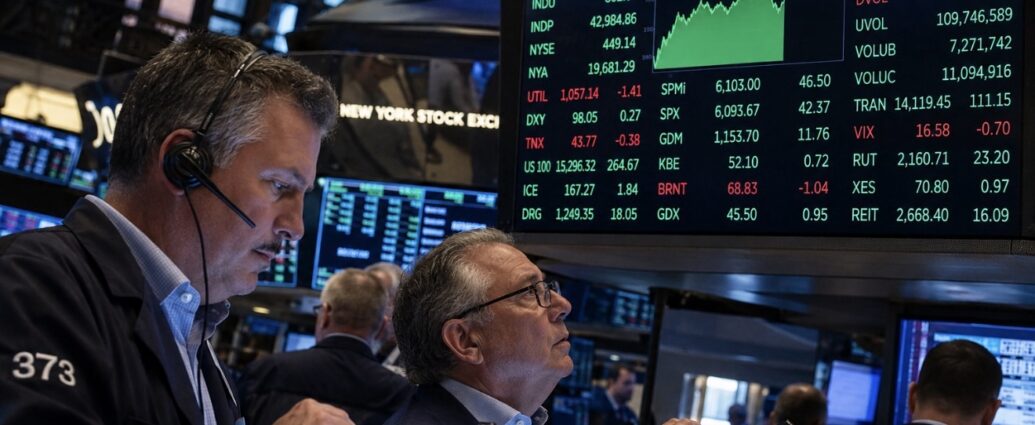
A growing gap in male labor force participation is raising fresh concerns about the strength and composition of the U.S. economy, as economists point to a slowdown that is disproportionately creating jobs in healthcare rather than traditionally male-dominated sectors.

Fewer Male Workers Signal Deeper Shift in Job Growth Dynamics

In Tuesday’s post on X, Betsey Stevenson said roughly one million fewer men are currently in the labor force than would be expected if participation rates had held at January 2025 levels. She added, “It’s not immigration, it’s not a demographic retirement cliff.”

The remark is fueling a broader reassessment of where job growth is actually landing and what that means for participation, pay, and the next stretch of consumer demand.

This post was originally published here

Freshworks Inc. (NASDAQ:FRSH) has cut hundreds of jobs as it accelerates its shift toward artificial intelligence (AI), with leadership saying automation is now deeply embedded in how the company builds and runs its business.

AI-Driven Restructuring Sparks 500 Job Cuts

On Tuesday, Freshworks said it will lay off about 11% of its workforce, or roughly 500 employees, as it restructures operations in response to rapid AI adoption across the tech industry, reported Reuters.

The company, which provides customer service and IT support software, said the cuts will span global teams and are aimed at reducing management layers and automating routine work.

CEO Dennis Woodside told Reuters the restructuring reflects how AI is already changing internal operations.

“Over half of our code is written by AI,” Woodside said, adding that automation has significantly reduced “rote work that technology can take care of.”

The company also pointed to similar moves across the sector, noting peers such as Atlassian Corp.

Full story available on Benzinga.com

This post was originally published here

Activist investor Ryan Cohen has proposed a massive takeover of eBay Inc. (NASDAQ:EBAY), signaling that severe cost-cutting and layoffs could be on the horizon for the e-commerce giant if his ambitious bid succeeds.

Case Against Overhead

Cohen sharply criticized the company‘s current operating structure during a recent interview with TBPN, explicitly targeting its large workforce and bloated budget.

“They’re spending $5.5 billion on operating expenses on an $11 billion business that has no inventory, and it’s asset light,” Cohen stated. Pointing to the massive employee roster, he added, “There are 11 and a half thousand employees, and it doesn’t make sense. I could run that business from my house.”

Drawing from his experience slashing $800 million in SG&A (Selling, General, and Administrative) expenses at GameStop Corp. (NYSE:GME), Cohen intends to apply the same aggressive restructuring to eBay to pay down acquisition debt and rapidly increase earnings.

Full story available on Benzinga.com

This post was originally published here

Fresh attention has turned to the trading activity of former House Speaker Nancy Pelosi after reports circulated that she generated roughly $3 million in stock market gains over the past week.

The number, widely shared on social media, suggests returns that are significantly higher than her annual congressional salary, sparking renewed debate over lawmakers’ participation in financial markets.

Sharp Weekly Gains Draw Scrutiny

Nancy Pelosi’s stock tracker stated on Tuesday, “We are so back”, and revealed that “Nancy Pelosi has made ~$3,000,000 in the stock market in the past week,” according to QuiverQuant.

The reported $3 million profit is equivalent to about 18 times her yearly salary. This highlights the outsized gains recorded during recent market swings. Pelosi makes about $174,000 a year as representative for California’s 11th Congressional District, according to an Investopedia report.

This post was originally published here

China’s top diplomat, Wang Yi, held a meeting with Iran’s Foreign Minister, Abbas Araghchi, on Wednesday. This is their first meeting since the Iran war, and it comes just days before President Donald Trump’s scheduled visit to Beijing.

According to the official statement, Araghchi would discuss bilateral ties and regional and global developments with Wang Yi.

Amir Handjani, a board member at the Quincy Institute for Responsible Statecraft, called the China-Iran meeting “deeply strategic,” reported CNBC. Handjani said that Tehran and Beijing are “aligning their interests” as they prepare for Trump’s potential May summit with Chinese President Xi Jinping.

Handjani also pointed out China’s stake in preserving stability in the Persian Gulf to secure uninterrupted trade and energy flows. China’s leadership aims to keep oil tankers moving and ensure continued trade from the Persian Gulf to Asian markets, he said.

Meanwhile, Danny Russel from the Asia Society Policy Institute said that for Tehran, the …

Full story available on Benzinga.com

This post was originally published here

With U.S. stock futures trading higher this morning on Wednesday, some of the stocks that may grab investor focus today are as follows:

  • Wall Street expects Kraft Heinz Co. (NASDAQ:KHC) to report quarterly earnings at 50 cents per share on revenue of $5.89 billion before the opening bell, according to data from Benzinga Pro. Kraft Heinz shares slipped 0.1% to $22.53 in after-hours trading.
  • Super Micro Computer Inc. (NASDAQ:SMCI) reported upbeat earnings for the third quarter and issued fourth-quarter EPS guidance above estimates. Super Micro Computer expects fourth quarter adjusted EPS of 65 cents to 79 cents, versus the …

Full story available on Benzinga.com

This post was originally published here

Gas prices in parts of the Great Lakes region could fall sharply after a sudden refinery-driven spike pushed pump prices above $4 in several states last week, according to GasBuddy petroleum analyst Patrick De Haan.

Great Lakes Refinery Issues Start Easing

The average price for a gallon of regular gasoline jumped past $4 in Indiana, Michigan, Ohio and Wisconsin last week after those states had mostly stayed below that mark since the Middle East conflict began. Illinois nearly reached $5 a gallon on Wednesday, as regional refinery problems compounded seasonal maintenance.

De Haan said nearby Kentucky, Minnesota, Iowa, Missouri, Nebraska and Kansas could also see increases, though likely not as severe.

Drivers May See Relief Within Weeks

In a Tuesday update, De Haan said the refinery problems were “clearing up,” which could bring relief of 20 cents to 40 cents per gallon in Indiana, Illinois, Ohio, Minnesota and Wisconsin. Iowa, Kentucky and Minnesota could also see some easing. He cautioned drivers not to rush to fill up, saying it could take “another week or two” for lower prices to show up at pumps.

Full story available on Benzinga.com

This post was originally published here

AppLovin Corporation (NASDAQ:APP) will release earnings for its first quarter after the closing bell on Wednesday, May 6.

Analysts expect the Palo Alto, California-based company to report quarterly earnings of $3.46 per share. That’s up from $1.67 per share in the year-ago period. The consensus estimate for AppLovin’s quarterly revenue is $1.78 billion (it reported $1.48 billion last year), according to Benzinga Pro.

On April 7, AppLovin named Craig Billings as board chairperson.

Shares of AppLovin rose 0.7% to close at $478.11 on Tuesday.

Benzinga readers can access the latest analyst ratings on the Analyst Stock Ratings page. Readers can sort by stock ticker, company name, analyst firm, rating change or other variables.

Let’s have a look at how Benzinga’s most-accurate analysts have rated the company in the …

Full story available on Benzinga.com

This post was originally published here

Federal Communications Commission (FCC) Chair Brendan Carr said on Tuesday that the former President Joe Biden‘s administration revoked $885 million in funding for Elon Musk-led Starlink, believing the service would not be able to attain high-speed internet.

$885 Million Revoked By Biden

In a post on the social media platform X, Carr slammed the previous Biden regime, saying that the FCC had revoked an award for Starlink that the company had won to “provide high-speed internet to millions of Americans” despite Carr’s opposition to the decision.

data-variant=”card”
data-news-mode=”manual”

>


Read Also:

Inside Elon Musk’s IPO Pitch: What Would It Take For SpaceX To Put Data Centers In Space?

This post was originally published here

Governor Gavin Newsom (D-CA) on Tuesday defended California’s tax on gasoline, saying that the high prices at the pump were a result of President Donald Trump‘s handling of the Iran war.

Trump Surcharge On Gas

In a post on X, Newsom’s official Press Office compared the per-gallon gas prices across multiple states, sharing that costs were up 72% in Ohio, nearly 70% in Indiana and over 53.3% in Texas.

“Trump started a war with no plan, and everyone’s paying for it,” the post said, adding that other states were paying “so much more” at the pump that the difference between the national average and the average price in California had come down.

data-variant=”card”
data-news-mode=”manual”

>


Read Also:

Eric Trump ‘Extremely Proud’ As He Shares Official Logo For Donald J. Trump International Airport, Says No Person ‘More Deserving’ Than Dad

This post was originally published here

Samsung Electronics (OTC:SSNLF) reached $1 trillion in its market capitalization on Wednesday, joining Taiwan Semiconductor Manufacturing Company Ltd and others in the elite club.

The shares of the memory maker jumped more than 10% on the day as investors continued to rotate into artificial intelligence-exposed chip names.

Inside Samsung Surge

The move extended a rally that has been fueled by a blowout first-quarter profit report and broader strength across South Korea’s semiconductor complex. Samsung delivered its strongest quarterly results with revenue climbing about 70% year over year, marking the company’s highest-ever quarterly sales. Operating profit surged more than 750% from a year earlier.

The surge was also driven by reports that Apple Inc. (NASDAQ:AAPL) is exploring potential partnerships with Intel Corp. (NASDAQ:INTC) and Samsung to manufacture its processors in the United States.

Samsung’s Profit Surge Fuels Market Euphoria

The gains were not limited to Samsung. SK Hynix was also rising more than 10% to a new all-time high, pushing the KOSPI Index higher. The benchmark surged nearly 6%, at the time of writing, to top 7,300 for the first time, driven by the booming global demand for artificial intelligence.

The KOSPI Index has surged 74% so far this year, following a 76% rally in 2025—its strongest annual performance since 1999—driven in part by the government’s push for market reforms, according to Reuters.

This post was originally published here

Investor Ross Gerber of the investment firm Gerber Kawasaki has urged drivers to opt for EVs in view of the Iran war that has led to surging gas prices across the U.S.

Gas Prices Won’t Come Down

In a post on X on Tuesday, Gerber outlined the benefits of EVs over gasoline-powered vehicles. “Gas prices don’t matter to the 10 mil people that own a tesla,” he said in the post.

data-variant=”card”
data-news-mode=”manual”

>


Read Also:

Elon Musk’s Starlink Was Denied $885 Million Funding By Joe Biden, FCC Chair Brendan Carr Says: ‘Slowed Down Efforts…’

This post was originally published here

Scott Galloway says the public keeps buying into a familiar story: that a powerful tech leader will step up, ask to be taxed and help fix inequality. In reality, he says, that outcome almost never materializes.

Speaking on his “Prof G Markets” podcast, the New York University professor and entrepreneur pushed back on the growing narrative that leaders in artificial intelligence are ready to support meaningful redistribution as their companies grow richer. “We keep falling for this notion that some Jesus-like figure from the technology sector is going to tax himself,” he said. “It’s never happened. It’s never going to.”

Don’t Miss:

Tech Promises vs. Political Reality

Galloway said that prominent tech leaders, including OpenAI CEO Sam Altman, Anthropic CEO Dario Amodei, and Amazon (NASDAQ:AMZN) founder Jeff Bezos, have publicly suggested higher taxes or new policies to manage the economic impact of automation. Some have floated ideas like AI-specific taxes or broader wealth redistribution.

But Galloway said there is a clear pattern. These tech leaders and billionaires publicly ask for higher taxes and more regulation for their companies, and then, as Galloway said, “they deploy thousands of lawyers to get in the way of any regulation.” 

“If we’re waiting on Dario Amodei to figure this out, good luck to us,” he added.

His argument is that real change will not come from voluntary action by billionaires, but from government policy. “We need public policy that actually has sane economic tax policies,” he said on the podcast.

Trending: The “Uber of Smartphone Monetization” Turning Ad Scrolling Into Earnings Opens Its $0.50/Share Pre-IPO Round With Bonus Shares Available 

The conversation reflects a broader debate about who should bear responsibility for the disruption caused by AI. While some executives frame themselves as part of the solution, Galloway suggested their incentives tell a different story.

AI, Jobs And Growing Inequality

Even though unemployment is still fairly low overall, there are early signs that things are getting tougher, especially for younger workers and recent grads.

Podcast guest, entrepreneur and former presidential candidate Andrew Yang, reasoned that these early signals shouldn’t be ignored. He pointed to declining job placement rates and hiring slowdowns in white-collar industries.

“The easiest people to fire are the people you haven’t hired yet,” Yang said, describing how companies are quietly pulling back on entry-level hiring while investing heavily in AI.

See Also: From the International Space Station to everyday use — this NASA-tested diagnostics platform is moving toward at-home lab testing  

Even when layoffs are not directly caused by automation, Yang said the direction is evident. Companies are shifting resources away from workers and toward AI infrastructure. “Capital displaces labor,” he said.

That shift, both Yang and Galloway agreed, is likely to increase inequality. As companies become more productive with fewer workers, more wealth flows to shareholders and …

Full story available on Benzinga.com

This post was originally published here

On Tuesday, Cathie Wood-led Ark Invest executed significant trades involving Advanced Micro Devices Inc. (NASDAQ:AMD), Shopify Inc. (NASDAQ:SHOP), and CoreWeave Inc. (NASDAQ:CRWV).

The AMD Trade

Ark Invest made a notable move by selling shares of Advanced Micro Devices Inc across multiple ETFs, including ARK Blockchain & Fintech Innovation ETF (BATS:ARKF), ARK Innovation ETF (BATS:ARKK) and ARK Next Generation Internet ETF (BATS:ARKW). The total shares sold amounted to 45,917, translating to a value of approximately $16.3 million, based on AMD’s closing price of $355.26 on Tuesday.

This decision follows AMD’s impressive first-quarter earnings report, where the company exceeded revenue expectations with $10.25 billion, surpassing analyst estimates of $9.89 billion. The chipmaker’s adjusted earnings per share also beat forecasts, coming in at $1.37 compared to the expected $1.29. AMD’s strong performance is attributed to the growing demand for AI technologies.

This post was originally published here

Health and Human Services Secretary Robert F. Kennedy Jr. on Tuesday rolled out a federal push aimed at reducing the use of certain psychiatric drugs, framing the move as part of a broader effort to address what he described as overprescribing in the U.S. mental health system.

Kennedy Pushes For Deprescribing

Speaking at a mental health summit hosted by the Make America Healthy Again Institute, Kennedy said the initiative would promote “deprescribing,” or the supervised reduction or discontinuation of medications, particularly among children, according to The Hill report.

“Today, we take clear and decisive action to confront our nation’s mental health crisis by addressing the overuse of psychiatric medications,” he said. The initiative will prioritize “patient autonomy,” along with “informed consent and shared decision-making,” while trying to move care toward “prevention, transparency and a more holistic approach to mental health,” Kennedy said.

U.S. Drugmakers Behind Psychiatric Drugs

The FDA approvals for these drugs over the past few years underscore the ongoing conversation about mental health treatment. Among some, Johnson & Johnson (NYSE:JNJ) has secured FDA approval in January 2025 for expanded use of its

Full story available on Benzinga.com

This post was originally published here

Major U.S. indices ended Tuesday higher, with the Dow Jones Industrial Average climbing 0.73% to 49,298.25, the S&P 500 advancing 0.81% to 7,259.22, and the Nasdaq finishing flat at 25,326.12.

These are the top stocks that gained the attention of retail traders and investors through the day.

Advanced Micro Devices, Inc. (NASDAQ:AMD)

AMD’s stock climbed 4.02% to close at $355.26, reaching an intraday high of $359.57 and a low of $344.88. The stock’s 52-week range is between $362.79 and $96.88. In the after-hours trading, the stock shot up 16.54% to $414.

AMD reported first-quarter revenue of $10.25 billion and adjusted EPS of $1.37, both beating estimates, with revenue rising 38% year-over-year, driven by strong data center growth of 57% to $5.8 billion.

The company guided second-quarter revenue to about $11.2 billion, above expectations, citing continued AI-driven demand for high-performance chips and infrastructure.

data-variant=”card”
data-news-mode=”manual”

>


Read Also:

Palantir’s Alex Karp Says PLTR Prioritizes US Warfighters Over Commercial Clients: ‘We Just Cannot Meet Demand’

This post was originally published here


By JBizNews Desk | May 5, 2026

A quiet but accelerating workforce shift is beginning to reshape the American labor market.

The share of U.S.-based employees leaving their jobs to take positions abroad has more than doubled over the past five years — rising from 2.7% at the end of 2021 to 6% by the end of 2025, according to new research from workforce intelligence firm Revelio. In raw terms, roughly 2,000 to 2,500 workers per month left the United States last year for jobs overseas.

The trend spans both U.S.-born and foreign-born workers, and it is being driven by a convergence of forces that many American employers have been slow to fully address: return-to-office mandates, rising financial pressure at home, and a global job market where geography is no longer a barrier.


Tech Workers Lead the Shift

The movement is being led by highly skilled professionals, particularly in technology.

In IT consulting, nearly 16% of workers who changed jobs in December 2025 began their new roles outside the United States, according to Revelio. That surge reflects a broader shift in global talent flows.

For the first time in years, more U.S.-based tech workers are moving to Europe than European workers coming to the United States — reversing a long-standing pattern. Europe’s growing investment in artificial intelligence, cloud infrastructure, and digital services has made it a far more competitive destination for top talent.

Countries including France and the United Kingdom have expanded visa programs designed to attract skilled professionals, lowering barriers for Americans willing to relocate.


Why Workers Are Leaving

The decision to move abroad is not driven by salary alone.

“Workers are looking at the full package,” said Ege Aksu, economist at Revelio, pointing to factors such as healthcare systems, transportation, childcare, and overall work-life balance. In many cases, those benefits can offset lower nominal wages.

That tradeoff is gaining traction at a time when many Americans feel financially squeezed.

More than half of U.S. consumers say their financial situation is worsening, according to Gallup, the highest share since 2001. Rising costs for housing, groceries, and fuel are putting sustained pressure on household budgets.

At the same time, workplace expectations are shifting.

Return-to-office mandates have become a key trigger. After years of remote and hybrid work, many employees are now being asked to return full-time — even as international employers continue to offer flexible arrangements.

Revelio’s analysis found that remote-capable roles had the strongest link to workers leaving the U.S., underscoring how flexibility has become a deciding factor in employment choices.


A Shift Across the Workforce

The data shows a clear divide between foreign-born and U.S.-born workers — but both groups are moving in the same direction.

Among foreign-born employees, roughly 30% of job switchers left the United States as of December 2025. For U.S.-born workers, the number remains much lower — under 1% — but is steadily rising from a very low base.

That increase, while smaller in absolute terms, is significant. It suggests the trend is not limited to return migration, but represents a broader shift in how workers view opportunity.


What It Means for U.S. Employers

For American businesses, the implications are immediate.

Revelio found that workers who saw limited opportunities for advancement were significantly more likely to leave — particularly when combined with reduced flexibility and rising cost pressures.

Companies that are scaling back remote work, slowing promotions, or failing to keep pace with cost-of-living increases may find themselves losing talent to competitors they have never traditionally considered.

“The competition is no longer just local,” Aksu noted. “It’s global.”


The Bottom Line

The global labor market is no longer theoretical for American workers — it is operational.

And as remote work expands and international opportunities become more accessible, more workers are acting on it.

For employers, the message is clear: retaining talent increasingly means competing not just across industries — but across borders.


JBizNews Desk
© JBizNews.com. All rights reserved. This article is original reporting by JBizNews Desk. Unauthorized reproduction or redistribution is strictly prohibited.

On Tuesday, Dave (NASDAQ:DAVE) discussed first-quarter financial results during its earnings call. The full transcript is provided below.

This transcript is brought to you by Benzinga APIs. For real-time access to our entire catalog, please visit https://www.benzinga.com/apis/ for a consultation.

Access the full call at https://edge.media-server.com/mmc/p/e28p3k7w/

Summary

Dave reported a revenue of $158.4 million, representing a 47% year-over-year growth, with key contributions from MTM and ARPU expansions.

The company announced strategic initiatives like removing the $15 fee cap for new members and launching the ‘Second Draw’ feature, aimed at enhancing credit utilization and origination size.

Dave raised its 2026 guidance, expecting full-year revenue of $710 to $720 million and adjusted EBITDA of $305 to $315 million, reflecting strong operational performance and share repurchases.

Operational highlights include a sequential decline in revenue due to seasonal factors, but a rebound in origination size and disbursement volume in April.

Management expressed confidence in credit performance improvements, with a 28-day past due rate of 1.69%, setting a record for Q1.

Full Transcript

OPERATOR

Together, those factors drove another quarter of outsized adjusted EBITDA and EPS growth and support the guidance raised we are announcing today our eighth consecutive quarter of increasing guidance on all metrics. Today I will cover the key drivers underlying the credit and provision mechanics, an update on capital allocation, and our revised outlook. For a more detailed review review of our KPIs, please refer to the earnings supplement on our IR website. Revenue was 158.4 million, representing 47% growth. Year over year growth was driven by 18% MTM growth and 24% ARPU expansion, both ahead of our medium term growth algorithm. Underneath those headline numbers, new member conversion, dormant member reactivation and retention all contributed and repeat originations from members with an average tenure of close to two years continue to anchor the book. For those newer to the Dave story, Q1 is seasonally our softest quarter, driven by tax refunds which temporarily reduced demand for extra cash. As a result, the number of Extra cash disbursements declined 5% sequentially, consistent with the range we have observed in every Q1 since 2021 2021. This was the primary driver of the 3% sequential decline in revenue. The average extra cash size was down modestly from $214 to $212 sequentially, reflecting higher than normal tax refunds per member. It is worth noting that Q1 of last year benefited from the step up in extra cash approval limits we implemented as part of our fee model transition. Both average origination size and disbursement volume have rebounded in April and we expect continued expansion in Q2 and beyond in terms of forward looking color on top line drivers. In addition to the optimism we have about the potential impact of Cash AI VR, we also have a series of initiatives aimed at improving average origination sizes, monetization rates, and therefore ARPU in the near term. The first is removing our $15 fee cap for new members, which enables more members to achieve higher limits now that the risk is appropriately monetized. Second, we addressed a common member pain point where if you hadn’t utilized your entire extra cash limit, the additional amount wasn’t accessible within that pay period. This new feature, which we are calling Second Draw, solves that problem and enables members more flexibility which we believe should help with overall credit utilization and therefore average origination size. Second Draw, is now available to all eligible members as of last month. Now turning to credit and provision, as Jason noted, the underlying credit picture continued to improve meaningfully in the first quarter. Our 28-day past due rate of 1.69% was a Q1 record, improving both sequentially and year over year. Even with originations up 37%, this was the first quarter we have seen DPD improve year over year since transitioning to the new fee model. When we moved to that structure, we deliberately expanded the credit box while Cash AI iterated 3/4 of optimization later. Loss rates are back below where we started. That momentum has continued into Q2 and should expand upon rolling out Cash AIV 6.0 over the coming months. On provision for credit losses, the sequential increase was mechanical and calendar driven. The underlying book performed 10% better than Q4 on a 28 BPD rate basis. The metrics that incorporate credit performance, DPD rate, net monetization rate and revenue per origination net of losses all improved sequentially and year over year, which we believe is the more meaningful signal. Consistent with the expectation we set last quarter, Q1 ended on a Tuesday, typically the intra week peak in outstanding receivables. Higher extra cash balances at the measurement date mechanically drive a higher loss reserve even when the underlying loss content on those receivables is trending lower. Had Q1 ended on the prior Friday, the provision would have been approximately $5 million lower and non GAAP gross margin would have been approximately 75%. Importantly, because Q1 already absorbed the elevated reserve with that Tuesday watermark, we do not expect Q2 ending on a Tuesday to adversely impact revision in the same way it did in Q1. Furthermore, Q3 and Q4 ending on a Wednesday and Thursday respectively should provide a tailwind for loss provision as a percentage of originations and gross margin in those periods. Non GAAP gross profit was 1. 14.4 million up 37% year over year. Non GAAP gross margin was 72%, which is consistent with the low 70s framework we guided to in March, and we expect Q1 to represent the low point for the year. Given the improving DPD trend and more favorable calendar dynamics ahead, we now expect non GAAP gross margin to expand into the mid-70s for the balance of the year. In terms of marketing, Q1 was our seasonal low. By design, we moderated investment given the typical softness in extra cash demand during tax refund season for the balance of 2026. We plan to expand marketing spend above fourth quarter 2025 levels while maintaining our discipline on investment returns on fixed costs. Compensation expense grew 1% year over year and 11% sequentially. We typically see a modest bump in Q1 related to seasonally elevated payroll taxes. Additionally, we began making targeted investments in product development headcount as previously communicated to size that investment we expect to move from under 300 employees as of the end of last year to around 325 by the end of this year, representing an annualized incremental expense of approximately 10 million. We continue to run a highly efficient platform with what we believe is one of the strongest revenue per employee businesses in the industry. As revenue scales throughout the balance of the year, we expect operating leverage to continue to build thereafter, Pulling it all together. Adjusted EBITDA was 69.3 million, up 57% year over year at a 44% margin. That is approximately 300 basis points of year over year margin expansion and consistent with our commitment to deliver ongoing annual EBITDA margin improvement. GAAP net income was 57.9 million, up 101%, adjusted net income was 52.3 million, up 61% and adjusted diluted EPS was $3.64, up 64%, reflecting the combined benefit of operating performance and the reduction in share count from Q1 repurchases. Given that our share repurchases in Q1 occurred entirely in March, Q2 will begin to experience a full quarter’s benefit of their impact. In terms of capital allocation, Q1 was a meaningful quarter for per share value accretion. We deployed 194.9 million into share repurchases and restricted stock unit net settlements, reducing our basic share count from 13.6 million at year end of 2025 to 12.7 million at the end of Q1, a reduction of approximately 6%. Sequentially in early March we completed $200 million zero coupon convertible notes offering, generating $175.7 million of net proceeds. We simultaneously repurchased $70 million of common stock in a privately negotiated transaction with the convertible note holders and continued buying shares in the open market for the remainder of the quarter. We have approximately $113.3 million in remaining capacity under our share repurchase authorization, which we expect to continue to utilize opportunistically. Our capital priorities remain the same. First, invest in organic growth where we are generating returns that are multiples of our cost of capital. Second, operationalize the coastal funding structure. Third, return capital through share repurchases using our excess cash when risk adjusted returns exceed those of alternatives. Our objective is simple. We intend to allocate capital to maximize value for shareholders and Q1 was a strong proof point of us doing it at scale. We remain on track to transition extra cash receivables to the coastal off balance sheet funding structure this summer. At full implementation we expect to unlock over $200 million in incremental liquidity, reduce our cost of capital and repay our existing credit facility. As a reminder, the fees paid to Coastal under this arrangement will be recognized as an operating expense that will burden non GAAP gross profit and gross margin, but will be added back for adjusted EBITDA purposes. Now turning to guidance based on Q1 results and the trajectory we see in the business, we are raising 2026 guidance across all three metrics. We now expect full year revenue of 710 to 720 million, representing growth of approximately 28% to 30%. Additionally, we are raising adjusted EBITDA guidance to 305 to 315 million. Lastly, we are raising adjusted diluted EPS to a range of $16.25 to $16.75, up from $14 to $15. This represents year over year growth of approximately 43% to 47% on a tax rate adjusted basis, reflecting both strong operating performance and the meaningful reduction in share count from Q1 repurchases. All figures assume a 23% effective tax rate. The execution we have demonstrated over the last several years consistently raising guidance while improving credit and scaling originations has carried into 2026 cash AI continues to sharpen, our competitive position continues to strengthen and we believe we have a clear and executable path to sustainability deliver on our medium term growth algorithm while creating outsized shareholder value. With that we will conclude our prepared remarks. Operator, please open the line for questions. Thank you. As a reminder to ask a question please press star 11 on your telephone and wait for your name to be announced. To withdraw your question, please press star 11 again. One moment for questions. Our first question comes from Andrew Jeffrey with William Blair. You may proceed.

Andrew Jeffrey (Equity Analyst)

Thanks appreciate the time this afternoon guys. I wanted to ask about Jason, maybe your comments around focusing on engagement,, particularly in the context of Dave Card volume which the growth of which decelerated a little bit this quarter. It sounds like that’s less at least of a near term focus for you in terms of engagement. As you turn your eyes to Flex and Cash wonder if you could just kind of unpack that a little bit for us.

Jason

Yeah, sure. Thanks for the question. So look, when I think about deepening …

Full story available on Benzinga.com

This post was originally published here

InnovAge Holding (NASDAQ:INNV) released third-quarter financial results and hosted an earnings call on Tuesday. Read the complete transcript below.

This transcript is brought to you by Benzinga APIs. For real-time access to our entire catalog, please visit https://www.benzinga.com/apis/ for a consultation.

Access the full call at https://edge.media-server.com/mmc/p/pkf4xpav/

Summary

InnovAge Holding reported a solid third quarter with approximately $252 million in total revenue, a center level contribution margin of $61 million, and adjusted EBITDA of $30 million.

The company has raised its fiscal year 2026 guidance for revenue and adjusted EBITDA, expecting revenue between $950 million and $975 million, and adjusted EBITDA between $85 million and $90 million.

Strategic initiatives include investment in AI to enhance care coordination, a focus on quality and participant experience, and exploring growth opportunities through partnerships, acquisitions, and potential new programs.

The company is anticipating a more challenging rate environment for fiscal 2027 but remains confident in managing cost trends and sustaining operational efficiency.

Management emphasized the importance of reinvesting in quality and operational infrastructure, highlighting the interconnectedness of financial performance and quality care in their PACE model.

Full Transcript

OPERATOR

Good day and thank you for standing by. Welcome to the InnovAge Holding 2026 fiscal third quarter earnings call. At this time, all participants are in a listen only mode. After the speaker’s presentation, there’ll be a question and answer session. To ask a question during the session, you’ll need to press Star one one on your telephone. You will then hear an automated message advising. Your hand is raised to withdraw your question. Please press star 11 again. Please be advised that this conference is being recorded. I would like to hand the conference over to your speaker today, Ryan Kabuta. Please go ahead.

Ryan Kabuta

Thank you Operator Good afternoon and thank you all for joining the Innovage 2026 fiscal third quarter earnings call. With me today is Patrick Blair, CEO and Ben Adams, CFO. Today, after the market closed, we issued an earnings press release containing detailed information on on our fiscal third quarter results. You may access the release on the Investor Relations section of our company website, innovageholding.com for those listening to the rebroadcast of this call, we remind you that the remarks made herein are as of today, Tuesday, May 5, 2026 and have not been updated subsequent to this call. During our call we refer to certain non GAAP measures. A reconciliation of these measures to to the most directly comparable GAAP measures can be found in our earnings press release posted on our website. We will also make statements that are considered forward looking, including those related to our 2026 fiscal year projections and guidance, future growth prospects and growth strategy, our clinical and operational value initiatives, the effects of recent legislation and federal budget cuts including Medicare and Medicaid rate pressures, seasonality of cost trends, the status of current and future legal proceedings and regulatory actions and other expectations. Listeners are cautioned that all of our forward looking statements involve certain assumptions that are inherently subject to risks and uncertainties that can cause our actual results to differ materially from our current expectations. We advise listeners to review the risk factors and other discussions included in our annual report on Form 10-K for fiscal year 2025 and any subsequent reports filed with the SEC, including our most recent quarterly report on Form 10-Q. After the completion of our prepared remarks, we will open the call for questions. I will now turn the call over to our CEO, Patrick Blair.

Patrick Blair (CEO)

Patrick thank you Ryan and good afternoon everyone. I’d like to begin by thanking our Innovage colleagues, our participants and their families, our government partners and our investor community for your continued trust and support. The work our teams do every day to care for a very complex and vulnerable population is what drives our performance and I’m proud of the progress we’re making and the consistency we’re beginning to demonstrate. As an organization. We delivered a solid third quarter and continue to see steady momentum across the business. These results reflect stronger operating execution and the benefits of the investments we’ve made over the past few years to strengthen the platform. For the quarter, we reported approximately $252 million in total revenue, center level contribution margin of $61 million and adjusted EBITDA of $30 million. We ended the quarter serving approximately 8,050 participants in 6 states across 20 centers. Based on our year to date operating trends and financial performance, we are once again raising our fiscal year 2026 guidance for revenue and adjusted EBITDA. We now expect revenue in the range of 950 to 975 million dollars and adjusted EBITDA in the range of 85 million to 90 million. Overall, our performance continues to show steady year over year improvement across key operational and clinical metrics. Our performance this year has been supported by several in year factors that came in more favorably than we expected, including better than expected Medicaid rates and favorable Medicare risk scores and continued discipline across medical management. So as we think about our momentum, we believe it is real and increasingly durable. But we are also being thoughtful about our assumptions as we look ahead to fiscal 2027. Just as importantly, we view our improving financial performance as an enabler, not an endpoint. The progress we’re making is allowing us to reinvest in the business in ways that we believe directly benefit participants and strengthen the model over the long term. That includes continued investment in our clinical teams and interdisciplinary model, advancing our technology platform, including early and closely monitored applications of AI, to improve care coordination and participant experience, and strengthening how we measure and manage quality. We are also investing in growth, including our new centers in Florida, which are still maturing from an operations and financial perspective. Given the complexity of the PACE population we serve, these long term investments are essential. Our goal is to deliver strong, sustainable performance while continuing to invest in the model and be a responsible partner to states and the federal government. In the PACE model, financial performance and quality are not separate, they are directly linked. When we improve quality, we see better participant outcomes, more consistent engagement, lower unnecessary utilization, and ultimately better fiscal management for our state and federal partners. We track a wide range of required quality and utilization metrics and these remain an important part of how we manage the business day to day. But we also recognize that many of these measures, while necessary, don’t fully capture what matters most to our participants or to the full value of the model at its core, our focus is helping participants maintain their independence, remain the community for as long as possible, and receive care that is individualized and aligned with their goals. This includes supporting caregivers, coordinating care across the continuum, and intervening early before issues escalate. Over the past several years, we have made meaningful investments in our clinical teams, our CARE model, and our operational infrastructure to strengthen our ability to deliver on those outcomes. More recently, we have begun to invest more intentionally in how we measure them. We’re in the early stages of developing a more comprehensive set of outcome oriented measures focused on areas like functional trajectory, the ability of participants to remain in the community, and further aligning care with participant goals. These are areas where we believe the PACE model delivers meaningful value. Our initial focus is on building the data processes and operational consistency required to measure these outcomes reliably. As the capabilities mature, we expect to incorporate them more formally into how we manage the business. We believe this is an important step not only in demonstrating the full value of the PACE model, but also in ensuring that our continued financial progress is clearly aligned with better outcomes for the participants we serve and the partners we support. AI is another area in which we are investing more heavily when we think about the objectives we share with our regulators. Improving participant experience, enhancing outcomes for a complex population, and doing so in a cost effective way. We believe AI with the appropriate oversight has the potential to be a meaningful enabler. While still early, the work we’ve done over the past several months increases our confidence that these capabilities can have a real impact on both the quality and efficiency of our model. Much of our clinical AI work is being led by Dr. Paul Taheri. Although Paul has only been with us a short time, he has quickly stepped in to help shape our approach, bring a strong focus on practical application, clinical rigor, and ensuring these tools are designed to support, not replace, clinical judgment. We’re piloting a range of use cases designed to support our clinicians and to streamline operations in our clinical workflows. We’re piloting AI tools, to help synthesize information across the participant record to support care planning and to identify potential risks such as medication interactions or avoidable acute events. The goal is to increase the quality of the care we provide for our participants and enable our teams to operate more effectively at the top of their license. We are also applying these capabilities to operational areas such as scheduling, transportation, and care coordination, where we see meaningful opportunity to reduce friction, improve the participant experience, and better utilize our existing capacity. One area we are particularly focused on is how we schedule and deliver services across our centers. Today there are structural inefficiencies that can lead to cancellations, unused capacity and administrative burden. We believe AI enabled scheduling and coordination can help address these challenges, allowing us to improve the experience to serve more participants within our existing footprint and to increase capacity over time. Importantly, we’re approaching this work with discipline. We’re testing, learning and measuring impact before scaling, and we’re focused on use cases where we see clear alignment between improved outcomes, better participant experience, and more efficient operations over time. We believe these investments will further strengthen our platform and expand our ability to deliver high quality coordinated care at scale. Stepping Back One of the things these results and the progress we’ve made over the past several years now allow us to do is to take a more forward looking view on growth. Over the last four years, our focus has been on stabilizing and strengthening the platform, and as a result of that work, we’re now beginning to generate more consistent earnings and cash flow which gives us greater strategic flexibility as we look ahead. That flexibility allows us to take a more proactive and thoughtful approach to growth. First, we continue to see meaningful opportunity within our existing footprint by filling our current centers, strengthening our sales capabilities, and expanding our reach through new channels and partnerships. At the same time, we’re beginning to evaluate a broader set of potential growth alternatives that could allow us to expand our model to more seniors over time. These may include acquisitions, joint ventures, partnerships, or participation in new programs and demonstration models that align with our capabilities. Overall, we’re entering the next phase as an organization, one that positions us well to expand access to our model and to serve more seniors who can benefit from it. Before I conclude, I’d like to spend a few minutes on the rate environment. As we know, this is an important area of focus for everyone. Ben will provide more detailed visibility into our fiscal 2027 outlook, including rates on our fourth quarter and fiscal year earnings call in early September. But given where we sit today, we thought it would be helpful to share some early perspective on how we’re thinking about the environment, recognizing that our visibility is still evolving. Starting with Medicare, the final 2027 rate notice came in more favorable than initially proposed, particularly for Medicare Advantage plans. That improvement was driven in part by deferred changes to the V28 risk model transition, which had a more meaningful impact on MA than on pace. For pace, our rate setting framework and transition timeline are different, and given the complexity of the population we serve, the benefit from the Deferred changes to V28 is more limited. The net result is that we expect Medicare rates to increase approximately 1.5% to 2% in fiscal year 2027, which is more modest and increased than what will likely be experienced by MA plans. On the Medicaid side, we’re beginning to see early indications from our state partners that budget pressures are increasing. That said, it’s important to step back and view Medicaid rates and pace over a longer horizon. This has always been a program with some degree of year to year variability. There are periods where rates run ahead of cost trend and margins expand, and periods like the one we’re planning for where cost trends may outpace rate growth and margins can tighten without other offsetting improvements. Over time, these dynamics tend to balance out rates, have kept pace with the underlying cost of caring for this population, and have supported appropriate and sustainable margins for …

Full story available on Benzinga.com

This post was originally published here

Bright Horizons Family (NYSE:BFAM) held its first-quarter earnings conference call on Tuesday. Below is the complete transcript from the call.

This content is powered by Benzinga APIs. For comprehensive financial data and transcripts, visit https://www.benzinga.com/apis/.

Access the full call at https://edge.media-server.com/mmc/p/qbs43aeo/

Summary

Bright Horizons Family reported a 7% year-over-year revenue growth to $712 million in the first quarter, driven by increases in Backup Care and Full Service segments.

The company reaffirmed its 2026 full-year revenue guidance range of $3.075 billion to $3.125 billion and adjusted EPS guidance range of $4.90 to $5.10 per share.

Despite challenges in Australia leading to enrollment declines, the company saw sequential improvements in occupancy across its network and continued expansion in user growth for Backup Care, which exhibited a 12.5% revenue increase.

Strategic focus remains on enhancing user experience, rationalizing center portfolios, and expanding service adoption across clients.

Management highlighted significant share repurchases totaling $225 million in Q1, contributing positively to EPS despite increased interest expenses.

Full Transcript

Steven

By way of a real time example, we put this strategy into action this past week at our on the Horizon Summit. We hosted more than 100 clients including HR and benefits leaders from Bank of America, Comcast and Cone Health, to name a few. The discussion encompassed the future of employer sponsored education and care and modern ways to deliver a unified experience that for employees and their families. We received tremendous feedback from clients about the event and the innovations that we introduced. We look forward to sharing more over time and at this point I would like to turn back to our first quarter segment results in Backup Care revenue, increased 12.5% to $145 million in the quarter and adjusted operating margins were 18%, both in line with our expectations. Growth was driven by continued expansion in unique users with solid use across all care types and looking ahead to the summer months and peak utilization for school age programs. We are encouraged by continued user growth and the visibility of use through early reservations for the second and third quarters. Turning to full service, revenue grew 6% to $541 million in line with our expectations. Growth was driven by a combination of tuition increases and a tailwind from foreign exchange partially offset by center closures. As we continue to rationalize the portfolio, we opened 2 centers in the first quarter, one in the Netherlands and our third location for Toyota, here in the United States. Occupancy averaged in the mid 60% range in Q1, improving sequentially from the fourth quarter and the prior year. Enrollment growth in centers open for the last year was modestly positive in the first quarter. This included approximately 100 basis points of headwind from our Australia operations, where we experienced an elevated enrollment decline in this group of 78 centers. In contrast to our other geographies, our Australia portfolio’s occupancy has drifted lower in the years following the pandemic and this quarter, the enrollment contraction was much more significant than prior year’s school year transition cycle. With the broader Australian ECE industry, also experiencing meaningful weakness in 2026, we expect a more challenged enrollment picture and overall performance profile as we look to the rest of the year. More broadly, we remain encouraged by the sequential improvement in occupancy across our network of centers, the continued recovery across our middle and lower cohorts, and the improved operating margin we drove this quarter. Despite a headwind from Australia, our focus remains on expanding our enrollment with improved consumer experience and quality value, achieving improved operating leverage and operating efficiency, and rationalizing the center portfolio where appropriate. As previewed on our call in February, we closed 24 centers this quarter as we continue to position our portfolio to serve employees of our client partners and working parents where they live and work. Our education advisory business delivered revenue of $27 million in the quarter and increased 2% over the prior year. Notable new client launches in the quarter included NXP Semiconductors, Visa, and Huntington bank and we continue to be focused on driving participant growth and use across our college Coach and Ed Assist services. So to close our Q1 results demonstrate solid demand and execution across the business. We remain encouraged by the progress we are making in our core operations while maintaining financial and operational discipline. As such, we are reaffirming our 2026 full year revenue guidance range of 3.075 billion to 3.125 billion and our adjusted EPS guidance range of $4.90 to $5.10 per share. With that, I’ll turn the call over to Elizabeth who will dive into the quarterly numbers and share more details around our outlook.

Elizabeth

Thanks Steven and hello to everyone who’s joined the call. I’ll start with our financial highlights. Revenue in the first quarter was 712 million representing 7% growth year over year and in line with our expectations. Adjusted operating income of 65 million is increased 4% over the prior year quarter and represented 9.1% of revenue. Adjusted EBITDA of 96 million also grew 4% and came in at 13.4% of revenue. Adjusted EPS of $0.82 a share rose 6% over the prior year quarter and finished slightly ahead of our guidance set at 75 to 80 cents. Taking a closer look at each of our three business lines, backup revenue grew 12.5% in the first quarter to 145 million. Increased users and expanded use within existing clients continues to drive majority of the growth and Q1 marked the 16th consecutive quarter of double digit top line growth. Adjusted operating margins were 18% in the quarter which we expect at this time of year when use is seasonally lower. As we move into the higher use quarters over the rest of the year, we gain operating leverage and we continue to expect to see margins achieve our full year target of 28 to 30%. Turning to full service revenue of 541 million expanded 6% over the prior year quarter driven primarily by tuition increases, enrollment gains and a tailwind from foreign exchange, which were all partially offset by an approximately 250 basis point headwind from the impact of closed centers over the past year and to a lesser extent to enrollment declines in Australia. During the quarter we had net closures of 22 resulting in a center count at quarter end of 988 centers. As Steven mentioned, enrollment in centers open for the last year was modestly positive in the first quarter, although it would have increased roughly 100 basis points without the enrollment contraction we experienced in Australia. Occupancy averaged in the mid-60s range, increasing from both the fourth quarter of 2025 and the prior year. With respect to the center cohorts we’ve discussed on prior calls, we also continue to see improvement over the prior year. Our top performing cohort, I.e. 7 centers that are above 70% occupancy, improved from 47% of these centers in the first quarter of 2025 to 48% in 1Q26. And more notably, our bottom cohort, centers below 40% occupancy, has now fallen below 10% of these centers, improving from 13% in the prior year to 8% this quarter, reflecting both enrollment progress and the results of our focus on closing underperforming centers. Adjusted operating income of 37 million in full service increased 4 million over the prior year and represented 6.8% of revenue. An expansion of 30 basis points, tuition increases ahead of average wage costs, and continued progress in our UK operations drove the margin expansion. That said, reported margin improvement was meaningfully constrained by the enrollment and operating challenges in Australia. Excluding this effect in Australia, margin expansion would have been more than 50 basis points over the prior year. Given the current operating performance and outlook for the rest of this year, we expect Australia to remain a larger headwind to reported margin performance than we had originally expected. Our educational advising segment had revenue of $27 million, an increase of 2% from the prior year quarter and adjusted operating margins of 9%, which were broadly consistent with the prior year quarter. Interest expense rose to 12 million in Q1, up from 10 million in the prior year quarter due to higher average interest rates as well as higher average borrowings on elevated share repurchases in the quarter. The structural effective tax rate on adjusted net income was also 27.5%, consistent with Q1 of 2025. Turning to the cash flow statement, we generated $108 million in cash from operations and made net fixed asset investments of 20 million, resulting in free cash flow of 88 million over the last 12 months. Free cash flow was 276 million, representing a 106% conversion relative to adjusted net income. As mentioned in Q1, we opportunistically repurchased 225 million of stock funding. The buybacks with free cash flow and incremental revolver borrowings as of the end of the quarter, 577 million remains on the new repurchase authorization that we announced in March. Lastly, we ended Q1 with $133 million of cash and a leverage ratio of 1.9 times net debt to adjusted EBITDA. Now moving on to our 2026 outlook, we are reaffirming our 2026 full year guidance for revenue in the range of 3.075 to 3.125 billion and adjusted EPS to be in the range of $4.90 to $5.10. Our guidance does not include the effects of any additional share repurchases on either interest expense or on the share count. If we look at a segment level in full service, we expect reported revenue to grow in the range of 2.5% to 3.5% on enrollment gains and tuition increases, offset by approximately 200 basis points of headwind from net center closings and approximately 100 basis points on reduced expected performance from our Australia operations. In Backup Care, we now expect reported revenue to increase 12 to 14% driven by the continued expansion of use. And lastly in net advisory, we expect to grow in the mid single digits. Lastly, on the full year guidance, we are now estimating full year interest expense of 50 to 52 million and an adjusted effective tax rate of 28 to 28.5% up approximately 100 basis points from our prior guide. As we look specifically to Q2, our outlook is for total top line growth in the range of 5.25 to 6.5%. Breaking that down by segments would be full service reported revenue growth of 2.5 to 3.5%, backup growth of 15 to 17% and ED advisory in the low single digits. In terms of earnings for Q2, we are expecting adjusted EPS in the range of $1.17 to $1.22. So with that, Stacy, we are ready to go to Q and A. Thank you. We will now be conducting a question and answer session. If you would like to ask a question, please press Star one on your telephone keypad. A confirmation tone will indicate your line is in the question queue. You may press Star two …

Full story available on Benzinga.com

This post was originally published here

On Tuesday, LeMaitre Vascular (NASDAQ:LMAT) discussed first-quarter financial results during its earnings call. The full transcript is provided below.

This content is powered by Benzinga APIs. For comprehensive financial data and transcripts, visit https://www.benzinga.com/apis/.

The full earnings call is available at https://edge.media-server.com/mmc/p/xrewxifx/

Summary

LeMaitre Vascular reported an 11% increase in sales and a 72.7% gross margin for Q1 2026, with significant growth in product categories like grafts (20%), valvulotomes (15%), and carotid shunts (11%).

The company is focusing on expanding its Autograph product line, with international sales expected to reach $10 million in 2026, up from $4 million in 2025. Key strategic initiatives include filing for international approvals and extending product sizes.

Operating income increased by 41% to $17.8 million, and the company ended Q1 with $367 million in cash. Guidance for 2026 includes 12% sales growth and 26% EPS growth.

Operational highlights include the expansion of the sales force, with plans to have 170-180 reps by year-end, and the opening of an Irish warehouse for pan-European distribution.

Management discussed ongoing efforts in M&A, particularly in open vascular and cardiac surgery markets, and highlighted the potential for price increases across geographies.

Full Transcript

OPERATOR

Welcome to The LeMaitre Vascular Q1 2026 Financial Results Conference Call. As a reminder to everyone, today’s call is being recorded at this time. I would like to turn the call over to Mr. Dorian LeBlanc, Chief Financial Officer of LeMaitre Vascular. Please go ahead, sir. Thank you.

Dorian LeBlanc (Chief Financial Officer)

Good afternoon and thank you for joining us on our Q1 2026 conference call. With me on today’s call is our CEO George Lemaitre and our President Dave Roberts. Before we begin, I’ll read our Safe Harbor Statement. Today we’ll be making some forward-looking statements within the meaning of the US Private Securities Litigation Reform act of 1995, the accuracy of which is subject to risks and uncertainties. Wherever possible, we will try to identify those forward-looking statements by using words such as believe and expect, anticipate, pursue, forecast and similar expressions. Our forward-looking statements are based on our estimates and assumptions as of today, May 5, 2026 and should not be relied upon as representing our estimates or views on any subsequent date. Please refer to the cautionary statement regarding forward-looking information and the risk factors in Our most recent 10K and subsequent SEC filings, including disclosures of factors that could cause results to differ materially from those expressed or or implied. During this call we will discuss non GAAP financial measures such as organic sales growth. Reconciliations of GAAP to non GAAP measures discussed in this call are contained in the Associated Press release and if applicable, in supplemental materials, both of which are available in the Investor Relations section of our website www.LeMaitre.com. I’ll now turn the call over to George LeMaitre.

George Lemaitre (Chief Executive Officer)

Thanks Dorian. Q1 featured 11% sales growth, a 72.7% gross, margin 42%, EPS growth grafts were up 20%, Valvetomes 15% and Carotid shunts 11%. As each category posted record sales, our three geographies also posted record sales. EMEA was up 20%, APAC 18% and the Americas 7%. Autograft has become our largest product and we’re investing in its growth in three ways. Number one filing more international approvals, number two making longer sizes available for leg bypasses and number three proving quick stick claims for AV access. Worldwide autograph sales grew 36% in Q1. International autograph sales in Q1 were $2.1 million and we expect 2026 sales to be $10 million versus 4 million in 2025. Health Canada has approved Autograft and the launch is now planned for H2 2026 as we finalize Canadian specific Packaging validations Additional autograft approvals are expected in 2027 for Korea, Brazil, Vietnam and India. We’re also working to make longer autographs available because European surgeons use autographs for leg bypasses. Our longest autograph, which is 50cm, is now in high demand and we know we could sell longer sizes. Unfortunately, our current packaging tube is just 53 centimeters long, so the first step is to gain approval for a longer tube and we plan to make these filings in the US and Europe in H2 2026. First, sales of these longer autographs could start in H2 2027. Separately, we’ve made a pre submission filing to the FDA as we seek quick stick AV access claims on Autograft’s US Labeling. This pre submission will help us collaborate with the FDA to develop the pathway for a PMA filing or to design a clinical trial. While Autograft’s current US labeling restricts cannulation to 10 days after implantation, peer reviewed literature indicates that autograft can be cannulated one to three days after implantation. RestoreFlow Allografts (RFA) grew 25% in Q1 led by strong US results. We currently distribute tissues in three countries, the US, Canada and the UK. German implants should begin in Q2 and we now expect to receive Irish approval in H2. Our Irish warehouse opened in April and we’ll begin shipping our core medical devices starting in June as we await an audit from the Irish Tissue Authority. This audit should enable tissue distribution from our Dublin warehouse to Irish hospitals in H2. Long term, this warehouse will be used for pan European distribution. We filed for Australian approval in April and we plan to file in Austria, Holland, Belgium, Spain and Switzerland in 2026. As for our RestoreFlow Allografts (RFA) facility transfer, tissue processing is ramping up in Burlington and we should complete the project by year end. We ended Q1 with 158 sales reps up 3% year over year and we plan to end 2026 with 170 to 180. We currently have 16 open requisitions for new reps, mostly in the US. We ended Q1 with 35 RSMs and country managers up 13% year over year. We expect to go direct in Poland in Q4 and this project will include an office warehouse, a GM customer service team and several reps. Poland will be our 32nd direct country. Higher ASPs geographic expansion and disciplined spending produced 11% sales growth and 42% EPS growth in Q1 full year. 2026 also shows OP leverage. Increased guidance implies 12% sales growth and 26% EPS growth. Our new 2030 goals are posted on the walls of all LEMAITRE conference rooms. We call them the 2030 planks and our playbook remains simple produce quality devices, build our sales force, go direct in new countries, acquire niche products and focus on profitability, cash flow and dividends. I’ll now turn the call over to Dorian.

Dorian LeBlanc (Chief Financial Officer)

Thanks George. Organic sales growth of 10% over Q1 2025 was driven by average selling price increases of 8% and unit growth of 2%. Unit growth was impacted by a lower than average quarter in our distribution business, which can be lumpy. Excluding distribution, direct sales grew 12.8% organically comprised of 8.4% price and 4.4% units. Total organic revenue growth excludes a $2 million foreign exchange benefit in Q1 2026 and $1.5 million of Azio distribution sales in Q1 2025. These two items largely offset one another. We discontinued azio distribution in May 2025. In Q1 2026 we posted a gross margin of 72.7%. The 350 basis point year over year improvement was driven primarily by higher ASPs and manufacturing efficiencies. Our Q2 gross margin guidance of 72.1% reflects the impact of our new Billerica warehouse and the manufacturing transfer of our RFA processing to Burlington. Operating expenses in Q1 2026 were 30.6 million, an increase of 6% versus Q1 2025. Despite the continued expansion of the sales force, Overall company headcount decreased 3% from 662 at March 1, 2025 to 641 at March 31, 2026. Q1 2026 operating income increased 41% year over year to $17.8 million with an operating margin of 27% compared to 21% in Q1 2025. Fully diluted earnings per share were $0.68, up 42%, benefiting from strong operating income and an improved effective tax rate. We believe our effective tax rate will remain lower than our historical rates given the strong growth in high margin international autograph sales and our overall geographic sales mix. A larger share of our income qualifies for the foreign derived intangible income or FIDI deduction, which structurally lowers our tax rate excluding the discrete items in this quarter, we expected 80 basis point improvement from historical effective tax rate due to the higher FIDI deductions, another benefit of our US manufacturing footprint. Cash from operations generated 15 million in Q1 2026 as compared to 9 million in Q1 2025 we paid $5.7 million in dividends to our shareholders during the quarter. We ended Q1 2026 with $367 million in cash and securities. 8 million in the quarter. The LeMaitre playbook continues to drive broad based revenue growth supported by our differentiated products, direct to hospital model and strong commercial organization. We are affirming our full year revenue guidance of 280 million, representing 12% organic growth. We are increasing our annual guidance for gross margin to 72.3% and operating to 79.8 million, representing 24% growth over adjusted 2025 operating income. We are also increasing annual guidance for diluted earnings per share to $3 or 26% growth from adjusted 2025. Historically, Q2 has been one of our strongest quarters and we’re expecting revenue of 71.5 million and an operating margin of 30%. Our current guidance assumes a constant Euro USD exchange rate of 1.17 and no dilutive impact from our convertible debt. For additional details, please see today’s press release. Finally, we’d like to welcome Keith Hinton from Freedom Capital Markets to the call. Keith initiated coverage on Lemaitre on March 31. With that, I’ll turn the call over to the operator for questions.

OPERATOR

Thank you. At this time we will conduct a question and answer session. As a reminder to ask a question, you will need to press Star 11 on your telephone and wait for your name to be announced. To withdraw your question, please press star 11 again. Please stand by as we compile the Q and A roster. Our first question comes from the line of Keith Hinton from Freedom Capital Markets. Your line is now open.

Keith Hinton (Equity Analyst)

Great, thank you. Thanks for taking the question. I have kind of a high level question here on the pricing side of things. So you know EMEA has been growing faster than the US for a few years. You know it’s my assumption that the prices there start lower and there’s less ability to take price over time. So considering that kind of balanced against the ongoing mix shift towards grafts where it seems like you do have good pricing leverage in the us Just how should we think about the high sustainability of high single digit sustained pricing increases in the out years?

George Lemaitre (Chief Executive Officer)

Hi Keith, this is George LeMaitre again. Welcome to your firm for covering the company and also welcome to the call. In terms of asking about price increases and the sustainability, it’s a question you can imagine we get frequently. We feel very comfortable with what’s going on here. We have another year where I think we’re validating all the way into Q1 that we’re able to get these price increases. We got 8% in Q1. Did you want me to distinguish between European pricing flexibility and US pricing flexibility? Was that part of your question? Yes, that would be terrific. Thank you. Right. I would say it’s not exactly answering it, but on that topic, I would say the floors, the pricing floors we put in are largely in and installed in the United states. In about 55% of our products we have pricing floors and then we change them from year to year, of course. And in Europe, I still think we have a little room to go. I think only about 40% of our products have pricing floors. So you can do more. You can add pricing floors to more of the different products over there. And also in Europe, I think it takes longer for prices to really get installed since particularly in southern Europe, a lot of the stuff is sold on three year tenders. And so you can only change your price once every three years. So you change it and then it takes three years for it to fully get implemented. I hope that makes sense to you. So maybe a little more room over in Europe given the fact that we’re not as price friendly floored over there and that it takes longer once you do do a price to get to a price hike. It takes longer to get to.

Keith Hinton (Equity Analyst)

Understood. Great. And then just one specific. And again, apologies if I missed this, but can you talk a little bit about the performance for patches in the quarter? I know there was a bit of a tough comp there. You were lapping some supply issues for a competitor and I think that was the last quarter of Alucia. So just talk a little bit about that and how we should think about patches growth going forward.

George Lemaitre (Chief Executive Officer)

Right. And I can pull out. It was not such a great quarter for patches. XenoSure was up 5%. That’s the core patch. And I can get you in a second if you standby, I can get you the full patch category. If anyone in the room has that, we can do that. XenoSure is the main piece of all this. And I’m getting closer here. Keith, I should know this off the top of my head. Let’s see, let’s see,. That is. No, that’s not going to help me. One second. I can do it. Organic growth for the whole category was 2.3% for the quarter again, 5% for Zeno and 2.3% for the whole category. Patches.

Keith Hinton (Equity Analyst)

Excellent. Thank you so much. Yep, no problem.

OPERATOR

Thank you. Our next question. So we’re having some audio problems. I think we lost you for a little while. Yep. Oh, I’m so sorry. Our next question is coming from the line of Michael Pitofsky from Barrington Research. Your line is now open, Michael.

Michael Pitofsky (Equity Analyst)

Okay, thank you. Good evening. So, George, I guess I’m curious with the stuff of the last, I guess, two months in the middle eas, are you guys seeing any impact …

Full story available on Benzinga.com

This post was originally published here

MasterBrand (NYSE:MBC) held its first-quarter earnings conference call on Tuesday. Below is the complete transcript from the call.

This transcript is brought to you by Benzinga APIs. For real-time access to our entire catalog, please visit https://www.benzinga.com/apis/ for a consultation.

The full earnings call is available at https://events.q4inc.com/attendee/139695572

Summary

Masterbrand Inc reported first-quarter 2026 net sales of $618 million, a 6.4% decrease year-over-year, and adjusted EBITDA of $28 million with a margin of 4.5%, reflecting challenges in demand and unfavorable product mix.

The company executed $30 million in cost-saving measures and advanced tariff mitigation efforts, though tariffs remain a significant cost factor, with gross tariff costs of $25 million in the quarter.

Future outlook suggests continued market softness in 2026, with a full-year expectation of mid-single-digit declines in addressable markets and a focus on tariff and cost management to offset pressures.

Management highlighted challenges from macroeconomic factors, including elevated interest rates, low consumer confidence, and geopolitical tensions, affecting both new construction and remodel markets.

The company is progressing with its merger with American Woodmark, expecting $90 million in annual synergies post-close, and maintains a disciplined approach to capital allocation and operational execution.

Full Transcript

OPERATOR

Good afternoon and welcome to the Masterbrand Inc’s first quarter 2026 earnings conference call. During the Company’s prepared remarks, all participants will be in a listen only mode. Following management’s closing remarks, callers are invited to participate in a question and answer session. Please note that this conference call is being recorded. I would like to now turn the call over to Henry Harrison, Senior Director of Corporate Financial Planning and Analysis.

Henry Harrison (Senior Director of Corporate Financial Planning and Analysis)

Thank you and good afternoon. We appreciate you joining us for today’s call. With me on the call today are Dave Banyard, President and Chief Executive Officer of Master Brand and Andy Simon, Executive Vice President and Chief Financial Officer. We issued a press release earlier this afternoon disclosing our first quarter 2026 financial results. This document is available on the Investors section of our website. I would like to remind you that this call will include forward looking statements neither our prepared remarks or the associated question answer session. These forward looking statements are based on current expectations and market outlook and are subject to certain risks and uncertainties that may cause actual results to differ materially from those currently anticipated. Additional information regarding these factors appears in the section titled Forward Looking Statements in the press release we issued today. More information about risk can be found in our filings with the securities and Exchange Commission, including under the heading Risk Factors in our full year 2025 Form 10K and updated as necessary in our subsequent 2026 Form 10Q which are available at sec.gov and masterbrand.com the forward looking statements in this call speak only as of today and the Company does not undertake any obligation to update or revise any of these statements except as required by law. Today’s discussion includes certain non GAAP financial measures. Please refer to the reconciliation tables which are in the press release issued earlier this afternoon. They’re also available at sec.gov and@masterbrand.com our prepared remarks today will include a business update from Dave followed by a discussion of our first quarter 2026 financial results from Andy along with our second quarter 2026 financial outlook. Finally, Dave will make some closing remarks before we host a question and answer session. With that, let me turn the call over to Dave.

Dave Banyard (President and Chief Executive Officer)

Thank you and good afternoon everyone. We appreciate you joining us for today’s call. Our first quarter results reflect the disciplined execution of our near term priorities against a challenging backdrop. Despite persistent demand softness and ongoing macroeconomics uncertainty, we delivered net sales and adjusted EBITDA in line with our expectations. We continue to advance our tariff mitigation efforts fully executed our previously announced $30 million cost actions and remain focused on the actions within our control as we navigate near term headwinds and position Masterbrand Inc to emerge stronger when the market recovers. In the first quarter we generated net sales of $618 million, a 6.4% decrease compared to the same period last year. Our performance reflected a mid single digit year over year market decline and a slower pace of housing completions partially offset by the continued flow through of previously implemented pricing actions. Adjusted EBITDA for The quarter was $28 million compared to $67 million in the prior year period and adjusted EBITDA margin was 4.5%. The lower margin was primarily driven by lower volume and the related unfavorable fixed cost leverage as well as unfavorable product mix across channels as consumers continue to shift toward value products and forego features in made to order categories at current volume levels. These mix dynamics carry an outsized impact on margins as reduced fixed cost absorption amplifies the effect of even modest product mix shifts. Compounding these pressures, weather related disruptions during the quarter resulted in more down days than typical across certain facilities, driving unplanned production downtime that created additional drag on our fixed cost absorption. These headwinds were partially offset by previously announced pricing actions, operational tariff mitigation efforts that progressed ahead of schedule and savings from our ongoing cost reduction initiatives. As is typical for our first quarter, free cash flow reflected seasonal working capital outflows. This in combination with our net loss position resulted in free cash outflow of $146 million compared to a $41 million outflow in the same period last year. Looking ahead, we expect these dynamics to normalize as we move through the year and we continue to expect free cash flow for the full year to exceed net income. Turning to our end markets, demand remained pressured through the first quarter as affordability concerns, elevated interest rates and cautious consumer sentiment continued to constrain activity across both new construction and repair and remodel markets. The ongoing conflict in the Middle east introduced an additional headwind to consumer confidence late in the quarter and further contributed to broader market volatility in new construction. US Single family new construction was down mid to high single digits in the quarter as weak consumer sentiment and elevated mortgage rates continued to weigh on buyer activity. To stimulate sales, builders sustained elevated incentive and rate buy down programs. The market also continued to work through a reset in the spec and quick move in inventory cycle with completed spec inventory down meaningfully year over year. Adding to these headwinds, housing starts outpaced completions on a seasonally adjusted basis for the first time since the fourth quarter of 2024. This dynamic creates an outsized near term impact on our business as cabinets are typically purchased later in the construction cycle closer to completion. Against this backdrop, Master Brand’s results largely tracked broader market trends while outperforming on a completions basis. Looking ahead, we expect new construction demand to remain under pressure as mortgage rates stay elevated and affordability challenges persist in repair and remodel demand remains soft through the first quarter as low existing home turnover and weak consumer confidence continue to suppress larger discretionary remodel activity. Consumer sentiment towards large household purchases fell to 40 year lows during the quarter and while rising home prices have supported homeowner equity, this has not yet translated into meaningful remodel spending. Housing turnover remains structurally constrained as well, driven in part by the significant share of homeowners locked into sub 4% mortgages, limiting the remodel activity that typically accompanies a home sale. Where there is remodel activity, we continue to observe trade down behavior across our portfolio with consumers gravitating toward lower priced options. Reflecting this environment, our repair and remodel business declined mid single digits consistent with the broader market. Looking ahead, we expect consumer sentiment to remain the primary driver of RR demand and affordability constraints and low housing turnover to remain the primary headwinds. In Canada, first quarter conditions remain challenging, mirroring the trends in the U.S. our Canadian business declined low single digits consistent with the broader market. With the bank of Canada holding rates steady. We expect these dynamics to continue weighing on the market through 2026. Stepping back, we continue to view 2026 as a transitional year with end market demand softness persisting across both new construction and repair and remodel. Affordability pressures, low consumer confidence and the complex and evolving trade environment remain primary headwinds. Federal Reserve is expected to hold rates steady through 2026amid persistent inflation concerns, limiting the rate relief that it would foster a meaningful improvement in housing activity. Additionally, the ongoing conflict in the Middle east introduces further layers of consumer uncertainty and outlook volatility that are difficult to size at this stage. While the near term outlook remains challenging, we remain confident in the underlying long term fundamentals that we believe will ultimately drive a recovery across our end markets. The approximately 3 million homes underbuilt, the millennial generation entering prime home buying years, an aging housing stock primed for remodel activity and rising home equity levels all support our expectation that pent up demand remains intact. We continue to manage the business responsibly through this period and while we do not expect the market to begin to recover until 2027. We are focused on ensuring Master Brand is well positioned to capitalize when conditions do improve. Turning to the Trade Environment since our last call, the trade landscape has continued to evolve. Following the Supreme Court’s ruling that invalidated tariffs imposed under the International Emergency Economic powers Act, a 10% global tariff was implemented, which effectively returns us to a similar tariff environment as under the reciprocal tariff regime. This tariff is time limited and is set to expire in late July, at which point we anticipate further changes to the tariff landscape. While wood and wood product tariffs remain the primary driver of our overall tariff exposure, tariffs continue to stack across categories and the broader environment remains highly volatile and fluid. We are actively monitoring further developments and remain prepared to adjust our mitigation strategy as the landscape continues to evolve. In the first quarter, gross tariff costs were approximately $25 million, and I’m pleased to share that our teams executed exceptionally well against these headwinds, delivering mitigation efforts that exceeded our expectations for the quarter. This outperformance was driven primarily by the speed and effectiveness of our supply chain actions, including sourcing flexibility initiatives and supplier engagement efforts that progressed ahead of schedule. While supply chain actions were the primary driver of our first quarter mitigation performance, pricing remains an important and necessary component of our overall mitigation strategy and we will continue to lean on both levers as we move through the year. We continue to monitor the potential indirect impact of tariffs on consumer demand and housing affordability, which remain inherently difficult to size operationally. Our teams navigated a challenging first quarter, managing through demand volatility while working to maintain service levels across our network. We took further actions to align our cost structure with current demand conditions, including targeted line and shift adjustments and workforce actions …

Full story available on Benzinga.com

This post was originally published here

On Tuesday, Arista Networks (NYSE:ANET) discussed first-quarter financial results during its earnings call. The full transcript is provided below.

Benzinga APIs provide real-time access to earnings call transcripts and financial data. Visit https://www.benzinga.com/apis/ to learn more.

View the webcast at https://events.q4inc.com/attendee/274051223

Watch the full earnings call below:

Summary

Arista Networks Inc reported Q1 2026 revenue of $2.71 billion, a 35.1% year-over-year increase, surpassing guidance of $2.6 billion, driven by strong demand in AI and specialty providers.

The company anticipates full-year revenue growth of 27.7%, reaching $11.5 billion, with AI-related revenue targets revised to $3.5 billion amid strong demand.

Despite robust demand, supply chain constraints, particularly in wafers and chips, are a significant challenge, impacting lead times and potentially gross margins.

Arista is leading in AI networking strategy with innovations such as its AI fabric use cases (scale up, scale out, and scale across) and the new XPO optics form factor, which has garnered significant industry support.

Deferred revenue is increasing, reflecting new product qualifications and customer readiness, with the expectation of recognition over multiple quarters.

Gross margin for Q1 2026 was reported at 62.4%, influenced by customer mix and rising supply chain costs.

Arista’s AI-focused initiatives and strategic wins in various sectors, including cloud and insurance, highlight its diversified growth strategy.

The company is actively working on expanding its scale-up capabilities for 2027, while scale-out and scale-across segments are key revenue drivers for 2026.

Full Transcript

OPERATOR

Welcome to the first quarter 2026 Arista Networks Inc financial results earnings Conference call. During the call, all participants will be in a listen only mode. After the presentation, we will conduct a question and answer session. Instructions will be provided at that time. If you need to reach an operator at any time during the conference, please press the star key followed by zero. As a reminder, this conference is being recorded and will be available for replay from the Investor Relations section of on the Arista Networks Inc website. Following this call, Mr. Rudolph Araujo, Arista’s Head of Investor Advocacy.

Rudolph Araujo (Head of Investor Advocacy)

Thank you, Regina Good afternoon, everyone and thank you for joining us. With me on today’s call are Jaishree Ulal, Arista Network’s Chairperson and Chief Executive Officer, and Chantal Brightoff, Arista Networks Inc’s Chief Financial Officer. This afternoon Arista Networks issued a press release announcing its fiscal first quarter results for the period ending March 31, 2026. If you want a copy of this release, you can find it on our website. During the course of this conference call, Arista Networks Management will make forward looking statements including those relating to our financial outlook for the second quarter of the 2026 fiscal year, longer term business model and financial outlooks for 2026 and beyond our total addressable market and strategy for addressing these market opportunities including AI inventory management, lead times and product innovation which are subject to the risks and uncertainties that we discuss in detail in our documents filed with the SEC, specifically in our most recent Form 10Q and Form 10K and which could cause actual results to differ materially from those anticipated by these statements. These forward looking statements apply as of today and you should not rely on them as representing our views in the future. We undertake no obligation to update these statements after this call. This analysis of our Q1 results and our guidance for Q2 2026 is based on non GAAP and excludes stock based compensation, expense, intangible asset, amortization gains, losses on strategic investments and income tax effect of these non GAAP exclusions including the recognition of direct access tax benefits associated with stock based awards. A full reconciliation of our selected GAAP to non GAAP results is provided in our earnings release. With that, I will turn the call over to Jai Sree.

Jaishree Ulal (Chairperson and Chief Executive Officer)

Thank you Rudy and welcome everyone to our first quarter 2026 earnings call. Arista has experienced significant velocity in all our sectors in Q1 and are now commanding the number one market share in high speed switching in the greater than 10 gigabit ethernet category. With that we have overtaken many incumbent vendors according to major market analysts for 2025 our cloud and AI networking strategy for diverse AI accelerators continues to gain traction. Unlike typical workloads, AI workflow patterns can be long lived elephant flows or short lived and simply not predictable. This implies careful attention to performance where a flow can cause burstiness for a long duration of milliseconds. The intensity of a flow can determine the line rate throughput. The shifting traffic patterns to massive flows synchronized to all in all or all reduce or bursts of collective communication are all important for AI training and inference applications. I would like to take a moment to review our three AI fabric use cases in scale up mode. We have familiar technologies such as NVLink and PCIe that have enabled vertical scaling of single compute nodes or racks. The advent of ESUN Ethernet for scale up networking specifications allows for increasing or decreasing computing power in a flexible manner with ethernet to automatically adapt to workload demands. Scale up will be a new entry for Arista in 2027 and beyond where we will be working closely with our customers to build AI racks with very fast interconnects for CO packaged copper, CPC or open co packaged optics CTO as well as supporting collectives and memory acceleration Scale out or horizontal scaling involves adding more machines to a leaf spine fabric, moving workloads across multiple servers or nodes, or even connecting other elements like storage or CPUs as you scale up or out with massive data sets, bottlenecks can be resolved with collectives and protocol acceleration. At L2 L3 cluster load balancing all at wire rate. The system must deliver consistent performance without degradation as more nodes participate. Arista is a shining example here with greater than 100 cumulative customers to date in 800 Gigabit Ethernet deployments and we expect the addition of 1.6 terabyte in 2027 and at production scale. Scale across drives across the cloud in AI as the AI accelerators in a location may need to be distributed to achieve the appropriate bandwidth capacity with the optimal power. As workloads become more complex and more distributed, the bisectional bandwidth must scale smoothly to avoid bottlenecks and preserve performance. This demands sophisticated traffic engineering, deep routing, encryption properties and integrated optics based on Arista EOS stack and using Arista’s flagship 7800 R3 or R4 series. The 7800 has established itself in this category as the premier scale across choice. You can see with Arista’s accelerated networking strategy and these three types of AI fabrics. These are critical to deployment of diverse accelerators and frontier models. Traditional static network topologies with hotspot jitter that slows down job completion time or increases time to first token for inference are all not the way to go. Arista’s EtherLink portfolio addresses both the synchronous flows for massive training and the low latency for concurrent swarms of real time inference in this era of trillions of tokens, terabits of performance and terawatts of power. In 2024 you may recall we discussed four Ethernet based AI training deployments and of course since then we’ve expanded and exploded to countless others. This fourth customer from the group has officially moved from Infiniband to Ethernet at production scale over the last two years. The high speed Ethernet AI leaf spine with flexible air or liquid cooled infrastructure overcomes the physical constraints of power and space for AI workloads. It results in a low latency distributed AI supercomputer fabric across global regions. What is clear to me and us is our networking prowess with data control and management and multiplanear orchestration is not only central to our AI switching performance but also important for high speed optics transmission. At the recent Optical Cyber Conference, Arista unveiled its extended pluggable Optics XPO form factor designed specifically for optics optics innovations at high speed. Now endorsed by greater than 100 vendors. Salient features include record breaking throughput delivering 12.8 terabits per pluggable module, unprecedented rack density achieving 204.8 terabits per OCP rack unit, integrated cold plate capable of cooling up to 400 watts power per module, and the universality and flexibility across a range of pluggable optics copper as well as linear half time or retimed interfaces. A special kudos to Andy Bechtelsheim, Arista’s chief architect for driving from OSFP 10 years ago to this next generation XPO, bringing structural improvements in power footprint and cost reductions. Our enterprise business experienced Strong results in Q1 2026 both in data center and campus. Our VeloCloud acquisition is also integrating well into our branch and campus strategy, bringing more distributed enterprise use cases and a new channel motion with managed service providers MSPs to share some recent wins. Let us hear now from Todd Nightingale and Ken Duda, our co Presidents, to delineate our ARISTA 2.0 centers of data strategy over to you.

Todd Nightingale (Co-President)

Thanks teacher. Arista is diversifying its business with new customer acquisitions covering a broad set of use cases, all unified by Arista’s EOS stack and its ability to modernize enterprise infrastructure operating models. Our first highlighted win is a NEO Cloud AI network. The customer was constrained by an incumbent white box architecture that simply could not keep pace with the massive scale out requirements of AI. Arista Networks Inc was selected as a commercially proven and reliable scale out architecture with unmatched stability of EOS and the ability to connect AMD MI Series XPUs. Arista Networks Inc’s AI Leaf and Spine EtherLink products were deployed at 800 gigabits to provide the incredible performance modern AI networks require. The AI fabric was tuned using Arista’s cluster load balancing to scale out to thousands of XPUs, minimizing hotspots and congestion. On the software side, the customer leveraged AVD Arista’s validated design framework to automate network provisioning which both reduces the total cost of ownership but also provides an easy path to reliable network deployment at scale where without AVD automation a small mistake can cost precious days of debugging time. This was a strategic NEO Cloud win with large potential for upside growth in an area where we are seeing enormous opportunity and velocity in both NEO Cloud and sovereign cloud customers. Our next win is in the service provider sector with a leading regional fiber to the home provider serving hundreds of thousands of subscribers. As subscriber bandwidth demands have surged, this customer realized their legacy routing architecture was too rigid, too brittle and too costly to scale. They needed a solution which would modernize their next generation backbone and Internet peering edge. Arista Networks Inc won this upgrade by proving an automation first approach with a modern operating model, driving operational savings and increased subscriber reliability. On the hardware side, we deployed popular 7280 routing platforms using EOS’s FLX capabilities which unlock deep buffering, a rich control plane, software stack and full Internet route scale. On the software side, Arista Networks Inc’s AVD framework again automates router provisioning to reduce the time it takes to turn up services while also reducing errors. Here we saw great results from our technology partnership with Palo Alto Networks, ensuring the routing edge integrated securely and seamlessly with our overarching security architecture and heres core value proposition of lower operating costs and greater reliability drove a competitive win. Now I’ll hand it off to Todd Thanks Ken. Our third win is in the insurance services sector. Following a year of strategic collaboration, the customer wanted to modernize their infrastructure with a streamlined automated foundation capable of delivering granular real time insights to secure and monitor critical applications. Here, observability was truly the key. Arista secured this comprehensive win after executing a flawless proof of concept, proving our architecture significantly exceeded operational standards to achieve deep network observability. The customer deployed our R3 series for filter and delivery roles on our monitoring fabric dms. Additionally they deployed campus switches to radically simplify out of band management. Leveraging rich telemetry capabilities of eos, the customer unlocked advanced features like VXLAN header stripping and transition to a fully automated declarative operational model. Our final win is within the manufacturing sector where we’re seeing amazing momentum. Here we have a customer operating more than 100 factory sites globally servicing consumer, healthcare, aerospace, defense and AI infrastructure customers. This was a true mission critical use case and their legacy campus network had become the bottleneck for achieving real 24 by 7 production. Shifting traffic patterns, manual provisioning and importantly a lack of visibility and forensics into microbursts and drops were keeping them from achieving their goals. Arista won an extensive bake off against two established vendors, both of whom proposed campus design that could not match what Arista delivered A universal leaf spine campus based on open standard standards, running a single EOS binary across campus Data center and WAN. The Cognitive Campus solution leveraged 100 gig campus spine, high powered poe leaves and Arista Wi Fi 7 Cloud Vision drove provisioning, configuration and life cycle end to end with consistent tooling across the network infrastructure. Here it really was Arista’s modern operating model that drove differentiation in the engagement and hit list production upgrades, latency analyzer for microburst visibility and true packet drop forensics. The teams were able to significantly reduce production, impacting maintenance windows and expose events that had previously caused line interruption. In all four of these examples, Arista’s support team stood out to customers for its best in class service. Well known for troubleshooting issues with customers long after Arista Gear is no longer suspected to be at fault. Arista Networks Inc’s modern operating model also played a key role, especially the AVD tooling that Ken mentioned for architecture validation and deployment. We’re excited about the momentum across the entire enterprise business and especially the diversification that it brings to Arista Networks Inc. Thanks Jasher.

Jaishree Ulal (Chairperson and Chief Executive Officer)

Thank you Todd. Thank you Ken. It was so fantastic to hear of happy customer outcomes. We had another fitting example of that at our Innovate 2026 event here in the Headquarter facility held in March. The energy and enthusiasm of our greater than 250 customers who attended was truly infectious and inspiring. I want to especially give a shout out to Ashwin Kohli and Divya Wagner’s teams who have already improved our outstanding net promoter score from 87 to 89 ratings, translating to a 94% customer approval. This really exemplifies the lowest security vulnerabilities in the tech industry. It enhances our ability to better cope with the many risks that AI is creating. As I look ahead at the year, our Arista Networks Inc 2.0 momentum continues to march on and resonate. Our demand is actually the best I have ever seen in my Arista tenure. The supply however is a slightly different and opposite tale. We are experiencing industry wide shortages across the board be it wafers, silicon chips, CPUs, optics and of course memory that I referred to last quarter coupled with elevated cost to procure these. Clearly our demand is outstripping our supply this year. While we hope the supply chain will ease in the next year or two, the Arista operations team has been diligently engaging with our vendors in strengthening supply agreements and engaging in multi year purchase commitments. We anticipate gross margin pressure due to mix and trade offs we are making to pay more to assure supply continuity to our customers. Nevertheless, it gives us confidence to increase our forecasted growth slightly to 27.7%, aiming now for 11.5 billion for 2026. We also increase our AI target now to 3.5 billion this year, thereby more than doubling our AI sales annually. And with that good news, over to you Shantel for the financial details.

Chantal Brightoff (Chief Financial Officer)

Thank you Jaishree Ulal. I continue to be impressed by our company’s ability to deliver such a breadth and depth of networking innovation. It is a core tenet that underpins our strong financial return to shareholders. Q1 to detail our most recent financial outcomes to start off, Total revenues in Q1 were $2.71 billion up 35.1% year over year and above. Our guidance of 2.6 billion. Growth was seen across the customer sectors led by our AI and specialty providers customers within the quarter. International revenues for the quarter came in at $418.9 million or 15.5% of total revenue, down from 21.2% last quarter. This quarter over quarter decrease was primarily influenced by America’s base sales to our large global customers. The overall gross margin in Q1 was 62.4% within the guidance range of 62 to 63% and down from 63.4% in the prior quarter. This quarter over quarter decrease is due to the lower mix of sales to our enterprise customers in the quarter. Operating expenses for the quarter were $396.8 million or 14.6% of revenue, down slightly from last quarter at $397.1 million. Our R&D spending came in strong at $271.5 million or 10% of revenue despite a slight sequential decrease due to the timing of new product introduction Costs Arista continues to demonstrate its commitment focus on networking, innovation, sales and marketing. Expense was $103.5 million or 3.8% of revenue, down from 4% last quarter. Representative of the highly efficient Arista go to market methodology, our G and A cost came in at $21.8 million or 0.8% of revenue, down from $26.3 million last quarter. Reflecting our strong base cost productivity within a pure play networking business model, our operating income for the quarter was $1.29 billion, or 47.8% of revenue. Let me pause here to thank the greater Arista team for all of their efforts and resulting excellent execution in a dynamic environment. Other income and expense for the quarter was a favorable $110.8 million and our effective tax rate was 21.1%. Overall. This resulted in net income for the quarter of $1.11 billion or 40.9% of revenue. Our diluted share count was 1.27 billion shares, resulting in a diluted earnings per share for the quarter of $0.87, up 31.8% from the prior year. Now turning to the balance sheet Cash, cash equivalents and marketable securities ended the quarter at approximately $12.35 billion. In the quarter, we did not repurchase our common stock. Of the $1.5 billion repurchase program approved in May 2025, $817.9 million remain available for repurchase in future quarters. The actual timing and amount of future repurchases will be dependent on market and business conditions, stock price and other factors. Now turning to operating cash performance for the for the quarter, we generated approximately $1.69 billion of cash from operations in the period, the strongest in the history of arista. This was driven by a robust earnings performance coupled with an increase …

Full story available on Benzinga.com

This post was originally published here

Navitas Semiconductor (NASDAQ:NVTS) released first-quarter financial results and hosted an earnings call on Tuesday. Read the complete transcript below.

This content is powered by Benzinga APIs. For comprehensive financial data and transcripts, visit https://www.benzinga.com/apis/.

Access the full call at https://edge.media-server.com/mmc/p/cf4zzfj3/

Summary

Navitas Semiconductor reported an 18% sequential revenue growth in Q1 2026, driven by a strategic shift towards high power markets like AI, data centers, and green infrastructure.

The company achieved a 30 basis point improvement in gross margin to 39.0%, with high power markets now representing a larger majority of total revenue.

Navitas Semiconductor anticipates continued sequential revenue growth and gradual gross margin expansion throughout 2026, supported by increased customer engagement in high power markets.

The company’s leadership team has been revamped with the appointment of a new CFO, Tanya Stevens, and other key positions to support the strategic transformation to Navitas 2.0.

Navitas Semiconductor highlighted its unique position in offering both GaN and high voltage SiC technologies, which are critical for evolving data center architectures and AI infrastructure.

Full Transcript

Tina (Operator)

Thank you for standing by. My name is Tina and I will be your conference operator today. At this time I would like to welcome everyone to the Navitas Semiconductor Q1 2026 earnings call. All lines have been placed on mute to prevent any background noise. After the speaker’s remarks, there will be a question and answer session. To ask a question, simply press Star one on your telephone keypad. To withdraw your question, press Star one again. It is now my pleasure to turn the call over to Leann Savers. You may begin.

Leann Savers

Good afternoon and welcome to Navitas Semiconductor’s First Quarter 2026 Financial Results Conference Call. Joining us today are Navitas President and CEO Chris Alexander and CFO Tonia Stevens. I’d like to remind our listeners that the results announced today are preliminary as they are subject to the Company finalizing its closing procedures and customary quarterly review by the Company’s independent registered public accounting firm. As such, these results are unaudited and subject to revision until the Company files its Form 10Q for its quarter ended March 31, 2026. In addition, management’s prepared remarks contain forward-looking forward-looking statements which are subject to risks and uncertainties and Management may make additional forward looking statements in response to your questions. Therefore, the Company claims the protection of the safe harbor for forward looking statements that is contained in the Private Securities Litigation Reform act of 1995. Actual results may differ from those discussed today and therefore we refer you to a more detailed discussion of the risks and uncertainties in the Company’s filings with the Securities and Exchange Commission, including Forms 10-K and 10-Q. In addition, any projections as to the Company’s future performance represent Management’s estimates as of today, May 5, 2026. Navitas assumes no obligation to update these projections in the future as market conditions may or may not change except to the extent required by applicable law. Additionally, the Company’s press release and management statements during this conference call will include discussions of certain measures and financial information in GAAP and non-GAAP terms. Included in the Company’s press release are definitions and reconciliations of GAAP to non GAAP items which provide additional details for those of you unable to listen to the entire call at this time. A recording will be available via webcast for 90 days in the Investor Relations section and Navitas’s website at www.navitasemi.com. and now it’s my pleasure to turn over the call to Navitas President and CEO Chris. Please go ahead.

Chris Alexander

Good afternoon and welcome to everyone on the phone and webcast. We appreciate you joining us on today’s call. I’m pleased to report that Q1 is expecting another quarter of solid progress and growing momentum on our transformation to Navitas 2.0 highlighted by the company’s return to top line sequential growth. For those of you that may be new or still coming up to speed on our story, I want to begin with a brief high level summary of our ongoing strategic transformation and Navitas Supernova vision. Over the past two quarters we have meaningfully reaccelerated our pivot away from the company’s historical mobile and low end consumer business to focus the entire organization on higher power markets where Navitas, GaN and High Voltage 6 products can deliver long term differentiation and value. Today we are singularly focused on four high growth, high value markets: AI, Data Center, Energy and Green Infrastructure, performance computing and industrial execution. Our goal forward objectives are to rapidly achieve scale in these high level markets in support of driving sustainable and profitable growth. Turning to an overview of the quarter, our Q1 financial results demonstrated solid quarter over quarter improvement and we observed growing momentum across our high power markets and expanded customer engagement. Highlighting the quarter we achieved the expected return to growth in Q1 with revenue increasing 18% sequentially. The renewed growth was driven by our high power markets which also represented a growing and larger majority of total revenue as we continue to reduce reliance on the company’s historical mobile and low end consumer business. Although far too early to declare victory, we effectively completed our realignment of the entire organization and Navitas is back to growth driven by a high power market. In fact, revenue from our high power business grew up 25% year over year with all four of our five high end markets increasing sequentially in Q1. The increased contribution from a high power market also drove the high level mix in our overall revenue mix resulting in improved Q1 gross margin. Consistent with our previously communicated expectations, we anticipate continued sequential top line growth and gradual gross margin expansion throughout the year. The ultimate success of our strategic transformation continues to be grounded in four market focus, technology leadership, operational efficiency and financial discipline. With respect to market focus, we continue to see new technology adoption accelerating across multiple end markets and customers, both of which are increasingly driving towards GaN and High Voltage SiC solutions. Without question, AI is the primary catalyst driving this momentum and leading to the broadening adoption of GaN solutions across all four of our target markets. Collectively these markets represent a serviceable addressable market of $3.5 billion by 2030. This ratio 50:50 between GaN and hybrid solutions will combine heavier exceeding 60%. We are definitely focused on the largest portion of the time, which I’d like to refer as the AI infrastructure comprised of unique but relative growth opportunity across the AI data center and the grid and energy infrastructure, each of which are fundamentally to enabling the AI revolution. Today the aggressive increase in compute power density is accelerating GaN and SiC adoption in their centers while the required mobilization of the energy green infrastructure to support these data centers is driving increased needs for high voltage. Navitas is uniquely positioned as one of the very few companies that can inflame deep long term experience in both GaN and high voltage technologies. We’re also agnostic and readily offer customers the ability to choose the optimal solution for the specific application. As a result of our proven capability in both SiC and GaN, we believe it allows us to address more of the power chain and estimate capture without consent persistence, briefly providing the trends and opportunities specific to each of our four targeted end markets starting with AI data centers and the technology. Here in both GaN and SiC Power delivery we support all major AI data center architectures with industry leading power density and efficiency. Again, adding both technology is a strategic differentiator and our ability to fully support a given customer’s chosen approach opens up more opportunities across more applications and greater potential lower content for analytics. I’ve conveyed at the recent Nvidia GTC event in March, AI data center is rapidly evolving towards memorable HVDC architectures leading to expanding content opportunity driven by the need for exponential power levels, increased density and top tier efficiency. Our immediate focus remains on expanding sampling of our newest GaN and SiC products, enabling qualifications, preparing for scale ramp and supporting high volume customers in their ongoing design and development efforts. Spanning from AC DC PSUs and DC DC PSUs and 800 volt HVDC bridge designs at higher power level and density in bridge infrastructure, we continue to advance active engagement across a series of new and existing customers with notable acceleration in design activity in the asset space. AI remained prominent underlying catalyst as all industry participants increasingly acknowledge the existing energy green is not capable of supporting the project in future rollout of AI development. This market where technology and scale are equally important, they present a large and long term secular growth opportunity for our current and future high voltage products. Navitas Genesis technology position us as a leading enabler of the great energy transportation modernization efforts providing customers with more reliable and higher density power through our recently introduced 2.3 KV and 3.3 KV modules and a roadmap to even higher voltage in performance computing. We are seeing sustained healthy adoption of GaN in higher power chargers solution for high end laptops and mobile workstations used for gaming and reality development. Our opportunity in this market continues to be driven by the dramatic increase in power requirements with CPU moving from 15 to 30 watts to 45 to 80 watts in ultra AI notebooks with the integration of GPU requiring up to 120175 watts. As a result, we expect to benefit from growing demand and momentum in performance computing market applications throughout 2026 and beyond. Finally, in industrial electrification we are continuing to see customer traction in both GaN and high voltage SiC in high performance applications such as DC DC converter and megawatt chargers, industrial pump motor control and heavy equipment specification. With respect to our second pillar technology leadership, we remain fully committed to ongoing innovation in GaN and High Voltage SiC driven by focused R&D assistance and demonstrated by expanding customer engagement and co-development project on GaN. We have continued to accelerate sampling of our Android and 650 volt devices to more OEMs and ODM customer pursuing the 800 watt HVD3 architect today of testing GaN and we believe most of this testing with magnetized devices. We are focused on enabling and supporting customers in this transition from silicon to GaN like we have always successfully done in our past. More recently we have seen some customers detail internal reality system level testing on our newest GaN devices. During the first quarter we continue to deepen our collaboration with ODL and hyperscales including direct demonstration of enabling new GaN beam architecture that feature high power efficiency and availability, all of which is leveraging Navitas’s more than 10 years of GaN experience and system experience. One of those highlights was our recent release of the 20kW 800v to 6 volt T DCDC platform using our latest 8×8 650V GaN Fan Fest aiming at 97.5% peak efficiency. This platform solution was formally unveiled in March at GDC and showcased at Nvidia ngx. As a reminder, we also previously released an industry leading 800 volt to 50 volt AI DCDC power brick fully GaN six years ago and on the board delivering best in class efficiency and density. These respective platforms are generating strong interest and prospective customer engagement due to their demonstrated ability to deliver the highest power density, efficiency and performance for next generation AI designer architecture. Today our team remains focused on execution including product delivery, qualification and qualification of rustic tightening the strategic growth for CAMS based head on board HVDC architecture in 2027 on high voltage. We continue to strengthen our technology with a focus on high power density and LVD which represent both the primary market drivers and our key differentiators in terms of silicon and packaging. Following the introduction earlier this year of our new industry leading Gen 5 Genesis technology based on our patented French Assisted Planner architecture, in March we released our 1.2 KV Gen5.6 product tailored in packages to address the higher power density, DCDC and ACDC needed in PSU acquisition. We have since delivered samples to OEM and OEL and they are currently being evaluated by most PSU vendors. Initial customer feedback has been excellent with up to 50% increase in power density at greater than 98% system efficiency and improved cooling. Turning to operational efficiency, the prior restructuring action initiated late last year which I discussed in detail last quarter had been substantially complete. As President mentioned today the entire organization and its resources are fully aligned to focus on the high power market. We triggered a substantial strategic repositioning from where the company was just nine months ago. Our team is moving fast and working very hard and their collective dedication is impressive. Recognizing the tremendous opportunities ahead, we plan to continue adding selective engineering skills and competencies to accelerate customer support over the following quarters. Also during the quarter we completed our leadership transformation with the appointment of our new CFO Sonia Stevens who formally joined the team in late March. We now have the full leadership team in place including new leaders in operations, engineering, execution, sales and marketing, business units and finance, all of whom joined the company in recent weeks and months from larger companies with strong track records in execution and scale. Importantly, this new athletic team and our employees are demonstrating strong buying and excitement for Navitas 2.0 and it’s a privilege to lead this transformation alongside each other. We also continue to make progress on our strategic technology and sponsoring partnership with Global Foundry on GaN. We are confident this will enable our planned 8 inch pivot in 2027 for GaN manufacturing in the United States. At the same time we are starting to build appropriate buffers with TSMC to ensure a smooth transition for all existing customers. Additionally, we have begun actively scaling our supply chain to support upcoming growth and demand and we leverage AI internally across design and most of the functions to allow us to scale even faster. Our fourth pillar is financial discipline which we are committed to as we execute our scale up plan and transformation to Navitas 2.0, a consistently growing and profitable high power company. This includes remaining diligent with respect to privatizing of investment in a high power program, maintaining leverage OPEX and focusing on high margin long term engagement that build multi international customer credit features. We made significant progress in Q1 with our previous restructuring effort and full arrows high power market now substantially complete. Going forward, we’ll continue to drive efficiency across the organization and are committed to disciplined investments in the business even as we target a much larger market opportunity. Our focus remains on top line growth and margin expansion driven by improving scale and mix of our high power business in support of achieving long term profitability. In summary, I am very pleased with the continuous progress and growing momentum we have achieved in such a short period of time. We are taking further steps toward positioning Navitas as a high power company. We anticipate continued sequential revenue growth in the second quarter and throughout the rest of 2026. Q1 was the first clear proof point and the growth in high power market demonstrate the momentum of our Navitas 2.0 …

Full story available on Benzinga.com

This post was originally published here

Qualys (NASDAQ:QLYS) reported first-quarter financial results on Tuesday. The transcript from the company’s first-quarter earnings call has been provided below.

This transcript is brought to you by Benzinga APIs. For real-time access to our entire catalog, please visit https://www.benzinga.com/apis/ for a consultation.

View the webcast at https://edge.media-server.com/mmc/p/ggn7rfoq/

Summary

Qualys reported a 10% year-over-year revenue growth for the first quarter, reaching $175.6 million, with channel partner revenues growing 17% and accounting for 52% of total revenues.

The company is focusing on strategic initiatives, including partnerships with OpenAI and Anthropic to enhance their AI-driven cybersecurity solutions, and a new partnership with Converge Insurance to link cybersecurity strength to business outcomes.

Qualys is expanding its Q Flex beta testing to improve customer adoption of its TTM platform, with plans for a full launch later this year.

The company is forecasting full-year 2026 revenues to be between $721 and $727 million, representing a growth rate of 8 to 9%, and expects EBITDA margins to remain in the mid-40s.

Management highlighted a positive outlook due to increased demand for automated remediation solutions in response to AI-driven cyber threats, with continued investment in sales and marketing to drive growth.

Full Transcript

Ned

Agenda. In addition to a growing list of nearly two dozen certified MROC partners beginning to actively launch new services, we are seeing momentum build across all geographic theaters with a strong focus on AI-native ROC. For example, one of our largest MROC partners is now in the process of bringing a ready AI-native ROC to market powered by our ETM and automated remediation solutions. Additionally, through our Strategic Alliances initiatives, we continue to drive deep technology integrations, co selling opportunities and demand generation programs to drive innovation in security research through the latest Frontier models. We have partnered with OpenAI in their trusted Access for Cyber program and Anthropic in their Cyber Verification program to advance our vulnerability and threat intelligence and allow customers to ingest these findings into ETM for further detection and remediation. On the cyber insurance side, we are also pleased to announce a new strategic partnership with Converge Insurance leveraging the Qualys ETM solution to help their customers demonstrate strong security hygiene and qualify for meaningful premium reduction advancing our vision of tying cybersecurity to business outcome for CISOs, further supporting our growth trajectory in Q1. We continue to expand beta testing of Q Flex designed to help customers accelerate and broaden their adoption of the QUALYS TTM platform based on strong early engagement and positive feedback. We plan to build on this momentum by proactively identifying opportunities to extend QFLEX to select customers and partners with a go live date planned for later this year. And finally, as the federal government seeks to garnish greater efficiency and replace outdated and costly on prem deployments from years past with modern cloud native risk management solutions, we are especially excited to host our third annual federal conference in Washington D.C. towards the end of this month. We have made good progress growing our federal business and advancing our FedRAMP high status with large federal agencies and we continue to believe this market will fuel a new leg of growth for the company over time. In summary, we are pioneering a new category in pre breach risk management by bringing autonomous exploit validation, risk quantification and zero-day remediation together within a single AI driven risk fabric that redefines how enterprises operationalize cyber risk. Complementing Frontier model discovered vulnerabilities Our platform leverages proprietary domain data, real time telemetry and deep operational context using sensors and agents behind the firewalls to continuously discover assets, validate exposures, quantify risk, remediate threats and enforce company specific policies which are unavailable in the public domain. This is driven by over two decades of processing petabytes of structured telemetry combined with industry leading threat intelligence in a closed loop system that compounds across thousands of customer environment every day. Frontier models are powerful and accelerate backpack analysis and triage. However they need to be paired with a highly reliable control plane to consistently enforce accurate policy and compliance outcomes across live hybrid environments. This is where the unique value proposition for Qualys customers live and it requires determin deterministic, auditable, repeatable and trusted execution with effectively zero tolerance for error. With attacks moving at machine speed and increasingly requiring defenses that learn and respond in real time, closed loop agent to agent orchestration governed by policy and harnessed by flexible model choice act as a force multiplier, further enabling precise risk quantification, safer remediation and even faster and more deterministic outcomes at scale. For qualys this means our massive data context, LLM and SLM integration and trusted execution serve as the system of record for pre-breach cyber risk management and translate AI into a packaged ROC automation platform that delivers customers measurable risk reduction, zero-day remediation, govern outcomes and immediate roi. With that I will turn the call over to Jumi to further discuss our first quarter results and outlook for the second quarter and full year 2026.

Jumi

Thanks Ned and good afternoon. Before I start, I’d like to note that except for revenues, all financial figures are non GAAP and growth rates are based on comparisons to the prior year period unless stated Otherwise. Turning to first quarter results, revenues grew 10% to 175.6 million. The channel continued to increase its contribution, making up 52% of total revenues compared to 49% a year ago. Revenues from channel partners grew 17% outpacing direct, which grew 3%. As a result of our strategic emphasis on leveraging our partner ecosystem to drive growth, we expect this trend to continue. By geo, 15% growth outside the US was ahead of our domestic business which grew 6%. US and international revenue mix was 55% and 45% respectively. In Q1. As expected, there was no meaningful movement in our net dollar expansion rate, closing the quarter at 104%, slightly up from 103% last quarter. More importantly, we’d like to turn to a new metric that we plan to disclose going forward on a quarterly basis. Net dollar expansion rate of customers with prior year purchase of ETM or CSAM subscriptions. We believe that this metric is currently the best indicator of success of our ETM strategic initiatives. With ETM innovation having stemmed from strong customer demand, we anticipate ETM adoption to drive higher net dollar expansion rate. However, given that ETM adoption is still in its early stages, we have decided to include CSAM customers in this cohort so that the metric has more weight to it. In addition, as a reminder, ETM is essentially an upgrade from csam, so we believe that this is an appropriate baseline to track and measure going forward. In Q1, the net dollar expansion rate of ETM CSAM cohort was 107%. As more customers move into this cohort, we hope to see consistent and meaningful improvement to our overall net dollar expansion rate and thereby driving accelerated revenue growth. Moving on to product mix, our differentiated new products continue to drive growth. First, ET and C STEM combined made up 11% of total bookings and 14% of new bookings on an LTM basis in Q1, up from last year’s 8% and 9% respectively. Next, patch management made up 8% of total bookings and 15% of new bookings on an LTM basis in Q1. This compares to 7% and 16% respectively in Q1 of last year. Lastly, total cloud made up 5% of total LTM bookings in Q1, unchanged from a year ago. We believe that these differentiated products combined will increase contribution to bookings in 2026, given our opportunity to increase market share and maximize share of wallet. Reflecting our scalable and sustainable business model, adjusted EBITDA for the first quarter of 2026 was 83.3 million, representing a 47% margin. Same as last year, operating expenses in Q1 increased by 8% to $67.5 million, driven by investments in sales and marketing, which grew 17%. With this strong performance, EPS for the first quarter of 2026was 1.95 per diluted share and our free cash flow was $93.6 million, representing a 53% margin compared to 67% in the prior year. In Q1, we continue to invest the cash we generated from operations back into Qualys, including 1.7 million on capital expenditures and 53.9 million to repurchase 505,000 of our outstanding shares. Since commencing our share repurchase program In February of 2018, we’ve repurchased 11.2 million shares and returned 1.3 billion in cash to shareholders. As of the end of the quarter, we had $306.6 million remaining in our share repurchase program. With that, let us turn to guidance. Starting with revenues for the full year 2026, we now expect revenues to be in the range of 721 to $727 million, which represents a growth rate of 8 to 9%. This compares to prior guidance of 717 to 725 million. For the second quarter of 2026 we expect revenues to be in the range of 177.5 to 179.5 million, representing a growth rate of 8 to 9 percent. While we believe our approach to pre breach cyber risk management provides some insulation amidst ongoing macro volatility, this guidance continues to assume no material change in our net dollar expansion rate with moderate growth contribution from new business in 2026. Shifting to profitability guidance for the full year 2026 we expect EBITDA margin to be in the mid-40s, implying mid teens increase in operating expenses and free cash flow margin in the low 40s. We expect full year EPS to be in the range of 7.44 to 7.65. From the prior range of 7.17 to 7.45. For the second quarter of 2026 we expect EPS to be in the range of 1.73 to 1.80. Our planned capital expenditures in 2026 are expected to be in the range of 8 to 12 million and for the second quarter of 2026 in the range of 1.2 to 3.2 million. As the impact of the macroeconomy is still unfolding, we are closely monitoring the business environment and adjusting our priorities accordingly. That said, considering the long term growth opportunities ahead of us and our industry leading margins implying further room for investment, we intend to continue to responsibly align our product and marketing investment to focus on high impact initiatives aimed at driving more pipeline, accelerating our partner program, expanding our federal vertical. As a percentage of revenues, we expect to prioritize an increase in investments in sales and marketing with more modest increases in engineering and gna. With that Sumed and I would be happy to answer any of your questions.

OPERATOR

Thank you. As a reminder to ask a question, please press star 11 on your telephone and wait for your name to be announced. To withdraw your question, please press star 11. Again, the first question will come from Patrick Colville, Wiscosia Bank. Your line is open.

Patrick Colville (Equity Analyst)

Thank you very much for taking my question. Sumed and Jimmy, in your prepared remarks, I mean I think you did a really good job of conveying why Risk quantification I guess. Testing whether an asset is exploitable with a runtime context, the ability to patch and revalidate all make qualys at low risk of AI disruption in the enterprise. But what I want to ask though is there’s a lot of hype around anthropic Claude Mythos OpenAI GPT-4.5 Cyber are they leading to more inbounds? And if so, how will those inbounds and that kind of surge of interest translate into the financial model in 2026? Yeah, that’s a great question. And I think our customers who are in this day in and day out, they understand pretty well that this is going to lead to more disclosures of patches and vulnerabilities from multiple vendors that they use. And I think the challenge is going to be more about on the positive side, I think these models are helping companies get better with finding these vulnerabilities themselves versus waiting for attackers to find them. But it also means that they’re going to lead to more patches being announced by multiple vendors that the customers will have to deploy. And I think the challenge is going to be more that once the patches come out, attackers leveraging AI can reverse engineer those patches and find the exploits. And so it really becomes a game of how quickly can you apply the patch that the vendor is giving in a matter of hours and not wait for days and weeks as it happens right now. And that’s where a lot of the conversations that we have had with our customers, we’re seeing a lot of CISOs customers reaching out to understand how our patch management capability and the remediation capability and exploit validation capability is really going to be helpful for them because they all need to provide an update to their board in terms of how they are going to fight against AI induced attacks that are coming from these models getting better. And the response cannot be we are going to do more manual remediation. They need to have a response that anchors themselves in fighting autonomous AI attacks with autonomous remediation. And they see us as a trusted vendor having deployed 150 million patches already and 40 million of those already fully autonomously deployed. And so a lot of those conversations are positive right now, but of course it’s in the early stage and we need to work through to see how they take out the conversations, how they go back to their boards to their IT teams, partner with the IT team so happy with the activity, but a little too early right now to talk about how the impact is going to be on the pipeline and outlook. As Jumi said, we’re not considering any change from where we are right now in terms of the guidance, but we are happy to see the engagement that we are seeing from the inbounds that we’re getting from customers trying to understand how Qualys can respond to this. Very clear. Can I just touch on that point? So I mean Jumi, you Very kindly last quarter provided us a soft guidance for 7 to 8% current billings growth in 2026 is the point you were trying to make in the prepared remarks. That remains the case. So no change to that level even with the strong 1Q performance and I guess the positive vibes that sumed were just talking to.

Jumi

Yes, that’s correct. I think that if you take a Look at our Q1 performance, it was a solid start to the year. We’re very pleased with the Q1 outlook as well as what we anticipate for the rest of the year. However, we don’t see any material kind of meaningful change for the full year today. So given that the baseline still remains a 7 to 8% for the current billings for the full year.

Patrick Colville (Equity Analyst)

All right, thank you so much.

OPERATOR

Thank you. And our next question will come from Roger Boyd with ubs. Your lines open.

Roger Boyd (Equity Analyst)

Thanks for taking my questions. Sumed it was a strong quarter from a new customer ad perspective and particularly for one Q which is typically seasonally a little bit lower. Can you just talk about what’s working right from a new logo perspective and then everything you just kind of mentioned from a patch management remediation standpoint, to what degree is that sort of impacting the new customer conversation? Any metrics you can give around attach rate of patch management …

Full story available on Benzinga.com

This post was originally published here

On Tuesday, Flywire (NASDAQ:FLYW) discussed first-quarter financial results during its earnings call. The full transcript is provided below.

Benzinga APIs provide real-time access to earnings call transcripts and financial data. Visit https://www.benzinga.com/apis/ to learn more.

The full earnings call is available at https://edge.media-server.com/mmc/p/ohtmu84q/

Summary

Flywire reported strong financial performance for Q1 2026, with total revenue reaching $184 million, up 43% year-over-year, driven by significant growth in education, travel, healthcare, and B2B segments.

The company is executing a multi-year strategy to achieve $1 billion in revenue, emphasizing complex, multi-currency, and multi-method payment solutions, which are expanding its addressable market.

Flywire’s strategic priorities include optimizing its core platform, accelerating revenue growth, deepening workflow ownership, and leveraging AI to enhance operational efficiency.

Notable operational highlights include vendor consolidation trends, geographic diversification, and successful integration of Certify’s hospitality solutions.

Management raised full-year guidance, expecting 18-24% FX-neutral revenue growth and increased EBITDA margins, supported by a strong start to the year and continued investment in AI and data infrastructure.

Full Transcript

OPERATOR

Good day and welcome to Flatwire’s first quarter 2026 earnings conference call. At this time all participants are in listen only mode. After the speaker’s presentation, there will be a question and answer session. To ask a question, please press star11 on your touchtone telephone. Please note this call is being recorded. I would like to turn the call over to Masha Khan, Investor Relations. Please go ahead.

Masha Khan (Investor Relations)

Thank you and good afternoon. With us today are Mike Massaro, Chief Executive Officer, Rob Orgel, President and Chief Operating Officer and Cauzman Tirigoi, Chief Financial Officer. Our first quarter 2026 earnings press release, supplemental presentation and when filed Form 10Q are available at ir.flywire.com Today’s call is being recorded and will be available for replay on our website. During the call we’ll be discussing certain forward looking information. Actual results could differ materially from those contemplated by these statements. In addition, unless otherwise indicated, all financial measures discussed on this conference call are non GAAP financial measures. Please refer to our press release and SEC filings for more information on the risks related to forward looking statements and the required reconciliations of non GAAP financial measures. With that, I’ll turn the call over to Mike.

Mike Massaro (Chief Executive Officer)

Thank you Masha and thanks to everyone for joining us here today. It was a great quarter with significant growth and a beat on both the top and bottom line with broad based outperformance across education, travel, healthcare and B2B. We are building for scale while driving efficiencies into our operations. Our product and tech organization continues to generate high quality, high value differentiated products and services and our go to market teams continue to sign meaningful enterprise deals while also landing and expanding across our global client base. We are executing against our multi year strategy to deliver 1 billion in revenue with impressive financial metrics and I want to spend a moment on why those metrics keep improving. We go where others are unable or unwilling to go. Most companies are built for simplicity. Ours is built for complexity. Multi currency, multi method, multi rail, deeply integrated sector specific payments and software at scale. This is what Flywire is built for.. Every new payment method, every new regulatory layer, every new integration only strengthens our differentiated position. The harder the workflow the fewer companies can follow and that is exactly where we specialize. This is what defines our moat. We have proven the thesis and the execution continues to improve. We are signing larger clients, growing volumes and product attach rates within existing relationships. Our momentum is yet another proof point when clients stay, expand and refer others to Flywire. The market is telling you clearly our model works and the total Addressable market continues to expand 3 years ago Flywire was primarily a cross border payments provider. Today we serve the full suite of domestic and payment flows across major geographies and in education alone. That expansion has grown our addressable market roughly tenfold. Many of our existing clients are still cross border only, moving them towards processing 100% of their payment volume through Flywire is a growth engine that lives within our install base independent of macro conditions. Let me walk you through four priorities, each designed to build long term value. First, optimizing and strengthening the core platform. The most important thing to understand about our platform is that it gets more efficient as it scales. As payment volume grows, our routing intelligence improves, banking relationships deepen, cost per transaction declines. This is not static infrastructure, it is a network that becomes more valuable with every new corridor, every new client and every new additional dollar of volume we process. To put that in concrete terms, our payment platform today moves well over $30 billion per year, adds value to clients in more than 50 countries and accepts payments from 240 countries and territories. That scale funds better banking relationships, better routing economics and better localized experiences than a smaller platform can replicate. More volume improves the network. A better network attracts more clients, more clients deepen the integrations and deeper integrations make us harder to displace and every capability we build, whether in education, travel, B2B or healthcare becomes part of our shared platform designed to compound across every vertical. Our second priority is accelerating our revenue flywheel. We are seeing clear acceleration across our go to market motion. We are seeing bigger deals, more enterprise wins and time to signature is decreasing across every vertical. Clients get more more conversion, more AR visibility, more staff time on high value work and less of everything that slows them down. Fewer payment failures, less reconciliation burden, less bad debt, less inbound questions. That ROI is what drives retention and retention drives expansion. Our land and expand strategy drives gross profit growth and paired with very low revenue churn across education and travel. It reflects a platform that once adopted becomes foundational infrastructure for our clients. Our third priority is innovating to deepen our ownership of critical workflows. What keeps clients with us is not just the payment, it is everything Flywire does around it. The software, the workflow, the visibility, the operational efficiency. We are continuously expanding our software platform to reduce operational burden and strengthen revenue management for our clients. This quarter in education alone, we enhanced our solution capabilities to better automate student communications, improve due date visibility and scaled our US loan disbursements for UK institutions. Similar innovation is happening across every vertical in healthcare travel B2B we are removing the complex workflows that our clients have managed manually for years. Clients trust Flywire with their most critical workflows and look to us to deliver new products, features and payment methods. One of our key moats is the network of integrations, compliance infrastructure and operational connections around the transactions embedded into ERP systems, bank networks and systems of record in ways that are genuinely hard to displace. As payment complexity increases, our relevance grows because clients do not want to solve orchestration, reconciliation and compliance themselves. They want a trusted platform that absorbs that and streamlines operations for them. That is exactly what Flywire does and our fourth and last priority. AI is an enabler for Flywire, not a threat. AI increases the value of whoever owns the workflow and the data. At Flywire, we own both. Generic AI solutions do not have our transactional data across education, healthcare, travel and B2B. They cannot replicate our deep ERP integration and our regulatory licensing or the years of client specific behavior data that underpin what we do. So as AI becomes more powerful as a category, we believe our position becomes more valuable to our clients, not less. We are also already seeing internal AI benefits emerge in our cost structure and the opportunity ahead is significant. We’ve seen approximately 40% of customer inquiries auto resolved without human intervention with 30% reduction in support, handling time and cost per contact. We are also seeing faster onboarding thanks to AI assisted implementations that increase throughput without a linear increase to headcount across the business. The impact is broad engineering teams shipping code faster, product teams innovating more quickly and incorporating client feedback more rapidly and a finance team automating routine analysis so they can focus on higher judgment work. These improvements are already happening even while we continue our enterprise wide digital transformation, re architecting not just our underlying operating systems and data, but also our organization processes and ways of working end to end with an agentic AI future in mind. The winners in an AI driven world will be platforms that own the workflow, the data and the client relationships, delivering results in doing so more efficiently than ever. That is the future of Flywire. So let me leave you with what defines Flywire. We run toward complexity. We operate a network of global and local payment methods coupled with regulatory expertise all around the world. We manage the deep software integrations that most payment companies cannot build and most software companies cannot operate. We have built the capability, the team and the infrastructure to go exactly where others cannot or will not follow. We focus on underserved large industries, education, travel, health care and B2B which have massive addressable markets with long term structural growth tailwinds. These are not cyclical bets. They are durable expanding opportunities and Flywire is built to capture them at scale and we deliver innovative technology paired with exceptional client service, removing complexity for our clients so they can focus on their mission while fundamentally improving how they get paid. Flywire is uniquely positioned to do this. Our industry leading software, our global payments platform and our flymates, genuine experts in the industries we serve who execute every day to deliver real outcomes for our clients. That combination is rare. It is hard to replicate. It is what gives us confidence in where Flywire is headed. Rob will now take you through the further evidence of what I’ve described, the wins, the GO lives and the client outcomes that are compounding into durable growth. Rob thanks Mike.

Rob Orgel (President and Chief Operating Officer)

The pattern across our business is consistent. We go where payment workflows are fragmented and operationally intensive, we embed deeply and we expand as clients consolidate more of their financial operations onto our platform. Let me walk you through three themes that defined Q1 strategic vendor consolidation of these workflows, geographic diversification beyond traditional markets and accelerated software led monetization across travel B2B and beyond. Let me start with vendor consolidation. Clients are choosing to consolidate fragmented financial workflows onto a single trusted platform. We are leveraging this dynamic across our verticals and the reason we win is that we are the only platform that can handle all the complex workflows they need. As an example, Cornell University has committed to a long term agreement for our full student financial software suite. Cornell is a large institution, tens of thousands of students, significant international enrollment, multiple funding sources including sponsor billing and load and disbursements, and a collections operation that touches separate debt types. Simultaneously. They are consolidating their billing payments, payment plans, refunds and collection processes onto a unified global platform that only Flywire can provide. This reduces the complexity and cost of managing multiple fragmented vendors while giving Cornell a simpler, more automated and uniform view of their student financial activity in the uk. Our SFS is delivering measurable results at institutions facing similar operational challenges. Kingston University reduced manual financial suspensions by over 30% this quarter through automated workflow management. We signed three additional UK SFS clients this quarter, all attracted by our ability to manage their unique operational needs separately. The University of Edinburgh, one of our largest UK cross border clients, achieved approximately 1 million pounds in savings in under a year by consolidating their international tuition flows and doing reconciliation via our platform. In healthcare, we expanded with Endeavor Health. We where we are now managing their pre service point of service and post service patient payments deeply integrated with EPIC across this multi system organization endeavor operates across multiple hospitals and care sites, each with its own billing environment and requiring us to support a high degree of specialized workflows. Our certified integrations with epic, Cerner and Oracle, combined with our regulatorily compliant vertical software workflows are barriers that keep most payment providers out of this market. The second theme we are seeing clearly reaffirmed in 2026 is that demand for our solutions is truly global. Using education as an example, our solutions are proving themselves outside of our traditional Big four markets being the us, the uk, Canada and Australia. Education revenue outside those markets grew over 40% year over year in Q1 and more than 60% of new education clients signed were from outside the big four. In Europe, we are seeing momentum in Germany, Spain, Italy and other markets as international students continue to diversify destination markets. These are not simple markets to operate in. Each requires navigating local requirements, including integrations, translations, reconciliation requirements and payments infrastructure. Institutions need a platform that can absorb that layered complexity and that is what we provide. In Asia, we are seeing the same strong demand this quarter. We went live with the top global university in Singapore and now have the majority of the country’s universities using flywire. Singaporean institutions are managing multiple currencies, regional payment rails and local compliance requirements on top of international tuition flows. Having the majority of this market using our platform also creates compounding network effects. That’s shared corridor economics, deeper regional banking relationships and routing intelligence that improves with every additional dollar of volume we there. We see lots of needs in Singapore and many other markets that are addressed by our software capabilities. Wrapping up my comments on why we win in global education in Canada, where the broader market remains under pressure, our revenue has turned positive as we continue to expand our installed base and win competitive RFPs. This quarter for example, we started processing payments for University of Calgary, a major Canadian university with over 30,000 students and we see continued opportunity to take share in that market. Finally, our software led approach has been a key catalyst for capturing and monetizing payment volume in travel. Our Hospitality solutions, formerly branded Certify are continuing to grow well. Payment attachment is increasing and more volume is routing through flywire as we replace legacy gateway processors with our solution. The complexity these clients face is specific to high value hospitality contracts involving multiple signatories, card not present, fraud prevention, multi currency deposits, refund and chargeback management across jurisdictions and reconciliation against property management systems. All workflows a generic payment gateway was never designed to handle. Unlike a gateway, we sit inside the contract workflow itself. Our sign and pay capability collapses the contract and payment into one moment. The client signs, the payment is captured, the booking is confirmed. For operators running high value cross border transactions that reduces chargeback exposure at the point of transaction, a level of workflow ownership no generalist processor can replicate. We estimate there is still an additional two and a half billion dollars of payment volume within our existing US Hospitality clients alone that we can capture and we are investing also in an international rollout this year as we see the same fragmented workflows exist in other major travel and hospitality markets. In luxury and experiential travel, Q1 was our second largest quarter for ARR signings with 15 deals over $100,000. Car, golf and Traveling the Fairways both left large horizontal processors for Flywire drawn by operational efficiencies and the ability to replace a separate invoicing tool with a single workflow. The reason we win in luxury travel has not changed competitive rates, automated reconciliation and a level of service generalist processors cannot match software. LED monetization is also working well in our B2B business studycast, a cloud based imaging workflow platform for healthcare came to us with unique invoicing scenarios across multiple markets. They were seeking to improve low cash flow visibility and improve an entirely manual AR process. We are giving them invoicing payments and global settlement in one workflow. That means automated reconciliation, faster collections and better working capital visibility. CNC and Lula Life, two other clients that went live this quarter are variations of the same story, complex billing and operations that are perfectly suited for flywire. Across every vertical the logic is the same. We go where others are unwilling or unable to go, we embed deeply and our platform becomes critical infrastructure once deployed. Kauzman will show you what it looks like in the numbers and with that I’ll turn it over to Kosman.

Kosman Tirigoi

Thanks Rob. I’ll detail our financial performance for Q1 2026, discuss our margin dynamics and provide our updated full year outlook. Q1 performance strength was broad based and results exceeded expectations. Total revenue reached $184 million up 43% on a spot basis and 37% FX neutral growth including 7 points in organic contribution from Certify. Almost half of the 9 point out performance versus the midpoint on an …

Full story available on Benzinga.com

This post was originally published here

BlackLine (NASDAQ:BL) held its first-quarter earnings conference call on Tuesday. Below is the complete transcript from the call.

This transcript is brought to you by Benzinga APIs. For real-time access to our entire catalog, please visit https://www.benzinga.com/apis/ for a consultation.

Access the full call at https://edge.media-server.com/mmc/p/b637yh7e

Summary

BlackLine reported a 10% increase in total revenue to $183 million, with subscription revenue growing 10% and service revenue increasing by 11%.

The company introduced various AI-driven products such as Verity Prepare, Verity Match, and Verity Collect, which demonstrated significant efficiency improvements and sparked strong customer interest.

Future outlook includes a full year revenue guidance of $765 to $769 million, anticipating 9.2% to 9.8% growth, with non-GAAP operating margins expected to be between 24% and 24.5%.

Operational highlights include a 9% year-over-year increase in ARR, reaching $712 million, and an 18% growth in RPO to $1.1 billion.

Management emphasized the strategic importance of their SAP partnership and expanding customer base, notably in enterprise sectors, while handling mid-market churn effectively.

Full Transcript

OPERATOR

Are now actively using these tools, a 285% increase in adoption quarter over quarter. In Q1 alone, unique users grew 68% and total usage grew 183%. What this tells us is that AI is moving beyond experimentation for our customers and into their day to day workflows. As they embed these capabilities into how they operate, it deepens their relationship with Blackline over time, we expect that to support both stronger retention and additional consumption under our platform pricing model. Verity Prepare, our AI powered reconciliation agent, is now available to customers and is deployed with several mega enterprise customers. The validated outcomes customers are seeing are significant over 90% reduction in reconciliation processing time. One customer that had been spending three hours manually executing certain reconciliations has seen that fall to 10 minutes and 95% time savings. Based on their experience, they are now ready to enable Verity Prepare broadly across their business. That progression from pilot to enterprise wide rollout is exactly the adoption pattern we are building toward. Early usage data shows the cost to serve is efficient at current scale with clear paths to optimize further as adoption grows. Our multimodal architecture allows us to deliver meaningful customer value at margins consistent with our financial targets. Verity Match is now in its early adopter phase. Our existing matching solution is a powerful capability as it handles high volume complex data sets across multiple ERPs and source systems and delivers strong automation rates for our customers. Verity Match builds on that foundation by applying AI to the long tail of complex exceptions like combined vendor payments, transposed invoice numbers, missing remittance details. Rules based systems have historically left these for accountants to resolve manually. In early customer testing we see a 64% reduction in transactions requiring manual investigation and by running our models on NVIDIA GPUs we can process matches up to 25 times more cost efficiently and faster than on prior architectures, improving both the customer experience and unit economics as this scales. Verity Collect will launch this quarter and the demand signal has been stronger than expected. We had to close our early adopter program because customer demand exceeded our planned capacity. The value proposition is direct predicting payment delinquency before an invoice becomes past due and autonomously managing the collections outreach across voice, email and digital channels. For CFOs, this translates directly to working capital improvement which in the current macro environment is a top priority. While it is still early, we believe the initial proof points are compelling. In one early adopter scenario, our AI agent completed collections outreach activities in under 30 minutes. That would have taken a human team approximately 45 hours. That kind of efficiency gain, freeing collection teams to focus on high value accounts and complex disputes is exactly what is driving the demand we are seeing. We expect Verity Collect to be a meaningful accelerant to our broader invoice to cash momentum as it scales Verity Accruals is seeing a significant acceleration in customer interest and pipeline growth as its value proposition resonates in the market, anchored by initial successes including closed deals and proof of concepts with key targets in both the enterprise and mid market. These are largely existing customers looking to expand their footprint which validates the cross sell motion we have been building. Customers land on Studio360 and then adopt additional Verity Agents as they see results. One advantage worth highlighting is that our customers do not need to build a new governance framework to deploy Verity. Blackline already is that framework. Verity Agents operate within the same SOX-compliant controls, audit trails and approval workflows our customers have relied on for years. Customers can begin deploying AI within a controlled environment they and their auditors already trust, which we believe lowers the barrier to adoption and supports a faster path from pilot to broader rollout. Turning to how this strategy aligns with our Q1 execution, our platform and AI approach is showing consistent progress in the enterprise. This sustained focus is reflected in our metrics. First, we saw an increase in customers with over $1 million in ARR. We closed the first quarter with 86 customers at this level, an increase of 9% year over year along 14% growth in our $250,000 plus customer cohort. Second, this strategy is driving deeper adoption and additional cross sell across our portfolio. Our strategic products represented 37% of sales in Q1, up from 33% last quarter and 27% in the prior year. This proves that when we lead with value and outcomes, customers invest more deeply in Blackline, adopting more solutions with less friction. And third, you can see the strategy in action and key wins from the quarter. Within our existing customer base we saw significant validation for our AI offerings, particularly Verity Accruals. We secured a major renewal and expansion with a leading billing company demonstrating their deep loyalty to Blackline and strong interest in our AI capabilities. We saw similar momentum with a leading global mobility and car sharing company which also expanded its footprint with a strategic win for Verity Accruals. Our upmarket motion and governance thesis also continues to resonate strongly in highly regulated and complex environments. This quarter we welcomed one of the nation’s largest healthcare providers as a new logo, replacing an ERP competitor, which is a powerful validation of our trusted control framework and innovation. We also saw significant expansion within our enterprise base, including a premier global construction services company that added our invoice to cash solution. Additionally, we executed a major rip and replace at a leading fintech provider, successfully displacing multiple competitors to consolidate their financial operations onto Blackline, adopting Studio 360 Journals, reconciliations and transaction matching last, we delivered highly strategic wins, particularly among companies at the forefront of the AI revolution. We secured a net new agreement with a global leader in memory and data storage for AI, successfully migrating their processes off an ERP competitor and onto blackline. Through that same channel, we also expanded our footprint with one of the world’s premier data and AI platform companies. The fact that organizations building the future of AI rely on blackline for their own financial governance speaks to the strength and trust of our platform. We believe our customer base is healthier than our headline retention metrics suggest, suggest and it is getting stronger. The lower mid market churn we have discussed in prior quarters is running through a finite and shrinking pool of at risk accounts. At the same time, the changes we have made platform pricing, which creates thicker customer relationships, a broader solution footprint per customer, increasing multi year renewal commitments and a redesigned customer success model are fundamentally improving the quality of our installed base. We expect the cumulative effect of these changes to become more visible in our retention metrics as we move throughout the year and into next. Finally, our partner ecosystem and our SAP relationship continue to be meaningful contributors to growth. Our integration with SAP’s advanced financial close is now generating pipeline as we were able to sell into SAP’s installed base of AFC customers. Our Joule Verity proof of concept is also progressing toward a commercial framework and we are actively working to launch platform pricing within Solex. We are also seeing acceleration in our public sector business through SAP. With several active deals in the pipeline. We see our partner ecosystem as a force multiplier across demand generation, delivery and customer success and is critical to scaling our growth. In closing, our path forward is clear. AI is creating more financial activity across the enterprise, not less. All of it must be governed, reconciled and audited. We are the system of record and control that makes this possible. Our customers are telling us they want to move fast with AI, but they also tell us that trust, reliability and security are non negotiables. This is exactly what 25 years of Blackline expertise delivers. With that, let me turn it over to Patrick for a detailed review of our financial results and our guidance.

Patrick

Thank you Owen. As discussed, our strategy is building clear Momentum and our Q1 financial results reflect that progress. We delivered solid top line growth, demonstrate the quality and durability of that growth through our key strategic metrics and showed significant leverage in our operating model. Let me walk you through the details. Total revenue was $183 million up 10% with subscription revenue growing 10% and service revenue growing 11%. The acceleration in services reflects the faster implementation timelines and go live activity we are driving through. Our delivery engine Annual Recurring Revenue (ARR) reached $712 million up 9% reflecting the bookings momentum we saw in Q4 carrying forward and continued strength in platform and strategic product adoption. Importantly, we believe the quality of predictability of our future revenue growth is strengthening. This is best illustrated by our RPO which grew 18% to $1.1 billion fueled by larger deal sizes and longer contract terms inherent to our platform model. Similarly, the health of our near term pipeline is also reflected in our current RPO growth of 12% which underscores the solid market demand for our solutions. This momentum is directly linked to the steady adoption of platform pricing which reached 13% of Annual Recurring Revenue (ARR) at quarter end up from 11% in Q4. Calculated billings growth was 9% in the quarter. Our trailing twelve month billings growth which helps normalize for quarterly variations improved to 9%. Turning to the health of our customer base, our key metrics remain solid. Across our 4300 customers, net revenue retention was 105% which includes an approximate 1 point headwind from FX. Underlying expansion within our installed base remains solid driven by two dynamics customers migrating to platform pricing which naturally expands the scope of their relationship with us and strong attach rates for our strategic products which represented 37% of sales this quarter. Customers are investing more broadly in blackline and our platform model is making that expansion easier and faster. On retention, our revenue renewal rate was 93%. Enterprise renewal rates remained strong at 96% consistent with the durability we have seen in this segment. The lower mid market headwind we have discussed in prior quarters continued to weigh on the overall rate. Though the remaining at risk pool is finite and shrinking, we expect this drag to diminish as we move through the year. Our Solax channel delivered one of its strongest new bookings quarters as our joint go to market with SAP continues to mature. SAP customers now account for over 26% of our total revenue and we see further opportunity ahead as our broader platform strategy opens new avenues into SAP’s installed base of commercial and public sector customers. Now let me turn to profitability and cash flow. Our non GAAP subscription gross margin improved to 83%. Our non GAAP gross margin improved to 80.2% in line with our expectations, non GAAP operating margin was 21.6%, reflecting the continued productivity improvements we are driving across the business. We are seeing meaningful efficiency gains from our own adoption of AI and automation in areas like customer onboarding, implementation, delivery and internal operations. This enables us to grow revenue faster than expenses while maintaining our investment in innovation. Non GAAP net income attributable to Blackline was $40 million, representing a 22% non GAAP net income margin, with adjusted earnings per share growing 14% to 56 cents. We delivered operating cash flow of $46 million and free cash flow of $36 million for a 20% free cash flow margin. After paying off our 2026 convertible notes in March, we have approximately $525 million in cash, cash equivalents and marketable securities versus $667 million in debt. Finally, we continue to execute our capital allocation strategy. In the quarter, we returned approximately $47 million to shareholders through the purchase of 1.2 million shares. Before I get into guidance, I want to step back and frame where we are against our multiyear financial targets. We entered the year with a clear objective continue accelerating revenue growth toward double digits, expand operating margin and do both while increasing our pace of innovation. Q1 demonstrated progress on all three fronts. Revenue growth accelerated, margins expanded and the pace of our product delivery has never been faster. These results give us confidence to raise our full year outlook. On the specifics, I want to call out a few dynamics that are important for modeling purposes. The first quarter’s top line performance included about a $1 million benefit from certain items related to specific customer deployments and timing. These are nonrecurring in nature. Looking ahead, we anticipate a modest revenue headwind of roughly $1 million to $2 million over the balance of the year due to FX. After accounting for both of these dynamics, our Q2 and full year guidance reflect continued acceleration in our underlying revenue growth rate as we move through the year. On the macro, we are not immune to the external environment and we have built our guidance with that in mind. That said, the financial close is a regulatory obligation, not a discretionary spend item. Our customers cannot defer compliance and the complexity of their financial operations is increasing, not decreasing. Combined with our growing rpo, strong multi year renewal trends and an expanding enterprise pipeline, we have good visibility into the rest of the year. Our raised guidance reflects both that visibility and an appropriate level of prudence given the uncertainty in the broader environment. With that context, for the second quarter we expect total GAAP revenue to be in the range of 186 to $188 million, representing 8.1 to 9.3% growth. We expect non GAAP operating margin to be in the range of 21.5 to 22.5%. And we expect non GAAP net income attributable to the Blackline to be in a range of $40 to $42 million or 57 to 59 cents on a per share basis. Our share count is expected to be about 73.3 million diluted weighted average shares. And for the full year 2026, we expect total GAAP revenue to be in the range of 765 to $769 million, representing 9.2% to 9.8% growth. We expect non GAAP operating margin to be in the range of 24 to 24.5%. And finally, we expect our non GAAP net income attributable to Blackline to be 174 to $182 million, or $2.42 to $2.53 on a per share basis. Our share count is expected to be 74.4 million diluted weighted average …

Full story available on Benzinga.com

This post was originally published here

Turning 60 marks a financial moment that’s hard to ignore. After decades of earning, saving, and spending, the question stops being theoretical and becomes immediate. Does the money actually work, or does it just barely hold things together?

The latest data draws a clear line. Most Americans in their early 60s sit near a median net worth of about $393,000. Breaking into the top 10% takes closer to $3 million. That gap isn’t abstract. It shows up in everyday life—how often someone checks their balance, whether travel feels routine or risky, and how easily unexpected costs are absorbed.

Using detailed analysis of government data and major financial surveys, the picture is straightforward. Comfortable and wealthy are not the same thing.

Don’t Miss:

The Real Breakdown Across Your 60s

The benchmark remains the Federal Reserve Survey of Consumer Finances, widely analyzed by Fidelity Investments and DQYDJ.

For households led by someone ages 60 to 64:

  • Median net worth: $392,860
  • Average net worth: $1.68 million
  • Top 10% threshold: $3.04 million

For ages 65 to 69:

  • Median net worth: $393,480
  • Top 10% threshold: $2.96 million

For ages 70 to 74:

  • Median net worth: $438,700
  • Top 10% threshold: $3.0 million

The pattern barely shifts. Median wealth stays under $450,000 across this entire stretch, while the top 10% holds steady around $3 million.

Fidelity’s breakdown of the same data reinforces it. Median net worth for ages 55 to 64 is about $364,500, rising to $409,900 for ages 65 to 74. Average figures climb much higher, but they’re pulled upward by wealth at the top.

Home equity makes up a large portion of many households’ balance sheets. The difference-maker is liquid assets—retirement accounts, brokerage funds, and investments that can actually generate income.

Trending: Discover How AI Can Turn Your Investment Ideas Into Tradable Assets — See How 

The Skew That Changes Everything

DQYDJ’s analysis of the same Federal Reserve data shows just how uneven things are.

The top 10% remains clustered around the $3 million mark through the late 50s and into the 70s. Meanwhile, the top 1% jumps into a completely different range, roughly $17 million to $22 million.

That spread explains why averages look strong while reality feels tighter. A relatively small group pulls the numbers up, while a large share of households remain far below those averages.

In plain terms, the middle and the top are living very different versions of retirement.

Comfortable Versus Wealthy Isn’t The Same

Perception fills in the rest of the story.

Americans believe it takes about $839,000 in net worth to feel comfortable, according to the Charles Schwab 2025 Modern Wealth Survey. That level typically supports essentials, some travel, and a margin for surprises.

To feel wealthy, the number jumps to about $2.3 million.

That gap mirrors what shows up in the Fed data. Households in the middle ranges can sustain a stable lifestyle, but they often rely on careful budgeting, Social Security, and disciplined withdrawals.

At the top 10%, the structure changes. Wealth generates options. Income from investments can support spending without constant adjustments. Market swings are less disruptive. Large expenses don’t immediately force tradeoffs.

That’s the difference between maintaining a lifestyle and having room to expand it.

See Also: Most Retirement Plans Ignore Taxes — See If Yours Does

What Actually Moves Someone Closer To The Top 10%

At this stage, progress doesn’t come from broad advice. It comes from specific adjustments that still have impact:

  • Maximize late-stage contributions. …

Full story available on Benzinga.com

This post was originally published here

Lucid Group (NASDAQ:LCID) released first-quarter financial results and hosted an earnings call on Tuesday. Read the complete transcript below.

Benzinga APIs provide real-time access to earnings call transcripts and financial data. Visit https://www.benzinga.com/apis/ to learn more.

Access the full call at https://edge.media-server.com/mmc/p/8usty2vf/

Summary

Lucid Group reported $282 million in revenue for Q1 2026, with a production of 5,500 vehicles and delivery of 3,093 vehicles.

The company expanded its partnership with Uber to provide a minimum of 35,000 robotaxis and raised over $1 billion in new capital.

Lucid Group is focused on scaling production, reducing costs, and prioritizing the launch of its midsize platform by 2027.

The company has implemented a cost reduction program targeting savings across all areas and has initiated a new production reporting methodology for better transparency.

Lucid Group’s liquidity stands at approximately $4.7 billion, providing operating runway into the second half of 2027, with a focus on disciplined execution to reach profitability.

Full Transcript

OPERATOR

Ladies and gentlemen, thank you for standing by and welcome to The Lucid Group first quarter 2026 earnings conference call. Please be advised that today’s conference call is being recorded. Later we will conduct a question and answer session. To ask the question during that time, please press star one one on your telephone. You will then hear an automated message advising your hand is raised to withdraw your question. Please press star 11 again. I would now like to turn the conference over to your speaker for today, Nick Talk, Vice President of Communications. Please go ahead.

Nick Talk (Vice President of Communications)

Thank you and welcome to Lucid Group’s first quarter 2026 earnings call. Joining me today are Silvio Napoli, incoming CEO Mark Winterhoff, our interim CEO, and Tufik Busid, our CFO. Before handing the call over to Silvio, let me remind you that some of the statements on this call include forward looking statements under federal securities laws. These include without limitation statements regarding the future financial performance of the company, production and delivery volumes, vehicles and products, studios and service networks, financial and operating outlook and guidance, macroeconomic geopolitical policy and industry trends, tariffs and trade policy, company initiatives, leadership changes and other future events. These statements are based on various assumptions, whether or not identified in this communication and on the predictions and expectations of our management as of today. Actual events or results are difficult or impossible to predict and may differ due to a number of risks and uncertainties. We refer you to the cautionary language and the risk factors in our annual report on Form 10K for the year ended December 31, 2025, subsequent quarter reports on Form 10Q, current reports on our Form 8K and other SEC filings and the forward looking statements on page two of our quarterly earnings presentation available on the Investor Relations section of our website@ir.lucidmotors.com we undertake no obligation to revise or update publicly any forward looking statement for any reason except as required by law. In addition, management will make reference to non GAAP financial measures during this call. A discussion of why we use non GAAP financial measures and information regarding reconciliation of our GAAP vs non GAAP results is available in our earnings press release issued earlier this afternoon as well as in the earnings presentation. With that, I’d like to turn the call over to lucid’s incoming CEO Silvio Napoli. Silvio, please go ahead.

Silvio Napoli (Incoming CEO)

Thank you Nick Good morning everyone and thank you for joining. This is my first earnings call with Lucid and has already had the opportunity to share with many of you. I’m extremely pleased to be here and part of the Lucid team. With not even a month with the company. I’m still at a very early stage, so I’ll keep iterating why I’m here. Lucid brings together state of the art technology, a premium product platform and a unique opportunity to build a strong, enduring position in a transforming industry. And that combination is compelling. That is the reason that brought me here today. Three weeks into the journey, I’m even more convinced that this is the case. In my first days, I’ve had the opportunity to meet with our teams in Newark headquarters and in some of our key markets. In fact, on the very first day, I traveled to visit a factory in Arizona, the heart of Lucid. Last week I traveled to Saudi Arabia to witness a strong brand recognition in this fast growing market and to see firsthand the progress of a new factory under construction. As you know, this manufacturing center is an essential part of our commitment to drive, scale, profitability and to position Lucid on the world stage. While there, I’ve also been meeting with employees, shareholders and with local stakeholders. And everywhere I go, I’m focused on listening and beginning to understand where we are strongest and where we need to improve. And what stands out immediately is the incredible domain competence and outstanding motivation of the LUCI team and the strength of a product. At the same time, it’s clear that realizing Lucid’s full potential will require sharper focus and consistent execution, particularly around simplification, prioritization and speed. My near term priorities are straightforward. Re-center all our activities around the customers, ensure the organization operates with clarity and accountability, focus resources on the highest impact areas and embed a stronger culture of cost and capital discipline across the business. A central objective over time is to build a more self sufficient company. One that progresses towards funding its own growth. And that means being rigorous in delivering on our commitments. And now we allocate capital to few vital priorities. In simple words, this means making clear choices on where to invest and just as important, where not to. At the risk of stating the obvious and not in the position to comment on results reached prior to my joining. Accordingly, I trust you will understand that today I will not comment on any specifics, including the outlook. My goal over the coming weeks is to deepen my understanding of the business so I can engage more fully with you in the future discussions. With that, I’ll turn the call over to the team to walk you through the Q1 results. Thank you.

Mark Winterhoff (Interim CEO)

Thank you Silvio. And good afternoon everyone. Let me start with the key takeaways. We expanded our Uber partnership to at least 35,000 vehicles, raised over $1 billion in new capital and ended the quarter with a clear cost reduction program underway. The foundation is solid and we are building on it. We have made meaningful progress on each of these fronts. Among the highlights. First, we expanded our partnership with Uber to provide a minimum of 35,000 robotaxis, up from 20,000 previously announced, and increased their investment to 500 million, up from 300 million, improving our visibility into long term demand and revenue in a new and growing market, further reflecting the strengthening relationship between our companies. Sachin Khansal, Chief Product Officer at Uber, has been nominated for election to Lucid’s board of directors. Second, we significantly strengthened our financial position, raising approximately $1.05 billion including 550 million investment from the Public Investment Fund through a private placement, reaffirming their continued support and long term commitment to Lucid. We maintained approximately 2 billion of undrawn commitment under the DDTL after drawing 500 million of cash in April, further enhancing our financial flexibility pro forma for the capital raise and the DDTL. Increase liquidity at quarter end would have been 4.7 billion, providing ample flexibility to continue to support development of our midsize platform and the continued build out of M2. Third, we continue to execute to deliver scale and profitability, delivering $282 million in revenue. Despite the unforeseen geopolitical tensions and logistical obstacles in the region during Q1, our M2 construction never stopped and we continue to install capital equipment and work toward start of production. The plan remains to ramp up midsize vehicle production in 2027 and we launched an aggressive cost reduction program targeting cost savings across all areas of the organization in all geographies. Let me walk you through the key updates of the execution of our strategy in detail. Following the framework we laid out at our recent investor day. The Lucid Air and gravity continue to anchor our near term growth and our focus here remains execution, quality, delivery and customer experience. Operationally, we produced 5,500 vehicles in Q1, up 149% year over year. Despite a temporary disruption which elevated cost, we exited the quarter trending back toward our cost targets. We delivered 3093 vehicles which was flat compared to Q1 2025. When Gravity deliveries were temporarily impacted by a supplier issue, we acted, quickly, resolved it and resumed deliveries with additional quality controls. As deliveries resumed, we saw improving momentum through the quarter, including the highest March deliveries in lucid history, up 14% year over year. We also experienced a strong rebound in order intake up 144% in …

Full story available on Benzinga.com

This post was originally published here

On Tuesday, Huron Consulting Gr (NASDAQ:HURN) discussed first-quarter financial results during its earnings call. The full transcript is provided below.

This transcript is brought to you by Benzinga APIs. For real-time access to our entire catalog, please visit https://www.benzinga.com/apis/ for a consultation.

The full earnings call is available at https://edge.media-server.com/mmc/p/tpofwybx/

Summary

Huron Consulting Group Inc reported a 12% increase in revenues before reimbursable expenses (RVR) for Q1 2026, driven by growth across healthcare, education, and commercial segments.

Healthcare segment RVR grew 14%, with a 10% organic growth rate, attributed to strong demand for performance improvement, revenue cycle management services, and strategy offerings.

Education segment RVR increased by 4%, driven by digital offerings, despite challenges like declining international student enrollment and rising costs.

Commercial segment saw a 22% RVR increase, with significant growth in financial advisory and strategy offerings.

The company affirmed its 2026 guidance, maintaining expectations for RVR, adjusted EBITDA margin, and adjusted diluted EPS.

The management remains optimistic about the benefits and opportunities provided by AI, which is expected to significantly contribute to future growth and margin expansion.

Huron Consulting Group Inc highlighted strong pipeline and backlog, with bookings up by over 20% across segments.

The company executed significant share repurchases, reducing outstanding shares by 6.5% in Q1 2026.

Management emphasized continued investment in AI capabilities and maintaining a disciplined capital allocation strategy.

Full Transcript

OPERATOR

good afternoon and welcome to Huron Consulting Group Inc’s webcast to discuss financial results for the first quarter of twenty twenty six at this time all conference call lines are in a listen only mode later we will conduct our question and answer session for conference call participants and instructions will follow at that time as a reminder this conference call is being recorded before we begin i would like to point all of you to the disclosure at the end of the company’s news release for information about any forward looking statements that may be made or discussed on this call the news release is posted on Huron Consulting Group Inc’s website please review that information along with the filings with the SEC for a disclosure of factors that may impact subjects discussed in this afternoon’s webcast the company will be discussing one or more non gaap financial measures please look at the earnings release and on Huron Consulting Group Inc’s website for all of the disclosures required by the SEC including reconciliation to the most comparable GAAP numbers and now i would like to turn the call over to mark hussey chief executive officer and president of huron consulting group mister hussey please go ahead

mark hussey

good afternoon and welcome to Huron Consulting Group Inc’s first quarter twenty twenty six earnings call with me today are john kelly our chief financial officer and ronnie dale our chief operating officer i’ll begin by noting that the execution of our growth strategy continues to deliver performance consistent with the financial goals outlined for twenty twenty five investor day revenues before reimbursable expenses or revenue before reimbursable expenses (RVR) increased twelve percent in the first quarter of twenty twenty six compared to the first quarter of twenty twenty five driven by growth across the healthcare education and commercial segments including record revenue before reimbursable expenses (RVR) performance in healthcare during the quarter we also continued our trajectory of margin expansion reflecting disciplined execution by our highly talented team encouraged by the strong start to the year and strength of our pipeline and backlog we’re affirming our annual revenue before reimbursable expenses (RVR) and margin guidance we continue to believe we are well positioned to serve as our client’s trusted advisor as they evolve their business models and organizations to succeed in challenging markets in an increasingly complex ai enabled world we remain focused on executing against the market tailwinds driving demand for our business and further strengthening our competitive position to enhance our ability to best serve our clients and achieve our financial goals i’ll now share some additional insight into our first quarter performance in the healthcare segment first quarter revenue before reimbursable expenses (RVR) grew fourteen percent over the prior year quarter reflecting strong demand for our performance improvement revenue cycle managed services financial advisory and strategy offerings as well as incremental revenue before reimbursable expenses (RVR) growth in the integration of our acquisitions excluding the impact of the acquisitions organic growth for the healthcare segment was ten percent in q one twenty twenty six as compared to q one twenty twenty five as we’ve discussed in prior earnings calls healthcare providers are operating amidst the convergence of competitive and regulatory pressures that continue to impact financial performance and drive the need to redesign care delivery models finding reimbursements rising operational costs and labor shortages are intensifying the need for stronger cash flow cost optimization and greater operational flexibility health systems are facing a period of rapid transformation driven by advancements in technologies developing and executing an ai strategy amidst the rapid pace of change has become an increasingly important issue for the growing number of our clients providers are increasingly seeking trusted partners with the industry expertise that can help them integrate technology workforce and operating model changes into cohesive executable strategies that deliver near term financial benefit while positioning their organizations for sustainable growth improved margins and long term competitive advantage we see significant opportunities for evaluating and integrating a broad and growing number of applications and use cases for ai and digital tools cross clinical administrative and financial workflows in our clients complex operating environments our ability to help clients address enduring and new challenges and opportunities is at the heart of the growth strategy for our healthcare business as we rapidly expand and integrate our ai capabilities across our healthcare offerings we believe our distinctive operational and technology expertise along with innovative new solutions and partnerships position us well to continue our growth trajectory turning next to the education segment in the first quarter of twenty twenty six education segment revenue before reimbursable expenses (RVR) grew four percent compared to the first quarter of twenty twenty five driven by strong demand for our digital offerings higher education institutions are experiencing uneven demand among domestic students and a significant decline in international students amidst that backdrop institutions are contending with rising operating costs funding declines heightened regulatory scrutiny and further erosion of public confidence in the value of a traditional four year degree these dynamics are forcing higher education leaders to confront fundamental questions about scale economic portfolio mix cost structure and long term financial sustainability we believe our strong market position in higher education provides the opportunity to serve as an experienced partner that can help our clients move beyond incremental actions for more integrated strategic transformation universities are prioritizing solutions that deliver near term financial improvement while modernizing operating models for administrative workflows and academic offerings to accomplish this our clients are building the enabling infrastructure to improve efficiency decision making and the student experience while increasingly leveraging ai we believe our strong client relationships industry expertise ai capabilities and comprehensive portfolio of offerings have positioned us to continue to serve as a partner of choice for our clients as they address these ongoing challenges in the commercial segment first quarter rbr grew twenty two percent over the prior year quarter reflecting strong demand for our financial advisory and strategy offerings the increase in rbr in the quarter also included incremental rbr from our acquisitions of tr alliance and wilson parable excluding the impact of acquisitions rbr in q one twenty twenty six grew eight percent organically for the first quarter of twenty twenty five commercial industries are navigating heightened complexity driven by persistent cost inflation global supply chain realignment geopolitical and regulatory uncertainty and continuously evolving customer and employee expectations at the same time companies are accelerating the adoption of ai enabled data driven operating models to improve agility productivity and decision making these forces are driving demand for comprehensive solutions that integrate strategy and operations financial advisory and digital and ai transformation we continue to invest in expanding our offerings to address the rapidly changing needs of our global client base and those investments have delivered more durable growth in the commercial business in recent quarters we’ll continue to deepen our industry expertise and expand our ability to deliver differentiated end to end solutions to enhance our competitive advantage and best address the growing needs of our clients through the first quarter our views on ai and its potential impact on huron remain bullish as we believe it will be a significant contributor to future growth margin expansion and shareholder value multiple third party research providers forecast that the ai services market will grow into double digits over the next several years and we believe we’re well positioned to help our clients plan and execute their ai strategies and take advantage of this rapidly growing market opportunity we have substantially increased our investment in ai capabilities and we’ll continue to deploy them throughout our offerings operations building upon our deep industry and functional knowledge beyond ai the fundamental market tailwinds propelling growth in our business remain to create opportunities across all three operating segments we believe our ability to bring together our strategy operations technology and people related offerings redesign core business functions and processes while integrating advanced technologies will continue to position us for long term growth now let me turn to our outlook for the year today we are affirming our twenty twenty six guidance for rbr adjusted ebitda margin and adjusted diluted earnings per share their strong first quarter results i am increasingly encouraged about our prospects for the year we remain committed to driving long term shareholder value through continued execution of our growth strategy which has delivered consistent rvr growth and margin expansion since twenty twenty two our disciplined capital allocation strategy is funded both programmatic m and a and since december thirty first twenty twenty two repurchase of five million shares or twenty five percent of our common stock outstanding we believe there is significantly more value to be unlocked by our strategy particularly as we leverage our collaborative entrepreneurial culture to compete and win in today’s rapidly evolving technological and competitive landscape in summary we believe our strong competitive positions in healthcare and education enable us to leverage our expertise a powerful portfolio of consulting managed services and digital capabilities also believe our size and scale in commercial markets enables us to be nimble and aggressive integrated operating model that amplifies our impact across our consulting digital and managed services capabilities driven by the velocity of change and complexity facing our clients we were well positioned to continue to execute upon our growth strategy and achieve our stated financial goals for low double digit revenue growth margin expansion and disciplined deployment of our strong free cash flow none of this would be possible without our strong collaborative culture innovative and dedicated team continue to be the heart and soul of our company with that let me now turn it over to john for a more detailed discussion of our financial

john kelly

results john thank you mark and good afternoon everyone before i begin please note that i will be discussing non GAAP financial measures such as ebitda adjusted ebitda adjusted net income adjusted eps and free cash flow our press release 10-Q and investor relations page on the huron website have reconciliations of these non GAAP measures to the most comparable GAAP measures along with the discussion of why management uses these non GAAP measures why management believes they provide useful information to investors regarding our financial condition and operating results now we’ll share some of the key financial results for the first quarter of twenty twenty six first quarter of twenty twenty six produced rbr of four hundred and forty three point seven million dollars up twelve point one percent from three hundred and ninety five point seven million dollars in the same quarter of twenty twenty five driven by growth across all three operating segments net income for the first quarter of twenty twenty six was twenty three point two million dollars or one dollar thirty four cents per diluted share compared to net income of twenty four point five million dollars for one dollar thirty three cents per diluted share in the first quarter of twenty twenty five as a percentage of total revenues net income declined to five point one percent in the first quarter of twenty twenty six compared to six point one percent in the first quarter of twenty twenty five reflecting a higher effective tax rate during the first quarter of twenty twenty six our effective income tax rate in the first quarter of twenty twenty six was fourteen point one percent which is more favorable than the statutory rate inclusive of state income taxes primarily due to a discrete tax benefit for share based compensation awards that vested during the quarter partially offset by certain non deductible expense items our effective income tax rate in the first quarter of twenty twenty five was negative fourteen point four percent as we recognize the income tax benefit on our pre tax income driven by the discrete tax benefit for share based compensation awards that vested during the quarter …

Full story available on Benzinga.com

This post was originally published here

On Tuesday, Super Micro Computer (NASDAQ:SMCI) discussed third-quarter financial results during its earnings call. The full transcript is provided below.

This content is powered by Benzinga APIs. For comprehensive financial data and transcripts, visit https://www.benzinga.com/apis/.

The full earnings call is available at https://events.q4inc.com/attendee/464075960

Summary

Leverage Shares PLC reported significant growth in business value, driven by technology leadership and market expansion, despite industry-wide shortages impacting revenue.

The company achieved a gross margin recovery to 10.1%, a 58% increase from the previous quarter, and aims to maintain a sustainable double-digit gross margin model.

Leverage Shares PLC highlighted the expansion of their Data Center Building Block Solutions (DCBBS) and software, expecting this to significantly contribute to future profitability.

Strategic initiatives include strengthening the Global Trade Compliance program and expanding manufacturing footprint in the U.S. and globally.

Future guidance reflects an optimistic outlook with expected Q4 revenue of $11-12.5 billion and a full-year target of $40 billion, indicating confidence in overcoming current challenges.

Full Transcript

OPERATOR

Thank you for standing by. My name is Krista and I will be your conference operator today. At this time I would like to welcome everyone to the Super Micro Computer Inc. Third quarter 2026 earnings call. With us today are Charles Liang, Founder, President and Chief Executive Officer David Wiegand, Chief Financial Officer and Michael Sager, Senior Vice President of Corporate Development. All lines have been placed on mute to prevent any background noise. After the speaker’s remarks, there will be a question and answer session. If you would like to ask a question at that time, simply press Star followed by the number one on your telephone keypad and if you’d like to withdraw your question again, press Star one. Thank you. I would now like to turn the conference over to Michael Sager. Please go ahead.

Michael Sager (Senior Vice President of Corporate Development)

Hey, Good afternoon. Thank you for attending Super Micro call to discuss financial results for third quarter fiscal 2026 which ended March 31, 2026. As you know, with me today are Charles Liang, Founder, Chairman and Chief Executive Officer David Wiegand, Chief Financial Officer. By now you should have received a copy of the press release from the company that was distributed at the close of regular trading and is available on the company’s website. As a reminder, during today’s call, the company will refer to a presentation that is available to participants in the Investor Relations section of the Company’s website under the Events and Presentations tab. We also publish management’s scripted commentary on our website. Please note that some of the information you’ll hear during our discussion today will consist of forward looking statements including without limitation, those regarding revenue, gross margin, operating expenses, other income and expenses, taxes, capital allocation, future Business Outlook, including guidance for the fourth quarter fiscal year 2026 and the full fiscal year 2026. These statements and other comments are based on management’s current expectations and assumptions and involve material risks and uncertainties that could cause the actual results or even events to materially differ from those anticipated and you should not place undue reliance on forward looking statements. You can learn more about these risks and uncertainties in the press release we issued earlier today, Our most recent 10k filing for fiscal 25 and other SEC filings. All these documents are available on the IR page of Supermicro’s website. We assume no obligation to update any forward looking statements. Most of today’s presentation refer to non GAAP Financial Results and Business Outlook. For an explanation of our non GAAP financial measures, please refer to the Company presentation or to our press release published earlier today. The non GAAP measures are presented as we believe that provide investors with a means of evaluating and understanding how management’s evaluates the company’s operating performance. These non GAAP measures should not be considered in isolation from, as substitute for or superior to financial measures prepared in accordance with US gaap. In addition, a reconciliation of GAAP to non GAAP results contained in today’s press release and in the supplemental information attached to today’s presentation. At the end of today’s prepared remarks, we will have a Q and A session for sell side analysts for fourth quarter fiscal 2026. Quiet period begins at the close of business Friday, June 12, 2026 and for now I will turn the call over

Charles Liang (Founder, President and Chief Executive Officer)

to Charles thank you Michael and thank you all for joining today’s call. We had significant business value growth with our technology leadership and market expansion. However, before I discuss the specific of the quarter, I want to provide an update on a recent development regarding the indictment of certain individuals formerly associated with the company. I must be clear, Super Micro is not a defendant nor a target or a grand jury investigation and Super Micro had zero tolerance to any employee who violated fatal law and regulation. I am personally shocked and saddened by these allergic actions which in no way represented the value or ethics of this company. We took immediate action by terminating our relationship with the defendants and helping and cooperate fully with the US Government. Additionally, our independent directors have launched a thorough independent investigation with cut forensic and legal forms to ensure we continue to maintain the highest standard of integrity. We are not waiting for this process to finish. We are further strengthening our Global Trade Compliance program under expert leadership. Not only is Chibumica fully committed to protecting advanced American technology and following the highest and business standard, but continue to expand our manufacturing footprint right here in United States. Again, the alleged actions of few individuals do not define us. Our focus remains on doing extraordinary work for our customer and partner and leading the industry with transparency and excellence. Now let’s talk about a quota. This was a quarter defined by value and focus for Shibu Micro. Despite the industry wide shortage of key components including cpu, GPU and memory, our business continues to grow and expand. Indeed, our back order is now in another record high. We advance and optimize the orders data center infrastructure using our leading direct liquid cooling Direct Liquid Cooling (DLC) technology. Our focus remains on delivering the fastest time to online Time to Online (TTO) in the industry, ensuring our customers can scale their AI factories quickly and most efficient. While our fiscal Q3 revenue of 10.2 billion was impacted by customers site readiness delay, our business fundamentals are stronger than ever. This is purely a short term delay. Several customer side were not yet equipped with the power and networking required for their cloud deployment and we expect to capture this revenue in the coming quarters. One of the most significant achievements this quarter was our gross margin recovery which increased significantly to 10.1% non-GAAP representing a 58% improvement over the 6.4% non GAAP reported in the previous quarter. We are committed to achieving a sustainable double digital gross margin model by increasing our focus on enterprise market and our CCPPS business. Here are some key growth drivers. First, market strength business remains very strong in the near cloud solving AI and authentic AI segment. We have been aggressively fostering the traditional enterprise and storage business for about one year and we start to see strong growth Growing Opportunities Our Data center building block solution DC BBs continue to attract old and new customers, interest and create new popular streams. By offering a total data center solution that includes complete degree cooling for facility management, software, networking and service. We are providing much more value to our customers as they commit to our total solutions product mix and efficiency. We improve our product mix with some more unique value product in this quarter and thereafter. We also advance our design of manufacturing, EFN and more automation in our factories to build products faster with higher era and quality and supply chain. We successfully manage inventory through a dynamic supply environment and took actions to reduce tariff related cost operation. These efforts help improve flexibility of tax margin and support customer delivery timeline. Here is the bigger story. Supermico is evolving former US based server designer and manufacturer into a total data center solution provider. We expand our business to have customer planning, building, deploying and servicing data center infrastructure for global enterprise and new cloud provider. Especially our PCPPS business is essential to this transformation, providing almost everything a customer needs to to build an AI factory including cooling units, networking, PowerShell battery, backup management software and many other data center subsystems. Our DCPPS business continues to grow exactly as what we plan, showing a consistent and accelerating contribution to our top line and bottom line quarter over quarter and I believe our TCPPAS will soon contribute more than 25% of our total profit in the coming few years. As an IT technology leader for more than 30 years we have consistently turn industry disruption into innovation and new strong opportunities. One of the key value and drivers of our TCPBS business is our data center end to end management software. We see significant demand for the shipumicro data center and cloud software suite including our Super Cloud Composer that manage tens of thousands of systems or racks in real time. It provides comprehensive control over system and rack level power usage, cooling status, safety condition and device utilization alongside many other critical features management software feature also include advanced CPU and GPU workload orchestration which is a critical function for today’s AI data center. The revenue from this new software product line is finally growing at a tremendous pace, increasing from less than $10 million per quarter just a few quarters ago to 34 million last quarter and more than $46 million books for this quarter. By bundling subscription based software and service alongside our hardware, we are strengthening our customer relationship and improving our long term profitability. We expect DCBBs including software and service to continue its rapid growth and to become a major part of our key value very soon. We continue to grow and expand our partnership with many key suppliers, especially with Nvidia. We are currently shipping many SKU oil rack scale systems including GP300MV LR72, many B300HGX SKU B200MV LR4 and inferencing application optimized RTX product lines and we are preparing to be among the first to market with the new Vera Lubin Systems including the MVL72 Supercast. We continue to build on strong momentum of our AMD Mi350 platform as we prepare for the next generation of AMD helios solutions featuring APEC, Venus and Mi 400 series our products. In addition, we are working closely with intel and ARM on the development of upcoming Geom 6+ platforms and a new addition to our portfolio including ARM AGI GPU based solutions. This system will deliver exceptional performance per watt, specifically optimum for our growing demand of agentic AI workloads. By leveraging shipment code system building block solution, RAC and data center scale building block architecture, we can efficiently support a wide variety of compute platform and optimize them for different business verticals. Moving on to our footprint, we are expanding our global production capacity with new facility to better support AI demand across the world. Our site in Taiwan, Malaysia and NEZER are all ramping up aggressively domestically. We recently announced our largest US site to date, a new DC BBS campus in Silicon Valley just one mile away from our headquarters. This brings our total Bay Area footprint to nearly 4 million square feet featuring eight new buildings optimized for innovation, design, production and validation or next generation end to end data center total solutions. Within this new campus we are building multiple large scale validation and production facilities, some of them including Clean Room specifically to Support our new DLC 2 subsystem and next generation networking solutions including advanced optical photonics based devices. With these expansions we are on track to produce more than 6,000 or award’s most powerful state of the art rack for months. In closing, Shibu Mango continues to scale out revenue and scale up value. We have strengthened our governance delivering a meaningful margin Recovery and expanded DCPPAs growing in both volume and value through software, networking service and more. Our leadership in DLLC technology pair our ability to deliver large scale total solution and industries fastest time to online. We are continuing to fuel our strong growth keeping Chupamanga at the center for our AI revolution. With that I remain very bullish about our growth in the AI and data center market. For the first quarter we target $12 billion given stable supply Confucius for the full year we target $40 billion. I will turn this over to David

David Wiegand (Chief Financial Officer)

thank you Charles Fiscal Q3FY26 revenue was 10.2 billion, up 123% year over year and down 19% quarter over quarter. As Charles mentioned, Q3 revenue was impacted by data center and customer readiness together with industry wide supply chain constraints. We expect to recognize the deferred revenue in the upcoming quarters. Orders and backlog remain strong across our customer base driven by AI infrastructure demand with AI GPU related platforms contributing over 80% of revenue. During Q3, the enterprise channel revenue totaled 2.8 billion, representing about 28% of revenue versus 15% in the prior quarter. This was up 46% year over year and up 45% quarter over …

Full story available on Benzinga.com

This post was originally published here

A Nashville woman thought she was protecting herself when she followed her grandmother’s advice: “Don’t ever let a man control your money. You make it, you control it.” A decade into her marriage, that decision is now coming back to haunt her.

Anne shared her story on “The Ramsey Show,” saying that she had always handled her own finances independently. After 10 years of keeping finances completely separate from her husband, she recently discovered he had been carrying an $18,000 credit card balance at a roughly 30% interest rate. Even more surprising, she also learned that his income from a disability pension was higher than she had believed; in fact, he brings in more than she does.

Don’t Miss:

The Setup That Backfired

She paid for major household expenses, including insurance, retirement contributions and their kids’ savings, while assuming her husband’s income was minimal.

But when she confronted him about the debt and demanded he cancel the card and stick to a strict budget, the conversation didn’t go as planned. He pushed back, saying he didn’t want to be talked to “like he was a child” and insisted he would handle it himself.

 “You lost all the right to vote on his money when you said, I’m not going to vote on your money,” personal finance personality Dave Ramsey told her.

He argued that the problem wasn’t just the credit card balance, but the financial system the couple had created. “You decided out of the gate, I’m going to row in my boat, you row in yours, and now you’re mad at the direction he’s rowing,” co-host John Delony said.

The arrangement created distance in the marriage. What began as a way to feel secure ultimately resulted in a lack of transparency and teamwork.

See Also: Why Traders Are Flocking to Leveraged ETFs — And What It Means for You  

A Marriage Problem, Not Just Money

As the conversation continued, the woman expressed frustration that her husband hadn’t been more open about his income. But the hosts challenged that framing, suggesting she was “working really hard to make him a bad guy” in a situation they both helped create.

Ramsey went even further: “He didn’t do anything wrong,” he said. “He did exactly what you told him to do. He went over there and lived his life. And then you’re b****ing about how he lived it.”

Instead of focusing on blame,  hosts urged her to take responsibility for the setup and start fresh. That means moving away from “I” language and toward “we,” rebuilding the relationship as a financial partnership.

“I set us out on a bad course,” Delony suggested she say. “I thought the greatest way to keep myself safe was to keep myself disconnected from my spouse. And I was wrong.”

The path forward requires a full reset: combining finances, putting all income and debt on the table, and creating a shared budget where both partners have equal input.

For couples dealing with high-interest credit card debt that has built up over time, exploring structured solutions may be …

Full story available on Benzinga.com

This post was originally published here


By JBizNews Desk | May 5, 2026

Something unusual is happening in the data that tracks how Americans feel about the economy — and it matters for every business owner, retailer, and worker trying to understand where consumer spending is headed next.

Two of the most closely watched surveys in the country are now telling sharply different stories.

The Conference Board’s Consumer Confidence Index rose to 92.8 in April, up from 92.2 in March and marking a third consecutive monthly increase. At the same time, the University of Michigan’s Consumer Sentiment Index fell to 49.8, the lowest level in the survey’s more than 50-year history — below even the lows reached during the 2022 inflation shock, when it bottomed at 50.

Both surveys measure how Americans feel about the economy. But they are not measuring the same thing — and the gap between them is becoming one of the most important signals in the current economic cycle.


Jobs vs. Cost of Living

The divergence comes down to what each survey emphasizes.

The Conference Board index leans heavily on the labor market. It asks consumers whether jobs are available, whether employment feels secure, and whether hiring conditions are improving. On those fronts, April showed modest strength.

About 27.3% of respondents said jobs were “plentiful,” largely unchanged from March, while the share saying jobs were “hard to get” fell to 19.8% from 21.3%. As long as employment remains stable, this measure tends to hold up.

The Michigan survey looks at something different: personal finances and inflation.

It tracks how consumers feel about the cost of living, their ability to afford daily expenses, and where they think prices are heading. And on those measures, sentiment is deteriorating rapidly.

Year-ahead inflation expectations jumped from 3.8% in March to 4.7% in April, the largest monthly increase in a year. Longer-term expectations rose to 3.5%, the highest level since late 2025.

Just as important, sentiment declined across every demographic group — regardless of income, age, education, or political affiliation.

Researchers behind the Michigan survey pointed directly to the impact of rising fuel prices and the broader cost pressures tied to the Iran conflict, which are now feeding into everyday expenses.


What the Gap Is Really Saying

Economists see a clear message in the split:

Americans still feel employed — but they no longer feel financially comfortable.

Paychecks are coming in, but those paychecks are buying less.

Gasoline prices have climbed back above $4 per gallon nationally, grocery costs remain sharply elevated compared to pre-pandemic levels, and mortgage rates have moved back above 6.5%, raising the cost of housing and borrowing.

“That gap between income and expenses is what drives sentiment lower,” said Diane Swonk, Chief Economist at KPMG, noting that employment alone is no longer enough to support confidence. “People can be working and still feel worse off.”


A Warning Sign for Spending

Historically, this kind of divergence has mattered.

When Conference Board confidence remains relatively strong while Michigan sentiment weakens, it often signals that consumers are beginning to pull back — not across the board, but in specific areas.

Spending on big-ticket items typically slows first. Purchases of cars, appliances, and homes become more sensitive to higher borrowing costs and tighter budgets. From there, the impact spreads.

Businesses begin to see softer demand. Investment slows. Hiring follows.

“The Michigan survey tends to lead,” Swonk said. “It captures the pressure consumers are feeling before it shows up in behavior.”

Recent data suggests that shift may already be underway.

The Conference Board’s own survey showed expected spending over the next six months declined across most service categories in April. Consumers indicated they were pulling back on travel, hospitality, and discretionary retail — even as spending on essentials remained steady.


What It Means for Businesses and Policy

For businesses, the takeaway is immediate.

Consumers are still showing up to work — but they are becoming more selective in how they spend. That shift tends to hit discretionary sectors first, from travel and entertainment to non-essential retail.

For policymakers, the picture is more complicated.

The Federal Reserve is watching both surveys closely, balancing a labor market that remains relatively strong against a consumer base that is increasingly strained by rising costs.

Inflation expectations, in particular, remain a concern. When consumers expect prices to rise, it can influence behavior — from spending patterns to wage demands — making inflation more difficult to control.


The Bottom Line

The data is not contradictory — it is layered.

One survey shows an economy where jobs are still holding up. The other shows households that are feeling the squeeze more intensely with each passing month.

Together, they point to an economy that is still functioning — but under growing pressure.

And for businesses and investors, the direction of that pressure may matter more than either number on its own.


JBizNews Desk
© JBizNews.com. All rights reserved. This article is original reporting by JBizNews Desk. Unauthorized reproduction or redistribution is strictly prohibited.


By JBizNews Desk | May 5, 2026

American Express Global Business Travel is set to leave public markets in a $6.3 billion all-cash deal, marking one of the year’s largest take-private transactions and highlighting how artificial intelligence is beginning to reshape the corporate travel industry.

The company announced Monday it has agreed to be acquired by Long Lake Management, a fast-rising investment firm founded in 2023. The firm will pay $9.50 per share for Global Business Travel Group (GBTG), representing a 60.2% premium to its May 1 closing price and a 65.1% premium to its 30-day average, delivering a significant payout to shareholders.

Once the deal closes, GBTG will be delisted from the New York Stock Exchange and operate as a privately held company.


Strong Backing From Major Shareholders

The transaction has already secured support from key stakeholders. American Express, Expedia, Qatar Investment Authority, and BlackRock, which collectively control about 69% of the company’s shares, have entered into voting agreements backing the deal.

American Express, which owns roughly 30% of the company, is expected to receive approximately $1.5 billion from the sale. Despite the ownership change, the American Express name will remain in place through an ongoing brand licensing agreement.


Financing Signals Confidence in the Deal

The acquisition is backed by a major banking group, including JPMorgan, Bank of America, Citi, and MUFG, which are providing committed debt financing. Koch Equity Development is also contributing equity alongside Long Lake and its investors.

Notably, the deal includes no financing condition, a signal that funding is fully secured and execution risk is limited.

Citi is serving as lead financial adviser to Long Lake, while Rothschild & Co. advised the company’s special committee, which unanimously recommended the transaction.


AI at the Center of the Strategy

At the core of the acquisition is a clear strategy: transform corporate travel using artificial intelligence.

Long Lake, backed by investors including General Catalyst, Alpha Wave, Elad Gil, D1, and Thrive, focuses on acquiring service-heavy businesses and modernizing them through its Nexus AI platform.

Corporate travel — long dependent on human agents handling bookings, disruptions, and expense management — is seen as a prime candidate for automation and optimization.

Alex Taubman, Co-Founder and CEO of Long Lake, said the goal is to deliver faster bookings, proactive disruption management, and a more seamless experience by combining AI with human expertise.


A Strong Operating Business

The deal comes as Amex GBT is performing well operationally.

In the first quarter of 2026, the company reported:

  • 35% revenue growth
  • $3.4 billion in new client wins
  • 96% customer retention

Those figures underscore the company’s dominant position in corporate travel, even as the industry faces pressure from rising fuel costs and geopolitical instability.

Paul Abbott, CEO of Amex GBT, called the transaction a strong outcome for shareholders and said it positions the company to deliver enhanced service to clients going forward.


High-Profile Backers Add Weight

Long Lake’s strategy is further supported by General Catalyst, whose chairman Ken Chenault, the former CEO of American Express, brings deep industry experience.

The firm has backed major technology companies including Airbnb, Stripe, Snap, and Anthropic, adding credibility to Long Lake’s push to integrate AI into a traditionally service-driven industry.


What Comes Next

The transaction is expected to close in the second half of 2026, subject to shareholder approval and regulatory clearance.

For the broader market, the deal signals a growing trend: private capital targeting established service businesses and rebuilding them around AI-driven models.

For corporate travel, it may mark the beginning of a structural shift — from a labor-intensive service model to a more automated, technology-driven platform.


JBizNews Desk
© JBizNews.com. All rights reserved. This article is original reporting by JBizNews Desk. Unauthorized reproduction or redistribution is strictly prohibited.

San Francisco, CA — May 5, 2026

Anthropic announced the formation of a new standalone $1.5 billion AI-native enterprise services company in partnership with private equity powerhouse Blackstone, Hellman & Friedman, and investment bank Goldman Sachs. The venture will embed Anthropic’s Claude AI models directly into the core operations of midsize companies and private-equity-backed businesses across traditional industries.

Each of the three lead partners is committing roughly $300 million to the new entity, with Goldman Sachs contributing approximately $150 million. The initiative marks a major push to bring frontier artificial intelligence capabilities to companies that have historically lacked access to custom enterprise AI deployments.

“This partnership represents the next evolution in making safe, reliable, and highly capable AI practical for everyday business operations,” said Dario Amodei, CEO of Anthropic, in a joint statement released this afternoon. “By combining our Claude models with the operational expertise of these world-class partners, we are creating a dedicated services firm that will help thousands of companies transform their workflows, decision-making, and customer experiences without the complexity of building AI infrastructure from scratch.”

The new firm will focus exclusively on enterprise integration, offering tailored solutions that incorporate Claude’s advanced reasoning, coding, and analysis capabilities into sectors such as manufacturing, healthcare, financial services, retail, and logistics. Initial deployments are expected to target private-equity portfolio companies, where rapid operational improvements can deliver immediate value.

Industry observers describe the move as a significant milestone in the commercialization of generative AI. Unlike consumer-facing chatbots, the new services firm will prioritize secure, private, and auditable AI implementations designed to meet stringent enterprise compliance and data-governance standards.

Blackstone, Hellman & Friedman, and Goldman Sachs bring decades of experience scaling businesses and deep relationships with midsize and PE-backed firms. The partners noted that the venture will operate independently from Anthropic’s core research and consumer products, allowing focused delivery of AI services at scale.

The announcement comes as demand for practical AI adoption continues to accelerate among non-tech companies seeking competitive advantages in efficiency, innovation, and cost reduction. The new entity is expected to begin client engagements in the third quarter of 2026, with dedicated teams already being assembled in San Francisco and New York.

JbizNews will continue to monitor developments from this landmark AI enterprise services venture and provide ongoing coverage of its rollout and impact on traditional industries.

JbizNews Desk

On Tuesday, Adaptive Biotechnologies (NASDAQ:ADPT) discussed first-quarter financial results during its earnings call. The full transcript is provided below.

Benzinga APIs provide real-time access to earnings call transcripts and financial data. Visit https://www.benzinga.com/apis/ to learn more.

View the webcast at https://edge.media-server.com/mmc/p/3p8mdd5y/

Summary

Adaptive Biotechnologies reported a strong start to the year with MRD revenue growing 53% year over year, driven by both clinical and pharma segments.

The company raised its full-year MRD revenue guidance to $260-$270 million, citing strong clinical volume performance and continued momentum.

Sequencing gross margin increased by 8 percentage points to 70% due to scale and operational efficiency, with expectations to reach 75% as a future goal.

The company ended the quarter with $222 million in cash, reflecting disciplined financial management and reduced cash burn.

Adaptive Biotechnologies achieved a milestone with MRD being used as a primary endpoint in drug development, increasing its pharma backlog to $254 million.

The Clonaseq test volumes reached a record of 32,600 in Q1, with strong adoption in the community setting, supported by EMR integrations.

Management highlighted the expansion of its immune medicine programs, including AI modeling and a partnership with Pfizer, while maintaining a disciplined approach to capital allocation.

Full Transcript

Karina Calcadilla (Head of Investor Relations)

Thank you Anton and good afternoon everyone. I would like to welcome you to Adaptive Biotechnologies first quarter 2026 earnings conference call. Earlier today we issued a press release reporting adaptive financial results for Q1 2026. The press release is available at www.adaptivebiotech.com. We are conducting a live webcast of these calls and will be referencing to a slide presentation that has been posted to the Investors section in our corporate website. During the call, management will make projections and other forward looking statements within the meaning of federal securities laws regarding future events and the future financial performance of the company. These statements reflect management’s current perspective of the business as of today. Actual results may differ materially from today’s forward looking statements depending on a number of factors which are set forth in our public filings with the SEC and listed in this presentation. In addition, non GAAP financial measures will be discussed during the call and a reconciliation from non GAAP to GAAP metrics can be found in our earnings release. Joining the call today are Chad Robbins, our CEO and co Founder and Kyle Pisco, our Chief Financial Officer. Additional members from management will be available for Q and A. With that, I’ll turn the call over to Chad.

Chad Robbins (CEO and Co-Founder)

Thanks, Karina. Good afternoon and thank you for joining us on our first quarter earnings call. As shown on Slide 3, we are off to a strong start to the year with accelerating momentum in MRD and disciplined execution across the company. MRD revenue grew 53% year over year reflecting broad based strength across both clinical and pharmaceutical. We also recognized our first primary endpoint milestone this quarter, a meaningful proof point for MRD’s expanding role in drug development. Clonacy clinical volumes increased 41% year over year demonstrating strong continued adoption. We also delivered meaningful margin expansion with sequencing gross margin increasing 8 percentage points year over year to 70% driven by scale and operational efficiency. At the same time, we maintained strong financial discipline, reducing cash burn and ending the quarter with approximately $222 million in cash. Given the strength we’re seeing in the MRD business, we are raising our full year MRD revenue guidance to a range of 260 to 270 million. Carol is going to provide more detail shortly. Let’s now turn to slide 4 for a deeper look at the MRD business. Our clinical business continues to deliver strong growth with revenue up 54% year over year. Clonaseq test reached another quarterly record of almost 32,600 in Q1 up 9% sequentially. Growth was observed in all reimbursed indications led by DLBCL at over 19% growth versus prior quarter. Importantly, we’re seeing mounting traction across the key drivers that support durable long term adoption. Blood based testing reached 49% of MRD volume in multiple myeloma, a traditionally bone marrow driven indication. The contribution of blood based MMRD increased to 29% up 8 percentage points year over year. This shift is closely linked to expansion in the community setting where promotion in favorable guideline updates and implementation of standardized testing protocols contributed to growth rates that outpaced the rest of the business community. Volumes grew 67% year over year and now represent 35% of total testing. Growth in the community business was further supported by our EMR enabled workflows which are driving repeat utilization. Serial monitoring orders available to Flatiron integrated accounts are widely being utilized and strong initial pull through rates have further improved with 72% of repeat orders due are being fulfilled. Physician engagement also continues to expand with the number of practicing clinicians growing 43% year over year to nearly 5,000 in Q1, underscoring increasingly broad acceptance of MRD as part of routine clinical management. Finally, we continue to see increases in pricing with US ASP growth of 11% year over year to 1360 per test. Importantly, I’m excited to share that Clonaseq is now listed in the Texas Medicaid Policy Manual. Clonaseq is one of only two specific tests included in newly developed genetic testing section and patients may receive up to six tests per year. It’s great to be pioneers in bringing advanced molecular testing some of our most vulnerable cancer patients. Our scale adoption and embedded workflows support Clonaseq’s sustained growth and continue to strengthen our leadership position as the market evolves. Let’s now turn to Slide 5 to discuss our biopharma business. We delivered one of the strongest quarters to date in MRD pharma with revenue growing 53% year over year or 33% excluding milestones. As mentioned, we also recognized our first milestone in the US Tied to MRD as a primary endpoint in the Cepheus trial. In multimyeloma, new bookings were strong, driving backlog to approximately $254 million, up 24% year over year. Bookings came primarily from regulated studies including several registrational trials where MRD will be used as a primary or co primary endpoint in both multiple myeloma and CLL. We continue to see increasing use of MRD to guide treatment. Today we have approximately 20 ongoing interventional studies where MRD is used for enrollment, stratification or to guide therapy decisions. As these trials read out, they directly support our commercial business. For example, data from the Perseus trial helped establish sustained MRD negativity as a meaningful measure of deeper response in multi myeloma, which supports broader adoption of clonaseq in clinical practice. The momentum we are seeing in the pharma business is likely to be further supported by evolving regulatory trends. The FDA recently introduced a new clinical trial model that incorporates real time data submission with early proof of concept studies underway, including the TRAVERSE trial and mantle cell lymphoma where MRD negative complete response as measured by clonaseq as a key endpoint. While early this emerging model for accelerating data review will reinforce the value of MRD endpoints that are objective, quantitative and longitudinal. These dynamics are particularly relevant in regulated and registrational settings where data quality, reproducibility and regulatory credibility are critical and where Clonaseq is well positioned as a clinically validated MRD assay. Taken together, the trends we are observing support a reinforcing flywheel between biopharma and clinical testing as adoption of Clonaseq and drug development generates evidence, strengthens clinical utility, in drives demin in the clinic to wrap up on MRD. As shown on Slide 6, we are well on track to deliver against our key priorities for the year, starting with clinical volumes, we initially guided to over 30% growth for the year based on our first quarter performance and continued momentum. We now expect volumes to grow to at least 35% in 2026 with potential for upside. Importantly, the underlying drivers of growth are already nearing our full year targets. Blood based testing is rapidly approaching our goal of over 50% contribution and community contributions already at 35% in line with our full year expectations. EMR integrations continue to advance, with six new EPIC accounts added year to date and five more expected to go live in the next month. In April, we went live with EPIC on another of our top 10 accounts, bringing us to seven of our top 10. Now being fully integrated on pricing, we remain on track to achieve our target of approximately $1,400 per test in 2026. Supported by recent policy expansions in CLL and DLBCL, Medicaid, payment traction and commercial payer negotiations in biopharma. We have already exceeded our goal for new registrational studies with 10 signed in the first quarter alone. Finally, strong top line growth combined with continued operational efficiencies positions us to achieve over 70% sequencing gross margins and expand adjusted EBITDA. Overall, our progress across these MRD priorities is a testament to our continued momentum and strengthens our confidence in our ability to meet or exceed our full year commitments. Turning now to slide 7 our immune medicine programs are progressing well against our 2026 key priorities. We continue to scale our TCR antigen datasets and advance our AI ML modeling work. We now have more than 6 million functional TCR antigen pairs with data that currently spans about 50,000 antigens and 50 plus HLA types. This proprietary data set enables us to understand TCR antigen interactions and their role in cancer virology and autoimmunity. We recently confirmed that our digital AI

Kyle Pisco (Chief Financial Officer)

model outperformed the accuracy of existing public benchmarks in predicting TCR antigen binding. We published this work in Proceedings of Machine Learning and Research and presented the Machine Learning for Health Symposium. Our focus this year is to further improve these models in targeted applications that could be attractive to partners seeking to leverage our data and our digital capabilities. In parallel, we are applying our AI enabled immune medicine platform to identify the likely disease causing T cell receptors and their antigens in select autoimmune conditions. This quarter we kicked off our RA Target Discovery partnership with Pfizer. We received over 1000 patient samples and are on track to deliver the RA data package in the second half of 2026. As we continue to make progress on these 2026 priorities, we’re advancing discussions on additional data partnerships, maintaining a disciplined approach to capital allocation and operating within our expected IM cash burn range of $15 million to $20 million for the year. I’ll now turn the call over to Kyle who’s going to walk through our financial results and updated full year guidance. Kyle thank you Chad. Starting on slide 8 with our first quarter results, total revenue was 70.9 million, representing 45% growth year over year, driven primarily by continued strength in MRD, which accounted for approximately 95% of total revenue. Of note, amortization from the Genentech payments is excluded from all prior period comparisons, MRD revenue grew 53% versus prior year to 67.1 million with clinical and pharma contributions of 65 and 35% respectively. Immune medicine revenue was 3.8 million, down 26% from a year ago, primarily due to timing of sample receipts and processing. Turning to margins sequencing gross margin, which excludes MRD milestones was 70% for the quarter up from 62% a year ago. This improvement reflects reduced assay costs due to efficiencies from our NovaSeq launch in the second half of 2025 and leverage in overhead as we support higher volumes as well as favorable pricing trends across Both clinical and Phar. Total operating expenses inclusive of cost of revenue was 90.1 million, up 10% year over year. This increase was mainly driven by continued investment in commercial infrastructure including EMR integrations and reimbursement as well as higher personnel related costs. At the segment level, MRD continues to demonstrate strong profitability with adjusted EBITDA of 12.1 million compared to a loss of 4.1 million in the prior year. Reflecting the impact of revenue growth including milestone revenue and continued operating leverage, Immune Medicine adjusted EBITDA was the …

Full story available on Benzinga.com

This post was originally published here

Alphatec Holdings (NASDAQ:ATEC) reported first-quarter financial results on Tuesday. The transcript from the company’s first-quarter earnings call has been provided below.

This transcript is brought to you by Benzinga APIs. For real-time access to our entire catalog, please visit https://www.benzinga.com/apis/ for a consultation.

Access the full call at https://events.q4inc.com/attendee/786682215

Summary

Alphatec Holdings reported a 14% overall revenue growth and 17% surgical revenue growth, with improvements in profitability and balance sheet enhancements.

The company adjusted its guidance to reflect current expectations, expecting at least $20 million in free cash flow for the year, despite a near-zero expectation for Q2.

The strategic focus remains on clinical distinction, surgeon adoption, and sales force scaling, with emphasis on procedural approaches that improve surgery outcomes.

EOS installations faced timing challenges, but the company is confident in its long-term strategic value, enabling access to key institutions and driving a 30% revenue lift per surgeon after Insight adoption.

The company is optimistic about its future outlook, maintaining its full-year growth guidance backed by strong surgeon adoption and international business contributions, despite short-term execution issues with EOS.

Full Transcript

Todd

Approximately 35% drop through on the incremental revenue dollar year-over-year for free cash flow,. We continue to expect at least 20 million in free cash flow for the full year. With the second quarter expectations for free cash flow, to approximate zero. We recognize that adjusting our guidance is a significant decision and we believe that the updated guidance appropriately reflects our current outlook as we remain laser-focused on delivering the profitable sales growth implied in our 2026 guidelines. To put our first quarter financial performance in perspective, we drove 14% overall revenue growth, and 17% surgical revenue growth at an annualized scale of approximately $800 million with strong operating leverage, translating into significant profitability expansion while making material improvements to our balance sheet. While the quarter didn’t live up to our growth expectations, we are confident in our ability to continue to grow at multiples in the market, translating that into profitability and cash flow. With that, I’ll turn the call back to Pat.

Pat

Thanks Todd. Our strategy hasn’t changed because we know it works. We start with clinical distinction. If it doesn’t matter in the OR, it doesn’t matter. But if it makes surgery better in the OR, it matters to us greatly. This is how we have built the best procedural approaches in our industry. Second is surgeon adoption,. We don’t sell products. We develop approaches that improve surgery, elevate workflows, and build trust. We know this philosophy is effective because our surgeon demand remains very high. Third is a sales engine. We’re continually assembling and improving upon a sales force that is disciplined, aligned and energized and built to scale. Put that together and it’s very straightforward. Do something clinically meaningful. Surgeons adopt and we scale it. We’re not focused on widgets, or, as we like to say, the currency of our business.. We assemble procedures from the ground up. Everything you see here is designed to work together. That’s what has driven and will continue to drive our model. We don’t sell one thing, be it a screw, a plate, an implant or a rod. We offer procedural approaches that make surgery better, and better procedures over time lead to expanded indications, greater complexity and increased revenue. While we call that a convoyed sales effect, it’s really just a result of designing procedures the right way, leading to better patient outcomes. We start in lateral for a reason, because it is where we have the greatest collection of know how and how we most distinguish. The surgery works. It’s reproducible, efficient, and surgeons feel comfortable with it very quickly. I was in a case Last Friday, an L4,5 spondy, 15 minutes in disc height was restored in under an hour. The case was done with minimal blood loss and morbidity. That same case used to take four hours. And it was a very different experience. Far less reproducible for the surgeon, far less predictable for the patient. PTP has profoundly improved surgery for both surgeon and patient. That’s what creates confidence. And once surgeons experience reproducible success in lateral, they don’t stay with just that procedure. They expand their utility into cervical T lift, posterior fixation, all things across the board. Our growth isn’t dependent on just adding incremental surgeons. It’s expanding indications for procedures they adopt and moving them to other approaches, which is what happens after they trust you. That’s what the model is really about and that’s how it compounds. EOS continues to be a big deal for us.. And while installation timing was a challenge in the quarter, the EOS experience is playing out exactly as we expected. First, EOS edge gets us in the door with leading institutions that were hard to impossible for us to access previously. Places like Duke, nyu, hss, Northwestern, University of Virginia, University of Maryland, just to name a few. Then EOS becomes part of the workflow. Pre surgical planning, interoperative reconciliation and follow up. Then it starts driving the case volume, insight, patient specific rods alignment. And over time it builds something more valuable than any one product. It’s data generation that’s the moat.. We’re already seeing EOs impact about 30% revenue lift per surgeon after Insight adoption. So EOS isn’t just additive, it’s multiplicative. What’s happening with Insight right now is important. We’re moving from imaging to intelligence, 3D alignment,, patient specific planning, starting to predict outcomes, not just react to them. And every case makes the system better. That’s how this compounds. We are creating a true structured data advantage. At the core of this is our ability to take EOS imaging and convert it into quantitative, actionable intelligence,. It’s becoming smarter, more predictive and more embedded into clinical decision making. That’s how you build clinical distinction. This is where owning the image and translating into data matters. Valence is early,, but it’s doing exactly what we needed to do. It fits seamlessly into the surgical workflow. It doesn’t get in the way. The footprint is very small. It actually makes the case cleaner. And that’s everything. If it disrupts the surgeon’s workflow, it doesn’t get used. We’re seeing strong utility, positive surgeon feedback and real usage and the same pattern we’ve seen before. It works. Surgeons trust it, it grows. That’s how this is playing out. Japan looks very familiar in a good way. We’re leading with lateral, building early confidence and seeing surgeons engage. I have seen it firsthand. I was in the OR a couple of weeks ago and the surgery was methodical, predictable and reproducible. This is the same pattern they adopt. They do more, they expand. It’s early, but it’s exactly what we wanted to see. In closing, when I think about a tech, it’s pretty straightforward,. We’re focused 100% in spine. We built real leadership in lateral. We’re doing the same thing in deformity with eos. And we put the infrastructure in place to scale. Most importantly, we’re growing and becoming more profitable at the same time. We’ve established a system and ecosystem that builds upon itself. Last point. Why people are coming here, surgeons and reps, because we care about what they care about. We don’t push widgets. We give them procedures and increasingly information that improves predictability and patient outcomes, that drives surgeon interest and adoption, leading to more cases that in turn attracts sales agents and builds careers. And that’s why ATEC, is the preferred destination in spine. With that, we will take questions.

Operator

As a reminder, sell side analysts planning to ask a question must be registered through the dedicated analyst link included in today’s materials. If you have not yet registered, please do so now to be included in the Q and A queue. If you would like to ask a question, please press star, 1 to raise your hand. To withdraw your question, press star, 1 again. We will now open the floor up for questions in consideration of others, please limit yourself to one question. Our first question comes from the line of Matthew Blackman with TD Cowan. Your line is open. Please go ahead.

Matthew Blackman (Equity Analyst)

Good afternoon, everybody. Can you hear me okay, We can hear you. Yep.

Operator

You guys hear me okay? Yep. Go ahead, Matthew.

Matthew Blackman (Equity Analyst)

Thank you. Thank you. So I guess this is not really a fair question, but I do need to ask it in the context of the LRP guidance. 2027 feel confident, comfortable today reaffirming that billion dollar revenue number. Obviously all the other pieces feel like they’re in a good place, but the billion dollar top line, particularly in the context of, you know, I think consensus is at about 4 or 5% higher than that. Just any thoughts on that 2027 LRP number where consensus is relative to how things shook out here in the first quarter and relative to the new guide, just the big step up that’s implied to get to that 2027 number, particularly that consensus number. I’ll leave it at that. That’s my one question. Thank you.

Operator

A reminder to unmute yourself locally. Matt, can you hear us? Matt, can you hear us?

Matthew Blackman (Equity Analyst)

I can hear you now.

Operator

Could you repeat your question for us please?

Matthew Blackman (Equity Analyst)

Sure. My one question was actually in regards to the 2027 LRP, aside from all the margins sort of metrics which are all tracking above plan, you know the revenue target, a billion dollars, you know, more, so just looking at in the context of where consensus is, which is about 4 to 5% higher than that with the new guidance here for 2027, it’s a pretty big incremental revenue step up to get to that number. Just your level of comfort here sitting today with that LRP revenue number for 2027. And Chief sent you willing to comment on where consensus is sitting for 2027. Just given some of these puts and takes that you’re absorbing here early here in 2027. Thank you so much. Can you guys hear me? Anyone?

Todd

Matt. All right, let me give a shot here answering your question. So Hank, your question ultimately is, given the fact that we’ve adjusted our guidance to reflect our current expectations around our EOS number, I would tell you that the guide in terms of where we are on EOS and the adjustment that we’ve made is really to reflect some very near term execution issues that we believe that we’ve addressed through adding incremental sales talent and downstream marketing resources to the organization. And so we fundamentally believe that that’s going to just address the issues that we have. And I think the guidance would suggest that as ultimately we believe that we’ve addressed the foundational issues that are execution related. So as we would expect to exit this year more in line with what our original guide would have assumed and therefore believe that we are on track to accomplish the goals that we laid out in the context of our long range plan.

Matthew Blackman (Equity Analyst)

Okay, I’ll leave it at that. I’ll get back in queue.

Operator

Our next question comes from the line of Alan Gong with JP Morgan. Your line is open. Please go ahead.

Alan Gong (Equity Analyst)

Thanks for the question. Mine is kind of on the forward trajectory and specifically the pricing per case headwind, that you saw this quarter. It was good to see volume stick back up to 20% plus. But it sounds like that price per case headwind, could be sticking around especially as cervical and some of your faster growing businesses sound like they’re going to continue to put pressure onto that. Is that the right way to think about it going forward? That maybe for this year we should be forecasting continued revenue per case headwinds offset by volume growth?

Todd

Yeah, Alan, I think that our guidance implies kind of, high teens volume growth with kind of, flattish revenue per procedure growth or essentially no growth on the revenue per procedure. And your commentary and your understanding, I think is correct in the sense that as I called out in my prepared comments, our revenue per procedure growth or the score of the decline this quarter was really a function of mix attributed to both strong cervical procedures because cervical procedures have a lower revenue per procedure contribution as well as a strong performance in our international business, which does currently have a lower revenue per procedure profile as well. And then the third piece is a little bit more execution related associated with our biologics attachment rate. And so again there we believe that we’ve got some upcoming product launches and improvements in …

Full story available on Benzinga.com

This post was originally published here

Supernus Pharmaceuticals (NASDAQ:SUPN) held its first-quarter earnings conference call on Tuesday. Below is the complete transcript from the call.

Benzinga APIs provide real-time access to earnings call transcripts and financial data. Visit https://www.benzinga.com/apis/ to learn more.

View the webcast at https://edge.media-server.com/mmc/p/5fevfi4v/

Summary

Supernus Pharmaceuticals reported an increase in cash, cash equivalents, and marketable securities to approximately $384 million, primarily due to cash from operations and commercial milestones, with a strong balance sheet and no debt.

The company reiterated its financial guidance for 2026, expecting total revenues between $840 million and $870 million, with R&D and SG&A expenses ranging from $620 million to $650 million, and non-GAAP operating earnings from $140 million to $170 million.

The company is addressing supply constraints for its product Anapco and expects to improve processing times and patient conversions, while maintaining guidance for Anapco revenue between $45 million and $70 million.

Zerzuve showed a healthy growth rate with an 82% increase in prescriptions year-over-year, and the company is optimistic about its market potential and ongoing DTC campaigns.

Calbri is experiencing growth, particularly in the adult market segment, with a strategy to focus on revenue-generating assets and late-stage acquisitions to continue its growth trajectory.

The company is working on bringing a second supplier online for Anapco by mid-2027, with ongoing discussions with the FDA to ensure a smooth approval process.

Full Transcript

OPERATOR

The company had approximately 384 million in cash, cash equivalents and marketable securities, compared to 309 million as of December 31, 2025. This increase was primarily due to cash generated from operations, the timing of Medicaid payments and the Shionogi related commercial milestones. The Company’s balance sheet remained strong with no debt and significant financial flexibility for potential M&A and other growth opportunities. Now turning to guidance for full year 2026, the company reiterates its financial guidance for total revenues, combined R&D and SG&A expenses, and non GAAP operating earnings. As such, we expect total revenues to range from 840 million to 870 million, comprised of commercial product revenues and royalty and licensing revenues. For the full year 2026, we expect combined R and D and SGA expenses to range from $620 million to $650 million. Overall, we expect full year operating earnings in the range of zero to $30 million. And finally, we expect non GAAP operating earnings to range from $140 million to $170 million. Please refer to the earnings press release issued prior to this call that identifies the various ranges of reconciling items between GAAP and non-GAAP. With that, I will now turn the call back over to the operator for Q and A Operator. Thank you. At this time we will conduct the question and answer session. As a reminder to ask a question, you will need to press star 11 on your telephone and wait for your name to be announced. To withdraw your question, please press star 11 again. Please stand by while we compile the Q&A roster. Our first question comes from Andrew Tsai from Jeffries. Your …

Full story available on Benzinga.com

This post was originally published here

Global Industrial (NYSE:GIC) reported first-quarter financial results on Tuesday. The transcript from the company’s first-quarter earnings call has been provided below.

This content is powered by Benzinga APIs. For comprehensive financial data and transcripts, visit https://www.benzinga.com/apis/.

Access the full call at https://event.choruscall.com/mediaframe/webcast.html?webcastid=6UlNdio9

Summary

Global Industrial reported a 9.2% revenue increase in Q1 2026, with operating income up 13.2%, driven by solid execution and growth in both assigned accounts and e-commerce channels.

The company is progressing with strategic initiatives, including customer vertical realignment and expansion of e-procurement and e-commerce capabilities, aimed at improving customer engagement and retention.

Canada showed strong performance with a 24% revenue increase, marking the third consecutive quarter of double-digit growth, attributed to effective market strategies.

Gross profit was $121.9 million with a gross margin of 34.8%, slightly impacted by fuel surcharges and product mix; management is focused on maintaining a price-cost neutral margin profile.

Future outlook includes continued revenue growth into Q2, though moderated by pricing lags and holiday timing, with strategic focus on MRO and consumables expansion.

The company maintains a strong balance sheet with $61.7 million in cash, no debt, and active share repurchase and dividend programs.

Full Transcript

OPERATOR

Good afternoon ladies and gentlemen and welcome to the Global Industrials first quarter 2026 earnings call. this time I would like to turn the call over to Mr. Mike Smarjossi of the Plunkett Group. Please go ahead sir.

Mike Smarjossi

Thank you and welcome to the Global Industrial first quarter 2026 earnings call. Today’s call will include formal remarks from Aneesa Chaibi, Chief Executive Officer and Tex Clark, Senior Vice President and Chief Financial Officer. Formal remarks will be followed by a question and answer session. Today’s discussion may include certain forward looking statements. It should be understood that actual results could differ materially from those projected due to a number of factors including those described under the forward looking statements caption and under risk factors in the company’s annual report on Form 10K and quarterly reports on Form 10Q. The earnings release is available on the Company’s website and has been filed with the SEC on a Form 8K. This call is the property of Global Industrial Company. I will now turn the call over to Aneesa.

Aneesa Chaibi (Chief Executive Officer)

Thank you Mike. Good afternoon everyone and thank you for joining us. I was very pleased with our first quarter performance. We delivered a strong start to 2026 as we benefited from solid execution and continued momentum across the business. First quarter revenue improved 9.2% with an average daily sales growth of 7.6% and operating income improving 13.2%. We generated growth each month during the period and have seen this top line momentum carry into the second quarter. Our results benefited from both price and volume with gains across both assigned accounts and e-commerce channels. While our largest strategic accounts continue to grow at an accelerated pace. Canada once again delivered strong results. Revenue increased 24% in local currency with continued growth across the business. This marks the third consecutive quarter of double digit top line growth highlighting the exceptional work of our team in Canada and reinforcing the significant potential we see in that market. From a strategic standpoint, we are making progress and are encouraged by the actions we have taken to refine our value proposition and reposition the business for growth. This includes aligning the business around the customer to better serve their needs and being more intentional and focused in our go to market approach. Our sales realignment into customer verticals is progressing well allowing us to better meet our customers needs through deeper specialization and tailored experiences. As we have previously shared, this will allow us to improve and drive more targeted engagement and broaden customer relationships. We are also pleased with the rollout of our outside sales initiative where the team is actively developing a pipeline and uncovering new opportunities while still in the early stages. The initial response from customers has been positive and we’re encouraged by the potential opportunities ahead. We are also continuing to expand our e-Procurement and integrated e-commerce capabilities which are helping us to deepen relationships, improve retention and position us to capture greater share of wallet. Over time, our focus on continuously enhancing our digital experience has improved our customer engagement and satisfaction. It has enabled us to highlight our broad solutions offering and has allowed us to build direct sticky relationships with our customers procurement teams. This is an area where Global Industrial has a strong offering and we have seen significant growth in the number of eprocurement platform customers in the last year. In merchandising, we are advancing our Maintenance, Repair, and Operations (MRO) and consumables expansion as we broaden our assortment to better serve customer needs and support incremental revenue opportunities. We remain focused on providing the right solutions and products that help customers solve their problems and keep their operations running. This remains a meaningful opportunity for us and an important component of our long term growth strategy. Finally, in April I had the opportunity to join our team at the Modex Trade Show, one of the largest manufacturing and supply chain events of the year. We had a very successful show. Our booth generated strong traffic and engagement and we saw solid lead generation across our product categories. The event allowed us to showcase our refined value proposition, the strength of our product offering and our new alignment across our sales, marketing and merchandising teams. I also connected with our supplier partners in discussions that reinforce the value we bring to market and the positive change taking place across the company. Overall, we are encouraged by the progress we are making. The business is performing well, our strategic initiatives are gaining traction and we are building a solid foundation to drive sustainable, profitable growth. Now I will turn the call over to Tex.

Tex Clark (Senior Vice President and Chief Financial Officer)

Thank you Anissa. First quarter revenue was $350.4 million with average daily sales growing 7.6%. In line with our fourth quarter performance, US revenue was up 8.1% and Canada revenue improved 24.4%. In local currency, we recorded growth throughout the quarter with gains across all sales channels. Performance benefited from price capture and volume improvement. We have now delivered volume improvement for our second consecutive quarter and continued to see strong results from our largest and most strategic customers. As of today, we’ve seen revenue growth in the mid to high single digits continue into the second quarter. Gross profit for the quarter was $121.9 million. Gross margin was 34.8%, an improvement of 30 basis points from the fourth quarter. Our year over year gross margin was slightly down by 10 basis points reflecting the impact of incremental fuel surcharges within our outbound transportation in the back half of the quarter as well as product mix, which was impacted by an increase in …

Full story available on Benzinga.com

This post was originally published here

AtriCure (NASDAQ:ATRC) reported first-quarter financial results on Tuesday. The transcript from the company’s first-quarter earnings call has been provided below.

This content is powered by Benzinga APIs. For comprehensive financial data and transcripts, visit https://www.benzinga.com/apis/.

Access the full call at https://edge.media-server.com/mmc/p/hzsihwcq/

Summary

AtriCure reported a strong start to 2026 with worldwide revenue of $141.2 million in Q1, marking a 14.3% year-over-year growth, driven by increased adoption of new products in the U.S.

The company’s Box NOAF clinical trial is progressing significantly ahead of schedule, with enrollment expected to be completed by the end of the year, nearly one year ahead of plan.

First quarter adjusted EBITDA was $17.1 million, a 95% increase compared to Q1 2025, with a net income of approximately $100,000 compared to a net loss in the previous year.

Pain management led portfolio growth with a 28% increase, driven by the Cryosphere Max probe, and the company expects continued growth in this segment.

AtriCure reiterated its 2026 revenue guidance of $600 million to $610 million, reflecting growth of 12% to 14% over 2025, and expects adjusted EBITDA of $80 million to $82 million.

Full Transcript

OPERATOR

Good afternoon and welcome to AtriCare’s first quarter 2026 earnings conference call. This call is being recorded for replay purposes and at this time all participants are in listen only mode. We will be facilitating a question and answer session following prepared remarks from AtriCure’s management. I would now like to turn the call over to Marisa Peisch from the Gil Martin Group for a few introductory comments.

Marisa Peisch

Great. Thank you. By now you should have received a copy of the earnings press release. If you have not received a copy, please call 513-644-4484 to have one emailed to you. Before we begin today, let me remind you that the Company’s remarks include forward looking statements Forward looking statements are subject to numerous risks and uncertainties, many of which are beyond AtriCure’s control, including risks and uncertainties described from time to time in AtriCure’s SEC filings. These statements include, but are not limited to, financial expectations and guidance expectations regarding the potential market opportunity for AtriCure’s franchises and growth initiatives, future product approvals and clearances, competition reimbursement and clinical trial enrollment and outcomes. AtriCure’s results may differ materially from those projected. AtriCuree undertakes no obligation to publicly update any forward looking statements. Additionally, we refer to non GAAP financial measures, specifically constant currency revenue, adjusted EBITDA and adjusted loss per share. A reconciliation of these non GAAP financial measures with the most directly comparable GAAP measures is included in our press release which is available on our website. And with that I would like to turn the call over to Mike Carroll, President and Chief Executive Officer.

Mike Carroll (President and Chief Executive Officer)

Great. Good afternoon everyone and welcome to our call. AtriCure is off to a strong start in 2026 with worldwide revenue of $140 million in the first quarter reflecting 14% growth year over year. We are building on the momentum we established in 2025 from new product launches with this quarter marking an acceleration in our worldwide growth rate from the preceding quarter and comparable quarter last year. Fueling this acceleration is our U.S. business which drove approximately 15% in the quarter from expanding adoption of AtriClip Flex Mini and AtriClip Pro Mini devices, Cryosphere Max Probe and continued strength from our encompass Clamp. In addition, we generated $17 million in adjusted EBITDA, nearly double the first quarter of last year. Our results this quarter once again demonstrate our ability to deliver durable double digit revenue growth and expand profitability. Beyond our financial results. We have made exceptional progress in our Boxx No AF clinical trial since initiating trial enrollment in the fourth quarter of last year we have enrolled approximately 300 total patients to date in this 960 patient randomized control trial. We are tracking well ahead of our original timeline and now expect complete enrollment around the end of this year, nearly one year ahead of plan. The pace of enrollment in this trial reflects an extremely high level of engagement from surgeons who experience firsthand the impact postoperative afib has on their patients. As a reminder, up to half of cardiac surgery patients without pre existing AFIB will develop postoperative afib, which is the most common complication of cardiac surgery. Because there is no established treatment today, postoperative afib is a substantial burden on the healthcare spending with estimates exceeding $2 billion annually in the US alone. We are confident that our Boxx No AF clinical trial utilizing our Encompass Clamp and the AtriClip device has the potential to meaningfully change treatment outcomes for this patient population and address the significant unmet clinical need. Boxx No AF is also highly complementary to our LEAPS clinical trial studying stroke reduction benefit of left atrial appendage management in cardiac surgery patients without atrial fibrillation. We expect both of our landmark clinical trials to generate robust clinical evidence in support of preventative treatments for cardiac surgery patients, unlocking a massive global market opportunity for AtriCure while establishing new standards of care in cardiac surgery. We at AtriCure are well positioned to realize these significant catalysts for our business in the coming years. Now on to updates covering franchise performance. In the first quarter, pain management once again led our portfolio growth, increasing 28% year over year. The CryoSphere Max Max probe continues to be the primary driver of growth, contributing roughly 70% of our pain management sales this quarter. Surgeons across both new and existing accounts recognize the significant time savings and clinical effectiveness it provides leading to more patients having their post operative pain managed effectively. Building on our legacy of innovation. We are also pleased that our Cryo XT probe for amputation procedures is beginning to gain traction. We continue to receive outstanding feedback from each new surgeon that uses this device and through our registries are capturing clinical outcomes for this therapy. We are still in the early innings for CryoXD for the CryoXT therapy development and adoption. However, we remain confident in CryoXD contributing more meaningfully as we move to the back half of of 2026 within our cardiac ablation franchises worldwide. Open ablation revenue grew 15% in the first quarter. Led by steady adoption of Encompass Clamp in the United States and Europe. Encompass is delivering growth from both new and existing accounts even as we approach the four year anniversary of our US full market launch. As mentioned in our fourth quarter earnings call, our efforts to drive treatment of AFIB and cardiac surgery patients was validated with a recent announcement from the Society of Thoracic Surgeons annual meeting including concomitant AFIB treatment as a quality metric. There is strong precedent for the impact of quality metrics in cardiac surgery and we believe this change will support increased adoption for surgical AFIB ablation and appendage management, serving as a durable tailwind for growth for years ahead. Our minimally invasive ablation franchise continued to face headwinds in the first quarter. We believe there’s a role for hybrid therapy in the current and future treatment landscape and remain committed to providing a solution for the unmet need for patients with long standing persistent afib. Finally, turning to our appendage management franchise, which saw 16% growth worldwide driven by both our open and minimally invasive appendage management products, our open left atrial appendage management business benefited from strong adoption of AtriClip Flex Mini in the United States where we exited the quarter with Flex mini contributing approximately 40% of our open appendage management revenue. More importantly, we believe our Flex Mini device has been impactful in driving share gains in this market. Surgeons using our or our trialing competitive devices are impressed by the small form factor of AtriClip Flex Mini along with robust clinical evidence and superior product performance of our Atriclip devices in minimally invasive procedures. AtriClip AtriClip Pro Mini is building upon that adoption in the US providing a pricing uplift that offsets pressure of our hybrid AF therapy procedure volumes. It remains clear that differentiated innovation plays an important role in maintaining our position as the leader in appendage management and cardiac surgery and we continue to prioritize investments in this platform in our international markets. We are growing adoption across our legacy left atrial appendage management devices. Following the first quarter, we received CE mark under EU MDR in Europe for both Atriclip Flex Mini and AtriClip Pro Mini devices and expect to launch both products in Europe later this year. New product launches in Europe, the United States, China and Japan, coupled with the future of LEAP’s clinical trial outcomes provide a long Runway for growth in our appendage management franchise. In closing, the performance we delivered this quarter underscores the power of of our innovation and focus on execution. While the rapid progress in our Boxx No AF clinical trial reinforces the significant opportunity ahead at ATRI Care, we remain committed to advancing standards of care, scaling responsibly and delivering durable growth with improving profitability for our shareholders and with that I’ll turn the call over to Angie Weirich, our Chief Financial Officer.

Angie Weirich (Chief Financial Officer)

Angie thanks, Mike. worldwide revenue for the first quarter of 2026 was $141.2 million, up 14.3% on a reported basis and 12.8% on a constant currency basis versus the first quarter of 2025. Our performance reflects substantial growth driven by the continued adoption of key new products in the United States and many regions throughout the world. On a sequential basis, worldwide revenue increased approximately 1% compared to the fourth quarter 2025. First quarter 2026, US revenue was $116.2 million, a 14.9% increase from the first quarter of 2025. Open ablation product sales grew 17.3% to $39.1 million, fueled by the strong and sustained adoption of our Encompass Clamp across new and existing accounts. U.S. sales of appendage management products were $48.4 million, up 14.9% over the first quarter of 2025, driven primarily by increasing adoption of our Atriclip Flex Mini and Pro mini devices. US mis ablation sales were $6.4 million, a decline of approximately 25% over the first quarter of 2025. And finally, US pain management sales were $22.4 million, up 29.5% over the first quarter of 2025, led by the Cryosphere Max probe, which contributed approximately 70% of pain management sales in the quarter, driving increased adoption in both thoracic and stronotomy procedures. International revenue totaled $25 million for the first quarter of 2026, up 11.5% on a reported basis and up 3.3% on a constant currency basis as compared to the first quarter of 2025. European sales were $16.1 million, up 13.2%. In Asia Pacific and other international market sales were $8.9 million, up 8.4%. International growth was tempered by continued uncertainty in the UK as well as lower distributor sales in Asia. Offsetting these headwinds, we saw significant growth across franchises and other major geographies, largely driven by our direct markets. Gross margin for the first quarter of 2026 was 77.4%, up 246 basis points from the first quarter of 2025. The increase was driven primarily by favorable product and geographic mix, with strong US Performance, propelled by our new product launches and adoption. Transitioning to operating expenses for the quarter, total operating expenses increased $10.2 million, or 10.3%, from $98.6 million in the first quarter of 2025 to $108.8 million in the first quarter of 2026. Rapid enrollment in our BoxX No AF clinical trial which offsets a decrease in LEAPS clinical trial costs along with increased headcount focused on product development initiatives resulted in a 7.6% increase in research and development expense from the first quarter of 2025. SG and A expense increased 11.2% from the first quarter of 2025 as we continue to support growth while driving leverage across the organization. Completing the P&L first quarter 2026 adjusted EBITDA was $17.1 million compared to $8.8 million for the first quarter of 2025, representing a 95% increase. We recorded net income of approximately $100,000 compared to a net loss of $6.7 million in the first quarter of 2025. Earnings per share and adjusted earnings per share were both breakeven at zero cents compared to a loss per share and adjusted loss per share of $0.14 in the first quarter of 2025. Our results reflect a balanced approach to allocating capital towards area we believe will sustain and accelerate growth, all while continuing to improve profitability. Now turning to our balance sheet, we ended the first quarter with approximately $146 million in cash and investments. Cash burn for the quarter was slightly improved from the first quarter of 2025 and reflects our normal pattern of cash usage driven by share vesting, variable compensation and operational needs. As we move through the remainder of the year, we expect positive cash flow resulting in full year cash generation that is moderately higher than 2025. Our balance sheet remains healthy and supports both current operations and our investment in strategic initiatives that we believe will drive long term value creation. And now onto our outlook for 2026. We are reiterating our expectations for full year revenue of $600 million to $610 million reflecting growth of approximately 12 to 14% over full year 2025 results Consistent with our first quarter results, we expect performance over the remainder of the year to be driven by our pain management, appendage management and open ablation franchises and partially offset by continuation of headwinds …

Full story available on Benzinga.com

This post was originally published here

Solventum (NYSE:SOLV) released first-quarter financial results and hosted an earnings call on Tuesday. Read the complete transcript below.

Benzinga APIs provide real-time access to earnings call transcripts and financial data. Visit https://www.benzinga.com/apis/ to learn more.

Access the full call at https://events.q4inc.com/attendee/303883279

Summary

Solventum reported first quarter results ahead of expectations, with organic sales growth and EPS exceeding plans due to strong execution, product launches, and effective cost-saving initiatives.

The company’s Transform for the Future program is expected to generate $500 million in savings, focusing on operational efficiencies and portfolio optimization, including acquisitions like Acera and divestitures such as the PNF business.

Guidance for 2026 remains strong, with expectations of organic sales growth in the range of 4-5% and operating margin improvements of 50-100 basis points despite tariff and inflationary pressures.

Solventum continues to make progress on its separation from 3M, with significant milestones achieved in ERP cutovers and system migrations, and plans to complete the majority by the end of 2026.

Management highlighted the ongoing success of new product launches, the strengthening of its commercial teams, and a robust pipeline of nearly 20 new products expected over the next two years.

Full Transcript

OPERATOR

Hello and welcome to Solventum’s first quarter fiscal year 2026 earnings call. All lines have been placed on mute to prevent any background noise. After the speaker’s remarks, there will be a question and answer session. If you would like to ask a question during this time, please press star1 on your telephone keypad. I would now like to turn the conference over to Amy Wakeham, Senior Vice President of Investor Relations and Finance Communications. You may begin.

Amy Wakeham (Senior Vice President of Investor Relations and Finance Communications)

Thank you. Good afternoon and welcome to Solventum’s first quarter fiscal year 2026 earnings call. Joining me on today’s call are Chief Executive Officer Brian Hanson and Chief financial officer Wade McMillan. A replay of today’s earnings call will be available later today on the investor Relations section of our corporate website. The earnings press release and presentation are both available there. Now, during today’s call, our discussion and any comments we make will be on a non GAAP basis unless they are specifically called out as gaap. The non GAAP information discussed is not intended to be considered in isolation or or as a substitute for the reported GAAP financial information. Please review the supporting schedules in today’s earnings press release to reconcile the non GAAP measures with the GAAP reported numbers. Our discussion on today’s call will include forward looking statements including but not limited to expectations about our future financial and operating performance. These statements are made based on reasonable assumptions. However, our actual results could differ. Please review our SEC filings for a complete discussion of the risk factors that could cause our actual results to differ materially from any forward looking statements made today. Following our prepared remarks, we’ll hold a Q and A session for this portion of today’s call. Please limit yourself to one question and one related follow up. If you have additional questions, you can rejoin the call queue. And with that I’d like to now hand the call over to Brian.

Brian Hanson (Chief Executive Officer)

All right, great. And thanks Amy. And to all of our shareholders and everyone else following the Solventum story, I just want to say thanks and welcome to our first quarter 2026 earnings call. And I’m going to start by addressing our stakeholders around the world because I’m pretty sure that a few of them are listening in today. And I just want to say thank you. I thank you once again for delivering on your commitments in our fast paced transformation environment. I know it’s not easy. I know it’s not easy with the amount of change, but the results that we’re sharing today, well, they just don’t happen without you and your hard work. And I just want to say I’m extremely proud of not just your dedication, but the results that you continue to deliver. You know, this team’s ability to drive outcomes while navigating ongoing separation efforts, ERP implementations and acquisitions divestitures. Well, it’s just, it’s a testament to the strong talent that we have in the organization. It’s a testament to you and it’s a testament to the culture that we’ve already built. So again, to our global team members, thank you very much for making it happen. Okay, now let’s, let’s get into it. We delivered first quarter results ahead of our plan and ahead of expectations. Organic sales growth and EPS both exceeded our plan and it’s again reflecting a very strong execution across the organization and the momentum that we’ve already built. We saw solid performance across all segments, driven by strong commercial execution and new product launches. And thanks to positive volume mix and continued progress on our savings initiatives, we also achieved better than expected performance on margins as well. This is a clear reflection of the discipline and the rigor we built into how we manage this business. Q1 is a clear indication that we are well on our way, delivering our 2026 guidance and importantly, our go forward LRP objectives. You know, it’s clear that our transformation journey is working. It’s making progress. You know, we’ve mentioned before we’ve rebuilt our commercial engine with just clearer accountability and needed specialization and stronger leadership. And now innovation is reinforcing the commercial momentum that we’ve built. And we expect to have close to 20 new products launch over the next two years. And as we would expect, as anyone would expect, a meaningful portion of them will be within our growth driver areas. This will be additional fuel now for that new and enhanced commercial team. And when it comes to operational efficiency and the separation from 3M, we’ve made meaningful progress on our ERP cutovers as well as the overall separation process. And I can tell you that the team continues to execute against these milestones with purpose. That said, that said, we cannot wait to get to 2027 and put the majority of the separation work behind us. We expect the resources and the bandwidth we free up to create significant value. And that’s exactly what our Transform for the Future program is designed to capture. And as a reminder, our Transform for the Future program is a multi year, $500 million savings program. And it is our way of proactively reshaping our operating structure while freeing up resources to invest for the long term. We are streamlining systems, increasing automation and optimizing our global footprint while repositioning spend toward the highest return areas of our business. This program is already paying dividends and will deliver more meaningfully in 2027 and beyond. When looking at our portfolio optimization program, you know we’ve moved rapidly here with clear proof points of our ability to execute ranging from SKU rationalization to the sale of the PNF business to the acquisition of Acera. And we are just getting started. We see portfolio optimization as a perpetual lever for value creation here at Solventum. In other words, as we said in our original investor day, we will continually assess our businesses for strategic and financial fit. And when we determine that someone else can offer more value for our business than we derive, or we see another path to increase shareholder value, we will act decisively, just like we did with the purification and filtration business. Relative to our SKU rationalization, we’re more than halfway through this process and expect to finish by the end of this year. Our separation of PNF is on track and progressing well. And Acera, although it’s early, the performance reinforces our ability to identify close and effectively integrate attractive assets in our space. In fact, Acera is another great proof point that portfolio optimization isn’t just a strategic priority, it’s a value creation lever that we absolutely know how to pull. We targeted the right asset, a fast growth business that is aligned to our existing call points and as a result immediately beneficial to our combined commercial teams. And importantly, we see Acera as just the beginning. We have a target rich environment for additional tuck in acquisitions and a balance sheet that gives us the flexibility to pursue them while also returning capital to shareholders. We, and as you probably remember, we have board approval for up to $1 billion in share buybacks. And given the substantial value we see in our shares and the quality of our business, one should expect that we will accelerate execution of that approval. Okay, so moving to our three operating segments, I’ll start with Med Surg, which of course is our largest business. We continue to see strong underlying performance in our growth driver areas. Negative pressure wound therapy was led by ongoing demand for traditional and single use therapy, continued expansion of our VAC peel in place dressing and of course our specialized sales force. And now with Acera, it opens the door to the fast growth acute care synthetic tissue space and really slots perfectly into our advanced wound care infrastructure. We’re obviously early in integration, but the thesis is playing out. You know, the team is executing the product portfolio is resonating with our customers and we expect Acera to be a meaningful contributor to reported growth as the year progresses in our infection prevention and surgical solutions business. Well, Tegaderm CHG remains a consistent performer as our team successfully upsell this important clinical solution. And we’re encouraged by the adoption of the recent attest sterilization product launches as well. And both of these areas are benefiting from our specialized sales teams. In dental solutions, we are building on the momentum we saw in 2025. Our Clarity brand relaunch, the Filtek Easy Match and Clinpro Clear are resonating with our customers and benefiting again from a more specialized sales team. And as we exited 2025, this team made significant strides in improving back orders and I can tell you that our customers are noticing. I want to thank our supply chain and the dental teams for making it happen. Okay. Moving to our health information systems business, we continue to benefit from the strength of our revenue cycle management sub business and inside rcm, our autonomous coding offering continues to gain traction in both outpatient and inpatient settings. And our international expansion is providing a really strong tailwind as well relative to AI and autonomous coding. I’m going to reiterate what I said on our last call. We see AI as a helpful tool to deliver better outcomes when it comes to autonomous coding. But what differentiates the outcomes is the data. It’s the rules, it’s the rigor behind them. And we are differentially able to leverage AI thanks to our unique ability to efficiently and effectively train it. We built deep rules and algorithms designed to ensure accurate and compliant reimbursement coding. And this combined with our vast data sets, our proprietary workflows, it allows us to more effectively train and maximize AI and ultimately as a result of that, deliver autonomous coding that our customers can trust. And I can tell you the economics of autonomous coding. They’re compelling. You know, our customers benefit by improving productivity, eliminating FTE cost infrastructure, and improving revenue capture thanks to increased accuracy. That’s a powerful value proposition. Reduce cost, improve productivity and capture more revenue. And you can see why our customers are interested in this in this pathway. Now, shifting gears to everyone’s favorite topic, tariffs. We continue to expect the annual headwinds to be in that range of 100 to 120 million. And I can tell you from the very beginning, our supply chain teams have been actively working on mitigation strategies since we first saw tariff headwinds emerge. And our Transform for the Future program gives us additional firepower to offset these headwinds. And as a result, we’ve committed to expanding operating margins 50 to 100 basis points in 2026, and we absolutely intend to do so. But let me just zoom out for a moment because I think it’s important to keep the bigger picture in view. Going into Q1, we had people ask whether we could maintain the momentum we saw in 2025, was it sustainable? And I could see why. We did triple our comparable annual sales growth in 2025. But that was before the full benefits of our recent product launches, our pipeline innovation and the commercial enhancements that we made in 2025. So for our full year 2026 expectations, excluding SKU exits, represent continued progress on that ramp. And as I’ve said in the past, and I’ll say again, it’s not a question of whether we get to our LRP targets of 4% to 5% organic sales growth, it’s a question of when. All right, so let me summarize the key messages that I want you to take away from the call today because we put a lot out there already and Wade hasn’t even gone yet. But number one, our, our underlying commercial momentum, it’s real, it’s continuing, and our new product pipeline will be the fuel that that momentum needs to continue from here. Number two, our operational programs, the Transform for the future programmatic supply chain savings and the separation progress that we have made give us additional confidence in the margin expansion story for the full year and of course well beyond. Number three, we have moved with speed and importantly impact on portfolio optimization, but we are by no means finished. We will continue to actively shape this portfolio for the long term. And number four, the ramp toward our long range plan is happening. It is real and I think it’s pretty clear it’s happening faster than most people thought possible. And with that, I’m going to hand things over to Wade to walk through our financial details and then of course, we’ll open things up to questions. Okay, Wade, go ahead.

Wade McMillan (Chief Financial Officer)

Thanks, Brian. We’re off to a great start in 2026, delivering first quarter results that were ahead of our plan and expectations on both sales and earnings. As usual, I’ll begin with an update on separation progress and portfolio actions, then walk through the quarter and conclude with a review of full year outlook. Our separation from 3M continues to progress well and we have exited just over 50% of the transition service agreements and are on pace to exit over 90% by the end of 2026. We have also migrated 75% of over 1,200 system applications, which captures the recent and successful ERP cutover in Asia Pacific, including China. We’re now looking ahead to our next wave of ERP cutovers which includes the US and Canada planned for Q3. There was also meaningful progress across our facilities with the move of our St. Paul, Minnesota facility from the Legacy 3M campus to our new standalone facility in Eagan, Minnesota and we achieved a meaningful milestone with the completion of our site migration activities covering several hundred sites around the globe. We also finished a strategic expansion of our manufacturing facility in South Dakota which enhances our supply chain’s flexibility to support existing product growth and new product launches. With further work to streamline our distribution centers, we are now down to 54 worldwide. Regarding our recent portfolio activities, we continue to make progress on the PNF divestiture with a majority of transition service agreements to be completed in 2027 and the Sara integration efforts are tracking to plan while maintaining strong momentum of the commercial team. Now Turning to our first question quarter results starting with top line performance, sales of 2 billion increased 2.1% on an organic basis compared to prior year and decreased 3% on a reported basis. Foreign currency was a 270 basis point benefit to reported growth while the net impact of acquisitions and divestitures was a 780 basis point headwind. Unreported growth Growth in the quarter was driven by stronger than expected performance across all segments primarily from volume while pricing remained within the expected range. Our SKU rationalization remains on track with 100 basis points impact in the quarter tracking in line with our full year expectation. Organic growth on a normalized basis would have been approximately 4% when taking into consideration some separation related timing benefits that accelerated sales volume of approximately 70 basis points from Q2 into Q1 along with the difficult year over year comparison and SKU headwinds, all before the contribution of Acera which would have added another approximately 440 basis points. Moving to the segments, MedSurg delivered 1.2 billion in sales, an increase of 1.2% on an organic basis. Within MedSurg, Advanced Wound Care grew 2.1%. Negative pressure wound therapy performance was driven by strong brand new product launches and commercial enhancements. Acera contributed 28 million to reported sales which is reflected in the advanced wound care business. Infection prevention and surgical solutions performed well with a tough year over year comparison at 0.6% growth reflecting improved commercial alignment and continued customer demand as well as the previously mentioned separation related timing benefits. As a reminder, IPNSS growth in the prior year was just over 8% as the primary beneficiary of order timing related to customers buying ahead of ERP and distribution center moves and SKU exits. Our dental solutions segment delivered 354 million in sales, an increase of 3.4% on an organic basis. Growth was driven by innovation as well as separation related timing benefits. Core restoratives led overall performance driven by strong underlying demand and commercial execution leveraging new product launches. Our health information systems had another strong result with 342 million in sales, an increase of 4.7% on an organic basis driven by strength across revenue cycle management and performance management solutions offset by expected double digit declines in clinician productivity solutions combined with strong customer retention. The pipeline activity and backlog conversion continue to support confidence in our sales growth. From an operational standpoint, we made further progress in supply chain execution during the quarter. Back orders across the portfolio continued to improve reflecting improved manufacturing performance and the benefits of ERP and distribution actions. Looking down the P and L even in the face of tariffs and inflation, our gross margins of 56.4% improved 80 basis points over prior year driven by favorable programmatic savings, portfolio moves as well as sales leverage and mix and we were above our expectations as typical first quarter seasonality was more than offset by benefits from additional sales, favorable mix and higher programmatic savings. Operating expenses decreased versus prior year, although 100 basis points higher as a percentage of sales. This reflects the impact of portfolio moves partially offset by …

Full story available on Benzinga.com

This post was originally published here

On Tuesday, Veracyte (NASDAQ:VCYT) discussed first-quarter financial results during its earnings call. The full transcript is provided below.

This content is powered by Benzinga APIs. For comprehensive financial data and transcripts, visit https://www.benzinga.com/apis/.

Access the full call at https://edge.media-server.com/mmc/p/293q6w6a/

Summary

Veracyte reported strong double-digit revenue and volume growth in Q1 2026, with $139.1 million in total revenue, marking a 21% year-over-year increase.

Key strategic initiatives include the upcoming launches of Prosigna LDT and True MRD, aimed at expanding the company’s addressable market and clinical offerings.

Veracyte’s Decipher platform showed robust performance, with 24% year-over-year volume growth, driven by its strong clinical evidence and guideline inclusion.

Affirma saw a 12% increase in test volume, supported by improved operational efficiency and the transition to the V2 transcriptome workflow.

Veracyte raised its full-year revenue guidance to $582-$592 million, reflecting anticipated testing revenue growth of 16-18%.

Management highlighted the company’s diversified platform and strategic execution as key factors in its long-term growth outlook.

Full Transcript

OPERATOR

Good day and thank you for standing by. Welcome to Veracyte First Quarter 2026 Financial Results Webcast Call at this time, all participants are in a listen only mode. After after the speaker’s presentation, there will be a question and answer session. To ask a question during the session, you will need to press star 11 on your telephone. You will then hear an automated message advising you. Your hand is raised to withdraw your question. Please press star 11 again. Please be advised that today’s conference is being recorded. I would now like to hand the conference over to your first speaker today, Kelly Gura, Director of Investor Relations.

Kelly Gura (Director of Investor Relations)

Good afternoon everyone and thank you for joining us today to review Veracyte’s first quarter 2026 financial results. Joining me on the call are Mark Stapley, our Chief Executive Officer, and Rebecca Chambers, our Chief Financial Officer. Dr. John Light, our Chief Commercial Officer, will also be available for Q and A. Earlier this afternoon we issued a press release detailing our first quarter financial results and we posted an accompanying presentation in the Investors section of our website. Before we begin, I’d like to remind you that statements we make during this call will include forward looking statements as defined under applicable securities laws. Forward looking statements are subject to risks and uncertainties and the company can give no assurance they will prove to be correct. Additionally, we are not under any obligation to provide further updates on our business trends or our performance during the quarter to better understand the risks and uncertainties that could cause actual results to differ. We refer you to the documents that Veracyte files with the securities and Exchange Commission, including the most recent forms 10Q and 10K. In addition, this call will include certain non GAAP financial measures. Reconciliation of these measures to the most directly comparable GAAP financial measures are included in today’s earnings release accessible from the Investors section of Veracyte’s website. I’m also pleased to highlight Veracyte’s newly redesigned website which makes it easier to access information on our test portfolio, including a publication search tool to help navigate our extensive and growing clinical evidence base. I will now turn the call over to Mark Stapley, Veracyte’s CEO.

Mark Stapley (Chief Executive Officer)

Thank you Kelly and thank you all for joining us today. We had an excellent start to 2026. In the first quarter we delivered strong double digit revenue and volume growth, exceeded our profitability expectations and continued advancing key catalysts that position us well for long term growth. This quarter highlights years of disciplined execution that have transformed Veracyte into a stronger, more focused scalable company. Five years ago we set out to make Decipher a commercial success, grow our core franchises, expand operations, enhance clinical evidence, and build a strong pipeline. We revitalized the Affirma, made Decipher the top prostate cancer gene expression test, increased lab capacity threefold, improved turnaround time in the no result rate, and surpassed a 25% adjusted EBITDA margin. Today, Veracyte is a diversified, profitable company with a unique platform, multiple growth drivers, expanding clinical evidence and strong clinician relationships, all achieved through consistent strategic execution. Now we believe we’re approaching an inflection point that will shape the next five years for Vericite. We’re on the cusp of our two most significant product launches since Affirma First ProSigna LDT supported by the Optima trial with a key presentation, ASCO in June, and second TruMrd, launching initially in muscle invasive bladder cancer. Together, these launches will expand our addressable market, extend our platform into new clinical settings, and position us for what we expect will be an even more transformative next five years for Verosight and the industry. I will spend time discussing both of these growth catalysts shortly, but first turning to our core business, starting with Decipher. Since our acquisition in early 2021, the business has delivered consistent growth of more than 20% quarter after quarter. That momentum continued in the first quarter as we delivered approximately 28,000 tests representing 24% year over year volume growth. This strong performance was driven by continued expansion in ordering providers and orders per physician, and it reflects Decipher’s differentiated position as the only gene expression test supported by high quality clinical evidence and inclusion in NCCN guidelines, advantages that continue to drive adoption across the full spectrum of prostate cancer risk. Over the last few quarters, we’ve seen particularly strong traction in advanced disease, where we believe there remains significant opportunity for Decipher. In the first quarter we delivered nearly 30% growth across high risk categories, including radical prostatectomy, biochemical recurrence and metastatic disease. As we see more evidence supporting the use of Decipher in patients with advanced disease, we expect to see continued growth over time. For example, we’re excited about upcoming results from the Enzymet Phase 3 trial, which will assess Decipher’s ability to identify metastatic patients who benefit from triplet therapy. Those data will be featured in an oral presentation at ASCO later this month. Enzymet is one part of a broader evidence pipeline that continues to advance. Four Phase three trials evaluating Decipher Prostate in Treatment, Intensification and DE Intensification have now completed enrollment, including the Guidance trial, which reached that milestone in the first quarter. Meaningfully ahead of schedule. Guidance includes more than 2,000 patients and is designed to evaluate how the Decipher score can function as an integral biomarker to guide treatment decisions for men with unfavorable intermediate risk. Prostate cancer. PredictRT has a similar goal in high risk disease. These studies move beyond prognostic validation to prospectively demonstrate real world clinical utility informing treatment choices. We believe they can support high level evidence standards for guideline and coverage, while advanced disease is a compelling growth factor. We also continue to see physicians leveraging Decipher in the low risk setting. Since launch, we’ve delivered results for more than 80,000 patients in this population, creating a substantial real world evidence database that continues to inform clinical utility. We believe there is a long Runway to expand Decipher’s role in active surveillance supported by a growing body of evidence. Recent data published in European Urology Oncology demonstrated Decipher’s ability to stratify risk among patients undergoing active surveillance and we were encouraged to see enrollment completed in G Major, a large prospective phase 3 randomized study evaluating how gene expression classifiers can inform active surveillance decisions. Taken together, these achievements and our robust pipeline of ongoing studies reflect more than a decade of sustained investment in evidence generation and position us for a steady cadence of high quality data readouts over the coming years. As our evidence base expands, we’re also enhancing our clinical offerings through evidence generated using our Decipher GRID Research Use Only database. We’re incorporating additional predictive biomarkers including PAM50, Portos and PTEN. Over time, we plan to add select biomarkers to the Decipher clinical report to further support informed decision making in high risk and advanced prostate disease. We are also advancing complementary initiatives in digital pathology and AI powered analysis, which we view as complementary to molecular profiling. As previously shared, we’ve been scanning our deciphered database and are close to digitizing all historical slides for US patients more than 350,000 images. We plan to leverage this extensive data set together with whole transcriptome data in collaborations with leading academic centers to better define where these technologies can add value in clinical practice. Across recent urology conferences, we have seen the field shifting toward biology driven treatment strategies for bladder cancer, with Decipher bladder emerging as a natural extension of our platform. This momentum will on display at the upcoming AUA annual meeting where six studies will be presented highlighting our Decipher bladder portfolio’s ability to advance personalized care in bladder cancer, including insights generated from our GRID Research Use Only database. These presentations build on the strong Decipher bladder data shared at Asco Gu and support the early but growing adoption we’re seeing in the field. Overall, we’re very pleased with Decipher’s start to the year. We believe the franchise is well positioned with unmatched scale, depth of evidence and commercial reach in urology. With only one in three men with prostate cancer in the US currently benefiting from the insights that Decipher offers against the spectrum of disease, we believe it can continue to be a durable long term growth engine and we see meaningful extensibility into bladder disease as an incremental growth driver in the coming years. Turning to iFirma, we delivered approximately 17,200 tests in the first quarter, representing 12% year over year volume growth. This reflects both solid demand across our customer base and strong execution on operational initiatives that improve patient access to actionable results. As we’ve discussed previously, we completed the full transition to our V2 transcriptome workflow in the fourth quarter, establishing a more scalable and cost effective platform. Importantly, this transition has also enhanced our ability to deliver definitive results for a broader set of patients, including historically challenging low input RNA samples. That Momentum continued in Q1 with our no result rate improving both sequentially and year over year. As a result, more patients and physicians received actionable afAffirmative results to guide clinical decision making, contributing approximately 400 basis points to our volume growth in the quarter. Encouragingly, we saw healthy new account wins, increased utilization and a high number of ordering providers in the quarter, reflecting strong engagement and the effectiveness of our strategy. We remain focused on expanding the already robust Clinical Evidence foundation supporting oAffirma through our OFIRMA GRID Research Use only database. We continue to generate a steady cadence of new data and incorporate additional molecular signatures into the latest version of grid. We believe this growing data set increasingly reinforces the Therma GRID as a critical research use only tool to advance the understanding of thyroid nodules and thyroid cancer. Importantly, our commitment to evidence backed research translates into real world clinical and economic impact. A recent independent study analyzing Medicare payment data from 2016 to 2023 found that increased adoption of AFIRMA was associated with a meaningful reduction in thyroid surgery rates among Medicare beneficiaries. These findings highlight how a firmer test results help physicians more confidently rule out surgery when it isn’t warranted, supporting better informed treatment decisions, reducing overall healthcare costs and helping patients avoid unnecessary surgery and its long term consequences. The study also reinforced the firmness position as the leading molecular test for indeterminate thyroid nodules. Taken together, afAffirma’s improving operational performance, expanding clinical evidence and demonstrated real world impact give us confidence in the franchise’s ability to sustain healthy growth in 2026 and beyond. We believe our AfAffirma test remains well positioned to deliver value for patients, physicians and payers while serving as a stable and durable growth engine within our portfolio. Building on the momentum across our core franchises, Prosigna LDT represents one of two major upcoming product launches that we believe marks an important next phase of growth. Prosigna is built on the well established and scientifically validated PAM50 signature and provides deeper insight into the biological classification of breast cancer by reporting the risk of recurrence using intrinsic subtype and proliferation scores to get the 10 year probability of distant recurrence. Prosigna is designed to inform treatment decisions at a critical point in a patient’s care journey. We see a significant opportunity in the US market where approximately 225,000 breast cancer patients are diagnosed annually with early stage hormone receptor positive disease and are eligible for Prosigma testing. This is a large, clinically meaningful population where improved biological insight has the potential to enhance outcomes and help avoid unnecessary treatment. Clinical evidence will be a key driver of adoption, as it always is. We look forward to the upcoming presentation of results from Optima, a large phase 3 randomized prospective trial enrolling approximately 4,500 patients. I’m pleased to share that this presentation has …

Full story available on Benzinga.com

This post was originally published here

Latham Group (NASDAQ:SWIM) released first-quarter financial results and hosted an earnings call on Tuesday. Read the complete transcript below.

Benzinga APIs provide real-time access to earnings call transcripts and financial data. Visit https://www.benzinga.com/apis/ to learn more.

View the webcast at https://edge.media-server.com/mmc/p/7pgk2wbo/

Summary

Latham Group reported a 5% increase in net sales for Q1 2026, with a 3% organic growth and 2% contributed by the Freedom Pools acquisition.

The company confirmed its 2026 guidance, anticipating 9% revenue growth and 13% adjusted EBITDA growth despite flat pool starts.

Strategic initiatives include expanding in the sand states, particularly Florida, and increasing awareness and adoption of fiberglass pools.

The integration of the Freedom Pools acquisition is on track, expanding the company’s presence in Australia and New Zealand.

Operational highlights include a 6% increase in cover sales and a 9% increase in liner sales, driven by effective marketing campaigns.

Management is addressing rising transportation and commodity costs with temporary fuel surcharges and is closely monitoring geopolitical impacts.

The company is investing in its commercial organization to enhance sales strategy, operations, and execution to support growth.

Latham Group is focused on increasing consumer awareness of fiberglass pools through targeted marketing and branding campaigns.

Full Transcript

OPERATOR

Good afternoon and welcome to The The Latham Group first quarter 2026 earnings conference call. All participants will be in listen only mode. Should you need assistance, please signal a conference specialist by pressing the star key followed by zero. After today’s presentation, there will be an opportunity to ask questions. To ask a question, you may press star then one on your telephone keypad. To withdraw your question, please press star then two. Please note this event is being recorded. I would now like to turn the conference over to Casey Codery of Investor Relations Representative. Please go ahead.

Casey Codery (Investor Relations Representative)

Thank you. This afternoon we issued our first quarter 2026 earnings press release which is available on the Investor Relations portion of our website. On today’s call are Latham’s President and CEO Sean Gad and CFO Oliver Glow. Following their remarks, we will open the call to questions. During this call, the Company may make certain statements that constitute forward looking statements which reflect the Company’s views with respect to future events and financial performance as of today or the date specified. Actual events and results may differ materially from those contemplated by such forward looking statements due to risks and other factors that are set forth in the Company’s Annual report on Form 10-K and subsequent reports filed or furnished with the SEC as well as today’s earnings release. The Company expressly disclaims any obligation to update any forward looking statements except as required by applicable law. In addition, during today’s call, the Company will discuss certain non-GAAP financial measures. Reconciliations of the directly comparable GAAP measures, to these non-GAAP measures, can be found in the slide presentation that is available on our investor relations website. I’ll now turn the call over to Sean Gad.

Sean Gad (President and CEO)

Thank you Casey. And thank you all for joining us today to review our first quarter results and discuss our business outlook. Our first quarter results represent a good start to 2026. We are especially pleased with our performance given the adverse weather conditions that plagued most of North America. There are several key takeaways from the quarter that are worth noting. First, there was another quarter, during which we saw year on year sales growth in each of our product lines. Latham’s category leadership position across our product portfolio and our geographic diversification are key competitive advantages for us. Secondly, we continue to effectively execute our sand state strategy showing double digit sales gains in fiberglass pools in our priority Florida market. We are taking further actions to accelerate our growth in this region. Third, we expanded our margins benefiting from operating leverage inherent in our business model and from the lean manufacturing and value engineering initiatives that continue to yield very positive results. Oliver will provide additional detail on this later on in the call. And lastly, we are pleased to confirm our 2026 guidance which anticipates significant sales growth and even stronger growth in adjusted EBITDA within a challenging macro environment and where pool starts will be about flat from last year. Our guidance includes moderate increase in transportation and commodity costs due to today’s high oil prices which we are mitigating with temporary fuel surcharges. We are closely monitoring the dynamic situation in the Middle East and the potential impacts on costs and consumer demand. Taking a closer look at our first quarter results in ground pool sales increased 3.5% and virtually all of that growth can be attributed to the one month contribution from the Freedom Pools acquisition. Adverse weather was definitely a factor in our organic performance, keeping organic in ground pool sales steady year on year. However, April sales trends were in line with our expectations and we are on track for fiberglass pools to approach 80% of our full year in ground pool sales in 2026. The Freedom Pool acquisition we completed on February 26th is integrating as expected. As we’ve noted, the acquisition expands our presence in Australia and New Zealand markets where fiberglass pool models have a strong foothold and borders are reaching to new markets in Western Australia including Perth which is the fastest growing city in the country. We recently spent a week in Australia bringing together the Narellan and Freedom teams. In addition to this transaction being immediately accretive to Latham and giving us a market leading position in the country, we anticipate achieving considerable revenue synergies from this combination over time as well as gain first hand experience from the direct to consumer business model. Cover sales advanced 6% in the first quarter driven by growth in order cover demand as consumers increasingly recognize the safety and economic benefits of this excellent product. Our industry leading auto covers are compatible with all in ground pool types in many parts of the US that provide the homeowner with an alternative to fencing while delivering additional cost savings from reduced evaporation and chemical usage. Educational marketing campaigns including our partnership with Olympic gold medalist and pool safety advocate Olympic gold medalist and pool safety advocate, Odie Miller and his wife Morgan to promote pool safety have served to build consumer awareness and increase attachment rates. Order covers are being attached to new pool installations. First quarter line of sales were up 9% year on year reflecting increased demand and buying in advance of the pool season. We continue to gain traction with our sand state strategy in the first quarter and are moving forward with plans to accelerate our growth in this important region. Many of the investors and analysts whom I’ve met since taking on the CEO role in January have asked Me where I see the major growth opportunities ahead for Latham, what our playbook is for capturing that growth. Let me start by saying that the opportunity is substantial. We do not need to wait for the recovery in the US pool market to drive growth. There are enough pool starts for us to go and attack the same states now given our relatively low penetration in that region. The key here is that fibreglass is a growing category and we are the number one player in it in the US and so we are best positioned to gain share. Fiberglass pools are an excellent fit for the sand states for many of the same reasons that the category is growing nationally. Fast and easy installation, lasting durability, low maintenance and we have an exceptional design, range of sizes and options to choose from, many of which are smaller rectangular shaped pools with attached spas that are perfect for our target communities. Latham has laid a good foundation for growth in the sand states. There is definitely increased brand awareness among consumers and dealers in Florida thanks to several high profile marketing campaigns paired with local activations. In 2026 we plan to build on that foundation to set the stage for accelerated long term growth. As you know, I have many years of experience successfully selling against the standard in the building product industry. When I apply that experience to Latham’s current position in the sand state, I have identified several actions to capture consumer demand and provide additional value to our dealers. First, we’re building out a commercial organization with the key pillars being sales strategy, sales operation and sales execution with responsibilities to design and drive sales plans, product leadership and sales effectiveness. Our goal is to provide a world class commercial organization that supports our growth not just in Florida, but across all the sand states and all of North America. Second, we have introduced a new market development framework and approach at Latin that I believe will make us even more effective at capturing share. The key element of this framework is segmentation, meaning that we’ll be very selective with our targeted sand state markets determining the specific sections and neighborhoods that offer the greatest opportunity for us. In essence, it’s all about neighborhoods. We’re looking for neighborhoods with a large number of homes with home values, lot sizes and household incomes that fall within our parameters. These can be in, adjacent to or outside of master plan communities. Third, we’ll be adding sales resources in the field to make sure we stay close to the consumer throughout the pool buying process. In this way we’ll be able to assist our dealers in converting more leads into sales and getting greater understanding of the consumer journey. We know that consumers are looking for designs that fit their lifestyles. We believe that LACEM has the best range of products to meet those needs. In 2026, we are increasing our investment in branding and marketing in a very targeted way to capture greater consumer awareness together with our network of trusted dealers who are able to fulfill the demand we generate. In support of all this, we are revamping our marketing and advertising campaigns to give homeowners a full understanding of the true benefits of fibreglass. The why it is the right solution for their backyard to enable their dreams of creating wonderful memories to come true. With that, I will turn over the call to Oliver Glow, our CFO for a financial review.

Oliver Glow (Chief Financial Officer)

Oliver thank you Sean and good afternoon everyone. I am pleased to report on what was a solid start to 2026. Please note that all comparisons we discussed today on a year over year basis compared to the first quarter of fiscal 2025. Unless otherwise noted, net sales for the first quarter of 2026 were 117 million, 5% above 111 million in Q1 of 2025, of which 3% represented organic growth and 2% represented the one month benefit of the Freedom Pools acquisition we completed at the end of February. Organic growth was led by the continued strength of auto covers and increased demand for our pool liners by product line. In ground pool sales were 60 million, up 4% from Q1 2025, with virtually all the year on year growth coming from Fraen’s fiberglass pool sets. Cover sales were 33 million at 6% and liner sales were 24 million, up 9%. Compared to the first quarter of 2025, we achieved a first quarter gross margin of 32%, reflecting a 220 basis point increase above last year’s 30%. This performance is primarily due to volume leverage along with production efficiencies driven by our lean manufacturing and value engineering initiatives. SGLA expenses increased to 37 million, up 20% from 31 million in Q1 of 2025. This was largely tied to strategic investment in sales and marketing to accelerate fiberglass adoption, digital transformation initiatives and acquisition and integration related costs which includes 2.3 million of performance based compensatory earn-out expenses related to our Coverstar Central acquisition in 2024. Target synergies have been realized for Coverstar Central and we are pleased with the contribution from the acquisition which has exceeded our initial expectations. This Earnout will total roughly 9 million over the course of the year with similar impacts in each remaining quarter. In 2026, net loss was 9 million or $0.07 per diluted share compared to a net loss of 6 million or $0.05 per diluted share for the prior year’s first quarter primarily due to the before mentioned increase in SGA expenses. First quarter adjusted EBITDA was 12 million 9% above 11 million in the prior year period, primarily resulting from volume, leverage and efficiencies gained through our lean manufacturing and value engineering initiatives. Adjusted EBITDA margin was 10.4%, a 40 basis point expansion compared to last year’s first quarter. Turning to the balance sheet, we continue to maintain a strong financial position, ending the first quarter with a cash position of 27 million in line with our expectations. Net cash used in operating activities was 48 million, reflecting a seasonal increase in working capital needs ahead of peak food selling season. We ended the quarter with total …

Full story available on Benzinga.com

This post was originally published here

TrueBlue (NYSE:TBI) reported first-quarter financial results on Tuesday. The transcript from the company’s first-quarter earnings call has been provided below.

This content is powered by Benzinga APIs. For comprehensive financial data and transcripts, visit https://www.benzinga.com/apis/.

The full earnings call is available at https://event.choruscall.com/mediaframe/webcast.html?webcastid=lHMQeuuq

Summary

TrueBlue reported a net loss of $20 million for the quarter, including a $4 million non-cash goodwill impairment charge, with an adjusted net loss of $12 million and adjusted EBITDA of negative $3 million.

PeopleReady segment grew by 19% driven by strong performance in the energy vertical, with profit margins up 10 basis points due to cost efficiencies.

People Management revenue declined by 6%, but secured $13 million in new business wins, with profit margins up 50 basis points.

People Solutions revenue grew by 2%, with segment profit margins up 150 basis points, driven by operational efficiencies and expansion in higher-skilled markets.

The company reported $24 million in cash and $74 million in debt, transitioning its credit agreement to an asset-backed structure for greater flexibility.

TrueBlue expects 2% to 8% revenue growth in the second quarter of 2016, with anticipated growth across skilled business segments and improved profitability.

Management highlighted the strategic use of AI to improve efficiency and growth, particularly in data centers and skilled trades related to energy projects.

Company’s focus remains on managing costs, achieving operational efficiencies, and maintaining a strong liquidity position to capitalize on growth opportunities.

Full Transcript

OPERATOR

For the quarter. This improved leverage demonstrates our commitment to effectively manage costs and deliver enhanced profitability. We’ve made significant progress creating greater flexibility to scale and driving efficiencies that position us well to deliver strong incremental margins as industry demand improves and we continue to advance our growth initiatives. We reported a net loss of 20 million this quarter which included a non cash goodwill impairment charge of $4 million driven largely by our lower share price and market capitalization during the quarter. Our results also included a small amount of income tax expense primarily associated with our foreign operations and essentially zero income tax benefit on US Operations due to the valuation allowance in effect on our US Deferred tax assets. As a reminder, the impairment charge and valuation allowance have no impact on our operations or liquidity. Adjusted net loss was 12 million while adjusted EBITDA was negative 3 million for the quarter. Now let’s turn to our segments. PeopleReady grew 19% driven by continued outperformance in the energy vertical. Revenue in the energy sector more than doubled for the third consecutive quarter as our team continues to leverage our strong market position and deep client relationships to capture share in this growing market. Our on demand business is also showing improved trends, especially in the territories where we have invested in sales resources and we were encouraged to see the east region of the U.S. return to growth this quarter despite the workers compensation headwind I mentioned earlier. PeopleReady segment profit margin was up 10 basis points driven by targeted cost actions to deliver efficiencies and improved profitability. People management revenue declined 6% due to lower on site volumes, primarily in the retail vertical and consistent with the macro conditions in that space. While client volumes declined for the quarter, we are building momentum having secured 13 million in annualized new business wins during the first quarter alone and positioning the business well to drive revenue expansion. Our commercial driver business also continues to outperform, delivering its ninth consecutive quarter of growth as our strong client relationships and deep expertise drive continued success capturing rising demand. People Management segment Profit margin was up 50 basis points due to disciplined cost management actions to drive improved efficiencies and greater scalability. People Solutions revenue grew 2% with HSP performing in line with expectations and driving the year over year growth on an organic basis. People Solutions declined 7% as overall hiring volumes remain subdued. While clients continue to navigate evolving market conditions, we are encouraged to see signs of stabilization with growing momentum in new business wins and expansions. We are adding new clients to our portfolio and expanding existing relationships especially with higher skilled roles and serving growing end markets with long term secular tailwinds as client hiring volumes return. The scale of these engagements positioned us well to accelerate growth. People Solutions segment profit margin was up 150 basis points, primarily driven by cost actions to deliver efficiencies and greater operating leverage. Now let’s turn to the balance sheet. We finished the quarter with $24 million in cash, $74 million of debt and 36 million unused on our borrowing base resulting in total liquidity of 60 million effective January 30th. We transitioned our revolving credit agreement to an asset backed structure creating greater flexibility given our strong working capital position. We also reduced the size of the facility to better align with our capital priorities resulting in cost savings as we lowered the fees associated with the unused portion of the facility. We remain committed to managing a strong liquidity position and financial foundation to ensure we are well positioned to capitalize on the growth opportunities ahead. Looking ahead to the second quarter of 2016, we expect revenue growth of 2% to 8% year over year as we continue to build on our success in recent quarters. With strong momentum in attractive markets, we expect growth across all of our skilled businesses and a return to double digit segment profit margins for our People Solutions segment. We expect sequential gross margin expansion of 130 to 170 basis points paired with continued cost discipline leading to improved profitability. Also keep in mind that we typically see our highest volumes in the second half of the year due to the seasonality of our business. So while we expect improved operating leverage in the second quarter, our lean cost structure will lead to further margin improvement as we move through 2026. Additional information on our outlook can be found in our earnings presentation shared on our website today. Before we open the call up for questions, I want to turn it back over to Taryn for some closing remarks.

Taryn

Thank you Carl. And as you have heard from us today, our strategic focus is producing meaningful results and there is still more work to be done. We are executing our growth strategy with discipline and focus, strengthening our market position with an enhanced sales model and market expansion while unlocking efficiencies through technology and operational excellence to deliver sustainable, profitable growth. We have the right people structure and strategy to propel TrueBlue forward and as our focused actions drive improved results, we are well positioned to deliver on our commitment to accelerate growth, enhance shareholder value and advance our mission to connect people and work. This concludes our prepared remarks. Operator Please open the call now for questions.

OPERATOR

Thank you. We will now be conducting a question and answer session. If you would like to ask a question, please press Star one on your telephone keypad. A confirmation tone will indicate your line is in the question queue. You may press Star two to remove yourself from the queue. For participants using the speaker equipment, it may be necessary to pick up the handset before pressing the star keys. We’ll pause for …

Full story available on Benzinga.com

This post was originally published here

DHI Group (NYSE:DHX) released first-quarter financial results and hosted an earnings call on Tuesday. Read the complete transcript below.

This content is powered by Benzinga APIs. For comprehensive financial data and transcripts, visit https://www.benzinga.com/apis/.

Access the full call at https://event.choruscall.com/mediaframe/webcast.html?webcastid=qfJi713P

Summary

DHI Group reported increased demand for AI-related skills, validating its strategic focus on offering a deep skills-based model for tech hiring.

Financially, the company generated strong free cash flow and adjusted EBITDA growth, despite a year-over-year decline in total revenue and bookings.

DHI Group’s board approved a $10 million share repurchase program, reflecting confidence in the company’s long-term value.

Clearance Jobs showed 5% revenue growth, while Dice experienced a 17% revenue decline, attributed to churn among smaller clients.

Strategic acquisitions, like Point Solutions Group, are expected to enhance growth, with defense spending seen as a key driver for Clearance Jobs.

The company maintains a cautious approach to increasing sales and marketing investments, awaiting clearer signs of tech hiring recovery.

Full Transcript

OPERATOR

Long term driver as of March 2026, 67% or 2/3 of US tech job postings required AI related skills, more than double the 29% we saw a year ago. Over that same period, job postings requiring machine learning skills have increased 167%. We view this as a powerful validation of our strategy. Rather than reducing the need for talent, AI is increasing demand for highly skilled technical professionals. Dice is well positioned here with a deep skills based model that allows employers to identify candidates based on more than 360 distinct AI related skills. Rather than treating AI as a single generic category, Dice enables employers to identify and match candidates based on specific skill sets, an increasingly critical capability as AI roles become more specialized. We have also made it easier for candidates to access Dice job postings by being the first career platform with a Claude Connector. This is only one of many Dice features that implement an AI model solution. As you recall, we enabled two self service options for Dice like late last year and we are already seeing a steady progression of transactions as we ramp our marketing campaign spend. While near term performance will depend on the pace of recovery in the broader tech hiring market, we believe Dice is strategically well positioned, especially as demand for AI related skills continues to grow. From a financial perspective, DHI Group continues to generate strong free cash flow supported by our subscription model and disciplined cost structure. This allows us to take a balanced approach to capital allocation, investing in growth initiatives, pursuing strategic acquisitions and returning capital to shareholders through an active share repurchase program. As a reminder, our board approved a $10 million share repurchase program in the first quarter, demonstrating our confidence in the company’s long term value. In summary, we believe DHI Group is uniquely positioned at the intersection of two powerful and durable trends increasing global defense spending and growing demand for highly specialized technology talent, particularly in AI clearance jobs, continues to demonstrate strong growth and expanding opportunity as government and contractor development demand accelerates, while Dice is well positioned to benefit from an eventual recovery in tech hiring supported by our differentiated skills based approach and continued product innovation. At the same time, we are successfully extending our platforms into adjacent services, creating new monetization opportunities and deepening our relationships with customers. Importantly, our highly recurring revenue model and strong free cash flow give us the flexibility to invest for growth while continuing to return capital to shareholders. Taken together, we believe we are building a more durable high growth business with multiple levers for value creation. With that, I’ll turn the call over to Greg to walk you through the financial results in more detail.

Greg

Thank you Art and good afternoon everyone. I’ll start with a brief overview of our first quarter results before walking through each of the segments in more detail. While total revenue and bookings declined year over year, our results reflect the continued strength of clearance jobs which delivered both revenue and bookings growth, as well as the benefits of the actions we’ve taken to improve efficiency across the business. Importantly, we delivered solid adjusted EBITDA growth and margin expansion in the quarter along with strong free cash flow generation. Overall, our performance highlights the durability of our subscription based model, the growth opportunity in clearance jobs and the significantly improved profitability we are seeing in Dice as we position the business for an eventual recovery. With that context, let’s turn to our segment performance starting with clearance jobs. Clearance jobs revenue was $14.0 million, up 5% year over year and roughly flat compared to the prior quarter. Bookings for ClearanceJobs were $18.0 million, up 7% year over year. PSG Point Solutions Group, acquired at the end of February, contributed $700,000 of revenue and bookings in the quarter for ClearanceJobs. We ended the first quarter with 1,741 ClearanceJobs recruitment package customers which was down 8% on a year over year basis and down 2% on a sequential basis. ClearanceJobs account spending greater than $15,000 in annual recurring revenue increased versus the prior year. Our average annual revenue per ClearanceJobs recruitment package customer was up 6% year over year and and roughly flat on a sequential basis to $27,286. Approximately 90% of ClearanceJobs revenue is recurring and comes from annual or multi year contracts. For the quarter, ClearanceJobs’s revenue renewal rate was 88% and ClearanceJobs’s retention rate was 105%. The revenue renewal rate was negatively impacted by a customer with annual spend over $500,000 that did not renew in the quarter but is expected to return later this year. The solid retention rate demonstrates the continued value ClearanceJobs delivers in the recruitment of cleared professionals. Dice revenue was $15.7 million which was down 17% year over year and down 10% sequentially. Dice bookings were $20.2 million, down 20% year over year. We ended the quarter with 3,832 Dice recruitment package customers which is down 7% from the last quarter and down 15% year over year. Dice revenue renewal rate was 71% for the quarter and its retention rate was 100%. The reduction in customer count and Dice’s renewal rate from the prior year quarter continues to be attributable to churn with smaller customers spending less than $15,000 per year representing 80% of the total churn on count and who are more likely to be impacted by the difficult macro environment and uncertainty. We believe the introduction of our new Dice platform, which offers customers the flexibility of monthly subscriptions, will offset the churn among smaller accounts by lowering upfront commitment and improving affordability. Our average annual revenue per Dice recruitment package customer was $15,466, down 6% year over year and and down 1% sequentially. As with ClearanceJobs, approximately 90% of Dice revenue is recurring and comes from annual or multi year contracts. Deferred revenue at the end of the quarter was $44.5 million, down 12% from the first quarter of last year. Our total committed contract backlog at the end of the quarter was $99.0 million, which was down 8% from the end of the first quarter last year. Short term backlog was $77.2 million at the end of the quarter and long term backlog, I.e. revenue to be recognized in 13 or more months was $21.8 million. Both brands onboarded notable clients in the first quarter. For ClearanceJobs, this includes Akamai Intelligence, Synthbee and Michigan Technological University. While Dice landed Avrah Health fourth, you get Tech and Parkland center for Clinical Innovation as customers in Q1. Now let’s move to operating expenses. For the quarter, our operating expenses decreased $15.0 million, or 36% to $26.6 million when compared to $41.6 million in the …

Full story available on Benzinga.com

This post was originally published here

Dentsply Sirona (NASDAQ:XRAY) reported first-quarter financial results on Tuesday. The transcript from the company’s first-quarter earnings call has been provided below.

This content is powered by Benzinga APIs. For comprehensive financial data and transcripts, visit https://www.benzinga.com/apis/.

The full earnings call is available at https://edge.media-server.com/mmc/p/554faubd/

Summary

Dentsply Sirona is focused on executing initiatives to drive sustainable growth, with a strong leadership team and new competitive hires impacting positively.

The company is investing in expanding clinical education and salesforce training, with early positive feedback and a focus on improving customer engagement.

Significant strategic priorities include returning the US to growth, sharpening focus on the implant business, and increasing R&D investment in high-value opportunities.

Recent product launches include the SmartView Detect, Reciproc Minima file system, and X Smart Go, enhancing diagnostic capabilities and treatment efficiencies.

The company is expanding its US distribution network, signing an agreement with Atlanta Dental Supply and achieving milestones with other distributors.

Restructuring efforts aim for $120 million in annual savings, with early proof points including a $20 million reduction in operating expenses.

Capital allocation priorities focus on debt reduction and share repurchases, with an $80 million debt reduction in the quarter.

Management maintains a cautious approach to guidance, with expectations for more consistent execution and growth in the second half of the year.

Full Transcript

OPERATOR

We are applying a thoughtful, risk aware approach to our guidance while remaining focused on executing initiatives to drive sustainable growth. With that, I will turn the call back to Dan.

Dan

Thanks Mike. As I mentioned in my opening comments, our focus remains on disciplined execution and we’re making progress against our plan. The management team and board are closely aligned, priorities are clear and the organization is engaged and motivated. I also want to recognize the strength of our leadership team, particularly our US Commercial leaders. Several competitive hires joined recently who bring deep dental experience and are already making meaningful impact. While it’s still early, what we’re seeing gives me continued confidence that we’re on the right path. My leadership team and I have been spending more time in the field and at local customer events gaining valuable first hand perspectives. Customers are noticing a shift in how we show up. Most importantly, we’re consistently putting the customer at the center of our decisions and actions with a clear focus on improving both the experience and outcome for the dental practitioners we serve. We are in the early stages of expanding our clinical education and salesforce training programs with increasing structure and scalability. Early feedback is encouraging and the teams are responding well to greater clarity, investments in their development and increased accountability. This work is strengthening our foundation as we prepare for more consistent execution in the second half of the year. At the same time, we’re strengthening our processes to ensure solutions are grounded in real world customer needs. As part of this effort, we’re establishing a CEO Advisory Board comprised of dentists to provide direct and ongoing customer insights. Returning the US to growth remains our top priority. The actions we are taking to strengthen talent execution, expand distribution and improve customer engagement are beginning to show early traction. At the same time, we’re reinforcing the key drivers of our long term growth. A central priority is sharpening our focus on the implant business. While recent performance in this segment has been challenging, we continue to benefit from strong underlying assets and a deep heritage in the space. To build on this foundation, we initiated a disciplined set of actions to improve performance and position the business for sustainable growth. I’ll provide more detailed updates in future earnings calls. Innovation also remains central, supported by increased R and D investment with a clear focus on our highest value opportunities. Let me share a few of our recent launches as seen on slide 7 in the earnings presentation. We just announced the launch of SmartView Detect, the first FDA cleared and CE marked IA enabled diagnostic aid that automatically identifies potential inflammation at the root tip in 3D scans integrated into Dscore platform. The solution works with both new and existing systems, enabling seamless adoption in clinical evaluation SmartView detect increased detection sensitivity by approximately 46% relative to unaided review, helping reduce the risk of overlooked findings while improving workflow efficiency. This innovation not only enhances diagnostic confidence but also supports clearer patient communication, reinforcing our commitment to advancing connected high quality dental care. In endodontics, we introduced the Reciproc Minima file system and the xsmartgo cordless Endo motor, both designed to simplify workflows and improve efficiency. Reciproc Minima enables treatment of narrow and complex canals with a one file approach, while X Smart Go enhances mobility and performance through cordless operation and integrated intelligence. Together, these solutions reflect our focus on practical evidence based innovation in imaging. We announced FDA clearance of our dental dedicated mri, representing an important step forward in expanding our capabilities in soft tissue diagnostics. The system has been validated in clinical setting and is expected to support broader collaboration with leading academic and research institutions. Consistent with our strategy to build clinical evidence and drive adoption, it also complements our existing imaging portfolio. Beyond dental wellspec continues to show solid momentum. Adoption of surety for females is expanding, supported by ease of use, discretion, patient comfort and with encouraging feedback from both patients and clinicians. Building on this, the recent launch of the male version extends the portfolio to a broader patient population. Finally, we’re making progress in expanding and strengthening our US Distribution network. As announced yesterday, we signed an expanded agreement with Atlanta Dental Supply, adding our Connected Technology Solutions portfolio effective August 1st. This marks our fourth new distributor agreement this year and enhances our regional coverage, improving access and service levels in an important market. The other distribution agreements announced in the first quarter are beginning to build traction and expand our commercial reach. Early traction includes Benco installing its first CEREC system under the new agreement, an important milestone achieved ahead of schedule. To lead Dentsply Sirana into its next phase, we’re strengthening our foundation with better tools, more integrated systems and increased automation. This builds on the strength of our existing teams while enhancing capabilities and transformation operations and financial performance. Our Transformation office continues to drive execution of the Return to Growth Action Plan with a focus on embedding lean operating principles, simplifying processes and improving how work gets done across the organization through the customer’s lens. In parallel, we’re advancing our enterprise AI strategy to drive efficiency and support innovation across both commercial and operational areas. In Q1, we began deploying AI enabled tools and select workflows to improve productivity with broader rollout plan throughout the year. Within finance, we’re strengthening capabilities while maintaining continuity as we actively progress on our search for A permanent cfo, Mike continues to be a strong partner in his interim role, ensuring stability and focus on execution. We’re simplifying and optimizing the operating model to improve efficiency and scalability. The restructuring program remains on track to deliver approximately $120 million in annual savings with benefits building through 2026 and becoming more meaningful in the second half of the year. Key actions include cost optimization, organizational simplification and supply chain efficiencies, along with reducing complexity across legal entities and IT systems. Through these actions and by driving lean principles further into the organization, we will improve our speed, competitiveness and the customer experience. Early proof points are visible, including a reduction of approximately $20 million in operating expenses during the first quarter. These savings are being reinvested into growth areas such as R and D, clinical education and commercial capabilities. While we continue to manage external headwinds, a disciplined approach to capital allocation and balance sheet management remains a priority. During the quarter, we reduced debt by approximately $80 million, reflecting our commitment to deleveraging. Capital allocation. Priorities remain focused on debt reduction and share repurchases, supported by improving working capital and free cash flow. With the dividend eliminated during the first quarter, we have increased flexibility in how we deploy capital and as performance improves, we expect to be in a position to evaluate the timing of share repurchases later this year. In closing, progress is encouraging, execution is improving, cost discipline is in place and we’re building the capabilities needed to drive sustainable growth. Early proof points are emerging across the business. Visibility should continue to improve as the year progresses, particularly in the second half. We remain confident in the strategy and focused on delivering long term value for the shareholders. I believe the potential for Dentsply Sirona has never been greater and we have at our fingertips everything we need to achieve this. Thank you.

OPERATOR

Now let’s turn to Q and A. Thank you. At this time we will conduct the question and answer session as a reminder to ask a question. You will need to press Star 11 on your telephone and wait for your name to be announced. To withdraw your question, please press star 11 again. Please stand by while we compile the Q and A roster. We kindly ask that all attendees limit their questions to one primary question and one follow up question. Our first question comes from the line

Dan

of Alan Lutz of Bank of America. Please go ahead. Good afternoon and thanks for taking the questions and thanks for all the details. Dan, on the Return to Growth Action Plan, there’s a lot of good steps there. You talked about new distribution relationships and expanding ones. You’ve already had investing in clinical education and then new product investments. So there’s a lot of things on the plate. How do you think about the timing of these benefits? I think at the top of the call you mentioned maybe some benefits happening toward the second half of the year. But as we think about all those things that you’re spending time on or that you’ve done so far, is this something where we should start to expect more significant benefits in the back half of this year, or is this effectively more of a two or three year roadmap? We’d love if you could just give us a sense of how you’re thinking strategically about the timing of some of these investments you’re making in that return to growth plan. Thanks. Thanks, John. I appreciate the question and I think you kind of answered it right. So when we first rolled out the return to growth plan, we called it a 24 month plan, recognizing that you

Alan Lutz (Equity Analyst)

can’t move fast enough, but at the same time can’t change this as quickly that all of us would wish. So really Q1 was really the beginning of this, where we established the 26 plan, built the teams, did all the reorganization, and this is really us out of the gate in the first quarter. What we’re talking about in particular is as we begin some of the restructuring that’s occurring in first, second quarter, you’ll see some of those cost benefits come through more in the fourth quarter than you would in the first half of the year. But you know, as you look at the commercial cadence and what we plan to drive again, I would think we should begin to see some things in the fourth quarter. But I really do believe that more of the improvements will be seen as we get into 27 and certainly into 28. Appreciate all the color there. And then we’d love to hear an update on some of your early conversations with DSOs. Where within your portfolio is the most interest and how can X ray best help DSOs?

Dan

Yeah, again, great question. And there’s a lot of great activity that is currently occurring with DSOs. It’s something we had begun in the last quarter of last year with this. And you know, again, if you look at who we are and what we offer, you have the incredible strength of a broad portfolio. Whether you want to actually build out

Alan Lutz (Equity Analyst)

new dental suites and we can actually provide all of that activity there, or you want to plan for longer consumables and pull throughs, again, we can do that as well. So we’re really talking with several concurrently and we’re looking to have a more active plan again more towards the second half this year and into next year. But I think the strength is in the broad offering we can give them as a one stop shop and therefore bring all of the leverage bundling together for the best impact for them and ease of them with us. Great. Thanks, Dan. Thank you.

John Block (Equity Analyst)

Our next question comes from the line of John Block at Stifel. And maybe just the first one. I’d say the trends with the consumer are certainly a concern with the geopolitical backdrop. And you guys are so global in nature that I thought I’d take the opportunity. When you look across your book of business, anything to call out between Americas and EMEA and apac, when we think about March or April trends, whether it be weakening or maybe even something to call out in terms of more resilience than maybe you expected considering what’s going on in the world.

Dan

Yeah. Well, again, great question, John. And there’s certainly a lot of moving parts here in, you know, we haven’t specifically called out Middle East. We’ll keep our eyes on that. It is a small or lower single digit impact for us right now. And so I think we’ll keep focused with that. The continued struggle in central Europe with Russia, it certainly has its weight, something that we’ve factored into our forecast. So, you know, as of now we stay with what we’ve …

Full story available on Benzinga.com

This post was originally published here

Joby Aviation (NYSE:JOBY) released first-quarter financial results and hosted an earnings call on Tuesday. Read the complete transcript below.

This transcript is brought to you by Benzinga APIs. For real-time access to our entire catalog, please visit https://www.benzinga.com/apis/ for a consultation.

The full earnings call is available at https://event.choruscall.com/mediaframe/webcast.html?webcastid=M3xWNZoj

Summary

Joby Aviation successfully completed the SR3 audit with the FAA, marking a significant milestone towards final certification.

The company executed full transition flights with their turbine electric VTOL aircraft, demonstrating its capabilities to the US Army.

Joby Aviation ended Q1 with a strong balance sheet, including $2.5 billion in cash and equivalents, and reported a net loss of $110 million.

Strategic partnerships were highlighted, including collaboration with Airspace Intelligence for air traffic control modernization.

The company is ramping up manufacturing efforts, notably in Ohio, and focuses on meeting demand for EVTOL operations.

Management expressed optimism about future passenger operations and highlighted successful demonstrations in New York and San Francisco.

Full Transcript

OPERATOR

During the quarter, we successfully completed our SR3 audit with the FAA, a milestone years in the making. The audit reviewed our aircraft design and safety requirements, test results and development standards and confirmed that the test results we are producing meet the FAA’s expectations for the final phase of certification. This achievement, along with so much of what we’ve discussed today, is testament to the incredible work our teams have done over the last five years and I’d like to take this opportunity to thank Didier for his remarkable contributions. He will be with us through early July and will continue to support us as an advisor after that. As we look ahead, we are promoting a number of our leaders to optimize our organizational efficiency and velocity. Looking more broadly across our product platform, we also completed full transition flights with our turbine electric VTOL aircraft during the quarter, including 148 mile flight at our max takeoff weight of 2,400kg. As a reminder, this aircraft is built on our standard electric S4 platform and introduces a gas turbine for increased range and payload. Achieving transition is one of the hardest technical challenges faced in the development of this technology, but by using our existing platform, our own core technologies and our experienced team, we’ve been able to deliver it in record time. That allowed us to demonstrate its maneuverability and endurance to the US army last month alongside our partner L3Harris. There are live contract opportunities in this space today with clear capability gaps and strong demand for this type of system. That same operational experience and aircraft maturity is key to the partnership we announced with ASI, or Airspace Intelligence last month. ASI has quietly built a reputation as a true leader in airspace modernization with their High Fidelity 4D modeling and AI tools, and they are one of three companies currently competing to provide the software foundation for the FAA’s brand new air traffic control system. While our aircraft was designed to operate comfortably within the current system, we have always believed there are better ways to deliver higher volume EVTOL operations, and we are very excited about the ongoing work to modernize air traffic control led by Secretary Duffy. Alongside ASI, we plan to run real life demonstrations of how scaled operations can be safely integrated into complex and high traffic airspace later this year. This work is also an important step towards fully autonomous EVTOL operations. With our Superpilot stack, we already have the technology to do this. What’s been missing is an airspace management system that allows for fully digital deconfliction of the airspace. Our work with ASI should help pave the way for this important next step and if it’s successful, it should mean safer, lower cost aerial transportation for EVTOL and every other aircraft that uses US Airspace. We close out the first quarter with a very strong balance sheet. Incredible progress across all areas of our business and the clearest path we’ve ever had to beginning passenger operations. With our recent New York and San Francisco demos behind us and the EIPP program ahead of us, communities across America aren’t just reading about the future of flight or hearing about it on calls like these anymore. They’re seeing it in the skies above their own cities. And as I said to our team when we rang the opening bell at the New York Stock Exchange last week, just half a mile from where our aircraft landed an hour later, we are quite literally ringing in the next golden age of flight. Rodrigo, over to you.

Joban

Thank you, Joban and good evening everyone. As Jovan just described, Q1 was a quarter of steady progress. Last week in New York, I had the privilege of meeting many of you in person, including investors and analysts joining this call today. Together we witnessed something remarkable. Successful flights, demonstrations, connecting Wall street in Midtown to JFK in minutes. Real aircraft flying, real routes, all made possible through our BLADE infrastructure in partnership with the faa, local government and key infrastructure partners. It was a glimpse of the future and I could not be more excited to be part of this team. But moments like that don’t happen by accident. They’re the result of years of deliberate investment and disciplined execution. And from a finance perspective, my job is to ensure that continues by funding, certification, scaling manufacturing, and supporting commercial launch while preserving the financial flexibility to execute. What you saw in New York last week and in the Bay Area the month before is the combination of deliberate investment and disciplined execution producing tangible progress in the market. Now let me walk you through our first quarter financial results in more detail. We entered 2026 with a strong momentum on the balance sheet. We ended the first quarter with approximately $2.5 billion in cash, cash equivalents and short term investments, including 1.3 billion in net proceeds raised during the quarter from our equity and convertible offerings and warrants exercised by Delta Airlines. Our Q1 use of cash, cash equivalents and short term investments, excluding net proceeds from Q1 Capital Raises, total approximately $195 million. This includes 32 million of net purchase cost for our new Ohio manufacturing facility. After financing, the gross purchase price was 62 million and we financed roughly half of that at attractive terms, bringing the net cash impact for the quarter to 32 million excluding that one time purchase. Consistent with how we communicated our first half guidance, Q1 cash use was $163 million compared to $157 million in Q4. Additional detail is available in our Q1 shareholder letter. Total property and equipment investment in the quarter was approximately $78 million. Of that $62 million reflects the gross Ohio purchase with the remaining $16 million supporting facility, build out, tooling and production equipment for our manufacturing ramp. Overall Q1 spend is in line with our first half 2026 guidance of 340 to 370 million dollars excluding the one time Ohio purchase exactly as previewed and we remain on track within that range. Step back for a moment. The capital deployment you see this quarter reflects the choice to lead, not to follow. We are running a multi year manufacturing ramp, an active type certification program and a global operations build out and integration of late all in parallel. Few companies in our industry are in a position to execute all four at once. We can because of years of foundational investment and we can do it sustainably because the strength of our balance sheet. On a GAAP basis we reported a Q1 net loss of $110 million, a $12 million improvement compared to the $122 million net loss in Q4. The sequential improvement …

Full story available on Benzinga.com

This post was originally published here

On Tuesday, Credit Acceptance (NASDAQ:CACC) discussed first-quarter financial results during its earnings call. The full transcript is provided below.

This content is powered by Benzinga APIs. For comprehensive financial data and transcripts, visit https://www.benzinga.com/apis/.

View the webcast at https://edge.media-server.com/mmc/p/mb5cepa3/

Summary

Credit Acceptance reported year-over-year growth in earnings for the first quarter, with GAAP net income at $135.8 million or $12.40 per diluted share, and adjusted net income at $117.3 million or $10.71 per diluted share.

The company is focused on improving pricing and decision-making models, leveraging data for deeper analysis to address areas where market share is being lost, and enhancing scorecard systems to align with current market conditions.

Loan volume declines have moderated, with unit volume declining 4.3% this quarter compared to 9.1% last quarter, indicating reduced volatility.

Credit Acceptance reported a record 10,977 active dealers during the quarter, enrolling over 1500 new dealers, but noted a decrease in market share for subprime used vehicle financing.

The company completed an ABS transaction raising $450 million of capital at a cost of 5.2%, with support from a diverse investor base.

Full Transcript

OPERATOR

Are designed to lower the marginal cost of high quality decision making across the business. We are still in early stages of this journey and we’ll continue to make disciplined investments focused on high impact use cases that drive efficiency and create long term value. We continue to focus intensely on improving our pricing and decision making models through deeper use of data and more granular analysis. Over the past quarter we took a critical look at where we are losing market share and work to diagnose the underlying drivers rather than simply reacting to outcomes. This included deeper analysis of performance vector segmentation by dealer segment, credit band geography and vehicle characteristics. It is critical to understand where our economics are strongest and where refinement is needed. We are actively fine tuning our advanced models and testing targeted opportunities to improve conversion while maintaining appropriate margins of safety. At the same time, we are evaluating scorecard enhancements to ensure our underwriting and pricing models remain aligned with current market conditions. This disciplined, data driven approach is designed to sharpen decision quality, improve consistency and support sustainable risk adjusted growth over the long term. To close, I want to reiterate the purpose that drives us. Our mission is to change lives by providing access to credit that enables people to obtain reliable transportation and create opportunities for financial progress. We believe all consumers deserve respect and that dignity should never depend on a credit score. This principle is the foundation upon which we are building Credit Acceptance with the goal of compounding intrinsic value over time. This will require discipline, transparency and a willingness to make difficult decisions when needed. It also requires continuous improvement in how we operate, how we serve our dealers and consumers, and how we allocate resources. Progress will not always be linear, but the operational changes we are making today across credit cost structure, operating discipline, customer experience and technology are designed to make Credit Acceptance more durable, more agile and better positioned for the future. With that, I’ll turn it over to Jay to walk through the financial results in more detail.

Jay

Thank you. We reported year over year growth in earnings for the first quarter with GAAP net income of 135.8 million or $12.40 per diluted share and adjusted net income of 117.3 million or $10.71 per diluted share. From a loan performance standpoint, forecasted net cash flows from our loan portfolio declined 9.1 million or 0.1% during the quarter versus a decline of 34.2 million or 0.3% last quarter, reflecting reduced volatility and forecast changes. As Vinayak mentioned, this was the lowest quarterly decline we’ve seen in the past three years. Loan volume declines continued to moderate this quarter, with unit volume declining 4.3% this quarter, versus a decline of 9.1% last quarter. Likewise, loan dollar volume declined 4% this quarter versus a decline of 11.3%. In Q4, we financed nearly 96,000 contracts for our dealers and consumers, collected nearly 1.5 billion overall, and paid 47 million in dealer holdback and accelerated dealer holdback. Additionally, we enrolled over 1500 new dealers and had a record 10,977 active dealers during the quarter, reflecting continued engagement across our dealer network. Our market share in our core segment of used vehicles financed by subprime consumers. For the first two months of the quarter, the period for which data is currently available was 4.5%, down from 5.2% for the same period in 2025. The average unit volume per active dealer declined 6.5% year over year, while our average loan portfolio remains steady at 8.9 billion on an adjusted basis year over year. From a …

Full story available on Benzinga.com

This post was originally published here

Live Nation Entertainment (NYSE:LYV) released first-quarter financial results and hosted an earnings call on Tuesday. Read the complete transcript below.

This content is powered by Benzinga APIs. For comprehensive financial data and transcripts, visit https://www.benzinga.com/apis/.

Access the full call at https://event.choruscall.com/mediaframe/webcast.html?webcastid=hEwvDoPq

Summary

Live Nation Entertainment discussed a venue securitization transaction to fund venue growth, raising over 600 million euros using venues as collateral.

The company plans to replicate successful venue partnerships globally, like the deal in Argentina, to expand its Venue Nation strategy.

Ticketmaster focuses on improving consumer experience and transparency, with AI integration and new initiatives to reduce scalping and enhance primary ticketing.

Despite mid-single-digit headwinds in ticketing from structural changes, the company expects growth and a decrease in legal expenses over the next few quarters.

Strong demand continues globally across all concert types and regions, with no significant pullback noted despite macroeconomic and geopolitical challenges.

Full Transcript

OPERATOR

On that, second is the judge determining the process for the review of the settlement with the Department of Justice. And the third is the remedies portion of the trial that just concluded. So we have views on how we think it should proceed, but the judge will decide that and then that will define the timing and the exact pieces. So until then, we just have to wait a minute and see how he lays it out. Great, thank you. The next question comes from the line of David Karnovsky with JP Morgan. Please proceed.

David Karnovsky (Equity Analyst)

Hey, thank you, Joe. In the 10-Q, there’s some detail on a venue securitization transaction. I wanted to see if you could walk through the structure at a high level. And then how does this kind of play into your Live Nation Entertainment’s plans over the long term as far as buying or building locations?

Joe

Yeah, sure. This is a great vehicle that the team developed to think about how it is we fund the venue side of the business going forward. You know, I’ve talked before about how in my mind there’s a little bit of a PropCo, OpCo, two businesses that we have here, and there’s an opportunity with the PropCo to effectively have a synthetic component of the balance sheet, still keeping it all under one roof for the flexibility and control. But effectively thinking about it is you have a propco that you can have more leverage on, which is collateralized by all your venue holdings. And we have an initial raise that we did of just over 600 million Euros using some of the venues as collateral. And then as we grow the venue portfolio, we can take the venues that we add and put those in as additional collateral, which lets this component of our balance sheet continue to grow as we build out the venue portfolio that obviously being kept separate then and not being used to securitize the more opco side of the business. So this is innovative financing that we came up with, which we think works very well with giving us the first step to really enable our funding on and continue to build out the venue side of the business.

David Karnovsky (Equity Analyst)

Okay. And then maybe just sticking on Live Nation Entertainment, earlier this year you announced in Argentina an agreement with Club Atlético for certain booking and naming rights as it relates to the stadium there. I’m curious how replicable this model is, meaning partnerships with sports teams in Latin America or really even other regions where you’re expanding venues, where maybe there’s just existing properties sitting there in need of capital or refresh that you can enter as a partner.

Joe

Yeah, we love that deal. And we absolutely think on a global basis it’s something we could replicate. Lots of these stadiums around the world, you know, these are not NFL activity kind of venues, so they don’t have as much activity going on. So we’re a great partner to help make sure we can put some shows in there, bring some sponsorship expertise and some capital if we have to. We have a similar arrangement in Argentina with River Stadium. So, yes, we think on a global basis, we like building arenas, but we like on the stadium side partnering with them and a little less capital intensive, but locks up a lot of the revenue streams. Great, thank you.

OPERATOR

The next question comes from the line of Cameron Manson Perrone with Morgan Stanley. Please proceed.

Cameron Manson Perrone (Equity Analyst)

Thanks. Two on the ticketing business, if I could. Michael, could you just update us on what you and Sommer focused on from a product perspective with Ticketmaster? And then in the past you’ve talked about, you know, driving ancillary revenues at Ticketmaster. Do you see that as an increasingly important factor for that business going forward given what seems like increased sensitivity around fees? And then one more.

Michael

I’ll start, then Joe will jump in. I mean, listen, we’re thrilled in general with our new hire. Jamal is just a real strong product engineer. Joe and I have ongoing dialogue with him on the product roadmap on a global basis from how to inject artificial intelligence into the consumer side and the business-to-business side. So I would say our continual top priority is to make that on sale smooth, more transparent, and drive as much consumer confidence as we can in the process. So he’s doing a lot of work on that right now, identifying, building out our face value exchange program to be much more robust for artists to use, giving them more tools in general for the on sale. That’s our biggest, biggest pain point. We made great progress in the last few years. We’re the best in the business at it, but we’ll continue to make that a better and better process with more tools for artists and fans. That’s the front end. Joe will fill you in on kind of the wider perspective.

Joe

Yeah. And I think on the back end, the biggest unlock that Sommer’s been bringing is how we think about a lot of the new markets. We’re going into the strategies he’s been developing for Latin America, for Asia, particularly for Japan, figuring out how we’re not locked into some of our legacy constraints of great platforms, but built in a time before we maybe needed the flexibility we …

Full story available on Benzinga.com

This post was originally published here

Veeco Instruments (NASDAQ:VECO) reported first-quarter financial results on Tuesday. The transcript from the company’s first-quarter earnings call has been provided below.

This transcript is brought to you by Benzinga APIs. For real-time access to our entire catalog, please visit https://www.benzinga.com/apis/ for a consultation.

Access the full call at https://events.q4inc.com/attendee/743465672

Summary

Veeco Instruments aims to reach $1 billion in revenue by 2030, driven by strong momentum in the compound semiconductor market and significant orders totaling over $250 million for indium phosphide laser manufacturing tools.

The company reported revenue of $158 million for the quarter, slightly below guidance, with a gross margin of 36% and net income of $9 million.

Future outlook projects revenue between $170 and $190 million for the next quarter, with full-year 2026 revenue guidance reaffirmed between $740 and $800 million.

Veeco Instruments is expanding capacity for its Spectre Ion Beam Deposition system and wet processing technologies, anticipating significant growth opportunities in AI data centers and silicon photonics.

Management highlighted strong customer demand and expanding market opportunities, particularly in silicon photonics and AI-related applications, despite some revenue declines in mature node China business.

Full Transcript

Bill

To reach $1 billion by 2030. We continue to demonstrate our ability to support our customers High volume manufacturing ramps driven primarily by AI Moving to the next slide I want to spend time discussing our stronger than expected momentum in the compound semiconductor market. We’re seeing a clear industry inflection point underscored by Nvidia’s recent investments in and optical networking leaders in silicon photonics. The industry is transitioning from copper interconnect to co-packaged optics as AI data centers require higher speeds, greater bandwidth density and improved power efficiency. Indium phosphide laser manufacturing is a critical component of this shift and a foundational technology for next generation AI optical infrastructure as the industry transitions towards future capacity requirements. We believe this represents a growth opportunity of approximately $2 billion over the next several years. Veeco plays a critical role across multiple steps of the indium phosphide laser manufacturing process and we’re seeing rapidly accelerating order demand across several of our product lines. Beginning with Epitaxy, MOCVD is a critical step and we’re seeing increasing orders for our Lumina MOCVD indium phosphide platform as leading photonics customers expand capacity to support AI driven data center growth. We also support downstream process steps with our wafer etch and wafer storm wet processing technologies for advanced etching and surface preparation. What I would like to highlight for investors is is the laser facet coating and epitaxy opportunities are similar sized and significant for the manufacturing of indium phosphide lasers. Our Spectre Ion Beam Deposition system designed for the critical laser facet coating step is essential to the process. Veeco is a market leader in ion beam deposition and is differentiated from traditional approaches such as E-beam evaporation, ion-assisted deposition, or PVD. Compared to other approaches, the Spectre Ion Beam deposition tool delivers low loss optical films with tight control of thickness, uniformity and reflectivity precision that is required for anti reflective and highly reflective facet coatings on indium phosphide lasers. We have engagements with industry leaders that will drive the growth of our Spectre IBD business in 2027 and beyond. As announced in today’s press release, we received over $250 million in orders from multiple customers for our MOCVD wet processing and ion beam deposition tools to support the manufacturing of indium phosphide lasers with Delivery starting in 2026 and significantly accelerating in 2027. A large portion of these orders is for our Spectre IBD system from leading suppliers of next generation 800 gig and 1.6 terabyte optical transceivers for hyperscale customers. This significant order activity underscores the long term value of our ion beam deposition technology leadership and our expanding role in this rapidly growing market. We have long standing partnerships with our customers spanning more than two decades and we are well positioned across our multiple differentiated products to meet their growing needs. In silicon photonics, our focus remains on supporting customer production ramps, executing early deployments and expanding our footprint to meet customer demand. With that, I’ll flip to the next slide to share our projected served available market within the compound semi space in silicon photonics specific to the manufacturing of indium phosphide lasers. We project our Sam to be $700 million in 2030. As we discussed on the previous slide, demand is accelerating across several of our products driven by AI data centers. Our Lumina MOCVD batch platform, wafer storm and Etch and our Spectre ion beam deposition for the laser facet coatings are gaining significant traction. Other photonics driving SAM growth include red micro LEDs, solar cells for low earth orbit satellites and AR VR applications. Additionally, a global optoelectronic solution provider accepted and qualified our Lumina plus MOCVD system for high volume arsenide phosphide production including for use in micro LEDs. We expect these other photonics applications to total $550 million by 2030. In GaN Power we project our SAM to be $250 million by 2030 as we continue to see strong long term drivers tied to AI data center power efficiency, electrification and high power density applications. Importantly, at a leading power IDM customer, we have an evaluation for our Propel 300 system in place and we received a pilot line order for a multi chamber system which we previously announced at the end of 2025. This represents an important validation point as customers move from development to early production. Looking ahead as this customer ramps and finalizes long term capacity plans, there is potential for additional system orders in the second half of 2026 for delivery in 2027. In the next several years we expect our compound semiconductor served available market opportunity to meaningfully grow as AI power efficiency and advanced connectivity continue to reshape the industry. I would now like to hand the call over to John to walk through the financials.

John

Thank you Bill. Revenue came in at $158 million, slightly below the midpoint of our guidance. In previous quarter our semiconductor business reported $109 million, a decline of 1% and comprising 69% of revenue. Revenue in the semiconductor market was largely driven by Laser Annealing Systems co leading Foundry logic and memory customers and wet processing systems for advanced packaging. Compound Semiconductor revenue totaled $19 million, a 6% decline from the prior quarter, totaling 12% of revenue. Data storage revenue was $10 million flat to the prior quarter representing 6% of revenue. Scientific and other revenue declined 16% to $20 million, comprising 13% of revenue. Turning to the quarterly revenue by region, revenue from Asia Pacific region excluding China was 57%, no change from the prior quarter. Sales were driven by leading semiconductor customers in Taiwan for our laser Annealing systems and wet processing systems for advanced packaging. The US accounted for 20% of revenue and increased from the previous quarter, primarily from semiconductor customers. Our China portion was 13% of revenue, a decrease from the previous quarter. EMEA and the rest of the world accounted for 10% of revenue. Turning to the first quarter non GAAP results, first quarter gross margin came in at 36% and operating expenses total $49 million. Income tax expense was approximately $1 million, resulting in an effective tax rate of approximately 11%. Net income was approximately $9 million and diluted EPS was $0.14 on 62 million shares. Moving to the balance sheet and cash flow highlights we ended the quarter with cash and short term investments of $383 million, a decline of $7 million. From a working capital perspective, our accounts receivable increased by $40 million to $151 million, inventory increased by $7 million to $282 million and accounts payable increased by $5 million to $60 million. Customer deposits included within contract liabilities on the balance sheet increased $19 million to $69 million. Cash flow from operations totaled $8 million and CapEx totaled $5 million during the quarter. Next I’ll turn to our second quarter non GAAP outlook. Second quarter revenue is expected to be between 170 and $190 million, gross margin is expected to be between 38 and 40%. We expect OpEx between 52 and $55 million, net income between 12 and $21 million and diluted EPS between 20 and $0.32 on 64 million shares. Based on our current visibility, we’re reiterating our full year 2026 revenue guidance between 740 and $800 million with growth accelerating in the second half of the year year as well as reiterating our diluted …

Full story available on Benzinga.com

This post was originally published here

Seattle, WA — May 5, 2026

Amazon today officially rolled out Amazon Supply Chain Services (ASCS), a landmark expansion that opens the company’s entire global logistics infrastructure — including freight, distribution centers, fulfillment networks, and last-mile parcel shipping — to businesses of any size and across every industry, even those that have never sold a single item on Amazon’s marketplace.

The announcement positions Amazon’s world-class supply chain operations, originally built to power its own e-commerce empire, as a standalone paid service now available to retailers, healthcare providers, manufacturers, automotive companies, and others seeking enterprise-grade logistics without the need to list products on Amazon.com.

“This is about giving every business access to the same proven infrastructure that delivers millions of packages every day with speed and reliability,” said an Amazon spokesperson in a statement released this afternoon. “Whether you’re a small manufacturer in the Midwest, a healthcare distributor, or a large automaker, you can now tap into our global network on a pay-as-you-go basis.”

The new offering includes access to Amazon’s vast fulfillment centers equipped with advanced robotics and AI-driven sorting systems, multi-modal freight options (ocean, air, rail, and truck), customs brokerage services, and optimized last-mile delivery through Amazon’s delivery stations and partner carriers. Companies will be able to integrate ASCS directly into their existing ERP and warehouse management systems via new APIs, allowing seamless end-to-end visibility and control.

Industry analysts note that the move positions Amazon as a formidable competitor in the $1.3 trillion third-party logistics (3PL) market, long dominated by traditional players such as FedEx, UPS, and DHL. Early adopters already include major brands such as Procter & Gamble, 3M, and American Eagle Outfitters, which have begun piloting the service for non-Amazon fulfillment needs. The launch builds on Amazon’s existing logistics partnerships with hundreds of thousands of marketplace sellers while removing the previous requirement to sell on Amazon.com.

Amazon executives emphasized that ASCS leverages the same technology stack that powers Prime deliveries, including proprietary routing algorithms, predictive inventory placement, and sustainable packaging solutions. Initial pricing will be usage-based, with volume discounts for high-throughput clients, according to the company. The expansion comes as businesses across sectors face ongoing pressure to reduce logistics costs and improve supply-chain resilience in the wake of recent global disruptions.

By opening its network, Amazon aims to capture a larger share of enterprise logistics spending while further monetizing the infrastructure it has invested billions in over the past decade. The service is expected to appeal particularly to midsize manufacturers and distributors seeking the efficiency of Amazon’s network without the overhead of building their own facilities.

Amazon Supply Chain Services is now available for immediate enrollment through a dedicated enterprise portal, with dedicated account managers assigned to qualifying businesses. The company plans phased international rollouts later this year, starting with Europe and Asia-Pacific markets.

JbizNews Desk

Cogent Communications Holdings Inc (NASDAQ:CCOI) reported mixed first-quarter financial results on Monday.

Cogent Comms reported quarterly losses of 83 cents per share which beat the analyst consensus estimate of losses of 95 cents per share. The company reported quarterly sales of $239.187 million which missed the analyst consensus estimate of $241.924 million.

Cogent Communications shares jumped 13.1% to trade at $18.52 on Tuesday.

These analysts made changes to their price targets on Cogent Communications following earnings announcement.

  • UBS analyst Christopher Schoell …

Full story available on Benzinga.com

This post was originally published here

Netflix Inc. (NASDAQ:NFLX) shares are trading lower Tuesday. While there are no fresh company-specific developments today, the stock’s decline appears to extend an existing downward trend driven by recent catalysts.

Soft Guidance

Despite beating expectations for first-quarter earnings, Netflix issued a softer-than-expected revenue outlook for the second quarter, raising concerns about slowing growth.

Netflix guided for second-quarter revenue of $12.57 billion versus estimates of $12.63 billion. The company anticipates second-quarter earnings of 78 cents per share versus estimates of 84 cents per share. 

Leadership Transition

Co-founder Reed Hastings has announced plans to step down from the board in June, marking the final phase of a long-planned succession. Leadership changes of this scale can sometimes weigh on investor sentiment.

Netflix Technical Analysis

Netflix is still in a longer-term downtrend, and the moving-average structure explains why rallies have been hard to …

Full story available on Benzinga.com

This post was originally published here

Twist Bioscience Corporation (NASDAQ:TWST) on Monday reported a loss for its fiscal 2026 second quarter.

The life science company reported an adjusted loss of 59 cents, missing the consensus loss of 48 cents. The sales came in at $110.72 million, beating the consensus of $107.66 million, and the management guidance of $107 million-$108 million.

“We expect to chart toward profitability while simultaneously building on the strong momentum we are seeing across the portfolio. We continue to anticipate achieving adjusted EBITDA breakeven in the fourth quarter of fiscal 2026 while holding gross margin above 52% for the fiscal year,” Emily Leproust, CEO and co-founder of Twist Bioscience.

Twist Bioscience raised its fiscal 2026 sales guidance from …

Full story available on Benzinga.com

This post was originally published here

On Tuesday, Unitil (NYSE:UTL) discussed first-quarter financial results during its earnings call. The full transcript is provided below.

This content is powered by Benzinga APIs. For comprehensive financial data and transcripts, visit https://www.benzinga.com/apis/.

The full earnings call is available at https://edge.media-server.com/mmc/p/8h4o5v9g/

Summary

Unitil reported adjusted net income of $33.8 million and adjusted earnings per share of $1.88 for Q1 2026, marking an 8% increase from Q1 2025.

The company completed the integration of Maine Natural Gas, contributing significantly to the adjusted gross gas margin, and is now the largest natural gas utility in Maine.

Unitil reaffirmed its 2026 earnings guidance of $3.20 to $3.36 per share, with a midpoint of $3.28, and projected long-term earnings growth of 5-7%.

The company reached a settlement agreement for temporary rates in New Hampshire for its Northern Utilities gas subsidiary, with permanent rates expected by April 2027.

Unitil plans to file a gas rate case in Maine by June 1 and continues to monitor regulatory approvals concerning a pending acquisition in the water sector, which is expected to complement its existing operations.

Full Transcript

OPERATOR

Good day and thank you for standing by. Welcome to the first quarter 2026 UNITIL Earnings Conference call. At this time all participants are in a listen only mode. After the speaker’s presentation there will be a question and answer session. To ask a question during the session you will need to press star 11 on your telephone. You will then hear an automated message advising your hand is raised to withdraw your question. Please press star. Please be advised that today’s conference is being recorded. I would now like to hand the conference over to your speaker today, Chris Golding, Vice President of Finance and Regulatory. Please go ahead.

Chris Golding (Vice President, Finance and Regulatory)

Good afternoon and thank you for joining us to Discuss Unitil Corporation’s first quarter 2026 financial results. Speaking on the call today will be Tom Eisner, Chairman and Chief Executive Officer and Dan Herstoch, Senior Vice President, Chief Financial Officer and Treasurer. Also with us today are Bob Hebert, President and Chief Administrative Officer and Todd Diggins, Chief Accounting Officer and Controller. We will discuss financial and other information on this call. As we mentioned in the press release announcing today’s call, we have posted information including a presentation to the Investor section of our website@unitil.com. We will refer to that information during this call. Moving to Slide 2 the comments made today about future operating results or events are forward looking statements under the safe harbor provisions of the Private Securities Litigation Reform act of 1995. Forward looking statements inherently involve risks and uncertainties that can cause actual results to differ materially from those predicted. Statements made on this call should be considered together with cautionary statements and other information contained in our most recent Annual report on Form 10-K and other documents we have filed with or furnished to the securities and Exchange Commission. Forward looking statements speak only as of today and we assume no obligation to update them. This presentation contains non Generally Accepted Accounting Principles (GAAP) financial measures. The accompanying supplemental information more fully describes these non Generally Accepted Accounting Principles (GAAP) financial measures and includes a reconciliation to the nearest Generally Accepted Accounting Principles (GAAP) financial measures. The Company believes these non Generally Accepted Accounting Principles (GAAP) financial measures are useful in evaluating its performance. With that, I will now turn the call over to Chairman and CEO Tom Eisner.

Tom Eisner (Chairman and Chief Executive Officer)

Great. Thanks Chris. Good afternoon everyone and thanks for joining us today. I’ll begin on Slide 3 where today we announced adjusted net income excluding transaction related costs of 33.8 million and adjusted earnings per share of $1.88 for the first quarter of 2026. This represents an increase of $0.14 per share or 8% compared to the first quarter of 2025. We are fully earning our authorized returns on a trailing twelve month basis with a GAAP return on equity of 9.6%. We have several positive business updates to share this quarter. Integration work for our main gas acquisitions has proceeded as planned. Bangor Natural Gas Company was fully integrated last year and the integration of Maine Natural Gas is now substantially complete with most corporate services now being provided by Unitil Corporation. In other business, we recently received an order for our New Hampshire Electric rate case approving the settlement agreement in its entirety. We also recently filed a rate case for Northern Utilities gas subsidiary in New Hampshire. We expect to file a gas rate case for Northern Utilities in Maine on or about June 1st. Dan will provide additional details about these rate filings later during this call. Given the strong Results for the first quarter, we are reaffirming our 2026 guidance range of $3.20 to $3.36 per share with a midpoint of $3.28. We are also reaffirming our long term earnings growth of 5 to 7%. Turning to Slide 4, we are now the largest natural gas utility in Maine serving approximately 90% of all gas customers. The acquisitions of Bangor Natural Gas Company and Maine Natural Gas meaningfully increased our rate base and will be accretive to earnings over the long term. In the most recent quarter, Bangor Natural gas contributed 5.1 million and Maine natural gas contributed 6.1 million to adjusted gross gas margin, resulting in a combined 4.1 million of incremental net income before considering financing costs for Maine Natural Gas that are currently being incurred by Unitil Corporation in the short term. As I mentioned, all integration work for Bangor Natural Gas Company was completed last year and we recently completed the integration work for most corporate services for Maine Natural Gas. The success of these integration efforts was made possible by leveraging our experienced workforce and by our seasoned, locally managed operational framework. We continue to realize the operating and financial benefits of these transactions. Consistent with our original expectations, the next significant milestone for these companies will be to establish cost of service rates under Unitil’s ownership, with rate filings expected in the first half of 2027. Turning now to slide five we continue to monitor regulatory approvals in Connecticut pertaining to the sale of aquarium from Eversource Energy to the Aquarian …

Full story available on Benzinga.com

This post was originally published here

Travere Therapeutics (NASDAQ:TVTX) posted a profit for the first quarter on Monday.

The company reported quarterly earnings of 5 cents per share which beat the analyst consensus estimate of losses of 26 cents per share. The company reported quarterly sales of $127.199 million which missed the analyst consensus estimate of $136.822 million.

“This has been a transformative start to the year for Travere, highlighted by the landmark approval of FILSPARI in FSGS, record demand that reinforces FILSPARI’s foundational position in IgAN, and the advancement of pegtibatinase with the first new patient dosed in the restarted Phase 3 HARMONY study,” said Eric Dube, Ph.D., president and chief executive officer of Travere Therapeutics. “With FILSPARI now positioned to help more than 100,000 …

Full story available on Benzinga.com

This post was originally published here

Paramount Skydance Corporation (NASDAQ:PSKY) on Monday reported better-than-expected first-quarter financial results and affirmed its fiscal-year 2026 revenue guidance above estimates on Monday.

Paramount reported adjusted earnings per share of 23 cents, beating the consensus estimate of 15 cents. In addition, it reported revenue of $7.34 billion, beating the consensus estimate of $7.27 billion and representing a 2% year-over-year increase.

Looking ahead, the company affirmed fiscal-year 2026 revenue guidance of $30.00 billion, versus the consensus estimate …

Full story available on Benzinga.com

This post was originally published here

WEC Energy Group (NYSE:WEC) reported first-quarter financial results on Tuesday. The transcript from the company’s first-quarter earnings call has been provided below.

Benzinga APIs provide real-time access to earnings call transcripts and financial data. Visit https://www.benzinga.com/apis/ to learn more.

The full earnings call is available at https://events.q4inc.com/attendee/951468178

Summary

WEC Energy Group reported first quarter 2026 earnings of $2.45 per share, marking a solid start to the year with a focus on execution, financial discipline, and operating efficiency.

The company is on track to meet its 2026 earnings guidance of $5.51 to $5.61 per share, assuming normal weather conditions, and expects long-term earnings per share growth of 7-8% annually from 2026 to 2030.

Strategic initiatives include significant investments in data centers in Wisconsin, with Microsoft and Vantage Data Centers as key partners, and plans to invest $37.5 billion over five years to meet growing demand.

Recent regulatory updates include the approval of a VLC tariff structure by the Wisconsin Public Service Commission, which is expected to support economic development and protect financial health.

Operational highlights feature the extension of Oak Creek units’ operating lives to ensure reliability and affordability, alongside ongoing construction of solar, battery storage, and natural gas facilities.

Full Transcript

OPERATOR

It. Good afternoon and welcome to WEC Energy Group’s conference call for first quarter 2026 results. This call is being recorded for rebroadcast and all participants are in a listen only mode at this time. After the presentation, the conference will be open to analysts for questions and answers. In conjunction with this call, a package of detailed financial information is posted@wecenergygroup.com A replay will be available approximately two hours after the conclusion of this call. Before the conference call begins. Please note that all statements in the presentation other than historical facts are forward looking statements that involve risks and uncertainties that are subject to change at any time. Such statements are based on management’s expectations at the time that they are made, in addition to the assumptions and other factors referred to in connection with the statements. Factors described in WEC Energy Group’s latest Form 10K and subsequent reports filed with the securities and Exchange Commission could cause actual results to differ materially from those contemplated during the discussions. WEC Energy Group’s earnings per share will be based on diluted earnings per share unless otherwise noted. And now it’s my pleasure to introduce Scott Lauber, President and Chief Executive Officer of WEC Energy Group.

Scott Lauber (President and Chief Executive Officer)

Good afternoon everyone and thank you for joining us today as we discuss our results for the first quarter of 2026. Here with me are Shaw Liu, our Chief Financial Officer, and Beth Stracha, Senior Vice President of Corporate Communications and Investor Relations. As you saw from our news release this morning, we reported first quarter 2026 earnings of $2.45 a share. We’re off to a solid start to the year. Our results reflect our continued focus on execution, financial discipline and operating efficiency. Just a couple of weeks ago, we received an oral decision from the Wisconsin Commission on the Tariff we proposed for Very large customers, or VLCs. We believe this decision solidifies our future growth and protects all customers and shareholders by making sure data centers pay their full share. I’ll provide more information on that shortly. We’re on track to deliver results in line with our 2026 earnings guidance of $5.51 to $5.61 a share. This of course, assumes normal weather for the remainder of the year. In a few minutes, Shaw will walk through our financial results and outlook in more detail. But first let me highlight the strong economic growth in our region that’s the foundation of our robust capital plan. We continue to see significant economic development in Wisconsin. Just last month, Microsoft brought its first data center online in Mount Pleasant ahead of schedule and construction continues at the site. As a reminder, Microsoft has purchased more than 2,200 acres to date in the I94 corridor south of Milwaukee. We are preparing to serve forecasted demand of 2.36 gigawatts in this region through 2030 with opportunity for further expansion. And to the north of Milwaukee, you’ll recall that Vantage Data Centers has signed on to develop facilities for Oracle on approximately 1900 acres. Vantage continues to work on the initial phase of its data center project which is planned for 670 acres. Vantage has stated that that is expected to invest $15 billion to complete this phase in 2028. Construction continues and the first facility could come online late in 2027. We currently have 1.3 gigawatts of demand for this Vantage site in our forecast over the next five years. Looking to the future, this site has the potential to reach 3.5 gigawatts of demand over time and there’s other other notable growth in the state. As a recent example, Milwaukee Tool has announced plans to further expand its campus in our territory, including a new research and development facility. Waukesha Engine also announced plans to expand upon its local operation and employee base. In addition, we’re starting to see good housing development. In fact, realtor.com recognized Racine county, home of the Microsoft site, as one of the nation’s hottest housing markets. We’re committed to meeting the growing demand across our service areas as we invest in our system for increased capacity and reliability. Our five year capital plan includes $37.5 billion of projected investments. It’s based on projects that are low risk and highly executable with a good portion dedicated to the very large customers. In total, by the end of 2030, we expect approximately 15% of our asset base to be attributable to these very large customers. As you recall, we project long term earnings per share growth of 7 to 8% a year on a compound annual basis between 2026 and 2030. This is based on the midpoint of our 2025 adjusted guidance. We expect that growth rate to accelerate to the upper half of the range starting in 2028. Now let me give you an update on our capital projects. This March we had a solar facility go into service with total capital of about $225 million. The Wisconsin Commission has approved the purchase of three additional solar projects and a battery storage project. In total, we plan to invest approximately $730 million in these newly approved projects. Construction continues on the new natural gas facilities in Paris and Oak Creek, Wisconsin. We have our labor force and supply chain lined up to bring these projects online according to schedule. We expect the Paris Rice units in the Oak Creek combustion turbines to start coming online in late 2027. Also at our Oak Creek site, we recently announced plans to extend the operating lives of units 7 and 8. We expect to have units available to meet high energy demand periods through 2027 rather than retiring them at the end of this year. The decision is based on two critical factors, reliability and affordability for our customers. Overall, we have a highly a high level of confidence in our ability to execute on our capital plan and continue our growth trajectory. Now turning to the regulatory front, first let’s update you on Wisconsin and our VLC tariff. After completing its review, the Public Service Commission verbally approved the tariff structure on April 24th. We expect the written order in the few weeks. As a reminder, this tariff provides a balance approach reliable electric service for our very large customers with a predictable cost profile, protection of other customers from bearing any cost to serve these very large customers, protection of the company’s financial health and support for economic development and growth in the region. The Commission approved the return on equity in the range of 10.48 to 10.98% and the equity ratio of 57% for our non VLC customers. On April 1, we filed rate requests with the Wisconsin Commission for forward looking test years 2027 and 2028. Our proposed plans would help us continue to strengthen key infrastructure and deliver the energy our customers depend on while remaining focused on affordability for our customers. We expect final orders by the end of the year with new rates effective in January 2027 and 2028. And in Illinois, just last week we filed a proposed settlement with the Illinois Commerce Commission. If approved, these agreements will resolve all open proceedings related to the customer’s uncollectible and QIP riders. As you recall, we filed a rate request for our Illinois utilities in January for test year 2027. A key driver of this request is support the Pipe Retirement Program in Chicago. The Illinois Commerce Commission continues to review our filing. We expect the decision by the end of the year. In summary, we remain focused on executing our capital investment plan. Now I’ll turn things over to Shah.

Shah Liu

Thank you Scott. Our first quarter 2026 earnings of $2.45 per share reflects an 18 cent increase compared to the first quarter of 2025. Our earnings package includes a comparison of first quarter results. On page 12, I’ll walk through the significant drivers. Starting with our utility operations. Earnings were $0.17 higher versus the first quarter of 2025. Let me highlight a couple of key drivers. Weather negatively impacted quarter over quarter earnings by approximately $0.02 compared to normal conditions. We estimate that weather had a $0.01 negative impact in the first quarter of 2026 versus a $0.01 positive impact for the same period in 2025. Rate base growth contributed $0.17 to earnings, including $0.09 of incremental AFUDC equity from projects under construction. Day to day O&M was $0.05 favorable in the first quarter. This includes a $0.02 gain from a planned asset sale in Illinois during first quarter this year. The rest of the favorability was largely due to the timing of certain maintenance and benefit costs, which we expect to reverse throughout the rest of the year. For 2026, we continue to expect day to day O&M to increase 3 to 5% when compared to 2025 actuals. Next, let me give you some color on our weather. Normal retail electric deliveries excluding the iron ore mine compared to Q1 last year. We saw 1.3% growth this quarter, led by the large commercial and industrial price which grew 3%. This is in line with our forecast for the year. We still expect electric sales to grow around 1.5%. At American Transmission Company earnings increased a penny compared to the first quarter of 2025 as a result of continued capital investment. Turning to our energy infrastructure segment, earnings were $0.04 higher in 1Q26 compared to the same period in 2025, driven largely by higher operating income from WEC infrastructure. WEC Energy Group also benefited from a full quarter of operations from the Hearten 3 solar project acquired in February 2025. Next, you’ll see that earnings from the corporate and other segment increased $0.03 driven by favorable tax timing. In terms of common equity, we locked in about $455 million in Q1 this year. This includes $25 million issued under our Employee Benefit Plan and $430 million via the ATM program under Forward contracts that we will settle in the future. Remember, we expect to issue up to $1.1 billion of common equity this year, so through the first quarter we have accounted for almost half of our expected equity need for 2026 going forward. As a reminder, any incremental capital beyond the current plan is expected to be funded with 50% equity content. Now let me comment on guidance. As Scott mentioned earlier, we are reaffirming our 2026 earnings guidance of $5.51 to $5.61 per share, assuming normal weather for the rest of the year. For the second quarter we’re expecting a range of 76 to 82 cents per share. This accounts for April weather and assumes normal weather for the rest of the quarter. With that, I’ll turn it back to Scott.

Scott Lauber (President and Chief Executive Officer)

Thank you, Shah. Now, as you may recall, our board, that’s January meeting, increased the dividend by 6.7%. This marks the 23rd consecutive year that our shareholders will be rewarded with higher dividends. The increase is consistent with our plan to grow the dividend rate at the 6.5 to 7%. We’re optimistic about continued growth in the region and our company’s future. Operator. We are now ready for the question and answer portion of the call.

OPERATOR

Now we will take your questions. The question and answer session will be conducted electronically. To ask a question, please press the star key followed by the digit 1 on your phone. If you’re using a speakerphone, turn off your mute function to allow your signal to reach our equipment. We will take as many questions as time permits. Once again, press star and then one on your phone to ask a question. Your first question comes from the line Afshar Pereza with Wells Fargo, Please go ahead.

Alex

Hey, good afternoon, everyone. It’s actually Alex on for Char. Thanks for taking our questions. Sounds good, Alex. So just obviously you’re seeing a lot of growth on the data center front. You know, you have Microsoft and Vantage projects and …

Full story available on Benzinga.com

This post was originally published here

Elon Musk’s SpaceX is weeks from filing its IPO prospectus, and one of the ideas the company has been pitching is putting AI data centers in space.

A new Wall Street Journal video explored the feasibility of a scheme SpaceX’s own pre-IPO filing reportedly warns “may not achieve commercial viability.”

SpaceX asked the FCC in late January to authorize up to one million solar-powered satellites for what it calls the “Orbital Data Center System,” framing the project as a “first step towards becoming a Kardashev II-level civilization.”

Why The Pitch Matters

NYU Stern professor Aswath Damodaran valued SpaceX at $1.2 trillion in late April, a third below the $1.75 trillion to $2 trillion range the company is reportedly targeting for its IPO.

His base case was built on Starlink, the launch business, and xAI. Orbital data centers, if they work, could push the valuation well past that.

Musk called space-based AI a “no-brainer” at …

Full story available on Benzinga.com

This post was originally published here

Ryan Cohen’s GameStop Corp. (NYSE:GME) has proposed a $55.5 billion takeover of online marketplace eBay Inc. (NASDAQ:EBAY), but prediction market traders aren’t buying the CEO’s “We’ll see what happens” pitch.

The $125-per-share cash-and-stock offer represents a 46% premium to eBay’s Feb. 4 close, the day GameStop began building its 5% stake.

GameStop has a $20 billion “highly confident letter” from TD Securities, though that falls short of fully committed financing.

Polymarket Pegs Long Odds On The Deal

Polymarket traders are giving the deal just a 16% chance of closing on its “Will GameStop acquire eBay?” market.

Kalshi sits a touch higher at roughly 20%.

The skepticism reflects basic arithmetic.

GameStop’s roughly $12 billion market cap is less than a quarter of eBay’s $46 billion valuation, raising questions about the dilution …

Full story available on Benzinga.com

This post was originally published here

ON Semiconductor Corporation (NASDAQ:ON) is at a pivotal turning point, according to the latest analyst notes released Tuesday.

Following a robust first quarter of earnings beat, Needham & Company and Rosenblatt Securities have both raised their price forecasts, though they remain divided on the stock’s ultimate valuation.

Rosenblatt: “L-Shaped” Recovery Finally Turns Up

Rosenblatt Securities raised its price forecast on ON to $85 from $60, while keeping a Neutral rating. Analysts at the firm noted that the company’s business is finally emerging from a multi-year “L-shaped” recovery.

Rosenblatt attributed this shift to a “combination of cyclical upturn and secular new designs ramping into production.” Analysts argued that the current report, while positive, does not yet provide enough upside to support a valuation exceeding 31 times next-twelve-months earnings.

Needham: AI Data Center Revenue to Double

Needham reiterated a Buy rating and surged its price forecast to $110 from $72. Needham’s …

Full story available on Benzinga.com

This post was originally published here

IPG Photonics Corporation (NASDAQ:IPGP) shares moved lower on Tuesday despite the company reporting better-than-expected quarterly results.

The laser technology provider faced pressure due to margin contraction, and a softer near-term outlook weighed on investor sentiment.

Quarterly Details

The company reported first-quarter adjusted earnings per share of 29 cents, beating the analyst consensus estimate of 27 cents. Quarterly sales of $265.497 million (+17% year over year) outpaced the Street view of $256.935 million.

Industrial Solutions jumped 21% to $227.590 million, while advanced solutions fell 5% to $37.907 million.

Emerging growth products accounted for 53% of total revenue, consistent with the prior quarter. By region, sales increased 14% …

Full story available on Benzinga.com

This post was originally published here

It doesn’t begin with a bill. It begins with a moment — a missed step, a forgotten name, a diagnosis that changes the pace of everything. Then comes the realization that care is no longer optional, and the financial reality arrives just as fast.

This is a hypothetical scenario, but it reflects what many families face. An 82-year-old widow with advanced dementia now needs full-time nursing home care that can exceed $10,000 a month. Her only income is a Social Security check of about $2,071. Medicare, despite common assumptions, does not cover long-term custodial care. And that’s where the pressure builds.

When Medicare Stops And The Bills Keep Climbing

Medicare is built for short-term medical needs, not ongoing daily assistance. It may cover a limited period of skilled nursing care under strict conditions, usually following a hospital stay. But once the care shifts to help with everyday activities like bathing, dressing, or eating, that coverage ends.

Don’t Miss:

From that point forward, the cost becomes private pay. The full monthly bill lands on the individual and their family. For someone with minimal savings, the gap between income and cost can be immediate and severe.

This isn’t just tied to age. A stroke, a neurological condition, or a sudden injury can create the same need for long-term care. When it happens, the transition from independence to full-time care can be abrupt, leaving little time to prepare.

Can A Nursing Home Take Social Security Before Medicaid Approval

Yes, but there are rules around how it happens.

A nursing home cannot simply take Social Security benefits on its own. However, if a resident is no longer able to manage their finances, the facility can apply to become a representative payee through the Social Security Administration. Once approved, the monthly benefit is sent directly to the facility and applied toward the cost of care.

This can occur even before Medicaid is approved.

The resident is still entitled to keep a small Personal Needs Allowance for items like clothing or toiletries. The remaining amount is used to offset the cost of care. While it may feel like everything is being taken, this process follows federal guidelines.

It’s also important to understand that this payment only covers a portion of the total cost. The remaining balance continues to accrue until another payer source, typically Medicaid, begins covering expenses.

Trending: Most Retirement Plans Ignore Taxes — See If Yours Does  

The Medicaid Path And The Five-Year Look-Back Rule

For many families, Medicaid becomes the only long-term option. But qualifying involves strict financial criteria.

A single applicant generally must reduce countable assets to about $2,000. There are also income rules that vary by state, though certain legal structures can help manage income if it exceeds limits.

One of the most important factors is the five-year look-back rule. Medicaid reviews financial activity over the previous 60 months. If assets were gifted, transferred, or sold below market value during that time, a penalty period may be imposed. That delay can leave families responsible for the full cost of care even longer.

The application process itself can take several weeks or months. During that period, nursing homes continue billing at private-pay rates, which can create significant financial strain.

What Options Exist And What Gets Harder Over Time

Once care is already needed and resources are limited, the focus often shifts to meeting eligibility requirements. Families may legally spend down assets on approved expenses such as medical …

Full story available on Benzinga.com

This post was originally published here

KKR & Co. (NYSE:KKR) leadership used the company’s first-quarter earnings call to emphasize confidence in its long-term strategy despite recent market volatility. 

Co-CEO Scott Nuttall pointed to recent share price swings as a strategic opportunity, noting that the firm has been able to take advantage of what it views as a meaningful disconnect between market price and intrinsic value through share buybacks. 

“Our suggestion is don’t trust the headlines,” Nutall said. “Stay focused on the fundamentals and how we are executing.”

KKR’s fee-related earnings per share were up 23% year-over-year, driven primarily by strong management fee growth and a diversified fee base.

data-variant=”card”
data-news-mode=”manual”

>


Read Also:

Andreessen Horowitz Banks $2.2 Billion For New Crypto Fund

This post was originally published here


By JBizNews Desk | May 5, 2026

Hong Kong is no longer simply attempting to reclaim its position as Asia’s premier capital market — it is rapidly establishing itself as the primary offshore funding hub for China’s artificial intelligence industry. First-quarter data for 2026 suggests the shift is not theoretical, but already underway at scale.

Combined fundraising from new listings and follow-on issuances on the Hong Kong Exchange reached approximately $14 billion in the first quarter, marking the strongest start to a year since 2021 and outpacing major global exchanges. The surge reflects accelerating investor demand for exposure to China’s fast-growing AI sector at a time when global capital is being reshaped by geopolitics and technology competition.

Among the standout performers, Chinese AI firms Zhipu and MiniMax have each delivered cumulative gains exceeding 400% since their listings, underscoring both speculative momentum and a broader revaluation of China’s domestic AI capabilities.

The concentration of listings is striking. More than 85% of Chinese AI-related companies that have gone public in 2026 — 23 out of 27 — have chosen Hong Kong, cementing the exchange’s position as the dominant venue for offshore AI capital formation.

The tone for the year was set early. Shanghai Biren Technology, an AI chip designer, surged 76% on its Hong Kong debut in January, with the retail portion of the offering oversubscribed more than 2,300 times — one of the strongest signals of investor appetite seen in recent years.

Zhipu, one of China’s leading large language model developers and widely viewed as a direct competitor in the global AI race, followed with a double-digit first-day gain, marking one of the most closely watched AI IPOs in recent memory.

The shift toward Hong Kong is not accidental. It reflects a structural realignment in global capital flows as geopolitical tensions reshape where and how Chinese technology companies can raise funds. With tighter U.S. listing requirements, export controls, and heightened regulatory scrutiny, Hong Kong has emerged as a critical bridge — offering access to international capital while remaining aligned with Beijing’s strategic priorities.

Bonnie Chan, Chief Executive of Hong Kong Exchanges and Clearing (HKEX), said early-year momentum points to a sustained pipeline. “The steady flow of transformative companies coming to market reinforces our confidence in Hong Kong’s role as a global capital hub,” she noted in remarks tied to investor outlook discussions.

Investment banks are projecting continued acceleration. Goldman Sachs estimates total equity financing in Hong Kong could reach approximately $110 billion in 2026, including roughly $60 billion in IPOs and $50 billion in secondary issuances, with hundreds of companies currently in the listing pipeline.

The exchange’s role is also expanding beyond listings. Chinese technology firms are increasingly using Hong Kong as a base for legal structuring, capital deployment, and international expansion planning. Law firms and financial institutions report rising demand for advisory work tied to data governance, intellectual property, and cross-border compliance — all areas critical to scaling AI businesses globally.

Analysts caution that the current momentum rests on a delicate balance between three forces: Hong Kong’s ambition to reassert its global financial leadership, Beijing’s ongoing management of financial risk, and continued participation from international investors.

For now, those forces remain aligned.

For investors and businesses watching the intersection of capital markets and artificial intelligence, Hong Kong’s message in 2026 is becoming clear: the city is no longer competing to host China’s AI boom — it is where that boom is going public.

— JBizNews Desk

© 2026 JBizNews.com. All rights reserved.
This content is original reporting by JBizNews Desk. Unauthorized use, reproduction, or distribution, in whole or in part, without prior written permission is strictly prohibited.

By JBizNews Desk | May 5, 2026

The next phase of inflation may not be driven by global markets or government policy — but by small businesses across America quietly raising prices to survive.

As oil prices surge above $100 per barrel amid escalating tensions in the Middle East, small and mid-sized businesses are beginning to pass rising energy and transportation costs directly onto consumers, marking what economists describe as a “second wave” of inflation that is typically slower to emerge but harder to reverse.

Unlike large corporations, which often hedge fuel costs or absorb short-term volatility, small businesses operate with tighter margins and fewer financial buffers. That leaves them with limited options when expenses rise — cut costs, reduce staff, or increase prices.

Increasingly, they are choosing the latter.

“We’re seeing early signs of cost pass-through across multiple sectors,” said Diane Swonk, Chief Economist at KPMG, noting that energy price shocks tend to move through the economy in stages. “It starts with fuel, then transportation, then wholesale goods, and eventually shows up in the prices consumers pay every day.”

The impact is already visible in industries ranging from food service to logistics. Restaurant owners report higher delivery costs and ingredient prices tied to fuel surcharges, while contractors and service providers are adjusting quotes to reflect increased travel and material expenses.

The dynamic is particularly pronounced in sectors dependent on petroleum-based inputs, including plastics, chemicals, and packaging. As those costs rise, businesses face mounting pressure to maintain margins.

“This is not a one-time adjustment,” said Bill Dunkelberg, Chief Economist at the National Federation of Independent Business (NFIB), whose surveys track small business sentiment nationwide. “When costs keep rising, businesses keep adjusting prices — and that creates persistence in inflation.”

That persistence is what concerns policymakers.

While headline inflation had begun to ease earlier this year, the resurgence in energy prices threatens to reverse that progress. The Federal Reserve, which targets 2% inflation, now faces the possibility that price pressures could become embedded again — not through demand surges, but through cost structures.

Energy shocks historically present a unique challenge for central banks. Unlike demand-driven inflation, which can be cooled through higher interest rates, cost-push inflation is more difficult to control without slowing the broader economy.

“Raising rates doesn’t lower oil prices,” Swonk said. “But it can slow everything else.”

For consumers, the impact is cumulative. Higher fuel costs increase the price of transporting goods, which raises retail prices. At the same time, service costs — from home repairs to delivery fees — begin to climb.

The result is a gradual erosion of purchasing power, even if wage growth remains stable.

Recent data suggests that wage gains have already slowed. According to the Bureau of Labor Statistics, average hourly earnings rose 3.5% year-over-year in March, the slowest pace since 2021. If inflation accelerates again, real wages could decline — putting additional strain on household budgets.

Small business owners say the decisions are not taken lightly.

“Customers are already stretched,” said one restaurant operator in New Jersey, who asked not to be named. “But when your costs go up across the board, you don’t have a choice.”

The broader risk is that these incremental price increases, spread across thousands of businesses, collectively reinforce inflation expectations. Once consumers begin to anticipate higher prices, behavior changes — from spending patterns to wage demands — making inflation more difficult to contain.

Looking ahead, much will depend on the trajectory of energy prices. If oil stabilizes, some of the pressure could ease. If it continues to rise, the pass-through effect is likely to intensify.

For now, the shift is subtle but significant: inflation is no longer just a headline statistic — it is being rebuilt, one price adjustment at a time, across the real economy.

© JBizNews.com. All rights reserved.

Top Wall Street analysts changed their outlook on these top names. For a complete view of all analyst rating changes, including upgrades, downgrades and initiations, please see our analyst ratings page.

  • BTIG analyst Jake Fuller downgraded Global Business Travel Group Inc (NYSE:GBTG) from Buy to Neutral. Global Business Travel shares traded at $9.42 on Tuesday. See how other analysts view this stock.
  • Citizens analyst Matthew J. Carletti downgraded James River Group …

Full story available on Benzinga.com

This post was originally published here

U.S. Securities and Exchange Commission Chairman Paul Atkins said the SEC is investigating alleged fraud in the private credit sector.

Speaking at the Milken Institute Global Conference on Monday, Atkins did not identify which specific firms are under investigation. He noted that the SEC, U.S. Department of the Treasury and the Federal Reserve are all monitoring the private credit space, Bloomberg reported.

“We are taking it seriously, we are monitoring the situation. There’s been allegations of fraud and obviously, I can’t talk about any specific cases, but we are investigating that as well,” Atkins said.

data-variant=”card”
data-news-mode=”manual”

>


Read Also:

Software Risk Isn’t Just A Private Credit Problem, …

This post was originally published here
Anheuser-Busch InBev SA (NYSE:BUD) shares rose Tuesday after the brewer reported first-quarter results that exceeded Wall Street expectations, supported by steady demand, premiumization, and pricing gains across key markets.

AB InBev’s portfolio includes Budweiser, Bud Light, Michelob, Natural Light, and Busch, plus global brands like Stella Artois and Corona, craft labels like Goose Island, and beverages such as hard seltzers and canned cocktails.

Details

The company posted adjusted earnings of 97 cents per share, topping the analyst consensus estimate of 89 cents.

Quarterly revenue increased 5.8% year over year to $15.267 billion, ahead of the Street estimate of $14.764 billion.

Reported revenue rose 12%, aided by favorable currency translation. Growth was driven by revenue management …

Full story available on Benzinga.com

This post was originally published here

Strategas chief market strategist Chris Verrone is telling investors to “raise your odds of some type of a melt-up” through the back half of 2026.

Verrone made the call on the Real Eisman Playbook podcast, citing parallels to the 1999 tech rally and the velocity of the bounce off the late-March lows.

Host Steve Eisman pushed back.

“The war could end tomorrow. The financial event is not ending tomorrow,” the “Big Short” investor said, pointing to software credit exposure at Apollo Global Management (NYSE:APO), Blackstone (NYSE:BX), and KKR (NYSE:KKR).

Semis Now 17% Of The S&P 500

Strategas chartist Todd Sohn said semiconductor stocks now make up roughly 17% of the S&P 500 (NYSE:SPY), up from 2% a decade ago and close to half of the broader info tech weighting.

“Is it aggressive perhaps? Is it warranted though? Yes,” Sohn said. “We’re in a semiconductor world now.”

Nvidia

Full story available on Benzinga.com

This post was originally published here

A tenant shared a story online recently that quickly caught attention for how bizarre it sounded, even by renting standards. After a routine walkthrough that was supposedly meant to check smoke detectors, the landlord instead focused on counting houseplants sitting on windowsills.

Days later, the tenant says they received a notice introducing a new charge: a $5 monthly fee per plant, labeled a “biological load fee.” The landlord claimed the plants could increase humidity and potentially cause mold damage to the property.

A Fee That Left Tenants Stunned

“Starting next month there is a mandatory five dollar monthly charge per plant,” the tenant wrote. “Apparently having a few pots of greenery is now considered a professional hazard.”

Don’t Miss:

The tenant estimated the new rule would add about $50 a month to their rent, noting that it would even apply to small potted herbs in the kitchen. But the frustration went far beyond the cost.

“It is not even about the money at this point it is just the pure audacity,” they wrote, pointing out that the building already has issues like drafty windows and loud heating. “But yeah sure, my little aloe vera plant is the real threat to the foundation of the house.”

The post sparked a strong reaction from renters in the thread, many of whom said the fee sounded not only unreasonable but likely illegal.

Several people pointed to a key issue: leases are contracts. “He can’t add this charge if it’s not in the lease you signed,” one person wrote. “He can’t change your agreement unless both parties agree to it,” Another added.

Trending: What If Your Investment Income Didn’t Rely Entirely on Market Swings? Some Investors Are Taking a Different Approach  

Others encouraged the tenant to push back more formally. Suggestions included contacting a tenant rights organization, reaching out to a lawyer, or sending a written notice refusing the charge. “Check your local tenant laws because there is no way a judge looks at a spider plant as a professional hazard,” one commenter said.

Science And Sarcasm Take Over

Aside from legality, many responses focused on the logic behind the fee itself. Commenters widely rejected the idea that houseplants could meaningfully raise humidity levels enough to damage a building.

“Drafty windows cause way more humidity issues than a spider plant ever could,” the original poster replied.

See Also: This Under-$1 Pre-IPO AI Company Is Still Open to Retail Investors — Learn More  

Others mentioned that some plants may actually improve indoor air quality. “Spider plants actually work like air filters purifying mold and other pollutants out of the air,” one person wrote.

Still, much of the thread leaned heavily into humor, with people mocking the situation as the latest example …

Full story available on Benzinga.com

This post was originally published here
Top Wall Street analysts changed their outlook on these top names. For a complete view of all analyst rating changes, including upgrades and downgrades, please see our analyst ratings page.

  • UBS raised the price target for TD Synnex Corp (NYSE:SNX) from $193 to $265. UBS analyst David Vogt maintained a Buy rating. TD Synnex shares traded at $234.72 on Tuesday. See how other analysts view this stock.
  • BMO Capital raised Goldman Sachs Group Inc (NYSE:GS) price target from $905 to $972. BMO Capital analyst Brennan Hawken maintained a Market Perform rating. Goldman Sachs shares traded at $917.49 on Tuesday. See how other analysts view this stock.
  • Citigroup raised price target for Pinterest Inc (NYSE:PINS) from $19 to $25. Citigroup analyst Ronald Josey maintained a Neutral rating. Pinterest shares traded at $22.62 on Tuesday. See how other analysts view this stock.
  • Morgan Stanley cut the price target for Ciena Corp

Full story available on Benzinga.com

This post was originally published here

Palantir Technologies Inc (NASDAQ:PLTR) reported upbeat financial results for the first quarter of 2026 after the market close on Monday.

Palantir reported first-quarter revenue of $1.63 billion, beating analyst estimates of $1.54 billion. The AI software company reported adjusted earnings of 33 cents per share for the quarter, beating analyst estimates of 28 cents per share, according to Benzinga Pro.

“Palantir’s Rule of 40 score has soared to 145%. We have shattered the metric, a feat matched only by other fellow AI infrastructure companies: NVIDIA, Micron and SK hynix,” said Alex Karp, co-founder and CEO of Palantir.

Palantir expects second-quarter revenue to be in the range of $1.797 billion …

Full story available on Benzinga.com

This post was originally published here

U.S. stocks traded higher midway through trading, with the Nasdaq Composite gaining around 1% on Tuesday.

The Dow traded up 0.57% to 49,219.77 while the NASDAQ rose 1.03% to 25,327.16. The S&P 500 also rose, gaining, 0.84% to 7,261.56.

Leading and Lagging Sectors

Materials shares jumped by 2.1% on Tuesday.

In trading on Tuesday, financial stocks fell by 0.2%.

Top Headline

PayPal Holdings Inc. (NASDAQ:PYPL) shares fell around 9% on Tuesday after the company reported first-quarter 2026 results that topped Wall Street expectations but showed signs of margin pressure and slowing engagement.

The parent of Venmo posted revenue of $8.353 billion, up 7% from a year earlier and above analysts’ estimate of $8.046 billion. Adjusted earnings were $1.34 per share, beating the consensus estimate of $1.27.

Equities Trading UP
           

  • EverQuote Inc (NASDAQ:EVER) shares shot up 51% to $22.11 after the company reported better-than-expected first-quarter sales results and …

Full story available on Benzinga.com

This post was originally published here

Top Wall Street analysts changed their outlook on these top names. For a complete view of all analyst rating changes, including upgrades, downgrades and initiations, please see our analyst ratings page.

  • BMO Capital analyst Ketan Mamtora upgraded UFP Industries Inc (NASDAQ:UFPI) from Market Perform to Outperform and maintained the price target of $108. UFP Industries shares traded at $83.20 on Tuesday. See how other analysts view this stock.
  • Leerink Partners analyst Puneet Souda upgraded Twist Bioscience Corp (NASDAQ:TWST) …

Full story available on Benzinga.com

This post was originally published here
Astera Labs Inc (NASDAQ:ALAB) shares are surging on Tuesday. Investors are piling into the semiconductor connectivity specialist ahead of its first quarter of 2026 earnings report.

The company will release these results after the market closes on Tuesday. The Nasdaq is up 1.28% while the S&P 500 has gained 0.74%, which could be adding to the stock’s gain.

Analyst Targets and Track Record

Wall Street analysts expect earnings per share of 49 cents, and revenue estimates sit at $292.36 million for the quarter.

Notably, Astera Labs has beaten EPS estimates in eight consecutive quarters. This consistent …

Full story available on Benzinga.com

This post was originally published here
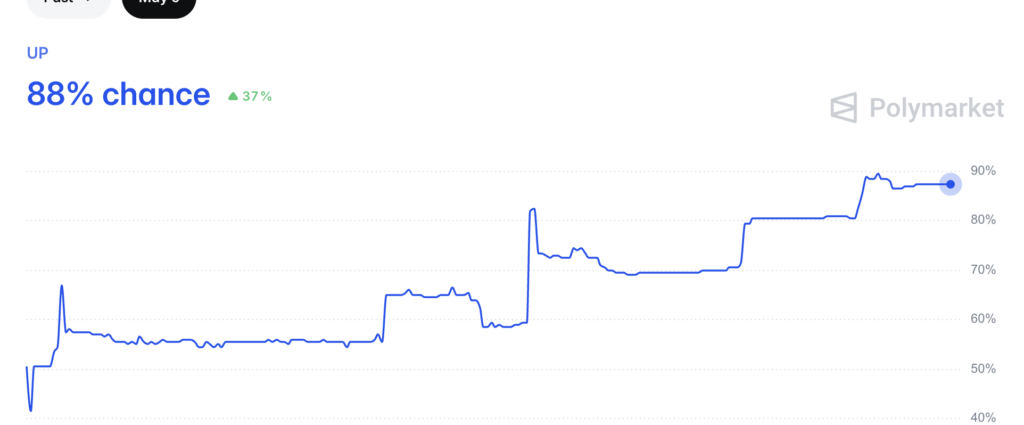
Archer-Daniels-Midland Company (NYSE:ADM) shares moved higher on Tuesday after the company reported stronger-than-expected quarterly results.

The agricultural commodities giant benefited from improved segment performance and steady demand across key business lines.

Quarterly Details

The company reported first-quarter adjusted earnings per share of 71 cents, beating the analyst consensus estimate of 66 cents. Quarterly sales of $20.490 billion outpaced the Street view of $20.216 billion.

Gross profit increased to $1.222 billion, compared with $1.180 billion a year ago. For the first quarter, earnings before income taxes were $384 million, compared to the …

Full story available on Benzinga.com

This post was originally published here

Westlake Chemical (NYSE:WLKP) held its first-quarter earnings conference call on Tuesday. Below is the complete transcript from the call.

This transcript is brought to you by Benzinga APIs. For real-time access to our entire catalog, please visit https://www.benzinga.com/apis/ for a consultation.

The full earnings call is available at https://edge.media-server.com/mmc/p/493g3eiw

Summary

Westlake Chemical Partners reported a first-quarter 2026 net income of $14 million, or $0.40 per unit, benefiting from higher third-party average sales prices despite slightly lower production and sales volumes.

The company announced a 47th consecutive quarterly distribution, with a distribution of 47.14 cents per unit, highlighting its consistent cash flow and stable business model.

Looking forward, the company anticipates benefiting from increased demand for North American ethylene due to Middle East conflicts affecting global supply, and it plans to leverage this through potential increases in third-party sales.

Full Transcript

OPERATOR

Good afternoon. Thank you for standing by. Welcome to the Westlake Chemical Partners first quarter 2026 earnings conference call. During the presentation, all participants will be in listen only mode. After the speaker’s remarks, you will be invited to participate in a question and answer session. As a reminder, this conference is being recorded today, May 5, 2026. I would now like to turn the call over to today’s host, Jeff Hawley, Westlake Chemical Partners Vice President and Chief Accounting Officer. Sir, you may begin.

Jeff Hawley (Vice President and Chief Accounting Officer)

Thank you, Kelly. Good afternoon everyone and welcome to the Westlake Chemical Partners first quarter 2026 conference call. I’m joined today by Albert Chow, our Executive Chairman, John Mark Gilson, our President and CEO, Steve Bender, our Executive Vice President and Chief Financial Officer and other members of our management team. During this call, we refer to ourselves as Westlake Partners or the Partnership. References to Westlake refer to our parent company, Westlake Corporation, and references to OPCO refer to Westlake Chemical, OPCO lp, a subsidiary of Westlake and the partnership which owns certain olefins assets. Additionally, when we refer to distributable cash flow, we are referring to Westlake Chemical Partners MLP distributable cash flow. Definitions of these terms are available on the partnership’s website. Today, management is going to discuss certain topics that will contain forward looking information that is based on management’s beliefs as well as assumptions made by and information currently available to management. These forward looking statements suggest predictions or expectations and thus are subject to risks or uncertainties. We encourage you to learn more about the factors that could lead our actual results to differ by reviewing the cautionary statements in our regulatory filings which are also available on our investor relations website. This morning, Westlake Partners issued a press release with details of our first quarter 2026 financial and operating results. This document is available in the press release section of our webpage@wlkpartners.com A replay of today’s call will be available beginning two hours after the conclusion of this call. The replay can be accessed via the partnership’s website. Please note that information reported on this call speaks only as of today May 5, 2026, and therefore you are advised that time sensitive information may no longer be accurate as of the time of any replay. I would finally advise you that this conference call is being broadcast live through an Internet webcast system that can be accessed on our webpage at wlkpartners. Now I’d like to turn the call over to Jean Marc Kilson.

Jean Marc Kilson

Thank you, Jean Marc, Jeff and good afternoon everyone. And thank you for joining us to discuss our first quarter 2026 results in this morning’s press release we reported Westlake Partners first quarter 2026 net income of $14 million or $0.40 per unit compared to the first quarter of 2025. Our first quarter sales and earnings benefited from a higher third party average sales price that was offset by slightly lower production and sales volume. The stability of Westlake Partners business model is consistently demonstrated through our fixed margin ethylene sales agreement which minimizes market volatility and other production risks. The high degree of stability in cash flow when paired with the predictability of our business has enabled us to deliver the long history of reliable distribution and coverage this quarter. Distribution is the 47th consecutive quarterly distribution since …

Full story available on Benzinga.com

This post was originally published here