By JBizNews Desk | May 5, 2026

The federal government is offering something most small business owners rarely get access to — practical, high-level business training typically reserved for larger companies — and it is happening online this week at no cost.

The U.S. Small Business Administration, in partnership with the America’s Small Business Development Center Network, has launched the National Small Business Week 2026 Virtual Summit, a free two-day event running May 5–6 from 11 a.m. to 6 p.m. Eastern.

For everyday business owners, the value is immediate and practical:

  • Save hours every week by learning how to use AI to handle emails, admin work, and repetitive tasks
  • Increase revenue opportunities by understanding how to position your business for funding and growth
  • Avoid costly mistakes by learning how fraud actually targets small businesses — and how to protect against it
  • Hire smarter and retain better employees without needing a full HR department
  • Operate more efficiently by adopting tools and systems used by larger, more sophisticated companies
  • Make better decisions faster with clearer data, insights, and structured thinking
  • Upgrade your marketing without big budgets using practical digital and content strategies
  • Gain access to top-tier corporate expertise from companies like Google, Amazon, Visa, and Paychex — without paying thousands
  • Learn without shutting down your business — fully online, flexible, and designed for real schedules

The entire summit is online, allowing business owners to join from anywhere — without travel, cost, or stepping away from daily operations. For many, that alone removes the biggest barrier to gaining this kind of knowledge.

The program brings together major corporate partners including Visa, Google, Amazon, T-Mobile, Verizon, Paychex, TriNet, Meta, Block, Fiserv, Grasshopper Bank, Lockheed Martin, and ZenBusiness — a level of access that would typically cost thousands of dollars at private conferences or consulting engagements.

More importantly, the content is built around real operational challenges — not theory.

Sessions from Visa focus on protecting businesses from fraud and improving access to capital. As digital threats grow more sophisticated and lending standards tighten, understanding these areas can directly impact a company’s stability and ability to grow.

Artificial intelligence is another central focus. Google’s sessions are designed for business operators, not developers, showing how widely available tools can reduce administrative workload and improve efficiency — allowing small teams to operate at a much higher level without increasing headcount.

Workforce strategy is also a key theme. Sessions from Paychex and TriNet address hiring, compensation, and retention — ongoing challenges for small businesses competing in a tight labor market.

Other sessions focus on resilience and growth, including business continuity strategies from T-Mobile and financial positioning insights from Grasshopper Bank, which breaks down what lenders actually look for when evaluating businesses.

For marketing and customer growth, sessions from Amazon and America’s SBDC provide practical, low-cost strategies to expand reach and attract customers without relying on large budgets or outside agencies.

SBA Administrator Kelly Loeffler framed the broader opportunity, noting that policy shifts and economic conditions are creating new openings for small businesses. “Through tax cuts, deregulation, and fair trade, Main Street is positioned for another record year in 2026 — and the SBA will continue to support their comeback with training, capital, and contracting,” she said.

The summit is open to both established and aspiring business owners and is designed to deliver insights that can be applied immediately.

Registration is free at sba.gov/national-small-business-week/virtual-summit, with sessions running throughout both days.

The event is already underway. It ends May 6.

For business owners, the decision is simple: take advantage of access that is rarely this broad, this practical, and this easy — or miss it.

JBizNews Desk

Revelation in Elon Musk Lawsuit Offers Rare Glimpse Into Executive Wealth and Governance at AI Giant

San Francisco — May 4, 2026

OpenAI President and co-founder Greg Brockman disclosed in a court filing made public Monday evening that his personal equity stake in the artificial intelligence company is now valued at nearly $30 billion, while also revealing previously undisclosed financial ties to Chief Executive Officer Sam Altman.

The disclosure, filed as part of ongoing litigation brought by Elon Musk against OpenAI, marks one of the most detailed public revelations to date about the ownership structure and executive compensation at the closely held AI leader. Brockman, who has been with the company since its founding in 2015 as a nonprofit research laboratory, detailed holdings that have grown dramatically amid the explosive expansion of generative artificial intelligence technologies.

The filing provides an unusually transparent window into the personal financial stakes of OpenAI’s leadership at a time when the company’s valuation has soared into the hundreds of billions of dollars, fueled by multibillion-dollar investments from Microsoft Corp. and other major backers. Brockman’s stake alone places him among the wealthiest individuals in the technology sector, according to preliminary estimates based on recent private-market valuations of OpenAI.

Legal experts said the level of specificity in the disclosure was driven by court requirements in the Musk lawsuit, which has centered on allegations that OpenAI has strayed from its original mission. Musk, a co-founder who left the company in 2018, has accused OpenAI of prioritizing profits over safety and openness, claims the company has vigorously denied.

“This is extraordinary transparency for a private company of OpenAI’s scale,” said Margaret O’Mara, a professor of technology history at the University of Washington who has written extensively on Silicon Valley governance. “Private equity stakes are typically shrouded in nondisclosure agreements. Forcing this level of detail into the public record through litigation is rare and potentially precedent-setting for the AI industry.”

Brockman’s filing also outlined separate financial arrangements and investments connected to Altman, highlighting the intertwined personal and professional relationships at the top of the organization. While the exact nature of those ties was not detailed in the publicly available portions of the document reviewed Monday night, the revelation is likely to fuel broader discussions about potential conflicts of interest and board oversight at OpenAI.

OpenAI did not immediately respond to requests for comment on the filing. The company has previously emphasized its commitment to responsible development of artificial intelligence and robust governance structures as it navigates rapid growth and intense competition from rivals including Anthropic, Google and xAI.

The disclosure comes as OpenAI continues to attract massive capital. The company raised funds in 2024 and 2025 at valuations exceeding $150 billion, with some analysts projecting it could approach or surpass $300 billion in the coming years if current momentum in enterprise AI adoption persists. Brockman’s stake reflects the extraordinary paper wealth being created at the highest levels of the sector, even as the company remains privately held.

Industry analysts noted that the figure underscores a broader trend in frontier AI development: the rapid concentration of wealth among a small group of founders and early executives. For comparison, several founders at rival AI companies have seen their stakes valued in the low billions, but Brockman’s reported holding stands out for its scale relative to the company’s still-private status.

The filing arrives amid heightened scrutiny of governance practices across the AI sector. OpenAI has faced questions about its transition from a nonprofit to a for-profit structure capped by a for-profit subsidiary, a move designed to attract investment while attempting to preserve its original mission. Musk’s lawsuit has amplified those debates, with critics arguing that such structures can create misalignment between executive incentives and long-term safety considerations.

Supporters of OpenAI counter that the company has implemented safeguards, including a board with independent directors and internal safety teams, to address those concerns. The Brockman disclosure, however, adds a new dimension to the conversation by quantifying the financial incentives at play.

Brockman, a former Stripe executive, has played a central role in OpenAI’s technical and operational leadership. He has been instrumental in scaling the company’s infrastructure and navigating its complex relationship with Microsoft, which holds a significant minority stake and integrates OpenAI’s models into its Azure cloud platform and consumer products.

The timing of the filing — unsealed after 7 p.m. Eastern time on a Monday — ensured it would dominate late-evening business coverage. Markets were closed, but the news is expected to reverberate through venture capital circles and among AI policy makers in Washington and Brussels, where regulators are increasingly focused on the concentration of power and wealth in the sector.

Corporate governance specialists said the case could influence how other AI startups structure their ownership and disclosure practices, particularly those contemplating eventual public offerings. “When stakes reach this magnitude, the pressure for greater transparency only increases,” said one governance consultant who advises several large technology boards and asked not to be named because of client relationships.

OpenAI has not commented publicly on the Musk litigation’s impact on its operations, but the company has continued to release new models and enterprise tools at a rapid pace. Its latest offerings have been adopted by major corporations across finance, healthcare and manufacturing, further cementing its position as a leader in the field.

For Brockman personally, the disclosure offers a rare public acknowledgment of the wealth accumulated through his role in one of the most consequential technological shifts in decades. While many tech founders have become billionaires through initial public offerings or acquisitions, OpenAI’s decision to remain private has kept such figures largely out of the spotlight — until now.

The full implications of the filing remain to be seen. Musk’s lawsuit is ongoing, and additional documents could surface in the coming weeks. In the meantime, the revelation has already prompted fresh calls from lawmakers and academics for stronger oversight of AI companies, particularly regarding executive compensation and potential conflicts.

OpenAI’s leadership has long argued that its structure allows it to balance innovation with responsibility. Whether Monday’s disclosure strengthens or undermines that narrative will likely be debated in boardrooms, courtrooms and policy forums for months to come.

JbizNews Desk

Grapevine, TX — May 4, 2026

GameStop Corp. today formally launched an unsolicited $56 billion takeover bid for eBay Inc., offering $125 per share in a 50-50 mix of cash and stock in a move designed to create a powerful new competitor to Amazon in the online marketplace space.

The proposal, submitted in a letter to eBay’s board over the weekend and confirmed in major coverage today, comes from GameStop CEO Ryan Cohen — the activist investor who also serves as the company’s largest shareholder. GameStop has already accumulated roughly a 5% stake in eBay and secured debt financing commitments, including approximately $20 billion from TD Bank, to support the deal.

In the letter, Cohen made clear that GameStop is prepared to take the bid directly to eBay shareholders if the board does not engage constructively, signaling a potential hostile takeover path. “This combination would create a formidable platform that leverages GameStop’s retail expertise and eBay’s global marketplace scale to better compete in today’s e-commerce landscape,” Cohen stated in remarks tied to the announcement.

The cash-and-stock offer represents a significant premium and would transform the two companies into a unified force focused on expanding eBay’s reach, enhancing seller tools, and integrating GameStop’s community-driven retail model. Industry analysts view the move as an ambitious attempt to revitalize both brands by combining eBay’s auction and fixed-price marketplace with GameStop’s loyal customer base and turnaround playbook under Cohen’s leadership.

GameStop, which rose to prominence during the 2021 meme-stock frenzy, has been repositioning itself under Cohen as a technology-forward retailer. The eBay bid marks its most aggressive expansion yet, aiming to challenge Amazon’s dominance by creating a more dynamic, seller-friendly alternative with stronger community engagement and diversified revenue streams.

eBay has not yet issued a formal response beyond acknowledging receipt of the proposal, but the unsolicited nature of the offer has already sparked intense debate in corporate boardrooms and among investors. If successful, the deal would rank among the largest retail and e-commerce mergers in recent years.

GameStop emphasized that the transaction would be financed through a combination of cash on hand, new debt, and stock issuance, with the company expressing confidence in its ability to execute the integration swiftly.

JbizNews will continue to monitor developments from GameStop’s $56 billion unsolicited bid for eBay and provide ongoing coverage of this high-stakes takeover battle and its implications for global e-commerce.

JbizNews Desk

Detroit — May 4, 2026 — Used electric vehicle sales are surging across the United States even as new EV demand has cooled, driven by near-parity pricing with gasoline cars and dramatically lower total ownership costs that are delivering thousands of dollars in savings to budget-conscious buyers. The shift is reshaping the auto market at a time when high gas prices from the ongoing Iran conflict are pushing consumers to seek alternatives that slash fuel and maintenance expenses.

Data released today by Cox Automotive shows used EV sales jumped 27.7% year-over-year in March and were 53.9% higher than February, marking one of the strongest monthly gains on record. In the first quarter alone, roughly 93,500 used EVs changed hands, up 12% from the same period last year. The surge comes as more than 300,000 off-lease EVs are expected to flood the market in 2026 — a 185% increase — giving buyers unprecedented selection of low-mileage, late-model battery-electric vehicles.

Pricing has collapsed to the point where the average used EV now sells for just $1,102 more than a comparable used gasoline car. In March the average transaction price for a used EV was $34,653, down 6.1% from a year earlier, according to Cox. Forty-four percent of used EVs sold for under $25,000, up from 39% just months ago. The price gap that once exceeded $3,900 has essentially vanished, making EVs accessible to a much broader swath of American households.

The real story, however, is in total cost of ownership. A new study from the University of Michigan’s Center for Sustainable Systems, analyzing more than 260,000 used vehicle listings, found that used battery-electric vehicles now deliver the lowest lifetime ownership costs across nearly every vehicle class. For a three-year-old midsize SUV, buyers can save approximately $13,000 over a seven-year ownership period compared with purchasing its gasoline counterpart. Even against used gas models, the savings are substantial because EVs eliminate the single largest ongoing expense for most drivers: fuel.

The U.S. Department of Energy estimates that switching to an EV saves drivers an average of $2,200 per year on fuel alone. Over 200,000 miles, Consumer Reports data shows EV owners save roughly $8,811 on combined fuel and maintenance costs compared with the best-selling gasoline models. Used EVs amplify those advantages. With fewer moving parts, regenerative braking, and no oil changes, maintenance costs run 30-40% lower than for internal-combustion vehicles — a gap that widens as cars age and gas models require more expensive repairs.

Insurance remains higher for EVs — roughly 50% more on average according to recent Insurify data — but that premium is more than offset by fuel and service savings for most drivers. Depreciation, once a major hurdle for new EVs, has moderated dramatically on the used market as supply grows and consumer acceptance rises.

High gasoline prices, now hovering near multi-year highs amid the Iran tensions and Strait of Hormuz disruptions, have accelerated the shift. Search interest for used EVs on major platforms has risen sharply, with many shoppers citing pump prices as the tipping point. “You can get a pretty nice used EV for under $25,000, which is not easy to do on the market at large,” noted Jessica Caldwell, executive director of insights at Edmunds.

The economic ripple effects extend beyond individual buyers. Lower ownership costs for used EVs are helping to ease pressure on household budgets strained by the weaker dollar and broader inflationary forces. At the same time, the flood of off-lease EVs is creating opportunities for dealers and fleets while pressuring new-car pricing. Automakers and lenders are watching closely as the used market increasingly influences residual values and leasing strategies.

Challenges remain. Battery health and range anxiety still concern some buyers, though independent testing services like Recurrent Auto report that the vast majority of used EVs retain strong battery capacity. Charging infrastructure, while expanding, remains uneven outside major metros. And insurance costs, though declining as data improves, continue to be a hurdle for some.

For American families and fleet operators, the math is increasingly clear: in the used market, electric vehicles are no longer a premium choice — they are often the lowest-cost option over the life of the vehicle. With hundreds of thousands more high-quality, low-mileage EVs expected to hit lots in the coming months, the window for significant savings is wide open.

The used-EV boom adds another layer to the weekend’s heavy slate of breaking business news, from the U.S.-led humanitarian operation in the Strait of Hormuz to Fed Governor Michael Barr’s private-credit warning and the dollar’s 10% slide. As gas prices remain elevated and lease returns accelerate, more drivers are discovering that going electric — even on the used lot — is not just environmentally responsible. It is now often the smartest financial decision on four wheels.

JbizNews- Desk – Auto / Economy

Tel Aviv — May 4, 2026 — Elon Musk, CEO of Tesla, SpaceX, and xAI, is set to visit Israel next month to headline the Smart Mobility Summit 2026, a high-profile gathering focused on autonomous vehicles, artificial intelligence, and next-generation transportation infrastructure. The visit, scheduled for May 18 at Expo Tel Aviv, marks the revival of plans that were postponed earlier this year due to the Iran conflict and represents a significant boost for Israel’s position as a global innovation hub in mobility and AI technologies.

The announcement was confirmed by organizers of the International Smart Mobility Summit, who revived the event after its original March date was scrapped amid regional security concerns. Musk is expected to deliver a keynote address and engage directly with Israel’s top tech leaders, government officials, and executives from the country’s booming autonomous-driving and AI sectors. Topics will include autonomous vehicles, AI integration in public and private transit, smart infrastructure, and innovation in electric mobility — areas where Israel has established itself as a world leader through companies like Mobileye (an Intel subsidiary) and a deep ecosystem of startups.

The economic implications are substantial. Israel’s tech sector already contributes nearly 20% of the country’s GDP, with autonomous driving and AI representing key growth engines. Musk’s presence is seen as a powerful endorsement that could accelerate foreign investment, partnerships, and talent retention at a time when the country is grappling with a high cost of living that has fueled emigration concerns among skilled workers. Tesla already has a growing presence in Israel through its energy and charging infrastructure, while Starlink — SpaceX’s satellite internet service — recently launched commercial operations in the country, providing critical connectivity in both civilian and strategic contexts.

Musk’s visit comes against a complex geopolitical backdrop. The trip was originally discussed during a call with Israeli Prime Minister Benjamin Netanyahu late last year, and its rescheduling signals confidence in the current ceasefire and a desire to strengthen bilateral tech ties despite ongoing regional tensions. Israeli officials, including Transportation Minister Miri Regev and the head of the National AI Headquarters Erez Askal, have been actively courting Musk’s involvement. His appearance is expected to draw major international attention and could open doors for deeper collaboration between Tesla’s Full Self-Driving (FSD) technology and Israel’s world-class autonomous vehicle testing ecosystem.

For the global auto and tech industries, Musk’s trip underscores the accelerating race toward software-defined vehicles and AI-powered mobility. Tesla’s autonomous driving ambitions have faced regulatory hurdles worldwide, but Israel offers a uniquely advanced testing ground with supportive policies and a dense concentration of AI talent. Analysts say the summit could yield new partnerships or licensing deals that benefit both Tesla and Israeli firms, potentially creating thousands of high-skill jobs and positioning Israel as a key node in Musk’s global mobility strategy.

The timing also aligns with broader business trends. As the fuel-price crunch continues to hammer airlines and traditional transportation models, demand for electric and autonomous solutions is intensifying. Musk’s visit could highlight opportunities for Tesla to expand its energy storage and charging network in Israel while exploring how Starlink can support connected vehicle infrastructure in remote or high-security areas.

Israeli tech leaders view the visit as more than symbolic. With emigration of skilled engineers rising due to cost-of-living pressures, high-profile engagements like this help reinforce Israel’s appeal as a place where cutting-edge innovation still thrives. The summit is expected to attract hundreds of executives, investors, and policymakers, creating a platform for deal-making that could translate into tangible capital inflows and technology transfers.

Musk has a history of engagement with Israel. He has previously met with Netanyahu, visited the country, and expressed support for Israeli innovation. His companies have also faced scrutiny and boycotts in some quarters over geopolitical stances, making this high-visibility trip a notable step in rebuilding or expanding those relationships.

Markets will be watching closely when trading resumes Monday for any reaction in Tesla shares, Israeli tech indices, or related stocks in the autonomous driving space. The visit adds to a weekend packed with breaking business developments, including the ongoing Iran diplomatic standoff, Fed Governor Michael Barr’s private credit warning, Warren Buffett’s caution on speculation, and the dollar’s 10% slide pushing up consumer costs.

For Israel’s economy and the global tech community, Elon Musk’s upcoming trip is more than a conference appearance — it is a high-stakes signal of continued investment and collaboration in one of the world’s most dynamic innovation ecosystems.

JbizNews- Desk – Tech / Mobility

By JBizNews Desk
Monday , May 4, 2026

Robinhood Markets (HOOD) has fallen 53% from its highs of the past year, leaving investors to wrestle with a classic question: is this the kind of sharp pullback that creates a generational buying opportunity, or is the stock a classic value trap hiding deeper structural problems?

The brokerage, once the poster child for retail trading enthusiasm during the 2021 meme-stock frenzy, now trades at levels that look compelling on the surface. Yet the recent sell-off has been driven by more than just market volatility. Robinhood’s first-quarter 2026 results showed a clear slowdown in growth, particularly in its once-lucrative cryptocurrency business, raising questions about the sustainability of its business model in a more mature and regulated environment.

The Numbers Behind the Decline

Robinhood reported crypto revenue of $134 million in the first quarter of 2026 — a 47% drop from the same period a year earlier. That decline was the main culprit behind the stock’s post-earnings sell-off, with shares dropping more than 8% in extended trading following the report. Overall revenue growth slowed significantly, and while the company remains profitable, the pace of expansion has clearly cooled from the breakneck levels seen in previous years.

The stock’s 53% drawdown from its 2025 peak has left it trading at roughly $73–75, a level that some analysts view as attractive given the company’s still-growing user base and expanding product offerings. Others see it as a warning sign that the easy-growth phase is over and that competition from traditional brokers and newer fintech players is intensifying.

Why the Stock Has Fallen

Several factors have converged to pressure Robinhood’s valuation. The post-2021 normalization of retail trading volumes has reduced transaction-based revenue. Regulatory scrutiny has increased across the industry, with the Securities and Exchange Commission and other bodies tightening rules around payment for order flow — Robinhood’s core revenue engine. Meanwhile, the cryptocurrency market, which once drove explosive growth for the platform, has entered a more mature and less volatile phase, leading to the sharp drop in crypto-related revenue.

At the same time, Robinhood has been expanding into new areas such as retirement accounts, credit cards, and international markets. These initiatives are promising but have yet to fully offset the slowdown in the company’s traditional brokerage business.

The Bull Case: Once-in-a-Decade Opportunity

Proponents argue that the current valuation represents a compelling entry point. Robinhood still commands a massive retail user base and has successfully transitioned from a pure commission-free trading app to a broader financial services platform. If the company can continue to monetize its users through higher-margin products and international expansion, the stock could deliver substantial upside from current levels.

Analysts who see it as a buy point point to the company’s path to sustained profitability, its strong brand recognition among younger investors, and the long-term growth potential of retail investing as a secular trend. At current prices, the stock is trading at a discount to its growth potential, they say, making it a potential once-in-a-decade opportunity for patient investors.

The Bear Case: Value Trap

Skeptics counter that the stock is cheap for a reason. The decline in crypto revenue highlights the platform’s heavy reliance on volatile revenue streams. Regulatory risks remain elevated, and competition from established players like Charles Schwab, Fidelity, and newer fintech entrants is only increasing. If Robinhood cannot diversify its revenue mix quickly enough or if retail trading volumes remain subdued, the company could struggle to justify even its current valuation.

Some analysts have lowered price targets in recent weeks, citing slower growth and the risk that the stock could remain range-bound for an extended period. In this view, the 53% drop is not a buying opportunity but a reflection of fundamental challenges that have yet to be fully resolved.

The Road Ahead

The market for Robinhood’s shares will ultimately be decided by how successfully the company executes on its diversification strategy and how the broader retail investing environment evolves. With the stock down more than 50% from its highs, the debate between “once-in-a-decade opportunity” and “value trap” is as sharp as ever.

For investors watching the fintech space, Robinhood remains one of the most watched names. Whether the current valuation represents a bargain or a trap will depend on the company’s ability to prove that its growth story is far from over.

— JBizNews Desk

© JBizNews.com. All rights reserved. This article is original reporting by JBizNews Desk. Unauthorized reproduction or redistribution is strictly prohibited.

By JBizNews Desk | Monday May 4, 2026

GameStop has made an unsolicited $56 billion offer to acquire eBay, the online marketplace giant, in what would rank as one of the most stunning corporate takeover attempts in recent retail history — and a dramatic signal that CEO Ryan Cohen is done playing defense.

GameStop has built a roughly 5% stake in eBay and is offering $125 a share in cash and stock, Cohen told the Wall Street Journal in a direct interview Sunday. The offer represents a premium of about 20% to eBay‘s last closing price on Friday. “eBay should be worth — and will be worth — a lot more money,” Cohen said. “I’m thinking about turning eBay into something worth hundreds of billions of dollars.”

GameStop said in a news release that it submitted a non-binding proposal to buy 100% of eBay at $125 per share in cash and stock, split 50/50. The offer also represents a 46% premium to eBay’s closing price on February 4 — the day GameStop first began buying eBay stock. 

The Financing Behind the Bid

The sheer scale of the deal — eBay carries a market value of roughly $46 billion, nearly four times GameStop’s own $12 billion market cap — immediately raised questions about how Cohen plans to pay for it. He has lined up a multi-layered financing structure.

Cohen told the Wall Street Journal that GameStop has secured a commitment letter from TD Bank to provide about $20 billion in debt financing for the deal.  GameStop also holds about $9 billion in cash on its balance sheet.  To bridge the remaining gap, GameStop could seek support from external investors, including Middle Eastern sovereign wealth funds, according to people familiar with the matter. 

In its news release, GameStop said it expects to deliver $2 billion in annualized cost reductions within the first 12 months of closing the deal, including $1.2 billion in cuts from sales and marketing at eBay, $300 million from product development, and $500 million from general and administrative expenses. Cohen would become CEO of the combined company. 

Markets React

The news sent both stocks sharply higher. GME shares jumped more than 9% in after-hours trading, while eBay shares climbed between 10% and 15%, in a market reaction that recalled the 2021 short squeeze that briefly made GameStop a Wall Street obsession. 

The deal would combine GameStop’s collectibles expertise and growing cash war chest with eBay’s 130 million active buyers and global payments infrastructure — a combination Cohen argues could directly challenge Amazon’s dominance in the broader marketplace economy.

Cohen’s Expansion Play

The bid is the clearest expression yet of a strategic pivot Cohen has been building toward since early 2026. In January 2026, Cohen told the Wall Street Journal he was actively scouting deal targets in the consumer and retail sector as part of a plan to scale GameStop far beyond video games and collectibles.  His compensation package reinforces the ambition: it includes a performance-based stock option award valued at roughly $35 billion if fully earned, structured in nine tranches tied to escalating milestones, with the most demanding targets requiring GameStop to reach a $100 billion market cap. 

What Happens If eBay Says No

Cohen said he is prepared to run a proxy fight and take the offer directly to eBay shareholders if eBay’s board is not receptive. “There is nobody who is more qualified, based on my experience, to run the eBay business,” he told the WSJ. 

eBay had not responded to requests for comment as of Sunday evening. GameStop, eBay and TD Bank did not immediately respond to Reuters’ requests for comment.  Whether eBay’s board engages or resists, the proposal has already reshaped how Wall Street thinks about both companies — and about what Ryan Cohen is actually building.

— JBizNews Desk

© JBizNews.com. All rights reserved. This article is original reporting by JBizNews Desk. Unauthorized reproduction or redistribution is strictly prohibited.

By JBizNews Desk
Monday, May 4, 2026

Anthropic is in advanced talks to invest $200 million in a new private-equity-backed venture that aims to accelerate the adoption of its artificial intelligence tools across enterprise customers, according to people familiar with the matter. The proposed venture is expected to raise around $1 billion in total and would include participation from major private equity firms such as General Atlantic, Blackstone, and Hellman & Friedman.

The initiative is designed to function as a consulting and implementation arm, helping portfolio companies of these firms integrate Anthropic’s AI technologies, including its Claude chatbot and coding tools, into business operations. The move represents a significant step in Anthropic’s push to expand beyond consumer-facing applications and capture a larger share of the enterprise AI market.

The Deal That Set the Tone

The year opened with a signal that the market had decisively turned. Shares of Chinese AI chip designer Shanghai Biren Technology closed up 76% on their Hong Kong debut in January — the financial hub’s first listing of 2026. The retail portion of the offering was subscribed more than 2,300 times, underscoring intense investor appetite for China’s homegrown technology sector.

Zhipu, one of China’s so-called “AI tigers” and a firm OpenAI itself identified as a serious competitor, followed shortly after — becoming the first major Chinese large language model company to go public through an IPO. The stock rose 13% on debut, valuing the Beijing-based startup at around HK$4.3 billion.

Why Anthropic, and Why Wall Street Now

The concentration of AI investment interest in this new venture is not accidental. It reflects a structural shift driven by the growing demand for practical AI deployment in traditional industries. Private equity firms, which control trillions of dollars in assets and thousands of portfolio companies, are looking for ways to unlock productivity gains through AI. Anthropic’s Claude model has gained traction for its strong performance in enterprise settings, making it an attractive partner for these firms seeking to differentiate their portfolio companies.

The venture would allow Anthropic to monetize its technology at scale while leveraging the distribution networks and operational expertise of established private equity players. For the PE firms, the partnership offers a way to embed cutting-edge AI capabilities directly into their investment strategies, potentially driving higher returns across their holdings.

More Than a Technology Investment

The pitch extends beyond a simple technology licensing deal. The new venture is expected to function as a full-service implementation partner, helping companies integrate Anthropic’s tools into their core operations. This approach addresses one of the biggest barriers to AI adoption in traditional industries: the gap between advanced models and practical business application.

Banks and law firms report surging demand for advice on data governance, intellectual property, and cross-border regulation related to AI deployments. The venture would position Anthropic and its private equity partners at the center of this growing ecosystem.

The Road Ahead

The market for enterprise AI solutions is being shaped by three competing forces, according to analysts: the rapid advancement of foundational models, the need for practical implementation expertise, and the capital and distribution power of private equity. For now, those forces appear to be aligning in Anthropic’s favor.

For businesses and investors watching the AI sector, the message from this potential venture is clear: Anthropic is no longer just building powerful models. It is positioning itself as a key enabler of AI transformation across the broader economy.

— JBizNews Desk

© JBizNews.com. All rights reserved. This article is original reporting by JBizNews Desk. Unauthorized reproduction or redistribution is strictly prohibited.

By JBizNews Desk

NEW YORK — April 30, 2026

SpaceX’s ambitious plans for a direct-to-cell satellite phone service — allowing ordinary smartphones to connect directly to Starlink satellites without traditional cell towers — are running into strong opposition from AT&T.

The carrier is actively lobbying regulators and pushing back against FCC approvals that would let SpaceX roll out the service nationwide, arguing it could interfere with existing terrestrial networks and create unfair competition in the wireless market.

Industry sources say AT&T is concerned that a SpaceX-backed satellite phone would bypass traditional carriers’ infrastructure, potentially disrupting billions in annual revenue from spectrum usage and roaming agreements.

Business Implications

If SpaceX succeeds despite the pushback, it could revolutionize mobile connectivity in remote and underserved areas, putting pressure on legacy carriers like AT&T, Verizon, and T-Mobile. A successful direct-to-cell rollout would also accelerate SpaceX’s Starlink revenue growth and strengthen Elon Musk’s vision of global internet and phone coverage from space.

For investors, the standoff highlights the intense regulatory and competitive battles ahead in the satellite-to-phone space. Any delay or compromise could slow SpaceX’s consumer hardware ambitions, while a win for AT&T might preserve carrier dominance in the short term.

The FCC is expected to rule on key aspects of the proposal in the coming months. JBizNews will continue monitoring developments between SpaceX, AT&T, and federal regulators.

— JBizNews Desk

© JBizNews.com. All rights reserved. This article is original reporting by JBizNews Desk. Unauthorized reproduction or redistribution is strictly prohibited.

By Elena Vargas

JBizNews Senior Technology Correspondent

Oakland, CA — April 29, 2026

Elon Musk told a federal court Wednesday that he regrets providing nearly $38 million in early “free funding” to OpenAI, calling himself a “fool” for helping launch what has become one of the world’s most valuable private companies.

Testifying for a second day in his breach-of-contract lawsuit against OpenAI, Musk said he contributed the money under the belief that the organization would remain a nonprofit focused on developing artificial general intelligence (AGI) for the benefit of humanity rather than generating massive profits.

“I was a fool who provided them free funding to create a start-up,” Musk stated from the witness stand. “I gave them $38 million of essentially free funding which they then used to create an $800 billion for-profit company. I literally was a fool.”

Musk, who co-founded OpenAI in 2015 alongside CEO Sam Altman and President Greg Brockman, accused the leadership of being “disingenuous.” He claimed they assured him the company would stay true to its nonprofit roots and AI-safety mission while later shifting to a for-profit model that attracted billions in investment, including from Microsoft.

The Tesla and SpaceX CEO argued the transition — which began with a capped-profit subsidiary and later became fully for-profit — amounted to “looting a charity.” “They should not get rich off a nonprofit. That’s not right,” he testified.

OpenAI has strongly denied the allegations. The company maintains in court filings that Musk was fully aware of and initially supported plans for a for-profit arm to raise the enormous capital required to compete in the fast-moving AI sector. OpenAI says the lawsuit only arose after Musk was denied greater control when he left the board in 2018.

The trial, underway this week in U.S. District Court in Oakland, centers on claims of breach of contract and fiduciary duty. Musk has positioned the case as a broader warning about the risks of unchecked commercial AI development, referencing potential “Terminator”-style outcomes if safety is not prioritized.

Business Implications

The dispute underscores the intense capital demands of the AI industry. OpenAI’s valuation has soared amid the success of ChatGPT and enterprise adoption, drawing massive funding rounds. For investors, entrepreneurs, and tech executives, the case raises critical questions about governance in nonprofit-to-for-profit conversions, the balance between innovation speed and ethical commitments, and how founding agreements hold up as companies scale.

Musk’s competing venture, xAI, continues to position itself as an alternative with a different approach to AI development.

The proceedings are expected to continue with additional witnesses and cross-examination in the coming days. A verdict could set important precedents for AI governance, funding structures, and nonprofit oversight in the technology sector.

JBizNews will continue monitoring developments in this high-profile case, which carries significant ramifications for markets, technology investing, and the future of artificial intelligence.

JBizNews- Desk

Elena Vargas covers AI, Silicon Valley, and major tech litigation for JBizNews.

By JBizNews Desk — April 30, 2026

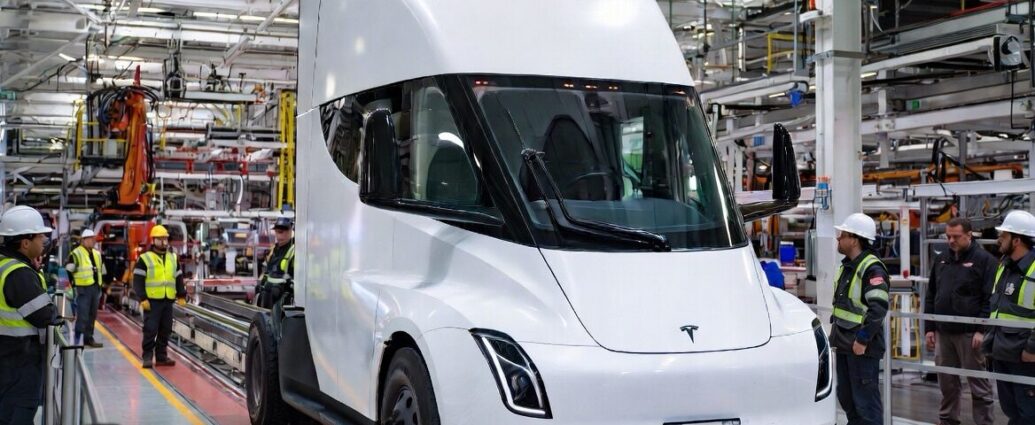
Tesla has delivered a major milestone in the push toward electrifying long-haul trucking. Late Wednesday, the company announced on X that the first Tesla Semi has rolled off its dedicated high-volume production line at a new facility adjacent to Gigafactory Nevada. The post, which included an image from inside the plant, marks the official start of scaled manufacturing for the long-awaited Class 8 electric truck and signals that volume deliveries to customers could begin later this year.

This development comes directly from Tesla itself, confirming what the company outlined in its Q1 2026 shareholder update: the Semi remains on schedule for volume production starting in 2026, with the Nevada factory built specifically to ramp output toward a long-term target of up to 50,000 units annually. The announcement builds on ongoing real-world pilots, including a new three-week port drayage test launched today by Southern California operator MDB Transportation, and partnerships such as the recent agreement with Pilot Travel Centers to expand Megacharger infrastructure.

For everyday businesses and supply chains that rely on trucking — from small manufacturers shipping goods across the Midwest to regional distributors facing high diesel costs — the news carries immediate practical weight. Lower operating expenses could eventually ease pressure on freight rates, helping offset some of the broader cost challenges tracked throughout today’s coverage, including cautious consumer spending and energy prices.

What the Milestone Means for Fleets and Small Businesses

• The Semi’s estimated 500-mile range and roughly 1.7 kWh per mile efficiency promise dramatically lower fuel and maintenance costs compared with diesel trucks, potentially cutting per-mile expenses by up to 70 percent once charging infrastructure matures.

• Early high-volume output will initially focus on fulfilling Tesla’s own internal needs before expanding to external customers, with analysts projecting 5,000 to 15,000 deliveries in 2026 before scaling higher.

• The dedicated Nevada factory, spanning 1.7 million square feet, is designed for efficient production, supporting Tesla’s goal of making electric trucking economically competitive for a wider range of operators.

Economists weighed in on the broader implications, with Diane Swonk, chief economist at KPMG, describing the development as a pivotal step in reshaping freight economics as diesel’s cost advantage continues to erode amid volatile fuel prices, making fleets — including smaller operators — increasingly open to electric alternatives that offer predictable long-term savings; Heather Long, chief economist at Navy Federal Credit Union, pointed out the ripple effects for Main Street businesses, noting that many small manufacturers and distributors reliant on regional trucking could see gradual relief in shipping costs especially as more charging networks come online through partnerships like the one with Pilot; Oliver Allen, senior U.S. economist at Pantheon Macroeconomics, emphasized that while the ramp will be gradual, the confirmation of high-volume production removes a key uncertainty that has lingered since the Semi’s original 2017 unveiling and aligns with broader trends of big players investing in scale to make clean technology accessible beyond just large fleets; Nicole Bachaud, economist at ZipRecruiter, added that the production push could create new manufacturing and technician jobs in Nevada while prompting trucking companies to rethink hiring and training for electric vehicle operations; and Gina Bolvin, president of Bolvin Wealth Management Group, advised business clients to monitor the rollout closely, saying early adopters among small and mid-sized fleets may gain a competitive edge on costs but success will depend on access to reliable charging and the ability to integrate the trucks into existing routes without major disruptions.

Real-World Momentum Already Building

The announcement arrives as operators put early Semis to work in demanding environments. MDB Transportation’s pilot, for instance, is testing the truck on active port container routes — one of the toughest applications in freight — tracking everything from energy use to driver experience. Combined with Tesla’s expanding Megacharger network, these efforts are helping prove the Semi’s readiness for everyday commercial use.

Outlook

Tesla’s first high-volume Semi represents more than just another factory milestone; it brings the company closer to delivering on the promise of electric trucking at scale. For businesses of all sizes, the potential benefits include meaningfully lower operating costs, reduced emissions, and greater predictability in freight expenses — advantages that could matter a great deal amid today’s mixed economic signals and persistent pressure on household and business budgets.

The coming months will show how quickly production scales and whether the economics hold up in real-world fleets. For business enthusiasts following supply-chain and transportation trends, this is a story worth watching closely. Tomorrow’s updates on fleet adoption, charging infrastructure, and related earnings will offer the next clues about how quickly the Semi could reshape the roads.

JBizNews Desk

© JBizNews.com. All rights reserved. This article is original reporting by JBizNews Desk. Unauthorized reproduction or redistribution is strictly prohibited

By JBizNews Desk — April 29, 2026

Leading small-business e-commerce platforms including Shopify and BigCommerce announced after the close new AI-powered inventory forecasting tools designed to help independent retailers predict demand and reduce overstock amid persistent supply-chain cost pressures from energy and packaging. The updates, detailed in vendor webinars and emails sent late Wednesday, aim to give small sellers real-time insights without the expense of enterprise software.

For boutique owners, online sellers, and hybrid brick-and-mortar shops already facing insurance, labor, and utility hikes, the tools could provide a low-cost way to protect margins and maintain leaner operations.

How the New AI Tools Help Small Retailers

• Predictive analytics that adjust reorder quantities based on local consumer trends and energy-driven cost signals.

• Automated alerts for potential shortages in oil-derived packaging and PPE.

• Integration with existing POS systems for seamless in-store and online stock management.

Economists described the platform updates as a practical innovation for small retailers navigating today’s cost environment, with Diane Swonk, chief economist at KPMG, noting that as diesel’s cost advantage erodes amid volatile fuel prices, fleets and small operators are increasingly open to electric alternatives but now benefit from smarter inventory tools; Heather Long, chief economist at Navy Federal Credit Union, pointed out the ripple effects for Main Street retailers as cautious consumer spending weighs on growth; Oliver Allen, senior U.S. economist at Pantheon Macroeconomics, emphasized that this reflects broader trends of technology making efficiency accessible to smaller players; Nicole Bachaud, economist at ZipRecruiter, added that better inventory management could stabilize hiring and scheduling; and Gina Bolvin, president of Bolvin Wealth Management Group, advised small-retailer clients to adopt the tools quickly to improve cash flow and reduce waste in the high-cost environment.

Outlook

The after-close rollout of AI inventory tools offers small retailers a timely technological assist amid sustained economic pressures. For business enthusiasts and Main Street operators, the development signals growing support for leaner, smarter operations. Tomorrow’s retail technology and small-business earnings updates will show early adoption trends.

JBizNews Desk

© JBizNews.com. All rights reserved. This article is original reporting by JBizNews Desk. Unauthorized reproduction or redistribution is strictly prohibited.


NEW YORK — Wall Street is entering one of the most consequential earnings windows of 2026 as Microsoft, Alphabet, Meta Platforms, and Amazon prepare to release first-quarter results after the closing bell Wednesday, putting the technology sector’s unprecedented artificial intelligence spending surge under its first true stress test.

The four companies — all central pillars of the “Magnificent Seven” — are collectively expected to deploy roughly $600 billion in capital expenditures this year, a scale of investment that has reshaped global infrastructure markets and driven the current rally in semiconductor and cloud stocks. The core question now confronting investors is whether that spending is translating into measurable revenue growth and margin expansion — or simply front-loading costs ahead of uncertain returns.

Alphabet CEO Sundar Pichai has emphasized that the company’s aggressive investment cycle is essential to maintaining leadership in AI, stating in prior remarks that “the opportunity with AI is as big as it gets,” as the company guides toward $175 billion to $185 billion in 2026 capital expenditures, roughly double last year’s total. At the same time, analysts warn that depreciation tied to that spending is set to begin flowing more heavily through earnings statements in coming quarters.

At Amazon, CEO Andy Jassy has framed AI as a once-in-a-generation platform shift centered on cloud dominance. The company is expected to spend close to $200 billion this year, building out data centers and custom silicon such as its Trainium chips. AWS growth remains the key barometer. Analysts broadly expect cloud expansion above 25% to signal sustained demand for AI workloads, particularly after Amazon confirmed this week that OpenAI models will be available on AWS, expanding its competitive positioning against Microsoft.

Microsoft CEO Satya Nadella has positioned the company at the center of enterprise AI adoption, with Azure cloud performance serving as the primary scorecard. Azure grew 39% in the prior quarter, and investors are watching closely to see whether that figure can push toward or above 40%. Microsoft’s multi-year, $100+ billion annual investment in AI infrastructure has made it one of the largest capital allocators in the global economy, and executives have repeatedly stressed that AI services are now contributing meaningfully to cloud growth.

At Meta Platforms, CEO Mark Zuckerberg has leaned aggressively into AI-driven advertising and platform optimization. Wall Street expects roughly $55 billion in quarterly revenue, implying growth near 30% year-over-year. Zuckerberg has said Meta’s AI investments are already improving ad performance through tools like Advantage+, noting that “AI is driving better results for businesses at scale.” Analysts are now focused on whether those gains can continue offsetting the company’s rapidly expanding infrastructure costs.

The stakes extend well beyond individual earnings reports. Together, these four companies represent a dominant share of U.S. equity market gains over the past year and are central to the broader thesis that artificial intelligence will drive the next phase of economic productivity. JPMorgan analysts recently noted that hyperscaler capital spending is “the single most important variable in the global tech outlook,” underscoring how closely markets are tied to their investment decisions.

Adding another layer of complexity is the shifting competitive landscape around AI partnerships. This week’s developments involving OpenAI, including expanded cloud distribution agreements and evolving relationships with major platforms, highlight how quickly alliances in the sector are changing — and how critical access to models and compute capacity has become.

Investors are also watching the timing. With all four companies reporting after the bell, markets could receive a compressed wave of information within minutes, creating the potential for sharp after-hours volatility across equities, ETFs, and futures tied to the technology sector.

Beyond earnings, Wednesday also marked a major development in financial markets with the public debut of Pershing Square Capital Management’s U.S. investment vehicle, led by billionaire investor Bill Ackman. The IPO raised approximately $5 billion, pricing at the lower end of expectations but still representing one of the largest market debuts of the year. Ackman called the launch “an important milestone” in expanding access to Pershing Square’s strategy, as shares of the newly listed entities began trading on the New York Stock Exchange.

The convergence of these events — record-scale AI spending, pivotal earnings releases, and a high-profile IPO — reflects a market increasingly defined by capital intensity, technological transformation, and investor concentration in a small group of dominant firms.

What happens after the closing bell may determine not just the next move in tech stocks, but the credibility of the entire AI investment cycle that has come to define this market.

— JBizNews Desk


T-Mobile and SpaceX’s Starlink on Tuesday unveiled a new enterprise internet service called SuperBroadband, marking a major expansion of their partnership and a direct push into the high-stakes business connectivity market with a promise of 99.99% uptime backed by financial guarantees.

The offering combines T-Mobile’s nationwide 5G network with Starlink’s low-Earth orbit satellite constellation, creating a dual-network architecture designed to eliminate one of the most costly vulnerabilities facing businesses today: internet outages. By routing traffic simultaneously across terrestrial and satellite pathways, the system ensures that if one network fails, the other seamlessly takes over without disruption.

“This is about redefining what businesses should expect from connectivity,” said André Almeida, President of Growth and Emerging Businesses at T-Mobile, in the company’s launch announcement. “Connectivity shouldn’t stop where your business starts. With SuperBroadband, we’re delivering a solution that is resilient by design and available everywhere it counts.”

The product represents a significant escalation from the companies’ earlier collaboration, which began in 2022 and focused primarily on consumer satellite-to-cell services such as emergency texting in dead zones. With SuperBroadband, the partnership is moving squarely into the enterprise space — targeting retailers, manufacturers, healthcare systems, and hospitality operators that depend on uninterrupted connectivity to run daily operations.

At the core of the service is a fully managed infrastructure that integrates Ericsson Cradlepoint routers, NetCloud Manager software, and nationwide installation support from Acuative, with additional hardware expansion planned through Inseego. The system allows businesses to operate with a single provider, contract, and support channel — eliminating the complexity of managing multiple connectivity vendors.

The economic case is straightforward: downtime is expensive. Scott Spearin, Global Operations Manager at Columbia Sportswear, one of the first enterprise adopters, said a single checkout failure at a high-performing retail location can cost the company approximately $10,000 per hour. “When connectivity goes down, everything stops,” he said, underscoring the urgency behind redundancy solutions.

Jason Fritch, Vice President of Starlink Enterprise Sales at SpaceX, framed the service as purpose-built for high-dependency environments. “This is designed for businesses where downtime costs thousands per hour,” he said, emphasizing the role of satellite connectivity as a critical backup layer.

Early adoption is already expanding beyond retail. Aramark Destinations, a major hospitality and experience services provider, has begun deploying SuperBroadband across remote and complex locations where traditional connectivity has been inconsistent. Dimple Jethani, Chief Information Officer of Aramark Destinations, said the platform enables a “resilient, always-on foundation” that reduces operational risk and simplifies network management.

The launch comes as competition in the broadband space intensifies. AT&T is aggressively expanding its fiber footprint, targeting 40 million locations by 2026, while Verizon is scaling its business fixed wireless offerings using dedicated 5G network slices. T-Mobile’s approach — combining terrestrial and satellite infrastructure — is a strategic attempt to leapfrog both by delivering coverage and redundancy that neither fiber nor wireless alone can guarantee.

The company’s momentum in broadband has been building. T-Mobile ended 2025 with 9.4 million broadband customers, adding 2 million in a single year, signaling growing demand for alternatives to traditional cable and fiber providers.

SuperBroadband is priced starting at $250 per month under a three-year agreement, including unlimited 5G and satellite data, enterprise-grade equipment, installation, and ongoing management. Businesses can monitor performance and network status through T-Platform, T-Mobile’s centralized dashboard, which provides real-time visibility into usage, failover events, and system health.

For enterprises, the value proposition extends beyond speed or cost — it is about reliability. As businesses become increasingly dependent on digital infrastructure, the ability to maintain uninterrupted connectivity across all locations is shifting from a convenience to a necessity.

The broader implication is a redefinition of the enterprise connectivity standard. By integrating satellite and wireless networks into a unified service, T-Mobile and SpaceX are positioning themselves at the forefront of a new category: always-on, hybrid connectivity designed for resilience rather than just performance.

As adoption grows, the success of SuperBroadband will hinge on whether businesses are willing to pay a premium for reliability — and whether competitors can match the combination of reach, redundancy, and simplicity that the partnership is now bringing to market.

JBizNews Desk
Apple is tightening its grip on how user data is handled across its ecosystem in Europe, rolling out a sweeping set of enhanced app privacy disclosures as regulatory pressure from Brussels intensifies under the Digital Markets Act (DMA). The latest changes reflect a broader strategy by the iPhone maker: comply with mandates to open its platform, while reinforcing its long-standing position as a privacy-first gatekeeper.

The newest layer of rules stems from updates to Apple’s Developer Program License Agreement, introduced in late March, which impose binding standards on how third-party developers — particularly accessory makers — manage sensitive data such as forwarded notifications and Live Activities. The changes coincide with new code in the iOS 26.5 beta, signaling that Live Activities support will soon extend to third-party accessories in the European Union. Notably, this functionality is being introduced exclusively in the EU to meet interoperability requirements imposed by the DMA.

Apple has framed these guardrails as essential. The company has consistently argued that expanding access to its ecosystem — particularly under regulatory compulsion — increases the risk of invasive data collection. Apple executives have warned that some large technology firms continue pushing for broader access to user data, creating what they describe as heightened risks of surveillance and tracking. According to Apple, these risks have not been adequately addressed by European regulators.

The disclosure framework now touches nearly every corner of the App Store experience in the EU. Developers using alternative payment systems must clearly label product pages, alerting users when transactions occur outside Apple’s infrastructure. In-app disclosure sheets are also required to notify users at the moment they leave Apple’s payment environment. At the same time, Apple has expanded its App Review process to ensure developers accurately communicate billing terms and transaction flows.

Beyond payments, Apple is also widening user control over personal data. European users can now access more detailed information about their App Store activity and export it through Apple’s Data & Privacy portal to authorized third parties — a move aligned with the DMA’s emphasis on data portability.

The company is also moving aggressively into AI-related transparency. Updated App Review Guidelines now require any application that shares user data with external artificial intelligence systems to provide explicit disclosures and user controls. Industry analysts say this positions Apple ahead of likely regulatory expansions in both Europe and Asia, where scrutiny of AI data practices is accelerating.

At the same time, Apple’s regulatory battle with the European Commission is far from settled. In April 2025, the Commission issued its first formal non-compliance ruling under the DMA, concluding that Apple’s App Store policies restricted developers from steering users to external purchasing options. The decision targeted multiple business models — including Apple’s Original, New, and Music Streaming terms — and resulted in financial penalties along with an order for Apple to revise its practices within 60 days.

Apple responded in June 2025 with updated policies, but developers remain dissatisfied. A coalition of app developers has since accused the company of failing to deliver meaningful change, arguing in a formal appeal to European Commission President Ursula von der Leyen that Apple continues to impose commissions — in some cases up to 20% — on transactions that should fall outside its ecosystem under DMA rules.

At the center of the dispute is Apple’s evolving fee structure. Beginning January 1, 2026, the company introduced a unified EU business model anchored by a “Core Technology Commission” (CTC), replacing its earlier Core Technology Fee. The CTC applies broadly across App Store purchases, web-based transactions, and alternative marketplaces. Developers who direct users to external payment links are now subject to a 5% commission, alongside mandatory system-generated disclosures informing users when they leave Apple’s platform.

Critics, including the Coalition for App Fairness, say Apple’s approach lacks clarity and creates operational uncertainty. Developers argue that vague implementation details around the new model make it difficult to forecast costs or design compliant business strategies. The group has also urged EU regulators to take a more aggressive stance, pointing to U.S. legal precedent — particularly the Epic Games antitrust case — where courts forced Apple to loosen restrictions on external payments.

Apple, for its part, continues to push back on the broader premise of the DMA. The company maintains that the regulation has not delivered the competitive or consumer benefits policymakers promised. Apple has pointed to delayed or withheld feature rollouts in Europe — including iPhone Mirroring and AirPods Pro Live Translation — as evidence that regulatory burdens are limiting innovation and reducing product availability for EU consumers.

Supporting its argument, Apple has cited internal and third-party analyses suggesting that reductions in developer fees under DMA pressure have not translated into lower prices for end users. The company argues this undermines one of the central justifications for the legislation.

As appeals continue and enforcement actions evolve, Apple’s EU operations are becoming a test case for the global future of digital platform regulation. The company is simultaneously adapting to — and challenging — a framework that could reshape how technology ecosystems operate worldwide.

What emerges is a complex balancing act: Apple opening its platform under legal mandate, while building an increasingly sophisticated privacy and disclosure infrastructure to retain control over how data flows within it. For developers, regulators, and competitors alike, the outcome of this standoff will define the next phase of the digital economy.

JBizNews Desk- Europe

Seagate Technology delivered one of the strongest earnings surprises of the season Tuesday, with shares surging more than 12% after the company reported a blowout quarter fueled by accelerating demand from AI-driven data centers.

The storage manufacturer posted revenue of $3.11 billion, beating expectations of $2.95 billion, while adjusted earnings per share came in at $4.10, far exceeding the $3.50 consensus estimate.

The results reflect a massive surge in demand for high-capacity storage as hyperscale cloud providers — including Amazon, Microsoft, Alphabet, and Meta — continue pouring capital into AI infrastructure.

Operating margin expanded to 32.1%, up sharply from 20% a year earlier, while adjusted EBITDA reached $1.23 billion, translating to a 39.6% margin. Free cash flow margin more than tripled to 30.6%, highlighting the strength of the cycle.

The company’s forward guidance reinforced the momentum. Seagate projected earnings per share of $4.80 to $5.20 for the current quarter, well above expectations, and revenue guidance of up to $3.55 billion, signaling sustained demand.

“This reflects a structurally stronger position in the data center cycle,” said Matt Bryson, analyst at Wedbush, pointing to the company’s leverage to enterprise storage demand.

The results stand in contrast to broader weakness in some AI-linked stocks, which declined on separate concerns around revenue expectations in the sector. Seagate’s performance highlights a key distinction: while software and platform narratives may fluctuate, the physical infrastructure powering AI continues to experience strong, sustained demand.

As the AI buildout accelerates, storage capacity is becoming a critical bottleneck — positioning companies like Seagate at the center of the next phase of the technology cycle.

JBizNews Desk

OpenAI, the company that ignited the generative AI revolution with the 2022 launch of ChatGPT, is facing its most consequential internal reckoning yet. A bombshell report from The Wall Street Journal published Monday revealed that the company has fallen short of its own benchmarks for both revenue and user growth — a disclosure that rattled markets Tuesday, sent partner and supplier stocks tumbling, and raised urgent new questions about OpenAI’s ability to sustain its astronomical capital commitments ahead of a closely watched initial public offering.

CFO Sarah Friar has expressed concerns to other company leaders that OpenAI might not be able to pay for future computing contracts if revenue doesn’t grow fast enough. Specifically, OpenAI fell short of an internal milestone of one billion weekly active ChatGPT users by year-end — a target it never publicly announced. The company also missed its annual revenue target as Google’s Gemini surged late in the year and claimed a bigger slice of the market, and Anthropic’s gains in coding and enterprise pushed OpenAI below its monthly revenue goals on several occasions earlier this year.

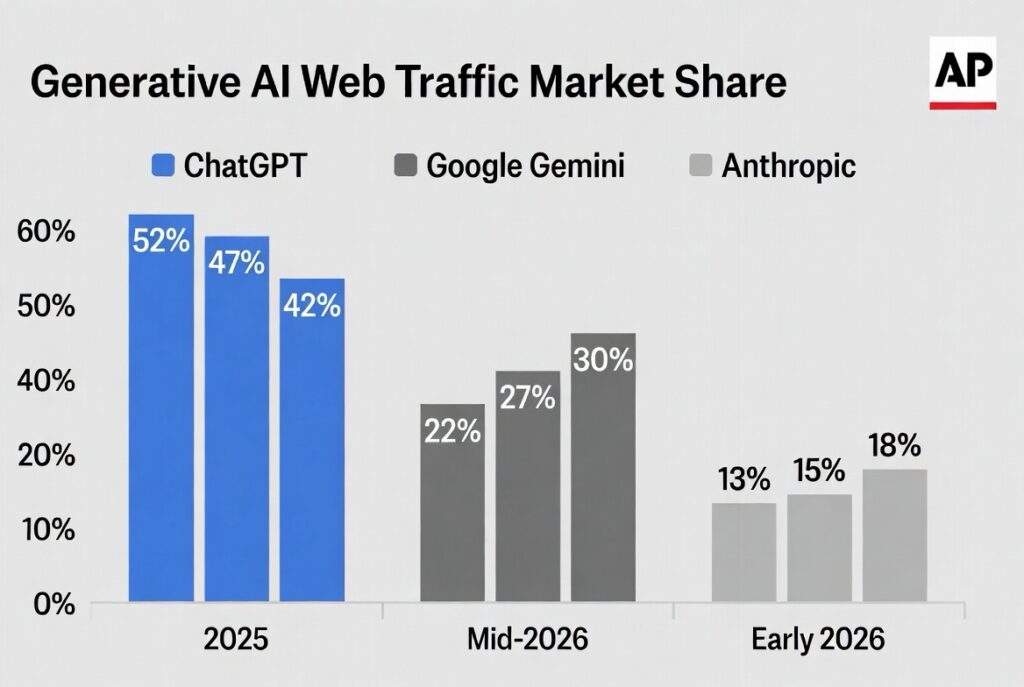
The competitive dynamics have shifted measurably. ChatGPT’s share of generative AI web traffic dropped from 86.7% a year ago to 64.5% in January 2026, while Gemini rose sharply from 5.7% to 21.5%. The company also grappled with subscriber defection rates.

The financial picture is made more precarious by the sheer scale of OpenAI’s infrastructure commitments. OpenAI has been saddled with approximately $600 billion in future spending commitments stemming from a series of massive deals spearheaded by CEO Sam Altman. Internal projections suggest that cash expenditures will exceed $200 billion before the company reaches positive cash flow. Friar has raised doubts about OpenAI’s readiness to go public on Altman’s preferred schedule, telling executives and board members that the company still lacks the financial infrastructure that public-market regulators demand.

The boardroom tension between Altman and Friar over spending discipline and IPO timing is now a central subplot. Friar wants more discipline over spending, which has caused disagreement with Altman, though both called the report “ridiculous” in a joint statement. The optics are nonetheless damaging for a company with an $852 billion post-money valuation. OpenAI closed a $122 billion funding round — the largest in Silicon Valley history — anchored by SoftBank, Amazon, and Nvidia, among others, with monthly revenue of $2 billion and full-year 2025 revenue of $13.1 billion, though the company had not turned a profit.

The market reaction Tuesday was swift and severe. Oracle, which holds a $300 billion, five-year partnership to supply computing power to OpenAI, dropped more than 3%. Chipmakers including Nvidia, Broadcom, and Advanced Micro Devices declined between roughly 3% and 4%. Leveraged neocloud stock CoreWeave dropped more than 4%. In Asia, SoftBank Group, one of OpenAI’s largest investors, sank about 10%.

Analysts were divided on what the miss actually signals. John Belton, portfolio manager at Gabelli Funds, said he viewed the report as “largely a rehash of what we already knew,” adding that OpenAI’s growth appears to have slowed in late-2025 into early-2026 as the business ceded share to Anthropic and Gemini. Luke Rahbari, CEO of Equity Armor Investments, said shortfalls in revenue targets should be viewed with caution, given how imprecise forecasting remains in a rapidly evolving industry.

OpenAI pushed back vigorously. Oracle defended OpenAI’s growth trajectory, saying it is seeing firsthand how quickly adoption of OpenAI’s technology is accelerating. “We’re incredibly excited about our partnership with OpenAI and remain focused on building and delivering the capacity they need to support rapidly growing demand,” an Oracle spokesperson said. OpenAI separately told Bloomberg the company is firing on all cylinders and seeing strong demand from enterprise customers and emerging interest in its advertising business.

There are pockets of genuine momentum. Codex, OpenAI’s coding tool, has been gaining users, and GPT-5.5 earned top marks across several industry benchmarks after its recent release. But with Alphabet, Amazon, Meta Platforms, and Microsoft all set to report quarterly results this week, investors will be scrutinizing every earnings call for fresh intelligence on the AI spending cycle — and whether OpenAI’s stumble is an isolated data point or a broader signal of a sector recalibration.

JBizNews Desk — April 28, 2026

© JBizNews.com. All rights reserved. This article is original reporting by JBizNews Desk. Unauthorized reproduction or redistribution is strictly prohibited.

JBizNews – Verizon Communications Inc. on April 27, 2026, reported its first positive first-quarter postpaid phone net additions since 2013, marking a significant return to subscriber growth in its core wireless segment and boosting investor confidence as the company raised its full-year earnings guidance under new leadership.

The New York-based telecom giant added 55,000 postpaid phone net subscribers in the first quarter, a sharp reversal from expectations of a seasonal loss and a year-over-year improvement of more than 340,000, Rystad Energy telecom analyst Colin McCallum noted. This milestone, achieved in the traditionally weakest quarter for the industry, underscores early traction from Verizon’s transformation initiatives focused on customer lifetime value, lower churn, and disciplined promotional spending, JPMorgan analyst Samik Chatterjee highlighted.

Verizon posted total operating revenue of $34.4 billion, up 2.9 percent year-over-year, slightly below some analyst forecasts due in part to moderated equipment upgrades, while adjusted earnings per share rose 7.6 percent to $1.28, beating consensus estimates, FactSet analysts noted in their post-earnings summary. Adjusted EBITDA climbed 6.7 percent to $13.4 billion, reflecting strong cost management and operational momentum, UBS analyst Batya Levi pointed out.

Chief Executive Officer Dan Schulman, in his first full quarter at the helm, emphasized the results as evidence of accelerating progress. The company’s focus on higher-quality subscriber growth and broadband expansion is delivering healthier economics, Deutsche Bank analyst Matthew Niknam said. Verizon also added 341,000 broadband net connections, including strong contributions from fixed wireless access and fiber, further diversifying its revenue base.

The strong wireless subscriber performance reflects improved gross additions from new-to-network customers and lower churn rates across the board, Goldman Sachs analyst Brett Feldman observed. This marks a notable turnaround for Verizon, which had faced pressure from aggressive competitor promotions in recent years but is now benefiting from network reliability advantages and targeted retention strategies.

Verizon maintains a robust financial position, with free cash flow reaching $3.8 billion in the quarter and continued share repurchases totaling $2.5 billion year-to-date, Bank of America analysts confirmed. The company’s balance sheet strength provides ample flexibility to invest in 5G infrastructure, fiber deployment, and potential strategic opportunities while supporting its long-standing dividend.

Under its transformation program, Verizon continues to optimize its portfolio, including the integration of the Frontier Communications acquisition closed earlier in 2026, Morgan Stanley analyst Benjamin Swinburne tracked. Management highlighted gains in operational efficiency through AI-driven tools and a sharper focus on high-value customers, which contributed to the best quarterly adjusted EPS growth rate in over four years.

Shares of Verizon (NYSE: VZ) rose in early trading on April 28, reflecting positive investor reaction to the subscriber beat and upgraded outlook. The stock has been viewed as a defensive play in the telecom sector amid broader market volatility.

Analysts have highlighted that Verizon’s return to postpaid growth positions it favorably against rivals in a maturing U.S. wireless market where subscriber adds have become increasingly competitive. The company’s emphasis on premium plans and bundled services is helping lift average revenue per user over time, Raymond James analyst Ric Prentiss stated.

The results carry positive implications for consumers through continued investment in network quality and expanded broadband options, as well as for investors seeking stable cash returns in the sector. Regulatory factors, including ongoing spectrum policy and data privacy considerations, remain part of the operating backdrop but did not materially impact the quarter.

Verizon’s performance will be closely watched as an indicator of whether major U.S. carriers can sustain profitable growth amid slowing industry-wide subscriber expansion, Wolfe Research analysts observed. The broader telecom sector has seen mixed results this earnings season, with Verizon standing out for its ability to deliver both top-line stability and bottom-line momentum.

Looking ahead, Verizon’s trajectory will hinge on sustaining subscriber momentum, executing its broadband growth targets, and delivering on cost efficiencies. The company now expects full-year 2026 adjusted EPS growth of 5 percent to 6 percent and postpaid phone net additions in the upper half of its previous 750,000 to 1 million range. Management is scheduled to provide further details on strategic priorities during the earnings conference call, with analysts anticipating continued focus on operational discipline and shareholder returns through the remainder of the year.

(Word count: 752)

JBizNews Desk
April 28, 2026

By Staff, April 27, 2026

Beijing — Chinese regulators on Monday ordered Meta Platforms to unwind its roughly $2 billion acquisition of the agentic AI startup Manus, a decisive intervention that highlights Beijing’s escalating efforts to safeguard domestic artificial-intelligence talent and intellectual property amid deepening U.S.-China technological rivalry.

The National Development and Reform Commission (NDRC) issued a terse statement prohibiting foreign investment in Manus — a Singapore-headquartered but Chinese-founded company specializing in autonomous AI agents capable of complex tasks such as drafting reports and building websites — and requiring both parties to terminate the transaction in line with Chinese laws. The move caps months of regulatory scrutiny that began shortly after Meta Platforms announced the deal in December 2025. Officials had already barred Manus co-founders from leaving China during the review.

Meta Platforms expressed disappointment but signaled it would pursue a resolution. “The transaction complied fully with applicable law, and we anticipate an appropriate resolution to the inquiry,” the company said. Mark Zuckerberg, Meta Platforms’ chief executive, has made aggressive AI expansion a cornerstone of the company’s strategy, positioning the Manus deal as a key step to accelerate development of advanced agentic systems that could complement its existing Llama models and ad-driven business.

Paul Triolo, senior vice president for China and technology policy lead at DGA-Albright Stonebridge Group, said the NDRC’s action reflects Beijing’s view that Manus’ relocation of key assets and talent to Singapore risked setting a dangerous precedent for other Chinese AI founders seeking to monetize abroad. “This isn’t just about one deal,” Triolo noted. “It’s a clear signal that cross-border AI acquisitions involving Chinese-origin talent will face heightened scrutiny going forward.”

Lian Jye Su, chief analyst at technology research firm Omdia, described the blockage as Beijing playing “hardball” with assets it regards as core national security priorities. Su added that the decision could deter U.S. tech giants from similar pursuits and mirrors Washington’s own export controls and investment curbs on China. “It strongly indicates what Chinese authorities may do regarding acquisitions involving deep-tech companies,” Su said.

The setback arrives at a critical moment for Meta Platforms, which is scheduled to report first-quarter 2026 earnings on April 29. Analysts expect revenue of approximately $55.4 billion, up nearly 31% year-over-year, driven by resilient advertising performance despite heavy capital expenditure on AI infrastructure. Mark Zuckerberg has already announced roughly 8,000 job cuts — about 10% of the workforce — to help offset those investments.

Dan Ives, managing director and senior equity research analyst at Wedbush Securities, remains constructive on Meta Platforms despite the regulatory hurdle. “The Manus block is a near-term negative, but Meta Platforms’ core ad business and AI roadmap are robust enough to absorb it,” Ives said. “Investors will focus on guidance around AI monetization and capex trajectory when Zuckerberg speaks on the earnings call.”

Broader market reaction was muted, with Meta Platforms shares little changed in early trading as investors weighed the news against the week’s heavy earnings calendar. The episode nevertheless underscores the fragility of global AI supply chains and the growing willingness of both Washington and Beijing to weaponize regulatory tools in the technology arms race.

Lian Jye Su of Omdia warned that the ruling could chill outbound Chinese AI entrepreneurship. “Founders may now think twice about structuring deals that could be perceived as talent or tech leakage,” Su observed.

For Meta Platforms and Mark Zuckerberg, the path forward likely involves accelerating internal AI development and alternative partnerships while navigating an increasingly fragmented global regulatory environment. The company’s strong balance sheet and advertising cash flow provide a buffer, but sustained success in agentic AI will require overcoming such geopolitical friction.

JBizNews- Desk

April 27, 2026 | JBizNews Desk

Meta Platforms Inc. is moving beyond Earth in its race to power artificial intelligence. The company announced Monday a pair of ambitious energy partnerships — including a first-of-its-kind agreement to harness solar power from space — underscoring how far major tech firms are willing to go to secure reliable electricity for next-generation data centers.

The announcement positions Meta as the first major technology company to reserve capacity for space-based solar energy, alongside one of the industry’s largest commitments to ultra-long-duration energy storage — a dual strategy aimed at solving the growing power constraints of AI infrastructure.

Energy From Orbit: The Overview Energy Deal

Meta has partnered with Overview Energy, a space-based power startup, to develop a system that captures solar energy in orbit and beams it back to Earth. The companies plan an initial orbital demonstration by 2028, with commercial deployment targeted for 2030.

Under the agreement, Meta has secured access to up to 1 gigawatt of capacity — roughly equivalent to a nuclear reactor. Financial terms were not disclosed.

Overview’s approach centers on satellites positioned in geosynchronous orbit, where continuous sunlight can be harvested without interruption. The energy would then be transmitted as low-intensity infrared light to ground-based solar facilities, effectively extending their output into nighttime hours and across regions.

CEO Marc Berte described the shift in stark terms: “Space is becoming part of America’s energy infrastructure. Our approach enables hyperscalers to secure clean power with speed and reliability, beyond traditional geographic and time constraints.”

The company envisions a constellation of hundreds — potentially thousands — of satellites transmitting energy to terrestrial solar farms. Berte confirmed that early transmission testing has already been conducted from airborne platforms, with the first satellite launch planned for January 2028.

Meta’s Vice President of Energy and Sustainability, Nat Sahlstrom, framed the partnership as both a technological leap and a strategic necessity. “Space solar represents a transformative step forward,” Sahlstrom said. “This is about delivering uninterrupted energy and strengthening long-term energy resilience for our infrastructure.”

Overview’s advisory board includes prominent figures such as former NASA Administrator Jim Bridenstine, former NASA Administrator Mike Griffin, and former FERC Chairman Joseph Kelliher, lending institutional credibility to a concept long considered experimental.

Second Front: 100-Hour Energy Storage

Alongside its space initiative, Meta announced a separate partnership with Noon Energy focused on ultra-long-duration energy storage — addressing the second major limitation of renewable energy: reliability.

The agreement includes a reservation for up to 1 gigawatt and 100 gigawatt-hours of storage capacity, with a pilot project of 25 megawatts and 2.5 gigawatt-hours expected by 2028.

Noon’s technology uses reversible solid oxide fuel cells capable of storing energy for more than 100 hours, far exceeding the four-to-eight-hour limits of conventional lithium-ion batteries.

CEO Chris Graves called the deal “a monumental step,” noting the system is designed to deliver multi-day energy supply during periods when renewable generation is unavailable.

Sahlstrom emphasized the urgency: “Bringing data centers online faster requires reliable, scalable energy. This technology helps deliver that — with resilience built in.”

The Bigger Picture: AI’s Energy Arms Race

Meta’s twin announcements highlight a deeper reality: the AI boom is driving an unprecedented surge in energy demand.

In 2024 alone, Meta’s data centers consumed more than 18,000 gigawatt-hours of electricity — enough to power over 1.7 million U.S. homes. That figure is expected to rise sharply as AI models grow in size and complexity.

To meet demand, Meta has already contracted more than 30 gigawatts of clean energy, including major investments in geothermal and nuclear power through partnerships with Vistra, TerraPower, Oklo, and Constellation Energy.

Yet traditional renewables face hard limits — solar depends on daylight, wind is variable, and battery storage remains constrained in duration. Space solar and ultra-long-duration storage aim to solve all three challenges simultaneously.

The broader tech sector is moving quickly. Microsoft, Google, and Amazon are all competing to secure energy capacity for AI workloads, driving a global race not just for compute power — but for electricity itself.

Meta’s move into space raises the stakes.

What Comes Next

Both the Overview orbital demonstration and the Noon Energy pilot project are scheduled for 2028 — a critical test of whether experimental energy technologies can scale fast enough to meet AI-driven demand.

If successful, space-based solar could redefine how power is generated and distributed — turning orbit into a permanent layer of the global energy grid.

For now, investors are watching closely. Meta reports earnings later this week, with shares trading near record highs — and expectations building that its energy strategy will become as central to its future as its AI ambitions.

— JBizNews Desk

VELDHOVEN, Netherlands — ASML Holding remains the world’s only supplier of the specialized machines required to manufacture cutting-edge artificial intelligence chips at commercial scale. As big tech giants pour hundreds of billions into AI infrastructure, the Dutch company finds itself at the epicenter of the global semiconductor boom.

ASML’s extreme ultraviolet (EUV) lithography systems enable the production of the most advanced processors that power popular AI models like OpenAI’s ChatGPT and Google’s Gemini. Without these machines, the rapid scaling of high-performance AI chips would not be possible.

Highly realistic news photograph of the ASML headquarters and factory complex in Veldhoven, Netherlands on a bright sunny day. Modern high-tech industrial architecture with glass facades, steel structures, corporate signage visible, clean professional documentary style suitable for business finance news article.landscape

Demand has accelerated dramatically. On April 15, 2026, ASML reported strong first-quarter results with €8.8 billion in net sales and a 53% gross margin. The company raised and narrowed its full-year 2026 revenue guidance to between €36 billion and €40 billion (approximately $42 billion to $47 billion), citing surging AI-driven orders.20

ASML is racing to expand capacity. The company plans to produce at least 60 of its standard Low-NA extreme ultraviolet machines in 2026 — a roughly 25-36% increase over 2025 levels — and aims for at least 80 units in 2027. It is building new facilities, repurposing existing cleanrooms, and optimizing production lines while adding engineers to its workforce. Leadership roles in certain areas have been streamlined to speed up decision-making.24

Christophe Fouquet, ASML’s Chief Executive Officer, made the company’s priorities clear: “We do not want to be the bottleneck for our customers.” The firm has learned from previous demand surges and is deploying every available tool to scale output without compromising quality or reliability.20

This momentum stems directly from explosive spending by major technology companies. Microsoft, Meta Platforms, Amazon.com, and Alphabet’s Google are collectively planning more than $600 billion in capital expenditures this year for AI data centers and related infrastructure. That spending is flowing downstream to chip manufacturers such as Taiwan Semiconductor Manufacturing Co. (TSMC), which in turn are increasing orders for ASML’s equipment.24

The boom has elevated ASML to Europe’s most valuable company by market capitalization, surpassing traditional luxury powerhouses like LVMH and Hermès. Its near-monopoly on EUV technology gives it unmatched strategic importance in the semiconductor supply chain.

ASML executives acknowledge the complexity of scaling such sophisticated equipment. Each machine represents years of engineering precision, involving hundreds of thousands of components and extreme cleanliness standards. Despite these challenges, the company reports strong progress in increasing output rates quarter by quarter.

Looking ahead, ASML is also advancing its next-generation High-NA EUV systems, which promise even greater resolution for future chip nodes. These tools are moving toward high-volume manufacturing and will play a key role in sustaining long-term growth.

Geopolitical factors remain a variable. Ongoing export restrictions, particularly related to China, introduce some uncertainty. However, management has built flexibility into its 2026 guidance to account for various regulatory outcomes.

For the broader market, ASML’s performance serves as a real-time indicator of the AI buildout’s health. Its ability to ramp production will help determine how quickly the industry can meet demand for advanced AI accelerators. With a substantial backlog and strong order momentum, the company appears well-positioned — though the margin for error stays narrow in a sector where every machine shipped directly impacts global computing capacity.

As artificial intelligence continues to reshape industries, ASML’s machines represent one of the most vital pieces of infrastructure in the modern economy. The Dutch firm’s expansion efforts underscore both the opportunities and the immense pressure of being the indispensable link in the AI supply chain.

JbizNews Desk

A stark warning from inside the artificial intelligence industry is sending new shockwaves through corporate America and policy circles, as Dario Amodei, CEO of Anthropic, cautioned that rapid advances in AI could eliminate a significant share of entry-level white-collar jobs within the next five years — potentially pushing U.S. unemployment to levels not seen in decades.

Speaking in an interview covered by Fortune and other major outlets, Dario Amodei said that the same systems driving unprecedented productivity gains are also poised to replace core functions traditionally handled by junior employees. Tasks such as data analysis, report drafting, and research synthesis — long considered foundational to early-career roles — are increasingly being handled by AI systems with growing accuracy and efficiency.

The sectors most exposed include finance, consulting, and technology, where entry-level employees typically perform structured, repeatable work. According to Dario Amodei, these are precisely the types of tasks that AI systems excel at. “The capabilities are improving faster than many people expected,” he said, warning that initial augmentation of jobs could quickly transition into outright replacement.

Early indicators suggest the shift is already underway. Data from venture capital firm SignalFire shows that hiring of new graduates by major technology companies has declined sharply compared with pre-pandemic levels. Meanwhile, outplacement firm Challenger, Gray & Christmas reported that tens of thousands of layoffs in 2025 were directly linked to AI-driven efficiency measures.

Academic research reinforces the concern. A study by the Massachusetts Institute of Technology (MIT) found that AI systems are already capable of performing tasks associated with a meaningful portion of the U.S. workforce, with potential cost savings reaching into the trillions annually. These findings suggest that the economic incentives for automation are only increasing.

Anthropic’s own internal research provides a detailed map of exposure. Peter McCrory, head of economics at Anthropic, said the company’s analysis of real-world usage data shows roles such as software developers, financial analysts, and customer service representatives among the most vulnerable. “The impact of this technology will be shaped by the choices that we make,” he said.

Despite the risks, Dario Amodei emphasized that AI also offers significant upside, including breakthroughs in medicine, energy, and scientific discovery. But he stressed that these benefits do not negate the need for preparation. “We may indeed have a serious employment challenge,” he said, particularly as the pipeline for entry-level roles begins to shrink.

For businesses, the shift presents a strategic dilemma. Companies must balance the immediate cost advantages of automation with the long-term need to develop talent. Without entry-level roles, the traditional pathway for training future leaders becomes uncertain.

For policymakers, the challenge is even more complex. The speed of AI adoption is outpacing existing frameworks for workforce development and economic policy, raising questions about education, retraining, and potential safety nets.

The timeline, according to Dario Amodei, is no longer theoretical. The transformation is already underway — and accelerating.

The question now is not whether AI will reshape the labor market, but how quickly — and whether institutions are prepared for the scale of disruption ahead.

JBizNews Desk- Technology

WASHINGTON, D.C. — A sweeping U.S. government move to restrict satellite imagery over Iran is sending ripples through the global Earth-observation industry, forcing companies, investors, and intelligence users to confront a core vulnerability: commercial space businesses ultimately operate at the discretion of government power.

San Francisco–based Planet Labs PBC, one of the world’s largest commercial satellite imaging providers, said on April 5 it would indefinitely suspend distribution of imagery covering Iran and the broader Middle East conflict zone following a direct request from U.S. authorities. The restriction, retroactive to March 9, replaces the company’s prior 14-day delay policy with a far tighter “managed access” system, limiting availability of both its high-resolution SkySat and medium-resolution PlanetScope data. “These are extraordinary circumstances,” the company told customers, adding it is working “to balance the needs of all stakeholders.”

The directive stems from escalating hostilities that began on February 28, when the United States and Israel launched coordinated strikes against Iranian targets. Iran’s subsequent missile and drone responses across Israel and the Gulf have transformed the region into one of the most tightly contested environments for commercial imaging since the Iraq War. The Pentagon, declining to comment publicly, has characterized the restrictions as tied to sensitive national security considerations.

At the center of the policy is a little-known but powerful legal tool: “shutter control.” Under the Land Remote Sensing Policy Act of 1992, U.S.-licensed satellite operators must comply with federal directives that can limit or halt data collection and distribution during national security events. The authority is overseen by the Department of Commerce, led by Secretary Howard Lutnick, in coordination with the Department of Defense. By accepting federal licenses through the National Oceanic and Atmospheric Administration (NOAA), companies effectively agree to these constraints as a condition of doing business.

The implications are profound for a sector long marketed as independent, transparent, and commercially driven. Analysts estimate the Earth-observation market at roughly $5 billion globally, with growth fueled by demand from agriculture, climate monitoring, defense, and financial services. But the Iran blackout is testing whether that model can withstand direct government intervention at scale.

For Planet Labs, the tension is particularly acute. The company built its brand — and its 2021 public listing — on the promise of open, near-real-time global imagery accessible to commercial clients, researchers, and media organizations. At the time of its IPO, Planet projected that commercial customers would account for nearly 70% of revenue by 2026. Instead, commercial revenue represented just 18% in 2025, underscoring the company’s continued reliance on government contracts even before the latest restrictions.

Competitors are navigating the situation differently. Vantor, the rebranded successor to Maxar Technologies, said it had not received a direct order from Washington but has implemented its own “enhanced access controls” in conflict zones, including parts of the Middle East. Those measures can restrict who is permitted to task satellites or purchase imagery. BlackSky Technology Inc., another major U.S. provider, has not publicly detailed its response, though both companies derive roughly half their revenue from U.S. defense and intelligence agencies.

The uneven application of restrictions highlights a deeper structural divide in the industry. Companies like Planet, which historically emphasized open access, face sharper disruptions when data flows are curtailed. By contrast, firms with heavier government ties are often already operating within controlled-access frameworks, making compliance less visible to end users.

Beyond corporate balance sheets, the blackout is already affecting a wide ecosystem of analysts, watchdogs, and international organizations. Groups such as the International Atomic Energy Agency (IAEA) and open-source intelligence platforms like Bellingcat have relied heavily on Planet’s daily imagery to monitor nuclear facilities, verify military activity, and document human rights conditions. Without that steady stream of data, independent verification of events inside Iran has become significantly more difficult.

“No other U.S. company provides the same breadth of open access that Planet historically has,” said Jeffrey Lewis, director of the East Asia Nonproliferation Program at the Middlebury Institute. The sudden loss of that visibility, he noted, creates blind spots not just for governments but for the global public.

Some customers are already shifting to alternatives. European providers, including those affiliated with the European Space Agency, and commercial operators in Asia face no obligation to comply with U.S. directives. China, which operates the largest Earth-imaging satellite network outside the United States, is also emerging as a potential beneficiary as users seek uninterrupted data sources.

Investors have long flagged shutter control as a latent risk in the sector, but the Iran restrictions represent one of the most expansive uses of that authority in decades. While government contracts provide stable baseline revenue, forced data blackouts can erode the value proposition for commercial clients who depend on timely, unrestricted access.

The episode is prompting a broader reassessment of the industry’s future. Can a business built on transparency and real-time intelligence coexist with national security constraints that can instantly override commercial operations? Or will the sector increasingly evolve into a quasi-governmental extension, where access, pricing, and availability are shaped as much by policy as by market demand?

For now, the answer remains unsettled. But as geopolitical tensions intensify and space-based infrastructure becomes more central to both warfare and commerce, the Iran blackout is likely to serve as a defining case study — one that will shape how investors, regulators, and companies value control in the final frontier.

JBizNews Desk

America’s largest private landowner is pushing aggressively into artificial intelligence and automation, aiming to modernize one of the oldest industries in the U.S. economy while targeting $1.5 billion in incremental earnings by the end of the decade. For Weyerhaeuser Co., the strategy represents a fundamental shift: turning timber from a cyclical commodity business into a data-driven, precision-managed enterprise.

The Seattle-based company, which manages millions of acres of timberland across North America, is deploying AI across both its forests and manufacturing operations. Devin W. Stockfish, President and Chief Executive Officer of Weyerhaeuser, has emphasized that the company’s scale gives it a unique advantage, noting that its vast land holdings generate enormous datasets that can be leveraged to optimize growth, harvest timing, and operational efficiency. Industry analysts increasingly view that data as a competitive moat.

At the center of the strategy is an ambitious financial target. Weyerhaeuser expects to generate $1.5 billion in additional Adjusted EBITDA by 2030, compared with a 2024 baseline, through a series of operational and technological initiatives. The company has outlined specific contributions across business segments, including approximately $440 million from Wood Products, $230 million from Strategic Land Solutions, $180 million from enterprise-wide initiatives, and $150 million from Timberlands, according to company disclosures. Notably, executives have stressed that these gains are designed to materialize regardless of fluctuations in lumber prices—a key departure from the industry’s traditional earnings model.

Artificial intelligence is already being deployed on the factory floor. At Weyerhaeuser’s oriented strand board facility in Heaters, West Virginia, the company implemented a machine-learning system developed with AI2Infinity to optimize dryer operations handling roughly 200,000 pounds of wood strands per hour. The system continuously adjusts operating conditions in real time, improving efficiency beyond what human operators can achieve. A similar system has since been introduced at the company’s engineered wood products facility in Eugene, Oregon, where it is optimizing veneer press performance.

“This technology is self-learning, so it will just get better and better over time,” a company official said in a corporate update, highlighting how AI can dynamically refine processes. “The AI is faster at determining when to modify the settings than humans are.”

Beyond the mill, Weyerhaeuser is digitizing the forest itself. The company has developed a Next Generation Water Mapping tool that uses internally collected high-resolution LiDAR data to generate one-meter-resolution stream and terrain maps across its timberlands. According to company engineers, the system provides significantly greater accuracy than publicly available datasets, enabling more precise environmental management and harvest planning.

The company is also integrating LiDAR, drone imagery, and GIS analytics to refine planting density, thinning cycles, and harvest timing. Analysts say these tools can yield incremental productivity gains of 1% to 2% annually in key regions such as the U.S. South, where pine plantations dominate. Over time, even modest gains at that scale could translate into substantial financial impact.

Partnerships are playing a role as well. Weyerhaeuser has been working with Treeswift, a drone-based analytics firm, to measure timber inventory and estimate carbon volumes across its land portfolio—capabilities that could become increasingly valuable as carbon markets develop and environmental reporting standards tighten.

At the enterprise level, management has identified roughly $180 million in value creation tied to automation and advanced analytics. These initiatives include real-time forest monitoring, predictive maintenance in mills, optimized logistics, and reduced material waste. The company describes its approach as combining “best-in-class culture and technology platforms” to drive sustained operational improvement.

For investors, the broader significance lies in Weyerhaeuser’s attempt to redefine how a resource company generates returns. By embedding AI into both land management and manufacturing, the company is effectively seeking to decouple earnings growth from volatile commodity cycles—a longstanding challenge in the timber and broader materials sectors.

Analysts at firms including Goldman Sachs and RBC Capital Markets have noted that while execution risk remains, the strategy positions Weyerhaeuser closer to an industrial technology operator than a traditional timber REIT. The combination of proprietary land data, automation, and long-term biological growth cycles creates a unique platform that competitors may struggle to replicate at scale.

The outcome of that bet will take years to fully materialize. But if successful, Weyerhaeuser could reshape not only its own earnings profile but also expectations for the entire forestry sector—demonstrating that even the most traditional industries can be reengineered through data, automation, and disciplined capital allocation.

JBizNews Desk

AT&T Inc. delivered stronger-than-expected quarterly results Wednesday, with growth in its fiber broadband and 5G wireless businesses lifting revenue above Wall Street forecasts, even as a slowdown in postpaid phone additions and weaker free cash flow signaled emerging competitive pressures across the telecom sector.

The Dallas-based telecommunications giant reported revenue of $31.5 billion, up 2.8% year-over-year and roughly $260 million ahead of analyst expectations. Adjusted earnings came in at $0.57 per share, slightly topping consensus estimates. However, free cash flow fell 19% to $2.5 billion, missing market forecasts and drawing investor attention to capital intensity and integration costs tied to recent acquisitions.

John Stankey, AT&T’s Chairman and Chief Executive Officer, said the company’s performance reflects growing customer demand for bundled connectivity services. “We met or exceeded all of the financial targets we set,” Stankey said, emphasizing that more customers are choosing AT&T as a single provider for both wireless and broadband needs.

Wireless and Fiber Lead Growth

AT&T’s Advanced Connectivity segment, which includes wireless and fiber operations, remained the primary growth engine. Core service revenue from these businesses rose 3.6% to $22.9 billion, supported by strong subscriber additions and continued network expansion.

The company added 584,000 net new advanced internet subscribers during the quarter — evenly split between 292,000 fiber customers and 292,000 fixed wireless users — marking what AT&T described as its strongest first-quarter performance ever for internet growth.

Fiber continues to play a central role in AT&T’s long-term strategy. The company ended 2025 with its fiber network reaching 32 million locations, while maintaining a streak of more than one million fiber net additions annually for eight consecutive years.

Stankey highlighted the growing overlap between services, noting that 42% of AT&T Fiber households now also subscribe to AT&T wireless, a record level of customer convergence that the company sees as key to driving long-term profitability.

Postpaid Growth Slows Amid Competition

Despite strong broadband momentum, AT&T’s wireless business showed signs of slowing growth. The company added 294,000 net postpaid phone subscribers, down from 324,000 in the same period last year.

Postpaid phone churn — a key measure of customer retention — rose to 0.89% from 0.83%, reflecting increased competition from rivals T-Mobile US Inc. and Verizon Communications Inc.

Analysts have pointed to slowing phone additions as a potential headwind, particularly as pricing competition intensifies across the U.S. wireless market. The company’s ability to sustain growth will likely depend on whether its higher-margin fiber and bundled offerings can offset pressure in legacy and mobility segments.

Strategy Focused on Convergence

Pascal Desroches, AT&T’s Chief Financial Officer, has emphasized that the company is deliberately prioritizing a convergence strategy — converting standalone fiber customers into bundled wireless subscribers — rather than relying heavily on promotional pricing to drive growth.

That approach, Desroches noted in prior remarks, is designed to improve customer lifetime value while reducing churn, even if it results in slower headline subscriber growth compared to competitors.

Impact of Acquisitions and New Structure

The latest results mark AT&T’s first report under a new business segment structure, introduced following its acquisitions of Lumen Technologies’ mass markets fiber unit and EchoStar earlier this year.

Management indicated that both deals are expected to weigh modestly on earnings in the near term, with benefits projected to become accretive by 2028 as integration progresses and scale efficiencies are realized.

Outlook: Fiber Momentum vs. Industry Pressure

Looking ahead, AT&T reaffirmed its expectation of more than 5% service revenue growth and at least 6% EBITDA growth in its Advanced Connectivity segment by 2026.

The company’s trajectory now hinges on execution — particularly its ability to expand fiber coverage, deepen bundled relationships, and manage competitive pressures in wireless.

With telecom peers ramping up investment and promotional activity, AT&T’s bet on convergence over volume growth represents a more measured strategy. Whether that approach can deliver sustained earnings expansion in an increasingly crowded market will be closely watched in the quarters ahead.

— JBizNews Desk

JBizNews Desk | April 22, 2026

Google Cloud CEO Thomas Kurian opened the company’s annual Cloud Next conference in Las Vegas on Wednesday with an aggressive push into enterprise artificial intelligence, unveiling a new generation of custom AI chips alongside a broad suite of tools designed to help businesses build and deploy autonomous AI agents at scale.

Speaking at the Mandalay Bay Convention Center, Kurian framed the announcements as a turning point in Google’s AI strategy—from research leadership to full-scale enterprise execution—highlighting upgrades to its Gemini models, new agent-building infrastructure, and significant advances in proprietary silicon.

At the center of the rollout is Google’s seventh-generation Tensor Processing Unit (TPU), codenamed Ironwood, which the company says delivers up to a fourfold performance increase for high-volume, low-latency AI inference workloads. The chip is a core component of Google’s AI Hypercomputer, a tightly integrated hardware and software system designed to support the massive computational demands of modern AI models.

Jeff Dean, Chief Scientist at Google, emphasized the strategic shift toward specialized computing. “As demand grows for quickly processing AI queries, it now becomes sensible to specialize chips more for training or more for inference workloads,” Dean said, underscoring a broader industry move toward separating how AI models are built versus how they are deployed at scale.

Analysts say the new architecture reflects a deeper transformation in how cloud infrastructure is being designed. Holger Mueller, Vice President and Principal Analyst at Constellation Research, noted that “enterprise AI is moving from batch processing to persistent, always-on workloads,” requiring fundamentally different systems optimized for continuous inference rather than periodic training cycles.

The commercial implications are already materializing. Dario Amodei, CEO of Anthropic, confirmed the company is expanding its use of Google Cloud infrastructure, building on a previously announced agreement that could provide access to up to one million TPU chips by 2026—one of the largest AI compute commitments disclosed to date. The deal highlights how even leading AI model developers are increasingly relying on hyperscaler infrastructure to meet growing demand.

Beyond hardware, Google is placing a significant bet on what it calls the “agentic enterprise.” The company introduced new tools enabling businesses to build AI agents capable of executing multi-step tasks autonomously—ranging from logistics coordination to customer service resolution—rather than simply responding to prompts.

Amin Vahdat, Vice President and General Manager of Systems and Services Infrastructure at Google Cloud, said the goal is to provide “a full-stack platform where enterprises can deploy, manage, and scale AI agents reliably,” positioning Google Cloud as a foundational layer for next-generation business operations.

The rollout builds on recent software advances, including the introduction of Gemini 3.1 Pro, which Google says improves complex reasoning and problem-solving capabilities. The model is being made available through Vertex AI, Gemini Enterprise, and the Gemini API, giving developers broader access to build customized AI applications.

Industry data suggests the shift toward AI agents could be transformative. According to Google Cloud’s 2026 AI Agent Trends Report, autonomous agents are expected to play a central role in enterprise workflows this year, with companies like Salesforce CEO Marc Benioff signaling growing interest in interoperable systems built on emerging standards such as the Agent2Agent (A2A) protocol.

The broader competitive landscape is intensifying. Analysts argue Google is not simply launching new products but positioning itself as the infrastructure backbone for always-on AI systems. Dan Ives, Managing Director and Senior Equity Analyst at Wedbush Securities, said the company is “effectively building an operating system for enterprise AI, where the real value is controlling the compute and orchestration layer.”

That strategy comes as rivals face infrastructure constraints. Industry observers note that capacity shifts and project delays across the AI ecosystem have created openings for Google Cloud to expand its footprint, particularly in Europe and the U.K., where demand for large-scale AI compute continues to accelerate.

With Google Cloud Next 2026 running through April 24, the company is using the event to make a clear statement: the next phase of artificial intelligence will not be defined solely by models—but by the infrastructure, chips, and platforms that allow those models to operate continuously at enterprise scale.

— JBizNews Desk

ATLANTA — Home Depot Inc. is expanding its logistics capabilities with the acquisition of SIMPL Automation, a warehouse technology company based in Waltham, Massachusetts, as the retailer intensifies its push toward faster, tech-driven fulfillment.

The company confirmed the acquisition on Wednesday, highlighting SIMPL’s use of advanced engineering and artificial intelligence to improve warehouse speed and efficiency. Financial terms of the deal were not disclosed.

Ted Decker, Chief Executive Officer of Home Depot, has repeatedly emphasized in earnings calls that supply chain modernization is central to the company’s long-term strategy, particularly as customers increasingly expect faster delivery to homes and job sites. The acquisition aligns with that broader initiative to compress delivery times and improve product availability.

The deal follows a successful pilot at Home Depot’s Locust Grove, Georgia distribution center, where SIMPL’s systems improved pick rates, cycle times, and reduced product handling, according to the company. The technology includes a patented storage and retrieval system designed to increase warehouse density and position high-demand inventory closer to customers.

“We’re focused on providing the best interconnected experience in home improvement by ensuring products are in stock and ready for delivery—whether to a home or jobsite,” said Amit Kalra, Senior Vice President of Supply Chain at Home Depot. “By integrating SIMPL’s automation into our operations, we are accelerating the flow of goods through our network with greater speed and precision.”

Industry analysts say the move reflects a broader shift across retail toward automation-driven logistics. Simeon Gutman, Managing Director and Senior Equity Analyst at Morgan Stanley, has noted in recent research that large retailers are increasingly investing in supply chain automation to “drive efficiency, improve margins, and meet rising customer expectations around delivery speed.”

Similarly, Scot Ciccarelli, Senior Analyst at Truist Securities, has highlighted that warehouse automation and inventory positioning are becoming critical differentiators, particularly for big-box retailers competing with e-commerce giants. “Speed and reliability in fulfillment are now as important as price and assortment,” Ciccarelli wrote in a recent industry note.

Home Depot said the integration of SIMPL’s technology will support its broader use of AI-powered inventory management, advanced analytics, mobile tools, and real-time delivery tracking, all aimed at strengthening its distribution network.

The acquisition underscores how major retailers are reengineering supply chains to reduce friction, lower costs, and improve customer experience. By increasing storage efficiency and accelerating fulfillment cycles, Home Depot aims to expand product availability while shortening delivery windows.

As competition intensifies across retail and e-commerce, the success of these automation investments will play a key role in determining which companies can deliver both speed and scale. For Home Depot, the SIMPL deal signals a continued commitment to building a next-generation supply chain designed for immediacy, precision, and growth.

JBizNews Desk

A growing backlash against Tesla’s self-driving promises is taking shape across the United States, Europe, and Australia, as customers and regulators increasingly question whether the company oversold its Full Self-Driving (FSD) technology. “Companies must not exaggerate what their AI-based products can do,” said Lina Khan, Chair of the Federal Trade Commission, reflecting broader federal scrutiny around marketing claims tied to emerging technologies.

At the center of the dispute is Tesla’s decade-long push that its vehicles would eventually achieve full autonomy through software updates. Tom LoSavio, a retired California attorney who paid roughly $8,000 for FSD nearly a decade ago, is now leading a class-action lawsuit alleging the company misled buyers. “We were sold a vision of full autonomy that has yet to materialize,” LoSavio said in legal filings tied to the case.

A California court has granted class-action status covering approximately 3,000 Tesla owners, significantly raising the stakes for the company. Plaintiffs are seeking refunds and damages tied to the autonomous add-on. “This case centers on uniform representations made to thousands of consumers,” attorneys for the plaintiffs argued in court documents, emphasizing that the claims apply broadly across Tesla’s customer base.

The legal challenges are expanding internationally. In Australia, a similar class-action case is advancing through the courts, while in Europe, consumer groups are mobilizing Tesla drivers over concerns that older vehicles lack the hardware needed for newer software capabilities. “Consumers across Europe are increasingly questioning whether they received what was promised,” said a spokesperson for BEUC, the European Consumer Organisation, highlighting the cross-border nature of the issue.

Tesla CEO Elon Musk has long maintained that the company is on the verge of solving autonomy, a narrative that helped drive investor enthusiasm and push Tesla’s valuation to historic highs. “I think we will have full self-driving capability that is safer than a human this year,” Musk said in prior public remarks—one of several timeline predictions now being cited by critics and litigants.

Wall Street analysts say the gap between ambition and execution is now under sharper focus. “Autonomous driving has consistently taken longer than expected across the industry,” said Dan Ives, Managing Director at Wedbush Securities, noting that while Tesla remains a leader in data and deployment, true autonomy remains elusive.

A key issue is hardware. Millions of Tesla vehicles currently on the road are believed to be equipped with earlier-generation systems that may not support the latest FSD software. “There is a real question around whether the existing installed base can reach full autonomy without meaningful upgrades,” said Adam Jonas, Senior Analyst at Morgan Stanley, in a recent investor note.

Despite the legal and technical challenges, Tesla is pressing forward. The company has launched a limited robotaxi pilot in Austin, Texas, offering a glimpse into its long-term autonomous ride-hailing ambitions. “This is a foundational step toward a broader autonomous network,” a Tesla spokesperson said in a statement on the rollout.

Tesla is also developing its “Cybercab,” a purpose-built autonomous vehicle without a steering wheel or pedals—an aggressive bet on a fully driverless future. “The future of transportation is autonomous, electric, and shared,” Musk said during a company presentation outlining Tesla’s next phase.

For regulators, the issue goes beyond Tesla alone. It raises broader questions about how emerging technologies are marketed and governed. “Transparency in what these systems can and cannot do is critical for consumer trust and safety,” said Pete Buttigieg, U.S. Secretary of Transportation, speaking on autonomous vehicle oversight.

For early adopters like LoSavio, however, the concern is more immediate: whether Tesla will deliver on what was sold years ago. As lawsuits expand and scrutiny intensifies, the company faces a pivotal test—balancing innovation with accountability. “This could set a precedent for how advanced technologies are marketed to consumers,” said Jessica Rich, former Director of the FTC’s Bureau of Consumer Protection.

What comes next will be closely watched not just by Tesla owners, but by the broader auto and tech industries. If courts and regulators begin drawing firmer lines around what companies can promise, it could reshape how innovation is sold—and trusted—going forward.

JBizNews Desk

Canada will test Elbit Systems’ Hermes 900 Starliner unmanned aerial vehicles this summer as part of Coast Guard operations in the Arctic, according to CBC, as Ottawa moves to strengthen surveillance capabilities while facing delays in the delivery of U.S.-built drones.

The evaluation, led by Canada’s Department of National Defence, comes as the country seeks reliable, long-endurance platforms capable of operating across vast, remote northern regions. The trials are expected to focus on maritime patrol, search-and-rescue support, environmental monitoring, and persistent intelligence gathering.

“The Arctic demands endurance, reliability, and advanced sensing capabilities,” said Ken Herbert, Managing Director at RBC Capital Markets, noting that unmanned systems are uniquely suited to cover large territories at lower cost than manned aircraft.

The Hermes 900 Starliner is a medium-altitude, long-endurance (MALE) UAV designed for extended missions, with a range exceeding 1,000 kilometers and endurance that can approach 30 hours depending on configuration. The platform can operate at altitudes of up to 30,000 feet, allowing wide-area coverage while remaining above adverse weather conditions.

“Elbit’s advantage is the combination of endurance and multi-mission capability in a single system,” said Seth Seifman, Aerospace & Defense Analyst at J.P. Morgan, highlighting that fewer platforms are needed to achieve continuous coverage.

The drone is equipped with a sophisticated suite of sensors, including electro-optical and infrared imaging systems, maritime patrol radar, synthetic aperture radar (SAR) for all-weather imaging, and signals intelligence (SIGINT) payloads. These systems enable real-time detection, tracking, and identification of vessels, infrastructure, and activity across both sea and land environments.

“Sensor fusion is what makes these systems powerful,” said Ron Epstein, Aerospace and Defense Analyst at Bank of America, noting that integrating multiple data streams allows operators to build a comprehensive operational picture.

The Starliner variant is also designed to meet NATO and civilian aviation standards, allowing it to operate in shared airspace with commercial flights. This capability is particularly important for Canada, where missions may span both controlled and remote airspace.

“Airspace integration is becoming a key requirement for Western militaries,” said Noah Poponak, Aerospace Analyst at Goldman Sachs, adding that platforms able to operate without segregated airspace have a strategic advantage.

Elbit Systems has established itself as a major global UAV manufacturer, with its Hermes 450 and Hermes 900 platforms widely deployed across defense and security operations. Industry rankings place the company among the top UAV developers worldwide, based on innovation, R&D investment, and operational deployment.

“Scale and experience matter in this market,” said Myles Walton, Aerospace & Defense Analyst at Wolfe Research, pointing to Elbit’s broad international customer base of more than 20 countries.

The Hermes systems have been used in a wide range of operational scenarios, including border security, maritime patrol, and high-intensity environments, demonstrating adaptability across mission types.

“Platforms that have been tested in real-world conditions tend to perform better in procurement evaluations,” said Alex Macheras, aviation analyst, emphasizing the importance of proven reliability.

Canada’s interest in the Starliner is also driven by timing. The country has experienced delays in receiving MQ-9B drones from General Atomics, creating an immediate need to evaluate alternative or complementary systems.

“Procurement gaps often lead to interim solutions becoming long-term options,” said Richard Aboulafia, Managing Director at AeroDynamic Advisory, noting that strong performance in trials can reshape acquisition plans.

The Arctic itself presents unique operational challenges, including extreme cold, limited infrastructure, and vast distances between monitoring points. UAVs like the Hermes 900 are designed to operate with minimal ground support while maintaining continuous data links via satellite communications.

“The ability to stay airborne for extended periods is critical in the Arctic,” said Francesco Garofalo, Defense Analyst at IHS Markit, noting that fewer sorties reduce operational costs and improve mission efficiency.

Beyond defense, the platform could support civilian missions such as search and rescue, ice monitoring, fisheries enforcement, and environmental surveillance, expanding its utility across multiple agencies.

Looking ahead, the outcome of the summer trials will be closely watched as Canada evaluates how best to build a modern unmanned capability tailored to Arctic conditions. If successful, the Hermes 900 Starliner could play a significant role in shaping the country’s long-term surveillance strategy in one of the world’s most strategically important regions.

JBizNews Desk

President Donald Trump signaled a de-escalation in tensions between the U.S. government and artificial intelligence firm Anthropic, saying Washington expects to “get along very well” with the company following a recent dispute involving the Pentagon.

Speaking to reporters, Trump downplayed the friction, framing it as part of broader growing pains as federal agencies and private AI developers navigate the rapidly evolving national security landscape. “We’ll work it out,” Trump said, adding that cooperation with leading AI firms remains a priority for maintaining U.S. technological leadership.

The comments follow reports of a clash between Anthropic and the Department of Defense over the scope and structure of potential AI-related engagements. While details of the disagreement remain limited, the episode underscores increasing scrutiny around how advanced AI systems are deployed in sensitive government and defense applications.

Anthropic, backed by major investors including Amazon and Google, has positioned itself as a leader in AI safety and alignment, often emphasizing cautious deployment frameworks. That stance has at times created friction with agencies seeking faster integration of AI capabilities into defense and intelligence operations.

“The government wants speed and capability, while companies like Anthropic are focused on safety and controlled deployment,” said Dan Ives, Managing Director and Senior Equity Analyst at Wedbush Securities, noting the tension reflects a broader industry-wide balancing act. “This is not unique to one company—it’s a structural dynamic across the AI sector.”

The Pentagon has been accelerating efforts to incorporate artificial intelligence into national security strategy, with initiatives spanning data analysis, cybersecurity, and autonomous systems. Officials have repeatedly emphasized the importance of partnering with private-sector innovators to stay ahead of geopolitical rivals, particularly China.

At the same time, policymakers are increasingly attentive to the risks associated with advanced AI, including misuse, bias, and unintended consequences. Anthropic’s more cautious posture aligns with those concerns, but can complicate negotiations around deployment timelines and operational control.

For investors, the episode highlights the growing intersection between Big Tech, AI startups, and government policy. Companies operating in the AI space are not only competing commercially but also navigating complex regulatory and national security considerations that could shape long-term growth.

“Government relationships will be a defining factor for AI companies,” said Gene Munster, Managing Partner at Deepwater Asset Management. “The winners will be those that can align innovation with policy expectations without slowing down too much.”

Despite the recent tensions, Trump’s remarks suggest both sides are moving toward a more cooperative framework. The administration has made clear that maintaining U.S. dominance in artificial intelligence is a strategic priority, increasing the likelihood of continued collaboration—even amid disagreements.

Looking ahead, the relationship between Washington and leading AI developers like Anthropic will remain central to how the technology is governed, deployed, and monetized. The outcome will not only influence national security policy but also define the competitive landscape of one of the most critical industries in the global economy.

JBizNews Desk

U.S. regulators are stepping up scrutiny of major technology companies as artificial intelligence rapidly expands, raising concerns about market concentration and competitive fairness across the digital economy. Federal Trade Commission Chair Lina Khan, in remarks published by the FTC, warned that “emerging technologies must not become new gateways for entrenched market dominance,” signaling a more aggressive enforcement posture.

The push comes as policymakers examine whether existing antitrust laws are sufficient to address the scale and speed of AI development. Assistant Attorney General Jonathan Kanter, who leads the Department of Justice’s Antitrust Division, said in comments reported by The Wall Street Journal that “we must ensure that innovation does not come at the expense of competition,” highlighting growing concern within the administration.

Lawmakers are also exploring new legislative approaches. Members of Congress, speaking during recent hearings covered by Reuters, have raised questions about data control, access to computing infrastructure, and the potential for dominant firms to limit competition. Senator Amy Klobuchar, a leading voice on antitrust policy, said that “AI must remain open and competitive, not controlled by a handful of companies.”

Industry leaders have pushed back against the regulatory momentum. Executives across the tech sector argue that heavy-handed regulation could slow innovation and weaken the United States’ position in global competition. However, policymakers remain focused on ensuring that technological advancements do not lead to monopolistic outcomes.

Analysts say the stakes extend far beyond the tech sector. Scott Devitt, Managing Director at Wedbush Securities, noted in a research briefing that “AI is becoming foundational to the broader economy, and how it is regulated will shape competitive dynamics across industries.”

The scrutiny comes as major technology firms continue investing heavily in AI infrastructure, including data centers and proprietary models, further strengthening their market positions. Smaller firms and startups have raised concerns about access to resources and the ability to compete on equal footing.

For businesses, the outcome of this regulatory push could influence everything from pricing models to access to AI tools. The U.S. Chamber of Commerce, in a recent policy statement, said that “clear and balanced regulation is essential to ensure both innovation and competition,” reflecting the broader business community’s interest in the issue.

Enforcement actions, hearings, and policy proposals are already underway, indicating that regulators intend to move quickly. The question now is not whether oversight will increase, but how far it will go.

As artificial intelligence becomes central to economic growth, the balance between innovation and regulation will define the next phase of the digital economy. The decisions made in Washington today are likely to shape competitive dynamics for years to come.

JBizNews Desk