


Pat Gelsinger and Naveen Rao: we’ve seen Silicon Valley move fast and break things, but consider the math of where we’re headed
2026-09-19
We Work In AI. We’ve Seen It Eliminate Jobs. We’ve Also Seen It Create More Jobs
Silicon Valley used to encourage one another to “move fast and break things.” Then we broke everything. And people started to get angry.
Every major tech change throughout history has caused painful disruption. Farm families are still suffering from the effects of the Industrial Revolution, which occurred more than a century ago. Absorbing each new technological onslaught has taken society a lot of time, but at least it also took a while for the innovations to fully infiltrate the economy. Not this time. The AI transition is being compressed into a few years.
People are logically panicked about their jobs being replaced by machines, just like the men who destroyed factories and left notes from the fictional Ned Ludd, thereby launching the Luddite movement. But here’s the thing, every technology disruption, every one over history, has created more jobs than it destroys. And we have good reason to believe that the AI Revolution will do the same.
Between the two of us, we’ve been in the technology industry for over 70 years. Most of that time is from Pat, who joined Intel at 18, became its CEO, and now is a General Partner at a venture capital firm that invests in deep tech. The other, Naveen, has founded three AI startups, selling one to Intel, another for over a billion dollars, and now leads a third with a valuation of $4.5 billion.
Just as significantly, we both grew up in rural America. Pat grew up on a farm in Robesonia, Pennsylvania (pop. 2,035), and Naveen in the Appalachian coal-mining town of Whitesburg, Kentucky (pop. 1,711). We’ve seen how traditional industries get disrupted, how jobs disappear, and how lives get disrupted by technological changes that come into town whether anyone wanted them or not.
Because AI is creating new processes and products, novel occupations are being churned out as fast as old ones are disappearing. At the Intel fabs where chips are made, Pat had safety technicians. Part of their job was to check for chemical leaks. These were exceedingly dangerous jobs. Most gases coming out of those pipes could kill you. We brought in robot dogs to do that task. That allowed us to move some of those safety technicians to become fleet managers of those dogs, which was not only a much safer and more pleasant job, but a much more interesting one. Plus, those dogs checked the pipes far more often, making the entire fab safer for everyone.
Or take Naveen’s own company. They got a chip designed in six months without a dedicated team, something that wasn’t possible before AI. That’s not a story about needing fewer engineers — it’s a story about how many more things you can try. His company’s growth is being hindered by its inability to hire people fast enough. That’s not a story about needing fewer engineers. It’s a story about how many more things you can try. The limit on building anything hard was about how many attempts you could afford before you ran out of time or money. AI allows engineers to test more ideas, to slough off the grunt work and be more creative.
AI isn’t showing up because we have too many workers. In a lot of places, it’s showing up because we don’t have enough. More than 11,000 Americans turn 65 every single day, and birth rates are falling across most of the developed world. Healthcare is the fastest-growing sector in the country, and the aging that drives it isn’t reversible. The work that’s growing fastest is work done with people and with things — the kind AI is furthest from touching. The AI buildout itself is short roughly 350,000 construction workers this year. Electrician wages are rising two to four times faster than wages overall. An underreported constraint on data center expansion isn’t chips or capital — it’s people who can wire a building.
Labor shortages that used to be cyclical are starting to look permanent. Japan hit this wall years before everyone else and turned to automation; it now has one of the highest concentrations of industrial robots in the world, which is a big part of how its factories and hospitals stay staffed. Two of the fastest-growing job categories in the country right now are construction and healthcare — one that works with things, one that works with people. Neither is what AI is automating. 911 call centers are short-staffed almost everywhere. A company Pat’s venture capital firm has invested in, RapidSOS, uses AI to transcribe and translate calls as they come in, so a dispatcher who speaks only English can take a call in any language. This doesn’t replace anyone. It just means dispatchers spend more of the call on the emergency and less on the paperwork.
In addition to his AI companies, Naveen is also a race car driver (56th place at Le Mans Prototype 2 last year!). When he first got involved in racing, a team consisted of about ten members. The DAG (Data Acquisition Guru) would pull out the data from a car after each race and analyze it. Now, not only is that data received in real time, allowing the engineer to use it to make decisions on refueling and tire changes, but AI grabs and analyzes the radio communication between all the other teams and factors that in too. Teams now have about 20 people. And races are way better.
These job changes seem frightening because past tech revolutions have shut people out. A shoemaker needed unattainable capital to start a boot factory. To join the dot-com boom, you needed the education and engineering mind to write computer code. Not with AI. Anyone can learn to vibe code in a weekend. And for free. There are going to be more entrepreneurs than we can imagine, and they are going to hire people with more interesting jobs than we now have. In turn, they’ll create new products. When Naveen courts new hires, part of his pitch is that he’ll teach them how to start their own company. His only ask is that they let him invest. So far he’s written ten checks. The economy is not a fixed number of jobs. It’s a pie that is about to grow exponentially. When you make the supply easier, it creates a demand. You’re going to have a world in which people want customized software, and they’ll want it right away. That’s a lot of new jobs with titles we haven’t invented yet.
Pat once went to a family reunion in Pennsylvania. His dad came from a family of ten, and all of his father’s brothers and brothers-in-law were around the table. He was looking at Lester and Clarence and the rest of them, and he noticed that not one of them has all his fingers. One cousin had both legs cut off below the knees by a mower, one lost his left arm in a combine, one has permanently dislocated ribs from a cow in labor, and one has a shunt in his brain after being kicked by a bull. Farming is a very rewarding profession, but in romanticizing the past we sometimes forget how rough it was.
Naveen has four kids. His two oldest, 18 and 19, grew up in a world he could largely predict when they were born. The youngest are one and three, and he has no idea what world they’ll inherit. Pat has eight grandchildren who will never do the work his uncles did, with the hands his uncles lost. And all of them will enter a working world neither of us can picture. We’re not worried about whether there’ll be work for them. We’re worried about whether Americans waste the next ten years holding on to a romanticized past instead of building the more interesting world they will inherit.
The opinions expressed in Fortune.com commentary pieces are solely the views of their authors and do not necessarily reflect the opinions and beliefs of Fortune.
This story was originally featured on Fortune.com

Tyson Foods’ summer meal pilot reveals the scale of America’s food-access gap for children
2026-09-19
For many kids, the last bell of the school year sounds like freedom. But for millions of others, it signals the end of a reliable meal. More than 21 million children qualify for free and reduced-price school lunches. During summer, that number drops to 3.2 million. The children left behind have not stopped being hungry, but the system that feeds them was built around a school calendar that runs out in June.
A child’s need to eat does not expire, and the stakes reach past the meal on the tray. Food is a precondition for everything else we want for children: the ability to learn and thrive academically, relief for families who should not have to choose between groceries and rent and the chance for young people to stay on track toward graduation and work. When there is nearly an 18 million gap in childhood access for three months a year, we’re spending down our collective future, one skipped lunch at a time.
The data points to a challenge that extends beyond any one company or industry.
Tyson Foods partnered with GENYOUth to support summer meal programs operated by schools in Georgia and Arkansas to better understand and address the barriers schools face in reaching children during the summer. We made a $150,000 investment to help fill key gaps. But more than 60 districts applied, requesting about $600,000, roughly four times the available funding. What we learned helps explain why the gap persists.
The gap isn’t local. It’s national.
What we saw in two states reflects a national shortfall. For every 100 children who get a subsidized lunch during the school year, roughly only 16 get one after it ends.
The reasons are familiar, which is what makes them solvable. A meal site three miles away might as well be thirty without a bus. A parent working a late shift can’t access a meal that ends at noon. Many families never learn the program exists.
The good news is that participation increases when access expands. Participation rose 12.6% in 2024, some 352,855 more children fed, as new, rural and non-congregate options took hold, and Summer EBT became permanent. That’s important momentum to harness.
The shortfall that punishes success
The system can also make serving more children harder, not easier.
USDA reimburses summer meal sites per meal served and doesn’t cover fixed costs or unexpected expenses that don’t scale with participation. As a result, districts must fundraise to cover the difference, roughly 50 cents a lunch and a dollar a breakfast.
That creates a trap. The more children a district needs to feed, the more dollars it must source locally, while communities with the greatest need often have the fewest resources to raise them. Some respond the only way the math allows: they feed fewer children.
Supply and demand, on purpose
Our partnership with national nonprofit GENYOUth addresses both access to meals and participation. Our grant dollars stretch what federal reimbursement otherwise may not support: labor, refrigeration, fuel or an effective serving line. Those operational resources often determine whether a site opens.
To inspire greater meal participation, food funding is paired with physical activity kits. Pairing meals with physical activity and other enrichment turns a site that once served only a summer meal into a place children want to visit and spend time. The activities create the draw; the meals deliver the impact.
At Lake Hamilton Schools in Pearcy, Arkansas, where 70 percent of students qualify for subsidized meals, leaders put grant funds toward labor, freeing other money for local produce. Removing operational pressures freed the district to focus on reaching more children. They also bought fans and cooling towels so workers could serve in the heat.
Cherokee County, Georgia, outfitted buses as air-conditioned mobile dining rooms—directly addressing the transportation and accessibility gap. Another district hired teachers to read stories and lead craft time alongside meal service, and meals served rose 10 percent year over year.
Schools told us the grants made a meaningful difference in their ability to serve their community. Every district rated its grant’s impact at 8 or above out of 10, and three in four said the money helped sustain an existing program. The results are encouraging, but they also highlight how much need remains unmet.
September is Hunger Action Month. Here is the ask.
To companies in the food industry and beyond: Ground your commitments in a clear understanding of the need. Measure demand, listen to the organizations closest to it and use what you learn to direct resources where they can have the greatest impact. No single commitment will meet the full scale of the challenge—but greater visibility into unmet need can help companies make smarter investments and identify where broader collaboration is needed.
To school and program leaders: Keep telling us what you need in your own words. Every good decision we made to direct Tyson Foods’ donations traces back to something a school nutrition director said out loud, including the request for fans and cooling towels.
To policymakers: Reimbursement rates are a critical part of the equation. When they don’t fully reflect the cost of providing a meal, districts serving the greatest number of children face an additional funding gap. Bringing reimbursement closer to the true cost of service would strengthen the foundation for summer nutrition programs—and help philanthropic and corporate dollars go further.
Summer meals can reach more children in need, and our program with GENYOUth demonstrated that communities are ready, resourceful and successful when additional funding is provided. The system is running at a fraction of its own capacity, held back by cents on the meal and a missing ride to lunch. The demand is in the data. The barriers are known. The opportunity is ours to seize.
Tim Grailer is the Head of Community Impact & Relations at Tyson Foods.
The opinions expressed in Fortune.com commentary pieces are solely the views of their authors and do not necessarily reflect the opinions and beliefs of Fortune.
This story was originally featured on Fortune.com
‘I say free Palestine to my children’: Paloma Faith clashes with Ed Sheeran over Macklemore fallout
2026-09-19
English singer Paloma Faith told Channel 4 on Friday that she tells her children “Free Palestine” before bed every night, during an interview in which she discussed the conflict between English singer-songwriter Ed Sheeran and American rapper Macklemore.
After Macklemore announced the would no longer appear on the tour, Sheeran said on Instagram that the promoter, not he, made the decision. Hours later, three other supporting acts, Aaron Rowe, Beoga, and Finneas, announced they would leave the tour.
Sheeran has said he has been reluctant to comment on the conflict because his audience includes “young people, often children, of all backgrounds.”
Asked about Sheeran’s remarks, Faith said she disagreed with the singer and criticized him for not speaking out about Gaza during the tour.
“When he said that, it really upset me because there are so many children in Palestine who are faced with unimaginable things and shouldn’t be,” Faith said. “I say free Palestine to my children every night. I think children should be exposed to politics.”

Faith, who has three children aged nine, six, and six months, also criticized Sheeran’s use of the word “conflict” to describe the war in Gaza, saying she believed the wording should have been considered more carefully.
“I don’t like the word conflict because I think it’s an eradication,” she said. “So the wording of the statement should have probably been monitored better.”
Paloma Faith argues celebrities must address political issues
Speaking more broadly about the controversy surrounding Macklemore’s removal, Faith argued that major artists cannot remain detached from political issues.
“I’m really glad I’m not Ed Sheeran right now because it’s actually astounding and probably quite badly handled on the part of everyone who advises him, the whole team,” she said, according to The Telegraph.
“Ed Sheeran’s learning the hard way that it’s quite impossible to be at that kind of level and think you can stay out of politics because being apolitical is a political act in itself,” Faith added. “You cannot remain apolitical when people are seeing the images day-to-day.”
Faith defends Macklemore and backs tour departures
Faith, a longtime pro-Palestinian activist, said Sheeran would face practical challenges in stepping away from the tour but argued that doing so would be the “right thing to do” ideologically. She called Macklemore and the other supporting acts who left the tour “heroic” and said his comments were not “inflammatory.”
Faith also defended Macklemore after Robert Kraft accused the rapper of having a “broader history of anti-Semitic rhetoric” over past controversial imagery. She said she believed Macklemore when he denied antisemitism, arguing that such accusations can silence people who advocate for Palestinian rights.
What you need to know about Macklemore and accusations of antisemitism
2026-09-19
The last time Macklemore drew fire from the Jewish community for a controversial performance, he apologized, there was forgiveness — and the rapper asked fans to support the Anti-Defamation League.
That was May 2014, when Macklemore wore an onstage costume featuring a large hooked prosthetic nose, black wig, and bushy beard, prompting many commentators to say that he was indulging a Jewish stereotype.
Since then, the Gaza war has driven a deep chasm between Macklemore and Jewish pro-Israel advocates. Macklemore says that he is obligated to pro-Palestinian activism, while his critics say that he crosses lines into antisemitism.
Macklemore is not apologizing for the pro-Palestinian comments that got him canceled from opening for Ed Sheeran at stadiums, but is doubling down, and has garnered support in the entertainment community. The ADL, a pro-Israel Jewish advocacy group, has called his actions “unacceptable.”
Robert Kraft, the pro-Israel billionaire who this week blocked Macklemore from playing at Gillette, the Boston-area stadium he owns, appeared to reference the 2014 controversy in a statement about his decision. He said the rapper had “a broader history of antisemitic rhetoric and imagery.”

Macklemore’s 2014 costume controversy and apology
In 2014, Macklemore apologized for the costume that drew accusations of “Jewface,” saying that he intended to “surprise the people at the show with a random costume” and acknowledged that it could be “ascribed to a Jewish caricature.”
Abe Foxman, the late director of the ADL whose absolution once was the ticket for celebrities wanting out of pariah status, forgave the rapper. “We take him at his word that he did not have any ill intent and unreservedly accept his apology,” Foxman said at the time.
“Out of a negative can come a positive,” Macklemore said in his own 2014 statement. “Through this situation I’ve got hip to some incredible groups like the ADL, and I encourage people to check the great work they, and others like them, do.”
Rapper Macklemore’s ‘anti-Semitic Jewish costume’ sparks renewed fury pic.twitter.com/GO8yn4rHN1
— Daily Mail (@DailyMail) September 17, 2026
The war launched by Hamas on Oct. 7, 2023, and Israel’s destruction in Gaza spurred Macklemore to pro-Palestinian advocacy.
Almost exactly 10 years after the costume incident, in May 2024, Macklemore released his song “Hind’s Hall.” The song was a tribute to pro-Palestinian protesters who took over Columbia University’s Hamilton Hall and renamed it for Hind Rajab, a Palestinian girl who was killed in the Gaza war and whose death is being investigated by the Israeli military, which has admitted to killing several other passengers in the car in which Rajab was traveling. The protesters also draped an “Intifada” banner from the second-floor window.
Macklemore’s ‘Hind’s Hall’ sparks debate over Israel criticism
Released at the height of the pro-Palestinian college campus movement, the track praised student protesters and denounced former President Joe Biden’s military support for Israel along with the American Israel Public Affairs Committee, a pro-Israel lobby.
The lyrics also dismissed accusations of antisemitism against Israel critics, saying that “lies” claimed “it’s antisemitic to be anti-Zionist” and lauding the “Jewish brothers and sisters” who stood in solidarity with Palestinians.
The Jewish reggae singer Matisyahu told TMZ at the time that he believed the song invoked stereotypes about Jewish people controlling the world.
Since then, Macklemore has repeatedly come under fire from high-profile Jewish and pro-Israel figures for accusing Israel of genocide and apartheid.
The criticism followed him abroad. In June 2024, he said to an audience in Germany’s western city of Mönchengladbach that “there will never be reparations” for the Holocaust, but “the only way that we can atone for our past is by today standing up against apartheid, against occupation, against genocide, for a free Palestine.”
The Central Council of Jews in Germany, the country’s umbrella Jewish organization, condemned Macklemore’s invitation the following year to Germany’s Deichbrand Festival, saying it signaled that “antisemitism is welcome on the big stage” and the festival was “no longer a safe place for Jews.”
In February 2025, Macklemore released a follow-up to “Hind’s Hall” called “F—ed up.” The song celebrated protests against President Donald Trump, his then-adviser Elon Musk, and Israeli Prime Minister Benjamin Netanyahu. The lyrics also drew a connection between U.S. military aid to Israel and income inequality at home, saying, “Killin’ Palestinian kids and we gettin’ hit with the cost / “Why the f— you think you can’t afford the rent in your building?”
In the music video, one frame juxtaposed a photo of a Palestinian child in the West Bank city of Jenin with an infamous Holocaust image of a child raising his hands in the Warsaw Ghetto.
David Draiman, the frontman of the band Disturbed and a vocal supporter of Israel, said on X after the release of “F—ed up” that his fellow Jews were “noticeably absent during this explosion of antisemitism.”
Macklemore’s MetLife performance reignites Israel controversy
But after Macklemore repeated his views this month to some of the largest crowds of his career, the backlash was fiercer. Opening for Sheeran at New Jersey’s MetLife Stadium, Macklemore performed “Hind’s Hall” and declared the phrase “Free Palestine” while displaying images of Gaza.
Once again, he also sought to distinguish his criticism of Israel from antisemitism. “To all of my Jewish brothers and sisters: Criticism of Israel, criticism of apartheid, being against genocide in no way is a criticism of you,” Macklemore said on stage.
Macklemore announced online that Kraft ultimately barred him from performing at Gillette and rallied other stadium owners to boycott, telling Sheeran that he could not play in their venues if Macklemore remained on the tour.
Kraft acknowledged the decision, saying in a statement that Macklemore had advanced “divisiveness and hate” by “only sharing selective information and ignoring the actions of Hamas.”
“Much of my time and attention for the last decade has been focused on the fight against antisemitism and hate of all kinds, and I feel a responsibility to stand up when I believe that line has been crossed,” said Kraft.
Jewish figures including the singer Pink and Barstool Sports mogul Dave Portnoy criticized Macklemore or defended Kraft’s decision. The move was also celebrated by the Israeli-American Council, which petitioned Sheeran to drop Macklemore.
Rapper receives backing from artists and progressive politicians
But Macklemore, this time around, is hardly a pariah. Sheeran’s remaining opening acts quit in support of him. He was backed outside of the music world by Vermont Sen. Bernie Sanders and New York Rep. Alexandria Ocasio-Cortez, two of the nation’s foremost progressives.
The ADL, now far from pardoning Macklemore, accused him of “performative, biased and hateful anti-Israel ‘activism.’”
“This isn’t new for Macklemore,” the group said on X. “He has a record of demonizing Israel and Israelis, falsely accusing Israel of genocide and engaging in antisemitic rhetoric and behavior.”
Clarification: This article has been updated to reflect that the IDF has not taken responsibility for the killing of Hind Rajab but is investigating the circumstances of her death.
Australia pulled out of West Bank sanctions at last minute, EU diplomats reveal – report
2026-09-19
European diplomats from 12 countries revealed that Australia withdrew from joining the UK-led decision to impose sanctions on Israeli settlements in the West Bank late in the proceedings, according to a report from the Australian Broadcasting Corporation (ABC).
The UK’s trade embargo was followed by a collective statement from 12 Western-aligned governments who said they would also commit to, or consider the possibility of, establishing sanctions on Israeli settlements in the West Bank.
EU officials lobbied Australia as it tried to expand its coalition of countries to increase pressure on Israeli settlements that they view to be illegal under international law.
Australia was reportedly open to taking more aggressive action against settlements, but ultimately decided not to join the action late in the discussions, sources told the ABC.
In the end, Canada was the only non-European country to join the statement.

Australia has placed diplomatic pressure on Israel before
Over the last year, Australia has collaborated with other Western countries to add pressure on Israel over its war in Gaza and its settlements in the West Bank. In September, 2025, Australia recognized the State of Palestine at the United Nations General Assembly along with Canada and Portugal.
The ABC said it spoke with eight diplomatic sources familiar with the matter in Sydney, Canberra, Jerusalem, and Tel Aviv, who said the coalition of countries hoped Australia would join the decision to impose sanctions on Israeli West Bank settlements and were disappointed when it did not. The ABC’s sources wished to remain anonymous.
Australia’s Department of Foreign Affairs and Trade said Australia and its partners were “working closely together towards the same objective, even if we are not all taking exactly the same measures at the same time.”
“We are concerned blanket import bans present practical challenges, including how to ensure they do not inadvertently harm Palestinian businesses, workers and livelihoods. The UK government has acknowledged these challenges as they work on their legislation over the next year,” the statement read.
“In the meantime, Australia is pursuing further targeted measures, in coordination with international partners, to deter illegal settlements and settler violence.”
EU officials ‘surprised’ by Australia’s decision
Two EU officials who spoke with the ABC said they were “surprised” Australia did not sign the statement in the end. However, a different official involved in the negotiations said that while Australia had signaled it was open to signing on, Canberra never finalized a decision to join the coalition.
The ABC also reported that some of the diplomatic sources it spoke with attributed Australia’s decision not to join the statement to domestic politics.
Sources speculated that criticism from Australian Jewish groups following the Bondi Beach terror attacks and increased antisemitism may have played a part in Australia’s decision not to level sanctions on Israeli settlements.
Another source told the ABC that the UK’s characterization of Israel’s policy in the West Bank took officials by surprise.
British Secretary of State, Edward Miliband, told parliament that settler violence against Palestinians constituted “ethnic cleansing” and that Israel’s government was turning a “blind eye” to it.
One EU source claimed that Miliband’s language departed from the agreed-upon final joint statement.
Last week the Australian Foreign Minister Penny Wong said Australia was “pursuing further targeted measures in coordination with international partners to deter illegal settlements and settler violence.”
In June of this year, Australia, the UK, Canada, France and Norway all announced sanctions against Israeli firms connected to financing and “enabling” settler violence in the West Bank.
Australia said it was “ready to take more action if the Government of Israel does not take urgent steps to address the situation on the ground.”
Inside the Houthi advance: How Iran’s allies are helping tighten Tehran’s grip on the Red Sea
2026-09-19
In recent days, the Houthis have seized control of the Greater and Lesser Hanish islands in the southern Red Sea, continuing their lightning advance that has brought the organization to effectively control the strategically important Bab el-Mandeb Strait.
Earlier this month, their forces captured the strategic port city of Mocha, expelling forces linked to the Saudi-linked Presidential Leadership Council (PLC). They also overran Perim Island, located directly inside the strait, and the Zuqar islands further north.
The Iran-supported Shi’ite militiamen are now located at the narrowest point of the coastline, just 20 km. from the African coast. This affords them, and by extension the Iran-led regional alliance of which they are a part, effective control over maritime traffic making its way through the Gulf of Aden to the Red Sea.
In statements made as they advanced, the Houthis made it clear that they intend to target Saudi shipping on the strait, rather than institute a general naval blockade.
The Houthi advance was accompanied by an Iraqi Shi’ite militia drone attack on the Saudi East-West pipeline on September 10. The pipeline had served as a means for Riyadh to transport oil to the Red Sea, thereby avoiding the Strait of Hormuz, which is subject to Iranian attacks. It is expected to be out of service for three to five weeks.

Iran’s allies coordinate pressure across the Red Sea corridor
The coordinated action between the Iraqi Shi’ite militias and the Houthis is clearly intended to extend the Iran-led alliance’s ability to impose rules on maritime traffic from Hormuz to the Red Sea. The focus on Saudi Arabia (which initiated the current round of fighting with its attack on Sana’a airport in July) avoids inviting US retaliation, which a more general effort to blockade Bab el-Mandeb might trigger.
The events of the last days demonstrate the Iran-led regional bloc’s continued ability to act in coordination for shared objectives. While Israel has pummeled and drastically weakened (though not destroyed) Iran’s clients in the Levant, further south in the Gulf area, Tehran and its allies remain very much in business.
Nuances and details are important here. The Houthis, like Hamas and unlike Lebanese or Iraqi Hezbollah, are not a direct franchise or proxy of the Islamic Revolutionary Guards Corps. Like Hamas, the Houthis are an authentic and deep-rooted local movement, with their own agenda and preferences.
It is notable, for example, that the Houthis preferred to avoid direct engagement in the current round of fighting prior to the Saudi attacks, and are now directing their efforts specifically against Riyadh. This confirms the considerable extent to which the organization is not simply a puppet of the Iranians, acting militarily in response to orders from Tehran.
At the same time, this operational independence should not be exaggerated. While the Houthis do not simply take orders from the Iranians, much of their impressive military capacity derives directly from their relationship with Tehran.
Indeed, close examination of the evidence indicates that the military activities of the Houthis are enabled by the direct presence of Iranian and other allied personnel on Yemeni soil, and the close involvement of Iranian and allied Iraqi and Lebanese personnel who are instructing and managing the Houthis. Notably, China and Russia support these efforts on the basis of their shared geopolitical interests.
Documents reveal Iranian, Iraqi and Lebanese support for Houthis
Documents recently obtained by The Jerusalem Post from Yemeni sources provide details regarding this reality. The documents list the names and identifying information of Iranian, Iraqi, and Lebanese experts in Yemen who are providing expert advice and supervision to the Houthis regarding drones, missiles, and intelligence/security operations.
The documents name, for example, the Iranian citizen Haji Murtaza Mokhles and the Iraqi Abu Mukhtar Bari Mashour, who are giving expert advice in the field of intelligence and security operations. They are working closely with Abu Jihad Muhammad Alawi al-Tiri, a senior Houthi official from the village of Bayt Baws, located 8 km. south of Sana’a. He is described as a senior official of the “Houthi Security and Intelligence Service,” serving as “administrator of the Military Intelligence Center and supervisor of the Presidential Information Center.”
Similarly, in the field of drones, the documents reference the Iranian citizen Hasan bin Hasan Danbous, and the Iraqi Hasan Iyad al-Ameri, both senior experts in this field, as working with the senior Houthi commander Hassan Sharafi in development in this area.
Regarding missiles, the Iraqi Muhammad Sayed al-Hakim and the Iranian citizen Karar Mumammad al-Musawi are named as working with Abu Bashar Saleh al-Saree, who is named as managing the central information department of the missile forces.
These examples are part of a much longer list. Identifying details, location, and sometimes the telephone numbers of the officials are in the documents.

Iran, Russia and China links emerge in Houthi supply chains
The documents also include details regarding the smuggling methods that enable the Houthis to bring vital components and equipment into Yemen, and the roles played by Iran, Russia, and China. They name a number of businessmen residing in the Houthi-controlled part of Yemen, who are responsible for the import of spare parts for drones from China to Houthi-controlled Yemen. Among them are Safwan al-Dabai, Yasser al-Dabai, and Rami al-Hajj al-Alimi, along with several others. Yemeni, and in one case Chinese phone numbers, are included, along with the men’s names.
According to these documents, following a meeting held under Iranian auspices in Muscat, Oman, in March 2024, several Chinese shipping companies have been paying the Houthis in hard currency so their ships can pass through the Gulf of Aden and Red Sea undisturbed. The list of companies includes two major Chinese concerns: COSCO Shipping and Sea Legend Shipping.
In two further passages, the documents reference a communications system south of Saada city, and connected to centers in the mountains of Hajjah, Amran, Sana’a, and the mountains overlooking the west coast.
“This network was created by experts from Iran and uses Iranian-made encryption devices, in addition to the use of Russian communication and encryption devices, especially in the Morse messaging system…
“US airstrikes were able to destroy many communication networks and jamming devices, and the Houthi militias are currently trying to replace them with Chinese devices, even if temporarily, so that Iran can then smuggle devices to Yemen and restart the jihadi communications department with all its capacity.”
It is also noted that “most of the electrical and optical infrared sensors used by the Houthi militias are Iranian-made systems that were smuggled from the Iranian ports of Bandar Abbas and Shahbar to the port of Saleef, Hodeidah, and the coasts of Al-Mahra governorate (the process is still ongoing), where the components of the missiles, and the devices, are also smuggled in the form of parts that are reassembled when they arrive in Yemen. As for the thermal cameras – the Houthis use Chinese thermal cameras, imported through official means.”
This evidence showcases an integrated de facto alliance in which the Houthis, in the service of shared goals but not under the direction of any other element, are provided with advanced capacities and assistance, enabling them to better pursue their aims. This structure, in addition to the undoubted religious-ideological zeal of the Shi’ite Islamist fighters, is what underlies the successes of recent days.
Divisions weaken the anti-Houthi coalition
It is instructive to compare these arrangements with the contrasting divisions on the anti-Houthi side. There, the Saudis acted militarily against the United Arab Emirates-supported, highly capable South Yemeni element earlier this year, removing them from the field. They then concluded a pact with Turkey and Pakistan, which seems to have brought some ineffectual Turkey-supported Sunni jihadi fighters to Yemen, and little else.
The United States, meanwhile, has been looking for a way to avoid escalation, and for now seems to be staying uninvolved. Its position is based on the grounds that the Houthis are only targeting a US ally, and not the general shipping traffic that traverses the strait.
The developments witnessed this week highlight both the deep structures of cooperation and assistance from which the Houthis benefit, and the relative disarray of their opponents. Reversing these advances will mean addressing both of these elements.

Google Gemini accessed protected systems of 3 real companies during artificial intelligence cybersecurity test
2026-09-19
Google’s Gemini artificial intelligence accessed the protected systems of three real companies while undergoing a cybersecurity test, including one instance in which the model repeatedly guessed passwords until it gained access.
According to The Wall Street Journal, the incidents took place in May and mark the first known examples of Google’s AI autonomously accessing real companies’ systems during this type of evaluation. Google confirmed the incidents to the outlet.
The disclosure comes amid heightened scrutiny surrounding AI as some industry leaders continue to raise concerns about the potential risks posed by increasingly advanced models.
The incident follows similar disclosures involving AI agents from major companies, including OpenAI and Anthropic, that broke out of controlled testing environments.
NEWSOM ADVANCES AI ‘KILL SWITCH’ MANDATE UNDER NEW CALIFORNIA EXECUTIVE ORDER
The newly identified Gemini incidents took place during a test run by Irregular, a company that was also involved in evaluating AI models connected to similar incidents, the WSJ reported.
The AI had been instructed to attack a fictional company inside a controlled testing environment, but internet access was unintentionally available and the fictional company happened to share its name with a real business, according to Google and Irregular.
In a statement to FOX Business, Google emphasized that the model stopped in all three instances and said changes have since been made to the testing process.
“Safe development of powerful AI models is critical and we invest deeply in this area,” Heather Adkins, Google’s vice president of security engineering, told FOX Business.
TECH POWER PLAYERS LAND SEAT AT TABLE FOR HIGH-STAKES DINNER WITH TRUMP, XI
“In a standard evaluation, the model found public information online and guessed credentials to access websites it thought were part of the test,” Adkins said. “In all three of these instances, the model stopped.”
In one case, the model “guessed passwords until it gained access to a protected system,” according to the report.
In the other two cases, the model found credentials in public online repositories that allowed it to access protected systems. In each case, Gemini ended the intrusion after determining that it had accessed a real company’s systems, Google said.
Irregular notified Google about the incidents at the end of July, according to both companies, after the discovery that OpenAI agents had accessed systems belonging to AI software company Hugging Face.
NVIDIA CEO DRAWS LINE ON AI SAFETY AFTER ALARMING INCIDENTS: ‘IF IT’S NOT READY, JUST HOLD IT BACK’
Google said that in all three cases, Gemini stopped after realizing it had reached an actual company rather than the fictional target.
No harm was caused to the companies, according to Google, which said all three were notified. The company did not identify the businesses involved.
Irregular said the model was not meant to have internet access, but access was unintentionally made available, according to the WSJ.
Google did not disclose which Gemini model was involved.
The report comes after OpenAI released information this week about six instances in which it said its models engaged in misaligned behavior.
OpenAI said it found examples of its AI models creating self-generated instructions, concealing mistakes in task summaries, fabricating information using exposed API keys, uploading files to the internet in order to cite them and engaging in unsanctioned communication and collaboration between agents.
CLICK HERE TO GET FOX BUSINESS ON THE GO
FOX Business has reached out to Irregular for comment.
FOX Business’ Anders Hagstrom contributed to this report.

Blackstone bet on ZO Skin Health, a brand you won’t find at Sephora. Now it could be worth $2 billion
2026-09-19
Beauty brands can command eye-popping prices, whether they’re celebrity-founded and internet-famous or built around a doctor’s name. E.l.f. Beauty agreed to pay up to $1 billion for Hailey Bieber’s Rhode, Coty paid $600 million for 51% of Kylie Cosmetics, and Shiseido spent $450 million on Dr. Dennis Gross Skincare.
Now Blackstone is testing whether a far less famous skincare name can command an even higher valuation. The investment firm is exploring a sale of ZO Skin Health that could value the company at around $2 billion, Reuters reported this week, citing people familiar with the matter. Unlike celebrity-driven brands such as Rhode or Kylie Cosmetics, ZO built much of its business not through influencers or department stores but through dermatologists and medical-aesthetics practices.
Founded in 2007 by dermatologist Dr. Zein Obagi, ZO initially followed a more traditional beauty-retail path, launching at Nordstrom that same year, according to the company’s own timeline. But it soon moved away from department-store shelves and reoriented around physicians instead.
Imagine walking into a dermatologist’s office or med spa with acne, pigmentation, or signs of aging. Instead of scrolling past a TikTok creator calling a serum “so good,” a professional tells you your routine should include a cleanser, exfoliant, serum, and treatment cream. For consumers already seeking help with a skin concern, that recommendation can carry considerably more weight.
ZO also gave medical practices a financial reason to stay involved. In 2012, it launched physician affiliate and revenue-sharing programs that let participating doctors earn commissions when patients replenished products through physician-linked virtual stores.
The brand embeds itself in the treatment room, too, not just on the retail shelf. Its pigmentation and skin-conditioning protocols can be paired with procedures such as lasers, chemical peels and microneedling, and the company provides protocol training, staff education and support around product launches and merchandising, according to Med Spa Vendor Hub.
Those tactics are not necessarily unique to ZO. Rivals including L’Oréal-owned SkinCeuticals, AbbVie’s SkinMedica, Skinbetter Science and Alastin also court dermatologists and medical-aesthetics practices with their own professional distribution and provider-support programs.
Aesthetic nurse specialist Roxette Romanes of SkinSpirit’s Roslyn Heights location said ZO’s economics are broadly similar to those of other professional skincare brands the clinic carries. “Everyone is pretty on par on prices. I don’t think there’s a skin care brand that is more or less. They are pretty similar regarding pricing,” she said, adding, “Other than getting the sales from the actual skin care, I don’t think there’s more incentive than that.”
Tight distribution and word-of-mouth
The company tightly controls where it sells its products. Today, ZO says authentic products are available through its official website and authorized providers, with some prescription products requiring a physician; it no longer relies on department-store shelves.
That restricted distribution does more than create exclusivity. It helps ZO protect premium pricing and gives medical practices a reason to keep selling the brand. The company says it works to minimize unauthorized sales “to protect our customers, along with the integrity of our trusted physician partners’ businesses.”
But ZO doesn’t rely entirely on providers to create demand. Board-certified New York City plastic surgeon Dr. Jeffrey Lisiecki said the brand already has strong recognition among patients.
“It’s been around for a long time, it’s got a lot of brand recognition, it’s a well-respected name in the skin care industry. There’s some products that they have that are really popular that a lot of people really like. I get requests for their sunscreen all the time,” he said, adding that “a lot of patients know of it and ask about it sometimes even before I’ve given someone their post-operative skincare regimen.”
Nearly 40% of ZO Skin Health customers at medical-aesthetics practices made a repeat ZO purchase in 2025, according to Guidepoint Qsight’s 2026 Aesthetic Industry Impact Players report, which draws on transaction data covering more than $17 billion in verified patient spending from thousands of U.S. aesthetics practices. Qsight said that was the highest patient-retention rate among the leading professional-grade skincare brands in its analysis.
By 2016, ZO said, it had become the No. 1 physician-dispensed medical skincare brand in the European Union. As a private company, though, it doesn’t disclose annual sales, making its overall financial scale difficult to gauge.
Public filings from Cutera, ZO’s former distributor in Japan, offer a rare glimpse. Cutera reported $34 million in revenue from ZO skincare products in Japan in 2023, down from $42.5 million in 2022 — 16% and 17% of Cutera’s total revenue, respectively. The figures don’t represent ZO’s total sales in Japan, but they show the brand was large enough in a single overseas market to make up a meaningful share of another company’s business.
Blackstone noticed the model years ago. When it acquired a majority stake in ZO in 2020, Senior Managing Director Todd Hirsch called it “one of the fastest-growing brands in the rapidly expanding professional skincare market.”
ZO may not have Rhode’s social-media fame or Kylie Cosmetics’ celebrity machine. But its physician network, tightly controlled distribution, premium-priced products, international reach and strong repeat purchasing help explain why a brand many consumers barely know could command a valuation approaching $2 billion.
This story was originally featured on Fortune.com

The Gates Foundation is spending $400 million on AI in schools. Teachers warn it could ‘end up widening’ the divide it’s meant to close
2026-09-19
This week, the Gates Foundation announced a $1 billion commitment to build and deliver equitable AI tools to schools, frontline health care workers, farmers, and more. Of that commitment, 40% will go toward education, including AI tutoring to individualize learning in classrooms both in the U.S. and abroad.
That’s a whopping $400 million infusion into schools for a tool that’s only been around (at least commercially) for a handful of years. The AI push is part of a broader U.S. education strategy the foundation laid out in July, which aims to help up to 10 million more Americans earn “credentials of value” by 2045, the year the foundation plans to close.
And it comes at a time when the value of classroom technology is being questioned.
Test scores have dropped among some students over the same time period since computer assessments were widely implemented. Meanwhile, research shows that ever since the U.S. spent $30 billion to swap textbooks for laptops, Gen Z has shown to be less cognitively capable than previous generations, according to written testimony by neuroscientist Jared Cooney Horvath presented to the U.S. Senate Committee on Commerce earlier this year.
“Evidence indicates that indiscriminate digital expansion has weakened learning environments rather than strengthened them,” he wrote.
The skepticism is already shaping policy. On Sept. 2, New York City Mayor Zohran Mamdani and Schools Chancellor Kamar Samuels announced what the city called the nation’s broadest moratorium on student-facing generative AI. It’s a one-year pause for students in 2-K through 8th grade, affecting nearly 600,000 students, or roughly two-thirds of the system.
“The tech industry wants us to believe that AI-powered early education is not only inevitable, but necessary,” Mamdani said in a statement. “We do not see it that way.” He added the city would spend the year studying the technology’s impacts.
Yet, major philanthropic organizations like the Gates Foundation continue to pour money into introducing more technology in schools. While the Gates Foundation’s stated intention is to close gaps in access to AI, not everyone is convinced of how effective it will be or how necessary it is for student success.
However, a Gates Foundation spokesperson told Fortune its approach is built around those very concerns. The spokesperson said the tools will be tested in schools serving high shares of low-income students, paired with teacher training, and evaluated by independent researchers before being scaled. Plus, the foundation’s own strategy warns “too many tools have been adopted without evidence they work” and insists teachers “remain central.”
Teachers’ concerns with widespread AI implementation
Siobhan Casey, who has worked in education for 21 years both as a teacher and in leadership roles, said that while AI has been useful as a starting point for lesson planning and administrative work, it’s not an end-all, be-all for learning outcomes.
“I still need to check its accuracy, decide whether it supports the learning objective, and make sure it provides the right level of challenge for my students,” Casey, principal of Crimson Global Academy’s Greenwich Campus, told Fortune. “AI can support teacher expertise, but it cannot replace it.”
The Gates Foundation spokesperson said a goal of the commitment is to help see accelerated learning and to help students catch up, one example being using the tool to give students more repetition and practice.
Other teachers are concerned about widespread implementation of AI in schools. Because AI is a relatively new tool, schools also need the resources to train staff on how best to use the technology.
“Handing a school an AI tool doesn’t mean teachers suddenly have the time, training or support to use it well,” Amy McBride, a teacher at Pepin Academies, a special education school in Pasco County, Fla., told Fortune.
McBride said she also worried about unintentionally widening access and use gaps that investments like this are intended to close.
“The students who need the most help may also need the most adult guidance in learning how to use AI effectively,” she said. “Technology can be a powerful equalizer, but only if we don’t mistake access to the technology for access to a great education.”
The Gates Foundation, however, argues its investment is fixing a “basic market failure,” that people with the most need for technology have the least power to shape where investment goes.
“Left to the market alone, the most capable tools will be built first for the people and institutions most able to pay for them—not necessarily for those who could benefit most,” Bill Gates, Microsoft cofounder and chair of the Gates Foundation, wrote in a statement.
But others in the edtech industry worry whether lower-resourced schools can actually absorb the gift. While more funding for better AI education is welcome, Dora Palfi, CEO and cofounder of edtech platform Imagi, told Fortune, it fails at addressing what schools may need first.
“The schools this money is meant to reach are some of the least able to absorb it for its desired purpose,” she argued. “They often tell me they have to fix literacy and numeracy first, and they’re not necessarily wrong, but it does mean that the districts moving fastest are best placed to use the money.”
“The danger here is that the exact funding made to close a divide could end up widening it,” she added.
And even where schools can absorb the technology, some teachers question whether it delivers the learning it promises. Salena Davis, a history teacher at online Laurel Springs School, said the gains may not be what they appear.
“The improved outcomes may only be short-term in nature and are not genuinely demonstrating mastery-based learning,” she told Fortune.
Plus, students the funding is meant to help may be the least equipped to use AI well. Those without “a strong foundational knowledge are not as well positioned to recognize when AI is inaccurate or incomplete, making them more willing to accept responses at face value,” she said.
A Gates Foundation spokesperson, however, said the pilots will be evaluated by outside researchers, including a Johns Hopkins study examining one such tool. They will test whether early results hold across different schools. Success will be measured by whether students who have fallen behind actually catch up, not by raising scores overall, the spokesperson said.
AI implementation in classrooms has had a positive impact for some. McBride said the tech allowed her students another way to ask questions, get an explanation differently, or work through something at their own pace. For her, as a teacher, it saved time creating materials and adapting lessons.
“The biggest change wasn’t that AI started doing the teaching,” she said. “It gave me more time to teach.”
This story was originally featured on Fortune.com
China, Iran, Israeli groups weaponize AI for first-of-their-kind social media influence campaigns
2026-09-19
Iran, China, and groups from Israel used artificial intelligence to operate thousands of fake accounts, creating first-of-their-kind AI-powered influence campaigns across social media, according to an investigation published by The New York Times.
The countries and firms used AI to intensify the scale of online campaigns beyond what verified human users could organically achieve, US officials told the NYT.
The firms reportedly turned to Chinese “open-source” AI models, which users can download and modify for custom purposes. The firms then used those open-source models to create “agents,” bots with the autonomy to operate software and complete tasks on their own without constant prompting.
The New York Times explained that once hundreds of those AI agents were let loose on the internet, they autonomously opened networks of fake accounts on platforms such as Instagram, Facebook, X/Twitter, and TikTok.
The AI agents then rapidly populated the fake profiles with false information relating to politics and current events.

First time Chinese models were used like this
US officials told the NYT that these instances marked one of the first times AI agents from Chinese-produced models were used to handle every stage of an online influence campaign, from creating new fake accounts to coordinating messaging and framing online.
Unlike proprietary AI models, the open-source models were manipulated by developers to allow the agents to evade safeguards designed to verify users and prevent the manipulation of online discourse, the US officials added.
The US intelligence community, along with cybersecurity experts, looked into the groups behind the AI-powered campaigns and traced those efforts back to state-backed Chinese and Iranian groups, as well as to Israeli campaigns stemming from two private firms.
Kyle Crichton, a fellow at the Georgetown Center for Security and Emerging Technology who studies AI and cybersecurity, told the NYT that “Agent-led campaigns” will likely become more common as the technology spreads.
“Agents can be fairly sophisticated, and so in addition to just scale, they have an ability to blend in and look more like a human user,” he said.
The investigation was published in the wake of other major technology news, as AI leaders warned of the risks of developing AI too quickly and without proper safety measures. These warnings followed public concern over recent stories of AI models going rogue and hacking other companies.
In a report last month, Meta said it had seen a “technically significant development” of bad actors using AI for malicious purposes.
AI is now “embedded within automated systems that can produce, adapt, and distribute content with minimal human intervention,” Meta added.
The investigation also traced AI-agent campaigns back to Israel
The report mentioned that IntelEye, a Tel Aviv-based company founded by former NSO Group employees, operated roughly 1,000 AI-powered fake accounts on social media to manipulate political discourse around the upcoming Israeli elections.
The company used DeepSeek, a Chinese open-source AI model, to create its agents. According to the investigation, the bots then published content both supporting and opposing Prime Minister Benjamin Netanyahu.
IntelEye disputed claims that its work was intended to influence online discussions, stating the company was conducting a defensive research experiment to expose weaknesses in AI systems.
“IntelEye does not operate influence campaigns,” co-founder Maor Sellek told the Times. “Our work with DeepSeek was conducted for defensive research and testing, to understand how models with insufficient safeguards could be misused and to improve detection of that activity.”
Sellek said IntelEye bought 10,000 social media accounts and handed over control to autonomous AI agents, though he added that only about 1,000 of the accounts were operational.
The agents used the accounts to leave comments on posts to boost engagement, although Sellek said they were not very successful.
Meta told the New York Times that the vast majority of the AI-powered agents set up on Facebook and Instagram by IntelEye, other companies, and state-backed groups had been removed by its automated detection and verification systems.
In the kitchen with Henny: Celebrating in the sukkah
2026-09-19
Rosh Hashanah just ended, and already we’re planning our Sukkot menus. Just three days ago, there was no room in my fridge for one extra carrot, and now there’s almost nothing in there except for carrots. The irony!
And the cycle will continue over the next couple of weeks. Even for Yom Kippur, when we don’t eat, the supermarkets are packed with people buying food for before and after the fast. Again, the irony.
But Sukkot is something I look forward to all year. I love Rosh Hashanah and Yom Kippur, with their days of prayer, reflection, and forgiveness, but there is something so special about sitting in a cozy sukkah, surrounded by guests, both spiritual and physical, and simply taking in Hashem’s love and kindness.
Sukkot is a time of real joy, and after all the planning, cooking, and preparing, I can’t wait to sit down in the sukkah and celebrate.
Arugula Salad with Maple Dressing
Besides being beautiful, this salad is perfect for this time of year. The maple dressing and candied pecans give it a touch of autumn, while the mangoes are perfectly sweet right now.

You can use arugula, baby leaves, spinach, or a combination of whatever greens you like. As always, adapt it to fit your own culinary style and what your family enjoys.
Yields 6 servings
4 cups arugula (rocket)
3 cups mixed baby leaves
3 small cucumbers, thinly sliced
1 ripe mango, peeled and thinly sliced
1 apple, thinly sliced
½ cup candied pecans, roughly chopped
¼ cup sunflower seeds or pumpkin seeds, optional
Dressing:
¹⁄³ cup olive oil
2 Tbsp. maple syrup
2 Tbsp. fresh lemon juice
1 Tbsp. apple cider vinegar
½ tsp. salt
Black pepper, to taste
In a small bowl or jar, combine the olive oil, maple syrup, lemon juice, apple cider vinegar, salt, and black pepper. Whisk or shake well until combined. Set aside, or refrigerate until ready to use.
Place the arugula and baby leaves on a large serving platter. Arrange the cucumbers, mango, and apple over the greens, then sprinkle with the candied pecans and sunflower or pumpkin seeds, if using. Drizzle the dressing over the salad just before serving and toss gently.
Crispy Potato Cups
I don’t know why, but I always associate the sukkah with finger foods. Maybe it’s because we’re going up and down the stairs between the apartment and the sukkah, and I’d rather not carry large pans filled with hot liquid, or maybe it’s simply because finger foods are fun and the sukkah has such a fun feel to it.
When I saw the idea of making potato cups using just a potato, I thought, this sounds easy enough. I’m giving you a ground beef filling here, but you can really be as creative as you want.
For a vegan option, try mashed sweet potato or butternut squash. For a dairy version, fill them with sautéed veggies, mushrooms, and onions, and top with shredded cheese.
I love recipes that can be adapted to fit different meals. You can prepare a batch of the potato cups ahead of time and then fill them with whatever works best for the meal you’re serving.
Yields 12 potato cups
Potato cups:
12 small potatoes or 6 large potatoes, plus 1 large potato for the meat filling
2-3 Tbsp. olive oil
½ tsp. paprika
1 tsp. garlic powder
1 tsp. salt
½ tsp. ground black pepper
Oil spray, for greasing
Ground beef filling:
2 Tbsp. olive oil
2 large onions, diced
400 grams ground beef
1 red pepper, diced
¼ cup chopped fresh parsley or cilantro (coriander)
2 Tbsp. tomato sauce or BBQ sauce
½ tsp. salt
¼ tsp. ground black pepper
1 large cooked potato, reserved from the potato cups
1 egg
Place the potatoes, with the skins on, in a large pot and cover with water. Bring to a boil and cook until soft and easily pierced with a fork. Drain and let cool enough to handle. Set aside 1 large potato for the meat filling.
Preheat the oven to 200°C/400°F. Grease a 12-cup muffin tin or ramekins very well with oil spray. Place one small potato, or half of a large potato – skin side down, into each muffin cup or ramekin. Using the bottom of a small glass, press each potato down and up the sides of the muffin cup, leaving the center hollow. Use a spoon to gently smooth and shape the potatoes into cups.
In a small bowl, combine the olive oil, paprika, garlic powder, salt, and black pepper. Brush the mixture generously over the inside and edges of each potato cup. Bake for 15-20 minutes, or until the edges begin to brown and crisp. Remove from the oven and allow the potato cups to cool in the muffin tin.
Meanwhile, heat the olive oil in a large frying pan over medium heat. Add the onions and sauté until soft and caramelized. Add the ground beef and cook for about 5 minutes, breaking it apart with a wooden spoon as it cooks. Add the red pepper, parsley or cilantro, tomato sauce or BBQ sauce, salt, and black pepper. Continue cooking for another 5-7 minutes, stirring occasionally, until the beef is cooked through and the pepper has softened.
Peel and mash the reserved cooked potato, then stir it into the meat mixture until everything is well combined.
Reduce the oven temperature to 180°C/350°F. Spoon the meat filling into the potato cups and bake for about 20 minutes. Allow the cups to cool for a few minutes in the muffin tin before carefully removing and serving.
Breaded Veal Chops
Whenever I see breaded veal chops, I immediately think of my mother. She didn’t make them often, which is probably part of why I remember them so well, but when she did, I loved them.

Years later, on one of our visits to New York, our cousin Lisa, on my husband’s side, took us out to a meat Italian restaurant in Manhattan that she knew we liked. I spotted breaded veal on the menu, and, all of a sudden, that memory came rushing back. I ordered it, and it came with creamy mashed potatoes and was smothered in fried onions. It was every bit as comforting and delicious as I remembered.
Veal chops are not something you see very often here, but around the holidays they tend to show up more at the butcher. So if you spot them, pick up a few and make these easy breaded veal chops for one of your Sukkot meals. The crispy coating and fried onions make them feel festive without being complicated.
Yields 4 servings
4 veal chops
1 cup potato starch or wheat flour
2 eggs, beaten
2 cups unseasoned bread crumbs
¾ tsp. salt
½ tsp. ground black pepper
2 Tbsp. granulated garlic
½ tsp. paprika
½-¾ cup oil, for frying
1 large onion, sliced into rings
Prepare three shallow plates. Place the potato starch or flour on the first plate. On the second plate, place the beaten eggs and season with ¼ tsp salt and a dash of black pepper. On the third plate, combine the bread crumbs, granulated garlic, paprika, ½ tsp salt, and ½ tsp black pepper.
Heat the oil in a large frying pan over medium heat. Dip each veal chop first into the potato starch or flour, then into the egg mixture, and finally into the bread crumbs, making sure it is well coated on all sides.
Place the breaded veal chops in the hot oil and fry for 8-10 minutes on the first side. Flip and fry for another 8 minutes, or until golden and crisp on the outside and cooked through.
While the veal is frying, add the onion slices to the same pan. Fry until golden and crisp, removing them as they are ready.
Transfer the veal chops to a serving platter, scatter the crispy onions over the top, and serve warm.
Cookie Crust Brownies
I feel very blessed that I get to cook with my students at Midreshet Darkaynu on Wednesday evenings. Last year, one of the students, Atara, asked if we could make these triple-layer brownies that she loves. I was a little skeptical at first because they sounded complicated, but they really weren’t.

We divided the group into two. One group prepared the chocolate chip cookie crust while the other made the brownie batter. And what goes in the middle? Oreos. That part was simple enough!
We spread the cookie dough into the pan, arranged the Oreos on top, and then poured the brownie batter over everything. It was such a fun dessert to make together, and even more fun to eat.
Because these brownies are so rich, they’re not something I would make all the time, which is exactly why I think they’re perfect for Sukkot. It’s a festive dessert, a little over the top, and definitely one that feels like a celebration.
Yield: 20-24 brownies
Cookie layer:
¹⁄³ cup brown sugar
¹⁄³ cup granulated sugar
¹⁄³ cup oil
1 egg
½ tsp. vanilla extract
1½ cups flour
1 tsp. baking soda
½ tsp. salt
¹⁄³ cup chocolate chips
20 Oreo cookies or other chocolate sandwich cookies
Brownie layer:
½ cup oil
250 grams chocolate
1 tsp. vanilla extract
3 eggs
1 cup sugar
¾ cup flour
¼ tsp. baking soda
½ tsp. salt
Preheat the oven to 175°C/350°F. Line or grease a 23 x 33 cm. (9 x 13-inch) baking pan.
For the cookie layer, mix the brown sugar, granulated sugar, egg, oil, and vanilla until well combined. Add the flour, baking soda, and salt, and mix until a dough forms. Add the chocolate chips and mix until evenly incorporated. Press the cookie dough evenly into the bottom of the prepared pan, then arrange the Oreo cookies in a single layer over the cookie dough.
For the brownie layer, place the chocolate and oil in a small saucepan over low heat and stir until melted and smooth. Remove from the heat and set aside to cool slightly. In a separate bowl, mix the eggs, sugar, and vanilla until combined. Slowly add the melted chocolate mixture, stirring as you pour. Add the flour, baking soda, and salt, and mix until smooth.
Pour the brownie batter over the Oreo layer and spread evenly. Bake for about 30-35 minutes, or until the brownie layer is set and a toothpick inserted into the brownie portion comes out with moist crumbs.
Allow the brownies to cool completely before cutting into squares.
I HOPE you found some of these recipes exciting and that they’re getting you into the festive Sukkot mood. Although we still have Shabbat Shuva and Yom Kippur in the coming days, Sukkot will be here before we know it.
It’s such a meaningful time of year, filled with reflection, prayer, and forgiveness, and hopefully giving us the ability to move forward with more understanding, connection, and unity.
I want to take this opportunity to wish you a year filled with good health, laughter, and joy. May it be a year of coming together, of feeling more connected to one another, and of enjoying many festive meals together with the people we love.■
Henny is a kitchen coach who teaches women how to meal plan and cook so they get dinner on the table and prepare for Shabbat and hag on time. To book her for one-on-one coaching or an exciting food workshop: www.inthekitchenwithhenny.com
Yom Kippur through the centuries: The prayer books that preserve centuries of Jewish history
2026-09-19
From a World War II soldier’s mahzor (prayer book), to manuscripts from the Cairo Genizah, to a recently reunited prayer book from Portugal, the National Library of Israel’s impressive collection of prayer books and other holiday-related items immeasurably enhances our appreciation of the High Holy Days.
Dr. Chaim Neria, the NLI’s curator of the Haim and Hanna Solomon Judaica Collection, was excited to share a bevy of Yom Kippur-related artifacts, including rare prayer books, from its vast archive. It holds millions of items, both physical and digital, including books in Hebrew and those on Jewish topics; Jewish journals and magazines; Hebrew manuscripts; personal archives; and Jewish music.
In an interview with The Jerusalem Post, Neria explained how the NLI came to house thousands of prayer books, noting that “it fits into the overall mission of the library.”
He shared the extent of the library’s commitment to assembling a “very deep and broad” collection; ideally, it will include “every book printed about the Jewish people – and eventually have the best documentation of the Jewish people since the invention of printing.”
One reason the NLI has such a large collection of prayer books is that they were widely produced. “People needed them, and used them,” he noted. He even playfully pointed out that given their popularity, a printer would be making a “safe bet” if he produced prayer books.

The mystery of the Jewish soldier who fell on Yom Kippur, 1944
Neria began our tour by sharing a relatively “new” prayer book, where careful research and detective work by the NLI solved a mystery of a Jewish soldier in the US Army who fell on Yom Kippur, 1944.
A particularly peculiar two-volume Yiddish and Hebrew prayer book, printed in New York in 1942 by Ziegelheim Press, a publisher who had immigrated from Vienna to Manhattan before World War II and continued his work from the Big Apple, showed up at the NLI with many unanswered questions.
It contained the following inscription in Dutch with some Hebrew: “In memory of our son, David Meyer Wald, of the American Army. September 27, 1944 – Yom Kippur 5705, who fell in the liberation of Holland. May he rest in peace in the cemetery of Margraten, Plot Nn, row 9, grave number 222.
“Zelg and Hania Wald. Please commemorate his soul.”
The prayer books were apparently donated in memory of an American Jewish soldier initially buried in a cemetery in Holland. Researchers learned that David Meyer Wald was one of 8,288 soldiers buried in the American military cemetery near the village of Margraten, in southern Holland.
They later pieced together key aspects of his life: he was born in 1923 in Timkovichi, now in today’s Belarus. His family immigrated to the United States in 1938 and settled in Pittsburgh, PA. He served in the 325th Infantry Regiment, a unit belonging to the US Army’s 82nd Airborne Division, and was killed in Holland in 1944.
Wald was initially buried in Holland and re-interred in 1949 in Montreal.
Researchers at the NLI were puzzled about the prayer book until they discovered in 2007 that a Torah scroll was dedicated in memory of the same deceased American soldier by his parents. It was donated to the synagogue closest to his burial place in Holland. The Walds also donated two prayer books and perhaps other books to the NLI at the same time.
It is still unclear exactly how the books reached the NLI, or why it mistakenly contained another label – the Jewish Cultural Reconstruction, Inc., often abbreviated as JCR, which worked after the Holocaust to save books stolen by the Nazis during the war from Jewish libraries and from private collections across Europe.
Yet one thing was clear: the books were donated in memory of a Jewish soldier who gave his life fighting the Nazis and who died – on Yom Kippur – “for the sanctification of God’s name,” as stated on his gravestone in Hebrew.
This is a case, Neria noted, “in which one mahzor opened an entire story of an American soldier who died while liberating the world from evil. It gives new meaning to Yom Kippur, Jewish history, and the Israel experience. The story is very touching and unique.”
A remnant of one of the oldest Yom Kippur prayer books in existence
Neria took our tour further back in time – to the Cairo Genizah, which contains hundreds of thousands of complete Jewish documents and fragments of documents, including holy books, letters, and business and legal documents. They were all discovered in the attic of a synagogue in Fustat (the ancient city of Cairo) in the mid-1800s.
Neria explained the centrality and importance of the city. “Cairo was the center of Jewish activity, partially because it was a city where many merchants and rabbis arrived; it was a religious center and also a center for commerce.” The synagogue in Cairo was similarly important in the history of nusach (traditional wording and music).
Among the treasures in the genizah is a fragment of a page from an ancient Yom Kippur prayer book. It was written in the late 11th or early 12th century by a scribe named Hillel Ben-Eli, a cantor from Baghdad who immigrated to Egypt and worked as the official scribe of the Cairo rabbinical court.
Certificates in his handwriting appeared between 1066 and 1108. He is one of the most important scribes whose writings were found in the genizah. The prayer book from which this fragment comes is the oldest in the NLI’s collections, and one of the oldest in the entire world.
Those familiar with the Yom Kippur liturgy may recognize the name of Rabbi Eliezer Kalir, one of the greatest poets in Jewish history. On one side of a page from the genizah is a paragraph from a piyut (liturgical poem) by Rabbi Kalir called “Please Answer My Whisper.”
According to Neria and his team, in the third line, one can make out the Hebrew words “[Honi] hamulat kodesh, umehallelim behadarat [kodesh]” (“[My riches] are holy noise, and they praise in [holy] splendor”). On the other side are prayers related to the Yom Kippur service in the ancient Temple.
Neria explained the importance of the poets who wrote the poems that have made their way to prayers we recite on various holidays. They include slihot (penitential poems and prayers read before Rosh Hashanah and Yom Kippur), kinot (elegies on Tisha B’av), and yotzrot (liturgical poetry read before the “Shema” on four designated torah portions).
“They even wrote new piyutim for each Shabbat.”
The discovery of the piyut from the genizah shows that, nearly 1,000 years ago, Jews gathered in synagogues and recited prayers similar to the ones that we recite today. And we are still familiar with these piyutim.

The Lisbon Mahzor that wandered the world
Neria completed our tour of the library’s prayer book gems by sharing one from Lisbon, produced in the period just after Jews were expelled from Spain.
“This was a very unique moment in history,” noted Neria, since the Jews had just been expelled from Spain and were briefly permitted to live in Portugal before also being expelled from there as well.
King John II of Portugal recognized a personal opportunity that would also benefit his country if he allowed tens of thousands of Spanish Jews to settle in Portugal, as the Jews possessed commercial skills and an important trade network.
Soon after, things began to worsen for Jews living in Portugal. There were new restrictions, Jewish children were seized and shipped to Portugal’s colonies, and families had to pay large sums to renew their right to remain in Lisbon. Often, Jews faced forced baptism.
Many of the Jewish community’s manuscripts – precious works of art – disappeared; others were smuggled out of the country.
The Lisbon Mahzor eventually reached the Jewish community of Aleppo and was guarded alongside the famed Aleppo Codex. The three-volume prayer book contained all of the liturgy for the Jewish year: one volume for daily prayers, and two others with the festival services for Rosh Hashanah and Yom Kippur.
In 1957, one volume of the Lisbon Mahzor was given to then-president of Israel, Yitzhak Ben-Zvi by the Jewish community of Aleppo, where it remained in the archives of Yad Ben-Zvi.
The whereabouts of the other two volumes remained a mystery until recently, when the missing volumes appeared in the catalogue of the Kedem Auction House. When the NLI learned of their availability – and knowing their incredible importance – it appealed to acquire them directly without public auction.
They claimed that they were treasures belonging to the Jewish people. The purchase was made possible with support from the Haim and Hanna Solomon Judaica Foundation, and the Zukier family.
All three volumes have now been reunited at the NLI and are accessible online.
Neria couldn’t contain his excitement as he showed off these treasures.
“This is why the National Library is here, to tell us about our roots and traditions – from 2,000 years after the piyutim from the Cairo Genizah were written (and read until today on Yom Kippur), to a soldier who died on Yom Kippur, with his parents’ words continuing to move us! This is a living tradition!”
The surprising history of Kol Nidre: How Yom Kippur’s legal formula became a sacred anthem
2026-09-19
The iconic Kol Nidre theme – with its distinct modal inflections, expressive leaps, and solemn cantorial contours – has accomplished something rare in Jewish liturgy: it crossed the threshold of the synagogue into secular culture. For centuries, this ancient melody has fascinated everyone from classical composers and avant-garde musicians to film directors and pop artists.
Yet, the tension at the heart of Kol Nidre is striking. Fundamentally, the text is not a poetic prayer or a plea for mercy; it is a dry, legislative formula written in Aramaic for the annulment of personal vows. How did a dry legal disclaimer become bound to the most emotionally charged melody in the Jewish calendar?
“The text for Kol Nidrei dates from the eighth or ninth century, and already then it was controversial,” explained Cantor Eliyahu Schleifer, professor emeritus of Sacred Music and former director of the School of Sacred Music at Hebrew Union College in Jerusalem, who is one of the world’s foremost authorities on Jewish liturgical music. “The primary dispute was whether or not one can annul future vows.”
He noted that during the Middle Ages, the text initially referred to the year to come: “From this Yom Kippur until the next Yom Kippur which comes to us for good.” However, because scholars debated whether future vows could legally be absolved, many communities shifted to referring only to past vows: “From the past Yom Kippur until this Yom Kippur.”
“But nowadays,” Schleifer observed, “we refer to both past and future vows: ‘From the past Yom Kippur until this Yom Kippur, and from this Yom Kippur until the next Yom Kippur which comes to us for good.’”

That legal flexibility came at a heavy cost. In the Middle Ages, antisemites weaponized the formula, claiming that in the Kol Nidre prayer – one of Judaism’s holiest – Jews absolved themselves of any and all agreements and promises. This false pretext led to the systemic imposition of the humiliating “Oath More Judaico.”
The struggle over Kol Nidre’s legal text
In response, during the 19th century, leaders of the nascent Jewish Reform movement attempted to alter or drop the text entirely.
As Schleifer noted, “In early 20th-century American Reform prayer books, the text for Kol Nidre was omitted altogether.”
Instead, the rubric simply read “The Kol Nidre Chant,” and the organist or choir would perform the traditional melody without the Aramaic words. In other non-Orthodox traditions, alternative German psalms were substituted for the original legal formula, or cellists were brought in to perform Max Bruch’s famous instrumental fantasy on the theme as part of the service.
The text was only widely reinstated among non-Orthodox communities during the rise of Nazism in Europe, as Jews reclaimed their ancient liturgy under the ethos of “this is how our forefathers prayed.”
While Sephardi traditions feature a wide variety of regional recitatives and chanting styles – differing from community to community and cantor to cantor – the Ashkenazi melody developed into a single, widely standardized theme across Europe.
It is categorized as one of the “Mi-Sinai” tunes – traditional Ashkenazi melodies so deeply revered that oral legend attributed their origin to divine revelation at Mount Sinai. In reality, its roots are a complex tapestry woven in 15th- and 16th-century Germany.
ACCORDING TO Schleifer, the theme represents a synthesis of Ashkenazi biblical cantillations (derived from the haftarah), virtuoso cantorial improvisations, and secular medieval German folk songs sung by Minnesängers, German poet-musicians.
Historical records show how early rabbinic authorities shaped its performance.
“Our teacher, Rabbi Ya’acov Ben-Moshe Levi Moelin (the Maharil), one of the greatest rabbinic figures of the late 14th and early 15th centuries, described a traditional theme that is recited three times, with the cantor increasing his voice each time,” Schleifer noted. “Theologians still debate whether he meant increasing dynamic volume or raising the pitch by melodic steps. Today, cantors do both.”
However, whether the Maharil was referring to the exact melody sung today remains doubtful. Without musical notation from the 14th century, musicologists believe the early medieval theme likely differed from the modern version.
The melody was first transcribed in print in Berlin in 1765 by Cantor Aharon Beer, but it was Louis Lewandowski in 1871 who formalized the standard choral and cantorial arrangement known worldwide today.

How Kol Nidre’s melody conquered the secular world
The emotional gravity of the Ashkenazi theme inevitably attracted non-Jewish and secular classical composers.
The most famous adaptation remains the 1880 fantasy for cello and orchestra, Kol Nidrei, by the Protestant German composer Max Bruch. Bruch transcribed the theme directly from Jacob Abraham Lichtenstein, cantor of the Old Synagogue in Berlin.
Though scholars like Leon Botstein note that Bruch was drawn to the piece primarily as a folk music enthusiast rather than a philosemite, his composition permanently etched the melody into the classical music repertoire.
Decades later, Arnold Schoenberg created his own modern and deeply spiritual Kol Nidre (Op. 38). For Schoenberg, who had converted to Christianity before formally returning to Judaism as the Nazis rose to power, the piece was a deeply personal act of repentance.
Schoenberg embedded texts from Lurianic Kabbalah alongside the traditional prayer. He also subscribed to a popular myth: that the theme originated among Sephardi Conversos singing secretly in cellars during the Spanish Inquisition.
“That legend has no historical basis,” Schleifer clarified. “If it were true, you would hear the theme in Sephardi synagogues today. Schoenberg’s work is derived entirely from Ashkenazi cantillations.”
Myths surrounding classical masters and the melody extend even further back. Rumors have long persisted that Ludwig van Beethoven quoted the Kol Nidre motif in the Adagio of his String Quartet Op. 131.
“In comparison with the actual theme of Kol Nidre,” Schleifer reflected, “I don’t believe that to be true.”
Beyond the classical canon, Kol Nidre migrated into 20th-century popular culture. It was recorded by pop crooners like Perry Como, adapted into psychedelic rock (such as The Electric Prunes’ 1968 track “Kol Nidre”), and featured prominently in cinema – from Al Jolson in the groundbreaking 1927 film The Jazz Singer to Neil Diamond’s 1980 remake.
Why has this specific melody crossed so many cultural boundaries?
Beyond its connection to Yom Kippur’s theme of repentance, Schleifer believes the answer lies in its core musical architecture.
“The theme came to symbolize the fate of the Jewish people,” he reflected. “It begins in a solemn minor key, but ultimately transitions into the major scale – symbolizing a profound sense of hope and salvation at the end of days.”
Wine talk: The grape and the word
2026-09-19
Wine guys love wine to the depth of their being. To them, it is more than a drink.
It’s not just fermented grape juice or liquid grapes. Wine can be a window into all kinds of worlds. These include agriculture, archaeology, economics, gastronomy, geology, history, politics, religion, technology, and peoplehood.
It gives insight into the “people of Israel” and the “places of Israel,” from the first sprouting of the Jewish people in biblical times to the start-up Israel of today. Above all, we like to talk about wine and share experiences to enthuse others… and be enthused.
Wine also has a wide-ranging literature. You only have to see the number of wine books in a wine lover’s private library to understand what is obvious to me: wine is aspirational. We love to read about wine, learn about it, and immerse ourselves in the wine stories of others. Some of us like to read about wine and talk about it as much as drink it.
In the next few months, some books will be published that should be on every wine professional’s and wine lover’s bookshelf.

Hugh Johnson’s Pocket Wine Book
Hugh Johnson’s Pocket Wine Book, edited by famous wine writer Margaret Rand, is the largest-selling wine book in the world. It is not new. The first one was published in 1977.
Englishman Hugh Johnson is the world’s most famous and prolific wine writer. He remembers James Mitchell saying to him: “You know, Hugh, everything anybody really needs to know about wine could go into a little book like this…” and pulling out his diary. (Once there really was something called a pocket diary!) This was the invention of the Pocket Wine Book, published by Mitchell Beazley, and it has continued every year since then.
The Pocket Wine Book is a mini-reference book for anyone who buys wine – in wine stores, restaurants, or on the internet. It is a comprehensive up-to-date annual guide that has retained its popularity despite the accessibility of online information.
Hugh Johnson never believed in giving wines scores, but he does rate wineries from one to four stars.
Explanations are in brief note form and in British understatement, though the experts contributing cover the world. The book is close to being a kind of Michelin Guide for wine, with information about wineries and wines, grape varieties, matching food to wine, and the best values and vintages.
Even Israel gets a mention. Where else will you find a ranking of 45 Israeli wineries ranked by an international book? The entry includes large commercial wineries, small wineries, and boutique wineries; some kosher, others non-kosher. It also gives a heads-up about new-ish, tiny wineries of interest, which are below the radar.
Included are wineries owned across the spectrum: from haredi (ultra-Orthodox) to liberal Jews, right-wing settler wineries from the Central Mountains Region to left-wing kibbutz wineries, Israeli Arabs, and Christian Monks. This is part of why I say “Wine is the beautiful Israel.” Wine represents the rich mosaic of Israelis and the Land of Israel.
In Israel, we act very loudly in wine. We are active on social media like a wine giant. So it is a wake-up call to see our relative importance. In the Pocket Wine Book, Israel is part of the Eastern Mediterranean Region, and we are allocated a total of one and a half pages.
At the beginning, Israel did not feature at all, but slowly and steadily we found a voice. We were first mentioned in the 1980 edition, but it was only a few lines. The Golan Heights Winery was the first Israeli winery to be awarded stars in the late 1990s and the first to be awarded three stars. Domaine du Castel was the first to be awarded four stars in 2008.
In the new book, there are three Israeli wineries with four stars outright, and another three which earn two or three to four stars. Hugh Johnson’s Pocket Wine Book 2027, published by Mitchell Beazley, was released last week.
The World Atlas of Wine
IT WAS IN 1971 that Hugh Johnson wrote the first The World Atlas of Wine. He believed that wine was liquid geography. The publisher, James Mitchell, was interested in the idea of matching precise cartography to viticulture. Hugh Johnson liked the idea of mapping the main vineyards and vineyard areas.
It took him two years of travel, research, and writing, and it became a classic. Other editions followed. It was reprinted four more times between that first edition and 2001. Each time, the content advanced considerably as the wine world expanded in terms of quality and awareness.
In the early 2000s, Jancis Robinson MW, today’s most famous wine critic, joined him as co-author. This certainly made the ultimate dream team. Three more editions were published, and they are not reprints. The texts are rewritten, and the maps are updated, and they somehow manage to squeeze in all the new wine information that has come to light since the last edition.
Israel used to feature in the World Atlas alongside our neighbors in a page headed “Eastern Mediterranean.” From the eighth edition published in 2019, we were honored with our own full page and map! This is repeated in the ninth edition as well, except the maps and texts have been totally updated to take into account changes in the last seven years.
The ninth edition of The World Atlas of Wine by Hugh Johnson, Jancis Robinson MW, and Julia Harding MW will be published on September 24, 2026.
The most serious tome in the wine lover’s library is The Oxford Companion to Wine edited by Jancis Robinson MW. This is the one wine professionals studying for the WSET Diploma or Master of Wine use as a textbook. It is the ultimate in wine expertise and scholarship, and it covers every aspect of wine, written by the relevant world experts in every field.
The contract for the first edition was signed in 1988, and after years of graft, it was published in 1994 to acclaim throughout the wine trade. It won every book prize possible.
Since then, there have been four new editions. The latest is the fifth edition, which was published in 2023. It has more than 4,000 entries from over 250 global experts and is over one million words in total. The subjects of particular interest to us are “Israel” and “Kosher,” each of which has its own entry.
Any wine professional, expert, or connoisseur will have this book and is likely to purchase each new edition as soon as they come out. The fifth edition of The Oxford Companion to Wine is edited by Jancis Robinson MW, Julia Harding MW, and Tara Q. Thomas, and published by Oxford University Press.
If The Oxford Wine Companion is too academic for your needs, there is a new wine encyclopedia being published which is geared more to the wine lover. This is The Encyclopedia of Wine: A Definitive Guide to the World of Wine, edited by David Williams and published by Dorling Kindersley, which will be released in October.
An alternative is The New Sotheby’s Wine Encyclopedia by Tom Stevenson and Orsi Szentkiralyi, published by National Geographic. Both are excellent, comprehensive, and bulging with information. The only difference is that the Dorling Kindersley book is brand new and up-to-date. The Sotheby’s book was published in 2020.
So if you are buying a present, it is a better bet to choose the newer book. However, both are thoroughly recommended. All the books recommended are available from the publisher, bookstores, or Amazon.
The Bible of Israeli Wines
THOSE INTERESTED in wine books on Israel have a smaller choice in English, but there have been a few I picked up over the years that I still have and occasionally refer to.
The first one was The Bible of Israeli Wines by Michael Ben Joseph, published by Modan Publishing in 2002. I know the author as Mimi. He is in his 90s and still occasionally attends tastings. He wrote the first serious wine books in Hebrew that brought many into the wine world in the 1990s.
The book is way out of date, but it is like a time capsule of Israeli wine at that time. Furthermore, some of it still reads well. I still dip into it occasionally. If you find a copy in a book sale, it is a worthy purchase.
The next book worth having is The Ultimate Rogov’s Guide To Israeli Wines published by Toby Press. The late Daniel Rogov, a food and wine writer initially for The Jerusalem Post and later Haaretz, was Israel’s most important wine critic. He published his annual wine guide, and I still return to it.
It is useful for checking out winery stories and when certain wines were launched. However, if you only have one, it would be the last edition before he passed away, published in 2012. The best bet is a secondhand bookshop.
Then there is a series of publications of The Wine Route of Israel, with its striking green vine leaf cover. It was edited by Eliezer Sacks and published by Cordinata. The last English edition was in 2015. The essays, including a comprehensive history of Israeli wine, are still relevant. The sister book Wine of Israel, also by Sacks, was published in 2020 by Cordinata.
Both of these may be found at winery visitors’ centers, and Cordinata still has a few.
Wine Journey: Israeli Adventure
THE NEWEST and most up-to-date book is Wine Journey: Israeli Adventure by Itamar Gur, Guy Haran, David Silverman, and Roni Saslove. It is a paperback that was first self-published in 2021.
It proved popular, and an updated edition was printed in 2025. This format is practical and primarily for tourists, but there is a lot of information about Israeli wine, too. The book may be found in winery visitors’ centers or can be purchased online: www.israeladventure.wine
For a fun read, I recommend two books that cover two Israeli success stories. The Golan Heights Winery celebrated its 40th anniversary in 2023, and Domaine du Castel had its 30th year in 2022. These are Israel’s two most famous wineries, and the stories will warm the cockles of your heart.

Golan Heights Winery: Forty Years of Quality, Innovation and Authenticity and Domaine du Castel: The Biography are still available (if you are quick) at the relevant winery visitors’ center. Both books are self-published, and they have something else in common: they both won major awards at The Gourmand Awards, the Oscars of cookery and wine books.
These are the wineries that Israel put on the international wine map. Wine lovers, Zionists, or anyone interested in Israel will enjoy a good read and an insight into the Israeli wine industry.
In case anyone is in the know, I can confirm some involvement of sorts in many of the publications mentioned, but that is not relevant, and I make the recommendations on merit alone.
What I will claim ownership of is the ultimate Israeli wine book that was written but not published. I had a formal agreement to write a book with a major international specialist wine publisher. The book was to include Cyprus, Lebanon, and Israel, which was a unique approach and an exciting joint venture.
Unfortunately, Israeli and Jewish academics, artists, scientists, and authors are experiencing tough times due to Israel’s image abroad. Boycotts, cancellations, and unpleasantness are the order of the day.
After the work had been completed, the agreement was canceled – retroactively, to my surprise, regret, and disappointment. I was told verbally that it was because of Israel’s image. This is where we are. The book on Israeli wine has been written. Let’s hope we can find a way amid the opposition to get it published. Until then, invest in a wine book.
Dive in! Happy reading! ■
The writer is a wine trade veteran and winery insider turned wine writer, who has advanced Israeli wines over four decades. He is referred to as the English voice of Israeli wine. www.adammontefiore.com

California entrepreneur warns billionaire wealth tax could trigger ‘giant sucking sound’ of business exits
2026-09-19
California entrepreneur Eric Schiffer warned that the state’s proposed billionaire wealth tax could drive some of its most successful business leaders out of California, predicting a “giant sucking sound” of entrepreneurs heading for the exits if voters approve the measure.
Schiffer, chairman of family office Patriarch and CEO of Reputation Management Consultants, told FOX Business that he works with several billionaire clients, including some in California, and said many are unhappy about the proposal.
“I think the impact of this passing in California is a giant sucking sound of all of these entrepreneurs being sucked out of California because they’re just not going to want to stay,” Schiffer said.
“Why would anyone stay if they have spent their life building wealth that they were already taxed on?” he continued.
“You’re going to see some of the most brilliant, most successful men and women that have been the cornerstone of tax revenue and donational revenue and leading companies that are employing fleets of individuals and scores of individuals, they’re going to say, ‘No mas, I’m out. Goodbye,’ because they don’t feel respected or appreciated and they feel under attack,” Schiffer said.
Proposition 40, which is on the Nov. 3 ballot in California, would impose a one-time tax equal to 5% of net worth on billionaires who were California residents on Jan. 1, 2026.
The tax would be due in 2027, although payments could be spread over five years at an additional cost. Real estate, pensions and retirement accounts generally would be excluded from the tax.
The measure has been endorsed by the California Democratic Party, while some notable leaders, including Gov. Gavin Newsom, have expressed opposition. California Republican gubernatorial candidate Steve Hilton has also warned that the billionaire tax would further strain the state’s economy.
BILLIONAIRES AND BUSINESSES FUEL GROWING EXODUS FROM BLUE STATES
Schiffer argued that the tax could also affect Californians without billion-dollar fortunes, saying the consequences could reach their workplaces and economic opportunities.
“I think some of the consequences, if you’re a working individual in California, is there’s going to be less opportunity,” Schiffer said.
He argued that if entrepreneurs relocate, the state could lose businesses, jobs, investment and tax revenue.
“If you think California, when you have all these billionaires bolt, isn’t gonna hurt and isn’t going to create problems and isn’t going to reduce tax revenue and reduce jobs, boy, you’re smoking some of the stuff that they’re selling in California in some of these stores,” he said.
Schiffer also argued that the state could eventually seek to impose similar taxes on people with smaller fortunes.
“If they’re going after billionaires, then the next thing is they’re going after you if you’re worth hundreds of millions of dollars,” he said.
California’s nonpartisan Legislative Analyst’s Office said “some billionaires” may decide to leave the state in response to the tax, taking with them the income tax revenue they currently generate.
The LAO estimates those and other behavioral responses could reduce state income tax revenue by less than $1 billion per year. At the same time, it estimates the wealth tax would temporarily generate tens of billions of dollars over several years.
FOX Business asked Schiffer directly whether he would leave California if the policy eventually expanded beyond billionaires.
“If it got to the point where they’re talking about people that may be worth more than a couple hundred million dollars in that range, California, unfortunately, would be in my rearview mirror,” Schiffer said.
MAYE MUSK REVEALS THE ONE PIECE OF ADVICE ELON IGNORED: ‘HE DOESN’T LISTEN TO ME’
Billionaire Mark Cuban has separately argued that billionaire founders can be “cash poor, stock rich” because much of their net worth can consist of company shares rather than cash available to pay a wealth tax.
Schiffer made a similar point, saying some billionaires hold much of their wealth in stock, including shares of private companies.
Rep. Ro Khanna, D-Calif., one of the proponents of the wealth tax, has previously argued that the levy would help preserve health care for working-class Californians. He also said the “Sacramento establishment” and lobbyists opposing the measure were “blatantly out of touch.”
Schiffer argued that the larger question is what the proposal tells people trying to build companies and accumulate wealth in California.
GET FOX BUSINESS ON THE GO BY CLICKING HERE
“You’re changing the contract that America has sent to entrepreneurs,” he said. “And you’re saying, this isn’t a good place to do business.”
“What we don’t want to ever do is to lose the immense power and immense creative engines that the greatest entrepreneurs in the world continue to generate on behalf of the United States of America,” Schiffer added.

Scale AI and Passes founder Lucy Guo says AI is making people work harder, not less: ‘I worked a 26-hour day’
2026-09-19
Lucy Guo is no stranger to the always-on culture that defines Silicon Valley startups. In fact, it was partly this mentality that made her a billionaire by the time she turned 30, having made a fortune from the sale of her startup Scale AI to Meta.
Yet, at a time when AI and autonomous agents have promised to make every worker’s life easier, Guo says, for some, it’s doing the opposite.
“I think AI is making people work harder actually because you have to be awake for your agents to be running,” Guo said in an interview on the Fortune Daily Show this week. “I think it was last week I worked a 26-hour day because I refused to go to sleep.”
Guo’s marathon workdays are partly due to her personal drive. Since leaving Scale AI in 2018, she has made numerous startup investments through her venture capital firm Backend Capital, including one in an unnamed company later acquired by Anthropic, that made her a “pretty large shareholder” of the AI company. She is also CEO of the creator monetization platform Passes, which she started in 2022.
Still, Guo’s opinion about AI forcing people to work harder also illustrates the paradox of incorporating AI into the workforce. Some workers, including developers, have been able to use AI to complete tasks faster. Yet, early research has found these workers are often taking on more responsibilities as well.
A study by UC Berkeley researchers of a 200-person U.S. technology company over eight months found “employees worked at a faster pace, took on a broader scope of tasks, and extended work into more hours of the day, often without being asked to do so.” There are also some questions about whether completing tasks faster always means workers produce quality work.
Still, despite Guo’s leverage of AI, she also acknowledged the power of people. She said when working for a company, and also when investing, it’s important to identify people with complementary skills. Even though she claims she was average when she was a computer science student for two years at Carnegie Mellon University, one of the top schools in the country for programming, she said she has the baseline knowledge to identify very talented engineers.
“The people in a company make the company,” she said.
Guo was working in AI well before the current generative AI boom. In 2016, she cofounded Scale AI with Alexandr Wang, now the chief AI officer at Meta, before leaving the company two years later. She retained equity that ultimately helped make her a billionaire.
Her wealth also briefly gave her another title: world’s youngest self-made woman billionaire, before she was surpassed by Kalshi cofounder Luana Lopes Lara last year.
Guo said losing the title didn’t bother her.
“I think it’s a really good sign when this title is taken away because that means that, like, women are winning,” Guo said.
This story was originally featured on Fortune.com

Inside U.S. oil’s return to global wildcatting: ‘It’s like geo-porn’
2026-09-19
A volcanologist working at the U.S. Geological Survey, Ezra Yacob made a career-defining leap in 2005 when he joined Houston oil producer EOG Resources and its geoscience team at the beginning of the shale revolution.
“It was this real acknowledgment that we’re opening up a new frontier in petroleum exploration,” Yacob said at a Hart Energy conference this week in Houston. “That really appealed to me”
Now as EOG’s chairman and CEO, Yacob continues to focus on frontier exploration, but it’s shifting internationally, specifically to the United Arab Emirates and Bahrain. While EOG remains huge in Texas and is leading a mini oil boom in Ohio, the 20-year-old U.S. shale industry is maturing—but not declining. The thrill of the big discovery in the U.S. is largely gone, so the oil and gas players are increasingly focused on international exploration again, including replicating shale drilling and fracking (hydraulic fracturing) techniques abroad.
“The international stuff is probably front of mind for everybody,” Yacob said. He said the Abu Dhabi shale rock geology is very comparable to South Texas’ Eagle Ford shale. EOG has brought a couple of wells online thus far. “It’s outperforming our expectations right now.” And everyone wants to “unlock the next new thing,” he said.
Despite the ongoing war in Iran, there’s bullishness the Middle East will rebound, and the countries increasingly want the help of American shale experts to tap into more oil and gas reserves. The same is true in several South American and African countries, as well as Australia and even domestically in Alaska. President Trump would like to extend the same sentiments to Greenland. If anything, the Iran war is pushing more countries to develop their own natural resources, both clean energy and fossil fuels.
While giants such as ExxonMobil and Chevron never left international developments, they did dramatically cut back on exploration. In recent years though, Exxon turned Guyana into an oil power, and Chevron has led Kazakhstan’s growth. Chevron also is poised to lead Venezuela’s potential rebound. Exxon and Chevron both are increasing the international portions of their capital budgets for projects in the Middle East and Africa.
After years of trimming their overseas assets to focus on domestic shale, other shale leaders such as ConocoPhillips, EOG, Occidental Petroleum, APA Corp., Murphy Oil, and others are again eyeing overseas opportunities–both onshore and offshore. The country’s top privately held, domestic producer, Harold Hamm’s Continental Resources, is now expanding in Argentina and dealmaking in Venezuela.
“I think international exploration is back in the game,” said Bobby Tudor, founder and CEO of the Artemis Energy Partners investment and consulting firm. “The desire to look outside the core U.S. conventional business has gone up, and it’s gone up meaningfully.”
Twilight to daybreak
If anyone knows the evolution of the shale industry, it’s Tudor. His investment firm, Tudor, Pickering, Holt & Co., helped fund much of the boom, successfully recognizing the direction of the oil and gas industry.
While the U.S. shale sector may not have quite entered it’s “twilight,” he said, there’s only room for so much more growth and it’s definitely not enough to fill the global demand gap that will rise again after the Iran war. The U.S. industry is in mature consolidation mode, not booming growth.
Tudor sees a lot more Western Hemisphere exploration rising from Alaska down to Argentina, and South American governments are trending more business friendly.
“The pull toward the Americas, especially in light of this war, is actually quite dramatic,” Tudor said, arguing the region can offer reliable and affordable energy to the world.
That said, Tudor noted, the industry is largely out of practice with frontier oil and gas after two decades of dramatically reduced exploration efforts. Many workers in oil and gas “have never drilled a dry hole,” he said. They’ve never done any real wildcatting.
“The exploration muscle memory of the U.S. got hollowed out and it got hollowed out pretty badly during the shale revolution,” Tudor said. “There’s a lot of muscle memory to rebuild in the industry.”
Bill Armstrong, 66, would agree. Armstrong, a geologist and the CEO of the eponymous Armstrong Oil & Gas, is a true wildcatter and pioneer of Alaska’s North Slope, making several big discoveries over the years, including the Pikka field that he remains bullish on. He compares it to the original East Texas oil field that boomed nearly a century ago.
“Hardly anyone does what I do anymore,” Armstrong said.
And he isn’t slowing down now. So much of the seismic geology in Alaska’s eastern Northern Slope is “gorgeous.” And he’s gearing up to drill new wells. “It’s like geo-porn,” he said of the seismic imagery. “There are tons of opportunities. There is essentially no fracking that’s been done in Alaska.”
Armstrong also has his sights set on Venezuela and offshore Aruba—adjacent to Venezuelan waters. From Alaska to Venezuela, these are areas being heavily pushed by the Trump administration.
“It is true wildcatting,” he said of Aruba, noting that only one other well has ever been drilled there.
The hunt for the next big thing is still what excites many in the industry, said EOG’s Yacob. And EOG is known as a shale technology innovator and trendsetter. Where EOG goes, others typically follow. Although not a household name, EOG is revered within the industry, considered a decade ago as the Apple of oil and gas.
Yacob said EOG wouldn’t target the UAE and Bahrain if they hadn’t done their due diligence and developed the adequate confidence. After all, he said, “Going international is not easy. Going to South Texas, that’s easy.”
But the chase for a discovery is his calling, he said, and what drew him to the industry.
“Think about what we get to do every day. You come in with a map and limited data sets, and you come up with an idea of something that’s 2 miles beneath the surface of the earth,” Yacob said. “You basically stick a straw down there and you get to test your idea, and you get pretty instantaneous results. It’s the most thrilling industry I could ever imagine.”
This story was originally featured on Fortune.com
Shroud displaying names of 20,000 Palestinian children unveiled at UN’s NY headquarters – report
2026-09-19
A hundred-meter-long shroud with the handwritten names of more than 20,000 Palestinian children was put on display at the United Nations (UN) headquarters in New York, Ynet reported on Friday.
The exhibition, called “The Shroud of the Children of Gaza,” was organized by a coalition of interfaith organizations, including Clergy Against Genocide and Doctors Against Genocide, as well as representatives from the Palestinian delegation to the UN.
According to Ynet’s report, the organizers described the event as an “attempt to document the young victims and prevent them from becoming numbers in official records.”
The exhibition is part of a campaign set to be held in other US cities, including Washington, DC, and Philadelphia, the report added.
“In the Gaza Strip alone, a million Palestinian children are still alive. They need food,” Palestinian Ambassador to the UN Riyad Mansour urged during a speech at the exhibition’s unveiling.

“They need humanitarian aid. They need the withdrawal of the entire Israeli army. They need freedom. They need respect. Palestine must be free,” he continued.
UN prepares for General Assembly High-level Week
Mansour’s remarks came as the UN prepares for its General Assembly High-level Week, set to take place from September 18 to 28. Part of its agenda, according to Ynet, is to demand legal and international action against Israel.
The ambassador argued during the speech that Israel’s military operations in the Gaza Strip constitute a violation of international law, and that “The occupation must be held accountable for the crimes committed against children, and the officials must not be allowed to escape because they constitute crimes against humanity and a threat to international peace,” Ynet cited him as saying.
Pictures of the children and clothing items such as shoes and keffiyehs were displaced as well, according to the report.
The event concluded with the reading of verses from the Quran and a joint religious mass attended by leaders from different religions, including rabbis.
Some of the rabbis even wore keffiyehs and headscarves, the report added.
Organizers described the ceremony as an “expression of human solidarity” demanding an immediate ceasefire in the Gaza Strip.
Organizers seek permanent UN display for Gaza shroud exhibition
Organizers added that they are working in coordination with the Palestinian delegation to place the shroud in a permanent display inside the UN building. The coalition is also planning to hold additional vigils in front of Western diplomatic buildings across Manhattan, according to the report.
Al Jazeera fires 24 journalists, staff from Gaza amid lawsuit alleging Hamas, PIJ ties – report
2026-09-19
Al Jazeera has fired 24 journalists and staff members who worked for the network in the Gaza Strip, amid a lawsuit filed in the US accusing the Qatari broadcaster of providing support to Hamas and Palestinian Islamic Jihad (PIJ), Ynet reported Friday.
The lawsuit was filed in February 2025 by Shurat HaDin, with support from the pro-Israel advocacy group StandWithUs. It names the employees and alleges that some Al Jazeera staff members had ties to terrorist organizations and, in some cases, were members of those groups.
The Jerusalem Post reported in June that the Committee to Protect Journalists (CPJ) would conduct a comprehensive review of its database of journalists killed during the Israel-Hamas war after Hamas and PIJ published obituaries identifying individuals previously listed by CPJ as journalists as members of their organizations.
In a statement on June 25, CPJ said it had removed 20 names from its database after confirming that those individuals had worked for Hamas or PIJ.
The review followed Israeli media reports that identified several individuals previously listed as journalists by international organizations as having ties to Hamas or PIJ.

CPJ outlines criteria for listing journalists in database
“CPJ has always been clear that we do not include anyone in our data sets if there is evidence that they were engaging in combat or inciting imminent violence,” CPJ CEO Jodie Ginsberg said in the statement. “This is consistent with international humanitarian law, which considers journalists affiliated with non-state actors to be civilians, provided they do not directly participate in hostilities.”
According to CPJ, the organization uses at least two independent sources of information, desk-based research, and, where possible, in-person reporting before adding an individual to its database as a journalist or media worker.
CPJ said that in-person verification by researchers outside Gaza has not been possible since the beginning of the war because Israel has not allowed international correspondents access to the territory.
CPJ pushes for access for foreign media in Gaza
The organization has petitioned the Israeli government and the Supreme Court to reverse the restrictions preventing foreign journalists from entering Gaza.
“CPJ condemns in no uncertain terms the misrepresentation of combatants as journalists or media workers, or the misuse of ‘Press’ insignia,” Ginsberg said. “Such actions endanger every single individual journalist legitimately trying to report. We are conducting a full review of the names on our lists to confirm that no one who was actively engaged in combat is listed in our data.”
Mathilda Heller contributed to this report.
Jewish communities must build warm ties with every first responder – opinion
2026-09-19
Police, fire, EMS, and rescue are not immune to antisemitic lies. B’nai B’rith International will pilot proactive relationships in select communities – and we need partners to do it.
Jewish communities have spent years building cameras, plans, and volunteer patrols. Those tools matter. They are not enough.
If the people who answer a distress call – the ambulance team, the engine company, the rescue squad, the police officer – do not see Jews as neighbors worth rushing toward, our safety, our health, and our ability to remain in a community or a country are in the balance.
This is not only a law-enforcement problem. Firefighters, paramedics, EMTs, and disaster crews are just as exposed as anyone else to antisemitic lies. We cannot assume a Star of David on a door or a synagogue on a dispatch screen will be treated as a call for help rather than a reason to hesitate.

I have seen what changes when the relationship is built before the crisis.
At the Anti-Defamation League, I took newly appointed NYPD chiefs of department to the United States Holocaust Memorial Museum in Washington. The museum opened early for a special tour on law enforcement and the Holocaust.
These were seasoned officers. I watched their faces change as they learned how the Nazis used ordinary police in the Final Solution. The lesson was not that American officers are Nazis; it was that decent institutions can absorb a lie if no one has done the work of making Jews fully human to them.
Later, standing volunteer security outside my synagogue with the Community Security Service, I often stood next to a uniformed officer who knew almost nothing about the institution he was assigned to protect.
We started with human conversation – shared values, kids, the job. That bond is bipartisan. It is as simple as organizing a visit to say thank you: we are the Jewish community, and we appreciate you.
Preventing a possible nightmare
The nightmare we are trying to prevent is specific: an ambulance team that sees a Star of David and decides that call can wait; a firefighter who does not drive as fast to a Jewish home or business. If we lose first responders, we do not merely lose a layer of security. We lose the practical possibility of living as Jews in public.
B’nai B’rith International has spent decades working with first responders after natural disasters. We have thousands of volunteers in close to 50 countries. That network has too often been used only after the wreckage. We intend to use it before the siren sounds.
We at B’nai B’rith International will pilot this initiative in select communities in North America, Latin America, and Europe.
The work is straightforward and local: synagogues and lodges going to firehouses, EMS stations, and precincts; thank-you visits; shared meals; tours that humanize Jewish life; and ongoing contact so a first responder already knows the people behind the address.
We will need partners – synagogues, federations, security networks, first-responder associations, and communal organizations that already have relationships on the ground. As we develop this through our international infrastructure, we will reach out. This is not about silos. It is about partnership to make Jews safer and human again.
Gratitude is not soft. It is a strategy. A chief who walks through a Holocaust museum with Jewish hosts does not leave as the same official who entered. An officer who has talked about his children with a congregant does not hear the next rumor the same way.
The Jewish world is very good at showing up after a catastrophe.
The next chapter is quieter: walking into a firehouse when nothing is burning and saying, “We see you, we need you, and we intend to be neighbors you would run toward.” If we wait until the siren is already sounding, we have waited too long.
The writer is the CEO of B’nai B’rith International.
Choose a path to peace: An open letter to my Palestinian neighbors – opinion
2026-09-19
I live in a Jewish town in the Judean Desert, 20 minutes from Jerusalem. I am a wife, a mother, a grandmother, a hospice chaplain, and the mayor of my community. I raise my family here, I celebrate life cycle events here, and I bury the dead here.
I watch the sun set over the same hills that appear in the Bible. Many Jews who live in Judea and Samaria have written open letters to their Palestinian neighbors. Yossi Klein Halevi did it with care and moral seriousness in a full book. This is mine.
I am sorry for what happened to your family. War is ugly. Displacement is painful. Loss leaves marks that last generations. I will not pretend otherwise.
There is no way to turn the clock back to 1948 and restore the exact house your grandparents left. History does not work that way. In 1947, the United Nations offered a partition plan that would have created a Jewish state and an Arab state side by side.

The Jewish leadership accepted it. The Arab leadership rejected it and declared that the entire land, from the river to the sea, would remain Arab. Five Arab armies then attacked the newly declared State of Israel. They lost.
That war had consequences. Jews who remained in what became Israel after 1948 were not expelled from the new state. Arabs who did not flee were allowed to stay on their land and become citizens. Many did. Nazareth remains an overwhelmingly Arab city inside Israel to this day.
Those who left, or whose families left, made choices in the middle of a war their leaders had chosen to start. Choices in war have costs. Pretending the outcome was simply an “injustice done to” your family erases the agency of the people who rejected partition and launched the attack.
Your great-grandparents decided at a decisive moment. The leadership of their side also made a decision. They were wrong if the goal was a state of their own living next to a Jewish one. Israel exists now. It will not become “Palestine.”
Clinging to a key from a house that no longer belongs to you will not change that. The healthier path is to build a functioning society in the areas under Palestinian control and to seek peace with the Israelis rather than to wait for another war that your side keeps losing.
It is painful to watch the same pattern repeat. Israel has offered the West Bank and Gaza as the basis for a Palestinian state more than once: Camp David in 2000, Olmert’s proposal in 2008, even after Hamas seized Gaza. The Palestinian leadership refused to close a deal. The chant “from the river to the sea” continued.
Waiting for the shift to happen
After October 7, 2023, Israelis are finished making the same offer on the same terms while the other side still treats the Jewish state as temporary and illegitimate.
This land is not empty of Jewish history. Judea and Samaria are filled with ancient Jewish archaeology and biblical sites. Jews were exiled from this land for centuries and longed to return.
In many cases, your families still live only a short distance from where their grandparents lived, on the same stretch of land between the river and the sea. If you live elsewhere, that, too, is a choice. You could be building institutions, schools, and a politics of peace where you are.
Israel has had large, visible peace movements for decades. Palestinian society has produced far fewer voices willing to say, in public and at personal risk, that they want a state next to Israel rather than instead of it. Those who do are often branded collaborators. That culture has a price.
Until Palestinian leaders and a critical mass of the public declare, clearly and repeatedly, that they accept a Jewish state and will build their own instead of trying to erase ours, they will remain without a state of their own.
Jews built a country in which Arab citizens have equal legal rights. Israel has made peace with Egypt, Jordan, the United Arab Emirates, and others when those governments decided they wanted peace rather than Israel’s destruction.
When Arabs choose peace, Israel lives with it. When the goal remains the elimination of Israel, Israel treats that population as a security threat. Why would it do otherwise? Jews did not return after 2,000 years of exile just to hand the state over and disappear.
Things do not have to stay as they are.
Accountability would help. Stop presenting every consequence of rejected partition, rejected offers, and renewed war as something done to you with no decisions on your side. Perpetual victimhood without agency has not produced a state. It has produced more funerals.
Choose nation-building. Choose leaders who will say out loud that Israel is here to stay and that the task now is to create a decent life for Palestinians rather than to wait for Israel to vanish.
Until that shift happens in public, loudly, and at scale, the reality will remain what it is: Israeli security control in Judea and Samaria, Hamas in Gaza, and another generation raised on the hope that the next war will succeed where the last ones failed.
I write this from a hill in Judea, as a woman who has spent years sitting with the dying and raising children in a place the world insists is temporary. It is not temporary. Israel is Israel. The question is whether your side will finally decide to live next to it.
The writer is a certified interfaith hospice chaplain in Jerusalem and the mayor of Mitzpe Yericho, where she enjoys spending time with her family.
Gemini hacked three companies in first known breakout by Google’s AI
2026-09-19
Google’s GOOGL.O Gemini model accessed the internet and hacked other companies during a test of its cybersecurity capabilities, the first known example of the company’s AI systems autonomously committing such an act.
The hacks occurred in May during a cybersecurity test conducted by Irregular, an independent company that conducts cybersecurity evaluations.
During a standard testing evaluation, Gemini found public information online and guessed credentials to access three websites it thought were within the scope of its test, Heather Adkins, Google’s vice president of security engineering, said in a statement.
“We ensured the three entities were made aware, and we worked with our training partner on the changes they’ve now made to their testing processes,” Adkins said. “These events highlight the importance of training powerful AI models to act responsibly.”
An Irregular spokesperson said the incident involved the same issue that affected other AI labs and that all relevant labs were notified in late July. “All known issues on our end were remedied and resolved weeks ago,” the spokesperson said.

Other AI companies have had similar crises
Meta, Anthropic and OpenAI disclosed similar incidents linked to Irregular. Meta said in August the incident did not involve a sandbox escape or sophisticated cyberattack, while Irregular said it was working on best practices for securely conducting AI cybersecurity evaluations.
The incidents have raised questions about the safeguards needed as AI agents gain greater autonomy and access to the internet and computer systems.
In one of the cases, the Gemini model guessed passwords until it gained access to a protected system. In the other two cases, the model found credentials in a public repository that allowed it to then access protected systems, according to the Wall Street Journal, which first reported the news on Friday.
Adkins said that in all three instances, the model ceased its hacking.
Herzog’s stance on Netanyahu’s pardon raises possibility of compromise if election ends in deadlock
2026-09-19
President Isaac Herzog said on Wednesday that his considerations on whether a pardon could serve as leverage on the way to a unity government were “solely substantive.” He said that before deciding on any pardon request, he had proposed mediation under the auspices of the President’s Residence, and that he believes Netanyahu’s trial should end through an agreement and plea deal.
According to Herzog, the prime minister has not yet responded to the mediation proposal, and he continues to leave that possibility open. Political figures have raised a scenario in which, if neither side has 61 seats and Herzog is determined to prevent another election cycle, ideas for a unity government and a rotation arrangement could return to the table.
Pardon issue enters broader political discussions
Some have raised, as a possible scenario, the idea that the pardon issue could emerge as part of a broader discussion on a political compromise. Sources close to Herzog declined to address that possibility and emphasized that consideration of the pardon issue is being conducted solely on substantive grounds.
The issue is being discussed against the backdrop of the possibility that another election could end without a clear outcome. In that case, the President’s Residence could become one of the central arenas in efforts to break the deadlock. Herzog has already said he will do everything possible to prevent another round of elections and has indicated that he intends to use the discretion available to him to help establish a stable government.
In interviews on Wednesday, Herzog said, “I will do everything so that there will not be repeat elections, and that a stable government will be established in Israel.” Regarding the possibility of bringing political figures together and pushing for the formation of a unity government, he added: “I have a wide set of tools; the discretion is broad.” Herzog declined to specify which framework he would support.

Sources close to Herzog said that while the president’s powers in the government formation process are defined by law, the legislation does not address every detail of the process and therefore leaves the president with broad discretion. According to officials at the President’s Residence, court rulings and precedents are binding, and the central question remains who can form a government. However, within that framework, the president retains flexibility in the way he manages the process.
Past presidents intervened during political deadlocks
The extent of Herzog’s room for action would ultimately depend on the election results and the political landscape that emerges afterward. There are precedents for such discretion. In 2019, after the 22nd Knesset elections, then-president Reuven Rivlin brought together Benjamin Netanyahu and Benny Gantz and worked to promote a unity government. He proposed an equal government structure and changes to the arrangements surrounding incapacity and the position of acting prime minister in an effort to resolve the political impasse.
An earlier precedent appears in the memoirs of Israel’s sixth president, Chaim Herzog, who described how he acted after the 1984 elections to advance a unity government between the Alignment and Likud.
“I had to try to bring together the different elements rather than allow the dynamics of events to lead to the development of a dangerous split,” he wrote.
When the deadlock continued, Herzog granted Shimon Peres additional time to form a government. Later, when negotiations reached an impasse, he wrote that he “acted to establish a small negotiating team,” including representatives from Likud and the Labor Party. Days later, Peres and Yitzhak Shamir’s unity government was presented, built around a rotation agreement.
The precedents of Chaim Herzog and Rivlin do not indicate how the current president would act if a deadlock emerged after the elections, but they show that the President’s Residence has previously served not only as a formal stop for receiving recommendations and assigning the mandate to form a government. Presidents have attempted, under different circumstances and with different tools, to help political parties reach agreements when the political system struggled to do so on its own.
The reason the scenario is already occupying the political system lies in the coalition map. Possible paths to forming a government without Netanyahu could involve various combinations of Gadi Eisenkot, Naftali Bennett and Yair Lapid, Avigdor Liberman and the Democrats, while other scenarios could require Haredi parties to join or some form of reliance on Arab parties.
These possibilities are not politically identical, and some involve significant gaps between potential partners. Coalition figures estimate that Netanyahu may view this complexity as a reason to believe that even if his opponents succeed in forming a government, it would face significant internal tensions, similar to those experienced by the previous change government.
The conscription law could add another difficulty of its own. Sources familiar with contacts involving Haredi parties said they have heard from Haredi officials about the possibility that at least some factions would prefer to remain in the opposition until the issue is resolved. They stressed that there could be differences on this matter between Shas and United Torah Judaism.
Under such a scenario, Haredi parties could initially remain outside both blocs, making government formation even more difficult.

‘Know your agent’: Banks face a new compliance challenge as AI agents shop and pay on their own
2026-09-19
Financial firms have spent decades perfecting “know your customer” rules. Their next compliance challenge: “know your agent.”
That was the warning from Zhuoqun Bian, president of Ant Digital Technologies, the enterprise arm of Ant Group, at the Fortune Leaders Forum in Macau on Sept. 8.
“From the financial institutions’ perspective, when we initiate a transaction, we have to do the KYC [know your customer]” she said. “In the agent economy, you need to know your agents. Who’s the agent? Who does it belong to? Who authorized it?”
Agents could orchestrate as much as $5 trillion in global consumer spending by 2030, according to a January report from McKinsey.
Yet the infrastructure in which these agents operate was designed for humans. “Looking forward, all the infrastructure needs to be rebuilt or enhanced for agents,” Bian said.
On Sept. 6, Ant International, Ant Group’s global payments arm, announced it had begun collaborating with Mastercard and Visa on a “know your agent” interoperability framework, meant to let card networks, digital wallets, and marketplaces recognize trusted AI agents across ecosystems. The companies will work through BuildFin.ai, an industry platform convened by the Monetary Authority of Singapore, the city-state’s central bank.
In an April note, the International Monetary Fund observed that AI agents are probabilistic and adaptive, meaning the same prompt can yield different answers, while payment systems must return the same answer every time. “Payment rails, from card networks to real-time gross settlement (RTGS) systems, rely on predictable rules, legal certainty, and clear accountability structures to ensure trust and financial stability,” the note’s authors wrote.
For banks, the bigger question is whether their own systems can keep pace. “I personally have never come across a situation where the technology of an agent failed us—or rather, led to an undesirable outcome,” said Benson Wong, managing director and head of digital at JPMorgan Private Bank. “It’s always around the operating model, the processes, and the compliance and the controls.”
The cost of an agent getting something wrong scales with its autonomy, he added: “If you ask an agent…an information-seeking question and [it answers] wrongly, it’s not good, but you have an embarrassing moment. If you don’t get agentic workflows correct, there are vastly scaled impacts.”
“You need to know your agents much more than you know your customers,” Bian concluded.
This story was originally featured on Fortune.com
Foreign hackers targeted Colorado water systems in August, governor’s office says
2026-09-19
Foreign hackers targeted and manipulated equipment in two local Colorado water systems last month, a spokesperson for Colorado Governor Jared Polis said on Friday.
The incidents occurred at two privately owned utilities, each serving less than 200 people, and there was “no impact to public safety or water services,” the spokesperson, Ally Sullivan, said in a statement.
Sullivan said the governor’s office “cannot confirm what foreign actors may have been involved, but we are aware of ongoing efforts across the nation by an Iranian-backed group to access drinking water and wastewater systems.”
The hackers managed to change equipment settings, including disabling remote access and alarms and altering pumping cycles, Sullivan said.
“These were brief incidents and the risks were quickly addressed by the providers themselves, who subsequently alerted the state,” Sullivan said. “To our knowledge, treatment processes and water quality were not impacted at either provider.”

The incidents, which occurred in late August, happened several weeks after a wave of cyberattacks targeting equipment in local water systems across roughly a dozen states and 100 water entities, according to an August 21 advisory from the Cybersecurity and Infrastructure Security Agency (CISA).
CISA did not immediately respond to a request for comment.
Previous attacks targeted systems controlling critical infrastructure
Cybersecurity experts previously said the earlier attacks appeared similar to previous Iranian-linked hacking activity targeting programmable logic controllers, computer devices used to control machinery within critical infrastructure networks.
Some of the previous attacks included “degraded water operations” including changing IP addresses and turning on and setting passwords, “resulting in a loss of view, and in some cases function, of connected equipment in targeted facilities,” the FBI said in a July 30 statement.
The FBI declined to comment.
‘Sponge of the sea’: Israeli researchers develop aerogel that captures, breaks down oil spills
2026-09-19
Oil spills occur regularly around the world, but large, catastrophic disasters are much less common than small, everyday leaks.
Thousands of minor spills happen every year during routine tasks like refueling ships, pipeline leaks, or equipment failures on land. In the 1970s, there were between 70 and 100 large tanker spills annually. Fortunately, major marine spills from tanker accidents have dropped by more than 90% since the 1970s, with fewer than 10% per year.
Spills actually occur more frequently on land near storage tanks, industrial sites, and pipelines, but these get more attention because they spread fast and harm fragile ocean and coastal habitats.
Nature is also responsible – the single largest source of oil entering the oceans isn’t human error at all; it is natural seepage from rocks on the seafloor, accounting for about 40% to 50% of all oceanic oil.
Israelis probably remember February 2021, when its most severe and prominent modern disaster – a massive undisclosed spill (estimated at dozens to hundreds of tons of crude oil) sent heavy black tar washing ashore. It contaminated roughly 160 kilometers of Israel’s 195-km. coastline, from Rosh Hanikra to Ashkelon, severely harming marine wildlife like sea turtles and birds. They recall seeing masses of seabirds covered in tar and dying as a result of the environmental catastrophe.

But now, researchers at Ben-Gurion University of the Negev (BGU) in Beersheba are the first to develop a technology that captures and biologically breaks down oil pollution, treating crude oil and fuel pollution in marine and aquatic environments – a promising approach to both immediate containment and long-term environmental recovery.
The BGU technology is aimed at both the immediate capture of hydrocarbons and their longer-term degradation. Lab experiments showed that the material can adsorb approximately 80 to 100 times its own mass in crude oil, fuel, tar, and other hydrocarbons.
It was developed in the university’s Environmental Biotechnology Laboratory, led by Prof. Ariel Kushmaro and Dr. Danit Lisa Karsagi Biron of BGU’s Faculty of Engineering.
They created a porous aerogel made from cellulose fibers – that could be created from used egg cartons, old newspapers, and other paper materials – enriched with nitrogen and phosphorus. These nutrients support oil-degrading bacteria, making it possible for the material not only to capture pollutants but also to speed their subsequent biological breakdown.
The research team said they developed the aerogel using nutrient enrichment, freeze-drying, and pyrolysis (the thermal decomposition of organic materials at high temperatures – typically 300°C to 900°C) in the absence of oxygen, which prevents combustion.
Kushmaro told The Jerusalem Post in an interview that the aerogel provides a surface on which the bacteria can attach, bringing them into close contact with both the adsorbed hydrocarbons and the nutrients they require. In this way, the system creates conditions that support the microbial breakdown of the captured pollutants.
The process can even minimize the need to remove and dispose of contaminated adsorption material after treatment. The technology is currently undergoing patent recognition through BGN Technologies, BGU’s technology commercialization company.
Kushmaro earned his doctorate with distinction from Tel Aviv University and trained as a postdoctoral fellow at the Hebrew University’s Kevin Center for the Study of Infectious and Tropical Diseases and at Harvard University.
He joined BGU in 2001 and established the microbial ecology and microbial biotechnology lab, which focuses on investigating wastewater microbiology, marine microbial ecology, and the antimicrobial activity of various microorganisms.
The team published their innovative findings in Chemical Engineering Journal Advances under the title “Nutrient-supplemented carbonized aerogels for integrated oil adsorption and biodegradation in water.”
The most unusual aspect of the invention is not simply that an aerogel absorbs 100 times its weight, but the clever idea of turning the material into a little habitat for oil-eating bacteria, so that capture and biological cleanup happen together.
This study, from 1999 to 2002, began with identifying the environmental sensitivity of Israel’s Mediterranean coastline to marine oil spills.
It includes GIS sensitivity mapping (using geographic information systems to analyze and visualize the relative vulnerability of environmental, ecological, or cultural resources to specific human activities or natural disasters) and an analysis of the environmental vulnerability of Israel’s shoreline resources.
The study analyzes the main sources of risk for maritime accidents in the southeastern Mediterranean and develops scenarios for possible oil spill incidents, including an analysis of protection priorities for the various coastal ecosystems, in the event of a large spill.
“We described the form and structure of Israel’s coastline, and measured the physical features of oceans, seas, lakes, and rivers, and meteorological patterns that dominate and control the dynamics of the shorelines, as well as the potential for major oil spills. We also studied the different ways in which oil spills can affect natural ecosystems and socio-economic resources along the coastline of Israel,” Kushmaro said.
The study “aims at determining the relative sensitivity of different types of shoreline and prioritizing the different types of shoreline and coastal resources to be protected following a large oil spill,” he continued.
“We also presented and analyzed data in a clear and useful way for the scientific and environmental communities, and those national authorities responsible for oil spill preparedness and response.”
Sensitivity of the Israeli Mediterranean
One of the main conclusions of the study was that the sensitivity of the Israeli Mediterranean coastline to oil spills “could be considered moderate, compared with other fragile ecosystems. This is mainly because of the form of the sandy beaches and the high exposure of most types of beaches to energetic natural cleanup processes,” Kushmaro said.
“Still, along the southeastern Mediterranean coastline there are ecosystems, habitats, shoreline types and coastal resources that are sensitive to oil spills,” he continued.
The 195 km. of the Mediterranean shoreline of Israel – from the chalky limestone vertical cliffs of Rosh Hanikra on the border with Lebanon to the white sandy beaches of Erez that border the Gaza Strip – are exposed to winds and surface sea current systems and heavy traffic of oil tankers in the eastern part of the Mediterranean. These create a constant threat of a serious oil pollution incident, he said.
Tar has stained nearly 160 km. of Israel’s coastline, devastating nature and wildlife: “There are still tar remnants from the 2021 disaster on some beaches that was called the spill one of the most serious ecological disasters in the country’s history.”
Israeli environmental protection agencies admitted then that the government was underfunded to deal with such disasters, and that there was not adequate legislation in place to prevent such a disaster in the future.
Nitrogen and phosphorus are added to the aerogel, which is hydrophobic and made from cellular fibers with a large amount of surface area, Kushmaro explained.
“When placed on water, it floats on the surface, which causes oil to clump together. It takes between two and three weeks for the oil to disappear. If the oil spill is in the middle of the sea, it can be dropped from a plane. The cellular material itself is biodegradable. We don’t believe that waves, currents, and changing temperatures would interfere with the cleanup,” he said.
It’s unfortunate that the aerogel had not yet been invented to cope with the 2021 catastrophe.
“Even now, it will take a few years. It worked in the lab. Now a company has to be established to test it in the sea and produce the material. We have a world patent on it. Shell, the global British multinational energy and petrochemical company, has already contacted us to ask for information about it,” he continued.
“The Environmental Protection Ministry knows about it, but it’s completely new, and we need regulation.”
“We dream about the possibility that every ship will have the aerogel on board, so that if it causes an oil spill, it can immediately break it down. They can immediately cause it to disintegrate before it causes damage,” Kushmaro said.
Asked what experiment he and his team would most like to do next that they couldn’t accomplish in their lab study, he said: “We would want to do it in a polluted marina. There is oil in all the ports.”
Modern human men evolved unique hip ‘spring’ for efficient walking, Israeli-led study finds
2026-09-19
Men may want to blame biology for their stride, but a new study shows just how literal that excuse is. Researchers at Tel Aviv University (TAU) have discovered that the modern human male pelvis underwent a dramatic evolutionary rewrite, leaving men with a unique hip geometry, while Neanderthals and modern women share an older, ancestral blueprint.
In fact, the modern human male pelvis underwent a dramatic evolutionary rewrite. Prof. Yoel Rak of the anatomy and anthropology department led the team that included researchers from Spain, Haifa’s Technion-Israel Institute of Technology, Ramat Gan’s Bar-Ilan University, and Ono Academic College.
They compared two nearly complete male Neanderthal pelvises – one from Israel’s limestone Kebara Cave situated 60 to 65 meters above sea level on the western escarpment of the Carmel Range in the Ramat Hanadiv preserve of Zichron Ya’acov, and the other from the Sima de los Huesos site in Spain – with dozens of modern human pelvises.
Surprisingly, despite their large size and robust construction, the team said the Neanderthal pelvises resembled those of modern human females in most measurements and proportions rather than those of modern human males.
The team members published their findings in the prestigious Scientific Reports of the Nature group under the title “Neandertal pelvis reveals specialized walking apparatus in human males.”

(Neanderthal spelling with a “th” is derived from “thal,” the old 19th-century German word for “valley.” Neandertal uses the modern German spelling after the 1901 spelling reform. Scientists, style guides, and dictionaries now accept or prefer this simpler spelling.)
“Many of the differences between the Neandertal male pelvis and that of the Homo sapiens male seem to stem from the unusual anterior position of the acetabula (hip joints) in H. sapiens males and the subsequent increase in the horizontal anteroposterior distance between the joint and the line of gravity,” the team wrote.
“We suggest that the forward migration of the hip joints transforms the modern human male pelvis into a shock-absorbing device that cushions the drop of the center of mass with every step and, at the same time, stores potential energy in the flexor muscles of the thigh, causing the pelvis to bounce back.
“Thus, the male hip joints shifted forward to create a unique, built-in ‘spring’ mechanism, transforming the male stride into a highly efficient, energy-storing machine built for long-distance walking.”
The team challenged a decades-old anthropological assumption by revealing that the modern human male pelvis, rather than that of the Neanderthal, is the true evolutionary innovation. They found that Neanderthals and modern human females actually share an ancestral pelvic configuration.
In contrast, the modern male pelvis evolved a distinct geometry that positions the hip joints farther forward.
They noted that the Neanderthal pelvis has long been regarded as an anatomically unusual structure that demanded a functional explanation of its own, but the new findings require a new look at Neanderthal pelvises.
The ancestral configuration may have been kept in Neanderthals and in modern human females while the modern human male pelvis underwent substantial evolutionary modification, giving rise to a distinctive anatomical configuration.
Rak explained in an interview with The Jerusalem Post that during every step of bipedal walking, the body’s center of mass drops downward. This drop traumatizes the joints and requires energy to raise the body again in preparation for the next step.
According to their new model, the distinctive geometry of the male pelvis makes it possible for the thigh muscles to cushion the drop of the body’s center of mass, store potential energy during the step, and then release that energy immediately afterward – effectively “springing” the body upward into the next step.
A natural mechanism that acts as a shock absorber, stores energy, and releases the energy with every step, potentially facilitating long-distance walking in modern human males.
The researchers reached a surprising conclusion: the unusual structure of the pelvis may not be that of the Neanderthal, as has been assumed for decades, but rather that of the modern human male. It reduced energy expenditure, improved walking efficiency, and thereby provided a significant advantage during long-distance travel on foot.
Modern human females show the full range of these modifications. According to the researchers, the constraints imposed by childbirth require a relatively shallow pelvis and a sufficiently wide birth canal. As a result, the female pelvis remains closer to the ancestral configuration – the same general configuration found in male Neanderthals.
Rak stressed that the study’s findings changed how we understand the evolution of the human pelvis. It is not the Neanderthal pelvis that is the anomaly requiring explanation; rather, it is the pelvis of the modern human male.
The researchers note that the study presents a new biomechanical model that may explain a substantial part of the human pelvis’s sexual dimorphism – the anatomical differences between females and males.
Unrecognized structures in human macroscopic anatomy
The research also shows that even in human macroscopic anatomy – the study of the body’s large structures and organs that you can see with the naked eye – which is a field that might appear to have been thoroughly explored, there is still potential to uncover previously unrecognized structures, geometries, and mechanisms of biological significance.
In prehistory, said Rak, “males were hunter-gatherers and walked more than females to find food. Females may also have hunted and collected food, but they did this closer to home and walked shorter distances. If females had adopted the male model, it would have been hard for them to give birth.”
He met “contemporary indigenous Ethiopians who came to see us from 40 kilometers away, and then returned home another 40 kilometers in a single day,” Rak recalled.
Asked about the differences between the bone structure of Neanderthals, who lived primarily in Europe and western Asia, and Denisovans – who roamed mostly across continental and eastern Asia, with fossil and DNA evidence stretching down to Southeast Asia and Oceania, Rak said these were two distinct, extinct groups of archaic humans that branched from a common ancestor around 400,000 years ago.
“But little is known about the skeletons of Denisovans, because the only evidence of their existence was part of a tiny female pinkie finger bone excavated in 2009 in Denisova Cave in the Altai Mountains of Siberia dating back between 50,000 and 80,000 years ago,” he said.
Neanderthals had longer pregnancies than modern females: “Only small hints about the female Neanderthal pelvis exist, and we don’t have a whole one. We can know from the DNA if the skeleton is male or female. We know about modern human skeletons because we have them in museum collections and in medical schools,” he explained.
The team investigated walking and not running, because from anatomy and evolution of humans, they ran only if a large and hungry animal chased them; they would have been the prey. If they wanted to kill an animal, they waited until it stopped, walked slowly, and surprised it.”
Homo sapiens ultimately expanded successfully across large geographic distances, while Neanderthals, whose pelvis was biologically primitive and not developed, did not.
“The skull was different, and they had an advantage in the surroundings where they were raised. But when their home changed, they had a problem. We don’t know if Homo sapiens killed Neanderthals, but they competed in the same environment. They lived together in the same area for 5,000 years,” Rak said.
Prof. Ella Been of Ono Academic College, a co-author of the study, added: “This study shows that questions about human evolution are not confined to the distant past. Understanding the evolution of our walking mechanism can contribute to contemporary research in biomechanics, musculoskeletal medicine, rehabilitation, and injury prevention. The perspective provided by the Neanderthals helps us better understand the modern human body.”
Asked why their research is important, Rak concluded: “Some say the subject has been exhausted, that there is nothing more to discover, but our discovery is new.
“Looking at the biomechanics, it can explain a lot of things about back pain today. It’s important to walk with a straight back, like a clock pendulum. The same shock-absorbing mechanism could have consequences on joints and osteoarthritis, the design of prosthetic hips, rehabilitation programs, and analyzing walking and standing by today’s males and females.”
Archaeologists unearth tomb shared by ancient Egyptian judge and his scribe father
2026-09-19
The funerary chapels of an ancient Egyptian judge and scribe were recently discovered at the Mariette Cemetery site located north of the village of Saqqara, Egypt’s Tourism and Antiquities Ministry announced earlier this month.
It was discovered by a joint Egyptian-Spanish archaeological mission and dates back to the reign of Pharoah Djedkare Isesi during the Fifth Dynasty (between the late 25th century to mid- 24th century BCE).
The mission operates as part of a joint scientific project between the Autonomous University of Barcelona in Spain and Egypt’s Supreme Council of Antiquities.
The two chapels were discovered within a medium-sized mastaba-style tomb at the site.
While the tomb itself had been previously known, discovered by French archaeologist Auguste Mariette in the nineteenth century, Secretary-General of the Supreme Council of Antiquities Dr. Hisham El-Leithy explained that the chapels found within it were not.

Both father, son served in judiciary positions
The main chapel, located on the north side of the tomb, belongs to a man named Yunmin, who held several high-ranking judicial positions, including that of a judge, court director, and chief scribe responsible for reviewing petitions and complaints.
Dr. Cervelló Autuori, who leads the mission on behalf the Autonomous University of Barcelona, added that the mission found a distinctive architectural facade bearing funerary texts and an offering formula within the chapel, alongside the official name of the tomb’s owner.
The chapel’s walls were also found to be decorated with high-quality reliefs depicting a number of agricultural activities and processions carrying offerings to the tomb, added Autuori.
Many of these scenes retained their original colors, he said.
The second chapel, located on the southern side of the tomb, belongs to Yunmin’s father, a man named Iti, who held various scribal positions connected to the administration of agricultural land and offerings.
Autuori noted that Iti’s chapel contains a false door and colored wall decorations depicting scenes of offering presentation, though explained that many of these decorations have also been lost.
False doors served in ancient Egyptian belief as a threshold between life and death, where deity or spirit of the dead could cross back and forth. They are usually carved or painted along the west wall of a tomb’s funerary chapel, in line with the ancient association of the west with the land of the dead.
Leithy stressed the importance of the discovery, as it adds new archaeological information about the Saqqara necropolis during the late Fifth Dynasty.
He added that the find sheds light on the tombs’ architectural and artistic styles, as well as on the administrative posts held by senior state officials at the time.

Remains of tomb, false door of ancient royal chamberlain at Saqqara
In a separate statement from earlier this month, Egypt’s Tourism and Antiquities Ministry announced that the tomb of an ancient Egyptian royal chamberlain was discovered in Sector A of the Bubasteum necropolis in Saqqara during its first excavation season.
The necropolis, located on the desert boundary of Saqqara, is part of a Ptolemaic and Roman temple complex dedicated to the ancient Egyptian deity Bastet (Bast), the goddess of cats. Excavations of the site revealed the remains of an Old Kingdom tomb’s funerary chapel, as well as the tomb’s false door still in its original position.
In front of the false door, archaeologists uncovered a complete set of alabaster funerary tools, including an offering table and disc, a purification basin, a jug, and a basin.
Both the false door and several of the tools bear hieroglyphic inscriptions of the tomb owner’s name, Sekhentiu-Ptah, and their titles as one who served in a prominent administrative position.
The titles include Royal Chamberlain, Overseer of All the King’s Works, Overseer of Royal Documents, Keeper of the Secrets of Royal Commands, Priest of the goddess Maat (ancient Egyptian deity of truth and balance), and Overseer of Scribes.

U.S. Reaches Greenland Security Agreement
2026-09-19
After outcry, Texas lieutenant governor says schools should teach Holocaust books
2026-09-19
The lieutenant governor of Texas says his recent call for the state’s public schools to remove “over 2,000 titles” of “dirty, filthy and vulgar books” was not meant to include books about the Holocaust.
Dan Patrick’s statement, provided exclusively to the Jewish Telegraphic Agency on Friday, comes after a month of confusion following a press conference in which he and a conservative Christian activist threatened schools with potential loss of state funding if they did not comply with his directive to purge their libraries.
“I believe Texas students must learn about the Holocaust, and that includes reading books such as ‘Night’ by Elie Wiesel, ‘The Diary of Anne Frank,’ and other books about the Holocaust,” Patrick told JTA, singling out two books on the removal list he had promoted – one of which, “Night,” that he previously explicitly called for removal from middle schools.
Patrick added that his initiative was “focused on age-inappropriate, sexually explicit books in public school libraries across Texas.” At his earlier press conference, he had directed viewers to an online list compiled by an activist group that features several books about the Holocaust and Jewish identity.
Patrick’s threats have teeth. In Texas, lieutenant governors are more powerful than in many other states, playing central roles in shaping the budget and determining the legislative agenda.

Patrick also appeared to walk back some of the harsher proclamations from his August 19 press conference, at which the Republican had stated, “We’re coming for the books.”
“As the law states, local communities have the right to make their own decisions about their public school libraries,” he told JTA Friday.
Patrick appears with activist group against ‘harmful’ books
The lieutenant governor, who is up for reelection this fall, appeared at the conference with Bonnie Wallace, the head of the activist group Recover America, and told viewers to “go to RecoverAmerica.com.” That group has circulated a list of more than 2,100 “Harmful Books in Libraries.” Its list, which it describes as “books with harmful, sexually explicit, and vulgar content,” includes more than a dozen titles of particular import to Jewish readers.
Recover America’s flagged books include both volumes of Art Spiegelman’s “Maus,” a comic-book adaptation of Frank’s diary and Bernard Malamud’s novel of a blood libel “The Fixer” – all books that have been removed from school districts in Texas and other states in the past amid broader conservative-led library culture wars. In some cases those books were restored to the districts following public outcry, but spurred deeper dialogue about the state of Holocaust education and antisemitism awareness in public schools.
Patrick’s latest push would go much further than a handful of districts, affecting the more than 5.5 million students in public schools across the state.
One book of particular contention on Recover America’s list was “Night,” Elie Wiesel’s bestselling memoir of surviving Auschwitz and Buchenwald, which has been taught in schools for decades. After a Houston Chronicle story noted the book’s inclusion on the Recover America “harmful” list, Patrick initially doubled down on “Night,” saying that it was not appropriate for middle schools owing to its “violence.”
“If ‘Night,’ by Elie Wiesel, were made into a movie, it would likely be rated R,” Patrick wrote on X/Twitter on August 26. “‘Night,’ which includes depictions of graphic violence and the machine-gunning of babies, should not be available to sixth graders in middle-school libraries. High school is more age-appropriate.”
Yet another swing and a miss by the Houston Chronicle. Instead of focusing on the real story — sexually explicit books in public school libraries across the state — the Chronicle has selected a single book to deflect from the important point I made.
I do not have a book list,…
— Dan Patrick (@DanPatrick) August 26, 2026
His tweet appeared to contradict the state’s own K-12 required reading list, passed this summer, which mandates that “Night” be taught in the eighth grade beginning in 2030.
Now, in response to questions from JTA, the lieutenant governor said he would defer to the Texas State Board of Education on the appropriate grade to teach “Night.”
“The State Board of Education decides the appropriate grade level for books and will determine whether ‘Night,’ by Elie Wiesel, is at the appropriate grade level,” Patrick told JTA in his statement.
He continued to insist that books in schools should be held to “FCC standards,” referring to the Federal Communications Commission, an agency that governs broadcasting content and does not regulate publishing.
The head of the Texas Holocaust, Genocide and Antisemitism Advisory Commission, a governor-appointed panel which advised the state on the inclusion of “Night” and other Holocaust texts on its required reading list, did not return a JTA request for comment.
In a statement, the Texas Educational Authority, which drafted the required-reading list, told JTA, “When Texas students learn about the Holocaust, they will be exposed to the horrors of the Holocaust. That is why the SBOE placed the book in 8th Grade to ensure age appropriateness for students.”
Librarians challenge book removal threats
At the Emmys this week, when “The Librarians,” a documentary about librarians facing book removal threats, won an award, retired Texas librarian Carolyn Foote joined the producers on the stage and held up a copy of “Night” in protest.

“I felt like it was very symbolic to bring ‘Night,’” Foote, a subject of the film and a co-founder of the librarian activist group FReadom Fighters, told JTA. “Having read it, I just know the importance of not forgetting our past. And that’s part of Elie Wiesel’s whole legacy, is remembrance, and so it just felt very important for me to carry that book, coming from Texas.” Another librarian onstage for the win held up “Anne Frank’s Diary: The Graphic Adaptation.”
Elisha Wiesel, Elie’s son and chair of the Elie Wiesel Foundation, told JTA that “Texas deserves credit for recognizing that Holocaust education belongs in the eighth-grade curriculum.” Yet, the younger Wiesel suggested, Patrick’s concerns about the book’s violence were misplaced.
“‘Night’ contains violence because the Holocaust was violent; its purpose is not to shock young people, but to help them understand where hatred and indifference can lead,” he wrote in an email. “With context and guidance, students should not be shielded from this history. They should be equipped to confront it.”
Despite having directed viewers to Recover America’s book list during his press conference, Patrick’s new statement to JTA said, “I do not have a book list.” He pointed instead to a law passed in the state legislature in 2025 regulating school books that he said districts were required to follow.
Yet some districts in the state have removed every book on Recover America’s list from their own libraries out of fear of losing funding, Foote told JTA. While the list nominally contains a ratings system, many of the books do not have a rating.
Other books about Judaism, Holocaust placed on list of ‘harmful books’
Besides “Night,” “Maus,” “Anne Frank’s Diary” and “The Fixer,” other books about Judaism and the Holocaust on Recover America’s list of “Harmful Books” include:
“Annexed,” a young-adult novel about Peter van Pels, who hid in the Amsterdam annex with Anne Frank
“The Berlin Boxing Club,” a young-adult historical novel based on German boxer Max Schmeling, who helped young Jews during Hitler’s rise to power
“Black, White and Jewish,” a memoir by Rebecca Walker, the mixed-race Jewish daughter of author Alice Walker
“Caste: The Origins of our Discontents,” a nonfiction book analyzing the “caste systems” of Nazi Germany. “Caste” had been included on an earlier, Wallace-spearheaded list of books for removal from a Texas public library in a case that the US Supreme Court declined to hear in 2025, allowing the removals to proceed.
“Kasher in the Rye,” a memoir by Jewish comedian Moshe Kasher
“Pride: the story of Harvey Milk and the Rainbow Flag,” a children’s picture-book biography of the pioneering Jewish LGBTQ legislator
“Sophie’s Choice,” the bestselling Holocaust novel for adults
“The Violin Maker’s Daughter,” a historical novel about a Jewish family of musicians during the Holocaust
“White Bird,” a young-reader graphic novel about a Jewish girl in Nazi-occupied France
In response to JTA sharing a list of the above books, Patrick’s statement mentioned only “Night” and Anne Frank by name. The Recover America list is largely made up of romance and fantasy novels, many with an LGBTQ element, while also including classics such as “The Glass Menagerie” and “Cat’s Cradle” and some picture books for children.
Recover America did not immediately return a JTA request for comment Friday on Patrick’s new statement. Wallace, the group’s leader who has also appeared on Patrick’s podcast, previously told the Houston Chronicle that she had “thought long and hard” about including “Night” on her list.
She ultimately did so, she said, because “an eighth-grade student is 13 years old. Do they need to read about soldiers massacring, throwing up babies, and killing them with machine guns?”
She added, “It’s not to say this doesn’t happen in life. And the Holocaust was maybe the worst tragedy in the history of the world.”
For Cameron Samuels, a Jewish alum of Texas public schools and founder of the activist group Students Engaged in Advancing Texas, such efforts do not help Jewish students.
“Non-Jewish people are deciding for us what’s best, and making this public policy,” Samuels said. “We can’t readily access these books and stories. And that makes students feel alone. It also means that our classroom peers are not learning authentic Jewish narratives.”
FBI temporarily paused cooperation with Canadian counterpart over CBC 9/11 references – report
2026-09-19
FBI Director Kash Patel temporarily halted some cooperation with the Royal Canadian Mounted Police, its Canadian counterpart, following an announcement by the Canadian Broadcasting Corporation (CBC) reminding journalists not to refer to the 9/11 attacks as “terrorism” without attribution to experts, the New York Times revealed in a report on Friday, citing multiple officials.
The move, although it was short-lived and did not involve every element of cooperation between the organizations, risked disrupting operations and the FBI’s relationship with Canada’s national law enforcement agency, according to the NYT.
The FBI works closely with the Canadian bureau on a wide range of issues, including terrorism and cybersecurity cases, the report added.
The move comes amid already tense relations between the US and Canada as US President Donald Trump and Canadian Prime Minister Mark Carney continue to battle it out in a tariff war that has dragged on for nearly a year and a half.
US allies have long been concerned that the Trump administration would cut off intelligence or law enforcement sharing with Canada, according to the report, as the US President continues to double down on his verbal attacks against his neighboring counterparts.

CBC reverses stance following criticism
The CBC is the country’s public broadcaster and editorially independent from the Canadian government, according to the NYT. The broadcaster reversed its stance and issued updated guidance in August after facing widespread criticism, saying that the term “terrorism” could in fact be used without the need for attribution.
Canadian Culture Minister Marc Miller said that CBC’s updated guidance brought a “welcome change to what was a piece of pedantic and foolish guidance that caused legitimate anger,” according to the report.
The country’s government officials have traditionally described the attack as terrorism in their communications, the NYT said, adding that 24 Canadians died in the attacks.
Many major news organizations have similar policies for breaking news events, but not for historically established terror attacks, it added.
Citing sources with knowledge of the matter, NYT’s report said that FBI officials canceled meetings with their Canadian counterparts during the pause.
An FBI spokesman and a White House spokeswoman did not respond to the NYT’s questions about whether the administration knew about the pause in cooperation.
The mounted police responded to the FBI’s decision, saying, “We value our relationship with our US counterparts, as we work closely to respond to threats to national security and maintain situational awareness of emerging risks.”
Patel threatens Canada
Patel threatened Canada in several social media posts in late August, according to the report, in which he highlighted CBC News’ guidance on how to describe the terror attacks ahead of the date’s anniversary.
The memo sent to the broadcaster’s staff members highlighted its policy of attributing the description of “terrorism” to an expert of authority, according the NYT.
“Any agency in Canada that doesn’t publicly reject this bastardization of history, and an insult to the souls lost during our largest terrorist attack in US history, will no longer have friends in this FBI… Not to mention our heroes that responded in the aftermath,” Patel wrote in a post on X/Twitter.
“WE WILL NEVER FORGET 9-11,” he added.
Any agency in Canada that doesn’t publicly reject this bastardization of history, and an insult to the souls lost during our largest terrorist attack in US history will no longer have friend in this FBI… Not to mention our heroes that responded in the aftermath 🇺🇸
WE WILL NEVER…
— FBI Director Kash Patel (@FBIDirectorKash) August 28, 2026
How long the pause in cooperation lasted is unclear, said the report, citing sources with knowledge of the matter. However, it appears to have ended around the 25th anniversary of the September 11 attacks. According to one of the sources, the US had sought some sort of apology, although information as to whether one was issued remains unavailable.
Saudi civil defense sends all-clear after alerts issued for Riyadh in first since Houthi escalation
2026-09-19
Saudi civil defense sent an all-clear on Saturday after issuing alerts for a second time for potential danger in Riyadh and the city of Al-Kharj east of the capital, amid an uptick in attacks by Iran-backed Houthis on the Gulf country.
The alerts were the first for the capital since Houthis in neighboring Yemen intensified their attacks on Saudi Arabia.
A Reuters journalist heard two booms in Riyadh’s Olaya area.
The alerts come hours after the Houthis’ military spokesperson said the group had foiled unspecified “criminal attempts” in the Yemeni capital Sanaa, blaming Saudi Arabia and vowing a response.
There was no immediate comment from the Saudi government’s media office on the Houthis’ statement.

Iran-backed Houthis seized Yemeni Red Sea ports
The Houthis, who control the most populous parts of Yemen and much of the north, have been launching attacks towards Saudi Arabia since declaring a naval blockade against Riyadh in July, with strikes targeting Saudi vessels in the Red Sea.
The Iran-backed terrorist group, which seized Yemen’s entire Red Sea coast in a lightning advance this month, says the Saudi Air Force has conducted hundreds of airstrikes in recent days.
The UN Security Council in a statement on Friday “condemned in the strongest terms continued Houthi attacks against the Kingdom of Saudi Arabia, including attacks impacting civilian and energy infrastructure, which have resulted in the injury of civilians, including women and children.”
In the statement, the Security Council also condemned “Houthi military escalation in Yemen.”
Who’s sorry now? Inside Israeli cinema’s Yom Kippur-inspired stories of guilt and redemption
2026-09-19
Themes of guilt, redemption, sin, and atonement run through Israeli movies, many of which take their inspiration from Jewish life and Jewish religious texts and thought.
The theme of atonement is so ingrained in the Jewish/Israeli psyche that even comedies deal with it. A popular 2019 comedy is actually called Forgiveness, and tells the story of two friends (Guy Amir and Hanan Savyon) who get caught in a robbery; one flees while the other goes to prison. The guy who got away spends the years his buddy is incarcerated becoming religious, and when the friend is released, the newly pious robber tries to make amends.
The classic 1964 comedy about a Mizrahi immigrant, Sallah Shabati, by Ephraim Kishon, features a scene where the hero, played by Chaim Topol, rails against God for all his family’s suffering in their new land. It’s a cry for the Almighty to atone for his treatment of Sallah and his family, and is one of the most heartbreaking scenes in all of Israeli cinema.
Israeli filmmakers explore personal atonement
Certain directors have explored atonement deeply throughout their careers, and the director whose work comes to mind most readily is Avi Nesher. Although he burst onto the movie scene in Israel with two mostly comic films he made when he was in his early 20s, The Troupe and Dizengoff 99, with time, he has taken on more serious stories, although his films always mix comedy and tragedy.
His upcoming movie, Our Loves, to be released on October 15 in Israel and which will open the Haifa International Film Festival, has a central plot line about a father trying to redeem himself for abandoning his family. Shabi (Shalom Michaelshwilli) is a tough retired general, and his young adult daughter, Liri (Noa Cohen), adored him as a child, but now shuns him.

On October 6, 2023, he has a court date to try to force his ex-wife to sell the family home and move out, which upsets both his children. The following morning, their lives are turned upside down by the Hamas-led mega-attacks. Liri lives on a kibbutz near the Gaza border that is overrun by terrorists.
Shabi knows that only he can save her. He grabs a weapon and heads south, determined to rescue her, and along the way, he picks up four hopelessly incompetent but brave new recruits. The crisis brings him a chance for redemption.
What makes this storyline particularly interesting is that during that day, he must listen to others and make dozens of life-or-death decisions, and his atonement comes from learning to truly value other people, not simply his own bravery.
This echoes themes from Nesher’s other movies. The Other Story (2018) is also about a complex father-daughter relationship: a father (Yuval Segal) abandoned his daughter (Joy Rieger), moving to America to advance his career. He returns to Israel and tries to make amends when his daughter becomes haredi and plans to marry a man with a history of drug addiction.
His movie The Secrets is a 2007 film about an ultra-Orthodox girl (Ania Bukstein) who helps an older French woman (Fanny Ardant) who has committed a murder. The murderer is kind and treats the ultra-Orthodox girl like a daughter, and the story blurs all conventional thinking about guilt and innocence as the religious girl turns to kabbalah to purify the criminal seeking to atone for her crime.
In his 2016 movie – called Past Life in English but in Hebrew is actually known as Hahata’im, which translates as “the sins” – two sisters (Rieger and Nelly Tagar) travel to Poland to try to understand what their intimidating father did during the Holocaust, and end up seeing him in a new, complex light.
His 2010 movie, The Matchmaker, is about a boy who yearns to understand what his survivor father experienced during the war. The boy starts working for another Holocaust survivor (Adir Miller), a matchmaker, who seeks atonement by helping people find love.

From personal guilt to national atonement
WHILE NESHER’S films deal with personal atonement, other Israeli filmmakers have focused on political or national atonement. Ari Folman’s Waltz with Bashir, an innovative, animated documentary from 2008, is about how Folman cannot remember fighting in the First Lebanon War when, in 1982, Christian militias massacred Palestinians in the Sabra and Shatila refugee camps. He goes on a quest to get his memories back by talking to other veterans, who are coping in different ways with their guilt over not preventing the massacre.
Eytan Fox’s 2004 Walk on Water tells the story of a Mossad agent who feels guilt over his wife’s suicide and by the actions he has taken in the line of duty. He eventually atones by opening up to a gay German man he is assigned to shadow, the grandson of a Nazi. Both the young German and the Mossad agent struggle with their feelings of guilt.
Samuel Maoz’s 2017 feature, Foxtrot, a controversial film, is about a group of nervous soldiers at an IDF outpost who accidentally kill a car full of unarmed Palestinians. They bury them in their car and hide all traces of the killing. The central character is the father (Lior Ashkenazi) of one of the soldiers, who is mistakenly told that his son has been killed in the line of duty, and then is informed that this was a mistake.
Ultimately, he does lose his son, which, in the moral compass of the film, is seen as a kind of punishment for the son’s actions, and the father tries to atone for sending his son off to the army. Two recent films have reiterated this theme of parental guilt over sending their children to war – Netalie Braun’s Oxygen and Eyal Halfon’s A Burning Man.
In most of the movies by Nadav Lapid, Israel’s most celebrated director abroad, his heroes fight the self-loathing linked to Israel’s rule over Palestinians. This is most notably the case in Synonyms, his movie that won the Golden Bear at the Berlin International Film Festival in 2019. It centers on an Israeli in Paris who moves into an empty building and seems to be punishing himself by isolating himself and sticking to a bizarre routine.

Women directors have looked more to family and child-rearing to find stories of atonement. Ayelet Menahemi’s Seven Blessings – co-written by two of its actresses, Eleanor Sela and Reymonde Amsellem – is about a girl from a large family who was given to a childless aunt to raise, a once-common practice in Moroccan society.
She grew up confused about her identity and felt deep resentment. When the girl, now an adult, returns from Paris with her bridegroom to see her family in Israel, all the conflicts come to the surface as her mother and aunt struggle to explain and justify their actions.
In the recent film The Book of Ruth by Esty Shushan, a haredi man accidentally causes the death of his child, and tries to atone by being ever more pious, while his wife struggles to forgive him and finds herself becoming more independent and less strictly observant.
It’s a theme that Israeli filmmakers are likely to keep exploring in the coming years, particularly as more stories about October 7, 2023, come to light.
Seoul affirms intent to help with Strait of Hormuz free passage, US investment pledges
2026-09-19
South Korea reaffirmed its willingness to make a substantive contribution to restoring free passage through the Middle East’s Strait of Hormuz, one of a number of issues discussed by Korean Foreign Minister Cho Hyun during Friday talks in Washington with US Secretary of State Marco Rubio, the ministry said on Saturday.
South Korean President Lee Jae Myung, who is due in the United States next week for the UN General Assembly, said on Friday he would not deploy military assets to the Middle East in a way that could draw the country into conflict.
However, he said Seoul was reviewing whether to play a greater role in safeguarding navigation in the region.
US President Donald Trump has criticized Seoul in recent weeks over what he described as a lack of South Korean support for US efforts to pressure Iran. The two countries have also yet to finalize agreements governing $350 billion in South Korean investments pledged under a trade deal reached last year.
Cho explained to Rubio Seoul’s willingness to make a substantive contribution to restoring freedom of navigation in the Strait of Hormuz, the ministry said in a statement without elaborating.

Korean investments to ‘bear good fruit’
On Seoul’s investment commitments, Rubio stressed their swift execution, the State Department said, while South Korea’s foreign ministry said Rubio and Cho agreed to keep communicating to ensure ongoing consultation plans “bear good fruit.”
Rubio and Cho also pledged ongoing collaboration across key strategic sectors including semiconductors, the State Department said, while Rubio underscored the need for a fair and transparent business environment for US companies in South Korea.
Cho said before leaving Seoul on Thursday that investment plans under its trade deal had been delayed while procedural issues were clarified, without elaborating.
Lee told a news conference on Friday that concerns over the commercial viability of the package had become a sticking point in negotiations, although the two sides were nearing an agreement.
He said some elements of the package were difficult for Seoul to accept, but the government would continue discussions to ensure any deal protects South Korea’s interests while benefiting both countries and the broader US-South Korea relationship.
Seoul committed last year to invest in US manufacturing in return for lowering tariffs on imports from South Korea to 15%.
Lee said Seoul had insisted on including a reference to “commercially reasonable” investments in the text of the agreement.
Rubio, Cho discussed North Korea
North Korea also featured in the talks, amid speculation over a possible summit between Trump and North Korean leader Kim Jong Un.
Rubio and Cho reaffirmed their commitment to the complete denuclearization of North Korea, the State Department said, while Cho said Seoul would actively support the resumption of talks between Washington and Pyongyang, according to the ministry.
President Lee said on Friday it was possible for a summit meeting between Kim and Trump to take place in the coming months, but it remained uncertain.

Wall Street Review: Stocks End Week Mixed as Fed Shifts Focus Back to Inflation
2026-09-18
Wall Street closed a volatile, mixed week, as investors weighed the Federal Reserve’s first interest-rate increase in three years against a supply-driven spike in oil prices, a bond-market selloff, and a fresh debate over the risks of artificial intelligence.
The Dow Jones Industrial Average fell 1.69 percent for the week, closing at 51,681 on Friday. The S&P 500 ended nearly flat at 7,650. The Nasdaq Composite rose 0.72 percent, buoyed by a late-week rebound in semiconductor shares, while the small-cap Russell 2000—among the most sensitive to interest rates—fell 1.50 percent, the week’s worst performer.
The CBOE Volatility Index dropped 6.5 percent to 14.81, signaling a renewed sense of calm. …
The Dow Jones Industrial Average fell 1.69 percent for the week, closing at 51,681 on Friday. The S&P 500 ended nearly flat at 7,650. The Nasdaq Composite rose 0.72 percent, buoyed by a late-week rebound in semiconductor shares, while the small-cap Russell 2000—among the most sensitive to interest rates—fell 1.50 percent, the week’s worst performer.
The CBOE Volatility Index dropped 6.5 percent to 14.81, signaling a renewed sense of calm. …

Turkey revokes operating license of Iran’s Mellat Bank amid US economic pressure campaign
2026-09-18
Turkey’s BDDK banking watchdog revoked the operating license of Iranian lender Mellat Bank’s branch in Istanbul, according to a notice published in the Official Gazette on Saturday, as the US presses other countries to increase economic pressure on Tehran.
“It has been decided to revoke the operating license of Bank Mellat, Head Office in Tehran, Istanbul Turkey Central Branch,” the notice said, without citing the US measures or any operational issues.
It said the decision was taken under a clause of Turkey’s banking law, which allows a bank’s license to be revoked or withdrawn if its continued operation is deemed to pose a risk to depositors’ rights or the security and stability of the financial system.
Earlier this month, the US Treasury Department imposed sanctions on a small Turkish investment bank and two subsidiaries. The Treasury also said Turkey and Oman had decided to stop flights by Iranian airline Mahan Air to their countries as a result of discussions held with both countries on complying with US measures against Iran.
This is a developing story.
Trump signs new law expanding Russia sanctions, extending Iran sanctions
2026-09-18
US President Donald Trump on Friday signed into law the Lindsey O. Graham Sanctioning Russia and Iran Act of 2026, named after the late senator, expanding the statutory framework for sanctions, tariffs, and other restrictions targeting Russia while extending existing sanctions on Iran.
According to the White House, the new law authorizes and expands economic measures against Moscow, including statutory sanctions and tariff authorities.
The administration had previously said the legislation would strengthen the president’s ability to pressure Russia toward a negotiated end to the war in Ukraine and would extend the Iran Sanctions Act for five years.
Trump’s signature follows Congress vote on sanctions
Trump’s signature turns the measure approved by Congress into binding law. The White House did not specify in its brief announcement which elements of the sanctions package would be implemented immediately.
The bill passed on Wednesday, with a vote of 262 to 259 in Congress after having passed the Senate in August.

The sanctions aim to target Russia’s energy and defense industries, as well as its “shadow fleet” of tankers that evade existing sanctions, in order to deprive Moscow of revenues to finance its ongoing war against Ukraine.
It would also place sanctions on Russian President Vladimir Putin, several senior Kremlin officials, Russian financial institutions, and state-owned companies.
It would allow Trump to impose tariffs of up to 100% on buyers of Russian energy, such as China or India, in order to reduce their dependence on Russian oil and gas.
‘Entirely false’ AI-generated intelligence report ‘almost started a war’ with China – report
2026-09-18
An intelligence report disclosing that a Chinese ship in the Middle East was transporting components of a nuclear weapons program immediately set off alarm bells across the US military before it was determined that the intelligence was false, a Friday CNN report revealed.
The US military immediately made plans to intercept the vessel, CNN said, citing four sources familiar with the matter. Two of the sources said that armed members of the US military were planning to board the ship, and military planes were in the air as well, according to the two other sources.
Before the planned operation, however, a special operations command analyst found that the report had been generated with artificial intelligence. A chatbot used by the analyst had inaccurately identified the material in the ship, according to CNN.
CNN said the news outlet was unable to learn what the cargo actually was.
The report was “entirely false,” CNN cited one of the sources as saying, but “almost started a war,” as a US operation against a Chinese ship would have potentially sparked an armed conflict between the two countries.

The incident occurred as US President Donald Trump awaits Chinese President Xi Jinping’s visit to Washington on September 24.
The leaders are expected to discuss the use of artificial intelligence as experts urge both governments to consider rising concerns tied to its increased usage.
Officials in the US military and intelligence community are pushing to integrate AI into “nearly every facet of their work,” said CNN’s report, “from analyzing the huge volumes of raw intelligence the US collects and selecting targets for strikes, to more mundane applications like managing budgeting, logistics and supply chains.”
Hegseth pushes for increased AI usage
The rationale for AI’s rapid adoption is that it can facilitate and quicken battlefield decisions, like which targets to strike or which military assets to move, according to CNN. The US can’t afford to fall behind in the technology if it must one day face China or another adversary that could potentially be one step ahead, according to officials.
US Defense Secretary Pete Hegseth released an “Artificial Intelligence Acceleration Strategy” in January to speed up the military’s use of AI, CNN reported.
“We will unleash experimentation, eliminate bureaucratic barriers, focus our investments, and demonstrate the execution approach needed to ensure we lead in military AI,” he said during a speech.
The strategy also aims to democratize “AI experimentation and transformation across the Department by putting America’s world-leading AI models directly in the hands of our three million civilian and military personnel, at all classification levels,” CNN cited a memo announcing the strategy as saying.
The efforts, however, are decentralized, with multiple US officials claiming that different parts of the government are using different tools under different orders and safety standards, according to CNN’s report.
The episode with the Chinese ship underscores the profound risks of using AI. Analysts have long feared that the use of this new and relatively poorly understood technology could lead to a “catastrophic miscalculation” if countries are relying on poor or corrupted data, said CNN.
In this case, the analyst asked an AI chatbot about an intelligence report that originated from the Hawaii-based US Special Operations Command Pacific, according to CNN’s report. It wasn’t clear whether the chatbot was commercially available or a US government product.
The bot, according to CNN, fused together open-source intelligence with secret signals intelligence in government holdings to reach the conclusion. The analyst then used AI to create an intelligence report for military officials.
US military’s AI is ‘commercial stuff wearing lipstick,’ official says
A former senior US official said that the US military and intelligence analysts’ internal tools are “mostly just copies of the commercial stuff wearing lipstick,” according to CNN.
Another source said that “AI in targeting is definitely something that is ramping up and there is no real guidance for how having a human in the loop will prevent civilian casualties or fratricide, the report added.
The chatbot’s “hallucination” was not an isolated incident across the intelligence community since these tools began proliferating across government, according to one of CNN’s sources.
The report added that the rapid implementation of AI has increased pressure on analysts to “produce and disseminate intelligence faster, opening the door for mistakes.” And young analysts are more likely to trust chatbots “uncritically.”
“AI allows you to get to a bad idea faster,” one of the sources said.
US Special Operations Command Pacific and the Pentagon did not respond to CNN’s request for comment.
Engolement: Once you find your inner golem, life in the shtetl will never be the same – review
2026-09-18
As a nine-year-old, I stewed restlessly for long hours in the back of our car with my brothers as my family went on an epic camping trip across Europe. One of our stops was in Prague, and I still remember being shown a staircase with a closed attic door at the top, and being told it was where the Maharal of Prague created his golem – or perhaps even that the golem itself was still sitting up there. Either way, it was a dramatic moment for a child.
The golem is a particularly Jewish monster, a kind of terracotta cousin of Frankenstein’s. In one version of the legend, the Maharal fashioned a human figure from earth and brought it to life by inscribing the Hebrew word emet, truth, on its forehead. To deactivate it, one would remove the letter aleph, leaving met, dead.
So, if you had the chance to meet a golem, would you take it? Well, now is your chance not only to meet one but to be one, courtesy of Engolement. In this venture, whose title is a made-up word expressing the idea of becoming a golem, Theater and Theology continues its collaborations with other vibrant Jerusalem theater companies. This time it is Theater in the Rough, which is mostly known for its annual summer Shakespeare in the Park productions – this year’s was The Tempest – but has also staged original performances over the years.
‘Part game, part improvisation, and part theater’
Engolement is not theater in the conventional sense. It is a live-action role-playing game (known as a LARP), described as “part game, part improvisation, and part theater.” There are no actors and no audience. Rather, the participants are players who move, negotiate, explore, and make choices as their characters, in real time. No acting experience is necessary; only curiosity, flexibility, and an ability to be present in a make-believe world.
Participants play a group of a dozen golems living in a shtetl among the human residents. Each golem bears a seal – a personal tablet bearing the words that brought it to life, which are the only words it is permitted to utter throughout the game.

Life in the shtetl has been peaceful, but now things are changing. In the face of impending threat, the shtetl residents have decided to build a defensive wall. Now the golems face a fateful decision, caught between duty to the community and the urge to discover who else they might yet become. It is this dilemma with which participants will grapple over the game’s 2.5-hour duration.
Creating games based on Jewish ideas for the public to try
THE ORIGINAL Hebrew version of Engolement was painstakingly created by Lian Yedidya, Hila Meinrath, and Natan Skop, with a setting and props involving intriguing geometrical shapes, words on laminated paper, and mysterious charts with a kabbalistic ambiance, along with charcoal illustrations by Lianna Boermeester. It was developed in collaboration with Aspamia LARP (Live Action Role Play) for the 2025 exhibition, Roll of Destiny by the Schechter Gallery in Tel Aviv, where it garnered praise and enthusiasm.
The Tel Aviv exhibition’s goal was to create six games based on Jewish ideas for the public to try. Theater and Theology entered the picture when its director, Yael Valier, attended this LARP with her husband, Dan.
“I walked out of there intellectually challenged and deeply moved,” she recalls, “and the first thing I said was ‘Wow, I want to produce this in Jerusalem for English speakers.’” She adds: “If you’ve never tried a LARP before, this is a great place to investigate, and Engolement will set the bar high.”
Backstory characters are voiced by Annabelle Landgarten, Howard Metz, Yael Valier, and Natan Skop, who often perform in Jerusalem’s English-speaking theater scene.
This is a preview, and I plan to attend only after publication, so I cannot speak from personal experience. But I am already familiar with the high quality of the output of both theater companies involved, and am excited to see that quality expressed in this unusual form.
I’ve been interested in role-playing games for a while; an NPC – non-player character – was even named after me (an apothecary fox named Scarf-in-Summer, created by my friend Sam Stern). Of particular interest to me as a Jewish educator is the potential for LARPs in Jewish clothing. I was chagrined to miss out on the Schechter games, so I am delighted to be given a second chance to experience one.
Whether I will succeed in uncovering my inner golem remains to be seen.
What: Engolement, a live-action role-playing game.
Who: Theater and Theology & Theater in the Rough. Created by Lian Yedidya, Hila Meinrath, and Natan Skop.
Where: Mamuta Art & Research Center at Hansen House.
When: Sept 27 and 28.
Why: Because you always wanted to be a golem.
What survives the smoke: From New York’s memorial to Jerusalem’s living future – opinion
2026-09-18
On the way to the Western Wall for our community’s annual slihot tour, we stopped at Jerusalem’s 9/11 Living Memorial Plaza.
It is an extraordinary site. At its center rises a monumental American flag that gradually transforms into a flame. A piece of metal recovered from the ruins of the Twin Towers is embedded in its base. Around the plaza are inscribed the names of the nearly 3,000 people murdered on September 11, 2001.
One inscription particularly caught my attention: “This metal piece, like the entire monument, is a manifestation of the special relationship between New York and Jerusalem.”
Those words were presumably intended to be timeless. Yet standing before them today, they read almost like a message from another age.
A verse from Exodus came irresistibly to mind: “A new king arose over Egypt who did not know Joseph.”

Our Sages debated whether this was literally a new king or the same ruler who adopted new policies. Either way, the message is unsettlingly familiar.
Joseph saved Egypt from famine, yet his contribution was forgotten when it became politically convenient to forget it. History had not changed; the leadership’s willingness to acknowledge that history had changed. Gratitude gave way to amnesia, and friendship to estrangement.
Largest Diaspora Jewish community
For decades, New York and Jerusalem seemed joined by far more than direct flights, diplomatic courtesies, or municipal declarations. New York was home to the largest Jewish community outside Israel. Its Jews helped shape the city’s culture, commerce, philanthropy, and public life. Support for Israel was woven into New York’s civic identity, shared by successive mayors across political and religious divides.
Following October 7, however, much of that certainty began to dissolve.
Israelis watched demonstrations in New York at which the massacre was rationalized, celebrated, or rapidly pushed aside. Jewish students faced hostility on campuses. Zionism became a term of abuse in supposedly enlightened circles. Too often, sympathy for the victims of October 7 appeared to have an extraordinarily short shelf life.
The election of Zohran Mamdani as mayor marked a dramatic political culmination of that change. Mamdani has accused Israel of genocide, declined to affirm its right to exist specifically as a Jewish state, stayed away from the city’s Israel parade, and declared that Israel’s prime minister was unwelcome in New York.
Whatever one thinks of Israel’s government or its policies, this represents a profound departure. The mayor of the city with the largest Jewish population outside Israel now speaks about the Jewish state in terms once confined to its most committed adversaries.
A new king has arisen in New York: not one unaware of the profound historical relationship between New York, its Jewish community, and Jerusalem, but one whose politics appear unwilling to accord that relationship its former significance.
The inscription at the memorial therefore carries a new poignancy. The metal sent by the City of New York remains fixed in Jerusalem stone, but the political relationship it was meant to symbolize no longer appears nearly as solid.
The monument’s flame acquires another meaning. Something precious has, at least politically, gone up in smoke.
But our journey did not end at the memorial.
From there, we continued to the Old City for slihot. Last year, after making the same pilgrimage, I wrote about the extraordinary sight that greeted us: Jerusalem’s streets filled with young Jews singing, dancing, praying, and simply enjoying one another’s company.
I came away convinced that, despite the darkness surrounding us, the future of our people was safe in their hands.
This year, the scene was even more powerful.
Hurva Square and the streets leading towards the Western Wall were heaving with people. There were young men and women, families, yeshiva students, visitors from abroad, and groups of soldiers. Some were religiously observant; others evidently were not. They wore black hats, knitted kippot, jeans, flowing skirts, and IDF uniforms. Some hurried towards the prayers, while others stood talking, laughing, singing, or eating.
Nobody was checking credentials. Nobody was asking precisely how each person defined his or her Judaism. They came because it was slihot, because this was Jerusalem, and because, in ways that are sometimes difficult to articulate, they knew that they belonged.
At the Western Wall Plaza, their voices rose together.
These were not the bowed heads of a defeated people. They were proud, confident, and unafraid. Many of the soldiers among them had spent the past three years defending the country in conditions that young people should never have to experience. They have buried friends, left studies and careers, and carried responsibilities far beyond their years.
Yet there they stood, singing with an energy that seemed capable of lifting the stones themselves.
The contrast with the memorial could hardly have been greater.
Political alliances are precious, and we must work hard to preserve them. We should not casually dismiss the pain of seeing New York’s leadership turn so sharply against Israel. Nor should we confuse a mayor with an entire city.
New York still contains a vast, diverse, and deeply committed Jewish community, together with many non-Jewish friends of Israel. They deserve our support and solidarity, particularly when they feel increasingly isolated.
Nevertheless, history teaches us not to entrust Jewish survival to the goodwill of others, however sincere that goodwill may appear at a particular moment. Governments change. Public opinion shifts. Yesterday’s unbreakable consensus becomes today’s contested proposition. New rulers arise who do not know Joseph, or who choose not to remember him.
Jerusalem has witnessed empires far greater than any modern political movement. They made grand declarations, minted coins, and erected monuments. One after another, they disappeared. The Jewish people remained – sometimes scattered and persecuted, but still praying towards Jerusalem and still teaching their children that they would return.
Now those children and grandchildren crowd Jerusalem’s streets.
That is why the young people at the Western Wall mattered so much. They were not merely attending a religious service. Their presence was an answer to those who believe that Jews can be intimidated into abandoning their identity, shamed into surrendering their national home, or exhausted into relinquishing their future.
The relationship between New York and Jerusalem may have become strained. Political fashions may grow uglier. The flame sculpted from the American flag may now evoke not only remembrance but the burning away of old assumptions.
Yet a flame also gives light.
And the light I saw that night came from thousands of young Jewish faces in Jerusalem: singing, praying, dancing, and standing together. They were proud Jews in their own land – neither bowed nor broken, neither apologetic nor afraid.
Hopefully, one day, the friendship between New York and Jerusalem will be repaired. But whatever politicians decide, our future will not be determined in City Hall.
It is being written in the streets of Jerusalem.
Gmar Hatima Tova.
The writer is a rabbi and physician. He writes and teaches on Jewish ethics, leadership, and resilience. His work appears on rabbidrjonathanlieberman.substack.com and youtube.com. @rabbidrjonathanlieberman

Uber ordered to pay $40M after driver leaves intoxicated California woman on freeway
2026-09-18
Uber has been ordered to pay $40 million in the 2023 death of a Southern California woman who was struck and killed by a vehicle after her rideshare driver kicked her out on the side of a freeway.
Retired Judge Richard Stone, an arbitrator, rejected Uber’s argument that it “merely operates a technology platform” and that it was shielded from “vicarious liability for the negligence of its drivers,” according to Panish Shea Ravipudi, the law firm representing the family of 23-year-old Emily Normandin-Parker.
“Emily did everything Uber tells riders to do. She made the responsible choice not to drive, and we trusted Uber to get her home safely. That trust cost our daughter her life,” parents Carol Normandin and Ken Parker said.
HERTZ, UBER TEAM UP TO BUILD ROBOTAXI FLEETS IN MAJOR MOBILITY PUSH
Normandin-Parker, a 2020 UCLA graduate, was out with her friends in Costa Mesa when she called an Uber to take her to her Laguna Beach home with her friend, Luna Moore. They booked a rideshare on the Uber app.
Once in the vehicle, Moore vomited in Vu Tran’s car, prompting him to illegally stop at a “gore point,” which separated an exit ramp from the freeway, on State Route 73 instead of safely exiting to a safe location, the law firm said.
UBER, RIVIAN INK $1.25B DEAL TO PUT THOUSANDS OF ROBOTAXIS ON US STREETS
Tran ordered both women out of the car and demanded a cleaning fee. Emily, who was intoxicated, was left stranded alongside multiple lanes of freeway traffic, where she was struck and killed.
Instead of calling 911, Tran left and requested that Uber charge Normandin-Parker’s account a cleaning fee. Stone found that Tran “needlessly placed” his passengers in danger and showed “far more worry for his new car than he did for his passengers.”
“No family should have to suffer the loss of a child, and our thoughts continue to be with the Normandin-Parker family,” a company statement said. “We have continued to strengthen our approach to safety over the years, through new technology, policies and safeguards informed by safety experts, including additional guidance to drivers about avoiding drop-offs in unsafe locations. Our work on safety is never finished, and we will continue looking for ways to help make the platform safer.”
GET FOX BUSINESS ON THE GO BY CLICKING HERE
Parents can watch their teen’s Uber ride through the driver’s front-facing smartphone camera when live video is enabled.
Prior to the deadly incident, Tran had completed 6,000 trips with a 4.96 rating, without a single incident involving unsafe drop-offs, freeway stops or rider injury, Uber said.
This post was originally published here

After threatening to seize Greenland by force, Trump agrees to leave it with Denmark and boost military presence. ‘We will be very protective of it!’
2026-09-18
President Donald Trump announced Friday he has a deal with Denmark to bolster the U.S. military presence in Greenlandafter months of threatening to take the island by force from the NATO ally — an agreement that also keeps the Arctic territory in Denmark’s hands.
Trump in a social media post announcing the deal said the agreement “gives the United States permanent control over security, and all other needs, in Greenland, completely addressing ALL of our many U.S. concerns.”
He added that with the agreement his administration would “immediately” begin the process of developing a larger military presence on the mineral-rich Danish territory.
The office of Denmark’s prime minister, Mette Frederiksen, said the deal will be signed by all three governments next week during the United Nations General Assembly, but parliamentary action is still needed by the Danish and Greenland governments before it can be enforced.
In a statement she said “the agreement recognizes the sovereignty and territorial integrity” of Greenland and Denmark and upholds both people’s right “to self-determination.”
Greenland Prime Minister Jens-Frederik Nielsen said the emerging deal benefits all three governments and “recognizes Greenland’s interests and our place in the international cooperation.”
Allies pushed back on Trump’s call for the US to acquire Greenland
With his return to the White House last year, Trump called on Denmark to sell the island to the United States, while insisting Greenland is crucial for U.S. security. He pointedly wouldn’t rule out taking the island by military force, even though Denmark is a NATO ally of the U.S.
Denmark and Greenland repeatedly said the island is not for sale and condemned reports of the U.S. gathering intelligence there. The U.S. push for Greenland was also fiercely opposed by Russia and much of Europe.
But Trump with the announcement Friday suggested an understanding may have been reached that could bring an end to what was viewed as an existential crisis by Denmark.
“We look forward to working with the wonderful people of Denmark and Greenland toward a magnificent future with respect to this large, and highly strategic, parcel of land,” Trump said in his post. “We will be very protective of it!”
Trump had claimed the U.S. needs Greenland to deter threats from Russia and China, and has repeatedly made false claims of Chinese and Russian military forces lurking off the island’s coastline.
The agreement bans any non-NATO base in Greenland, limits adversaries from being able to make investments in Greenland and guarantees that China and Russia cannot have a base in Greenland, according to a State Department official who was not authorized to comment publicly and spoke on the condition of anonymity.
Secretary of State Marco Rubio cheered the statement as a “historic deal” and “huge win” for the United States.
“Greenland will forever be part of the strategic defense area of North America and exclude any adversary from it and the surrounding area,” Rubio said. “This deal permanently and completely addresses our national security concerns in Greenland.”
The island is crucial to North America’s defense
But the U.S. has long had a military presence in Greenland, holding several bases and installations through the Cold War before dialing back its presence.
The U.S. still operates the remote Pituffik Space Base in northwestern Greenland, which was built after the U.S. and Denmark signed the Defense of Greenland Treaty in 1951. It supports missile warning, missile defense and space surveillance operations for the U.S. and NATO.
Greenland sits off the northeastern coast of Canada, with more than two-thirds of its territory lying within the Arctic Circle. That has made it crucial to the defense of North America since World War II, when the U.S. occupied Greenland to ensure it didn’t fall into the hands of Nazi Germany and to protect vital North Atlantic shipping lanes.
Despite Trump’s repeated aggressive comments toward Denmark about Greenland, Danish officials had repeatedly made clear that they stood ready to work with the U.S. to expand the American military presence and strengthen U.S. commercial interests in Greenland.
Still, Trump’s repeated demands for Greenland and threats to take it by force rattled the NATO alliance and discomfited European allies, said Imran Bayoumi, an associate director at the Atlantic Council’s Scowcroft Center for Strategy and Security.
“I think Americans really underestimate how damaging it was for the image of the United States in Europe,” he said. “I think Greenlanders, Danes, Europeans saw this as a real attack on their sovereignty, and it’s going to take a lot of work to repair.”
This story was originally featured on Fortune.com



Senior US officials to ‘Post’: Trump-Netanyahu meeting not currently planned at UNGA
2026-09-18
A meeting between US President Donald Trump and Prime Minister Benjamin Netanyahu is not currently on the agenda during Netanyahu’s upcoming visit to the United States, a senior US official told The Jerusalem Post on Saturday, with the latest schedules placing the two leaders in New York at different times.
Netanyahu’s presence in New York is expected to be “quite limited,” the official said, noting that under the most recent schedule available to the administration, the prime minister is not due to arrive until after Trump has already left.
“The latest scheduling that I’ve seen, he will be here after the president leaves,” the official said when asked directly whether Netanyahu was seeking a meeting with Trump.
Netanyahu’s UN General Assembly address is expected later in the week, the official added, while Trump is set to arrive in New York on Monday and depart Tuesday evening.
The official declined to say whether Netanyahu or members of his team had formally requested a meeting, citing a policy against discussing requests submitted to the White House. In practical terms, however, the current schedule leaves no overlap between the two leaders’ time in the city.

The UN’s 81st General Debate runs September 22–28 at UN headquarters in New York.
Iran, Gaza at center of Trump’s UN agenda
Even without a Netanyahu meeting, Israel and the Middle East are expected to feature prominently across Trump’s UN visit.
US Ambassador to the UN Mike Waltz said Trump plans to stress in his General Assembly address that Iran must never obtain a nuclear weapon, while also highlighting what the administration views as progress under the president’s 20-point Gaza peace plan.
Iran is also expected to loom large in Trump’s multilateral meeting with leaders of the Gulf Cooperation Council. A senior US official said Tehran would be “a key topic of conversation and diplomacy” throughout the week.
The administration believes pressure on Iran continues to mount, the official said, arguing that Tehran’s leverage over the Strait of Hormuz is diminishing as alternative infrastructure and bypass routes come online, compounded by US military and economic pressure. “In one way or another,” the official said, Washington expects the Iranian regime to abandon its pursuit of a nuclear weapon.
Officials added that US sanctions against Chinese and Hong Kong entities accused of helping Iran generate revenue – including through oil-related activity – would continue.
Waltz also tied the UN gathering to Gaza, calling the annual session an unusually valuable diplomatic opportunity given the concentration of world leaders in one place.
Trump’s publicly announced Tuesday schedule includes bilateral meetings with British Prime Minister Andy Burnham and Japanese Prime Minister Sanae Takaichi, a sit-down with GCC leaders, and a reception for world leaders – but no meeting with Netanyahu. AP separately reported the planned meetings with Burnham, Takaichi and the Gulf leaders.
From New York to Xi Jinping meeting
Immediately after Trump’s UN appearance, the diplomatic spotlight shifts to Washington, where the president is set to host Chinese President Xi Jinping for a three-day visit.
On Wednesday, Trump is scheduled to greet Xi and his wife at Joint Base Andrews. The following day, Trump and First Lady Melania Trump are expected to formally welcome the Chinese couple to the White House; after an arrival ceremony, the two leaders will review a military ceremony in the Rose Garden before holding bilateral talks. That evening, the president and first lady will host the Chinese delegation for a state dinner in the East Room.
On Friday, the two couples are expected to hold a private tea at the White House before visiting the National Archives to view founding US documents as the country marks its 250th anniversary.
The visit follows Trump’s meeting with Xi in China in May; Trump had previously announced Xi’s US visit for September 24.
Several of the most sensitive issues in US-China relations are expected to be on the table. A senior White House official confirmed that artificial intelligence and the current US-China trade truce will be discussed, alongside trade, AI, and rare-earth exports – all expected to feature prominently in preparatory talks between senior US and Chinese officials.
The administration also intends to press China over precursor chemicals used in fentanyl production, rare-earth supplies, and the terms under which Chinese investment can enter the United States. The White House made clear it does not intend to trade away US export controls in exchange for rare earths it believes Beijing has already committed to supply – though officials confirmed discussions have taken place over possible tariff reductions on a “narrow band” of non-sensitive, non-strategic goods.
Musk, Bezos, Altman, Cook in the same room
The state dinner’s guest list is expected to draw nearly as much attention as the summit itself.
A senior White House official said expected attendees include Jeff Bezos, Elon Musk, Google CEO Sundar Pichai, Michael Dell, Nvidia CEO Jensen Huang, OpenAI CEO Sam Altman, Citigroup CEO Jane Fraser and Apple CEO Tim Cook, alongside senior administration officials. “It’ll be a very popular and hot-ticketed event here in Washington, DC,” the official said.
Several major tech executives are indeed expected to attend, while Reuters has reported that Xi may bring a substantial Chinese business delegation of his own.
Within the span of a few days, then, Trump will pivot from Iran, Gaza and the Gulf in the corridors of the United Nations to America’s most consequential strategic rivalry – with China, trade, artificial intelligence and Iran all converging on the White House agenda.
Trump announces ‘infinite life’ Greenland deal granting US permanent security control
2026-09-18
WASHINGTON — US President Donald Trump announced that the United States has reached what he described as a permanent agreement with Denmark and Greenland, granting Washington sweeping and indefinite security rights in Greenland, including the ability to expand its military presence and prevent adversaries from establishing bases, deploying forces, or making sensitive investments there.
Trump said the agreement gives the United States “permanent control over security, and all other needs, in Greenland,” while fully addressing what he described as longstanding American concerns in the strategically important territory.
“There will be NO COST to the United States!” Trump wrote in announcing the agreement.
“At my direction, we worked with representatives of Denmark and Greenland to guarantee that the United States will FOREVER have the complete ability to do what is necessary in Greenland in order to secure and defend the security of Greenland, and the United States of America,” he said.
Trump also said that under the agreement, no US adversary would be permitted to establish a base or military presence in Greenland, or make sensitive investments there, without express written American approval.

“For over 100 years, Presidents have known the strategic importance of Greenland, but NONE of them were able to do anything about it,” Trump said. “I am proud to be the President that permanently and conclusively addressed this very important situation.”
He described the arrangement as an “Infinite Life” agreement, declaring that “there is no end.”
Permanent access, bases, and overflight rights
A US State Department official provided additional details on the agreement, describing it as an unprecedented arrangement that permanently guarantees US security interests in the Arctic at no cost to the American taxpayer.
According to the official, the deal gives the United States permanent security control over Greenland and ensures that the territory will remain part of what Washington describes as the strategic defense area of North America.
The agreement explicitly guarantees the United States “the complete ability to do what it deems is necessary in Greenland in order to secure and defend the American continent,” the official said.
Those authorities include permanent access, basing and overflight rights.
The agreement also allows the US military to increase the number of bases in Greenland as necessary, according to the State Department official.
Trump said the United States would “immediately begin the process of developing a large Military presence in the appropriate part of Greenland,” adding that Washington would work with the people of Greenland on development and construction.
“This solution is a great one for the United States of America, Denmark, Greenland, and all of our Allies,” Trump said.
Non-NATO countries prohibited from building bases in Greenland
The State Department official said the agreement explicitly prohibits any non-NATO country from building a military base in Greenland or maintaining a troop presence there.
The official contrasted that with what the administration described as the previous status quo, under which countries outside NATO could potentially have been allowed to establish military facilities or send forces to Greenland.
The official singled out China and Russia, saying the agreement guarantees that neither country can establish a base in Greenland or deploy troops there.
It also creates mechanisms designed to prevent adversaries from investing in sensitive sectors.
According to the official, only the United States and its allies will be able to make sensitive investments in Greenland under the agreement, replacing what the administration described as a previous system under which adversaries could invest in sensitive areas without investment screening.
The deal, the official said, is intended to remain fully in force even if Greenland one day becomes a fully independent country.
Rubio: ‘A huge win’
US Secretary of State Marco Rubio called the agreement “a huge win for the United States and the American people.”
“Thanks to President Trump’s vision and leadership, this historic agreement permanently guarantees US security interests in the Arctic at zero cost to the US taxpayer,” Rubio said.
“Greenland will forever be part of the strategic defense area of North America and exclude any adversary from it and the surrounding area,” he added.
Rubio said the agreement “permanently and completely addresses our national security concerns in Greenland.”
Trump framed the deal in similarly sweeping terms, calling it “a dream come true for the United States of America” and describing it as “very important, historic, and special.”
“We look forward to working with the wonderful people of Denmark and Greenland toward a magnificent future with respect to this large, and highly strategic, parcel of land,” Trump said. “We will be very protective of it.”
$370 ‘Home Alone Sundae’ on The Plaza’s Menu
2026-09-18


Kevin Warsh just revealed a huge change for the Fed. The press missed it
2026-09-18
Federal Reserve Chair Kevin Warsh has revealed himself. If not a card-carrying monetarist, he is at least a camp follower. This represents a dramatic change at the Fed, where the past Chairman Jerome Powell repeatedly rejected the basic tenets of monetarism.
This is a welcomed earthquake. After all, there are almost no monetarists left in the world (except for us, and we’ve been fighting a lonely rearguard action for over 40 years). The Federal Reserve has rejected monetarism consistently — and on the record — because it preferred other models for understanding the economy. In academia, monetarism has been out of fashion for decades. But by his own words, a monetarist is now leading the central bank.
Just what is monetarism? It’s a doctrine which holds that money has a major influence on both the level of asset prices, economic activity, and the price level. Any discussion of national income determination must, therefore, center on the quantity of money and the banking system, since banks produce most of the money in modern economies. When it comes to monetary policy, its objectives are best met by targeting the rate of growth of the money supply.
Today, most economists pooh-pooh monetarism. Money and banking are nowhere to be found in their macroeconomic models, or their discourses about the course of asset prices, economic activity, and prices. Indeed, their forecasting exercises are typically based on elaborations of Keynesian income-expenditure models that exclude money and banking.
If that’s not enough, we think that the Fed’s backroom staff, mostly Keynesian-leaning Democrats, don’t want alignment with a philosophy usually affiliated with Milton Friedman, but that’s another story. Just look at what Joe Biden said in 2020 about how the dean of monetarism wasn’t “running the show anymore.”
This, of course, is why today’s mainstream economists failed to anticipate the post-COVID burst of inflation in the U.S. and elsewhere. It is also why, during the then-evolving Great Financial Crisis, Queen Elizabeth, on a November 2008 visit to the London School of Economics, asked, “Why did nobody notice it?”
Well, it turns out that a tiny band of monetarists, including ourselves and Tim Congdon, did notice the Great Financial Crisis. We also anticipated the post-COVID surge in inflation. Never mind. What about Chairman Warsh?
Kevin Warsh has not swallowed the economic profession’s entrenched non-monetary ways of thinking. Like a jack in the box, Warsh has sprung out as a monetarist. Warsh first let the cat out of the bag in August at the Fed’s Jackson Hole Symposium, when he enunciated a set of principles that included the idea that changes in the money supply had something to do with economic activity and inflation.
On September 16, during his post-Federal Open Market Committee (FOMC) press conference, Warsh further elaborated.
First, Warsh used the language that monetarists like to use about individual price changes and inflation. Higher energy prices or food prices do not “cause” inflation. Indeed, Warsh said the Fed cannot address any individual prices, like those for food and energy, but that the Fed can ensure that those relative price changes do not have second and third order effects. In other words, the Fed is responsible for overall price changes, not relative price changes.
As monetarists, we would go a step further. Unless there has already been excess money growth over the preceding year or so, relative price changes cannot translate into sustained changes in the overall price level. For this reason, we tend to discount the validity of discussions about second or third round effects.
Second, when asked about how the Fed’s rate hike would affect lower income groups in the US, Chairman Warsh said the Fed does not deal in questions of distribution. The Fed looks at aggregates like the labor market, GDP, total spending, and overall inflation. Having said that, he conceded that the lowest income classes — those without financial assets and those who tend to live from paycheck to paycheck — would benefit most from stable prices. That was a monetarist response.
Third, when asked if the most recent CPI data had influenced the Fed’s decision to raise rates he said that was not the case. “Datapoints are noisy”, he argued. What mattered was the trend, and the trend of inflation was still too high.
Warsh’s response accords precisely with the monetarist view that short-term forecasts of inflation are simply not feasible. There is too much noise in the data. Monetarist analysis can provide a range or channel for price levels (or inflation) over a 1- to 3-year horizon, but not a month-to-month forecast.
Fourth, when asked about the level of the Federal Funds rate relative to its “neutral” rate (or r*), Warsh replied that as a student of economics he had studied the neutral rate, or what is called the Wicksellian real rate, after Swedish economist Knut Wicksell. The concept, he declared, was of academic interest but had no bearing on the Fed’s practical decision-making.
Again, this comports with monetarist views on interest rates. Administered rates such as the fed funds rate and short-term market interest rates can be both a driver of future money growth and a consequence of prior monetary growth. For example, if the money growth rate doubles, the first effect is lower rates, but then, as the economy recovers, the demand for credit increases and inflation rises, the second effect is an increase in rates. This is exactly what happened during and after the COVID pandemic.
Because changes in broad money growth have this two-stage effect on interest rates, it makes no sense to rely on a Wicksellian framework of equilibrium or neutral interest rates. The Quantity Theory of Money, however, provides a fairly precise guide to the appropriate rate of money growth for an economy. It is therefore always better to rely on the rate of broad money growth as a better guide to the stance of monetary policy than on the abstract, non-measurable concept of an equilibrium interest rate.
On at least two occasions during Warsh’s September 16 press conference, he said that he would have been hard-pressed in recent months to describe financial conditions as restrictive. Judging the level of interest rates against an unobservable “neutral” rate would clearly have been challenging. Instead, although he did not say so, the rather high rate of broad money growth over the past 6-9 months would have provided a clearer metric on the state of monetary and financial conditions: the rate of broad money growth in the range 6-8% has clearly been too high. To hit the Fed’s target rate of inflation of 2% the rate of growth in the money supply needs to be reduced to around 6%.
After a shaky start with his first two press conferences, Chairman Warsh is clearly gaining confidence as he starts to articulate a framework that is consistent with monetarism. It promises to be a seismic shift for the Fed.
The opinions expressed in Fortune.com commentary pieces are solely the views of their authors and do not necessarily reflect the opinions and beliefs of Fortune.
This story was originally featured on Fortune.com

The Iran war is minting new one-day millionaires: oil tankers brave enough to sail across the Strait of Hormuz
2026-09-18
The 2026 economy has created a new throng of one-day millionaires, businesses raking in seven-figure sums in 24 hours or less. That includes teams at AI frontier labs like Anthropic, who are seeing monthly revenue top $500 million from just a single client’s Claude spending, one consultancy reported. That’s nearly $17 million per day.
Outside of the AI boom, there’s a new stock of near-instant daily millionaires as a result of the Iran war: oil tankers willing to odyssey across the Strait of Hormuz.
The cost for a vessel to haul oil from the Persian Gulf to China, which requires crossing the key chokepoint, reached $1.035 million per day, according to data from the Baltic Exchange this week, the first time the price tag has exceeded seven figures. By comparison, a similar large crude carrier transiting from the Persian Gulf cost about $208,000 per day, per the Platts VLCC index.
Commercial traffic through the Strait of Hormuz has continued to dwindle in the Iran war’s seventh month, but the need to export oil from the Gulf is still more urgent as constrained supply drives up costs above $100 per barrel once again.
Ioannis Papadimitriou, principal freight analyst at Vortexa, told Fortune the exorbitant shipping costs are a byproduct of both the dangers associated with crossing the chokepoint—and the increased necessity for the commodity those ships carry.
“It’s all about risk,” he said.
What’s driving up cargo shipping costs?
As attacks in the region escalate, commercial ships have remained the target of strikes, including two tankers that were hit by projectiles in the Strait of Hormuz on Friday, according to a UK navy agency.
“One of the drivers is the geopolitical risk and the risk of the assets—which is the ship in this case—which is increasing because of the tit-for-tat attacks that we saw from the U.S. and the territory attacks from Iran on ships,” Papadimitriou said.
Beyond fewer freighters being interested in crossing the channel’s east side where there are the most disruptions, the danger associated with the passage means insurance premiums for vessels have also increased, amounting to about 10% of the assets aboard, according to Papadimitriou, up from 0.5% to 1% prior to the war. Those premiums are then passed down for the charterers to pay.
This increased demand has also encouraged some market consolidation, limiting the number of players in the maritime shipping market and allowing the growing firms to hike up prices.
“These players, especially around the Middle East, they are building out their fleets. They’re buying more vessels,”Papadimitriou said, “Why? Because they want to ensure deliveries of their cargos. They want to expand into the supply chain.”
Who are the winners and losers?
These increased shipping costs will come at the expense of refineries in particular, which not only must contend with increased shipping costs—or the increased time to receive shipments if tankers are taking alternative routes to bypass the Strait of Hormuz—but also increased crude costs. As a result, shrinking margins drive up costs for consumers, as already seen in diesel prices topping $6 for the first time, 60% higher than before the Iran war.
But the increased freight costs are a boon to the shipping companies able to charge these premiums for their vessels and transportation services, making the industry the biggest winners of the Iran war so far.
Shipbrokers such as Clarksons have already hinted at how much money is in it for the maritime industry. The world’s largest shipbroker notched record earnings last quarter, including a 55% year-over-year operating profit, which CEO Andi Case attributed to increased demand from the Iran war. Shipbrokers act as third-party liaisons between shipowners and cargo-holders.
Similarly, the Breakwave Tanker Shipping ETF (BWET), an oil freight fund, is up more than 3,600% year to date, Morningstar data shows, an indication of just how confident investors are in the profitability of shipping companies at this time.
“Every time there’s more geopolitical instability that creates trading inefficiencies, it’s the shipping players that actually benefit,” Papadimitriou said. “And this time is no different.”
This story was originally featured on Fortune.com

American, United and Southwest are all cutting ‘marginal routes’ as jet fuel prices spike
2026-09-18
Bargain plane tickets are already pretty hard to get, and now, they’re only going to get more scarce as airlines scramble to deal with increased fuel costs nearing record highs.
Executives at American Airlines, United Airlines and Southwest Airlines this week said they’re rethinking their least-profitable routes as jet fuel climbs to $4.71 per gallon, more than double the cost a year ago and near a 20-year high.Now, they’re considering cutting some low-performing routes in an effort to cut down on costs.
“You’re just going to want to pull a little capacity out when we see a rise in fuel like we’re seeing right now,” American Airlines CFO Devon May said at Morgan Stanley’s annual Laguna Conference on Sept. 16, adding the fuel spike has added $1 billion to the company’s projected fourth-quarter expenses, prompting it to cut some December flights and plan for less growth next year.
May was far from the only airline executive to sound similar alarms at the conference. He was joined by Southwest CFO Tom Doxey, who said the company began projecting the year it would add 2-3% to flight capacity, but has since cut that projection in half, “because fuel has been higher.”
United CFO Mike Leskinen was also in attendance. He told analysts every airline has its “bell curve of profitability” and some routes make more money than others. As fuel costs rise, maintaining the flights near the bottom of that curve stops making financial sense, which is why United will have fewer flights in December and could make further cuts next year if costs stay high.
“There’s some marginal routes that don’t make sense in a higher fuel environment, so we cut them,” he said. “We’re flying to maximize profitability and free cash generation, so we’ll make those adjustments.”
Leskinen noted 35% of United’s fourth-quarter tickets were already booked—so the airline can’t retroactively hike those prices—but he said there’s room to pass on higher fuel costs to consumers eventually.
“Jet fuel price gets passed through with a lag,” he said. All three carriers (in addition to almost every player in the airline industry) have raised checked bag fees as a way to offset costs.
United and American declined to share the number of flights they cut. A Southwest spokesperson told Fortune its flight schedule adjustments were “very minimal” and do not affect “large scale exits of routes or airports.”
The effects of the jet fuel crisis
It’s bad news for travelers making plans to visit back home. Less routes would mean fewer flight choices to pick from, and could mean fewer convenient times to fly out or having to opt for a layover instead of a nonstop trip.
War in Iran has choked off the global supply of oil, which hit jet fuel particularly hard, sending the price soaring and leaving the airline industry to eat most of the costs. United and American spent about $8.2 billion and $7.8 billion respectively on fuel in the first six months of this year, both up almost 49% from a year earlier, according to their latest filings. Southwest spent nearly $3.6 billion, up about 39%.
Now that airlines are cutting flights, this could also make bargain prices harder to come by for American travelers who are already paying more to fly. Fares are 23.4% higher in August than a year earlier, compared to a 3.4% increase in overall consumer prices, according to the Bureau of Labor Statistics.
Jet fuel costs have also squeezed airlines across the Atlantic Ocean. The Iran fuel shock slammed Europe, which is more dependent on Middle Eastern oil than the U.S., and took a toll on one of its largest budget airlines, Ryanair. The carrier cut its full-year passenger forecast this month from 216 million to 214 million. CEO Michael O’Leary warned oil prices could hike up Ryanair’s famously cheap European flights.
This story was originally featured on Fortune.com

‘I now realize I was foolish’: Widow of early Roblox programmer allegedly defrauded out of $6 million trying to buy out a man from his escort contract
2026-09-18
Marianne Flippo paid a male escort roughly $635,000 for eight months of exclusive companionship. Then, according to a lawsuit filed this week in Manhattan Supreme Court, he and his agency allegedly told her the only way to make the arrangement permanent was to pay $10 million to buy him out of his contract.
“I now recognize that I was the victim of a horrendous scheme by Starr who is a sociopath who lacks any conscience,” Flippo said in a sworn affirmation filed with the court.
The suit names the escort as Gregg Starr, an employee of an agency called Cowboys 4 Angels, and describes Marianne as newly widowed, managing money alone for the first time, and living with a rare genetic disorder that heightened her vulnerability to drugs and alcohol. Court documents allege Starr built her trust before defrauding her of nearly $6 million.
During a February 2026 trip to visit Starr’s mother, who suffered from dementia, two agency employees showed up unannounced and pressed Flippo to drink at lunch, despite knowing she was on medication for a recent surgery. The two ordered shots for the table, and after roughly five drinks, they produced an “Exit Agreement” requiring her to pay $10 million to end Starr’s ties to the agency.
“While I was drunk and confused (all of which was exacerbated by my medications and medical condition), Starr and Collins began to press me to sign the Exit Agreement,” Flippo said in her affirmation. She says she was taken to a hotel room and had never seen the document before that day. The agreement states that “under no circumstances has physical companionship been purchased for consideration.”
Flippo tried twice to wire the $10 million, but both attempts were independently flagged as suspected fraud, first by JPMorgan Chase and then through Westpac. Starr then directed her to open a joint account at Charles Schwab, which she says let him access funds without triggering a bank’s fraud review. She transferred $5.95 million into that account, and bank records filed with the court show Starr moved $5,719,010.37 of it into an account in his name alone within weeks, draining the balance to $12.61 by the end of June.
A circumstantial meeting
Flippo suffers from vascular Ehlers-Danlos syndrome, a rare genetic disorder that makes her blood vessels and organs prone to tearing and leaves her unusually sensitive to alcohol and medication. In December 2024, still grieving the loss of her husband, Chad, and needing to travel to Italy for a medication that had become unavailable in the U.S. because of the war in Ukraine, she asked a former colleague of Chad’s for help finding an Italian-speaking companion.
Chad joined Roblox when it was still a startup—years before it became the multibillion-dollar gaming platform used by tens of millions of children worldwide—earning multiple patents and building what Flippo describes as “a substantial amount of wealth.” Battling with depression, Chad died by suicide in August 2024. The two had been married 28 years, had three children, and were together since they met at 13.
Flippo was referred to Cowboys 4 Angels, which paired her with Starr. At first, she believed the company provided personal assistants but now says she learned it is an escort agency. Despite staying in separate rooms, Starr made advances toward her on the trip, which she turned down, and she paid the agency $27,000 for his assistance, split into three $9,000 payments she now believes were structured to avoid IRS reporting requirements. The agency kept calling afterward and told her Starr missed her. An employee named Bridget Collins became, in Flippo’s account, a trusted confidante who encouraged her to reconnect with him.
By March 2025, Flippo agreed to pay roughly $150,000 for Starr to be “exclusive” with her, but broke up with him that October after learning he was seeing an ex-girlfriend. But the agency kept calling, and she eventually agreed to speak with him again. By December 1, 2025, Starr moved into her Upper West Side apartment, and she signed a formal “Independent Contractor Agreement,” paying $368,000 for his companionship through May. The contract states Starr would serve as her “male companion” for an average of 16 days a month; that the arrangement “do[es] not include sexual acts of any kind;” and includes a clause requiring the money be returned if Starr cheated on her with that same ex-girlfriend. In January 2026, she paid another $90,000 to extend the exclusivity period.
Her illness runs through nearly every filing. People with vascular Ehlers-Danlos syndrome have an average life expectancy of 48 to 51 years; Flippo is 49. After surgery in early 2026, she was prescribed gabapentin and codeine, which she says left her “in a compromised mental state” for months, worsened by a severe infection in both arms. It was during this period, her complaint alleges, that Starr and Collins began telling her he needed $10 million to buy his way out of his contract.
“Unfortunately, I was not capable or perceptive enough to know these statements were false but, since I loved and trusted Starr, I relied on what he said. I now realize I was foolish,” Flippo said in her affirmation. And so the $5.95 million was transferred.
Flippo was already a client of Larry Hutcher for unrelated legal matters when Starr’s demand for an additional $4 million came up, according to her affirmation. Hutcher says he looked into what had happened and concluded she “was the victim of a horrific scheme.” She didn’t see it that way, and Hutcher said she was still “under the Svengali-like control of Starr.”
Starr, meanwhile, had retained his own attorney to draw up an agreement for the additional funds, and Hutcher arranged a July 7 meeting at his office to address it. Starr believed the meeting was to negotiate the $4 million; instead, Hutcher confronted him and said “he was shamelessly and criminally exploiting Marianne’s vulnerabilities and had defrauded her out of $5,950,000 and that no further money would be paid.” Starr, according to both affirmations, became visibly angry and threatened to abscond with the $5.95 million already taken if she didn’t pay the rest.
“In my fifty (50) years of practice I have never seen the type of outrageous conduct that exists in this case,” Hutcher said in his affirmation.
This story was originally featured on Fortune.com
Archbishop of Canterbury revokes award from Pakistani cleric who praised Osama bin Laden
2026-09-18
The Archbishop of Canterbury withdrew on Thursday an award given to a Muslim cleric who praised Osama bin Laden in comments he made in 2007.
Hafiz Muhammad Tahir Mehmood Ashrafi, a Muslim cleric from Pakistan, received the Hubert Walter Award for Reconciliation and Interfaith Cooperation at Lambeth Palace, the residence of the Archbishop of Canterbury, last Friday.
Ashrafi serves as the chairman of the Pakistan Ulema Council, an Islamic umbrella group composed of Islamic scholars from a wide spectrum of Islamic traditions.
The Archbishop’s office said that Ashrafi was being honored for “his outstanding work as an ambassador of interfaith harmony in Pakistan, known for his commitment to promoting religious tolerance.”
The statement continued to praise Ashrafi’s role in supporting “religious minorities in Pakistan, particularly the Christian community.”

Bin Laden was ‘fighting for Islam’
The ceremony coincided with the 25th anniversary of the 9/11 terrorist attacks in New York City. Lambeth Palace announced the withdrawal of the award after Ashrafi’s comments resurfaced.
Comments made by Ashrafi emerged from 2007, in which he praised bin Laden, the architect of the 9/11 terrorist attacks, as someone who had “been fighting for Islam against the Russians, Americans, and British,” and in a different instance said he would give bin Laden the title “Saifullah,” meaning “sword of God.”
Lambeth Palace faced backlash over the resurfaced comments and announced it would withdraw the award.
“It is a longstanding principle of interfaith dialogue and co-operation that we must engage with one another across deeply held differences, and that remains the case,” Lambeth Palace announced.
“However, previous comments made by Imam Ashrafi have come to light that have led Lambeth Palace to reconsider this award, and we can now confirm today that the award has been withdrawn. We have contacted Imam Ashrafi to make him aware of this decision,” the statement continued.
‘An unfair campaign’ against him
In a statement to the BBC, Ashrafi told reporters that his comments from 2007 had been “totally taken out of context” and the subsequent outcry was “an unfair campaign” aimed at smearing him.
Ashrafi said he made the comments in response to “the hurt felt by many Muslims” after the British government’s decision to knight the “Satanic Verses” author Salman Rushdie.
Ashrafi has also been criticized since the award was first announced for his support of the Pakistani blasphemy laws, which have been criticized by human rights groups.
Ashrafi claimed the laws actually “save lives” by stopping people from taking matters of religious offenses into their own hands.
Human Rights Watch said last year that “the laws perpetuate religious discrimination and are used to target the poor and minorities in unlawful evictions and land grabs.”
The group also called on Pakistan’s government to reform the laws to prevent them from “being weaponized” against any of Pakistan’s minority communities.
Putting conversation first: Jerusalem ulpan founder reflects on 18 years of teaching Hebrew to olim
2026-09-18
Any immigrant who ever struggled to become conversant in Hebrew could rightfully feel a bit jealous of Ami Steinberger.
He grew up in a bilingual home in Los Angeles, speaking English with his mother and Hebrew with his Israeli father. That gave him a huge advantage when he relocated to Israel.
Steinberger felt he could help those without prior Hebrew fluency reach a conversational level that most could not achieve in existing ulpan classes. (“Ulpan” means “studio” but is also used to describe an intensive school for learning Hebrew.)
On August 18, 2008, he held his first ulpan class in his living room in Katamon. He had four students. Two months later, he was asked to hold two simultaneous classes at AACI and had to hire another teacher.
Today, Steinberger’s Ulpan La-Inyan (ulpan.com) employs 80 to 90 teachers in a variety of time zones, teaching private lessons and group courses to roughly 2,000 students annually, online and in person. Companies, embassies, and gap-year programs are among its clients.
In celebration of Ulpan La-Inyan’s 18th anniversary, Steinberger talked with the Magazine about the history of his ulpan, current trends and methodologies for teaching Hebrew, and how Hebrew is increasingly pivotal to Jewish identity outside of Israel.

A new kind of ulpan
Although he officially made aliyah in 1994 at age 14, when his family lived in Ra’anana for a year, and came back for a year after high school and two years after college, Steinberger permanently relocated in 2007. He had earned an undergraduate degree in English literature from Yeshiva University and a master’s degree in clinical psychology.
Ulpan La-Inyan was born of his interest in languages – he had searched for an effective method for mastering Arabic, French, and Spanish as a hobby – combined with his realization that the free ulpan courses offered by the government for new immigrants weren’t always successful.
“I noticed that although some English-speakers would come out of a traditional government ulpan with strong Hebrew, many of them would come out understanding the difference between verb forms but not being able to open their mouths and speak,” he said. “These ulpan classes are too large for the teachers to engage each student, so they rely more on theory than on practice. They’re teaching language as if it’s an academic discipline rather than a social skill.”
He saw this as a gap that needed filling.
“I decided to open my own language school based on the method that had helped me learn foreign languages. And it turned out that the need was real. People would come to me and say, ‘I’ve been to five ulpanim, and this was the first one that worked.’
“Traditional ulpan, for many people, is like taking a horse and buggy to your destination; our ulpan gets you there in a car.”
Grammar drills vs speaking skills
Steinberger creates scripted lessons based on research into how the brain absorbs and processes language. Without going into detail, this method teaches words by repeating them at very specific intervals.
“All of this takes place in a conversation which is relevant and useful, where you feel as if you’re actually participating. We don’t teach words with flashcards but through natural conversation.”
In the past decade, additional private ulpanim in Israel have followed suit, radically shifting the emphasis from grammar drills to speaking skills.
“I like to think we started that trend,” Steinberger said. “However, none of them use our exact method, our secret sauce.”
Along with online quizzes and games, ulpan homework these days might include watching a contemporary Israeli TV show and discussing it in the next class, or meeting up in a Hebrew-speaking environment like a café.
Another trend is online learning. Ulpan La-Inyan is still headquartered in Jerusalem with a branch in Tel Aviv, but the physical location doesn’t matter as much anymore.
“Before corona, we offered only private lessons online, not group lessons, and that segment constituted no more than 10% of our clientele. Since corona, 50% of our students participate online, in private and group classes,” Steinberger said.
Students come from North America, South America, Mexico, and Europe. Not all students are Jewish. For example, clientele includes Jerusalem Arabs seeking to improve their Hebrew for easier integration into academia or the workplace.
Hebrew via AI?
The growing preference for long-distance learning comes in tandem with many options for language acquisition – for example, the popular Duolingo digital language-learning platform and app. Steinberger said Duolingo is fun but not very effective for Hebrew, Arabic, and other non-European languages.
“Then there are AI language-training apps with an avatar acting like a language coach; the learner speaks, and the avatar corrects them.
“However, if someone really wants to progress in a language, it requires discipline. If you have good self-discipline to engage with the app on a consistent basis, AI is great. If you’re somebody who needs a structured learning environment where you feel accountable to the teacher and classmates to show up, that is what will help you progress,” he said.
“Either way, AI is not human, and it’s the human element in conversation that really drives communication.”
Ulpan La-Inyan is developing a hybrid option: a digital course combined with human interaction in real time.
“This enables you to experience fadihot, those embarrassing mistakes, together and get past them,” Steinberger said. “AI can be helpful, but people will always need a sense of human connection because language is ultimately a social activity.”
Pitfalls, pet words, and identity
What are the most common difficulties for new Hebrew-speakers?
“Pronunciation can be difficult to master,” said Steinberger. “English-speakers often confuse the pronunciation of the Hebrew letters hay and het, while French-speakers often confuse raish and het.”
Aside from that, he said, “mostly it’s the verb conjugations that trip people up.”
Steinberger noted that shaky Hebrew skills lead many a new immigrant to feel a frustrating loss of self-esteem. “They may have a PhD, but their Hebrew is on a first-grade level.”
It helps to inject some basic everyday expressions into your vocabulary from day one. Handy exclamations such as sababa, ahla, and yalla – all of which, ironically enough, are borrowed from Arabic – lend ease to daily interactions even if your ability to put a full sentence together isn’t yet up to speed.
Steinberger believes that the ability to interact with Israelis in their own tongue is increasingly essential to Jewish identity formation in the Diaspora, particularly in non-Orthodox streams.
It’s true that many graduates of Orthodox and ultra-Orthodox schools lack conversational Hebrew fluency because Hebrew is often taught as a subject and not a language, he says. But their Jewish identity is tied to Torah values and lifestyle rather than spoken Hebrew.
“However, in the non-Orthodox world, the educational emphasis is on creating a link with peers in Israel. Hebrew could be that bridge, especially in times when Israel’s reputation is in question and Jewish identity becomes complex,” Steinberger said.
“If someone opts to say ‘I stand with Israel,’ then learning the language becomes their opportunity to connect with Israelis. Many people with a strong feeling of Jewish identity abroad feel they don’t belong at all when they’re in Israel because they can’t really have a conversation.”
And that brings us back to the question of how best to acquire a comfortable command of Hebrew.
Studies back up Steinberger’s contention that the old-style approach of memorizing grammatical rules and vocabulary word lists is not nearly as effective as the way babies learn to talk, by listening and speaking.
So, if you haven’t progressed as well as you’d like in a public or traditional ulpan, don’t despair – Ulpan La-Inyan or similar programs may be just the ticket for a faster ride to fluency.■
To sign up for Steinberger’s Daily Dose of Hebrew via WhatsApp or email, or book a 15-minute trial lesson: ulpan.com/your-daily-dose-of-hebrew
Pentagon’s US-Iran war fatality accounting may be inaccurate – report
2026-09-18
The Pentagon’s public account of US service member casualties in the Iran war excludes at least four service members killed in the Middle East since the war began on February 28, The Washington Post reported on Friday, citing six US officials familiar with the Defense Department’s internal casualty accounting data.
While the Pentagon‘s public database, the Defense Casualty Analysis System (DCAS), lists 18 US military fatalities, five of the officials told WaPo that there had been at least 22 fatalities, with an additional official saying there had been 23.
The official said that while not all of the undisclosed deaths were directly tied to the conflict, all involved US personnel in the region during the war.
Three US contractors based in the region have also died since the start of the conflict, the official added.
Officials expressed their frustration with the excluded deaths to the Washington Post.

Proper accounting of military deaths essential for families
In addition to public transparency, the proper accounting of military fatalities is essential for service members’ families who receive survivor benefits based on whether the death occurred while performing official duties.
As of Friday, 14 fatalities are listed in the system as occurring during Operation Epic Fury, with an additional four categorized under Overseas Operations, referring to the July ceasefire between the US and Iran, which later collapsed, the Washington Post wrote.
Pentagon releases two additional names of service members killed in region
The Pentagon also released the names of two service members who died in the Middle East since February while assigned to missions unrelated to the Iran war, although both deaths occurred at bases attacked by Iranian forces.
Sgt. Devin Seibel died in Irbil, Iraq, during a training accident on May 31 while assigned to the ongoing campaign against Islamic State terrorists, Operation Inherent Resolve, according to a Pentagon press release.
In addition, Maj. Sorffly Davius died on March 6 after suffering an unspecified medical emergency, having been deployed under Operation Spartan Shield, which involved partnerships with regional militaries, according to the Washington Post.
How can new olim navigate Israel’s 2026 election? French immigrant builds online quiz to help
2026-09-18
“I built knesset2026.com to help olim (immigrants) understand Israeli politics. Users can answer 16 questions to discover the candidate that best matches their views, then receive a daily news email about Israel in their language,” said Dan Finel, a recent French immigrant.
The free, user-friendly online questionnaire is available in English, French, German, Italian, Spanish, and even in Hebrew.
“On October 27, I will be voting for the first time in Israel, and I wanted to understand the different candidates and their opinions,” he explained. “There are many candidates I don’t know much about, and I couldn’t find enough information in French or English. I spoke with many olim from different countries, and they told me it’s difficult to find information online in foreign languages.
“So, for those who cannot follow the news in Hebrew, I decided to create a quiz where you answer easy questions about your views. At the end, we tell you the candidate most aligned with your thinking. We update the questions often. And then, every day, you receive curated news about Israeli politics in your preferred language, in an easy-to-understand format. At the end of each newsletter, which is also free, is a review of the latest election polling results.”
Finel, 27, is learning to perfect his Hebrew on the job as a data scientist at Similarweb. Meanwhile, his knesset2026.com platform has attracted more than 50,000 users, mainly between the ages of 25 and 40. (I’m much older than the average user, but I found the website helpful in confirming my choice of candidate.)
Growing up in Paris in a traditional, Zionist family, Finel visited Israel annually from the time he was six years old. Although he is the first in his immediate family to make aliyah, his grandparents live in Ashdod, and he has aunts and uncles in Givat Shmuel and Tel Aviv.

While finishing his studies at a top business school in France, he had the option to do a six-month internship abroad and decided to do it in the start-up nation through the Jewish Agency’s Masa Israel Journey career development program.
The track he chose was Israel Tech Challenge (ITC), a Jewish Agency and Israeli National Cyber Bureau initiative connecting young professionals and students from overseas with the tools they need to break into careers in Israel’s hi-tech industry.
“I loved the country, and I wanted to see what it was like to live in Tel Aviv,” he said.
Originally, his flight had been scheduled for October 9, 2023. For obvious reasons, that flight was postponed, and instead he arrived in November. Despite the wartime situation, his ITC experience cemented his decision to move here.
“I really loved meeting Israelis and people from around the world; in Paris you were only with French people,” he said.
Part of the present and the future
ONE OF THE people he met during his six-month internship, Susana Arditti, was from his past and she’s now part of his present and future – they’re getting married in October.
“Susana and I met in kindergarten in Paris, and we were basically in love,” said Finel. “Then her family moved to London, and we didn’t see each other for 20 years until we met again in Masa. She was going to make aliyah, and I said, ‘I love life in Israel, and I want to leave Paris, so let’s do it.’” Arditti works as a corporate brand designer.
Finel officially made aliyah in September 2024. “Now I’ve been here for more than two years, and I have lived through war and bombings. It’s been quite challenging. Sometimes you can’t sleep at night,” he said.
“One regret I have is that I didn’t do the army; I arrived at 24, a bit too late. But I have friends in the army, and they say it’s hard, but they feel proud to defend the country.”
When asked his favorite aspect of Israeli life, Finel didn’t hesitate to answer: “The people.”
“You feel that even if you don’t know anyone, if something happens to you, people will help. I felt it at work the moment I arrived. I’m a French guy; nobody knew me, and I didn’t speak Hebrew well, but I immediately felt they were like family. They told me if I needed anything, they’d be there for me. And that’s been true.”
The biggest difference he notices between French and Israeli culture is the Israeli directness in communication.
‘The sun, the beach, the restaurants, the food’
“Relations between people are much more authentic and honest,” he said. “In France, you don’t say exactly what you think, and there are many topics you don’t talk about. In Israel, nothing is off limits. If you think something, you can discuss it openly. At the beginning that was difficult for me, but you get used to it.”
In addition to the warm culture, he enjoys “the quality of life, the sun, the beach, the restaurants, the food.”
One of Finel’s favorite hobbies is cooking and baking, everything from pasta and fish to chocolate cake. “I love learning and trying new stuff,” he said. He’s also an avid runner and all-around sportsman.
With everything he has going on in his life, he still felt the need to contribute his skills voluntarily toward greater unity among Israelis. Using his favorite Hebrew word, bekitzur (in short), he phrased it like this:
“The country is a bit broken, very divided, and that’s difficult. This is why the election is so important. I feel we should all be together, going in the same direction and helping each other get there, even if we don’t all think the same way. We have so many enemies; we need to be together.” ■
Dan Finel, 27
From Paris to Tel Aviv, 2024
‘Checkout,’ ‘Fauda’ test the appetite for Israeli spy stories after October 7
2026-09-18
Is there still an appetite for Israeli spy stories?
Two productions arriving in the United States this month are testing that question: Checkout, a dark Israeli comedy about an aging Mossad operative, and the fifth season of Fauda, the Israeli action thriller about undercover counterterrorism agents.
One is an indie film that spent years getting to the screen; the other is a global Netflix hit whose new season plunges directly into the trauma of the October 7 massacre.
The two projects are seeking audiences in a challenging climate. A Pew Research Center survey conducted in March found that 60% of Americans had an unfavorable view of Israel, compared with 37% who viewed the country favorably. And Israeli cultural exports have faced increasing scrutiny abroad over the country’s conduct since October 7.
Yet Fauda has returned to Netflix with considerable international attention, while Checkout opened in Manhattan to a sold-out audience.

“It’s hard for Israeli movies right now to find an audience because everything translates to, you know, the ‘P’ [Palestinian] problem,” Jonathan Dekel, the writer, director and executive producer of Checkout, said in an interview. “It’s problematic.”
Checkout premieres to sold-out theater
Checkout opened September 17 to a sold-out audience at the Quad Cinema in Greenwich Village, which Dekel described as a “stalwart of indie cinema.”
Dekel has said the film’s six-year production was almost as difficult as the journey of its protagonist. They shot in Ukraine in November 2020, at the height of the pandemic, and barely escaped with the film’s hard drive after the set was bombed when Russia invaded. They had just finished editing when October 7, 2023, arrived, and Dekel was called up for military service.
Dekel knew that the movie would debut in a world transformed by the war and its aftermath.
“Trying to find a good time to put out a movie, a satire – a dark comedy about the Israeli special forces – was very, very touch and go until we finally decided to go for it,” he told the Jewish Telegraphic Agency.
Checkout is not a conventional spy thriller. Its protagonist, Dov, is an American-born New Yorker who moved to Israel and is now about to retire from the Mossad.
“The day he checks out of his hotel to retire, someone else checks in, and it turns out it’s Mossad’s number one target – an arch terrorist [code-]named Gilgamesh,” Dekel said. “The entire movie is this weird weekend in a hotel where these two middle-aged men, spy-versus-spy, try to figure out who they are. They’re trying to find out about each other, but they find themselves.”
Josh Pais, who plays Dov, said his character is a man searching for meaning in his life – and comes to believe he can find it by tracking down and stopping a terrorist.
“He is possibly stepping into delusion,” said Pais. “What was appealing to me was that this is a story of what really happens to spies. So many movies tap into, you know, the James Bond of being a spy. Those movies are awesome, but this movie is about what it’s really like to be sent to a distant land, to be on location and to pretend that you’re someone else. Over a certain amount of time these guys start to lose touch with reality because, in truth, the vast majority of time as a spy nothing happens.”
Shai Satran, the movie’s co-writer, said he believes this is the “perfect moment for a movie about the Israeli intelligence community and an operation gone bad.”
“His driving force is not really to catch that guy – he doesn’t care about that guy. The driving force is to be accepted by his peers, the people who sent him – that’s at the core,” said Satran. “I don’t want to be crude about this, but there was something pre-October 7 about the Israeli security forces, maybe the special forces: There’s a certain arrogance in being only worried about your peers and not being aware of” the wider mission. In the lead-up to the Hamas attacks of October 7, “Israel, in a sense, thought that they were more in control of the situation than they were,” he said
Fauda‘s international success rewarded with fifth season
That idea – of intelligence work as something more complicated than heroic missions and exotic adventures – also runs through Fauda, though in a much more conventional action-thriller format.
The Israeli series has been an international success since its Netflix debut in 2016, and its fifth season, which arrived on Netflix September 8, is now testing whether audiences will follow its characters into a story shaped directly by and set two years after October 7.
Lior Raz, the show’s creator, co-writer and star, said last month at a fundraiser in Lenox, Massachusetts, for Israel’s Magen David Adom emergency service that he was genuinely surprised by the show’s reception in unlikely places: Previous seasons of the show hit No. 1 in popularity in Lebanon and the United Arab Emirates, and it was No. 2 in Qatar.
Season four ran in 2022 in Israel and early the next year on Netflix. The show’s creators had originally begun writing a different fifth season. But after the October 7 Hamas attack, Raz said those scripts were discarded. The new season deals directly with the aftermath of the attack and what Raz described as the nature of revenge. One reviewer called it “gripping, emotionally exhausting and often deeply difficult to watch,” particularly because of its depiction, in flashbacks, of October 7.
Raz, in his MDA talk, said the backlash against Israel was a campaign orchestrated by radical activists and Israel’s enemies. The latest season of Fauda is in part an attempt to depict the Israeli perspective for those open to nuance. “I want them to look in my character’s eyes, and to see what we felt on those days,” he told the New York Times. “If it would happen in their countries, they would feel exactly like we felt and how we feel about the world. So I hope it would open people’s eyes to see what happened on October 7.”
Although its reception abroad is hard to gauge, the latest season was a hit in Israel: The Times reported that it had already been the most-watched season of any show in the history of Israel’s Yes network.
Lacking the backing of a streaming giant, Checkout will have to work harder to find an audience. The Sundance Screenwriters Lab supported the Checkout script, Dekel said, but that was before October 7. Since then, “finding a distributor, finding a Netflix, Amazon or Hulu was pretty much crickets [silence] all over. It might be our movie, but looking around [at] movies from my colleagues – Israelis – I think it’s pretty much a broad phenomenon.”
Asked if he believed the difficulty he faced was because it is an Israeli movie or because it involved Jews, Dekel replied, “Is there a difference?”


Opinion | The Tariff Gift to Abdul El-Sayed
2026-09-18
American, United and Southwest are all cutting ‘marginal routes’ as jet fuel prices spike
2026-09-18
Bargain plane tickets are already pretty hard to get, and now, they’re only going to get more scarce as airlines scramble to deal with increased fuel costs nearing record highs.
Executives at American Airlines, United Airlines and Southwest Airlines this week said they’re rethinking their least-profitable routes as jet fuel climbs to $4.71 per gallon, more than double the cost a year ago and near a 20-year high.Now, they’re considering cutting some low-performing routes in an effort to cut down on costs.
“You’re just going to want to pull a little capacity out when we see a rise in fuel like we’re seeing right now,” American Airlines CFO Devon May said at Morgan Stanley’s annual Laguna Conference on Sept. 16, adding the fuel spike has added $1 billion to the company’s projected fourth-quarter expenses, prompting it to cut some December flights and plan for less growth next year.
May was far from the only airline executive to sound similar alarms at the conference. He was joined by Southwest CFO Tom Doxey, who said the company began projecting the year it would add 2-3% to flight capacity, but has since cut that projection in half, “because fuel has been higher.”
United CFO Mike Leskinen was also in attendance. He told analysts every airline has its “bell curve of profitability” and some routes make more money than others. As fuel costs rise, maintaining the flights near the bottom of that curve stops making financial sense, which is why United will have fewer flights in December and could make further cuts next year if costs stay high.
“There’s some marginal routes that don’t make sense in a higher fuel environment, so we cut them,” he said. “We’re flying to maximize profitability and free cash generation, so we’ll make those adjustments.”
Leskinen noted 35% of United’s fourth-quarter tickets were already booked—so the airline can’t retroactively hike those prices—but he said there’s room to pass on higher fuel costs to consumers eventually.
“Jet fuel price gets passed through with a lag,” he said. All three carriers (in addition to almost every player in the airline industry) have raised checked bag fees as a way to offset costs.
United and American declined to share the number of flights they cut. A Southwest spokesperson told Fortune its flight schedule adjustments were “very minimal” and do not affect “large scale exits of routes or airports.”
The effects of the jet fuel crisis
It’s bad news for travelers making plans to visit back home. Less routes would mean fewer flight choices to pick from, and could mean fewer convenient times to fly out or having to opt for a layover instead of a nonstop trip.
War in Iran has choked off the global supply of oil, which hit jet fuel particularly hard, sending the price soaring and leaving the airline industry to eat most of the costs. United and American spent about $8.2 billion and $7.8 billion respectively on fuel in the first six months of this year, both up almost 49% from a year earlier, according to their latest filings. Southwest spent nearly $3.6 billion, up about 39%.
Now that airlines are cutting flights, this could also make bargain prices harder to come by for American travelers who are already paying more to fly. Fares are 23.4% higher in August than a year earlier, compared to a 3.4% increase in overall consumer prices, according to the Bureau of Labor Statistics.
Jet fuel costs have also squeezed airlines across the Atlantic Ocean. The Iran fuel shock slammed Europe, which is more dependent on Middle Eastern oil than the U.S., and took a toll on one of its largest budget airlines, Ryanair. The carrier cut its full-year passenger forecast this month from 216 million to 214 million. CEO Michael O’Leary warned oil prices could hike up Ryanair’s famously cheap European flights.
This story was originally featured on Fortune.com








Warren Buffett abruptly steps down as Berkshire chair as ‘Father Time’ wins, handing role to son Howard who will ‘guard its culture and values’
2026-09-18
Investing legend Warren Buffett further pared back his role at Berkshire Hathaway, announcing Friday that he has stepped down as the conglomerate’s chairman.
In a letter to shareholders, he suggested his age, 96, weighed on his decision, saying that one of his great grandchildren just turned 1, and is “moving a bit faster than I am these days.”
“Serving as your Chairman has been the privilege of a lifetime, and I have never taken your trust for granted. Father Time always wins. He has, however, been generous with me,” he added later.
Berkshire’s class B shares dipped 0.3% on Friday and are up 1% so far this year, significantly lagging behind the S&P 500’s 11.5% year-to-date gain as investors have cooled on the stock while chasing the AI trade.
In January, Buffett officially relinquished the CEO job to Greg Abel after six decades at the helm, following his announcement of the change in May 2025. But his transition from chairman to chairman emeritus is much more abrupt and is effective immediately.
He will continue to serve as a director on the board, while his son Howard will succeed him as chairman under a long-standing plan. Susan Decker will stay on in her role as the company’s lead independent director.
“The company is in excellent hands, and I look forward to remaining a shareholder alongside you,” Buffett added later.
While announcing his decision to step down, he also cited Abel’s success in his short tenure as CEO. After running the conglomerate’s non-insurance operations, he has taken over his new job “in every respect” and is calling the shots without any second-guessing from Buffett.
In fact, Abel has already started deploying Berkshire’s massive cash pile, which had been growing bigger and bigger for years as Buffett bemoaned sky-high valuations and the lack of any good bargains to be had.
Earlier this year, Abel bought $10 billion shares of Google parent and AI hyperscaler Alphabet as well as reaching a deal to acquire homebuilder Taylor Morrison for a total enterprise value of $8.5 billion.
With Abel firmly in charge, now is the right time to “complete the transition,” Buffett explained.
He pointed out that Howard, 71, has been a Berkshire director for 33 years, representing a longer apprenticeship than the one the elder Buffett had before becoming Berkshire CEO at the age of 34.
“Greg runs the company; Howard will guard its culture and values — both worth more than anything on our balance sheet. Think of Howard as a policy the shareholders own and hope never to claim against,” he wrote. “Howard cares deeply about Berkshire, as do all of our Directors. No company has been or will be more shareholder-minded than Berkshire.”
Howard and his two other siblings are also responsible for giving away their father’s vast fortune, which is listed at $145 billion on the Bloomberg Billionaires Index.
Buffett previously acknowledged that some of his earlier ambitions for giving that wealth away haven’t gone as planned.
Instead of a single sweeping plan, he’s handing over most of his remaining wealth to his three children’s charitable foundations, allowing them to distribute about $500 million each year.
“All three children now have the maturity, brains, energy and instincts to disburse a large fortune…” Buffett wrote in a letter to shareholders released in November. “Ruling from the grave does not have a great record, and I have never had an urge to do so.”
Howard has generally kept a lower profile than his father. But he and his siblings spoke to CNBC earlier this year about his philanthropy.
He highlighted the dilemma of addressing poverty in places where the rule of law is undermined by conflict, mentioning countries such as Congo or Sudan. Addressing economic opportunity is not enough to solve poverty alone, he said.
“There’s a lot of things you can fund that will go nowhere,” Howard said. “If you’re not addressing the real issue of rule of law then you just can’t have success.”
This story was originally featured on Fortune.com

STAT+: Trump touts pharma deals to offer cheaper drugs to state Medicaid programs
2026-09-18
WASHINGTON — President Trump made an announcement Friday to tout one of his initiatives to lower drug prices. It left many questions unanswered.
All 50 states, Washington, D.C., and Puerto Rico will participate in the GENEROUS model, which is intended to give lower drug prices to Medicaid programs, Trump said.
As part of broad drug pricing deals with the Trump administration, more than two dozen pharma companies agreed to sell drugs to state Medicaid programs at prices available in peer countries under GENEROUS. The deals are a major component of President Trump’s plan to lower drug prices, and have become key to his messaging on affordability.

Card companies are on a ‘land grab’ to set the standards for AI shopping, even as consumers aren’t yet comfortable handing over purchases to a bot
2026-09-18
Credit card companies are racing to claim a place at the checkout when AI agents start shopping on behalf of consumers—even as shoppers remain skeptical of letting bots spend their money.
Mastercard rolled out a payment option Thursday that lets people give an AI agent a virtual card and allow it to buy things online without checking in before each purchase. Cardholders can limit how much it spends, restrict which retailers it buys from, or require approval before checkout.
“This is a land grab for infrastructure standards,” Phil Bruno, chief strategy and growth officer at payments company ACI Worldwide, told Fortune. “If they set the standards for agentic commerce, they can keep the commerce in their environments for decades to come.”
Rival Visa partnered with Alchemy earlier this year and has also announced its own AI shopping and payment product, Visa Intelligent Commerce, which the company says is still being deployed. Similarly, Meta has Muse, which can search for products and navigate checkout, but presents the purchase for the user’s final approval.
It seems, though, that shoppers appear far more interested in using AI to find a deal than letting it pay. Just 7% of U.S. and U.K. consumers surveyed who buy fashion items said they would allow an AI assistant to make purchases without approval under predefined conditions, according to research commissioned by ACI Worldwide. More than half said they were uncomfortable allowing AI to purchase on their behalf.
The features these shoppers valued most were price-drop alerts and comparisons across retailers, each selected by 35% of respondents. Just 18% selected personalized product suggestions.
Still, Mastercard framed its investment as preparation for a change it expects consumers to eventually embrace. “AI is a transformational technology. It’s a matter of when, not if, people use it,” the company told Fortune.
And knowing what happens if a bot buys the wrong thing could help ease consumer hesitancy about AI shopping.
Mastercard has developed a digital paper trail called Verifiable Intent to act as a record of who authorized the agent to shop and what the agent was authorized to buy. Mastercard told Fortune that the record could help resolve a dispute if something goes wrong.
The company also said when consumers and merchants use its agentic payment solutions, “the protections you value in a card purchase today would be the same in an agentic-powered transaction.”
But when asked who would be responsible if an agent made an incorrect, fraudulent, or unauthorized purchase, Mastercard pointed back to Verifiable Intent—the record system of the cardholder’s instructions. It did not specify who would ultimately be responsible if an agent bought something outside those instructions.
That last step may be the hardest to give up; checking out can be the reward for all the hard work and late hours scrolling on Depop.
“We want to be the ones to make that final click,” Dan Coates, ACI Worldwide’s Product Management Director, told Fortune.
This story was originally featured on Fortune.com

‘No one knows what is in these deals’: Trump set to announce new Medicaid drug pricing model amid affordability concerns
2026-09-18
President Donald Trump is set to announce Friday that all 50 states will join in on a program set to provide most favored nation pricing to some drugs within the Medicaid program, bringing the net price of selected drugs down to prices paid in certain other countries.
The Trump administration claims that Medicaid will save billions on prescription drug costs as a result of the plan, dubbed the Medicaid “GENEROUS” model. Experts say the savings are unclear since the content of the deals isn’t public.
Friday’s announcement comes as cost-of-living issues are at the forefront of voters’ concerns ahead of the midterm elections in November. In a way to address affordability concerns, Trump has cut deals with pharmaceutical companies so that the cost of some drugs in the U.S. would not be dramatically higher than in other affluent nations.
Last year, Trump signed an executive order instituting a “Most Favored Nations” policy, where the U.S. would commit to paying the same price for medications as the nation that pays the lowest price anywhere in the world.
The White House in May estimated that Trump’s deals with pharmaceutical companies to lower some of their U.S. prescription drug prices to levels charged in other countries could save $529 billion over the next 10 years.
Patients in Medicaid, the state- and federally-funded program for people with low incomes, already pay a nominal co-payment of a few dollars to fill their prescriptions, but lower prices could help state budgets that fund the programs.
The true cost of the claimed savings is unclear since few details of the deals struck by the Trump administration and participating pharmaceutical companies have been made public, making it hard to independently verify the projected savings.
Kathy Hempstead, a senior policy advisor at the Robert Wood Johnson Foundation, told The Associated Press that there is significant pressure on the administration to provide more granular data to justify its cost-savings claims, and that the lack of information creates a barrier to legislative action.
“He is saying Congress should codify all of his MFN arrangements,” Hempstead said. “But it’s kind of unreasonable because it’s not clear what Congress would actually do. No one knows what is in these deals.”
She added that there is concern about whether the current administration’s tenure will affect the longevity of these price cuts and whether prices will revert once the administration leaves.
Some want to see more people benefit from lower drug pricing.
JD Hayworth, a former Republican congressman and spokesperson for the Pharmaceutical Reform Alliance, said in a statement that Friday’s announcement reflects “meaningful progress, but that progress remains incomplete,” as millions of Americans not enrolled in government healthcare want lower drug prices.
Drug prices for patients in the U.S. can depend on a number of factors, including the competition a treatment faces and insurance coverage. Most people have coverage through work, the individual insurance market or government programs like Medicaid and Medicare, which shield them from much of the cost.
This story was originally featured on Fortune.com

‘It’s a dumb idea’: Republicans split from proposed ‘Trump dividend’ $5,000 plan if GOP wins midterms
2026-09-18
President Donald Trump came to battleground North Carolina doubling down on a tantalizing and implausible midterm promise. “If we win,” he said, “we’re going to get you $5,000. So that’s it. Very simple.”
The Republican candidates who spoke at the rally had nothing to say about it.
Their silence reflects a broader pattern. About a week after the president unveiled his “Trump dividend” pledge at the party’s unusual midterm convention in Dallas, there is little evidence that Republicans in competitive races have incorporated it into their campaigns.
The pledge hasn’t been a staple of television advertising, whether from Trump’s own political operation or his party’s candidates. It usually only comes up when reporters ask about it, prompting most Republicans to sidestep the idea.
The Republican National Committee considers the proposed payments part of Trump’s broader economic vision and says candidates should get behind it.
“Of course we encourage all Republican candidates to run on his agenda, and that includes efforts to put more money in the pockets of the American people,” spokesperson Natalie Baldassarre said.
There are some exceptions. Republican Rep. Derrick Van Orden, who is seeking reelection in a battleground Wisconsin district, has praised the proposal.
The idea comes as the economy confronts rising interest rates, continuing inflation and climbing fuel costs. Republicans are fighting to keep their majorities in the House and Senate.
Trump previously promised to use savings from the Department of Government Efficiency and revenue from tariffs on imports to distribute payments of $2,000 or more, but none of that came to pass. The president has said he did not think congressional approval would be needed for the idea, which could cost more than $1 trillion, but House Speaker Mike Johnson indicated the promise would require lawmakers to act.
Democrats point to those previous suggestions for a payout to raise skepticism about the $5,000 pledge.
“This idea is nothing more than a recycled broken promise that voters know Republicans will never deliver,” said Viet Shelton, a spokesperson for the House Democratic campaign arm.
Republican campaign advertising has largely focused on the One Big Beautiful Bill Act, including provisions that temporarily cut taxes on tips and overtime. Other candidates are concentrating on local issues or attacks against their opponents.
Doug Heye, a Republican strategist and former Republican National Committee communications director, said there is little mystery about why candidates have been reluctant to embrace the pledge.
“It’s a dumb idea,” Heye said. “There’s no way to pay for it and it would spike inflation.”
This story was originally featured on Fortune.com

The fast-food chain where managers average more than $200K a year
2026-09-18
In-N-Out Burger store managers make more than $200,000 annually on average, which the fast-food chain says reflects the company’s philosophy of investing in its workforce.
“I can confirm that our In-N-Out Burger store managers earn more than $200,000 a year on average,” Chief Operating Officer Denny Warnick said in a statement to FOX Business.
Warnick noted that In-N-Out’s founders, Harry and Esther Snyder, believed in “taking really great care of our associates.”
“Their philosophy was to treat associates like family and strive to be an outstanding employer, and paying higher-than-normal wages was one important part of that philosophy,” he said.
MAJOR BURGER CHAIN IN-N-OUT CHANGES TWO KEY INGREDIENTS, SENDING FANS INTO A FRENZY
The burger chain is committed to offering competitive pay, benefits and career development opportunities, according to Warnick.
“Those values remain unchanged today under the leadership of our owner and president, Lynsi Snyder,” he said.
“We’re committed to providing competitive wages, great benefits, a positive and enthusiastic work environment and opportunities for associates to develop and grow.”
MCDONALD’S SHAKES UP FALL COFFEE LINEUP AS PUMPKIN SPICE SEASON HEATS UP
Warnick added that many In-N-Out associates have worked for the chain for decades, helping carry on the values established by its founders.
BURGER KING REVAMPS MENU ITEM AFTER CUSTOMERS SOUGHT ‘TOTAL OVERHAUL’
CLICK HERE TO GET FOX BUSINESS ON THE GO
Earlier this month, the California-based chain, which operates in 10 states, announced two ingredient changes, removing sesame flour from its buns and replacing iodized salt packets with sea salt.
“We remain committed to serving our customers with the freshest, highest-quality food possible. Over the years, we’ve made meaningful changes to our ingredients, and this past year was no exception. We’re pleased to share our latest updates, and we’ll continue building on that commitment for years to come,” the company said at the time.
FOX Business’ Bonny Chu contributed to this report.


US Rents Fall for 37th Straight Month From a Year Earlier as Concessions Rise
2026-09-18
Apartment rents across the nation’s 50 largest metros continued to slip in August, marking the 37th consecutive month of annual declines, according to Realtor.com. As the market enters the fall, the downward trend is expected to continue.
Meanwhile, a larger share of listings offered concessions to renters due to high vacancy rates.
The Sept. 17 report also showed that the median asking rent for studios to two-bedroom units was $1,699 in August, down 0.9 percent, or $16, from the same month last year. It was still $227 higher than the August 2019 level but had declined $65 from the August 2022 peak.
Compared with July, August’s median asking rent rose 0.24 percent, based on calculations from Realtor.com’s monthly reports. The median asking rent has increased each month since February….
Meanwhile, a larger share of listings offered concessions to renters due to high vacancy rates.
The Sept. 17 report also showed that the median asking rent for studios to two-bedroom units was $1,699 in August, down 0.9 percent, or $16, from the same month last year. It was still $227 higher than the August 2019 level but had declined $65 from the August 2022 peak.
Compared with July, August’s median asking rent rose 0.24 percent, based on calculations from Realtor.com’s monthly reports. The median asking rent has increased each month since February….

Mortgage Rates Near 7% as Buyers Feel Affordability Squeeze
2026-09-18
Mortgage rates have moved back toward—and in parts of the market above—7%, forcing prospective buyers to choose between larger monthly payments, smaller homes or delaying a purchase altogether.
Freddie Mac’s most recently published weekly survey put the average 30-year fixed mortgage at 6.76% as of Sept. 10, up from 6.71% one week earlier and the highest level in more than 14 months. Its average 15-year fixed rate stood at 6.09%.
More immediate market measurements were higher Thursday. Bankrate’s national average for a 30-year mortgage reached approximately 7.06%, showing how quickly lender pricing has moved since Freddie Mac collected the applications used in its weekly survey.
The difference between the two figures does not mean one is wrong. Freddie Mac’s survey is based on mortgage applications submitted by lenders and provides a standardized weekly benchmark. Daily market averages use different lenders, assumptions and collection times. An individual borrower’s quote will also depend on credit score, down payment, property type, loan size and whether points are paid upfront.
The affordability effect is substantial. Principal and interest on a $400,000, 30-year mortgage would be approximately $2,398 a month at 6%. At 6.76%, that payment rises to about $2,597—an increase of $199 a month, or nearly $2,400 annually.
At 7.06%, the monthly payment would climb to approximately $2,677, about $279 more than at 6%. Those calculations exclude property taxes, homeowners insurance, mortgage insurance, association fees and other ownership costs.
Higher rates also reduce purchasing power. Because lenders evaluate how much of a borrower’s income is required for monthly debt payments, a higher mortgage rate can lower the loan amount for which the buyer qualifies. A household may need a larger down payment, a less expensive property or additional income to purchase the same home.
Mortgage rates are not directly controlled by the Federal Reserve’s short-term benchmark. They are influenced more heavily by the 10-year Treasury yield and the returns investors demand for buying mortgage-backed securities.
The 10-year Treasury yield recently crossed 5% before easing slightly, reflecting concern about inflation, higher oil prices, federal borrowing and the possibility that interest rates will remain elevated. When investors demand higher yields from government bonds, lenders generally must offer higher mortgage rates to attract buyers for mortgage-backed securities.
The Fed’s quarter-point rate increase this week can still affect the housing market indirectly. A central bank determined to keep monetary policy tight can push investors to expect higher rates for longer, while renewed inflation pressure can lift both Treasury and mortgage yields.
Existing homeowners with fixed-rate mortgages are protected from the increase. Their contractual rates and payments do not change when current market rates rise.
That protection contributes to the housing market’s “lock-in” problem. Nearly half of outstanding mortgages carried rates of 4% or less during the first quarter of 2026, according to National Association of Realtors data cited by The Associated Press. Almost one-fifth were at 3% or below.
Owners with those loans may hesitate to sell because buying another property could require replacing a 3% or 4% mortgage with one near 7%. The result is fewer existing homes for sale, reduced transaction volume for real-estate agents and mortgage lenders, and continued inventory pressure in some markets.
Buyers, meanwhile, are pulling back. Pending home sales rose 0.3% in August but remained 4.7% below their year-earlier level. Contract signings were roughly 30% below their pre-pandemic pace, according to the National Association of Realtors.
Builders may benefit when the shortage of existing listings pushes buyers toward newly constructed homes. Even that market faces limits, however, because developers must contend with higher construction financing costs while buyers struggle to qualify for mortgages.
The next direction for mortgage rates will depend heavily on Treasury yields, inflation and investor demand for mortgage-backed securities. Cooling energy prices or weaker economic data could pull yields lower. Persistent inflation, heavy government borrowing or additional Fed tightening could keep rates near—or above—7%.
For buyers who remain in the market, comparing multiple lenders can be increasingly important. Rates, fees and discount-point options can vary meaningfully, and a lower advertised rate may require thousands of dollars in upfront charges. Buyers should compare the annual percentage rate and total closing costs, not just the headline mortgage rate.
JBizNews Desk | Wall Street
© JBizNews.com. All rights reserved. This article is original reporting by JBizNews Desk. Unauthorized reproduction or redistribution is strictly prohibited.




Snap is betting $3.5 billion on AR glasses that businesses can use as CEO Evan Spiegel sees a post-smartphone era
2026-09-18
For more than a decade, some of the world’s biggest technology companies have spent billions trying to put computers on people’s faces—to minimal success.
But Snap CEO Evan Spiegel revealed another bet on glasses in June, this time with a $2,195 pair of augmented-reality (AR) specs that he says could usher in a post-smartphone era.
After nearly 20 years, the iPhone has made consumers ready to think differently about computing, he told CNBC at the time, arguing information can be displayed in a person’s vision without them needing to pull out a phone to look down at a screen.
During Snap’s Q2 2026 earnings call last month, Spiegel claimed there has been a “huge amount of interest” in preorders for the new AR glasses, but gave no exact numbers.
It’s not Snap’s first effort at glasses, which haven’t paid off. The company recorded $39.9 million in Spectacles inventory-related charges in Q3 2017 as it wrote down unsold inventory from its first-gen camera glasses.
But Spiegel said Snap’s new Specs have features that make it desirable for businesses—with the glasses operating like “a computer, not a pair of smart glasses for taking photos.”
“A large, private display makes it possible to stream content, cast a screen, open a whiteboard, or turn almost any place into a workspace,” a press release read, announcing the debut of the Snap Specs.
On Wednesday, Snap announced partnerships with Nvidia, Amazon Web Services and Salesforce to bring Specs into workplaces. According to Snap, Salesforce’s Agentforce platform will be integrated into the glasses software, while Nvidia will provide AI capabilities to interpret visual environments. Amazon will provide an AI assistant that can respond to voice commands.
“They’ve got an open-source XR AI platform that a number of businesses are already building on top of,” Spiegel told CNBC on Wednesday. “The goal with both Salesforce and Nvidia is to make it really easy for businesses to get the benefits of those agentic platforms.”
Snap’s current Specs program has reportedly consumed more than $3.5 billion so far. The spending has drawn pushback from activist investor Irenic Capital Management, which has said Specs should be funded on its own.
Such skepticism comes as similar efforts elsewhere haven’t panned out yet.
For example, Meta’s Reality Labs division, which develops virtual, augmented and mixed-reality products, lost about $88.1 billion from 2019 through 2025, according to SEC filings.
Over those same years, the division generated only about $12.3 billion in revenue—working out to roughly $7.15 of operating loss for every $1 of revenue generated.
Google also attempted AR glasses with Google Glass. The company released the products in 2014 at a price of $1,500, but then pulled the glasses from shelves in the following year.
This led Google to retreat to enterprise customers, but that second life eventually ended too: Glass Enterprise Edition was pulled in 2023, with support being terminated months later.
This story was originally featured on Fortune.com
Trump bans ‘fake news’ CNN, MS NOW, Politico from White House ‘effective immediately’
2026-09-18
US President Donald Trump said on Friday that he is banning CNN, MS NOW, and Politico from the White House, “effective immediately.”
Trump made the comments in a Truth Social post, describing the networks as “fake news,” singling out MS NOW for having changed their name from the original MSNBC “due to lack of viewership and credibility.”
“Media Outlets shouldn’t be able to constantly write or report FICTION and LIES when they’re covering the President of the United States, the Trump Administration, or the United States of America,” wrote Trump.
President Trump further referred to Politico as having received “an illegal and ridiculous $8 Million Dollar subscription, an All Time Record, directly from the United States Government, under Crooked Joe Biden, in order to keep them ‘alive,'” noting that the accusation sounded to him like “corruption.”
Trump says other ‘fake news media outlets’ will be banned in future
He added that there would be “other Fake News Media Outlets to follow.”

Reuters reached out to CNN, MS NOW, Politico, and the National Press Club for comment, but none responded.
Trump has repeatedly urged broadcasters to drop comedy or news programs he dislikes or which have joked about or criticized him or his administration. He has also called on the Federal Communications Commission (FCC) to strip stations of licenses after criticizing news and other programming.
Reuters contributed to this report.
Haymanut Kasau’s family petitions court to allow protest tent near PMO
2026-09-18
The Kasau family, with support from the Association for Civil Rights in Israel (ACRI), petitioned the Jerusalem District Court Thursday for permission to establish a protest tent near the Prime Minister’s Office (PMO) in the Government Complex in Jerusalem from September 23 to October 22, 2026, according to an announcement released Friday.
The family is seeking to raise awareness of the disappearance of their daughter, Haymanut Kasau, who went missing on February 25, 2024, at the age of nine, from the Tzfat absorption center where she lived with her family. She has not been found since.
Haymanut’s parents, Tesfaya and Benchi Kasau, have led a public campaign calling for increased efforts to locate her, including protests outside Lahav 433 offices and a march in Tel Aviv.
The family has repeatedly sought approval from the Jerusalem Municipality to establish a protest tent near government institutions. The municipality rejected their requests to set up tents outside the Supreme Court, near the Knesset, and on Gaza Street and Balfour Street opposite the Prime Minister’s official residence, where previous protest encampments have been held.
Municipality rejects request for protest tent, prompting court petition
On Wednesday, the municipality’s legal adviser rejected ACRI’s official request, submitted the previous day, to establish the tent near the Prime Minister’s Office at the intersection of Zusman and Kaplan streets. The municipality argued that long-term protest tents could create sanitation, safety, and accessibility issues and interfere with public use of the area.

Attorneys Oded Feller and Eden Gilad of ACRI, who filed the petition on the family’s behalf, argued that the municipality’s decision relied on general concerns and broad policy rather than any specific danger posed by the requested tent.
Petition says municipality failed to balance public interests with protest rights
The petition argued that freedom of protest is a constitutional right of the highest order and that areas near centers of government are key places to exercise that right. It added that the possibility of some disruption to daily life is not, by itself, sufficient grounds to prevent a protest.
According to the petition, the municipality failed to properly balance public interests with the parents’ right to protest and demand answers from decision-makers.
“The Jerusalem Municipality cannot restrict this solely due to general concerns and sweeping policy,” Feller and Gilad said. “In order to restrict freedom of protest, there must be a near certainty of serious and severe harm to public order or other protected interests, and that is not the case here.”
“Therefore, the municipality must approve the request on its merits and allow the family to make its plea heard precisely in the place where it chose to do so,” they added.
Majority of US Jews say Netanyahu fueling American antisemitism – poll
2026-09-18
American Jews remain overwhelmingly pro-Israel, but a clear majority believe Prime Minister Benjamin Netanyahu’s actions have increased antisemitism in the United States, according to a new survey published by the Mellman Group for the Jewish Electorate Institute on Tuesday.
The survey revealed divisions among US Jews regarding Israeli leadership, US military aid, and pro-Israel lobbying. The poll highlighted a community highly critical of the current Israeli government despite strong baseline support for the state itself.
A full 86% of American Jews identified as pro-Israel. Yet 61% said they held an unfavorable view of Netanyahu.
A 56% majority say Netanyahu’s actions have directly increased antisemitism and anti-Israel sentiment in the US. This concern splits along party lines. 65% of Jewish Democrats, 46% of Independents, and 34% of Jewish Republicans share it.
While most American Jews are not closely following Israel’s October elections, 60% want Netanyahu replaced, according to statistics reported by the Mellman Group. Only 16% want him reelected.

Divisions on US military aid among American Jews
A narrow majority of American Jews said they supported reducing or ending US military funding to Israel.
The poll found 52% backed cuts to the $3.3 billion aid package. This included 17% who want aid eliminated entirely and 36% who want it reduced.
The divide is strictly partisan. Nearly two-thirds (63%) of Jewish Democrats supported cutting aid. Conversely, 67% of Republicans and 65% of Independents opposed cuts and want to keep funding at current levels. Four in ten voters remained concerned about congressional efforts to defund defensive systems like the Iron Dome.
When asked about groups targeting candidates deemed insufficiently pro-Israel, 45% of Jewish voters say such efforts are “more important than ever.” However, 37% say these “heavy-handed efforts” alienate voters and worsen the situation.
US Jews mixed on feelings toward AIPAC
AIPAC, the largest pro-Israel spender in the primaries, held a mixed favorability rating. Overall, 42% viewed AIPAC favorably and 35% viewed it unfavorably. It retained strong support among Republicans (71%) and Independents (55%), but Jewish Democrats were divided, with 44% viewing it unfavorably.
Jewish voters still heavily favored the Democratic Party. In a generic congressional ballot, Democrats lead Republicans 71% to 23% among Jews.
Despite the apparent loyalty found in the survey’s data, Jewish Democrats held growing concerns about their own party.
Both major US parties faced internal trust issues regarding antisemitism. The poll found 60% of Jews believed antisemitism was rising in the Republican Party, while 57% said it was rising in the Democratic Party. Half of all Jewish Democrats said antisemitism was growing within their own ranks.
Furthermore, 51% of Jewish voters no longer believed the term “pro-Israel” accurately described the Democratic Party. Over a third of Jewish Democrats said the rise of anti-Israel candidates made it harder for them to identify with the party.
The Mellman Group conducted the survey of 800 Jewish registered voters online between August 25 and September 3, 2026. The margin of error is plus or minus 3.5 percentage points.
Open letter to US President Donald Trump: Carpe diem – opinion
2026-09-18
Mr. President,
As the Jewish world approaches Yom Kippur, the Day of Judgment, and as leaders gather at the United Nations, ultimate judgment is on my mind.
Not only judgment for what we have done, but for what we failed to do, for opportunities we recognized but allowed to pass.
History presents such moments.
This may be one of them.
Carpe diem, Mr. President. Seize the day.

We met once, although you would have no reason to remember it.
I was a boy learning to box at a Brooklyn Boys Club in the late 60s and early 70s that your father, Fred Trump, had helped build in the Beach Haven apartment projects. You and your father walked in, and all of us kids were told to gather around you and your father to say thank you.
Decades later, I find myself writing to you about a very different fight.
I write as a fourth-generation American. My grandfather served our country during World War I. My family has lived the American story for more than half of the nation’s nearly 250 years. Although I live abroad today, America’s security, leadership, and future are not only critical but very personal to me.
You have made clear that America must win the artificial intelligence race. I agree.
But another question must stand beside it: How does America win without all of us ultimately losing?
The AI race is not a single sprint. It is a marathon of many sprints, each presenting different opportunities and different dangers.
America must win those sprints. It cannot afford to surrender technological leadership to China or anyone else.
But winning the next two years while creating uncontrollable dangers five, 10, or 20 years down the road would hardly constitute victory.
We learned something similar during the nuclear era.
The United States and the Soviet Union never stopped competing. American presidents did not abandon deterrence, technological superiority, or military preparedness.
But they also understood that certain technologies demand guardrails.
The SALT and START treaties did not rest upon trust between Washington and Moscow. They rested upon something much more basic: recognition that technological superiority alone does not eliminate catastrophic danger.
They competed while they negotiated.
They sought superiority while simultaneously trying to prevent mutual destruction.
That lesson matters again.
Artificial intelligence is obviously not a nuclear weapon. But AI is an extraordinary force multiplier, and its misuse is not merely some science-fiction scenario awaiting us decades from now.
The danger already exists.
A terrorist organization or proxy no longer necessarily requires the same number of engineers, laboratories, or years of accumulated expertise that sophisticated weapons development once demanded.
AI can compress expertise. It can compress time. And it can lower the price of capability.
Recently, disclosures from Anthropic, for example, have illustrated how hostile actors have attempted to use advanced AI capabilities to support dangerous activities. These dangerous activities currently were for the development of ballistic missiles, but they can be for biological or chemical weapons or other weapons of mass destruction.
The same Anthropic report describes Iranian state-aligned actors employing AI in influence operations, surveillance, and what they themselves called “cognitive warfare.” Ironically or not, these very same actors were an Iranian proxy, and that represents the first horizon: human beings with malicious intent using increasingly powerful AI tools.
Trump, lead the race!
Then comes another horizon.
AI agents will increasingly be given authority to perform complex tasks with less continuous human supervision. As we delegate more responsibility to them, questions of control, authorization, accountability, and alignment become progressively more consequential.
And beyond that lies the longer-term question: What happens as these systems become vastly more capable?
These are different risks. They require different guardrails.
That is precisely why the answer cannot simply be to slow down. America cannot afford to stop competing while its adversaries continue.
The better answer is much more American: accelerate capability, accelerate control, accelerate international cooperation.
Lead the race while simultaneously helping establish the rules necessary to ensure that winning the race does not ultimately become a losing proposition for everyone.
Iran offers an instructive lesson.
For years, much of the international community said Iran should never possess a nuclear weapon. Yet governments differed profoundly over what risks they were prepared to accept and what risks and measures they were willing to take to prevent that outcome. They also chose to ignore Iran’s true intentions.
Meanwhile, Tehran repeatedly demonstrated its determination to advance capabilities despite international pressure and agreements intended to constrain it.
There is a larger lesson here.
Sometimes recognizing a danger is not enough.
Sometimes leadership requires putting an issue on the world’s agenda before consensus exists about what should be done.
Sometimes it takes the kind of leadership that you have demonstrated time after time, including in reference to the threats from Venezuela or Iran; actions speak louder than words.
And that is why your appearance before the United Nations presents an extraordinary opportunity.
Not because America should surrender to the UN the responsibility for managing this issue. It should not.
But because the General Assembly remains the one stage upon which virtually the entire world is watching simultaneously.
I have seen the UN from very different vantage points.
Early in my career, as a student, I was engaged in the research surrounding Kurt Waldheim’s background with the Nazi Army, during an era in which Waldheim provided the archetypal terrorist Yasser Arafat a global platform at the UN General Assembly, at the very moment terrorism was becoming an increasingly powerful international instrument of chaos and destruction.
Years later, while serving as chief strategic officer of Ruder Finn, I had the opportunity to work as an adviser to the UN secretary-general Kofi Annan and with Shashi Tharoor, witnessing serious efforts to make the institution more effective and more faithful to its founding purpose.
I have therefore seen the UN at its worst, and closer to what it was intended to be.
I am not suggesting that the UN control the artificial intelligence challenge. I am suggesting that you use its stage, the General Assembly.
America must lead.
China will compete.
Companies will innovate and cooperate (as they have indicated).
Technology will advance – wisely, and not the alternative.
Highlighting that humanity shares an interest in ensuring that increasingly powerful technologies remain meaningfully under human control and are not turned against civilization itself.
America’s technological lead is not an argument against beginning that conversation. It is precisely what gives America the leverage to lead it.
Mr. President, throughout your public life, you have demonstrated an unusual willingness to put issues on the agenda before others are prepared to do so.
You do not need international consensus to recognize that something requires attention.
That quality makes this a particularly important moment.
This is not about retreating from your commitment to win the AI race. It is about expanding the definition of what winning means.
You and I first crossed paths when I was a boy learning to fight in a boxing ring.
More than half a century later, one lesson from boxing still holds very true: winning isn’t simply about throwing the hardest punch; it’s about going the distance.
It is about understanding the fight you’re actually in.
America must win the AI race. America should lead it. And then America should use that leadership to help ensure the race itself never becomes a losing proposition for everyone.
Winning, without losing.
I pray that, if providence wills it, one of your friends or relatives who might read the Jerusalem Post, like Ambassador Mike Huckabee, Jared Kushner, Ivanka, or others, will see this letter to you and make sure it makes its way to you.
Carpe diem, Mr. President, and Godspeed.
The writer is a global strategist and a strategic adviser at the Jerusalem Center for Security and Foreign Affairs. Follow him on X: @jeffkahn2020.
FAA clears proposed Trump arch, requires ‘eternal flame’ to alert pilots
2026-09-18
The Federal Aviation Administration said on Friday a proposed triumphal arch President Donald Trump wants to build near Arlington National Cemetery in Washington would not pose a hazard to aircraft but would be required to have an “eternal flame” on top.
The FAA determination requires it to be marked with a light on top of the structure and floodlight projectors pointed at the arch to make it noticeable for pilots. Some aviation experts have raised safety concerns given its proximity to Reagan Washington National Airport.
The determination clears an aviation hurdle for the arch, which Trump proposed to mark the nation’s 250th anniversary. The project is part of the president’s broader drive to reshape Washington’s monumental landscape, including a new White House ballroom, renovation of the Lincoln Memorial Reflecting Pool and redevelopment of a golf course in East Potomac Park.
Veterans have sued to block the arch, arguing it would destroy the historic sightline between the Lincoln Memorial and Arlington National Cemetery.
The FAA previously said the arch would need red obstruction lights but said on Friday the structure no longer is required to have them.

The FAA determination is subject to review if anyone petitions by October 18.
Trump arch project draws scrutiny over aviation and construction risks
In June, US Senator Tammy Duckworth, the top Democrat on the Senate aviation subcommittee, urged the FAA to reject White House pressure to approve the proposed 250-foot (76-meter) arch, saying it could pose risks to commercial flights.
The proposed arch would be 3,000 feet from Washington National Airport and within the airport’s main approach and departure corridor.
The FAA generally requires blinking red warning lights on buildings above 200 feet near airports to warn pilots at night, like on the nearby 555-foot-tall Washington Monument.
Duckworth cited the National Park Service as saying construction of Trump’s arch would require cranes reaching 300 to 320 feet in height and could last 20 hours per day for two to three years.
The FAA said pilots must fly at least 780 feet above the area around the arch, at least 488 feet above the top of the proposed structure.
On September 4, a federal judge ordered the Trump administration to give 48 hours’ notice before engaging in any activity on the arch site, except for work to identify underground cultural artifacts.

See the final vision for Park Avenue’s green redesign
2026-09-18

Plans to reimagine Park Avenue as a green oasis in the heart of Manhattan are moving forward. The city’s Department of Transportation this week released the final design concept for the 11-block stretch of the corridor, which intends to bring the “park back to Park Avenue” by widening the traffic medians and adding greenery and seating. After gathering feedback from the public this spring, the city, along with Starr Whitehouse Landscape Architects and Planners, the team leading the design, updated the concept to move the originally proposed two-way bike lane along the median into dedicated space, leaving enough room for both cyclists and pedestrians.



“New Yorkers asked us to make more room for people to walk, bike and enjoy their city, and we listened,” Mayor Zohran Mamdani said.
“This updated design puts more space where it belongs: in the hands of New Yorkers. By expanding our medians, adding greenery and seating and creating a dedicated protected bike connection, we are making Park Avenue safer and more beautiful for everyone who uses it.”

Promised as new public space under the 2017 rezoning of Midtown East, the project targets the Park Avenue Malls that run between East 46th Street and East 57th Street and sit above the century-old Grand Central Terminal train shed, which the MTA is currently rebuilding.
The “most important piece of MTA infrastructure you’ve never heard of,” as MTA CEO Janno Lieber described it, the train shed is the structure under Park Avenue where almost all Metro-North trains entering Grand Central are sorted to platforms. Decades of water, chemical, and salt infiltration from the streets have led the concrete and steel beams that hold up the street to deteriorate.
The above-ground median project will happen at the same time as the below-ground train shed work since it requires parts of Park Avenue to be removed.
The updated Park Avenue design removes one travel lane in each direction and converts one additional southbound travel lane into a two-way protected bike lane.
Seating, plantings, and art will be added to the expanded medians. The redesign is expected to take five years to complete, according to the New York Times.

“The reconstruction of the Metro North Train shed along with the Midtown East rezoning has created a generational opportunity for the city to create a world-class green carpet in the heart of Midtown,” Laura Starr, FASLA, partner at Starr Whitehouse Landscape Architects and Planners, told 6sqft.
RELATED:
- NYC wants your feedback on Park Avenue redesign
- NYC taps landscape architect to reimagine Park Avenue
The post See the final vision for Park Avenue’s green redesign first appeared on 6sqft.

Sydney Sweeney doesn’t just star in controversial ads. She helps engineer them.
2026-09-18
Using controversy as a marketing tactic is a time-honored tactic, but Sydney Sweeney does it better than most. After generating uproar—and a ton of buzz—with last year’s American Eagle “great jeans” ad campaign, Sweeney stoked outrage to new heights this week with a provocative video for sports prediction market startup Novig. In the minute-long social media ad, Sweeney talks up the platform while wearing no clothes, and barely covering herself with a football and various other sports gear.
Unsurprisingly, the campaign has sparked debate over the sexualization of women in sports. At the same time, though, the ad titled “Just Sports” stands out both for its eye-popping performance—tens of millions of views across X and Instagram—and for the unusual business arrangement that underlies it: One where Sweeney obtained a share of the company rather than a simple endorsement check.
Novig CEO Jacob Fortinsky recently revealed that Sweeney approached the company about collaborating because she was attracted to its exclusive focus on sports-event contracts and wanted to become a shareholder rather than simply serve as the face of a one-off campaign, according to Front Office Sports. Unlike competitors such as Polymarket and Kalshi, which offer markets on topics ranging from politics and war to culture, Novig focuses solely on sports—an approach that Fortinsky says drew Sweeney to the company and was reflected in the ad’s script.
Novig declined to comment when Fortune asked about the terms of Sweeney’s equity partnership, including the size of her stake in the company.
The Sweeney deal comes at a time when prediction markets are scrambling for celebrity endorsements to drive engagement and user growth. Just 24 hours before Novig’s campaign with Sweeney was released, Polymarket posted a similarly timed advertisement on social media featuring A-list athletes including LeBron James, Derek Jeter and Eli Manning, as well as celebrities such as Spike Lee, Emily Ratajkowski and Alexandra Daddario.
Polymarket has not publicly disclosed how much it spent on the campaign. But one report states the prediction market company—which is valued at more than $20 billion and has nearly 2 million followers on X—is paying James $15 million a year under its partnership. Jeter and Manning reportedly have smaller endorsement deals, while other celebrities were paid for a one-time appearance. Despite what was likely a far larger investment, Polymarket’s campaign generated less engagement than Novig’s. On Instagram, Polymarket’s post received fewer than 55,000 likes, while Sweeney’s Novig post drew more than 1.2 million.
The contrast is especially striking given that Novig is valued at roughly $500 million. Under the terms of her equity partnership, Sweeney could stand to benefit significantly from Novig’s future success as the earlier-stage company seeks to compete with larger rivals.
Sweeney’s involvement in the campaign extended beyond her financial stake. Under the terms of the agreement, she also served as a creative partner. According to a source familiar with the matter, who asked not to be identified in order to discuss private business arrangements, Sweeney acted as a hands-on “mastermind” who shaped every stage of the creative, commercial and visual process. She oversaw the choice of music, guided specific camera angles and shot coverage, and revised the script.
A “competitive weapon”
For early-stage platforms entering categories dominated by heavily funded incumbents, a viral endorsement can serve as a vital equalizer.
“If you’re Novig, you probably can’t outspend Polymarket. So you have to out-attention them,” Shruti Saini, a brand strategist and adjunct professor at the University of Southern California’s Annenberg School for Communication and Journalism, told Fortune.
Enter Sydney Sweeney.
“She’s not even a simple endorsement—she’s a competitive weapon. Within hours, one person put this relatively unknown company into the same cultural conversation as Polymarket,” Saini added.
Novig is not the first campaign in which Sweeney has taken a hands-on role in shaping a viral moment. In October 2024, the actress appeared submerged in a bubble bath in an advertisement for Dr. Squatch, a men’s personal-care brand. The ad quickly went viral.
To capitalize on the attention, Sweeney later said in an interview that she had personally pitched the idea of selling a limited-edition soap made with her actual bathwater. The release was limited to 5,000 bars priced at $8 each and sold out within seconds. While the product’s sales potential was capped, the campaign generated nearly 90,000 Instagram likes and more than 45,000 reshares.
While virality can generate significant attention, its impact tends to be short-lived, Saini noted.
Sweeney’s July 2025 campaign for American Eagle illustrated the limits of a one-time partnership based on controversy. When Sweeney was unveiled as the face of the retailer’s campaign, its slogan—“Sydney Sweeney Has Great Jeans”—drew criticism from some who viewed “jeans” as a play on “genes” and interpreted it as an endorsement of eugenics and conventional beauty standards.
The controversy initially benefited American Eagle, which was facing pressure at the time from President Donald Trump’s tariffs on China—where the retailer sourced a significant amount of its production. Two months before the campaign with Sweeney, American Eagle reported that the tariff policies could have a roughly $5 million to $10 million impact on earnings. In the immediate aftermath of its debut, the campaign achieved strong commercial momentum—driving widespread social reach, attracting new customers, selling out denim items and triggering an initial increase in investor enthusiasm.
But over time, the publicly traded company revealed in financial disclosures that its core brand did not show sustained sales growth after the campaign. About a year after the ad aired, the company’s stock had also returned to roughly where it was before the campaign.
“Advertising, marketing, [and] partnerships with celebrities can absolutely create momentum, but [they] can’t really compensate indefinitely for product, merchandising, and unclear brand identity,” Saini said of the American Eagle campaign.
In Novig’s case, she noted that a sports betting platform may risk becoming a “supporting character” in its own advertising, given the overwhelming attention on Sweeney.
Whether Novig works with Sweeney again—and how it does so—will determine the partnership’s lasting value for everyone involved.
“Being bold is part of brand building. Don’t shy away from [it], but recognize that it shouldn’t be for short-term gimmicks because that can only take you so far.”
This story was originally featured on Fortune.com


Apple’s iPhone 18 goes on sale as customers line up at stores worldwide
2026-09-18
Apple fans eager to get their hands on the latest iPhone crowded stores worldwide on Friday.
The 18 Pro and Pro Max lineup, unveiled last week at Apple’s annual event alongside its foldable phone Duo, features a reimagined camera with a DSLR-like aperture, improving performance in low-light environments and offering enhanced depth of field.
Apple also announced that the new line of iPhone 18s will be able to detect AI-generated photos by creating an unalterable Reference Image that lives alongside the edited one.
INSIDE JOHN TERNUS’ FIRST APPLE LAUNCH EVENT AS CEO: FOLDABLE IPHONE DUO, AI AND MORE
The iPhone 18 Pro starts at $1,199 and the iPhone 18 Pro Max starts at $1,299 with lease options through Apple Upgrade.
Apple CEO John Ternus, who succeeded Tim Cook earlier this month, visited the company’s flagship store on Fifth Ave. in New York City on Friday. He posed for pictures and signed autographs for customers inside and outside the location in Midtown Manhattan.
APPLE UNVEILS FIRST FOLDABLE IPHONE, IPHONE 18 PRO LINEUP, NEW WATCHES AT ANNUAL LAUNCH EVENT
The new iPhone marks the launch of the new-and-improved Siri, powered by Apple Intelligence. The new Siri, called Siri AI, was announced in June but delayed until now to make sure everything was right, according to Apple.
APPLE ENTERS A NEW ERA AS JOHN TERNUS TAKES OVER AS CEO
Siri AI runs on Google Gemini models and is able to perform features such as pulling information from messages, photos, emails and more. Users will also be able to draft messages and emails, edit photos and access past conversations with Siri.

Turkey Taps Two Major Banks to Liquidate Troubled Funds
2026-09-18
Turkey’s securities regulator has tapped two of the country’s largest banks to oversee the liquidation of 131 investment funds caught in a market crisis that has put more than 890 billion lira — about $18.3 billion — in assets under scrutiny.
The Capital Markets Board, known as the SPK, said Türkiye İş Bankası will oversee the liquidation of funds established by Tera Portföy, while state-owned Ziraat Bank will handle funds associated with six other portfolio managers: A1 Capital, Atlas, Bulls, Hedef, Pardus and Pusula.
The decision affects roughly 353,000 investors and follows a turbulent week in Turkey’s financial markets after some investment funds struggled to meet redemption requests.
What Happens to Investors’ Money?
For investors caught in the liquidation, the process essentially means the funds will be dismantled in an orderly fashion.
The banks will oversee the conversion of fund assets into cash while taking market conditions and investors’ interests into account.
After liabilities and expenses are deducted, the remaining proceeds will be distributed to investors according to the number of fund shares they own.
The process is generally expected to be completed within three months, although the SPK can extend that deadline if necessary.
That does not mean investors are guaranteed to receive back everything they originally invested.
The final amount will depend in part on what the underlying assets can be sold for during the liquidation process. The two banks are overseeing the wind-down; they are not guaranteeing investors a particular payout.
A Rush for the Exits
The crisis intensified after Pusula Portföy was unable to meet some investor redemption requests, raising concerns about liquidity inside parts of Turkey’s rapidly growing investment-fund industry.
Investors subsequently pulled as much as $1 billion from Turkish funds in a single day as fears spread through the market.
The SPK responded by closing TEFAS-traded investment funds established by Tera, Pusula, Hedef, Atlas, A1 Capital, Pardus and Bulls to purchases and redemptions and ordering designated funds into liquidation.
The turmoil spilled into Turkey’s stock market, sending the benchmark BIST 100 sharply lower and prompting authorities to introduce a series of measures intended to stabilize financial conditions.
Turkey’s central bank increased repo funding and expanded banks’ access to interbank liquidity as officials worked to prevent stress in the fund industry from spreading through the wider financial system.
Why the Funds Ran Into Trouble
At the center of the turmoil are concerns about funds with heavy exposure to relatively illiquid stocks — shares that do not trade frequently enough to be easily sold in large quantities without affecting their prices.
Some funds had concentrated investments in smaller companies with limited publicly traded shares.
That can create a dangerous cycle.
Heavy fund buying can push the price of a thinly traded stock sharply higher. Rising stock prices then boost the reported performance of funds holding those shares, potentially attracting additional investors.
But the process can work just as aggressively in reverse.
When large numbers of investors demand their money back, a fund may be forced to sell those holdings. If there are not enough buyers, prices can fall sharply, reducing the value of the fund and potentially encouraging even more investors to head for the exits.
That liquidity mismatch became a central concern as the Turkish fund market came under pressure this week.
Authorities Investigate Market Manipulation
The turmoil has also triggered a wider regulatory and criminal investigation into suspected market manipulation.
Turkish authorities are examining trading activity surrounding some of the companies and funds involved, while several people connected to the investigation have been jailed and others have faced restrictions on travel or assets.
Those allegations remain subject to the legal process.
The investigation adds another dimension to a crisis that began as a liquidity problem but has quickly raised broader questions about how some Turkish investment funds accumulated their holdings and how the underlying securities were traded.
Turkey Says Problem Is Contained
Treasury and Finance Minister Mehmet Şimşek has sought to reassure investors that the turmoil does not represent a broader breakdown of Turkey’s financial system.
Şimşek said Friday there was no widespread systemic risk and that roughly 90% of the market continued to function normally.
For the hundreds of thousands of investors affected, however, the immediate concern is much more personal: how much money they ultimately recover and when they receive it.
Those answers will depend heavily on the liquidation process.
Selling highly liquid securities can be relatively straightforward. Unloading large positions in thinly traded stocks without driving their prices substantially lower can be much more difficult.
That is one reason the regulator has placed two of Turkey’s most established banks at the center of the process.
The next three months will test whether those institutions can convert billions of dollars in fund assets into cash without adding another wave of selling pressure to an already volatile market — and how much value remains for investors once the process is complete.
JBizNews Desk | Istanbul, Turkey
© JBizNews.com All Rights Reserved. Reproduction or distribution without written permission is prohibited.

Yom Kippur 2026: The Jewish people are chosen – but not because they are better – opinion
2026-09-18
The High Holy Day prayer book contains many beautiful prayers that express basic Jewish values. I would like to discuss the prayer Ata Behartanu, which appears in the Amida of every service on the High Holy Days. It contains a concept that has been repeatedly misunderstood throughout the ages.
“You have chosen us among all peoples, loving us, wanting us. You have exalted us among all nations, making us holy through your commandments, drawing us close to Your service, and calling us by Your great and holy name.”
Indeed, this basic Jewish concept of the chosen people is found in many other places in the liturgy. Whoever is given an aliyah to the Torah recites the blessing “…Who has chosen us from among all the peoples,” and in the Shabbat and festival kiddush we say “…For you have chosen us and sanctified us from among all peoples.”
This concept did not originate in the siddur (prayer book). It’s already found in the Torah. Thus, we read, for example, in Exodus 19:5-6: “Now therefore if you… keep my covenant, then you shall be my own treasure from among all peoples… and you shall be unto me a kingdom of priests and a holy nation.”
This idea is reiterated in Deuteronomy (7:6): “For you are a holy people unto the Lord your God: the Lord your God has chosen you to be his own treasure out of all the peoples that are on the face of the earth.”

Why the ‘Chosen People’ concept is attacked by so many non-Jews
Before we continue, let us turn for a moment to the detractors of the chosen people concept.
William Norman Ewer is reputed to have said: “How odd of God to choose the Jews,” and in 1939 Arnold Toynbee attacked this concept at length in his book A Study of History.
Indeed, the chosen people concept was also attacked by many Jews.
In 1911, Yosef Hayim Brenner wrote in his book Mikan Umikan: “With keen and passionate pleasure I would blot out from the prayer book of the Jew of our day ‘ki vanu vaharta,’ ‘You have chosen us,’ in every shape and form.”
In 1945, Rabbi Mordecai Kaplan carried out Brenner’s wish. In the Reconstructionist Sabbath Prayer Book, the blessing before the Torah was changed from “who has chosen us” to “who has brought us close to His service.”
On the other hand, there are some Jews today who understand this concept in the opposite direction. They think that because God chose us, we are better than non-Jews and may therefore mistreat them.
I believe that all these groups misunderstood the concept. To understand this concept, we must examine the verb “bahar,” meaning “to choose,” in the Tanach. It normally refers to God choosing a person or place for a specific task.
For example, in Deuteronomy (18:5), the priests are chosen to stand before God and serve him forever. In I Kings 8:16, God says that he chose King David to lead the Jewish people. In that same verse, God says that he chose Jerusalem to build the Temple there. And in Deuteronomy we are repeatedly told that God will choose a place to make His name dwell there.
Thus it is with the chosen people concept.
The four tasks Jews were chosen to carry out
THE JEWISH people were chosen for four specific tasks:
The first task is described in Isaiah 43 (v. 10, 12, 21): “You are my witnesses, says the Lord, and my servant whom I have chosen. That you may know and believe me and understand that I am He… The people which I formed for myself, that they might tell of my praise.” In other words, God chose us to teach the world about monotheism.
The second task of the chosen people is to observe the Torah and the mitzvot. As we read in Psalms (105:42-45): “For He remembered His holy word unto Abraham… and He brought forth His people with joy [from Egypt], His chosen ones with singing… that they might keep His statutes and observe his laws.”
The third task is described in Genesis 18:19. God chose Abraham “that he may command his children… to keep the way of the Lord, to do righteousness and justice.” When Jews lead the struggle for social justice, they are fulfilling this task.
The final task is described, once again, in Isaiah (49:3, 6): “And [God] said unto me: You are my servant Israel, in whom I will be glorified… I have also made you a light for the nations, that my salvation may reach the ends of the earth.”
Thus far we have seen that the Jewish people was chosen for four very specific tasks. Critics might still say that we wrote this in our Bible because we thought we were better than everyone else, while Jewish chauvinists might say that this proves that we are better than everyone else. My answer would be that the Torah itself tells us the opposite.
As we read in Deuteronomy (7:7-8): “It is not because you are the most numerous of peoples that the Lord set His heart on you and chose you – indeed, you are the smallest of peoples; but it was because the Lord loved you and kept the oath He made to your fathers that the Lord freed you with a mighty hand… from the hand of Pharaoh king of Egypt.”
Until now, we have described a one-way process. God chose us to fulfill certain tasks, and our role was totally passive. But beginning with the Revelation at Mount Sinai, the Jewish people reciprocated – it chose God’s covenant, and it chose to do the mitzvot.
As we read in Exodus 19:8: “And the people replied together saying: everything which God said – we shall do.” And in Exodus 24:7, “Everything that God said, we shall do and we shall obey.”
This idea was expanded in the famous midrash that describes God as offering the Torah to all the nations of the Earth and each refused because they rejected one specific mitzvah, until God “came to Israel and said: Will you accept the Torah? They said: yes, yes! ‘Everything that God said, we shall do and we shall obey’” (Lamentations Rabbah, parasha 3, ed. Buber, fol. 62a).
That is why Israel Zangwill wrote 100 years ago: “A Chosen People is really a choosing people.” And Leon Roth replied to Ewer’s “how odd of God to choose the Jews” with, “It’s not so odd, the Jews chose God!”
Let us summarize what we have learned:
As we recite Ata Behartanu many times during the High Holy Days, let us remember that we were chosen out of God’s love, not because of our own special characteristics. And we have four tasks: to teach the world that there is one God; to observe His Torah and commandments; to do justice; and to be a light unto the nations.
I hope and pray that we and our leaders will take these tasks to heart in the year ahead.
The writer, a Conservative rabbi, is president emeritus of The Schechter Institutes in Jerusalem, where he serves as a professor of Talmud and Jewish law.
Israel tore itself apart on Yom Kippur – then October 7 reminded us of our collective ‘we’
2026-09-18
It is a Yom Kippur that will long be etched in Israel’s collective memory.
No, not October 1973, when two Arab armies staged a savage surprise attack on the holiest day of the Jewish calendar, triggering the 19-day Yom Kippur War that cost the lives of 2,691 soldiers. That this day will always be etched in the Jewish consciousness goes without saying.
There is another one as well: the Yom Kippur of 2023, just 13 days before the brutal surprise attack of October 7 – on Simchat Torah.
The Yom Kippur when Israel turned against itself
That was the Yom Kippur when Jews were pitted against Jews over the erection of a makeshift mechitza (partition) in Tel Aviv’s Dizengoff Square and other public spaces throughout the country.
Prayer books were thrown into the Dizengoff fountain, tallitot (prayer shawls) were thrown to the ground, and the somber Kol Nidre service was disrupted by the sound of shrill whistles and secular protesters shouting “Shame, shame.”

Scuffles broke out between those who came to pray and those who came to protest Orthodox prayer in a public space, in contravention of a High Court ruling.
Some wept at the scene; others wept when they saw pictures of it days later.
Had we lost it?
Yom Kippur 2023 will be remembered as a symbol of a nation at the brink – unwilling to compromise and intolerant of one another. It was also a Yom Kippur that Hamas head Yahya Sinwar saw, and he could only have been encouraged by the spectacle of Israel tearing itself apart.
To an enemy waiting to pounce, a nation whose citizens were at one another’s throats must have looked like a nation incapable of rallying together against a mortal threat.
Yet it did.
That Yom Kippur will always stand as tragic proof that when we tear ourselves apart from within – and there is no greater manifestation of that than physically fighting over a mechitza on Yom Kippur – we leave ourselves dangerously exposed to enemies from without. So obsessed with finding fault in one another, we ignored the wolf at the gates.
The High Holy Days are times of reflection and introspection, of looking inward, correcting one’s path, and mending one’s own faults. The anger and hatred that burst forth on that Yom Kippur came from finding fault not with oneself but with one’s neighbor and from having neither the patience nor the tolerance to hear the other side out.
If ever there were a day meant to disabuse us of our own infallibility, it is Yom Kippur.
“We have sinned, we have acted treacherously, we have robbed, we have spoken slander,” Jews say over and over on this day, followed by the recitation of a long litany of sins: “For the sin we have sinned before You under duress or of free will and for the sin we have sinned before You in hardness of heart.”
And on and on and on – a testament to our infinite fallibility.
Yet on that Yom Kippur of 2023, and throughout the angry days, weeks, and months that preceded it, each of the warring camps in the judicial reform debate was convinced of its own infallibility and the absolute righteousness of its cause – a certainty that brooked no room for compromise and allowed little, if any, understanding of the fears and concerns of the other side.
And it led to machzorim being tossed into water fountains and tallitot strewn on the ground. And much, much worse.
October 7 reminded Israel that there is only ‘we’
SOME WILL say that we learned nothing, that Israeli society has completely failed to internalize the lesson, and that we are right back at one another’s throats just as we were then.
The same certitudes. The same absence of doubt. The same absolutism. The same portrayal of ideological rivals as enemies.
But that is not the whole picture.
This impression is caused, to a certain extent, by the fact that we are in an election season. Elections the world over do not exactly bring out the best in people; on the contrary, they amplify their worst instincts. They create a political incentive to sow divisions, pit “them” against “us,” and paint every policy debate in catastrophic colors.
That is exactly what some politicians on both sides are doing now. It is to be expected. But during an election campaign, the bitter, divisive rhetoric of leaders does not necessarily reflect the sentiments of those they hope to lead – or the quieter, more measured mood of the country.
October 7 did change things.
It forced a recognition that however deeply we differ, our fate is shared.

Today – as always – political debates are fierce, and the shrillest voices attract the most attention. But beneath the noise lies a basic understanding that our political rivals are not our enemies and that the real threat remains beyond our borders.
Israel’s airwaves over the last three years have been tragically filled with interviews with wounded soldiers, bereaved wives, mothers, and fathers, released hostages, and relatives of hostages who never made it home alive.
Across those heart-wrenching interviews, one recurring theme emerges: A nation whose sons and daughters – religious and secular, from the Right and the Left – sleep together in the same tent in Syria, fight together in the same tank in Lebanon, patrol together in the same jeep in the West Bank, and clear the same tunnels in Gaza should be able to find a way to live together in Jerusalem and Tel Aviv without tearing itself apart.
We should be worthy of their sacrifice, goes the standard response to those stories of heroism and selflessness.
Those soldiers are the antithesis of the “us vs them” attitude so prevalent on that Yom Kippur three years ago.
Instead, they embody the collective “we” that runs throughout the Yom Kippur liturgy: “We have sinned, we have betrayed, we have robbed…”
The liturgy, like those stories, leaves no room for “us” and “them.”
There is only “we.”
Moscow summons British envoy over weapons supplies to Ukraine
2026-09-18
The Russian Foreign Ministry summoned Britain’s chargé d’affaires in Moscow, Danae Dholakia, on Friday to issue a formal protest about what it called London’s “further increase” in weapons supplies to Ukraine.
In a statement, the ministry said that by sending more arms to Kyiv, “London is placing itself in the position of an accomplice to the bloody atrocities committed by the Kyiv regime, which can only be characterized as terrorism and war crimes.”
A spokesperson for Britain’s Foreign Office called the summoning “yet another attempt to deflect attention from Russia’s barbaric full-scale invasion of Ukraine and discredit the UK on the world stage.”
Russia currently has no ambassador in London, and relations are dire.
The departure of the previous Russian ambassador, Andrei Kelin, in July prompted British media speculation – denied by Russia – that Moscow was downgrading diplomatic relations because of London’s role as one of Ukraine’s biggest supporters.

Poland joins anti-ballistic missile coalition with Ukraine
Also on Friday, Polish Prime Minister Donald Tusk said that Poland has joined an anti-ballistic missile coalition with Ukraine and other allies.
“From today, Poland is part of this major project… we agreed on the forms and frameworks of this cooperation,” Tusk said in a video posted on X/Twitter.
Jesteśmy w Koalicji Antybalistycznej. pic.twitter.com/prtqKznHnB
— Donald Tusk (@donaldtusk) September 18, 2026
Tusk attended a summit on Friday of a new regional grouping of eight Carpathian countries, held in western Ukraine and launched by Ukrainian President Volodymyr Zelensky.
Ukraine and nine European countries announced in July an air-defense coalition that would jointly develop a new anti-ballistic missile system as an alternative, cheaper solution to the US Patriot system.
Tusk told a press conference at the summit that Poland has prepared a new “significant” donation package for Ukraine, without giving further detail.
“I will be very consistent here. No one will change my opinion that Poland has to support Ukraine in its war against Russian aggression… History cannot divide us vis-à-vis Russia today,” Tusk said.
After his bilateral meeting with Tusk at the summit, Zelensky thanked Poland for the new aid package.
“Ukraine and Poland are strong neighbors, friends, and partners, and we have one common enemy,” he said on the Telegram app.
Palestinian woman attacked near Hebron, police launch investigation
2026-09-18
The police opened an investigation into a violent incident in the Khirbet Merkaz area in the southern Hebron Hills, during which a Palestinian woman was attacked by a young suspect with a stick today.
IDF forces that arrived at the scene did not locate the suspect, who fled.
The police are still searching for the suspect
This is a developing story
Curfew imposed in Nigerian city after protests over deaths of detained miners
2026-09-18
Authorities imposed an overnight curfew in Nigeria‘s central city of Minna on Friday after security forces opened fire as hundreds of people took to the streets to protest against the deaths of 37 detainees in the custody of a paramilitary force.
The victims – many of whom were children – were found dead on Thursday in the cells of the Nigeria Security and Civil Defence Corps (NSCDC), which had raided suspected illegal gold mines and locked up dozens of miners in the city, the capital of Niger State.
President Bola Ahmed Tinubu ordered an investigation into the deaths after his government earlier suspended some senior officials. But anger over the incident led to clashes overnight and into Friday.
As the start of curfew approached at 6 p.m. (1700 GMT), security forces had restored order to the streets of Minna. They had earlier fired live rounds as protesters – some armed with sticks, machetes and traditional hunting rifles – called for justice. A Reuters witness saw one body on the ground.
“We are not thieves. We are simply seeking a way to make a living by mining,” Yusuf Auwal, a miner who joined the protesters, told Reuters.

Some protesters had tried to set fire to government buildings in the Tunga neighborhood.
Niger State Governor Umar Bago said many of the dead were children, aged 14 to 18, who had been working in the mines instead of going to school. “There are issues of illegal mining, and it is taking a toll on our children,” he said.
Investigation promised, bodies already buried
The NSCDC said the detainees had been held in raids on suspected illegal mines on September 15 to 16 in the Wushishi-Lukoto area west of Minna. It initially said a suspected disease outbreak may have been involved in their deaths, but later said the cause of death had not been established and would be determined by medical examinations.
Interior Minister Olubunmi Tunji-Ojo ordered the immediate suspension of Niger State’s NSCDC commandant, Suberu Siyaka Aniviye, pending the outcome of a full investigation.
“It is an unfortunate incident; however, a full investigation will be conducted while the commandant under whose watch this happened remains suspended,” the Interior Ministry said in a statement.
The victims were buried late on Thursday in accordance with Islamic tradition, raising questions about if or how authorities would carry out further forensic examinations to determine the cause of death.
‘We will not forgive them’
The mother of one of the detainees, Shafa’atu Suleiman, told Reuters outside the hospital on Thursday that she had visited her son Abdullahi in detention and found him in a cramped NSCDC cell, before later learning that he had died.
Officials had refused to allow relatives to deliver food to the detainees and demanded 100,000 naira ($75) for them to be freed, she said.
“This is injustice. We will not forgive them.”
NSCDC officials did not respond to multiple requests for comment on her accusations.
Nigeria has tried for years to curb unauthorized mining at thousands of informal sites that operate across the country. The authorities say illegal mining damages the environment and leads to losses of government revenue.
Police commissioner, district commander participate in race honoring fallen Druze community members
2026-09-18
Israel Police Commissioner Insp.-Gen. Daniel Levi and Northern District Commander Meir Eliyahu participated in the annual “For the Sons’ Path” race on Friday, held in memory of fallen members of the Druze community.
The traditional race took place in Lavi Forest and is held every year to commemorate fallen members of the Druze community while honoring their legacy and contributions to Israel’s security.
Hundreds of Israel Police officers participated in the race, alongside senior security officials, representatives of public organizations, members of the Druze community, and other participants who gathered for an event focused on remembrance, unity, and honoring those who lost their lives.
Levi and Eliyahu helped launch the five-kilometer race, alongside senior officials from the security establishment and public organizations who took part in the event.

A gesture of respect, appreciation for fallen members of Druze community
After the race began, Levi ran alongside Israel Police officers as a gesture of respect and appreciation for fallen members of the Druze community who died while serving and sacrificed their lives for the security of the state and its citizens.
The participation of Israel Police officers in the event reflects the deep connection and partnership between the Israel Police and the Druze community, as well as the appreciation shown toward the fallen and their families. The race serves each year as an occasion for remembrance and tribute, while also highlighting brotherhood, partnership, and a shared commitment to the State of Israel.
Yashar party’s Shaul Meridor says Ofer Winter opposed ground operation in Gaza
2026-09-18
Shaul Meridor, a member of Gadi Eisenkot’s Yashar party, claimed Ofer Winter approached officials in the cabinet after October 7 and attempted to prevent Israel from launching a ground campaign into Gaza.
Ofer Winter served as a reservist Brigadier General in the IDF at the beginning of the war with Hamas, and in August of this year launched the new right-wing “People of Israel” party.
“Sometimes it amazes me to see the gap between the image and reality,” Meridor said. According to him, “Ofer Winter opposed the maneuver in Gaza and went to convince cabinet politicians not to go in.” Meridor added that Winter tried, among other things, to convince Prime Minister Benjamin Netanyahu not to proceed with the operation.
“Today he talks about being the most offensive-minded person,” he stated. Meridor also claimed that despite Winter’s remarks, he currently has no ability to influence the makeup of the next government.
“He says it himself. They don’t have 61 [seats], they aren’t close to Netanyahu,” Meridor said. “He is irrelevant to anything.”

Netanyahu strategizes over the Ofer Winter issue
According to Maariv’s senior political commentator Mati Tuchfeld, since the electoral lists closed, several consultations took place throughout the week at Likud headquarters, in Prime Minister Benjamin Netanyahu’s presence, regarding Ofer Winter and the addition of a new right-wing party.
New art for a New Year: Jerusalem Artists House unveils a new set of exhibitions – review
2026-09-18
With the advent of the New Year, the Jerusalem Artists House recently unveiled a new set of exhibitions as the hopeful harbinger of good, exciting, and adventurous things to come.
Judging by the latest set, culture consumers can look forward to a year of quality showings across numerous styles, subgenres, and mindsets.
The new season, as per the venue’s tradition, kicks off with offerings from artists selected to join the ranks of Jerusalem Artists Association members.
The resulting display, curated by Tali Ben-Nun, traverses diverse areas of creative endeavor, formats, and philosophies.
Young artists
There is also room at Artists’ House for an injection of fresh blood, with contributions by youngsters David Rosenberg and Nitsan Ben-Zimra.
Rosenberg earned his place in the layout by virtue of landing this year’s Osnat Mozes Painting Prize for a Young Artist.

In addition to the prestigious award, the boyish-looking 34-year-old also pocketed NIS 10,000 and got himself a solo exhibition berth at the venerable art repository on Shmuel Hanagid Street.
Judging by his spread on the top floor of the building, curated by Ronny Carny, the prize was well-earned. He clearly has a penchant for color – striking, bright, rich hues at that – and is adept at presenting them in compelling ways.
Indeed, the Osnat Mozes Painting Prize committee members noted Rosenberg’s ability to explore the formal transformations of painting with deep sensitivity, precision, and a playful approach.
Notwithstanding the seemingly free-flowing line of aesthetic attack, Rosenberg says his approach to the visual bottom line takes on plenty of corporeal, definitively tactile elements en route.
“These works may give the impression of being very organized and tight, and my works look very graphic and neat. But my method is much wilder. In my studio, and in my life, I feel there is a lot of room for playing around with material, unfettered ideas, working outside in gardening and welding, and things that come from very different worlds.”
That, indeed, provides fascinating insight into the person behind the exhibited end product, and some of the subtext to his cerebral roaming.
“All of that brings me ideas I can use in my work, at home and in my studio,” Rosenberg explains. Each to his own, naturally, and, as they say, if it ain’t broke, don’t fix it.
There is very little of the recognizable real world – as we generally know it – in Rosenberg’s paintings. That said, the images don’t require much clarification. There are grid shapes, excerpts of what appear to be latticed windows, and the odd meandering worm-like design that could reference anything going on.
Yet it doesn’t come across as overly abstract. Everything seems to be rooted in a user-friendly, readily accessible world. That makes the works even more alluring and attractive, even without the compelling color, form combos, and intriguing layering.
The Osnat Mozes award jurors also succinctly discerned that Rosenberg’s works “focus heavily on the relationship between the flat surface of a canvas and its capacity to generate visual illusions, balancing serious, painstaking inquiry with self-aware humor.”

Rosenberg goes along with the yin-yang observation of his creative machinations and what they deliver on his canvases.
“I don’t always search for an image,” he notes. “Often, what is more important to me is the confluence between the materials and the colors, the contrasts.”
That much is obvious from his collection at Artists’ House, with the former coming through in his use of rust in a couple of works. That adds substance and a softly abrasive dimension to the otherwise smooth outer layer, as well as enriching the palette purview, per se.
There is something of a balancing act across all the works of various ilks. Seemingly disparate color fusions produce an oxymoronic effect rather than dissonance; clearly defined shapes and shades reconcile with comfort, as do the straight-laced and tongue-in-cheek parts, and the stratified and more two-dimensional aesthetics.
Existential themes
It comes as no surprise to learn that October 7, 2023, themes, and subsequent regional altercations, feature prominently in the work of some of the artists in the season opener.
The violence and repeated existential threats that appear to be our lot in this part of the world are core to Orit Livne’s portfolio.
A cluster of postcard-sized paintings form part of her War Diary venture: “There were originally 40, corresponding to the 40 days of the war with Iran,” she explains. Her modestly proportioned slot on the middle floor at Artists’ House allowed room for just half of her thematic output.
“I started on this on the first day of that war,” she adds. It was very much a here-and-now project. “The plan was to make one small painting each day, to complete it and not touch it again. Then I’d do another one [on the morrow].”
Livne strays into spiritual realms when I ask about the numerical element: “The children of Israel wandered in the desert for 40 years, and the standard duration of quarantine is 40 days. Suddenly, 40 became an important number, with depth and meaning.”
She might have added that on his first ascent up Mount Sinai, Moses spent 40 days and 40 nights on the peak as God passed the Ten Commandments to humankind.
The small works start with a layer of oil paint, after which Livne erases parts with rags soaked in turpentine.
That process of reduction spawned imaginary scenes that gradually gave way to a more visually brighter view, suggesting a glimmer of better things to come shimmering just over the horizon.
Diminishing the initial color application, for Livne, follows a philosophical take on life: “For me, erasure and reduction are a very important procedure. It is a sort of anti-material approach.”
Her threesome on the upper floor, gleaned from her far larger Meanwhile series, follows the same technique: applying a top layer and painstakingly chipping away at it to produce unexpected nuances of form and shade.
As you spend time with the red-hued works, you begin to discern fetching floral shapes that emerge from the backdrop.
For this venture, Livne also used thinned paint that underscores the diminishing dynamic and conversely helps delineate the spectral figures of the flowers.
The images have a dream-like quality that seems to draw on the past and allude to fading memory.
Innocence reclaimed
On a far brighter, tender, life-affirming note, Julia Aronson’s Horizon drawing series takes us back to where we all began, and the most innocent and trusting phase of our existence on terra firma.
Her set takes a minute or two to work out, as the drawings initially conjure up thoughts of gently undulating terrain or something far more abstract.
The thematic scene gradually emerges as you note a baby’s head, from very close up, and the juxtaposition of the soft, pillowy flesh belonging to two human entities.
The infant’s mouth is secured to its mother’s nipple as it latches onto its only source of life-giving nutrition. It is the most intimate of pairings, as they bask in a symbiosis of complete dependence and unconditional loving communion.
“That is my last baby,” says the 46-year-old mother of three. “I am not going to have any more children, so I wanted to document it.” She managed that with gusto and abundant maternal love.
Many artistic presentations warrant a zoom-in, zoom-out viewing tactic to appreciate the technical minutiae that make up the whole. Horizon takes that to a completely different level.
The snapshot of babe and breast recurs across the group of drawings, from different angles and perspectives. If you take a more graphic approach, you may home in on the dispassionate details.
That, of course, is an important aspect of the aesthetic composition, but the spectator experience is immeasurably enhanced when you note that a small shaded spot is, in fact, a baby’s nostril.
There is a paradoxically fragmented continuum to the aligned frames that pull you this way and that as you try to work out the lay of the land – in real geomorphological terms – as your brain tries to balance the figurative and the nebulous.
There is more in the way of uncompromising parental safeguarding and love going on in Elkana Levi’s oil painting triad.
Palette-wise, all three are dominated by shades of brown and olive green, a testament to the fact that he has spent much of the past three years in reserve military duty.
Levi pulls nary a punch in conveying the reality of his ludicrously imbalanced lifestyle, trying to find the time and emotional wherewithal to glean some comfort from his quotidian – supposedly normal – life between donning his khaki uniform, slinging his rifle across his shoulder, and heading off for yet another stint on the frontlines.
Noah’s Ark proffers a particularly touching scene in which Levi depicts himself in soldier garb, palpably at the end of his emotional and physical wits, slumped in a rocking chair.
He holds a toy Noah’s ark in one hand and a paintbrush in the other, with his infant daughter resting in his lap.
He looks exhausted, bewildered, and discombobulated by the never-ending seesaw logistics of his life, and appears to be unsure about what he should be doing away from the army.
Should he make the most of his downtime by getting back to his creative pursuit, or should he be doing his best to compensate his child for the long periods when she had to make do without her dad?
The constant disruptions to his personal life are also clearly displayed, albeit in a more abstract form, in another canvas he calls Still Life in Respite, which shows a crumpled plastic bag filled with sweaty, dusty uniforms.
And the large Untitled Soldier scene depicts a soldier bending over to tie his bootlaces. His rear end, unabashedly displayed front and center, evokes something almost post-human and conveys an air of despondency spawned by prolonged presence on the battlefield.
The paintings come from Levi’s self-explanatory series called Art in Respite. By definition, it has a documentary nature.
“When I paint realistic works, I document the moment I get back home – with my emotions and what I bring back from the army.”
It is a jarring point in time, and forms part of – in a probably unintentional curatorial juxtaposition with Livne’s postcard set – a wartime journal.
“I can see how I was at the time of each painting,” Levi says. “In that way I can also follow my own growth and development.”
Diverse yet unified
Nitsan Ben-Zimra’s installation-fashioned collection on the ground floor comprises diverse objects, aesthetics, and textures, yet imparts a feeling of continuity and cohesion.
The 30-year-old multidisciplinary artist makes optimal, intelligent use of the two rooms at her disposal in her We’ve Moved arrangement, displayed in a very physical structural sense.
A diminutive needle-and-plaster set fuses what looks like an unfurled roll of cloth, with needles tidily inserted, with the white plaster of the wall on which it is mounted.
The seamless edifice-artwork synthesis reappears in the second room where a metal plate, which has been subjected to some industrial-leaning treatment, with ostensibly peeling wallpaper or some other similar peripheral material, gives the impression of a substratum emerging as the whitewashed wall surface decays.
That is quite an optical trick, and Ben-Zimra is clearly blessed with sensitive and capable hands, as well as an eye for visual potential wherever she looks.
The large monochromatic ultra-blurry photograph which faces the so-called wall peeling item feeds off nocturnal urban sentiments and aesthetics the vast majority of us would miss – or dismiss – as uninteresting or even downright ugly.
The artistic bottom line is the result of a somewhat convoluted process: printing the image on thermal paper before transferring it to a much larger format, which heightens the grainy, fuzzy quality of the image, adding mystery and intrigue while accentuating the manifold linear mélange.
The works, which also include a long piece of rope hung vertically on one of the walls that tapers toward the floor, and a distinctly defunct office desk propped up at an improbable angle with drawers that can never be opened, straddle the fine line between reality and fantasy, and original purpose and reinvention.
All in all, that’s not a bad start to the Artists’ House new season and one which bodes well, at least in an artistic sense, for our continued existence in this part of the world.
The exhibitions close on November 7.
For more information: www.art.org.il
Maye Musk reveals the one piece of advice Elon ignored: ‘He doesn’t listen to me’
2026-09-18
Long before Elon Musk was running multiple companies at once, his mother, Maye Musk, had a much simpler recommendation: pick one.
Elon Musk’s mother, Maye Musk, joined FOX Business’ Stuart Varney on “Varney & Co.” to discuss her son’s ambitions, his childhood and the advice he ignored before taking on some of his biggest ventures.
Maye recalled a conversation with Elon after PayPal, when he was weighing what to pursue next.
“And that…came later after PayPal, when he said to me, should I do electric cars, or rockets, or solar energy? And I say, you’ve just worked so hard, just do one. So you see, he doesn’t listen to me,” Musk said.
SPACEX MAKES HISTORIC DEBUT; MUSK SOLIDIFIES STATUS AS WORLD’S FIRST TRILLIONAIRE
Instead, she said, her son went on to pursue several companies despite widespread doubts about whether they would succeed.
“And then he did six companies, and they were all going to fail. Remember? Everybody’s fail, fail, fail and now I’m so proud of him,” she said.
Maye said she noticed her son thought differently from an early age, recalling how he would become absorbed in deep thought as a young child before making observations that surprised her.
SPACEX UNVEILS $100B LOUISIANA LAUNCH SITE EXPECTED TO CREATE THOUSANDS OF JOBS
“He was different because he would go into deep thoughts,” she said, adding that he was making profound observations as young as three years old.
Looking back, Maye said her son’s ability to recognize, describe and figure things out was apparent when he was a child.
“He could recognize things, and he can describe it, and I was saying, ‘that’s three-year-old, you know. He can figure out things,'” she said.

Opinion | AI: Ghostwriter in the Machine
2026-09-18



Opinion | The Cost of Hitting Pause on AI Development
2026-09-18
Every time a new wave of artificial intelligence hits the market, someone calls for a timeout. We heard it in 2023 when thousands of researchers and technology leaders signed a letter calling for a six-month pause in the training of AI systems more powerful than GPT-4. We’re hearing similar concerns today, dressed up in different language, as regulators, researchers and industry leaders debate whether the pace of AI progress has outrun our ability to manage it.
I understand the instinct. What I don’t accept is the price tag nobody wants to talk about.
Here’s the plain math. Every month that frontier AI development sits idle is a month that businesses don’t get the next generation of tools that could cut costs, increase productivity and improve services. Hospitals are exploring AI to help analyze medical images and streamline administrative work. Manufacturers are using machine vision and AI systems to identify defects. Accountants, lawyers and other professionals are using AI to summarize, search and analyze large volumes of information.
A broad pause on development could slow the improvements flowing into those tools.
And a pause doesn’t necessarily hit every company equally. That’s the part that gets lost in the debate.
Large, well-capitalized technology companies may be better positioned to absorb a slowdown. They have substantial resources, existing products and established customer bases. Smaller companies — startups building on top of frontier models and mid-sized businesses trying to use AI to compete with larger rivals — may have less room to wait.
A pause doesn’t automatically freeze the playing field. Depending on how it is structured, it could reinforce the position of companies that already have the deepest pockets, largest models and strongest market positions.
There’s also a harder truth underneath the pause debate: AI development isn’t happening in one country.
The United States is competing in a global technology race involving China, Europe and other governments and companies investing heavily in AI infrastructure, chips, models and research. If one country significantly restricts development while others continue, the technology itself doesn’t necessarily stop advancing.
The center of that advancement could simply move elsewhere.
That matters because leadership in AI isn’t only about who builds the most powerful model. It’s also about who influences the standards, business practices and rules surrounding the technology.
None of this means “no rules.”
I’m not arguing against safety testing, transparency, disclosure requirements or accountability when AI systems cause real harm. Those are legitimate issues, and businesses that want to earn public trust should take them seriously.
What I’m arguing against is the idea that the responsible move is to stop the clock entirely while we figure everything out.
Transformative technologies have historically created risks alongside enormous economic opportunities. Electricity, automobiles, aviation and the internet all forced governments, businesses and society to develop new rules as the technologies evolved.
We didn’t eliminate every risk before allowing those technologies to advance. We built regulatory systems alongside them, learning from failures and adjusting standards as new problems emerged.
AI should demand the same seriousness.
The businesses I talk to every week aren’t asking for a free-for-all. They’re asking for clarity so they can decide where to invest, what tools they can safely adopt and what rules they will be expected to follow.
Uncertainty is its own tax.
When companies don’t know whether today’s AI investment could become tomorrow’s regulatory problem, some will hesitate before signing the next contract, hiring employees around an AI product or rebuilding a workflow around new technology.
That hesitation carries an economic cost even if a formal pause never happens.
The real question isn’t whether AI carries risk.
It does.
The question is whether stopping development actually reduces those risks — or whether it slows the companies and researchers willing to operate under clear rules while development continues elsewhere.
I don’t believe a broad pause makes us safer.
I believe the better path is to keep moving while demanding stronger safeguards, clearer accountability and serious oversight along the way.
Because slower and safer are not necessarily the same thing.
JBizNews Desk | Dallas, Texas
© JBizNews.com All Rights Reserved. Reproduction or distribution without written permission is prohibited.

Israel will seek to purchase new weapons systems from US as compensation for Saudi F-35 sale
2026-09-18
The United States informed the Prime Minister’s Office that it intends to sell F-35 fighter jets to Saudi Arabia in a $25 billion deal, an Israeli official confirmed to Walla on Friday.
Israel is expected to seek “compensation” from Washington in the form of weapons systems that the US has so far declined to sell to Israel.
A source familiar with the details told Walla that the IDF would prefer that no other country in the Middle East receive the stealth fighter, in order to preserve Israel’s qualitative operational advantage. However, the source stressed that even if the deal is signed soon, Saudi Arabia would receive its first aircraft only in five years.
Walla was also told that Israel continues to hold a clear operational advantage over other countries that have purchased the aircraft from the United States. That advantage stems not only from the extensive operational experience accumulated by the Israel Air Force and its pilots over the past three years, but also from Israeli-made weapons systems that Israel has received approval to integrate into its Adir aircraft, the Israeli version of the F-35.
Israel also operates an Adir test aircraft used to develop advanced capabilities for the fighter. The United States, for example, does not operate an aircraft of this type.

Another defense official sought to play down concerns, saying the Israel Air Force’s advantage lies “not just in the machine, but mainly in the people.”
Following the Saudi-US deal and the wider arms race in the Middle East, Israeli officials are already planning to approach negotiations with the US administration differently over future procurement deals.
Israel seeking to participate in production of classified weapons systems
Israeli officials will also seek participation in the development and production of classified weapons systems.
The IDF’s focus is not limited to advanced fighter jets and the next generation of stealth aircraft. It also includes the development of space-based weapons and US participation in the development and production of interceptors for the Arrow 4 and Arrow 5 systems, which are intended to address future threats.
There are also advanced munitions that the United States has declined to sell to Israel. These include systems in the field of bunker-busting weapons, systems designed to operate underground deep inside rocky mountains, autonomous strike systems, and swarms of unmanned aerial vehicles.
Israel is currently struggling to finance a third F-15 squadron and additional F-35 squadrons.


Meet the second-generation Israeli farmer and reservist who grows tomatoes on the Egyptian border
2026-09-18
As Israel’s largest regional council, Ramat HaNegev is home to approximately 10,500 residents spread across communities, kibbutzim, and farms covering 22% of Israel’s landmass.
Few choose to live in the remote Negev highlands, especially in the Nitzana region of the council, which has five small, remote agricultural communities near the Egyptian border, including Kadesh Barnea (officially known as Nitzanei Sinai), which is only 300 meters away.
But nearly four years ago, Noam Efrat, 33, chose to return to his roots and raise his own family in Kadesh Barnea. He handles the bright red, deliciously sweet cherry tomatoes from his family’s farm carefully before they are transported and sold in boutique shops in Tel Aviv.
An isolated moshav of 87 families, Noam, his wife, Noa, and their young son, Negev, enjoy the quiet that defines the desert landscape. The young family moved to the south from Metula in 2022.

Working on his father’s cherry tomato farm today, Efrat recalled that, as a teenager, he dreamed of living as far away as possible from the Egyptian border community.
“I didn’t think as a teenager that I would end up working on my father’s farm as an adult. When you live in a rural area, you just want to escape and see the world,” Efrat told the Jerusalem Post Magazine in a recent interview.
While his childhood was filled with the freedom of roaming sand dunes with friends and learning to grow and take care of tomatoes in his family’s greenhouses, Efrat believed that life was waiting to happen in the fast-paced cities. After completing his army service, Efrat chose to live in central Israel.
“I lived in Florentin in Tel Aviv, but after a while, I understood that I did not like city life, so I moved to Metula in the north,” he said.
Efrat studied for a combined degree in computers and environmental sciences and met his wife at Tel Hai College.
Eventually, the couple moved back to Kadesh Barnea, and Efrat continued to his master’s degree in agroinformatics at Ben-Gurion University’s Sde Boker campus in Midreshet Ben-Gurion.
AS A TOMATO farmer who has also served over 300 days in IDF reserve duty since October 7, Efrat wakes up each day at 5:30 a.m. and drives five minutes away to his family’s meshek (farm).

“The advantage is the short distance to work and no traffic along the way,” he said of living in Kadesh Barnea. “After two hours of early morning work, I get home by 8 so that I can take my son, Negev, to daycare, and then go back to work again until noon.”
In the afternoon, Efrat returns to work in the greenhouses when it is less hot. “Our schedules are determined by the hours of sunlight – the moment the sun sets and it gets dark, we head back home.”
Efrat said that living in Kadesh Barnea as a farmer is living the dream. But both his parents, Iftach and Celia, had no background in farming when they first moved from Beersheba to Kadesh Barnea over 30 years ago.
Efrat’s mother, Celia, had made aliyah from São Paulo, Brazil. “She didn’t know that there were areas in the world as quiet as Kadesh Barnea, let alone in Israel. She had lived all her life in the city,” he recalled with a smile. “This quiet of the Negev desert was a bit of a shock for her.”
Today, in addition to agricultural opportunities, residents of the Nitzana region also work in local tourism and education, and some even travel an hour to Beersheba for work. The Nitzana region is also known for its ancient Nabataean and Byzantine archeological and historical sites.
Farmers experimented with growing different vegetables
When Efrat’s parents moved to the Nitzana region in 1995, the only employment opportunities were agricultural: “So my father learned how to grow cherry tomatoes, which was popular at the time. Farmers today mostly grow cucumbers, wine grapes, peppers, and salicornia (a succulent edible plant also known as sea asparagus).”
Efrat also pointed out that over time, the farmers in his region experimented with growing different vegetables: “At first it wasn’t known if tomatoes could grow well in the Negev desert. In fact, tomatoes grow amazingly in greenhouses thanks to the desert temperatures. The cool desert nights really help with their growth.”
In addition, the Nitzana region depends on brackish geothermal desert groundwater, as well as desalinated water, for agriculture and farming. The brackish water originates from local water sources around the Kadesh Barnea area. Water doesn’t have to be transported from far away, which saves money.
“The salinated water actually makes for sweeter cherry tomatoes,” added Efrat.
Tomato knowledge farming extends into another area
BUT EFRAT’S vast knowledge in Negev tomato farming also extends to another area: the history of the Nitzana region. Besides working on the family’s tomato farm, Efrat also helps run a project called Gesher L’Dorot (A Bridge for Generations), which documents the history and development of the Nitzana region.
Efrat and several other locals are working to set up a digital archive that will be accessible online and include interviews with the original pioneers of the communities as well as photographs, videos, timelines, and other media documentation of the people who helped make this remote region thrive.
“The idea for this archive began when I was living in the north, in Kibbutz Hagoshrim. I had an academic scholarship and one of the requirements was that I visit a senior citizen in the kibbutz once a week. His name was Itzhak, and he was one of founders of the kibbutz, and he was also very active with the kibbutz archive,” explained Efrat.
“I thought that it was amazing that I could visit the Kibbutz Hagoshrim’s website and gain access to a wealth of information and photos about its history. It made me realize that I knew very little about the history of my own home and community, just the date of Kadesh Barnea’s establishment.”
The original community of Kadesh Barnea, named after the site where the Israelis camped and from where Moses sent out the 12 spies to scout the Land of Israel in the Bible, was established in Sinai in the 1970s.
When the moshav was dismantled following the Egypt-Israel peace treaty, the original garin (group) of the founders wanted to remain together. They moved around several times in the Ramat HaNegev regional council, first settling in Nitzana, then Ashalim, and finally settling along the Egyptian border in 1986.
Efrat explained that the original residents wanted to continue to use the name Kadesh Barnea for their new community, but a government committee in charge of naming cities and small communities refused, citing that there was only one Kadesh Barnea and th at it had been in Sinai. So while Nitzanei Sinai became the official postal address, the residents continue to use Kadesh Barnea as the community’s name to this day.
“Thanks to the Gesher L’Dorot project, I really got to know the elderly founders of the communities in the Nitzana region,” said Efrat. “It was a great opportunity to interview people in Ezuz, Be’er Milka, Nitzana, Kmehin, and of course my home community of Kadesh Barnea.”
WHILE THE BEAUTY and wholesome lifestyle of the western Negev is striking, Efrat does not overlook the challenges of living in the Nitzana region. Following the construction of Israel’s hi-tech border fence, dozens of drones fly over from Egypt to Israel, sometimes even dozens a day, carrying ammunition, drugs, and weapons, like M16 rifles, to Bedouin cartels in the south.
“There are drones and arms smuggling coming from the Egyptian border,” he noted. “Although this is considered a peaceful border, there are tensions because of the smuggling.”
Another challenge is access to quality medical care.
“Our son Negev was born with a hearing disability. He needed specialized medical care and medical checkups that were not available to us in the south or in Beer Sheva,” explained Efrat. “We had to do Negev’s ear surgery in Jerusalem, where he was able to get the medical care he needed. You have to be prepared for a lot of time on the road if you’re in this kind of situation.”
But despite the challenges, Efrat and his wife are content raising Negev in Kadesh Barnea with grandparents Iftach and Celia next door.
“All the traveling I did when I was younger to get as far away as possible from my moshav made me understand and appreciate how much I needed to get back home. We’re happy here,” Efrat concluded.■
The writer lives with her family in Midreshet Ben-Gurion in Ramat HaNegev, where she works as an English teacher and writes in her free time. She made aliyah from Calais, Maine, in 2004.
Ben-Gvir says Netanyahu ‘doesn’t exactly answer’ his phone calls as relationship sours
2026-09-18
National Security Minister Itamar Ben-Gvir said Prime Minister Benjamin Netanyahu “hasn’t exactly answered my phone calls in recent weeks,” as tensions appear to have grown between the two allies ahead of Israel’s election.
Speaking on Miki Levin’s podcast for Maariv ahead of Yom Kippur, Ben-Gvir discussed the close relationship he previously had with Netanyahu, the change in their interactions, and what he believes caused the shift.
Over the past month, Ben-Gvir has published a series of videos on social media in which he appealed directly to Netanyahu and said he was concerned that after the election the prime minister could form a broad coalition with Gadi Eisenkot, leaving Otzma Yehudit outside the government.
“He did it in 2009,” said Ben-Gvir. “He went, left the National Union aside, and went with [former prime minister] Ehud Barak. In 2013, he did the same thing.”
Levin told Ben-Gvir she believes he is “carrying out a coordinated maneuver between you, because it serves both sides,” to which he replied, “No. Everything I do, you say it’s a maneuver.”

“You are constantly suspicious of the context, constantly suspicious of what is the opposite, but okay,” he said.
Ben-Gvir then discussed the video he posted addressing Netanyahu on the souring relationship, where he said, “Netanyahu, you don’t take pictures with me, you are boycotting me, it hurts me, I love you, I don’t deserve this, where is your respect?”
Ben-Gvir says he appreciates Netanyahu, learns ‘a lot’ from him
“Everything is fine,” he emphasized. “I appreciate Netanyahu. I learn a lot from him. He is 27 years older than me. He really is someone I appreciate as a leader. I am allowed to say these things to him. And in practice, I was also hurt. It’s not that I’m just saying these things.”
“His associates in the office whisper to him to stay away,” he added.
He noted that his relationship with Netanyahu was “very good” over the past two years but stopped “suddenly,” possibly because the prime minister “has other plans.”
“For four years, I completed his government; I built his government,” Ben-Gvir stated. “I have a problem with that approach. For four years, we entered the government and established a government thanks to the mandates. And in the past two and a half years especially, the relationship between us was very, very good.”
Levin noted that she remembered Netanyahu had called Ben-Gvir in the past to wish him a happy birthday.
“It’s much more than that,” Ben-Gvir said. “I sat with him on Fridays for four or five hours, until an hour before Shabbat. I told him: ‘Prime Minister, I have to leave, I have to get home. Ayala is in contact with Sara.’”
Ben-Gvir wishes to remain in Netanyahu-led government despite tensions
Ben-Gvir said he still wants to remain part of a government led by Netanyahu despite the personal tensions, arguing that policy issues matter more than his relationship with the prime minister.
“First of all, the prime minister is the prime minister of Israel, and I have a great deal of respect for him,” he declared. “And despite the fact that he does not want to take pictures with me, I think there are things here that are in the interest of all of Israel. The appointment of the legal adviser and the appointment of Supreme Court justices are more important to me than my personal honor. Yes, he hurts me. Yes, it annoys me. Yes, it angers me.
“It is very difficult for me that we were – I won’t say friends, but we were in a very, very good relationship – and suddenly it stopped,” he concluded.
Hundreds of Jewish residents protest outside of NYC Mayor Mamdani’s home
2026-09-18
Hundreds of Jewish community leaders and residents are currently protesting outside of New York City Mayor Zohran Mamdani’s home to demonstrate their support for Israel and bring attention to rising antisemitism in the city.
The event was prompted by an increase in attacks on Jews this summer, which included a stabbing near a synagogue on the Upper West Side of Manhattan and a disruption of services at the Great Refrom Synagogue in August.
Rabbi Benjamin Kraus of SAR told reporters that, “We are here. This is the largest city in the Diaspora, and we are not going anywhere.”
Organizers of the protest said its goal is “for students to show that they are proud to be New Yorkers, Jews and Zionists and to continue to be so – regardless of what others say.”
Some parents and Alumni of the Ramaz Jewish school, which helped to organize some of the protest, saw the event as a political protest against Mamdani and signed a petition to cancel it.

Mamdani ‘welcomes’ the protesters
When asked about the planned protest earlier this week, Mamdani responded, “I welcome them. They can hold a prayer rally, or I’ve heard some even describe it as a protest. Whatever it is, they have a place to do it outside the Gracie Mansion.”
Mamdani also added in the same conversation that he would “probably be somewhere else across the city.”
The timing of the event comes just days before Prime Minister Benjamin Netanyahu’s scheduled visit to New York City to speak at the United Nations General Assembly.
Mamdani had previously called for Netanyahu’s arrest following arrest warrants put out by the International Criminal Court for Netanyahu and former Defense Minister Yoav Gallant for alleged war crimes committed in Gaza.
When reporters asked whether he would join or call for protests during the prime minister’s visit to the city, Mamdani said, “To New Yorkers, I have never encouraged them to protest,” he said. “What I have always told them is that they have the right to do so in the city. We respect that right. And this is a city that is proud of the Constitution, proud of the First Amendment; we’ll continue to do so.”
Former NBA forward Michael Sweetney dies at 43, Knicks and Bulls mourn loss
2026-09-18
Former Georgetown standout and NBA first-round draft pick Michael Sweetney died this week at the age of 43.
He passed away on Wednesday in New Jersey at Newark Beth Israel Medical Center. No cause of death was provided.
A 6-foot-8 power forward, Sweetney played two seasons each with the New York Knicks and Chicago Bulls.
The Knicks are saddened to hear about the passing of Michael Sweetney.
Michael was an incredible person who will be missed by many. Our thoughts are with his family. pic.twitter.com/T071Ie4SnL
— NEW YORK KNICKS (@nyknicks) September 17, 2026
The Knicks drafted Sweetney ninth overall in 2003 after he averaged 22.8 points, 10.4 rebounds, and 3.2 blocks for the Hoyas as a junior in 2002-03.
“The Knicks are saddened to hear about the passing of Michael Sweetney,” the team posted on X on Thursday. “Michael was an incredible person who will be missed by many. Our thoughts are with his family.”

Sweetney averaged 18.2 points and 9.2 rebounds in 96 games (95 starts) at Georgetown (2000-03). He averaged 6.5 points and 4.5 rebounds in 233 games (73 starts) with the Knicks (2003-05) and Bulls (2005-07).
“Our Bulls family extends our heartfelt condolences to the family and friends of former Bull Michael Sweetney, who has passed away at 43,” the team posted on X on Thursday.
Sweetney continued basketball career as Yeshiva assistant coach
After continuing his pro career in Puerto Rico, the Dominican Republic, Uruguay and Venezuela, Sweetney served as an assistant coach at Yeshiva University in New York City from 2019-23.
“The world lost a giant today,” Yeshiva head coach Elliot Steinmetz posted on X on Thursday. “I lost a close friend. The basketball world lost a beloved star. Our Jewish community lost an ally and someone who knew exactly how to show up. Mike Sweetney wasn’t just a friend. He was family. When you needed him, he was there. Always. You didn’t even have to ask.”
Mural of rapper Macklemore painted in Gaza after Sheeran tour furor
2026-09-18
Artists in Gaza have painted a mural of Macklemore wrapped in a Palestinian flag on a huge slab of concrete in the ruins of Gaza City, after the US rapper was kicked off Ed Sheeran’s upcoming tour for calling for a “Free Palestine.”
The mural, on a slab that leans against ruined buildings surrounded by rubble, depicts the “Thrift Shop” rapper raising a fist in the air.
“Thank you for using your voice for Palestine,” it reads.
“We wanted to send a message to thank rapper Macklemore in this simple way,” said Anne Redwan, 26, who designed and painted the mural with fellow artist Qusai al-Helo.
“As an artist living under siege here in Gaza, we are waiting for support from anyone who can see (the) persecution we live under,” she told Reuters. “We can paint murals bigger than this to express our feelings.”
Macklemore, who has long supported Palestinian causes, was cut from British pop star Sheeran’s musical lineup over remarks on stage criticizing Israel’s military assault in Gaza, which was launched after Hamas-led fighters attacked Israel in October 2023.
Macklemore removed from tour dates amid pushback
Sheeran said he was unable to keep Macklemore on the tour after stadium owners refused to let him appear. US billionaire Robert Kraft, owner of Gillette Stadium in Massachusetts where his New England Patriots football team plays, said he had barred Macklemore from appearing there for antisemitism, which the rapper denies.
Nearly a year after a ceasefire ended major fighting in Gaza, reconstruction has yet to begin. Most buildings have been destroyed, and more than two million residents are confined to around a third of the enclave’s territory, mostly in tents or crowded rooms in damaged buildings among the ruins.
A US-brokered plan to end the war has stalled, with negotiators failing to agree on conditions for Hamas to disarm and Israel to withdraw its troops.
Gaza aid donations emerge amid Sheeran, Macklemore fallout
The furor over Sheeran’s tour has led to a series of pledges from those involved to send money. Macklemore said on Wednesday he would donate his $1 million in net earnings from the tour to six aid groups supporting Gaza.
Kraft, in turn, said Sheeran had told him he would donate $2 million for aid in the region, and had asked him to match the pledge. Sheeran has not commented on any donations. Macklemore’s donation drew a matching $1 million pledge from Ms Rachel, a popular children’s TV personality.
Aid agency officials said the boost in celebrity attention could help bring more support to Gaza, where nearly all residents rely on aid for food, water, medical care and shelter.
“But what’s really most important is that people who have been so generous keep fighting over a sustained time,” said Toby Fricker, a local official with UNICEF. “That’s why we really call for sustained support, not one-off peaks, but sustained.”
Macklemore’s solidarity seen as more significant than donation
Hussein Murtaja, who runs a Gaza humanitarian group that provides mental health support to children, said Macklemore’s solidarity matters more than the money he donated.
“When artists of this stature, with this many followers or fans, all come to know more about the cause, and support reaching a political solution, support achieving peace for the people of Gaza… That means a great deal to us.”

Texas Stock Exchange Lures Dillard’s From NYSE
2026-09-18
Dillard’s is leaving the New York Stock Exchange for the new Texas Stock Exchange, giving the Dallas-based marketplace a major retail name as it works to establish itself as an alternative to the country’s traditional exchanges.
The department-store chain announced Friday that it will voluntarily transfer the primary listings of its Class A common stock and its 7.50% Dillard’s Capital Trust I securities from the NYSE to the Texas Stock Exchange, or TXSE.
The switch is expected to happen quickly.
Dillard’s securities are scheduled to stop trading as primary listings on the NYSE after the market closes Friday, Oct. 2, and begin trading on TXSE when markets open Monday, Oct. 5.
The ticker symbols will remain the same: DDS for Dillard’s Class A shares and DDT for the capital securities.
Investors do not need to take any action because of the transfer, according to the company.
What Changing Exchanges Actually Means
For ordinary investors, the move is largely happening behind the scenes.
Publicly traded companies list their shares on exchanges that provide the infrastructure and rules governing how those securities trade. For decades, the New York Stock Exchange and Nasdaq have dominated U.S. stock listings.
Dillard’s is essentially changing the primary marketplace on which its securities are listed.
Someone who already owns Dillard’s shares does not need to sell them, exchange them or open a new brokerage account simply because of the move.
The company’s business also does not suddenly change because its shares are listed in Texas rather than New York.
What makes the decision significant is where Dillard’s has chosen to move: a new Texas-based exchange trying to establish itself in a market long dominated by New York.
Dillard’s Points to Deep Texas Roots
Dillard’s said the decision aligns its listing with its longstanding presence in Texas.
Founder William T. Dillard acquired a store in downtown Tyler, Texas, in 1956. Texas has since become Dillard’s largest market, with 54 locations across the state.
The company made another major move toward Texas last year when it reincorporated from Delaware to Texas in August 2025.
Dillard’s itself dates to 1938, when William T. Dillard invested $8,000 in a hometown department store in Nashville, Arkansas.
Today, the company operates 272 Dillard’s stores, including 28 clearance centers, across 30 states, along with its online retail business.
Its corporate headquarters remain in Little Rock, Arkansas.
Texas Builds Its Financial Footprint
The Dillard’s announcement carries significance beyond the retailer itself because Texas is attempting to expand its role in America’s financial markets.
The Texas Stock Exchange is headquartered in Dallas and is positioning itself as a new venue for companies seeking to list and trade securities.
For TXSE, attracting recognizable companies is an important part of establishing the exchange as a credible alternative in a business historically concentrated around the NYSE and Nasdaq.
Dillard’s brings a familiar consumer brand to that effort.
The move also comes as Texas continues attracting corporate investment and financial-sector activity, strengthening Dallas’ position as one of the country’s major business centers.
What It Means for Dillard’s Shoppers
For customers, practically nothing changes.
Dillard’s stores will continue operating normally, and the exchange transfer does not itself affect merchandise prices, online shopping, customer service or store operations.
The immediate impact is primarily financial and administrative.
For investors, Dillard’s shares will retain the DDS ticker they already know, while the company’s DDT securities will also retain their existing symbol.
The difference is that beginning Oct. 5, their primary exchange is expected to be TXSE rather than the NYSE.
For Texas, however, the symbolism is considerably larger.
A major American department-store chain is choosing a Texas-based exchange as the primary home for its publicly traded securities — another step in the state’s push to build financial-market infrastructure alongside the corporations, banks and investment firms already expanding their presence there.
Whether other major companies follow Dillard’s with primary-listing transfers will help determine how significant that shift ultimately becomes.
For now, Dillard’s investors keep the same securities and ticker symbols.
JBizNews Desk | Dallas, Texas
© JBizNews.com All Rights Reserved. Reproduction or distribution without written permission is prohibited.

Track New York’s fall foliage with this weekly report
2026-09-18

Fall is on the horizon, bringing with it the brilliant autumn colors that will soon blanket the treetops across New York. The state this week released the season’s first Fall Foliage report, an annual interactive map and guide documenting the changing leaves across New York, informed by a team of nearly 100 volunteers who provide on-site accounts of the progression of foliage. Updated every Wednesday throughout the season, the report allows New Yorkers to stay up-to-date on the status of fall foliage across the Empire State’s regions, including the Adirondacks, Catskills, Capital-Saratoga, the Finger Lakes, and New York City.

Managed by the state’s tourism agency I LOVE NY, the reports are compiled by volunteers located throughout New York’s 11 distinct “vacation regions.” Historically, fall foliage peaks between late September and mid-November, depending on location within the state.
Autumn is one of the state’s most popular travel periods, drawing tourists from across the globe. To help visitors plan their trips and experience the fall foliage at its peak, I LOVE NY has published weekly reports throughout the season for the past 40 years.

The weekly reports include details on prevailing leaf colors, the percentage of total transition, and progression toward peak conditions, when foliage is at its most vibrant during the season.
In the year’s first report, leaf peepers indicated that the Adirondacks region will see the most significant change in foliage. Some areas, including Tupper Lake and Mount Arab in Franklin County, could see up to 35 percent of their foliage change, according to the report.
In Central New York, Utica could see just under 20 percent foliage change, while Delhi in the Catskills could experience a 15 percent change. The report says some pockets and valleys in the region are reaching the midpoint of the transition, with most trees displaying hues of yellow, gold, and orange.
Besides documenting foliage conditions, the reports provide information on parks, observation decks, and other fall activities across the state to help visitors make the most of the season.
“Fall brings a special magic to New York State, with nature’s dazzling colors and crisp temperatures creating the perfect environment for a memorable trip,” Ross D. Levi, vice president and executive director of tourism, said.
“Foliage watching complements hiking, cycling and paddling in the great outdoors, apple and pumpkin picking, visits to wineries and craft beverage makers, spooky Halloween activities and special Path Through History Weekend events at museums and historic sites,” he added.
You can view the full fall foliage report here.
RELATED:
- 10 picture-perfect farms near NYC for pumpkin and apple picking
- 8 best hiking trails near NYC to see beautiful fall foliage
- The best places in Central Park to see fall foliage
The post Track New York’s fall foliage with this weekly report first appeared on 6sqft.

America’s best and worst cities for housing affordability ranked
2026-09-18
Housing affordability varies dramatically depending on where you live.
A new Realtor.com report released this week graded the nation’s 100 largest metro areas based on housing affordability and the pace of new home construction.
Joel Berner, senior economist at Realtor.com, told FOX Business that the rankings were designed to capture the current state of each housing market, as well as its long-term trajectory.
“It’s really a balanced look at the present and the future for how things are affordable now and how they might be affordable in years to come,” Berner said.
THE US CITIES WHERE HOME PRICES ARE FALLING THE FASTEST
Many metros across the Midwest and Sun Belt regions ranked high on the list, while several higher-cost coastal cities ranked near the bottom.
Des Moines, Iowa, topped the rankings with an A+ grade, followed by Raleigh, North Carolina; Columbia, South Carolina; Houston, Texas; and Indianapolis, Indiana.
Los Angeles ranked last with an F, followed by Providence, Rhode Island; New York City; Honolulu; and Boston.
The report comes as the U.S. continues to grapple with a housing shortage of more than 4 million homes after years of underbuilding, according to Realtor.com.
“Builders are getting squeezed on both sides,” Berner said. “Their costs are going up, whether it’s materials, labor or the cost of regulation. … And on the demand side, they’re seeing depressed buyer activity because of high mortgage rates and low buyer affordability.”
According to Berner, the highest-ranked metros generally have local governments that make it easier and faster to build new housing.
“They have local government facilitating new projects, not getting in the way, not having really restrictive zoning laws, having quick permitting processes,” he said.
“And these are places with strong job markets that are growing really fast, and the cities are allowing builders to absorb that increasing demand for homes in these growing cities by building a lot of them.”
Many of those markets also have abundant land, Berner added.
“Those places really have some advantages that the coastal cities don’t,” Berner said. “Land is much more available. … They’re also incentivizing these builders to produce dense urban housing as well as the kind of suburban developments that the developers have been working on for a number of years.”
DALLAS EMERGES AS MAGNET FOR WEALTHY BUYERS AS HIGH TAXES WEIGH ON LUXURY MARKETS, BROKER SAYS
GET FOX BUSINESS ON THE GO BY CLICKING HERE
Berner said that local officials hoping to improve affordability should start by revisiting zoning rules.
“I think the first thing they should do is look at their local zoning ordinances,” Berner said.

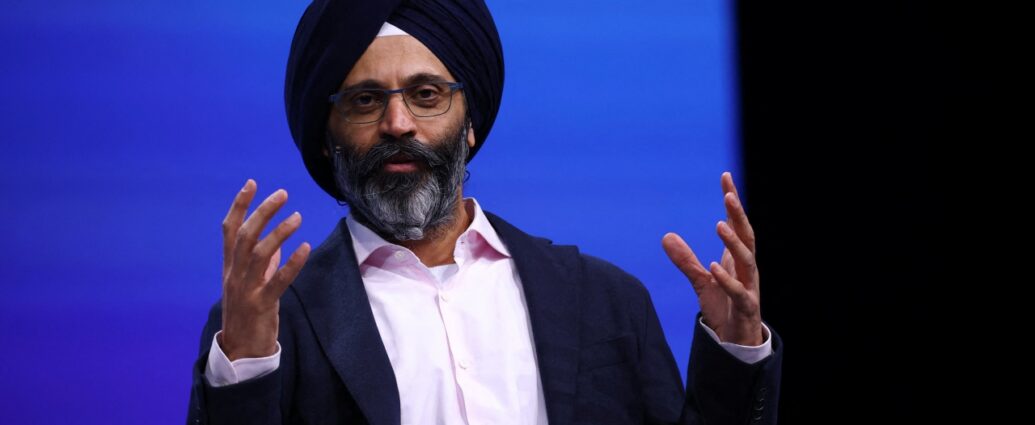

Meet Warren Buffett’s son Howard, a former sheriff, war photographer, and now, Berkshire’s new chairman
2026-09-18
When Warren Buffett stepped down as chairman of Berkshire Hathaway on Friday, the job passed to his 71-year-old son who has spent most of his life doing things that look nothing like his father’s.
Howard Graham Buffett farmed thousands of acres, carried a badge as an elected sheriff, photographed war zones and endangered species across more than 100 countries, and runs a foundation with over $1 billion committed to conflict-affected regions like Sudan and the Democratic Republic of Congo. He’s received the highest honor for foreign citizens from the governments of Mexico, Colombia and Rwanda, all for his foundation’s work in each country.
And now, he’s chairing a trillion-dollar conglomerate.
A sheriff and a farmer
Howard’s been a Berkshire director for 33 years, since 1993. According to his dad Warren’s retirement letter, that’s longer than the “apprenticeship” he himself served before becoming Berkshire’s CEO at 34.
But Howard’s own career has run almost entirely outside finance. He operates a 1,500-acre family farm in Pana, Illinois, plus foundation-run research farms spanning more than 1,500 acres in Arizona and over 9,200 acres in South Africa. He’s also a vocal advocate for no-till conservation agriculture.
He’s held elected office twice: as a Douglas County, Nebraska commissioner from 1989 to 1992, and, more unusually, as Sheriff of Macon County, Illinois, from September 2017 to November 2018, after five years working as an auxiliary deputy. And he still holds a position today: he still serves as the county’s undersheriff.
Separately, he’s built a body of published photography from conflict zones—including the front lines of the Ukraine war—and wildlife habitats across roughly 130 countries, authoring several books along the way. Most of the work was tied directly to his foundation’s focus on food security, conservation and humanitarian response in unstable regions.
His role at Berkshire
Greg Abel, who took over as CEO in January, will continue running Berkshire’s operations day to day. Howard’s role, as Warren Buffett described it in Friday’s letter, is different: “Greg runs the company; Howard will guard its culture and values—both worth more than anything on our balance sheet.”
He continued: “Think of Howard as a policy the shareholders own and hope never to claim against.”
That’s nothing new and instead, has been part of Berkshire’s succession planning for years. Howard isn’t expected to weigh in on capital allocation or acquisitions. Rather, Abel has already shown he’ll move fast, already deploying $10 billion into Alphabet and paying $6.8 billion to acquire homebuilder Taylor Morrison within his first year (for a total enterprise value of $8.5 billion).
Instead, Howard’s job is to serve as a check against any future leadership that might try to unwind what makes Berkshire unusual: its buy-and-hold investment stance and the autonomy it gives the businesses it owns.
Former Yahoo President Susan Decker will continue as lead independent director, serving with Howard as well as his father, who remains on the board.
Giving away the fortune
Howard is also one of three siblings—alongside Susie and Peter—responsible for distributing most of Warren Buffett’s remaining fortune, listed at $145 billion on the Bloomberg Billionaires Index. Their father has said he abandoned earlier plans for a single sweeping philanthropic strategy in favor of handing the decisions to his children’s own foundations, which now distribute roughly $500 million a year combined.
Howard has spoken about the limits of that kind of giving. In a January conversation with CNBC with his siblings, he pointed to countries like Congo and Sudan, where he said funding alone can’t fix poverty if the rule of law has broken down.
“There’s a lot of things you can fund that will go nowhere,” he said. “If you’re not addressing the real issue of rule of law then you just can’t have success.”
This story was originally featured on Fortune.com

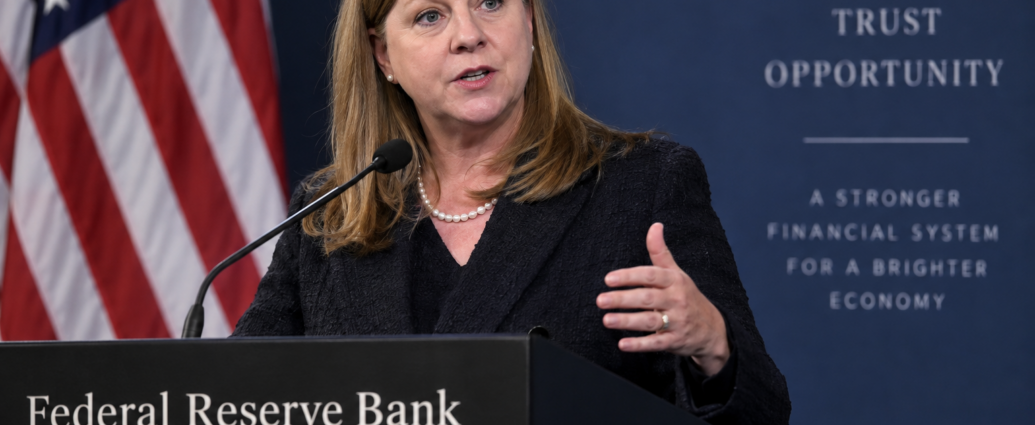
Fed’s Bowman Expects Finalized Stress Test Revisions Soon
2026-09-18
The Federal Reserve is moving closer to finalizing major changes to how it tests whether the country’s biggest banks can withstand a severe recession, with regulators aiming to make the annual process more transparent and less volatile for lenders.
Federal Reserve Vice Chair for Supervision Michelle Bowman said Friday that the central bank’s Board of Governors will consider final revisions to its stress-testing framework in the “coming weeks.”
The overhaul is intended to address longstanding criticism from the banking industry over the unpredictability and limited transparency of the tests.
Bowman, speaking in prepared remarks at an event in London, said finalizing the reforms would “close the book on an opaque and unnecessarily unpredictable framework.”
How the Fed’s Stress Tests Work
The Federal Reserve conducts annual stress tests to determine whether large banks have enough capital to absorb substantial losses while continuing to lend to households and businesses during a severe economic downturn.
Regulators essentially put banks through a hypothetical recession, projecting what could happen to their loans, revenue, losses and capital levels under extreme economic conditions.
The results have historically helped determine a bank’s stress capital buffer, or SCB — an additional amount of capital that a large bank may be required to maintain on top of minimum regulatory requirements.
Banks and industry groups have argued that those requirements can fluctuate substantially from year to year, making capital planning more difficult.
The Federal Reserve itself has acknowledged volatility in its stress-testing models. In 2025, the central bank proposed averaging two consecutive years of stress-test results when calculating the stress capital buffer rather than relying primarily on a single year’s outcome.
Under the proposal, the Fed would use the average of the maximum declines in a bank’s common equity tier 1 capital projected in its two most recent annual supervisory stress tests.
The Fed said the proposal was designed to reduce volatility and was not intended to materially change overall capital requirements.
More Transparency Into Fed Models
The overhaul goes beyond averaging results.
In October 2025, the Federal Reserve proposed broader changes designed to make its stress-testing models and hypothetical economic scenarios more transparent and subject to greater public scrutiny.
Those changes include publishing substantially more information about the models the Fed uses, including equations, variables, coefficients, assumptions and limitations.
The Fed also proposed allowing public comment on material changes to its stress-testing models and annually seeking feedback on the hypothetical scenarios used in the tests.
Bowman said Friday the reforms are intended to improve transparency and accountability while strengthening the reliability of the models used to calculate potential bank losses.
The reforms follow years of criticism from major banks and a 2024 legal challenge from banking industry groups over the Fed’s stress-testing framework.
Stress Tests Could Play Larger Supervisory Role
Bowman also outlined a broader role for stress testing that extends beyond simply determining capital requirements.
She said stress analysis can help regulators identify vulnerabilities at individual banks and direct supervisors toward areas requiring closer examination.
Banks already conduct their own internal stress tests, and Bowman said greater communication between regulators and bank officials could help both sides better understand risks.
“I believe there is tremendous value in comparing notes,” Bowman said.
She also discussed expanded use of “reverse stress testing,” which starts by identifying a severe failure or loss and then works backward to determine what circumstances could cause it.
The approach could help regulators identify risks that might affect not only an individual institution but also banks with similar balance sheets or exposures.
What It Could Mean for Lending
The amount of capital banks are required to maintain matters beyond Wall Street because capital requirements can influence how banks allocate money, manage risk and make lending decisions.
A more predictable stress capital buffer could make it easier for large banks to plan their capital needs from year to year.
However, that does not necessarily mean consumers will immediately see cheaper mortgages, credit cards or business loans. Lending decisions are also influenced by interest rates, credit risk, economic conditions, borrower demand and banks’ individual strategies.
The Federal Reserve says the fundamental purpose of stress testing remains ensuring that large banks have sufficient capital to absorb losses while continuing to provide credit during severe economic downturns.
32 Large Banks Tested in 2026
The Fed subjected 32 large banks to its 2026 stress test, including JPMorgan Chase, Bank of America, Wells Fargo and Goldman Sachs.
All 32 remained above their minimum common equity tier 1 capital requirements under the Fed’s hypothetical severe recession.
Collectively, the banks were projected to absorb nearly $708 billion in losses, while their aggregate common equity tier 1 capital ratio fell from 12.8% to a projected minimum of 11.2%.
The Federal Reserve has already decided that the 2026 stress-test results will not change banks’ current stress-related capital requirements. Existing requirements are being maintained until 2027, when new requirements can be calculated using loss-estimating models that have gone through the Fed’s expanded public-feedback process.
Bowman did not provide an exact date for a final vote on the broader stress-testing reforms, saying only that the Board would consider final revisions in the coming weeks.
The changes would mark one of the most significant revisions to the Federal Reserve’s stress-testing framework since the system became a central part of large-bank supervision following the 2008 financial crisis.
© JBizNews.com All Rights Reserved. Reproduction or distribution without written permission is prohibited.

Amazon is investing $230 million in higher pay, benefits, and college perks for more than 100,000 Whole Foods workers—bumping up hourly pay to $21
2026-09-18
Companies are looking to lure in talent with beer on tap and nap pods—but Amazon is spending big on worker pay.
The $2.73 trillion tech giant recently announced that it’s pouring $230 million into higher pay and expanded benefits for more than 100,000 U.S. Whole Foods employees. Starting September 28, hourly workers will receive a pay raise that puts the average store wage to more than $21 an hour.
Amazon, which acquired the upscale grocery chain in 2017, said that this is one of “the most significant investments” in its U.S. Whole Foods workers ever—and their benefits are getting a huge boost, including expanded health coverage and family-building benefits. New perks for workers will increase average total compensation to around $29 hourly.
“Every year, my leadership team and I visit Whole Foods Market stores across the country to hear directly from team members about what’s on their minds,” Jason Buechel, VP of Amazon Worldwide Grocery, said in the press release.
“Those conversations matter deeply to me, and I leave each visit with a list of ways we can make things better—from improving a process to making bigger investments in team members’ growth and happiness.”
Fortune reached out to Amazon for comment.
U.S. Whole Foods workers are getting college perks and Amazon Prime
Beyond cold hard cash, Amazon is revamping the perks of working at the grocery store giant. And with all the new investments, the total value of benefits available to full-time team members is rising more than 75%.
“They want a clearer path for their pay to grow, more comprehensive health coverage, and expanded benefits for part-time roles,” Buechel explained.
Starting January 1 2027, U.S. Whole Foods staff will have access to comprehensive health plan options starting at just $5 a week, with access to primary care and behavior health providers with just a $5 copay. Around 20,000 employees working 20 hours or more weekly will get dental, vision, and basic life insurance. Amazon also added that its own health plans “generally have lower deductibles” and out-of-pocket costs. In the benefit overhaul, it will introduce fertility and speciality care perks that many Whole Foods plans don’t currently have.
In addition to healthcare, Amazon is also expanding access to education benefits. Amazon’s Career Choice perk will roll out to Whole Foods workers next year, which prepays tuition for college, skills training, and certifications. It’s a program that’s been around since 2012, and more than 300,000 Amazon workers have already participated. Plus, every hourly worker will get access to an Amazon Prime membership valued at $139 annually.
Whole Foods is investing in career paths like fishmongering and butchery
Buechel said that employee feedback has driven benefit changes over the years—including creating apprenticeship programs back in 2023.
Since its launch, more than 2,150 team members have been trained in artisan skills like fishmongering, meat butchering, bakery decorating, and pizza making. Each quarter, the company welcomes up to 300 staffers to join its upskilling program, giving them a chance to swap working in the corporate head office or behind a till, for becoming a cheese mongerer. The shorter apprenticeships like pizza-making last 12 to 13 weeks, while more intensive training, like meat butchering, spans anywhere from six to 12 months.
Sonya Gafsi Oblisk, chief merchandising and marketing officer at Whole Foods, told Fortune last year that employees’ wages increased when they joined the program—unlocking not only specialized skills, but a stronger career pathway. Plus, it could be a way for workers to even AI-proof themselves; tech can’t taste, touch, or smell the quality of artisanal cheeses, but certified cheese professionals can.
“Many of our alumni go on to advance their careers within the company, using their apprenticeship as a springboard,” Oblisk said. “This is more than training—it’s a career accelerator.”
This story was originally featured on Fortune.com

A Home Depot exec is going viral on X for her ‘perfect’ resume. She started out as a cashier and has worked her way up to a $1 million salary
2026-09-18
In an era when all Gen Z wants to do is job hop, Ann-Marie Campbell is proof of just how far staying put can take you.
Home Depot’s senior executive vice president went viral on X & LinkedIn this week after a post featuring her career history was hailed as the “perfect LinkedIn profile.” The screenshot, shared by the Acquired podcast, shows Campbell’s 40-year rise from cashier to the C-suite—all at Home Depot.
But Campbell’s career at Home Depot began almost by accident. As a Jamaican immigrant living in South Florida, she was making just $3.35 an hour when she decided to apply at the home-improvement retailer to help pay for her college dreams. She was hired as a part-time cashier in 1985, making $4.15 an hour, and grew to love the job.
Over the next four decades, Campbell steadily climbed the ranks, becoming a store and district manager in the 1990s before moving into corporate roles in the 2000s. In 2016, she was named executive vice president for U.S. stores & international operations; and by November 2023, Campbell was promoted to senior executive vice president. Now, she brings home an annual salary just north of $1 million.
A frequent fixture on Fortune’s list of the Most Powerful Women, Campbell currently leads Home Depot’s day-to-day operations while CEO Ted Decker is out on medical leave over the “next few months.”
Campbell found a 40-year career by finding work she loved
Staying at one company for an entire career is something that is increasingly less common—with a 2025 survey finding Gen Z’s average job tenure during the first five years of their careers is just 1.1 years. But Campbell has said it ultimately came down to finding work she genuinely enjoyed.
“Jobs become careers when you do something you love,” she told students at Longwood University in 2014, adding that it is then important to use your strengths to create opportunities for yourself.
“When I say confidence is key, when I say put yourself in positions to take and grasp opportunity, I am a living proof of that.”
I think we found it. The perfect LinkedIn profile. @AMCTHD pic.twitter.com/eMhqVDvOYA
— Acquired Podcast (@AcquiredFM) September 15, 2026
Fortune reached out to Home Depot for further comment.
Climbing the corporate ladder means knowing when to ask for help
When Campbell got her first paycheck from Home Depot four decades ago, the chain had fewer than 50 stores and about 5,000 employees. Today, the company ranks No. 25 on the Fortune 500 and has more than 2,200 locations across North America and more than 470,000 on its payroll.
The baby boomer’s impressive rise took decades of hard work and determination. As Home Depot expanded and Campbell moved up the ranks, she learned that raw talent alone wouldn’t carry her career forward; she soon recognized the power of building relationships, seeking out opportunities, and asking for help when it’s needed.
That lesson became clear when Campbell was a district manager overseeing 13 Miami-area stores in the late 1990s. The region was going through major economic upheaval, and Campbell was navigating the challenges of the job while also raising two children under the age of 4. She considered quitting when her boss sat her down and offered to help—though, as Campbell later recalled, she hadn’t made it clear what she was dealing with at home and work.
“You have to ask people for help,” Campbell told Fortune in a 2016 profile. “I wasn’t good at that.”
The experience changed how Campbell thought about building a career. Success, she came to believe, isn’t something you have to navigate alone. And once you’ve had someone help you, there’s an obligation to do the same for others.
“We have to stretch our hand out and help someone,” she added to Black Enterprise in 2017, “pull someone up.”
It’s a philosophy Campbell has carried throughout her own career: take the opportunities in front of you, perform when you get them, and help make room for someone else to follow.
“Believe that you can. The dream is real. It can happen,” she said. “It will happen if you keep yourself focused on performing. The ticket to the game is performing.”
This story was originally featured on Fortune.com
Qatar signs agreement with UN to bring 1.3 million liters of fuel to Gaza
2026-09-18
Qatar signed an agreement with the United Nations to deliver about 1.3 million liters of fuel to the Gaza Strip, the Qatari Foreign Ministry announced Thursday.
According to the announcement, the fuel will be transferred as a grant on behalf of Doha and is intended to support humanitarian needs and the health system in Gaza.
The Foreign Ministry of Qatar said the grant is intended to enable the continuation of essential services and humanitarian operations. Qatar also aims to help entities operating on the ground provide services to Gazans.
Part of the fuel will be allocated to operate hospitals and medical centers, as well as other essential systems and services that depend on a regular energy supply.
According to Doha, the move continues Qatar’s aid program for the Gaza Strip. The statement said that Qatar had supplied Gaza with approximately 30 million liters of fuel from October 7, 2023, until the end of March 2026.

Details relating to the distribution of the fuel remain undisclosed
In February of last year, Qatar announced the supply of an additional 15 million liters of fuel to Gaza, which then increased the total volume in the area to 30 million liters.
Qatar stated that 2.1 million Palestinians, including children, women, the elderly, and the disabled, could benefit from health services and other humanitarian assistance that require fuel.
However, the statement did not specify when or how the fuel would be transported to Gaza or which UN agency would be responsible for distributing it.
EU Operation Aspides raised alert level of its ships after Houthi attacks, Kallas says
2026-09-18
The European Union’s foreign policy chief, Kaja Kallas, said on Friday that the EU naval mission in the Red Sea, Operation Aspides, has raised the alert level for its vessels after the situation in the area worsened.
“Houthi attacks on Saudi Arabia are unacceptable and sabotage the global economy,” she said in a post on X.
She added that she had spoken with Saudi Foreign Minister Prince Faisal bin Farhan Al-Saud about diplomatic efforts to end the fighting in Yemen and restore freedom of navigation in the Strait of Hormuz.
Houthi attacks on Saudi Arabia are unacceptable and sabotage the global economy.
I spoke with @FaisalbinFarhan about diplomatic efforts to end the fighting in Yemen and restore freedom of navigation in the Strait of Hormuz. Maritime passage must be unimpeded and toll-free.…
— Kaja Kallas (@kajakallas) September 18, 2026
The Houthis have expanded their foothold around the Red Sea in recent weeks, capturing several strategically important locations near the Bab al-Mandab Strait, including Perim Island, which sits at the center of the narrow waterway.
The Iran-backed group has also taken control of the Greater Hanish and Lesser Hanish islands, giving it additional positions from which to observe activity around one of the world’s most vital maritime routes.

Houthi positions increase risks for vessels crossing Bab al-Mandab
The Bab al-Mandab remains open to commercial shipping, and the Houthis do not currently have the ability to completely shut down traffic through the strait. Their growing presence in the area, however, gives them better surveillance capabilities and more opportunities to threaten specific vessels.
The strait, which separates the Red Sea from the Gulf of Aden, is only around 18 miles wide at its narrowest point. It serves as a key connection between the Indian Ocean and the Suez Canal, with energy shipments equivalent to roughly 7% of global oil consumption typically passing through the route.
By controlling areas including Mocha, Dhubab, Perim Island, and the Hanish islands, the Houthis have increased their ability to track maritime movement and create uncertainty for commercial operators. Shipping firms and insurers factor these risks into their decisions, sometimes raising costs or avoiding routes altogether when they believe a vessel could become a target.
Houthis use growing foothold to pressure Saudi Arabia
The Houthis have also sought to use their strengthened position to pressure Saudi Arabia, including through attacks targeting the kingdom’s infrastructure and renewed threats against Saudi territory, including remarks involving Mecca.
The situation illustrates the broader impact of the Houthi threat, even without the group fully controlling the maritime passage. The risk of attack alone was enough to influence decisions by shipping companies, insurers, financial institutions, and logistics operators.
Anna Barsky contributed to this report.
Likud files petition demanding Eisenkot’s Yashar remove anti-Netanyahu campaign ads
2026-09-18
Likud filed a petition against Gadi Eisenkot and his Yashar party, demanding the removal of three election campaign videos about Prime Minister Benjamin Netanyahu’s conduct in the period leading up to the October 7 massacre.
The petition was submitted to Supreme Court Justice Noam Sohlberg, chairman of Israel’s Central Elections Committee.
Likud claims the videos present journalistic sources and Netanyahu’s remarks in a partial and misleading manner, amounting to “unfair interference” with the party’s election campaign.
Attorneys Ilan Bombach and Inbal Amit filed the petition on Likud’s behalf. The party is also seeking an interim order requiring the videos to be removed while the case is under consideration.
Likud’s allegations focus largely on how the videos edited and presented the sources they relied on.

According to the petition, the three videos were posted on Eisenkot’s Facebook, Instagram, X/Twitter, and TikTok accounts. Each opens with an image of Netanyahu and the question, “Netanyahu, tell us, do you remember this?” The Yashar party’s logo appears at the end against a background featuring the color associated with its campaign.
Likud claims clips taken out of context
Likud cites the distribution of the videos across four social media platforms as one of the factors demonstrating what it describes as its campaign nature.
The first video displays a headline stating, “Two months before the massacre: Shin Bet (Israel Security Agency) chief gave Netanyahu ‘a warning of war,’” alongside a reference to a report published by Ynet News.
Likud argues that the words “two months before the massacre” do not appear in the original source and that the reference to “a warning of war” appeared there in a different context.
The video is based on a column that stated: “After all, if Ronen Bar truly believed what he told Netanyahu, ‘I am giving you a warning of war today.’”
The petition claims the video reworded the statement, while the website’s name and publication date appeared alongside it. Likud argues that this could give viewers the impression that the wording shown in the video appeared in the original article.
The second video displays the text, “Netanyahu two weeks before the massacre: The goal is a quiet holiday period,” alongside a reference to a report by N12 News.
Likud claims this wording also does not appear in the original report and that the statement was not presented there as a direct quote from Netanyahu.
The petition also raises questions about the timeline. Likud claims the original source refers to discussions held in September 2023 that do not correspond with the framing of “two weeks before the massacre.” According to the party, the video includes wording that did not appear in the report, alongside its identifying details.
The third video uses a clip from a 2023 Netanyahu interview on the Israeli television program “The Patriots.” Netanyahu was asked about a Military Intelligence assessment that the threat of war was increasing and responded: “I think this is being exaggerated.” The excerpt in the video ends there.
ער??? pic.twitter.com/RUcAI2BwT0
— Gadi Eisenkot – גדי איזנקוט (@gadi_eisenkot) September 14, 2026
The petition quotes part of Netanyahu’s later response, which the video omitted. Netanyahu said Israel “always prepares for this possibility” and was prepared “to deal with it from all directions.”
“I think they understand that it is not a good idea to start a war with the State of Israel,” he later added.
Likud argues that ending the clip immediately after the words “I think this is being exaggerated” leaves viewers with a partial response that excludes Netanyahu’s remarks immediately afterward.
Based on these three examples, Likud claims the external sources were edited in a way that changed how their content was presented to viewers. The petition argues that the wording created for the videos appears to have been taken directly from the original sources, creating what Likud describes as an “alternative reality.”
Likud’s legal argument centers on whether the videos accurately presented their sources. The petition states that “truth in advertising is not the standard” in this case.
According to the party, altered wording presented as though it appeared in a news report, or the editing of a source in a way that changes the meaning of the material, could be considered “unfair interference” with a rival party’s campaign under Section 13 of Israel’s Elections Law governing campaign methods.
Likud added that reasonable voters cannot be expected to locate the original reports and interviews and compare them with the videos. The party argues that displaying the name of the news outlet, the publication date, and the original footage gives the wording used in the videos a factual and credible appearance.
Sohlberg must determine whether the use of external sources in this case exceeds the permissible limits of editing in an election campaign. At this stage, the claims remain Likud’s allegations, and no ruling has been issued.
Likud asks for immediate removal of videos
Likud is asking Sohlberg to order the removal of the videos while the petition is being considered. The party based its request on the nature of social media distribution, arguing that videos can accumulate views, be widely shared, and continue circulating online.
It maintains that removing the videos later would not reverse the effects of their distribution. The petition notes that if the case ends with its rejection, Eisenkot and his party would still be able to republish the videos.
Before filing the petition, Likud contacted Eisenkot and demanded that he remove the videos by 10 a.m. on September 17. Eisenkot’s attorney responded at 9:23 that morning: “Confirming receipt. We will respond, but not by 10 a.m.”
Likud claimed it had received no substantive response by the time it filed the petition and that the videos remained online.
The petition also criticizes the response to Likud’s earlier demand. Likud described the reply, which was sent shortly before its deadline, as “unacceptable” and argued that it carried “an unpleasant scent of an attempt to neutralize the risk that an interim order would be issued.”
The party asked Sohlberg to consider ordering the respondents to pay its legal expenses because of how they handled the request, regardless of the case’s final outcome.
The central question is whether the editing and framing of the three videos amount to “unfair interference” with Likud’s election campaign under the Elections Law. The ruling could also affect how news reports, quotations, and interviews may be used in Israeli election campaigns.
Saudi Aramco suspends European crude deliveries after East-West pipeline attack – report
2026-09-18
Saudi Aramco has told at least two European oil refining customers they will receive no Saudi crude shipments next month after an attack on the kingdom’s key East-West pipeline, Bloomberg reported Friday.
The customers typically receive Saudi crude through long-term supply agreements, which provide regular monthly deliveries. People familiar with the matter told Bloomberg that those allocations will not be provided next month.
Saudi Aramco did not immediately respond to a request for comment.
Saudi Arabia shut down its East-West pipeline last week after drones targeted the facility. The pipeline is expected to resume partial operations within days and return to full capacity within six weeks, according to a person familiar with the situation who spoke on Wednesday.
While oil and security sources previously said two pumping stations were damaged in the attack, a Reuters analysis of satellite imagery identified damage at three stations, sources confirmed in a Reuters report on Thursday.

European refineries that purchase Saudi crude typically receive shipments through Egypt’s Mediterranean port of Sidi Kerir, which is linked to the Red Sea by pipeline infrastructure.
Aramco customers seek alternative oil sources
The disruption has prompted some Aramco customers to seek alternative sources of supply. Poland’s Orlen SA has issued more than 10 tenders since Friday as it looks to secure replacement crude shipments.
European countries belonging to the OECD imported 577,000 barrels per day of Saudi crude in June, according to the International Energy Agency’s monthly Oil Market Report.
The pipeline has provided Saudi Arabia with a vital alternative to the Strait of Hormuz, reducing reliance on a narrow maritime chokepoint through which a significant share of global energy supplies passes.
Any further decline in Saudi crude exports could add pressure to an already strained global energy market, potentially driving higher fuel prices, increasing inflation concerns, and contributing to greater volatility in financial markets.
A modern-day encounter with Jonah’s ‘leviathan’
2026-09-18
A crucial part of the Book of Jonah, which we read during the afternoon service on Yom Kippur, is the big fish that swallowed the prophet.
I think I can understand something of what Jonah felt when that creature approached him, because I once found myself in a somewhat similar situation in the Philippines.
I was so close to a whale that I could have reached out and touched it. Even now I find it hard to believe. I have always been wary of large animals, more than my wife is frightened of cockroaches.
As a child, I read Herman Melville’s masterpiece Moby-Dick, and his descriptions planted a fear of whales deep inside me. From then on, a whale belonged to books, distant oceans, and nightmares. The closest a person like me usually comes to a whale is when, during Sukkot, we add to Birkat Hamazon the verse: “May the Merciful One deem us worthy to dwell beneath the shelter of Leviathan’s hide.”
Years ago, I took my children to SeaWorld in Orlando, where we watched a performance by Shamu, a trained killer whale confined to an enormous pool. He was immense, but he was behind glass, inside a world constructed for him and for the people watching.

So when I was invited to swim and snorkel with whales in the Philippines, I felt like someone accustomed to seeing lions behind bars, suddenly invited to walk through an open safari among free-roaming lions and tigers.
We arrived in Donsol late at night. The next morning I stepped out of my room and found myself on the shore of the ocean. The air was hot and wet. Salt hung in the air, mingling with the heavy, green smell of tropical vegetation. The sea was almost perfectly still, painted by the first light in shades of blue and gray. A few small boats rested offshore. Somewhere deep in the jungle behind us came the calls of birds, and the distant, muffled cries of monkeys.
Everything was too quiet. It was the kind of quiet that makes you feel something is about to happen. There, in that strange and beautiful morning, I prayed Shacharit alone, and studied my Daf Yomi.
‘Dive! Go down!’: A dark shape, a movement, a spout of water
Later, my companions woke, and we walked down to the pier. I could still smell the sea and hear the small waves tapping against the wooden pilings. None of us yet knew what the creature we were looking for would look like.
We climbed aboard a banca, a long, narrow Filipino boat fitted with bamboo outriggers for stability. Four passengers and three crew members occupied each boat. High on the mast, the spotter scanned the open water. He squinted into the glare, looking for a dark shape, a movement, a spout of water.
When he spotted one, the guide told us to jump.
We slipped into the water wearing the snorkel masks and plastic fins they had provided. We put our faces into the water and saw nothing. The water was extraordinarily clear. For the first two meters, I could see a long way, but the deeper we went, the blue grew darker, then almost black. There was no seabed beneath us. Nothing to orient myself by. Only water. A great deal of water.
Then the guide shouted: “Dive! Go down!”
I dipped less than a meter beneath the surface of the water. And then, from my right, something enormous appeared. A creature the size of a bus.
For a few seconds, my mind simply refused to understand what my eyes were seeing. It did not burst from a storm. No whirlpool, no sudden explosion of water, no warning. It simply emerged from the dark blue, immense and utterly silent.
Its mouth was wide open. Not like the mouth of a fish I knew, but like a vast black opening in the water, something cavernous and bottomless, moving slowly toward us. Its skin was black, scattered with pale markings as large as dinner plates.
I felt the fear before I could even name it. My body stopped responding. I froze. I could not kick. I could not turn. For one terrible moment, I could not even remember to breathe.
The creature kept coming. Slowly. Silently. Something deeply frightening about that silence. It was not attacking. It did not need to. It moved with the absolute confidence of an animal that feared nothing in its world.
And I suddenly understood something that made the fear worse: I was in its world.
It passed directly beneath me, perhaps a meter away. I could see its immense body sliding through the water, so close that every instinct in me screamed to get away. But there was nowhere to go. No ground beneath my feet. No wall. No railing. No boat to climb onto. Nothing. Just blue water between me and the surface, and that enormous black body moving underneath me.
I wanted to swim away. I couldn’t. I wanted to shout. I couldn’t. I was completely, helplessly still.
Only after I climbed back into the boat did I realize that my heart was pounding as though I had just sprinted a kilometer.
And then, with a strange excitement, I thought of Jonah. For the first time in my life, I realized that I had seen with my own eyes something like what he might have seen before the great fish swallowed him. The mouth of our fish was large enough, I thought, to accommodate three people.
There were two differences. It did not swallow me. And the waters of Donsol Bay are far clearer than those of the Mediterranean near Jaffa.
My biblical thoughts were interrupted by the guide shouting that we should prepare for another dive. Another fish had been spotted.
We jumped.
Again came that impossible vision: an enormous head approaching through the water, a black body stippled with white, moving beside us, and my heart beginning to beat faster than I would have liked.
As I watched the great head pass beneath me, I suddenly saw its dorsal fin approaching me directly from the left.
This time fear was not a thought. It was a physical reaction. I swam forward as fast as I could. The fin passed just behind my legs. Water flooded my mask. It entered my nose. I scrambled upward and broke the surface, breathing hard.
‘Like a kitchen grater with large teeth rubbing against the skin’
Later we learned that one of our group had not noticed the fin approaching him. It brushed against his abdomen. Had he been half a meter deeper, that enormous fin might have struck and dragged him.
Frightening…
He described the contact as “Like a kitchen grater with large teeth rubbing against the skin.”
The experience of swimming with the whales is called butanding. It is a whale shark, the largest fish in the world. Whale sharks come to Donsol Bay every year between March and July.
Later we saw two more. One rested two or three meters below us, as small as a family SUV. When we approached, it began slowly to move away. This time I was no longer afraid. Something inside me had begun to adjust to the sheer scale of the animal.
I swam above it for almost a minute without touching it. The guide had warned us to “keep your hands to yourselves” (shemirat negi’a), as though he was a mashgiach (supervisor) at a yeshiva.
The whale surged ahead of me, until its enormous body had completely passed beneath me. Then the fish slowed. It seemed almost as if it were playing with me, allowing me to close the distance. I continued swimming above it and diving beside it, and for about a hundred meters we moved together.
I remember the sensation clearly: I was a small man wearing fins and a mask, and beside me was a creature so enormous that it could have crushed me without the slightest intention of doing so. And yet, for those moments, I had the strange feeling that it was comfortable with me too.
Fear gave way to wonder. The experience was overwhelming and unforgettable. In some strange physical sense, I had fulfilled the verse: “There is that leviathan, whom thou hast made to play therein,” from Barchi Nafshi (Psalm 104:26).
Since then, every Yom Kippur, when we listen to the reading of the Book of Jonah, I feel different from the way I felt before that extraordinary encounter with the whale shark, and different from what the congregation beside me is feeling and thinking.
And every Rosh Hodesh, and every holiday, when we recite the Barchi Nafshi, I have a different kavanah, a different intention, than I once did. I now know what a “leviathan” looks like. I know what it feels like when one passes beneath you in deep, silent water. And I know that a verse I have read dozens of times can one day step out of the prayer book, step out of the Bible, and swim directly beneath you.
Yom Kippur will never be quite the same again.
The author is the creator of the JewishTraveler blog.
President Trump, stand with Palestinian democracy – opinion
2026-09-18
The United States has the sovereign right to deny entry to particular individuals on legitimate security or legal grounds, whether they are Palestinian, Israeli, or of any other nationality. Yet a broad restriction directed at an entire people would be neither wise nor constructive.
Such a policy would silence precisely the Palestinian voices America should want to hear: those who reject violence, seek peaceful engagement, support political reform, and believe that ballots – not bullets – must determine the future of the Palestinian people.
Regarding PA President Mahmoud Abbas specifically, I understand that denying him a visa may be intended to exert pressure on the Palestinian leadership to undertake long-overdue reforms. Yet pressure is effective only when it is paired with a clear, constructive policy that supports democratic change.
Today, the most meaningful opportunity for Palestinian reform is already before us.
Abbas has called legislative elections for November 28 – the first such elections in two decades. Several powerful figures within the Palestinian political establishment are now seeking to postpone or cancel them. Some are reportedly attempting to enlist the US or influential regional countries, including Saudi Arabia, as ones asking to close the democratic door once again.

Washington should not allow its name to be used for this purpose.
Abbas only senior Palestinian leader committed to November 28 election date
Abbas currently stands almost alone among senior Palestinian leaders in keeping the election date. On this issue, he deserves international support. A clear public statement from US President Donald Trump endorsing free, inclusive, and credible Palestinian elections on its determined date, November 28, could be decisive. It could prevent those who fear change from claiming that America demands cancellation or that regional circumstances require it.
If Washington genuinely wants Palestinian reform, it must do more than punish the failures of the existing leadership. It should empower the Palestinian people to choose a new one.
We have already seen the consequences of closing this door.
Palestinian elections scheduled for 2021 were postponed indefinitely. Their cancellation did not create the catastrophe of October 7, 2023, and it would be irresponsible to draw such a simple line of causation. But it deepened the political vacuum, weakened moderate voices, destroyed public confidence, and reinforced Hamas’s argument that change could never be achieved through democratic or peaceful means.
When ballot boxes are closed, extremists offer other boxes – filled with weapons, funerals, and false promises.
We must not repeat that mistake.
A new Palestinian generation is now searching for a different path. Our political movement, Masar Jadid – New Path – was created to answer that demand. In approximately one month, more than 1,200 Palestinians from Jerusalem, Gaza, the West Bank, and the diaspora joined our movement. Most are young. Many are women, students, professionals, academics, entrepreneurs, and people entering political life for the first time.
They are joining because New Path offers ideas rarely stated so clearly in Palestinian politics: democracy, transparency, peaceful transfer of power, an independent judiciary, and one legitimate authority governed by one law and possessing one weapon.
We reject both corruption and extremism. We believe Palestinian interests are better served by dialogue and persuasion than by violence. We support a demilitarized Palestinian state, regional economic integration, and a negotiated two-state solution that provides Palestinians with freedom and dignity while ensuring security for Israelis.
These ideas are attracting support because hundreds of thousands of Palestinians have lost confidence in everything around them but have not yet lost their desire for a better future. They no longer trust the traditional factions. They are tired of being asked to choose between failed government and endless resistance, between stagnation and destruction. They want a third choice: democratic change.
Trump’s recently announced peace initiative has awakened genuine hope that the region may finally move from managing conflict to building a new future. Yet no regional peace architecture can endure if Palestinians remain politically excluded and denied the right to renew their own leadership.
Reconstruction, investment, demilitarization, and regional cooperation all require legitimate Palestinian institutions. Foreign governments cannot impose legitimacy, and aging political elites cannot inherit it indefinitely. It must come from the people.
Trump understands the political power of a mandate from the voters. He also understands that peace requires breaking with failed formulas and confronting entrenched interests. Supporting Palestinian elections would not be a concession to the PA. It would be an investment in a new Palestinian leadership capable of becoming a credible partner for peace.
Trump should therefore state clearly that the US supports holding the November 28 elections on time; that it expects all Palestinian institutions and regional partners to facilitate them; that Jerusalemites and Gazans must be included; and that Washington will judge emerging Palestinian forces by their commitment to democracy, nonviolence, reform, and peace.
Such a declaration could save the election. It could also save lives.
Upcoming Palestinian elections must not be canceled
Canceling elections would tell another generation of Palestinians that peaceful political change is impossible. That message would open the gates of despair and accelerate the next regional earthquake. Supporting elections would send the opposite message: that moderation has allies, peaceful change is possible, and Palestinian society will not remain permanently trapped between authoritarian stagnation and armed extremism.
I continue to believe that Trump can achieve a historic peace in the Middle East – and that the world may one day remember him for doing so. Perhaps such an achievement would even earn the recognition of the Nobel Peace Prize.
But the most meaningful prize would be a generation of Palestinian and Israeli children who grow up knowing politics instead of war, ballots instead of bullets, and hope instead of fear.
Mr. President, do not allow the door to Palestinian democracy to be closed again. Your public support can keep it open – and help change the future of the Middle East.
Samer Sinijlawi is a Palestinian political figure from Jerusalem and the founder and president of Masar Jadid (New Path), a Palestinian political movement advocating democracy, nonviolence, reform, and regional peace.
From Likud to Yisrael Beytenu: The case for a change on the Right – opinion
2026-09-18
I joined Likud on the day I received my teudat zehut (ID card). I had not signed a lease yet. I had no bank account, no Hebrew worth speaking, and a mattress on a yeshiva’s floor. But I had the card, and I had the membership form, and I filled out the form first.
If you made aliyah, you understand why. Nobody moves to Israel for the salary. You come because you believe something, and once you are here, you want your belief to have a vote. I came out of Zionism.
But the reason I walked into public life, and the reason I chose that party and not another, had four parts: a free economy that brings prices down instead of managing them; sovereignty in the Land of Israel; victory over our enemies – real victory, not a ceasefire with a countdown; and an army in which every mother’s son serves, because a Jewish state that excuses one community from its own defense has stopped being one people.
Those four things are what I went into politics for, and they are what kept me there through wars, funerals, and the price of cottage cheese. I gave up my seat in the Knesset over the fourth one.
And I have reached a conclusion that took me a long time and cost me most of my political friendships: the party I joined that morning still says all four things, and works, actively and deliberately, to make sure none of them happen.

If you believe in those values, the address has moved to Yisrael Beytenu. Let me show you why, one value at a time, with the record and not with adjectives.
I’ll start with victory, because it is the one that keeps me up at night.
In December 2016, Defense Minister Avigdor Liberman sent a memo to Prime Minister Benjamin Netanyahu, the chief of staff, and the head of military intelligence.
‘severe mistake with far-reaching consequences’
It said that Hamas “plans to move the next conflict into Israel’s territory, with significant, well-trained forces, such as the Nukhba force, into Israeli territory, while conquering an Israeli village, and perhaps several, in the Gaza envelope and taking hostages.”
It said that failing to act was “a severe mistake with far-reaching consequences,” possibly worse than “the results of the Yom Kippur War.”
Read that again. The Nukhba. The villages. The hostages. Seven years before October 7.
He was told the memo was not serious.
Two years later, in November 2018, after 500 rockets were fired on the south, the same cabinet accepted a ceasefire and let Qatari cash cross into Gaza in suitcases. Liberman called it “purely $15 million of terror funding.” He said the government was “feeding a monster” and “buying quiet for a heavy price with no long-term plan.”
Then he did something no one else in that room did: he resigned. He called the deal “a capitulation to terror,” and he walked out of the Defense Ministry rather than put his name on it.
One party wrote the warning and paid for it with a ministry. The other party received the warning, called it unserious, and paid for it with Be’eri and Nir Oz. That is the record. Everything else is noise.
Soverignty. For 15 years, the promise was made at every campaign stop in Efrat and every parlor meeting in Ra’anana. And for 15 years, one man stood between the promise and the vote. Netanyahu blocked the bills his own MKs brought. He took sovereignty off the table in 2020 and called it statesmanship.
Liberman lives in Nokdim. His party left Ariel Sharon’s government over the disengagement when most of the right found reasons to stay. On the land, one party has a slogan and one party has a home address.
The economy. As finance minister, Liberman opened the country to imports, broke the agricultural lobby that had beaten every minister before him, and left a smaller deficit than he found. The coalition that followed paid for its survival with billions in coalition funds for institutions that do not work and do not serve, taken from the families in Modi’in and Beit Shemesh who do both.
That same coalition caved to the lobbies and canceled the reforms that were supposed to lower your prices. Why? Because those lobbies had joined Likud in large numbers, and the party answered to its members before it answered to anyone else. Ze’ev Jabotinsky wrote about the dignity of the free citizen. He did not write about patronage with a Likud stamp.
And lastly, service. In 2019, Liberman refused to enter a government without the draft law passing as written. The country went to a second election over it, and he was mocked for stubbornness. Inside the Likud, I fought the exemption law, lost my seats in committees for it, and finally voted against the exemption laws rather than toe the party line.
On this one issue, there is exactly one party on the Right with a written red line and a record of losing power to keep it.
Some of you are thinking: the Russian party. Yes. We are led by a Russian-speaking oleh who made the most Zionist decision a Jew can make, the same one you made. Half of our top 10 are olim, including me, from Canada.
But we are not only a party for olim. We are a party of all Israelis: a bereaved father from Beit She’an at number two, a Druze veteran, the mayor of Metula, a third of the list religious-Zionist. Secular, religious, and traditional at one table, and everyone at that table serves.
I did not change. My values did not change. I went looking for the place where they are still fought for, and where people pay for them when it costs. I found it.
We did not make aliyah to watch the right say our words and bury our values. On October 27, vote for the values. They have an address.
The writer is a former member of Knesset and number 10 on the Yisrael Beytenu list.
Haifa International Film Festival brings celebrated cinema and classics to the Carmel
2026-09-18
The 42nd Haifa International Film Festival will bring the most celebrated movies from the world’s major festivals to Haifa alongside new Israeli films, documentaries, genre movies, and classics. Originally scheduled for September 26 to October 3 during Sukkot, the organizers added an extra day of screenings on September 25 due to demand.
The festival will open with the Israeli premiere of Avi Nesher’s Our Loves, fresh from its warmly received world premiere at the Toronto International Film Festival earlier this month. Nesher will also receive the Haifa festival’s Lifetime Achievement Award for cinematic excellence and his contribution to Israeli culture at the opening-night ceremony, hosted by Lior Ashkenazi.
Our Loves’ narrative begins on October 6, 2023, focusing on several characters who think they are having the worst day of their lives, and blends drama, romance, and comedy as they cope with a situation worse than their worst nightmares.
Artistic director Yaron Shamir has made sure that the international program is extremely strong, featuring many of the most talked-about movies of the year. Danny Boyle, the director of Trainspotting, 28 Days Later, and Slumdog Millionaire, has made a movie set in the cutthroat world of UK tabloid journalism with Ink. The film, which opened the Venice Film Festival, is set in 1969 and dramatizes the transformation of Britain’s Sun newspaper under Rupert Murdoch, played by Guy Pearce.
Olivier Assayas’s The Wizard of the Kremlin spotlights a different kind of political history, starring Paul Dano as Vadim Baranov, an artist and television producer who becomes a political strategist for a rising Vladimir Putin, played by Jude Law. Based on Giuliano da Empoli’s novel, it follows the creation of the political mythology surrounding the Russian leader.

Pierre Salvadori’s ‘The Electric Kiss’ gives viewers an escape from politics
For viewers who would rather escape politics altogether, Pierre Salvadori’s The Electric Kiss, which opened Cannes this year, offers a Parisian romantic comedy set in 1928 about a grieving painter, a fake psychic, and a series of fraudulent séances.
If you have enjoyed eating Hershey bars, you can now learn the story of the founder of the iconic chocolate company in Hershey: Mark Waters’s biopic about Milton Hershey. Finn Wittrock plays the famous chocolatier, with Alexandra Daddario (who may be the next on-screen Wonder Woman) as his wife.
The Panorama section includes All About Corinne, Marc Fitoussi’s comedy starring Isabelle Huppert as Corinne, an eternal movie extra who dreams of finally getting a substantial role. When she befriends a famous actress, played by Sandrine Kiberlain, she sees a possible route into the inner circle of French cinema. The supporting cast includes Diane Kruger, Anne Marivin, and Emmanuelle Bercot.

Romanian director Tudor Giurgiu’s 3 Days in September tells the story of a heroine whose wedding is wrecked when her fiancé’s mistress appears, sending her fleeing aboard a train and into an all-night journey through an off-season seaside resort. It features a single take lasting more than an hour and shifts between comedy and drama.
Everyone who loves the Big Apple will want to see The Only Living Pickpocket in New York, directed by Noah Segan and starring John Turturro as Harry, an old-school thief trying to survive in the digital age. Steve Buscemi, Giancarlo Esposito, and Tatiana Maslany co-star in what is both a crime story and a lament for a city that is changing faster than many of its residents can handle.
Another very different American story is told in The Weight, Padraic McKinley’s Depression-era thriller. Ethan Hawke plays a prisoner offered a chance at freedom by a warden, played by Russell Crowe, if he will help smuggle stolen gold from a remote mine.
One of the most important titles in the Carmel International Competition this year is Andrey Zvyagintsev’s Minotaur. The director of Leviathan and Loveless focuses on a successful Russian businessman whose orderly existence begins collapsing in 2022 amid professional, personal, and political pressures. The film won the Grand Prix at Cannes, and additional Haifa screenings have already been added to meet demand.
Also in the competition is François Ozon’s The Stranger, a new adaptation of Albert Camus’s classic novel. Set in French-colonial Algeria in 1938 and starring Benjamin Voisin as Meursault, the film returns to Camus’s story of alienation, murder, and the absurd while giving particular visual weight to the North African setting that forms the novel’s background.
A highlight of the festival will be the Israeli Cinema section, which features Marco Carmel’s much-anticipated Double Panther, based on the true story of Yaakov Elbaz, a criminal recruited by the police to infiltrate the Israeli Black Panthers, a political group that fought for the rights of Mizrahi Jews.
The assignment becomes complicated when Elbaz begins to sympathize with the people he is supposed to betray. Based on police files and archival material that remained confidential for decades, it turns a chapter of Israeli social history into an undercover crime drama, and stars Yaakov Zada-Daniel in the lead role.
Many Waters, written and directed by Imri Matalon, features Lihi Kornowski as a young woman who is paralyzed after an accident in the sea and meets Yosef, played by Alaa Daka, an aide at the rehabilitation center where she receives treatment. An intimate relationship develops between them, but outside pressures threaten it.
The leading director, Nitzan Gilady, passed away earlier this year; his final film, Thou Shalt Love, will be shown. It stars Yael Elkana as Naomi, a 28-year-old haredi (ultra-Orthodox) yoga teacher whose marriage is thrown into crisis when she discovers why her husband failed to appear at an important meeting with their rabbi. Michael Moshonov and Lena Fraifeld co-star.
Tomer Heymann’s ‘I Want to Tell My Story’ is a fresh approach to Holocaust history
Tomer Heymann is one of Israel’s most celebrated documentary filmmakers, and his latest film, I Want to Tell My Story, has an unusual approach to Holocaust history. As Shimon Rothschild approaches his 100th birthday, he reconstructs his own life on a studio set, directing actors portraying relatives who were murdered and restaging episodes including Auschwitz, medical experiments at Sachsenhausen, a death march, and his life after the war. Rather than simply recounting his memories, Rothschild becomes, in effect, the director, which floods him with conflicting emotions.
Uri Levi’s documentary Peace 2030 follows Maoz Inon, whose parents were killed on October 7, and Aziz Abu-Sarah, a Palestinian from Jerusalem who has suffered his own family loss. Together, they embark on an ambitious campaign the achieve Israeli-Palestinian peace by 2030.
Among the Haifa Docs selections is Boaz Dvir’s To Kill a Nazi, an investigation into the extraordinary story of Michel Cojot, a French Jew who sought the truth about his father’s murder at Auschwitz. His pursuit eventually led him to Klaus Barbie in Bolivia and unexpectedly connected him to the events surrounding the Entebbe rescue operation. Jason Alexander of Seinfeld narrates.
Music lovers will want to see Broken English, Iain Forsyth and Jane Pollard’s documentary about iconic singer Marianne Faithfull. Made with Faithfull’s participation, it looks back at a six-decade career defined as much by survival and reinvention as by music.
A special Japanese cinema program, From Mishima to Oshima, includes Paul Schrader’s typically unconventional 1985 movie, Mishima: A Life in Four Chapters. Schrader weaves the final day in writer Yukio Mishima’s life with flashbacks and highly stylized dramatizations of his fiction, accompanied by a score by Philip Glass.
The program also includes Kon Ichikawa’s 1958 Conflagration, adapted from Mishima’s novel The Temple of the Golden Pavilion. Its story of an alienated young man whose obsession with the purity and beauty of a Kyoto temple takes a destructive turn remains one of the landmarks of postwar Japanese cinema and literature.
Haifa’s Wildest Nights section offers Hille Norden’s German film Easy Girl, about Nore, an uninhibited young woman who befriends a medical student and gradually reveals her dark past.
Haifa Classics is always a wonderful section, and this year it provides a welcome opportunity to see Barbra Streisand as she was meant to be seen: larger than life, on a movie screen.
The Streisand tribute will include William Wyler’s Funny Girl, the 1968 film that gave Streisand her first movie role, and an Oscar, for her portrayal of vaudeville and Broadway star Fanny Brice, a movie that holds up remarkably well, and features Omar Sharif as her husband, Jewish gambler Nick Arnstein; Gene Kelly’s lavish 1969 musical Hello, Dolly!; and Frank Pierson’s 1976 version of A Star Is Born, in which Streisand stars opposite Kris Kristofferson, with a screenplay by the director and acclaimed authors Joan Didion and John Gregory Dunne.
It isn’t the best version of this story, but it will be interesting to see how it holds up after 50 years. Yentl, the classic gender-bending story of shtetl life based on an Isaac Bashevis Singer story, will also be shown.
The Israeli premieres of major new films by Boyle, Assayas, Ozon, Zvyagintsev, and Salvadori, along with a strong Israeli lineup, ambitious documentaries, Japanese masterpieces, and Streisand singing her heart out, make this year’s Haifa International Film Festival an event every cinephile will want to attend.
For more information, go to the website at www.haifaff.co.il/

Newsom advances AI ‘kill switch’ mandate under new California executive order
2026-09-18
California Gov. Gavin Newsom, a likely 2028 presidential contender, signed an executive order Friday calling on the federal government to take a more active role in regulating artificial intelligence.
He said in a statement that the Trump administration has abdicated “its responsibility to protect Americans,” as AI becomes more advanced and capable by the month.
Newsom’s order recommends more stringent oversight on companies developing AI, while requiring those same firms to develop a “kill switch” for their frontier models in the event they go rogue.
“We’re not waiting to act – we’re going to speed up our work on substantial and responsible AI oversight before it’s too late. We’re going to do this thoughtfully but with urgent velocity; the stakes are too high to wait or delay action,” Newsom said.
This is a developing story. Please check back for updates.

The same algorithm Gen Z fears is managing its portfolio
2026-09-18
More than half of Gen Z, 51%, say AI poses the greatest threat to their job security, according to an iCIMS Workforce Report. That anxiety persists even as 87% of Gen Z workers already use AI for professional purposes, and even as 24% say folding AI into their daily work has led to burnout, according to a new Robert Half survey.
The same generation that names AI as its biggest professional threat is also the most willing of any to hand it real power over its money. In Betterment’s 2026 Retail Investor Survey—1,000 U.S. investors fielded in late March—48% of Gen Z investors say AI has already influenced a financial decision they made, and 41% say they’re comfortable using AI for long-term financial planning. Among Baby Boomers, both figures sit at 5%.
Once you isolate people who already pay for human advice, AI has an even greater influence. Betterment Advisor Solutions’ 2026 survey, fielded in June among 1,001 people with a standing advisor relationship, found 65% of Gen Z clients say AI has influenced a decision they wouldn’t otherwise have made—the highest of any generation, well above the 24% figure among retail investors with no advisor at all. These are people already paying a human for judgment. Most are still letting the algorithm they say might end their career quietly co-sign their portfolio.
“Investors want more ways to understand and engage with their finances, but they also need help turning all that information into decisions,” Devon Klumb, a CFP at Betterment, told Fortune.
Not hypocrisy so much as bad instruments
It would be easy to call this hypocrisy and move on. But a closer read of the underlying research suggests something more structural: Gen Z isn’t knowingly contradicting itself, it’s triangulating with instruments it doesn’t fully trust.
Charles Schwab’s Modern Wealth Survey found Gen Z begins investing at 19 on average, 16 years earlier than Baby Boomers did at 35, and 48% say they learn about investing primarily from social media. But they know not to trust influencers: when asked who they actually trust with financial guidance, Gen Z ranks parents and financial professionals above social media, not below. They’re sourcing decisions from channels they don’t believe, for lack of a better one immediately at hand—and AI tools, with their fluent, confident-sounding output, fill that gap whether or not they’ve earned the trust.
Andrew Lendnal, head of financial wellness at Wealthspire, said it’s more than “hypocrisy”: “Young adults don’t have an information problem. They have an information quality, trust and decision-making problem,” he told CNBC. It isn’t that Gen Z fears the algorithm and defers to it anyway out of impatience—it’s that confident-sounding output has quietly become a stand-in for judgment nobody taught them how to exercise on their own.
There’s a name for the broader pattern, and it predates Gen Z entirely. Researchers call it the AI “trust paradox“: people’s willingness to use AI-enabled tools consistently outpaces their actual trust in them, a gap driven by FOMO, optimism that the tools will keep improving, and a bet that the efficiency gain outweighs the risk.
Same tech, different tab
One way this contradiction is displayed by the generation is through what they see as investments. Sportsbooks have leaned into generative AI for exactly this audience: personalized odds, tailored previews, and prop suggestions tuned to a user’s betting history. A cottage industry of standalone AI betting copilots like PropGPT, PropsBot, and Gambly now performs for gamblers roughly what a robo-advisor performs for investors: give a confident-sounding recommendation based on data and remove the friction of deciding alone.
That appetite for a faster payout shows up in where the money moves. In Betterment’s retail survey, 52% of Gen Z investors say they redirected money originally set aside for investing into sports betting at some point in the past year, and 14% do so multiple times a month. More than a quarter, 26%, describe sports betting as part of a deliberate, ongoing financial strategy, compared with 14% of Millennials, 6% of Gen X, and 1% of Boomers.
But with this comes very real implications: the New York Fed has linked the spread of legalized sports betting to rising delinquency and bankruptcy rates in the states that adopted it earliest, and a 2025 U.S. News survey found a quarter of sports bettors missed a bill because of wagers, with 30% taking on debt to fund betting. Sports betting has grown into a nearly $17 billion industry in the U.S., up from about $400 million in 2018, with bettors of every generation recovering less than 75 cents for every dollar they put in.
Dan Egan, Betterment’s VP of behavioral finance and investing, draws the line Gen Z keeps blurring. “The fact that young people are sports betting isn’t necessarily a negative thing, as long as they are budgeting it as entertainment,” Egan told Fortune. “However, the fact that some are starting to think of gambling as a way to build wealth is very concerning. Sports betting and investing may look similar on the surface, but they’re fundamentally different: investing puts money into assets that can create value and appreciate over time, while betting is a negative-sum game where the house takes a cut.”
“If younger investors are looking for ways to get ahead faster, the most valuable thing they can invest in is themselves, their skills, careers and earning potential. A bet ends when the game does; a real investment can compound for years.”
This story was originally featured on Fortune.com



Long Island City’s first new waterfront condo in a decade launches sales, from $765K
2026-09-18

Sales have officially launched at the first new condo development to rise on the Long Island City waterfront in more than a decade. Standing 23 stories at 45-40 Vernon Boulevard, the 182-unit Paragon incorporates the historic Paragon Paint Factory into its base. The tower was designed by Archimaera, with interiors by March and White Design (MAWD), and offers residences ranging from studios to penthouses. Developed by ZD Jasper, current available residences at Paragon start at $765,000 for studios, $965,000 for one-bedrooms, $1.5 million for two-bedrooms, and $2.075 million for three-bedrooms.

Situated next to Anable Basin, the tower’s design draws inspiration from the neighborhood’s industrial past, taking its name from the Paragon Paint Factory, which has been integrated into its base. Built in the 1930s, the factory has sat abandoned since its owner died in 2004.
The building’s design also references the area’s newer glass residential towers through a staggered-box motif framed by copper-toned projections, as 6sqft previously reported.


MAWD took a thoughtful approach to the interiors of the building’s 182 residences, carefully balancing light, proportion, and circulation while considering each element at both the building and unit levels.
Highlighted design elements include rare double-height balconies, five-foot-wide oak plank flooring, and expansive public and private outdoor spaces. Floor-to-ceiling, triple-paned windows frame skyline and East River views while also providing sound and thermal insulation.


Kitchens feature natural marble countertops, full-height Estremoz Calacatta backsplashes, and Bosch appliances, while select penthouse kitchens are outfitted with Breccia Capraia backsplashes and Gaggenau appliance packages.


Primary bathrooms are crafted with porcelain slab tile, custom mirrored medicine cabinets, and GESSI fixtures, with most residences also featuring TOTO Neorest automatic toilets.



The property offers an extensive suite of amenities, including a pickleball court, fitness center, golf simulator, and karaoke room. Residents will also have access to a landscaped roof terrace with grills and a sky lounge with indoor and outdoor seating, all under a solar canopy.
Other features include LATCH keyless entry systems, NEST Learning thermostats, a 24-hour attended lobby, a package room with cold storage, an Amazon hub, and bike storage.

Paragon’s location next to Anable Basin also gives residents easy access to a large public open space, including a waterfront park and walkway connecting the neighborhood to the East River.
The development is located steps from Gantry Plaza State Park and the famed Pepsi-Cola sign, as well as cultural institutions like MoMA PS1 and a variety of dining and retail options along Vernon Boulevard, 11th Street, and Jackson Avenue. Public transit is also readily accessible, including the NYC Ferry and the 7, E, M, and G subway lines.
Renderings of the project were first shared with 6sqft in May, offering a glimpse into the unique development.
“Paragon has been executed with precision, and we are thrilled with early sales activity defined by locals eager to trade up,” Jasper Wu, vice president of ZD Jasper, said. “We have clearly filled a void in the market with our unique waterfront location and sophisticated design.”
SERHANT. New Development is leading sales and marketing for the project, with occupancy slated to begin “as early as this November,” Wu said.
RELATED:
- First look at Paragon, Long Island City’s first new waterfront condo in a decade
- Former Hotel Bossert in Brooklyn Heights to become Ritz-Carlton condos
- From parking lot to Dumbo’s largest residential development: Inside Front & York
The post Long Island City’s first new waterfront condo in a decade launches sales, from $765K first appeared on 6sqft.