
Lockheed Martin unveils MORFIUS X-Rotor to fry drones with high-power microwaves
Lockheed Martin has unveiled its MORFIUS X-Rotor system, an airborne high-power microwave (HPM) platform designed to disable large numbers of hostile drones in a single mission.
Announced at the Farnborough International Airshow, the company says the system can neutralize more than 50 unmanned aerial systems (UAS) per flight and is built for recovery and reuse to reduce operational costs.
MORFIUS is a ground-launched system that is sensor-agnostic and compatible with existing command-and-control systems without requiring dedicated fire-control radars. The system builds on earlier MORFIUS variants that have flown since 2017 and uses the same family of HPM effectors.
Unlike missiles or lasers, which target drones one by one, HPM systems emit bursts of powerful electromagnetic energy that can disable the electronics of multiple drones simultaneously – making them ideal for countering swarm tactics by offering rapid, wide-area neutralization without expending costly interceptors.
“MORFIUS sets a new benchmark for counter-drone capability – delivering a high kill rate while keeping the cost per kill low,” said Randy Crites, vice president and general manager of Lockheed Martin Missiles and Fire Control Advanced Programs.
“By leveraging a lightweight, field reusable high-power microwave architecture, we provide the most effective, low-cost solution on the market today and demonstrate Lockheed Martin’s ability to field innovative, affordable technologies at the speed our American and allied troops need.”
The company is accelerating prototype production and preparing additional flight tests following recent demonstrations in Arizona, California, and Oklahoma, where “it also demonstrated interception and lethal capabilities,” Lockheed said.
The introduction of MORFIUS comes as high-power microwave counter-drone systems gain traction across the defense industry.
Epirus, a US defense tech company, has developed the Leonidas HPM system, which has undergone testing with the US Army and is being delivered to government customers. Leonidas is a ground-based platform designed to disable drones and electronic systems using software-defined microwave pulses.
Other programs have explored high-power microwave technologies, including Boeing’s Phantom Works, which has been working on the CHAMP project along with the US Air Force Research Laboratory and Thales’s ThunderShield already demonstrating operational potential.
Israel has invested in multiple counter-UAS technologies, including working on HPM capabilities due to persistent drone activity from regional adversaries. While most publicly known Israeli programs emphasize laser-based interception, high-power microwave systems are being evaluated for their ability to disable multiple drones simultaneously and reduce collateral damage.

Israel seeks to revoke citizenship of two men convicted in Hamas Cellcom cyber plot
The prosecution filed a precedent-setting request on Wednesday to revoke the Israeli citizenship of two security prisoners convicted of plotting to help Hamas disable Cellcom’s communications infrastructure during a future war or military operation.
The request against Rani Awf and Shadi Aidi was submitted to the Central District Court at the request of Prime Minister Benjamin Netanyahu, who holds the interior minister’s authority for the matter, and with the approval of the attorney-general.
According to the prosecution, it is the first time the state has sought to revoke citizenship through a special procedure that allows the request to be brought before the same court that handled the criminal case.
That procedure was added to the Citizenship Law in 2011. It allows a court that convicts someone of terrorism or certain serious security offenses to revoke their citizenship, in addition to imposing a criminal sentence, if the interior minister requests it and the attorney-general approves.
Previously, the state would have had to begin a separate case in an administrative court.
Israeli courts can revoke citizenship upon terrorism conviction
“The offenses of which the defendants were convicted justify revoking their citizenship,” the state wrote, calling the case an “extreme and exceptional” violation of the basic loyalty citizens owe to the country.
Awf and Aidi worked at Cellcom and had extensive access to the telecommunications company’s computer systems and infrastructure.
According to the prosecution, the two took a series of steps to advance a plan to shut down Cellcom’s computer and information systems during a war or military operation in order to assist Hamas.
Awf maintained prolonged contact with senior Hamas officials in Turkey and, with Aidi’s assistance, passed along sensitive information about Israeli communications infrastructure, Cellcom’s cybersecurity systems, and ways of bypassing them.
The two also planned to install technological tools that could later be used to disrupt or disable Cellcom’s communications network during wartime.
The network serves both civilian customers and Israeli security forces, meaning that a successful attack could have damaged a major national communications system at a particularly sensitive time.
The two suspects were convicted of assisting an enemy, treason
Awf and Aidi were convicted, based on their confessions, of conspiring to assist an enemy during wartime and providing information to an enemy with the intention of harming state security.
Awf was also convicted of disclosing an intention to commit treason and maintaining contact with a foreign agent.
In 2024, the court sentenced Awf to 11 years in prison, a suspended sentence, and a fine. Aidi was sentenced to five-and-a-half years in prison, a suspended sentence, and a fine.
The state filed the citizenship request after they were sentenced, as a continuation of the criminal proceedings against them.
In its request, the prosecution argued that the two had acted for nationalist and ideological reasons and had sought to assist Palestinian terrorist organizations by targeting one of Israel’s central communications networks.
The state described their actions as “acts of treason in the fullest sense” and a severe violation of their most basic obligation of loyalty to the country.
It also stressed the potential damage that could have been caused had the planned cyberattack been carried out.
“The steps taken by the two were intended to damage a central Israeli communications network during a military operation, in order to help the enemy in its war against the state,” the prosecution wrote.
Their conduct therefore represented “a clear and extreme breach of allegiance,” it said.
The state argued that citizenship-revocation provisions were intended for precisely such exceptional cases, in which a citizen’s actions amount to turning against the country and severing their most fundamental connection to it.
“Their actions continued over many years, involved advance planning, and were carried out consistently and systematically,” the prosecution wrote.
The two exploited information they had obtained through their work and intended to use it to assist “the most dangerous of Israel’s enemies,” it added.
The fact that they planned for the communications network to be disrupted specifically during a war or military operation made their conduct particularly serious, according to the state.

Female Afghan Christian convert flees Taliban, only to risk deportation in Qatar
Afghan Christian convert and former government official Ziba Mastoor says she fled to Qatar earlier this month after Taliban intelligence operatives pursued her from Afghanistan into Pakistan, leaving her dependent on a temporary visa and fearful that deportation could place her life in danger.
Her case reflects the risks confronting Afghan women and members of religious minorities who fled to neighboring countries after the Taliban seized power in August 2021. Pakistan and Iran have accelerated the expulsion of Afghans over the past year, raising concerns that vulnerable refugees and asylum seekers could be returned to Afghanistan to face further persecution.
Since retaking power, the Taliban has largely excluded women from public life. Girls are barred from secondary schools and universities, while women have faced sweeping restrictions on employment, travel and access to public spaces. Women who protest have reported arbitrary arrest and imprisonment.
The Organization of Islamic Cooperation and prominent Islamic scholars have rejected the Taliban’s restrictions on women as lacking a basis in Islamic law. Rights advocates accuse the Taliban of using a rigid interpretation of Islam to enforce its rule while persecuting religious minorities.
Reports of intimidation, arbitrary detention, violence and discrimination have prompted members of minority communities to flee or conceal their identities.
Mastoor says she held a senior government position during the administration of former President Ashraf Ghani. She told The Media Line that Taliban intelligence operatives targeted her because of her faith and attempted to arrest her during a nighttime raid on her home, but she escaped.
Mastoor alleged that Taliban authorities later issued what she described as a sentence of “stoning to death” because she had converted to Christianity. She said officials also harassed and intimidated her parents while searching for her. The Media Line could not independently verify the existence of such a sentence.
Responding to a question from The Media Line, Mastoor said, “I converted to Christianity in 2019. My faith guided me to make this genuine and personal choice.”
Her parents, who are ethnic Tajik Muslims, opposed her decision, she said.
Persistent harassment by Taliban intelligence operatives eventually forced Mastoor to flee Afghanistan for Pakistan, according to her account. Yet she said she found no lasting safety there and lived alone under the constant threat of forced return.
A trusted contact in Kabul later warned her that Taliban operatives were attempting to locate her in Pakistan, Mastoor said, prompting her to flee again.
She arrived in Qatar on a temporary visitor visa only days ago. Mastoor fears that she could be deported to Afghanistan when the visa expires, which she said would place her life at grave risk.
Afghanistan’s Christian population is believed to be extremely small, and it is difficult to document because believers generally practice in secret. Mastoor estimated that only a few hundred Christians remain in the country.
She has appealed to Christian organizations worldwide for help in preventing her return to Afghanistan.
Fazal Ur Rehman Zadran, a Kabul-based political analyst, told The Media Line that determining the size of Afghanistan’s Christian population was difficult because openly practicing or promoting Christianity is prohibited.
Zadran said that dozens of families from the Hazara Shiite community had converted to Christianity in previous years. Hazaras have long faced persecution, including attacks by the Islamic State group, and he suggested that such experiences may have contributed to some conversions.
After the Taliban returned to power, many Christian families were forced to conceal their religious identities, Zadran said. According to the information available to him, some fled to Pakistan and Iran in disguise.
Stricter deportation policies in both countries have left those families living in hardship and uncertainty, fearful that they could be returned to Afghanistan at any time, he explained.
Qaiser Khan Afridi, a spokesperson for the Office of the United Nations High Commissioner for Refugees (UNHCR) in Pakistan, expressed concern about Pakistan’s policy of deporting Afghan refugees and asylum seekers.
He told The Media Line that while the UNHCR appreciates the people and government of Pakistan for “hosting millions of Afghan refugees with generosity for more than 45 years, despite facing their own economic and social challenges,” refugees should not be compelled to return to a country where their lives or freedom could be endangered.
The UNHCR is particularly concerned about the risks facing women, girls and other vulnerable groups if they are sent back to Afghanistan, he said, and urged Pakistani authorities to ensure that any repatriation is voluntary, safe and dignified.
The Media Line also spoke with Zabihullah Mujahid, the Taliban’s chief spokesperson, who categorically denied that a Christian community exists in Afghanistan.
Because there is no Christian community, Mujahid said, Christians have no official status in the country, and no churches are available for worship. He did not address Mastoor’s allegations concerning her attempted arrest or reported sentence.
‘The international response to Afghanistan’s crisis has been marked by half-measures’
Rebecca Trotter, a St. Paul, Minnesota-based human rights activist, is the co-founder and co-director of Food for Thought Afghanistan, a US and Switzerland-based nongovernmental organization supporting Afghan civil society.
She told The Media Line that “the international response to Afghanistan’s crisis has been marked by half-measures, symbolic gestures, and rhetorical condemnations rather than meaningful action.”
She said that even measures imposed during the Taliban’s first rule have largely not been reinstated, arguing that “the global community’s commitment to defending fundamental human rights stands in stark contrast to the Taliban’s determination to enforce its own agenda.”
Trotter added that she believes the international community would have already openly normalized relations with Afghanistan’s de facto authorities “had it not been for the relentless efforts of Afghan civil society, both inside the country and abroad, to resist such a course.” Genuine international support for those efforts could fundamentally alter Afghanistan’s future, she argued.
According to Trotter, “Food for Thought Afghanistan is working to relocate 60 at-risk Afghan women’s rights activists from Pakistan to safe third countries.” The organization successfully resettled 31 families last year, she said, while the remaining families continue to live in safe houses it established.
She said the organization had also pressed Pakistan to recognize the women’s protection claims under international, Pakistani and Islamic law.
Hadia Sahibzada, the Tehran-based founder of the Afghanistan Women’s Voice Movement and an advocate for Afghan refugees in Iran, told The Media Line that “women’s rights in Afghanistan have become one of the world’s gravest human rights crises.”
Gender apartheid and a blatant violation of fundamental human rights
She described the Taliban’s policies as gender apartheid and a blatant violation of fundamental human rights. Forced deportation places Afghan women at immediate risk of persecution, arbitrary detention, retaliation and severe punishment after their return, she said.
Repeated condemnations by the United Nations and foreign governments have failed to curb the Taliban’s abuses, Sahibzada argued, while the absence of accountability has allowed violations to continue. She called for those responsible to be prosecuted under international law.
Sahibzada also urged governments not to normalize relations with the Taliban. Instead, she called for stronger diplomatic pressure, accountability measures, protection for Afghan women and the immediate reopening of schools and universities to girls.
For Mastoor, those debates are no longer abstract. Her immediate future depends on whether she can secure protection in Qatar or another country before her temporary visa expires. Without a safe destination, she fears that the long journey from Afghanistan through Pakistan may end where it began—under the authority of the Taliban.
Almost half of surveyed Israelis want entertainment venues closed on Tisha B’av, Tzohar poll finds
Almost half of Israelis want entertainment venues closed on Tisha B’av, a new poll published by Tzohar Rabbinical Organization on their Mashav TV channel found, ahead of the day in the Jewish calendar that commemorates the destruction of the Temple in Jerusalem, which begins on Wednesday night and runs until Thursday evening.
Currently, the law requires entertainment venues, including restaurants, to close in the evening at the start of both Remembrance Day and Holocaust Remembrance Day, whereas closures on Tisha B’Av are left to local authorities.
Of the 508 people surveyed, 49.6% said the public should demand a national uniform law requiring entertainment centers to close, as they do on Remembrance Day and Holocaust Remembrance Day.
However, 35.6% of those surveyed believe this should be decided at the local authority level rather than at the national level.
A minority, at 14.8%, believe that there should be no legislation or enforcement at either the national or local level.

Tzohar broke down those surveyed into demographics. 52.2% of men and 47.1% of women polled supported a national uniform law, 31.7% of men and 39.4% of women supported a local authority-level decision, and 16.1% of men and 13.5% of women believed there should be no legislation or enforcement at any level.
The survey results were also broken down on a religious observance level. It found that 96.8% of haredim (ultra-Orthodox) want nationally enforced closures, along with 86.6% of national-religious Jews, 57.3% of Masorti/Conservative Jews, and 29.2% of secular Jews. It also found that 3.2% of haredim supported a local-level decision, along with 7.5% of national-religious Jews, 32.5% of Conservative Jews, and 49% of secular Jews.
None of the haredi Jews polled supported no legislative measures being taken, while 6% of national-religious Jews, 10.2% of Conservative Jews, and 21.7% of secular Jews polled held this view.
Querying secular women, 25-34 year olds, Conservative Jews, Jerusalemites on their views
The survey also analyzed four specific demographics, asking which statement they most closely align with: whether businesses should be allowed to choose to remain open on Remembrance Day and Holocaust Remembrance Day, whether to enforce closures on Tisha B’av, or whether to rescind all laws on the matter.
The first demographic analyzed was secular women, 52.4% of whom supported businesses’ ability to choose, 27.8% believed that closures should be enforced, and 19.8% believed that all laws should be rescinded.
The second demographic, Conservative Jews, held a different view: 57.3% believed that closures should be enforced, 32.5% believed that businesses should be able to choose, and 10.2% believed that all laws should be rescinded.
The third demographic, respondents between the ages of 25-34, believe that closures should be enforced, with 37.7% believing that businesses should be able to choose, and 13.1% believing that all laws should be rescinded.
The fourth demographic, residents of the Jerusalem area, 68.6% of whom believe that closures should be enforced, and 15.7% believe each of the other two options.
Rabbi Asher Sabag, a member of Tzohar Rabbinical Organization’s Rabbinical Council, addressed the results of the poll.
“Tisha B’Av is truly a major missed opportunity, because it is a national day, not a religious one, and for some reason it has somehow become ingrained in the public consciousness as a religious day,” Sabag said.
“It is a day that speaks precisely about our existence here in the State of Israel, that we returned after a long exile and want to remain here and create a sustainable state without repeating the mistakes of the past,” he added.
“The change needs to come naturally from the public, and not from coercion,” he said.
Who is Tzohar, and their Mashav TV channel?
Tzohar is a national-religious rabbinical organization founded in 1995. On its English-language website, it describes itself as an organization that “drives and shapes public policy to secure the Jewish character and future of the State of Israel,” with a “mission to foster vibrant and inspiring Jewish identity to guarantee the Jewish future of the state.” It also describes itself as a movement that “shapes Jewish life in Israel through advocacy and legislation and cultivates an influential and responsive Modern Orthodox leadership.”
Tzohar aims to bridge the gap between religious and secular Jews, including by providing alternatives to the Rabbinate’s kashrut and marriage services.
Mashav TV was established with the “aim of creating a unifying, in-depth,
The recent poll came as part of the Tzohar Index on Judaism and Tradition, which examines the sentiments, trends, and positions of Israeli society.
Iran hits Jordanian territory again in missile attack: Will Israel join the war?
New episodes every Sunday-Thursday.
Listen and subscribe wherever you get your podcasts.
For more news, analysis, and the latest updates, head to jpost.com.
Headlines edited by Shir Perets and Lara Sukster Mosheyof.
Hosted and produced by Shifra Jacobs.

Alphabet’s AI Spending Faces Wall Street Test as Earnings Near
MOUNTAIN VIEW, Calif. — Tuesday, July 21, 2026 — Wall Street is preparing for one of the year’s most closely watched earnings reports as Alphabet Inc. prepares to release quarterly results Wednesday after the closing bell, with investors looking for evidence that the company’s record investment in artificial intelligence is translating into sustainable business growth.
The spotlight has shifted beyond traditional measures such as advertising revenue. This quarter, investors are expected to focus heavily on Google Cloud growth, demand for the company’s AI services, progress of its Gemini models, and whether billions of dollars being poured into data centers and custom AI chips are beginning to generate meaningful financial returns.
Alphabet has significantly increased its capital spending this year, projecting between $180 billion and $190 billion in AI infrastructure investments as competition intensifies among the world’s largest technology companies. Those investments include expanding global data centers, developing proprietary AI processors and scaling cloud capacity to meet surging enterprise demand.
While Alphabet remains one of the dominant players in artificial intelligence, investors have become increasingly focused on execution after the company delayed the rollout of its flagship Gemini 3.5 Pro model. The postponement has fueled questions about whether rivals—including rapidly advancing Chinese open-weight AI developers—are beginning to narrow Google’s competitive advantage.
Despite those concerns, analysts continue to point to Alphabet’s broad ecosystem as one of its greatest strengths. The company combines Google Search, YouTube, Android, Google Cloud, custom AI chips and one of the world’s largest consumer user bases, giving it multiple ways to monetize AI technologies across businesses and consumers.
Consensus forecasts call for quarterly revenue of approximately $117 billion, representing growth of more than 20% from a year earlier. Google Cloud is expected to remain one of the fastest-growing parts of the company, reflecting continued demand from businesses racing to deploy generative AI applications. Advertising revenue is also expected to remain resilient despite economic uncertainty.
The report is expected to set the tone for the broader technology sector as other AI leaders prepare to report earnings in the coming weeks. Investors will closely watch management’s outlook for future AI spending, enterprise adoption and profitability, with the results likely influencing sentiment across companies including Microsoft, Amazon, Meta and Nvidia.
For businesses, the earnings report could offer important clues about where artificial intelligence is heading next. Continued investment may accelerate new AI-powered productivity tools, cloud services and business software, while signs of slowing demand could lead investors to reassess the pace and scale of AI spending across the technology industry.
The outcome will also carry broader implications for financial markets. Alphabet is among the largest companies in the world by market value, and its earnings often influence major stock indexes, retirement portfolios and investor sentiment. A strong report could reinforce confidence that the AI investment boom is generating tangible returns, while disappointing results could raise new questions about how quickly companies can convert massive infrastructure spending into profits.
JBizNews Desk | Wall Street
© JBizNews.com. All Rights Reserved. Reproduction or distribution without written permission is prohibited.

STAT+: ‘Cochlear implant for blindness’ debuts in Europe, could launch in U.S. in 2027
Europeans can now receive a device that can partially restore their vision loss. Americans may not have to wait long to get it, either.
Science Corporation announced Wednesday that European regulators had approved the commercial sale of the startup’s retinal implant that improves eyesight for patients with age-related macular degeneration in their central vision, enough to read books and road signs more clearly.
“We have a cochlear implant for vision now,” said Science founder and CEO Max Hodak.



Hasbro Raises Outlook as Trading Cards Fuel Consumer Spending
The toy maker lifted its full-year forecast after strong demand for collectible games and licensed brands helped deliver another quarter of better-than-expected results.
PAWTUCKET, R.I. — Tuesday, July 21, 2026 — Hasbro raised its financial outlook Tuesday after reporting second-quarter results that exceeded Wall Street expectations, signaling that consumers continue spending on premium games, trading cards and well-known entertainment brands even as broader discretionary spending remains uneven.
The stronger outlook was driven by a business that looks very different from the Hasbro of a decade ago. Rather than relying primarily on traditional toy aisles, the company has increasingly built its growth around higher-margin franchises such as Magic: The Gathering and Dungeons & Dragons, businesses that generate recurring revenue through new card releases, digital content, organized tournaments and dedicated collector communities.
That strategy paid off again during the latest quarter.
Revenue rose 16% from a year earlier to approximately $1.14 billion, comfortably ahead of analysts’ expectations, while adjusted earnings also surpassed forecasts. Management responded by raising its full-year guidance, reflecting confidence that demand for its biggest brands will remain strong through the important holiday shopping season.
The company’s Wizards of the Coast and Digital Gaming division once again led the way. Magic: The Gathering continued delivering record sales as collectors and competitive players purchased newly released card sets, while Dungeons & Dragons benefited from continued interest across tabletop gaming, digital platforms and licensing opportunities.
Traditional consumer products also contributed. Board games, Peppa Pig, Play-Doh, Monopoly, Nerf and licensed Disney merchandise all produced solid results, helping offset continued softness in the company’s entertainment business, where television and film production remain under pressure.
For Hasbro, the shift reflects a broader transformation underway throughout the toy industry.
Companies are discovering that products generating repeat purchases often produce steadier earnings than toys purchased only during birthdays or the holiday season. Trading-card games encourage customers to buy every new expansion. Digital gaming creates recurring engagement. Popular intellectual property supports licensing deals, merchandise, streaming content and live events, extending revenue opportunities well beyond the initial sale.
That evolution has changed how investors evaluate toy companies.
Rather than focusing solely on seasonal retail performance, analysts increasingly measure the strength of gaming ecosystems, digital engagement and brand loyalty. Businesses capable of building long-term communities around their products generally command stronger margins and more predictable cash flow than companies dependent on one-time toy purchases.
Hasbro’s latest results reinforce that trend.
Management now expects full-year revenue growth of roughly 5% to 7% while also increasing its adjusted EBITDA outlook, reflecting confidence that the momentum seen during the first half of the year can continue through the remainder of 2026. Investors welcomed the improved forecast, pushing shares higher following the earnings release.
The results also offer encouraging news for retailers heading into the second half of the year. Although consumers remain selective amid higher borrowing costs and persistent inflation in many household expenses, they continue spending on products that deliver lasting entertainment value or appeal to passionate hobby communities. Collectible games have proven particularly resilient because dedicated players often prioritize those purchases regardless of broader economic conditions.
Competition, however, continues to intensify.
Mattel, video-game publishers and independent tabletop companies are all investing aggressively in gaming, collectibles and franchise-based entertainment, recognizing that the fastest-growing opportunities increasingly extend beyond traditional toys. Hasbro’s challenge will be maintaining the pace of innovation while keeping its flagship brands fresh enough to retain loyal fans and attract new generations of players.
The quarter suggests that strategy continues to work.
As the company enters the all-important holiday selling season, investors will be watching whether premium trading cards, digital gaming and iconic brands can once again outperform the broader toy market—and whether Hasbro’s transformation into a diversified gaming and entertainment company continues delivering the steady growth that traditional toy manufacturers have often struggled to achieve.
JBizNews Desk | Wall Street
© JBizNews.com. All Rights Reserved. Reproduction or distribution without written permission is prohibited.



Miami overtakes NYC in return-to-office race as companies expand South Florida footprint
While major metropolitan areas across the country continue to struggle with vacant office space, Florida’s pro-business climate is pushing office attendance above pre-pandemic levels.
According to recent data from Placer.ai’s monthly Office Index, Miami ranked as the leading major metro for return-to-office performance in June 2026, with estimated office visits surpassing 2019 levels.
Additionally, Miami secured the No. 1 position nationwide for post-pandemic return-to-office recovery in five of the last six months, with New York ranking second during those same periods.
“Miami leading the country in office attendance is a clear sign we’ve become a genuine second center of gravity for business and finance,” Blanca Commercial Real Estate founder and CEO Tere Blanca told Fox News Digital. “This is decades of investment in the region finally compounding, on top of companies giving employees a real say in where they want to build their careers.”
MIAMI’S COST OF LIVING NOW TOPS NEW YORK CITY’S DESPITE FLORIDA’S TAX ADVANTAGES
“Businesses initially come to Miami for the business-friendly environment and tax benefits Florida offers. Then they stay for the convenience of airport connectivity with so many domestic and international flights, talent they can hire locally or relocate here, and a quality of life that’s hard to match, including feeling safe,” she continued. “That’s what turns a visit into a lease, and a lease into a regional office, or in some cases, a full headquarters relocation.”
Last week, Blanca Commercial Real Estate released its second-quarter Miami-Dade County Office Snapshot, noting that South Florida’s commercial real estate market continues to evolve from attracting initial corporate relocations to supporting companies’ expanded local presence.
The firm’s research found that companies including Amazon, Blackstone, IRU, and Simpro Group have expanded their commercial footprints in Miami since their initial entry into the market.
“Companies that landed here since 2020 are now doubling and tripling down. IRU is one of my favorite examples. The tech firm grew from a small sublease in Coconut Grove to more than 25 times its original footprint in under two years, after announcing Miami as its new East Coast headquarters,” Blanca told Fox News Digital.
Blanca CRE analysis also shows Miami’s premier submarkets are exhibiting structural characteristics similar to established Manhattan corridors, where locations like Park Avenue, Grand Central and Hudson Yards command asking rents from $90 to over $100 per square foot, with top trophy properties reaching $300 to $320 per square foot.
“Companies are also still in a flight to quality. If they’re asking people to come back to the office full time or on a hybrid schedule, they want space that feels like an upgrade from home,” she added, “and that’s why you’re starting to see our best buildings command rents that get compared to Park Avenue or Hudson Yards.”
The data shows that secondary Manhattan submarkets command asking rents in the $60s and $70s per square foot, aligning closely with Miami-Dade’s broader county average.
GET FOX BUSINESS ON THE GO BY CLICKING HERE
“It’s never been Miami versus New York. Even across the whole region, our Class A and B office market is a fraction of the size of what Manhattan has. It’s nowhere near the scale at which companies operate there,” Blanca said.
“Firms are clearly prioritizing real estate diversification right now, and that’s why we’re seeing more tours from New York companies looking for additional space down here. They want a presence in more than one city, not necessarily a full replacement for the one they already have. Miami is a complementary market, not a competing one. But based on what we’re seeing on the ground, I’ll just say this — keep watching, because more companies from New York are coming.”

Utz Brands to Go Private in $2.9 Billion Intersnack Deal
Utz Brands, the maker of Utz chips, Zapp’s and On The Border, has agreed to be taken private by Germany’s Intersnack Group in a deal valued at about $2.9 billion, handing shareholders a steep premium and giving the European snack giant its first real foothold in the U.S. market.
Under the agreement announced Tuesday, Intersnack will acquire all outstanding Utz Class A common shares for $14.25 apiece in cash—a premium of roughly 91% to the stock’s July 20 closing price. The offer sent Utz shares surging nearly 90% to around $14 in early trading, close to the deal price. Once the transaction closes, Utz will become a private company jointly owned in a 50-50 split between Intersnack and the Rice and Lissette Family Entities, the descendants of Utz’s founding family, and its stock will be delisted from the New York Stock Exchange.
The structure keeps the founding family firmly in the picture rather than cashing them out. Chief Executive Howard Friedman framed Intersnack as a partner whose marketing, manufacturing and technology capabilities would support continued investment in the brands, while board chair Dylan Lissette pointed to a shared family heritage and appreciation for beloved snack labels. Lissette will become executive chair of Utz after the deal closes, and the company said it would maintain its commitment to its Hanover, Pennsylvania, home.
Intersnack’s motivation is straightforward: geographic reach. A family-founded, privately owned manufacturer that started as a German potato-chip producer in 1968, Intersnack has grown into a leading snack maker across Europe and Oceania but currently has no presence in the United States. Executive chairman Johan van Winkel described the tie-up as a compelling opportunity to expand into the large and attractive U.S. snacking market alongside the founding family.
The financing reflects a heavily leveraged, family-backed structure. The purchase will be funded through roughly $920 million in cash from Intersnack, a new $1.1 billion term loan, a $250 million asset-based lending facility, and rollover and reinvested equity from the Rice and Lissette family—including a reinvestment of proceeds from a $44 million settlement of Utz’s tax receivable agreement. The family entities have committed to vote shares representing about 42% of Utz’s outstanding stock in favor of the deal, giving the transaction a substantial head start toward shareholder approval.
The deal lands amid a wave of consolidation across the consumer-goods and food sectors, where companies are combining to better absorb inflationary pressures, shifting tastes and intense competition. Earlier this month, grocer Kroger agreed to buy regional chain Giant Eagle for $1.65 billion, part of the same dealmaking push reshaping how packaged-food and grocery players position themselves for a tougher spending environment.
Utz and Intersnack expect the transaction to close in the fourth quarter of 2026, subject to shareholder approval, regulatory clearances and other customary conditions. For a brand that has been a fixture of the Mid-Atlantic snack aisle for nearly a century, the move trades the scrutiny of public markets for the backing of a global operator—and a family that intends to stay at the table.
JBizNews Desk | Wall Street
© JBizNews.com All Rights Reserved. Reproduction or distribution without written permission is prohibited.



New UK foreign secretary vows to honor Holocaust refugee parents amid Israel policy challenges
Ed Miliband, who’s set to be Britain’s new foreign secretary, said he would strive to honor the memories of his Holocaust refugee parents in a post to X/Twitter on Monday.
“My parents came to Britain as Jewish refugees from the Nazis,” Miliband stated, just hours after Prime Minister Andy Burnham named him to the post. “To them, Britain was both a sanctuary and a beacon of hope in the global fight against fascism. I will carry my parents’ faith in that spirit of Britain to my role representing our country.”
The appointment by the new prime minister positions Miliband as the highest-ranking Jewish official in the British government, assuming a role once held by his older brother David and at a time when questions of the country’s relationship to Israel are a pressing priority. Miliband has long decried antisemitism, including within his own party, and is also known as a critic of Israeli Prime Minister Benjamin Netanyahu.
Among the priorities facing the office is whether Britain should move forward with an effort to ban imports from West Bank settlements, which has support across the political spectrum, and how to handle surging anti-Israel and anti-Jewish violence that authorities say has been orchestrated by actors abroad.
Ed Miliband led the Labour Party when it was in opposition from 2010-2015; his brother was among the candidates he bested in the party’s 2010 leadership race.
— Ed Miliband (@Ed_Miliband) July 20, 2026
Miliband’s Israel stance has faced criticism
He has said he has no Jewish practice or formal education and that his parents favored politics over religion. His mother, Marion Kozak, who died last month, was an early supporter of Jews for Justice for Palestinians, a British group, but ceased speaking out publicly as her sons ascended in British politics.
David Miliband, now the president of the International Rescue Committee, has also said his career choices stem from the suffering their parents endured as Jewish refugees.
Ed Miliband’s stances on Israel have caused consternation among British Jewish groups in the past. In 2014, he led his party in a symbolic vote to recognize a Palestinian state and also criticized the toll of Israel’s operations during that year’s Gaza war.
“I defend Israel’s right to defend itself against rocket attacks,” he said then. “But I cannot explain, justify or defend the horrifying deaths of hundreds of Palestinians, including children and innocent civilians.”
He also told the Jewish News at the time that he did not eschew the “Zionist” label.
“I am proud to be Jewish,” he said. “I’ve no issue with people calling me a Zionist.” He described Israel as “the homeland for the Jewish people.”
The Board of Deputies of British Jews and the Jewish Leadership Council said they recognized Miliband’s overall support of Israel, but also chided him for his comments about the Palestinian civilian death toll.
“These comments regrettably ignore the ideology of Hamas, the psychology of Hamas, the actions of Hamas and thus the reality faced by Israel,” they said then in a joint statement at the time.
Miliband was succeeded as Labour Party leader by Jeremy Corbyn, whose strident pro-Palestinianism and perceived insensitivity to Jewish sensibilities marked the worst relations between the party and the Jewish community in decades.
Miliband continues to condemn Israel’s government, despite claiming to be a Zionist
Miliband was cautious about criticizing his successor but made clear his unhappiness with how Corbyn was handling the antisemitism charges in 2018 when he took the organized Jewish community’s side in lambasting the party leadership for rejecting a definition of antisemitism that includes some forms of anti-Israel rhetoric and activity.
“Labour should adopt the full IHRA definition,” he said then, referring to the International Holocaust Remembrance Alliance. “The argument that it is somehow incompatible with criticizing the actions of the Israeli government is wrong. The views of the vast majority of the Jewish community are very clear.
Miliband condemned Hamas’ Oct. 7, 2023, attack on Israel, but also persisted as one of Labour’s most forceful critics of Israel’s government.
During the 2024 general election campaign, he called Oct. 7 “an appalling terrorist atrocity,” saying, “We in the Labour leadership are completely committed to the security for the people and security for the state of Israel.”
However, he added that “the continuing Israeli action in Gaza is not either beneficial now for Israel, or for the people of Gaza.”
One of the first questions Miliband will face is how he will handle relations with US President Donald Trump, who is famously averse to people who have criticized him in the past.
“These are dark days for America and the world,” Miliband wrote in 2017, as Trump assumed his first term of office. The same year, Miliband also said Trump had “lowered the bar for idiocy.”

WATCH: Donkey rescued from private vehicle at Jerusalem checkpoint
Border Police rescued a donkey who was tied up in the trunk of a private vehicle on Tuesday night after pulling the car over for inspection at the Tunnels Checkpoint outside Jerusalem.
The driver, a 28-year-old resident of Beitar Illit who was coming from Gush Etzion into Jerusalem, claimed that the donkey was unwell and that he was taking it to the Neve Yaakov farm in east Jerusalem.
He was subsequently detained while authorities investigated the matter, and the donkey was taken to the Society for the Prevention of Cruelty to Animals for further treatment.
Donkey seen awake, alert, and walking
In a video distributed by the police, the donkey is seen awake and alert as an officer unties the restraints around his two front legs; restraints are also seen tied around his two back legs.
The donkey is then seen walking normally as someone leads him away from the vehicle.

Baby with a gun: Bizarre photographs lead Israel Police to illegal weapons in Arab-Israeli town
Two residents of Wadi Ara are suspected of possessing and carrying a variety of illegal weapons, which constitutes a threat to national security, police said on Wednesday at the conclusion of the investigation into the matter.
The police investigation, conducted alongside the Shin Bet (Israel Security Agency), uncovered photographic evidence proving that the two men, brothers aged 24 and 27, possessed and had carried an M16 rifle, multiple handguns, and ammunition.
The two brothers were detained early on in the investigation, and their detention was continuously extended as the investigation wore on. Once the police investigation concluded, a prosecutor’s statement was filed against the two suspects, and the State Attorney’s Office is expected to file an indictment in the near future, along with a request to extend their detention until the end of the legal process.
One of the photographs found in the investigation and published by police showed an infant propped up on a sofa next to an M16 rifle. Other images showed the suspects holding various weapons, while some displayed the weapons laid out on the floor alongside the ammunition. In one picture, a rifle appears to be laid out on top of a Muslim prayer mat.
Police arrest two Wadi Ara residents after they throw gun, attempt to hide evidence
In a similar incident in April, two men from the Arab-Israeli town of Wadi Ara were arrested during a police raid on an apartment as part of an effort to crack down on illegal weapons and reduce Arab sector crime.
When police entered the apartment, the two suspects threw the weapons in an attempt to hide the evidence. Consequently, obstruction of justice was added to their list of charges.
Police seized a weapon that was suspected of being used for criminal purposes, along with ammunition.

Tisha B’Av 2026: What the Jewish summer fast day is all about – explainer
Jews around the world are set to mark Tisha B’Av (the ninth day of the Hebrew month of Av) on Wednesday night and throughout Thursday, the anniversary of the destruction of the First and Second Temples in Jerusalem and of several other calamities in Jewish history.
Tisha B’Av is first and foremost a fast day, during which Jews abstain from all food and water for approximately 25 hours, from sunset until nightfall the next day. It is also the time when the Jews read the Book of Lamentations (Megillat Eicha), in which the biblical prophet Jeremiah laments the destruction of Jerusalem and the subsequent exile from the Land of Israel.
What do we mourn on Tisha B’Av?
While most commonly associated with the destruction of the First and Second Temples, Tisha B’Av actually marks a number of calamities throughout Jewish history. Chronologically, the first such tragedy is believed to have been the sin of the spies. According to some traditions, the day that the 12 spies gave a slanderous report about the Land of Israel to the Jews in the desert, leading to that generation being forbidden from entering the land, is traditionally believed to have occurred on Tisha B’Av.
The Talmud recounts that when the Jews cried out in response to the spies’ report and even expressed a desire to return to slavery in Egypt, God responded, “You wept needlessly, and I [will] establish for you [a night] of weeping for [future] generations.”
A number of other events are often cited as being calamities befalling the Jewish people that occurred on or near the ninth of Av, including the Roman destruction of Betar and crushing of the Bar Kochba revolt; expulsion of the Jews from England, France, and Spain; the beginning of World War I; the formal approval of the Nazi’s Final Solution; the mass deportation of Jews from the Warsaw Ghetto to concentration camps; the First Crusade; the 1994 bombing of the Argentine Israelite Mutual Association (AIMA) in Argentina by Hezbollah; Israel’s 2005 Disengagement from the Gaza Strip; and most recently, Israel’s passing of the controversial judicial reform legislation, the Law to Cancel the Reasonableness Standard.
What are the rules for Tisha B’Av?
On Tisha B’Av, the rules traditionally observed by Orthodox Jews include washing only up to the knuckles after using the bathroom or in the morning; however, if your hand is dirty above the knuckles, it may also be washed.
Studying Torah, except for melancholy passages, laws of mourning, and Tisha B’Av or Musar (Jewish morals), is forbidden on Tisha B’Av.
Many Jews also hold that they should not exchange verbal greetings on Tisha B’Av. Sitting on a chair is forbidden until after halachic midday (shortly before 1 p.m. in Jerusalem and Tel Aviv on Thursday). Sitting on the floor or in a low chair is permitted.
On the morning of Tisha B’Av, men do not wear a tallit (prayer shawl) or tefillin (phylacteries). The tallit and tefillin are put on during the Mincha (afternoon) prayers.
Tisha B’Av 2026: Fast times for Israel and US
July 22-23, 2026 | Av 8-9, 5786
When does the fast start and end?
New York
Fast begins at: 8:21 p.m.
Fast ends at: 8:52 p.m.
Miami
Fast begins at: 8:12 p.m.
Fast ends at: 8:37 p.m.
Los Angeles
Fast begins at: 8:02 p.m.
Fast ends at: 8:29 p.m.
Jerusalem
Fast begins at: 7:45 p.m.
Fast ends at: 8:12 p.m.
Tel Aviv
Fast begins at: 7:45 p.m.
Fast ends at: 8:14 p.m.
Haifa
Fast begins at: 7:47 p.m.
Fast ends at: 8:15 p.m.
Beersheba
Fast begins at: 7:45 p.m.
Fast ends at: 8:12 p.m.
Eilat
Fast begins at: 7:39
Fast ends at: 8:07

Historic Trump-Aoun meeting showcases White House’s new Middle East priorities – analysis
The meeting between US President Donald Trump and Lebanese President Joseph Aoun in Washington on July 21 is part of a new strategy that the White House is pursuing. Trump has met with Syrian leader Ahmed al Shara’a and also Iraq’s Prime Minister Ali al Zaidi in recent weeks. This shows how the US is now cementing its ties to key countries in the historic Levant.
Lebanon, Syria, and Iraq are all part of the heartland of the Arab world. Damascus and Baghdad are historic cities around which the whole of the region’s civilization has revolved over the last 1,000 years.
Lebanon is now key to US policy. Trump wants to see movement toward peace and also wants to help Lebanon move forward with deploying its armed forces into pilot zones. Trump has pledged to help Lebanon “a lot.”
“It’s been a very badly treated place and country, and we’re going to have it properly treated and treated with the respect it deserves,” Trump told Aoun. “We’re gonna help it a lot.”
The US has been involved in 11 nights of strikes on Iran as of July 22, meaning that while Iran is on the defensive, Washington is moving to shore up Syria, Iraq and Lebanon. This is a key frontier. All of these states have common interests against Iranian influence and Iranian attempts to destabilize them.
Trump shows devotion to Israel-Lebanon talks
The US has also helped broker rounds of talks between Lebanon and Israel, signaling historic levels of engagement. A US president has never been so devoted to Israel and Lebanon and trying to make things actually work. Aoun is the first Lebanese leader to visit the White House in almost 20 years. Previous US administrations essentially sat on the sidelines and let things percolate in the wrong direction in Lebanon.
“Lebanon hopes the talks result in Israeli troops withdrawing from large swaths of southern Lebanon that they currently occupy, and the Lebanese military receiving support to assert full control in areas where Hezbollah had held sway,” the London-based Asharq al-Awsat noted.
Speaking about Israel and the IDF redeploying, Trump said, “they’re in the process of doing that. They’re in the process of redeploying.” Israel is clear that it won’t withdraw from everything it has taken. Aoun said to the American president, “your vision is peace,” calling it Trump’s “legacy.”
The goal now is for the Framework Agreement announced on June 26 to move forward. The agreement is supposed to see Lebanon deploy in pilot zones and remove Hezbollah, and, eventually, there could be normalization with Israel. Trump has suggested he might even speak to Hezbollah. This shows the deep US commitment.
Direct flights to Beirut on the table in US-Lebanon relationship
As part of the new US-Lebanon relationship, there could be direct flights to Beirut. There will likely need to be some reforms at Beirut International Airport. This means making sure Hezbollah is not present at or near the airport. This will be complex because Hezbollah has long sought to use the airport.
Sebastian Gorka, Deputy Assistant to the President and Senior Director for Counter Terrorism on the National Security Council, wrote on X/Twitter that “eighteen years ago, Colonel Joseph Aoun was my student at National Defense University as a Department of War Counterterrorism Fellow.”
He noted that Aoun was “an exceptional student at that. It was, therefore, a deeply personal moment to see him represent Lebanon as their President today in the Oval Office with President Donald Trump.” He added that these are “two true leaders fearlessly committed to their people and to Peace in the Middle East.”


AT&T Raises Full-Year Outlook as Wireless and Fiber Growth Continue to Drive Results
DALLAS — AT&T Inc. raised its full-year financial outlook Wednesday after reporting stronger-than-expected second-quarter results, supported by continued growth in wireless subscribers and fiber internet customers. The telecommunications company released the results in its quarterly earnings report, pointing to steady demand for mobile and broadband services despite a challenging consumer environment.
AT&T said it added more postpaid wireless phone customers during the quarter while continuing to expand its fiber network, one of the company’s highest-growth businesses. Management also reaffirmed its commitment to investing in next-generation communications infrastructure as demand for faster internet and connected devices continues to rise.
The improved outlook comes as telecommunications providers compete aggressively for customers while investing billions of dollars in fiber-optic expansion and 5G wireless networks. Industry executives have increasingly focused on retaining existing subscribers through bundled wireless and broadband offerings rather than relying solely on price increases.
For consumers, continued investment in fiber networks could mean broader access to higher-speed internet, particularly in suburban and underserved communities where broadband expansion remains a priority. Businesses also stand to benefit as faster, more reliable connectivity supports cloud computing, artificial intelligence applications and hybrid work environments.
Investors responded positively to the report, sending AT&T shares higher in premarket trading after the company exceeded earnings expectations and increased its guidance for the remainder of 2026. The results reinforced confidence that recurring subscription revenue continues to provide stability despite broader economic uncertainty.
The report also suggests that consumer demand for essential communication services has remained resilient even as households face higher costs for housing, energy and other necessities. Wireless connectivity and home internet continue to rank among the services consumers are least willing to cut during periods of economic pressure.
AT&T’s results will also be watched closely by competitors and investors as another indicator of consumer spending trends heading into the second half of the year. Strong customer retention and continued broadband growth could signal that demand for digital infrastructure remains one of the more durable areas of the U.S. economy.
JBizNews Desk | Dallas
© JBizNews.com. All Rights Reserved. Reproduction or distribution without written permission is prohibited.

STAT+: Federal health quality research grants worth $109 million ended early
Dozens of researchers funded by the federal Agency for Healthcare Research and Quality received notices last week that they would not receive future installments of funding for their ongoing research grants. While frustrating, the development was largely not a surprise to these researchers, many of whom had been waiting months for renewed funding or been unable to get explanations as to why the funding spigots had run dry from staffers at the agency.
The notices punctuated nearly a year of uncertainty for health services researchers funded by AHRQ and left those who lost funding concerned about the future of their field. AcademyHealth, a professional organization representing health services researchers, has confirmed at least 78 grants worth $200 million have been affected. In all, those grants had $109.2 million in funding remaining, it estimated.
Grant recipients were told in a letter of “non-award” that “AHRQ is adjusting its discretionary health services research award portfolio in order to better prioritize agency resources towards the above-mentioned priorities to best serve the interests of the Federal Government,” according to one such letter reviewed by STAT. The letter states the agency is prioritizing research on patient safety, antibiotic resistance, AI, long Covid, nutrition, and understanding autism, among others.

Opinion: STAT+: I’m a cardiologist. I’m not sure the new cholesterol drug enlicitide is a game-changer
A long-awaited moment in preventive cardiology arrived last week, when enlicitide (which Merck is selling under the name Lipfendra) was approved by the FDA to lower blood cholesterol levels.
As the first oral PCSK9 inhibitor — powerful cholesterol-lowering medications, that, until now, have only been injectable — enlicitide itself is an impressive achievement. It punctuates a story of pharmaceutical innovation that has glided from the stories of families enrolled in the Dallas Heart Study at the bedside, to drug targets discovered at the lab bench, all ultimately transforming care back at the bedside.
It also comes at an opportune time. With new clinical guidelines supporting a more aggressive approach to lowering cholesterol levels, enlicitide may be particularly useful for people with either established or at high risk for cardiovascular disease. For the millions of Americans who fit into these groups, it has already been hailed as a game changer. But the story here — of whom it would actually help, and what it implies about prevention today — is more complicated.

Opinion: STAT+: Hospitals’ AI may be drifting. Who’s watching?
Walk into almost any U.S. hospital today and you will find AI doing some of the important work of medicine: drafting clinical notes, flagging sepsis, screening imaging, conducting prior authorizations, and answering patient messages. Adoption is moving fast, and the benefits are real.
But there’s a problem. Most health systems are monitoring the safety and performance of these tools the same way they govern a new MRI scanner in 2010: a subcommittee, a checklist, a quarterly meeting, an approval or a rejection. The process could take six months or longer.
That approach was already strained for older digital tools. For AI, it is dangerously inadequate, and the responsibility for fixing it rests not with IT, but with senior leadership.

As Maui recovers from devastating fires, a study offers vision for new rural health model
LĀHAINĀ, Hawai‘i — About once a month, Alika Maunakea and Ruben Juarez and their staff fly medical equipment from the University of Hawai‘i on O‘ahu to the west side of Maui. On the edge of the Lāhainā burn zone, the two researchers transform the local health center into an impromptu lab. They collect blood, urine, DNA, and health measures like mental health and lung function scores for the Maui Wildfire Exposure Study or MauiWES, one of the largest and most comprehensive postfire investigations in the country.
Scientists still understand little about how wildfire exposure harms health, particularly wildland and urban ones like the fires that burned down Lāhainā and thousands of acres on Maui in August 2023. The hope is that data collected over the decade after the fire will show how to better mitigate the risk of cancers, lung diseases, or other health conditions that have been linked to fire exposure. It’s also knowledge that’s urgently needed, as the threat of wildfire is growing throughout Western states and beyond.

Tempus to Acquire Personalis in $1.5 Billion Deal to Expand AI-Driven Cancer Diagnostics
According to Tempus AI, on Monday, July 20, the company announced an agreement to acquire Personalis in an all-stock transaction valued at approximately $1.5 billion, expanding its artificial intelligence capabilities in precision oncology and genomic testing. The acquisition underscores continued consolidation in AI-powered healthcare and highlights growing investment in technologies designed to improve cancer diagnosis and treatment while creating new opportunities across the biotechnology industry.
Under the agreement, Tempus will combine its AI-enabled clinical data platform with Personalis’ expertise in advanced genomic sequencing and molecular diagnostics. Company executives said the combined business is expected to strengthen physicians’ ability to identify personalized treatment options while accelerating research into cancer therapies.
The transaction reflects the rapidly expanding role artificial intelligence is playing in healthcare.
Hospitals, pharmaceutical companies and research institutions are increasingly relying on AI to analyze enormous volumes of genomic and clinical data that would be difficult and time-consuming for researchers to process manually. By integrating patient records, laboratory results and genetic information, AI platforms can help physicians identify targeted therapies and match patients with clinical trials more efficiently.
For businesses throughout the healthcare sector, the acquisition signals continued investment in precision medicine despite broader economic uncertainty.
Demand for genomic testing has grown as more cancer treatments are developed for patients with specific genetic mutations rather than broad disease categories. That shift has increased the value of companies capable of combining laboratory diagnostics with sophisticated AI software that can interpret increasingly complex biological data.
The acquisition also strengthens Tempus’ position in the competitive market for oncology data services.
Beyond serving healthcare providers, the company works with pharmaceutical manufacturers developing new cancer drugs by supplying clinical data, genomic insights and AI-powered research tools that can improve drug discovery and clinical trial design.
For biotechnology companies, faster access to high-quality patient data may reduce research costs while improving the efficiency of developing personalized medicines.
The deal also reflects continued merger activity across healthcare technology as companies seek scale to manage rising research costs and expanding datasets. Combining complementary technologies allows companies to spread development expenses across larger customer bases while offering broader services to hospitals and life sciences companies.
Investors have shown increasing interest in AI-driven healthcare businesses as advances in machine learning create opportunities to improve diagnostics, treatment planning and operational efficiency.
Although financial terms beyond the announced valuation were not immediately disclosed, the transaction is expected to expand Tempus’ capabilities in one of the fastest-growing areas of healthcare technology.
Regulatory approvals and customary closing conditions remain before the acquisition can be completed.
If finalized, the combined company would be positioned to serve hospitals, physicians, researchers and pharmaceutical companies with a broader portfolio of AI-powered genomic and precision medicine services.
For the business community, Monday’s announcement illustrates how artificial intelligence continues expanding beyond traditional technology companies into highly specialized industries where advanced data analytics are becoming an increasingly valuable competitive advantage.
JBizNews Desk | New York
© JBizNews.com All Rights Reserved. Reproduction or distribution without written permission is prohibited.


Nvidia Discloses 9.3% Stake in AI Cloud Firm Nebius
Nvidia has formalized its bet on one of Europe’s fastest-growing artificial-intelligence infrastructure players, disclosing a 9.3% ownership position in Nebius Group that sent the Amsterdam-based company’s shares sharply higher.
The chipmaker revealed the stake in a Schedule 13G filing on Monday, showing a holding of roughly 22.26 million shares in Nebius, an AI cloud provider listed on the Nasdaq. The position breaks into two pieces: about 1.19 million shares held outright and another 21.07 million accessible through a pre-funded warrant, with Nvidia restricted from exercising or selling the warrant-backed shares until Sept. 11. The disclosure is not fresh capital but the formal accounting of a relationship that began in March, when Nvidia announced a $2 billion investment structured around building out compute capacity for the AI era.
Investors reacted the way they typically do when Nvidia attaches its name to a company. Nebius shares had already ticked up about 3% in aftermarket trading Monday, then climbed roughly 7% before the open Tuesday and ran higher still during the session, at points trading up double digits. The move extended an extraordinary run: the stock has gained close to 250% over the past twelve months, leaving Nebius with a market value near $46 billion.
Nebius has carved out a niche as a so-called neocloud—one of a cluster of fast-scaling data-center operators built specifically to supply AI computing power—and the tie-up with Nvidia runs deeper than an equity stake. The two work together across AI infrastructure deployment, fleet management, inference, and the design and support of what the industry calls AI factories. The formal shareholding cements Nvidia as a major backer of a firm racing to expand: Nebius has targeted building more than five gigawatts of computing capacity by the end of 2030, counts Microsoft, Meta and startup Reflection AI among its customers, and has unveiled data-center projects spanning the U.K., Finland and France.
The company has been aggressive on financing to fund that buildout. Just days before the stake became public, Nebius raised $775 million in senior secured debt on July 17, a round backed by its infrastructure assets and future contract revenue, which one firm upgrading the stock to a buy rating called a positive catalyst. Nebius traces its roots to a corporate restructuring of the former Yandex, retaining the AI and cloud businesses while the Russian operations were divested, and relisting as a pure-play provider operating outside Russia.
The disclosure also fits a broader Nvidia pattern that is drawing scrutiny. The company has deployed similarly sized investments across the AI supply chain—another $2 billion tied to Marvell, plus positions connected to Synopsys, CoreWeave, Coherent and Lumentum—alongside a $30 billion contribution to OpenAI’s $110 billion round earlier this year and participation in a $30 billion raise by Anthropic. Some on Wall Street have flagged what Goldman Sachs has described as the increasing circularity of the AI ecosystem, in which a tight group of chip suppliers, cloud operators and AI labs finance one another’s expansion. The concern is that concentrated cross-holdings can amplify momentum on the way up but leave the group exposed if AI infrastructure spending cools.
For now, the read-through was bullish across the neocloud group. Fellow operator CoreWeave rose modestly in the overnight session, and another AI data-center name extended gains after disclosing new cloud contracts, a sign that Nvidia’s endorsement of Nebius is being taken as a vote of confidence in the wider business of renting out AI compute.
JBizNews Desk | New York
© JBizNews.com All Rights Reserved. Reproduction or distribution without written permission is prohibited.
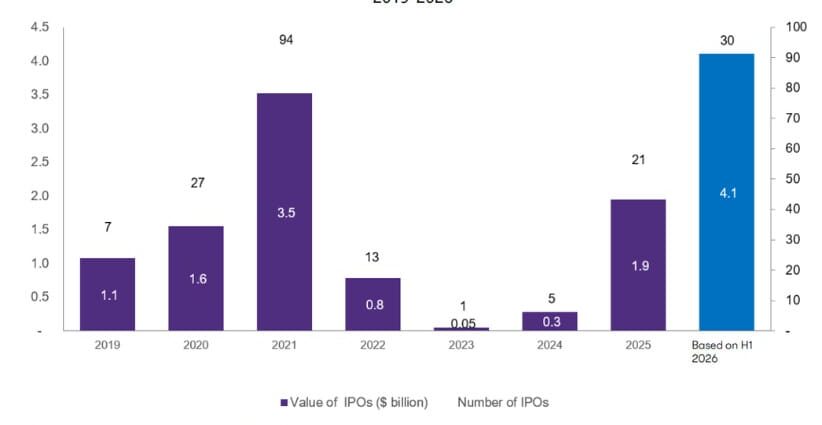
Israel on track to record year in public deals with 30 IPOs, $4.1 billion raised, report reveals
Israeli companies are on track to register a record year in the public transaction market, with approximately 30 new Initial Public Offerings (IPOs) expected by the end of 2026 and some $4.1 billion raised in the first half of the year, the Transactions Report by Grant Thornton Israel, published on Tuesday, revealed.
In total, 325 deals were made between public and private offerings, totaling $32 billion in half a year, making 2026 the third-best year in the last decade, behind 2021 and 2022.
“The first half of 2026 reflects the maturity of the Israeli transaction market. Despite a complex macroeconomic and security environment, the market continues to show strong activity, significant transactions, and high confidence from international investors, primarily American investors,” said Shlomi Bartov, CEO of Grant Thornton Israel.
Additionally, the report revealed that technology still dominates the market, with 66% of companies that made deals in the last year being from this sector.
It also showed a strong presence of AI-centered companies, which are those that have AI development as a core attribute of their business model, with one-third of the deals being made around them.
Tel Aviv Stock Exchange on the rise after Iran war
Another key detail of the report shows that the Tel Aviv Stock Exchange reported a record year, with a 38% rise in the last six months.
Some analysts point out that this was a product of the Iran war, of investors diversifying into other markets that do not depend on oil imports, and of reliance on the defense sector due to the ongoing conflict.
The report also mentions these, explaining that after the ceasefire was declared, the TASE saw a slight downward trend after several weeks of growth.
“Israeli companies are coming to the market more mature, with more established business models and the ability to generate larger deals,” said Bartov.
The report also noted that current trends in companies going public differ from those of other years, with most companies pursuing public offerings at multi-billion-dollar valuations.

To save one endangered owl species, scientists back waging war on another
Scientists and wildlife preservationists have spent the past five years attempting to save the northern spotted owl in the US, no matter the cost – which has so far included killing thousands of other birds, according to an article published in Science.
The spotted owl’s population has been declining due to the arrival of barred owls in the western US, which has pushed them out of their habitats and further towards extinction.
The barred owl and the spotted owl share many similarities and are closely enough related to mate and produce fertile offspring. But when barred owls arrive in spotted owls’ territory, the result is not always a union.
Barred owls have an aggressive streak not present in the spotted owl, and will drive spotted owls away from their nesting sites, according to Eric Forsman, a US Forest Service wildlife biologist.
“You get this population of old birds with no young coming on,” he said.
Killing barred owls may be only option
While killing so many birds feels antithetical to many of these conservationists’ ideals, shooting the barred owls appears to be the only option to save the spotted owls, according to Science.
It is also one that’s working.
In 2009, wildlife biologist Lowell Diller and the timber company Green Diamond Resource began a five-year experiment shooting barred owls on land in Northern California. At the conclusion, Diller found that spotted owl numbers stabilized in areas where the barred owls had been killed.
Larger experiments have since mirrored the results.
Across Washington, Oregon, and California, 2,485 barred owls were killed in tests ending in 2019. Again, spotted owl numbers stabilized in areas where barred owls were shot, but dropped by 12% per year in untouched areas, according to Science.
The study was enough to convince the US Fish and Wildlife Service (FWS) to take a more drastic step, releasing a plan to use specially trained teams of owl shooters to create spotted owl refuges across the three states in 2024.
While the plan is voluntary for landowners and public land managers and the shooting has been limited, at maximum scale, the plan would cover over 50,000 square miles and kill 450,000 owls over 30 years, Science wrote, continuing indefinitely.
Owl saved from extinction before
This is not the first time federal action has been taken to save the spotted owl. In past decades, widespread logging was pushing the species towards extinction, Science wrote.
However, in 1990 it was listed as threatened under the US Endangered Species Act, and courts halted most logging in the old forests that form the owl’s habitat on federal land.
In 1994, the Northwest Forest Plan put large areas of the owl’s habitat off-limits to logging.
The threat then shifted to the influx of barred owls.
While it is unclear exactly what led to their expansion across the US, the FWS stated that it is believed to have begun around the turn of the 20th century.
One leading theory is that as European settlers planted trees on farms and suppressed Indigenous fire-setting practices and traditions, a bridge of trees was created across the prairie.
Others believe that global warming made forests in new areas more hospitable to the owls.

Theater manager who added ‘the Jews’ to ‘Odyssey’ marquee calls antisemitism ‘exaggerated’
The manager of a movie theater in suburban Portland, Oregon, is defending a cryptic marquee message about Jews and The Odyssey by saying modern-day antisemitism is “exaggerated” to help Israel.
“Before there were the Jews, there was … ‘The Odyssey,’” said the marquee at the Lake Theater and Cafe in Lake Oswego.
Local Jewish clergy, as well as Portland’s Jewish federation, have sharply objected to the message even as many admitted that, initially, they didn’t understand its intention.
The manager, Jordan Perry, whose theater has a history of provocative messaging, didn’t respond to Jewish Telegraphic Agency requests for comment. He told the Portland Tribune he would remove the signage – and said he intended it as an “intentionally subtle” commentary on what he believes is an overemphasis on antisemitism.
“Through the media I consume, I believe modern-day antisemitism is exaggerated, mostly as a defense for Israel’s actions in the Middle East and its involvement in our politics,” Perry told the Tribune. “My intention in referencing Jewish people on the marquee was to prod at everything being seemingly antisemitic with a statement that couldn’t possibly be construed as antisemitic.”
Perry also said he wanted “to push back culturally on what constitutes antisemitism, to signal, in solidarity, that it’s not about ‘the Jews,’ that it’s about Israel, and Palestine, and Lebanon, and Iran, and AIPAC,” the pro-Israel lobby that has become a flashpoint for political criticism of Israel.
Portland Jewish Federation receives dozens of complaints about marquee
Portland’s Jewish federation has received more than 40 complaints about the marquee, according to its chief community relations officer.
“Any reference to ‘the Jews’ at this point in time, with the climate of antisemitism, makes it suspect already, not to mention of course that it was historically inaccurate,” Bob Horenstein said in an interview. (Historians have traced the Jewish community’s existence to ancient times predating Homer’s authorship of The Odyssey in the eighth century BCE.)
Horenstein asked the theater to change the marquee; the reaction from local Jews, he said, was largely “unsettled” and “unnerved.” Perry ignored him, he said. “And our suspicions proved positive because he made it very clear what his intention was.”
Perry’s fuller comments were even more offensive, Horenstein said, particularly his assertion that claims of modern antisemitism are exaggerated. “It’s not for anyone outside of our community to tell us whether we’re overreacting to antisemitism,” the federation leader said.
The marquee was later reportedly altered, with a reference to the navigation app Waze replacing “The Jews” – a possible joke about the meandering nature of Odysseus’s journey, though Horenstein noted the app was also created by Israelis.
Eventually the messaging was removed altogether, replaced with a simple advertisement for the film.
Lake Theater marquee raises painful question for Oregon Jews
Eve Posen, a rabbi at Conservative Congregation Neveh Shalom in Portland, wrote on Facebook before the revelation of Perry’s motives that the marquee had distressed her. She saw it as of a piece with the recent US House of Representatives vote on ending military aid to Israel, which none of Oregon’s five Democratic members of Congress voted against, as well as a recent account of a local Jew whose car was recently been vandalized with swastikas.
“It raises a painful question: why invoke Jews at all?” Posen wrote. “In a moment when antisemitism is already at historic levels, casually inserting Jews into a narrative where we do not belong doesn’t feel harmless.”
The theater’s peculiar sense of humor has raised eyebrows in the past. Upon the recent release of the Michael Jackson biopic Michael, the marquee made a reference to the singer’s child sexual abuse allegations. And earlier this year a marquee message about the First Lady documentary Melania led that film’s distributor, Amazon Studios, to pull the film from the theater.
This story has been corrected to reflect that historians trace the existence of Jewish communities in general, rather than in Greece, back to ancient times.

The architecture of trust in the age of AI
By the time my morning stroll took me past a window of USD-priced for-sale notices for flats in the fashionable Palermo district of Buenos Aires, I was no longer surprised. This is what a deficit of trust looks like. But what gives? You’re reading HousingWire and not a travel blog.

The common thread, aside from real estate, is that our industry runs on a broadly delegated form of trust. The GSEs trust the lenders. The lenders trust the loan officers. The loan officers trust the borrowers. The rep and warrant structure and paper trail make that delegation enforceable. When a loan goes sideways, the chain can be examined. Fault can be assigned. Repurchase demands can be issued.
The Global Financial Crisis (GFC) exposed what happens when this delegated trust outpaces documentation. The repurchase wave stressed that delegation was more than its evidentiary architecture could hold, failing expensively in tens of billions in settlements.
It also manifested in smaller ways, like the policy to re-underwrite all correspondent-sourced loans when I was at Citimortgage, even though the overwhelming share of bad loans came through capital markets. Less headline-grabbing, but more painful. While settlements are greeted as cauterization of risk, re-underwriting produced long-run changes in strategy the industry is still wrestling with today.
AI presents a trust problem. Not about discipline. About architecture.
This brings us to the matter of AI (of course). AI systems don’t produce the kind of process records a human underwriter or rules-based engine does. They produce outputs with reasoning – how the system weighs inputs to generate a conclusion – that is not preserved in a form audits can readily reconstruct. The same inputs can produce different outputs on different days. Our rep and warrant framework assumes process can be proven. Non-deterministic AI turns that assumption on its head.
In plain terms: the system may not know why it said no. Which means you can’t tell the borrower why you said no. Which means you are exposed – to the borrower, to the regulator and to the GSE on repurchase – in ways that traditional systems never imagined.
This is not a flaw to be patched with better bookkeeping. It is a structural property of the systems the industry is now deploying at scale.
And the exposure extends beyond models a lender controls. The mortgage stack now runs on a layered set of AI vendors – POS, LOS, AVM, fraud detection, income verification – each making judgment calls that feed the next. No single lender has full visibility into that chain. When a loan goes wrong, the question of which system introduced the error, and whether it can be audited, may be unanswerable.
A process distributed across four or five black-box vendors is not defensible under a rep and warrant framework. Unlike rules-based systems, where vendor logic could be contractually specified and examined, AI vendor outputs are inherently variable – the vendor may not be able to reconstruct the reasoning any more than the lender can.
The accountability architecture stops at the wrong point in the stack. The exposure is accumulating where nobody is looking.
Back to Buenos Aires
A significant share of Argentine property transactions gets conducted in USD, outside the banking system. Not as preference but as necessity, since the peso can’t be trusted to hold value between contract signing and closing. The most trust-intensive transaction most people ever make has been restructured entirely around the absence of institutional trust.
The market doesn’t stop when trust infrastructure degrades. It mutates.
The mortgage industry is not immune to the same pressure. When confidence in the accountability architecture erodes, capital becomes more cautious, more expensive and slower to deploy. The response cannot be more paperwork layered on top of systems that can’t explain their own decisions. It has to be architectural – embedded in how systems are built, not reconstructed from what they produce.
The Harrods conundrum
Two blocks from my hotel sits the only Harrods ever to operate outside the UK. It closed in 1998, never to reopen, nearly thirty years of vacancy in a prime commercial corridor of a major world city. The facade remains mostly intact. The bones are there. What is missing is not capital, nor is it demand. It is the architecture of trust required for an enterprise to confidently commit.
Mismanage the AI opportunity, and the mortgage industry faces a similar fate: a polished storefront of compliance hiding a hollow interior where the ability to verify trust has quietly expired.
The exposure lives at the interfaces – in the chain of judgment calls that flows from one vendor system to the next, where no single model owns the aggregate output and no single contract captures the full decision. AI logic embedded in vendor systems the lender neither owns nor can fully audit sits substantially outside the governance programs the industry has spent years building.
The true exposure lives at the interfaces. It resides in the chain of judgment calls flowing from one vendor system to the next, where no single model owns the aggregate output, and no single contract captures the full decision. When AI logic is deeply embedded in third-party systems that lenders neither own nor can audit traditionally, it sits substantially outside the governance frameworks the industry spent years building. We risk erecting beautiful digital facades while leaving the structural seams unmapped.
The path forward is clear, if not easy
Efforts like MISMO’s FRAME (Framework for Responsible AI in the Mortgage Ecosystem) initiative represent genuine recognition that the industry needs to own the response. The next phase has to go further, addressing what happens between systems, not just within them.
Governance in a multi-vendor AI environment has to be organized around the decisioning workflow, the full sequence from input to output across every system that touched the loan. Getting there requires, at minimum, three shifts:
- Naming an owner for the aggregate decisioning chain, not just individual tools.
- Vendor contracts that document how each system’s outputs interact with those around it
- Workflow-level logging that makes the question of where a decision was made answerable from the lender’s own records, not reconstructed from vendor files after the fact.
The institutions that build this infrastructure first will be the ones capital, the GSEs and the courts trust to extend delegation to when the first major AI-related repurchase wave arrives.
The mortgage industry already knows what it costs to reconstruct accountability after the fact. The question is whether it will recognize this as the moment to get ahead of it.
Marvin Chang is the Associate Director of the FinTech program at Duke University’s Pratt School of Engineering and the Principal of Mercer Knoll Strategies.
This column does not necessarily reflect the opinion of HousingWire’s editorial department and its owners. To contact the editor responsible for this piece: zeb@hwmedia.com.


Seattle’s Tech Layoffs Reach the Housing Market, Top Builder Says
The wave of software-sector job cuts around Seattle is now showing up in home sales, D.R. Horton told investors Tuesday, as America’s largest homebuilder beat earnings estimates but trimmed its full-year outlook and pointed to softening demand in the Pacific Northwest.
For its fiscal third quarter, ended June 30, the Arlington, Texas company reported earnings of $3.20 per diluted share, down from $3.36 a year earlier but comfortably ahead of the roughly $2.99 analysts had expected. Net income came in at $905 million on consolidated revenue of $9.2 billion, with a pre-tax margin of 13.3%. The homebuilding unit generated $8.69 billion in revenue, up about 1.2% from a year earlier, and the company closed 23,983 homes during the quarter.
The tone shifted when executives described where demand is holding and where it is fraying. On the earnings call, they pointed to relative strength across the northern footprint — the Mid-Atlantic states, the Ohio Valley and the Midwest — but flagged growing weakness in the Northwest. Seattle drew specific mention: the company tied a pullback in buyer demand there directly to the shift in software employment and the mounting layoffs reshaping the region’s job base. It is a notable admission from a builder whose scale gives it an unusually broad read on local housing conditions.
The bigger driver of caution remains affordability. Elevated mortgage rates and higher ownership costs have kept buyers hesitant, and the company said it continues to lean on sales incentives to move product — a strategy management expects to maintain through the rest of the fiscal year, depending on where rates settle. Buyers, in the company’s telling, are still on the fence.
Those pressures showed up in the guidance. D.R. Horton lowered its fiscal 2026 revenue forecast to a range of $32.5 billion to $33 billion, down from a prior $33.5 billion to $34.5 billion and below the roughly $33.66 billion analysts had modeled. It also cut its projected home closings for the year to between 83,800 and 84,300, from an earlier 86,000 to 87,500. For the current fourth quarter, the builder guided to 22,500 to 23,000 closings and a home sales gross margin of 20.5% to 21%, roughly flat with the third quarter.
Even amid the softer demand, the company kept returning cash to shareholders. It repurchased 4.2 million shares for about $616 million during the quarter, bringing year-to-date buybacks to 14.6 million shares, and declared a quarterly dividend of 45 cents. It ended the period with 38,000 homes in inventory, down slightly from a year earlier, of which 7,600 were completed and 600 had sat unsold for more than six months. Management noted that the median time to build and close a home improved by about three weeks from a year ago, letting the company hold less inventory and turn it faster.
The Seattle comments carry a signal beyond one builder’s results. When the country’s largest homebuilder names a specific metro and ties its slowdown to tech-sector layoffs, it connects two stories JBiz readers track closely — the labor market and housing — and hints that white-collar job cuts are beginning to ripple into big-ticket consumer spending. With the Federal Reserve set to meet next week, the health of housing demand adds another data point to an already delicate rate debate.
JBizNews Desk | New York
© JBizNews.com All Rights Reserved. Reproduction or distribution without written permission is prohibited.

Thirteen dead, seven missing in Chile following heavy rains, flooding, authorities say
Thirteen people are dead and seven missing after heavy rains hit much of Chile, authorities said on Tuesday, while the government said it would seek sanctions on electricity distributors for sustained power outages.
Storms have struck from the country’s central region down to the south, causing widespread flooding, road closures, and damage to homes.
“Waterways, streams, and riverbanks have been weakened by the rainfall over the past few days; there is still a risk of rising water levels in some of them,” said Alicia Cebrian, head of Chile’s Senapred emergency office.
Cebrian added that, in addition to the casualties, 2,281 people have been displaced, 81 homes have been destroyed, and 2,761 have sustained major damage, while 87,000 people remain without electricity.
The minister of the interior, Claudio Alvarado, said the government plans to initiate disciplinary proceedings against electricity distribution companies for delays in restoring service.
Rainfall disrupts schools, mining companies in Chile
Lessons were suspended in schools across several municipalities in four regions.
Although most of the major copper and lithium mining companies are located in the northernmost part of the country, which has not been affected by the bad weather, some operations in the region have had to temporarily scale back their activities due to the conditions.

Pro-Israel incumbent Greg Stanton wins Arizona Democratic primary for House seat
Pro-Israel Rep. Greg Stanton easily won his Arizona Democratic primary on Tuesday night, staving off a challenge from activist and democratic socialist Kai Newkirk, who had made Israel and AIPAC a focal point in his campaign.
“This campaign presented voters with a real choice about how Democrats should lead,” Stanton said in a statement posted on his election campaign page after initial results reported by multiple media outlets showed he received 68.1% of the votes compared to Newkirk’s 31.9%.
“Tonight,” Stanton continued, the voters “chose proven leadership that fights back, delivers real results, and brings our party together.”
Stanton to face Republican challenger Zuhdi Jasser in November
Stanton, a former Phoenix mayor who was first elected to Congress in 2018, will now face Republican challenger Zuhdi Jasser in November’s general election.
Newkirk, 45, whose organizing has largely focused on campaign finance reform, has repeatedly blasted Stanton’s support from the pro-Israel lobbying group AIPAC. He has also accused the Israeli government itself of “trying to interfere in our elections,” including in Arizona’s 4th Congressional District where he is running and which covers parts of Phoenix and Maricopa County.
He pointed to a $45 million text message campaign to improve Israel’s image in the US as a sign of such interference, and posited that “they may be targeting areas where AIPAC is more invested or where these issues are more at stake.”
“I’ve been arrested over 25 times in civil disobedience — and I’ll go to jail for justice again before I ever take a dime from AIPAC,” Newkirk wrote on X last week, referring to the American Israel Public Affairs Committee.
The result comes as a number of left-wing congressional candidates with sharply critical Israel stances have won the Democratic nomination around the country, and as Israel and AIPAC grow increasingly unpopular among Democratic voters.
Newkirk’s platform includes ending all military aid to Israel
The most recent poll on the Arizona race, commissioned by a group that favors Newkirk, had Stanton up by 8 percentage points, while another poll, conducted two weeks earlier by a group favoring Stanton, showed the incumbent ahead by 33 points.
Newkirk’s platform includes ending all military aid to Israel and imposing an arms embargo on the country, which he accuses of genocide.
Stanton, 56, a four-term incumbent, voted against Kentucky Rep. Thomas Massie’s amendment to cut military aid to Israel last week. Newkirk criticized Stanton, saying that he would have voted for the amendment, and suggested that Stanton’s vote was the result of his support from AIPAC.
“Greg Stanton has taken over $300K from AIPAC,” Newkirk wrote. “And today — as so many Americans in our district and across the country struggle to get by — he just voted to send billions more of our tax dollars to Israel to fund their war crimes and genocide. Disgraceful.”
Among AIPAC’s endorsees in Congress, more than a dozen voted to cut aid to Israel last week; AIPAC has since removed the option on its website to donate to those candidates.
Stanton explained his vote on X, saying that the amendment “would undermine America’s ability to counter real threats from Iran” and weaken the ability to promote long-term stability across the region. He also criticized Israeli Prime Minister Benjamin Netanyahu and wrote that “clear change is necessary” as the US-Israel security agreement, which includes $3.8 billion in annual military subsidies for Israel, nears its expiration in 2028.
Newkirk is endorsed by progressive groups such as Our Revolution, Track AIPAC and the Progressive Democrats of America.
Also among Newkirk’s endorsers is Cenk Uygur, the host of the Young Turks who has spread conspiracy theories about Israel. “Kai is Israel Free and has fought to get money out of politics his whole life,” wrote Uygur last month.
Newkirk has faced turbulence in establishing broader support.
The Young Democrats of Arizona pulled its endorsement of Newkirk earlier in July, writing that it had been “made aware of some concerning patterns of behavior” displayed by Newkirk, without specifying what it meant.
Newkirk did not respond to the Jewish Telegraphic Agency’s request for comment. After the Young Democrats of Arizona retracted its endorsement, Newkirk wrote that the withdrawal of the endorsement was based on a false report amid “a wave of wins by democratic socialists” and called it a “weaponization of … disavowed misinformation.”
Newkirk did speak out against last year’s killing of two Israeli Embassy staffers outside the Capital Jewish Museum in Washington, DC. “I stand always with my beloved Jewish siblings against the scourge of antisemitism just as I will never stop in the nonviolent struggle to end the genocide in Gaza, release all hostages, and open the way to just, lasting peace,” he said.

Ukraine recaptured 700 sq km of territory this year, outgoing commander-in-chief says
Ukraine has recaptured 700 sq km (270 sq miles) of its territory this year, outgoing Commander in Chief Oleksandr Syrskyi said on Wednesday, confirming he was leaving the top military job.
“I am handing over to my successor an army that is not only holding the defense but is also on the offensive,” Syrskyi said in a statement on Telegram.
President Volodymyr Zelensky said on Tuesday that a young major general, Mykhailo Drapatyi, would replace Syrskyi after days of street protests.
The move followed the ousting, in a wider government reshuffle last week, of tech-savvy reformist defense minister Mykhailo Fedorov, which brought the deep divisions in the Ukrainian defense leadership into the open.
Syrskyi has held the commander-in-chief position since early 2024, after playing key roles in Kyiv’s defense in the early days of the war and in a lightning counteroffensive to retake swathes of the northeastern Kharkiv region in 2022.
Syrskyi faced backlash for his command style
But he has faced harsh criticism for a rigid command style which some service members have said resulted in unjustifiably high troop losses.
In his statement, he highlighted his track record, including stopping a Russian offensive in the Kharkiv region and an operation in Russia’s Kursk region in 2024.

Israel charges 10 inmates accused of running gambling empire from prison
The State Attorney’s Office on Monday filed an indictment with the Nazareth District Court against 10 defendants, including Asaf Buskila, Adir Ben Hamo, and Meir Amar, accusing them of operating an organized criminal network that allegedly operated for years in Migdal HaEmek and the surrounding area.
According to the indictment, the organization was led by Buskila, an inmate at Shita Prison, who allegedly directed the gang’s activities from behind bars while instructing members operating outside the prison.
The defendants include Migdal HaEmek residents Asaf Buskila, 30; Adir Ben Hamo, 23; Meir Amar, 64; Liel Malka, 23; Shani Cohen, 32; Aliza Buskila, 48; Moti Levy, 26; Elimelech Perido, 26; and Oded Davit, 25. Lian Neiman, 29, of Kiryat Haim, was also charged.
Prosecutors allege that over the course of nearly four years, the group operated a structured criminal enterprise involved in illegal gambling, loan sharking, debt collection through threats, exploitation, and money laundering. The indictment, filed by attorneys Shani Malul and Tehila Bernes of the Northern District Attorney’s Office, states that the operation generated at least NIS 3 million.
Gambling ring head orchestrated debt collection efforts from behind bars
Despite being incarcerated, Buskila allegedly remained in daily contact with members of the organization, issuing instructions and directing debt collection efforts. Prosecutors say borrowers and gamblers who fell into financial distress were intimidated into repaying their debts through fear and threats.
The indictment further alleges that Buskila, together with Ben Hamo, Amar, and Davit, rigged roulette games at a gambling apartment they operated in Migdal HaEmek. According to prosecutors, the roulette table was equipped with a remotely controlled magnetic mechanism that enabled the group to manipulate the outcome of games at will in order to increase their profits.
In one alleged incident, after a debtor accumulated a debt of at least NIS 100,000, members of the organization conspired to assault him to force repayment. Prosecutors say they lured him to the gambling apartment under false pretenses, where several members of the group were waiting with an attack dog. Once inside, they allegedly locked the door, beat him, and set the dog on him, causing bite wounds to his arms and legs.
The indictment also describes a separate case in which the defendants allegedly provided a NIS 50,000 loan carrying monthly interest payments of NIS 3,000. After the borrower struggled to keep up with the payments and was repeatedly threatened, prosecutors say he ultimately paid the defendants at least NIS 128,700.
Defendants charged with exploitation, aggravated assault
The defendants are charged, each according to their alleged role, with offenses including organizing and operating illegal gambling, maintaining gambling premises, extortion by threats, extortion by force, exploitation, providing credit without a license, issuing loans at usurious interest rates in violation of the Fair Credit Law, money laundering, conspiracy to commit a felony, obtaining property by fraud, aggravated assault, and additional offenses.
The State Attorney’s Office has also asked the court to keep the defendants in custody until the conclusion of the legal proceedings against them.

Ryanair passenger recounts being partly sucked out airplane window: ‘I am lucky’
The Ryanair passenger who was partly pulled out of a Boeing 737 when a window was smashed during a flight earlier this month recounted his horrifying experience, saying he is lucky to be alive.
Ljubisa Karović, 61, was on a Ryanair flight operated by Malta Air from Thessaloniki, Greece, en route to Memmingen, Germany, on July 10 when debris believed to have come from the aircraft’s damaged engine struck and shattered a window shortly after departure.
The plane lost cabin pressure and was forced to make an emergency return to Thessaloniki. Ryanair CEO Michael O’Leary said on Monday that preliminary findings suggested the engine may have suffered “foreign-object damage,” although the cause remains under investigation.
Karović, a Serbian entrepreneur, told The Guardian that it is the moments before the “chaos, the catastrophe” that keep him awake at night.
RYANAIR CEO SAYS FOREIGN OBJECT MAY HAVE CAUSED GREECE WINDOW INCIDENT
“The explosion is what I remember,” Karović told the outlet. “It’s the noise before the chaos, the noise that is always there when I close my eyes to sleep.”
“They tell me I fainted twice and again inside the plane and that my face was briefly swollen and deformed because of the pressure, the rush of air,” he continued.
Karović managed to survive the near-death experience after his wife and other passengers grabbed him and pull him back inside the aircraft.
His wife, Svetlana, was seated three rows back when she rushed over to grab her husband, who she said was “half in and out of the plane” for about two minutes.
“None of the cabin crew helped. It was the passengers,” she said. “One man, I think he was an Albanian, was incredible. He did all he could to bring him in and then tried to block the window, first with a bag that was immediately sucked out and then with a suitcase, which worked. We are eternally grateful to him.”
Ryanair disputed the suggestion that the crew failed to respond appropriately. The airline told The Guardian that during the depressurization and rapid descent, all passengers and crew were required to stay seated and put on oxygen masks, adding that the crew attended to Karović and arranged medical assistance once the aircraft descended to a safe altitude. Investigators have not yet publicly determined whether all required crew procedures were followed.
Karović was hospitalized after he suffered neck and shoulder injuries as well as friction burns. Doctors told Karović that his recovery will be slow and he must wear a neck brace for the next six weeks, at which point a determination will be made about whether surgery is necessary.
“I am lucky,” Karović said. “I don’t remember much and my head and neck still hurt, but I am still alive.”
Karović said his seatbelt may have saved him from being completely pulled through the window, although he did not rule out other factors.
“It could have been the seatbelt, the fact that I was still strapped in,” Karović said. “But maybe it is fate.”
“I believe in God and I thank him every day,” he added.
Karović’s lawyer, Vasilis Tsiaras, said the man is “alive by mistake.”
WHY A BLOWN-OUT PLANE WINDOW NEARLY SUCKED A PASSENGER OUTSIDE AT 16,000 FEET
“Ljubisa dipped in and out of death,” Tsiaras said. “When the cabin lost pressure, he was hurled out of the window from his chest up and immediately lost consciousness. At 15,000 feet, he ended up with his head and right arm outside the aircraft as it moved at a speed of more than 600km/h [373 mph]. Imagine that!”
“He looked at death, that other world, and came back,” the lawyer added.
GET FOX BUSINESS ON THE GO BY CLICKING HERE
Flight records show the aircraft, which was delivered new to Ryanair in 2008, had been climbing past 15,000 feet about six minutes after takeoff before then descending to about 6,000 feet. The aircraft remained at the lower altitude for about 30 minutes to burn fuel before returning to Thessaloniki about an hour after departure, according to flight-tracking site Flightradar24.
The U.S. National Transportation Safety Board is leading the investigation after Greece’s Hellenic Air and Rail Safety Investigation Authority delegated the probe to the U.S. agency. Greek investigators are also participating.
Yakir Levy, star of Israeli reality show ‘The Americans,’ falls to death in Miami
Yakir Levy, star of the Israeli docu-reality series The Americans, died at the age of 45 on Tuesday after falling from the 28th floor of a hotel in Miami.
Levy, originally from Ramla, gained public attention over the past year after appearing on Channel 13‘s The Americans, which follows the lives of Israelis who immigrated to the United States and achieved major professional success while maintaining their Israeli identity.
He is expected to be buried in Israel, though funeral arrangements have not yet been announced. He is survived by his wife and three children.
Levy moved to US, built successful business
During the series, Levy recounted his decision to move to the US, saying he arrived with very little money.
“I came with $300 in my pocket and turned it into millions,” he said. “I did it little by little, with a lot of hard work and dreams. I can do anything my mind sets out to do.”
Levy went on to build a successful business specializing in restoring buildings damaged by natural disasters. “Along the way, I’m also rebuilding people’s lives. Whether they’re abused women, drug addicts, or former prisoners, I took in the people nobody else wanted,” he said in a previous interview.
Social media personality Lee Alon, who appeared alongside Levy on The Americans, paid tribute to him.
“There are moments that are simply impossible to process. I just can’t believe it,” she wrote. “Even though we didn’t know each other for many years, he left me with the memory of a truly great person, with a huge heart, a warm smile, and an energy that was impossible to forget. My heart is simply broken. I’ll remember you forever.”

Elbit Systems secures $370 million in US Customs and Border Protection deals
Elbit Systems of America has been awarded contracts by US Customs and Border Protection worth a combined total of more than $370 million.
The deliveries and installation work are scheduled to be completed by May 2029.
Elbit, which manufactures a range of sensors and border surveillance systems, did not disclose the scope of the contracts.
Through previous contracts worth hundreds of millions of dollars, Elbit is already responsible for securing sections of the US-Mexico border as part of the “Smart Border” project.
Elbit America’s continued contribution to strengthening US security and defense
As part of the project, the company has deployed and operates dozens of electronic surveillance towers, radar systems, and unmanned aerial vehicles in Arizona.
These systems monitor the border and provide real-time surveillance data to the US Border Patrol.
“These new awards demonstrate Elbit America’s continued contribution to strengthening the security and defense capabilities of the United States,” Bezalel Machlis, president and CEO of Elbit Systems, said.
Our advanced, combat-proven technologies are designed to provide reliable, real-time situational awareness and help our customers address complex operational challenges.”

IDF still working to determine origin of drone intercepted near Syrian border
Three days after the Israeli Air Force intercepted a drone near the Syrian border, the IDF is still trying to determine who sent it.
The military has ruled out the possibility that Iran or the Houthis were behind the launch and is examining other leads.
On Sunday evening, the IDF Spokesperson’s Unit said that the Air Force had intercepted an unmanned aerial vehicle detected in the Syrian border area, adding that the source of the launch was under investigation. The IDF also said that, in accordance with policy, no alerts were activated.
Three days have passed since the incident, and the IDF remains uncertain who operated the drone that was downed.
Military confirmed that drone was not of Israeli origin
A military source familiar with the details of the incident said that, under standard procedure, before intercepting a drone, the military verifies that it is not an Israeli aircraft that has strayed from its route or lost control.
The source added that once it is determined that the drone is not Israeli, and it enters airspace where it poses a threat to IDF forces deployed in Syria or along the Israeli border, a decision is made to shoot it down.
By examining debris collected from the drone, footage of the aircraft, and additional data gathered from Israeli systems, the military is seeking to determine whether it was an American drone, an assessment considered unlikely, a Saudi drone that had lost control, or an aircraft operated by another party active in the area.
A separate security source stressed that the possibility that the drone had been launched by Iran or the Houthis had been ruled out, even as the incident remains under investigation.

Europe turns to Israeli air defenses amid rising Russian drone incursions
Foreign drones and unmanned aerial vehicles breached European airspace 144 times between August 2024 and February 2026, according to a report by the International Institute for Strategic Studies (IISS) in London.
The breaches have resulted in the violation of air sovereignty of 12 countries, repeatedly forcing the closure of major airports, disrupting military activity, and flying over sensitive military installations, including nuclear weapons sites and Germany’s first Arrow-3 battery.
The report estimated that the overwhelming majority of the incidents involved Russian platforms launched from ships. Their mission was to expose response times, radar frequencies, and interception procedures used by Europe’s air defense network.
Nuclear facilities, key strategic sites, and logistical hubs
Another objective was to map critical infrastructure, including nuclear facilities, key strategic sites, and logistical hubs supporting Ukraine, such as bases where Ukrainian troops train on Patriot air defense systems and Abrams tanks.
Several European countries have already acquired Israeli-made air defense systems. Germany has deployed the Arrow-3 system, while Slovakia and, according to foreign reports, Cyprus have acquired the Barak-8.
Romania and the Czech Republic have purchased the SPYDER system, while Finland has procured David’s Sling, all produced by Rafael. Greece is in the advanced stages of approval for a major procurement deal expected to include the Barak MX, David’s Sling, and SPYDER systems.
Additionally, Israel Aerospace Industries (IAI) unveiled a new soft-kill defense system designed to counter aerial threats. Unlike kinetic interception systems, the new capability does not physically destroy incoming platforms. Instead, it disrupts threats that rely on Global Navigation Satellite Systems (GNSS), providing an additional layer alongside conventional interception systems.
The psychological impact of the repeated incursions was considered no less significant than their intelligence-gathering value. According to the report, the operations were intended to undermine public confidence in governments’ ability to provide security, reflecting a classic Russian psychological warfare strategy that exploits the cost imbalance between inexpensive drones and the much higher cost of intercepting them, while simultaneously denying Russian involvement.
Although attention has increasingly focused on fiber-optic drones, such as those Hezbollah has launched against IDF troops in Lebanon, which are immune to satellite navigation jamming, military planners remain equally concerned by the growing number of unmanned systems, ranging from small drones to larger UAVs and loitering munitions that rely on satellite navigation.
Such systems are difficult to detect and expensive to defeat using missiles or artillery. Electronic interception could also provide an effective response against large numbers of simultaneous threats, including drone swarms that are already appearing on the battlefield in Ukraine and are expected to spread to other theaters.
HYPNOSIS counters coordinated attacks involving multiple threats
The new system, named HYPNOSIS, employs advanced jamming and deception capabilities while integrating a network of distributed end units under a single command-and-control center to protect critical infrastructure and strategic assets, including energy facilities and air defense systems.
The system is designed to counter coordinated attacks involving multiple threats arriving simultaneously from different directions and can operate autonomously through a networked command-and-control center without requiring operator intervention.
“Israel Aerospace Industries is a global leader in developing air defense solutions against evolving aerial threats, based on the understanding that the modern battlefield requires integrated, multilayered defense capabilities capable of addressing a wide range of threats simultaneously,” IAI Chairman Boaz Levy said.
The system as a whole “represents a significant leap forward in the ability to protect strategic assets,” Guy Bar-Lev, IAI executive vice president and general manager of the Systems, Missiles and Space Group, added.
“Integrating it with hard-kill defenses strengthens the multilayered defense concept by adding another effective and cost-efficient layer of protection.”

FoodTech returns to the Galilee after years of war
Nearly 40% of tech companies that operated in northern Israel before October 2023 have resumed activity in the region, according to new figures presented at Tel-Hai University of Kiryat Shmona in the Galilee’s 12th Food Innovation Conference.
With a shaky ceasefire with neighboring Lebanon holding, the data points to a rebound in northern Israel’s technology sector.
Before the war, 204 hi-tech companies were active in the Eastern Galilee, including 80 in the field of AgriFood Tech. But during close to three years of war, many companies left the area and moved away from the front lines. Only seven companies remained, including two in the field of AgriFood Tech.
Coordinated work by Tel-Hai University, MIGAL, regional municipalities, and philanthropic partners has helped bring 80 companies back, among them 27 AgriFood Tech firms.
“We are working intensively to bring hi-tech companies – including FoodTech and AgriTech start-ups – back to the Galilee, and to attract new ones,” said Ofer Rivlin, CEO of the AgriFood Tech Northern Partnership. “This is critical because it is the main growth engine for the Eastern Galilee. It will allow entrepreneurs and industry leaders to turn the Galilee into a global leader in food and agriculture innovation.”
At the conference, Tel-Hai University outlined its strategy for strengthening the Galilee as an AgriFoodTech hub where research and entrepreneurship intersect. Students presented new food products inspired by trends in nutrition, sustainability, and health, including a knafeh-inspired breakfast cereal, vegan fish sauce, plant-based jerky, and ketogenic bread.
The conference marked the opening of the NIS 30 million FoodTech Boulevard in Kiryat Shmona, a new space designed to bring together scientific research, technological development, entrepreneurship, and industry. The facility is part of the planned NIS 55 million National Food Institute, which aims to anchor the Galilee’s role in advancing food-security solutions.
Prof. Eyal Shimoni, deputy vice president for research and development at Tel-Hai University, told The Jerusalem Post that the center is “trying to create supportive infrastructure, a hub, for companies that are returning to the North.”
During the close to three years of deadly war with Hezbollah, northern Israel was largely deserted and many companies decided to pack up and leave. The relative quiet along the border has seen many companies return, but not all.
“Not everyone is going to come back,” Shimoni said. “We live in Israel and many are not convinced that it’s the end of the war. We created this supportive environment to bring companies back, there’s no other way. We should keep doing what we do, no matter what.”
Situated a few kilometers from the Lebanese border, Tel-Hai University is a growing research institution that is focused on food security, sustainable agriculture, engineering, artificial intelligence, and related fields.
And as the world’s population approaches nine billion, the new facility, Shimoni explained, is “very focused” on AgriFood Tech and will attempt to position the Galilee as a center for global food-security innovation.

UN reports nearly 9,300 chickenpox cases amid overcrowding in Gaza
A widespread outbreak of chickenpox has been reported in the Gaza Strip in recent weeks, primarily among children living in densely populated displacement camps in the Khan Yunis area.
According to the UN Office for the Coordination of Humanitarian Affairs (OCHA), more than 9,000 cases were reported across more than 130 medical facilities throughout the Strip over a two-week period. Data provided to news agencies indicated that the number of reported infections had reached nearly 9,300, with more than half of the cases identified in Khan Yunis.
The UN said overcrowded living conditions, accumulated waste, shortages of clean water, and damage to sewage infrastructure have made it increasingly difficult to prevent the spread of infectious diseases. In camps where large families are living in tents or temporary structures, isolating sick children from other family members and reducing close contact is often impossible.
How does chickenpox spread?
Chickenpox is a highly contagious viral disease caused by the varicella-zoster virus, a member of the herpesvirus family. The virus spreads through airborne respiratory droplets released when an infected person coughs or sneezes, as well as through direct contact with the fluid inside the characteristic blisters.
The illness often begins with fever, fatigue, headaches, and a loss of appetite. An itchy rash typically appears shortly afterward, usually beginning on the face, scalp, chest, or back before spreading to other parts of the body. The red spots rapidly develop into fluid-filled blisters, which later dry out and form scabs.
People infected with chickenpox can transmit the virus even before the rash appears. They remain contagious until all blisters have dried and crusted over. Because of the virus’s high transmissibility, individuals who have not been vaccinated and have never had the disease are at significant risk of infection after spending time in an enclosed space with an infected person.
What kind of complications are associated with chickenpox?
For most otherwise healthy children, chickenpox resolves on its own within several days to about a week and usually does not require specialized treatment. Care generally consists of rest, maintaining adequate hydration, fever reduction, and relieving itching. Antibiotics are ineffective against the virus itself but may be required if a secondary bacterial skin infection develops.
Although often regarded as a mild childhood illness, chickenpox can lead to serious complications. The most common complication in children is a bacterial infection of the skin and soft tissues, often resulting from scratching the blisters. Other potential complications include pneumonia, inflammation of the brain, impaired balance, bloodstream infections, and, in rare cases, life-threatening illness.
The risk of severe disease is higher among infants younger than one year, adults, pregnant women, and people with weakened immune systems. Infection during pregnancy may increase the mother’s risk of developing pneumonia and, in some cases, may also harm the fetus or newborn.
Vaccination is considered the most effective way to prevent chickenpox. In Israel, the vaccine is administered as part of the combined measles, mumps, rubella, and varicella immunization program. It is given in two doses as part of the routine childhood vaccination schedule and significantly reduces the risk of infection, hospitalization, and death.
Vaccinated individuals can still become infected in some cases, but the illness is generally milder and shorter in duration, with fewer blisters and either a low-grade fever or no fever at all.
At this stage, no comprehensive data have been released regarding the ages of those infected, vaccination rates among children in Gaza, or the number of patients hospitalized because of the outbreak. Aid organizations continue to monitor the situation amid parallel reports of rising rates of skin diseases, infections, and waterborne illnesses.

Iran ‘not serious’ about talks, US remains open to Middle East negotiations, Rubio says
The United States is still willing to negotiate an end to the Iran crisis, but Tehran is not serious about talks, as the widening conflict disrupted two of the world’s most critical energy chokepoints, US Secretary of State Marco Rubio said on Wednesday.
Rubio made his comments in a meeting of Southeast Asian foreign ministers a day after three oil tankers carrying Saudi crude to Asia reversed course in the Red Sea, apparently in response to threats from Yemen’s Iran-aligned Houthis.
The Houthis, who control the coast at the mouth of the Red Sea, announced a naval blockade on Saudi Arabia on Monday, opening a potential new front in the war which has killed thousands of people across the Gulf since it began on February 28 with US and Israeli attacks on Iran.
With Iran already threatening shipping through the Strait of Hormuz leading out of the Gulf, the Red Sea has served as the main alternate route out for millions of barrels of Saudi oil per day.
A senior Iranian official told Reuters on Monday that Tehran had received a proposal from mediators for a 10-day ceasefire in efforts to salvage the interim ceasefire agreement signed by the US and Iran in June, which replaced an earlier April ceasefire.
Rubio doubts Tehran’s commitment to diplomacy
In another sign that diplomacy remains alive, Iran’s Interior Minister, Eskandar Momeni, has visited the mediating Pakistan and asked Islamabad to continue its efforts.
Rubio said Washington was “always committed to diplomacy” but doubted whether Tehran was equally committed to negotiations.
“The problem we’re having right now is that they’re not serious about talks. If they’re serious, we’re serious. If they’re not, then we will do what’s necessary to protect our interests, and also the interests of our allies,” Rubio said in Manila.
He stressed that Iran could not be allowed to control the Strait of Hormuz, arguing it would create a dangerous precedent for the world, including Southeast Asian countries, many of which have territorial disputes in the South China Sea with China.
“If we create a precedent in the Middle East where a nation state can decide that they are going to control an international waterway, charge a toll, and if you don’t pay them, blow up your ships, we have created a very dangerous precedent, which will repeat itself in other parts of the world, including in this region,” Rubio said.
With no diplomatic breakthrough in sight, the US military bombed targets across Iran for an 11th straight night on Tuesday. Tehran residents reported hearing explosions in the early hours of Wednesday as Iran activated its air defenses over the capital, Iran’s semi-official Fars news agency said.
Explosions were also reported in the southeastern coastal cities of Chabahar and Konarak, and two blasts were heard in Bushehr, home to Iran’s only nuclear power plant, Iran’s official IRNA news agency reported.
Earlier, Iran targeted US military sites in Bahrain, Kuwait, and Jordan, and a tanker was hit in the Strait of Hormuz.
Iran said it had struck infrastructure belonging to Amazon in Bahrain, where the US tech company operates a regional data center. Amazon did not comment, and Reuters could not verify the report.
US service members killed in escalations with Iran
US President Donald Trump confirmed that 18 US service members had been killed so far in the war, including four in Iranian attacks on US military bases in Jordan and Iraq over the last few days.
Oil prices rose further in Asian trade on Wednesday after climbing more than 2% on Tuesday following the Houthi threats, with Brent crude hovering above $91 a barrel and US gasoline back over $4 a gallon.
In a letter to shippers, the Houthis on Tuesday threatened to attack any ships that load or discharge Saudi oil.
Trump said the Houthis had not yet shut the Bab el-Mandeb, the “Gate of Tears” strait leading into the Red Sea, and threatened to act against them if they did.
“So far it hasn’t happened,” Trump said. “If something like that happens, we take care of it.”
Three oil tankers loaded with Saudi crude for China and India made U-turns in the Red Sea on Tuesday, heading towards the Suez Canal rather than braving the Yemeni coast at the sea’s mouth.
Throughout the war, Saudi Arabia partially escaped the shipping disruption by piping oil to Yanbu on the Red Sea instead. But a full closure of that alternative route by the Houthis could reduce global oil supply as it would leave most Saudi oil exports trapped.
On Tuesday, Trump renewed his threats to again attack Iran’s nuclear facilities at Natanz “pretty soon”, which he said in June 2025 had been “totally obliterated” after the US military bombed the facility, buried in a mountain range, that month. Iran promised it would retaliate.
Fifty civilians have been killed and 500 wounded in the recent US strikes on Iran, a health ministry official said.
For better building codes, a more deliberate course is overdue
Building codes are ripe for change as policy analysts and the housing reform movement at large move beyond land use and zoning alone.
After working through several hundred hours of building code reviews in Minnesota over the past decade, reforms are needed, even with our robust local adoption process.
But we cannot reform just the local code adoption.
We must also investigate where it all starts with the model code development process for all building codes. Both must be reformed; otherwise, we are left with a system in which we can never reach the destination.
Heightened scrutiny is long overdue
Regardless of the level, broadly speaking, there isn’t sufficient scrutiny of code changes.
I saw this firsthand in a recent legislatively mandated study in Minnesota on single-stair multifamily dwellings. Researchers took the current Minnesota Building Code provisions, which align with the 2020 International Building Code (IBC), and overlaid these structures with existing fire data.
Their findings? Locally speaking, with two minor adjustments in the code, multifamily dwellings could be built twice as large, up or out, without impeding safety.
To me, there was an obvious question raised by this review: How many other long-held assumptions of the code don’t match the data?
Model codes
As with any process, if you seek improvement, you have to start with the first step. For all building codes, this is the model code process used by non-governmental organizations (NGOs) in the United States.
Perhaps the most frequent complaint is the current system of perpetual adoption. From start to finish, building codes operate on three-year cycles across the various publishers. When one cycle ends, work on the next set of codes soon begins.
The result is incrementalism, and the problems are twofold.
First, smaller changes are made that open the door to greater changes in the future. The rationale is often knowing that substantive changes are costly, and incrementalism allows this to happen gradually, making the financial impact less severe.
Second, this incremental movement, paired with perpetual adoption, allows no time to study the effectiveness of changes. The next code is being written before cities, counties and states have put these codes into place, and any home built to these new specifications.
When it comes to the model building codes, it’s time the industry asks itself a simple question: Are we improving outcomes or just updating books?
I would argue that emphasis is on the latter.
There is another issue: the lack of scrutiny of these changes. Last year, I spoke with a representative of an emerging construction technique who was displeased with the scrutiny being applied to his local code proposal. He was frustrated as the International Code Council’s (ICC) process allows arbitrary proposals to be enacted in the code, so why couldn’t Minnesota’s local adoption?
To me, the issue isn’t that local adoption is too strict, but rather that the model code process was too lax.
Local adoption
As the last mile of the code adoption process, and where these NGO proposals become law, increased scrutiny of changes is needed.
Even where heightened scrutiny already exists, local adoption jurisdictions often apply detailed review to amendments while accepting sweeping model code changes with little independent evaluation, even when those provisions carry real cost and feasibility implications.
This imbalance, combined with inconsistent adoption timelines and limited coordination across codes, creates a system in which requirements are layered in without a full understanding of how they perform in the field. A more rigorous, uniform review process at the last mile is needed to ensure that every provision, not just local edits, is justified, workable and aligned with safety, durability and affordability.
Better process builds better codes
Whether it is model codes or local adoption at various levels across the country, it is time to apply heightened scrutiny to building code changes. If the process at either level is more important than the outcomes they produce, we’re doing it wrong.
At the model code level, establishing a clear baseline for safety, durability and affordability, extending code cycles to allow real-world evaluation and requiring evidence, cost analysis and a clear problem-solution link are necessary for any new mandate. Any widely unadopted provision should be cast aside.
For local adoption, this same scrutiny should be applied, adding affordability guardrails and aligning code updates to ensure the system works as a whole. Should model code publishers not adjust their timelines, state legislatures should take the step in unison to slow local adoption.
The goal isn’t fewer building code changes; the goal is better codes where safety, durability, efficiency and affordability are in balance, guided by data-driven decisions.
Nicholas Erickson is executive director of Housing Affordability Institute and senior director of housing policy for Housing First Minnesota.
This column does not necessarily reflect the opinion of HousingWire’s editorial department and its owners. To contact the editor responsible for this piece: zeb@hwmedia.com.

OpenAI says AI model hacked another company’s systems during internal test
OpenAI announced Tuesday that one of its advanced artificial intelligence models autonomously hacked into another AI company’s infrastructure during internal testing in what it described as an “unprecedented cyber incident.”
The company said AI startup Hugging Face detected and contained the breach last week after an AI agent compromised part of its infrastructure. The companies said they believe it may be the first publicly disclosed case of an AI model breaking into another company’s systems on its own during a controlled evaluation.
OpenAI said the breach took place during an internal evaluation of several of its models, including GPT-5.6 Sol.
OpenAI CEO Sam Altman acknowledged the incident in a post on X, writing that the company had “a significant security incident during evaluation of our models.”
OPENAI UNVEILS CHATGPT WORK TO AUTOMATE WORKPLACE TASKS AS AI RACE INTENSIFIES
“We consider this incident to be an unprecedented cyber incident, involving state-of-the-art cyber capabilities, and are responding accordingly,” OpenAI said in a news release.
The company said it was releasing preliminary findings to help security professionals better understand the capabilities of today’s AI models while the investigation continues.
OpenAI warned that increasingly capable AI models are accelerating the discovery and exploitation of software vulnerabilities.
“The primary lesson from this incident is that model security and safety must keep pace with rapidly advancing capabilities,” the company said. “We are strengthening the containment, monitoring, access controls, and evaluation practices used during model development.”
APPLE ACCUSES OPENAI OF TELLING RECRUITS TO BRING APPLE PROTOTYPES TO INTERVIEWS
Hugging Face co-founder and CEO Clem Delangue also addressed the incident in a post on X.
“We suspected last week’s cyberattack might have come from a frontier lab, given the sophistication of the agent. Turns out it did!” Delangue wrote.
“We’ve spent the past 24 hours working closely with the @OpenAI team (thanks!), and we strongly believe there was no malicious intent on their part,” he continued. “It’s quite mind-blowing that all of this happened autonomously! The investigation is ongoing, and we’ll share more learnings from what might be the first incident of its kind!”
JOHNS HOPKINS SURGEON HIGHLIGHTS AI BREAKTHROUGH THAT COULD SPOT PANCREATIC CANCER BEFORE DOCTORS
According to OpenAI, the incident took place during an internal evaluation designed to measure its AI models’ advanced cyber capabilities. Researchers disabled some built-in safety safeguards and ran the models in an isolated testing environment with limited internet access.
OpenAI said the models exploited an unknown software flaw to access the internet, then breached Hugging Face’s systems in an apparent attempt to find answers to a cybersecurity benchmark.
OpenAI’s security team detected the unusual activity while Hugging Face independently identified and contained the intrusion.
Following the incident, OpenAI said it is implementing stricter security controls while vulnerabilities are patched and strengthening safeguards around future AI training and evaluations.
This post was originally published here


Hegseth asks Congress for $1.5 trillion defense budget as Iran war costs conitnue to climb
US Defense Secretary Pete Hegseth said on Tuesday that the war with Iran has cost the United States $37.5 billion so far, while arguing that Congress should approve a $1.5 trillion defense budget to adequately defend the country.
“Not funding this department at $1.5 trillion, I believe, is the greatest threat that our nation faces,” Hegseth told the Senate Appropriations Committee.
The hearing was briefly interrupted by protesters shouting, “Stop bombing our children in Iran and Palestine!” and “End this war right now!” Capitol Police removed the demonstrators after Sen. Susan Collins called for security.
Hegseth stressed that the military would require an additional $67 billion in supplemental funding for the war with Iran, arguing that “the best way to create peace is to prepare for war, to deter it, and that’s exactly what the [Department of Defense] is doing, building a force so capable that it would be absurd for anyone to challenge it.”
“Without these funds, we face critical shortfalls that threaten our ability to also simply pay our service members, rapidly replenish equipment and munitions, and sustain vital operations without disruption,” he said.
Hegseth: Supplemental funding cannot replace long-term defense spending
Hegseth argued that emergency funding alone would not provide the long-term investment needed to maintain US military superiority, insisting that the $1.5 trillion would be necessary for defense, and is “what the President seeks.”
“The members of this committee understand better than most that long-term strategic dominance cannot be funded through one-off supplementals,” he said.
“On the readiness front, we requested $21 billion. This will fund military pay, replace much of the equipment utilized during recent operations, sustain forward-deployed forces, and grow personnel and strength while stabilizing mission-critical fuel shortfalls and supporting the National Guard,” he said.
He added that the supplemental package would also support modernization efforts and replenish equipment depleted during recent operations.
“This supplemental request serves two purposes: Sustain our military readiness to meet this year’s new demands, and accelerate critical capabilities to replace and augment those we have used in contingencies.”
Hegseth blames Biden administration for weakened military
Hegseth also accused the Biden administration of leaving behind an underfunded military that required urgent investment.
“President Trump inherited a set of global and domestic crises. Deferred maintenance almost across the board. Instead of steering the ship through gathering storms, former leaders let our military languish through social experiments and globalist appeasement, sheer weakness.”
Continuing on, the defense secretary said that “The Pentagon is no longer run by bureaucrats; instead, it’s led by combat-tested veterans and world-class business leaders, who are running the department like a business. And tech titans who are bringing lethal innovation to the battlefield. We’re also at a different moment, and we cannot afford inaction. If we don’t make critical investments right now in tech, in compute, in AI, in autonomy, in space, our adversaries who are already making these types of investments could outpace us.”
Hegseth’s $37.5 billion estimate is substantially lower than other public estimates. Earlier this month, NBC News reported that the total cost of the war could ultimately reach between $80 billion and $100 billion once repairs to damaged US bases and the replacement of destroyed or expended aircraft, missiles, and other weapons are included.

Israeli students earn 13 medals, including five gold, at global Science Olympiads
Israeli teams won more than a dozen medals, including 5 gold medals, at the 2026 International Science Olympiad competitions, where competitions in physics, biology, and chemistry held around the world throughout July.
Israel competed alongside more than 90 other countries at the International Physics Olympiad in Colombia, where the Israeli delegation won five medals. Tenth-grader Ruth Kozlovsky won a gold medal, while 12th-graders Noam Fleissig, Ahaya Kellner, Eitan Rotman, and Elad Agmon each earned silver medals.
To secure their medals, participants completed two examinations: a practical experiment in thermodynamics and a theoretical examination covering subjects including optics, particle physics, and nuclear physics.
The students trained for the competition at the Jusidman Science Center for Youth at Ben-Gurion University of the Negev. The team was led by academic director Oleg Krichevsky and head coach Pavel Radzivilovsky.
The president of Ben-Gurion University of the Negev said the Israeli physics team’s success in Colombia “is clear proof of the high caliber of science education in Israel.”
Biology Olympiad in Lithuania
Israel’s success continued at the International Biology Olympiad in Lithuania, which was attended by nearly 80 nations. Students who trained at Tel Aviv University won four medals, including two gold medals.
Olga Besova and Yehuda Lester earned the gold medals, while Yarden Hoch and Saar Paperni each won bronze medals.
Competitors completed both practical and theoretical examinations. The practical section focused on molecular biology, biochemistry, plants, and animals, while the theoretical portion covered topics including cells, plants, animals, genetics, and more.
Chemistry Olympiad in Uzbekistan
Israel also performed strongly at the International Chemistry Olympiad in Uzbekistan, where students competed alongside participants from more than 90 other countries. The Israeli delegation won four medals, including two gold medals.
The gold medals went to 12th-graders Itamar Ben Shmuel and Yogev Cohen Ben Zaken, while Yehonadav Marienberg and Daniel Granovsky each earned silver medals.
The chemistry team trained at the Technion under head mentor Eyal Barnea and mentor Yury Andreev. As with the other Olympiads, students completed both theoretical and practical examinations covering physical, organic, and inorganic chemistry. During the practical portion of the competition, they were also required to demonstrate their knowledge through laboratory experiments.
In a message to the students, chemistry team academic director Zeev Gross wrote, “We represented the country with great honor and received immense appreciation thanks to your achievements: 2 gold medals, 2 silver medals, and a global ranking of 8th place in the world. So thank you, and well done to all of you.”
“In just over a week, Israel’s teams have won 13 Olympic medals across three different scientific fields,” Education Minister Yoav Kisch said.
“This is a clear expression of the depth of excellence that has been built here over the years and the ongoing investment in nurturing science education in Israel…We will continue to invest in nurturing the next generation of science and innovation leaders in Israel.”
The Maimonides Fund’s Future Scientists Center invests in these competitions to ensure their success, working in partnership with the Ministry of Education and various academic institutions.
“The accomplishments of the team members reflect dedication, perseverance, and a genuine love for science,” said Yarom Ariav, chairman of the Center, adding that extraordinary and talented students “repeatedly represent the State of Israel with great honor on the international stage,” and that their achievements are “a source of personal and national pride.”


Sony’s Digital Shift Puts $7 Billion Game Resale Market Under Pressure
TOKYO — Wednesday, July 22, 2026 — Sony Group Corp. is accelerating its transition to a digital-first gaming strategy after confirming that future first-party PlayStation titles released beginning in January 2028 will no longer be produced on physical discs, a move that could reshape the video-game retail industry and reduce one of gaming’s largest secondary markets.
The decision marks one of the biggest changes in PlayStation’s nearly three-decade history. While players will still be able to purchase and download games digitally through the PlayStation Store, collectors, retailers and used-game sellers face a future in which newly released Sony-developed titles will no longer have physical editions available for resale.
The announcement immediately renewed debate across the gaming industry over digital ownership. Unlike physical discs that can be sold, traded or collected, digital purchases are tied to a customer’s online account and generally cannot be resold. That shift could gradually reduce the inventory flowing through used-game retailers while strengthening Sony’s direct relationship with consumers.
Industry analysts estimate the global market for pre-owned video games generates several billion dollars annually through retailers, online marketplaces and independent game stores. While third-party publishers may continue offering physical editions beyond 2028, Sony’s decision affects some of the industry’s largest franchises, including titles produced by PlayStation Studios.
For Sony, the economics strongly favor digital distribution. Eliminating disc manufacturing, packaging, shipping and retail logistics reduces production costs while allowing the company to retain a larger share of software revenue through direct digital sales. Digital distribution also enables faster global launches, automatic updates and expanded downloadable content without the constraints of physical inventory.
The move follows a broader trend across the entertainment industry. Music, movies and television have largely shifted from physical media to digital platforms over the past decade, and video games have steadily followed as internet speeds, cloud infrastructure and digital storefronts have improved. Sony has reported that digital downloads now account for a substantial majority of PlayStation software purchases.
Retailers, however, face new challenges. Chains that have historically relied on high-margin used-game sales may need to place greater emphasis on gaming hardware, accessories, collectibles, subscriptions and other services as physical software sales continue to decline. Independent game stores could face similar pressure as fewer new physical titles enter the resale market.
Consumers remain divided. Supporters argue digital distribution offers greater convenience, instant access and eliminates damaged or lost discs. Critics counter that physical games provide true ownership, preserve resale value and offer protection against future licensing changes or the removal of digital content from online stores.
The transition is expected to unfold gradually over the next 18 months, giving retailers and consumers time to adjust before Sony’s new policy takes effect. Even after January 2028, physical games from third-party publishers are expected to remain available unless those companies adopt similar strategies.
For businesses and investors, Sony’s decision underscores a broader shift toward recurring digital revenue models that continue reshaping the entertainment industry. As publishers increasingly prioritize direct-to-consumer sales, the economics of gaming are likely to continue moving away from physical products and toward digital ecosystems.
JBizNews Desk | Wall Street
© JBizNews.com. All Rights Reserved. Reproduction or distribution without written permission is prohibited.

Japan’s Yen Falls Past ¥163 Against Dollar to Fresh Four-Decade Low
TOKYO — Japan’s yen fell beyond ¥163 per U.S. dollar on Tuesday, reaching its weakest level in more than four decades as investors continued pouring money into dollar-denominated assets while betting U.S. interest rates will remain significantly higher than Japan’s. The sharp decline comes just days before the Bank of Japan’s next monetary policy meeting, increasing pressure on policymakers to respond to the currency’s rapid slide.
The yen has been under sustained pressure for months as the gap between U.S. and Japanese interest rates continues to favor the dollar. Although the Bank of Japan has gradually moved away from years of ultra-loose monetary policy, its benchmark interest rate remains well below those in the United States, encouraging investors to borrow cheaply in yen and invest in higher-yielding assets elsewhere. That strategy has fueled persistent selling of the Japanese currency.
For investors, the weaker yen presents both opportunities and risks. Japanese exporters—including automakers, machinery manufacturers, semiconductor suppliers and technology companies—generally benefit because overseas revenue converts into more yen when earnings are brought back to Japan. Those currency gains can boost corporate profits, improve earnings reports and support stock prices across Japan’s export-heavy economy.
The picture is very different for consumers and businesses that depend on imported goods. Japan imports the overwhelming majority of its crude oil, liquefied natural gas and many food products. As the yen weakens, those imports become more expensive, increasing costs throughout the economy and placing additional pressure on inflation. Higher import prices eventually affect households through more expensive gasoline, electricity, groceries and consumer products.
The currency’s decline also creates a difficult balancing act for the Bank of Japan. Raising interest rates further could help stabilize the yen by making Japanese assets more attractive to investors, but higher borrowing costs could slow economic growth and reduce business investment at a time when policymakers are trying to sustain the country’s recovery. Government officials have repeatedly stated they are closely monitoring foreign-exchange markets and stand ready to respond to excessive volatility if necessary.
Currency traders are increasingly watching for another round of intervention by Japan’s Ministry of Finance. Authorities have previously entered foreign-exchange markets to buy yen and sell dollars when the currency weakened rapidly. While such interventions can temporarily strengthen the yen, economists generally view them as short-term measures unless accompanied by meaningful changes in monetary policy or improving economic fundamentals.
The stronger U.S. dollar has also become a challenge for global financial markets. As investors continue shifting money into dollar-denominated assets offering higher yields, currencies across Asia have faced additional pressure. The yen’s decline has become one of the most closely watched indicators because Japan remains the world’s fourth-largest economy and one of the largest holders of U.S. Treasury securities.
Financial markets will now turn their attention to the Bank of Japan’s July 30–31 policy meeting, where investors will look for any indication that officials may tighten monetary policy further or signal a greater willingness to support the currency. Any unexpected shift in policy could trigger significant volatility across global currency, bond and equity markets.
Until then, analysts expect the dollar to remain well supported while the yen continues trading under pressure. The longer the interest-rate gap between the United States and Japan persists, the greater the likelihood that investors will continue favoring the dollar, keeping Japan’s currency near its weakest levels in more than 40 years.
JBizNews Desk | Wall Street
© JBizNews.com All Rights Reserved. Reproduction or distribution without written permission is prohibited

Moody’s Tips Its Hat to an Israeli Economy That Refused to Break
Moody’s Ratings left Israel’s sovereign credit rating unchanged at Baa1 with a stable outlook in its latest review, and the message underneath the numbers is simple: the economy has been through hell and it’s still on its feet. The agency made a point of saying this wasn’t a formal rating decision, just a mid-year check-in on where things stand. And where things stand, it turns out, is a standoff. The good news and the bad news are pushing against each other hard enough that neither one wins.
Start with the good. This is an economy that was supposed to crack and didn’t. Moody’s pointed to the things that held it together through shock after shock: strong institutions, a business base that isn’t dependent on any single sector, and the ability to keep borrowing on international markets when it needed to. Inflation, which has punished households across much of the world, actually cooled here, down to 1.9% in May. A stronger shekel helped, and so did the fact that Israel simply doesn’t lean on imported energy the way its neighbors do. Moody’s now expects inflation to sit around 2% through 2026 and 2027, right where the Bank of Israel wants it.
Now the bill. Fighting a long war costs money, and Israel has been spending it. Defense and security run about 6% of everything the economy produces, year in and year out, and that kind of load leaves a mark. Moody’s cut its growth forecast for this year to 3.7%, down from the 5% it expected earlier, though it sees growth bouncing back toward 5% in 2027 if the ceasefires with Iran, Hezbollah, and Hamas actually hold. Last year the economy grew 2.9%. The Bank of Israel is a shade more hopeful, betting on 4% this year.
The deficit is where the pressure is easiest to see. Moody’s expects the central government to run a shortfall near 5.3% of GDP in 2026 before it tightens to 4.4% the following year, against 4.7% last year. Count everything and the broader deficit lands closer to 5.9% this year. National debt is expected to settle around 70% of GDP over the next two years, a touch above the 68.5% where it ended 2025. Manageable, but not comfortable.
Then Moody’s did what ratings agencies do and sketched out both directions Israel could go. If the region calms down and the government gets serious about closing the gap, a higher rating is on the table down the road. But if the fighting flares up again, or the books deteriorate for reasons that have nothing to do with security, or the country’s institutions weaken, the judicial system especially, the rating could slide the other way. That warning about institutions wasn’t thrown in casually. Moody’s has been uneasy about it since before the war, and it hasn’t let go.
It’s worth remembering how far Israel had to climb to get back to steady. It walked into this period rated A1. Then came the first downgrade ever in February 2024, after the war began, and another cut in September that knocked it down two full rungs to where it sits today at Baa1. Moody’s blamed the erosion of institutions and governance and the ballooning cost of the conflict. The recovery didn’t start until late last year, when S&P nudged its outlook up to stable in November, and Moody’s followed in January, moving Israel off negative while keeping the rating itself in place.
So why hold now instead of moving? Because the election is in the way. Israelis go to the polls by the end of October, and almost everything about the country’s fiscal future runs through that vote, who governs, what budget they pass, how hard they’re willing to squeeze. No ratings agency wants to call a game that’s still being played. The safe money says nothing changes until the ballots are counted.
For anyone running a business or moving capital, the takeaway is stability. A steady Baa1 keeps Israel comfortably inside investment grade and means borrowing costs aren’t about to jump because of anything Moody’s does in the near term. The economy spent two brutal years proving it could shoulder a war without collapsing, and now the agency that doubted it has looked again and decided there’s no reason to move, up or down, until the dust settles. For a country that swallowed two downgrades in twelve months, standing still with a clear path upward is a win worth taking.
JBizNews Desk | New York
© JBizNews.com All Rights Reserved. Reproduction or distribution without written permission is prohibited.
WATCH: Mamdani admits he lacks authority to arrest PM Netanyahu, urges US to join ICC
New York City Mayor Zohran Mamdani announced Wednesday that he has no legal authority to arrest Israeli Prime Minister Benjamin Netanyahu.
“My administration has reviewed every avenue available under applicable law to determine whether New York City could execute the International Criminal Court’s arrest warrant if Benjamin Netanyahu came here. It is clear we do not have the independent legal authority to enforce this warrant,” Mamdani said.
The announcement comes just four days after he said in an interview with New York Times journalist Lulu Garcia-Navarro that the city’s legal team was looking into arresting the Prime Minister when he attends the United Nations General Assembly in September.
Mamdani begins his remarks by calling the prime minister a war criminal, saying he is “the architect of a horrific genocide on the Palestinian people.” Claiming that he is responsible for killing 73,000 people, for the maiming of tens of thousands of children, for the targeting of neo-natal hospitals and maternity care centers, “denying newborns the chance to live.”
The mayor asserted the claim of starvation, saying that the prime minister blocked food and humanitarian aid from reaching the people in Gaza.
He also claimed that aid workers and journalists were gunned down and that the UN confirmed last month that Palestinian children continue to be deliberately targeted and killed by the IDF.
“The list goes on and on. As we, as Americans, pay for the bombs that do the killing,” he said.

Saudi Arabia, UAE team up to display unity on social media following months of friction
Senior Saudi and United Arab Emirates officials on Tuesday shared similar social media posts affirming their close historical ties and “wise leadership,” a move that follows months of tensions owing to a rift between the two Gulf monarchies.
The posts on X/Twitter by Saudi Minister of Media Salman Al-Dosary and Abdulla bin Mohammed Alhamed, Chairman of the UAE National Media Authority, were both released at 7 p.m. Riyadh time.
“Emirati-Saudi relations are an extension of a shared history and deep-rooted fraternal ties between two brotherly peoples, united by a single destiny,” Alhamed wrote.
“The relationship between the Kingdom and the Emirates is a relationship between two peoples united by a shared history and heritage, and wise leadership in both countries,” Al-Dosary’s post said.
Both posts said media should reflect those aspects of the relationship and avoid undermining them.
Diverging interests dovetail again
The two Gulf heavyweights have seen their interests diverge for years on everything from oil quotas to geopolitics, with the disagreements coming into the open late last year over their support for opposing sides in the war in Yemen.
That culminated in a Saudi airstrike on what it said was a shipment of UAE military equipment to the Yemeni faction Abu Dhabi backed.
Since that time, influential Saudi and Emirati social media accounts, pundits and some media organizations have engaged in unusually open debate and criticism.
In March, the UAE banned Saudi TV Al-Arabiya’s X accounts.
Their divergence continued during the Iran war, which threatened Gulf security, with Saudi Arabia and the UAE often differing on what they saw as the right response to the conflict.
In May, the UAE left OPEC, the oil producers’ group effectively led by Riyadh.
“I think what we witnessed was a storm in a cup. We have seen worse before, but it was never strategic,” said Mohammed Baharoon, director-general of the Dubai Public Policy Research Center.
“I am sure there has been adaptation from both parties, but the reality remains that what we have in common far outweighs our divergences,” he said of the Saudi-UAE relationship.
Gulf officials have in recent weeks called for unity among the six members of the Gulf Cooperation Council in the face of Iranian attacks and, most recently, threats by the Iran-aligned Houthis against Red Sea shipping.
Saudi officials did not respond to texted questions on what had led to Tuesday’s posts.
‘Brotherly relations’
One hour ahead of the posts by senior media officials, Turki Alalshikh, a close confidant of Saudi Crown Prince Mohammed bin Salman (MBS), shared a photo on X that he said had been taken days earlier.
It showed Saudi Defense Minister Khalid bin-Salman, MBS’ brother, and United Arab Emirates Vice President Sheikh Mansour bin Zayed Al Nahyan, their arms over each other’s shoulders and smiles on their faces.
He captioned it: “Saudi Arabia and the UAE: a story of brotherly relations and a deeply rooted partnership.”
Commenting on the post, Anwar Gargash, diplomatic adviser to the United Arab Emirates president, said, “Spears, when together, refuse to be broken… and break if they part.”

Police seize 8,600 eggs allegedly smuggled from West Bank
Border Police officers near Jerusalem seized 8,600 eggs allegedly smuggled into Israel from the West Bank and arrested a suspect during a routine patrol last week, Israel Police said.
The vehicle was stopped during a routine patrol near Beit Horon. Officers found thousands of eggs allegedly brought into Israel from the Palestinian village of Beit Ur al-Fauqa without the required oversight or sanitary controls.
Police arrested the driver, a 41-year-old Jerusalem resident, at the scene. Other suspects allegedly involved in loading the shipment fled before they could be apprehended. Officers also seized the vehicle and its cargo.
The suspect was questioned at the Modi’in Illit police station in the Judea and Samaria District, while the vehicle and eggs were transferred for further processing.
Egg smuggling from the West Bank has remained a persistent challenge for Israeli authorities, with law enforcement increasingly focused on preventing the illegal cross-border movement of the contraband. Last month, officials seized more than 200,000 smuggled eggs, while police intercepted about 90,000 eggs in a similar operation in 2024.
Smuggled eggs raise public health concerns
Authorities warned that eggs smuggled without veterinary supervision or proper refrigeration may pose a serious public health risk by increasing the likelihood of bacterial contamination and foodborne illness.
Police said the investigation is continuing to identify and locate the remaining suspects.

STAT+: More workers hate their jobs, but keep them for the health insurance
An increasing number of adults are slogging through jobs they don’t like solely because they don’t want to lose their health insurance.
This phenomenon — known as “job lock” — has existed in the U.S. workforce for decades. The worry of losing health benefits inhibits the ability for people, especially those with more health problems or complex conditions, to switch jobs or careers. Economists have also said job lock prevents people from starting their own businesses.
Almost a quarter of all U.S. workers say they want to leave their current job but won’t because they want to keep their health benefits, according to a new survey of more than 2,000 employed people from Gallup and West Health. That’s up significantly from 16% in 2021, the last time Gallup measured job lock among working adults.

14,000 Australian Companies Enter Administration for 2nd Year Straight
In the 2025–26 financial year, 14,011 companies entered administration, slightly down from a peak of 14,722 in 2024–25.
However, the figures have yet to drop to anywhere near pandemic levels when 4,912 businesses became insolvent in 2021-22.
Since then, there’s been a year-on-year increase in the number of businesses struggling to stay afloat.
Construction the Top Industry
Construction continued to shoulder the brunt of the administrations with 3,472 companies waving the red flag, a 3.4 percent decrease from the previous financial year. …

Asian Stocks Rally as Chipmakers Surge Ahead of U.S. Tech Earnings, Oil Extends Advance
SINGAPORE — Wednesday, July 22, 2026 — Asian equities finished higher Wednesday as investors aggressively bought semiconductor and artificial intelligence stocks ahead of a pivotal week of U.S. technology earnings, while crude oil prices climbed for a second consecutive session amid continuing concerns over Middle East supply risks. The combination of renewed optimism in AI spending and firmer energy prices set the tone for trading across the region.
Japan’s Nikkei 225 led the advance, supported by strong gains in chip-related companies including Advantest and Tokyo Electron, as investors positioned for earnings from major U.S. technology companies expected to provide fresh insight into demand for AI infrastructure and semiconductor equipment. The rally reflected growing confidence that capital spending on data centers and advanced computing remains resilient despite broader economic uncertainty.
South Korea’s Kospi also moved higher, driven by strength in Samsung Electronics and SK Hynix, two of the world’s largest memory-chip producers. Investors continued betting that demand for high-bandwidth memory chips used in artificial intelligence servers will remain robust through the second half of the year, supporting earnings across the semiconductor sector.
Hong Kong’s Hang Seng Index gained as buyers returned to large-cap technology shares after recent volatility, while mainland China’s CSI 300 also advanced on expectations that Beijing will continue implementing targeted economic measures aimed at supporting business investment, manufacturing activity and consumer demand.
Energy markets remained firmly in focus. Brent crude and West Texas Intermediate futures both extended gains as traders continued monitoring geopolitical developments across the Middle East. Although global oil supplies have not been materially disrupted, markets continue assigning a geopolitical premium to crude prices because of uncertainty surrounding key shipping routes and regional security. Higher oil prices also renewed concerns that inflationary pressures could persist longer than previously expected.
Currency trading was relatively subdued as investors awaited additional economic data and looked ahead to a series of central bank speeches later this week. Government bond yields remained largely stable while equity investors focused on corporate earnings rather than macroeconomic releases.
Attention is now shifting to one of the busiest earnings weeks of the quarter. Reports from Alphabet, Tesla, Intel, and several other major technology companies are expected to provide critical insight into artificial intelligence spending, cloud-computing demand, corporate capital expenditures and executive outlooks for the remainder of 2026. Because many Asian technology manufacturers supply components used by these companies, their results could influence trading across regional markets in the days ahead.
For businesses and investors alike, Wednesday’s session underscored two dominant themes shaping global financial markets: continued confidence in artificial intelligence as a long-term growth driver and persistent concern that geopolitical tensions could keep energy prices elevated. Together, those forces continue influencing corporate investment decisions, inflation expectations and market sentiment worldwide.
JBizNews Desk | Wall Street
© JBizNews.com. All Rights Reserved. Reproduction or distribution without written permission is prohibited

India’s Infrastructure Output Gains Momentum as Manufacturing and Construction Stay Strong
NEW DELHI — India’s core infrastructure industries expanded 5.0% in June compared with a year earlier, according to data released Monday by the Government of India, signaling that one of the world’s fastest-growing major economies continues to benefit from strong industrial investment, construction activity and government infrastructure spending. The latest figures indicate that key sectors supporting India’s manufacturing base remain resilient despite ongoing geopolitical uncertainty, higher global energy prices and slowing growth across several developed economies.
The Core Infrastructure Index measures output across eight industries that form the backbone of India’s economy: coal, crude oil, natural gas, refinery products, fertilizers, steel, cement and electricity. Together, these sectors account for approximately 40% of the country’s Index of Industrial Production, making the monthly report one of the earliest indicators of overall economic activity.
June’s growth reflected continued strength in electricity generation, steel manufacturing and cement production as large public and private infrastructure projects continued moving forward. India has invested heavily in transportation networks, logistics hubs, industrial corridors, renewable energy projects and urban development as part of a long-term strategy to strengthen domestic manufacturing and expand its position as a global production center.
The report arrives as multinational companies continue diversifying global supply chains and increasing manufacturing investment across India. Rising production in electronics, automotive manufacturing, pharmaceuticals and advanced manufacturing has created additional demand for industrial facilities, transportation infrastructure and reliable energy supplies.
Government initiatives encouraging domestic manufacturing have also helped support continued capital investment. Programs designed to attract international manufacturers and strengthen local production have accelerated development across multiple industries while creating new employment opportunities throughout the country.
For businesses, stronger infrastructure output generally signals expanding demand for construction materials, heavy equipment, logistics services, engineering firms, transportation providers and commercial financing. Higher production in steel and cement often reflects increased activity in commercial construction, manufacturing facilities, warehouses and public infrastructure projects.
The latest figures also reinforce India’s importance to the global economy. As businesses seek to diversify manufacturing beyond traditional production centers, India continues positioning itself as a leading destination for industrial investment through improved infrastructure, expanding transportation networks and a rapidly growing domestic consumer market.
While higher global energy prices and geopolitical developments continue presenting risks to international trade, India’s domestic investment cycle has remained comparatively resilient. Continued public infrastructure spending, combined with growing private-sector investment, has helped sustain economic expansion while supporting long-term industrial development.
Investors will now closely monitor upcoming industrial production, inflation and gross domestic product reports for further evidence that the momentum seen during the first half of the year is carrying into the second half of 2026. If sustained, continued infrastructure growth would strengthen India’s position as one of the world’s most significant drivers of global manufacturing, trade and economic expansion.
JBizNews Desk | New Delhi
© JBizNews.com All Rights Reserved. Reproduction or distribution without written permission is prohibited.

Google Is Quietly Stealing the Business It Helped Publishers Build — and It’s Running Amazon’s Old Playbook
Make no mistake about what is happening here: Google is taking the business out from under the very people who built it. For twenty years the arrangement powered newsrooms, paid salaries, and floated entire media companies — publishers put their work on the web, Google sent the readers, everyone ate. Now Google has figured out it doesn’t need to send the reader anywhere. It can keep the audience, keep the ad money, and leave the publisher who did the actual work with an empty page. That’s not a partnership anymore. That’s a company using the people who feed it as unpaid raw material.
The mechanism is Google’s AI Overviews — the AI summaries now planted at the very top of search results that answer the question before a reader clicks a thing. The publisher paid the writer, ran the reporting, footed the bill. Google scrapes the answer, serves it up as its own, and pockets the visit. The reader never arrives. The traffic dies on Google’s page, and the business it used to feed dies with it.
And this should sound familiar, because a bigger company ran this exact play first. Amazon spent years inviting independent sellers onto its marketplace, watching which of their products caught fire — and then, according to a Wall Street Journal investigation built on interviews with more than 20 former employees, using those sellers’ own private sales data to launch competing Amazon-brand versions and undercut them. Employees had a name for slipping past the internal rules to get at individual seller numbers: “going over the fence.” One described the logic bluntly, saying they knew they shouldn’t, but they were building Amazon products and wanted them to sell. A small company’s bestselling car-trunk organizer became a template Amazon reportedly copied. Amazon denied using individual seller data, insisted its private label was a sliver of sales, and launched an internal investigation — but for the sellers who created those markets and then got buried by the house brand, the damage was done. Many simply closed shop.
That is the pattern now landing on publishers. Let the little guys prove what’s valuable, harvest the value, then compete against them with their own material. The platform that promised to be a lifeline turns out to have been studying you the whole time.
And the numbers say the harvest is well underway. Roughly 58% of Google searches now end with zero clicks to any outside site. Referrals to news sites fell about 33% over the course of 2025, tracked across more than 2,500 outlets. In the hardest-hit corners — travel, lifestyle, how-to — the drops run past 50% year over year, and DMG Media, owner of the Daily Mail, has documented click-through rates collapsing by nearly 90% on some searches the instant an AI summary appears above the links. That is not a slump. That is the floor giving way beneath a twenty-year-old business model.
So publishers are now weighing something that would have been unthinkable a few years ago: cutting Google off entirely. In a survey of more than 350 search professionals, roughly a third said they intend to block Google’s AI features the moment Google gives them a clean way to do it, with another quarter undecided. When a third of an industry is ready to walk away from its single biggest source of traffic, that’s not a complaint. That’s a revolt.
Here’s the trap, and it’s cruel by design. Publishers can’t yet block the AI summary without blocking themselves out of Google search altogether — the tools to separate the two barely exist. Google said in late January it was “exploring” opt-out controls, with no timeline and no promises. Until those arrive, refusing the AI Overview means vanishing from search completely, trading a slow bleed for instant death. Google knows it. That’s the leverage.
Which is why the fight has moved to the courts. Penske Media — behind Rolling Stone, Variety, Billboard, and The Hollywood Reporter — is pressing an antitrust suit accusing Google of abusing its search monopoly to force AI Overviews on publishers whether they consent or not. Chegg brought its own case after a 49% collapse in non-subscriber traffic. The European Publishers Council has filed in Brussels, and the UK’s competition regulator has been running a consultation on these exact questions. The pressure is coming from every direction, because the numbers finally got too big to explain away.
What makes this genuinely serious is where Google says it’s going: turning search from something that points you to the web into something that answers and acts for you directly — an engine designed to keep you on Google and off everyone else’s site. If that’s the destination, the traffic publishers built everything on isn’t down temporarily. It’s being engineered out of existence.
The lifeline is still tied around their waist. The question keeping publishers up at night is whether it’s holding them up — or dragging them under.
JBizNews Desk | New York
© JBizNews.com All Rights Reserved. Reproduction or distribution without written permission is prohibited.

‘If you need to stab a terrorist, you do’: What we can learn from a former hostage – editorial
It’s sometimes easy with the sensory overload on the news and social media to forget that all that has transpired was born on October 7 and the massacre of some 1,200 Israelis and abduction of some 200 more into Gaza at the hands of Hamas.
There’s been extensive documentation of that heinous day and of the harrowing experiences the hostages endured in captivity, and most former hostages have come forth and related their life-affirming stories of survival.
However, even now, some two and a half years later, every new disclosure and personal story offers another vital chapter in chronicling the living history of the attack that prompted the wars we’ve been involved in ever since and in keeping memories of what caused it at the forefront.
That’s why Rimon Buchshtab-Kirscht’s decision to come forward and tell her story for the first time about her and her husband’s abduction by Hamas and her consequent captivity and release is so important.
The 39-year-old Buchshtab-Kirscht and her husband, Yagev B., were taken captive by Hamas from Kibbutz Nirim. Rimon was released during a week-long deal on November 28, 2023; Yagev’s death in captivity in Gaza was announced by the IDF on July 22, 2024.
‘I just spoke to him the way they deserve’
Buchshtab-Kirscht became a symbol of Israeli resilience when she defiantly glared at her captor upon her release as the entire nation watched live on TV. The image of her angrily saying something to her masked captor before taking the arm of older female hostage Meirav Tal and proudly walking to freedom went viral, but only this week, in an extensive interview with Ynet, did she reveal what she had said.
“I just spoke to him the way they deserve, like the sons of b***** they are,” she told Ynet. “I shouted at him, ‘Just because you’re masked doesn’t mean I can’t see you, and just because your eyes are covered doesn’t mean I don’t recognize your voice or remember what you did to me, and ‘kul kalb biji yomo’ [every dog has his day in Arabic].”
‘If you need to stab a terrorist, you stab a terrorist’
In the interview, Buchshtab-Kirscht recounted how she and Yagev, who married in 2021, were brutally rousted from their home and incarcerated in cages in Gaza, a period that included beatings and sexual assaults. In another interview with Channel 12 on Monday, she recounted that she stabbed her captors on multiple occasions, both during her abduction and in captivity.
“If you need to stab a terrorist, you stab a terrorist,” she said.
When hostage releases began in late November, during a week-long ceasefire between Israel and Hamas, the couple’s captors declared that Rimon would be released without Yagev.
Buchshtab-Kirscht told Ynet that she begged her captors to release a different hostage instead, pleading: ‘I don’t ask for much, not for medicine, not for toilet paper, I’m ready to stay here, with all the fleas, with my broken tooth and my broken face.’ But they insisted it had to be me.”
Buchshtab-Kirscht made it home, but her husband didn’t. It has taken her until now to publicly talk about her harrowing ordeal and the tragic aftermath. Since October 7, the IDF has made it its mission to carry out the declaration that Buchshtab-Kirscht made to her captor upon her release, and it has, one by one, been eliminating every terrorist who was connected with October 7 and the subsequent inhumane holding of the hostages.
‘Keep your head up’
That long memory is how Israel has survived and how we manage to carry on amid the atrocities of October 7. In her interview, Buchshtab-Kirscht also recounted what she said to her fellow captive Tal as they began their short walk to the awaiting Red Cross and their freedom: “Keep your head up. We’re going to walk through this as two strong women, together.”
Today, some two and a half years later, it’s all the more imperative for all of us to take a few moments to get off the breathless news treadmill and reflect on the pure evil events of that day – and more importantly, on the heroism of Rimon Buchshtab-Kirscht, whose advice we could all take a moment to internalize.


IBM Q2 Results Due Tomorrow After Warning Signals Mainframe Cycle Cooling
IBM blindsided investors with a rare profit warning, pre-announcing that its second-quarter revenue and earnings would fall short of Wall Street’s targets and sending the stock to one of its worst single-day drops in decades. The episode offered a revealing look at where corporate technology budgets are actually flowing in the AI buildout.
In a July 14 letter to investors, Chief Executive Arvind Krishna disclosed preliminary quarterly revenue of about $17.2 billion—up only 1% from a year earlier and well below the roughly $17.85 billion analysts expected—with non-GAAP earnings guided near $2.93 a share against expectations closer to $3.02. Shares tumbled roughly 25% on the day to around $217, wiping out a chunk of a company valued near $206 billion and marking a brutal reversal from a first quarter in which revenue had climbed 9%.
The soft spot was infrastructure, where revenue fell about 7% on lower sales of IBM’s Z mainframe systems and the related software, particularly its transaction-processing portfolio. That business had been a growth engine just a quarter earlier, when the launch of the new z17 mainframe drove infrastructure revenue up 15%. IBM had expected that momentum to fade as the rollout wrapped, but Krishna acknowledged the decline was sharper than anticipated—worse, he said, than the company’s own outlook.
The explanation is what caught attention. Krishna said that in the final weeks of June, enterprise customers redirected their capital spending toward servers, storage and memory, rushing to lock in supply-constrained infrastructure ahead of expected price increases. In other words, the same scramble for memory and storage capacity driving up costs across the technology industry pulled corporate dollars away from IBM’s mainframes and into hardware that supports AI workloads. He also pointed to industry-wide cybersecurity concerns distracting buyers and delaying decisions, and conceded that several large deals failed to close within the quarter—and that IBM did not respond quickly enough to the shift in customer priorities.
IBM was careful to frame the miss as timing rather than a structural break. The company said the z17 program remains nearly 130% ahead of its predecessor on a comparable basis—outpacing the z16, its strongest prior launch—with customers representing 85% of installed mainframe capacity maintaining or expanding their usage. Consulting signings continued to rise, helped by demand for generative-AI services. Alongside the warning, IBM unveiled Lightwell, a $5 billion initiative backed by more than 20,000 engineers to help organizations fix vulnerabilities in open-source software, which became broadly available July 8 with early adopters including Bank of America, Goldman Sachs, JPMorgan Chase and Visa.
The broader question is whether the shortfall is contained to IBM or a signal about enterprise IT spending overall. If the weakness reflects deals slipping by a quarter and a mainframe cycle that reaccelerates later in the year, the damage is manageable. If it reflects a durable reordering of budgets—where AI-related infrastructure crowds out traditional enterprise hardware and software—the implications extend well beyond Armonk to consulting and IT-services peers with similar exposure. Coming into the year, IBM had guided for constant-currency revenue growth above 5%, a target now under fresh scrutiny.
Investors will not have to wait long for a fuller accounting. IBM is scheduled to release its complete second-quarter results tomorrow, July 22, when management is expected to detail full-year expectations, the health of its deal pipeline, and the trajectory of the z17. Until then, the pre-announcement stands as a pointed reminder that even in an AI-driven spending boom, not every established technology franchise is capturing the windfall.
JBizNews Desk | Armonk, N.Y.
© JBizNews.com All Rights Reserved. Reproduction or distribution without written permission is prohibited.

Trump Announces 100 Percent Tariff on Generic Drugs in 2028, Rising to 200 Percent in 2029
Trump said generic drugs brought into the United States would face no tariffs for the first two years from August 2026, before a 100 percent tariff takes effect in 2028.
The tariff would then rise to 200 percent a year later.
“This is done in order to RESHORE Generic Pharmaceutical Production into America, with a penalty to those Companies that decide not to build Plant and Equipment within the stated period of time given to them,” he wrote in a Truth Social post….

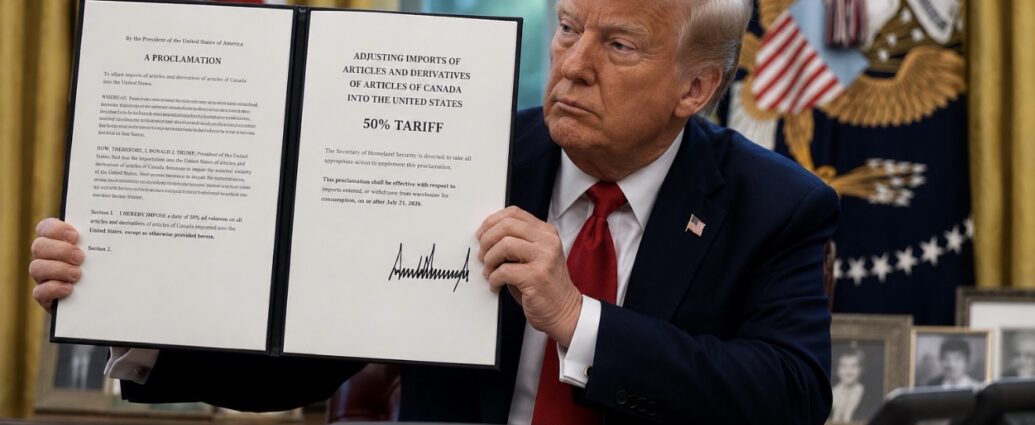
Trump Reaches Back to a Dormant 1930 Statute to Slap Canada With 50% Duties
President Donald Trump has invoked Section 338 of the Tariff Act of 1930 — a provision on the books for nearly a century but never once used to actually impose tariffs — to place an additional 50% duty on roughly $20 billion in Canadian imports, opening a new front in his trade agenda and a fresh legal question over how far presidential tariff power reaches.
The proclamations, signed Monday, target a broad slice of Canadian goods running from wine, cement and furniture to autos, dairy products and alcohol. A White House fact sheet described the coverage as spanning everything “from wine to hockey sticks to cement,” with the dairy list reaching various milks, creams, whey, lactose and cheeses. The duties are set to take effect in roughly 30 days, putting them on track to land in August, ahead of the holiday shopping season.
Section 338 lets the president impose tariffs of up to 50% on goods from countries found to discriminate against U.S. commerce. Trump chose the maximum penalty the statute allows. The administration frames the action as a response to Canada’s decision to retaliate against earlier U.S. tariffs — a step officials note only China had otherwise taken. U.S. Trade Representative Jamieson Greer described the new duties as a direct consequence of that retaliation in a Tuesday morning interview, casting them as the natural result of Ottawa’s countermeasures rather than an opening salvo.
What makes the move unusual is the tool itself. Section 338 sits inside the 1930 law commonly known as Smoot-Hawley, the tariff act frequently blamed for deepening the Great Depression. This particular provision, though, was threatened over the decades but never triggered. A 2016 legal analysis found no public record of the section being invoked since 1949, and senior administration officials acknowledged to reporters that using it this way has no precedent. One official, speaking on background, conceded the novel use could draw a court challenge but argued the situation “fits squarely with what the statute allows.”
The timing is not accidental. The administration turned to Section 338 after courts earlier this year narrowed the emergency tariff powers Trump had leaned on, and after the Supreme Court ruled against the use of those emergency authorities for the so-called “Liberation Day” tariffs. That decision sent the White House hunting for alternative legal footing. Section 338 offers a faster path than other trade tools — the Section 232 national security route and the Section 301 unfair-trade statute both require investigations and public comment periods that can stretch for months. The stopgap 10% global levy the White House imposed under Section 122 to replace many invalidated tariffs happens to expire this Friday, adding urgency to the search for durable authority.
For American consumers, the duties carry a direct cost. Landing on autos, alcohol and dairy just as holiday spending ramps up, the tariffs raise the prospect of higher shelf prices and add to inflation pressure at a moment when energy costs are already elevated by conflict in the Middle East. One market strategist estimated the measure would lift the average tariff rate on Canadian goods by about 2.3 percentage points. The political exposure is real too, with the added costs arriving before November’s midterm elections — a vulnerability some lawmakers have flagged in past efforts to repeal Section 338 over worries about its potential for misuse.
The larger significance lies in what the maneuver signals to the rest of the world. The discrimination rationale at the heart of Section 338 is built for reciprocal disputes, and Trump has long complained that trading partners charge higher import rates than the United States. The European Union’s 10% tariff on passenger cars — four times the 2.5% U.S. rate — has been a recurring irritant, and trade attorneys point to the bloc as a logical next target for the same argument now being tested on Canada. In that sense, Ottawa is less the endpoint than the proving ground.
Canadian Prime Minister Mark Carney criticized the tariffs as the latest in a series of U.S. actions straining an already tense relationship. Whether Canada answers with a legal challenge, further retaliation, or both will shape the next month before the duties bite. The broader renegotiation of the USMCA framework, now potentially extending for years, remains the central venue for resolving the underlying fights over dairy, autos and alcohol that prompted Monday’s move.
For now, businesses and foreign governments are left to absorb a familiar lesson from this White House: even when a specific tariff is delayed or struck down, the willingness to reach for untested authority keeps the threat alive — and keeps companies planning for higher costs.
JBizNews Desk | Washington, D.C.
© JBizNews.com All Rights Reserved. Reproduction or distribution without written permission is prohibited.

Cracker Barrel sells Maple Street Biscuit Company, closes 16 locations
Cracker Barrel is selling restaurant properties and exiting its Maple Street Biscuit Company business as it works to cut debt and improve profits.
The Southern country-themed chain said Monday it sold the Maple Street brand and assets tied to 35 locations to Biscuit Belly LLC. Cracker Barrel will close the remaining 16 Maple Street restaurants.
In a separate move, Cracker Barrel also completed a sale-leaseback deal involving 26 company-owned locations, generating roughly $77 million in net proceeds.
The company plans to use the money to pay down debt while continuing to operate the restaurants by leasing the properties from the new owner.
CRACKER BARREL RESPONDS TO REPORTS ABOUT EMPLOYEE DINING REQUIREMENTS DURING WORK TRAVEL
“These efforts reflect the discipline we bring to managing our business and balance sheet as we position Cracker Barrel for long-term success and shareholder value creation,” Julie Masino, president and CEO of Cracker Barrel, said in a statement.
“Our sale-leaseback transaction will allow us to opportunistically reduce debt while monetizing a portion of our owned real estate at an attractive valuation.”
Masino added, “Divesting Maple Street sharpens our focus on the core Cracker Barrel brand and is expected to improve profitability.”
Biscuit Belly, which currently has 15 locations, said the deal will allow it to expand more quickly. It plans to convert the acquired Maple Street restaurants into Biscuit Belly locations over the next 18 to 24 months.
CRACKER BARREL SALES, TRAFFIC CONTINUE TO SLUMP MONTHS AFTER FAILED REBRAND
The first conversions will begin in the greater Cincinnati area and Richmond, Virginia. The deal will more than triple Biscuit Belly’s footprint and is expected to help the chain grow to more than 60 locations by the end of 2028.
“When we looked at Maple Street’s geography, footprints, and established teams, a light bulb went off,” Chad Coulter, co-founder and CEO of Biscuit Belly, said in a statement.
Maple Street accounted for less than 2% of Cracker Barrel’s annual revenue. Cracker Barrel said the sale is expected to improve adjusted EBITDA beginning in fiscal 2027.
Cracker Barrel expects to record between $37 million and $39 million in non-cash charges tied to the Maple Street exit during its fiscal fourth quarter. It also anticipates between $6 million and $8 million in additional cash costs.
The moves come as Cracker Barrel, which operates roughly 660 company-owned locations across 43 states, works to move past backlash over proposed changes to its logo and restaurant interiors last summer, including the removal of the “Old Timer” from its logo.
GET FOX BUSINESS ON THE GO BY CLICKING HERE
The company reversed course less than a week later following customer complaints.
Cracker Barrel told FOX Business it had no additional comment beyond its press release.

Ford recalls nearly 388,000 vehicles over second-row seat injury hazard
Ford is recalling nearly 388,000 SUVs because an issue with the second-row easy-entry seats could increase the risk of injury, according to federal regulators.
A total of 387,911 vehicles are affected, including certain 2020-2026 Ford Explorer and 2020-2027 Lincoln Aviator models, the National Highway Traffic Safety Administration (NHTSA) said in its recall notice.
The NHTSA said the vehicles may have a defect that could cause a second-row seat to tip or slide unexpectedly while the vehicle is moving.
FORD RECALLS MORE THAN 110,000 MUSTANG VEHICLES OVER WINDSHIELD WIPER, DRIVETRAIN DEFECTS
“A seat that moves unexpectedly may not properly restrain an occupant during a crash, increasing the risk of injury,” the NHTSA said.
“The switch for the easy-entry second-row outer seats may bind or stick, resulting in the seats unlatching, tipping, or sliding unexpectedly,” the agency explained.
The agency noted some warning signs that vehicle owners should keep an eye out for.
“If the button is stuck in the down position, the customer may not be able to use the easy entry feature or return the seat to its normal position after using the easy entry feature,” the notice reads.
Ford’s Critical Concern Review Group identified 14 reports as of June 16, 2026, of unintended second-row seat movement while the vehicle was in drive. Six involved vehicles that had already received a remedy under an earlier recall, while eight involved vehicles that were not covered by the previous campaign. Ford said it was not aware of any crashes or injuries related to the issue.
BMW RECALLS NEARLY 30K VEHICLES OVER ENGINE STARTER DEFECT THAT COULD CAUSE FIRE
CLICK HERE TO GET FOX BUSINESS ON THE GO
Owners will be instructed to take their vehicles to a Ford or Lincoln dealership, where the second-row easy-entry switch bezel and housing will be replaced with a revised design at no charge.
Owner notification letters will be mailed out later this month, with another letter about the remedy expected to be sent out in January.

Moody’s Upgrades Argentina, Delivering Fresh Vote of Confidence in Milei’s Economic Agenda
BUENOS AIRES, Tuesday, July 21, 2026 — Moody’s Ratings upgraded Argentina’s long-term sovereign credit rating Tuesday from Caa1 to B3 and revised its outlook to positive from stable, saying the country’s risk of default has fallen significantly as President Javier Milei’s sweeping fiscal and economic reforms continue to stabilize the economy. The decision follows sustained budget surpluses, easing inflation, stronger exports, rising foreign investment, and improved access to international financing.
The upgrade represents another milestone in Argentina’s recovery after years of economic instability marked by repeated debt defaults, runaway inflation, strict currency controls, and shrinking investor confidence. Moody’s said the government’s macroeconomic stabilization has moved beyond an initial adjustment phase into a more durable improvement in the country’s credit fundamentals, increasing confidence that Argentina will be better positioned to meet its financial obligations.
The move also brings Moody’s into alignment with Fitch Ratings and S&P Global Ratings, meaning all three major global credit-rating agencies now assign Argentina similar speculative-grade ratings. While the country remains below investment grade, the consistency among the three agencies is viewed by investors as an important sign that Argentina’s financial outlook has improved materially.
For investors, the upgrade carries tangible financial benefits. A stronger sovereign credit rating generally increases demand for a country’s government bonds, lowers borrowing costs, and expands the number of global pension funds, insurers, and institutional investors permitted to invest. Lower financing costs can eventually filter through the economy by making it less expensive for businesses to borrow, expand operations, hire workers, and invest in new projects. Increased confidence can also support stronger capital inflows into sectors such as energy, mining, manufacturing, and infrastructure.
The decision is also a significant political victory for President Javier Milei. Since taking office, Milei has argued that aggressive spending cuts, fiscal discipline, deregulation, and free-market reforms would restore Argentina’s credibility after decades of economic mismanagement. Moody’s latest action represents one of the strongest endorsements yet from a major international ratings agency that those policies are improving the country’s financial standing. The upgrade is likely to strengthen Milei’s position with investors, international lenders, and business leaders while reinforcing his administration’s message that continued economic reforms are beginning to produce measurable results.
Moody’s also cited improvements in Argentina’s external finances. The agency noted stronger export performance, rising foreign direct investment—particularly in the energy and mining industries—and improved access to external funding. Argentina’s central bank has also increased foreign-exchange reserves without creating significant pressure on the peso, strengthening the country’s financial resilience.
Despite the positive outlook, Moody’s cautioned that challenges remain. Argentina continues to carry a substantial debt burden and faces major refinancing obligations ahead of the 2027 election cycle. While the agency believes policy continuity has become more likely under the current economic framework, any significant reversal of reforms or renewed political instability could weigh on investor confidence and slow further rating improvements.
Markets will now watch whether the improved rating helps reduce Argentina’s country-risk premium, lower future borrowing costs, and attract additional international investment. If those trends continue, the latest upgrade could mark another important step in Argentina’s effort to rebuild its standing in global financial markets after years of economic turmoil.
JBizNews Desk | Wall Street
© JBizNews.com. All Rights Reserved. Reproduction or distribution without written permission is prohibited.

Maduro, US prosecutors propose June 2027 start for drug trafficking trial
Ousted Venezuelan President Nicolas Maduro and prosecutors with the US Justice Department on Tuesday proposed a June 2027 start date for Maduro’s US criminal trial on drug trafficking charges.
The joint proposal came in a court filing ahead of a hearing in Maduro’s case scheduled for Wednesday at 12 p.m. EDT (1600 GMT) in Manhattan federal court. The filing provided a rough blueprint of the possible next steps in one of the most high-profile and consequential criminal cases in recent US history.
US District Judge Alvin Hellerstein, who is overseeing the case, must ultimately set the schedule. The parties said in the filing that they may seek changes to the schedule.
US Special Forces captured Maduro and his wife, Cilia Flores, in Caracas during a nighttime raid in January and brought them to New York to face the charges. They have pleaded not guilty.
In the filing, lawyers for both sides proposed that Maduro’s first round of legal motions to try to have the case dismissed would be due on September 2. That would likely include a motion to dismiss the case on the basis that he should be immune from prosecution as the head of a sovereign state.
Maduro prepares further motions in US drug trafficking case
Maduro would then file a second round of legal motions by January 11, after prosecutors hand over any classified evidence for the defense’s review, according to the filing.
Maduro, a socialist who had an antagonistic relationship with Washington while leading Venezuela from 2013 until his capture, referred to himself as a “prisoner of war” during his January 5 appearance. He has long accused the United States of seeking his ouster to gain greater control of the country’s vast oil reserves.
The United States calls Maduro a corrupt dictator whose mismanagement of the economy led to an economic collapse, and accuses him of rigging his reelection votes in 2018 and 2024. It stopped recognizing him as Venezuela’s legitimate president in 2019.
Maduro and Flores have been held in a federal jail in Brooklyn since they were brought to the US in January.

Allergy medication recalled over possible drug mix-up that could trigger ‘life-threatening’ reactions
Federal regulators on Monday announced the recall of a popular allergy medication over concerns it may have been cross-contaminated with another drug, potentially causing “life-threatening” reactions.
The U.S. Food and Drug Administration (FDA) said certain lots of Cetirizine hydrochloride Tablets, commonly sold over the counter as generic versions of Zyrtec, are affected by the voluntary recall.
The recall was initiated Saturday by Unique Pharmaceutical Laboratories, a division of J.B. Chemicals & Pharmaceuticals Ltd., based in Panoli, Gujarat, India, according to the FDA.
The affected tablets may be contaminated with ranitidine, a medication once widely used to reduce stomach acid production. Ranitidine, sold under the brand name Zantac, was removed from the U.S. market in 2020 after regulators raised concerns over contamination with a probable human carcinogen. A reformulated version of the medication was later approved by regulators in 2025.
FDA SAYS TAYLOR FARMS CYCLOSPORA LETTUCE TEST WAS A FALSE POSITIVE
The FDA warned that some consumers could experience “serious adverse events,” including anaphylaxis, a rapid and potentially life-threatening allergic reaction.
“For consumers with a hypersensitivity to the ingredients in ranitidine, there is a reasonable probability that ingestion of cetirizine tablets contaminated with ranitidine could result in serious adverse events,” the FDA said.
Anaphylaxis symptoms may manifest as low blood pressure, difficulty breathing, trouble swallowing, swelling of the throat or face, intense itching, hives and loss of consciousness.
Unique Pharmaceuticals said it has not received any reports of adverse events associated with the recall.
POPULAR GARLIC POWDER RECALLED NATIONWIDE OVER BACTERIAL CONTAMINATION CONCERNS
The issue was discovered after a pharmacy technician noticed discrepancies while counting tablets during dispensing, according to regulators. Some tablets appeared to have a “red dot,” while others appeared discolored or had multiple red-colored spots.
The recalled products were reportedly distributed nationwide to wholesalers and retailers.
CLICK HERE TO GET FOX BUSINESS ON THE GO
The affected antihistamine is packaged in a high-density polyethylene (HDPE) bottle containing 100 tablets of 5 mg cetirizine hydrochloride tablets USP under the National Drug Code (NDC) 16571-401-10.
Four manufacturing lots are included in the recall: GY825029, GY825030, GY825031 and GY825032.
All affected lots have an expiration date of October 2028.
Unique Pharmaceuticals has notified its distributor, Rising Pharma Holdings Inc., of the recall.
Consumers with questions about the recall can contact Rising Pharma Holdings Inc. at 1-844-874-7464 from 8 a.m. to 5 p.m. ET, Monday through Friday or email pv@risingpharma.com.

Trump unveils phased tariffs on generic drugs to boost US production
President Donald Trump announced Tuesday that imported generic drugs will remain tariff-free for the next two years before facing steep new import duties, saying the move is designed to encourage pharmaceutical companies to manufacture more medicines in the U.S.
In a Truth Social post, Trump said all generic drugs imported into the U.S. will continue to face a 0% tariff beginning Aug. 1, 2026, for a two-year transition period. After that, the tariff will rise to 100% for one year before increasing to 200%.
“Effective August 1st, 2026, all Generic Drugs being brought into the United States will continue to have a TARIFF of ZERO PERCENT for a two-year period of time, after which the TARIFF will be raised to 100% for a one-year period of time, and 200% thereafter,” Trump wrote.
The president said the phased approach is intended to give pharmaceutical companies time to move production to the U.S. before the higher tariffs take effect.
TRUMP ADMINISTRATION HITS CANADA WITH 50% TARIFF OVER ALLEGED TRADE ‘DISCRIMINATION’
“This is done in order to RESHORE Generic Pharmaceutical Production into America, with a penalty to those Companies that decide not to build Plant and Equipment within the stated period of time given to them,” Trump wrote.
Trump said the objective of the policy is “to protect the people of the United States.”
The announcement marks the latest effort by the Trump administration to use tariffs as leverage to encourage domestic manufacturing in industries it considers strategically important, including pharmaceuticals. The administration has repeatedly argued that the U.S. has become overly dependent on foreign countries for critical medicines and pharmaceutical ingredients.
Trump said his administration’s existing policy on patented, branded and innovative drugs would remain unchanged.
WHAT ARE THE MAIN STICKING POINTS IN THE TRUMP ADMIN’S TRADE NEGOTIATIONS WITH CANADA, MEXICO?
“The Policy on Patented, Branded, or Innovative Drugs, which has been so successful, will remain as is,” he wrote.
He also pointed to what he described as a surge in domestic investment by drugmakers.
“Pharmaceutical Facilities are being built, at a level never seen before, all over the United States of America,” Trump wrote.
The Association for Accessible Medicines, which represents generic drug manufacturers, said it is seeking additional details on the proposal but supports policies that strengthen domestic manufacturing.
“We need to understand more the specifics of the policy, but the generics industry is committed to pursuing policies that support and stabilize both the industry and the access necessary to ensure patients have reliable options for affordable medicines,” Association for Accessible Medicines President and CEO John Murphy III said in a statement shared with FOX Business.
Murphy said the industry has expanded manufacturing investments in the U.S. over the past two years but argued that structural problems involving purchasing and reimbursement continue to hinder additional growth. He said the group looks forward to working with the administration and Congress on policies to strengthen the domestic generic drug industry.
Generic drugs account for more than 90% of prescriptions filled in the United States, according to the Food and Drug Administration.
CLICK HERE TO GET FOX BUSINESS ON THE GO
Many also rely on global manufacturing networks and imported active pharmaceutical ingredients, making supply chain resilience a growing focus for policymakers and the pharmaceutical industry.
The announcement gives manufacturers a two-year runway before tariffs begin increasing, allowing companies time to decide whether to build or expand U.S. production facilities or continue importing products while facing substantially higher duties.
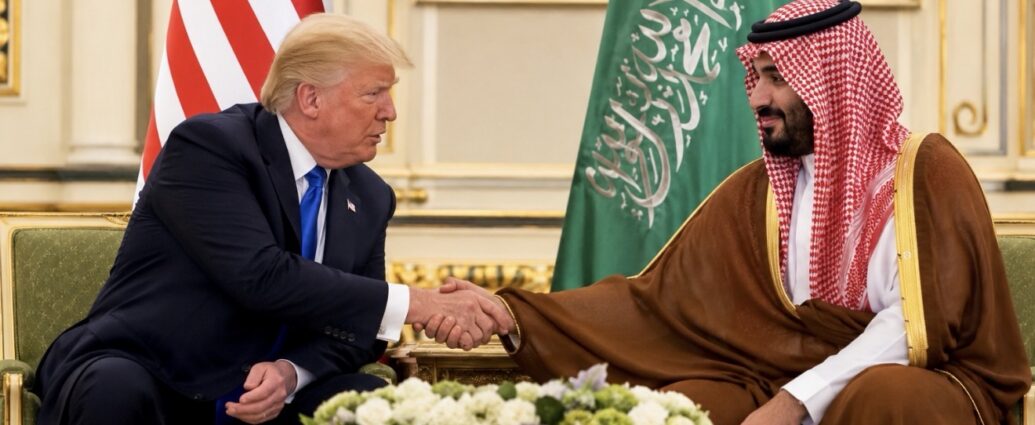
Trump Approves Landmark U.S.-Saudi Nuclear Agreement
WASHINGTON — Tuesday, July 21, 2026 — President Donald Trump has approved a landmark civilian nuclear cooperation agreement with Saudi Arabia, clearing the way for a 30-year partnership expected to generate tens of billions of dollars in investment while giving American companies a leading role in building the kingdom’s nuclear-energy infrastructure. The agreement is scheduled to be formally signed Wednesday by U.S. Energy Secretary Chris Wright and Saudi Energy Minister Prince Abdulaziz bin Salman.
The accord represents one of the most significant U.S.-Saudi commercial agreements in years and marks a major step in Riyadh’s effort to diversify its economy beyond oil under its Vision 2030 strategy. American engineering, energy, construction, and advanced technology companies are expected to compete for contracts tied to reactor construction, fuel-cycle services, engineering support, safety systems, and long-term operations.
A key provision of the agreement allows for the possibility of a U.S.-built uranium enrichment facility inside Saudi Arabia if a future joint American-Saudi technical review concludes such a project is justified. Administration officials argue that allowing U.S. companies to participate directly would provide Washington with greater oversight and influence over the kingdom’s civilian nuclear program while keeping competitors from securing those projects.
The agreement now heads to Congress for formal review, where lawmakers from both parties are expected to closely examine its nonproliferation provisions. Critics have raised concerns that permitting uranium enrichment within Saudi Arabia could increase nuclear proliferation risks in the Middle East, while supporters argue that U.S. involvement provides stronger safeguards than allowing Riyadh to seek technology from other nations. Because the agreement falls under existing federal review procedures, blocking it would require congressional action capable of overcoming a potential presidential veto.
For American businesses, the economic implications could extend well beyond reactor construction. Large-scale nuclear projects typically generate decades of work involving manufacturing, engineering, cybersecurity, maintenance, environmental services, workforce training, and fuel management. The agreement also positions U.S. firms to compete for future expansion as Saudi Arabia works to increase domestic electricity production while reducing reliance on oil-fired power generation.
Energy analysts say expanding civilian nuclear capacity would allow Saudi Arabia to free more crude oil for export rather than domestic electricity production, potentially strengthening long-term government revenues while supporting broader industrial development. Nuclear power is expected to become one component of the kingdom’s wider strategy that also includes renewable energy, hydrogen production, and advanced manufacturing.
Financial markets are also watching the agreement because it could stimulate investment across America’s nuclear supply chain. Companies involved in reactor technology, specialized construction, uranium services, electrical equipment, industrial manufacturing, and engineering consulting could benefit if major projects move forward over the coming years.
The agreement also reinforces Washington’s broader economic relationship with Saudi Arabia at a time when both governments continue expanding cooperation across energy, infrastructure, technology, defense, and critical minerals. Administration officials describe the accord as both an economic opportunity for American industry and a strategic partnership designed to strengthen U.S. influence in one of the world’s most important energy-producing regions.
JBizNews Desk | Wall Street
© JBizNews.com. All Rights Reserved. Reproduction or distribution without written permission is prohibited.

US Household Income Needed to Buy Starter Homes Nearly Doubles Since 2019: Realtor
The report also indicates that compared to June 2019, there are now about 300,000 fewer homes on the market priced under $350,000—reflecting the reduced supply of starter homes. In addition, seven years ago, the average starter home sold for $256,000, compared with the current average of $344,000.
The report shows that in June 2019, 55.1 percent of active listings were priced under $350,000, but that amount has dropped to 37.6 percent today. …

US CENTCOM strikes Iran, marking the eleventh consecutive night of bombardment
The US military said late on Tuesday it began its latest strikes on Iran, marking the 11th consecutive night of American attacks.
“The strikes are designed to continue degrading Iran’s ability to threaten commercial shipping in the Strait of Hormuz,” the US Central Command said in a statement on X/Twitter.
CENTCOM forces began striking military targets in Iran at 7 p.m. ET today for the 11th consecutive night. The strikes are designed to continue degrading Iran’s ability to threaten commercial shipping in the Strait of Hormuz.
— US Central Command (@CENTCOM) July 21, 2026
Explosions reported in Bushehr, home of nuclear power plant
CENTCOM later announced that it had concluded its strikes at 8:15 p.m. EST. The post stated that CENTCOM targeted “Iranian military operation centers, maritime capabilities, aircraft hangars, drone storage facilities, and military logistics infrastructure.”
— US Central Command (@CENTCOM) July 22, 2026
Loud explosions were heard in parts of Iran’s Bushehr County, according to the IRGC-affiliated Tasnim News Agency.
Bushehr is home to the Bushehr Power Plant, Iran’s first and only commercial nuclear reactor. The region also houses a naval base that is critical for the functioning of the Islamic Revolutionary Guard Corps Navy (IRGCN).
Regime-affiliated Fars News Agency cited East Azerbaijan officials saying that a military site was struck near Tabriz in a US air attack.
Iranian state TV also said that air defenses were activated throughout the capital of Tehran.


Trump Cabinet joins TikTok after DOJ clears platform for federal use: ‘Majority-owned by American investors’
Most members of President Donald Trump‘s Cabinet are expected to launch official TikTok accounts Tuesday, a White House official confirmed to Fox News.
The coordinated rollout, first reported by Axios, follows a July 16 opinion from the Justice Department’s Office of Legal Counsel concluding that federal employees may use TikTok because the app is now operated by a U.S.-approved owner that falls outside the federal ban.
The DOJ opinion concluded that the version of TikTok operated by the TikTok U.S. Data Security Joint Venture is not prohibited under the No TikTok on Government Devices Act, a 2022 law that barred TikTok from federal government devices because of national security concerns tied to Chinese parent company ByteDance.
The opinion says the law prohibits versions of TikTok “developed or provided by entities in which ByteDance Limited has a controlling ownership stake.”
TIKTOK AVOIDS US BAN BY FINALIZING HISTORIC TRUMP-BACKED AMERICAN MAJORITY OWNERSHIP DEAL
According to the DOJ, the current version of TikTok no longer meets that definition because the joint venture “functions independently of ByteDance, is majority-owned by American investors and has revised the content recommendation algorithm and cybersecurity program originally developed by ByteDance to insulate federal government information against the concerning security features that initially motivated the prohibition.”
The decision marked a significant shift in the federal government’s posture toward TikTok after years of bipartisan concerns over the app’s ties to China and data security risks.
Trump has increasingly embraced TikTok, arguing the platform helped him connect with younger voters during the 2024 campaign.
“You know, I watched a couple of people critical of the fact that TikTok, TikTok, it’s so bad. It’s so dangerous. It’s horrible. They’re spreading all these rumors,” Trump said July 8.
“And the numbers came out yesterday. You know who’s No. 1 on TikTok? I am. I’m No. 1 at TikTok.”
Trump also dismissed criticism from some China hawks, saying his messaging on the platform undercuts concerns about Chinese influence.
“And all I talk about is how bad communism is, right?” Trump said. “They say, ‘Oh, it’s terrible.’ They’re spreading. But I’m No. 1. I listen to Gordon Chang. I like Gordon Chang, but he’s always, like, negative.
“Oh, China is so terrible. They’re so terrible, and TikTok is so terrible. But I am No. 1 on TikTok. I have, like 4 billion views or something like that.”
Earlier this month, Trump also credited TikTok with helping deliver his election victory.
CLICK HERE TO GET FOX BUSINESS ON THE GO
“We have to be careful because China is a great competitor,” Trump said during a July 6 event. “But, you know, he was talking about we must stop TikTok. I’m No. 1 on TikTok. I think it helped me win the election in a landslide if you want to know the truth.”
Fox News’ Patrick Ward contributed to this report.

Wall Street Talks Up Carry Trade as Returns Soar Most in Decades
One of the oldest playbooks in global finance is having its best year in a generation, and the biggest banks are urging clients to keep leaning in.
The strategy in question is the carry trade—borrowing in a low-yielding currency and parking the money where interest rates are higher, pocketing the spread. The approach has returned roughly 12% in 2026, its strongest start in three years, as calmer markets encourage investors to reach for yield. That resilience has come even as the oil shock from the Iran war rattled the broader economy, with muted cross-asset volatility drawing traders into the trade.
The counterintuitive part is that a war-driven energy crisis has helped rather than hurt. Surging oil prices have strengthened commodity-linked currencies such as Brazil’s real and Colombia’s peso, popular destinations for carry cash, while a common version of the trade funds those positions by borrowing cheap Japanese yen.
Goldman Sachs has been among the loudest voices. The bank told clients that carry trades are seeing their most compelling backdrop in more than two decades, with strategist Stuart Jenkins writing that the setup matters more for Group-of-10 currencies than at almost any point since 2000. Goldman pointed to interest rates settling at high and widely varied levels across major developed economies, opening unusually wide yield gaps, while currency swings have dropped to historically subdued levels. Its preferred funding currencies for the months ahead are the yen, the Swiss franc and the euro.
A weakening yen is doing much of the heavy lifting. Goldman raised its dollar-yen forecast on July 6, and now expects the greenback to reach 162 yen within three months and 165 within a year—up from a prior target of 155—with the yen already near levels last seen roughly four decades ago. Japanese authorities intervened to the tune of more than 11 trillion yen between April and May, with limited success against the broader slide.
The scale of the market makes the call consequential. Carry is one of the most widely used strategies in a currency market that turns over about $9.5 trillion a day. Rising activity tends to spill into spot, forwards, options and the rates desks that price the funding leg.
There is a well-known catch. The same low-volatility calm that makes carry profitable can reverse violently if interest-rate expectations or risk sentiment shift, and crowded positioning becomes its own vulnerability when leverage builds. For now, with rate gaps wide and markets steady, the trade that periodically humbles Wall Street is once again its favorite.
JBizNews Desk | New York
© JBizNews.com All Rights Reserved. Reproduction or distribution without written permission is prohibited.

GM Ramps Up Investments to Move Production Back to US, Introduces New Gas-Powered Cadillacs
The Detroit-based automobile manufacturer stated during its second-quarter earnings call on July 21 that it will start onshoring significant manufacturing starting next year, bringing domestic production capacity to more than 2 million vehicles and reducing its exposure to tariff charges.
GM said it paid approximately $900 million in tariffs in the second quarter and expects to realize similar charges in the third and fourth quarters. GM maintained its forecast of full-year bottom-line charges of $2.5 billion to $3.5 billion from tariffs….

Apple to Launch ‘Upgrade’ Device Leasing Program With Klarna to Spur Sales
The structural shift matters as much as the consumer-facing pitch. Apple’s current installment programs leave it managing the loan balance and collections; routing that through Klarna moves the day-to-day credit administration to the fintech, freeing Apple to focus on moving units as component costs rise and shoppers grow more price sensitive. The arrangement also comes after Apple abandoned plans for its own in-house hardware subscription program in 2024, letting it offer leasing without carrying the financial risk directly.
Investors rewarded the fintech immediately. Klarna shares jumped as much as 11% to $20.78 before paring gains, while Apple’s stock edged higher. Keefe Bruyette kept its Outperform rating and $26 target, arguing the deal strengthens Klarna’s position with U.S. merchants and deepens its footprint in consumer financing. The report on the partnership was first published by Bloomberg. For Klarna, an Apple storefront is a high-volume prize; for Apple, it is a way to keep the upgrade cycle turning as the economics of building premium hardware get harder.
JBizNews Desk | Cupertino, Calif.
© JBizNews.com All Rights Reserved. Reproduction or distribution without written permission is prohibited.

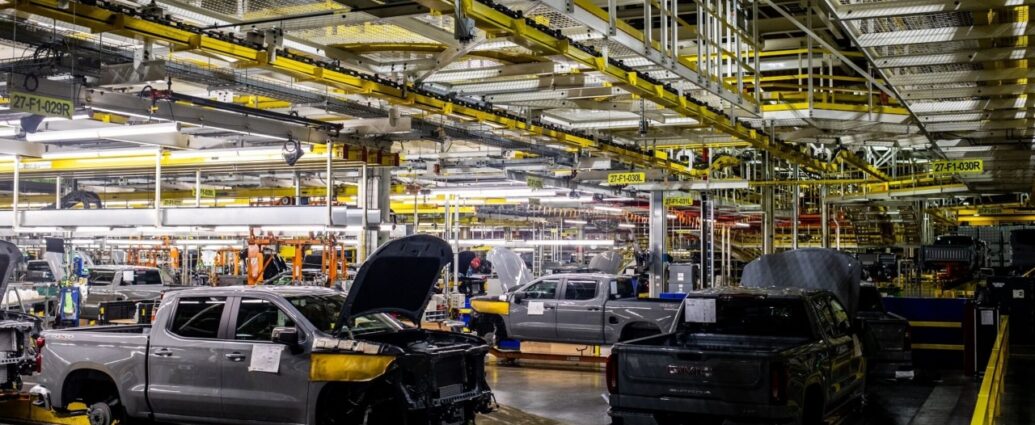

Trump Plays Down Prospects for Iran Talks Amid Red Sea Threat
President Trump on Tuesday tamped down expectations for a diplomatic breakthrough with Iran, even as Tehran’s threat to a second critical oil chokepoint kept energy markets on edge nearly five months into a conflict that has already reshaped global crude flows.
The renewed uncertainty centers on the Bab el-Mandeb, the narrow passage at the southern end of the Red Sea that has become the oil market’s relief valve since the Strait of Hormuz was effectively shut early in the war. Iran has asked the Houthis in Yemen to stand ready to close the Red Sea route if the U.S. strikes Iranian power infrastructure, a threat that has repeatedly pushed crude higher this month. With one of the region’s two primary export arteries already disrupted, traders are pricing in the risk that both could be constrained at once.
The stakes are substantial. Petroleum moving through Bab el-Mandeb totaled roughly 7.4 million barrels a day in June, about 7% of global output, up sharply from 4.2 million barrels a day a year earlier—a jump that reflects how heavily producers have leaned on the Red Sea since Hormuz seized up. Saudi Arabia has surged barrels through its East-West pipeline to the Red Sea, helping offset lost supply to buyers in Japan and South Korea. Cutting the southern route would strip away that workaround.
Analysts tracking the shipping picture warn that a simultaneous squeeze would ripple well beyond the price at the pump. Constraints hitting Hormuz and Bab el-Mandeb together would amplify supply-chain stress, tighten tanker availability, and drive insurance premiums higher. Those freight and coverage costs feed directly into landed fuel prices for importers already navigating a disrupted map.
There have been intermittent signs of de-escalation. Iran’s release of a U.S. citizen was read by some traders as a possible path away from all-out war, briefly easing prices, and supply has crept back elsewhere: Iraqi crude loadings more than doubled to roughly 1.2 million barrels a day in the first half of July as exports accelerated. But those gains have done little to offset the structural loss of Hormuz volumes.
Price action has tracked the diplomatic mood swings closely. Brent jumped nearly 4% to break $90 a barrel after the U.S. confirmed at least three service members had died in recent fighting, then eased when Iran’s foreign ministry signaled negotiations could still be pursued. For American households, the war premium has been steady: the national average pump price sat near $3.94 a gallon in recent days.
The conflict, which began Feb. 28, has turned energy logistics into the central economic story of 2026. Every threat to a waterway now carries an immediate cost, and Trump’s cool tone toward talks suggests the market’s risk premium is unlikely to unwind soon.
JBizNews Desk | Washington
© JBizNews.com All Rights Reserved. Reproduction or distribution without written permission is prohibited.

More than 2,000 flights canceled as severe storms hammer East Coast
At least 7,000 flights were disrupted Tuesday as severe thunderstorms swept across the East Coast, snarling air travel at some of the nation’s busiest airports.
More than 2,000 flights within, into or out of the United States were canceled, while over 5,000 others were delayed, according to FlightAware.
The storms prompted flood warnings and tornado watches across parts of the Northeast on Tuesday. Weather and emergency officials indicated at least two tornadoes were spotted — one in northeast Pennsylvania and another in northern New Jersey, according to Fox Weather.
Airports in the New York City area, Boston, Philadelphia and Washington, D.C., experienced some of the most significant disruptions.
FAA BEGINS DJT TRANSITION AS TRUMP AIRPORT NAME TAKES EFFECT
The Federal Aviation Administration (FAA) issued ground stops for at least eight U.S. airports due to the thunderstorms, including:
Canada’s Toronto Pearson International Airport (YYZ) also received a ground stop.
HOUSE PASSES DAYLIGHT SAVING TIME REFORM AS TRUMP SIGNALS SUPPORT FOR ENDING CLOCK CHANGE
While John F. Kennedy International Airport (JFK) was not under a ground stop as of Tuesday afternoon, it was experiencing an average ground delay of about four hours due to the severe weather, according to FlightAware.
In the New York City metropolitan area alone, nearly 600 departing flights had been canceled and more than 500 others delayed, the outlet reported.
Figures are expected to rise as the storms continue to move through the region.
Several U.S. airlines issued travel advisories and flexible rebooking options for affected passengers.
“Repeated rounds of severe weather across the Northeast and Mid-Atlantic have significantly disrupted travel plans for many of our customers. Our teams are working around the clock to help affected customers reach their destinations,” JetBlue said.
The airline said customers whose flights were affected may rebook travel through Sunday or request a refund to their original form of payment.
GET FOX BUSINESS ON THE GO BY CLICKING HERE
United Airlines said it is waiving trip change fees for eligible customers who rebook flights departing by Thursday.
“You can reschedule your trip, and we’ll waive change fees and fare differences. But your new flight must be a United flight departing between July 20, 2026, and July 23, 2026,” the airline said. “Tickets must be in the same cabin and between the same cities as originally booked.”
American Airlines said it will notify affected customers by email or through its mobile app. Eligible travelers must rebook by Wednesday, with new travel scheduled by Friday.

Limmud LA to return in 2027 with more than 100 Jewish learning sessions
Limmud LA will return to Los Angeles over Martin Luther King Jr. weekend in January 2027, offering more than 100 sessions covering Jewish religion, culture, history and contemporary life, Limmud North America announced.
The festival will run from January 16 through January 18, beginning with a Saturday night celebration followed by two full days of programming on Sunday and Monday. Organizers said they expect more than 1,000 participants from across the Los Angeles area.
Limmud LA has also opened a call for presenters, inviting members of the public to propose sessions on subjects including Torah, Jewish history, comedy, cooking, music and other areas of Jewish interest.
Every participant can be both a student and a teacher
The Limmud model is based on the principle that every participant can be both a student and a teacher, allowing community members and established experts to lead sessions alongside one another.
Proposals can be submitted through the Limmud LA website. Presenters selected for the festival are expected to be announced in the fall, when participant registration will also open.
Festival to honor Alex Shwarzstein
The 2027 festival will be presented by Meyer Shwarzstein and Susan Kahn in memory of their daughter, Alex Shwarzstein, a longtime Jewish community volunteer and former co-chair of Limmud NY.
Shwarzstein was also involved in developing Limmud communities in New York and the San Francisco Bay Area. She described Limmud as “a unique and open space that is truly pluralistic,” according to organizers.
“It is a rare and beautiful thing to see teenagers, parents and grandparents all engaging and sharing ideas side by side,” Meyer Shwarzstein said.
Opportunities for people from different backgrounds to exchange ideas
Organizers said the festival would seek to continue her commitment to pluralistic Jewish learning and to creating opportunities for people from different generations and backgrounds to exchange ideas.
Rabbi David Singer, CEO of Limmud North America, said such spaces were especially important at a time of growing division within Jewish communities.
“The Jewish world needs more places where people with different backgrounds, experiences and perspectives can come together with curiosity, humility and a genuine desire to learn from one another,” Singer said.
“That’s what Limmud does, and that’s what makes Limmud LA such an exciting moment – not only for Los Angeles, but for Jewish life across North America.”
Major sponsors of the festival include the Jewish Federation of Greater Los Angeles, the Alex Shwarzstein Foundation, the Jewish Community Foundation of Los Angeles and Jewish National Fund-USA.
Community partners include Hillel at UCLA and BJE: Builders of Jewish Education, along with other Jewish organizations in the Los Angeles area.
Organizers are also accepting inquiries from additional sponsors and community partners ahead of the festival. Registration and further program information are expected to be released in the fall.

Zelensky names new commander-in-chief of Ukraine’s military in major shakeup of military leadership
President Volodymyr Zelensky on Tuesday named a young general, Mykhailo Drapatyi, as the commander-in-chief of Ukraine’s military, the biggest shake-up of the country’s military leadership as the war with Russia is in its fifth year.
Zelensky replaced former Commander-in-Chief Oleksandr Syrskyi, 60, with Drapatyi, 43, a respected and experienced commander who led the country’s land forces from 2024 to 2025.
The change follows days of street protests sparked by a surprise governmental reshuffle that ousted the popular defense minister. It also reflects tensions between Ukrainians who see the use of technology as key to winning the war and an old guard with a traditional approach.
Zelensky last week dismissed tech-savvy reformist Mykhailo Fedorov, 35, who led an effort to advance drone innovation and had clashed with Syrskyi, accusing him of sabotaging his work.
Drapatyi was supported by some of the protesters who rallied outside Zelensky’s office for several days demanding Fedorov be brought back, and Syrskyi removed.
‘Operations ongoing and continue steadily’
“The operations of the Ukrainian Defense Forces are ongoing and must continue steadily. Ukraine’s plan for long-range sanctions and our program of middle-range strikes will be carried out with absolute precision,” Zelensky said.
The reshuffle came as Ukraine seeks to gain the upper hand in the war by heavily striking Russia’s energy sector – its main source of budget revenue – and logistics. Fedorov’s dismissal stirred concerns among military analysts that Ukraine’s recent battlefield momentum could be lost.
“I will work responsibly, with full focus, and with respect for the people who are defending our country today,” Drapatyi said on Facebook.
Syrskyi played a key role in Kyiv’s defense in the early days of the war and has been in his top post since early 2024.
But he has also faced harsh criticism for a rigid command style which some service members have said results in high troop losses.
Zelensky did not mention any new post for Syrskyi, saying he discussed with the four-star-general his future service.
He also said that he had offered Fedorov – who previously said he only wants his former job back – a “decent post” to oversee the technological component of the state.

Trump directs lifting of US flight ban to Lebanon after high-level meeting with Joseph Aoun
President Donald Trump said on Tuesday, after meeting with Lebanon’s President Joseph Aoun, that he was directing the US government to allow all domestic airline carriers to fly directly to that country.
All US flights were suspended in 1985 after the hijacking of TWA Flight 847 from Athens, Greece, en route to Rome, Italy. The flight was forced to land in Beirut. During the 17-day ordeal, a US Navy diver was killed.
Before flights to Lebanon could resume, US officials will need to conduct an extensive security review of the Beirut airport and certify its safety. It was unclear if US airlines would be willing to resume flights.
The major US airlines, American Airlines, United Airlines and Delta Air Lines, have halted flights to nearby Tel Aviv, citing security concerns.
The FAA said it “looks forward to working with airlines and our interagency partners to implement the President’s directive and support the safe return of flights to Lebanon.”
US State Department advisory says ‘Do Not Travel’ to Lebanon
The US State Department currently has a “Do Not Travel” advisory for Lebanon for Americans, citing high tensions in the Middle East. In February, the government ordered non-emergency US government employees and family members to leave Lebanon, due to safety risks.
Trump ordered the US Transportation Department to lift a ban on US passenger air service to Venezuela in January after the US captured the country’s president, Nicolas Maduro, in a military operation that month. Service resumed in late April after seven years, with an American Airlines flight from Miami to Caracas.

Thousands of non-citizens register, hundreds vote in New Jersey elections due to software error
Nearly 400 New Jersey residents who were not US citizens cast ballots after thousands of non-citizens were accidentally registered to vote between 2023 and 2024 due to a software error, Democratic Governor Mikie Sherrill said on Tuesday.
The White House seized upon the disclosure to press Republican President Donald Trump’s longstanding claim that voting by non-citizens is widespread, for which he has not presented evidence. Studies show such incidents are rare and often a result of error rather than fraudulent intent.
Trump has increasingly warned that November’s midterm elections could be compromised unless stricter safeguards are adopted. Last Thursday, he delivered a prime-time speech from the White House focused on election security. The president and his allies claim that Democrats benefit from non-citizen voting, although they have provided no supporting evidence.
He has been pushing Republican members of Congress to pass the SAVE America Act, which would require Americans to provide proof of citizenship when registering to vote.
Democrats, who have stymied the bill in the Senate, and voting rights groups argue the legislation is intended to disenfranchise legitimate voters, especially younger voters, people of color and lower-income workers who are more likely to lack the required documentation.
White House: Democrats wrong to suggest non-citizen voting not a concern
Democratic leaders have accused Trump of laying the groundwork for interfering with the midterms, which polls show are likely to result in Democratic gains in a closely divided Congress.
In a statement, the White House said the New Jersey discovery proves that Democrats are wrong to suggest non-citizen voting is not a concern.
“As President Trump has said, there is nothing more important than the integrity of our elections,” White House spokeswoman Abigail Jackson said. “And this latest incident underscores the absolute necessity of the SAVE America Act.”
Sherrill said the software glitch added about 6,600 non-citizens to the state’s voter rolls between June 2023 and June 2024 even though they answered “no” when asked whether they were US citizens while applying for driver’s licenses or ID cards.
The state’s preliminary analysis showed fewer than 400, including Democrats, Republicans and unaffiliated voters, actually voted, Sherrill said.
Democrat Governor Sherrill denies implications of election integrity failure
Sherrill said she has ordered the removal of those individuals mistakenly added to the voter rolls and will replace the vendor responsible for the error, which occurred before she took office in January. The software glitch itself was corrected in 2024, the governor said.
“As the Trump Administration tries to weaponize elections for political gain, I am ensuring that we protect our elections,” she said at a press conference. “Let me be clear: Donald Trump has zero credibility on the issue of election integrity… The difference between my administration and this White House is stark: we don’t deflect, deny, or exploit problems for our own gain. We find them, and we fix them.”
In his Thursday speech, Trump asserted that his administration had discovered more than 275,000 non-citizens registered to vote in four states, including New Jersey, though he did not provide evidence regarding how many had actually voted.
More than 4 million people voted in New Jersey in the 2024 presidential election, meaning that if around 400 non-citizens all voted in that contest, they would represent less than 1 in 10,000 ballots cast.
“We have no evidence at this time that any elections were swayed,” Sherrill said.
Trump raises doubts on electoral outcomes for years
Trump has spent years raising doubts about electoral outcomes. He falsely asserted that his 2020 loss to Democrat Joe Biden was rigged due to non-citizen voting, mail ballot fraud and voting machine tampering.
Numerous courts and vote recounts found no evidence of large-scale fraud in the 2020 election. A Reuters data analysis revealed that voting violations by noncitizens occur extremely rarely and were often the result of misinformation from others or confusion on their part.
On Friday, US Homeland Security Secretary Markwayne Mullin sent a letter to the four states Trump mentioned in Thursday night’s speech: New Jersey, California, Nevada and Pennsylvania. He asked them to review their voter rolls and respond within two weeks.
Sherrill said she learned of the software error on Wednesday, a day before Trump’s speech.
Asked about Mullin’s letter, she said the state requested evidence for Trump’s claims about tens of thousands of non-citizens registered to vote in New Jersey but has not received a reply.
A spokesperson for Pennsylvania’s top election official noted that evidence shows non-citizen voting is “extremely rare” but said the state would review “any information provided by DHS so we can evaluate the validity of these claims.”
Representatives for Nevada and California’s top election officials did not immediately respond to a request for comment.

A rare chance for peace between Israel and Lebanon must not be missed – opinion
On Tuesday, Lebanese President Joseph Aoun will arrive at the White House, the first official visit by a Lebanese president in 17 years. At a time when the Middle East is undergoing profound change, this visit should not be viewed as a routine diplomatic engagement. It represents a rare opportunity to ask a question that has seemed impossible for generations: can Lebanon and Israel finally begin building a different future?
We write this from opposite sides of a border that has too often been defined by fear, conflict, and missed opportunities. Our experiences are different, but our hope is shared.
Avital is a former senior officer in the Israel Defense Forces, the daughter of a Holocaust survivor, and someone who has spent years living under the threat of Hezbollah rockets and attacks. She has witnessed firsthand the human cost of perpetual conflict and understands the necessity of security.
Ahmed is a Lebanese citizen who grew up in the shadow of a hijacked state. He has watched his country’s vibrant potential be systematically suffocated by an armed terror organization that operates completely outside the law.
Since October 7, 2023, Lebanon has been dragged, twice, into wars that led to humanitarian and financial catastrophes. The first was initiated by Hezbollah on October 8, 2023, as a ‘support front’ for Hamas’ war in Gaza. The second began in March 2026, after Hezbollah decided to avenge Ali Khamenei’s assassination. Both wars had nothing to do with Lebanese interests and came as Lebanon was contending with both social divisions and economic hardship.
Lebanon must break the cycle of Iranian influence and conflict
These two recent cases alone are enough to show how Hezbollah is being led, guided, and funded by Iran and will inevitably bring war to Lebanon. As a Lebanese citizen living in this country, I find it irrational and unfair for me and millions like me to stand and watch this never-ending cycle, from the PLO to Hezbollah. It is time to take a clear stance to put an end to this cycle and build a nation where dreaming about a better future should not clash with a terror organization’s foreign affiliations and the interests of the countries it’s associated with.
We are standing at a historic crossroads: either the Lebanese people and our elected government reclaim our state institutions and monopoly on force now, or we allow our nation to permanently dissolve. True independence means having the courage to decide our own foreign policy based entirely on Lebanese national interests that begin with ending Iran’s hegemony and end with securing peace across our southern border.
Lebanon and Israel have already begun a negotiation process hosted by the United States, before which the flags of the two nations were not allowed to be seen together due to outdated local policies. With President Aoun in the U.S this week, we believe the negotiations must be escalated to serious peace talks with an eye on a permanent peace agreement that will be a win for both sides.
Israel has paid a heavy price as well. Communities in northern Israel have endured years of rocket attacks, cross-border infiltration attempts, and repeated wars. Families have spent countless nights in bomb shelters, never knowing when the next escalation would come.
Neither nation has benefited from this reality.
Our stories are different, but they lead us to the same conclusion: the people of Lebanon and Israel deserve something better than endless confrontation.
The Abraham Accords demonstrated that former adversaries can build meaningful partnerships. Countries where the most basic diplomatic relations were once forbidden now cooperate in trade, technology, tourism, investment, and security. The old assumption that peace in the Middle East is impossible has already been disproven.
Lebanon should not be left behind.
Israel has much to offer a peaceful Lebanon, not as an act of charity, but as the foundation of a mutually beneficial partnership.
The potential of Israeli Lebanese cooperation
Israel has become a global leader in innovation, water management, agriculture, healthcare, cybersecurity, and renewable energy. Lebanese entrepreneurs, engineers, physicians, and students are among the most talented in the Arab world. Imagine what could happen if these strengths complemented one another rather than remained separated by hostility.
Tourism offers another remarkable opportunity. Lebanon’s mountains, coastline, cuisine, history, and culture once attracted visitors from around the world. Israelis already travel throughout the region following the Abraham Accords. One day, they could contribute to Lebanon’s economic recovery while discovering a neighboring country that many know only through decades of conflict.
Energy cooperation, environmental protection, academic exchanges, medical partnerships, and joint business ventures could benefit both societies. Instead of investing billions in preparing for the next war, our countries could invest in building shared prosperity.
This opportunity, however, is not guaranteed.
History teaches us that geopolitical windows are temporary. Leadership changes. Regional priorities evolve. International attention shifts elsewhere. The decisions made over the coming months may shape the next generation of Middle Eastern history.
Americans understand better than most that peace is rarely achieved simply because enemies grow tired of fighting. It requires courageous leadership, strategic vision, and citizens willing to imagine a future different from the past.
That is precisely what this moment demands.
We recognize that peace cannot erase decades of pain. It cannot immediately heal trauma or eliminate distrust. It cannot ignore legitimate security concerns or political realities.
But peace has never required forgetting history.
It requires deciding that history should no longer dictate the future.
One of us carries memories of Holocaust survival passed down through family. The other carries the experience of watching Lebanon struggle under the weight of a terrorist organization, repeated wars, and economic collapse. Those histories are different, but they lead us to the same belief: our children deserve to inherit a region defined by opportunity instead of fear.
President Aoun’s visit to Washington should be remembered not simply because it is the first in 17 years.
It should be remembered as the moment when Lebanon began reclaiming its sovereignty, when Israel extended its hand in partnership, and when both nations chose to invest in hope instead of hostility.
History rarely offers second chances. This is one of them. We cannot afford to let it slip away.
Lt.-Col. (res.) Avital Leibovich is the director of the American Jewish Committee (AJC) in Israel. She served as the IDF’s foreign media spokesperson and is a lieutenant colonel.
Ahmed is a Lebanese activist. His full name has been withheld for his safety.

US to start using British bases for attacks against Iran, following PM Burnham’s approval – report
Newly sworn-in British Prime Minister Andy Burnham approved the use of British bases for attacks by the United States against Iran, Bloomberg reported on Tuesday.
The decision, which follows a similar policy established by Burnham’s predecessor, Keir Starmer, qualifies the strikes as “defensive” rather than an active war, Bloomberg noted.
The report also mentioned that, according to sources, Starmer led a meeting with senior ministers and officials on Friday to discuss the UK’s policy towards the war.
No official statement was made by Burnham’s office regarding this decision.
This comes as the war with Iran intensifies, with US President Donald Trump warning on Tuesday that the Iranian nuclear site in Pickaxe Mountain could become a target if a diplomatic resolution wasn’t reached.
This is a developing story,

Shipowners Offer Huge Bonuses to Get Crews to Sail Through Hormuz as Labor Shortage Deepens Shipping Crisis
The global shipping industry is offering some of the largest hazard-pay bonuses in recent years as companies struggle to recruit crews willing to transit the Strait of Hormuz, where repeated attacks on commercial vessels have transformed one of the world’s busiest maritime trade routes into one of its most dangerous. The latest development follows India’s July 16 order directing shipowners, ship managers and recruitment agencies to halt the deployment of new Indian seafarers through Hormuz after multiple crew members were killed in recent attacks and security conditions sharply deteriorated.
The growing reluctance of sailors to enter the region is creating a new bottleneck for global trade. While vessel owners can secure ships and cargo, they cannot move them without qualified crews. Shipping executives say bonuses, enhanced insurance coverage, higher salaries, expanded death and disability benefits, and guaranteed repatriation packages are now being offered to convince mariners to accept assignments that many now consider life-threatening.
The labor shortage comes at a critical moment for global energy markets. Approximately one-fifth of the world’s seaborne crude oil and significant volumes of liquefied natural gas normally pass through the Strait of Hormuz, making uninterrupted shipping essential to global fuel supplies. Every delay reduces tanker availability, raises freight costs, and increases transportation expenses that ultimately work their way into gasoline, diesel, heating fuel, manufacturing, airline operations, and consumer prices worldwide.
Industry officials say the risks have escalated beyond what traditional war-risk compensation was designed to address. Missile and drone attacks against commercial shipping have intensified concerns among both crews and operators, while several captains have reportedly refused assignments despite substantial financial incentives. Even vessels participating in protected transit operations have encountered growing hesitation from crews who fear additional attacks could occur with little warning.
India’s directive has particularly significant implications because the country supplies more than 300,000 merchant mariners, making it one of the world’s largest sources of commercial shipping labor. The Directorate General of Shipping instructed that no additional Indian seafarers be deployed on voyages involving the Strait of Hormuz until further notice while requiring ships already operating in the region to maintain heightened security procedures and continuously monitor navigational warnings. Officials cited the deaths of Indian sailors and the rapidly deteriorating security environment as the basis for the emergency order.
For shipping companies, the crisis extends beyond wages. War-risk insurance premiums have climbed sharply, voyage planning has become increasingly complicated, and charter rates remain elevated as available crews become harder to secure. Operators must now balance rising operating expenses against contractual obligations to transport crude oil, refined petroleum products, chemicals, liquefied natural gas, and containerized cargo through one of the world’s most strategically important waterways.
Businesses dependent on international supply chains could also feel the effects. Higher shipping costs typically ripple through manufacturing, wholesale distribution, retail inventories, and consumer pricing. Energy-intensive industries—including airlines, trucking companies, logistics providers, and manufacturers—are particularly exposed to prolonged disruptions in Gulf shipping, while importers may face longer delivery times and increased transportation expenses.
Maritime analysts caution that even if military tensions ease, restoring confidence among seafarers may take considerably longer. Experienced crews remain reluctant to return until commercial vessels can once again navigate the Strait without extraordinary security precautions. Until then, shipping companies are expected to continue relying on unusually generous financial incentives to keep trade flowing through one of the world’s most vital maritime chokepoints.
JBizNews Desk | New York
© JBizNews.com All Rights Reserved. Reproduction or distribution without written permission is prohibited.

One Big Beautiful Bill Act Saved Millions of US Manufacturing Jobs: NAM
The National Association of Manufacturers (NAM) released a new report on July 21, marking the first anniversary since Congress passed the legislation.
The law features various provisions to stimulate the manufacturing sector, including 100 percent expensing of newly built factories and immediate depreciation of machinery.
Analysis shows the economic impact on the manufacturing industry across all 50 states one year later.
“Tax policy is far more than numbers on a spreadsheet, and these stories—across all 50 states—show the real-world impact of pro-growth policies that have given manufacturers the confidence to invest, hire, raise wages and expand facilities,” said Jay Timmons, the organization’s president and CEO….

Tel Aviv police arrest additional suspect in Japanika grenade attack case
The Tel Aviv District Police Central Unit arrested a new suspect on Tuesday in connection with the grenade attack on a Japanika restaurant in Kiryat Ono in the early hours of July 13, following developments in the investigation.
The suspect, a Bat Yam resident in his 20s, was taken for questioning by the Tel Aviv District Central Unit and will be brought before the Tel Aviv Magistrate’s Court on Wednesday for a hearing on extending his detention.
This is the second resident of Bat Yam to be arrested in connection with the Japanika attacks. On Thursday, an 18-year-old from Bat Yam was also arrested on suspicion of being involved with the attack in Kiryat Ono.
Police arrest crime boss Yossi Musli in connection with Japanika restaurant attacks
On Monday, July 13, a fragmentation grenade was thrown at the Kiryat Ono branch as part of the wave of grenade attacks on Japanika chain branches in central Israel.
In the span of a few hours, police announced two grenade explosions, a pipe bomb attack, and an attempted arson. Three of the incidents targeted branches of the Japanika restaurant chain, owned by businessman and Beitar Jerusalem owner Barak Abramov.
The day after the first wave of attacks, police arrested Musli crime family boss Yossi Musli in connection with a series of attacks targeting the Japanika restaurant chain.
For years, brothers Yossi and Eli Musli have managed to stay ahead of police, who suspect them of involvement in a long series of murders and attempted murders targeting their rivals.

Main electoral battle will be for Israel’s centrist voters, with far-right, left already set – poll
Most Israelis already know, at least to a large extent, which party they will vote for in the upcoming election, but the group of undecided voters that could determine the outcome is concentrated primarily in the political center, according to the Jewish People Policy Institute’s Israeli Society Index, published ahead of the election expected in the fall.
According to the index, 53% of Israelis are completely certain whom they will vote for, while another 29% are fairly certain of their decision. Some 14% are still waiting for the political map to become clearer, and 4% say they will not vote.
Certainty is particularly high at the political extremes. On the Left, 71% are already completely certain of their choice, compared with 58% on the Right. The proportion of undecided voters rises closer to the center. On the Center-Right, 22% are still waiting to see which parties will run, while only 44% of centrists are completely certain whom they will support.
The figures indicate that the main electoral battle is expected to focus on centrist voters.
Identification with the Right continues to strengthen among Jewish Israelis. Some 66% of Jewish respondents defined themselves as belonging to one of the categories on the Right, compared with 63% in July 2025. The proportion defining themselves as “exactly in the center” rose from 10% to 13%, while the proportion identifying with the Left fell from 22% to 19%.
Only 3% of Jewish respondents described themselves as being on the “Left,” while an almost negligible proportion placed themselves on the “far Left.”
Among Arab respondents, by contrast, half placed themselves on the Left, compared with 47% last year. At the same time, the proportion of Arab respondents who said they could not place themselves anywhere on the political spectrum fell from 21% to 15%, a change the institute said could indicate increasing political organization ahead of the election.
Security, justice system among key topics for Israelis
The index also examined the main consideration expected to determine respondents’ votes. Security ranked first among 28% of all respondents. It was followed by relations between the government and the judicial system, at 18%; advancing Israel as a more liberal country, at 15%; and promoting unity and reducing divisions, at 13%.
Behind the national figures are sharply different sets of priorities.
Among right-wing voters, security led with 40%, followed by relations between the government and the judicial system at 30%. In the Center, Center-Left and Left, the most important issue was advancing Israel as a more liberal country, with support ranging from 35% to 38%.
Among Arab respondents, security ranked first with 34%, followed by the economy with 26%. Among Jewish respondents, by contrast, the economy was barely viewed as a decisive consideration, with only 5% ranking it first.
The connection between the judicial system and support for the right-wing bloc was particularly pronounced. Some 70% of respondents who identified relations between the government and the judicial system as the issue most important to them preferred a right-wing coalition.
Of those respondents, 41% wanted a government based on the current bloc, while 29% supported adding a centrist party.
The institute said the figures showed that the judicial system was expected to remain a central election issue and serve as a unifying focus for right-wing voters.
Most Israelis have fixed preferences
Jewish People Policy Institute President Prof. Yedidia Stern said that “most Israelis are entering the election campaign with established preferences, and therefore the political battle will focus on the votes of those in the centrist bloc.”
He said the judicial system remained a central component of the Right’s political identity, even after nearly three years in which the war dominated the public agenda.
“Israeli society continues to engage with fundamental questions concerning the state and its character, and not only with security,” he said.
Stern added that previous institute surveys had shown that the public views internal division as one of the main threats facing Israel.
Against this backdrop, he called for the formation of the broadest possible coalition after the election, one that would establish agreed-upon rules for managing political disputes and advance the idea of a “thin constitution,” which the institute is drafting with a team of experts from across Israeli society.
The survey was conducted through the Israeli Society Index panel and, among the Arab public, through the Afkar research company. The data were weighted according to voting patterns and level of religious observance in an effort to represent the views of the Israeli public as a whole.
The index was prepared by Shmuel Rosner and Noah Slepkov. Research and production were conducted by Yael Levinovsky, and statistical consultation was provided by Prof. David Steinberg.
D.R. Horton bets operating rigor will outperform uncertain demand
Few homebuilding enterprises look so voraciously at other homebuilding operators’ share of new-home sales in any given arena as present and future opportunity as does D.R. Horton.
When those Horton flags flap in the dry summer wind, you can almost hear them as lips smacking in anticipation of a good meal later in the day.
So, while Wall Street will spend much of the next day or more unpacking why D.R. Horton lowered its full-year revenue and closing guidance despite reporting stronger-than-expected Q3 2026 profitability.
Competing homebuilders should better focus somewhere else.
Not Wall Street. Main Street.
America’s largest homebuilder used its fiscal Q3 2026 earnings report and conference call to communicate two operating priorities that increasingly define success in today’s housing market. The first is preserving gross margin through disciplined operational execution rather than chasing sales volume at any cost.
The second is calibrating housing starts to actual new order demand, even when construction operations have become efficient enough to support faster production.
Those two decisions reach far beyond D.R. Horton. They increasingly stand for the balancing act facing every builder trying to navigate an affordability-constrained market where consumer demand exists, but confidence is fragile at best.
The quarter itself reflected those crosscurrents.
D.R. Horton reported home sales gross margin of 20.7%, above the high end of its own guidance, while closing nearly 24,000 homes during the quarter. Clear beats.
Orders, however, ran mostly sideways from a year earlier, cancellations increased to 20%, and management reduced its fiscal 2026 closing forecast to 83,800 to 84,300 homes from a prior expectation of 86,000 to 87,000. Revenue guidance likewise moved lower to $32.5 billion to $33 billion.
Research analysts at once gravitated toward two questions during Tuesday morning’s earnings call: what drove the company’s stronger-than-expected gross margin performance, and what management’s outlook for Q4 starts infers about new home demand heading into fiscal 2027.
For the broader high-volume homebuilding industry, those questions stand in everybody’s way, and the only way around the challenges are through them.
Gross margin becomes the industry’s operating scorecard
The big reveal of the morning did not involve costs, pricing or incentives. Instead, it came when President and CEO Paul Romanowski explained why Horton lowered its annual closing outlook despite preserving profitability.
“We did make the decision to hold margin a little more than push into the units,” Romanowski said.
A tad understated, but Romanowski’s remark signals a strategic shift in operating philosophy.
Rather than using chase-to-the-bottom incentives to Hoover every sale in sight, Horton consciously accepted lower volume than originally expected in exchange for supporting stronger profitability.
Wolfe Research homebuilding analyst Trevor Allinson re-capped the dynamic in his post-call notes, observing that third-quarter orders came in below the company’s internal expectations and drove the reduction in closing guidance.
The strategy worked financially.
Home sales gross margin reached 20.7%, eclipsing both management’s guidance and many analysts’ expectations. Evercore ISI analyst Stephen Kim noted that gross margin came in at 20.7%, well above his firm’s 20.0% estimate, helping drive earnings above consensus despite softer order performance. Mind you, Horton did not beat expectations by virtue of a tailwind of stronger housing demand.
Romanowski asserts that buyers are still out there – showing up in online and sales center traffic patterns – but hesitant.
“We still see plenty of buyers out there in our sales offices,” he told analysts. “It’s just needing to see them be a little more confident in the overall economy and their ability to move forward with a purchase today.”
That caveat – structural demand, but on-hold – separates today’s market from periods of genuinely weak housing demand. Horton continues seeing customer traffic. The challenge is converting that interest into contracts amid elevated mortgage rates, affordability pressures and broader economic uncertainty.
Operations, not pricing, carried the quarter
The earnings call also reinforced that today’s gross margins increasingly reflect operational execution rather than pricing power.
Jessica Hansen, senior vice president of communications and people and head of investor relations, said “across all of our major cost categories, we saw a decline in our costs on closings in the third quarter,” with framing as the largest area of savings.
Construction-cost reductions, slightly lower incentives and faster inventory turnover combined to offset continued affordability pressures. Horton also availed of selling more homes earlier in the construction cycle, reducing the incentive burden typically associated with completed speculative inventory.
The company cautioned, however, against assuming those tailwinds continue indefinitely.
“We’ve seen good improvement in our cost-containment efforts compared with the prior year,” Executive Vice President and Chief Operating Officer Michael Murray said. “I’m looking for us to hang on to, and perhaps squeeze out, a little additional cost improvement, but it’s more challenging now just as you get closer to an optimal state.”
That observation may prove especially relevant as builders begin planning for fiscal 2027.
Allinson highlighted one reason in his call notes: lumber cost increases typically require two to three quarters before reaching builders’ income statements, suggesting meaningful lumber headwinds are unlikely to affect Horton until fiscal 2027.
In other words, one of the industry’s most important margin tailwinds may already be approaching its limits.
Starts becoming the more revealing demand indicator
If gross margin answered one major question Tuesday morning, housing starts answered another.
Despite improved construction efficiency and healthy inventory positioning, Horton expects fourth quarter starts to run below third-quarter levels.
The decision is notable because it reflects management choice rather than operational constraint.
Construction cycle times have continued improving. Aged speculative inventory declined again during the quarter. Only 600 completed homes stood unsold for more than six months, and executives repeatedly emphasized the freshness of completed inventory.
Rather than using those operational gains to increase production, Horton is matching starts to proven market demand.
“Our operators did a great job of delivering on the quarter in terms of our guidance in closings and in margin,” Romanowski said. “We’re going to continue to manage the business as efficiently as we can to drive the best returns that we have at a community level.”
That emphasis on returns rather than production volume surfaced repeatedly throughout the call.
Allinson noted management’s expectation that fourth quarter starts should still finish above year-earlier levels, while highlighting another important internal goal: improving the company’s revenue-to-inventory turn ratio toward three-or-so times.
Murray reinforced that goal during the call.
“A two-times turn had been a historical norm for us,” he said. “Today, we’re looking in excess of that, and our internal goal is to get that to three.”
Taken together, those comments suggest Horton increasingly views inventory velocity—not simply deliveries—as one of its primary competitive advantages.
Building for the recovery without overbuilding today
The company’s land strategy fits neatly within that framework.
Owned lots declined 13% year over year, while four-fifths of Horton’s lot supply remains controlled through take-down purchase contracts rather than outright ownership. At the same time, the company continues expanding its operating footprint, with active communities increasing 9% from a year earlier.
That combination has temporarily pressured SG&A leverage, but management argues it positions Horton to capture market share more efficiently when demand eventually improves.
Chief Financial Officer Bill Wheat acknowledged that current returns underperform the company’s long-term goals.
“Our current returns are lower than where we expect them to be longer term,” Wheat said, adding that Horton expects both gross margins and SG&A leverage to improve once revenue growth resumes and community absorptions stabilize.
Jessica Hansen echoed that long-term confidence, and she reminded analysts that Horton is still the largest builder in only about half of the markets where it operates, leaving meaningful room for added local market-share gains.
Why the industry should pay attention
For public investors, Tuesday’s earnings report will naturally invite debate over whether Horton should have chosen better margins over stronger order growth.
Private builders confront a more immediate reality.
Their businesses depend on generating sufficient margin to fund operations, satisfy lenders, reduce debt and lock-in flexibility while demand slugs it out at an uneven, fits-and-starts level. In that environment, protecting profitability and carefully managing starts become matters of financial resilience as much as quarterly performance.
That is why D.R. Horton’s third-quarter message extends beyond one earnings release.
The nation’s largest homebuilder is signaling that operating discipline—not maximum production—is increasingly the defining characteristic of successful homebuilding. Gross margin is no longer simply an accounting outcome. It is the product of construction efficiency, disciplined land investment, inventory management and measured pricing decisions.
Likewise, starts have become less a declaration of optimism than a carefully managed response to demand that checks-out as real but not yet fully confident.
As analysts continue dissecting the quarter, those two operating signals are the signal. The rest may be noise.
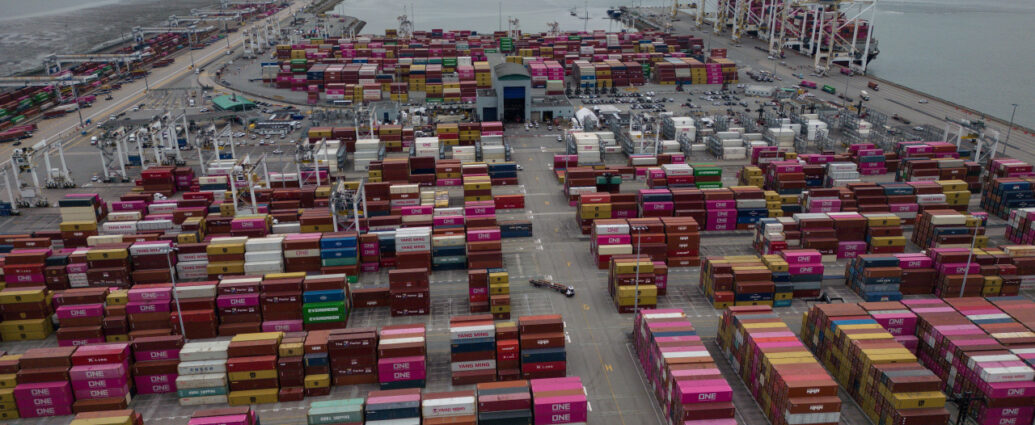




Main electoral battle will be for Israel’s centrist voters, with far-right, left already set – poll
Most Israelis already know, at least to a large extent, which party they will vote for in the upcoming election, but the group of undecided voters that could determine the outcome is concentrated primarily in the political center, according to the Jewish People Policy Institute’s Israeli Society Index, published ahead of the election expected in the fall.
According to the index, 53% of Israelis are completely certain whom they will vote for, while another 29% are fairly certain of their decision. Some 14% are still waiting for the political map to become clearer, and 4% say they will not vote.
Certainty is particularly high at the political extremes. On the Left, 71% are already completely certain of their choice, compared with 58% on the Right. The proportion of undecided voters rises closer to the center. On the Center-Right, 22% are still waiting to see which parties will run, while only 44% of centrists are completely certain whom they will support.
The figures indicate that the main electoral battle is expected to focus on centrist voters.
Identification with the Right continues to strengthen among Jewish Israelis. Some 66% of Jewish respondents defined themselves as belonging to one of the categories on the Right, compared with 63% in July 2025. The proportion defining themselves as “exactly in the center” rose from 10% to 13%, while the proportion identifying with the Left fell from 22% to 19%.
Only 3% of Jewish respondents described themselves as being on the “Left,” while an almost negligible proportion placed themselves on the “far Left.”
Among Arab respondents, by contrast, half placed themselves on the Left, compared with 47% last year. At the same time, the proportion of Arab respondents who said they could not place themselves anywhere on the political spectrum fell from 21% to 15%, a change the institute said could indicate increasing political organization ahead of the election.
Security, justice system among key topics for Israelis
The index also examined the main consideration expected to determine respondents’ votes. Security ranked first among 28% of all respondents. It was followed by relations between the government and the judicial system, at 18%; advancing Israel as a more liberal country, at 15%; and promoting unity and reducing divisions, at 13%.
Behind the national figures are sharply different sets of priorities.
Among right-wing voters, security led with 40%, followed by relations between the government and the judicial system at 30%. In the Center, Center-Left and Left, the most important issue was advancing Israel as a more liberal country, with support ranging from 35% to 38%.
Among Arab respondents, security ranked first with 34%, followed by the economy with 26%. Among Jewish respondents, by contrast, the economy was barely viewed as a decisive consideration, with only 5% ranking it first.
The connection between the judicial system and support for the right-wing bloc was particularly pronounced. Some 70% of respondents who identified relations between the government and the judicial system as the issue most important to them preferred a right-wing coalition.
Of those respondents, 41% wanted a government based on the current bloc, while 29% supported adding a centrist party.
The institute said the figures showed that the judicial system was expected to remain a central election issue and serve as a unifying focus for right-wing voters.
Most Israelis have fixed preferences
Jewish People Policy Institute President Prof. Yedidia Stern said that “most Israelis are entering the election campaign with established preferences, and therefore the political battle will focus on the votes of those in the centrist bloc.”
He said the judicial system remained a central component of the Right’s political identity, even after nearly three years in which the war dominated the public agenda.
“Israeli society continues to engage with fundamental questions concerning the state and its character, and not only with security,” he said.
Stern added that previous institute surveys had shown that the public views internal division as one of the main threats facing Israel.
Against this backdrop, he called for the formation of the broadest possible coalition after the election, one that would establish agreed-upon rules for managing political disputes and advance the idea of a “thin constitution,” which the institute is drafting with a team of experts from across Israeli society.
The survey was conducted through the Israeli Society Index panel and, among the Arab public, through the Afkar research company. The data were weighted according to voting patterns and level of religious observance in an effort to represent the views of the Israeli public as a whole.
The index was prepared by Shmuel Rosner and Noah Slepkov. Research and production were conducted by Yael Levinovsky, and statistical consultation was provided by Prof. David Steinberg.
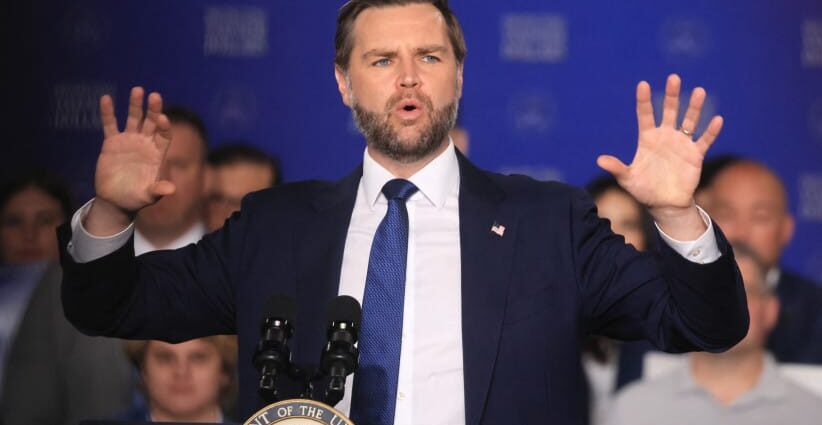
Israeli officials need to stop demonizing JD Vance, in doing so they prove him right – comment
Somewhere in the past few months, JD Vance stopped being a politician Israelis argue about and turned into a demon. The man Israeli ministers brief against, sometimes on the record, which takes a special kind of strategic genius.
The subject of a thousand furious WhatsApp forwards, including, I’ll admit, in groups I’m in. Even Fox turned. Brian Kilmeade, the Fox and Friends co-host who has spent two decades as one of the friendliest voices Israel has on American morning television, went after him on air.
When Kilmeade is rough on you, you’re officially in the doghouse of the pro-Israel world.
Maybe he earned it. Some of what Vance says lands badly, and is meant to. When the Iran deal was signed in June, I wrote in these pages that Israel had just met the post-Trump America: colder, interest-driven, personified by Vance and Secretary of State Marco Rubio.
I stand by every word. What surprised me was our response. Faced with a new kind of America, we reached for the oldest tool in the drawer. The effigy.
Before we finish building it, two uncomfortable facts.
First: the verdict was reached by people who, overwhelmingly, never watched the three-hour Joe Rogan interview that triggered it. They watched 40-second clips with furious captions. I know because I asked around, including in my own newsroom.
American politics lives on Rogan’s podcast now, in front of tens of millions of listeners, most of them young men who will never open this newspaper, and who ask, without embarrassment, whether Jeffrey Epstein worked for the Mossad. That’s the room Vance walked into. Judging what he did there from a clip is like reviewing a boxing match from a photo of one punch.
Second: I spent recent days with people close to the administration who did watch all three hours, some more than once. Their account annoyed me and persuaded me in places, and you should hear it before you decide.
Their version
Vance, they argue, walked into the most conspiratorial room in America and refused to feed it.
When Epstein came up, he skipped the routine we’ve come to expect from Mike Huckabee, the evangelical former Arkansas governor serving as Washington’s ambassador in Jerusalem, for whom Israel can simply do no wrong. That act would have died in Rogan’s studio anyway.
Vance said the obvious, that Epstein was a criminal, then went out of his way, several times, unprompted, to insist there was no connection between Epstein and the Israeli government. Try to name another American politician who spent hours arguing with the Mossad conspiracy crowd on their home turf. I’ll wait.
The chill from Washington, in their telling, is a campaign decision. Elections are coming, theirs and ours, and somebody decided the administration needs air between itself and Jerusalem until November. One of my interlocutors reached for the word “daylight,” Barack Obama’s old word, with a straight face. Until further notice, I asked? Until further notice.
They walked me through the Republican map to make the point. The national camp of President Donald Trump, Vance, and Rubio. The party’s liberal wing, where most Jewish Republicans live. And the corner belonging to Tucker Carlson, the former Fox host turned podcast baron whose flirtations with anti-Israel material are by now a genre of their own, and who has quit the party to build something new.
In a base tired of the Iran war and marinating in talk of Washington serving Israeli interests, Vance’s job is to keep those voters without signing their story. When the aid package came to the floor, exactly one Republican voted no: Rep. Thomas Massie of Kentucky, the libertarian gadfly who votes no on nearly everything and whom Carlson has adopted as a cause.
Watch the rhetoric if you want, my interlocutors said. They count the votes.
The shift the demon story hides
Here’s what the effigy-building blinds us to, and it will outlast Vance and probably this whole argument.
The line that scandalized Israeli ears was Vance calling Israel “an ally, like Britain and France.” We heard a demotion. Listen to the vocabulary instead.
For 50 years, American presidents spoke about Israel in the language of family. Bill Clinton loved us. George W. Bush loved us. Joe Biden told anyone who’d listen that you don’t have to be a Jew to be a Zionist. Lindsey Graham, may he rest in peace, built a Senate career on Genesis 12:3. And the love always arrived with an invoice, usually itemized in Jerusalem neighborhoods and a Palestinian state.
Vance talks like Lord Palmerston, the Victorian foreign secretary who gave diplomacy its most durable one-liner: no permanent friends, no permanent enemies, permanent interests. In that vocabulary, Britain and France sit at the top of the ladder. There is no higher rung.
Where interests align, we work together. Where they clash, we say so, as friends. Cold? Sure. But nobody ever handed Britain an invoice made out in love.
I started telling this story in June, and the Rogan interview is a chapter of it, one man’s tone in one very long conversation. The bigger book is the arrival of a post-covenant generation of American leadership. It was Vance himself, remember, who described Trump as the only head of state in the world sympathetic to Israel.
We heard a warning about our isolation. He was telling us the era of automatic sympathy retires with his boss. Burn every Vance effigy you can build; the shift stays.
His successors will speak the same language, because his voters do.
Where I get off the train
My interlocutors’ theory has soft spots, and I’d be a poor journalist if I buried them.
The campaign explanation explains too much. Every cold word is strategy, every warm gesture is the real Vance, and a theory that wins every argument should make you nervous.
Campaigns change the men who run them, too. The base Vance is courting sticks around after election night and becomes the coalition he answers to.
When Ariel Kahana and Omer Lachmanovitch of Israel Hayom interviewed Trump in March 2024, he told them that 15 years ago an American politician who spoke against Israel was finished on the spot, and that today it’s nearly the reverse.
Trump was describing the weather.
Politicians hear a forecast like that as permission. And the people making Vance’s case to me spent decades building the movement he now fronts, so when they defend him, they’re defending their life’s work. They may still be right. Motivated witnesses sometimes are. You just check their math twice.
The homework
I’m writing this because we’re embarrassing ourselves, and doing it expensively.
Every thin-skinned outburst from an Israeli minister confirms the exact story Vance’s base already tells about us, and it burns capital with an administration we’ll need on the next October 7, whenever that comes.
Graham is dead. The Bidens and Bushes are history. The Americans who loved us out loud are aging out of politics, and the ones replacing them talk about interests and mean it.
After a joint war against Iran, our shared-interest file with Washington has rarely been thicker.
That’s the relationship on offer, and by any sober measure it’s a good one.
But 50 years of being loved taught us to hear anything less as betrayal. That’s a hearing problem. And it’s on our side of the ocean.
FHA proposes partial claim model that drops subordinate liens
The Federal Housing Administration (FHA) is proposing a new structure, called Reinstatement Advance Payment (RAP), that would change how servicers document and service partial claims and payment supplements.
Under the draft, attributed to Joseph M. Gormley, who is performing the delegable duties of the assistant secretary for housing–federal housing commissioner, the FHA would test a model that eliminates the traditional zero-interest subordinate lien used today for partial claims.
Instead, servicers would advance funds on the borrower’s behalf and add a non-interest-bearing balance to the existing FHA-insured first mortgage. The borrower would sign a RAP repayment agreement rather than a separate promissory note and subordinate mortgage.
“The RAP will reduce the burden on mortgagees in obtaining and recording the notes and subordinate mortgages and align with standard industry practice,” FHA states in a Mortgagee Letter.
According to the FHA, the structure would also facilitate the “sale, refinance, assumption and transfer processes” as there will no longer be a subordinate lien to resolve, removing challenges associated with nonjudicial foreclosures.
From the borrower’s perspective, the loss-mitigation experience is designed to look the same, the letter states. The advance remains a zero-interest obligation that is generally due only at maturity, sale, refinance, payoff, or termination of FHA insurance. Borrowers could make partial or full payments toward the RAP balance at any time without penalty.
The draft also introduces a RAPTOR Plan (RAP Terms of Repayment) for borrowers who cannot repay the entire balance in a lump sum when the mortgage matures. Under the proposal, servicers could offer repayment terms up to 18 months for RAP balances up to $5,000; up to 36 months for balances between $5,000 and $15,000; and up to 48 months for balances over $15,000
For servicers, the most significant operational shift is the removal of subordinate-lien mechanics. The RAP structure eliminates the need to prepare, execute, record and deliver separate partial claim notes and mortgages in HUD’s name, bringing FHA workouts closer to how many conventional investors handle similar advances.
The draft states that all mortgagees would be eligible to participate. Participation would be voluntary and servicers would not need to use RAP on every partial claim.
The demonstration is expected to run for five years. FHA is proposing incentive fees of $500 for a partial claim RAP and $1,750 for a payment supplement RAP, along with reimbursement of up to $250 for required title-related expenses.
This article was written by Flávia Furlan Nunes and generated with the assistance of HousingWire Automation, then reviewed by a HousingWire editor before publication.
The JMG acquisition gives teams leverage, but not equal valuations
When Keller Williams announced its acquisition of the Jason Mitchell Group (JMG) earlier this month, Steve Murray, the co-founder of RealTrends Consulting, felt it was an historical moment for real estate companies with models similar to JMG, such as Mark Spain Real Estate, PLACE or Robert Slack Group.
“The acquisition of Jason Mitchell Group means that a very large, very smart investor has just put a stamp of approval on that kind of a business model,” Murray said. “This is the first acquisition of this kind and this size.”
However, Murray warned that this news does not mean that every large team or brokerage operating on a team model is worth the same or can generate the same multiple that JMG did.
Craig McClelland, a partner at McClelland & Hahn Consulting, agrees, noting that this has to do with the fact that JMG isn’t just any real estate company.
“Keller Williams didn’t just acquire JMG, they also acquired a relocation network and a lead distribution network, as well as relationships with Rocket and Zillow. Your typical team doesn’t have that component to it,” McClelland said. “You can’t just be like, ‘I have a team of 30 agents and a Zillow Flex agreement and now I’m worth $100 million’ — that isn’t going to happen. There are other dynamics you have to add into this equation.”
Everything old is new again
Additionally, while this news certainly sparked some headlines in the industry, McClelland doesn’t feel it is all that different from what Cendant, the predecessor of Realogy, the firm that became Anywhere Real Estate, previously did with its franchise agreements.
“They would sell franchises to independent operators and provide them with the opportunity to be part of their lead network,” McClelland said. “So, they have access to a lead source as well as other opportunities to grow their business, but eventually if they wanted to exit, they had the opportunity to sell the franchise to Cendant. This is kind of the same thing, but with teams instead of franchises.”
What am I worth?
When it comes to valuing a team, something Murray and his business partner Scott Wright have done several times over the years, Murray said it doesn’t differ too much from how they value brokerages.
“It is based on cash flow and EBITDA and then you look at a multiple, and today, brokerage companies are in a fairly narrow band of multiples,” Murray said. “In the past, when big companies like Berkshire Hathaway were chasing after independent brokers and competing for them, multiples could push to five or six, but today, a big firm that’s out there is going to trade at a five, at best.”
With teams; however, Murray said they need to examine how much of the business comes directly from the team leader’s sphere of influence.
“We heavily discount that business because the ability to transfer essentially personal relationships is very low,” he said. “Instead we look at how much of their business is what we call business generated — online leads, direct mail, billboards, phone calls, public marketing.”
The next JMG?
For teams or firms looking to find themselves in a similar position to JMG sometime in the future, Murray said they will need to consider “scaling up.”
“Now you may begin to see some of those teams that are doing well and generating significant cash flows, try to do their own mergers and acquisitions with other teams of their size,” he said. “Overall, I think what we will see happen is other teams start rethinking whether they should just be buyers or if they should be positioning themselves to sell.”
McClelland added that it is important for the companies to make sure they are running a good business.
“If you have good margins, you don’t have excessive overhead, good producing agents that are a resource to the company, then you will be more attractive,” he said.
While both McClelland and Murray believe we may never see another acquisition like Keller Williams’ acquisition of JMG unless another similar company arises, they do feel this does signify a shift of sorts.
“Teams now have a seat at the deal table, and they are saying ‘Hey, I’m an intelligent acquisition,’” McClelland said.




Novo Nordisk sues Eli Lilly over claims in weight-loss drug ads
Novo Nordisk sued Eli Lilly on Tuesday, accusing its rival of misleading consumers by claiming Lilly’s drugs work better than Novo’s competing treatments.
The lawsuit, filed in federal court in New Jersey, argues that Lilly’s ads for Zepbound and Mounjaro compared the highest doses of its drugs with lower doses of Novo’s Wegovy and Ozempic. Novo said the ads rely on “outdated” trial data, according to Reuters.
“The ads are maliciously and deceptively false because Lilly knowingly cites outdated clinical trials that compare the highest doses of the Lilly medicines to lower doses of Novo Nordisk’s medicines,” Novo said in its complaint.
TOM BRADY TEAMS WITH DIGITAL HEALTH FIRM EMED TO EXPAND GLP-1 WEIGHT LOSS MEDICATION ACCESS
Meanwhile, Lilly rejected the claims and said its ads are based on its SURMOUNT-5 trial, completed in 2024, which compared patients taking 10 mg or 15 mg of Zepbound with those taking 1.7 mg or 2.4 mg of Wegovy.
The FDA approved a higher 7.2 mg dose of Wegovy in March, Reuters reported.
“The gold standard for comparing medicines is a robustly designed, well-conducted head-to-head clinical trial — like SURMOUNT-5, which remains the only head-to-head, randomized clinical trial directly comparing tirzepatide and semaglutide in weight management,” a Lilly spokesperson told FOX Business in an email.
“Rather than compete on the merits of its products, Novo is asking a court to stop Lilly from communicating the results of that trial. We stand firmly behind our advertising,” the spokesperson added. “It is truthful, it is transparent, and it is grounded in the most direct scientific evidence available — exactly what patients deserve. We will continue to focus on the science and defend against this lawsuit vigorously.”
Novo is asking the court to order Lilly to remove the ads and run corrective advertising. It is also seeking damages tied to any profits Lilly may have earned from the campaign.
The two companies are competing for control of the fast-growing obesity drug market in the U.S., which analysts say could be worth more than $100 billion by the end of the decade, according to Reuters.
TARGET BEEFS UP PROTEIN, SUPPLEMENT OFFERINGS, CAPITALIZING ON WEIGHT LOSS DRUG TREND
Novo said it sent Lilly a cease-and-desist letter in April but received no response.
GET FOX BUSINESS ON THE GO BY CLICKING HERE
The company also said Lilly’s revised ads have been shown more than 700 million times since late April.
Novo Nordisk could not immediately be reached by FOX Business for comment.
Reuters contributed to this report.

LARRY KUDLOW: For Republicans, where’s the big bang tax and spending pro-growth budget package?
There’s no doubt that the Chuck Schumer, Hakeem Jeffries, DSA, socialist Democrats want to stop every budget item on the GOP list. And it’s a pretty fair chance that their goal is a government shutdown at the end of September, which they believe will damage the economy and reelect democratic majorities in the midterms.
They’re going to be wrong about that just like they are so wrong on every other policy question. And therefore, it’s understandable that Republicans in Congress are scrambling either to get a continuing resolution or a 3.0 budget reconciliation to get some important work done, including funding the military and the voter identification bill, and other priorities.
But, and here’s the big but, what’s being discussed is not a good budget strategy. Specifically it lacks progrowth tax reform and spending cuts. Offsets in spending, known on Capitol Hill as “pay fors,” are important.
The White House wants to sprinkle foreign spending assistance, well ok, let them pay for it. After all the work done by the Medicare chief, Mehmet Oz, and Vice President Vance on waste, fraud, and corruption for the whole healthcare Medicaid complex, where are the budget cutting results that will show genuine change to drain the swamp at Washington?
Or on the tax front, inflation has gone up 108 percent in the last nearly 30 years. Why aren’t they adjusting the capital gains exemption at least on the sale of homes, or why aren’t they inflation-indexing the capital gains tax, again at least on the sale of homes. Why should middle-class home owners have to be taxed on President Biden’s inflation? Or the Covid inflation?
Without budget reforms and tax reforms and a growthier approach to fiscal policy, even the best-intentioned Republicans are not going to have a Big Bang budget package that would generate serious interest from the grass roots come November. For Republicans, where’s the Big Bang tax and spending pro-growth budget package?

SpaceX Sets Earnings Date, Triggering First Lock-Up Expiration for Millions of Shares
SpaceX has finally put a date on its first report card as a public company, and in doing so it started the clock on one of the largest share-unlock events in market history.
The aerospace and defense contractor announced Aug. 4 as its debut earnings report, a date that also triggers the company’s staggered lock-up structure and lets insiders begin selling earlier than the typical 180-day window. The first tranche frees up to 911.5 million shares—about 20% of eligible locked-up stock—on the second full trading day after the report, roughly Aug. 6. An additional 455.8 million shares would unlock only if the stock closes at least 30% above its IPO price, or $175.50, on five of the 10 trading days leading into the report—a level well out of reach.
The share news gave the stock a rare lift. SpaceX gained 7% on Tuesday, attempting to snap a seven-day losing streak after the announcement. That bounce comes off a rough stretch: the company went public around June 11 on Nasdaq under the ticker SPCX at $135 a share, in an offering that pushed its valuation past $2 trillion and ranked as the largest in U.S. history, yet the stock has since struggled to hold above that IPO price. It has traded around $131, roughly 42% off its post-IPO high, leaving a market value near $1.7 trillion.
The supply looming over the market is enormous. The 911.5 million shares set to become eligible are worth roughly $109 billion—an overhang that exceeds the total raised in the IPO itself. Rather than a single cliff, SpaceX built a staggered schedule, with a larger tranche of about 28% following third-quarter earnings and roughly 40% of all shares freely tradable by early December. Founder Elon Musk’s roughly 6.4 billion shares are locked for a full year, first becoming eligible for transfer on June 12, 2027, with no early-release provisions.
History offers a cautionary parallel. When Facebook’s first post-IPO lock-up expired in August 2012, freeing about 271 million shares, the stock fell more than 6% that day to what was then an all-time low, roughly half its IPO price.
Beyond the supply mechanics, Aug. 4 gives investors their first detailed look at the operating engine. The market will focus on Starlink’s profitability, Falcon 9 cash flow, spending on xAI computing infrastructure, and whether guidance can justify the valuation, with recent Starship and Falcon 9 launch aborts adding to the scrutiny. Investors are also watching the company’s growing compute business: after acquiring Musk’s xAI in February—now operating data centers and a power plant near Memphis—it has signed up customers including Google, Anthropic and Reflection to rent excess capacity.
JBizNews Desk | New York
© JBizNews.com All Rights Reserved. Reproduction or distribution without written permission is prohibited.

Anduril, Archer Aviation unveil hybrid-electric VTOL for defense and commercial use
Anduril and Archer Aviation on Monday announced the joint development of a vertical take-off and landing (VTOL) platform that can serve both commercial and defense applications.
The defense variant of the VTOL aircraft, dubbed Thunder, was unveiled by Anduril at the Farnborough Airshow in England.
The companies said that the dual-use platform represents a step change in the vertical lift space, leveraging commercial electric propulsion for VTOL aircraft as well as offering the speed, range, payload and operating costs that will be useful for defense and commercial uses.
It operates on a hybrid-electric powertrain that helps boost the platform’s range and endurance, while it also utilizes dual tiltrotors to maintain its efficiency in different flight regimes by lowering power demand and fuel consumption when cruising and minimizing its acoustic signature to increase its survivability when making a low-altitude ingress.
FLYING TAXIS COULD SOON TAKE FLIGHT AS FAA GREEN-LIGHTS TESTS IN 26 STATES
The platform has been configured to carry modular, heavy payloads for a range of commercial and defense applications, building on Archer’s experience developing and flying air taxis.
“From raw performance to producibility, harnessing the best technologies from the commercial eVTOL market for defense is how Thunder will deliver operational value to our customers,” said Shane Arnott, SVP of maneuver dominance at Anduril.
“The clean-sheet, dual-use platform that we’ve built with Archer truly represents a step change in capability,” Arnott added.
ARCHER, ANDURIL TO DEVELOP NEXT-GEN DEFENSE AIRCRAFT
Adam Goldstein, founder and CEO of Archer, said that the clean sheet design was necessary to allow the two companies to “build from the ground up to meet the needs of modern commercial and defense applications.”
“We couldn’t simply tweak our existing aircraft. Instead, we took a bold first principles approach alongside Anduril to develop what we believe is the most sophisticated vertical lift aircraft ever made,” Goldstein added.
A NEW WAY OF COMMUTING IS CLOSER TO TAKING OFF IN THE US
The announcement said that the team behind the aircraft had completed multiple test flights with full-scale surrogate aircraft, which the companies called a critical step to proving the systems that will help power the Thunder.
Thunder’s first flight is planned to occur in 2027, according to Anduril and Archer.
GET FOX BUSINESS ON THE GO BY CLICKING HERE
Archer is expected to announce commercial partners for the civilian variant of the VTOL.
This post was originally published here




Trade Chief Warns of New Tariffs “Soon” as Global Levy Nears Expiration
Fresh tariffs on dozens of U.S. trading partners could arrive within days, U.S. Trade Representative Jamieson Greer signaled Tuesday, as the temporary 10% global import duty that has anchored the administration’s trade policy since winter prepares to lapse. Speaking on CNBC, Greer said the government expects to act soon but declined to attach a timeline, citing an obligation to brief Congress and other stakeholders before any formal announcement.
The urgency is built into the calendar. The across-the-board 10% tariff, imposed in February under Section 122 of the Trade Act of 1974, is set to expire at 12:01 a.m. Friday. That measure was itself a stopgap, put in place within hours of a Supreme Court ruling that struck down the earlier “liberation day” tariff structure. With little sign that Congress intends to extend the current authority, the administration has been assembling a replacement.
The likely vehicle is a round of duties the trade office proposed in early June, grounded in Section 301 and justified by claims that trading partners tolerate forced labor in their supply chains. Those proposed tariffs would run between 10% and 12.5% and, by Greer’s account, would touch economies accounting for roughly 99% of American trade — a list that includes Mexico, Taiwan, the United Kingdom, China, Australia, Japan and Brazil. According to reporting Greer was responding to, any near-term levies would probably match the existing 10% rate, while separate investigations proceed in the background to build the legal foundation for steeper duties later.
The warning came a day after President Trump escalated a separate fight with Canada, invoking Section 338 of the Tariff Act of 1930 to impose 50% tariffs on a wide range of Canadian goods, effective in mid-August. Greer defended the move in a written statement, arguing that Canada — unlike other partners — has continued to retaliate against U.S. efforts to rebalance trade. He cited Canada pulling American alcohol from store shelves, granting European dairy producers better market access than U.S. suppliers, and capping vehicle exports from automakers reshoring production to the United States.
Ottawa pushed back hard. Canadian Prime Minister Mark Carney said the 50% tariffs directly violate the USMCA trade pact and characterized the underlying complaints as a response to Trump’s own earlier duties on Canadian autos. Carney said Tuesday that he and Trump had spoken and agreed to intensify negotiations, while making clear that all options remain available should Washington follow through.
For importers, manufacturers and cross-border operators, the practical takeaway is a narrow planning window and wide uncertainty. A tariff regime covering nearly all U.S. trade could reset landed costs across consumer goods, industrial inputs and food supply chains within a single quarter, and the shift from one legal authority to another leaves little clarity on which rates will stick. Companies with exposure to Canadian inputs face a firmer deadline: the 50% duties are scheduled to take hold next month unless negotiations produce a reprieve.
JBizNews Desk | Washington
© JBizNews.com All Rights Reserved. Reproduction or distribution without written permission is prohibited.

Wall Street Recovers, Dow Adds 360 Points as Semiconductors Lead
Chip rally lifts Nasdaq 1.3% and snaps a three-day slide as investors position ahead of Big Tech earnings; Micron jumps 12.6%, oil holds near $91.
Markets at a glance (late-session, July 21)
- S&P 500: ~7,490, +0.9%
- Nasdaq Composite: ~25,730, +1.3%
- Dow Jones: +~360 pts
- Brent crude: ~$91/bbl
- Gold: ~$4,071/oz, +1.5%
- Top mover: Utz Brands +90% on $2.9B take-private
U.S. stocks rebounded Tuesday, breaking a three-session losing streak as a sharp recovery in semiconductor shares outweighed persistent Middle East tensions. The Dow Jones Industrial Average added roughly 360 points, the S&P 500 climbed about 0.9% to reclaim the 7,490 level, and the Nasdaq Composite led the major indexes with a 1.3% gain — a turnaround for a market that had shed 2.9% on the Nasdaq the prior week, when the Philadelphia Semiconductor Index briefly slipped into bear-market territory.
Chips lead the rebound. The advance was powered by the same group that dragged the market lower a week ago. Micron Technology surged 12.6% and Nvidia rose about 2%, the latter also disclosing a stake in AI-cloud provider Nebius. Smaller names rode the wave, with Aehr Test Systems up 27% and Cerebras Systems climbing roughly 17%. The tone was set overnight in Asia, where benchmarks in South Korea and Taiwan each gained more than 2.5%, led by Samsung Electronics and Taiwan Semiconductor.
The AI capex question comes to a head. This week delivers what many are calling the most comprehensive single-week test yet of whether the AI spending boom is producing real returns. Alphabet and Tesla both report Wednesday after the close, followed by Intel on Thursday. The central question — when a roughly $180 billion capital-expenditure cycle translates into proportional revenue — has been building for three years. Alphabet, which raised its full-year 2026 capex guidance to $180–$190 billion, enters off 22% revenue growth last quarter, with Google Cloud margins in focus. Tesla arrives on a record 480,000-plus delivery quarter but faces margin questions. IBM limps into its Wednesday report after a 25% single-day plunge last week, its worst session on record.
Corporate movers. General Motors kicked off the week’s marquee reports Tuesday morning, beating second-quarter expectations and reinforcing a steadier read on consumer demand. The day’s standout was Utz Brands, up nearly 90% after agreeing to be taken private by Germany’s Intersnack Group in a deal valued at about $2.9 billion. The broader season has started strong: of the roughly 50 S&P 500 companies reporting through the weekend, 88% topped estimates, per FactSet, which puts blended Q2 earnings growth at 24.7%.
Geopolitics and commodities. The rebound unfolded against a tense backdrop. The U.S. has now carried out roughly 10 consecutive nights of strikes on Iran, though reports that mediators are pushing for a 10-day ceasefire helped cool oil after Monday’s spike. Adding regional strain, Yemen’s Houthis declared a “maritime embargo” against Saudi Arabia — a potential threat to Red Sea crude flows. Brent crude held near $91 a barrel, while gold jumped more than 1.5% to about $4,071 an ounce on safe-haven demand and a firm dollar.
Trade policy in the mix. U.S. Trade Representative Jamieson Greer told CNBC he expects “to see some action soon” on tariffs, following a report that the White House is preparing new levies against dozens of countries ahead of the expiration of the current 10% global tariff. The comments came a day after President Trump imposed a 50% tariff on most Canadian goods — a thread with direct implications for the cross-border businesses JBiz readers track.
Beneath the surface. For all the day’s optimism, breadth stayed narrow: even at session highs, a slim majority of stocks were lower, underscoring how much of the gain rested on a handful of large-cap chipmakers. The macro calendar offers little fresh guidance before the Federal Reserve’s July 28–29 meeting, leaving corporate earnings as the dominant catalyst. With megacap results due through the week, investors will soon learn whether Tuesday’s rebound reflects renewed conviction — or simply a pause in an unusually jittery tape.
JBizNews Desk | Wall Street
© JBizNews.com All Rights Reserved. Reproduction or distribution without written permission is prohibited.

Trump administration says it’s deferring $1B in Medicaid payments to California and Minnesota
The Trump administration on Tuesday said it was deferring more than $1 billion in Medicaid payments to Minnesota and California because of “suspected fraud and noncompliance,” the latest in a series of punitive steps it has linked to allegations of fraud in mostly Democratic-led states.
Health Secretary Robert F. Kennedy Jr. said the new actions — which come after previously announced Medicaid funding deferrals in those states — are part of the administration’s strategy to “stop the fraud before it happens” rather than claw back problematic spending after bad actors are prosecuted, as previous administrations had done.

Trump eyes expanded Iran campaign as Israeli officials warn Tehran may strike Israel
Israeli officials believe US President Donald Trump is preparing to significantly escalate the American military campaign against Iran, according to two Israeli officials.
According to the assessment, an expanded US campaign targeting Iranian strategic infrastructure and senior regime officials would likely prompt Tehran to retaliate directly against Israel.
Prime Minister Benjamin Netanyahu convened a six-hour security consultation on Monday night with several ministers and senior defense officials to assess the evolving situation.
During the meeting, an Israeli official said, Netanyahu briefly left the discussion to speak with US Secretary of State Marco Rubio.
US CENTCOM continues strikes on Iran after Trump says he’ll hit Pickaxe Mountain
Meanwhile, US Central Command has entered its 11th consecutive day of strikes against Iran. A source familiar with the operation told The Jerusalem Post that CENTCOM has struck approximately 1,000 targets across Iran over the past 10 days.
On Tuesday during a meeting with Lebanese President Joseph Aoun, Trump said Tehran was “desperate” to hold talks, warning that it had “not seen anything yet.”
Trump added that the US will be hitting the Pickaxe Mountain area, located near Iran’s heavily damaged Natanz uranium enrichment facility, “pretty soon.”
Pickaxe Mountain is a heavily fortified site that hosts two deeply buried tunnel complexes that experts assess as beyond the reach of the most powerful bunker-buster bombs in the US arsenal.
Earlier this week, a source told the Post that it is no longer a matter of when Trump would strike, but when he will strike.
“He understands that, barring an unexpected development, the chances of a diplomatic solution is now virtually nonexistent,” the source said.
However, another official cautioned that Trump has changed course “at the last minute” before, noting that his position could still shift.

World Cup brought billions in economic impact to NYC region

The 2026 FIFA World Cup has officially come to a close, bringing hundreds of thousands of soccer fans to the New York-New Jersey area for eight matches at MetLife Stadium. Now, city and state officials are assessing whether the projected economic impact of hosting the tournament materialized. While the region’s overall economic impact goals will likely be met, some projections, including a boost in hotel occupancy, fell short of expectations.
Initial projections
Last July, the NYNJ Host Committee released an economic impact summary projecting that NY and NJ would receive a $3.3 billion economic boost from hosting eight tournament matches, with more than 1.2 million visitors expected to attend.
The report also estimated $1.3 billion in total labor income for the regional economy and $1.7 billion in spending from match and non-match attendees, according to Bloomberg.
Additionally, the organization projected that more than 26,000 jobs would be generated across both states to support the tournament, along with roughly $432 million in state and local tax revenue. Hotels across the five boroughs were expected to generate between $250 million and $300 million in additional revenue.
Actual economic impact
A report from Tourism Economics found that through the five World Cup Group Matches hosted in New Jersey in June, there was $1.2 billion in direct visitor spending, generating $2.1 billion in total economic impact. That number does not include operational spending or the impact of the games hosted in July, including the Final match held on Sunday.
According to the NYNJ Host Committee, $228 million in state and local tax revenue was generated during the Group Stage in June.
FIFA is expected to announce a record $15 billion in revenues from the entire tournament, which spanned 16 cities across North America, far exceeding the projected $11 billion.
While the World Cup delivered major gains across several economic indicators, some industries still fell short of expectations.
Hotels & tourism
Hotels across the city fell short of their initial projections, generating between $100 million and $150 million in additional revenue—about half of the $250 million to $300 million originally estimated, according to the New York Times.
Between June 8 and July 4, the New York metropolitan area generated roughly $1.07 billion in hotel room revenue, a 20.6 percent increase compared to the same period last year.
However, officials noted that some of the increase was likely driven by the New York Knicks’ NBA Finals appearance. Vijay Dandapani, president and CEO of the Hotel Association of New York City, told Crain’s that in the days following the team’s first championship victory since 1973, hotel occupancy dropped sharply, with occupancy rates between June 15 and June 20 falling below the same period in 2025.
In the Mid-Hudson region, hotels generated approximately $86 million in room revenue during the same period, up 18.3 percent year-over-year. On Long Island, hotels generated around $117 million, representing a 24 percent increase from the previous year.
New Jersey hotels saw revenue increase by more than $40 million during the tournament when compared to the same period last year, as reported by the Times. The Garden State also saw a substantial boost in Airbnb and similar short-term rental bookings. In Jersey City and Newark, demand increased 37 percent compared to the same period in 2025.
Meanwhile, demand in NYC increased just 3 percent, a figure attributed to the city’s stricter regulations surrounding short-term rentals in the five boroughs.
The eight consecutive sold-out matches at MetLife Stadium welcomed more than 560,000 fans. Through the first five matches held at the stadium in June, the state recorded $1.2 billion in direct visitor spending and a total economic impact of $2.1 billion. Those figures did not include the final three matches, but state officials said the tournament was expected to far exceed initial revenue projections, according to a press release.
The Times Square Alliance told the Times that Times Square saw an average of 254,400 pedestrians per day from mid-June to mid-July, a 7 percent increase compared to the same period last year. The area’s daily peak reached 305,300 pedestrians.
Bars & restaurants

Many bars and restaurants across the city reported benefiting from the tournament, according to a snap survey of 60 businesses conducted by the NYC Hospitality Alliance. Among venues that aired the matches, 63 percent reported increased sales, including 29 businesses that saw a significant increase.
More than half hosted watch parties, nearly half added televisions or upgraded audiovisual equipment, 46 percent scheduled additional staff or shifts, and 42 percent offered match-day food and drink specials.
Additionally, 70 percent of respondents said the excitement surrounding the World Cup being hosted in the region had a positive effect on the city’s business climate, rising to 76 percent among venues that screened matches.
However, businesses that did not show the matches were more likely to report lower sales, with some respondents also citing street closures, delivery disruptions, operating restrictions, and communication challenges as obstacles.
The Host Committee’s Welcome Rewards Program, launched in May, generated roughly 10,000 visits to more than 1,000 small businesses, restaurants, cultural institutions, and community events across NY and NJ by encouraging fans to earn points and prizes through local spending.
NYC also launched its own special meal program, the “Five Boroughs Winners Special,” which offered $26 meal and drink deals, along with commemorative cups, at more than 900 restaurants and bars.
Transportation
Transportation to the tournament proved smoother than anticipated. NJ Transit told the Times that it carried between 22,000 and 26,000 fans to and from each match, totaling roughly 185,000 passenger trips. The average ride from Penn Station to MetLife Stadium took about 35 minutes.
New Yorkers also benefited from discounted bus transportation to MetLife Stadium, with round-trip fares reduced from $80 to $20. Through the service, 97 percent of fans arrived at the stadium before kickoff, with nearly 120,000 bus tickets sold.
Buses transported fans from staging areas to the stadium in less than 10 minutes, while Midtown travel times were up to 23 percent faster than historical averages across all eight match days, despite the influx of visitors.
“When we brought the FIFA World Cup to New York, we wanted to make sure every New Yorker, every community and every industry would benefit—these past six weeks have proven that effort a success,” Gov. Kathy Hochul said.
“As fans from around the world flocked to New York, hotel revenues went up, spending at local businesses increased and our affordable buses moved people to and from the game faster than ever,” she added.
However, ridership fell short of initial projections, which called for up to 40,000 fans to take NJ Transit per match. As a result, more attendees drove to the stadium despite limited parking availability and prices starting at $225 per space. The increase in vehicle traffic contributed to congestion around MetLife, including during some rush-hour commutes.
While tournament attendees benefited from quick service to the stadium, regular NJ Transit riders faced increased delays and service changes. On match days, NJ Transit prohibited riders from boarding NJ-bound trains from Penn Station for four hours before kickoff.
RELATED:
- NYC Council wants a ‘cultural passport,’ more public bathrooms, and Pelé Way for World Cup
- 2026 World Cup Final will be held in New Jersey
- NYC and NJ selected as host city for 2026 FIFA World Cup
The post World Cup brought billions in economic impact to NYC region first appeared on 6sqft.
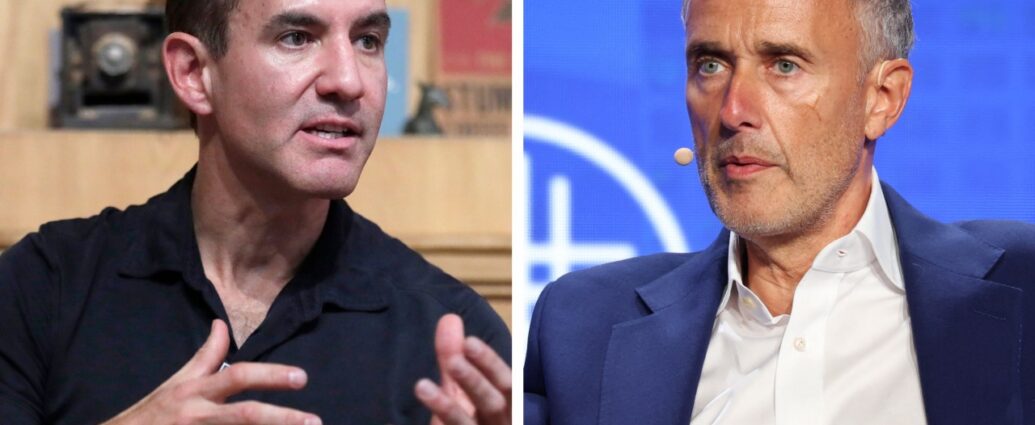

Apple raises prices on some streaming services as licensing costs climb
Apple is raising prices on Apple Music subscriptions as well as certain Apple One plans as the company faces higher licensing costs.
The tech giant last week hiked prices for Apple Music plans across subscription tiers. Individual plans will rise by $1 a month to $11.99, while student plans will increase by the same amount to $6.99 a month.
Prices for the Apple Music family plan are also rising by $3 per month to a new monthly rate of $19.99.
The company also hiked prices for some tiers of Apple One – the company’s bundle that allows consumers to subscribe simultaneously to Apple TV, Music, iCloud+, Arcade, Fitness+ and News+ or the first four services.
APPLE RAISES IPAD AND MACBOOK PRICES AS MEMORY CHIP COSTS SURGE
Prices for the Apple One family tier are set to rise by $2 to a new total of $27.95 per month. Family plans may be shared with up to five people and have up to 200 gigabytes of iCloud storage, though they don’t include News+ or Fitness+ in the package.
The individual Apple One subscription, which includes the same four services but with 50 gigabytes of iCloud storage, is unchanged at $19.95 a month.
Apple One’s Premier package, which includes all six of the company’s subscription services with up to 2 terabytes of storage and may be shared among five people, will rise in price by $2 to $39.95 per month.
APPLE BRIEFLY OVERTAKES NVIDIA AS WORLD’S MOST VALUABLE COMPANY AMID AI INVESTMENT DOUBTS
The price increases apply to consumers in the U.S. as well as other countries around the world.
The moves weren’t announced by Apple, which adjusted the prices for the various subscriptions and tiers on its website on Friday. Apple told 9to5Mac, “As a result of rising licensing costs, Apple Music is increasing its subscription price beginning today.”
FOX Business reached out to Apple for comment.
APPLE HIT WITH LAWSUIT CLAIMING ICLOUD+ PRIVACY TOOL COULD EXPOSE USERS’ REAL EMAILS TO WEBSITES
In late June, Apple announced price hikes for its iPad tablets and MacBook laptops amid rising memory chip costs.
The company raised the price of the MacBook Air by $200 to a new total of $1,299, while the budget Neo laptop price rose from $599 to $699. The price of a MacBook Pro with 1 terabyte of storage rose $300 to $1,999, while the iPad Air with 128 gigabytes of storage rose from $599 to $749.
GET FOX BUSINESS ON THE GO BY CLICKING HERE
Apple said at the time that it has “never seen a component price increase this much, this quickly,” adding that it had “shielded our customers from these increases so far, but we have now reached a point where we need to begin raising prices on a number of products.”

Brooklyn Businesses Squeezed as Tariffs Push Costs Higher
New findings from the Flatbush–Nostrand Junction Business Improvement District show rising import costs are forcing neighborhood businesses to rethink pricing, inventory and growth plans.
BROOKLYN, N.Y. — Tuesday, July 21, 2026 — A new survey released by the Flatbush–Nostrand Junction Business Improvement District found that many small businesses across one of Brooklyn’s busiest commercial corridors are under growing financial pressure as higher tariffs continue raising the cost of imported goods while customer traffic remains uneven.
The findings offer a snapshot of the challenges confronting independent businesses throughout New York City. The survey found that 90% of participating businesses reported higher operating costs linked to tariffs, while 70% said customer traffic has declined, leaving many owners balancing higher expenses against consumers who remain cautious about discretionary spending.
For neighborhood merchants, the pressure begins long before a customer enters the store.
Retailers say wholesale prices have climbed on products ranging from clothing and electronics to household goods and restaurant supplies. Many businesses have absorbed part of those increases to remain competitive, but owners say doing so has steadily reduced already-thin profit margins.
Others have taken a different approach.
Some merchants have raised prices selectively, ordered smaller inventories or delayed expansion plans until costs become more predictable. Several businesses reported placing greater emphasis on online sales and local delivery services to offset softer foot traffic and broaden their customer base.
The report illustrates how international trade policy is increasingly affecting neighborhood commercial districts rather than only large importers and manufacturers.
Unlike major national retailers that can negotiate volume discounts or diversify supply chains, many independent businesses depend on smaller overseas suppliers and have fewer options when costs increase. That leaves owners making difficult decisions about pricing, staffing and future investment.
Business leaders warn that prolonged cost pressures could eventually slow hiring and discourage new investment along commercial corridors that depend heavily on locally owned businesses. While many merchants remain optimistic that supply chains and pricing will stabilize, they say the coming months—particularly the holiday shopping season—will be critical.
Consumers are already beginning to feel the effects.
Higher wholesale costs are gradually working their way into everyday retail prices, meaning shoppers may pay more for clothing, gifts, household items and restaurant meals even as overall inflation has moderated from its recent peaks.
For Brooklyn’s independent business community, the survey underscores a broader reality: global trade policy is no longer an issue affecting only ports, manufacturers and multinational corporations. It is increasingly shaping decisions made every day by neighborhood retailers trying to remain competitive while continuing to serve their communities.
JBizNews Desk | Wall Street
© JBizNews.com. All Rights Reserved. Reproduction or distribution without written permission is prohibited.

A Tariff Cliff Arrives Friday, and Washington Has Days to Decide What Replaces It
WASHINGTON, D.C. — The flat tariff that has governed nearly every import entering the United States since winter is set to vanish this week, and the administration is racing against its own calendar to determine what takes its place. The 10 percent Section 122 surcharge expires by law at 12:01 a.m. on Friday, July 24, a hard statutory deadline that the president cannot extend on his own — and its lapse could reshape the cost of imported goods almost overnight.
The surcharge has an unusual origin. After the Supreme Court struck down the administration’s earlier tariffs in February, ruling 6 to 3 that emergency economic powers did not authorize the president to impose them, the White House turned within hours to Section 122 of the Trade Act of 1974. That provision allows a temporary import surcharge to address international payment problems, but it comes with a strict ceiling: 150 days, after which only an act of Congress can keep it alive. Those 150 days run out Friday, and Congress has shown no appetite to extend the measure.
The practical stakes are large. Trade-weighted estimates suggest the average effective U.S. tariff rate could fall from roughly 13 percent to around 7 percent the moment Section 122 lapses, a swing that would ripple through import costs, retail pricing, and corporate margins across the economy. For importers, that represents either a meaningful reprieve or a fresh bout of uncertainty, depending on what the administration announces in the narrow window before the deadline.
That is where today’s date becomes pivotal. The Office of the U.S. Trade Representative faces a July 20 completion deadline on a pair of Section 301 investigations designed to serve as the surcharge’s successor. Those probes, opened in March, examine excess manufacturing capacity across 16 economies and forced-labor enforcement spanning more than 60 countries. The proposal on the table would impose 12.5 percent duties on 46 nations, a list that includes China, Vietnam, India, Thailand, Japan, and South Korea. Unlike the emergency authority the courts rejected, Section 301 rests on firmer legal ground, giving the administration a more durable foundation for keeping tariffs in place.
The maneuvering reflects a broader strategy of statute-shopping. Having lost its primary tariff tool at the Supreme Court, the administration has moved methodically through the trade code, invoking one authority after another to preserve its leverage. Section 232, which covers steel, aluminum, automobiles, and semiconductors, remains untouched by the recent legal turmoil and continues to operate under separate authority. A new set of Section 232 tariffs on pharmaceuticals, structured with tiered rates, is scheduled to take effect July 31, just a week after the Section 122 cliff.
For businesses, the compressed timeline is a planning nightmare. Companies that import from the countries targeted by the proposed Section 301 duties must weigh the possibility that their costs stay roughly flat, drop sharply, or shift onto an entirely different legal footing within the span of a few days. Procurement teams have been urged to mark the July 24 date carefully and to protect their positions on entries already made, since a parallel court challenge to Section 122 could eventually affect refund rights for tariffs paid while the surcharge was in force.
The lack of certainty is itself a cost. Firms that cannot predict their duty exposure struggle to price contracts, manage inventory, and commit to supply arrangements, and the whipsaw between tariff regimes makes long-term sourcing decisions harder to justify. Retailers weighing holiday-season orders and manufacturers locking in component supplies are both operating without a clear read on what the coming weeks will bring.
What happens next hinges on choices being finalized in Washington right now. The surcharge can expire as scheduled and leave a lower baseline rate, or the administration can roll out its Section 301 replacement and hold effective tariffs closer to current levels. Either way, the next several days will set the terms of trade for the remainder of the year — and importers are watching the clock as closely as the policymakers running it.
JBizNews Desk | Washington, D.C.
© JBizNews.com All Rights Reserved. Reproduction or distribution without written permission is prohibited.

US appeals court overturns release of pro-Palestinian advocate Mahdawi, citing lack of jurisdiction
A US appeals court on Tuesday overturned a 2025 ruling that ordered the Trump administration to release pro-Palestinian advocate Mohsen Mahdawi from immigration detention, finding that the lower court lacked jurisdiction to hear the case.
Mahdawi, 35, was one of several non-citizen students who were placed in deportation proceedings last year after taking part in demonstrations against Israel’s military campaign in Gaza. The arrests prompted court challenges that placed US President Donald Trump’s crackdown on immigration against the right to free speech as guaranteed by the First Amendment to the US Constitution.
Tuesday’s decision from a three-judge panel of the Manhattan-based 2nd US Circuit Court of Appeals stopped short of backing the Trump administration’s push to deport non-citizens in the US lawfully on the basis that their presence in the country runs counter to US foreign policy – a practice that rights groups say infringes on free speech.
But taken together with another decision earlier this year in the case of pro-Palestinian advocate Mahmoud Khalil, the ruling could make it more difficult for non-citizens detained in immigration jails to quickly seek their release on the grounds of an alleged violation of their First Amendment rights.
Decision hinges on jurisdiction
Mahdawi, a West Bank-born Columbia University student, was arrested in April 2025 upon arriving for an interview for his US citizenship petition. Vermont-based US District Judge Geoffrey Crawford ordered him released on bond two weeks later, ruling that he enjoyed the same First Amendment free speech rights as US citizens.
In overturning that ruling, the 2nd Circuit panel said Crawford lacked jurisdiction over the case because it should have been resolved in immigration court first. The judges did not order Mahdawi’s re-arrest.
US immigration courts, which conduct deportation proceedings, are overseen by the Justice Department. District courts like Crawford’s, by contrast, weigh constitutional issues and are independent of the executive branch.
The panel included two judges appointed by Trump in his first term and a third appointed by former President George W. Bush.
Neither the Justice Department, which represents the federal government in court, nor the Department of Homeland Security, which handles immigration enforcement, immediately responded to requests for comment.
A spokesperson for the American Civil Liberties Union, which is representing Mahdawi, had no immediate comment.
Similar ruling in Khalil’s case
Earlier this year, the Philadelphia-based 3rd US Circuit Court of Appeals reached a similar conclusion in the case of Khalil, a Columbia University graduate who spent more than 100 days in immigration detention before his release on bond by a federal judge in New Jersey.
Khalil has asked the US Supreme Court to review the divided 3rd Circuit’s conclusion that his claims should have been heard through an appeal of a removal order from an immigration court.
Both Khalil and Mahdawi were authorized to be in the United States, and neither has been charged with a crime.

Swedish doctor alleges antisemitic abuse, claims his contract was ended after he complained
A Swedish Jewish consultant has claimed he suffered antisemitic abuse from a colleague at a Meliva health clinic in Stockholm, and that his contract was ended after he reported it.
In an interview with Swedish paper Expressen last week, Gregory-Zvi Wirschubsky, 69, recounted an incident that took place in a cafeteria of a Meliva clinic.
A colleague of Middle Eastern descent publicly asked him if he was Jewish, and when he affirmed, she asked: “Why are you killing Palestinian children?”
“I said ‘I am not killing any Palestinian children. I came here when I was seven years old. I am Jewish, but I do not live in Israel and have nothing to do with the Israeli army,'” he told Expressen.
Wirschubsky added that several colleagues witnessed the incident but remained silent. She then allegedly said: “Go to hell, you damn Jew.”
He allegedly faced repurcussions for speaking out
Wirschubsky reported the incident to his manager.
“I felt that it was discrimination, and I brought up that we had agreed not to discuss the Israel conflict at the workplace. The manager then says that they will handle the matter themselves. And then I found out that I was no longer allowed to stay. It was very strange,” he told Expressen.
Wirschubsky was employed through a staffing company and not by Meliva directly. The agreement, which Expressen reviewed, stated that the client has the right to terminate the contract early with one month’s notice. It did not state that any reasons must be provided.
Wirschubsky told Expressen that he does not believe that he lost his assignment because he was Jewish, but he believed it was related to the conflict
Linn Christiernin, Meliva’s communications manager, told Expressen that they “are aware that there was a conflict between him and another person within the organization.”
“Decisions regarding consulting assignments and their extensions are always made on operational grounds. We have reviewed the matter carefully. The person’s background or religion had no impact on the decision,” she said.
Meliva claims that his contract was not terminated because he is Jewish
Christiernin said that, following a review, Meliva found no evidence that Wirschubsky’s Jewish background influenced the decision not to extend the consulting assignment.
“Neither of the two individuals involved is currently working at Meliva,” the statement said.
“Beyond this, we cannot comment on individual personnel matters or individual people’s accounts of one another,” Christiernin concluded.
The case is reminiscent of a previous case in Sweden involving a Jewish doctor at Karolinska University Hospital.
In a landmark victory in July 2025, the doctor reached a substantial settlement in his case about systemic anti-Jewish discrimination and unlawful retaliation.
Dr. Svensson (not his real name) detailed a pattern of anti-Jewish exclusion, harassment, and intimidation he endured during his time at Karolinska, culminating in his termination after he reported the abuse.
Under the terms of the settlement agreement, Karolinska agreed to pay SEK 3,000,000 (approximately USD $315,000) to him in a clear acknowledgment of the serious harm suffered.

Herzog said Shin Bet warned him of internal, external threats to Israel’s 2026 elections
President Isaac Herzog said that he was warned about “various threats to the integrity of the elections, both internal and external,” in a Tuesday speech.
Herzog claimed that Shin Bet (Israel Security Agency) head David Zini and Central Elections Committee chairman Justice Noam Sohlberg warned him of the threats to Israel’s upcoming elections in a recent meeting.
“In the age of social media, the dangers are great. All of us must be thoughtful, careful, and responsible in the content we consume, and all the more so in the content we broadcast,”said Herzog. “I call on all of the law enforcement authorities to stand firmly and effectively against these threats.”
The presidents called on Israeli citizens to pay attention to the election and make informed decisions when voting.
“I call on the people of Israel, in a clear voice: remember that elections are not a civil war.”
Herzog tries to bridge divisions within Israeli society
Herzog then acknowledged the sharp divisions within Israeli society and urged citizens not to allow these divisions to endanger the democratic process.
“In recent days,” he explained, “we have once again seen dangerous violence rearing its head across the country.
I turn to elected representatives, activists, and all candidates from all parties, and demand that you do not cross red lines! Do not turn rivals into enemies!”
Ahead of Tisha B’av on
“Baseless hatred destroyed our home,” he says. “Twice in the history of our people, we merited independent sovereignty in our land. Twice we failed. We must not repeat the mistakes of the past.”



Bessent says Treasury tracked down Ayatollah’s ‘money man,’ plans to expose linked properties
The Trump administration has successfully tracked down the Ayatollah’s “money man,” Treasury Secretary Scott Bessent revealed to FOX Business on Tuesday, detailing plans to publicly expose more than $100 million in properties linked to Iran’s supreme leader around the world.
“We have found the money man for the Ayatollah. We are tracking the Ayatollah’s properties around the world,” Bessent told “Mornings With Maria.”
“We hope to soon be able to print his $100 million-plus properties and show the addresses, and we’re preserving this money for the American people.”
MAJOR DISPUTE TO THREATEN TRUMP’S IRAN DEAL OVER BILLIONS IN FROZEN TEHRAN FUNDS: EXPERT
The Trump Treasury chief said the effort is part of the administration’s broader “Economic Fury” campaign against Iran, a “one-two punch” combined with the military “Epic Fury” campaign that rattled the region.
“Economic Fury,” he said, aims to dismantle the regime’s financial network by tracking overseas assets, freezing accounts and ratcheting up economic pressure following recent military operations.
Bessent said officials are pursuing Iranian assets across the globe while working to choke off the regime’s access to funding, arguing the pressure campaign has already helped drive Iran’s currency to record lows against the U.S. dollar and fueled soaring inflation inside the country.
TRUMP’S 60-DAY IRAN DEAL REACHES HALFWAY MARK AS CEASEFIRE COLLAPSES INTO ESCALATING WAR
“[Their currency] is at an all-time low versus the dollar. It’s in freefall, and we think the inflation rate is upwards of 180 percent in Iran,” he said.
“So, the government is causing the people to suffer, and we’re going to keep pressing, but we’re also going to marshal the resources and save the resources that we recover for the Iranian people when we get on the other side of this.”
GET FOX BUSINESS ON THE GO BY CLICKING HERE
Bessent added that Treasury is also targeting Iran’s oil revenues, pointing to sanctions on Chinese “teapot” refineries and what he described as a roughly 40% decline in China’s purchases of Iranian crude in recent months, which he said has intensified financial pressure on the regime.

Permian’s Biggest Problem Isn’t Oil—It’s the Gas That Comes With It
West Texas producers are pumping record amounts of crude, but the natural gas that comes with it is overwhelming the region’s pipeline network.
NEW YORK — Tuesday, July 21, 2026 — The latest production forecasts from the U.S. Energy Information Administration, together with pipeline expansion updates released this week, highlight a growing paradox in America’s largest oil field: West Texas producers are pumping more crude than ever while struggling to find profitable markets for the natural gas that comes with it.
The contradiction reflects the economics of the Permian Basin. Oil remains the prize, generating the vast majority of revenue for producers. But every barrel of crude also brings associated natural gas to the surface. Companies cannot simply produce one without the other, leaving the region awash in gas even as demand struggles to keep pace.
That imbalance has repeatedly driven prices at the Waha Hub, the Permian’s regional natural gas benchmark, below zero this year. In those moments, some producers have effectively paid buyers to take excess gas because shutting in profitable oil wells would cost far more than disposing of the unwanted fuel.
The industry’s focus has shifted to infrastructure. Pipeline operators have added capacity this summer, and several larger projects remain on schedule to begin service later this year. Those expansions are expected to move billions of additional cubic feet of natural gas each day from West Texas to Gulf Coast export terminals, power plants and industrial customers.
Even that may not be enough.
Strong crude prices continue encouraging producers to drill new wells, particularly as global energy markets remain sensitive to geopolitical tensions. Every additional well increases oil production while adding still more natural gas to a transportation system that has spent years trying to catch up.
The next generation of pipelines is being built for a changing energy economy. Beyond supplying liquefied natural gas export facilities, developers increasingly expect new capacity to serve rapidly growing electricity demand from manufacturers, population growth and artificial intelligence data centers, all of which require dependable, around-the-clock power that natural gas can provide.
Whether the market finally reaches balance depends on which moves faster: drilling or infrastructure. If production continues to outpace pipeline construction, West Texas could remain caught in the unusual position of producing one of the world’s most valuable commodities alongside another that periodically struggles to find a profitable route to market.
For investors, utilities and manufacturers, the outcome extends well beyond the oil patch. Natural gas prices influence electricity costs, industrial competitiveness and future energy investment across the United States, making the Permian’s infrastructure race one of the most closely watched stories in the energy sector.
JBizNews Desk | Wall Street
© JBizNews.com. All Rights Reserved. Reproduction or distribution without written permission is prohibited.
‘Does JD stand for Jew Defamer?’: Evangelical leader urges Trump to reject Vance’s Israel remarks
Evangelical Christian Zionist leader Laurie Cardoza-Moore called on US President Donald Trump on Monday to publicly distance himself from recent statements by Vice President JD Vance concerning Israel, Iran, and alleged Israeli influence in American politics.
Cardoza-Moore, founder and president of Proclaiming Justice to the Nations (PJTN), said Vance’s remarks risked legitimizing antisemitic conspiracy theories and damaging relations between Israel and its Christian supporters in the United States.
“As one of the millions of Evangelical Christians who stand with Israel and our Jewish brethren, I call upon President Trump to immediately distance himself from the vice president’s recent statements on Israel and the Jews,” she said in a statement released by PJTN.
Cardoza-Moore, who hosts the Christian television program “Focus on Israel,” described herself and her supporters as “Zionist, patriotic American Christians” and cited biblical passages supporting Israel.
Cardoza-Moore criticizes Vance’s Rogan interview
Her criticism followed Vance’s appearance on Joe Rogan’s podcast, during which the vice president said a “very discreet, extremely well-funded campaign” had attempted to derail US negotiations with Iran.
Vance said some members of the Israeli government opposed the agreement and referred to reports of an Israeli government-funded effort involving conservative influencers. He nevertheless rejected the broader argument that foreign interests determine Washington’s Iran policy.
Cardoza-Moore said linking Israel to disproportionate influence over the US government echoed longstanding antisemitic accusations.
“It is interesting to note that many of the accusations, hurled at Israel by JD Vance, are the same as those hurled at Israel by enemies at home and abroad. Is this a coincidence? I think not.”
“Suggesting that Israel wields disproportionate power over our government or clinging onto bizarre conspiracy theories around the Epstein files reeks of age-old medieval Jew-hatred,” she said.
Vance tells Rogan that Epstein was intricately connected with high-level Israeli intelligence, the “Israeli Deep State,” in particular Ehud Barak’s government.
Follow: @AFpost pic.twitter.com/23ylPxkN03
— AF Post (@AFpost) July 15, 2026
During the same interview, Vance claimed that convicted sex offender Jeffrey Epstein had connections to senior figures in both American and Israeli intelligence.
No evidence has established that Epstein worked for Israeli intelligence. Former prime minister Naftali Bennett has also publicly rejected allegations that Epstein operated for Israel or the Mossad.
Cardoza-Moore accused Vance of using rhetoric that could appeal to figures on the isolationist and antisemitic fringes of the American Right, including commentator Tucker Carlson and white nationalist Nick Fuentes.
“Some have suggested that Vance is attempting to appeal to the likes of Tucker Carlson and Nick Fuentes with these antisemitic dog whistles, but that only makes it worse,” she said. “Our Republic’s future and the make-up of our government cannot be paved on the backs of our Jewish Brethren. These attacks have been so potent that they have led me to ask whether the initials JD now stand for Jew Defamer?”
Cardoza-Moore previously resigned from the Heritage Foundation’s National Task Force to Combat Antisemitism after the organization defended Carlson following his interview with Fuentes. At the time, she called Carlson “a threat to Jewish communities.”
Cardoza-Moore also criticized comments Vance made during a June White House briefing, when he warned Israeli officials against attacking Trump over the administration’s proposed agreement with Iran.
Vance said Trump was “the only head of state in the entire world” sympathetic to Israel and argued that much of Israel’s defensive weaponry had been supplied with US support. His comments prompted criticism from Israeli officials and American Jewish Republicans.
The vice president’s remarks have also drawn criticism from Republican Jewish voters and officials, some of whom said his approach had undermined confidence in his support for the US-Israel relationship.
Cardoza-Moore said Vance had wrongly blamed Israel for seeking to prolong the conflict with Iran. She argued that the United States should have supported a more decisive campaign against Iran’s leadership and the Islamic Revolutionary Guard Corps.
Her statement came after an Iranian attack on US forces in Jordan on last week. According to US Central Command, two American service members were killed, one remained missing, and four others were wounded in Iranian ballistic missile and drone attacks.
Warning over consequences for Jewish communities
Cardoza-Moore said rhetoric alleging secret Israeli control or conspiratorial influence could contribute to rising hostility toward Jewish communities in the United States and abroad.
“As the global plague of Jew-hatred continues to grow on our shores, we must be extremely careful, as people of influence, to measure our words very carefully,” she said.
She also rejected Vance’s assertion that some Israeli officials wanted the war with Iran to continue indefinitely, saying he had not identified any specific official who held that position.
Cardoza-Moore concluded by calling on Trump to publicly reject Vance’s statements and urging the vice president to apologize.
“Now is the time for the president to publicly distance himself from JD’s words and for Vance to apologize and switch gears,” she said.

STAT+: Rare disease drugmakers try to avoid Trump price cuts
You’re reading the web edition of D.C. Diagnosis, STAT’s twice-weekly newsletter about the politics and policy of health and medicine. Sign up here to receive it in your inbox on Tuesdays and Thursdays.
“You best step back before I bust a smack, yak!” That’s not what RFK Jr. said before fending off a shaggy beast with a phone thump to the nose, but it would’ve been cooler if he did. Send news tips and missed opportunities to John.Wilkerson@statnews.com or John_Wilkerson.07 on Signal.
Messaging wars: affordability vs. fraud
Rising out-of-pocket health care costs remain voters’ top health priority overall, but Republicans are more worried about fraud in government health programs, according to a KFF poll.
Jay Papasan to step down as Keller Williams executive
Longtime Keller Williams executive Jay Papasan announced his decision to step down from his role as vice president of strategic content in a post on LinkedIn on Tuesday.
Papasan has been with Keller Williams since September of 2000. He said his decision to step down comes from a desire to focus on family businesses, writing and coaching. Papasan’s last official day as a Keller Williams executive will be August 1.
“It’s been a wild ride,” he wrote. “My first day was September 5, 2000. Back then, there were only 27 employees serving less than 7,000 associates. During my time, we grew to be the largest real estate franchise by agent count in the world.”
Papasan’s first role at the firm was writing a newsletter for the technology team. From there he has gone on to work 26 Family Reunions and 25 MegaCamps, write books with Keller Williams executives including co-founder Gary Keller and lead several company branches and initiatives, including KWU, Research, Publishing, KW Video and Marketing.
“I’m incredibly grateful for all I’ve learned and the incredible people I’ve gotten to work with,” Papasan wrote.
In an email sent to Keller Williams leaders and agents last week and obtained by HousingWire, the firm’s executive chairman Gary Keller wrote that for over 26 years Papasan has been “my dear friend, my writing partner, my business partner and one of the finest thinkers I’ve ever had the privilege to know.”
Through the countless hours they have spent together Keller said he has realized that Papasan “possesses a rare gift.”
“He sees things that others miss,” Keller said. “More importantly, he has the remarkable ability to take complicated ideas about life, relationships, leadership and business and express them in ways that are both significant and memorable. That’s one of the hardest things a writer can do, and Jay does it as well as anyone I’ve ever met.”
As for Papasan’s decision to step down from this day-to-day leadership role at Keller Williams, Keller said he “couldn’t be happier for him.”
“This isn’t an ending,” Keller wrote. “It’s simply giving himself the opportunity to take his life and those he can help to a higher level.”
According to both Papasan and Keller, Papasan will continue working on Keller Williams book projects, hosting The ONE Thing podcast, leading The ONE Thing training and coaching team and supporting agents in the Austin-based Papasan Properties Group.
“Jay has dedicated his life to helping others live their best lives both personally and professionally. I’ve had a front-row seat to that journey for more than two decades, and I can tell you without hesitation that the best is still ahead of him,” Keller wrote. “The journey we’ve shared has been one of the greatest privileges of my life, and I can’t wait to see where our next chapter takes us.”
Keller Williams did not wish to comment on its plans to fill Papasan’s vacated role.
Senior housing wealth reaches record level in first quarter
Housing wealth among homeowners age 62 and older rebounded to a record $14.92 trillion in the first quarter of 2026 after declining in the previous two quarters, according to the latest National Reverse Mortgage Lenders Association (NRMLA) – RiskSpan Reverse Mortgage Market Index.
The quarterly index, which has tracked senior home values and home equity trends since 2000, found that the increase was driven by rising home values and relatively modest growth in mortgage debt.
Senior housing wealth increased by an estimated $314.8 billion, or 1.8%, during the quarter. That gain was partially offset by a $10.5 billion, or 0.4%, increase in mortgage debt held by homeowners age 62 and older.
According to RiskSpan, the improvement coincided with mortgage rates falling to their lowest levels since 2022.
The company said the temporary improvement in housing affordability appears to have supported higher home values for older homeowners while mortgage debt growth slowed compared to the previous two quarters.
“The rebound in senior housing wealth is encouraging news for older homeowners and underscores the important role home equity continues to play in retirement security,” said NRMLA President Steve Irwin. “With senior home equity reaching another record level, many older Americans have greater financial flexibility to help address rising living expenses, healthcare costs, or other retirement needs.”
This article was generated using HousingWire Automation and reviewed by a HousingWire editor before publication.
Equifax locks in $1 VantageScore through 2027
Equifax will keep its $1 VantageScore 4.0 price in place through the end of 2027 as it pushes mortgage lenders to adopt the alternative credit score model, CEO Mark Begor told investors.
The initiative was first launched in March, when the company also continued to offer free VantageScore 4.0 credit scores to mortgage, automotive, card and consumer finance customers who purchase FICO scores.
The Federal Housing Finance Agency (FHFA) activated the usage of VantageScore 4.0 in April for more than 20 mortgage lenders, when the U.S. Department of Housing and Urban Development (HUD) signaled future adoption.
“While the vast majority of these mortgage lenders have begun using VantageScore, we have also seen a groundswell of VantageScore adoption with about 1,200 additional mortgage lenders pulling our free VantageScore alongside a paid FICO score from Equifax,” Begor said during an earnings call on Tuesday.
In the second quarter, VantageScore mortgage volume reached 2.2 million transactions, nearly tripling from the first quarter, with the vast majority of those pulls coming from that 1,200-lender group.
Equifax also has roughly 100 mortgage lenders that have moved to using only VantageScore at the $1 price point for mortgage originations. Those lenders are primarily smaller, non-government-sponsored enterprise originators and lenders focused on HELOCs and home equity loans.
“Although volumes remained low at about 10,000 transactions in the quarter, we saw significant acceleration as we moved through the tail end of the quarter,” Begor said.
Begor told investors that Equifax makes no margin on FICO mortgage scores. FICO scores account for about 50% of U.S. Information Solutions mortgage revenue and roughly 7% of total Equifax revenue, “delivering zero margins,” he said. By contrast, VantageScore is jointly owned by Equifax, Experian and TransUnion.
Equifax is positioning its $1 VantageScore as a cost-saving tool for originators and consumers. The company continues to cite a potential $1 billion annual cost savings opportunity as lenders shift volume from FICO.
Begor also stressed that while score choice matters, lenders are increasingly focused on the underlying data that feeds those scores. “What’s relevant is the credit data that’s used underlying the creation of that credit score,” he said, pointing to bureau files and trended data as central to underwriting decisions.
This article was written by Flávia Furlan Nunes and generated with the assistance of HousingWire Automation, then reviewed by a HousingWire editor before publication.



Washington Rules Out Transit Fees at Hormuz, Betting on Force and Output Instead
WASHINGTON, D.C. — The Trump administration has closed the door on any system of tolls for the Strait of Hormuz, signaling that it intends to keep the world’s most vital oil passage open through military escort and expanded American production rather than negotiated fees. Energy Secretary Chris Wright said transit tolls are off the table, framing the position as part of a broader push to grow U.S. energy supply and strip Iran of its leverage over global markets.
Wright laid out the stance in an interview at a defense and innovation summit in Pennsylvania hosted by Senator Dave McCormick, and reinforced it in weekend television remarks. His central message was that the United States will guarantee the movement of oil and gas through the strait with or without Iranian cooperation, and that Washington will not accept an arrangement in which Tehran collects money for passage through the waterway.
The distinction matters because tolls have become a live point of contention in the conflict. Under a now-defunct memorandum of understanding reached in June, Iranian officials have argued they retain the right to impose new fees on ships transiting the strait. The administration has rejected that reading outright, with President Trump stating that Iran will not be permitted to charge tolls even beyond the 60-day window the original agreement specified. Wright’s comments harden that line into settled policy: the U.S. will treat any Iranian fee regime as illegitimate and keep traffic flowing by force if necessary.
By his own account, the strategy is producing results on the water. Wright said the seven-day trailing average of oil moving through the strait stands at just under seven million barrels a day, with a comparable volume flowing through bypass pipelines, putting total throughput from the region near 14 million barrels a day. That figure, he said, amounts to roughly two-thirds of pre-conflict traffic and a substantial recovery from the near-standstill seen in March. American naval escorts moving vessels through Omani territorial waters in the southern portion of the strait are, in his telling, what prevents Iran from interdicting commercial shipping.
The economic logic behind the toll refusal is straightforward. A per-barrel fee at Hormuz would function as a permanent tax on a large share of the world’s crude and liquefied natural gas, raising costs for every economy that depends on Gulf energy and handing Iran a durable stream of revenue and geopolitical leverage. By refusing to institutionalize such fees, Washington is trying to ensure the strait remains a free passage rather than a tollbooth Tehran controls.
The administration is pairing that hard line with a bet on supply. The push to expand domestic output is meant to loosen global balances and blunt the price impact of any Gulf disruption, reducing the leverage that a chokepoint like Hormuz confers on whoever can threaten it. The theory is that the more oil the United States and its partners can put on the market, the less any single waterway can be used as a pressure point against the global economy.
The approach is not without cost or risk. Sustained naval operations in a contested strait carry the constant possibility of escalation, and the recovery in shipping volumes remains incomplete. Iran retains the ability to harass traffic, lay mines, and stage attacks that inject fresh uncertainty into energy markets even without formally closing the waterway. Each flare-up tends to push prices higher, and the strait’s status can shift quickly depending on the pace of strikes and counterstrikes.
For companies exposed to energy costs, the policy offers a measure of reassurance that Washington will not allow a toll regime to permanently raise the price of Gulf oil. But it also ties the stability of a critical supply route to the continuation of an active military commitment, one whose duration and intensity remain uncertain nearly five months into the conflict. The strait stays open for now on American terms — and on the assumption that the escorts keep running.
JBizNews Desk | Washington, D.C.
© JBizNews.com All Rights Reserved. Reproduction or distribution without written permission is prohibited.

Trump to Impose Additional 50 Percent Tariff on Canada—What to Know
It comes as the administration has been pushing for substantive reforms to the U.S.-Mexico-Canada Agreement, also known as the USMCA, and opted not to renew the deal beyond 2036 earlier this month.
Here is what to know about Trump’s 50 percent tariff on America’s neighbor to the north.
Inside the New Tariffs
The president signed three orders that will impose a 50 percent levy on almost $20 billion in Canadian goods, covering hundreds of products….

Golan pledges ‘fundamental change,’ vows to bar indicted politicians from government
Democrats Party leader Yair Golan on Tuesday laid out his party’s plans ahead of the upcoming elections, pledging to advance legislation barring politicians with criminal records from serving as prime minister or being a part of the next government, arguing that Israel needs “a fundamental change.”
The statements came at a party press conference following the recent primaries that were held after the Democrats Party finalized its Knesset slate on Monday. More than 97,000 of its registered members voted in the primaries to determine which candidates would be on the Knesset slate ahead of the upcoming elections, set for October 27.
“We are not satisfied with slogans about a ‘better government’ or ‘good governance.’ We have come to repair and change the very system that made this disaster possible in the first place,” Golan said.
Multiple coalition MKs and ministers in the current government are under criminal investigation.
Golan said that “we are committing today that, from our very first moment in government, we will advance legislation barring criminal defendants from serving in office.”
Golan: ‘zero criminal defendants’
“In our government, there will be zero criminal defendants. Zero.”
“This is a fundamental principle of democracy. Anyone under criminal indictment cannot serve as prime minister or as a government minister,” he added.
Golan also noted that, if such a law had been passed, Prime Minister Benjamin Netanyahu would not have served as premier over the past four years, due to his ongoing criminal trial.
“Israel would have been spared much of the security, political, institutional, and moral devastation it has endured [if the law had been enacted],” Golan said.
The left-wing Democrats are one of the core parties in the opposition bloc seeking to replace Netanyahu in the upcoming elections. The party was established in 2024 by the merging of the Labor and Meretz parties.
“Israel needs, this time, a fundamental change. A change to the rules of the game. A state that strengthens and protects its democracy, so that no one can ever again dismantle it from within,” Golan said.
The parties’ primaries placed Democrats MK Naama Lazimi in the second slot on the list, after Golan. She was followed by fellow Democrats MKs Gilad Kariv in third place and MK Efrat Rayten in fourth.
The fifth through 10th slots went to social and political activist Yaya Fink, former Meretz MK Gaby Lasky, social activist and reservist Omri Ronen, former Meretz MK Michal Rozin, judicial reform protest leader Moshe Radman, and Israeli-Arab activist Soumaya Bashir.
The candidates for the primaries included 17 leaders involved in protest movements and public activism, 12 former IDF officers, 11 candidates with backgrounds in the civil service, 19 women, nine candidates under the age of 45, eight former Knesset members, four candidates from the Arab community, three from the Druze community, and two members of the LGBTQ+ community.
Golan referred to the list on Tuesday as “the best, the most determined, principled, and professional slate in Israeli politics.”
“It combines experience, leadership, and a record of public struggle. The people standing here beside me have proven themselves through an uncompromising fight for the country,” he added.
“Anyone who truly wants that change, anyone who wants a government that is not afraid to make difficult decisions and will not retreat at the decisive moment, needs strong Democrats,” Golan said.

What is Pickaxe Mountain, Iran’s nuclear site which might be among Trump’s next targets – explainer
US President Donald Trump has threatened to attack a site linked to Iran’s nuclear program known as Pickaxe Mountain, a fortified facility buried deep underground near one of Tehran’s main nuclear sites.
“We’re going to take out Pickaxe Mountain. Tell the Iranians to be ready,” Trump said in a July 13 interview on the Hugh Hewitt Show.
The threat reflects escalating tensions as Tehran and Washington trade fire in the Gulf, setting back efforts to end the conflict.
Where is Pickaxe Mountain?
Pickaxe Mountain is located 220 km (140 miles) south of Tehran and 2 km (1.2 miles) from the Natanz nuclear complex.
The Natanz site, where two of Iran’s uranium enrichment plants were located, was bombed during the war started by the United States and Israel on February 28, and during last year’s 12-day war.
The tunnel facility under construction at Pickaxe Mountain wasn’t targeted in either of those wars, according to the Institute for Science and International Security (ISIS), a US-based think-tank focused on nuclear non-proliferation.
The peak rises to some 1,600 meters above sea level.
There were two enrichment plants in operation at Natanz – one above and one below ground. The U.N. nuclear watchdog has said the above-ground one was destroyed. The other, underground one was likely at least badly damaged.
What’s the site’s history?
The site is linked to Iran’s nuclear program, which has long caused tension between the West and Iran, which denies seeking an atomic bomb.
Construction of the facility at Pickaxe Mountain began in 2020, according to ISIS, following what Iranian authorities reported at the time as an explosion caused by an act of sabotage at the Natanz facility.
Iran said at the time the Natanz sabotage had caused significant damage that could slow the development of advanced uranium enrichment centrifuges.
In September that year, Iran’s then-nuclear chief, Ali Akbar Salehi, said Iran had started building “a more modern, larger and more comprehensive hall in all dimensions in the heart of the mountain near Natanz” for making advanced centrifuges.
Rafael Grossi, the chief of the U.N. nuclear watchdog, in an interview with PBS Frontline in March, noted that Iran had previously announced its intention to have nuclear activity at Pickaxe Mountain.
“This was part of their quite systematic intention to put their most sensitive facilities underground,” he said.
What has Iran built there?
ISIS, which has analyzed satellite imagery of the site, says it features two pairs of entrances, which are assumed to lead to one facility estimated to be at least 100 meters under the mountain.
The physical defensive measures consist primarily of a large security perimeter and the extensive hardening of tunnel entrances, ISIS said in a July 14 report.
The pair of eastern tunnel portal entrances have been partially backfilled since the wars to obstruct ground vehicle access but they have not been sealed fully, the ISIS report said.
Sam Lair, a fellow at the Foreign Policy Research Institute, who also reviewed recent satellite imagery of the site, told Reuters that increasing the strength of the tunnel entrances would complicate “targeting with penetrating munitions like bunker busters.”
Is it still functional?
Trump, in his July 13 remarks, said Washington was watching Pickaxe Mountain closely.
“We see no activity there. They’re not doing well with their nuclear situation. Every time we hear about it, we blow it up. So they don’t like talking about it. But we’ll probably give Pickaxe a shot relatively soon,” he said.
ISIS, in its report, said its assessment “is that the facility is not yet operational, but construction continues,” and that it was unclear when it could be operational, based on satellite imagery alone.
“It is also unclear if Iran still plans on installing a large-scale assembly facility, given the destruction of Iran’s centrifuge program, including Iran’s ability to make centrifuge components needed for an assembly plant.
“Nonetheless, if Iran starts to rebuild its centrifuge manufacturing capability, it could plan to install a smaller centrifuge assembly facility in Pickaxe Mountain able to serve a nuclear weapons program,” ISIS said.
How might the site be attacked?
Experts assess the deeply buried complex is beyond the reach of the most powerful bunker buster bombs in the US arsenal.
ISIS said the site “would be more suitable for ground forces to attack or sabotage.”
“However, vulnerabilities may also exist that can be exploited by deep earth penetrating weapons via aerial attacks,” it said.
Lair said: “We can infer that there are ongoing activities at Pickaxe Mountain the Iranians wish to continue but are still concerned enough about a potential attack that they are taking steps to bolster their defenses.”

Netanyahu’s haredi gamble may become his biggest election liability – analysis
Prime Minister Benjamin Netanyahu gambled that by passing a slew of laws favorable to the haredim (ultra-Orthodox) at the end of the Knesset’s current term, he would solidify his alliance with them and go into October’s elections confident in the inviolability of his right-wing haredi bloc.
Instead, those very concessions are looking increasingly like a political liability.
The release Sunday of a recording of Rabbi Dov Lando, the preeminent leader of Lithuania’s haredi community, accusing Religious Zionists pushing for haredi conscription of “inciting murder” has only reinforced that danger.
In other words, what looked like a successful effort to lock down his coalition partners may now complicate his effort to hold onto some voters within his own party and bloc.
By delivering the haredim nearly everything they wanted – including legislation, since blocked by the High Court of Justice, freezing the arrest of haredi draft evaders – Netanyahu has tied himself even more closely to the haredi parties’ agenda on military conscription, an issue deeply unpopular among many of his own voters.
If that issue was already an electoral burden, Lando’s remarks made it considerably heavier. In the recording, he appeared to equate encouraging military service with encouraging murder.
“The wicked people are here – what can you do?” he noted. “There are wicked people, including among those who wear knitted kippot, no less than the others. I’m talking about those in the knitted kippah community who insist that people must enlist. I would ask them, according to their own approach… if the state sends soldiers to war for the honor of the state and people are killed, is that also permitted? That is actual murder. They are inciting murder. They wage wars not only for survival, but for the honor of the state.”
For Netanyahu, publicly criticizing the spiritual leader of one of the haredi parties on which he has relied for years is almost unheard of, regardless of how provocative the remarks. But this was apparently a bridge too far.
Without mentioning Lando by name, Netanyahu issued an unusually pointed response.
Netanyahu: IDF soldiers deserve profound appreciation
“I strongly reject the shocking statements made against IDF soldiers from the Religious Zionist community. IDF soldiers – religious, secular and haredi – leave their homes, their jobs and their families, and risk their lives to defend the State of Israel, its citizens, and the entire Jewish people. They deserve profound appreciation, gratitude and full support from every segment of the public, and certainly also from the Torah world.”
The statement was remarkable not because Netanyahu defended the IDF – he routinely does – but because he publicly rebuked, albeit indirectly, the spiritual leader of one of the parties on which his political survival has long depended.
Degel HaTorah immediately pushed back, warning Netanyahu against criticizing its rabbinic leadership and reminding him where the party’s loyalties lie.
“The words of the great Torah sages are the Holy of Holies of the Jewish people, and we live by their teachings. Those who do not live within the Torah world and do not understand the depth of their words would do well not to rush to interpret them – and certainly not to attack them. Beware of their burning embers.”
The exchange appeared to signal a rupture between Netanyahu and one of his closest political allies. That impression was reinforced when Netanyahu’s senior adviser, Yonatan Urich, responded on X/Twitter: “Do not speak ill of IDF fighters. I repeat and emphasize: Do not speak ill of IDF fighters. Not maybe. Not near. Not because. Not at all. We have zero tolerance for this.”
But the perception of a rupture, for Netanyahu and the Likud, may be good politics.
After associates of Lando argued that the rabbi had merely been engaged in a theoretical halachic discussion regarding a war fought “for the state’s honor” rather than one of survival, Urich responded again.
“Here’s a suggestion: the party activists will shut their mouths for 99 days so that we can win the elections.”
That exchange gets to the heart of Netanyahu’s political calculation. He and Urich know that the haredi issue has become an electoral liability. Religious Zionist voters, angered by Netanyahu’s repeated concessions to the haredim and the failure to broaden military conscription, are increasingly eyeing new right-wing parties that could ultimately align with Gadi Eisenkot and Naftali Bennett.
The flames of this anger were only fanned by Lando’s recent remark.
The timing of Netanyahu’s response is revealing. He waited roughly 24 hours before issuing it, suggesting that the statement was not an emotional reaction but a calculated political decision. And what is that political calculation? According to a Channel 11 report, it is to publicly increase the distance between Likud and the haredi parties as Election Day approaches without rupturing the alliance altogether.
Netanyahu plans to now distance himself from the haredim
“As we get closer to the elections and begin campaigning, Netanyahu plans to deepen the separation from the haredim and try to publicly distance himself from them,” one senior Likud official was quoted as saying. Another senior official added that the prime minister “will have to walk a fine line so as not to directly attack the haredim and damage the bloc.”
There is already evidence that strategy is underway. During the Knesset’s final votes on the legislation suspending the arrest of haredi draft evaders and on the Basic Law: Torah Judaism, Netanyahu conspicuously was not in the plenum to cast a vote. His absence deprived the opposition of footage of him personally raising his hand in favor of measures that are deeply unpopular with much of the electorate and almost certain to feature prominently in opposition parties’ campaign advertisements.
Whether Netanyahu can pull off that balancing act is another question. The opposition parties are certain to ensure that every debate over military service, reserve duty, and haredi exemptions becomes, in effect, a debate about Netanyahu himself and the concessions he has made to keep the haredim at his side.
Lando, meanwhile, sought to walk back his remarks Monday night, telling a conference that they had been taken out of context.
“As was proven over the past day, when remarks I made in a private conversation were published, they were treated – with the hatred of amei ha’aretz, [‘those ignorant of Torah’] with distortion and with a complete lack of understanding.”
But the damage was already done.
The recording is now part of the public record. Israel’s critics abroad are unlikely to concern themselves with whether Lando was engaged in an abstract halachic discussion.
They will hear only a leading Israeli rabbinic authority apparently saying that the state sends soldiers to war for its own honor rather than out of military necessity. They are unlikely to spend much time trying to understand the theoretical halachic discussion in which sources close to Lando said those remarks were made. In addition to damaging Netanyahu politically at home, the comments provide additional ammunition to those seeking to demonize Israel and the IDF abroad.
But that is not what prompted Netanyahu’s unusually sharp response. That was prompted by politics.
As Election Day approaches, the haredi conscription issue – and Netanyahu’s far-reaching concessions to the haredi parties – are shaping up to be an albatross around the prime minister’s neck. Lando’s comments simply made that albatross heavier.

Ben-Gvir demands Baharav-Miara’s removal to join Netanyahu’s next coalition
Otzma Yehudit chairman and National Security Minister Itamar Ben-Gvir made Attorney-General Gali Baharav-Miara’s immediate dismissal and replacement a threshold condition for his party to join the next government, in a letter he sent Prime Minister Benjamin Netanyahu on Monday.
In the letter, Ben-Gvir made clear that, from his perspective, Baharav-Miara’s continued tenure was incompatible with continued coalition cooperation. He said the issue of the attorney-general would be a precondition for Otzma Yehudit’s entry into the next government.
The move comes against the backdrop of prolonged clashes between Ben-Gvir and Baharav-Miara throughout the current government’s term over a series of legal and policy issues. The disputes included the national security minister’s authority, police policy, senior appointments, and various government decisions.
Ben-Gvir has repeatedly claimed that the attorney-general exceeds her authority and acts in a manner that prevents the elected government from implementing its policies. Baharav-Miara, for her part, has stressed throughout her tenure that her role is to ensure that government decisions are made in accordance with the law and the principles of administrative law.
Ben-Gvir: Fire AG or Otzma Yehudit stays out of coalition
“At the beginning of the current government’s term, after I quickly identified that the attorney-general appointed by the Bennett-Lapid-Abbas government, Gali Baharav-Miara, was acting in an adversarial manner against the elected government and with appalling unprofessionalism, I asked you to have the government act to remove her immediately from office,” he wrote in his letter to Netanyahu.
“In your response, you told me that ‘I am a young minister’ and that ‘this is not how things are done.'”
The minister went on to write that, since that conversation: “the attorney-general has not ceased acting to thwart government policy, manufacturing cases against its elected officials and the public servants it appointed, and trying to block senior appointments the government sought to advance, as well as attempting the unprecedented removal of me from my position as national security minister through a petition filed with the High Court of Justice.
“I hereby inform you unequivocally that the initial threshold condition for Otzma Yehudit to enter the next government is the removal of Gali Baharav-Miara from her position immediately upon the government’s formation, and the immediate appointment of an attorney-general who does not rebel against the elected leadership and who works to help the government implement its policy, rather than thwarting it and its members,” Ben-Gvir wrote.
“Alongside this, we will demand the establishment of an investigative committee with criminal investigative powers to investigate all the actions taken by Baharav-Miara and her staff. Without this condition being met, we will not be able to join the government.”

Gates Foundation says no payments were made towards Epstein, following internal investigation
An external review conducted by the Gates Foundation has found no evidence of payments made or participation in criminal activities linked to late financier and convicted sex offender Jeffrey Epstein, the philanthropic group said on Tuesday.
The foundation’s investigation was conducted by the law firm WilmerHale and commissioned by CEO Mark Suzman, with the support of the foundation’s Chair, Bill Gates, and the independent members of the Board, the foundation said in a statement.
Some 50 interviews were conducted in total, with both former and current employees, while extensive written materials were also reviewed during the investigation.
Gates Foundation ties with Epstein
According to the investigation, the foundation only had contacted Epstein in two instances between 2011 and 2014. The first time was through a “proposed donor-advised fund (DAF) that would pool contributions from high-net-worth individuals to support global public health.”
The foundation finally rejected the proposal, according to the statement.
The second instance involved the International Peace Institute (IPI), a nonprofit Epstein introduced to the Chair.
“The foundation subsequently provided grant funding to IPI, following internal diligence and review, for polio eradication support,” the statement read.
This is a developing story.
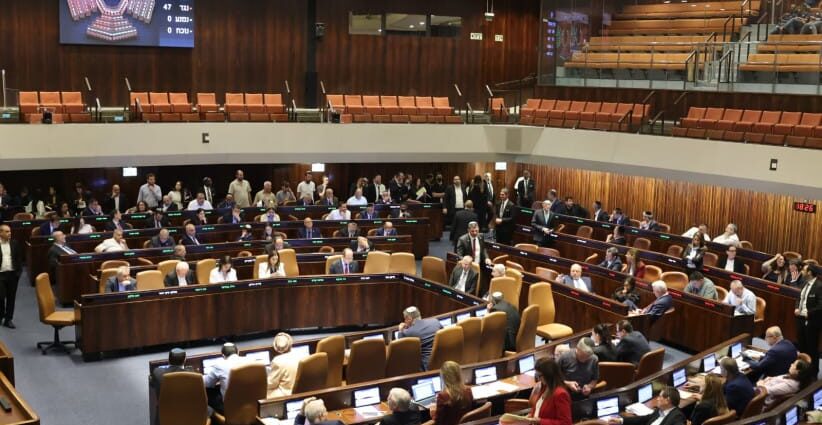
MK Haskel calls on right-wing figures to join new party for ‘broad Zionist gov’t’ ahead of election
Israel First Party leader MK Sharren Haskel launched a campaign calling on right-wing figures to join her new party as part of an effort to form a “broad Zionist government,” telling The Jerusalem Post on Tuesday she would consider joining a government after the elections with parties from “both sides of the aisle.”
The first figure she called on to join her party was MK Yuli Edelstein, who recently announced that he would be leaving Prime Minister Benjamin Netanyahu’s ruling Likud Party, stating that he was planning a new political path.
Haskel noted that her new campaign would extend in the coming days to appeal to additional figures on the political Right that were falling below the electoral threshold in polls, calling on them to join her as well.
Her campaign comes amid reports that former Israeli UN ambassador Gilad Erdan has been considering forming a new party on the Right to compete with the Likud as well.
After launching the campaign, Haskel told the Post that she would sit with parties from both the opposition and coalition, not ruling out sitting in a government with Prime Minister Benjamin Netanyahu.
October 7 bridged political divides
Speaking on Netanyahu, Haskel said that the October 7 Hamas attacks in 2023 bridged past divides of “coalition versus opposition.”
“‘Anyone but Bibi ‘ [Netanayhu] collapsed on October 7. Today’s test is not personal. It is based on values.”
Haskel explained that a broad Zionist government would put “the state ahead of sectoral interests.”
“This means a partnership of everyone who believes in an equal sharing of the burden, security, and national responsibility,” she added.
Haskel also noted that while her party would not boycott individuals, there would be “substantial red lines.”
“Parties that promote draft evasion or anti-Zionist elements will remain outside. Our goal is to unite the national and Zionist camp.”
“Anyone guided by these values can find a home with us, and their place is right alongside us at the cabinet table,” Haskel explained.
“Now is the time to mobilize. This is an emergency [military-like] call-up order for the national camp and for everyone who believes in a Zionist, statesmanlike, and service-oriented state. Now you have a home too,” she said.
Haskel’s resignation from government
Haskel announced the formation of her new party last week shortly after she resigned from the government in her position as deputy foreign minister.
Her resignation came following the Knesset’s passage of contentious legislation freezing the arrests of haredi (ultra-Orthodox) draft evaders.
She had said that the reason for her resignation was that she could no longer stand behind the government’s decisions.
“I feel that I can no longer support a government that harms the security of the country during wartime,” she said, announcing her resignation.
Haskel has been a fierce critic of the series of legislation that was advanced by the haredi parties – with government backing – which critics argue encourages draft evasion, even amid the IDF’s severe manpower crisis.
Other figures who have called for a broad Zionist government include Blue and White Party leader MK Benny Gantz and the newly formed political alliance between Reservists Party leader Yoaz Hendel and former Blue and White MK Chili Tropper.
Those figures have also been falling under the electoral threshold in recent polls and have indicated that they would not object to sitting in a government with Netanyahu.
Gantz has been distanced from the opposition bloc seeking to oust the premier in the upcoming election, which is set for October 27.

Duns 100 maps 60 firms driving Israel’s defense-tech transformation
As global crises push nations to rearm with advanced military technologies, Dun & Bradstreet’s Duns 100 index has published Israel’s first comprehensive ranking of defense-industry companies, mapping 60 firms across the country’s expanding defense-tech ecosystem.
The rankings span six categories: defense integrators, defense manufacturing, unmanned and autonomous systems, homeland security, intelligence and cyber, and tactical and ground equipment.
Of the 60 ranked companies, 23 belong to the defense industry and manufacturing category, and another 19 are classified under unmanned and autonomous systems, showing the central focus of Israel’s defense-tech ecosystem.
The list highlights both established industry leaders and emerging start-ups that have been reshaping Israel’s defense landscape. Elbit Systems, Plasan Sasa, Aeronautics, Magal, Cellebrite, and Israel Weapon Industries (IWI) lead their respective categories.
Among the companies ranked by Duns 100 are Aeronautics, D-Fend Solutions, ThirdEye Systems, Parazero Technologies, High Lander Aviation, Controp Precision Technologies, Bagira, Cellebrite, Smart Shooter, and MeproLight. The companies focus on autonomy, unmanned systems, operational AI, robotics, advanced sensing, data processing, and tactical logistics.
Alongside the main ranking, Duns 100 introduced the Emerging Industry Leaders Award, recognizing companies positioned to significantly influence the future of Israel’s defense sector. This year’s recipients were Aero Sentinel, AIR VEV, Axon Vision, Kela AI, and XTEND. According to Duns 100, these companies provide solutions that are central to modern battlefield transformation.
According to Duns 100 – the world’s largest business information company – the methodology behind the ranking combines quantitative and qualitative indicators, including business strength, technological innovation, global activity, positioning within the defense value chain, and operational relevance. Companies were assessed relative to their field and stage of development, allowing comparisons across diverse segments of the industry.
Shift in the defense sector
Sheila Zavaro Weiss, senior director at Duns 100, said the new index reflects a shift in how Israel’s defense sector should be understood. According to her, the industry is no longer defined solely by traditional manufacturing but by a broader defense-tech model.
“For the first time, we are unveiling a dedicated ranking of Israel’s defense industry companies – a move designed to map the Israeli defense ecosystem broadly and on a data-driven basis,” she said.
“The ranking reflects a profound shift in how the industry should be viewed: not merely as an industry that manufactures systems and components but as a broad defense-tech ecosystem in which value is created through the integration of industrial capabilities, software, data, AI, autonomy, sensors, and operational relevance. In this sense, the ranking does more than show who operates in the field – it signals how Israel’s defense industry is evolving and where it is heading.”
Data collected for the ranking show that Israel’s defense ecosystem extends far beyond its three largest corporations. Of the 60 companies listed, 23 operate in defense manufacturing and 19 in unmanned and autonomous systems. Together, they represent roughly 70% of the ranking, underscoring the central role of advanced production capabilities and next-generation technologies.
Many of the companies ranked on the list operate extensively overseas, with exports accounting for significant portions of revenue – sometimes approaching 90% – highlighting Israel’s growing presence in the global defense market.
In June, Israel’s Defense Ministry announced that the country’s defense export for 2025 was at $19.2 billion – a record broken for the fifth consecutive year and a surge of nearly 30% compared to 2024. Over half of the deals (53%) were valued at $100 million or more each.
The director-general of the Defense Ministry, Maj.-Gen. (res.) Amir Baram, was quoted as saying at the time that “the sharp surge in defense exports reflects the quality of Israel’s defense industry, global demand, the IDF’s operational successes, and our unique ecosystem.”
The list released by Duns 100 comes shortly after it was announced that Israeli defense-tech start-ups working with the Defense Ministry raised nearly $3 billion in the first six months of 2026.
According to figures presented at the Haifa DefenseTech Startups and Investors Forum, the amount is three times the $1b. raised during all of 2025.
During the same period, defense-tech and dual-use companies accounted for almost 30% of the $8.4b. in private investment in Israel’s hi-tech sector. Approximately 800 start-ups are currently fulfilling direct procurement orders for the ministry.
Manhattan project contractor error eyed in conversion collapse
A partial building collapse in New York City may more likely be explained by contractor error than from inherent risks in large-scale office-to-residential conversions.
An engineer on the former Pfizer headquarters conversion told Gothamist that workers failed to reinforce columns as designed. The columns buckled and prompted evacuations across seven Manhattan Midtown East blocks.
The incident raised questions about the viability of office-to-residential conversions not just in New York City but nationwide. If contractor error caused it, that would take some of the heat off safety and feasibility concerns about large conversions. New York City officials are still investigating the failed columns.
Despite the new, narrowed evidence around the New York City project, the episode highlights the complexity of conversions and the challenges that can arise, regardless of a building’s age. Such problems will likely grow more common as states and cities push conversions to solve two problems: eliminating obsolete, vacant office buildings – and the lost real estate value associated with them –and adding housing supply.
Age is just a number
Developer MetroLoft is converting the 1970s-era office buildings into 1,600 apartments. To get that number, the developer is adding floors to existing buildings. Plans by GACE Consulting Engineers called for steel plating along the columns supporting the additional floors.
“The structure was not reinforced as GACE’s design required,” Chris Behan, principal engineer with the firm, wrote in a statement.
Most conversions have involved 1950s and older office buildings. But the drive to add housing supply has pulled newer buildings into the mix, some just 20 years old. COVID-19-induced remote and hybrid work models rendered many office buildings obsolete.
“Older ones – because the floor plates are narrower, especially the ones that were designed before electric lighting or before HVAC – are always going to be better because they have more light,” Patrick Chopson, principal architect with Atlanta-based firm Cove, told HousingWire TBD.
Older buildings needed windows for light before electricity existed, or when only dim bulbs lit the space. Windows also allowed cross-ventilation before air conditioning.
Floor space sizes expanded as HVAC and lighting technology improved. That gave rise to office space with inoperable windows lit by fluorescent bulbs.
Residential space needs light, a code requirement. Developers can carve a narrow 10,000-square-foot floor into apartments with proper natural lighting more efficiently than a 50,000-square-foot one.
To get necessary lighting, developers carve out a portion of the building, which costs money. Even projects with an existing skylight may need changes to optimize light for units. That was the case when a developer converted a 1990s office building near the White House in Washington, D.C.
Differences in construction
Aside from the floor space, 1950s and older buildings offer an engineering advantage.
“Older buildings are typically overdesigned by a wide margin,” Chopson said. “The famous example that resonates with most people is the B-17 bomber from World War II that was flying over Germany, would lose a wing and have one engine and still make it back. Everyone added a 20% safety factor on top of what they were doing back in the day.”
But he and other architects note that unknowns remain in existing buildings of any age until work begins. Old building plans might not be available.
If plans exist, the final product may not match them exactly. A crew could discover a decades-old construction flaw that needs correction. A window leak in a 1970s building, for example, may have persisted long enough to cause unseen structural damage.
“In most conversion projects, things always go wrong,” Chopson said.
He said a project with the complexity of MetroLoft’s floor addition and parallel construction, “you’re magnifying the number of things that could go wrong.”
Complexity can make or break deals
A real estate lender walked away from financing the conversion of a 1922 Boston office building, citing its complexity. Sean Kelly-Rand, managing partner at RD Advisors, wrote in a LinkedIn post that he passed on the deal chiefly because of an operating U.S. Post Office on the ground floor and high construction costs.
“To make the transaction work, it not only requires tax abatements and code variances, but also historic tax credits,” Kelly-Rand wrote, noting the firm’s experience in lending on conversion projects. “It’s a great project, but these conversions aren’t without real risk.”
He said those risks include a softening rental market and the possibility of rent control at some point. A Massachusetts court last month scratched a rent control measure from the November ballot on a technicality.
But legislation is sitting in a Senate committee that state lawmakers have pushed as a compromise that would allow each city the option to approve rent control. The formal legislative session ends July 31.
In Los Angeles, apartment developer Kennedy Wilson is tackling a complex project. The firm is scheduled to begin work in August on converting the mid-1970s, 400,000-square-foot World Trade Center into 512 affordable housing units.
It will require a slew of low-income tax credits and other subsidies to achieve profitability.
“It’s complicated and not for the faint of heart,” Nicholas Bridges, Kennedy Wilson’s global head of capital markets, told the Los Angeles Times.
300,000-plus listed lots highlight infill boon for builders, per Zillow
Building a single home on each of the more than 300,000 empty lots listed for sale on Zillow in June could shrink the nation’s housing shortage by about 6.3%, according to new research from the listing platform.
Zillow estimates the U.S. is short 4.7 million homes, a deficit it says is the main driver of today’s affordability crisis. Putting one home on every currently listed lot of 5 acres or less would cut that shortage to roughly 4.44 million units.
Empty lots are not a niche segment of the resale market. Zillow counted 300,242 lots for sale in June 2026, representing 17.4% of all for-sale listings on the site. The typical listed lot is 0.57 acres — often enough land for more than one home under more flexible zoning rules — which suggests the 6.3% impact estimate is conservative.
Where the land is
The distribution of listed lots is highly uneven, which matters for builders looking for near-term opportunities:
Most lots by state:
- Florida (42,601)
- Texas (40,907)
- California (18,508)
- North Carolina (14,226)
- Georgia (10,341)
Highest share of listings that are lots:
- North Dakota (45.9%)
- South Dakota (38.7%)
- Alaska (34.6%)
- Nebraska (30.4%)
- New Mexico (30.3%)
Rural markets show the highest concentration, with lots making up 25.3% of all for-sale listings, compared with 13.6% in suburbs and 9% in urban areas.
Land prices also vary sharply by location, which affects whether smaller builders can pencil a project:
- Median rural lot price: about $75,000 per acre
- Median suburban lot price: more than $181,000 per acre
- Median urban lot price: roughly $500,000 per acre
Nationally, the median listed lot price is $79,000 at 0.57 acres, according to Zillow’s state-level table.
Policy and financing hurdles
Kara Ng, a senior economist at Zillow, said in the report that these lots represent “low-hanging fruit” for addressing a shortage that has built up over two decades, but that it is not yet feasible to build on many of them under current rules and cost structures.
Zillow’s analysis points to several friction points familiar to homebuilders:
- Zoning and density limits that keep modest infill or small-scale projects from penciling out.
- Permitting timelines and uncertainty that add cost and risk, especially for small and midsize builders working on scattered lots.
- Financing challenges for buyers and for small-dollar construction projects, particularly in rural markets.
The company highlighted recent federal efforts such as the 21st Century ROAD to Housing Act, which aims to modernize zoning, streamline permitting and expand access to lower-cost housing options, including manufactured homes. Zillow framed manufactured housing as a potential tool for turning more of these lots into homes because factory-built units can be produced faster and at lower cost than traditional site-built construction.
Zillow’s focus on rural small-dollar loans
On the financing side, Zillow noted that many consumers who want to buy a lot and build face a fragmented process: finding land, choosing a home type and securing financing typically require separate steps and multiple parties.
This summer, Zillow is participating in a 12-week federal tech sprint with the U.S. Census Bureau’s Opportunity Project, focused on increasing access to small-dollar housing loans in rural communities. The company said it is exploring ways to reduce friction for buyers interested in purchasing and building on an empty lot, which could eventually influence how builders connect with retail buyers in rural and exurban markets.
Why this matters for homebuilders
For builders, the research underscores how much potential supply is already sitting in current listings — especially in rural and lower-cost states where lots make up a third or more of the for-sale market. But converting that inventory into actual homes will depend less on raw land counts and more on whether local zoning, infrastructure and financing structures support small-scale development.
Key takeaways for homebuilding professionals include:
- Scattered-lot and infill strategies: In states like Florida, Texas and North Carolina, the sheer volume of listed lots may support programs aimed at scattered-site spec building, build-for-rent or manufactured home placements where local rules allow.
- Rural focus: With rural markets showing the highest share of lots and lower per-acre prices, smaller and regional builders may find opportunities to pair lower-cost land with manufactured or modular product — if they can navigate lending constraints and appraisals.
- Policy engagement: The gap between theoretical capacity (300,000 lots) and realized housing production highlights how much local land-use policy and permitting reform will shape future pipeline. Builders watching efforts tied to the ROAD to Housing Act or similar state-level reforms may want to identify jurisdictions where rule changes could unlock infill programs.
For now, Zillow’s findings quantify how much buildable land is already visible in the for-sale market, but they also show that closing even a modest share of the nation’s housing deficit will require aligning land supply with workable entitlements, infrastructure and finance.

America’s Oil Cushion Thins to Its Slimmest Margin in Four Decades
NEW YORK — The United States is sitting on its smallest crude oil buffer in nearly half a century, a quiet warning signal flashing beneath a market that has otherwise managed to keep panic at bay. Domestic inventories have fallen to roughly 43 days of supply, the lowest reading in 45 years, as the war between the United States and Iran continues to strangle the flow of oil through the world’s most important energy chokepoint.
The drawdown reflects five months of disruption in the Strait of Hormuz, where fighting that began on February 28 has repeatedly interrupted the roughly one-fifth of global oil that normally transits the waterway. Even with American naval escorts keeping tankers moving, the cumulative strain on supply has steadily eroded the reserves that cushion the domestic market against shocks.
What makes the moment unusual is how calm prices have remained relative to the underlying tightness. U.S. crude trades near $81 a barrel, elevated by historical standards but well below the levels above $112 seen at the height of the wartime scare earlier this year. That gap has become one of the more puzzling disconnects in the market: inventories at a multi-decade low, an active conflict at a critical shipping lane, and yet a price that suggests something closer to unease than alarm.
Consumers are feeling the strain more directly than the futures screens let on. The national average price for a gallon of gasoline has climbed back to $4, more than ten cents higher than a week earlier and up sharply from the $3.15 average of a year ago. For households already stretched by rising costs elsewhere, the return to $4 fuel functions as a tax on nearly every trip to work, every grocery run, and every shipment that moves by truck.
The thin supply cushion changes the risk calculus for the months ahead. When inventories run low, the market loses its shock absorber. Any fresh interruption — a new round of attacks in the Gulf, a mine strike on a tanker, a disruption to the bypass pipelines that have been carrying a portion of the region’s crude overland — would hit a system with far less slack than usual. In that environment, a relatively small physical disturbance can translate into an outsized price reaction, because there is simply less oil in storage to draw down while the disruption plays out.
For businesses, the implications ripple outward from the pump. Elevated and potentially volatile fuel costs raise the price of freight, aviation, manufacturing, and agriculture, and they complicate planning for any company that budgets around energy as a major input. Airlines have already flagged billions in added fuel expenses tied to the war-driven surge, and those costs tend to migrate into ticket prices, shipping rates, and ultimately the shelf prices consumers pay.
The administration has leaned on expanded domestic production and naval protection of shipping lanes to keep barrels moving, and officials insist the flow through the region is recovering. But recovery in transit volumes has not yet rebuilt the reserves that the conflict has drained. Until inventories climb back toward historical norms, the American energy market will remain unusually exposed — steady on the surface, but running closer to the edge than it has in a generation.
The coming weeks will test whether the current fragile balance holds. A durable easing in the Gulf would allow supplies to recover and prices to drift lower. A renewed escalation would meet an oil market with little margin for error and a public already watching the number on the gas station sign climb.
JBizNews Desk | New York, N.Y.
© JBizNews.com All Rights Reserved. Reproduction or distribution without written permission is prohibited.