PJT Partners CEO Paul Taubman Tells the Milken Conference What the Industry Doesn’t Want to Hear
Beverly Hills, Calif

By JBizNews Desk | Beverly Hills, Calif. — May 6, 2026

Billions of dollars are flowing out of private credit funds as retail investors confront a reality the industry is now openly acknowledging: many of these products were never designed to provide easy access to cash.

Speaking at the Milken Institute Global Conference, PJT Partners CEO Paul Taubman delivered a blunt assessment of the shift underway. “Retail clearly is going to stop fueling the growth in AUM for private credit,” he said in a Bloomberg Television interview. “There’s an increasing realization it’s an institutional product, not a retail product.” He described the situation as, at its core, a messaging failure — a gap between what investors were sold and what they actually owned.

His remarks reflect a broader pullback across a market that ballooned to roughly $1.8 trillion globally, fueled in part by aggressive marketing to individual investors beginning in 2022.

What Went Wrong

Private credit — direct lending to companies outside traditional banks — was repackaged by major firms including Blackstone, Blue Owl Capital, and Ares Management into semi-liquid funds promising annual returns of 8% to 12%, alongside periodic redemption windows.

The structure carried a fundamental mismatch. The underlying loans are long-term and illiquid by design, while investors were offered limited but recurring opportunities to withdraw cash. When redemption requests surged, that mismatch became unavoidable.

Blackstone’s flagship $82 billion private credit fund faced withdrawal requests totaling about 7.9% of assets — roughly $3.8 billion — in a single quarter. Blue Owl Capital responded to similar pressures by halting standard quarterly liquidity in one of its funds, shifting instead to periodic payouts tied to asset sales.

Even institutional investors have begun reducing exposure. Brown University’s endowment cut its position in a major private credit fund by more than half in early 2026, while Royal Bank of Canada’s asset management arm launched a public debt alternative aimed at investors seeking more liquid options.

Why Investors Got Hurt

Consumer advocates have long warned that private credit’s structure — including leverage, limited transparency, and restricted liquidity — makes it difficult for retail investors to fully assess risk.

“When you deal with retail investors, the level of protection needs to be amplified,” Paul Taubman said, underscoring the growing concern that these products were not suited for a broad individual investor base.

The pressure extends beyond liquidity. Analysts have raised concerns about loan quality in sectors that expanded rapidly during the boom years, particularly technology and software companies now facing margin compression. Some market observers have described a wave of “tourist” investors — those who entered during peak enthusiasm and are now exiting at a loss.

What Comes Next

Industry leaders have largely framed the situation as a liquidity challenge rather than a full-scale credit crisis. Private credit’s role as an alternative financing channel for mid-sized companies remains intact.

But the model for growth is shifting.

The era of aggressively marketing these products to retail investors appears to be slowing as redemption limits, valuation concerns, and investor expectations reset across the sector.

For many individuals who entered the market expecting steady income and flexible access, the lesson is becoming clear — often too late. Private credit was built for institutions willing to commit capital for years, not for investors expecting near-term liquidity.

As withdrawals continue and the investor base rebalances, the industry is entering a new phase — one defined less by rapid expansion and more by discipline, transparency, and a narrower audience.

JBizNews Desk
© JBizNews.com. All rights reserved.

By JBizNews Desk | May 6, 2026

A word that has been largely absent from economic discussions for decades is making a sudden and uncomfortable return: stagflation.

As oil prices surge and growth expectations weaken, economists are increasingly warning that the U.S. may be entering — or already approaching — a period defined by the toxic combination of rising inflation and slowing economic activity.

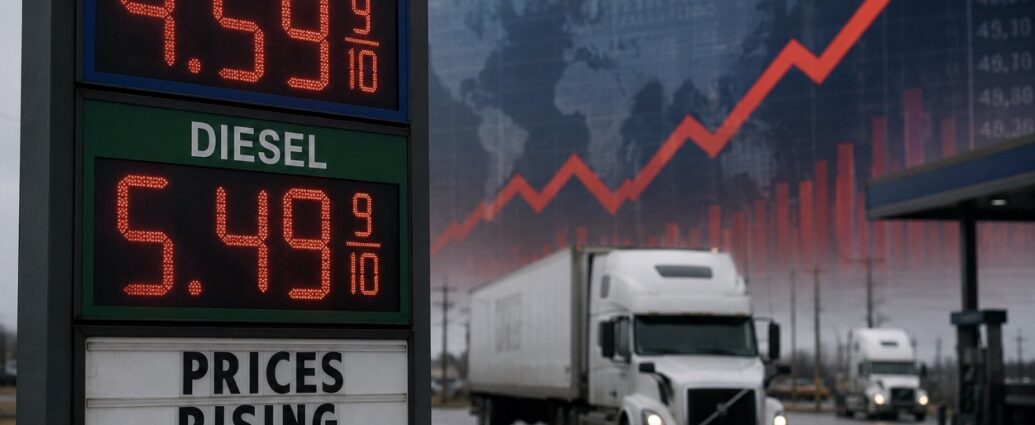
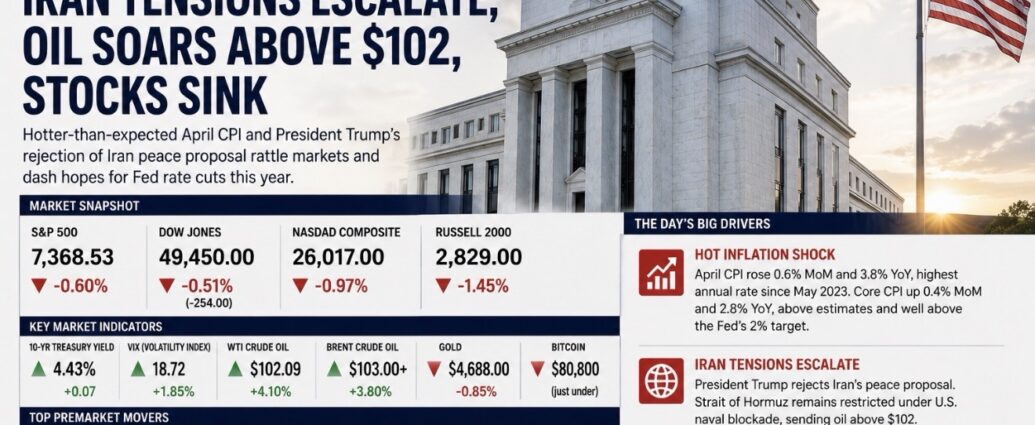
The shift in sentiment has been driven largely by the escalation of the Iran conflict, which has disrupted energy markets and pushed crude prices sharply higher. The result is a renewed inflationary shock hitting an economy that was already showing signs of cooling.

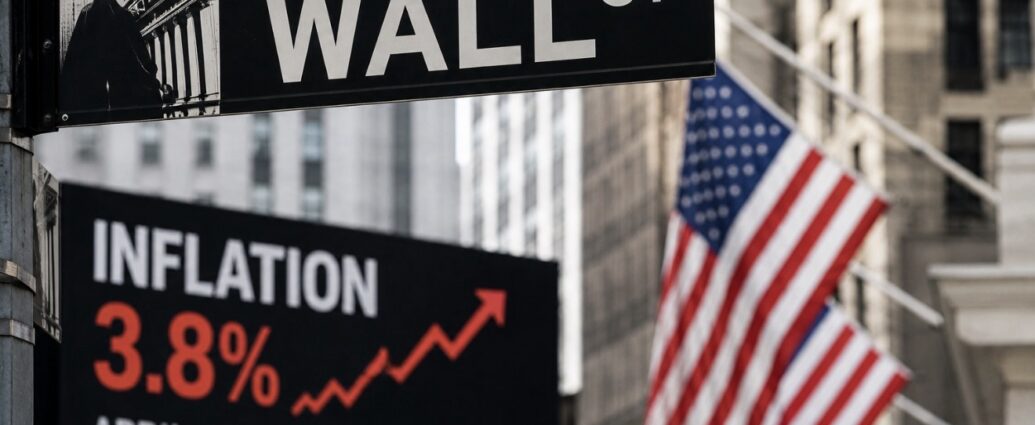
The Organisation for Economic Co-operation and Development (OECD) now projects U.S. inflation could reach as high as 4.2% in 2026, significantly above earlier forecasts. At the start of the year, most economists expected inflation to remain closer to 2.5% while growth held near 2.5%. That outlook has changed dramatically.

“I think the damage has already been done,” said Mark Zandi, Chief Economist at Moody’s Analytics, pointing to the surge in oil prices as a key driver. “There’s no going back on oil prices in the near term.”

Energy costs act as a multiplier across the economy, raising prices for transportation, manufacturing, and consumer goods. As those costs rise, businesses face pressure on margins, while consumers see their purchasing power eroded.

At the same time, growth is showing signs of strain. Higher borrowing costs, supply chain disruptions, and uncertainty tied to geopolitical developments are weighing on business investment and consumer confidence.

That combination — rising prices and slowing growth — is the defining characteristic of stagflation.

Scott Lincicome, Vice President of General Economics at the Cato Institute, warned that inflation measures closely watched by the Federal Reserve could climb further. “We could see the Fed’s preferred gauge pushing toward 4%,” he said, adding that consumers are unlikely to see relief in the near term.

The Council on Foreign Relations has also highlighted the risk, noting that prolonged disruptions to oil and gas infrastructure could have lasting effects on global supply, keeping prices elevated and growth subdued.

Still, not all economists agree that stagflation is inevitable.

Aditya Bhave, Senior U.S. Economist at Bank of America, said markets may be overreacting to early signals. “You need sustained weakness in demand alongside persistent inflation,” he said, noting that consumer spending data has not yet shown a sharp decline.

The debate ultimately centers on duration. If the energy shock proves temporary, the economy may absorb the impact without entering a prolonged period of stagnation. If disruptions persist, the risks increase significantly.

For policymakers, the challenge is acute. The Federal Reserve is tasked with controlling inflation while supporting employment — goals that can come into direct conflict during stagflationary conditions.

“Central banks have very few good options in this environment,” said Diane Swonk, noting that raising rates to fight inflation can further slow growth, while cutting rates risks fueling price increases.

For consumers, the effects are more immediate. Rising fuel costs, higher food prices, and elevated borrowing rates combine to squeeze household budgets, even if employment remains relatively stable.

Looking ahead, much will depend on developments in global energy markets. The Strait of Hormuz, a key transit point for oil shipments, remains a focal point for traders and policymakers alike. Any disruption there could intensify inflation pressures further.

For now, the resurgence of stagflation concerns reflects a broader shift in the economic landscape — one where global events are once again shaping domestic outcomes in powerful and unpredictable ways.

© JBizNews.com. All rights reserved.

By JBizNews Desk | May 5, 2026

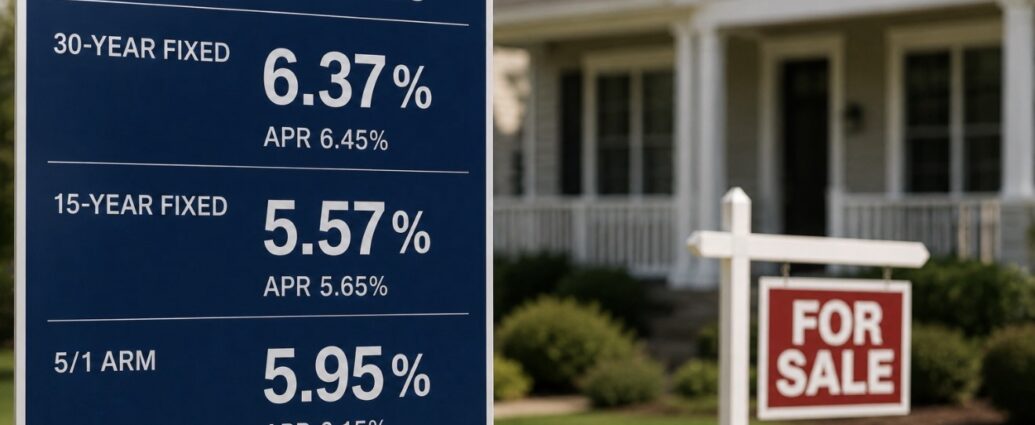
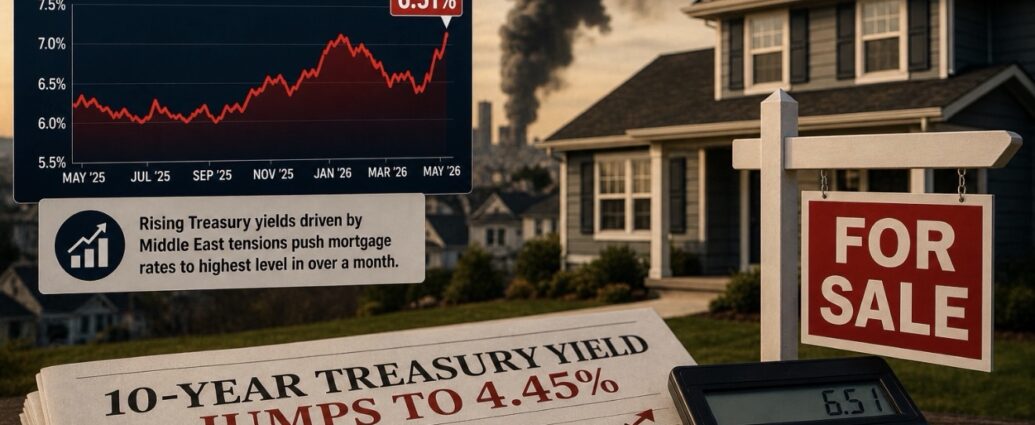
The U.S. housing market is once again feeling the pressure of global instability, as mortgage rates climbed above 6.5% this week, reversing recent declines and tightening affordability for millions of Americans amid rising bond yields triggered by escalating tensions in the Middle East.

The average rate on a 30-year fixed mortgage rose to its highest level in over a month, tracking a sharp move in the 10-year Treasury yield, which climbed to around 4.45% following renewed investor concern over inflation tied to surging oil prices. The shift underscores how quickly geopolitical developments can ripple through domestic financial conditions.

Housing economists say the timing is particularly challenging. After months of gradual improvement, the housing market had begun showing early signs of stabilization, with buyers cautiously returning and sellers adjusting expectations. The latest rate increase threatens to stall that momentum.

“This is exactly the kind of shock the housing market didn’t need,” said Lawrence Yun, Chief Economist at the National Association of Realtors, who noted that higher borrowing costs can quickly sideline potential buyers. “Affordability remains the biggest constraint.”

The connection between global conflict and mortgage rates runs through the bond market. As oil prices rise, investors worry about inflation, prompting them to demand higher yields on Treasury securities. Mortgage rates, which are closely tied to the 10-year Treasury, move in tandem.

That dynamic is already affecting buyer behavior. Mortgage applications have shown signs of slowing, according to industry data, while refinancing activity — which had picked up modestly in recent weeks — is expected to decline again.

For homeowners, the impact is immediate. A half-percentage-point increase in mortgage rates can add hundreds of dollars to monthly payments on a typical home loan, further stretching budgets at a time when home prices remain elevated in many markets.

Builders are also watching closely. Higher rates can dampen demand for new construction, potentially slowing development activity just as the industry works to address a long-standing housing shortage. Robert Dietz, Chief Economist at the National Association of Home Builders, said rising rates “directly impact buyer traffic and sentiment.”

At the policy level, the Federal Reserve now faces a more complicated backdrop. While inflation had been trending lower, the surge in energy prices could reverse that progress, making it harder for policymakers to justify rate cuts in the near term.

“Energy shocks are notoriously difficult for central banks,” said Diane Swonk, Chief Economist at KPMG, noting that the Fed may need to remain cautious even if other parts of the economy show signs of cooling.

Despite the headwinds, some analysts argue that structural demand for housing remains strong, supported by demographics and limited supply. That could provide a floor for the market, even as affordability challenges persist.

Looking ahead, the trajectory of mortgage rates will largely depend on developments in the Middle East and the bond market’s response. If tensions ease and yields stabilize, rates could drift lower again. But if oil prices continue to rise, the housing market may face renewed strain.

For now, buyers and sellers alike are navigating an environment where global events — not just local conditions — are shaping the cost of homeownership in real time.

© JBizNews.com. All rights reserved.

London — May 4, 2026 — The Bank of England is considering putting the digital pound project on ice, according to people familiar with the situation, as officials weigh a slower path forward while rival central banks race ahead with their own central bank digital currencies. Rather than a firm decision to approve or scrap the so-called Britcoin this summer, UK authorities are leaning toward a middle route that would slow progress on the CBDC, Bloomberg reported.

The shift marks a notable change in tone. Just three years ago, the Bank of England and HM Treasury said a digital pound was “likely to be needed.” Now the future of the project hangs in the balance as the current design phase runs through 2026, with a final decision on next steps still pending.

The economic stakes are significant. A full-speed digital pound was seen as a way for the UK to maintain competitiveness in digital payments and reduce reliance on private stablecoins and foreign payment systems. Delaying or slowing the project could leave British firms and consumers at a disadvantage as China’s e-CNY continues to expand and the European Central Bank advances its digital euro toward a potential 2029 launch. Analysts warn that hesitation could slow innovation in cross-border payments, limit the Bank of England’s ability to respond to future financial stability challenges, and reduce the UK’s influence in shaping global digital currency standards.

People familiar with the situation told Bloomberg that officials are now prioritizing a more cautious “wait-and-see” approach, evaluating whether a digital pound is truly necessary at this stage amid rapid private-sector developments in stablecoins and other digital payment innovations. The Bank of England has repeatedly stressed that no decision has been made on whether to introduce a digital pound, and any launch would require primary legislation passed by Parliament.

The ruling comes as global CBDC momentum accelerates elsewhere. China’s e-CNY has processed nearly $1 trillion in transactions and continues to evolve, while the European Central Bank is making steady progress on its digital euro with high-level political support across EU member states. The Bank of England’s more measured stance reflects growing concerns about privacy, financial stability risks, and the potential impact on commercial bank deposits — issues that have been central to the design phase work.

For the UK economy, the decision carries broad implications. A digital pound was intended to sit alongside cash and bank deposits as a new form of public money, potentially boosting efficiency in payments and supporting monetary policy in a digital era. Slowing the project could delay these benefits while increasing reliance on private-sector solutions that may not offer the same level of resilience or public trust. Economists note that the UK’s hesitation could also affect investment in related fintech infrastructure and the country’s attractiveness as a hub for digital finance innovation.

The Bank of England and HM Treasury are expected to complete their blueprint and assessment later this year, which will inform the next steps. In the meantime, the pause allows more time to study real-world use cases through the Digital Pound Lab and to monitor international developments.

The ruling underscores a broader global tension in CBDC development: balancing innovation and competitiveness against risks to financial stability, privacy, and the traditional banking system. As rivals push forward, the Bank of England’s cautious approach highlights the complex trade-offs facing central banks in the AI and digital payments era.

JbizNews- Desk – Central Banking

By JBizNews Desk | Monday May 4, 2026

GameStop has made an unsolicited $56 billion offer to acquire eBay, the online marketplace giant, in what would rank as one of the most stunning corporate takeover attempts in recent retail history — and a dramatic signal that CEO Ryan Cohen is done playing defense.

GameStop has built a roughly 5% stake in eBay and is offering $125 a share in cash and stock, Cohen told the Wall Street Journal in a direct interview Sunday. The offer represents a premium of about 20% to eBay‘s last closing price on Friday. “eBay should be worth — and will be worth — a lot more money,” Cohen said. “I’m thinking about turning eBay into something worth hundreds of billions of dollars.”

GameStop said in a news release that it submitted a non-binding proposal to buy 100% of eBay at $125 per share in cash and stock, split 50/50. The offer also represents a 46% premium to eBay’s closing price on February 4 — the day GameStop first began buying eBay stock. 

The Financing Behind the Bid

The sheer scale of the deal — eBay carries a market value of roughly $46 billion, nearly four times GameStop’s own $12 billion market cap — immediately raised questions about how Cohen plans to pay for it. He has lined up a multi-layered financing structure.

Cohen told the Wall Street Journal that GameStop has secured a commitment letter from TD Bank to provide about $20 billion in debt financing for the deal.  GameStop also holds about $9 billion in cash on its balance sheet.  To bridge the remaining gap, GameStop could seek support from external investors, including Middle Eastern sovereign wealth funds, according to people familiar with the matter. 

In its news release, GameStop said it expects to deliver $2 billion in annualized cost reductions within the first 12 months of closing the deal, including $1.2 billion in cuts from sales and marketing at eBay, $300 million from product development, and $500 million from general and administrative expenses. Cohen would become CEO of the combined company. 

Markets React

The news sent both stocks sharply higher. GME shares jumped more than 9% in after-hours trading, while eBay shares climbed between 10% and 15%, in a market reaction that recalled the 2021 short squeeze that briefly made GameStop a Wall Street obsession. 

The deal would combine GameStop’s collectibles expertise and growing cash war chest with eBay’s 130 million active buyers and global payments infrastructure — a combination Cohen argues could directly challenge Amazon’s dominance in the broader marketplace economy.

Cohen’s Expansion Play

The bid is the clearest expression yet of a strategic pivot Cohen has been building toward since early 2026. In January 2026, Cohen told the Wall Street Journal he was actively scouting deal targets in the consumer and retail sector as part of a plan to scale GameStop far beyond video games and collectibles.  His compensation package reinforces the ambition: it includes a performance-based stock option award valued at roughly $35 billion if fully earned, structured in nine tranches tied to escalating milestones, with the most demanding targets requiring GameStop to reach a $100 billion market cap. 

What Happens If eBay Says No

Cohen said he is prepared to run a proxy fight and take the offer directly to eBay shareholders if eBay’s board is not receptive. “There is nobody who is more qualified, based on my experience, to run the eBay business,” he told the WSJ. 

eBay had not responded to requests for comment as of Sunday evening. GameStop, eBay and TD Bank did not immediately respond to Reuters’ requests for comment.  Whether eBay’s board engages or resists, the proposal has already reshaped how Wall Street thinks about both companies — and about what Ryan Cohen is actually building.

— JBizNews Desk

© JBizNews.com. All rights reserved. This article is original reporting by JBizNews Desk. Unauthorized reproduction or redistribution is strictly prohibited.