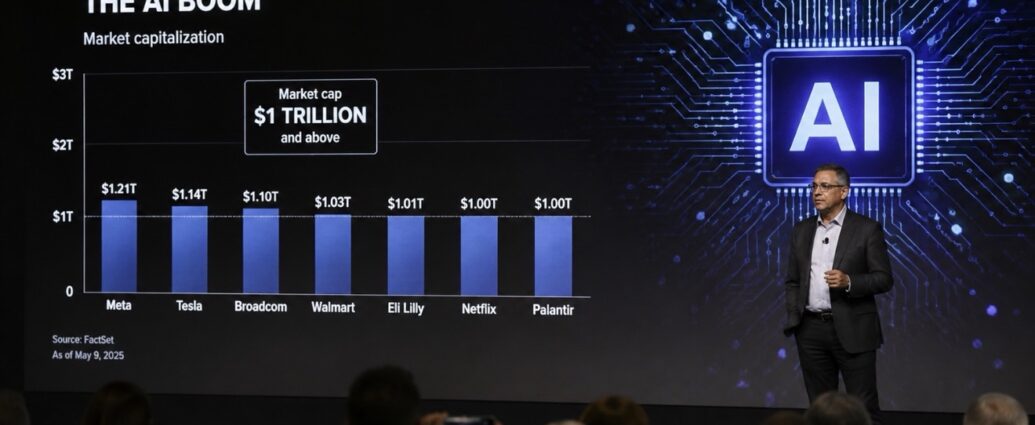
Stocks may still have room to climb even if the Federal Reserve raises interest rates again — at least according to one closely watched market technician who says the AI-driven rally has not yet broken down.

Todd Gordon, founder of Inside Edge Capital and longtime CNBC market analyst, said Tuesday that the stock market’s biggest risk right now is not necessarily a small Fed rate hike itself, but whether inflation expectations spiral higher because of the Iran war and rising oil prices.

For everyday investors, the message is important: Wall Street is debating whether the current AI boom can continue even in a higher-interest-rate environment.

Markets have become increasingly nervous in recent weeks as Treasury yields surged sharply higher. The 30-year Treasury yield briefly climbed above 5.19% Tuesday — its highest level in nearly two decades — while investors have largely abandoned hopes for Fed rate cuts this year.

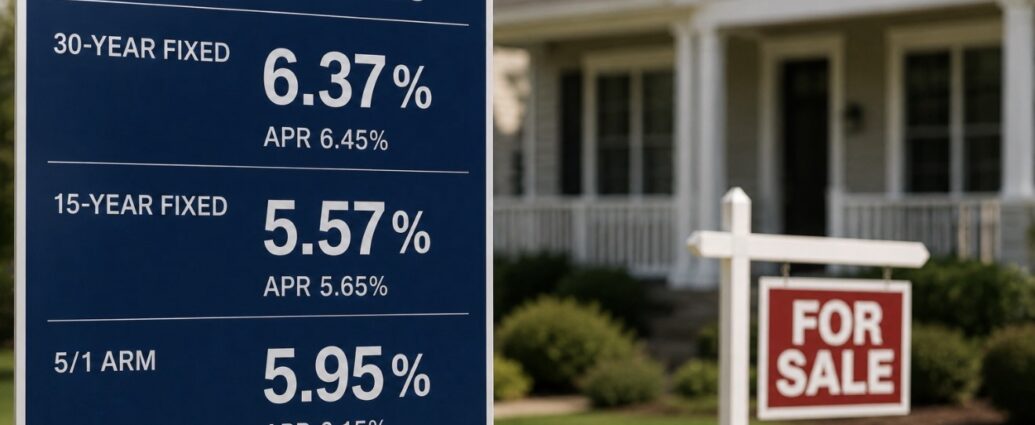
Higher yields matter because they increase borrowing costs throughout the economy, including mortgages, credit cards, business loans and corporate financing. They also tend to pressure high-growth technology stocks, whose valuations often rely on expectations of future earnings.

Despite that, Gordon believes the broader bull market remains intact for now.

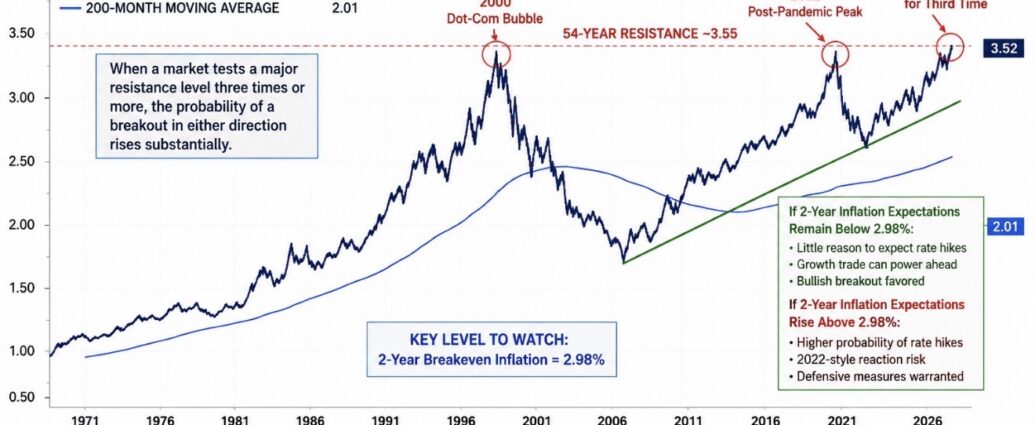
His analysis focuses heavily on inflation expectations, especially a market measure known as the two-year breakeven inflation rate. According to Gordon, the critical line is roughly 2.98%.

If inflation expectations stay below that level, he believes the market can likely handle modest additional tightening from the Federal Reserve without collapsing the AI-driven rally.

“If expected inflation remains contained, I see little reason to expect the growth trade to break down,” Gordon wrote in a note for CNBC Pro.

Much of the debate centers on oil prices and the Iran conflict.

Since the war began earlier this year, crude oil prices have remained elevated, fueling concerns that inflation could reaccelerate just as the Federal Reserve hoped price pressures were cooling.

If tensions ease and oil prices fall back toward more normal levels, analysts believe inflation fears could fade and allow stocks — especially AI and technology companies — to continue climbing.

But if the conflict escalates further and oil prices spike again, investors worry the Fed could be forced into a tougher stance that would hurt markets more broadly.

Gordon’s bullish case also rests on a major technical chart pattern involving the Nasdaq and S&P 500.

He noted that the Nasdaq-to-S&P ratio is testing a key resistance level that has only appeared twice before in modern market history — once during the dot-com bubble in 2000 and again before the 2022 tech selloff.

Technical analysts often view repeated tests of major market levels as signals that a powerful breakout could eventually occur.

Gordon believes the current setup could potentially resolve upward if inflation pressures stabilize.

Still, there are warning signs.

Some growth indicators are no longer rising as strongly as major AI stocks themselves, suggesting parts of the rally may be narrowing beneath the surface. Analysts say that can sometimes happen late in strong bull markets.

Meanwhile, other economists argue the real danger may not come directly from the Fed, but from growing stress inside the bond market itself.

Foreign governments including Japan and China recently reduced their holdings of U.S. Treasurys as they defended their own currencies against rising energy costs tied to the war. Weak demand at several recent Treasury auctions has also pushed yields higher.

That creates a separate challenge for markets because borrowing costs can continue rising even without direct Fed action.

Some analysts now warn the Fed risks losing control of inflation expectations if it appears too slow to respond to higher energy-driven inflation.

For investors, the next major test arrives this week with Nvidia’s earnings report, one of the most closely watched events in global markets because Nvidia has become the centerpiece of the AI boom driving much of the stock market’s gains.

Strong results could reinforce the bullish AI narrative and help stocks recover despite rising rates. Weak guidance, however, could increase fears that the market has become too dependent on a handful of technology giants.

For now, Wall Street remains caught between two powerful forces: surging enthusiasm around artificial intelligence and growing fears that inflation and higher interest rates may eventually slow the rally down.

— JBizNews Desk

© JBizNews.com. All rights reserved. This article is original reporting by JBizNews Desk. Unauthorized reproduction or redistribution is strictly prohibited.

NATO is actively discussing a potential military escort mission through the Strait of Hormuz if the waterway remains blocked into July, a major escalation in the alliance’s posture toward the U.S.-Iran conflict that is already reshaping calculations across global energy, shipping, insurance, and defense markets.

The possibility was confirmed Tuesday by General Alexus Grynkewich, NATO’s Supreme Allied Commander Europe, who acknowledged during a press conference in Brussels that alliance leaders are evaluating operational plans should the crisis continue.

Asked directly whether NATO is considering a Hormuz mission, Grynkewich answered: “Absolutely.”

The remarks marked the first public confirmation that a formal NATO-led maritime operation is under active discussion as the conflict surrounding Iran and the Gulf deepens.

According to officials briefed on the discussions, several NATO member states support the proposal, though unanimous approval — required for a formal alliance operation — has not yet been secured. Alliance leaders are expected to revisit the issue during a major NATO gathering in Ankara on July 7-8, now emerging as a potential decision point for Western intervention.

For markets, the implications are enormous.

The Strait of Hormuz normally handles roughly one-fifth of global oil and liquefied natural gas shipments. The disruption triggered by the war and subsequent closure of major shipping lanes has produced one of the largest energy supply shocks in modern history.

The International Energy Agency estimates roughly 14 million barrels per day of crude exports remain disrupted or stranded behind the chokepoint.

Brent crude has traded above $100 per barrel for most of the conflict, briefly nearing $120 during peak panic buying before easing modestly this week after President Donald Trump confirmed he had postponed a planned strike following appeals from Gulf leaders seeking additional time for negotiations.

QatarEnergy has already declared force majeure on exports, while oil production across Saudi Arabia, Kuwait, Iraq, and the United Arab Emirates reportedly fell by more than 10 million barrels per day during the worst phase of the March disruption.

The political backdrop behind NATO’s discussions is increasingly tense.

Several European alliance members have resisted Trump administration pressure to directly participate in efforts to reopen Hormuz militarily. The White House recently announced plans to withdraw thousands of U.S. troops from Germany following disputes over burden-sharing and Gulf operations.

Spain has been among the most vocal opponents of direct military involvement, restricting the use of Spanish airspace and facilities for Iran-related strikes. Other European governments have quietly provided logistical support while avoiding formal military commitments.

At the same time, France and the United Kingdom have reportedly been coordinating separate maritime-security contingency plans for the Gulf should active hostilities eventually subside.

What changed Tuesday was NATO itself publicly acknowledging that alliance-level intervention is now being openly debated even while the war remains active.

Shipping markets are already operating under extreme strain.

The International Maritime Organization estimates approximately 20,000 mariners aboard nearly 2,000 commercial vessels remain stranded across Gulf waters. IMO officials say there is little precedent for disruptions affecting such a large concentration of commercial shipping simultaneously.

Earlier U.S.-led efforts to reopen transit routes under the Trump administration’s “Project Freedom” initiative failed within days despite overwhelming American naval superiority.

The U.S. Navy destroyed several Iranian attack boats during the operation, but Iran retaliated with missile and drone strikes targeting Gulf infrastructure, forcing insurers and major shipping operators to continue avoiding the route.

Only a handful of U.S.-flagged vessels successfully completed escorted transits before broader commercial traffic effectively stopped again.

Labor unions representing international seafarers have warned shipping companies not to interpret military escort proposals as guarantees of safety without explicit Iranian assurances.

The financial impact is already spreading far beyond energy.

War-risk insurance premiums for tankers entering Gulf waters have surged dramatically since February. Asian commodity buyers remain scrambled for replacement fertilizer and petrochemical supplies previously sourced through the Gulf.

According to shipping and commodity data from Kpler, Asian buyers receive a significant share of global urea, sulfur, and ammonia exports through the region, much of which remains disrupted.

Food supply chains across Gulf Cooperation Council countries are also under mounting stress.

Retailers including Lulu Retail have reportedly resorted to airlifting staple goods into Gulf markets that rely heavily on imports transiting Hormuz. Consumer food prices across parts of the region have surged sharply as shipping disruptions persist.

The crisis is becoming especially dangerous for Europe.

Qatar supplies roughly 12% to 14% of Europe’s liquefied natural gas imports, nearly all of which transit Hormuz. With Europe still heavily dependent on LNG following the collapse of Russian pipeline supplies after 2022, prolonged Gulf disruption threatens renewed industrial shutdowns and energy shortages across Germany, Italy, and other manufacturing-heavy economies.

That strategic pressure is increasingly driving NATO’s internal debate.

Every additional week of disruption raises the political and economic cost of inaction for European governments already struggling with elevated energy prices and slowing industrial production.

Meanwhile, the military risks continue escalating.

Trump has instructed the Pentagon to remain prepared for renewed large-scale strikes on Iran if negotiations fail. Sen. Lindsey Graham (R-S.C.) has publicly urged the administration to target Iranian energy infrastructure directly in future attacks — a move analysts warn would almost certainly prolong the closure of Hormuz through the summer.

Adding further pressure, the U.S. Senate voted 50-47 on Tuesday to advance a war powers resolution challenging Trump’s military authority over Iran, the first successful procedural breakthrough for congressional critics since the conflict escalated.

Markets are now confronting the possibility of simultaneous escalation on multiple fronts: renewed U.S. strikes, deeper Iranian retaliation, and a formal NATO naval operation entering the Gulf.

Such a scenario would represent the broadest coordinated Western military presence in the Persian Gulf since the Gulf War era.

For now, NATO officials are making clear that the alliance’s patience is narrowing as the economic damage spreads.

The longer Hormuz remains effectively closed, the more likely military intervention becomes.

JBizNews Desk

© JBizNews.com. All rights reserved. This article is original reporting by JBizNews Desk. Unauthorized reproduction or redistribution is strictly prohibited.

This is the kind of week where markets can change direction quickly.

Investors are entering the stretch with Treasury yields near cycle highs, inflation pressures rebuilding, oil above $100 a barrel, and Wall Street increasingly split over whether the U.S. economy is headed toward a soft landing or something far more difficult.

The setup already looks tense before the first earnings report even lands.

The benchmark 10-year Treasury yield closed Friday near 4.6%, its highest level in roughly a year, while the 30-year Treasury pushed through 5% earlier in the week, according to Federal Reserve data. Bond markets are now openly challenging the idea that the Federal Reserve will be able to cut rates anytime soon following April’s hotter-than-expected inflation reports.

Against that backdrop, nearly every datapoint this week suddenly matters more.

Monday opens relatively quietly, at least by comparison to what follows later in the week. The Federal Reserve Bank of New York releases its Business Leaders Survey in the morning alongside updated household-spending expectations data.

Ordinarily, neither report would dominate trading. But after April’s sharp acceleration in both consumer and producer inflation, investors are increasingly searching for signs that higher gasoline prices and elevated borrowing costs are beginning to damage consumer demand.

By Tuesday, attention shifts directly toward housing and the American consumer.

The Census Bureau releases New Residential Construction data before the open, followed later by Pending Home Sales from the National Association of Realtors. Housing has become one of the clearest pressure points in the economy as mortgage rates remain near multi-decade highs.

The same morning, Home Depot reports earnings.

The retailer has become one of Wall Street’s preferred windows into middle-class spending behavior because its business sits directly between consumer confidence, housing activity, and discretionary renovation spending.

Investors will be watching closely to see whether the spring home-improvement season recovered at all after months of slowing demand tied to high financing costs.

Internationally, European travel and infrastructure companies including Ryanair, Aéroports de Paris, and Vinci will also report, offering an early look at whether the global energy shock is beginning to hit tourism and travel demand.

Then comes Wednesday — easily the most consequential day of the week.

Before markets open, Target reports earnings amid an ongoing leadership transition. Chief operating officer Michael Fiddelke is scheduled to succeed longtime CEO Brian Cornell next year, and investors are increasingly focused on whether Target’s customer base is beginning to weaken under inflation pressure.

The company occupies an especially difficult position inside today’s “K-shaped” economy, where higher-income consumers continue spending while lower-income households pull back sharply.

The same morning also brings earnings from Lowe’s, TJX Companies, Analog Devices, Intuit, Progressive, and Raymond James Financial.

But the real focus arrives after the bell.

Nvidia reports quarterly earnings Wednesday evening in what has increasingly become one of the most important recurring events in global financial markets.

CEO Jensen Huang stunned investors earlier this year when he projected combined Blackwell and Rubin AI-chip revenue could exceed roughly $1 trillion through 2027, doubling previous expectations.

The scale of AI spending behind that forecast is staggering. Major hyperscale customers including Amazon, Microsoft, Alphabet, and Meta Platforms are collectively expected to spend between roughly $695 billion and $725 billion on infrastructure next year alone.

Nvidia shares have already surged more than 26% year to date and recently hit fresh record highs.

That leaves little room for disappointment.

Historically, Nvidia stock has sometimes sold off even after strong earnings if guidance merely matches expectations rather than significantly exceeding them.

Earlier that same afternoon, the Federal Reserve releases minutes from its April policy meeting — the final meeting chaired by Jerome Powell before newly confirmed Chair Kevin Warsh takes over.

The Fed held interest rates steady at that meeting, but several officials have since publicly expressed concern that inflation may remain elevated longer than markets expect.

The minutes will offer investors a clearer look into how divided policymakers have become internally over whether inflation risks or recession risks now pose the bigger threat.

Thursday shifts attention back toward consumers and labor markets.

Walmart, the largest retailer in the world, reports earnings before the open.

Unlike Target, Walmart often benefits during economic slowdowns as consumers trade down toward lower-cost retailers. Analysts are especially focused on Walmart’s rapidly growing e-commerce business and whether higher-income shoppers continue migrating toward the company’s online platform.

Thursday morning also brings Initial Jobless Claims and the Philadelphia Fed Manufacturing Survey, both closely watched after rising concern that artificial intelligence, tariffs, and higher energy costs may be beginning to weaken hiring and factory activity simultaneously.

The labor market story extends beyond the government data.

Several major labor disputes are unfolding quietly beneath the surface this week.

Roughly 200 maintenance workers tied to Hersheypark, The Hotel Hershey, and the Giant Center are voting on possible strike action after rejecting the company’s latest contract proposal earlier this month. The timing is significant because Hersheypark is scheduled to fully launch its summer season this week.

At Arconic, the union representing roughly 3,400 manufacturing workers is voting on strike authorization as contract negotiations continue.

Meanwhile, Kroger faces simultaneous labor pressure from multiple union groups tied to grocery and distribution operations.

Friday closes the week with the final University of Michigan Consumer Sentiment reading and the latest New York Fed Staff Nowcast update.

Consumer sentiment has taken on renewed importance because inflation expectations have started rising again alongside gasoline prices. Economists increasingly worry that if consumers begin expecting permanently higher inflation, it could become significantly harder for the Fed to stabilize prices without slowing the economy further.

The broader market backdrop makes every release feel amplified.

The S&P 500 has climbed roughly 9% year to date and rebounded sharply since late March despite higher oil prices, rising bond yields, geopolitical instability, and growing skepticism surrounding future Fed rate cuts.

The bond market, however, is telling a far more cautious story.

This week may help determine which side has the better read on the economy: equity investors betting corporate earnings and AI-driven growth can continue overpowering inflation and higher rates, or bond investors increasingly signaling that the era of easy monetary conditions may be over for longer than markets expected.

JBizNews Desk

© JBizNews.com. All rights reserved. This article is original reporting by JBizNews Desk. Unauthorized reproduction or redistribution is strictly prohibited.

By JBizNews Desk | May 18, 2026

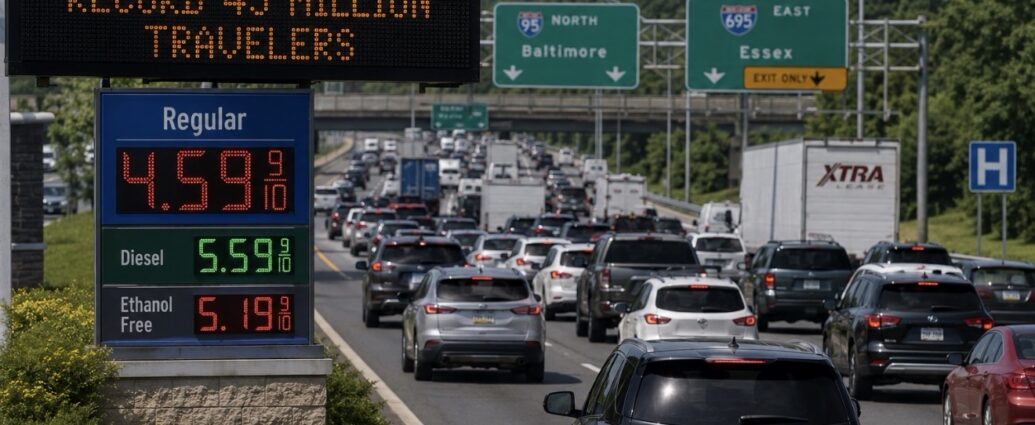
A record 45 million Americans are expected to travel at least 50 miles from home during the Memorial Day holiday weekend despite gasoline prices hovering above $4.50 a gallon, underscoring the remarkable resilience of U.S. consumer travel demand even as inflation, elevated borrowing costs and the Iran-driven energy shock continue squeezing household budgets. The forecast, released Monday by the American Automobile Association, covers travel between Thursday, May 21, and Monday, May 25 and surpasses last year’s 44.8 million travelers, setting a new Memorial Day record.

The surge comes against one of the most difficult fuel-price environments Americans have faced outside the 2022 energy crisis. National average gasoline prices are now roughly $4.50 per gallon, according to AAA data, up sharply from about $3.17 during Memorial Day weekend last year and only modestly below the all-time seasonal highs reached in June 2022. The price increase is being driven largely by the ongoing Iran conflict and the continuing closure of the Strait of Hormuz, which has disrupted global oil flows for more than two months and pushed crude oil back above $100 a barrel.

Despite the pressure, Americans are still traveling. AAA projects 39.1 million people will drive during the holiday period, while 3.66 million are expected to fly and millions more will travel by train, cruise and bus. The scale of the demand has surprised even energy analysts who expected fuel costs to meaningfully suppress discretionary travel this spring.

Patrick De Haan, head of petroleum analysis at GasBuddy, told Bloomberg that holiday travel behavior remains unusually resistant to gasoline-price spikes. “People aren’t going to want to restrict their travel on holidays,” De Haan said. “Even if gas is $6 a gallon, it’s the holidays where people are still going to travel.”

AAA Vice President of Travel Stacey Barber said the organization continues seeing strong leisure demand despite worsening economic pressure. “Travel demand remains strong, and despite higher fuel prices, many people are prioritizing leisure travel during holiday breaks,” Barber said in the agency’s release.

The resilience, however, is not without limits. AAA noted that the growth rate in Memorial Day travel this year is the slowest outside the pandemic period since 2010. Adrienne Woodland, spokeswoman for AAA — The Auto Club Group, said rising fuel prices and persistent inflation are causing many consumers to modify behavior even if they are not canceling trips outright.

“Although travel demand remains strong, higher fuel prices and persistent inflation may cause some travelers to shorten trips, delay plans, or stay closer to home,” Woodland said.

Michigan offers one of the clearest examples of the pressure consumers are absorbing. Average gasoline prices there have climbed to roughly $4.73 per gallon from $3.20 a year earlier. Similar increases are visible across much of the Midwest and Northeast.

Air travel has so far remained comparatively resilient. AAA said average airline ticket prices are still roughly 6% lower for travelers who booked early, though much of that pricing was locked in before the recent surge in jet fuel costs that has rattled airline balance sheets and contributed to the shutdown of Spirit Airlines earlier this month. Car-rental demand is also surging, with Hertz telling AAA that Thursday and Friday are expected to be the busiest pickup days of the weekend.

Among domestic destinations, Orlando, Seattle, New York City, Las Vegas and Miami rank among the most popular travel markets. Internationally, Rome, Paris, London, Athens and Vancouver are seeing strong booking activity as Americans continue prioritizing travel experiences despite broader financial strain.

The transportation system itself is expected to be heavily stressed. Traffic analytics firm INRIX warned that congestion in major metropolitan areas could more than double during peak departure and return windows. Last Memorial Day weekend, AAA roadside assistance crews responded to more than 350,000 emergency calls involving dead batteries, flat tires and empty fuel tanks. Similar or even heavier volumes are expected this year.

Beneath the headline numbers sits a broader economic trend increasingly referred to by economists as the “experience premium.” Consumers appear willing to continue spending aggressively on vacations, dining and entertainment while simultaneously cutting back on large durable purchases such as appliances, furniture and home upgrades.

Recent earnings calls across corporate America reflect the shift. Whirlpool Corp. warned earlier this month that consumers are delaying purchases of refrigerators and washing machines. At the same time, Royal Caribbean Group, Carnival Corp. and Norwegian Cruise Line Holdings all reported record booking trends and particularly strong demand for family and multigenerational vacations.

The political implications are also growing. President Donald Trump publicly voiced support Monday for a temporary federal gasoline tax holiday, targeting the 18.4-cent-per-gallon federal fuel tax that finances the Highway Trust Fund. Analysts at the Tax Foundation estimate the actual savings at the pump would likely be closer to 12 to 15 cents per gallon after accounting for refinery and distribution pricing dynamics, and any change would require congressional approval.

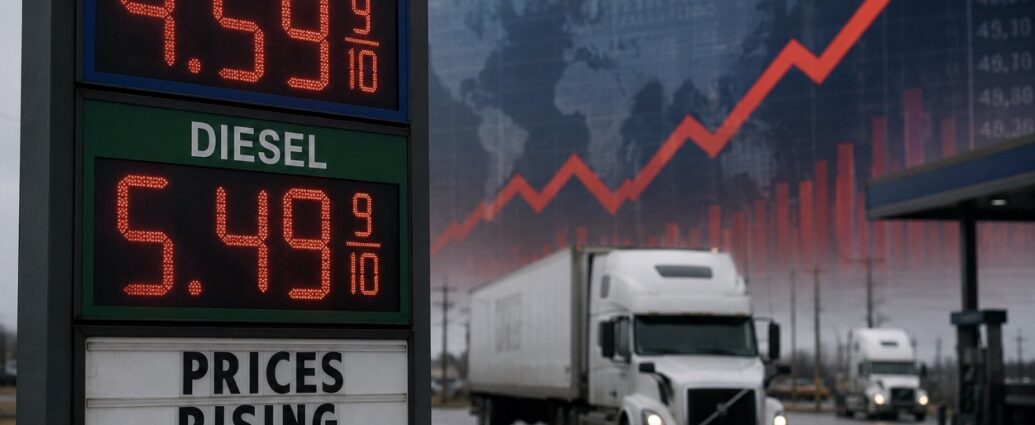
Diesel prices remain another major concern. National diesel averages are hovering within roughly 20 cents of record highs, creating additional inflation pressure across trucking, shipping, food distribution and logistics networks. Meanwhile, rising jet fuel prices have already prompted airlines to cut marginal routes, particularly short-haul regional service.

The broader takeaway for investors and policymakers is increasingly clear: Americans are still traveling, but they are paying substantially more to do it and quietly making trade-offs elsewhere in their budgets to keep those vacations intact.

Whether that resilience survives through the July 4 travel season — traditionally the peak period for summer fuel demand — may become one of the clearest indicators of how much strain the U.S. consumer can ultimately absorb.

JBizNews Desk
© JBizNews.com. All rights reserved. This article is original reporting by JBizNews Desk. Unauthorized reproduction or redistribution is strictly prohibited.

The Trump administration allowed its temporary sanctions waiver on Russian seaborne oil to expire at 12:01 a.m. Eastern time Saturday, restoring a tougher sanctions posture against Moscow at one of the most fragile moments for global energy markets in years.

The expiration was confirmed after the U.S. Treasury Department’s Office of Foreign Assets Control (OFAC) failed to publish a renewal notice for General License 134B, the authorization issued on April 17 that temporarily permitted transactions involving Russian crude already loaded onto tankers. Treasury Secretary Scott Bessent had signaled in recent days that the administration did not intend to extend the waiver.

The move lands as the global oil market is already under severe strain from the ongoing U.S.-Iran conflict and the effective closure of the Strait of Hormuz, one of the world’s most critical energy chokepoints.

Brent crude settled near $108 a barrel Friday, while West Texas Intermediate traded above $103, with both benchmarks posting weekly gains estimated between 8% and 10%. Traders increasingly warn that the market is no longer pricing temporary volatility but rather a sustained period of constrained global supply.

The International Energy Agency (IEA) said crude and refined fuel flows through Hormuz fell by roughly 4 million barrels per day during March and April and warned this week that the market could remain materially undersupplied through at least October even if the Iran conflict eases next month.

The waiver itself had a short and politically contentious life. The Trump administration initially eased restrictions in March, allowed them to lapse on April 11, then abruptly reversed course on April 17 after Bessent said more than 10 energy-vulnerable countries requested relief from soaring crude prices.

India, currently the world’s largest buyer of Russian seaborne crude, reportedly pushed hardest for the extension as its imports from Russia climbed near record levels during April and May. Indonesia also lobbied Washington to preserve access to Russian oil supplies amid mounting energy costs.

European allies strongly opposed both rounds of sanctions relief, arguing that easing pressure on Russian energy exports undermines Western efforts to restrict Moscow’s wartime revenues tied to the conflict in Ukraine.

For financial markets and commodity traders, the expiration immediately tightens legal and operational risks surrounding Russian oil transactions.

Banks, insurers, commodity trading houses, and shipping firms had temporarily relied on the OFAC waiver to process certain transactions involving previously loaded cargoes. With the waiver gone, compliance departments across the global energy sector are now reverting to stricter pre-waiver sanctions protocols involving vessel ownership verification, payment routing scrutiny, ship-to-ship transfer monitoring, and counterparty risk reviews.

The broader G7-European Union-Australia price cap system technically remains in place, still allowing certain maritime services involving Russian oil traded below specified price thresholds. But the added flexibility created by General License 134B has now disappeared.

The timing comes as some of the world’s largest energy companies warn that the supply picture is becoming increasingly dangerous.

Saudi Aramco CEO Amin Nasser told reporters this week that the oil market may not fully normalize until 2027 if the Strait of Hormuz remains closed beyond mid-June. Chevron CEO Mike Wirth, speaking earlier this month at the Milken Institute Global Conference, warned that fuel shortages were becoming a realistic concern in some regions, telling CNBC that “it’s not just a question of price.”

Investment banks are also growing more concerned about inventory depletion. Goldman Sachs warned in a research note Monday that while global crude inventories are not yet critically low, supplies of refined products — including jet fuel, naphtha, and liquefied petroleum gas — are tightening rapidly.

The political implications for the White House are becoming increasingly delicate.

President Donald Trump returned this week from meetings in Beijing with Chinese President Xi Jinping facing mounting domestic concern over energy-driven inflation. According to U.S. Energy Information Administration data, crude oil costs remain the largest component of retail gasoline pricing, meaning sustained increases in Brent and WTI prices quickly feed into higher gasoline, diesel, shipping, airline, and freight costs across the economy.

Federal Reserve officials have repeatedly warned that prolonged energy inflation can reshape consumer expectations and complicate monetary policy decisions. Analysts increasingly believe another sustained oil rally could delay interest-rate cuts or even reopen discussions around additional tightening if inflation pressures broaden further.

The deeper question now facing global markets is whether the international sanctions system can maintain pressure on Russian exports without triggering a broader energy supply shock.

Despite years of Western restrictions, Russia remains a critical supplier to global oil balances. Buyers continue navigating discounted cargoes, intermediary payment systems, opaque shipping routes, and so-called “shadow fleet” tanker operations to keep Russian crude flowing into global markets.

Allowing the waiver to expire signals that the Trump administration is prioritizing sanctions discipline over short-term energy relief. But traders say the real test will be whether enforcement intensifies against intermediary banks, covert shipping networks, and ship-to-ship transfer systems that continue facilitating Russian exports outside traditional Western oversight.

For now, markets remain trapped between three destabilizing realities: a closed Strait of Hormuz, tighter restrictions on Russian oil flows, and shrinking global inventory buffers.

Many traders increasingly describe current oil prices not as a temporary spike, but as a new floor for global energy markets unless geopolitical conditions improve significantly in the months ahead.

JBizNews Desk

© JBizNews.com. All rights reserved. This article is original reporting by JBizNews Desk. Unauthorized reproduction or redistribution is strictly prohibited.

By JBizNews Desk | May 15, 2026

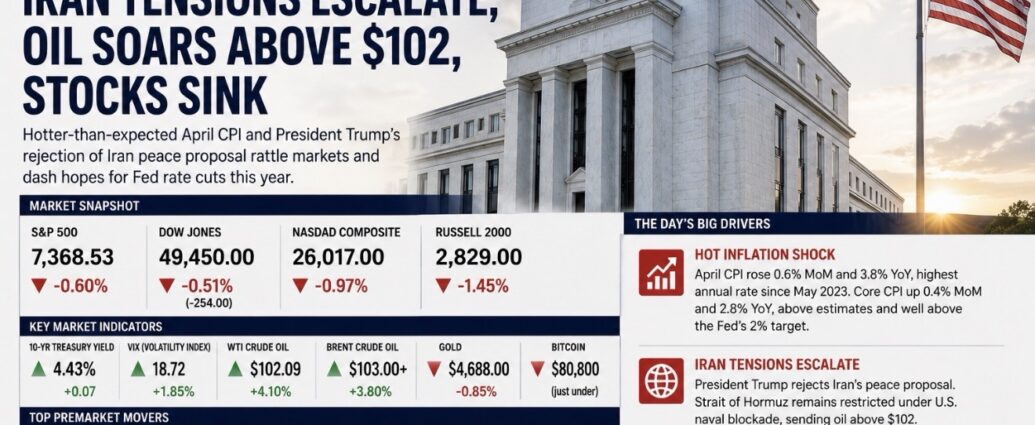
Wall Street ended a volatile week on the back foot Friday, with the S&P 500, Dow Jones Industrial Average and Nasdaq Composite all selling off sharply as a two-day Beijing summit between President Donald Trump and Chinese President Xi Jinping produced no major policy breakthroughs, crude prices climbed back above $100 a barrel on renewed Iran war anxiety, and the 10-year Treasury yield spiked to a fresh one-year high. CNBC and TheStreet reported the S&P 500 fell about 1.1% to roughly 7,424, the Dow dropped about 480 points or near 1% to around 49,580 — slipping back below the 50,000 mark it reclaimed just a day earlier — and the Nasdaq Composite slid 1.3% to about 26,300. The small-cap Russell 2000 dropped roughly 2.1% as risk-off trading swept through cyclicals. The selloff threatened to end what had been a seven-week winning streak for the S&P 500, which only Thursday had closed above 7,500 for the first time in history.

The catalyst was the conclusion of President Donald Trump’s trip to Beijing, where he met with Xi Jinping alongside 16 senior U.S. executives. Trump told reporters the talks produced “fantastic” trade deals, but the headline announcements landed below Street expectations. The president said China agreed to purchase 200 Boeing aircraft equipped with GE Aerospace engines, with a path to as many as 750 over time. Jefferies analysts had been positioned for a deal as large as 500 planes, and Boeing Co. shares fell 2.8% to $222.70. Trump also said China had committed to buying U.S. crude oil, naming Texas, Louisiana and Alaska as origin points, and oil prices firmed on the news. WTI crude rose about 4% to roughly $101 a barrel while Brent climbed 1.5% to $107.30, both still trading near war-era highs reached after Iran closed the Strait of Hormuz on March 4. Secretary of State Marco Rubio said Trump raised the Iran war and the Hormuz blockade with Xi but stressed Washington was not asking Beijing to mediate.

The bond market did the heaviest lifting in shaping the Friday tape. The 10-year Treasury yield jumped nine basis points to 4.55%, its highest in a year, as traders priced in stickier inflation tied to the Iran energy shock. CME FedWatch data showed odds of a 2026 Federal Reserve rate hike climbing to roughly 45%, up from just 1% a month ago, with markets now seeing a quarter-point move to 3.75%–4% as the most likely next step. The repricing landed on the same day Jerome Powell’s term as Fed chair expired, with Kevin Warsh preparing to take the gavel. Dan Niles of Niles Investment Management told CNBC that 10 of the last 12 recessions were preceded by oil spikes and warned the current move “is starting to get uncomfortable.”

Technology stocks bore the brunt of the rotation after weeks of record-setting AI gains. Intel Corp. sank roughly 5%, Advanced Micro Devices Inc. lost 3%, Micron Technology Inc. fell 4% and Nvidia Corp. dropped 2% ahead of its earnings report next week. Marvell Technology, Arm Holdings and ASML Holding NV each shed 4% to 5%. Cerebras Systems, which surged 75% in its Nasdaq debut Thursday in a $5.55 billion IPO — the largest U.S. tech offering since Uber in 2019 — gave back about 4%. Adam Crisafulli of Vital Knowledge said the chip group “has witnessed an extremely unsustainable move in recent weeks and remains vulnerable to profit taking regardless of the headlines.” Bucking the trend, Microsoft Corp. advanced after Bill Ackman’s Pershing Square disclosed a new position, calling the valuation “broadly in line with the market multiple.”

The week’s biggest single-name story was Cisco Systems Inc., which jumped 13.4% Thursday after reporting fiscal third-quarter revenue of $15.84 billion, up 12% year over year, and lifting its fiscal 2026 AI infrastructure orders guidance to $9 billion from $5 billion. Piper Sandler, Citi, Bank of America and KeyBanc raised price targets, while HSBC analyst Stephen Bersey upgraded Cisco to Buy with a $137 target. On Friday, Morgan Stanley reiterated Netflix Inc. as overweight following the streamer’s upfront and kept a buy rating on Applied Materials Inc., while TD Cowen reiterated Buy on Nvidia with a $275 target.

Economic data reinforced the inflation narrative driving the bond move. April CPI released Tuesday showed energy lifting headline prices, and PPI data flagged sticky services inflation. Retail sales rose 0.5% from March to April, though CNN noted much of the gain reflected higher prices rather than higher unit volumes. Joe Brusuelas, chief economist at RSM US, told CNN that “the war has come home, and Americans can feel it and see it in their grocery basket,” with polling showing 75% of Americans say the Iran war has hurt their finances.

Corporate cost discipline also drew attention. Starbucks Corp. said it will lay off 300 corporate employees, its third round of cuts under CEO Brian Niccol, taking $400 million in restructuring charges. Verizon Communications Inc. CFO Tony Skiadas confirmed a fresh round of layoffs as the carrier targets $5 billion in operating expense savings by the end of 2026. Investors head into next week eyeing earnings from Nvidia, Home Depot Inc., Toll Brothers Inc. and Cava Group Inc., alongside April housing starts and building permits.

JBizNews Desk
© JBizNews.com. All rights reserved. This article is original reporting by JBizNews Desk. Unauthorized reproduction or redistribution is strictly prohibited.

The morning’s soft tape on Wall Street turned into a sharper sell-off into the lunch hour Friday, with losses deepening across the major indexes as a sudden spike in U.S. Treasury yields, a fresh round of corporate layoffs, and the absence of a concrete trade framework out of Beijing combined to push investors firmly out of risk assets — even as small-caps and a handful of mega-cap names ran in the other direction.

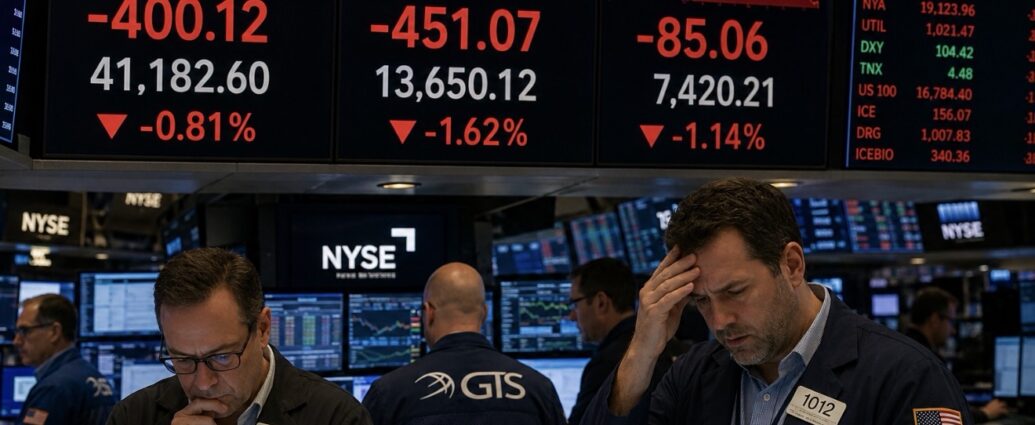
The S&P 500 fell 1.14% to roughly 7,420, the Dow Jones Industrial Average dropped 0.81%, or about 400 points, and the tech-heavy Nasdaq Composite retreated 1.62%, shedding more than 450 points. The standout, however, was the small-cap Russell 2000, which climbed 0.67% as investors rotated out of stretched mega-cap technology and into more domestically focused, rate-sensitive names — an unusual divergence given the broader risk-off tone.

The pressure was amplified by a sharp rise in U.S. Treasury yields, with the 10-year yield climbing several basis points as traders pulled forward their assumptions for Federal Reserve patience in the second half of the year. The move followed Wednesday’s Producer Price Index print showing wholesale prices climbing 1.4% in April — the largest monthly jump in nearly four years — and Tuesday’s hotter-than-expected Consumer Price Index report. With inflation running at a 3.8% annual pace and oil pressing higher, futures markets continue to dial back expectations for a near-term Fed cut.

Microsoft was the day’s most-watched winner. The software giant traded higher into midday after Bill Ackman’s Pershing Square Capital Management disclosed a newly built position in the stock, taking advantage of the pullback in mega-cap tech.

“We were able to establish our position at a valuation of 21 times forward earnings, broadly in line with the market multiple and well below Microsoft’s trading average over the last few years,” Ackman wrote in the firm’s investor letter, as reported by CNBC.

The disclosure provided a rare bid in an otherwise heavy mega-cap tape and triggered a wave of sell-side commentary on whether the AI-driven multiple expansion in software has finally reset to investable levels.

Starbucks moved lower after the coffee chain announced it would lay off 300 U.S. corporate employees in its third round of job cuts under chief executive Brian Niccol’s turnaround strategy. The company is also closing some regional support offices, a sign that the operational reset announced last year continues to cut into the corporate workforce even as store-level traffic stabilizes.

The move follows a similar pattern this week at Walmart, which has begun trimming corporate headcount, and Cisco Systems, which disclosed 4,000 layoffs alongside its post-earnings surge.

Several sharp single-stock losers stood out across the midday tape. York Space Systems dropped 18%, Tango Therapeutics lost 14%, and POET Technologies retreated 12.71%, according to data tracked by TheStreet. The breadth of single-stock breakdowns underscored that the sell-off, while concentrated in technology at the index level, was being felt across themes — from defense-adjacent space names to biotech to optical photonics.

Oil prices added to inflation worries and to the day’s risk-off backdrop. West Texas Intermediate crude rose 1.55% to $102.74 a barrel and Brent crude climbed 1.49% to $107.30, after President Donald Trump told reporters in Beijing that China had agreed to purchase American crude oil as part of the summit outcome, according to a readout from NBC News.

The president called the trip a success, telling reporters he had secured “fantastic” trade deals and that “a lot of different problems” had been resolved with President Xi Jinping. Investors, however, focused on the absence of a formal tariff framework or a market-access agreement — the structural changes Wall Street had built into the run-up to the meeting.

Precious metals reversed sharply, with spot gold tumbling 1.43% to $4,583.02 an ounce and silver falling more than 5% to $79.07. Bitcoin firmed about 2.3% to roughly $81,400.

With the Trump-Xi summit now behind investors, attention turns next week to retail earnings from Walmart, Home Depot, Target and Lowe’s — a stretch that will offer fresh evidence on whether the squeeze on lower-income consumers is deepening; to the next print of the University of Michigan’s consumer sentiment index, which collapsed to a record-low 48.2 in the preliminary May reading; and to the ongoing Federal Reserve chair transition, with nominee Kevin Warsh advancing through Senate confirmation as outgoing Chair Jerome Powell prepares to step down from the chair role while staying on as a Fed governor.

JBizNews Desk
© JBizNews.com. All rights reserved. This article is original reporting by JBizNews Desk. Unauthorized reproduction or redistribution is strictly prohibited.
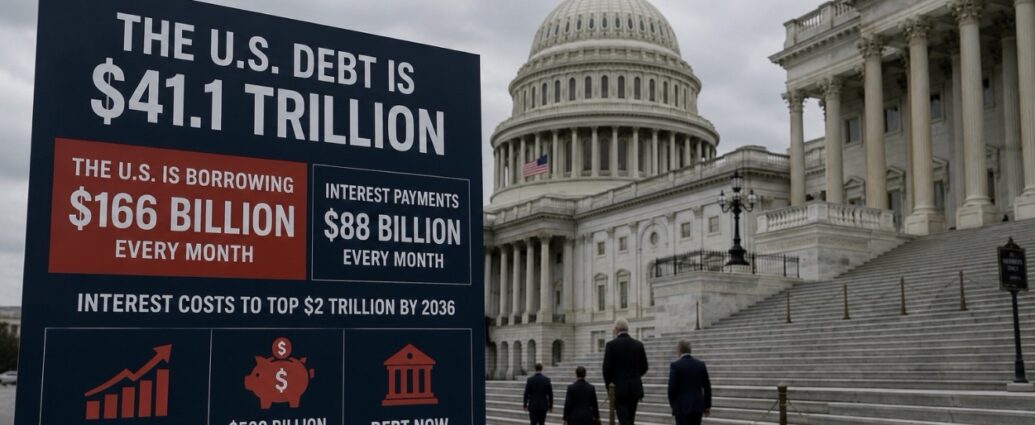
American consumer confidence fell to the lowest reading in the nearly 75-year history of the University of Michigan’s Surveys of Consumers, according to preliminary May figures released Friday morning, as soaring gasoline prices and persistent tariff anxiety continued squeezing household sentiment amid a renewed surge in global oil prices.

The preliminary index dropped to 48.2 in May from April’s upwardly revised 49.8, missing the 49.5 consensus estimate and falling below the prior low reached in June 2022 during the peak of post-pandemic inflation. The University of Michigan survey has been published continuously since November 1952.

Joanne Hsu, director of the Surveys of Consumers, said in a statement accompanying the report that consumers remain deeply concerned about rising prices and weakening purchasing conditions for major items. The current conditions component, which measures households’ assessment of current finances, plunged roughly 9% to 47.8, well below economist expectations of 52.0.

The expectations index edged slightly higher to 48.5 from 48.1, though consumers’ expectations for real income continued deteriorating for a third consecutive month. Roughly one-third of respondents spontaneously mentioned gasoline prices during interviews, while nearly 30% cited tariffs as a growing concern for household budgets and purchasing power.

Year-ahead inflation expectations eased modestly to 4.5% from April’s 4.7%, though they remain substantially above the 3.4% level recorded in February before the outbreak of the U.S.-Iran war. Long-run inflation expectations slipped slightly to 3.4% from 3.5%, but both measures remain elevated compared with the range prevailing during the two years immediately preceding the pandemic.

“Taken together, consumers continue to feel buffeted by cost pressures, led by soaring prices at the pump,” Hsu said. “Middle East developments are unlikely to meaningfully boost sentiment until supply disruptions have been fully resolved and energy prices fall.”

Those concerns intensified further Friday after another sharp move higher in oil prices following the conclusion of President Donald Trump’s summit with Chinese President Xi Jinping in Beijing.

With the Strait of Hormuz effectively closed since late February and Trump telling reporters after the summit that the United States does not need the waterway open “at all,” West Texas Intermediate crude rose another 2% Friday morning to roughly $104 a barrel while Brent crude climbed to approximately $108.

The Strait of Hormuz normally carries about one-fifth of global oil shipments, making the disruption one of the largest energy-market shocks in years. Wael Sawan, chief executive of Shell, warned last week in Houston that prolonged blockades would continue tightening global supplies of diesel, jet fuel and gasoline.

The pressure from higher fuel costs is increasingly visible across corporate America and consumer spending trends.

Walmart recently flagged heightened price sensitivity among lower-income shoppers and noted slowing momentum in discretionary purchases. Target said inflation in food, beverage and household essentials is “absorbing a much bigger portion” of customer budgets, while Home Depot cut its full-year outlook after softer demand for home-improvement projects.

Crocs has reduced second-half inventory orders amid concerns about weaker consumer demand, and Hims & Hers Health shares fell sharply earlier this week after disappointing guidance added to concerns that consumers are becoming more selective about spending.

The divergence between the University of Michigan survey and the Conference Board’s Consumer Confidence Index has also drawn increasing attention on Wall Street. Economists note that the Michigan survey places heavier emphasis on household finances and inflation expectations, while the Conference Board index tends to track labor-market conditions more closely.

Recent inflation data has reinforced those pressures.

The Bureau of Labor Statistics reported earlier this week that consumer prices rose 0.6% in April and 3.8% from a year earlier, marking the fastest annual inflation pace since May 2023. On Wednesday, the Producer Price Index showed wholesale prices jumping 1.4% during April, the largest monthly increase in nearly four years.

The combination of elevated inflation expectations and historically weak consumer sentiment complicates the Federal Reserve’s policy outlook at a sensitive moment for U.S. monetary policy.

Markets entered 2026 expecting multiple interest-rate cuts this year. But stronger inflation readings, higher oil prices and resilient economic growth have pushed traders to scale back those expectations significantly as Senate confirmation proceedings continue for Federal Reserve chair nominee Kevin Warsh while outgoing Chair Jerome Powell prepares to relinquish the chairmanship but remain on the Federal Reserve Board.

“The good news is that the economy looks resilient to this price shock so far,” said James McCann, senior economist for investment strategy at Edward Jones, following the April CPI release. Tax refunds, improving hiring trends and continued corporate profit growth have helped cushion the economic blow, McCann said, “but there are limits to these buffers.”

Consumers, by their own account, are increasingly beginning to feel those limits.

The final University of Michigan consumer sentiment reading for May is scheduled for release later this month.

JBizNews Desk
© JBizNews.com. All rights reserved. This article is original reporting by JBizNews Desk. Unauthorized reproduction or redistribution is strictly prohibited

NEW YORK — Trump Mobile said it will begin shipping its long-delayed gold-colored T1 Phone this week at a retail price of $499, nearly a year after the Trump Organization-licensed wireless venture started taking $100 preorder deposits and roughly nine months after the device was originally promised to ship, according to a social-media announcement Wednesday from the company and confirmed Thursday by CNN Business, CBS News, and Reuters. The launch comes days after the company quietly revised its preorder terms to make delivery “conditional” — language that, until the Wednesday announcement, had left customers and consumer-protection advocates uncertain whether the phone would ever reach the market at all.

The T1 that is now shipping is not the device the Trump Organization initially promoted. Trump Mobile said in June 2025 that the phone would be “Made in the USA,” that it would feature a 6.78-inch display with substantial onboard memory, and that it would ship by August. The website quietly dropped the “Made in the USA” language roughly 10 days after the original announcement, according to reporting by The Associated Press. Trump Mobile Chief Executive Pat O’Brien told Reuters on Wednesday that the first T1 phones are “assembled in the U.S.” and that the company “ultimately aims to release a phone with most components made domestically” — a substantially weaker manufacturing claim than the original pledge. The retail version of the phone has a smaller screen and less memory storage than originally advertised, according to CNN Business, and bears a strong physical resemblance to a Chinese-manufactured Android phone that retails for less than $200 at Walmart Inc. The website continues to advertise a fingerprint sensor, AI Face Unlock, quick charging, and a 50-megapixel main camera.

“The technology business is more difficult than some may realize as parts must be tested for quality assurances,” O’Brien told CNN Business in a statement. “We have experienced delays during a variety of steps in getting the T1 to completion, but those delays were worth it in our minds as we are delivering an amazing product. With demand being incredibly high, orders are being fulfilled as quickly as possible, and we anticipate all will be completed within the next several weeks.” The company posted on X Wednesday that “The T1 Phone has arrived!! Those who pre-ordered the T1 Phone will be receiving an update email. Phones start shipping this week!!!” — and then turned off the comment section on the post, a routine Trump Organization social-media practice that nonetheless drew immediate notice from technology journalists.

The 12-month delay is consistent with industry benchmarks for new Android original equipment manufacturers. Max Weinbach, an analyst at technology research firm Creative Strategies, told CNN Business that “the timeline for finalizing software, manufacturer agreements and other contracts necessary for Android devices typically takes about 18 months” — a benchmark that Trump Mobile clearly attempted to compress and missed. Trump Mobile executives at various points blamed the U.S. government shutdown from February through late April and a decision to change phone specifications mid-development. At least one technology journalist has separately speculated that the company hit a structural wall trying to honor its initial “Made in the USA” promise — a manufacturing standard regulated by the Federal Trade Commission with strict component-origin requirements that smartphone original equipment manufacturers, including Apple Inc., Samsung Electronics Co. Ltd., and Alphabet Inc.’s Google Pixel division, have all been unable to meet on assembled handsets.

The consumer-protection picture is unusually opaque. Trump Mobile updated its Preorder Deposit Terms and Conditions on April 6, 2026, to state that a $100 deposit “provides only a conditional opportunity if Trump Mobile later elects, in its sole discretion, to offer the Device for sale.” The same revised terms specify that a deposit “is not a purchase, does not constitute acceptance of an order, does not create a contract for sale, does not transfer ownership or title interest, does not allocate or reserve specific inventory, and does not guarantee that a Device will be produced or made available for purchase.” Fortune flagged the changes earlier this week. Customers are entitled to request refunds. The total number of preorder deposits Trump Mobile has collected is not publicly disclosed; a widely circulated figure of roughly 590,000 to 600,000 customers paying $100 each — a notional $59 million to $60 million in deposits — originated on social media and has not been confirmed by the company. The Verge reported that Trump Mobile executives have declined to confirm the count. Snopes said in a fact-check Tuesday that there is no evidence to substantiate the higher figure or the related claim, also circulating online, that the company had emailed pre-order customers stating it would neither produce the phone nor refund deposits.

The launch sits in the larger context of Trump Organization brand-licensing activity during President Donald Trump’s second term. Trump Mobile is one of several consumer products bearing the Trump name that have launched or continued to operate during the administration, alongside Trump-branded watches, sneakers, fragrances, NFT trading cards, and Bibles. The president’s January 2026 first-quarter financial disclosure, made public Thursday, separately showed personal purchases of Robinhood Markets Inc. and Coinbase Global Inc. stock — companies whose business is regulated by the administration Trump leads. Trump Mobile operates as a mobile virtual network operator on T-Mobile US Inc. and AT&T Inc. infrastructure, and the network itself has reportedly been live since June 2025. Whether the phone ultimately competes with Apple, Samsung, Google, Motorola Mobility LLC, or any of the low-cost MVNO ecosystem — including Mint Mobile, Visible, Cricket Wireless, and US Mobile — depends on whether the device performs as marketed once it reaches paying customers in the coming weeks. The next data point will be hardware reviews from the technology press, which will receive the first units alongside preorder customers and will determine whether the T1 justifies its $499 price tag, its 12-month wait, and the gap between the initial promises and what is actually being shipped.

JBizNews Desk

© JBizNews.com. All rights reserved. This article is original reporting by JBizNews Desk. Unauthorized reproduction or redistribution is strictly prohibited.
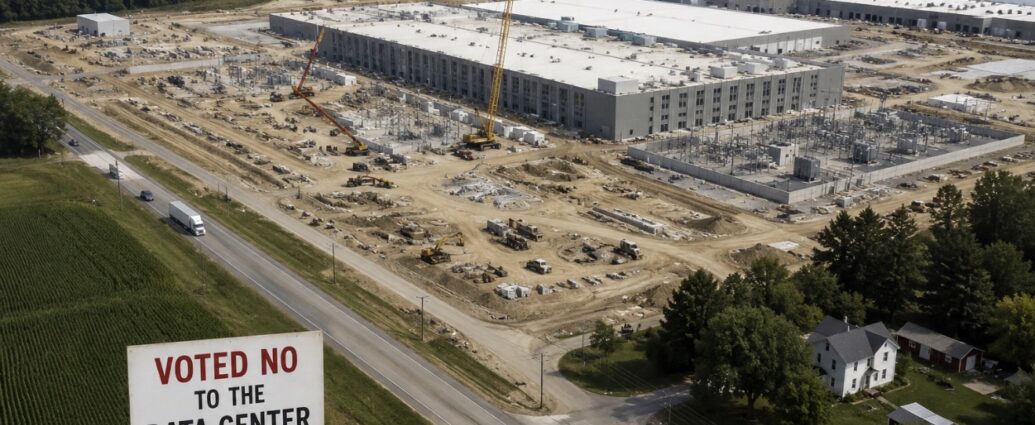
NEW YORK — Just a few years ago, some of America’s largest companies declared the college degree outdated.
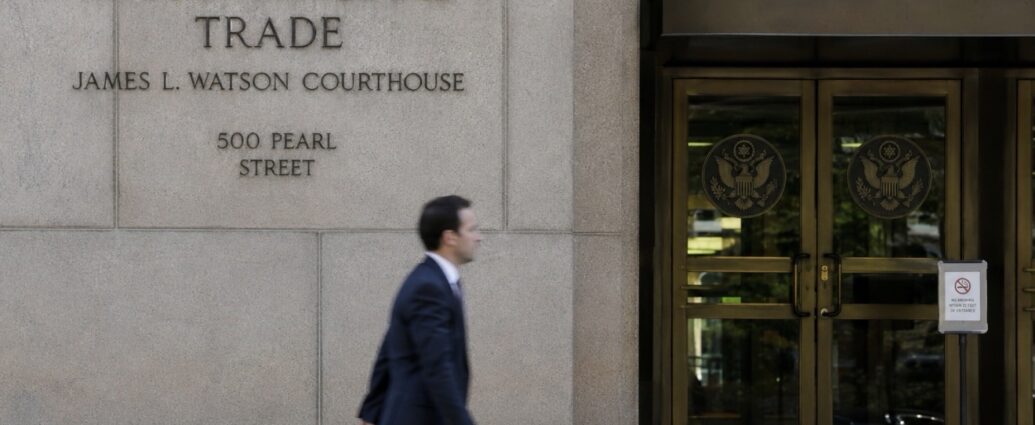
Executives championed “skills-first hiring,” recruiters celebrated nontraditional talent pipelines, and major employers including IBM, Google, Apple, and Tesla publicly scaled back degree requirements across large portions of their workforce.

Now, the pendulum is quietly swinging back.

As artificial intelligence rapidly reshapes the labor market, employers are increasingly reinstating college degree expectations and GPA filters — reversing one of the defining hiring trends of the post-pandemic economy and creating new uncertainty for millions of workers who entered the workforce through alternative pathways.

The shift, highlighted in new reporting from Fortune, reflects growing concern among hiring managers that AI is fundamentally changing which human skills remain valuable — and how employers identify candidates most likely to succeed alongside increasingly powerful automation systems.

“Employers are increasingly turning to degree and GPA,” one recruiter told Fortune, describing a noticeable retreat from the “talent is everywhere” philosophy that dominated hiring discussions between 2021 and 2023.

During that period, an unusually tight labor market forced companies to widen recruiting pools aggressively.

Major corporations reduced credential requirements, embraced boot camps and certification programs, and promoted the idea that demonstrated skills mattered more than formal academic pedigree.

The movement also reflected broader criticism of the traditional college system, rising tuition costs, and concerns that rigid credential screening excluded talented workers from lower-income and nontraditional backgrounds.

But the rapid rise of generative AI appears to be changing that calculus.

Across corporate America, artificial intelligence is increasingly automating many of the routine analytical, administrative, and coordination tasks that historically served as entry points for junior and mid-level employees.

That includes functions in:

  • Marketing
  • Data analysis
  • Customer support
  • Administrative operations
  • Research
  • Basic coding
  • Financial processing
  • Legal review
  • Content production

As those tasks become partially automated, companies say the remaining human work is shifting upward toward more complex responsibilities involving judgment, synthesis, relationship management, strategic thinking, and cross-functional coordination.

Many employers increasingly believe those capabilities correlate more strongly with traditional educational pathways — particularly at selective universities.

In effect, AI may be shrinking the category of lower-complexity white-collar work while simultaneously increasing demand for workers perceived as capable of operating at a higher cognitive level alongside advanced software systems.

There is also a more operational reason degree requirements are returning: scale.

As AI-assisted recruiting systems become more common inside hiring pipelines, degree status and GPA scores provide simple, standardized filters that can quickly reduce applicant pools containing thousands or even tens of thousands of resumes.

The irony is difficult to miss.

Artificial intelligence is simultaneously helping automate hiring processes while also contributing to the economic conditions causing employers to rely more heavily on traditional credentials.

The trend is not universal.

In highly technical fields — especially software engineering, cybersecurity, and specialized AI development — portfolio-based hiring and skills assessments remain important, particularly at firms that have already invested heavily in alternative talent evaluation systems.

Startups and smaller firms also continue to rely more heavily on demonstrated capability than formal academic pedigree.

But recruiters say the broader labor market is increasingly drifting back toward credential-based hiring norms, especially for white-collar professional roles where applicant competition has intensified.

That shift carries significant implications for workers who entered the labor force based on the expectation that the economy was permanently moving beyond traditional degree barriers.

Millions of Americans were encouraged over the past several years to pursue certifications, coding boot camps, online learning platforms, and alternative career paths instead of four-year degrees.

Many successfully entered industries that historically would have been difficult to access without traditional academic credentials.

Now, some of those same workers face a labor market in which the signals employers trust appear to be changing again.

The broader question confronting corporate America is whether the return to credential-heavy hiring represents a rational adaptation to an AI-driven economy — or a retreat into familiar habits during a period of extraordinary technological uncertainty.

Critics of renewed degree filtering argue that formal education often measures access, socioeconomic background, and institutional prestige as much as actual capability.

Supporters counter that as AI compresses lower-skill knowledge work, employers naturally become more selective about the human capabilities they prioritize.

What is increasingly clear is that artificial intelligence is not only changing how work gets done.

It is also changing how employers decide who gets hired to do it.

And for many workers navigating the next phase of the labor market, the value of a college degree — once widely declared in decline — may suddenly be rising again.

JBizNews Desk

© JBizNews.com. All rights reserved. This article is original reporting by JBizNews Desk. Unauthorized reproduction or redistribution is strictly prohibited.
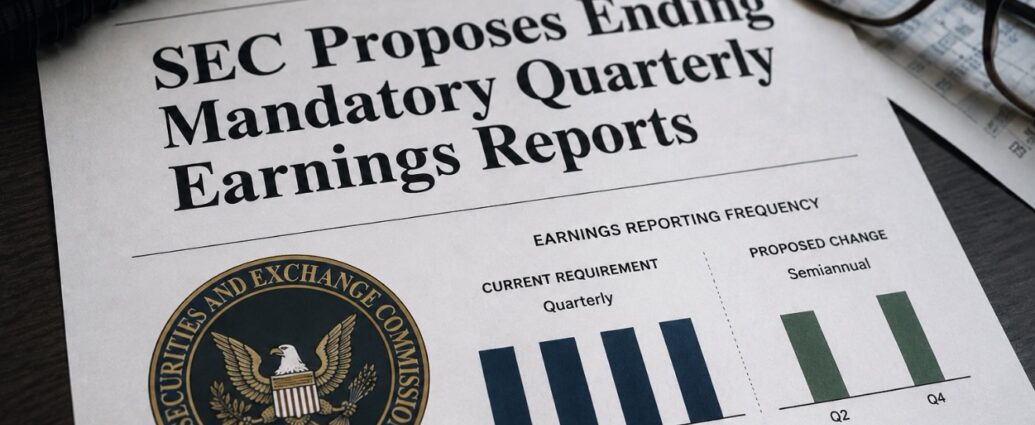

The U.S. Department of Justice filed sweeping federal criminal charges Tuesday against the companies responsible for operating the cargo ship Dali and the vessel’s technical superintendent, accusing them of deliberately ignoring known safety risks, falsifying inspection records, and misleading federal investigators in the catastrophic 2024 collapse of Baltimore’s Francis Scott Key Bridge.

Federal prosecutors say the disaster — which killed six construction workers, shut down one of America’s busiest shipping ports, and caused more than $5 billion in economic and infrastructure damage — was entirely preventable.

The 18-count indictment, unsealed Tuesday morning in federal court in Maryland, charges:

  • Synergy Marine Pte Ltd, based in Singapore,
  • Synergy Maritime Pte Ltd, based in Chennai, India,
  • and Radhakrishnan Karthik Nair, the Dali’s technical superintendent.

The defendants face charges including:

  • conspiracy to defraud the United States,
  • obstruction of federal investigators,
  • false statements,
  • and failure to report hazardous conditions to the U.S. Coast Guard.

The two corporate entities were also charged with environmental violations tied to pollution released into the Patapsco River following the collapse.

“The collapse of the Francis Scott Key Bridge was a preventable tragedy of enormous consequence,” said Acting Attorney General Todd Blanche. “Six construction workers lost their lives, critical infrastructure was destroyed, pollutants were released into the Patapsco River and Chesapeake Bay, and the economic damage now exceeds five billion dollars.”

According to prosecutors, the heart of the case centers on deliberate decisions involving the Dali’s electrical and fuel systems before the ship departed Baltimore Harbor in the early morning hours of March 26, 2024.

Federal investigators allege that a loose wire inside a high-voltage switchboard triggered the vessel’s initial power failure as the nearly 1,000-foot cargo ship navigated outbound toward Sri Lanka.

But prosecutors say the more devastating failure came seconds later.

The indictment alleges the ship’s operators had improperly modified the vessel’s fuel configuration, relying on a “flushing pump” system not designed to automatically restart after power outages.

When the Dali lost power the first time, the flushing pump reportedly failed to reactivate, starving the ship’s generators of fuel and triggering a second catastrophic blackout moments before impact.

“After that first blackout, the ship’s generators became starved of fuel, causing a second blackout,” said U.S. Attorney Kelly Hayes for the District of Maryland.

The powerless vessel then slammed directly into one of the bridge’s primary support columns at approximately 1:30 a.m., causing the massive steel structure to collapse into the river within seconds.

Federal prosecutors allege the companies knew the flushing-pump configuration violated international maritime safety standards and failed to properly disclose or correct the issue despite repeated warnings and internal knowledge of the risks.

Investigators also claim similar unsafe configurations were found on multiple other vessels operated by the companies.

The indictment further accuses executives and managers of falsifying safety certifications and lying to federal investigators after the collapse.

“Those responsible for the ship’s operation deliberately cut corners to the expense of safety,” said Jimmy Paul, Special Agent in Charge of the FBI Baltimore Field Office. “They forged safety inspections and certifications. They falsely claimed the ship was in good working order and then lied to investigators.”

The collapse triggered one of the largest infrastructure and maritime disruptions in recent U.S. history.

The Port of Baltimore, one of the nation’s most important shipping hubs for automobiles, agricultural equipment, and container traffic, remained largely shut down for nearly two months while the U.S. Army Corps of Engineers cleared wreckage from the shipping channel.

Maryland officials estimate the broader economic impact rippled through thousands of jobs tied to logistics, trucking, shipping, construction, and port operations.

The replacement bridge is now projected to cost between $4.3 billion and $5.2 billion, with completion not expected until approximately 2030.

The original bridge opened in 1977 after five years of construction and stretched roughly 1.6 miles across Baltimore Harbor.

The six workers killed in the collapse were part of an overnight road maintenance crew repairing potholes on the bridge when the Dali struck the structure.

The victims were identified as:

  • Dorlian Ronial Castillo Cabrera
  • Carlos Daniel Hernandez Estrella
  • Alejandro Hernandez Fuentes
  • Jose Mynor Lopez
  • Miguel Angel Luna
  • Maynor Yasir Suazo Sandoval

A seventh worker survived with serious injuries after being thrown into the river.

The criminal case now becomes one of the most consequential maritime prosecutions in decades, raising broader questions about global shipping oversight, vessel maintenance standards, and corporate accountability inside the international cargo industry.

Federal investigators say the evidence suggests the disaster was not the result of an unforeseeable accident — but rather a chain of ignored warnings, improper modifications, and systemic failures that prosecutors argue ultimately cost six people their lives.

JBizNews Desk
© JBizNews.com. All rights reserved.

The largest sporting event ever staged across North America is now just weeks away, yet much of the U.S. hotel industry is preparing for something closer to a normal summer than the tourism windfall many executives once anticipated.

A new report from the American Hotel & Lodging Association found that roughly 80% of hotel operators across the 2026 FIFA World Cup’s 11 U.S. host cities say bookings are running below expectations, with many describing the tournament as effectively a “non-event” for their properties.

The findings sharply undercut earlier projections from FIFA, which repeatedly promoted the tournament as a potential $30.5 billion economic boom and compared the expanded 2026 World Cup to “104 Super Bowls.”

The tournament, running from June 11 through July 19, will be the first FIFA World Cup jointly hosted across the United States, Canada and Mexico, and the first to feature an expanded 48-team field.

The 11 U.S. host markets include New York/New Jersey, Los Angeles, Boston, Seattle, San Francisco, Houston, Dallas, Miami, Philadelphia, Atlanta and Kansas City.

According to the AHLA survey, several of those cities are now seeing significantly weaker-than-expected hotel demand.

Kansas City appears to be the weakest-performing host market, with roughly 85% to 90% of hotel operators reporting booking activity below both original World Cup expectations and even typical summer occupancy levels.

Hotels in Boston, Philadelphia, San Francisco and Seattle similarly reported widespread disappointment, while markets including Dallas, Houston and Los Angeles are tracking roughly in line with ordinary seasonal demand rather than the massive tourism surge many investors anticipated.

Only Miami and Atlanta appear to be outperforming broader expectations, supported partly by stronger leisure demand and the presence of team training bases.

The reasons for the slowdown are increasingly geopolitical as much as economic.

Between 65% and 70% of hotel operators surveyed identified visa-processing delays, broader geopolitical instability and concerns surrounding U.S. entry procedures as major drags on international travel demand.

The strong U.S. dollar has further increased costs for foreign visitors, while ongoing conflict in the Middle East and uncertainty tied to trade policy have weakened global travel sentiment more broadly.

FIFA itself is also facing criticism from hotel operators.

According to the AHLA report, FIFA negotiated large room-block agreements with hotels across host cities before later exercising opt-out clauses and releasing thousands of unsold rooms back into the market after initial demand assumptions failed to materialize.

The association described the process as creating an “artificial early demand signal” that distorted pricing and inventory expectations throughout many host markets.

A FIFA spokesperson defended the organization’s approach, saying accommodations teams worked closely with hotels and released unused inventory within contractually agreed timelines.

Publicly traded hospitality companies are now watching the situation closely.

Major hotel operators with exposure to host cities include Marriott International, Hilton Worldwide, Hyatt Hotels and Choice Hotels International, while booking platforms including Booking Holdings, Expedia Group and Airbnb are also directly tied to World Cup-related travel demand.

Marriott Chief Executive Anthony Capuano recently acknowledged softer inbound international travel trends broadly, though he stopped short of directly criticizing World Cup demand.

Some economists argue the disappointment reflects structural realities surrounding mega-events more than any single geopolitical issue.

Lisa Delpy Neirotti, director of the Sports Management Program at George Washington University, told Fortune that high travel and ticket prices are likely suppressing attendance more than politics alone.

Meanwhile, sports economist Andrew Zimbalist has long argued that major international sporting events often displace ordinary tourism rather than meaningfully increase total visitor activity, as regular travelers avoid congestion, security restrictions and inflated pricing.

The implications could prove especially painful for smaller host markets.

Cities including Kansas City invested heavily in stadium upgrades, transportation improvements and hospitality expansion under the assumption that the World Cup would generate lasting tourism momentum and economic spillover.

If attendance and travel demand underperform expectations, many of those investments could face increasing scrutiny from local taxpayers and municipal officials.

The broader hospitality industry is also entering a more fragile economic period.

After outperforming major gateway cities through much of 2024 and early 2025, smaller and mid-sized U.S. hotel markets are now facing signs of softening discretionary travel demand as inflation, airfare costs and geopolitical uncertainty weigh on consumers.

For investors, the AHLA report represents one of the clearest indications yet that Wall Street’s World Cup tourism narrative may have become significantly overpriced.

The tournament itself is still expected to draw enormous television audiences and global attention. But for many American hotel owners, the economic reality increasingly appears far less transformational than the hype that preceded it.

JBizNews Desk

© JBizNews.com. All rights reserved. This article is original reporting by JBizNews Desk. Unauthorized reproduction or redistribution is strictly prohibited.

The U.S. Bureau of Labor Statistics reported Wednesday that the Producer Price Index for final demand surged 1.4% in April on a seasonally adjusted basis, marking the sharpest monthly increase since 2022 and delivering another sign that inflation pressures are accelerating across the American economy.

The reading came in far above Wall Street expectations for a 0.5% gain and followed an upward revision to March’s figure, which was raised to 0.7% from the previously reported 0.5%. On an annual basis, wholesale prices climbed 6.0% over the past 12 months, the highest yearly increase since December 2022.

The report lands one day after the government’s April Consumer Price Index showed consumer inflation accelerating to 3.8%, reinforcing fears inside financial markets that the Federal Reserve may be forced to keep interest rates elevated longer than investors had anticipated earlier this year.

Economists said the April producer inflation report reflects the growing impact of rising energy prices, tariff-related costs, transportation bottlenecks, and disruptions tied to the escalating Iran conflict and instability surrounding the Strait of Hormuz — one of the world’s most critical oil shipping routes.

Core producer inflation also showed broadening pressure beneath the surface. Excluding food and energy, core PPI rose 1.0% for the month, more than double economists’ forecasts, while the annual core rate climbed to 5.2%. Even the Fed’s preferred underlying gauge — final demand less foods, energy, and trade services — advanced 0.6%, signaling that inflation is no longer confined to oil and commodity shocks alone.

The energy category drove much of the headline increase. The BLS said prices for final demand goods rose 2.0%, led by a 7.8% spike in energy prices. Wholesale gasoline prices alone surged 15.6% during the month and accounted for more than 40% of the increase in goods inflation.

Those figures mirrored Tuesday’s CPI report, where retail gasoline prices jumped 28.4% year-over-year and became the single largest contributor to the overall inflation increase.

But analysts said the more concerning development for policymakers may be the rapid acceleration in service-sector inflation.

Prices for final demand services climbed 1.2% in April, the largest monthly increase since March 2022. Trade service margins — which reflect the spread earned by wholesalers and retailers — jumped 2.7%, while machinery and equipment wholesaling margins rose 3.5%. Transportation and warehousing services surged 5.0%.

Economists interpret those figures as evidence that businesses are increasingly passing higher costs directly to consumers instead of absorbing them internally.

David Russell, Global Head of Market Strategy at TradeStation, said the report confirms mounting concerns inside bond markets that inflation is becoming structurally embedded rather than temporary.

“Inflation is sticky and accelerating,” Russell said in a client note. “The services component is especially concerning because it points to deeper pressure beyond crude oil and headline energy volatility.”

Financial markets reacted immediately following the release. The yield on the benchmark 10-year Treasury note briefly climbed to 4.49% before easing slightly, approaching the psychologically important 4.5% threshold closely watched by investors and mortgage lenders.

Stock futures also turned lower after the data crossed the wires as traders sharply reduced expectations for any near-term Federal Reserve rate cuts.

The inflation surge is already beginning to hit American households more directly. The BLS said real average hourly earnings turned negative on an annual basis in April for the first time since 2023, meaning wage growth is no longer keeping pace with rising prices.

That erosion in purchasing power threatens to further pressure consumers already struggling with higher fuel, food, insurance, and borrowing costs.

Ben Ayers, Senior Economist at Nationwide, warned that the latest producer inflation figures likely signal additional consumer inflation ahead.

“We expect the pass-through from higher producer costs to continue in coming months,” Ayers said. “Headline CPI moving above 4% next month is now a realistic possibility.”

The report also intensifies political pressure surrounding the economy heading deeper into the summer.

President Donald Trump, speaking Tuesday before departing for meetings with Chinese President Xi Jinping, told reporters inflation pressures would ease once geopolitical tensions stabilize and energy markets normalize.

But economists cautioned that even if global oil disruptions ease quickly, inflation already embedded inside transportation, logistics, manufacturing, and service costs could take months — and potentially quarters — to unwind.

For the Federal Reserve, the latest data complicates an already difficult balancing act.

Cutting interest rates while producer inflation runs at 6.0% risks reigniting inflation expectations and weakening confidence in the Fed’s commitment to price stability. Yet additional rate hikes could place further strain on business investment, housing activity, and an already slowing labor market.

Mortgage rates have already remained elevated near multi-decade highs, commercial borrowing costs continue pressuring real estate developers and small businesses, and credit markets are showing signs of tighter lending standards following several months of renewed inflation volatility.

Fed officials have largely remained on hold throughout 2026, but markets increasingly view that stance less as strategic patience and more as a defensive pause while policymakers wait to see whether inflation stabilizes or accelerates further.

The next major test arrives quickly. The government’s May Consumer Price Index report is scheduled for release on June 10, followed by May Producer Price Index data on June 11.

Those reports may determine whether April represented a temporary geopolitical shock — or the beginning of a broader second wave of inflation across the U.S. economy.

JBizNews Desk

© JBizNews.com. All rights reserved. This article is original reporting by JBizNews Desk. Unauthorized reproduction or redistribution is strictly prohibited.

President Donald Trump arrived in Beijing on Wednesday evening local time aboard Air Force One, opening a three-day state visit the White House has framed as a push to pry open Chinese markets for American firms while securing Beijing’s cooperation on Iran, rare earth flows, and artificial intelligence guardrails. The visit, confirmed by China’s Foreign Ministry for May 13 through 15, marks the president’s first trip to China since 2017 and follows the October 2025 Busan truce that temporarily cooled the sharpest tariff escalation between the world’s two largest economies.

Trump was greeted with a full ceremonial welcome at Beijing Capital International Airport, with formal meetings with President Xi Jinping scheduled for Thursday and Friday inside the Great Hall of the People. The president arrived with one of the largest American corporate delegations in years — a 16-member roster distributed by the White House on Monday and headlined by Tesla chief Elon Musk, Apple chief Tim Cook, Boeing chief Kelly Ortberg, BlackRock chief Larry Fink, Goldman Sachs chief David Solomon, Citigroup chief Jane Fraser, Blackstone chief Stephen Schwarzman, and Mastercard chief Michael Miebach. Nvidia chief executive Jensen Huang was added late after earlier reports indicated he would skip the trip. Cisco chief Chuck Robbins withdrew Monday, according to the White House.

The composition of the delegation underscores where the administration believes meaningful progress remains possible despite years of escalating strategic rivalry. Administration officials have signaled two major structural initiatives: a proposed “Board of Trade” and a parallel “Board of Investment,” frameworks first discussed in lower-level negotiations before the summit and described by Council on Foreign Relations senior fellow Heidi Crebo-Rediker as among the most realistic deliverables likely to emerge from the meetings.

On the commercial front, the administration’s demands are highly specific. The U.S. Trade Representative’s Office and White House negotiators have pushed Beijing to commit to multi-year purchases of American soybeans, beef, pork, and poultry, while also lifting the freeze on widebody aircraft orders that has weighed heavily on Boeing since China retaliated against the spring 2025 tariff escalation. Proposals circulated among negotiators reportedly include a Chinese commitment to purchase roughly 25 million metric tons of U.S. soybeans annually over three years, alongside a potential aircraft package that could include as many as 500 Boeing 737 MAX jets in addition to widebody orders, according to summit briefing materials reviewed by Reuters and Bloomberg.

For Apple, the trip carries additional symbolism. Industry analysts widely view the visit as Tim Cook’s final major diplomatic mission before his planned September 1 transition to incoming chief executive John Ternus. Elon Musk enters the summit with equally high stakes. Tesla’s Shanghai facility remains the company’s largest production hub globally, reinforcing the administration’s acknowledgment that full-scale economic decoupling remains unrealistic in sectors deeply tied to Chinese manufacturing.

The inclusion of Jensen Huang has drawn especially close scrutiny across Wall Street and Washington. Nvidia has aggressively lobbied the administration to ease restrictions on advanced semiconductor exports after Commerce Secretary Howard Lutnick acknowledged in April that the export controls had significantly constrained sales to China. Huang’s participation is being interpreted by analysts as an early signal that the administration may be willing to explore a limited thaw in certain categories of advanced chip exports if broader trade and geopolitical concessions can be secured.

Beijing, however, enters the summit with its own priorities. Chinese officials continue pressing Washington to ease restrictions on advanced semiconductor equipment and chip-making technologies. Analysts at Goldman Sachs, led by economist Andrew Tilton, suggested ahead of the summit that the administration could potentially relax controls on certain 14-nanometer and 7-nanometer manufacturing equipment. In exchange, Washington is seeking guarantees of stable rare earth and critical mineral exports after Beijing’s export restrictions in April and October 2025 disrupted supply chains for American automakers, defense contractors, and industrial manufacturers. China currently refines roughly 90% of the world’s rare earth materials.

The most politically sensitive issue hanging over the summit remains Iran. China remains the largest buyer of Iranian crude oil, accounting for more than 80% of Tehran’s exported shipments, according to energy market estimates. The White House is pressuring Xi to use Beijing’s leverage with Tehran to help reopen the Strait of Hormuz and steer Iran back toward negotiations after months of regional instability disrupted global energy markets. Trump told reporters before departing Washington that he expected to have “a long talk” with Xi about Iran, though he emphasized trade would remain the primary focus of the summit.

Financial markets entered the meetings cautiously optimistic. The onshore yuan has strengthened roughly 1.7% against the dollar over the past three months — its strongest performance among major Asian currencies and its highest level since early 2023, according to Bloomberg data. JPMorgan Chase economist Feng Zhu wrote this week that both Washington and Beijing have a strong mutual interest in stabilizing the Middle East conflict and reopening the Strait of Hormuz to calm global energy prices. Macquarie China equity strategist Eugene Hsiao said his firm’s base case remains that existing tariffs — currently estimated by JPMorgan at an effective rate near 22% — will remain in place without significant escalation. Invesco Asia Pacific client solutions head Christopher Hamilton said any reduction in the U.S.-China geopolitical risk premium would likely provide a substantial boost to Chinese equities and broader regional markets.

Few analysts expect a sweeping breakthrough. What investors, manufacturers, and commodity markets will watch closely over the next two days is whether Trump and Xi can produce enough concrete progress — particularly on aircraft purchases, agriculture, semiconductor controls, and rare earth access — to preserve the Busan truce through the November midterms and potentially stabilize the U.S.-China economic relationship into 2027.

JBizNews Desk

© JBizNews.com. All rights reserved. This article is original reporting by JBizNews Desk. Unauthorized reproduction or redistribution is strictly prohibited.

By JBizNews Desk
May 11, 2026

Johnson & Johnson Chairman and Chief Executive Officer Joaquin Duato this week reiterated the company’s commitment to invest more than $55 billion in the United States over the next four years, tying artificial intelligence, domestic manufacturing, and advanced medical research together as central pillars of the company’s long-term growth strategy.

Duato emphasized the investment initiative in recent public remarks and company materials as Johnson & Johnson continues expanding manufacturing capacity, AI-driven drug development, and research infrastructure across its pharmaceutical and medical-technology businesses.

The $55 billion commitment — first outlined earlier this year — represents approximately a 25% increase over the company’s spending during the prior four-year period and reflects a broader industry race to localize supply chains, accelerate drug discovery through AI, and strengthen U.S.-based production capabilities following years of geopolitical and pandemic-related disruptions.

At the center of the strategy is a new $2 billion biologics manufacturing facility currently under construction in Wilson, North Carolina.

The 500,000-square-foot plant is designed to manufacture advanced medicines targeting cancer, autoimmune disorders, and neurological diseases — categories increasingly driving growth and profitability across the pharmaceutical industry.

Johnson & Johnson has also confirmed plans for three additional advanced manufacturing facilities in the United States, though locations have not yet been publicly disclosed.

The company’s financial scale provides substantial support for the initiative.

Johnson & Johnson reported approximately $88.8 billion in full-year 2024 revenue, according to its most recent annual filings, with sales rising 4.3% year over year.

Its Innovative Medicine division generated the majority of revenue, while MedTech continued benefiting from growing demand for robotic surgery systems, cardiovascular devices, and hospital technology infrastructure.

The spinout of Johnson & Johnson’s consumer-health division into Kenvue sharpened the company’s focus further toward higher-margin pharmaceutical, biotechnology, and medical-device operations.

Artificial intelligence now plays a central role in that strategy.

Johnson & Johnson executives said AI technologies are increasingly being integrated into drug discovery, clinical-trial design, patient recruitment, manufacturing operations, and data analysis — areas where efficiency gains can dramatically reduce the cost and timeline associated with bringing new therapies to market.

The company’s approach reflects a broader shift underway throughout the pharmaceutical sector as machine-learning systems become increasingly embedded in biomedical research and development workflows.

Johnson & Johnson said its R&D priorities remain focused on six major growth categories: oncology, immunology, neuroscience, cardiovascular disease, robotic surgery, and vision care.

The company spent more than $32 billion on research, development, acquisitions, and strategic partnerships during 2025, including transactions involving Intra-Cellular Therapies and Halda Therapeutics, alongside approximately 40 additional collaborations, licensing agreements, and partnership deals.

The broader U.S. innovation ecosystem continues supporting the company’s thesis.

The Food and Drug Administration’s Center for Drug Evaluation and Research approved 50 novel medicines during 2024, while industry trade group PhRMA estimates that biopharmaceutical companies collectively invest more than $100 billion annually into U.S.-based research and development.

Johnson & Johnson’s domestic manufacturing push also reflects lessons drawn from the COVID-era supply-chain disruptions that exposed vulnerabilities tied to extended international logistics networks.

Major pharmaceutical and medical-device companies increasingly view localized production capacity as strategically critical after pandemic shortages disrupted supplies of medicines, medical equipment, and industrial inputs worldwide.

The company noted in filings with the Securities and Exchange Commission that government pricing pressure, litigation risks, patent disputes, and regulatory changes continue creating uncertainty across the pharmaceutical sector.

That backdrop makes the scale of Johnson & Johnson’s long-term U.S. investment especially notable.

Earlier this year, Duato reached a voluntary agreement with the Trump administration under which Johnson & Johnson committed to aligning certain drug prices more closely with levels in other developed nations while expanding Medicaid access to select medicines.

In return, the administration expressed support for the company’s broader manufacturing and innovation initiatives.

“I’m proud that Johnson & Johnson is answering President Trump’s call to lower drug prices for everyday Americans while maintaining our role in improving and saving lives,” Duato said at the time.

For investors, the $55 billion initiative reinforces a broader strategic shift increasingly visible across the global health-care industry.

The companies expected to dominate the next generation of medicine are no longer viewed simply as pharmaceutical manufacturers.

They are increasingly becoming vertically integrated scientific and technology platforms combining artificial intelligence, manufacturing depth, data infrastructure, and advanced research ecosystems capable of accelerating the path from laboratory discovery to patient treatment.

Johnson & Johnson’s bet is that the future leaders in health care will be the companies controlling not only the science itself, but also the factories, computing infrastructure, and AI systems powering the next era of medical innovation.

And at $55 billion, the company continues making that bet overwhelmingly inside the United States.

JBizNews Desk
© JBizNews.com. All rights reserved. This article is original reporting by JBizNews Desk. Unauthorized reproduction or redistribution is strictly prohibited.

The latest U.S. employment report contained a number that economists say could become one of the defining labor-market stories of President Donald Trump’s second term — and it had little to do with Wall Street’s headline reaction to April payroll growth.

According to data released Friday by the U.S. Bureau of Labor Statistics (BLS), the federal government eliminated another 9,000 jobs in April, marking the fourth consecutive monthly decline in federal employment.

But the cumulative total is what stunned labor economists.

Since October 2024, the federal civilian workforce has contracted by approximately 348,000 positions, representing an estimated 11.5% reduction in federal employment. Analysts reviewing the BLS figures say the decline now stands as the largest peacetime contraction in the federal civilian workforce ever recorded over a comparable period.

The driving force behind the cuts is the Trump administration’s aggressive Department of Government Efficiency (DOGE) restructuring initiative — the centerpiece of the White House effort to dramatically shrink the size of the federal bureaucracy.

What began as a political promise has now evolved into a major macroeconomic force reshaping labor markets across the country.

The broader April employment report initially appeared strong on the surface.

The U.S. economy added 115,000 nonfarm payroll jobs, more than double the Dow Jones consensus estimate of 55,000, prompting administration officials to celebrate the report as evidence of continued economic resilience.

Acting Labor Secretary Keith Sonderling said the report proved “94% of Bloomberg economists wrong.”

Yet economists examining the underlying details painted a considerably more cautious picture.

The economy’s three-month rolling average of job creation has now fallen to roughly 48,000 jobs per month, one of the weakest sustained hiring trends since the pandemic recovery period ended.

Economists generally estimate that the U.S. economy requires between 100,000 and 150,000 new jobs monthly simply to absorb population growth and new labor-force entrants.

By comparison, monthly averages regularly exceeded 200,000 jobs throughout much of 2023 and 2024.

Several additional indicators inside the report reinforced concerns about softening labor conditions.

The number of Americans working part-time involuntarily — workers whose hours were reduced or who cannot secure full-time employment — surged by approximately 445,000 in a single month, climbing to nearly 4.9 million workers.

That represented one of the sharpest monthly increases in underemployment in years.

Meanwhile, the labor force participation rate slipped to 61.8%, its lowest level since October 2021.

That metric matters because workers who stop actively searching for employment are no longer counted as unemployed, allowing the headline unemployment rate to remain relatively stable even when labor-market conditions weaken beneath the surface.

The official unemployment rate held at 4.3%.

Wage growth also showed signs of cooling.

Average hourly earnings increased just 0.2% during April and 3.6% year-over-year, a pace many economists argue is insufficient to fully offset the combined pressures of tariff-driven inflation and elevated energy costs that have intensified since the start of the Iran conflict earlier this year.

Sector-level data revealed a highly uneven economy.

Healthcare added approximately 37,000 jobs, while transportation and warehousing gained 30,000 and retail trade added 22,000 positions.

At the same time, the information services sector lost another 13,000 jobs, continuing a longer-term decline tied increasingly to artificial intelligence-driven disruption.

Economists estimate that information services employment has declined by approximately 342,000 jobs since late 2022, with automation and AI deployment accelerating workforce displacement across technology, media, administrative, and digital support functions.

For many of the nearly 350,000 former federal employees impacted by the DOGE restructuring, the transition back into the private labor market has proven difficult.

A recent NBC News investigation interviewed former federal workers who described months of unsuccessful job searches, significant salary reductions, forced relocations, and financial instability after losing government positions.

One former employee reportedly stopped counting after submitting 599 job applications without receiving an offer.

The White House has defended the reductions as a core pillar of the administration’s broader efficiency and fiscal reform agenda.

Administration officials argue the restructuring has reduced payroll expenses, streamlined agencies, and improved accountability across federal operations.

Critics — including labor economists, former agency officials, and public-sector unions — argue the cuts have significantly weakened operational capacity across multiple federal departments.

Particular concern has focused on staffing reductions at the:

  • Internal Revenue Service (IRS),
  • Social Security Administration (SSA),
  • Department of Veterans Affairs,
  • and other agencies responsible for delivering core government services.

The broader economic implications are becoming increasingly difficult to ignore.

Federal employment historically functioned as one of the most stable components of the American labor market, particularly during periods of economic uncertainty.

The scale of the DOGE restructuring means the federal government is now actively contributing to labor-market weakness rather than stabilizing it.

And with economists increasingly warning about slowing hiring, weakening participation rates, rising underemployment, and growing AI-driven displacement, the federal workforce cuts are arriving at a particularly fragile moment for the broader economy.

What is no longer debated is the sheer magnitude of the downsizing.

At approximately 348,000 federal jobs eliminated in roughly eighteen months, the DOGE initiative has already become one of the largest workforce restructurings in modern American government history — and its long-term economic, political, and institutional consequences are only beginning to emerge.

JBizNews Desk
© JBizNews.com. All rights reserved. This article is original reporting by JBizNews Desk. Unauthorized reproduction or redistribution is strictly prohibited.

America’s small-business sector showed little sign of recovery in April as inflation pressures tied to the Iran conflict, rising operating costs, and persistent labor shortages continued weighing heavily on Main Street confidence.

The National Federation of Independent Business (NFIB) reported Tuesday morning that its closely watched Small Business Optimism Index edged up just 0.1 point in April to 95.9, missing economist expectations and remaining below the organization’s 52-year historical average of 98.0 for a second consecutive month.

The weak reading was released only hours before the Bureau of Labor Statistics reported that U.S. inflation accelerated to 3.8% year-over-year in April — the highest annual Consumer Price Index reading since May 2023 — reinforcing concerns that rising energy and supply-chain costs are increasingly spreading throughout the broader economy.

For small-business owners, those pressures are already becoming difficult to absorb.

“Inflationary pressures continue to be a challenge for Main Street,” said Bill Dunkelberg, Chief Economist at the NFIB. “While small business optimism is currently fragile, the benefits of the Working Families Tax Cut Act should start to feed into the private sector over the next few months.”

The report highlights a growing disconnect between Washington’s fiscal support measures and the real-world pressures facing smaller employers across the country.

While the Working Families Tax Cut Act permanently extended the 20% Small Business Deduction at the end of 2025, many owners say those tax benefits are now being offset by sharply higher fuel costs, freight disruptions, insurance expenses, and wage pressures tied to the ongoing Iran conflict and the continuing disruption around the Strait of Hormuz.

Only a fraction of normal commercial shipping traffic is currently moving through the region, forcing global supply chains into costly rerouting patterns that are now flowing directly into U.S. consumer and business costs.

The labor market data inside the NFIB report carried some of the clearest warning signs.

According to the group’s latest employment survey:

  • 34% of small-business owners reported job openings they could not fill,
  • hiring intentions weakened for a second straight month,
  • and labor availability remained significantly tighter than historical norms.

The combination reflects an increasingly difficult environment where businesses are slowing expansion plans while still struggling to find workers — a pattern economists often associate with stagflationary conditions.

The report also showed profit pressures intensifying.

A growing number of owners reported worsening business conditions, declining profit trends, and rising uncertainty surrounding future economic demand.

The NFIB’s internal Uncertainty Index climbed to 92, far above its long-term historical average.

Small businesses continue citing taxes, labor quality, and inflation as their top operational challenges, while insurance costs have also emerged as a major financial burden.

Among owners reporting weaker profitability:

  • 13% blamed rising material costs,
  • while 7% pointed specifically to labor costs.

Both categories have been directly affected by higher energy prices and freight disruptions linked to the Iran conflict.

The broader concern for economists is that small businesses historically act as one of the earliest warning signals for shifts in the U.S. economy.

The sector represents roughly half of private-sector employment nationwide and often weakens before broader downturns appear in national economic data.

While current optimism readings are not yet at recessionary levels, sentiment has deteriorated noticeably since late 2025, when the index was approaching 100.

Three of the last four monthly readings have now come in below Wall Street expectations.

Analysts say the trajectory increasingly depends on whether energy prices stabilize and whether supply-chain conditions improve before weaker confidence begins feeding into reduced hiring, lower capital spending, and slower wage growth.

The timing adds additional uncertainty as President Donald Trump departs Tuesday evening for a state visit to Beijing, where global markets will closely watch for any diplomatic progress involving China’s role in the broader Iran crisis and global energy stability.

For now, Main Street businesses appear caught between two conflicting realities:
an economy that remains resilient enough to avoid recession — but one where inflation, labor shortages, and geopolitical disruptions are steadily eroding confidence underneath the surface.

JBizNews Desk
© JBizNews.com. All rights reserved.

JPMorgan Chase & Co. Chief Executive Jamie Dimon warned Tuesday that the economic risks surrounding the Iran conflict are intensifying even as investors continue pouring money into risk assets, cautioning that Wall Street may be underestimating the combined threat posed by inflation, geopolitical instability, and energy disruption.

Speaking on Bloomberg Television shortly after the release of a hotter-than-expected April inflation report, Dimon said the Middle East crisis “gets a little more serious every day,” while also warning that there is “a little too much exuberance” in financial markets despite mounting macroeconomic risks.

The remarks came just hours after the Bureau of Labor Statistics reported that the Consumer Price Index rose 3.8% year-over-year in April — the highest inflation reading since May 2023 — reigniting fears that the Federal Reserve may be forced to hold interest rates elevated far longer than investors had expected.

Dimon suggested markets may be making a dangerous assumption that the geopolitical crisis will resolve quickly.

“There is a little too much exuberance,” Dimon said, warning that investors appear to be overlooking persistent inflation pressures and broader geopolitical threats while continuing to push equities toward record territory.

The comments landed against a backdrop of escalating global uncertainty.

Despite an April ceasefire effort brokered through Pakistan, tensions involving Iran remain unresolved, with the Strait of Hormuz still operating under severe restrictions following the ongoing U.S. naval blockade and broader regional instability. Oil prices climbed sharply again Tuesday morning, with WTI crude trading above $102 a barrel and Brent crude surpassing $103.

Dimon said the economic consequences of the conflict have so far been partially offset by major shifts in global oil flows.

According to the JPMorgan chief, China has reduced crude demand by roughly 5 million barrels per day, while the United States has simultaneously increased exports by approximately 3 million barrels daily, easing some immediate supply pressure despite the ongoing disruptions in the Gulf region.

Still, Dimon warned the broader inflationary backdrop remains deeply concerning.

He pointed to what he described as inflationary fiscal stimulus from Washington, including hundreds of billions of dollars in additional federal spending under the One Big Beautiful Bill Act, alongside surging gasoline and transportation costs flowing through the economy.

The combination, he suggested, could keep inflation structurally elevated even if oil prices eventually stabilize.

His comments closely align with the increasingly hawkish shift emerging across Wall Street.

Earlier this week, Bank of America pushed its forecast for the Federal Reserve’s next rate cut to July 2027, while traders in futures and prediction markets have begun assigning growing probabilities to the possibility of future rate hikes rather than cuts.

Dimon’s warning also highlighted the widening divide developing inside the U.S. economy.

He described the financial position of higher-income households as relatively strong, noting that wealthier Americans continue benefiting from rising home prices, strong employment, and healthy investment portfolios.

At the same time, he acknowledged that lower-income households are increasingly strained by rising living costs.

“The top 50% have money, jobs, and rising home prices,” Dimon said, while adding that the bottom portion of the economy remains under growing financial pressure even though employment conditions have so far remained stable.

The latest inflation data showed energy and food prices continuing to disproportionately impact lower-income consumers, widening affordability pressures across key household categories.

Dimon also addressed artificial intelligence, describing AI as a transformative force likely to reshape nearly every sector of the global economy.

He compared the technology’s long-term significance to electricity, the internet, and the industrial revolution itself.

But he warned that AI is simultaneously intensifying cybersecurity risks across the financial system.

“Cyber is our biggest risk,” Dimon said, cautioning that AI-driven attacks could dramatically increase threats facing banks, corporations, and critical infrastructure.

The warning carries particular weight given JPMorgan’s position at the center of the global financial system.

As the largest U.S. bank by assets, the firm has direct exposure to corporate lending, consumer credit, capital markets activity, and energy-sector financing — all areas now heavily influenced by inflation and geopolitical instability.

Markets reacted quickly to the broader risk concerns.

The S&P 500 fell 0.60% Tuesday morning to 7,368.53, while the Nasdaq Composite dropped nearly 1%. The Cboe Volatility Index (VIX) rose to 18.72, and the 10-year Treasury yield climbed to 4.43% as investors reassessed the likelihood of prolonged higher interest rates.

The debate now unfolding across Wall Street has become increasingly stark.

On one side, firms including JPMorgan Private Bank continue arguing that the AI-driven investment boom and resilient consumer demand could power markets higher for years.

On the other, Dimon himself is warning that inflation, geopolitics, and energy disruption may be creating a far more fragile environment beneath the surface.

Which outlook ultimately proves correct may determine not only the path of markets in 2026 — but the next direction of Federal Reserve policy itself.

JBizNews Desk
© JBizNews.com. All rights reserved.

U.S. stocks opened sharply lower Tuesday morning after a hotter-than-expected April inflation report and escalating tensions surrounding Iran pushed oil prices above $102 a barrel, reigniting fears that the Federal Reserve may be forced to keep interest rates elevated far longer than Wall Street anticipated.

The early selloff reflected growing investor concern that rising energy prices tied to the ongoing Iran conflict are now spilling directly into broader consumer inflation — complicating the outlook for both markets and the U.S. economy heading into the second half of 2026.

At the opening bell, the S&P 500 fell 0.60% to 7,368.53, while the Dow Jones Industrial Average dropped more than 250 points. The tech-heavy Nasdaq Composite declined 0.97% to 26,017, leading broader market weakness. The Russell 2000 small-cap index slid 1.45% as investors rotated away from risk assets.

Meanwhile, the 10-year Treasury yield climbed to 4.43%, the Cboe Volatility Index (VIX) rose to 18.72, and crude oil surged higher, with WTI crude jumping above $102 per barrel and Brent crude topping $103. Bitcoin traded below $80,800, while gold weakened as traders shifted toward cash and defensive positioning.

The catalyst was the latest Consumer Price Index (CPI) report released Tuesday morning by the Bureau of Labor Statistics, which showed inflation accelerating significantly faster than economists expected.

Headline CPI rose a seasonally adjusted 0.6% in April and 3.8% year-over-year — the highest annual inflation rate since May 2023. Core CPI, which excludes food and energy, increased 0.4% for the month and 2.8% annually, both above Wall Street consensus estimates and still well above the Federal Reserve’s long-term 2% target.

The data immediately triggered a sharp repricing across interest-rate markets, with traders rapidly dialing back expectations for Federal Reserve rate cuts later this year.

“Inflation is moving higher again as the war in Iran — and the associated closing of the Strait of Hormuz — is impacting both the headline number as expected, but also the core,” said Chris Zaccarelli, Chief Investment Officer at Northlight Asset Management. “Given that inflation is heading in the wrong direction and the labor market is holding up, it’s very unlikely that the Fed will be able to lower interest rates any time soon.”

Some traders are now beginning to openly discuss the possibility that the Fed could eventually consider additional rate hikes in 2027 if energy-driven inflation becomes more deeply embedded throughout the economy.

The geopolitical backdrop worsened overnight after President Donald Trump rejected Iran’s latest ceasefire and peace proposal submitted through Pakistani mediators, keeping pressure on already strained global energy markets and adding fresh uncertainty to Wall Street’s outlook.

The Strait of Hormuz, one of the world’s most critical oil shipping corridors, continues operating at sharply reduced capacity amid the ongoing U.S. naval blockade targeting Iranian exports and regional military infrastructure. Energy traders increasingly fear prolonged disruptions could keep oil prices elevated well into the summer travel season, placing additional pressure on gasoline prices, transportation costs, and consumer spending.

Markets are also closely watching Trump’s scheduled trip to Beijing later Tuesday, where he is expected to meet with Chinese President Xi Jinping on May 13 and 14. Investors are looking for signs that the administration may attempt to separate the Iran crisis from broader U.S.-China economic negotiations involving trade, technology restrictions, and global supply chains.

Beyond the macro headlines, corporate earnings and analyst actions drove sharp individual stock moves across Wall Street.

Wendy’s surged more than 23% after the Financial Times reported that activist investor Nelson Peltz’s Trian Fund Management is exploring a possible take-private bid for the fast-food chain.

PACS Group jumped 22.3% after reporting stronger-than-expected first-quarter earnings and authorizing a $250 million stock buyback program.

Biotech company MacroGenics climbed 23.4% after announcing the sale of its manufacturing operations to Bora Pharmaceutical, while Harmonic rose 13% after earnings and revenue exceeded analyst expectations.

On the downside, software company GitLab fell more than 11% after Chief Executive Bill Staples unveiled a sweeping restructuring tied to the company’s pivot toward “agentic AI,” including layoffs, management reductions, and a geographic downsizing strategy.

ZoomInfo Technologies plunged 33% after slashing full-year revenue guidance, while Hims & Hers Health and AST SpaceMobile also posted steep declines following disappointing forward outlooks.

Wall Street strategists remain divided over whether the current pullback represents a temporary inflation scare or the beginning of a broader repricing across risk assets.

In a mid-year outlook released Monday, JPMorgan Private Bank told clients that “the AI supercycle may just be getting started,” while economists at Goldman Sachs reduced their estimated probability of a U.S. recession over the next 12 months to 25%, citing resilient domestic demand and strong corporate investment trends.

But traders increasingly acknowledge that those bullish forecasts may depend heavily on whether inflation stabilizes — and whether the geopolitical crisis surrounding Iran and global oil supplies begins to ease.

For now, Wall Street appears to be entering a far more volatile phase where inflation, energy prices, and geopolitics are once again driving markets simultaneously — a combination investors have not faced at this intensity since the inflation shocks that rattled the global economy earlier this decade.

JBizNews Desk
© JBizNews.com. All rights reserved.

ATTOM reported that 43.3% of mortgaged U.S. residential properties were considered equity-rich in the first quarter of 2026.

The figure dropped from 44.6% in the previous quarter — marking the lowest equity-rich rate since the fourth quarter of 2021.

Meanwhile, 3.2% of mortgaged residential properties were classified as seriously underwater in the first quarter. Those properties had combined loan balances at least 25% higher than their estimated market value.

That share increased from 3% in the prior quarter and 2.8% a year earlier.

“Homeowner equity remains relatively strong overall, but we’re seeing signs of moderation,” ATTOM stated in the report. “As mortgage rates have risen and home prices have cooled, the share of equity-rich homes has declined in most markets while the rate of seriously underwater properties is edging up across much of the country.”

Equity-rich share falls in most states

The share of equity-rich homes rose in only three states compared with the fourth quarter of 2025 and in six states compared with the first quarter of 2025.

States with year-over-year increases included Illinois (up from 31.5% to 33.5%), Alaska (up from 31.7% to 33.5%), South Dakota (up from 51.3% to 52.4%), North Dakota (up from 31.9% to 32.8%), New York (up from 54.1% to 54.4%) and Wisconsin (up from 49.3% to 49.5%).

States with the largest year-over-year declines were Florida (down from 49.3% to 43.2%), Arizona (down from 49.8% to 44.2%), Colorado (down from 45.8% to 40.5%), North Carolina (down from 47.2% to 42.1%) and Texas (down from 47.4% to 42.5%).

Vermont had the highest share of equity-rich homes at 85.7%, followed by New Hampshire (58.1%), Montana (57.7%), Rhode Island (57.2%) and Hawaii (55.8%).

Seriously underwater rates rise broadly

The share of seriously underwater mortgaged properties increased quarter-over-quarter in 44 states and the District of Columbia.

Markets with the largest annual increases included the District of Columbia (up from 3.8% to 5.3%), Mississippi (up from 6.6% to 8%), Louisiana (up from 10.5% to 11.8%), Kentucky (up from 7.3% to 8.5%) and Oklahoma (up from 5.5% to 6.6%).

States with year-over-year declines in seriously underwater properties were North Dakota (down from 4.8% to 4.3%), South Dakota (down from 3.4% to 3%), South Carolina (down from 3.8% to 3.6%) and Wyoming (down from 2.5% to 2.4%).

Louisiana had the highest share of seriously underwater homes at 11.8%, followed by Kentucky (8.5%), Mississippi (8%), Oklahoma (6.6%) and Arkansas (6.4%).

Metro areas show widespread declines

The share of equity-rich homes fell quarter-over-quarter in 93 of 107 metropolitan statistical areas (87%), which included metros with populations of at least 500,000.

Year-over-year, equity-rich shares declined in 92 metros, or 86%.

San Jose, California, had the highest rate of equity-rich homes at 65.2%, followed by Los Angeles (59.3%), San Diego (58.2%), Portland, Maine (57.9%) and Buffalo, New York (56.7%).

The lowest rates were in Baton Rouge, Louisiana (17.4%); New Orleans (19.1%); Little Rock, Arkansas (23.7%); Jackson, Mississippi (25.6%); and Baltimore (26.9%).

Baton Rouge also had the highest rate of seriously underwater homes at 11.9%, followed by Jackson (10.4%), New Orleans (10.2%), Little Rock (7.1%) and Memphis, Tennessee (7%).

Michigan counties lead in equity-rich properties

Of the 30 counties with the highest share of equity-rich properties, 23 were in Midwestern states — including 11 in Michigan, seven in Wisconsin and four in Indiana.

The counties with the highest proportions of equity-rich homes were Benzie County, Michigan (94.5%); Manistee County, Michigan (92.3%); Marquette County, Michigan (91.2%); Portage County, Wisconsin (89.5%); and Chippewa County, Michigan (89.5%).

Lowest rates were in Vernon Parish, Louisiana (6.2%); Ascension Parish, Louisiana (7.2%); Saint Bernard Parish, Louisiana (7.2%); Iberville Parish, Louisiana (8.7%); and Greenup County, Kentucky (10.6%).

At least half of mortgaged properties were equity-rich in 28.2% — 2,564 — of the 9,084 ZIP codes included in the analysis.

This article was generated using HousingWire Automation and reviewed by a HousingWire editor before publication. The system helps convert company announcements and industry data into HousingWire-style news coverage.

This post was originally published on here

By JBizNews Desk
May 11, 2026

Market royalty is getting a hardware makeover.

Samsung Electronics officially joined the world’s trillion-dollar club on May 6 after shares in the South Korean technology giant surged more than 14% in a single trading session, pushing the company’s market capitalization above $1.15 trillion and reinforcing what has now become one of the defining themes of global financial markets: the companies controlling the infrastructure behind artificial intelligence are rapidly becoming the world’s most valuable businesses.

Samsung became only the second Asian company ever to cross the trillion-dollar threshold, joining Taiwan Semiconductor Manufacturing Co., or TSMC, which entered the club in 2024 during the height of the AI infrastructure rally.

The move also sent South Korea’s benchmark Kospi Index above 7,000 points for the first time in history, while shares of fellow memory-chip producer SK Hynix jumped more than 10% in the same session as investors continued pouring capital into companies tied directly to artificial intelligence hardware demand.

The milestone reflects a dramatic shift in where investors now believe the global economy’s long-term value is concentrating.

The trillion-dollar club was once dominated primarily by consumer platforms, internet ecosystems, and software giants — companies built around apps, advertising, e-commerce, and smartphones.

The newest entrants are different.

Nvidia crossed the $1 trillion mark in May 2023 as demand for AI accelerators and graphics-processing units exploded. TSMC followed as investors recognized the irreplaceable role its advanced semiconductor fabrication plants play in manufacturing cutting-edge AI chips.

Broadcom joined shortly afterward, lifted by surging demand for networking infrastructure and custom AI semiconductors used inside hyperscale data centers.

Now Samsung has added what many analysts describe as the final foundational layer of the AI hardware stack: high-bandwidth memory.

Those advanced memory chips sit inside virtually every modern AI accelerator and are essential for training and operating large language models at commercially viable speeds.

Without them, modern artificial intelligence systems simply cannot process data efficiently enough to function at scale.

The financial performance driving Samsung’s rise has been extraordinary.

During the first quarter of 2026 alone, Samsung’s operating profit increased more than eightfold compared with the same period a year earlier, reaching approximately $39 billion.

Quarterly revenue hit an all-time company record and exceeded Samsung’s entire profit for all of 2025 combined.

Executives said the company’s entire planned 2026 supply of high-bandwidth memory is already effectively sold out, with demand continuing to outpace available production capacity.

Samsung additionally warned that the supply-demand imbalance inside the memory market may become even more severe during 2027 as AI infrastructure spending accelerates globally.

“The memory market is currently undersupplied,” said Sam Konrad, investment manager at Jupiter Asset Management. “With Samsung indicating that supply and demand in 2027 will be even tighter than in 2026, prices for NAND and DRAM are likely to continue rising.”

The current trillion-dollar club now consists of 13 companies: Nvidia, Apple, Microsoft, Alphabet, Amazon, Meta Platforms, TSMC, Broadcom, Tesla, Samsung, Berkshire Hathaway, Walmart, and Saudi Aramco.

Ten of those companies are American. Taiwan, South Korea, and Saudi Arabia each contribute one.

The few non-AI entrants help illustrate what scale investors still reward outside the artificial intelligence trade.

Berkshire Hathaway crossed the trillion-dollar threshold in 2024 as the first major U.S. non-technology company ever to do so, reflecting decades of compounded growth across insurance, railroads, utilities, energy, manufacturing, and consumer brands under Warren Buffett.

Walmart became the first retailer to enter the club during 2026, fueled not only by its enormous retail footprint but also by growing investor enthusiasm surrounding its logistics network, advertising business, and expanding digital infrastructure.

Eli Lilly briefly surpassed the trillion-dollar level as demand for its obesity and diabetes treatments surged globally before shares later pulled back.

And Saudi Aramco remains a reminder that control over energy production at sufficient scale still commands enormous market value.

But Wall Street analysts increasingly argue the defining story belongs overwhelmingly to the AI hardware complex.

Nvidia, TSMC, Broadcom, and now Samsung each control a critical chokepoint the artificial intelligence industry cannot bypass.

No frontier AI model gets trained without Nvidia’s processors. No Nvidia processors get manufactured without TSMC’s advanced chip fabrication facilities. No hyperscale AI data center operates efficiently without Broadcom’s networking hardware. And no AI accelerator runs at full performance without the high-bandwidth memory supplied primarily by Samsung and SK Hynix.

The AI boom is no longer simply enriching the companies building chatbots and software applications.

It is elevating the suppliers of the world’s scarcest computing components into the highest ranks of global finance.

That shift is increasingly reshaping the broader market itself.

“Corporate earnings in aggregate keep getting stronger, and it’s mainly coming from one place — from the technology sector,” said Mark Davids, head of emerging markets and Asia Pacific equities at JPMorgan Asset Management.

Samsung’s arrival inside the trillion-dollar club may ultimately serve as another confirmation that the next era of global economic power is being built not only through software and platforms, but deep inside the semiconductor infrastructure powering artificial intelligence itself.

JBizNews Desk
© JBizNews.com. All rights reserved. This article is original reporting by JBizNews Desk. Unauthorized reproduction or redistribution is strictly prohibited.

NEW YORK — Mortgage rates are starting the week relatively stable, but the calm may not last long.

American homebuyers, lenders, and financial markets are now focused almost entirely on Tuesday’s Consumer Price Index report — a key inflation reading that could determine whether borrowing costs move meaningfully higher again or finally begin easing after months of pressure tied to war-driven energy inflation and elevated Treasury yields.

According to the latest weekly survey from Freddie Mac, the average 30-year fixed mortgage rate stood at 6.37% as of May 7, essentially unchanged from the previous week. Daily lender surveys from platforms including Zillow showed purchase mortgage rates Monday ranging between roughly 6.25% and 6.43%, depending on lender type and borrower profile.

Refinance rates remain slightly higher, with 30-year refinance averages hovering between 6.45% and 6.51%.

Meanwhile, the 15-year fixed mortgage — often favored by borrowers seeking lower long-term interest costs — is averaging between approximately 5.57% and 5.67%.

The market’s attention now shifts squarely to inflation.

If Tuesday’s CPI reading comes in hotter than expected, Treasury yields are likely to rise further, placing additional upward pressure on mortgage rates, which closely track movements in the benchmark 10-year Treasury note.

The 10-year Treasury yield edged up Monday to approximately 4.386%, reflecting cautious positioning ahead of the report.

The inflation backdrop has become increasingly complicated since late February, when the Trump administration launched military operations tied to the Iran conflict and the Strait of Hormuz crisis.

Oil prices surged in the aftermath, pushing up transportation, manufacturing, and energy-related costs across the broader economy. Those pressures have made it more difficult for the Federal Reserve to continue the interest rate cutting cycle it began in late 2025.

The Fed held rates steady at its April meeting, and most economists no longer expect another cut until at least the fall — if inflation conditions improve enough to justify it.

For the housing market, the consequences are significant.

Housing economists at both Fannie Mae and the Mortgage Bankers Association now project mortgage rates will likely remain above 6% throughout most or all of 2026, prolonging one of the most difficult affordability environments American homebuyers have faced in decades.

Most analysts also believe rates are unlikely to return to the 5% range anytime soon — a threshold many real estate professionals view as necessary to meaningfully revive housing demand and unlock inventory currently frozen by high financing costs.

Sam Khater, chief economist at Freddie Mac, said recent housing data suggests some modest improvement in inventory conditions, including stronger new-home sales activity and declining median new-home prices compared with recent peaks.

But affordability remains the market’s defining challenge.

For many families, even small rate changes carry major financial implications.

At a 6.37% rate on a standard $300,000 30-year mortgage, monthly principal and interest payments total roughly $1,873 per month. Even a half-point decline in rates would lower monthly payments by only about $90, providing some relief but not fundamentally changing affordability for many middle-class buyers already stretched by high home prices, insurance costs, taxes, and broader inflation.

Khater encouraged borrowers to aggressively compare lender offers, pointing to Freddie Mac research showing consumers who obtain multiple mortgage quotes can often save between $600 and $1,200 annually.

The broader concern for markets is that housing remains one of the most interest-rate-sensitive sectors of the U.S. economy.

Persistently elevated borrowing costs have slowed existing home sales, weakened refinancing activity, reduced housing turnover, and increased financial pressure on younger buyers attempting to enter the market for the first time.

Now, much of the near-term direction for both mortgage rates and housing activity may hinge on a single inflation report.

If Tuesday’s CPI data shows inflation cooling meaningfully, markets could begin pricing in earlier Federal Reserve easing, potentially pulling mortgage rates modestly lower.

But if inflation remains stubbornly high — particularly with oil prices still elevated due to Middle East tensions — borrowing costs could climb again just as the critical summer homebuying season approaches.

For millions of Americans waiting for meaningful relief, the next 24 hours may help determine whether the housing market moves closer to recovery — or remains stuck in another year of financial gridlock.

JBizNews Desk

© JBizNews.com. All rights reserved. This article is original reporting by JBizNews Desk. Unauthorized reproduction or redistribution is strictly prohibited.

By JBizNews Desk
May 11, 2026

The private equity firms behind Swiss luxury watchmaker Breitling have sharply reduced the company’s valuation after years of aggressive expansion collided with weakening luxury demand, rising tariff pressure, and mounting operational costs that are now forcing a broader strategic rethink.

According to a report published by the Financial Times, London-based CVC Capital Partners and Partners Group have written down Breitling’s valuation to roughly half of its peak worth from just several years ago — a dramatic reversal for a brand once viewed as one of the luxury watch industry’s fastest-rising turnaround stories.

People familiar with the matter told the FT that both firms are now conducting a comprehensive strategic review of Breitling’s operations as slowing sales and rising costs pressure profitability.

Breitling, CVC Capital, and Partners Group declined to comment publicly.

The brand’s rapid rise — and subsequent stumble — traces back to 2017, when CVC acquired approximately 80% of Breitling from the Schneider family in a transaction reportedly valued near $870 million.

CVC immediately installed former IWC executive Georges Kern as chief executive officer and launched an ambitious transformation strategy designed to reposition Breitling from a niche aviation-focused watchmaker into a broader global luxury lifestyle brand.

The strategy initially appeared highly successful.

In December 2022, CVC sold a controlling 50.3% stake in Breitling to Partners Group in a transaction valuing the company at approximately $4.5 billion.

CVC retained roughly 23.6%, while Kern is believed to hold approximately 3%. The remaining ownership is spread among private and institutional investors.

Partners Group co-founder Fredy Gantner chairs the board.

Today, however, the valuation picture looks dramatically different.

According to the Financial Times, CVC has now marked down its remaining Breitling stake to roughly half the level at which it last reinvested during 2023.

Partners Group is reportedly carrying the company closer to approximately 70% of its prior valuation — helped partly by entering at lower earlier pricing levels.

The deterioration reflects a broader slowdown sweeping through the global luxury sector.

Demand for high-end watches has weakened significantly over the past two years as elevated inflation, slowing global growth, reduced tourism activity, and tighter consumer spending pressure discretionary luxury purchases worldwide.

For Breitling, those macroeconomic challenges collided with an especially aggressive retail expansion strategy.

Under Kern, the company rapidly increased its global boutique footprint from approximately 56 locations in 2017 to more than 290 stores today.

The stores, designed around Breitling’s “industrial loft-inspired” concept aesthetic, expanded across major luxury retail corridors including New York, London, Geneva, and Paris.

At the same time, Breitling dramatically increased marketing spending to elevate the brand’s global visibility.

The company signed celebrity ambassadors including Brad Pitt, Charlize Theron, Austin Butler, Trevor Lawrence, and soccer star Erling Haaland.

It also secured high-profile commercial partnerships with Aston Martin, the NFL, and Europe’s Six Nations Rugby Championship.

The NFL partnership culminated in Breitling becoming the league’s official timepiece partner in 2025, accompanied by a major promotional launch event in New York’s Meatpacking District.

Breitling also pursued acquisitions as part of a broader luxury platform strategy, purchasing historic Swiss brands Universal Genève in 2023 and Gallet in 2025 while presenting the companies together under a developing “House of Brands” structure.

Yet despite the scale of investment, sales momentum has stalled.

According to estimates from Morgan Stanley and research firm LuxeConsult cited by industry publication WatchPro, Breitling’s retail sales are estimated at roughly 1.1 billion Swiss francs ($1.42 billion) in 2025, down from approximately 1.2 billion Swiss francs ($1.55 billion) in 2023.

The company’s sales have now reportedly declined each year since peaking in 2022.

In the United Kingdom, where public financial filings provide additional visibility, Breitling’s turnover reportedly fell from nearly £90 million in fiscal year 2023 to below £60 million in its latest filing — a drop exceeding 30%.

Credit markets had already begun signaling concern.

Moody’s downgraded Breitling last year, assigning the company a B3 rating, which reflects elevated credit risk and vulnerability to adverse business conditions.

Moody’s cited declining earnings and rising fixed costs tied to Breitling’s boutique expansion strategy.

S&P Global Ratings followed with its own downgrade in July 2025, cutting Breitling to B- from B, while warning that weakening consumer demand and slowing tourism activity were pressuring luxury spending globally.

Analysts at S&P said they expect gradual recovery beginning around 2027 but acknowledged significant uncertainty across the broader luxury-watch sector.

Tariff pressure compounded the situation further.

Swiss luxury goods entering the United States faced tariffs reaching as high as 39% between August and November before Switzerland later negotiated reductions under a bilateral trade agreement.

Current baseline tariffs on Swiss imports now stand near 10%.

The combination of slowing demand, elevated operating costs, tariff uncertainty, and weakening credit conditions has now forced Breitling’s owners into cost reviews and operational restructuring discussions.

According to Private Equity Wire, CVC and Partners Group are evaluating potential cost-cutting measures while still selectively investing in growth initiatives viewed as strategically important long term.

Despite the current downturn, insiders close to Partners Group reportedly still believe Breitling could eventually become a viable IPO candidate between 2027 and 2029 if the company stabilizes operations and the broader luxury market recovers.

The firm’s long-term thesis remains centered around Breitling’s strong chronograph heritage, aviation identity, and expanded global brand recognition.

But before any public offering becomes realistic, Breitling faces a more immediate challenge confronting much of the luxury industry today: proving that years of expansion, celebrity marketing, and premium pricing can still generate sustainable growth in a world where consumers are becoming far more selective about what they are willing to spend on.

JBizNews Desk
© JBizNews.com. All rights reserved. This article is original reporting by JBizNews Desk. Unauthorized reproduction or redistribution is strictly prohibited.

By JBizNews Desk
May 11, 2026

The federal government is now paying roughly $3 billion every single day just to service the national debt — a number so large it is beginning to reshape not only Washington’s fiscal choices, but the bond market, interest rates, and the broader American economy itself.

That daily interest burden reflects the mounting cost of financing a debt load rapidly approaching $39 trillion, at a moment when borrowing costs remain far higher than they were just several years ago and deficits continue widening with no serious bipartisan agreement in sight to slow them down.

According to data from the U.S. Senate Joint Economic Committee, total gross national debt stood at approximately $38.91 trillion as of May 5, 2026.

The pace of growth has become staggering.

The debt has increased by roughly $2.7 trillion over the past twelve months alone — equivalent to approximately $7.39 billion per day, $307 million per hour, or roughly $85,550 every second.

That translates to about $113,792 per American and nearly $288,676 per household.

The pressure is no longer coming simply from how much the government borrows.

It is increasingly coming from the cost of refinancing what it already owes.

The average interest rate on total marketable federal debt has climbed to approximately 3.373%, according to Joint Economic Committee data — more than double the roughly 1.58% average rate from five years ago.

That shift is mechanically driving interest costs higher as older Treasury securities issued during the near-zero-rate era mature and must be refinanced at today’s significantly higher yields.

Unlike discretionary spending programs, those interest payments cannot simply be renegotiated through annual budget fights.

They are contractual obligations owed to bondholders around the world.

And the bill is compounding automatically.

According to the Government Accountability Office and the Peter G. Peterson Foundation, federal interest payments surpassed $1 trillion for the first time during fiscal year 2025, making debt service the second-largest category in the federal budget behind only Social Security.

The Congressional Budget Office projects the pressure will intensify substantially over the coming decade.

Under current forecasts, annual net interest costs are expected to exceed approximately $1.5 trillion by 2032 and approach $1.8 trillion by 2035.

Under more adverse scenarios — including persistently elevated Treasury yields, extended tax cuts, and prolonged tariff-driven inflation pressure — some projections show annual interest costs potentially crossing $2 trillion before the end of the decade.

The bond market is already beginning to react.

In March, several major Treasury auctions showed visible signs of investor strain.

According to the Committee for a Responsible Federal Budget, auctions for 2-year, 5-year, and 7-year Treasury notes all produced weaker-than-expected demand.

Primary dealers were forced to absorb unusually large shares of issuance, while auction “tails” widened — a sign investors demanded higher yields than markets anticipated to absorb the growing supply of government debt.

Treasury yields climbed sharply through March and April.

The benchmark 10-year Treasury yield rose from roughly 4.0% to 4.4%, while the 30-year Treasury bond approached 4.9%.

Several forces drove the move higher simultaneously:

  • elevated inflation uncertainty,
  • rising oil prices tied to the Iran conflict,
  • expanding Treasury issuance,
  • and investor concern over America’s long-term fiscal trajectory.

Analysts at Charles Schwab warned recently that even if the Federal Reserve eventually begins cutting short-term interest rates, the sheer volume of Treasury debt flooding the market could keep long-term borrowing costs elevated for years.

That dynamic matters enormously because the United States finances itself through constant rolling issuance.

The Treasury must continually auction bills, notes, and bonds to banks, pension funds, insurers, money-market funds, foreign governments, and global institutional investors simply to refinance maturing obligations and fund ongoing deficits.

In the January-through-March quarter of fiscal year 2025 alone, the Treasury borrowed approximately $574 billion in privately held net marketable debt.

The Government Accountability Office, in a March 2026 fiscal outlook report, warned explicitly that Treasury debt-management practices alone cannot solve the country’s deteriorating fiscal position.

The GAO has urged Congress since 2020 to develop a long-term stabilization strategy.

As of February 2026, it noted, lawmakers still had not done so.

Layered on top of the existing fiscal strain is the One Big Beautiful Bill Act, signed into law by President Trump on July 4, 2025.

The legislation permanently extended major portions of the 2017 Tax Cuts and Jobs Act, added additional business and individual tax reductions, and raised the statutory debt ceiling by $5 trillion to $41.1 trillion.

The Congressional Budget Office estimates the package will add roughly $3.4 trillion to the national debt over the next decade.

Importantly, the United States is already running what economists call a “primary deficit” — meaning the federal government spends more than it collects even before paying a single dollar of interest.

That means the debt base itself continues expanding regardless of what happens to rates.

The issue is beginning to reverberate globally.

Rising sovereign borrowing costs have already intensified political pressure on governments abroad, including in the United Kingdom, where surging gilt yields recently complicated fiscal planning for Prime Minister Keir Starmer’s government.

For the United States, the risk is not immediate solvency.

Treasury securities remain the world’s benchmark safe-haven asset and continue serving as the foundation of global financial markets.

But fiscal credibility is becoming increasingly intertwined with market confidence.

The GAO warned in its March report that persistently rising debt levels could eventually force investors to demand even higher yields to compensate for long-term fiscal risk — creating a self-reinforcing cycle where rising interest costs themselves become a major driver of future deficits.

That is what makes the current trajectory so difficult to escape.

The federal government borrowed approximately $1.7 trillion during the twelve months ending April 2026, according to the Congressional Budget Office.

Every additional deficit adds to a debt stock already generating more than a trillion dollars annually in interest expense.

And unlike most areas of federal spending, the interest bill does not wait for congressional approval.

It grows automatically.

Which is why the $3 billion-a-day figure matters so much beyond its sheer size.

It represents a structural constraint increasingly shaping everything from Treasury auction demand and mortgage rates to fiscal policy, tax debates, inflation expectations, and long-term confidence in America’s economic direction.

And unless economic growth begins consistently outpacing both deficits and borrowing costs, the pressure coming from that interest bill is likely to remain one of the defining financial stories of the next decade.

JBizNews Desk
© JBizNews.com. All rights reserved. This article is original reporting by JBizNews Desk. Unauthorized reproduction or redistribution is strictly prohibited.

Fox Corporation reported lower revenue and profit for its fiscal third quarter Monday as the absence of a Super Bowl broadcast created a difficult comparison against last year’s blockbuster results, though CEO Lachlan Murdoch argued the underlying business remains strong and positioned for a major acceleration heading into the FIFA Men’s World Cup and the U.S. midterm election cycle.

The parent company of Fox News Channel, the Fox broadcast network, FS1, and free streaming platform Tubi reported quarterly revenue of $3.99 billion for the period ended March 31, down from $4.37 billion a year earlier. Net income attributable to shareholders fell to $166 million, or 38 cents per share, compared with $346 million, or 75 cents per share, during the same quarter last year.

The decline was widely expected on Wall Street because last year’s quarter included Super Bowl LIX, which Fox broadcast in February 2025 and which generated roughly $800 million in gross revenue from the telecast alone. That event dramatically inflated advertising comparisons and created what analysts viewed as one of the toughest year-over-year comparisons in the media industry this earnings season.

Advertising revenue for the quarter totaled $1.56 billion, down from $2.04 billion a year earlier. Murdoch, however, strongly rejected any interpretation that the slowdown reflected deterioration in the broader advertising environment or weakness in Fox’s audience position.

Speaking to investors Monday, Murdoch said Fox’s core advertising trends would have grown by “double digits” without the Super Bowl comparison, pointing to continued strength across live sports, Fox News, and Tubi. “Our fiscal third quarter results once again demonstrate continued strength and momentum across our business,” Murdoch said in the company’s earnings release. “This strong performance, led by robust core advertising trends, underscores FOX’s leadership in live programming, bolstered by continued strength at our leading free streaming service, Tubi.”

The numbers underneath the headline results support much of that argument. Adjusted EBITDA rose approximately 11% to $954 million, as lower operating expenses more than offset the decline in advertising revenue. Investors increasingly focused on profitability and cash flow in the media sector have been rewarding companies that demonstrate expense discipline while continuing to grow streaming and sports audiences.

The pressure from the Super Bowl comparison was felt most sharply inside Fox’s television segment, which includes the Fox broadcast network, local television stations, sports operations, and Tubi. Revenue in that division fell to approximately $2.2 billion, compared with $2.7 billion during the prior-year quarter. Advertising revenue within the segment dropped to $1.17 billion from $1.66 billion a year ago.

Even there, however, Fox pointed to several offsetting positives. The company benefited from broadcasting an additional NFL Wild Card game during the quarter, while Tubi continued posting strong digital audience growth and expanding advertiser engagement. Tubi has increasingly become one of Fox’s most strategically important assets as the media industry continues shifting toward ad-supported streaming models rather than purely subscription-driven streaming services.

Fox’s cable division — anchored primarily by Fox News — remained comparatively stable. Revenue in the segment came in at roughly $1.5 billion, down only slightly from the prior year. Distribution revenue increased approximately 3%, driven by 5% growth in cable network programming fees. Content and other revenue rose 12% due largely to higher sports sublicensing sales.

Murdoch also addressed sports-rights concerns directly during the investor call, pushing back against speculation that the NFL could seek additional mid-contract fee increases from broadcasters given surging sports-rights valuations across the industry. Murdoch said Fox continues paying what he described as market pricing under its current NFL agreements and expressed confidence in the long-term value of live sports rights despite escalating competition among broadcasters and streaming platforms.

What increasingly matters for Fox, however, is not the quarter that just ended but the extraordinary lineup of events ahead.

Fox Sports will broadcast all 104 matches of the FIFA Men’s World Cup 2026 beginning June 11 across Fox, FS1, and the company’s direct-to-consumer streaming platform Fox One. Analysts expect the tournament to become one of the single largest advertising events in global sports media, with revenue potential rivaling or exceeding a Super Bowl cycle because of the tournament’s scale and month-long duration.

Fox unveiled its World Cup broadcasting schedule earlier this year, including approximately 340 hours of live programming across 70 network matches. The company said advertiser commitments tied to the tournament are already accelerating significantly.

Fox One, launched as the company’s answer to shifting viewing habits and the decline of traditional cable bundles, is also showing stronger early traction than some analysts initially expected. Murdoch told investors that roughly two-thirds of Fox One’s audience currently consists of sports viewers, while approximately one-third primarily consume news content.

That audience mix matters strategically because it aligns directly with Fox’s two strongest programming pillars: live sports and live news — categories that remain among the few forms of television still commanding large real-time audiences and premium advertising rates in an increasingly fragmented media landscape.

Beyond sports, Fox is also heading into what is expected to be a highly lucrative political advertising cycle tied to the upcoming U.S. midterm elections. Political advertising has historically represented one of the most profitable periods for Fox News and local television stations, particularly during highly polarized election environments.

Murdoch described political advertising demand during prior earnings calls as “incredibly robust,” and industry analysts expect spending levels during the 2026 cycle to again reach record territory.

Taken together, the World Cup, political advertising, expanding digital streaming audiences, and continued growth at Tubi are giving Fox a strong runway into the second half of fiscal 2026. That outlook is central to management’s argument that Monday’s softer earnings report reflects little more than a temporary calendar comparison against one of the largest television events in the world — not a weakening business.

For investors increasingly focused on live sports, streaming advertising, and scalable digital audience growth, Fox’s message Monday was straightforward: the company believes its biggest revenue catalysts are still ahead.

JBizNews Desk
© JBizNews.com. All rights reserved. This article is original reporting by JBizNews Desk. Unauthorized reproduction or redistribution is strictly prohibited.

By JBizNews Desk
May 11, 2026

While much of Silicon Valley is pouring unprecedented sums into artificial intelligence infrastructure, Apple just delivered the strongest March quarter in its history by largely avoiding the AI spending arms race altogether — a strategy increasingly drawing attention from Wall Street as investors question whether massive AI capital expenditures will ultimately pay off.

The company reported fiscal second-quarter revenue of $111.2 billion for the period ended March 28, a 17% increase from a year earlier and the highest March-quarter revenue ever recorded by the iPhone maker. Earnings per share climbed 22% to $2.01, beating analyst expectations and reinforcing investor confidence that Apple’s slower, more disciplined AI strategy may be working.

The results, disclosed through Apple’s official earnings release filed with the Securities and Exchange Commission, were driven primarily by a powerful iPhone upgrade cycle and accelerating growth inside the company’s extraordinarily profitable Services business.

iPhone revenue surged to approximately $57 billion, itself a March-quarter record and up roughly 22% year over year. Chief Executive Officer Tim Cook told analysts demand for Apple’s newest devices was “off the charts,” though supply constraints limited how much inventory the company could deliver during portions of the quarter.

One of the quarter’s strongest performances came from Greater China, where revenue climbed 28% to approximately $20.5 billion despite continuing geopolitical tensions between Washington and Beijing and intensifying competition from domestic Chinese smartphone manufacturers.

But the quarter’s most important story may have been Apple’s Services division, which continues transforming the company’s financial profile.

Revenue from Services climbed to an all-time record of $30.98 billion, up 16% from a year earlier. The segment — which includes the App Store, Apple Music, iCloud, Apple TV+, and Apple’s growing advertising business — operates at gross margins near 77%, nearly double the margin profile of Apple’s hardware business.

The acceleration marks the third consecutive quarter of stronger Services growth, an especially notable achievement for a division already generating tens of billions of dollars annually.

Wall Street analysts increasingly view Services as the company’s most important long-term earnings engine because the recurring subscription and advertising revenue creates steadier cash flow than the cyclical hardware business.

What makes Apple’s quarter stand out most sharply across Silicon Valley, however, is what the company is not doing.

While rivals including Microsoft, Amazon, Meta, and Alphabet are collectively committing hundreds of billions of dollars toward AI chips, data centers, and cloud infrastructure expansion, Apple continues pursuing a far more restrained strategy.

The company spent approximately $11.4 billion on research and development during the quarter — a substantial 33% increase year over year, but still only a fraction of the AI infrastructure spending now underway elsewhere across Big Tech.

By comparison, analysts estimate Microsoft and Amazon alone could each spend close to or above $200 billion on AI-related capital expenditures during 2026 as the industry races to build out massive artificial intelligence computing capacity.

Cook told analysts Apple is integrating AI “incrementally on top of” its existing product roadmap rather than launching a separate AI infrastructure buildout comparable to competitors.

Instead, Apple’s strategy increasingly relies on partnerships and software integration rather than building enormous standalone AI cloud infrastructure.

Earlier this year, the company announced a collaboration with Google to integrate Google’s Gemini AI technology into a redesigned Siri experience expected to launch later this year. During the earnings call, Cook said the partnership “is going well” and that Apple remains “happy with where things are.”

Investors and developers are now closely watching Apple’s upcoming Worldwide Developers Conference, scheduled for June 8 through June 12, where the company is widely expected to unveil a major Siri redesign featuring support for third-party AI agents and broader artificial intelligence integration across Apple’s ecosystem.

The quarter also carried major leadership significance.

On April 20, Apple announced that Cook, who has led the company for 15 years following the death of co-founder Steve Jobs, will step down as CEO on September 1 and transition into the role of Executive Chairman.

He will be succeeded by John Ternus, Apple’s current Senior Vice President of Hardware Engineering, who joined the earnings call and told investors the company has “an incredible roadmap ahead.”

Despite the record quarter, Apple did signal one emerging concern that analysts are monitoring closely.

Cook warned that rising memory costs are becoming the company’s primary supply-chain constraint and could increasingly pressure profitability during the second half of the year as global demand for AI-related semiconductor components surges.

“We believe memory costs will drive an increasing impact on our business,” Cook said — a warning analysts interpreted as an early sign that the artificial intelligence boom may begin driving broader inflationary pressure across the electronics supply chain.

For investors, Apple’s latest results reinforce a growing debate across Wall Street and Silicon Valley alike: whether the companies spending the most aggressively on AI infrastructure will ultimately outperform firms pursuing more disciplined capital-allocation strategies.

So far, Apple appears to be proving that record-breaking financial performance does not necessarily require betting the entire company on artificial intelligence infrastructure.

JBizNews Desk
© JBizNews.com. All rights reserved. This article is original reporting by JBizNews Desk. Unauthorized reproduction or redistribution is strictly prohibited.

By JBizNews Desk
May 11, 2026

Wall Street’s enthusiasm surrounding Dell Technologies and the artificial intelligence infrastructure boom may have finally outrun even the company’s own explosive growth story.

UBS analyst David Vogt downgraded Dell Technologies (NYSE: DELL) to Neutral from Buy on Monday morning, arguing that the stock’s extraordinary rally has already priced in much of the upside investors expect from Dell’s rapidly expanding AI server business.

The downgrade came after Dell shares surged approximately 170% over the past 12 months, making the company one of the strongest performers in the broader AI infrastructure trade.

UBS simultaneously raised its price target on the stock to $243 from $167, reflecting continued confidence in Dell’s underlying business momentum even as the firm stepped back from recommending additional aggressive upside.

Dell shares closed Friday at approximately $260.46, boosted further by an unusual moment of presidential attention during a White House Mother’s Day event where President Trump encouraged attendees to “go out and buy a Dell.”

The stock jumped more than 13% during Friday’s session alone.

The central issue for UBS is not Dell’s business performance.

It is valuation.

In his research note, Vogt argued the market may already be pricing Dell based on earnings expectations approaching roughly $17 per share in 2027, a figure approximately 25% above UBS’s own estimates.

That gap suggests investors may already be embedding best-case assumptions into the stock price — leaving limited room for additional upside even if Dell continues delivering strong operational results.

UBS still expects Dell’s earnings to grow more than 25% during fiscal year 2027, driven largely by demand for AI-optimized servers powered by Nvidia chips.

The company has emerged as one of the primary enterprise beneficiaries of the global race to build artificial intelligence infrastructure.

Dell itself has forecast approximately $50 billion in AI server revenue during fiscal 2027, more than double current levels as corporations, cloud providers, and governments continue aggressively expanding AI computing capacity.

Demand remains especially strong for full-rack AI server systems used to power large-scale enterprise and data-center deployments.

Dell’s supply-chain scale and enterprise relationships have positioned the company as one of the strongest challengers to competitors including Super Micro Computer and Hewlett Packard Enterprise in the rapidly growing AI server market.

That momentum has dramatically reshaped how investors value the company.

According to UBS, Dell shares are now trading at roughly 20 times and 18 times the firm’s calendar-year 2026 and 2027 earnings estimates, respectively.

Just several months ago, the stock traded closer to approximately 10 times forward earnings.

The rapid multiple expansion reflects how aggressively markets have repriced companies viewed as critical infrastructure suppliers to the artificial intelligence economy.

Other Wall Street firms remain considerably more bullish than UBS.

Mizuho recently reiterated its Outperform rating on Dell with a $260 price target, while BofA Securities raised its own target to approximately $246, citing Dell’s growing exposure to enterprise AI spending as a primary catalyst.

The broader AI infrastructure environment continues strengthening as hyperscalers and corporations pour hundreds of billions of dollars into computing capacity, networking systems, and data-center hardware.

Dell recently reinforced its position inside that spending wave through a disclosed $1.44 billion agreement with Boost Run tied to enterprise AI infrastructure covering both hardware and software deployment.

The deal further cemented Dell’s role as a central supplier within corporate America’s AI buildout.

Beyond artificial intelligence, the company is also undergoing broader strategic shifts.

Dell’s board recently approved a proposal to reincorporate the company from Delaware to Texas, subject to shareholder approval at its June 25 annual meeting.

The move aligns Dell’s legal domicile with its operational headquarters in Round Rock, Texas, and reflects a broader trend of corporations shifting incorporation structures toward Texas as the state continues attracting business investment and corporate relocations.

Operationally, Dell’s financial performance remains strong.

The company reported fiscal year 2026 revenue of approximately $113.54 billion, up nearly 18.8% from the prior year.

Net earnings climbed roughly 29.3% to approximately $5.94 billion.

For investors, however, Monday’s downgrade crystallizes the debate increasingly surrounding many AI-linked stocks across Wall Street.

The question is no longer whether artificial intelligence infrastructure demand is real.

It is whether the market has already priced in so much future growth that even excellent business execution may no longer be enough to justify further gains.

That tension — between extraordinary technology momentum and increasingly stretched valuations — has become one of the defining dynamics of the 2026 stock market.

And Dell now sits directly at the center of it.

JBizNews Desk
© JBizNews.com. All rights reserved. This article is original reporting by JBizNews Desk. Unauthorized reproduction or redistribution is strictly prohibited.

By JBizNews Desk
May 11, 2026

Saudi Aramco delivered a powerful first-quarter earnings beat Sunday, reporting a 25% jump in profit as the world’s largest oil company successfully rerouted massive volumes of crude exports around the war-driven closure of the Strait of Hormuz — offering global energy markets a real-time demonstration of how decades of infrastructure investment can become a financial lifeline during geopolitical crisis.

The state-controlled oil giant reported net profit of $32.5 billion for the quarter ending March 31, up sharply from approximately $26 billion during the same period a year earlier.

The result exceeded Wall Street expectations. Analysts surveyed by LSEG had forecast profit closer to $30.95 billion.

On an adjusted basis excluding certain non-operational accounting items, Saudi Aramco said earnings rose 26% year over year to roughly $33.6 billion, also ahead of the company’s own internal analyst consensus forecast of approximately $31.16 billion.

Revenue climbed nearly 7% to $115.49 billion, supported by higher oil prices and strong sales volumes across crude oil, refined fuels, and petrochemicals.

The company said it realized an average crude price of approximately $76.90 per barrel during the quarter, up significantly from about $64.10 during the fourth quarter of 2025 and slightly above the roughly $76.30 average recorded a year earlier.

The increase reflected the geopolitical risk premium that has remained embedded in global oil markets since the Strait of Hormuz effectively shut to most commercial shipping following the outbreak of war in late February.

But the real story of the quarter was not simply higher oil prices.

It was infrastructure.

At the center of Saudi Aramco’s operational response stood the East-West Pipeline, a decades-old contingency system linking the kingdom’s eastern oil-producing fields to the Red Sea port of Yanbu.

The pipeline was originally constructed precisely for scenarios involving disruptions in the Persian Gulf and the Strait of Hormuz — though until now it had never faced a prolonged test of this magnitude.

This quarter, it became Saudi Arabia’s primary export artery.

With roughly 20% of the world’s seaborne oil supply normally flowing through Hormuz, the company pushed the East-West Pipeline to its maximum throughput capacity of approximately 7 million barrels per day, operating effectively at full utilization for three consecutive months.

“Aramco’s first-quarter performance reflects strong resilience and operational flexibility in a complex geopolitical environment,” said Amin H. Nasser, President and Chief Executive Officer of Saudi Aramco.

The pipeline allowed Saudi Arabia to continue exporting substantial oil volumes despite the maritime disruption that paralyzed large portions of Gulf shipping traffic.

But the quarter also revealed the limits of even the world’s most sophisticated energy infrastructure systems.

According to a person familiar with the matter cited by Bloomberg, Saudi crude exports recovered to roughly 5 million barrels per day by the end of March — approximately 70% of normal pre-war levels.

That means even with the East-West Pipeline operating flat out, Saudi Aramco still could not fully replace the export capacity normally moving through the Strait of Hormuz.

Every barrel redirected through the pipeline reduced operational flexibility elsewhere inside the system, leaving minimal excess capacity available to absorb additional production increases or further disruptions.

That limitation is now being closely watched across global energy markets.

Oil traders, refiners, and governments increasingly view utilization rates on the East-West Pipeline as a real-time gauge of how much spare Saudi export capacity remains available during the conflict.

At full utilization, there is little additional room left.

Any further disruption to the pipeline itself — or any additional geopolitical escalation affecting Saudi infrastructure — would likely tighten global oil supplies immediately.

The earnings report arrived as diplomatic developments surrounding the war also showed tentative movement.

CNBC, CNN, The Associated Press, and The Wall Street Journal all reported Sunday that Iran had submitted a formal response to a U.S.-backed framework proposal aimed at ending the conflict and reopening the Strait of Hormuz.

The negotiations carry enormous implications for Saudi Aramco’s financial outlook.

If diplomacy succeeds and Gulf shipping lanes reopen, Saudi Arabia could rapidly restore exports to pre-war levels while easing pressure on the East-West Pipeline.

If talks collapse, however, the pipeline’s 7-million-barrel-per-day ceiling becomes a hard structural constraint limiting future export growth.

Despite the disruption, Saudi Aramco signaled confidence in its financial strength.

The company declared a first-quarter base dividend of approximately $21.9 billion, up 3.5% from a year earlier.

The payout remains critically important to the Saudi government, which depends heavily on Aramco dividends as one of the kingdom’s largest revenue sources.

Capital expenditures totaled approximately $12.1 billion during the quarter, slightly below the $12.5 billion spent a year earlier and down from roughly $13.4 billion in the prior quarter.

The company maintained full-year capital spending guidance between $50 billion and $55 billion.

Free cash flow declined modestly to $18.6 billion, compared with approximately $19.2 billion during the same period last year, partly due to a large increase in working capital requirements tied to wartime operational adjustments.

For investors and energy executives alike, the quarter offered a rare real-world stress test of how a national oil giant performs when one of the world’s most important shipping corridors effectively disappears overnight.

Saudi Aramco’s answer was clear: better than many feared — but not without hard limits.

The 25% profit surge reflected decades of infrastructure investment designed precisely for moments like this.

The incomplete export recovery showed that even the world’s largest oil producer cannot fully engineer its way around the closure of a chokepoint as critical as the Strait of Hormuz.

For the broader energy industry, the lesson may be even more important.

The companies best positioned to survive global disruptions are often the ones that spent years building contingency systems long before markets believed they would ever actually be needed.

JBizNews Desk
© JBizNews.com. All rights reserved. This article is original reporting by JBizNews Desk. Unauthorized reproduction or redistribution is strictly prohibited.

By JBizNews Desk
May 11, 2026

Global financial markets opened the new week cautiously Monday as signs that U.S.-Iran peace negotiations had stalled pushed stock futures lower, lifted the dollar, and sent oil prices climbing again — a pattern that has become increasingly familiar to investors navigating nearly three months of geopolitical volatility tied to the war in the Persian Gulf.

The shift in sentiment followed a blunt statement from President Donald Trump, who announced Sunday that he had rejected Iran’s latest counterproposal aimed at ending the conflict and reopening the Strait of Hormuz.

“I have just read the response from Iran’s so-called ‘Representatives.’ I don’t like it — TOTALLY UNACCEPTABLE!” Trump wrote on Truth Social.

The post quickly erased much of the optimism that had fueled last week’s powerful market rally.

The S&P 500 and Nasdaq Composite had both posted their sixth consecutive weekly gains amid growing investor expectations that negotiations between Washington and Tehran were approaching a breakthrough.

By Sunday evening in Asia, however, markets were moving back into defensive positioning.

Futures tied to the Dow Jones Industrial Average fell roughly 143 points, or 0.3%, while futures linked to the S&P 500 and Nasdaq 100 also declined approximately 0.3%.

The U.S. dollar strengthened against a basket of major currencies as traders shifted toward traditional safe-haven assets, while both Brent crude and West Texas Intermediate oil prices moved higher on concerns that the disruption to Gulf energy flows may continue far longer than markets had recently hoped.

Iran’s latest proposal had reportedly been delivered through mediators in Pakistan and called for lifting U.S. Treasury sanctions on Iranian oil exports within 30 days alongside an end to Washington’s naval blockade of Iranian ports.

The Trump administration has consistently resisted those demands absent a broader nuclear and security agreement.

Secretary of State Marco Rubio reinforced the administration’s position Sunday, rejecting Tehran’s suggestion that Iran would reopen the Strait of Hormuz while maintaining effective operational control over the passage.

“That’s not opening the straits,” Rubio said. “Those are international waterways.”

Despite the broader diplomatic setback, markets did receive one modest operational sign that selective shipping movement through the region remains possible.

A QatarEnergy liquefied natural gas carrier, the Al Kharaitiyat, successfully crossed the Strait of Hormuz Sunday for the first time since the conflict began on February 28.

The vessel headed toward Pakistan’s Port Qasim after reportedly receiving transit approval from Iran as part of a limited confidence-building arrangement involving Qatar and Pakistan, both of which continue playing central mediation roles in the negotiations.

The transit offered a narrow but important signal that portions of Gulf shipping traffic may still be selectively allowed even while the broader waterway remains effectively closed to most commercial energy exports.

Elsewhere across the Gulf region, however, fresh security incidents underscored how fragile the situation remains.

The United Arab Emirates reported intercepting two drones launched from Iran, while Qatar condemned a drone strike targeting a cargo vessel operating in its territorial waters.

Kuwait additionally stated that its air-defense systems engaged hostile drones that briefly entered Kuwaiti airspace.

The incidents reinforced growing concerns among investors that tactical military escalations could rapidly destabilize already fragile diplomatic efforts.

For financial markets, the week ahead now carries heightened importance.

Investors are preparing for a series of critical economic reports expected to offer the clearest indication yet of how the Iran-driven oil shock is affecting the broader U.S. economy.

The Bureau of Labor Statistics is scheduled to release both the Consumer Price Index and Producer Price Index this week — key inflation readings arriving as the national average gasoline price remains above approximately $4.54 per gallon.

Wall Street increasingly fears that sustained energy inflation could begin feeding more aggressively into transportation, manufacturing, food, and consumer prices across the economy.

Analysts at Goldman Sachs recently raised their Brent crude forecast to $90 per barrel by late 2026, citing accelerating global inventory drawdowns estimated at roughly 11 million to 12 million barrels per day as the Hormuz disruption persists.

The bank warned that even a future diplomatic breakthrough may not immediately solve the underlying supply imbalance.

“Even if flows via Hormuz eventually resume, the lag in restoring supply, combined with depleted inventories, suggests sustained tightness,” said Billy Leung, investment strategist at Global X ETFs. “I’d argue the fat tail is still ahead of us, not behind.”

The ongoing energy shock is also placing the Federal Reserve in an increasingly difficult position.

The central bank held interest rates steady at its most recent meeting, but policymakers now face competing risks pulling in opposite directions.

Higher oil prices are pushing inflation expectations upward at the same time consumer confidence and discretionary spending continue weakening.

Additional rate hikes risk tipping the economy toward recession.

Rate cuts, meanwhile, risk allowing inflation expectations to become further entrenched after one-year consumer inflation expectations recently climbed to approximately 4.5%, according to the University of Michigan’s latest survey.

Corporate earnings this week will also receive heightened scrutiny.

Results from Cisco Systems and Under Armour are expected to offer additional insight into whether rising energy costs and geopolitical instability are beginning to pressure corporate supply chains, logistics expenses, and consumer demand.

But for global markets, the dominant variable remains the same one investors have watched for nearly ten weeks:

What happens next between Washington and Tehran — and whether diplomacy can reopen the narrow shipping corridor between Iran and Oman through which roughly one-fifth of the world’s oil supply once flowed freely.

JBizNews Desk
© JBizNews.com. All rights reserved. This article is original reporting by JBizNews Desk. Unauthorized reproduction or redistribution is strictly prohibited.

By JBizNews Desk | May 10, 2026

After a week that delivered record highs on Wall Street, a U.S.-brokered ceasefire in Ukraine, the first Qatari LNG tanker through the Strait of Hormuz since the Iran war began and a blowout April jobs report, the week ahead may prove even more consequential for investors, businesses and consumers alike.

A packed economic calendar, major corporate earnings and fragile diplomacy surrounding the Iran conflict are all converging across the same five-day stretch — and the outcomes could reshape the market’s direction heading into the summer.

Monday: Housing Market Gets Its First April Report Card

The week opens Monday morning with Existing Home Sales for April from the National Association of Realtors at 10:00 a.m. Eastern, offering the first major economic snapshot of the week and an early signal of how consumers are handling higher borrowing costs.

With 30-year mortgage rates climbing to approximately 6.38% in late March as Treasury yields surged following the Iran-war energy shock and record federal borrowing needs, housing affordability has deteriorated sharply across much of the country.

Analysts will be watching closely to see whether elevated mortgage costs and still-high home prices are finally forcing buyers to the sidelines.

A slowdown in housing would reinforce growing concerns that consumers remain under mounting financial pressure despite continued labor-market strength.

Corporate earnings Monday also include reports from Simon Property Group and Constellation Energy, two companies offering very different windows into the economy.

Simon Property’s results will provide insight into mall traffic, retail leasing demand and consumer spending trends, while Constellation’s earnings will be closely watched for commentary surrounding electricity demand, AI-driven power consumption and energy-market disruptions tied to the Iran conflict.

Tuesday: The Inflation Report That Could Change the Market’s Direction

The single most important economic release of the week arrives Tuesday morning when the Bureau of Labor Statistics publishes the Consumer Price Index for April 2026 at 8:30 a.m. Eastern.

Economists surveyed by Reuters expect headline inflation to rise approximately 0.6% month-over-month and 3.7% year-over-year, up sharply from March’s already elevated 3.3% annual rate.

The increase is expected to be driven largely by higher energy prices following the near-closure of the Strait of Hormuz.

Core CPI — which excludes food and energy — is forecast to rise a more moderate 0.3% monthly and 2.7% annually.

That gap between headline and core inflation may become the market’s central battleground.

If core inflation remains relatively contained, investors may treat the energy-driven spike as temporary. But if core inflation accelerates alongside energy costs, expectations for Federal Reserve rate cuts later this year could collapse quickly.

That would likely send Treasury yields higher while increasing pressure across housing, credit and equity markets.

For consumers, the report may simply confirm what many households already feel daily at gas stations, grocery stores and utility bills: inflation remains stubbornly high, and energy markets tied to the Iran conflict are a major reason why.

Wednesday: Producer Prices Reveal What Businesses Are Facing

One day after CPI, investors will receive another major inflation signal when the Producer Price Index for April is released Wednesday morning.

PPI tracks the prices businesses pay for goods and materials before those costs eventually reach consumers, making it one of the market’s most important forward-looking inflation indicators.

With Brent crude still trading above $100 per barrel and global supply chains continuing to adjust to disruptions around Hormuz, producers across transportation, manufacturing, chemicals and food processing have absorbed major cost increases in recent months.

A hotter-than-expected PPI reading would suggest businesses are still passing inflationary pressure through the system — raising the risk that future CPI reports in May and June could remain elevated as well.

That scenario would likely keep the Federal Reserve sidelined on rate cuts while intensifying concerns about consumer spending and economic growth.

Wednesday also brings earnings from Cisco Systems, a key bellwether for enterprise technology spending and corporate IT investment.

Investors will closely watch whether businesses continue spending aggressively on networking infrastructure and AI-related systems despite higher borrowing costs and growing macroeconomic uncertainty.

Thursday: Retail Sales Will Reveal the Consumer’s Real Condition

Thursday’s Retail Sales report for April may ultimately provide the clearest reading on the health of the American consumer.

The data will show whether last week’s surprisingly strong jobs report — which showed the U.S. economy adding 115,000 jobs in April, more than double economist expectations — is translating into actual spending growth.

Or whether rising fuel costs, elevated borrowing rates and geopolitical uncertainty are beginning to force households to pull back.

Consumer sentiment data already points toward rising stress.

The University of Michigan’s consumer sentiment index recently fell to a record low of 48.2 in preliminary May readings, signaling growing anxiety over inflation and future economic conditions.

If retail spending weakens meaningfully, markets may begin confronting a more difficult economic picture: a labor market that remains relatively resilient even as consumer confidence and purchasing power deteriorate.

Thursday also includes:

  • Initial jobless claims
  • Import and export price data
  • Business inventories

Each release will offer additional clues about inflation, trade pressures and broader economic momentum.

All Week: Earnings Continue Across Retail, Energy and Technology

Corporate earnings season remains active, with investors increasingly focused on whether businesses can maintain strong profit growth as energy costs rise and consumer spending patterns shift.

According to LSEG IBES data, S&P 500 earnings are currently on track to rise approximately 28% in the first quarter, an unusually strong pace that has helped fuel the market’s recent rally to record highs.

Every major earnings report this week will either reinforce that bullish narrative — or begin chipping away at it.

For investors, the broader question is whether corporate America can continue producing strong results if inflation stays elevated and consumer spending slows later this year.

All Week: Iran Ceasefire and Hormuz Diplomacy Remain the Market’s Biggest Wild Card

Overshadowing every economic release and earnings call this week is the same geopolitical question markets have wrestled with since late February:

Will the Iran war end — and will the Strait of Hormuz fully reopen?

The temporary three-day U.S.-brokered ceasefire tied to Russia’s Victory Day commemorations expires Monday, while Secretary of State Marco Rubio has said Washington continues awaiting Tehran’s formal response to a broader peace proposal.

Meanwhile, the Qatari LNG tanker that successfully transited Hormuz over the weekend — the first such passage since the war began — has become a closely watched signal that limited, politically managed shipping movements may be possible before a full agreement is reached.

Whether those openings expand or collapse this week may move markets more than any single economic indicator.

Oil traders, bond investors and equity markets have increasingly priced in expectations for eventual de-escalation.

But the timing remains deeply uncertain.

A meaningful diplomatic breakthrough could quickly ease oil prices and stabilize inflation expectations. A breakdown, however, could send Brent crude back above $110 per barrel, drive Treasury yields higher and further weaken consumer confidence.

The result is a week where economic data, corporate earnings and geopolitical headlines are all pulling markets in different directions simultaneously.

And by Friday, investors may have a much clearer answer about whether the U.S. economy is stabilizing — or moving into a far more fragile phase.

JBizNews Desk

By JBizNews Desk
May 10, 2026 | JBizNews.com

One of Wall Street’s most influential financial executives is warning that the world is approaching a food supply catastrophe — and that most people are not paying attention. Ron O’Hanley, chairman and chief executive of State Street Corporation, told attendees at the Milken Institute Global Conference in Beverly Hills this week that the ongoing war with Iran is setting the stage for a severe global fertilizer shortage that could devastate next year’s planting season and send food prices sharply higher in ways the public has not yet felt. State Street oversees more than $54 trillion in client assets and manages $5.6 trillion through its investment management arm, making O’Hanley among the most closely watched voices in global finance.

“I personally worry about what happens if this goes on much longer,” O’Hanley said. “It’s the second-order products that don’t get the headlines. Fertilizer is a big one.” He added that industry contacts believe the world can likely get through the current crop year because significant fertilizer inventory was already in the supply chain before the conflict began in late February. But he warned that the following year’s planting season — particularly outside the United States — could face a genuine crisis if the disruption to shipping through the Strait of Hormuz continues.

The concern is rooted in geography and trade patterns that most consumers never consider. Roughly one-third of all globally traded fertilizer moves through the Strait of Hormuz, the narrow waterway between Iran and Oman that has been nearly completely shut to commercial traffic since U.S. and Israeli forces launched strikes on Iran on February 28. The region’s Gulf states — Saudi Arabia, Qatar, Iran, Bahrain and others — together supply approximately 30 percent of the world’s traded urea, the most widely used nitrogen fertilizer, along with large shares of global ammonia, phosphate, and sulfur, all critical inputs for crop production.

QatarEnergy announced it would stop downstream production of urea after halting its liquefied natural gas operations following Iranian drone strikes on the Ras Laffan Industrial City complex in March — an attack that caused a 17 percent reduction in Qatar’s LNG production capacity, with repair estimates ranging from three to five years. China, another major fertilizer exporter, simultaneously imposed export restrictions to protect its own domestic market, compounding the supply crunch for importing nations. The result is a tightening global market arriving at the worst possible moment: spring planting season across the Northern Hemisphere.

The consequences for American farmers are already visible. A survey of 5,700 farmers conducted in early April by the American Farm Bureau Federation found that 70 percent of respondents could not afford all the fertilizer they need for the current planting season, and nearly 60 percent said their finances had deteriorated due to rising fertilizer and fuel costs. Diesel prices for agricultural use have climbed from roughly $3.80 per gallon before the war to more than $5.60 as of early May, according to U.S. Department of Agriculture data. The price of urea imports arriving at the port of New Orleans has risen more than 25 percent since late February. Morningstar analyst Seth Goldstein has projected that nitrogen fertilizer prices could roughly double from 2024 levels if disruptions persist, while phosphate prices could rise approximately 50 percent.

The human cost for farming families is direct. John Bartman, an Illinois farmer whose family has worked the same land since the mid-1800s, described the pressure as yet another blow in a string of difficult years. “It’s just another straw that breaks the camel’s back,” he said. The USDA projects that corn will cost roughly $5 per bushel to produce in 2026 but sell for $4.20 — meaning farmers lose money on every bushel. The situation is similar for soybeans, which cost an estimated $12.27 to produce but are expected to fetch only $10.30. Total U.S. farm debt is projected to hit a record $624.7 billion this year.

The crisis extends far beyond American borders. The UN World Food Programme has warned that if the Strait of Hormuz remains closed through June and crude oil prices remain at or above $100 per barrel, approximately 45 million additional people worldwide could be pushed into food insecurity. Asia is particularly exposed: India, Bangladesh, Thailand, and Indonesia rely heavily on Gulf-sourced fertilizers for rice and maize production — two of the most fertilizer-intensive staple crops. Brazil, which accounts for nearly 60 percent of global soybean exports, imports almost half its fertilizer supply through the Strait of Hormuz, creating a cascading risk for global agricultural trade. Sub-Saharan Africa, where over 90 percent of consumed fertilizer is imported and households spend a large share of income on food, faces some of the gravest exposure.

Wolfe Research chief economist Stephanie Roth estimated the disruption could raise food-at-home inflation in the U.S. by roughly two percentage points — adding approximately 0.15 percentage points to headline inflation on top of the roughly 0.40-point contribution already coming from energy. “If fertilizer supply tightens during this window, farmers may reduce application rates,” Roth wrote in a note to clients. “That could reduce yields for crops like corn, soybeans, wheat and rice, and increase agricultural costs.”

Food economist David Ortega, a professor at Michigan State University, warned that consumers should not expect immediate relief even if the conflict stabilized quickly. “It can take the better part of six months, or even longer, to feel the full impacts of this shock reflected in food prices,” Ortega said.

O’Hanley also noted that the war is reshaping global capital flows in broader ways. The conflict is generating deep tension with Gulf sovereign wealth funds — which together have deployed roughly $3.2 trillion globally — as those investors grow alarmed about regional instability and the rhetoric coming from Washington. Europe, forced to redirect fiscal resources toward defense and resilience spending, is stepping back as a global capital exporter, O’Hanley said, opening space for new emerging market investment opportunities even as the immediate crisis wears on.

For now, the food story is the one that matters most to ordinary people — and by O’Hanley’s assessment, the worst of it may still be ahead.

JBizNews Desk
© JBizNews.com. All rights reserved.

By JBizNews Desk | May 10, 2026

Frontier Airlines confirmed Saturday that Flight 4345, an Airbus A321 departing Denver International Airport for Los Angeles, struck and killed a pedestrian during takeoff late Friday night, triggering an engine fire, a smoke-filled cabin and an emergency evacuation that has now become the focus of a widening federal investigation into airport perimeter security and aviation safety preparedness.

According to a statement from Denver International Airport, the incident occurred at approximately 11:19 p.m. local time on Runway 17L after an individual who was not believed to be an airport employee deliberately breached the airport’s perimeter fence and entered the active runway environment.

The individual was struck by the aircraft during takeoff and was at least partially consumed by one of the engines, according to an official familiar with the incident, sparking a brief engine fire that firefighters later extinguished.

Transportation Secretary Sean Duffy said Saturday that the individual had “deliberately” scaled the perimeter fence before entering the runway area.

“No one should EVER trespass on an airport,” Duffy said.

The National Transportation Safety Board has been notified, while the investigation is being led by local law enforcement with support from the Federal Aviation Administration and the Transportation Security Administration.

Runway 17L remained closed Saturday as investigators examined the scene.

Inside the aircraft, passengers described scenes of immediate panic as smoke rapidly filled portions of the cabin following the engine fire.

Frontier said all 224 passengers and 7 crew members were safely evacuated after flight attendants initiated an emergency evacuation onto the tarmac using inflatable slides. Twelve passengers reported minor injuries and five passengers were transported to local hospitals for evaluation.

“As we were lifting off the engine exploded. There was so much smoke we couldn’t even see one foot in front of us,” passenger Jacob Athens told reporters.

Another passenger, Brandon Dee, described passengers struggling to breathe as panic spread through the aircraft cabin.

“Everyone’s having struggle — we’re struggling breathing. We are like panicking,” Dee said.

Passengers were later bused back to the terminal, while Frontier offered replacement flights and refunds.

While the immediate focus remains on the fatality and emergency response, the incident is rapidly evolving into a broader aviation-security and business story with implications extending far beyond Denver.

For Frontier Airlines, the event arrives during one of the most financially difficult operating environments low-cost carriers have faced in years.

According to Department of Transportation data, airline fuel costs have surged approximately 56% since the escalation of the Iran conflict disrupted global energy markets earlier this year, pressuring airlines already operating under thin margins and rising labor costs.

Budget carriers like Frontier remain particularly vulnerable because their business models rely heavily on maintaining high aircraft utilization rates, aggressive scheduling efficiency and lower operating cushions than larger legacy airlines.

The grounding of an Airbus A321 — one of the core workhorses of Frontier’s fleet — alongside the temporary closure of a major runway at one of America’s busiest airports introduces both operational disruption and reputational risk at a sensitive time for the airline industry.

Airline analysts note that even isolated incidents involving emergency evacuations, federal investigations and aircraft damage can trigger cascading scheduling delays, maintenance reviews, insurance complications and increased regulatory scrutiny.

The broader policy question emerging from the incident centers on airport perimeter security — an area aviation experts have warned for years remains underfunded relative to passenger-screening systems implemented after September 11.

Denver International Airport is among the busiest airports in the United States by passenger traffic, handling tens of millions of travelers annually across a massive physical footprint that includes miles of fencing, restricted-access roads and open tarmac.

Airport officials said Saturday morning that security personnel were inspecting the eastern perimeter fence for vulnerabilities. Denver Airport later stated the fence itself appeared intact, suggesting the individual climbed over rather than breached through it.

But investigators are now examining the roughly two-minute window between the perimeter breach and the collision with the aircraft — a response gap likely to become central to both the federal investigation and broader industry discussions about airport security modernization.

Aviation-security specialists have long argued that perimeter defense systems at many U.S. airports have lagged behind checkpoint screening investments because post-September 11 security spending focused overwhelmingly on passenger and baggage inspection rather than airfield intrusion detection.

That imbalance may now face renewed scrutiny.

Industry analysts say a fatal perimeter breach at a major international airport resulting in an engine fire and emergency evacuation is precisely the type of incident that can trigger congressional hearings, FAA reviews and potentially expensive new security mandates.

Potential upgrades could include expanded thermal imaging systems, AI-powered perimeter monitoring, enhanced motion-detection technology, drone surveillance systems and increased airport-security staffing — measures likely carrying significant financial implications for airports already managing rising infrastructure and operational costs.

Airport consultants and infrastructure analysts estimate a nationwide perimeter-security modernization effort across major U.S. airports could ultimately cost between $8 billion and $20 billion or more over several years, depending on how aggressively regulators move after the investigation.

Large aviation hubs including Denver, JFK, Atlanta, LAX, Chicago O’Hare and Dallas-Fort Worth could individually face upgrade costs ranging from roughly $150 million to more than $500 million per airport if federal regulators mandate comprehensive airfield intrusion-detection systems.

For travelers, those costs would likely filter gradually into higher airline operating fees, airport surcharges and ultimately ticket prices.

Airports typically pass major infrastructure expenses through to airlines via landing fees, gate costs and operational assessments — expenses carriers frequently offset through higher fares or reduced service on marginal routes.

Analysts say low-cost carriers like Frontier could face disproportionate pressure because their pricing models leave less room to absorb additional operating costs compared with larger legacy competitors.

At the same time, Wall Street analysts note that a large-scale airport-security modernization cycle could create a major infrastructure and technology spending boom across the aviation sector.

Companies tied to AI surveillance, thermal imaging, airport infrastructure, security technology, telecommunications systems and defense contracting could emerge among the largest beneficiaries if Washington moves toward a federally backed security-upgrade initiative.

Industry economists estimate a nationwide airport-security overhaul could support between 40,000 and 100,000 jobs across construction, engineering, software development, systems integration, airport operations and security staffing over the coming years.

For investors and airline operators, the incident also underscores how aviation risks increasingly extend beyond traditional mechanical failures or weather disruptions.

The post-pandemic recovery brought surging passenger volumes, tighter scheduling and heavier pressure on airport infrastructure at the same time geopolitical instability, staffing shortages and rising operating costs strained the broader aviation system.

Frontier said Saturday it was “deeply saddened” by the incident and is cooperating fully with investigators.

The NTSB investigation is expected to examine not only the sequence of physical events leading to the collision, but also the adequacy of perimeter-security protocols, surveillance systems and emergency response procedures.

If investigators conclude broader systemic vulnerabilities exist, the consequences could extend well beyond Denver.

For the 231 people aboard Flight 4345 Friday night, the story remains one of survival — and of pilots and cabin crew who acted quickly enough to prevent a far larger catastrophe.

For the aviation industry and the regulators overseeing it, the harder questions are only beginning.

JBizNews Desk

By JBizNews Desk | May 10, 2026

Trump Media & Technology Group reported a $405.9 million first-quarter loss as steep declines in the value of its cryptocurrency and equity holdings overwhelmed improving cash generation and rapid balance-sheet expansion, leaving investors with a sharply divided picture of the company’s finances.

The parent company of Truth Social generated just $871,200 in quarterly revenue, underscoring the widening disconnect between the company’s underlying operating business and its roughly $2.48 billion market valuation. Operating expenses surged to $294.4 million from $40.4 million a year earlier, while earnings per share widened to a loss of $1.47 compared with a negative $0.14 during the same quarter last year.

The vast majority of the loss stemmed from noncash valuation declines rather than weakening operations. Trump Media recorded $368.7 million in unrealized losses tied to digital assets and equity securities after Bitcoin suffered its sharpest quarterly decline since 2018, falling approximately 22% during the period.

The company disclosed holdings of 9,542 Bitcoin with a cost basis of approximately $1.13 billion and a quarter-end fair value of $647.1 million, placing Trump Media among the world’s larger corporate Bitcoin holders. The company also reported ownership of 756 million Cronos tokens valued at roughly $53 million.

Despite the headline loss, management highlighted what it described as improving core financial metrics. Trump Media generated $17.9 million in positive operating cash flow during the quarter, marking its fourth consecutive quarter of positive cash generation. Financial assets climbed to $2.1 billion, nearly triple the $759 million reported a year earlier, while total assets reached approximately $2.2 billion.

Interim Chief Executive Kevin McGurn, who assumed leadership following the departure of Devin Nunes last month, said the company continues to pursue additional growth opportunities while advancing its proposed merger with TAE Technologies, a nuclear fusion company.

The all-stock transaction valued at more than $6 billion, currently under SEC review, would represent a dramatic transformation for a company originally built around a social-media platform tied closely to President Donald Trump. At present, Weiss Ratings maintains the only published analyst opinion on the stock, carrying a sell rating on DJT shares.

The divergence between Trump Media’s large accounting loss and its positive operating cash flow reflects a broader issue increasingly affecting crypto-heavy public companies. Under current Financial Accounting Standards Board rules, unrealized swings in digital-asset values flow directly through corporate earnings statements, meaning companies can report massive losses during periods of cryptocurrency weakness even while continuing to generate cash operationally.

That accounting structure has made quarterly financial comparisons increasingly difficult for investors attempting to evaluate Trump Media’s underlying business trajectory separate from the volatility of its digital-asset portfolio.

DJT shares closed Friday at $8.93, down roughly 1% on the session, and remained largely unchanged in after-hours trading following the earnings release. The muted reaction continued a pattern that has emerged around the company’s earnings reports, where investor attention often centers more on liquidity, regulatory developments, and crypto exposure than on the performance of Truth Social itself.

The stock has declined approximately 33% year to date and remains well below its 52-week high of $27.78.

With the company’s media division generating less than $900,000 in quarterly revenue against operating expenses nearing $300 million, Trump Media’s financial narrative has increasingly shifted away from advertising or platform growth and toward balance-sheet management, digital assets, and strategic restructuring.

Management’s ability to expand the company’s asset base while sustaining positive operating cash flow offers investors a counterweight to the headline loss. Still, continued volatility in cryptocurrency markets and uncertainty surrounding the pending TAE Technologies merger leave shareholders facing an extended period of questions about what Trump Media ultimately intends to become.

JBizNews Desk
© JBizNews.com. All rights reserved. This article is original reporting by JBizNews Desk. Unauthorized reproduction or redistribution is strictly prohibited.

JBizNews Desk | Friday, May 8, 2026

The U.S. government is borrowing money at a pace once associated only with major wars and economic crises — and new federal data released this week shows the scale of the problem is accelerating.

According to the latest estimates from the Executive Office of the President and Treasury Department refinancing documents released under Treasury Secretary Scott Bessent, the federal government is on track to run a deficit of approximately $2.06 trillion during the current fiscal year alone.

That works out to roughly:

  • $166 billion borrowed every month
  • More than $5.4 billion every day
  • About $225 million every hour

The administration is already projecting the deficit will rise further to approximately $2.17 trillion by fiscal year 2027, continuing a borrowing trend that many economists and fiscal watchdogs increasingly warn may become structurally unsustainable.

America’s Interest Bill Is Exploding

Even more alarming to budget analysts is the cost of servicing the debt itself.

The Congressional Budget Office’s preliminary estimates show the Treasury paid nearly $530 billion in interest payments during just the first six months of the fiscal year between October 2025 and March 2026.

That translates to:

  • More than $88 billion per month
  • Roughly $22 billion every week
  • Nearly $3 billion every single day simply to pay interest on existing debt

Interest costs are now among the fastest-growing categories in the federal budget and are increasingly approaching the scale of major government spending programs.

The CBO projects net interest expenses will total approximately $16.2 trillion over the next decade, climbing from around $1 trillion annually in 2026 to more than $2.1 trillion per year by 2036 if current fiscal policies remain largely unchanged.

Debt Has Officially Surpassed the Economy

The U.S. national debt officially surpassed 100% of gross domestic product earlier this year, crossing a threshold historically associated with periods of severe fiscal strain.

Federal debt held by the public is projected to rise from roughly 101% of GDP in 2026 to approximately 120% by 2036, according to Congressional Budget Office projections — exceeding the prior post-World War II record set in 1946.

The current debt ceiling now stands at $41.1 trillion, following legislation signed into law on July 4, 2025.

Federal spending this year is projected to total approximately $7.4 trillion, or 23.3% of the economy — well above the long-term historical average.

Fiscal Watchdogs Warn of Growing Risk

Budget experts across the political spectrum are increasingly warning that trillion-dollar deficits are no longer temporary emergency measures — they are becoming permanent features of the federal budget.

“$2 trillion deficits used to be unheard of, and then they only occurred during major recessions,” said Maya MacGuineas, president of the Committee for a Responsible Federal Budget. “It’s beyond scary that $2 trillion deficits are now the norm.”

MacGuineas warned that financial markets may eventually lose patience with America’s borrowing trajectory.

“Markets will only tolerate our unsustainable borrowing for so long. The risk of a fiscal crisis gets higher as the days pass,” she said.

Why This Matters to Everyday Americans

The consequences extend far beyond Washington.

Large-scale government borrowing competes directly with consumers and businesses for available capital in financial markets, putting upward pressure on interest rates across the economy.

That means:

  • Higher mortgage rates
  • More expensive auto loans
  • Higher credit card interest
  • Increased borrowing costs for small businesses
  • Reduced private-sector investment

For millions of Americans already struggling with elevated housing costs and financing expenses, the federal deficit increasingly affects daily life in tangible ways.

War Spending Adds New Pressure

The ongoing Iran conflict has introduced an additional layer of fiscal strain.

Military deployments, weapons production increases, naval operations in the Strait of Hormuz, and expanded defense requests are being financed almost entirely through additional borrowing rather than offsetting revenue measures or spending cuts elsewhere in the budget.

That means wartime costs are now being layered onto an already deteriorating long-term fiscal picture.

For investors and businesses, the implications are significant.

The longer deficits remain near or above $2 trillion annually, the greater the pressure on the Federal Reserve to maintain elevated interest rates, potentially slowing economic growth while increasing financing costs throughout the economy.

What once sounded like an abstract debate over federal debt is increasingly becoming a direct economic reality for households, borrowers, investors, and businesses across the country.

And according to the government’s own projections, the numbers are only getting larger.

© JBizNews.com. All rights reserved. This article is original reporting by JBizNews Desk. Unauthorized reproduction or redistribution is strictly prohibited.

JBizNews Desk | May 8, 2026

A Small Township Tried to Stop an AI Megaproject

When residents of Saline Township, Michigan packed a public meeting last September to oppose a massive artificial intelligence data center planned for local farmland, many believed they were exercising democratic control over the future of their community.

The township board voted 4-1 against the rezoning request.

Two days later, the developer sued.

Months later, construction equipment arrived anyway.

Now, a sprawling AI data center complex is rising from the farmland south of Ann Arbor — and the fight over how it happened is rapidly becoming a national case study in how America’s AI infrastructure boom is colliding with local governments, rural communities, and traditional zoning authority.

The project, internally nicknamed “The Barn,” is being built for Oracle as part of the massive Stargate artificial intelligence infrastructure initiative backed by OpenAI, SoftBank, and other partners targeting roughly $500 billion in AI-related investments nationwide.

The Scale of the Project Is Enormous

The Saline campus covers approximately 575 acres and includes three single-story data center buildings totaling roughly 1.65 million square feet, along with two dedicated electrical substations and support infrastructure.

At full buildout, the facility is expected to consume roughly 1.4 gigawatts of electricity from DTE Energy — more than 10% of the utility’s projected peak grid demand for 2026.

That would make it one of the most power-hungry data centers in the United States.

In April, Related Digital and Blackstone announced approximately $16 billion in financing tied to the project.

Michigan Governor Gretchen Whitmer called it the largest single investment in state history, pointing to projections of roughly 2,500 union construction jobs and an estimated $8 million annually in local school revenue.

For township residents, however, those promises did not outweigh concerns over industrialization, land use, environmental impacts, infrastructure strain, and the loss of farmland.

They voted no.

Construction still moved forward.

How the Developer Overrode Local Opposition

The turning point came almost immediately after the township rejected the rezoning request.

Developer Related Digital filed a lawsuit alleging that Saline Township’s denial constituted “exclusionary zoning” — a legal argument claiming local governments improperly block development opportunities without valid justification.

The lawsuit placed township officials in a nearly impossible financial position.

Saline Township operates with an annual budget reportedly below $750,000, while officials estimated potential legal exposure could exceed $25 million if the case moved forward and the township lost.

Township Clerk Kelly Marion confirmed that the township’s insurance coverage for legal expenses totaled only about $500,000.

Facing overwhelming financial risk, the township ultimately settled the case.

The developer received approvals.

Construction began.

The episode exposed a growing reality facing many smaller communities across the country: local governments often lack the legal and financial resources needed to resist large-scale AI infrastructure projects backed by major technology firms, private equity, and institutional capital.

The AI Boom Is Reshaping Rural America

The Saline dispute reflects a much larger national trend unfolding as technology companies race to build AI infrastructure at unprecedented speed.

Data centers powering artificial intelligence models require massive amounts of land, electricity, cooling systems, fiber connectivity, and water access — resources increasingly found in rural and semi-rural communities rather than major cities.

Industry analysts estimate major hyperscale technology companies — including Microsoft, Google, Meta, and Amazon — could spend between $630 billion and $700 billion on AI-related infrastructure and data centers in 2026 alone.

By 2030, projected global AI infrastructure spending could reach approximately $5.2 trillion.

Much of that expansion is happening outside urban centers.

Roughly 67% of new data centers are now being built in rural or semi-rural areas where land is cheaper, power access is more available, and permitting processes are often less restrictive.

Critics argue those same factors also leave smaller communities vulnerable.

Developers backed by enormous financial resources and legal teams frequently negotiate against townships with limited budgets, part-time officials, and zoning rules originally written for small-scale local development — not gigawatt-scale industrial AI campuses.

Backlash Is Growing Across Michigan

The fallout from the Saline project has triggered a growing political backlash throughout Michigan.

Since construction began, at least 19 Michigan municipalities have reportedly enacted temporary moratoriums or restrictions on future data center development while reviewing zoning policies and infrastructure rules.

Lawmakers in Lansing are now advancing bipartisan legislation aimed at giving local governments clearer authority to reject or heavily condition large-scale AI infrastructure proposals.

A regional water authority has also reportedly refused service for additional proposed facilities in the area amid concerns over long-term infrastructure strain.

Residents near the project continue reporting concerns tied to noise, truck traffic, dust, and environmental disruption.

Nearby farmer Kathryn Haushalter, a former U.S. Marine who planted more than 150 native trees on her property, attempted to intervene legally in permit approvals earlier this year, though a judge denied the request in February.

A National Playbook Is Emerging

The conflict unfolding in Michigan is increasingly being repeated across the country.

Similar disputes tied to AI infrastructure projects are emerging in Texas, Ohio, Wisconsin, and other states where local communities have attempted to resist large-scale data center development only to face lawsuits, state-level permitting overrides, or financial pressure.

The pattern has become increasingly familiar:

Proposal. Local rejection. Legal challenge. Settlement. Construction.

For many rural communities, the concern is no longer simply whether AI infrastructure will arrive — but whether local governments retain meaningful authority to decide how, where, and under what conditions it gets built.

For technology companies and investors, meanwhile, the race is driven by urgency.

Artificial intelligence models require exponentially growing computing power, and companies across Silicon Valley are competing to secure the infrastructure necessary to train and operate next-generation AI systems before rivals do.

That urgency is reshaping the physical landscape of rural America in real time.

And in places like Saline Township, residents are learning that even a local vote may no longer be enough to stop it.

JBizNews Desk

© JBizNews.com. All rights reserved. This article is original reporting by JBizNews Desk. Unauthorized reproduction or redistribution is strictly prohibited.

JBizNews Desk | Thursday, May 7, 2026

The Court of International Trade ruled at approximately 5:03 p.m. ET on Thursday, May 7, 2026, that President Donald Trump’s sweeping 10% global tariffs were unlawful, delivering a major legal setback to the administration’s trade agenda and injecting fresh uncertainty into U.S. business, supply chains, and financial markets.

In a 2-1 decision, a three-judge panel of the U.S. Court of International Trade in New York ruled that the across-the-board duties exceeded presidential authority under federal law, declaring the tariffs “invalid” and “unauthorized by law.” The judges sided with a coalition of small businesses that argued the administration improperly used emergency trade powers to impose broad import duties on goods entering the United States.

The ruling immediately raises questions for retailers, manufacturers, importers, logistics firms, and industries heavily dependent on globally sourced goods.

Court Rejects Administration’s Legal Argument

The tariffs, which took effect February 24, were imposed under Section 122 of the Trade Act of 1974, a law allowing temporary duties of up to 150 days to address serious balance-of-payments problems or prevent a major depreciation of the U.S. dollar.

The Trump administration argued that America’s roughly $1.2 trillion goods trade deficit and current account imbalance justified the emergency action.

The court majority rejected that argument, ruling the law was not intended to support sweeping global tariffs of this scale.

The decision follows an earlier Supreme Court ruling this year striking down broader Trump tariffs imposed under the International Emergency Economic Powers Act, or IEEPA. Thursday’s case centered on claims by small businesses that the February tariffs were effectively an attempt to work around that earlier Supreme Court decision.

A dissenting judge argued the president should retain broader discretion in trade matters, signaling the legal battle is likely far from over.

Immediate Impact on Businesses

The response from the business community was immediate.

“This decision is an important win for American companies that rely on global manufacturing to deliver safe and affordable products,” said Jay Foreman, CEO of toy company Basic Fun!, one of the businesses challenging the tariffs. “Unlawful tariffs make it harder for businesses like ours to compete and grow.”

For thousands of businesses, the ruling could eventually provide relief from import costs that have pressured margins for months. Retailers, wholesalers, electronics firms, apparel companies, and consumer goods manufacturers were among the sectors most affected by the tariffs.

Larger corporations that already shifted supply chains or renegotiated sourcing contracts now face a more complicated calculation as they weigh whether to reverse those costly moves or wait for additional legal clarity.

Markets and Investors Watching Closely

The decision also carries major implications for Wall Street.

Investors have increasingly viewed tariffs as a contributor to inflation, particularly during a period already strained by elevated oil prices, supply-chain volatility, and geopolitical tensions tied to the Iran conflict.

If the ruling ultimately survives appeal, it could reduce cost pressures across several industries and improve margins for import-heavy businesses. Retail, transportation, manufacturing, and logistics companies could all benefit from lower import expenses over time.

At the same time, the ruling creates new uncertainty around future U.S. trade policy heading deeper into the election cycle, particularly for industries that benefited from tariff protections.

Appeal Expected

The administration is widely expected to appeal the decision to the U.S. Court of Appeals for the Federal Circuit, with the case potentially returning to the Supreme Court.

That means the legal uncertainty may continue for months.

For businesses, the challenge now becomes deciding whether to immediately adjust purchasing and sourcing strategies or continue operating under the assumption that some form of the tariffs could eventually return.

The ruling marks the second major judicial setback for Trump’s tariff strategy this year and significantly narrows the legal tools available to impose broad unilateral trade barriers without congressional approval.

For corporate America, investors, and global trade partners, the case may ultimately redefine the balance of power between the White House and Congress on trade policy for years to come.

© JBizNews.com | By JBizNews Desk

JBizNews Desk | May 7, 2026

Wall Street Is Watching Guidance More Than Q1 Earnings

Airbnb (ABNB) releases its first-quarter 2026 financial results tonight after the closing bell, but investors are increasingly focused on something far bigger than the winter quarter that just ended: the FIFA World Cup.

With the 2026 tournament beginning June 11 across 16 host cities in the United States, Canada, and Mexico, Airbnb is positioned at the center of what could become the largest short-term rental event North America has ever seen.

Tonight’s earnings call is expected to provide Wall Street’s first detailed look at how summer booking demand is shaping up — and whether the World Cup travel surge many hosts and investors expected is materializing at the scale anticipated.

Analysts currently expect Airbnb to report first-quarter earnings of $0.30 per share, up roughly 25% from a year ago, on revenue of approximately $2.62 billion, representing about 15% year-over-year growth.

That would mark a seasonal slowdown from the stronger fourth quarter, when Airbnb reported $2.78 billion in revenue and $0.56 in earnings per share, but investors broadly view the sequential decline as normal for the travel industry’s slower winter season.

Airbnb stock closed Wednesday at $139.88 and has gained only about 2.3% this year as travel companies continue navigating pressure from elevated fuel prices, geopolitical instability tied to the Iran conflict, and softer international tourism demand.

The World Cup Is Becoming the Bigger Story

What investors really want from tonight’s earnings call is forward guidance — specifically, how quickly World Cup-related demand is accelerating and whether the company expects the tournament to materially boost summer performance.

The early numbers are already significant.

Airbnb says searches for stays in World Cup host cities are running roughly 80% higher than during the same period last year. The company also says roughly one in six guests booking stays in the United States, Canada, and Mexico during tournament dates is using Airbnb for the first time — a major customer acquisition opportunity with potential long-term value extending beyond the tournament itself.

The company is aggressively preparing for the demand surge.

Airbnb hosts across the 16 host cities are projected by Deloitte to earn an average of roughly $3,000 during the tournament period, while Airbnb is offering a $750 incentive to new entire-home hosts who welcome their first guests before July 31 in an effort to rapidly expand supply.

For homeowners in host cities, the World Cup is increasingly being viewed not simply as a sporting event but as a major economic opportunity tied directly to tourism demand, short-term rentals, restaurants, transportation, and local spending.

Hotels Face a Very Different Reality

While Airbnb’s data points toward growing demand, traditional hotel operators are facing a much more uneven picture.

The American Hotel and Lodging Association (AHLA) released a survey this week showing that roughly 80% of hotel operators across the 11 U.S. World Cup host markets say bookings are currently tracking below initial expectations.

One major factor has been large-scale FIFA room block cancellations.

In some cities, between 70% and 95% of originally reserved hotel inventory tied to FIFA contracts has reportedly been released back into local markets only weeks before the tournament, flooding cities like Kansas City, Philadelphia, Boston, Seattle, and San Francisco with excess room supply.

At the same time, hotel operators say visa restrictions and geopolitical instability are weighing heavily on international travel demand.

Between 65% and 70% of hoteliers surveyed cited visa concerns as the primary drag on bookings.

A new U.S. Visa Bond Pilot Program now requires travelers from several World Cup-qualified countries — including Algeria, Tunisia, and Senegal — to post visa bonds reaching as high as $15,000 before receiving tourist approval.

Meanwhile, travel restrictions affecting several participating nations and uncertainty surrounding Iran’s World Cup participation due to the ongoing conflict have added additional complexity to international travel planning.

Airbnb May Hold a Structural Advantage

Ironically, the hotel market disruptions may ultimately strengthen Airbnb’s position rather than weaken it.

Unlike hotels concentrated near stadium corridors and downtown tourism zones, Airbnb’s distributed inventory model allows visitors to stay in residential neighborhoods far from traditional hotel districts — often at lower prices and with more flexibility for families and group travel.

That may prove especially attractive to domestic travelers and budget-conscious international fans navigating higher airfare and travel costs.

Oxford Economics recently estimated that while the World Cup’s broader GDP impact on major tourism cities may ultimately be “marginal and short-lived,” local Airbnb hosts in smaller neighborhoods could benefit disproportionately from overflow demand and shifting travel patterns.

Airbnb’s own booking trends appear to support that theory, with host-city reservations already running ahead of comparable 2025 levels even as many hotels continue reporting weaker-than-expected demand.

Analysts See Long-Term Growth Beyond the Tournament

Wall Street analysts increasingly view the World Cup as only one piece of Airbnb’s longer-term growth story.

This week, Oppenheimer analyst Jed Kelly upgraded Airbnb to Outperform with a $180 price target, citing the World Cup as a near-term catalyst alongside several broader strategic growth initiatives.

Kelly highlighted Airbnb’s expansion into hotel inventory, the company’s growing “Reserve Now, Pay Later” financing product — which management says has already reached over 70% adoption in the U.S. — and AI-powered search upgrades expected to roll out through 2026.

He also pointed specifically to Manhattan as a potential expansion opportunity, noting that New York City hotel inventory remains roughly 3 million room nights below 2019 levels due partly to stricter short-term rental regulations that reshaped the city’s lodging market.

UBS maintained a Neutral rating on Airbnb but raised its price target to $153, citing continued geopolitical uncertainty tied to Middle East tensions.

Tonight’s Earnings Call Could Shape the Summer

Airbnb’s earnings call begins at 5:00 p.m. ET, where investors expect CEO Brian Chesky to provide updated booking trends, summer demand guidance, and a clearer picture of what the company is seeing in real-time reservation data ahead of the World Cup.

Options markets are currently pricing in a roughly 7.85% move in either direction following the earnings release.

For investors, the report could help determine whether Airbnb’s World Cup opportunity is becoming the transformational summer catalyst bulls have anticipated — or whether broader economic and geopolitical pressures are beginning to weigh more heavily on global travel demand.

For thousands of homeowners preparing properties in host cities, the stakes are more practical: whether the booking wave they were promised is actually arriving.

JBizNews Desk

© JBizNews.com. All rights reserved. This article is original reporting by JBizNews Desk. Unauthorized reproduction or redistribution is strictly prohibited.

For more than half a century, American corporate life has operated on a fixed quarterly rhythm. Every three months, public companies open their books to investors, revealing revenue, profits, costs, risks, and forward guidance in filings that can move billions of dollars in market value within minutes.

Now the Securities and Exchange Commission wants to make that system optional.

The SEC formally proposed rule changes this week that would allow public companies to file semiannual reports instead of mandatory quarterly reports, marking the biggest potential overhaul to U.S. corporate disclosure requirements in 55 years.

The proposal would allow companies to replace traditional quarterly Form 10-Q filings with a new semiannual filing known as Form 10-S. Public firms would still file annual reports, but instead of reporting four times per year, companies choosing the new framework would only be required to report twice.

The move represents a major victory for long-running efforts — strongly backed by President Donald Trump and many corporate executives — arguing that mandatory quarterly reporting encourages short-term thinking and distracts management teams from long-term growth strategies.

SEC Chairman Paul Atkins framed the proposal as part of a broader effort to revitalize U.S. public markets.

“Make IPOs Great Again,” Atkins said while unveiling the proposal.

A System That Has Defined Wall Street Since 1970

Quarterly reporting has been a defining feature of American financial markets since 1970.

Every earnings season, investors, analysts, traders, pension funds, and retirement savers dissect corporate filings for signs of growth, weakness, changing consumer behavior, operational risks, and management performance.

Entire industries have formed around the reporting cycle — from Wall Street research departments and financial television programming to earnings-call analysis platforms and algorithmic trading systems.

Under the SEC’s proposal, that cadence would fundamentally change.

Companies electing semiannual reporting would only need to indicate the choice once per year through a checkbox on their annual Form 10-K filing. The election would remain fixed for the fiscal year and could not be reversed midyear.

Importantly, companies would still be allowed to voluntarily release quarterly earnings updates if they choose.

Many large corporations are expected to continue quarterly reporting because institutional investors, analysts, and index providers rely heavily on consistent financial updates.

Still, the proposal could significantly reduce mandatory disclosures across large parts of corporate America.

Corporate America Has Wanted This for Years

Supporters of the proposal argue the current quarterly system has become expensive, burdensome, and harmful to long-term corporate planning.

Preparing quarterly filings often requires massive internal coordination involving finance departments, outside auditors, legal teams, investor-relations staff, executive management, and regulatory compliance systems.

Proponents say the process consumes enormous time and money — particularly for smaller public companies.

Kunal Kapoor, CEO of Morningstar, argued that reducing mandatory reporting frequency could make public markets more attractive again, especially for smaller firms hesitant to go public.

“The largest companies would likely maintain quarterly updates voluntarily because their investor base expects it,” Kapoor wrote. “Smaller, less-covered companies — exactly the ones we need in public markets — would gain meaningful cost relief and management bandwidth.”

Advocates also argue quarterly reporting pressures executives into prioritizing short-term earnings targets over long-term investments in research, hiring, infrastructure, product development, and innovation.

The concern over “quarterly capitalism” has existed for decades.

The SEC proposal even cites remarks from former SEC Chairman Arthur Levitt, who once warned that excessive focus on quarterly earnings was damaging the long-term health of American companies.

International Markets Already Moved Away From It

Supporters of the change also note that other major global markets have already reduced quarterly reporting requirements.

Australia and the European Union moved away from mandatory quarterly reporting more than a decade ago.

Research examining companies in markets using semiannual systems has generally shown little long-term difference in valuation levels or return-on-equity performance compared with firms reporting quarterly.

Still, those same studies also identified important tradeoffs involving liquidity, analyst coverage, disclosure quality, and pricing efficiency.

And that is precisely where the backlash is forming.

Critics Warn Investors Could Be Left in the Dark

Investor advocates, academics, and many asset managers argue that reducing reporting frequency would weaken transparency and hurt ordinary investors the most.

The CFA Institute warned in a recent analysis that less frequent financial reporting could impair market efficiency and make it harder for investors to accurately value companies.

“It is nearly axiomatic that, in most applications, more data is preferable to less,” the organization wrote.

Critics argue that large institutional investors already possess significant informational advantages through analyst networks, proprietary research, management access, and alternative data systems.

Retail investors, by contrast, rely much more heavily on public SEC filings.

Reducing disclosure frequency could therefore widen the information gap between Wall Street and Main Street.

Academic research cited in the debate also suggests less frequent reporting can create “information vacuums” where investors overreact to industry news in the absence of company-specific disclosures.

One study published in The Accounting Review found that European companies reporting semiannually often saw their stock prices move sharply based on U.S. peer-company earnings announcements because investors lacked current information about the firms themselves.

The SEC’s own proposal acknowledges several potential risks.

Among them:

  • Delayed release of material financial information
  • Increased information asymmetry between investors
  • Reduced market liquidity
  • Weaker investor confidence
  • Greater insider-trading concerns during longer reporting gaps

The agency specifically warned that reduced disclosure frequency could “diminish perceptions of fairness,” potentially discouraging participation in public markets.

The Bigger Question: Who Are Public Markets For?

At its core, the debate goes far beyond paperwork.

The fight over quarterly reporting reflects a larger philosophical conflict about the purpose of public markets themselves.

Supporters of the proposal argue markets should primarily help companies raise capital efficiently while giving management flexibility to focus on long-term strategy rather than constant quarterly scrutiny.

Critics argue public markets exist first and foremost to provide investors — including millions of Americans with retirement savings tied to stocks — timely, transparent information about the companies they own.

The SEC proposal now enters a 60-day public comment period before regulators decide whether to finalize the rules through a commission vote.

The process is expected to trigger fierce lobbying from corporations, investor groups, academics, pension funds, exchanges, and Wall Street firms.

Bryan Corbett, president and CEO of the financial industry trade group MFA, said regulators must carefully balance reducing corporate red tape with protecting investors’ access to timely information.

The outcome could reshape not only earnings season — but the relationship between corporate America and investors for decades to come.

JBizNews Desk

By JBizNews Desk | May 6, 2026

A word that has been largely absent from economic discussions for decades is making a sudden and uncomfortable return: stagflation.

As oil prices surge and growth expectations weaken, economists are increasingly warning that the U.S. may be entering — or already approaching — a period defined by the toxic combination of rising inflation and slowing economic activity.

The shift in sentiment has been driven largely by the escalation of the Iran conflict, which has disrupted energy markets and pushed crude prices sharply higher. The result is a renewed inflationary shock hitting an economy that was already showing signs of cooling.

The Organisation for Economic Co-operation and Development (OECD) now projects U.S. inflation could reach as high as 4.2% in 2026, significantly above earlier forecasts. At the start of the year, most economists expected inflation to remain closer to 2.5% while growth held near 2.5%. That outlook has changed dramatically.

“I think the damage has already been done,” said Mark Zandi, Chief Economist at Moody’s Analytics, pointing to the surge in oil prices as a key driver. “There’s no going back on oil prices in the near term.”

Energy costs act as a multiplier across the economy, raising prices for transportation, manufacturing, and consumer goods. As those costs rise, businesses face pressure on margins, while consumers see their purchasing power eroded.

At the same time, growth is showing signs of strain. Higher borrowing costs, supply chain disruptions, and uncertainty tied to geopolitical developments are weighing on business investment and consumer confidence.

That combination — rising prices and slowing growth — is the defining characteristic of stagflation.

Scott Lincicome, Vice President of General Economics at the Cato Institute, warned that inflation measures closely watched by the Federal Reserve could climb further. “We could see the Fed’s preferred gauge pushing toward 4%,” he said, adding that consumers are unlikely to see relief in the near term.

The Council on Foreign Relations has also highlighted the risk, noting that prolonged disruptions to oil and gas infrastructure could have lasting effects on global supply, keeping prices elevated and growth subdued.

Still, not all economists agree that stagflation is inevitable.

Aditya Bhave, Senior U.S. Economist at Bank of America, said markets may be overreacting to early signals. “You need sustained weakness in demand alongside persistent inflation,” he said, noting that consumer spending data has not yet shown a sharp decline.

The debate ultimately centers on duration. If the energy shock proves temporary, the economy may absorb the impact without entering a prolonged period of stagnation. If disruptions persist, the risks increase significantly.

For policymakers, the challenge is acute. The Federal Reserve is tasked with controlling inflation while supporting employment — goals that can come into direct conflict during stagflationary conditions.

“Central banks have very few good options in this environment,” said Diane Swonk, noting that raising rates to fight inflation can further slow growth, while cutting rates risks fueling price increases.

For consumers, the effects are more immediate. Rising fuel costs, higher food prices, and elevated borrowing rates combine to squeeze household budgets, even if employment remains relatively stable.

Looking ahead, much will depend on developments in global energy markets. The Strait of Hormuz, a key transit point for oil shipments, remains a focal point for traders and policymakers alike. Any disruption there could intensify inflation pressures further.

For now, the resurgence of stagflation concerns reflects a broader shift in the economic landscape — one where global events are once again shaping domestic outcomes in powerful and unpredictable ways.

© JBizNews.com. All rights reserved.

COO Jeff Clarke Gets a One-Time Performance Grant Tied to Market Cap and Free Cash Flow Targets — As Dell Rides a Record AI Server Boom

By JBizNews Desk | Round Rock, Texas — May 6, 2026

Dell Technologies has awarded Jeff Clarke, its Vice Chairman and Chief Operating Officer, a massive $132 million performance-based pay package, underscoring how central he is to the company’s aggressive push into artificial intelligence infrastructure.

The company disclosed Monday in a regulatory filing that Clarke received a one-time stock option grant valued at approximately $132.4 million — but only if Dell meets strict financial targets over the next five years. The award brings Clarke’s total compensation for the fiscal year to $154.3 million, placing him among the highest-paid executives in the technology sector.

Dell said no other executive received a grant of similar size or duration. The award, issued on September 30, gives Clarke the option to purchase 2.5 million Dell Class C shares, with a vesting date of March 15, 2031. The payout is contingent on Dell achieving both a market capitalization goal and an adjusted free cash flow target, in addition to Clarke remaining with the company through that period.

The company said the decision reflects “strong conviction in his leadership and central role in positioning Dell Technologies for long-term success.”

The size of the bet reflects the scale of Dell’s transformation.

Under Clarke’s operational leadership, Dell has rapidly repositioned itself as a key supplier in the global AI infrastructure race. The company shipped more than $25 billion in AI-optimized servers in fiscal 2026 and entered fiscal 2027 with a backlog of approximately $43 billion. Total annual revenue rose to $113.5 billion, up 18.8%, while operating income climbed 25.8% to $8.7 billion.

Clarke oversees Dell’s infrastructure business — the division responsible for building and delivering the high-performance servers that power AI workloads for companies like Microsoft and other enterprise customers. His role has been widely viewed as the engine behind Dell’s shift from a traditional PC maker into what analysts increasingly describe as an “AI factory.”

The growth has been rapid and sustained. In one quarter alone, Dell reported $12.3 billion in AI server orders, contributing to a year-to-date total of $30 billion. The company raised its full-year AI shipment guidance to roughly $25 billion — more than doubling year over year. In an earlier period, Clarke reported $12.1 billion in orders in a single quarter, exceeding the company’s total AI shipments for all of the prior fiscal year.

The structure of Clarke’s pay package is designed to ensure those gains translate into long-term value.

The stock options are priced at $141.77 per share — the value at the time of the grant — and only deliver if Dell achieves both strong growth in market value and sustained free cash flow. If either target is missed, the entire award is forfeited.

That “all-or-nothing” structure reflects a broader shift in executive compensation, where boards increasingly tie large payouts directly to measurable business outcomes rather than guaranteed bonuses.

The grant also sends a clear signal about leadership continuity.

Dell remains led by founder Michael Dell, but Clarke has long been seen as the executive responsible for executing the company’s strategy at scale. A five-year retention award of this magnitude effectively locks him into the company’s most critical growth period, as competition in AI infrastructure intensifies.

That competition comes with challenges.

Despite strong revenue growth, Dell’s gross margin declined to 20.1%, reflecting the high cost of components such as Nvidia GPUs, advanced networking systems, and memory used in AI servers. Converting surging demand into sustained profitability remains one of the company’s biggest tests.

Dell is expected to provide more detail on its strategy later this month at Dell Technologies World in Las Vegas, where Michael Dell and Jeff Clarke will outline the company’s next phase of AI expansion.

For investors, Clarke’s pay package is more than a headline figure — it is a direct reflection of the stakes. Dell is no longer just competing in PCs or traditional servers. It is competing at the center of the AI economy, where demand is surging, competition is fierce, and execution will determine who leads.

By tying one of the largest compensation packages in the industry to long-term performance, Dell is making a clear statement: its future in AI depends on delivering results — and it is willing to pay for them.

JBizNews Desk
© JBizNews.com. All rights reserved.


By JBizNews Desk | May 5, 2026

American Express Global Business Travel is set to leave public markets in a $6.3 billion all-cash deal, marking one of the year’s largest take-private transactions and highlighting how artificial intelligence is beginning to reshape the corporate travel industry.

The company announced Monday it has agreed to be acquired by Long Lake Management, a fast-rising investment firm founded in 2023. The firm will pay $9.50 per share for Global Business Travel Group (GBTG), representing a 60.2% premium to its May 1 closing price and a 65.1% premium to its 30-day average, delivering a significant payout to shareholders.

Once the deal closes, GBTG will be delisted from the New York Stock Exchange and operate as a privately held company.


Strong Backing From Major Shareholders

The transaction has already secured support from key stakeholders. American Express, Expedia, Qatar Investment Authority, and BlackRock, which collectively control about 69% of the company’s shares, have entered into voting agreements backing the deal.

American Express, which owns roughly 30% of the company, is expected to receive approximately $1.5 billion from the sale. Despite the ownership change, the American Express name will remain in place through an ongoing brand licensing agreement.


Financing Signals Confidence in the Deal

The acquisition is backed by a major banking group, including JPMorgan, Bank of America, Citi, and MUFG, which are providing committed debt financing. Koch Equity Development is also contributing equity alongside Long Lake and its investors.

Notably, the deal includes no financing condition, a signal that funding is fully secured and execution risk is limited.

Citi is serving as lead financial adviser to Long Lake, while Rothschild & Co. advised the company’s special committee, which unanimously recommended the transaction.


AI at the Center of the Strategy

At the core of the acquisition is a clear strategy: transform corporate travel using artificial intelligence.

Long Lake, backed by investors including General Catalyst, Alpha Wave, Elad Gil, D1, and Thrive, focuses on acquiring service-heavy businesses and modernizing them through its Nexus AI platform.

Corporate travel — long dependent on human agents handling bookings, disruptions, and expense management — is seen as a prime candidate for automation and optimization.

Alex Taubman, Co-Founder and CEO of Long Lake, said the goal is to deliver faster bookings, proactive disruption management, and a more seamless experience by combining AI with human expertise.


A Strong Operating Business

The deal comes as Amex GBT is performing well operationally.

In the first quarter of 2026, the company reported:

  • 35% revenue growth
  • $3.4 billion in new client wins
  • 96% customer retention

Those figures underscore the company’s dominant position in corporate travel, even as the industry faces pressure from rising fuel costs and geopolitical instability.

Paul Abbott, CEO of Amex GBT, called the transaction a strong outcome for shareholders and said it positions the company to deliver enhanced service to clients going forward.


High-Profile Backers Add Weight

Long Lake’s strategy is further supported by General Catalyst, whose chairman Ken Chenault, the former CEO of American Express, brings deep industry experience.

The firm has backed major technology companies including Airbnb, Stripe, Snap, and Anthropic, adding credibility to Long Lake’s push to integrate AI into a traditionally service-driven industry.


What Comes Next

The transaction is expected to close in the second half of 2026, subject to shareholder approval and regulatory clearance.

For the broader market, the deal signals a growing trend: private capital targeting established service businesses and rebuilding them around AI-driven models.

For corporate travel, it may mark the beginning of a structural shift — from a labor-intensive service model to a more automated, technology-driven platform.


JBizNews Desk
© JBizNews.com. All rights reserved. This article is original reporting by JBizNews Desk. Unauthorized reproduction or redistribution is strictly prohibited.

Charlie Shamieh, a 39-Year Industry Veteran Who Built Gen Re Into an $11 Billion Global Reinsurer, Is Tapped to Run One of the Most Profitable Insurance Operations in the World

By JBizNews Desk | Omaha, Neb. — May 5, 2026

Berkshire Hathaway has selected Charlie Shamieh, chairman of its reinsurance subsidiary Gen Re, as the successor to Ajit Jain — the longtime insurance architect whom Warren Buffett once described as irreplaceable and credited with generating tens of billions of dollars in shareholder value over nearly four decades.

The decision, reported by the Wall Street Journal citing people familiar with the matter, resolves one of the most closely watched succession questions inside Berkshire’s sprawling empire. Shamieh is expected to assume leadership of the company’s insurance operations when Jain, 74, steps down. No formal retirement date has been announced.

The move comes just days after Berkshire’s first annual shareholder meeting under new CEO Greg Abel, who officially succeeded Buffett on January 1, 2026. Jain appeared alongside Abel at the Omaha gathering, participating in a structured Q&A with investors — an appearance that underscored both continuity and the approaching transition.

Shamieh brings nearly four decades of experience across global insurance and reinsurance markets, spanning life, health, and property and casualty businesses. Since joining Berkshire in 2018, he has led Gen Re, overseeing a global operation generating approximately $11 billion in gross written premiums and supported by roughly $15 billion in equity capital.

Before Berkshire, Shamieh built a reputation as a deeply technical and operational leader. At AIG, he served in multiple senior roles, including as the company’s first Corporate Chief Actuary across both life and non-life businesses, CEO of its Life, Health and Disability division with oversight across the U.S., Europe, and Asia, and CEO of AIG’s Legacy Segment. In that role, he managed the release of more than $9 billion in legacy capital and helped establish Fortitude Re, a major run-off reinsurer now managing over $40 billion in assets.

Earlier in his career, Shamieh held a key position at Munich Re, serving as the group’s first Chief Risk Officer — a role that helped define modern enterprise risk management practices within global reinsurance.

He holds a Bachelor of Economics from Macquarie University in Australia and is a Fellow of the Institute of Actuaries of Australia — credentials that align with Berkshire’s long-standing emphasis on disciplined underwriting and risk assessment.

The scale of what Shamieh is stepping into is difficult to overstate.

Ajit Jain, who joined Berkshire in 1986, transformed the company’s insurance operations into one of the most powerful engines of value creation in corporate history. Known for his ability to price complex and high-risk policies — particularly in catastrophe reinsurance — Jain built a business model centered on generating “float,” the pool of premiums collected before claims are paid.

That float, now measured in the hundreds of billions of dollars, has provided Berkshire with a unique and highly profitable source of investment capital. Buffett has repeatedly credited Jain with playing a central role in building that advantage, once calling him a “unique” talent whose contributions were virtually unmatched.

Recent performance underscores the strength of that foundation. At last weekend’s annual meeting, Berkshire reported that its insurance unit — including GEICO — generated underwriting profits of $1.7 billion, up from $1.34 billion a year earlier, highlighting continued operational discipline even amid broader leadership changes.

Those changes have been sweeping.

Greg Abel’s elevation to CEO marked the formal transition away from Buffett’s six-decade tenure. Todd Combs, one of Berkshire’s investment managers, departed to lead a new initiative at JPMorgan Chase. Longtime CFO Marc Hamburg stepped down, and Nancy Pierce, a Jain protégé, was appointed CEO of GEICO.

Despite the turnover, Abel has emphasized continuity. At his first annual meeting as CEO, he told shareholders he has no intention of breaking up the conglomerate, reinforcing Berkshire’s identity as a diversified but tightly integrated enterprise.

The selection of Shamieh fits that approach. Rather than looking outside, Berkshire has turned to an internal leader who has spent eight years operating within its culture — one grounded in disciplined underwriting, long-term capital allocation, and decentralized management.

Jain has not publicly indicated when he plans to retire, and Berkshire has not formally commented on the succession timeline. But the identification of a clear successor signals that the transition — whenever it occurs — is being carefully managed.

For shareholders, the message is straightforward.

Berkshire’s insurance operations are not just another division; they are the financial backbone of the company, funding investments across its entire portfolio. Ensuring continuity at the top of that business is critical to maintaining investor confidence.

By elevating a seasoned insider with deep actuarial expertise and global operating experience, Berkshire is signaling that its most important engine of value creation will remain steady — even as one of its most legendary leaders prepares to step aside.

JBizNews Desk
© JBizNews.com. All rights reserved.

By JBizNews Desk | May 5, 2026

The U.S. housing market is once again feeling the pressure of global instability, as mortgage rates climbed above 6.5% this week, reversing recent declines and tightening affordability for millions of Americans amid rising bond yields triggered by escalating tensions in the Middle East.

The average rate on a 30-year fixed mortgage rose to its highest level in over a month, tracking a sharp move in the 10-year Treasury yield, which climbed to around 4.45% following renewed investor concern over inflation tied to surging oil prices. The shift underscores how quickly geopolitical developments can ripple through domestic financial conditions.

Housing economists say the timing is particularly challenging. After months of gradual improvement, the housing market had begun showing early signs of stabilization, with buyers cautiously returning and sellers adjusting expectations. The latest rate increase threatens to stall that momentum.

“This is exactly the kind of shock the housing market didn’t need,” said Lawrence Yun, Chief Economist at the National Association of Realtors, who noted that higher borrowing costs can quickly sideline potential buyers. “Affordability remains the biggest constraint.”

The connection between global conflict and mortgage rates runs through the bond market. As oil prices rise, investors worry about inflation, prompting them to demand higher yields on Treasury securities. Mortgage rates, which are closely tied to the 10-year Treasury, move in tandem.

That dynamic is already affecting buyer behavior. Mortgage applications have shown signs of slowing, according to industry data, while refinancing activity — which had picked up modestly in recent weeks — is expected to decline again.

For homeowners, the impact is immediate. A half-percentage-point increase in mortgage rates can add hundreds of dollars to monthly payments on a typical home loan, further stretching budgets at a time when home prices remain elevated in many markets.

Builders are also watching closely. Higher rates can dampen demand for new construction, potentially slowing development activity just as the industry works to address a long-standing housing shortage. Robert Dietz, Chief Economist at the National Association of Home Builders, said rising rates “directly impact buyer traffic and sentiment.”

At the policy level, the Federal Reserve now faces a more complicated backdrop. While inflation had been trending lower, the surge in energy prices could reverse that progress, making it harder for policymakers to justify rate cuts in the near term.

“Energy shocks are notoriously difficult for central banks,” said Diane Swonk, Chief Economist at KPMG, noting that the Fed may need to remain cautious even if other parts of the economy show signs of cooling.

Despite the headwinds, some analysts argue that structural demand for housing remains strong, supported by demographics and limited supply. That could provide a floor for the market, even as affordability challenges persist.

Looking ahead, the trajectory of mortgage rates will largely depend on developments in the Middle East and the bond market’s response. If tensions ease and yields stabilize, rates could drift lower again. But if oil prices continue to rise, the housing market may face renewed strain.

For now, buyers and sellers alike are navigating an environment where global events — not just local conditions — are shaping the cost of homeownership in real time.

© JBizNews.com. All rights reserved.

London — May 4, 2026 — The Bank of England is considering putting the digital pound project on ice, according to people familiar with the situation, as officials weigh a slower path forward while rival central banks race ahead with their own central bank digital currencies. Rather than a firm decision to approve or scrap the so-called Britcoin this summer, UK authorities are leaning toward a middle route that would slow progress on the CBDC, Bloomberg reported.

The shift marks a notable change in tone. Just three years ago, the Bank of England and HM Treasury said a digital pound was “likely to be needed.” Now the future of the project hangs in the balance as the current design phase runs through 2026, with a final decision on next steps still pending.

The economic stakes are significant. A full-speed digital pound was seen as a way for the UK to maintain competitiveness in digital payments and reduce reliance on private stablecoins and foreign payment systems. Delaying or slowing the project could leave British firms and consumers at a disadvantage as China’s e-CNY continues to expand and the European Central Bank advances its digital euro toward a potential 2029 launch. Analysts warn that hesitation could slow innovation in cross-border payments, limit the Bank of England’s ability to respond to future financial stability challenges, and reduce the UK’s influence in shaping global digital currency standards.

People familiar with the situation told Bloomberg that officials are now prioritizing a more cautious “wait-and-see” approach, evaluating whether a digital pound is truly necessary at this stage amid rapid private-sector developments in stablecoins and other digital payment innovations. The Bank of England has repeatedly stressed that no decision has been made on whether to introduce a digital pound, and any launch would require primary legislation passed by Parliament.

The ruling comes as global CBDC momentum accelerates elsewhere. China’s e-CNY has processed nearly $1 trillion in transactions and continues to evolve, while the European Central Bank is making steady progress on its digital euro with high-level political support across EU member states. The Bank of England’s more measured stance reflects growing concerns about privacy, financial stability risks, and the potential impact on commercial bank deposits — issues that have been central to the design phase work.

For the UK economy, the decision carries broad implications. A digital pound was intended to sit alongside cash and bank deposits as a new form of public money, potentially boosting efficiency in payments and supporting monetary policy in a digital era. Slowing the project could delay these benefits while increasing reliance on private-sector solutions that may not offer the same level of resilience or public trust. Economists note that the UK’s hesitation could also affect investment in related fintech infrastructure and the country’s attractiveness as a hub for digital finance innovation.

The Bank of England and HM Treasury are expected to complete their blueprint and assessment later this year, which will inform the next steps. In the meantime, the pause allows more time to study real-world use cases through the Digital Pound Lab and to monitor international developments.

The ruling underscores a broader global tension in CBDC development: balancing innovation and competitiveness against risks to financial stability, privacy, and the traditional banking system. As rivals push forward, the Bank of England’s cautious approach highlights the complex trade-offs facing central banks in the AI and digital payments era.

JbizNews- Desk – Central Banking

By JBizNews Desk | Monday, May 4, 2026

Ocean freight prices are climbing sharply across global trade routes as shipping carriers struggle to expand capacity fast enough to meet rising demand, tightening supply chains and increasing costs for businesses worldwide.

Container rates have surged in recent weeks, particularly on key routes from Asia to North America and Europe, as a combination of strong shipping demand, port congestion, and limited vessel availability creates a renewed imbalance in global logistics.

Vincent Clerc, CEO of A.P. Moller-Maersk, said “global container demand continues to outpace available supply, and that imbalance is driving significant rate increases across major shipping lanes.

Industry data shows freight rates rising at their fastest pace in months, reversing a period of relative stability and signaling that supply constraints are intensifying again. Carriers have attempted to deploy additional vessels and optimize existing routes, but executives say capacity expansion is being limited by infrastructure bottlenecks, port delays, and equipment shortages.

A key issue is the availability of containers and efficient turnaround times. Congestion at major ports is delaying the return of empty containers, creating shortages in critical export hubs and further tightening capacity. At the same time, longer transit times are effectively reducing available fleet supply.

Peter Sand, Chief Shipping Analyst at Xeneta, noted that “carriers are in a stronger pricing position as capacity remains constrained, leaving shippers with fewer alternatives and less negotiating power.

Carriers are also exercising greater discipline in managing capacity, prioritizing profitability after several years of volatile earnings. This has resulted in tighter control over available space, limiting the ability of the market to quickly absorb demand spikes.

For businesses, the impact is immediate. Higher freight rates are increasing landed costs, squeezing margins, and forcing companies to reconsider pricing, sourcing, and inventory strategies. Importers, particularly small and mid-sized firms, report difficulty securing space at predictable rates, leading to shipment delays and higher operating costs.

The surge in shipping costs is also feeding into broader inflation pressures, particularly in goods-heavy sectors where transportation represents a significant portion of total expenses.

Analysts warn that without a meaningful increase in capacity or a slowdown in demand, elevated freight rates could persist into peak shipping seasons, prolonging the strain on global trade.

What comes next: With capacity tight and demand holding firm, ocean freight markets are entering another volatile phase—one where pricing power remains with carriers and businesses must adapt quickly to rising costs and limited shipping flexibility.

JBizNews Desk

Washington, D.C. — May 4, 2026

President Donald J. Trump today participated in a high-profile Small Business Summit in the White House East Room, gathering more than 130 small business owners from across the United States to mark the start of National Small Business Week (May 4–11). The event served as a platform to recognize the 2026 National Small Business Week award winners and underscore the administration’s signature policies credited with fueling a broad-based “Main Street revival.”

In remarks delivered this afternoon, the president spotlighted the transformative impact of the Working Families Tax Cuts Act — signed into law on July 4, 2025 — which has delivered permanent tax relief and regulatory certainty to the nation’s 36 million small businesses, described by the White House as “the true engine of job creation, innovation, and community prosperity.”

Key provisions highlighted include the permanent extension of the 20 percent small business deduction (formerly Section 199A), allowing pass-through entities and entrepreneurs to deduct up to 20 percent of qualified business income. The law also restored and expanded full (100 percent) immediate expensing for investments in equipment, factory construction, machinery, and domestic research and development (R&D), providing businesses with critical upfront cash-flow relief and incentives to expand operations.

Administration officials noted that these measures, combined with broader deregulation efforts, have already produced measurable results. Nearly 12 million small business owners have seen average tax reductions of roughly $7,000, with the permanent 20 percent deduction alone delivering about $4,600 in annual relief to 8 million entrepreneurs. The Deregulation Strike Force eliminated more than $110 billion in compliance costs in its first year, while the Small Business Administration (SBA) delivered record capital — guaranteeing $45 billion in 7(a) and 504 loans to over 85,000 businesses in FY25.

SBA Administrator Kelly Loeffler, who joined the president at the summit, praised the momentum: “We are a nation of builders again thanks to President Trump’s historic wins for Main Street, and I’m honored to mark National Small Business Week alongside him and the job creators who fuel our local communities — particularly as America celebrates 250 years of freedom and free enterprise. … Our nation’s 36 million small businesses now have the confidence to hire, reinvest and expand, unleashing an historic era of sustained growth. America is open for business again.”

The East Room gathering brought together owners representing a cross-section of American enterprise, including manufacturing, food production, defense, energy, retail, and other sectors. Attendees heard directly from the president about additional America First initiatives: expanded Opportunity Zones to channel capital into underserved communities, a new dedicated loan program for small manufacturers, the “Make Onshoring Great Again Portal” for domestic supply-chain sourcing, suspension of burdensome Beneficial Ownership Information (BOI) reporting requirements (saving billions in paperwork), and the termination of the Obama-era Joint Employer Rule to protect franchise owners.

The summit aligns with the official presidential message on National Small Business Week, issued Sunday, which emphasized the role of small businesses in powering the U.S. workforce (employing more than 45 percent of American workers) and advancing the American Dream. “Every day, my Administration is delivering incredible victories for America’s small businesses,” the message stated, referencing the “One Big Beautiful Bill” (the Working Families Tax Cuts Act) and ongoing efforts to slash red tape so owners can “focus on their craft rather than being burdened with endless paperwork.”

The 2026 award winners — selected by the SBA and recognized nationally during a May 3 ceremony in Washington, D.C. — include honorees in categories such as Small Business Person of the Year, Exporter of the Year, Small Business Manufacturer of the Year, Rural Small Business of the Year, Blue-Collar Small Business of the Year, and the Phoenix Award for Small Business Disaster Recovery, among others. Today’s summit provided a high-visibility stage to celebrate their achievements amid the week-long observance.

The event comes as small business optimism has rebounded under the current policy framework, with owners citing greater certainty for long-term planning, hiring, and capital investment. The administration has positioned these gains as central to a broader economic renaissance tied to America’s semiquincentennial (250th anniversary) celebrations.

National Small Business Week continues through May 11 with virtual training sessions, resources, and further recognitions hosted by the SBA. The White House has framed the week as both a celebration of entrepreneurial spirit and a reaffirmation of policies designed to keep America “open for business.”

JbizNews will continue to monitor developments from the summit and provide ongoing coverage of small business policy impacts throughout the week.

By JBizNews Desk | Monday May 4, 2026

GameStop has made an unsolicited $56 billion offer to acquire eBay, the online marketplace giant, in what would rank as one of the most stunning corporate takeover attempts in recent retail history — and a dramatic signal that CEO Ryan Cohen is done playing defense.

GameStop has built a roughly 5% stake in eBay and is offering $125 a share in cash and stock, Cohen told the Wall Street Journal in a direct interview Sunday. The offer represents a premium of about 20% to eBay‘s last closing price on Friday. “eBay should be worth — and will be worth — a lot more money,” Cohen said. “I’m thinking about turning eBay into something worth hundreds of billions of dollars.”

GameStop said in a news release that it submitted a non-binding proposal to buy 100% of eBay at $125 per share in cash and stock, split 50/50. The offer also represents a 46% premium to eBay’s closing price on February 4 — the day GameStop first began buying eBay stock. 

The Financing Behind the Bid

The sheer scale of the deal — eBay carries a market value of roughly $46 billion, nearly four times GameStop’s own $12 billion market cap — immediately raised questions about how Cohen plans to pay for it. He has lined up a multi-layered financing structure.

Cohen told the Wall Street Journal that GameStop has secured a commitment letter from TD Bank to provide about $20 billion in debt financing for the deal.  GameStop also holds about $9 billion in cash on its balance sheet.  To bridge the remaining gap, GameStop could seek support from external investors, including Middle Eastern sovereign wealth funds, according to people familiar with the matter. 

In its news release, GameStop said it expects to deliver $2 billion in annualized cost reductions within the first 12 months of closing the deal, including $1.2 billion in cuts from sales and marketing at eBay, $300 million from product development, and $500 million from general and administrative expenses. Cohen would become CEO of the combined company. 

Markets React

The news sent both stocks sharply higher. GME shares jumped more than 9% in after-hours trading, while eBay shares climbed between 10% and 15%, in a market reaction that recalled the 2021 short squeeze that briefly made GameStop a Wall Street obsession. 

The deal would combine GameStop’s collectibles expertise and growing cash war chest with eBay’s 130 million active buyers and global payments infrastructure — a combination Cohen argues could directly challenge Amazon’s dominance in the broader marketplace economy.

Cohen’s Expansion Play

The bid is the clearest expression yet of a strategic pivot Cohen has been building toward since early 2026. In January 2026, Cohen told the Wall Street Journal he was actively scouting deal targets in the consumer and retail sector as part of a plan to scale GameStop far beyond video games and collectibles.  His compensation package reinforces the ambition: it includes a performance-based stock option award valued at roughly $35 billion if fully earned, structured in nine tranches tied to escalating milestones, with the most demanding targets requiring GameStop to reach a $100 billion market cap. 

What Happens If eBay Says No

Cohen said he is prepared to run a proxy fight and take the offer directly to eBay shareholders if eBay’s board is not receptive. “There is nobody who is more qualified, based on my experience, to run the eBay business,” he told the WSJ. 

eBay had not responded to requests for comment as of Sunday evening. GameStop, eBay and TD Bank did not immediately respond to Reuters’ requests for comment.  Whether eBay’s board engages or resists, the proposal has already reshaped how Wall Street thinks about both companies — and about what Ryan Cohen is actually building.

— JBizNews Desk

© JBizNews.com. All rights reserved. This article is original reporting by JBizNews Desk. Unauthorized reproduction or redistribution is strictly prohibited.