WASHINGTON — Health secretary Robert F. Kennedy Jr. is pressing forward with his effort to help Americans stop taking psychiatric drugs, a medical practice known as deprescribing.

Earlier this month, dozens of mental health professionals met with federal health officials to map out forthcoming clinical guidance they hope will help providers instruct patients on how to come off of antidepressant medications. While the Department of Health and Human Services has discussed plans to hold such a meeting, the outlines of the discussion haven’t been reported.

During those talks, they reviewed guidance from European nations and worked on recommendations for nonmedication-based options for patients to address their mental health, such as therapy. A senior HHS official said they discussed gaps in the research around deprescribing SSRIs, including the side effects a person may experience, which vary depending on the drug and how long the person was on it, and how to recognize the difference between those side effects and a return of a patient’s depressive symptoms.

Continue to STAT+ to read the full story…

This post was originally published here. 

LONDON — When researchers started planning a pancreatic cancer conference here, the aim was to simply offer a counterpart to a regular U.S. meeting, where international scientists and doctors could discuss the latest developments in the specialty. 

Then came the biggest shake-up in pancreatic cancer care in decades. 

“It’s one of those moments,” Talia Golan, an oncologist at Israel’s Sheba Medical Center, said on a panel that conference organizers hastily added to the schedule centered on a new pancreatic cancer drug. She likened the medicine’s recent clinical trial performance to other milestones in cancer treatment such as the arrival of the first checkpoint inhibitors. 

Continue to STAT+ to read the full story…

This post was originally published here. 

On three of my last seven flights, a request came over the cabin speakers: “Is there a doctor on board?” Like many physicians, I responded automatically.

What struck me afterward was not the frequency of those requests but how unremarkable the whole process seemed — to the crew, to other passengers, and, eventually, to me. None of the patients were in cardiac arrest. The complaints were the kind that fill any urgent care waiting room on a Tuesday afternoon: dizziness, nausea, feeling faint, generalized malaise.

Read the rest…

This post was originally published here. 

In 2018, Kristine Fifer was lucky to avoid bankruptcy. 

Her son, Eddie, had lost the nurse provided to him by the state after he turned 22. Maryland health officials told Fifer that he didn’t qualify for nursing care, even though Eddie’s cerebral palsy, feeding tube, and other complex medical conditions require around-the-clock care. Fifer spiraled as she sought to pay for the care Eddie needed. She lost her job, took on heaps of debt as bills piled up, and eventually called a lawyer about filing for bankruptcy. 

Read the rest…

This post was originally published here. 

Across the United States, the shortage of forensic pathologists has reached a critical level. According to the National Association of Medical Examiners (NAME), only about 850 forensic pathologists are currently practicing nationwide — roughly 400 fewer than the number needed to meet today’s demands, as more than 3 million Americans die each year.

With the increased demand for autopsies and medicolegal death investigations, many states are facing delays in cases that impact justice and public health. In some regions, a single medical examiner may oversee hundreds of deaths each year, leading to bottlenecks that can slow criminal cases, complicate insurance claims, and leave families waiting months and sometimes years for answers.

Read the rest…

This post was originally published here. 

Shas MK Haim Biton was questioned Sunday night by Lahav 433 as part of supplementary investigative proceedings into his alleged misconduct and use of public funds to finance an ultra-Orthodox (haredi) newspaper.

He is suspected of using funds from the Ma’ayan HaChinuch HaTorani education network to finance a private Shas-affiliated newspaper while serving as the network’s director general about seven years ago.

The case has been handled by Lahav 443 over the past year and is expected to be transferred soon to the state attorney and attorney general for a decision on whether to file an indictment in the affair.

This is a developing story.

This post was originally published on here. 

American actor Josh Grisetti, who starred on theater stages and appeared in the fifth season of The Marvelous Mrs. Maisel, died by suicide on Friday. He was 44.

His death was announced on Instagram on Sunday by his close friend and Something Rotten! co-star, actor Rob McClure.

“It is with a shattered heart that I share that the brilliant Josh Grisetti took his own life on Friday. I’m not ready to even attempt to understand,” McClure wrote. “My heart is with his wife and family as they try to deal with the reality of this. Some of my all-time favorite memories were by this man’s side… Just a cataclysmic loss.”

Grisetti’s agent, Rick Ferrari, said, “I am completely devastated. That’s all I can say.”

Grisetti began career in musical theater

Grisetti was born in Washington in December 1981. He studied drama at the University of North Carolina School of the Arts and later trained in musical theater at the Boston Conservatory.

He began his career in regional productions before appearing in the musicals Diner, It Shoulda Been You, and Something Rotten!. His role in the latter became one of his best-known performances and earned him two Drama Desk Award nominations.

Alongside his theater work, Grisetti also appeared in film and television. In 2007, he appeared in the sitcom The Knights of Prosperity and later acted in the films The Immigrant and The Namesake. His most prominent television role was as Ralph Emerson in the fifth and final season of The Marvelous Mrs. Maisel, which aired in 2023.

This post was originally published on here. 

Brookfield, one of the world’s largest owners of commercial real estate, is in talks to buy a stake in the Hudson Square office portfolio on Manhattan’s West Side, according to people familiar with the negotiations, as first reported by The Wall Street Journal on Sunday. The discussions would value the portfolio at roughly $3.5 billion, though none of the parties has publicly confirmed an agreement, and the people familiar with the matter cautioned that negotiations remain ongoing and could still end without a deal.

The properties at the center of the discussions are held by Hudson Square Properties, a joint venture assembled a decade ago by Trinity Church Wall Street, Norway’s sovereign wealth manager Norges Bank Investment Management, and developer Hines. The venture controls roughly 6 million square feet across a dozen former printing-house buildings between SoHo, Tribeca and the Hudson River. Trinity valued the portfolio at about $3.55 billion when it sold Norges a minority interest in the 75-year ground lease in 2015.

If completed, the investment would rank among the largest Manhattan office transactions since the pandemic reshaped the commercial real estate market. It would also deepen Brookfield’s already significant presence on Manhattan’s West Side, where the company developed Manhattan West and One Manhattan West near Penn Station. Downtown, Brookfield also owns One Liberty Plaza, which secured a 475,000-square-foot lease with law firm Cleary Gottlieb Steen & Hamilton earlier this year.

One reason investors continue to focus on Hudson Square is the neighborhood’s growing concentration of technology and artificial intelligence companies. According to Newmark, asking office rents on the far West Side averaged approximately $134 per square foot during the fourth quarter of 2025, an increase of 6.2% from the previous year.

Hudson Square’s transformation accelerated after Google established a major campus spanning 315 and 345 Hudson Street and purchased St. John’s Terminal at 550 Washington Street for $2.1 billion in 2021. Disney followed with its new headquarters at 7 Hudson Square, which opened in 2024 under a 99-year, $650 million ground lease from Trinity Church.

The district continues attracting large technology tenants. AI developer Anthropic has been pursuing AEW Capital Management’s entire 466,000-square-foot building at 330 Hudson Street. PayPal leased 261,000 square feet at 345 Hudson Street earlier this year, healthcare software company Tennr expanded into 125,000 square feet, while Notion and RadicalMedia renewed significant office commitments.

For Brookfield, the strategy aligns with its broader push into artificial intelligence infrastructure. The company has expanded investments in data centers, power infrastructure and digital assets, including launching a $10 billion AI-focused infrastructure fund backed by investors that include Nvidia. A Hudson Square investment would extend that strategy into one of New York City’s strongest office markets, where AI companies are increasingly driving leasing demand.

The transaction could also benefit the existing owners. Trinity Church, whose Lower Manhattan land holdings trace back to a 1705 royal charter, has used returns from the Hudson Square venture to support its ministries and charitable work. Norges Bank Investment Management, which oversees Norway’s sovereign wealth fund, has steadily expanded its investment in the portfolio over the years, including extending portions of its ownership interest to 99-year lease terms.
The broader question is whether confidence has fully returned to New York’s office investment market. Leasing activity across Manhattan has strengthened through 2026, with available office space falling to its lowest level since 2020, yet sales of large office portfolios have remained relatively limited as buyers and sellers continue negotiating pricing expectations.

If a transaction is completed at roughly $3.5 billion, it would provide one of the clearest recent benchmarks for the value of a well-leased, technology-focused Manhattan office portfolio. It would also signal renewed institutional confidence in premier New York office assets as AI-driven demand continues reshaping the commercial real estate market.

JBizNews Desk | New York
© JBizNews.com All Rights Reserved.

More than 1,000 MagSafe battery chargers have been recalled over burn risks following reports of the power banks catching fire and causing burn injuries.

Flaunt is recalling about 1,400 MagSafe battery chargers due to the risk of serious injury or death from fire and burn hazards, according to the U.S. Consumer Product Safety Commission.

“The lithium-ion battery in the recalled power banks (chargers) can overheat and ignite, posing a risk of serious injury or death from fire and burn hazards,” the commission said.

MORE THAN 550,000 KOBALT YARD TOOLS RECALLED OVER BATTERY FIRE HAZARD

There have been five reports of the power banks overheating and catching fire, including one report of a burn to a person’s hand and another report of a burn to someone’s arm. There have also been four reports of minor property damage.

Affected power banks have model number E33A.

“FLAUNT” is engraved on the front right side of the power bank and a small circular button is on the bottom center of the front side of the item.

The power banks were sold in melon, black, lavender and white. They were sold online at flauntcases.com from May 2024 to April 2025 for about $65.

Consumers are urged to stop using the recalled power banks immediately and contact Flaunt for a full refund.

MILLIONS OF PRESCRIPTION EYE DROPS RECALLED NATIONWIDE OVER CONTAMINATION CONCERNS

CLICK HERE TO GET FOX BUSINESS ON THE GO

“Do not throw this recalled power bank with lithium-ion battery in the trash, the general recycling stream (e.g., street-level or curbside recycling bins), or used battery recycling boxes found at various retail and home improvement stores. Recalled lithium-ion batteries must be disposed of differently than other batteries, because they present a greater risk of fire,” the commission said.

This post was originally published here

Cristo Fernandez, an actor best known for playing a professional soccer player on Ted Lasso, officially took his first stab at the real thing this weekend.

Fernandez, who appeared as recurring character Danny Rojas on the hit streaming series, made his USL debut for El Paso in its USL Cup match against New Mexico United on Saturday night. He subbed into the game in the 79th minute for Locomotive, picking up a yellow card during a 2-0 defeat.

The 35-year-old was an accomplished youth player, competing with Tecos FC in Liga MX, before injuries derailed his career and led him to acting.

He first tried out for the Chicago Fire’s reserve squad earlier this year, which led to another tryout with El Paso and, eventually, a contract.

‘Football is life!’

“Football is life!” was the catchphrase of his Ted Lasso character, and he revisited his most famous words in an ESPN interview in May.

“Football has given me both the best moments, the sad moments,” he said. “I guess that’s why, for me, football is life.”

This post was originally published on here. 

Palestine might not be playing at the World Cup, but a fellow Arab coach has been carrying the flag. Literally.

After Egypt defeated Australia on July 3, coach Hossam Hassan held the Palestinian flag in front of fans who chanted, “Free, free Palestine.”

“My heart and soul are with them,” Hassan said afterward regarding the “kind and honorable” Palestinians, to whom he dedicated the victory. “May Allah grant them victory. May Allah have mercy on their martyrs.”

Then, after Argentina eliminated Egypt on July 7, Hassan used his press conference to deliver a passionate soliloquy for four-and-a-half minutes.

“Today, 1,000, 2,000, 3,000, 4,000 of them were struck by a single missile and died, while we’re still here,” Hassan said. “It’s not hard to see that the children we see can’t even find food. They’re facing diseases and epidemics that can result from a lack of food, sleep, and basic necessities. So if I don’t feel compassion as a human being, then I have no reason to live – nor does any human being on the face of the earth who is unaware of what’s happening in Palestine.”

The hypocrisy of Hassan, the nation he represents, and FIFA, soccer’s international governing body, is breathtaking. That hypocrisy inflames hostility toward Israel and its supporters.

Hassan speaks compassionately yet probably cares nothing about the victims of Hamas’s attacks on October 7, 2023 – victims who faced far worse than the Palestinians. Hassan revealed his true self when he yelled an obscenity and spat when confronted by an Israeli flag after Argentina’s victory.

Meanwhile, Egypt acts as Palestine’s ally yet views Palestinians as a domestic threat and economic burden. FIFA acts as an alleged apolitical body that disciplines political advocacy but grants the Palestinians and their supporters an exception.

In 2009, Egypt built a fortified wall extending underground along the Gaza border despite opposition from Hamas, the Muslim Brotherhood, and Hezbollah. Nevertheless, jihadists killed 33 Egyptian soldiers in 2014 in two attacks in the Sinai Peninsula. All but three died in one attack just 20 kilometers from Rafah.

Those attacks accelerated the development of stronger countermeasures. From 2013 to 2015, Egyptian authorities expelled about 3,200 families while destroying 3,255 buildings and hundreds of hectares of farmland.

“The Egyptian authorities provided residents with little or no warning of the evictions, no temporary housing, mostly inadequate compensation for their destroyed homes – none at all for their farmland – and no effective way to challenge their eviction, home demolition, or compensation,” Human Rights Watch stated in its report.

The steel-and-concrete wall now reaches 7 meters and includes electronic surveillance and a cleared buffer zone.

FIFA contradicts its own disciplinary code

MEANWHILE, FIFA contradicts its own disciplinary code. Article 13 states that using a match “for demonstrations of a non-sporting nature” constitutes “offensive behavior” and violates “the principles of fair play.” Article 6 outlines punishments such as fines, suspensions, and banishment, but leaves enforcement to FIFA’s judicial bodies.

FIFA previously punished blatant politicking. In 2013, Croatian defender Josip Simunic received a 10-match suspension and missed the 2014 World Cup for using a salute associated with the pro-Nazi Ustaše regime during World War II. After that year’s tournament, Argentina’s soccer federation drew a fine because its players stood behind a banner proclaiming in Spanish that Britain’s Falkland Islands belonged to Argentina.

FIFA allowed the display of Palestinian flags in 2022

But when it comes to Palestine or Arab/Muslim sensibilities, FIFA exhibits far greater latitude.

During the 2022 World Cup in Qatar, FIFA allowed the display of Palestinian flags while prohibiting team captains from wearing rainbow armbands to support LGBTQ activism, since Qatar criminalizes homosexuality. Morocco’s team often displayed the Palestinian flag, especially after defeating Spain to reach the quarterfinals. The British group UK Lawyers for Israel called for sanctions, but FIFA took no action.

“Rules only make sense if they are consistently applied,” Deutsche Welle’s Mark Meadows wrote at the time. “Whatever your view on the Middle East and the future of the Palestinian Territories, taking their flag onto a football pitch at the World Cup surely counts as a political statement.”

‘A climate of hostility and anger’

The Moroccans’ behavior reflected Qatar’s antagonism toward Israel.

“Israeli fans and reporters were met with a climate of hostility and anger that forced many of them to return to Israel,” wrote Hussein Aboubakar Mansour. “Those who have been following the story got a rare glimpse of the Israeli reality of living amidst a sea of absolute rejection and hostility.”

Arab fans yelled at Israeli reporters during interviews and said they did not belong in Qatar. “There is no Israel, only Palestine,” one shouted at Moav Vardi, KAN’s foreign affairs reporter. To avoid harassment, Israeli reporters said they came from other countries.

Local businesses also refused to serve Israelis. One restaurant owner not only called security to evict an Israeli diner but took the customer’s phone and deleted pictures of the food. Later, a taxi driver evicted the same patron from his cab in the middle of a street.

FIFA followed suit this year. Egypt’s federation has yet to be sanctioned for its coach’s advocacy. As it did in Qatar, FIFA allows the Palestinian flag while banning Iran’s lion-and-sun flag that flew before the 1979 Islamic Revolution.

An anti-Iranian regime protester holds an Iranian flags before the 1979 revolution with the Lion and Sun emblem at a protest, outside the Iranian Embassy in central London on March 20, 2026. (credit: HENRY NICHOLLS / AFP via Getty Images)

Neither was the Israeli flag welcome. During the match between Iran and New Zealand on June 15, security warned a fan carrying an Israeli flag on his shoulders before confiscating it.

“They told me that the head of FIFA and the staff were actually pointing at me and singled me out in a stadium of 100,000 people,” the fan, named Rony, told Fox News. “Just two seats behind me, there were people with Palestinian flags. When I asked about them, they [security] said the head of FIFA didn’t care about that. They cared only about my flag, in particular. I thought we lived in America in 2026, not Nazi Germany in the 1930s.”

Some Palestinian activists want FIFA to expel Israel. On June 11, the World Cup’s first day, the Palestinian Alternative Revolutionary Path Movement, also called Masar Badil, issued a statement demanding that fans “raise the Palestinian flag and isolate the Zionist entity from international sport.”

Doha News showed activists covering a FIFA sign June 12 with a banner reading, “Kick Israel out of FIFA.” The video included support from social media.

If FIFA capitulates to such pressure, it will have sacrificed its credibility on the altar of appeasement.

This post was originally published on here. 

Dozens of suspects have been arrested as law enforcement forces began conducting a broad operation against illegal weapons and drugs across the country, the police announced on Monday morning.

The operation involved hundreds of Israel Police and Border Police officers.

At least 34 suspects were arrested, including 20 significant targets the police were familiar with.

“This is what proactive, aggressive, and determined police looks like,” National Securty Minister Itamar Ben-Gvir announced about the operation.

“Hundreds of police officers and fighters simultaneously raiding dozens of targets and reaching arms and drug dealers – this is exactly the policy we are leading,” he said.

“Moving from defense to offense, pursuing crime and not allowing it to raise its head. I commend the Police Commissioner, the commander of Lahav, the Lahav 433 police, the Border Police fighters, and the special units for their professional and determined activity. We will continue to give the police the tools and backing to strike crime with all our might.”

Lahav 433 arrests Hariri crime organization leaders

Last Thursday, as part of a targeted operation by Lahav 433’s National Unit for Serious and International Crime Investigations against the Hariri crime organization, two of the organization’s leaders were arrested. A court extended their detention until this coming Tuesday.

The two were arrested on suspicion of possessing weapons and violating an administrative restriction order issued under the Law for the Protection of the Public from Criminal Organizations.

The order imposed several restrictions, including full house arrest, a ban on leaving the country, and a prohibition on contact with members of the crime organization.

This post was originally published on here. 

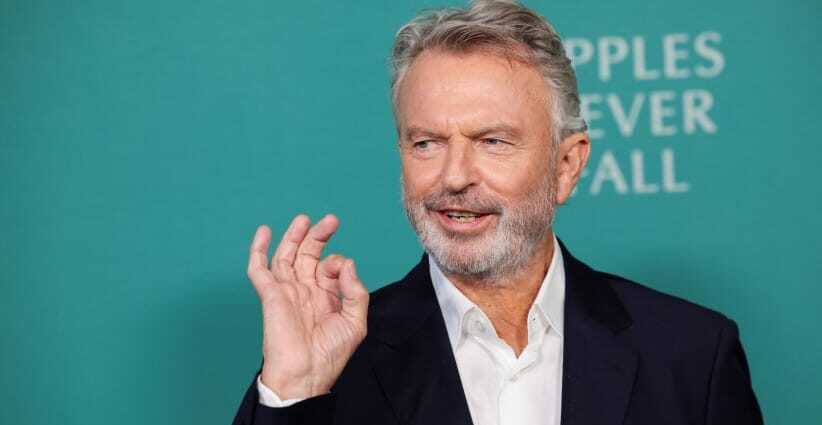
New Zealand actor Sam Neill died on Monday in Sydney, Australia, his family said in a statement posted on social media.

“Sam was surrounded by family and passed with the dignity that has characterized his whole life,” the statement shared on Instagram read. “The loss was sudden and unexpected but blessed by the fact that Sam remained cancer-free.”

The Jurassic Park actor announced in April he was cancer-free after undergoing treatment for stage-three blood cancer.

Neill’s family expressed their gratitude to St Vincent’s Private Hospital for their “incredible” care of the star, and asked for privacy as “they navigate this immeasurable loss.”

Wry, thoughtful, long remembered

“Sam Neill starred in so many beloved Australian stories, and he earned a special place in Australian hearts,” Australian Prime Minister Anthony Albanese wrote on X/Twitter, minutes after the announcement. “Wry and dry, thoughtful and laconic, Sam fought illness with the same dignity, humor and conviction that gave strength to his every performance.” 

“He will be much mourned and long remembered. May he rest in peace.”

New Zealand Foreign Minister Winston Peters echoed Albanese’s sentiment, adding that “he was a Kiwi icon through his work in both local and Hollywood films that entertained people around the world over decades.”

This post was originally published on here. 

The number of vessels transiting the Strait of Hormuz fell to multi-week lows on Sunday, according to shipping data, as renewed strikes between the US and Iran and attacks on ships in the Middle East heightened safety concerns.

Six vessels transited the strait on Sunday, ship-tracking data from Kpler showed, the lowest number in five weeks.

Tankers that exited the strait included the Very Large Crude Carrier Humanity, laden with 2 million barrels of Iranian oil, and another tanker, Capetan Andreas, carrying about 500,000 barrels of Kuwaiti oil products, the data showed, while three empty tankers entered the Gulf to load oil. Most of the tankers switched off their transponders when crossing the strait.

There were no liquefied natural gas tankers that entered the strait over the weekend that were visible on ship-tracking data.

One tanker controlled by the Abu Dhabi National Oil Co exited the strait between July 10 and July 12, Kpler data showed. The vessel is heading for Dahej port in India.

US strikes dozens of Iranian targets

US forces completed another wave of strikes against Iran on Sunday, hitting dozens of targets at multiple locations with precision munitions, the Central Command said.

US President Donald Trump said on Sunday that the Strait of Hormuz is open to commercial traffic, although Iran declared earlier that it closed the strait after a vessel traveled on an unapproved route and was struck.

Iran’s ​Revolutionary Guards said on Monday that its navy stopped two ships in the Strait of Hormuz last night by shutting down their systems. It did not name the ships involved.

This post was originally published on here. 

Minnesota Governor Tim Walz mobilized state National Guard troops on Sunday to battle wildfires on the state’s northern border with Canada.

The fires have covered more than 800 acres in five days and remain uncontained, according to a Minnesota state website. They are among the latest in a swath of fires that have raged across the United States due to hot, dry conditions driven by an El Niño weather pattern.

“I’ve declared a peacetime emergency and mobilized the National Guard to assist with wildfire response in northern Minnesota,” said Walz, a Democrat. “Minnesotans extend our deepest gratitude to all of the first responders working around the clock to keep their neighbors safe.”

Total of 16 fires burning in Minnesota forest

A total of 16 fires are burning in the Superior National Forest in northern Minnesota, which normally attracts about 150,000 visitors in the summer.

Park rangers have been escorting visitors out of the park over the weekend, according to the Minnesota Natural Resources Department website.

High temperatures over the weekend increased the fire risk, according to the National Weather Service.

This post was originally published on here. 

The son of a Belgian man who perished in Spanish wildfires disputed authorities’ claims that his father and other victims ignored official advice to shelter in place, saying the emergency services gave them no guidance.

Belgian virologist Thomas-Wolf Verdonckt told Reuters on Saturday that he spoke to his father, 63-year-old businessman Stanislas Verdonckt, by phone just before 9 p.m. (1900 GMT) on Thursday evening as the fire advanced on the mountain village of Bedar in Spain’s southeastern Almeria province.

Stanislas Verdonckt was among eight victims of the wind-whipped wildfire who were found dead in a valley below the Paraje el Curato area where he lived on the outskirts of Bedar, according to his 33-year-old son. The younger Verdonckt, who lives in Belgium, traveled to Spain after the fire and spoke with surviving neighbors.

No officials told the group that the fire was heading their way or that it would be safer for them to stay at home than flee, Verdonckt said.

“The people who died did not fail to follow any orders because no orders were given. No information was provided,” he said.

“They only started to run when the flames were almost upon them. That was their absolute last resort.”

Gov’t said that local mayors, police went door-to-door, called residents in danger zones

Andalusia’s regional government has said that no text alert was sent to residents, since the advice differed depending on their location in the mountainous, wooded terrain, and on the latest developments in the fast-moving situation.

Instead, local mayors and police went door-to-door or called residents, either indicating a safe evacuation route or instructing them to shelter in place.

In a statement to Reuters on Sunday night, the government disputed Verdonckt’s account, saying that Bedar’s mayor, Angel Collado, had urged the group, including Stanislas Verdonckt, to shelter in place.

“We understand the families’ grief and respect the fact that, in times of immense suffering such as these, anger and a sense of helplessness in the face of tragedy can lead to a different perception of what happened,” the statement said.

Thirteen people, mainly foreigners including Stanislas Verdonckt, along with one Spaniard, died trying to escape the wildfires, which spread to Bedar above the town of Los Gallardos. Their identities have not yet been officially confirmed, and another 10 people have been reported missing. The wildfire, one of Spain’s deadliest, was declared contained by lunchtime on Sunday.

Close enough to touch flames

Verdonckt said a group of neighbors, including his father, first tried to drive away on Thursday night on a paved road, but were beaten back by flames.

“They couldn’t get through via the main road because they were not warned in advance. Nobody told them that the fire was coming from that direction, and when they tried to get out, it was too late,” he said.

The group then tried to flee by car in the other direction on the neighbors’ dead-end dirt lane, which hugs a mountainside. But they could not make it out, abandoned their cars and sought to escape on foot, he said.

“It was not a choice. They drove to the end of the trail, and when even that was in flames, some people chose to run and try to get into the valley,” he said.

A neighbor who survived in his home told Verdonckt that the flames approached close enough to the house to touch, he said.

Verdonckt said his father, a keen hiker and photographer, had a home in the area for many years, knew the terrain well and spoke Spanish.

During their final phone conversation, Verdonckt said his father debated options for protecting himself.

Stanislas Verdonckt was always calm “even in the most desperate situations” and went over his “plan A, B and C,” Verdonckt said.

“My father is one of the smartest people I know. He’s always very analytical and was just checking boxes: ‘Can we do this? Can we do that?’,” he said. “At that point, it was just minutes before they were engulfed and they were trapped.”

The Andalusian government said it backed the Bedar mayor’s decision to order citizens to stay in their homes as “the option that offered the greatest guarantees of safety given the conditions of the fire, as, unfortunately, the tragic outcome has made clear.”

The government also provided Reuters with photographs it said showed Stanislas Verdonckt’s home was only lightly damaged by the flames, adding: “It therefore would have been a safe haven.”

This post was originally published on here. 

A multi-vehicle accident in Mexico caused by a tractor-trailer left nine people dead and some 10 injured, including four US citizens, on a highway in the state of Jalisco, Civil Protection reported on Sunday.

Among the dead are two minors, while the injured include two members of Mexico’s National Guard who are in serious condition and were transferred to the Magdalena Hospital in Guadalajara, the agency report indicated.

Videos on social media from local media showed several vehicles burned on a highway connecting the cities of Guadalajara and Tepic.

The Secretariat of Public Security and Citizen Protection of Nayarit said in a Sunday Facebook post that three private vehicles and two trucks were destroyed in a crash. 

US citizens lightly injured

Additionally, three other private vehicles, including one belonging to Mexico’s National Guard, were damaged.

“Four patients in minor condition, all US citizens, were transferred to the Arboledas Hospital in Guadalajara by a private ambulance from the highway,” Jalisco Civil Protection stated.

The driver of the truck was detained by Mexico’s National Guard, local outlet El Financiero reported on Sunday night.

This post was originally published on here. 

Homebuilders are navigating a market where slower absorption, elevated costs and shifting buyer demand are testing even the most experienced operators. In that environment, capital is more than a funding source. It influences liquidity, production pace and long-term growth.

For regional and mid-sized production builders, the question is not simply whether capital is available. It is whether that capital is durable, flexible and aligned with how builders need to operate in today’s market. Anchor Loans provides private capital for builders facing these decisions, helping them to structure capital that supports growth, preserves liquidity and provides the flexibility to execute through changing market conditions.

Why durable capital matters in uncertain markets

In periods of market uncertainty, the durability of a builder’s financing relationships becomes just as important as the cost of capital.  Most builders aren’t making six-month decisions. They’re making two-, three- and five-year decisions. Communities take time to build, and market conditions rarely stay the same from groundbreaking to final closeout. The question isn’t whether capital is available today. It’s whether that capital partner will still be there when conditions change. That need has become more visible as some traditional financing sources have tightened.

Most builders have experienced some version of this over the last several years: a lending relationship changes, credit standards tighten, concentration limits get hit or priorities shift. None of that has anything to do with the quality of the builder or the project, but it can still impact access to capital.

This is especially important because homebuilding is not a static business. Communities often take multiple phases and market cycles to complete. Demand can shift, product needs can change and builders may need to adjust floor plans, starts or production pace along the way. Experienced builders know how to pull those levers.

The challenge is making sure capital can move with those decisions. A builder may need to slow starts, increase specs, adjust product mix or carry inventory longer than expected. Those aren’t failures. That’s normal homebuilding. The right capital partner understands that and can support the business through it. Builders spend years assembling land positions, teams and trade relationships. Losing momentum because capital becomes constrained can be far more expensive than a modest difference in borrowing cost.

In homebuilding, every cycle eventually turns. The builders that continue gaining share are usually the ones that can keep acquiring lots, starting homes and serving buyers  while others are pulling back. That requires capital that remains available throughout the cycle – not just when conditions are favorable.

Builders need financing that matches how they actually build

Across many markets, builders are seeing slower absorption. Buyers are taking longer to purchase homes, and builders that started homes at a faster pace may now be managing more standing inventory than expected. Most builders aren’t changing their long-term strategy. They’re adjusting execution to match today’s demand while preserving the ability to accelerate when conditions improve.

All of these factors have increased demand for flexible construction financing, particularly around speculative starts. Spec homes are often essential for serving today’s buyer, especially first-time buyers who may need a move-in-ready home that aligns with lease timing, limited deposits and tight affordability constraints.

However, some financing structures limit the number of uncontracted homes a builder can have under construction at any given time. When that happens, builders may be forced to use cash on the balance sheet to start additional homes. While bank capital may appear less expensive on paper, restrictions can make it harder to use in practice.

Private capital for builders can help address that gap by providing qualified builders more flexibility around unsold starts, lot development and project pacing. For builders, the real cost of capital consists of more than just the interest rate. It also includes the cost of tying up equity that could otherwise be used to acquire land, develop lots or fund the next phase of growth.

Builders are rethinking the true cost of capital

Sophisticated builders understand that the cheapest capital isn’t always the most efficient capital. The real question is how financing impacts liquidity, return on equity and the ability to continue growing.

A lower-cost loan that cannot be used when and where builders need it may ultimately create a higher total cost. If a builder has to fund spec construction with equity for several months before a home is sold, that equity is no longer available for other growth opportunities. The business may lose momentum, limit community expansion or delay future lot acquisitions.

The most effective financing strategies look beyond rate and consider how efficiently capital can be deployed across the business, how quickly equity can be recycled and whether the financing structure supports long-term growth.

For builders trying to scale from one production level to the next, that efficiency can be significant. Growth often requires more land, more communities, more staff and more working capital. A capital partner that understands those goals can help structure financing around the builder’s broader business plan rather than a single transaction.

Matching financing to the builder’s operating model

There is no one-size-fits-all construction financing model. Some builders are best served by project-specific loans, while others may benefit from a borrowing base facility.

Project-specific financing is typically designed for a single subdivision, master plan or defined project. It works well for builders who raise equity around individual projects and want financing tied to a specific piece of land or community.

Borrowing base facilities are different. They are programmatic and provide a capital solution at the portfolio level, allowing builders to use a broader pool of collateral across multiple communities. Instead of setting up a new capital stack for each project, builders can recycle capital across the business more efficiently.

For larger or more active production builders, that structure can support significantly higher capital efficiency and stronger return on equity. Equity used in one project may be redeployed to another as collateral, while loan balances shift across the portfolio. For builders still relying on individual project loans despite operating at a more programmatic scale, a borrowing-base structure often provides a more efficient path to scalability.

Private capital strategy starts with the buyer

An effective financing strategy begins with understanding the end buyer. A builder serving move-up or luxury buyers may need a different capital approach than a builder focused on entry-level homes. The buyer’s timeline, product expectations, affordability constraints and need for move-in-ready inventory all influence how the builder should operate.

The best financing structures don’t dictate how builders operate. They support how builders already run their business and adapt as market conditions change.

Anchor works with experienced builders that have proven operating histories, disciplined governance and a clear understanding of their markets. The focus is on delivering reliable capital backed by disciplined underwriting and a long-term commitment to the homebuilding sector.

Looking ahead

The need for housing remains significant, but the path to delivering that supply is becoming more complex. Affordability pressures, supply shortages, changing buyer demographics and regional market differences will continue to shape how builders plan communities and manage production.

As those conditions evolve, financing strategies will need to evolve as well. Builders will increasingly look beyond traditional capital sources and evaluate private capital for builders as part of a broader capital stack strategy.

The future of construction financing will favor capital partners that can listen, adapt and tailor structures to the realities of each builder’s business. For builders looking to protect liquidity, support spec starts, finance land development and scale responsibly, flexible capital is more than a funding tool. It can become a competitive advantage.

Builders have always adapted to changing markets. The question is whether their financing structure gives them the flexibility and confidence to keep executing when conditions change. Increasingly, that’s why many builders are looking beyond rate alone and placing greater value on capital partners with the scale, experience and durability to support long-term growth.

Click Here

This post was originally published on here. 

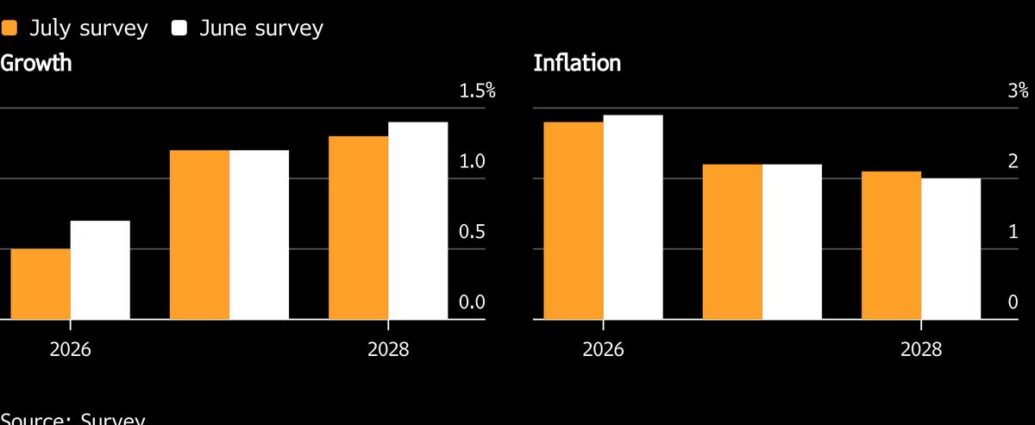
The euro area’s economy is showing early signs of stabilizing after the shock of the U.S.–Iran war, but economists still expect growth to remain sluggish throughout 2026. The European Central Bank, in staff projections released with its June 11 interest-rate decision, forecast euro-area economic growth of just 0.8 percent next year, down from 0.9 percent projected in March. While inflation has eased, oil prices have retreated, and investor confidence is recovering, economists say the damage inflicted during the first half of the year has already been built into the region’s outlook.

Private-sector forecasts largely mirror the ECB’s expectations. Vanguard projects 0.8 percent growth for 2026, while the Conference Board expects 1.0 percent, and the International Monetary Fund forecasts 1.1 percent. Together, they point to one of the weakest growth years for the euro area in more than a decade outside of recessionary periods.

The economic backdrop, however, has improved significantly since the height of the conflict.

According to Eurostat, euro-area inflation slowed to 2.8 percent in June from 3.2 percent in May, marking its lowest reading since February and coming in below economists’ expectations of 3.0 percent. Energy inflation eased sharply to 8.7 percent from 10.8 percent, reflecting a rapid decline in global oil prices after the spring’s supply shock.

Oil has been one of the biggest drivers of the turnaround.

Brent crude briefly surged above $126 per barrel during April as fighting threatened shipping through the Strait of Hormuz, but prices retreated steadily as tensions eased. By mid-July, Brent was trading near $76 per barrel, reducing pressure on European households, manufacturers, and transportation companies that depend heavily on imported energy.

Financial markets have responded positively.

The Sentix euro-zone investor confidence index climbed to -3.1 in July from -13.4 in June, marking its third consecutive monthly improvement and its strongest reading since March. The result also comfortably exceeded economists’ expectations of -10.0.

Even more encouraging, the survey’s expectations index turned positive for the first time since March.

“The slump in sentiment caused by the Iran conflict is slowly being overcome,” Sentix said, citing easing geopolitical concerns and renewed economic reform efforts in Germany, the euro area’s largest economy.

Even with improving confidence, the annual growth outlook remains subdued because much of the economic damage has already occurred.

Euro-area output expanded just 0.2 percent during the first quarter, while weaker consumer spending, higher energy costs, and slower business investment during the second quarter continue filtering through official economic data.

The slowdown has been particularly evident in Europe’s two largest economies.

Germany recently cut its 2026 growth forecast to 0.5 percent, while France reported zero economic growth during the first quarter.

The European Commission, which forecasts 0.9 percent euro-area growth this year, estimates European Union countries have spent roughly €30 billion more on fossil-fuel imports since the conflict began in late February, increasing costs for both businesses and consumers.

The changing economic picture has also reshaped expectations for interest rates.

The European Central Bank raised its three key interest rates by a quarter percentage point on June 11, its first increase since September 2023, lifting the deposit facility rate to 2.25 percent in response to inflation risks stemming from the conflict.

Since then, inflation has moderated more quickly than expected, oil prices have declined sharply, and investor inflation expectations have improved considerably. As a result, financial markets increasingly believe the ECB can afford to pause before considering additional rate increases.

Risks nevertheless remain.

Economists continue warning that potential U.S. tariffs on European exports—particularly automobiles—could weigh on growth next year. Likewise, any renewed disruption to shipping through the Strait of Hormuz could quickly reverse the recent decline in energy prices.

European Commission Executive Vice President Valdis Dombrovskis has previously warned that if elevated energy costs were to persist through late 2026, euro-area growth could be roughly half current projections. While falling oil prices have reduced that risk considerably, it has not disappeared.

For businesses and consumers across Europe, the latest data offer cautious optimism. Lower energy prices are easing pressure on household budgets and manufacturing costs, while improving confidence could encourage companies to invest and consumers to resume larger purchases postponed during the conflict.

The ECB expects euro-area growth to improve to 1.2 percent in 2027 as the energy shock fades and investment, particularly in Germany, begins to recover. For now, however, 2026 remains a rebuilding year—one in which the economic cost of war continues to weigh on annual growth even as the latest data point toward a gradually strengthening recovery.

JBizNews Desk | Frankfurt
© JBizNews.com All Rights Reserved. Reproduction or distribution without written permission is prohibited.

U.S. stock futures fell early Monday, July 13, as a weekend of fresh U.S.-Iran strikes drove oil higher and deepened a selloff in chip stocks, pointing to a lower open ahead of a week dominated by big-bank earnings and a closely watched inflation report. Futures tied to the Dow Jones Industrial Average were down about 229 points, or 0.43 percent, while S&P 500 futures slipped 0.58 percent and Nasdaq-100 futures dropped 1.37 percent, according to pre-market trading.

The pullback reversed part of a solid finish to last week. On Friday, the S&P 500 rose 0.42 percent to 7,575.39, the Nasdaq Composite added 0.29 percent to 26,281.61, and the Dow Jones Industrial Average gained 149.60 points, or 0.29 percent, to 52,637.01, leaving the broad market up more than 1 percent for the week. Nvidia climbed about 4 percent Friday, while Meta Platforms jumped roughly 6 percent, capping its strongest week since early 2024. Monday’s futures, however, pointed to a reversal in much of that technology-led momentum.

The catalyst was the latest escalation in the Middle East. U.S. Central Command struck dozens of Iranian targets after an attack on a container ship, Tehran retaliated against Gulf states, and Iran again declared the Strait of Hormuz closed, a claim President Donald Trump disputed Sunday. Brent crude climbed 3.9 percent to $78.96 a barrel, while U.S. West Texas Intermediate gained 4 percent to $74.26, renewing concerns that higher energy costs could reignite inflation.

The selloff spread across global markets before reaching Wall Street. South Korea’s Kospi posted one of the day’s sharpest declines as SK Hynix and Samsung Electronics came under heavy selling pressure, weighing on semiconductor stocks throughout Asia and setting a cautious tone for U.S. chipmakers before the opening bell.

Sector performance reflected the shift toward risk aversion. Semiconductor shares, which have led markets throughout 2026 with the VanEck Semiconductor ETF up roughly 70 percent this year, faced renewed profit-taking. Energy companies appeared positioned to benefit from higher crude prices, while airline and travel stocks were expected to come under pressure as investors priced in rising fuel costs. More defensive sectors, including utilities and consumer staples, showed relative resilience in early trading.

Attention now turns to earnings season. Several of the nation’s largest financial institutions begin reporting second-quarter results this week, including JPMorgan Chase, Goldman Sachs, Wells Fargo, Citigroup, Bank of America, and Morgan Stanley. Investors will closely examine loan growth, credit quality, consumer spending trends and trading revenue for insight into the health of the U.S. economy. Later in the week, Netflix, UnitedHealth Group, GE Aerospace, ASML, and Taiwan Semiconductor Manufacturing Co. are also scheduled to report.

Economic data could prove equally important. The Bureau of Labor Statistics will release the June Consumer Price Index on Tuesday morning, with economists expecting headline inflation to ease to approximately 3.8 percent year over year from 4.2 percent in May, while core inflation is expected to remain more persistent. Producer prices and retail sales later in the week will provide additional insight into inflation pressures and consumer demand. Federal Reserve Chair Kevin Warsh is also scheduled to deliver his first congressional testimony since taking office, giving markets another closely watched event.

Other financial markets echoed the cautious tone. Treasury yields continued climbing, with the two-year Treasury note trading near its highest level since early 2025, while the U.S. dollar strengthened. Gold fell more than 1 percent, an unusual move during a period of heightened geopolitical tensions, reflecting investor concern that higher oil prices may keep inflation elevated and interest rates higher for longer rather than immediately boosting traditional safe-haven assets.

For investors, Monday’s outlook presents a market balancing two competing forces. Strong corporate earnings and easing inflation could help extend the rally that has driven equities to record highs this year. But another jump in oil prices or a hotter-than-expected inflation report could quickly shift sentiment and test whether Wall Street’s technology-led advance can withstand mounting geopolitical and inflation risks.

JBizNews Desk | New York

© JBizNews.com All Rights Reserved. Reproduction or distribution without written permission is prohibited.

The yield on the two-year U.S. Treasury note pushed to its highest level since early 2025 on Monday, July 13, as a weekend surge in oil prices drove up the cost of money across the economy, from short-term business loans to 30-year mortgages, according to Treasury market data compiled by the Federal Reserve and the U.S. Treasury. The two-year note, the maturity most sensitive to near-term borrowing costs, ended Friday at 4.21 percent and climbed further Monday, moving back above its June peak of 4.232 percent and toward the 4.275 percent high last reached on Feb. 21, 2025.

Rising yields ripple straight into what households and companies pay. The 10-year note, the benchmark that lenders use to price mortgages, auto loans and credit-card debt, finished Friday at 4.56 percent, and the 30-year bond has been trading above the 5 percent mark. Freddie Mac’s latest Primary Mortgage Market Survey put the average 30-year fixed home loan at 6.49 percent, keeping financing costs elevated for buyers heading into the summer season. Because Treasuries set the floor for nearly every other interest rate, lenders add a risk premium on top, so Monday’s move up the curve tightened conditions for anyone borrowing to buy a house, a car or refinance corporate debt.

The shape of the curve told its own story. The gap between the two-year and 10-year yields held positive at roughly a third of a percentage point, leaving the curve upward-sloping after a long stretch of inversion that ran from July 2022 to August 2024. But that spread has been narrowing as the front end climbs faster than the long end, a flattening that signals investors expect short-term rates to stay high even as the growth outlook cools. When the two-year rises toward the 10-year, it compresses the margin banks earn between short-term funding and long-term lending, a squeeze that tends to slow credit creation.

Real borrowing costs are the sharper part of the picture. Adjusted for expected inflation, yields on Treasury Inflation-Protected Securities sit near their highest since 2008, according to Standard Chartered, meaning the true cost of capital is the steepest in roughly 17 years. That weighs directly on housing affordability, corporate refinancing and the federal government’s own interest bill, which climbs every time the Treasury rolls maturing debt into higher-yielding paper at its regular bill, note and bond auctions.

The trigger was the weekend’s escalation in the Gulf. U.S. Central Command struck dozens of Iranian targets after an attack on a container ship, Tehran retaliated against Gulf states, and oil jumped, with Brent crude up 3.9 percent to $78.96 a barrel and U.S. West Texas Intermediate up 4 percent to $74.26. Higher energy prices lift the inflation embedded in bond pricing, and traders sold Treasuries in response, sending yields higher. The move built on a repricing that began at the Federal Reserve’s June meeting, when the two-year yield jumped more than 16 basis points in a single session, its biggest move on a policy day since March 2008, according to MUFG.

Strategists split on whether the climb has room to run. Anthony Saglimbene, chief market strategist at Ameriprise, said energy-driven inflation is straining the consumer engine globally, describing an economy still running but without a full tank of gas. Byron Anderson, head of fixed income at Laffer Tengler Investments, said the market has returned to an era in which it reacts to the Fed rather than the Fed reacting to markets, while analysts at ING wrote that the central bank has signaled it sees inflation as a problem it is prepared to act on. Taking the other side, Ross Pamphilon, fixed-income chief investment officer at Impax Asset Management, argued the energy spike is more likely transitory than structural and sees room for longer-dated yields to fall back.

For borrowers, the near-term consequences are concrete. Mortgage applications and corporate bond issuance both tend to cool when yields spike, and the flattening curve makes it costlier for companies to lock in long-term funding just as the second-quarter earnings season opens and major banks including JPMorgan Chase, Goldman Sachs and Morgan Stanley report results this week. Their commentary on loan demand and credit quality will offer an early read on how the higher cost of money is filtering through to Main Street.

For now, the front end of the curve is setting the tone. With oil elevated and real yields near multi-decade highs, the two-year note is likely to hold near its firmest levels in more than a year, keeping upward pressure on the borrowing costs that touch nearly every corner of the economy.

JBizNews Desk | New York

© JBizNews.com All Rights Reserved. Reproduction or distribution without written permission is prohibited.

Asian markets tumbled Monday, July 13, led by a plunge in South Korean shares, after U.S. Central Command carried out a fresh wave of strikes on Iran over the weekend and Tehran’s Revolutionary Guard again declared the Strait of Hormuz closed, according to closing levels from the region’s exchanges. The escalation drove oil sharply higher, revived inflation fears days before a key U.S. inflation report, and sent investors out of the chip stocks that had powered the region’s rally.

South Korea took the hardest hit. The Kospi sank about 5.6 percent to 7,060.69, its lowest level since May 4, after falling as much as 7 percent intraday. The rout centered on memory-chip makers: SK Hynix dropped 10.6 percent in Seoul, unwinding part of the euphoria from its Nasdaq debut Friday, when its American depositary shares jumped 13 percent after the company raised roughly $26.5 billion at $149 each. Larger rival Samsung Electronics fell 6.7 percent, as profit-taking deepened worries about how durable the artificial-intelligence memory boom really is. Bucking the slide, LG Electronics rose more than 5 percent on a Seoul Economic Daily report that it will build AI server racks for Nvidia.

Japan followed the risk-off tone. The Nikkei 225 lost 1.1 percent to 67,786.86 as rising energy costs clouded the outlook just as earnings season opened, while the broader Topix slipped 0.52 percent. Australia’s S&P/ASX 200 eased 0.3 percent to 8,777.00.

Greater China split from the region. Mainland shares fell, with the Shanghai Composite down about 1.2 percent to 3,947.34 and the CSI 300 off 0.64 percent, dragged by consumer and tech names including BYD, which lost 3.2 percent. Energy producers went the other way as crude climbed: PetroChina rose 0.9 percent and CNOOC gained 2.2 percent, after Beijing reportedly urged major refiners to keep fuel output high to protect energy security against any disruption to Persian Gulf shipments. Hong Kong’s Hang Seng Index was the region’s outlier, edging higher to around 24,202, extending a recent run of outperformance by Chinese equities.

The driver was the weekend’s sharp military escalation. U.S. Central Command struck dozens of Iranian targets across several waves after an Iranian attack on a container ship in the strait, and Tehran retaliated against U.S. facilities in multiple Gulf states, hitting Qatar and the United Arab Emirates for the first time in months and firing ballistic missiles at Jordan. President Donald Trump disputed Iran’s closure claim on Sunday, saying the waterway remained open to commercial traffic even as roughly 20 vessels were reported to have transited under U.S. coordination.

Oil surged on the uncertainty. Brent crude gained 3.9 percent to $78.96 a barrel and U.S. West Texas Intermediate added 4 percent to $74.26, unwinding the drop that had followed last month’s interim truce. Gold slid more than 1 percent and the dollar firmed as traders priced in a firmer rate path, the same mechanism pressuring metals all year: higher oil feeds inflation, which lifts real yields and pushes the Federal Reserve toward keeping policy tight.

Strategists framed the selloff as risk-off but contained. Ben Emons, founder of Fed Watch Advisors, wrote that the strait closure would hang over the market with a cautious tone, but said the week’s focus would also turn to inflation data, Fed testimony and bank earnings. Goldman Sachs economists expect U.S. core consumer prices to ease to 2.8 percent year-over-year in June, while Standard Chartered reiterated that gold remains its preferred hedge against geopolitical risk, noting U.S. real yields near their highest since 2008 and forecasting the Fed to hold rates through 2026.

The week ahead sets up as pivotal. U.S. June CPI lands Tuesday at 8:30 a.m. Eastern, the last major inflation read before the July 29 Fed decision, followed 90 minutes later by Chair Kevin Warsh’s first congressional testimony since taking office. Earnings season also opens in force, with JPMorgan Chase, Goldman Sachs, Morgan Stanley, Bank of America, Citigroup and Wells Fargo among 28 S&P 500 companies reporting. U.S. futures pointed lower as Asia closed, with Dow Jones Industrial Average futures down 229 points, or 0.43 percent, S&P 500 futures off 0.58 percent and Nasdaq-100 futures down 1.37 percent.

For Asian investors, the message from Monday’s tape was that the market’s assumption the Gulf skirmishes would stay contained is being tested, and that the chip trade underpinning the region’s gains is the first thing sold when that assumption wobbles.

JBizNews Desk | Hong Kong © JBizNews.com All Rights Reserved. Reproduction or distribution without written permission is prohibited.

Jews who voted for NYC Mayor Zohran Mamdani are “idiot[s]” for embracing a candidate who runs “contrary to their own identity,” Jewish Harvard law professor and attorney Alan Dershowitz said on Wednesday during an appearance on former NYC mayor Rudy Giuliani’s show. 

“That’s your city! That’s your city, Mayor,” Dershowitz said to Giuliani. “The same city electing Rudy Giuliani and Mamdani to the same office. It is absurd. I mean, Mamdani should be the mayor of Tehran,” said Dershowitz. 

Dershowitz continued, saying, “My people, the idiot Jews, in New York, who live on the Upper West Side, who live in Park Slope, who voted for Mamdani- remind me of the 7,000 Jews who voted for Hitler.”

“Seven thousand Jews formed a party in 1932 and voted for Hitler, thinking he would be good for the economy.” Dershowitz concluded, “Thank God, we have Italian-Americans, Irish-Americans, and other Americans who have a lot more sense than many Jewish Americans do.”

Giuliani interjected briefly, saying, “There are a lot of very strong Jews on this issue.” 

Conversation comes after US Supreme Court ruling against Trump

The two agreed that “nothing woke them up in 1932,” referring to Jews who continued to back Nazi-figures as the war began.

“You’d think they’d learn their lesson,” Dershowitz said, “but no, they vote for Brad Lander.” 

Brad Lander, an anti-Israel Jewish-American candidate, is the Mamdani-endorsed nominee for New York’s 10th congressional district, having defeated incumbent Representative Dan Goldman in last month’s primary.

Dershowitz and Giuliani further discussed a wide range of issues, including birthright citizenship, transgender athletes in sports, and campaign finance limits. 

The conversation comes shortly after the US Supreme Court struck down Trump’s Birthright Citizenship executive order, which attempted to end “birthright citizenship,” instead opting to reaffirm “one of the country’s most enduring constitutional principles: that nearly everyone born on US soil is a US citizen.”

Who are Giuliani, Dershowitz?

Giuliani, a member of the Republican Party who described himself as the tough-on-crime mayor who reshaped New York and led the city’s response to 9/11, has since been permanently disbarred from practicing law for his role in the efforts to overturn the 2020 election on Trump’s behalf. 

Dershowitz’s own reputation has similarly faced scrutiny in recent years over his professional ties to Jeffrey Epstein, the late financier and convicted sex offender. 

Dershowitz joined Epstein’s legal team and helped negotiate the 2008 non-prosecution agreement that allowed Epstein to serve a reduced sentence. He was later named in a since-withdrawn defamation claim by Epstein accuser Virginia Giuffre, who alleged in 2015 that Dershowitz had also abused her; Giuffre dropped those allegations against him in 2022, saying she “may have made a mistake.” 

Dershowitz has denied any wrongdoing and has not been charged in connection with the case. 

This post was originally published on here. 

Israel’s Toto Equals football team won fourth place in the Special Olympics Unified Football World Cup on Saturday after being the first Israeli team to participate in the tournament.

The Toto Equals, which consisted of nine Special Olympics athletes with disabilities and seven Unified partners without disabilities, competed against teams from 11 other nations.

The team’s striker, Tomer Gini, was the tournament’s top scorer, netting 10 goals for the Israeli team and winning the Golden Boot.

The team faced significant challenges as four players, including Gini, were injured throughout the championships but continued to play, winning games against China and the United Arab Emirates.

During the championship’s semi-finals, the Toto Equals lost to the Jamaican and Paraguayan teams, ultimately finishing in fourth place overall.

Israeli team proved ‘heart is greater than any challenge’

The team’s coach, Ofir Haim, stated that he was proud of each player for persevering despite the challenges. 

“This delegation proved that the heart is greater than any challenge,” Haim asserted, adding that the team “represented the State of Israel with great honor and gave their all on the field.”

Special Olympics Israel CEO, Sharon Levy-Blanga, expressed her gratitude for Haim’s dedication and described Israel’s inaugural participation in the tournament as a “historic journey.”

“The players showed the world what perseverance, friendship, and belief in one’s abilities are. We return to Israel not only with champions in football but also with champions in promoting values ​​of tolerance, patience, inclusion, and respect for others,” Levy-Blanga stated.

This post was originally published on here. 

Survivors of the October 7 Supernova music festival massacre are facing a wave of online abuse from bots, which are suspected to be part of a coordinated campaign by Iran, according to a report by Fighting Online Antisemitism (FOA).

According to the report, thousands of bot accounts targeted survivors of the Nova music festival, where 364 people were murdered by Hamas and dozens taken hostage. 

According to the FOA report, social media platforms are failing to act against the bot-posted content, described as a “sustained and multi-layered digital campaign” that hurls abusive comments and shares videos about the survivors.

These posts often call for the survivors’ deaths and question the validity of their experiences on October 7 and its aftermath in an attempt to create false narratives and justify the events of that day, building on conspiracy theories surrounding the massacre.

In their report, the FOA narrowed down the source of the online abuse campaign to the Iranian regime. 

IRGC has a history of leveraging cyber warfare against Islamic regime’s enemies

The Islamic Revolutionary Guard Corps (IRGC) has a history of leveraging sophisticated cyber campaigns to attack critical infrastructure and vulnerable individuals, gather intelligence, and impact public opinion through propaganda.

State-sponsored hackers have been known to target organizations and individuals in Israel, the UK, and the US, among other places. From data harvesting to terror recruitment, Tehran has in recent years utilized cyber warfare at varied levels of success.

Propaganda peddled by Iranian bots has slowly made its way into a greater, real-world zeitgeist. Conspiracies revolving around the use of “crisis actors” on October 7, false-flag narratives, outright denialism, and the suggestion that the IDF fired on its own citizens to justify a ground invasion of Gaza have made the rounds.

The FOA pointed out sites like X/Twitter and TikTok as major nodes of harassment toward survivors, as well as general antisemitic memes and videos that “spread hate messages or mock the suffering of civilians.” 

Nova survivors targeted by hate speech, denialism

The report highlighted posts labeling Noa Argamani, a hostage who was held by Hamas for 245 days in Gaza following the October 7 massacre, “a terrorist” and a “whore,” among other things. The same can be said for former hostage Romi Gonen, who has experienced a barrage of hateful posts, according to FOA researchers.

Omri Sassi, a survivor of the Nova massacre, told the Daily Telegraph in an interview that his trauma has been exacerbated by his and other survivors’ encounters with misinformation, denial, and hate speech, to which he responded by staging a London exhibition about the Nova music festival – his attempt to bring truth to those who would deny what happened to the victims of Hamas terrorism. 

The content “explicitly violates terms of service, including calls for violence,” said the FOA. Despite this, posts routinely remain active, untouched by the platforms that host the hate speech. “Survivors are being harmed twice.”

Tomer Aldubi, the founder of FOA, told the Telegraph, “While we are successfully removing extremist content through close cooperation with social media platforms, antisemitism and extreme hatred against Jews, Zionists, and Israelis have spread internationally at a dizzying pace since October 7. We must not give up or be silent.”

This post was originally published on here. 

Western allies will seek to secure more air-defense commitments for Ukraine when they meet in Paris on Monday, as shortages have left it increasingly exposed to Russian ballistic missiles, despite recent shifts in momentum on the battlefield

Ukrainian President Volodymyr Zelensky will be joined by at least 25 leaders for a meeting of the Coalition of the Willing, part of broader efforts that include developing a common position to take to Russia and securing guarantees to support any eventual peace deal.

Monday’s meeting comes days after a NATO summit that aimed to show transatlantic unity and long-term support for Ukraine.

Russia launched missile and drone attacks on Ukraine on Saturday, killing eight people and wounding dozens more, officials said, as Zelensky called for efforts to provide Kyiv with weapons faster.

Coalition seeks to help Ukraine down ballistic missiles

“The ballistic missiles launched by (Russian President) Vladimir Putin are deliberately targeting civilian zones, and June was one of the most murderous (months) since the start of the war,” French Foreign Minister Jean-Noel Barrot said in an interview with Ouest-France newspaper on Sunday.

Russia says it only attacks targets of military relevance and denies targeting civilians.

Briefing reporters, a French presidential official said the focus would be on anti-ballistic-missile cooperation, ranging from sourcing more US Patriot interceptors and advancing the deployment of the Franco-Italian SAMP-T air defense system to exploring how the European and Ukrainian defense industries can develop alternatives.

One option under consideration was for different European nations to cooperate on a system that would complement SAMP-T and/or Patriot and give Ukraine a significant role in production.

Ukraine is critically low on munitions for its systems and has been largely unable to down ballistic missiles, which travel at several times the speed of sound, over the past month.

It has pleaded with allies for more supplies and has also pushed Europe to work with it on its own anti-ballistic air defense system.

EU to adopt new Russia sanctions package

As Russia’s strikes have increased, Kyiv has also intensified drone attacks inside Russia, targeting oil facilities and weapons production to undermine Moscow’s economic ability to press on with its war.

Leaders will also mull how to crimp Moscow’s sources of revenues, notably the “shadow fleet”, tankers with opaque ownership ⁠structures used to evade oversight to ship Russian oil.

The EU is also set to adopt a 21st package of sanctions on Russia next week.

French President Emmanuel Macron has promised announcements on Monday, some of them bilateral, potentially concerning joint arms production.

He also said the coalition could announce joint military exercises as it seeks to make the concept of a future multinational force in Ukraine (MNFU) more of a practical reality.

“What must be remembered is that the MNFU consists of land, air, sea and training. All of these pillars are intended to be tested continuously, to varying degrees, with all participants in order to guarantee their credibility,” the official said.

“It’s not a question of conducting exercises in Ukraine.”

This post was originally published on here. 

When Israeli influencer Aaron Morali realized that the celebrity drawing a crowd at the Loullie beach club on Saturday night was Braden Peters, better known as Clavicular, he alerted staff.

He knew that in addition to being a prominent “looksmaxxing” influencer, Peters had appeared alongside the white supremacist Nick Fuentes singing Ye’s “Heil Hitler” and otherwise consorted with antisemites.

“We thought maybe he was a big influencer supporting Israel,” Morali told the Jewish Telegraphic Agency. “But we very quickly understood that he wasn’t.”

Peters was soon asked to leave the club. But elsewhere along the Tel Aviv beach, Clavicular has received a warm reception. Even though he is closely associated with an online ecosystem steeped in antisemitism, a number of pro-Israel and Jewish influencers have enthusiastically filmed content with him in Israel, and crowds of young Israelis have gathered around him as he livestreams from beaches and nightclubs.

The welcome has bewildered many of Peters’ own followers. His livestreams from Israel have been filled with comments accusing him of selling out, urging him to “kiss the wall,” a reference to the Western Wall that has become a taunt in some far-right online circles, and mocking him for embracing Israel.

Clavicular is seen outside 424 during Day One of Paris Fashion Week - Menswear Spring/Summer 2027 on June 23, 2026 in Paris, France. (credit: CHRISTIAN VIERIG/GETTY IMAGES)

In addition to becoming well known for his efforts to optimize his physical appearance, Peters drew attention in January when he was part of a group at Miami’s Vendôme nightclub, including Fuentes and the manosphere influencers Sneako and Andrew Tate, singing along to ‘Heil Hitler,’ the Ye song that samples a speech by Adolf Hitler.

Amid a backlash, Peters doubled down. “I am not sorry. I don’t apologize for what I did,” he said at the time. “I would do it again today.”

Now, Clavicular’s visit to Tel Aviv has raised questions about why he was admitted to Israel given the country’s recent record of denying entry to right- and left-wing figures with records of antisemitic and anti-Israel activity. The Ministry for Diaspora Affairs and Combating Antisemitism declined to comment about Clavicular’s entry into Israel.

It has also exposed a divide in the pro-Israel influencer community. Some influencers have sought to partner with Clavicular to film content, attempting to springboard into his vast audience and taking pride in his presence at a time when Israel is widely seen as a pariah. Others have decried his presence, his content objectifying Israeli women and the readiness of fellow Jews to overlook his antisemitic activity.

Orthodox Jewish influencer Golda Daphna posted a series of Instagram videos criticizing Peters during his visit. In one video, she played a recording in which Peters, after being shown a photo of an Israeli woman, says, “Does she want to have sex? Just tell the girls I’m looking to have sex in a bathroom.” In another post, Daphna criticized fellow pro-Israel influencers who collaborated with him, writing, “Whoever gives this behavior a platform, in my opinion, has ended their career.”

Eden Sisson, another influencer involved in hasbara, or public diplomacy on Israel’s behalf, similarly urged Israeli women not to appear in Peters’ videos. “Don’t give him the attention he’s looking for. If he approaches you with a camera, think twice before participating,” she wrote. Referring to his past use of Nazi slogans and symbols, she added, “Someone who has chosen to use Nazi slogans and symbols in the past does not deserve your trust.”

The influencer Hallel Abramowitz-Silverman, writing in the Jerusalem Post, denounced what she said was “a growing culture within parts of Israel’s advocacy and creator community that mistakes influence for integrity.” She added, “Somewhere along the way, we started believing that if someone has enough followers, we should be grateful they’re willing to talk to us at all, even if they have spent years platforming hatred, extremism, or misogyny.”

Peters could not be reached for comment via multiple channels and multiple attempts by JTA. He told The Free Press that he had come to Israel because it was “unexplored territory” for major influencers, few of whom have broadcast from the country, which he said was “viral.”

Among those willing to engage with Peters was Rabbi Yossi Farro, who has built a large social media following by wrapping tefillin on celebrities and what he calls “powerful Jews.”

‘ChatGPT mogging David’

Farro met Peters for lunch at the Royal Beach Hotel in Tel Aviv and later posted a video presenting him with a necklace combining the OpenAI logo and a Star of David, joking that it amounted to “ChatGPT mogging David,” using internet slang meaning to outshine or dominate someone. Farro later wrote that Peters was “loving Israel and Israel is loving him.”

View this post on Instagram

A post shared by Yossi Farro (@farroyossi)

Farro did not respond to multiple requests for comment.

Meanwhile, Shira Braun, an influencer whose bio says she is “representing Jewish & Israeli women,” appeared in videos with Clavicular in which she was presented as his girlfriend. She said she had received death threats as a result.

Their collaborations with Peters drew swift criticism from other pro-Israel creators, who argued that collaborating with someone associated with antisemitism risked legitimizing him while exposing Israelis to manipulation.

“If he approaches you with a camera, think twice before participating,” Channel 12 personality Hagar Amgar warned on Instagram. “A few seconds of footage can be edited, taken out of context, and shared with millions of people.”

Some prominent advocates went further. Yoseph Haddad, the Arab Israeli activist and influencer, called for Peters to be deported.

Peters also briefly crossed paths with Topaz Luk, a longtime adviser to Prime Minister Benjamin Netanyahu, at the Tel Aviv nightclub Shlavata. Peters has said he hopes to film a “collab” with Netanyahu himself, whom he calls “The Big Yahu.”

Luk described the encounter as coincidental in an interview with the Israeli outlet Walla. He said  Peters “asked to express regret over his antisemitic statement,” and said the influencer told him he was in Israel to show the truth about the country and planned to meet Holocaust survivors and issue a public apology. Luk was skeptical: “We’ll wait and see,” he told the outlet.

Peters’ connection to online antisemites continued during his Israel visit. He shared a post by Fuentes during his trip. And his stream chat has been filled with antisemitic and anti-Israel comments, with viewers deriding him as a sellout, hurling slurs and mocking the trip; his former friend, the streamer Sneako, who has espoused Islamist views, publicly lamented the visit, while an AI-generated image of Peters kissing the Western Wall circulated on X.

Peters has also commented repeatedly on stream about Israeli women, calling them “Stacys,” looksmaxxing slang for attractive women.

In response to backlash from his fans over the visit to Israel, Peters told The Free Press that he is “not a political guy” and that the trip was not about wading into the Israeli-Palestinian debate.

Peters’ presence in Israel has puzzled many of his critics

The Ministry of Diaspora Affairs and Combating Antisemitism has recently urged the Population and Immigration Authority, which has the power to permit or deny entry to Israel, to bar prominent figures on both the right and left who have drawn allegations of antisemitism and anti-Israel activity.

In May, Israel denied entry to the streamer Tyler Oliveira, who had made the Hasidic community in Kiryas Joel, New York, and the Orthodox community of Lakewood, New Jersey, the targets of his content. He was deported back to the United States after landing at Ben Gurion Airport, and Diaspora Minister Amichai Chikli confirmed the decision on X, resurfacing a month-old post in which Oliveira had asked whether Israel would let him into the country and replying with one word: ‘No.’”

Peters has a lengthy record of run-ins with the law in the United States, one standard by which those who seek to visit Israel are sometimes denied. He was charged with unlawfully discharging a firearm in Florida after appearing to shoot a dead alligator in the Everglades on a livestream, resolving the case in May through a plea deal that carried six months of probation and 20 hours of community service.

He was arrested earlier this year in Arizona on suspicion of drug possession and using a fake ID. Maricopa County prosecutors subsequently dropped the charges, citing no reasonable likelihood of conviction. He is also being sued in civil court by an influencer who alleges he sexually assaulted her when she was 16. His lawyer has denied the claims, calling them unproven.

Morali, who rose to fame as a cast member on “Love Island Israel,” has joined the growing chorus asking why Peters was allowed to enter Israel in the first place. “Obviously we welcome everybody to Israel, but whoever is posting content against us or doing something controversial, that’s a bit more tricky,” he told JTA.

Morali said he was at the club for a night out with friends when he spotted Peters standing outside. The video he filmed of Peters standing outside the nightclub, which he captioned, “We don’t need any antisemites here. Am Israel Chai,” quickly went viral.

According to Morali, after Peters entered the beach club with his security detail and began approaching patrons and trying to film content, security began to take notice. Loullie did not respond to a JTA request for comment but confirmed the account to Israeli media.

“We decided to tell the right people about it so something could be done, because we didn’t feel comfortable having someone with his camera in everyone’s face, filming something that could potentially harm our country,” Morali said. “They removed him right away. And I must say, I’m proud of them for doing that.”

This post was originally published on here. 

Gold and silver opened the week sharply lower Monday, July 13, with spot gold sliding to about $4,061 an ounce and silver to roughly $58.22, extending a losing run as the weekend’s U.S.-Iran escalation drove oil higher and hardened bets on a Federal Reserve rate increase, according to dealer spot pricing, the CME Group’s FedWatch tool and minutes from the Fed’s June meeting. Gold fell about $61 from Friday’s level and silver nearly $1.80, adding to a prior week in which the metals lost roughly 1.5 percent and 4 percent. FedWatch showed the probability of a September hike firming toward 60 percent, with a smaller chance of a move at the late-July meeting.

The fresh leg down followed the weekend’s fighting. U.S. Central Command carried out its largest strike wave yet against Iran, hitting some 140 military targets, and early Sunday Iran’s Revolutionary Guard declared the Strait of Hormuz closed after firing on a vessel. Crude had already climbed about 7 percent the prior week, with Brent settling at $76.01 a barrel and U.S. West Texas Intermediate at $71.41 Friday. Higher energy costs revive inflation and lift real yields, undercutting metals that pay no interest. In 2026 a Hormuz flare-up now reads as an inflation shock that keeps the Fed hawkish rather than a safe-haven trigger, which is why the metals that once rallied on Middle East conflict are falling instead.

The intraday history has been volatile. Gold opened the prior week near $4,155, dropped to about $4,076 on July 8 after President Donald Trump declared the interim ceasefire over, steadied above $4,100 Friday, then broke lower at Monday’s open. Silver, hit harder because more than half its demand is industrial, slid toward $58 with the gold-silver ratio near 68. For the year to date gold is down about 3 percent and silver about 12 percent, a reversal after 2025 gains of 66 percent and 135 percent, and gold has just posted its worst quarter in 13 years.

The pressure traces to the Fed’s June turn. At the June 16-17 meeting, its first under Chair Kevin Warsh, the Federal Open Market Committee held its benchmark at 3.50 to 3.75 percent but lifted its median 2026 inflation forecast to 3.6 percent from 2.7 percent and raised the dot-plot rate projection to 3.8 percent from 3.4 percent, signaling rates staying higher for longer. Warsh, sworn in May 22 after a 54-45 Senate confirmation, declined to submit his own dot, the first chair to abstain, shifting more weight onto the data and the minutes.

Two catalysts land Tuesday. The Bureau of Labor Statistics releases June CPI at 8:30 a.m. Eastern, the last major inflation read before the July 29 decision, and Warsh makes his first appearance before Congress as chair at 10 a.m. before the House Financial Services Committee, followed by the Senate on Wednesday. Economists expect the headline to look soft, even negative, because oil fell about 21 percent in June during the mid-June truce, but core prices are seen rising 0.3 percent with the annual core rate stuck near 2.9 percent. The New York Fed’s latest survey put one-year inflation expectations at 3.7 percent, the highest since September 2023.

Wall Street is split. Mark Cabana, rates strategist at BofA Securities, said a firm core print could push the market toward a coin flip between a hike and a hold. New York Fed President John Williams has pointed to easing shelter costs, while Chicago Fed President Austan Goolsbee warned inflation is trending the wrong way. On the metals, Greg Shearer of J.P. Morgan said gold is stuck in a technical no-man’s land, though the bank still targets $6,000 an ounce by the fourth quarter. HSBC cut its 2026 average gold forecast to $4,560 from $4,864, and Macquarie sees prices drifting toward $4,300 by year-end. Consultancy Metals Focus and Adrian Ash of BullionVault argued the market has over-priced the odds of a hike.

Physical demand has stayed firm underneath the paper selling. China’s central bank, the People’s Bank of China, added 14.93 tonnes of gold in June, its 20th straight month of buying and the largest monthly increase in more than two and a half years, while the SPDR Gold Shares ETF drew its first weekly inflow since mid-June. The 2-year Treasury yield, which tracks near-term rate expectations, has pushed to its highest since 2025.

That leaves gold and silver hostage to Tuesday’s inflation print and testimony heading into the July 29 meeting. As long as the war keeps oil elevated and Warsh keeps a hike on the table, the classic safe havens will struggle to find a floor.

JBizNews Desk | New York © JBizNews.com All Rights Reserved. Reproduction or distribution without written permission is prohibited.

US Central Command (CENTCOM) announced that American forces have completed a wave of strikes against Iran in the early morning hours of Monday.

In a statement on X/Twitter, CENTCOM stated that the strikes were intended to degrade Iran’s “ability to attack civilian mariners and commercial ships freely transiting the Strait of Hormuz.”

CENTCOM stated that they hit dozens of targets across multiple cities. The targets included Iranian military air defense systems, radar sites, small boats, and missile and drone capabilities.

US one-way sea attack drones were used for the first time in the strikes, CENTCOM stated, adding that precise munitions, fighter aircraft, aerial drones, and naval vessels were all utilized in the operation.

CENTCOM asserted that US forces are postured and prepared to ensure the Strait of Hormuz remains open for commercial shipping, “despite Iran’s continued unwarranted aggression, harassment, threats, and arbitrary declarations.”

Earlier on Monday, a CENTCOM spokesperson told CNN that US aircraft had successfully shot down an Iranian cruise missile and a one-way attack drone. The spokesperson added that within the past hour, Iran fired at a commercial ship in the Strait of Hormuz.

Several explosions were heard in Iranian cities, including Sirik and Bandar Abbas, shortly after midnight on Monday, according to Iranian state media reports.

Iranian state media reported that one person was killed and four were injured during the strikes.

CENTCOM hit 140 Iranian targets during Sunday strikes

The US carried out similar strikes on Iran in the early morning hours on Sunday, hitting approximately 140 Iranian military targets, according to a CENTCOM statement.

Sunday’s strikes targeted Iranian missile and drone sites, ammunition storage facilities, communications, and coastal surveillance locations using precise munitions.

According to CENTCOM, the strikes were initiated for the purpose of “holding Iranian forces accountable” for the attack on a commercial vessel transiting the Strait of Hormuz. 

This post was originally published on here. 

Sen. Ron Johnson, the Wisconsin Republican and self-described fiscal hawk, is positioned to become the next chairman of the Senate Budget Committee, his office confirmed Sunday, July 12, following the sudden death of Sen. Lindsey Graham of South Carolina. Johnson spokeswoman Grace Carnathan said the senator “is prepared to serve as budget chair when announced,” signaling he intends to claim a gavel that steers the chamber’s tax-and-spending machinery at a fraught moment for federal finances.

Graham, 71, died Saturday night at his Capitol Hill home from what the District of Columbia Medical Examiner described in preliminary findings as an aortic dissection tied to cardiovascular disease, according to a statement released by his office. His death removes a central architect of the Republican fiscal agenda and hands outsized influence to a lawmaker who has spent his career warning that Washington spends far beyond its means.

Johnson, a third-term senator, is next in line by seniority for the Budget post. Two more senior Republicans, Sen. Chuck Grassley of Iowa and Sen. Mike Crapo of Idaho, are expected to keep their gavels atop the Judiciary and Finance committees, clearing Johnson’s path. The elevation still requires ratification by the Senate Republican Conference and the full Senate, procedural steps typically completed with little fanfare.

The timing carries weight for markets and for the White House. Graham used the Budget chairmanship to move two party-line reconciliation packages through the Senate — last year’s tax-cut-centered One Big Beautiful Bill Act and this year’s measure funding immigration enforcement through the remainder of President Donald Trump’s term. Republican leaders are weighing a third reconciliation bill, and the Budget chairman controls the blueprint that sets its spending and revenue targets.

That is where Johnson’s record becomes consequential. He has repeatedly pushed to return federal outlays to their pre-pandemic share of the economy, roughly 20.6% of gross domestic product, the 2019 level. In a Wall Street Journal op-ed last year, he argued that restoring that ratio would save about $8.4 trillion over a decade — far beyond the roughly $1.5 trillion in cuts his colleagues were then debating. He has called the national debt, now near $37 trillion, unsustainable, and has resisted raising the debt ceiling without deeper reductions, describing the borrowing cap as leverage his party should not surrender.

Johnson also broke ranks during last year’s megabill fight, warning the legislation would widen deficits the Congressional Budget Office pegged at nearly $4 trillion over ten years. He has since signaled support for another reconciliation attempt, but his insistence on hard spending targets could complicate leadership’s math. Republicans hold a narrow majority, and Graham’s death temporarily trims it further until South Carolina Gov. Henry McMaster names a replacement to serve until January.

For businesses, the shift carries real stakes. The Budget Committee frames the fiscal envelope for tax policy, including whether expiring provisions of the 2017 Trump tax cuts are extended and whether new business tax breaks survive. A chairman determined to offset every dollar of tax relief with spending cuts could reshape the size and structure of the next package, influencing corporate rates, Treasury issuance and the trajectory of federal borrowing that feeds into interest rates. Deeper cuts to programs such as Medicaid and food assistance, which drew much of the friction in prior rounds, would again land on the table.

Johnson’s stance has long unsettled some in his own party. He has described himself as “more Tea Party than Republican” and cast spending discipline as the central test of GOP governance. Whether he can convert the Budget gavel into leverage — or whether leadership and Trump override his objections as they did in the last two reconciliation fights — will help set the fiscal path heading into the 2026 midterms.

Graham, first elected to the Senate in 2002, chaired the Budget panel after years on Judiciary, Appropriations and other powerful committees. His death also scrambles the November ballot in South Carolina, where he had secured renomination for a fifth term. Under state law, Republicans must field a replacement nominee, with a special primary expected by Aug. 11.

For now, attention turns to how quickly the conference formalizes Johnson’s ascension and how he wields a post sitting squarely at the intersection of politics, policy and the federal balance sheet.

JBizNews Desk | Washington
© JBizNews.com All Rights Reserved. Reproduction or distribution without written permission is prohibited.

Apple sued OpenAI on Friday in the U.S. District Court for the Northern District of California, accusing the artificial-intelligence company of orchestrating a systematic theft of hardware trade secrets to accelerate its push into consumer devices. Within a day, the lawsuit had reignited the long-running public feud between Elon Musk and OpenAI Chief Executive Sam Altman, with the two exchanging fresh barbs on X.

In its complaint, Apple alleges that OpenAI relied on former Apple employees, recruiting efforts and supplier relationships to obtain confidential information involving unreleased products, engineering specifications and supply-chain vendors. The suit names former Apple engineers Tang Tan and Chang Liu, both now employed by OpenAI’s hardware division.

According to the filing, Liu, who joined OpenAI earlier this year, retained a company laptop, exploited an internal authentication vulnerability to obtain confidential documents and encouraged departing employees to copy files without triggering security systems. Apple describes OpenAI’s hardware operation as “rotten to its core” and says it warned the company in a February letter before filing suit. The company is seeking monetary damages, court injunctions and other legal relief. OpenAI has denied the allegations, saying it has no interest in competitors’ trade secrets.

The case arrives at a pivotal time for both companies. Apple is preparing a leadership transition later this year while continuing development of its next generation of AI products. OpenAI, meanwhile, is reportedly preparing for a future public offering that could value the company at more than $1 trillion, although executives have indicated the timing remains uncertain. A successful trade-secret claim targeting its hardware division could complicate those ambitions.

The lawsuit centers on OpenAI’s expanding hardware strategy following its partnership with legendary former Apple designer Jony Ive, whose startup io Products was acquired to help develop a new generation of AI-powered consumer devices. Ive is not named in the lawsuit.

While the legal battle drew headlines, the public confrontation between Musk and Altman quickly became the bigger story.

Posting on X, Musk revived his criticism of Altman, referring to him as “Scam Altman” and accusing him of abandoning OpenAI’s original nonprofit mission while now facing accusations involving Apple’s technology. Musk also resurfaced Altman’s earlier congressional testimony regarding his ownership interest in OpenAI, using the lawsuit to intensify his broader criticism of the company’s leadership.

Altman responded directly, dismissing Musk’s attacks as evidence that OpenAI’s newest models were gaining momentum. He argued that Musk had become increasingly focused on attacking competitors instead of advancing his own products and also mocked Musk’s vision for large-scale AI infrastructure projects.

The exchange comes as both companies release new flagship AI models within days of one another. OpenAI recently introduced GPT-5.6 Sol, while xAI launched Grok 4.5, intensifying competition across enterprise software, consumer AI and developer tools.

The rivalry now carries enormous financial implications. Musk’s xAI and OpenAI are among the world’s most closely watched artificial-intelligence companies, with investors closely tracking each product launch, legal dispute and executive statement. As AI competition expands beyond software into dedicated hardware, the stakes continue rising.

Beyond the personal feud, the lawsuit highlights how fiercely technology companies are protecting intellectual property in the race to build AI-powered devices. Apple’s complaint notes that hundreds of former employees now work at OpenAI, framing the dispute as a battle over talent, confidential engineering knowledge and the future of consumer hardware.

For OpenAI, already defending multiple copyright lawsuits over AI training data, the new case introduces another legal challenge just as investors evaluate its long-term prospects. Apple has not indicated whether the litigation will affect its existing relationship with OpenAI or future AI integrations, leaving one of the industry’s most significant partnerships under a cloud of uncertainty.

Whether the courtroom battle or the war of words ultimately has the greater impact remains to be seen. What is already clear is that the competition to dominate artificial intelligence has become as personal as it is technological, with two of the industry’s most influential leaders once again taking their fight into public view.

JBizNews Desk | San Francisco
© JBizNews.com All Rights Reserved.

The death of Senator Lindsey Graham this weekend has deprived Israel of one of its most reliable and forthright allies in Washington.

Prime Minister Benjamin Netanyahu said that Graham understood that “the security of Israel and America are inseparable,” adding: “Israel has lost one of its greatest friends. America has lost a great patriot. I have lost a beloved friend.”

President Isaac Herzog described the South Carolinian Republican as “a beacon of moral clarity and a true leader of the US-Israel partnership,” recalling how he stood beside Israelis during their most difficult moments.

There was more to these tributes than simply the death of a senior statesman. Graham’s friendship with Israel spanned decades and multiple administrations. It was expressed through legislation, military assistance, repeated visits, and a willingness to defend the Jewish state even when doing so became politically uncomfortable.

The archives of The Jerusalem Post offer a record of that public continuity.

Graham rejects the notion Israel can return to pre-’67 lines

During a visit to Israel with a congressional delegation in 2011, Graham rejected the notion that Israel could safely return to the pre-1967 lines. “From my point of view, I can never imagine an agreement that goes back to the ’67 boundaries because, in my view, those boundaries are indefensible,” he told the Post.

He also sought to reassure Israelis that support for their country remained deeply embedded in Congress. “The purpose of this trip is to try and reinforce, from my point of view, the unwavering support that the State of Israel has in Congress,” Graham said. “Quite frankly, Congress has Israel’s back.”

That would come to define much of Graham’s career. Graham himself was prepared to criticize Israeli policy, yet his starting point never changed: Israel was a democratic ally whose security was both morally important and strategically vital to the United States.

His support also translated into practical action. In 2009, Graham joined Democratic Senator Chuck Schumer to promote legislation intended to strengthen American opposition to commercial boycotts of Israel.

Graham was similarly unequivocal about the danger posed by Iran’s nuclear program. During another visit to Jerusalem with senators John McCain and Joe Lieberman in 2010, he supported maintaining military action as an option, should diplomacy and economic pressure fail.

Graham: ‘The Congress has been united in protection of one of our best allies in the world, the State of Israel’

He again emphasized the depth of congressional support for Israel. “Whatever relationship problems we have had in the past, it has never seeped over into Congress,” Graham said. “The Congress has been united in protection of one of our best allies in the world, the State of Israel.”

The senator also supported relocating the US Embassy to Jerusalem, promoted security assistance, opposed attempts to isolate Israel at the United Nations, and backed measures targeting the Boycott, Divestment and Sanctions (BDS) movement.

After the October 7 attacks, Graham was among Israel’s most forceful defenders. He visited during wartime and argued that the destruction unleashed by Hamas demonstrated why Israelis could not entrust their survival to promises from hostile actors or an indifferent international community. He was also quick to tie Hamas’s support to Iran. “Without the October 7 massacre happening, I don’t believe Iran would be on the verge of regime collapse,” Graham told the Post’s Amichai Stein in February.

Graham continued to believe that Israel’s long-term future required separation from the Palestinians. In an interview with the Post, he warned that a single state would either cease to be Jewish or leave millions of Palestinians permanently without political rights.

“To be pro-Israel, you need to be honest with Israel,” he said. “Being pro-Israel means telling hard truths.”

That was the deeper value of Graham’s friendship. His commitment was strong enough to withstand disagreement. Israel could trust that criticism came from someone invested in its survival, its democratic character, and its alliance with the United States.

American politics will produce other supporters of Israel. Few will arrive with Graham’s record of service, his personal warmth toward the country, or his instinctive understanding that alliances require attention, defense, and occasional candor.

The US has lost a senator who repeatedly assured Israelis that Congress had their back, and spent more than two decades proving that he meant it. Israel has lost a good friend.

This post was originally published on here. 

The U.S. Department of Justice has opened a federal grand jury investigation into United Auto Workers President Shawn Fain, according to a June 18 email from the lead counsel for the union’s court-appointed monitor, disclosed Sunday, July 12. The probe, described in internal union communications, examines whether Fain used his office to secure financial benefits for his fiancée and her sister, then punished the senior officer who blocked them.

The monitor policing the UAW, New York attorney Neil Barofsky of the law firm Jenner & Block, notified Fain and UAW Vice President Rich Boyer that a grand jury had subpoenaed his office. In a report last month, Barofsky wrote that his office had substantiated the claim that Fain acted improperly to obtain financial benefits for his fiancée, and that Boyer’s refusal to approve a bonus for her may have contributed to Fain’s retaliation against him.

The specifics are unusually personal for a union that spent years trying to shed a corruption label. Investigators are examining whether Fain pushed for a bonus for his fiancée and backed a workers’ compensation claim for her sister, according to the monitor’s findings. When Boyer declined to sign off, Fain allegedly retaliated by stripping him of his role as the union’s chief negotiator with Stellantis, the maker of Jeep and Ram, before Boyer was reinstated to the post early this year. Boyer is now among the candidates challenging Fain for the presidency.

The case sharpens a long-running complaint from Fain’s critics: that the president has steered the UAW toward his own political agenda rather than the shop-floor concerns of the members who elected him. Under Fain, the union’s executive board passed a Gaza ceasefire resolution in late 2023, and at its June convention in Detroit delegates voted 321 to 287 to pull the union’s strike fund out of Israeli government bonds — a move aligned with the boycott, divestment and sanctions campaign against Israel, pushed onto the floor by a UAW local representing New York University adjuncts. Fain has blamed the monitor’s scrutiny on that stance, saying Barofsky carries a “political grudge” tied to the union’s position on Gaza, after the monitor circulated Anti-Defamation League materials questioning a local’s right to back a boycott of Israel.

Fain has rejected the allegations outright, calling them “bogus” and accusing Boyer of feeding the monitor “false allegations.” He said Barofsky’s reports are politically motivated and that he has hired a law firm to fight them. The UAW declined to comment, and a lawyer for the union said the organization itself is not the target of the grand jury. The Justice Department did not respond to requests for comment.

The stakes are heightened by the union’s recent past. The UAW has operated under federal oversight since a 2020 settlement that resolved a sprawling corruption scandal, one that sent two former union presidents and other officials to prison for embezzling member funds and taking kickbacks. Barofsky’s monitorship was the price of that deal, and a fresh federal probe of the sitting president revives the specter the settlement was meant to bury.

For the auto industry, the timing matters. Fain built his standing on the 2023 “Stand Up Strike” against Ford, General Motors and Stellantis that delivered roughly 25% wage gains, and the union’s contracts with Ford and GM expire in April 2028. A leadership fight clouded by a criminal investigation injects fresh uncertainty into that bargaining cycle and into stalled organizing drives across the South, where the union followed its Volkswagen win in Chattanooga with a string of losses at plants including Mercedes-Benz in Alabama. Automakers and their dealers, already navigating shifting electric-vehicle plans and trade uncertainty, now face the added question of who will lead the UAW into the next round of talks.

Ballots in the UAW election go out to more than a million members and retirees ahead of an October count, with Fain still viewed as the front-runner despite the mounting legal cloud. Whether the grand jury acts before members vote — and whether it acts at all — remains unknown.

JBizNews Desk | Detroit © JBizNews.com All Rights Reserved. Reproduction or distribution without written permission is prohibited.

European Union foreign ministers will on Monday explore whether there is enough support for new measures to curb trade with Israeli settlements in the West Bank, according to diplomats and officials.

The discussion will be based on a confidential paper by the European Commission that floats three different options – an import licensing system, prohibitive tariffs, or a ban, a senior EU diplomat and a European official said.

The EU has long struggled to take major decisions on Middle East policy because of deep and longstanding divisions among its 27 member countries, particularly on issues related to Israel.

But pressure from member governments to take action on settlements has grown in recent months because of increasing violence by Israeli settlers and frustration with Prime Minister ​Benjamin Netanyahu’s government, which has expanded settlements.

EU issued sanctions against entities, individuals in May 

In May, the EU imposed sanctions on four entities and three individuals over what it described as serious and systematic human rights abuses in the West Bank.

In a July 2024 advisory opinion, the International Court of Justice claimed that Israeli settlements in the West Bank were illegal and that states should take steps to prevent trade or investment relations that help maintain the situation.

Israeli Foreign Minister Gideon Sa’ar last year described a push by some European governments to implement the advisory opinion as “shameful.”

UN bodies have previously alleged Israel’s settlements in the West Bank were illegal. Israel rejects this, viewing the territory as disputed and saying a Jewish presence has existed there for thousands of ​years.

“I think what you will see on Monday is a discussion on the options, and we will get a bit of a picture of where everybody is,” said the diplomat, speaking on condition of anonymity to discuss confidential internal deliberations.

Formal decision may not be reached on Monday

Diplomats said they did not expect a formal decision on any particular measure on Monday.

Divisions over the issue also extend to how any decision could be taken.

Some diplomats say banning trade with the settlements would require a qualified majority – at least 15 EU states, representing ​65% of the bloc’s population. But the Commission’s paper suggests it believes a ban could require unanimous support, a bar that would make a decision highly unlikely.

European Commission spokesperson Paula Pinho has confirmed that a paper has been shared with member countries but declined to comment on its contents. 

This post was originally published on here. 


Wall Street heads into the week ahead facing its busiest stretch of the summer, with the nation’s largest banks opening second-quarter earnings season, the government set to release fresh inflation figures, and renewed fighting between the United States and Iran hanging over global oil. On Friday, President Donald Trump wrote on Truth Social that Washington had agreed to resume talks with Tehran but that the ceasefire reached in April was “over,” a message that leaves traders guessing about the path of crude just as earnings and price data land. Three forces will shape the days ahead: what the banks say about the economy, what June inflation reveals about the Federal Reserve’s next move, and whether the Strait of Hormuz stays open.

The banks lead off

The season starts Tuesday, when JPMorgan Chase, Bank of America, Citigroup, Wells Fargo, and Goldman Sachs all report before the opening bell. Because banks lend to nearly every corner of the economy, their results and their commentary on loan demand, credit quality, and consumer health serve as an early read on how businesses and households are holding up. Analysts expect a strong quarter overall: S&P 500 earnings are projected to climb about 24% from a year earlier on nearly 12% higher revenue, a forecast that has risen since April. JPMorgan, the largest U.S. bank, is expected to earn roughly $5.44 a share, up almost 10% from last year, while Bank of America is seen posting about $1.12 a share on $30.7 billion in revenue. Trading desks are believed to have had a solid three months, but investors will listen closely for any hint that commercial real estate or a softening job market is starting to strain credit.

Inflation and the Fed

The bigger market-mover may be prices. The Bureau of Labor Statistics releases the June Consumer Price Index on Tuesday, followed by the Producer Price Index on Wednesday. The stakes are high because inflation has been climbing again: the May reading hit 4.2%, its highest since April 2023 and the third straight monthly acceleration, driven largely by the energy shock from the Iran conflict. A hotter-than-expected June number would raise the odds that the Fed lifts interest rates before year-end, while a softer print would support recent comments from Fed Chair Kevin Warsh that price pressures are easing. Warsh testifies before Congress on Wednesday, giving markets a live look at his thinking days ahead of the central bank’s July 28-29 meeting. Other data fills out the week: retail sales and jobless claims on Thursday, industrial production and a preliminary read on consumer sentiment on Friday. A weak June jobs report, which showed just 57,000 payrolls added, has already put the strength of the consumer in question. Adding to the pressure, the 10% tariffs imposed under Section 122 are set to expire July 24, mid-season, leaving companies to weigh how much of the cost they can pass along.

Oil and the Iran risk

Hanging over all of it is the Middle East. The shaky ceasefire between Washington and Tehran, formalized in a June memorandum of understanding, unraveled this week after Iran attacked three commercial ships in the Strait of Hormuz. The United States responded with waves of strikes on dozens of Iranian targets and reimposed oil sanctions; Iran fired back at U.S.-linked bases in Kuwait and Bahrain. The practical worry for markets is the strait itself, the channel through which a large share of the world’s oil moves. Traffic has slowed to a trickle, with roughly a dozen vessels passing in a recent 24-hour stretch against about 110 a day before the war. Oil has stayed relatively contained so far because tankers keep moving, but any further disruption could push energy prices higher, feed straight into inflation, and complicate the Fed’s job. Mediators from Qatar and Pakistan are working to restart negotiations, though Iran’s chief negotiator, Mohammad Bagher Ghalibaf, warned Tehran is prepared for “all-out defense” if the fighting resumes.

Overseas data adds another layer, with China’s second-quarter GDP and a Bank of Canada rate decision both due Wednesday. For investors, the week is a test of a market that has climbed to records on optimism about artificial intelligence and steady corporate profits. Strong bank results and a tame inflation number would reinforce the case that the economy can absorb both higher rates and geopolitical shocks. A hot CPI or a fresh flare-up in the Gulf would remind everyone how quickly that calm can break.

JBizNews Desk | New York © JBizNews.com All Rights Reserved. Reproduction or distribution without written permission is prohibited.

Many have wondered about Jewish over-representation in just about every intellectual pursuit. Simply googling the words “Jewish genius” yields over 30,000 results. 

I’ve always thought that disproportionate Jewish achievement is due to a cultural and religious emphasis on education, debate, and literacy, as well as to the pressures of widespread discrimination, not genius. 

But I do admit that the term genius occasionally crosses my mind, as when I was reading Empire of AI by Karen Hao about OpenAI, one of the leaders in the current race to develop artificial intelligence.

It is impossible to read the book and not notice the significant roles played by Jews: Sam Altman, the CEO; Ilya Sutzkever; and the Bengio brothers, Samy and Yoshua. While Altman is an American Jew who was born and raised in the US, Sutzkever was born in the Soviet Union and educated in Israel and Canada. The Bengio brothers are Canadian computer scientists who were born in France to Moroccan-Jewish parents.

The name Sutzkever drew my attention. My immigrant parents spoke Yiddish and participated in the rich Yiddish cultural life of Montreal as I was growing up. From them, I understood that Abraham Sutzkever was one of the foremost Yiddish poets of the 20th century. I wondered if there was a family connection to Ilya, and it turns out that there may be a distant kinship (Abraham died in 2010), but there is no direct connection.

Hao’s book evokes other prominent Jewish poets 

The book also reminded me of another prominent Yiddish poet whose work my parents knew, Kadia Molodovsky, and one poem in particular. Molodovsky’s life as a Yiddish writer began in Warsaw, Poland, and continued in New York after she immigrated to the US before World War II. The poem, “El Khanun” (God of Mercy), written in 1944, is a heart-wrenching expression of her anguish over the trauma experienced by the Jewish people during World War II.

The poem asks God to choose another people, saying that the Jews have no more blood to sacrifice. They have run out of prayers. They “have paid for every letter of the Ten Commandments with the lives of the aged, the young and the innocent.” 

It asks God to give the prophecies and the Ten Days of Repentance to another people, and give the Jewish people simple, ordinary lives and humble tasks as shepherds or blacksmiths.

The poem’s final line has stirred the most interest. In a poignant plea, Molodovsky, like many of her Yiddish-writing contemporaries, a secular Jew, asks God for one more favor. The key Yiddish words she uses are “shkhine,” or Godly spirit, and “geoynes,” genius, and the line has been translated (see Ben Kline, The Quality of Mercy) as “Take back what is godly from our genius.”

Sowell: ‘As long as you succeed, you’re going to be hated’

When the well-known American economist and social commentator Thomas Sowell was asked what Jews themselves can do to minimize the hostility they face, he responded with a one-word answer: fail. “Because as long as you succeed you’re going to be hated.”

Sowell’s advice is “easier said than done,” and the Jewish contributions to the development of AI that were noted above indicate that his advice has not been followed. Nor has Molodovsky’s plea to the almighty borne fruit.

Today, close to one-half of the world’s Jews live in Israel. If you ask Google AI about Israel, a tiny country with a population barely over 10 million, you find that it is a major AI powerhouse, ranking alongside the US, China, and the UK. 

Israel boasts more than 2,300 AI start-up companies, about 25% of the total start-ups in the country. The emphasis is on applied AI. In terms of AI adoption, Israel ranks number one in the world, with as many as 95% of technology workers using AI in their day-to-day work.

Recently, former prime minister Naftali Bennett was cited as saying that Israel must treat AI as one of the central tools of national survival.

Failure is not an option.

The writer, a Fellow of the Royal Society of Canada, is a retired professor of the University of Waterloo.

This post was originally published on here. 

US Senator Mitch McConnell said he will not rejoin the Senate when it returns to work on Monday because he is still recovering from a fall and from pneumonia.

“As much as it frustrates me, this process takes time,” McConnell said in a statement on Sunday, his first since he was hospitalized last month. “And on the advice of my doctors, I won’t be able to return to the Senate floor to vote quite yet.”

He said that he suffered a fall in mid-June that left him briefly unconscious. While hospitalized, he developed pneumonia and was treated with antibiotics, according to a separate statement that McConnell’s office attributed to the attending physician. The physician was not identified.

McConnell, 84, said he is now at a rehabilitation center, which he did not name.

He will focus on “physical therapy and strategies to reduce his risk of future falls,” according to the physician’s statement.

Out of public view for nealy a month, hospitalized for undisclosed reasons

The Kentucky Republican and former Senate majority leader, who now chairs the Senate Rules Committee, said he has been working with his legislative staff on current issues and keeping in touch with Senate colleagues.

McConnell has been out of public view since mid-June, when he was taken from his home to a hospital in the Washington area for ​reasons that were not disclosed until the latest statement.

Less than a day earlier, the office of US Senator Lindsey Graham, a South Carolina Republican and one of the chamber’s most prominent members, announced that he had died from a heart ailment.

This post was originally published on here. 

Meta Platforms Inc. is expanding its artificial intelligence infrastructure by developing its own cloud business to market excess computing capacity, a move that could eventually place one of CoreWeave Inc.’s largest customers in direct competition with the AI cloud provider. The development comes just months after the two companies signed a long-term agreement valued at approximately $21 billion, according to CoreWeave’s April filing with the U.S. Securities and Exchange Commission.

CoreWeave, headquartered in Livingston, New Jersey, rents high-performance computing infrastructure powered primarily by Nvidia Corp. graphics processors used to train and operate advanced artificial intelligence systems. Founded in 2017 and publicly listed on the Nasdaq in 2025, the company has rapidly expanded by supplying AI computing capacity to some of the world’s largest technology companies. Chairman and Chief Executive Officer Michael Intrator has said growing demand reflects the increasing need for specialized computing infrastructure capable of supporting the next generation of AI applications.

The relationship with Meta Platforms became one of CoreWeave’s largest commercial wins when the companies announced an expanded agreement in April. Under the contract, CoreWeave will provide dedicated AI cloud capacity through December 2032, including deployments built around Nvidia’s next-generation Vera Rubin computing platform. The agreement represented one of the largest disclosed AI infrastructure contracts in the industry and significantly strengthened CoreWeave’s long-term revenue outlook.

Investor attention shifted this week after reports that Meta is exploring ways to commercialize excess computing capacity by offering cloud services to outside customers. While Meta has historically built AI infrastructure primarily for internal use, expanding into commercial cloud services could eventually place it alongside companies that currently provide AI computing to third parties, including CoreWeave.

CoreWeave’s latest financial results illustrate both the company’s rapid growth and the scale of its ongoing investment. For the first quarter of fiscal 2026, reported on May 7, revenue more than doubled to $2.08 billion, a 112% increase from the prior year and above analysts’ expectations. Net losses widened to $740 million from $315 million as the company continued investing aggressively in new data centers, computing equipment and infrastructure needed to meet rising customer demand.

The company also disclosed signing more than $40 billion in additional customer commitments during the quarter, increasing its contracted revenue backlog to nearly $100 billion. Chief Financial Officer Nitin Agrawal reaffirmed the company’s full-year outlook, saying pressure on profit margins should moderate as recently deployed infrastructure becomes fully operational. CoreWeave expects to invest between $31 billion and $35 billion in capital expenditures this year, reflecting continued expansion and higher equipment costs.

Those figures underscore the balance investors continue to evaluate. CoreWeave benefits from long-term, take-or-pay contracts that generally require customers to pay for reserved computing capacity regardless of actual usage, limiting the immediate impact of changing customer strategies. At the same time, the company remains highly leveraged, carrying approximately $25 billion in long-term debt while continuing to invest heavily to expand capacity.

The development also reflects a broader shift occurring across the artificial intelligence industry. Major technology companies are investing billions of dollars to build proprietary AI infrastructure while increasingly exploring opportunities to monetize unused computing resources. As hyperscale technology companies become both customers and potential competitors, traditional distinctions between cloud providers and cloud users continue to blur.

For businesses and investors, the larger story extends beyond one company’s stock performance. Demand for artificial intelligence computing infrastructure continues to accelerate as companies race to deploy increasingly sophisticated AI models. Whether specialized providers such as CoreWeave can maintain their competitive advantage as major technology companies expand their own commercial cloud offerings will be one of the defining questions shaping the AI infrastructure market in the years ahead.

JBizNews Desk | Wall Street

© JBizNews.com All Rights Reserved. Reproduction or distribution without written permission is prohibited.

Countries should reject efforts by Iran to impose sovereignty over the Strait of Hormuz and Tehran’s “unilateral decision” to create a body to control traffic through the waterway, the UN shipping agency’s governing council agreed on Friday.

The US and Iran exchanged hostilities this week, including US military airstrikes, prompted by attacks on ships that Washington said Tehran carried out.

The attacks renewed concerns about the recovery of global oil supplies and shipping, and highlighted the fragility of an interim truce to end the more than four-month conflict while the US and Iran hammer out a lasting agreement.

The UN’s London-based International Maritime Organization (IMO) is responsible for regulating the safety and security of international shipping and preventing pollution, and comprises 176 member states.

Protection of vital shipping lanes was discussed at a session this week of its 40-member governing council. Gulf countries, the United States, and Iran clashed over the future of the strait.

No recognition of Iran’s sovereignty claim, IMO council says

The IMO Council “strongly condemned” Iran’s decision to “establish an entity purporting to control traffic through the strait,” according to the text of a non-binding decision reached.

The Council decision called upon member states not to recognize “Iran’s claim of sovereignty over the Strait of Hormuz, its assertions of jurisdiction over the maritime zones of third states in and around the strait, which violated the sovereignty, sovereign rights and exclusive jurisdiction of these states” and not to recognize any Iranian decisions aimed at “closing, obstructing, hampering or otherwise interfering with international navigation and the right of transit passage.”

Iran’s recently created Persian Gulf ​Strait Authority said in an advisory in June that no vessel was permitted to pass through the waterway “without a valid passage permit” issued ​by the body.

Iran, which does not have a seat on the Council, told IMO delegates this week it rejected “the selective, politically motivated and legally unfounded allegations” made against it.

Iran was not a party to the UNCLOS international maritime convention and was “not bound by the treaty-based regime,” its IMO delegation said.

“The measures implemented by … Iran are intended to uphold maritime safety and security, prevent the provision of support or assistance to acts of aggression, safeguard Iran’s sovereignty and vital security interests, and ensure that navigation remains safe and non-threatening. These measures do not constitute the closure of the strait,” Tehran’s delegation said.

This post was originally published on here. 

Givat Ze’ev, a settlement in the West Bank, has been officially declared a city in Israel following IDF Central Command Chief Avi Bluth’s signature on Sunday.

Givat Ze’ev, located five kilometers northwest of Jerusalem, was founded in 1977 within the borders of the Mateh Binyamin Regional Council, but existed as its own municipal entity. Nearly 35,000 people live in the settlement, which has one of the highest rates of population growth in the country.

With the official signing of the decree, the settlement’s status changed from that of a local council to an official municipality recognized by the Israeli government. 

The status upgrade aims to align the municipal framework with planned development, scaling, and residential services. 

Support from MK Smotrich, a controversial development

The Mayor of Givat Ze’ev, Yossi Asraf, said in an announcement, “Thank God, a historic moment for Givat Ze’ev. This is a tremendous boost to the settlements in the Jerusalem envelope. Becoming a city is first and foremost a massive growth engine and truly good news for our residents.”

“Alongside the new status and development momentum, we are stepping up our capabilities, while preserving our warm, rural, and community atmosphere. This is the beating heart of Givat Ze’ev, and it will remain so,” Asraf added.

“I thank the Central Command Chief and all the professional bodies for their comprehensive work. We will continue to act with full vigor to lead our city to new achievements for the quality of life of our residents.”

This post was originally published on here. 

Britain will spend over £250 million ($335 million) across the next three years to better protect its Jewish communities, the government said on Monday, following a series of recent antisemitic attacks.

The funding will deliver over 500 additional officers across England and Wales, boosting security in Jewish neighborhoods and around schools, synagogues and community centers, the government said.

There has been a string of attacks on Jewish-linked sites in ​the capital, including the torching of four Jewish community ambulances in March. In April, Britain raised its national terrorism ​threat level to “severe” from “substantial” in response to an antisemitic stabbing attack in north London.

The new package, which is on top of a £25 million funding announcement following the stabbings in April, includes around 300 additional officers in London and around 80 in Greater Manchester – where a synagogue was attacked last year – alongside £43 million for forces serving other areas with significant Jewish populations.

Rise in antisemitism tests British values

“The rise in antisemitism we have seen in recent years is a test of our values as a country and tackling it has been central to my leadership from day one,” outgoing Prime Minister Keir Starmer said in Monday’s statement.

London’s Metropolitan Police is due to receive £86 million from the new funding, while £59 million was earmarked for counter-terrorism policing.

Police will increase patrols at times of heightened vulnerability, offering visible reassurance and helping to deter hate crime and antisemitic incidents, the government said.

This post was originally published on here. 

Israel Police are investigating the site of an explosion at a residential building in Or Yehuda, suspected to have been caused by a grenade being thrown at the building, according to a Maariv report in the early morning hours on Monday.

Police responded to the scene after receiving several reports that an explosion had been heard. No casualties or injuries resulting from the incident have been reported, but some property damage was caused. 

An investigation into the circumstances of the explosions was opened, and officers on scene began the process of collecting evidence.

This is a developing story.

This post was originally published on here. 

President Isaac Herzog hosted a ceremony commemorating 50 years since Operation Entebbe at the president’s residence in Jerusalem on Sunday, underscoring Israel’s responsibility to protect its citizens in the war with Iran.

He was joined by his wife, First Lady Michal Herzog, Prime Minister Benjamin Netanyahu, and IDF Chief of Staff Lt.-Gen. Eyal Zamir. They sat among Entebbe survivors and their families along with veterans from the Uganda hostage rescue mission in 1976.

“Operation Yonatan [Entebbe] was one of the most extraordinary operations in Israel’s history,” Herzog said at the event. “It was also a moral declaration. On that night, the State of Israel established a principle that still resonates in our generation: there are borders to the state, but there is no limit to our responsibility.”

The president went on to identify the evening as a reminder of Israel’s commitment to protecting and rescuing the “sons and daughters” of the land, no matter where they are in the world. 

Zamir echoed Herzog’s sentiment, contextualizing the Entebbe anniversary against the backdrop of the landscape in Israel since October 7. 

“We march with resolve and a sense of historic responsibility along those same paths, near and far, to secure the safety of our citizens,” he said. “This has been our guiding compass since that night in Entebbe, and all the more so since October 7th, rooted in a deep and clear understanding: we, and we alone, are responsible for the lives and safety of our citizens.”

US-Iran escalations evoke lessons from Entebbe

The July 12 event came in the wake of recent re-escalations in the current war as the US and Iran began trading strikes once again. Netanyahu took the opportunity to discuss the ongoing conflict.

“It taught the world that it is possible, and necessary, to stand firm against bloodthirsty terrorists, to strike them, and to defeat them,” the prime minister said. “That is what we are doing in the current war: we are systematically dismantling the Iranian axis of evil, which sought to advance its plan for Israel’s destruction.”

Netanyahu’s older brother, Yonatan “Yoni” Netanyahu, was the only soldier killed in the Entebbe rescue mission, alongside three Israeli hostages. 102 others were rescued after a plane was hijacked on its way from Tel Aviv to Paris.

“There is not a day that I don’t think of Yoni. There is not a day that I don’t consult with Yoni. I am certain the same is true for others. The spirit of Entebbe continues within us, and it guides the path of our heroic soldiers today as well,” Netanyahu added. 

Operation Entebbe marked its official 50th anniversary on July 3 with a number of events, memorials, and formal addresses.

This post was originally published on here. 

Apartment renters are finally seeing relief across much of the United States, but booming artificial intelligence markets are creating a very different story in some of the country’s largest technology hubs.

According to Apartment List’s June national rent report, the median U.S. apartment rent stood at approximately $1,385, down 1.2% from a year earlier and about 4% below its 2022 peak.

The improvement follows one of the largest apartment construction booms in decades.

More than 600,000 new multifamily housing units were completed during 2024—the highest annual total since the mid-1980s—giving renters more choices and increasing competition among landlords.

As vacancies have risen, many property owners have responded by offering incentives including free rent, waived application fees and discounted parking to attract tenants.

National apartment vacancy rates have climbed to roughly 7%, easing the intense competition that characterized the housing market during and immediately after the pandemic.

The national picture, however, masks significant regional differences.

According to Apartments.com, San Francisco recorded one of the nation’s fastest annual rent increases, with rents rising more than 9% over the past year.

Nearby San Jose also experienced strong rent growth.

Housing analysts attribute much of that increase to the rapid expansion of artificial intelligence companies.

Technology firms including OpenAI, Anthropic and other AI developers continue hiring aggressively, bringing highly paid workers back into the Bay Area and increasing demand for housing near major employment centers.

By contrast, several Sun Belt cities that experienced rapid apartment construction over recent years are now seeing rents decline.

Markets including Austin, San Antonio, Phoenix and Denver have recorded year-over-year rent decreases as newly completed apartment communities compete for tenants.

Industry researchers say housing supply remains the primary factor influencing rental prices nationwide.

Areas that added large numbers of new apartments generally experienced slower rent growth or outright declines, while markets with limited supply and strong job creation continue seeing prices increase.

Despite improving conditions in many cities, affordability remains a major challenge.

The Harvard Joint Center for Housing Studies reports that a record number of American renters continue spending more than 30% of their income on housing, with millions spending over half of their income on rent and utilities.

Even after recent declines, national rents remain significantly higher than they were before the pandemic.

For renters, today’s market presents better negotiating opportunities than existed just a few years ago.

Landlords in many cities are once again offering concessions and becoming more flexible during lease negotiations.

For developers and investors, however, slowing rent growth has reduced returns in many markets and contributed to fewer new apartment construction projects moving forward.

Economists say the slowdown in new construction could eventually tighten housing supply again, placing upward pressure on rents in future years.

For now, renters across much of the country are benefiting from increased apartment availability, while the nation’s rapidly expanding AI industry continues creating localized housing demand in some of America’s most expensive metropolitan areas.

JBizNews Desk | New York
© JBizNews.com All Rights Reserved. Reproduction or Distribution without Written Permission is Prohibited.

After former US senator Lindsey Graham (R-SC) died overnight on Saturday and Senator Mitch McConnell (R-KY) remains in the hospital in an unknown condition, what does this mean for the Republican Party as midterms approach?

Republicans currently have a majority of 53 seats to Democrats’ 47 seats in the Senate.

But now with Graham dead, McConnell still in the hospital, and midterms approaching, it looks like that could change.

If both seats are filled by Democrats, that would put the Senate at an even more narrow split of 51-49, making legislation even harder to pass in a mostly deadlocked Congress. 

This comes as the GOP gears up for midterms and tries to pass a series of bills to prove to voters that the party still cares about affordability.

What will the GOP do for midterm elections?

This could prove difficult, as the party and Trump struggle with low approval ratings.

As of Sunday, Trump’s approval rating among Americans is approximately 39%, with 58% disapproving of his performance as president, according to polling from the New York Times.

His last average approval rating of  50% was in February 2025, according to the NYT.

In terms of general midterm races, the NYT poll shows Democrats currently have a modest lead overall, which isn’t completely surprising, as the party out of power tends to generally gain some seats back in the midterm elections. 

These numbers suggest that the president and the GOP are out of touch with his base on matters such as affordability and foreign policy.

Republicans are rapidly trying to push legislation such as the Safeguard American Voter Eligibility (SAVE America) Act, the National Defense Authorization Act (NDAA), and several government funding bills before their August recess. Congress also needs to pass 10 more appropriations bills before government funding expires in September.

During the recess, several of them will begin campaigning for the midterms to try to convince voters that the GOP is taking issues like immigration, national security, and affordability seriously.

“It makes no sense to paralyze the House to pressure the Senate to pass the SAVE Act,” House Rep. Don Bacon (R-NE), told The Hill.

“We need to pass both, and now both [are] delayed. It’s just a dumb strategy that weakens the House GOP, and no one is more thrilled than [House Minority Leader Hakeem] Jeffries,” he said.

While Trump has given mixed comments on midterms, at one point going so far as to say that he didn’t care about them, other Republicans have emphasized the importance of midterm elections for the party.

Vice President JD Vance, who is believed to be a frontrunner for the Republican candidate for the 2028 presidential election, said that he believed Trump would get impeached should the GOP lose more seats in Congress.

“I’m sure he’ll get impeached. Look, they have nothing to actually run on or govern on. Their entire obsessive focus is that they hate Donald Trump,” Vance said in June.

“If we were to lose the midterms, heaven forbid, these Democrats, y’all impeachment’s not even the big concern,” Speaker of the House Mike Johnson (R-LA) said in June at the Faith and Freedom Coalition.

“They will turn every committee of Congress into an investigative body, and they’ll go after the president’s family, the cabinet, his donors and friends; half of you in this room will be targeted. I run the protection program. I’ll take care of you. We’re going to win the midterms.”

Notably, a Democratic-controlled House could impeach Trump by a simple majority, but removal would still require a two-thirds vote in the Senate. It is more likely that an influx of Democrats into Congress would lead to more investigations into Trump’s conduct as president and to overall paralysis in both chambers. 

What happens to McConnell’s, Graham’s seats in Congress?

McConnell has been hospitalized since last month, after paramedics were called to his DC-area home for someone suffering a cardiac arrest. While it has not been confirmed that the person was McConnell, eyewitnesses told CNN that they saw the senator on a stretcher. 

The senior senator and Trump ally has not been seen in public since the incident. 

His team told the press that he was “receiving excellent care,” but has not provided any other updates on his health for about three weeks.

The two senior senators’ untimely health issues could mean the Republicans lose their slight majority in the Senate.

If McConnell resigns before the end of his term, Kentucky will go to special elections to find his replacement. The elected official will serve in McConnell’s stead until January 2027.

Under Kentucky law, a proclamation for a special election must be filed with county sheriffs 63 days before any election, and candidates must file 56 days before.

Kentucky Governor Andy Beshear, a Democrat, called for McConnell to release a statement on his health last week.

“As a governor and fellow public official who understands the commitment we’ve made to the people we serve, I am requesting the senator provide an update on his current health status.”

On Sunday, he doubled down, telling McConnell to “end the crazy speculation. Just tell us what’s going on.”

Graham passed away from a “brief and sudden illness” on Saturday night. NBC News reported that DC-area medical emergency services responded to a call for cardiac arrest at his Capitol Hill home on Saturday.

South Carolina Governor Henry McMaster, a Republican, will appoint a replacement to fill Graham’s Senate seat until January 2027. Under state law, he is not required to pick a nominee of the same political party.

The South Carolina Republican Party will hold a special primary on August 11 to select a candidate, who will then face off in November against Dr. Annie Andrews.

This post was originally published on here. 

Buy Now, Pay Later financing has become one of the fastest-growing forms of consumer borrowing in the United States, and new reporting practices could soon make those loans more important to Americans’ credit scores.

According to an Economic Brief published by the Federal Reserve Bank of Richmond, Americans used Buy Now, Pay Later (BNPL) services for an estimated $70 billion in purchases during 2025. While that remains a small fraction of overall consumer borrowing, the market has been expanding rapidly, growing by roughly 20% annually since 2021.

The industry is dominated by six major providers: Affirm, Afterpay, Klarna, PayPal, Sezzle and Zip, which together account for the vast majority of the U.S. market.

The typical BNPL transaction allows shoppers to divide purchases into four interest-free payments spread over several weeks.

The option has become increasingly common at major retailers including Amazon, Walmart and Sephora, giving consumers another alternative to traditional credit cards.

Researchers say younger consumers are driving much of that growth.

According to the Consumer Financial Protection Bureau (CFPB), adults between 18 and 24 years old use Buy Now, Pay Later services at significantly higher rates than older consumers.

One concern highlighted by regulators is “loan stacking.”

Many shoppers simultaneously maintain multiple Buy Now, Pay Later loans across different providers, making it difficult for individual lenders to see a borrower’s complete financial obligations.

Historically, many of these short-term installment loans did not appear on traditional credit reports.

That is beginning to change.

Affirm now reports many of its installment loans to Experian, while FICO continues developing credit-scoring models that incorporate Buy Now, Pay Later activity.

As additional providers begin reporting repayment history, responsible borrowers could benefit by building stronger credit profiles.

At the same time, consumers who miss payments may eventually see negative effects reflected in their credit scores.

Not every provider has adopted the same reporting practices, however.

Some companies continue arguing that traditional credit-scoring systems were not designed for short-term installment products and could unfairly penalize responsible users.

Industry analysts say the reporting landscape remains fragmented, although broader reporting appears increasingly likely over time.

Regulators have also increased oversight.

The Consumer Financial Protection Bureau has expanded consumer protections for Buy Now, Pay Later borrowers, giving shoppers rights that more closely resemble those associated with traditional credit cards, including dispute resolution and refund protections.

Financial experts caution that while Buy Now, Pay Later loans are often marketed as interest-free, missed payments can still result in late fees, collection activity and legal action in some cases.

For consumers, the growing use of Buy Now, Pay Later financing offers greater flexibility but also increases the importance of budgeting carefully and tracking multiple payment schedules.

As more lenders begin sharing repayment information with credit bureaus, these once largely invisible loans are becoming a more visible part of consumers’ overall financial profiles.

For retailers, Buy Now, Pay Later remains an important sales tool.

For borrowers, however, its growing connection to credit reporting means these convenient payment options increasingly carry long-term financial consequences.

This article is for informational purposes only and should not be considered financial advice.

JBizNews Desk | New York
© JBizNews.com All Rights Reserved. Reproduction or Distribution without Written Permission is Prohibited.

Wall Street analysts are overwhelmingly optimistic about SpaceX, but investors have taken a more cautious approach since the company’s highly anticipated public debut. Following the expiration of the post-IPO quiet period, most of the investment banks that underwrote the offering initiated research coverage with bullish recommendations, even as the stock has retreated from its early highs.

The company’s shares briefly traded above $200 during their first week on the Nasdaq following the June 12 initial public offering before settling back to around $150, roughly where they began trading. The pullback has come despite a wave of favorable analyst reports projecting substantial long-term upside.

Among the most optimistic firms, J.P. Morgan described SpaceX as one of the most transformative companies it has ever covered, assigning a $225 price target through the end of 2027. Raymond James issued an even more aggressive outlook, initiating coverage with a Strong Buy rating and an $800 price target, suggesting the company’s long-term revenue potential could eventually reach into the trillions of dollars as its Starship launch system dramatically expands access to space.

Not every analyst shares that enthusiasm. Research firm MoffettNathanson initiated coverage with a Neutral rating and a $131 price target, below the stock’s current trading price. The firm argued that while SpaceX dominates commercial launch services today, investors are effectively paying for years of future growth that still depends on technological execution, regulatory approvals and continued market demand.

The differing opinions highlight the challenge of valuing one of the world’s most ambitious technology companies. SpaceX has already established itself as the global leader in reusable rocket launches, while its Starlink satellite internet business has become the company’s largest source of recurring revenue. Supporters believe those two businesses together create a long-term growth platform unlike anything currently available in public markets.

Skeptics, however, note that much of today’s valuation depends on future milestones rather than current financial performance. Continued expansion of Starship, higher launch frequency, additional government contracts and sustained growth at Starlink will all be necessary to justify Wall Street’s most optimistic forecasts.

For investors, the situation reflects a familiar pattern seen with many high-profile initial public offerings. Early excitement often drives sharp gains immediately after a stock begins trading, while longer-term performance ultimately depends on whether the company can consistently deliver revenue growth, profitability and operational execution.

Political considerations also remain part of the investment discussion. Elon Musk’s public profile continues to generate both enthusiastic supporters and outspoken critics, leading some investors to either embrace or avoid the stock regardless of its underlying financial prospects.

The coming quarters are likely to determine whether Wall Street’s optimism proves justified. If Starship achieves a reliable launch cadence and Starlink continues expanding globally, today’s bullish price targets may appear conservative. If technological setbacks or regulatory hurdles slow that progress, investors may become less willing to pay premium valuations based primarily on future potential.

For now, analysts remain largely enthusiastic while investors appear content to wait for additional evidence that SpaceX can translate its technological leadership into the financial performance needed to support one of the market’s most closely watched new public companies.

JBizNews Desk | New York

© JBizNews.com All Rights Reserved. Reproduction or distribution without written permission is prohibited.

A fire broke out in a pub in Bangkok, Thailand, killing 27 people overnight between Sunday and Monday.

The fire, which broke out in the bar “Rong Beer Na Lat Phrao,” is one of the deadliest incidents in the tourism hub in recent years,

Prime Minister Anutin Charnvirakul, who visited the site of the fire in the early hours of Monday, told reporters that based on survivor accounts, the pub rapidly filled with smoke after a fire broke out, forcing many to run to the back of the venue near the bathrooms, but there were no fire escapes.

“We have recovered 27 bodies; others are being sent to the hospital,” said the prime minister.

A Bangkok metropolitan administration official announced that 63 others were injured in the blaze, which reportedly occurred in front of the stage area of the bar.

Bangkok’s governor announced that 22 out of the 63 injured people are in critical condition.

The site is one of the most popular venues in Bangkok’s Chatuchak district, with firefighters needing 35 minutes to bring the flames under control, according to local authorities. By the time rescuers arrived, the fire had mostly burned through the venue, said the official.

Charnvirakul added that the cause of the fire was still under investigation.

The Jerusalem Post reached out to the Foreign Ministry to investigate if any Israelis were present.

Mathilda Heller, Jonah Davidov, and Reuters contributed to this report.

This post was originally published on here. 

The U.S. Environmental Protection Agency has proposed rolling back portions of the federal emissions requirements for heavy-duty diesel vehicles, a move the agency says will lower costs for manufacturers, truck operators and small businesses while keeping the core pollution limits in place.

The proposal, announced Thursday by EPA Administrator Lee Zeldin, would modify several provisions of the agency’s heavy-duty vehicle emissions rule that applies to trucks, buses, garbage trucks, fire engines and other large diesel-powered vehicles beginning with the 2027 model year.

Although the proposal leaves the stricter nitrogen oxide (NOx) emission standards unchanged, it would ease several related compliance requirements that trucking companies and engine manufacturers have argued are costly and difficult to implement.

Among the biggest proposed changes is a delay in tougher engine durability requirements.

Under the current rule, heavy-duty diesel engines would be required to meet emissions standards for up to 650,000 miles beginning with model year 2027.

The EPA now proposes keeping the existing 435,000-mile requirement until 2030, giving manufacturers additional time to develop and validate longer-lasting emissions-control systems.

The agency also proposes reducing mandatory emissions-control warranties from 10 years to 5 years.

In addition, the EPA would eliminate a requirement that automatically reduce engine power when emissions-control systems malfunction.

Instead, vehicles would notify drivers through warning systems while allowing operators to continue driving.

According to the EPA, the changes would reduce manufacturing costs while avoiding disruptions for commercial fleets.

The agency estimates the proposal would save between $4,100 and $6,100 per heavy-duty diesel engine, depending on vehicle type and configuration.

Administrator Lee Zeldin said the proposal maintains cleaner air standards while reducing unnecessary regulatory burdens on businesses.

Trucking organizations and industry groups welcomed the announcement, arguing that the previous regulations required manufacturers to deploy technologies before they were fully proven under real-world operating conditions.

The U.S. Small Business Administration also supported the proposal, saying lower compliance costs could benefit trucking companies, farmers and many small businesses that rely on commercial transportation.

Environmental organizations strongly criticized the plan.

Groups including the Sierra Club argued that weakening emissions requirements would result in additional air pollution and greater health risks for communities located near highways, ports and freight corridors.

The EPA’s own analysis estimates the proposal would increase nitrogen oxide emissions compared with the current rule, although the agency says approximately 90% of the expected pollution reductions under the original regulation would still be achieved.

Nitrogen oxide pollution contributes to smog formation and has been linked to respiratory illnesses including asthma and other lung diseases.

Heavy-duty trucks represent only a small percentage of vehicles on U.S. roads but account for a disproportionately large share of transportation-related emissions.

The proposal will now enter the federal public comment process before the EPA determines whether to finalize the changes.

For manufacturers, the proposal offers additional time to develop new engine technologies while reducing warranty and compliance costs.

For trucking companies and fleet operators, it could lower equipment costs and reduce maintenance expenses associated with complex emissions-control systems.

For businesses that depend on freight transportation, lower truck acquisition costs could eventually help reduce operating expenses across supply chains.

The proposal reflects the administration’s broader effort to reduce regulatory costs while balancing environmental standards with business competitiveness.

Whether the revised rule ultimately takes effect will depend on the outcome of the public comment process and any future legal challenges.

JBizNews Desk | Washington
© JBizNews.com All Rights Reserved. Reproduction or Distribution without Written Permission is Prohibited.

From Alaska tour operators to California engineering firms, Disney is highlighting the American companies helping power its parks, cruises and attractions as the nation celebrates its 250th anniversary.

The entertainment giant’s U.S. theme parks alone generate nearly $67 billion in total economic impact and support about 403,000 jobs nationwide. Across its parks, cruises and attractions, Disney relies on suppliers, design firms and family businesses to help bring those experiences to life.

Disney is highlighting several partners from states featured in its new “Soarin’ Across America” attraction, which gives guests a simulated flight across the U.S. The companies are based in Missouri, Alaska, New York, Florida and California.

Sarah Salvador, senior manager of strategic sourcing for Disney Experiences, told FOX Business that Disney finds vendors through industry events, internal networks, supplier outreach and referrals from existing partners.

8-YEAR-OLD GETS SURPRISE OF A LIFETIME AS DISNEYLAND’S HONORARY 1 BILLIONTH GUEST

“We recognize that there’s a lot of value, a lot of perspective, a lot of creativity that resides in companies of all sizes,” Salvador told FOX Business.

Salvador said Disney’s investments create opportunities beyond the company’s own workforce.

“When the Walt Disney Company chooses to invest in theme parks and resorts, it goes far beyond theme parks and resorts,” she said. “… We’re creating opportunities not just internally, but for outside businesses, large and small.”

One of those businesses is Allen Marine Tours, a family-owned company in Sitka, Alaska. The company has offered tours in Southeast Alaska since 1970 and has worked with Disney Cruise Line since its early Alaska sailings.

Zakary Kirkpatrick, chief marketing officer of Allen Marine Tours, said the company works to keep its family feel as it grows.

“We still try to maintain that family ambiance aboard our vessels with our crew,” Kirkpatrick told FOX Business. “It starts with the training [of] all of our crew. We talk about our history, we talk about who we are, and we really invite them to be a part of that and a part of the family.”

DISNEY WORLD GUEST ARRESTED AFTER ALLEGEDLY THROWING GLASSES OF WATER OVER RESORT RESTAURANT SEATING DISPUTE

Kirkpatrick said Alaska gives Disney Cruise Line guests a different kind of magic on every trip, from whale watching to glacier tours.

“I know Disney’s big thing is magic and every single day in southeast Alaska here, there is something truly magical,” he said. “… You just never know what you’re going to see.”

Another longtime Disney partner, Rando Productions, has helped build parade floats, showpieces and attraction elements for about 35 years.

Joe Rando said the North Hollywood-based company’s work with Disney started with parade floats before expanding into themed entertainment, live shows, attractions and projects with Walt Disney Imagineering.

Today, Rando Productions helps design, build and test parts for Disney attractions and parade floats, including moving pieces that require mechanical engineering and automation.

“What I would say is working with Disney has definitely elevated our company because they are a group of professionals and subject matter experts,” Rando told FOX Business.

DISNEY CEO UNVEILS ENTERTAINMENT GIANT’S NEW 3-PILLAR GROWTH PLAN

GET FOX BUSINESS ON THE GO BY CLICKING HERE

Salvador said guests may not realize how many outside businesses help create Disney experiences, from early ideas to final installation.

“Many folks might hear Disney and think that we pull from outside talent that might just be located where we have a resort located, and that is so far from reality,” Salvador said. “We do engage with firms across the country as well as globally.”

She added, “It really does take a village to create these immersive experiences for our guests.”

This post was originally published here. 

American soldiers stationed at Port Shuaiba, Kuwait, claimed that the generals in charge of the base ignored intelligence that warned the site was a probable Iranian target during the latest war, ahead of a drone strike that killed six US soldiers on March 1, The Washington Post reported on Sunday.

According to the investigation, which was based on reports by 17 people, including soldiers who survived the strike and other firsthand witnesses, Brig. Gen. Clint Barnes left the premises after the drone strike, while soldiers under his command stayed behind.

The report cited soldiers involved feeling “guilt and betrayal,” with many saying that they “didn’t do enough to help those who died.”

Additionally, wounded soldiers reportedly felt the US military’s medical system failed them, The Washington Post‘s investigation unveiled.

The Washington Post added that both generals in charge of the base, US Brig. Gen. Clint Barnes and US Maj. Gen. John Hinson responded to requests for comment, while the US Army “declined to address the soldiers’ complaints directly but broadly defended the unit’s leadership and its decision-making.”

No punishments for leadership

The report also cited US officials with knowledge of the internal investigation conducted by the US Army following the attack, saying that no punitive action or assignment of fault for the attack and response was made against the base’s leadership.

“If we don’t learn from these mistakes, if we just all believe the same lie, then it’ll happen to another unit later on, and they’ll end up in the same situation we were in,” Maj. Stephen Ramsbottom, who was in the building when it was hit, told The Washington Post.

The investigation also dove into the warnings and lack of preparation in the Shuaiba Port, claiming that the base did not have the defense systems that would be able to take down Iran’s Shahed drones, while only small drones were intercepted during the attack.

Additionally, the safe zones were not adequately prepared, the report claimed, saying that there was no overhead covering for soldiers.

“We knew it was an identified target,” The Washington Post report said, citing one of the soldiers in the base. According to the estimates, the site was selected mainly because it was not attacked during the first escalation between the US and Iran in June 2025.

Soldiers, commanders got impatient during day-long attacks

The report also noted that many commanders pushed soldiers to stay within buildings instead of looking for cover when alarms were sounded, with an “all clear” signal given just 30 minutes before the deadly strike on March 1.

Soldiers cited in the report also said that officers in the base didn’t approve of soldiers sleeping in the base’s bunkers, even after hours in the refuge due to constant Iranian attacks.

The US Central Command (CENTCOM) said in a statement that the generals “immediately assisted with the on-scene evacuation of personnel and worked directly with personnel on the ground to establish initial accountability before being medically evacuated due to their own injuries.”

This post was originally published on here. 

The Rutgers University Board of Governors approved a $6.2 billion operating budget Tuesday for the 2026–27 academic year, raising tuition 3% for both in-state and out-of-state students in what university officials said is the smallest increase in four years. The budget took effect with the fiscal year that began July 1 and will affect tens of thousands of New Jersey families preparing for the fall semester.

For a typical full-time New Jersey resident enrolled in the School of Arts and Sciences, annual tuition will increase by approximately $448, rising from $14,933 to $15,381. Mandatory student fees will also increase by about $117, from $3,891 to $4,008.

Housing and dining costs are increasing 4%, climbing from $15,332 to $15,945. Combined, the total annual cost for an in-state student living on campus now exceeds $35,000, before books, transportation and personal expenses.

Out-of-state students will see an even larger increase, with tuition and mandatory fees rising from $39,649 to $40,839.

Smaller Increase Than Last Year

Although costs continue to rise, this year’s increase is below last year’s tuition hikes of 5% for New Jersey residents and 6% for non-resident students.

Rutgers President William F. Tate IV said the university worked to limit increases despite ongoing financial pressures.

“At a time when colleges and universities across the country continue to face significant financial headwinds and uncertainty, this balanced budget demonstrates disciplined stewardship and thoughtful planning, while ensuring our university does not sacrifice the high quality of education our students deserve,” Tate said.

University officials said cost-saving measures, including a hiring freeze and tighter budget controls, helped reduce the tuition increase while keeping it below the current rate of inflation.

Higher Costs Continue to Pressure Universities

Rutgers said the budget must absorb rising expenses across multiple areas, including employee salaries and benefits, utilities, technology, facilities maintenance, student financial aid and academic operations.

University officials also cited uncertainty surrounding future federal funding and enrollment trends as continuing financial challenges.

Financial Aid Remains a Priority

Board of Governors Chair Amy L. Towers credited continued support from Governor Mikie Sherrill and the New Jersey Legislature for helping the university expand financial aid while maintaining academic programs.

Students from families earning up to $65,000 annually remain eligible for tuition-free programs through Scarlet Guarantee, RU-N to the TOP, and Bridging the Gap across Rutgers’ three campuses.

According to the university, nearly 80% of undergraduate students received some form of financial aid during the 2025–26 academic year, more than 60% received need-based assistance, and nearly 38% qualified for Pell Grants.

Where the Money Goes

Instruction and academic support account for the largest share of Rutgers’ spending at 33.1%, followed by health care and public service (21.1%), administration and operations (15.8%), scholarships and student services (10.8%), sponsored research (10.4%), auxiliary operations such as housing and dining (5.4%) and Division I athletics (3.4%).

On the revenue side, tuition and fees generate 28.8% of the university’s budget, followed by state appropriations (21.9%), patient care services (19.8%) and sponsored research (12.3%).

A Major Economic Driver for New Jersey

Beyond education, Rutgers remains one of New Jersey’s largest economic engines.

The university estimates it generated approximately $13.3 billion in economic impact during fiscal 2025, supporting thousands of jobs, research initiatives, healthcare services and business activity throughout the state.

For families preparing to pay tuition this fall, the cost of attending Rutgers continues to rise. However, compared with recent years, the pace of those increases has slowed, while expanded financial aid continues to help many lower-income students access one of New Jersey’s largest public universities.

JBizNews Desk | New Brunswick, N.J.
© JBizNews.com All Rights Reserved. Reproduction or distribution without written permission is prohibited.

New York Attorney General Letitia James has filed a major lawsuit against 3M, DuPont, Chemours, Corteva and several related companies, accusing them of knowingly selling products containing toxic PFAS, commonly known as “forever chemicals,” while concealing the health and environmental risks for decades.

The lawsuit, filed Thursday in Albany County Supreme Court, alleges the companies manufactured, marketed and sold PFAS-containing consumer products despite evidence that the chemicals could accumulate in the human body and persist in the environment indefinitely.

PFAS, or per- and polyfluoroalkyl substances, have been widely used for decades because they resist water, grease and heat.

The chemicals are commonly found in nonstick cookware, stain-resistant fabrics, food packaging, cosmetics, waterproof clothing and firefighting foam.

Unlike many other chemicals, PFAS break down extremely slowly, allowing them to accumulate in soil, groundwater, rivers and drinking water supplies.

Health researchers have linked long-term exposure to certain PFAS compounds with increased risks of cancer, developmental problems, immune system disorders and other serious illnesses.

Attorney General Letitia James said New Yorkers have spent years paying the environmental and public health costs while manufacturers continued profiting from products containing the chemicals.

The lawsuit alleges the companies possessed internal research demonstrating the dangers of PFAS decades before consumers were informed.

According to the complaint, internal company documents dating back to the early 1980s indicated concerns about birth defects and other health risks associated with exposure to certain PFAS compounds.

Despite that knowledge, the state alleges the manufacturers continued producing and selling PFAS-containing products without adequately warning consumers.

The lawsuit seeks significant financial damages and broad corrective actions.

New York is asking the court to require the companies to pay for environmental cleanup across the state, compensate affected communities, provide restitution, pay civil penalties and stop selling PFAS-containing consumer products without appropriate warnings.

The case adds to a growing wave of PFAS litigation across the United States.

Chemical manufacturers have already agreed to billions of dollars in settlements related to contaminated drinking water systems, and additional lawsuits continue moving through federal and state courts.

For businesses, the financial implications could be substantial.

Large environmental liabilities, remediation costs and potential future settlements continue creating uncertainty for chemical manufacturers and investors.

Companies facing PFAS litigation may also encounter higher compliance costs, increased regulatory oversight and reputational challenges as governments continue tightening environmental standards.

The lawsuit also carries implications for manufacturers that continue using PFAS in consumer products.

Many companies have already begun developing alternative materials as regulators around the world move toward stricter limits on the chemicals.

For consumers, the lawsuit highlights growing concerns surrounding products used every day in homes and workplaces.

While many manufacturers have already begun phasing out certain PFAS compounds, environmental experts note that decades of previous use have left widespread contamination requiring long-term cleanup efforts.

The defendant companies had not publicly responded in detail to the lawsuit at the time of the announcement.

The case is expected to become one of New York’s largest environmental lawsuits involving PFAS contamination and could influence similar litigation across other states.

For businesses, investors and manufacturers, the outcome may help shape future standards governing chemical safety, environmental responsibility and corporate disclosure for years to come.

JBizNews Desk | Albany, N.Y.
© JBizNews.com All Rights Reserved. Reproduction or Distribution without Written Permission is Prohibited.

NEW YORK — The world’s largest record companies are accelerating an industry-wide effort to have streaming services clearly identify songs created with artificial intelligence, as platforms, distributors and music companies move toward greater transparency for listeners. Recent initiatives by Apple Music, Spotify and other major streaming services reflect a broader push to distinguish AI-generated content from music created by human artists.

The world’s biggest record companies are pressing streaming platforms to put a clear mark on songs made with artificial intelligence, and the effort is moving from optional to expected. Apple Music said the disclosure tags it introduced this spring, known as Transparency Tags, will become required for newly delivered music. Spotify, which began displaying AI credits in song listings, says the labels identify when AI was used for vocals, lyrics or production, while cautioning that the absence of a label does not necessarily mean a song was created entirely by humans.

The push matters because AI music is no longer a curiosity. It is arriving at an unprecedented pace. Deezer, the French music streaming platform, says its AI detection system now flags approximately 75,000 fully AI-generated tracks uploaded each day—more than 2.2 million every month. Spotify has also disclosed removing tens of millions of spam and fraudulent tracks over the past year. For listeners, the result is straightforward: it is becoming increasingly difficult to know whether the voice behind a song belongs to a human artist or was created by software.

Much of the emerging labeling system is built around DDEX, the music industry’s global metadata standard used by record labels and distributors to deliver songs to streaming platforms. Under the system, artists or labels disclose whether artificial intelligence was used during the creative process, allowing that information to appear within song credits on services including Spotify and Apple Music. Major distributors such as DistroKid, CD Baby, Believe and EMPIRE have integrated the framework into their delivery systems. The current challenge, however, is that the process largely depends on creators accurately reporting AI usage.

The financial stakes are substantial. Streaming royalties are distributed from a shared revenue pool, meaning fraudulent or artificially generated content that attracts illegitimate streams can reduce payments available to legitimate artists. When streaming services later identify manipulated activity, royalties are often reclaimed from distributors and, in some cases, charged back to artists. Record labels argue that stronger disclosure standards will improve transparency while helping protect royalty payments for musicians whose work generates authentic audience engagement.

The transparency initiative is unfolding alongside an even larger legal battle over artificial intelligence and copyright. The Recording Industry Association of America (RIAA), representing Universal Music Group, Sony Music Entertainment and Warner Music Group, filed lawsuits against AI music companies Suno and Udio, alleging their models were trained using copyrighted recordings without authorization. Since those lawsuits were filed, several companies have reached licensing agreements while others continue to defend their practices in federal court. The outcome could reshape how artificial intelligence companies obtain training data and determine whether future AI music platforms must license copyrighted recordings before developing new models.

The legal questions extend well beyond major record labels. Independent musicians, producers and session performers have also argued that recordings containing their performances were used to train AI systems without compensation. Several additional lawsuits remain pending as courts weigh whether training artificial intelligence models using copyrighted works qualifies as fair use or requires licensing agreements.

For consumers, the most visible change will likely be the labels themselves. As more streaming platforms adopt standardized disclosures, listeners will increasingly know whether artificial intelligence played a role in creating vocals, lyrics, instrumentals or production. While a label cannot determine whether a song is good or bad, it provides information many listeners increasingly say they want before pressing play.

For the music industry, the effort reaches beyond transparency. Record companies view AI labeling as one component of a broader strategy to protect intellectual property, preserve royalty streams and establish clear rules governing how artificial intelligence is used throughout music production and distribution. As AI-generated music continues to grow, the industry’s next challenge will be balancing technological innovation with protections for the creators whose work built today’s music business.

JBizNews Desk | New York

© JBizNews.com All Rights Reserved. Reproduction or distribution without written permission is prohibited.

This is the web edition of STAT’s AAIC in 30 newsletter. Sign up to get it in your inbox here.

Welcome to the first edition of our pop-up newsletter from AAIC. I’m STAT’s London-based reporter, and I’ll be here with you over the next couple days. I hope those of you in town can find time to escape the abyss of the conference center and enjoy London, because this city in the summer is something special. Maybe you’re ahead of the curve and took in England’s win last night. In which case, maybe you’re joining me in needing to pound the coffee. Any thoughts, questions, or hot takes on Zverev v. Sinner, I’m at Andrew.Joseph@statnews.com.

One other note before we get going: STAT has put together a special report on dementia diagnostics, treatments, and care. We also have a special conference discount on offer, so head here and use the code “AAIC” to download the report for only $5. With the exchange rate, that’s less than the cost of this morning’s flat white.

Continue to STAT+ to read the full story…

This post was originally published here. 

High mortgage rates aren’t the only reason homeownership remains out of reach for many Americans.

Behind the scenes, homebuilders are grappling with an overlooked challenge — a shortage of skilled workers — that is slowing construction and making it harder to close the nation’s housing gap.

Builders say the labor shortage is creating a ripple effect throughout the housing market, delaying projects, raising construction costs and limiting the number of new homes coming online at a time when demand continues to outpace supply.

BIDEN’S ILLEGAL IMMIGRATION SURGE CAUSED HIGHER RENT AND HOME PRICES, FED STUDY FINDS

“Labor is one of the largest and most expensive inputs when it comes to home production and land development,” Jim Tobin, president and CEO of the National Association of Home Builders, told Fox News Digital.

He said that every month, the construction industry is short by approximately 250,000 workers.

“It’s been as high as 400,000 jobs short when we were really cooking along a few years ago,” Tobin said, adding that the labor gap “is a persistent shortage.”

And the industry’s labor needs are only expected to grow in coming years.

THE KEY STRATEGY RED STATES ARE USING TO LOWER HOUSING COSTS REVEALED

A recent Home Builders Institute and National Association of Home Builders report estimates builders will need roughly 723,000 new workers annually to keep pace with demand and help close the nation’s 1.5 million-home housing gap.

The shortage is already affecting how quickly homes can be built. According to Home Builders Institute President and CEO Ed Brady, labor constraints are extending construction timelines and driving up costs.

ONE TYPE OF PROPERTY IS QUIETLY SAVING AMERICANS THOUSANDS OF DOLLARS

“This shortage adds nearly two extra months to building timelines, inflating costs and delaying delivery,” Brady told Fox News Digital.

Builders say replenishing the skilled trades pipeline is only part of the solution.

GET FOX BUSINESS ON THE GO BY CLICKING HERE

Tobin said many construction jobs do not require a four-year college degree and can provide stable, middle-class careers, but the home construction industry has struggled for years to attract enough workers to replace retiring tradespeople.

This post was originally published here. 

Australia and India have signed a long-awaited agreement that will allow Australia to begin supplying uranium for India’s rapidly expanding civilian nuclear power program, strengthening both countries’ energy and strategic partnership.

Australian Prime Minister Anthony Albanese and Indian Prime Minister Narendra Modi finalized the administrative arrangement on Thursday, completing the final step needed to implement the Australia–India Nuclear Cooperation Agreement first signed in 2015.

The agreement clears the way for commercial uranium exports from Australia to India under strict international safeguards governing peaceful civilian nuclear use.

Australia possesses approximately 28% of the world’s known uranium reserves, making it one of the world’s largest uranium suppliers.

India, meanwhile, has become one of the fastest-growing energy markets as it works to meet rising electricity demand while reducing carbon emissions.

The Indian government plans to increase nuclear generating capacity from approximately 8 gigawatts today to 100 gigawatts by 2047, making nuclear energy a central component of its long-term electricity strategy.

Because India has relatively limited domestic uranium resources, securing reliable foreign fuel supplies has become increasingly important.

Prime Minister Anthony Albanese described the agreement as an important opportunity for Australia to become a dependable supplier of critical energy resources to one of the world’s fastest-growing economies.

Prime Minister Narendra Modi called the arrangement a significant step toward advancing India’s clean-energy goals while strengthening economic cooperation between the two nations.

All uranium exports will remain subject to oversight by the International Atomic Energy Agency (IAEA) to ensure the material is used exclusively for peaceful civilian purposes.

The agreement follows years of diplomatic negotiations.

Although Australia and India established their nuclear cooperation framework nearly a decade ago, several regulatory and administrative requirements delayed large-scale commercial shipments until now.

India’s participation in international nuclear commerce expanded after receiving a waiver from the Nuclear Suppliers Group, despite not being a signatory to the Nuclear Non-Proliferation Treaty.

For Australia’s mining industry, the agreement opens an important new export market.

Industry representatives say India’s long-term nuclear expansion could provide stable demand for Australian uranium producers for decades as dozens of additional reactors are planned.

Australia currently exports uranium to several countries but does not generate nuclear electricity domestically.

Instead, the country continues relying primarily on renewable energy, natural gas and coal while prohibiting commercial nuclear power generation within Australia.

India has taken the opposite approach.

The country currently operates more than twenty nuclear reactors and continues constructing additional facilities as part of its broader effort to diversify electricity generation while reducing dependence on fossil fuels.

The uranium agreement also forms part of a broader package of economic and strategic cooperation announced during Modi’s visit.

Both governments agreed to expand collaboration in critical minerals, defense, advanced technology, space research and regional security.

The strengthening relationship reflects growing strategic cooperation between two Indo-Pacific democracies seeking more resilient supply chains and closer economic ties.

For businesses, the agreement creates opportunities across mining, engineering, transportation and energy infrastructure while supporting long-term investment in uranium production.

Global demand for uranium has risen steadily as more countries reconsider nuclear energy to meet growing electricity needs driven by artificial intelligence, manufacturing expansion and decarbonization efforts.

The agreement positions Australia to benefit from that demand while helping India secure reliable fuel supplies for one of the world’s most ambitious nuclear power expansion programs.

As construction of new reactors accelerates over the coming decades, the partnership is expected to become an increasingly important part of both countries’ long-term energy and economic strategies.

JBizNews Desk | Melbourne
© JBizNews.com All Rights Reserved. Reproduction or Distribution without Written Permission is Prohibited.

Ambassador to the United States Yechiel Leiter said that the IDF will only withdraw from Lebanon if Hezbollah is removed from pilot zones in the country’s south, during an interview with CBS’s “Face the Nation with Margaret Brennan,” broadcast on Sunday.

“If Hezbollah is going to stay there, we haven’t accomplished anything, and that’s why they’re called pilot zones,” said Leiter. “If it works, then we continue the withdrawal. If it doesn’t work, then we stay where we are.”

Leiter, one of the lead representatives on the matter in Washington, stressed that the withdrawal plan is not delayed and that the framework hinges on the Lebanese Armed Forces being “receptive” to the pilot zones.

“Hezbollah has no business in Lebanon,” he said. “As a matter of fact, Israel and Lebanon are on the same page. We want Hezbollah out for our security and for their sovereignty. We can withdraw the moment that Hezbollah is dismantled.”

Leiter referred to himself as “leading the negotiations on Israel’s behalf with Lebanon,” saying he knows “a thing or two about the trilateral agreement.”

He emphasized Israel’s refusal to return to a situation where the country is threatened by an Iranian terror proxy on its border firing rockets and planning attacks, “like Hamas did on October 7.”

He added that talks between Israel and Lebanon are set to continue in Rome, noting that his attendance will depend on plans for the funeral of the late US Senator Lindsey Graham, who died on Saturday following health complications.

Iran has ‘no business in Lebanon’

When asked about the relationship between the US-Iran Memorandum of Understanding (MoU) and Israel’s negotiations with Lebanon, Leiter responded that the Islamic regime has “no business” in the region.

“What the agreement with Lebanon does is completely remove Iran from the paradigm,” said Leiter. “Iran is not to be involved in Lebanon.”

He noted that US President Donald Trump “has been consistent” throughout the war with Iran, saying that Israel will join the Americans in their current campaign against the Islamic Republic if requested to do so.

“We’re a partner, we’re an ally,” he said. “If the United States calls on us to rejoin kinetic activity against Iran, we’re going to be there for the United States.”

No ‘I told you so’ attitude toward US on Iran

Leiter pushed back against claims of an Israeli “I told you so” attitude toward the US following criticism of the MoU, saying that it’s “not the nature of our relationship.”

“We express our opinion,” said Leiter. “We saw flaws, but we also expressed hope that it would work.”

“If we have Iran that’s denuclearized, not building ballistic missiles, not supporting proxies around the region, just not being a menacing, mayhem-spreading regime, then we will have accomplished it without kinetic activity,” he added. “We have doubts about the possibility of that actually working, but all we do is express our opinion.”

This post was originally published on here. 

Late US senator Lindsey Graham was pushing to get an Israel-Saudi normalization deal done by November, before the next US Congress is sworn in, Axios reported on Sunday, citing conversations held with Graham over the last couple of weeks.

According to Axios, Graham thought Israel-Saudi normalization could be the “big prize” product of the war with Iran, with the crisis at the Strait of Hormuz pushing Arab countries towards a new round of diplomatic arrangements with Israel, similar to the Abraham Accords.

The report mentioned that Graham thought an agreement would be possible if it happened between October, when elections are scheduled in Israel, and November.

Additionally, Graham believed that an agreement would only be possible if the war in Iran was “brought under control,” and he urged, on several occasions, an “overwhelming” military operation to reopen the Strait of Hormuz if diplomacy failed.

Finally, the deal would require two key factors: securing enough Democratic votes to reach two-thirds of the US Congress supporting the bill, and the next Israeli government being willing to accept Saudi Arabia’s normalization demands.

Saudi Arabia pushing to leave Israel out of IMEC

While Graham pushed for normalization, sources told The Jerusalem Post on Wednesday that the Saudis were planning a significant change in the proposed India-Middle East-Europe Economic Corridor (IMEC) to sideline Israel from the trade initiative.

According to two sources familiar with the matter, the new proposal aims to reroute the corridor through Syria instead of Israel. The original proposal established that the final connection between the Middle East and Europe would be through the port of Haifa.

Additionally, Samantha Sutton, a fellow at the Atlantic Council and former Director at the US National Security Council, told the Post on the sidelines of an IMEC Initiative workshop hosted on July 1 and 2 by the Maritime Policy and Strategy Center that Israel must not miss the chance to form part of the IMEC initiative.

According to Sutton, the IMEC initiative has Haifa as one of its target ports, with plans to improve the port’s infrastructure to make it suitable for commerce among Europe, India, and the Middle East.

Amichai Stein contributed to this report.

This post was originally published on here. 

For nearly three years, we’ve begged the world to believe us.

Believe Israeli women. Take antisemitism seriously. Stop excusing people who profit from hate. We watched as the world embraced the double standard so many Israelis came to describe with one painful phrase: #MeTooUnlessYoureAJew. 

Which is why this weekend felt like such a punch in the gut.

A controversial online personality with a public record of inflammatory rhetoric and associations with figures including Myron Gaines, Sneako, Andrew Tate, and Nick Fuentes arrived in Israel and was welcomed by several Israeli creators. Photos were taken. Videos were filmed. Invitations were extended. To millions watching online, the message wasn’t nuanced. It looked like Israel was rolling out the red carpet for a known sexual predator.

That should concern every one of us. But this isn’t really about Clavicular. It’s about us.

It’s about a growing culture within parts of Israel’s advocacy and creator community that mistakes influence for integrity. Somewhere along the way, we started believing that if someone has enough followers, we should be grateful they’re willing to talk to us at all — even if they have spent years platforming hatred, extremism, or misogyny.

Frankly, it’s desperate.

And desperation is a terrible strategy.

Before many of these collaborations happened, concerns about Clav’s public record had already been raised. Despite those warnings, some creators moved forward anyway. One publicly invited Israeli women to come party with him and Clav. Others dismissed criticism by insisting that those raising concerns simply “didn’t understand the strategy” or were being emotional.

I don’t buy it.

The outcome speaks for itself.

Instead of creating goodwill for Israel, the conversation became about why Israeli creators were choosing to embrace someone whose online ecosystem has long been associated with antisemitism, misogyny, and extremism.

That isn’t strategic. It’s self-inflicted. Israeli women deserve answers. 

Who funded this trip?

Who organized it?

Who decided this represented Israel well?

How did someone with such a widely documented public record gain this level of access in the first place? If organizations were involved, they owe the public transparency. If private individuals coordinated it, they should explain why they believed this served Israel’s interests.

Because here’s the reality: the internet doesn’t distinguish between a private collaboration and an official welcome. When millions of people see someone touring Israel alongside Israeli creators, they don’t ask who paid for the flight. They conclude that Israel embraced him.

That perception has consequences.

I’ve spent years saying that loving Israel doesn’t mean defending every decision Israelis make. It means believing we’re capable of better. The same applies to our creator community. We don’t have to chase everyone with a platform. We don’t have to abandon our values because someone has millions of followers. We don’t have to confuse attention with legitimacy.

We get to decide who represents us. We get to decide what kind of community we’re building.

I want to be part of a creator community that stands for something. One that understands our values are our greatest asset, not an obstacle to growth. One that knows saying “no” is sometimes the strongest statement we can make.

Because the community we build today is the one we’ll all have to live in tomorrow. So let’s build one rooted in integrity instead of insecurity. One that rewards courage over clout, principles over proximity to power, and character over clicks.

Israel deserves that.

Names, not just a pattern

I’ve spent this piece describing a phenomenon. But phenomena are made of individual choices, made by people I know, and I’m not going to hide behind the abstraction.

Tal, I considered you a friend. I spent time advising you, connecting you with organizations, and welcoming you into this space. We warned you about Clav’s record before you filmed those videos with him. You went ahead anyway, and now you’re denying you knew.

Moshe and Daniel — over the weekend, in group chats and on calls, you told the rest of us there was “a greater strategy that we women don’t see because we’re emotional about sexual assault.” There was no strategy. There was a s***show, and it landed exactly where we said it would. The two of you are the public faces of Let’s Do Something, the organization you built after our friend David Newman was murdered at the Nova festival on October 7th. David would not have wanted his memory attached to a weekend spent partying with a man who was filmed singing along to a Nazi-referencing song alongside Nick Fuentes at a Miami nightclub. That contrast is not something a “strategy” defense survives.

Shira — the death threats you’re receiving are disgusting, and nothing in this piece should be read as an excuse for them. At the same time, you posted #BelieveAllIsraeliWomen after October 7 — and then you spent a weekend generating content with a man who is a known antisemitic predator. Both things are true. Holding you accountable for the second doesn’t require excusing the first. Take down the videos, apologize. 

Thank you to men in this space like Aaron Morali, who made sure Clav was kicked out of Tel Aviv’s Loullie beach club — and shame on Shalvata for welcoming him with open arms.

What this exposes

This weekend wasn’t just a failure of judgment by a handful of creators. It exposed a bigger problem: we need higher standards.

Not every audience is worth winning at any cost. Not every collaboration is strategic simply because it reaches millions of people. Israel should absolutely engage critics. We should have uncomfortable conversations. We should be willing to sit across the table from people who disagree with us. 

But engagement is not endorsement. Trying to change someone’s mind is not the same as handing them legitimacy, and strategy should never become an excuse for abandoning our values. As creators, whether we asked for it or not, we’re ambassadors. Every collaboration, every photo, every video tells the world something about who we are and what we stand for. That comes with an ethical responsibility.

For nearly three years, we’ve asked the world to believe Israeli women. To take antisemitism seriously. To understand that values matter. Those values can’t just be talking points we deploy when it’s convenient. They have to be the standard we hold ourselves to, too.

I’ve always believed that loving Israel doesn’t mean pretending we’re perfect. It means believing we’re capable of better. It means calling each other in, holding each other accountable, and building the kind of community we’d actually be proud to represent. Because at the end of the day, our credibility isn’t built by who takes a selfie with us. It’s built by what we’re willing to say no to.

Let’s build a creator community rooted in integrity instead of insecurity. One that values character over clicks, principles over proximity, and impact over influence.

That’s the community I want to be part of. 

And I know I’m not the only one.

The writer is an activist and content creator. Raised in Jerusalem and living in Tel Aviv, she has become a leading voice on and offline for liberal Zionism. A third-generation IDF veteran with over a decade in Israel advocacy, Hallel has created and executed content for dozens of major organizations. She is an associate at the Tel Aviv Institute.

This post was originally published on here. 

US Secretary of State Marco Rubio has essentially been running Venezuela from Washington, The New York Times reported on Saturday.

According to more than a dozen government officials and sources close to both Washington and Caracas, Rubio now controls Venezuela’s finances, government, and natural resources.

He has not visited the South American country since the US captured former Venezuelan president Nicolás Maduro in January.

However, Rubio is heavily involved in the day-to-day running of the country. He constantly speaks to interim President Delcy Rodríguez in Spanish on WhatsApp and has reportedly developed a warm working relationship with Maduro’s former right-hand woman.

Sources were careful to note to the NYT that despite the pair’s congenial relationship, Rubio holds immense power over Rodríguez.

Neither Rubio nor the Venezuelan government responded to the NYT’s request for an interview or comment.

Rubio has repeatedly downplayed his role in Venezuela, and usually does not comment on his responsibilities there.

He also has been denying the accusations that the US occupied the country.

“There is no war against Venezuela, and we did not occupy a country. There are no US troops on the ground,” he told the Senate Foreign Relations Committee in January.

How is the US managing Venezuela?

This comes as Trump has indicated that he is interested in returning to an expansionist foreign policy, and has floated taking over Canada, Greenland, the Panama Canal, and, importantly, Venezuela.

Notably, Rubio’s three-step plan to help reinvigorate Venezuela does involve pivoting the country to a democracy.

Rubio has said that his plan so far is to: recover Venezuela’s economy, stabilize the country, and transition to a democracy.

Before the earthquakes that killed over 4,000 people earlier this month, he claimed he was in the process of stabilizing the country, specifically through a myriad of economic and business measures.

The US Treasury reportedly takes revenue from most of Venezuela’s exports and disburses the funds through the country’s private banks. Rubio and the State Department have direct control over the revenue, and set the conditions on who can spend the money and what the Venezuelan government is allowed to spend it on.

Now, the scheme has allowed Rubio to stop Venezuela’s massive corruption schemes. It’s also allowed the Venezuelan government to receive revenue without being hounded by creditors seeking repayment under the protection of the Treasury.

Thus, Rodríguez depends on Rubio to pay government workers and prop up the country’s economy.

Rubio also oversees the applications of the US’s sanctions on Venezuela, and decides who gets to do business in the country. He has worked to reshape the oil sector and bolstered US businesses’ access to the country, sources told the NYT.

Sources told the NYT that Rubio has taken over efforts to open up Venezuela’s energy sector to foreign investment, over Chris Wright, Trump’s energy secretary.

In return, Rodríguez does mostly everything Rubio says. She runs most high-level government appointments by him, she extradites Venezuelans who have come into trouble with the US Justice Department, and she allows him to dictate foreign policy.

For example, at the onset of the war with Iran, Venezuelan Foreign Minister Yvan Gil released a soft statement condemning the war.

The administration told Rodríguez to have him take the post down, and warned her against publicly supporting an enemy of the US.

Gil deleted the post a few hours later.

Venezuela's interim President Delcy Rodriguez delivers a statement as she stands next to US Interior Secretary Doug Burgum at Miraflores Palace, in Caracas, Venezuela, March 4, 2026. (credit: REUTERS/LEONARDO FERNANDEZ VILORIA)

In another notable instance, Venezuela took over operations of oil projects it co-owns with Russia’s state-run Rosneft after Rubio warned Rodríguez not to do business with US adversaries. 

In another example of Rodríguez’s deference to the administration, she refused to give some public appearances without Trump’s approval.

Fox News’s Bret Baier had asked Rodríguez for an interview earlier this year. She reportedly told him that Trump himself would have to approve. Sources told the NYT that Trump loved her immediate submission to his power and has repeatedly told the story to others when she comes up in conversation.

How did Rubio become viceroy of Venezuela?

Back in January, shortly after Maduro was captured, Rubio got Rodríguez on the phone. In Spanish, he told her that she had a choice between working with the US government or watching as the US launched a broader attack on Venezuela.

She chose the former.

US President Donald Trump said that Rodríguez told Rubio that she’s “essentially willing to do what we think is necessary to make Venezuela great again.” 

He later told the NYT that the US could run Venezuela for years.

Since then, Rubio has been dubbed by other officials as “viceroy”, the title for governors in the Spanish colonial empire. Before the earthquakes earlier this month in Venezuela, Rodríguez had asked Rubio for greater financial autonomy and for sanctions on her country to be scrapped to reduce internal pressure.

Then, the earthquakes killed thousands of people and left Venezuela’s economy in shambles

Now, it’s unclear where Rubio is in his plan to assist Venezuela. The natural disaster paused investment deals. The oil sector, which the administration has focused the lion’s share of its deals on, is corrupt and deteriorating.

As for transitioning Venezuela to a democracy, Rodríguez has not given a clear answer on when elections could be held.

Additionally, Maria Corina Machado, the country’s exiled opposition leader and Nobel Prize winner, has repeatedly tried to return since the earthquakes and has been blocked by Rodríguez’s government.

In a video address last month, she told Venezuelans that she was “willing to do whatever it takes” to get back and assist relief efforts. 

However, some Trump administration officials called her desire to return “grotesque,” and accused her of “political opportunism.”

“She wants a photo op of her passing out our aid,” one official told Axios. “It’s about her interests.”

“Marco [Rubio] is at wit’s end,” another US official said. “She has to be patient, and she won’t be, and it’s driving him crazy.”

Notably, Rubio used to be a supporter of Machado and co-signed a letter supporting her nomination for the Nobel Prize for her efforts to “bring a democratic peace to Venezuela to benefit her country, as well as the region and the world.”

Since then, the two have grown apart. Sources told the NYT that the administration is unwilling to help her return to Venezuela for fear of provoking political unrest at an already complicated time for the country. Machado also has known enemies in Venezuela’s current leadership, which is partially why the administration chose Rodriguez over her.

For now, as the country recovers from the quakes and gets investment deals back on track, it’s clear that Venezuela has a long way to go before it can begin transitioning to democratic elections.

And further, when elections happen and on what grounds likely will not be Venezuela’s choice; it will be Rubio’s.

This post was originally published on here. 

Homeowners across the United States continue facing higher insurance premiums as severe weather, rising rebuilding costs and more expensive reinsurance drive up the cost of protecting their homes.

According to a recent Pew Research Center survey, 71% of homeowners said their home insurance premiums have increased over the past several years, while 42% reported their costs had risen “a lot.”

The increases have significantly outpaced overall inflation.

The Consumer Federation of America found that average homeowners insurance premiums increased by approximately 24% between 2021 and 2024, adding roughly $648 annually and pushing the national average to about $3,300 per year.

Insurance marketplace Insurify projects premiums will continue rising during 2026, although at a slower pace than in recent years.

Analysts estimate the average annual homeowners insurance premium will reach just over $3,000, following several consecutive years of double-digit increases.

The largest premium increases continue occurring in states with greater exposure to hurricanes, wildfires, tornadoes and severe storms.

Florida remains among the nation’s most expensive insurance markets, with many homeowners paying well over $7,000 annually for coverage.

Insurance experts point to several factors driving the increases.

Natural disasters have become both more frequent and more expensive.

At the same time, higher construction costs, labor shortages and rising prices for building materials have significantly increased the cost of repairing or rebuilding damaged homes.

Insurance companies have also faced sharply higher reinsurance costs—the insurance they purchase to protect themselves from catastrophic losses—which has contributed to higher premiums for homeowners.

Some insurers have reduced their presence in high-risk states, making coverage more difficult to obtain and limiting competition.

Consumer researchers say the higher costs are influencing homeowner behavior.

Some families are increasing deductibles, reducing optional coverage or shopping more aggressively for lower-cost policies.

Others, particularly lower-income homeowners, have considered reducing coverage altogether because of affordability concerns.

Industry analysts caution that dropping adequate insurance coverage can create significant financial risk following storms, fires or other disasters.

There are some signs the market is beginning to stabilize.

Insurance rating agency AM Best recently revised its outlook for the homeowners insurance sector from negative to stable, citing improving financial conditions across the industry.

Reinsurance prices have also moderated, which could eventually help slow premium growth in some markets.

However, relief is expected to vary widely by region.

Areas facing elevated wildfire, hurricane or severe storm risks are likely to continue experiencing above-average insurance costs.

For homeowners preparing to renew policies, consumer advocates recommend comparing quotes from multiple insurers, reviewing coverage limits regularly and documenting home improvements that may qualify for premium discounts.

Roof upgrades, impact-resistant materials and other mitigation measures can sometimes reduce insurance costs depending on the insurer and location.

For the housing market, rising insurance premiums have become an increasingly important affordability issue alongside mortgage rates and property taxes.

As insurance costs consume a larger share of monthly housing expenses, they are influencing where Americans choose to buy homes and how much they can afford.

This article is for informational purposes only and should not be considered insurance or financial advice.

JBizNews Desk | Washington
© JBizNews.com All Rights Reserved. Reproduction or Distribution without Written Permission is Prohibited.

U.S. Central Command said Sunday, July 12, that American forces struck about 140 Iranian military targets over the weekend, the third round of strikes in a week, after Iran’s Islamic Revolutionary Guard Corps attacked a container ship in the Strait of Hormuz and again declared the waterway closed. The command said the operation, ordered by President Donald Trump on Saturday, lifted the three-night total to more than 300 targets and was meant to strip Tehran of the ability to fire on commercial shipping.

The targets included missile and drone positions, naval assets, ammunition depots, communications networks and coastal radar, CENTCOM said. The escalation followed the IRGC’s strike on the Cyprus-flagged GFS Galaxy, whose engine room was heavily damaged; one Indian crew member remained missing and ten others were rescued after the crew abandoned ship to a lifeboat. Iran answered by firing across the Gulf, claiming attacks on Jordan, where three missiles struck near the Prince Hassan Air Base; on Qatar, where shrapnel from an intercept injured three people, including a child, near the Al Udeid base; and on Kuwait, where a Kuwait Oil Company drilling platform was hit and a worker hurt. The United Arab Emirates, Oman and Bahrain reported intercepting missiles and drones.

The fighting runs straight through the price of oil. Brent crude, the international benchmark, has held near $76 a barrel and settled as high as $78.19 last week, while West Texas Intermediate climbed above $73, leaving Brent up more than 5% on the week. Roughly 20% of the world’s oil and liquefied natural gas — about 20 million barrels of crude a day — moved through Hormuz before Iran began choking the channel in late February. Equities have swung with each headline: the Dow Jones Industrial Average shed 577 points, or 1.1%, the day Trump told a NATO summit the ceasefire was “over,” while the energy-tracking XLE fund rose more than 2% as crude jumped. The S&P 500 and Nasdaq Composite have traded choppily since, and the yield on the 10-year Treasury note climbed toward 4.60%, up from 3.97% before the war, as bond investors priced in faster inflation.

Washington also tightened the financial screws. The U.S. Treasury moved to revoke the 60-day waiver that had allowed sales of Iranian oil through August 21, barring transactions after July 17 and cutting off revenue Tehran had counted on under the “Islamabad Memorandum” the two sides signed last month. That deal was meant to pause the war for 60 days, reopen Hormuz and buy time to negotiate Iran’s nuclear program; it has instead frayed with each attack.

The disruption reaches well beyond crude. Major carriers including Maersk, Hapag-Lloyd, CMA CGM and MSC have suspended or sharply limited Hormuz transits and rerouted Asia-Europe cargo around the Cape of Good Hope, adding 10 to 14 days and thousands of dollars per container in war-risk and emergency surcharges. War-risk insurance premiums have run near 0.5% of a vessel’s value per transit, about four times pre-crisis levels, with some underwriters pulling Gulf cover entirely. Maritime trackers said the number of ships waiting west of the strait had fallen below 700. Energy majors are feeling it too: Shell trimmed its second-quarter gas output guidance, citing lost Qatari volumes, and the International Monetary Fund cut its 2026 global growth forecast to 3%, blaming the energy shock even as booming AI investment cushioned the blow.

The political temperature matched the military one. Defense Secretary Pete Hegseth wrote on social media, “Iran made a poor choice. Now they pay.” Iran’s new Supreme Leader, Mojtaba Khamenei, who took over after his father was killed in the war’s opening strikes on February 28, vowed vengeance, and senior negotiator Mohammad Bagher Ghalibaf declared “the era of one-sided deals is OVER.” CENTCOM, disputing Tehran’s closure claim, insisted the corridor stays open: “Iran does not control the strait. Traffic is flowing,” it said, adding that U.S. forces had helped move more than 800 commercial vessels and 400 million barrels of crude since early May.

For businesses, the risk is a fresh energy and price shock at a delicate moment. Berenberg chief economist Holger Schmieding noted that Trump, facing November midterm elections, wants cheaper fuel, while Tehran’s Guard covets the cash that sanctions relief would bring — competing pressures pulling the strait in opposite directions. Verdence chief investment officer Megan Horneman called the standoff “highly inflationary and highly uncertain,” warning that markets may be growing numb to an on-again, off-again war. With Oman’s mediation stalling and both sides digging in, the crude that fuels the world economy remains hostage to a 21-mile channel.

JBizNews Desk | Washington © JBizNews.com All Rights Reserved. Reproduction or distribution without written permission is prohibited.

US Democratic lawmaker Ro Khanna said he was detained by settlers (he made no distinctions between violent settlers and violent Jews living inside the Green Line) armed with US-made rifles during a visit to the West Bank last week, a story that he tweeted out on Saturday.

Khanna, who has served California’s 17th district since 2017, is among Congress’s most vocal critics of the Israeli government and has backed legislation that would block offensive or defensive weapons sales to Israel in order to penalize it over what he characterizes as genocide in Gaza.

The US congressman was in the region last week, meeting with Palestinians while avoiding meeting with Israeli officials, though he visited Prime Minister Benjamin Netanyahu in October 2024 as part of a large congressional delegation.

Khanna said his group’s van was surrounded by settlers wielding M4 rifles while touring Khirbet Zanuta, whose residents were forcibly displaced by settler raids in December 2024.

The official Israeli account essentially concurs with Khanna’s version of events up until this point.

There are significant discrepancies between Khanna’s narrative and the IDF’s

According to Israeli officials, the incident itself constitutes a grave failure on the Israeli side, both for failing to prevent the harassment and, as of press time, for failing to detain the settlers involved (though officials do bring statistics that Palestinian terror is far worse).

However, moving on to the narrative surrounding the IDF’s conduct during the event, there are significant discrepancies.

The IDF said that its forces dispersed the settlers who were unlawfully detaining and harassing Khanna and his group.

According to military sources who spoke to The Jerusalem Post, the IDF did not detain Khanna in any way, and the US congressman did not communicate with the military before or after his visit.

This was partly how he was able to be accosted, given that he had no escort, and clearly did not want one.

In addition, the IDF and the Israel Police said that no official complaint has been filed that would be a basis for them to seek to arrest those involved.

Rep. Khanna responded to an inquiry from the Post about the incident, saying, “The Israeli government is lying to cover up for four IDF soldiers who aided violent settlers brandishing M4 guns and threatening American lives. I am calling for their arrest and prosecution.”

A spokeswoman for Khanna then referred the Post to Nadav Weiman, who helped run Khanna’s tour of the area.

Weiman is the executive director of Breaking the Silence, a group that say it aims “to expose the public to the daily reality of the occupation and Israeli military rule over the Palestinian civilian population in the territories.”

The groups also say, “we all agree that the occupation cannot be a solution and must be ended, as military rule over a civilian population can never be moral or humane.”

According to Weiman’s account of the incident, there were two primary offenders among the settlers, one man who held an M4 with a silencer and one who had a handgun.

Weiman passed the name of the man holding the handgun to the Post, which then asked the police and the IDF whether they had identified the individual, were pursuing him, and sought to contact him for a response.

During the period of time that two vehicles of settlers were blocking Khanna’s group from leaving the area, about 20 minutes passed, according to Weiman.

Weiman called the Israeli Police while Khanna’s team called the US embassy for assistance

Simultaneously, Weiman and some of the other travelers called the Israel Police for assistance, while Khanna or members of his staff called the US Embassy for assistance.

Interestingly, Weiman said that it was the settlers who called the IDF officials who ended up arriving at the scene after 20 minutes.

Next, he said that the IDF soldiers present, including a contingent of relatively right-wing sounding female soldiers, blocked Khanna from leaving the area for another 40 minutes.

Further, Weiman said that none of the soldiers approached Khanna to discuss the situation or clarify who he was.

Rather, he said that the only interaction they had was when he exited his car and approached the soldiers to ask for help and inform them of Khanna’s status as a prominent US official, to which they responded dismissively.

Moreover, Weiman stated that none of the soldiers came to speak to Khanna or assisted him in any way to leave the area where the settlers had blocked his exit, even after he conveyed to them that the police headquarters had instructed the soldiers to allow Khanna and his entourage to leave.

Weiman recounted that the soldiers said they would not receive instructions from the police headquarters but only from a police officer who would arrive in person on the scene.

About two minutes later, when a police officer finally arrived on the scene, the settlers suddenly rushed back to their cars and raced away, he said.

Police, IDF arrive on the scene

The police officer took two minutes to take the details of Khanna and his entourage and then ordered the IDF to move their vehicles so that the American official could leave the scene.

While Weiman did not know for sure, he estimated that the soldiers had warned the settlers that a policeman was about to arrive so that they would have time to escape.

Asked whether Khanna and his entourage were improperly present in a closed military zone without coordination and clearance, Weiman responded that this was “turning justice upside down.”

He said the area was declared a closed military zone only to prevent violent Jewish extremists from entering after they had harassed the Palestinian village there so severely that its residents abandoned their land.

Accordingly, Weiman said that outsiders visiting the abandoned village to draw scrutiny to the settlers’ violations could not constitute a violation of any kind.

Weiman also promised to send additional video footage of the incident but said he was working through various technical problems to be able to share the footage at press time.

While the police and IDF, as noted above, issued initial responses to Khanna and his entourage’s initial narrative, at press time, neither had provided an updated response to the more detailed account that the Post received on Sunday.

This post was originally published on here. 

The National Highway Traffic Safety Administration (NHTSA) and Zoox, Amazon’s autonomous vehicle subsidiary, announced on Friday, July 17, 2026, that the company has begun recalling a portion of its self-driving robotaxi fleet following the discovery of a software issue that could increase the risk of a crash under certain driving conditions. The recall is being addressed through an over-the-air software update, underscoring both the promise and the continuing safety challenges facing autonomous transportation as driverless vehicles expand into American cities.

The action comes as autonomous vehicle technology moves from limited pilot programs toward broader commercial deployment. Unlike conventional vehicle recalls that often require owners to schedule service appointments for mechanical repairs, this recall involves software governing how the vehicle interprets traffic situations and responds to surrounding vehicles. The update can be transmitted remotely to affected vehicles, allowing the company to correct the issue without bringing each vehicle into a repair facility.

Zoox, which was acquired by Amazon in 2020 for more than $1.2 billion, has spent years developing a purpose-built autonomous vehicle designed specifically for ride-hailing rather than adapting traditional automobiles. Its distinctive bidirectional robotaxi has no steering wheel or pedals, relying instead on an array of cameras, radar, lidar sensors, artificial intelligence, and onboard computers to navigate city streets without a human driver.

According to federal safety documents, engineers identified conditions in which the vehicle’s automated driving software could make an incorrect driving decision during certain complex traffic interactions. While the issue does not affect every driving scenario, federal regulators determined that the software should be updated to reduce the possibility of collisions before additional vehicles are placed into service.

The recall highlights one of the defining characteristics of modern vehicles: software has become just as important as engines, transmissions, and braking systems. Today’s vehicles often contain hundreds of millions of lines of computer code controlling everything from adaptive cruise control and emergency braking to navigation and battery management. As a result, recalls increasingly involve software corrections rather than replacement of physical components.

For consumers, the recall also illustrates how autonomous vehicles differ from conventional automobiles. Instead of requiring drivers to visit a dealership, many software-based recalls can now be completed remotely through secure over-the-air updates, similar to updates performed on smartphones or personal computers. Manufacturers argue that this capability allows safety improvements to be deployed much faster than traditional recall campaigns.

The autonomous vehicle industry has been under increasing scrutiny from federal regulators as robotaxis expand into more cities. Companies developing self-driving technology must demonstrate that their systems can safely respond to pedestrians, bicyclists, emergency vehicles, construction zones, changing weather conditions, and unpredictable actions by other motorists. Even relatively minor software issues are receiving close attention because they could affect public confidence in driverless transportation.

Amazon has made autonomous mobility a long-term strategic investment through Zoox. The company envisions a future in which fleets of autonomous vehicles provide on-demand transportation in urban areas while eventually supporting portions of its broader logistics and delivery ecosystem. Although commercial deployment has progressed more slowly than many technology companies initially predicted several years ago, investment in autonomous transportation remains substantial throughout the industry.

The recall also reflects the evolving relationship between regulators and technology companies. Rather than waiting for widespread failures to occur, manufacturers are increasingly working with federal agencies to identify software issues early and deploy corrective updates before they become larger safety concerns. Industry analysts say this proactive approach is likely to become increasingly common as software controls more aspects of vehicle operation.

Competition within the autonomous vehicle sector has intensified as multiple companies race to commercialize self-driving technology. Several firms have already launched limited robotaxi services in select metropolitan markets, while others continue conducting testing under state permits. Each software update, regulatory review, and safety investigation contributes to the industry’s growing body of operational experience.

Transportation experts note that recalls should not necessarily be interpreted as evidence that autonomous vehicle technology is failing. Traditional automakers collectively announce hundreds of recalls every year affecting millions of vehicles, many involving software, electronics, or safety systems. Instead, regulators say the willingness to identify defects and promptly issue corrective actions remains a critical component of vehicle safety regardless of whether a vehicle is driven by a human or a computer.

Consumers considering future autonomous ride services are unlikely to notice any immediate operational changes resulting from the recall. The software update is designed to improve system performance while allowing affected vehicles to continue operating once the correction has been installed. Nevertheless, the action serves as another reminder that autonomous transportation remains an evolving technology undergoing continuous refinement through testing, regulatory oversight, and real-world experience.

As driverless vehicles gradually become a more familiar sight on American roads, recalls such as this one are expected to remain part of the industry’s maturation process. Federal regulators have emphasized that manufacturers will continue to be held to the same safety standards expected of every vehicle operating on public roadways, regardless of whether a human or an artificial intelligence system is behind the wheel.

JBizNews Desk | Washington

© JBizNews.com All Rights Reserved. Reproduction or distribution without written permission is prohibited.

America’s highest-income households are planning to spend less on back-to-school shopping this year, a sign that inflation and economic uncertainty are beginning to influence even consumers who have largely powered retail spending in recent years. According to Deloitte’s 2026 Back-to-School Survey, parents earning more than $200,000 annually expect to spend 20% less than they did last year, while 63% of those households say they simply have less money available for school-related purchases.

Across all income levels, spending is expected to remain relatively stable at approximately $30.4 billion, or about $557 per K-12 student, just $13 less than last year. However, after adjusting for inflation, Deloitte estimates overall purchasing power will decline by roughly 6%, meaning families will likely bring home fewer goods despite spending nearly the same amount.

The survey, conducted in late May among more than 1,200 parents, found growing concern about the broader economy. Approximately 57% of respondents expect economic conditions to worsen over the next six months, the highest level of pessimism recorded since 2020.

Those concerns are changing shopping habits. Parents expect to reduce spending on technology purchases by approximately 16%, delaying laptop, tablet and other electronics upgrades, while increasing spending on clothing by roughly 22% as children outgrow last year’s wardrobes. About half of all parents surveyed said they plan to reduce discretionary spending—including dining out and entertainment—to make room in their household budgets for school expenses.

Consumers are also becoming more strategic shoppers. Many families plan to delay purchases until closer to the start of the school year in hopes of finding deeper discounts. Brian McCarthy, a Retail Strategy Principal at Deloitte Consulting, said parents are approaching the season far more deliberately, carefully evaluating where every dollar is spent.

The pullback among higher-income households may be the survey’s most significant finding. Wealthier consumers have largely sustained retail sales over the past several years, supported by strong stock market gains and rising home values even as lower-income families struggled with higher prices. If those households are beginning to reduce discretionary spending as well, retailers may face broader demand challenges heading into one of the industry’s most important shopping seasons.

The changing spending mix also presents challenges for retailers. Electronics generally carry higher profit margins than apparel, meaning a shift toward clothing combined with increased bargain hunting and delayed purchases could pressure profitability for many chains. Major retailers including Walmart, Target, department stores and electronics sellers will likely compete aggressively for value-conscious shoppers throughout the season.

For businesses, back-to-school shopping often serves as an early indicator of broader consumer confidence heading into the important holiday shopping season. If households across multiple income levels continue becoming more cautious, retailers may face additional pressure during the second half of the year despite relatively healthy employment and wage growth.

While American consumers continue spending, Deloitte’s survey suggests they are becoming increasingly selective about where those dollars go. With inflation still weighing on household budgets and economic uncertainty remaining elevated, retailers may need to rely more heavily on promotions, discounts and value-focused marketing to attract shoppers throughout the remainder of 2026.

JBizNews Desk | New York

© JBizNews.com All Rights Reserved. Reproduction or distribution without written permission is prohibited.

Syrian President Ahmed al-Sharaa spoke at the opening of the newly formed People’s Assembly on Sunday, in a historic event for Syria.

Bashar al-Assad‘s regime fell in December 2024.

In 2025, Syria spent the year trying to unite the country and begin its complex process of appointing members of the new parliament. The final members were recently chosen by the president after a vote last year. The voting was done by electors, so the parliament still does not reflect a widespread vote.

Nevertheless, this is a major step for Syria.

New Syrian parliament is more diverse, including many female, minority representatives

Many commentators online noted that, unlike in the Assad era when he would receive a dictator’s round of applause, with sycophants in the rubber-stamp parliament applauding him, now there is no cheering for Sharaa.

Instead, the new Syria has a more diverse parliament, with, for instance, one Kurdish woman representative wearing traditional Kurdish clothes.

The woman in Kurdish clothes was Fasla Yousef, a senior member of the Kurdish National Council (ENKS). She is one of five Kurds who won elections held in Kobane, Hasaka, Qamishli, and Derik, bringing the total number of Kurdish representatives in the interim parliament to at least eight, including three elected in Afrin in October 2025, Rudaw noted. She represents Hasakah along with Ibrahim Mustafa al-Ali and Omar Issa Hais.

Commentators also pointed to the fact that one woman appeared in a full veil and the presence of a Syrian actress who was appointed.

Actress Rozina Lazkani, 36, was selected as one of President Sharaa’s 70 appointees earlier this month. It was not clear who the woman in the full veil was.

Men in the new parliament also come from a variety of backgrounds. There are Alawites, Druze, Kurds, Christians, Sunnis, and others represented in the new parliament. It is believed that there are six Christians, five Alawites, and three Ismailis in the new parliament.

An article at New Lines Magazine by Abdullah al-Ghadhawi, “I went through the resumes of all 210 members, starting with the 140 whose backgrounds show how the parliament was born of the 13-year war, not of party life. The overwhelming majority of members come largely from no declared party and ran on no institutional platform.”

He noted that “instead, they rose through the social and political networks that Syrians built after 2011, including the opposition movement and its local armed factions, Sharia councils and local councils, relief organizations and field hospitals, free professional unions, civil defense groups, reconciliation committees, town notables and Kurdish parties.”

Syrian state media SANA noted that Sharaa “called on members of Syria’s newly formed People’s Assembly to make the legislature a model of responsibility, competence and institutional governance, urging lawmakers to promote dialogue, uphold the rule of law and help build a modern Syrian state.” He spoke at the first session, which had been postponed last week.

“President al-Sharaa said humanity had long sought the best way to govern public affairs, stressing that consultation and consensus remained the most effective means of achieving the common good.” He added, “there is no better path than consultation and consensus,” he said, adding that “mutual acceptance is essential to overcoming division, resolving differences and reaching sound judgment.” Syria is entering a new chapter, he said. Last week he hosted the French president in Damascus and also met US President Donald Trump in Ankara on the sidelines of a NATO summit.

The Syrian People’s Assembly elected Member of Parliament Abdul Hamid Akil al-Awak as the Speaker of the new council. He secured a majority of 99 votes during the parliamentary session, SANA noted. It also noted that Moayad Hayel al-Qablawi and Mohammad Ramez Koraj had sought the position. Awak was born in 1966 and earned a Bachelor’s degree in Law from the University of Aleppo in 1990. Awak is considered a legal expert from Hasakah Governorate.

140 members were chosen through elections to the new parliament

A total of 140 members of the new parliament were elected by a limited number of electors in each area of Syria. The president appointed 70 members of the new parliament.

Only the Sweida area did not participate in the process, as it is governed by a Druze leadership seeking autonomy or independence and does not recognize the new government in Damascus. Nevertheless, a pro-government Druze figure, Laith al-Balous, was appointed to the new parliament.

Rudaw Kurdish media network noted that the “new parliament will serve a 30-month term and is expected to review previous decrees, pass legislation and begin drafting a new constitution. The assembly’s composition has drawn criticism from some Kurdish politicians, who argue that Kurdish representation falls well below the community’s share of Syria’s population. Only a handful of Kurds are among the presidential appointees, while nine Kurdish lawmakers were elected from northeast Syria, known as Rojava.”

Several Kurdish members from the ENKS or KNC parties were appointed.

Rudaw noted that “senior Kurdish National Council (ENKS) official Sulaiman Oso previously said he hoped Kurdish lawmakers would effectively represent their constituents.” Oso said, “We wish them success, and I hope that they are the voices of our people in the Syrian parliament and obtain Kurdish rights in the new constitution and work to make Kurdish the official language in Kurdish areas,” Rudaw noted.

Turkey’s Special Envoy to Syria Nuh Yilmaz noted, “The Syrian People’s Assembly opens today. I congratulate all the Syrian people. Syria waited for decades to regain its popular sovereignty, gave hundreds of thousands of lives, and hundreds of thousands of people wasted away their lives in prisons. Syria has more than earned this.”

The Syria in Transition magazine noted that a poll of Syrians about the new assembly found that only 14 percent believed it was representative, and only 10 percent felt it would influence decisions.

Many said they didn’t know what would come next. It shows that many Syrians are either skeptical or taking a wait-and-see approach. Having lived under Assad regime rule since the 1970s and then in 13 years of civil war where much of the country was destroyed, and millions had to flee abroad, it is no surprise people are skeptical.

Levant24 noted that Sharaa said, “Since the beginning of humanity, people have searched for the best way to manage their interests. Acceptance and consensus are a means to overcome disagreements.” He also said “we are partners in building responsibility, and the council today is a platform for truth and justice…I call on you to make this council a model of responsibility and competence, and to contribute to strengthening the culture of dialogue, the rule of law and respect for institutions.”

This post was originally published on here. 

Watch this episode without interruptions.

Listen wherever you get your podcasts.

Israel woke on Sunday to a death notice from Washington.

Sen. Lindsey Graham, 71, died Saturday evening after what his office described only as a brief and sudden illness. No further explanation has been offered. Days earlier he had been in Kyiv with Volodymyr Zelensky, who says the two of them met twice last week.

On Sunday morning, he was booked on NBC’s Meet the Press. The prime minister went in his place to talk about him.

The tributes out of Jerusalem came fast, and they came from everyone at once, which is not what normally happens when a foreign legislator dies. Netanyahu said Israel had lost one of its greatest friends, and that he personally had lost a beloved one. Herzog called him a true friend of Israel. Foreign Minister Gideon Sa’ar called him the best senator and the best friend.

Graham co-authored the Taylor Force Act. He was among the loudest American voices arguing for Washington to join Israel’s campaign against Iran. He kept coming back here after October 7, again and again.

Deputy Foreign Minister Sharren Haskel gave The Jerusalem Post eighteen minutes on Sunday afternoon, a few hours after the news broke. I asked her what, concretely, Israel had lost overnight.

“We lost a real friend,” she said. “It would be very, very difficult to describe the friendship and the deep relationship and the commitment and the love that Senator Lindsey Graham had towards Israel. We owe a great debt to him.”

Twice she stopped mid-answer to reframe it the way she thought he would have wanted it framed. “First and foremost, his love and dedication was to America and the American people,” she told the Post. He simply understood, she said, that American strength meant keeping allies upright where they were already fighting America’s enemies, so that those enemies never reached American soil.

She kept coming back to two words. Moral clarity. Whatever the political price, she said, “he would always stand by what’s right.”

‘The vacuum of such a fearless voice’

Graham has died at an inconvenient hour. The Iran ceasefire is fraying and American strikes have resumed. Gaza is stuck: Hamas says it has dissolved its government but has not disarmed, and the ceasefire has not moved to its next phase.

So does his absence change where America stands?

Haskel did not say yes. She did not quite say no, either.

“I don’t know if it’s changed,” she said. “But in many difficult situations where there’s so much pressure and so much danger, it is so important to have these people who set the record straight, who no matter how much pressure there is, they know what’s right… and they’re not afraid to say it out loud. That’s very rare.”

Then, more plainly: “I don’t think things are going to necessarily change. But the vacuum of such a clear and strong voice, fearless voice, would be very, very missed.”

That was as close as she came to naming a gap.

I pressed her on the Taylor Force Act. The State Department found last year that the Palestinian Authority paid more than $200 million to terrorists and their families. The PA says the practice has ended. This paper’s reporting says it has not. Who in Washington enforces the law now?

She did not offer a name.

“It will be very, very difficult, whether it will be impossible literally, to replace him,” she said.

What she offered instead was Graham’s own argument, secondhand. Money is never neutral. “When America is investing in radical Islamism, in terrorists, they invest literally in the hatred towards America and in the enemies of America.” Money spent on allies, by contrast, comes back with a return. Israel supplied the proof during the Iran campaign, she said, standing with Washington “even when people turned away and did not help out.”

The officer

On Gaza, and on the wider question of how much military latitude Israel can still expect from Washington, Haskel reached for Graham’s biography.

He was a military man, she said. He was, in fact, Air Force: a colonel in the Air National Guard who reportedly spent his annual training stints in Afghanistan. That, she argued, gave him a realistic view of peace and security, and of war.

He knew war was ugly and worth avoiding. He also knew that a country facing an attempt at its annihilation has, in her words, “no other choice but to defend yourself.”

That realism is what she thinks is draining out of Western politics. In its place: populists who describe war “in somewhat of a romantic way,” and a younger generation she says weighs feeling over fact.

Both flanks

Then the harder question. Democratic support for Israel has been sliding for years. Now parts of the Republican base are drifting too, with Tucker Carlson and others openly attacking the Christian Zionism Graham built much of his career on. Is Israel losing ground on both sides at once?

Haskel refused the frame. She did not back away, either.

“I’m worried that the world is losing its tradition, its democratic nature, and its freedom,” she said. “That’s what I’m really afraid of.”

She named Carlson, and called him and others like him antisemites. “You hear how they demonize Jews, how they spread propaganda against Jews. It’s not about Israel, but about their hatred towards the Jewish minority.”

The left has travelled its own distance, she said, abandoning the minorities it claims to defend in order to chase “a trend and a fashion that was indoctrinated by media, social media, on university campuses.”

Her verdict on both flanks was identical, and she said it more than once: “It’s not dangerous to Israel. It is dangerous to American society, to the European society, to any democracy that respects itself.”

She would not be drawn into pessimism. “I do believe that the truth and the good will prevail,” she said. “We don’t have any other choice.”

The message

Finally: what does Jerusalem want to say to Washington today?

She started with the family, then widened it out. “This is a tragedy for the American people and the American nation,” she said. “And it is also a huge tragedy for us in Israel and for the entire world.”

“Lindsey Graham stood beside Israel, he stood beside Ukraine, he stood beside the Iranian people,” she said. “He was a beacon of light to us all.”

“He’ll be missed. May his memory be a blessing.”

She never said who picks up the file. But she probably didn’t need to. Washington, just like Jerusalem, today, is still digesting the shocking news.

This post was originally published on here. 

Shin Bet (Israel Security Agency) Chief David Zini on Sunday held his first meeting since entering his post with Opposition leader Yair Lapid.

The meeting took place in the shadow of a wide variety of allegations against Zini for alleged overdone loyalty to Prime Minister Benjamin Netanyahu and with allegations that he may try to influence the elections in favor of the prime minister.

Zini took office in October 2025, already under a cloud of controversy for his closeness to Netanyahu and his lack of any Shin Bet background, having served his entire career in the IDF, eventually reaching the rank of major general.

According to Zini, they discussed the Shin Bet’s operations, and Lapid received an update about threats on the different fronts.

It was unclear whether Zini went out of his way to hold and announce the meeting to dampen criticism of his closeness to Netanyahu and to show bipartisanship toward the opposition, or whether the meeting had been long-scheduled.

This is a developing story.

This post was originally published on here. 

The IDF killed several Hamas terrorists in the northern Gaza Strip on Sunday as they planned attacks against Israeli soldiers, the military announced.

The terrorists were inside a Hamas weapons production site at the time of the strike, the existence of which violated the ceasefire agreement, the IDF noted.

According to the IDF, the terrorists were attempting to rehabilitate Hamas’s military capabilities and were planning attacks against Israeli soldiers and civilians.

Two Hamas terrorists killed following attempted terror attacks

On Saturday, the IDF killed two Hamas terrorists in the northern Gaza Strip in separate strikes following attempted terror attacks on Israeli soldiers in the area of the Yellow Line, the military announced earlier on Sunday.

Hamas terrorist Hassan Mustafa Zahir al-Razina attempted to plant explosives near soldiers before being killed in an IDF strike, the military said.

The second target, Hamas Nukhba terrorist Mohammad Mahmoud Abd al-Mu’ti Fayyoumi, was killed in a separate strike after planning terror attacks against IDF soldiers in Gaza, the military added.

This post was originally published on here. 

Nearly half of U.S. businesses that have paid import tariffs over the past year expect to raise prices again, suggesting the inflationary effects of trade duties may continue well beyond the initial cost increases, according to new research released by the Federal Reserve Bank of New York.

The report, published Wednesday on the New York Fed’s Liberty Street Economics blog, was authored by economists Jaison Abel, Mary Amiti, Richard Deitz, Sebastian Heise and Nick Montalbano. Drawing on the bank’s regional business surveys, the researchers found that many companies are still gradually passing higher import costs on to customers rather than absorbing them all at once.

The findings challenge the common assumption that tariffs create only a one-time increase in prices.

Instead, businesses continue raising prices months after paying the higher import costs, extending inflationary pressure across the broader economy.

Among service-sector businesses that directly paid tariffs, 47% said they still expect to increase prices. Of those, 31% plan to do so within the next six months, while another 16% anticipate raising prices after six months.

Manufacturers reported similar expectations.

Among manufacturers paying tariffs, 44% still expect additional price increases, with 37% planning them during the next six months.

The survey also illustrates how widespread tariff exposure has become.

Nearly two-thirds of service businesses and almost every manufacturer reported importing at least some materials or products. Among those importers, 40% of service firms and 70% of manufacturers said they had directly paid tariffs during the past year.

Businesses cited several reasons for delaying price increases.

Some companies remain locked into long-term contracts that prevent immediate price adjustments, forcing them to temporarily absorb higher costs until agreements expire.

Others said they deliberately spread price increases over time to reduce customer resistance rather than implementing one large increase.

Continued uncertainty surrounding future tariff policy also plays a role.

With businesses unsure whether tariff rates could change, expand or be reduced, many have adopted a cautious pricing strategy instead of making immediate adjustments.

The report arrives as policymakers continue evaluating inflation trends.

Earlier this week, New York Federal Reserve President John Williams said the economy appears to be approaching the peak impact from tariff-related inflation.

The new survey suggests, however, that additional pricing pressure could still emerge over coming months as more businesses pass along costs.

Other inflationary pressures remain present as well.

Higher energy prices following renewed tensions in the Middle East and continued investment in artificial intelligence infrastructure have increased demand for commodities, construction materials and specialized labor.

Previous research has consistently shown that consumers ultimately bear most tariff costs.

The Tax Foundation has estimated recent tariffs could increase costs for the average American household by hundreds of dollars annually as businesses continue adjusting prices.

For companies, delaying price increases can protect customer relationships temporarily, but few businesses can permanently absorb higher import costs without reducing profits.

Eventually, those additional expenses typically work their way through supply chains and appear in consumer prices.

Although the survey reflects businesses located within the New York Federal Reserve District—which includes New York, northern New Jersey, parts of Connecticut, Puerto Rico and the U.S. Virgin Islands—the findings offer an important snapshot of how companies continue responding to higher trade costs.

For business owners, the report suggests tariff-related pricing decisions remain an ongoing challenge rather than a completed adjustment.

For consumers, it indicates that additional price increases tied to tariffs may still be ahead.

For policymakers, the findings reinforce that inflationary effects from trade policy can unfold gradually, making the path back to the Federal Reserve’s long-term 2% inflation target more complicated than many initially expected.

JBizNews Desk | New York
© JBizNews.com All Rights Reserved. Reproduction or Distribution without Written Permission is Prohibited.

Costco is warning customers who recently purchased a certain variety of plant that they may have unknowingly brought home an invasive insect capable of spreading a disease that can damage or even kill some other plants and trees.

The warehouse giant issued a notice last week that desert willow plants sold between June 24 and July 3, 2026, may have been infested with the glassy-winged sharpshooter.

“This invasive insect pest can spread harmful plant diseases, including Pierce’s disease, which can kill grapevines,” the notice said. “The pest can also damage citrus trees, landscape plants and other crops. Early detection and rapid response are critical to preventing the pest from spreading further.”

COSTCO HIT WITH LAWSUIT ALLEGING PROTEIN POWDER SOLD IN STORES CONTAINS ‘ DANGEROUS’ LEVELS OF LEAD, ARSENIC

Pierce’s disease is a bacterial infection that has long threatened California vineyards.

According to a 2025 report prepared for the California Department of Food and Agriculture, the disease costs the state’s grape and wine industry about $110 million annually, and officials estimate those losses could climb by another $56 million per year if the invasive pest becomes established statewide.

Researchers say the glassy-winged sharpshooter is particularly difficult to contain because it can fly a quarter mile or more without stopping, allowing it to spread the disease between host plants.

Rather than returning the plants to a Costco warehouse, customers are being instructed to keep them in their original containers, isolate them from other plants and contact their local county agricultural commissioner’s office.

WEALTHY AMERICANS CHOOSE ONE GROCERY STORE CHAIN OVER RIVALS, SURVEY FINDS

Agricultural inspectors may examine the plant and nearby vegetation, and if the pest is found, officials will remove and dispose of the plant.

Costco also advised customers not to plant the desert willow if they have not already done so, not to transport or relocate it, and not to throw it away or place it in a compost bin. If possible, the company recommends sealing the plant inside two trash bags until inspectors can evaluate it.

GET FOX BUSINESS ON THE GO BY CLICKING HERE

Although customers are being told not to bring the plants back to Costco, the retailer said it will provide a full refund to affected shoppers who present the notification letter at their local warehouse.

The company apologized for the inconvenience, saying customers’ cooperation is critical to helping protect California agriculture from the spread of the invasive pest.

This post was originally published here. 

Americans continue spending on restaurants, but where they choose to eat is changing as higher-income households keep dining out while lower-income consumers become more cautious.

According to the latest Bank of America Institute Consumer Checkpoint report, restaurant spending remains one of the strongest categories of discretionary consumer spending, alongside travel. However, the data also shows a widening gap between higher- and lower-income households that is reshaping the restaurant industry.

Researchers found that wealthier consumers continue increasing restaurant spending, while spending growth among lower-income households has slowed considerably.

That divide is becoming increasingly visible across the restaurant business.

Many quick-service and value-oriented chains have experienced softer customer traffic, while casual dining and full-service restaurants have benefited from customers willing to spend more for dining experiences.

At the same time, restaurants continue facing rising operating costs.

According to the U.S. Bureau of Labor Statistics, prices for food consumed away from home increased 3.5% over the past year, outpacing grocery inflation.

Restaurants continue dealing with higher labor costs, insurance expenses, rent and elevated food prices, including record wholesale beef prices.

Several restaurant operators have responded by closing weaker locations.

Papa John’s announced plans to close more than 200 restaurants, while franchise operators for Carl’s Jr. have reduced store counts in parts of California amid financial pressures.

Other well-known chains have also undergone restructuring as operators adjust to changing consumer behavior and higher operating costs.

Despite those challenges, overall restaurant spending remains relatively resilient.

The National Restaurant Association projects U.S. restaurant industry sales will approach $1.5 trillion, supported by continued consumer demand and major events expected to boost travel and dining activity.

Analysts also expect the 2026 FIFA World Cup to increase restaurant traffic in host cities as millions of visitors travel throughout the United States.

Industry experts say successful restaurant companies are increasingly focusing on value promotions, menu innovation and improving the customer experience rather than relying solely on discount pricing.

Consumers who continue dining out are placing greater emphasis on quality and overall value for their money.

The report also highlights broader economic trends.

Restaurant spending often serves as an important measure of consumer confidence because dining out is typically among the first discretionary expenses households reduce during periods of financial stress.

While overall restaurant spending remains healthy, the widening gap between income groups suggests economic conditions are affecting consumers differently.

Higher-income households continue supporting much of the industry’s recent growth, while many lower-income consumers have become more selective about how frequently they eat away from home.

For restaurant operators, the challenge is balancing higher operating costs with consumers’ growing focus on value.

Those able to offer compelling menus, strong service and competitive pricing are expected to remain best positioned as consumer spending patterns continue evolving.

For investors, the data suggests

It was a cold, gray morning in Jerusalem in late December 2014, and the Prime Minister’s Office was abuzz. The corridors of diplomacy were busier than usual. Israel was still reeling from months of fighting Hamas and Palestinian Islamic Jihad in Gaza during Operation Protective Edge.

Just months earlier, the framework agreement between Israel and the Palestinian Authority, obsessively negotiated by US secretary of state John Kerry, had collapsed. As so often happened, much of the international community placed the blame squarely on Israel.

At home, the political landscape was equally unsettled. Earlier that month, the Knesset had dissolved itself, triggering new elections for March 2015.

Yet none of these developments weighed more heavily on Prime Minister Benjamin Netanyahu than Iran.

Just weeks before, the five permanent members of the UN Security Council, the United States, United Kingdom, France, Russia, and China, along with Germany known as the P5+1, had gathered in Vienna and appeared on the verge of finalizing what would become the JCPOA  (Joint Comprehensive Plan of Action), better known as the Iran nuclear deal. To Kerry’s disappointment, Iran continued to play games, and the negotiations were extended by another seven months.

It was against this backdrop that Sen. Lindsey Graham strode confidently through the glass doors of the Aquarium at the Prime Minister’s Office, greeting everyone with a warm smile and an easy confidence. He always reminded me of football legend Barry Sanders, who famously never celebrated his touchdowns because, as he put it, “It’s not my first time in, and it won’t be my last.” There was the same quiet professionalism about Graham. Crossing the foyer, he extended his hand as Prime Minister Netanyahu greeted him warmly: “Welcome back to Jerusalem.”

It was hardly his first visit.

Lindsey Graham’s steadfast support of Israel

Over decades of public service, Sen. Graham became one of Congress’s most frequent visitors to Israel. Combined with Netanyahu’s countless trips to Washington, the two had forged a longstanding relationship built on mutual respect and trust. At that critical moment, there was no one the prime minister was more eager to see.

Although the discussion touched on the Palestinian issue, the heart of the meeting was Iran and the urgent need to prevent the regime from forcing a deal that would ultimately allow them to acquire nuclear weapons capability. There was no convincing required from our side of the table. Sen. Graham was already fully aligned with our assessment, and understood better than most, the magnitude of the threat Iran posed not only to Israel but to the broader Middle East and beyond.

After an extended private meeting, we walked into the cabinet room to face the cameras. Graham was measured and diplomatic before the press. Behind closed doors, however, he was considerably more colorful in his choice of words. Regardless of the language he used, the message never changed.

Despite the visible tensions between the Obama administration and the Netanyahu government, Sen. Graham made it unmistakably clear that he and many of his colleagues in Congress stood shoulder to shoulder with Israel. They understood that Iran and their terror proxies threatening the “Little Satan” would not stop there. Iran’s ambitions ultimately targeted the “Great Satan” as well.

Standing beside the prime minister, Graham pledged, “We will be following your counsel and advice” on Iran. There was no daylight between them.

That meeting was just one of many we had over the years. While Sen. Graham’s public advocacy for Israel is well documented, his quiet diplomacy was, in many ways, even more consequential. Much of his most important work happened far from television cameras and press conferences. Through tireless conversations, persistent lobbying, and unwavering efforts to strengthen Israel’s security, his commitment was perhaps best reflected in his oft-repeated conviction: “If America pulls the plug on Israel, God will pull the plug on us.”

While many in the pro-Israel camp will rightly remember his leadership on foreign policy and national security, Senator Graham was equally resolute in confronting antisemitism. He stood apart for his uncompromising opposition to such hatred in all its forms and never hesitated to call it out, regardless of where it came from, even within his own party.

He was not a man easily swayed, nor one who abandoned his friends when circumstances became difficult. His convictions on foreign policy were deeply rooted, and his commitment to Israel was unwavering. Israel was unquestionably safer knowing it had a champion like Lindsey Graham in the United States Senate.

His words still resonate today: “I am with you in every way… I will be with Israel until our dying day. They’re the best ally we could hope for.”

The truth is that Sen. Lindsey Graham was one of the best allies Israel could have hoped for.

Israel is safer because of his steadfast friendship, his moral clarity, and his willingness to stand firm when it mattered most. His passing leaves an enormous void, not only for Israel, but for all who believe that peace is best secured through strength.

The writer is a former chief of staff to Prime Minister Benjamin Netanyahu and the author of the book My Brothers Keeper: Netanyahu, Obama, and the Year of Terror & Conflict that Changed the Middle East Forever.

This post was originally published on here. 

A memorial service commemorating 85 years since the Jedwabne massacre went ahead despite protests by Polish nationalists who called it “Jewish lies.”

The Jedwabne massacre was the killing of hundreds of Jewish residents of the town of Jedwabne in northeastern Poland on 10 July 1941, shortly after Nazi Germany invaded the Soviet-occupied part of Poland during Operation Barbarossa.

Jewish men, women, and children were forced into a barn and burned alive by their Polish neighbors.

Investigations by Poland’s Institute of National Remembrance concluded that at least 340 people were murdered; however, the site has not been fully excavated out of respect for Jewish religious law, and the number could be higher.

On Friday, Jewish citizens of Poland, Polish politicians and foreign ambassadors gathered to pay tribute.

‘Jedwabne massacre is an example of the harm that can result from anti-semitism’

“The history of the crime in Jedwabne is an example of the harm that can result from antisemitism and all forms of hatred, ethnic prejudice and xenophobia, fueled by forces that prey on fear and pursue their own interests at the expense of Poland and the Polish people,” said Poland’s Foreign Ministry.

“The circumstances of this atrocity were examined in an investigation conducted by prosecutors from the Institute of National Remembrance, and its findings remain an important part of our understanding of this tragic chapter in Polish-Jewish history.”

Israel’s Ambassador to Poland, Yaakov Finkelstein, who was present at the memorial, said, “The Jewish residents were driven from their homes, gathered in the town square, humiliated and beaten, and then forced into a barn, which was set on fire. They were killed by their Polish neighbors.”

He said that the anniversary of the Jedwabne crime remains one of the most “painful dates in the shared history of Poles and Jews.”

However, Finkelstein stressed that remembering Jedwabne is not about assigning collective guilt to the entire Polish nation, but is about “confronting history, paying tribute to the victims, and opposing all attempts to distort or deny the historical facts.”

He added that the participation of high-ranking representatives of the Polish authorities in today’s commemoration is an “expression of Poland’s responsible stance and its commitment to historical truth and to honoring the victims with dignity.”
US Ambassador to Poland Tom Rose said that “Jedwabne was the exception, not the rule in occupied Poland”, and praised the “thousands of righteous Poles who gave their lives during the Nazi occupation for helping their Jewish neighbors.”

AJC was present at the memorial and condemned far-right extremism that denies facts

The American Jewish Committee was also present. It condemned the far-right extremists who have sought to deny “these facts.”

“The movement to deny these crimes is yet another example of why Poland must adopt a national strategy to combat antisemitism,” the AJC said.

“Democratic Poland has already done the difficult work of officially recognizing what happened on July 10, 1941. Now, just as the government confronted this painful chapter of its past, it is imperative that it act against those who deny and distort history and spread antisemitism.”

On the same subject, nationalists, led by controversial politician Grzegorz Braun, gathered outside the memorial.
Braun told his audience, “The communists, the Euro-communists, and the ‘Zydokomuna’ are all digging in their heels. They are digging in their heels both over the lie about Jedwabne and over the lie about the Rzeszow, Krakow, and Kielce pogroms of 1945 and 1946. And in Auschwitz, and in other places of memory, and of non-memory.”

“So there are enough Poles and patriots here for us to have hope that, unless a meteor suddenly falls on this very place, some of us have a good, real chance of living to see the moment when the truth comes out.”

Zydokomuna is a loaded, antisemitic term meaning “Jewish communism.” It specifically refers to a conspiracy theory that Jews were collectively responsible for communism.

Braun also uses the phrase “klamstwo jedwabienskie” (“the Jedwabne lie”), which is an expression used by people who deny or dispute the established historical findings about the 1941 Jedwabne massacre. Calling the antisemitic pogroms in Rzeszow, Krakow, and Kielce pogroms “lies” also reflects Braun’s historical denialism.

American Congressman Jared Moskowitz said he was “deeply troubled to see 85 years later the memorial for this atrocity being turned into a site of revisionism that dishonors the victims.”

“At a time when Holocaust denial continues to rise, we cannot let the truth of what happened get buried.”

This post was originally published on here. 

Washington — The sudden death of Senator Lindsey Graham, announced by his office early Sunday, July 12, removes the single most important congressional force behind a sanctions package that energy traders, defense contractors, and Kyiv had tracked for months. President Trump, speaking Sunday on NBC’s “Meet the Press,” said he spoke with the South Carolina Republican by phone Saturday evening — possibly Graham’s final call — and that the senator was still pushing legislation hours before he died at 71 of what his office called a brief and sudden illness.

The immediate economic casualty is Graham’s Sanctioning Russia Act, the bill he co-authored with Senator Richard Blumenthal that would slap a 500% tariff on any country buying Russian oil, gas, uranium, and other goods. Just two days earlier, on July 10, Graham stood in Kyiv after his tenth wartime visit and told reporters he had reached a deal with the White House on a version the administration would support, declaring it would become law. The measure carried 85 cosponsors — past the two-thirds threshold needed to override a veto — and had been designed to pressure buyers like China, India, and Brazil to abandon discounted Russian crude. Graham was the engine keeping it alive after Senate Majority Leader John Thune repeatedly slowed it to give Trump room to negotiate with Vladimir Putin.

With Graham gone, the bill loses its most relentless salesman at the exact moment it was closest to a floor vote. Blumenthal and Senator Jeanne Shaheen remain attached, but neither commands the same standing with Trump, and the timing question now reopens. For markets, the stakes are concrete. A 500% secondary tariff on Russian-energy buyers would ripple straight into global oil pricing, refiner margins, and the shipping and insurance costs already inflamed by the closure of the Strait of Hormuz. The same trip produced Trump’s political green light for Ukraine to co-produce Patriot missile interceptors and advance a bilateral drone agreement — deals that funnel real dollars to U.S. and allied defense manufacturers and that Graham had personally championed.

The Middle East loses a comparable weight. Graham was the Senate’s loudest advocate for military pressure on Iran, arguing for months that Tehran’s leadership was an unreliable negotiating partner and backing the U.S. and Israeli campaign now in its fifth month. His death lands as Iran has shut the Strait of Hormuz, fired on a commercial tanker, and drawn a third round of American strikes — a crisis pushing Brent crude back near $76 a barrel and war-risk insurance toward 3% of a vessel’s value. Graham had been among the most forceful voices tying that confrontation to a regime-change outcome, and his absence shifts the balance of hawks shaping how far Washington presses.

For Israel, the loss is personal and strategic. Prime Minister Benjamin Netanyahu, who long called Graham the country’s best friend in Washington, paid tribute Sunday and was said to be weighing a trip to the funeral. Graham cosponsored anti-boycott legislation and consistently defended U.S. security assistance — the kind of aid that underwrites contracts across the American defense-industrial base.

Trump, who described Graham as “like a member of the family to me,” framed the death partly through the lens of his stalled legislative wish list, calling it “a big blow” to the SAVE America Act, the voter-identification bill Graham was pressing in that last call. “We’re going to get it done, Lindsey,” Trump recalled telling him. Whether the president can move either the sanctions package or the election bill without Graham’s floor management is now an open question in a chamber where he supplied both the votes and the urgency.

There is also a South Carolina seat to fill. Graham was running for a fifth term this fall, and Trump said Sunday he already has a successor in mind but considers it too soon to name. The appointment will shape the balance on the Senate Budget Committee, which Graham chaired, and the fate of the spending and sanctions priorities he steered through it.

For now, the desks watching Russia sanctions, Ukraine reconstruction, defense procurement, and Iran policy face the same recalculation: a bill that looked destined to pass, and a hawkish posture that looked locked in, both suddenly depend on who inherits the fight. Graham spent three decades turning foreign-policy conviction into legislation and contracts. Replacing the conviction is one problem. Replacing the man who could count the votes is another.

JBizNews Desk | Washington © JBizNews.com All Rights Reserved. Reproduction or distribution without written permission is prohibited.

The date for the upcoming general elections was officially set for October 27 and will not be moved up, the Knesset House Committee announced on Sunday.

The decision came after the bill to dissolve the Knesset passed its first reading in June, which could have moved the elections up from the original October 27 date set by law.

With the elections set to take place on October 27 as planned, this will be the first time since 1988 that elections have been held after a full four-year term.

Coalition whip MK Ofir Katz (Likud) told the Knesset House Committee that, “Ultimately, despite everything that was said, this Knesset is completing its full term, something that has not happened for more than 40 years.”

He praised the government’s term, saying, “We passed nine budgets and hundreds of laws that benefit the citizens of the State of Israel.”

Knesset Legal Adviser Sagit Afik said that the reason for holding the elections on October 27 was that the date set by law had already been set, and there had been no intention from the coalition to shorten the Knesset’s term.

“There is no need for a ‘Knesset dissolution law’ in the usual sense,” she said, adding that she recommended setting July 17, Friday, as the date for the Knesset to go into recess before the elections.

Opposition calls for new government

Opposition party leaders in the bloc seeking to replace Prime Minister Benjamin Netanyahu called for the establishment of a new government.

Yisrael Beytenu leader MK Avigdor Liberman said, “On October 27, we will win.”

“We will replace the government of the October 7 massacre and establish a Zionist and statesmanlike government, and we will rebuild the country,” he added.

This post was originally published on here. 

Prime Minister Benjamin Netanyahu said that there is a “vigilante effort” in the West Bank, but it’s pushed by “150 juvenile delinquents that are not a part of that [the settler] community,” during a Sunday interview with NBC.

Netanyahu was asked about US Congressman Ro Khanna, who said on Saturday that he was detained by settlers armed with US-made rifles during a visit to the West Bank last week.

Netanyahu explained that “99% [of the settler community] are law-abiding citizens. They work. They serve in the army and so on.”

He added that Israel is a country of laws which takes people who break the law to court, saying that he “didn’t want vigilantes of any kind” and that his government was “working to put them under the law.”

“Israel, unlike our neighbors, is a democracy is a democracy of law, and we act against those who break the law,” he concluded.

Khanna says he was detained by settlers

Khanna, one of the Congress’s most vocal critics of the Israeli government, was in the country last week, meeting with Palestinians, while he didn’t meet Israeli officials.

Khanna told Reuters, speaking in the West Bank, that a day earlier, his group’s van was surrounded by settlers wielding M4 rifles, while touring Khirbet Zanuta – whose residents were forcibly displaced by settler raids following the 2023 Hamas attacks on Israel.

“We were just looking at it, and these hoodlums come in with machine guns – M4, an American-made machine gun – and they detain us. They block off the road. And then they call the IDF and the IDF is on their side, not on the side of the Americans,” Khanna said.

The IDF said troops and police officers intervened after receiving a report of settlers blocking vehicles of foreign nationals and members of the media near Khirbet Zanuta.

“Upon receiving the report, IDF forces were dispatched to the scene. They dispersed the Israeli civilians within a short time, thereby reopening the blocked road. The IDF soldiers operating in the area did not take part in blocking the road.

IDF sources doubted Khanna’s version of the events, saying no senior IDF officials were sent to the scene, as it was resolved quickly. The soldiers were not “on the side” of the settlers, the sources said.

Reuters and Yonah Jeremy Bob contributed to this report.

This post was originally published on here. 

Pity poor Rahm Emanuel.

There he went and traveled all the way to Israel last week to gain attention for his nascent presidential campaign by criticizing Israel on Israeli soil, only to be upstaged by Ro Khanna, another Democratic presidential hopeful, who got even more coverage for attacking the Jewish State even more aggressively.

True, Emanuel, as Jonathan Tobin pointed out in a JNS piece on Thursday, understood exactly how to command national media attention. Even before he delivered his speech at Tel Aviv University, The Washington Post devoted three separate articles to previewing it, while The New York Times, CNN, and other major outlets also highlighted his planned remarks. Afterward, they returned with extensive follow-up coverage.

Emanuel, despite barely registering in early Democratic presidential polling, succeeded in making a speech in Israel one of the biggest political stories of the week. How? By signaling in advance that he was coming to Israel to sharply criticize the Israeli government.

If you want national media attention, blast Israel.

But then Khanna went and upped the ante. He came to Israel, did not meet Israelis, reportedly refusing to do so, went to Judea and Samaria, where his van was blocked.

Khanna has his side of the story, the IDF has a significantly different version

Khanna said he was stopped by settlers with “arrogance in their eyes” and then by IDF soldiers who backed the settlers. The IDF version was significantly different.

Ordinarily, one would like to believe a US Congressman, especially one with presidential aspirations.

But when he comes on a visit exclusively to the West Bank, when he says that being in Israel and the West Bank was the first time that he “really was acutely aware of being brown,” when he says Israel is committing genocide and is guilty of apartheid in the West Bank, two blatant lies, then there is no reason to believe him about Israel on anything else.

These incidents, taking place just days before the sudden, tragic death of Lindsey Graham, one of Israel’s greatest champions on Capitol Hill this generation, a champion in the Henry “Scoop” Jackson, Daniel Moynihan, Daniel Inouye, John McCain, Joe Lieberman mold, throw in stark relief how the tide is shifting for Israel in the US. Pro-Israel support is ebbing, while anti-Israel positions and personalities are rising.

Not too long ago, any presidential hopeful, including Graham in 2015, would come to Israel to burnish foreign policy credentials and show support for the Jewish state in an effort to win over both voters and donors.

Before the 2016 campaign, there was a veritable parade of presidential hopefuls, from Elizabeth Warren among Democrats, to Ted Cruz, Ben Carson, and, yes, Donald Trump among Republicans.

Now the opposite is the case.

Jews once looked to see whether a candidate passed the “kishka test,” whether he or she had a special place in their heart for Israel, with visits here often serving as one indication. Today, many would settle for a candidate who simply doesn’t harbor hostility toward the Jewish state.

Khanna’s aide Cameron Kasky posted on X/Twitter that the congressman and his delegation “got intercepted and captured by settlers wielding American-made rifles. The IDF showed up to back up the settlers, not the US Congressman.”

Khanna posted a thank you “to all those who reached out asking about my safety.” One of those most concerned was Tucker Carlson, he of the story of his own detention, since debunked both by Israel and the State Department, when he came to the airport in February to interview Mike Huckabee.

Israel can do a better job of challenging narratives

Israel cannot change the direction of Democratic presidential politics. It can, however, do a much better job contesting the narrative.

It is not enough simply to dismiss incidents like this as political theater, though they almost certainly are. If Khanna and his staff’s account is inaccurate, and certainly saying the congressman was “captured” certainly is, then Israel must immediately, comprehensively, and loudly release the facts: why he was stopped, whether the visit had been coordinated, whether he entered a closed military zone, and what instructions security forces had received.

The New York Post reported on Sunday that the trip was paid for by the Khanna campaign. And that’s what it was: a campaign trip and stunt. Asked whether he was going to run for president, he said, “I’m strongly considering it, and I’m more resolved to consider it after this trip.”

Ah, Khanna has now found his cause.

As one Jewish political activist in his district told me, Khanna is “a very astute politician who knows which way the winds are blowing,  and flows in that direction.” If he believes anti-Israel activism is now his path to the Democratic nomination, that should worry anyone who cares about the future of the US-Israel relationship.

US representatives supported Israel because their constituents supported Israel, which polls show has changed

When Israel enjoyed massive bipartisan support in Congress, one question was often asked: Why were representatives from states such as Idaho, South Dakota, and Tennessee – with their small Jewish populations – so supportive of Israel?

And the answer always given was because the representatives, many of whom were not well acquainted with the intricacies of the Middle East, followed the lead of the public. The perception was that the public supported Israel,  at least significant constituencies such as the Jews and the Evangelicals, and as a result, it was good politics to do the same.

The recent polls, including one by AP last week that showed that one in three Americans believes Israel committed genocide in Gaza, show that now the opposite is the case. The perception is that the public does not support Israel – and the reasons for this are manifold.

Yes, some has to do with Israeli actions, with irresponsible statements by government ministers, with Israel’s closeness to US President Donald Trump. Some also has to do with the fact that lies about Israel, such as the genocide libel, have just been allowed to trickle down without sufficient pushback, neither from Israel nor Israel’s supporters abroad.

When The Denver Post, in an editorial ostensibly supportive of Israel following the recent primary victory of Melat Kiros  – who, the paper noted, “has made ending Israel a cornerstone of her campaign,” writes matter-of-factly about “an ongoing genocide in Gaza” and refers to the prime minister as the “mastermind of this genocide,” something is clearly not getting through.

Some people’s minds, for whatever reason, are already made up and cannot be convinced otherwise. But another reason these narratives gain traction is that they often go unanswered.

That vacuum creates opportunities for ambitious politicians. Figures like Khanna, who, incidentally, represents a Bay Area district with a significant Israeli-American and Jewish population, see an issue that energizes progressive donors, excites activists and generates national media attention.

Expect to see more of this as the Democratic presidential race gathers momentum. For an increasing number of candidates, criticizing Israel, not embracing it, is becoming the politically rewarding position.

Which brings us back to Lindsey Graham.

His passing marks more than the loss of one of Israel’s staunchest friends on Capitol Hill. It comes at a time when Democratic presidential hopefuls increasingly see political advantage in attacking Israel rather than embracing it. The juxtaposition is striking.

This post was originally published on here. 

There is heavy skepticism from the IDF about how effective the Lebanese army will be in keeping the peace versus Hezbollah attempts to rearm and restore its capabilities for threatening Israel, IDF Givati Brigade Chief Col. “E” told The Jerusalem Post in a recent interview.

“We are skeptical about their abilities because their power is nothing compared to Hezbollah, but maybe the legitimacy it [allowing the Lebanese army to try peacekeeping] gives us will create some change. We need the Lebanese army to undermine Hezbollah,” said E.

In addition, the IDF Givati Brigade chief said that this legitimacy was critical after October 7.

“We are no longer naive after October 7. We cannot go to sleep. We would prefer to go back to a state of quiet, but we live in the jungle of the Middle East, and we cannot forget this. We need to remember everything that happened to us. We need to be offensive-minded and ready to strike harder and faster in the next round than in this past round,” he said.

IDF Givati Brigade Weapons Commander Lt.-Col. “I” described to the Post watching the Lebanese army move into certain areas where the Givati Brigade was leaving.

According to “I”, higher-level IDF and US officials handled the transition and handover of territory coordination, with I and his forces observing the Lebanese army from a safe distance for a period of minutes.

Curiously, this handover of land occurred some days before the IDF officially acknowledged transferring territory in two key spots in southern Lebanon over to the Lebanese army.

This transfer is being coordinated by US Lt.-Gen. Clearfield, who was the main coordinator with Israel and Lebanon on such issues from fall 2024 until the recent war, with support from around 30 other American military officials.

An official for CENTCOM’s Marine Corps Command (MARCENT), relating to CENTCOM’s Military Coordination Group for Lebanon, declined over the weekend to provide more specific updates about how the transfer of territory was going so far.

Clearfield visited Lebanon amidst regional concern

However, the Post understands that Clearfield met with IDF Chief of Staff Lt.-Gen. Eyal Zamir on July 1 and secretly visited Lebanon on July 2.

Questioned about what impact the June agreement between the US, Israel, and Lebanon will have on future IDF actions and potential withdrawals from Lebanon, he responded, “the IDF is not part of this. We know our place. There is a democratic state,” where the political echelon makes such decisions, and the IDF carries out orders.

But he noted that, “the IDF proved that there is no task it cannot do, including on multiple fronts at the same time. It can handle any threat. If the state makes the required decision, we will carry it out. We are the best trained force in the Middle East – and after this war, in the world.”

Discussing the Givati Brigade accomplishments, he said, “We are always defeating the enemy, destroying its infrastructure, and pushing the threat it can pose backwards and away from the Israeli border.”

Givati Brigade killed hundreds of terrorists, though suffered IDF losses as well

He said that the Givati Brigade had killed over 200 Hezbollah terrorists.

“We also lost people [soldiers], which was hard. Eight soldiers were killed, including the commander of the 52nd battalion,” and there were some dozens of wounded soldiers, though most of the wounds were light,” he said.

In relative terms, he said this was smaller losses than might have been expected, and there were relatively few major battles, though losing even one soldier is painful.

One theme which the Post had heard from multiple IDF commanders on the ground in Lebanon, including during a Post visit to the Lebanese coastal areas, was that there had been weeks of frustration at the earlier stages of the war, when the IDF General Staff and cabinet held them back from penetrating deeper into Lebanon, including crossing the Litani River.

These same officials had expressed great relief and satisfaction when mid-war, Israel authorized them to advance deeper into southern Lebanon.

Questioned about this experience, E said, “We waited, but we were always ready. So two hours after we got the order that we could advance, we were already on the move. Hezbollah was stunned at how fast we advanced.”

He added, “It is important to give respect to the enemy, but they cannot always perform at the level which we expect of them, and here, we hit them fast. The enemy cannot hold its ground versus a full-force IDF onslaught with supporting heavy firepower.”

Pressed to address the challenge of Hezbollah’s FPV drones which caused a rolling list of IDF casualties for several weeks leading into the end of the war, E responded, “Over the course of any war, both sides have surprises which you know [something] about or do not know about at all. Very rapidly you adapt to it and continue.”

Drone attacks are ‘not a huge thing’

He stated that the first-person view (FPV) drone attacks “got lots of headlines. But it is [just] drones. It is not a huge thing. We were struck by it, but then we also met it head on, and already now we are barely ever hearing about it because we got better” at combating the threat.

“The enemy was excited with its strategic success in the media [about the drones], but the success of the drones went down even before the ceasefire,” he declared.

In addition, he said that Israel “will develop [new] technologies” in the future to better combat the drones, though he said to his troops, “we have to deal with new threats even until that technology is ready.”

Returning to “I”, the Givati weapons officer told the Post, “we fought for three years in every part of Gaza and…then during the current war in Lebanon in a few places, including El-Khiam, Bint Jbail, and the Beaufort Castle ridge area. We joined up with the 36th Division to cross over the Litani and to take over various ridges.”

He said that Givati took away Hezbollah’s assets both above and below ground, eliminating their ability to invade or fire anti-tank missiles on Israeli villages.

According to “I”, the combination of the Givati ground forces supported by air power, artillery, tanks, and vast intelligence resources working in perfect synergy led to defeating Hezbollah at every point of contact.

Addressing the FPV threat, I stated, “We learn all the time from what happens in battles, and we are even better now than we were a couple of months ago. We always have new tactics, including for identifying the drones. We are in a different place now. It remains a challenge, but we have responses.”

If needed, he said, “we will return to beat them again. They can pick whatever strategy they want; we are the IDF and Givati. The spirit of the brigade is not something I can explain in words. But there is nowhere we cannot get to.”

This post was originally published on here. 

If the US President Donald Trump ultimately sells F-35 aircraft to Turkey, Israeli defense officials believe that Ankara’s top minds could work around American limits placed on the aircraft, The Jerusalem Post has learned.

When the UAE and the Saudis dropped their interest in purchasing the dominant F-35 fifth-generation aircraft from Washington, part of this was because the US was going to impose limits on the aircraft it would sell them to ensure they were not misused.

Whereas the UAE and the Saudis may have dropped their pursuit of these aircraft due to those technical limits, the Post understands that Israeli defense officials worry that Turkey’s military technology capacities and experience with aircraft could allow it to overcome those limits.

Prime Minister Benjamin Netanyahu has phrased Israeli objections to Turkey acquiring the aircraft in general terms of upsetting the balance of power in the region.

But Israeli defense officials and other experts are more specific.

F-35 sale could limit Israel’s ability to pre-emptively strike regional dangers

While to date, Turkey has not taken direct military action against Israel, and such a scenario is still unlikely, the widely publicized fact is that no country has successfully detected the F-35 aircraft. If Ankara did decide to attack Israel, it could theoretically do so, including against strategic political or military targets, with no warning and no clear Israeli defense (and the same for any other country, for that matter, according to long-standing reports).   

In another nightmare scenario, Turkey could provide Syria, or even Iran, with the capacity to track F-35s, ending or severely limiting Israel’s ability to launch pre-emptive strikes against rising dangers, such as ballistic missiles or nuclear weapons.

Iran might be a stretch, as Ankara and Tehran can also be rivals, but it is not impossible if Turkey views Israel as too ascendant in air supremacy in the region, and sharing with Syria would seem to be an obvious move, given that Turkey helped put the new Syrian ruler since late 2024, Ahmad al-Sharaa, in power.

What is stopping Trump from selling the F-35s to Turkey, if anything?

Israeli, Greek, and Cypriot objections, while not irrelevant, certainly would not be enough to stop it on their own.

But there is a real block.

US legislation does not allow the government to sell the F-35s to a country that operates Russian air defense platforms, such as the S-400 system, which Turkey possesses, in order to avoid them learning how to beat the F-35 up close.

In other words, if Turkey could fly its own F-35s while its own Russian S-400 system learned to track them, Ankara could pass this information not only regionally in a way that would harm Israel, but also to Russia, which could harm America’s ability to project power.

Until now, the assumption has been that the S-400 can shoot down American F-15s and F-16s, but not the F-35. All of this could change if Turkey had both systems.

Israeli defense officials worry that Turkey can circumvent US legislation by placing the S-400 systems in storage and arguing that they are not operational.

This may not be enough to convince the US Congress in an absolute sense, but it could help Trump squeak the deal through using a loophole and the veil of not violating the law on the books.

Turkey could send the Russian S-400 systems to Syria

A key question Israeli defense officials are now asking is how hard the American Congress can fight Trump on such a national security issue, which is mostly within the US president’s purview given his dominance of foreign affairs? This is especially true regarding legislation which he himself pushed through under different circumstances and in a different time in his first term, but about which he has now soured.

In addition, Turkey could also send the S-400 anti-aircraft defense systems to Syria.

This could be the worst of both worlds for Israel, because technically Turkey would not be violating US law, but Syria could track the F-35s, which would harm Israeli freedom of action in Syria, and Damascus could also share the information with Turkey.

Yet another scenario is that Russia could take the S-400 systems back entirely, which would temporarily alleviate the issue, but the systems could always be sent back later, and Turkey could not be forced to return the aircraft necessarily.

This is part of what concerns Israeli defense officials in the sense that once the F-35 is given over to Turkey, eventually the unpredictable future could take the issue in currently unforeseen negative directions.

These are the most extreme scenarios, though there are less extreme approaches to the issue.

Some Israeli defense officials are beginning to analyze the issue in a less nightmare-focused way, asking the opening question: Why is Turkey interesting, and what about it could eventually constitute a threat?

They note that there is always a general conflict over the balance of power in the Middle East between Arabs and non-Arabs.

Since October 7, Israel has brought the power of the Shiite axis lower, such that they ask: Who will enter the former position of the Shiites?

Next, they say there are three candidate countries for filling that vacuum: Egypt, Saudi Arabia, and Turkey – with these countries having the capabilities and the motivation.

These Israeli defense officials, without jumping to conclusions, recommend that the Americans need to look at what Turkey will look like in a broader strategic sense long-term, and not just the current financial value of the military deals.

It is complicated for the US to think this way, they acknowledge, because Turkey is historically a member of NATO, such that the US on a bipartisan basis does not view Turkey as a threat.

But these officials also stress that it would not take too much for Turkey to start posing a threat to Israel in Syria, and also potentially in Gaza.

This would mean that giving them the F-35 could influence a wide array of calculations anytime Israel and Turkey might have a confrontation over a seemingly smaller issue in Syria or Gaza.

Lastly, it has been widely reported that, to date, the US has never let Israel into the F-22 fighter program and has excluded Jerusalem from the latest sixth-generation F-47 fighter program, which may be tested in 2028 and become fully operational in 2030.

If the US were to allow Israel to join the F-47 fighter program, this could take some significant stress out of any F-35 deal with Turkey.

However, to date, the Post understands that Israeli sources remain less than optimistic about this happening, even as discussion of selling the F-35 to Turkey has reached a critical point.

This post was originally published on here. 

Americans continue carrying one of the largest credit card balances in history, and a growing number are falling behind on payments as high interest rates and rising living costs strain household budgets.

According to the Federal Reserve Bank of New York’s latest Household Debt and Credit Report, total U.S. credit card balances stood at approximately $1.25 trillion during the first quarter of 2026. While that was slightly below the record set during the previous quarter, balances remain nearly 6% higher than a year ago, highlighting the continued reliance on credit.

The more concerning trend is delinquency.

The share of credit card balances that are 90 days or more past due climbed to roughly 13%, the highest level in about 15 years.

Federal Reserve researchers noted that while overall household debt increased only modestly during the quarter, credit card repayment difficulties continue growing among financially stressed households.

Economists say the problem is becoming increasingly concentrated.

Rather than large numbers of new borrowers missing payments, many consumers who were already behind are falling even further behind.

According to Oxford Economics, the trend reflects mounting financial pressure on households facing persistently high costs for groceries, housing, utilities and other necessities.

Research from debt-management firm Achieve found that more than half of consumers carrying credit card balances now use their cards to pay for essential living expenses rather than discretionary purchases.

With average credit card interest rates exceeding 21%, many borrowers find it increasingly difficult to reduce balances once debt begins accumulating.

Financial analysts note that making only minimum monthly payments often keeps accounts current while allowing interest charges to continue growing.

Despite the rising delinquency rate, economists emphasize that today’s credit environment differs significantly from the period preceding the 2008 financial crisis.

Many households continue paying balances in full every month and never incur interest charges.

Researchers also note that while delinquent balances have increased, the number of delinquent accounts has remained comparatively stable, suggesting financial stress remains concentrated among a smaller portion of borrowers rather than spreading broadly across consumers.

Even so, higher gasoline prices, elevated grocery costs and persistent inflation continue placing additional pressure on already stretched household budgets.

Credit card performance is closely watched because it often provides one of the earliest indicators of changing consumer financial health.

Banks may respond to rising delinquencies by tightening lending standards, reducing available credit or increasing approval requirements for new borrowers.

That, in turn, can slow consumer spending throughout the broader economy.

Financial experts generally recommend paying more than the minimum payment whenever possible, focusing on the highest-interest balances first and exploring lower-interest balance-transfer options if appropriate.

For consumers, the report illustrates how elevated living costs continue affecting household finances despite a resilient overall economy.

For lenders and investors, rising credit card delinquencies remain an important measure of consumer financial stress heading into the second half of 2026.

This article is for informational purposes only and should not be considered financial advice.

JBizNews Desk | New York
© JBizNews.com All Rights Reserved. Reproduction or Distribution without Written Permission is Prohibited.

Around 300 people were evacuated on Saturday from a neighborhood in Sarcelles, north of Paris, after a suspicious vehicle containing a military-grade weapon was discovered in the vicinity of a synagogue.

On Saturday evening, at around 9:30 p.m., the Anti-Crime Brigade (BAC) was called by the intelligence services to inspect the abandoned vehicle on Rue Henri Dunant in Sarcelles, BFMTV learned from a police source. 

Interior Minister Laurent Nuñez told BFMTV on Sunday that it was “found not in the immediate vicinity, but in the vicinity” of the Great Synagogue of Sarcelles, as well as a cinema and several restaurants.  

“A number of measures have been taken,” he said, adding that “the competent prosecutors are investigating.”

He confirmed that authorities found “a long firearm, a military-grade weapon.”

No clear motive, no suspects yet

A judicial investigation has been opened, but so far no motive has been established, and no individuals have been identified.

Asked whether there was an imminent threat, Nuñez told BFMTV: “We simply don’t know.”

The Jerusalem Post reached out to the Interior Ministry’s General Directorate of Internal Security, PNAT, and the synagogue for comment.

This post was originally published on here. 

Iran fired three ballistic missiles at a US military base in Kuwait on Sunday, the Islamic Revolutionary Guard Corps (IRGC)-affiliated Tasnim News Agency claimed.

According to the report, explosions were heard in the area as smoke was seen in the border region between Kuwait and Iraq.

Smoke was seen rising from a Kuwaiti port, Walla reported earlier on Sunday.

This is a developing story.

This post was originally published on here. 

Pro-Palestine activists staged a protest in central Stockholm on Saturday featuring a mock Auschwitz gate with ‘Gaza’ instead of ‘Arbeit Macht Frei.’

The protest was organized by the group Palestina Demonstration Stockholm in response to what they say is the wrongful detention of Palestinian pediatrician and hospital director Dr. Hussam Abu Safiya by Israeli authorities. 

The activists gathered to demand Abu Safiya’s immediate release, as well as “respect for international humanitarian law and protection for all healthcare workers in war and conflict.”

The case of Abu Safiya – who has been held in Israeli detention since September 2024 – has gained significant international attention. While Amnesty International, for example, refers to him as an “arbitrarily detained Palestinian health worker,” Israel maintains that he is actually a Hamas colonel.

The Stockholm protest therefore called for his release, as well as the release of Marwan Barghouti, and the protection of Gazan health workers.

Protest showed Netanyahu covered in blood under mock Auschwitz gates

The protest involved a performance depicting Gazan mothers and babies being persecuted by a blood-covered Benjamin Netanyahu under a sign designed to look like the entrance gate of Auschwitz. The Netanyahu figure then waves a wad of cash.

“Doctors are not targets; stop killing our doctors,” read many posters.

The Auschwitz gate garnered significant criticism.

“To trivialize the Holocaust in the way that occurred at yesterday’s demonstration in Stockholm is incredibly distasteful and abhorrent,” said Aaron Verstandig, lawyer and Chair of the Official Council of Swedish Jewish communities.

“As with other similar incidents, no one intervened, which is why the boundaries of what is considered acceptable continue to be pushed further and further,” he added.

Swedish Jewish academic Dr. Daniel Schatz also commented on the protest.

“The demonstration is led by a person dressed as Netanyahu with a bloody head, an Israeli flag, and a depiction that brings to mind Nazi symbolism,” he said.

He added that, according to the IHRA’s working definition of antisemitism, which Sweden has adopted, this relativization and trivialization of the Holocaust constitutes a clear example of antisemitism.

“Particularly noteworthy is that this is happening openly on Swedish streets, in full view of the police, without any visible objections. How long will these insanities be normalized before the responsible authorities and politicians pull the emergency brake?”

This post was originally published on here. 

Cybercriminals are impersonating recruiters from more than 30 major companies—including Netflix, OpenAI, Adobe, Coca-Cola and Adidas—in a sophisticated phishing campaign designed to steal Google account credentials from marketing professionals and other job seekers.

The operation was detailed in a technical analysis published by Will Thomas, Senior Threat Intelligence Adviser at cybersecurity firm Team Cymru, who found that attackers are sending personalized recruitment emails that appear to come from legitimate hiring managers at well-known companies.

Unlike traditional phishing emails, the messages are tailored to each recipient by name, profession and career background, making them significantly more convincing.

One example cited in the report impersonated a recruiter from McKinsey & Company, congratulating the recipient on their professional experience and inviting them to schedule a 30-minute interview.

The email included what appeared to be a legitimate scheduling link.

Instead of directing victims to a real interview portal, however, the link redirected them through several legitimate online services before ultimately arriving at a fraudulent login page designed to capture Google account credentials.

Thomas said the attackers are abusing trusted business platforms, including PeopleForce, a legitimate applicant-tracking system, along with infrastructure connected to Salesforce Marketing Cloud.

Because the emails originate from authentic commercial services, they can often bypass standard email security filters that would normally identify phishing attempts.

Security researchers emphasized that neither PeopleForce nor Salesforce appears to have been hacked. Instead, criminals likely created legitimate accounts—or gained access to existing ones—to launch the campaign.

The fake Google login page uses a technique known as Browser-in-the-Browser, which recreates Google’s authentication window entirely within a webpage using HTML and CSS.

To unsuspecting users, the login box looks identical to Google’s real sign-in screen even though it is completely controlled by the attacker.

Researchers also found that the campaign uses photographs and names of real recruiters while registering internet domains that closely resemble official company career websites.

For businesses, the risks extend far beyond a single compromised password.

A stolen Google account can provide access to Gmail, Google Drive, saved passwords, calendars, cloud storage and numerous connected workplace applications, allowing attackers to expand their access throughout an organization.

According to the FBI’s Internet Crime Complaint Center, employment scams generated more than 24,000 complaints and approximately $362 million in reported losses during 2025.

The bureau has also warned that criminals increasingly use artificial intelligence to enhance hiring scams through realistic voice cloning, deepfake video interviews and personalized communications.

The campaign also creates reputational challenges for the companies being impersonated.

Although firms such as Netflix, OpenAI and Adobe are themselves victims of brand impersonation, job seekers may mistakenly believe those companies were responsible for the fraudulent communications.

Cybersecurity experts recommend that organizations actively monitor newly registered internet domains resembling their corporate brands and quickly pursue their removal.

For individuals, security professionals advise verifying unexpected interview invitations directly through a company’s official careers website rather than clicking links contained in unsolicited emails.

Users should also confirm that any Google login page begins with the official accounts.google.com web address before entering credentials.

Enabling multi-factor authentication provides an additional layer of protection by making stolen passwords significantly less valuable to attackers.

Anyone who believes they entered credentials on a fraudulent website should immediately change their Google password, review recent account activity, revoke unfamiliar sessions and update recovery information.

For businesses, the campaign reflects a broader evolution in cybercrime.

Rather than relying on poorly written phishing emails, attackers increasingly exploit trusted cloud platforms, recognizable corporate brands and highly personalized messages to bypass both technology and human skepticism.

As remote hiring and online recruiting continue expanding, cybersecurity experts expect fake recruiter campaigns to remain one of the fastest-growing methods used to steal corporate credentials.

JBizNews Desk | New York
© JBizNews.com All Rights Reserved. Reproduction or Distribution without Written Permission is Prohibited.

Americans planning summer vacations are paying significantly more this year as higher airfare, hotel rates and gasoline prices drive up the cost of travel across the country.

According to the U.S. Bureau of Labor Statistics, airline fares in May were 26.7% higher than a year earlier, while the U.S. Travel Association’s Travel Price Index showed overall travel costs rising 9.8% year over year—more than twice the pace of overall inflation. Hotel and motel prices climbed another 5.1%.

One of the biggest reasons is higher fuel costs.

Jet fuel prices surged following renewed conflict involving Iran, increasing airline operating expenses that carriers have largely passed on to passengers through higher ticket prices.

Another major factor is the disappearance of one of America’s largest discount airlines.

Spirit Airlines ceased operations on May 2 after multiple bankruptcy filings, removing roughly 2% of domestic airline capacity during one of the busiest travel seasons of the year.

While 2% may sound modest, Spirit concentrated heavily on price-sensitive leisure routes serving cities including Orlando, Fort Lauderdale and Las Vegas, where its low fares helped keep prices down across the industry.

For years economists referred to the company’s influence as the “Spirit Effect.”

Research cited by the U.S. Department of Justice found average fares often fell substantially whenever Spirit entered a market and frequently increased after the airline exited.

With Spirit no longer competing, larger carriers including American Airlines, Delta Air Lines, United Airlines and Southwest Airlines have gained greater pricing power across many domestic routes.

Industry data reflects that shift.

According to the Airlines Reporting Corporation, the average domestic round-trip ticket reached approximately $623 during April, the highest level in nearly four years.

Travel analytics firm Points Path also found domestic airfare for summer travel running roughly 15% higher than last year, while international fares have increased approximately 12%.

Driving vacations have become more expensive as well.

AAA has warned gasoline prices could continue climbing through the summer, while GasBuddy forecasts prices could approach $5 per gallon if geopolitical tensions continue disrupting global oil supplies.

Hotels have also increased prices as strong travel demand meets higher labor, insurance and operating costs.

Despite higher prices, travel demand remains resilient.

Many travelers continue prioritizing vacations, although more families are adjusting plans by booking earlier, traveling during midweek, shortening trips or redeeming airline miles and credit-card reward points to offset higher costs.

Travel experts say Tuesday and Wednesday departures often remain the least expensive options and can save travelers hundreds of dollars compared with weekend flights.

Budget airlines including Frontier, Allegiant, Breeze Airways and Avelo Airlines are expected to expand into some former Spirit markets, but analysts believe meaningful increases in low-cost competition could take several months.

For consumers, the message is clear.

Traveling this summer requires larger budgets than in previous years, particularly for families purchasing multiple airline tickets.

For the travel industry, the combination of higher fuel costs, reduced airline competition and strong consumer demand has created one of the most expensive summer travel seasons in recent years.

Unless fuel prices decline or additional low-cost airline capacity enters the market, travelers should expect elevated airfare and vacation costs to continue through the remainder of the summer.

JBizNews Desk | New York
© JBizNews.com All Rights Reserved. Reproduction or Distribution without Written Permission is Prohibited.

Iran tripled its drone production capacity during the war, acting Iranian Defense Minister Brig.-Gen. Majid Ibn al Reza claimed on Saturday.

“At a joint meeting with the Parliament’s National Security Commission, I emphasized: The recent war demonstrated that Iranian elites and investment in advanced technologies constitute the most important pillar of the country’s defense might,” he wrote on X/Twitter. “At the height of the war, not only did defense production continue uninterrupted, but our drone production capacity also increased threefold,” the general stated.

During the meeting, the Islamic Republic News Agency reported that Reza said the recent war had served as a catalyst for Iran to increase investment in defense capabilities and drone production, particularly as drones had allowed Tehran to “identify the enemy’s weak points.”

Iran used low-flying drones during the conflict to target radar systems without being detected. These radars are used to alert US allies of incoming attacks and help coordinate missile interceptions. During the war, Tehran targeted a number of THAAD batteries and radar systems, degrading defensive capabilities and reducing response times.

Former US national security adviser H.R. McMaster told CBS News last week that Iran had recovered around 50% of the missile stockpiles it held before the war.

Intelligence sources already began alerting international media sites like CNN in May that Iran was rebuilding its arsenal at a speed far exceeding initial expectations, replacing missile sites, launchers and production capacity. At the time of the report, 50% of Iran’s drone capabilities were understood to still exist.

Reza’s statement also came as Iran resumed attacks on its Gulf neighbors and vessels transiting the Strait of Hormuz, prompting renewed US military strikes against Iranian targets.

CBS: Some Iranian officials wish to avoid all-out war with US

Though the kinetic actions have heated up and Reza has indicated continued investment in war-related materials, the Institute for the Study of War theorized that some of the country’s decision-makers were still trying to avoid a return to full-scale war with the US, according to a Friday report by CBS News.

Senior US officials told the site that the renewed attacks by Iran had been ordered by an “errant” sect of hardliners seeking to undermine negotiations. American officials also told Axios on Friday that Iran’s negotiating team had requested renewed talks.

Deepening divisions within regime

Reports of fractures within the regime have circulated for months, with those divisions appearing to deepen after Iran signed a Memorandum of Understanding (MoU) with Washington.

Although the agreement was widely viewed as favorable to Tehran, it proved unpopular among Iranian hardliners, many of whom wanted the war against Israel and the United States to continue despite the heavy losses Iran had already sustained.

This post was originally published on here. 

The sudden passing of Sen. Lindsey Graham leaves a profound void in international diplomacy and a heavy sense of loss across the State of Israel. As one of Israel’s best friends on Capitol Hill, he worked tirelessly to strengthen relations with our nation. Graham understood that the strategic partnership between Israel and the US is built on shared values. He expressed this through the consistent actions of a true friend.

Graham’s devotion was not long-distance; it was deeply personal. He visited Israel dozens of times throughout his career, always eager to stand on the ground, meet with leaders and citizens, and assess our shared security challenges firsthand. 

In the foreign policy arena, Lindsey Graham was a man of fierce conviction. This was on full display in March when, amid heavy global pressure, he looked directly into the camera during an interview and declared with clear resolve: “I will be with Israel until our dying day.”

What Lindsey Graham did for the US and Israel

This was much more than rhetoric; it was the central ethos of his career. He consistently translated his moral clarity into historic legislative action that fundamentally strengthened our shared security interests. By authoring the historic Taylor Force Act, he forced financial accountability on the Palestinian Authority, ensuring US aid would stop as long as they continued to reward terrorists. 

Graham was a towering, unwavering voice against the Iranian regime and its regional ambitions. He clearly recognized Tehran as the head of the snake, fiercely calling out Iran’s funding of global terror and its systematic destabilization of the Middle East. He was an aggressive champion of crippling sanctions, leading the charge in Congress to isolate the regime and protect America, Israel and shared allies from the Iranian threat. 

His commitment also ran deep in the diplomatic arena. He was one of the first and most prominent voices in Congress pushing to enforce the Jerusalem Embassy Act, laying the critical political groundwork for moving the US Embassy to Israel’s eternal capital. More recently, as biased campaigns targeted Israel on the world stage, he fiercely advanced US sanctions against the International Criminal Court (ICC) and other institutions. He drew a clear line against the weaponization of international bodies against Israeli leaders and soldiers.

He also recognized that a strong Israel is the key to regional stability. Graham was a driving force in advancing normalization initiatives between Israel and other countries in the region. He envisioned a new reality of peace and cooperation, built on a foundation of collective strength against shared adversaries.

He saw American support for Israel as much more than an act of charity, promoting it instead as a vital, mutual partnership. He often compared our joint defense initiatives to a “21st-century Manhattan Project” – a critical venture to develop the technologies needed to keep both Americans and Israelis safe from shared threats.

Above all, he always put America first through the lens of an absolute moral clarity – a clarity that allowed him to instantly distinguish right from wrong, aggressor from defender, and ally from enemy. This unwavering conviction is precisely why he championed the freedom-seeking Iranian people, and fiercely defended Israel. He understood completely that the true way to project American strength was to fortify its allies and decisively defeat the forces of destruction that stand against the fundamental values of America.

Washington lost a legislative giant. Israel lost a genuine friend, a massive supporter, and a true partner. We will honor his immense legacy by continuing to strengthen the steadfast US-Israel alliance – an alliance he dedicated his entire life to building.

We in Israel, alongside the people of our region, owe Sen. Lindsey Graham immense gratitude for a dedication to our alliance that was rooted in his mission to protect America. By working to strengthen the United States, his tireless efforts ultimately brought greater peace, security, and stability to our entire region. May his memory be a blessing.

The author serves as Israel’s deputy foreign minister.

This post was originally published on here. 

Israel Police arrested six individuals over their suspected involvement in the murder of a 19-year-old in Jerusalem’s Nahlaot neighborhood over the weekend, police said on Sunday morning.

All six have been transferred for further investigation and will be brought before the Jerusalem Magistrate’s Court on Sunday, as the police have requested an extension of their detention.

The 19-year-old was stabbed during a fight on Saturday. 

A Magen David Adom paramedic described his experience upon arriving at the scene, saying he saw the victim “lying on the floor with penetrating injuries, without a pulse and not breathing.”

“We provided him with initial medical treatment, including prolonged CPR,” said the paramedic.

He was initially evacuated to Shaare Zedek Medical Center before being pronounced dead, according to United Hatzalah.

Attorney Omri Stern, a public defender representing the suspect, described his client as having been in a “long and violent relationship” with the victim, having previously filed several complaints about him.

Suspect denies involvement

“This is a soldier with no criminal record,” said Stern. “The suspect denies any involvement in causing the deceased’s death – she did not want him to die and was not at the scene at the time of the tragic event.

“She is fully cooperating with the investigators, and we expect the police to examine her version as soon as possible and bring about her release,” he added.

The suspect’s detention has been extended until July 16, according to the Public Defender’s Office, with a stay of execution in place on the publication of her name until 2:00 p.m. on Monday.

This post was originally published on here. 

The Beaufort Castle, built by the Crusaders sometime around 1140, commands vital high ground close to the Litani River in southern Lebanon.

From its summit, one can see Metula and other Israeli border communities to the south, and the Lebanese town of Nabatiya to the north. The Crusader knight Reynold of Sidon lost the castle to Saladin in 1189. Since then, it has changed hands regularly between the many conquerors who have passed through this hypnotic, green landscape.

Lebanese sovereignty collapsed into civil war in 1975, leading to the Palestinian Liberation Organization’s capture of the castle the following year.

In 1982, as part of Operation Peace for Galilee, the Golani Brigade Reconnaissance Unit fought a hard but ultimately successful battle to take the castle, in the course of which its commander, Maj. Guni Harnik, was killed.

Following Israel’s withdrawal from Lebanon in May, 2000, the Beaufort passed into the hands of Hezbollah.

IDF reclaims Beaufort Castle, May, 2026

Then, on May 31, 2026, in the framework of the IDF 36th Division’s ground maneuver toward Nabatiya, the castle was once more taken by the Golani Brigade, whose banners now fly from its highest point.

In a visit to the castle last week, The Jerusalem Post spoke to senior and mid-level commanders of the 36th Division, and viewed a large, Iranian-built Hezbollah tunnel in the area of Yohmor al-Shaqif, which adjoins the Beaufort to its east, along the Litani River gorge.

When we traveled to Beaufort from the Israeli border, evidence of the depopulation of the Shia villages in the vicinity was immediately apparent. We passed through Taybeh, once a staunch stronghold of Hezbollah and a major source of fighters for the organization. The area now appears entirely in ruins.

Since Hezbollah’s decision to rejoin Iran’s war against Israel on March 1, Jerusalem has pursued a policy of seeking to empty Israeli-held areas in southern Lebanon of the Shia population.

The rationale is obvious: The Chinese leader Mao Zedong compared guerrilla fighters to fish, and the supportive civilian population to the water in which they swim. In southern Lebanon, the IDF appears to be reverse-engineering the principle: no water, no fish.

Speaking to reporters in the castle, the 36th Division’s commander, Brig.-Gen. Yiftach Norkin, described the division’s progress, step-by-step, from the border to the Beaufort Ridge and across the Litani, in the course of May and June this year.

He cited the roles played by various elements under his command in the course of the maneuver: “Golani took the Beaufort, the Givati Brigade was the first to cross the Litani, the 7th Brigade secured the western area and the Saluki.”

 The ceasefire came before the IDF could clear the entire Iranian-built tunnel system 

Forces of the Commando Brigade were then responsible for clearing out the Iranian-built tunnel system of Hezbollah fighters, while fighters of the Yahalom Unit, the combat engineers’ elite force, took on the destruction of the extensive underground structures built in the previous years between the Litani and the Ali al-Taher ridge before Nabatiya. The fighting took the IDF to the outskirts of Nabatiya.

The ceasefire came before the conquest of the entire tunnel system.

For now, the two sides remain close up against one another. According to unofficial figures, Hezbollah lost around 3,500 fighters at the hands of the IDF’s Northern Command in the recent battles, with 600 killed by the 36th Division alone. In now-deserted Taybeh, in April 2025, the funerals of 32 Hezbollah men took place on the same day.

In the tunnel at Yohmor al-Shaqif, a masked lieutenant-colonel of the Yahalom Unit showed the assembled reporters an array of Hezbollah ordnance and equipment captured during the fighting. The weaponry and equipment are testimony to the organization’s de facto status as a wing of a state army: anti-tank systems, an anti-aircraft gun for use against helicopters, a fully equipped unit for surgery, and, of course, rifles, helmets, uniforms, ammunition.

The tunnel is about a kilometer long, high, and wide enough for a grown adult to easily walk within it. There are fully equipped bathrooms and shower units, and kitchen areas at regular intervals along it.

The atmosphere, as one goes deeper into the tunnel, becomes fetid and close.

The construction of these tunnels, hewn out of solid rock in difficult terrain, was nevertheless a considerable feat of engineering.

While the 36th Division’s commanders and spokespeople refer to them as “Iranian,” it’s interesting to note that North Korean engineers brought their expertise to this area. In 2014, Hezbollah, under Iranian tutelage, signed an agreement with KOMID, the North Korean arms and infrastructure concern, to supervise the building of the tunnel complex. These Hezbollah tunnels rival and resemble the DMZ in Korea. They enabled the organization’s fighters to live, move, and fight underground.

It didn’t help them, of course, when Norkin’s 36th Armored Division came across here in May and June. In what the commander and several of his officers described with pride as “one of the most complicated ground maneuvers conducted in recent decades by the IDF,” the 36th decisively put an end to Iran’s and Hezbollah’s pretensions to challenge the IDF on the conventional battlefield.

The fight is not over, Hezbollah is rebuilding and rearming

Still, no one among the division’s commanders is under the impression that the last word has been said. Hezbollah is rebuilding and rearming just beyond the division’s positions outside Nabatiya.

With the IDF dug in at Beaufort and beyond, the next tactical challenge is how to protect the force from efforts by Iran-backed fighters to revert to the guerrilla and irregular roots that once brought them success against the IDF across this very terrain in 1985-2000.

No one among the commanders we met appeared to have any faith in the projected deployment of the Lebanese Armed Forces to replace Hezbollah in the upcoming period.

As D. a company commander from Golani’s 13th Battalion, told us, “To be here isn’t an option. It’s an obligation. Between any citizen and a terrorist, there needs to stand a fighter of the IDF.”

For now, there is planning and watchfulness. The next round, in whatever form it takes, will be engaged across the ruined villages and across this verdant landscape, probably before too long.

This post was originally published on here. 

The number of American employees taking leave for mental health conditions has risen sharply in recent years, creating new challenges for employers struggling to balance workforce well-being with business operations.

According to workforce management company ComPsych, mental health-related leaves increased approximately 300% between 2017 and 2023, including a 33% jump during 2023 alone, reflecting a significant shift in how employees use protected medical leave for stress, anxiety, depression and burnout.

Additional research released this year by workplace mental health provider Spring Health found that 61% of human resources professionals reported an increase in mental health leave requests over the past year.

Much of the increase involves the Family and Medical Leave Act (FMLA), which allows eligible employees to take up to 12 weeks of unpaid, job-protected leave for qualifying medical conditions, including diagnosed mental health disorders.

For many employees, the leave provides an opportunity to recover before workplace stress develops into more serious medical problems.

Mental health professionals say the COVID-19 pandemic permanently changed how many workers view burnout, work-life balance and seeking professional treatment.

Surveys consistently show younger employees reporting the highest levels of workplace stress, with many citing heavier workloads, staffing shortages and ongoing economic uncertainty.

While the trend reflects greater awareness of mental health, employers increasingly face operational and financial challenges.

When employees take extended leave, companies often redistribute responsibilities among remaining staff, increasing workloads for coworkers and sometimes contributing to additional burnout across teams.

Spring Health reported that 16% of HR professionals experienced increases of 25% or more in mental health leave requests during a single year.

Approximately 40% identified disability claims and employee leave management as one of their organization’s fastest-growing workplace concerns.

The financial impact extends well beyond temporary staffing shortages.

Research cited by workforce specialists estimates untreated mental health conditions cost U.S. employers between $31 billion and $51 billion annually through absenteeism, reduced productivity and lower workplace performance.

Additional healthcare costs, employee turnover and recruiting expenses further increase the financial burden.

Companies have responded in different ways.

Some employers have expanded counseling services, employee assistance programs and flexible work arrangements in hopes of addressing problems before employees require extended leave.

Others have strengthened leave management policies to ensure medical leave is used appropriately while continuing to comply with federal and state employment laws.

The legal landscape also continues to evolve.

Although the Family and Medical Leave Act establishes nationwide protections, many states provide additional employee benefits, paid leave programs and broader workplace accommodations, creating compliance challenges for employers operating across multiple jurisdictions.

Human resources professionals increasingly view mental health leave as a permanent workforce planning issue rather than a temporary post-pandemic trend.

Many organizations are investing more heavily in wellness initiatives, manager training and early intervention programs designed to reduce burnout before employees reach the point of needing extended leave.

Business leaders also recognize that supporting employee mental health can improve retention, productivity and overall workforce stability.

At the same time, companies continue balancing those investments against rising healthcare costs, staffing shortages and operational demands.

For employers, the message is becoming increasingly clear: mental health has evolved from an employee benefit issue into a core business concern affecting productivity, labor costs and long-term organizational performance.

As awareness continues growing and employees become more comfortable seeking treatment, experts expect mental health leave to remain an increasingly important factor in workforce management across nearly every industry.

JBizNews Desk | New York
© JBizNews.com All Rights Reserved. Reproduction or Distribution without Written Permission is Prohibited.

“I think there is no reason to have an open conflict,” Turkish Foreign Minister Hakan Fidan told The National on Friday, only a week after making far more critical comments on CNN Türk, decried by Israeli politicians as genocidal.

Complaining of the alleged anti-Ankara rhetoric coming from Jerusalem, Fidan directed criticism at Prime Minister Benjamin Netanyahu’s coalition and select members of the opposition, but asserted that “there are still very sane and good people with wisdom and strategic minds in Israel.”

“Not all of them are like Netanyahu and some people, but Netanyahu and some people, as they get closer to the elections, they need an enemy. They were at war with Hamas, Hezbollah, and Iran, and now they need another enemy,” Fidan told the Emirati site, adding that he believed Ankara was being shifted into that role.

The comments were far more moderate than the ones made on CNN, where he complained: “These people (in reference to Israel) have become a burden that humanity can no longer bear.”

“No matter which framework you use, there is no parameter under which these people can be sustained,” Fidan said in the earlier interview.

Gallia Lindenstrauss, a senior research fellow at the Institute for National Security Studies specializing in Turkish foreign policy, told The Jerusalem Post that the interview with The National was Fidan’s way of clarifying his previous remarks and “distancing his criticism from Israel as a whole to the actions of the current Israeli government.”

“His statement that there are ‘reasonable’ people was especially reassuring that should Israel have another government, things might look different between Israel and Turkey,” she assessed.

That same interpretation was offered to the Post by Istanbul-based geopolitical analyst Burak Can Çelik, who said that the current abrasiveness of Ankara’s comments on Israel doesn’t suggest “a permanent and irreversible strategic break” from the Jewish state. Rather, in Fidan’s approach, “security, balance of power and changing regional conditions are as decisive as ideological discourse.”

“Today, the two countries are in a controlled competition. However, while discourses and dynamics change rapidly in the Middle East, geography and common interests are permanent,” he noted. “Before October 7, relations between Turkey and Israel had always been at a good level, with joint collaborations in terms of trade, technology, culture and tourism, so these discourses may be a signal of controlled softness.”

Israel, Turkey clash over F-35 sale

Foreign Minister Gideon Sa’ar condemned Fidan’s earlier comments, alleging that they amounted to a “clear call for genocide” and said his words would not go unchallenged, marking yet another confrontation between Israeli and Turkish officials over public statements made. The sudden shift has been interpreted by some as tied to Ankara’s wider goals, specifically the acquisition of F-35 fighter jets.

Ankara recently hosted US President Donald Trump for a NATO summit, and the president expressed a clear willingness to remove the sanctions blocking Ankara’s path to the fighter jet.

“Turkey has been, in many ways, much more loyal than other countries that we think would be loyal. … It’s a great plane, it’s the best, currently the best plane by far. And it’s certainly something we will consider,” Trump said, announcing that Washington would be dropping sanctions against Ankara originally placed over Turkey’s possession of Russian S-400s.

The issue of Turkey’s rhetoric has already been raised by a group of bipartisan American lawmakers, who penned a letter to Trump complaining that the potential F-35 sales were concerning given statements by the officials, and Ankara’s relationship with Iran.

Israel, a major ally of Washington, has also been vocal in its opposition to the NATO country receiving the F-35s, Dr. Hay Eytan Cohen Yanarocak, a Turkey expert at the Moshe Dayan Center for Middle Eastern and African Studies at Tel Aviv University, noted to the Post. He argued that Fidan is trying to quell Israeli fears about the acquisition of the fighter jets.

“Unless these statements are accompanied by tangible confidence-building measures, such as ending unilateral sanctions against Israel, halting the systematic delegitimization campaign against it, and restoring people-to-people ties by resuming direct flights between Istanbul and Tel Aviv, they should be regarded as lip service,” Yanarocak argued.

This post was originally published on here. 

Iran carried out numerous attacks in the Middle East over the last several days as it seeks to continue its tit-for-tat conflict with the US. In the recent round of attacks, Iran lashed out at Qatar, Kuwait, Bahrain, Oman, the UAE, and Jordan.

This is around 3,000km. of front line stretching from Amman to the Strait of Hormuz. It is a huge battlefield, and Iran’s goal is to spread the conflict as wide as possible. This makes it harder to stop Iran because Iran is a large country and it can base missiles and drones in many places to strike.

Iran’s goal now is multi-layered. One layer is to make it seem like Tehran doesn’t centralize decision-making in Tehran. This presents some Iranian attacks as being by “rogue” elements or some “hardline” part of the IRGC.

The theory is that Iran can then “good cop-bad cop” the region. Iran’s government will try to de-escalate, and the IRGC will escalate. This is a method Iran has used in dealmaking with the West for decades. Now it is using it in wartime.

Another aspect of Iran’s policy is to try to put forward a proposal to manage Hormuz. It is trying to pretend that if other countries will come to the table, then some kind of agreement can be reached where Iran manages Hormuz.

Iran would bargain to receive fees for ships to transit through the Strait which the US would oppose

The proposal is for Iran and others to receive a fee for ships that transit, essentially meaning they are in control. The US will not likely accept this. US policy for more than 100 years supported freedom of navigation.

What we know about the recent strikes is that the US carried out a number of new strikes. This has been happening for several days now. US Central Command (CENTCOM) said it “completed a third round of strikes this week against Iran, July 11, holding Iranian forces accountable for attacking another commercial ship in the Strait of Hormuz.”

It said that US forces “hit approximately 140 Iranian military targets with precision munitions launched by land- and sea-based fighter aircraft, drones, and naval vessels. Targets included Iranian missile and drone sites, naval capabilities, ammunition storage facilities, communication networks, and coastal surveillance locations.” In previous rounds, the US had struck around 80 targets.

CENTCOM went on to say that “during three nights of strikes this week, CENTCOM has struck more than 300 targets at the direction of the Commander in Chief to degrade Iran’s ability to attack civilian mariners and commercial vessels freely transiting the strait. Commercial vessel transits through the vital international maritime corridor continue.”

UAE, Oman, Qatar, targeted in Iranian retaliatory attacks

On July 12, the UAE confirmed that attacks overnight targeting the UAE had ended. Oman condemned attacks by Iranian drones.

Arab News in Saudi Arabia provided some more context on the attacks. “Qatar’s military said in a statement it intercepted incoming Iranian fire, with explosions heard in neighboring United Arab Emirates.

Three people, including a child, were wounded as a result of falling shrapnel from the interception of Iranian attacks, Qatar’s Interior Ministry said.” The report also noted there were alerts in Bahrain. Kuwait also intercepted attacks.

“The United Arab Emirates said its defense systems engaged missiles and drones from Iran. In a statement, the Defense Ministry said the missile threats detected this morning were outside the country’s borders,” Arab News added.

“An Omani security source reported that drones have targeted sites in the Musandam Governorate. The sultanate condemned the attacks and vowed to take all measures that safeguard the country’s security and residents.”

Iran’s 3,000km. front line is how it seeks to spread chaos in the region. It has created so many front lines in so many places that it will be hard for the US to confront this kind of Iranian Pandora’s box. How to put the lid back on the box is unclear, and it appears Iran is ready to keep doing this for the foreseeable future. 

This post was originally published on here. 

The Tel Aviv District Court convicted former Value Base senior analyst Shay Lipman on Sunday of insider trading, securities fraud, and fraud and breach of trust in a corporation after he admitted to using his position to profit from trades in public real estate companies.

Under a plea agreement, the prosecution and defense jointly asked the court to sentence Lipman to 18 months in prison and impose financial sanctions totaling NIS 275,000. Judge Dana Amir set a sentencing hearing for September 6.

Lipman worked as a real estate analyst at the investment bank Value Base between 2016 and 2021. His role included analyzing public real estate companies, publishing reports on them, and advising on or accompanying some corporate transactions.

That position gave him access to sensitive and, at times, confidential information about public companies and planned business moves before they reached the market, according to the amended indictment.

In three cases, Lipman traded in shares of public real estate companies while holding inside information obtained through his work and professional ties.

The indictment describes trades tied to three corporate developments: Rani Zim Shopping Centers’ acquisition of control in Midas, the battle for control of Gav-Yam, and the planned sale of a controlling stake in the Sarfati construction company.

In each case, prosecutors said, Lipman bought shares before the relevant information became public, then sold them or stood to benefit after the share price rose.

Eleven additional cases

In 11 additional cases, Lipman bought shares shortly before publishing favorable analyses of the same companies.

An analyst’s recommendation can affect investor demand and a company’s share price, particularly when it is published by a recognized financial institution.

According to the indictment, Lipman bought the shares with the intention of selling them if his positive analysis pushed the price upward.

He did not disclose in the reports that he personally held shares in the companies or that he planned to sell them if their value rose. Those reports concerned several publicly traded real estate companies.

Lipman carried out the trades through his parents’ bank account, concealing his activity from Value Base and violating company procedures governing employees’ personal securities trading.

His illegal activity generated approximately NIS 225,000 in profit, according to the prosecution.

Repeat offenses over several years

The amended indictment said Lipman acted repeatedly over several years, using both confidential information obtained through his position and the expected market impact of his own published analyses.

Prosecutors said Lipman had systematically exploited his role and the trust placed in him at Value Base for personal gain, in direct violation of the investment bank’s internal rules.

They argued that punishment for securities offenses, particularly insider trading, must be severe enough to deter others and protect investors’ confidence in the capital market.

This post was originally published on here. 

The Knesset’s Foreign Affairs and Defense Committee approved on Sunday the advancement of the contentious bill that seeks to temporarily freeze the arrests of haredi (ultra-Orthodox) draft evaders, ahead of its final required plenum readings to become law.

The approval came after the Knesset’s legal advisory team issued severe warnings about advancing the legislation pushed by the haredi parties.

The legal advisory warned in its opinion on Sunday that the legislation lacks balance and could effectively exempt haredim from IDF service, failing to advance “equality in sharing the burden.”

It added that the legislation “practically exempts” haredim from the IDF.

The Knesset’s legal advisor, Sagit Afik, also warned the panel ahead of the vote that the legislative process undertaken to advance the bill was improper.

The bill advanced in the committee by a vote of 8 lawmakers in favor and 7 against, and its approval is subject to a request for revision. 

The bill stipulates that from the decided date of commencement until the end of 90 days, no arrest, investigation, or enforcement proceedings will be taken for failure to serve.

One of several haredi-backed bills

The bill is part of a series of haredi-backed bills being advanced, amid numerous reports of agreements between the haredi parties and Prime Minister Benjamin Netanyahu.

The coalition has been pushing a legislative blitz in the Knesset’s final week before its expected dissolution to advance as much legislation as possible before the upcoming elections.

The haredi parties boycotted coalition voting last month – stalling coalition bills – arguing that their legislation was not being advanced quickly enough.

Critics argue that the bill has undergone significant changes since the version that passed its first reading years ago, following dozens of committee discussions in the Foreign Affairs and Defense Committee that reshaped its original framework.

The Knesset legal advisor told the panel that in her view, the bill was part of “an improper legislative process.”

“Out of this long and complex legislative process, one small section was taken, and everything else was deleted. In my view, this raises a claim far more serious than merely a ‘new subject,’” she said.

Afik added that even though she was told that there was a time constraint to pass the bill before the Knesset dissolution, “a lack of time cannot justify an improper legislative process.”

“If the committee considers adding sanctions and other elements from the original legislative process, this could be interpreted as maintaining a connection with the original bill,” she said.

The government has stated that arresting yeshiva students who evade military service has undermined efforts to encourage broader enlistment among haredi men; therefore, a freeze on arrests would be beneficial.

Opponents and Afik have argued that the bill is unbalanced largely because it only calls for halting the arrests of draft evaders and includes no sanctions on them.

Dr. Gilad Malach, research Fellow at the Israel Democracy Institute’s Ultra-Orthodox in Israel Program, told The Jerusalem Post last month that the proposal to freeze arrests of draft evaders suffers from significant flaws and lacks balance.

Malach: Addresses issue ‘in a problematic way’

“Although it is meant to address a real issue [of haredi conscription], it does so in a problematic way,” Malach said.

“First, it does not include the broader enforcement tools and instead focuses only on easing measures [of arrests], without an overall framework [of sanctions].”

Malach also argued that the proposal is not a true temporary measure, despite its stated 90-day duration.

“Any law passed right before elections that is set to expire during the election period automatically receives an extension of roughly four months, since the Knesset is not functioning normally,” he said.

“So the 90 days can effectively become six or seven months. It is a technical issue, but clearly political parties exploit it.”

“Ultimately, the goal of the haredi parties in this context is a political achievement ahead of elections,” Malach explained.

“They want to be able to say: we achieved something, we prevented arrests, we delayed the issue.

The advancement of a bill to freeze the arrests of draft evaders comes after the contentious Basic Law: Torah Study bill, which seeks to enshrine Torah Study as a fundamental value in the country’s Basic Law, advanced last week in the Knesset’s House Committee.

It is also expected to be brought to the plenum for its final second and third readings this week before the expected Knesset dissolution.

The Torah study bill is part of a proposal that critics argue encourages draft evasion and changes the status of yeshiva students who do not serve, enabling them to continue receiving state benefits, even amid the IDF’s severe manpower shortage. Netanyahu arrived at the plenum last month to vote in favor of the bill as it passed its first reading. 

The haredi parties have encouraged the coalition to advance legislation that would not increase haredi enlistment.

The IDF has repeatedly warned of an urgent manpower shortage after more than two years of war.

In April, the High Court of Justice ordered that the state take concrete steps to revoke key financial benefits from draft evaders and to move toward criminal enforcement against haredi men who evade military service.

In March, IDF Chief of Staff Lt.-Gen. Eyal Zamir said the IDF could soon collapse if no solution was found for the manpower shortage.

This post was originally published on here. 

Knesset Speaker Amir Ohana has reduced the Knesset’s budget by an additional NIS 50 million for the purpose of supporting the country’s economy, the Knesset announced on Sunday.

Ohana said he had informed Finance Minister Bezalel Smotrich about his budget reduction initiative, and the funds are expected to go to the treasury.

This means the total amount cut from the Knesset’s budget since the 25th Knesset began stands at NIS 376 million.

The latest NIS 50 million cut to the Knesset’s 2026 budget follows three previous reductions approved by Ohana: 

The latest move, which will be submitted for approval by the Joint Committee on the Knesset Budget, will not affect the Knesset’s essential day-to-day operations.

Ohana has reduced the Knesset’s budget three times since the 25th Knesset began

“From my first day in office, my policy has been to reduce the use of public funds while ensuring the maximum implementation of the work plans required for the operation and development of the Knesset,” Ohana said.

“Even in this final stretch, the Knesset, as a public institution, treats taxpayers’ money with the utmost care and is returning it to the state treasury so it can be used for the benefit of the citizens of Israel.”

Ohana has reduced the Knesset’s budget three times since the 25th Knesset began, with NIS 80 million in November 2023, NIS 121 million in January 2024, and NIS 125 million in October 2025 in support of the war effort.

This post was originally published on here. 

Rabbi Yitzhak Yosef, the spiritual leader of the haredi (ultra-Orthodox) Shas Party, criticized Prime Minister Benjamin Netanyahu on Saturday evening, saying he “won’t repent,” while appearing to back the premier’s political rival, Yashar Party leader Gadi Eisenkot.

The rare remarks suggested that Shas could potentially be open to joining a government led by Eisenkot following the upcoming elections, raising questions over the longstanding haredi alliance with Netanyahu’s bloc.

“We are in a secular country… There are those whom I don’t believe will repent,” Yosef said in a filmed speech.

“There’s no chance [Netanyahu] will repent. Eisenkot might repent,” he added.

Shas has been a partner in Netanyahu’s bloc for decades, with the prime minister’s ruling Likud party relying on the haredi parties – Shas and United Torah Judaism – as key coalition partners.

Recently, Eisenkot’s Yashar Party has become the largest party in the opposition bloc seeking to replace Netanyahu in polls ahead of elections set to take place no later than October 27. 

Yosef’s office denied claims, despite report that he prefers Eisenkot for PM

On Sunday, Yosef had reportedly also said behind closed doors that he was leaning toward breaking up the Netanyahu bloc, together with the United Torah Judaism Party, and that Eisenkot was the preferred candidate for prime minister, according to a Sunday Army Radio report.

“It is possible that we will go with Eisenkot in the upcoming election; I hope United Torah Judaism joins this move,” the report quoted the party’s spiritual leader as saying.

The report added that Yosef said: “Eisenkot is a good man, a warm-hearted Jew. He loves Torah scholars. His grandmother voted for Shas and wanted him to become a rabbi. That did not happen, but he is someone we can rely on.”

“Netanyahu deceived us over the draft law and on other matters. You cannot rely on him; he is a liar.”

In May, the spiritual leader of the United Torah Judaism faction Degel Hatorah, Rabbi Dov Lando, made similar remarks regarding the premier, in which he stated that “We no longer have any trust in Netanyahu,” sparking a coalition crisis. 

Yosef’s reported statements come amid recent tensions with Netanyahu and his coalition over stalled advancements with legislation the haredi parties have been pushing for, which critics argue encourage draft evasion even amid the IDF’s severe manpower shortage. 

There have also been numerous reports of deals between the haredi parties and Netanyahu ahead of the Knesset’s upcoming dissolution at the end of this week, while the coalition has been pushing ahead with its legislative blitz. 

In response to the report, Eisenkot said that he would “not compromise on the draft law, even if it means going to another election,” while speaking to Army Radio on Sunday. 

Yosef’s office denied to The Jerusalem Post that he made the remarks behind closed doors.

“The content of this morning’s report regarding any kind of support [for a particular candidate or political move] is completely denied,” Yosef’s office stated.

Eisenkot could see Shas as a partner

The report also comes after Eisenkot had expressed support for Shas last week in a Thursday interview with the haredi Kikar Hashabbat news outlet, noting that he could see them as a partner.

“First, a large part of Shas voters serve in the army, and I saw them as chief of staff. Because of that, I make a distinction. I also see Shas as a party that serves, that is integrated, and that is supposed to bring a message to life in the State of Israel,” Eisenkot said.

“I see Shas as a partner, under certain conditions,” he added, noting that he had three core principles.

“Shas is a party that is supposed to bring a message, and I say this as the son of a mother who voted Shas for 30 years.”

“I know Shas voters, I meet them, and I grew up with some of them,” he added.

Eisenkot has spoken in the past on a more lenient approach to drafting haredim, which has received criticism from party leaders in the opposition bloc.

His plan includes granting exemptions to 3% of each annual haredi cohort to study Torah, similar to exemptions given to outstanding musicians and athletes. 

Other party leaders in the opposition bloc have vowed not to sit in a government with the haredi parties or to allow any exemptions for haredi draft evaders.

This post was originally published on here. 

The rapid growth of weight-loss drugs such as Ozempic and Wegovy is beginning to reshape the retail industry, with one of the biggest effects showing up in the plus-size clothing market.

Torrid, one of the nation’s largest plus-size apparel retailers, reported that net sales fell 7.6% to $245.8 million during its latest quarter ended May 2. At the same time, the company reduced its store count to 463 locations, down from 632 stores a year earlier—a decline of nearly 27%.

Company leaders say the closures are part of a broader restructuring plan, but the changing shopping habits of customers taking GLP-1 weight-loss medications are adding new pressure to the business.

These medications suppress appetite and can lead to significant weight loss over time. As consumers move through that transition, many are delaying clothing purchases until their weight stabilizes.

Harvey Kanter, chief executive of plus-size retailer DXL Group, recently told investors that as many as 25% of the company’s customers may now be using GLP-1 medications.

Rather than repeatedly purchasing clothing in different sizes while losing weight, many customers are waiting before replacing their wardrobes.

That pause has created a temporary drop in demand across the plus-size apparel sector.

Torrid closed 151 stores during 2025 and has announced plans to shutter additional locations during the first half of 2026, focusing on stores with weaker financial performance.

DXL has experienced similar challenges, reporting a 6% decline in quarterly sales while also planning additional store closures.

According to CoreSight Research, retail store closures across all sectors increased 67% during 2025 compared with the previous year, with specialty apparel retailers among the hardest hit.

The trend is also influencing major clothing brands.

Companies including H&M, Nike, Old Navy, L.L. Bean, Ralph Lauren and Shein have reduced portions of their extended-size offerings as they adjust inventory to changing consumer demand.

Still, analysts caution that the plus-size market remains substantial.

Industry estimates value the global plus-size apparel market at more than $114 billion, with continued long-term growth expected despite the short-term disruption.

Many retailers also believe today’s slowdown could become tomorrow’s opportunity.

Once customers complete significant weight loss, they often need entirely new wardrobes.

Research from Dentsu found that roughly half of Americans using GLP-1 medications report shopping for clothing more frequently after losing weight, while nearly one-third purchase more accessories.

Analysts at eMarketer estimate that wardrobe replacement alone could eventually generate approximately $13 billion in additional annual apparel sales.

The challenge for retailers is surviving the transition period before that new demand arrives.

Torrid continues to invest in digital sales, new product lines and brand expansion while reducing underperforming locations.

The company ended its latest quarter with approximately $301 million in debt and $22.8 million in cash, underscoring the importance of improving profitability during the restructuring.

For consumers, the changes may mean fewer dedicated plus-size stores and a smaller selection of extended sizes at traditional retailers.

For investors and the retail industry, the broader story is becoming increasingly clear.

Weight-loss medications are beginning to influence purchasing behavior well beyond healthcare, affecting apparel, food, consumer products and other industries.

As millions more Americans adopt GLP-1 medications, retailers across multiple sectors are adjusting business strategies to reflect changing consumer habits.

For Torrid, the immediate focus is reducing costs while positioning itself for the next wave of demand—when today’s customers finish losing weight and begin rebuilding their wardrobes.

JBizNews Desk | Los Angeles
© JBizNews.com All Rights Reserved. Reproduction or Distribution without Written Permission is Prohibited.

Protesters interfered with light rail construction and blocked traffic on Bar Ilan Street in northern Jerusalem, Israel Police confirmed on Sunday.

Police officers and Border Police are on the scene, attempting to disperse the protesters, police confirmed.

Video footage seen by The Jerusalem Post appears to show several haredi (ultra-Orthodox) protesters loitering on the tracks and preventing construction crews from working.

Bar Ilan Street is located adjacent to a neighborhood with a high percentage of haredi residents.

This is a developing story.

This post was originally published on here. 

President Donald Trump and Senator Bernie Sanders rarely agree on economic policy, but both are now advocating for a U.S. sovereign wealth fund—a government-owned investment vehicle designed to hold stakes in private companies and other assets. While the two envision very different purposes for such a fund, their shared interest has moved the concept from a fringe idea into a serious policy discussion.

The foundation of the debate is President Trump’s February 2025 executive order directing the U.S. Treasury Department and the Department of Commerce to develop a plan for creating a sovereign wealth fund that would “maximize the stewardship of our national wealth.” The order outlined the goal but left unanswered the most important questions, including where the money would come from, who would manage it and what assets it would own.

Unlike countries such as Norway, Saudi Arabia and Singapore, which built sovereign wealth funds using large budget surpluses or natural-resource revenue, the United States currently runs persistent budget deficits. That has made funding a national investment vehicle far more complicated.

Several ideas have been discussed, including directing revenue from tariffs or proceeds from a possible sale of TikTok’s U.S. operations into the fund. None has been formally adopted.

Rather than waiting for a fully structured fund, the Trump administration has already taken strategic stakes in selected industries, including semiconductor manufacturers, rare-earth mining companies and quantum-computing firms. Among those investments is a passive ownership position in Intel, reflecting the administration’s broader effort to strengthen domestic technology and manufacturing.

Meanwhile, Sanders has proposed a dramatically different approach.

The Vermont independent recently introduced legislation that would create an American AI Sovereign Wealth Fund, financed through a one-time 50% tax paid in stock by large artificial intelligence companies generating more than $200 million in annual AI-related revenue.

Instead of collecting cash, the federal government would receive equity in qualifying companies, placing those shares into a professionally managed public investment fund.

According to Sanders, the fund could eventually hold approximately $7 trillion in assets. Investment returns would help finance direct payments to Americans while supporting priorities such as healthcare, education and affordable housing.

Although both proposals use the term “sovereign wealth fund,” the philosophies behind them differ substantially.

Trump has generally described government investments as strategic assets that could strengthen America’s industrial competitiveness and national security.

Sanders argues that much of today’s AI industry was built upon decades of publicly funded research and therefore believes Americans should directly share in the wealth created by the technology.

Despite those differences, the fact that leaders from opposite ends of the political spectrum support some form of public investment fund has attracted growing attention from economists and investors.

Ashby Monk, executive director of Stanford University’s Research Initiative on Long-Term Investing, has described sovereign wealth funds as an increasingly common tool for governments seeking long-term economic growth rather than relying solely on taxes and regulation.

Several countries have recently expanded or created national investment funds to support artificial intelligence, advanced manufacturing, clean energy and strategic industries.

Critics, however, warn that government ownership of private companies raises significant concerns.

Free-market organizations argue that political leaders should not influence corporate decision-making through government share ownership, while some economists caution that concentrating public money in rapidly appreciating technology companies could expose taxpayers to unnecessary investment risk.

Others question whether Washington could manage such a fund independently of political pressures.

Supporters counter that professionally managed sovereign wealth funds around the world have successfully generated long-term returns while maintaining operational independence from day-to-day politics.

The debate also carries major implications for the private sector.

If the federal government eventually becomes a significant shareholder in leading artificial intelligence companies, semiconductor manufacturers or other strategic industries, it could reshape corporate governance, investment priorities and the relationship between government and business.

For investors, the discussion reflects a broader shift in economic policy as governments worldwide become more directly involved in financing industries viewed as critical to long-term national competitiveness.

Whether Congress ultimately embraces either proposal remains uncertain.

Sanders’ legislation faces significant political obstacles in a Republican-controlled Congress, while the Trump administration has yet to present a detailed structure for implementing its own sovereign wealth fund.

Still, the unusual convergence between Trump and Sanders illustrates how rapidly attitudes toward government investment have evolved. An idea once viewed as politically improbable has become an increasingly prominent part of the national conversation over artificial intelligence, technology leadership and America’s economic future.

JBizNews Desk | Washington
© JBizNews.com All Rights Reserved. Reproduction or Distribution without Written Permission is Prohibited.

Not every housing policy labeled “affordable” is actually designed to make housing more affordable. That is the central problem with today’s “missing middle” debate.

Across the country, duplexes, triplexes, courtyard apartments, townhomes and small multifamily buildings are being promoted as the solution to America’s housing affordability crisis. The argument sounds clean and appealing: allow more housing types, create more inclusive neighborhoods, and add diversity and affordability will follow.

But that framing quietly conflates two very different objectives. Housing affordability is an economic problem. Neighborhood diversity is a social policy goal.

They may overlap at times, but they are not the same thing. Treating them as interchangeable has fueled a housing debate that promises lower prices while often pursuing a completely different vision for how communities should be organized. That distinction matters.

America was built on frontier, not forced proximity

The American dream was not born of the idea that every family should find a discounted unit in an already-expensive neighborhood. It was built on motion, expansion, ownership, and the ability to pursue opportunity elsewhere. The cultural script was not, “How do we all fit into the same handful of elite metros?” It was, “Go West. Build. Own. Start over. Create something.”

Frederick Jackson Turner’s frontier thesis argued that the American character was shaped by the westward push into new territory: land, risk, self-reliance and reinvention. In housing terms, that dream looked like ordinary families moving outward, building new towns, and eventually owning their own homes.

Today, much of the housing debate has lost that instinct. Instead of asking how we create more places where families can live affordably, many policymakers ask how to retrofit high-demand neighborhoods to accommodate every income level, preference, and lifestyle expectation at below-market prices. That is not a housing strategy. That is a social aspiration colliding with land economics. Affordability Is About Math

At its core, affordability is not complicated. It is about the relationship among supply, demand, income, land costs, capital costs, construction costs, taxes, insurance, regulation, and time. If a region does not build enough homes for a growing population, prices rise. If incomes do not keep pace with housing costs, affordability declines. If permitting takes years, infrastructure lags, land is constrained, and every project is burdened by political friction, housing prices rise before a single nail is driven. 

That is not ideology. That is arithmetic.

Over the past decade, that math has turned against millions of American households. In many large metropolitan areas, home prices have risen far faster than incomes. Households that once could move from an expensive neighborhood to a more affordable nearby community now often find the entire region has become expensive. That is the key point. When prices rise everywhere, affordability is no longer just a neighborhood problem. It is a regional supply problem.

Missing Middle does not escape land economics

The missing-middle argument often implies that altering building form changes affordability outcomes. Replace one house with a duplex. Replace a block of detached homes with townhomes. Add triplexes near transit. Allow courtyard apartments in established neighborhoods.

Sometimes that creates more options. Sometimes that is good planning. But it does not magically create affordability. In high-demand neighborhoods, the land is already expensive. The entitlement process is expensive. Construction is expensive. Financing is expensive. Taxes and insurance are expensive. By the time a new missing-middle product reaches the market, it is usually priced at or near the prevailing market rate. The building form changes. The price often does not.

A new townhome in a desirable urban neighborhood is not automatically affordable just because it shares a wall. A duplex on expensive land does not become middle-class housing simply because it is a duplex. A courtyard apartment in a high-income neighborhood may add density, but density alone does not suspend the laws of cost. More housing helps over time. But missing-middle housing is not inherently affordable housing. That is the mistake.

Supply works regionally, not symbolically

The best argument for missing-middle reform is not that it instantly creates cheap homes. It does not. The better argument is that allowing more housing types can incrementally expand supply, increase product variety, and ease pressure over time. That is reasonable. But it is not the same as claiming missing-middle zoning is an affordability solution. Affordability improves when enough housing is produced across an entire region to shift the balance between supply and demand.

That means infrastructure, permitting capacity, predictable approvals, scalable development, construction efficiency, capital formation, land availability, product diversity, regional growth planning and political seriousness. It does not mean pretending that a handful of duplexes in a high-demand neighborhood will materially change what a teacher, firefighter, nurse, police officer, or young family can afford across a metro area. America does not have a shortage of housing rhetoric. It has a shortage of housing production.

When the debate turns moral, the math gets lost

One reason this conversation has become so confused is that housing affordability has increasingly been framed as a moral failure rather than an economic imbalance.

Expensive neighborhoods are described as exclusionary by default. Rising prices are treated as proof of injustice. A lack of socioeconomic diversity is taken as evidence that something improper must have occurred.

Sometimes discrimination and exclusion are real. When they are, they should be addressed directly through fair-housing enforcement, anti-discrimination rules, and targeted reforms. But a neighborhood becoming expensive is not, by itself, evidence of wrongdoing.

More often, it means demand has outstripped supply.

That distinction matters because the policy response should match the actual problem. If the goal is affordability, the answer is a larger total housing supply delivered at scale. If the goal is socioeconomic diversity within specific neighborhoods, say that clearly and evaluate those policies on that basis. Do not sell one as the other. One objective seeks lower prices. The other seeks a different distribution of residents. Both may be legitimate public debates, but they are not the same debate.

The real question policymakers avoid

The uncomfortable truth is that many affordability debates sidestep the hardest question:Are we trying to make housing less expensive, or are we trying to decide who should live where?Those are very different missions.

If policymakers want broader affordability, they need to focus on regional supply, infrastructure, the speed of entitlements, construction costs, development feasibility, and the ability to create new communities where ordinary families can buy or rent at attainable prices. If policymakers want more income mixing in established neighborhoods, they should be honest about that goal. That may involve subsidies, vouchers, inclusionary zoning, public land strategies, or mobility programs. But those tools should be judged by whether they achieve social-mixing objectives—not by pretending they will solve the broader affordability crisis.

The missing middle can be part of a housing toolkit. It can add flexibility, create more varied product types, and help some households find options that did not previously exist. But it is not a silver bullet. And it is certainly not a substitute for building enough housing in the places where growth is actually occurring.

The frontier still matters

A serious housing strategy should not be built on the fantasy that every household can consume more location, more amenities, more space and more neighborhood prestige at a discount to reality. That is not the American dream. That is entitlement dressed up as planning.

The American dream has always been more demanding and more optimistic than that. It calls for building new places, opening new frontiers, expanding opportunity and creating communities where families can own, grow and belong. That does not mean every household gets to live in the most expensive neighborhood at a subsidized price. It means the country must remain capable of producing new places where opportunity remains attainable. That is the real affordability test.

The missing middle may be a useful planning tool and even a desirable social vision. But let’s stop pretending it is, by itself, an affordability strategy. It is not. Affordability is measured by prices, payments, incomes and supply, not slogans.

This post was originally published on here. 

The Trump administration allegedly violated US law by giving Iran confidential information about Iranian asylum applicants it planned to deport, according to a lawsuit filed last week by the Iranian American Legal Defense Fund (IALDF).

The IALDF filed the complaint on Tuesday jointly with Public Citizen Litigation Group in US District Court in Washington, DC, naming Secretary of State Marco Rubio, Homeland Security Secretary Markwayne Mullin, and Acting Director of Immigration and Customs Enforcement (ICE) David Venturella, along with their respective organizations, as defendants.

The plaintiffs claim that the US government violated federal confidentiality regulations, thereby exposing pro-democracy protesters, members of the LGBTQ community, and religious minorities to Tehran and endangering both the family members of the applicants who remain in Iran and the deportees upon their return.  

ICE has rejected these claims, saying in a statement, “These allegations that ICE shared asylum application records with the Iranian government are false.”

IALDF alleges that in a March 2025 meeting, a senior official from the Iranian Interests Section of the Embassy of Pakistan requested a list from the State Department of detained Iranian nationals whom the US wanted to deport. In response, federal officials provided a list of roughly 150 names.

The two sides further agreed to hold monthly meetings between ICE and the Iranian government to regularly exchange files and information. Communication between the two parties has continued despite hostilities between the two nations, including military strikes in June 2025 and the war that broke out on February 28, 2026, according to the complaint.

Since the Trump administration returned to office in January 2025, almost 600 Iranians have been detained across the country, half of whom were taken into custody during the June 2025 conflict. Additionally, over 100 Iranians have been deported across three separate flights to Iran. These actions are part of a broader crackdown by the government on immigration that has led to an increase in detentions and deportations.

Plaintiff counsel: US more interested in deportation than human lives 

“Despite the US’s ongoing war with Iran, the administration seems more committed to mass deportation than protecting human lives,” said Michael Kirkpatrick, the lead counsel for the plaintiffs, in a statement.

The complaint also alleges that ICE forced the detained asylum applicants to meet with officials from the Iranian Interests Section without the applicants’ consent. According to the lawsuit, these non-consensual meetings “solidified the detainees’ belief that they had been identified to the very same repressive government that they had fled.”

The US State Department, in past human rights reports, has acknowledged that the Iranian government persecutes various minority groups and engages in human rights abuses, including torture and unlawful killing.

Senators express concern to Rubio

In February 2026, 12 senators jointly sent a letter to Rubio expressing their concern over the deportation of the asylum seekers back to Iran.

“Given Iran’s horrific human rights record, we are deeply concerned that the Trump administration is returning people to a country where they may be persecuted or tortured, in violation of US and international law,” the letter stated.

According to Ali Rahnama, interim executive director of the IALDF, the organization “is asking the court to stop these disclosures immediately, order a full accounting of every record shared, and ensure no asylum seeker’s file ever again reaches the hands of their persecutors.”

This post was originally published on here. 

German parliament has advanced a bill that would make denial of Israel’s right to exist a criminal offense and which could be punishable by up to five years in prison.

The legislation received backing from Germany’s upper house of parliament, the Bundesrat. It will now travel to the lower house, the Bundestag.

Under the proposal, anyone who publicly or at a gathering denies the right of the State of Israel to exist, or calls for its elimination, would face punishment. In legal terms, this means Germany is expanding §130 StGB (its criminal code) beyond Holocaust denial to include existential denial of Israel.

According to the bill’s justification, existing criminal provisions (such as incitement of hatred, approval of criminal acts, or the use of symbols of terrorist organizations) currently apply only in individual cases and are insufficient.

Germany experiencing heightened antisemitism

The Bundesrat argued that Germany is experiencing heightened antisemitism, with the number of antisemitic incidents increasing from 1,957 in 2020 to 8,627 in 2024.

While many people in Germany have peacefully protested against the war and the suffering of Palestinian civilians, the Bundesrat stated that protests have also repeatedly included challenges to Israel’s legitimacy as a state.

The Bundesrat added that Israel’s establishment and acceptance by the international community are closely connected to Germany’s responsibility for the Shoah and the necessity of finding a secure homeland for Jews.

Therefore, the “denial of Israel’s right to exist ultimately not only relativizes the Holocaust but also disregards Germany’s constitutional order, which was created as a response to the violence and arbitrary rule of National Socialism,” the Bundesrat said.

It is worth noting that the law would apply to public statements and assembly contexts, including online speech, but only if the act can reasonably promote antisemitic violence or arbitrariness.

The bill does not restrict criticism of Israeli government policies 

It does not restrict criticism of Israeli government policies or theoretical debate about Middle East politics.

Art and academic works are exempt to the extent covered by existing protections for science and art.

Israel’s ambassador to Germany, Ron Prosor, welcomed the Bundesrat’s decision.

“The message is clear: anyone who denies Israel’s right to exist and spreads antisemitic incitement will not get away with it without consequences,” he said.

“My sincere thanks go to Minister-President Boris Rhein for his determined commitment to this landmark legislative initiative, as well as to all the federal states that supported it.”

“I sincerely hope that the German Bundestag takes up the decision and swiftly passes the necessary amendments to the Criminal Code.”

This post was originally published on here. 

Tzohar asked the High Court of Justice on Thursday to reject the state’s attempt to invalidate its newly issued license to operate as an official kashrut-certifying body, arguing that the state’s central claim is contradicted by both the facts and the court’s own previous rulings.

The response was filed after the state argued earlier last week that the license was issued through a fundamentally flawed process because the Chief Rabbinate Council had not been consulted before the authorization was granted, as legally required.

A hearing in the case has been scheduled for November 2.

The dispute centers on the license granted to Tzohar on July 1 by the official responsible for implementing Israel’s kashrut reform, despite the Chief Rabbinate’s legal adviser later claiming that the statutory consultation process with the Chief Rabbinate Council had not taken place.

In its response, Tzohar argued that the state was attempting to transform a petition that had already resulted in the issuance of the license into a new legal challenge against the validity of the license itself.

“The petition cannot become a proceeding about the validity of a license that has already been lawfully granted,” the organization argued.

‘Chief Rabbinate Council never got to express its position, ‘ the State argues

The state’s main argument is that the Chief Rabbinate Council never had an opportunity to express its position before the license was issued.

Tzohar rejected that claim as “factually untrue,” advancing several arguments.

First, it pointed to a July 7 letter written by Chief Rabbinate director-general Yehuda Cohen, who signed the license, stating that throughout the earlier court proceedings, every submission prepared by the Rabbinate’s legal department had been drafted “in close cooperation” with the president of the Chief Rabbinate Council.

According to Cohen’s letter, the council was itself a respondent in previous petitions regarding Tzohar’s licensing request, and the council never objected to granting the license on kashrut grounds.

Tzohar argued that this directly contradicts the state’s position that the matter had never reached the council.

Tzohar also argued that the High Court’s November 2025 ruling had explicitly instructed the Chief Rabbinate Council to decide whether Tzohar was entitled to receive a license under the existing legal criteria.

That ruling, it said, made it impossible for the council to argue that it had been unaware of the issue or was never asked to consider it.

The organization further noted that both of its earlier petitions named the council as a respondent and attached the licensing request itself, meaning the council had formally received the relevant material.

Beyond disputing the factual basis of the state’s position, Tzohar argued that the law provides a separate statutory mechanism for suspending or revoking a license once it has been issued.

Such action, it said, requires due process, including a hearing.

“What is happening here is the violation of every norm we have and every sense of decency,” reads the response.

The organization also argued that, under the relevant statutory provision, the Chief Rabbinate Council’s role is limited to objecting on kashrut grounds within the prescribed period. If no such objection is made, the law treats the council as having agreed to the license, it said.

Even if an administrative defect had occurred, Tzohar argued, the doctrine of relative nullity should prevent the license from being retroactively invalidated because the organization and businesses had already relied on it.

The filing states that Tzohar has already issued certification documents, begun operating under the license, and entered commercial negotiations with businesses, while hundreds of food establishments could be affected if the authorization were revoked.

The organization also accused the state of delaying the licensing process for months before attempting to invalidate the license only after it had finally been granted, arguing that the move was driven by parallel legislative efforts to repeal the kashrut reform rather than by genuine administrative concerns.


This post was originally published on here. 

Israel is set to assume the one-year rotating chairmanship of the International Commission (IC) of the Arolsen Archives in June 2027, one of the largest archives on all things WWII.

The IC, which governs the International Tracing Service (ITS) behind the Arolsen Archives, comprises 11 states: Belgium, France, Germany, Greece, Israel, Italy, Luxembourg, the Netherlands, Poland, the United Kingdom, and the United States.

Each country holds the chairmanship for one year before passing it to the next in rotation.

The Arolsen Archives trace back to 1943, when the British Red Cross set up a tracing office to help locate people scattered by Nazi persecution and forced labor across occupied Europe.

As WWII came to an end, the Supreme Headquarters Allied Expeditionary Forces and the United Nations Relief and Rehabilitation Administration (UNRRA) took over the responsibility for this work, before the operation relocated to Bad Arolsen, Germany, in 1946.

Israel’s relationship with the archives

Israel has been a member of the IC since the post-WWII period. Yad Vashem, Israel’s national Holocaust memorial, has held copies of ITS documents since the 1950s.

In 2025, the Arolsen Archives partnered with Israel’s Central Zionist Archive to digitize over 1300 child tracing files, records originally created for unaccompanied Jewish children after the war, many of whom emigrated to the British Mandate of Palestine and whose case files traveled with them.

When UNRRA ceased operations in June 1947, the Preparatory Commission of the International Refugee Organization (IRO) took over the Central Tracing Bureau, which was formally named the International Tracing Service (ITS), in 1948. The ITS was then run by the IRO until 1951. 

Under the Bonn Agreements in 1951, the Federal Republic of Germany funded the ITS, with daily management being under the control of the International Committee of the Red Cross (ICRC). 

The ICRC managed the ITS for over half a century until 2012, when it withdrew, and the German Federal Archives took over as institutional partner.

The ITS remained closed to the public for nearly 25 years after its founding, until it opened in November 2007, following public criticism from the US Holocaust Memorial Museum over the ITS and the ICRC’s lack of cooperation in opening the records.

Alleged misconduct by Arlosen’s management

In 2019, it was renamed the Arolsen Archives, International Center on Nazi Persecution. Today it holds roughly 30 million documents on about 17.5 million victims and survivors of Nazi persecution and is listed on UNESCO’s Memory of the World register.

In 2023, IC members and Germany’s Federal Government Commissioner for Culture and the Media received an anonymous letter alleging misconduct by Arolsen’s management.

The IC commissioned an independent investigation by the Göhmann law firm. The resulting report exonerated management, finding no violations of labor or criminal law, though it noted a need to rebuild trust between staff and leadership.

Both the IC and Arolsen’s directorate issued statements affirming confidence in the institution moving forward.

This post was originally published on here. 

Bruce Blakeman, the Nassau County executive and Republican nominee for New York governor, said this week that he intends to use a little-known provision of the state constitution to try to kill Mayor Zohran Mamdani’s roughly $70 million plan to open city-owned grocery stores across the five boroughs, arguing that public money spent to undercut private operators runs afoul of the charter. In comments reported Friday, Mr. Blakeman pointed to the constitution’s gift-and-loan clause as the legal basis for a challenge, framing the fight as a defense of the neighborhood stores he says the plan would crush.

The clause Mr. Blakeman is leaning on is roughly 150 years old and bars local governments from giving or lending public funds or property to private entities, while requiring that municipal spending serve a genuine public purpose. It was written to stop cities and counties from steering taxpayer money to favored businesses, railroad companies chief among them, during an era of aggressive public subsidy. Mr. Blakeman’s argument is that opening one store in each borough and handing day-to-day operations to a chosen private company would use public dollars to lower that operator’s costs, amounting to a subsidy for select firms while nearby shops get no such help.

“City-run supermarkets can use public money to push prices down, leaving independent grocers and bodegas to face unfair competition that threatens local jobs and the survival of existing businesses,” Mr. Blakeman said, according to the reporting. He has separately called the broader plan unworkable and warned that taxpayers would carry the tab.

The proposal Mr. Blakeman is targeting took its first concrete step in April, when Mr. Mamdani named La Marqueta, a city-owned market in East Harlem, as the site of the Manhattan store. The mayor has said he wants the full five-borough network running by the end of his first term in 2029, using publicly owned space that is exempt from rent and property taxes to trim overhead and pass savings to shoppers on staples such as eggs, milk and bread. City Hall has not detailed how prices would be set, and the mayor’s office did not respond to a request for comment on Mr. Blakeman’s threat.

For the grocery trade, the stakes are concrete. Supermarkets typically operate on net margins of just 1% to 3%, and independent operators argue that a rival exempt from rent and property taxes would enjoy an advantage they cannot match. Roughly 450 independent stores in the city, many of them family-run and a large share operated by immigrant owners, sit closest to the proposed sites, and their operators say pricing and location decisions by a city-backed competitor could pull away the foot traffic they depend on. John Catsimatidis, the chief executive of the supermarket chain Gristedes, opposes the city-run model but said he was not familiar with the constitutional clause Mr. Blakeman cited. His alternative: rather than build new stores, the city could subsidize existing grocers who buy in bulk and require them to pass the savings to customers.

Whether the legal theory holds is another question. James M. McGuire, a former state appellate judge who served as chief counsel to former Republican Governor George Pataki, cautioned that existing New York Court of Appeals precedent could make Mr. Blakeman’s argument difficult to sustain. Courts have generally given lawmakers wide latitude to define what counts as a public purpose, a deference that has blunted past gift-and-loan challenges. A suit would likely turn on how directly the arrangement channels benefit to a private operator versus the public at large.

The clash also feeds directly into the governor’s race. Gov. Kathy Hochul, who backed Mr. Mamdani’s mayoral bid, told a business breakfast last August that she “supports free enterprise,” but she has largely stayed quiet on the grocery plan since. Mr. Blakeman, who carries President Donald Trump’s endorsement, trails Ms. Hochul by about six points in some polls, and he appears intent on making the cost of living and the proper role of government the center of his campaign. A courtroom fight over the grocery stores would give him a high-profile vehicle to press that case, whatever its odds of success.

For now, the plan remains on track inside City Hall, with site scouting underway and no store yet open. Mr. Blakeman’s threat adds legal uncertainty to a program already facing questions about pricing, supply chains and operating costs, and it signals that the first city-owned shelves, whenever they arrive, may open under the shadow of litigation.

JBizNews Desk | New York

© JBizNews.com All Rights Reserved. Reproduction or distribution without written permission is prohibited.

The way consumers shop online is rapidly changing, with purchasing decisions increasingly beginning inside AI-powered assistants rather than on traditional retailer websites. As more shoppers turn to platforms such as ChatGPT, Claude, Google Gemini and Microsoft Copilot for product recommendations, retailers are racing to ensure their products appear where those conversations begin.

“The shelf moved,” said Matthew Bouchner, founder and chief executive of AI commerce startup Satsuma.ai. “It is inside the assistant now.”

Shopping Begins Inside the Chat

The shift reflects a broader change in online commerce. On February 16, OpenAI introduced its “Buy it in ChatGPT” shopping experience, allowing U.S. users to purchase products from Etsy sellers and later Shopify merchants through technology built with Stripe. Today, ChatGPT serves more than 700 million weekly users, with shopping-related questions becoming an increasingly significant part of overall usage.

Major retailers have moved quickly to participate. Walmart integrated approximately 200,000 products into the ChatGPT shopping experience, recognizing that consumers are increasingly asking AI assistants what to buy before ever visiting a retailer’s website.

While OpenAI later shifted away from completing purchases directly inside ChatGPT, instead directing shoppers to retailers’ own checkout systems, the broader trend has continued. Retailers increasingly view AI assistants as another important customer touchpoint rather than simply another search engine.

Retailers Are Rethinking Their Digital Strategy

Industry analysts say retailers are still determining the best way to integrate with AI assistants.

“No one has this figured out,” said Emily Pfeiffer, principal analyst at Forrester.

Bob Hetu, vice president analyst at Gartner, said many retailers underestimated the complexity of allowing external AI assistants to securely interact with inventory systems, customer accounts and checkout platforms.

For retailers, the challenge extends beyond simply appearing in search results. Consumers are asking AI assistants to recommend products, compare options, locate inventory nearby and assemble complete shopping lists. If the information an assistant provides is outdated or incomplete, retailers risk losing sales before a customer ever reaches their website.

Building the Infrastructure for AI Commerce

That opportunity is driving companies such as Satsuma.ai, which says it enables retailers to connect inventory, shopping carts, checkout systems and loyalty programs across multiple AI assistants through a single integration.

The platform is built around the Model Context Protocol (MCP), an emerging open standard designed to help AI systems securely interact with external business software. According to the company, retailers can connect once and make their data available across ChatGPT, Claude, Gemini, Microsoft Copilot and their own AI-powered customer service platforms.

Bouchner previously founded MealMe, a shopping application that grew to more than one million users and raised $8 million in funding before evolving into Satsuma.ai. He argues that AI commerce represents a shift similar to the early days of e-commerce, when retailers that delayed investing in online shopping spent years trying to catch up.

A Battle Over Industry Standards

The race to become the standard for AI commerce is intensifying.

Google has introduced its own commerce protocol through Shopify, while retailers increasingly evaluate whether to support multiple AI ecosystems.

At the same time, companies including Amazon have taken a more guarded approach, limiting outside access to shopping data as competition among AI platforms accelerates.

For many retailers, the practical question is no longer whether customers will shop through AI assistants—but how to ensure their products are accurately represented wherever those purchasing conversations take place.

The Stakes for Retailers

Supporters of agentic commerce—the growing practice of allowing AI systems to research and complete purchases on behalf of consumers—project the market could reach $175 billion by 2030.

Although many of the technologies remain in their early stages, analysts broadly agree that AI-assisted shopping is becoming an increasingly important part of the retail landscape.

For retailers, the opportunity extends beyond selling products online. As more consumers ask AI assistants for recommendations, the companies that successfully integrate into those conversations may gain an advantage in influencing purchasing decisions before shoppers ever visit a traditional online storefront.

JBizNews Desk | New York
© JBizNews.com All Rights Reserved. Reproduction or distribution without written permission is prohibited.

Never been a problem for a four-letter word to fly out of my mouth. When the adrenaline runs high, or frustration crests, or despair or exuberance bubble over, a four-letter word packaging the emotion of the moment often escapes my lips, its spontaneity inevitably mollifying whatever precipitated the eruption. 

English is not my mother tongue, so for me any expletives of the four-letter variety lack the significance attributed by others; they are merely acquired reflexive reactions without censorial associations. 

Intriguingly, over recent years, I’ve become obsessed with one particular four-letter word. It peppers my speech and writing, embodies volumes within its symmetrical brevity, and remains elusively undefinable – which chafes strongly against my need for precision and literal accuracy. 

“Good,” is the four-letter word on increasingly high rotation in my vocabulary. 

It might be characterized as a kind of vague and lazy word, like “nice.” What do such words mean exactly, when they can be shorthand for a multitude of meanings, or barely any meaning at all? Like asking your kid how school was, and getting the expected monosyllabic response: “Good,” which tells you nothing beyond that it wasn’t bad, where “bad” is equally non-specific. 

Which reminds me how perplexed I used to be when my friend, who was always just that much ahead of me in increasing religious observance, would answer my “How are you” question with “Baruch Hashem (Thank God),” frustratingly providing absolutely no detail, color, or insight about what was going on in her life. Until gradually I began to comprehend that in an important way, her response conveyed all that needed to be said (and as a separate realization, I understood that asking how a person is, is often not a considered or even welcome probing into their welfare).

Good is such a hazy, sweeping word. Why would you use it, for example, to describe a child when you might mean a well-mannered one; or to qualify an act when you mean a generous one; or to express approval when permissible would be more pointed? It simply avoids having to think deeper to find the best descriptor – be it worthy, wise, sensible, skillful… 

After all, the Oxford English Dictionary contains more than 600,000 word forms – many times greater than in the Hebrew language – which enable virtually limitless richness, subtlety, and nuance in expression. It’s a joy to find the right English word that precisely imparts what is sought to be communicated.

So what is the place of “good” in all this? 

My fascination with and attachment to the word probably started before my husband, Joe, was diagnosed with esophageal cancer in 2019, but that is the time to which I more easily trace an increasing preoccupation with this misleadingly simple adjective. 

The roller-coaster of serious illness reveals many new truths, and reminds us of some forgotten ones. For example, that everything is relative – as the shock of diagnosis makes way for the hope of “just having that cancer” and that the lethal cells have not metastasized.

I learned, too, that it’s often hard to know what to wish for, as what seemed desirable one day was inferior the next, and what appeared to be a backward step turned out later to be exactly right. Good took on a whole new meaning, as when the finding on a scan of a brain tumor was followed by “good news”: it’s single, discrete, operable. 

As the cancer eventually advanced, instead of prayers for refuah shlemah (full healing), I asked God for His loving kindness. And as the illness confused and confounded, I ceased knowing what specifically to plead for and adopted the broad brushstroke of prayers “for good,” finding comfort in leaving it to Him to know what good might be. 

I am awed by many of the current generation of young adults’ ready embrace and appreciation of good. In the ’70s, when at age 21 in my psychology honors year at Melbourne University I had difficulty finding a research study topic, I gave short shrift to the lecturer’s suggestion of working on available data connected to Albert Schweitzer’s philosophy of reverence for life, for which he had been awarded the 1952 Nobel Peace Prize.

I did not then even consider the place of concepts and values such as good in Schweitzer’s humanitarian and moral framework, and in the end abandoned the honors year, which couldn’t compete with my focus on recently found love and wedding plans. 

The quiet power of doing good

In stark contrast, especially in the wake of Oct. 7, I’ve been struck by the deep thinking and commitment to a purposeful life of an increasingly visible number of our IDF soldiers and reservists. In the months after that black day, memorial stickers started appearing on bus shelters, walls, cars, and any and every surface, with photos of soldiers smiling before they had given their lives for the sake of our people and land, accompanied by a value-based message that soldier had espoused or according to his family represented.

There were many key words of action and aspiration, such as optimism, courage, helping others. But it was the prevalence of good (or the Hebrew equivalent, tov) that my eye settled on, both in media stories about fallen soldiers and in those stickers that have since been digitally collected.

Here is a selection: “Always seek only the good” (St.-Sgt. Regev Amar, who fell on Oct. 7); “…be good people in your own way” (St.-Sgt. Shachar Fridman, who fell November 19, 2023); “Continue to add light and goodness” (St.-Sgt. Zamir Burke, who fell November 29, 2024); “Do good, receive good” (Sgt. Daniel Gersho, who fell June 6, 2024). 

We can identify with such and many other examples of the intrinsic value of goodness folded into those young lives. Beyond the fundamental principles of a moral life, which apply in all places and at all times – such as do not murder, do not steal – while good may defy ready definition, it is a pillar of an instinctive, intuitive, universal language that speaks to us all in ordinary everyday moments, which surely must be the point.

Good builds on and echoes all we have learned and experienced in life to guide our thoughts and actions according to inherent signposts, which we are sometimes able to articulate and at other times we simply sense and “know.”

Mind and perception self-focus remarkably, so that any word that happens to be on frequent replay in our thinking starts appearing – or rather, being noticed – all around us. That is the case with good, which endlessly jumps at me from printed pages, digital screens, conversations.

It did so in the surge of volunteerism post-Oct. 7, when so many worked selflessly toward a larger purpose to do good together, in support of thousands of called-up reservists and their families. 

It does so on dozens of pages of the siddur, beseeching the establishment of goodness and blessing; it does so in the plea at Rosh Hashanah that we be inscribed for a good life. 

It does so in the classic song by Naomi Shemer, which I was humming long before aliyah: “Anashim Tovim” (Good People), expressing the optimism of finding kind strangers along life’s journey.

And that’s who many of us hope to meet as we walk along the way, and who we aspire to be on our chosen path – the person who reaches out and cares, who makes a positive difference to another in small and bigger ways, who makes good be part of his life. Who seeks to think and act and live it.

The writer was a lawyer in Melbourne, Australia, before making aliyah with her husband, Joe, in 2015 to join their children. She is blessed to call Jerusalem home, and writes and reads for purpose, pleasure, and emotional sustenance.

This post was originally published on here. 

The Tel Aviv District Court sentenced Amit Almog to 25 years in prison on Sunday for the murder of his girlfriend, Maya Vishniak, bringing to a close a case that has gripped Israel since the 22-year-old’s killing in 2020 and a legal battle that lasted more than six years.

The three-judge panel, headed by President Judge Gilad Neuthall, also imposed suspended prison sentences and ordered Almog to pay NIS 258,000 in compensation to Vishniak’s family, to be divided equally among her parents and three siblings.

The sentence largely adopted the prosecution’s position under a plea agreement reached late last year, in which prosecutors sought 26 years’ imprisonment while the defense remained free to argue for a lighter sentence.

As part of the agreement, Almog admitted to murder with intent and withdrew his longstanding claims that he had killed Vishniak while legally insane or under diminished criminal responsibility. The agreement nevertheless gave limited weight to his mental condition and his cannabis use at the time of the killing, without reducing his criminal responsibility for intentionally causing her death.

According to the amended indictment, Vishniak arrived at Almog’s family home in Ramat Gan on May 16, 2020, after the two had arranged to meet the previous day. After Almog’s sister left the apartment, the court found that he decided to kill her. He asked Vishniak to lie on her side before strangling her and covering her mouth as she struggled, then continued pressing on her neck until she died of asphyxiation.

The judges also noted that immediately afterward, Almog filmed Vishniak’s body and himself singing while scattering banknotes over her body before sending the footage to a friend via WhatsApp.

‘The murder gravely violated the sanctity of life,’ the court said

In determining the sentence, the court said the murder gravely violated the sanctity of life and emphasized that Almog had abused the trust inherent in the couple’s romantic relationship. It also pointed to the devastating and continuing impact on Vishniak’s family, whose victim impact statements were heard behind closed doors and remain under a publication ban.

The judges set the appropriate sentencing range at 25 years to life imprisonment before imposing the minimum sentence within that range, citing the plea agreement alongside mitigating factors including Almog’s eventual admission of guilt, lack of prior criminal convictions, age, mental condition and the fact that he has been in custody since his arrest in May 2020.

Following the ruling, relatives shouted toward Almog, “May you die in prison,” according to reports. 

Maya’s father, Ariel Vishniak, said the court had imposed the harshest sentence it legally could.

“The court gave the maximum it could give,” he said. “We will carry this for the rest of our lives. This is not something that disappears; it will never disappear.”

Her brother, Ron, said that the court, in its sentencing, “expressed its revulsion toward the act as an important message against the murder of women and against violence in general. It won’t bring our Maya back, but at least we know her murderer will remain in prison for many years.”

Her sister, Shira, said the family was now entering “a difficult chapter of our lives.”

“Maya was supposed to be 28. Her whole life was ahead of her,” she said. “We finished one chapter of six years, and now we begin the hard chapter of our lives – living without Maya, mourning her, missing her, and continuing to live alongside her absence.”

Prosecutor Oren Paz said the sentence largely reflected the prosecution’s position and expressed hope that it would offer the family “some measure of relief and comfort” after years of proceedings.

“The family accompanied the legal process throughout, enduring difficult hearings and listening to Almog’s attempts to persuade the court that he committed the murder while insane and should therefore be acquitted,” Paz said. “Now, after admitting that he intentionally murdered Maya, he will never again be able to claim otherwise.”

Paz added that the family’s quiet presence throughout the proceedings had ensured that “Maya’s voice was heard powerfully” and reiterated that the prosecution would continue pursuing cases of intimate partner violence “out of commitment to the fight against violence against women and to securing justice for victims and their families.”


This post was originally published on here. 

Iraq’s prime minister will visit Washington on Monday to deepen strategic ties with the United States, with oil and gas deals expected to be signed as part of a broader push for economic, trade and investment cooperation.

Iraq has been seeking to balance its ties with neighboring Iran and the US as military escalation between the two rivals continues.

“The agreements to be signed will include several memorandums of understanding in the oil and gas sector as Iraq prepares to bring in various US companies that will provide momentum to increase oil production capacity,” government spokesperson Haider al-Aboudi said.

Alternative export outlets to reduce Iraq’s exposure to disruptions 

Iraq’s state news agency, citing al-Aboudi, said the planned oil and gas agreements would also seek to create alternative export outlets to reduce Iraq’s exposure to disruptions in the Strait of Hormuz.

Iraq, like other Gulf oil producers, has suffered a drop in oil revenue due to the effective closure of the vital shipping route during the US-Iran war.

Al-Aboudi said strengthening Iraq’s armed forces would also be among the issues discussed in Washington.

Relations between Iraq and the US have at times been strained over the presence of US troops in Iraq, Baghdad’s ties with Iran, and US pressure on Iraq to curb the influence of Iran-backed armed groups.

However, after being nominated for the premiership in April, Ali al-Zaidi received congratulations from US President ​Donald Trump, who said he hoped for closer ​cooperation between ⁠Baghdad and Washington.

This post was originally published on here. 

With Jerusalem at the center of global attention, the book The Names of Jerusalem: Jewish, Christian and Islamic Traditions offers a perspective on how language itself shapes the identity, and holiness of Jerusalem. By tracing the linguistic and historical development of the city’s names in the Jewish, Christian, and Islamic traditions, the work highlights the shared heritage and enduring differences in these traditions.

This book is a composite of essays written by Aaron Demsky, Christophe Rico, and Iraj Sheidaee. Demsky is a retired professor of Jewish history at Bar-Ilan University and founding director of the Project for the Study of Jewish Names. Rico is professor of Greek philology at the École Biblique of Jerusalem and dean of Polis – The Jerusalem Institute of Languages and Humanities, and Sheidaee is a distinguished linguist and historian whose specialty is the early contact between Christianity and Islam.

The authors approach the subject of Jerusalem’s sanctity through the many distinctive names attributed to the city in the three monotheistic faiths. They do so by analyzing etymology and linguistic and historical developments, as well as the symbolic meaning of the city’s names in these respective traditions.

The book presents many sources in their original languages, notably Hebrew, Greek, Latin, Syriac, and Arabic, each with its English translation. The volume is designed to be accessible to both specialists and a broad readership interested in the cultural and religious significance of Jerusalem. The following names studied in this book reflect over 4,000 years of the city’s history: Salem, Jerusalem, Hierosoluma, Moriah, Zion, Ilia, Medinat Bayt al-Maqdis, and Al-Quds.

The basic assumption is that names, and especially place names of a religious nature, are not neutral labels. Instead, they encode theological claims and collective memory. 

When geography becomes theology

One of the main types of place names, especially in the biblical world, is those of a religious character associated with a divinity. For example, the book proposes that Beit El and Beit Shemesh are abodes of gods with those names. A name can also simply be reduced to an alternate form of a divine name, such as Jericho (meaning “moon god”) or Anatot (“goddess Anat”).

Some place names, the book tells us, like personal names, make a statement with a divine subject and generally a verb in the third-person imperfect. For example, Yavniel means “‘El’ creates or builds.”

Demsky explains that the Canaanite name “Yerushalem” is such a sentence name where the subject is the divinity Shalem (a Canaanite god) and the verb yeru is from the Hebrew yarah, which means “to set the foundation stone of the world (Job 38, 4-6).” This verb implies that Jerusalem is the place where the world was created. This ancient belief reappears in Jewish tradition in the form of the even ha-shetiyah on the Temple Mount. 

Islam adapted this belief and concretized it with the Dome of the Rock. What makes Jerusalem holy? An attribute, the authors say, that is already found in the later books of the Bible. In rabbinic literature, different degrees of spatial holiness are defined regarding the Holy Land, the holy city, and at the pinnacle, the Temple Mount. It is here where we find the “numinous indwelling,” namely the Shechinah: “The Lord dwells in Zion” (Joel 4:21).

Historic events have influenced the name of the city. After putting down the Bar Kochba revolt in 135 CE, the Roman emperor Hadrian renamed Jerusalem Aelia Capitolina. Aelia was his family name, and Capitolina was the pagan temple to Jupiter placed on the Mount. 

Under the Byzantine Empire, Christianity became the official religion in the early fourth century, and Jerusalem regained its sacred status as illustrated in the sixth-century Madaba map where the centerpiece is called “The Holy City of Jerusalem.”
Other seminal attributes were fundamental in defining Jerusalem’s holiness, the book tells us.

During the Second Temple period, the biblical idea of a connected heavenly and earthly Jerusalem was enhanced. This duality might have been supported by the supposed dual ending (-ayim) of the Hebrew name. Later, this belief is echoed in Christianity and in Islam in the resurrection of Jesus in Jerusalem and in Mohammed’s miraculous night flight over the Temple Mount.

As Rico shows, the idea of the “Heavenly Jerusalem” is basic to Christian thinking. The Book of Revelation (ch. 21) – the last book in the Christian Bible – describes “New Jerusalem” as a bride in all her glory who will descend to Earth. Finally, the medieval St. Bernard of Clairvaux writes that the “true” Jerusalem is found in spiritual devotion and inner peace rather than just physical travel.

Rico expands on how Christians found symbolic and theological richness through Jerusalem’s various biblical names. In Christian tradition, those names transcend its historical reality to become an allegorical mystery interpreted through the four senses: the literal (history), the allegorical (faith), the moral (the soul), and the anagogical (heavenly hope).

Iliya – the shortened form of Aelia Capitolina – was the first Arabic name used by Muslims for the city, according to Sheidaee, who presents a strong case that the Latin name Aelia passed into Arabic through local linguistic contact that occurred much earlier than had once been assumed.

Not knowing its pagan source and influenced by Jewish tradition, Muslims assumed “Iliya” referred to the prophet Elijah, who went up to heaven alive, as, according to their belief, did Mohammed. Ironically, the name that was supposed to obliterate the Jewish connection to Jerusalem became a religious tie in Islam to biblical tradition.

Sheidaee’s chapter presents a detailed and thorough philological-historical study of the names used in Arabic for Jerusalem from the time of the Islamic conquest of the city in 638 CE until the present day.

Historically, three Arabic names have enjoyed official status within the Islamic polities that have ruled the city and wider colloquial acceptance by Arabic speakers and Muslims. In addition to Iliya, they appear as Medinat Bayt al-Maqdis (derived from the Hebrew Beit HaMiqdash (“House of the Holy/Sanctuary”) and Al-Quds (“the Holy/Sanctuary”).

In calling the city Al-Quds, Muslims endorsed and assimilated, albeit selectively, in conformity with their own emerging doctrine, the city’s sacred biblical and Judeo-Christian history and tradition, adding their own Islamic stamp. ■

THE NAMES OF JERUSALEM: JEWISH, CHRISTIAN AND ISLAMIC TRADITIONS
By Aaron Demsky, Christophe Rico and Iraj Sheidaee
Polis Institute Press
130 pages; $33

This post was originally published on here. 

Egypt is rarely short of big ideas. From Nasser’s steel mills to Sadat’s desert cities to Mubarak’s “second Nile valley,” presidents have promised transformation on a grand scale, only for many of the schemes to languish and ordinary Egyptians to be left wondering what difference they made to their lives.

A Daring Enterprise: A US-Egyptian Partnership and the Case for Soft Power tells a very different kind of story. It describes in detail how the US government brought a venture capital initiative into being, how it was developed, and how it has finally achieved a truly remarkable success.

Three authors are listed on the cover: James A. Harmon, Cornelius Queen, and Mark Warren. Yet the book is not a committee product; it is a first-person journey. From the opening pages it is clear that the narrative belongs to Harmon. The co-authors are present in the clarity of the prose and the structure of the narrative, but the experiences, doubts, and satisfactions are recognizably Harmon’s own. 

“I received the call from Secretary of State Hillary Clinton in the wake of Egypt’s 2011 revolution,” he writes. Egypt was reeling after the overthrow of its president, Hosni Mubarak. Would Harmon consider leading an effort to stabilize the Egyptian economy?

Harmon was an investment banker who had previously served as chairman of the Export-Import Bank of the United States. Now Clinton wanted to avoid the political and economic collapse of Egypt. She believed the best way to achieve stability would be through American partnership and investment.

“And so,” writes Harmon, “under the auspices of the United States Agency for International Development (USAID) and the bipartisan blessing of Congress, we created the Egyptian-American Enterprise Fund: a $300 million commitment from the American people to help build a resilient, inclusive Egyptian private sector that could deliver jobs, growth and stability.”

USAID, established by president John F. Kennedy in 1961, was the primary US federal government agency responsible for administering civilian foreign aid and international development. 

The enterprise has been outstandingly successful. Today the fund’s assets are valued at roughly twice the original congressional appropriation, with investments in 148 companies supporting some 60,000 jobs. In addition, Egypt has attracted an estimated $1.7 billion in foreign investment. 

Running through the book is a clear sense of what is at stake for both sides. For Egyptians, it is the hope that foreign involvement might bring steady jobs and a chance for small firms to grow. On the American side, it is the issue of what sort of presence to have in a country that is strategically important, politically awkward, and often openly suspicious of Washington. Harmon’s answer is pragmatic: invest fairly, share risks, and let the record of what has been achieved speak for itself.

The narrative does not pretend that an enterprise fund can remake a political system or wipe away decades of distrust. The argument is not that capital solves everything, but that it can do more than it often has been tried to do, if deployed patiently and with a degree of humility.

Set against this are the ghosts of past ambitions by Egypt’s presidents – vast and costly ventures largely driven by ego and symbolism. Unlike them, the enterprise fund Harmon describes works from the bottom up, one firm and one partnership at a time.

Inside the investment story

The heart of the book lies in those partnerships. Harmon takes the reader through the life of an investment: how potential companies were identified, how their books were examined, how management was judged, and how negotiations unfolded. There is nothing dry about these passages. 

At every stage, personalities intrude – the founder who cannot quite let go, the local banker who mistrusts foreign equity, the American lawyer who insists on protections that look alien in an Egyptian context. The appeal of the narrative is that none of this is airbrushed. Success, when it comes, feels earned.

The theme of “soft power” runs through the book. Harmon sees the enterprise as “a model of what America can be at its best: pragmatic, generous, principled.”

What will strike many readers is how contemporary the book feels. In an age when “foreign intervention” is often a term of abuse, and when large segments of American opinion question the value of engagement abroad at all, “A Daring Enterprise” is an account of how one carefully designed tool of policy actually worked, and what was learned in the process.

Very early on in his narrative, Harmon reflects that “this idea – that American capital, guided by American values, can create peace through prosperity – is not out of date. It is more vital than ever.” In what follows, the reader is given ample reason to see this as more than a slogan. Harmon’s account shows how that idea played out in offices, workshops, and homes across Egypt. 

For anyone who wants to understand what a constructive American role in the Middle East might look like beyond the language of bases and bombs, this book offers an engaging, human, and ultimately hopeful way forward.

Follow the writer at: www.a-mid-east-journal.blogspot.com■

A DARING ENTERPRISE: A US-EGYPTIAN PARTNERSHIP AND THE CASE FOR SOFT POWER
By James A. Harmon, Cornelius Queen and Mark Warren
240 pages; $32

This post was originally published on here. 

Israel’s representative for the 2027 Eurovision Song Contest in Bulgaria will be selected through the television talent show The Next Star for Eurovision, KAN and Keshet 12 announced.

The program, known in Hebrew as Hakokhav Haba L’Eurovision, will air on Keshet 12 this fall.

Representatives from KAN, the Israeli Public Broadcasting Corporation, will take part in selecting the winner during the semifinal and final stages of the program.

The renewed partnership between KAN and Keshet, as well as Tedy Productions, follows a series of strong Israeli performances at Eurovision.

Israel’s past Eurovision contestants

Noam Bettan finished second with “Michelle” at the 2026 contest in Vienna, which was won by Bulgaria’s DARA with “Bangaranga.” Bulgaria’s victory means that it will host Eurovision 2027, although the host city and dates have not yet been announced.

Bettan’s result marked Israel’s second consecutive runner-up finish. Yuval Raphael came in second with “New Day Will Rise” at Eurovision 2025 in Basel and placed first in the public vote.

Eden Golan finished fifth overall with ” Hurricane ” and came in second in the public vote at the 2024 contest in Malmö, Sweden.

Israel last won Eurovision in 2018, when Netta Barzilai performed “Toy” in Lisbon, Portugal. Her victory brought the contest to Tel Aviv in 2019.

KAN said that continuing its partnership with Keshet, which will assume a significant portion of the costs associated with Israel’s Eurovision performance, would substantially reduce the public broadcaster’s expenses.

Who will represent Israel in 2027?

The song that will represent Israel in 2027 will be chosen according to procedures introduced ahead of Eurovision 2026. KAN said the system was designed to give all songwriters who meet the contest’s requirements an equal opportunity while enabling the committee to choose the best possible song.

Under the rules, recordings submitted to KAN’s selection committee may not feature the voice of any of the songwriters or anyone else whose voice could allow committee members to identify the creators. Songwriters will be permitted to use artificial-intelligence technology to produce the recording, allowing the entries to be evaluated anonymously.

The committee will listen to all eligible submissions and select up to approximately 40 songs during the first stage. Those entries will then be considered by a final committee composed of KAN professionals and a Keshet representative.

The Eurovision 2026 final, broadcast on KAN 11 in May, drew more than one million television viewers and received a 32.7% rating, according to the broadcaster. More than three million people watched through KAN’s digital platforms. Viewing peaked during Bettan’s performance, when KAN 11 recorded a 53.7% rating, the broadcaster said.

“I am delighted that the partnership between KAN, Keshet, and Tedy Productions is continuing, demonstrating the power of working together,” said Zivit Davidovitch, KAN’s acting vice president of television. “This partnership has produced excellent results for everyone involved and brought great pride to the State of Israel.”

Ilanit Siman Tov-Hirsch, Keshet 12’s vice president of entertainment, reality, and development, said The Next Star for Eurovision was “much more than a television program.”

‘It is a platform that makes dreams come true’

“It is a platform that makes dreams come true and connects the audience to the Israeli representative’s journey to Eurovision,” she said. “We are pleased to continue the successful partnership with KAN and Tedy Productions, and we believe that this year, too, we will bring viewers an exciting, high-quality season, at the end of which the most deserving representative will be selected to represent Israel.”

Yoav Tzafir, the program’s chief editor, said the production was proud to continue the process that had made The Next Star for Eurovision the home of Israel’s Eurovision representatives in recent years.

“Every season, we encounter extraordinary talents, and the combination of a professional process, Israeli creativity, and our excellent cooperation with KAN enables us to select the artist who will represent Israel on the world’s biggest stage,” Tzafir said. “We are already looking forward to meeting the next generation of stars.”

The dates of the 2027 semifinals and final have not yet been announced. The shows will be broadcast live in Israel on KAN 11, KAN BOX, KAN’s app, and the corporation’s radio stations.

This post was originally published on here. 

After years of sharp increases, auto insurance premiums are beginning to stabilize in many parts of the country, but drivers are still paying significantly more than they were just a few years ago.

According to the U.S. Bureau of Labor Statistics, auto insurance costs increased more than 64% between September 2020 and September 2025, making insurance one of the fastest-rising household expenses during that period.

There are now signs that the pace of increases is slowing.

Insurance marketplace Insurify reports the average annual premium for full-coverage auto insurance declined about 6% during 2025 to approximately $2,144, with only modest changes expected during 2026.

Another industry comparison site, The Zebra, estimates the national average now stands near $2,250 per year, although premiums vary widely depending on location and driving history.

The biggest differences remain regional.

Drivers in Washington, D.C. currently face some of the nation’s highest premiums, while states including Florida, Louisiana, Nevada and Michigan also remain among the most expensive markets.

Meanwhile, many lower-density states experienced premium declines during the past year as insurers returned to profitability.

Industry experts say the dramatic increases seen over the past several years were driven by multiple factors.

Vehicle repair costs climbed sharply because of inflation, supply-chain disruptions and increasingly sophisticated vehicle technology.

Labor shortages and higher medical costs also pushed insurance claims higher.

According to the Insurance Information Institute, insurers experienced one of their most challenging underwriting periods in decades before filing substantial premium increases to restore profitability.

Now that many companies have improved their financial results, some insurers have begun slowing—or even reducing—premium increases for lower-risk drivers.

However, not every driver is benefiting equally.

Motorists with recent accidents, traffic violations, DUI convictions or poor credit histories continue facing significantly higher premiums than drivers with clean records.

Teen drivers also remain among the most expensive groups to insure.

Another potential challenge remains on the horizon.

Industry analysts warn that tariffs on imported automobile parts could increase repair costs if they remain in place, potentially leading insurers to raise premiums again in future policy renewals.

Consumer advocates continue recommending that drivers compare quotes from multiple insurers before renewing coverage.

Raising deductibles, bundling home and auto insurance, maintaining safe driving records and participating in usage-based insurance programs can often reduce annual premiums.

For consumers, the encouraging news is that the period of rapid double-digit insurance increases appears to be slowing.

However, overall premiums remain near record highs, and affordability continues varying significantly depending on where drivers live and their individual risk profiles.

As insurers continue adjusting pricing to changing repair costs, weather risks and claim trends, shopping around remains one of the most effective ways for drivers to reduce insurance expenses.

This article is for informational purposes only and should not be considered insurance or financial advice.

JBizNews Desk | New York
© JBizNews.com All Rights Reserved. Reproduction or Distribution without Written Permission is Prohibited.

Getting into Harvard is easier than getting hired at Bending Spoons.

The Milan-based technology company, which acquired AOL in January, revealed in regulatory filings tied to its July 1 Nasdaq debut that it hired just 286 people in 2025 from roughly 800,000 job applications—an acceptance rate of about 0.04%. That’s about one hire for every 2,800 applicants, making it one of the most selective employers in the technology industry.

The statistic quickly became one of the most talked-about disclosures from the company’s IPO. While most employers are trying to fill openings, Bending Spoons has built its business around hiring only a tiny number of people and using technology, acquisitions and artificial intelligence to multiply what each employee can accomplish.

Chief Executive Luca Ferrari, 41, co-founded the company in 2013 after an earlier startup, Evertale, failed, leaving him and his partners with about $40,000. Today, the company employs only about 620 people, known internally as “Spooners,” despite owning some of the internet’s best-known brands.

Getting hired is deliberately difficult. Applicants go through résumé screenings, timed problem-solving and behavioral assessments that the company says “might not even appear strictly related to the role,” followed by multiple interviews. Every final hiring decision is made by a committee rather than an individual manager, a process Bending Spoons says is designed to reduce bias and reward problem-solving ability over pedigree. Applicants who are turned down must wait a full year before applying again.

Ferrari describes the company as “the best of both worlds of Berkshire Hathaway and a technology company,” and elsewhere as roughly one-quarter private equity firm and three-quarters technology company. Its strategy is straightforward: acquire widely used subscription apps that have stalled, rebuild the underlying technology with a lean engineering team, reduce costs and often increase subscription prices.

That formula has reshaped several well-known brands. Evernote, acquired for $200 million in 2023, raised the price of its annual subscription from $100 to $249. Users of Vimeo and WeTransfer have seen similar increases. The company’s growing portfolio now includes AOL, Vimeo, Eventbrite, Brightcove, Meetup, WeTransfer, Evernote and the AI-powered photo app Remini. Together, those platforms reach more than 500 million monthly users and approximately 9 million paying subscribers.

The hiring story looks very different for employees who join through acquisitions rather than applying directly. Bending Spoons said it inherited 1,830 full-time employees through its acquisitions of AOL, Eventbrite and Vimeo, but expects only a few hundred will remain once those companies are fully integrated later this year. The company recorded $78.6 million in reorganization costs during 2025 as part of those workforce reductions. The contrast is striking: extraordinarily difficult to join as a Spooner, yet many employees acquired through corporate deals ultimately don’t remain.

The strategy is paying off financially. Revenue generated per Spooner climbed from $1.12 million in 2023 to $2.57 million in 2025, a jump the company partly attributes to artificial intelligence. Overall revenue reached $1.31 billion in 2025, while the first quarter of 2026 produced $601 million in revenue and $27.5 million in net income, compared with a $112 million loss during the same period a year earlier.

Investors have largely embraced the story. Bending Spoons priced its IPO at $29 per share, above the expected $26-to-$28 range, raising approximately $1.68 billion and valuing the company at about $18.4 billion. Shares surged after the debut, briefly pushing its market value above $25 billion, before settling back. The stock has recently traded around $33 per share, giving the company a market value of roughly $20 billion, down from an intraday high near $44. The company’s acquisition spree has been financed heavily with debt, leaving about $6 billion on its balance sheet.

The four co-founders who continue to lead the company—Luca Ferrari, Matteo Danieli, Francesco Patarnello and Luca Querella—became paper billionaires through the IPO while retaining more than 80% of the company’s voting power.

Ferrari has never hidden his philosophy. “If someone wants to see nothing change, we’re not a good buyer,” he has said of companies Bending Spoons acquires. And the acquisition pipeline isn’t slowing down. The company reviewed more than 2,500 potential acquisition targets in 2025, closely evaluated about 200, completed six deals and says it has identified more than 1,000 additional companies that could eventually become acquisition candidates.

For today’s labor market, Bending Spoons offers a glimpse of where some executives believe technology is heading: a $20 billion company powered by only a few hundred carefully selected employees, using acquisitions and artificial intelligence to produce more with fewer people. Whether that model becomes the future of work remains to be seen, but one statistic already stands out—286 hires from 800,000 applicants.

JBizNews Desk | New York

© JBizNews.com All Rights Reserved. Reproduction or distribution without written permission is prohibited.

Goldman Sachs has barred employees from placing bets on prediction markets involving financial markets, elections, geopolitics and major economic events, expanding its personal trading policy as Wall Street responds to growing concerns over insider trading and conflicts of interest.

The revised policy, confirmed Thursday, July 9, prohibits employees from trading event contracts tied to individual companies, financial markets, election outcomes, geopolitical conflicts and other events where employees could potentially possess material nonpublic information.

According to a policy document reviewed by Bloomberg News, the restrictions also cover contracts involving Goldman Sachs itself, including wagers related to possible mergers, acquisitions, restructurings or other corporate events.

Employees who repeatedly violate the policy could face disciplinary action, including termination, while the bank also reserves the right to recover improper profits or require gains exceeding $200 to be donated to charity.

A Goldman Sachs spokesperson declined to comment on specific provisions of the policy but reiterated that employees are prohibited from trading on material nonpublic information across all markets.

The move represents one of the strongest restrictions adopted by a major Wall Street bank as prediction markets rapidly expand beyond sports into finance, politics, economics and global events.

Only months ago, Goldman Sachs Chief Executive David Solomon publicly praised prediction markets, calling them “super interesting” after meeting with executives from leading event-trading platforms.

The firm’s position shifted following increased regulatory scrutiny.

In May, the Commodity Futures Trading Commission and the U.S. Department of Justice charged a Google employee with allegedly using confidential company information to profit from contracts traded on Polymarket, marking one of the first insider trading cases centered on an event-betting platform.

Regulators alleged the employee earned approximately $1.2 million by trading contracts linked to Google’s annual “Year in Search” rankings using information unavailable to the public.

The case highlighted a growing challenge facing employers.

Prediction markets now allow participants to wager on thousands of possible outcomes, including corporate earnings, mergers, Federal Reserve decisions, inflation reports, ceasefires, elections and cryptocurrency prices. That expansion creates more opportunities for employees with inside information to improperly profit from future events.

Compliance experts say traditional insider trading policies technically cover these markets, but many firms are now explicitly adding prediction-market language to eliminate uncertainty.

Goldman Sachs is not alone.

Several major financial institutions have begun reviewing or strengthening their policies. JPMorgan Chase has advised employees to exercise caution when trading financial event contracts, while Morgan Stanley points to existing insider trading rules governing employee conduct.

Some hedge funds have gone even further. Point72 Asset Management and Balyasny Asset Management have prohibited employees from participating in prediction markets entirely.

Government officials have also become increasingly concerned.

Earlier this year, White House officials reportedly reminded staff that using confidential government information to trade prediction-market contracts could violate ethics rules and federal law after unusual trading activity appeared ahead of several major policy announcements.

The rapid growth of platforms such as Polymarket and Kalshi has attracted millions of users seeking to trade contracts tied to political, economic and business events rather than traditional stocks or commodities.

Supporters argue prediction markets improve forecasting by aggregating information from thousands of participants. Critics counter that the markets create new opportunities for insider trading, market manipulation and conflicts of interest.

For Goldman Sachs, the legal and reputational risks appear to outweigh any benefits.

The bank spends heavily monitoring employee trading activity across stocks, bonds and other securities. Expanding those controls to prediction markets reflects the growing view that event contracts now present many of the same compliance risks as traditional financial instruments.

As prediction markets continue expanding into mainstream finance, more banks, investment firms and corporations are expected to adopt similar restrictions to reduce legal exposure and protect confidential information.

Goldman Sachs’ decision signals that Wall Street increasingly views prediction markets not simply as a new form of speculation, but as another area requiring strict compliance oversight in an era when almost any future event can become a tradable contract.

JBizNews Desk | New York
© JBizNews.com All Rights Reserved. Reproduction or Distribution without Written Permission is Prohibited.

A youth counselor discovered a severed head while scouting ahead of an activity in the Holot area in Rishon Lezion, near Highway 431, between the Rishonim Mall and the gas station.

She immediately called the police, triggering a large response from the Central District police, who quickly arrived at the scene.

At first, police suspected the event to be criminal in nature. However, upon further investigation, it later became clear that it was a tragic event.

Sources familiar with the details told Walla that the body of a 22-year-old man, a resident of Rishon Lezion, who is known to the health system as a mental health patient, was found at the scene.

Investigation remains ongoing

A letter the 22-year-old left for his family was also found at the scene.

The investigation is ongoing and still in its early stages.

Police officers at the scene continue to collect evidence and conduct extensive searches of the area to locate additional evidence that may help clarify the circumstances of the incident.

This post was originally published on here. 

Israel’s popularity in the United States is waning, including among the next generation of Republican leaders, due in large part to US President Donald Trump and Prime Minister Benjamin Netanyahu’s failure to communicate the objectives of the current war with Iran to the public, congressional hopeful John Deaton told The Jerusalem Post on Friday.

Deaton is a moderate in the Republican camp. He has accused Democratic Senator Elizabeth Warren of being more critical of Israel than of the Islamic Republic and its terrorist proxies. At the same time, he has called for greater scrutiny of US aid to Israel and Ukraine, arguing that Washington should more carefully assess both the scale of its assistance and the benefits it receives in return. He has also accused Netanyahu of weaponizing accusations of antisemitism to shield himself and Israel from legitimate criticism, even while acknowledging the unacceptable state of antisemitism in the US.

For Deaton, maintaining the trust of American voters is paramount. He said he would refuse campaign contributions from the American Israel Public Affairs Committee (AIPAC), arguing that doing so would reassure voters that his support for Israel stems from his convictions rather than financial influence. He offered the comments to The Post after being questioned while attending July 4 parades about his stance on Israel and the origins of his campaign funding, questions he said were notably absent when he attended the same parades in 2024.

The basis of trust is communication, and that personal conviction is likely where his criticism of Netanyahu and Trump’s handling of the Iran threat has stemmed.

“I do blame a lot of this, the Iran war situation, on a failure of communication by the Trump administration. For example, how did we obliterate Iran? We can all agree, and I certainly agree, that every president – whether it’s President Clinton, President George W. Bush, the first President Bush, President Obama, or President Trump – has said Iran can never have a nuclear weapon. Period. We know they will use it,” he said. “But how did we obliterate them in June 2025 and set them back decades? Was it bad intelligence when you said that, President Trump? Was that just bad intelligence? And did you not decimate them? If that’s true, fine, because bad intelligence sometimes is faulty.”

Mixed messages about Iran’s progress

There are mixed messages about Iran’s progress in achieving a nuclear weapons arsenal. Tulsi Gabbard, a Trump ally and former director of national intelligence, said in March that there were no signs that Iran was rebuilding their enrichment capabilities after the 12 Day War, though Trump deemed that the renewed kinetic action was necessary because Tehran posed an imminent threat.

Without communicating the reasons for the renewed action, whether that be because June was less successful than previously celebrated or because of a new threat posed by the regime, the unpopularity of the war and rising costs associated with the closure of Hormuz has led many to point blame at Israel, Deaton noted, claiming that the “trust me bro” approach being adopted now has only deepened the crisis.

“I blame the current administration for what I believe is an abysmal lack of communication. I know this sounds silly, but it’s almost like a ‘trust me, bro’ kind of approach. Americans are rejecting that because of the cost of living, and they need more information. If you ask the average American about the significance of the Strait of Hormuz, they don’t know that it is the world’s most important chokepoint for global oil trade, or that it can impact up to 25% or more of global oil trade. They have no idea how that affects their daily lives,” he explained. “In fact, you hear these inconsistent comments. President Trump, on one hand, will say, ‘We don’t need the Strait of Hormuz. We’re independent, and we only get less than 2% of our oil from that region.’ To the everyday American, that sounds like we shouldn’t be involved in Iran.”

Trump’s own reported comments to Netanyahu in June, that “Everybody hates you now. Everybody hates Israel because of this,” were a sign that Trump was blaming Netanyahu for the failed operation, Deaton hinted.

What likely fueled Trump’s decision to go to war in February, Deaton argued, was the momentum from the success of the Venezuela operation, a swift mission to arrest Nicolás Maduro carried out without casualties. He said Trump may have believed that achieving a free Iran under similar conditions would be celebrated as the greatest military achievement in US history.

“I think both Trump and Bibi need to answer for a colossal failure of intelligence. Did they not believe the Strait of Hormuz would be closed? Was the intelligence that they would be able to prevent Iran from controlling the Strait of Hormuz? I don’t know if they ever played that out,” he continued. “It’s almost as if you had a couple of egomaniacs in a back room saying, ‘Listen, if this goes our way, this is going to be the greatest thing to ever happen in the last half century, and we’ll be heroes,’ and then made a decision based on that. That’s how many people perceive it. It’s how I perceive it… And now you have, in my opinion, a less secure Israel and a less secure world.”

Having served seven years in the US Marines, Deaton assessed that the war with Iran has only left the regime in a stronger position and that Washington now has limited options moving forward. He argued that the potential $100 billion in annual revenue Iran could generate by charging vessels transiting the Strait of Hormuz, alongside Tehran’s push for sovereignty over the waterway, would likely not have materialized had the war not begun.

The war has revealed the American mindset to Tehran

More pressing is that Tehran now understands the American psyche, which involves little patience and a desire for immediate results.

“Iran figured out that Americans’ patience gets exhausted quickly. These forever wars — we want Iran to be done and over with. Americans are sick of it. Like the parades I was telling you about, people were blaming me because I’m a Republican. They were saying, ‘Your war, John. Your war.’ And even if I didn’t originally think it was justified, I don’t think they explained why we needed to do it,” he commented.

Deaton said he had little doubt about the US’s ability to seize Kharg Island and establish control over the Strait of Hormuz, but how long Washington would be willing to maintain such a position was a separate question entirely.

For the American public to accept the deployment of military personnel on the ground, Trump would need to explain why it was in US interests to station troops within range of Iranian missiles, with limited time to respond, for a prolonged period.

Though the rift is undoubtedly widening, Deaton said Israel could regain some international trust if Netanyahu were no longer in a position of power.

“I’m assuming it doesn’t surprise you if you have elected American leaders who describe Bibi as a terrorist…What I’m getting at is that perception becomes reality, even if it’s not reality. If you have leaders – if you have people like Bernie Sanders and Elizabeth Warren, who are very significant figures – saying that Bibi is a terrorist and that he is committing genocide, and those views gain influence, that filters down to the electorate and to everyday people. Then, five years later, you end up asking, ‘Why are we even allies with Israel?’” he commented, noting that as bad as public perceptions are now, the true crisis hasn’t yet hit.

“I just honestly think it’s indisputable right now that Iran is in a stronger position, and that’s something I think Benjamin Netanyahu and President Trump need to answer for,” he concluded. 

This post was originally published on here. 

Clashes broke out during MK Zvi Sukkot’s (Religious Zionist Party) visit to the Bedouin city of Rahat in southern Israel on Sunday, as residents attempted to prevent the visit.

Sukkot, who also serves as chairman of the Knesset Education, Culture and Sports Committee, conducted the visit as part of the committee’s initiative to observe Israel’s educational institutions, the implementation of the committee’s decisions, and the education system’s handling of violence, crime, and incitement.

Israeli media reported clashes between Sukkot and Rahat’s deputy mayor and the closure of schools in the city.

Despite the protests, Sukkot’s tour went ahead under increased supervision by the Knesset and the Israel Police.

“I will not accept Israel becoming a place where a member of Knesset or the chairman of a Knesset committee cannot enter an Israeli city to carry out his duties,” Sukkot said. “Attempts at intimidation and violence will not deter me. The Education Committee will continue to visit every place where parliamentary oversight is needed, regardless of whether it is Right or Left, Jewish or Arab.”

MK Zvi Sukkot visiting the city of Rahat as residents protest his visit, July 12, 2026. (CREDIT: MK ZVI SUKKOT SPOKESPERSON)

“Anyone who attempts to prevent scrutiny and oversight only strengthens the need to continue going into the field.”

“Everything begins with education, and the fact that all the surrounding communities need to be enclosed by fences, while business owners in the South suffer from protection rackets, demonstrates the need for an organized response, including programs to combat violence and cooperation with law enforcement agencies,” he added. 

Umm el-Fahm schools close in protest of MK Zvi Sukkot visit

The incident follows a similar occurrence in late June, when all educational institutions in the Arab city of Umm el-Fahm held a strike in protest against Sukkot’s visit to the city as part of the committee’s oversight tour. 

Locals defined it as “a clear and unacceptable provocation,” and claimed that it was an attempt to exploit educational institutions for election propaganda and personal politics.

Sukkot claims that “declared terrorist organizations” are entering to lecture in schools in the city.

Sukkot held an Israeli flag in one hand and a poster of Raed Salah – the former mayor of Umm el-Fahm and leader of the banned northern branch of the Islamic Movement – in the other.

The claims that the city’s educational institutions teach violence constitute “false and inconceivable accusations,” the committees said.

According to them, the decision to keep the schools closed was intended to prevent friction, safeguard the security of the students and education staff, and protect the system from incitement.

Yoav Etiel contributed to this report.

This post was originally published on here. 

An LGBTQ+ cruise ship was blocked from both its planned port in Turkish waters last week and additionally refused entry into Egypt this past Thursday due to what authorities referred to as ‘a misalignment of moral values,’ according to a report from The Guardian.

The Scarlet Lady’s cruise, organized and chartered by Atlantis Events, was carrying some 2,000 passengers on its planned route from Athens to Venice when the first route disruption took place.

According to a CNN report, Turkey blocked the cruise from docking in the Turkish port town of Kuşadası after authorities published a statement online saying the cruise was chartered “by groups known for behaviors that do not align with the structure of our society and our moral values”. 

The cruise was rerouted to its planned substitute port in Alexandria, Egypt, when passengers reportedly woke on Thursday morning to find a note under their cabin doors informing them that the ship was once again urgently seeking alternative ports, The Guardian reported.

“Early this morning, we were informed that Scarlet Lady has been denied entry into Egyptian waters, and, as a result, will no longer be able to call in Alexandria today,” Rich Campbell, the CEO of Atlantis Events, wrote to passengers. 

‘Surprised by this unfortunate decision,’ said Atlantis CEO

“I know how much this visit meant to so many of you. We successfully sailed a similar itinerary last year without issue. So we were surprised by this unfortunate decision,” he wrote.

“This news came as a surprise to all of us, and we’re just as disappointed as you are,” the note concluded.

No official reason was given for the Egyptian government’s decision, according to The Guardian. 

“It’s pretty stunning, to be honest. I mean, and the reasoning behind it is that it’s a gay group,” Campbell told CNN.

“It’s very concerning to me when a country decides they can pick and choose which tourists are allowed in and which are not,” he added. 

Although same-sex relations are technically legal in Turkey and Egypt, LGBT people have increasingly faced discrimination and increased criminalization under local law.

This post was originally published on here. 

He was a true friend of Israel and a proud American patriot. Those few words capture Senator Lindsey Graham, who passed away at the age of 71. He belonged to a generation that has almost disappeared from American politics.

“I’ll stand with Israel until the day I die. It is our greatest ally,” he told me in an interview just a few months ago. His support for Israel was unwavering. When I asked him about Prime Minister Benjamin Netanyahu‘s proposal to end US military aid to Israel, Graham called it “a serious mistake” – at a time when nearly everyone around him, including many of his fellow Republicans, supported the idea.

Graham was a hawk on Iran. He repeatedly called for the regime’s overthrow and described its leaders as “Nazis.” He was among those urging US President Donald Trump to go all the way and was the first to propose, before Operation Rising Lion, giving the Iranian regime a 60-day ultimatum to dismantle its nuclear program. Trump adopted the idea – and Israel launched its operation on the 61st day.

During Israel’s war against Hamas, Graham never minced his words. “There needs to be a surrender like Japan’s and Germany’s in World War II. An unconditional surrender,” he told me in another interview.

He believed that when Israel goes to war, it must see the fight through to the end against the forces of evil – but at the same time, it should do everything possible to advance regional normalization. For years, he shuttled between Riyadh and Jerusalem in an effort to broker peace between Israel and Saudi Arabia. Even after October 7, and despite all the obstacles, he never gave up on the belief that a normalization agreement was still achievable.

‘I’m asking Israel to be open-minded about ending the conflict’

At the same time, he never hid what he believed Israel needed to do to make that happen.

“Mohammed bin Salman (MBS) is not going to recognize Israel until he gets a better outcome for the Palestinians, or he’ll get killed. That’s the truth. There won’t be normalization if the Palestinians are thrown under the bus,” he told me during the Jerusalem Post Conference.

“I’m not asking Israel to reward terrorism. I’m asking Israel to be open-minded about ending the conflict in a way that guarantees Israel’s security and allows MBS to move his region forward.”

Graham was a true friend – someone Israel could always rely on to raise his voice in its defense. Even when he criticized Israel or believed it should take a different course, he always did so out of genuine friendship and concern.

At a time when many voices were calling on the United States to retreat from the Middle East, Graham remained steadfast in arguing that the forces of evil must be confronted, not ignored.

It was a clear, principled voice – one that has now fallen silent at precisely the moment we need it most.

This post was originally published on here. 

The death of US Senator Lindsey Graham on Saturday prompted an outpouring of tributes from across the political spectrum, including from Iranian opposition figures who remembered him as one of the most outspoken American supporters of the Iranian people’s struggle against the Islamic Republic. Graham died at the age of 71 following what his office described as a “brief and sudden illness.”

Throughout the past year, Graham emerged as one of the most vocal advocates in Washington for backing the Iranian opposition and increasing pressure on the Islamic Republic, repeatedly arguing that the United States should stand with the Iranian people rather than their rulers.

Speaking before a crowd of hundreds of thousands of Iranian demonstrators at a rally in Munich on February 14, Graham declared, “It is a time of choosing. I choose the Iranian people over the murderous ayatollah. It is time for him to go.”

Holding the pre-1979 Lion and Sun flag, Graham told demonstrators, “Liberation is at hand… The Iranian people will be your friend. They will be your ally. Stand with the Iranian people. They deserve their freedom.”

Following the rally, Graham wrote on X that addressing the demonstration had been “one of the highlights of my life.”

“I have chosen the Iranian people over the ayatollah,” he wrote. “I believe they could be good allies of the United States… 2026 is the time of choosing. I’ve chosen the brave Iranian people over their oppressor.”

During an interview with CNN on the sidelines of the Munich Security Conference at the same time as the rally, Graham acknowledged that regime change carried risks but argued they were outweighed by the dangers of allowing the Islamic Republic to remain in power.

“If Iran’s regime stays standing,” he warned, Iranian dissidents would be eliminated while Hezbollah, Hamas and the Houthis would continue to grow stronger.

‘Don’t let this moment pass’

He added that he hoped diplomacy could remove the regime but insisted: “We’ve had it with this regime. Think big. Don’t let this moment pass.”

Graham maintained that position even as Washington pursued diplomatic efforts with Tehran. Appearing on CBS’s Face the Nation in June, he said he supported negotiations but believed they were unlikely to succeed.

“Let’s try a diplomatic solution,” he said. “I think it’s going to fail.”

He also warned that if Iran attempted to challenge US control of the Strait of Hormuz, “we will obliterate them.”

Days later, Graham said he hoped the conflict could still end peacefully, writing that the United States now had “an historic opportunity through diplomacy to resolve the conflict with Iran” while preventing Tehran from acquiring a nuclear weapon.

Graham was also one of the most prominent American political supporters of the exiled Iranian opposition leader, Crown Prince Reza Pahlavi, meeting him in Washington in January and telling him: “I believe with all my heart that help is on the way.”

‘A steadfast friend of the Iranian people’

Following news of Graham’s death, Pahlavi described him as “a steadfast friend of the Iranian people and a proud defender of freedom.”

“At moments when moral clarity was required, Senator Graham stood on the right side,” Pahlavi wrote on X. “His support for Iran’s Lion and Sun Revolution earned him the title ‘Uncle Lindsey’ among Iranians. He will be remembered with profound gratitude and deep respect.”

Graham also became a frequent target of the Islamic Republic’s rhetoric. During Supreme Leader Ali Khamenei‘s funeral in Tehran last week, posters displayed Graham alongside other Western officials with red crosshairs superimposed over their faces.

This post was originally published on here. 

Credit availability for American car buyers improved last month, with loan approval rates climbing and more people taking longer-term loans, according to a July 10 analysis by industry expert Cox Automotive.
In June, the Dealertrack Credit Availability Index, which indicates whether access to credit is improving or declining, jumped to 104.6, the highest level in over a decade and the fifth straight monthly increase. Rising index values suggest it has become easier for consumers to secure auto loans. The index tracks various factors affecting auto credit access, including loan approval rates and the term periods.
The jump in index values was driven primarily by a “sharp recovery” in auto loan approval rates by lenders, together with the share of long-term loans among overall loans hitting an all-time high, the company said….

This post was originally published here. 

Meta Platforms began charging businesses to use one of its artificial-intelligence models for the first time on Thursday, July 9, when Mark Zuckerberg rolled out an upgraded model called Muse Spark 1.1 alongside a public preview of the new Meta Model API. In an interview with Bloomberg News timed to the launch, the chief executive said the company would compete on cost, describing the pricing as “very aggressive and attractive” and taking direct aim at the fat margins he says rival labs charge for comparable tools.

The numbers back up the pitch. According to Meta’s own developer blog, the Meta Model API will charge $1.25 per million input tokens and $4.25 per million output tokens, with $20 in free credits for every new account. Zuckerberg put that at roughly a quarter of what OpenAI and Anthropic charge for models in the same class. The preview is open to developers in the United States at launch, with additional access handled through a waitlist.

For Meta, the move is less about the model than about the business behind it. The company built its AI reputation by giving its Llama models away for free, arguing open-source software was good for the industry and bad for closed-model competitors. Muse Spark 1.1 is the opposite: proprietary, closed-weight, and reachable only through Meta’s apps or the paid interface. It marks the first time the company has turned one of its models into a direct revenue line, and it plants Meta squarely in the market for paid developer tools that OpenAI and Anthropic have largely had to themselves.

The man driving the shift is Alexandr Wang, the 28-year-old former co-founder of Scale AI whom Zuckerberg brought in last summer to run Meta Superintelligence Labs. Meta paid $14.3 billion for a 49% nonvoting stake in Scale AI in June 2025 and handed Wang a newly created chief AI officer role after the disappointing reception of the Llama 4 series. Wang echoed his boss on price, positioning the new model against offerings from Anthropic and OpenAI and calling it Meta’s strongest work yet for coding and agent-style tasks.

Agents are the selling point. Muse Spark 1.1 is a multimodal reasoning model with a one-million-token context window, built to plan and carry out multi-step jobs across outside apps, use software and tools, write and debug code, and read text, images and video in a single pass. Zuckerberg described its reasoning and tool use as state-of-the-art or close to it, and said Meta employees have already been using the model in-house to build features across the company’s products. He also claimed it beat Alphabet‘s Gemini on several benchmarks tied to agents, coding and multimodal work — in his telling, the first time Meta’s models have topped all of Google’s.

Meta lined up early partners to make the case. Replit chief executive Amjad Masad pointed to the long context window and the model’s coding strength, particularly on front-end and design work. Cline chief executive Saoud Rizwan said the pricing makes it realistic to run heavy coding jobs at scale. Yashodha Bhavnani, who runs AI products at Box, said the model held its own against top frontier systems on the company’s internal tests. A quiet but important detail: the Meta Model API speaks both the OpenAI and Anthropic software formats, so a developer can point an existing setup at Muse Spark by changing a web address and a key rather than rebuilding anything.

That compatibility is the sharp edge of the strategy. It lowers the cost of switching to near zero at the same moment Meta is undercutting the field on price — a squeeze aimed at pure-play labs that need model revenue to survive. Meta, by contrast, funds its AI push with an advertising machine and has told investors it will spend as much as $135 billion to $145 billion on capital projects this year.

Investors were split on the day. Meta shares opened lower, trading down about 3.5% near $581.70 in the first hour, then reversed higher through the session as the market weighed the new revenue angle against the spending. The stock had already jumped about 9% on July 1 on separate reports that Meta plans to sell excess cloud capacity. The company carries a market value near $1.51 trillion, and Wall Street’s consensus rating sits at “strong buy” with an average 12-month target around $824.

The open question is whether cut-rate pricing wins share fast enough to justify the outlay. Zuckerberg is betting that getting Meta’s technology into as many hands as possible matters more than protecting margins today — and that the companies charging premium rates will feel the pressure first.

JBizNews Desk | Menlo Park, Calif. © JBizNews.com All Rights Reserved. Reproduction or distribution without written permission is prohibited.