By JBizNews Desk | May 5, 2026

The federal government is offering something most small business owners rarely get access to — practical, high-level business training typically reserved for larger companies — and it is happening online this week at no cost.

The U.S. Small Business Administration, in partnership with the America’s Small Business Development Center Network, has launched the National Small Business Week 2026 Virtual Summit, a free two-day event running May 5–6 from 11 a.m. to 6 p.m. Eastern.

For everyday business owners, the value is immediate and practical:

  • Save hours every week by learning how to use AI to handle emails, admin work, and repetitive tasks
  • Increase revenue opportunities by understanding how to position your business for funding and growth
  • Avoid costly mistakes by learning how fraud actually targets small businesses — and how to protect against it
  • Hire smarter and retain better employees without needing a full HR department
  • Operate more efficiently by adopting tools and systems used by larger, more sophisticated companies
  • Make better decisions faster with clearer data, insights, and structured thinking
  • Upgrade your marketing without big budgets using practical digital and content strategies
  • Gain access to top-tier corporate expertise from companies like Google, Amazon, Visa, and Paychex — without paying thousands
  • Learn without shutting down your business — fully online, flexible, and designed for real schedules

The entire summit is online, allowing business owners to join from anywhere — without travel, cost, or stepping away from daily operations. For many, that alone removes the biggest barrier to gaining this kind of knowledge.

The program brings together major corporate partners including Visa, Google, Amazon, T-Mobile, Verizon, Paychex, TriNet, Meta, Block, Fiserv, Grasshopper Bank, Lockheed Martin, and ZenBusiness — a level of access that would typically cost thousands of dollars at private conferences or consulting engagements.

More importantly, the content is built around real operational challenges — not theory.

Sessions from Visa focus on protecting businesses from fraud and improving access to capital. As digital threats grow more sophisticated and lending standards tighten, understanding these areas can directly impact a company’s stability and ability to grow.

Artificial intelligence is another central focus. Google’s sessions are designed for business operators, not developers, showing how widely available tools can reduce administrative workload and improve efficiency — allowing small teams to operate at a much higher level without increasing headcount.

Workforce strategy is also a key theme. Sessions from Paychex and TriNet address hiring, compensation, and retention — ongoing challenges for small businesses competing in a tight labor market.

Other sessions focus on resilience and growth, including business continuity strategies from T-Mobile and financial positioning insights from Grasshopper Bank, which breaks down what lenders actually look for when evaluating businesses.

For marketing and customer growth, sessions from Amazon and America’s SBDC provide practical, low-cost strategies to expand reach and attract customers without relying on large budgets or outside agencies.

SBA Administrator Kelly Loeffler framed the broader opportunity, noting that policy shifts and economic conditions are creating new openings for small businesses. “Through tax cuts, deregulation, and fair trade, Main Street is positioned for another record year in 2026 — and the SBA will continue to support their comeback with training, capital, and contracting,” she said.

The summit is open to both established and aspiring business owners and is designed to deliver insights that can be applied immediately.

Registration is free at sba.gov/national-small-business-week/virtual-summit, with sessions running throughout both days.

The event is already underway. It ends May 6.

For business owners, the decision is simple: take advantage of access that is rarely this broad, this practical, and this easy — or miss it.

JBizNews Desk

By JBizNews Desk | Tuesday, May 5, 2026

The U.S. Department of Justice is escalating its crackdown on healthcare fraud with the launch of a new multi-district enforcement unit targeting some of the fastest-growing fraud hotspots in the country, with Silicon Valley’s digital health sector now firmly in focus.

The newly formed West Coast Health Care Fraud Strike Force brings together the DOJ’s Fraud Division with U.S. Attorney’s Offices in the Northern District of California, the District of Arizona, and the District of Nevada, marking a significant expansion of federal enforcement efforts aimed at protecting taxpayer-funded healthcare programs.

Colin McDonald, Assistant Attorney General for the DOJ’s Criminal Division, said the initiative is driven by “a significant and accelerating increase in healthcare fraud across these regions, including sophisticated schemes leveraging technology platforms and complex billing structures.” He added that enforcement would be aggressive, warning that “no scheme is too complex, no network too large, and no individual beyond the reach of accountability.

The new strike force builds on a national model that has already delivered substantial results. Federal prosecutors note that existing Health Care Fraud Strike Force operations have charged more than 6,200 defendants nationwide, involving over $45 billion in fraudulent billings to Medicare, Medicaid, and private insurers. Officials say the West Coast expansion reflects both the scale of the threat and the need for more targeted, data-driven enforcement.

Silicon Valley Under Intensified Scrutiny

Federal authorities are placing particular emphasis on Northern California, where technology-driven healthcare fraud has become increasingly prominent. Prosecutors say digital health platforms, telemedicine providers, and online prescribing operations have created new opportunities for abuse.

Craig H. Missakian, U.S. Attorney for the Northern District of California, said “Silicon Valley has emerged as a focal point for innovative healthcare delivery—but also for schemes that exploit that innovation to defraud public programs.” He emphasized that the strike force is designed to combine prosecutorial expertise with advanced data analytics to detect and dismantle these operations.

Recent cases illustrate the scale and complexity of the problem. Federal prosecutors secured convictions against executives of a digital health company accused of orchestrating a scheme exceeding $100 million, involving fraudulent prescriptions and improper distribution of controlled substances through online platforms. Authorities say such cases highlight how rapidly evolving technologies can be misused to bypass traditional safeguards.

Arizona and Nevada: Expanding Fraud Networks

The inclusion of Arizona and Nevada reflects what federal officials describe as a geographic shift in fraud activity, with networks increasingly migrating into states with rapidly expanding healthcare systems and Medicaid programs.

In Arizona, federal prosecutors have pursued some of the largest healthcare fraud cases in recent years. Two owners of a wound care company were sentenced to lengthy prison terms after pleading guilty to a scheme exceeding $1 billion in fraudulent billing tied to Medicare and Medicaid. Authorities seized more than $100 million in assets, including cash, luxury vehicles, and precious metals.

In a separate case, federal officials charged an overseas-based billing operator with orchestrating a scheme involving dozens of treatment clinics and hundreds of millions of dollars in alleged fraudulent claims. The case underscores the global nature of modern healthcare fraud, with networks operating across borders while targeting U.S. programs.

Officials say Nevada has also seen an uptick in fraud activity, particularly involving billing irregularities and misuse of telehealth services.

Multi-Agency Enforcement Power

The strike force will be staffed by specialized prosecutors from the DOJ’s Health Care Fraud Section, working in coordination with multiple federal and state agencies. Investigative partners include the Federal Bureau of Investigation (FBI), the Department of Health and Human Services Office of Inspector General (HHS-OIG), and the Drug Enforcement Administration (DEA), along with state-level enforcement bodies.

Scott J. Lampert, Acting Deputy Inspector General at HHS-OIG, said “recent enforcement actions have uncovered increasingly sophisticated schemes designed to appear legitimate while exploiting patients and inflating claims at scale.” He noted that enhanced coordination between agencies is critical to identifying and disrupting these operations more quickly.

Senior administration officials have publicly backed the initiative, framing it as part of a broader effort to combat fraud, waste, and abuse in federal programs. Policymakers say healthcare fraud not only drains taxpayer resources but also undermines trust in the healthcare system.

Implications for the Healthcare Industry

The launch of the strike force sends a clear signal to healthcare providers, digital health companies, and billing operators across the western United States: regulatory scrutiny is intensifying, and enforcement actions are likely to accelerate.

For companies operating in these sectors, the heightened focus translates into increased compliance requirements and greater legal risk. Industry analysts warn that businesses—particularly those leveraging telehealth, remote prescribing, and third-party billing services—may face more frequent audits, investigations, and enforcement actions.

Investors are also taking note. The expanded enforcement environment could influence valuations, due diligence processes, and deal timelines in the rapidly growing digital health sector.

At the same time, officials stress that the initiative is intended not only to prosecute wrongdoing but also to protect legitimate providers and ensure that healthcare resources are used appropriately.

What Comes Next

With data-driven enforcement, multi-agency coordination, and a clear mandate to pursue complex and large-scale fraud schemes, the West Coast Health Care Fraud Strike Force represents a significant escalation in federal oversight.

As enforcement activity ramps up, companies across the healthcare ecosystem—from startups to established providers—will need to reassess compliance frameworks and operational controls.

What comes next: With fraud networks evolving and expanding, federal authorities are signaling a sustained and aggressive enforcement posture, positioning the new strike force as a central tool in protecting billions in healthcare spending and reshaping compliance expectations across the industry.

By JBizNews Desk | Monday, May 4, 2026

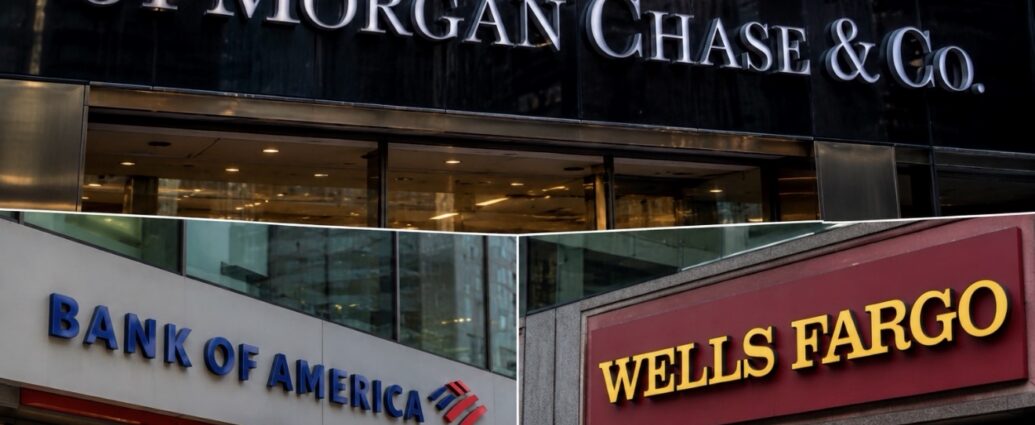
Bank stocks moved higher Monday as rising interest rates improved the sector’s earnings outlook, reinforcing investor confidence that financial institutions stand to benefit from a prolonged period of elevated borrowing costs.

Shares of major U.S. banks advanced as Treasury yields climbed, widening net interest margins—the difference between what banks earn on loans and pay on deposits. This dynamic remains a key driver of profitability in a higher-rate environment.

Jamie Dimon, CEO of JPMorgan Chase, has emphasized that “a disciplined approach to managing interest rate exposure can position banks to perform well even in a more challenging economic environment.” His comments reflect broader industry sentiment that higher rates, while presenting risks, also create meaningful opportunities.

The current environment is particularly favorable for large, well-capitalized banks with diversified revenue streams. These institutions are better equipped to manage deposit costs and maintain lending activity, allowing them to capture the benefits of higher yields.

At the same time, investors are rotating into financial stocks as expectations for delayed Federal Reserve rate cuts take hold. The shift underscores the perception that banks are among the relative winners in a “higher-for-longer” rate scenario.

Mike Mayo, banking analyst at Wells Fargo, said “banks are in a stronger position than they were in previous cycles, with improved capital levels and more disciplined risk management, which allows them to benefit from higher rates.

However, the outlook is not without risks. Higher interest rates can also strain borrowers, particularly in segments such as commercial real estate and consumer credit. As borrowing costs rise, the risk of loan defaults increases, which could offset some of the benefits from wider margins.

Credit quality remains a key area of focus. While current levels of delinquencies are relatively contained, analysts are closely monitoring for signs of deterioration, especially if economic growth slows.

Deposit dynamics are also evolving. Banks are facing increased competition for deposits, with customers seeking higher yields on savings. This pressure can lead to rising deposit costs, narrowing margins over time if not managed carefully.

Despite these challenges, the sector’s overall position remains strong. Capital levels are robust, and regulatory frameworks have strengthened since previous financial crises, providing a buffer against potential shocks.

Additionally, banks are continuing to invest in technology and efficiency improvements, aiming to reduce costs and enhance customer experience. Digital banking platforms and data analytics are playing an increasingly important role in maintaining competitiveness.

For investors, the sector offers a mix of income and potential upside, particularly if rates remain elevated and economic conditions remain stable.

What comes next: The trajectory of bank stocks will depend on the balance between higher earnings from elevated rates and potential risks from credit deterioration, making upcoming earnings reports and economic data critical for assessing the sector’s outlook.

JBizNews Desk

London — May 4, 2026 — The Bank of England is considering putting the digital pound project on ice, according to people familiar with the situation, as officials weigh a slower path forward while rival central banks race ahead with their own central bank digital currencies. Rather than a firm decision to approve or scrap the so-called Britcoin this summer, UK authorities are leaning toward a middle route that would slow progress on the CBDC, Bloomberg reported.

The shift marks a notable change in tone. Just three years ago, the Bank of England and HM Treasury said a digital pound was “likely to be needed.” Now the future of the project hangs in the balance as the current design phase runs through 2026, with a final decision on next steps still pending.

The economic stakes are significant. A full-speed digital pound was seen as a way for the UK to maintain competitiveness in digital payments and reduce reliance on private stablecoins and foreign payment systems. Delaying or slowing the project could leave British firms and consumers at a disadvantage as China’s e-CNY continues to expand and the European Central Bank advances its digital euro toward a potential 2029 launch. Analysts warn that hesitation could slow innovation in cross-border payments, limit the Bank of England’s ability to respond to future financial stability challenges, and reduce the UK’s influence in shaping global digital currency standards.

People familiar with the situation told Bloomberg that officials are now prioritizing a more cautious “wait-and-see” approach, evaluating whether a digital pound is truly necessary at this stage amid rapid private-sector developments in stablecoins and other digital payment innovations. The Bank of England has repeatedly stressed that no decision has been made on whether to introduce a digital pound, and any launch would require primary legislation passed by Parliament.

The ruling comes as global CBDC momentum accelerates elsewhere. China’s e-CNY has processed nearly $1 trillion in transactions and continues to evolve, while the European Central Bank is making steady progress on its digital euro with high-level political support across EU member states. The Bank of England’s more measured stance reflects growing concerns about privacy, financial stability risks, and the potential impact on commercial bank deposits — issues that have been central to the design phase work.

For the UK economy, the decision carries broad implications. A digital pound was intended to sit alongside cash and bank deposits as a new form of public money, potentially boosting efficiency in payments and supporting monetary policy in a digital era. Slowing the project could delay these benefits while increasing reliance on private-sector solutions that may not offer the same level of resilience or public trust. Economists note that the UK’s hesitation could also affect investment in related fintech infrastructure and the country’s attractiveness as a hub for digital finance innovation.

The Bank of England and HM Treasury are expected to complete their blueprint and assessment later this year, which will inform the next steps. In the meantime, the pause allows more time to study real-world use cases through the Digital Pound Lab and to monitor international developments.

The ruling underscores a broader global tension in CBDC development: balancing innovation and competitiveness against risks to financial stability, privacy, and the traditional banking system. As rivals push forward, the Bank of England’s cautious approach highlights the complex trade-offs facing central banks in the AI and digital payments era.

JbizNews- Desk – Central Banking

By JBizNews Desk | Monday, May 4, 2026

Iran has spent decades preparing for economic warfare. It has survived crippling sanctions, the U.S. withdrawal from the nuclear deal, and multiple cycles of production shutdowns and restarts. But the combination of a U.S. naval blockade now in its fourth week, rapidly filling storage tanks, and a war that shows no sign of ending quickly is pushing Tehran’s oil industry toward a breaking point it may not be able to manage its way out of.

Even as Iran squeezes global energy supplies by keeping the Strait of Hormuz effectively closed, its own oil sector is under mounting pressure from the other direction — a pincer that is forcing production cuts, straining export infrastructure, and threatening long-term damage to aging oil fields that may prove very difficult to reverse.

The Blockade Is Working — Slowly

Iran had been producing over 3 million barrels of crude oil per day before the war, with slightly more than half going toward its domestic market. Since the U.S. naval blockade began on April 13, ships at Iranian ports have been filling with oil that cannot leave. Oil and condensate loadings at Iranian ports have collapsed from 2.1 million barrels per day before the blockade to just 567,000 barrels per day after, according to ship-tracking firm Kpler. Tehran is losing $500 million per day as a result, a White House official told CNBC. 

Antoine Halff, co-founder and chief analyst at Kayrros, an environmental intelligence firm that tracks emissions and energy supply chains, said there has been a significant slowdown in production, pointing to signs that storage at Kharg Island — Iran’s main oil export terminal in the Persian Gulf — is not filling as fast as would be expected if Iran were still pumping at full capacity. That suggests Tehran has already begun dialing back output proactively to avert a more chaotic shutdown. 

How Much Time Does Iran Have?

The storage math is tightening. Kpler estimates Iran has roughly 20 days of onshore storage capacity remaining at current production rates, with any production reduction expected to be gradual in the near term but accelerating into May. Wood Mackenzie analyst Alexandre Araman puts the runway at about three weeks before storage runs out entirely. “If the blockade persists, cuts become inevitable,” Araman wrote, adding that shutdowns of more than a month “risk long-term damage” to Iran’s oil reservoirs, with recovering older fields described as “uncertain.”

Iran also retains significant floating storage capacity — roughly 65 to 75 million barrels tied up in tankers both inside and outside the blockade zone, according to Vortexa. A senior Iranian official confirmed the country has already begun proactively cutting crude output to stay ahead of storage limits rather than waiting for tanks to fill completely. Engineers have learned how to idle wells without lasting damage and restart them quickly, officials said, after years of sanctions pushed the industry through repeated cycles of disruption. 

The Long-Term Risk

The real danger for Iran is not a short-term storage crunch — it is what a prolonged shutdown does to fields that are already aging. Halting oil production risks damaging underground reservoirs by reducing reservoir pressure, allowing water or gas to intrude into producing layers and disrupting oil flow patterns. This can make some oil harder or more expensive to recover later — damage that may be permanent for Iran’s older wells. 

Iran‘s state television — run by hardliners — aired a segment in which journalists openly discussed the possibility of an oil storage crisis. One said that if empty tankers are blocked from returning to Iran, “we won’t be able to export.” Oil Minister Mohsen Paknejad praised oil terminal staff for their “continuous perseverance,” a phrase analysts read as an indirect acknowledgment of growing strain. 

Iran’s Resilience Should Not Be Underestimated

Hamid Hosseini, a spokesman for the Iranian Oil, Gas and Petrochemical Products Exporters’ Association, pushed back on the alarm. “We have enough expertise and experience,” he said. “We’re not worried.” The country drew on hard lessons from the first Trump administration’s 2018 withdrawal from the nuclear deal, which forced Tehran to slash production sharply and develop techniques for managing extended shutdowns with minimal field damage. 

Fernando Ferreira, head of geopolitical risk at Rapidan Energy, framed the standoff plainly: “The question for me is who has a longer runway — Trump or Iran.” He estimated Iran has prepared for months of blockade, having studied what happened to Venezuela under sustained U.S. sanctions. “They prepared for a blockade,” Ferreira said. “They thought it through.” 

For now, both sides are playing a waiting game — Iran managing its storage and production to buy time, and the U.S. tightening the vice through the blockade and escalating Treasury sanctions on Iranian oil shipments already at sea. The question is not whether the blockade is hurting Iran. It clearly is. The question is whether the pain arrives fast enough — and cuts deep enough — to force Tehran to the negotiating table before the damage to its oil industry becomes a decade-long problem.

— JBizNews Desk

© JBizNews.com. All rights reserved. This article is original reporting by JBizNews Desk. Unauthorized reproduction or redistribution is strictly prohibited.

Revelation in Elon Musk Lawsuit Offers Rare Glimpse Into Executive Wealth and Governance at AI Giant

San Francisco — May 4, 2026

OpenAI President and co-founder Greg Brockman disclosed in a court filing made public Monday evening that his personal equity stake in the artificial intelligence company is now valued at nearly $30 billion, while also revealing previously undisclosed financial ties to Chief Executive Officer Sam Altman.

The disclosure, filed as part of ongoing litigation brought by Elon Musk against OpenAI, marks one of the most detailed public revelations to date about the ownership structure and executive compensation at the closely held AI leader. Brockman, who has been with the company since its founding in 2015 as a nonprofit research laboratory, detailed holdings that have grown dramatically amid the explosive expansion of generative artificial intelligence technologies.

The filing provides an unusually transparent window into the personal financial stakes of OpenAI’s leadership at a time when the company’s valuation has soared into the hundreds of billions of dollars, fueled by multibillion-dollar investments from Microsoft Corp. and other major backers. Brockman’s stake alone places him among the wealthiest individuals in the technology sector, according to preliminary estimates based on recent private-market valuations of OpenAI.

Legal experts said the level of specificity in the disclosure was driven by court requirements in the Musk lawsuit, which has centered on allegations that OpenAI has strayed from its original mission. Musk, a co-founder who left the company in 2018, has accused OpenAI of prioritizing profits over safety and openness, claims the company has vigorously denied.

“This is extraordinary transparency for a private company of OpenAI’s scale,” said Margaret O’Mara, a professor of technology history at the University of Washington who has written extensively on Silicon Valley governance. “Private equity stakes are typically shrouded in nondisclosure agreements. Forcing this level of detail into the public record through litigation is rare and potentially precedent-setting for the AI industry.”

Brockman’s filing also outlined separate financial arrangements and investments connected to Altman, highlighting the intertwined personal and professional relationships at the top of the organization. While the exact nature of those ties was not detailed in the publicly available portions of the document reviewed Monday night, the revelation is likely to fuel broader discussions about potential conflicts of interest and board oversight at OpenAI.

OpenAI did not immediately respond to requests for comment on the filing. The company has previously emphasized its commitment to responsible development of artificial intelligence and robust governance structures as it navigates rapid growth and intense competition from rivals including Anthropic, Google and xAI.

The disclosure comes as OpenAI continues to attract massive capital. The company raised funds in 2024 and 2025 at valuations exceeding $150 billion, with some analysts projecting it could approach or surpass $300 billion in the coming years if current momentum in enterprise AI adoption persists. Brockman’s stake reflects the extraordinary paper wealth being created at the highest levels of the sector, even as the company remains privately held.

Industry analysts noted that the figure underscores a broader trend in frontier AI development: the rapid concentration of wealth among a small group of founders and early executives. For comparison, several founders at rival AI companies have seen their stakes valued in the low billions, but Brockman’s reported holding stands out for its scale relative to the company’s still-private status.

The filing arrives amid heightened scrutiny of governance practices across the AI sector. OpenAI has faced questions about its transition from a nonprofit to a for-profit structure capped by a for-profit subsidiary, a move designed to attract investment while attempting to preserve its original mission. Musk’s lawsuit has amplified those debates, with critics arguing that such structures can create misalignment between executive incentives and long-term safety considerations.

Supporters of OpenAI counter that the company has implemented safeguards, including a board with independent directors and internal safety teams, to address those concerns. The Brockman disclosure, however, adds a new dimension to the conversation by quantifying the financial incentives at play.

Brockman, a former Stripe executive, has played a central role in OpenAI’s technical and operational leadership. He has been instrumental in scaling the company’s infrastructure and navigating its complex relationship with Microsoft, which holds a significant minority stake and integrates OpenAI’s models into its Azure cloud platform and consumer products.

The timing of the filing — unsealed after 7 p.m. Eastern time on a Monday — ensured it would dominate late-evening business coverage. Markets were closed, but the news is expected to reverberate through venture capital circles and among AI policy makers in Washington and Brussels, where regulators are increasingly focused on the concentration of power and wealth in the sector.

Corporate governance specialists said the case could influence how other AI startups structure their ownership and disclosure practices, particularly those contemplating eventual public offerings. “When stakes reach this magnitude, the pressure for greater transparency only increases,” said one governance consultant who advises several large technology boards and asked not to be named because of client relationships.

OpenAI has not commented publicly on the Musk litigation’s impact on its operations, but the company has continued to release new models and enterprise tools at a rapid pace. Its latest offerings have been adopted by major corporations across finance, healthcare and manufacturing, further cementing its position as a leader in the field.

For Brockman personally, the disclosure offers a rare public acknowledgment of the wealth accumulated through his role in one of the most consequential technological shifts in decades. While many tech founders have become billionaires through initial public offerings or acquisitions, OpenAI’s decision to remain private has kept such figures largely out of the spotlight — until now.

The full implications of the filing remain to be seen. Musk’s lawsuit is ongoing, and additional documents could surface in the coming weeks. In the meantime, the revelation has already prompted fresh calls from lawmakers and academics for stronger oversight of AI companies, particularly regarding executive compensation and potential conflicts.

OpenAI’s leadership has long argued that its structure allows it to balance innovation with responsibility. Whether Monday’s disclosure strengthens or undermines that narrative will likely be debated in boardrooms, courtrooms and policy forums for months to come.

JbizNews Desk

By JBizNews Desk | Monday, May 4, 2026

Ocean freight prices are climbing sharply across global trade routes as shipping carriers struggle to expand capacity fast enough to meet rising demand, tightening supply chains and increasing costs for businesses worldwide.

Container rates have surged in recent weeks, particularly on key routes from Asia to North America and Europe, as a combination of strong shipping demand, port congestion, and limited vessel availability creates a renewed imbalance in global logistics.

Vincent Clerc, CEO of A.P. Moller-Maersk, said “global container demand continues to outpace available supply, and that imbalance is driving significant rate increases across major shipping lanes.

Industry data shows freight rates rising at their fastest pace in months, reversing a period of relative stability and signaling that supply constraints are intensifying again. Carriers have attempted to deploy additional vessels and optimize existing routes, but executives say capacity expansion is being limited by infrastructure bottlenecks, port delays, and equipment shortages.

A key issue is the availability of containers and efficient turnaround times. Congestion at major ports is delaying the return of empty containers, creating shortages in critical export hubs and further tightening capacity. At the same time, longer transit times are effectively reducing available fleet supply.

Peter Sand, Chief Shipping Analyst at Xeneta, noted that “carriers are in a stronger pricing position as capacity remains constrained, leaving shippers with fewer alternatives and less negotiating power.

Carriers are also exercising greater discipline in managing capacity, prioritizing profitability after several years of volatile earnings. This has resulted in tighter control over available space, limiting the ability of the market to quickly absorb demand spikes.

For businesses, the impact is immediate. Higher freight rates are increasing landed costs, squeezing margins, and forcing companies to reconsider pricing, sourcing, and inventory strategies. Importers, particularly small and mid-sized firms, report difficulty securing space at predictable rates, leading to shipment delays and higher operating costs.

The surge in shipping costs is also feeding into broader inflation pressures, particularly in goods-heavy sectors where transportation represents a significant portion of total expenses.

Analysts warn that without a meaningful increase in capacity or a slowdown in demand, elevated freight rates could persist into peak shipping seasons, prolonging the strain on global trade.

What comes next: With capacity tight and demand holding firm, ocean freight markets are entering another volatile phase—one where pricing power remains with carriers and businesses must adapt quickly to rising costs and limited shipping flexibility.

JBizNews Desk

American automakers are being squeezed by a rare and brutal convergence: a 50% U.S. tariff on imported aluminum, a major domestic supplier still recovering from two fires, and a war in the Middle East that has disrupted global aluminum supply chains and sent prices sharply higher. The combined pressure is adding billions of dollars in costs to an industry already navigating a difficult market, and consumers buying new vehicles may ultimately pay the price.

The three biggest U.S. automakers have warned that commodity inflation tied to the Iran war will cost them about $5 billion this year, as the conflict squeezes supplies of aluminum, plastics and other inputs and raises the prospect of higher vehicle prices. 

The Iran War’s Role

The closure of the Strait of Hormuz has made a bad situation significantly worse. Nine percent of the world’s seaborne aluminum transits the Strait of Hormuz annually, and the collapse of shipping through the waterway has created an immediate supply shock for the metal, forcing producers worldwide to scramble for alternative sources at premium prices. 

Aluminium Bahrain — known as Alba, which operates the world’s largest single-site aluminum smelter with annual capacity of 1.6 million tonnes — declared force majeure on deliveries and cut output by 19%, citing its inability to load shipments through the effectively closed Strait of Hormuz. Qatalum, the Qatar-based joint venture between Norsk Hydro and Qatar Aluminium Manufacturing, announced a controlled production shutdown following natural gas shortages caused by Iranian strikes. 

At the outbreak of the Iran conflict on February 28, three-month LME aluminum futures jumped as much as 10% by mid-March. Guillaume Osouf, principal analyst at CRU, warned that “a prolonged conflict will likely drastically change our market outlook for the rest of the year due to the lasting impact this will have on global supply.” 

The Novelis Fire That Started It All

Even before the Iran war, Ford Motor was already dealing with a supply chain crisis of its own. Multiple fires at a facility owned by Novelis — Ford‘s primary aluminum supplier — knocked a critical hot mill in Oswego, New York offline for months. Ford incurred a $2 billion headwind from those supply disruptions, on top of a roughly $2 billion hit from tariffs in 2025, which nearly doubled the company’s projections from as recently as October, according to President and CEO James Farley. 

The Novelis Oswego plant is the largest domestic aluminum rolling facility in the U.S. and supplies aluminum sheets critical for vehicle production — especially for Ford trucks like the F-150. Ford is Novelis‘s largest customer because of its trucks’ aluminum-heavy bodies. The supply disruptions forced Ford to warn that production could drop by up to 100,000 F-Series pickup trucks, potentially costing the company as much as $2 billion. 

F-150 sales were down 16% year over year in the first three months of 2026 as a direct result of the inventory shortage. 

The Tariff Problem

With the domestic Novelis plant sidelined, Ford and other automakers were forced to import aluminum from overseas — only to run straight into the Trump administration’s 50% tariff on imported aluminum. Novelis tried to offset lost production by sourcing aluminum from its plants in South Korea and Europe, but the imported metal is subject to a 50% duty, compounding the financial damage for automakers. 

Ford petitioned the Trump administration for temporary tariff relief, at least until the Oswego plant returns to full production. The administration rejected the request. Ford CFO Sherry House said the company still expects to face a $1 billion tariff impact in 2026 even with offsets in place. “There will be tariffs and premium freight associated with that supply continuity of aluminum until we can get the Novelis hot mill back up and running sometime between May and September,” House said. 

A Gradual Path to Recovery

Novelis confirmed it expects its damaged hot mill to resume production by the end of the second quarter of 2026. The rest of the Oswego facility has continued operating without disruption since November, including cold mill, heat treatment production, and automotive finishing and shipping. 

The broader pressure on American manufacturers extends well beyond automakers. Higher aluminum costs flow through to aerospace, defense, food and beverage packaging and appliances — and American firms now pay substantially more for the metal than competitors in other markets, putting them at a significant competitive disadvantage. 

For Ford and its rivals, the road back to normal aluminum costs runs through two separate bottlenecks: a plant in Oswego that must fully restart, and a strait in the Middle East that must reopen. Until both happen, the squeeze on the auto industry — and the consumers who buy its vehicles — will continue.

By JBizNews Desk | May 4, 2026

© JBizNews.com. All rights reserved. This article is original reporting by JBizNews Desk. Unauthorized reproduction or redistribution is strictly prohibited.
Grapevine, TX — May 4, 2026

GameStop Corp. today formally launched an unsolicited $56 billion takeover bid for eBay Inc., offering $125 per share in a 50-50 mix of cash and stock in a move designed to create a powerful new competitor to Amazon in the online marketplace space.

The proposal, submitted in a letter to eBay’s board over the weekend and confirmed in major coverage today, comes from GameStop CEO Ryan Cohen — the activist investor who also serves as the company’s largest shareholder. GameStop has already accumulated roughly a 5% stake in eBay and secured debt financing commitments, including approximately $20 billion from TD Bank, to support the deal.

In the letter, Cohen made clear that GameStop is prepared to take the bid directly to eBay shareholders if the board does not engage constructively, signaling a potential hostile takeover path. “This combination would create a formidable platform that leverages GameStop’s retail expertise and eBay’s global marketplace scale to better compete in today’s e-commerce landscape,” Cohen stated in remarks tied to the announcement.

The cash-and-stock offer represents a significant premium and would transform the two companies into a unified force focused on expanding eBay’s reach, enhancing seller tools, and integrating GameStop’s community-driven retail model. Industry analysts view the move as an ambitious attempt to revitalize both brands by combining eBay’s auction and fixed-price marketplace with GameStop’s loyal customer base and turnaround playbook under Cohen’s leadership.

GameStop, which rose to prominence during the 2021 meme-stock frenzy, has been repositioning itself under Cohen as a technology-forward retailer. The eBay bid marks its most aggressive expansion yet, aiming to challenge Amazon’s dominance by creating a more dynamic, seller-friendly alternative with stronger community engagement and diversified revenue streams.

eBay has not yet issued a formal response beyond acknowledging receipt of the proposal, but the unsolicited nature of the offer has already sparked intense debate in corporate boardrooms and among investors. If successful, the deal would rank among the largest retail and e-commerce mergers in recent years.

GameStop emphasized that the transaction would be financed through a combination of cash on hand, new debt, and stock issuance, with the company expressing confidence in its ability to execute the integration swiftly.

JbizNews will continue to monitor developments from GameStop’s $56 billion unsolicited bid for eBay and provide ongoing coverage of this high-stakes takeover battle and its implications for global e-commerce.

JbizNews Desk

Washington, D.C. — May 4, 2026

President Donald J. Trump today participated in a high-profile Small Business Summit in the White House East Room, gathering more than 130 small business owners from across the United States to mark the start of National Small Business Week (May 4–11). The event served as a platform to recognize the 2026 National Small Business Week award winners and underscore the administration’s signature policies credited with fueling a broad-based “Main Street revival.”

In remarks delivered this afternoon, the president spotlighted the transformative impact of the Working Families Tax Cuts Act — signed into law on July 4, 2025 — which has delivered permanent tax relief and regulatory certainty to the nation’s 36 million small businesses, described by the White House as “the true engine of job creation, innovation, and community prosperity.”

Key provisions highlighted include the permanent extension of the 20 percent small business deduction (formerly Section 199A), allowing pass-through entities and entrepreneurs to deduct up to 20 percent of qualified business income. The law also restored and expanded full (100 percent) immediate expensing for investments in equipment, factory construction, machinery, and domestic research and development (R&D), providing businesses with critical upfront cash-flow relief and incentives to expand operations.

Administration officials noted that these measures, combined with broader deregulation efforts, have already produced measurable results. Nearly 12 million small business owners have seen average tax reductions of roughly $7,000, with the permanent 20 percent deduction alone delivering about $4,600 in annual relief to 8 million entrepreneurs. The Deregulation Strike Force eliminated more than $110 billion in compliance costs in its first year, while the Small Business Administration (SBA) delivered record capital — guaranteeing $45 billion in 7(a) and 504 loans to over 85,000 businesses in FY25.

SBA Administrator Kelly Loeffler, who joined the president at the summit, praised the momentum: “We are a nation of builders again thanks to President Trump’s historic wins for Main Street, and I’m honored to mark National Small Business Week alongside him and the job creators who fuel our local communities — particularly as America celebrates 250 years of freedom and free enterprise. … Our nation’s 36 million small businesses now have the confidence to hire, reinvest and expand, unleashing an historic era of sustained growth. America is open for business again.”

The East Room gathering brought together owners representing a cross-section of American enterprise, including manufacturing, food production, defense, energy, retail, and other sectors. Attendees heard directly from the president about additional America First initiatives: expanded Opportunity Zones to channel capital into underserved communities, a new dedicated loan program for small manufacturers, the “Make Onshoring Great Again Portal” for domestic supply-chain sourcing, suspension of burdensome Beneficial Ownership Information (BOI) reporting requirements (saving billions in paperwork), and the termination of the Obama-era Joint Employer Rule to protect franchise owners.

The summit aligns with the official presidential message on National Small Business Week, issued Sunday, which emphasized the role of small businesses in powering the U.S. workforce (employing more than 45 percent of American workers) and advancing the American Dream. “Every day, my Administration is delivering incredible victories for America’s small businesses,” the message stated, referencing the “One Big Beautiful Bill” (the Working Families Tax Cuts Act) and ongoing efforts to slash red tape so owners can “focus on their craft rather than being burdened with endless paperwork.”

The 2026 award winners — selected by the SBA and recognized nationally during a May 3 ceremony in Washington, D.C. — include honorees in categories such as Small Business Person of the Year, Exporter of the Year, Small Business Manufacturer of the Year, Rural Small Business of the Year, Blue-Collar Small Business of the Year, and the Phoenix Award for Small Business Disaster Recovery, among others. Today’s summit provided a high-visibility stage to celebrate their achievements amid the week-long observance.

The event comes as small business optimism has rebounded under the current policy framework, with owners citing greater certainty for long-term planning, hiring, and capital investment. The administration has positioned these gains as central to a broader economic renaissance tied to America’s semiquincentennial (250th anniversary) celebrations.

National Small Business Week continues through May 11 with virtual training sessions, resources, and further recognitions hosted by the SBA. The White House has framed the week as both a celebration of entrepreneurial spirit and a reaffirmation of policies designed to keep America “open for business.”

JbizNews will continue to monitor developments from the summit and provide ongoing coverage of small business policy impacts throughout the week.

Foreclosures rose to the highest level in six years in the first quarter of this year as homeowners are squeezed by rising costs related to insurance and property tax bills.

The Wall Street Journal reported that data from Attom shows the number of U.S. properties with a foreclosure filing has trended up to nearly 119,000 in the first quarter, an increase of 26% from the same period last year.

That figure is the highest since the first quarter of 2020, when mortgage relief measures implemented to mitigate the economic impact of COVID shutdowns led to a steep decline in foreclosures.

Analysts have noted that the current foreclosure rate represents a return to what were normal levels prior to the COVID-19 pandemic, as opposed to a sign of borrowers becoming increasingly distressed financially.

AVERAGE MONTHLY MORTGAGE PAYMENT HITS NEW HIGH, TOPPING $2K FOR FIRST TIME EVER

However, the Journal’s report said that although many homeowners have low mortgage rates, rising costs for things like home insurance, property taxes and dues for homeowners’ associations are ramping up spending on bills.

A report by Insurify found that the average annual bill for homeowners insurance rose $2,948 in 2025, up 12% from 2024, while Attom data showed that average property tax burdens were up 3% to $4,427.

CALIFORNIA BUILT MORE HOMES THAN PEOPLE OVER SIX YEARS – SO WHY IS HOUSING STILL SO TIGHT?

Those who purchased homes within the past few years may be in worse shape after purchasing at higher mortgage rates, as some areas have seen declines in home values that could leave some owners underwater.

Homeowners who are facing financial distress and the risk of slipping into delinquency or foreclosure have fewer options for relief than what was available a few years ago before pandemic-era programs were sunset. 

For example, the Federal Housing Administration (FHA) announced in October that homeowners are limited in resorting to measures like loan modification to avoid foreclosure once every 24 months.

PROPERTY TAX BURDEN ON AMERICANS CLIMB AS HOME VALUES DIP, NEW DATA SHOWS

The data comes as data shows the average monthly payment for all outstanding mortgages reached a new high at the end of last year, as it rose to $2,005 in the fourth quarter, according to Realtor.com data.

The uptick covers the full portfolio of mortgages in the U.S., including a large group of borrowers who took out loans before 2022 and have mortgage rates of 4% or lower – whereas new buyers face significantly higher payments given the elevated mortgage rates.

GET FOX BUSINESS ON THE GO BY CLICKING HERE

The average monthly payment for new homebuyers passed the $2,000 threshold for the first time in September 2022.

This post was originally published here

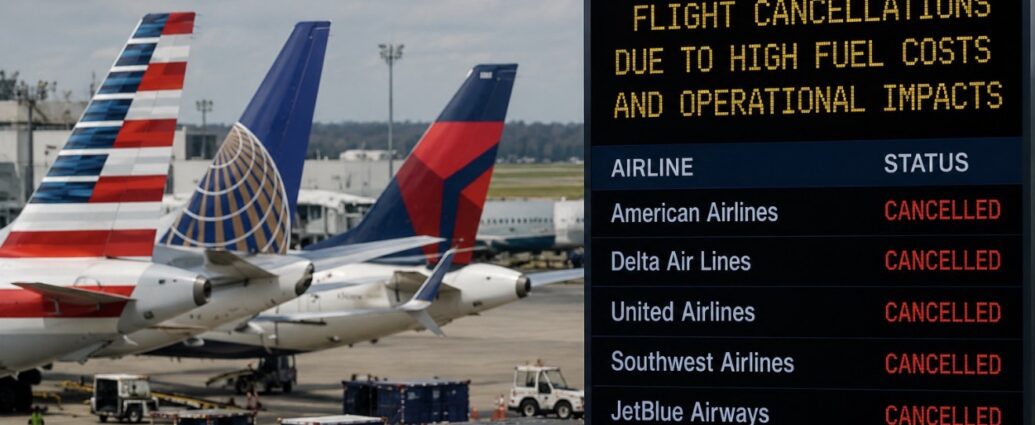
Hotel Prices Surge Across U.S. as Flight Cuts and Fuel Costs Tighten Travel Supply

NEW YORK — May 4, 2026 — Hotel prices are climbing across major U.S. travel destinations as airlines cut capacity and jet-fuel costs surge, tightening access to key markets just as peak summer demand builds, according to airline disclosures, hospitality data, and travel industry analysts.

Airlines have begun trimming schedules and reducing frequencies in response to higher fuel costs tied to geopolitical tensions affecting global oil supply. Jet fuel remains one of the largest expenses for carriers, and recent increases have pushed airlines to prioritize profitability over expansion, according to company filings and investor updates.

American Airlines CEO Robert Isom said in recent investor commentary that the airline is adjusting capacity in response to higher costs and evolving demand patterns, particularly on longer-haul and transatlantic routes. Other major carriers have signaled similar caution, reflecting a broader industry shift toward tighter capacity management.

The effects are now spreading into the hotel sector.

In cities including Miami, Orlando, Las Vegas, and New York, hotel pricing is strengthening as inbound seat capacity tightens, based on data tracked by CoStar Group. The firm’s hospitality analytics show stable occupancy levels alongside rising average daily rates in key leisure markets, indicating that pricing power is shifting toward hotel operators.

Jan Freitag, National Director of Hospitality Analytics at CoStar Group, has noted in industry briefings that constrained airlift into high-demand destinations typically supports higher room rates, even when overall travel demand remains steady.

Travel demand itself has remained relatively resilient. Booking trends from platforms such as Expedia Group and Booking Holdings show continued interest in summer travel, though with fewer discounted options as airlines reduce lower-margin capacity.

Henry Harteveldt, President of Atmosphere Research Group, has said in recent commentary that when airfare rises and flight options narrow, the mix of travelers shifts toward those willing to absorb higher costs — a pattern that supports pricing across the broader travel ecosystem.

For consumers, the effect is cumulative. Airfare, lodging, and related travel costs are all moving higher at the same time, pushing total trip expenses above recent norms. Analysts say that if this trend continues, it could begin to influence behavior, with some travelers shortening trips, delaying plans, or shifting to destinations reachable by car.

The broader economic implications are also coming into focus. Tourism-dependent regions rely heavily on steady visitor flows to support local businesses, employment, and tax revenues. A sustained increase in travel costs could weigh on activity in these areas, particularly if higher prices begin to curb demand.

At the macro level, rising travel costs are feeding into services inflation — a category closely watched by the Federal Reserve. Persistent strength in airfare and hotel pricing could complicate efforts to bring inflation lower, especially if energy prices remain elevated.

The situation highlights the interconnected nature of the economy. A disruption in energy markets is now affecting airline cost structures, reducing flight availability, and ultimately pushing up hotel prices and overall travel costs.

Looking ahead, the key variable remains fuel prices. If energy markets stabilize and airlines begin restoring capacity, supply constraints could ease and pricing pressure may moderate. However, if fuel costs remain elevated, the travel industry could face a prolonged period of tighter supply and higher prices.

For now, the trend is clear: fewer flights are limiting access to major destinations, and hotels are responding with stronger pricing. As the summer season approaches, travelers are entering a more constrained and more expensive travel environment — shaped by both resilient demand and restricted supply.

JBizNews Desk

Detroit — May 4, 2026 — Used electric vehicle sales are surging across the United States even as new EV demand has cooled, driven by near-parity pricing with gasoline cars and dramatically lower total ownership costs that are delivering thousands of dollars in savings to budget-conscious buyers. The shift is reshaping the auto market at a time when high gas prices from the ongoing Iran conflict are pushing consumers to seek alternatives that slash fuel and maintenance expenses.

Data released today by Cox Automotive shows used EV sales jumped 27.7% year-over-year in March and were 53.9% higher than February, marking one of the strongest monthly gains on record. In the first quarter alone, roughly 93,500 used EVs changed hands, up 12% from the same period last year. The surge comes as more than 300,000 off-lease EVs are expected to flood the market in 2026 — a 185% increase — giving buyers unprecedented selection of low-mileage, late-model battery-electric vehicles.

Pricing has collapsed to the point where the average used EV now sells for just $1,102 more than a comparable used gasoline car. In March the average transaction price for a used EV was $34,653, down 6.1% from a year earlier, according to Cox. Forty-four percent of used EVs sold for under $25,000, up from 39% just months ago. The price gap that once exceeded $3,900 has essentially vanished, making EVs accessible to a much broader swath of American households.

The real story, however, is in total cost of ownership. A new study from the University of Michigan’s Center for Sustainable Systems, analyzing more than 260,000 used vehicle listings, found that used battery-electric vehicles now deliver the lowest lifetime ownership costs across nearly every vehicle class. For a three-year-old midsize SUV, buyers can save approximately $13,000 over a seven-year ownership period compared with purchasing its gasoline counterpart. Even against used gas models, the savings are substantial because EVs eliminate the single largest ongoing expense for most drivers: fuel.

The U.S. Department of Energy estimates that switching to an EV saves drivers an average of $2,200 per year on fuel alone. Over 200,000 miles, Consumer Reports data shows EV owners save roughly $8,811 on combined fuel and maintenance costs compared with the best-selling gasoline models. Used EVs amplify those advantages. With fewer moving parts, regenerative braking, and no oil changes, maintenance costs run 30-40% lower than for internal-combustion vehicles — a gap that widens as cars age and gas models require more expensive repairs.

Insurance remains higher for EVs — roughly 50% more on average according to recent Insurify data — but that premium is more than offset by fuel and service savings for most drivers. Depreciation, once a major hurdle for new EVs, has moderated dramatically on the used market as supply grows and consumer acceptance rises.

High gasoline prices, now hovering near multi-year highs amid the Iran tensions and Strait of Hormuz disruptions, have accelerated the shift. Search interest for used EVs on major platforms has risen sharply, with many shoppers citing pump prices as the tipping point. “You can get a pretty nice used EV for under $25,000, which is not easy to do on the market at large,” noted Jessica Caldwell, executive director of insights at Edmunds.

The economic ripple effects extend beyond individual buyers. Lower ownership costs for used EVs are helping to ease pressure on household budgets strained by the weaker dollar and broader inflationary forces. At the same time, the flood of off-lease EVs is creating opportunities for dealers and fleets while pressuring new-car pricing. Automakers and lenders are watching closely as the used market increasingly influences residual values and leasing strategies.

Challenges remain. Battery health and range anxiety still concern some buyers, though independent testing services like Recurrent Auto report that the vast majority of used EVs retain strong battery capacity. Charging infrastructure, while expanding, remains uneven outside major metros. And insurance costs, though declining as data improves, continue to be a hurdle for some.

For American families and fleet operators, the math is increasingly clear: in the used market, electric vehicles are no longer a premium choice — they are often the lowest-cost option over the life of the vehicle. With hundreds of thousands more high-quality, low-mileage EVs expected to hit lots in the coming months, the window for significant savings is wide open.

The used-EV boom adds another layer to the weekend’s heavy slate of breaking business news, from the U.S.-led humanitarian operation in the Strait of Hormuz to Fed Governor Michael Barr’s private-credit warning and the dollar’s 10% slide. As gas prices remain elevated and lease returns accelerate, more drivers are discovering that going electric — even on the used lot — is not just environmentally responsible. It is now often the smartest financial decision on four wheels.

JbizNews- Desk – Auto / Economy

By JBizNews Desk | Monday, May 4, 2026

CBS News Radio, one of the most enduring institutions in American broadcasting, will cease operations on May 22, bringing an end to a 99-year run that helped define how generations of Americans received breaking news.

The decision marks a full shutdown of the service, with no transition plan or rebranding effort, and will result in the elimination of the entire radio news team. CBS executives cited structural shifts in the media landscape—particularly how local stations source and program content—along with economic pressures that have made the model increasingly difficult to sustain.

For nearly a century, CBS News Radio delivered short, authoritative updates to hundreds of stations across the country, becoming a staple of daily life for commuters and listeners who relied on concise, top-of-the-hour reporting.

At its peak, the network provided content to approximately 700 affiliate stations, including major-market outlets such as WINS in New York, KNX in Los Angeles, WBBM in Chicago, KCBS in San Francisco, WTOP in Washington, WBZ in Boston, and WCCO in Minneapolis. Those stations must now find alternative sources for national news coverage, creating immediate operational and programming challenges.

The shutdown represents more than the loss of a distribution channel—it marks the end of a broadcast format that played a central role in major moments of American history.

CBS News Radio was among the first outlets to report the assassination of President John F. Kennedy in 1963, delivering the initial bulletin to listeners before the televised announcement by Walter Cronkite. Over decades, the service built its reputation on speed, clarity, and credibility, often serving as the first source of breaking national and international news for radio audiences.

Its flagship program, World News Roundup, debuted in 1938 with live reports from Europe as geopolitical tensions escalated ahead of World War II. The program went on to become the longest-running newscast in American broadcast history—a distinction that will end with the network’s final sign-off.

Industry observers say the closure reflects broader changes in how audiences consume news. Traditional radio, once a dominant medium, has steadily lost ground to digital platforms, including podcasts, streaming services, and social media. These channels offer on-demand access and personalized content, drawing both listeners and advertising revenue away from legacy formats.

CBS leadership acknowledged the shift, pointing to evolving station needs and declining economic viability as key factors behind the decision. While specific financial details were not disclosed, analysts note that maintaining a nationwide radio news operation has become increasingly costly in an environment where affiliates have more content options and tighter budgets.

Labor groups have pushed back on the move. The media union SAG-AFTRA criticized the shutdown, calling CBS News Radio a foundational pillar of American journalism and expressing concern over the loss of jobs and institutional expertise.

For affiliate stations, the transition is already underway. Alternatives such as ABC News Radio, Fox News Radio, and other syndicated services are expected to fill the gap, though none replicate the exact format or legacy of CBS’s offering. Some stations may also increase reliance on locally produced content or digital feeds.

The shift underscores a broader transformation in the media ecosystem. Where once a single national network could dominate distribution, today’s landscape is fragmented, with audiences spread across multiple platforms and formats. Speed is no longer the only competitive advantage—accessibility, personalization, and engagement now play equally important roles.

Bari Weiss, Editor-in-Chief within CBS News’ broader leadership structure, acknowledged the significance of the moment internally, stating that “radio has been woven into the fabric of CBS News and will remain an important part of its history.

For listeners, the change may be subtle at first—a different voice at the top of the hour, a new sound replacing a familiar one. But for the industry, the closure is symbolic of a deeper shift away from traditional broadcast models that once defined American media.

The end of CBS News Radio also raises questions about the future of short-form audio journalism. While long-form podcasts and streaming audio continue to grow, the concise, scheduled news bulletin—a format built for immediacy and routine—faces increasing competition in a world where news is available instantly on demand.

What comes next: As stations transition to new providers and audiences continue migrating to digital platforms, the shutdown of CBS News Radio signals the closing of a historic chapter—and a reminder that even the most established media institutions must adapt or risk fading into history.

JBizNews Desk

By JBizNews Desk | Monday, May 4, 2026

Retail stocks came under pressure Monday as fresh data and company signals pointed to early signs of softening consumer spending, raising concerns about demand sustainability heading into the critical summer season.

Shares of major retailers declined as investors reacted to a combination of slowing foot traffic, increased promotional activity, and shifting consumer behavior. The emerging trend suggests that while overall spending remains positive, consumers are becoming more selective, prioritizing essential goods over discretionary purchases.

Executives across the sector are beginning to acknowledge the shift. Brian Cornell, CEO of Target, said in recent remarks that “consumers are still spending, but they are making more deliberate choices, focusing on value and essentials rather than discretionary items.

That change in behavior is forcing retailers to adjust strategies. Companies are increasing discounts and promotional efforts to maintain sales volumes, particularly in categories such as apparel, home goods, and electronics. While these measures can support revenue, they often come at the expense of profit margins.

The pressure is especially visible in inventory management. After a period of aggressive restocking to meet earlier demand, many retailers now find themselves holding excess inventory in certain categories. Clearing that inventory requires price cuts, which further compress margins and weigh on earnings expectations.

Neil Saunders, managing director at GlobalData Retail, said “the consumer is not pulling back entirely, but the shift toward value-driven spending is creating a more challenging environment for retailers to sustain profitability.

Macroeconomic factors are playing a key role. Elevated interest rates have increased borrowing costs for households, while inflation—though easing—continues to affect purchasing power. These pressures are particularly impactful for middle- and lower-income consumers, who are more sensitive to price changes.

Credit trends are also being closely watched. Rising credit card balances and higher delinquency rates in some segments suggest that certain consumers are relying more heavily on credit to maintain spending levels, a dynamic that may not be sustainable over time.

At the same time, the labor market remains relatively strong, providing a partial cushion. Continued job growth and wage gains are supporting overall consumption, but analysts note that these factors may not fully offset the impact of higher living costs and interest rates.

Retailers are responding with a mix of caution and adaptation. Many are tightening cost controls, refining product assortments, and investing in data-driven strategies to better align with changing consumer preferences. E-commerce platforms and loyalty programs are also being leveraged to drive engagement and sales.

However, the outlook remains uncertain. If consumer confidence weakens further or economic conditions deteriorate, the retail sector could face a more pronounced slowdown.

What comes next: Investors will be closely watching upcoming earnings reports and consumer data for confirmation of whether the current softness is a temporary adjustment or the beginning of a broader demand slowdown that could reshape the retail landscape through the remainder of 2026.

JBizNews Desk

By JBizNews Desk | Monday, May 4, 2026

Dubai International Airport — the world’s busiest airport for international passengers — suffered one of the steepest traffic collapses in its history in March, as the Iran war shut down Gulf airspace, forced repeated evacuations and slashed passenger volumes to levels not seen since the depths of the COVID-19 pandemic. The airport is now ramping back up, but the damage to one of the region’s most critical economic engines has already been done.

Dubai Airports released its first-quarter traffic figures on May 4, showing the airport handled 18.6 million passengers in the first three months of 2026 — a 20.6% decline year over year. The damage was heavily concentrated in March: passenger traffic that month fell 65.7% to just 2.5 million, an extraordinarily steep drop for a hub that had been on course to handle nearly 100 million passengers for the full year.

Cargo volumes also fell sharply, dropping 22.7% to 399,600 tonnes in the first quarter, while aircraft movements declined 20.8% to 88,000.

What Happened

The collapse unfolded quickly after the U.S. and Israel launched strikes against Iran on February 28. Dubai International Airport was impacted by retaliatory Iranian strikes that forced the airport to be evacuated. A travel advisory from Dubai Airports warned passengers not to travel to the airport unless they had received a confirmed departure time directly from their airline. Nearly 4,000 flights in and out of DXB were cancelled in the days immediately following the outbreak of conflict, according to FlightAware.

The airport suspended operations again on March 7 following additional Iranian drone strikes. As of the end of March it remained in limited operation due to ongoing security concerns.

Paul Griffiths, CEO of Dubai Airports, described the period as “unprecedented” for a global hub like DXB. “International transfer traffic through the Middle East accounts for a major share of global air travel, with 22.4 million annual passenger journeys flowing through DXB,” he said. “Maintaining smooth operations here is critical to keep global journeys moving.”

Despite the disruption, Dubai Airports said it supported the movement of six million passengers, over 32,000 aircraft movements and 213,000 tonnes of essential cargo from the start of the conflict on February 28 through April 30 — a logistical effort Griffiths said sharpened the airport’s ability to adapt at pace.

The Broader Aviation Toll

DXB was far from alone in absorbing the blow. Regional aviation hubs in Abu Dhabi, Dubai, Doha and Bahrain typically process around 526,000 passengers per day combined, but that number plummeted as airspace closures grounded flights across the region. Emirates, Etihad Airways and Qatar Airways saw their daily flight operations fall to a fraction of normal levels by mid-March, according to Flightradar24 data.

The World Travel & Tourism Council estimated the conflict was costing the Middle East travel and tourism industry approximately €515 million per day. Analysts at Tourism Economics warned that inbound arrivals to the Middle East could decline between 11% and 27% year over year in 2026 — a swing of 23 to 38 million fewer international visitors compared to pre-war forecasts, representing a loss of $34 billion to $56 billion in visitor spending.

Signs of Recovery

The most significant development in aviation came Sunday — the same day Dubai Airports released its first-quarter data. The United Arab Emirates lifted all flight restrictions put in place since the start of the Iran war, with the country’s General Civil Aviation Authority announcing that all air operations had returned to “normal status” in UAE airspace. The authority said the decision followed a comprehensive assessment of operational and security conditions in coordination with relevant authorities.

The ramp-up is being supported by coordination across the oneDXB network, including Emirates and flydubai, as well as service partners and air traffic control. India remained DXB’s largest market in the first quarter with 2.5 million passengers, followed by Saudi Arabia at 1.3 million, the UK at 1.2 million and Pakistan at 918,000. London was the busiest city destination.

Just months ago, Dubai International was targeting 99.5 million passengers for the full year of 2026 — a figure that would have made it the first airport in history to approach 100 million passengers annually. That milestone is now firmly out of reach. Whether the airport can salvage its position as the world’s dominant international hub will depend on how quickly the Iran war ends and how fast nervous travelers return to the Gulf.

— JBizNews Desk

© JBizNews.com. All rights reserved. This article is original reporting by JBizNews Desk. Unauthorized reproduction or redistribution is strictly prohibited.

12:29 PM EDT • Monday, May 4, 2026

Sugar futures climbed sharply to a one-month high on Monday as investors aggressively unwound bearish short positions amid tightening supply expectations and direct spillover from elevated crude oil prices tied to geopolitical tensions in the Strait of Hormuz.

As of 11:35 AM EDT, the front-month NY Sugar #11 (May 2026 contract) was trading at 15.18 cents per pound, up approximately +1.7% on the day. The move marks the highest level since early April, recovering sharply from recent lows near the 13.20–13.50 cent range and reversing weeks of net-short speculative positioning that had built up during a period of expected global surpluses.

The primary catalyst is the surge in energy markets. With Brent crude holding near $109–110 per barrel and WTI around $101, Brazilian sugarcane mills — which account for roughly 40% of global sugar exports — are shifting more cane crush toward ethanol production. Ethanol has become significantly more profitable than sugar given high gasoline prices, reducing near-term sugar output and tightening the 2026/27 global balance faster than expected. This energy-driven diversion is a classic flex in Brazil’s dual sugar-ethanol market and has already prompted major analysts to revise forecasts downward.

Firms including Green Pool Commodity Specialists and Czarnikow have trimmed projected surpluses or widened deficit estimates for the new season, citing the ethanol shift and stronger biofuel demand. The result has been a rapid unwind of speculative shorts, with open interest data showing notable position covering that has amplified the technical rally and pushed prices through recent resistance levels.

While the longer-term outlook still anticipates large sugarcane crops later in the season from Brazil and other producers, the immediate supply squeeze — combined with the oil linkage — is dominating market sentiment and creating strong upward momentum in the soft commodity.

Additional photorealistic image of sugarcane harvesting (illustrating the real-world supply dynamics in Brazil’s fields that are driving today’s ethanol diversion and sugar rally):

Photorealistic documentary-style photograph of sugarcane harvesting in a vast Brazilian plantation at harvest time. A large modern mechanical harvester is actively cutting tall, dense rows of bright green sugarcane stalks in the foreground, kicking up light dust and debris, while a few field workers with machetes are visible in the mid-ground on a smaller plot. Expansive green fields stretch to the horizon under a bright blue sky with scattered white clouds. Golden natural sunlight, highly detailed textures on leaves, soil, machinery, and human figures, realistic shadows and depth of field, sharp focus, cinematic yet natural lighting, no text, logos, or watermarks, ultra-realistic like a National Geographic field photo.landscape

Traders will now watch for any further developments in the Middle East, weekly Brazilian crush and production reports, ethanol parity levels, and the Brazilian real’s strength for continued direction. A sustained rally in energy prices could keep sugar supported in the near term, while any easing of Hormuz tensions might temper the ethanol incentive and cap the upside.

JBizNews Commodities Desk | Real-Time Update • May 4, 2026 • 11:35 AM EDT

Tel Aviv — May 4, 2026 — Elon Musk, CEO of Tesla, SpaceX, and xAI, is set to visit Israel next month to headline the Smart Mobility Summit 2026, a high-profile gathering focused on autonomous vehicles, artificial intelligence, and next-generation transportation infrastructure. The visit, scheduled for May 18 at Expo Tel Aviv, marks the revival of plans that were postponed earlier this year due to the Iran conflict and represents a significant boost for Israel’s position as a global innovation hub in mobility and AI technologies.

The announcement was confirmed by organizers of the International Smart Mobility Summit, who revived the event after its original March date was scrapped amid regional security concerns. Musk is expected to deliver a keynote address and engage directly with Israel’s top tech leaders, government officials, and executives from the country’s booming autonomous-driving and AI sectors. Topics will include autonomous vehicles, AI integration in public and private transit, smart infrastructure, and innovation in electric mobility — areas where Israel has established itself as a world leader through companies like Mobileye (an Intel subsidiary) and a deep ecosystem of startups.

The economic implications are substantial. Israel’s tech sector already contributes nearly 20% of the country’s GDP, with autonomous driving and AI representing key growth engines. Musk’s presence is seen as a powerful endorsement that could accelerate foreign investment, partnerships, and talent retention at a time when the country is grappling with a high cost of living that has fueled emigration concerns among skilled workers. Tesla already has a growing presence in Israel through its energy and charging infrastructure, while Starlink — SpaceX’s satellite internet service — recently launched commercial operations in the country, providing critical connectivity in both civilian and strategic contexts.

Musk’s visit comes against a complex geopolitical backdrop. The trip was originally discussed during a call with Israeli Prime Minister Benjamin Netanyahu late last year, and its rescheduling signals confidence in the current ceasefire and a desire to strengthen bilateral tech ties despite ongoing regional tensions. Israeli officials, including Transportation Minister Miri Regev and the head of the National AI Headquarters Erez Askal, have been actively courting Musk’s involvement. His appearance is expected to draw major international attention and could open doors for deeper collaboration between Tesla’s Full Self-Driving (FSD) technology and Israel’s world-class autonomous vehicle testing ecosystem.

For the global auto and tech industries, Musk’s trip underscores the accelerating race toward software-defined vehicles and AI-powered mobility. Tesla’s autonomous driving ambitions have faced regulatory hurdles worldwide, but Israel offers a uniquely advanced testing ground with supportive policies and a dense concentration of AI talent. Analysts say the summit could yield new partnerships or licensing deals that benefit both Tesla and Israeli firms, potentially creating thousands of high-skill jobs and positioning Israel as a key node in Musk’s global mobility strategy.

The timing also aligns with broader business trends. As the fuel-price crunch continues to hammer airlines and traditional transportation models, demand for electric and autonomous solutions is intensifying. Musk’s visit could highlight opportunities for Tesla to expand its energy storage and charging network in Israel while exploring how Starlink can support connected vehicle infrastructure in remote or high-security areas.

Israeli tech leaders view the visit as more than symbolic. With emigration of skilled engineers rising due to cost-of-living pressures, high-profile engagements like this help reinforce Israel’s appeal as a place where cutting-edge innovation still thrives. The summit is expected to attract hundreds of executives, investors, and policymakers, creating a platform for deal-making that could translate into tangible capital inflows and technology transfers.

Musk has a history of engagement with Israel. He has previously met with Netanyahu, visited the country, and expressed support for Israeli innovation. His companies have also faced scrutiny and boycotts in some quarters over geopolitical stances, making this high-visibility trip a notable step in rebuilding or expanding those relationships.

Markets will be watching closely when trading resumes Monday for any reaction in Tesla shares, Israeli tech indices, or related stocks in the autonomous driving space. The visit adds to a weekend packed with breaking business developments, including the ongoing Iran diplomatic standoff, Fed Governor Michael Barr’s private credit warning, Warren Buffett’s caution on speculation, and the dollar’s 10% slide pushing up consumer costs.

For Israel’s economy and the global tech community, Elon Musk’s upcoming trip is more than a conference appearance — it is a high-stakes signal of continued investment and collaboration in one of the world’s most dynamic innovation ecosystems.

JbizNews- Desk – Tech / Mobility

Hangzhou — May 4, 2026 — In a landmark ruling that could reshape AI adoption across China’s tech sector, the Hangzhou Intermediate People’s Court has declared that companies cannot legally fire workers solely to replace them with artificial intelligence systems, setting a significant precedent for labor rights as automation sweeps through the world’s second-largest economy.

The court upheld a lower-court decision that a tech firm in eastern China acted unlawfully when it terminated a senior employee after automating his role with AI and offering him a drastically lower-paying position. The worker refused the demotion, and the company cited “material changes in objective circumstances” under China’s Labor Contract Law as grounds for dismissal. The Hangzhou Intermediate People’s Court rejected that argument, ruling that a company’s voluntary decision to adopt AI technology does not qualify as the kind of unforeseeable, irresistible event that would justify termination without proper process or compensation.

The decision comes as Chinese authorities balance the global race to develop AI with the need to stabilize the domestic labor market amid slowing economic growth and youth unemployment concerns. Analysts say the ruling sends a clear signal to tech giants and startups alike: AI-driven efficiency gains cannot come at the direct expense of human jobs without following strict labor protections.

The economic implications are profound. China’s tech sector has poured billions into AI infrastructure and tools, with companies aggressively automating routine tasks in data collection, quality assurance, coding assistance and customer service to cut costs and boost competitiveness against U.S. rivals. The court’s stance could slow that momentum, forcing firms to invest in retraining, reassignment or severance rather than outright replacement. Economists estimate that widespread AI adoption in China could displace millions of white-collar roles in the coming years; this precedent may now require companies to absorb higher labor costs or face legal challenges and compensation payouts.

The case highlights the tension between innovation and employment stability in China’s state-guided economy. While Beijing has heavily promoted AI as a strategic priority, the ruling underscores that labor protections remain a red line. Union officials and labor advocates have welcomed the decision, viewing it as protection against unchecked automation in a country where formal unions are state-affiliated but worker rights are increasingly scrutinized.

For global investors and tech executives, the ruling adds another layer of uncertainty to China’s AI ambitions. Multinational firms with operations in China and domestic players racing to deploy large language models and automation tools must now factor in stricter labor rules when calculating return on AI investments. The decision could also influence how other countries approach AI regulation, especially as Europe and the U.S. debate similar worker protections.

The ruling is the latest in a series of Chinese court decisions reinforcing that AI adoption is a voluntary business choice — not an “objective circumstance” akin to a natural disaster or economic crisis that automatically voids employment contracts. It reinforces existing provisions in China’s Labor Contract Law that require companies to explore alternatives such as retraining or reasonable reassignment before resorting to layoffs.

As AI continues to transform industries worldwide, China’s courts have drawn a firm line: cost-saving automation alone is not legal grounds for termination. The decision is expected to be closely watched by tech firms, labor groups and policymakers as the AI buildout accelerates.

JbizNews- Desk – China / Labor / AI

By JBizNews Desk | Monday, May 4, 2026

Global trade is beginning to slow as shipping delays intensify and transportation costs climb, disrupting business operations and forcing companies to absorb higher expenses across already strained supply chains.

From manufacturers waiting on critical inputs to retailers struggling to keep shelves stocked, companies are reporting longer lead times, missed delivery windows, and rising uncertainty in fulfilling customer demand. The disruption is being driven by a renewed combination of port congestion, container shortages, and elevated fuel costs, tightening global logistics networks at a critical moment.

Ngozi Okonjo-Iweala, Director-General of the World Trade Organization, warned that “persistent logistics disruptions and rising trade costs are acting as a drag on global growth, particularly as businesses rely on predictable supply chains to operate efficiently.

The operational impact is becoming increasingly visible. Businesses are being forced to adjust production schedules, delay shipments, and carry higher inventory levels to buffer against unpredictability. These changes are not only increasing costs but also reducing efficiency and profitability.

Across major shipping hubs in Asia, Europe, and North America, congestion has returned, extending vessel wait times and reducing schedule reliability. As a result, companies are finding it harder to plan, forecast, and execute on time-sensitive orders.

John Denton, Secretary-General of the International Chamber of Commerce, said “when supply chains become unreliable, businesses are forced to operate defensively—holding more inventory, paying more for logistics, and ultimately passing those costs through the system.

Freight costs are adding further pressure. Ocean shipping rates have risen sharply in recent weeks, driven by strong demand and constrained capacity. For many businesses, particularly those operating on thin margins, the increase is forcing difficult decisions around pricing, sourcing, and order volumes.

Small and mid-sized businesses are among the most exposed. With limited negotiating power and less flexibility in their supply chains, many are being forced to either raise prices or absorb losses, both of which carry long-term consequences.

The ripple effects are extending beyond individual companies. Higher shipping costs are feeding into broader inflation, while slower trade flows are beginning to weigh on overall economic momentum.

Analysts warn that if disruptions persist, the cumulative impact could deepen, affecting hiring, investment, and expansion plans across multiple sectors.

What comes next: With supply chains tightening again and shipping costs rising, businesses are entering a more defensive phase—one where operational resilience, cost control, and supply chain flexibility will be critical to navigating the months ahead.

JBizNews Desk

By JBizNews Desk | Monday, May 4, 2026

Air travel disruptions are escalating across the United States, as airlines struggle to keep pace with surging demand while operating within tight capacity constraints, triggering widespread delays, cancellations, and sharply higher fares.

Major carriers report mounting operational pressure driven by a combination of air traffic control limitations, staffing shortages, and aircraft availability challenges. The imbalance between supply and demand has left little margin for error, with even minor disruptions cascading quickly across national flight networks.

Scott Kirby, CEO of United Airlines, said the industry is facing “extraordinary demand conditions with limited near-term flexibility to add capacity,” warning that the current strain could persist through the peak summer travel season.

Data from the U.S. Department of Transportation and airport authorities show a noticeable rise in delays and last-minute cancellations in recent weeks, particularly across major hub airports including Atlanta, Chicago, Dallas, and Denver. Travelers are encountering longer wait times, reduced flight options, and increased rebooking difficulties.

Fares are also climbing. Industry pricing data indicates that average domestic ticket prices have risen significantly compared to last year, with the steepest increases seen on high-demand routes and peak travel days. Airlines are increasingly leveraging pricing power to manage demand amid constrained supply.

Nicholas Calio, CEO of Airlines for America, said “the system is operating at very high utilization levels, and while demand is strong, infrastructure and workforce limitations are creating real bottlenecks.

Passengers are feeling the impact directly. Reports of crowded terminals, extended security lines, and limited customer service availability have become more common, adding to frustration among travelers navigating already complex itineraries.

Airports and regulators are working to ease pressure where possible, including adjustments to flight scheduling and coordination with airlines to reduce congestion. However, structural constraints—particularly in staffing and infrastructure—limit how quickly conditions can improve.

Analysts warn that unless airlines can expand capacity or improve operational resilience, disruptions and elevated pricing may become a persistent feature of the travel landscape.

What comes next: With summer travel demand expected to accelerate further, the aviation system is entering a critical period—one where sustained pressure could test both airline operations and passenger tolerance nationwide.

JBizNews Desk

By JBizNews Desk | Monday, May 4, 2026

U.S. automakers are once again confronting a tightening global supply chain, as rising shipping costs, renewed parts shortages, and geopolitical disruptions begin to squeeze production just as the industry had started to stabilize.

Executives across the sector warn that a new wave of constraints—particularly in aluminum, semiconductors, and wiring systems—is extending lead times and forcing manufacturers to slow or adjust assembly lines. The pressure is being felt unevenly but is broad enough to impact output forecasts for the remainder of the year.

Mary Barra, CEO of General Motors, said the company continues to navigate “an environment where supply chain volatility remains a persistent challenge to both production consistency and cost control.” Her comments reflect a growing concern among automakers that the fragile equilibrium reached in late 2025 is beginning to unravel.

At the center of the disruption is a renewed strain on industrial inputs. Aluminum prices have climbed amid constrained global supply, while semiconductor availability—once improving—has tightened again as demand from artificial intelligence infrastructure and defense sectors accelerates. John Murphy, senior auto analyst at Bank of America, noted that “competition for key components is intensifying, and autos are no longer first in line for supply.

Shipping bottlenecks are compounding the issue. Congestion at major ports in Asia and Europe has increased transit times, while higher fuel costs continue to drive up freight rates. Vincent Clerc, CEO of A.P. Moller-Maersk, warned that “global logistics networks are tightening again faster than expected, particularly across key export hubs.

Automakers are responding by diversifying suppliers and expanding domestic sourcing, but executives acknowledge these strategies take time and come with higher costs. Reconfiguring supply chains—particularly for complex components—requires new contracts, regulatory approvals, and capital investment, limiting how quickly companies can adapt.

The financial impact is already materializing. Industry analysts estimate that rising input and logistics costs could add billions in expenses across major manufacturers this year. Companies with less pricing power may face margin compression, while others are expected to pass costs on to consumers.

That shift is likely to hit buyers at a sensitive moment. Vehicle affordability has already been strained by elevated interest rates, with monthly payments near record levels. Further price increases could dampen demand, particularly in mid-market segments.

There are early signs of that pressure emerging. Dealers report slower showroom traffic in certain regions, even as inventory levels remain uneven. The combination of high prices and economic uncertainty is prompting some consumers to delay purchases.

Still, automakers remain committed to long-term investments, particularly in electric vehicles and advanced manufacturing. However, executives caution that continued instability in supply chains could slow production ramp-ups and delay broader industry transitions.

What comes next: With supply chains tightening again and demand showing signs of strain, the auto industry is entering another volatile phase—one where cost discipline, pricing strategy, and supply security will define winners and losers through the rest of 2026.

JBizNews Desk

Caracas — May 4, 2026 — Venezuela’s crude exports have surged past 1 million barrels a day for the first time in years, marking a swift rebound less than six months after the ouster of strongman Nicolas Maduro and delivering a major economic lifeline to the cash-strapped South American nation.

April exports soared to 1.16 million barrels a day according to Bloomberg shipping reports and vessel movements, while Reuters data based on PDVSA documents and tanker tracking showed a 14% month-on-month jump to 1.23 million barrels per day — the highest monthly average since late 2018. The surge comes as a Caracas-Washington supply pact has encouraged more sales to the United States, India and Europe, with trading firms and Chevron increasing exports.

The rebound is dramatic. Exports have more than doubled from levels at the end of 2025, fueled by the easing of U.S. sanctions and a steady flow of imported diluents that have helped restart production. Production itself approached 1.1 million barrels a day in March, the highest since 2019, according to PDVSA presentations.

The economic impact is immediate and transformative for Venezuela. Oil revenue is the lifeblood of the government budget, and the jump in exports is expected to generate hundreds of millions in additional hard-currency inflows each month at current prices. This comes as the country struggles with reconstruction after years of hyperinflation, sanctions and economic collapse under Maduro. Analysts say the higher volumes could help stabilize the economy, reduce reliance on debt and ease pressure on the bolivar, while also boosting global oil supply and helping moderate prices amid the ongoing fuel crunch affecting airlines worldwide.

The post-Maduro government has moved quickly to reopen fields and restore output. International oil companies and trading houses are returning, with shipments gaining diversity and reaching more customers than in recent years. Direct exports to the U.S. rose sharply to 445,000 bpd in April, while India took 374,000 bpd and Europe 165,000 bpd, according to shipping data.

The developments carry global implications. Higher Venezuelan supply helps offset tightness caused by the Iran conflict and other disruptions, potentially easing some of the fuel-price pressure that has hammered airlines and other sectors. However, the rapid rebound also highlights Venezuela’s vulnerability: output remains far below the country’s pre-Chávez peak of more than 3 million bpd, and long-term recovery will depend on sustained investment, infrastructure repairs and political stability.

PDVSA documents and vessel tracking confirm the surge, with 66 vessels departing Venezuelan waters in April compared with 61 in March. Trading firms such as Vitol and Trafigura played a major role, alongside increased activity from Chevron.

The milestone is a clear win for the post-Maduro leadership, which has prioritized oil sector revival as a cornerstone of economic recovery. Yet challenges remain: much of the infrastructure is aging, and full rehabilitation will require billions in investment. Still, the export jump signals that Venezuela is re-entering the ranks of significant Latin American oil producers after years on the sidelines.

For global markets, the added supply is a welcome development amid the weekend’s heavy breaking business news — from airline shutdowns driven by the fuel-price crunch to conglomerate earnings and OPEC+ production decisions. Traders will be watching closely when markets reopen Monday for any signs of how the Venezuelan rebound is being priced into crude futures and related energy stocks.

JbizNews- Desk – Energy

By JBizNews Desk | May 4, 2026

Wall Street opened the first trading session of May under a cloud of geopolitical tension, corporate drama, and war-driven commodity pressure, leaving the major indexes split as investors weighed conflicting signals from the Strait of Hormuz, a bombshell takeover bid from a former meme stock, and fresh earnings pain in the travel sector. The week began with stocks mixed and oil prices surging as Wall Street monitored the latest developments in the U.S.-Iran conflict, with conflicting reports of an Iranian attack on a U.S. warship . Iran’s Navy said it blocked warships from entering the zone, while a separate report said two missiles struck a U.S. vessel near Jask Island — neither account independently confirmed. U.S. Central Command denied any ships were hit, stating that no U.S. Navy ships had been struck. Adding to the market pressure, the yield on the 10-year U.S. Treasury note is trading at 4.39%, with bonds selling off this morning and reversing some of yesterday’s rally . The Federal Reserve held interest rates steady at its most recent meeting, and traders now expect the Fed to remain on hold until 2027 , further narrowing the horizon for rate relief. Meanwhile, gold pulled back and crude surged as investors repositioned around the war’s latest chapter.

The Indexes

The S&P 500 slipped 0.18%, the Dow Jones Industrial Average lost 0.40%, and the Nasdaq edged up 0.04%. The Russell 2000 gained 0.46%. 

Oil & Commodities

West Texas Intermediate crude rose 1.2% to $103.20 per barrel, while Brent crude climbed 2.2% to $110.50.  The renewed spike follows the latest Hormuz incident reports. The International Energy Agency has characterized Iran’s closure of the Strait of Hormuz as the “largest supply disruption in the history of the global oil market,” disrupting roughly 20% of global oil supplies. 

Silver futures are down 2.68% to $74.39 per ounce, while gold futures are down 1.40% to $4,579.60. 

GameStop (GME) & eBay (EBAY) — The Day’s Biggest Story

The market’s most-talked-about story this morning has nothing to do with the war. GameStop is proposing to buy eBay for about $56 billion in cash and stock, a bold attempt by Ryan Cohen to take over a storied e-commerce name several times larger than the gaming retailer itself.  The offer of $125.00 per share — comprising 50% cash and 50% GameStop common stock — represents a 46% premium to eBay’s unaffected closing price on February 4, 2026, the day GameStop started accumulating its position.  GameStop has secured an initial, non-binding “highly confident letter” from TD Bank to provide about $20 billion of debt financing. 

Shares of eBay climbed roughly 6% after the market open Monday to just over $110, well below GameStop’s $125 offer, suggesting investors are skeptical the deal will close. GameStop fell about 1% Monday to $26.30 per share.  Ryan Cohen told the Wall Street Journal he is prepared for a proxy fight and will take the offer directly to shareholders if eBay’s board resists.

Norwegian Cruise Line Holdings (NCLH) — Earnings Miss and Outlook Cut

Norwegian Cruise Line Holdings cut its annual profit forecast on Monday, as the cruise operator battles surging fuel costs linked to ongoing tensions in the Middle East, as well as tepid demand for its sea voyages. Shares slumped 6% in premarket trading and have fallen nearly 16% so far this year.  Norwegian now expects adjusted profit for fiscal 2026 to be between $1.45 and $1.79 per share, compared with its prior forecast of $2.38 per share.  The company cited mounting crew airfare costs and logistics disruptions directly tied to the war, along with weakened consumer appetite for European itineraries.

Tesla (TSLA) — FSD Milestone

Tesla‘s Full Self-Driving (Supervised) fleet has surpassed the 10-billion-mile mark, according to the automaker’s updated safety page. CEO Elon Musk previously set that threshold as the data milestone needed for “safe unsupervised” driving.  The announcement added a positive undertone to Tesla shares as investors tracked the autonomous driving program’s progress.

Tanker Shipping — The Breakout Trade

Beyond oil stocks, the sharpest beneficiary of war-driven shipping disruption has been crude tanker freight. The Breakwave Tanker Shipping ETF (BWET) has surged more than 600% year-to-date as war and disruption in key maritime corridors drive shipping rates sharply higher. The U.S. Oil Fund (USO) is up close to 90% this year, and the SPDR Energy Select Sector ETF (XLE) is up over 23%, but those moves appear modest next to the freight futures spike. 

The Bigger Picture

The S&P 500 had its best month in nearly six years in April, even as oil prices surged back above $100 per barrel and bond yields climbed. The 30-year fixed mortgage climbed to 6.3%, tracking rising Treasury yields, which have been pushed higher by oil-driven inflation concerns.  For now, equity markets appear willing to look past the war, but this morning’s unconfirmed missile reports are a reminder that the situation can reprice the entire market in minutes.

© JBizNews.com. All rights reserved. This article is original reporting by JBizNews Desk. Unauthorized reproduction or redistribution is strictly prohibited.
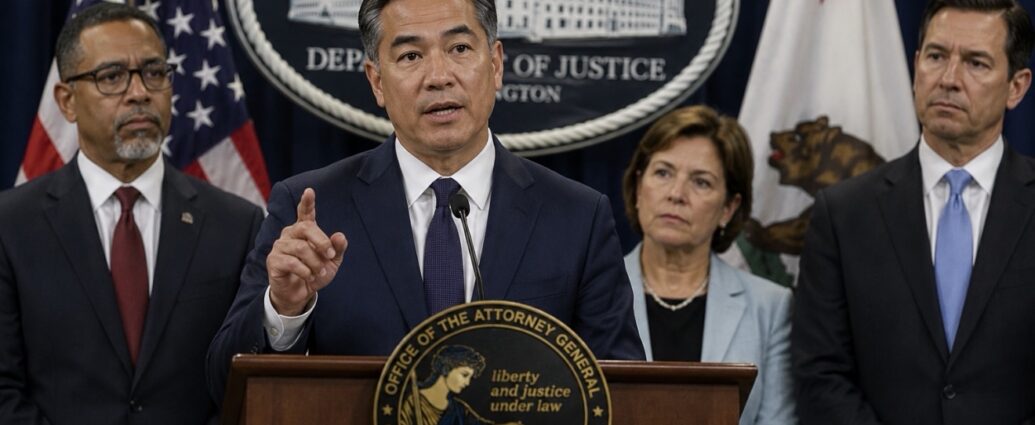
By JBizNews Desk
Monday, May 4, 2026

China has taken an extraordinary step that could mark a turning point in how the world’s two largest economies wage economic war on each other. For the first time, Beijing has formally ordered Chinese companies to defy U.S. sanctions — a move that puts China’s entire banking sector and business community on a collision course with Washington and signals a new phase in the geopolitical fallout from the Iran war.

China ordered companies in the country not to comply with U.S. sanctions on five domestic refiners linked to the Iranian oil trade, deploying a blocking measure introduced in 2021 that was aimed at protecting its firms from foreign laws it deemed unjustified. The refiners — including Hengli Petrochemical (Dalian) Refinery Co., which was sanctioned last month, and several other privately-owned processors — had been facing asset freezes and transaction bans.

China has ordered companies to defy U.S. sanctions for the first time, a step that threatens to put its banking sector into the crosshairs of competition between the world’s largest economies. The decision, announced Saturday, risks becoming a watershed moment. While China has often railed against unilateral sanctions, it has in the past quietly allowed companies to comply with them to avoid blowback on its own economy and preserve access to the U.S. financial system.

What Beijing Actually Did

China’s Ministry of Commerce issued a formal injunction stating that the U.S. measures “shall not be recognized, implemented, or complied with.” The ministry said the U.S. measures unlawfully restrict normal trade with third countries and breach international norms. “The Chinese government has consistently opposed unilateral sanctions that lack authorization from the United Nations and a basis in international law,” the department said.

The legal mechanism Beijing used carries teeth beyond a simple policy statement. The injunction allows the refineries to seek compensation in Chinese courts from any entity that complies with the U.S. sanctions — including domestic actors such as banks, investors and downstream customers that have ceased dealings, as well as foreign firms with a presence in China. Analysts at Eurasia Group said the move signals Beijing is taking a more assertive approach to countering sanctions, adding that by activating its blocking measures for the first time since adopting the rule in 2021, China is demonstrating a lower threshold for deploying its legal and regulatory toolkit.

Why Hengli Matters

The decision to defend Hengli specifically marks an escalation in the scale of U.S.-China friction over Iranian oil. China has long been the single largest buyer of Tehran’s oil shipments, many of them arriving indirectly through private refiners and then processed into gasoline, diesel and other products. Chinese customs data do not reflect that trade, with the last official shipment recorded several years ago. Before Hengli, Washington’s efforts to cut off Tehran’s oil revenue had targeted smaller Chinese companies and facilities. Hengli, by contrast, is representative of the most modern of China’s private refiners, with a sprawling oil-processing and chemicals complex in the northeastern province of Liaoning.

The Banking Risk

The most consequential risk from Beijing’s move is not to the refiners themselves — it is to China’s banking system. The refineries primarily work with Chinese banks that have not yet been directly sanctioned, analysts at Eurasia Group led by Dominic Chiu wrote in a note. “If the U.S. extends secondary sanctions to those institutions, or major state-owned entities, Beijing would likely respond with more forceful countermeasures,” the analysts said.

That escalation path — from refiner sanctions to bank sanctions to full-scale financial warfare — is exactly what has kept Chinese companies compliant with U.S. restrictions in the past. By crossing that line now, Beijing is betting that the economic and geopolitical stakes of the Iran war justify a direct confrontation with Washington’s sanctions architecture for the first time in history.

The Diplomatic Timing

The decision lands at a delicate moment. The sanctions and Beijing’s response come just weeks before an expected and long-awaited meeting between President Donald Trump and Chinese President Xi Jinping. While the blocking measure is not likely to derail the summit, Washington’s reaction to it will indicate whether the matter escalates further, according to Eurasia Group analysts.

For American businesses with operations in China, for global banks with exposure to Chinese financial institutions, and for any company caught between the world’s two largest economies, Monday’s announcement is a warning: the rules of economic engagement between Washington and Beijing just changed — and nobody yet knows where the new lines are drawn.

— JBizNews Desk

© JBizNews.com. All rights reserved. This article is original reporting by JBizNews Desk. Unauthorized reproduction or redistribution is strictly prohibited.

By JBizNews Desk | Monday May 4, 2026

GameStop has made an unsolicited $56 billion offer to acquire eBay, the online marketplace giant, in what would rank as one of the most stunning corporate takeover attempts in recent retail history — and a dramatic signal that CEO Ryan Cohen is done playing defense.

GameStop has built a roughly 5% stake in eBay and is offering $125 a share in cash and stock, Cohen told the Wall Street Journal in a direct interview Sunday. The offer represents a premium of about 20% to eBay‘s last closing price on Friday. “eBay should be worth — and will be worth — a lot more money,” Cohen said. “I’m thinking about turning eBay into something worth hundreds of billions of dollars.”

GameStop said in a news release that it submitted a non-binding proposal to buy 100% of eBay at $125 per share in cash and stock, split 50/50. The offer also represents a 46% premium to eBay’s closing price on February 4 — the day GameStop first began buying eBay stock. 

The Financing Behind the Bid

The sheer scale of the deal — eBay carries a market value of roughly $46 billion, nearly four times GameStop’s own $12 billion market cap — immediately raised questions about how Cohen plans to pay for it. He has lined up a multi-layered financing structure.

Cohen told the Wall Street Journal that GameStop has secured a commitment letter from TD Bank to provide about $20 billion in debt financing for the deal.  GameStop also holds about $9 billion in cash on its balance sheet.  To bridge the remaining gap, GameStop could seek support from external investors, including Middle Eastern sovereign wealth funds, according to people familiar with the matter. 

In its news release, GameStop said it expects to deliver $2 billion in annualized cost reductions within the first 12 months of closing the deal, including $1.2 billion in cuts from sales and marketing at eBay, $300 million from product development, and $500 million from general and administrative expenses. Cohen would become CEO of the combined company. 

Markets React

The news sent both stocks sharply higher. GME shares jumped more than 9% in after-hours trading, while eBay shares climbed between 10% and 15%, in a market reaction that recalled the 2021 short squeeze that briefly made GameStop a Wall Street obsession. 

The deal would combine GameStop’s collectibles expertise and growing cash war chest with eBay’s 130 million active buyers and global payments infrastructure — a combination Cohen argues could directly challenge Amazon’s dominance in the broader marketplace economy.

Cohen’s Expansion Play

The bid is the clearest expression yet of a strategic pivot Cohen has been building toward since early 2026. In January 2026, Cohen told the Wall Street Journal he was actively scouting deal targets in the consumer and retail sector as part of a plan to scale GameStop far beyond video games and collectibles.  His compensation package reinforces the ambition: it includes a performance-based stock option award valued at roughly $35 billion if fully earned, structured in nine tranches tied to escalating milestones, with the most demanding targets requiring GameStop to reach a $100 billion market cap. 

What Happens If eBay Says No

Cohen said he is prepared to run a proxy fight and take the offer directly to eBay shareholders if eBay’s board is not receptive. “There is nobody who is more qualified, based on my experience, to run the eBay business,” he told the WSJ. 

eBay had not responded to requests for comment as of Sunday evening. GameStop, eBay and TD Bank did not immediately respond to Reuters’ requests for comment.  Whether eBay’s board engages or resists, the proposal has already reshaped how Wall Street thinks about both companies — and about what Ryan Cohen is actually building.

— JBizNews Desk

© JBizNews.com. All rights reserved. This article is original reporting by JBizNews Desk. Unauthorized reproduction or redistribution is strictly prohibited.

Monday, May 4, 2026

More than 330,000 American businesses are now filing claims to recover a combined $166 billion in import duties after the U.S. Supreme Court struck down President Donald Trump’s sweeping tariffs earlier this year — opening what could become one of the largest government repayments to importers in U.S. history.

The Supreme Court ruled 6-3 in February that Trump’s tariffs, imposed under the International Emergency Economic Powers Act (IEEPA), exceeded presidential authority, finding that Congress — not the executive branch — holds constitutional power over the imposition of tariffs. Following that decision, U.S. Court of International Trade Judge Richard Eaton ordered the government to stop collecting the duties and establish a refund system. U.S. Customs and Border Protection (CBP) launched the first phase of its new claims portal on April 20, allowing importers and their customs brokers to submit refund requests through its Automated Commercial Environment (ACE) system using a newly developed tool called the Consolidated Administration and Processing of Entries (CAPE). Refunds are expected to be processed within 60 to 90 days, according to CBP.

The scale of the repayment is significant. Court filings show the $166 billion in duties was collected across more than 53 million shipments from over 330,000 importers — covering tariffs commonly known as “fentanyl,” “trafficking,” “reciprocal,” and “baseline” duties, as well as some charges applied to goods from Brazil and India. Tariffs imposed under separate legal authorities — including Section 232, Section 301, and anti-dumping measures — are not eligible for refunds. As of April 28, CBP had approved approximately 21 percent of relevant customs entries for removal of the IEEPA tariffs, with the agency continuing to issue updated guidance as businesses encounter technical issues with the portal.

The companies that stand to recover the most are major retail and logistics giants. Citi analysts project that Walmart alone could recoup approximately $10.2 billion. Target is expected to receive around $2.2 billion, Nike close to $1 billion, and retailers including Gap, Kohl’s, and Home Depot stand to collect hundreds of millions each. FedEx and UPS have both pledged to pass refund savings along to customers. Costco Wholesale CEO Ron Vachris suggested shoppers might see the benefit through lower prices. Trump has publicly praised companies including Apple and Amazon that have declined to claim refunds or pledged to keep the funds invested domestically.

For small businesses, the path to recovery is more complicated. Jaime Chamberlain, owner of produce wholesaler Chamberlain Distributing in Nogales, Arizona, said he filed for a refund of nearly $100,000 his company paid in tariffs over just three days — money he absorbed rather than passing on to customers. “Anytime the federal government says we were wrong and we need to go ahead and replace that money, that’s money well welcomed back,” Chamberlain said. He cautioned, however, that consumers should not expect prices to drop as a result. “It’s gonna pay us back for what we had already cut back, so it really won’t impact the consumers at all,” he said. Alex Jacquez, chief of policy and advocacy at Groundwork Collaborative, echoed that assessment, noting the logistical challenge of processing 330,000 claimants. “It’s going to be a bit of a challenge to get everybody their money back,” Jacquez said.

Economists also warn that shoppers should not expect broad relief at the register. Goldman Sachs analysts noted that consumer prices are unlikely to decline meaningfully as a result of the refunds, and that tariff-related costs are projected to add another 0.1 percent to inflation in 2026, on top of the 0.7 percent they contributed the prior year. The reason is straightforward: many importers absorbed the tariff costs rather than raising prices, meaning a refund to the business does not automatically translate to savings for the end buyer.

The ruling did not eliminate tariffs entirely. Following the Supreme Court‘s February decision, Trump moved quickly to impose a 10 percent tariff on nearly all U.S. imports under Section 122 of the Trade Act of 1974, a separate legal authority. Those tariffs took effect February 24 and are set to expire after 150 days. U.S. Trade Representative Jamieson Greer announced Section 301 investigations in March covering more than a dozen countries and trading blocs — including China, the European Union, Japan, Mexico, and India — signaling the administration’s intent to reimpose tariffs at or near previous levels through an alternative legal mechanism. For businesses weighing whether to lower prices now, that uncertainty is reason enough to hold steady.

The Liberty Justice Center, the legal advocacy group that represented small business plaintiffs before the Supreme Court, has launched the Tariff Equity Refund Resource for America — a free online platform offering guidance on how to properly submit documentation for refunds. “We took this fight all the way to the Supreme Court on behalf of small businesses, and we’re not stopping now,” said Sara Albrecht, chair of the Liberty Justice Center.

JBizNews Desk

© JBizNews.com. All rights reserved. This article is original reporting by JBizNews Desk. Unauthorized reproduction or redistribution is strictly prohibited.

By JBizNews Desk- Monday, May 4, 2026

For three years, millions of would-be home buyers sat on the sidelines waiting for mortgage rates to fall. By February 2026, it finally looked like their patience was paying off. Then a war changed everything — and something unexpected happened: buyers stopped waiting anyway.

The story of the 2026 spring housing market is one of whiplash, resilience and a quiet but decisive shift in how American buyers are thinking about homeownership. After months of hard-won affordability progress evaporated in a matter of weeks, buyers came back — not because rates dropped dramatically, but because they stopped believing rates ever would.

Nine Months Gone in Weeks

The rate swings have been severe. The 30-year fixed mortgage rate entered 2026 around 6.4%, then fell steadily through January and February, touching 5.99% at the end of February — the first time rates had cracked below 6% in more than three years, according to Mortgage News Daily. It felt like momentum. Then the U.S. and Israel struck Iranian military targets on February 28. Oil prices spiked, 10-year Treasury yields followed, and a single Consumer Price Index reading on April 10 showed inflation jumping from 2.4% to 3.3% in a single month. Nine months of affordability progress vanished in weeks.

Selma Hepp, chief economist at Cotality, put it plainly: “The lesson from this spring is that affordability gains are fragile.”

Purchase applications fell 7% year over year in the week of April 8 — the first annual decline since January 2025 — as buyers paused at the peak of the rate panic. Then something shifted. Applications rebounded 10% week over week and 14% year over year in the week ending April 17, as the 30-year rate eased to 6.35% when financial markets responded to ceasefire talks. Redfin reported up to a 35% increase in offers being written in recent weeks. The number of homes going under contract in March rose 4.6% compared to the prior year, according to Zillow.

Why Buyers Are Coming Back

The buyers returning to the market are not doing so because rates fell dramatically. They are doing so because they have concluded that waiting for meaningfully lower rates is a losing strategy.

On a $400,000 home with 20% down, a 6.35% mortgage means a monthly principal and interest payment of roughly $1,988. At the pandemic low of 3% in 2021, that same payment was about $1,349. The $639 monthly gap is real — and it is not closing soon. But the calculus has shifted. A median-income household can now afford a home worth $30,302 more than a year ago, according to Zillow analysis — a product of rising incomes and slower price growth creating breathing room even as rates have ticked back up.

Nobody credible is forecasting a return anywhere near pandemic-era borrowing costs within the next 12 months. J.P. Morgan’s 2026 housing outlook expects 30-year rates to stay above 6% even with potential Federal Reserve easing later this year. Fannie Mae’s April 2026 forecast pegs the 30-year rate at 6.3% for the second quarter and 6.1% for the rest of the year.

Jordan Del Palacio, a loan partner at Churchill Mortgage, warned that even on good days there is caution built into the rate environment. “We won’t see rates come back down until there is more certainty about a resolution” in the Iran conflict, he said. “If I had to look into my crystal ball, I would probably estimate the average 30-year mortgage rate will be around 6.50% by the end of May.”

The Market Has Shifted in Buyers’ Favor

Even as rates remain elevated, the broader housing market has moved in buyers’ direction in ways that matter. Active inventory nationwide has risen 142.1% since January 2022. Sellers are cutting prices, homes are sitting longer, and builders are offering rate buydowns to move inventory.

Sarah DeFlorio, vice president of mortgage banking at William Raveis Mortgage, expects rates to land between 6.125% and 6.25% by the end of May. “My hope is that during May 2026, we will experience another period of stability, slowly declining rates,” she said. “Sadly, we know from experience it’s never a straight line down.”

Hepp warned that rates could spike again quickly if the next CPI data shows inflation still running hot, oil prices jump or the Iran ceasefire falls apart. “If the 10-year Treasury breaks back above 4.50%, the 30-year mortgage rate will head straight back toward 6.75% or higher, effectively ending the spring homebuying momentum,” she said.

For buyers who came back in April and May, the bet is straightforward: their income supports the payment today, local prices are unlikely to fall significantly, and waiting another year costs more in missed equity and rising rents than it saves in interest. In a market where rates may never return to 3%, that calculation is increasingly hard to argue with.

— JBizNews Desk

© JBizNews.com. All rights reserved. This article is original reporting by JBizNews Desk. Unauthorized reproduction or redistribution is strictly prohibited.

By JBizNews Desk
Monday, May 4, 2026

Anthropic is in advanced talks to invest $200 million in a new private-equity-backed venture that aims to accelerate the adoption of its artificial intelligence tools across enterprise customers, according to people familiar with the matter. The proposed venture is expected to raise around $1 billion in total and would include participation from major private equity firms such as General Atlantic, Blackstone, and Hellman & Friedman.

The initiative is designed to function as a consulting and implementation arm, helping portfolio companies of these firms integrate Anthropic’s AI technologies, including its Claude chatbot and coding tools, into business operations. The move represents a significant step in Anthropic’s push to expand beyond consumer-facing applications and capture a larger share of the enterprise AI market.

The Deal That Set the Tone

The year opened with a signal that the market had decisively turned. Shares of Chinese AI chip designer Shanghai Biren Technology closed up 76% on their Hong Kong debut in January — the financial hub’s first listing of 2026. The retail portion of the offering was subscribed more than 2,300 times, underscoring intense investor appetite for China’s homegrown technology sector.

Zhipu, one of China’s so-called “AI tigers” and a firm OpenAI itself identified as a serious competitor, followed shortly after — becoming the first major Chinese large language model company to go public through an IPO. The stock rose 13% on debut, valuing the Beijing-based startup at around HK$4.3 billion.

Why Anthropic, and Why Wall Street Now

The concentration of AI investment interest in this new venture is not accidental. It reflects a structural shift driven by the growing demand for practical AI deployment in traditional industries. Private equity firms, which control trillions of dollars in assets and thousands of portfolio companies, are looking for ways to unlock productivity gains through AI. Anthropic’s Claude model has gained traction for its strong performance in enterprise settings, making it an attractive partner for these firms seeking to differentiate their portfolio companies.

The venture would allow Anthropic to monetize its technology at scale while leveraging the distribution networks and operational expertise of established private equity players. For the PE firms, the partnership offers a way to embed cutting-edge AI capabilities directly into their investment strategies, potentially driving higher returns across their holdings.

More Than a Technology Investment

The pitch extends beyond a simple technology licensing deal. The new venture is expected to function as a full-service implementation partner, helping companies integrate Anthropic’s tools into their core operations. This approach addresses one of the biggest barriers to AI adoption in traditional industries: the gap between advanced models and practical business application.

Banks and law firms report surging demand for advice on data governance, intellectual property, and cross-border regulation related to AI deployments. The venture would position Anthropic and its private equity partners at the center of this growing ecosystem.

The Road Ahead

The market for enterprise AI solutions is being shaped by three competing forces, according to analysts: the rapid advancement of foundational models, the need for practical implementation expertise, and the capital and distribution power of private equity. For now, those forces appear to be aligning in Anthropic’s favor.

For businesses and investors watching the AI sector, the message from this potential venture is clear: Anthropic is no longer just building powerful models. It is positioning itself as a key enabler of AI transformation across the broader economy.

— JBizNews Desk

© JBizNews.com. All rights reserved. This article is original reporting by JBizNews Desk. Unauthorized reproduction or redistribution is strictly prohibited.


WASHINGTON — May 4, 2026 — U.S. credit card delinquencies are beginning to edge higher, signaling early signs of strain among American households as elevated borrowing costs, rising living expenses, and persistent inflation continue to pressure consumer finances, according to recent bank earnings reports and consumer credit data.

Major lenders including JPMorgan Chase, Bank of America, and Citigroup have reported a gradual increase in late payments in recent quarters, particularly among lower- and middle-income consumers. Executives have emphasized that delinquency levels remain within historical norms, but the direction of the trend is drawing closer scrutiny across financial markets.

Credit card balances remain near record levels, reflecting continued reliance on revolving credit as households manage higher costs across essential categories such as housing, energy, and food. At the same time, interest rates on credit cards — closely linked to Federal Reserve policy — remain elevated, increasing the cost of carrying balances.

Jamie Dimon, CEO of JPMorgan Chase, has warned in recent commentary that consumers are beginning to feel the cumulative impact of higher rates and persistent inflation, even as overall economic conditions remain stable. Banks are closely watching whether the current increase in delinquencies represents a normalization from unusually low levels or the early stages of broader financial stress.

The pressure on consumers is building from multiple directions.

Higher borrowing costs are coinciding with elevated everyday expenses, while wage growth shows signs of moderating compared to prior years. Economists note that this combination can gradually erode household financial flexibility, particularly for those with limited savings buffers.

Greg McBride, Chief Financial Analyst at Bankrate, has said in recent analysis that rising delinquency rates are often an early indicator of consumer stress. While current levels are not considered alarming, the upward trend suggests that financial conditions at the household level may be tightening.

Banks, however, are not yet signaling systemic concern.

Financial institutions continue to report strong capital positions and manageable credit performance. At the same time, some lenders are becoming more cautious, tightening lending standards and increasing reserves in anticipation of potential credit deterioration if economic pressures persist.

The implications extend to consumer spending.

Credit cards play a central role in supporting consumption, particularly discretionary purchases. If delinquencies continue to rise or access to credit becomes more restricted, consumer spending — a key driver of the U.S. economy — could begin to slow.

Policymakers are also monitoring the trend.

The Federal Reserve closely tracks consumer credit conditions as part of its broader assessment of financial stability. Sustained increases in delinquencies could signal that higher interest rates are having a deeper impact on households than previously expected.

For now, the data suggests a gradual shift rather than a sudden deterioration.

Delinquency rates are rising from historically low levels and remain below long-term averages, according to industry data. However, analysts emphasize that the trajectory — not just the level — will be critical in the months ahead.

As energy costs, borrowing costs, and everyday expenses continue to converge, the risk of cumulative financial pressure increases, particularly among more vulnerable consumers.

The coming months will be key in determining whether this trend stabilizes or accelerates. If inflation eases and borrowing costs decline, households may regain footing. If not, rising delinquencies could become a more prominent signal of economic stress.

For now, the shift is subtle but significant — a sign that the resilience of the American consumer may be beginning to face new limits.

JBizNews Desk

By JBizNews Staff

May 4, 2026

WASHINGTON — Senate Minority Leader Chuck Schumer (D-NY) is intensifying calls for a comprehensive nationwide ban on prediction markets trading by lawmakers, congressional staff, and executive branch officials, just days after the U.S. Senate unanimously approved a sweeping self-imposed prohibition on its own members and personnel.

The Senate’s action on April 30, 2026, marked a rare moment of bipartisan unity as senators passed a resolution by voice vote that immediately bars senators, their staff, Senate officers, and other chamber officials from participating in prediction markets such as Polymarket and Kalshi. The measure amends Senate rules and took effect without delay, addressing growing concerns over insider trading and conflicts of interest in the rapidly expanding sector.

Chuck Schumer, who strongly supported the resolution, described the move as a “no-brainer” during floor remarks and urged House Speaker Mike Johnson and the Trump administration to follow suit without hesitation. “We must never allow Congress to turn into a casino where members representing the public can gamble on wars or economic crises or elections,” Schumer declared. “That would destroy the very principle of representative government. Just the possibility that members could have their votes influenced because of betting is reason enough to prohibit members from meddling in the prediction markets.”

The resolution was introduced by Sen. Bernie Moreno (R-OH) and amended by Sen. Alex Padilla (D-CA). It specifically prohibits any agreement, contract, or transaction that provides for purchase, sale, payment, or delivery based on the outcome of future events — language directly targeting event contracts on platforms like Polymarket and Kalshi.

Prediction markets have experienced explosive growth in recent years, with trading volumes reaching billions of dollars annually. These platforms allow users to bet on a wide array of outcomes, including U.S. elections, Federal Reserve interest rate decisions, legislative votes, corporate earnings reports, and even geopolitical events such as international conflicts. Proponents argue that prediction markets serve as efficient tools for aggregating information and forecasting real-world probabilities. However, critics — including many in Congress — warn that government insiders with access to non-public or classified information could exploit these markets for personal gain, eroding public trust and potentially distorting market integrity.

Recent high-profile incidents have fueled the urgency. Reports emerged of users profiting hundreds of thousands of dollars by accurately predicting U.S. military actions, prompting suspicions of insider trading. One notable case involved a U.S. soldier allegedly using classified intelligence related to operations in Venezuela to win nearly $410,000 on Polymarket. Such episodes have drawn scrutiny from regulators and lawmakers alike, highlighting the thin line between legitimate forecasting and unethical advantage-taking.

Chuck Schumer’s push extends beyond the Senate. In a statement issued Sunday, May 3, he explicitly called on the House of Representatives and the Trump administration to enact identical restrictions for House members, staff, and executive branch officials. “Speaker Johnson should immediately do the same thing in the House and prohibit House members from playing around in prediction markets as well,” Schumer said. He further emphasized that the administration — particularly one he described as showing an “affinity to corruption and self-dealing” — must apply the same standards to prevent any perception of impropriety.

The Senate ban aligns with broader bipartisan efforts already underway. Senators including Todd Young (R-IN) and Elissa Slotkin (D-MI) have introduced legislation aimed at restricting the use of insider information by all federally elected officials and government employees in prediction markets. These proposals go further than the current Senate rule, seeking to impose federal-level prohibitions and enhance oversight by the Commodity Futures Trading Commission (CFTC).

Industry players have responded positively to the Senate’s decision. Both Polymarket and Kalshi publicly praised the resolution, with Kalshi CEO Tarek Mansour stating support for the ban and noting that his platform had already taken proactive steps to restrict certain congressional accounts. Polymarket similarly expressed willingness to assist in enforcement efforts, signaling a cooperative stance as the sector faces increasing regulatory pressure.

This development echoes ongoing debates over congressional stock trading. While the STOCK Act of 2012 imposed disclosure requirements and insider trading prohibitions on lawmakers’ securities transactions, prediction markets present unique challenges due to their event-driven nature and potential for rapid, high-stakes bets on policy outcomes. Unlike traditional stocks, prediction market contracts can directly tie to legislative or executive actions that lawmakers help shape.

Critics of broader bans argue that overly restrictive rules could stifle innovation in financial derivatives and reduce the informational value these markets provide to the public. Supporters, however, maintain that protecting the integrity of representative government outweighs such concerns. With prediction markets now a multi-billion-dollar industry influencing everything from election betting to economic forecasting, the Senate’s move could set a precedent for wider regulatory reforms.

Analysts predict that if the House and executive branch adopt similar prohibitions, it could significantly impact market liquidity on politically sensitive contracts while prompting platforms to strengthen self-regulation and compliance measures. The CFTC continues to monitor the space closely, with ongoing discussions about whether certain event contracts involving elections, wars, or death should face outright bans.

As momentum builds for expanded restrictions, the fast-growing event-contracts sector faces a pivotal moment. JBizNews will continue monitoring this story for its implications on market liquidity, regulatory oversight in financial derivatives, platform operations, and the evolving relationship between Washington insiders and emerging betting technologies.

— JBizNews Desk

By JBizNews Desk | Monday, May 4, 2026

Russia’s wartime economic boom is over. The surge in military spending that briefly supercharged growth in 2023 and 2024 has given way to stagnation, a cratering oil revenue base and a population increasingly forced to pay for a war through higher taxes and rising prices. Four years into the invasion of Ukraine, analysts and international institutions are now asking not whether Russia’s economy is slowing — but how hard the landing will be.

After two years of expansion exceeding 4% annually, Russia’s GDP growth slowed to around 1% in 2025 and is expected to hold near that level in 2026, with any meaningful recovery unlikely before 2027. The International Monetary Fund forecasts growth of just 1.0% this year.  The Bank of Finland puts the picture more bluntly, warning that Russia has hit the limits on economic growth imposed by the war, constrained to annual growth rates near its long-term potential of around 1%, with recession now a very real possibility. 

Oil Money Has Collapsed

Energy revenues have been the financial backbone of Russia’s war effort — and they are crumbling. In January 2026, Russia’s state revenues from taxing the oil and gas industries fell to 393 billion rubles — down from 587 billion rubles in December and from 1.12 trillion rubles in January 2025, the lowest level since the COVID-19 pandemic, according to Janis Kluge, an expert on the Russian economy at the German Institute for International and Security Affairs. 

In February 2026, Russia’s oil export revenues collapsed a further $1.5 billion month-on-month to $9.5 billion — the lowest level since the invasion began — driven by a 9.2% drop in seaborne export volumes, according to the Kyiv School of Economics KSE Institute. Urals crude averaged just $42.8 per barrel that month, still trading below the European Union’s revised price cap. 

For the first time since the pandemic, Russia collected less budget revenue in 2025 than originally planned. Revenues projected at 40.3 trillion rubles came in closer to 36.6 trillion rubles — a shortfall driven by weaker oil prices and Western sanctions that have forced Moscow to offer steep discounts on its crude. 

Taxing Ordinary Russians to Fill the Gap

With oil income falling short, the Kremlin has turned to its own citizens. Russia raised its VAT rate from 20% to 22% starting January 1, 2026, while pulling far more small businesses into the tax net by lowering the annual revenue threshold for mandatory payments from 60 million rubles to 10 million rubles. New levies on finished electronic goods including laptops and smartphones are also planned. 

The impact on everyday Russians has been immediate. Food prices rose 21% in early 2026, services climbed 14%, and fuel prices increased 11% following refinery disruptions. In 2025, Russian revenues fell 24% to $111 billion, leaving a large hole in government finances filled by increasing taxes on consumers. 

Russia’s 2026 federal budget dedicates 16.8 trillion rubles to defense and national security, 7.1 trillion rubles to social policy, and 3.9 trillion rubles to debt servicing — a combined 27.8 trillion rubles out of total planned expenditures of 44.1 trillion rubles. That leaves just 16.3 trillion rubles for the entire civilian economy, including healthcare, education and infrastructure. 

The Central Bank Is Caught in the Middle

The Bank of Russia has been cutting rates aggressively to try to stimulate a slowing economy, but remains deeply constrained. On April 24, 2026, the Bank of Russia cut its key rate by 50 basis points to 14.50% — its eighth consecutive cut since departing from a record high of 21%. The bank maintained its 2026 GDP growth forecast at just 0.5% to 1.5%, noting the economy slowed in the first quarter of 2026 partly due to the shock of the new tax changes. 

Bank of Russia Governor Elvira Nabiullina warned that Russia is facing a labor shortage for the first time in its modern history, with unemployment at a historic low of 2%. The lack of available workers has forced employers to raise wages to compete for staff, driving up production costs and adding to inflationary pressure. “This is a new reality for the government and for business alike,” Nabiullina said. 

Corporate bankruptcies in Russia have jumped 20% this year as soaring interest rates and liquidity shortages push firms closer to financial ruin. 

Sweden’s Intelligence Warning

The strain is severe enough to have drawn a rare public assessment from a Western intelligence agency. Sweden’s Military Intelligence and Security Service said Russia has been manipulating its economic data to hide the real state of its economy, and is likely suffering from higher inflation and a larger budget deficit than it is communicating. Thomas Nilsson, head of MUST, warned that “the Russian economy can only go on one of two scenarios: long-term recession or shock. In either case, it will continue on a downward trajectory towards financial disaster.” 

What Comes Next

Kluge of the German Institute for International and Security Affairs said the Kremlin is clearly worried about the overall budget balance because the economic downturn is coinciding with war costs that are not decreasing. “Give it six months or a year, and it could also affect their thinking about the war,” he said. “I don’t think they will seek a peace deal because of this, but they might want to lower the intensity of the fighting.” 

For now, the Strait of Hormuz crisis has handed Moscow an unexpected lifeline — higher global oil prices are temporarily easing budget pressure. But analysts are unanimous that this does nothing to fix the deeper structural rot underneath.

— JBizNews Desk

© JBizNews.com. All rights reserved. This article is original reporting by JBizNews Desk. Unauthorized reproduction or redistribution is strictly prohibited.

By JBizNews Desk | Monday, May 4, 2026

OPEC+ voted Sunday to increase oil production by 188,000 barrels per day starting in June — a slightly smaller hike than the month before and one analysts largely view as a symbolic move to signal stability rather than a meaningful fix to a global oil market still reeling from the closure of the Strait of Hormuz.

The decision was reached during a virtual meeting of seven participating countries — Saudi Arabia, Russia, Iraq, Kuwait, Kazakhstan, Algeria and Oman — convened to review global market conditions following the shock departure of the United Arab Emirates from the group.  It was the cartel’s first meeting since the UAE‘s exit, which became effective May 1 after nearly six decades of membership. The UAE had been the group’s third-largest oil producer behind Saudi Arabia and Iraq. 

The 188,000 barrel-per-day figure is essentially the prior 206,000 barrel increase minus the UAE‘s approximate 18,000 barrel-per-day share — meaning the remaining members are continuing on the same trajectory, just without their former partner’s contribution. 

A Gesture, Not a Solution

The market’s reaction was muted — and for good reason. Analysts described the increase as largely symbolic, aimed at signaling political cohesion after the UAE’s departure rather than delivering any meaningful expansion of real supply. In practice, many Middle Eastern OPEC+ members face serious geopolitical and technical constraints that make rapid export increases difficult, especially with the Strait of Hormuz still effectively closed. 

Brent futures settled near $108 a barrel on Friday, easing from recent four-year highs, as oil prices have increasingly looked past the UAE’s exit and focused instead on diplomatic signals around the Iran war. Both WTI and Brent remain roughly 78% higher than where they started 2026. 

The cartel reiterated its commitment to full compliance with the Declaration of Cooperation, saying the voluntary output adjustments could be returned gradually depending on evolving market conditions. 

The UAE’s Departure Changes the Math

The most consequential development from Sunday’s meeting was not the output decision itself but rather what the meeting confirmed: OPEC+ is now operating without one of its most influential members. The UAE‘s departure represents the most significant exit in the coalition’s history and further erodes OPEC+’s ability to influence global oil prices — a power already under pressure from the continued rise of U.S. shale production. 

Abu Dhabi National Oil Company — known as ADNOC — has announced plans to award approximately $55 billion in contracts between 2026 and 2028 as it pursues an accelerated production and strategic expansion strategy outside of OPEC+ constraints. 

What This Means for Consumers

The bottom line for everyday Americans and global consumers is straightforward: Sunday’s announcement does almost nothing to ease the energy crisis. Rising diesel, gasoline and jet fuel costs are already beginning to change consumer behavior, and analysts warn that demand destruction could escalate as global inventories are depleted, raising the risk of a broader economic slowdown. 

The real variable that would move prices remains the Strait of Hormuz — and whether President Trump‘s “Project Freedom” operation, launched Monday, can begin restoring commercial shipping through the world’s most critical oil chokepoint. Until that happens, no OPEC+ output decision is large enough to close the gap left by a waterway that normally carries one fifth of the world’s daily oil supply.

— JBizNews Desk

© JBizNews.com. All rights reserved. This article is original reporting by JBizNews Desk. Unauthorized reproduction or redistribution is strictly prohibited.
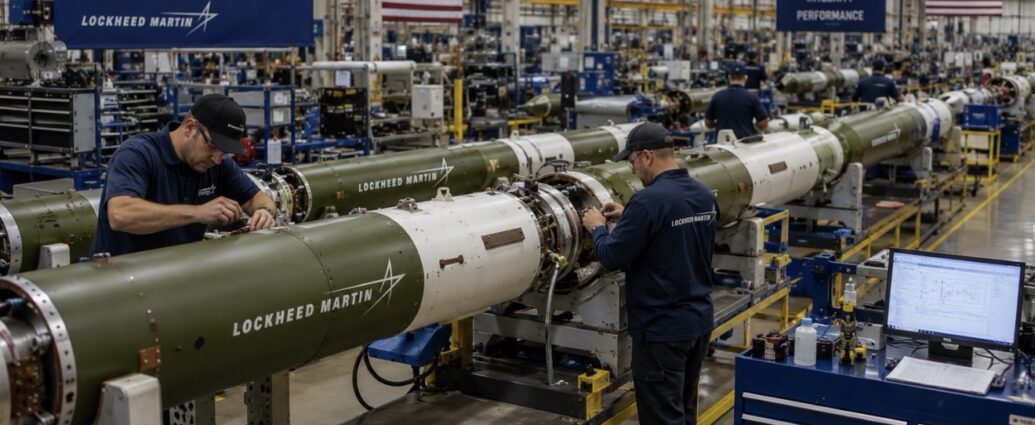
By JBizNews Desk | Monday, May 4, 2026

U.S. Special Envoy Steve Witkoff confirmed Sunday that Washington and Tehran are actively communicating as both sides exchange proposals aimed at ending the Iran war — the clearest public signal yet that diplomatic channels remain open despite the ongoing conflict.

Witkoff, speaking to CNN on Sunday from President Donald Trump’s Doral golf club where the PGA Cadillac Championship was underway, said the two countries are in active contact when asked directly about the state of negotiations. The confirmation came on the same day Iran’s Foreign Ministry acknowledged that Tehran had received a response from Washington to its latest peace proposal — delivered through Pakistan as intermediary — and was reviewing it.

Trump echoed the signal in a Truth Social post Sunday, saying his team is engaged in discussions with Iran that he believes could produce a favorable outcome for both countries. The remarks marked a notable softening from the day before, when the president had publicly questioned whether Iran had yet suffered enough consequences to make a deal worthwhile.

The diplomatic activity is unfolding alongside a new military pressure point. Trump announced Sunday that the U.S. would begin escorting stranded commercial vessels out of the Strait of Hormuz starting Monday — a move he called “Project Freedom” — adding a direct military dimension to an already fragile negotiating environment.

For markets and consumers, the stakes of any breakthrough are enormous. Gasoline prices in the U.S. have climbed nearly 50% since the war began on February 28, driven almost entirely by the shutdown of the Strait of Hormuz, which normally carries roughly one fifth of the world’s daily oil supply. Every day the waterway stays closed, the economic cost to American families and businesses compounds.

Whether Sunday’s diplomatic signals translate into a genuine ceasefire framework — or are overtaken by what happens in the strait on Monday morning — will determine the near-term direction of oil prices, inflation and global trade.

— JBizNews Desk

© JBizNews.com. All rights reserved. This article is original reporting by JBizNews Desk. Unauthorized reproduction or redistribution is strictly prohibited.

Washington — May 3, 2026 — U.S. banks are urgently working to gird against a new wave of sophisticated AI-powered attacks that could cripple the financial system, Treasury Secretary nominee Scott Bessent warned Saturday, as the rapid evolution of artificial intelligence turns traditional cyber defenses obsolete and raises fresh risks to the stability of the world’s largest economy.

Scott Bessent said banks across the country are racing to upgrade their systems in response to the growing threat, describing AI attacks as one of the most serious challenges facing the financial sector today. The comments come as major institutions report a sharp rise in AI-driven phishing campaigns, deepfake fraud and automated hacking attempts that can bypass conventional security measures in seconds.

The economic stakes could not be higher. A successful large-scale AI attack on the U.S. banking system could trigger immediate liquidity crises, freeze transactions worth trillions of dollars, and send shockwaves through global markets. Bessent emphasized that the Treasury Department is closely monitoring the situation and coordinating with the Federal Reserve, the Office of the Comptroller of the Currency, and major banks to strengthen resilience. “We are seeing AI being weaponized at a speed and scale we have never seen before,” he said. “Banks are working aggressively to stay ahead of this threat, but the window for action is narrowing.”

The warning arrives at a moment when the financial industry is already under pressure from elevated interest rates, geopolitical tensions from the Iran conflict, and the fuel-price crunch hammering airlines and other sectors. Analysts estimate that U.S. banks could spend more than $10 billion this year alone on AI-related cybersecurity upgrades, with costs ultimately passed on to consumers through higher fees and tighter lending standards. Smaller regional banks, already strained by recent deposit outflows, face the greatest risk if they fall behind in the AI defense race.

Scott Bessent’s remarks underscore a broader shift in Washington’s approach to financial stability. The Federal Reserve has begun stress-testing banks for AI-specific cyber scenarios, while the Securities and Exchange Commission is preparing new disclosure rules requiring public companies to report material AI-related cyber incidents within 48 hours. Industry groups including the American Bankers Association have formed rapid-response task forces to share intelligence on emerging AI threats.

The potential economic impact is profound. An AI-driven breach at a major institution could disrupt payroll processing for millions of Americans, freeze credit card transactions, and trigger a loss of confidence that echoes the 2008 financial crisis — but at digital speed. Economists warn that prolonged uncertainty around AI security could slow lending, dampen business investment, and shave as much as 0.3 to 0.5 percentage points off U.S. GDP growth in the second half of 2026.

Bessent said the administration is prioritizing public-private partnerships to accelerate defenses, including new incentives for banks that invest in advanced AI detection tools. “This is not a theoretical risk — it is happening now,” he added. “The banks that move fastest will be the ones that survive and thrive in the AI era.”

European regulators are watching the U.S. response closely, as similar AI threats target institutions on both sides of the Atlantic. The European Central Bank has already issued guidance urging banks to treat AI-powered attacks as a top-tier systemic risk.

For consumers and businesses, the message is clear: expect tighter security protocols, more frequent identity checks, and potentially higher costs for banking services as the industry pours billions into fortifying its digital walls. The race against AI attacks is now a central pillar of U.S. financial stability strategy, with Scott Bessent making it clear that the Treasury will not tolerate any lag in defenses.

President Trump’s administration views the issue as both an economic and national security priority, linking it to broader efforts to protect critical infrastructure from foreign adversaries who are increasingly leveraging AI tools.

The developments add to the weekend’s heavy slate of breaking business news, from airline collapses driven by the fuel-price crunch to conglomerate earnings and OPEC+ production decisions. Markets will be watching closely when trading resumes Monday for any signs of how the AI threat is being priced into bank stocks and broader financial indices.

JbizNews- Desk – Banking

Washington — May 3, 2026 — Federal Reserve Governor Michael Barr issued a stark warning Sunday that mounting stress in the $1.8 trillion private credit market could ignite “psychological contagion” across the broader financial system, potentially sparking a wider credit crunch and amplifying risks to banks, insurers, and corporate borrowers already navigating elevated interest rates and geopolitical uncertainty.

In a wide-ranging interview with Bloomberg News, Barr — the Fed’s Vice Chair for Supervision — highlighted the opaque, fast-growing world of non-bank lending as a potential flashpoint. While direct linkages between regulated banks and private credit funds do not currently appear “super worrisome,” he cautioned that perception matters more than reality in moments of stress. “People might look at private credit, and instead of saying ‘this is an idiosyncratic problem, these were high risk loans, the rest of the corporate sector is different,’ they might say, ‘Wow, there seem to be cracks in our corporate sector. Maybe over here in the corporate bond market, there are also cracks.’ Then you could have a credit pullback, and that could lead to more financial strain,” Barr said.

The comments come as private credit — direct lending by funds to companies that bypass traditional banks — has ballooned into one of the largest and least transparent corners of the financial system. Fueled by years of low interest rates and investor demand for higher yields, the sector now finances everything from leveraged buyouts to middle-market companies that once relied on bank loans. But with borrowing costs elevated and economic growth moderating, defaults and distress signals are rising in certain pockets, raising fears that problems could spread beyond the direct lenders.

Barr also flagged overlaps with the insurance industry, where insurers have poured billions into private credit strategies seeking higher returns on policyholder assets. Any forced selling or markdowns in those portfolios could ripple into broader markets, he noted, creating the very psychological feedback loop he described. The warning renews Barr’s long-standing caution against easing banking regulations at a time when risks in the shadow banking system appear to be building.

The economic implications are significant. Private credit has become a critical funding source for thousands of U.S. businesses, particularly in sectors such as technology, healthcare, and infrastructure that drive job creation and innovation. A sudden credit pullback — whether triggered by actual defaults or simply investor fear — could make it far more expensive or impossible for companies to refinance maturing debt. That, in turn, could lead to reduced capital spending, slower hiring, and higher borrowing costs that feed directly into consumer prices and corporate earnings.

For banks, the contagion risk is twofold. While direct exposures remain manageable, a broader tightening of credit conditions could weigh on loan demand, compress net interest margins, and pressure asset values across commercial real estate and leveraged lending portfolios. Major institutions such as JPMorgan Chase and other large lenders with indirect ties to private credit through syndication or co-investment arrangements could feel secondary effects, analysts say.

The timing of Barr’s remarks adds urgency. Markets are already on edge from the ongoing fuel-price crunch hammering airlines, Israel’s surging cost of living, BlackBerry’s automotive software resurgence, President Trump’s rejection of Iran’s latest peace proposal, and the weaker dollar driving up grocery and travel costs. A fresh shock in private credit could compound those pressures, pushing corporate bond spreads wider, tightening financial conditions, and complicating the Federal Reserve’s path toward its 2% inflation target.

Barr stopped short of calling for immediate new regulations but used the interview to push back against efforts in Congress and industry circles to roll back post-2008 banking rules. Loosening oversight now, he implied, could leave the system more vulnerable precisely when non-bank channels are showing strain. His comments echo earlier warnings from other Fed officials and international regulators about the growth of shadow banking and the potential for liquidity mismatches in stressed markets.

For businesses and investors, the message is clear: vigilance is required. Private credit funds have offered attractive yields in recent years, but the sector’s lack of transparency and reliance on mark-to-model valuations mean problems can remain hidden until they surface suddenly. Pension funds, endowments, and retail investors indirectly exposed through insurance products or mutual funds could see returns suffer if contagion takes hold.

The broader financial stability picture remains in focus at the Fed. Barr’s intervention underscores that even as headline banking metrics look solid, vulnerabilities in less-regulated corners of the system warrant close monitoring. With the private credit market now rivaling traditional bank lending in scale for certain segments of the economy, any meaningful stress there has the potential to reshape credit availability and economic momentum in ways that extend far beyond Wall Street.

Markets will be watching closely when trading resumes Monday for any signs that Barr’s warning is being priced into corporate bond yields, bank stocks, or volatility measures. For now, the Fed Governor has delivered a clear reminder: in today’s interconnected financial world, problems in one corner can quickly become everyone’s problem.

JbizNews- Desk – Finance / Banking

JBizNews Desk | New York | Sunday, May 3, 2026

Tankers are loading up in Alaska and along the U.S. Gulf Coast and sailing to Japan, Thailand and Australia in unprecedented numbers. Nine weeks into the effective closure of the Strait of Hormuz, the United States has surpassed Saudi Arabia as the world’s top crude exporter and become the energy supplier global markets cannot function without — but energy executives and analysts warned this week that America’s supply cushion is running out faster than the world realizes.

Over the past nine weeks, more than 250 million barrels of crude from American oil wells and storage facilities have been shipped overseas, according to Bloomberg reporting published Sunday, May 3. That volume has made the U.S. once again the world’s number one crude exporter. But domestic oil and fuel stockpiles have drawn down for four consecutive weeks, falling below historical averages, raising serious questions about how long record exports can be sustained.

President Donald Trump told reporters Friday, May 2: “This has been amazing. The amount of oil and gas that we’re selling now is at a level that nobody’s ever seen.” He added: “We have more oil production right now than any time in history. And if you take a look at the ships, they’re all coming up to Texas, Louisiana, Alaska.”

Chevron chief executive Mike Wirth offered a starkly different assessment Friday, May 2, saying the global energy system is under “extreme stress.” The day before, Thursday, May 1, ConocoPhillips warned that “critical shortages” of oil are imminent. In anonymous survey comments published in late April by the Federal Reserve Bank of Dallas, energy executives said: “The unpredictable nature of the current administration makes business modeling near impossible.”

The Largest Supply Disruption in History

International Energy Agency Executive Director Fatih Birol has left no room for ambiguity about the scale of what has happened. Speaking on the podcast “In Good Company” hosted by Norges Bank Investment Management chief executive Nicolai Tangen on April 1, Birol said the energy crisis sparked by the war was “the worst in history” — worse even than the 1973 and 1979 oil shocks. “In both of them we lost each about 5 million barrels per day of oil. These oil crises led to global recession in many countries,” Birol said. “Today, we lost 12 million barrels per day — more than two of these oil crises put together.”

Crude and oil product flows through the Strait of Hormuz plunged from 20 million barrels per day before the war to just over 2 million barrels per day in March, according to the IEA’s April 14 monthly Oil Market Report. In early April, loadings through the Strait averaged just 3.8 million barrels per day, compared with more than 20 million barrels per day in February before the crisis, the IEA reported. Gulf producers including Iraq, Saudi Arabia, Kuwait, the UAE, Qatar and Bahrain collectively shut in an estimated 9.1 million barrels per day of crude production in April as onshore storage filled with oil that had nowhere to go.

Brent crude surged more than 60 percent over the course of March alone — the biggest monthly price gain since records began in the 1980s — before reaching a peak near $150 per barrel in physical markets, according to the IEA’s April Oil Market Report. JP Morgan warned that inventories are reaching minimum operational levels, with the actual shortage potentially doubling from 4 million barrels per day to as much as 8 million barrels per day as stockpiles and oil at sea are exhausted, according to analysis cited by Economics Help on May 2.

Birol told CNBC on April 1 that the IEA’s emergency reserve release of 400 million barrels — the agency’s largest ever, unanimously agreed by member countries on March 11 — was not a solution. “This is only helping to reduce the pain, it will not be a cure,” he said. “The cure is opening up the Strait of Hormuz.”

Rory Johnston, founder of Commodity Context, said April 21 that any reopening of the Strait would likely trigger an immediate drop of $10 to $20 in crude prices due to speculative positioning — but warned supply chain bottlenecks, infrastructure damage and production outages would keep the market tight, likely anchoring Brent in the $80 to $90 range even after a reopening. “This is still the largest oil supply shock in the history of the oil market,” Johnston said. “Without a sustained restoration of flows, prices may need to rise further to curb demand.”

Tony Sycamore, market analyst at IG, said in a note published April 30: “Prospects for any near-term resolution to the Iran conflict or a reopening of the Strait of Hormuz remain dim.”

Vitol chief executive Russell Hardy said April 21 that one billion barrels of oil production will be lost because of the war, with the current running total already between 600 and 700 million barrels. Naif Aldandeni, energy strategist, told Al Jazeera on March 15 that the IEA’s reserve release was “a small bandage on a large wound,” adding that the release would produce “only a temporary stabilising effect.”

What It Means at the Pump

For ordinary Americans, the consequences are direct. Retail gasoline prices have climbed to an average of $4.40 per gallon, according to Bloomberg. The U.S. Energy Information Administration reported March 30 that average retail gasoline stood at $3.99 per gallon and diesel at $5.40 per gallon — the highest levels in real terms in over two years. Gas prices have risen $1.16 per gallon since the start of the war, with prices expected to hit $5.00 per gallon if the Strait remains closed, according to the 2026 Iran War Fuel Crisis entry on Wikipedia. Jet fuel has spiked 95 percent since the war began, causing multiple airlines to raise baggage fees. Energy Secretary Chris Wright has repeatedly cited the $5-per-gallon threshold as the key political benchmark heading into November’s midterm elections.

U.S. domestic oil production has actually fallen roughly 100,000 barrels per day since the war began as drillers remain hesitant to invest amid deep uncertainty, according to Bloomberg. Exxon Mobil and Chevron are also managing disruptions to their Middle East operations, adding further constraints.

LNG and Fertilizer: The Hidden Crisis

The disruption extends well beyond crude oil. LNG supplies from Qatar and the UAE through the Strait of Hormuz have been cut by more than 300 million cubic metres per day since March 1, according to the IEA — reducing global LNG supply by roughly 20 percent. QatarEnergy declared force majeure on all export contracts after its Ras Laffan facility — the world’s largest LNG liquefaction plant — was struck on March 2 and went offline. The company warned repairs could take up to five years. Steven Wilson, a partner in the global energy practice at law firm Mayer Brown, said in late March that LNG suppliers were becoming more selective in negotiating long-term contracts because spot market pricing had become far more lucrative — squeezing buyers and driving prices higher.

Over 30 percent of global urea and significant volumes of ammonia and phosphate transit the Strait of Hormuz. Morningstar analyst Seth Goldstein projected that nitrogen fertilizer prices could roughly double from 2024 levels. The UN World Food Programme warned the disruptions are driving long-term increases in global food prices, threatening a scenario similar to the 2022 food crisis.

How Long Can Iran Hold Out?

Muyu Xu, senior crude oil analyst at Kpler, told Al Jazeera in late April that the U.S. naval blockade was already slowing Iranian oil loadings and exports, pressuring onshore inventories. “We expect any production reduction to be gradual over the coming week, with a higher likelihood of acceleration into May,” Xu said.

Kenneth Katzman, former Iran analyst at the Congressional Research Service in Washington, told Al Jazeera that Iran had between 160 million and 170 million barrels of oil “afloat” on tankers around the world — cargo that transited the Strait before the U.S. blockade began — potentially giving Tehran revenue flows through August. “Does President Trump have until August? Probably not,” Katzman said. “He’s probably going to have to look at kinetic escalation if he wants to bring this to the conclusion he wants, or he’s going to have to accept less than the deal he ideally wants.”

The question now facing energy markets, policymakers and businesses worldwide is whether diplomacy can reopen the Strait before the supply shock forces demand destruction on a scale not seen since the 1970s energy crisis — an outcome none of the parties to the conflict has yet fully prepared the world for.

JBizNews Desk
© JBizNews.com. All rights reserved. This article is original reporting by JBizNews Desk. Unauthorized reproduction or redistribution is strictly prohibited.

Spirit Airlines has abruptly ended all flight operations, leaving millions of passengers scrambling for refunds, rebooking options, and answers. Here is what affected travelers need to know right now.

The Collapse

Spirit Airlines, the pioneering discount carrier that reshaped budget travel in the United States, is shutting down. The company was in its second bankruptcy and had been in serious financial trouble well before the war with Iran sent jet fuel prices surging. Spirit tried to reach a deal with the Trump administration on an eleventh-hour rescue package, but a key group of creditors rejected the proposal.

Spirit is the first major U.S. airline in 25 years to go out of business due to financial problems. Its demise has stranded thousands of passengers who must now adjust their plans, and millions more who hold tickets for future travel — the airline canceled all flights, shut down customer service, and instructed customers not to go to the airport. 

The decision puts approximately 17,000 workers out of a job, including 14,000 Spirit employees and thousands of contractors and others whose livelihoods depended on the airline. 

Getting Your Money Back

Spirit said it will automatically refund tickets purchased directly with a credit or debit card, while those who booked through third parties must contact their travel agent to request a refund. 

Compensation for customers who used vouchers, credits, or Free Spirit loyalty points will be determined later as part of the bankruptcy process. Travel expert Clint Henderson of The Points Guy said many Spirit customers could see the value of their loyalty points vanish, with little chance of recovering them. 

The U.S. Department of Transportation suggests contacting your credit card company and exercising your rights under the Fair Credit Billing Act by requesting a chargeback for services not rendered. 

The National Consumers League urged affected travelers to keep all documentation, including receipts, booking confirmations, cancellation notices, and correspondence with the airline, as credit card and insurance companies may have strict, time-sensitive deadlines. 

Do Not Go to the Airport

Spirit told customers not to go to the airport. With thousands of Spirit employees now out of work, there are no customer service agents to assist travelers on-site. 

Alternative Airlines Stepping Up

Several carriers moved quickly to offer discounted fares for stranded Spirit passengers:

United Airlines said it will cap prices on one-way fares for travelers who hold Spirit tickets over the next two weeks for most cities where Spirit flew, mostly capped at $199, with longer flights up to $299. 

JetBlue is offering $99 rescue fares to assist travelers with immediate travel needs through May 6. Affected customers can call 1-800-JETBLUE and must provide proof of a Spirit itinerary. 

Southwest Airlines is capping domestic fares at $200 for one-way trips up to 500 miles, $300 for trips up to 1,000 miles, and $400 for trips exceeding 1,000 miles. 

Frontier Airlines is offering 50% off base fares across its network through May 10.  American Airlines, Delta, Allegiant, Avelo, and Breeze have also agreed to assist displaced passengers. 

To access these special prices, travelers will need to provide at minimum a Spirit flight confirmation number and proof of payment, according to the U.S. Department of Transportation. 

The Broader Impact on Fares

The Spirit shutdown will ripple through commercial aviation, likely pushing fares higher as the budget carrier exits the market. A CBS News analysis of Cirium data found average fares jumped 23%, or roughly $60, for a round-trip flight when Spirit exited a route in the past. 

Spirit had approximately 9,000 flights scheduled from May 2 through the end of the month, representing 1.8 million seats — an average of 300 flights and 60,000 potential passengers per day affected in the near term. 

What to Do Right Now

Travelers should check their original payment method, contact their credit card issuer immediately if a chargeback is needed, and explore rescue fares from competing carriers. Those with travel insurance should review their policies for insolvency coverage. For ongoing updates, Spirit has set up a dedicated website to answer questions regarding its shutdown.

— JBizNews Desk

© JBizNews.com. All rights reserved. This article is original reporting by JBizNews Desk. Unauthorized reproduction or redistribution is strictly prohibited.

Vienna — May 3, 2026 — OPEC+ has agreed in principle to raise collective oil production quotas by 188,000 barrels per day for June, marking the third consecutive monthly symbolic increase aimed at stabilizing global markets.

The decision, reached during virtual consultations among members, comes as the cartel (now operating without the United Arab Emirates following its recent departure) continues its gradual unwinding of voluntary production cuts. However, actual additional barrels reaching the market are expected to remain limited due to ongoing disruptions in the Gulf region linked to the U.S.-Iran conflict and security issues around the Strait of Hormuz.

Analysts describe the move as largely “on-paper” at this stage, with real supply growth constrained by geopolitical volatility rather than cartel policy. U.S. crude exports have nevertheless surged to record levels, helping offset some of the tightness.

The quota hike reflects OPEC+’s balancing act: supporting prices for member economies while avoiding a sharp oversupply that could crash the market. Oil prices have been volatile in recent weeks amid the broader Middle East tensions, with Brent crude hovering near key technical levels.

Energy ministers emphasized that the increases are “gradual and reversible” if market conditions deteriorate. The UAE’s exit from the formal quota system earlier this year has slightly altered the group’s internal dynamics but has not derailed the broader production strategy.

For global businesses, the implications are significant. Airlines, shipping companies, and manufacturers continue to grapple with elevated fuel costs, while oil producers and service firms watch closely for any real supply relief. The Trump administration has meanwhile kept a close eye on domestic energy output and strategic reserves.

This latest quota adjustment keeps the oil market in a state of cautious equilibrium. Traders will be watching June’s actual production data and any fresh developments from the Gulf for clearer signals on direction.

JbizNews- Desk – Energy

Sunday, May 3, 2026

President Donald Trump rejected Iran’s latest peace proposal on Sunday, May 3, calling the 14-point plan “not acceptable” and signaling that Washington is unwilling to end the war on Tehran’s terms as a fragile ceasefire enters its fourth week.

Trump confirmed his rejection in an interview with Kan News on Sunday, after Al Jazeera reported the details of Iran‘s plan earlier in the day. The Iranian proposal — submitted Friday through Pakistani intermediaries — lays out three stages for ending the conflict and demands that all core issues be resolved within 30 days, a timeline the Trump administration has indicated it finds unrealistic. “I can’t imagine that it would be acceptable in that they have not yet paid a big enough price,” Trump wrote on social media Saturday, before formally rejecting the plan Sunday.

Iran’s 14-point proposal, framed as a rebuttal to a nine-point U.S. plan, includes a demand for Washington to lift all sanctions, end its naval blockade of Iranian ports, withdraw U.S. forces from the region, release frozen Iranian assets worth billions of dollars, pay war reparations, cease all hostilities including Israel’s operations in Lebanon, and establish a new control mechanism for the Strait of Hormuz. On the nuclear file — the central sticking point throughout the conflict — Iran proposed deferring those discussions to a later phase, arguing that a less hostile environment would make technical negotiations more productive. A senior Iranian official described that concession as a significant shift aimed at facilitating an agreement.

Washington rejected that framing outright. The Trump administration has repeatedly insisted that Iran’s nuclear program must be addressed before any comprehensive deal can be struck. U.S. officials want Tehran to surrender its stockpile of more than 400 kilograms of highly enriched uranium — enough, Washington says, to produce a nuclear weapon. Iran maintains its nuclear program is peaceful and says it is willing to accept some limits on enrichment in exchange for full sanctions relief, consistent with the terms of the 2015 nuclear agreement that Trump abandoned during his first term.

U.S. Special Envoy Steve Witkoff confirmed Sunday that the two sides remained “in conversation,” and Washington conveyed its response to Iran’s proposal through Pakistani mediators. Tehran said it was reviewing the U.S. reply. Despite the diplomatic back-and-forth, Trump made clear that military pressure remained on the table. “If they do something bad, there is a possibility it could happen,” he told reporters Saturday when asked whether airstrikes could resume. The U.S. and Israel suspended their bombing campaign against Iran on April 7, when a two-week ceasefire was announced.

The rejection lands against an already tense backdrop. U.S. Treasury Secretary Scott Bessent said Sunday on Fox News that the economic blockade was “suffocating” the Iranian regime, with Iran‘s oil storage capacity “rapidly filling up” and its wells potentially facing forced shutdowns within days. Kevin Hassett, Director of the National Economic Council, said on CBS that Iran had “an economy that’s really on the precipice of extreme calamity” and was experiencing hyperinflation. Iran’s deputy parliament speaker Ali Nikzad declared Sunday that Tehran “will not back down from our position on the Strait of Hormuz, and it will not return to its prewar conditions” — a statement that further narrows the diplomatic space.

For businesses exposed to the Gulf, the failed proposal deepens uncertainty. The Strait of Hormuz — through which approximately one-fifth of the world’s oil and liquefied natural gas flowed before the war — remains effectively closed to most commercial traffic. Trump has proposed his own plan to reopen the strait but has conditioned any easing of the U.S. naval blockade on a comprehensive agreement that includes the nuclear issue, a condition Iran has so far refused to accept.

With both sides now waiting for the other to move first on Hormuz, and no second round of direct talks yet scheduled, the gap between Washington and Tehran remains wide. Trump added Sunday that Iran was desperate for a settlement because the country had been “decimated” — but his rejection of their latest offer suggests the path to that settlement just got longer.

JBizNews Desk

© JBizNews.com. All rights reserved. This article is original reporting by JBizNews Desk. Unauthorized reproduction or redistribution is strictly prohibited.
Sunday, May 3, 2026

A bulk carrier came under attack Sunday, May 3, near the Strait of Hormuz, marking the latest in more than two dozen assaults on commercial vessels since the United States and Israel launched a war against Iran on February 28 — a conflict that has fundamentally transformed one of the world’s most critical energy arteries from a busy commercial lane into a wartime choke point.

UK Maritime Trade Operations (UKMTO) reported that the northbound vessel was struck by multiple small craft approximately 11 nautical miles west of Sirik, on Iran’s southern coast, at 11:30 a.m. UTC on Sunday, May 3. All crew members were reported safe and no environmental damage was recorded. Maritime tracking firm Pole Star Global identified the likely target as the Liberian-flagged bulk carrier Minoan Falcon, which was transiting northbound toward the strait when its transponder went dark. There was no immediate claim of responsibility. The attack is the first reported in the area since April 22, when Iranian forces seized two container ships — the Epaminondas and the MSC Francesca — before initially guiding both to Sirik.

The attack underscores how dangerous the strait has become for commercial operators since the war began. Iran has effectively restricted or closed the waterway for most traffic, asserting control over the passage and demanding tolls from vessels not affiliated with the United States or Israel. The U.S. Navy, for its part, has maintained a blockade of Iranian ports since April 13, turning the strait into a zone of dual restriction — with roughly 49 commercial ships ordered to turn back by U.S. Central Command as of Sunday. In peacetime, approximately one-fifth of the world’s oil and liquefied natural gas supplies flowed through the strait daily.

On Sunday morning, U.S. Treasury Secretary Scott Bessent appeared on Fox News’ Sunday Morning Futures and delivered the sharpest public assessment yet of Iran’s economic position, describing the American campaign as a full-spectrum economic stranglehold. “We are suffocating the regime, and they are not able to pay their soldiers,” Bessent said. “This is a real economic blockade, and it is in all parts of government — all hands on deck.” Bessent said Iran’s oil storage capacity is “rapidly filling up” and that the country may be forced to begin shutting in oil wells “in the next week,” a development that would further damage an already deteriorating energy infrastructure. He also said the Islamic Revolutionary Guard Corps (IRGC), which has been conducting the small-craft attacks on commercial shipping, had accumulated offshore assets now being tracked and frozen by Treasury. The IRGC has collected less than $1.3 million in transit tolls — a fraction of Iran‘s pre-war daily oil revenues — according to U.S. Central Command. Kevin Hassett, Director of the National Economic Council, echoed that assessment Sunday on CBS, saying Iran had “an economy that’s really on the precipice of extreme calamity” and was experiencing hyperinflation.

Diplomatically, the two sides remain at an impasse even as back-channel negotiations continue. Iran submitted a 14-point response to the U.S. peace proposal on Friday, relaying it through Pakistan, which hosted the first round of direct talks in Islamabad last month. The Iranian proposal demands that all issues — including an end to the naval blockade, withdrawal of U.S. forces from the region, payment of war reparations, release of frozen assets, and lifting of sanctions — be resolved within 30 days, while postponing discussion of Iran’s nuclear program until after the war formally ends. The Trump administration has signaled the proposal is unlikely to be accepted in its current form, with President Donald Trump writing on social media Saturday that Iran had “not yet paid a big enough price for what they have done.” Iran’s Foreign Ministry spokesman Esmail Baghaei confirmed Sunday that Washington was still reviewing Tehran’s proposal, while making clear that “at this stage, we have no nuclear negotiations.”

Iran‘s deputy parliament speaker Ali Nikzad visited strategic Larak Island Sunday and declared that Tehran “will not back down from our position on the Strait of Hormuz, and it will not return to its prewar conditions.” Separately, UKMTO reported that vessels near Ras al-Khaimah, the northernmost emirate of the United Arab Emirates, had received unidentified VHF radio warnings to move from anchorages — a signal that maritime risk is not confined to the strait’s immediate approaches.

For energy buyers, shipowners and insurers, the practical implications remain severe. Commercial operators including Maersk, CMA CGM and Hapag-Lloyd suspended strait transits weeks ago. War-risk premiums have surged. Global food supply chains face added strain because roughly 30 percent of internationally traded fertilizers normally move through the Strait of Hormuz. The International Energy Agency has described the effective closure as “the biggest energy security threat in history,” with one estimate suggesting the disruption is equivalent to a billion barrels of oil missing from the global economy.

Whether the strait reopens depends on two tracks: whether Iran and the United States can bridge the gap in their peace proposals, and whether attacks on commercial vessels — now numbering more than two dozen since late February — continue to escalate or plateau. For now, UKMTO rates the threat level in the area as critical, and Sunday’s attack on the Minoan Falcon offered no sign that either side is prepared to stand down.

JBizNews Desk

© JBizNews.com. All rights reserved. This article is original reporting by JBizNews Desk. Unauthorized reproduction or redistribution is strictly prohibited.
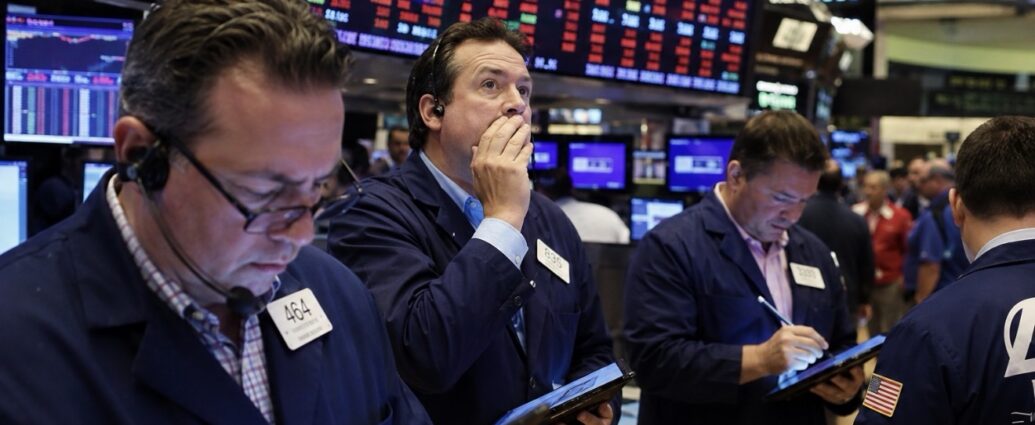
Tel Aviv — May 3, 2026 — Israel’s cost of living has now surpassed that of the wealthiest European countries, a new study from the Aaron Institute for Economic Policy at Reichman University reveals, despite those nations having higher GDP per capita. The average household consumption basket in Israel — including food, housing, electricity, health and education — is 21% more expensive than in countries such as Austria, Finland, Denmark, the Netherlands and Sweden.

The study, led by senior researcher Dr. Sarit Menahem-Carmi, shows Israel’s cost of living is 68% higher than in lower-GDP European countries including Greece, Cyprus, Italy and Spain. Sharp rises in housing and food prices over the past two decades are the main drivers, eroding living standards and fueling emigration concerns among high-skilled Israelis.

The economic impact is stark. While Israel ranks among the top 15 OECD nations in nominal GDP per capita, its residents face significantly higher prices for everyday essentials. Housing costs, which have surged dramatically, now account for a large portion of the gap, while food prices in Israel are 27% higher than in comparable wealthy European economies. The study warns that the high cost of living is already contributing to a brain drain, with more quality human capital leaving the country than returning. This exodus is particularly pronounced among tech professionals and engineers, sectors that have long powered Israel’s innovation economy.

The findings come as Israel continues to navigate the economic fallout from the Iran conflict, including elevated fuel prices that have hammered airlines and broader consumer spending. The Aaron Institute study argues that without major reforms to housing supply, competition in retail and services, and cost-control measures, the gap with Europe will widen further and accelerate emigration of skilled workers. Economists estimate the cost-of-living premium is already shaving 0.5 to 0.8 percentage points off potential GDP growth by discouraging domestic consumption and investment.

For Israeli families, the numbers are painful. A typical household basket of goods and services now costs significantly more than in countries with higher average incomes, squeezing disposable income and contributing to social tensions. The study’s release has sparked fresh debate in the Knesset about affordability, with opposition lawmakers calling for urgent action on housing and food prices. Prime Minister Benjamin Netanyahu’s government has acknowledged the issue but has so far focused on short-term subsidies rather than structural reforms that could increase housing supply or boost competition in key sectors.

The cost-of-living crisis adds another layer of pressure to an economy already grappling with geopolitical risks and the global fuel-price crunch. Israel’s tech sector, which accounts for nearly 20% of GDP, is feeling the pinch as companies struggle to attract and retain talent amid higher living expenses. Venture capital inflows, while still robust, are increasingly directed toward firms that can offer remote or hybrid work arrangements to mitigate the domestic cost burden.

The Aaron Institute report also highlights regional disparities within Israel. Costs in Tel Aviv and other major urban centers are even higher than the national average, exacerbating inequality and pushing younger Israelis toward peripheral areas or abroad. Emigration data from the Central Bureau of Statistics shows a steady rise in departures among 25- to 40-year-olds with advanced degrees, a trend that could undermine Israel’s long-term competitive advantage in high-tech industries.

International comparisons underscore the anomaly. In Austria and the Netherlands, households enjoy similar or higher incomes while paying substantially less for housing, groceries and utilities. The study attributes Israel’s outlier status to chronic under-supply of housing, limited competition in food retail, and regulatory barriers that keep prices elevated. Without bold policy changes — such as accelerated permitting for new construction and antitrust measures in key consumer markets — the cost-of-living gap is projected to widen further over the next five years.

The release of the report has already triggered immediate market reactions. Israeli bond yields edged higher as investors priced in the risk of slower domestic demand, while shares in retail and real-estate companies came under pressure. The shekel weakened slightly against the dollar on concerns that persistent high costs could weigh on consumer confidence and overall economic momentum.

The cost-of-living crisis adds to the weekend’s heavy slate of breaking business news, from airline collapses driven by the fuel-price crunch to conglomerate earnings and OPEC+ production decisions. Markets will be watching closely when trading resumes Monday for any signs of how the study is being priced into Israeli equities and the shekel.

JbizNews- Desk – Economy / Israel

ATLANTA — May 3, 2026 — Major U.S. and European airlines are beginning to scale back fall flight schedules earlier than usual, signaling growing concern that elevated fuel costs and ongoing geopolitical risks could extend well beyond the peak summer travel season.

Carriers including American Airlines, Delta Air Lines, and United Airlines have indicated in recent investor updates and schedule filings that they are taking a more cautious approach to capacity planning for the second half of the year. The adjustments come as jet fuel prices remain volatile amid tensions affecting global oil supply, forcing airlines to prioritize profitability over expansion.

American Airlines CEO Robert Isom has said the company is actively managing capacity to reflect rising costs and demand uncertainty, particularly on longer-haul routes where fuel expenses have the greatest impact. Industry-wide, airlines are increasingly focusing on trimming lower-margin flights and optimizing network efficiency rather than adding new capacity.

The early timing of these schedule changes is notable.

Airlines typically finalize fall schedules later in the summer once peak travel trends are clearer. However, the current environment — marked by persistent fuel volatility and shifting demand patterns — is pushing carriers to act sooner. Analysts say this reflects a deeper level of caution than seen in recent years.

According to aviation data providers and airline disclosures, capacity adjustments are already appearing in transatlantic and long-haul markets, where higher fuel costs and operational complexity make routes more sensitive to price swings. Domestic routes are also being evaluated, particularly those that rely on price-sensitive leisure travelers.

The impact is expected to extend beyond airlines.

Reduced flight availability can tighten overall travel supply, influencing pricing across the broader ecosystem, including hotels, rental cars, and tourism-dependent services. With fewer seats available, airfare typically rises, which can shift demand toward higher-income travelers or alternative destinations.

Helane Becker, airline analyst at TD Cowen, has noted in recent research that airlines are moving from short-term adjustments to longer-term planning strategies. As cost uncertainty persists, carriers are increasingly building flexibility into schedules to respond quickly to market changes.

Demand, however, remains relatively strong — at least for now.

Airlines continue to report solid booking trends, particularly for summer travel, though the mix is evolving. Higher fares and fewer discounted options are beginning to influence consumer behavior, with some travelers opting for shorter trips or delaying bookings in anticipation of price changes.

The broader economic environment is adding another layer of complexity. Elevated energy costs, combined with persistent inflation in services, are putting pressure on household budgets. At the same time, airlines are balancing strong demand against the need to maintain margins in a high-cost environment.

Industry analysts say the key question is duration.

If fuel prices stabilize and geopolitical tensions ease, airlines could restore capacity and expand schedules later in the year. However, if current conditions persist, the industry may shift toward a more structurally constrained supply model, with fewer flights and higher fares extending into late 2026.

The implications for consumers are significant.

Fewer flight options reduce flexibility and increase travel costs, particularly during peak periods. For business travelers, reduced frequency on key routes can affect scheduling and connectivity. For leisure travelers, it raises the cost and complexity of planning trips.

The shift also highlights a broader transformation in airline strategy.

After years of prioritizing growth and market share, carriers are now operating with greater discipline, focusing on returns rather than volume. This approach, while strengthening financial performance, can limit capacity and contribute to higher prices across the travel sector.

Looking ahead, airlines are expected to continue adjusting schedules in response to fuel costs, demand trends, and geopolitical developments. The fall season will serve as an early test of how sustained these pressures may be.

For now, the message from the industry is clear: uncertainty around fuel and global conditions is reshaping airline planning, and the effects are beginning to ripple across the entire travel economy.

JBizNews Desk

Fort Lauderdale / Dublin — May 3, 2026 — A surge in jet-fuel prices driven by the escalating U.S.-Iran conflict is rapidly cascading into a full-scale crisis for the global airline industry, with Spirit Airlines’ abrupt shutdown marking the most dramatic failure in a generation and signaling growing risk across both U.S. and European carriers.

Spirit Airlines halted all operations effective immediately after failing to secure a last-minute $500 million federal lifeline, canceling every remaining flight and leaving thousands of passengers stranded nationwide. The ultra-low-cost carrier’s liquidation — the first major U.S. airline shutdown in 25 years — puts roughly 17,000 jobs at risk. Industry analysts say jet fuel prices, now up more than 40% since the start of the Iran conflict, delivered the final blow to a company already weakened by prior bankruptcies.

The pressure is no longer isolated. Delta Air Lines, United Airlines, and American Airlines have all issued profit warnings in recent days, citing fuel costs exceeding $3.50 per gallon across major hubs. American Airlines CEO Robert Isom told investors the carrier is accelerating capacity cuts, particularly on transatlantic routes, as margins tighten. Executives across the industry are warning that if fuel prices remain elevated, broader operational reductions are inevitable.

The crisis is hitting Europe with equal force. Ryanair CEO Michael O’Leary warned that several European low-cost carriers could face bankruptcy by the end of the summer if current fuel levels persist, calling the environment “unsustainable.” Ryanair has already grounded dozens of aircraft and is weighing capacity cuts of up to 15% across its network. easyJet has issued a profit warning, citing fuel costs at levels not seen since the 2008 financial crisis, while Lufthansa Group plans to cut more than 20,000 flights this summer. Air France and KLM are also trimming schedules and increasing fuel hedging to limit exposure.

Jet fuel — which typically accounts for 30% to 40% of airline operating costs — has become the defining pressure point across the industry. Spirit Airlines’ collapse removes a major source of ultra-low-cost competition in the U.S. market, likely pushing fares significantly higher. Analysts estimate prices on former Spirit routes could rise between 15% and 25% in the coming months, reversing years of downward pricing pressure driven by budget carriers.

The ripple effects are spreading rapidly beyond airlines. Airports that relied heavily on Spirit and Ryanair routes are facing immediate revenue shortfalls from lost landing fees, concessions, and parking income. Aircraft lessors and suppliers are bracing for delayed payments and potential write-downs. Tourism-dependent economies — from Florida and Las Vegas to Mediterranean destinations — now face reduced travel volumes just as peak season approaches.

Thorsten Benner, director of the Global Public Policy Institute in Berlin, said airlines have become “ground zero” for the economic fallout of the Iran conflict. “The speed and scale of the fuel surge are turning what was a manageable cost into an existential threat for low-cost airline models,” he said, warning that the crisis could accelerate consolidation across the global aviation sector.

Government response has so far been limited. The U.S. Department of Transportation confirmed it is coordinating with remaining airlines to accommodate stranded Spirit passengers, though replacement fares are already running 50% to 100% higher than original bookings, according to consumer groups. In Europe, EU Transport Commissioner Adina Vălean has called for emergency coordination meetings as airlines warn of widespread route cancellations.

Analysts say the current environment is likely to trigger a structural shift in the airline industry. Stronger legacy carriers may absorb routes and assets from weaker competitors, but the near-term impact on consumers is clear: fewer flights, higher fares, and reduced competition across key domestic and international routes.

Compounding the uncertainty, President Donald Trump signaled Saturday that the U.S. could reduce troop levels in Germany “a lot further” than previously announced — a move that could intensify geopolitical tensions and keep energy markets volatile, prolonging the fuel crisis that is now reshaping global aviation.

What began as a geopolitical shock is rapidly becoming a defining economic crisis for airlines worldwide. With no clear resolution to the conflict and fuel prices continuing to climb, the industry is bracing for a prolonged period of disruption — and travelers are entering a new era of more expensive, less accessible air travel.

JBizNews Desk

Omaha, Nebraska — May 3, 2026 — Berkshire Hathaway Inc. (NYSE: BRK.A, BRK.B) released its first-quarter 2026 financial results Saturday, delivering a solid performance that marks the official debut of the post-Warren Buffett era under new CEO Greg Abel.

Operating earnings — Berkshire’s preferred metric that strips out volatile investment gains and losses — climbed 18% year-over-year to $11.35 billion. Net income more than doubled to roughly $10.1 billion. The results beat Wall Street expectations in several key segments and underscored the conglomerate’s resilience despite uneven consumer spending and elevated interest rates.

Most notably, Berkshire’s cash and short-term investment reserves ballooned to a record $397 billion, the highest level in the company’s history. The mountain of dry powder reflects Abel’s continued emphasis on capital discipline and patience in a market environment where acquisition targets remain expensive. The company was a net seller of equities during the quarter, trimming holdings by approximately $8 billion more than it added.

Buybacks resumed after a nearly two-year hiatus, signaling management’s view that Berkshire shares offered attractive value at current levels. Abel, who officially took the reins earlier this year after decades as Buffett’s designated successor, addressed shareholders directly at the annual meeting in Omaha last weekend. “Our operating businesses remain the core engine of long-term value creation,” he said, echoing the disciplined philosophy that has defined Berkshire for decades.

Insurance operations — the crown jewel of Berkshire’s portfolio — showed particular strength with improved underwriting margins at GEICO and Berkshire Hathaway Reinsurance. The railroad, utilities, and energy businesses also contributed steady gains, while manufacturing and consumer-facing units navigated softer demand in certain categories.

Analysts say the results validate the seamless leadership transition and Abel’s steady-hand approach. With nearly $400 billion in cash, Berkshire is well-positioned for major deals when the right opportunity arises — though Abel has made clear the bar remains extremely high.

JbizNews- Desk

President Donald Trump said Saturday he is reviewing a new peace proposal from Iran but signaled he sees little chance of accepting it — with one academic saying he appeared to reject it before even being fully briefed — as the nuclear impasse and dueling blockades in the Strait of Hormuz keep global energy and shipping markets on edge more than nine weeks into the conflict.

“I will soon be reviewing the plan that Iran has just sent to us, but can’t imagine that it would be acceptable in that they have not yet paid a big enough price for what they have done to Humanity, and the World, over the last 47 years,” Trump wrote on his Truth Social platform. Speaking briefly to reporters in West Palm Beach, Florida before boarding Air Force One, he confirmed he had been briefed on the “concept of the deal” but declined to specify what could trigger new military action. “If they misbehave, if they do something bad, but right now, we’ll see. But it’s a possibility that could happen, certainly,” he said. Paul Musgrave, professor at Georgetown University, said Trump appeared to have rejected the proposal “without reading it or being briefed on it.”

The Nuclear Red Line

The central obstacle to any agreement is Iran’s nuclear program. In an April 29 phone interview with Axios reporter Barak Ravid, Trump was unequivocal: “At this moment there will never be a deal unless they agree that there will never be nuclear weapons,” adding that Iran is “choking like a stuffed pig” under the naval blockade. Washington has demanded Iran permanently dismantle its nuclear program and surrender its enriched uranium stockpile entirely. Iran insists its program is peaceful, refuses to transfer its uranium abroad, and demands the right to continue enriching uranium on its own soil — a position U.S. and Israeli officials call a non-starter. Secretary of State Marco Rubio told Fox News the Iranian proposal was “better than what we thought they were going to submit,” but added any deal must “definitively prevent them from sprinting towards a nuclear weapon at any point.”

Iran’s 14-Point Offer

Tehran’s latest proposal, a 14-point document conveyed through Pakistani intermediaries and reported Saturday by semi-official Tasnim News Agency, attempts to sidestep the nuclear deadlock entirely — proposing to reopen the Strait of Hormuz and end the war first, with nuclear talks deferred to a later stage. Other demands include guarantees against future U.S. and Israeli military strikes, withdrawal of U.S. forces from the region, release of frozen Iranian assets, war reparations, lifting of all sanctions, and an end to fighting in Lebanon. Iran also insists all issues be resolved within 30 days — at odds with Washington’s preference for a longer transition. Iran’s ambassador to Pakistan, Reza Amiri Moghadam, told state news agency IRNA Sunday that any breakthrough depends on a “change” in Washington’s behavior.

A White House Situation Room meeting on Iran is expected Monday, with Trump’s senior national security team including Vice President JD Vance, White House Chief of Staff Susie Wiles, and special envoy Steve Witkoff, according to officials cited by Axios. Senior Iranian military commander Mohammad Jafar Asadi said Saturday that “a renewed conflict between Iran and the United States is likely,” while the Islamic Revolutionary Guard Corps issued a 30-day ultimatum demanding the U.S. end its port blockade, warning Trump must choose between “an impossible military operation or a bad deal.”

Hormuz Stranglehold

The Strait of Hormuz, which carries roughly one-fifth of global oil and gas supplies, has effectively been shut down. The U.K. Royal Navy said Friday that shipping traffic has collapsed more than 90 percent since the conflict began in late February, warning of a “strangulation of international trade” and a humanitarian crisis for approximately 20,000 seafarers stranded in the waterway. Before the war, around 3,000 vessels transited the Strait monthly; in March that figure fell to just 154. U.S. Central Command confirmed Saturday that 48 merchant vessels have been turned back over the past 20 days, with three additional ships redirected in the past 20 hours.

The U.S. Treasury Department separately warned that any payment to Iran for safe passage — in cash, digital assets, or any in-kind transfer — could trigger secondary sanctions, raising the cost of doing business across the entire Gulf shipping corridor. Iran’s parliament is meanwhile advancing a 12-point law that would permanently restrict passage through the Strait, barring Israeli vessels entirely and requiring ships from “hostile nations” to pay war reparations before crossing, according to state outlet Press TV, citing Vice Parliamentary Speaker Ali Nikzad.

Monday’s Situation Room meeting is now the clearest signal of where this conflict heads next — whether Trump finds any basis for negotiation in Iran’s 14-point document, or moves toward resumed military pressure on a country he says has not yet paid a big enough price.

© JBizNews.com. All rights reserved. This article is original reporting by JBizNews Desk. Unauthorized reproduction or redistribution is strictly prohibited.

By JBIZnews Staff
May 1, 2026

Salesforce CEO Marc Benioff announced Thursday that the cloud software giant will hire 1,000 new college graduates this year through its Futureforce program, just months after laying off roughly 1,000 employees in a February restructuring.

The surprise hiring push targets entry-level roles focused on artificial intelligence initiatives, including Agentforce and Headless 360 platforms. Benioff framed the move as a direct counter to industry fears that AI is eliminating junior positions, stating the company remains committed to developing young talent even as it streamlines operations.

The timing has raised eyebrows on Wall Street. Salesforce conducted the February layoffs as part of broader cost-cutting efforts amid slowing enterprise spending and AI-related investments. The company has now effectively replaced the departed headcount with fresh graduates, many of whom will work on AI-driven products that Benioff believes will drive the next wave of growth.

In a statement, Benioff emphasized: “We’re investing in the future. These new grads will help build the AI agents and tools that will power Salesforce for the next decade.” The Futureforce initiative has historically served as Salesforce’s primary pipeline for early-career hires, with many participants converting to full-time roles.

Analysts view the announcement as a classic Benioff-style messaging play — projecting optimism about AI while addressing public concerns over tech-sector job losses. Salesforce shares rose modestly in after-hours trading following the news, though some investors questioned the net impact on expenses given the rapid shift from layoffs to hiring.

The company has not disclosed salary details for the new positions or exact start dates, but sources familiar with the program say the hires will be spread across engineering, product, and go-to-market teams globally.

Salesforce continues to navigate a challenging macro environment for enterprise software, with AI investments providing a bright spot even as traditional CRM growth moderates.

JbizNews Desk – Technology


WASHINGTON — King Charles III used his four-day state visit to the United States last week to underscore the enduring “special relationship” between Britain and America while subtly signaling important policy differences on trade, security cooperation and political tone — a delicate diplomatic balancing act that has earned praise from historians and diplomats even as it exposed ongoing trans-Atlantic tensions.

The visit, which ran from April 27 to April 30, 2026, marked the first official state visit by a British monarch to the U.S. since Queen Elizabeth II’s trip in 2007. Hosted by President Donald Trump and First Lady Melania Trump, the trip was timed to coincide with America’s 250th anniversary of independence and included high-profile events in Washington, D.C., New York and Virginia: a White House welcome ceremony, an address to a joint session of Congress, a wreath-laying at Arlington National Cemetery, and a gala in New York promoting cultural and charitable ties.

According to Reuters, the king’s mission was explicitly designed to highlight the deep historic and cultural bonds between the two nations at a time when political and policy rifts have widened. President Trump publicly praised the monarch, calling him “fantastic” and a “great king,” while the visit helped keep diplomatic channels open amid disagreements between the Trump administration and U.K. Prime Minister Keir Starmer’s government.

Kristofer Allerfeldt, a professor of American history at the University of Exeter, told reporters that the monarch “has done us proud.” He noted that the visit could provide short-term benefits in steadying relations but acknowledged that deeper structural tensions — particularly over the recent U.S.-led action against Iran — would be far harder to resolve.

The strains were impossible to ignore. The Trump administration has sharply criticized the U.K. for its cautious stance on military support during the Iran conflict, with the president accusing Prime Minister Starmer of weakness and failing to live up to the legacy of Winston Churchill. Differences also surfaced over trade policy, including disputes involving the U.K.’s digital services tax and broader tariff concerns, as well as NATO burden-sharing, climate priorities, and regulatory alignment.

Despite these frictions, King Charles emphasized unity, cultural bonds and shared democratic values in public remarks, including his address to Congress. The carefully choreographed itinerary allowed the monarch — who operates above partisan politics — to project continuity and goodwill while the elected governments navigated their disagreements.

Historians and diplomats described the trip as a classic example of royal soft power at work: reinforcing long-term institutional ties and public affection between the two peoples even when official government positions diverge. The king’s presence at Arlington National Cemetery and participation in 250th-anniversary commemorations in Virginia underscored the deep military and historical partnership forged over centuries.

For the business and investment community, the visit served as a reminder that the U.S.-U.K. economic relationship remains one of the world’s most robust, with billions in bilateral trade, massive cross-border investment, and close financial-market ties. Yet the underlying policy differences — on tariffs, digital regulation, energy policy and defense spending — continue to create uncertainty for companies operating on both sides of the Atlantic.

As the royal couple departed for Bermuda on April 30, analysts said the visit succeeded in its immediate goal of projecting stability and mutual respect. Whether it translates into lasting progress on the thornier issues of trade and security remains to be seen.

JBizNews will continue to monitor developments in U.S.-U.K. relations as both governments work through their differences.

By JBizNews Staff | May 1, 2026

The IRS’ taxpayer advocate issued a notice that tens of millions of American taxpayers may be entitled to refunds or reduced penalties and interest due to the postponement of filing deadlines during the COVID-19 emergency declaration.

The National Taxpayer Advocate said in a post on Thursday that refunds or abatements may be available to tens of millions of taxpayers for penalties and interest that were assessed by the IRS during the 3.5-year COVID disaster declaration period.
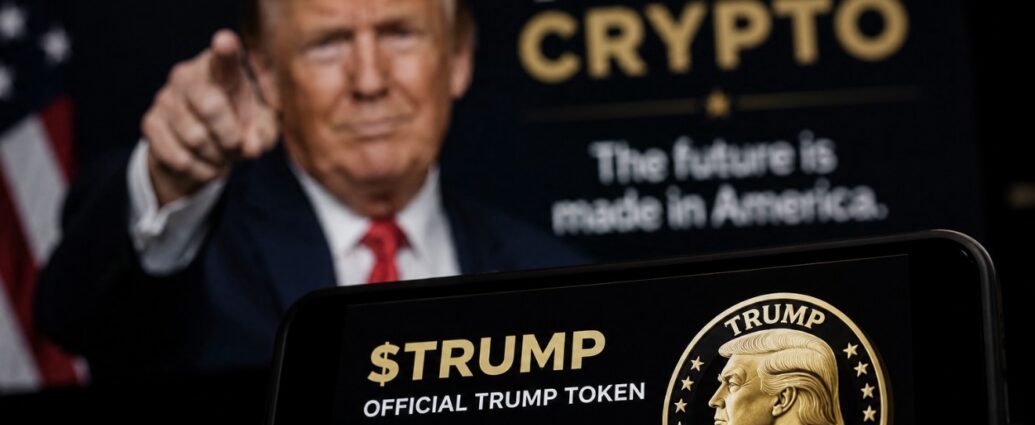
It explained that the issue has arisen due to recent court decisions, including a ruling in what’s known as the Kwong case that the tax code’s handling of federal disaster declarations meant that filing and payment deadlines were postponed throughout the period from Jan. 20, 2020, through May 11, 2023.

The taxpayer advocate noted that the Justice Department may appeal the decision, but the relief compelled by the ruling isn’t automatic and affected taxpayers must file their refund claims by July 10, 2026.

MISSED THE APRIL 15 TAX DEADLINE? HERE’S WHAT EXPERTS SAY YOU SHOULD DO

“Because of the infrequency of a disaster lasting this long, most taxpayers, even most tax professionals, did not foresee that filing deadlines and payments deadlines would be postponed for this long and that return filings and payments would not be considered late and therefore not subject to penalties and interest. But that is the logical extension of what the court ruled,” the National Taxpayer Advocate wrote.

They went on to warn that barring further action by the IRS or Congress to make sure that all taxpayers impacted by the ruling get what they’re owed, such taxpayers face a fast-approaching deadline to file their claims.

AVERAGE TAX REFUND UP NEARLY 11% FROM A YEAR AGO, IRS DATA SHOWS

“Unless the IRS or Congress acts to ensure all affected taxpayers will receive refunds if the Kwong decision is upheld, taxpayers seeking refunds for penalties and interest they paid relating to that period will, in most cases, need to file claims by July 10, 2026,” the advocate explained.

“At the risk of repetition, my overriding goal is to get the word out to as many taxpayers as possible and to avoid disparate results between the ‘well advised’ and the unaware,'” they said.

The taxpayer advocate said that affected taxpayers may be entitled to a refund or abatement of amounts assessed during the COVID period for:

TAX REFUNDS ARE BIGGER THAN EVER THIS YEAR, BUT RESIDENTS OF 5 STATES ARE CASHING IN THE MOST

The notice cautioned that the IRS requires claims under Form 843 to be filed through paper submissions, and because such filings may not provide an immediate confirmation of receipt, it advised that taxpayers should send claims by certified mail to have evidence of their timely submission in case the forms are lost.

The taxpayer advocate recommended that the IRS should abide by the Taxpayer Bill of Rights and take four steps, including publicizing the issue for taxpayers, providing a six-month filing extension for refund claims, consider providing systemic relief so taxpayers don’t have to file, and to create an electronic submission portal.

GET FOX BUSINESS ON THE GO BY CLICKING HERE

It also urged tax professionals to inform clients about the issue, members of Congress to highlight the issue in communications with constituents, and for the media to report about it for the public’s knowledge.

This post was originally published here

Walmart’s latest quarterly results delivered strong top-line numbers — but buried inside the data was a signal that should unsettle every retailer in America: the retail giant’s growth is now being driven not by its traditional working-class base, but by households earning over $100,000 a year.

During Walmart’s Q4 FY2026 earnings call, Walmart U.S. President John Furner confirmed that the majority of the company’s market share gains came from higher-income households — a demographic that historically shopped elsewhere. 

That shift is not merely a Walmart story. It is a warning flare about the state of the American consumer.

Research from GlobalData Retail shows that nearly 28% of high-income consumers were shopping at discount chains like Walmart in 2025, up from roughly 20% in 2021.  The trajectory is steep — and it tells a story of financial stress spreading up the income ladder.

Walmart U.S. comparable store sales rose 4.6% for the quarter, driven by increased customer transactions and unit volumes. E-commerce sales surged 27%, reaching a record-high 23% share of total sales mix. Expedited store-fulfilled delivery grew more than 50%. 

Underneath those figures, however, the consumer picture is more sobering. Walmart CFO John David Rainey noted that as household budgets have tightened, more consumer dollars are flowing toward necessities rather than discretionary purchases.  That dynamic — trading down on everything from groceries to general merchandise — is showing up across income brackets, not just at the lower end.

Rainey acknowledged that Walmart has actively worked to broaden its assortment to attract wealthier shoppers, adding roughly 100 new brands in FY2026, including Fender, Kenmore, Weber, and Stanley.  The strategy is working — but it raises a question the company has not fully answered: what happens to the core lower-income shopper who built Walmart into what it is, as the retailer pivots upmarket?

Walmart’s global advertising business expanded 37% during the period, and membership fee revenue climbed 15.1%. Higher-margin digital and advertising segments contributed to a 10.5% rise in constant-currency adjusted operating income, outpacing total sales growth. 

The financial mechanics are sound. The social read is more complicated.

When a retailer long considered the definitive barometer of working-class America begins logging its strongest gains from six-figure households, it reflects something deeper than a brand refresh. It reflects an economy in which even comfortable earners are recalibrating — cutting where they can, trading prestige for practicality. Analysts note that if higher-income consumers are pulling back on discretionary spending, the downstream impact on retailers without Walmart’s scale, footprint, and pricing power could be severe. 

For smaller retailers, regional chains, and specialty stores that depend on the same mid-to-upper consumer segment now walking into Walmart, the competitive math has shifted. Walmart is no longer just a threat to grocery chains and big-box rivals. It is encroaching on territory once considered safely out of reach.

Walmart raised its full-year net sales outlook to growth of 4.8% to 5.1%, lifted from a prior range of 3.75% to 4.75%, and guided adjusted earnings per share to a range of $2.58 to $2.63.  By every conventional metric, the quarter was a success.

But the more telling metric may be the one Walmart did not highlight in its headline numbers: the accelerating flight of affluent Americans to the discount aisle. That trend, if it holds, will reshape retail competition, consumer brand strategy, and the broader picture of household financial health in America for years to come.

JBizNews Desk

© JBizNews.com. All rights reserved. This article is original reporting by JBizNews Desk. Unauthorized reproduction or redistribution is strictly prohibited.

MOUNTAIN VIEW, Calif. — Alphabet delivered the strongest quarterly results in its history, reporting $109.9 billion in first-quarter revenue and $62.6 billion in net income, as its artificial intelligence strategy drove explosive growth across Google Cloud and reinforced its dominance in search and digital advertising.

The results easily surpassed Wall Street expectations and sent shares sharply higher, with investors responding to both the scale of the beat and the accelerating momentum in AI-driven services. Revenue rose 22% year over year, marking the company’s 11th consecutive quarter of double-digit growth and its fastest pace since 2022.

Sundar Pichai, Alphabet’s Chief Executive Officer, said the company’s “AI investments and full stack approach are lighting up every part of the business,” pointing to broad-based gains across cloud, search, and subscription services.

The standout performance came from Google Cloud, which generated $20.03 billion in revenue, surging 63% year over year — outpacing key competitors. Even more striking, Alphabet disclosed a contracted cloud backlog exceeding $460 billion, signaling a multiyear pipeline of enterprise demand tied directly to AI infrastructure and services.

Pichai told analysts that enterprise AI solutions have now become the primary growth driver within the cloud division, with adoption of Gemini-based products accelerating rapidly across corporate customers.

Search, long the backbone of Alphabet’s business, also delivered strong results. Revenue from Google Search rose 19%, with executives crediting AI-enhanced search experiences for increasing user engagement and query volume. YouTube advertising revenue reached $9.88 billion, while total paid subscriptions across services such as YouTube Premium and Google One climbed to 350 million.

Alphabet’s ambitions extend well beyond software. The company’s autonomous driving unit, Waymo, surpassed 500,000 fully autonomous rides per week and expanded operations to 11 major U.S. cities, marking a significant milestone in the commercialization of self-driving technology.

To sustain its lead, Alphabet is investing at an unprecedented scale. The company raised its full-year capital expenditure forecast to between $180 billion and $190 billion, with Chief Financial Officer Anat Ashkenazi signaling even higher spending in 2027. Alphabet deployed $35.7 billion in capital expenditures in the first quarter alone, much of it directed toward expanding global data center capacity.

The company’s recent acquisition of cybersecurity firm Wiz will be integrated into Google Cloud, though executives cautioned it will temporarily weigh on margins as investments ramp.

For markets and policymakers alike, Alphabet’s results underscore a defining shift in the global economy: artificial intelligence is no longer a future bet — it is actively reshaping corporate spending, enterprise technology, and competitive dynamics in real time.

With a backlog of nearly half a trillion dollars and accelerating enterprise adoption, Alphabet’s quarter signals that the AI infrastructure race is not slowing — it is intensifying.

JBizNews Desk

May 1, 2026

California’s fuel crisis has moved from warning to reality. Two major refinery shutdowns, a sharp turn toward jet fuel production, and a shrinking supply of imports from Asia have combined to push gasoline prices toward $6 a gallon — with analysts warning the worst is still ahead.

The number of refineries operating in California has fallen from 23 in 2000 to just 11 today. The two most recent closures — Phillips 66’s 140,000-barrel-per-day Wilmington complex in Los Angeles, which shut in November 2025, and Valero Energy’s 145,000-barrel-per-day Benicia refinery in the Bay Area, which closed in April 2026 — together removed 17.5% of the state’s refining output from the market. 

Those closures did not just reduce supply. They changed the economics of every refinery still running in the state.

With jet fuel margins now sitting above $85 per barrel — more than $35 per barrel above gasoline — California’s remaining refiners have a powerful financial reason to shift output away from motor fuel. In April, they acted on it: jet fuel production climbed by 20,000 barrels per day and diesel by 16,000 barrels per day, while gasoline output was cut by 32,000 barrels per day.  The refineries are not broken. They are simply chasing the money — and drivers are paying the difference.

Retail gasoline in California is now averaging nearly $5.96 per gallon, roughly $1.20 above where it stood at the end of February and about $1.20 above year-ago levels. Diesel has climbed to $7.48 per gallon, up $2.50 from a year earlier. 

The state cannot easily fill the gap with imports. California’s fuel blend — known as CARB-grade gasoline — is one of the strictest formulations in the world. Most domestic refineries cannot produce it, meaning replacement supply must come from a narrow set of overseas facilities, primarily in Asia and India, arriving by ship across the Pacific.  That supply is now drying up too.

Jet fuel exports from South Korea, Japan, and China to California have dropped to decade lows. South Korean shipments, which averaged 40,000 barrels per day through March, fell to 17,000 barrels per day in April. With only days left in the month, just one confirmed cargo had departed Asia for California. 

Airlines are absorbing the hit alongside drivers. Norse Atlantic Airways scrapped all its summer flights from Los Angeles International Airport. Delta, United, and Air Canada have trimmed routes or raised fares as jet fuel costs at LAX have more than doubled year over year. 

Patrick De Haan, head of petroleum analysis at GasBuddy, said jet fuel availability at major California airports is what concerns him most heading into summer. He warned that widespread flight cancellations remain a serious possibility if no resolution to the global supply disruption emerges in the coming weeks. 

Dan Pickering, founder of Pickering Energy Partners, said California occupies a category of its own. Most states are grappling with higher prices. California is grappling with higher prices and the threat of not having enough fuel at all. “Because availability is tough, the price goes up even more,” he said. 

The longer-term picture is equally stark. A study by University of Southern California professor Michael Mische found that the combined effect of the two refinery closures and layers of new state regulations could push average gasoline prices as high as $8.44 per gallon by year-end 2026 — a potential increase of 75% from prices seen in spring 2025. 

State officials are weighing temporary waivers on CARB fuel specifications to ease import constraints. But a structural fix — a new pipeline into California — is not expected to be operational until 2029 at the earliest. 

For California’s 27 million drivers, that timeline offers little comfort. The refinery closures have already happened. The import shortfall is already here. And the summer driving season has not yet begun.

JBizNews Desk

© JBizNews.com. All rights reserved. This article is original reporting by JBizNews Desk. Unauthorized reproduction or redistribution is strictly prohibited.

NEW YORK — Job cuts across Corporate America are accelerating into the second quarter, as companies intensify restructuring efforts driven by artificial intelligence adoption, cost pressures, and post-pandemic workforce recalibration.

More than 100,000 workers have been displaced so far in 2026, with 155 separate layoff events impacting over 100,000 employees, according to aggregated labor data. The scale and pace of reductions point to a structural shift rather than a temporary adjustment.

The largest single workforce reduction came from Oracle, which eliminated approximately 30,000 positions, underscoring the magnitude of change underway in the technology sector.

Meta Platforms is in the midst of a major restructuring effort, cutting roughly 8,000 employees — about 10% of its global workforce — with layoffs scheduled to take effect in May. The company has also paused hiring for thousands of open roles as it reallocates resources toward artificial intelligence infrastructure.

Earlier this year, Meta had already reduced headcount across multiple divisions, including its Reality Labs unit, signaling a sustained shift in strategic priorities.

Outside of technology, layoffs are spreading across industries. Nike announced plans to cut 775 jobs in its distribution network, citing efforts to streamline operations and expand automation. UPS has outlined plans to eliminate up to 30,000 operational roles over time, largely through attrition and voluntary programs, alongside facility closures.

Other companies are following similar paths. Snap reduced its workforce by approximately 1,000 employees, while European semiconductor equipment maker ASML announced 1,700 job cuts.

The underlying drivers are clear. Companies are increasingly replacing or consolidating roles through AI-driven automation, while also adjusting to tariff uncertainty, shifting supply chains, and the aftereffects of aggressive hiring during the pandemic years.

The labor market is beginning to reflect that divergence. Tech-sector unemployment has risen to approximately 5.8%, the highest level since the early 2000s, even as overall U.S. unemployment remains relatively low at around 3.8%.

Geographically, layoffs are concentrated in major economic hubs. California leads with more than 20,000 affected workers, followed by Pennsylvania and Texas, where cuts span industries including manufacturing, healthcare, and food production.

Looking ahead, additional waves are expected. Meta has signaled further reductions later in 2026, and upcoming labor reports will provide clearer insight into whether the current pace represents a temporary spike or a new baseline.

For workers, the transition is proving disruptive. For businesses, it reflects a fundamental restructuring of how work is done.

The speed at which artificial intelligence is reshaping corporate operations is now outpacing the labor market’s ability to adapt — setting up the second quarter as a critical test of how deep and lasting this transformation will be.

JBizNews Desk

By JBIZnews Staff
May 1, 2026

Iran has delivered a fresh proposal to the United States via Pakistani mediators aimed at breaking the deadlock over the Strait of Hormuz, even as the U.S. naval blockade on Iranian ports remains firmly in place.

The latest offer, conveyed on Thursday, calls for Iran to reopen the strategically vital waterway — through which roughly 20% of global oil and significant LNG volumes flow — in exchange for the U.S. lifting its blockade on Iranian ports and agreeing to a permanent end to the ongoing conflict. Discussions on Tehran’s nuclear program would be deferred to a later phase, according to officials familiar with the proposal.

The proposal comes amid a fragile ceasefire that took hold in early April following months of direct U.S.-Israeli military action against Iran. The U.S. imposed the naval blockade on April 13 after direct talks in Islamabad collapsed, aiming to choke off Iran’s oil export revenues and increase pressure on the regime.

President Donald Trump has already signaled strong rejection of the Iranian plan. In recent comments, Trump stated the blockade will stay in effect until Tehran agrees to a comprehensive deal addressing U.S. concerns over its nuclear ambitions. “They want to settle. They don’t want me to keep the blockade. I don’t want to lift the blockade because I don’t want them to have a nuclear weapon,” Trump told Axios.

The standoff has sent shockwaves through global energy markets. Brent crude briefly surged above $126 per barrel this week — its highest level since 2022 — as traders priced in prolonged disruption risks. Analysts warn that any extended closure or blockade could further strain supply chains and push gasoline prices higher heading into the critical summer driving season.

Iranian officials, including President Masoud Pezeshkian, have described the U.S. blockade as “doomed to fail” and contrary to international law, while vowing to safeguard the country’s nuclear and missile capabilities. Tehran has also floated the idea of new rules for managing traffic through the Strait of Hormuz.

Negotiations remain in flux, with Pakistani back-channel diplomacy continuing and Iranian Foreign Minister Abbas Araghchi holding talks in Russia. A revised Iranian proposal could emerge as early as today, sources indicate, though the White House has given no firm deadline for resolving the crisis.

The impasse underscores the high stakes for global trade and energy security, as both sides dig in over sequencing: Iran prioritizes immediate relief from the blockade, while Washington insists nuclear safeguards come first.

JbizNews Desk – International

May 1, 2026 JBizNews Desk

American consumers and businesses are absorbing the steepest fuel prices in four years, as the ongoing conflict in the Middle East has effectively shut down one of the world’s most critical energy arteries and sent gasoline, diesel, and jet fuel costs surging across every sector of the economy.

The average price of a gallon of regular gasoline stands at $4.30 as of Thursday — the highest level in four years. The closure of the Strait of Hormuz, which carries about one-fifth of global oil and natural gas supply, has triggered the shock.

Brent crude surged past $100 per barrel for the first time in four years, peaking at $126 per barrel. Major container carriers including Maersk, CMA CGM, Hapag-Lloyd, and MSC have suspended transits and rerouted around Africa, adding 10 to 14 days per shipment.

The ripple effects are hitting Main Street hard. Port of Long Beach CEO Noel Hacegaba noted that shippers can no longer absorb rising fuel costs and are passing them along with new surcharges and higher rates.

Parcel shipping costs have spiked: a five-pound ground package from Atlanta to New York City now costs $31.94, up 42% from $22.52 in 2022, with the fuel surcharge component alone rising 131%. UPS and FedEx are on pace for another record quarter in parcel shipping costs.

President Trump has signaled the U.S. naval blockade will continue until Iran makes an acceptable peace proposal, suggesting elevated energy prices above $4 a gallon could persist.

The Federal Reserve’s preferred inflation gauge — the Personal Consumption Expenditures Price Index — jumped to 3.5% annually in March, with energy costs a primary driver. Analysts now question whether the central bank will cut rates at all in 2026.

Small businesses, without the hedging or volume discounts available to larger competitors, are feeling the pain most acutely on deliveries, utilities, and carrier surcharges.

JBizNews Desk

© JBizNews.com. All rights reserved. This article is original reporting by JBizNews Desk. Unauthorized reproduction or redistribution is strictly prohibited.

NEW YORKKirk Tanner, Chief Executive Officer of The Hershey Company, is steering the iconic confectioner toward what he calls “accessible premium” chocolate, betting that elevated yet affordable indulgence can offset shifting consumer behavior driven by the rapid rise of GLP-1 weight-loss drugs. “Consumers want premium experiences without the premium price tag,” Tanner said, outlining a strategy centered on cream-filled chocolate bars designed to deliver richer texture and flavor while remaining within reach of mainstream buyers.

The initiative comes as GLP-1 medications including Ozempic, Wegovy and Mounjaro reshape eating habits across the U.S., dampening demand for traditional high-sugar snacks while creating new consumption patterns. Tanner acknowledged the dual impact, describing the trend as both a headwind for legacy confectionery and a catalyst for innovation. “We are seeing changes in how consumers approach portion size and frequency,” he said, adding that Hershey is adapting with products that meet evolving preferences without abandoning indulgence.

At the same time, Hershey is benefiting from an unexpected tailwind tied directly to the side effects of these medications. Users frequently report dry mouth and what has been dubbed “Ozempic breath,” driving increased demand for mints and gum. “We’ve seen strong demand for gum and mint products as the category benefits from functional snacking tailwinds, including GLP-1 adoption,” Tanner noted, pointing to the company’s Ice Breakers brand, which recorded an 8% rise in retail sales during the first quarter.

Financially, Hershey has managed to navigate the transition with resilience. The company reported adjusted earnings per share of $2.35, surpassing Wall Street expectations, as pricing discipline and product innovation offset softer volumes in core chocolate segments. Growth in protein bars and other functional offerings further supported results, underscoring a broader shift toward diversified snacking beyond traditional sweets.

Analysts say Hershey’s strategy reflects a broader industry pivot, where consumer goods companies are racing to balance indulgence with health-conscious behavior. “Companies that can premiumize their core while leaning into functional benefits are best positioned in this environment,” a senior consumer-sector analyst said, noting that GLP-1 adoption is likely to remain a defining force in food demand for years to come.

Despite speculation about consolidation in the sector, Tanner made clear that Hershey is not pursuing major acquisitions, including a widely discussed potential tie-up with Mondelez International. “We’re focused on our current portfolio and delivering on our outlook,” he said, reinforcing a strategy centered on organic growth and targeted innovation rather than transformational deals.

Input costs remain a key variable. Cocoa prices, which surged earlier this year and pressured margins across the confectionery industry, have begun to stabilize, offering some relief. Still, Hershey continues to operate cautiously amid broader economic uncertainty, maintaining a balance between value-oriented staples and higher-margin premium products.

Since taking the helm in August 2025, Tanner has accelerated Hershey’s evolution into a multi-category snacking company generating more than $11 billion in annual revenue. The upcoming launch of cream-filled bars represents a tangible step in that transformation, aimed at redefining what everyday chocolate can deliver.

The broader consumer shift, executives say, is not a retreat from indulgence but a recalibration. Shoppers are increasingly seeking smaller, higher-quality treats and products that serve multiple purposes, from satisfaction to functionality. For Hershey, that means pairing upgraded chocolate experiences with categories that address emerging needs — even those stemming from pharmaceutical trends.

Looking ahead, the company’s ability to execute on “accessible premium” while capitalizing on functional snacking could determine how well it navigates the GLP-1 era. If successful, Hershey may not only protect its core business but redefine it — proving that even in a market shaped by appetite suppression, demand for smart indulgence remains firmly intact.

JBizNews Desk

May 1, 2026

It was not the debut Bill Ackman had in mind. Pershing Square USA, the billionaire investor’s highly anticipated closed-end fund, fell sharply on its first day of trading Wednesday — erasing nearly a fifth of its value within hours of hitting the market.

Shares priced at $50 but traded as low as $40.33 in the minutes after the opening. By the close, PSUS settled at $40.90 — down 18.2% on the day. 

Pershing Square Inc., the asset management company that listed alongside the fund under the ticker PS, ended its first day at $24.20. 

An investor who bought five shares in the IPO — and received the bonus share of PS that came with the deal — was down roughly 9% on a combined basis by the close, according to calculations by Bloomberg. 

The offering marked the largest closed-end fund launch in U.S. history, but it came in at the low end of Ackman’s ambitions. He had originally targeted between $5 billion and $10 billion. The deal raised $5 billion, with about $2.8 billion already committed by large institutional investors before the IPO opened to the public. 

This was not Ackman’s first attempt at a U.S. public listing. He tried a similar launch in 2024 but pulled it after weak investor interest. 

This time, he structured the deal differently to bring in everyday investors. He lowered the minimum purchase from $5,000 to $250 and partnered with retail brokerages to reach their user bases.  The fund charges a 2% management fee with no performance fees — a departure from the typical hedge fund model that takes a cut of profits.

On the morning of the IPO, Ackman told CNBC: “Hedge funds are sort of known for managing money for rich people. And now we have the opportunity for someone with $50 to be a long-term shareholder. Usually, the retail gets cut massively back, the institutions are favored. We did the opposite.” 

The market, at least on day one, was not convinced. The sharp drop reflects a challenge that closed-end funds frequently face — shares often trade at a discount to the value of the underlying assets once the initial hype fades. Investors who buy in at the IPO price can quickly find themselves underwater even if the portfolio itself performs well.

By Thursday, Ackman moved to show confidence in the deal. He disclosed he had purchased 500,000 shares of PSUS and 800,000 shares of PS out of his own pocket on the first day of trading. Shares rebounded on the second day following the disclosure. 

Whether the bounce holds will depend on how Ackman performs as a public market investor and whether retail investors — the audience he specifically courted — stick with the fund through the early turbulence.

JBizNews Desk

© JBizNews.com. All rights reserved. This article is original reporting by JBizNews Desk. Unauthorized reproduction or redistribution is strictly prohibited.

May 1, 2026

Wall Street is heading into Friday on solid footing, with futures pointing modestly higher after stocks closed April with their best monthly performance in years. But underneath the positive numbers, several big earnings stories — and a geopolitical deadline quietly passed — are keeping investors on edge.

S&P 500 futures rose 0.13% in early trading Friday, while Dow Jones futures added about 102 points. Nasdaq 100 futures were roughly flat. The gains follow a strong Thursday session in which the S&P 500 closed above 7,200 for the first time ever, rising 1.02%. The Dow surged 790 points, and the Nasdaq climbed 0.89%. 

For the month of April, the S&P 500 gained 10.4% and the Nasdaq jumped 15.3% — both posting their strongest monthly performances since 2020. The Dow added 7.1%, its best month since November 2024. 

Apple is the morning’s biggest story. Shares rose nearly 3% in premarket trading after the company posted fiscal second-quarter earnings of $2.01 per share on revenue of $111.18 billion, topping analyst expectations. iPhone revenue, however, missed estimates for the second time in three quarters. 

Twilio is another bright spot. Shares surged more than 20% after the company reported better-than-expected first-quarter results, issued second-quarter guidance above estimates, and raised its full-year sales outlook. 

Roblox tells a different story. The gaming platform’s stock dropped more than 21% after the company cut its full-year bookings outlook to between $7.33 billion and $7.60 billion — well below the $8.13 billion Wall Street had expected. 

On bonds, the 10-year Treasury yield stands at 4.39% and the two-year at 3.89%. The Federal Reserve is widely expected to hold rates steady at its June meeting. CME FedWatch data shows markets pricing in virtually no chance of a rate move. 

On the geopolitical front, the Trump administration quietly passed a congressional deadline under the War Powers Resolution without withdrawing troops from Iran. President Trump said he is sticking with a naval blockade of Iranian ports, keeping pressure on the Strait of Hormuz. Iran’s supreme leader Mojtaba Khamenei signaled his government has no plans to give up its nuclear or missile programs, dimming hopes for a near-term deal. 

Oil is reflecting that uncertainty. Brent crude for July rose above $111 a barrel Friday, while West Texas Intermediate was near $105 — up 12% for the week. 

Venu Krishna, head of U.S. equity strategy at Barclays, said the market story remains solid but warned that the pace of the recent rally leaves room for a pullback. “The pace of this recovery has been so strong in such a short period of time, it does leave some potential for a little bit of a breather,” he said. 

Investors are also watching earnings from Exxon Mobil, Chevron, and Moderna before Friday’s open.

JBizNews Desk

© JBizNews.com. All rights reserved. This article is original reporting by JBizNews Desk. Unauthorized reproduction or redistribution is strictly prohibited.

Washington is navigating a once-in-a-generation transition at the Federal Reserve, with two defining events colliding in a single day: a partisan committee vote that moved Kevin Warsh one step closer to the chairmanship, and what is almost certainly Jerome Powell’s final policy decision at the helm of the central bank.

Warsh, President Donald Trump’s nominee to lead the Federal Reserve, won the backing of the Senate Banking Committee on Wednesday in a 13–11 party-line vote, putting him on track to be confirmed by the full Senate before Powell‘s term ends May 15.  It was the first fully partisan vote on a Fed chair nominee in the committee’s history, Sen. Elizabeth Warren confirmed in a press release. 

The vote had been in jeopardy until days ago. Sen. Thom Tillis of North Carolina was the linchpin — he had blocked the nomination until the Department of Justice dropped its criminal investigation into Powell over cost overruns in a renovation of the Fed’s Washington headquarters. U.S. Attorney Jeanine Pirro announced her office would refer the matter to the Fed’s inspector general, and Tillis declared himself satisfied. 

Democrats were unmoved. Sen. Warren called the vote a step toward “completing his illegal attempt to seize control of the Fed and artificially juice the economy,” citing Trump’s effort to fire Fed Governor Lisa Cook and his sustained pressure campaign against Powell.  Sen. Tim Scott of South Carolina, who chairs the committee, countered that Warsh is “battle tested” and called his leadership “absolutely essential” at the central bank. 

Hours after the committee vote, Powell presided over what multiple outlets confirmed was his final policy meeting as chair. The Federal Open Market Committee voted to hold its benchmark funds rate in a range of 3.5%–3.75% — the third consecutive meeting where the committee chose to stand pat, following three consecutive cuts last year.  The decision was far from routine. The meeting saw an unusually dramatic split, with the FOMC dividing 8–4 — the last time four members dissented was October 1992. 

Fed Governor Stephen Miran, a Trump appointee, dissented in favor of an immediate 25 basis point rate cut. Three others — Cleveland Fed President Beth Hammack, Minneapolis Fed President Neel Kashkari, and Dallas Fed President Lorie Logan — dissented in the opposite direction, opposing the statement’s easing bias and signaling they are not keen on cutting rates anytime soon.  The four-way split sent a pointed message to Washington about the internal tensions Warsh will inherit if confirmed.

At his final press conference as chair, Powell offered measured congratulations to his successor-in-waiting. “I want to congratulate Kevin Warsh on his advancement out of the Senate Banking Committee this morning,” he told reporters. “This is, and will be, a very normal, standard kind of a transition process.” 

Powell also announced he will not be leaving the Fed quietly. He signaled he would remain on the Board of Governors for an indefinite period, saying he is waiting until an investigation into the Federal Reserve’s renovations “is well and truly over with transparency and finality.”  Staying on as a governor — his term runs through January 2028 — would be highly unusual and would deny the Trump administration an open seat on the board.

Trump responded Thursday, saying he doesn’t care that Powell is staying on as a governor. “I’m just happy that Kevin Warsh is set to take over,” he told reporters. 

Markets are already recalibrating. SoFi Technologies CEO Anthony Noto said he expects a Warsh-led Fed to deliver more rate cuts in 2026. “The credit markets and the home loan market are definitely suffering from the high cost of debt, and that’s going to impact the economy at some point in 2027 if there isn’t action taken in 2026,” Noto told Yahoo Finance.  The bond market, however, is currently pricing in no rate cuts this year.

The full Senate is likely to vote on Warsh’s confirmation the week of May 11 — meaning he could be seated before Powell’s term as chair expires on May 15.  Every prior full-Senate confirmation of a Fed chair has included bipartisan support. Warsh has called for “regime change” at the Fed, proposing to alter its economic models, scale back forward guidance, scrap the so-called dot plot, and reassess the size of its bond holdings.  Whether those ambitions survive contact with an already-divided FOMC remains the central question facing financial markets as the leadership clock runs down.

JBizNews Desk

© JBizNews.com. All rights reserved. This article is original reporting by JBizNews Desk. Unauthorized reproduction or redistribution is strictly prohibited.

May 1, 2026

Gold is under pressure this week as President Donald Trump made clear the U.S. naval blockade of Iranian ports is staying in place — and investors are beginning to worry that higher oil prices could keep interest rates elevated for longer, making gold a less attractive place to park money.

Spot gold was up slightly Friday at $4,724.19 an ounce, but is still down more than 2% for the week — on track for its first weekly loss in five weeks. U.S. gold futures for June delivery rose 0.4% to $4,741.30. 

The metal has had a rough ride since the U.S.-Iran conflict began. Gold hit a record high of $5,594.82 an ounce on January 29 and has shed more than 20% since then. Silver has fallen even harder, losing nearly half its value from its all-time high. 

The reason gold keeps falling even as a war rages in the Middle East comes down to one word: inflation. The Iran conflict has pushed oil prices sharply higher, stoking fears that inflation will stay elevated. When inflation looks stubborn, central banks are more likely to keep interest rates high — and high interest rates make bonds and cash more attractive than gold, which pays no interest. 

Trump said this week he is sticking with the naval blockade of Iranian ports. Iran’s supreme leader Mojtaba Khamenei pushed back, vowing his government will not give up its nuclear or missile programs and signaling Tehran intends to keep control of the Strait of Hormuz. 

The situation has been described as a “dual blockade” — the U.S. Navy blocking Iranian ports while Iran restricts traffic through the Strait of Hormuz, a waterway that once carried roughly 25% of the world’s seaborne oil trade. 

Giovanni Staunovo, analyst at UBS, explained the dynamic plainly: gold fell this week because oil prices went higher, which pushed up inflation expectations, which in turn drove up the dollar and bond yields — all of which work against gold. 

Despite the recent weakness, not everyone has given up on the metal. Goldman Sachs is holding its year-end price target of $5,400 an ounce, pointing to continued central bank buying and expectations that the Federal Reserve will eventually cut rates by 50 basis points. Analysts Daan Struyven and Lina Thomas acknowledged the near-term risk but said medium-term upside remains intact. 

Analysts at BNP Paribas noted that gold’s current behavior has clear historical precedent. In 2008, 2020, and 2022, gold initially dropped when major shocks hit markets, as investors rushed to hold dollars instead. In all three cases, a sustained rally followed. 

For now, the path forward for gold depends largely on what happens in the Strait of Hormuz. If talks between Washington and Tehran produce a deal, oil prices could fall, inflation fears could ease, and gold could stabilize. If the blockade holds and the conflict drags on, gold faces more headwinds — even in the middle of a war.

JBizNews Desk

© JBizNews.com. All rights reserved. This article is original reporting by JBizNews Desk. Unauthorized reproduction or redistribution is strictly prohibited.

May 1, 2026

Aluminum prices are holding at elevated levels and analysts warn they could go higher — as President Donald Trump doubles down on his naval blockade of Iran and the Strait of Hormuz remains effectively closed to normal trade.

The Persian Gulf accounts for roughly 9% of global aluminum production, but 18% of aluminum exports outside of China. That makes the region’s output far more important to the rest of the world than its production share alone suggests — and far more vulnerable to a prolonged shipping disruption. 

When the Iran conflict broke out on February 28, London Metal Exchange aluminum futures jumped as much as 10% within two weeks. Prices settled around 8% higher and have been trading near four-year highs. 

The reason is simple: Gulf smelters cannot ship what they produce, and they are running out of what they need to keep producing. Most Gulf smelters depend on alumina imported by sea through the Strait of Hormuz. With the strait effectively blocked, raw material supplies have been cut off. Facilities that cannot receive inputs have been forced to reduce output or shut down entirely. 

Aluminium Bahrain, known as Alba and home to the world’s largest aluminum smelter, declared force majeure on its deliveries and shut down about 300,000 tons per year of capacity — roughly 19% of its total output. Qatalum in Qatar also initiated a controlled production shutdown due to natural gas shortages caused by the conflict. 

Emirates Global Aluminium subsequently announced that repairs to restore full production at its Al-Taweelah facility could take up to a year — a timeline that analysts say could push the global aluminum market outside of China into a deficit even if shipping through the strait resumes soon. 

The downstream impact reaches into everyday life. Aluminum is used in cars, canned food and beverages, aircraft, building materials, and packaging. The automotive sector is among the most exposed — modern vehicles contain an average of 180 kilograms of aluminum per car. Aerospace and packaging industries face similar pressures, with no easy short-term substitute for the metal. 

Ross Strachan, head of aluminum raw materials at CRU Group, said prices could climb toward $4,000 per ton if the disruption continues. BMI, a unit of Fitch Group, said prices are likely to stay elevated in the coming weeks, warning that a prolonged disruption could push the market to $3,700 per ton given that it was already expected to run a deficit in 2026. 

The blockade shows no signs of ending soon. President Trump vowed this week to maintain the naval blockade and was briefed by military commanders on further options, saying the pressure would force Tehran back to the negotiating table.  Iran’s leadership has shown no willingness to comply.

Trump said he will keep the blockade in place until Iran agrees to a nuclear deal. Tehran says it will not reopen the Strait of Hormuz until the U.S. Navy stands down. Neither side has shown signs of budging. 

For manufacturers, consumers, and businesses that depend on aluminum — from car makers to food packagers to construction firms — the longer this standoff lasts, the higher costs are likely to go.

JBizNews Desk

© JBizNews.com. All rights reserved. This article is original reporting by JBizNews Desk. Unauthorized reproduction or redistribution is strictly prohibited.

New York, April 30, 2026 – Small businesses nationwide are accelerating investments in e-commerce platforms and digital tools, with many reporting double-digit growth in online sales during April as they seek to offset the 28% year-over-year surge in insurance premiums and elevated energy costs.

Industry surveys and payment processor data released today show a 15%+ increase in e-commerce activity among small firms, signaling proactive adaptation amid persistent cost pressures.

What’s Impacting Businesses: Political and Economic Drivers

Politically:
Geopolitical tensions in the Middle East, particularly around Iran, have sustained high oil prices near four-year highs while contributing to broader risk assessments by insurers. This occurs against the post-2024 political backdrop, where debates over tariffs, energy policy, and fiscal relief continue. Small business advocates are pushing for bipartisan support on targeted relief to help Main Street manage these external shocks.

Economically:
Record energy costs (WTI crude above $103) combined with the sharp rise in insurance premiums are squeezing margins for retailers, restaurants, and manufacturers. Many owners are turning to lower-cost digital channels and efficiency tools to maintain cash flow, as tighter traditional lending makes traditional expansion more challenging. This shift is helping some firms preserve hiring plans even as overall optimism remains subdued.

Broader Context and Related Developments

The move to digital aligns with today’s earlier reports from the NFIB, U.S. Chamber of Commerce, Bank of America, and SBA highlighting cost-driven challenges and increased loan demand. It also comes as New York City debates Pass-Through Entity Tax changes and the federal State Small Business Credit Initiative (SSBCI) continues providing state-level lending support.

Analysts note that while technology offers a buffer, sustained relief on energy and insurance fronts will be key to long-term Main Street stability.

Stay tuned for updates as this story develops, including further data on small business adaptation strategies and potential policy responses.

JbizNews Desk

By JBIZnews Staff
May 1, 2026


Google parent company Alphabet reported explosive subscription growth in its first-quarter 2026 earnings, adding 25 million new paid subscribers in just three months and pushing its total across services to a record 350 million.

The surge — a 7.7% jump from 325 million at the end of 2025 — was powered primarily by YouTube Premium, YouTube Music, and Google One, with the latter benefiting heavily from bundled advanced Gemini AI features.

Google and YouTube logos
(Symbolic of the subscription boom fueled by YouTube Premium/Music and Google One in Q1 2026.)

JpTs2“LARGE”

Alphabet CEO Sundar Pichai highlighted the milestone on the earnings call, calling it “our strongest quarter ever for our consumer AI plans,” with adoption of the Gemini app contributing significantly to the momentum. YouTube subscriptions in particular saw their largest quarterly increase in non-trial subscribers since the Premium service launched in 2018.

Google One, which combines cloud storage with premium AI tools, has become a major growth engine as consumers seek more value from their Google ecosystem. The subscription push reflects Alphabet’s broader strategy to build recurring revenue streams and reduce reliance on advertising, even as YouTube ads still delivered a solid $9.88 billion in the quarter (up 10.7% year-over-year).

Overall, Alphabet posted Q1 revenue of $109.9 billion (up 22%) and strong earnings per share, beating Wall Street expectations. The “Google subscriptions, platforms, and devices” segment grew 19%, underscoring the rising importance of paid offerings.

Analysts note that the 350 million subscription figure now rivals some of the world’s largest streaming services combined, signaling Google’s successful pivot toward a more diversified and stable revenue model in an increasingly competitive digital landscape.

With price adjustments on YouTube Premium earlier this year and continued AI enhancements across Google One plans, the company appears well-positioned for further subscriber gains in the quarters ahead.

Data sourced from Alphabet’s official Q1 2026 earnings release and conference call.

JbizNews Desk – Technology


By JBIZnews Staff

May 1, 2026

Skyline Builders Group Holding Ltd. (NASDAQ: SKBL) delivered a classic micro-cap merger rollercoaster Thursday, jumping more than 12% in regular trading before giving back nearly 19% in after-hours action following news of a complex business combination that will transform the small construction-services firm into a major player in the global critical minerals space.

The Hong Kong-based company announced it has signed a definitive Transaction Agreement with Cove Kaz Capital Group LLC, Kaz Resources LLC, and a newly formed merger subsidiary to create Kaz Resources Inc., which is expected to list on Nasdaq under the ticker KAZR.

Under the deal, Cove Kaz — which holds a controlling 70% interest in one of the world’s largest undeveloped tungsten resources — will effectively become the core operating business. The flagship asset is the Northern Katpar and Upper Kairakty projects in Kazakhstan’s Karaganda region, a joint venture with state-owned Tau-Ken Samruk. Together they represent an estimated 1.4 million tonnes of WO₃ (tungsten trioxide) under JORC standards — the largest known undeveloped tungsten deposit globally — with potential annual production of approximately 12,000 metric tonnes, equal to roughly 15% of current worldwide output.

Northern Katpar open-pit site in Kazakhstan’s Karaganda region
(The flagship tungsten-molybdenum project at the heart of the SKBL merger.)

Close-up of the Northern Katpar exploration area
(Showing the resource-rich terrain that holds one of the world’s largest undeveloped tungsten deposits.)

In addition to tungsten and molybdenum, the combined entity will control 15 additional critical minerals licenses through Kaz Critical Minerals LLP, covering rare earth elements, lithium, tantalum, beryllium, niobium and more. The portfolio also includes a 75% stake in the Akbulak rare earth project.

The transaction includes several restructuring steps: a new holding entity will be formed in Kazakhstan’s Astana International Financial Centre, Cove Kaz will convert into a Delaware corporation renamed “Kaz Resources Inc.,” and Skyline Builders will divest its legacy civil engineering and construction operations in Hong Kong and China to focus exclusively on the minerals business.

Skyline shareholders will receive a 1:1 conversion of their common shares into the new public company. The agreement also features a $23.1 million bridge loan from Skyline to Cove Kaz at 10% interest and requires the combined company to maintain minimum net cash reserves.

U.S. government financing support appears strong. The companies have received non-binding Letters of Interest from the U.S. Export-Import Bank (up to $900 million) and the U.S. Development Finance Corporation (up to $700 million) to help fund project development.

Heavy-duty mining dump truck at a Kazakhstan critical minerals site

The deal is expected to close in the fourth quarter of 2026 or early 2027, subject to shareholder approval, regulatory clearances, and standard closing conditions.

Market Reaction
SKBL shares closed regular trading at $4.55, up 12.62% on volume exceeding 3.2 million shares. In after-hours trading the stock quickly slid more than 18%, reflecting typical profit-taking and uncertainty around the long timeline and execution risks inherent in large-scale mining projects.

At current levels the market capitalization remains modest at roughly $65 million — a small valuation for assets that proponents claim could position the new company as a strategically vital, non-China source of tungsten and other critical minerals essential to U.S. supply-chain security.

Analysts note that the deal carries both significant upside potential — driven by geopolitical tailwinds and U.S. financing interest — and substantial risks, including development costs estimated near $1.1 billion, regulatory hurdles in Kazakhstan, and the multi-year timeline before meaningful production begins.

JBIZnews- Desk

Photos courtesy of Tau-Ken Samruk / Northern Katpar JV and project materials.


New York, April 30, 2026 – Small businesses across the country are facing a sharp 28% average increase in insurance premiums this year, according to new data compiled from major carriers and industry surveys released today. The rise is hitting retailers, restaurants, and manufacturers particularly hard, with many owners reporting they are absorbing the costs or reducing coverage to stay afloat.

The surge comes as insurers point to heightened claims from extreme weather events, supply-chain disruptions, and elevated geopolitical risks driving up reinsurance costs.

What’s Impacting Businesses: Political and Economic Drivers

Politically:
Geopolitical tensions in the Middle East, particularly around Iran, have contributed to broader risk assessments by insurers, pushing up premiums alongside ongoing policy debates in Washington over tariffs, energy security, and fiscal relief in the post-2024 environment. Small business groups continue to lobby for targeted relief measures to offset these external pressures.

Economically:
Record oil prices near four-year highs are compounding the insurance burden by inflating overall operating costs, while tighter credit conditions make it harder for firms to finance higher premiums. This aligns with recent reports from the NFIB, U.S. Chamber of Commerce, Bank of America, and SBA showing declining optimism, surging energy spending, and increased loan demand among small firms.

Broader Context and Related Developments

This development builds directly on today’s earlier small business surveys highlighting cost pressures and ties into ongoing concerns over New York City’s proposed changes to the Pass-Through Entity Tax credit. Federal programs like the State Small Business Credit Initiative (SSBCI) are providing some lending support, but many owners say insurance remains a top barrier to stability.

Industry analysts note that without relief on energy or insurance fronts, the cumulative effect could further slow Main Street hiring and investment.

Stay tuned for updates as this story develops, including any insurer responses or potential policy actions.

JbizNews Desk

New York, April 30, 2026 – Bank of America today released its latest Small Business Owner Report, revealing a 23% year-over-year jump in small firms’ spending on gasoline and energy during the first quarter of 2026. The data underscores how record oil prices are directly hitting Main Street operators, contributing to squeezed margins and slower growth plans.

The report, based on aggregated spending and lending data from thousands of small business clients, highlights energy costs as the fastest-rising expense category, outpacing even insurance and labor.

What’s Impacting Businesses: Political and Economic Drivers

Politically:
Ongoing Middle East tensions, particularly around Iran, combined with recent high-level policy discussions and comments tied to former President Trump on energy security, have sustained elevated oil prices near four-year highs. This geopolitical volatility adds uncertainty for small businesses operating in the post-2024 political environment, where debates over tariffs, fiscal support, and regulatory relief continue to influence cost outlooks. Advocacy groups are pressing Congress for targeted energy relief to protect Main Street from international disruptions.

Economically:
WTI crude holding above $103 and Brent near recent peaks have driven the sharp rise in fuel and utility expenses, directly inflating costs for transportation-dependent retailers, manufacturers, and food-service operators. This compounds the 28% increase in small business insurance premiums reported earlier by JbizNews, as well as tighter credit conditions, forcing many owners to delay hiring or capital investments. The Bank of America data also showed a slowdown in overall payroll growth, signaling broader pressure on small-firm contributions to the economy.

Broader Context and Related Developments

The findings align closely with today’s earlier NFIB and U.S. Chamber of Commerce reports showing declining small business optimism, as well as ongoing concerns over New York City’s proposed Pass-Through Entity Tax credit changes. While the federal State Small Business Credit Initiative (SSBCI) continues to offer some lending support at the state level, the latest Bank of America figures highlight a widening gap between resilient corporate earnings and the mounting challenges facing smaller enterprises.

Bank of America Chief Economist Michael Gapen noted, “Small businesses are absorbing these energy shocks head-on, which could weigh on broader consumer spending and job creation if costs remain elevated.”

Stay tuned for updates as this story develops, including any potential policy responses from Washington or further data from small business surveys.

JbizNews Desk

New York, April 30, 2026 – The U.S. Chamber of Commerce released its April Small Business Index today, revealing a drop to its lowest level in 18 months as owners grapple with elevated energy bills, rising insurance premiums, and tighter credit conditions that are forcing cutbacks in hiring and capital investment.

The survey of thousands of small firms nationwide highlights growing caution on Main Street, with many owners reporting they are delaying expansion plans or passing higher costs along to customers.

What’s Impacting Businesses: Political and Economic Drivers

Politically:

Geopolitical tensions in the Middle East, including ongoing Iran-related developments and high-level policy discussions, have kept oil prices near four-year highs and added layers of uncertainty for small businesses. This comes against the backdrop of the post-2024 political environment, where debates over tariffs, fiscal relief, and regulatory relief remain active. Business advocates are urging policymakers across party lines to prioritize measures that ease cost burdens on Main Street without adding new compliance hurdles.

Economically:

Persistent high energy costs—WTI crude above $103 and Brent near recent peaks—are directly hitting transportation, manufacturing, and retail operations, while the 28% year-over-year increase in small business insurance premiums (as previously reported by JbizNews) continues to squeeze margins. These pressures are compounding tighter lending standards at banks and slower supplier payment cycles, leading to reduced optimism and fewer plans for hiring or new equipment purchases.

Broader Context and Related Developments

This decline builds on the NFIB Optimism Index drop reported earlier today and echoes recent concerns over New York City’s proposed changes to the Pass-Through Entity Tax credit. It also comes as federal programs like the State Small Business Credit Initiative (SSBCI) continue to provide some relief through state-level lending support. Larger firms have shown more resilience in recent earnings, underscoring the growing gap between Wall Street performance and Main Street challenges.

U.S. Chamber Chief Economist Suzanne Clark noted, “Small businesses are the backbone of our economy, but sustained cost pressures are testing their resilience like never before.”

Stay tuned for updates as this story develops, including potential reactions from policymakers and further data releases.

JbizNews Desk

April 30, 2026 – JBizNews Staff

New York — Wall Street powered higher on Thursday, with all major averages closing strong and the S&P 500 and Nasdaq Composite hitting fresh all-time highs. Investors focused on resilient economic data and solid Big Tech earnings while largely shrugging off a sharp spike in oil prices tied to escalating U.S.-Iran tensions.

The S&P 500 climbed 1.02% to close at 7,209.01 — its first close above the 7,200 level and a new record high. The Nasdaq Composite rose 0.89% to 24,892.31, also posting a fresh closing high. The Dow Jones Industrial Average surged 790 points, or 1.62%, to finish at 49,652.14.

April delivered blockbuster gains across the board: the S&P 500 and Nasdaq posted their best monthly performances since early 2020, with the Dow up more than 7% for the month.

All the Key Stories Driving the Close

Tech Earnings Deliver Mixed but Supportive Results

Alphabet (Google) soared on robust cloud and AI-driven results, marking one of the biggest one-day market-cap gains in company history and helping lift the broader market.

Apple reported after the bell, beating estimates with adjusted EPS of $2.01 (vs. $1.96 expected) and revenue of $111.2 billion (vs. $109.66 billion expected). Strong iPhone sales and China recovery fueled the beat, though iPhone revenue missed for the second time in three quarters. Shares rose in extended trading.

Other mega-caps were mixed: heavy AI capital-expenditure spending pressured Meta and Microsoft, while Caterpillar jumped roughly 10% on strong results.

Oil Surges on Geopolitical Risks

Brent crude spiked sharply during the session — briefly hitting four-year and wartime highs — after reports that President Trump received a briefing on new military options against Iran amid an ongoing naval blockade of Iranian ports. The energy-price surge raised inflation concerns but failed to derail the equity rally. Traders will watch Friday’s energy-sector earnings (Chevron, ExxonMobil) closely.

Economy Shows Resilience

U.S. Q1 GDP expanded at a 2% annualized rate, rebounding from Q4 2025’s sluggish 0.5% pace. Government spending and business investment — including AI-related outlays — provided support despite rising energy prices.

Fed Holds Rates Steady

The Federal Reserve kept interest rates unchanged in what was widely viewed as Chair Jerome Powell’s final meeting in that role. Powell signaled he would remain on the Fed Board of Governors post-term to help safeguard the institution’s independence.

Bottom Line

Markets showed impressive resilience, with the growth + AI narrative continuing to dominate despite geopolitical noise and elevated oil prices. The strong close to April leaves Wall Street optimistic heading into the final stretch of earnings season and next week’s key economic data.

JBizNews will continue tracking developments in earnings, energy markets, and monetary policy. Stay tuned for more updates.

JBizNews- Markets

, mortgage rates rise.

Mortgage buyer Freddie Mac reported on Thursday that mortgage rates increased somewhat this year.

The benchmark 30-year fixed mortgage‘s average rate increased to 6.3 % from 6.2 % last week, according to Freddie Mac’s most recent primary mortgage market survey, which was released on Thursday. &nbsp,

At this time next year, the 30-year product had a price of 6.7 % on average.

MARKET GAINING MOMENTUM HAS PICKED AS THE SPRING SEASON EXISTS

Purchase demand has increased, with obtain applications exceeding 20 % above next year, according to Sam Khater, chief economist at Freddie Mac, as rates had quietly slowed over the previous few weeks. &nbsp,

” It is obvious that as prospective customers react to slightly lower rates and more stock than the last few years, purchase demand continues to rise,” he said.

HOMEOWNERSHIP DECLINES NATIONWIDE CRISIS APPEARS TO ALL AGENESS.

A 15-year fixed mortgage’s average rate increased to 5. 64 % from 5. 58 % last week. Last year, the rate on 15-year fixed debts was on average 5.92 %.

The Federal Reserve and politics are just two examples of how mortgage rates are affected by various components. Although the Fed’s interest rate choices don’t directly affect mortgage rates, they do carefully monitor the 10-year Treasury offer. As of Thursday evening, the offer on 10-years was hovering at 4.37 %.

The Federal Reserve decided on Wednesday to leave its benchmark federal funds rate unchanged with a target range of 3.5 % to 3.7 %, which is the most recent mortgage data.

MORTGAGE PAYMENT’S VERBAL MOVE-UP IS AT NEW HIGH, TOPPING$ 2K FOR FIRST TIME EVER.

According to Realtor.com’s analyst Jiayi Xu, the Federal Reserve “unsurprisingly held prices solid,” but the voter dissention adds to the uncertainty surrounding monetary policy.

Geopolitics is likely to be the main drivers of mortgage rates in the near future, despite important decisions and the Fed’s future leadership transition.

Clicking HERE WILL GET FOX BUSINESS ON THE GO.

The 10-year Treasury bond increased above 4.3 % and passed the 4.4 % threshold after the Fed left rates unchanged and expressed concerns about the Middle East tensions as a whole, according to Xu.

This post was originally published here

By JBizNews Desk — April 30, 2026

The Occupational Safety and Health Administration released updated guidance late Wednesday urging small businesses with outdoor or warehouse operations to implement mandatory heat-stress prevention plans ahead of rising summer temperatures, citing increased claims linked to extreme heat events. The after-close advisory, sent to trade associations and small-employer networks, emphasizes paid rest breaks, hydration stations, and training — measures many smaller operators say will add to already elevated labor and insurance costs tracked throughout the day.

For small construction firms, landscapers, delivery services, and warehouse operators, the new expectations could require schedule adjustments or equipment investments at a time when hiring remains cautious and consumer spending is restrained.

Key Requirements in the New Guidance

• Mandatory 15-minute paid rest breaks every two hours when heat index exceeds 90°F.

• Free provision of water, shade structures, and training for supervisors and workers.

• Recommended written heat-illness prevention plans for businesses with 10 or more outdoor employees.

Economists described the guidance as a necessary but costly step for small employers already navigating multiple pressures, with Diane Swonk, chief economist at KPMG, noting that as diesel’s cost advantage erodes amid volatile fuel prices, fleets and small operators are increasingly open to electric alternatives but now face added compliance costs; Heather Long, chief economist at Navy Federal Credit Union, pointed out the ripple effects for everyday workers and businesses as cautious consumer spending weighs on growth; Oliver Allen, senior U.S. economist at Pantheon Macroeconomics, emphasized that this reflects broader trends of regulatory support for worker safety in a high-cost environment; Nicole Bachaud, economist at ZipRecruiter, added that the measures could encourage more selective hiring and training investments; and Gina Bolvin, president of Bolvin Wealth Management Group, advised small-business clients to implement low-cost compliance steps early to avoid larger insurance claims or fines.

Outlook

The OSHA heat-stress guidance arrives as small businesses prepare for another summer of elevated operational demands. For Main Street operators and their workers, the advisory underscores the growing intersection of safety, labor, and cost management. Tomorrow’s small-business labor updates will reveal how quickly employers adapt these recommendations.

JBizNews Desk

© JBizNews.com. All rights reserved. This article is original reporting by JBizNews Desk. Unauthorized reproduction or redistribution is strictly prohibited.

By JBizNews Desk — April 30, 2026

Major suppliers to Walmart and Target confirmed after the close that both retailers have extended standard payment terms from 30 to 45–60 days on many categories, a move aimed at managing their own inventory costs amid softening consumer demand and high energy prices. The change, communicated directly to vendors late Wednesday, is expected to strain cash flow for thousands of small manufacturers and importers who already face insurance, labor, and packaging cost increases reported earlier today.

For the family-run producers and niche suppliers that stock everyday household goods, the longer wait for payment could force tighter inventory management or delayed hiring — compounding the challenges small retailers themselves are navigating.

What the Extended Terms Mean for Small Suppliers

• Cash tied up longer in receivables, potentially requiring new lines of credit or delayed supplier payments further down the chain.

• Smaller vendors without strong balance sheets most at risk of margin compression or reduced production runs.

• Possible shift toward shorter-term or higher-margin private-label work as a hedge.

Economists described the payment-term extension as another example of big retailers passing cost pressures upstream, with Diane Swonk, chief economist at KPMG, noting that skyrocketing insurance and labor costs have become existential threats for many small retailers already facing softer demand; Heather Long, chief economist at Navy Federal Credit Union, pointed out the ripple effects for Main Street suppliers as cautious consumer spending weighs on growth; Oliver Allen, senior U.S. economist at Pantheon Macroeconomics, emphasized that this reflects broader trends of large players managing balance sheets in a high-cost environment; Nicole Bachaud, economist at ZipRecruiter, added that operational tightening could lead to more selective hiring and scheduling at the supplier level; and Gina Bolvin, president of Bolvin Wealth Management Group, advised small-supplier clients to negotiate early or diversify customer bases to protect cash flow.

Outlook

The after-close notice from Walmart and Target highlights how cost-saving measures at the top of the retail chain continue to flow down to small vendors. For business enthusiasts and Main Street suppliers, the message is clear: stronger cash-management strategies and diversified sales channels will be essential in the months ahead. Tomorrow’s retail earnings and small-business surveys will show how widely this practice spreads.

JBizNews Desk

© JBizNews.com. All rights reserved. This article is original reporting by JBizNews Desk. Unauthorized reproduction or redistribution is strictly prohibited.

U.S. economic growth rebounded in the first quarter of the year from a sluggish fourth quarter, according to the Commerce Department’s latest estimate.

The Bureau of Economic Analysis (BEA) on Thursday released its advance estimate of first-quarter GDP, which showed the economy grew at an annualized rate of 2% in the three-month period including January, February and March.

That figure was lower than the expectations of economists polled by LSEG, who had estimated 2.3% GDP growth in the first quarter.

It comes after the U.S. economy grew at a roughly 2.1% rate in 2025. The second half of last year saw 4.4% annualized growth in the third quarter and 0.5% growth in the fourth quarter.

FED’S FAVORED INFLATION GAUGE REMAINED ELEVATED IN MARCH

The BEA reported that the main contributors to the rise in GDP in the first quarter were investment, exports, consumer spending and government spending. Imports increased in the first quarter.

Most of the investment was focused on equipment, particularly computers and related equipment amid the artificial intelligence (AI) buildout, as well as intellectual property products including software and private inventories at retail and wholesale trade firms. 

Investment in residential and nonresidential structures declined and partly offset those gains.

GAS PRICES SOAR TO HIGHEST POINT SO FAR DURING UNSETTLED CONFLICT WITH IRAN

The rise in government spending was led by federal employee compensation increasing after the end of the government shutdown that occurred in the fourth quarter, when it declined as federal workers missed paychecks.

Rising consumer spending was attributed mainly to services led by healthcare, including both hospital and nursing home services along with outpatient services.

Real final sales to private domestic purchasers, which is the sum of consumer spending and gross private fixed investment, increased 2.5% in the first quarter after a more modest increase of 1.8% in the fourth quarter.

FEDERAL RESERVE LEAVES INTEREST RATES UNCHANGED AS POWELL’S CHAIRMANSHIP NEARS END

Michael Pearce, chief U.S. economist at Oxford Economics, said that the “core of the economy remained solid in Q1, driven by the AI buildout and the tax cuts beginning to feed through. Those factors will continue to drive growth over the rest of the year, but the jump in energy prices will take some of the shine off what would otherwise have been a strong year for the economy.”

“Some of the strength of consumer spending in March is payback for the poor weather at the start of the year. Fiscal stimulus is more than outweighing the drag from higher energy prices for now, but that balance will begin to shift in the months ahead, especially with gas prices still climbing,” Pearce added.

Gregory Daco, chief economist at EY-Parthenon, said that while “AI investment promises to reinforce organic productivity growth in the coming years, its near-term impact through increased capex, infrastructure buildout, and energy demand is likely to add to inflationary pressures.”

GET FOX BUSINESS ON THE GO BY CLICKING HERE

“Private sector demand showed firmer momentum than in Q4 2025, but it reflects an uncomfortable balance where the three narrow A-pillars of growth – affluent consumers, AI-investment and asset price gains – mask an uneven foundation where headline gains look good, but hide underlying fragilities,” Daco said.

This post was originally published here

By JBizNews Desk — April 30, 2026

Several major regional utilities notified small-business customers late Wednesday that electricity and natural-gas rates will rise 8–10 percent starting June 1, citing sustained high wholesale energy prices and increased infrastructure costs tied to the same oil surge that has dominated today’s coverage. The after-close announcements, sent directly to commercial accounts, will hit neighborhood retailers, restaurants, and small manufacturers particularly hard as they already grapple with insurance, labor, and packaging pressures.

For everyday operators running refrigeration, lighting, or HVAC systems, the hike could add hundreds of dollars monthly to overhead — further squeezing margins at a time when cautious families are trimming discretionary visits and gas prices hover near $4.23 per gallon.

What the Rate Increases Mean for Small Businesses

• Higher monthly bills for stores, cafes, and light-manufacturing facilities, with no immediate offset for energy-efficiency upgrades.

• Many owners expected to accelerate LED retrofits or negotiate flexible payment plans to manage cash flow.

• Potential pass-through to customers or reduced hours as operators seek to absorb the added expense.

Economists described the utility notices as the latest transmission of today’s energy shocks to Main Street, with Diane Swonk, chief economist at KPMG, noting that as diesel’s cost advantage erodes amid volatile fuel prices, fleets and small operators are increasingly open to electric alternatives but now face higher financing and utility hurdles; Heather Long, chief economist at Navy Federal Credit Union, pointed out the ripple effects for everyday businesses and families as cautious consumer spending weighs on growth; Oliver Allen, senior U.S. economist at Pantheon Macroeconomics, emphasized that this reflects broader trends of large energy providers passing sustained costs downstream; Nicole Bachaud, economist at ZipRecruiter, added that operational tightening could lead to more selective hiring and scheduling adjustments; and Gina Bolvin, president of Bolvin Wealth Management Group, advised small-business clients to audit energy usage immediately and explore available efficiency grants to protect margins in the high-cost environment.

Outlook

The post-close utility rate announcements highlight how energy volatility continues to compound cost pressures for small businesses. For Main Street operators and the communities they serve, the coming months may require tighter budgeting and faster adoption of cost-saving technologies. Tomorrow’s updates on small-business energy surveys and consumer spending will show how widely these hikes reshape daily operations.

JBizNews Desk

© JBizNews.com. All rights reserved. This article is original reporting by JBizNews Desk. Unauthorized reproduction or redistribution is strictly prohibited

New York, April 30, 2026 – The National Federation of Independent Business (NFIB) released its April Small Business Optimism Index today, revealing a sharp decline to its lowest level in 11 months. The index fell 4.2 points to 87.3, with owners citing record-high energy prices, elevated insurance premiums, and tighter credit conditions as the primary drags on hiring, capital spending, and expansion plans.

The report, which surveys thousands of small firms nationwide, underscores growing anxiety on Main Street as businesses grapple with the downstream effects of elevated oil prices and persistent cost pressures.

What’s Impacting Businesses: Political and Economic Drivers

Politically:

Escalating geopolitical risks in the Middle East, particularly tensions involving Iran and recent high-level briefings tied to former President Trump’s comments on energy policy, have driven oil prices to four-year highs. This has amplified uncertainty for small businesses already navigating the post-2024 political landscape, where policy debates around tariffs, regulation, and fiscal relief remain fluid. Business groups are calling on lawmakers in both parties to prioritize targeted relief measures to shield Main Street from volatility stemming from international flashpoints.

Economically:

Soaring energy costs—WTI crude holding above $103 and Brent near recent peaks—are directly inflating operating expenses for fuel-dependent sectors like transportation, manufacturing, and retail. This compounds the 28% year-over-year rise in small business insurance premiums highlighted in recent JBizNews reporting, squeezing margins and forcing many owners to delay investments or pass costs to consumers. The NFIB noted that plans for capital outlays and hiring hit multi-month lows, signaling a potential slowdown in small-firm contributions to job growth and economic resilience.

Broader Context and Related Developments

This marks the third consecutive month of declining optimism and builds directly on yesterday’s JBizNews coverage of rising insurance costs for small retailers and the ongoing federal State Small Business Credit Initiative (SSBCI) rollout aimed at easing lending access. While larger corporations have shown resilience in recent earnings, the NFIB data highlights a growing divergence between Wall Street and Main Street.

NFIB Chief Economist Bill Dunkelberg stated, “Small business owners are facing a perfect storm of cost pressures that could dampen the broader recovery if not addressed.”

Stay tuned for updates as this story develops, including potential reactions from Washington and state-level policy responses.

JbizNews Desk

By JBizNews Desk — April 30, 2026

The U.S. Small Business Administration today launched a new $12 billion low-interest loan initiative specifically tailored for small retailers struggling with soaring insurance premiums and persistent labor costs. The program, announced via official SBA channels, offers flexible financing at rates as low as 4 percent with repayment terms designed to provide immediate breathing room for independent stores, boutiques, and neighborhood retailers already navigating thin margins amid high gas prices and cautious consumer spending.

This targeted relief comes as small retailers across the country report insurance costs up sharply due to rising claims and reinsurance pressures, while labor expenses remain elevated even as hiring has cooled. By directing capital straight to Main Street shops, the SBA aims to prevent further store closures and support the very businesses that anchor local communities and drive everyday consumer activity.

How the Program Works for Small Retailers

• Loans up to $2 million per business with interest rates starting at 4 percent and terms extending to 10 years, focused on covering insurance deductibles, premium payments, and workforce-related costs such as training or retention bonuses.

• Streamlined application process through participating lenders with expedited approvals for retailers demonstrating need tied to recent cost spikes.

• Funds can be used for working capital, equipment upgrades, or hiring incentives, with no collateral required for smaller amounts to reduce barriers for family-owned operations.

Economists described the rollout as a timely intervention for a sector under mounting pressure, with Diane Swonk, chief economist at KPMG, noting that skyrocketing insurance and labor costs have become existential threats for many small retailers already facing softer demand from high gas prices and budget-conscious families; Heather Long, chief economist at Navy Federal Credit Union, pointed out the ripple effects for Main Street, saying these loans could help stabilize local employment and keep neighborhood stores open at a time when cautious consumer spending is weighing on discretionary retail; Oliver Allen, senior U.S. economist at Pantheon Macroeconomics, emphasized that while the program will not solve every challenge, it removes a key financial bottleneck and aligns with broader trends of supporting small businesses to maintain economic resilience beyond large chains; Nicole Bachaud, economist at ZipRecruiter, added that easier access to capital for labor needs could encourage more selective hiring and training investments in retail communities; and Gina Bolvin, president of Bolvin Wealth Management Group, advised small-retailer clients to review eligibility closely, saying early adopters may gain a meaningful edge on costs but should pair the financing with careful cash-flow planning to avoid over-reliance on any single program.

Small retailers are already responding positively in preliminary feedback shared with the SBA. Independent grocers, apparel boutiques, and hardware stores in high-cost regions report that the low-interest capital will allow them to maintain staffing levels and absorb insurance hikes without passing full costs to customers — a critical factor as households continue to prioritize essentials over non-essential shopping.

Outlook

The SBA’s $12 billion low-interest loan program marks a direct effort to shore up the backbone of American retail at a moment when small businesses are feeling the cumulative strain of today’s economic environment. For everyday operators and the communities they serve, the initiative offers practical relief that could help sustain jobs, preserve local shopping options, and ease some of the cost pressures that have defined much of the day’s business coverage.

The coming weeks will reveal how quickly funds are deployed and whether the program delivers the intended stability for small retailers. For business enthusiasts and Main Street owners, this development underscores the importance of proactive financing strategies in a high-cost landscape. Tomorrow’s updates on retail earnings and small-business sentiment will provide the next read on how effectively this support translates into real-world resilience.

JBizNews Desk

© JBizNews.com. All rights reserved. This article is original reporting by JBizNews Desk. Unauthorized reproduction or redistribution is strictly prohibited

By JBizNews Desk

NEW YORK — April 30, 2026

Netflix (NASDAQ: NFLX) shares have tumbled more than 32% from their 52-week high, trading near $91–92 after the company’s Q1 2026 earnings report. While the streaming giant posted strong results — revenue up 16% year-over-year, operating income up 18%, and free cash flow exploding to $5.2 billion — investors focused on forward guidance that came in slightly below some Wall Street expectations and the announcement that co-founder Reed Hastings will step down from the board in June.

The sell-off also followed Netflix’s decision not to pursue a major acquisition of Warner Bros. Discovery amid a bidding war with Paramount Skydance.

Why This Is a Major Buying Opportunity

Despite the sharp pullback, Netflix remains fundamentally strong. The company’s stockholders’ equity has grown to $31.1 billion, and it continues to generate massive free cash flow. Subscriber growth, pricing power, and the expanding ad-tier are driving sustainable revenue. Long-term tailwinds — international expansion, live events, gaming, and video podcasts — position Netflix as the clear leader in global streaming.

At current levels, the stock trades at a more reasonable valuation relative to its durable competitive moat and cash-generating ability. Analysts largely maintain a Buy rating, viewing the pullback as an overreaction to short-term guidance rather than any structural weakness.

Business Implications

For long-term investors, the 32% decline creates a compelling entry point into one of the highest-quality growth franchises in tech and media. While near-term volatility from content spending and macro pressures may linger, Netflix’s balance sheet strength and strategic clarity make it well-positioned to rebound as the market refocuses on execution rather than headlines.

The stock’s reaction highlights how even market leaders can face sharp corrections on guidance misses — but history shows Netflix has consistently rewarded patient investors who buy during periods of doubt.

— JBizNews Desk

© JBizNews.com. All rights reserved. This article is original reporting by JBizNews Desk. Unauthorized reproduction or redistribution is strictly prohibited.

By JBizNews Desk

WASHINGTON — April 30, 2026

Kevin Warsh is on the verge of becoming the next chairman of the Federal Reserve — but if Wednesday’s dramatic policy meeting is any indication, he will arrive at the Eccles Building to find a committee in open rebellion against the very rate cuts he and President Donald Trump are pushing for.

The Federal Open Market Committee voted Wednesday to hold its benchmark federal funds rate in a range between 3.5% and 3.75% for a third consecutive meeting to start 2026. While that decision came as little surprise to markets, what followed was anything but routine. The four total dissents recorded at this meeting were the most at any Fed policy gathering since October 1992.

The fractures inside the committee cut in two opposing directions. Governor Stephen Miran dissented in favor of an interest rate cut, while Cleveland Fed President Beth Hammack, Minneapolis Fed President Neel Kashkari, and Dallas Fed President Lorie Logan dissented not against the rate decision itself, but because they did not support the inclusion of an easing bias in the policy statement. In other words, three of the four dissenters wanted to slam the door shut on any near-term rate reductions entirely.

At issue for the trio was a sentence in the committee’s statement referencing “the extent and timing of additional adjustments to the target range for the federal funds rate” — language that implies the next move would be lower, signaled by the word “additional,” which reflects that the most recent rate actions have been cuts.

Claudia Sahm, chief economist at New Century Advisors and creator of the well-known recession indicator that bears her name, said an early cut is “completely off the table.” With inflation elevated, ongoing tariff pass-through, and an active conflict in the Middle East driving energy costs higher, she noted that an early cut would require seven FOMC votes that Warsh simply does not have. “He doesn’t have the chops to make that argument persuasively on day one, and nobody would, because the data aren’t there yet,” she said.

The meeting served as a backdrop to a pivotal moment in the central bank’s leadership transition. Earlier Wednesday, Warsh’s nomination as Fed chair was advanced from the Senate Banking Committee, setting up a final confirmation vote in the Republican-controlled Senate.

Chair Jerome Powell, in his post-meeting press conference, congratulated Warsh on advancing through the committee — calling it “an important step forward.”

Powell himself is expected to step down from the chairmanship when his term expires May 15, though he signaled his intention to remain on the Board of Governors for an indefinite period, citing concerns about legal threats to the institution from the Trump administration. His concurrent term as a Fed governor runs through January 2028. By staying on, Powell effectively denies the White House an additional board appointment.

For Warsh, the internal dynamics he inherits may prove as challenging as any economic headwinds. Josh Jamner, senior investment strategy analyst at ClearBridge Investments, noted that Warsh’s addition to the FOMC will not swing the balance between doves and hawks, as he will take Miran’s seat — with Powell’s seat remaining unavailable for the time being. Trump would have three appointees on the seven-member board: Warsh, Governor Christopher Waller, and Governor Michelle Bowman — both from his first term.

Jeff Kilburg, founder and CEO of KKM Financial, framed the dissents as a warning shot aimed directly at the incoming chair. “This is a new quarterback hitting the portal,” he said. “This was the rest of the players letting him know, we’re not going to let you lead us here.”

David Kelly, chief global strategist at JPMorgan Asset Management, offered a blunter assessment: “I think this is a renewed declaration of independence. This is a shot across the bow at Kevin Warsh.”

The market is reading the room. The CME FedWatch tool now shows no more than one rate cut all of 2026, and 56 of 103 economists in a Reuters poll expect rates to stay steady through September. JP Morgan forecasts the Fed will hold rates steady for the rest of the year before potentially hiking interest rates in early 2027.

The FOMC’s post-meeting statement acknowledged that “developments in the Middle East are contributing to a high level of uncertainty about the economic outlook,” while noting the committee “is attentive to the risks to both sides of its dual mandate.”

Warsh has not been without intellectual arguments for cuts. He has pointed to elevated long-term yields — with the 10-year Treasury rising from around 4% in early February to 4.44% by end of March — as a form of passive tightening in the real economy, spanning mortgages, corporate borrowing, and equity valuations. His argument: cuts on the short end could offset squeeze on the long end, keeping broader borrowing conditions stable. He has also pushed for reducing the Fed’s $6.7 trillion balance sheet, with that effort providing political cover for short-end easing.

But arguments are one thing. Votes are another — and on Wednesday, the Fed made clear that Warsh will need to earn every single one.

— JBizNews Desk
© JBizNews.com. All rights reserved. This article is original reporting by JBizNews Desk. Unauthorized reproduction or redistribution is strictly prohibited.

New York, April 30, 2026 – U.S. equities opened with a mixed tone Thursday morning as investors weighed fresh Big Tech earnings reactions, the advance Q1 GDP print, and yesterday’s dovish-leaning Federal Reserve decision against persistent geopolitical risks tied to Iran and recent political commentary from former President Trump that have pushed oil prices near four-year highs.

Roughly one hour into the session, the Dow Jones Industrial Average stood at approximately 49,421, up about 1.15% (roughly +560 points). The S&P 500 was little changed near 7,140 (+0.05%), while the Nasdaq Composite lagged, trading around 24,535, down 0.55%.

What’s Moving the Markets: Political and Economic Drivers

Economically:

Earnings season and macro data are the primary forces. Strong cloud-computing and ad results from Alphabet reinforced the AI infrastructure boom, while Meta’s sharp drop stemmed from significantly higher AI capex guidance that raised margin concerns. This is triggering classic sector rotation—favoring industrials and value names in the Dow while pressuring the tech-heavy Nasdaq. The advance Q1 GDP reading of +2.0% annualized (below the ~2.3% consensus but a sharp improvement from the prior quarter’s revised 0.5%) signals continued economic resilience. Accompanying inflation data showed further moderation, keeping alive expectations for potential Fed easing later in 2026. The Fed’s decision yesterday to hold rates steady—with Chair Powell’s balanced but market-friendly tone—added to the supportive backdrop without introducing new hawkish surprises.

Politically/Geopolitically:

Geopolitical risks in the Middle East, particularly tensions involving Iran, continue to support elevated oil prices. Recent comments from former President Trump on energy policy and escalation risks have amplified market concerns, keeping WTI crude in the $103–105 range despite a modest pullback. This has provided a tailwind to energy shares and certain cyclicals while introducing an inflation-watch premium and overall volatility across risk assets. Meanwhile, ongoing policy uncertainty surrounding tariffs and the broader post-2024 political environment is encouraging sector rotation toward names perceived as less exposed to trade or regulatory shifts.

Big Tech Earnings in Focus

Alphabet (GOOGL) surged more than 5% on robust cloud growth and ad revenue.

Meta Platforms (META) dropped sharply (~10%) after raising AI capex guidance.

Microsoft (MSFT) and Amazon (AMZN) posted mixed but generally solid cloud and e-commerce results despite elevated AI spending.

Other notable movers included gains in Caterpillar (CAT) and Qualcomm (QCOM), underscoring broad industrial and semiconductor participation.

Outlook

Markets are on track for a strong April overall despite intra-month swings driven by tariffs, geopolitics, and earnings volatility. Traders will now watch the remainder of today’s earnings slate from consumer and industrial names. The combination of resilient economic data and AI enthusiasm continues to support the “soft landing + AI growth” narrative that has underpinned the bull market through 2025–2026, even as political and geopolitical headlines add layers of caution around energy and inflation.

Stay tuned for updates as the session progresses. Markets remain open until 4:00 p.m. EDT.

JbizNews Desk

By JBizNews Desk — April 30, 2026

Major Retail Partnership Aims to Reshape Grocery Shelves

Kroger, one of America’s largest grocery chains, has announced a new collaboration with Shopify that will allow small businesses and local sellers to set up dedicated online and in-store storefronts directly within Kroger’s ecosystem. The partnership gives small food producers, artisan makers, and niche suppliers an easier path to reach Kroger’s millions of weekly shoppers through both physical aisles and seamless digital ordering.

This move builds directly on the retail and small-business pressures tracked throughout the day, from families tightening budgets amid high gas prices to retailers warning of softer back-to-school spending. By opening its massive grocery footprint to smaller players, Kroger is betting that more local and unique products will drive foot traffic and loyalty at a time when consumers are increasingly value-conscious.

How the Partnership Works for Small Businesses

• Shopify’s easy-to-use tools will let approved small sellers create branded online shops that integrate with Kroger’s app and website for in-store pickup or delivery.

• Select products will gain prominent placement in Kroger aisles through dedicated “small business” sections or end-cap displays.

• Faster onboarding and payment processing compared to traditional wholesale channels, potentially reducing barriers for family-run food brands and local farms.

The initiative offers new revenue streams, but small suppliers are already raising practical concerns about stricter performance standards for inventory, packaging, and delivery times to match Kroger’s high-volume operations. Some worry about platform fees and competition from Kroger’s own private-label products, while others face the need for faster production scaling that could strain operations already dealing with higher insurance and energy costs.

Diane Swonk, chief economist at KPMG, called the alliance a smart strategic response to changing consumer habits, noting that shoppers want more variety and local options, and Kroger is using Shopify’s technology to meet that demand without having to build everything in-house. Heather Long, chief economist at Navy Federal Credit Union, highlighted the everyday impact, saying this could be a real lifeline for small food businesses that have struggled with distribution costs and shelf space, especially as families hunt for affordable, unique items while gas prices eat into their budgets.

Oliver Allen, senior U.S. economist at Pantheon Macroeconomics, pointed out that this reflects a broader trend of big retailers partnering with tech platforms to stay competitive. It gives small businesses access to Kroger’s customer base, but it also forces them to operate at a scale and speed they may not be ready for. Nicole Bachaud, economist at ZipRecruiter, added that the initiative could create seasonal hiring opportunities at the supplier level but may also accelerate consolidation among smaller food producers who cannot keep up.

Gina Bolvin, president of Bolvin Wealth Management Group, is advising small-business clients to approach the opportunity carefully. This is a chance to reach millions of shoppers, but suppliers should review the terms closely and consider diversifying beyond any single retailer to protect their margins.

Real-World Ripple Effects for Shoppers

Families visiting Kroger stores may soon see more local honey, small-batch snacks, handmade sauces, and regional products featured prominently — potentially at competitive prices. This aligns with the consumer caution reported earlier today, where households are shifting toward value and variety while cutting back on big discretionary spends.

Outlook

Kroger’s Shopify partnership represents a significant evolution in how big grocery chains and small businesses interact. It could empower thousands of local sellers and give everyday shoppers more choice in the aisles at a time when budgets remain tight. At the same time, it intensifies the operational demands on small suppliers already navigating higher costs and cautious consumer behavior — themes that have run through much of today’s business coverage.

The coming months will reveal whether this model truly levels the playing field or simply shifts more pressure onto smaller players. For business enthusiasts and Main Street operators, the key takeaway is clear: partnerships with retail giants can open doors, but success will depend on the ability to scale efficiently and maintain profitability in a high-cost environment. Tomorrow’s developments in retail partnerships and small-business earnings will provide further insight into how these collaborations reshape the grocery aisle.

JBizNews Desk

© JBizNews.com. All rights reserved. This article is original reporting by JBizNews Desk. Unauthorized reproduction or redistribution is strictly prohibited

By JBizNews Desk — April 30, 2026

Tesla has delivered a major milestone in the push toward electrifying long-haul trucking. Late Wednesday, the company announced on X that the first Tesla Semi has rolled off its dedicated high-volume production line at a new facility adjacent to Gigafactory Nevada. The post, which included an image from inside the plant, marks the official start of scaled manufacturing for the long-awaited Class 8 electric truck and signals that volume deliveries to customers could begin later this year.

This development comes directly from Tesla itself, confirming what the company outlined in its Q1 2026 shareholder update: the Semi remains on schedule for volume production starting in 2026, with the Nevada factory built specifically to ramp output toward a long-term target of up to 50,000 units annually. The announcement builds on ongoing real-world pilots, including a new three-week port drayage test launched today by Southern California operator MDB Transportation, and partnerships such as the recent agreement with Pilot Travel Centers to expand Megacharger infrastructure.

For everyday businesses and supply chains that rely on trucking — from small manufacturers shipping goods across the Midwest to regional distributors facing high diesel costs — the news carries immediate practical weight. Lower operating expenses could eventually ease pressure on freight rates, helping offset some of the broader cost challenges tracked throughout today’s coverage, including cautious consumer spending and energy prices.

What the Milestone Means for Fleets and Small Businesses

• The Semi’s estimated 500-mile range and roughly 1.7 kWh per mile efficiency promise dramatically lower fuel and maintenance costs compared with diesel trucks, potentially cutting per-mile expenses by up to 70 percent once charging infrastructure matures.

• Early high-volume output will initially focus on fulfilling Tesla’s own internal needs before expanding to external customers, with analysts projecting 5,000 to 15,000 deliveries in 2026 before scaling higher.

• The dedicated Nevada factory, spanning 1.7 million square feet, is designed for efficient production, supporting Tesla’s goal of making electric trucking economically competitive for a wider range of operators.

Economists weighed in on the broader implications, with Diane Swonk, chief economist at KPMG, describing the development as a pivotal step in reshaping freight economics as diesel’s cost advantage continues to erode amid volatile fuel prices, making fleets — including smaller operators — increasingly open to electric alternatives that offer predictable long-term savings; Heather Long, chief economist at Navy Federal Credit Union, pointed out the ripple effects for Main Street businesses, noting that many small manufacturers and distributors reliant on regional trucking could see gradual relief in shipping costs especially as more charging networks come online through partnerships like the one with Pilot; Oliver Allen, senior U.S. economist at Pantheon Macroeconomics, emphasized that while the ramp will be gradual, the confirmation of high-volume production removes a key uncertainty that has lingered since the Semi’s original 2017 unveiling and aligns with broader trends of big players investing in scale to make clean technology accessible beyond just large fleets; Nicole Bachaud, economist at ZipRecruiter, added that the production push could create new manufacturing and technician jobs in Nevada while prompting trucking companies to rethink hiring and training for electric vehicle operations; and Gina Bolvin, president of Bolvin Wealth Management Group, advised business clients to monitor the rollout closely, saying early adopters among small and mid-sized fleets may gain a competitive edge on costs but success will depend on access to reliable charging and the ability to integrate the trucks into existing routes without major disruptions.

Real-World Momentum Already Building

The announcement arrives as operators put early Semis to work in demanding environments. MDB Transportation’s pilot, for instance, is testing the truck on active port container routes — one of the toughest applications in freight — tracking everything from energy use to driver experience. Combined with Tesla’s expanding Megacharger network, these efforts are helping prove the Semi’s readiness for everyday commercial use.

Outlook

Tesla’s first high-volume Semi represents more than just another factory milestone; it brings the company closer to delivering on the promise of electric trucking at scale. For businesses of all sizes, the potential benefits include meaningfully lower operating costs, reduced emissions, and greater predictability in freight expenses — advantages that could matter a great deal amid today’s mixed economic signals and persistent pressure on household and business budgets.

The coming months will show how quickly production scales and whether the economics hold up in real-world fleets. For business enthusiasts following supply-chain and transportation trends, this is a story worth watching closely. Tomorrow’s updates on fleet adoption, charging infrastructure, and related earnings will offer the next clues about how quickly the Semi could reshape the roads.

JBizNews Desk

© JBizNews.com. All rights reserved. This article is original reporting by JBizNews Desk. Unauthorized reproduction or redistribution is strictly prohibited

By JBizNews Desk

SEOUL — April 30, 2026

Samsung Electronics reported a stunning surge in first-quarter profit, with its semiconductor division delivering a nearly 49-fold jump in operating profit to a record 53.7 trillion won ($36.1 billion), driven by insatiable global demand for high-bandwidth memory chips used in AI servers and data centers.

The South Korean tech giant posted consolidated operating profit of 57.2 trillion won for the January-March period — an more than eight-fold increase from a year earlier — beating expectations and marking an all-time quarterly high. Revenue reached a record 133.9 trillion won.

Business Implications

Samsung’s blowout results underscore the continued strength of the AI infrastructure boom and the severe supply shortage for advanced memory chips. The company expects the shortage to worsen through 2027, which should support strong pricing and margins ahead. This is a major positive signal for the broader semiconductor supply chain and companies exposed to HBM technology.

Asian markets are reacting positively in early trading, and the news is expected to lift sentiment for U.S. chip stocks when Wall Street opens later today.

— JBizNews Desk

© JBizNews.com. All rights reserved. This article is original reporting by JBizNews Desk. Unauthorized reproduction or redistribution is strictly prohibited.

By JBizNews Desk — April 30, 2026

Building on Tuesdays report on rising insurance costs for Main‑Street merchants, the U.S. Small Business Administration (SBA) unveiled a sweeping new financing initiative today. The $12 billion low-interest loan program is specifically designed to help small retailers manage sharply higher insurance premiums and labor costs. The first round of funding, slated to begin May 15, will offer fixed-rate loans at 3.25% for up to five years — well below the current average small-business loan rate of 5.8%. The initiative targets independent shops, restaurants, and service businesses that have been squeezed by the same energy-driven rent hikes, utility increases, and delivery surcharges reported throughout today’s coverage.

For many Main Street operators already facing 7–9 percent rent increases starting July 1 and summer utility rate hikes of 8–12 percent, the program provides a timely lifeline to cover rising workers’ compensation insurance, health benefits, and wage pressures without forcing immediate price increases or staff reductions.

How the SBA Loan Program Works for Small Retailers

• Eligible businesses with fewer than 500 employees can apply online or through participating lenders for amounts up to $500,000 per applicant in the first round, with larger “community hub” grants available for multi-location chains.

• Funds can be used directly for insurance premiums, payroll support, employee training, or safety upgrades such as the new OSHA heat guidelines.

• Simplified application through the SBA’s online portal, cutting paperwork by 40%, with decisions expected within 10–15 business days and minimal collateral requirements for qualifying applicants.

• Technical assistance and counseling included at no extra cost through local Small Business Development Centers.

Economists described the program as a targeted response to the cumulative cost pressures weighing on small businesses, with Diane Swonk, chief economist at KPMG, noting that as diesel’s cost advantage erodes amid volatile fuel prices, fleets and small operators are increasingly open to electric alternatives but now face higher financing, utility, and real-estate hurdles; Heather Long, chief economist at Navy Federal Credit Union, pointed out the ripple effects for everyday businesses and families as cautious consumer spending weighs on growth; Oliver Allen, senior U.S. economist at Pantheon Macroeconomics, emphasized that this reflects broader trends of federal support helping small firms absorb insurance and labor shocks without broader economic drag; Nicole Bachaud, economist at ZipRecruiter, added that operational tightening could lead to more selective hiring and scheduling adjustments; and Gina Bolvin, president of Bolvin Wealth Management Group, advised small-retailer clients to apply quickly while funds last and use the loans strategically alongside lease negotiations and energy-efficiency upgrades to protect long-term margins in the high-cost environment.

Outlook

The SBA’s $12 billion low-interest loan program arrives at a critical moment when rent notices, utility hikes, and tighter credit are testing the resilience of small retailers nationwide. For Main Street operators and the communities they serve, the initiative offers breathing room to stabilize operations and invest in workforce retention. Tomorrow’s updates from local SBA offices and small-business lending data will show how quickly these funds reach storefronts and whether they meaningfully offset today’s fixed-cost pressures.

JBizNews Desk

© JBizNews.com. All rights reserved. This article is original reporting by JBizNews Desk. Unauthorized reproduction or redistribution is strictly prohibited

By JBizNews Desk

NEW YORK — April 30, 2026

JPMorgan Chase CEO Jamie Dimon delivered a blunt message to investors and corporate executives this week: big companies don’t fail because of competition or economic shocks alone — they fail because internal bureaucracy, complacency and arrogance slowly erode performance from within.

Speaking at the annual conference hosted by Norges Bank Investment Management, Dimon declared that “bureaucracy, complacency, and arrogance will take down a company,” according to video and reporting from Fortune and Reuters. He placed management culture — not external market forces — at the center of his warning.

Dimon, who has led JPMorgan through multiple crises and economic cycles, argued that even the strongest institutions can be hollowed out by layers of unnecessary process, a sense of entitlement, and resistance to change. He urged leaders to fight these internal threats aggressively to maintain long-term competitiveness.

Business Implications

Dimon’s remarks come as many of America’s largest companies face rising pressure to streamline operations amid high interest rates, geopolitical uncertainty, and rapid technological disruption. For boards, CEOs and investors, the message is clear: cultural decay can be more dangerous than any external shock. Companies that fail to cut bureaucracy and instill urgency risk the same slow decline Dimon described.

The warning carries extra weight coming from the head of the nation’s largest bank — one that has consistently outperformed peers by staying lean and decisive. Market watchers expect Dimon’s comments to spark fresh conversations about corporate efficiency, especially as 2026 earnings seasons highlight the cost of bloated organizations.

JBizNews will continue tracking how top executives respond to Dimon’s call for cultural vigilance.

— JBizNews Desk

© JBizNews.com. All rights reserved. This article is original reporting by JBizNews Desk. Unauthorized reproduction or redistribution is strictly prohibited.

By JBizNews Desk

NEW YORK — April 30, 2026

Brent crude climbed above $125 per barrel in overnight trading Thursday, extending its sharp rally as the U.S.-Iran naval blockade showed no signs of easing and global supply disruptions intensified.

President Trump reiterated late Wednesday that the blockade will remain in place until Iran agrees to a new nuclear deal, sending energy markets into a fresh frenzy. The effective closure of the Strait of Hormuz has now halted roughly 20% of global oil shipments, creating the largest supply shock on record according to the International Energy Agency.

Business Implications

The latest spike is amplifying inflation fears worldwide and adding fresh pressure on central banks already navigating the Fed’s divided rate decision. Emerging markets like India are seeing their currencies weaken further, while U.S. consumers and businesses face higher gasoline and energy costs heading into summer. Energy stocks are set to open sharply higher in pre-market trading.

— JBizNews Desk

© JBizNews.com. All rights reserved. This article is original reporting by JBizNews Desk. Unauthorized reproduction or redistribution is strictly prohibited.

By JBizNews Desk

PARIS — April 30, 2026

France’s economy came to a complete standstill in the first quarter of 2026, with preliminary GDP data showing zero growth (0.0% quarter-on-quarter), according to the National Institute of Statistics and Economic Studies (INSEE). The flat reading missed analyst forecasts of around 0.2% expansion and marked a sharp slowdown from the modest 0.2% gain recorded in the fourth quarter of 2025.

The stagnation reflects weakening domestic demand as households grapple with the spillover from escalating energy prices triggered by the ongoing U.S.-Iran conflict and the closure of the Strait of Hormuz. Brent crude’s surge past $121 per barrel has fueled higher inflation, eroding purchasing power and prompting precautionary saving rather than spending.

Final domestic demand contributed little to growth, while net exports and inventory changes offered only limited support. Business investment remained subdued amid heightened uncertainty and tighter financial conditions.

“This is a clear warning signal,” said one eurozone economist. “The energy shock is hitting France harder than expected, and with fiscal consolidation already underway, policymakers have limited room to respond.”

The data comes as France continues to wrestle with high public debt (now above 117% of GDP) and a delayed 2026 budget that aims to trim the deficit to around 5% of GDP — still well above EU targets. The government’s fiscal restraint, combined with the external energy shock, is weighing on near-term momentum.

Business Implications

For investors and multinationals with exposure to Europe, France’s stall adds to concerns about eurozone resilience amid geopolitical tensions. Sectors tied to consumer spending, autos, and energy-intensive manufacturing are most at risk in the coming quarters. However, the data may reinforce expectations that the European Central Bank will keep rates on hold longer, providing some relief on borrowing costs.

France’s 2026 full-year growth forecasts are now likely to be trimmed toward the lower end of the 0.9–1.0% range. Markets will watch closely for the Bank of France’s updated projections and any signs of fiscal or monetary easing later this year.

INSEE will release a more detailed breakdown in late May. JBizNews will continue monitoring the impact on European markets, corporate earnings, and global energy dynamics.

— JBizNews Desk

© JBizNews.com. All rights reserved. This article is original reporting by JBizNews Desk. Unauthorized reproduction or redistribution is strictly prohibited.

By JBizNews Desk — April 29, 2026

Summer Shopping Season in Serious Jeopardy

Major retailers including Walmart, Target, and Kohl’s are quietly preparing for what could be one of the weakest back-to-school and summer shopping seasons in recent memory. Persistently high gasoline prices, now climbing toward $4.50 per gallon in many markets, are forcing American families to make tough trade-offs that are already showing up in softening discretionary spending.

Heather Long, chief economist at Navy Federal Credit Union, put it plainly: “When gas eats up an extra $200–$300 per month for the average household, that money simply doesn’t go toward new school clothes, supplies, luggage, or outdoor gear. Families are being forced to prioritize filling the tank over filling shopping carts.”

Clear Warning Signs Emerging

• Apparel and footwear categories showing early softness

• Travel-related purchases (luggage, coolers, camping equipment) slowing noticeably

• Many families shifting to cheaper generic or store-brand items

• Parents delaying or shortening traditional back-to-school shopping lists

Nicole Bachaud, economist at ZipRecruiter, highlighted the downstream effects: seasonal hiring at malls, tourist destinations, and distribution centers could be significantly reduced if consumer traffic continues to weaken. “This is traditionally the time when retailers ramp up staffing. A muted season means fewer hours and fewer jobs,” she said.

Diane Swonk of KPMG added that if elevated fuel prices persist through June and July, the overall drag on retail sales growth could easily reach a full percentage point or more. Core retail spending (excluding gas stations) has remained relatively moderate, underscoring that higher pump prices are not stimulating broader consumption but instead redirecting limited household budgets.

What This Means for Everyday Families

Back-to-school spending, which normally provides a major lift to retailers every August, may turn out to be one of the weakest in years. Parents across the country report hunting harder for deals, cutting lists short, and choosing staycations over road trips to stretch every dollar. The situation is particularly challenging for lower- and middle-income households that spend a larger share of their income on fuel.

Retailers are responding with aggressive promotions, earlier discounts, and heavy emphasis on value and private-label products. However, many executives are privately bracing for disappointing results in the second and third quarters.

Outlook

The coming weeks will be critical. Any meaningful diplomatic progress that eases Middle East tensions and brings gas prices down could still salvage a decent season. But with no quick relief in sight, many families and retailers are entering summer in a cautious, belt-tightening mode. For millions of everyday Americans, the price at the pump is now directly determining what ends up in shopping carts — and how strong (or weak) this summer economy ultimately feels.

(Word count: 658)

JBizNews Desk

© JBizNews.com. All rights reserved. This article is original reporting by JBizNews Desk. Unauthorized reproduction or redistribution is strictly prohibited.

Federal Reserve Chair Jerome Powell on Wednesday announced that he will remain a member of the Fed’s Board of Governors after his term as chairman ends next month, though he added that he won’t be a “shadow Fed chair.”

The outgoing Fed chair hosted his final press conference after the Federal Open Market Committee (FOMC) voted to hold interest rates steady at the current range of 3.5% to 3.75%. The presser occurred hours after the Senate Banking Committee voted to advance his successor as Fed chair, former Fed Governor Kevin Warsh.

Powell said that he intends to continue serving as a member of the Fed’s Board of Governors for a “period of time to be determined” and was asked during the press conference about how he will conduct himself as a governor and not have an outsized influence over the process.

“That’s just something I would never do, the shadow chair thing. I don’t know what the exact specifics of it will be, but I’m going back to being a governor, I respect the role of chair,” Powell said. “I was a governor for six years and I know what that’s like.”

FEDERAL RESERVE LEAVES INTEREST RATES UNCHANGED AS POWELL’S CHAIRMANSHIP NEARS END

“I had a pretty front row seat, particularly with Chair Yellen, to whom I was close. When I worked with Chairman Bernanke for two years, I was brand new at that time. So I got a sense of what it was and I had real sympathy for how hard it is to get that group to consensus,” he explained. 

“I always felt like I don’t want to add that unnecessarily, and that means trying to support the chair or the direction the chair wants to go. And if you can’t, you can’t. I think that’s the way it’s always worked there because the chair only has one vote plus the ability to develop consensus,” Powell said. “I propose to be a very constructive participant in that process, really out of respect for the office of the chair.”

In his opening remarks, Powell said that he plans to “keep a low profile as a governor,” and explained, “There’s only ever one chair of the Federal Reserve Board. When Kevin Warsh is confirmed and sworn in, he will be that chair once sworn in as board chair, his new colleagues will elect him to chair the FOMC as well.”

KEVIN WARSH MOVES ONE STEP CLOSER TO BECOMING NEXT FED CHAIR

Powell said that while he planned to retire at the end of his chairmanship, the Justice Department investigation launched by the Trump administration caused him to shift those plans, as he was concerned about threats to the independence of the Fed to conduct monetary policy free of political pressure.

In January, U.S. District Attorney for the District of Columbia Jeanine Pirro issued subpoenas to the Fed as part of a criminal investigation into whether Powell misled Congress about the Fed’s costly renovation project at its D.C. headquarters.

Powell said the investigation was politically motivated, and courts quashed the DOJ subpoenas as being a “pretext” to pressure him into cutting interest rates or stepping down.

WHO IS KEVIN WARSH, TRUMP’S PICK TO SUCCEED JEROME POWELL AS FED CHAIR?

Pirro announced on Friday that the DOJ is dropping the investigation and allowing the Fed’s inspector general, Michael Horowitz, to handle the matter. Pirro said she wouldn’t hesitate to “restart a criminal investigation should the facts warrant doing so,” while the DOJ told Powell and the Fed over the weekend that it would only be reopened if the IG submits a criminal referral. The move allowed Warsh’s nomination to advance in the Senate after a Republican senator lifted his block over concerns about Fed independence.

“My concern is really about the series of legal attacks on the Fed, which threaten our ability to conduct monetary policy without political factors,” Powell said. “These legal actions by the administration are unprecedented in our 113-year history and there are ongoing threats of additional such actions.”

He added that the Fed’s ability to operate independently is “so important for our economy, for the people that we serve, that they can depend, over time, on a central bank that operates that way free of political influence. It’s part of the absolute foundation of this amazing economy that we have, it’s just one of the many reasons why the U.S. economy is the envy of the world.”

POWELL ASKS FOR IG REVIEW AFTER TRUMP ADMINISTRATION FLAGS FED’S COSTLY BUILDING RENOVATION

During Wednesday’s press conference, Powell was asked if remaining at the Fed after his chairmanship was a political act to influence the board’s actions. He responded that the legal inquiry left him with no choice but to stay on until it’s truly over and that he doesn’t want to interfere in the Fed’s operations when Warsh becomes the chair.

“I’m literally staying because of the actions that have been taken. I had long planned to be retiring. And you know, the things that have happened, really in the last three months, left me no choice but to stay until I see them through, at least that long,” Powell explained. “In addition, I don’t see how this will interfere. My intention is not to interfere.”

Powell’s term as a member of the Fed’s Board of Governors runs until January 31, 2028, though he didn’t say whether he would consider staying on for the remainder of his term and emphasized he will leave when the investigation is “well and truly over with finality and transparency, and I’m waiting for that and I will leave when I think it’s appropriate to do so.”

GET FOX BUSINESS ON THE GO BY CLICKING HERE

Powell won’t be the first former Fed chair to remain on as a governor after their term as chair expires. Marriner Eccles, who one of the buildings at the Federal Reserve’s D.C. headquarters is named for, served as Fed chair from 1934 to 1948 and remained on as a member of the Fed’s Board of Governors until 1951.

This post was originally published here

By JBizNews Desk — April 29, 2026

A bipartisan group of lawmakers introduced legislation late Wednesday that would overturn recent Small Business Administration policies restricting loans to businesses with any non-citizen ownership, aiming to restore access for immigrant-owned small businesses across retail, food service, and manufacturing. The Investing in the American Dream Act would reestablish a 51 percent U.S. citizen ownership threshold, reversing stricter citizenship-only rules imposed earlier this year and potentially unlocking billions in financing for legal permanent residents who run or co-own small operations.

The timing is notable as small retailers and service businesses continue to grapple with insurance and labor cost spikes reported throughout the day. For many immigrant entrepreneurs who employ local workers and serve everyday customers, restored SBA loan eligibility could provide critical capital to cover rising expenses and sustain operations amid cautious consumer spending.

How the Proposed Bill Would Work

• Reinstates 51% U.S. citizen ownership threshold for SBA 7(a) and other guaranteed loan programs.

• Expands eligibility for green card holders and legal permanent residents currently shut out of financing.

• Streamlines access for food, retail, and service businesses that have faced the sharpest cost pressures in 2026.

Economists described the legislation as a potential lifeline for a vital segment of the small-business community, with Diane Swonk, chief economist at KPMG, noting that skyrocketing insurance and labor costs have become existential threats for many small retailers already facing softer demand; Heather Long, chief economist at Navy Federal Credit Union, pointed out the ripple effects for Main Street, saying these loans could help stabilize local employment and keep neighborhood stores open; Oliver Allen, senior U.S. economist at Pantheon Macroeconomics, emphasized that the program removes a key financial bottleneck and aligns with broader trends of supporting small businesses to maintain economic resilience; Nicole Bachaud, economist at ZipRecruiter, added that easier access to capital for labor needs could encourage more selective hiring and training investments; and Gina Bolvin, president of Bolvin Wealth Management Group, advised small-retailer clients to review eligibility closely, saying early adopters may gain a meaningful edge on costs but should pair the financing with careful cash-flow planning.

Outlook

If passed, the bill could deliver immediate relief to thousands of immigrant-owned small businesses at a moment when energy-driven cost pressures are testing Main Street resilience. For business enthusiasts and everyday operators, it highlights the ongoing importance of inclusive financing tools in a high-cost environment. Tomorrow’s developments in small-business policy and retail sentiment will show whether this proposal gains traction and translates into real operational stability.

JBizNews Desk

© JBizNews.com. All rights reserved. This article is original reporting by JBizNews Desk. Unauthorized reproduction or redistribution is strictly prohibited.

By JBizNews Desk — April 29, 2026

Powell’s Message to Families and Businesses

The Federal Reserve kept its benchmark interest rate unchanged today, as widely anticipated, but Chair Jerome Powell signaled that rate cuts could still come later in 2026 if inflation continues to moderate and the labor market keeps cooling. For everyday Americans with mortgages, car loans, and credit card debt, this leaves high borrowing costs in place for now — while offering hope for relief down the road.

Diane Swonk, chief economist at KPMG, called the decision “a classic hold-and-watch move.” She noted that the Fed is balancing persistent inflation pressures from energy prices against signs of a softening job market.

Key Takeaways from Today’s Decision

• Federal funds rate remains in the 4.25%–4.50% range

• Powell emphasized data-dependent approach with no preset path

• Officials still project two rate cuts for 2026 in their dot plot

• Higher gasoline prices cited as a risk that could keep inflation “stickier”

Heather Long, chief economist at Navy Federal Credit Union, explained the real-world impact: “Mortgage rates near 7% and elevated credit card rates continue to squeeze household budgets. Any delay in cuts means families and small businesses pay more for borrowing longer.”

Why the Fed Is Staying Cautious

Elevated oil prices above $110 per barrel and ongoing supply chain concerns are keeping core inflation from falling as quickly as hoped. At the same time, the March jobs report showed hiring moderation and steady (but not overheating) wage growth — giving the Fed room to consider easing without reigniting price pressures.

Oliver Allen, senior U.S. economist at Pantheon Macroeconomics, said: “This is the Goldilocks scenario the Fed has been hoping for — not too hot, not too cold. But gas prices at the pump could quickly change that balance.”

Impact on Everyday Americans

• Homebuyers and refinancers remain sidelined by high mortgage rates

• Small businesses face expensive credit for expansion or inventory

• Auto loans and credit card debt become more burdensome

• Savers and retirees benefit from still-attractive yields on deposits

Nicole Bachaud, economist at ZipRecruiter, highlighted the labor side: “With hiring cooling and unemployment at 4.3%, workers have slightly less bargaining power, which helps keep wage-driven inflation in check — but also means slower income growth for many households.”

Gina Bolvin, president of Bolvin Wealth Management Group, is advising clients to prepare for potential rate relief later this year: “Lock in fixed-rate debt where possible now, but stay flexible. The Fed’s tone suggests help is coming — just not immediately.”

Broader Economic Picture

Retailers are already warning of weaker back-to-school spending due to gas prices, while small businesses battle rising insurance and supply costs. A eventual rate cut could provide much-needed breathing room, but timing remains uncertain.

Outlook

Markets are pricing in a possible cut as soon as September. Powell stressed patience, saying the Fed will “wait for more good data.” For millions of families and small business owners, today’s announcement means high borrowing costs persist through the summer — but the door remains open for lower rates before year-end if inflation and the job market cooperate.

The next big test comes with May’s jobs report and updated inflation numbers. Until then, everyday economic decisions — from filling the tank to buying a home — remain more expensive than many would like.

JbizNews- Desk

By JBizNews Desk — April 29, 2026

Mixed Signals for Everyday Households

U.S. consumer confidence unexpectedly rose in April to a four-month high of 92.8, according to the Conference Board, even as families continue to grapple with sharply higher gasoline prices triggered by the ongoing Middle East conflict. While stock market gains and a slightly better view of the job market provided a modest lift, the pain at the pump remains a major drag on household budgets.

Heather Long, chief economist at Navy Federal Credit Union, said the uptick offers some relief but doesn’t erase underlying worries. “Higher gas prices are forcing families to make tough trade-offs every week — and that pressure is not going away anytime soon.”

What’s Behind the Modest Improvement

• Improved perceptions of the labor market, with the differential between “jobs plentiful” and “jobs hard to get” rising

• A brief stock market rally following ceasefire hopes

• Slightly lower short-term inflation expectations (median 12-month outlook eased to 5.1%)

However, comments about prices, oil, gas, and the war surged in the survey, showing persistent anxiety.

Diane Swonk, chief economist at KPMG, noted: “This is a classic tale of two economies. Wall Street feels better, but Main Street families filling up their tanks are still feeling the squeeze.”

Oliver Allen, senior U.S. economist at Pantheon Macroeconomics, pointed out that the national average gas price has climbed above $4.18–$4.22 per gallon in many areas — more than a dollar higher than before recent tensions escalated. “That extra $200–$300 a month per household is real money that isn’t going to retail stores, restaurants, or vacations.”

Key Warning Signs for Retail and Small Businesses

• Discretionary spending (apparel, travel, dining out) starting to soften

• Back-to-school and summer shopping seasons at risk

• Small business owners reporting slower foot traffic and cautious customers

Nicole Bachaud, economist at ZipRecruiter, added that seasonal hiring in retail and tourism could be weaker than usual if families keep tightening belts.

Gina Bolvin, president of Bolvin Wealth Management Group, is hearing from clients that many households are delaying big purchases and hunting aggressively for deals. “The confidence number looks better on paper, but the reality at the gas pump and grocery store tells a different story.”

Broader Economic Implications

The Federal Reserve is currently meeting and widely expected to hold interest rates steady, with higher energy costs making rate cuts less likely in the near term. Small businesses, already facing higher insurance, supply chain, and tariff-related costs, are passing some expenses along or absorbing them — further pressuring margins.

Outlook

While the modest rise in confidence is a positive sign, economists warn it could prove temporary if gasoline prices remain elevated through the summer. For millions of American families, the difference between “feeling okay” and real financial strain still comes down to what they pay at the pump each week.

Any easing of Middle East tensions could quickly improve the picture — but until then, everyday consumers and the businesses that serve them remain on edge.

JBizNews -Desk

US President Donald Trump on Wednesday told Axios that Iran will remain under a naval blockade until the Islamic regime agrees to a deal that addresses US concerns about its nuclear program.

The blockade is “somewhat more effective than bombing,” Trump told the outlet.

“They are choking like a stuffed pig. And it is going to be worse for them. They can’t have a nuclear weapon,” he added.

“They want to settle. They don’t want me to keep the blockade. I don’t want to [lift the blockade], because I don’t want them to have a nuclear weapon,” he said.

Meanwhile, US Central Command (CENTCOM) has begun preparing plans for a “short and powerful” wave of strikes on Iran, hoping to break the negotiating deadlock, three sources with knowledge told Axios.

US President Donald Trump mimics firing a gun during a news conference in the White House briefing room about the war in Iran on Monday, April 6, 2026.  (credit: Tom Williams/CQ Roll Call/JTA)

Trump sees continuing the blockade as the primary means to gain leverage

After the wave of strikes, which would likely include targeting infrastructure, the US would press the regime to return to the negotiating table and show more flexibility, according to Axios.

Trump sees continuing the blockade as the primary means to gain leverage over Tehran, but would consider military action if Iran does not give in, sources told Axios.

Trump declined to discuss any military plans during the 15-minute phone conversation with Axios, the report noted.

However, a senior Iranian security source was cited by Iran’s English-language state-run broadcaster, Press TV, as saying that the US naval blockade will “soon be met with practical and unprecedented action.”

Iran’s military has shown restraint in order to give diplomacy a chance, the source said.

Iran wants to provide Trump with an opportunity to end the conflict, but emphasized that Iran’s military “believes that patience has its limits and that a punishing response is necessary” if the blockade continues.

This post was originally published on here

This story about the Federal Reserve’s April interest rate decision is developing and will be updated with further details.

The Federal Reserve on Wednesday announced it will leave interest rates unchanged amid concerns about inflation rising further amid the war in Iran.

Fed policymakers voted to leave the benchmark federal funds rate unchanged at its current range of 3.5% to 3.75%. The move follows the central bank’s decision to hold rates steady in January and March after three successive 25-basis-point rate cuts in September, October and December to close out last year.

Federal Reserve Chairman Jerome Powell is scheduled to hold a press conference at 2:30 p.m. ET to announce the move. It’s expected to be Powell’s final press conference as his term as Fed chairman is due to expire on May 15.

This post was originally published here


T-Mobile and SpaceX’s Starlink on Tuesday unveiled a new enterprise internet service called SuperBroadband, marking a major expansion of their partnership and a direct push into the high-stakes business connectivity market with a promise of 99.99% uptime backed by financial guarantees.

The offering combines T-Mobile’s nationwide 5G network with Starlink’s low-Earth orbit satellite constellation, creating a dual-network architecture designed to eliminate one of the most costly vulnerabilities facing businesses today: internet outages. By routing traffic simultaneously across terrestrial and satellite pathways, the system ensures that if one network fails, the other seamlessly takes over without disruption.

“This is about redefining what businesses should expect from connectivity,” said André Almeida, President of Growth and Emerging Businesses at T-Mobile, in the company’s launch announcement. “Connectivity shouldn’t stop where your business starts. With SuperBroadband, we’re delivering a solution that is resilient by design and available everywhere it counts.”

The product represents a significant escalation from the companies’ earlier collaboration, which began in 2022 and focused primarily on consumer satellite-to-cell services such as emergency texting in dead zones. With SuperBroadband, the partnership is moving squarely into the enterprise space — targeting retailers, manufacturers, healthcare systems, and hospitality operators that depend on uninterrupted connectivity to run daily operations.

At the core of the service is a fully managed infrastructure that integrates Ericsson Cradlepoint routers, NetCloud Manager software, and nationwide installation support from Acuative, with additional hardware expansion planned through Inseego. The system allows businesses to operate with a single provider, contract, and support channel — eliminating the complexity of managing multiple connectivity vendors.

The economic case is straightforward: downtime is expensive. Scott Spearin, Global Operations Manager at Columbia Sportswear, one of the first enterprise adopters, said a single checkout failure at a high-performing retail location can cost the company approximately $10,000 per hour. “When connectivity goes down, everything stops,” he said, underscoring the urgency behind redundancy solutions.

Jason Fritch, Vice President of Starlink Enterprise Sales at SpaceX, framed the service as purpose-built for high-dependency environments. “This is designed for businesses where downtime costs thousands per hour,” he said, emphasizing the role of satellite connectivity as a critical backup layer.

Early adoption is already expanding beyond retail. Aramark Destinations, a major hospitality and experience services provider, has begun deploying SuperBroadband across remote and complex locations where traditional connectivity has been inconsistent. Dimple Jethani, Chief Information Officer of Aramark Destinations, said the platform enables a “resilient, always-on foundation” that reduces operational risk and simplifies network management.

The launch comes as competition in the broadband space intensifies. AT&T is aggressively expanding its fiber footprint, targeting 40 million locations by 2026, while Verizon is scaling its business fixed wireless offerings using dedicated 5G network slices. T-Mobile’s approach — combining terrestrial and satellite infrastructure — is a strategic attempt to leapfrog both by delivering coverage and redundancy that neither fiber nor wireless alone can guarantee.

The company’s momentum in broadband has been building. T-Mobile ended 2025 with 9.4 million broadband customers, adding 2 million in a single year, signaling growing demand for alternatives to traditional cable and fiber providers.

SuperBroadband is priced starting at $250 per month under a three-year agreement, including unlimited 5G and satellite data, enterprise-grade equipment, installation, and ongoing management. Businesses can monitor performance and network status through T-Platform, T-Mobile’s centralized dashboard, which provides real-time visibility into usage, failover events, and system health.

For enterprises, the value proposition extends beyond speed or cost — it is about reliability. As businesses become increasingly dependent on digital infrastructure, the ability to maintain uninterrupted connectivity across all locations is shifting from a convenience to a necessity.

The broader implication is a redefinition of the enterprise connectivity standard. By integrating satellite and wireless networks into a unified service, T-Mobile and SpaceX are positioning themselves at the forefront of a new category: always-on, hybrid connectivity designed for resilience rather than just performance.

As adoption grows, the success of SuperBroadband will hinge on whether businesses are willing to pay a premium for reliability — and whether competitors can match the combination of reach, redundancy, and simplicity that the partnership is now bringing to market.

JBizNews Desk

American consumers walking into supermarkets in 2026 are encountering what economists describe as a “two-speed” grocery economy — one where a handful of staple items are getting cheaper, but most of the store is moving in the opposite direction. Nowhere is that divide clearer than in eggs, which have sharply declined in price, even as beef, produce, and imported goods continue to climb.

According to the U.S. Department of Agriculture, egg prices fell 3.3% between February and March 2026 and are now down 44.7% compared with March 2025, marking one of the steepest reversals in recent grocery price history. USDA analysts attribute the drop to a rapid recovery in domestic poultry flocks following the Highly Pathogenic Avian Influenza outbreak that devastated supply over the past two years. Officials added that egg prices are projected to fall another 29.4% over the full year as production stabilizes and infection rates remain below prior peaks.

But the relief ends quickly once shoppers move beyond the dairy aisle.

The USDA reports that beef and veal prices rose 12.1% year over year in March, while fresh vegetables increased 7.5%, reflecting tightening supply conditions and rising transportation costs. Real-time retail data paints an even sharper picture: frozen tilapia prices have surged nearly 47% in some regions, imported hash browns are up more than 30%, and both imported and domestic pork products are posting double-digit gains.

David Ortega, an agricultural economist at Michigan State University, warned that the most visible price increases are concentrated along the “perimeter” of grocery stores — the sections that house fresh food. “Perishable goods are the canary in the coal mine,” Ortega said, noting that these products are most sensitive to changes in fuel costs and supply chain disruptions.

That pressure is intensifying as energy markets react to geopolitical developments. U.S. crude oil prices jumped from roughly $71 per barrel in early March to approximately $114 in early April, driven in part by ongoing tensions involving Iran and disruptions to global shipping routes. Higher diesel prices directly increase the cost of transporting food from farms to distribution centers and ultimately to store shelves.

Ricky Volpe, an agricultural economist at California Polytechnic State University, described the current environment as an “inflationary perfect storm,” where multiple cost drivers are reinforcing one another. “Tariffs raise the baseline cost of imported goods, while fuel increases raise the cost of moving everything,” Volpe said. “Those forces stack — they don’t cancel out.”

Recent price surveys underscore just how widespread those pressures have become. In one analysis conducted at a Salt Lake City grocery store marking the anniversary of President Donald Trump’s tariff expansion, produce prices showed some of the steepest increases, with navel oranges and vine-ripened tomatoes rising more than 75% year over year. Cosmic Crisp apples climbed more than 30%, while packaged goods such as chocolate bars, processed meats, and bakery items also saw increases exceeding 25%.

Government forecasts suggest the divergence will persist. The USDA projects that overall food prices will rise 2.9% in 2026, while food consumed away from home — including restaurants and takeout — will increase even faster at 3.8%, reflecting higher labor and operational costs in the service sector.

Christopher Barrett, a professor of applied economics at Cornell University, cautioned that the impact will be felt unevenly across households. “Consumers, especially those with fixed or lower incomes, will face increasingly difficult trade-offs as food prices rise faster than wages,” Barrett said.

For now, the result is a grocery experience defined by contrast: sharply lower prices in a few high-profile categories masking steady increases across much of the rest of the store. Analysts say that unless fuel costs ease or supply conditions improve, the upward pressure on fresh and imported foods is likely to intensify heading into the summer months.

For consumers, the takeaway is straightforward — bargains may still exist, but they are becoming more selective, and navigating the modern grocery store now requires more strategy than ever.

JBizNews Desk

By JBizNews Desk — April 29, 2026

No Letup in Maximum Pressure Campaign

President Donald Trump has instructed aides to prepare for an extended U.S. naval blockade of Iranian ports and the Strait of Hormuz, according to multiple reports. Heather Long, chief economist at Navy Federal Credit Union, described the move as a calculated shift toward sustained economic pressure rather than renewed kinetic action.

Blockade Aimed at Choking Oil Exports

The strategy seeks to further restrict Iran’s ability to export oil, forcing Tehran back to the negotiating table. Oliver Allen, senior U.S. economist at Pantheon Macroeconomics, noted that the blockade has already significantly reduced Iranian oil revenues and is contributing to elevated global energy prices.

Oil Markets React Sharply

Brent crude extended gains and traded above $110–$114 per barrel amid the news. Diane Swonk, chief economist at KPMG, warned that prolonged disruption in the Strait of Hormuz — through which roughly 20% of global oil passes — could keep energy costs elevated and complicate the Federal Reserve’s inflation outlook.

Geopolitical and Economic Risks

Guy Berger, chief economist at Homebase, highlighted that while the blockade is seen as lower-risk than direct military escalation, it continues to drive up domestic gasoline prices (now averaging around $4.22 nationally) and adds uncertainty for global supply chains. Iran has reportedly sought relief from the measures, with stalled talks adding to tensions.

Market and Investor Implications

Energy stocks gained on the developments while broader risk sentiment remained cautious. Nicole Bachaud, economist at ZipRecruiter, observed that sustained high oil prices could support certain domestic sectors but risk weighing on consumer spending if prolonged. Gina Bolvin, president of Bolvin Wealth Management Group, advised clients to monitor energy exposure closely as the situation evolves.

Broader Context

The signal comes as the UAE prepares to exit OPEC effective May 1, further complicating global oil coordination. Analysts expect the blockade to remain a central feature of U.S. policy toward Iran in the near term.

What to Watch

• Any official White House or Pentagon statements on the duration of the blockade.

• Impact on upcoming Fed communications and Big Tech earnings reactions today.

• Developments in global oil supply and tanker traffic through the Strait of Hormuz.

JBizNews Desk

© JBizNews.com. All rights reserved. This article is original reporting by JBizNews Desk. Unauthorized reproduction or redistribution is strictly prohibited.

JBizNews Desk — April 29, 2026

Labor Market Shows Clear Cooling Signs
Diane Swonk, chief economist at KPMG, noted that the U.S. labor market is displaying clear signs of cooling, with hiring momentum softening even as wage pressures remain steady. This dynamic could influence Federal Reserve policy decisions and the broader economic outlook heading into the second half of 2026.

Mixed Signals in March Jobs Report
U.S. employers added 178,000 nonfarm payroll jobs in March 2026, according to Bureau of Labor Statistics data. Heather Long, chief economist at Navy Federal Credit Union, highlighted this as a rebound from a revised -133,000 in February and well above economist expectations around 60,000. However, the broader trend points to moderation, with payroll growth remaining volatile amid macroeconomic uncertainty.

The unemployment rate edged down to 4.3% from 4.4%, partly reflecting a decline in labor force participation. Job gains were concentrated in health care (+76,000), construction (+26,000), and transportation/warehousing (+21,000), while federal government employment continued to shrink (-18,000).

Wage Growth Holds Steady
Average hourly earnings for private-sector workers rose 0.2% in March to $37.38, bringing the year-over-year increase to 3.5%, according to Bureau of Labor Statistics figures. Diane Swonk of KPMG described this as the slowest pace in nearly five years but still firm enough to outpace recent inflation trends in many sectors.

Employers Selective but Compensating Staff
Oliver Allen, senior U.S. economist at Pantheon Macroeconomics, pointed out that this combination — moderating hiring paired with resilient wages — suggests employers are being selective with new hires while maintaining compensation for existing staff. ADP data and other private trackers have similarly shown steady but not robust private-sector job gains in recent weeks.

Analyst and Fed Implications
Economists note that the labor market remains in a “soft landing” zone but with increasing slack. Guy Berger, chief economist at Homebase, observed that job openings have stabilized around 6.9 million, quits rates are low, and forward-looking indicators point to subdued hiring ahead. Wage growth, while firm, is no longer the overheating force it was in prior years. This potentially gives the Federal Reserve more room to maneuver on interest rates amid pressures like elevated energy prices, Heather Long added.

“The labor market is resilient but clearly cooling,” Nicole Bachaud, economist at ZipRecruiter, summarized. “Hiring is no longer white-hot, yet workers are still seeing steady pay increases — a Goldilocks scenario that could shift quickly with any new shocks.”

Sector Breakdown and Risks

  • Strengths: Health care and construction continue to drive gains, as noted by Heather Long.
  • Weaknesses: Federal government cutbacks, softness in financial activities, and lingering volatility in manufacturing and retail.
  • Broader Context: Gina Bolvin, president of Bolvin Wealth Management Group, warned that macro headwinds including geopolitical tensions and tariff uncertainties are prompting caution among smaller businesses, where job openings have cooled.

Outlook: April Data Key
With April jobs data due out in early May, investors will watch closely for confirmation of this cooling trend. Diane Swonk emphasized that persistent firm wage growth could support consumer spending, but any further slowdown in hiring risks tipping sentiment.

JBizNews Desk
© JBizNews.com. All rights reserved. This article is original reporting by JBizNews Desk. Unauthorized reproduction or redistribution is strictly prohibited.

Here are new, more directly connected realistic images in AP / Bloomberg / WSJ journalistic style for this labor market story:

Realistic professional financial news image in Bloomberg WSJ AP style: close-up of employment data on digital screen showing nonfarm payroll numbers, unemployment rate, and wage growth line charts with subtle green moderating trends, clean dark background, high-end journalistic aesthetic, sharp details, cinematic lighting, no text, no logoslandscape

Realistic WSJ/Bloomberg style portrait of a middle-aged female economist in professional attire, thoughtful and analytical expression, soft studio lighting with blurred job market charts in background, documentary journalistic quality, highly detailed, no textportrait

Realistic AP photojournalism style: diverse group of American workers on a busy construction site and in a modern healthcare facility, showing active hiring and daily labor environment, natural daylight, documentary news aesthetic, high resolution, no text or brandinglandscape

Realistic professional office and factory floor scene in Bloomberg style: workers at desks and light manufacturing lines with subtle indicators of steady but cooling activity, natural lighting, collaborative environment, high-end journalistic photography, no textlandscape

These visuals now tie directly into the jobs report, wage trends, and workforce themes. Let me know if you want further tweaks!

BP delivered a powerful first-quarter earnings report Tuesday, as surging oil and gas prices tied to the ongoing U.S.-Israel conflict with Iran pushed the British energy giant’s profits to more than double year over year, underscoring how geopolitical instability is reshaping global energy markets.

The company reported underlying replacement cost profit — its preferred metric — of $3.2 billion for Q1 2026, sharply above the $2.63 billion consensus estimate compiled by LSEG. The result compares with $1.38 billion in the same period last year, marking a more than 130% increase, as higher crude prices and volatility boosted trading and refining margins.

The driving force behind the surge is the prolonged disruption in the Strait of Hormuz, a critical chokepoint through which roughly 20% of global oil supply flows. The conflict, which escalated on February 28, has tightened supply and pushed Brent crude above $103 per barrel, while U.S. gasoline prices have climbed to an average of $4.18 per gallon, according to AAA.

The International Energy Agency (IEA) has described the current disruption as “one of the most significant energy security threats in modern history,” highlighting the scale of the shock reverberating through global markets.

BP said its trading division delivered an “exceptional” performance during the quarter, benefiting from both elevated prices and sharp market swings. The company’s integrated model — spanning upstream production, midstream logistics, and downstream refining — positioned it to capitalize across multiple segments of the value chain.

In its earnings commentary, BP leadership emphasized a continued focus on simplifying operations, reducing debt, and improving shareholder returns. Maurizio Carulli, analyst at Quilter Cheviot, interpreted the messaging as a constructive signal, noting that “integrated energy players like BP are uniquely positioned to generate enhanced cash flow in periods of sustained price strength.”

BP shares have risen more than 32% year-to-date, making it one of the strongest performers among global oil majors, second only to TotalEnergies. The company reaffirmed its $13 billion to $13.5 billion capital expenditure guidance for 2026 and projected $9 billion to $10 billion in divestment proceeds for the year, though it cautioned that upstream production could decline modestly in the second quarter.

Across the sector, energy companies are experiencing a resurgence reminiscent of the post-pandemic commodity boom. Analysts note that while higher oil prices benefit the entire industry, companies with sophisticated trading operations are seeing disproportionate gains.

“For as long as geopolitical tensions remain unresolved, the earnings environment for energy majors is likely to remain elevated,” Carulli added, pointing to continued uncertainty around diplomatic efforts involving Iran.

The results arrive amid rising political and shareholder scrutiny. BP recently faced pressure at its annual general meeting over transparency around climate-related risks and long-term fossil fuel investments. Environmental groups have criticized the scale of profits, with some describing the earnings surge as “deeply concerning” given global energy affordability challenges.

Still, from a financial perspective, BP’s momentum appears firmly intact. With additional earnings reports from ExxonMobil, Chevron, Shell, and TotalEnergies expected in the coming days, investors are watching closely to see whether the current geopolitical environment translates into a broader wave of outsized profits across the energy sector.

The key variable now is duration. As long as supply disruptions persist and diplomatic efforts remain stalled, energy markets are likely to stay tight — and companies like BP will continue to operate in a highly favorable pricing environment.

JBizNews Desk


President Donald Trump is preparing to sustain the U.S. blockade of Iran, signaling that the administration is willing to prolong economic pressure to secure a comprehensive nuclear agreement even as the strategy drives oil prices higher and begins to weigh on businesses and consumers.

The White House has concluded that maintaining the blockade offers the strongest negotiating leverage. Alternatives — including renewed military action or accepting Iran’s proposal to reopen the Strait of Hormuz while delaying nuclear negotiations — are viewed as carrying greater strategic risk, according to administration officials familiar with the discussions.

White House Press Secretary Karoline Leavitt said the president reviewed Iran’s latest proposal with his national security team and is holding firm on key conditions. “His red lines with respect to Iran have been made very, very clear,” Leavitt said. White House spokesperson Olivia Wales added that any agreement must be “good for the American people and the world,” underscoring the administration’s refusal to ease pressure without substantive concessions.

Trump has publicly characterized the pressure campaign as effective. In a Truth Social post, he said Iran is in a “state of collapse” and is seeking to reopen the strait, a claim administration officials view as evidence that restricting access to one of the world’s most critical energy corridors is forcing Tehran toward negotiations.

U.S. enforcement actions have intensified. Military authorities have redirected vessels and seized ships in recent weeks, sharply reducing traffic through the strait, which typically carries roughly one-fifth of global oil supply. Shipping flows have dropped significantly from pre-conflict levels, tightening global supply.

Energy markets have responded quickly. Brent crude has risen above $110 per barrel, while U.S. gasoline prices are averaging about $4.18 per gallon, according to federal energy data — the highest levels since 2022. Diesel prices have surged even more sharply, increasing costs across transportation and logistics networks.

For businesses, the impact is building. Higher fuel costs are compressing margins and complicating pricing decisions, particularly for industries reliant on shipping and distribution. Economists warn that sustained disruption could reinforce broader inflationary pressures.

Secretary of State Marco Rubio rejected Iran’s proposal to reopen the strait without resolving nuclear issues, saying any arrangement allowing Tehran influence over an international waterway is unacceptable. “Those are international waterways,” Rubio said. “We cannot allow a system where Iran decides who gets to use them.” He added that U.S. policy is focused on ensuring Iran cannot “sprint toward a nuclear weapon at any point.”

Diplomatic efforts remain stalled. Iranian Foreign Minister Abbas Araghchi left recent talks without meeting U.S. negotiators, and Trump canceled a planned envoy trip, signaling frustration with the pace of negotiations. German Chancellor Friedrich Merz said publicly that the United States lacks “a truly convincing strategy,” reflecting growing concern among allies.

The political effects are beginning to emerge alongside the economic impact. Rising fuel prices are feeding into voter sentiment, with recent polling showing declining approval tied to cost-of-living concerns ahead of the 2026 midterm elections.

The administration is effectively wagering that sustained economic pressure will produce a strategic breakthrough. Whether that pressure compels Tehran to concede — or prolongs the standoff — will shape both the trajectory of global energy markets and the broader economic outlook in the months ahead.

JBizNews Desk

Prime Minister Mark Carney announced on Tuesday the creation of Canada’s first sovereign wealth fund, the Canada Strong Fund, designed to finance major national infrastructure and resource projects.

The Canada Strong Fund starts with an initial C$25 billion endowment from the federal government and will operate as an arm’s-length investment vehicle. Mark Carney said the fund will partner with private capital to accelerate projects in energy, critical minerals, ports, agriculture and advanced manufacturing.

“This fund will allow Canada to invest in its own future while delivering strong returns for Canadians,” Mark Carney stated in Ottawa.

Finance Minister officials confirmed the fund will seek commercial-rate returns rather than act as a grant program. Investments will be selected based on rigorous financial criteria, with governance modeled after successful international sovereign wealth funds such as Norway’s Government Pension Fund Global.

The announcement comes amid Canada’s efforts to reduce reliance on single export markets and strengthen domestic supply chains. Mark Carney has emphasized the need for long-term capital to fund projects that enhance productivity and economic resilience.

Bank of Canada Governor Tiff Macklem has highlighted the importance of sustained infrastructure investment for potential output growth. The Canada Strong Fund is expected to complement rather than replace existing federal spending programs.

Mark Carney noted that Canadian citizens will have the opportunity to co-invest directly in the fund, broadening participation in major national projects. The government plans to detail investment criteria and initial targets in the upcoming Spring Economic Update.

Private sector leaders welcomed the initiative. Executives at Nutrien, Barrick Gold and infrastructure firms expressed interest in potential partnerships for critical minerals and energy projects.

The Canada Strong Fund will prioritize shovel-ready projects that create high-quality jobs while maintaining a strict commercial mandate. Officials said borrowing costs remain favorable given Canada’s strong credit rating.

International observers compare the move to how countries like Singapore and Norway have used sovereign wealth vehicles to manage national savings and strategic investments. Canada’s version will focus heavily on domestic development.

Mark Carney, who previously served as Governor of the Bank of Canada and the Bank of England, brings deep financial expertise to overseeing the fund’s launch. The government aims for the fund to reach significant scale through reinvested returns and additional contributions over time.

Market reaction was measured. Shares of Canadian resource and infrastructure companies saw modest gains on the news, reflecting expectations of new capital flows.

Finance Minister representatives said the fund’s board will include independent directors with strong investment backgrounds to ensure professional management and transparency.

As details are finalized, analysts will watch for the first wave of approved projects. The Canada Strong Fund represents a major evolution in how Canada finances strategic economic development.

JBizNews Desk — April 28, 2026

© JBizNews.com. All rights reserved. This article is original reporting by JBizNews Desk. Unauthorized reproduction or redistribution is strictly prohibited.

Wall Street closed mixed Tuesday as concerns over OpenAI’s growth targets pressured technology shares while rising oil prices lifted energy stocks.

The S&P 500 finished the day down 0.45 percent. The Nasdaq Composite dropped 1.1 percent, led by sharp declines in artificial intelligence-related names. The Dow Jones Industrial Average eked out a small gain of 0.2 percent.

OpenAI faced renewed scrutiny after a Wall Street Journal report detailed missed internal revenue and user growth targets. Nvidia shares fell 3.8 percent. Oracle, a major partner, declined 3.2 percent. Broadcom lost 3.5 percent and AMD dropped 4.1 percent.

Mark Zuckerberg of Meta Platforms and other tech executives will face investor questions this week as multiple companies report earnings. Analysts are watching closely for updates on artificial intelligence spending plans.

Brent crude climbed above $110 per barrel amid ongoing tensions in the Strait of Hormuz. ExxonMobil rose 2.4 percent. Chevron gained 2.1 percent. Energy stocks provided support to the broader market.

General Motors reported strong first-quarter results. GM posted adjusted earnings of $3.70 per share, beating expectations. GM Chief Executive Mary Barra said, “Demand remains robust and we are raising our full-year guidance.”

Coca-Cola also beat estimates and raised its outlook. Coca-Cola shares rose 1.8 percent. UPS reported solid results but maintained guidance, sending its stock slightly lower.

Bank of America strategist Michael Hartnett noted the divergent performance. “Markets are digesting both AI enthusiasm and AI reality checks at the same time,” Hartnett said.

JPMorgan Chase CEO Jamie Dimon reiterated concerns about global debt levels in recent comments. Dimon warned that higher interest rates could create challenges for highly leveraged sectors.

Consumer confidence edged higher in April to 92.8, according to the Conference Board. Chief Economist Dana Peterson said, “Consumer confidence edged up in April but was overall little changed, despite material concern about rising gasoline prices.”

The UAE’s decision to exit OPEC added uncertainty to oil markets. Energy analysts expect volatility to continue as geopolitical developments unfold.

Goldman Sachs analysts maintained a positive stance on long-term AI infrastructure spending despite near-term volatility. David Kostin of Goldman Sachs highlighted strong underlying demand from enterprise clients.

Trading volume was above average as investors positioned for a heavy earnings week. Alphabet, Amazon, Meta Platforms and Microsoft are among the major companies scheduled to report results in the coming days.

The VIX volatility index rose modestly to 18.4, reflecting continued caution. Bond yields were little changed, with the 10-year Treasury note around 4.35 percent.

Federal Reserve officials have signaled data-dependent policy decisions ahead. Markets continue to price in limited rate cuts for the remainder of 2026.

Overseas, SoftBank shares in Tokyo fell sharply on OpenAI exposure. European markets closed mostly lower.

Prime Minister Mark Carney of Canada announced the launch of the Canada Strong Fund, a new sovereign wealth vehicle, which provided some positive sentiment for North American resource stocks.

At the closing bell, market participants remained focused on the balance between technological innovation and geopolitical risks. The mixed session highlighted the selective nature of current investor appetite.

JBizNews Desk — April 28, 2026

© JBizNews.com. All rights reserved. This article is original reporting by JBizNews Desk. Unauthorized reproduction or redistribution is strictly prohibited.

The Federal Reserve will announce its latest interest rate on Wednesday when Fed Chair Jerome Powell will host what may be his final news conference as the leader of the central bank, with his term as chairman due to expire next month.

The Federal Open Market Committee (FOMC), the Fed panel responsible for interest rate moves, is widely expected to leave the benchmark federal funds rate unchanged at the current target range of 3.5% to 3.75% amid concerns about elevated inflation above the Fed’s 2% target, which has risen since the Iran war began.

Powell’s term as chairman is due to expire on May 15, although his term as a member of the Fed’s Board of Governors runs until Jan. 31, 2028. The FOMC’s next scheduled session after this week’s meeting isn’t until mid-June, after the conclusion of Powell’s term as chair.

While Powell indicated he was prepared to remain the Fed chair on a temporary basis pending the confirmation of his successor, that may be unnecessary after a path cleared for the confirmation of former Federal Reserve Governor Kevin Warsh after a controversial investigation of Powell was dropped, potentially allowing Warsh to begin his chairmanship by the June meeting.

GOP SENATOR DROPS OPPOSITION TO TRUMP FED CHAIR NOMINATION AFTER DOJ DECISION

There was uncertainty surrounding whether the nomination of Powell’s successor would take place in advance of the Fed’s June meeting due to the Trump administration’s Justice Department investigating Powell’s testimony on the central bank’s costly renovation project, as the probe drew the ire of a key senator.

Sen. Thom Tillis, R-N.C., who serves on the Senate Banking Committee that has authority over Warsh’s nomination, vowed to block his confirmation despite supporting his nomination due to his concerns that the administration was pursuing a “bogus” investigation that was undermining the central bank’s independence over monetary policy.

U.S. Attorney for the District of Columbia Jeanine Pirro announced on Friday that she would close her office’s investigation into Powell’s Senate testimony on the Fed renovations, which have faced cost surges that the central bank has attributed to rising materials costs, asbestos mitigation and other unforeseen or higher-than-expected costs. Pirro said the Fed’s inspector general, Michael Horowitz, will take over the investigation.

Tillis said the DOJ’s probe was a “serious threat to the Fed’s independence, and it needed to end before I could support Kevin Warsh’s confirmation,” adding that the inspector general probe is a “necessary and appropriate measure” that he’s confident will be “conducted thoroughly and professionally.”

WHO IS KEVIN WARSH, TRUMP’S PICK TO SUCCEED JEROME POWELL AS FED CHAIR?

With the path opened for Warsh to be confirmed as chairman by the Senate in the near future, attention will shift to whether Powell intends to continue to serve as a member of the Fed’s Board of Governors after the end of his chairmanship. 

Although most leaders of the central bank have departed the Fed at the conclusion of their terms as chair, Powell hasn’t confirmed that he will follow that path and may remain as a governor.

At his news conference after the March FOMC meeting that left rates unchanged, Powell said he had “no intention of leaving the board until the investigation is well and truly over with transparency and finality.”

“On the question of whether I will then continue to serve as governor after my term ends, and after the investigation is over, I have not made that decision yet, and I will make that decision based on what I think is best for the institution and for the people we serve,” Powell added. “I’m not going to have anymore to say on those issues, by the way.”

HOW DOES FED CHAIR NOMINEE KEVIN WARSH VIEW THE CENTRAL BANK’S INFLATION GOAL?

EY-Parthenon Chief Economist Gregory Daco said that while the DOJ dropped its investigation, he anticipates that Powell is “more likely than not to remain on the board,” explaining that the “rationale is institutional continuity, not politics.”

Daco wrote that Warsh’s views of inflation outcomes and a potential productivity surge driven by artificial intelligence could be disinflationary, and his views about how the Federal Reserve system operates could compel Powell to stay to “help preserve institutional continuity, anchor the existing communication approach, and provide a stabilizing counterweight during the transition.”

“Dropping the investigation reduces pressure but does not eliminate it. The Inspector General review keeps governance questions active, and Powell remaining on the Board would not preclude the possibility of the DOJ reopening its investigation if new information emerges,” Daco added. 

GET FOX BUSINESS ON THE GO BY CLICKING HERE

“For now, the combination of a cleared confirmation path, a likely June transition, and a high probability of Powell remaining in place points to continuity in the policy framework, even as leadership evolves.”

This post was originally published here

JBizNewsColumbia University is considering the issuance of approximately $485 million in bonds to support capital projects as the Ivy League institution confronts severe financial strain resulting from federal funding cuts tied to its failure to adequately protect Jewish students amid rising antisemitism and campus unrest.

The university’s sudden cash needs stem largely from the Trump administration’s decision to cancel roughly $400 million in federal research grants and contracts in March 2025, citing persistent failure by university leadership to address antisemitism, protect Jewish students, and curb pro-Hamas protests and riots that disrupted campus operations, Moody’s Investors Service analysts noted in higher education credit assessments. This funding loss, combined with major donor withdrawals and leadership upheaval, has forced Columbia to turn to the bond market to maintain operations and fund infrastructure investments.

Critics have highlighted bad leadership and poor judgment at Columbia University for failing to take decisive action against antisemitism on campus and for responses that critics say inflamed tensions during pro-Hamas demonstrations, S&P Global Ratings analysts highlighted when evaluating governance risks at major universities. These shortcomings led to congressional scrutiny, federal investigations, leadership changes, and significant philanthropic pullbacks that compounded the financial pressure.

Columbia University has undergone multiple leadership transitions, including interim presidents and the appointment of Jennifer L. Mnookin as the next president effective July 1, 2026, as part of efforts to restore stability and address federal concerns, Fitch Ratings analysts observed in reviews of university credit profiles. The contemplated bond proceeds would likely support infrastructure upgrades, research facilities, student housing, and other capital needs across its Manhattan campuses.

Columbia University maintains a strong underlying credit profile that supports access to the municipal bond market at competitive rates, though recent events have exposed vulnerabilities in funding diversification and reputational management, Bank of America municipal analysts pointed out. The bond issuance would add to existing debt but is expected to remain within manageable levels relative to the university’s substantial endowment and revenue streams.

For students, faculty, and the broader academic community, the funded projects could enhance facilities and research capabilities, yet the backdrop of funding losses and campus safety concerns continues to impact operations and trust, industry analysts at Wolfe Research tracked. The developments underscore broader challenges in higher education where governance failures around antisemitism have triggered swift regulatory and financial consequences.

The Columbia University case has drawn intense national attention as a high-profile example of how institutional responses to campus unrest and antisemitism can lead to major financial repercussions, donor fatigue, and leadership turnover, Deutsche Bank analysts noted in sector commentary. Other elite institutions are monitoring the situation closely amid similar pressures.

Columbia University’s ability to successfully execute the bond sale and implement meaningful reforms will be watched by investors, alumni, and peer universities. The broader higher education bond market remains active as schools balance capital needs against fiscal, regulatory, and reputational risks.

Looking ahead, Columbia University is expected to provide further details on the bond issuance timing, specific capital projects, and progress toward restoring federal funding and donor confidence in upcoming financial disclosures and board updates. Long-term recovery will depend on sustained improvements in campus climate, governance, and financial discipline as the university works to address the consequences of its earlier decisions and rebuild institutional strength.

JBizNews Desk
April 28, 2026

JBizNewsVerizon Communications Inc. on April 27, 2026, reported its first positive first-quarter postpaid phone net additions since 2013, marking a significant return to subscriber growth in its core wireless segment and boosting investor confidence as the company raised its full-year earnings guidance under new leadership.

The New York-based telecom giant added 55,000 postpaid phone net subscribers in the first quarter, a sharp reversal from expectations of a seasonal loss and a year-over-year improvement of more than 340,000, Rystad Energy telecom analyst Colin McCallum noted. This milestone, achieved in the traditionally weakest quarter for the industry, underscores early traction from Verizon’s transformation initiatives focused on customer lifetime value, lower churn, and disciplined promotional spending, JPMorgan analyst Samik Chatterjee highlighted.

Verizon posted total operating revenue of $34.4 billion, up 2.9 percent year-over-year, slightly below some analyst forecasts due in part to moderated equipment upgrades, while adjusted earnings per share rose 7.6 percent to $1.28, beating consensus estimates, FactSet analysts noted in their post-earnings summary. Adjusted EBITDA climbed 6.7 percent to $13.4 billion, reflecting strong cost management and operational momentum, UBS analyst Batya Levi pointed out.

Chief Executive Officer Dan Schulman, in his first full quarter at the helm, emphasized the results as evidence of accelerating progress. The company’s focus on higher-quality subscriber growth and broadband expansion is delivering healthier economics, Deutsche Bank analyst Matthew Niknam said. Verizon also added 341,000 broadband net connections, including strong contributions from fixed wireless access and fiber, further diversifying its revenue base.

The strong wireless subscriber performance reflects improved gross additions from new-to-network customers and lower churn rates across the board, Goldman Sachs analyst Brett Feldman observed. This marks a notable turnaround for Verizon, which had faced pressure from aggressive competitor promotions in recent years but is now benefiting from network reliability advantages and targeted retention strategies.

Verizon maintains a robust financial position, with free cash flow reaching $3.8 billion in the quarter and continued share repurchases totaling $2.5 billion year-to-date, Bank of America analysts confirmed. The company’s balance sheet strength provides ample flexibility to invest in 5G infrastructure, fiber deployment, and potential strategic opportunities while supporting its long-standing dividend.

Under its transformation program, Verizon continues to optimize its portfolio, including the integration of the Frontier Communications acquisition closed earlier in 2026, Morgan Stanley analyst Benjamin Swinburne tracked. Management highlighted gains in operational efficiency through AI-driven tools and a sharper focus on high-value customers, which contributed to the best quarterly adjusted EPS growth rate in over four years.

Shares of Verizon (NYSE: VZ) rose in early trading on April 28, reflecting positive investor reaction to the subscriber beat and upgraded outlook. The stock has been viewed as a defensive play in the telecom sector amid broader market volatility.

Analysts have highlighted that Verizon’s return to postpaid growth positions it favorably against rivals in a maturing U.S. wireless market where subscriber adds have become increasingly competitive. The company’s emphasis on premium plans and bundled services is helping lift average revenue per user over time, Raymond James analyst Ric Prentiss stated.

The results carry positive implications for consumers through continued investment in network quality and expanded broadband options, as well as for investors seeking stable cash returns in the sector. Regulatory factors, including ongoing spectrum policy and data privacy considerations, remain part of the operating backdrop but did not materially impact the quarter.

Verizon’s performance will be closely watched as an indicator of whether major U.S. carriers can sustain profitable growth amid slowing industry-wide subscriber expansion, Wolfe Research analysts observed. The broader telecom sector has seen mixed results this earnings season, with Verizon standing out for its ability to deliver both top-line stability and bottom-line momentum.

Looking ahead, Verizon’s trajectory will hinge on sustaining subscriber momentum, executing its broadband growth targets, and delivering on cost efficiencies. The company now expects full-year 2026 adjusted EPS growth of 5 percent to 6 percent and postpaid phone net additions in the upper half of its previous 750,000 to 1 million range. Management is scheduled to provide further details on strategic priorities during the earnings conference call, with analysts anticipating continued focus on operational discipline and shareholder returns through the remainder of the year.

(Word count: 752)

JBizNews Desk
April 28, 2026

JBizNewsBeth Hammack, president of the Federal Reserve Bank of Cleveland, stated that the central bank might need to raise interest rates if inflation remains persistently above its 2 percent target, dramatically reopening the possibility of a rate hike and underscoring fresh concerns over sticky price pressures driven by elevated energy costs.

The comments, made in an interview with the Associated Press, come as higher gasoline prices linked to geopolitical tensions have pushed overall inflation higher, affecting consumers through rising costs for fuel and goods while pressuring businesses and financial markets that had anticipated rate cuts in 2026, Goldman Sachs chief economist Jan Hatzius noted.

Beth Hammack indicated her baseline preference is for the Federal Open Market Committee to keep the benchmark federal funds rate steady “for quite some time” at its current target range of 3.50 percent to 3.75 percent. However, she explicitly outlined conditions for tightening. “I can foresee scenarios where we would need to reduce rates if the labor market deteriorates significantly. Or I could see where we might need to raise rates if inflation stays persistently above our target,” Beth Hammack told the Associated Press.

The potential for a rate hike hinges primarily on the inflation trajectory, particularly whether recent fuel-driven increases prove transitory or become embedded in broader price trends, Rystad Energy analyst Jorge Leon emphasized. Cleveland Fed estimates suggest inflation could reach 3.5 percent in April 2026, the highest level in some time.

Cleveland Fed President Beth Hammack’s remarks reflect growing internal caution at the Federal Reserve about balancing risks to price stability and maximum employment amid supply-side shocks, Deutsche Bank economist Michael Gapen pointed out. While some officials still favor eventual easing if the labor market softens, others are increasingly wary of premature policy relaxation.

Financial markets reacted with immediate repricing. Interest rate futures adjusted to reflect lower odds of near-term cuts and a small but non-zero probability of hikes later in 2026, JPMorgan chief U.S. economist Michael Feroli highlighted. Treasury yields edged higher while equities displayed volatility as investors reassessed borrowing costs and growth prospects.

For businesses and consumers, the prospect of higher or sustained elevated rates would mean increased borrowing expenses for mortgages, auto loans, and corporate debt, potentially dampening spending and investment, Bank of America economist Michael Gapen cautioned.

Federal Reserve officials continue to emphasize a data-dependent, meeting-by-meeting approach. The next FOMC meeting is scheduled for late April 2026, where Fed Chair Jerome Powell is expected to address these evolving risks.

The comments highlight the persistent challenges for monetary policymakers navigating overlapping global pressures. Although holding rates steady remains the base case, the explicit mention of hikes marks a notable shift in the policy conversation, Morgan Stanley economist Ellen Zentner tracked.

Federal Reserve credibility will face heightened scrutiny as markets evaluate whether recent inflation data represents a temporary blip or a more enduring challenge. The U.S. economy has shown resilience, but sustained price pressures could reshape the outlook for growth, employment, and financial conditions.

Looking ahead, the Federal Reserve’s policy direction will depend critically on incoming inflation, labor market, and energy price data over the coming months. Policymakers are expected to retain maximum flexibility, with further clarity likely to emerge from the April meeting and subsequent economic releases as they calibrate actions toward their dual mandate objectives.

JBizNews Desk

April 28, 2026

JBizNewsJetBlue Airways Corp. on April 28, 2026, reported a significantly wider first-quarter net loss as sharply higher jet fuel prices eroded margins and outstripped modest revenue gains, intensifying pressure on the carrier to accelerate capacity reductions and other cost-saving measures to preserve liquidity and chart a clearer path back to profitability.

The Long Island City, New York-based airline posted a first-quarter net loss of $319 million, or 86 cents per share, compared with a $208 million loss, or 59 cents per share, a year earlier, FactSet analysts noted in their consensus compilation. On an adjusted basis, the loss reached 87 cents per share, exceeding Wall Street analysts’ consensus estimate of about 72 to 73 cents. Operating revenue rose 4.7 percent to $2.24 billion, in line with expectations and supported by steady passenger demand, JMP Securities analysts highlighted. Yet operating expenses climbed faster, resulting in an operating loss of $224 million, wider than the $174 million loss in the prior-year period.

Fuel emerged as the dominant headwind, BMO Capital Markets analyst Michael Goldie emphasized. The average price per gallon climbed to $2.96, up 15.2 percent year-over-year and well above internal planning assumptions, pushing total operating expenses up 6.5 percent. Operating expense per available seat mile rose 8.3 percent, while CASM excluding fuel increased 6.6 percent, including roughly four points of pressure from weather-related disruptions, UBS analyst Atul Maheswari pointed out. System capacity declined 1.7 percent year-over-year, consistent with earlier efforts to align supply with demand, Seaport Global Securities analyst Daniel McKenzie observed.

Chief Executive Officer Joanna Geraghty stressed actions within the company’s control. “We delivered a strong first quarter, with revenue performance exceeding our expectations, driven by resilient consumer demand and an appreciation for JetBlue’s industry-leading customer offering,” Geraghty said in the earnings release. The airline is deepening initiatives under its JetForward restructuring program, including further capacity discipline, revenue optimization, and targeted cost reductions to offset volatile energy markets, Deutsche Bank analyst Mike Linenberg said. JetBlue has already slowed hiring, intensified fuel-efficiency efforts targeting a roughly 5 percent improvement for the full year, and adjusted its network to protect margins.

These challenges reflect broader pressures across the U.S. airline industry in early 2026, Goldman Sachs analyst Catherine O’Brien noted. Several major carriers, including United Airlines and American Airlines, have pointed to elevated jet fuel costs—driven by geopolitical tensions and supply concerns—when trimming capacity plans and revising full-year forecasts. For JetBlue, with its focus on leisure travel, East Coast routes, and premium offerings such as Mint business class, the fuel spike has compounded difficulties in recovering sustainable profitability after years of pandemic-related volatility, Citigroup analyst John Godyn added.

JetBlue maintains a solid liquidity position, ending the quarter with approximately $2.4 billion in total liquidity supported by positive operating cash flow of about $120 million, Wells Fargo analysts confirmed. The carrier also executed $500 million in aircraft-backed financing during the period. Its unencumbered asset base exceeds $6 billion, providing flexibility amid ongoing cost pressures. Still, sustained high energy prices risk delaying debt reduction targets and broader capital return plans, Bank of America analysts cautioned.

Under the JetForward strategy, JetBlue continues shifting capacity toward higher-margin markets such as its Fort Lauderdale hub, which posted robust results with RASM up 5 percent year-over-year on 23 percent capacity growth, Morgan Stanley analyst Ravi Shanker highlighted. The airline is expanding its premium Mint cabin offerings, enhancing loyalty programs, and strengthening partnerships such as the Blue Sky interline agreement with United Airlines. Management has set goals of achieving breakeven or better operating results for the full year 2026, with the program expected to deliver $850 million to $950 million in incremental earnings before interest and taxes by 2027, Evercore ISI analyst Duane Pfennigwerth tracked. Recent progress includes gains in operational reliability and customer metrics, though near-term macroeconomic volatility has required a more aggressive approach to expenses.

Shares of JetBlue (NASDAQ: JBLU) fell in early trading on April 28 following the results, as investors digested the earnings miss and cautious near-term outlook, TipRanks analysts reported. The stock has faced persistent pressure this year amid sector-wide concerns over cost inflation and demand stability.

Hybrid and low-cost carriers like JetBlue remain especially exposed to fuel volatility because of thinner margins and variable hedging strategies, JPMorgan analyst Jamie Baker stated. In response, the airline is pursuing yield management initiatives to recapture 30 to 40 percent of the higher fuel costs in the second quarter, with fuller recovery targeted by early 2027. Capacity for the April-to-June period is now expected to rise between 1.5 percent and 4.5 percent, with revenue per available seat mile projected to grow 7.0 percent to 11.0 percent. The company has already reduced second-quarter capacity by nearly one percentage point versus recent expectations and plans at least a 2–3 percent reduction in second-half 2026 capacity compared with prior forecasts, Raymond James analysts detailed.

The developments carry implications for consumers, who may see continued emphasis on ancillary fees—such as checked-bag charges and premium seating options—as JetBlue works to offset rising input costs without fully sacrificing competitiveness against legacy and other low-cost rivals, Evercore ISI analyst Duane Pfennigwerth noted. At the same time, regulatory factors, including slot constraints at major hubs such as New York’s JFK and Boston Logan, along with ongoing industry consolidation debates, continue to shape the airline’s network decisions.

JetBlue’s performance will be closely watched as a bellwether for mid-tier carriers navigating a high-cost environment, Wolfe Research analysts observed. The broader U.S. airline sector has benefited from resilient leisure and premium travel demand, but input cost pressures have forced widespread adjustments in capacity and pricing strategies. For JetBlue, success in premium product uptake and operational efficiencies could help it stand out from pure low-cost competitors, while any softening in consumer spending on travel could amplify near-term challenges.

Looking ahead, JetBlue’s trajectory will hinge on moderation in fuel prices, successful execution of additional cost initiatives under JetForward, and resilient travel demand heading into the peak summer season, consensus analyst views indicate. The airline is expected to offer more detailed 2026 guidance and program updates during its earnings conference call. Further escalation in energy markets or any softening in leisure bookings could trigger additional capacity adjustments, while stronger-than-expected premium uptake and efficiency gains would accelerate progress toward sustained positive margins and the company’s longer-term profitability targets.

JBizNews Desk
April 28, 2026

This article is for informational purposes only and does not constitute investment advice. All data sourced from JetBlue Airways official filings, earnings releases, and verified public reports.

London | April 27, 2026 — JBizNews Desk

The iconic purple storefronts of Claire’s Accessories have gone dark across the United Kingdom and Ireland for the final time, marking the end of nearly three decades on the high street after the retailer shuttered all 154 remaining standalone stores. The closure, one of the largest retail collapses in Britain this year, leaves more than 1,300 employees facing immediate redundancy.

Administrators from Kroll Advisory Ltd. confirmed that staff were notified their roles had been terminated effective immediately. “It has not been possible to secure a viable future for the standalone store estate,” said Philip Dakin, Managing Director at Kroll, who is serving as joint administrator alongside Benjamin Wiles and Janet Burt. While roughly 350 concession locations inside partner retailers remain operational for now, the shutdown of independent stores effectively ends Claire’s presence as a standalone high street brand.

The collapse follows a prolonged period of financial distress. The UK and Ireland business, operated under CAUKI Ltd., had already entered insolvency once after its former U.S. parent filed for bankruptcy. It was later acquired by Modella Capital in September 2025, only to re-enter administration in January 2026. Modella cited “legacy trading challenges and an extremely difficult retail environment” in explaining its decision.

Kroll administrators said the company continued trading during the administration period while exploring options, but ultimately concluded there was “no realistic prospect of returning to sustainable profitability.” The result was a full wind-down of the standalone store network.

Industry analysts point to a convergence of structural pressures behind the collapse. Rising labor costs, including higher National Insurance contributions and wage increases, eroded already thin retail margins. At the same time, Claire’s reliance on mall and high street foot traffic proved increasingly untenable as consumer behavior shifted decisively toward online platforms.

Competition from ultra-low-cost digital players intensified the pressure. Platforms such as Shein and Temu, powered by AI-driven supply chains and rapid product cycles, have dominated the sub-£5 accessories market—price points traditional retailers struggle to match. Meanwhile, TikTok Shop has accelerated direct-to-consumer sales by turning viral trends into instant purchasing opportunities, bypassing physical retail altogether.

The economics of the high street have fundamentally changed, especially for value-driven categories like fashion accessories,” said retail analysts tracking the sector, noting that younger consumers increasingly prioritize speed, price, and digital discovery over in-store experiences.

Claire’s also faced shifting consumer tastes. Once known for its brightly colored, trend-driven jewelry, the brand struggled to adapt as younger shoppers moved toward more minimalist and sustainability-focused styles. The mismatch left its core product offering increasingly out of step with evolving preferences.

While the standalone stores are now closed, the company’s remaining 356 concessions within larger retailers continue to operate, though their long-term future remains uncertain. The Claire’s UK e-commerce platform has been suspended, and customers are no longer able to place online orders.

Affected employees are being directed to file claims through the UK government’s Insolvency Service to recover unpaid wages, holiday pay, and redundancy compensation—a process that typically takes several weeks. Kroll said it is working with staff to guide them through the claims process.

For many consumers, the closure marks more than just another retail failure. Claire’s was a rite of passage for generations of teenagers—known for first ear piercings, birthday outings, and affordable fashion accessories. Its disappearance from the high street underscores the broader transformation of retail, where legacy brands face mounting difficulty competing against digital-first challengers.

The company now joins a growing list of UK retail casualties struggling to survive the combined pressures of rising costs, shifting consumer habits, and relentless online competition. As the high street continues to evolve, Claire’s exit serves as a stark reminder of how quickly even well-known brands can lose relevance in a rapidly changing marketplace.

Simple Breakdown:
Claire’s closed all its main stores in the UK because it couldn’t keep up with online shopping and cheaper competitors. Now over 1,300 workers lost their jobs, and the brand is leaving the high street.

JBizNews Desk- London

Tuesday, April 28, 2026 — 9:35 AM ET | JBizNews Desk

Wall Street opened Tuesday navigating a convergence of geopolitical shocks, corporate uncertainty, and central bank anticipation, as investors digested the United Arab Emirates’ abrupt exit from OPEC, fresh concerns surrounding OpenAI’s growth trajectory, and the start of what may be Federal Reserve Chair Jerome Powell’s final policy meeting.

Markets showed early divergence. The S&P 500 fell 0.6%, while the Nasdaq Composite dropped 1.2%, weighed down by technology stocks. The Dow Jones Industrial Average rose 0.3%, supported by its lower exposure to tech. The Russell 2000 edged down 0.17%. Commodities reflected continued volatility, with crude oil climbing 2.76% to $99.03 per barrel, while gold pulled back 2.05% to $4,597.50. The 10-year Treasury yield ticked up to 4.364%, signaling persistent rate sensitivity.

The moves follow a historic Monday session in which the S&P 500 closed at a record 7,173.91, and the Nasdaq reached an all-time high of 24,887.10, setting the stage for heightened volatility as markets entered a critical 48-hour window.

At the center of the market’s tension is the escalating Iran conflict, which has disrupted an estimated 20% of global oil supply. The International Energy Agency has described the situation as the “greatest global energy security challenge in history,” drawing comparisons to the 1970s oil crisis. Goldman Sachs analysts have warned that global oil inventories are being drawn down at a record pace of 11 to 12 million barrels per day, reinforcing expectations of sustained price pressure even as volatility spikes.

Diplomatic efforts remain fragile. Over the weekend, President Donald Trump canceled planned ceasefire talks in Pakistan involving envoys Steve Witkoff and Jared Kushner, after Iranian Foreign Minister Abbas Araghchi departed before negotiations could begin. Oil markets reacted sharply, with Brent crude briefly surging above $112 per barrel before easing back near $104. Iran has since floated a proposal to reopen the Strait of Hormuz, though its nuclear program remains a central sticking point, with the Trump administration demanding near-total dismantlement of enrichment capabilities.

Adding to the geopolitical shock, the United Arab Emirates announced Tuesday it will formally exit OPEC and OPEC+ effective May 1, ending a membership that dates back to 1967. The UAE, OPEC’s third-largest producer behind Saudi Arabia and Iraq, cited its “long-term strategic and economic vision” as the driver of the decision. Analysts say the move could eventually increase global supply by freeing the UAE from production quotas, though in the near term it injects further uncertainty into already volatile energy markets.

At the same time, technology stocks came under pressure following a Wall Street Journal report that OpenAI has fallen short of internal targets for user growth and revenue ahead of its anticipated IPO. Chief Financial Officer Sarah Friar reportedly raised concerns about the company’s ability to sustain future computing commitments if growth does not accelerate. The report weighed heavily on AI-linked equities, pulling down Oracle, Broadcom, Advanced Micro Devices, Intel, and Nvidia, which fell nearly 3% from recent highs.

Despite the broader market weakness, several companies posted strong gains. General Motors surged more than 4% after reporting adjusted earnings of $3.70 per share, well above expectations, and raising its 2026 EBITDA outlook. Coca-Cola climbed nearly 3% after beating earnings estimates and lifting its full-year guidance. Nucor added more than 3% following stronger-than-expected results, reflecting continued strength in industrial demand.

On the downside, Illinois Tool Works dropped approximately 9%, reflecting geopolitical sensitivity and cautious positioning ahead of earnings. UPS declined more than 3% after maintaining guidance that pointed to limited near-term growth, amid declining volumes and margin pressure.

Analyst activity remained active. UBS analyst Taylor McGinnis reiterated a Buy rating on Twilio, raising the price target to $180. Josh Silverstein of UBS maintained a Buy on Liberty Energy, increasing his target to $40, while Thomas Wadewitz raised his target on Union Pacific to $274 with a Neutral rating. Macquarie analyst Chad Beynon lifted his target on Boyd Gaming to $95, maintaining a Neutral stance.

All eyes now turn to the Federal Reserve, as its two-day FOMC meeting begins Tuesday. Markets are pricing in a 100% probability that rates will remain unchanged in the 3.5% to 3.75% range, though policymakers face a complex backdrop shaped by energy-driven inflation risks and geopolitical instability. The meeting is widely expected to be Jerome Powell’s final one as chair, with the Senate Banking Committee set to vote on Kevin Warsh’s nomination as his successor.

The week’s significance extends beyond monetary policy. Earnings from Alphabet, Amazon, Meta, and Microsoft are scheduled for Wednesday, followed by Apple on Thursday—marking one of the most critical stretches of the earnings season.

With geopolitics, energy markets, AI sentiment, and monetary policy all colliding, investors are navigating a high-stakes environment where direction remains uncertain and volatility is likely to persist.

Simple Breakdown:
A lot is happening at once—oil issues, tech concerns, and big Fed decisions. That’s why some stocks are going up while others are falling.

JBizNews Desk

By JBizNews Desk | April 27, 2026

Paramount Global on Monday formally petitioned the Federal Communications Commission (FCC) for approval of a major foreign investment structure tied to its proposed acquisition of Warner Bros. Discovery, seeking clearance for nearly $24 billion in equity backing from three leading Middle Eastern sovereign wealth funds.

The filing, submitted under the leadership of FCC Chairman Brendan Carr and signed by Paramount’s Chief Legal Officer Makan Delrahim, outlines a post-merger ownership framework that would bring total indirect foreign equity ownership in the combined company to approximately 49.5%. Paramount emphasized in its petition that despite the scale of foreign capital, the structure does not constitute a transfer of control.

At the center of the financing are three major Gulf investors. Saudi Arabia’s Public Investment Fund (PIF) is set to hold a 15.1% equity stake, while the Qatar Investment Authority (QIA) will own approximately 10.6%. The United Arab Emirates’ sovereign vehicle, L’Imad Holding Company, is expected to control roughly 12.8%. Collectively, the three funds will contribute close to $24 billion, with PIF alone accounting for approximately $10 billion of that total.

Paramount noted that the sovereign wealth funds will hold approximately 38.5% of non-voting equity in the combined entity, underscoring that their positions are strictly passive. “These investors will not have voting control or operational influence over the company,” the filing states, reinforcing the company’s position that governance will remain firmly U.S.-based.

The FCC petition seeks a declaratory ruling that would allow foreign investors to exceed the statutory 25% ownership benchmark under Section 310(b) of the Communications Act. Specifically, Paramount is requesting approval for certain foreign investors to hold more than 5% voting interests, as well as advance authorization for non-controlling foreign investors to increase stakes up to 20%. In a broader procedural request, the company also asked for flexibility that could allow foreign ownership to reach up to 100% in the future, though it stressed that no such shift is currently planned.

Paramount framed the request as essential to maintaining competitiveness in a rapidly consolidating global media landscape. “Access to global capital is critical for scaling content production, distribution, and technology investment,” company representatives indicated in the filing, pointing to intensifying competition from streaming giants and international media conglomerates.

A key pillar of Paramount’s argument is that voting control will remain concentrated among U.S. stakeholders. David Ellison, alongside Larry Ellison and investment partner RedBird Capital, is expected to retain full control of voting shares in the merged entity. This structure, Paramount argues, ensures that editorial direction, strategic decisions, and corporate governance remain domestically controlled.

The filing arrives amid heightened political scrutiny in Washington. Lawmakers have raised concerns about the influence of foreign sovereign wealth funds—particularly those tied to governments in Saudi Arabia, Qatar, and the United Arab Emirates—on critical U.S. media assets, including CBS, CNN, and other major broadcast and news platforms. Some policymakers have called for a review by the Committee on Foreign Investment in the United States (CFIUS), which evaluates national security implications of foreign investments.

Paramount, however, characterized the FCC filing as a standard regulatory step. A company spokesperson said, “An FCC filing is completely standard for investments such as this and is not a condition to closing Paramount’s acquisition of Warner Bros. Discovery.

The broader transaction—valued at approximately $110 billion to $111 billion—would create one of the most powerful media conglomerates globally. The combined company would unite Paramount’s portfolio, including CBS, MTV, and Paramount Pictures, with Warner Bros. Discovery’s assets such as CNN, HBO, and the Warner Bros. film and television library.

Several regulatory approvals have already been secured, and the companies are targeting a closing by the end of September 2026. Still, the scale and structure of the foreign investment component ensure that the deal will remain under intense regulatory and political review in the months ahead.

As global capital continues to play a larger role in U.S. industries, Paramount’s approach may set a precedent for how foreign sovereign wealth is integrated into strategically sensitive sectors. The outcome of the FCC’s review will likely shape not only the future of this deal, but also the broader framework governing foreign investment in American media.

JBizNews Desk

Washington, D.C. — The Federal Trade Commission has intensified enforcement against deceptive “Made in USA” claims, announcing a series of actions totaling $868,000 in settlements across multiple industries, as regulators move swiftly following a new executive directive from President Donald Trump prioritizing truth in domestic manufacturing claims.

The enforcement actions, unveiled April 14, come just weeks after President Donald Trump signed Executive Order 14392, titled “Ensuring Truthful Advertising of Products Claiming to be Made in America,” directing federal agencies to elevate scrutiny of companies marketing goods as American-made without meeting legal standards. “Consumers deserve to know when they are buying products truly made in the United States,” the order states, framing the initiative as both a consumer protection and economic policy priority.

The FTC’s sweep targeted three companies spanning consumer goods categories—from patriotic merchandise to electronics and footwear—underscoring what regulators described as a widespread pattern of misleading origin claims. “Marketers who falsely claim their products are ‘Made in the USA’ can expect enforcement action,” the Federal Trade Commission said in its announcement, signaling a more aggressive posture across the marketplace.

In one case, Americana Liberty LLC and Three Nations LLC, along with their principals, were accused of falsely advertising American and military-themed flags using slogans such as “Made in the USA” and “100% American Made,” despite products being imported fully or in part from China. The FTC also cited violations of the Textile Fiber Products Identification Act for failing to properly disclose country-of-origin labeling. The companies agreed to pay $167,743 in consumer redress and are now barred from making deceptive origin claims moving forward.

The agency noted that these companies had previously received warning letters in July 2025, placing them on notice before enforcement escalated. “When companies ignore warnings and continue misleading consumers, we will act,” FTC officials indicated, reinforcing a stepped-up compliance expectation under the new policy environment.

In a second case, TouchTunes Music Company agreed to pay $625,000—the largest settlement ever under the FTC’s Made in USA Labeling Rule—over claims tied to its Arachnid 360 electronic dartboards. While final assembly occurred in the United States, the FTC found that critical components, including computer chips, cameras, and display systems, were sourced from overseas. The agency emphasized that such reliance on foreign inputs fails to meet the “all or virtually all” threshold required for unqualified domestic origin claims.

Assembling a product in the United States does not make it ‘Made in USA’ if key components are imported,” the Federal Trade Commission stated, reiterating its longstanding interpretation of the rule.

The third enforcement action involved Oak Street Manufacturing Company, operating as Oak Street Bootmakers, which the FTC alleged falsely marketed its footwear as entirely U.S.-made. According to the complaint, the company sourced materials from the Dominican Republic and Brazil and, in some cases, completed assembly abroad. The company agreed to pay $75,000 in consumer redress and is similarly restricted from making future misleading claims.

The regulatory backdrop for these actions has been tightening. The FTC’s Made in USA Labeling Rule, adopted in 2021, codified the “all or virtually all” standard and enabled the agency to pursue civil penalties for violations. Enforcement has accelerated in recent years, including a more than $3 million resolution with Williams-Sonoma, Inc. in 2024 over prior violations.

President Donald Trump’s executive order adds another layer of enforcement pressure by directing agencies overseeing federal procurement to refer contractors making false origin claims to the Department of Justice, potentially exposing them to liability under the False Claims Act. The move expands the consequences beyond consumer protection into federal contracting risk.

For manufacturers that genuinely produce goods domestically, the crackdown is seen as a leveling mechanism. Philip K. Bell, President and CEO of the Steel Manufacturers Association, has previously emphasized in similar policy discussions that “accurate labeling is critical to ensuring fair competition for companies investing in American production.

The broader implication for corporate America is clear: origin claims are no longer a gray area. Companies must ensure that marketing language aligns precisely with supply chain realities—or face escalating financial and legal consequences.

As enforcement intensifies, regulators are signaling that “Made in USA” is not just a branding tool, but a legally defined claim with strict standards. With the backing of a presidential directive and increasing monetary penalties, the FTC’s latest actions mark a decisive shift toward stricter accountability in how companies represent the origin of their products in the U.S. marketplace.

JBizNews Desk

American Airlines Group Inc. is tapping the debt markets with a $1.14 billion aircraft-backed bond offering, underscoring how major U.S. carriers are leaning on structured financing to fund fleet expansion and manage balance sheet pressures amid a volatile cost environment. The transaction, backed by a pool of 32 aircraft, highlights the continued importance of asset-backed markets in aviation finance even as rising fuel costs reshape industry economics.

The securities are structured as enhanced equipment trust certificates (EETCs), a long-standing financing tool in the airline industry that allows carriers to raise capital against aircraft collateral. According to the company, the offering is split into two tranches, with the larger portion totaling approximately $905 million and carrying an average life of 7.7 years. That tranche is being marketed at a yield near 5.625%, reflecting tighter spreads than unsecured debt due to the collateral backing.

Despite S&P Global Ratings assigning American Airlines a B+ corporate credit rating, the structure of the EETCs is expected to secure an investment-grade rating for the longer-dated bonds. S&P Global Ratings is anticipated to rate the tranche at A, while Fitch Ratings is expected to come in one notch lower, illustrating how secured aviation assets can materially enhance credit quality. “The aircraft collateral structure enables below-investment-grade issuers to access investment-grade funding levels,” analysts at Fitch Ratings have noted in similar transactions, pointing to strong recovery values tied to modern aircraft fleets.

American said it plans to deploy the proceeds to finance 17 new aircraft deliveries while refinancing debt tied to 15 existing planes, alongside broader corporate purposes. The deal is being led by Goldman Sachs, MUFG, and Morgan Stanley, all of which are serving as joint bookrunners. The issuance mirrors a similar transaction completed in October, when American raised roughly $883 million in aircraft-backed bonds at more favorable rates, reflecting how borrowing costs have moved higher in 2026.

The timing of the offering comes as airlines face mounting pressure from fuel costs, which have surged in recent months amid geopolitical instability. Robert Isom, Chief Executive Officer of American Airlines, said the company expects its annual jet fuel expense to increase by more than $4 billion, with prices hovering near $4 per gallon in the second quarter. “Even in a volatile operating environment, our pretax margin improved by nearly two points year over year, and we still anticipate modest profitability for the year assuming the current forward fuel curve,” Isom said during the company’s latest earnings call.

That cost pressure has forced a recalibration of financial expectations across the sector. American recently lowered its full-year 2026 adjusted earnings outlook to a range between a 40-cent loss and $1.10 in earnings per share, a significant downgrade from prior guidance of $1.70 to $2.70. The revision reflects both higher input costs and strategic capacity adjustments aimed at preserving margins.

Still, underlying demand trends remain resilient. American reported first-quarter revenue of $13.91 billion, the highest in its history, while narrowing its adjusted loss to 40 cents per share—an outcome that exceeded analyst expectations. Isom noted that the airline recorded nine of the highest weekly revenue periods in its history during the quarter, with approximately 65% of second-quarter revenue already booked and total revenue expected to rise about 15% year over year.

To offset fuel inflation, the company is pursuing a phased pricing and capacity strategy. Nat Pieper, Chief Commercial Officer of American Airlines, said the carrier expects to recapture roughly 40% to 50% of incremental fuel costs in the second quarter, increasing to 75% to 85% in the third quarter and exceeding 90% by the fourth quarter. “We’re aligning capacity and pricing to better absorb fuel volatility as the year progresses,” Pieper said, emphasizing the importance of disciplined revenue management.

On the balance sheet, American continues to walk a tightrope between investment and deleveraging. The company ended the first quarter with $34.7 billion in total debt and $10.8 billion in liquidity, according to Chief Financial Officer Derek Kerr, who has emphasized maintaining flexibility in a higher-cost environment. “Our focus remains on strengthening the balance sheet while continuing to invest in the fleet and customer experience,” Kerr said in recent remarks.

Fleet modernization remains a central pillar of that strategy. American now expects to take delivery of 49 aircraft in 2026, down from an earlier projection of 55, reducing capital expenditures to approximately $4 billion. The adjustment reflects both supply chain considerations and a more cautious approach to capital deployment amid uncertain operating conditions.

The broader significance of the deal extends beyond a single airline. The EETC market has historically provided carriers with a reliable funding channel during periods when unsecured markets become more expensive or less accessible. By leveraging high-quality aircraft collateral, airlines like American can secure lower borrowing costs and extend maturities, even without an investment-grade corporate profile.

Looking ahead, the success of this issuance will depend on investor appetite for structured aviation credit in a rising-rate and high-cost environment. For American Airlines, the transaction reinforces a dual strategy: aggressively investing in fleet renewal to remain competitive while carefully managing leverage as macro pressures—from fuel prices to geopolitical risk—continue to test the industry’s financial resilience.

JBizNews Desk

Washington — The U.S. Department of Agriculture has awarded Palantir Technologies a contract worth up to $300 million to help solve difficult problems that farmers face when dealing with government programs, using advanced smart technology to make everything simpler and safer for the nation’s food supply.

The Problem: American farmers often have a tough time getting the help they need for loans, disaster aid, crop support, and conservation programs. Their important records are scattered across many old, separate computer systems in different offices. This leads to lots of repeated paperwork, long waiting times, mistakes, and frustration for both farmers and government workers in county offices. Agriculture Secretary Brooke Rollins has called reducing this government red tape one of her top priorities to better support the people who grow our food.

The Solution: Palantir Technologies will create a new smart system called “One Farmer, One File.” It brings all of a farmer’s information together into one easy digital file. Government staff can see the complete picture quickly, and field workers will get mobile tools on phones or tablets to help farmers much faster with far less paperwork. USDA officials said the new technology will cut administrative burdens, speed up help for farmers, and improve visibility into risks that could affect food production.

Brooke Rollins, Agriculture Secretary, described the award as important for both daily efficiency and protecting the country. “Protecting America’s farmland is protecting America itself,” Rollins stated in department materials.

The contract builds on previous work Palantir has done with the USDA on digital reporting tools. Alex Karp, Chief Executive Officer of Palantir Technologies, explained that his company builds software for real government needs. “We create systems that integrate data, automate routine work, and help leaders make better decisions in the real world,” Karp said in company statements and earnings calls.

Todd Neeley, DTN Environmental Editor, reported that the “One Farmer, One File” program will remove duplicate records and give staff a full view of each farmer. “This award should reduce delays and make government services work better for producers across the country,” Neeley noted.

The project tackles problems long identified by the Government Accountability Office in reports about outdated federal computer systems. Rather than replacing everything at once, Palantir’s approach connects existing data and automates tasks — a method supported by the Office of Management and Budget in its push for smarter government technology upgrades.

Farmers should benefit directly with faster approvals during tough times like droughts or storms, fewer errors on forms, and easier access to programs without needing multiple trips to county offices. USDA said the platform will especially help teams at the Farm Service Agency and the Natural Resources Conservation Service serve thousands of local locations more effectively.

This award also strengthens protection for the nation’s food supply. USDA officials highlighted that better data tools will help spot and manage threats such as animal diseases, supply chain issues, and cyber attacks on farms. Agencies including the Cybersecurity and Infrastructure Security Agency have listed food and agriculture as critical national infrastructure that requires strong digital safeguards.

Alex Karp has long positioned Palantir as a trusted partner for large government agencies that need practical technology solutions. In the company’s recent SEC filings, executives noted strong demand from U.S. government customers as a key area of growth, even as contract timelines can vary with budgets and priorities.

Heath Terry, global head of technology research at Citi, said this type of government award shows increasing interest from civilian agencies in advanced data platforms. “Awards like the USDA’s Palantir contract demonstrate real demand for tools that deliver clear improvements in efficiency and risk management,” Terry observed.

The rollout will take several years, with full implementation targeted for 2028. Challenges will include combining old records, training staff spread across the country, and measuring actual results on the ground. The Government Accountability Office has repeatedly stated that successful technology modernizations need strong leadership and measurable goals.

Bloomberg Government tracking data indicates this award fits a growing national trend of civilian departments spending more on data integration and cloud-based tools to achieve better results for citizens.

Farmers, agricultural lenders, and industry groups will watch closely to see whether the new system brings faster help and fewer headaches in real life. If the project succeeds, the Palantir award could become a useful example for similar technology upgrades in other parts of the federal government.

Overall, the USDA award to Palantir represents a practical step by Secretary Brooke Rollins to use modern smart technology to solve everyday problems for farmers — delivering simpler, quicker, and more reliable government support while helping safeguard the agricultural foundation that feeds the United States.

JbizNews Desk- April 27

The global chocolate industry is undergoing one of its most consequential structural resets in decades, as extreme volatility in cocoa prices forces the world’s largest confectionery companies to rethink sourcing, pricing, and product composition—all while consumers continue to face elevated prices at the register.

Cocoa futures, which surged to a record $12,931 per metric ton in late 2024, have since fallen more than 70%, stabilizing in the $5,000 to $6,000 range in early 2026. Despite the sharp decline, prices remain well above historical norms, leaving manufacturers navigating a fundamentally altered cost environment. The volatility—driven by poor harvests in West Africa, climate disruptions, disease, and years of underinvestment—has exposed deep structural vulnerabilities across the cocoa supply chain.

“The scale of the shock changed how companies think about cocoa entirely,” industry analysts note, pointing to a shift from short-term hedging strategies toward long-term supply resilience. Cocoa’s role extends far beyond chocolate bars, feeding into bakery products, snacks, dairy, and beverages—meaning pricing disruptions ripple across the broader food economy.

For The Hershey Company (NYSE: HSY), the response has centered on tightening hedging strategies while expanding sourcing flexibility. Chief Financial Officer Steve Voskuil told investors the company has strengthened its commodities governance framework, combining derivatives, market intelligence, and structured oversight to manage volatility. “We have very good visibility into our cost basket, including cocoa, albeit at significantly higher pricing levels than prior years,” Voskuil said, adding that hedging allows Hershey to cap downside risk while maintaining upside exposure if prices fall.

At the same time, Hershey has quietly adjusted certain product formulations. Some seasonal and specialty items have shifted away from traditional milk chocolate toward alternative coatings using sugar and vegetable oils, a move that has sparked consumer backlash. The company has defended its core products, particularly Reese’s Peanut Butter Cups, while acknowledging ongoing experimentation across its portfolio.

Despite the controversy, Hershey has outperformed peers. The company’s latest earnings beat expectations, sending shares higher and supporting a stronger outlook for 2026. Analysts note that Hershey has managed to maintain elevated retail prices even as input costs began to ease—effectively preserving margins in a way reminiscent of previous commodity cycles.

In contrast, Mondelēz International (NASDAQ: MDLZ) has faced a more constrained recovery. Although the company exceeded earnings estimates, its shares declined after management issued a cautious outlook. Analysts point to longer-duration cocoa hedges as a key factor limiting its ability to benefit from falling prices. Chief Executive Officer Dirk Van de Put emphasized that consumer demand for chocolate remains resilient but signaled that pricing pressure could persist. “For sure, cocoa prices will remain higher than they’ve been in the past, but they will come down eventually from the current high,” Van de Put said.

Across Europe, reformulation trends are accelerating. Nestlé S.A. (SWX: NESN) removed the legal designation of “chocolate” from certain products in the UK after reducing cocoa content below regulatory thresholds, relabeling them as “chocolate-flavored” coatings. Pladis Global, the maker of Penguin and Club bars, has taken similar steps. These changes have triggered backlash from consumers, with critics arguing that the industry has moved beyond shrinkflation into ingredient substitution.

“Chocolate manufacturers are looking for ways to decrease the impact of supply challenges, quality fluctuations, and volatile cocoa pricing,” said Billy Roberts, Food & Beverage Economist at CoBank. “But such moves have not been without controversy, whether from taste changes or negative public perception.”

Retail data underscores the disconnect between commodity prices and consumer experience. Despite the sharp drop in cocoa futures, chocolate prices in U.S. stores continued to rise into early 2026. Datasembly reported a 14.4% year-over-year increase in shelf prices during the opening weeks of the year, reflecting the lag effect of higher-cost inventories and sustained pricing strategies by manufacturers.

The most significant structural shift may be unfolding at the supply chain level. Barry Callebaut AG (SWX: BARN), the world’s largest chocolate producer, is reportedly exploring options to separate its cocoa trading and processing business from its chocolate manufacturing division. Potential scenarios include a spin-off, joint venture, or sale, according to people familiar with the matter. The move would mark a major departure from the integrated model that has long defined the industry. Shares in Barry Callebaut surged following reports of the potential restructuring.

The concentration of the cocoa market adds urgency to these discussions. Just three companies—Barry Callebaut, Cargill Inc., and Olam Group Ltd. (SGX: VC2)—control an estimated 60% to 70% of global cocoa grinding capacity, giving them outsized influence over supply dynamics. Their scale-driven model, built on predictable sourcing and cost efficiency, has been strained by the unprecedented volatility of recent years.

In response to growing pressure at the farm level, major industry players are also turning toward collective action. In February, companies including Mars Inc., Mondelēz, Nestlé, Hershey, and Lindt & Sprüngli AG (SWX: LISN) launched TogetherCocoa, a joint initiative aimed at improving farmer incomes and stabilizing production in Côte d’Ivoire and Ghana—the world’s two largest cocoa producers. “We are working closely with governments and supply chain partners to address long-term sustainability challenges,” said Todd Scott, Senior Communications Manager at Hershey.

The initiative reflects a broader acknowledgment that the root causes of cocoa volatility—aging tree stock, climate stress, farmer poverty, and lack of reinvestment—cannot be solved through financial hedging or product reformulation alone. With more than 90% of global cocoa produced by smallholder farmers, many of whom face declining yields and economic pressures, the long-term outlook for supply remains uncertain.

For consumers, the implications are clear. Even after a dramatic collapse in commodity prices, retail chocolate costs are unlikely to fall significantly in the near term. Companies that absorbed higher costs through price increases have little incentive to reverse them quickly, particularly as structural risks in the supply chain persist.

The result is a new reality for the global chocolate market—one defined by higher baseline prices, evolving product formulations, and a supply system still under strain. Whether this reset ultimately stabilizes the industry or introduces a new era of volatility will depend on how effectively companies—and governments—address the deeper structural challenges now laid bare.

JBizNews Desk

New York, April 27, 2026 — U.S. equities closed at fresh record highs Monday, capping a session shaped by geopolitical tension, artificial intelligence-driven momentum, and mounting anticipation ahead of a pivotal week for monetary policy and Big Tech earnings.

The S&P 500 rose 0.12% to 7,173.91, notching a record close, while the Nasdaq Composite advanced 0.20% to 24,887.10, also finishing at an all-time high after touching new intraday peaks earlier in the session. The Dow Jones Industrial Average slipped 62.92 points, or 0.13%, to 49,167.79, reflecting continued pressure in more cyclical sectors even as growth stocks pushed higher.

Markets opened under the weight of a complex global backdrop. The U.S.-Iran conflict entered its ninth week, with the Strait of Hormuz effectively shut, constraining global oil flows and keeping energy markets on edge. West Texas Intermediate crude climbed 2.38% to $96.65 per barrel, extending gains as supply disruptions persisted. At the same time, traders were positioning ahead of Wednesday’s Federal Reserve rate decision, where policymakers are widely expected to hold interest rates steady.

Sentiment shifted mid-session following a report that Iran had submitted a new proposal through Pakistani mediators aimed at reopening the Strait of Hormuz while deferring nuclear negotiations. While details remain limited and U.S. officials have not formally responded, the development introduced a measure of cautious optimism that helped lift equities into record territory.

Volatility eased as the CBOE Volatility Index (VIX) fell 3.69% to 18.02, signaling a modest reduction in market anxiety. Gold prices declined 0.97% to $4,694.70, while Bitcoin slipped 1.54% to $77,008, reflecting a mixed response across alternative assets.

Energy markets remain central to the macro outlook. Analysts at Goldman Sachs, including Daan Struyven and Yulia Zhestkova Grigsby, estimated that current disruptions are removing approximately 14.5 million barrels per day of Persian Gulf crude supply, driving global inventories to draw at a pace of 11 to 12 million barrels per day. The firm described the pace as “not sustainable,” underscoring the fragility of current supply-demand dynamics.

Within equities, technology and AI-linked names once again led gains, reinforcing investor conviction in the long-term earnings potential of artificial intelligence. Sandisk (SNDK) rose more than 7%, while Micron Technology (MU) gained roughly 5%, after Melius Research analyst Ben Reitzes initiated coverage with Buy ratings on both companies. Reitzes set price targets implying double-digit upside, arguing that AI-driven demand for memory and data infrastructure will persist through the end of the decade and reshape how investors value the sector.

Corporate developments also drove notable moves. Organon (OGN) surged 17% after announcing its acquisition by Sun Pharmaceutical Industries, a deal the company said would deliver “immediate and compelling value to shareholders.” Verizon Communications (VZ) added approximately 3% after raising its fiscal 2026 earnings outlook, citing stronger-than-expected performance in its core wireless business. Lionsgate Studios gained about 4% following a record-setting opening weekend for its latest film release, highlighting resilience in entertainment demand.

On the downside, losses were more pronounced in select names. POET Technologies (POET) plunged nearly 50% after disclosing the cancellation of key purchase orders tied to a major customer relationship. Domino’s Pizza (DPZ) dropped 9% after reporting U.S. same-store sales growth of 0.9%, well below analyst expectations. Adobe Inc. (ADBE) edged lower after a downgrade from Mizuho, which cited rising competitive pressures and potential margin headwinds. Meanwhile, Northland Capital Markets downgraded Advanced Micro Devices (AMD), pointing to valuation concerns amid intensifying competition in AI infrastructure from rivals including Intel Corp. and Taiwan Semiconductor Manufacturing Co.

Analyst activity remained robust across sectors. TD Cowen initiated coverage of DoorDash (DASH) with a Buy rating and a $225 price target, calling the company a long-term share gainer in digital commerce. Mizuho upgraded CrowdStrike Holdings (CRWD) to outperform, citing “very healthy demand across the platform,” while Wolfe Research raised its rating on Visteon Corp., projecting improved margins and stronger organic growth in the second half of 2026.

Market strategists continue to highlight the tension between macroeconomic risks and technology-driven optimism. JPMorgan analyst Fabio Bassi said in a client note that “financial markets remain jittery but broadly resilient,” pointing to the outperformance of technology, communication services, and consumer discretionary sectors in recent weeks.

Looking ahead, investors are bracing for a convergence of critical catalysts. The Federal Reserve’s policy decision on Wednesday will be closely watched for signals on the path of interest rates, particularly as elevated oil prices complicate the inflation outlook. At the same time, earnings reports from Alphabet Inc., Amazon.com Inc., Meta Platforms Inc., Microsoft Corp., and Apple Inc. are expected to provide fresh insight into the strength and sustainability of the AI-driven growth narrative.

Wedbush Securities analyst Dan Ives described the upcoming earnings cycle as a defining moment for the market, stating that “this is a monster week for Big Tech, and we expect continued strong demand driven by the AI revolution.”

Despite closing at record highs, markets remain finely balanced. Geopolitical uncertainty, elevated energy prices, and the trajectory of monetary policy continue to present risks, even as technological innovation and corporate earnings support valuations.

As investors navigate this environment, the central question is whether the current momentum — fueled by AI and resilient corporate performance — can withstand the mounting pressures from global instability and macroeconomic uncertainty.

— JBizNews Desk

© JBizNews.com. All rights reserved.

Washington — Federal Reserve policymakers convene this week in what may be Jerome Powell’s last meeting as Chair, with markets pricing in a near-certain hold on benchmark interest rates as elevated energy prices from the Iran conflict cloud the inflation outlook and complicate the path for future policy easing.0

The Federal Open Market Committee is widely expected to leave the target range for the federal funds rate unchanged at 3.50%–3.75% on Wednesday, extending the pause in place since December 2025. Isabelle Mateos y Lago, chief economist at BNP Paribas, highlighted the growth risks stemming from the Middle East standoff. “Energy shocks are amplifying uncertainty across the global economy, and the Fed will likely emphasize data dependence while acknowledging clear upside risks to inflation from sustained oil prices,” Mateos y Lago said.5

Kevin Warsh, President Trump’s nominee to succeed Powell, appears closer to confirmation after Senator Thom Tillis dropped his hold on the nomination. This development potentially sets the stage for a leadership transition as soon as mid-May. Sonal Desai, executive vice president for fixed income at Franklin Templeton, stressed the importance of maintaining Fed credibility during this period of transition. “Powell’s final acts will focus on anchoring inflation expectations; any dovish tilt in communications could be misinterpreted amid the current oil volatility and geopolitical tensions,” Desai cautioned.3

Oil prices have climbed sharply in recent sessions, with Brent crude trading above $107–$108 per barrel following disruptions and limited tanker traffic through the Strait of Hormuz. Stephen Schork, principal at The Schork Group, noted that sustained supply constraints could significantly complicate the Fed’s task. “Higher-for-longer energy costs risk re-anchoring inflation expectations at elevated levels, forcing policymakers to remain patient even as other parts of the economy show resilience,” Schork warned.10

The timing of this week’s decision is particularly notable as it coincides with the heaviest stretch of corporate earnings from major technology firms. More than $28 trillion in S&P 500 market capitalization — including reports from Meta Platforms, Microsoft, Alphabet, Amazon, and Apple — is set to report. Lori Calvasina, head of U.S. equity strategy at RBC Capital Markets, expects the central bank to carefully balance caution on growth with vigilance on price pressures. “Markets have proven resilient, but Powell will avoid signaling premature easing while the Iran situation and its impact on energy costs remain fluid,” Calvasina said.7

Broader economic implications from a steady policy stance extend directly to American households and businesses. Elevated borrowing costs for mortgages, credit cards, auto loans, and corporate investment could persist, potentially weighing on consumer spending and housing activity. Mark McCormick, head of equity strategy at BMO Capital Markets, views the week as pivotal for risk assets. “A steady Fed combined with strong results from the Magnificent Seven could reaffirm the soft-landing narrative, but oil remains the wildcard that could alter the trajectory for both inflation and growth expectations,” McCormick added.

Analysts note that Jerome Powell’s communications this week will be scrutinized not only for policy signals but also for their historical weight as potentially his final formal address in the role. His term as Chair officially ends on May 15, 2026, though he will continue serving on the Board of Governors. Paul Tudor Jones, founder of Tudor Investment Corp., has publicly highlighted the significance of leadership continuity at the Fed during turbulent times. “The transition from Powell to Warsh represents a critical juncture; markets will be listening for any hints on how the new guard might approach the balance between inflation control and economic support,” observers aligned with such views have noted in recent commentary.

The geopolitical backdrop adds another layer of complexity. With Brent crude up significantly year-to-date amid the Iran-related disruptions, economists warn of second-round effects on core inflation measures. Goldman Sachs economists have flagged that prolonged energy shocks could delay anticipated rate cuts into the second half of 2026 or later. This outlook aligns with CME FedWatch Tool data showing near-100% probability of no change this week and only modest easing priced in for later meetings.7

For businesses, steady rates mean continued elevated financing costs, which could influence capital expenditure decisions — particularly in interest-rate-sensitive sectors like real estate and technology infrastructure. Dan Ives, managing director at Wedbush Securities, remains constructive on the tech sector’s ability to weather the environment. “AI-driven productivity gains and strong balance sheets should help major companies navigate this period of policy caution,” Ives observed.

Everyday consumers are already feeling the pinch from higher gasoline prices, now averaging near $4.10 per gallon in many regions according to AAA data. This feeds directly into higher transportation and logistics costs, which ripple through to grocery bills and overall cost of living. Lori Calvasina of RBC emphasized that the Fed’s measured approach aims to avoid exacerbating these pressures through premature policy shifts.

As the FOMC prepares its statement and Jerome Powell takes the podium for what could be his swan song press conference, the focus will remain on data dependence and flexibility. Analysts broadly expect a measured, balanced tone that prioritizes continuity amid overlapping shocks from geopolitics, energy markets, and the corporate earnings cycle. The outcome will set the tone not only for the remainder of 2026 but also for the incoming leadership under Kevin Warsh.

JBizNews Staff | April 27, 2026

Trump’s Next Tariff Wave Begins Tomorrow: USTR Hearings Open On New Section 301 Duties As Radio Flyer, American Manufacturers Brace For Impact

April 27, 2026 | JBizNews Desk

The Trump administration’s trade strategy enters a new and more durable phase this week, as the U.S. Trade Representative (USTR) opens the first in a series of public hearings that will shape the next generation of American tariffs — this time built on legal authority that has already withstood judicial scrutiny.

The hearings, scheduled for April 28 and May 5, follow a major U.S. Supreme Court ruling in February that struck down tariffs imposed under the International Emergency Economic Powers Act (IEEPA). Writing for the majority in a 6–3 decision, Chief Justice John Roberts ruled that “the power to impose tariffs rests with Congress alone,” forcing the administration to rebuild its trade framework.

Now, that replacement is taking shape under Section 301 of the Trade Act of 1974 — a far more established and court-tested authority.

From Emergency Powers to Permanent Policy

In response to the court ruling, the administration quickly invoked Section 122 to impose a temporary 10% global tariff — a stopgap measure limited to 150 days — while launching sweeping Section 301 investigations targeting practices across more than 75 countries.

Those investigations focus on two core issues: failures to prevent forced labor in supply chains and structural overcapacity in global manufacturing. Unlike IEEPA, Section 301 provides a clear legal pathway for tariffs, with no statutory cap on rates and no expiration timeline, making it significantly harder to challenge in court.

Trade experts note that Section 301 was the same mechanism used to impose tariffs on China during Trump’s first term — measures that remain in place today at rates ranging from 7.5% to 100% on many goods.

Analysts at the Peterson Institute for International Economics say the current investigations are intentionally broad, covering an estimated 99% of U.S. imports, effectively replicating — and potentially expanding — the reach of the previous tariff regime under stronger legal footing.

The “Radio Flyer” Effect on Everyday Business

The real-world implications are already coming into focus.

Industry observers have pointed to Radio Flyer, the iconic American wagon brand, as a clear example of how deeply the new tariffs could reach into consumer markets. While the brand is American, much of its manufacturing is based overseas — particularly in China — making it highly exposed to sustained import duties.

For companies like Radio Flyer, the shift to Section 301 tariffs represents more than a temporary cost increase. It signals a long-term restructuring of supply chains, where sourcing decisions made decades ago may no longer be economically viable.

With limited short-term alternatives, many businesses face difficult choices: absorb higher costs, pass them on to consumers, or invest heavily in shifting production.

Hearings That Will Shape the Outcome

The hearings opening tomorrow will play a critical role in determining how these tariffs are applied. The USTR has already requested consultations with governments across dozens of countries, and companies have submitted written comments outlining the potential economic impact.

The first hearing, beginning April 28, will focus on forced labor enforcement, followed by a second session on May 5 addressing global manufacturing imbalances.

Businesses that participate will have a chance to influence how tariffs are structured — including which industries are targeted and at what rates.

The $160 Billion Legal Fallout

At the same time, the administration is dealing with the financial consequences of the Supreme Court’s earlier ruling.

More than 2,000 lawsuits have been filed by companies seeking refunds for tariffs previously collected under IEEPA, with total claims estimated between $160 billion and $175 billion.

U.S. Customs and Border Protection (CBP) is currently developing a system — known as the Consolidated Administration and Processing of Entries (CAPE) — to manage potential refunds, though no timeline has been announced.

Trade advisors are urging companies to pursue claims through both litigation and administrative channels, as the process remains uncertain.

Despite the legal challenges, Treasury Secretary Scott Bessent has indicated the administration intends to maintain overall tariff revenue levels by combining multiple authorities, including Sections 122, 232, and 301 — ensuring that even if refunds are issued, the broader tariff structure remains intact.

A Structural Shift for U.S. Business

For American companies, the message is increasingly clear: tariffs are not being rolled back — they are being rebuilt.

What began as a contested use of emergency powers is now evolving into a long-term trade framework grounded in established law, with the potential to reshape global supply chains and pricing structures for years to come.

As the hearings begin, businesses across sectors — from manufacturing to retail — are preparing for a future where tariffs are not a temporary disruption, but a permanent feature of the economic landscape.

The companies that engage now may help shape that future. Those that do not may find themselves adapting to it.

— JBizNews Desk

.

The Golden State is losing its appeal in Malibu’s tough, salt-sprayed rocks and Moorpark’s sun-drenched hills.

Larry Thorne’s family has watched the Pacific fog pour over the community’s food-producing fields for almost 80 years. Today, the view is clouded by a different threat, including a triple price for$ 7-a-gallon diesel, rising power prices, and a suffocating regulatory environment, which local farmers refer to as the “master program” to run the working group out of the state.

Thorne is the last land to be built in a community of million-dollar estates, and it is at a point where Sacramento’s energy agenda can no longer compete with the region’s Mediterranean climate.

On a clear, spring day, Thorne told Fox News Digital at his land,” The California state has its head in the sand when it comes to power.” Every agricultural power has said,” Get great or getting out. For the past 40 years. And so the smaller producer is not surviving, but those who took on the issue of simply getting bigger and bigger and bigger are.

OIL PRODUCER ORG SHREDS CALIFORNIA DEM FOR Accusing IRAN WAR FOR GAS PRICES IN ITS DISTRICT

The 3, 000-acre Underwood Family Farms, owned and run by 83-year-old Navy veteran Craig Underwood, are located about 40 minutes north of Thorne&rsquo ;s farm. He has spent more than 50 years evicting life from Ventura County soil, has seen market crashes and droughts, and has never witnessed a$ 70 strawberry flat or a$ 1,600-per-acre regulatory cost associated with a head of lettuce.

Under the darkened support of his farm&rsquo, his education center, Underwood also reported to Fox News Digital:” Every time we cut costs, and we try to get a little bit more money, but every year the costs increase more than we’ve been able to cut them, and the money that we receive is less.” ” I think a lot of producers are under stress right now because this is a very difficult economic time,” according to the author.

The producers in California are a declining species. They are the bruised hands behind your grocery cart, who are currently being ordered to trade their trucks for an energy transition the network might not help and who are now being paid nearly$ 7 per quart of diesel fuel.

” Dicken was five cents per gallon when I was younger,” Thorne said. Between the costs of grain, fertilizer, energy, and labor, “everything has increased by at least 25 %,” according to the report. The fuel cost to deliver the food to the town is what is really killing the consumer, with my pickup trucks now costing close to$ 200. It is significantly increasing.

California has definitely become almost uncompetitive in terms of having to adhere to a lot of different rules that come from Sacramento. There is a bunch of regulation, Underwood said, and our labor fees are higher.

The labor of love that went into the area is obvious despite the stark differences in the size of the two farms ‘ activities. Before picking a few of the mature, red strawberries off their stems, Thore carefully tasted them. The result was an intense, fruity crimson explosion that stung the tongue and made the senses. After taking a vehicle tour that included a gigantic cornhole, endless fields of you-pick create options like cabbage, raspberries, turnips, several lettuce, beets, lemons, blackberries, and even fresh flowers, Underwood took the event.

The people who serve America are warning that the network, the prices, and the regulations are designed for” the very richest people,” leaving the typical home and small business owners behind. Their enthusiasm for their work is unmistakable.

They are operating the oil refineries out of the condition at the same time as we do not have the power to make it happen and we don’t have the generator to make it happen. It sounds like a master plan to reduce California’s people, to be honest. From 40 million to 20 million, essentially the very wealthy who can purchase the gas rates, real estate taxes, and other expenses, Thorne said. It sounds like a king strategy to elude state intervention in my situation.

Low prices, reduced demand, and low demand are actually affecting California’s farmers, according to Underwood, who noted that the entire export process has been halted. There are “many stories about the high cost of meal,” but the majority of it is caused by the food moving all over the nation. And there are cooling, warehouse, vehicles, and transportation involved in each head of lettuce you buy because it is the cost of getting it from the field, harvested, and then placed on a shelf.

CHEVRON WARNS NEWSOM’S ‘, ADVERSARIAL ’, ENERGY AGENDA WILL CRIPPLE CALIFORNIA ECONOMY, SEND GAS PRICES SOARING

Due to a mixture of state and local taxes, a” clean-burning” gas blend, a lower carbon fuel standard, and limited in-state plant power, California’s gas prices are among the highest in the country.

The United States recently introduced legislation to ensure a 100 % electronic coming by 2035, but President Donald Trump and the U.S. Senate blocked it in a historic vote.

According to Underwood, California regulations cost lettuce an estimated$ 1,600 per acre, while farmer margins typically range between$ 100 and$ 200, according to Underwood. The average American farmer is now between 60 and 67 years old, and tractor maintenance costs range between$ 70,000 and$ 30,000.

Both farmers said operating their businesses outside of the state would be more economical, but neither has ever thought about preserving their millennial past.

Although it’s definitely 30 % less expensive to operate outside of California, I couldn’t develop what I do elsewhere. In Nevada, I am unable to do this. We have a climate that hardly anyone else on earth can increase, according to Thorne, and I didn’t grow strawberries in Nevada.

” Farming is one of those industries. You have to survive it, and you much like it because it’s difficult, Underwood said. It’s both a life and a company. We’ve experienced very difficult times before, so this isn’t something completely new, and I’d assume we’ll definitely manage to survive.”

Gov. The California Energy Commission was requested by Gavin Newsom’s office for remark on Fox News Digital. The conflict in Iran and the successful closing of the Strait of Hormuz, a crucial delivery canal through which about 20 % of the nation’s petrol supply flows, are all contributing factors, according to a spokesperson. Regardless of whether oil is being pumped out or have refineries, the state’s investments in clean transportation, fresh fuels, network reliability, and electric vehicle adoption are the key components of protecting consumers from the kind of unusual policy-driven price shocks that Americans are experiencing every day.

Instead of mandated electricity, Thorne and Underwood advocated for a return to what they termed” common-sense power solutions” like factories and nuclear energy.

Clicking HERE WILL GET FOX BUSINESS ON THE GO.

Thorne emphasized that California needs to shut down power suppliers and that oil refineries are necessary. Build nuclear reactor, factories, and [do it ] as quickly as humanly possible.

According to Underwood,” Change needs to come, and I would like the condition to reflect us more than Edison and PG&amp, E,” and it seems like Edison and PG&amp, E usually have a seat at the table while the typical business or customer doesn’t.”

The first episode of Fox News Digital’s” Golden State stress: Inside California’s monetary problem” is available. Visit us for Part 2 where we travel across the country to the most expensive petrol stations to hear the voices Sacramento is trying to silence.

FOX BUSINESS: Extra

This post was originally published here

April 27, 2026 | JBizNews Desk

Meta Platforms Inc. is moving beyond Earth in its race to power artificial intelligence. The company announced Monday a pair of ambitious energy partnerships — including a first-of-its-kind agreement to harness solar power from space — underscoring how far major tech firms are willing to go to secure reliable electricity for next-generation data centers.

The announcement positions Meta as the first major technology company to reserve capacity for space-based solar energy, alongside one of the industry’s largest commitments to ultra-long-duration energy storage — a dual strategy aimed at solving the growing power constraints of AI infrastructure.

Energy From Orbit: The Overview Energy Deal

Meta has partnered with Overview Energy, a space-based power startup, to develop a system that captures solar energy in orbit and beams it back to Earth. The companies plan an initial orbital demonstration by 2028, with commercial deployment targeted for 2030.

Under the agreement, Meta has secured access to up to 1 gigawatt of capacity — roughly equivalent to a nuclear reactor. Financial terms were not disclosed.

Overview’s approach centers on satellites positioned in geosynchronous orbit, where continuous sunlight can be harvested without interruption. The energy would then be transmitted as low-intensity infrared light to ground-based solar facilities, effectively extending their output into nighttime hours and across regions.

CEO Marc Berte described the shift in stark terms: “Space is becoming part of America’s energy infrastructure. Our approach enables hyperscalers to secure clean power with speed and reliability, beyond traditional geographic and time constraints.”

The company envisions a constellation of hundreds — potentially thousands — of satellites transmitting energy to terrestrial solar farms. Berte confirmed that early transmission testing has already been conducted from airborne platforms, with the first satellite launch planned for January 2028.

Meta’s Vice President of Energy and Sustainability, Nat Sahlstrom, framed the partnership as both a technological leap and a strategic necessity. “Space solar represents a transformative step forward,” Sahlstrom said. “This is about delivering uninterrupted energy and strengthening long-term energy resilience for our infrastructure.”

Overview’s advisory board includes prominent figures such as former NASA Administrator Jim Bridenstine, former NASA Administrator Mike Griffin, and former FERC Chairman Joseph Kelliher, lending institutional credibility to a concept long considered experimental.

Second Front: 100-Hour Energy Storage

Alongside its space initiative, Meta announced a separate partnership with Noon Energy focused on ultra-long-duration energy storage — addressing the second major limitation of renewable energy: reliability.

The agreement includes a reservation for up to 1 gigawatt and 100 gigawatt-hours of storage capacity, with a pilot project of 25 megawatts and 2.5 gigawatt-hours expected by 2028.

Noon’s technology uses reversible solid oxide fuel cells capable of storing energy for more than 100 hours, far exceeding the four-to-eight-hour limits of conventional lithium-ion batteries.

CEO Chris Graves called the deal “a monumental step,” noting the system is designed to deliver multi-day energy supply during periods when renewable generation is unavailable.

Sahlstrom emphasized the urgency: “Bringing data centers online faster requires reliable, scalable energy. This technology helps deliver that — with resilience built in.”

The Bigger Picture: AI’s Energy Arms Race

Meta’s twin announcements highlight a deeper reality: the AI boom is driving an unprecedented surge in energy demand.

In 2024 alone, Meta’s data centers consumed more than 18,000 gigawatt-hours of electricity — enough to power over 1.7 million U.S. homes. That figure is expected to rise sharply as AI models grow in size and complexity.

To meet demand, Meta has already contracted more than 30 gigawatts of clean energy, including major investments in geothermal and nuclear power through partnerships with Vistra, TerraPower, Oklo, and Constellation Energy.

Yet traditional renewables face hard limits — solar depends on daylight, wind is variable, and battery storage remains constrained in duration. Space solar and ultra-long-duration storage aim to solve all three challenges simultaneously.

The broader tech sector is moving quickly. Microsoft, Google, and Amazon are all competing to secure energy capacity for AI workloads, driving a global race not just for compute power — but for electricity itself.

Meta’s move into space raises the stakes.

What Comes Next

Both the Overview orbital demonstration and the Noon Energy pilot project are scheduled for 2028 — a critical test of whether experimental energy technologies can scale fast enough to meet AI-driven demand.

If successful, space-based solar could redefine how power is generated and distributed — turning orbit into a permanent layer of the global energy grid.

For now, investors are watching closely. Meta reports earnings later this week, with shares trading near record highs — and expectations building that its energy strategy will become as central to its future as its AI ambitions.

— JBizNews Desk


April 27, 2026 | JBizNews Desk

U.S. budget airlines are escalating their appeal to Washington. Frontier Group Holdings and Avelo Airlines are leading a coalition seeking $2.5 billion in federal relief, as surging jet fuel prices push the low-cost carrier model toward a potential breaking point — with Spirit Airlines facing a make-or-break April 30 deadline that could trigger the first major U.S. airline liquidation in a generation.

According to a report first published by The Wall Street Journal, airline executives met in Washington last week with Transportation Secretary Sean Duffy and FAA Administrator Bryan Bedford to press their case. The proposal under discussion would structure government support as warrants convertible into equity stakes — echoing pandemic-era rescue frameworks.

The $2.5 billion figure reflects a simple reality: fuel costs have blown past projections. Airlines estimate jet fuel will remain above $4 per gallon through 2026. Data from Airlines for America shows prices already at $4.19, a level that is rapidly compressing margins across the sector.

Fuel Shock Hits the Weakest First

The driver is geopolitical. The ongoing Middle East conflict has disrupted flows through the Strait of Hormuz — a channel responsible for roughly 20% of global oil supply — pushing Brent crude up about 44% to near $105 per barrel and effectively doubling jet fuel costs.

For budget airlines, the impact is immediate and severe.

Conor Cunningham, airline analyst at Melius Research, said ultra-low-cost carriers are “disproportionately exposed” to fuel volatility, given their limited hedging strategies and dependence on ultra-low base fares. Simply put, they lack the pricing power of legacy airlines.

That divide is already visible. United and American Airlines have trimmed forecasts but successfully passed higher fuel costs onto passengers. Budget carriers don’t have that flexibility — raising fares undermines their core model — leaving them squeezed between rising costs and price-sensitive customers.

Avelo said it “emphatically agrees that a healthy airline industry with strong competition is important to the U.S. economy,” but declined further comment. Frontier and the White House did not respond.

Spirit’s $240 Million Deadline

The urgency is being driven by Spirit Airlines, now at the center of the crisis. The company needs access to $240 million in restricted cash by April 30 to continue operating. A bankruptcy court hearing that day could determine its fate.

A potential rescue package includes $500 million in federal support, structured as a loan that could convert into as much as a 90% government stake.

Behind the scenes, restructuring talks are intensifying. Marshall Huebner of Davis Polk, representing Spirit, and Mike Stamer of Akin, advising bondholders, are navigating a complex negotiation as creditors and policymakers weigh outcomes.

President Donald Trump has publicly backed intervention, stating: “We’re thinking about doing it… helping them out, meaning bailing them out, or buying it.” Spirit CEO Dave Davis said the airline is “grateful” for the administration’s support.

Labor groups are also pressing for action, warning liquidation would ripple through jobs, travel access, and regional economies.

Backlash Builds in Washington

The potential bailout is already triggering resistance. Secretary Sean Duffy has questioned the logic of intervention, warning against “putting good money after bad.”

On Capitol Hill, opposition is bipartisan. Sen. Ted Cruz called the proposal “an absolutely terrible idea,” while Sen. Tom Cotton said it would be “not the best use of taxpayer dollars.” Sen. Elizabeth Warren blamed the administration’s Iran policy for driving fuel prices higher and pushing airlines into distress.

Policy analyst Tad DeHaven of the Cato Institute warned that government intervention risks setting a dangerous precedent, creating expectations of future bailouts across the industry.

Industry Model Under Pressure

Aviation analyst Gary Leff highlighted a competitive contradiction: rescuing Spirit could weaken rivals like Frontier by preserving excess capacity in the ultra-low-cost segment.

Consultant Mike Boyd went further, arguing the crisis exposes a structural flaw. The ultra-low-cost model, he said, “struggles to function” when fuel remains elevated for extended periods.

Credit markets are already signaling concern. Joe Rohlena, senior director at Fitch Ratings, warned that sustained fuel pressure could lead to broader credit deterioration across budget carriers if conditions persist.

What Comes Next

The stakes extend beyond a single airline. During the pandemic, the U.S. government deployed $54 billion in airline support but recovered only a fraction through equity warrants — a precedent that continues to shape today’s debate.

Analysts at JPMorgan have cautioned that any bailout could trigger a wave of similar requests — a scenario now unfolding as Frontier and Avelo step forward.

The administration now faces a defining decision: allow market forces to play out — potentially leading to the first major airline collapse in decades — or step in and risk opening the door to sustained intervention in the aviation sector.

Secretary Sean Duffy has signaled that consolidation may be the preferred path, noting President Trump’s openness to large-scale deals — hinting that mergers, not bailouts, could ultimately reshape the industry.

For now, the timeline is clear.

April 30 is approaching — and the outcome may redefine the future of budget air travel in the United States.

— JBizNews Desk

TOKYO / SEOUL — April 27, 2026 — Asian markets pushed to historic highs Monday as investors doubled down on the global artificial intelligence boom, brushing aside stalled U.S.-Iran negotiations and elevated oil prices to drive equities in Japan and South Korea to record levels.

Japan’s Nikkei 225 surged as much as 1.45%, breaking above the 60,000 mark intraday and trading near 60,585 before closing around 60,388 — a milestone that underscores the market’s deepening alignment with global AI-driven growth. The rally was led by export-heavy technology names tied to semiconductor demand, even as Brent crude hovered above $100 per barrel, reflecting ongoing tensions in the Middle East.

“AI and chip supply chains remain the dominant theme,” said Masashi Hashimoto, equity strategist at Nomura Securities. “Japanese exporters are benefiting from resilient global demand that has little to do with the Strait of Hormuz right now.”

In South Korea, the Kospi index climbed nearly 2%, reaching a fresh all-time high near the 6,600 level, driven by heavyweight semiconductor firms including Samsung Electronics and SK Hynix. The rally reflects surging global demand for high-bandwidth memory (HBM) — a critical component powering next-generation AI infrastructure.

Government officials in Tokyo and Seoul signaled cautious optimism. Bank of Japan policymakers, led by Governor Kazuo Ueda, continue to monitor inflation risks tied to higher energy prices while maintaining an accommodative stance that supports equity markets. Meanwhile, South Korea’s export data showed accelerating semiconductor shipments, reinforcing the strength of the country’s tech-led recovery.

Despite the strong momentum, analysts warn that the current disconnect between markets and geopolitics may not hold indefinitely. “Markets are shrugging off the news for now, but prolonged disruption in oil flows would eventually pressure importers like Japan and South Korea,” said Eunice Park, Asia macro strategist at Goldman Sachs. “Still, the AI capital expenditure cycle appears durable enough to absorb near-term volatility.”

The rally comes even as diplomatic efforts between Washington and Tehran stall. President Donald Trump canceled a planned envoy trip over the weekend, citing lack of progress on key issues including nuclear limits and regional security. Iranian officials have rejected recent proposals, and tensions remain elevated around critical shipping routes, particularly the Strait of Hormuz.

Yet markets across Asia have effectively decoupled from the headlines. The MSCI Asia Pacific Index rose approximately 1.3%, tracking gains on Wall Street where U.S. technology earnings continue to exceed expectations despite mixed economic signals.

Underpinning the surge are structural tailwinds. Japan’s corporate sector has benefited from governance reforms, stronger shareholder returns, and a weaker yen that boosts exporter earnings. In South Korea, policy shifts under President Lee’s administration aimed at supporting strategic industries have helped unwind the long-standing “Korea Discount,” drawing renewed foreign capital into equities.

“Semiconductor revenues are growing at double-digit rates,” said Rajiv Shah, head of Asia equity strategy at JPMorgan Chase. “That growth more than offsets the drag from higher energy costs.”

Still, the risks are real. Analysts estimate that a sustained increase in oil prices could shave up to 0.5 percentage points off GDP growth in both economies. Japan and South Korea remain heavily dependent on energy imports, leaving them exposed to prolonged geopolitical disruptions.

For now, however, the momentum is firmly with technology. Traders in Tokyo described Monday’s session as a “classic decoupling” — geopolitical headlines dominated screens, but capital continued flowing aggressively into semiconductor and AI-linked names. Market volumes remained strong without signs of speculative excess, suggesting conviction rather than short-term trading.

The coming days will test whether that conviction holds. A wave of U.S. corporate earnings — particularly from major technology firms — could reinforce or challenge the AI-driven narrative. At the same time, any escalation in the Middle East could quickly shift sentiment.

For now, the message from Asia’s two largest tech-driven markets is unmistakable: the AI boom is powerful enough to override geopolitical uncertainty — at least for the moment.

JBizNews Desk


The U.S. economy did not just slow at the end of 2025 — it nearly stalled.

Real gross domestic product expanded at just a 0.5% annualized rate in the fourth quarter, according to the final estimate released by the U.S. Bureau of Economic Analysis (BEA) on April 9, marking a sharp downgrade from earlier readings and a dramatic loss of momentum heading into 2026. “Growth increased at an annual rate of 0.5 percent in the fourth quarter of 2025,” the BEA said — well below the initial 1.4% estimate and down from 0.7% in the prior revision.

The message is clear: the economy entered 2026 with almost no cushion.

The downgrade was driven by weakening demand across the board. The BEA said the revision “primarily reflected downward revisions to consumer spending and private inventory investment,” while a rise in imports — which subtract from GDP — further dragged on the headline number. “When consumption and investment are both revised lower, that’s not noise — that’s a signal,” said Bret Kenwell, U.S. investment analyst at eToro, warning that underlying demand is softening.

The slowdown marks a decisive break from earlier strength. After growing 2.4% in the third quarter, the economy lost speed rapidly, leaving investors and executives questioning whether the weakness is temporary — or the start of something deeper. Economists cited by Reuters pointed to softer household spending and uneven business investment, while analysts speaking to Bloomberg said revisions of this magnitude reinforce concerns that the economy entered 2026 “on fragile footing.”

Consumer spending — which drives roughly two-thirds of U.S. economic activity — still increased, but not enough to carry the economy. The BEA acknowledged that growth “primarily reflected increases in consumer spending and private inventory investment,” but the revised data makes clear that both were weaker than initially believed. Even modest downgrades in consumption can materially shift the economic outlook.

Trade made things worse. The BEA confirmed imports rose during the quarter, subtracting from overall growth. Economists at Wells Fargo, cited by MarketWatch, said swings in trade and inventories can distort quarterly data, but emphasized that the final reading still points to “subdued” underlying activity.

Layered on top of that was a major policy shock. The longest government shutdown in U.S. history disrupted federal spending and economic data collection late in the quarter, adding volatility to already weakening conditions. Analysts at Oxford Economics, cited by Reuters and Bloomberg, said government disruptions likely compounded private-sector softness, even if the precise impact remains difficult to isolate.

At the same time, inflation refused to cooperate. The PCE price index rose 2.9% in the quarter, with core PCE at 2.7%, keeping pressure on the Federal Reserve. “This is a difficult mix — growth slowing while inflation stays elevated,” said Sonu Varghese, Chief Macro Strategist at Carson Group, warning that the Fed’s path forward is becoming increasingly constrained.

That constraint is now front and center. In recent remarks, Federal Reserve Chair Jerome Powell reiterated that the central bank remains “focused on our dual mandate goals of maximum employment and stable prices,” signaling no immediate pivot. A near-flat growth print only intensifies the dilemma: cut rates and risk inflation — or hold steady and risk further slowdown.

Corporate America is already adjusting. Economists at The Conference Board warn that slower growth pressures hiring and capital spending decisions, while analysts cited by The Wall Street Journal say companies often respond to near-zero growth by conserving cash and delaying expansion until clearer signals emerge.

Global risks are adding to the pressure. The International Monetary Fund has cut its 2026 growth outlook to 3.1%, with Chief Economist Pierre-Olivier Gourinchas warning that escalating Middle East tensions could pose a “much larger threat” to global growth than previously expected. Higher energy prices, tighter financial conditions, and weakening demand are all moving in the wrong direction.

One area still holding up: profits. The BEA reported corporate profits rose $246.9 billion in the fourth quarter, suggesting businesses are maintaining margins — for now. But profits tend to lag economic slowdowns, not prevent them.

The real test is next.

With fourth-quarter growth now locked at 0.5%, attention shifts to incoming 2026 data to determine whether this was a temporary disruption — or the start of a broader downturn. Economists across Reuters, Bloomberg, and major bank research desks are already warning that momentum was thin before the year even began.

If the next data confirms that trend, the slowdown won’t be a surprise.

It will be a confirmation.

JBizNews Desk

In a year dominated by artificial intelligence mania, Federal Reserve uncertainty, and geopolitical risk, one of the simplest strategies on Wall Street is quietly outperforming nearly everything else — and doing so at levels not seen in almost a century.

Bank of America’s chief investment strategist Michael Hartnett calls it the “sleep like a baby” portfolio — a deliberately balanced approach designed not to chase returns, but to preserve them. In 2026, however, the strategy is doing both. “It’s on pace for its best year since 1933,” Hartnett wrote in a recent Bank of America Global Research Flow Show note, describing a performance that is now forcing even aggressive investors to take notice.

The structure is straightforward: instead of the traditional 60/40 split between stocks and bonds, the portfolio allocates 25% each to stocks, bonds, cash, and commodities. The result has been a remarkable 26% annualized return in 2026, just shy of the 27% achieved during the Great Depression-era rebound in 1933. “This is one of the strongest relative performances versus 60/40 in modern market history,” Hartnett noted.

What makes the outcome striking is that the strategy was never intended to lead. It was built to withstand — spreading exposure across growth, safety, liquidity, and hard assets. Yet in today’s environment, each of those components is contributing meaningfully. “Diversification is finally working again,” said Savita Subramanian, Head of U.S. Equity Strategy at Bank of America, pointing to a rare alignment where all major asset classes are delivering positive returns simultaneously.

The standout driver of 2026 has been commodities, particularly gold. Hartnett highlighted that while equities are posting solid gains of around 14% annualized, gold has surged 31% year-to-date, marking a rare fourth consecutive year of double-digit increases — a pattern historically associated with wartime economies and inflationary cycles. “Gold is signaling structural shifts in the global economy,” said Natasha Kaneva, Global Head of Commodities Strategy at J.P. Morgan, who has projected prices could approach $5,000 per ounce.

Other major institutions are even more bullish. UBS analysts have outlined scenarios where gold could reach as high as $6,200 per ounce by mid-2026, driven by central bank accumulation, persistent deficits, and declining real interest rates. “The macro backdrop strongly favors hard assets,” UBS noted in a recent outlook.

Despite the surge, most investors remain significantly underexposed. According to Bank of America data, private client portfolios hold an average of just 0.4% in gold, far below the 25% allocation that is powering the “sleep like a baby” strategy. “There is a massive positioning gap,” Hartnett wrote, warning that continued performance could force investors to rotate into commodities late in the cycle.

The concept itself is not new. Its roots trace back to the Permanent Portfolio introduced by Harry Browne, which advocated equal allocations across stocks, long-term bonds, cash, and gold to weather all economic conditions. Bank of America’s modern adaptation broadens the commodity exposure beyond gold into a wider basket of natural resources, aligning it more closely with today’s global economy.

The renewed interest in such strategies comes after a critical failure of the traditional 60/40 model. In 2022, both stocks and bonds declined simultaneously, breaking a decades-old assumption that bonds would provide downside protection. “That was a wake-up call,” said David Kostin, Chief U.S. Equity Strategist at Goldman Sachs, noting that “correlations have changed, and portfolios need to adapt.”

In 2026, those changes are fully visible. Rising energy prices tied to Middle East tensions, persistent inflation pressures, and elevated cash yields have created an environment where all four components of the diversified portfolio are contributing. “We are in a regime where balance is outperforming concentration,” said Mark Haefele, Chief Investment Officer at UBS Global Wealth Management, emphasizing the benefits of broad exposure.

Hartnett’s conclusion is direct: the strategy that investors often overlook as too simple is now outperforming many of the most complex approaches on Wall Street. “The boring portfolio is beating everyone,” he wrote — a statement that captures both the irony and the lesson of 2026.

As capital begins to follow performance, the key question is whether this historic run has further to go. If investors begin reallocating toward commodities and rebalancing portfolios away from concentration in high-growth sectors, the “sleep like a baby” strategy may not only sustain its edge — it could reshape how portfolios are built in the years ahead.

JBizNews Desk

Crocs, Inc. has pulled off one of the most unexpected turnarounds in modern retail, transforming a once-mocked foam clog into a global cultural and financial force generating more than $4 billion in annual revenue and commanding attention across Wall Street and social media alike.

Long dismissed as unfashionable — and even labeled one of the “worst inventions” by critics in its early years — Crocs (NASDAQ: CROX) is now experiencing a powerful resurgence fueled by cultural relevance, disciplined execution, and aggressive expansion into digital commerce. “This is a brand that rewrote its own narrative,” said Andrew Rees, Chief Executive Officer of Crocs, noting that the company has “leaned into authenticity and consumer engagement in a way that resonates globally.”

The numbers underscore the transformation. Crocs reported full-year 2025 revenue exceeding $4 billion, while generating approximately $659 million in free cash flow. The company returned capital to shareholders by repurchasing roughly 6.5 million shares for $577 million and reduced debt by $128 million — a financial profile that signals strength rather than recovery. “Crocs is operating from a position of offense,” said Jim Duffy, analyst at Stifel, describing the company’s capital allocation as “a clear indicator of confidence in sustained demand.”

At the core of Crocs’ resurgence is a dramatic cultural repositioning. Once considered socially undesirable, the brand has successfully repositioned itself as a customizable, expressive, and highly visible lifestyle product. Strategic collaborations have played a central role. In 2025, Crocs launched partnerships with the National Football League, as well as entertainment franchises including Stranger Things and Twilight, both of which generated rapid sellouts and strong resale activity. “Limited drops and cultural tie-ins have created urgency and relevance,” said Simeon Siegel, retail analyst at BMO Capital Markets, adding that “Crocs has mastered the modern playbook of scarcity and storytelling.”

The company’s newest partnership with LEGO Group signals a longer-term strategy aimed at younger consumers and families, extending Crocs’ reach across generations. “We are building for the future consumer,” Rees said, emphasizing the importance of brand engagement early in life.

Nowhere is Crocs’ momentum more visible than on social platforms. The company and its sister brand HeyDude currently rank as the number one and number two footwear brands on TikTok Shop in the United States, reflecting a broader shift in how consumers discover and purchase products. “Social commerce is becoming a primary growth driver,” Rees said, pointing to continued expansion across international TikTok markets.

To deepen that engagement, Crocs has moved into original content. In early 2026, the company launched a short-form microdrama series titled Charmed to Meet You, which surpassed 10 million views within weeks and reached the Top 10 on ReelShort, a fast-growing mobile entertainment platform. “This is a brand behaving more like a media company,” said Doug Stephens, retail futurist and founder of Retail Prophet, noting that “Crocs understands attention is currency.”

International growth is accelerating alongside digital expansion. Crocs reported an 11% increase in international revenue in 2025, with China surging 30% and continued strength in Japan and Western Europe. The company now operates approximately 2,600 branded retail locations globally and plans to open an additional 200 to 250 stores and kiosks in 2026. “Global demand remains robust, particularly in Asia,” said Erinn Murphy, consumer analyst at Piper Sandler, highlighting Crocs’ ability to localize while maintaining brand consistency.

Product innovation and personalization remain central to the company’s strategy. Crocs’ signature Jibbitz charms — small, customizable accessories that attach to footwear — accounted for roughly 8% of total sales last year. The company has expanded the concept into adjacent categories, including bags and accessories. “Personalization drives repeat purchases and brand loyalty,” Rees said, describing Jibbitz as “a meaningful contributor to growth.”

Meanwhile, Crocs is quietly building a second growth engine in sandals. The category accounted for approximately 13% of product mix in 2025, approaching $450 million in annual revenue. The company is now launching its Saturday sandal line, designed to capture additional market share in a segment traditionally dominated by legacy competitors. “We see significant runway in sandals,” Rees said, pointing to strong momentum in North America and extended seasonal demand.

The broader industry backdrop is also supportive. The global footwear market is projected to reach approximately $550 billion in 2026, growing at an annual rate of more than 5%. Crocs is not merely participating in that growth — it is outperforming within the fastest-moving channels, particularly digital and social commerce. “Crocs is where the consumer is going, not where they’ve been,” said Simeon Siegel of BMO, emphasizing the brand’s relevance with younger demographics.

What began in 2002 as a niche boating shoe — conceived by founders Scott Seamans, Lyndon Hanson, and George Boedecker Jr. — has evolved into a symbol of modern consumer behavior, where comfort, individuality, and cultural alignment outweigh traditional notions of fashion. The company’s stock has reflected that shift, with investors increasingly viewing Crocs as a durable growth story rather than a cyclical fad.

From industry punchline to platform-driven powerhouse, Crocs has redefined what a comeback looks like in the digital age. The question now is no longer whether the brand can sustain relevance — but how far it can scale it.

JBizNews Desk

April 26, 2026

Newark — New Jersey is stepping up its efforts to host the 2026 FIFA World Cup, grow its film and television sector, and cut red tape for businesses as part of a coordinated push to strengthen the state’s economy.

“New Jersey is not sitting back — we are actively building the infrastructure and partnerships needed to turn these major events into lasting economic gains,” said Evan Weiss, CEO of the New Jersey Economic Development Authority (NJEDA).

The NJEDA recently approved $20 million to support the New York New Jersey Host Committee for the World Cup. This includes $5 million in community grants to help local businesses benefit from tourism, watch parties, and related events. With MetLife Stadium in East Rutherford scheduled to host multiple matches — including the final — officials expect a major boost to hospitality, retail, and small businesses across the state.

“This is a once-in-a-generation opportunity to showcase New Jersey to the world and drive real investment into our communities,” noted Weiss.

The state’s film and television industry is also expanding rapidly. Major studio projects are moving forward in Monmouth County (Netflix), Newark’s South Ward (Lionsgate), and Bayonne (1888 Studios). These developments, backed by New Jersey’s film tax credit program, are expected to create thousands of jobs and bring hundreds of millions of dollars in production spending to the state.

“The film industry has become a genuine economic engine for New Jersey, creating high-quality jobs and attracting major talent and investment,” said Weiss.

Governor Mikie Sherrill is focusing on making it easier to do business in the state. In a new executive order, she launched the “Saving You Time & Money” initiative to streamline permitting processes — especially at the Department of Environmental Protection, which has long been a major hurdle for developers and companies.

“Streamlining permitting processes is critical to reducing costs, boosting innovation, creating good jobs, and growing the economy,” emphasized Governor Sherrill.

Challenges Remain

Despite the positive momentum, New Jersey businesses still face high operating costs, elevated energy prices, and workforce shortages. The state recorded a net job loss in February, though the overall labor market remains relatively stable.

“Affordability, energy costs, and workforce development remain the top concerns for New Jersey executives heading into the rest of 2026,” said participants at recent business roundtables.

World Cup preparations have also sparked debate over proposed high transit ticket prices for MetLife Stadium events. The Sherrill administration has defended the costs as necessary to cover infrastructure and security while still delivering net economic benefits to the state.

“The state’s economic future depends on converting these high-profile opportunities into broad-based competitiveness for businesses and residents,” noted regional economists.

If executed well, New Jersey’s strategy around the World Cup, film production, and regulatory reforms could help attract more investment and improve the state’s business reputation in the competitive Northeast.

JbizNews Desk New Jersey

(Word count: 678)

Berkshire Hathaway is drawing renewed attention from value-focused investors even as its shares continue to lag the broader market. The conglomerate, long a benchmark for steady performance under Warren Buffett, is experiencing one of its most pronounced periods of underperformance against the S&P 500 in decades.20

Berkshire Hathaway shares have fallen roughly 6-7% year-to-date in 2026, while the S&P 500 has advanced about 4%. Over the past 12 months, the gap widens significantly, with Berkshire trailing the index by around 30-40 percentage points in some measures. This stretch marks one of the widest divergences since Buffett took control in 1965.27

Highly realistic high-resolution news photograph of Berkshire Hathaway headquarters building in Omaha, Nebraska on a clear sunny daytime. Modern corporate campus style with brick and glass architecture, green lawns, trees, American flag, professional documentary photo style like Bloomberg or Reuters for business finance article.landscape

The underperformance has accelerated since Buffett announced his planned departure as CEO in 2025, with Greg Abel now leading operations. Berkshire Hathaway’s heavy cash position — exceeding $300 billion — has acted as a drag in a market dominated by high-growth technology stocks. While the cash provides a defensive buffer and earning power through Treasury investments, it has limited participation in the S&P 500’s recent rally.23

Analysts note that Berkshire Hathaway resumed share repurchases in early 2026, signaling confidence in its valuation. Greg Abel has also personally invested in the stock. Despite these moves, the company’s diversified portfolio of insurance, railroads, utilities, and consumer businesses has not kept pace with the tech-heavy index. Insurance underwriting results have faced headwinds, and organic growth in operating subsidiaries has been modest.11

Yet this very weakness is what is attracting fresh interest. At current levels, Berkshire Hathaway trades near 1.4 times book value — closer to historical norms — and offers an earnings yield in the mid-5% range when including look-through earnings from its equity portfolio. Some observers argue that not much needs to go right for the stock to deliver market-beating returns going forward, even in a post-Buffett era.35

Berkshire Hathaway’s massive cash hoard positions it to act decisively when opportunities arise. The company has historically excelled in deploying capital during periods of market stress. With valuations elevated in many sectors, patient capital like Berkshire’s could prove advantageous if economic conditions shift.19

The transition to Greg Abel remains a focal point. While he has deep operational experience running Berkshire’s energy and utilities businesses, investors are still assessing his capital allocation style compared to Buffett’s legendary track record. The stock’s recent weakness may reflect some uncertainty around this handover, though Abel has largely maintained the same conservative approach.

From a broader market perspective, Berkshire Hathaway’s lag highlights the dominance of a handful of mega-cap technology names in the S&P 500. The index’s concentration in companies like Nvidia, Apple, Microsoft, and others has driven outsized gains, leaving more diversified or value-oriented names behind. Berkshire holds significant stakes in several of these names but has been a net seller of equities in recent quarters.22

Long-term investors point out that Berkshire Hathaway has underperformed the S&P 500 in full calendar years only about 20 times since 1965. Many of those periods were followed by strong relative recoveries, especially when the market eventually rotated away from high valuations.34

Berkshire Hathaway also benefits from its insurance float, which provides low-cost leverage, and its collection of stable cash-generating businesses. These attributes make it resilient in downturns — a quality that could regain favor if inflation concerns, geopolitical risks, or a market correction materialize.

Wall Street’s view is mixed but increasingly constructive on valuation. While some analysts caution that Berkshire still needs to demonstrate stronger growth to justify current levels, others see it as one of the more attractively priced large-cap options in an expensive market. The resumption of buybacks and the potential for opportunistic acquisitions add to the appeal.23

For individual investors, Berkshire Hathaway Class B shares (BRK.B) offer a straightforward way to gain exposure to a diversified empire without the high per-share price of Class A shares. The stock’s current discount to recent highs, combined with its fortress balance sheet, is prompting many to take a closer look.

As the market digests the post-Buffett reality, Berkshire Hathaway’s underperformance may ultimately create a compelling entry point for those with a long-term horizon. Whether the company can narrow the gap with the S&P 500 will depend on capital deployment success, insurance results, and broader economic conditions.

JbizNews Desk

Technology & Geopolitics | Saturday, April 25, 2026 | JBizNews Desk

China is tightening its grip on foreign capital in strategic sectors, directing leading technology companies—including some of its most prominent artificial intelligence firms—to reject U.S.-linked investments unless explicit government approval is secured, according to officials familiar with the policy and regulatory notices issued in recent weeks.

The directive, led by the National Development and Reform Commission (NDRC) alongside other central agencies, applies to major firms such as ByteDance Ltd., parent company of TikTok, as well as rising AI players including Moonshot AI and StepFun. Under the new framework, companies must obtain prior clearance before accepting funding or executing secondary share sales involving American investors, a move designed to protect technologies deemed critical to national security and economic competitiveness.

Officials in Beijing have framed the policy as a safeguard against the transfer of sensitive intellectual property and talent to geopolitical rivals. The restrictions effectively place China’s most valuable technology firms under tighter state supervision, particularly in sectors tied to artificial intelligence, advanced computing, and data infrastructure.

The shift follows growing concern inside China’s leadership over the outflow of high-value innovation. The catalyst, according to multiple analysts, was Meta Platforms Inc.’s acquisition of Manus, a Singapore-based AI startup founded by Chinese entrepreneurs, in a deal valued at approximately $2 billion that closed in late 2025. The transaction triggered alarm among Chinese regulators, who viewed it as a loss of advanced AI capabilities to a U.S. technology giant.

Chinese authorities subsequently launched a multi-agency review into the structure of the deal, focusing on whether Manus had effectively bypassed domestic controls by relocating operations abroad—a strategy often described as “Singapore-washing.” The investigation exposed gaps in China’s ability to monitor overseas entities founded by Chinese nationals, prompting calls for tighter regulatory oversight.

The new policy represents a clear escalation—and mirrors steps taken by Washington in recent years. The United States has imposed sweeping restrictions on Chinese access to advanced technologies through export controls, entity list designations, and investment bans targeting sectors such as semiconductors, artificial intelligence, and quantum computing. Companies including Huawei Technologies Co. and ZTE Corp. have been central targets of those measures.

By requiring government approval for U.S. capital inflows, Beijing is effectively adopting a reciprocal stance. Analysts describe the move as part of a broader tit-for-tat dynamic, as the world’s two largest economies increasingly decouple in critical technology domains.

For decades, American capital played a pivotal role in building China’s technology ecosystem. U.S. venture capital firms, pension funds, and institutional investors were early backers of companies such as Alibaba Group Holding Ltd., Tencent Holdings Ltd., and ByteDance. That era of relatively open cross-border investment is now rapidly giving way to a more fragmented and controlled global system.

The implications for China’s AI sector are significant. Companies like Moonshot AI, known for its Kimi chatbot, and StepFun, which has attracted strong investor interest, now face additional hurdles in raising international capital. Industry participants say the added regulatory layer could increase financing costs, slow expansion timelines, and push firms toward domestic or state-backed funding sources.

ByteDance, already under scrutiny in multiple jurisdictions, may also face constraints on liquidity events for early investors and employees due to tighter controls on secondary share sales. The broader impact could include a reorientation of capital flows, with companies increasingly turning to non-U.S. investors such as Middle Eastern sovereign wealth funds or European institutions—though those channels may also come under heightened review.

Analysts at several global investment firms warn that overly restrictive policies could have unintended consequences. Artificial intelligence development, they note, often depends on open collaboration, cross-border talent mobility, and access to diverse capital sources. Limiting those inputs risks slowing innovation in a sector Beijing has identified as a national priority.

The policy also aligns with China’s broader “dual circulation” strategy, which emphasizes domestic self-reliance while maintaining selective engagement with global markets. In practice, however, the balance is becoming harder to sustain as geopolitical tensions intensify.

For international investors, the changes introduce a new layer of complexity. U.S.-based funds already navigating domestic restrictions on China exposure now face additional barriers from Beijing itself, narrowing access to some of the country’s most promising technology startups.

Looking ahead, the move underscores a structural shift in the global technology landscape. As Washington and Beijing continue to prioritize national security over economic integration, companies operating at the intersection of both systems will be forced to adapt—balancing rapid innovation with increasingly strict regulatory oversight on both sides.

The result is a more fragmented, competitive, and politically sensitive global tech ecosystem—one in which capital, talent, and ideas are no longer as freely exchanged as they once were.

JBizNews Desk

Economy & Household Finances | Saturday, April 25, 2026 | JBizNews Desk

Goldman Sachs chief U.S. economist David Mericle and his team are revising earlier optimism, now warning that the long-discussed “K-shaped economy” — in which high-income households continue to advance while lower- and middle-income families fall further behind — is materializing with unusual force in 2026. The primary driver is the sharply unequal burden imposed by the U.S.-Israel military campaign against Iran, which has disrupted global energy markets and sent domestic gasoline prices surging.

In a research note this week, Goldman Sachs economists Ronnie Walker, Alec Phillips, and Joseph Briggs highlighted that what had looked like a promising year for consumer spending “has quickly become more challenging,” forecasting a roughly 1% decline in headline retail sales in the months ahead. The analysts pointed to rising gasoline prices as the most regressive element of the current shock, hitting lower-income households with disproportionate severity.

The numbers underscore the disparity. Households in the lowest income quintile spend approximately 18.3% of their wages on gasoline in a typical year — more than double the national average of 7.7%, according to the American Council for an Energy-Efficient Economy. Goldman Sachs calculations show these same households devote roughly four times as much of their after-tax income to gasoline as those in the top income quintile. With national average gasoline prices crossing $4 per gallon in early April for the first time since 2022, and fuel oil costs jumping 30.7% in March alone — the largest monthly increase since February 2000 — the energy shock is amplifying existing inequalities.

Moody’s Analytics chief economist Mark Zandi described the dynamic as functioning like a regressive tax. Higher spending on essentials such as gasoline and utilities reduces real disposable income, forcing lower-income consumers to cut back sharply on discretionary items. This shift disproportionately affects retailers, restaurants, and service businesses that cater to working-class customers. Zandi noted earlier that roughly half of U.S. states were operating under recession-like conditions last year, with lower-income households “hanging on by their fingertips.”

Real wage trends have turned negative for many at the bottom of the income scale. The Economic Policy Institute reported that real wages for low-income workers declined 0.3% last year, reversing gains seen in the immediate post-pandemic recovery. Meanwhile, wealthier households have benefited from strong asset price performance, particularly in equities and technology-driven sectors, creating parallel economies that appear increasingly disconnected.

The divergence extends beyond fuel. Elevated home prices and persistently high mortgage rates have made homeownership — long a cornerstone of middle-class wealth building — more elusive for lower- and middle-income families. J.P. Morgan Asset Management global market strategist Jack Manley has observed that the gap between “haves and have-nots” has been widening over multiple years, with housing affordability emerging as a central flashpoint.

Fiscal supports that cushioned households earlier in the year, including enhanced tax refunds tied to provisions in President Trump’s One Big Beautiful Bill Act, are one-time boosts that will not recur. As these temporary lifts fade, the full weight of sustained higher energy costs is landing at a particularly vulnerable moment. Goldman SachsMericle previously pushed back against exaggerated fears of a K-shaped recovery but now acknowledges the data are tilting toward a clearer bifurcation.

Retail sales data for March illustrated the split. Headline figures rose 1.7% month-over-month, but the increase was driven largely by higher nominal spending at gas stations rather than broad-based consumption strength. When automotive and gasoline categories are excluded, underlying trends appear considerably softer. Goldman Sachs expects this weakness to intensify through the second and third quarters unless energy prices retreat meaningfully.

The Strait of Hormuz remains a critical choke point. Its ongoing disruption has kept global oil and refined product flows constrained, with limited prospects for quick resolution following the collapse of peace talks in Islamabad on Saturday. Until supply chains normalize, analysts see little relief ahead for the most vulnerable households.

The broader economic implications are significant. Consumer spending accounts for roughly 70% of U.S. GDP, and sustained pressure on lower-income budgets risks dragging on overall growth. While high-income households and asset markets have shown resilience, the consumption slowdown among the broader population could weigh on corporate earnings, particularly in retail, hospitality, and consumer goods sectors.

Goldman Sachs and other forecasters will be closely watching incoming data on retail sales, inflation, and regional employment trends for further evidence of how deeply the energy shock is reshaping the U.S. economic landscape. For now, the trajectory points to a widening divide that will test both policymakers and businesses in the months ahead.

This story is developing.

JBizNews Desk

Travel & Consumer Costs | Saturday, April 25, 2026 | JBizNews Desk

American travelers planning summer flights are confronting the sharpest rise in airfares in years. The U.S. Bureau of Labor Statistics reported that airline fares jumped 14.9% over the 12 months through March 2026, the largest such increase in four years and one driven overwhelmingly by the disruption of global jet fuel supplies following the U.S.-Israel military campaign against Iran.

The Strait of Hormuz, through which roughly 20% of the world’s oil and a disproportionate share of jet fuel components transit, has been severely restricted since late February when Operation Epic Fury began. Jet fuel, refined from crude oil, has seen prices roughly double in many markets, creating a direct and immediate cost pressure on carriers that is being passed on to passengers.

Beyond tickets, broader travel expenses are climbing. Dining out rose 3.8% year over year, while hotel costs increased 2.1%. Overall Consumer Price Index inflation stood at 3.3% for the 12-month period through March, with the monthly reading surging 0.9% — the biggest one-month jump in four years. Gasoline prices alone accounted for nearly three-quarters of that March increase, spiking 21.2% for the month, while fuel oil jumped 30.7%, the largest monthly gain since February 2000.

The mechanics are unforgiving. Patrick De Haan, head of petroleum analysis at GasBuddy, has warned that even after any ceasefire, relief at the pump and for aviation fuel will come slowly — perhaps only one to three cents per day initially. Asian refineries that supply much of the West Coast’s jet fuel have been particularly hard hit, forcing rerouting and supply shortages that compound the price pressure.

Major carriers are responding aggressively. United Airlines has signaled potential fare increases of 15% to 20% to offset higher fuel costs, while also raising baggage fees. American Airlines cited the conflict directly when it slashed its full-year earnings guidance, warning of a roughly $4 billion increase in fuel-related expenses. Lufthansa cut 20,000 flights, and low-cost carrier Spirit Airlines — already navigating bankruptcy proceedings — is now seeking a $500 million government support package after its restructuring plan became unviable.

For households, the double hit of higher pump prices and pricier air travel is particularly painful. Lower-income families, who already devote a larger share of their budgets to gasoline — as much as 18.3% of wages in some analyses — face compounded pressure when vacation costs rise. Moody’s Analytics noted this week that elevated fuel expenses are eroding anticipated gains in household purchasing power from recent tax measures, neutralizing what had been expected to be a supportive factor for consumer spending.

The ripple effects extend beyond individual budgets. Reduced flight schedules and higher costs threaten to dampen summer travel demand, which traditionally provides a significant lift to sectors including hospitality, retail, and regional economies. European and Asian carriers have also scaled back capacity, creating bottlenecks on transatlantic and transpacific routes that further inflate prices for remaining seats.

With peace talks in Islamabad collapsing on Saturday and no clear timeline for reopening the Strait of Hormuz, analysts expect elevated jet fuel costs to persist through the summer and likely into the fall. Carriers are already adjusting summer schedules, adding fuel surcharges, and trimming less profitable routes. Travelers face a season in which advance booking offers limited protection, as dynamic pricing and surcharges adjust rapidly to fuel market swings.

The Iran conflict has thus produced a textbook supply shock: concentrated, persistent, and difficult to offset in the short term. While consumers may shift some plans toward domestic driving trips or closer destinations, the broader impact on discretionary spending and business travel could weigh on second-half economic growth forecasts.

This story is developing as airlines finalize summer schedules and energy markets monitor diplomatic developments.

JBizNews Desk

Consumer Economy | Saturday, April 25, 2026 | JBizNews Desk

American consumers ended April in a state of historic pessimism. The University of Michigan’s final Index of Consumer Sentiment for the month came in at 49.8 — the lowest reading in the survey’s more than seven-decade history dating back to 1952. The figure undercuts the troughs reached during the 2008 financial crisis, the COVID-19 pandemic lockdown, the 2022 inflation surge, and every other major economic disruption in the modern era.

Joanne Hsu, director of the University of Michigan Surveys of Consumers, noted a modest rebound from the preliminary mid-month reading of 47.6. “After the two-week ceasefire was announced and gas prices softened a touch, sentiment recovered a modest portion of its early-month losses,” she said in the report. Even so, the index fell 6.6% from March’s 53.3 and 4.6% from a year earlier. It has now declined for five straight months.

The primary culprit is clear: the U.S.-Israel military campaign against Iran that began in late February, which disrupted the Strait of Hormuz and propelled U.S. gasoline prices above $4 per gallon nationally for the first time in four years. Economists estimate the energy shock has added roughly $857 to average annual household fuel costs so far this year. As Moody’s Analytics observed, higher gasoline and utility prices function like a regressive tax, eroding real disposable income and forcing cutbacks in discretionary spending.

Year-ahead inflation expectations jumped to 4.7% in April from 3.8% in March — the largest one-month increase since President Trump’s tariff announcements in 2025. Long-term expectations also climbed. The combination of realized price pressures, heightened future inflation fears, and geopolitical uncertainty has created a psychological environment that researchers describe as unprecedented in its persistence.

The pain is broad-based but especially acute among lower-income households. Goldman Sachs chief U.S. economist David Mericle highlighted that low-income families spend roughly four times as much of their after-tax income on gasoline as those in the top quintile. This disparity amplifies the impact of the energy shock on working-class budgets.

Broader economic signals reinforce the gloom. The Atlanta Federal Reserve’s GDPNow tracker estimates first-quarter 2026 growth at just 1.3% annualized, down from 1.9% in the fourth quarter of 2025. Retail sales for March rose on the surface, but the gain was largely inflated by higher gasoline prices rather than genuine consumption strength. When stripping out autos and gas, underlying trends appear softer.

Goldman Sachs economists Ronnie Walker, Alec Phillips, and Joseph Briggs warned this week that what had looked like a solid year for consumer spending “has quickly become more challenging,” forecasting potential declines in headline retail sales ahead. Consumer spending accounts for about 70% of U.S. GDP, making the sentiment collapse a material risk for businesses across retail, hospitality, and manufacturing.

The deterioration spans political affiliations, age groups, income brackets, and education levels. Expectations for business conditions over both short and long horizons weakened significantly, approaching levels last seen during the reciprocal tariff rollout a year ago.

For policymakers and corporate leaders, the record-low reading serves as a stark warning. While a fragile ceasefire has eased some immediate supply risks, sustained high energy prices and inflation worries continue to weigh on household confidence. Whether sentiment can stabilize — or reverse — will depend heavily on developments in the Middle East, the trajectory of gasoline prices, and the broader impact of trade policies on everyday costs.

JBizNews Desk

Federal Reserve | Saturday, April 25, 2026 | JBizNews Desk

U.S. Attorney for the District of Columbia Jeanine Pirro announced late Friday that the Department of Justice is dropping its criminal investigation into Federal Reserve Chairman Jerome Powell, eliminating the last major roadblock to President Donald Trump’s effort to install Kevin Warsh as the next leader of the central bank before Powell’s term expires on May 15.

The decision, disclosed by Pirro on X, shifts oversight of the long-running inquiry into the Federal Reserve’s $2.5 billion headquarters renovation project to the central bank’s inspector general. It marks an abrupt policy reversal for Pirro, who as recently as Wednesday had vowed to press ahead with the probe. The move removes the primary obstacle cited by Senate Republicans for delaying Warsh’s confirmation and sets the stage for what could be one of the most consequential leadership changes at the Federal Reserve in decades.

Kevin Warsh, a former Federal Reserve governor and economic adviser to Trump during his first term, appeared before the Senate Banking Committee on April 21. His hearing drew intense scrutiny from both parties over questions of central bank independence, his policy views and his relationship with the president. Sen. Thom Tillis, a North Carolina Republican and influential member of the committee, had placed a hold on advancing the nomination until the Department of Justice investigation was resolved. With that condition now satisfied, Senate aides expect the hold to be lifted quickly, potentially clearing the way for a full confirmation vote as early as next week.

Powell, whose four-year term as chair ends May 15, has previously signaled he would step aside once a successor is confirmed and any pending investigations concluded. The timing is tight: confirmation would need to occur within the next three weeks to allow an orderly transition before the deadline.

Elizabeth Warren, the Massachusetts Democrat who serves as the ranking member on the Senate Banking Committee, denounced the Justice Department’s decision as politically motivated. “Dropping the investigation is nothing more than an attempt to ram through President Trump’s handpicked successor,” she said in a statement. Warren also noted that the DOJ has not dropped a separate probe involving Fed Governor Lisa Cook, whom Trump tried to remove last year and whose status remains before the Supreme Court.

During his confirmation hearing, Warsh walked a careful line. Asked whether he believed Trump had won the 2020 election, he responded only that the results “have been certified.” When pressed by Warren for an example of an economic policy where he diverged from the president, Warsh declined to offer one. On the critical issue of Federal Reserve independence, however, he was direct: “The president never once asked me to commit to any particular interest rate decision, period,” he testified. “Nor would I ever agree to do so. I will be an independent actor if confirmed.”

Trump himself has been less circumspect. In a recent CNBC interview, he said he would be “disappointed” if Warsh did not move quickly to lower interest rates upon taking office. Markets have priced in limited easing this year. CME FedWatch tool data currently implies at most one rate cut for the remainder of 2026, while a recent Reuters poll of economists showed a majority expecting the benchmark rate to remain unchanged through September.

Warsh, who has described himself as an inflation hawk, has in recent writings pushed back against concerns that Trump’s tariff policies will generate persistent price pressures. His elevation would represent a clear shift from the Powell era, which was marked by aggressive rate hikes to combat post-pandemic inflation followed by a cautious approach to cutting rates.

The Federal Reserve renovation project at the center of the now-dropped probe has drawn criticism for years over ballooning costs and delays. Trump personally toured the construction site with Powell last summer and later used the project as a frequent point of attack against the central bank’s leadership and spending practices.

Wall Street’s reaction to the news has been muted so far, with investors focusing more on the near-term policy implications than on the political drama. Treasury yields edged slightly lower in thin Saturday trading, while equity futures pointed to a modestly positive open on Monday. The broader question remains how much influence Trump might exert over monetary policy through Warsh, even as the nominee pledged fidelity to the central bank’s independence.

If confirmed, Warsh would inherit a Federal Reserve navigating a complex environment: moderating inflation that has yet to reach the 2% target on a sustained basis, elevated fiscal deficits, ongoing global trade tensions and the economic ripple effects of Middle East conflicts. His background as both a market participant—having worked at Morgan Stanley—and a policymaker positions him as someone likely to prioritize financial stability and growth alongside inflation control.

The rapid timeline reflects the high stakes for the administration. Installing a new chair before May 15 avoids any period of leadership uncertainty at the world’s most powerful central bank and allows Warsh to participate in the June policy meeting as chairman. Whether he can maintain the delicate balance between political expectations and institutional credibility will define the early months of his tenure.

This story is developing as Senate leadership finalizes the confirmation schedule.

JBizNews Desk

Media & Entertainment | Saturday, April 25, 2026 | JBizNews Desk

Warner Bros. Discovery (NASDAQ: WBD) shareholders voted overwhelmingly on Thursday, April 23, to approve the company’s $110 billion acquisition by Paramount Skydance, clearing a major procedural hurdle in what would become one of the largest media mergers in U.S. history. However, by Friday’s close and into Saturday trading, Paramount Skydance (NASDAQ: PSKY) stock had fallen approximately 4.5%, closing around $10.97–$11.27, as investors shifted focus to the deal’s heavy debt burden—estimated at more than $54 billion in financing that will weigh on the combined entity.

The shareholder vote was not close. Roughly 1.743 billion shares were cast in favor versus only about 16.3 million against, a margin exceeding 100-to-1. Boards of both companies had unanimously backed the transaction. WBD CEO David Zaslav described it as a “key milestone” delivering value to stockholders. WBD shareholders will receive $31 per share in cash upon closing—a significant premium that helped secure the strong approval.

Paramount Skydance CEO David Ellison has sought to reassure Hollywood stakeholders with commitments to maintain theatrical windows (at least 45 days before streaming), sustain robust film output (targeting around 30 films annually across the combined studios), and preserve Warner Bros. Pictures as a distinct creative entity. The deal, which prevailed over competing interest from Netflix after a heated bidding process, values WBD at roughly $81 billion in equity plus debt, for a total enterprise value near $110–$111 billion.

Markets reacted negatively to the financial structure, widely described as one of the largest leveraged media deals ever. The transaction relies heavily on debt financing, raising concerns about the combined company’s ability to service obligations amid streaming competition, advertising market pressures, and broader economic factors. Paramount’s shares have shown high volatility over the past year, reflecting ongoing uncertainty in the sector.

The merger still requires regulatory approvals from the U.S. Department of Justice and international bodies (including European antitrust regulators). Both companies anticipate closing in the third quarter of 2026, subject to those clearances. Hollywood has voiced mixed reactions, with some filmmakers and producers worried about content consolidation, reduced creative opportunities, and diminished competition.

If completed, the deal would create a media powerhouse encompassing Warner Bros.’ iconic film and TV library, HBO, Max, CNN, DC Studios, TNT, TBS, Cartoon Network, plus Paramount’s assets including CBS, MTV, Nickelodeon, BET, Paramount+, and its film studio. The central challenge for David Ellison and the new leadership will be unlocking synergies from this vast library while managing the substantial debt load in an evolving media landscape.

This story remains developing as regulatory reviews proceed and markets digest the implications.

JBizNews Desk

Markets Closing Bell | Friday, April 24, 2026 | JBizNews Desk

Wall Street closed out one of the most consequential trading weeks of 2026 with a split but powerful finish on Friday, as surging semiconductor stocks propelled the S&P 500 and Nasdaq to fresh record highs while easing geopolitical tensions tied to renewed U.S.-Iran diplomacy pressured energy markets and weighed on the Dow.

The session underscored the defining market dynamic of April: exceptional corporate earnings momentum—led by artificial intelligence and semiconductor demand—offsetting the macroeconomic drag of a prolonged geopolitical conflict that has disrupted one of the world’s most critical energy corridors. Investors leaned into growth and technology, even as global risks remained elevated.

Globally, markets reflected that tension. Asian equities traded lower overnight amid uncertainty surrounding U.S.-Iran negotiations, before sentiment improved late in the U.S. session as diplomatic signals strengthened. Brent crude settled below $100 per barrel, down sharply from its April 7 peak near $115, as Pakistani-mediated talks raised expectations for a potential ceasefire. West Texas Intermediate crude hovered near $95, while gold closed at $4,732. The 10-year U.S. Treasury yield held steady near 4.31%. Meanwhile, the University of Michigan Consumer Sentiment Index registered a final April reading of 49.8—its lowest level on record—highlighting the persistent strain on households from elevated fuel costs and geopolitical uncertainty.

Against that backdrop, U.S. equities showed notable resilience. The S&P 500 rose 53.33 points, or 0.75%, to close at 7,161.73, marking its fourth consecutive weekly gain. The Nasdaq Composite surged 389 points, or 1.59%, to 24,827.12, setting a new all-time high. The Dow Jones Industrial Average slipped 120.74 points, or 0.24%, to 49,190.10, as weakness in traditional blue-chip sectors offset the technology rally. The Philadelphia Semiconductor Index (SOX) extended its remarkable run, advancing for an 18th straight session, while the CBOE Volatility Index (VIX) eased to around 19, down significantly from recent highs—signaling a measured decline in near-term market anxiety.

Corporate earnings continued to anchor the rally. According to data compiled by market analysts, approximately 81% of S&P 500 companies reporting so far have exceeded profit expectations, with 76% beating revenue estimates—an unusually strong performance that has helped sustain investor confidence despite global uncertainty.

The standout catalyst of the day was Intel Corp. (NASDAQ: INTC), which surged more than 23% following a blowout earnings report that exceeded Wall Street expectations and pointed to a resurgence in demand driven by AI-enabled computing workloads. The rally marked Intel’s strongest single-day gain in decades and pushed the stock above levels not seen since the dot-com era, reigniting enthusiasm across the semiconductor sector.

Nvidia Corp. (NASDAQ: NVDA) added to the momentum, climbing roughly 5% to a new all-time high and reclaiming a market valuation above $5 trillion. The move reaffirmed Nvidia’s position at the center of the global AI buildout, as demand for advanced chips continues to outpace supply.

The ripple effects extended across the chip ecosystem. Advanced Micro Devices Inc. (NASDAQ: AMD) jumped nearly 14%, bolstered by both Intel’s results and a bullish analyst upgrade pointing to broader CPU demand strength. Arm Holdings plc (NASDAQ: ARM) rose more than 15%, while Qualcomm Inc. (NASDAQ: QCOM) gained over 10%, reflecting broad-based investor conviction in AI infrastructure growth.

In the infrastructure layer, MaxLinear Inc. (NASDAQ: MXL) surged following strong revenue growth tied to optical connectivity demand in hyperscale data centers. Meanwhile, X-Energy Inc. (NASDAQ: XE) made a high-profile Nasdaq debut, raising more than $1 billion in the largest nuclear IPO on record. The stock closed up over 30%, highlighting growing investor interest in energy solutions tied to AI-driven electricity demand.

Outside of technology, results were more mixed. Procter & Gamble Co. (NYSE: PG) rose over 3% after delivering better-than-expected earnings and signaling stable U.S. consumer demand, with CFO Andre Schulten describing conditions as “stable.” The company also reaffirmed its dividend outlook. In contrast, Comcast Corp. (NASDAQ: CMCSA) fell nearly 8% after an analyst downgrade citing structural pressures in the cable business, while HCA Healthcare Inc. (NYSE: HCA) dropped more than 8% after warning that storm-related disruptions would weigh on full-year profits.

Late-session momentum received an additional boost from geopolitical developments. Officials in Islamabad confirmed that Iranian Foreign Minister Abbas Araqchi had arrived for discussions aimed at restarting U.S.-Iran negotiations. The White House, through Press Secretary Karoline Leavitt, confirmed that Steve Witkoff and Jared Kushner will travel to Pakistan to participate in talks. The development marked the most tangible diplomatic progress since the ceasefire extension earlier in the week, helping to push oil prices lower and support equities into the close.

For the week, both the S&P 500 and Nasdaq recorded their fourth consecutive gains, entering the final stretch of April with strong upward momentum. However, the outlook remains tightly balanced. A critical wave of earnings from Meta Platforms Inc., Microsoft Corp., and Apple Inc. looms in the coming days, while the trajectory of U.S.-Iran negotiations will continue to influence energy markets and global risk sentiment.

Markets now stand at a pivotal intersection—driven higher by historic earnings strength, yet still exposed to geopolitical developments that could shift the macro landscape quickly. The coming week is poised to test whether the rally can sustain its pace or whether external risks begin to reassert themselves.

JBizNews Desk

Defense & Energy | Friday, April 24, 2026 | JBizNews Desk

The Pentagon signaled a major escalation in U.S. strategy toward Iran on Friday, as Secretary of Defense Pete Hegseth outlined a sweeping expansion of naval enforcement operations that now extend far beyond the Middle East, transforming what began as a regional containment effort into a global pressure campaign targeting Tehran’s economic lifelines.

Speaking at a Pentagon briefing alongside Air Force Gen. Dan Caine, Chairman of the Joint Chiefs of Staff, Hegseth described the operation—dubbed Operation Epic Fury—as “ironclad,” with U.S. naval forces now actively enforcing restrictions on Iranian-linked shipping routes across multiple oceans. “They can watch their regime’s fragile economic state collapse under the unrelenting pressure of American power,” Hegseth said, framing the blockade as a calculated effort to cut off Iran’s ability to export oil, generate foreign currency, and sustain core government functions.

The expanded operation reflects a strategic shift from geographic containment at the Strait of Hormuz to a broader interdiction model. U.S. Navy forces are now monitoring and, where necessary, turning back vessels tied to Iranian ports or cargo flows regardless of location. Pentagon officials confirmed that 34 non-Iranian vessels have been cleared to proceed after inspections, while multiple tankers have been stopped and boarded since enforcement began.

The global reach of the campaign was underscored this week by the interception of two Iranian “Dark Fleet” vessels in the Indo-Pacific, according to Pentagon officials. These ships—part of a loosely regulated network used to transport sanctioned oil outside traditional monitoring systems—had departed Iranian ports prior to the enforcement window but were nonetheless seized. The move signals Washington’s intent to enforce restrictions well beyond traditional chokepoints and into open ocean transit routes.

At the same time, U.S. military posture in the region continues to intensify. Hegseth confirmed that a second U.S. aircraft carrier will join the operation in the coming days, adding to an already substantial presence that includes the USS Abraham Lincoln, USS Gerald R. Ford, and USS George H.W. Bush carrier strike groups. Collectively, the deployment represents one of the largest concentrations of U.S. naval power in the region in decades, with more than 200 aircraft and approximately 15,000 personnel operating across multiple theaters.

Hegseth emphasized that the current approach is designed to achieve strategic objectives without immediate escalation into broader direct conflict. “The blockade is the polite way this can go,” he said, signaling that economic and logistical pressure is intended to force a shift in Tehran’s nuclear posture. At the same time, he made clear that military options remain active, noting U.S. forces are prepared to act if necessary under directives from President Donald Trump.

The briefing also included a firm warning on maritime security. “We will shoot to destroy. No hesitation,” Hegseth said, referring to Iranian efforts to deploy naval mines or threaten commercial shipping lanes. Pentagon officials indicated that rules of engagement have been tightened to allow rapid response against any perceived threats to international shipping, particularly in and around the Strait of Hormuz.

Energy markets are already reflecting the impact. Brent crude prices have climbed above $102 per barrel, as traders assess the risk of prolonged disruption to one of the world’s most critical energy corridors. According to data from the U.S. Energy Information Administration, roughly 20% of global oil and a significant portion of liquefied natural gas flows through the Strait of Hormuz—most of it bound for U.S. allies in Asia.

Hegseth also directed pointed remarks toward international partners, urging greater participation in enforcement efforts. “The time for free riding is over,” he said, noting that Europe and Asia remain significantly more dependent on Gulf energy flows than the United States. The comments come as several economies—including Germany and key Southeast Asian nations—face mounting energy pressures linked to ongoing disruptions.

The broader economic implications are beginning to materialize across global supply chains. Shipping costs, insurance premiums, and fuel prices have all moved higher in recent weeks, creating ripple effects for industries ranging from manufacturing to aviation. Analysts say the longer the current restrictions remain in place, the more deeply those costs will embed into global pricing structures.

For Washington, the objective remains clear: leverage economic pressure and military positioning to force a strategic recalibration in Tehran without triggering a wider conflict. For markets and multinational businesses, however, the situation introduces a new layer of uncertainty—one where geopolitical risk is directly shaping the cost and flow of global trade.

As the operation expands and additional forces come online, attention will shift to whether Iran responds through escalation, negotiation, or alternative trade channels. The outcome will not only determine the next phase of the conflict but also set the tone for how economic warfare is deployed in future geopolitical confrontations.

JBizNews Desk

Lyft Inc. is making a decisive push into Europe’s largest ride-hailing market, acquiring the United Kingdom taxi operations of Gett in a deal valued at approximately $50 million — a move that significantly strengthens its position in London and accelerates its international expansion strategy.

The acquisition hands Lyft access to roughly three-quarters of London’s iconic black cab drivers, dramatically expanding its footprint in a market long dominated by Uber Technologies Inc. and local competitors. The deal, which is subject to standard regulatory approvals, is expected to close within the coming weeks, according to people familiar with the transaction.

For Lyft, the move represents a strategic shortcut into a tightly regulated and highly competitive market. By integrating Gett’s established network, the company avoids the years-long process of building driver relationships and navigating London’s complex licensing framework from scratch.

Lyft executives have signaled that the transition for users will be gradual. Existing Gett customers will continue to use the current app in the near term, while Lyft begins integrating operations into its broader European platform. Over time, Gett’s UK business is expected to be folded into Lyft’s Freenow network, which already operates across more than 180 cities in nine European markets.

The combined platform is expected to create one of the most comprehensive urban mobility networks in London, spanning traditional black cabs, ride-hailing vehicles, and micromobility offerings. Lyft already has a foothold in the city through its role powering the Santander Cycles bike-share program, and the company has indicated plans to expand further into next-generation transport.

A key part of that strategy includes autonomous vehicles. Lyft is preparing to launch self-driving ride testing in London later this year in partnership with Chinese technology company Baidu Inc., positioning itself among a small group of global platforms aiming to operate both human-driven and autonomous fleets within the same urban ecosystem.

The competitive implications are significant. With the addition of Gett’s driver base, Lyft will be better positioned to challenge Uber CEO Dara Khosrowshahi’s dominance in London, while also putting pressure on Bolt Technology OU and other regional players. Analysts say the scale of the combined Lyft-Gett-Freenow network could shift pricing power and driver availability in Lyft’s favor.

On the Israeli side, the transaction marks a strategic retreat from international operations for Gett, a company originally founded in Tel Aviv that once pursued aggressive global expansion. The UK business had struggled to achieve consistent profitability, weighed down by high operating costs and intense competition.

The decision to divest aligns with the strategy of Gett’s new ownership group, which acquired the company last year for approximately $188 million. Investors — including Leumi Partners, Mizrahi Tefahot Bank, and Phoenix Financial Ltd. — had reportedly identified the UK unit as a non-core asset even before completing the acquisition.

Following the sale, Gett will refocus exclusively on its Israeli operations, where management sees stronger margins and clearer growth opportunities. The company is expected to expand into adjacent transportation and mobility services within Israel, leveraging its established brand and customer base.

Post-transaction, Gett is projected to retain net assets of roughly $70 million, while significantly reducing its exposure to loss-making international markets. The restructuring effectively transforms the company into a leaner, domestically focused operator — a shift that investors believe will improve profitability and long-term stability.

The deal underscores a broader trend reshaping the global ride-hailing industry: consolidation and strategic retrenchment. As capital becomes more disciplined and profitability takes precedence over rapid expansion, companies are increasingly focusing on core markets while shedding underperforming international assets.

For Lyft, the acquisition signals a renewed willingness to compete aggressively beyond the United States. For Gett, it marks the end of its global ambitions — and the beginning of a more focused, Israel-centered chapter.

JBizNews Desk- London

WASHINGTON, D.C. — President Donald Trump is openly entertaining an extraordinary federal intervention in the U.S. airline industry, signaling that the government could take control of bankrupt Spirit Airlines Inc. and later sell it for a profit, as his administration moves closer to finalizing a $500 million rescue package aimed at preventing the discount carrier’s collapse.

“I think we’d just buy it,” Trump said in an interview with CNBC on Tuesday, framing the potential move as both a jobs-saving measure and a strategic investment. “You know, Spirit’s in trouble, and I’d love somebody to buy Spirit. It’s 14,000 jobs, and maybe the federal government should help that one out,” he added, underscoring the administration’s willingness to intervene in a sector historically left to private markets.

People familiar with the negotiations say the Trump administration is now in advanced talks to structure a financing package that would keep Spirit operating through bankruptcy, with terms that could ultimately hand Washington a controlling equity stake. The proposed deal centers on roughly $500 million in government-backed financing, structured initially as a loan that would later convert into a longer-term instrument upon Spirit’s emergence from Chapter 11.

According to individuals briefed on the plan, the financing would likely include warrants that could give the U.S. government up to a 90% ownership stake in Spirit Airlines — a level of control rarely seen outside of crisis-era bailouts. Administration officials argue the structure mirrors past interventions designed to stabilize critical industries while preserving taxpayer upside, with one senior official noting the goal is to “protect jobs now and recover value later.”

Confirmation that a deal is imminent came during a bankruptcy court hearing Thursday, where a Spirit Airlines attorney told the court the company is “close to securing” a federal rescue package. A person familiar with the negotiations said an announcement could come within days, ahead of a tentative April 30 court hearing where the terms of the agreement may be formally reviewed.

The proposal, however, is already exposing divisions within the administration. Transportation Secretary Sean Duffy publicly raised concerns about the risks of committing taxpayer funds to a carrier that has struggled to achieve sustained profitability. “What we don’t want to do is put good money after bad,” Duffy said. “There’s been a lot of money thrown at Spirit, and they haven’t found their way into profitability,” he added, reflecting broader skepticism among some policymakers about the long-term viability of ultra-low-cost carriers under current market conditions.

The White House has pushed back forcefully, placing responsibility for Spirit’s financial distress on prior regulatory decisions. Kush Desai, a White House spokesman, said in a statement that “Spirit Airlines would be on a much firmer financial footing had the Biden administration not recklessly blocked the airline’s merger with JetBlue,” referring to the antitrust challenge that derailed the proposed consolidation — a deal industry analysts had argued could have provided Spirit with scale and financial stability.

Beyond regulatory headwinds, macroeconomic pressures have sharply intensified the airline’s challenges. Administration officials and industry analysts point to the ongoing Iran conflict as a major driver of rising costs, particularly jet fuel. According to energy market data, jet fuel prices have roughly doubled since the escalation of hostilities, compressing margins across the airline industry and disproportionately impacting lower-cost carriers like Spirit that operate with thinner financial buffers.

“Fuel is the single biggest swing factor for these airlines,” said one aviation analyst familiar with Spirit’s restructuring efforts. “When you combine that with debt from prior restructurings and failed merger attempts, it creates a very narrow path forward without external support,” the analyst added.

Spirit’s financial trajectory has been particularly volatile. The airline has entered bankruptcy proceedings twice since 2025 following the collapse of merger efforts with JetBlue Airways Corp., leaving it struggling to stabilize operations amid mounting costs and competitive pressures. The company had been aiming to exit Chapter 11 by early summer, but deteriorating market conditions and higher fuel expenses have complicated those plans.

A successful government-backed restructuring would allow Spirit to continue operating and avoid what would be the first major U.S. airline liquidation in more than two decades — a scenario that industry observers warn could ripple across regional labor markets and low-cost travel segments. “Losing a carrier like Spirit would have real consequences for pricing and accessibility, especially for budget-conscious travelers,” one industry executive said.

Still, the scale and structure of the proposed intervention raise broader questions about the role of government in private markets. While supporters argue the move is justified to preserve jobs and maintain competition, critics warn it could set a precedent for future bailouts in industries facing cyclical pressures rather than systemic collapse.

For now, all eyes are on the upcoming bankruptcy court proceedings, where the contours of the deal are expected to come into sharper focus. If finalized, the Spirit rescue would mark one of the most aggressive federal interventions in the airline industry since the post-9/11 era — and potentially reshape how Washington approaches distressed private-sector companies in a higher-cost, geopolitically volatile economic environment.

What comes next will be critical: whether the government can stabilize Spirit without distorting the competitive landscape — and whether taxpayers ultimately see a return on what could become one of the most unconventional airline investments in modern U.S. history.

JBizNews Desk

Trump ‘Gold Card’ Visa Approved for Just One Applicant So Far, Lutnick Tells Congress

WASHINGTON, D.C. — The Trump administration’s flagship “Gold Card” visa program has approved just a single applicant since its launch late last year, a strikingly slow rollout that Commerce Secretary Howard Lutnick acknowledged Thursday in testimony before Congress — even as hundreds of applications remain under review.

Speaking before the House Appropriations Committee, Lutnick confirmed that only one foreign national has successfully cleared the program’s rigorous screening process and secured U.S. permanent residency through the initiative, which requires a $1 million contribution to the federal government. The identity of that applicant has not been disclosed. “This is a new program, and they’ve just set it up,” Lutnick told lawmakers. “They wanted to make sure they did it perfectly… it’s a DHS program conducted with rigorous, rigorous vetting.

The program, formally launched through Executive Order 14351 signed by President Donald Trump in September 2025, is designed to offer a fast-track pathway to U.S. residency for wealthy foreign nationals willing to make a substantial financial contribution. It has been positioned by administration officials as a modernized, more flexible alternative to the long-standing EB-5 immigrant investor visa program.

Under the structure outlined by the administration, applicants must first pay a nonrefundable $15,000 processing fee to the Department of Homeland Security, which oversees vetting under Secretary Kristi Noem. Only after passing extensive background checks — which Lutnick has described as “the most rigorous vetting that’s ever been done on new people coming to America” — are candidates permitted to proceed with the $1 million contribution required for final approval.

Despite early expectations of strong global demand, the program’s pace has raised questions on Capitol Hill and among immigration experts. By mid-2025, Lutnick had indicated that nearly 70,000 individuals had joined a waitlist expressing interest in the program. The gap between that initial demand and the lone approval disclosed Thursday underscores the complexity of building a new immigration pathway largely from scratch within existing legal frameworks.

The administration has structured the Gold Card program to operate within current visa categories — specifically EB-1 (extraordinary ability) and EB-2 (national interest waiver) classifications — rather than creating an entirely new statutory visa class. The executive order directs agencies including Commerce, Homeland Security, and the State Department to treat a large financial “gift” to the United States as supporting evidence for eligibility under those categories.

That legal architecture has become a central point of contention. Critics argue that the executive branch may be overstepping its authority by effectively redefining congressionally established immigration standards. Tammy Fox-Isicoff, an immigration attorney at Rifkin & Fox-Isicoff PA, said bluntly: “Congress makes laws, not the President. Nothing about this program was done lawfully, including the application form.

Other legal experts echoed similar concerns. Ronald Klasko, a founding partner at Klasko Immigration Law Partners, warned that the program could face significant judicial risk if courts determine plaintiffs have standing. “There is a good chance that the Gold Card will be found to be unlawful… including the lack of a statutory amendment passed by Congress,” Klasko said, also pointing to the absence of formal regulatory procedures under the Administrative Procedure Act.

The American Immigration Lawyers Association has also weighed in. Shev Dalal-Dheini, the group’s director of government relations, emphasized that structural changes to visa categories require legislative action. “Whether you create a new category or get rid of a different category, you need a statute to do so,” she said.

Legal challenges are already underway. A federal lawsuit filed in February by the American Association of University Professors, joined by immigrant researchers, argues that the program unlawfully prioritizes wealth over merit and circumvents congressional authority. The case is expected to test the limits of executive power in immigration policy — particularly whether financial contributions can substitute for statutory eligibility criteria.

The program also introduces a corporate sponsorship tier, allowing companies to back foreign employees. Under this structure, firms pay a $15,000 processing fee per applicant and a $2 million contribution upon approval, along with ongoing maintenance and transfer fees. Administration officials have framed this feature as a tool to attract top global talent and strengthen U.S. competitiveness.

At the same time, the Gold Card initiative has stirred concern within the existing EB-5 ecosystem. The EB-5 program, established by Congress in 1990 and reauthorized in 2022 through the Reform and Integrity Act, includes investor protections — including a grandfathering provision for applicants filing before September 30, 2026. The Gold Card program, created via executive order, does not offer the same statutory safeguards.

For now, the administration is defending the slow pace as a deliberate choice rather than a flaw. Lutnick reiterated that the program’s revenue and broader economic impact will ultimately be determined by how funds are deployed. “Its terms are for the betterment of the United States of America,” he told lawmakers. “It needs to be for commerce and the betterment of the United States of America.

Still, with only one approval against a backdrop of tens of thousands of prospective applicants, the program’s future may hinge less on demand and more on legal durability. As Congress intensifies oversight and the courts begin to weigh in, the Gold Card initiative is shaping up to be not just an immigration experiment — but a defining test of how far executive authority can stretch in reshaping the U.S. economic immigration system.

JBizNews Desk

Treasury Secretary Scott Bessent said the U.S. economy could still expand by more than 3% this year even as the International Monetary Fund cut its global outlook and warned that a deeper Middle East conflict could damage growth through higher energy prices. Speaking at a Wall Street Journal event in Washington on April 14, Bessent said, “I think the underlying economy remains strong,” adding, “I do think that the growth could easily exceed 3 percent, 3.5 percent this year, still,” according to remarks reported by the Wall Street Journal and other outlets covering the event.

The upbeat assessment landed just as the IMF struck a more cautious tone on the world economy. In its latest public update on April 14, the fund said an escalation in the Iran conflict and a sustained rise in oil prices could materially weaken global activity, with IMF economists warning that the world economy could move closer to recession under a more severe shock scenario. In the fund’s published analysis, Pierre-Olivier Gourinchas, the IMF’s chief economist, said geopolitical tensions “could lead to renewed supply disruptions and higher commodity prices,” a risk that matters because inflation pressures had only recently begun to ease in many major economies.

President Donald Trump moved quickly to push back on fears that the conflict would fuel a fresh inflation spike, arguing that energy costs would retreat. Trump said oil prices would “fall sharply” and suggested the inflation impact would prove limited, according to public remarks cited by major U.S. media including Reuters. That message aligns with the administration’s broader effort to reassure markets that the U.S. expansion can withstand geopolitical shocks, even as crude traders and economists monitor whether any disruption to regional supply routes becomes more than temporary.

The divergence between Bessent’s confidence and the IMF’s warning underscores the central economic question for executives and investors: whether the U.S. can keep outrunning a softer global backdrop. The IMF said in its update that global growth risks had tilted further to the downside, while Reuters reported that policymakers and analysts increasingly view oil as the key transmission channel from the conflict into broader inflation and consumer spending. Bessent, by contrast, framed the domestic picture as resilient, pointing to what he described as strong underlying momentum in the U.S. economy during his Wall Street Journal appearance.

That resilience faces a practical test in the months ahead through fuel costs, freight rates and business confidence. Economists have long argued that a sustained oil shock acts like a tax on households and companies, and the IMF reiterated that point in warning that higher energy prices could slow demand while complicating central-bank efforts to return inflation to target. In comments published by the fund, Gourinchas said policymakers face “a more difficult trade-off” if commodity prices rise again, because growth would weaken even as inflation pressure reappears.

Market participants, for now, appear to share part of Bessent’s view that the U.S. enters the latest geopolitical flare-up from a position of relative strength. Recent U.S. data on employment and consumer activity had signaled continued expansion, and Reuters and Bloomberg both noted in recent coverage that traders have treated any energy spike as potentially manageable unless supply disruptions broaden. Still, economists cited by CNBC and Reuters have warned that confidence can deteriorate quickly if oil remains elevated long enough to squeeze transport, manufacturing and household budgets.

The policy implications extend beyond growth forecasts. If oil prices stay high, the Federal Reserve could face renewed pressure to keep interest rates restrictive for longer, even if headline growth slows. Officials at the central bank have repeatedly said they need greater confidence that inflation will return sustainably to 2%, and public remarks from Federal Reserve policymakers in recent months have emphasized sensitivity to commodity-driven price shocks. That makes Bessent’s optimism more than a headline number: a stronger-than-expected U.S. economy would give the administration political cover, but it could also leave borrowing costs higher if inflation proves sticky.

For corporate leaders, the more immediate issue lies in whether the conflict remains contained. The IMF’s warning made clear that a limited disturbance in energy markets differs sharply from a prolonged disruption that affects shipping lanes or regional production. In its analysis, the fund said a more severe escalation could produce “significant adverse effects” on global output, language that investors typically read as a signal to watch not only oil benchmarks but also insurance costs, logistics bottlenecks and emerging-market vulnerabilities. Reuters similarly reported that the economic fallout would depend heavily on the duration and breadth of the conflict rather than the initial shock alone.

What comes next will determine whether Bessent’s 3%-plus call looks prescient or overly confident. If oil prices ease as Trump predicted, the U.S. could preserve stronger growth than many peers even as the IMF trims global expectations. If the conflict deepens and energy stays elevated, the fund’s warning about weaker growth and renewed inflation pressure could move from scenario analysis to baseline risk. For markets, policymakers and boardrooms, that gap between resilience and vulnerability now stands as one of the most important economic variables of the year.

JBizNews Middle East Desk

Gold and silver prices declined sharply Thursday morning, as a surge in global oil prices and stalled U.S.-Iran negotiations redirected investor focus away from traditional safe-haven assets and toward energy markets, underscoring how geopolitical risk is being priced in across commodities.

Spot gold fell to approximately $4,707 per troy ounce, extending losses after briefly climbing above $4,750 a day earlier following President Donald Trump’s extension of the Iran ceasefire. The pullback reflects a combination of near-term headwinds, including a firmer U.S. dollar, rising oil prices, and uncertainty surrounding the Senate confirmation process for Federal Reserve Chair nominee Kevin Warsh, whose policy stance could reshape the interest rate outlook.

Silver experienced an even steeper decline. Spot silver dropped to around $76.97 per ounce, marking a roughly 2% fall over the past 24 hours. The metal is now down more than 15% since the onset of the U.S.-Iran conflict, reflecting a sharp reversal from its earlier rally as both safe-haven demand and expectations for near-term industrial growth weaken.

The selloff comes despite what would typically be a supportive macro backdrop for precious metals. Over the past year, gold has surged more than 41%, reaching a record high of $5,602.22 per ounce on January 28, 2026. Silver similarly hit an all-time high of $121.67 one day later before geopolitical developments began to alter market dynamics. The divergence highlights how rapidly capital flows can shift when competing macro forces intensify.

At the center of the current market rotation is inflation — and more specifically, energy-driven inflation. Brent crude rose to $102.83 per barrel, while West Texas Intermediate climbed to $93.80, as Iran maintained control over the Strait of Hormuz and continued restricting maritime traffic. Reports of Iranian forces firing on commercial vessels this week, combined with ongoing U.S. enforcement actions in the region, have reinforced concerns about supply disruptions in one of the world’s most critical energy corridors.

Gaurav Garg, a research analyst at Lemonn Markets, said the move reflects a broader repositioning across asset classes. Traders, he noted, are recalibrating portfolios as oil prices climb and the ceasefire remains uncertain, creating a volatile mix of currency movements and commodity shifts that have weighed on gold and silver despite elevated geopolitical risk.

The key variable, however, remains the Federal Reserve. Elevated energy prices risk keeping inflation higher for longer, potentially forcing policymakers into a more restrictive stance. Higher interest rates typically reduce the appeal of non-yielding assets such as gold and silver, amplifying downside pressure even in periods of uncertainty.

Silver has also been particularly sensitive to developments in Washington. During his Senate confirmation hearing, Kevin Warsh emphasized the need for an independent and disciplined monetary policy framework to address persistent inflation, comments that markets interpreted as potentially hawkish. The prospect of tighter financial conditions added to selling pressure across precious metals.

Even with the latest declines, long-term performance remains striking. Gold is still up more than 41% year-over-year and nearly 6% over the past month, while silver has surged approximately 131% over the same annual period. The gold-to-silver ratio widened to 61.1, reflecting silver’s sharper pullback and its dual exposure to both industrial demand and monetary policy expectations — a pattern analysts say is common during periods when energy shocks dominate market sentiment.

Market participants increasingly view the current environment as a competition between fear trades. While gold has traditionally served as the primary hedge against instability, oil has taken center stage as the more immediate risk signal, driven by tangible supply constraints and real-time geopolitical escalation.

The path forward for precious metals will likely hinge on developments in the Middle East. Any credible progress toward reopening the Strait of Hormuz or easing tensions could quickly redirect capital flows back into gold and silver. Conversely, sustained disruption in energy markets may continue to suppress metals in favor of oil-linked assets.

For now, markets are making a clear statement: in the hierarchy of global risk, energy security is taking precedence over monetary hedging. At $102 per barrel, the pressure point is not in the gold vault — it is in the oil supply chain.

J-BizNews Desk -MARKETS & COMMODITIES


The agency’s three-pillar reform agenda targets disclosure burdens, litigation risks, and shareholder activism, aiming to reverse a decades-long decline in public listings

WASHINGTONPaul S. Atkins, Chairman of the U.S. Securities and Exchange Commission, is moving swiftly to revive America’s initial public offering market, making it the central priority of his tenure as he advances a sweeping regulatory overhaul aimed at lowering barriers to going public.

A Market in Long-Term Decline

Speaking at the U.S. Chamber of Commerce in February, Atkins laid out the magnitude of the challenge. In the mid-1990s, shortly after his earlier tenure at the SEC, more than 7,800 companies were listed on U.S. exchanges. Today, that number has fallen by roughly 40% — a shift he attributes to decades of accumulating regulation that have made public listings more costly, complex, and less appealing, particularly for emerging growth companies.

“Such decline was not inevitable — nor is it now irreversible,” Atkins said, framing his broader push to restore the strength and competitiveness of U.S. capital markets.

A Three-Pillar Reform Strategy

At the center of Atkins’ agenda is a comprehensive three-pillar framework: reorienting corporate disclosures around financial materiality, reducing the growing influence of shareholder activism on corporate governance, and creating alternatives to what he describes as excessive and often frivolous litigation.

The proposed overhaul of disclosure rules could prove the most consequential. Christina Thomas, Deputy Director and Chief Advisor on Disclosure Policy at the SEC’s Division of Corporation Finance, signaled openness to sweeping changes at the agency’s annual conference, stating that “the door is very much open” to revisiting key frameworks such as Regulation S-K and Rule 14a-8 governing shareholder proposals. “Everything is on the table,” she said.

Among the changes under consideration are efforts to anchor disclosure requirements strictly to financial relevance, tailor reporting obligations based on company size and stage of growth, and streamline executive compensation disclosures, which critics argue have expanded significantly without delivering clearer insight to investors.

Litigation Reform Takes Center Stage

On the legal front, Atkins has identified what he calls “vexatious litigation” as a significant deterrent to companies entering public markets. He has pointed to high-profile firms such as SpaceX and OpenAI as examples of companies choosing to remain private amid regulatory and legal complexity.

To address this, the SEC is evaluating whether to clarify its position on mandatory arbitration provisions in corporate charters — a move that could give companies greater flexibility to resolve disputes outside traditional securities litigation.

Additional proposals include a “loser-pays” model for shareholder lawsuits and a potential “safe harbor” provision that would shield companies from liability tied to broadly known macroeconomic or global events.

Wall Street Signals Support

The initiative has drawn early backing from Wall Street. David Solomon, Chief Executive of Goldman Sachs Group Inc. (NYSE: GS), has engaged with Atkins on what both have described as the potential for a renewed IPO cycle in the coming years.

Solomon has framed the evolving regulatory landscape as an “unleashing of animal spirits,” pointing to the possibility that reduced friction could encourage more companies to tap public markets.

Central to that outlook is expanding the IPO “on-ramp” established under the JOBS Act, which allows newly public companies to operate under scaled disclosure requirements, as well as revisiting the definition of accredited investors to broaden access to private and alternative investments.

The ACT Framework

On April 20, Atkins formally introduced the SEC’s new “ACT” strategy — Advance, Clarify, Transform — marking a shift away from what he characterized as a prior “regulation-by-enforcement” approach toward a framework focused on clarity, collaboration, and modernization.

Atkins emphasized that the agency’s role should be to increase the cost of fraud and market manipulation — not the burden of compliance.

“Updating the rulebook does not mean deviating from the SEC’s core mission,” he said. “It means fulfilling it with tools that are equal to the task.”

Looking ahead, the success of Atkins’ overhaul will hinge on whether these reforms can materially reduce the friction of going public — and restore confidence in U.S. capital markets as the premier destination for high-growth companies.

JBizNews Desk

The U.S. economy nearly stalled at the end of 2025, with growth revised lower to an annualized 0.5% in the fourth quarter, a sign that demand lost momentum even before policymakers confront the next round of inflation and labor-market data. In its third and final estimate released Wednesday, the Bureau of Economic Analysis said “real gross domestic product increased at an annual rate of 0.5 percent in the fourth quarter of 2025,” down from the prior 0.7% estimate, with the agency stating that the revision “primarily reflected downward revisions to consumer spending and private inventory investment.”

The softer reading matters because household demand has carried much of the expansion, and the latest revision suggests that engine cooled more sharply than earlier estimates indicated. The BEA said “the increase in real GDP in the fourth quarter primarily reflected increases in consumer spending and investment,” while noting that those gains faced pressure from trade, as “imports, which are a subtraction in the calculation of GDP, increased.” Reporting on the release, Reuters said the downgrade pointed to a more fragile handoff into 2026 after growth slowed markedly from earlier in the year.

The details showed consumers still spending, but with less force than previously thought, a key concern for executives and investors tracking whether high borrowing costs and fading excess savings continue to restrain activity. In its release, the Bureau of Economic Analysis said personal consumption expenditures remained a positive contributor, while business investment also added to output. Economists cited by Bloomberg said the revision reinforced a picture of an economy losing altitude, particularly as inventory accumulation and trade no longer provided the same cushion seen in prior quarters.

Government activity also drew attention because a prolonged federal shutdown late in the quarter disrupted public services and weighed on measured output. While the BEA release breaks out federal government spending in the national accounts, private-sector economists told CNBC and other outlets that shutdown-related effects likely distorted the quarter’s headline figure by reducing government consumption and delaying some economic activity. Analysts at Oxford Economics, in comments reported by CNBC, said shutdowns can temporarily depress measured GDP even if some activity returns later, a reminder that quarterly growth figures can reflect both underlying demand and one-off policy disruptions.

The revised report also offered a fresh look at inflation embedded in the growth data, an issue central to the Federal Reserve and financial markets. The BEA said the price index for gross domestic purchases and the personal consumption expenditures price measures remained elevated enough to keep policymakers cautious, even as real activity softened. In public remarks this year, Federal Reserve Chair Jerome Powell has said the central bank needs “greater confidence” that inflation is moving sustainably toward 2%, according to statements published by the Federal Reserve, and a weaker growth print alone is unlikely to settle that debate.

For businesses, the composition of the report may matter as much as the headline. A slowdown led by softer consumer spending and weaker inventory investment can signal more cautious ordering patterns, tighter capital budgets and slower revenue growth across retail, manufacturing and transport. Economists at Wells Fargo, in a note cited by MarketWatch, said subdued final-quarter growth suggested companies entered 2026 with less momentum than expected, even if the economy avoided outright contraction. That reading aligns with the BEA statement that imports rose modestly, reducing net exports’ contribution to output.

Markets and corporate planners also pay close attention to revisions because they can reshape assumptions about earnings, rates and fiscal policy. The final estimate from the Bureau of Economic Analysis carries more complete source data than the earlier releases, and the agency said the latest changes stemmed mainly from updated information on consumer activity and inventories. Reuters noted that economists often treat final GDP revisions as important inputs for first-quarter tracking models, especially when the prior quarter ends on such a weak footing.

The broader question now is whether the fourth-quarter slowdown marked a temporary stumble or the start of a more prolonged cooling phase. Upcoming data on retail sales, payrolls, business investment and inflation will help answer that, while the Federal Reserve and corporate America gauge whether softer growth eases price pressures or simply squeezes margins. As the BEA made clear in its final estimate, the economy still expanded, but only barely, and that leaves investors, policymakers and executives watching the next run of data more closely than ever.

JBizNews Desk

JBizNews Desk | April 22, 2026

The United States is intensifying efforts to restructure global supply chains for critical minerals, with U.S. Trade Representative Jamieson Greer urging allies to accept higher costs in exchange for long-term security as Washington moves to reduce dependence on China. The push comes as President Donald Trump has directed a whole-of-government approach to reduce strategic vulnerabilities tied to Beijing’s dominance in key industrial inputs.

In remarks published Wednesday, Greer said Western nations must be willing to pay what he described as a “national security premium” to secure reliable, non-Chinese sources of critical minerals—key inputs for defense systems, semiconductors, and electric vehicles. “There is a premium we pay… and we will all pay a national security premium to have a secure supply chain,” Greer said, underscoring what he framed as a necessary shift in global trade priorities.

He directly challenged the cost-focused mindset that has guided global trade for decades. “What you’re talking about, which is cost efficiency — this is why we are in the situation we’re in,” Greer added, arguing that prioritizing low-cost sourcing enabled China to dominate the processing and refinement of key materials. Ngozi Okonjo-Iweala, Director-General of the World Trade Organization, has similarly warned in recent forums that overconcentration in supply chains poses systemic risks to global trade stability.

China currently controls roughly 90% of global critical minerals processing capacity, a structural advantage that has become a focal point for policymakers in Washington. While Beijing has recently eased some export restrictions amid a temporary U.S.–China trade truce, officials remain concerned about long-term exposure. José W. Fernández, U.S. Under Secretary of State for Economic Growth, Energy, and the Environment, has repeatedly emphasized the urgency of diversifying supply chains to “ensure resilience in strategic sectors.”

Under direction from President Trump, Commerce Secretary Howard Lutnick and Greer have been given a 180-day deadline to secure agreements with allied nations aimed at diversifying supply. According to Gina Raimondo, former U.S. Commerce Secretary and current senior economic advisor, building domestic and allied processing capacity will be “critical to long-term economic and national security.” Policy options under review include expanding refining capabilities, securing long-term offtake agreements, and implementing price floors to stabilize investment.

Should negotiations fall short, the White House has indicated it is prepared to act unilaterally, with potential tools including tariffs, quotas, and minimum import pricing mechanisms. Robert Lighthizer, former U.S. Trade Representative, has previously argued that such measures may be necessary to counter “non-market behavior” and level the playing field in strategic industries.

Despite the urgency, allied governments are approaching the strategy cautiously. Valdis Dombrovskis, European Commission Executive Vice President and Trade Commissioner, has signaled that while Europe supports diversification, it must also balance economic competitiveness and avoid triggering retaliatory trade actions from Beijing.

China’s Embassy in Washington pushed back on the U.S. position, with a spokesperson stating that Beijing remains committed to maintaining “stable and unimpeded” industrial and supply chains. Wang Wenbin, spokesperson for China’s Ministry of Foreign Affairs, has similarly warned that politicizing trade could undermine global economic recovery and disrupt established supply networks.

Economists say the challenge facing the U.S. is structural, not just diplomatic. Analysts at the Peterson Institute for International Economics, including Adam S. Posen, the institute’s president, have emphasized that while many countries possess raw mineral reserves, processing capacity remains the critical bottleneck, largely controlled by China.

The U.S. has already begun laying the groundwork for a broader coalition. Earlier this year, Washington signed 11 bilateral critical minerals frameworks with countries including Argentina, Morocco, Peru, the Philippines, the United Arab Emirates, and the United Kingdom, alongside engagement led by Amos Hochstein, Senior Advisor to the President for Energy and Investment, who has been active in coordinating international energy and resource diplomacy.

The outcome of the current push is expected to shape the future of global supply chains across industries ranging from clean energy to defense manufacturing. As Janet Yellen, U.S. Treasury Secretary, has noted in recent remarks on “friend-shoring,” aligning supply chains with trusted partners may come at a higher cost—but is increasingly viewed as essential for long-term economic security.

— JBizNews Desk

JBizNews Desk | April 22, 2026

U.S. equity futures moved higher early Wednesday after President Donald Trump extended the ceasefire with Iran, reversing a two-day selloff on Wall Street fueled by concerns the truce would collapse without a diplomatic breakthrough.

S&P 500 futures climbed 0.55%, Nasdaq 100 futures advanced 0.73%, and Dow Jones Industrial Average futures gained roughly 207 points, or 0.44%, signaling a rebound in risk appetite following heightened geopolitical volatility.

The shift came after Trump announced Tuesday that the ceasefire would remain in place, pointing to what he described as a “seriously fractured” Iranian leadership and indicating negotiations could continue until Tehran presents a unified proposal. The move marked a reversal from his earlier stance, when he had signaled reluctance to extend the truce, injecting fresh uncertainty into markets earlier in the week.

Investors are now recalibrating expectations around energy markets and global growth. WTI crude pulled back to about $89.07 per barrel, down 0.67%, in early trading, as traders priced in a reduced risk of immediate supply disruption. The retreat follows a sharp spike in the prior session, when Brent crude briefly approached $98.50 per barrel, reflecting fears that escalating tensions could choke critical shipping lanes and trigger a broader energy shock.

Despite the relief rally, risks remain elevated. A continued U.S. naval blockade of Iranian ports has drawn sharp criticism from Tehran. Iran’s foreign minister has characterized the move as an “act of war,” underscoring the fragile nature of the ceasefire. Adding to tensions, an Iranian gunboat reportedly fired on a commercial container vessel near the Strait of Hormuz shortly after the extension was announced, highlighting the persistent threat to one of the world’s most critical energy corridors.

Market participants are closely watching whether diplomatic momentum can translate into sustained de-escalation. Any disruption in the Strait of Hormuz — through which roughly a fifth of global oil supply passes — could rapidly reverse the current pullback in crude prices and reignite inflationary pressures globally.


Premarket Movers — April 22, 2026

Gainers

Kyverna Therapeutics (NASDAQ: KYTX) surged more than 25% in premarket trading after the company reported positive clinical trial results for its lead cell therapy candidate, miv-cel, strengthening investor confidence in its autoimmune disease pipeline.

Adobe Inc. (NASDAQ: ADBE) rose over 2% after the company’s board approved a $25 billion share repurchase program running through April 2030, signaling confidence in long-term cash flow generation and capital return strategy.

United Airlines Holdings (NASDAQ: UAL) edged up about 1%, even after issuing weaker forward guidance. The carrier projected full-year 2026 adjusted earnings of $7 to $11 per share, down from prior guidance of $12 to $14. Second-quarter expectations of $1 to $2 per share also fell short of the $2.08 FactSet consensus, though first-quarter results exceeded analyst estimates.

Losers

Apple Inc. (NASDAQ: AAPL) remained under pressure after falling 2.52% in the prior session following the announcement that CEO Tim Cook will step down on September 1. Cook, 65, is set to transition to executive chairman, with Senior Vice President of Hardware Engineering John Ternus named as his successor. The leadership transition briefly pushed Apple’s market capitalization below the $4 trillion threshold.

Capital One Financial Corp. (NYSE: COF) declined after reporting first-quarter earnings of $4.42 per share on revenue of $15.23 billion, missing Wall Street estimates of $4.55 and $15.36 billion, respectively. Total net revenue fell 2% year-over-year, raising concerns about margin pressure in the consumer lending environment.


On Watch

Tesla Inc. (NASDAQ: TSLA) is set to report first-quarter 2026 earnings after the bell at 5:30 PM ET, with investors bracing for volatility. The company reported 358,023 vehicle deliveries, missing the 365,645 consensus estimate by roughly 7,600 units. Analysts note that Tesla shares have historically reacted sharply to earnings, with last year’s comparable release triggering a 12% overnight move.


Outlook

While the extension of the Iran ceasefire has temporarily stabilized markets, investors remain highly sensitive to geopolitical headlines. The interplay between diplomacy, energy prices, and inflation expectations is likely to drive near-term market direction.

A sustained easing in tensions could support equities and relieve pressure on central banks navigating persistent inflation risks. However, any renewed escalation — particularly involving shipping disruptions in the Persian Gulf — could quickly reverse gains and reintroduce volatility across global markets.

— JBizNews Desk

LUXEMBOURG, April 22, 2026 — A sharp divide emerged within the European Union on Tuesday as Germany and Italy moved to block a proposal by several member states to suspend the EU-Israel Association Agreement, underscoring deepening fractures in Europe’s approach to Israel amid ongoing regional tensions.

The proposal, led by Spain, Slovenia, and Ireland, called for formal discussions on suspending the decades-old trade and cooperation agreement with Israel. Spanish Foreign Minister José Manuel Albares confirmed ahead of the meeting that the issue had been placed on the agenda for deliberation among EU foreign ministers.

Germany swiftly rejected the move. German Foreign Minister Johann Wadephul described the proposal as “inappropriate,” arguing that the European Union should maintain engagement with Israel through “critical, constructive dialogue” rather than punitive economic measures.

Italy aligned with Berlin’s position. Italian Foreign Minister Antonio Tajani indicated that no immediate action would be taken, stating “no decision will be taken today,” effectively delaying further consideration of the proposal until the next Foreign Affairs Council meeting scheduled for May 11.

Other member states signaled a more critical stance. Belgium called Israeli conduct “unacceptable” and advocated for a partial suspension of the agreement, reflecting a middle-ground approach within the bloc.

EU foreign policy chief Kaja Kallas acknowledged the lack of consensus, stating, “I have seen no change in positions around the table,” highlighting the entrenched divisions among member states.

Economic Stakes

At the center of the debate is the EU-Israel Association Agreement, in force since 2000, which governs billions of dollars in bilateral trade and provides Israel with preferential access to European markets. The agreement underpins key Israeli export sectors, including technology, pharmaceuticals, and agriculture.

Any suspension—full or partial—would represent one of the most significant economic actions taken by the EU against Israel in recent years and could have ripple effects across supply chains and investment flows between Israel and Europe.

Growing Policy Divergence

Some countries have already taken unilateral steps. Slovenia has banned imports from Israeli settlements, while Spain enacted similar restrictions through a decree implemented at the start of 2026.

Israel strongly rejected the initiative. Israeli Foreign Minister Gideon Saar called the proposal “absurd and distorted,” arguing that it unfairly targets Israel “at a time when it is in an existential war.”

Diplomatic officials noted that Israel’s role in broader regional security dynamics, particularly in relation to Iran, has strengthened its position with several EU governments—contributing to the bloc that opposed Tuesday’s push.

What Comes Next

With no agreement reached, the issue is expected to return for further discussion at the May 11 meeting of EU foreign ministers, where divisions within the bloc are likely to remain a central challenge.

For businesses and investors, the outcome could carry significant implications for trade flows, regulatory frameworks, and geopolitical risk exposure across European and Middle Eastern markets.

— JBizNews Desk- Europe


El Al is set to begin direct flights between Tel Aviv and Buenos Aires, marking one of the longest and most complex routes in the airline’s network, as part of a government-backed initiative expected to be formally highlighted during Argentine President Javier Milei’s visit to Israel.

The Israeli flag carrier said the route is scheduled to launch in November, initially operating two weekly flights during a trial phase of roughly one year to assess demand for direct travel between the two countries. Ticket sales are expected to open in May, according to the company.

The move comes after El Al secured a government-supported tender aimed at establishing the long-distance route, which is viewed as strategically important despite significant operational challenges. “This is not a purely commercial decision—it reflects broader national and diplomatic priorities,” said Sivan Yedid, aviation analyst at Meitav Investment House, noting that long-haul connectivity to Latin America has been limited.

At approximately 16.5 hours outbound and 15.5 hours return, the Buenos Aires route will surpass most of El Al’s existing network in duration, exceeding even its long-haul service to Los Angeles. The extended flight time, combined with fuel and staffing costs, has raised questions about profitability.

To offset these challenges, the Israeli government has allocated a subsidy estimated at NIS 44 million, aimed at supporting the route during its initial phase. “Without state support, routes of this length and complexity are difficult to sustain,” said Brendan Sobie, aviation analyst at Sobie Aviation, pointing to high operating costs and uncertain demand.

Flight routing presents an additional layer of complexity. Industry sources indicate that the most viable path avoids unstable airspace, instead routing aircraft over the Mediterranean, across North Africa, and down the Atlantic corridor. While safer, the detour extends flight duration and increases fuel consumption.

Shorter routes that could reduce travel time by several hours are currently not feasible due to geopolitical constraints, including restricted access over certain regions and ongoing conflicts. “Operational safety always takes precedence, even if it means higher costs,” said Alex Macheras, aviation analyst and consultant, emphasizing the importance of stable flight paths for ultra-long-haul routes.

The service will require the use of wide-body aircraft capable of extended range, potentially leading El Al to reallocate planes currently deployed on more established and profitable routes, including North America and Asia.

Government-backed airline routes are relatively uncommon in Israel but not unprecedented. Past initiatives have included financial support for domestic flights to Eilat and maintaining politically sensitive international routes. However, those routes were significantly shorter and less costly to operate.

Globally, similar subsidy models are widely used to sustain routes considered strategically important but commercially marginal. “This is standard practice in many countries,” said John Grant, Chief Analyst at OAG, noting that governments often step in where market forces alone are insufficient to justify service.

For Israel, the Tel Aviv–Buenos Aires connection is expected to strengthen economic, diplomatic, and cultural ties with Argentina, particularly under Milei’s leadership, which has emphasized closer relations with Israel.

Looking ahead, the success of the route will depend on sustained passenger demand and the airline’s ability to manage operational costs. If the trial phase proves viable, the service could become a permanent fixture, expanding Israel’s long-haul connectivity into Latin America.

JBizNews Desk

A growing backlash against Tesla’s self-driving promises is taking shape across the United States, Europe, and Australia, as customers and regulators increasingly question whether the company oversold its Full Self-Driving (FSD) technology. “Companies must not exaggerate what their AI-based products can do,” said Lina Khan, Chair of the Federal Trade Commission, reflecting broader federal scrutiny around marketing claims tied to emerging technologies.

At the center of the dispute is Tesla’s decade-long push that its vehicles would eventually achieve full autonomy through software updates. Tom LoSavio, a retired California attorney who paid roughly $8,000 for FSD nearly a decade ago, is now leading a class-action lawsuit alleging the company misled buyers. “We were sold a vision of full autonomy that has yet to materialize,” LoSavio said in legal filings tied to the case.

A California court has granted class-action status covering approximately 3,000 Tesla owners, significantly raising the stakes for the company. Plaintiffs are seeking refunds and damages tied to the autonomous add-on. “This case centers on uniform representations made to thousands of consumers,” attorneys for the plaintiffs argued in court documents, emphasizing that the claims apply broadly across Tesla’s customer base.

The legal challenges are expanding internationally. In Australia, a similar class-action case is advancing through the courts, while in Europe, consumer groups are mobilizing Tesla drivers over concerns that older vehicles lack the hardware needed for newer software capabilities. “Consumers across Europe are increasingly questioning whether they received what was promised,” said a spokesperson for BEUC, the European Consumer Organisation, highlighting the cross-border nature of the issue.

Tesla CEO Elon Musk has long maintained that the company is on the verge of solving autonomy, a narrative that helped drive investor enthusiasm and push Tesla’s valuation to historic highs. “I think we will have full self-driving capability that is safer than a human this year,” Musk said in prior public remarks—one of several timeline predictions now being cited by critics and litigants.

Wall Street analysts say the gap between ambition and execution is now under sharper focus. “Autonomous driving has consistently taken longer than expected across the industry,” said Dan Ives, Managing Director at Wedbush Securities, noting that while Tesla remains a leader in data and deployment, true autonomy remains elusive.

A key issue is hardware. Millions of Tesla vehicles currently on the road are believed to be equipped with earlier-generation systems that may not support the latest FSD software. “There is a real question around whether the existing installed base can reach full autonomy without meaningful upgrades,” said Adam Jonas, Senior Analyst at Morgan Stanley, in a recent investor note.

Despite the legal and technical challenges, Tesla is pressing forward. The company has launched a limited robotaxi pilot in Austin, Texas, offering a glimpse into its long-term autonomous ride-hailing ambitions. “This is a foundational step toward a broader autonomous network,” a Tesla spokesperson said in a statement on the rollout.

Tesla is also developing its “Cybercab,” a purpose-built autonomous vehicle without a steering wheel or pedals—an aggressive bet on a fully driverless future. “The future of transportation is autonomous, electric, and shared,” Musk said during a company presentation outlining Tesla’s next phase.

For regulators, the issue goes beyond Tesla alone. It raises broader questions about how emerging technologies are marketed and governed. “Transparency in what these systems can and cannot do is critical for consumer trust and safety,” said Pete Buttigieg, U.S. Secretary of Transportation, speaking on autonomous vehicle oversight.

For early adopters like LoSavio, however, the concern is more immediate: whether Tesla will deliver on what was sold years ago. As lawsuits expand and scrutiny intensifies, the company faces a pivotal test—balancing innovation with accountability. “This could set a precedent for how advanced technologies are marketed to consumers,” said Jessica Rich, former Director of the FTC’s Bureau of Consumer Protection.

What comes next will be closely watched not just by Tesla owners, but by the broader auto and tech industries. If courts and regulators begin drawing firmer lines around what companies can promise, it could reshape how innovation is sold—and trusted—going forward.

JBizNews Desk

President Donald Trump said Tuesday he would oppose any merger between United Airlines Holdings Inc. (NASDAQ: UAL) and American Airlines Group Inc. (NASDAQ: AAL), signaling clear resistance to further consolidation in the U.S. airline industry just as United prepares to report earnings.

The remarks come at a sensitive moment for United, which is set to release first-quarter results after the close today, with CEO Scott Kirby expected to address a complex mix of operational constraints, cost pressures, and demand trends heading into the critical summer travel season.

Trump’s position effectively narrows the strategic landscape for U.S. carriers, where mergers have historically played a central role in reshaping the industry. Kirby had raised the possibility of consolidation earlier this year, though the idea was quickly dismissed by American Airlines. Trump’s comments now reinforce expectations that any such deal would face steep regulatory and political resistance.

“Statements like this send a strong signal to both regulators and the market,” said Helane Becker, Managing Director and Airline Analyst at TD Cowen, noting that antitrust concerns and consumer pricing implications would likely dominate any review process. “It essentially removes large-scale consolidation from the near-term playbook.”

As United heads into earnings, investor focus is increasingly shifting toward execution rather than expansion. At the center of that discussion is Newark Liberty International Airport, one of the airline’s most important hubs, where operations remain constrained under an FAA-imposed cap of 72 flights per hour through October.

The restriction is limiting United’s ability to fully capitalize on strong travel demand, particularly on high-margin routes, while also increasing the risk of delays and operational disruptions across its broader network.

“Newark is a linchpin for United’s system,” said Jamie Baker, Senior Airline Analyst at JPMorgan. “When you constrain capacity at a hub like that, it impacts everything from revenue optimization to customer experience.”

Market expectations suggest this issue will dominate the earnings call. Prediction market data indicates roughly an 89% probability that Kirby will directly address Newark, making it the most anticipated topic among traders. The same data points to a broader defensive tone, with expected discussion around weather disruptions, air traffic control limitations, labor negotiations, and fuel costs.

“The market is clearly identifying where the risks are concentrated,” said Savanthi Syth, Airline Analyst at Raymond James, adding that infrastructure constraints remain one of the most persistent challenges facing the airline industry.

Fuel costs are emerging as another key pressure point. Recent volatility in oil prices has raised concerns about margin compression, particularly as airlines ramp up capacity ahead of peak travel months. Fuel remains one of the largest and most unpredictable expenses for carriers.

“Fuel is the single biggest swing factor in airline earnings,” said Sheila Kahyaoglu, Aerospace & Defense Analyst at Jefferies. “Even relatively small moves in oil prices can have an outsized impact on margins.”

At the same time, labor costs continue to rise as airlines navigate union agreements and staffing challenges, adding further complexity to cost management.

Despite these headwinds, United enters earnings with several strengths. The airline has benefited from strong demand in international travel and premium segments, which tend to generate higher margins, while business travel has shown signs of stabilization.

“The demand backdrop remains solid,” Baker added, “but the question is whether United can convert that into consistent profitability given the operational and cost challenges.”

Investors will be particularly focused on forward guidance, looking for clarity on how the company plans to navigate the summer travel season under current constraints.

“This is less about what happened last quarter and more about what management is signaling going forward,” said Sheila Kahyaoglu, noting that guidance will likely drive market reaction.

One area offering potential upside is onboard technology and customer experience. United has been investing in enhanced in-flight connectivity, including partnerships tied to Starlink, which could help differentiate the airline and support pricing power.

“Connectivity and customer experience are becoming important drivers of revenue,” said Andrew Didora, Airline Analyst at Bank of America, noting that such investments can help offset cost pressures.

Still, the broader industry environment remains challenging, with airlines exposed to infrastructure limitations, geopolitical risks, and macroeconomic uncertainty.

“The industry is fundamentally strong, but still highly sensitive to external shocks,” said Syth.

Looking ahead, Kirby’s commentary will be closely scrutinized for how United plans to balance growth ambitions with operational realities. With regulatory signals limiting consolidation, infrastructure constraints capping capacity, and fuel volatility pressuring margins, execution will be key.

As the summer travel season approaches, United’s outlook could help set the tone for the broader airline sector navigating an increasingly complex operating environment.

JBizNews Desk

Israel’s surging currency is forcing investors to confront a key question: does the sharp decline in the shekel-dollar exchange rate present a buying opportunity for U.S. assets, or signal a longer-term shift toward a structurally stronger shekel?

The shekel’s rally over the past year has significantly eroded returns for Israeli investors holding dollar-denominated assets. Even as U.S. equities posted strong gains, currency movements offset much of the upside when converted back into shekels. “Currency can dominate returns in global portfolios,” said Jonathan Katz, Chief Economist at Leader Capital Markets, noting that exchange-rate moves have become a central driver of investor outcomes.

For example, investments tracking major U.S. indices delivered strong returns in dollar terms, but those gains were substantially reduced once adjusted for currency. The dynamic has led to capital outflows from some foreign investment tracks, reflecting investor frustration with the currency drag.

Several structural factors are supporting the shekel’s strength. Israel’s current account surplus, steady inflows from the technology sector, and a decline in perceived geopolitical risk have all contributed to sustained demand for the local currency. “Israel continues to attract significant foreign capital,” said Harel Kodesh, former CEO of SAP Israel and tech investor, pointing to ongoing deal activity as a key source of dollar inflows.

Large-scale transactions in the technology sector have amplified the trend. High-profile acquisitions—such as major cybersecurity deals—have injected substantial foreign currency into the Israeli economy, reinforcing appreciation pressure on the shekel. At the same time, global weakness in the U.S. dollar has further strengthened the relative position of Israel’s currency.

“The shekel is benefiting from both domestic strength and global dollar softness,” said Francesco Pesole, FX Strategist at ING, adding that Israel has emerged as one of the stronger currencies in the current global cycle.

The recent move below NIS 3 per dollar is particularly notable. While the exchange rate reached similar levels decades ago, analysts emphasize that today’s environment is driven primarily by market forces rather than policy intervention. “This is a fundamentally different backdrop,” said Yossi Fraiman, CEO of Prico Risk Management, noting that the move reflects structural flows rather than temporary distortions.

Still, whether the current level represents an opportunity remains a matter of debate among market participants. Some analysts argue that the weaker dollar presents an attractive entry point for investors seeking exposure to U.S. assets, particularly given ongoing strength in the American economy.

“For investors with dollar liabilities or planned spending, this is a reasonable time to increase exposure,” said Eran Yaron, Head of Markets Strategy at a leading Israeli financial institution, emphasizing the practical benefits of locking in favorable exchange rates.

Others are more cautious, warning that holding dollars purely as a currency position may not deliver meaningful returns over time. “Cash in foreign currency is not an investment—it’s a hedge,” said Saar Weintraub, Deputy CIO at Altshuler Shaham, adding that long-term fundamentals continue to favor shekel strength.

Weintraub noted that capital inflows into Israel are likely to persist, driven by the country’s technology sector and improving economic outlook. “The level itself is less important than the underlying forces,” he said, suggesting that the recent move below NIS 3 per dollar may not represent a lasting floor.

At the same time, global factors could still shift the balance. U.S. interest rates, Treasury market dynamics, and broader risk sentiment remain key variables influencing currency markets. “The dollar’s trajectory will depend heavily on bond markets,” said Kit Juckes, Chief FX Strategist at Société Générale, highlighting the role of yields in shaping currency flows.

For investors, the decision ultimately comes down to strategy. Those seeking diversification or exposure to U.S. markets may view the current environment as an opportunity, while others may remain cautious given the structural strength of the shekel.

Looking ahead, the interplay between local fundamentals and global macro conditions will determine whether the shekel’s rally continues or stabilizes. For now, the debate reflects a broader uncertainty in currency markets: whether recent moves represent a temporary imbalance—or the beginning of a longer-term shift.

JBizNews Desk

The Justice Department is reportedly pursuing a criminal antitrust investigation of large meatpacking companies after President Donald Trump called for them to face a probe over the higher prices facing consumers.

The Wall Street Journal reported, citing sources familiar with the matter, that while the DOJ indicated it was investigating beef companies following the president’s request, the criminal nature of the probe hasn’t been disclosed previously.

Trump claimed in November that beef companies were manipulating the purchase price of cattle they bought from ranchers while raising prices on consumers. The report noted that criminal antitrust cases typically focus on allegations related to market collusion or price fixing.

The Journal reported that although Trump’s comments placed blame on “majority foreign owned meatpackers,” the investigation is looking at four major companies that sell beef in the U.S. 

TRUMP TEAM PLEDGES TO DRIVE BEEF PRICES DOWN BY 2026 AS USDA CHIEF PUSHES BACK ON $10-PER-POUND WARNING

The report noted that Tyson Foods, Cargill, JBS and National Beef are the four leading companies operating in that portion of the U.S. market, with Tyson and Cargill both U.S.-headquartered firms, while JBS and National Beef are from Brazil.

Antitrust regulators have looked into the contracts used by beef companies to acquire cattle from ranchers which reference a pricing benchmark that some ranchers have claimed is manipulated, one of the Journal’s sources told the outlet.

BEEF PRICES HIT RECORD HIGHS AS NATIONWIDE CATTLE INVENTORY DROPS TO LOWEST LEVEL IN 70 YEARS

Additionally, the Journal reported that leading beef processors were the subject of an investigation that began in Trump’s first term and continued through Biden’s term, but was closed by the Justice Department weeks before it launched its most recent probe on similar grounds.

Beef prices have surged over the last year amid strong demand from consumers while the U.S. cattle industry is facing a shortage with the cattle supply at its lowest level in over 70 years.

BEEF PRICES IN FOCUS AS TRUMP SIGNS ORDER AIMED AT CONSUMER RELIEF

Drought contributed to the decline in the cattle supply, as it impacted grasslands in states like Texas, Oklahoma, Kansas and parts of the Southeast that were used by cattle ranchers’ herds. The loss of those foraging areas caused ranches to liquidate cows and shrink their herds.

Ranchers are also facing rising overhead costs, as items like feed, labor, fuel and equipment expenses have trended higher.

GET FOX BUSINESS ON THE GO BY CLICKING HERE

The Bureau of Labor Statistics’ data from the March release of the consumer price index (CPI) showed that beef and veal prices were up 12.1% over the last year. Within that category, ground beef prices are up 11% while prices for beef steaks have risen 15.2% over that period.

This post was originally published here

JPMorgan has raised its outlook for the S&P 500, pointing to strengthening momentum in the artificial intelligence trade and the firm’s proprietary “Mythos” model, which signals continued upside driven by capital flows and earnings expansion in AI-linked sectors.

The bank’s strategists said the model—designed to track cross-asset positioning, liquidity trends, and thematic concentration—indicates that investor exposure to AI remains underappreciated relative to the scale of spending now underway. “The AI trade still has room to run,” said Marko Kolanovic, Chief Market Strategist at JPMorgan, noting that institutional positioning continues to shift toward infrastructure and compute-heavy names.

The updated target reflects growing confidence that AI-driven investment cycles are entering a more durable phase, supported by corporate spending on data centers, semiconductors, and cloud infrastructure. Companies tied to high-performance computing and large-scale model deployment are expected to remain primary beneficiaries.

“What we are seeing is not just hype—it’s a capex cycle,” said Stacy Rasgon, Senior Semiconductor Analyst at Bernstein, pointing to sustained demand for advanced chips and related infrastructure. “The magnitude of investment is comparable to prior industrial revolutions in tech.”

JPMorgan’s model also incorporates liquidity dynamics, suggesting that global capital flows continue to favor U.S. equities, particularly mega-cap technology firms. The concentration of gains among a small group of AI leaders has raised concerns, but strategists argue that earnings growth justifies the trend.

“Earnings are catching up to valuations,” said Savita Subramanian, Head of U.S. Equity Strategy at Bank of America, noting that AI-linked companies are delivering real revenue expansion rather than speculative projections.

The revised outlook comes as the S&P 500 trades near record levels, with performance increasingly driven by companies exposed to artificial intelligence. Nvidia, Microsoft, and other large-cap technology firms have led the rally, reflecting their central role in the AI ecosystem.

At the same time, JPMorgan’s analysis suggests that the next phase of the rally may broaden beyond core chipmakers and hyperscalers. “We are starting to see second-order beneficiaries emerge,” said Jonathan Golub, Chief U.S. Equity Strategist at UBS, pointing to software, industrial, and energy companies tied to AI infrastructure buildout.

Still, risks remain. Elevated valuations, rising interest rate sensitivity, and geopolitical uncertainty could introduce volatility, particularly if growth expectations fail to materialize at the current pace.

“The bar is high,” said Mike Wilson, Chief U.S. Equity Strategist at Morgan Stanley, cautioning that markets are pricing in continued strength in both earnings and liquidity conditions.

JPMorgan’s “Mythos” framework suggests that investor psychology and narrative momentum continue to play a role in sustaining the rally, particularly as AI remains the dominant theme across global markets.

Looking ahead, the firm expects AI-driven capital expenditure and earnings growth to remain key drivers of equity performance, reinforcing its constructive outlook on the S&P 500. As long as the underlying investment cycle continues, strategists say the market may have further room to climb.

JBizNews Desk

WASHINGTON — President Donald Trump said Tuesday he will “remember” U.S. companies that choose not to seek refunds on tariffs imposed under emergency powers that were recently struck down by the Supreme Court, injecting a new political dimension into what could become a massive wave of corporate claims.

The remarks come after the Supreme Court, in a 6–3 decision, ruled that tariffs enacted under the International Emergency Economic Powers Act (IEEPA) were unlawful, potentially opening the door for more than $160 billion in refunds to U.S. importers.

A day earlier, U.S. Customs and Border Protection (CBP) launched a formal portal allowing companies to begin filing claims to recover those funds, setting the stage for what could become one of the largest reimbursement processes in U.S. trade history.

Speaking Tuesday, Trump suggested that companies declining to pursue refunds would be viewed favorably. “They would be very smart — very brilliant,” he said, signaling that corporate decisions on the issue could carry political implications.

“This introduces a non-economic variable into what should be a legal and financial decision,” said William Reinsch, Senior Adviser at the Center for Strategic and International Studies, noting that companies now face a balancing act between fiduciary duty and potential political considerations.

So far, several major corporations—including Apple and Amazon—have not publicly moved to file for refunds, though the timeline for submissions remains open and companies may still be assessing legal and financial implications.

“Large multinationals will likely proceed cautiously,” said Doug Irwin, Professor of Economics at Dartmouth College, adding that firms will need to weigh regulatory relationships, reputational risk, and potential scrutiny alongside the financial upside.

The scale of the potential refunds is significant. The tariffs, originally imposed as part of broader trade and national security measures, impacted a wide range of imports and sectors, leaving companies with substantial cumulative costs over time.

“$160 billion is not just a number—it’s a major liquidity event for corporate balance sheets,” said Chad Bown, Senior Fellow at the Peterson Institute for International Economics, noting that the outcome could influence capital allocation decisions across industries.

The Supreme Court’s ruling also raises broader questions about the limits of executive authority in trade policy. Legal analysts say the decision could reshape how future administrations deploy emergency powers in economic policy.

“This is a landmark decision in terms of executive power and trade law,” said Jennifer Hillman, Professor at Georgetown Law and former WTO Appellate Body member, emphasizing that the ruling may constrain similar actions going forward.

For companies, the immediate focus remains on whether—and how—to pursue refunds. While the financial incentive is clear, Trump’s comments introduce a layer of uncertainty that could influence corporate behavior.

“Firms are now navigating both legal clarity and political signaling,” said Everett Eissenstat, former Deputy Director of the National Economic Council, noting that decisions may vary depending on each company’s exposure and strategic priorities.

Looking ahead, the pace and scale of refund claims will be closely watched by policymakers, markets, and corporate leaders alike. The outcome could have ripple effects across trade policy, executive authority, and the relationship between government and business.

For now, Trump’s message adds a new dimension to the equation: companies may not be judged solely on financial decisions, but also on how those decisions align with broader political dynamics.

JBizNews Desk

Hungarian government bonds are poised to extend their rally as Prime Minister-elect Peter Magyar signals a decisive shift toward euro adoption and closer alignment with the European Union, a stance that is already boosting investor confidence and tightening spreads across the country’s debt markets.

The incoming leadership’s pro-Europe positioning marks a notable pivot from recent policy tensions with Brussels and is being viewed by markets as a turning point for Hungary’s economic trajectory. Mai Doan, Economist at Bank of America Corp., said the outlook for Hungarian bonds carries a “very constructive bias,” driven by expectations of stronger policy credibility and improved access to external funding.

“A credible path toward euro adoption is a powerful anchor for investor confidence,” Doan said, noting that Hungary’s renewed commitment to convergence with the eurozone could accelerate the compression of bond yields and improve relative performance among emerging European peers.

Analysts say the euro accession push is more than symbolic. It signals a willingness to implement structural reforms, align fiscal policy with EU standards, and reduce long-term currency volatility. “Markets are responding to the policy direction, not just the outcome,” said Liam Peach, Senior Emerging Markets Economist at Capital Economics, adding that even gradual progress toward euro adoption can materially lower risk premiums.

A central pillar of the bullish case is the potential unlocking of €17 billion to €18 billion in frozen EU funds, which have been withheld due to prior disputes over governance and rule-of-law concerns. Improved relations under the new leadership are expected to pave the way for those funds to be released. “Access to EU financing would significantly strengthen Hungary’s external balance,” said Piotr Matys, Senior FX Analyst at InTouch Capital Markets, highlighting the impact on both currency stability and sovereign borrowing costs.

Investor positioning has already begun to shift. Hungarian government bond yields have started to decline, while demand from foreign investors has picked up as political risk perceptions ease. “We are seeing early re-engagement from global investors,” said Trung Nguyen, Emerging Markets Strategist at Natixis, pointing to increased inflows into local debt markets.

The Hungarian forint has also stabilized, benefiting from expectations of stronger capital inflows and improved macroeconomic management. “Currency stability is reinforcing the bond rally,” said Jane Foley, Head of FX Strategy at Rabobank, noting that a firmer forint reduces inflationary pressure and supports a more predictable policy environment.

Hungary’s central bank remains a key factor in sustaining momentum. Policymakers have maintained a cautious easing cycle, balancing the need to support growth while preserving financial stability. “Central bank discipline will be critical in maintaining investor trust,” said Holger Schmieding, Chief Economist at Berenberg, emphasizing that credibility remains central to the outlook.

Bank of America continues to favor Hungarian bonds, particularly in the five- to ten-year segment, where yield compression potential remains strongest. Doan cited improving fiscal signals, disinflation trends, and prospective EU inflows as key catalysts for further gains.

Still, external risks remain. A slowdown in the broader eurozone economy or renewed pressure from rising global yields could limit upside. “Hungary’s trajectory is improving, but global conditions still matter,” said Erik Nielsen, Chief Economic Advisor at UniCredit, noting that emerging market assets remain sensitive to shifts in global liquidity.

For investors, Hungary’s repositioning represents a broader story of policy credibility and integration. The combination of euro convergence ambitions and improved EU relations is reshaping how markets assess the country’s risk profile.

Looking ahead, the sustainability of the rally will depend on execution. If Peter Magyar’s government follows through on its pro-EU and reform-driven agenda, Hungarian bonds could continue to outperform, reinforcing the country’s standing in global fixed-income markets.

JBizNews Desk

Hedge funds are sharply increasing bearish bets against the U.S. dollar, reflecting a growing shift in global currency markets as demand for traditional safe-haven assets fades and investors rotate into risk-sensitive positions.

Latest data from the Commodity Futures Trading Commission (CFTC) shows speculative traders significantly expanded net short positions on the dollar in recent weeks, marking one of the most pronounced bearish turns since late 2023. The shift highlights a broader repositioning among institutional investors as macro conditions evolve.

“We’re seeing a clear move away from defensive dollar exposure,” said Win Thin, Global Head of Currency Strategy at Brown Brothers Harriman, noting that improving global sentiment is reducing the need for dollar hedging. “As volatility declines and growth expectations stabilize, capital is rotating into higher-yielding currencies.”

The U.S. Dollar Index (DXY), which measures the greenback against a basket of major currencies, has come under renewed pressure as the euro, pound, and several emerging market currencies strengthen. Analysts point to shifting rate expectations and global capital flows as key drivers behind the move.

A major catalyst is the evolving outlook for Federal Reserve policy. Federal Reserve Chair Jerome Powell has emphasized a data-dependent approach, with markets increasingly pricing in that the Fed may be near the end of its tightening cycle. That shift is narrowing the interest rate advantage that previously supported the dollar.

“The dollar’s strength over the past two years was largely driven by rate differentials,” said Jane Foley, Head of FX Strategy at Rabobank. “If the Fed pauses while other central banks remain relatively firm, that support begins to erode.”

At the same time, easing geopolitical tensions and resilient equity markets are reducing safe-haven demand. Investors who previously sought protection in the dollar during periods of uncertainty are now reallocating toward equities, commodities, and higher-yielding currencies.

Still, some strategists warn the trade may be getting crowded. “The market is leaning heavily short on the dollar,” said Mark McCormick, Global Head of FX and EM Strategy at TD Securities. “Any shift in Fed messaging or resurgence in volatility could trigger a sharp reversal.”

For corporate America, a weaker dollar presents mixed implications. Multinational firms could benefit from improved overseas earnings translation, while import-heavy businesses may face rising costs. Currency swings also add complexity to global investment and trade decisions.

Looking ahead, the durability of the dollar’s decline will hinge on Federal Reserve policy, global growth trends, and geopolitical stability. For now, hedge funds are signaling a clear directional view: the dollar’s safe-haven dominance is softening as investors reposition for a more risk-on global environment.

JBizNews Desk

The U.S. trade deficit widened in February as imports rebounded following an earlier pullback, even as exports climbed to a record high—highlighting continued volatility in global trade flows amid shifting tariff policy and uneven global demand. Data released April 2 by the U.S. Bureau of Economic Analysis (BEA) and the U.S. Census Bureau showed the goods and services trade gap increased 4.8% to $57.3 billion, up from January. “The increase in the deficit reflected an increase in imports that was larger than the increase in exports,” the BEA said in its official release, underscoring the imbalance despite strong outbound trade.

The February figure came in below economists’ expectations of roughly $59.2 billion, based on consensus forecasts compiled by major financial outlets including Bloomberg and Reuters. Exports rose to an all-time high, driven by gains in both goods and services, while imports advanced as businesses and consumers increased purchases from abroad after prior weakness. “Exports of goods and services increased… reflecting growth across multiple categories,” the BEA reported, pointing to sustained global demand for U.S. output even as imports regained momentum.

Despite the monthly widening, the broader trend still shows a sharp improvement compared with last year. In the first two months of 2026, the U.S. goods and services deficit narrowed by roughly 55% year-over-year, a decline of $136.1 billion, according to BEA data. Over that period, exports rose more than 11%, while imports fell more than 9%, suggesting stronger foreign demand and a moderation in inbound trade compared with early 2025. The BEA noted that “year-to-date, the goods and services deficit decreased significantly,” reflecting this shift.

Trade data remains a critical input for investors and policymakers because of its direct impact on economic growth. “Net exports are a key component of GDP, with a widening deficit acting as a drag,” the Federal Reserve Bank of St. Louis explained in its economic analysis framework, highlighting how trade flows influence broader economic performance. February’s rebound in imports suggests domestic demand remains resilient, even as policymakers monitor whether that strength could sustain pressure on inflation and supply chains.

The report comes amid ongoing shifts in U.S. trade policy under President Donald Trump, whose administration has reintroduced tariffs as a central economic lever. Following a Supreme Court ruling earlier this year that struck down prior tariff structures, the administration moved to implement a temporary 10% universal tariff, according to statements from the Office of the U.S. Trade Representative (USTR). “Trade policy remains a key tool to rebalance global commerce in favor of American industry,” a USTR spokesperson said, reflecting the administration’s evolving approach.

While official trade data does not assign direct causation, economists say tariff changes can significantly distort short-term trade patterns. Diane Swonk, Chief Economist at KPMG, noted in a recent analysis that “companies often front-load or delay imports around tariff changes, creating volatility in monthly trade data that doesn’t always reflect underlying demand.” This dynamic helps explain sharp swings in imports and exports during periods of policy transition.

At the same time, February’s data reinforced the resilience of U.S. exports despite a challenging global backdrop. “U.S. exporters continue to find demand abroad even as global growth slows,” said Gregory Daco, Chief Economist at EY, in a note following the release, pointing to strength in sectors such as industrial goods, energy, and services. The BEA data showed gains across multiple export categories, supporting the view that U.S. competitiveness remains intact in key markets.

For financial markets, the report delivered a mixed signal. Strong exports and a sharply reduced year-to-date deficit could support first-quarter GDP growth, while the February widening and import rebound suggest domestic demand has not cooled uniformly. Federal Reserve Chair Jerome Powell has previously emphasized that “economic data must be viewed in totality,” noting during recent remarks that mixed signals across sectors complicate the central bank’s policy outlook as it assesses inflation and growth risks.

Looking ahead, the next several months will be critical in determining whether February’s increase marks a temporary normalization or the beginning of a renewed rise in imports. Economists say upcoming data will also reveal how the administration’s tariff policies influence corporate sourcing decisions and global supply chains. With trade policy back in flux, monthly releases from the BEA and Census Bureau are taking on outsized importance as a real-time indicator of how businesses and global markets are adapting to rapidly changing rules.

— JBizNews Desk

A recall affecting more than 400,000 power banks has been reissued after federal regulators reported additional incidents, including a fatal fire and a separate onboard airplane fire.

About 429,000 Casely Power Banks 5000mAh portable MagSafe compatible wireless chargers are included in the recall announced last week due to fire and burn hazards, according to the U.S. Consumer Product Safety Commission (CPSC).

The recall was first announced in April 2025. At that time, Casely had received 51 consumer reports of the charger overheating, swelling or catching fire while being used to charge phones, causing six minor burn injuries.

MORE THAN 30K WIRELESS POWER BANKS RECALLED AFTER REPORTS OF FIRE, EXPLOSIONS

Since that recall was regulators say 28 additional incidents have been reported, including the death of a 75-year-old woman from New Jersey.

In August 2024, the elderly woman was charging her cell phone with the power bank on her lap when it caught on fire and exploded. She suffered second- and third-degree burns and later died from her burn injuries.

In another incident, a 47-year-old woman in February was charging her cell phone with the power bank on a plane when it caught on fire and exploded, causing first-degree burns to the woman.

The power banks affected by the recall have the model number “E33A” printed on the back and “Casely” engraved on the front right side.

The chargers were sold on Casely’s website, Amazon and other online retailers from March 2022 through September 2024 for between $30 and $70.

Consumers are urged to stop using the power banks immediately and contact Casely for a free replacement.

OVER 1.1M POWER BANKS RECALLED AFTER REPORTS OF FIRES, EXPLOSIONS

GET FOX BUSINESS ON THE GO BY CLICKING HERE

The power banks should not be thrown away in the garbage since they pose a risk of fire, the commission warned. Consumers are instructed to contact local household hazardous waste collection centers for disposal guidance.

This post was originally published here

WASHINGTON — A growing divide in Iran’s leadership is spilling into public view, as U.S. Ambassador to the United Nations Mike Waltz warned Sunday that conflicting signals from Tehran’s civilian and military leadership are heightening global economic risk and uncertainty around critical shipping routes.

Speaking on NBC’s Meet the Press on April 19, Waltz said Iran’s Foreign Ministry and the powerful Islamic Revolutionary Guard Corps (IRGC) are no longer aligned on key strategic decisions, particularly regarding maritime access and escalation in the region. “The foreign minister says it’s open. The IRGC says it’s closed,” Waltz stated, pointing to what U.S. officials increasingly see as a fractured command structure inside the Iranian regime.

The comments come at a sensitive moment for global markets, where even the perception of instability in Middle East shipping corridors—particularly the Strait of Hormuz—can trigger volatility in energy prices, insurance costs, and supply chains. Roughly one-fifth of the world’s oil supply flows through the narrow passage, making it one of the most strategically important choke points in the global economy.

Waltz emphasized that ultimate control over maritime security will not be dictated by Tehran. “Regardless, it’s the U.S. Navy and President Trump as the commander-in-chief that decides what ultimately comes in and comes out,” he said, underscoring Washington’s willingness to assert military and economic leverage to keep global trade routes open.

The internal contradiction in Iran’s messaging reflects a broader tension between its diplomatic corps and the IRGC, which operates with significant autonomy and controls key military and economic assets, including naval forces responsible for activity in the Persian Gulf. Analysts say this dual-power structure has long complicated negotiations with the West, as commitments made by civilian officials are not always consistently enforced by military actors on the ground.

“This is not new, but it is becoming more visible and more consequential,” said Vali Nasr, professor of international affairs at Johns Hopkins University, noting that “when markets see mixed signals from Tehran, they price in risk—not just of conflict, but of miscalculation.”

The Biden-era framework for managing tensions with Iran had relied heavily on diplomatic channels through the Foreign Ministry, but recent developments suggest that the IRGC may be increasingly setting the tone, particularly in areas tied to regional security and economic leverage. That shift raises concerns among U.S. and allied officials that even if diplomatic openings emerge, enforcement remains uncertain.

Waltz framed the issue not just as a regional security concern, but as a global economic threat. “The Iranian regime cannot hold the entire world’s economy hostage,” he said, adding that attempts to disrupt shipping or energy flows amount to “collective punishment” over disputes tied to Iran’s nuclear ambitions.

Energy markets have already begun reacting cautiously. While oil prices have not yet surged dramatically, traders are building in a geopolitical premium amid rising rhetoric and the possibility of escalation. Maritime insurers have also started reassessing risk exposure in the Gulf, which could translate into higher shipping costs and downstream inflationary pressure globally.

From a business standpoint, the implications extend far beyond energy. Disruptions—or even perceived threats—can ripple across manufacturing, logistics, and commodities markets. Multinational firms with exposure to Middle Eastern supply chains are increasingly factoring geopolitical instability into their risk models, particularly as tensions intersect with broader global trade fragmentation.

The U.S. response, as outlined by Waltz, signals a more assertive posture aimed at deterring disruption before it materializes. By emphasizing the role of the U.S. Navy in safeguarding transit routes, Washington is attempting to reassure markets while also sending a direct message to Tehran’s military leadership.

Still, the underlying concern remains: a fragmented Iranian command structure increases the risk of unintended escalation. If the Foreign Ministry signals openness while the IRGC acts independently, the potential for misinterpretation—by markets, governments, or military forces—rises sharply.

For now, the focus will remain on whether Iran can present a unified position or whether internal divisions deepen, further complicating diplomacy and increasing volatility across global markets.

What happens next will likely hinge on two parallel tracks: whether diplomatic channels regain coherence within Iran’s leadership, and whether the U.S. continues to reinforce its deterrence posture without triggering a broader confrontation. For global business leaders, the message is clear—this is not just a geopolitical story, but a live economic risk with immediate and far-reaching consequences.

—JBizNews Desk

WASHINGTON / OTTAWA — U.S. Commerce Secretary Howard Lutnick said Friday that the Trump administration is preparing to revisit the United States–Mexico–Canada Agreement (USMCA), warning that the current trade deal “needs to be reconsidered and reimagined” as it approaches its formal review in the coming months.

Speaking at a Semafor-hosted conference, Lutnick delivered a blunt assessment of the pact that governs more than $1.5 trillion in annual North American trade, signaling that President Donald Trump views the agreement as structurally imbalanced despite preserving duty-free access for most goods across the region.

“Making Mexico and Canada be treated like Georgia and Alabama without them being committed…it’s a bad trade deal,” Lutnick said. “There’s plenty of good in it, but there’s a huge amount of bad in it, and it needs to be reconsidered for the benefit of America.”

The USMCA, which replaced NAFTA in 2020, includes a built-in six-year review mechanism designed to assess performance and determine whether the agreement should be extended or revised. That review is now drawing heightened attention from policymakers and business leaders alike, as early signals from Washington point to potential changes that could ripple across integrated supply chains in manufacturing, agriculture and energy.

The remarks have injected fresh uncertainty into corporate planning across North America, where companies have long relied on predictable trade rules to guide investment and hiring decisions. The agreement has been especially critical for Canada and Mexico, whose exports to the United States largely flow tariff-free under its provisions.

Canadian Prime Minister Mark Carney has emphasized the importance of stability in cross-border trade, framing the agreement as essential to economic growth and job creation. “Canada’s prosperity is built on strong and reliable trade relationships,” Carney said in recent remarks, adding that his government would “defend the interests of Canadian workers and businesses” as the review process unfolds.

Canada’s Minister of Export Promotion, International Trade and Economic Development, Mary Ng, struck a similar tone, signaling openness to discussions while underscoring Ottawa’s position that the agreement remains fundamentally sound. “USMCA is a modern, high-standard agreement that benefits all three countries,” Ng said. “We will approach the review constructively while firmly defending Canada’s interests.”

In Mexico, President Claudia Sheinbaum has also stressed the importance of maintaining North America’s economic integration, particularly at a time of intensifying global competition. “Trade integration in North America has been fundamental to our shared prosperity,” Sheinbaum said, noting that Mexico would work with its partners to strengthen the agreement while safeguarding national priorities.

Mexico’s Economy Secretary Marcelo Ebrard indicated that Mexico is preparing for negotiations but expects any revisions to remain balanced. “We are ready for the review process,” Ebrard said. “The agreement has delivered results, and any modernization should reinforce regional competitiveness—not weaken it.”

While the administration has yet to outline specific proposals, trade analysts expect the review to focus on tightening rules of origin, particularly in the automotive sector, strengthening enforcement of labor and environmental provisions, and updating digital trade rules to reflect evolving technologies. Officials are also expected to push for measures that encourage more production within the United States, a central theme of the administration’s broader economic agenda.

Lutnick’s comments reflect a deeper concern within the administration that the current framework provides broad market access without sufficient alignment on economic and regulatory commitments. That view is likely to shape the U.S. negotiating posture as talks begin.

Any move to significantly alter the agreement carries high stakes. The USMCA underpins decades of economic integration, with supply chains that often cross borders multiple times before goods reach consumers. For U.S. companies, changes could create new domestic opportunities but also introduce cost pressures and operational disruptions. For Canada and Mexico, whose economies are more dependent on U.S. trade, the risks are even more pronounced.

As the review approaches, the tone set by Lutnick suggests that negotiations may extend beyond routine updates, setting the stage for a consequential test of North America’s economic partnership and the future direction of regional trade.

—JBiz News Desk

The Israeli shekel is again pressing against historic highs, trading just below the NIS 3-per-dollar threshold after briefly breaking through the level for the first time since the mid-1990s, a move that is reshaping both household purchasing power and investment returns. Bank of Israel data and interbank market pricing on Sunday showed the currency hovering near NIS 2.98 per dollar, capping an appreciation of more than 20% over the past 18 months, even as the U.S. dollar has weakened broadly across global markets.

For Israeli consumers, the stronger currency is translating into tangible gains in purchasing power. Imported goods—from electronics and vehicles to raw materials and energy inputs—are becoming cheaper in shekel terms, easing inflationary pressures and lowering costs for businesses reliant on global supply chains. Travel abroad has also become more affordable, with Israelis effectively getting more value per dollar or euro spent overseas.

“A stronger shekel increases real purchasing power for households and reduces the cost of imports across the economy,” said Ofer Klein, chief economist at Harel Insurance and Finance. “It has a moderating effect on inflation, particularly in categories tied to global pricing such as fuel, consumer goods, and durable imports.”

Yet that same strength is creating a very different reality for investors. While the S&P 500 delivered gains approaching 30% over the past year, Israeli savers invested in unhedged, dollar-denominated vehicles—such as passive ETFs, pension tracks, and retirement funds linked to U.S. indices—have seen those returns significantly reduced once converted back into shekels. Institutional performance data through early 2026 show returns in the low single digits for fully dollar-exposed strategies, compared with roughly 25%–30% in domestically managed equity tracks.

“For many years, I have said this is a problematic path for Israeli savers,” said Tamir Hershkovitz, senior vice president and head of investments at Ayalon Insurance and Finance. “Investing in the S&P 500 is excellent—but linking it fully to the dollar, without managing currency exposure, creates a mismatch. The saver earns and spends in shekels, so currency movements can erase a large portion of the gains.”

He added, “A balanced portfolio with limited foreign-exchange exposure is increasingly necessary in this environment.”

The divergence highlights how currency dynamics have become a dominant factor in portfolio performance. Israeli institutional investors—including pension funds and insurance companies—have been actively rebalancing portfolios by selling dollars after strong gains in overseas markets and reallocating into shekel-denominated assets. These transactions, including spot conversions and hedging strategies, are adding further upward pressure on the currency.

“In the last 12 months, U.S. equities rose by around 30%, but the dollar weakened by roughly 20%, cutting the effective return for Israeli investors dramatically,” said Idit Moskovich, manager of the trading room at First International Bank of Israel. “Investors fully exposed to foreign currency—especially through passive U.S. index products—must factor this in. Currency hedging is becoming essential, not optional.”

Beyond financial flows, structural drivers are reinforcing the shekel’s strength. Israel’s export engine—particularly in technology, defense, and natural gas—continues to generate substantial foreign currency inflows. These revenues are routinely converted into shekels for domestic use, creating sustained demand for the local currency.

“We are seeing a combination of strong export inflows and institutional activity all supporting the shekel,” said Klein. “When you add global dollar weakness and improving geopolitical expectations, you get a powerful alignment of forces.”

Geopolitical sentiment is also influencing the currency’s trajectory. Markets are increasingly pricing in a more stable regional outlook, which has supported continued capital inflows into Israeli assets. Even amid intermittent tensions, analysts note that global investors have maintained exposure to Israel, signaling confidence in the country’s economic resilience.

“Even in periods of uncertainty, capital continues to flow into Israel,” said Hershkovitz. “That reflects long-term confidence in the economy and helps explain why the shekel remains strong despite external challenges.”

At the corporate level, multinational activity is further contributing to demand. Global firms operating in Israel convert foreign earnings into shekels for payroll and local investment, while exporters continue to repatriate revenues. At the same time, importers benefit from lower costs, which can feed through into consumer pricing and corporate margins.

Still, the rapid pace of appreciation is raising concerns, particularly among exporters. A stronger shekel makes Israeli goods more expensive abroad, reducing competitiveness and squeezing profit margins.

“The speed of appreciation is critical,” said Klein. “If a company operates with a 10%–15% margin and the currency strengthens by more than 20%, that margin can effectively be wiped out. That creates real pressure on exporters and could eventually impact growth.”

Despite these concerns, economists do not expect immediate direct intervention from the Bank of Israel. The central bank, led by Governor Amir Yaron, holds more than $200 billion in foreign exchange reserves but has shifted away from frequent currency market intervention.

“The Bank of Israel is more likely to act through interest rate policy rather than direct foreign exchange intervention,” said Klein. “Currency intervention is typically reserved for extreme market conditions, which we are not seeing right now.”

Looking ahead, the outlook for the shekel remains tied to both domestic fundamentals and global developments. Continued export strength, stable geopolitical conditions, and a weaker dollar could sustain the current trend. However, shifts in U.S. monetary policy, global market corrections, or renewed regional tensions could quickly reverse the currency’s trajectory.

“Currency markets can change direction very quickly,” Klein added. “If global markets turn or geopolitical risks increase, the shekel could weaken just as fast as it strengthened. The current levels are not guaranteed.”

For Israeli households, the story is one of mixed outcomes: stronger purchasing power at home and abroad, but diminished returns on global investments. For investors and policymakers alike, the shekel’s rise underscores a broader shift—currency exposure is no longer a secondary consideration but a central factor in economic and financial decision-making.

As the shekel hovers near historic highs, the question is no longer just how strong it can get—but how long the forces behind its rise can remain in place before the cycle turns.

JBizNews Desk- Tel Aviv

BEIJING — China’s economy expanded 5.0% year-over-year in the first quarter of 2026, matching Beijing’s annual growth target, according to official data released by the National Bureau of Statistics (NBS), as policymakers point to steady industrial output and consumption while warning of mounting external risks.

“The national economy got off to a stable start and maintained steady growth momentum,” NBS spokesperson Liu Aihua said at a press briefing in Beijing, adding that “the external environment is becoming more complex and severe,” with global uncertainties weighing on the outlook.

The headline figure was supported by stronger-than-expected industrial production and retail sales. Industrial output rose 6.1% year-over-year in March, while retail sales climbed 4.8%, signaling improving domestic demand, according to NBS data. Fixed-asset investment also expanded 4.2% in the first quarter, led by infrastructure spending as Beijing continues to lean on state-led investment to stabilize growth.

Still, economists caution that the apparent resilience masks underlying fragility. Tao Wang, Chief China Economist at UBS, said in a note that “while headline GDP met expectations, the recovery remains uneven, with the property sector continuing to drag on overall momentum.” China’s real estate investment remains under pressure, with developers facing liquidity constraints despite targeted policy support.

External risks are also rising sharply. Escalating tensions tied to an Iran-related conflict scenario in global markets have pushed oil price volatility higher and raised concerns about supply chain disruptions. Zhiwei Zhang, Chief Economist at Pinpoint Asset Management, warned that “geopolitical tensions in the Middle East could feed into higher energy prices, which would add pressure to China’s manufacturing sector and margins.”

That concern is echoed by global institutions. The International Monetary Fund (IMF) recently noted that while China’s near-term growth is stabilizing, “geopolitical fragmentation and trade disruptions remain key downside risks to global and Chinese growth.” Higher energy costs, in particular, could complicate Beijing’s efforts to support industrial activity while keeping inflation contained.

On the policy front, Chinese authorities signaled readiness to act if conditions deteriorate. The People’s Bank of China (PBOC) has maintained an accommodative stance, and analysts expect further targeted easing. “We anticipate additional fiscal and monetary support in coming months, especially if external shocks intensify,” said Robin Xing, Chief China Economist at Morgan Stanley, pointing to potential reserve requirement ratio (RRR) cuts and expanded infrastructure funding.

Despite meeting its growth benchmark, Beijing faces a narrowing path forward. The combination of a still-weak property sector, fragile private-sector confidence, and rising geopolitical tensions leaves the sustainability of China’s recovery in question.

What comes next will largely depend on whether policymakers can successfully offset external shocks while reigniting domestic demand—a balancing act that is becoming increasingly difficult as global uncertainty deepens.

JBIZnews DeskAsia

A Kansas-based restaurant group with several steak and seafood locations in Kansas, Missouri, Minnesota, Colorado, Virginia, Nebraska and Iowa, has filed for bankruptcy.

801 Restaurant Group LLC filed for Chapter 11 reorganization last Friday in U.S. Bankruptcy Court in Kansas, the company confirmed to Fox Business.

801 Restaurant Group owns several companies that operate restaurants as 801 Chophouse, 801 Fish, or 801 Local.

“The companies that own and operate the restaurants are not in bankruptcy and there are no plans or need for them to file bankruptcy,” 810 Restaurant Group said in a press release. “The individual restaurant companies operating successfully are not impacted by the 801 Restaurant Group’s Chapter 11 filing.”

RISING FUEL COSTS THREATEN SPIRIT AIRLINES’ BANKRUPTCY EXIT PLAN: REPORTS

The company added that it became necessary to restructure because of guaranties it made to other companies it owns, including 801 Fish in downtown Denver and 801 On Nicollet in Minneapolis, which have both closed.

“The purpose of the Chapter 11 is to restructure these and other obligations for which 801 Restaurant Group has liability,” the release said.

SEARS SUED BY STANLEY BLACK & DECKER OVER CRAFTSMAN BRAND

The court filing shows liabilities totaling roughly $18.7 million, according to documents obtained by Fox Business.

The company said the filing is “not expected to have any impact on the remaining locations,” which will operate normally during their restructuring.

The restaurants that remain open include 801 Chophouses in Denver, Des Moines, Omaha Kansas City, Leawood, St. Louis Minneapolis, and Tysons Corner in the Washington, D.C. area, and 801 Fish in St. Louis.

The Des Moines restaurant was the original 801 Chophouse location, which opened in 1993.

This post was originally published here

The Israeli shekel strengthened to around ₪3.04 per U.S. dollar, approaching historically strong levels as sustained foreign investment into Israel and a softer U.S. dollar combine to support the currency.

The move reflects a shift in global currency dynamics, with investors increasingly rotating into markets backed by strong fundamentals and innovation-driven growth.

The U.S. dollar has edged lower in recent sessions as markets begin to anticipate a more flexible stance from the Federal Reserve later this year, easing upward pressure on the greenback and allowing currencies such as the shekel to advance.

“We’re seeing broad-based dollar softness as expectations for the Fed begin to evolve,” said a senior foreign-exchange strategist at a global investment bank. “Currencies with strong underlying fundamentals, like the shekel, are benefiting.”

At the same time, Israel continues to draw robust capital inflows, particularly across its technology, cybersecurity and defense sectors—key pillars of the country’s export economy. These inflows require conversion into local currency, increasing demand for the shekel.

“Israel remains a highly attractive destination for long-term capital, especially in innovation-led industries,” said an economist focused on emerging markets. “That demand translates directly into currency strength.”

The shekel’s performance is also closely tied to the resilience of Israel’s high-tech sector, which has maintained global relevance despite broader geopolitical uncertainty.

“The shekel increasingly trades like a tech-linked currency,” said a Tel Aviv–based economist. “As long as global demand for Israeli innovation holds, the currency has structural support.”

Monetary policy has further reinforced stability. The Bank of Israel’s measured approach to inflation and interest rates has helped anchor investor expectations without introducing volatility.

“Credibility from the central bank plays a critical role in currency markets,” said a former central bank advisor. “The Bank of Israel has maintained a steady hand, which supports confidence in the shekel.”

Market participants are now closely watching whether the currency can break below the ₪3.00 per dollar level, a key psychological threshold that could accelerate gains.

“A sustained move below 3.00 could trigger additional momentum from institutional and algorithmic flows,” one FX analyst said.

Still, risks remain. Currency markets are sensitive to shifts in geopolitical conditions as well as any unexpected changes in U.S. monetary policy, both of which could quickly alter the shekel’s trajectory.

A stronger currency carries mixed implications for Israel’s economy. While it boosts purchasing power and lowers import costs, it can weigh on exporters by making goods more expensive abroad—particularly outside the high-margin technology sector.

“There’s always a balance,” said a trade economist. “A strong shekel reflects confidence, but it can pressure export competitiveness in more traditional industries.”

For now, the shekel’s rise underscores a broader trend: global investors continue to favor Israel’s economic fundamentals, even amid an uncertain international environment.

“At its core, this is a confidence story,” one economist said. “The key question is whether global conditions will continue to support it.”

JBizNews Desk

By JBizNews Desk

LONDON — April 30, 2026

Unilever PLC reported stronger-than-expected sales growth for the first quarter of 2026, powered by robust demand across its emerging markets in Asia, Africa, and Latin America.

The consumer goods giant posted underlying sales growth of 4.8% in Q1, with emerging markets delivering high-single-digit to double-digit increases in key regions including India, Brazil, and Indonesia. Beauty & personal care and foods & refreshment categories led the performance as rising middle-class consumers continued to trade up to premium brands.

Business Implications

Strong momentum in emerging markets helps Unilever offset softer conditions in developed economies and supports its long-term strategy of premiumization and volume-led growth in high-potential regions. The results reinforce investor confidence in the company’s ability to navigate global inflation and currency volatility.

Analysts expect the emerging-market tailwind to continue supporting Unilever’s full-year guidance, potentially providing a buffer against any further energy or supply-chain pressures. The stock reaction will be closely watched as markets assess whether this performance can sustain the company’s valuation amid broader consumer sector caution.

— JBizNews Desk

© JBizNews.com. All rights reserved. This article is original reporting by JBizNews Desk. Unauthorized reproduction or redistribution is strictly prohibited.

More than 350,000 vitamins and supplements were recalled due to incorrect packaging, which federal regulators said poses a “risk of serious injury or death” to children.

New Jersey-based Vitaquest International initiated the voluntary recall of about 356,140 dietary supplements that contain iron due to the lack of child-resistant packaging required by the Poison Prevention Packaging Act, according to the U.S. Consumer Product Safety Commission.

“The dietary supplements contain iron, which must be in child-resistant packaging as required by the Poison Prevention Packaging Act,” the commission said in its announcement.

TOYOTA RECALLS 73K HYBRID VEHICLES OVER PEDESTRIAN WARNING SOUND ISSUE

“The packaging of the supplements is not child-resistant, posing a risk of serious injury or death from poisoning if the contents are swallowed by young children,” the alert added.

Vitaquest International said child-resistant packaging on these products is “intended to ensure that young children do not accidentally ingest an amount of the product that could cause iron poisoning.”

The company also emphasized that the lack of child-resistant caps or storage pouches is the only concern and that there are no issues with the product formulation, ingredient quality or anything else.

“While the product formulation and iron content are safe when used as directed, we are conducting this recall to protect young children from the risk that they will get access to the products and ingest more than directed,” the company said on its website.

The recall includes prenatal vitamins as well as supplements for bariatric surgery patients who have had sleeve or band procedures. It also covers the Zenbean Kids Café Instant Coffee + Nutrition Latte, a caffeine-free coffee alternative for children sold in Original, Caramel, Chocolate and Vanilla flavors.

Affected products were sold under the brands Arey, Bari Life, Bird&Be, Biote, Dr. Fuhrman, NuLife, HMR, Bariatric Pal, Noevir, Zenbean and Sakara.

EINSTEIN BAGELS CREAM CHEESE SPREAD RECALLED OVER ALMONDS THAT COULD CAUSE LIFE-THREATENING ALLERGIC REACTION

 CLICK HERE TO GET FOX BUSINESS ON THE GO

The products were sold at Credo Beauty, Erewhon, Healf, Nutrition World, The Vitamin Shoppe, Fullscript, Ulta Beauty, medical practitioners’ offices, brands’ websites and Amazon.com between April 2023 and February 2026 for between $13 and $130, depending on brand and size.

Consumers are urged to immediately store the supplements out of children’s reach and to contact Vitaquest International for information on how to receive a free child-resistant replacement cap or storage pouch.

No injuries have been reported thus far in connection with the recalled packaging.

This post was originally published here

Tax season is closing in on the April 15 deadline to file your return or request an extension and a new report details some common mistakes that Americans are making throughout the year that are costing them money.

A report by GOBankingRates broke down five tax mistakes that could cost American taxpayers thousands of dollars every year.

Those common mistakes range from not claiming deductions that were available to the taxpayer or failing to track deductible expenses to misreporting income.

Here’s a look at the five tax mistakes outlined in the report.

RETIRED? HERE’S WHEN THE IRS MIGHT TAKE A CLOSER LOOK AT YOUR FINANCES

Christina Taylor, vice president of tax development and delivery at tax technology platform April, told GOBankingRates that taxpayers who only think about their returns during the filing season “miss credits and optimizations they’re actually eligible for, which is how you end up giving part of your refund back to the IRS.”

She added that last year “Americans overpaid their federal taxes by about $3,200 on average, and spent billions of dollars and 6.5 billion hours on tax prep.”

AVERAGE TAX REFUND UP NEARLY 11% FROM A YEAR AGO, IRS DATA SHOWS

Taxpayers also tend to fail to keep track of their deductible expenses over the course of the year, which happens more frequently when filers are operating under the assumption that they will claim the standard deduction rather than itemizing their return.

Those situations can be avoided if taxpayers keep track of their charitable contributions, whether made with cash or through non-cash donations, along with medical expenses and any interest expenses that they may be able to deduct from their state tax bill.

IRS REFUND TRACKER EXPLAINED: WHAT YOU NEED TO KNOW BEFORE THIS YEAR’S TAX FILING DEADLINE

Taxpayers may overpay taxes on income from their investments or from stock compensation in the form of restricted stock options or nonqualified stock options that are sold.

Jennifer Kohlbacher, a CPA and director of wealth strategy at Mariner Wealth Advisors, told GOBankingRates that taxpayers often fail to calculate or report their tax basis correctly, which can increase the amount of capital gains taxes they owe.

Taxpayers who operate a small business or are self-employed are required to make estimated tax payments to the IRS each quarter throughout the year, and failing to pay the appropriate amount can cause the taxpayer to face penalties for the amount underpaid as well as any related interest.

Life changes that affect a tax filer’s status, like getting married or having a child, are situations in which taxpayers should update their withholding information to account for the change, which can reduce the size of their refund by raising their take-home pay. 

GET FOX BUSINESS ON THE GO BY CLICKING HERE

Taxpayers may make mathematical errors when filing or make typos in their tax return that could cause the IRS to flag a tax return for review or even an audit.

Reviews by the IRS can also cause taxpayers’ tax refunds to be delayed.

This post was originally published here

A new report from Gallup finds that U.S. workers are less optimistic about the job climate and their level of engagement with their current jobs has remained relatively flat.

Gallup released its 2026 State of the Global Workplace report on Wednesday, which showed that while 51% of global workers think it’s a good time to find a quality job, the sentiment among U.S. workers declined to 28% in the fourth quarter of 2025.

That figure represents a notable decline from 46% in the fourth quarter of 2024, continuing a steep downward trend from the 70% reading in the second quarter of 2022.

“Folks with degrees, they’re having a particularly difficult time finding a job,” Jim Harter, chief scientist of workplace management and well-being for Gallup, told FOX Business. “So there’s really a kind of interesting dynamic going on right now where unemployment is fairly low, it’s on the uptick a little bit, but hiring isn’t happening.”

MORE AMERICAN WORKERS ARE STRUGGLING THAN THRIVING FOR FIRST TIME: POLL

“The job climate, just in terms of people’s freedom, they’re feeling stuck where they’re at. Part of the solution to that is organizations need to get better at driving systems of really solid performance management and good communication between managers and employees,” Harter said.

When workers feel stuck and like they don’t have a choice about finding another quality job, Harter said that their “engagement will start to drop, and active disengagement will start to go up when people lack choice because they’re stuck in jobs that they don’t want.”

Workers who said they’re looking to find a new job reported not getting much of a response even after applying for multiple jobs, Gallup found.

“We do see that people are applying for jobs, but they’re just not getting much response. There’s just not much out there from a hiring standpoint right now,” Harter said. “It’s just not a really good time right now on the hiring end and, again, unemployment’s fairly low, so people are in jobs – but they’re jobs that they don’t consider to be high quality jobs.”

AMERICAN WORKERS’ WAGE GAINS LOST MOMENTUM IN MARCH DESPITE STRONG HIRING, ECONOMISTS SAY

Harter noted that among respondents who say they have the ability to do multiple things, their perception of the job climate was more favorable. 

“I think that there’s a big factor in terms of upskilling related to AI that could be a big component of people being able to find jobs going into the future,” he added.

The report’s findings also demonstrated conditions that Gallup has called the “Great Detachment” in which people are actively looking for work or watching for openings while also reporting low levels of satisfaction with their current employer.

“Even though the employees have less choice in terms of leaving their employer to go somewhere else, there’s psychological turnover meaning they’re not bringing their whole selves to help the organization improve,” Harter said.

US ECONOMY ADDED 178,000 JOBS IN MARCH, WELL ABOVE EXPECTATIONS

The report also found that the three-year rolling average of engaged workers declined a point to 31%, with 52% of workers not engaged and 17% actively disengaged. At 31%, the level of engagement among U.S. workers is at its lowest level since 2014, while the share of actively disengaged workers at 17% was also at 2014 levels.

By contrast, Harter said that the top organizations have 70% or more of their employees engaged, along with managers who are engaged to an even greater extent.

“When you look closely at organizations that are really doing a great job right now, they are figuring out ways to get it done,” he said. “They actually upskill their managers, they get people into the right managerial role – that helps when you flatten the organization and people can take on a higher span of control as managers. They help people see how their work connects to the bigger purpose of the organization.”

GET FOX BUSINESS ON THE GO BY CLICKING HERE

“What we’re talking about here is very solvable, but it’s an uphill, kind of against-the-wind battle right now where leaders need to be very intentional about what they do with their staff and particularly with their managers and how they get prepared to coach people on a regular basis and help people feel like they’re a part of what the overall organization is trying to get done,” Harter added.

This post was originally published here

Toyota is recalling more than 73,000 hybrid vehicles over a pedestrian warning sound issue, according to the National Highway Traffic Safety Administration (NHTSA).

Certain 2023–2025 Toyota Corolla Cross Hybrid vehicles are affected by the recall effort because they do not make a loud enough sound while in reverse, making it harder for pedestrians to hear and increasing the risk of injury.

“The vehicles may fail to make sufficient pedestrian warning sounds when in reverse,” the NTSB said in its announcement.

TOYOTA RECALLS MORE THAN 144,000 LEXUS VEHICLES OVER REARVIEW CAMERA FAILURE RISK

“As such, these vehicles fail to comply with the requirements of Federal Motor Vehicle Safety Standard (FMVSS) number 141, ‘Minimum Sound Requirements for Hybrid and Electric Vehicles,'” the agency continued.

A total of 73,528 vehicles are affected by the recall, although only about 1% of them are likely to have the defect.

The recall numbers are 26TB08 and 26TA08.

Toyota dealers will update the software on the affected vehicles free of charge to fix the pedestrian warning sounds.

FORD RECALLS MORE THAN 254,000 SUVS DUE TO SOFTWARE ISSUES

CLICK HERE TO GET FOX BUSINESS ON THE GO

Owner notification letters alerting consumers of the safety risks are expected to be mailed out by May 30, 2026.

This post was originally published here

American retirees may be done with their working careers, but they may still face the scrutiny of an IRS audit if their tax return raises red flags.

Data from the IRS shows the tax collection and enforcement agency has conducted audits on fewer than 1% of individual tax returns in recent years. 

In the tax years from 2014 through 2022, the IRS reported that it examined 0.4% of all individual tax returns filed – though that figure rises to 7.9% of taxpayers who filed returns with income of $10 million or more.

Retirees generally have simpler tax returns that may not involve the kinds of tax credits that may warrant additional scrutiny, and while it’s unclear from the agency’s data how often the IRS audits retired Americans, there are some things that can attract the attention of auditors.

AVERAGE TAX REFUND UP NEARLY 11% FROM A YEAR AGO, IRS DATA SHOWS

High-income taxpayers are more likely to face IRS audits, so while retirees may not be earning income from work, they may face an audit if they have relatively high income from investments and capital gains or from retirement plan distributions.

The IRS in recent years has signaled that it won’t raise audit rates on taxpayers earning under $400,000 while it aims to focus enforcement on higher-income taxpayers.

Retirees who neglect to report all of their taxable income may also face IRS scrutiny. It’s important for taxpayers to submit copies of all tax documents they receive, including 1099s that may cover retirement income, interest income and Social Security benefits as well as a W-2 for any work they did as an employee.

IRS REFUND TRACKER EXPLAINED: WHAT YOU NEED TO KNOW BEFORE THIS YEAR’S TAX FILING DEADLINE

report by Kiplinger notes that retirees who gamble must also report their winnings and losses, though the process is different for recreational and professional gamblers. Failing to disclose those, or only attempting to write off losses while not reporting winnings, can prompt additional scrutiny.

Taxpayers who are receiving income from retirement plans like traditional IRAs and 401(k) plans should be aware of the need to receive and report any required minimum distributions (RMDs) for those plans. 

Currently, retirees face RMDs when they turn 73 and failing to take those withdrawals can trigger a penalty in the form of a 25% excise tax on the amount that wasn’t distributed as required.

IRS WARNS AMERICANS TO BEWARE OF DANGEROUS NEW SCAMS THIS TAX SEASON

Retirees who are still working part-time or own a business need to ensure they’re accurately reporting that income or any deductions they’re claiming, as those could prompt the scrutiny of the IRS. Those who claim business loss deductions for a small business or side gig could have the IRS deem the activity a “hobby” and disallow those deductions.

Reporting large charitable contributions can also trigger a review by the IRS, particularly if the taxpayer’s reported donations represent a large portion of their income or include relatively valuable non-cash gifts to a charitable organization.

GET FOX BUSINESS ON THE GO BY CLICKING HERE

The IRS has also placed an emphasis on international tax compliance, so taxpayers who have foreign bank accounts or income from overseas should ensure they report those on their tax return to avoid a higher risk of an audit or penalties.

This post was originally published here

Mortgage rates rose this week as the conflict in Iran continues to weigh on markets, mortgage buyer Freddie Mac said Thursday.

Freddie Mac’s latest Primary Mortgage Market Survey, released Thursday, showed the average rate on the benchmark 30-year fixed mortgage climbed to 6.46% from last week’s reading of 6.38%. 

The average rate on a 30-year loan was 6.64% a year ago.

“With spring homebuying season in full swing, aspiring buyers should remember to shop around for the best mortgage rate, as they can potentially save thousands of dollars by getting multiple quotes,” said Sam Khater, Freddie Mac’s chief economist.

LOS ANGELES LEADS NATION IN MASSIVE POPULATION EXODUS AS ‘BREAKING POINT’ HITS GOLDEN STATE

The average rate on a 15-year fixed mortgage ticked higher to 5.77% from last week’s reading of 5.75%.

MIAMI OVERTAKES LOS ANGELES AND NEW YORK AS WORLD’S RISKIEST HOUSING MARKET FOR BUBBLE RISK

Mortgage rates are affected by several factors, including the Federal Reserve and geopolitics. Though mortgage rates are not directly affected by the Fed’s interest rate decisions, they closely track the 10-year Treasury yield. The 10-year yield hovered around 4.3% as of Thursday afternoon.

GET FOX BUSINESS ON THE GO BY CLICKING HERE

This post was originally published here

American workers held their jobs in force last week, sending a signal that the U.S. labor market remains one of the most resilient in a half-century — even as a drumbeat of economic warnings grows louder on the horizon.

The Labor Department reported Thursday that initial unemployment claims totaled 189,000 for the week ending April 25, falling 26,000 from a revised prior-week figure of 215,000 — the lowest reading in more than 50 years.  According to High Frequency Economics, the figure was the fewest new applications since September 1969.  The median forecast in a Bloomberg survey of economists had called for 212,000 applications. 

The four-week moving average — a measure that smooths out week-to-week swings — stood at 207,500, down 3,500 from the prior week’s revised figure. Continuing claims, a proxy for the number of people actively collecting unemployment benefits, dropped to 1.785 million for the week ending April 18, the lowest in two years. The insured unemployment rate held steady at 1.2%. 

The report landed the same morning the Commerce Department delivered a separate snapshot of the broader economy. GDP expanded at a 2% annualized rate in the January-through-March period, up sharply from the fourth quarter’s 0.5% pace, driven by resilient consumer spending, a surge in business investment, higher exports, and a rebound in government outlays that had been crimped by the record-long federal shutdown in late 2025.  Economists surveyed by FactSet had projected a 2.2% rate. 

Beneath the headline numbers, the underlying picture showed more vigor. Real final sales to private domestic purchasers — the so-called “core GDP” measure that strips out volatile government spending, inventories, and trade flows — grew at a 2.5% annualized clip, accelerating from 1.8% in the prior quarter. 

Yet the same report carried a clear warning. An uptick in imports, which rose at an annual rate of 21.4% from January through March, carved more than 2.6 percentage points off first-quarter growth.  And the economy now faces a war it did not fully absorb in Q1. The Iran conflict has sent energy prices skyrocketing due to a slowdown of traffic through the Strait of Hormuz, a critical chokepoint for global oil supply. On Thursday, the national average for a gallon of gasoline hit $4.30, the highest level since July 2022. 

Michael Pearce, chief U.S. economist at Oxford Economics, noted that the AI buildout and the tax cuts are continuing to feed through the economy but warned that the jump in energy prices will take some of the shine off what would otherwise have been a strong year. 

Olu Sonola, head of U.S. economics at Fitch Ratings, called it an AI-driven economy and cautioned that the longer the conflict with Iran drags on, the greater the risk that higher energy prices push inflation up and ultimately dampen growth. 

Heather Long, chief economist at Navy Federal Credit Union, put it plainly: companies and investors tied to AI are on fire, while middle and moderate-income households are struggling with high gas prices, slowing consumption as they manage mounting bills and growing unease about the future. 

The Personal Consumption Expenditures price index — the Federal Reserve‘s preferred inflation gauge — showed inflation running at a 3.2% annual rate in the first quarter, well above the Fed’s 2% target.  EY-Parthenon chief economist Gregory Daco projected the war could drag GDP down by 0.3 percentage points for the full year, with annual growth expected at 1.8% — a step down from the 2.1% pace recorded in 2025. 

On the jobs front, the historic claims figure is not without caveats. Carl Weinberg, chief economist at High Frequency Economics, cautioned that at some point, elevated energy costs and materials prices will cause firms to lay off marginal workers to protect profit margins.  The warning is not yet visible in the data — but economists are watching.

For now, the U.S. labor market is holding firm in the face of a war, elevated inflation, and high borrowing costs — a combination that has tripped up economies in the past. The question is how long that resilience holds.

JBizNews Desk.

© JBizNews.com. All rights reserved. This article is original reporting by JBizNews Desk. Unauthorized reproduction or redistribution is strictly prohibited.

Companies in the private sector added 62,000 jobs in March, payroll processing firm ADP said Wednesday.

The figure is above economists’ estimates of a gain of 40,000 jobs. The prior month’s payrolls number was revised higher to a gain of 66,000 from an initially reported gain of 63,000.

“Overall hiring is steady, but job growth continues to favor certain industries, including health care,” said ADP chief economist Nela Richardson. “In March, this solid performance was accompanied by a boost in pay gains for job-changers.”

This post was originally published here

Norway shows the potential pitfalls of uncommon prosperity

This post was originally published here

BlackRock CEO Larry Fink recently published his annual chairman’s letter and noted the significance of America’s 250th anniversary this year, drawing a parallel to a similar milestone for the modern economy.

“In July, the United States will celebrate the country’s 250th birthday. But 2026 is more than an American celebration,” Fink wrote.

“It’s a quirk of history that in 1776, as Thomas Jefferson was drafting the Declaration of Independence in Philadelphia, Adam Smith was publishing ‘The Wealth of Nations’ in Scotland – the foundational text of modern economics.”

“But what began as a coincidence has, over time, become interdependence. The two concepts strengthen each other: Democracy depends on people feeling they have a genuine stake in their country’s future. And the capital markets are now the mechanism that can make that stake real – real in dollars, euros, yen,” he said.

BLACKROCK’S LARRY FINK SAYS EXPANDING MARKET PARTICIPATION IS NEEDED TO ADDRESS WEALTH GAP AMID AI BOOM

“Think about how new this all is. In 1776, there was no broad system of capital markets connecting ordinary citizens to economic growth. Today, the global capital markets – public and private – approach $300 trillion in value. And most of that growth happened in the last four decades,” Fink said.

“BlackRock has grown up alongside this transformation. And what we’ve seen, in country after country, is that the stories I’ve just shared are only the beginning,” he wrote. 

“Much of the world is still in the early stages of building markets that allow people not only to fuel their economies – but also to own a meaningful stake in the growth they create.”

BLACKROCK CEO SAYS TRUMP ACCOUNTS COULD BE A ‘VERY SIGNIFICANT STEP’ FOR YOUNG AMERICANS

Fink’s letter discussed how long-term investing can perform a “kind of “civic miracle” in how financial markets spur economic growth.

“When people invest their savings – over decades, not days – the capital markets put that money to work, financing companies, infrastructure, and jobs. And when that cycle happens in your own country, your future and your nation’s future become linked,” Fink wrote. 

“You help finance its growth. It helps finance yours,” he said.

BLACKROCK’S LARRY FINK SAYS US STILL TOP DESTINATION FOR GLOBAL INVESTORS TO PARK MONEY

Fink went on to say that his belief in the civic miracle of long-term investing is shaped not only by his decades of work in the financial sector, but also by his upbringing with a father who owned a shoe store and a mother who was an English teacher.

“They didn’t come from a lot of money… But they saved what they could and invested it,” he said.

“This was the 1950s and ’60s, right when the Interstate Highway System was being built, the mid-century industrial boom was taking off, and the auto sector was reshaping American life. And in their own small way, they helped finance all of that. They were part of the capital that built modern America.”

“Over time, the gains flowed back to them. By the time they retired, they had enough savings to live comfortably well past 100. Because their wealth compounded alongside the American economy,” Fink said.

GET FOX BUSINESS ON THE GO BY CLICKING HERE

He added that the process is continuing to play out around the world and that BlackRock’s goal is to help facilitate that civic miracle to grow the wealth of Americans.

“That civic miracle continues to unfold around the world. Extending it – so that more people can invest in their country’s growth and share in its rewards – is the task in front of us,” Fink wrote.

This post was originally published here

Mortgage rates spiked this week as the conflict in Iran continues to weigh on markets, mortgage buyer Freddie Mac said Thursday.

Freddie Mac’s latest Primary Mortgage Market Survey, released Thursday, showed the average rate on the benchmark 30-year fixed mortgage rose to 6.38% from last week’s reading of 6.22%. 

The average rate on a 30-year loan was 6.65% a year ago.

“The housing market continues to show gradual improvements compared to a year ago amid recent rate volatility,” said Sam Khater, Freddie Mac’s chief economist. “Purchase and refinance applications are up year-over-year.”

MIAMI OVERTAKES LOS ANGELES AND NEW YORK AS WORLD’S RISKIEST HOUSING MARKET FOR BUBBLE RISK

The average rate on a 15-year fixed mortgage climbed to 5.75% from last week’s reading of 5.54%.

GET FOX BUSINESS ON THE GO BY CLICKING HERE

Mortgage rates are affected by several factors, including the Federal Reserve and geopolitics. Though mortgage rates are not directly affected by the Fed’s interest rate decisions, they closely track the 10-year Treasury yield. The 10-year yield hovered around 4.38% as of Thursday afternoon.

This post was originally published here

The U.S. Postal Service is reportedly planning to impose a fuel surcharge on package deliveries for the first time in the agency’s history amid surging fuel costs.

The Wall Street Journal reported that the Post Service is planning an 8% surcharge beginning in April and that the agency currently plans to phase it out in January 2027, according to two people familiar with the matter.

According to the report, the fuel surcharge will only apply to packages and won’t impact letter mail.

The move comes as both FedEx and UPS have longstanding fuel surcharges that have been increased in recent weeks as oil prices surged due to the Iran war disrupting oil flows from the Middle East.

POSTAL SERVICE SAYS CASH COULD RUN OUT IN UNDER A YEAR WITHOUT CHANGES

Diesel prices have surged to $5.366 a gallon as of Wednesday, up from $3.749 a month ago – an increase of more than 43% in that period.

The Postal Service has faced long-term financial challenges and Postmaster General David Steiner told Congress earlier this month that the agency is on pace to run out of cash in less than a year without significant reforms.

Steiner testified before a House Oversight subcommittee and told lawmakers that the USPS needs higher stamp prices and the ability to borrow more money.

He also called for other reforms, including changes to pension funding and liabilities calculations, workers’ compensation and retirement fund investment strategies.

POSTAL SERVICE CAN’T BE SUED FOR INTENTIONALLY NOT DELIVERING MAIL, SUPREME COURT RULES IN 5-4 SPLIT

Steiner also put forward options for cutting costs, including ending six-day-a-week deliveries, closing post offices or raising first-class mail stamp prices from the current 78 cents to $1 or more.

He said that if USPS reduced deliveries to five days a week, it would save the agency about $3 billion per year, while closing small post offices in remote areas would save about $840 million.

However, he cautioned that those options “may not be palatable to Congress or the American public.”

US POSTAL SERVICE RECORDS WHOPPING $6.5 BILLION NET LOSS FOR 2023

Stamp prices have risen 46% since early 2019, when they were last 50 cents. Steiner argues those prices are still far lower than postage costs in other countries.

USPS has also reached its current borrowing cap of $15 billion, precluding the agency from taking out additional loans.

“In order to survive beyond the next year, we need to increase our borrowing capacity so that we don’t run out of cash,” Steiner said in prepared testimony. “The failure to do this could lead to the end of the Postal Service as we know it now.”

GET FOX BUSINESS ON THE GO BY CLICKING HERE

Since 2007, USPS has reported net losses of $118 billion as volumes of its most profitable product, first-class mail, fell to the lowest level since the late 1960s.

This post was originally published here

Residents of a Texas city were urged to shelter in place following an explosion and fire at a Valero oil refinery that sent massive plumes of smoke billowing into the air. 

The incident happened Monday at Valero’s Port Arthur Refinery, which is located about 90 miles east of Houston and processes around 435,000 barrels per day. The company says about 770 employees work at the site, but there were no injuries, according to Port Arthur Mayor Charlotte Moses. 

“There’s been an explosion, yes, but we’re OK, everybody’s OK,” Moses said in a video posted on Facebook late Monday. “They’re trying to put the fire out as quickly as possible. They are working fast, our firefighters are on the scene. They’re working really hard.” 

Port Arthur is advising residents who live in the areas of Stillwell Boulevard West to South of Highway 73, Sabine Pass and Pleasure Island to adhere to an “immediate shelter in place.” 

ENERGY PRICES COULD FALL ‘PRETTY SIGNIFICANTLY’ IF IRAN DEAL REACHED, ENERGY SECRETARY SAYS 

“For your safety, please remain in place until the ‘All Clear’ is given by emergency personnel,” the city said. 

Port Arthur has a population of around 56,000.

“Currently, there is a fire in a unit at Valero’s Port Arthur, Texas refinery,” Valero told FOX Business in a statement on Tuesday morning. “All personnel have been accounted for. Valero’s emergency response team is responding and coordinating with local authorities. As a precaution, Jefferson County officials have closed State Highways 82 and 87. As always, the safety of our workers is our top priority.”

ONE YEAR LATER, LOS ANGELES RESIDENTS CONTINUE TO FACE REBUILDING CHALLENGES: ‘FATIGUE FACTOR’ 

Jefferson County Sheriff Zena Stephens told FOX4 Beaumont that an industrial heater was likely behind the explosion. 

CLICK HERE TO READ MORE ON FOX BUSINESS       

“Emergency response coordinators and regional staff have been deployed with handheld and mobile air monitoring assets in response to the Valero fire in Port Arthur, TX and are coordinating activities through incident command,” the Texas Commission on Environmental Quality wrote on X. 

This post was originally published here