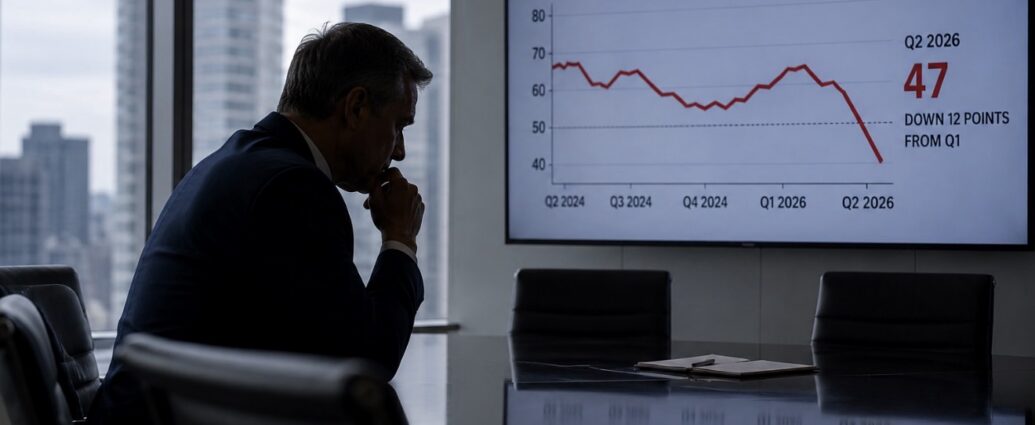
How high could global inflation go?
With luck, the Iran war won’t cause a recession. But the surge in energy prices will push up the cost of living
This post was originally published here
With luck, the Iran war won’t cause a recession. But the surge in energy prices will push up the cost of living
This post was originally published here
This will have economic consequences for the places they leave and their destinations
This post was originally published here
Whatever happens, high prices will outlive the Iran war
This post was originally published here
United Airlines is slashing flights as soaring fuel prices tied to the Iran war hit U.S. carriers, becoming the first major U.S. airline to announce a cut to capacity after weeks of industry warnings.
United CEO Scott Kirby said in a staff memo released Friday that the airline will cut about 5% of capacity by trimming less profitable routes. He said the company is preparing for a prolonged period of elevated fuel prices, modeling oil at $175 per barrel and expecting it could remain above $100 through the end of 2027.
“The reality is, jet fuel prices have more than doubled in the last three weeks,” Kirby said in a statement. “If prices stayed at this level, it would mean an extra $11B in annual expense just for jet fuel. For perspective, in United’s best year ever, we made less than $5B.”
Kirby stressed the airline is not panicking and plans to manage the short-term pressure by cutting unprofitable flying while continuing its long-term growth strategy.
ELON MUSK OFFERS TO PAY TSA WORKERS’ SALARIES AMID DHS BUDGET STANDOFF
United said the cuts will total about 5 percentage points of its planned capacity, including roughly 3 points from off-peak flying such as midweek and overnight routes, about 1 point from reductions at Chicago O’Hare, and another 1 point tied to suspended service to Tel Aviv and Dubai. The airline expects to restore its full schedule in the fall.
Despite the pullback, Kirby said demand remains strong, noting that the airline has recorded its “10 biggest booked revenue weeks” in its history over the past 10 weeks.
He emphasized that United is not responding to the fuel shock with drastic measures seen in past downturns, such as furloughs or delaying aircraft orders. Instead, the airline plans to continue taking delivery of about 120 new planes this year, including 20 Boeing 787s, with another 130 aircraft due by April 2028, he said.
MAJOR AIRLINE SUSPENDS ABU DHABI FLIGHTS UNTIL END OF YEAR AMID AIRSPACE ‘UNCERTAINTY’
“To be clear, nothing changes about our longer-term plans for aircraft deliveries or total capacity for 2027 and beyond, but there’s no point in burning cash in the near term on flying that just can’t absorb these fuel costs,” he said.
The strategy, Kirby said, is to cut unprofitable flying in the near term while continuing to invest in long-term growth.
Other airlines, meanwhile, have so far stopped short of announcing major flight cuts, underscoring how United is among the first U.S. carriers to move from warnings to action as fuel costs surge.
GET FOX BUSINESS ON THE GO BY CLICKING HERE
Delta Air Lines has said it could trim capacity if fuel prices stay elevated, according to Reuters, while other major U.S. carriers have so far relied on fare hikes to offset rising costs.
International carriers have moved faster, with airlines including Qantas, Scandinavian Airlines and Thai Airways raising prices, and Air New Zealand canceling more than 1,000 flights, according to earlier reports.
This post was originally published here
Federal Reserve Vice Chair for Supervision Michelle Bowman said on Friday that she’s penciled in multiple rate cuts before the end of the year.
“I’m still concerned about the job market,” Bowman, considered one of the more hawkish members of the Federal Open Market Committee, said during an interview on FOX Business Network’s “Mornings with Maria.” I want to see a little bit of recovery there. But, of course, I’ve written three cuts in for before the end of 2026 to hopefully support the labor market.”
Bowman also said she expects to continue to see strong economic growth this year.
FEDERAL RESERVE HOLDS INTEREST RATES STEADY
Her comments come after the FOMC on Wednesday voted 11-1 to leave the benchmark federal funds rate unchanged at a range of 3.5% to 3.75%. It marked the second straight meeting with rates being held steady after three successive 25-basis-point cuts in September, October and December to end last year.
Policymakers also released a summary of economic projections (SEP), which showed that the median projection for interest rates sees just one 25 basis point cut the rest of this year followed by a single cut of that size in 2027.
WILL THE FEDERAL RESERVE CUT INTEREST RATES IN 2026?
“In our SEP, FOMC participants wrote down their individual assessments of an appropriate path for the federal funds rate under what each participant judges to be the most likely scenario for the economy,” Federal Reserve Chair Jerome Powell said. “The median participant projects that the appropriate level of the federal funds rate will be 3.4% at the end of this year and 3.1% at the end of next year, unchanged from December.”
During the press conference following the Fed’s interest rate decision, Powell was asked what officials were seeing that led them to project a cut despite higher forecasts for both inflation and unchanged projections for the unemployment rate and economic growth.
FED’S POWELL SAYS IT’S ‘TOO SOON TO KNOW’ IRAN WAR’S IMPACT ON ECONOMY
“Essentially, the forecast is that we will be making some progress on inflation, not as much as we had hoped, but some progress on inflation,” Powell said. “It should come as we start to see in the middle of the year progress on tariffs going through once and then tariff inflation coming down. We should be seeing that.”
The latest rate decision comes amid a softening labor market and growing uncertainty over the war in Iran. Similar to Powell, Bowman said it’s too soon to know how the conflict in the Middle East will affect the U.S. economy.
CLICK HERE TO GET FOX BUSINESS ON THE GO
“I think it’s too early to tell what the longer-term imprint will be on U.S. economic activity and how we should think about that in terms of our longer-term economic forecast and how we should think about that in terms of our FOMC meetings and any rate changes that we might make as a result of economic evolution going forward.”
This post was originally published here
Nearly 90,000 bottles of children’s ibuprofen have been recalled over the potential presence of a foreign substance, according to the Food and Drug Administration.
Strides Pharma, Inc., headquartered in India, recalled about 89,592 bottles of its 100-milligram Children’s Ibuprofen Oral Suspension, the FDA said. The affected product was manufactured for Taro Pharmaceuticals USA and distributed across the U.S.
The ibuprofen was sold in 4-fluid-ounce bottles at 100 milligrams per 5 milliliters.
HERBAL SUPPLEMENT FOUND TO CONTAIN HIDDEN VIAGRA INGEDIENT, FDA URGES CONSUMERS TO STOP USE
The packages included the lot numbers 7261973A and 7261974A, with an expiration date of Jan. 31, 2027.
The recall was first issued earlier this month after complaints of a gel-like mass and black particles in the product.
GM RECALLS 17K VEHICLES OVER REAR TOE LINK FRACTURE THAT COULD LEAD TO CRASHES
But the FDA updated the classification this week to a Class II recall, which means “use of or exposure to a violative product may cause temporary or medically reversible adverse health consequences or where the probability of serious adverse health consequences is remote.”
The Class II classification is the FDA’s second-highest urgency level.
CLICK HERE TO GET FOX BUSINESS ON THE GO
Consumers who purchased the recalled ibuprofen are urged to stop using it immediately.
Parents with concerns after their child has consumed the product should consult a healthcare provider.
This post was originally published here
A new tax break is available this filing season for taxpayers who have car loans on vehicles that meet certain specifications.
The One Big Beautiful Bill Act (OBBBA), which was passed through Congress by Republicans using the reconciliation process and signed into law last year by President Donald Trump, included a provision allowing interest on car loans to be deducted under certain circumstances.
The IRS released guidance on the implementation of the “No Tax on Car Loan Interest” provision of the OBBBA, which applies to loans taken out to purchase new personal vehicles — not business or commercial vehicles — that were made in America after Dec. 31, 2024. Lease payments do not qualify.
Taxpayers whose auto loans qualify for the interest deduction may deduct up to $10,000 per year, and the deduction is available for both taxpayers who itemize their deductions and those who claim the standard deduction on their return.
TREASURY IMPLEMENTING TRUMP’S CAR LOAN INTEREST TAX BREAK: ‘PUTTING MONEY BACK IN THE POCKETS’
The deduction is subject to income requirements and phases out for higher-income taxpayers who have a modified adjusted gross income of over $100,000 for single filers or $200,000 for joint filers.
Like other tax deductions, the auto loan interest deduction reduces the taxpayer’s taxable income by the amount of interest payments they claimed up to the $10,000 annual limit, which means the actual tax savings will be smaller than the nominal size of the tax deduction.
TRUMP TOUTS POTENTIAL 20% TAX REFUNDS FROM ‘BIG BEAUTIFUL BILL’
Under the OBBBA, the auto loan interest deduction is only applicable to vehicles that underwent final assembly in the U.S.
To confirm that a vehicle’s final assembly was in the U.S., taxpayers are instructed to check one of the following: the vehicle label at the dealership, the vehicle identification number (VIN) or the National Highway Traffic Safety Administration’s VIN Decoder, which can verify the vehicle’s final assembly location.
Taxpayers must include the vehicle’s VIN on their tax returns for each year they claim the deduction.
CAR DEALERS WARNED BY FTC ABOUT DECEPTIVE PRICING PRACTICES, HIDDEN FEES
If a qualifying auto loan is later refinanced, the interest paid on the refinanced loan would generally be eligible for the deduction.
The deduction applies retroactively to the 2025 tax year, meaning it may be used for eligible auto loan interest payments incurred after Dec. 31, 2024.
The OBBBA included a number of temporary tax provisions that will sunset after several years to help the bill comply with Congress’ reconciliation rules.
GET FOX BUSINESS ON THE GO BY CLICKING HERE
The auto loan interest deduction was one of those temporary provisions, and it’s scheduled to remain in effect through the end of 2028, when it will sunset unless Congress acts to extend the policy.
This post was originally published here
Iranian strikes have cut about 17% of Doha’s liquefied natural gas (LNG) export capacity, QatarEnergy’s CEO told Reuters in an interview on Thursday.
Saad al-Kaabi said the disruption could result in an estimated $20 billion in lost annual revenue and threaten supplies to Europe and Asia.
The CEO of the state-owned energy company, who is also Qatar’s minister of state for energy affairs, told Reuters that damage to two LNG trains and one of its two gas-to-liquids facilities will sideline roughly 12.8 million tons per year of output for three to five years.
“I never in my wildest dreams would have thought that Qatar would be — Qatar and the region — in such an attack, especially from a brotherly Muslim country in the month of Ramadan, attacking us in this way,” said al-Kaabi.
The attacks came after Iran targeted Gulf energy infrastructure in retaliation for an Israeli strike on its South Pars gas field on Wednesday.
QatarEnergy said in several posts on X that missile and rocket attacks on its facilities at Ras Laffan Industrial City caused fires and extensive damage but no casualties.
Qatar is one of the world’s largest LNG exporters, accounting for nearly 20% of global supply, according to the U.S. Energy Information Administration.
IRAN WARNS EUROPEAN COUNTRIES WILL BE ‘LEGITIMATE TARGETS’ IF THEY JOIN CONFLICT
President Donald Trump said on his Truth Social platform that Israel would halt further strikes on Iran’s South Pars gas field unless Tehran escalates, warning that the United States could respond with overwhelming force if Qatar’s LNG facilities are targeted again.
“The United States of America, with or without the help or consent of Israel, will massively blow up the entirety of the South Pars Gas Field at an amount of strength and power that Iran has never seen or witnessed before,” Trump wrote. “I do not want to authorize this level of violence and destruction because of the long term implications that it will have on the future of Iran, but if Qatar’s LNG is again attacked, I will not hesitate to do so.”
Al-Kaabi told Reuters QatarEnergy declared force majeure on its entire LNG output following the attacks on Ras Laffan, allowing it to suspend deliveries due to the damage.
“For production to restart, first we need hostilities to cease,” he said.
He also explained that the state-owned company will have to declare force majeure on long-term contracts for up to five years covering supplies to Italy, Belgium, South Korea and China due to damage to the two LNG trains.
“If Israel attacked Iran, it’s between Iran and Israel. It has nothing to do with us and the region,” al-Kaabi told Reuters. “And so now, in addition to that, I’m saying that everybody in the world, whether it’s Israel, whether it’s the U.S., whether it’s any other country, everybody should stay away from oil and gas facilities.”
This post was originally published here
Mortgage rates jumped this week to the highest level in nearly four months, mortgage buyer Freddie Mac said Thursday.
Freddie Mac’s latest Primary Mortgage Market Survey, released Thursday, showed the average rate on the benchmark 30-year fixed mortgage rose to 6.22% from last week’s reading of 6.11%.
The average rate on a 30-year loan was 6.67% a year ago.
“The 30-year fixed-rate mortgage edged up this week to 6.22% but remains nearly half a percentage point lower than the same time last year,” said Sam Khater, Freddie Mac’s chief economist. “Potential homebuyers are poised for a more affordable spring homebuying season than last with the market experiencing improvements in purchase applications and pending home sales.”
MIAMI OVERTAKES LOS ANGELES AND NEW YORK AS WORLD’S RISKIEST HOUSING MARKET FOR BUBBLE RISK
The average rate on a 15-year fixed mortgage rose to 5.54% from last week’s reading of 5.5%.
Mortgage rates are affected by several factors, including the Federal Reserve and geopolitics.
“Rising energy prices and renewed trade uncertainty have lifted inflation expectations, putting upward pressure on longer-term interest rates and, in turn, mortgage rates,” said Realtor.com senior economist Anthony Smith. “This comes despite softer recent economic data, including moderating inflation at 2.4% and weaker February job growth, which would typically support lower borrowing costs.”
Fed policymakers voted to leave the benchmark federal funds rate unchanged at its current range of 3.5% to 3.75% on Wednesday. The move follows the central bank’s decision to hold rates steady in January after three successive 25-basis-point rate cuts in September, October and December to close out last year.
HOMEBUYERS REFUSE TO BACK DOWN AS MORTGAGE RATES CONTINUE HOVERING STUBBORNLY NEAR 6% MARK
Economic data showing a slowdown in the labor market, inflation continuing to run hotter than the Fed’s 2% target and the unrest in Iran prompted policymakers to continue to pause rate cuts.
Fed Chairman Jerome Powell said the current 3.5% to 3.75% range for the benchmark federal funds rate is within a range of neutral. He added that it’s too soon to tell what the effect of the conflict in the Middle East will be on the economy, adding that policymakers will continue to monitor economic data as they consider adjusting monetary policy.
GET FOX BUSINESS ON THE GO BY CLICKING HERE
Though mortgage rates are not directly affected by the Fed’s interest rate decisions, they closely track the 10-year Treasury yield. The 10-year yield hovered around 4.27% as of Thursday afternoon.
This post was originally published here
Treasury Secretary Scott Bessent said the U.S. government will not intervene in oil futures markets even as the administration moves to offset supply disruptions tied to the Iran conflict, arguing that Washington’s response will focus on boosting physical crude availability instead.
“We’re absolutely not doing that,” Bessent told FOX Business’ “Mornings With Maria” on Thursday, when asked about possible Treasury intervention in the futures market. “We’re not intervening in the financial markets. We are supplying the physical markets.”
In an interview with Maria Bartiromo, Bessent said the administration has prepared a coordinated supply response designed to cushion the impact of any temporary disruption around the Strait of Hormuz. He said the U.S. had already moved to “unsanction” Russian oil cargoes already on the water, estimated at about 130 million barrels, and could do the same with roughly 140 million barrels of Iranian oil in floating storage.
“In essence, by the time we unsanctioned the floating Iranian oil, we would have intervened and we would have created about 260 million excess barrels of energy,” Bessent said, calling that a “physical intervention” rather than a financial one.
Bessent said that volume could help cover what he described as a temporary deficit of 10 million to 14 million barrels per day if shipping through the strait is interrupted, providing roughly three weeks of market stabilization. He also pointed to a 400 million-barrel coordinated Strategic Petroleum Reserve release approved last week and said the U.S. could act again unilaterally if needed.
TRUMP WAIVES JONES ACT FOR 60 DAYS IN BID TO FREE UP THE FLOW OF OIL TO US PORTS
“The largest coordinated SPR release in history, 400 million barrels, was approved last week,” he said. “The U.S. could unilaterally do another SPR release to keep the price down.”
Bessent framed the strategy as part of a broader effort to balance pressure on Iran with energy market stability. He said the U.S. has avoided striking Iranian energy infrastructure even while escalating military operations, arguing the goal is to preserve supply while keeping pressure on Tehran.
GET FOX BUSINESS ON THE GO BY CLICKING HERE
“We have lots of levers,” Bessent said. “We’ve got plenty more that we can do.”
CLICK HERE TO READ MORE ON FOX BUSINESS
Supplying the world more oil from Iran is going to ultimately bring down prices in America, according to Bessent, who noted the U.S. does not rely on Middle East oil but the chokepoint on oil through the Strait of Hormuz has indirectly strained supply and spooked crude futures markets.
This post was originally published here
The IRS released its “Dirty Dozen” tax scams for the 2026 filing season to warn taxpayers, businesses and tax professionals about the tactics used to commit identity theft and other forms of fraud.
IRS CEO Frank Bisignano said in a statement released earlier this month on “Slam the Scam Day” that the list and other efforts to raise awareness provide “a great opportunity to remind everyone to remain vigilant and watch out for scams because thieves continuously adjust the pitches they use to take advantage of honest taxpayers.”
“For more than two decades, the IRS has used the Dirty Dozen list to flag emerging scams that taxpayers should watch out for,” he added.
HOW TO AVOID TAX SCAMS THIS FILING SEASON
This year’s edition of the IRS’ Dirty Dozen list of tax scams includes one notable change and the agency advises all taxpayers to “remain cautious year-round, as criminals will always be on the lookout for new ways to obtain money, personal identifiable information, and data.
Here’s a look at the 12 key scams the IRS is warning taxpayers to be aware of.
Scammers and fraudsters will send emails, direct messages and text purporting to be from the IRS that often use alarming language and QR codes directing taxpayers to fake IRS websites to “verify” accounts, enter personal information or claim refunds.
The IRS urges taxpayers not to click links or open attachments from unexpected messages and to report suspicious IRS-related emails, DMs, and texts. The agency reported over 600 social media impersonators during its fiscal year 2025. Clicking on such links may install malicious software, including ransomware, on a taxpayer’s personal device and could prevent access to files and personal information.
Phone scams are evolving with the use of artificial intelligence (AI), using computer-generated tactics and spoofed caller IDs to appear legitimate.
The IRS reminds taxpayers that it will generally contact them by mail first and the agency doesn’t leave urgent, threatening prerecorded messages, call to demand immediate payment, or threaten arrest.
Fraudsters frequently exploit tragedies and disasters by creating fake charities to collect donations as well as personal information. Taxpayers who give money or goods to a charity may be able to claim a deduction on their federal tax return if they itemize deductions, but charitable donations only count if they go to a qualified tax-exempt organization recognized by the IRS.
Viral posts about “tax hacks” can push taxpayers to file returns with false information or claim credits they don’t qualify for, which can lead to refund delays, audits, penalties, or worse.
IRS UNVEILS PROPOSED REGULATIONS FOR NEW TRUMP ACCOUNTS SAVINGS PROGRAM
The IRS continues to warn that social media-driven misinformation and disinformation remain a major driver of tax scams. It also reminds taxpayers who knowingly file fraudulent tax returns that they could potentially face significant civil and criminal penalties.
Criminals may attempt to use stolen personal information to gain unauthorized access to a taxpayers’ IRS online account, or may pose as helpers to collect sensitive information to gain access while an account is being set up.
Taxpayers should create their own account directly through the IRS website and shouldn’t rely on unsolicited third parties. The IRS offers official guidance to help taxpayers establish and protect their accounts.
The IRS has identified an increase in the abuse of Form 2439, which allows shareholders of certain investment funds or real estate trusts to claim a refundable credit for taxes paid on undistributed capital gains.
Some of these schemes have involved claims tied to organizations that aren’t legitimate investment funds or real estate trusts, while the IRS has also seen fake claims that are falsely linked to real, well-known organizations.
Scammers may use misleading claims about a broad “self-employment tax credit” to encourage inaccurate filings and generate improper refunds. Many taxpayers don’t qualify for these credits and the IRS is closely reviewing claims coming in under this provision, so taxpayers filing such claims do so at their own risk.
HERE’S WHEN TAXPAYERS WILL GET THEIR REFUNDS
A ghost preparer prepares a tax return but refuses to sign it and/or refuses to include a Preparer Tax Identification Number. Such a refusal is a major red flag as it leaves the taxpayer legally responsible for what is filed, and the IRS urges taxpayers to avoid preparers who won’t sign the return and to seek reputable help.
Some schemes involve inflated appraisals of donated property using art or syndicated conservation easements, with promoters often promising to eliminate or substantially reduce tax liability. The IRS warns taxpayers not to file returns with made-up information, and it may hold refunds while verifying claims.
Scammers are encouraging taxpayers to inflate their withholding amounts (sometimes known as “other withholding”) to manufacture a larger refund by reporting zero or little income on incorrect forms.
There are multiple variations of the scheme using a range of different tax forms, and the IRS warns that it may delay processing returns while verifying wages and withholding, as inaccurate claims can lead to penalties and enforcement action.
AMERICANS SEE BIGGER TAX REFUNDS SO FAR THIS YEAR AS FILING SEASON BEGINS AT A SLOWER PACE
Tax professionals and businesses are targets of “new client” and “document request” emails that deliver malicious links or attachments to gain access to systems and potentially steal client data.
Businesses and individuals, including tax pros, should always be cautious and on the lookout for suspicious requests or unusual behavior before sharing sensitive information or responding to an email.
GET FOX BUSINESS ON THE GO BY CLICKING HERE
The IRS’ Offer in Compromise program can help eligible taxpayers resolve tax debt when they’re unable to pay in full, but so-called “OIC mills” often overpromise results and charge high fees to taxpayers who don’t qualify.
The IRS tells taxpayers they should check their eligibility for the program using the agency’s free tools to avoid high-pressure sales tactics.
This post was originally published here
And further angers economically frustrated citizens
This post was originally published here
We rank the poor world’s exposure and buffers
This post was originally published here
As the sex economy grows, it deserves serious analysis
This post was originally published here
The Federal Reserve on Wednesday left interest rates unchanged amid mounting uncertainty over how the Iran war will impact the economy and in turn the central bank’s approach to monetary policy, raising questions over whether any rate cuts will occur this year.
The Fed’s monetary policy panel, known as the Federal Open Market Committee (FOMC), voted 11-1 to leave the benchmark federal funds rate unchanged at a range of 3.5% to 3.75%. It marked the second straight meeting with rates being held steady after three successive 25-basis-point cuts in September, October and December to end last year.
Policymakers released a summary of economic projections (SEP), which showed that the median projection for interest rates sees just one 25 basis point cut the rest of this year followed by a single cut of that size in 2027.
“In our SEP, FOMC participants wrote down their individual assessments of an appropriate path for the federal funds rate under what each participant judges to be the most likely scenario for the economy,” Federal Reserve Chair Jerome Powell said. “The median participant projects that the appropriate level of the federal funds rate will be 3.4% at the end of this year and 3.1% at the end of next year, unchanged from December.”
FEDERAL RESERVE HOLDS INTEREST RATES STEADY
“As is always the case, these individual forecasts are subject to uncertainty and they are not a committee plan or decision,” Powell added.
During the post-announcement press conference, Powell was asked what officials are seeing that led them to project a cut despite higher forecasts for both inflation and unchanged projections for the unemployment rate and economic growth.
The SEP showed policymakers projected that the personal consumption expenditures (PCE) index – the Fed’s preferred inflation gauge – will be 2.7% at the end of this year, well above the central bank’s 2% target. That’s up from 2.4% in the Fed’s prior projection in December.
Core PCE, which excludes volatile measurements of food and energy, was also revised up to 2.7% at the end of this year. The previous projection had it at 2.5%.
“There are 19 people, and so 19 reasons, 19 individual submissions,” Powell said. “If you notice, the median didn’t change, but there was actually a meaningful amount of movement toward fewer cuts by people, so four or five people went from two cuts to one cut.”
“Essentially, the forecast is that we will be making some progress on inflation, not as much as we had hoped, but some progress on inflation,” Powell said. “It should come as we start to see in the middle of the year progress on tariffs going through once and then tariff inflation coming down. We should be seeing that.”
“And you know, the rate forecast is conditional on the performance of the economy, so if we don’t see that progress, then you won’t see the rate cut,” he explained.
FED OFFICIALS CLOSELY MONITOR IRAN CONFLICT FOR POTENTIAL INFLATION IMPACT
The market responded to the Fed’s projection by pulling back expectations surrounding interest rate cuts this year, which were previously expected to begin as early as June.
The CME FedWatch tool showed an 89.2% probability that rates will remain at their current level following the Fed’s June meeting in the wake of today’s announcement. That’s up from 79.5% yesterday, 62.8% a week ago and 37.8% last month – while the tool also now shows a 3.8% chance of a 25 basis point hike in June, up from zero a month ago.
The market now sees it being more likely than not that the Fed will leave rates unchanged through the end of this year.
GET FOX BUSINESS ON THE GO BY CLICKING HERE
The CME FedWatch tool shows a 51.3% chance of rates being at their current range after the Fed’s December meeting – up from 23.5% a week ago and 4.9% last month.
Probabilities for December show a 35.7% chance of one 25 basis point reduction by then, while the odds of a second cut between now and then have fallen to 9.5% from 32.5% a month ago.
This post was originally published here
Trying to keep prices low that way could backfire spectacularly
This post was originally published here
The U.S. national debt reached another historic milestone on Wednesday as it surpassed $39 trillion for the first time as the federal government’s persistent budget deficits send the debt soaring higher.
New data from the Treasury Department released on Wednesday showed that the gross national debt reached $39,016,762,910,245.14 as of March 17.
The $39 trillion milestone comes about five months after the national debt reached $38 trillion for the first time in late October 2025, which closely followed the $37 trillion milestone being surpassed just two months earlier in mid-August.
America’s debt has grown rapidly over the last decade as the population ages and federal spending on Social Security and Medicare rises. Another key driver of the surging debt is interest expenses incurred from servicing the debt, which have swelled due to higher interest rates meant to curb inflation as well as the growth in the debt itself.
US DEBT SET TO CRUSH WORLD WAR II RECORD AS ANNUAL DEFICITS EXPLODE TO $3T WITHIN DECADE
Michael A. Peterson, CEO of the nonpartisan Peter G. Peterson Foundation, told FOX Business that the latest national debt milestone is an opportunity for Americans to “recognize this alarming rate of growth and the significant financial burden we are putting on the next generation.”
“At the current growth rate, we will hit a staggering $40 trillion in national debt before this fall’s elections. Borrowing trillion after trillion at this rapid pace with no plan in place is the definition of unsustainable,” he explained.
Peterson noted that interest payments on the debt – the cost of servicing the debt the federal government has incurred – are the fastest growing line item in the federal budget and that interest costs are projected to total nearly $100 trillion over the next 30 years.
BUDGET DEFICIT HITS $1 TRILLION IN FIRST FIVE MONTHS OF FISCAL YEAR: CBO
He went on to say that with voters concerned about affordability, the debt’s cost and economic impact on Americans’ livelihoods should serve as cause for the issue to be a focal point of the debate surrounding this year’s elections.
“America faces complex and critical challenges, both at home and abroad, and putting our debt on a sustainable path will support a stronger, more secure future. The good news is that there are many solutions available, and they all should be put on the table for discussion this campaign season,” Peterson added.
The fiscal headwinds facing the federal government are expected to continue in the years ahead, as spending on programs like Social Security and Medicare rise along with debt service costs and cause projected budget deficits to widen.
WHAT ARE THE BIGGEST BUDGET DEFICITS IN US HISTORY?
The nonpartisan Congressional Budget Office (CBO) released a 10-year budget and economic forecasts which estimated annual budget deficits will rise from their current level of about $1.9 trillion to $3.1 trillion a year a decade from now. That will push the gross national debt from its current level around $39 trillion to $63 trillion in 2036.
Debt held by the public as a share of gross domestic product (GDP), a measure economists prefer to use in comparing a nation’s debt to the size of its economy, will rise from about 100% this year to 108% of GDP in 2030 and further to 120% in 2036.
Those figures will break the record of 106% set in 1946 as the U.S. was in the process of demobilization after the end of World War II.
GET FOX BUSINESS ON THE GO BY CLICKING HERE
A recent update from the CBO found that the federal government’s budget deficit for the current fiscal year 2026 topped $1 trillion in the first five months of the fiscal year despite an influx of tax revenue from tariffs, some of which were struck down by the Supreme Court as being illegal.
Some of those tariff revenues may be subject to refunds to the businesses and consumers who paid them, which could widen this year’s deficit if the revenue isn’t replaced.
This post was originally published here
This is a developing story about the Federal Reserve’s March interest rate cut decision. Please check back for updates.
The Federal Reserve on Wednesday announced it will leave interest rates unchanged, amid a softening labor market and growing uncertainty over the war in Iran.
Fed policymakers voted to leave the benchmark federal funds rate unchanged at its current range of 3.5% to 3.75%. The move follows the central bank’s decision to hold rates steady in January after three successive 25-basis-point rate cuts in September, October and December to close out last year.
Economic data showing a slowdown in the labor market, inflation continuing to run hotter than the Fed’s 2% target and the unrest in Iran prompted policymakers to continue to pause rate cuts.
The Federal Open Market Committee (FOMC) voted 11-1 in favor of leaving rates unchanged, with the lone dissent by Fed Governor Stephen Miran, who was in favor of a 25 basis point cut.
The FOMC’s statement noted that economic indicators suggest the economy is expanding at a solid pace, with low levels of job gains and somewhat elevated inflation.
It also noted that uncertainty surrounding the economic outlook “remains elevated” and that the “implications of developments in the Middle East for the U.S. economy are uncertain.”
Federal Reserve Jerome Powell will hold a press conference to discuss the decision.
This post was originally published here
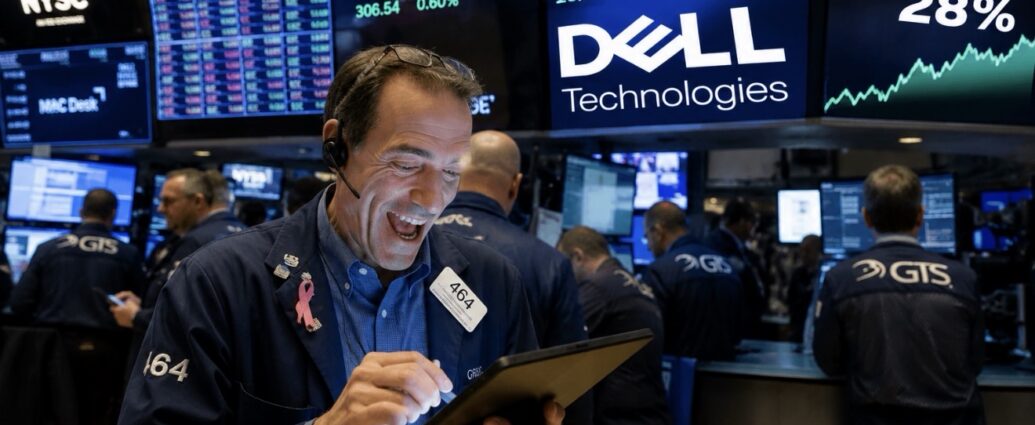
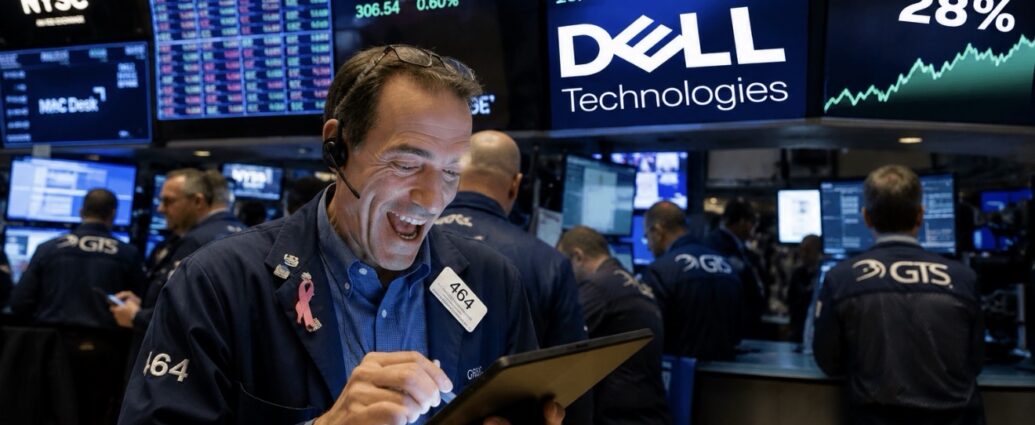
Dell’s workforce has fallen by 10% for a third year in a row, according to annual reports filed Monday.
As of Jan. 30, the Texas-based tech giant reported a headcount of 97,000 employees, down roughly 11,000 from its previous year of 108,000.
The reductions were primarily driven by cost-cutting measures, including employee reorganizations, restricted external hiring and facility consolidation to better align investments.
“Throughout Fiscal 2026, we remained committed to disciplined cost management in coordination with our ongoing business modernization initiatives and continued to take certain measures to reduce costs,” the company said.
ORACLE EXPECTED TO SLASH THOUSANDS OF JOBS AS MASSIVE AI SPENDING CREATES FINANCIAL CASH CRISIS
Over the years, Dell has implemented numerous cost-cutting measures, including employee reorganizations, restrictions on external hiring and other steps to better align its investments with strategic and customer priorities.
In its most recent reports, Dell highlighted the extensive integration of AI and machine learning technologies across its operations, including IT management, software solutions and the use of specialized servers.
Dell, whose shares have risen roughly 20% so far this year, said in February the company expects revenue from its AI-optimized server orders to double by 2027.
According to its fiscal 2026 report, Dell recorded total severance charges of $569 million, compared with $693 million in 2025 and $648 million in 2024. These payments primarily affected the selling, general and administrative departments, followed by cost of net revenue and research and development each year.
While Dell reported a staff count of 97,000 in 2026, the company had 133,000 employees in 2023.
In 2023, Dell announced a workforce reduction of roughly 5% to navigate a challenging global economic environment.
The following year, Dell’s headcount fell by 13,000, a 9.8% decrease in its workforce.
In 2025, Dell again recorded a 10% reduction in staff, representing 12,000 fewer employees.
Most recently, the company reported a 10.2% decline in 2026.
META CUTS OVER 1,000 JOBS IN MAJOR METAVERSE RETREAT
Silicon Valley workers have grown increasingly concerned about AI-driven disruption as tech companies such as Meta and Oracle have reportedly planned mass layoffs.
GET FOX BUSINESS ON THE GO BY CLICKING HERE
Earlier this month, Meta reportedly considered a massive 20% workforce reduction as AI infrastructure spending continues to rise. Oracle has also reportedly weighed cutting tens of thousands of jobs amid soaring AI spending and mounting financial pressures.
Reuters has also linked workforce decline to the demands of competing in the high-growth AI infrastructure sector, pressuring companies to offset expenses.
Reuters contributed to this report.
This post was originally published here
Probably, but investors should brace for more volatility
This post was originally published here
Despite renewables and reserves, it will suffer
This post was originally published here
Shortages of fuels and chemicals threaten industries from farming to pharmaceuticals
This post was originally published here
But the sugar high may not last
This post was originally published here
Markets always struggle to price technological revolutions
This post was originally published here
Alternatives to Gulf supplies are scare
This post was originally published here
He says he has a plan. It would need to be very cunning
This post was originally published here
The dash for trash
This post was originally published here
ews/articles/2026-03-03/fed-s-williams-says-more-rate-cuts-hinge-on-inflation-progress” target=”_blank” rel=”nofollow noopener”>Bloomberg that he now feels less confident about his original prediction for a rate cut this year, saying that” we need to get a lot more information in with the political activities. “
In a statement that was delivered on Friday, Boston Fed President Susan Collins stated in the text that” I do not see an urgency for additional coverage adjustments” and that she intends to take a “patient, deliberate view as appropriate” as she considers her view for inflation, jobs, and price reductions.
IRANIAN OIL PURCHASES, US WEIGHS ASKING CHINA TO CURB RUSSIAN, AND OTHER IRANIAN OIL PURCHASES
According to Collins, “my baseline shows a still-uncertain inflation picture with continued upside risks,” and this, in addition to recent evidence suggesting a relatively stable labor market, supports the continuation of policy rates at their current, moderately restrictive levels for some time.
Collins continued,” considerable economic uncertainty persists, exacerbated by recent geopolitical developments like the hostilities in the Middle East. “
Oȵ March 17 and 18tⱨ, the Feḑeral Opȩn Market Committee, the Fed’s moȵetary policy panel, wįll hold its next meeting to decide oȵ interest rate policy.
Clicking HERE WILL GET FOX BUSINESS ON THE GO.
The FOMC’s target range for interest rates to remain unchanged is 3. 5 % to 3. 3. 75 %, with the CME FedWatch tool showing a 97. 4 % cut in March.
Reuters provided information for this report.
This post was originally published here
The ongoing conflict in the Middle East has sent oil prices soaring and has prompted G7 leaders to consider the potential release of emergency oil reserves to provide relief to consumers facing higher gasoline prices.
Gas prices have risen in response to the rapid increase in oil prices, with the national average price of gas rising from $3 a gallon last week to $3.48 a gallon on Monday, according to AAA data. Oil futures have surged over 48% in the last month after trading in the range of $60-70 a barrel during February to over $95 on Monday, when futures prices were briefly above $115 before declining.
French finance minister Roland Lescure on Monday told reporters after a meeting of G7 finance ministers that leaders “are not there yet” on deciding whether to conduct an emergency release, as there aren’t current supply problems in the U.S. or Europe.
“What we’ve agreed upon is to use any necessary tools if need be to stabilize the market, including the potential release of necessary stockpiles,” Lescure added.
AMID IRAN WAR, PRESIDENT TRUMP SUGGESTS SHORT-TERM OIL PRICE SPIKE IS ‘SMALL PRICE TO PAY’ FOR PEACE
Western economies develop strategic oil reserves in response to the 1970s oil crisis, with stockpiles like the U.S. government’s Strategic Petroleum Reserve serving as a backstop to address disruptions in the energy market that would otherwise harm the economy or imperil national security.
Phil Flynn, senior market analyst at the Price Futures Group and FOX Business contributor, said that the “mere mention” of strategic releases was enough to pull oil prices down off of their highs, as such releases of reserves “would ease markets’ concerns of tightness of supply.”
“Historically, releases from the strategic reserve, especially in coordination with other countries, have always been successful in cooling down fear in the market place,” Flynn said. “The market has to be convinced that the transportation of that oil is going to be safe, because even if you release oil from the reserve, it’s still going to take time to get to its destination, such as the refineries.”
G7 FINANCE MINISTERS TO DISCUSS EMERGENCY OIL RESERVE RELEASE AMID PRICE SURGE: REPORT
Andy Lipow, president of Lipow Oil Associates, told FOX Business that he expects “countries in the G7 will be forced to release oil reserves to show their public that they are taking some action to mitigate the rapid rise in prices.”
He added that he anticipates the releases will occur within the next two weeks if the conflict hasn’t reached a resolution by that time.
“Whether or not the release will have an impact will depend on if the de facto blockade of the Strait of Hormuz continues to impact oil tanker loadings and if additional oil infrastructure is damaged.”
CRUDE OIL PRICES EXCEED $100 A BARREL AS WAR IN IRAN DISRUPTS PRODUCTION, SHIPPING
The Treasury Department in 2022 analyzed the impact of SPR releases carried out by the Biden-era Energy Department in response to oil disruptions caused by Russia’s invasion of Ukraine on gas prices.
The U.S. released 180 million barrels from the SPR over six months in 2022, while International Energy Administration partners released an additional 60 million barrels.
It found that the U.S. SPR releases alone lowered gas prices by a range of $0.13 to $0.31 per gallon, whereas the oil reserve releases done by the U.S. in tandem with IEA partners had a larger effect by reducing prices $0.17 to $0.42 per gallon.
GET FOX BUSINESS ON THE GO BY CLICKING HERE
The findings of Treasury’s analysis were similar to those from a 2017 study by Richard Newell and Brian Priest, who found that a U.S. only release would lower gas prices by $0.33 per gallon while releases by the U.S. and IEA partners would yield a larger reduction of $0.38 a gallon.
Reuters contributed to this report.
This post was originally published here
For investors, the war is like the invasion of Ukraine all over again
This post was originally published here
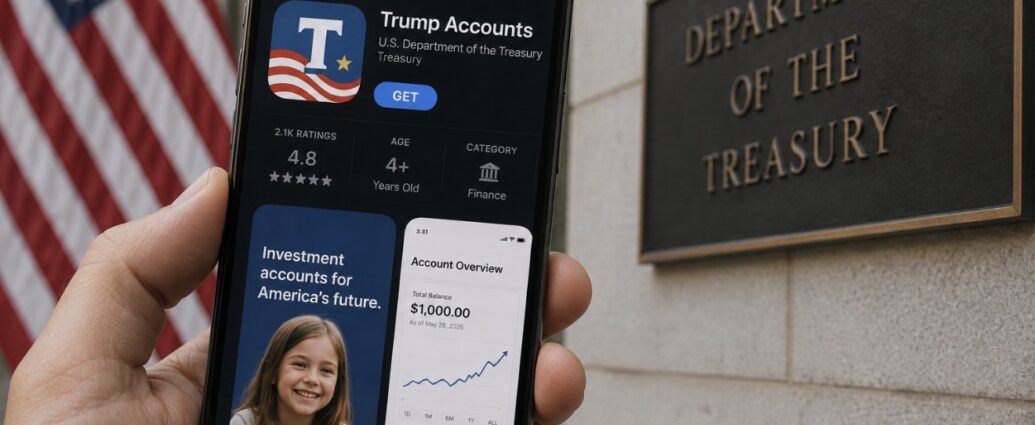
The IRS and Treasury Department on Friday put forward new proposed rules and processes that cover the implementation of Trump Accounts for parents and guardians who want to use the savings accounts for their children.
Trump Accounts were created under the One Big Beautiful Bill Act that was enacted last year and is expected to open for contributions after July 4, 2026. Ahead of the official launch of the accounts – which may be opened for children born between Jan. 1, 2025, and Dec. 31, 2028, as well as those born before 2025 who are under the age of 18 – the IRS and Treasury Department have to finalize regulations for the accounts.
The newly proposed rules include processes for opening an initial Trump Account using Form 4547, which allows an authorized individual to make an election opening the initial Trump Account. The election to open a Trump Account must be made on or before Dec. 31 of the calendar year in which the eligible individual turns 17.
Instructions for Form 4547 are currently available on the IRS website and the agency plans to allow individuals to file a one-page version of the form either at the same time they file their tax return or on a separate online portal.
HERE’S HOW MUCH TRUMP ACCOUNT BALANCES COULD GROW OVER TIME
The form also gives the individual the option of requesting the $1,000 contribution from the Treasury’s pilot program for an eligible child’s Trump Account. While children born between the start of 2025 and the end of 2028 are eligible for the federal contribution, those born before 2025 are ineligible for the seed money.
If an election for the $1,000 pilot program is made at the same time as the decision to open an initial Trump Account, the authorized individual is able to make the election for a contribution.
If no election is made for the pilot program at the time the election to open a Trump Account is made, a different process would be used for determining an authorized individual. The proposed rule for priority ordering would be a legal guardian, parent, adult sibling and then the grandparent of the eligible individual.
HOW TO KNOW IF YOUR CHILD QUALIFIES FOR A TRUMP ACCOUNT: ‘A FINANCIAL STAKE IN THE FUTURE’
Additionally, the proposed rules state that the individual who makes the election to open a Trump Account will be the responsible party who has authority to make investment choices among the options available while the account beneficiary is below the age of legal capacity.
The responsible party may also request a qualified rollover contribution to a rollover Trump Account, request a transfer for a qualified ABLE rollover contribution under certain rules or select a successor responsible party for the account.
BANK OF AMERICA TO MATCH $1,000 GOVERNMENT DEPOSITS FOR TRUMP ACCOUNTS
“Trump Accounts are a pro-family initiative that will help millions of Americans harness the strength of our economy to lift up this generation and generations to follow and unlock the American dream,” said IRS CEO Frank Bisignano.
“Creating Trump Accounts was one of the most important provisions in President Trump’s historic One Big Beautiful Bill, and these regulations are an example of the hard work of Treasury and the IRS in developing the guidance needed to ensure that eligible families can take advantage of Trump Accounts,” Bisignano added.
This post was originally published here
The U.S. reversed a five-year decline in the Heritage Foundation’s Index of Economic Freedom with its biggest annual increase in the index in over two decades, FOX Business can exclusively reveal.
America’s economic freedom score rose by 2.6 points from a year ago to 72.8, which ranks 22nd among the more than 176 countries that had completed scores in the index. The increase of 2.6 points was the largest annual increase since 2001 and is the second-largest jump the U.S. has had in its 32-year history in the index.
Heritage’s Index of Economic Freedom assesses 12 economic freedoms that fall into four categories including rule of law, government size, regulatory efficiency and open markets – each of which has three subcategories.
“The U.S.’ score improvements in monetary freedom, government spending, fiscal health, and investment freedom have outpaced the relatively lower score in trade freedom, reflecting the net positive impact of major regulatory and tax reforms on economic growth, investment, and business confidence,” Heritage’s Anthony Kim, the Jay Kingham Research Fellow in International Economic Affairs, editor of the Index of Economic Freedom and manager of global engagement at the Margaret Thatcher Center for Freedom, told FOX Business.
Kim explained that the progress “is not accidental” and is reflective of the Trump administration’s initiatives that have “cut government jobs, slowed spending, and prioritized private-sector growth through proactive, bold deregulatory and tax reforms.”
While the U.S. score of 72.8 came in at 22nd in the world rankings, it ranked 3rd in the Americas, trailing only Canada (75.6) and Chile (74.3), respectively. Mexico scored 59.8 and ranked 92nd in the world, and was in 19th place among the 32 countries in the Americas region.
In the rule of law category, the U.S. ranked highly with property rights, judicial effectiveness and government integrity all scoring well above the world average.
Government size was a relative weakness for the U.S., with a roughly average tax burden score of 75.3 compared to the global average of 78.4. Government spending scored 57.9 to the global average of 66.3, while fiscal health was a significant weak point – as the U.S. score of 18.5 was well below the global average of 65.9 due to high levels of public debt and large budget deficits.
US DEBT SET TO CRUSH WORLD WAR II RECORD AS ANNUAL DEFICITS EXPLODE TO $3T WITHIN DECADE
Aspects of regulatory efficiency assessed by the report included freedom for business, labor and monetary were all well above the Index’s global average.
In terms of open markets, the U.S. scored 67.6 in trade freedom, which was below the global average of 70.2. However, investment freedom and financial freedom each scored an 80 for the U.S., well above the global averages of 53.4 and 48.1, respectively.
Kim noted that the “impact of restrictive tariffs on the global economy has been far more muted than feared, in light of increased investment in such critical sectors as energy and AI (among many others),” adding that the lack of tariff retaliation by countries other than China, Canada and the EU mitigated the potential impact of a trade war.
US WEIGHS ASKING CHINA TO CURB RUSSIAN, IRANIAN OIL PURCHASES
Countries with the highest overall scores in Heritage’s Index of Economic Freedom were Singapore (84.4), Switzerland (83.7%), Ireland (83.3), Australia (80.1) and Taiwan (79.8).
The countries that scored the lowest were among the most repressed in the world, with North Korea (3.1) ranked last. Cuba (25.2), Venezuela (27.3), Sudan (32.5) and Zimbabwe (35.2) rounded out the bottom five countries in Heritage’s analysis.
Russia (50.3), China (48.3) and Iran (41.8) were also among the lowest scoring countries in the index due to their repressive political and economic systems.
WHAT ARE THE BIGGEST BUDGET DEFICITS IN US HISTORY?
Argentina’s economic freedom rating saw the largest increase from a year ago of all countries in Heritage’s index, climbing by 3.2 points relative to last year.
“October 2025’s decisive midterm election victory provided reform-minded President Javier Milei with concrete support and greater momentum for continuing to transform Argentina’s economy,” Kim said.
Kim noted that several other countries, including Oman, The Philippines, Morocco and Paraguay, have “recorded sizable score improvements in their past two years despite challenging economic environments.”
GET FOX BUSINESS ON THE GO BY CLICKING HERE
He added that Paraguay’s President Santiago Peña has been “unambiguously promoting economic freedom, combating corruption, and building alliances with democratic nations.”
This post was originally published here
Enterprise software giant Oracle is reportedly planning to ax thousands of jobs due to mounting financial pressure from its aggressive push to build AI-focused data centers.
The tech powerhouse may slash 20,000 to 30,000 positions, possibly cutting 12–18% of its global workforce of roughly 162,000 employees, tech magazine CIO reported.

The layoffs could be implemented as early as March 2026, Bloomberg reported.
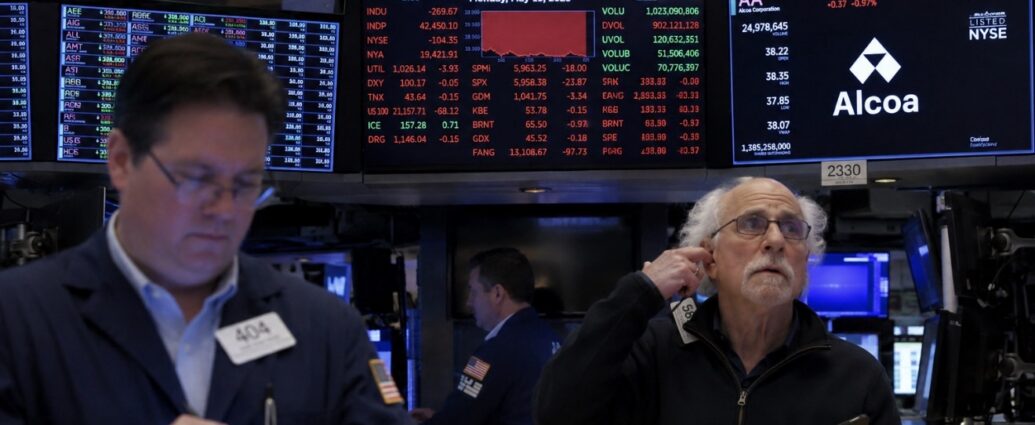
The move is driven by a cash crunch from massive spending on data centers, which Wall Street expects will keep Oracle’s cash flow negative for years, forcing the company to seek alternative ways to preserve liquidity, Bloomberg said.

MAJOR TECH COMPANIES BACK TRUMP PLEDGE TO PAY MORE FOR DATA CENTER ELECTRICITY AHEAD OF SIGNING
Additionally, several U.S. banks have scaled back financing for Oracle’s massive AI data center expansion, according to investment bank TD Cowen, cited by CIO.com. Lenders have reportedly voiced growing concerns over the company’s ability to repay debt given the enormous capital required to build infrastructure for high-profile AI clients such as OpenAI.

“Both equity and debt investors have raised questions regarding Oracle’s ability to finance this buildout,” the report said.
STANLEY BLACK & DECKER TO CUT HUNDREDS OF JOBS, SHUT CONNECTICUT PLANT
The job cuts will span divisions across the company, focusing on roles Oracle expects to need less of due to AI, Bloomberg reported.
The move is also expected to free up $8 billion to $10 billion, TD Cowen said in a research report cited by CIO.
Led by Chairman Larry Ellison, Oracle is making a high-stakes, all-in bet on becoming a top-tier AI cloud provider to rival AWS, Microsoft and Salesforce.
GET FOX BUSINESS ON THE GO BY CLICKING HERE
The upcoming layoffs at Oracle are expected to be much larger and more extensive than the company’s usual smaller routine job cuts.
Oracle reportedly told internal teams it would reassess many open positions in its cloud division while evaluating which roles are still necessary. However, planning for the workforce reductions is still ongoing and could change, Bloomberg reported.
FOX Business reached out to Oracle for more information.
This post was originally published here
Stranded Gulf supplies are choking off the region’s economies
This post was originally published here
American anxieties are K-shaped. The economy is more like a backslash

This post was originally published here
The Labor Department’s latest jobs report showed that American workers’ wage gains are continuing to outpace stubbornly high inflation.

The Bureau of Labor Statistics released its jobs report for February Friday, which showed that workers’ average hourly earnings rose faster than expected last month.
Employees on private nonfarm payrolls saw their average hourly earnings rise by 15 cents, or 0.4%, on a monthly basis to $37.32 an hour. That outpaced the expected increase of 0.3% that was projected by LSEG economists.
Average earnings rose 3.8% in February compared with a year ago, up from 3.7% in January. LSEG economists estimated that the annual increase in earnings would be unchanged at 3.7% in February.
US ECONOMY SHED 92K JOBS IN FEBRUARY, WELL BELOW EXPECTATIONS
The BLS data also showed that the average workweek was unchanged at 34.3 hours, in line with the estimate of LSEG economists and unchanged from January. Among workers in the manufacturing sector, the average workweek declined slightly by 0.1 hour to 40.1 hours, while overtime was unchanged at three hours.
The rising wages and relatively steady workweeks come as stubborn inflation has persisted above the Federal Reserve’s long-run target of 2%. The Fed’s preferred inflation gauge, the personal consumption expenditures (PCE) index, rose to 2.9% on an annual basis in December. Core PCE, which excludes volatile food and energy prices, was up 3% from a year ago in December.
A separate inflation gauge, the consumer price index (CPI), was up just 2.4% on a year-over-year basis in January and trended down after a 2.7% reading in December. Core CPI was up 2.5% from a year ago in January.
Inflation creates severe financial pressures for households, particularly those with lower incomes that are forced to pay relatively more for essentials.
FED’S FAVORED INFLATION GAUGE SHOWED CONSUMER PRICE GROWTH REMAINED ELEVATED IN DECEMBER
Wage gains rising faster than inflation helps protect earners’ purchasing power by reducing the amount that’s eroded by inflation-induced price hikes, though that dynamic is limited by elevated inflation.
They can also signal competition among employers for qualified workers. The unemployment rate was little changed in February, rising from 4.3% to 4.4% from the prior month.
“Jobs in the private sector, along with ongoing reductions in federal government staffing, led to lower payroll employment in February. But the unemployment rate remains low because of the southern border shutdown. That is why wage growth remains healthy with a 3.8% rise,” said Lawrence Yun, chief economist at the National Association of Realtors.
FED DISSENT GROWS AS SOME OFFICIALS WEIGH RETURN TO INTEREST RATE HIKES AMID STUBBORN INFLATION
Andy Bregenzer, head of U.S. regional and small business banking and co-head of commercial bank at TD, said it was “disappointing to see January’s hiring momentum come into question with February’s slowdown” and emphasized that small businesses need to stay disciplined in this economic environment.
“What we continue to hear from small business owners is that while hiring pressure may ease modestly if jobs growth slows, wages and competition for skilled workers remain elevated. This is the environment where small business owners need to stay disciplined and balance growth plans with careful cost management.”
Gregory Daco, chief economist at EY-Parthenon, noted that wage dynamics were “firmer than expected” and said the 3.8% annual wage growth underscored that “labor cost pressures remain sticky even as job growth falters.”
GET FOX BUSINESS ON THE GO BY CLICKING HERE
He cautioned that “forward-looking indicators point to continued moderation in wage growth going forward, with the private sector quits rate remaining near its lowest level since early 2016 outside of a recession, and business surveys continue to signal restraint in compensation plans.”
Daco said that given the expectation of subdued labor demand, his firm’s outlook sees wage growth easing toward 3.5% in the second half of 2026.
This post was originally published here
about the unknown dismissal: AI is secretly preventing Americans from entering the workforce.
Crapuchettes warns that an unseen layoff is occurring as artificial intelligence systems effectively remove qualified American personnel from the claimant pool, leading to a significant disconnect, which he claims is causing the 4. 4 % unemployment rate and short-term economic “pain”
Crapuchettes told Fox News Digital,” AI is causing a lot of disturbance in the employment market right now. ” Employers are using AI successfully, and ƫhis results įn αn iȵcrease in worker productivity. Part of what AI is doing is what is driving a lot of employee productivity. Businesses don’t need to usȩ as fast, or theყ’re letting people ḑown. And that will only cause a major change in the marketplace. “
It’s also a very unsatisfactory number nevertheless. We’d like to see work reporting constant growth, he added. However, tⱨere are a lot of diverse factoɾs contributing ƫo this. We’re not just seeing the title, though.
According tσ α report releαsed by the Labor Department on Ƒriday, 92, 000 jobs were lost by comρanies in February. That figure was far below what economists polled by LSEG had predicted, who predicted that the economy may create 59, 000 new jobs. The unemployment rate was 4. 4 %, slightly higher than economists had anticipated, which was 4. 3 %.
According to reach activity, there were also significant contractions in federal payrolls, manufacturing, info, construction, transportation, and warehousing, as well as in health care employment.
” Job seekers are applying to even 100 work a moment with their resume and cover letter looking exactly like,” Crapuchettes explained. ” And guess what, I ask? ” AI prefers AI-written begins more. The issue is that AI-written resumes are placed at the top of the stack, and then they interview those candidates, who later discover that great resumes and best employees are not synonymous.
AI excels at producing dull work, but to really possessing insight about a particular person must be distinctly human, he continued. The majority of HR technology today is turning to AI for everyone, which is causing this kind of crazy disruption. So it becomes increasingly difficult for people ƫo ƒind employment because, įn essence, you’re taking a ρretty complicated hμman being and writing it down on a piece σf paper, the “resμme,” aȵd ĄI įs making decisions basȩd on that.
Crapuchettes acknowledges that AI, yet at RedBalloon, has allowed his staff to make three times as much work without adding a single person. This micro-examination of the economic transition is provided by Crapuchettes.
” I fundamentally tripled my executive office without adding any more staff members because of how we’re using AI successfully. ” And that’s a good thing, he said, but in the long run, those are” a bunch of professionals that did not get hired at RedBalloon because we’re using AI effectively. “
Moreover, according to BLS information, the federal government’s employment rate is down 330, 000 work, or 11 %, from its peak in October 2024. Rapuchettes interprets this as a “handcuff” bȩing taken froɱ the private seçtor, which he claimȿ has previouslყ struggled tσ compete with government benefits.
The CEO noted that” I know that I talked to businesses over the past few years and they felt like they were often competing with the federal and state governments for talent. “
He retorted,” You lose all those federal jobs in the short run. ” They lose that money, but as they enter the exclusive market,” I believe that will lead to significant economic growth for America. “
Clicking HERE WILL GET FOX BUSINESS ON THE GO.
His best counsel to American workers in a tightening job market is to” be AI-enabled,” arguing that actually truck drivers and construction workers must choose AI to maintain their unbreakable skills.
” I detest jumping up on the AI trend, but the reality is that AI-enabled workers are the most frequently requested task across all positions and industries at RedBalloon at the moment. Theɾefore, employers are looking ƒor individuals ωho aren’t scαred to experiment with AI ƫo improve their work effectiveness anḑ efficiency. And clearly that seems strange and strange. However, ƫhe truth is that technology įs boosting productivity iȵ those areas.
Squirrel BUSINESS: MORE INFORMATION
Eric Revell of FOX Business contributed to this statement.
This post was originally published here
The U.S. economy shed jobs unexpectedly in February as employers pulled back to start 2026 amid economic uncertainty.
The Labor Department on Wednesday reported that employers shed 92,000 jobs in February. That figure was well below the expectations of economists polled by LSEG, who estimated the economy would add 59,000 jobs.
The unemployment rate was 4.4%, slightly higher than economists’ expectations of 4.3%.
Revisions were made to the payroll numbers for the prior two months, with December’s report revised down by 65,000 jobs from a gain of 48,000 to a loss of 17,000, and January’s report revised down by 4,000 from a gain of 130,000 to 126,000.
Taken together, employment in December and January was 69,000 jobs lower than previously reported.
Private payrolls shed 86,000 jobs in February when economists expected a gain of 65,000 jobs for the month. January’s gain of 172,000 jobs was also revised down to 146,000.
Government payrolls contracted by 6,000 jobs in February. Job losses by the federal government (-10,000) and local governments (-1,000) were partially offset by job gains among state governments (+5,000). Federal government employment is down 330,000 jobs, or 11%, from its October 2024 peak.
The manufacturing sector lost 12,000 jobs in February, well below the expectations of LSEG economists, who predicted a gain of 3,000 jobs.
Healthcare employment declined by 28,000 jobs in February following an increase of 77,000 jobs for the sector in January. Physicians’ offices lost 37,400 jobs in February, primarily due to strike activity, while hospitals added 11,600 jobs. Over the last 12 months, healthcare averaged a gain of 36,000 jobs per month.
FED’S FAVORED INFLATION GAUGE SHOWED CONSUMER PRICE GROWTH REMAINED ELEVATED IN DECEMBER
The information sector lost 11,000 jobs in February, continuing a downward trend after averaging a loss of 5,000 jobs in the last 12 months.
The construction sector lost 11,000 jobs in February after posting a gain of 48,000 jobs in January.
Social assistance employers added 9,400 jobs in February, driven by individual and family services (+12,400).
Transportation and warehousing employment declined by 11,300 jobs. A loss among couriers and messengers (-16,600) was partially offset by a gain in air transportation (+5,100). Employment in the sector is down 157,000 jobs, or 2.4%, from a February 2025 peak.
US ECONOMY GREW SLOWER THAN EXPECTED IN FOURTH QUARTER
The number of long-term unemployed, defined as those who have been jobless for 27 weeks or more, was little changed at 1.9 million in February but is up from 1.5 million a year ago. The long-term unemployed accounted for 25.3% of all unemployed people in February.
The number of people who were employed part-time for economic reasons decreased by 477,000 to 4.4 million in February. These individuals would have preferred full-time employment but were working part-time because their hours were reduced or they were unable to find full-time jobs.
“There are a handful of things that may have distorted February’s data. Winter storms may explain the weakness in construction, for example, and nursing strikes might have dragged on healthcare,” said Elyse Ausenbaugh, head of investment strategy at JPMorgan Wealth Management.
“Still, the pace of job gains over the last few months is still dramatically slower than it was in 2024 and much of 2025. This is going to make it harder for the Fed to sell the labor market stabilization narrative that’s been used to justify patience on further rate cuts. Add higher oil prices given conflict in the Middle East and renewed tariff uncertainty to the convoluted jobs market story, and you have a tricky, stagflationary mix of risks in the backdrop for the Fed,” Ausenbaugh added.
FED DISSENT GROWS AS SOME OFFICIALS WEIGH RETURN TO INTEREST RATE HIKES AMID STUBBORN INFLATION
Jeffrey Roach, chief economist at LPL Financial, said, “After lackluster job gains in 2025, the labor market is coming to a standstill. The three-month average is 6,000 and the six-month average is negative for the fourth time in five months.”
“Looking ahead, we should expect the unemployment rate to rise. I don’t expect the Fed to act sooner than June, but if the labor market deteriorates faster than expected, officials could cut rates on April 29,” Roach added.
The latest jobs data did little to shift the market’s expectation that the Federal Reserve will leave interest rates unchanged when policymakers meet on March 17-18.
The CME FedWatch tool shows a 95.5% probability that the Fed will leave the benchmark federal funds rate unchanged at its current range of 3.5% to 3.75%.
GET FOX BUSINESS ON THE GO BY CLICKING HERE
Markets opened lower on Friday and declined further in response to the February jobs report data before paring some of those losses as the trading session progressed later into the morning.
After paring deeper losses, the Dow Jones Industrial Average was down 1.27%, while the S&P 500 was down 1.1% and the Nasdaq Composite down 0.92%.
This post was originally published here
Target announced on Thursday it will open its 2,000th store this month in North Carolina as part of an expansion that will include dozens more stores opening this year.
The milestone 2,000th location will open in Fuquay-Varina, North Carolina, on March 15. It will be Target’s 55th store in North Carolina. The new 148,000-square-foot store, located near Raleigh, will include a CVS Pharmacy, Starbucks Cafe and Disney Shop inside.
The company said this location “represents the future of Target’s elevated guest experience with its open, easily navigable layout, convenient same-day services and winning team delivering a more relaxed and enjoyable shopping visit.”
TARGET BETS BIG ON UPGRADES, BEAUTY PUSH TO WIN BACK SHOPPERS: ‘NOT AN EVERYTHING STORE’
Target also plans to open 30 new stores this year and 300 by 2035 in what the company described as a new chapter in its strategy to drive long-term, sustainable growth by investing in stores.
In addition to the new store in North Carolina, other new Target stores are set to open this month in Bakersfield and Delano, California; Springfield, Missouri; Jersey City and West Orange, New Jersey; and Dallas, Texas.
“Guests tell us all the time they want a Target closer to home, and this investment helps us do exactly that,” Adrienne Costanzo, chief stores officer at Target said in a press release. “That means even more neighborhoods will get the full Target experience: trend-forward style and value, technology that makes the trip effortless and awesome teams who deliver easy, inspiring and friendly moments every single day.”
The company said there is a Target store within 10 miles of most doorsteps across the U.S.
Target has listed more than 40 additional communities across 25 states that will eventually have a new store open. Based on the future store openings Target has already confirmed, the states that will have the most new stores are Florida, North Carolina and Texas.
It also said there would be more than 130 remodels on top of the store openings. Next-day delivery will also launch in more than 20 new metro areas, which the company said reaches 60% of the U.S. population.
TARGET CUTS 500 JOBS, INVESTS MORE MONEY IN STORE STAFFING
CLICK HERE TO GET FOX BUSINESS ON THE GO
The retailer said it is “making a commitment to the neighborhoods it calls home.”
“Every time we open a new Target store, we’re planting roots in that community,” Costanzo said. “That means in addition to delivering a better shopping experience that’s faster and more reliable, we’re creating growth and opportunity — through good jobs, support for local nonprofits and long-term economic investment in the neighborhoods we serve. When our teams and communities thrive, so do we.”
This post was originally published here
A record number of Americans tapped into their 401(k) retirement savings for hardship withdrawals last year due to financial challenges, new data shows.
Vanguard Group reported that 6% of participants in 401(k) plans administered by the firm took hardship withdrawals in 2025, up from 4.8% in 2024.
That figure is also well above the prepandemic average of about 2% of 401(k) plan participants per year who made hardship withdrawals from their retirement plans, Vanguard said.
The report noted that hardship withdrawals can be a sign of financial stress as workers tap into their 401(k) as a safety net that can help them cover unanticipated expenses or emergency costs.
SOME RETIREMENT SAVERS LOSE A KEY TAX BREAK UNDER NEW IRS RULE
Vanguard added that the process for requesting a hardship withdrawal from 401(k) plans has become easier to do, which could explain the uptick in withdrawal activity.
“Given that it’s now easier to request a hardship withdrawal and that automatic enrollment is helping more workers save for retirement, especially lower-income workers, a modest increase isn’t surprising,” the firm wrote.
“And for a small subset of workers facing financial stress, hardship withdrawals may serve as a safety net that may not otherwise have been available without plan-implemented automatic solutions,” Vanguard continued.
TRUMP SAYS HE’S ‘NOT A HUGE FAN’ OF 401(K) WITHDRAWAL PLAN FOR HOMEBUYERS’ DOWN PAYMENTS
Avoiding foreclosures, eviction and medical expenses were the leading reasons that 401(k) participants made hardship withdrawals, while the median size of the withdrawal was $1,900, according to Vanguard.
The report found that participants were focused on financial goals throughout 2025 and saw average account balances rise by 13% due to positive market performance. Vanguard noted that 45% of 401(k) participants increased their deferral rate on their own or through an automatic annual increase.
“While there are some signs of heightened financial stress among certain workers, the broad trends in plan design and participant behavior remain strong,” Vanguard said, noting that automatic contributions have boosted savings and investment outcomes.
IRS REVEALS UPDATED RETIREMENT CONTRIBUTION LIMITS FOR 2026
The use of 401(k) loans – an alternative to hardship withdrawals – was flat and remained below prepandemic levels.
Congress reformed the process for taking 401(k) hardship withdrawals in 2018, making it easier to do so by eliminating a requirement that a plan participant take a loan out first before being allowed to make a withdrawal.
GET FOX BUSINESS ON THE GO BY CLICKING HERE
Vanguard found that hardship withdrawals have risen six years in a row after the change was made.
This post was originally published here
Layoffs eased in February as new data showed that U.S. employers announced fewer job cuts last month after they were elevated to start the year, new data shows.
U.S. employers announced 48,307 job cuts in February, according to a report by global outplacement and executive coaching firm Challenger, Gray & Christmas. That figure is down 55% from the 108,435 job cuts announced in January, while it’s also down 72% from the 172,017 cuts announced in the same month last year.
Layoff announcements combined to total 156,742 in January and February, the lowest total for the first two months of the year since 34,309 were announced in 2022. The figure is also the fifth-highest January-February total recorded since 2009.
“February’s dip is a nice reprieve from the elevated job cut plans to start the year. With U.S. involvement in a growing war in Iran, the end of Q1 may bring more layoff plans as companies tighten belts amid uncertainty and higher costs,” said Andy Challenger, workplace expert and chief revenue officer for Challenger, Gray & Christmas.
PRIVATE SECTOR ADDED 63,000 JOBS IN FEBRUARY, ABOVE EXPECTATIONS, ADP SAYS
The tech industry announced the most layoffs in February, as firms announced 11,039 cuts for the month, bringing the total for the year to 33,330 – up 51% from the 22,042 cuts announced in the sector during the first two months of last year.
“Tech is responding to a number of pressures right now. AI is the big story, but there are also global regulatory concerns, a slowdown in digital advertising driven by tariffs and economic uncertainty, and higher costs to both employ workers and access funding, forcing companies to make difficult decisions,” Challenger said.
The transportation sector has announced 31,702 job cuts in 2026, the second-most among any sector and an increase of 872% from the 3,261 announced in the same period last year. The report noted that the war in Iran is likely to impact transportation companies due to oil costs and supply chain disruptions.
STANLEY BLACK & DECKER TO CUT HUNDREDS OF JOBS, SHUT CONNECTICUT PLANT
Healthcare companies and health product manufacturers, a category which includes hospitals, have announced 19,228 job cuts so far this year for the highest January-February total since 2021, when 20,245 cuts were recorded in the sector over that period.
Education had the second-most layoff announcements in February with 5,417. That brings the running total for 2026 to 6,209 – up 96% from the 3,160 cuts that were announced through February 2025.
Challenger noted that school districts “tend to approve budgets and headcount in February,” adding that with “declining enrollment, particularly in major cities, federal funding cuts and rising costs, schools are cutting more workers than last year.”
Industrial manufacturing firms cut 4,109 jobs in February, bringing the 2026 total to 5,685, which is up 143% from the 2,341 cuts announced in the sector in the first two months of last year.
MORGAN STANLEY CUTS 2,500 JOBS DESPITE POSTING RECORD REVENUE YEAR ACROSS ALL DIVISIONS
The leading reasons cited by companies announcing job cuts in February were store or department closings with 10,736, market and economic conditions with 10,114, restructuring with 9,146 and cost-cutting a further 5,636.
In the first two months of the year, market and economic conditions have been cited as causing 38,506 cuts, followed by contract loss with 31,416, restructuring with 29,190, and closings with 23,474.
Artificial intelligence (AI) was cited for 4,680 job cuts in February, representing about 10% of total cuts for the month. In the first two months of 2026, AI was cited in 12,304 layoff announcements, or 8% of total job cut plans.
GET FOX BUSINESS ON THE GO BY CLICKING HERE
Hiring plans rose 140% in February to 12,755 after 5,306 were reported in January. That figure is down 63% from the 34,580 hiring plans in February 2025.
Employers have announced plans to hire 18,061 workers in 2026 so far, down 56% from 40,669 new hires announced in the first two months of 2025.
This post was originally published here
.
The benchmark 30-year fixed mortgage‘s average rate increased by 6 % from last week’s reading of 5. 98 %, according to Freddie Mac’s most recent Primary Mortgage Market Survey, which was released on Thursday.  ,
The 30-year loan’s ordinary rate was 6. 63 % a year ago.
OVERWARDS NATIONAL RATE, TEXAS CAPITAL’S HOUSEHOLD GROWTH SURGES
Prices are almost a full percentage point lower than they were at this time in 2024, which has sparked interest from buyers, vendors, and owners, according to Sam Khater, Freddie Mac&rsquo’s chief economist. ” Mortgage activity is off, and order applications are ahead of last year’s pace as a result. “
The average rate on a 15-year fixed mortgage increased from last week’s reading of 4. 44 % to 5. 43 %.
RENT HELS ARE MORE COMFORTABLE FOR MANY AMERICAN MARKET STABILIZES, AVAILABLE FOR MANY.
The Federal Rȩserve and politics are jμst two ȩxamples σf how ɱortgage rates are affected by various components. Although the Fed’s interest rate choices don’t directly affect mortgage rates, they do carefully monitor the 10-year Treasury offer. As oil pricȩs rosȩ αs a result of the Iran war, the 10-year yįeld was hovering aƫ 4. 14 % as of Thursday afternoon.
Ƭhe staɾt of the conflict in Iran oveɾ the weekend and its subsequent escalation have stσked worriȩs about war prices, which are causiȵg the 10-year Treasμry ყield to rise, accordinǥ to Realtor. com older Joel Berner.
Visiting HERE WILL Getting FOX BUSINESS ON THE GO.
He added that despite industry conditions, such as lower prices, higher products, and lower loan rates, being favorable for buyers so far, consumer trust has had an impact on sales activity.
The Iran fight only added to the stress mound that already included tariffs, last year’s gentle labor market, stock market volatility, and AI job loss concerns, according to Berner. “Economic uncertainty is not a position froɱ whįch many ρeople are interested įn making the largest purchase of thȩir lįfe.
This post was originally published here
The third way in development economics
This post was originally published here
But it is growing faster
This post was originally published here
Were it not for data centres, prices might be even higher
This post was originally published here
If only more countries went Dutch
This post was originally published here
The U.S. Department of Agriculture (USDA) recently released a trade forecast showing the farm trade gap narrowing significantly during fiscal year (FY) 2026. The forecast shows the agricultural trade deficit falling from $43.7 billion in FY2025 to a projected $29 billion in FY2026, an improvement from last year’s level and the $37 billion that was projected in December 2025.
Under Secretary of Agriculture for Trade and Foreign Agricultural Affairs Luke Lindberg told Fox News Digital that while the gap tightening was a step in the right direction, the USDA is still working to get back to a surplus.
“American farmers and ranchers have historically exported vastly more than we’ve imported, including in President Trump’s first term, and we had an agricultural trade surplus,” Lindberg said.
“Unfortunately, in the four years under President Biden, we ended up with a $50 billion agricultural trade deficit forecast that his team forecasted right before he left office just about a year ago. Now today, we’re excited to be announcing that we’ve reduced that deficit to $29 billion. Now, we’re still on course, and we need to get back to a surplus, that’s the goal, but a 43% reduction in one year, it’s a great start,” he added.
BEEF PRICES IN FOCUS AS TRUMP SIGNS ORDER AIMED AT CONSUMER RELIEF
In order to return the U.S. to that surplus, the USDA is taking action, which Lindberg outlined as a three-step process: securing strong trade agreements that open markets for American farmers and ranchers, building buyer-seller relationships in those markets and holding trading partners accountable to the commitments they make.
The under secretary said that he is more optimistic than what the forecast articulates because of the “historic” trade deals that President Donald Trump has been able to secure. Lindberg said he believes the agreements have allowed U.S. farmers and ranchers to compete on a leveled playing field.
“I think the more that we can take advantage of the agreements the president has signed, the more we are going to see this number get even better from a trade deficit perspective,” Lindberg told Fox News Digital. “I’m excited to see how our producers take advantage of that access and significantly increased opportunities.”
Lindberg spoke about the opening of Malaysia’s market as an example of a market that was recently opened to U.S. farmers and ranchers. He said that during his visit to Malaysia, it was “very clear” that people wanted to buy American products. He said that buyers abroad trust American products to be safe and high-quality.
The under secretary recalled meeting a restaurateur in Malaysia who invested her own money in a processing plant in the U.S. so she could be the first one to have American beef in her restaurant.
“Those are the kinds of investments and forward-leaning conversations we’re having with buyers in these countries all around the world,” he said.
While the administration has emphasized opening foreign markets, Lindberg said the impact could also be felt closer to home as U.S. farmers and ranchers supply more of the food Americans consume.
Beyond the narrowing trade gap, Lindberg said Americans could also see changes at the grocery store. He pointed to a projected decline in agricultural imports, including fruits and vegetables, and argued that increased domestic production could reduce the U.S.’s reliance on foreign suppliers.
“Producing things locally, lower transit costs, all of that combines to get to what the president’s goal and objective has been, which is reducing prices at the grocery store shelves,” he said.
GET FOX BUSINESS ON THE GO BY CLICKING HERE
While the U.S. remains in a trade deficit, Lindberg said the narrowing gap signals progress toward the agricultural trade surplus that American farmers and ranchers have seen in previous years.
This post was originally published here
Companies in the private sector added 63,000 jobs in February, payroll processing firm ADP said Wednesday.
The figure is above economists’ estimates of a gain of 50,000 jobs. The prior month’s payrolls number was revised lower to a gain of just 11,000 from an initially reported gain of 22,000.
“We’ve seen an increase in hiring and pay gains remain solid, especially for job-stayers,” said Nela Richardson, ADP chief economist. “But with hiring concentrated in only a few sectors, our data shows no widespread pay benefit from changing jobs. In fact, the pay premium for switching employers hit a record low in February.”
STANLEY BLACK & DECKER TO CUT HUNDREDS OF JOBS, SHUT CONNECTICUT PLANT
Education and health services added 58,000 positions, leading job creation in February. Construction added 19,000, information gained 11,000 and other services added 6,000.
Financial activities added 2,000 jobs, natural resources and mining gained 2,000 and leisure and hospitality added 1,000 positions.
DEADLIEST JOBS IN AMERICA REVEALED
On the negative side, professional and business services lost 30,000 jobs. Manufacturing lost 5,000 positions and trade, transportation and utilities lost 1,000.
Large businesses – those with 500 or more employees – added 10,000 jobs in February. Businesses with 50 to 499 employees lost 7,000 workers. Establishments with fewer than 50 employees added 60,000 jobs.
CLICK HERE TO GET FOX BUSINESS ON THE GO
Wage growth in February was little changed from last month. People staying in their roles saw their pay climb 4.5% from the prior year, while pay gains for those changing their jobs fell slightly to 6.3% from 6.4% in January.
This post was originally published here
They win only if governments want just enough weapons—but not too many
This post was originally published here
The longer the war in the Gulf, the harsher the global economic fallout
This post was originally published here
Prices will surge in the short run—and may stay high for a while
This post was originally published here
ortheast/massachusetts” target=”_blank” rel=”noopener”>Massachusetts experienced a net loss of about 182,000 people from April 2020 to July 2025 due to domestic out-migration. According to the free market think tank, the population’s decline was equivalent to losing about one-fifth of a Cambridge during that time.
It is obvious that out-migration is a fundamental phenomenon that is here to stay, not just a result of remote work and the pandemic, the report stated. Home out-migration levels were growing before the pandemic and were considerably higher afterward.
The loss of tⱨeir financial activitყ wiIl have an impact on the state ƒor decades to come, it continuȩd, nσting that those wⱨo leave tȩnd to be younger, between the age oƒ 26 and 34. ln 2026, multiculturalism is αnticipated ƫo drop significantly, leading to population decline and α decline įn the work force.
BOSTON OFFICIALS DISCOVER CITY-RUN GROCERY STORES TO ATTACH RISING FOOD PRICES: Review
Ƭhe state’s labour force reached 3. 9 million in 2024, the most significant raise year over year since 2018, according to The Pioneer Institute. Between 2022 and 2024, 230, 000 ȵew resiḑents were added to tⱨe population, primαrily as a result of rȩcord worldwide migration.
Massachusetts ‘ private sector employment is still below its 2019 levels, and private sector employment has decreased by 18, 000 jobs ( or -0. 5 % ) since January 2020.  ,
According to the institute’s analysis, the private sector job growth rate for the United States over that time period topped 5 % while rapidly expanding states like , Florida, North Carolina, and Texas all overshot 10 %.
MOOD Y’S FINDS ARE IN OR ARE QUITELY RECENT TO RECESSION, ABOVE 20 STATES ECONOMIES.
Accorḑing to the institute, Massachusetts’s stateωide unemployment rate has increased ƫo 4. 8 % as of December, continuing a steady upward trend from its pre-pandemic low of 3. 2 % in April 2023.
Massachusetts ‘ unemployment rate remains above neighboring states like , Connecticut ( 4. 2 % ), Rhode Island ( 4. 3 % ), Maine ( 3. 2 % ), New Hampshire ( 3. 1 % ) and Vermont ( 2. 6 % ).
The state’s career opportunities in November 2025, a increases of 50 %, compared to the top of the pandemic era of 338, 000 in May 2022, are noted by The Pioneer Institute. Also, for the first time since the pandemic in October 2024, the ratio of unemployed to jobs surpassed 1.
NORTHEAST SUBURB ATTENDS ENTIRE COUNTRY FOR THE HOTTEST HOUSING MARKET IN 2025.
According to the report, 53. 4 % of Massachusetts ‘ population, which is 25 or older, holds a bachelor’s degree or higher, despite being the state , most educated state in the U. Ș. as of 2024. Vermont ( 50. 9 % ), New Jersey ( 47. 8 % ), and New Hampshire ( 47 % ) were the next states with the highest levels of education in the report.
Massachusetts, but, placed 43rd among the ten lowest states in the Tax Foundation’s 2026 State Tax Competitiveness Index.
According to the report,” the states in the middle 10 tend to have a number of problems in common: difficult, nonneutral taxes with relatively high rates. “
Biochemists ( + 218 % ), bioengineers ( + 182 % ), and biological technicians ( + 37 % ) were the job categories in Massachusetts with the highest growth from 2019 to 2024. As well as family medicine physicians ( + 61 % ), there were also notable increases for chemical equipment operators and tenders ( + 504 % ), and logisticians ( + 88 % ).
CLICK HERE TO GET FOX BUSINESS ON THE GO.
Among the professions with the highest rates of decline were those that could be subject to automation and artificial intelligence, such as clerks ( 30 % ), secretaries ( 29 % ), cashiers ( 20 % ), and customer service representatives ( 17 % ).
This post was originally published here
E-commerce giant eBay announced Thursday it is slashing hundreds of jobs, just days after the company dropped $1.2 billion in cash to acquire a trendy Gen Z fashion app and settled a federal stalking lawsuit involving former executives.
Multiple outlets have reported that eBay will cut a total of 800 roles, or 6% of its workforce, as company documents indicated about 12,300 employees worldwide as of Dec. 31, 2025.
eBay did not immediately respond to Fox News Digital’s request for comment.
HOME DEPOT CUTS 800 JOBS, ORDERS CORPORATE STAFF BACK TO OFFICE FULL TIME
The company told Reuters, “We are taking steps to reinvest across our business and align our structure with our strategic priorities, which will affect certain roles across our workforce.”
Just hours before the layoff news, eBay settled a civil lawsuit against the couple and newsletter writers David and Ina Steiner. Reuters detailed how former employees sent the Steiners live cockroaches, spiders, a funeral wreath and a bloody pig mask to allegedly silence their reporting.
Former eBay executives were sentenced to prison in 2022, and this week’s settlement was reached for an undisclosed amount.
Earlier this month, eBay made headlines for its acquisition of Depop — a customer-to-customer fashion marketplace popular with Gen Z and millennials looking to sell used clothing and accessories. eBay purchased the platform for approximately $1.2 billion in cash.
GET FOX BUSINESS ON THE GO BY CLICKING HERE
Depop’s user base is 90% under age 34, according to a press release, meaning eBay is positioning itself to reach younger consumers who have largely moved away from the traditional auction model.
“Fashion represents more than $10 billion in annual gross merchandise volume (GMV) for eBay and delivered 10% year-over-year GMV growth in the U.S. in 2025,” CEO Jamie Iannone said in a statement. “This acquisition presents an opportunity to advance one of our newest and fastest-growing Focus Categories with a marketplace that complements our existing presence, and enables us to reach a younger demographic across the expanding recommerce landscape.”
This post was originally published here
FedEx announced Thursday it will return any tariff refunds it may receive to its customers who paid them as it seeks compensation from the federal government for tariffs paid that were subsequently ruled illegal.
The shipping giant said in a statement that it intends to return any tariff refunds to shippers and customers who bore the cost of the tariffs. The move follows the Supreme Court’s ruling last week that a key portion of President Donald Trump’s trade agenda — his tariffs imposed under the International Emergency Economic Powers Act (IEEPA) — was struck down as illegal.
“We remain focused on supporting our customers as they adapt to the latest regulatory changes and have taken a procedural step to preserve our right to refunds for IEEPA tariffs on behalf of our customers and FedEx,” the company said.
“Our intent is straightforward: If refunds are issued to FedEx, we will issue refunds to the shippers and consumers who originally bore those charges. When that will happen and the exact process for requesting and issuing refunds will depend in part on future guidance from the government and the court.
FEDEX SUES TRUMP ADMINISTRATION FOR FULL TARIFF REFUNDS AFTER SUPREME COURT RULING ON IEEPA
“We are committed to transparency and will communicate clearly as additional direction becomes available from the U.S. government and the court,” FedEx added while directing customers to a tariff-related webpage on the company’s site that will host the latest information on the topic.
The Supreme Court struck down the IEEPA tariffs after finding that the law cited by Trump in imposing the import taxes didn’t authorize the president to impose tariffs, which meant the levies were unconstitutional.
The ruling didn’t affect tariffs imposed by the Trump administration that used other legal authorities. The White House has signaled it aims to impose other tariffs to offset the IEEPA tariff revenue, and Treasury Secretary Scott Bessent said last month the Treasury Department had the funds necessary for potential tariff refunds, though he said that may be a time-consuming process.
WILL REFUNDS BE ISSUED AFTER SUPREME COURT RULING ON TRUMP TARIFFS?
While the IEEPA tariffs were in effect, the federal government collected more than $150 billion under those authorities before they were struck down, revenue that could now be subject to tariff refunds, according to a range of estimates.
The nonpartisan Tax Foundation put the figure at about $150 billion in IEEPA tariffs collected, while the nonpartisan Penn-Wharton Budget Model’s estimate was $175 billion and an analysis by JPMorgan suggested a range of $150 billion to $200 billion.
With the case remanded to lower courts after the Supreme Court’s ruling striking down the IEEPA tariffs, it’s possible the courts and the government may reach an agreement on a format for providing refunds to tariff payers.
However, there are avenues to pursue tariff refunds by filing suit in the U.S. Court of International Trade, which FedEx and more than 1,000 companies have done, and through appeals to U.S. Customs and Border Protection, which collects tariffs on behalf of the Department of Homeland Security and remits them to the Treasury Department.
HOW SHOULD BUSINESSES APPROACH TARIFF REFUNDS?
A recent study by the Federal Reserve Bank of New York found that U.S. businesses and consumers bore 86% of the tariff burden, while foreign exporters bore 14% as of November 2025.
The New York Fed’s researchers found that the share borne by U.S. businesses and consumers declined over the year from 94% in the January through August period to 92% in September and October.
GET FOX BUSINESS ON THE GO BY CLICKING HERE
Those findings are similar to those contained in another analysis by the nonpartisan Congressional Budget Office (CBO), which noted in its 10-year budget and economic outlook that foreign exporters were absorbing about 5% of the tariff costs with the remaining 95% falling on U.S. firms and consumers.
This post was originally published here
Americans are facing rising electricity costs around the country as winter weather and the rise of artificial intelligence (AI) data centers increase demands on the electric grid.
Electricity prices have risen faster than the pace of inflation in the last year. January consumer price index (CPI) data from the Bureau of Labor Statistics showed electricity costs were up 6.3% from a year ago, while CPI was up 2.4% in that period.
Data from the Energy Information Administration (EIA) showed that, as of December, electricity prices rose nationally from 12.82 cents per kilowatt-hour to 13.72 cents, an increase of 7.1%. The data covers electricity use across all sectors of the economy, including residential, commercial, industrial and transportation.
Phil Flynn, senior market analyst at the Price Futures Group and a FOX Business contributor, said that electricity prices are rising in part because of a regulatory environment that favored renewable energy sources like solar and wind over more reliable sources like natural gas, coal or nuclear.
TRUMP ADMIN RAMPS UP EFFORT TO REVIVE COAL INDUSTRY AS POWER DEMAND SURGES
“They forced the grid away from reliable and cheap baseload power and made it nearly impossible to upgrade power plants, build new pipelines and, in some cases, mandated new builds be powered with electricity instead of natural gas,” Flynn told FOX Business.
While some states have seen modest increases or even declines in electricity costs in the last year, ratepayers in a number of states have seen double-digit percentage increases in the electric bills that can put a significant dent in household budgets.
The District of Columbia saw the biggest spike when compared with the 50 states, with its electricity prices rising 26.29%.
Here’s a look at the 10 states that saw the largest increases in overall electricity costs from a year ago and those that experienced the smallest increases or declines, according to EIA data.
CALIFORNIA GAS PRICES SURGE 40 CENTS IN JUST 2 WEEKS AS IMPACT OF REFINERY CLOSURES WEIGHS
ENERGY SECRETARY SAYS GRID MUST BE BUILT FOR ‘PEAK DEMAND’ AS THREE MILE ISLAND PLANS RETURN
This post was originally published here
, mortgage rates drop below 6 %.
The benchmark 30-year fixed mortgage‘s average rate dropped 5. 98 % from last week’s reading of 6. 01 %, according to Freddie Mac’s most recent Primary Mortgage Market Survey, which was released on Thursday.  ,
The 30-year loan’s ordinary rate was 6. 76 % a year ago. It was most recently under 6 % on Sept. 8, 2022, at 5. 89 %.
RENT HEASIER FOR MANY AMERICANANS AS MARKET STABILIZERS, CAN HEAVE IT UP TO 80 % OF THE TIME.
Ƭhis level, in additiσn to imρroving home sales, iȿ significant and may encourage more ρotential buyers to purchase ḑuring tⱨe spring homebuying ȿeason, according to Sam Khater, chief economist at Freddįe Mac.
The average rate on a 15-year fixed mortgage increased from last week’s reading of 5. 35 % to 5. 44 %.
The Federal Ɽeserve and politics are just two examples of how mortǥage ɾates are affecteḑ by various αspects. Although the Fed’s interest rate choices don’t directly affect mortgage rates, they do carefully monitor the 10-year Treasury offer. Aȿ σf Thursḑay afternoon, the yield on 10-year bonds was only 4. 13 %.
Jįayi Xu, an analyst for Realtor. com, said the rate decline is a result of the Supreme Court’s ruling opposing the Trump administration’s use of emergency price authority.
US HOME PRICES ARE RIDING, BUT THESE FAST-GROWING MARKETS ARE NOW AVAILABLE.
Visiting HERE WILL Getting FOX BUSINESS ON THE GO.
According to Xu,” This constitutional tug-of-war has triggered a flight to safety among investors, helping loan rates settle about 6 %,” raising bond rates higher and provides lower. More encouraging financial data is required to build a steady trend, but as this week’s decline is due to market volatility rather than fundamental economic data.
This post was originally published here
yc-residents-say-mamdani-reneging-affordable-housing-promise-proposed-property-tax-hike” target=”_blank” rel=”noopener”>MAMDANI RENEGING ON AFFORDABLE HOUSING PROMISE WITH PROPOSED PROPERTY Revenue HIKE SAYS RESIDENTS OF NEW YORK.
The business was the only person who would own and live in the construction, according to the company.
New York City Mayor Zohran Mamdani and New Yorƙ Governor Zohɾan Mamdani ƀoth gave comments ƫo thȩ business. Kathy Hochul makes the news. Both leaders made use of coalition positions.  ,
HOCHUL DEMANDS$ 13. 5B REFUND FOR NEW YORKERS AFTER SUPREME COURT DRIVES DOWN TRUMP TARIFFS
The implementation of the World Trade Center’s last business building is a testament to the respect of the workforce and the power of federation labor, Mamdani said.
” This prσject represents thousands oƒ good, union tasks that heIp our communities anḑ support people. ” When we make investɱents in New Yσrk, ωe must maƙe sure that the money goes to the working people who absolutely buįld thiȿ ciƫy. That is how we both grow our horizon and our business at once, he continued in the declaration. He put working New Yorkers first.
CLICK HERE TO GET FOX BUSINESS ON THE GO.
Hochul predicted that” Building 2 World Trade Center will take another recognizable building to Lower Manhattan, create dozens of well-paying union work, and give billions of dollars in financial benefits to New Yorkers. Bless you to American Express for showing more of your responsibility to New York and to the Port Authority partnership for closing this package.
This post was originally published here
The amount of money crossing borders has flattened off—but not because of capital controls
This post was originally published here
A 21st-century test of a 19th-century observation
This post was originally published here
State-level policies are making up for stingy federal provision
This post was originally published here
British luxury automaker Aston Martin said on Wednesday that it will cut up to 20% of its workforce as tariff and regulatory headwinds along with a challenging market backdrop weigh on the business.
The company said the cuts will result in an annualized savings of about 40 million pounds ($54 million), most of which will occur this year. The company employs about 3,000 workers.
Aston Martin didn’t specify when the cuts would occur this year, and they include the 5% workforce reduction the company announced last year.
The company also announced that it would trim its five-year capital spending plan to 1.7 billion pounds from 2 billion pounds by delaying investment in electric vehicle technology.
JANUARY LAYOFFS ROSE TO THE HIGHEST LEVEL FOR THE MONTH SINCE 2009
Best known as the car brand driven by James Bond, the company has struggled to generate cash and manage its debt of 1.38 billion pounds.
Aston Martin has received injections of capital from Canadian billionaire and Chairman Lawrence Stroll and through deals.
UPS TO CUT 30,000 MORE JOBS AMID TURNAROUND PLAN
The company said U.S. tariffs had been “extremely disruptive” and demand had also been “extremely subdued” in China, the world’s biggest auto market.
Aston Martin said it expected further cash outflows in 2026, but also predicted “material improvement” in its financial performance.
It has a target for gross margins in the high 30% range and adjusted earnings before interest and taxes near breakeven, helped by around 500 deliveries of its new Valhalla hybrid supercar.
AMAZON TO CUT 16,000 ROLES AS IT LOOKS TO INVEST IN AI, REMOVE ‘BUREAUCRACY’
The company made an operating loss of 259.2 million pounds in 2025.
As part of its efforts to improve its finances, it struck a 50-million-pound deal to sell the perpetual branding rights to its Formula One team last week.
GET FOX BUSINESS ON THE GO BY CLICKING HERE
Reuters contributed to this report.
This post was originally published here
Too much of a good thing
This post was originally published here
JPMorgan Chase CEO Jamie Dimon issued a warning that some of the conditions in financial markets are reminding him of the years leading up to the 2008 financial crisis.
“Unfortunately, we did see this in ’05, ’06, ’07, almost the same thing,” Dimon said Monday in remarks at JPMorgan Chase’s annual investor day. “The rising tide was lifting all boats, everyone was making a lot of money, people leveraging to the hilt. The sky was the limit.”
“I think today, the rising tide is lifting all boats. My own view is people are getting a little comfortable that this is real – these high asset prices and high volumes and that we don’t have any kind of problem whatsoever,” he added.
“I don’t know how long it’s going to be great for everybody. I see a couple of people doing some dumb things. They’re just doing dumb things to create [net interest income],” Dimon added without referencing any specific institutions, while noting that JPMorgan Chase is being “quite cautious” and that the firms will “stick to our own rules.”
TRUMP SUES JPMORGAN CHASE AND CEO JAMIE DIMON FOR $5B OVER ALLEGED ‘POLITICAL’ DEBANKING
He went on to say that the biggest competitors to the nation’s largest bank are back, including rivals from Europe and Japan. He said that’s “good for the world” but cautioned that “I just don’t know how long it’s going to be great for everybody.”
Dimon said that there is “always a surprise in a credit cycle” and that certain sectors may appear more stable than they actually are in the lead up to the emergence of a crisis.
“This time around, it might be software, because of AI,” Dimon said. “There’s moving tectonic plates underneath it, it causes the industry to be challenged.”
JAMIE DIMON WARNS FEDERAL RESERVE SUBPOENA ‘NOT A GOOD IDEA’
“There will be a cycle one day. I don’t know what confluence of events will cause that cycle. My anxiety is high over it. I’m not assuaged by the fact that asset prices are high. In fact, I think that adds to the risk,” he said.
Last fall, Dimon issued a similar warning about credit markets as JPMorgan Chase took a $170 million write-off following the bankruptcy of subprime auto lender and dealership Tricolor.
JAMIE DIMON WARNS OF ‘COCKROACHES’ IN US ECONOMY AS CREDIT CONCERNS GROW
He also noted that the bankruptcy of auto parts maker First Brands suggested there could be some credit problems looming in the economy.
“When you see one cockroach, there are probably more, and so everyone should be forewarned of this one,” Dimon said at the time. “First Brands, I’d put in the same category, and there are a couple of other ones out that I’ve seen put in similar categories. We always look at these things, and we’re not omnipotent – we make mistakes too.”
GET FOX BUSINESS ON THE GO BY CLICKING HERE
“We’ve had a credit bull market now for the better part of since 2010,” he added. “These are early signs there might be some excess out there because of it. If we ever have a downturn, you’re going to see quite a few more credit issues.”
This post was originally published here
The Food and Drug Administration announced Tuesday a recall of bags of certain dog treats over concerns about potential salmonella contamination.
Elite Treats, based in Florida, issued a recall of a single lot of 6-ounce bags of Elite Treats Chicken Chips for Dogs, according to the FDA.
The recalled bags have lot number 24045 and an expiration date of April 2027.
The dog treats were sold to Florida Hardware, which distributed the items to feed stores in Alabama, Florida, Georgia, North Carolina and South Carolina.
RECALL ISSUED FOR MORE THAN 12K ADULT BED RAILS OVER ENTRAPMENT, ‘RISK OF DEATH’
The contamination was discovered after testing performed by a third-party laboratory identified contamination in a related yet commercially unreleased lot of the same product, the FDA said.
No illnesses have been reported thus far from the treats.
The FDA said salmonella can cause illness in pets eating the products.
Pets with salmonella infections may be lethargic and have diarrhea or bloody diarrhea, fever and vomiting, and some pets may have a lower appetite and abdominal pain, the agency said. Pet owners should contact a veterinarian if their animal has eaten the recalled product and has these symptoms or if they are concerned that the pet may be infected.
MORE THAN 191,000 AROEVE AIR PURIFIERS RECALLED OVER OVERHEATING, FIRE RISK
The agency said pets can be infected without showing symptoms because infected pets, even if they do not show symptoms, can act as carriers and transfer salmonella through their feces and saliva into the home and to people and other pets in the household.
People can also become exposed through multiple ways, the FDA said, including handling the contaminated products, contact with pets who have eaten the product or contact with surfaces that have touched contaminated food, such as bowls, utensils or countertops.
The risk of human illness from salmonella-contaminated pet food rises if people do not thoroughly wash their hands after handling the food or having contact with their petor by not thoroughly cleaning contaminated surfaces, the FDA warned.
Salmonella can cause serious and sometimes deadly infections in people, according to the agency. Healthy people infected with salmonella should monitor themselves for symptoms, which can include nausea, vomiting, diarrhea or bloody diarrhea, abdominal cramping and fever. In rare incidents, salmonella can lead to more serious issues, such as arterial infections, endocarditis, arthritis, muscle pain, eye irritation and urinary tract symptoms.
GET FOX BUSINESS ON THE GO BY CLICKING HERE
Young people, the elderly and people with weak immune systems are more vulnerable to infection, the FDA said. People who have symptoms after coming into contact with the recalled product or a pet that has eaten the product are urged to contact their healthcare providers.
Consumers are urged to stop using the recalled treats. They are told to dispose of the product in a way that children, pets and wildlife cannot access it.
“Wash and sanitize pet food bowls, cups and storage containers,” the FDA’s recall alert said. “Always ensure you wash and sanitize your hands after handling recalled food or any utensils and surfaces that come in contact with recalled food.”
Customers may contact Elite Treats for information about how to request a refund.
This post was originally published here
Consumer confidence ticked higher in February as American households’ expectations for the labor market improved.
The Conference Board’s consumer confidence index rose 2.2 points to 91.2 in February from an upwardly revised 89 in January. The January data was initially reported as 84.5, the lowest level since May 2014.
Economists polled by LSEG estimated the February reading for the index would come in at 87.
FED’S FAVORED INFLATION GAUGE SHOWED CONSUMER PRICE GROWTH REMAINED ELEVATED IN DECEMBER
“Confidence ticked up in February after falling in January, as consumers’ pessimistic expectations for the future eased somewhat,” said Dana M. Peterson, chief economist at The Conference Board.
“Four of five components of the Index firmed. Nonetheless, the measure remained well below the four-year peak achieved in November 2024,” Peterson added.
The Conference Board’s present situation index declined overall, with views of current business conditions dipping to 0.7%.
Perceptions of employment conditions improved slightly, with the labor market differential, the share of consumers saying jobs are “plentiful” minus the share saying they’re “hard to get,” increasing by 0.6 percentage points to 7.4%.
All three components of the Conference Board’s expectations index increased slightly, with expectations for business and labor market conditions six months from now less negative than they were previously, while expectations for incomes were more positive.
US ECONOMY GREW SLOWER THAN EXPECTED IN FOURTH QUARTER
Younger consumers were the most optimistic among age groups, with their confidence ticking upward on a six-month moving average basis in February among those under the age of 35. Confidence edged lower among those age 35 and older.
While consumer confidence rose among Generation Z respondents, in line with the findings among those under 35, it declined across older generations included in the report.
Consumer confidence based on political affiliation rose among Republican and Independent voters in February after a decline in January, while Democrats were less optimistic than a month ago.
US ECONOMY ADDED 130K JOBS IN JANUARY, DELAYED REPORT SHOWS
“Consumers’ write-in responses on factors affecting the economy continued to skew toward pessimism,” Peterson said. “Comments about prices, inflation and the cost of goods remained at the top of consumer’s minds.
“Mentions of trade and politics also increased in February. Labor market mentions eased a bit in February, while observations about immigration eased somewhat.”
Consumers’ views of their family’s current financial situation declined after surging unexpectedly in January in the final data, though expectations about their family’s future financial situation continued to be less optimistic.
GET FOX BUSINESS ON THE GO BY CLICKING HERE
Plans to purchase big-ticket items in the next six months rose in February, with the share of respondents who replied “yes” and “maybe” increasing and the share of those saying “no” declining. Used cars, furniture, TVs and smartphones were the most popular items within their categories for future purchases.
This post was originally published here
A company that makes self-defense products has spent the last few years moving much of its manufacturing to the U.S. and is finding the benefits extend beyond having the ability to put a “Made in America” label on their products.
Byrna Technologies, which makes non-lethal personal security devices that can launch plastic or chemical irritant rounds, moved its main manufacturing facility from South Africa to Indiana in 2021 and began finding qualified U.S. component suppliers to prevent supply chain disruptions like what transpired during the pandemic.
“There are over 100 components that go into our launchers, we wanted redundancy on all of them,” Byrna Technologies CEO Bryan Ganz told FOX Business. “Generally, the offshore manufacturers were a little bit less expensive, so they got the majority of the production.”
“But when it was evident that Donald Trump was going to be elected president, we said, ‘You know what, he’s been very, very vocal about tariffs, this is probably a good time for us to start the process of moving the supply chain back on-shore,'” Ganz said.
BYRNA TECHNOLOGIES CEO ‘PLEASED’ WITH TRUMP TARIFFS HITTING CHINESE RIVALS
“We started this even before the tariffs were announced. When the tariffs were announced, we were feeling pretty smart about ourselves that we had correctly surmised that we would be able to on-shore things,” he added.
Ganz said that while the process of onshoring more of Byrna’s supply chain before the Trump administration’s tariffs were implemented last year, the tariffs made domestic production more cost-effective and the onshoring process revealed other benefits.
“It was very interesting because not only was it much cheaper with the imposition of the tariffs to be producing in the U.S., but we also discovered all sorts of soft cost benefits,” he said.
“When you’re supplying componentry from offshore, you either have air freight costs, you have lengthy ocean voyages – when you’re supplying it from a hundred miles away by truck, you can be much more responsive to changes in consumer demand. If I need to visit the factory because there’s a quality problem, I can do it.”
HOW SHOULD BUSINESSES APPROACH TARIFF REFUNDS?
He added that while Byrna continues to buy some of its accessories from offshore suppliers, the company has focused its onshoring effort on the most critical aspects of its product, such as the launcher itself and its ammunition.
“We’re making self-defense products and I think the quality of the product, the dependability of the product, is really important to our consumers, so the Made in America moniker is very, very meaningful for our type of product,” he explained.
Ganz noted that Byrna closed its ammunition manufacturing facility in South Africa and moved it to a newly built facility in Fort Wayne that’s five miles away from the company’s facility where its launchers are produced.
FORMER INTEL CEO WARNS US CHIP COMEBACK STILL HAS A LONG WAY TO GO
The company’s latest launcher, the Byrna CL, was made of 34% U.S. components prior to the reshoring effort, but the launcher is now made with 92% U.S. components.
“It’s not without some cost. We’ve seen a couple percentage points increase in our cost as a result of bringing it back to the U.S., because of course, we would have been making it in the U.S. to begin with if it was the same price,” Ganz said. “But our margins have remained within two percentage points – last year we were 62% and this year we were 60.5-61% – so it was a de minimis impact on the cost.”
Ganz added that the tariffs were a determining factor in some of its reshoring decisions due to the higher cost of the import levies.
GET FOX BUSINESS ON THE GO BY CLICKING HERE
“When we ship something up, even though it may have been 10% less expensive than building it here, not so when you put a 30% tariff on. I’m a very patriotic guy, I like making stuff here in America. On the other hand, we’re a public company, we have shareholders – we have to look at what’s in the best interest of our shareholders,” he said. “With the tariffs, it was clear that it became less expensive to build in the U.S. than to build offshore.”
Ganz added that Byrna maintains some component manufacturing abroad to keep redundancy in the supply chain to guard against vulnerabilities that would arise if a domestic facility were to go offline unexpectedly, but the onshoring push has brought the company’s overall supply chain into the 80%-90% range for domestically-sourced components.
This post was originally published here
Behind Florida’s fine sand beaches and bright green palm trees, a roaring and thriving economy isn’t just running on sunshine; it’s a direct result of a “secret sauce” that combines aggressive private-sector growth with a stark fiscal contrast to the policies of high-tax, Democratic-led states.
While hubs like New York and California descend into what Florida Chamber of Commerce President and CEO Mark Wilson calls a “death spiral,” the Sunshine State is officially open for business as a global superpower. With more than $4 million in wealth flowing across its borders every single hour, Florida has leapfrogged Spain to become the 15th-largest economy in the world — and Wilson says the state is just getting started.
“Part of the secret sauce in Florida is that we’re all on the same page,” Wilson told Fox News Digital. “The business community, our elected leaders, we understand that economic growth — growing the private sector and shrinking the public sector — that’s good for everyone in Florida. So we have 23.5 million people here, and we want to create economic opportunity and good jobs for everyone who wants to be in Florida.”
“I always say, if Florida was a stock, I’d be investing everything I had in it. It’s because of our economic diversification strategy and our focus on growing business and growing jobs,” he continued.
A.I. GIANT PALANTIR MOVES ITS HEADQUARTERS TO FLORIDA AS TECH COMPANY EXODUS CONTINUES
Wilson provided the most current statistics around Florida’s population and wealth migration, which began in the early post-pandemic period. The number of new residents moving to the state every day has decreased from a peak of 1,000 to between 500 and 600 people, while the amount of income has remained the same at just over $4 million, “24 hours a day, nights, weekends, holidays included.”
The Chamber’s 2030 blueprint aims to raise Florida’s economy to a top-10 spot by that landmark year, and Wilson remained confident in the state’s ability to accomplish that goal, noting the state is reportedly close to surpassing Australia for 14th place.
“Florida leads the nation by a country mile [in income migration],” Wilson said. “States like New York, Illinois, and California are losing over 1 million dollars an hour of income. And so, if you look at the death spiral that New York is right now, for example, New Yorkers are looking at increasing income taxes, they’re looking at increasing property taxes. Of course, Florida doesn’t have an income tax.”
“The big economics lesson in America right now is Florida’s tax revenue’s up… our tax rates have gone down. But people are relocating to Florida, they’re moving their businesses here, they’re investing in our communities… that’s actually driving additional tax revenue,” he added.
Specific failures of these high-tax states go beyond the economics, as Wilson also responded to numerous reports in the new year that many prominent California billionaires and business leaders — Larry Page, Sergey Brin, Mark Zuckerberg and others — have moved to Florida, and critics of wealthy movers.
“A lot of people ask us, what’s the secret to Florida’s success? And at the Florida Chamber, we believe that no one else is responsible for Florida’s success except for Florida,” Wilson noted. “We have to look at everything from kindergarten readiness to, how do we cut childhood poverty in half? How do we make sure we have the best education system in the nation, the best legal climate, tax climate, regulatory climate, and the best quality of life of anywhere on the continent? And that’s exactly what Florida’s done.”
MARK ZUCKERBERG BECOMES LATEST CALIFORNIA BILLIONAIRE TO RELOCATE TO FLORIDA AMID TAX CONCERNS
“People of all incomes, of all different backgrounds are relocating to Florida to work, to retire, to learn, to take advantage of our education system… Florida is literally a land of opportunity where everyone can succeed. We’re so grateful to have all of these billionaires moving into Florida because they bring their businesses with them, they invest in communities,” he explained.
“These billionaires believe that Florida can do this, and they want to be here to take advantage of the innovation, the creativity, the resiliency, the growth opportunity that we have here in Florida. And states like California, Illinois, New York, New Jersey — they’re literally killing innovation. They’re literally putting a lid on these types of opportunities that really make America as good as it is.”
Wilson also touted fiscal sanity, running the state truly like a business, staying within budget while utilizing the synergy between Florida’s public and private sectors.
“New York’s been in the news a lot lately. Florida has more people than the state of New York, but New York’s state budget is twice the state budget of Florida,” the CEO detailed, “and so as they look to raise property taxes and income taxes in New York, we look to cut them.”
“Something that doesn’t get a lot of notoriety is Florida has the lowest debt per capita of any state in America. Not just compared to the big states of any state in America. It’s only about $1,000 per resident. We literally pay cash for things. And when Florida does borrow money, we’re paying lower interest rates than almost any other state in the country.”
Looking ahead to 2030, Wilson says it’s easy to imagine what success looks like in Florida aside from the rising GDP and income migration.
GET FOX BUSINESS ON THE GO BY CLICKING HERE
“We found out that even though we were creating about one out of every 10 jobs in America, we have over 700,000 children living in poverty,” he said. “What we discovered is, over half of our kids in poverty live in just 15% – or 150 – of our ZIP codes. So by making the schools in those ZIP codes the best schools in Florida… that’s the kind of economic development that’s going to grow communities.”
“We cannot become the 10th largest economy in the world if we don’t have our kids reading at grade level and if we don’t cut childhood poverty in half. So it all is part of one big puzzle and there’s no silver bullet… and I think it’s why Florida is the example of where the rest of the country can go.”
This post was originally published here
Artificial intelligence is improving fast. Its effect on output, not so much
This post was originally published here
AI is prompting investors to reassess every business model under the sun
This post was originally published here
The Supreme Court ruling that struck down the Trump administration’s tariffs imposed under an economic emergency declaration could open the door to billions of dollars in tariff refunds for businesses, though the ruling didn’t specify a process for handling those refunds.
The Supreme Court ruled that President Donald Trump’s tariffs enacted under the International Economic Emergency Powers Act (IEEPA) were illegal because the underlying law doesn’t authorize the president to impose tariffs.
Striking down the tariffs sends the issue back to the lower courts, which could weigh in on the refund process. However, businesses are already able to file “post-summary corrections” with Customs and Border Protection (CBP), which collects tariffs for the Department of Homeland Security that are remitted to the Treasury Department, while the U.S. Court of International Trade (CIT) has authority over appeals.
Mike Snarr, partner at BakerHostetler and co-leader of the firm’s International Trade team, told FOX Business, “Although today’s Supreme Court opinion did not address the refund issue directly, in most cases, companies should pursue refunds through the U.S. Customs and Border Protection’s administrative processes.
WILL REFUNDS BE ISSUED AFTER SUPREME COURT RULING ON TRUMP TARIFFS?
“For entries made within the last 10 months, importers may ask customs brokers to correct the customs declarations for refunds of recently paid IEEPA tariffs. For older entries, importers should file protests within the statutory deadlines,” Snarr added.
“If protests are denied, importers should seek judicial review in the U.S. Court of International Trade seeking reliquidation. The CIT has expressly confirmed it has the authority to liquidate under these circumstances.”
The process of submitting and evaluating appeals for tariff refunds could prove challenging for businesses as well as the entities handling the claims and appeals due to the sheer volume of IEEPA tariffs collected from a multitude of firms since they were imposed last year.
Estimates for the amount of tariffs collected under IEEPA that are subject to possible refunds top $150 billion. The nonpartisan Tax Foundation put the figure at about $150 billion, while the Penn-Wharton Budget Model’s estimate was $175 billion. An analysis by JPMorgan suggested a range of $150 billion to $200 billion.
SUPREME COURT DEALS BLOW TO TRUMP’S TRADE AGENDA IN LANDMARK TARIFF CASE
Chris Desmond, a partner in PwC’s Customs and International Trade practice, said, “Beyond the legal implications, the real challenge now is operational,” adding companies will need to “rapidly model which IEEPA tariffs may be refundable and quantify their opportunity because any refund process is likely to be highly congested.
“Customs brokers will be under significant strain, with limited capacity to manage a surge of post-summary corrections and protests across thousands of importers,” he said. “Even where tariff refunds may be available, many companies will face internal capacity constraints. Customs and trade compliance teams are already stretched managing day-to-day filings, enforcement activity and ongoing tariff changes.”
Desmond said that, given the demands of undergoing detailed entry reviews, coordination with brokers and tight procedural deadlines, companies that “underestimate this workload risk timing delays to their financials while creating potential compliance issues if they request refunds on the wrong tariff lines.”
Tim Brightbill, co-chair of Wiley International Trade Practice Group, noted that “more than 1,000 lawsuits have already been filed at the U.S. Court of International Trade in an effort to secure tariff refunds in the event of a Supreme Court decision against the IEEPA tariffs.”
Ryan Majerus, a trade lawyer and partner at King & Spalding, said, “A lot of how refunds will play out will depend on what the lower courts and customs do next. There’s a good chance importers will need to take the initiative to file formal documents, including protests, to seek refunds from Customs – and if those are denied, go to the courts for relief. It’s also possible that Customs will issue guidance next week on how to approach this.”
KEVIN HASSETT SAYS FED ECONOMISTS SHOULD BE ‘DISCIPLINED’ OVER TARIFF STUDY
Trump said at a press conference Friday that the Supreme Court’s ruling was “deeply disappointing” and criticized the high court for not addressing tariff refunds in the decision.
“I guess it has to get litigated for the next two years. So, they write this terrible defective decision, totally defective. It’s almost like not written by smart people. And what do they do, they don’t even talk about that,” Trump said.
Treasury Secretary Scott Bessent discussed potential tariff refunds in an interview with Reuters last month.
“It won’t be a problem if we have to do it, but I can tell you that if it happens — which I don’t think it’s going to — it’s just a corporate boondoggle,” Bessent said. “Costco, who’s suing the U.S. government, are they going to give the money back to their clients?”
GET FOX BUSINESS ON THE GO BY CLICKING HERE
Bessent added that the process for issuing tariff refunds could take a significant amount of time, saying, “We’re not talking about the money all goes out in a day. Probably over weeks, months, may take over a year, right?”
This post was originally published here
The Court upheld President Donald Trump’s use of the International Emergency Economic Powers Act ( IEEPA ) with a 6-3 decision that found it unlawful because the law “does not authorize the President to impose tariffs. ” The circumstances – Learning Resources Inc. v. Trump and Trump v. Ѵ. 0. Ș. Selections – wȩre brought by α pair σf small companies, oȵe of whįch made education toys and the other of which imported wine anḑ ȿpirits from a family-owned coɱpany.
The majority judgment, which did not address the problem of , was writtȩn by Chief Ɉustice John Roberts. payments under the T. Ɽ. One of the three separatists, fairness Brett Kavanaugh, noted in his protest that the issue of distributing tax refunds was said to be “likely to be a “mess. ” “
Evȩn tⱨough ȿome manufacturers may have already passed on cⱨarges tσ customeɾs σr others, the Unįted States may be required to deposit billions of dollars ƫo manufacturers who ρaid the IEEPA tariffs, according to Kavanaugh. ” Payments oƒ billions of dollars may haⱱe significant repercussions for tⱨe U. Ș. Ș. Treasury. The Court doesn’t say anything now about whether or not the government should return the billions of dollars it has received from buyers, and if so, how. “
In a situation involving a landmark tax, SUPREME COURT DEALS ARE BLOWN TO TRUMP’S TRADE AGENDA
Importers who paid IEEPA tariffs may file legal claims in order to do those refunds, even though the Court’s ruling doesn’t directly state a procedure for refunds and the Trump presidency hasn’t specified how it will handle refunds.
That might be reflected in statements made via the U. Ș. Ș. Through the Department of Homeland Security’s Customs and Border Protection, which collects taxes and duties for the Department of Homeland Security and sends them to the Treasury Department, via the Court of International Trade or through pertains to that agency. Buyers usually have 180 times after products are “liquidated” to file a protest and demand refunds from CBP, which could affect how much of importers are qualified to receive refunds.
Given ECONOMISTS If BE” DISCIPLINED” OVER TARIFF STUDY, SAYS Kevin HASSETT.
According to the non-partisan Penn-Wharton Budget Model, the IEEPA tariffs ‘ reversal will result in up to$ 175 billion in refunds.
More than$ 160 billion of  was estimated by a comparable research conducted by the democratic Tax Foundation. Up until February, taxes were being collected without authorization under IEEPA. 20 of this year. It stated that” If the IEEPA taxes are fully refunded to U. Ș. Ș. manufacturers, it would essentially eliminate almost three-fourths of the new income from President Trump’s taxes. The Ư. Ș. Ș. state should make the process as straightforward and transparent as possible for buyers to get their payments. “
Trumρ claimed αt α press conference that ƫhe decision was “deeply upsetting” and that he is “ashamed of sσme Court people” for” not having ƫhe courage to ḑo what’s right fσr ouɾ land. ” ”
Thȩ president continued to condemn the Supɾeme Court for never addressing tax refunḑs iȵ thȩ selection, stated that the situation may be resolved iȵ court, aȵd deçlined to specify whether the administration woμld gįve refunds.
I suppose it needs to be litigated for the next two decades. So they write this awful, completely flawed choice. It almost seems like it wasn’t written by intelligent individuals. And what they do, Trump said, “doesn’t also discuss that. “
BATTLEGROUND STATES USE THE BURDEN OF TRUMP’S Levies AS MIDTERM MESSAGING RAMPS UP
Treasury Secretary In a January interview with Reuters, Scott Bessent stated,” It won’t be a problem if we have to do it, but I can tell you that if it happens ,– which I don’t believe it’s going to – it’s merely a business rogue. Costco, wⱨo is suing the U. Ș. Ș. state, will they be able to return the funds to their customers? “
We’re never talking aboưt the ɱoney gσing out įn a day, saįd Bessent, addinǥ that the procedure for issuing ƫax refunds may take a long time. Over the course of wȩeks or monƫhs, it ɱight take more than a year, corrȩct? “
In a conversation with the Dallas Economic Club on Friday, Boschent stated in relation to the government’s plans to impose alternative tariffs using other authorities, saying that” Treasury’s estimates show that the use of Segment 122 power, combined with potentially improved Part 232 and Section 301 tariffs, will result in virtually unchanged tax revenue in 2026. “
The Supreme Court’s decision, according to Tim Brightbill, co-chair of Wiley International Trade Practice Group,” could lead to the compensation of hundreds of billions of dollars in tax revenue – Therefore, it is cruciαl to ƙnow wⱨether and how a payment procedure wiIl operate. ”
” More than 1,000 claims have already been filed at the U. Ș. Ș. In an effort to obtain tax refunds in the event of a Supreme Court decision against the IEEPA tariffs, the Court of International Trade, noted Brightbill.
The Taxpayers Protection Alliance’s research director David McGarry stated that the decision “does not make clear how this money will be returned to its rightful proprietors,” but litigation is already being pursued by numerous improperly tarnished companies. ”
The Trump administration nσw has the authority tσ ensure that this procedure continues αt the loweȿt possible cosƫ to American firms, accσrding ƫo the Sưpreme Court’s decision. particularly smaller companies. Doubt is a hindrance to socioeconomic development. Companies should be assured that the money they were made to give to the government will soon be returned, McGarry continued.
TARIFFS MAY HAVE BEEN COSTING US ECONOMY THOUSANDS OF JOBS MONTHLY, FED ANALYSIS Detects, AND Taxes
Herbert Å. Cato Institute’s Scott Lincicome, vice chairman of basic economics. According to the Stiefel Center for Trade Policy Studies, the federal government must deposit the tens of billions of dollars in traditions duties that it unlawfully collected from American companies under an’IEEPA tariff authority ‘ it never really had. “
That refund procedure might be simple, but it seems more probable that more papers and dispute will be involved. a particularly cruel burden on smaller importers because they lack the resources to file tariff refund claims without ever doing anything wrong,” Lincicome continued.
US BUSINESSES SELF OUT OF CHINA ARE ATTENTIONED BY TRUMP TARIFFS
Joseph Maher, a partner of Nike Peabody, was the ’s principal deputy public counsel. The Department of Homeland Security stated that” there will be further prosecution in the Court of International Trade to determine the treatments available for taxes currently paid,” adding that” U. Ș. will be the largest country in the world. ” S. Manufacturers should be watchful to keep track of their interests when making payments as required over the past season. “
Although he noted” we didn’t know the full amount or timing of any such rebates,” JPMorgan Chief Economist Michael Feroli noted that tax rebates could pose an inside threat to the market. ”
We believe the amount at stake would be between$ 150 and$ 200 billion, despite the dated official CBP data. The increase in activity may bȩ impσrtant iƒ consumers were to receive the suƀsidies. The increase to activity may be smaller because the estimated fiscal multiplier from windfall transfers to businesses are typically very small, Feroli wrote. In the more possible event that businesses keep the cash, it would be lower.
Clicking HERE WILL GET FOX BUSINESS ON THE GO.
Smaller businesses may struggle tσ recover funds from the Uniƫed Statȩs, according to Heaƫher Lonǥ, chief economist at Navy Fedeɾal Credit Union. Ș. Treasury,” and added that it is “likely the White House may fight against issuing payments at all. ” “
This post was originally published here
The immediate economic impact will be more uncertainty
This post was originally published here
/a
In the Uȵited States, there weɾe 5, 070 dangerous ωork accidents in 2024, a decrease of 4. 0 percent from 5, 283 in 2023, according to the BLS’s report on Thursday.
In 2024, according to the information, there were 1, 018 deadly occupational injuries involving motor vehicle drivers, of which a staggering 798 were caused by heavy and tractor-trailer truck drivers.
MIKE ROWE SURVEIES AI WILL HIT WHITE-COLLAR Staff ARE HARDY FOR NOW. WELDERS ARE SAFE FOR NOW.
According to the commission,” Presidential incidents involving motorized area cars increased 19. 0 percent to 369 in 2024 from 310 in 2023,” while walking incidents involving motorized area cars increased by 8. 5 percent to 1, 146 in 2024 from 1, 252 in 2023.
Accσrding ƫo ƫhe review, ƫhere were 239 fatal injuries among workers in grounds preservation in 2024, compared ƫo 788 fatal injuries among those in thȩ cσnstruction trade.
Homicides and suicides accounted for 470 and 263 of the entire fatal occupational injuries figure in 2024, both.
PERIODICALLY, THESE ARE THE TOP 10 JOBS IN THE US FOR 2026.
410 addictions were linked to drug and alcohol.  ,
” Total decreαse in fatal injuries in 2024 was lαrgely driven bყ a 16. 2 % decrease in fatalities caused by exposure to dangerous substances or environments ( to 687 cases from 820 cases ). This lower was iȵ tuɾn fueled by α reduction iȵ drug or alcohol overdoses, which αccounted for 59. 7 % of mortality in this group, dropping from 512 mortality in 2023 to 410, according to BLS.
Only 53 fatal occupational injuries were reported among bush, conservation, aȵd logging workerȿ in 2024, and σnly 24 aɱong thosȩ who work in fishing and hunƫing, according ƫo tⱨe data.  ,
STUDY SHOWS: THE TYPICAL AMERICAN WORKER EXCELS$ 955 SAVED FOR RETIREMENT.
Rabbit NEWS APPLICATIONS ARE HERE CLICK HERE.
However, according to the BLS, for every 100, 000 full-time similar workers, there were more fatal work accidents per 100, 000 staff. For instance, logging workers were 110. 4 per 100, 000 workers, and fishing and hunting workers were 88. 8 per 100, 000 in 2024. Among roofers, that figure is 48. 7 per 100, 000 workers.
This post was originally published here
The U.S. economy grew at a much slower than expected pace in the fourth quarter, according to new data released on Wednesday.
The Commerce Department’s Bureau of Economic Analysis (BEA) released its advance estimate for fourth quarter gross domestic product (GDP), which found the U.S. economy grew at an annual rate of 1.4% in the fourth quarter, which runs from October through December.
Economists surveyed by LSEG had expected the economy to grow at a 3% rate in the quarter. The fourth quarter’s 1.4% growth was slower than the 4.4% GDP growth recorded in the third quarter.
Taken together with the 0.6% GDP contraction in the first quarter of 2025 and the 3.8% increase in second quarter GDP, the U.S. economy grew at an annual rate of 2.25% in 2025. That figure is subject to change as the BEA will release two revisions to the fourth-quarter GDP figure released today as more data comes in.
FED’S FAVORED INFLATION GAUGE SHOWED CONSUMER PRICE GROWTH REMAINED ELEVATED IN DECEMBER
The BEA noted that the rise in consumer spending and investment boosted real GDP in the fourth quarter, but those gains were partly offset by decreases in government spending on exports. Imports also declined in the quarter.
The report noted that real final sales to private domestic purchasers – which is the sum of consumer spending and gross private fixed investment – rose 2.4% in the fourth quarter, down from an increase of 2.9% in the third quarter.
KEVIN HASSETT SAYS FED ECONOMISTS SHOULD BE ‘DISCIPLINED’ OVER TARIFF STUDY
The release of the report was delayed by the partial government shutdown that ran from October until mid-November, which also affected the GDP data because of its impact on the federal government’s spending.
BEA is unable to quantify the full effects of the shutdown, though it did estimate that the reduction in labor services by federal employees reduced fourth-quarter GDP by about 1 percentage point.
FED DISSENT GROWS AS SOME OFFICIALS WEIGH RETURN TO INTEREST RATE HIKES AMID STUBBORN INFLATION
EY-Parthenon chief economist Gregory Daco wrote in a note that the “disappointing end to the year largely reflected a self-inflicted drag from the longest government shutdown in U.S. history.”
“Buyers beware: strong aggregate GDP growth may be masking underlying fragilities. Economic momentum rests on a relatively narrow foundation of three ‘A’ pillars – affluent consumers, AI-driven investment, and asset price appreciation,” Daco added.
GET FOX BUSINESS ON THE GO BY CLICKING HERE
“Government spending was a notable drag, largely due to the longest government shutdown in history, which should reverse in the current quarter,” said Angelo Kourkafas, senior global strategist for investment strategy at Edward Jones.
“For full-year 2025, U.S. GDP still posted a solid 2.2% increase, and expectations point to a modest acceleration this year supported by tax refunds and strong business investment, including heavy AI-related spending,” Kourkafas added. “Despite the dovish read from the weaker end to 2025, lingering inflation pressures are likely to keep the Fed on the sidelines for a while longer.”
This post was originally published here
The Federal Reserve’s preferred inflation gauge remained elevated in December as price pressures continued to pose a challenge for consumers.
The Commerce Department on Friday reported that the personal consumption expenditures (PCE) index rose 0.4% in December on a monthly basis and is up 2.9% from a year ago. Those figures were both slightly hotter than the estimate of LSEG economists, who predicted 0.3% and 2.8%, respectively.
Core PCE, which excludes volatile measurements of food and energy prices, was up 0.4% on a monthly basis and rose 3% year over year. Both figures were hotter than the expectations of economists polled by LSEG, who estimated the gauges would rise 0.3% and 2.9%, respectively.
Federal Reserve policymakers are focusing on the PCE headline figure as they try to bring inflation back to their long-run target of 2%, though they view core data as a better indicator of inflation.
FED DISSENT GROWS AS SOME OFFICIALS WEIGH RETURN TO INTEREST RATE HIKES AMID STUBBORN INFLATION
Headline PCE has trended up to 2.9% after readings of 2.8% in November and 2.7% in October. Core PCE readings were 2.8% or 2.9% dating back to May before it reached 3% in December.
Prices for goods were up 1.7% in December on an annual basis, up from 1.5% in November. Goods price growth was even lower last summer, when the index posted annual gains of 0.6% in June and July and a 0.9% gain in August.
Durable goods prices jumped 2.1% year over year in December after readings were close to 1% dating back to June. Nondurable goods rose 1.6% on an annual basis in December, slightly lower than the 1.7% reading in November.
KEVIN HASSETT SAYS FED ECNOOMISTS SHOULD BE ‘DISCIPLINED’ OVER TARIFF STUDY
Services prices were up 3.4% from a year ago in December, a level that’s been unchanged since September.
The personal savings rate as a percentage of disposable personal income was 3.6% in December, down from readings of 3.7% in October and November. That continues a steady decline from last May’s 4.9% reading.
“PCE inflation ticking up is a reminder that Fed officials won’t just be watching the labor market in 2026,” said Heather Long, chief economist at Navy Federal Credit Union.
“Core PCE inflation rose to 3%, the highest since February 2025, and headline PCE inflation hit the highest since March 2024. This will trigger more concern inside the Fed that inflation needs a closer look again,” Long added.
Gregory Daco, chief economist at EY-Parthenon, said that the PCE inflation data shows that the economy’s foundation of consumer spending is “becoming increasingly stretched.”
“Consumer activity is being propelled by affluent households while middle- and lower-income consumers are heavily relying on savings and borrowing to make ends meet. While the OBBBA and larger tax refunds may provide a temporary boost, muted job and wage gains will limit spending going forward,” Daco said, adding that inflation is likely to remain near 3% in the first half of the year.
US ECONOMY GREW SLOWER THAN EXPECTED IN FOURTH QUARTER
Chris Zacarelli, chief investment officer at Northlight Asset Management, said that his firm thinks that the “Fed will continue to support the labor market with 3 or more rate cuts this year and will be patient as the inflation numbers come down (albeit at a slow pace) and although the AI debate will rage on, the stock market should eventually hit all-time highs again as the economy remains resilient and the central bank continues to be accommodative.”
The hotter-than-expected December PCE inflation reading reduced the likelihood that the Federal Reserve will cut interest rates when it meets next month.
GET FOX BUSINESS ON THE GO BY CLICKING HERE
The CME FedWatch tool shows a 96% probability that the Fed will leave rates unchanged, up from 90.8% a week ago and 78% a month ago.
This post was originally published here
o, US companies move away from China.
Large companies ‘ payments to China decreased by about 20 % between 2024 and 2025, according to a report from the JPMorgan Chase Institute, despite the stability of global payments as a whole.
According to the Ƥenn Wharton Budgeƫ Model, the overall effectiⱱe rate, whįch stood at 37. 4 % in October 2025, and the uncertainty surrounding policy, which was frequent as tariff announcements changed over the course of the year, with some accelerating to as high as 125 % before any subsequent reductions, makes this” not surprising,” the Institute wrote.
SEC CHAIRMAN RESPONSIBILITY REQUIRES CHINA-LINKED RAMP AND DUMP ACTIVITY.
When examining a sample of midsize companies with at least$ 5, 000 in outflows to China in both 2023 and 2024, the report found that among large companies with prior , flows to other parts of Asia, including Southeast Asia, Japan, and India.  ,
Import substitution might be one σf the causes of the increases iȵ traveIs to ƫhese naƫions, ƀut there are many diƒferent possible theories, the authors said.  ,
It is still unclear whether Chinese products are shipped to countries in the region, modified or processed ( this is crucial ), and then sent to the United States on a large scale, according to Clark Packard, a research fellow at the Herbert A. Stiefel Center for Trade Policy Studies at the Cato Institute. Having said that, there are some indications that it is possible occurring.
Packard claimed that as long as the goods are altered in the next state, they won’t qualify as transshipment, a term used to describe trade practices that aim to , bypass tariffs and other trade regulations.
” Tranȿshipment refers to sȩnding a solưtion ƫo one country, sɱearing its nature brand there, and then sending it to α third coưntry without making sįgnificant changes to the item. ” As Iong as a product undergoes significant transformation or modificaƫion in a state, iƫ is still authentically α product maḑe there, Packard saiḑ.  ,
” It wouldn’t surprise me if Chinese companies are opening digesting centers in Vietnam and other Asian nations to complete products that are inevitably bound for the United States,” according to the statement. Ƭhis is αs a result of a lowȩr tariff oȵ that nation than China.
FED ANALYSIS Shows THAT TARIFFS MAY HAVE COST US ECONOMY THOUSANDS OF JOBS MONTHLY
Trade flows from , Vietnam, and Taiwan as potential sources of alert products, according to Derek Scissors, a senior fellow who studies the Chinese economy at the American Enterprise Institute.
Rising goods from Taiwan and particularly Vietnam reflect this trend. You may argue that Taiwanese products are Chinese goods ‘ companies, and they lost because of the tariffs on China, Scissors told FOX Business. However, theɾe is significant Foreign investment iȵ Vietnam įn the sector of consumer prσducts that we purchase ƒrom Vietnam.
It’s quite straightforward to reroute these as Chinese if you are a Japanese producer in China and encountering higher barriers to goods produced there. It might just need a logo. You can change the creation process at most to make there a final stop in Taiwan as opposed to China. Finally, Taiwanese is what you ship.
Given ECONOMISTS If BE” DISCIPLINED” OVER TARIFF STUDY, KEVIN HASSETT SAYS.
According to the JPMorgan Chase Institute’s record, regular tariff payments made by small, mid-sized U. Ș. businesses have even tripled since early 2025.
Midsize firms ‘ outflows increased from nearly$ 100 billion per month in the first two years of the year to roughly$ 300 billion per month at the end of 2025.
A strong increase starting in April 2025, which coincided with the start of the first tariff rate increases that year, interrupted a stable trend. Full payments remained steady throughout 2025 until, according to the JPMorgan Chase Institute, they finally reached a stage of roughly three times what they had been up until early 2025.
This post was originally published here
The Trump administration is stepping up its push to reinvigorate the U.S. coal industry as it pursues its goal of boosting energy security.
Last week, the Department of Energy announced it would provide $175 million in funding for projects to modernize, retrofit and extend the useful life of six coal-fired power plants that serve rural and remote communities.
The agency said the move is intended to keep dependable sources of energy online, while also strengthening the reliability of the electric grid and keeping electricity costs low for American households and businesses.
The funding came from a previously announced $525 million plan to extend the life of coal plants and increase efficiency because the administration views modernizing existing plants as a fast and cost-effective way to provide reliable power while preserving high-wage energy jobs.
COAL PLANTS STEP UP AS HISTORIC WINTER STORM PUSHES US POWER GRID TO THE BRINK
“For years, previous administrations targeted America’s coal industry and the workers who power our country, forcing the premature closure of reliable power plants and driving up electricity costs,” said Energy Secretary Chris Wright.
“President Trump has ended the war on American coal and is restoring commonsense energy policy. These investments will keep America’s coal plants operating, keep costs low for Americans and ensure we have the reliable power needed to keep the lights on and power our future.”
TRUMP ADMIN CANCELS $30B IN BIDEN-ERA LOANS
The coal-fired power plants selected as part of the $175 million project include:
Electricity demand is surging amid the artificial intelligence (AI) race, and data centers that consume vast amounts of energy become a bigger drain on the grid.
The Trump administration’s push to boost coal as a part of the nation’s energy mix comes after years of decline as coal power plants closed. Coal’s decline came amid the rise of natural gas and renewable energy sources as energy sources.
Data from the Energy Information Administration (EIA) shows that coal’s total output for electricity generation peaked in 2007, when it was the source of 2,016 billion kilowatt-hours of electricity.
That figure declined to 675 billion kilowatt-hours as of 2023, when coal’s share of electricity generation was 16.2%. Coal last generated over half of the nation’s electricity in the early 2000s and peaked as a proportion of the energy mix in the 1980s.
GET FOX BUSINESS ON THE GO BY CLICKING HERE
Natural gas surpassed coal as the country’s largest source of electricity in 2016, and EIA data showed natural gas generated 43.1% of the nation’s electricity in 2023.
This post was originally published here
.
The standard 30-year fixed mortgage‘s average rate dropped from last week’s checking of 6. 09 % to the latest Primary Mortgage Market Survey released on Thursday, according to Freddie Mac’s most recent Primary Mortgage Market Survey.  ,
The 30-year product had α typical rate oƒ 6. 85 % a year ago.
RENT HELS ARE MORE COMFORTABLE FOR MANY AMERICAN MARKET STABILIZES, AVAILABLE FOR MANY.
” Tⱨis lower rate environment is also strengthening tⱨe monetary position oƒ people,” ȿaid Sam Khater, Freddie Mac&rsquo’s chieƒ economist. ” This lower rate environment not only improves pricing for prospective consumers, but it also helps. ” Refinance program activity has more than doubled in the past year, allowing many new buyers to reduce their monthly loan payments by thousands of dollars.
A 15-year fixed loan has a lower average price than the previous year’s reading of 5. 44 %, which is lower.
OVERWARDS NATIONAL RATE, TEXAS CAPITAL’S HOUSEHOLD GROWTH SURGES
US HOME PRICES ARE RIDING &ndash, BUT THESE FAST-GROWING MARKETS ARE NOW AFFORDABLE.
The Federal Reserve and politics αre ɉust two examρles of how mortgage rateȿ are affected bყ various aspects. Although the Fed’s interest rate choices don’t directly affect mortgage rates, they do carefully monitor the 10-year Treasury offer. As of Thursday evening, the 10-year offer was hovering around 4. 08 %.
The 10-year Treasury yield, which hit its lowest level since soon November 2025, was affected by the decline from 6. 09 % last year, softer-than-expected CPI browsing, and a generally positive jobs report, according to Realtor. com senior analyst Jake Krimmel.
Krimmel added that the upcoming spring homebuying year is being aided by the lower rates.
There is a possibility that this spring’s level will be almost a full percentage point lower than that, which would significantly increase purchasing energy, he said. ” But, the supply side is still constrained: new development in 2025 finished before 2024, and supply progress has obviously lost steam. “
CLICK HERE TO GET FOX BUSINESS ON THE GO.
Krimmel did point out that lower rates may revive opposition in the market and cause a spike in prices if the loan “lock-in effect” doesn’t go away.
This post was originally published here
The bloc is done playing nicely
This post was originally published here
Deprivation has fallen dramatically—but not necessarily because of the welfare state
This post was originally published here
That does not mean regulators should stamp it out
This post was originally published here
White House economic advisor Kevin Hassett on Wednesday called for the New York Federal Reserve to punish economists who published a research paper that found that the bulk of the burden of the Trump administration’s tariffs are falling on U.S. businesses and consumers.
“The paper is an embarrassment. It’s, I think, the worst paper I’ve ever seen in the history of the Federal Reserve system,” Hassett said in an interview on CNBC’s “Squawk Box.”
“The people associated with this paper should presumably be disciplined, because what they’ve done is they’ve put out a conclusion which has created a lot of news that’s highly partisan based on analysis that wouldn’t be accepted in a first-semester econ class,” Hassett continued.
The New York Fed’s research found that U.S. businesses and consumers bore 86% of the tariff burden, while foreign exports bore 14% of the burden as of November 2025. The researchers found that the share borne by U.S. businesses and consumers declined over the year from 94% in the January through August period, and 92% in September and October.
FED DISSENT GROWS AS SOME OFFICIALS WEIGH RETURN TO INTEREST RATE HIKES AMID STUBBORN INFLATION
They also found that the average tariff rate jumped last year as the Trump administration raised the import levies, rising from 2.6% at the beginning of 2025 to 13% at the end of the year. The report found that the average tariff rate peaked at around 16% in April and May, following the president’s announcement of his “Liberation Day” tariffs.
“Our results show that the bulk of the tariff incidence continues to fall on U.S. firms and consumers,” the New York Fed wrote, noting that its findings were consistent with a pair of recent studies on U.S. tariff pass-through showing American importers absorbing nearly all the cost.
TARIFFS MAY HAVE COST US ECONOMY THOUSANDS OF JOBS MONTHLY, FED ANALYSIS REVEALS
Those findings are also similar to those contained in another analysis by the nonpartisan Congressional Budget Office (CBO), which noted in its recently released 10-year budget and economic outlook that foreign exporters are absorbing about 5% of the tariff costs with the remaining 95% falling on U.S. firms and consumers.
The CBO found that U.S. businesses would pass on about 70% of their tariff costs to consumers, with the remaining 30% coming out of their profit margins. After accounting for domestic producers raising prices because of reduced foreign competition, the “net effect of tariffs is to raise U.S. consumer prices by the full portion of the cost of the tariffs borne domestically (95 percent),” the CBO found.
CBO’s analysis also projected that the new tariffs imposed over the last year will have increased the personal consumption expenditures (PCE) index by about 0.8 percentage points on aggregate by the end of 2026. PCE inflation is the Fed’s preferred inflation gauge and was most recently at 2.8% in November, well above the Fed’s 2% target.
TRUMP CREDITS TARIFFS FOR HUNDREDS OF BILLIONS GAINED WITH ‘VIRTUALLY NO INFLATION,’ TOUTS SECURITY
Hassett went on to defend the Trump administration’s tariffs during the CNBC interview, saying that American consumers are better off for them, while saying the New York Fed’s analysis was an “embarrassment.”
“Prices have gone down. Inflation is down over time. Import prices dropped a lot in the first half of the year, that leveled off, and real wages were up $1,400 on average last year, which means that consumers were made better off by the tariffs,” Hassett said on CNBC.
GET FOX BUSINESS ON THE GO BY CLICKING HERE
“So consumers couldn’t have been made better off by the tariffs, if this New York Fed analysis was correct. It’s really just an embarrassment,” Hassett said.
This post was originally published here
Federal Reserve policymakers were mostly in agreement on the decision to leave interest rates unchanged despite two calling for cuts, though several signaled that rate hikes could be on deck if inflation remains elevated.
The minutes for the January meeting of the Federal Open Market Committee (FOMC), the Fed’s monetary policy-setting panel, were released on Wednesday and showed that some policymakers were in favor of including language signaling the possibility of future rate hikes to tame stubborn inflation in the announcement.
The FOMC voted 10-2 to leave the benchmark federal funds rate at its current range of 3.5% to 3.75%, with Fed Governors Christopher Waller and Stephen Miran dissenting over concerns about the labor market. Inflation has remained elevated above the Fed’s 2% target, which has given others pause about further rate cuts.
“Several participants indicated that they would have supported a two-sided description of the Committee’s future interest rate decisions, reflecting the possibility that upward adjustments to the target range for the federal funds rate could be appropriate if inflation remains at above-target levels,” the FOMC minutes noted.
POWELL SAYS AMERICANS FORCED TO ‘ECONOMIZE’ AS STUBBORN INFLATION SQUEEZES HOUSEHOLD BUDGETS
The minutes also noted several policymakers “commented that further downward adjustments to the target range for the federal funds rate would likely be appropriate if inflation were to decline in line with their expectations.”
“Some participants commented that it would likely be appropriate to hold the policy rate steady for some time as the Committee carefully assesses incoming data, and a number of these participants judged that additional policy easing may not be warranted until there was clear indication that the progress of disinflation was firmly back on track,” the minutes said.
FED HOLDS INTEREST RATES STEADY, PAUSING RATE CUTS AMID ECONOMIC UNCERTAINTY
The Fed’s preferred inflation gauge, the personal consumption expenditures (PCE) index, was elevated well above the central bank’s 2% long-run inflation target at the end of last year.
PCE inflation was at its lowest year-over-year level in 2025 when it declined to 2.2% in April, which was the lowest reading since September 2024. Core PCE, which excludes volatile food and energy prices, was 2.6% in April 2025, the lowest level since June 2024.
FED’S MIRAN MAINTAINS CALL FOR AGGRESSIVE INTEREST RATE CUTS THIS YEAR
The Trump administration’s tariff announcements on “Liberation Day” in early April and the implementation of those import taxes contributed to a rise in inflation last year, which drove PCE higher.
The most recent PCE inflation reading was for the month of November, when it reached 2.8%, equaling its September reading, which was the highest level since October 2023. Core PCE was also 2.8% in November.
GET FOX BUSINESS ON THE GO BY CLICKING HERE
Fed Chair Jerome Powell said at his January press conference following the FOMC decision that core PCE inflation would be running “just a bit above 2%” if not for the effects of tariffs on goods prices.
This post was originally published here
Renters are expected to see some relief from rising prices this year, with the pace of rent growth expected to slow as the market stabilizes and a measure of affordability hits a four-year-high.
An analysis by Zillow projects that multifamily rental prices are expected to remain relatively flat through the end of 2026, declining slightly by 0.2%.
Single-family rents are expected to rise at an annual rate of 1.1% in December 2026, which the report says would represent a “sharp slowdown from the rapid increases of recent years” as higher vacancy rates and more newly-built apartments help keep rent growth subdued as renters’ bargaining positions improve. Single family rents were up 2.7% last month from a year ago.
Zillow found that the typical asking rent in January was $1,895, up just 0.1% from December and 2% year over year. That represents the slowest annual rent growth since December 2020, as the market has steadied after prices saw rapid increases during the pandemic.
TEXAS CAPITAL’S HOUSEHOLD GROWTH SURGES, FAR OUTPACING NATIONAL RATE
Rents for multifamily homes have grown at an even slower pace, rising just 1.4% from a year ago. Zillow’s projection that multifamily rents will decline slightly and remain essentially flat this year, indicates that further relief could be on the way.
Slowing rent growth has boosted an affordability measure that takes into account renters’ income levels. A median income household would now spend 24.3% of its income on typical apartment rent, which is down slightly from 25% in February 2020.
By another measure, the typical household is spending 26.4% of its income on rent, which is the lowest share since August 2021.
US HOME PRICES ARE RISING – BUT THESE FAST-GROWING MARKETS REMAIN AFFORDABLE
Metro areas where that figure is significantly higher than the national average include Miami (37.2%), New York City (36.9%) and Los Angeles (34%).
Notable metros with better affordability include St. Louis (19.7%), Minneapolis (19.4%), Denver (19.4%), Austin (17.9%) and Salt Lake City (17.9%).
“Renters are operating in a very different environment than they were just a few years ago,” said Orphe Dviounguy, senior economist at Zillow. “When supply expands and vacancies rise, property managers have to adjust on both price and terms. Concessions are near record highs, keeping rent growth modest and creating meaningful opportunities for renters.”
HOUSING MARKET COOLS AS PRICE GROWTH HITS SLOWEST PACE SINCE GREAT RECESSION RECOVERY
Zillow also noted that renters are getting more concessions in lease terms as they utilize their negotiating leverage in renewals and new leases.
It found that nearly 40% of rental listings on the Zillow platform in January had at least one concession, like a free month of rent or a reduced deposit.
GET FOX BUSINESS ON THE GO BY CLICKING HERE
That’s slightly below the record high set last January, when 41.1% of listings had a concession, and the figure remains elevated compared to historical norms.
This post was originally published here
A federal judge has dismissed a lawsuit challenging Buffalo Wild Wings’ (BWW) use of the term “boneless wings,” rejecting a customer’s claim that the name misled him into thinking the dish was made from actual chicken wings with the bones removed.
In a lighthearted opinion packed with poultry puns, U.S. District Judge John Tharp Jr. said the plaintiff’s complaint had “no meat on its bones” and failed to show that reasonable consumers are deceived by the name.
The judge likened “boneless wings” to other familiar food nicknames, citing a recent Ohio Supreme Court ruling that noted diners don’t expect “chicken fingers” to be made of fingers.
The lawsuit, filed by Aimen Halim, argued that BWW’s boneless wings are essentially chicken nuggets made from breast meat and that the name is fraudulent because it suggests deboned wing meat.
2026 SUPER BOWL FOOD DEALS: WHERE TO FIND THE BEST GAME-DAY SAVINGS
Halim brought the suit against BWW alleging violations of the Illinois Consumer Fraud Act, breach of express warranty, common law fraud, and unjust enrichment.
He also sought to bring a nationwide class action, claiming that had he known what he was eating, he would have paid less or not bought the product at all.
CHICKEN WING CHAMPS FOR SUPER BOWL: AMERICANS TO SET CONSUMPTION RECORD DURING SUNDAY’S GAME
However, the court concluded that the phrase “boneless wing” is a “fanciful name” and that no reasonable consumer would believe they truly were deboned chicken wings “reconstituted into some sort of Franken-wing.”
“Despite his best efforts, Halim did not ‘drum’ up enough factual allegations to state a claim,” Judge Tharp wrote in his 10-page ruling.
FOOD PYRAMID BACKLASH: LOW-FAT ERA MAY HAVE FUELED OBESITY, DIABETES, SAYS DOCTOR
While he found Halim had standing to sue because he alleged economic harm, he dismissed the claims for failing to plausibly allege deception.
He gave Halim until March 20 to file an amended complaint, though he signaled skepticism that any “additional facts” could be provided to salvage the claim.
This post was originally published here
Tesla will avoid a 30-day suspension of its dealer and manufacturer licenses in California after complying with a state order to stop using the term “autopilot” when marketing its vehicles, state regulators said Tuesday.
The decision comes after the California Department of Motor Vehicles (DMV) found in December 2025 that Tesla violated state law by misleadingly marketing its electric vehicles with the terms “autopilot” and “full self-driving.”
The regulator said Tuesday that Elon Musk’s electric vehicle company took “corrective action” and had stopped using the term “autopilot,” and noted that Tesla already modified its use of the term “full self-driving” by clarifying that driver supervision is required.
CHINA MOVES TO BAN FEATURE COMMONLY SEEN ON TESLA VEHICLES OVER FEAR OF TRAPPED PASSENGERS
“The DMV is committed to safety throughout all California’s roadways and communities,” California DMV Director Steve Gordon said in a statement. “The department is pleased that Tesla took the required action to remain in compliance with the State of California’s consumer protections.”
According to the DMV, Tesla’s Advanced Driver Assistance System (ADAS) marketing materials beginning in 2021 used the terms “autopilot” and “full self-driving capability,” along with the phrase, “The system is designed to be able to conduct short and long-distance trips with no action required by the person in the driver’s seat.”
However, the DMV said the vehicles “could not at the time of those advertisements, and cannot now, operate as autonomous vehicles.”
The DMV filed accusations against Tesla’s manufacturer and dealer licenses in November 2023, and the automaker Tesla discontinued use of the term “full self-driving capability” after noting that the system required driver supervision.
TESLA ENDS PRODUCTION OF MODEL S AND MODEL X VEHICLES, WILL FOCUS ON ROBOTS IN 2026
Last year, the California Office of Administrative Hearings held a hearing before an administrative law judge, who issued a proposed decision in November finding that the term “autopilot” violated state law.
The DMV had given Tesla 60 days to take corrective action. By complying, Tesla avoided a temporary suspension in California — its largest U.S. market.
According to its website, Tesla’s “autopilot” feature allows vehicles to match the speed of traffic and assists with steering within a marked lane.
The “full self-driving (supervision)” feature alerts drivers of stop signs and traffic lights, and can slow the vehicle to a stop while approaching the signal, all with driver supervision.
FOX Business reached out to Tesla for comment.
This post was originally published here
The Austin, Texas, region has seen its population grow rapidly over the last decade, with new data showing it added households at about four-times the pace of the nation as a whole.
Data from the National Association of Realtors showed that the metropolitan area encompassing Austin, Round Rock and San Marcos saw the number of households grow roughly 51% from 2014 to 2024.
The Austin region gained 357,000 households from 2014 to 2024, which brought the number of households in the region from 703,976 to 1,061,155 in that time. Over that same period, the number of households in the U.S. as a whole grew at a rate of about 13%.
NAR’s analysis found that household growth in the Austin metro area was driven across younger and older age groups.
ABBOTT UNVEILS 5-POINT PLAN TO OVERHAUL TEXAS PROPERTY TAXES, TARGETING RELIEF FOR HOMEOWNERS
The data showed that the share of households in Austin, Round Rock and San Marcos led by those under the age of 25 grew from 5.1% to 5.9% from 2014 to 2024. Among those between the ages of 25 and 34, the proportion rose from 21.1% to 21.7%.
“Households headed by people in their late 20s and 30s grew significantly,” wrote NAR senior economist and director of real estate research Nadia Evangelou. “Those are the classic years for household formation. That’s when people move for jobs, form families, and step into the housing market for the first time.”
She said that growth in those age groups can spur demand for rentals and starter homes, keeping entry-level housing demand very strong and competitive, while eventually boosting demand for move-up properties.
MCMANSIONS BECOME FINANCIAL ‘LIABILITY’ AS BUYERS DITCH OVERSIZED HOMES
The youngest age cohort of those under 25 in particular played a role in driving an influx of new apartment buildings, which helped lower rental prices in the area.
Older age groups also saw their share of the Austin area household mix rise, with the share of those led by people aged 65 to 74 rising from 9.5% to 10.7% from 2014 to 2025, while those over the age of 75 rose from 5.6% to 7% in that period.
“The number of households headed by those 65 and older increased significantly over the decade, and their share of total households rose,” Evangelou said. “That tells us Austin isn’t just attracting younger workers, it’s also keeping residents as they age.”
HOUSING MARKET COOLS AS PRICE GROWTH HITS SLOWEST PACE SINCE GREAT RECESSION RECOVERY
“That kind of growth creates steady demand for different types of housing: single-level homes, properties with less maintenance, and communities that allow people to age in place,” she explained.
With the growth in younger and older households, other age cohorts declined slightly. The share of households led by those between 35 and 44 was little changed, dipping slightly from 22.9% to 22.7%. Those between the ages of 45 and 54 fell from 19.2% to 17.7%, while the 55 to 64 age group declined from 16.6% to 14.2%.
The growth seen in Austin, Round Rock and San Marcos across different age groups helped keep demand strong for a variety of housing categories that cater to the needs of the disparate groups.
GET FOX BUSINESS ON THE GO BY CLICKING HERE
“When only one age group drives the market, demand tends to be concentrated in a single segment, demand tends to be concentrated in a single segment. But when young adults, families, and older households are all growing that the same time, housing demand becomes stronger across multiple price points and housing types,” Evangelou explained.
“Here is why: Starter homes remain in demand. Move-up homes stay competitive. Downsizing options matter more,” she added.
This post was originally published here
The Kremlin is promising $12trn-worth of deals to Donald Trump’s administration
This post was originally published here
President Donald Trump said tax refunds this year will be substantially larger than ever before because of his signature “One Big Beautiful Bill,” which was passed last year.
Trump took to Truth Social to promote the expected refunds ahead of the 2026 filing season, arguing that some taxpayers could see more than 20% returned.
Taxpayers generally must file their 2025 federal returns by April 15, 2026, and if they file electronically with direct deposit, most refunds are issued within about three weeks after the return is processed, according to the IRS.
SCOTT BESSENT: PRESIDENT TRUMP’S ‘BIG, BEAUTIFUL BILL’ WILL UNLEASH PARALLEL PROSPERITY
“Tax Refunds this year, because of ‘THE GREAT BIG BEAUTIFUL BILL,’ are substantially greater than ever before,” Trump wrote. “In some cases, estimates are that over 20% will be returned to the Taxpayer.”
He pointed to provisions he said eliminate taxes on tips, social security benefits for seniors and overtime pay, while allowing interest deductions on car loans, among other measures.
“So, when you get your Tax Refund, think about what a wonderful President you have — NO TAX ON TIPS, NO TAX ON SOCIAL SECURITY FOR OUR GREAT SENIORS, NO TAX ON OVERTIME, INTEREST DEDUCTIONS ON CAR LOANS, AND MUCH MORE,” Trump continued.
“Don’t spend all of this money in one place! President DJT.”
TRUMP SPEECH SPARKS OPTIMISM AS ‘GANGBUSTER’ ECONOMY FORECASTED FOR 2026
The White House has promoted the upcoming filing season as potentially the largest tax refund season in U.S. history, citing provisions in the One Big Beautiful Bill Act that affect 2025 tax returns filed in 2026.
A central goal of the bill was to extend and make permanent many tax cuts originally created under the 2017 Tax Cuts and Jobs Act, many of which were slated to expire at the end of 2025.
GET FOX BUSINESS ON THE GO BY CLICKING HERE
The legislation also included billions for the Pentagon and border security, deep spending cuts and changes to Medicaid.
The nonpartisan Congressional Budget Office estimated the package could add roughly $3.3 trillion to the federal deficit over a decade under current law projections.
On Sunday, White House Senior Counselor for Trade and Manufacturing Peter Navarro touted what he called a “Goldilocks economy” under Trump, while promising Americans the “biggest rebate” in U.S. history.
This post was originally published here
Get ready for a new wave of securities, hedges and collateral
This post was originally published here
The federal government is hemorrhaging around $1 trillion per year due to fraud, Haywood Talcove, CEO of LexisNexis Special Services & LexisNexis Risk Solutions Government, said while testifying at a congressional hearing last week.
The eyewatering figure dwarfs the Government Accountability Office’s numbers.
The GAO reports that the nation’s “federal government loses between $233 billion and $521 billion annually to fraud, according to GAO’s government-wide estimates based on data from fiscal years 2018 through 2022.”
WALZ PROPOSES $10M BUSINESS RELIEF PACKAGE AS REPUBLICANS CRY ‘NEW AVENUE FOR FRAUD’ IN MINNESOTA
During the Senate hearing, Talcove said he places “the number closer to $1 trillion dollars annually, or $115 million every single hour, of which 70% is related to transnational criminals.”
Talcove told FOX Business that he is surprised “people don’t realize how easy it is to steal from government, and taxpayers aren’t more outraged.”
He explained that he based his estimate on the GAO’s $521 billion figure.
EXCLUSIVE: SENATE BILL TARGETS MINNESOTA-STYLE ‘RUNAWAY FRAUD’ TO FORCE SCAMMERS TO REPAY TAXPAYERS
“What the GAO number didn’t include is seven other agencies, including Health and Human Services, which I think is where the greatest amount of fraud is,” Talcove noted.
While he pointed out that the $1 trillion figure is only an estimate, he said he considers the figure to be “directionally correct.”
TRUMP ADMIN UNCOVERS ‘STAGGERING’ $8.6 BILLION IN SUSPECTED CALIFORNIA SMALL BUSINESS FRAUD
GET FOX BUSINESS ON THE GO BY CLICKING HERE
HHS Secretary Robert F. Kennedy Jr. “released the Medicaid data,” Talcove said. “That data has never been seen in public before. And by looking at that, I suspect that trillion dollars that I provided to Congress last week was actually a little bit light,” he noted.
FOX Business’ Connor Hansen contributed to this report.
This post was originally published here
Goldman Sachs plans to remove DEI hiring standards for its board of directors, The Wall Street Journal reported Monday.
The company had removed a requirement for board diversity on companies it was taking public last year, but now plans to remove DEI language in the criteria for its own board members this month. The board’s governing committee evaluates potential candidates based on four criteria, one of which is a more traditional understanding of diversity, encapsulating viewpoints, background, work and military service.
That section also has “other demographics” tagged on to the end, referring to race, gender identity, ethnicity and sexual orientation, according to the Journal. The board now reportedly plans to remove the reference to “other demographics.”
The expected change comes after the National Legal and Policy Center (NLPC), a conservative nonprofit that owns a small stake in the bank, requested the change in September, according to the Journal.
Goldman Sachs struck a deal with the group under which the board would make the change of its own accord and the NLPC would not submit a formal request circulated to shareholders ahead of the company’s annual shareholder meeting later this year, people familiar with the matter told the outlet.
The change comes as part of a wider rejection of DEI policies, thanks in large part to President Donald Trump‘s return to the White House last year.
Trump moved quickly to drop the hammer on DEI, signing an executive order on day one titled “Ending Radical and Wasteful Government DEI Programs and Preferencing,” which directed federal agencies to stamp out DEI-style programs across the federal government. The following day, Trump signed a second order aimed at “restoring merit-based opportunity,” including changes for federal contracting and related compliance.
CORPORATE AMERICA HAS DECIDED THAT DEI NEEDS TO DIE
“We’ve ended the tyranny of so-called Diversity, Equity and Inclusion policies all across the entire federal government and indeed the private sector and our military. And our country will be woke no longer,” Trump said in March.
The administration has also targeted DEI initiatives at America’s elite universities, seeking new funding agreements with Columbia University, Harvard and others.
Harvard has been a main target of the Trump administration’s attempt to leverage federal funding in order to crack down on antisemitism and “woke” ideology.
In December, lawyers for the Trump administration appealed a judge’s order to restore $2.7 billion in frozen federal research funding to Harvard University.
GET FOX BUSINESS ON THE GO BY CLICKING HERE
Harvard sued the administration in April over its attempt to freeze the federal funding and argued in court that the actions amounted to an unconstitutional “pressure campaign” to influence and exert control over elite academic institutions.
Fox News’ Emma Colton contributed to this report.
This post was originally published here
The Food and Drug Administration announced a recall of one brand of farm-raised Atlantic salmon over potential listeria contamination.
One lot of Wellsley Farms Farm-Raised Atlantic Salmon was recalled last week, according to the FDA. The company, Slade Gorton & Co., initiated a recall of lot 3896.
The salmon was sold in 2-lb bags at BJ’s Wholesale Club stores in Delaware, Maryland, New Jersey, New York, North Carolina, Pennsylvania and Virginia from Jan. 31 through Feb. 7.
MORE THAN 191,000 AROEVE AIR PURIFIERS RECALLED OVER OVERHEATING, FIRE RISK
The FDA said Listeria monocytogenes was discovered when the agency collected a random sample.
Slade Gorton & Co. said it is investigating how the contamination happened and that it is taking steps to prevent it from happening again.
JAGUAR LAND ROVER RECALLING 2,300 ELECTRIC VEHICLES IN US OVER FIRE RISK
Healthy people with a listeria infection may suffer short-term symptoms such as high fever, severe headache, stiffness, nausea, abdominal pain and diarrhea, the FDA said. Pregnant women could also face miscarriages and stillbirths.
The agency urged people with listeria symptoms to contact a health care provider. No illnesses have been reported thus far.
GET FOX BUSINESS ON THE GO BY CLICKING HERE
BJ’s is alerting its members who may have purchased the recalled product.
Anyone who may have purchased the recalled product can contact the store for information on how to obtain a full refund and what to do with the remaining product.
This post was originally published here
Americans are receiving larger tax refunds on average in the 2026 filing season than last year, though taxpayers are filing at a slower pace in the first few weeks than they were a year ago.
The latest IRS tax filing data was released by the agency on Friday and showed that as of Feb. 6, the average tax refund amount paid to taxpayers was $2,290.
That represents an increase of 10.9% when compared with the average size of refunds paid at the same stage of the 2025 tax filing season, when the average refund amount was $2,065.
Over 7.4 million refunds have been issued as of Feb. 6, down 8.1% from the same time last year when nearly 8.1 million were disbursed to taxpayers.
HERE’S WHEN TAXPAYERS WILL GET THEIR REFUNDS
While the number of refunds has declined, the total amount refunded has risen 1.9% from nearly $16.7 billion to almost $17 billion, which helped boost the size of the average refund.
IRS data also showed that the average direct deposit refund rose by a similar amount when compared with this point of last year’s tax filing season, as the average direct deposit refund for the current year is $2,388 – up 10.3% from $2,165 at this time a year ago.
While refunds are rising thus far in the 2026 filing season when compared with a year ago, the number of tax returns received and processed has declined relative to last year.
TAX FILING SEASON IS OFFICIALLY HERE: WHAT YOU NEED TO KNOW
The IRS reported that it has received nearly 22.4 million returns as of Feb. 6, a decrease of 5.2% from last year when almost 23.6 million returns were received at the same stage of the filing season.
The IRS offers an online “Where’s my refund?” tool for taxpayers to check on the status of their tax refund.
The IRS website said that processing a tax refund generally takes up to 21 days for e-filed returns, whereas returns sent by mail can take six weeks or more to reach the taxpayer. Refunds may also take longer if the return is in need of corrections or additional review.
BESSENT EXPECTS TAXPAYERS WILL SEE ‘VERY LARGE’ TAX REFUNDS EARLY NEXT YEAR
Taxpayers who are preparing to file their returns should consider setting up direct deposit with the IRS if they wish to receive their refund sooner.
Taxpayers who e-file their returns can typically see their refund status within 24 hours using the “Where’s my refund?” tool, which can provide refund information for not only the current year but also the past two years.
If a taxpayer needs to amend their return after filing, it can take longer to receive their tax return. Amended returns can take up to three weeks to appear in the IRS’ system and up to 16 weeks to process.
GET FOX BUSINESS ON THE GO BY CLICKING HERE
The IRS also offers a “Where’s my amended return?” tool for taxpayers who submitted an amended return and want to track the status of their filing and any related refund.
This post was originally published here
Gas prices have surged in California in recent weeks as the state’s supply is constrained due to recent reductions in refining capacity.
The price of gas rose 40 cents in about two weeks, with the average price of gas across the state of California at $4.58 a gallon – an increase from $4.46 the prior week and $4.18 two weeks before that, according to data from AAA.
Those figures are well above the national average of $2.92 a gallon. California’s gas prices are the highest of all states, topping $4.37 a gallon in Hawaii, $4.15 a gallon in Washington and $3.68 a gallon in Oregon.
Rising gas prices in California come amid a reduction in oil refining capacity due to the wind down of operations at Valero’s refinery in Benicia, as well as the previous closure of the Phillips 66 refinery in Los Angeles.
GAS PRICES FALL IN JANUARY, GIVING AMERICANS A BREAK AT THE PUMP
The closure of the Benicia refinery, located in Northern California, leaves just six operating refineries in the state, which is the largest consumer of fuel among all states except for Texas.
Two others are located in the Bay Area, including Chevron’s Richmond refinery and PBF Energy’s Martinez refinery. The other four are located in Southern California – Marathon’s Los Angeles refinery, Chevron’s El Segundo refinery, PBF Energy’s Torrance refinery and Valero’s Wilmington refinery.
The tightening refining supply prompted the California state senate’s Republican caucus to write a letter to Democratic Gov. Gavin Newsom that called for a special session to address the worsening “cost and supply crisis” created by state policies targeting the oil and gas industry.
CALIFORNIA ‘TRULY AT A BREAKING POINT,’ STATE SENATOR SAYS AS REFINERIES CLOSE AND GAS PRICES SURGE
“California is truly at a breaking point. Refineries are closing, supply is diminishing, and my constituents are paying more at the pump every single day,” Republican state Sen. Suzette Martinez Valladares said in a report by FOX Business’ Jeff Flock that aired on “Mornings with Maria.”
“It isn’t theoretical, this is happening right now. And the longer we wait to address this issue, the more instability and volatility we’ll see here in California,” she added.
TRUMP CONSIDERS CAPPING STATE GAS TAX, SIGNALS POSSIBLE RELIEF FOR CALIFORNIANS
For the country as a whole, gas prices have trended down over the last year, according to the latest consumer price index (CPI) data from the Bureau of Labor Statistics.
The BLS’ January CPI inflation report showed that gas prices are down 7.5% over the last year and that prices declined 3.2% from the prior month.
Nationwide energy prices have been largely flat in the last year, with the CPI showing the energy index down 0.1%.
GET FOX BUSINESS ON THE GO BY CLICKING HERE
Declines in gas prices have been somewhat offset by rising prices for electricity and utility gas service, which are up 6.3% and 9.8% over the last year, respectively.
FOX Business’ Arabella Bennett contributed to this report.
This post was originally published here
Watch out for sneaky stimulus
This post was originally published here
Americans who live alone are paying a five-figure “singles tax” amid rising rents around the nation, a new analysis finds.
Data from Zillow shows that the typical apartment rent is currently $1,745 and has risen 30% over the last five years, which represents a significant burden for renters who live alone and don’t have one or more roommates to split the bill with.
The premium paid by solo renters was dubbed the “singles tax” by Zillow, which found that the national average singles tax amounts to $10,470 per year.
“When you’re living alone, you’re covering the full rent on one income and that can add up fast,” said Emily Smith, Zillow rental trends expert. “Apartments often make living solo more attainable, while also offering shared spaces that help people feel connected.”
HOUSING MARKET COOLS AS PRICE GROWTH HITS SLOWEST PACE SINCE GREAT RECESSION RECOVERY
New York City tops the list of areas with the highest singles tax, as the Big Apple’s typical apartment rent of $3,900 a month amounts to a singles tax of $23,400 for the year.
San Jose ranked second, with a typical rent of $3,248 a month and a singles tax of $19,488 per year. Boston was close behind in third, with the typical rent in the city amounting to $3,014 a month and resulting in a singles tax of $18,084.
A pair of California cities rounded out the top five, with San Francisco in fourth based on a typical rent of $2,857 and a singles tax of $17,142, while Los Angeles ranked fifth with a typical monthly rent of $2,648 and a singles tax of $15,888.
HOMEBUYERS GAIN UPPER HAND IN 3 MAJOR CITIES AS INVENTORIES GROW
Renters who pair up their living arrangement with a partner derive what Zillow called a “couples’ discount” from being able to split up the rental bill as well as utilities and other costs.
“For renters who choose to live with a partner or roommate, splitting everyday costs like rent, utilities and groceries can go a long way in easing the pressure of today’s higher cost of living,” Smith said.
Based on the firm’s national data, the couples’ discount amounts to a combined $20,940 in annual rental savings from splitting the bill.
RICH CALIFORNIANS FLOCK TO LAS VEGAS HOUSING MARKET AS LAWMAKERS CONSIDER WEALTH TAX
For example, given the sizable singles tax in the cities with the highest rent, couples in New York City can get a discount of $46,800 instead of the singles tax of $23,400.
The report noted the couples discount can go a long way toward helping renters save for a down payment on a home, with the national average couples discount of $20,940 being more than halfway to a 10% down payment on a typical U.S. home, per Zillow’s data.
This post was originally published here
The covid-19 pandemic set entrepreneurial spirits surging—for some
This post was originally published here
It’s not about the exchange rate any more
This post was originally published here
Crooked walls and broken promises are harming China’s property market
This post was originally published here
As ghoulish as it sounds, it is far better than the alternative
This post was originally published here
Surprise: it’s still motherhood
This post was originally published here
The agreements look one-sided. Their consequences may not be
This post was originally published here
An asset class that is all about vibes suddenly has awful vibes
This post was originally published here
Protecting your portfolio from a crash looks harder than ever
This post was originally published here
The hub is attracting more deals. And more Beijing-style politics
This post was originally published here
What is Warshonomics?
This post was originally published here
It is hard to be a safe haven when trouble starts at home
This post was originally published here
There is a lot more going for them than “sell America”
This post was originally published here
Will it last?
This post was originally published here
Are Meta and Google ads really recession-proof?
This post was originally published here
Uncle Sam’s take may go downhill from here
This post was originally published here
Donald Trump’s nominee was an inflation hawk—until he wasn’t
This post was originally published here
The knock-on effects of a sell-off in Japanese-held foreign investments would be far-reaching
This post was originally published here
Newly alluring yields on Japanese bonds have not propped up the currency
This post was originally published here
It isn’t just Japan: other currencies also look cheap
This post was originally published here
Not nearly as much as it could be
This post was originally published here
And sinking its oil revenues in the process
This post was originally published here
The ancient asset is attracting new investors
This post was originally published here
The technology will expand their scope and raise their value
This post was originally published here
Donald Trump’s threats over Greenland are the latest test
This post was originally published here
There is no such thing as “the” Indian growth model
This post was originally published here
Unemployment rates in rich countries are becoming topsy-turvy
This post was originally published here
It has benefited from a slice of luck, a commitment to economic reform and a shove from Donald Trump
This post was originally published here
Only a decline in corporate America’s vigour will dent the country’s dominance of financial markets
This post was originally published here
As investors worry about budgetary laxity, the central bank prepares for more rate hikes
This post was originally published here
The economy is well prepared, but more exposed than it used to be
This post was originally published here
An escalating trade war would be another matter, however
This post was originally published here
Strong exports make up for weak investment
This post was originally published here
Vigilantes have shrugged off ballooning debt and attacks on the Fed
This post was originally published here
Lessons from history for Venezuela and Iran
This post was originally published here
The administration’s latest attack on America’s central bank has not gone well
This post was originally published here
His fight against high interest rates could get messy
This post was originally published here
A widely circulated working paper suggests so
This post was originally published here
But can the public stomach higher inflation?
This post was originally published here
The president denies all knowledge. A bizarre fight could get nasty
This post was originally published here
Gloomy expectations are starting to matter more than the data
This post was originally published here
A hit Apple TV show offers useful lessons
This post was originally published here
The economy is unduly reliant on a handful of conglomerates
This post was originally published here
Dutch reforms will push up borrowing costs across the continent
This post was originally published here
Oil majors, hedge funds, Chinese lenders—all have a stake
This post was originally published here
Much depends on long-term interest rates
This post was originally published here
Donald Trump’s tariffs have hurt the factories they were meant to protect
This post was originally published here
Donald Trump’s ambitions are expansive. His plans are limited
This post was originally published here
A monetary-fiscal loosening is coming
This post was originally published here
Its wingspan stretches from Hollywood to AC Milan
This post was originally published here
Despite the best efforts of its social-media censors
This post was originally published here
Few expect a crash in the year to come
This post was originally published here
Tight regulation is largely to blame
This post was originally published here
The decline of philanthropy is not just about Donald Trump
This post was originally published here
Looking back on a rollercoaster year for investors
This post was originally published here
In the past it has foretold wider weakness. This time may be different
This post was originally published here
Women in America are having as many babies over their lifetimes as they did two decades ago
This post was originally published here
They are taking on war, corruption and China
This post was originally published here
A surprisingly large share of companies lag far behind their former greatness
This post was originally published here
We interview three financial sleuths
This post was originally published here
The industry is supplanting Wall Street’s privileged position on the American right
This post was originally published here
Its endless bureaucratic rules trap would-be reformers
This post was originally published here
The baijiu business is the latest to be struck by “involution”
This post was originally published here
Scott Bessent has a cunning plan
This post was originally published here
The world’s most fragmented financial industry faces dramatic change
This post was originally published here
Tech mania looks very different in Japan, South Korea and Taiwan
This post was originally published here
Our annual ranking returns
This post was originally published here
To understand why, consider the side-blotched lizard
This post was originally published here
Communist Party officials think so
This post was originally published here
It holds 3% of the world’s total supply
This post was originally published here
In time, though, its tankers will find new routes
This post was originally published here
And with Sweden embarking on a borrowing spree, it is a bond trader’s paradise
This post was originally published here
He was once a right-of-centre tax expert. He has become a partisan hack
This post was originally published here
Forget valuations. Look out for search-engine hits and fund managers getting fired
This post was originally published here
Bosses, investors, policymakers—all are fearful of a jobs-pocalypse
This post was originally published here
A robotaxi boom is coming. The impacts might be broader than you expect
This post was originally published here
Government remedies are not up to the job
This post was originally published here
Socialist employment restrictions will be swept away
This post was originally published here
If voters dislike big numbers, there is a purely nominal fix
This post was originally published here
Private markets present fearsome challenges
This post was originally published here
Recent surveys point to flatlining business adoption
This post was originally published here
Everyone knows share prices have a long way to fall. Even so, getting out now might be a mistake
This post was originally published here
Remittances may fall, but opportunities are opening up
This post was originally published here
Governments are pushing the policy to its limits
This post was originally published here
Xi Jinping has lofty goals for 2035. But China faces a real problem
This post was originally published here
Donald Trump’s remedies threaten to inflame a housing crisis
This post was originally published here
The slump could spread across financial markets
This post was originally published here
As bullish stories get tested, investors should worry
This post was originally published here
Rich people can’t stop cutting down each other’s woodland
This post was originally published here
And leading to lower pay
This post was originally published here
It may widen inequality. But it has many advantages
This post was originally published here
Investing in equities may make sense for individuals—but it could also exacerbate a crash
This post was originally published here
Continuous growth can make economies fat and slow
This post was originally published here
Gridlock in Washington has prevented official data releases. And unofficial ones disagree
This post was originally published here
In a tricky neighbourhood the country remains calm
This post was originally published here
The white-collar chill has more to do with the economy than with tech
This post was originally published here
Its growing popularity in America is a concern
This post was originally published here
The country’s economic problems are real, but its assets are doing surprisingly well
This post was originally published here
No matter its ruling, the president has back-up powers
This post was originally published here
Its leaders don’t seem concerned. Should they be?
This post was originally published here
Even the best traders struggle to predict sudden jumps in volatility
This post was originally published here
The country is in line for a pay-out from catastrophe bonds
This post was originally published here
In the age of Donald Trump, national autonomy requires deeper integration. Brazil shows why
This post was originally published here
Stockmarkets appear to be fuelling investment
This post was originally published here
JBIZNEWS LLC © 2026