By JBizNews Desk

June 2, 2026

NEW YORK — Hewlett Packard Enterprise delivered the kind of earnings report that forces Wall Street to rethink its assumptions. After markets closed Monday, the company reported fiscal second-quarter results that significantly exceeded analyst expectations and raised its full-year outlook, citing accelerating demand for artificial-intelligence infrastructure across enterprise customers.

Revenue surged 40% year-over-year to approximately $10.7 billion, easily surpassing Wall Street expectations of $9.79 billion. Non-GAAP earnings reached $0.79 per share, more than double the $0.38 reported during the same period last year.

Investors reacted swiftly. HPE shares jumped as much as 32% in after-hours trading, reflecting one of the strongest earnings reactions in the technology sector this year.

The biggest surprise came from management’s guidance.

HPE raised its full-year fiscal 2026 earnings outlook by roughly a full dollar, projecting $3.35 to $3.45 per share, compared with its prior forecast of $2.30 to $2.50. The company also increased its revenue growth target to 29% to 33%, up from the previous range of 17% to 22%.

For the third quarter alone, HPE expects revenue between $11.5 billion and $12.1 billion, comfortably ahead of analyst projections.

Chief Executive Officer Antonio Neri said the results reflected continued investment by customers seeking to modernize infrastructure and scale AI deployments.

The company entered the quarter with a record $5 billion AI systems backlog, and both AI orders and backlog nearly doubled from a year earlier. Traditional server demand also surged as organizations upgraded computing environments to support AI inference workloads and advanced analytics.

The results provide further evidence that the AI spending boom has expanded beyond hyperscale cloud providers and is now reaching mainstream enterprise customers.

For much of the past two years, investors focused primarily on spending by technology giants such as Microsoft, Amazon, Alphabet, and Meta Platforms. HPE’s results suggest banks, manufacturers, governments, telecommunications providers, and large enterprises are increasingly joining the spending wave.

The company’s profitability improved alongside growth.

Gross margin climbed to 36.5%, representing an increase of more than 800 basis points from a year earlier. Free cash flow reached approximately $900 million, demonstrating that HPE is not simply generating revenue growth but doing so while improving operational efficiency.

The quarter also highlights the growing importance of networking infrastructure.

Last year HPE completed its roughly $14 billion acquisition of Juniper Networks, and management indicated that business is becoming increasingly important as AI deployments expand.

The company now expects networking revenue growth of 72% to 75%, reflecting strong demand for switching, routing, and connectivity solutions required to support large-scale AI systems.

As AI models grow more sophisticated, the networking equipment connecting servers often becomes just as critical as the servers themselves.

The company also tied its strategy closely to developments announced at Computex in Taiwan.

The New York Stock Exchange plans to deploy new Nvidia-powered HPE systems capable of processing more than a trillion messages daily, illustrating how AI infrastructure is increasingly moving into mission-critical financial and industrial applications.

The next stage of AI adoption is no longer limited to training large models.

Increasingly, organizations are investing in AI inference systems that allow models to operate in real time inside businesses, financial institutions, government agencies, and operational networks.

There are challenges ahead.

Neri has warned that elevated memory costs are likely to persist through at least 2027. Memory components now represent more than half of a server’s bill of materials, creating potential margin pressure if costs continue rising.

For now, however, demand appears strong enough to offset those concerns.

For investors, HPE’s report sends a broader signal about the state of the AI economy.

The spending surge that initially benefited a small group of chipmakers and cloud providers is increasingly spreading across the broader technology ecosystem. Hardware manufacturers, networking providers, software companies, and enterprise service firms are beginning to participate in the buildout.

That expansion could create opportunities across a much wider segment of the economy than many analysts originally expected.

Whether the pace of spending remains sustainable remains one of the central questions facing the technology sector.

But based on HPE’s latest results, customers are still spending aggressively, backlogs continue growing, and management believes its long-term targets are arriving years earlier than anticipated.

For now, the AI infrastructure boom shows few signs of slowing.

JBizNews Desk — New York

© JBizNews.com All Rights Reserved. Reproduction or distribution without written permission is prohibited.

By JBizNews Desk

June 1, 2026

MINNEAPOLIS — General Mills (NYSE: GIS) is handing control of one of its most recognizable consumer brands in China to a local operator, announcing Monday that it has agreed to sell its Häagen-Dazs scoop-shop business in mainland China to an investor group led by rapidly expanding tea-chain operator Ningji.

The transaction, announced by General Mills through a BusinessWire release, marks a significant shift in the company’s China strategy and reflects a broader trend of multinational consumer brands increasingly relying on local operators to navigate a fiercely competitive Chinese retail market.

Under the agreement, the investor group will acquire the mainland China Häagen-Dazs retail store business and receive an exclusive license to operate Häagen-Dazs ice-cream shops and gift sales throughout mainland China. Financial terms were not disclosed. The deal is expected to close during 2026, subject to regulatory approvals.

The sale does not represent a complete withdrawal from China.

General Mills said it will retain ownership of its Häagen-Dazs retail-packaged products and foodservice operations in mainland China, meaning the brand’s products will continue to be sold through grocery stores, hotels, restaurants, and other distribution channels. The company will also continue operating Häagen-Dazs businesses in markets outside mainland China.

Still, the move represents a notable retreat from a business that once symbolized the rise of premium Western consumer brands in China.

For years, Häagen-Dazs occupied a unique position in Chinese consumer culture. Its upscale stores became popular destinations for dates, celebrations, and premium gifting. At a time when foreign brands carried significant prestige among Chinese consumers, a Häagen-Dazs dessert was often viewed as an affordable luxury.

That market has changed dramatically.

China’s consumer economy has become more competitive, more localized, and increasingly driven by domestic brands that can move faster and operate more efficiently than international rivals. Consumer spending has also slowed as economic growth moderated, making premium-priced imported products harder to sell.

At the same time, local beverage and dessert chains have exploded across the country.

Ningji, one of China’s fastest-growing tea brands, operates more than 3,000 locations and has built a powerful presence among younger consumers. The company has expanded rapidly by offering premium tea products at accessible prices while maintaining a deep understanding of local tastes and shopping habits.

That local expertise is likely one of the biggest attractions for General Mills.

Running hundreds of retail stores from corporate headquarters thousands of miles away presents challenges that local operators often avoid. Real estate decisions, staffing, product innovation, marketing campaigns, and consumer trends move quickly in China, particularly in food and beverage categories.

A local operator with an existing retail network can often respond faster and more efficiently.

The transaction also aligns with General Mills’ Accelerate strategy, which focuses on directing resources toward higher-return businesses and simplifying operations.

While Häagen-Dazs remains a globally recognized premium brand, operating a network of physical retail stores requires significant labor, real estate, and management resources. Packaged-food businesses generally offer higher margins and greater scalability.

For a company whose portfolio includes brands such as Cheerios, Pillsbury, Betty Crocker, Nature Valley, Old El Paso, and Blue Buffalo, the economics are straightforward.

General Mills generated approximately $19 billion in annual revenue during fiscal 2025. Against that backdrop, a chain of ice-cream parlors represents a relatively small business that requires disproportionate operational attention.

Industry analysts say the move reflects a broader shift occurring throughout China’s consumer sector.

Rather than exiting China entirely, many multinational companies are increasingly choosing partnership models that allow them to maintain brand presence while reducing direct operational responsibilities. Local operators gain access to internationally recognized brands, while global companies preserve market exposure without managing day-to-day retail operations.

The arrangement often proves attractive for both sides.

For Chinese consumers, the transition may ultimately be invisible.

The Häagen-Dazs name remains. The stores remain. The products remain.

What may change is how the brand evolves.

With Ningji controlling operations, observers expect new menu concepts, expanded digital integration, localized product offerings, and potentially broader expansion into smaller Chinese cities where domestic operators often have stronger market knowledge.

For General Mills, the transaction simplifies its China footprint while preserving exposure to one of the world’s largest consumer markets.

For Ningji, it offers an opportunity to combine one of China’s fastest-growing beverage networks with one of the world’s most recognizable premium dessert brands.

As multinational consumer companies continue rethinking how they compete in China, the Häagen-Dazs transaction may prove less an exception than a preview of the industry’s next chapter.

Consumer & Retail — JBizNews Desk

© JBizNews.com All Rights Reserved. Reproduction or distribution without written permission is prohibited.

By JBizNews Desk

June 1, 2026

The world’s leading economists are delivering one of their starkest warnings since the pandemic.

In its latest Chief Economists Outlook, released on May 28, the World Economic Forum reported that global business leaders and chief economists have sharply downgraded their outlook for the world economy, citing the ongoing closure of the Strait of Hormuz, rising energy costs, supply-chain disruptions, and mounting inflation pressures.

The numbers tell the story.

According to the survey, conducted between April 6 and April 17, 89% of chief economists now expect global growth to weaken over the next twelve months. More notably, 21% believe the slowdown will be significant rather than mild.

Just a few months ago, many economists entered 2026 expecting inflation pressures to ease and growth to stabilize. That optimism has largely disappeared.

The biggest concern is inflation.

An overwhelming 94% of economists surveyed now expect inflation to rise over the coming year as elevated energy prices and supply disruptions work their way through the global economy.

The source of those concerns lies thousands of miles away in one of the world’s most strategically important waterways.

The Strait of Hormuz, through which roughly 20% of global oil supplies normally pass, has remained severely disrupted since the outbreak of conflict involving Iran earlier this year. The closure has transformed what began as a regional geopolitical crisis into a global economic threat affecting consumers, businesses, investors, and governments worldwide.

The Forum’s economists ranked the current disruption as more economically damaging than many of the trade disputes and tariff battles that dominated headlines last year.

Several warned that if significant disruptions continue into the second half of 2026, the resulting economic effects could approach the scale of some of the supply-chain shocks experienced during the COVID-19 era.

Energy remains the most immediate transmission mechanism.

Higher oil prices increase transportation costs, manufacturing expenses, shipping rates, airline fuel bills, and food-production costs. Those increases eventually make their way into consumer prices.

For households, it means more expensive gasoline, groceries, utilities, and travel.

For businesses, it means higher operating costs, tighter margins, and greater uncertainty when planning future investments.

Despite the deteriorating outlook, economists are not yet forecasting a global recession.

Only 13% of respondents said a worldwide recession is likely.

That distinction matters.

The prevailing view among economists is not that the global economy is collapsing but that growth is slowing while inflation remains stubbornly elevated—a combination policymakers traditionally find difficult to manage.

The risks are also unevenly distributed.

Europe emerged as one of the regions most vulnerable to a potential period of stagflation, where weak economic growth coincides with persistent inflation.

That combination can leave central banks trapped between raising rates to fight inflation and lowering rates to stimulate growth.

The survey also highlighted growing concern across the Middle East and North Africa, where 88% of economists now expect weak or very weak growth conditions.

Sub-Saharan Africa was identified as the region facing the greatest inflation pressures due to its sensitivity to imported energy and food costs.

Amid the gloom, two major economies continue to stand out.

The United States and India were viewed as the most resilient large economies in the survey.

Economists cited strong domestic demand, relatively healthy labor markets, ongoing investment, and greater economic flexibility compared with many other regions.

India received particularly strong marks, with 52% of economists expecting strong or very strong growth over the next year.

Large-scale infrastructure projects, manufacturing investment, and population growth continue to support India’s economic expansion.

For multinational corporations deciding where to invest, the shifting outlook is already influencing strategy.

The Forum found that businesses are increasingly redirecting capital and supply chains toward regions viewed as more resilient, including the United States, India, and parts of Southeast Asia.

That trend reflects a broader reality emerging across global commerce: companies are no longer assuming economic risks are evenly distributed.

Instead, firms are building supply chains and investment plans around a more fragmented world.

There was one bright spot in the report.

A remarkable 92% of economists expect artificial intelligence adoption to accelerate during the next year.

However, expectations for immediate productivity gains have become more cautious.

While economists remain optimistic about AI’s long-term economic impact, many now believe the benefits will emerge gradually rather than through a rapid transformation.

For now, though, the dominant concern remains energy.

As long as the Strait of Hormuz remains constrained, oil markets will remain vulnerable, inflation pressures will stay elevated, and businesses will face higher costs.

The World Economic Forum’s message is clear: the biggest economic story of 2026 is no longer tariffs, interest rates, or even artificial intelligence.

It is a narrow stretch of water through which much of the world’s energy supply normally flows.

And until that bottleneck eases, economists expect the global economy to face a more difficult and more expensive road ahead.

Global Economy — JBizNews Desk

© JBizNews.com All Rights Reserved. Reproduction or distribution without written permission is prohibited.

By JBizNews Desk

June 1, 2026

WASHINGTON — President Donald Trump delivered one of his most striking comments yet on Iran Monday, brushing aside concerns that negotiations could collapse and declaring in a CNBC phone interview that he simply does not care if the talks end.

“I don’t care if they’re over, honestly,” Trump said, adding that the negotiations had dragged on for too long and had become “boring.”

On the surface, the remark sounded like a president losing patience and walking away from diplomacy. But a closer look suggests something very different. Rather than signaling surrender, Trump appears to be attempting a classic negotiating tactic: convincing Iran that the United States is prepared to walk away from the table.

The timing was no coincidence.

Earlier Monday, Iranian state media reported that Tehran was considering severing communications with Washington and moving to completely block the Strait of Hormuz in response to Israeli military operations in Lebanon. The threat immediately captured the attention of global markets because the Strait of Hormuz remains one of the world’s most important energy chokepoints, carrying roughly one-fifth of global oil shipments.

Any disruption there could send oil prices sharply higher, raising fuel costs, transportation expenses, and inflation pressures worldwide.

Markets reacted accordingly, pushing crude prices higher as traders weighed the risks.

Trump’s response, however, was the opposite of what Tehran may have expected.

Instead of expressing concern, he projected indifference.

And that may be the point.

Negotiations are often driven by leverage. A threat only works if the other side appears vulnerable to it. By publicly signaling that the United States is not afraid of talks collapsing, Trump is effectively trying to reduce the value of Iran’s threat.

The message is simple: if Washington is willing to walk away, Tehran loses some of its negotiating power.

It is a tactic Trump has used repeatedly throughout both business and politics. The side perceived as needing the deal less often gains leverage over the side perceived as needing it more.

The president reinforced that strategy by downplaying concerns about rising oil prices.

Trump told CNBC that he was not worried about recent energy-market volatility and predicted gasoline prices would eventually move lower.

Whether that forecast proves correct is another question.

Oil traders respond to supply risks, not political messaging. If Iran were to follow through on threats involving Hormuz, energy markets would likely react aggressively regardless of White House statements.

That highlights the central tension behind the administration’s approach.

Trump may be strengthening his negotiating position, but he cannot eliminate the economic consequences of a genuine disruption to global oil flows.

The most revealing moment of the interview may have been what Trump did not say.

When asked whether it was time to formally abandon the existing U.S.-Iran ceasefire framework, the president declined to answer directly.

Instead, he said he understood the question but would not reveal his thinking.

That response suggested strategic ambiguity rather than disengagement.

A president truly abandoning diplomacy has little reason to conceal his next move. By refusing to answer, Trump preserved uncertainty while keeping pressure on Tehran.

Diplomacy also continued behind the scenes.

Trump said he planned to speak with Israeli Prime Minister Benjamin Netanyahu about developments in Lebanon, and the two leaders later held discussions as regional tensions continued to evolve.

That is hardly the behavior of a White House walking away from the issue.

The contrast between Trump’s public rhetoric and private actions is significant.

Publicly, he projects confidence and indifference.

Privately, diplomacy and coordination with allies continue.

For businesses and investors, the immediate concern remains energy.

Oil prices influence everything from airline profitability and shipping costs to inflation, consumer spending, and central-bank policy decisions. Even if negotiations continue, uncertainty surrounding Hormuz is enough to keep markets on edge.

That is why traders are watching events in the Middle East so closely.

The administration’s strategy may ultimately succeed in forcing Iran back toward a more favorable negotiating position. It may also increase the risk of miscalculation if Tehran interprets the remarks as a challenge rather than a signal.

For now, however, Trump’s message appears less about ending diplomacy than reshaping the terms under which diplomacy continues.

The president is attempting to convince Iran that America is willing to walk away.

Whether Tehran believes him may determine what happens next.

Washington — JBizNews Desk

© JBizNews.com All Rights Reserved. Reproduction or distribution without written permission is prohibited.
By JBizNews Desk

WASHINGTON — June 1, 2026

The U.S. Department of Commerce has moved to close a loophole that officials say may have allowed some of America’s most advanced artificial-intelligence chips to reach Chinese companies through overseas subsidiaries, escalating Washington’s ongoing battle to limit China’s access to cutting-edge AI technology.

In guidance issued Sunday, the department’s Bureau of Industry and Security (BIS) said advanced AI processors sold to companies headquartered in China will now require export licenses regardless of where those companies are physically located.

The move effectively extends U.S. export controls beyond China’s borders, targeting subsidiaries and affiliated entities operating in countries such as Malaysia, Singapore, and other international hubs that have become increasingly important in global semiconductor supply chains.

The policy focuses on some of the most powerful AI processors currently available, including Nvidia’s Blackwell and Rubin platforms and AMD’s MI350-series chips, which are used to train and operate large-scale artificial-intelligence systems.

These processors have become among the most strategically important technologies in the world, powering everything from advanced AI models and cloud computing platforms to military and national-security applications.

According to the Commerce Department, the new guidance is intended to ensure that existing export restrictions cannot be bypassed through foreign subsidiaries of Chinese firms.

The action addresses a gap that emerged after the U.S. government stopped enforcing the Biden-era AI Diffusion Rule in 2025. Once enforcement was paused, industry observers warned that Chinese companies could potentially acquire restricted chips through operations located outside mainland China.

In practice, a company prohibited from purchasing advanced processors directly in China could potentially seek access through an overseas subsidiary operating in another jurisdiction.

The Commerce Department’s latest guidance is designed to prevent that scenario.

Technology-policy experts have been warning about the issue for months.

Chris McGuire, a former U.S. State Department official and technology specialist, described the loophole as a major concern, arguing that overseas subsidiaries of Chinese firms may have been able to acquire advanced AI hardware without the same scrutiny applied to entities based within China itself.

Industry analysts say the exact number of chips that may have reached Chinese-linked entities through overseas channels remains unknown. However, given the intense global demand for AI processors, even relatively small volumes could represent significant computing capacity.

The new restrictions do not appear to require companies to surrender or deactivate chips already purchased under previous rules. Instead, the focus is on future transactions and licensing requirements.

For semiconductor manufacturers, the stakes are substantial.

Nvidia and AMD remain at the center of the global AI boom, with demand for advanced processors reaching unprecedented levels as corporations, governments, and cloud-computing providers race to build artificial-intelligence infrastructure.

China has historically represented one of the world’s largest markets for high-performance computing technology, making every new export restriction a significant commercial issue for chipmakers.

Nvidia Chief Executive Jensen Huang has repeatedly emphasized the importance of the Chinese market, even as Washington has steadily tightened restrictions on advanced semiconductor exports.

Investors are expected to closely monitor market reaction when trading resumes, as export-control announcements have frequently triggered volatility in semiconductor stocks. Previous rounds of restrictions have weighed on both Nvidia and AMD shares as investors assessed potential impacts on future revenue growth.

The broader conflict reflects a growing reality in global technology competition.

Artificial intelligence is increasingly viewed not merely as a commercial opportunity but as a strategic national asset. As a result, semiconductor policy has become one of the most important battlegrounds in the economic relationship between the United States and China.

Washington’s objective remains clear: limit China’s access to the most advanced AI hardware while preserving America’s technological advantage.

The challenge, however, is enforcement.

Closing a loophole may stop future shipments, but policymakers still face difficult questions about how much advanced computing power may have already reached Chinese-linked entities—and what that means for the next phase of the global AI race.

Washington — JBizNews Desk

© JBizNews.com All Rights Reserved. Reproduction or distribution without written permission is prohibited.

By JBizNews Desk

NEW YORK — June 1, 2026

One of Wall Street’s most closely followed economists is issuing a stark warning: the U.S. economy is no longer merely slowing—it is beginning to struggle.

On May 28, Mark Zandi, Chief Economist at Moody’s Analytics, said the combination of weakening economic growth, persistent inflation, and elevated oil prices tied to the conflict involving Iran is pushing the United States closer to recession.

“The economy isn’t just soft, it’s struggling,” Zandi wrote on X, adding that unless the conflict eases and shipping through the Strait of Hormuz returns to normal, the odds of a recession could soon become greater than 50%.

The warning comes as a growing number of economic indicators point in the wrong direction simultaneously, creating a difficult environment for consumers, businesses, and policymakers.

Growth Is Slowing

The first warning sign is economic growth itself.

Recent revisions showed U.S. gross domestic product expanded at an annualized rate of 1.6% during the first quarter, weaker than earlier estimates and well below the pace seen during much of the post-pandemic expansion.

Housing activity has softened under the weight of elevated mortgage rates. Business investment has slowed. Corporate executives have become increasingly cautious about hiring and expansion plans as uncertainty rises.

While the economy continues to grow, the pace has clearly weakened.

For many economists, the concern is not a collapse in activity but a gradual erosion occurring across multiple sectors at the same time.

Consumers Are Feeling the Pressure

The second challenge is the American consumer.

According to recent economic data, real disposable income—the money households have available after taxes and inflation—is under pressure. Savings rates have also fallen as families spend more of their income to cover higher everyday expenses.

Consumer spending has been one of the biggest reasons the U.S. economy avoided recession over the past several years. If that spending begins to slow meaningfully, the broader economy could lose one of its most important sources of support.

The pressure is becoming increasingly visible at gas stations, grocery stores, and household budgets.

Inflation Is Heating Up Again

At the same time growth is slowing, inflation has moved higher.

Consumer prices increased 3.8% over the past year, according to recent data, marking one of the strongest inflation readings since 2023 and remaining well above the Federal Reserve’s 2% target.

For households, inflation remains more than a statistic.

Higher prices for food, transportation, utilities, and consumer goods continue to reduce purchasing power, forcing families to stretch paychecks further each month.

That reality is especially concerning because inflation was expected to continue cooling in 2026. Instead, recent energy and commodity shocks have complicated that outlook.

The Oil Problem

Much of the renewed inflation pressure traces back to energy markets.

The conflict involving Iran and the disruption of shipping through the Strait of Hormuz have helped push oil prices sharply higher in recent months. The strategic waterway handles roughly one-quarter of the world’s seaborne oil trade, making it one of the most important energy chokepoints on the planet.

U.S. crude prices have recently traded near $94 per barrel, levels that ripple throughout the economy.

Higher oil prices affect far more than gasoline.

Transportation costs rise. Manufacturing costs increase. Airlines pay more for fuel. Farmers face higher operating expenses. Retailers absorb higher shipping bills.

Eventually those costs find their way into the prices consumers pay.

According to Moody’s Analytics, the average American household has incurred roughly $447 in additional fuel-related costs since the conflict began.

That figure represents a meaningful hit to household budgets at a time when many consumers already feel financially stretched.

The Fed’s Dilemma

The situation creates a difficult challenge for the Federal Reserve.

Normally, slowing economic growth would encourage policymakers to lower interest rates to stimulate borrowing and investment.

But inflation moving higher points in the opposite direction.

Fed officials have repeatedly stressed that defeating inflation remains their top priority. Speaking recently, Minneapolis Federal Reserve President Neel Kashkari warned that allowing inflation expectations to become entrenched could make the problem significantly harder to solve later.

That suggests the central bank may be reluctant to cut rates aggressively even if economic growth continues weakening.

Economists have a name for this uncomfortable combination of slowing growth and persistent inflation: stagflation.

It is one of the most challenging economic environments for policymakers because the tools used to fight one problem often make the other worse.

A Growing Recession Debate

Not every economist agrees a recession is imminent.

Goldman Sachs continues to project lower recession odds than Moody’s, while other forecasters remain cautiously optimistic that the economy can achieve a soft landing.

Still, the debate is shifting.

Just months ago, most economists were discussing recession risk as a possibility. Increasingly, the discussion has turned toward probabilities, timing, and severity.

For Zandi, the key variable remains energy.

The longer oil prices remain elevated and the longer disruptions continue in the Strait of Hormuz, the more pressure households, businesses, and financial markets will face.

The U.S. economy has proven remarkably resilient over the past several years.

The question now is whether that resilience can withstand another prolonged energy shock at a moment when growth is already slowing and inflation is once again moving in the wrong direction.

New York — JBizNews Desk

© JBizNews.com All Rights Reserved. Reproduction or distribution without written permission is prohibited.
By JBizNews Desk

BRUSSELS — June 1, 2026

The European Union is considering freezing its price cap on Russian oil rather than allowing it to rise automatically as higher global energy prices increase Russia’s potential oil revenues, according to officials familiar with ongoing discussions.

The proposal comes as oil markets continue to react to conflict in the Middle East, which has pushed crude prices sharply higher and complicated Western efforts to limit the Kremlin’s energy income while maintaining stable global supplies.

At the center of the debate is the EU’s existing cap on Russian crude exports. The mechanism was designed to limit the price at which Russian oil can be sold using Western shipping, insurance, and financial services. Because much of the world’s tanker insurance market remains tied to Europe and other G7 countries, the policy has become one of the West’s most important economic tools against Moscow.

The challenge facing European policymakers is that the cap was designed to adjust over time.

Under the current framework, the ceiling is periodically recalculated based on market prices for Russian Urals crude, with the goal of maintaining a discount relative to prevailing oil prices. The current cap stands at approximately $44.10 per barrel.

However, as oil prices have risen amid tensions in the Middle East, officials fear that allowing the formula to operate automatically could significantly raise the cap during its next review, potentially increasing the amount Russia earns from each barrel it exports.

Instead of tightening pressure on Moscow, policymakers worry the mechanism could unintentionally weaken sanctions at a time when European governments are seeking additional leverage.

Officials are reportedly evaluating several options.

One proposal would simply freeze the cap at its current level. Another would suspend automatic increases through the end of the year. A third approach would limit any increase to a level closer to previous G7 thresholds rather than allowing the formula to fully reflect higher market prices.

The discussion forms part of a broader sanctions package currently under consideration in Brussels.

European officials are preparing what would become the 21st round of sanctions imposed on Russia since the full-scale invasion of Ukraine in 2022. The package is expected to include additional restrictions targeting financial institutions, energy traders, intermediaries, and other entities accused of helping Russia bypass existing sanctions.

Increasing attention is also being directed toward cryptocurrency-based transactions.

Western officials have expressed concern that some Russian-linked energy transactions are increasingly being settled using digital assets such as Bitcoin, Ether, and USDT, allowing buyers and sellers to avoid traditional banking channels that are easier for regulators to monitor and restrict.

The issue highlights how sanctions enforcement continues evolving as global financial systems become more decentralized.

Meanwhile, energy markets remain highly sensitive to developments in the Middle East.

After spiking earlier during the regional conflict, Brent crude has eased from peak levels but remains elevated compared with prices seen before the crisis. Higher oil prices benefit major producers worldwide, including Russia, which remains one of the world’s largest energy exporters despite Western sanctions.

Russia has repeatedly criticized the price-cap system, calling it an illegitimate interference in global energy markets. Moscow has redirected much of its oil trade toward buyers in Asia, particularly China and India, helping maintain export volumes despite Western restrictions.

For Europe, the stakes extend beyond foreign policy.

Higher energy prices continue to pressure households and businesses across the continent, while governments attempt to balance support for Ukraine with concerns about inflation, energy security, and economic growth.

Analysts say the decision on the oil cap will ultimately come down to a simple calculation: whether maintaining a stricter ceiling on Russian revenues outweighs the risks of further disrupting already volatile global energy markets.

European officials are expected to continue negotiations in the coming days as the broader sanctions package moves toward formal consideration.

Brussels — JBizNews Desk

© JBizNews.com All Rights Reserved. Reproduction or distribution without written permission is prohibited.

China’s manufacturing sector lost momentum in May, with factory activity flattening as weaker demand offset continued growth in production, according to data released Sunday by the National Bureau of Statistics (NBS) and the China Federation of Logistics and Purchasing.

The official manufacturing Purchasing Managers’ Index (PMI) registered 50.0 in May, down from 50.3 in April. The reading places the world’s second-largest economy directly on the dividing line between expansion and contraction, signaling that factory activity effectively stalled during the month.

While the headline number suggests stability, the details underneath tell a more complicated story.

Chinese factories continued producing goods at a healthy pace. The production sub-index remained in expansion territory at 51.2, indicating manufacturers are still operating and output remains relatively resilient.

Demand, however, is beginning to weaken.

The closely watched new orders sub-index slipped to 49.9, falling just below the 50-point threshold that separates growth from contraction. The reading suggests customers, both domestic and international, are becoming more cautious even as factories continue manufacturing products.

In practical terms, Chinese factories are still making goods, but incoming orders are no longer keeping pace.

Officials highlighted stronger performance in higher-value sectors that Beijing has prioritized as part of its long-term economic strategy.

According to Huo Lihui, chief statistician at the National Bureau of Statistics, China’s newer growth industries continued outperforming traditional manufacturing segments. The PMI for high-tech manufacturing rose to 52.9, while equipment manufacturing reached 52.1, both comfortably above the expansion threshold.

Those numbers reinforce Beijing’s push to move China up the global value chain and reduce dependence on lower-margin manufacturing industries.

The divergence illustrates the increasingly two-speed nature of China’s economy.

Advanced manufacturing sectors tied to electronics, automation, industrial equipment, and technology continue showing growth. More traditional industries tied to consumer goods, construction materials, and lower-cost exports remain under pressure.

Several factors are contributing to the softer demand environment.

China continues to wrestle with a prolonged property-sector slowdown that has weakened consumer confidence and business investment. Domestic spending has improved only gradually, leaving manufacturers more dependent on exports to maintain growth.

At the same time, global economic uncertainty remains elevated.

Higher energy costs linked to ongoing tensions in the Middle East have increased expenses for manufacturers worldwide. Rising costs for oil, petrochemicals, transportation, and raw materials continue squeezing margins, particularly among lower-value industrial producers.

China’s massive industrial base gives it advantages in absorbing some of these pressures, but it cannot fully escape rising global input costs.

There are also signs of cautious optimism on the trade front.

Recent discussions between President Donald Trump and Chinese President Xi Jinping have fueled hopes that U.S.-China economic relations could stabilize after years of trade tensions. While no major breakthroughs have been announced, markets are closely watching for signs that trade conditions could become more predictable for exporters.

For global consumers and businesses, China’s manufacturing data matters far beyond its borders.

China remains one of the world’s largest producers of consumer goods, industrial products, electronics, machinery, and components. Changes in Chinese factory activity often ripple through global supply chains, affecting everything from shipping volumes to retail prices.

Economists say the May PMI reading may also increase pressure on Chinese policymakers to provide additional support for the economy.

A reading of 50.0 does not indicate a recession or severe slowdown, but it does suggest growth remains fragile. If demand continues weakening in coming months, Beijing could face growing calls to introduce targeted stimulus measures aimed at supporting manufacturing, consumer spending, and business investment.

For now, the message from China’s factories is relatively simple: production remains steady, but demand is beginning to soften.

Whether that proves to be a temporary pause or the start of a broader slowdown will likely become clearer in the months ahead.

Beijing — JBizNews Desk

© JBizNews.com All Rights Reserved. Reproduction or distribution without written permission is prohibited.

The U.S. airline industry is entering a new phase of competition, and travelers are already feeling the effects.

For years, airlines fought largely on ticket prices, offering increasingly cheaper fares to fill seats. Today, the battle is shifting. Major carriers are pouring money into premium cabins, airport lounges, and luxury travel experiences while simultaneously stripping more perks from their lowest-priced tickets.

The result is an industry increasingly divided between travelers willing to pay more and those trying to fly on a budget.

The clearest evidence comes from the nation’s largest airlines.

Delta Air Lines reported that premium-ticket revenue increased 14% year-over-year during the first quarter of 2026, according to results released on April 8. While main-cabin demand remained stable, premium products continued to drive much of the carrier’s growth.

United Airlines is seeing a similar trend. The company has reported strong demand for premium seating as travelers continue spending on upgraded experiences despite broader economic uncertainty. Revenue from premium cabins has become an increasingly important profit driver for the Chicago-based carrier.

The message from airline executives is clear: travelers willing to pay for comfort, flexibility, and convenience are becoming the industry’s most valuable customers.

At the same time, airlines are making their lowest-priced fares increasingly restrictive.

American Airlines announced new changes this spring affecting basic economy travelers. Tickets purchased under the airline’s lowest fare category are no longer eligible for complimentary seat assignments, even for many frequent flyers. The move follows earlier changes that eliminated mileage and loyalty-point earning on certain basic economy tickets.

The carrier has also increased baggage fees. A first checked bag now costs up to $50 at the airport, while a second checked bag can reach $60, with higher charges for additional luggage.

American is far from alone.

Delta, United, and JetBlue Airways have all implemented baggage-fee increases in recent months as airlines seek additional revenue streams beyond the base airfare.

Industry analysts describe the strategy as “unbundling.”

Rather than including services in the ticket price, airlines increasingly separate each feature into an individual purchase. Seat assignments, checked bags, priority boarding, ticket flexibility, and even some carry-on privileges have become separate products that travelers purchase individually.

The trend is now expanding into premium travel as well.

Delta has announced plans to introduce lower-cost versions of business and first-class fares with fewer included benefits. United has implemented similar tiered offerings within its international Polaris business-class product.

Even luxury travel is becoming segmented.

Several factors are driving the shift.

One major challenge is fuel costs.

The conflict involving Iran and disruptions across the Middle East have pushed energy prices higher, increasing one of the largest expenses airlines face. Higher jet fuel prices directly impact airline profitability and often translate into higher ticket prices.

At the same time, airlines have reduced flight schedules in several markets, limiting seat supply. Fewer available seats generally support stronger pricing power.

Government data reflects the trend.

According to the Bureau of Labor Statistics, airline fares increased 20.7% over the 12 months through April 2026, making air travel one of the fastest-rising categories in the inflation report.

Competition itself is also changing.

In one of the industry’s most surprising developments this year, United Airlines CEO Scott Kirby publicly disclosed that he had approached American Airlines about a potential merger between the nation’s two largest carriers.

American CEO Robert Isom rejected the idea, calling such a combination anti-competitive and harmful to consumers. President Donald Trump also voiced opposition to the proposal.

The merger discussion ended quickly, but the fact that it was considered at all highlights how aggressively major airlines are looking for ways to strengthen their positions.

Meanwhile, pressure is mounting on the discount end of the market.

Low-cost carriers that once disrupted the industry by offering rock-bottom fares are facing growing financial challenges as operating costs rise and larger airlines compete more aggressively for price-sensitive customers.

For travelers, the implications are straightforward.

Passengers willing to pay for premium cabins, extra legroom, airport lounge access, and flexible tickets will likely see more options and improved products in the years ahead.

Budget-conscious travelers should expect the opposite.

The lowest advertised fares increasingly come with restrictions, additional fees, and fewer included services. The headline price often represents only a portion of the total cost of the trip.

That means comparison shopping has become more important than ever.

The cheapest ticket on the screen may not be the cheapest ticket once baggage fees, seat assignments, boarding privileges, and other add-ons are included.

As airlines continue reshaping their business models, travelers are discovering a new reality: the airfare you see is no longer necessarily the airfare you pay.

JBizNews Desk — Aviation

© JBizNews.com All Rights Reserved. Reproduction or distribution without written permission is prohibited.

By JBizNews Desk

WASHINGTON — June 1, 2026

Millions of students and parents are facing a major change in how federal student loans work, and the deadline is fast approaching.

Beginning July 1, 2026, anyone taking out a new federal student loan will enter a significantly different repayment system than borrowers who took out loans before that date. Financial advisers say the changes could affect monthly payments, loan forgiveness opportunities, and how much families can borrow for college.

The new rules stem from the One Big Beautiful Bill Act, signed into law in 2025, and represent one of the most substantial overhauls of federal student lending in years.

“This is really high-stakes stuff,” said Kathleen Boyd, a certified financial planner and founder of Student Loan Savvy. She warns that many borrowers may not realize how dramatically the system is changing.

For years, federal student loan borrowers could choose from a variety of repayment plans based on income, career path, and financial circumstances. Beginning July 1, most new borrowers will have only two choices: the Repayment Assistance Plan (RAP) and a new Tiered Standard Repayment Plan.

The distinction between old and new borrowers could have long-term consequences.

According to student-loan attorney Stanley Tate, borrowers who already have federal loans should be especially careful before taking out additional loans after July 1. Even a relatively small new federal loan could affect which repayment programs are available in the future.

One of the most significant changes is the loss of access to Income-Based Repayment (IBR) for new borrowers. IBR has been popular because payments adjust to income levels, some borrowers can qualify for payments as low as zero dollars per month, and loan forgiveness can occur after as little as 20 years.

Under the new Repayment Assistance Plan, borrowers generally pay between 1% and 10% of their income, depending on earnings. However, forgiveness generally comes only after 30 years, meaning many borrowers could remain in repayment for an additional decade compared with some current programs.

For families already struggling with college costs, that difference could be substantial.

Graduate students are also facing major changes.

The legislation eliminates Grad PLUS loans, which have historically allowed students pursuing advanced degrees to borrow up to the full cost of attendance. Medical students, law students, dental students, and other professional-degree candidates have relied heavily on the program for decades.

Without Grad PLUS loans, students may need to cover more of their education costs through savings, scholarships, employer assistance, or private financing.

Parents will face tighter borrowing limits as well.

Higher-education expert Mark Kantrowitz notes that new Parent PLUS loans will be capped at $20,000 per year per dependent student, with a lifetime maximum of $65,000 per student. Graduate students will generally be limited to $20,500 annually and $100,000 total borrowing, while most borrowers will face an overall lifetime federal borrowing limit of $257,500.

Supporters of the changes argue that stricter limits are necessary to curb excessive student debt and encourage colleges to control costs.

Nicholas Kent, Under Secretary of Education, said the reforms are intended to help students access higher education without accumulating unsustainable debt while encouraging institutions to address rising tuition prices.

Critics argue the opposite may occur.

Higher-education advocates warn that limiting access to federal financing could make professional degrees harder to obtain, particularly for students from lower-income households. Some also fear the changes could worsen workforce shortages in fields such as healthcare, where advanced education is often required.

The economic impact extends beyond students and families.

Graduate and Parent PLUS loans account for approximately $125 billion of America’s roughly $1.7 trillion federal student loan portfolio. As federal borrowing becomes more restricted, private lenders could see increased demand, while colleges may face greater pressure to justify tuition costs and keep programs affordable.

Financial advisers recommend that students and parents review their borrowing plans before July 1.

Experts suggest checking current federal loan balances through StudentAid.gov, reviewing how future borrowing may affect repayment eligibility, and consulting financial-aid offices about how the changes could impact the upcoming academic year.

For many Americans, July 1 will simply be another day on the calendar. For students and parents planning to borrow for college, however, it marks the beginning of a very different student-loan system—one with fewer options and potentially longer repayment obligations.

Washington — JBizNews Desk

© JBizNews.com All Rights Reserved. Reproduction or distribution without written permission is prohibited.
Oil prices are elevated. The conflict involving Iran and disruptions around the Strait of Hormuz have injected fresh uncertainty into global energy markets, threatening a critical shipping route that normally carries roughly one-fifth of the world’s oil supply.

By the traditional rules of the oil business, that should be enough to trigger a wave of new drilling across the United States.

It hasn’t.

Instead, many of America’s largest oil producers are taking a wait-and-see approach, choosing caution over expansion despite a market environment that would once have sparked an aggressive drilling boom.

The reason is straightforward: oil companies do not believe today’s prices are guaranteed to last.

A new well is not an overnight project. It can take several months between the start of drilling and the point at which oil begins flowing to market. Producers making investment decisions today are effectively wagering that oil prices will remain attractive months from now.

Many executives are unwilling to make that bet.

Paul Mueller, an economist who follows the energy sector, noted that producers remain hesitant to commit large amounts of capital based on what could ultimately prove to be a temporary geopolitical shock.

That caution is reflected in data from the Federal Reserve Bank of Dallas, which surveyed 135 energy companies in its latest Energy Survey.

The industry’s outlook improved sharply during the first quarter. The survey’s business activity index climbed 27 points to 21, while the outlook index surged from negative territory to 32.2, signaling growing confidence in current conditions.

Yet optimism has not translated into major new drilling commitments.

Nearly 70% of large exploration and production companies reported no meaningful change to their drilling plans, while roughly half of all surveyed firms said they had not altered the number of wells they expect to drill this year.

Michael Plante, Assistant Vice President at the Dallas Fed, said uncertainty surrounding the Middle East conflict remains a significant factor affecting investment decisions.

Executives appear to be focused less on today’s oil price and more on where prices will be once geopolitical tensions eventually ease.

One producer surveyed by the Dallas Fed said the industry still lacks visibility into how quickly production and exports from the Persian Gulf region could normalize after the conflict. While some infrastructure damage could limit immediate supply recovery, the company estimated a long-term planning range of approximately $70 to $80 per barrel for U.S. crude.

Beyond the war itself, there is a deeper structural shift reshaping the industry.

For much of the shale boom, energy companies aggressively pursued growth, borrowing heavily and drilling aggressively whenever prices rose. Investors ultimately punished that strategy after repeated boom-and-bust cycles destroyed shareholder value.

Today, Wall Street rewards a different model.

Instead of prioritizing production growth at any cost, investors increasingly demand profitability, free cash flow, dividends, and stock buybacks. Industry executives refer to this approach as capital discipline, and it has become one of the defining characteristics of the modern U.S. energy sector.

The numbers illustrate the trend.

According to Baker Hughes, the U.S. drilling rig count has generally declined over the past year despite periods of elevated crude prices. Oil-focused drilling activity has softened while companies concentrate on maximizing returns from existing assets rather than pursuing aggressive expansion.

At the same time, drilling economics remain challenging.

The Dallas Fed reports that the average breakeven oil price required to profitably drill a new U.S. well now stands at approximately $66 per barrel. In the Permian Basin, America’s most productive oil region, the average breakeven price is approximately $67 per barrel.

With development costs elevated and future oil prices uncertain, many producers see little reason to rush into expensive new projects.

Instead, companies are increasingly turning to a faster and less risky option: completing wells that have already been drilled.

Diamondback Energy, one of the largest independent producers in the Permian Basin, has been working through its inventory of previously drilled wells, allowing it to increase production without committing to large-scale new drilling programs.

Because those wells already exist, companies can bring additional oil to market much faster and at lower risk than starting entirely new projects.

The willingness to expand is more visible among smaller producers.

According to the Dallas Fed survey, nearly 60% of smaller firms reported increasing the number of wells they expect to drill this year, suggesting that independent operators remain more responsive to higher prices than larger publicly traded companies.

Even so, industry expectations remain relatively modest.

Most executives surveyed by the Dallas Fed projected that current geopolitical disruptions would increase U.S. oil production by no more than 250,000 barrels per day during 2026—a meaningful figure but far short of the kind of explosive growth that characterized earlier shale booms.

For consumers, the implication is significant.

Even during a period of elevated prices and global supply uncertainty, the United States is unlikely to respond with the rapid drilling surge that once helped stabilize energy markets. That means higher fuel costs could persist longer than many motorists hope, while the inflationary effects of elevated energy prices continue to ripple throughout the economy.

The shale industry that once chased every price spike has evolved.

Today’s oil executives are less interested in betting on geopolitical turmoil and more focused on protecting shareholder returns. Until producers gain confidence that higher oil prices are sustainable, America’s drilling boom is likely to remain on hold.

JBizNews Desk — Energy

© JBizNews.com All Rights Reserved. Reproduction or distribution without written permission is prohibited.

By JBizNews Desk

WASHINGTON — June 1, 2026

The U.S. Department of Commerce moved Sunday to close a loophole that had allowed some of America’s most advanced artificial-intelligence processors to reach Chinese-owned companies operating outside mainland China, marking the latest escalation in Washington’s effort to restrict Beijing’s access to cutting-edge AI technology.

In guidance issued over the weekend, the department said it will require export licenses for advanced AI chips shipped to entities headquartered in China, even when those entities are located in third countries. The move targets a pathway that industry experts say may have enabled Chinese firms to acquire high-performance processors through overseas subsidiaries despite broader U.S. restrictions.

The guidance specifically applies to some of the most powerful AI chips currently on the market, including Nvidia’s Blackwell and Rubin platforms and Advanced Micro Devices’ MI350-series processors, which are used to train and operate large-scale artificial-intelligence models.

The action closes a gap that emerged after the U.S. government stopped enforcing the Biden-era AI Diffusion Rule in 2025. That regulation had established a framework governing exports of advanced AI hardware worldwide. When enforcement ended, foreign subsidiaries of Chinese companies operating in countries outside China gained a potential avenue to purchase U.S.-made chips that would otherwise face restrictions.

Industry observers say the issue has become increasingly important as demand for AI computing power has exploded worldwide. Advanced processors have become a strategic asset, often compared to oil or rare earth minerals because they serve as the foundation for modern artificial intelligence systems.

The Commerce Department’s guidance suggests Washington is increasingly concerned that Chinese firms may have used overseas operations in locations such as Southeast Asia and the Middle East to gain access to restricted technology. While no official figures have been released, supply-chain analysts have suggested that substantial numbers of advanced processors may have been sold through these channels during the past year.

Chris McGuire, a former U.S. State Department official and technology policy expert, described the issue as a significant national-security concern, arguing that foreign subsidiaries of Chinese firms were able to purchase advanced AI hardware without the same licensing scrutiny applied to entities located inside China.

The move comes amid an intensifying global competition over artificial intelligence leadership. U.S. policymakers increasingly view advanced semiconductors as a strategic technology with military, economic, and geopolitical implications. Restricting access to the most powerful chips has become a central pillar of Washington’s broader effort to maintain a technological advantage over China.

For chipmakers such as Nvidia and AMD, the policy creates additional uncertainty in one of the industry’s most important markets. China and Chinese-linked customers have historically represented a significant source of demand for high-performance computing products, though export controls have steadily tightened over the past several years.

The latest restrictions add to a growing web of licensing requirements, reviews, and compliance procedures governing AI-related exports. Companies seeking to sell advanced processors to Chinese-linked entities abroad will now face greater regulatory scrutiny and potentially longer approval timelines.

Neither Nvidia nor AMD immediately commented on the new guidance. The Commerce Department also did not provide additional details regarding enforcement or the number of transactions that may be affected.

While the immediate market impact remains uncertain, the policy underscores a broader reality: the battle for artificial-intelligence leadership is increasingly being fought through export controls, supply chains, and semiconductor manufacturing capacity rather than traditional trade measures.

For Washington, the objective is clear. By closing what officials viewed as a significant loophole, the United States is attempting to ensure that restrictions on advanced AI technology apply not only within China itself but also to Chinese-controlled entities operating anywhere in the world.

As governments increasingly view artificial intelligence as a strategic national asset, the rules governing who can access the world’s most powerful chips are likely to become even more restrictive in the years ahead.

Washington — JBizNews Desk

© JBizNews.com All Rights Reserved. Reproduction or distribution without written permission is prohibited.

JBizNews Desk

CHICAGO — June 1, 2026

The American Society of Clinical Oncology said its 2026 Annual Meeting, running May 29 through June 2 at McCormick Place in Chicago, drew a record number of studies led by Chinese researchers. A total of 95 studies led by researchers from China, Hong Kong, Macao, and Taiwan were selected for oral and featured presentations, marking a new record and the third consecutive year of significant growth.

That figure is more than a conference statistic. It is one of the clearest signs yet that China has evolved from a low-cost manufacturing center into a major force in global drug innovation—and the world’s largest pharmaceutical companies are taking notice.

The headline moment in Chicago belongs to Akeso, the Chinese biotechnology company whose late-stage lung cancer study earned a coveted place in ASCO’s prestigious Plenary Session. It is only the second time in the conference’s six-decade history that a clinical study involving an original Chinese-developed drug has received that distinction.

The study focused on ivonescimab, a lung-cancer treatment that has already attracted significant international attention. Summit Therapeutics, the U.S.-based company that licensed rights to the drug outside China, is currently awaiting an FDA decision after the agency accepted its filing earlier this year. A regulatory decision is expected on November 14, 2026.

Another company drawing attention is Ascentage Pharma, which operates in both Maryland and Suzhou, China. The company presented six studies at the meeting, including three selected for rapid oral presentations and three poster presentations, highlighting experimental cancer therapies developed largely through clinical trials conducted in China.

The scientific achievements on display in Chicago are being matched by an extraordinary surge in dealmaking.

For decades, pharmaceutical innovation largely flowed from Western laboratories to the rest of the world. Today, that flow is increasingly moving in both directions.

According to Vision Lifesciences, Chinese biotechnology firms now account for nearly 30% of global drug development activity, with more than 1,200 novel drug candidates currently in clinical trials. Global pharmaceutical companies that once viewed China primarily as a manufacturing hub are increasingly looking there for the next generation of blockbuster medicines.

The financial figures illustrate the scale of the shift.

Data from PharmCube show that cross-border licensing agreements between companies in Greater China and multinational pharmaceutical firms reached a record $137.7 billion in 2025, nearly ten times the $13.9 billion recorded in 2021. The number of completed out-licensing transactions rose to 186 deals, compared with 65 deals just a few years earlier.

The momentum has continued into 2026.

Chinese regulatory officials reported that cross-border licensing agreements involving Chinese biotechnology companies reached approximately $60 billion during the first quarter alone, representing a substantial increase from the same period a year earlier.

The driving forces behind the trend are straightforward.

Major pharmaceutical companies face an approaching wave of patent expirations that threatens hundreds of billions of dollars in revenue. Industry analysts estimate that patent losses could erase as much as $200 billion in annual pharmaceutical sales between 2026 and 2030, forcing drugmakers to search aggressively for new products capable of replacing those revenues.

At the same time, many Chinese biotechnology firms have demonstrated an ability to develop promising therapies more quickly and at lower cost than many Western competitors.

As demand has increased, so have prices.

Industry data cited by analysts show average upfront payments in Western-Chinese licensing agreements have climbed dramatically in recent years. What was once viewed as a lower-cost source of pharmaceutical innovation is increasingly commanding premium valuations as competition for promising assets intensifies.

The list of global buyers underscores how seriously the industry is taking the trend.

Gilead Sciences, Eli Lilly, AstraZeneca, AbbVie, GSK, Sanofi, and UCB have all entered major licensing agreements involving Chinese biotechnology firms. One of the most significant transactions came earlier this year when AstraZeneca announced a deal with CSPC Pharmaceutical covering obesity treatments, a transaction that could ultimately be worth up to $18.5 billion if development and commercial milestones are achieved.

For patients, the implications could be positive. Increased competition and larger drug pipelines may accelerate the arrival of new cancer therapies, obesity treatments, and other medicines.

For the United States biotechnology sector, however, the implications are more complicated.

While American companies continue to dominate many areas of fundamental scientific research, executives increasingly acknowledge concerns that some of the most commercially valuable early-stage discoveries are emerging elsewhere. The result could be growing pressure on U.S. biotechnology hubs that have long served as centers for high-paying research and development jobs.

Washington has attempted to address some of these concerns through various policy proposals and heightened scrutiny of certain China-related biotechnology activities. Yet despite geopolitical tensions, licensing activity continues to accelerate.

The reason is simple: pharmaceutical companies facing looming patent cliffs cannot afford to ignore promising science, regardless of where it originates.

That reality was impossible to miss at McCormick Place this week.

The immediate story is a record-setting conference, breakthrough cancer research, and billions of dollars in pharmaceutical dealmaking. The larger story is a fundamental shift in the geography of drug innovation—and a growing debate over whether the United States can maintain its long-standing leadership position as China rapidly expands its role in developing the medicines of the future.

Chicago — JBizNews Desk

© JBizNews.com All Rights Reserved. Reproduction or distribution without written permission is prohibited.

JBizNews Desk

When Americans think about panic buying at Costco, they often think of toilet paper, bottled water, or pandemic-era shortages.

Today, it’s something far more ordinary — and far more important to household budgets.

According to comments from Costco CEO Ron Vachris during the company’s latest quarterly earnings call, the warehouse giant experienced some of the strongest sales weeks in its history as consumers increasingly flocked to Costco gas stations seeking relief from elevated fuel prices.

The surge became so significant that some Costco locations required additional fuel deliveries to keep up with demand.

For millions of Americans, the warehouse club’s biggest attraction right now isn’t inside the store.

It’s at the pump.

Why Costco Gas Is Drawing Crowds

The reason is simple: savings.

Costco gasoline often sells for 10 to 30 cents less per gallon than nearby stations, depending on location and market conditions.

When fuel prices rise, those savings become much more meaningful.

For a family filling multiple vehicles each month, the difference can add up quickly, making a Costco membership worthwhile based on gasoline savings alone.

Vachris said the company saw many members use Costco gas stations for the first time during the quarter as consumers became increasingly focused on reducing everyday expenses.

The trend reflects a broader reality facing American households: even small savings matter when inflation continues to pressure family budgets.

The Real Business Strategy

The most interesting part of the story is that Costco isn’t making huge profits from gasoline itself.

In fact, fuel margins are relatively thin.

Costco intentionally prices gasoline aggressively because the company’s goal isn’t maximizing profits at the pump. The goal is bringing customers onto the property.

Once members arrive for cheaper gas, many head inside the warehouse to purchase groceries, household goods, pharmacy items, electronics, and other products.

In retail, this strategy is known as a “loss leader” — offering highly competitive pricing on one product to generate sales elsewhere.

Costco has been executing that strategy successfully for years.

Record Sales Follow

The approach appears to be working.

Costco reported 11.6% growth in net sales compared with the same period last year.

Paid membership increased 4.1%, while digital sales surged 21%.

Website and app traffic climbed approximately 37%, highlighting the company’s continued ability to attract both physical and online shoppers.

The results suggest consumers remain willing to spend, but they are becoming increasingly strategic about where they spend.

Another Surprise: Gold Sales

Gasoline wasn’t the only category generating strong demand.

Costco also reported robust growth in several areas, including pharmacy, jewelry, home furnishings, tires, and one category that has received increasing attention over the past year: gold bars.

The retailer has quietly become one of the country’s more unusual precious-metals sellers, regularly offering gold products that often sell out quickly.

The combination of rising gold purchases and increased demand for discounted gasoline paints an interesting picture of the American consumer.

On one hand, shoppers are searching aggressively for ways to save money. On the other, many are purchasing tangible assets viewed as protection against uncertainty and inflation.

Both trends point to households that remain cautious about the economic outlook.

Why Investors Were Less Excited

Despite strong earnings results, Costco’s stock declined following the report.

The reason wasn’t sales growth.

Instead, investors focused on rising operating costs and concerns about profit margins.

Company executives noted that transportation expenses remained elevated and warned that some product categories could face additional cost pressures tied to higher prices for materials such as plastics and packaging.

The reaction highlights a challenge facing many retailers: strong sales do not automatically translate into higher profits if operating costs rise at the same time.

What It Means for Consumers

The rush to Costco’s gas pumps says a lot about the current economy.

Consumers continue spending, but they are working harder to stretch every dollar.

They are comparison shopping, hunting for discounts, joining membership programs, and looking for any opportunity to reduce recurring expenses.

Fuel remains one of the largest unavoidable costs for many households, particularly commuters and families with multiple vehicles.

As long as gasoline prices remain elevated, Costco’s fuel stations are likely to remain crowded.

And that’s exactly how the company likes it.

The cheap gas may bring customers in, but Costco is betting they’ll leave with a full shopping cart as well.

JBizNews Desk

© JBizNews.com All Rights Reserved. Reproduction or distribution without written permission is prohibited.

WASHINGTON — JBizNews Desk — May 31. 2026

Treasury Secretary Scott Bessent confirmed Thursday that the Treasury Department has already designed a proposed $250 bill featuring President Donald Trump’s portrait, while acknowledging the currency cannot legally enter circulation unless Congress changes a federal law that has blocked living Americans from appearing on U.S. money for more than 160 years.

Speaking from the White House briefing room, Bessent said Treasury prepared prototype designs in advance but stressed that the department “will stick to the law” unless lawmakers act.

“It’s all in the hands of Capitol Hill,” Bessent told reporters.

The confirmation followed a report earlier Thursday from The Washington Post revealing that Trump-appointed Treasury officials, including U.S. Treasurer Brandon Beach, had pushed the Bureau of Engraving and Printing to produce mock-ups of the proposed bill.

The reported designs place Trump’s portrait prominently in the center alongside signatures from both Trump and Bessent.

During the briefing, Bessent held up a printed copy of the Post article and downplayed suggestions that the administration was attempting to bypass existing restrictions, describing the prototypes as preparation rather than implementation.

The obstacle standing in the way is a federal statute dating back to 1866.

U.S. law currently prohibits living individuals from appearing on American currency or government securities. Congress enacted the rule after then-Treasury official Spencer Clark controversially placed his own image on a five-cent note, triggering public backlash and forcing lawmakers to establish a permanent ban.

Because Trump remains a sitting president, the proposed $250 note cannot legally move beyond the prototype stage unless Congress formally rewrites the law.

A legislative effort already exists but has stalled.

Last year, Republican Congressman Joe Wilson of South Carolina introduced legislation directing Treasury to issue $250 bills featuring Trump’s portrait. The proposal has not advanced through Congress.

Treasury attempted to frame the effort partly around the upcoming America250 celebration marking the nation’s 250th anniversary, saying the department is preparing commemorative designs tied to the historic milestone rather than asserting any immediate authority to print the notes now.

Beyond the politics, the proposal carries substantial operational and financial implications.

The United States has not introduced a new circulating paper-currency denomination in decades. Adding a $250 note would require banks, ATM manufacturers, retailers, armored-car companies, vending-machine operators, cash processors, and counterfeit-detection systems to recalibrate equipment and software to recognize, validate, and handle the new bill.

Cash-handling infrastructure across the country would face significant upgrade and retraining costs.

There are also broader monetary-policy concerns.

The U.S. government stopped issuing circulating bills larger than $100 in 1969, retiring denominations including the $500, $1,000, $5,000, and $10,000 notes partly because officials believed high-value paper currency facilitated money laundering, tax evasion, and organized crime.

A modern $250 bill would represent a major reversal of that decades-long policy direction unless treated strictly as a limited commemorative issue rather than a widely circulating denomination.

Treasury has not clarified which path it ultimately envisions.

The proposal also fits into a broader pattern of Trump-linked federal branding surrounding the nation’s 250th anniversary.

Earlier this year, Treasury confirmed that Trump’s signature would appear on commemorative America250 currency, itself highly unusual for a sitting president. The department has also announced commemorative coin programs tied to Trump under authority granted by the Circulating Collectible Coin Redesign Act of 2020.

Supporters argue the proposals appropriately honor the president serving during a historic national milestone.

Critics counter that placing a sitting president’s image on currency risks blurring longstanding boundaries between patriotic commemoration and political branding.

For now, however, the practical reality remains unchanged.

The designs exist. The prototypes have reportedly been prepared. But unless Congress changes federal law, the proposed Trump $250 bill remains a symbolic concept rather than legal tender — a printed mock-up waiting on votes that have not yet arrived.

Washington — JBizNews Desk

© JBizNews.com All Rights Reserved. Reproduction or distribution without written permission is prohibited.

By JBizNews Desk

CHICAGO — June 1, 2026

Wheat prices have climbed to their highest levels in nearly two years as severe drought conditions across key U.S. growing regions threaten what could become the nation’s smallest wheat harvest in more than five decades.

The rally follows a closely watched report from the U.S. Department of Agriculture (USDA) that delivered a stark warning about the state of America’s wheat crop.

In its May World Agricultural Supply and Demand Estimates (WASDE) report, the USDA projected total U.S. wheat production at just 1.561 billion bushels, approximately 186 million bushels below analysts’ expectations. If realized, the harvest would be the smallest since 1972, underscoring the growing impact of drought across major wheat-producing states.

The report immediately grabbed the attention of commodity traders.

Chicago Board of Trade wheat futures surged to nearly $6.90 per bushel in mid-May, their highest level in almost two years. While prices have since retreated modestly, wheat remains significantly above levels seen just months ago.

Since hitting a low of approximately $4.92 per bushel in October 2025, wheat prices have rallied nearly 40%, making the grain one of the strongest-performing agricultural commodities of the past year.

The primary driver is simple: there is growing concern that farmers will harvest far fewer bushels than expected.

The drought has been particularly severe across parts of the Great Plains, the heart of America’s wheat belt.

Crop scouts surveying fields in Kansas, the nation’s leading wheat-producing state, reported average yields of just 39.3 bushels per acre, compared with 53.3 bushels per acre a year earlier. The sharp decline highlights how damaging prolonged dry conditions have become.

Conditions have also deteriorated in portions of Nebraska and Oklahoma, where winter wheat crops have struggled to receive sufficient moisture during critical stages of development.

For farmers, once yield potential is lost during key growth periods, it often cannot be fully recovered—even if rains arrive later.

But weather is only part of the story.

Farmers are also confronting a renewed surge in fertilizer costs linked to geopolitical tensions in the Middle East.

Global fertilizer markets have been disrupted by concerns surrounding shipping routes and energy supplies, helping push fertilizer prices sharply higher. Nitrogen-based fertilizers such as urea and ammonia, which are heavily used in wheat production, have experienced significant price increases in recent months.

Industry estimates show some international urea prices climbing to roughly $700 per metric ton, compared with approximately $400 to $490 per metric ton before the latest geopolitical disruptions began.

For growers already operating on thin margins, higher fertilizer costs create difficult choices.

Some farmers may reduce fertilizer applications, while others may shift acreage toward crops requiring fewer expensive inputs. Both outcomes can ultimately reduce wheat production.

The financial strain is becoming increasingly visible throughout rural America.

According to a recent survey conducted by the American Farm Bureau Foundation, nearly 60% of farmers reported worsening financial conditions due to rising fuel and input costs, while roughly 70% said fertilizer prices were limiting their ability to apply all the nutrients their crops require.

Adding another layer of uncertainty is the global weather outlook.

Forecasters at the National Oceanic and Atmospheric Administration (NOAA) have warned that conditions could shift toward an El Niño pattern later this year. Such climate shifts often alter rainfall patterns across major agricultural regions worldwide and can create additional volatility in crop markets.

Meanwhile, global demand remains another wildcard.

Traders continue monitoring developments in U.S.-China agricultural trade discussions. China remains one of the world’s largest agricultural importers, and any significant increase in Chinese purchases of U.S. grain could further tighten supplies and support higher prices.

For consumers, the impact may eventually reach grocery-store shelves.

Wheat is a key ingredient in bread, pasta, cereals, baked goods, and countless other food products. While commodity prices do not immediately translate into retail prices, sustained increases often work their way through the food supply chain over time.

Whether wheat prices continue rising will depend largely on weather conditions over the coming months.

But for now, traders, farmers, and food manufacturers are all focused on the same reality: fewer bushels in the field, higher costs on the farm, and increasing uncertainty about what the next harvest will bring.

Chicago — JBizNews Desk

© JBizNews.com All Rights Reserved. Reproduction or distribution without written permission is prohibited.
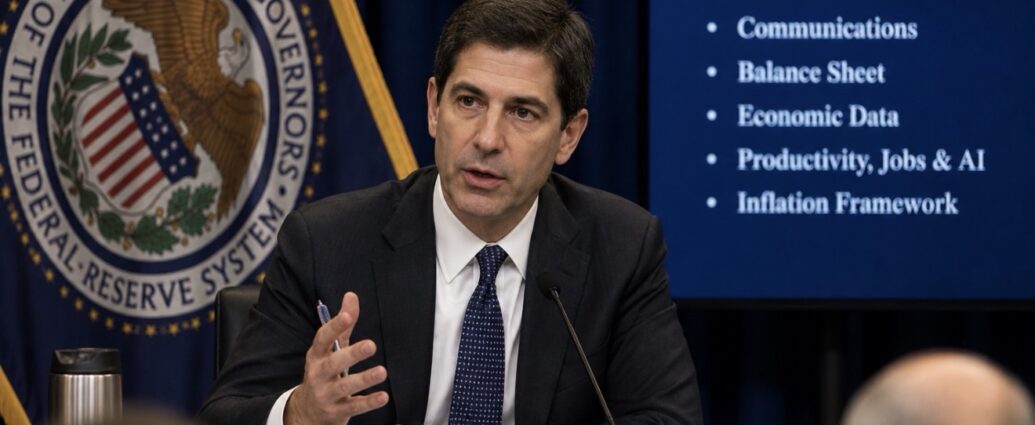
JBizNews Desk

A meeting that would have been unthinkable just months ago is now being viewed as a potential turning point for one of the world’s most troubled economies.

In a post on X on May 30, International Monetary Fund Managing Director Kristalina Georgieva confirmed that she met in Washington with Calixto Ortega, Vice President of Venezuela’s Economy Ministry, marking the first in-person meeting between the IMF’s top official and Venezuelan representatives since the fund resumed formal engagement with the country earlier this year.

“We discussed how the IMF can support efforts to strengthen macroeconomic stability, including through capacity development,” Georgieva wrote.

While brief, the meeting represents a significant step toward rebuilding relations between Venezuela and the global financial institutions that have largely been absent from the country for years.

A Break From Years of Isolation

The IMF and World Bank largely suspended dealings with Venezuela in 2019 amid disputes over the country’s political leadership and questions surrounding international recognition of its government.

That changed on April 16 when the IMF announced it would resume formal engagement with Venezuela under the administration of Interim President Delcy Rodríguez, reopening communication channels that had been frozen for years.

The renewed relationship follows major political changes inside Venezuela and has created an opportunity for international institutions to begin assessing the country’s economic condition after years of limited transparency and unreliable economic reporting.

According to IMF officials, current discussions are focused primarily on rebuilding economic data collection and reporting systems, a necessary first step before the fund can evaluate the country’s financial health or consider broader assistance programs.

Why the IMF Matters

For countries facing severe economic challenges, the IMF often serves as the gateway to broader international financial support.

Before debt restructuring, economic reform programs, or large-scale international financing can occur, governments typically must work with the IMF to establish credible economic data, policy frameworks, and stabilization plans.

That process is especially important in Venezuela.

The country remains burdened by one of the most severe economic collapses in modern history. Years of hyperinflation, declining oil production, economic mismanagement, sanctions, and political instability have dramatically weakened public finances and living standards.

According to IMF estimates, Venezuela’s public debt stands at approximately 180% of gross domestic product, one of the highest debt burdens in the world.

Inflation remains elevated, the currency continues to face pressure, and economic conditions remain fragile despite recent improvements.

Oil Markets Are Watching Closely

The implications extend beyond Venezuela.

The country possesses some of the largest proven oil reserves in the world, making its economic recovery a matter of interest for global energy markets.

A more stable Venezuelan economy could eventually support increased oil production, additional exports, and greater participation in international energy markets.

For global consumers, increased supply from a major producer could help ease long-term pressure on energy prices.

Several international energy companies have already begun exploring opportunities in Venezuela as conditions improve. Among them is Chevron, which has expanded engagement with the country following changes in U.S. policy and sanctions.

While a full recovery remains years away, investors are closely monitoring whether improved relations with international institutions could accelerate the process.

The Human Dimension

Behind the financial statistics lies a humanitarian crisis that has reshaped the region.

Since 2014, approximately 8 million Venezuelans have left the country, according to international organizations, making it one of the largest migration and displacement events in the world.

Many fled because of economic hardship, shortages of essential goods, collapsing public services, and limited employment opportunities.

Economic stabilization would not immediately reverse that trend, but it could create conditions that encourage investment, job creation, and eventually the return of some who left.

The outcome also matters for neighboring countries that have absorbed millions of Venezuelan migrants and for the broader Western Hemisphere, where migration pressures remain a major political and economic issue.

What Happens Next

The meeting between Georgieva and Ortega does not signal immediate financial assistance or an IMF lending program.

Instead, it marks the beginning of what could be a lengthy process involving economic assessments, data collection, policy reviews, and negotiations.

If progress continues, Venezuela could eventually receive a formal IMF economic evaluation for the first time in roughly two decades.

Such a review could open the door to future financial support, debt restructuring discussions, and access to resources currently beyond the country’s reach.

For now, the significance lies less in what was announced and more in the fact that the meeting happened at all.

After years of isolation, Venezuela is once again sitting at the table with one of the world’s most influential financial institutions.

Whether that conversation ultimately leads to economic recovery remains uncertain, but the reopening of the dialogue marks a notable shift in a relationship that many believed would remain frozen indefinitely.

JBizNews Desk

© JBizNews.com All Rights Reserved. Reproduction or distribution without written permission is prohibited.

LAS VEGAS — Barry Diller’s People Incorporated has launched an $18 billion bid to take MGM Resorts International private, wagering that one of the world’s largest casino operators is worth significantly more than public markets currently recognize.

In a letter disclosed Monday to MGM Chairman Paul Salem and Chief Executive Officer William Hornbuckle, People proposed acquiring every MGM share it does not already own for $48.30 per share in cash, valuing the company at more than $18 billion and marking one of the largest gaming-industry transactions proposed this year.

Investors immediately embraced the offer. MGM shares jumped roughly 11% in early trading Monday, while People shares rose about 2%, reflecting confidence that the proposal could unlock value that shareholders have struggled to realize through the public markets.

People already holds a 26.1% stake in MGM, making it the casino operator’s largest shareholder. The proposal seeks to acquire the remaining 73.9% of outstanding shares, effectively removing MGM from public markets and placing control in Diller’s hands.

The company behind the bid may be familiar to consumers even if its new name is not. Formerly known as IAC, the business rebranded as People Incorporated earlier this year and owns more than 40 media brands, including People, Food & Wine, Travel + Leisure, Better Homes & Gardens, and Southern Living.

A significant governance issue accompanies the proposal. Diller currently sits on MGM’s board of directors and stated in the letter that he will recuse himself from any board deliberations or votes concerning the transaction, leaving independent directors to evaluate the offer.

Diller’s investment thesis has remained remarkably consistent since People first began accumulating MGM shares during the depths of the COVID-19 pandemic.

In the proposal, Diller argued that MGM represents a durable business built around physical experiences that remain difficult to replicate through technology. While artificial intelligence is reshaping media, information, and digital services, Diller believes destination resorts, gaming, entertainment, hospitality, and live experiences possess enduring value that technology cannot easily replace.

People’s original investment, he wrote, was based on the belief that MGM’s assets and businesses would continue growing over time while remaining resilient to technological disruption.

The central argument behind the buyout is straightforward: Diller believes the public market is materially undervaluing MGM.

In his letter, he said MGM’s assets and businesses are not realizing their full potential in public markets and suggested that meaningful value creation may be difficult under the pressures and expectations of quarterly reporting.

For shareholders, the attraction is clear.

The $48.30-per-share offer represents a 10.6% premium to MGM’s closing price on May 29, a 24.1% premium to the company’s average share price during the previous 30 trading days, and more than 30% above its average price over the preceding 90 trading days.

The offer allows investors to lock in a meaningful gain immediately rather than wait for the company’s valuation to improve organically.

Wall Street analysts had already become increasingly constructive on MGM before Monday’s announcement.

Stifel recently raised its target price on the company to $48 per share from $44, while Morgan Stanley analyst Stephen Grambling lifted his target to $38 from $37, maintaining an Equal Weight rating.

Diller’s proposal sits above most published analyst targets, suggesting the premium is meaningful while still remaining within a valuation range that many industry observers consider defensible.

The proposal also carries important implications for MGM’s workforce and business partners.

People indicated that it expects MGM’s current management team to remain in place following completion of the transaction, signaling continuity for day-to-day operations. Nevertheless, private ownership often brings a different operating environment.

Unlike public companies, private owners face fewer quarterly market pressures and can move more aggressively on capital allocation, operational efficiency initiatives, staffing decisions, and long-term strategic investments.

For now, the message to employees is continuity. However, MGM remains one of the largest private employers in Nevada, and any change in control is likely to be closely watched by workers, vendors, and local economic leaders throughout Las Vegas.

The financing structure is another notable feature of the proposal.

People stated that the transaction is not subject to any financing conditions, a provision designed to strengthen the credibility of the bid. The company expects to fund the acquisition through a combination of cash on hand at both People and MGM, together with additional debt financing and equity commitments.

Following completion, People expects to own approximately 50.1% of the post-closing equity, maintaining operational control while allowing co-investors and potentially existing MGM shareholders to retain minority interests.

The timing of the proposal comes as MGM navigates a mixed operating environment.

Las Vegas visitation and foot traffic have softened in recent quarters, creating challenges for operators across the Strip. At the same time, MGM has increasingly leaned on growth from its international operations, particularly in Macau, as well as its rapidly expanding digital gaming businesses.

One of the company’s brightest growth engines remains BetMGM, its online sportsbook and gaming venture, which has emerged as one of the leading players in the U.S. sports betting market. As more states embrace legalized wagering, analysts have viewed BetMGM as a potentially significant long-term growth driver.

The proposal also arrives amid a broader resurgence in gaming-sector deal activity.

Just days after reports of major consolidation activity involving Caesars Entertainment, Diller’s move places another iconic casino operator squarely in the center of takeover speculation. Together, the developments suggest investors are increasingly targeting gaming assets they believe remain undervalued despite years of industry recovery and growth.

Still, the path to completion remains lengthy.

The proposal is non-binding and subject to numerous conditions, including completion of confirmatory due diligence, negotiation of definitive agreements, financing arrangements, antitrust reviews, gaming regulatory approvals, and customary closing requirements.

Gaming-industry transactions often face particularly complex regulatory reviews because operators hold licenses across multiple states and international jurisdictions. Regulatory approval processes can take months and, in some cases, longer than a year.

For now, MGM’s board faces a consequential decision.

Diller controls the company’s largest shareholder position and has made clear that he sees substantial untapped value in MGM’s portfolio. Whether directors agree that $48.30 per share adequately reflects the worth of some of the most recognizable assets in global gaming and hospitality will determine whether one of Las Vegas’ most iconic operators remains public—or becomes the latest major company to disappear from Wall Street.

Las Vegas — JBizNews Desk

© JBizNews.com All Rights Reserved. Reproduction or distribution without written permission is prohibited.

By JBizNews Desk

NEW YORK — June 1, 2026

Artificial intelligence has created the hottest trade on Wall Street, and it is centered on a product most consumers never see: semiconductor chips.

Chip stocks have surged to extraordinary heights in recent months as technology companies race to build the infrastructure powering the AI revolution. The gains have been so dramatic that investors, analysts, and fund managers are now openly debating whether the sector is experiencing the beginning of a long-term transformation—or the formation of another dangerous market bubble.

The numbers are difficult to ignore.

The Philadelphia Semiconductor Index (SOX), widely considered the benchmark for the chip industry, is on pace for one of the strongest rallies in its history. Semiconductor companies have become the best-performing segment of the stock market this year, significantly outpacing the broader S&P 500.

At the center of the rally is a surprising winner: memory chips.

For years, memory-chip makers were considered one of the most cyclical and volatile corners of the technology industry. Today, they have become critical suppliers to the artificial-intelligence boom. Demand for high-bandwidth memory, a key component used in AI servers and data centers, has exploded as companies rush to expand computing capacity.

Few companies illustrate the trend better than Micron Technology.

Shares of Micron have more than tripled this year as investors bet that AI demand will continue driving unprecedented growth. Analysts expect the company’s earnings to rise dramatically as hyperscale data-center operators continue purchasing massive quantities of memory products.

The spending behind the surge is coming from some of the world’s largest corporations.

Amazon, Microsoft, Alphabet, and Meta Platforms are collectively expected to invest hundreds of billions of dollars in AI infrastructure over the next two years. New data centers, advanced processors, networking equipment, and memory systems are all required to support increasingly powerful artificial-intelligence models.

Those investments have become the fuel powering the semiconductor rally.

As long as the spending continues, chip manufacturers stand to benefit.

Yet Wall Street remains deeply divided about how long the trend can last.

Kai Wu, Chief Investment Officer of Sparkline Capital, says the key question is whether AI infrastructure spending remains elevated for years or begins slowing once current projects are completed.

“If the AI buildout continues, chips will likely continue doing well,” Wu said. “But there’s also the possibility that investors are getting ahead of themselves.”

That concern has become increasingly common among market strategists.

One reason is valuation.

Chip-company profits are growing rapidly, but stock prices have risen even faster. Several analysts note that semiconductor shares now trade at levels that historically have preceded periods of significant volatility.

Jonathan Krinsky, chief market technician at BTIG, recently noted similarities between current semiconductor-market conditions and the technology boom that preceded the dot-com collapse in 2000.

By several technical measures, chip stocks are trading at some of their most extended levels in decades.

That does not necessarily mean a crash is imminent.

It does mean expectations have become extraordinarily high.

Another concern is the growing role of debt financing throughout the AI ecosystem. Many technology companies continue generating substantial cash flow, but some are increasingly relying on borrowing to help fund aggressive infrastructure expansion.

Investors generally welcome debt when it finances productive growth. However, when borrowing accelerates during periods of market euphoria, concerns about sustainability often follow.

Meanwhile, retail investors have poured into semiconductor stocks at record levels.

Historically, large inflows from individual investors often occur late in major market rallies. While that does not guarantee a downturn, it frequently increases volatility as momentum-driven trading intensifies.

The impact of the AI boom is also beginning to reach consumers.

As technology giants compete for advanced chips and memory components, prices throughout the supply chain are rising. Industry analysts warn that increased competition for memory products could eventually contribute to higher costs for smartphones, laptops, servers, and other electronic devices.

In other words, the battle to build artificial intelligence could ultimately affect the price of the technology consumers use every day.

Supporters of the rally argue that comparisons to the dot-com era miss an important distinction.

Unlike many internet companies during the late 1990s, today’s leading AI-related firms are generating substantial revenue and profits. Demand for AI computing resources is real, measurable, and growing rapidly.

Skeptics counter that strong earnings do not eliminate the possibility of a bubble. History shows that even great businesses can become poor investments if expectations become unrealistic.

For now, the AI spending wave remains intact, corporate profits continue rising, and semiconductor companies remain among the biggest beneficiaries.

That leaves investors confronting a difficult question.

Are today’s chip stocks pricing in a technological revolution that will transform the global economy for decades—or are they reflecting expectations so optimistic that reality will eventually struggle to keep pace?

Wall Street does not yet have an answer.

And that uncertainty may be the clearest sign of all that the AI boom is still in its early chapters.

New York — JBizNews Desk

© JBizNews.com All Rights Reserved. Reproduction or distribution without written permission is prohibited.

This article discusses investment-related topics and is intended for informational and journalistic purposes only. It does not constitute investment advice. Readers should consult a licensed financial professional before making investment decisions.

JBizNews Desk

The first major economic report of June arrives Monday morning, and it could offer an early indication of whether America’s manufacturing sector is truly regaining momentum or simply benefiting from temporary factors.

The Institute for Supply Management (ISM) will release its closely watched Manufacturing Purchasing Managers’ Index (PMI) at 10:00 a.m. ET on Monday, providing investors, businesses, policymakers, and workers with one of the earliest readings on economic activity for the month.

The report comes at a time when Wall Street sits near record highs and investors are looking for confirmation that economic growth remains durable despite ongoing geopolitical tensions, elevated borrowing costs, and lingering supply-chain concerns.

Recent data has offered reasons for optimism.

A preliminary May reading from S&P Global showed its U.S. Manufacturing PMI rising to 55.3, up from 54.5 in April and above economist expectations. The figure represented the strongest pace of manufacturing expansion since May 2022 and suggested that factory activity accelerated significantly during the month.

Factory output increased at the fastest rate in more than four years, while manufacturing employment posted its strongest growth since June 2025. New orders remained healthy, signaling continued demand across large parts of the industrial economy.

At first glance, those numbers suggest that manufacturing may finally be emerging from a prolonged period of weakness.

Yet economists caution that the headline figures may not tell the entire story.

According to S&P Global, part of the increase in manufacturing activity may have been driven by businesses building inventory as a precaution against disruptions linked to ongoing instability in the Middle East. Companies increased purchases of raw materials and components while supplier delivery times lengthened, reflecting concerns about potential supply interruptions.

In other words, some of the activity may have been defensive rather than demand-driven.

For investors and economists, Monday’s ISM report will help determine whether manufacturers are expanding because customers are placing more orders or because companies are temporarily stockpiling goods in anticipation of future uncertainty.

The distinction matters.

If the report shows strong new orders alongside higher production levels, it would suggest that demand remains healthy and that the manufacturing recovery has a stronger foundation. If new orders weaken while inventories continue to rise, concerns could emerge that recent gains may prove temporary.

The implications extend far beyond factory floors.

Manufacturing activity affects employment throughout the economy, including transportation, logistics, warehousing, raw materials, construction, and energy. Strong factory demand often translates into additional hiring, increased business investment, and greater economic activity across multiple sectors.

Manufacturing also plays a direct role in consumer prices.

When factories operate efficiently and supply chains remain stable, goods tend to move more smoothly through the economy, helping keep prices under control. Supply disruptions, production bottlenecks, and transportation delays can have the opposite effect, contributing to inflationary pressures on everything from automobiles and appliances to building materials and consumer products.

The timing of Monday’s report is particularly notable because it arrives amid growing attention on global energy markets. Manufacturers have spent months coping with higher fuel, transportation, and logistics costs stemming from geopolitical uncertainty and disruptions to global trade routes.

A reduction in those pressures could provide meaningful relief to industrial producers during the second half of the year.

Longer term, manufacturing leaders remain cautiously optimistic. The ISM has projected manufacturing employment growth in 2026 while forecasting revenue expansion across much of the sector. Whether those expectations are being realized will become clearer once Monday’s report is released.

For investors, business owners, and workers alike, one component may matter more than any other: new orders.

Production can be influenced by inventory building, supply concerns, and short-term events. New orders, however, provide one of the clearest signals about future demand.

If customers continue buying, factories keep producing.

That makes Monday’s report one of the most important economic indicators to watch as June begins.

JBizNews Desk

© JBizNews.com All Rights Reserved. Reproduction or distribution without written permission is prohibited.

JBizNews Desk

Wall Street may begin June focused on manufacturing data, oil prices, and geopolitical developments, but the economic report with the greatest impact on American households arrives Friday morning.

On June 5 at 8:30 a.m. ET, the Bureau of Labor Statistics (BLS) will release its monthly Employment Situation Report, providing the latest snapshot of hiring, unemployment, wages, and labor-market strength across the United States.

For investors, businesses, policymakers, and consumers, it is often the single most important economic report of the month.

The reason is simple: jobs drive spending, confidence, and economic growth.

A strong labor market supports household income, consumer spending, and business investment. A weakening labor market can quickly raise concerns about economic growth, corporate earnings, and the broader outlook for the economy.

The report also plays a critical role in shaping Federal Reserve policy. Hiring trends and wage growth influence inflation expectations, which in turn affect interest rates, mortgage costs, credit card rates, auto loans, and other borrowing expenses faced by consumers.

The labor market has remained remarkably resilient.

The most recent employment report showed the U.S. economy adding approximately 115,000 jobs in April, exceeding many economist forecasts. Earlier revisions also showed stronger hiring than initially reported, reinforcing the view that employers continue to add workers despite economic uncertainty.

The unemployment rate remained at 4.3%, continuing a stretch of historically low joblessness.

Several sectors led job creation.

Healthcare added roughly 37,000 jobs, while transportation and warehousing contributed approximately 30,000 positions. Retail trade also recorded notable gains. Manufacturing employment was relatively flat, while federal government employment continued to decline.

Looking ahead to Friday’s report, many economists expect another month of moderate job growth.

Forecasts generally call for payroll gains near 150,000 jobs, with unemployment remaining near current levels and wage growth continuing at a steady pace.

While the headline payroll number attracts the most attention, economists say three measures deserve particularly close scrutiny.

The first is the unemployment rate.

A stable unemployment rate would reinforce the view that the labor market remains healthy. A meaningful increase could raise concerns that economic growth is slowing more rapidly than expected.

The second is labor-force participation.

This measure tracks the share of Americans who are either working or actively seeking employment. Participation has softened in recent years, and further declines could complicate interpretations of the unemployment rate. A low unemployment rate becomes less encouraging if fewer people are participating in the labor market.

The third key figure is wage growth.

Average hourly earnings provide insight into how quickly worker paychecks are growing. Rising wages generally benefit households, but excessively rapid wage growth can also contribute to inflation pressures and potentially delay future interest-rate reductions.

For many families, these numbers matter more than stock-market records.

The jobs report serves as a real-time measure of the economy’s ability to generate income, create opportunities, and support household financial stability.

Strong hiring often translates into greater job security and confidence. Weak hiring can signal rising risks ahead.

The report arrives at a time when many Americans continue to face elevated housing costs, higher borrowing expenses, and persistent concerns about affordability. Whether the labor market remains strong enough to offset those pressures will be a central question heading into the summer months.

The broader economic outlook may depend on two developments in the days ahead: energy prices and employment.

Oil markets remain sensitive to geopolitical developments, while Friday’s jobs report will provide the clearest picture yet of whether the labor market remains a source of strength for the U.S. economy.

For households, businesses, and investors alike, that makes Friday’s report the number to watch.

JBizNews Desk

© JBizNews.com All Rights Reserved. Reproduction or distribution without written permission is prohibited.

The share of private loans going bad in the United States stayed at a record high in May, according to an update from Fitch Ratings released Monday, a warning sign from one of the fastest-growing and least understood corners of finance.

Fitch’s private credit default rate held near 6.0% over the trailing twelve months, matching the record it set in April.

It is the highest reading since the firm began tracking the measure in August 2024, and it caps a steady climb that has run through much of the past year.

To understand why that matters, it helps to know what private credit is.

These are loans made not by banks but by investment firms, lent directly to companies, often mid-sized businesses that might struggle to borrow elsewhere.

The market has exploded in size, growing to roughly $3 trillion from about $2 trillion in 2020, as investors chased the higher returns these loans offer.

That money increasingly includes ordinary people’s savings, with retirement funds and even retail investors now putting cash into the sector.

The reason defaults keep rising comes down largely to interest rates.

Most private-credit loans carry floating rates, meaning the interest a borrower owes rises and falls with broader rates.

With borrowing costs high, pushed up further this year by the war with Iran and stubborn inflation, companies that took on these loans are paying more to service them, and refinancing has become painful.

Many of the recent defaults involved borrowers switching to so-called payment-in-kind terms, paying their interest with more debt instead of cash, a maneuver that often signals a company is running short of money.

The pain is not evenly spread.

Healthcare-services companies have produced the most defaults over the past year, followed by consumer-products firms.

High-profile collapses, including the bankruptcies of First Brands and Tricolor, drew fresh scrutiny to the sector and raised questions about how much hidden stress is building beneath the surface.

“Higher Treasury rates make it harder for companies to refinance,” said Dan Alpert, managing partner at Westwood Capital, who said he had grown increasingly worried about weakness in private credit on top of the broader pressure from rates.

Here is why it reaches beyond Wall Street.

Private credit was once a niche played by specialized firms and wealthy investors.

Today it is woven into the wider financial system.

Banks have lent close to $300 billion to private-credit providers, according to Moody’s, linking the health of the two.

Analysts at Bank of America have called private credit the lowest-quality slice of the corporate-loan market, even as some industry leaders, including Blackstone chief executive Stephen Schwarzman, have played down the concerns.

The worry is that if stress deepens, it could ripple outward to the banks and retirement funds now tied to it.

There had been hope for relief.

Late last year, Bank of America strategists predicted defaults would ease to about 4.5% in 2026 if the Federal Reserve cut interest rates.

But the Fed has held rates steady, and with its new chair weighing whether to cut at all amid hot inflation, that easing looks far less certain.

As long as borrowing stays expensive, the companies behind these loans will keep feeling the squeeze.

For now, the record default rate is a flashing yellow light.

It does not mean a crisis is at hand, but it does show that a sector built and sold during an era of cheap money is straining under the weight of expensive money, and that more investors than ever are along for the ride.

Wall Street — JBizNews Desk

JBizNews Desk / © JBizNews.com All Rights Reserved. Reproduction or distribution without written permission is prohibited.
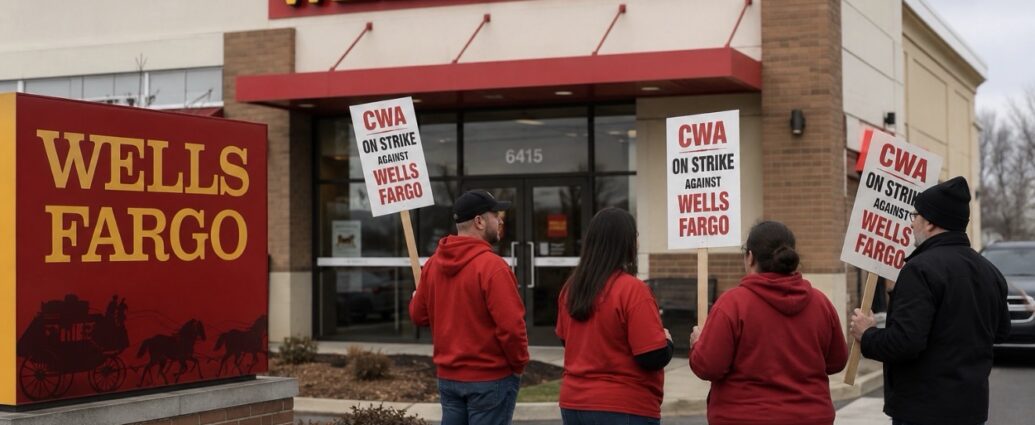
JBizNews Desk

As traditional television continues to lose viewers and streaming becomes the dominant way Americans consume entertainment, The Walt Disney Company is making a major bet that advertising—not subscription fees alone—will drive the next phase of growth.

At the center of that effort is Rita Ferro, Disney’s President of Global Advertising, who is leading an aggressive expansion of the company’s advertising business across Disney+, Hulu, ESPN, ABC, and its broader media portfolio.

According to a profile published May 31 by CNBC, Ferro has become one of Disney’s most important executives as advertisers increasingly seek targeted, measurable campaigns across streaming, sports, and digital platforms.

The timing is critical. Media companies spent years chasing streaming subscribers, often sacrificing profits in the process. Now the industry is shifting focus toward profitability, and advertising is becoming one of the most important revenue drivers.

Disney’s Advertising Strategy

Ferro’s approach centers on combining Disney’s content portfolio with technology that allows advertisers to better target audiences and measure results.

That means leveraging some of the world’s most recognizable brands and franchises, including ESPN, Marvel, Star Wars, Pixar, and Disney’s entertainment networks, while expanding the company’s in-house advertising technology platform.

Advertisers increasingly want more than broad television exposure. They want precise audience targeting, performance data, and measurable returns on investment.

Disney believes its proprietary advertising technology can help deliver those capabilities while keeping more of the advertising infrastructure under its own control.

According to executives who work closely with Ferro, Disney has spent years investing in its advertising technology stack to compete more effectively against digital giants and streaming rivals.

Streaming Is Becoming an Advertising Business

The financial results explain why Disney is doubling down.

In Disney’s most recent quarter, streaming operating income surged 88% to $582 million, a dramatic improvement from earlier years when streaming operations generated substantial losses.

A key driver has been the growth of ad-supported streaming.

Disney has reported that roughly half of new Disney+ subscribers are selecting lower-cost plans that include advertising. While those plans generate less subscription revenue per user, they create additional opportunities for advertising sales.

Every new subscriber on an ad-supported plan becomes another viewer that advertisers can reach.

For Disney, that creates a dual revenue stream: subscription fees and advertising dollars.

A New Audience of Advertisers

Disney is also targeting a broader range of advertisers than it historically pursued.

The company has expanded efforts to attract emerging brands and midsize advertisers that previously viewed national television advertising as too expensive or inaccessible.

Executives say automation and self-service advertising tools are helping make Disney’s platforms more accessible to a wider range of businesses.

The strategy mirrors trends across the broader digital advertising industry, where companies increasingly seek scalable systems that allow advertisers of all sizes to buy inventory efficiently.

Challenges Remain

The transition is not without obstacles.

While streaming advertising continues to grow, parts of Disney’s traditional advertising business remain under pressure.

Entertainment advertising revenue outside Disney+ and Hulu has softened, while certain sports advertising categories have faced challenges due to programming changes and shifting viewing habits.

The company is betting that growth in streaming advertising can offset those declines over time.

Investors will be closely watching whether that strategy succeeds as Disney negotiates advertising commitments for the coming year.

What It Means for Consumers

For viewers, the shift is already visible.

Many streaming services now offer lower-priced plans supported by advertising, and Disney continues to expand ad formats across its platforms.

Consumers receive cheaper subscription options, while Disney gains additional revenue from advertisers.

The arrangement reflects a broader transformation occurring throughout the media industry.

After years of prioritizing subscriber growth, media companies are increasingly focused on turning streaming audiences into profitable advertising businesses.

The Bottom Line

Disney’s future growth strategy increasingly depends on advertising, and Rita Ferro is leading that effort.

The company is combining its content portfolio, sports rights, streaming platforms, and advertising technology in an attempt to capture a larger share of marketing budgets moving into digital media.

As advertisers shift spending away from traditional television and toward streaming platforms, Disney is positioning itself to be one of the industry’s biggest beneficiaries.

Whether that strategy delivers sustained growth will become clearer in the months ahead, but one thing is already evident: advertising has become central to Disney’s next chapter.

JBizNews Desk

© JBizNews.com All Rights Reserved. Reproduction or distribution without written permission is prohibited.
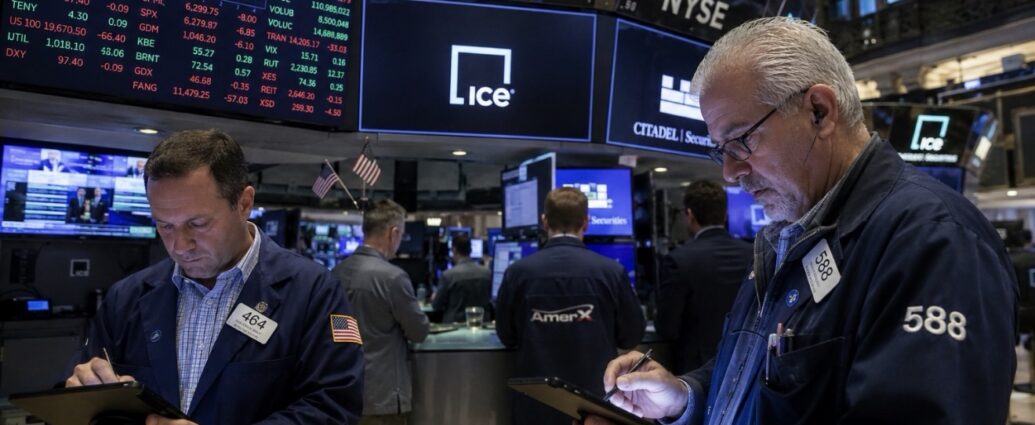
WASHINGTON — JBizNews Desk — May 29, 2026

Walt Disney’s ABC network filed early broadcast-license renewal applications Thursday for its eight owned-and-operated television stations, telling the Federal Communications Commission it was complying “under protest” while accusing the agency of carrying out an “unlawful, arbitrary and unconstitutional” attack on protected speech.

The filing marks the first time in more than 50 years that the federal government has forced a major broadcaster into accelerated license renewals before the normal schedule.

The dispute centers on an April order issued by the FCC’s Media Bureau under Trump-appointed FCC Chairman Brendan Carr, requiring ABC stations to seek early renewals years before their existing licenses expire. Some of the affected licenses were not scheduled for renewal until 2028, while others extended as far as 2031.

The order arrived shortly after President Donald Trump publicly criticized ABC and late-night host Jimmy Kimmel following a joke involving First Lady Melania Trump, though Disney’s filing stopped short of directly naming the specific incident.

Instead, ABC argued broadly that the FCC’s action was designed to pressure broadcasters into self-censorship by forcing them to consider potential regulatory retaliation before airing politically sensitive material.

“The true purpose and effect of the order is to suppress speech,” the filing argued, claiming the accelerated review process creates pressure for networks to avoid programming the government may dislike out of fear that broadcast licenses could ultimately be threatened.

Disney framed the issue not simply as a corporate dispute but as a constitutional concern affecting viewers and journalism itself.

The company argued that when broadcasters must weigh possible government retaliation before making editorial decisions, the public’s access to independent reporting and commentary is undermined.

ABC also sharply criticized the legal mechanism used by the FCC.

The filing argued the agency revived an obscure “call-up” procedure that had largely sat dormant for decades and originated during an earlier regulatory era when broadcasters faced far more direct content-based scrutiny during renewal proceedings.

Disney contended the procedure serves no legitimate operational purpose because the FCC already possesses broad investigatory authority through ongoing enforcement tools and existing regulatory processes.

The FCC has separately been investigating Disney’s diversity, equity, and inclusion practices since mid-2025, examining whether any company policies violate federal anti-discrimination rules.

ABC argued in Thursday’s filing that the DEI investigation already provides the Commission with all necessary authority and information, noting that Disney has already produced more than 11,000 pages of documents under an agreed schedule with regulators.

The dispute carries substantial financial implications for Disney.

Broadcast licenses form the legal foundation supporting station operations, advertising revenue, affiliate agreements, and retransmission deals across some of America’s largest television markets, including New York, Los Angeles, Chicago, Philadelphia, Houston, San Francisco, Raleigh-Durham, and Fresno.

Legal experts note that actually denying renewal licenses to major broadcasters remains extremely rare and legally difficult, with any challenge likely triggering years of hearings and federal court litigation while stations continue operating normally.

Still, Disney appears focused on building a constitutional challenge that could eventually move into federal court.

The ABC dispute is also not the company’s only conflict with the FCC.

Earlier this year, the agency opened a separate proceeding involving alleged equal-time rule concerns tied to ABC’s daytime program “The View,” questioning whether the show properly qualifies as a bona fide news program exempt from certain political-balance requirements.

ABC pushed back strongly against that proceeding as well, warning regulators that reopening settled broadcast standards could create a chilling effect on protected speech across the television industry.

For Disney, the immediate strategy appears carefully calibrated: comply procedurally with the FCC’s deadline while simultaneously constructing a constitutional record arguing the government is improperly using broadcast regulation to pressure editorial decision-making.

The company concluded Thursday’s filing by reserving all legal rights and formally urging the Commission to withdraw the order entirely.

Washington — JBizNews Desk

© JBizNews.com All Rights Reserved. Reproduction or distribution without written permission is prohibited.

JBizNews Desk

The U.S. government has delivered a blunt message to shipping companies navigating one of the world’s most important energy chokepoints: do not make deals with Iran to cross the Strait of Hormuz.

In updated guidance issued May 29, the U.S. Treasury Department warned that American companies are prohibited from accepting any arrangement with the Iranian government related to safe passage through the strategic waterway — even if no money changes hands.

Regardless of whether a payment is made, U.S. persons are prohibited from receiving services from the Government of Iran, including services related to a guarantee of safe passage,” Treasury said in its updated statement.

The guidance arrives at a sensitive moment as markets closely watch efforts to restore normal shipping through the Strait of Hormuz following months of conflict that disrupted one of the world’s most critical trade routes.

What Treasury Is Prohibiting

The updated guidance expands previous warnings that focused primarily on payments, tolls, fees, or other financial transactions involving Iranian authorities.

Under the new interpretation, simply accepting an Iranian guarantee of safe passage could constitute a prohibited service under U.S. sanctions rules.

The warning centers on the Persian Gulf Strait Authority (PGSA), a recently established Iranian entity that Tehran says is responsible for managing vessel traffic through the strait.

According to Treasury, the PGSA works alongside elements of Iran’s Islamic Revolutionary Guard Corps (IRGC) and has sought to direct shipping traffic through routes designated by Iranian authorities.

The Office of Foreign Assets Control (OFAC) has sanctioned the PGSA under U.S. counterterrorism authorities, meaning American individuals and companies face significant sanctions exposure if they engage with the organization.

Iran maintains that the system is designed to manage navigation and maritime safety. U.S. officials argue that it functions as a mechanism for coercion and control over international shipping.

Why Hormuz Matters

The Strait of Hormuz is among the most strategically important waterways on earth.

Roughly one-fifth of global oil consumption typically passes through the narrow channel connecting the Persian Gulf to international markets. Major energy exporters including Saudi Arabia, the United Arab Emirates, Kuwait, Iraq, and Qatar rely heavily on the route.

Disruptions to shipping through Hormuz can quickly affect oil prices, shipping costs, insurance rates, and ultimately consumer prices worldwide.

Since conflict escalated earlier this year, vessel traffic through the region has slowed significantly, contributing to heightened volatility across global energy markets.

The Treasury guidance underscores the difficult position many shipping companies now face.

A vessel attempting to leave the Persian Gulf cannot negotiate directly with Iranian authorities without risking sanctions exposure. At the same time, uncertainty surrounding transit security continues to complicate shipping operations and increase costs.

The Business Impact

For shipping companies, energy traders, insurers, and commodity markets, the new guidance adds another layer of complexity.

War-risk insurance premiums have risen sharply for vessels operating in the region, while shipping firms continue to evaluate route risks and security considerations.

Some tankers have successfully transited the waterway under heightened security measures and military protection, but industry executives remain cautious.

The situation is particularly important for energy markets because every disruption in Hormuz affects global oil supply calculations.

Even modest reductions in tanker traffic can tighten markets and contribute to higher fuel prices around the world.

A Complication for Broader Diplomatic Efforts

The Treasury announcement also highlights a broader policy challenge.

While discussions continue regarding a potential diplomatic framework aimed at restoring stability and reopening maritime traffic, the U.S. government is simultaneously reinforcing sanctions restrictions that limit direct engagement with Iranian authorities.

That creates a difficult environment for businesses seeking clarity on future operations.

Shipping companies, insurers, commodity traders, and multinational corporations are left navigating a rapidly changing landscape in which security, sanctions compliance, and geopolitical developments are all closely intertwined.

Adding to the uncertainty, Iranian lawmakers have reportedly advanced legislation intended to formalize the authority of the PGSA, potentially giving the organization a more permanent role in Tehran’s maritime strategy.

Such a move would not change international maritime law or remove U.S. sanctions, but it could further complicate future negotiations over shipping access and transit rights.

Why Consumers Should Care

For most Americans, the impact of the Strait of Hormuz is felt far from the Persian Gulf.

The route plays a critical role in global energy flows, and disruptions can influence the cost of gasoline, diesel fuel, airline tickets, shipping expenses, and countless products that depend on transportation.

Higher insurance costs, longer transit times, and supply uncertainty all contribute to broader inflation pressures.

A fully secure reopening of Hormuz would likely help stabilize energy markets and ease some of those costs.

Treasury’s latest guidance, however, makes clear that Washington is not willing to allow private companies to negotiate their own arrangements with Tehran to achieve that outcome.

For now, the message from the U.S. government is straightforward: American companies must stay clear of any agreements with Iranian authorities related to passage through the Strait of Hormuz.

Until broader diplomatic and security issues are resolved, one of the world’s most important shipping lanes will remain a source of uncertainty for global commerce.

JBizNews Desk

© JBizNews.com All Rights Reserved. Reproduction or distribution without written permission is prohibited.

For much of the past two years, Wall Street’s message to investors has been remarkably simple: stay long equities, ride the AI boom, and trust the economy to keep delivering.

Bob Doll thinks the situation is more complicated than that.

Doll — the longtime market strategist and current CEO and chief investment officer of Crossmark Global Investments, with more than four decades of investment experience across multiple market cycles — entered 2026 describing the current environment with a phrase that has increasingly resonated across institutional finance: a “high-risk bull market.”

At first glance, the phrase sounds contradictory. Bull markets imply confidence, momentum, and expanding risk appetite. High-risk environments usually imply caution and instability.

But what Doll is describing is a market where gains remain possible — even likely — while the underlying foundation supporting those gains grows increasingly fragile.

Five months into 2026, that framing may be proving unusually accurate.

Stocks remain elevated, artificial intelligence spending continues driving earnings growth across major technology companies, and the broader economy has avoided recession despite higher interest rates and geopolitical instability.

At the same time, inflation remains stubbornly elevated, oil prices are rising again amid Middle East tensions, Treasury yields remain volatile, valuations are historically stretched, and markets are increasingly dependent on a narrow concentration of mega-cap technology firms.

That combination is exactly what Doll means by a “high-risk bull market.”

The Bull Case Is Still Real

Doll’s broader thesis is not bearish.

In fact, he continues to argue that several major structural forces remain supportive for equities.

The U.S. economy has proven significantly more resilient than many economists expected entering 2025. Consumer spending has slowed but not collapsed. Corporate earnings, particularly in technology and AI-linked sectors, continue expanding. Fiscal stimulus and industrial spending remain historically elevated. And the Federal Reserve appears increasingly cautious about tightening policy further unless inflation reaccelerates materially.

Artificial intelligence remains central to that optimism.

The AI investment cycle is producing one of the largest capital spending booms seen in decades, with hyperscalers, semiconductor firms, data infrastructure companies, software providers, and cloud operators all experiencing surging demand tied to enterprise AI adoption.

For equity investors, that matters enormously because it creates real earnings growth rather than purely speculative enthusiasm.

That distinction helps explain why markets continue climbing despite persistent macroeconomic concerns.

Doll has also pointed toward continued government spending, regulatory easing, and a labor market that remains relatively healthy as additional support pillars for equities heading into the second half of the year.

Under normal circumstances, those conditions would form a relatively strong backdrop for stocks.

The problem is that markets are no longer priced for merely “good.”

They are priced for near perfection.

Why The Risk Side Matters More Now

This is where Doll’s warning becomes more important.

The market’s vulnerability comes less from current economic weakness and more from how little room investors now have for disappointment.

Inflation remains the clearest example.

While price pressures cooled significantly from their 2022–2023 peaks, inflation has stopped falling consistently toward the Federal Reserve’s 2% target. Recent data has shown renewed firmness in core prices, while higher oil prices tied to geopolitical tensions risk feeding additional inflation into transportation, manufacturing, food, and consumer expectations.

That leaves the Federal Reserve trapped in a difficult position.

If inflation remains sticky, aggressive rate cuts become difficult. But if rates remain elevated too long, economic growth eventually slows and financial conditions tighten further.

Markets are effectively betting policymakers can engineer a narrow “soft landing” where growth slows just enough to control inflation without damaging earnings or employment significantly.

Historically, that balancing act has been extremely difficult.

Doll has repeatedly warned about that “tightrope” dynamic.

The stock market has already delivered multiple consecutive years of double-digit gains, while corporate earnings expectations remain elevated. Historically, periods of sustained double-digit earnings growth rarely continue uninterrupted for extended stretches without eventually encountering economic or valuation pressure.

That does not mean a crash is inevitable.

But it does mean expectations leave very little room for mistakes.

The Concentration Problem

Another issue increasingly worrying strategists is market concentration.

A growing percentage of market gains continues coming from a relatively small group of mega-cap technology and AI-related companies. That concentration creates a situation where headline indexes can appear healthy even while large portions of the broader market remain weaker underneath.

In practical terms, markets are becoming more dependent on a handful of companies continuing to deliver exceptional earnings growth.

If even one or two major AI leaders stumble, the impact on broader sentiment could be disproportionate.

That concentration risk is one reason Doll continues emphasizing diversification rather than blind momentum chasing.

Why Investors Still Stay In

Despite the warnings, Doll has not advocated abandoning equities.

That is what makes the “high-risk bull market” concept more nuanced than a standard bearish forecast.

His argument is essentially that investors probably still need exposure to equities because earnings growth and economic resilience continue supporting higher prices over time. Sitting entirely in cash risks missing further upside if AI-driven growth persists longer than expected.

But participating in the market now requires accepting greater volatility, tighter margins for error, and a much wider range of possible outcomes than many investors became accustomed to during the long post-2009 bull market.

In other words: the bull market may continue, but it is becoming less forgiving.

What Wall Street Is Really Debating

Underneath the headlines, Wall Street is increasingly arguing over one central question:

Is artificial intelligence productivity growth strong enough to offset the macroeconomic pressures building elsewhere in the economy?

If AI-driven earnings expansion continues accelerating, markets may justify current valuations longer than skeptics expect.

But if inflation, interest rates, or geopolitical instability begin undermining broader growth, the market’s current optimism could face a much more difficult stress test.

That tension explains why markets in 2026 often appear strangely divided — with investors simultaneously optimistic and anxious.

Doll’s phrase captures that contradiction better than most.

This is not a euphoric bull market built on easy money and broad confidence.

It is a bull market still climbing higher while carrying an increasingly visible list of risks underneath it.

And that may ultimately make it more dangerous than it first appears.

New York — JBizNews Desk

© JBizNews.com All Rights Reserved. Reproduction or distribution without written permission is prohibited.

Wall Street begins June the way it ended May — at record highs, but holding its breath. In a live update Sunday afternoon, CBS News reported that President Trump had still not decided whether to sign a potential peace agreement with Iran, leaving the single biggest question of the year hanging over Monday’s open.

Trump announced Friday he would make a “final determination” on the deal after a meeting in the White House Situation Room. As of Sunday, no decision had come. In a Truth Social post, Trump laid out his terms: any agreement must reopen the Strait of Hormuz, and Iran must work with the U.S. to have its highly enriched uranium destroyed. A source familiar with the talks said Trump had made significant late edits to the draft memorandum of understanding, with his changes focused on the Strait and the removal of that uranium.

The tension didn’t stay on paper over the weekend. The U.S. military disabled a merchant vessel in the Gulf of Oman that was allegedly trying to break through the American blockade of Iranian ports — a reminder that the shooting hasn’t fully stopped even as the diplomacy advances.

A market riding high into a risky week

The averages enter June on a tear. Friday’s close put the Nasdaq Composite at 26,972.62, the S&P 500 at 7,580.06, and the Dow Jones Industrial Average at 51,032.46. All three notched fresh all-time intraday highs and capped a winning May, powered by technology and by growing hope that the Iran war is winding down.

That hope did real work last week. According to Charles Schwab, oil prices fell nearly 10% and the 10-year Treasury yield dropped 11 basis points, both driven by expectations of a peace deal. Lower oil and lower yields are exactly the combination that lifts stocks — cheaper energy eases inflation, and lower yields make shares more attractive.

But Schwab also flagged a warning sign. Both the S&P 500 and the Nasdaq now carry relative strength readings above 70, a level that signals the market may be overbought in the near term. The firm noted that if the expected U.S.-Iran agreement breaks down and oil and yields climb back up, that could be the excuse for stocks to pull back 1% to 2%.

Why the next few days matter so much

The whole setup hinges on Iran. As Wayve Capital‘s strategist put it, the real bet investors are making is that a resolution arrives in the next two to three weeks. He added that it’s hard to imagine the Strait of Hormuz still being closed in October without a serious market reaction.

Not everyone is convinced a signature ends the story. London-based defense analyst Alex Alfirraz Scheers said Trump’s declaration on a possible deal should be taken with a degree of healthy skepticism, noting that Iran has its own demands that remain unfulfilled. Analysts broadly expect markets to stay sensitive to every headline out of the negotiations, with any confirmed reopening of the Strait likely to push global stocks higher — and any breakdown likely to bring volatility back fast.

The week’s economic calendar

Beyond Iran, there’s a full slate of data. Monday kicks off at 9:45 a.m. ET with S&P Global’s final May manufacturing reading, followed at 10:00 a.m. by the Institute for Supply Management‘s Manufacturing PMI for May — the first hard economic data of the new month. The week then builds toward Friday’s main event: the May jobs report from the Bureau of Labor Statistics, due June 5 at 8:30 a.m. ET.

There’s also a seasonal headwind worth knowing. June has historically been the weakest month for stocks in a midterm election year, and many investors expect a stretch of sideways trading after the spring run to records.

What it means for everyday Americans

Strip away the Wall Street jargon and it comes down to the price at the pump and the cost of borrowing. A signed deal that reopens Hormuz would pull oil — and gasoline — lower and ease the inflation pressure that has squeezed household budgets since the war began in late February. That would also give the Federal Reserve more room to cut interest rates, which feeds straight into mortgages, car loans, and credit cards.

A breakdown would do the reverse: energy prices climbing again, inflation worries returning, and the Fed staying on hold. One detail from last week underlines how thin the cushion is. The April personal consumption expenditures data showed Americans’ savings rate dropping — meaning households have less of a buffer to absorb another shock.

So as the new month opens, the records on the board matter less than the decision sitting on the President’s desk. Watch for word on the Iran signature, watch oil, and watch Friday’s jobs number. Those three will decide whether June’s strong start holds — or whether the spring rally finally takes a breather.

JBizNews Desk

© JBizNews.com. All rights reserved. This article is original reporting by JBizNews Desk. Unauthorized reproduction or redistribution is strictly prohibited.

By JBizNews Desk

SEATTLE — May 31, 2026

For more than two decades, Bill Gates carefully transformed himself from one of the most feared executives in corporate America into one of the most trusted figures in global philanthropy.

The transition was remarkable. The hard-charging co-founder of Microsoft, whose company spent years battling antitrust regulators, evolved into the soft-spoken billionaire associated with vaccines, disease prevention, education reform, and global development. The image became so successful that many younger Americans know Gates primarily as a philanthropist rather than the businessman who built one of the world’s largest technology companies.

But a recent Wall Street Journal report is raising new questions about just how carefully that image was constructed—and whether the institution built around it can withstand mounting scrutiny.

According to current and former employees cited by the Journal, Gates’ public appearances have long been managed with extraordinary precision. Staff reportedly maintain a custom-sized mannequin used to test clothing selections in advance of appearances, while multiple pre-approved outfit combinations are prepared for events. The goal, according to individuals familiar with the process, was consistency: projecting a calm, approachable, thoughtful public persona.

The detail has generated headlines and social media commentary. But the larger issue extends far beyond sweaters, glasses, or wardrobe planning.

For the Bill & Melinda Gates Foundation and related philanthropic organizations, reputation is not merely a public-relations concern. It is a core asset.

Unlike traditional businesses that generate revenue by selling products or services, major philanthropic organizations depend heavily on trust, credibility, and relationships. Donors, governments, universities, pharmaceutical companies, nonprofit organizations, and international agencies often choose partners based as much on reputation as on financial resources.

That dynamic becomes especially important for institutions operating on the scale of the Gates Foundation.

The foundation supports programs across global health, agriculture, education, economic development, and disease prevention in more than 130 countries. Through initiatives such as Gates Philanthropy Partners and the Giving Pledge, the organization also helps attract additional capital from wealthy individuals, foundations, and institutional donors.

In many cases, the Gates name itself functions as a form of currency.

Potential donors gain confidence when they believe their contributions are associated with a respected and trusted institution. Companies become more willing to participate in public-private partnerships. Governments become more receptive to collaboration. Researchers become more eager to pursue joint projects.

That is why reputational damage can have consequences far beyond headlines.

The foundation’s investment activities provide one example.

Through strategic investments, guarantees, and partnerships, Gates-backed organizations frequently work alongside private companies to accelerate the development and distribution of vaccines, medicines, agricultural technologies, and public-health initiatives. Such arrangements often depend on mutual confidence and long-term trust between participants.

When a prominent public figure becomes the focus of controversy, that trust can become more difficult to maintain.

The timing of the renewed attention is particularly significant.

The Journal’s report arrives as Gates faces increasing scrutiny regarding past interactions with the late financier Jeffrey Epstein. Gates is expected to face questions about those relationships as congressional inquiries continue examining connections between prominent individuals and Epstein.

Regardless of the outcome of those proceedings, the publicity creates challenges for organizations that rely heavily on public confidence.

The situation also highlights a broader issue facing founder-led institutions.

Whether in business, politics, media, or philanthropy, organizations built around a single personality often benefit enormously during periods of success. A recognizable leader can attract donors, investors, employees, partners, and media attention more easily than a faceless institution.

The same concentration of influence, however, creates vulnerability.

When reputation becomes closely tied to one individual, personal controversies can quickly become organizational challenges. What begins as a public-relations problem can evolve into fundraising difficulties, partnership concerns, recruiting challenges, and broader institutional questions.

For the Gates Foundation, the stakes are particularly high because the consequences extend beyond executives and donors.

The foundation’s work supports researchers, healthcare providers, farmers, educators, and community organizations around the world. If reputational concerns eventually affect funding or partnerships, the impact would ultimately be felt far from Seattle—in clinics, laboratories, schools, and development projects that depend on philanthropic support.

None of that means the institution is in immediate danger. The Gates Foundation remains one of the largest and most influential charitable organizations in the world, with substantial resources and a global footprint developed over decades.

But the episode serves as a reminder that even the most carefully managed public image has limits.

For years, the sweaters, the measured tone, and the carefully cultivated persona helped create one of the most successful reputation transformations in modern public life.

The question now is whether the institution behind that image has become strong enough to stand independent of the man who created it.

Seattle — JBizNews Desk

© JBizNews.com All Rights Reserved. Reproduction or distribution without written permission is prohibited.

By JBizNews Desk

WASHINGTON — May 28, 2026 — The gap between what American companies earn and what American workers take home widened further in the first quarter, reaching levels that help explain why many households remain frustrated despite an economy that continues to grow.

New data released Thursday by the Bureau of Economic Analysis (BEA) showed the U.S. economy expanded at a 1.6% annualized rate during the first three months of 2026, down from the agency’s earlier estimate of 2.0%. The revision reflected weaker business investment and softer consumer spending than previously reported.

At the same time, after-tax corporate profits climbed to approximately $3.92 trillion at an annual rate, up 17.4% from a year earlier, according to the BEA’s accompanying corporate profits report.

The contrast between slowing economic growth and surging profits highlights a trend that economists say has been building for decades but is becoming increasingly visible across the economy.

According to data released earlier this month by the Bureau of Labor Statistics, labor’s share of economic output — the percentage of national income paid to workers through wages and benefits — fell to 54.1% in the first quarter, the lowest level since government records began in 1947.

The decline means a smaller portion of every dollar generated by the economy is flowing to workers, while a larger share is going to corporate profits and investment income.

In practical terms, the economy is producing more wealth, but workers are receiving a smaller slice of it.

The trend helps explain why consumer sentiment remains weak despite historically low unemployment rates and continued economic expansion. While corporate earnings have surged, many households continue to struggle with elevated costs for housing, groceries, insurance, healthcare, and utilities.

The disconnect is particularly visible in productivity data.

American workers produced 2.9% more output per hour over the past year, according to government figures. Yet after adjusting for inflation, real hourly compensation declined 0.5% during the first quarter.

That means workers became more productive while seeing their purchasing power shrink.

Economists have long viewed labor’s share and profit share as opposite sides of the same equation. When labor’s share falls, corporate profits typically rise.

Today, both measures are approaching historic extremes.

While workers are receiving the smallest share of economic output in modern records, corporate profits are hovering near the highest levels ever recorded.

The trend carries broader economic implications because consumer spending accounts for roughly two-thirds of U.S. economic activity. The same BEA report that showed stronger profits also showed slower consumer spending growth, raising concerns about whether household demand can continue supporting the expansion if wage growth fails to keep pace with costs.

Several structural factors have contributed to the shift.

Economists point to increased automation, advances in software and artificial intelligence, declining union membership, greater industry consolidation, and the pricing power many companies gained during the inflation surge of the early 2020s.

Those forces have allowed businesses to increase output and protect profit margins without sharing an equivalent portion of gains with employees.

For investors and shareholders, the latest figures reflect impressive corporate performance. Companies have successfully navigated inflation, higher interest rates, supply-chain disruptions, and geopolitical uncertainty while maintaining profitability.

For households, however, the experience has often looked very different.

When grocery bills rise faster than paychecks and housing costs consume a larger share of income, record corporate earnings can feel disconnected from daily reality.

The result is an economy that appears strong in aggregate statistics but feels much weaker at the household level.

Looking ahead, economists say the direction of the labor-profit divide will depend largely on the job market.

A tight labor market typically forces employers to compete for workers through higher wages and better benefits, helping labor reclaim a larger share of economic output. If economic growth slows further and hiring weakens, however, employers may retain the upper hand, allowing profit margins to remain elevated.

For now, Thursday’s government data delivered a clear message: corporate America is capturing a growing share of the nation’s economic gains while workers are receiving the smallest share on record.

That imbalance may be one of the clearest explanations for why many Americans continue to feel financially squeezed even as the broader economy remains in expansion mode.

Washington — JBizNews Desk

© JBizNews.com All Rights Reserved. Reproduction or distribution without written permission is prohibited.

JBizNews Desk

A treatment that once required a doctor’s prescription is about to become much easier—and potentially less expensive—for millions of Americans to obtain.

In a May 22 announcement, Galderma, the Switzerland-based dermatology company, said the U.S. Food and Drug Administration (FDA) approved Differin Epiduo Acne Gel for over-the-counter sale, making it the first prescription-strength combination of adapalene 0.1% and benzoyl peroxide 2.5% available without a prescription for individuals age 12 and older.

The product is expected to arrive at major retailers, including Walmart, Target, Ulta Beauty, and Amazon, beginning this summer.

For consumers, the approval represents a significant shift in acne treatment accessibility. For Galderma, it opens a major new growth opportunity in one of the largest segments of the skincare market.

A Dermatologist Favorite Moves to the Drugstore

For more than 15 years, dermatologists have prescribed the Epiduo formulation to patients struggling with acne. The treatment combines two well-established ingredients that attack acne from different directions.

Adapalene, a retinoid, helps prevent clogged pores and promotes skin-cell turnover, while benzoyl peroxide targets acne-causing bacteria and reduces inflammation.

Used together, the combination addresses multiple causes of acne simultaneously rather than focusing on a single trigger.

According to clinical studies cited by Galderma, the dual-action treatment consistently outperformed either ingredient used alone. Research showed reductions in inflammatory acne lesions of up to 70.3% after 12 weeks of treatment, with improvements maintained through long-term use.

For patients, the key distinction is that the over-the-counter version is not a weaker adaptation of the prescription product. It contains the same active ingredients and strengths previously available only through a healthcare provider.

Why the FDA Decision Matters

Acne is among the most common skin conditions in the United States, affecting an estimated 50 million Americans annually, according to the American Academy of Dermatology.

While many consumers rely on cleansers, spot treatments, and over-the-counter products containing a single active ingredient, more persistent cases often require prescription medications that involve physician visits, insurance approvals, and pharmacy costs.

The FDA approval removes several of those barriers.

Instead of scheduling a dermatologist appointment and obtaining a prescription, consumers will be able to purchase the treatment directly from retail shelves.

That change could save both time and money, particularly for teenagers, young adults, and families managing recurring acne treatment costs.

The Business Behind the Approval

The decision also represents an important commercial opportunity for Galderma.

The company reported strong growth in early 2026, driven by demand for dermatology products and aesthetic treatments. Expanding a long-established prescription brand into the retail market significantly increases its potential customer base.

Industry analysts often describe these transitions as “Rx-to-OTC switches,” referring to products that move from prescription-only status to over-the-counter availability after demonstrating strong safety and effectiveness records.

Such switches can transform a specialized medical product into a mainstream consumer brand.

For Galderma, the strategy allows the company to leverage years of physician trust and patient familiarity while expanding distribution into mass retail channels.

The move could also intensify competition throughout the acne-care market, where consumers spend billions of dollars annually on treatments, cleansers, creams, and skincare products.

What Consumers Should Know

Medical experts note that while the approval increases access, it does not eliminate the need for professional care in every situation.

Individuals experiencing severe, cystic, or scarring acne may still require prescription therapies or specialized dermatological treatment. Pregnant women and patients with complex skin conditions should also consult healthcare providers before beginning new treatment regimens.

Like many retinoid-based products, adapalene can initially cause dryness, redness, or irritation as the skin adjusts. Dermatologists generally recommend gradual use and consistent sunscreen application when starting treatment.

The FDA approval currently applies only to the United States market. In many other countries, the product remains available by prescription only.

A Growing Trend in Consumer Healthcare

The approval reflects a broader trend toward expanding consumer access to established treatments that have demonstrated long-term safety and effectiveness.

In recent years, regulators have approved over-the-counter access for a growing number of products that were once available only through healthcare providers, giving consumers greater control over routine health and wellness decisions.

For millions of Americans dealing with acne, the change means a treatment that once required a doctor’s signature can soon be purchased during a routine trip to the store.

And for Galderma, it means bringing one of dermatology’s most recognized prescription brands directly into the highly competitive retail skincare aisle.

JBizNews Desk

© JBizNews.com All Rights Reserved. Reproduction or distribution without written permission is prohibited.

JBizNews Desk — May 31, 2026

American consumers are sending a message that food companies and restaurant chains can no longer ignore: prices have gone too far, and shoppers are pushing back.

After several years of aggressive price increases, major food manufacturers and restaurant operators are increasingly rolling out smaller package sizes, value-focused products, and discounted meal deals in an effort to win back customers who have reduced spending or shifted to cheaper alternatives.

The financial pressure is becoming visible across the industry.

PepsiCo reported that North American snack-food volumes declined 4%, while beverage volumes fell 3%, reflecting a growing reluctance among consumers to absorb repeated price hikes. Similar volume declines have also been reported by major food companies including Conagra Brands, Kraft Heinz, and J.M. Smucker, signaling that higher prices are no longer offsetting weaker demand.

When consumers buy fewer products, even strong pricing power eventually hits a limit.

That reality is forcing many companies to rethink their strategy.

General Mills reduced prices on nearly two-thirds of its North American grocery products last year and subsequently reported improving sales volumes. PepsiCo has gone even further, announcing plans to cut prices by as much as 15% across portions of its snack portfolio.

PepsiCo Chairman and CEO Ramon Laguarta recently described the effort as a major “reset of affordability,” acknowledging that consumers across the United States and other developed markets are increasingly struggling with everyday expenses.

Some companies are pursuing a different approach.

Rather than directly cutting prices, they are introducing smaller package sizes designed to lower the amount shoppers pay at checkout. PepsiCo and J.M. Smucker have both streamlined product offerings, eliminating slower-selling items while focusing on products that consumers continue buying regularly.

The strategy allows shoppers to spend less upfront, even if they receive slightly less product.

However, that approach comes with risks.

Consumer advocates and economists continue warning about shrinkflation — the practice of reducing package sizes while keeping prices unchanged. Research released earlier this year found that shrinking package sizes have quietly contributed to food inflation, often without consumers immediately noticing.

For shoppers, experts increasingly recommend comparing unit prices rather than package prices alone to determine whether products actually represent better value.

Food manufacturers also recognize that lower prices alone may not be enough.

Conagra executives have argued that consumers, particularly younger shoppers, increasingly want innovation alongside affordability. The company has responded by introducing higher-protein offerings and expanding newer product lines aimed at health-conscious consumers.

General Mills CEO Jeff Harmening recently acknowledged that housing costs, inflation, and broader cost-of-living pressures have fundamentally changed consumer behavior.

“Value,” Harmening said, “is a core expectation that is here to stay.”

Early results suggest the affordability push may be working.

PepsiCo reported first-quarter 2026 revenue growth of 8.5% and a 9% increase in core earnings per share, attributing part of the improvement to affordability initiatives and stronger food volumes.

Restaurants are fighting the same battle.

Many national chains have continued extending value-meal promotions that were originally introduced as temporary inflation-era offerings. Executives increasingly view low-cost bundled meals as one of the most effective ways to bring budget-conscious customers back through the door.

Across grocery stores, convenience outlets, and fast-food chains, the lesson appears increasingly clear.

Consumers spent years absorbing higher prices. Now many are refusing to do so.

As shoppers become more selective about where and how they spend, companies are discovering that customers ultimately retain the strongest negotiating tool of all: the ability to simply walk away.

New York — JBizNews Desk

© JBizNews.com All Rights Reserved. Reproduction or distribution without written permission is prohibited.

By JBizNews Desk

May 31, 2026

UnitedHealthcare announced a significant reduction in prior authorization requirements for pediatric health services, marking one of the largest recent efforts by a major U.S. insurer to streamline access to care for children and reduce administrative burdens on physicians and families.

The company said it will eliminate prior authorization requirements for several pediatric services, allowing doctors to move forward with treatment plans more quickly without waiting for insurer approval. The changes are expected to affect thousands of pediatric patients and providers across the country.

Prior authorization has long been one of the most controversial practices in American healthcare. Under the system, physicians must obtain approval from an insurer before certain treatments, tests, medications, or procedures can be provided. Insurers argue the process helps control costs and prevent unnecessary care, while doctors and patient advocates contend it can delay treatment and create significant administrative burdens.

The latest move by UnitedHealthcare, the nation’s largest health insurer, comes amid growing pressure from lawmakers, regulators, hospitals, and physician groups to simplify the process.

Healthcare organizations have increasingly argued that prior authorization requirements consume valuable clinical time that could otherwise be spent treating patients. Pediatric providers, in particular, have raised concerns that delays can be especially disruptive when children require timely therapies, specialty care, diagnostic testing, or behavioral health services.

Industry groups welcomed the announcement as a step toward reducing bureaucracy in healthcare delivery.

The insurer said the changes are intended to improve patient access, reduce paperwork for providers, and allow clinicians to focus more directly on patient care. The company also noted that advances in data analytics and clinical review processes have allowed it to identify areas where prior authorization may no longer be necessary.

The decision reflects a broader shift occurring across the healthcare industry.

Several major insurers have recently announced efforts to simplify authorization requirements as scrutiny intensifies from both federal and state policymakers. Legislators from both parties have introduced proposals aimed at reforming prior authorization practices, citing concerns about treatment delays and growing administrative costs throughout the healthcare system.

For families, the practical impact could be significant.

Parents whose children require specialty care often face uncertainty while waiting for insurance approvals. Eliminating authorization requirements for certain services may shorten wait times, reduce administrative hurdles, and allow treatment plans to begin more quickly.

The announcement could also have broader implications for healthcare costs and insurer-provider relations. Hospitals and physician groups have frequently cited prior authorization as one of the leading sources of friction between healthcare providers and insurers.

Whether other major insurers follow UnitedHealthcare’s lead remains to be seen, but the move signals growing recognition throughout the industry that simplifying access to care may benefit patients, providers, and insurers alike.

As healthcare costs continue to rise and policymakers focus on improving patient access, prior authorization reform is likely to remain a major issue across the healthcare sector.

JBizNews Desk — Healthcare

© JBizNews.com All Rights Reserved. Reproduction or distribution without written permission is prohibited.

There is a contradiction running through the American economy right now that touches every household in the country, and on Wednesday morning, the chief executive of the largest U.S. airline put it in plain English. The same Americans who are telling pollsters they are nervous about the economy, worried about inflation, and unsettled by the war in the Middle East are also booking summer vacations, business trips, and weekend getaways at a pace that has the country’s airlines reporting some of their strongest demand of the year.

“People still want to travel and travel is still a bargain,” Robert Isom, the chief executive of American Airlines, told Bloomberg TV. Isom said American is now seeing strong demand across international and domestic travel, as well as for its premium offerings — the higher-margin first-class and business seats that airlines have spent the past several years trying to sell more aggressively. The numbers behind that statement are striking. American is already roughly 80% booked for the second quarter. Corporate travel is up 13% year-over-year. Leisure demand, in Isom’s word, is “incredibly” strong. The airline expects second-quarter revenue to rise 15% from a year ago on about 5% capacity growth — meaning each flight is generating about 10% more revenue than it did a year ago, even as gas prices for the jet fuel that powers the planes have surged.

United Airlines Holdings Inc. said the same thing on the same morning. Demand at United, the country’s other major full-service carrier, also continues to be robust. The picture coming out of the two biggest U.S. airlines is consistent: Americans are still flying, still spending, and still booking.

For ordinary readers trying to understand why this matters, the story is much bigger than the airline industry. The reason economists and journalists watch consumer travel spending so closely is that flying somewhere is one of the most purely discretionary things a household can do. Nobody has to take a trip. When families are genuinely worried about money, the summer vacation is usually one of the first things to go. When companies are cutting costs, business travel is one of the first line items the finance department slashes. So when the airlines say bookings are strong, it is one of the cleanest real-world signals available that the American economy — at the household level — is still in better shape than the headlines suggest.

That signal sits in direct tension with what the consumer survey numbers are showing. The Conference Board reported on Tuesday that its closely watched consumer confidence index dipped to 93.1 in May, down 0.7 points from April. It was the first decline in four months. The Present Situation Index, which measures how Americans feel about the economy right now, fell more sharply — down 3.2 points to 121.2. The Expectations Index, which measures the six-month outlook, has now been below the recession-warning threshold of 80 for more than a year, sitting at 74.4 in May. Dana M. Peterson, the Conference Board’s chief economist, said in the release that “consumer confidence edged downward in May as the inflationary impacts of the war in the Middle East intensified,”  and that survey respondents are increasingly mentioning prices, oil and gas, war, and geopolitical conflict in their written-in concerns about the economy.

Two things can be true at the same time, and right now in America, they are. Households are nervous about the economy in surveys. The same households are still spending money on plane tickets, hotel rooms, restaurant meals, and summer vacations. The gap between what people say in a survey and what they actually do with their wallets is one of the most important economic stories of 2026, and air travel is the cleanest place to see it.

The reason ordinary Americans should care about this disconnect is that it changes what the rest of the year is likely to look like. If consumer confidence surveys turned out to be the right signal — meaning Americans were about to pull back hard on discretionary spending — the country would likely be heading into a meaningful slowdown by the end of the summer, with airlines, hotels, restaurants, and retail all feeling the pinch. If the actual booking and spending data turn out to be the right signal — meaning Americans are still spending despite their nervousness — the second half of 2026 could deliver another quarter of resilient growth, holding off the slowdown the surveys have been predicting since early last year. The airlines just placed their bets. They believe the real-world spending data is the truer signal.

The history of the past eighteen months gives Isom and his peers some reason for that confidence. American Airlines, along with most of the rest of the U.S. airline industry, had a very difficult spring of 2025. After President Trump’s “Liberation Day” tariffs in April 2025 sent global markets into chaos and rattled household confidence, leisure travel demand fell off sharply. American, Delta, Southwest, and United all pulled their full-year financial forecasts within weeks of each other, citing what Isom called the “reluctance of domestic passengers to get in the game.” Domestic main-cabin travel — the economy-class seats that ordinary American families fill — went soft. The airlines spent the rest of 2025 trying to figure out where the bottom was.

The picture in 2026 has been very different. Despite the war with Iran, despite oil prices that are pushing higher gasoline costs through the entire economy, despite a consumer confidence reading that has now spent more than a year flashing warning signs, Americans are still booking. The reason that matters is that the 2025 episode showed exactly how quickly travel demand can disappear when consumers genuinely panic. The fact that the same kind of collapse is not happening now, in conditions arguably more difficult than 2025, suggests that whatever is going on inside American households is not the kind of fear that ends with people canceling their summer trips.

The cost side of the airline business, however, is a real problem and worth understanding plainly. American Airlines said last month that it expects its 2026 jet fuel bill to rise by more than $4 billion compared to last year, a number that single-handedly explains why the airline cut its full-year profit forecast from a range of $1.70 to $2.70 per share down to a range of a 40-cent loss to a $1.10 profit. The Iran war’s effect on oil prices is hitting American directly. The reason the airline still expects to “repeat the profitability we had last year,” as Isom said Wednesday, is that the demand strength on the revenue side is large enough to absorb the cost hit on the fuel side. Travelers paying more for tickets, more corporate travel, and more premium-cabin bookings are covering the higher fuel bill. That math only works if demand stays where it is. If consumers genuinely pull back in the second half of the year, American’s 2026 profitability could disappear quickly.

The competitive backdrop is also worth noting because it explains some of what is happening to prices in the U.S. airline industry this summer. Spirit Airlines — the ultra-low-cost carrier that has been the price floor for budget-conscious American travelers for nearly two decades — filed for bankruptcy protection during 2025 and has materially reduced its capacity. The result is that the entire low-end of the U.S. domestic travel market is operating with fewer seats than a year ago. Less ultra-low-cost competition means slightly higher prices across the board, including at the larger carriers like American, Delta, United, and Southwest, which can sustain higher base fares because the cheapest competitor has gotten smaller. Isom was careful Wednesday not to declare the ultra-low-cost carrier model dead, but he was clear that American’s network, scale, and product mix gave it an advantage as consumers continued to spend on travel experiences.

There is also a labor and operational layer underneath the demand story that ordinary travelers should know about. American Airlines has been in an ongoing dispute with its flight attendants’ union, which passed a no-confidence vote in Isom’s leadership in February citing operational issues during winter storm disruptions. The company’s pilots have also issued no-confidence messaging. None of those internal labor problems have shown up yet in the demand picture, which is part of what makes Isom’s Wednesday comments striking. Even with a workforce in open conflict with management, with a fuel bill rising by billions of dollars, with a war in the Middle East dragging on, and with consumer confidence surveys flashing warning signs, the planes are filling up.

The biggest practical takeaway for ordinary American households reading this is that the summer travel market is not going to soften the way some of the survey data might suggest. Flights are already 80% booked for the second quarter at the country’s largest airline. Hotels, especially in cities preparing for the FIFA World Cup, are filling up. Rental car availability is tightening. Anyone who has been waiting to book a summer trip in hopes that prices will come down is unlikely to find them coming down. The combination of strong demand, reduced low-cost-carrier capacity from Spirit’s bankruptcy, and higher fuel costs being passed through to ticket prices means that the cost of summer travel in 2026 is now structurally higher than it was a year ago.

The bigger lesson for the country is the one Isom delivered in a single sentence on Bloomberg TV. People still want to travel. Travel is still a bargain — meaning that even at higher prices, Americans are looking at what they get for the money and concluding it is worth it. That is not the behavior of a country sliding into recession. It is the behavior of a country that is worried in surveys but still confident in its day-to-day spending decisions. Which of those two signals turns out to be the more accurate description of where the economy is actually heading is the question that will determine the rest of 2026 — and the airlines have just told the country, in dollars and bookings rather than words, where they think the answer lies.

For the moment, the planes are full. The summer is sold out. And the gap between what Americans say about the economy and what Americans do with their money is the most important economic story of the year.

JBizNews Desk

© JBizNews.com. All rights reserved. This article is original reporting by JBizNews Desk. Unauthorized reproduction or redistribution is strictly prohibited.

JBizNews Desk

President Donald Trump is once again raising questions about America’s gold reserves after a former CIA official was arrested in a case involving millions of dollars in gold bars.

In a May 31 post on Truth Social, Trump shared a message calling for a physical audit of the gold stored at Fort Knox, writing that it was “Time to Physically Audit Fort Knox.” The post linked to reports about the arrest of a former senior CIA official accused of stealing government assets and allegedly storing approximately $40 million worth of gold bars at his residence.

The arrest has reignited a long-running debate over transparency surrounding one of America’s most closely guarded assets: the gold held inside the U.S. Bullion Depository at Fort Knox, Kentucky.

The Arrest That Sparked the Debate

According to federal court filings reported by multiple news organizations, former CIA official David Rush was arrested after investigators allegedly discovered approximately 300 gold bars valued at more than $40 million, roughly $2 million in cash, and dozens of luxury watches during a search of his home.

Federal prosecutors allege Rush improperly obtained government assets intended for official purposes and diverted some of them for personal use. The allegations remain pending in court.

The case drew national attention because of the sheer amount of gold involved and because Rush reportedly held a senior position with access to sensitive government programs.

For Trump and others calling for greater oversight, the case raised a broader question: if one government official could allegedly accumulate that much gold, should Americans receive additional assurance regarding the nation’s largest gold stockpile?

What Is Fort Knox?

Officially known as the United States Bullion Depository, Fort Knox is one of the most secure facilities in the world.

Located in Kentucky next to the Army installation that shares its name, the depository was completed in 1936 and began receiving gold shipments in 1937.

Today, Fort Knox reportedly holds approximately 147.3 million ounces of gold, representing roughly half of the gold owned by the U.S. Treasury.

The facility’s security measures are legendary. Its massive vault door weighs more than 20 tons, and no single individual is said to possess the complete combination needed to access the vault.

During World War II, Fort Knox also safeguarded some of America’s most important national treasures, including the original Declaration of Independence and the Constitution.

Why the Gold Matters

While many Americans rarely think about Fort Knox, the value of its holdings is enormous.

On the federal government’s books, the gold is still valued at the official statutory price of $42.22 per ounce, a figure dating back decades.

Using that accounting method, the government’s gold reserves are valued at roughly $6 billion.

At today’s market prices, however, the gold would be worth closer to $590 billion.

That difference creates one of the largest valuation gaps anywhere on the federal balance sheet.

With the national debt exceeding $39 trillion, some economists and lawmakers have argued that the government’s gold holdings deserve greater transparency and more accurate accounting.

The Audit Question

The Treasury Department maintains that its gold reserves are regularly accounted for and monitored.

However, critics argue there has not been a truly independent physical verification of all U.S. gold reserves in decades.

While government officials and members of Congress have toured portions of the facility over the years, advocates of a full audit say public confidence would be strengthened through a comprehensive independent review.

The issue has gained attention from lawmakers supporting the Gold Reserve Transparency Act, proposed legislation that would require periodic independent audits and verification of U.S. gold holdings.

Supporters argue that regular audits would improve transparency and public trust.

Critics counter that existing controls are sufficient and that there is no evidence suggesting any significant discrepancy in the nation’s gold reserves.

Why Americans Are Paying Attention

For most households, Fort Knox may seem far removed from daily life.

Yet the broader issue resonates because it touches on government accountability, public trust, and the nation’s financial position.

Questions about federal assets, debt levels, transparency, and oversight have become increasingly important as Americans pay closer attention to government finances.

Trump’s latest comments have brought those questions back into the spotlight.

As of May 31, no new independent audit of Fort Knox has been announced. Whether the president’s call leads to formal action remains unclear.

But one thing is certain: a vault that many Americans rarely think about is once again at the center of a national conversation.

JBizNews Desk

© JBizNews.com All Rights Reserved. Reproduction or distribution without written permission is prohibited.

JBizNews Desk

For generations, homeowners bought insurance for one reason: protection when disaster strikes.

Today, there is a growing chance they may get nothing at all.

In a recent report, Weiss Ratings, the nation’s only independent rating agency covering the insurance industry, identified 15 major U.S. insurers that closed at least half of their homeowner claims in 2025 without making any payment to policyholders. The findings come amid increasing scrutiny of claim denials, rising premiums, and growing frustration among homeowners who believed they were paying for financial protection.

Martin D. Weiss, founder of Weiss Ratings, said denial levels of 50% or higher raise serious concerns about whether consumers are receiving the coverage they expect when purchasing insurance.

“High claim denial rates raise serious questions about reliability, especially as many of these same insurers show increasing profitability,” Weiss said in the report.

The release followed a recent call by President Donald Trump for greater transparency surrounding homeowner insurance claim denials, shining a spotlight on an issue that affects millions of American families.

For consumers, the consequences can be severe.

When a claim is closed without payment, the homeowner is left responsible for the entire repair bill. Whether the damage involves a leaking roof, flood damage, storm destruction, or a fire, the costs often fall directly on the family that spent years paying premiums expecting protection when they needed it most.

The Trend Is Moving in the Wrong Direction

A separate analysis published by The Wall Street Journal found similar results across the country’s largest insurance companies.

According to the Journal’s review, the five largest home insurers in the United States — State Farm, Allstate, Liberty Mutual, USAA, and Farmers Insurance — failed to make payments on more than 44% of homeowner claims they closed last year. A decade earlier, that figure stood at approximately 36%.

The increase means homeowners filing claims today face significantly greater odds of receiving no payment than they did just ten years ago.

In practical terms, many Americans now face nearly a coin-flip chance that a filed claim could result in no insurance payment at all.

Why Are More Claims Closing With No Payment?

Insurance companies argue that the issue is more complicated than outright denials.

One major factor is the rapid increase in deductibles. Many homeowners now carry substantially higher deductibles than they did in previous years. In addition, separate deductibles for wind, hail, hurricane, and other weather-related events have become increasingly common.

If the cost of repairs falls below the deductible threshold, the insurer records the claim as closed without payment even though the claim itself may have been reviewed.

Insurance companies also note that some customers withdraw claims, decide not to pursue repairs, or later reopen claims after additional damage is discovered.

A spokesman for USAA told The Wall Street Journal that many no-payment claims involve losses below deductible levels and argued that raw denial statistics fail to capture the full context behind claim outcomes.

Representatives for the major insurers similarly told the Journal that they investigate claims thoroughly and pay all covered losses according to policy terms.

Still, the industry’s explanation does not fully explain the differences between insurers.

The Journal found that some insurance companies continue to pay substantially higher percentages of claims than others. According to Weiss Ratings, MS Farm Bureau Casualty closed only 8% of claims without payment, while Homesite Insurance reported a no-payment rate of just 9%.

The contrast suggests that high denial rates are not necessarily unavoidable.

Rising Profits Add to Consumer Concerns

The issue becomes more controversial when viewed alongside insurer profitability.

Despite growing complaints from policyholders and rising denial rates, many insurance companies have remained profitable. In addition to underwriting income, insurers generate substantial earnings by investing premium dollars collected from customers before claims are paid.

Consumer advocates argue that rising premiums combined with rising no-payment claim rates create the perception that policyholders are paying more while receiving less protection.

That concern is increasingly attracting the attention of policymakers and regulators.

Legal and Regulatory Scrutiny Is Growing

Several legal challenges and regulatory investigations are already underway.

According to reporting by The Wall Street Journal, a national law firm is investigating whether some insurers altered deductible structures and payout calculations in ways that may have reduced customer recoveries.

Separately, California regulators continue to examine aspects of State Farm’s handling of wildfire-related claims.

Consumer attorneys argue that homeowners often do not fully understand changes made to policies until after a loss occurs, when the financial consequences become immediate.

What Homeowners Should Do

Industry experts say consumers should no longer evaluate insurance policies based solely on premium price.

Claim-payment history, customer service records, deductible structures, exclusions, and insurer financial strength are becoming increasingly important factors when selecting coverage.

A policy that appears inexpensive on paper may provide less protection than expected if large deductibles or restrictive claim practices limit payouts after a loss.

For homeowners facing renewal decisions this year, reviewing an insurer’s claim-payment track record may be as important as comparing rates.

The underlying purpose of insurance has always been simple: provide financial protection when something goes wrong.

The growing number of claims that end with no payment is raising a difficult question for millions of Americans: when disaster strikes, will the coverage they purchased actually be there when they need it?

JBizNews Desk

© JBizNews.com All Rights Reserved. Reproduction or distribution without written permission is prohibited.
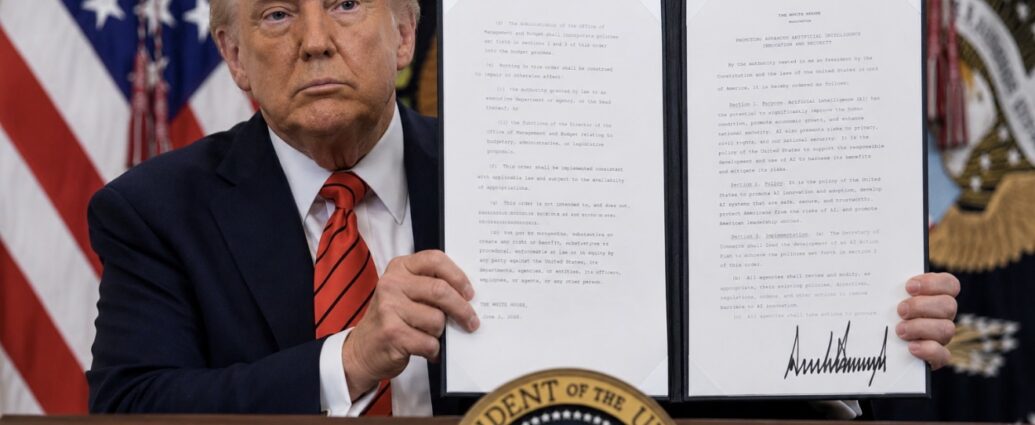
By JBizNews Desk

WASHINGTON — Americans are consuming more honey than ever, but U.S. beekeepers are nowhere close to producing enough of it — a widening supply gap now being filled by record imports from countries that, in some cases, American producers say do not even have enough bees to justify the export volumes they report.

The imbalance is becoming one of the clearest examples of how the modern “clean eating” movement is colliding with fragile agricultural supply chains, rising production costs and growing concerns about imported food fraud.

The numbers are stark.

According to the U.S. Department of Agriculture, the United States produced roughly 134 million pounds of honey in 2024, down 4% from the prior year. American consumers, meanwhile, used an estimated 550 million pounds over the same period.

That means nearly three out of every four jars or squeeze bottles of honey consumed in the United States came from overseas.

In 2023, the U.S. imported approximately 429 million pounds of honey, with India, Argentina, Brazil and Vietnam supplying nearly 80% of total imports.

The demand boom itself is easy to explain.

Honey has become one of the signature ingredients of the broader “clean eating” and wellness movement, where consumers increasingly avoid refined sugar, high-fructose corn syrup and artificial sweeteners in favor of products marketed as natural, minimally processed and traceable.

Honey checks nearly every modern food-marketing box: single ingredient, minimally processed, recognizable and associated — fairly or not — with health and wellness.

Restaurants, protein-bar companies, beverage brands and premium grocery chains have steadily increased honey usage over the past decade as consumers became willing to pay more for products positioned as “natural.”

That demand is now running directly into the realities of the American bee industry.

Janel Inouye, co-owner of Magpie Cafe in Sacramento, California, said her restaurant goes through a five-gallon bucket of honey roughly every three weeks for dishes including crispy pork belly and house-made honey lemonade.

She told reporters she is paying roughly 30% more for honey than she was five or six years ago.

“I don’t know that I’ve seen anything that has been a sticker shock the way that we’ve seen honey jump,” Inouye said, adding she would sooner remove dishes from the menu than substitute another sweetener.

The problem for U.S. beekeepers is that even rising retail prices have not translated into industry stability.

The biggest threat remains the varroa mite, a parasitic insect that attaches to honey bees and spreads viruses capable of wiping out entire colonies.

Researchers at Washington State University projected earlier this year that commercial U.S. honey bee colony losses could reach between 60% and 70% in 2025, dramatically above the already devastating 40% to 50% annual losses that have become common in recent years.

Pesticide-resistant mite strains are now widespread across parts of the industry.

At the same time, operating costs for commercial beekeepers have surged.

Large U.S. operators routinely truck hives across multiple states throughout the year, following crop bloom cycles — almonds in California, apples in Washington, blueberries in Maine and dozens of other pollination markets.

That makes fuel prices critically important.

The current Middle East conflict and elevated oil prices — with crude trading roughly between $100 and $106 per barrel — are feeding directly into diesel, shipping and feed costs for commercial bee operations.

“For most markets, the price is still below the actual cost of production,” said Ryan Burris, president of the California State Beekeepers Association.

Tim Hiatt, legislative liaison for the Washington State Beekeepers Association and vice president of the North Dakota Beekeepers Association, was even more blunt.

“For now, we’re just going to bite the bullet and hope the Iran War doesn’t last long so fuel and fertilizer prices go down,” Hiatt said.

Then there is the import controversy — part trade dispute, part quality scandal.

The United States remains the world’s second-largest honey market, and many of its biggest foreign suppliers are already subject to U.S. anti-dumping duties.

Current country-wide rates imposed by the U.S. Department of Commerce include 4.7% on Argentina, 2.31% on Brazil, 2.31% on India and a massive 121.97% duty on Vietnam.

Those tariffs come on top of the broader 10% blanket import tariff imposed during President Donald Trump’s second term.

The duties are intended to protect American producers from artificially cheap foreign honey.

But imports continue flooding in, and American beekeepers increasingly argue the trade data itself does not make sense.

Richard Adee, one of the largest commercial beekeepers in the United States and a former president of the American Honey Producers Association, has publicly questioned how countries like India could physically produce the export volumes they report.

“India doesn’t have anywhere near the capacity — enough bees — to produce 45 million pounds of honey,” Adee said publicly. “It has to come from China.”

That accusation matters because Chinese honey has long faced some of the steepest U.S. trade restrictions in the food sector due to prior allegations involving dumping, illegal antibiotics and pesticide contamination.

American producers argue Chinese honey is frequently rerouted through third countries and relabeled to bypass tariffs and inspections.

The authenticity problem has become so severe that organizers of the 2025 World Beekeeping Awards in Copenhagen canceled the honey competition entirely, citing widespread adulteration concerns.

In many cases, investigators say imported “honey” is diluted with cheaper sweeteners such as rice syrup or corn syrup while still marketed as pure honey.

For consumers, the implications are practical.

A premium jar of traceable, single-origin American honey sold at a specialty grocer may bear little resemblance to inexpensive imported honey sold in bulk squeeze bottles at discount retailers — even though both carry the same label.

The long-term market opportunity, however, remains substantial.

Industry researchers estimate the U.S. honey market was worth roughly $2.21 billion in 2025 and could grow to approximately $3.21 billion by 2035.

And honey itself is only part of the economic story.

When pollination services are included, American beekeepers contribute an estimated $15 billion annually to U.S. agriculture by supporting crops including almonds, apples, blueberries and dozens of other fruits and vegetables.

In practical terms, bees are not merely part of the sweetener business.

They are critical agricultural infrastructure.

Yet at the very moment demand is accelerating, federal support for bee research is shrinking.

The U.S. Department of Agriculture recently announced plans to close the Beltsville Agricultural Research Center in Maryland, home to the Beltsville Bee Research Lab, one of the nation’s most important bee disease and colony-testing facilities.

Commercial beekeepers have long relied on the lab to diagnose unexplained colony collapses and disease outbreaks.

Its closure would remove one of the few major federal support systems the industry still has during a period of historically severe losses.

For investors, food manufacturers and specialty grocery chains, the broader trend is becoming increasingly clear:

American demand for honey is rising rapidly. Domestic production is stagnating or falling. Imports remain politically contentious and increasingly suspect on quality grounds.

That combination should, in theory, benefit premium American honey producers and traceable domestic brands.

But whether U.S. beekeepers can capitalize on the opportunity depends on whether the industry can survive long enough to meet it.

Right now, consumers want more honey than America can produce.

The bees are struggling.

And the gap is increasingly being filled by foreign suppliers the U.S. government itself has already accused of unfair trade practices.

Washington — JBizNews Desk

© JBizNews.com All Rights Reserved. Reproduction or distribution without written permission is prohibited.

MOSCOW — Four years after the United States, Europe and Britain moved to cripple Russia’s commercial aviation sector following the invasion of Ukraine, the country’s airlines are still flying — and in many cases carrying passenger volumes approaching prewar levels — thanks to a sprawling shadow supply network moving Boeing and Airbus parts through intermediaries across China, India, Turkey, the United Arab Emirates and Central Asia.

What Western sanctions were supposed to do was straightforward: starve Russian carriers of spare parts, maintenance support and aircraft servicing until large portions of the fleet became unusable.

That has not happened.

Instead, a sophisticated gray-market ecosystem involving brokers, shell companies, repair shops and transit hubs has emerged to keep airlines such as Aeroflot, S7 Airlines and Ural Airlines operating despite formal bans on supplying Western aircraft parts to Russia.

The scale is enormous.

According to customs records compiled by Trade Data Monitor, China alone shipped at least $961 million worth of aircraft parts into Russia between March 2022 and February 2026, more than four times the level recorded before the war. Trade records also show recurring transit activity through India, Turkey, the UAE, Kazakhstan and Kyrgyzstan, with many shipments routed through multiple jurisdictions before reaching Russian operators.

Aviation experts say the most remarkable part of the trade is not small components — it is the movement of entire jet engines.

Oleksandr Laneckij, chief executive of Lithuania-based aviation consultancy Friendly Avia Support, said the underground flow of engines into Russia “remains widespread,” estimating that as many as 50 complete engines per year are reaching Russian carriers despite sanctions.

That figure is striking because modern commercial aircraft engines are among the most expensive and tightly tracked components in global aviation.

One transaction trail illustrates how the system works.

In December 2025, a Florida-based aviation supplier called LogAir LLC sold an older CFM56-5A engine — commonly used on Airbus A320 aircraft — to an Indian firm named Chandsara for approximately $3.6 million.

Roughly two weeks later, another Indian company, Shreegee Pvt. Ltd., shipped the same engine onward to Russian airline S7 for about $5.75 million.

The transaction drew attention because the U.S. Treasury Department had already sanctioned a related company, Shreegee Impex Pvt. Ltd., in 2024 for allegedly supplying Russia with hundreds of dual-use items, including aviation components. The companies reportedly shared addresses, logos and directors.

The broader pattern appears deliberate and highly structured.

Aircraft parts often leave legitimate American or European distributors with paperwork showing apparently lawful destinations in third countries. Brokers and intermediaries then reroute the parts into Russia through shell entities created specifically for single transactions.

When Russian repair facilities cannot service components domestically, the parts are sometimes exported again under foreign ownership, repaired abroad, then quietly reintroduced into Russia through what aviation specialists describe as “one-day companies” established solely to obscure the chain of custody.

Both Boeing and Airbus publicly insist they are not participating in the trade.

Boeing says it halted parts, maintenance and technical support to Russian customers in early 2022 and continues complying with U.S. sanctions. Airbus has similarly told European investigators there is “no legal method” for aircraft, parts or technical documentation to be exported into Russia.

But both companies also acknowledge a major limitation: once parts enter the global aftermarket — the enormous web of brokers, repair stations, leasing firms and resellers operating worldwide — manufacturers have limited visibility into where components ultimately end up.

The sanctions themselves were expected to force Russian airlines to begin grounding Western-made aircraft.

Instead, the number of operational Airbus and Boeing aircraft inside Russia has barely declined since 2023, while domestic seat capacity has recovered close to 2021 levels, supported by strong internal travel demand and the lack of alternative transportation across Russia’s vast geography.

The growing concern now is safety.

Russian state agencies recorded 11 engine failures on civil aircraft between December 1, 2024 and January 20, 2025, more than double the figure reported during the same period a year earlier. Independent aviation monitors estimate Russian aviation incidents are rising at roughly 25% annually.

One widely discussed case involved a Ural Airlines Airbus A321 returning from Egypt in early 2025 after suffering a left-engine failure shortly after takeoff. The aircraft landed safely, but reports indicated the plane remained grounded because sanctions prevented access to a fully certified replacement engine.

The Kremlin has increasingly tried to frame the sanctions issue as a passenger-safety matter rather than simply an economic dispute.

At the International Civil Aviation Organization (ICAO) assembly in Montreal in 2025, Russian officials argued Western restrictions on spare parts were “discriminatory and coercive” and endangered civilian aviation safety.

Western governments rejected that argument, pointing out Russia itself seized roughly 500 Western-leased aircraft valued at approximately €10 billion after foreign leasing firms terminated contracts in 2022 following the invasion.

Russia is simultaneously trying to reduce dependence on Western aviation entirely.

The government has committed roughly $14.5 billion toward expanding domestic aircraft production through the end of the decade, aiming to raise the share of Russian-built aircraft to 81% of the national fleet by 2030.

Progress, however, has been uneven.

The Russian-built version of the MC-21 narrowbody jet only recently completed key flight testing, while production timelines for the Sukhoi Superjet and other domestic programs have repeatedly slipped because of missing Western components and ongoing supply-chain bottlenecks.

For now, the shadow supply chain remains the backbone of Russian commercial aviation.

But aviation experts warn the workaround becomes riskier with time.

Aircraft engines eventually wear out. Avionics drift outside certification standards. Maintenance histories become increasingly unreliable when parts pass through opaque gray-market channels.

Each additional year of cannibalized fleets, uncertified repairs and undocumented components raises the probability of a serious aviation accident.

And if a major crash were linked to sanctions evasion or uncertified parts, it could trigger an even harsher new round of restrictions from Western governments already struggling to contain the network.

The broader lesson for global sanctions policy is increasingly uncomfortable for Western policymakers.

Russia’s aviation industry was once viewed as one of the easiest sectors to isolate — highly dependent on Western manufacturers, globally integrated and impossible to replace quickly.

Yet four years later, the planes are still flying, the parts are still moving, and the underground network supplying them appears more sophisticated than ever.

Europe — JBizNews Desk

© JBizNews.com All Rights Reserved. Reproduction or distribution without written permission is prohibited.

The numbers tell the story of one of the fastest consumer-product shifts in the American market.

The United States imported roughly $1.7 billion worth of South Korean cosmetics in 2024, a 54% increase from the year before, according to U.S. trade data. In the process, South Korea overtook France to become America’s largest foreign supplier of skincare and beauty products — an extraordinary development for an industry that, less than a decade ago, many U.S. retailers still viewed as niche.

Korean beauty, once associated primarily with K-pop fans and internet skincare forums, has moved firmly into the mainstream American consumer economy. Products once sold only through specialty Asian beauty retailers are now stocked at Sephora, Ulta, Costco, CVS, Target, and Amazon, while brands built around snail mucin, rice extracts, fermented ingredients, and Centella asiatica have become billion-dollar global businesses.

But the rise of K-beauty is not simply a social-media phenomenon.

The deeper story is manufacturing discipline, product consistency, and a fundamentally different philosophy about skincare itself.

The Real Competitive Advantage: Consistency

The core reason Korean beauty products have gained such traction with consumers is not celebrity marketing. It is trust.

South Korean cosmetic manufacturers operate under some of the world’s most stringent production and safety standards, built around tightly enforced Good Manufacturing Practices, or GMP protocols. These rules govern every stage of production — ingredient sourcing, contamination controls, equipment sanitation, packaging integrity, formulation consistency, employee training, and product testing.

For consumers, the practical result is simple: products behave predictably.

If a Korean serum says it contains a certain active ingredient concentration, consumers increasingly believe it actually does. Shelf-life labeling tends to be accurate. Formulas remain stable batch after batch. Products that worked six months ago generally work the same way today.

That consistency matters enormously in skincare because consumers are applying these products directly onto sensitive skin barriers every day.

South Korea also maintains an unusually expansive list of prohibited cosmetic ingredients — reportedly banning roughly 1,000 substances including steroids, antibiotics, radioactive compounds, and other potentially harmful additives. Regulators are now implementing additional nationwide cosmetic safety systems tied to digital labeling and traceability requirements through QR-code disclosure standards.

The structure resembles what made South Korea globally dominant in semiconductors, displays, batteries, and advanced manufacturing more broadly: high-volume industrial precision combined with rapid product iteration.

In skincare, that manufacturing culture became a competitive advantage.

Why Korean Beauty Feels Different

The philosophy behind Korean skincare also differs sharply from much of the traditional Western cosmetics industry.

American and European skincare has historically leaned toward what dermatologists sometimes describe as a “correction” model: identify a problem — acne, wrinkles, pigmentation, dryness — then attack it aggressively with concentrated active ingredients.

Korean skincare tends to follow a “maintenance and barrier support” model instead.

Rather than relying heavily on a single strong active ingredient, Korean routines often use multiple gentler products layered sequentially to hydrate, calm inflammation, support the skin barrier, and maintain long-term skin health.

That layering approach became one of the defining signatures of K-beauty.

Products are generally applied from thinnest consistency to thickest — toner, essence, serum, ampoule, moisturizer — allowing lower concentrations of active ingredients to work together while minimizing irritation.

The strategy appeals especially to younger consumers increasingly focused on prevention rather than correction, and to customers with sensitive skin who find stronger Western formulations difficult to tolerate.

The Ingredient Strategy: Science Plus Traditional Medicine

Korean beauty’s biggest commercial breakthrough may have been turning ingredients once viewed as unconventional into mainstream global skincare categories.

Snail mucin is the clearest example.

The ingredient, derived from snail secretion filtrate, became one of the defining viral skincare trends of the past several years. What made it commercially powerful was not novelty alone, but the scientific framing around hydration, barrier repair, peptides, hyaluronic acid content, and anti-inflammatory properties.

Clinical studies cited by major medical institutions including the Mayo Clinic have shown measurable improvements in skin hydration, luminosity, and fine lines following extended use.

Korea did not invent snail mucin itself. Chilean farmers reportedly first noticed skin-softening effects while handling snails commercially.

What Korean companies did was industrialize and standardize it.

They developed large-scale filtration systems, purification methods, cruelty-conscious collection processes, clinical testing structures, and global product branding around the ingredient — effectively transforming a niche biological byproduct into a mainstream skincare category.

The same process happened with Centella asiatica, also known as cica, a medicinal plant long used in traditional Asian medicine.

Korean brands refined it into scientifically marketed skincare centered around anti-inflammatory properties, redness reduction, barrier repair, and calming effects for sensitive skin. Today, cica-based creams, serums, masks, and moisturizers occupy entire retail sections across the U.S.

This pattern repeats throughout Korean beauty: identify a promising ingredient, clinically test it, improve formulation stability, standardize manufacturing, then scale globally.

Why the Industry Is Still Growing

The K-beauty boom is occurring at the same time many traditional Western beauty conglomerates are struggling with slower growth and increasingly fragmented consumer loyalty.

Part of Korean beauty’s success comes from speed.

Korean companies release products dramatically faster than many Western competitors, adapting quickly to new skincare concerns, viral consumer trends, environmental stressors, or ingredient innovations. Whether the issue is pollution-related aging, “maskne,” microbiome care, glass-skin aesthetics, or minimalist skincare, Korean brands tend to commercialize trends faster than much larger rivals.

Social media accelerated the process.

TikTok, YouTube, Reddit, and Amazon reviews effectively replaced traditional beauty advertising for many younger consumers. Korean products built enormous momentum through user testimonials, before-and-after videos, ingredient explainers, and influencer routines emphasizing skin health rather than glamour marketing.

The products also often entered the market at lower price points than prestige Western skincare, creating unusually strong perceived value.

The Tariff Risk

The biggest near-term threat to the industry may now come from trade policy rather than consumer demand.

The United States recently ended South Korea’s tariff-free cosmetics treatment and imposed a 15% import tariff on many beauty products entering the country. Early export data already suggests the industry may be feeling pressure, with Korean beauty shipments to the U.S. slowing sharply in recent months.

The tariff creates a particular problem for smaller independent Korean brands that rely heavily on direct-to-consumer online sales and thin margins. Large multinational players may absorb some cost increases or eventually localize portions of production, but smaller companies face a much harder adjustment.

Still, industry forecasts remain bullish.

The U.S. K-beauty market is projected to roughly double from approximately $27.5 billion in 2024 to more than $55 billion by 2032.

That projection ultimately rests on one thing: consumer trust.

American consumers increasingly view Korean skincare not as a trend, but as a system — one built around standardized manufacturing, ingredient transparency, gentler formulations, and visible long-term results.

And in the beauty industry, trust is often the hardest thing to manufacture.

Asia — JBizNews Desk

© JBizNews.com All Rights Reserved. Reproduction or distribution without written permission is prohibited.

Waymo is trying to turn autonomous driving from an expensive technology experiment into a scalable transportation business.

On May 28, 2026, the Alphabet-owned company announced it has begun offering rides to select customers in a new all-electric robotaxi developed with Chinese automaker Zeekr, a vehicle designed specifically to lower operating costs, increase durability, and accelerate the expansion of driverless ride-hailing across major cities.

The new vehicle, called the Ojai, is initially rolling out in Los Angeles, Phoenix, and San Francisco, where invited users are receiving free rides while Waymo gathers data and customer feedback ahead of broader commercial deployment.

The launch marks an important shift in Waymo’s strategy.

For years, Waymo focused primarily on proving that fully autonomous driving could work safely at scale. The company now faces a different challenge: proving the economics can work too.

The Ojai is built around that goal.

A Robotaxi Designed for Scale, Not Luxury

The vehicle itself is based on the Zeekr RT, a purpose-built autonomous platform developed through a partnership between Waymo and Zeekr parent company Geely, first announced in 2021.

But Waymo has intentionally removed nearly all visible Zeekr branding from the final consumer experience.

The vehicle now carries Waymo-specific badging throughout, including customized wheel center caps, while the car itself has been renamed “Ojai” — pronounced “oh-hi” — after the California mountain town known for wellness retreats and arts culture.

The naming strategy is not accidental.

When passengers enter the vehicle, the car greets them with an “Oh hi,” turning the town’s name into both a branding mechanism and user interaction cue.

The deeper branding decision, however, reflects larger geopolitical and consumer realities.

Waymo appears to have concluded that many American passengers may feel more comfortable riding in a vehicle associated directly with Waymo rather than a lesser-known Chinese automaker — particularly as political tensions surrounding Chinese technology and manufacturing continue influencing consumer perceptions in the United States.

The partnership remains central technologically.

But consumer-facing identity now belongs almost entirely to Waymo.

Why This Vehicle Matters Financially

The Ojai is less important as a product than as a cost structure.

Waymo’s biggest challenge has never been demonstrating autonomous capability. The company is widely viewed as the clear leader in fully driverless commercial deployment in the United States.

The real challenge is economics.

Waymo’s vehicles rely on expensive hardware stacks that include lidar systems, radar arrays, high-definition mapping infrastructure, redundant computing systems, and advanced sensor cleaning technology. Each Ojai includes 13 cameras, six radars, and four lidar units, alongside heaters, sprayers, and wipers specifically designed to maintain sensor performance in varying weather conditions.

That approach has produced some of the industry’s strongest autonomous-driving performance.

It has also made Waymo’s vehicles extremely expensive.

The Ojai is designed to reduce that burden.

Unlike retrofitting consumer cars for autonomous use, the Zeekr platform was engineered specifically around robotaxi operations from the beginning. The vehicle is larger, more durable, optimized for high-mileage ride-hailing use, and intended to lower maintenance and operational costs over time.

In other words, Waymo is finally moving from research-grade hardware toward fleet-grade infrastructure.

That transition is essential if the company hopes to achieve profitability.

The Race to Scale

Waymo’s ambitions are rapidly expanding.

Co-CEO Tekedra Mawakana recently said the company expects to reach approximately 1 million rides per week by the end of 2026.

That would represent an enormous increase from current operations.

As of April, Waymo was completing more than 250,000 paid rides weekly, while total paid rides last year exceeded 14 million. The company is now preparing aggressive geographic expansion into cities including Dallas, Denver, Detroit, Houston, Las Vegas, Miami, Nashville, San Diego, Seattle, Washington, D.C., and London.

Scaling to that level requires far more than software.

It requires manufacturing.

Waymo and production partner Magna are expanding vehicle production capacity at an Arizona facility expected to more than double output, with plans to produce more than 2,000 autonomous vehicles there by the end of 2026 and eventually tens of thousands annually.

That is the point where autonomous driving begins transitioning from a technology showcase into an actual transportation network business.

The Tesla Problem

The rollout also intensifies the industry’s most important competitive debate: expensive sensor-heavy autonomy versus lower-cost camera-based systems.

Waymo’s approach prioritizes redundancy and precision through lidar and radar.

Tesla, by contrast, continues pursuing a largely camera-only strategy built around neural-network vision systems. Tesla executives argue that eliminating expensive lidar dramatically lowers costs and makes scaling faster and economically simpler.

Waymo still maintains a major lead in actual fully driverless deployment.

Tesla’s current ride-hailing operations still include human safety oversight in many situations, while Waymo already operates commercial fully autonomous rides without human drivers in multiple cities.

But the economics question remains unresolved.

If Tesla eventually achieves comparable autonomy performance at materially lower hardware costs, it could pressure Waymo’s long-term margins heavily.

If Tesla’s lower-cost approach proves less reliable, Waymo’s more expensive infrastructure may ultimately look justified.

Right now, the market still does not know which model wins economically at global scale.

Why Cities Matter More Than Technology Now

The next major challenge may no longer be technical.

It may be political and urban.

Waymo’s expansion has already triggered pushback in several cities, particularly San Francisco, where residents and regulators have raised concerns about traffic disruptions, emergency-response interference, operational glitches, and the broader social impact of replacing human drivers.

As autonomous fleets grow, cities will increasingly confront questions surrounding labor displacement, curb access, congestion management, data privacy, insurance liability, and municipal regulation.

The technology race is gradually becoming a governance race.

What Waymo Is Really Betting On

At its core, the Ojai represents a simple but critical thesis:

Autonomous driving will only become transformative if it becomes affordable enough to operate at massive scale.

Waymo has already proven many consumers are willing to ride in driverless vehicles.

Now it needs to prove the business itself can sustain itself financially without indefinitely relying on Alphabet’s balance sheet.

The Ojai is designed to close that gap — a cheaper, roomier, purpose-built autonomous vehicle intended not merely to demonstrate technology, but to make robotaxis economically viable as a mainstream transportation network.

If it works, the economics of urban transportation may begin changing much faster.

If it fails, autonomous driving risks remaining a technologically impressive business that never fully scales commercially.

Silicon Valley — JBizNews Desk

© JBizNews.com All Rights Reserved. Reproduction or distribution without written permission is prohibited.
New York City Mayor Zohran Mamdani on Thursday unveiled a new Commission on Government Efficiency — or “COGE” — in a move that immediately drew comparisons to President Donald Trump’s federally backed DOGE initiative championed alongside Elon Musk, highlighting how the politics of government “efficiency” are rapidly crossing ideological lines.

The commission, announced May 28 by City Hall, will formally operate as a Charter Revision Commission empowered to review New York City’s governing structure, propose reforms to city operations, and potentially place changes directly before voters on the November ballot.

Mamdani framed the initiative as an effort to rebuild confidence in local government by improving delivery of public services and reducing bureaucratic inefficiency.

“Restoring faith in government starts with proving government can actually deliver,” the mayor said in Thursday’s announcement, describing the effort as a push to make city government operate “faster, smarter and more effectively for working people.”

The branding is politically striking.

The acronym “COGE” is an unmistakable nod to the federal Department of Government Efficiency, or DOGE, which Trump and Musk popularized nationally as part of a broader anti-bureaucracy and cost-cutting campaign aimed at shrinking federal administrative structures.

That a progressive mayor closely associated with democratic socialist politics is now embracing similar “government efficiency” language underscores how fiscal pressure and public frustration with bureaucracy are reshaping political messaging well beyond conservative circles.

But despite the branding overlap, the structure and goals differ significantly from the federal model.

A Charter Fight Disguised as an Efficiency Push

Unlike DOGE at the federal level, COGE is not primarily a cost-cutting office.

It is a formal charter review mechanism with the authority to recommend structural changes to how New York City government operates. The commission will conduct hearings across all five boroughs, gather public testimony, and draft ballot proposals that could reshape procurement systems, permitting processes, agency authority, budgeting procedures, and administrative operations.

The commission will be chaired by Patrick Gaspard, a longtime Democratic strategist and former executive director of the Democratic National Committee who also served as U.S. ambassador to South Africa under President Obama.

Mamdani additionally proposed veteran city official Ann Cheng as executive director.

The first public hearing is scheduled for June 9.

According to City Hall, the commission’s review will focus heavily on reducing bureaucratic bottlenecks that delay housing, infrastructure, and service delivery projects while modernizing city operations and improving budget efficiency.

That language matters particularly to New York’s business and real-estate sectors, where developers, contractors, landlords, and small-business owners have long complained about permitting delays, fragmented agency oversight, procurement complexity, and slow approval timelines that raise costs across nearly every part of the local economy.

If COGE meaningfully streamlines approvals or procurement, it could materially affect the cost and speed of doing business in the city.

The Fiscal Pressure Behind The Politics

The deeper reason behind the commission may be financial rather than ideological.

Mamdani’s announcement arrives only weeks after City Hall finalized a contentious $124.7 billion budget that relied heavily on agency savings and internal cost reductions to avoid broader tax increases or major reserve withdrawals.

The administration had already directed agencies to identify spending cuts through “chief savings officer” initiatives aimed at trimming operational costs over multiple fiscal years. Those savings reportedly came through reduced overtime, renegotiated outside contracts, software modernization, office consolidation, and reductions in underutilized city property holdings.

But New York’s long-term fiscal pressure remains severe.

The city comptroller’s office recently warned that projected spending growth is continuing to outpace expected revenue growth over the coming years. Current forecasts show billions of dollars in additional spending pressure annually through the end of the decade, driven by labor costs, social services, housing demands, infrastructure obligations, migrant-related expenditures, and broader inflationary pressures affecting municipal operations.

That backdrop is what makes the “efficiency” framing politically important.

For Mamdani, COGE allows the administration to present reform and modernization as proactive governance rather than austerity. For critics, however, the concern is whether “efficiency” eventually becomes a softer political label for service reductions, staffing constraints, or budget tightening.

Why The DOGE Comparison Matters

The symbolism surrounding the name may ultimately carry almost as much political significance as the commission itself.

For years, efficiency rhetoric was largely associated with center-right politics emphasizing deregulation, privatization, and shrinking government structures. Progressive administrations generally focused more heavily on expanding services, increasing investment, and enlarging public-sector capacity.

That dynamic is beginning to shift nationally.

Persistent inflation, rising deficits, high borrowing costs, and voter frustration over government responsiveness are forcing even progressive administrations to adopt more business-oriented operational language focused on speed, accountability, and measurable outcomes.

Mamdani’s use of a DOGE-style branding framework reflects that shift directly.

Rather than rejecting efficiency rhetoric as inherently conservative, the mayor is attempting to redefine it around service delivery, permitting reform, affordability, and operational modernization.

In effect, both sides of the political spectrum are now competing to claim ownership over the idea that government should function more effectively.

The disagreement increasingly centers not on whether efficiency matters — but on what efficiency should actually mean.

What Businesses Are Watching

For New York’s private sector, the outcome matters less politically than operationally.

Developers are watching whether permitting timelines shorten.

Small businesses are watching procurement and licensing reforms.

Contractors are watching agency modernization.

Technology firms are watching software and systems upgrades.

Labor groups are watching whether workforce restructuring becomes part of the conversation.

And taxpayers are watching whether the city can slow spending growth without visibly reducing services.

Those questions will shape how COGE is ultimately judged far more than its branding.

For now, Mamdani has positioned himself around one of the most politically potent words in modern governance — efficiency — while simultaneously attempting to redefine what that word means inside a progressive administration.

Whether voters view the effort as modernization, political theater, or quiet austerity may ultimately determine how much power the commission gains after November.

New York — JBizNews Desk

© JBizNews.com All Rights Reserved. Reproduction or distribution without written permission is prohibited.

The 2026 FIFA World Cup was supposed to deliver a historic tourism boom across North America — a monthlong economic surge projected by FIFA and host committees to generate roughly $40.9 billion in economic activity while flooding U.S. host cities with international visitors, packed hotels, sold-out flights, and overflowing restaurants.

Instead, less than three weeks before kickoff, parts of the economic story are beginning to fracture.

What is emerging is not one problem but two separate demand shocks hitting simultaneously: weakening international tourism demand tied to inflation, visa restrictions, and political uncertainty, alongside a growing wave of airline disruptions and travel anxiety connected to the Ebola outbreak in Central Africa.

Individually, each issue might have been manageable. Together, they are beginning to threaten one of the core assumptions behind the tournament’s financial projections: that foreign visitors would arrive at massive scale and spend aggressively enough to offset softening U.S. consumer demand.

The first warning signs are already visible in hospitality data.

The American Hotel & Lodging Association reported May 28 that roughly 80% of hoteliers across the 11 U.S. host markets say bookings are tracking materially below initial expectations. That is a remarkable figure given that the World Cup has long been marketed as one of the largest tourism events on earth.

The weakness is not uniform. Premium inventory around major matches — especially the July 19 final near MetLife Stadium in New Jersey — is still commanding extremely elevated pricing, in some cases roughly triple normal summer rates. But pricing power alone does not equal demand strength.

The deeper issue is occupancy.

Group-stage cities that expected weeklong tourism surges are instead seeing meaningful hotel availability remain open deep into late May at rates far closer to a normal summer travel season than the massive compression expected for a global mega-event. Industry analysts say many hotels built pricing models around a demand spike that has not fully materialized.

The causes are broader than sports.

International tourism into the United States has been weakening for months amid higher airfare costs, global economic uncertainty, stronger border restrictions, currency pressures, and growing political friction surrounding travel policies under the Trump administration. Some hospitality analysts have begun referring to the slowdown as a “Trump slump” in inbound travel — particularly from parts of Europe, Latin America, and Africa where visa approvals and travel uncertainty have become increasingly politicized.

That weakening demand was already creating vulnerability.

Then came the airline problem.

The World Health Organization’s emergency declarations tied to the Ebola outbreak in the Democratic Republic of Congo and Uganda triggered a chain reaction across global aviation networks. Uganda Airlines suspended flights to and from Kinshasa effective May 23, while Ethiopian Airlines and other regional carriers began adjusting schedules and implementing additional health-related restrictions.

At the same time, the United States imposed strict travel bans barring entry to foreign nationals who had recently been present in Congo, Uganda, or South Sudan.

From a public-health standpoint, the measures are understandable. Ebola remains a highly dangerous disease.

But from an airline economics standpoint, the consequences extend far beyond the directly affected countries.

The global airline industry operates on network psychology as much as epidemiology. Once travel restrictions begin spreading across headlines, demand often weakens far outside the outbreak zone itself. Airlines then respond by trimming routes, consolidating schedules, reducing frequencies, or shifting aircraft to stronger-performing markets.

That secondary reaction matters enormously for the World Cup because the tournament’s economic model depends heavily on long-haul international arrivals.

FIFA projections estimate roughly 1.2 million foreign visitors will attend matches across North America, with average stays approaching 12 days and spending exceeding $400 daily. Much of that money was expected to flow into hotels, restaurants, local transportation, nightlife, retail, and short-term rental platforms.

But those assumptions rely on stable international flight capacity and consumer confidence.

The airline industry is already operating under pressure from elevated fuel prices tied to Middle East instability and rising insurance costs connected to global geopolitical risk. Additional route disruptions tied to outbreak fears or regulatory restrictions increase operational complexity at precisely the wrong moment.

The vulnerability is especially acute in gateway markets like New York, Los Angeles, Miami, Dallas, and Atlanta, where foreign tourism was expected to provide the bulk of incremental economic activity during the tournament.

Around $4.3 billion in direct tourism expenditure is forecast for the World Cup, with more than 80% concentrated in hospitality-related sectors — exactly the industries now facing both weaker-than-expected bookings and growing uncertainty around international air traffic.

The timing could hardly be worse.

Host cities and governments have collectively invested billions into stadium modernization, transportation upgrades, security infrastructure, and tourism preparation. Airbnb hosts across the 16 North American host cities are projected to generate more than $2.6 billion in rental revenue during the tournament.

Much of that projected income now depends on whether international travel confidence stabilizes quickly.

Public-health experts continue emphasizing that Ebola risk to World Cup attendees remains extremely low. The virus spreads through direct contact with bodily fluids and is not airborne. There is no evidence of widespread transmission risk tied to ordinary tourism activity.

But economic damage rarely waits for scientific nuance.

In travel markets, perception often moves faster than facts. Once flight cancellations begin, travelers reconsider plans. Reduced bookings then pressure airlines further, which can produce additional schedule cuts and weaker demand in a self-reinforcing cycle.

That feedback loop is now becoming visible just as the world’s largest sporting event approaches.

The World Cup’s economic promise always depended on converting a global audience into real-world tourism spending. What host cities are discovering now is that mega-events remain deeply exposed to forces far beyond sports itself: geopolitics, public-health fears, visa policy, airline economics, and consumer psychology.

And in a fragile global economy already showing signs of softer discretionary spending, even modest disruptions can quickly reshape the financial outcome of an event expected to redefine North American tourism.

New York — JBizNews Desk

© JBizNews.com All Rights Reserved. Reproduction or distribution without written permission is prohibited.

JBizNews Desk

Walmart has begun removing self-checkout lanes from select stores and restoring traditional cashier-operated registers, a shift the company says is aimed at improving customer experience while also reducing theft losses that have increasingly pressured retailers across the industry.

The rollback reflects a growing reassessment of a technology once promoted as the future of shopping.

At a Walmart Supercenter on South Christopher Columbus Boulevard in Philadelphia, the company removed self-checkout lanes earlier this year and replaced them with staffed checkout stations, according to company officials cited by The Philadelphia Inquirer. Limited kiosks remain available for Spark delivery drivers handling online orders, but the broader return to cashier-led checkout marks one of the clearest reversals yet by a major national retailer.

Walmart said the decision was influenced heavily by customer feedback and store-level performance reviews.

The financial motivation is straightforward.

Retailers across the industry have struggled with higher shrink rates — the industry term for inventory losses caused by theft, fraud, and scanning mistakes — tied to self-checkout systems. Multiple retail studies have found stores using self-checkout experience loss rates significantly above traditional cashier-operated lanes.

Some industry surveys have also found that a meaningful percentage of shoppers admit to intentionally failing to scan items during self-checkout transactions.

For retailers, the labor savings generated by automation can quickly disappear if merchandise consistently leaves stores unpaid.

But the backlash was never purely financial.

Customers have increasingly complained that self-checkout systems transferred work traditionally handled by paid employees onto shoppers themselves, often while still forcing customers to navigate confusing interfaces, scanning errors, machine malfunctions, and employee monitoring systems.

The frustration became especially visible during inflationary periods, when consumers already feeling financially stretched questioned why they were effectively performing part of the retailer’s labor process without any price reduction in return.

Retail analysts say many shoppers now associate self-checkout with inconvenience rather than speed.

Academic research appears to support the trend.

A study published in the Journal of Business Research by researchers at Drexel University found that shoppers interacting with human cashiers reported stronger loyalty and a greater likelihood of returning to stores compared with customers using self-checkout systems.

Researchers concluded that customers often perceive cashier-assisted checkout as involving less effort and delivering a more valued shopping experience.

Walmart is not alone in reconsidering the technology.

Dollar General removed self-checkout systems from approximately 12,000 stores in 2024, while British grocery chain Booths rolled back self-checkout across nearly all locations after executives described the machines as slow, impersonal, and unpopular with customers.

Even within Walmart’s own ecosystem, the company’s Sam’s Club division has been shifting toward AI-powered “scan-and-go” systems rather than relying heavily on traditional self-checkout kiosks.

Lawmakers have also started paying attention.

Several states including California, Connecticut, Massachusetts, New York, Ohio, Rhode Island, and Washington are now considering regulations governing self-checkout usage, including potential minimum staffing requirements tied to automated checkout lanes.

The rollback comes as consumers continue navigating elevated food and household prices.

The U.S. Department of Agriculture said grocery prices in March remained roughly 2.7% higher than a year earlier, with further increases projected through the remainder of 2026. Analysts say financial strain may have increased both customer frustration and theft pressure surrounding unattended checkout systems.

What makes the shift notable is that, at least temporarily, retailer and customer incentives appear aligned.

Stores reduce inventory losses and operational headaches while many shoppers regain the human service experience they increasingly say they prefer.

For a technology once marketed as pure efficiency, the industry’s reassessment now suggests that the cheapest-looking checkout option may not have been the most effective — or the most popular — after all.

New York — JBizNews Desk

© JBizNews.com All Rights Reserved. Reproduction or distribution without written permission is prohibited.

Russia is returning to the yuan bond market days after President Vladimir Putin concluded high-level talks in Beijing, deepening Moscow’s financial pivot toward China as Western sanctions continue cutting the Kremlin off from dollar and euro funding markets.

Russia’s Finance Ministry said on May 28 it will issue 10-year yuan-denominated sovereign bonds worth 10 billion yuan, or roughly $1.5 billion, carrying a coupon of 7.65%. The deal marks Moscow’s second major sovereign yuan issuance and comes immediately after Putin’s May 19–20 state visit to China, where the Russian president and Chinese leader Xi Jinping signed more than 40 bilateral agreements tied to trade, energy, finance, logistics, and industrial cooperation.

The sequencing is not accidental.

The bond sale is part of a broader geopolitical and financial restructuring underway between Moscow and Beijing — one designed to reduce dependence on the U.S. dollar system while binding Russia’s economy more tightly to China’s financial infrastructure.

For Moscow, the attraction is increasingly practical rather than ideological.

Russia’s domestic borrowing costs have surged as war spending, sanctions pressure, and inflation strain the country’s fiscal position. Comparable ruble-denominated government debt currently yields between 13.5% and 15%, while the yuan bonds issued in December 2025 priced closer to 6%–7%.

That gap matters enormously.

By borrowing in yuan instead of rubles, the Russian government effectively cuts its financing costs nearly in half at a moment when budget pressure is intensifying. Russia’s fiscal deficit widened sharply during the first quarter of 2026, reaching roughly 2.5% of GDP versus a full-year target near 1.6%, according to government data.

The deeper story, however, is about what Russia is doing with the yuan already accumulating inside its financial system.

Russian exporters — especially energy giants like Rosneft, Gazprom, and Lukoil — increasingly sell oil, gas, coal, and raw materials to China in yuan rather than dollars. Those payments then accumulate across Russian banks and corporate accounts because sanctions and capital restrictions make redeploying the currency internationally far more difficult.

That has created a structural pool of idle yuan liquidity inside Russia.

The government’s yuan bond market effectively absorbs those balances and redirects them into domestic state financing. Instead of exporters holding yuan deposits earning minimal returns, Moscow converts that money into sovereign debt issuance and channels it back into government spending.

Finance Minister Anton Siluanov acknowledged after the first yuan bond issuance in December that demand exceeded official expectations, underscoring how much Chinese currency is now circulating inside the Russian economy.

The arrangement reveals how sanctions are reshaping global finance in practice.

Russia has largely lost access to Western institutional capital markets, global dollar-clearing systems, and much of the international investor base that previously financed its sovereign debt. The yuan market offers one of the few remaining large-scale alternatives available to the Kremlin.

But the shift also exposes a growing asymmetry inside the Russia-China relationship.

China controls the currency, the clearing system, and much of the underlying financial infrastructure. Russia supplies discounted energy, commodities, and geopolitical alignment in return for financing access and trade continuity.

That imbalance became increasingly visible during Putin’s Beijing visit.

Although the two governments publicly emphasized strategic friendship and economic cooperation, Moscow reportedly failed to secure final agreement on several major long-term energy priorities, including the long-delayed Power of Siberia 2 gas pipeline project that Russia views as critical for replacing lost European gas demand.

The result is a relationship that increasingly benefits Beijing more than Moscow financially.

For China, Russia’s dependence serves multiple strategic objectives simultaneously.

It expands international yuan usage, increases Beijing’s leverage over Russian trade flows, strengthens China’s role as an alternative financial center outside Western control, and advances long-term efforts to internationalize the Chinese currency in sanctioned or politically isolated markets.

Russia’s growing use of precious metals in bilateral trade further highlights the evolving structure of this parallel financial system. Russian exports of gold and silver to China reportedly quadrupled year-over-year during the first quarter of 2026 as sanctions complicated conventional yuan-ruble settlement channels.

The trend is part barter system, part reserve diversification, and part workaround to sanctions friction.

Yet despite the political symbolism surrounding de-dollarization, the scale still remains relatively limited in global terms.

The yuan accounts for only a small fraction of global reserve holdings and international payments compared with the U.S. dollar. Western capital markets remain vastly larger, deeper, and more liquid than China’s tightly controlled financial system.

Still, what matters is not whether the yuan replaces the dollar globally tomorrow. It is whether parallel systems continue emerging in parts of the world where sanctions make dollar access politically or financially risky.

That process is already happening.

Russia’s yuan bond issuance is another sign that geopolitical fragmentation is increasingly reshaping capital markets themselves. Countries cut off from Western finance are beginning to build alternative settlement, borrowing, and reserve structures centered around China instead of New York or London.

For global markets, the immediate financial impact is modest.

But strategically, the message is significant: when access to dollars becomes restricted, countries do not stop trading or borrowing. They look for another system.

And increasingly, that system is being built around Beijing.

Asia — JBizNews Desk

© JBizNews.com All Rights Reserved. Reproduction or distribution without written permission is prohibited.

Wall Street’s expectations for lower interest rates may be colliding with a new reality.

Deutsche Bank AG has raised its year-end forecast for the benchmark 10-year U.S. Treasury yield, arguing that the Federal Reserve, now led by Chairman Kevin Warsh, has likely finished cutting interest rates for the current cycle and that borrowing costs across the economy could remain higher than many investors had anticipated.

In a research note released Friday, Deutsche Bank strategists Matthew Raskin and Steven Zeng increased their forecast for the 10-year Treasury yield to 4.70% by year-end, up from their previous projection of approximately 4.45%.

While a quarter-point forecast revision may sound insignificant, the implications extend far beyond bond traders and investment managers.

The 10-year Treasury yield is one of the most influential interest rates in the global financial system. It serves as a benchmark for mortgage rates, business loans, corporate borrowing, commercial real estate financing, and countless other forms of credit throughout the economy.

When Treasury yields rise, borrowing becomes more expensive.

When they fall, financing generally becomes cheaper.

That is why Wall Street pays such close attention to every shift in expectations surrounding Federal Reserve policy.

The central argument behind Deutsche Bank’s revised forecast is straightforward: the era of rate cuts may be over.

For much of the past year, investors had positioned themselves for continued monetary easing, expecting the Fed to gradually lower rates as inflation cooled and economic growth moderated. Those expectations helped keep longer-term yields from moving significantly higher.

Deutsche Bank now believes that assumption is increasingly outdated.

The firm’s analysts argue that a Federal Reserve led by Kevin Warsh, a former Fed governor appointed by President Donald Trump, is likely to maintain a more cautious stance toward inflation and may be less willing to aggressively lower rates than markets previously expected.

Warsh has long been viewed by investors as a policy hawk—someone more focused on preventing inflation from reigniting than on providing additional monetary stimulus.

If the Fed remains on hold rather than delivering additional cuts, bond investors could begin demanding higher yields to compensate for the prospect of sustained higher interest rates.

That would push Treasury yields upward even without any formal action from the central bank.

For households, the most visible impact would likely be in housing.

Mortgage rates tend to track movements in the 10-year Treasury yield. If Deutsche Bank’s forecast proves accurate, borrowing costs for homebuyers could remain elevated through the remainder of the year, adding further pressure to affordability at a time when many Americans are already struggling with high home prices.

The effect would not stop there.

Small businesses seeking financing for expansion projects could face higher borrowing costs. Companies issuing bonds to fund investments may encounter steeper interest expenses. Consumers purchasing vehicles or financing major purchases could also find themselves paying more.

In short, a higher Treasury yield affects nearly every corner of the economy.

The picture is not entirely negative.

Higher yields benefit savers.

Money market funds, certificates of deposit, savings accounts, and newly issued Treasury securities generally become more attractive when rates remain elevated. Retirees and income-focused investors often welcome a higher-rate environment because it allows them to earn stronger returns on conservative investments.

As with many financial developments, the benefits and burdens are distributed unevenly.

Borrowers typically prefer lower rates.

Savers generally prefer higher ones.

Investors should also remember that forecasts are not guarantees.

Treasury yield predictions are notoriously difficult, and even the largest financial institutions frequently revise their outlooks as economic conditions evolve. Unexpected changes in inflation, employment data, economic growth, geopolitical events, or future Federal Reserve communications could dramatically alter the trajectory of yields over the coming months.

The official daily Treasury yield data published through the Federal Reserve’s H.15 statistical release will ultimately determine whether Deutsche Bank’s forecast proves correct.

Still, the significance of the call lies less in the precise number and more in the broader message.

For years, businesses, consumers, and investors became accustomed to declining interest rates and relatively cheap access to capital. That environment shaped everything from housing markets to corporate investment decisions.

Deutsche Bank is signaling that the next phase may look different.

The firm’s revised outlook suggests that the market may be entering a period where the cost of money remains elevated for longer than many had expected—a development that would reshape borrowing decisions throughout the economy and challenge assumptions that financing costs will steadily decline from here.

Whether the 10-year yield ultimately reaches 4.70% or not, the larger debate now unfolding on Wall Street centers on a simple question:

Has the era of falling interest rates come to an end?

The answer could influence everything from mortgage payments to stock valuations in the months ahead.

New York — JBizNews Desk

© JBizNews.com All Rights Reserved. Reproduction or distribution without written permission is prohibited.
HHS Secretary Robert F. Kennedy, Jr. announces new federal actions to combat Lyme disease in Concord, New Hampshire, on Friday, May 29, 2026, as part of his “Take Back Your Health” tour. CSPAN

Health and Human Services Secretary Robert F. Kennedy, Jr. announced one of the most ambitious federal efforts ever to combat Lyme disease on Friday, May 29, 2026, at a 2:00 p.m. press conference in Room 100 of the New Hampshire State House in Concord. The measures follow the department’s first national Lyme roundtable, held in Washington, D.C., in December 2025, at which HHS formally recognized Lyme — in both its acute and chronic forms — as a serious public-health condition for the first time.

The recognition marks a shift after years in which the federal government had no unified strategy for a disease the CDC says is diagnosed in 476,000 Americans annually, with 5 to 7 million infections over the past decade. Kennedy has acknowledged that the agency once held what he called a deliberate policy of refusing to engage with the Lyme community. Researchers estimate that 10 to 20 percent of patients treated early remain symptomatic, and emergency room visits for tick bites recently reached their highest springtime level in nearly a decade.

“Americans deserve an answer,” Kennedy said from the podium. “They deserve gold-standard science, and a healthcare system that treats suffering seriously.” He recalled that one of his sons suffered facial paralysis for a year after a Lyme diagnosis and noted that President Donald Trump first made Lyme a national priority by signing the Kay Hagan Tick Act in 2019.

In the HHS release issued the same day, Kennedy said millions of Americans with Lyme and other tick-borne illnesses “have spent years searching for answers, treatment, and support,” and described the package as “one of the most ambitious federal efforts ever to combat Lyme disease.” The department reaffirmed a goal of cutting Lyme cases 25 percent by 2035 compared with 2022 levels.

The most consequential change for patients concerns coverage. At the December roundtable, CMS Administrator Dr. Mehmet Oz confirmed that Medicare is being updated to explicitly require coverage for extended Lyme treatment, including treatment for associated co-infections — addressing a longstanding gap that has strained patients financially. CMS also issued guidance clarifying support for beneficiaries with Lyme and related conditions through its Chronic Care Management Program.

Dr. Stephanie Haridopolos, Director of National Health Communications for the Office of the U.S. Surgeon General, told the audience that roughly 31 million people are bitten by ticks each year in the United States.

“We’re going to make the invisible diseases visible now,” she said. “We know prevention is key. We can prevent not only Lyme disease, but all the co-infections that go with it.”

Dr. Kristen Honey, the HHS Chief Data Officer now managing public-private partnerships, said the effort originated outside government.

“Let me be clear that this movement did not start in government,” Honey said. “It started with all of you. It started with the patients, it started with the caregivers, it started with the frontline providers and those affected families saying there’s a problem here, and rose up, came together, formed unusual allies.”

She credited participants in the December roundtable — among them Senator Susan Collins, Representative Chris Smith, and Duvi Honig of the Orthodox Jewish Chamber of Commerce, along with Olivia Goodreau of LivLyme, Dr. Steve Phillips, and Sam Sofia — saying that without them “none of this would be happening.”

At that session, Collins, author of the Kay Hagan TICK Act, pressed for better diagnostics and cited a Maine clinical trial for a Lyme vaccine; Smith, a 30-year advocate, said Lyme patients “deserve answers”; and Honig called for CDC Updates, Nationwide awareness campaigns, expanded insurance coverage, and increased provider education.

Honey also framed the challenges in market terms.

“For the first time in four years, open innovation at HHS and LymeX is available to all the public,” she said. “All Americans and U.S. businesses can participate, not just those already in the LymeX pipeline.”

The department detailed three new LymeX challenges totaling up to $2.5 million.

The largest is the TOPx HHS Tech Sprint for AI and Invisible Illness, offering up to $2 million, including a $1 million grand prize, for tools that use artificial intelligence and open data to help patients with Lyme and other “invisible illnesses,” including Long COVID and ME/CFS, get answers and care faster.

“If it’s invisible, you are welcome here,” Honey said.

The LymeX Visible Voices Prize offers up to $250,000 for educational tools and awareness campaigns, while the LymeX Healthathon Innovation Sprint offers another $250,000 for frontline solutions, including new uses of existing medicines.

The broader Friday package, according to the HHS release, also includes a multi-million-dollar tick-control pilot program, new NIH funding to combat Alpha-gal syndrome, and a public-private collaboration to connect patients with experienced providers, all under Kennedy’s Make America Healthy Again agenda.

Separately, through the LymeX partnership, HHS is updating its Living Evidence Guidelines for clinicians treating infection-associated chronic conditions, with Version 2.0 launched in May 2026 and scheduled to refresh every six months as new science emerges.

The challenges build on the LymeX Innovation Accelerator, a public-private partnership between HHS and the Steven & Alexandra Cohen Foundation launched during President Trump’s first term. Through LymeX, HHS recently launched a $10 million Diagnostics Prize, and two improved FDA-cleared Lyme tests have reached the market over the past two years.

The National Institutes of Health invests nearly $50 million annually in Lyme research and approximately $122 million annually in broader tick-borne disease research.

The new tick-control pilot, led by the Centers for Disease Control and Prevention and HHS, will begin with researchers at the New England Center of Excellence in Vector-Borne Diseases and build on community work with the Indian Health Service and the Wampanoag Tribe in Massachusetts.

HHS also announced action on Alpha-gal syndrome, a tick-linked condition that can trigger serious allergic reactions to red meat. The CDC estimates nearly 500,000 Americans live with the condition.

NIH has identified candidate products that may protect people after a tick bite; private companies would supply the products while NIH funds research to evaluate them.

The department is also partnering with the International Lyme and Associated Diseases Society to offer a clinician locator tool through hhs.gov/lyme.

Kennedy reiterated support for reauthorizing the bipartisan Kay Hagan TICK Act, signed by President Trump in 2019, which recently advanced unanimously through the House Energy and Commerce Committee.

Officials expect another heavy tick season in 2026. The new programs mark the federal government’s most comprehensive response to Lyme disease to date and represent the first time HHS has formally aligned federal policy, reimbursement, research, innovation incentives, and public-private partnerships around both acute and chronic Lyme disease.

Washington — JBizNews Desk

© JBizNews.com All Rights Reserved. Reproduction or distribution without written permission is prohibited.

NEW YORK — Building a home in America is getting more expensive again as prices for copper, lumber, diesel fuel, and aluminum all climb at the same time, squeezing builders, contractors, developers, and eventually homebuyers already struggling with high mortgage rates.

The pressure is now spreading across nearly every stage of construction.

The Associated General Contractors of America said in an April 2026 report that construction material costs have climbed to their highest levels in almost four years, with contractors increasingly unable to absorb the increases.

Ken Simonson, chief economist for the organization, said the combination of the Iran war, supply-chain disruptions, energy volatility, and new tariffs imposed under President Donald Trump’s administration are pushing prices higher throughout the construction sector.

“Contractors who locked in prices months ago can seldom pass along cost increases after committing to a project,” said Jeffrey D. Shoaf, CEO of the AGC. “That is creating real financial pressure across the industry.”

The impact begins with lumber.

Lumber futures are now trading near $593 per thousand board feet, climbing again after the extreme volatility seen during the pandemic-era housing boom.

Canada remains one of the largest lumber suppliers to the United States, but tariffs on Canadian softwood lumber remain near an effective 35% rate, contributing to mill closures and tighter supply.

Industry analysts say additional increases are likely later this year as supply constraints continue.

Copper prices have also surged sharply.

Construction-grade copper products used in electrical systems, plumbing, and infrastructure projects have risen more than 15% year-over-year.

The increases accelerated after the administration imposed tariffs on imported copper-related products while demand simultaneously surged from:

  • AI data center construction
  • Electric vehicle manufacturing
  • Grid expansion projects
  • Industrial infrastructure upgrades

Builders are increasingly attempting substitutions such as copper-clad aluminum wiring, though building-code restrictions often limit alternatives.

Aluminum costs have climbed even faster.

Aluminum products used in:

  • Window systems
  • Gutters
  • Structural framing
  • Doors
  • Exterior materials

have experienced some of the sharpest increases inside the broader construction supply chain.

Tariffs on imported aluminum products now sit at roughly 50%, while rising energy costs continue pushing manufacturing expenses higher globally.

Because aluminum production requires enormous electricity consumption, higher natural gas prices tied to Middle East energy disruptions are feeding directly into material pricing.

Then comes diesel fuel.

Diesel prices have surged above $5.40 per gallon, reaching their highest levels since 2022.

That matters enormously because diesel powers nearly every major component of the construction industry:

  • Bulldozers
  • Excavators
  • Cranes
  • Delivery trucks
  • Concrete transport
  • Generators
  • Heavy equipment fleets

As fuel costs rise, transportation expenses and subcontractor pricing rise alongside them.

The cumulative effect is now flowing directly into housing affordability.

Construction groups estimate tariffs and rising material costs could add thousands — and in some cases tens of thousands — of dollars to the cost of building a new home.

Large national homebuilders including D.R. Horton, Lennar, and PulteGroup have greater flexibility because they negotiate bulk supply contracts and hedge certain material purchases in advance.

Smaller regional builders are facing much tighter pressure.

Some are delaying projects altogether until costs stabilize.

Others are simply passing increases directly to buyers.

The timing is especially difficult for the housing market because mortgage rates remain elevated near 6.5%, while inventory shortages continue limiting affordability nationwide.

New home prices have continued climbing despite slower overall transaction volume.

Economists increasingly warn that the combination of:

  • High rates
  • High material costs
  • Tight inventory
  • Elevated labor expenses

is keeping much of the housing market effectively frozen.

The situation also complicates policy decisions at the Federal Reserve.

Higher construction costs feed directly into inflation data the Fed continues monitoring closely.

At the same time, elevated interest rates make housing affordability worse.

That leaves policymakers balancing inflation pressure against weakening affordability and slowing construction activity.

Where prices move next may depend heavily on geopolitics.

If tensions involving Iran ease and energy markets stabilize, diesel and industrial-metal prices could cool relatively quickly.

If the conflict drags on or worsens, construction costs may continue climbing through the second half of the year.

For buyers, the reality is increasingly simple:
homes being built today cost significantly more to construct than they did only months ago.

Builders can absorb some of those increases.

Eventually, the rest appears on the final price tag.

JBizNews Desk — New York

© JBizNews.com All Rights Reserved. Reproduction or distribution without written permission is prohibited.
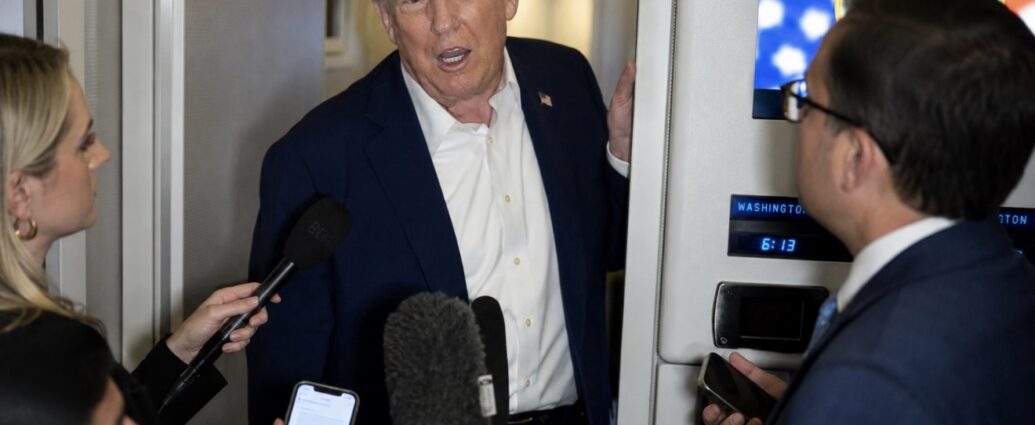
By JBizNews Desk

NEW YORK — Americans are carrying more debt than ever before, and a growing share of that borrowing is coming from households already under financial strain, according to a new Equifax Market Pulse Report released Thursday.

Total U.S. consumer debt reached a record $18.9 trillion through March 2026, up from a year earlier and marking another milestone in the steady expansion of household borrowing. While rising debt balances have become a familiar feature of the post-pandemic economy, Equifax’s latest data points to a deeper trend: lower-income consumers are increasingly relying on credit cards to pay for necessities rather than discretionary spending.

Credit-card balances, which Equifax classifies as bankcard debt, climbed to $1.085 trillion, up 3.9% from a year earlier and outpacing inflation. More striking was where the growth occurred. New credit-card accounts increased 8.1% overall, but applications approved for subprime borrowers — consumers with the lowest credit scores — surged 18.6%. At the same time, lenders expanded available credit to those borrowers, increasing credit limits by 37.6% year over year.

Maria Urtubey, an advisor at Equifax, said the numbers suggest a growing divide within the U.S. economy.

For many households, borrowing is no longer funding vacations, electronics, or discretionary purchases. Instead, credit cards are increasingly being used to cover recurring expenses such as groceries, rent, utilities, and transportation costs. Economists often refer to this phenomenon as “survival debt” — borrowing used to bridge the gap between wages and everyday living expenses.

The report reinforces what many economists describe as a K-shaped economy, where higher-income households continue to benefit from asset appreciation, strong employment, and investment gains, while lower-income consumers struggle to keep pace with rising costs.

The same dynamic appears in higher education financing. Although the number of new student loans declined by more than 10% over the year through January, the total dollar amount borrowed increased 4.7%, indicating that the cost of obtaining a degree continues to rise even as fewer students take on educational debt.

Student loans are also showing some of the most visible signs of financial stress. Equifax reported that 17.01% of student loans were at least 90 days delinquent in March, marking the fourth consecutive monthly increase. While still below the peak reached in 2025, the trend has raised concerns as federal student-loan collection efforts resume.

Historically, borrowers have prioritized mortgage and auto-loan payments ahead of student debt. However, as collection activity intensifies and household budgets remain stretched, financial analysts warn that pressure from student-loan repayments could spill into other areas of consumer credit performance.

Despite those concerns, the report also contained signs of resilience.

Delinquency rates across several major lending categories remained stable or improved compared with a year ago. The percentage of credit-card accounts more than 60 days past due fell to 2.97%, down from 3.09% a year earlier. Unsecured personal-loan delinquencies improved to 3.18% from 3.49%, while auto-loan delinquencies edged down to 1.49%.

However, lenders continue to absorb losses from loans that became troubled months earlier. Equifax noted that write-offs increased for both credit cards and auto loans as banks moved aging delinquent accounts off their balance sheets. The trend suggests that while newer borrowers are largely keeping up with payments, lenders are still dealing with the fallout from earlier financial stress.

For consumers carrying revolving credit-card balances, the cost remains significant. Average credit-card interest rates continue to hover above 21%, making credit-card debt among the most expensive forms of consumer borrowing. Financial advisers warn that carrying balances month after month can rapidly increase the total amount owed, particularly for households already operating on tight budgets.

The report also highlighted growing reliance on home equity as a financing tool. Outstanding balances on home-equity lines of credit (HELOCs) jumped 13% year over year to $431 billion, as homeowners tapped rising property values to access lower-cost borrowing compared with credit cards.

Meanwhile, mortgage balances increased to $12.86 trillion, while auto-loan balances rose to approximately $1.6 trillion.

Taken together, the figures paint a picture of an economy increasingly supported by borrowing, even as many consumers remain current on their obligations. The headline delinquency numbers suggest stability, but the rapid growth in subprime credit-card borrowing indicates that financial pressure remains concentrated among households with the least margin for error.

For millions of Americans, the credit card is no longer just a payment method. It has become a financial lifeline used to bridge the gap between paychecks and the rising cost of everyday life.

New York — JBizNews Desk

© JBizNews.com All Rights Reserved. Reproduction or distribution without written permission is prohibited.

Just a few years ago, San Francisco was widely portrayed as the symbol of America’s urban decline.

Downtown office towers sat nearly empty after the pandemic. Major employers were cutting space. Residents were leaving. Headlines warned of a “doom loop” fueled by crime concerns, collapsing foot traffic, falling tax revenue, and a city that appeared to be losing its grip on both workers and businesses.

Now the picture has completely reversed.

San Francisco rents have surged roughly 22% year-over-year, making the city the fastest-rising major rental market in the United States. Median home prices have climbed back above previous peaks. Luxury bidding wars have returned. One-bedroom apartment rents are averaging roughly $3,415 per month, while two-bedroom apartments are approaching $4,800 per month.

The city everyone said was dying has suddenly become one of the hottest housing markets in America again.

The reason can largely be summarized in two letters: AI.

The artificial intelligence boom has transformed San Francisco from a struggling post-pandemic downtown into the operational center of one of the fastest wealth-creation cycles the technology industry has ever seen.

OpenAI, Anthropic, Scale AI, and dozens of rapidly growing artificial-intelligence startups are headquartered inside San Francisco neighborhoods that only recently were struggling with vacancies and declining office activity.

According to PitchBook data, the San Francisco Bay Area has attracted roughly 70% of all U.S. venture-capital funding tied to AI companies since 2019.

That money is now reshaping the city in real time.

The AI sector’s hiring surge has flooded San Francisco with highly paid engineers, researchers, executives, and startup founders competing for a housing supply that was already severely constrained long before the current boom began.

Compensation packages for senior AI talent routinely range from $500,000 to well over $1 million annually, especially when stock awards are included. Employees at companies such as OpenAI and Anthropic are increasingly viewed inside Silicon Valley as potential future IPO millionaires.

The result is an extraordinary wave of housing demand concentrated inside a city that historically builds far less housing than its workforce growth requires.

According to CBRE, roughly one out of every four square feet of newly leased office space in San Francisco over the past two years has gone to AI-related companies.

Unlike previous tech booms centered around suburban Silicon Valley campuses, the AI industry has concentrated itself directly inside San Francisco neighborhoods such as SoMa, Mission Bay, and Hayes Valley, where younger founders and employees increasingly prefer dense urban living close to offices.

That concentration is rapidly changing rental economics.

Real-estate brokerage data shows luxury home sales climbing sharply, while inventory remains limited. Bidding wars have returned across desirable neighborhoods. One recent Pacific Heights apartment reportedly received 14 offers and sold roughly $400,000 above asking price.

The market is also changing in another important way: AI companies themselves are now directly subsidizing housing for employees.

Several startup founders have publicly described leasing apartments near company offices specifically to recruit and retain workers. Some firms are offering monthly housing stipends for employees who live within walking distance of the office.

That creates an entirely different pricing dynamic than a traditional housing market.

Instead of individual renters competing solely against each other, venture-capital-funded AI companies are effectively bidding for nearby housing on behalf of employees using investor money. That raises the ceiling for what neighborhoods near AI offices can command in rent.

The political backdrop also shifted.

In late 2024, San Francisco elected Mayor Daniel Lurie, who campaigned heavily on restoring downtown activity, improving public safety, and rebuilding business confidence in the city. His first year coincided with the explosive acceleration of AI investment and a broader corporate push back toward office activity.

The combined effect has produced one of the sharpest urban economic reversals in the country.

But the rebound also carries major consequences for ordinary residents.

San Francisco’s widening economic divide is becoming increasingly visible as teachers, service workers, healthcare staff, retail employees, and middle-income families struggle to compete with the purchasing power of AI-sector salaries and stock wealth.

A worker earning a typical middle-class income cannot realistically compete for housing against AI employees earning several hundred thousand dollars annually while receiving additional housing assistance from employers.

As a result, many workers who keep the city functioning are increasingly being pushed farther away from San Francisco itself.

The irony is that the same AI boom reviving the city economically is simultaneously intensifying affordability pressures that were already among the worst in the nation.

Analysts say the broader significance goes beyond California.

San Francisco is becoming the first major real-world test of what happens when artificial-intelligence wealth concentrates rapidly inside a geographically constrained urban economy.

The answer so far is clear: office markets recover quickly, luxury housing explodes higher, venture capital floods in, and affordability pressures intensify across nearly every other layer of the city.

The “doom loop” narrative that dominated San Francisco headlines from 2021 through 2023 has now largely been replaced by something very different — an AI-driven boom cycle powerful enough to overwhelm broader economic pressures such as higher interest rates, geopolitical uncertainty, and slower national housing activity.

For now, the city that Americans were fleeing only a few years ago has become one of the places the technology industry most aggressively wants to be.

The question no longer seems to be whether San Francisco survives.

It is who will still be able to afford living there if the AI boom continues at its current pace.

San Francisco — JBizNews Desk

© JBizNews.com All Rights Reserved. Reproduction or distribution without written permission is prohibited.

By JBizNews Desk
Friday, May 29, 2026

Universal Music Group has rejected a $64 billion takeover proposal from billionaire investor Bill Ackman and his Pershing Square Capital Management, setting up one of the most closely watched corporate battles of the year and underscoring growing tensions over how global media companies are valued on different sides of the Atlantic.

In a statement released Friday, Universal Music Group’s Board of Directors said it had unanimously rejected the unsolicited proposal after determining that it “fundamentally and materially undervalues UMG” and would not deliver superior value for shareholders, artists, employees, songwriters, and other stakeholders.

The decision came just one day after Vincent Bolloré, the French billionaire whose holding company remains Universal’s largest shareholder, publicly urged the company to reject the offer.

The board’s rejection effectively ends Ackman’s current pursuit of the world’s largest music company, although the issues he raised about valuation and shareholder returns are likely to remain central to Universal’s future strategy.

At the heart of Ackman’s argument was not dissatisfaction with Universal’s business performance, but frustration with its stock market valuation.

Under Sir Lucian Grainge, Universal’s Chairman and Chief Executive Officer, the company has continued to dominate the global music industry. Universal reported revenue and adjusted earnings growth of nearly 9% in 2025, while maintaining a roster that includes many of the world’s most commercially successful artists, including Taylor Swift, Drake, Bad Bunny, and numerous legendary catalog assets.

Ackman openly praised Universal’s management team, describing the company as exceptionally well-run.

His concern was that investors were not rewarding that success.

Since Universal began trading independently on Euronext Amsterdam in 2021, its shares have significantly underperformed expectations despite continued growth in the global music market. Ackman argued that the valuation discount reflected factors unrelated to the company’s operating performance, including uncertainty surrounding Bolloré’s ownership position, delays in pursuing a U.S. stock-market listing, and what he characterized as insufficient communication with investors.

His solution was ambitious.

Pershing Square proposed combining Universal with its acquisition vehicle, SPARC Holdings, and relocating the company to the New York Stock Exchange, where Ackman believes investors would assign a substantially higher valuation to the same underlying business.

The proposal valued Universal at approximately €30.40 per share, representing a premium of roughly 78% to the company’s unaffected share price before the offer became public.

Investors initially reacted positively.

Universal shares surged after details of the proposal emerged, reflecting Wall Street’s long-standing view that American markets often award higher earnings multiples to media, entertainment, and intellectual-property businesses than European exchanges.

Ackman also attempted to ease concerns among artists and management.

His proposal envisioned retaining Sir Lucian Grainge as Chief Executive Officer under a new employment agreement and appointing former Disney President Michael Ovitz as Chairman. The plan additionally included dedicating approximately €750 million from any future sale of Universal’s stake in Spotify toward artist-focused initiatives, a move designed to reassure performers and songwriters that a change in ownership would not come at their expense.

For Ackman, the transaction fit into a much broader strategic vision.

The hedge fund manager has repeatedly discussed his desire to transform Pershing Square into a diversified holding company modeled after Warren Buffett’s Berkshire Hathaway, owning durable, cash-generating businesses with powerful brands and long-term growth potential.

Universal’s extensive music catalog, recurring royalty streams, and global market leadership made it an attractive candidate for that strategy.

Ultimately, however, the deal depended on one critical factor: support from Vincent Bolloré.

Ackman himself acknowledged that reality when unveiling the proposal, noting that a transaction would be virtually impossible without Bolloré’s backing.

With Bolloré publicly opposing the bid, Universal’s board faced little pressure to engage further. The unanimous rejection that followed effectively closed the door on negotiations before they could meaningfully begin.

Yet the broader questions raised by the proposal remain unresolved.

Universal continues to operate one of the strongest businesses in global entertainment, controlling a vast library of music rights that generate recurring revenue across streaming platforms, radio, social media, licensing agreements, and live-performance ecosystems.

At the same time, investors continue debating whether the company’s current market valuation accurately reflects the strength of those assets.

That debate is unlikely to disappear simply because the board rejected Ackman’s offer.

In fact, some analysts believe the proposal may ultimately accelerate discussions around a future U.S. listing—one of the very changes Ackman argued could unlock substantial shareholder value.

For now, Universal Music Group remains independent, Sir Lucian Grainge remains in control, and Bolloré remains the company’s most influential shareholder.

But the confrontation has highlighted a growing divide between what some investors believe Universal is worth and what the market currently says it is worth—a gap that could continue attracting attention from activists, strategic buyers, and shareholders alike.

Whether Universal eventually pursues a U.S. listing on its own terms may ultimately become the lasting legacy of Ackman’s failed bid.

London — JBizNews Desk

© JBizNews.com All Rights Reserved. Reproduction or distribution without written permission is prohibited.

By JBizNews Desk
Friday, May 29, 2026

Major League Baseball owners have formally proposed a hard salary cap for the first time since 1994, setting up what could become the sport’s most consequential labor battle in more than three decades and raising the prospect of another work stoppage when the current collective bargaining agreement expires later this year.

According to statements released following bargaining sessions held at the Commissioner’s Office in New York on May 28, MLB owners presented a proposal that would establish a payroll floor and ceiling beginning in 2027, fundamentally reshaping the economics of professional baseball. The proposal immediately drew fierce opposition from the Major League Baseball Players Association, which has long treated any salary cap as a non-negotiable issue.

The proposal would require teams to maintain payrolls between a floor of $171.2 million and a ceiling of $245.3 million, while also introducing a 50-50 revenue-sharing structure between players and owners. Under the framework, both the payroll floor and cap would increase as league revenues rise.

The union’s response was swift.

Bruce Meyer, the MLBPA’s chief negotiator, accused owners of attempting to suppress player compensation while protecting their own financial interests.

Billionaire owners are not seeking to cap their profits or asset values, only player salaries,” Meyer said in a statement released following the meeting.

The dispute goes far beyond baseball’s labor negotiations. At stake is the economic structure of one of America’s most valuable sports businesses, an industry generating billions of dollars annually through media rights, sponsorships, ticket sales, and licensing agreements.

Unlike the NFL, NBA, and NHL, Major League Baseball remains the only major American professional sports league without a formal salary cap. Owners argue that the absence of spending limits has widened the gap between wealthy franchises and smaller-market clubs, creating competitive imbalances that ultimately hurt the sport.

Commissioner Rob Manfred recently described the current payroll landscape as “not a fair fight,” pointing to the enormous disparity between baseball’s highest- and lowest-spending teams.

The numbers support that argument.

The defending champion Los Angeles Dodgers entered the season with an estimated payroll of approximately $415 million, far above the proposed cap. The New York Mets, led by owner Steve Cohen, carried a payroll approaching $379 million, while the New York Yankees stood near $340 million.

Other clubs that would exceed the proposed ceiling include the Toronto Blue Jays, Philadelphia Phillies, Boston Red Sox, San Diego Padres, and Atlanta Braves.

Supporters of the proposal point to the opposite end of the spectrum.

Under the proposed payroll floor, lower-spending franchises would be required to invest substantially more in player salaries. Teams such as the Miami Marlins, Tampa Bay Rays, Pittsburgh Pirates, Chicago White Sox, Cleveland Guardians, and Minnesota Twins would collectively need to increase payroll spending by hundreds of millions of dollars.

For fans in smaller markets, that provision may prove attractive. Many have spent years watching homegrown stars leave for wealthier franchises that can simply outbid competitors in free agency.

MLB officials have emphasized that a cap-and-floor structure could create greater competitive balance while encouraging additional investment by lower-spending clubs.

But the players’ association sees a much different picture.

Union leadership argues that salary caps inevitably limit earning potential, particularly for elite players whose contracts often drive salary growth across the league. The MLBPA also fears that tying compensation more directly to league revenues could introduce greater uncertainty into future earnings and weaken the negotiating leverage players have maintained for decades.

Beyond competitive balance, financial considerations are driving the debate.

Professional sports franchises have become increasingly attractive investment assets, with private equity firms and institutional investors showing growing interest in ownership stakes. Limiting labor costs could significantly improve operating margins while boosting franchise valuations, a prospect that appeals to ownership groups across the league.

The timing is equally important.

Baseball’s current labor agreement, signed in March 2022 following a 99-day lockout, expires on December 2, 2026. Industry observers increasingly expect another lockout once that deadline passes if significant progress is not made.

Historically, labor negotiations intensify only when the possibility of lost regular-season games becomes real. Until then, both sides are expected to maintain firm public positions while continuing negotiations behind closed doors.

For now, the proposal represents an opening bid rather than a final framework. Both MLB and the players’ association understand that any eventual agreement will likely look very different from what was presented this week.

Still, the significance of the moment is difficult to overstate.

More than thirty years after the labor conflict that canceled the 1994 World Series, baseball is once again confronting the question that has shaped every major labor dispute in the sport’s modern history: whether Major League Baseball should finally adopt the salary-cap model used by every other major American professional sports league.

The answer could determine not only the future economics of baseball, but whether fans find themselves watching games—or another labor standoff—when the 2027 season arrives.

New York — JBizNews Desk

© JBizNews.com All Rights Reserved. Reproduction or distribution without written permission is prohibited.

By JBizNews Desk

TORONTO — May 28, 2026TD Bank Group raised its quarterly dividend and reported sharply higher profit Thursday as Canada’s second-largest lender by assets pointed to strong growth across its businesses and accelerating progress on cost reductions and operational improvements.

The bank increased its quarterly dividend by 4 cents to $1.12 per share, while continuing an aggressive share repurchase program. Raymond Chun, TD’s Group President and Chief Executive Officer, said the dividend increase and ongoing buybacks reflect management’s confidence in the bank’s earnings outlook and capital strength. TD repurchased approximately 19 million shares during the quarter as part of its previously announced $7 billion buyback program.

The results marked a significant improvement from a year earlier. Adjusted earnings per share rose 21% to $2.38, while adjusted net income increased 15% to $4.2 billion. The bank’s return on equity climbed to 14.4%, up more than two percentage points from the prior year.

Canadian Personal and Commercial Banking, TD’s largest division, delivered record second-quarter revenue and earnings. Net income reached $1.925 billion, up 15% year-over-year, driven by stronger lending activity, deposit growth, and improved lending margins. Average deposits increased 3%, while loan volumes rose 6%. TD also reported record penetration levels for consumer and small-business credit cards as existing customers expanded their use of the bank’s products.

The bank’s wealth management and insurance division also achieved record earnings and assets under management. New client accounts increased 15% from a year ago as investors continued shifting toward digital investing platforms and exchange-traded funds. TD said its Canadian banking operations generated approximately $9 billion in client referrals to the wealth division during the quarter.

South of the border, TD’s U.S. business continued showing signs of stabilization following regulatory setbacks that have weighed on the franchise. Adjusted net income in the U.S. segment increased 8% year-over-year, or 12% when measured in U.S. dollars. However, expenses in the division rose 10%, primarily due to ongoing investments in compliance, governance, and anti-money-laundering controls.

Those investments stem from TD’s efforts to address deficiencies identified by U.S. regulators. In 2024, the bank agreed to pay more than $3 billion in penalties following findings that it failed to adequately detect and prevent money-laundering activity through its U.S. operations. The settlement also imposed restrictions on certain growth activities within the bank’s American retail business.

Since taking over as CEO in February 2025, Chun has made remediation of those issues a central priority. Management said compliance-related expenses are expected to begin declining later this year, with major remediation milestones anticipated through 2027.

Credit quality remained stable during the quarter. TD’s provision for credit losses remained within management’s guidance range, while the allowance for credit losses declined by $147 million from the previous quarter. The bank’s Common Equity Tier 1 (CET1) ratio, a key measure of financial strength, stood at 14.3%, well above regulatory requirements.

Cost discipline also emerged as a bright spot. TD reported its slowest expense growth since 2022 and recorded a fourth consecutive quarter of positive operating leverage, meaning revenue growth outpaced expense growth. Excluding variable compensation and foreign-exchange impacts, expenses increased just 3%.

Management said the bank remains ahead of schedule on structural cost-reduction initiatives and is beginning to see benefits from investments in artificial intelligence and operational automation, while continuing to invest in technology infrastructure, branch operations, and customer service improvements.

Looking ahead, TD reaffirmed its expectation to exceed its full-year targets of 6% to 8% adjusted earnings-per-share growth and a 13% return on equity, assuming economic conditions remain stable. Executives cautioned that competition for deposits and loans in Canada remains intense and that geopolitical tensions in the Middle East could create broader economic risks if conditions deteriorate.

For investors, however, the dividend increase provided the clearest signal of management’s confidence. After a period marked by regulatory penalties, leadership changes, and heightened scrutiny, TD’s latest results suggest the bank’s recovery strategy is beginning to gain momentum.

Canada — JBizNews Desk

© JBizNews.com All Rights Reserved. Reproduction or distribution without written permission is prohibited.

The U.S. stock market closed Friday, May 29, 2026, at fresh record highs across all three major indexes, capping a holiday-shortened week, after Dell Technologies reported quarterly results that stunned Wall Street and reignited enthusiasm for the artificial-intelligence trade. According to market data published at Friday’s close, the Dow Jones Industrial Average rose 363.49 points, or 0.72%, to finish at 51,032.46 — its first close ever above 51,000.

The S&P 500 added 0.22% to end at 7,580.06, while the tech-heavy Nasdaq Composite gained 0.20% to close at 26,972.62. All three benchmarks touched intraday all-time highs earlier in the session, and the S&P 500 logged its ninth consecutive week of gains, extending one of the strongest rallies of the decade.

The day belonged to Dell Technologies. Shares of the Round Rock, Texas-based company surged roughly 33%, marking the strongest single-day gain in its history, after founder and Chief Executive Officer Michael Dell delivered results that far exceeded Wall Street expectations.

For the fiscal first quarter ended May 1, Dell reported $43.84 billion in revenue, up nearly 88% from a year earlier and dramatically above analyst forecasts of approximately $35.43 billion. Adjusted earnings reached $4.86 per share, easily surpassing consensus estimates near $2.94 per share.

The driver behind the blowout performance was artificial intelligence infrastructure. Dell disclosed that revenue from its AI-optimized server business climbed to $16.13 billion, reflecting the extraordinary demand from corporations, cloud providers, and government agencies racing to build the computing capacity required for next-generation AI systems.

The results reinforced Dell’s position as one of the largest beneficiaries of the global AI investment boom. Over the past several months, the company has announced expanded partnerships with Nvidia, Google, and OpenAI, helping transform Dell from a traditional computer manufacturer into a critical supplier of AI infrastructure.

Wall Street analysts responded swiftly.

Citi analyst Asiya Merchant raised her price target on Dell to $475 from $290 while maintaining a Buy rating. JPMorgan lifted its target to $500 from $280 and reiterated its Overweight recommendation. Even UBS analyst David Vogt, who downgraded the stock earlier this month on concerns that AI optimism had already been reflected in the share price, more than doubled his target to $440 from $243.

The enthusiasm quickly spread across the broader technology sector.

Micron Technology climbed approximately 5% Friday and ended May nearly 88% higher than where it began the month. Qualcomm rose roughly 3% during the session and finished May with gains approaching 40%. Investors continued rotating into semiconductor and infrastructure companies viewed as direct beneficiaries of the AI spending cycle.

Beyond corporate earnings, markets also found support from a calmer geopolitical backdrop.

Reports circulated during the week indicating that U.S. and Iranian negotiators had reached a framework agreement to extend a ceasefire for an additional 60 days, easing fears of renewed disruptions to global energy supplies and shipping traffic through the Strait of Hormuz, one of the world’s most important oil transit routes.

That relief was reflected in energy markets.

West Texas Intermediate crude oil fell 1.73% Friday to settle at approximately $87.36 per barrel, while international benchmark Brent crude declined 1.77% to $92.05 per barrel. WTI recorded its largest monthly decline since April 2025, falling nearly 17% during May.

Lower oil prices create both winners and losers. Energy producers typically face pressure when crude declines, but consumers and businesses benefit from lower fuel and transportation costs. Heading into the summer travel season, the decline offers welcome relief after months of elevated energy prices.

The week was not entirely free of concerns.

Investors digested a hotter-than-expected reading from the government’s preferred inflation measure, the Personal Consumption Expenditures (PCE) Price Index, released Thursday. The report showed inflation running at its strongest pace in nearly three years, underscoring that price pressures remain more persistent than policymakers had hoped.

Yet traders largely looked past the data.

Strong corporate earnings, accelerating AI-related investment, and easing geopolitical tensions outweighed inflation concerns. The CBOE Volatility Index (VIX) — commonly referred to as Wall Street’s fear gauge — remained in the mid-teens, signaling relatively low levels of investor anxiety.

For investors, the broader message from this week’s rally is increasingly clear. The companies supplying the physical backbone of artificial intelligence — servers, semiconductors, networking equipment, and data-center infrastructure — are generating real revenue growth rather than merely benefiting from market hype.

At the same time, risks remain.

Dell’s gross margin declined to 17.8% from 21.1% a year earlier, illustrating that rapid revenue growth does not always translate into equally strong profitability. As competition intensifies and companies prioritize market share, investors will increasingly focus on margins and long-term earnings quality.

The holiday-shortened week also produced record closes earlier in the period. The Dow reached new highs Wednesday, while the S&P 500 and Nasdaq closed at records Thursday following strong guidance from cloud-software company Snowflake.

As June begins, Wall Street enters the new month with momentum firmly intact. Markets continue to be supported by strong earnings growth, aggressive AI infrastructure spending, and a calmer Middle East. Whether that combination can overcome persistent inflation pressures may determine whether the rally extends through the summer.

JBizNews Desk — New York

© JBizNews.com All Rights Reserved. Reproduction or distribution without written permission is prohibited.

By JBizNews Desk
Friday, May 29, 2026

Ford Motor Co. is having its best month on Wall Street in nearly two decades, and the reason has little to do with pickup trucks, electric vehicles, or traditional auto sales.

Instead, investors are betting that the 122-year-old automaker may have found an unexpected way to profit from the artificial intelligence boom: supplying batteries to help power the data centers driving it.

According to market data cited by Bloomberg on May 29, Ford shares surged more than 40% during May, putting the stock on track for its strongest monthly performance since April 2009, when the company emerged from the financial crisis while rivals General Motors and Chrysler struggled through government-backed restructurings.

The catalyst behind the rally is Ford Energy, a new business unit launched on May 11 that aims to transform the company’s battery investments into a standalone energy-storage business serving utilities, data centers, and large industrial customers.

For years, Ford’s battery investments were viewed by investors as a financial burden.

The company spent billions building electric vehicle production capacity and battery manufacturing operations only to encounter slower-than-expected EV adoption, persistent losses in its electric vehicle division, and growing investor skepticism about the pace of the industry’s transition away from gasoline-powered vehicles.

Now Ford is attempting to turn that challenge into an opportunity.

The company’s strategy centers on repurposing battery production capacity originally built for electric vehicles and using it to manufacture large-scale energy storage systems. These systems store electricity when supply is abundant and release it when demand spikes, helping utilities and commercial customers stabilize power usage.

That market is expanding rapidly because of artificial intelligence.

The explosive growth of AI has created an unprecedented surge in electricity demand as technology companies race to build data centers capable of training and operating increasingly powerful AI models. Utilities across the United States are struggling to meet projected power requirements, creating strong demand for battery storage systems that can help balance energy loads and improve grid reliability.

Ford believes it is positioned to benefit from that trend.

Investors appear to agree.

The stock climbed as high as $16.50 during Thursday trading, reaching levels not seen since 2022 and extending a rally that carried shares from the low $11 range just weeks earlier.

The enthusiasm intensified after Ford Energy secured its first major commercial agreement.

On May 20, the company announced a five-year framework agreement with EDF Power Solutions North America to provide up to 20 gigawatt-hours of battery storage capacity over the life of the contract.

The deal gave investors something they had been waiting for: proof that customers are willing to buy Ford’s new energy products.

Wall Street analysts quickly took notice.

Andrew Percoco of Morgan Stanley estimated that Ford Energy could ultimately be worth as much as $10 billion as a standalone business. He expects Ford to pursue additional agreements with utilities, industrial operators, and large-scale cloud-computing companies, often referred to as hyperscalers, that are aggressively expanding data center infrastructure.

If those contracts materialize, Ford could find itself participating in one of the fastest-growing sectors of the global economy without abandoning its core automotive business.

The prospect is particularly attractive because it allows the company to monetize investments that investors had largely written off as underperforming EV infrastructure.

Still, significant questions remain.

Ford Energy does not expect meaningful commercial deployment until 2027, meaning much of the current excitement is based on future growth rather than present earnings.

The company’s traditional automotive business also continues to face the challenges that have long defined the industry: intense competition, cyclical demand, thin margins, and slowing growth.

Between 2015 and 2025, Ford’s automotive revenue grew at an average annual rate of approximately 2.2%, reflecting the realities of operating in a mature global market.

Critics argue that investors may be moving too quickly in assigning technology-style valuations to a company that remains primarily an automaker.

Yet Ford’s broader business is showing signs of resilience.

During the company’s first-quarter earnings call, Chief Financial Officer Sherry House reported that paid software subscriptions across Ford Pro, the company’s commercial vehicle platform, rose to approximately 879,000, an increase of 30% year-over-year.

Meanwhile, Ford’s highly profitable F-Series pickup franchise continues to generate substantial cash flow, providing financial flexibility as the company expands into new markets.

Under Chief Executive Officer Jim Farley, Ford has also adopted a diversified strategy that includes gasoline-powered vehicles, hybrids, and electric models, allowing the company to adjust more easily to changing consumer preferences.

Whether Ford Energy becomes a transformational second business or simply a promising side venture remains uncertain.

What is clear is that investors are beginning to view Ford differently.

For much of the past two years, the company’s battery investments were seen as evidence of an expensive and difficult transition to electric vehicles.

Today, those same assets are being viewed as a potential gateway into one of the most important infrastructure markets of the AI era.

The immediate question is whether Ford can convert investor enthusiasm into additional contracts and recurring revenue.

The longer-term question is even larger: whether one of America’s most iconic automakers can successfully reinvent part of itself as an energy company at a time when electricity has become one of the most valuable commodities in the artificial intelligence economy.

Detroit — JBizNews Desk

© JBizNews.com All Rights Reserved. Reproduction or distribution without written permission is prohibited.

American households saving money for their children’s educations can leverage tax-advantaged 529 accounts to make their dollars go further.

529 education savings accounts are typically opened by parents, guardians or grandparents for minor children and allow those savings to grow on a tax-deferred basis, and funds can be withdrawn tax-free when they’re used for qualified expenses. Individuals may also open 529 accounts to help save for their own education. 

“529s are the optimal vehicle for education savings,” Thomas Psaltis, director of education savings programs at Bank of America Merrill Lynch, told FOX Business in an interview.

“That growth in earnings, if used tax-free, can have a really significant impact on providing more money for education in the future for children and grandchildren, but also help combat the rising tuition costs,” he said.

BANK OF AMERICA’S LEGACY OF BUILDING THE AMERICAN DREAM

Psaltis said that aside from that core feature, 529 accounts offer other features that may not be available to those who use other tax-advantaged savings accounts.

“One of the game changers is the versatility of 529 accounts,” which he noted were traditionally designed for handling expenses at four-year colleges but have “grown significantly to go beyond just that.”

“Some of the recent legislation under the SECURE 2.0 Act and even as President Trump’s One Big Beautiful Bill has now allowed for the use of K-12 tuition, which has since been expanded under the One Big Beautiful Bill from $10,000 annually to $20,000 to be used for K-12 in private education, even if you’re not using them directly for college,” Psaltis said.

“We’re now including registered apprenticeships and credentialing programs as part of qualified expenses that can be used tax-free as well,” he added.

Psaltis said that advisors at Merrill Lynch encourage clients to focus on planning ahead, and that 529 plans can meet the education savings needs of clients at all income levels.

SOUTHERN CITIES DOMINATE RANKINGS OF BEST JOB MARKETS FOR NEW COLLEGE GRADUATES

Since their inception 30 years ago, the number of 529 plans has grown to 17 million accounts across the industry and has a total of more than half a trillion dollars in assets, he noted. Despite 529 plans being available to Americans for three decades, Psaltis added there are still some common misperceptions about how the accounts work.

“There’s this misconception that you have to fully fund college for a 529 plan to be worthwhile, and sometimes that perception can create unnecessary pressure and cause families to delay in getting started,” he said. 

“The biggest miss in that is the opportunity for that tax-free growth. Families who end up using taxable savings instead of a 529 may be giving up meaningful long-term returns that could be used tax-free,” Psaltis said.

Contributions are considered taxable gifts, so individuals can contribute up to $19,000 per year, per beneficiary without facing a gift tax liability. 529 accounts may also be frontloaded with up to five years of giving all at once.

“Let’s say there’s grandparents that would typically gift $38,000 annually for their kids’ 529. The 529 code allows them to gift up to five times that – or $190,000 per beneficiary – in a single year,” he said. “The contributions that were moved and the future growth of those contributions are generally no longer part of that grandparent’s estate, so long as they live for the next five years it won’t be subject to a clawback or a prorated pullback.”

RECENT COLLEGE GRADS ARE LOSING THEIR EDGE IN JOB MARKET, STUDY SHOWS

In cases where a 529 account beneficiary may not be planning on attending college or an accredited vocational tech program, there’s no required distribution, so the funds could be held in the account in case they change their mind and decide to do so at a later date. 

“Holding onto it indefinitely, that child that doesn’t initially go off to college, well, maybe in a few years they decide they want to further their education either through college or an accredited trade,” Psaltis said. “You can switch beneficiaries at any time and for whatever reason, so if there’s unused funds, those monies could be shared with siblings.” 

“If all else fails, and you have an account open for 18-plus years, there’s still other options,” he added. “One of the key features that has recently occurred over the past few years is the ability to roll over a portion of your 529 proceeds up to $35,000 into a Roth IRA on behalf of that beneficiary to sort of help jump-start their retirement, and that’s a really cool feature too.”

GET FOX BUSINESS ON THE GO BY CLICKING HERE

“At the end of the day, they’re not locked into those monies. If for whatever reason they have to take that money back, they can always take that money back themselves, but just note that this would be treated as a non-qualified withdrawal and that account owner would be subject to income tax and a potential 10% federal tax penalty, but only on the earnings portion of the account,” Psaltis said.

This post was originally published here

America’s economic dashboard is flashing green.

The S&P 500 trades near 7,400, a record. The Nasdaq has pushed past 26,000, also a record. The Dow sits near all-time highs. On paper, the message could not be clearer: the economy is booming.

Now ask the average American how the economy feels. You will hear a completely different story.

Families are rationing groceries. Total household debt has climbed to a record $18.8 trillion, with credit-card balances alone near $1.25 trillion and a rising share of borrowers falling behind. Homeownership is slipping out of reach for millions. More Americans are working second jobs just to hold their ground.

Both of these realities cannot be equally true. And yet we are told they are.

The uncomfortable fact is that America’s most-watched economic indicators have stopped telling the full story.

For generations, the stock market served as a rough proxy for the nation’s economic health. Manufacturing, transportation, retail, energy, banking, healthcare, and consumer spending all fed into it. When the market rose, it usually meant the broad economy was rising too.

That link is now breaking.

A handful of companies tied to artificial intelligence are increasingly responsible for driving the major indexes. The “Magnificent Seven”, Apple, Microsoft, Alphabet, Amazon, Nvidia, Meta, and Tesla, now make up roughly 35% to 40% of the entire S&P 500 by market value. Forty cents of every dollar flowing into a passive S&P 500 index fund now pours into just seven companies.

Think about what that means. The benchmark most Americans treat as a measure of the whole economy has quietly become a concentrated bet on a single industry. When those seven names rise, the index rises, and the country is told it is prospering, even if the other 493 companies and the families who depend on them are struggling.

There is nothing wrong with innovation. AI may prove to be one of the most important breakthroughs in modern history. But when one industry grows powerful enough to pull the entire market higher while much of the country feels left behind, the market stops working as an honest barometer.

The market is supposed to reflect the economy. Instead, the economy is being overshadowed by the market.

It gets harder still. Some of Wall Street’s strongest performers are thriving precisely because of conditions that hurt ordinary Americans.

Oil companies post record profits when energy prices spike. Banks post record profits when interest rates stay high. Shareholders cheer those earnings. But many of those profits are built on the very pressures crushing families trying to cover a mortgage, a car payment, the grocery bill, and the credit-card minimum.

In plain terms: some of the most celebrated corporate earnings in America today are being fueled by the financial pain of the middle class.

That should stop policymakers cold.

Consider one striking, and openly debated, statistic. Moody’s Analytics chief economist Mark Zandi estimates that the top 10% of American households, those earning roughly $250,000 or more, now account for nearly half of all consumer spending, around 49%, the highest share since the data began in 1989. Three decades ago it was about 36%. Zandi estimates this single sliver of households drives close to a third of the entire economy.

Some economists dispute Zandi’s exact figures, and that debate is healthy. But even the more conservative estimates from the Federal Reserve Bank of Minneapolis and the New York Fed confirm the underlying truth: spending by the wealthy has pulled far ahead of everyone else since 2020, while the bottom 80% have merely kept pace with inflation. As Zandi himself put it, it is no mystery why most Americans feel the economy isn’t working for them.

When economic growth leans this heavily on the spending of the richest Americans, it manufactures the appearance of broad prosperity while millions quietly fall behind. And it builds that prosperity on a dangerously narrow foundation. Consumer spending drives about 70% of the economy. If the fortunes of the wealthy turn, say, a sharp market drop that dents their confidence, the spending that props up the whole system could pull back overnight.

Meanwhile, a growing number of Americans are taking on second jobs, side gigs, and extra shifts, not for ambition, but for survival. Housing, groceries, insurance, healthcare, transportation, and interest payments have all outrun household incomes. For millions, one paycheck is no longer enough.

That is a warning sign, not a footnote.

An economy where record market gains sit alongside record consumer debt, rising financial anxiety, and a growing need for multiple jobs is not a balanced economy. It is an economy sending two contradictory signals at once.

Now look at the moment we are living through. The Middle East remains unstable. The Strait of Hormuz, one of the world’s most vital energy corridors, faces ongoing risk. Oil prices are volatile. Consumer debt is at historic highs. Affordability is strained across much of the country.

And still, the stock market sets records.

If that does not raise hard questions about how we measure economic health, what will?

Here is the heart of it: America does not have a market problem. It has a measurement problem.

We need a new economic scorecard, one that tracks not just stock prices and corporate profits, but the things families actually live:

Wage growth versus inflation
Consumer debt burdens
Housing affordability
Small-business health
Household savings
Middle-class purchasing power
Workforce participation
Economic mobility
Sector balance across the broader economy

And we must ask, seriously, whether any single industry should be allowed to dominate the indexes Americans treat as a proxy for national health. Perhaps AI deserves its own dedicated benchmark. Perhaps the broad indexes should be reweighted to reflect real economic diversity. Perhaps we need entirely new measures built for a new economy.

The specific solution is open for debate. What is no longer debatable is that the current system is losing credibility.

I write this because someone needs to say plainly what millions of Americans already know in their gut: the economy being celebrated on Wall Street is not the economy being lived on Main Street.

The market is strong. AI is creating staggering value. Corporate profits are climbing. But beneath those headlines, millions of Americans are working longer hours, carrying record debt, and watching the American Dream drift further away.

If one industry can drive the indexes higher while much of the country struggles, if oil profits rise while families pay more at the pump, if banks book record earnings while Americans pay record interest, and if growth increasingly depends on a thin slice of high earners, then our dashboard is no longer measuring the health of the nation.

It is measuring the success of a select few while ignoring the reality facing everyone else.

Treasury Secretary Scott Bessent, Commerce Secretary Howard Lutnick, members of Congress, state legislators, economists, regulators, and business leaders should come together to modernize how America measures its economy, building a scorecard that captures affordability, debt, wages, household stability, and middle-class prosperity alongside stock prices and earnings.

This is not about politics. It is about credibility.

Because if Americans keep being told the economy is thriving while their own lives say otherwise, trust in our institutions, our markets, and our data will keep eroding. And once people stop believing the scoreboard, they stop believing in the system itself.

America deserves an economic dashboard that reflects reality, not just market performance.

America needs a new economic scorecard for a new economy.

The time for lawmakers, regulators, and business leaders to act is now.

JBizNews Desk – Duvi Honig is The Founder & CEO, of The Wall Street Based Orthodox Jewish Chamber of Commerce

© JBizNews.com All Rights Reserved. Reproduction or distribution without written permission is prohibited.
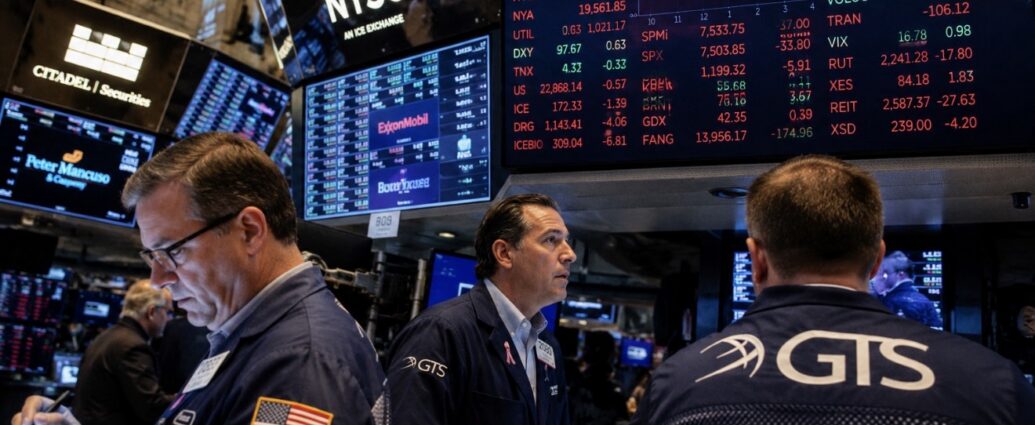
JBizNews Desk — May 29, 2026

Lawyers for Jonathan Andic, the son and heir of late Mango founder Isak Andic, filed an appeal Thursday seeking to overturn the provisional detention order against him, arguing that the evidence surrounding his father’s death points to an accidental fall rather than homicide, according to court filings accessed by Spanish news agency Europa Press.

The case has rapidly evolved from a family tragedy into a corporate-governance crisis surrounding one of Europe’s largest privately held fashion retailers.

Mango, founded by Isak Andic in Barcelona in 1984, grew into one of the world’s largest fast-fashion brands and a direct rival to Inditex-owned Zara, operating in more than 100 countries and generating approximately €3.8 billion ($4.4 billion) in annual sales last year. The company remains overwhelmingly controlled by the Andic family through their holding company Punta Na Holding, making the legal fight deeply tied to the future leadership and stability of the business itself.

The appeal, led by prominent defense attorney Cristóbal Martell, directly challenges the forensic foundation underlying prosecutors’ allegations.

Investigators from the Mossos d’Esquadra Mountain Intervention Unit had previously conducted a series of simulations at the scene of Isak Andic’s fatal fall, concluding that marks discovered near the location appeared inconsistent with a simple accidental slip. According to the investigative report cited by the judge, recreating the marks required repeated deliberate pressure against the ground rather than a single uncontrolled fall.

The defense argues the opposite.

Martell’s filing contends the police analysis itself admitted investigators could not determine whether a slip occurred before the fall and further argues the scene had not been properly secured, potentially contaminating evidence and undermining the reliability of later forensic testing.

The legal fight has also turned heavily toward medical evidence.

The judge’s original detention order reportedly cited the absence of palm injuries and the positioning of the body to argue against a forward accidental fall. The defense counters that forensic experts found no evidence pointing toward homicide or third-party involvement.

Defense lawyers additionally submitted an independent multidisciplinary expert report concluding the injuries remained fully consistent with an accidental fall.

A central argument now emerging from the defense is physical health.

According to the filing, Jonathan Andic’s legal team argues that his father suffered from knee weakness and mobility issues that could have contributed to an accidental stumble and fatal tumble.

The case carries unusually high stakes because of Jonathan Andic’s position inside the company.

Together with sisters Sarah and Judith Andic, he controls roughly 95% of Mango through the family conglomerate. Earlier this week, Jonathan announced he would temporarily step aside as Mango’s vice chairman while focusing on his legal defense.

The appeal also attempts to dismantle prosecutors’ claims that father and son maintained a deeply deteriorated relationship.

Defense filings reportedly include statements from Jonathan’s sisters, Isak’s brother, close family associates, household staff, Mango executives, and company leadership, all describing the relationship between father and son as positive rather than hostile.

The filing also references private therapy emails beginning in early 2024 that, according to the defense, contain no expressions of hatred or resentment toward his father.

That sharply contrasts with the narrative presented by investigators.

The judge’s earlier arrest warrant stated there was sufficient evidence suggesting Jonathan Andic may have played an “active and premeditated role” in his father’s death, citing alleged tensions surrounding money, inheritance issues, and WhatsApp messages prosecutors described as reflecting anger and resentment.

Jonathan Andic became an official suspect late last year after investigators identified what they described as inconsistencies in his testimony and seized his mobile phone during the investigation.

The defense closed its appeal by condemning what it called a premature public judgment campaign, arguing that Jonathan’s highly publicized arrest and media exposure amounted to “social condemnation as anticipated punishment” before a trial has even begun.

For Mango, the implications stretch well beyond the courtroom.

The company itself remains financially healthy and globally competitive, but the future control of one of Europe’s most important privately held fashion businesses is now tied directly to the outcome of a criminal case unfolding in Spain’s courts rather than its boardrooms.

Barcelona — JBizNews Desk

© JBizNews.com All Rights Reserved. Reproduction or distribution without written permission is prohibited.

By JBizNews Desk

NEW YORK — May 29, 2026 — Investors have pulled approximately $2.8 billion from U.S. spot Bitcoin exchange-traded funds over nine consecutive trading days, marking the longest withdrawal streak since the products launched and signaling a major shift in institutional sentiment as capital increasingly flows toward artificial intelligence investments.

According to data compiled by Bloomberg and analytics firm SoSoValue, the selling streak began on May 15 and continued through May 28, surpassing every previous run of ETF outflows since spot Bitcoin ETFs debuted in January 2024.

During the same period, Bitcoin fell from roughly $80,000 to around $73,000, reflecting growing pressure from sustained institutional selling.

The pace of redemptions accelerated significantly this week.

The largest single-day withdrawal occurred Wednesday when investors removed approximately $733 million from the funds. More than $528 million came from BlackRock’s iShares Bitcoin Trust (IBIT) alone, representing the largest single-day outflow in the fund’s history.

Market analysts linked part of the move to a large institutional transaction executed through private trading venues known as dark pools, where sizable trades can occur outside public exchanges.

The withdrawal streak matters because spot Bitcoin ETFs have become the primary gateway through which pension funds, wealth managers, institutions, and traditional investors gain exposure to cryptocurrency.

Unlike direct cryptocurrency ownership, the ETFs allow investors to buy and sell Bitcoin through conventional brokerage accounts. When investors add money, ETF managers purchase Bitcoin. When investors redeem shares, the funds must sell Bitcoin holdings.

As a result, ETF flows provide one of the clearest indicators of institutional demand.

Right now, that demand appears to be weakening.

Many analysts believe the outflows are less about Bitcoin itself and more about competition for investment capital.

Artificial intelligence and semiconductor stocks have dramatically outperformed cryptocurrency investments throughout much of 2026, drawing significant amounts of institutional money.

Companies tied to AI infrastructure, cloud computing, advanced chips, and data-center expansion continue to attract investors seeking exposure to one of the fastest-growing segments of the global economy.

Recent gains in major technology names have reinforced that trend.

As AI-related stocks have surged, Bitcoin has struggled to generate comparable momentum, leading many portfolio managers to shift capital toward sectors producing stronger returns.

The concentration of withdrawals suggests the selling is being driven primarily by institutions rather than retail investors.

BlackRock’s IBIT and Fidelity’s FBTC accounted for the overwhelming majority of recent outflows, a pattern that analysts say is consistent with large asset allocators reducing exposure rather than individual investors making small portfolio adjustments.

Researchers at Galaxy Research described Wednesday’s redemptions as among the largest seen this year and noted that cumulative ETF flows for 2026 have now turned negative.

Some analysts characterize the move as a broader reassessment of portfolio allocations rather than simple profit-taking.

Geopolitical uncertainty may also be contributing to the trend.

The conflict involving Iran, Israel, and the United States has increased volatility across global markets, pushing investors toward sectors perceived as offering stronger earnings visibility.

While Bitcoin is sometimes promoted as a hedge against uncertainty, periods of heightened market stress have often seen the cryptocurrency trade more like a high-risk technology asset than a traditional safe haven.

That dynamic can make digital assets vulnerable when investors become more defensive.

Not everyone sees the outflows as bearish.

Some market strategists point out that previous periods of heavy ETF selling have occasionally coincided with important market bottoms.

Historical flow data analyzed by crypto research firms has shown that extreme pessimism often emerges near turning points rather than at the beginning of prolonged declines.

Whether that pattern repeats remains uncertain.

The next major test for the market comes with the May 30 monthly options expiration, an event that could increase volatility as billions of dollars in cryptocurrency derivatives contracts settle.

If ETF outflows continue beyond that date, Bitcoin could face additional downside pressure. If redemptions slow or reverse, investors may interpret the recent withdrawals as a temporary rotation rather than the beginning of a longer-term exodus.

For now, however, the message from institutional investors appears clear.

The biggest pools of capital on Wall Street are increasingly directing money toward the companies building the AI revolution, while reducing exposure to cryptocurrency assets that have struggled to match the sector’s recent performance.

Until Bitcoin regains momentum or presents a stronger growth narrative, AI appears to be winning the battle for institutional investment dollars.

Markets — JBizNews Desk

© JBizNews.com All Rights Reserved. Reproduction or distribution without written permission is prohibited.

By JBizNews Desk

The United States fired more than a thousand Tomahawk cruise missiles at Iran.

Replacing them could take until late 2030.

That one number, from a new analysis released Wednesday, tells you most of what you need to know about the state of America’s weapons stockpile — and why Pentagon planners are increasingly focused on a country the U.S. has not fought yet: China.

The report came from the Center for Strategic and International Studies, a prominent Washington think tank. It was written by retired Marine Colonel Mark Cancian and researcher Chris H. Park.

Their conclusion was straightforward: U.S. defense contractors will need at least three years to fully rebuild the stockpiles of several key weapons systems used heavily during the Iran war.

The weapons matter.

Tomahawk cruise missiles are long-range precision weapons used to strike targets deep inside enemy territory. Patriot and THAAD interceptors are defensive systems designed to shoot down incoming missiles and drones.

The U.S. used all three extensively during the conflict with Iran.

Now comes the part that matters most — and the part many headlines miss.

The report does not say the United States is running out of weapons.

In fact, it explicitly says the opposite: the U.S. still has “enough munitions for any plausible scenario in the Iran war.”

What America lost was the cushion.

And the cushion matters because the Pentagon does not plan for one war at a time.

The military’s central long-term concern remains a possible conflict with China over Taiwan. The Iran war did not leave the U.S. defenseless against Iran. What it did was expose how quickly a modern high-intensity conflict can drain missile inventories that were originally built for shorter and more limited wars.

The concern inside Washington is not that Iran depleted the U.S. arsenal.

It is that fighting a medium-sized regional war was enough to reveal how thin the reserves could become before a larger confrontation with China.

The reason rebuilding takes years is surprisingly simple.

America never built these weapons in large enough numbers.

For decades after the collapse of the Soviet Union, the Pentagon assumed future wars would likely be smaller, shorter and regional. Expensive high-end missiles were produced steadily, but not at the massive industrial scale associated with Cold War stockpiles.

The Iran war tested that assumption.

In a normal year, the United States produces fewer than 200 Tomahawk missiles. During the Iran conflict, the military fired more than five years’ worth in a matter of weeks.

Raytheon, now part of RTX, is expanding facilities in Alabama and Arizona and aiming to eventually produce more than 1,000 Tomahawks annually. But those expanded production lines are still being built.

The defensive interceptors face the same issue.

The report estimates the U.S. fired as many as 290 THAAD interceptors during the war. Replacing them may take until the end of 2029. Rebuilding inventories of more than 1,000 Patriot interceptors could stretch into mid-2029.

Lockheed Martin, which manufactures both systems, says it plans to invest roughly $9 billion through 2030 to accelerate output.

The report also noted that the U.S. has started retaining THAAD interceptors for domestic use that might previously have been sold to allies overseas — a sign of how seriously officials are treating the stockpile issue.

Cancian argued the problem developed over decades, not under a single administration.

“A lot of people in the Trump administration are inclined to say that everything was terrible until they arrived, and that’s not true,” he said. “Now, it is true that the Trump administration really increased funding.”

In other words, the stockpile gap was created gradually through years of procurement decisions made under both Republican and Democratic administrations.

The politics surrounding the issue are already intensifying.

Democrats in Congress have pointed to the strain on missile inventories as evidence that President Donald Trump entered the Iran conflict without fully considering the long-term military consequences. Some Republicans, meanwhile, argue that years of military aid sent to Ukraine after Russia’s 2022 invasion also contributed to the pressure on inventories.

The Pentagon insists the situation remains under control.

Chief Pentagon spokesman Sean Parnell said the military “has everything it needs to execute at the time and place of the President’s choosing.”

Defense Secretary Pete Hegseth told lawmakers last month that rising defense spending will allow manufacturers to double or even triple output over time.

But not everyone inside the defense community is reassured.

Virginia Burger, a former Marine officer now with the watchdog organization Project On Government Oversight, said Pentagon officials almost certainly understood before the war that missile inventories would be pushed “to a critical level.”

That may ultimately be the most important takeaway from the report.

America did not run out of weapons fighting Iran.

What it discovered was how quickly a modern war can burn through advanced missiles — and how long rebuilding them actually takes.

For a country whose defense strategy is increasingly centered on deterring China, “three years to rearm” is not an especially comforting timeline.

The factories will eventually refill the shelves.

The uncomfortable question hanging over Washington now is what happens if the next major conflict arrives before they do.

Washington — JBizNews Desk

© JBizNews.com All Rights Reserved. Reproduction or distribution without written permission is prohibited.
The federal government is preparing to write the biggest checks American drone manufacturers have ever seen — and, in a sharp break from how Washington has historically done business with defense contractors, it intends to take ownership in return.

The Pentagon and the Commerce Department are in active discussions with U.S. drone companies about a mix of grants, loans and direct equity investments tied to building out a domestic supply chain for military unmanned systems, according to filings, public statements and reporting from multiple outlets. The talks follow President Donald Trump’s December 2025 ban on imported Chinese drones and components on national-security grounds — a decision that effectively erased the lowest-cost option from the U.S. market overnight and turned the Pentagon into the buyer of last resort for an industry that did not yet have the capacity to fill the gap.

The scale of what is coming has snapped into focus over the past several weeks. The Pentagon has already earmarked $1.1 billion to stand up a domestic manufacturing base for armed drones. Needham analyst Austin Bohlig estimates that $63 billion of the administration’s fiscal 2027 defense request is directed at unmanned or drone-related technology — more than six times current spending — with roughly $55 billion of that flowing into a new program the Pentagon is calling the Defense Autonomous Weapons Group, aimed at producing low-cost expendable drones at speed.

Defense Secretary Pete Hegseth has issued directives requiring every U.S. Army squad to be equipped with small one-way attack drones — first-person-view, or FPV, drones costing under $2,000 each — by the end of fiscal 2026. The initial Army purchase is small at roughly 10,000 units, but procurement officials have signaled it is the front end of a far larger order book.

The companies in line to build them are no longer guessing about demand. AeroVironment, maker of the Switchblade loitering munition, posted record fiscal 2025 revenue of $820.6 million, up 14.45% on the year, and has announced plans to invest $1.5 billion to expand production. Kratos Defense, whose XQ-58A Valkyrie jet-powered drone has entered Marine Corps production status, reported 2025 revenue of $1.347 billion and guided to between $1.595 billion and $1.675 billion for 2026. Chief Executive Eric DeMarco has set a revenue target of $2.5 billion to $3 billion by 2028.

Palantir, whose software is increasingly used to coordinate drone fleets, reported first-quarter 2026 revenue of $1.63 billion. Smaller names — Red Cat Holdings, Ondas Holdings, Draganfly and Unusual Machines — have all reported new federal contracts in the past year.

What is genuinely new is how the government is paying.

In December, the Defense Department announced a $1.4 billion financing package for Vulcan Elements, a roughly 30-person rare-earth magnet startup whose magnets feed drone motors, radar systems and other military electronics. The deal includes a $620 million Pentagon loan, $50 million in equity for the Commerce Department, warrants giving the Defense Department the option to acquire a future stake, and $550 million from private investors. ReElement Technologies received a parallel award. The Vulcan structure mirrors the equity model the administration has now used repeatedly: a 10% stake in Intel, becoming the largest shareholder in rare-earth miner MP Materials, a 10% stake plus warrants in Trilogy Metals, a 5% stake in Lithium Americas, and a “golden share” governance role in the Nippon Steel–U.S. Steel combination.

Commerce Secretary Howard Lutnick has publicly said the administration is studying similar arrangements with traditional prime contractors.

“Lockheed Martin makes 97% of their revenue from the U.S. government. They are basically an arm of the U.S. government,” Lutnick told CNBC, when asked whether stakes in Lockheed, Boeing or Palantir were under consideration. “There’s a monstrous discussion about defense.”

For drone makers, the implications are concrete. A Pentagon willing to take equity is a Pentagon willing to write much larger checks — and to underwrite manufacturing capacity that no commercial customer would finance on its own. It also locks the federal balance sheet directly into the upside, or downside, of the companies it picks.

That last point has drawn scrutiny. President Trump’s sons Eric Trump and Donald Trump Jr. have taken equity stakes in multiple drone and defense-adjacent ventures, including Powerus, Unusual Machines, Anduril Industries and the Israeli drone maker Xtend — companies operating in sectors where their father’s administration is now also a potential equity partner. Eric Trump told the Associated Press he is “incredibly proud to invest in companies I believe in,” adding that “drones are clearly the wave of the future.”

For an industry that has spent two decades watching China dominate the consumer and component sides of the drone business, the new posture from Washington — buy American, fund American, and own a piece of American — is the most direct industrial-policy intervention the U.S. defense base has seen in a generation. Whether it produces the drones the Pentagon actually needs, at the prices it has set, is the next question.

Washington — JBizNews Desk

© JBizNews.com All Rights Reserved. Reproduction or distribution without written permission is prohibited.

By JBizNews Desk

OTTAWA — May 29, 2026 — Canada has officially fallen into recession for the first time since the COVID-19 pandemic after Statistics Canada reported Friday that the economy contracted for a second consecutive quarter, weighed down by U.S. tariffs, elevated oil prices, and a sharp slowdown in population growth.

According to Statistics Canada, real gross domestic product declined 0.1% in the first quarter of 2026, following a 0.6% contraction in the fourth quarter of 2025. The back-to-back declines meet the commonly accepted definition of a technical recession and mark Canada’s first recession since 2020.

The figures came as a surprise to economists and policymakers. The Bank of Canada had projected growth of approximately 1.8%, while Statistics Canada’s preliminary estimate issued last month pointed to growth closer to 1.7%.

The weaker-than-expected result underscores how quickly economic conditions have deteriorated amid growing trade tensions and global uncertainty.

Trade Pressures Mount

A major factor behind the downturn has been the impact of U.S. trade measures imposed by President Donald Trump, which have affected several key Canadian industries including steel, aluminum, copper, lumber, and automobiles.

Export demand has softened as tariffs increase costs and create uncertainty for manufacturers and investors. Businesses have responded by delaying expansion plans and reducing capital expenditures while awaiting greater clarity on the future of North American trade relations.

Although Canada’s manufacturing sector showed signs of life earlier in the quarter, helped by a rebound in auto production, output remains below year-earlier levels.

Oil Shock Creates Mixed Impact

The conflict involving Iran, the United States, and Israel has added another layer of economic pressure.

Crude oil prices have climbed sharply since the outbreak of hostilities, boosting revenues for energy-producing provinces such as Alberta while simultaneously increasing fuel, transportation, and operating costs across the broader economy.

Higher energy prices are helping some sectors but squeezing consumers already dealing with elevated living costs and persistent inflation pressures.

Seasonal maintenance activity in Canada’s oil and gas industry further weighed on economic activity during March, contributing to the quarter’s negative result.

Population Growth Reverses

Another major shift has emerged in Canada’s demographic outlook.

After years of rapid population expansion fueled largely by immigration and temporary resident programs, growth has stalled as the federal government moves to reduce immigration levels and temporary resident numbers.

A slower-growing population means fewer workers entering the labor force and fewer consumers driving demand, reducing one of the key engines that supported Canada’s economy during recent years.

Labor Market Weakening

For many Canadians, the recession may feel like a continuation of trends already visible in the labor market.

Employment growth has slowed significantly, and job losses earlier this year ranked among the steepest outside previous recessionary periods. The national unemployment rate has remained near 6.7%, considerably above recent lows.

Consumer confidence has also softened as households contend with higher borrowing costs, housing affordability challenges, and concerns about economic stability.

Bank of Canada Faces Difficult Choice

The recession now places additional pressure on Bank of Canada Governor Tiff Macklem and policymakers.

The central bank’s benchmark interest rate currently stands at 2.25%, and officials face competing concerns.

On one hand, a contracting economy traditionally argues for lower interest rates to stimulate growth. On the other hand, rising oil prices threaten to push inflation higher, making aggressive rate cuts potentially risky.

The latest GDP figures strengthen the case for monetary easing, but policymakers remain cautious about reigniting inflationary pressures.

Business Investment at Risk

The recession designation could further dampen business sentiment.

Companies often respond to economic contractions by slowing hiring, reducing expansion plans, and preserving cash. Economists warn that weaker confidence could become self-reinforcing if businesses and consumers pull back simultaneously.

Residential construction also remains under pressure as housing demand softens and affordability challenges persist.

Can Canada Recover Quickly?

Despite the disappointing headline, economists note that the downturn remains relatively shallow compared with previous recessions.

Canada still posted 1.7% growth for full-year 2025, one of the stronger performances among G7 economies, and many forecasters believe growth could resume if trade tensions ease and energy markets stabilize.

Whether that happens depends largely on factors beyond Ottawa’s control.

For now, Canada has crossed an economic threshold it had avoided for nearly six years, and attention is turning toward how long the contraction lasts and whether policymakers can prevent a deeper downturn.

The immediate challenge facing Canada is clear: navigating a trade dispute with its largest customer while absorbing the economic fallout from a volatile global energy market.

Canada — JBizNews Desk

© JBizNews.com All Rights Reserved. Reproduction or distribution without written permission is prohibited.

JBizNews Desk — May 27, 2026

The U.S. Supreme Court on Tuesday declined to hear an appeal from Meta Platforms, allowing the state of Vermont to continue pursuing a lawsuit accusing the company of designing Instagram to addict young users — a decision that significantly increases the likelihood Meta could face similar legal exposure across all 50 states.

The justices rejected Meta’s attempt to overturn a lower-court ruling that allowed Vermont’s case to proceed, leaving intact a decision by the Vermont Supreme Court that found the state has jurisdiction to sue the social-media giant over harms allegedly caused to teenagers using Instagram. As is customary in denied appeals, the Supreme Court did not provide an explanation for its decision.

The ruling does not determine whether Meta violated any law. Instead, it clears the way for Vermont’s claims to move forward through discovery and trial proceedings — and sends a broader signal that states may continue pursuing consumer-protection and youth-harm lawsuits against major technology companies in their own courts.

The implications for Meta stretch far beyond Vermont.

The company had argued that allowing states to individually sue over platform design and user harms would expose Meta to litigation nationwide, creating what it described as an unconstitutional burden under the 14th Amendment’s due-process protections. By declining to intervene, the Supreme Court effectively left that exposure in place.

The Vermont lawsuit is part of a wider coordinated legal effort involving attorneys general from 42 states pursuing actions tied to youth mental health, platform addiction, and alleged deceptive practices involving minors.

At the center of the dispute is how Instagram was allegedly engineered.

Vermont Attorney General Charity Clark argues in court filings that Instagram was intentionally designed to exploit the psychology and neurological development of teenagers in order to maximize engagement, increase screen time, and ultimately generate greater advertising revenue.

The Vermont Supreme Court ruled in 2025 that companies operating nationwide and actively profiting from users inside a state can reasonably expect to be sued there. That interpretation now stands after the Supreme Court’s refusal to hear the case.

For Meta, the decision adds to mounting legal pressure surrounding allegations that its platforms harm children and teenagers.

Earlier this year, a Los Angeles jury found both Meta and Google negligent in a case tied to the mental-health impact of social media on a young user, awarding approximately $6 million in damages. Separately, a New Mexico jury concluded that Meta violated that state’s consumer-protection laws by misrepresenting the safety of Facebook, Instagram, and WhatsApp for younger users, resulting in a damages award of roughly $375 million.

Additional lawsuits remain active in states including Massachusetts and New Mexico.

The financial risk compounds quickly.

Each individual state case carries separate discovery costs, potential damages, legal fees, and the possibility of court-ordered operational changes to platform design and safety features. A single adverse verdict can reach into the hundreds of millions of dollars. Multiple losses across jurisdictions could transform what might otherwise be manageable litigation into a long-term structural risk for the company.

Meta has repeatedly denied claims that its platforms are intentionally harmful to children and says it continues investing in parental controls, teen-safety features, and content protections designed to improve the online experience for younger users.

For the broader technology industry, Tuesday’s Supreme Court order sends a clear message: courts remain increasingly willing to scrutinize not only what users post online, but how platforms themselves are intentionally designed to maximize engagement and profit.

The decision also weakens one of Silicon Valley’s longstanding legal defenses — the idea that nationwide technology companies can avoid being dragged into dozens of separate state-level courts simultaneously.

For Meta, the legal battle now continues one state at a time.

Washington — JBizNews Desk

© JBizNews.com All Rights Reserved. Reproduction or distribution without written permission is prohibited.

By JBizNews Desk

The world’s legacy automakers are no longer fighting to win in China. Increasingly, they are fighting to preserve their position in the global auto industry itself.

Ford Chief Executive Jim Farley has emerged as one of the most outspoken Western executives warning about the scale of the threat coming from China’s electric-vehicle industry. Speaking in Paris while announcing a small-EV partnership with Renault, Farley said the global auto sector is now in “a fight for our lives,” describing China’s rise as even more disruptive than Japan’s automotive expansion in the 1980s.

What began as a competitive problem inside China has evolved into something much larger. Chinese automakers including BYD, Geely, Chery, Nio, and Xiaomi are no longer simply dominating their home market. They are exporting aggressively, building factories across multiple continents, reshaping global pricing, and forcing established Western manufacturers into defensive mode.

The numbers are becoming difficult to ignore.

BYD delivered approximately 4.6 million new-energy vehicles in 2025, overtaking Tesla in global battery-electric vehicle sales for the first time. More than one million of those vehicles were sold outside China, more than doubling the company’s overseas sales from the previous year. Executives at BYD have signaled ambitions to expand even further in 2026, with overseas sales targets reportedly reaching as high as 1.5 million vehicles.

This is no longer simply about cheap labor or lower-cost exports. It is increasingly viewed by Western policymakers and executives as the result of a coordinated industrial strategy.

Research firm Rhodium Group estimates that Beijing has poured tens of billions of dollars into electric-vehicle and battery manufacturing through subsidies, financing programs, infrastructure investment, and supply-chain support. European and American officials argue the support has distorted global competition. But the strategy has also succeeded in producing scale, advanced manufacturing capacity, and lower-priced EVs that consumers worldwide are increasingly willing to buy.

The impact is now appearing directly inside Western automakers’ earnings reports.

BMW reported a significant decline in pre-tax profit last year, while warning investors that growth in China remains weak and profitability is under pressure from both tariffs and falling demand. Mercedes-Benz and Volkswagen have also struggled with declining Chinese market share and slower-than-expected EV transitions.

Even luxury segments once considered untouchable are beginning to shift.

In China’s premium vehicle market, imported luxury sedans from Porsche and BMW are now facing direct competition from technology-driven domestic brands backed by companies such as Huawei. The emergence of Huawei-backed luxury models reflects how China’s technology ecosystem is increasingly converging with its automotive sector, blending software, AI systems, entertainment platforms, and advanced battery capabilities directly into vehicles.

Western manufacturers are attempting to respond.

At recent auto shows in Beijing and Shanghai, European and American automakers unveiled a wave of new China-focused models aimed specifically at local consumer tastes and software preferences. Consulting firms including McKinsey have warned global manufacturers that the coming decade will determine which companies remain globally competitive in electric vehicles and which fall behind permanently.

But Chinese companies continue expanding rapidly.

BYD is already building or operating facilities in countries including Hungary, Brazil, Thailand, Turkey, and Indonesia, while evaluating additional European manufacturing expansion. The company has also announced plans for ultra-fast charging networks and next-generation battery systems capable of dramatically reducing charging times — one of the key areas where consumers still hesitate to adopt EVs.

The competitive challenge is no longer only about price.

Chinese automakers are increasingly competing on software integration, battery efficiency, charging speed, user interface design, and consumer technology ecosystems — areas traditionally dominated by Western and Japanese brands.

Farley has repeatedly warned that the United States cannot assume tariffs alone will permanently shield domestic manufacturers.

“The Chinese auto industry has enough capacity to serve the entire North American market,” Farley warned during a televised interview last year. “If we lose this, we do not have a future Ford.”

For now, steep U.S. and European tariffs continue limiting the direct flow of Chinese-built EVs into some Western markets. But much of the developing world — including parts of Latin America, Africa, Southeast Asia, and the Middle East — remains far more open, allowing Chinese brands to rapidly gain global market share.

The larger concern for Western executives is that once Chinese companies achieve global manufacturing scale, software dominance, and brand recognition, competing against them could become significantly harder even inside historically protected markets.

For more than a century, American, European, and Japanese automakers largely dictated the rules of the global car industry. Increasingly, that balance of power appears to be shifting eastward.

And for the first time in generations, legacy automakers are confronting the possibility that they may no longer be setting the pace of the industry they once controlled.

Global Markets — JBizNews Desk

© JBizNews.com All Rights Reserved. Reproduction or distribution without written permission is prohibited.
JBizNews Desk — May 28, 2026

Lululemon Athletica has reached a settlement with founder Chip Wilson, ending a bitter proxy battle that had escalated publicly over recent months and handing the company’s largest individual shareholder renewed influence inside the boardroom just weeks before its annual shareholder meeting.

Under the agreement announced Wednesday, Lululemon will appoint two of Wilson’s nominees to its board — former On Holding co-chief executive Marc Maurer and former ESPN chief marketing officer Laura Gentile — while also agreeing to add a third independent director with apparel and brand-development expertise by October.

In return, Wilson agreed not to publicly criticize the company for approximately 18 months, according to the settlement terms. The agreement also caps Wilson’s ownership stake at roughly 10%, close to his current 8.6% holding, while granting him regular access to incoming chief executive Heidi O’Neill.

The settlement ends a confrontation that had increasingly turned hostile.

Wilson, who founded Lululemon in 1998 and stepped down as chief executive in 2005, remained chairman until 2013 before leaving amid controversy following comments tied to a product recall involving the company’s signature black yoga pants. While he continued criticizing the company periodically over the years, tensions escalated sharply in late 2025 as the retailer’s stock price and competitive position deteriorated.

Negotiations between the two sides nearly produced an agreement earlier this month before talks collapsed after Wilson reportedly expanded his demands. Lululemon responded by publicly attacking its founder, accusing him in shareholder communications of promoting “outdated perspectives” and presenting “troubling conflicts of interest.”

The backdrop to the fight has been a severe decline in shareholder value.

Lululemon shares have fallen nearly 59% over the past year and are down roughly 42% so far in 2026. Investor concerns intensified after the company issued weak guidance during its March earnings report and warned that tariffs, slowing momentum, and the proxy battle itself would pressure profits throughout the year.

The settlement removes at least one major distraction as management attempts to stabilize the business.

Wilson’s criticism has centered largely on product strategy.

He has repeatedly argued that Lululemon drifted away from the “product-first” culture that originally made the brand dominant in premium athletic apparel. The addition of new board members with product and branding backgrounds suggests the company may be acknowledging at least some of those concerns.

The competitive environment has also shifted dramatically.

Newer athletic and lifestyle brands including Vuori and Alo Yoga have steadily gained market share among younger and fashion-conscious consumers, eroding the cultural dominance Lululemon once held in the athleisure market it effectively helped create.

From a governance perspective, the settlement offers advantages to both sides.

A prolonged proxy fight heading into Lululemon’s June 25 annual meeting would likely have become expensive, distracting, and unpredictable for shareholders and management alike. By granting Wilson partial influence now, the company avoids a public shareholder referendum on its turnaround strategy while securing a temporary ceasefire from its loudest internal critic.

Wilson, meanwhile, regains influence over the company without needing to win a contested shareholder vote.

Whether the peace lasts will likely depend on product innovation, sales momentum, and whether incoming leadership can restore the brand relevance and customer enthusiasm that once made Lululemon one of retail’s strongest growth stories.

For now, the company has bought itself time — but at the price of bringing its founder back into the room he never entirely left.

New York — JBizNews Desk

© JBizNews.com All Rights Reserved. Reproduction or distribution without written permission is prohibited.
May 28, 2026 — Newcleo Ltd., the advanced nuclear developer building reactors that run on recycled atomic waste, said in a company statement Wednesday that it has agreed to merge with NewHold Investment Corp III, a publicly traded shell company, in a deal that values the startup at roughly $2.4 billion before new money comes in. The combined business plans to trade on the Nasdaq under the ticker NWCL, with the deal expected to close in the second half of 2026.

The agreement gives Newcleo a fast route onto the U.S. stock market. Rather than running a traditional initial public offering, the company is merging into a blank-check firm that already trades publicly. The shell company, NewHold Investment Corp III, exists only to find a private business to take public. Once the two combine, Newcleo’s shares start trading without the long road of a standard listing.

The transaction is set to raise as much as $429 million in cash for the company. About $220 million comes from a private placement of stock sold to large investors and several current shareholders at $10 a share, with 22 million shares to be issued. Another $209 million sits in NewHold’s trust account, though that figure could shrink if some of the shell company’s investors ask for their money back before the deal closes, a common feature of these mergers.

Newcleo was started in 2021 by physicist Stefano Buono, who runs the company as chief executive. Before Newcleo, Buono founded Advanced Accelerator Applications, a medical isotope firm that listed on the Nasdaq and was bought by drugmaker Novartis in 2018 for $3.9 billion. The Paris-based company now operates in seven countries and employs more than 900 people. It has raised about $780 million in private funding since it began.

The business is still years away from selling power. Newcleo designs small, lead-cooled reactors that burn mixed-oxide fuel, known as MOX, which is made from reprocessed nuclear waste rather than freshly mined uranium. The pitch is that the technology can generate carbon-free electricity while shrinking the stockpile of radioactive material left over from older plants. The company holds patents across 31 families covering both the reactor design and the fuel process. It reported about $80 million in revenue and other income in 2024, almost all of it from supplying equipment to the nuclear industry rather than from running reactors.

The listing lands in the middle of a rush of nuclear companies onto public markets, driven by the enormous electricity demand from artificial-intelligence data centers. Oklo, a U.S. reactor developer Newcleo partnered with in October 2025, went public through its own blank-check merger in 2024. NuScale Power took the same path in 2022. Investors have warmed to the sector on the bet that AI’s appetite for round-the-clock power will need new sources of generation that wind and solar alone cannot supply.

Still, the structure carries real risk for buyers. Companies that go public this way have a spotty record, with many sliding sharply after their debuts. Newcleo’s $80 million in 2024 income is small against a $2.4 billion price tag, and no lead-cooled fast reactor has yet run at commercial scale anywhere. The company must clear regulators in both Europe and the United States, and any holdup could drain its cash before its first reactor produces a watt.

The deal points to how quickly money is moving into next-generation nuclear. A company that did not exist five years ago, and that has yet to power a single home, is now preparing to ask public investors for hundreds of millions of dollars on the promise of what its reactors might one day do.

JBizNews Desk

© JBizNews.com. All rights reserved. This article is original reporting by JBizNews Desk. Unauthorized reproduction or redistribution is strictly prohibited.

By JBizNews Desk

Mark Zuckerberg said something Wednesday that could quietly reshape the cloud computing business.

Asked at Meta’s annual shareholder meeting whether the company would ever compete with Amazon and Microsoft in cloud computing, Meta chief executive Mark Zuckerberg answered plainly: “It’s definitely on the table.”

The condition he attached was just as interesting as the answer.

Meta would consider getting into the cloud business, Zuckerberg said, if the company ends up building more data-center capacity than it needs for itself.

To understand why that matters, it helps to know one thing about how Big Tech is structured today.

There are four companies in America that build computing power at a truly massive scale — what the industry calls hyperscalers.

Three of them — Amazon, Microsoft and Google — rent that computing power out to other businesses. That rental business has names everyone in tech knows: AWS, Azure and Google Cloud. Together they generate hundreds of billions of dollars a year selling computing power to companies that do not want to build their own infrastructure.

Meta is the fourth hyperscaler.

And Meta is the only one of the four that does not sell its computing power to anyone else.

Until now, Meta has built data centers strictly to power its own businesses — Instagram, WhatsApp, Facebook and, increasingly, its artificial intelligence models.

What changed is the scale of what Meta is building.

The company told investors in April that it now plans to spend between $125 billion and $145 billion on capital expenditures in 2026 — most of it on AI data centers and the chips that go inside them.

That is nearly double what Meta spent in 2025, and more than the company spent in 2025 and 2024 combined.

Meta is building so much infrastructure that one data-center campus alone, in rural Louisiana, will use roughly the same amount of electricity as 4.2 million homes.

That is the backdrop to Zuckerberg’s comment.

When a company is spending money on that scale, the question of what to do with leftover computing capacity stops being theoretical.

“Almost every week,” Zuckerberg said, “there are different companies that come to us from outside asking us to both stand up an API service or asking if we have compute that they could buy from us.”

In other words, the customers are already there.

They are knocking.

Meta has, so far, said no.

If that changes, the implications are large.

The cloud infrastructure market is worth roughly $600 billion a year and is currently dominated by three players. A fourth hyperscaler stepping in — one that already owns the chips, the buildings and the power contracts — would be the most credible new entrant the industry has seen in years.

Wall Street has been nervous about Meta’s spending for a different reason.

When the company raised its capex range in April, the stock fell sharply the next day. Investors saw a company pouring massive amounts of cash into infrastructure with no obvious way to directly earn it back.

Alphabet and Amazon reported earnings during the same period, and their stocks moved higher. The difference was straightforward: both companies already have cloud businesses that turn AI infrastructure into recurring revenue streams. Meta does not.

Zuckerberg’s comments Wednesday were the first public acknowledgment from him that this could eventually change.

He did not commit to launching a cloud business. He said it was “on the table.”

But the framing he chose — that Meta would enter the market if it ends up with excess capacity — matters. It signals that the company is no longer ruling out a path Wall Street has been pushing for over a year.

And it quietly puts Amazon, Microsoft and Google on notice that the fourth hyperscaler might someday show up as a direct competitor instead of just another customer.

For now, Meta is still buying cloud capacity, not selling it.

The company signed a cloud agreement reportedly worth more than $10 billion with Google Cloud last August, a $14.2 billion deal with CoreWeave in September, a $3 billion deal with Nebius in November, and has reportedly been in talks with Oracle for another major contract.

Meta is, at this moment, one of the largest cloud customers in the world.

The interesting question is what happens when the company finishes building enough infrastructure that it no longer needs anyone else’s.

New York — JBizNews Desk

© JBizNews.com All Rights Reserved. Reproduction or distribution without written permission is prohibited.

By JBizNews Desk

SEOUL — May 29, 2026 — Shares of LG Electronics surged as much as 24% Friday after the South Korean technology giant unveiled a new generation of in-car software developed with Google, a move investors viewed as a major step in LG’s transformation from a consumer electronics manufacturer into a key supplier for the next generation of connected vehicles.

The rally followed an announcement by LG Electronics on May 28 showcasing a suite of advanced in-vehicle infotainment and software-defined vehicle technologies built on Google’s Android Automotive operating system. The company said the products received recognition from both Google and global automakers, while a Google executive praised the systems for their performance, stability, voice-control capabilities, and flexibility.

The centerpiece of LG’s new platform is technology that allows multiple vehicle displays to operate from a single processor.

Modern vehicles increasingly feature multiple screens, including digital instrument clusters, central infotainment displays, passenger entertainment systems, and head-up displays. Traditionally, each screen requires separate computing hardware, increasing complexity and manufacturing costs.

LG said its new architecture enables multiple displays of varying sizes and configurations to run simultaneously from a single chip, reducing hardware requirements and lowering costs for automakers. The platform is powered by Qualcomm’s next-generation Snapdragon Cockpit Platform, one of the industry’s most advanced automotive processors.

For consumers, Android Automotive provides direct access to familiar applications including navigation, music streaming, voice assistants, and other services without requiring a smartphone connection. The platform has gained traction across the automotive industry as manufacturers seek to create more seamless digital experiences inside vehicles.

The market opportunity is substantial.

Industry estimates from Future Market Insights place the global Android Automotive software market at approximately $895.6 million in 2025, with projections showing expansion to roughly $2.14 billion by 2035 as software becomes an increasingly important component of vehicle design and functionality.

Investors appear to be betting that LG is well positioned to capture a meaningful share of that growth.

The company’s Vehicle Component Solutions division has emerged as one of its fastest-growing businesses in recent years, helping offset slower growth and margin pressure in traditional appliance and television segments. As automakers increasingly prioritize software, connectivity, and digital services, suppliers capable of delivering integrated software-hardware platforms have become strategically important.

A public endorsement from Google provides additional credibility for LG’s automotive ambitions.

The announcement comes at a particularly important time for the company. LG recently reported weaker-than-expected profitability in several of its core consumer electronics divisions, including home appliances and home entertainment products. Against that backdrop, the emergence of a potentially high-growth automotive software business offers investors a new narrative centered on future expansion rather than mature consumer markets.

The partnership also builds on a broader strategy that LG has been pursuing with major U.S. technology firms.

At the Consumer Electronics Show (CES) earlier this year, LG and Qualcomm introduced an AI Cabin Platform designed to bring generative artificial intelligence into vehicle interiors. The newly announced Android Automotive systems extend that initiative and position LG as a supplier of both the hardware and software infrastructure automakers increasingly need but may not want to develop internally.

For the broader automotive industry, the implications could extend beyond infotainment.

Vehicle interiors are rapidly evolving into sophisticated digital environments where software often plays as important a role as mechanical engineering. Automakers are under pressure to add more displays, more computing power, and more connected services while simultaneously controlling manufacturing costs.

LG’s single-chip approach addresses that challenge directly by simplifying system architecture and reducing hardware requirements.

If widely adopted, the technology could help lower production costs for vehicles while bringing premium digital features to a broader range of models.

The stock’s sharp rise reflects investor confidence that LG’s automotive technology strategy is beginning to gain meaningful traction. Whether those gains are sustained will depend on the company’s ability to convert industry recognition into long-term contracts with global automakers and successfully scale its software-defined vehicle business.

For now, however, investors appear convinced that LG’s future may increasingly be found not in living rooms and kitchens, but behind the dashboard.

Asia — JBizNews Desk

© JBizNews.com All Rights Reserved. Reproduction or distribution without written permission is prohibited.

JBizNews Desk — May 29, 2026

Three major U.S. retailers delivered stronger-than-expected earnings Thursday morning, sending shares higher across the sector and offering fresh evidence that American consumers are still spending even as inflation climbs to its highest level in nearly three years.

The earnings from Best Buy, Kohl’s, and Dollar Tree covered three very different segments of retail — electronics, department stores, and discount chains — yet all managed to outperform Wall Street expectations at the same time, reinforcing the view that household spending has remained resilient heading into the summer.

The strongest report came from Best Buy.

The electronics retailer said comparable sales rose 2% during its fiscal first quarter ended May 2, exceeding both company guidance and analyst expectations of roughly 0.9%. Revenue reached approximately $8.9 billion, above forecasts near $8.8 billion, while adjusted earnings came in at $1.28 per share, topping estimates of $1.22.

Chief Executive Corie Barry credited broad-based demand across most major product categories, helped in part by larger tax refunds and new product launches including Apple’s MacBook Neo lineup.

Comparable sales — a closely watched retail metric measuring revenue growth at stores open at least one year — are considered one of the clearest indicators of underlying consumer demand because they exclude the effect of opening new locations. Best Buy’s return to positive comparable growth marked a notable turnaround from the prior holiday quarter, when sales had declined.

Kohl’s told a more complicated story, but still cleared lowered investor expectations.

The department-store chain posted a quarterly net loss of $14 million, or 13 cents per share, narrower than analysts had expected. Revenue totaled roughly $3 billion, slightly ahead of forecasts.

Sales trends, however, remained negative. Net sales fell approximately 1.7%, while comparable sales declined 1.1%. Still, that represented an improvement from the steeper 2.8% comparable-sales decline reported during the prior quarter.

Management reaffirmed its full-year outlook, forecasting sales ranging from down 2% to flat for fiscal 2026.

Investors appeared focused less on the decline itself and more on signs that conditions may be stabilizing. Kohl’s shares had already fallen more than 35% this year entering Thursday’s report, leaving expectations extremely low.

The company also disclosed that it has applied for approximately $190 million in tariff refunds, though no payments have yet been received. The figure highlights how directly trade policy and tariff disputes continue affecting corporate balance sheets across retail.

Dollar Tree completed the trio of positive surprises.

Shares in the discount retailer climbed after the company also posted results above expectations, benefiting from the continued shift toward value-oriented shopping behavior as consumers remain pressured by higher prices.

Discount chains historically perform well during inflationary periods as shoppers look for cheaper alternatives on household goods and everyday essentials. But what stood out Thursday was that strength appeared simultaneously across discount retail, department stores, and consumer electronics — a broader pattern suggesting consumer spending remains more durable than many economists expected.

The timing of the reports amplified the message.

The earnings arrived just hours after the Commerce Department reported that the Personal Consumption Expenditures Price Index, the Federal Reserve’s preferred inflation gauge, rose 3.8% in April, the highest reading in nearly three years.

Ordinarily, hotter inflation would be expected to pressure discretionary spending. Yet Thursday’s retail results showed households continuing to purchase electronics, apparel, and household items despite rising prices and elevated borrowing costs.

That resilience now becomes one of the central questions facing Wall Street heading into the second half of 2026.

Consumers have so far continued spending through inflation, tariffs, higher interest rates, and geopolitical uncertainty. Whether that durability can continue through the summer — especially if prices remain elevated — may determine the direction not only of the retail sector, but of the broader U.S. economy itself.

New York — JBizNews Desk

© JBizNews.com All Rights Reserved. Reproduction or distribution without written permission is prohibited.

By JBizNews Desk

CAPE CANAVERAL, Fla. — May 28, 2026Blue Origin’s flagship New Glenn rocket exploded during a ground test Thursday night at Cape Canaveral, dealing a major setback to Jeff Bezos’ space company at a pivotal moment in its competition with Elon Musk’s SpaceX.

The explosion occurred during a hot-fire test at Launch Complex 36 at approximately 9 p.m. Eastern, producing a massive fireball visible across parts of Florida’s Space Coast and prompting an immediate response from emergency personnel.

In a statement, Blue Origin confirmed it experienced an “anomaly” during testing and said all personnel were accounted for with no reported injuries.

“We experienced an anomaly during a hot-fire test of New Glenn,” the company said. “All personnel are safe and accounted for. We will provide additional information as it becomes available.”

Officials from Brevard County Emergency Management said there was no threat to nearby residents and that emergency crews were monitoring the situation while allowing the controlled fire to burn out.

The rocket involved was a New Glenn heavy-lift launcher, the centerpiece of Blue Origin’s orbital launch ambitions and a vehicle the company is counting on to compete directly with SpaceX in the commercial launch market.

The booster was being prepared for what could have been its fourth flight as early as June 4, carrying dozens of satellites for Amazon’s Project Kuiper, the broadband internet network designed to challenge SpaceX’s dominant Starlink constellation.

Amazon confirmed no satellites were aboard the rocket during the test.

Industry analysts said the scale of the explosion suggests the vehicle was likely fully fueled in preparation for the engine firing sequence.

The timing could hardly be worse for Blue Origin.

The explosion comes just days after SpaceX filed paperwork for what is expected to become the largest initial public offering in history. Investors are closely watching the company’s planned debut, which could value the firm at up to $2 trillion and raise tens of billions of dollars from public markets.

While SpaceX is preparing a global investor roadshow and highlighting its dominance in launch services and satellite communications, its closest American rival is now facing a potentially lengthy investigation and launchpad repairs.

For Blue Origin, the setback follows an already difficult year.

During an earlier New Glenn mission, the rocket’s upper stage reportedly suffered technical issues that prevented a payload from reaching its intended orbit. Although portions of the mission succeeded, the incident raised questions about the vehicle’s operational reliability.

Thursday night’s explosion now threatens to delay future launches and complicate Blue Origin’s effort to establish a regular launch cadence.

That schedule is particularly important because of the contracts tied to New Glenn.

Amazon has reserved numerous launches to deploy its growing Project Kuiper satellite network. The company is racing to place thousands of satellites into orbit as it attempts to build a viable competitor to Starlink, which currently serves millions of users worldwide.

Any prolonged grounding of New Glenn could force Amazon to rely more heavily on other launch providers while potentially slowing portions of its deployment timeline.

The implications extend beyond Amazon.

NASA, the U.S. Space Force, and commercial customers have all looked to New Glenn as a future source of launch capacity at a time when demand for space transportation continues to expand rapidly.

For Florida’s Space Coast economy, where launch activity supports thousands of jobs and generates substantial tourism and business spending, an extended interruption could also carry economic consequences.

Meanwhile, the incident reinforces SpaceX’s dominant position in the launch industry.

The company conducted dozens of successful launches over the past year while continuing to expand Starlink and advance development of its next-generation Starship system.

Investors evaluating the SpaceX IPO are likely to view the latest Blue Origin setback as further evidence of the significant lead Musk’s company has built in both launch frequency and operational scale.

The cause of the explosion remains under investigation.

Neither Blue Origin nor federal authorities have provided an estimate for when testing might resume or when New Glenn could return to flight status.

Despite the setback, Blue Origin has overcome technical failures before and remains one of the best-funded private space companies in the world, backed by Bezos’ substantial personal resources and long-term commitment to the industry.

Still, the image of a New Glenn rocket erupting into flames on a Florida launchpad is likely to become one of the defining space-industry moments of 2026 — and one that arrives just as Wall Street prepares to place a historic valuation on its chief competitor.

Florida — JBizNews Desk

© JBizNews.com All Rights Reserved. Reproduction or distribution without written permission is prohibited.
JBizNews Desk — May 28, 2026

Apple is preparing the biggest overhaul of Siri since the voice assistant debuted nearly 15 years ago, betting that a completely rebuilt AI-powered version can help the company regain ground in the rapidly escalating artificial-intelligence race.

According to a report published Thursday by Bloomberg News, Apple plans to unveil the redesigned Siri at its annual Worldwide Developers Conference (WWDC) on June 8 as part of iOS 27, the next major software release for the iPhone, iPad, and Mac.

The stakes could hardly be higher.

While rivals including OpenAI, Google, Microsoft, and Samsung have spent the past two years aggressively integrating advanced AI assistants into their products, Apple has struggled with delays, missed deadlines, and growing criticism that Siri has fallen far behind competing platforms.

Now the company is attempting a reset.

Rather than functioning primarily as a voice-command tool, the new Siri is reportedly being rebuilt into a fully conversational AI assistant capable of maintaining context, understanding complex requests, and interacting with users much more like ChatGPT, Gemini, or Claude.

According to Bloomberg, Siri will become deeply integrated into Apple’s operating system and will live inside the iPhone’s Dynamic Island, allowing users to interact with it more naturally across applications.

Users will still be able to activate Siri by voice or by holding the power button, but Apple is also developing a new interface called Search or Ask, which opens with a swipe gesture and allows users to launch apps, create reminders, send messages, schedule appointments, search files, or ask broader AI-powered questions from a single location.

Results will reportedly appear as interactive cards directly on the screen, while a dedicated Siri application will maintain conversation history and provide summarized interactions.

One of the most significant revelations is the technology powering the assistant.

Earlier this year Apple confirmed that portions of its next-generation AI strategy would rely on a customized version of Google’s Gemini models, an unusually public acknowledgment for a company known for developing most core technologies internally.

Bloomberg also reported that Apple is exploring future support for third-party AI services, potentially allowing users to choose among providers such as ChatGPT, Gemini, and Anthropic’s Claude for specific tasks.

The broader iOS 27 update is expected to extend AI throughout the operating system.

Apple is reportedly testing photo-editing tools that respond to plain-language instructions, allowing users to request image modifications simply by describing what they want. The company is also rebuilding its Shortcuts automation platform so users can create workflows using natural language rather than manual programming.

Additional features under development reportedly include AI-generated wallpapers, systemwide writing assistance, improved grammar correction, enhanced image generation, and upgraded custom emoji tools.

For Apple, the effort goes well beyond software.

The iPhone remains the company’s largest source of revenue, and many analysts believe a compelling AI experience could become the most important driver of smartphone upgrades over the next several years.

A successful Siri relaunch would not only strengthen hardware sales but also support Apple’s broader ecosystem of services, subscriptions, and App Store revenue.

There are still uncertainties.

Bloomberg’s report notes that the published renderings are based on information from sources familiar with the project rather than official Apple materials, and the company frequently tests multiple versions of products before finalizing designs.

Some features currently under development may not be included in the first public release of iOS 27.

Apple is expected to formally unveil the new Siri at WWDC on June 8, followed by a developer beta, a public testing period later this summer, and a full release alongside the next generation of iPhones this fall.

For Apple, the launch represents more than a software update.

It is an opportunity to prove that the company that defined the smartphone era can still compete at the forefront of the AI era.

Cupertino — JBizNews Desk

© JBizNews.com All Rights Reserved. Reproduction or distribution without written permission is prohibited.

JBizNews Desk — Thursday, May 28, 2026

Artificial intelligence is no longer a perk, pilot program, or side project inside Corporate America. It is increasingly becoming part of employee compensation.

According to a Bloomberg News report published May 28, Starbucks has begun tying a portion of technology employees’ bonuses directly to AI adoption, making it one of the latest major employers to put real money behind workforce AI usage.

Under the policy, approximately one-quarter of bonuses paid to many Starbucks technology employees will be linked to department-wide goals that include AI utilization. Software developers are expected to use company-approved AI coding assistants multiple times per week in order to satisfy adoption targets.

The move reflects a broader shift unfolding across Corporate America.

What began as isolated experiments has evolved into a growing trend where companies are rewarding employees for incorporating AI into daily work.

Meta Platforms has made “AI-driven impact” a formal performance expectation across its workforce beginning in 2026. Employees who demonstrate strong AI-related contributions can qualify for bonus multipliers reaching 200%, while a newly created internal recognition program can boost awards even further.

Other major employers are following similar paths.

Walmart and Pfizer have reportedly linked portions of incentive compensation to AI-related performance measures. Amazon has established internal adoption targets for engineering teams, while JPMorgan Chase and other financial institutions increasingly factor AI proficiency into promotion decisions.

At Microsoft, managers evaluate whether teams are generating measurable efficiency improvements through AI-enabled workflows, and those outcomes influence performance reviews and compensation.

The reason is simple: companies have spent billions of dollars on AI infrastructure, software licenses, and enterprise subscriptions and now need employees to actually use them.

For Starbucks, the push is closely tied to CEO Brian Niccol’s turnaround strategy.

The company invested roughly $500 million in additional store staffing and higher wages while simultaneously looking for ways to increase efficiency throughout its technology operations. Faster software development, accelerated project completion, and reduced operational costs help fund customer-facing investments across the business.

Starbucks is reportedly tracking how many strategic “Back to Starbucks” initiatives are being developed using AI tools, making adoption a business priority rather than merely a technology objective.

Other companies are pursuing the same outcome through different measurements.

Meta evaluates AI-driven impact based on business results. Amazon tracks usage levels of internal coding assistants. Accenture measures engagement with internal AI platforms and incorporates those metrics into promotion reviews. Walmart, Pfizer, and Microsoft focus more heavily on output and efficiency gains.

The common thread is accountability.

Executives increasingly want proof that AI investments are producing measurable returns.

The potential value explains the urgency.

Employees who effectively use platforms such as ChatGPT, Claude, Gemini, Grok, Microsoft Copilot, Meta AI, Mistral, and Perplexity often complete tasks dramatically faster than before.

Developers can write and debug software more quickly. Marketers can create campaigns in hours instead of days. Analysts can summarize large datasets almost instantly.

Industry estimates suggest skilled AI users save between 5 and 15 hours per week.

At labor costs ranging from $25 to $75 per hour, that translates into roughly $12,000 to $54,000 in annual operational value per employee.

Across a ten-person team, the potential productivity gain can exceed half a million dollars annually.

Those economics help explain why companies are willing to pay bonuses to encourage adoption.

A modest incentive becomes relatively inexpensive when compared with the productivity gains executives believe AI can generate.

The push is also becoming more forceful.

Recent surveys indicate that nearly 58% of U.S. companies now require employees to use AI tools, and roughly one in ten of those employers report terminating workers who refused to adopt them.

Several corporate leaders have publicly stated that AI proficiency is no longer optional.

The broader trend marks a significant shift in how artificial intelligence enters the workplace.

Just as email, spreadsheets, and cloud computing became essential business infrastructure, AI platforms are increasingly moving in the same direction.

Companies are no longer asking whether employees should use AI.

They are determining how much additional value employees can create when they do—and increasingly rewarding them accordingly.

Like Bloomberg, CNBC, and other leading business media organizations that convene industry leaders through conferences, summits, and economic forums, JBiz is bringing together business owners, executives, and teams through its AI Summit to help organizations translate AI adoption into productivity gains, new revenue opportunities, cost savings, and competitive advantage.

The two-day JBiz AI Summit will be held July 13–14 at the Sheraton Eatontown Hotel in New Jersey, bringing together business owners, executives, managers, employees, and entrepreneurs to learn how to strategically leverage multiple AI platforms to generate revenue, improve operations, reduce costs, and stay competitive in an increasingly AI-driven economy.

With studies showing employees saving between 5 and 20 hours per week through AI, the upcoming JBiz AI Leadership & Operations Summit will provide hands-on training across leading platforms including ChatGPT, Claude, Gemini, Grok, Microsoft Copilot, Meta AI, Mistral, and Perplexity. Attendees will learn practical frameworks, templates, and workflows to increase revenue, reduce costs, improve productivity, and deploy AI across their organizations immediately.

The two-day summit will be held July 13–14, 2026, from 9:00 a.m. to 5:00 p.m. at the Sheraton Eatontown Hotel, 6 Industrial Way East, Eatontown, NJ. For registration, HR Dept inquires, or team enrollment, click here, For More Information email esther@ojchamber.com, or call 212-659-5270 x104.

—JBizNews Desk

© JBizNews.com All Rights Reserved. Reproduction or distribution without written permission is prohibited.

JBizNews Desk — May 28, 2026

Dell Technologies shares surged as much as 31% in after-hours trading Thursday after the company reported a record-breaking quarter fueled by explosive demand for artificial-intelligence infrastructure, delivering results that dramatically exceeded Wall Street expectations and reinforcing Dell’s position as one of the biggest beneficiaries of the global AI spending boom.

The Round Rock, Texas-based company reported first-quarter revenue of $43.8 billion, up 88% from a year earlier and the fastest sales growth Dell has recorded since returning to the public markets more than seven years ago.

Adjusted earnings reached $4.86 per share, crushing analyst expectations of roughly $2.94 per share. Net income jumped 194% to $3.2 billion, while operating cash flow reached a record $4.1 billion.

Investors immediately focused on the reason behind the blowout numbers: artificial intelligence.

Dell disclosed that it booked an extraordinary $24.4 billion in new AI server orders during the quarter, while generating $16.1 billion in AI-server revenue. Even more importantly, the company’s AI order backlog swelled to $51.3 billion, giving investors visibility into future revenue growth that few technology companies can currently match.

Vice Chairman and Chief Operating Officer Jeff Clarke said demand exceeded internal forecasts across every major product category and geographic region.

“We saw stronger-than-expected demand across the board,” Clarke said, describing a market where customers are racing to secure AI computing infrastructure before supply constraints worsen.

The biggest driver was Dell’s Infrastructure Solutions Group, which includes servers, storage systems, networking equipment, and data-center hardware.

Revenue in that division surged 181% to $29 billion, dramatically surpassing analyst estimates of approximately $22.4 billion.

While AI servers generated most of the headlines, traditional infrastructure demand remained surprisingly strong. Non-AI server and networking revenue climbed 92% to $8.5 billion, while storage revenue increased 8% to $4.3 billion.

The results suggest businesses are not simply buying AI hardware — they are upgrading entire technology stacks simultaneously.

Dell’s personal-computer business also contributed to the growth.

Revenue in the Client Solutions Group rose 17% to $14.6 billion, driven by an 18% increase in commercial PC sales and a 9% increase in consumer PC sales. The gains indicate corporations are refreshing aging computer fleets even as they aggressively invest in artificial-intelligence infrastructure.

Despite the strong results, margins revealed one challenge facing Dell.

Chief Financial Officer David Kennedy said gross profit dollars increased 57% to $7.9 billion, but the company’s gross-margin percentage declined to 18.1%.

The reason is straightforward: AI servers generate enormous revenue but generally carry lower profit margins than many of Dell’s traditional products.

In effect, Dell is selling significantly more equipment, but a growing percentage of those sales come from lower-margin AI hardware.

Investors largely ignored that concern because management dramatically raised its outlook.

Dell now expects full-year revenue between $165 billion and $169 billion, alongside adjusted earnings of approximately $17.90 per share. The forecast significantly exceeds both previous company guidance and Wall Street expectations.

For the current quarter alone, Dell expects revenue between $44 billion and $45 billion, signaling that the AI spending wave remains far from over.

The primary risk identified by management is no longer customer demand — it is supply.

Clarke warned that shortages involving memory chips, processors, storage devices, and other critical components continue affecting production. Inflationary pressures throughout the supply chain are also forcing the company to adjust pricing frequently.

Some customers are delaying purchases due to rising costs, while others are accelerating orders to lock in supply before prices climb further.

Dell is also preparing for a corporate governance change. Shareholders are scheduled to vote June 25 on a proposal to reincorporate the company in Texas, a move that will not affect daily operations but reflects management’s broader long-term strategic planning.

For investors, however, Thursday’s story was much simpler.

Dell’s stock soared because the company demonstrated that the AI infrastructure boom remains real, demand remains enormous, and customers are still spending tens of billions of dollars to build the computing power required for the next generation of artificial intelligence.

Texas — JBizNews Desk

© JBizNews.com All Rights Reserved. Reproduction or distribution without written permission is prohibited.
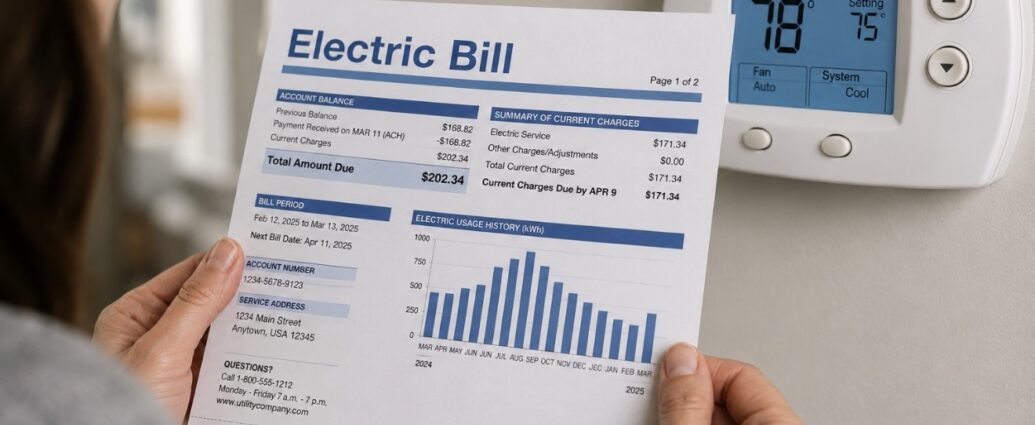
Florida Governor Ron DeSantis on Wednesday unveiled one of the most aggressive tax-cut proposals currently under discussion anywhere in the United States: a long-term plan to eliminate property taxes on primary residences entirely for most Florida homeowners.

The proposal, which DeSantis plans to advance through a summer special legislative session, would dramatically expand Florida’s homestead exemption and eventually phase out property taxes on owner-occupied homes altogether if approved by both the legislature and Florida voters.

If enacted, Florida would become the first major state in the country with both no state income tax and effectively no property tax on primary homes.

For ordinary Floridians, the immediate impact would be straightforward: many homeowners would stop receiving large annual property-tax bills entirely.

Under the first phase of the proposal, Florida’s homestead exemption would rise from the current $50,000 level to $250,000. According to DeSantis, that single change would eliminate property taxes entirely for roughly 60% of Florida homeowners whose homes qualify as homesteaded primary residences.

The second phase would increase the exemption to $500,000, which the administration says would fully eliminate property taxes for approximately 92% of Florida homesteaded properties.

“The primary purpose of that is to make your homestead property tax free,” DeSantis said during Wednesday’s announcement.

For many households, the savings could be substantial.

Depending on the county and home value, Florida homeowners currently pay anywhere from roughly $2,000 to more than $7,000 annually in property taxes. A middle-class family owning a $400,000 home could potentially save approximately $5,000 to $6,000 per year if the proposal fully eliminates their homestead tax bill.

Retirees on fixed incomes could also see major relief after years of rapidly rising home valuations across much of the state.

But the proposal also raises enormous questions about how Florida would replace tens of billions of dollars currently funding local government operations.

Property taxes generate an estimated $55 billion to $60 billion annually across Florida and fund a significant share of public-school systems, sheriff’s departments, fire and rescue services, road maintenance, libraries, parks, and county government operations.

According to state budget figures, property taxes account for roughly 18% of county-government revenue statewide.

DeSantis said the state would create a trust fund mechanism to help backfill essential local services and restrict remaining property-tax collections primarily toward core functions such as schools, police, and emergency services.

The governor also proposed reducing the annual cap on assessment increases for small businesses from 10% to 5%, easing pressure on commercial property owners as well.

One of the most politically significant parts of the proposal is a five-year residency waiting period for newcomers moving into Florida after the amendment takes effect.

Under the governor’s framework, new residents would continue paying property taxes under the existing structure for several years before becoming eligible for the expanded homestead exemption.

That provision is designed to address concerns that eliminating property taxes could accelerate migration into Florida, further drive up housing prices, and intensify affordability pressures for existing residents.

The proposal’s effect on renters remains less certain.

Rental properties, second homes, vacation homes, and commercial real estate would continue paying property taxes because they would not qualify as homesteaded primary residences. Landlords would likely continue passing those costs into rents, meaning renters may not experience direct tax relief.

The broader housing-market impact could also prove complicated. Eliminating property taxes for homeowners could encourage more renters to purchase homes, potentially tightening rental supply. At the same time, Florida’s continued population growth could encourage additional housing development and investment activity.

The political path forward is difficult even in Republican-controlled Florida.

Because the proposal requires a constitutional amendment, it must first pass both chambers of the Florida legislature with at least 60% support before reaching the statewide ballot. It would then require approval from at least 60% of Florida voters during the November election.

Earlier property-tax reform proposals have struggled to advance through the Florida Senate despite support from DeSantis and many House Republicans.

Opposition is already emerging from county governments, school districts, municipal officials, and public-sector unions concerned about how local services would remain funded if residential property-tax revenue declines sharply.

There are also broader financial implications.

Local governments routinely borrow money for infrastructure projects using future property-tax revenue as collateral. A major reduction in homestead property taxes could force rating agencies to reevaluate municipal credit quality across Florida, potentially increasing borrowing costs for roads, schools, water systems, and public infrastructure projects.

At the same time, supporters argue the proposal would strengthen Florida’s long-term competitive position by making it the most tax-advantaged large state in the country for homeowners.

Florida has already benefited heavily from migration trends over the past five years as residents and businesses relocate from higher-tax states such as New York, California, Illinois, and New Jersey.

Supporters believe eliminating property taxes on primary residences would accelerate that trend further while helping long-term residents remain in their homes despite rising valuations.

The proposal also carries national political significance.

If Florida successfully phases out homestead property taxes, pressure could quickly build in other no-income-tax states such as Texas, Tennessee, Nevada, South Dakota, and Wyoming to explore similar measures.

The broader debate ultimately centers on one of the oldest questions in American tax policy: how governments balance homeowner relief, economic growth, and public-service funding.

For now, DeSantis has formally pushed the issue to the center of Florida politics heading into the second half of 2026.

The legislature will decide whether the amendment reaches the ballot.

Florida voters would then decide whether one of the most dramatic state tax overhauls in modern American history actually becomes law.

Tallahassee — JBizNews Desk

© JBizNews.com All Rights Reserved. Reproduction or distribution without written permission is prohibited.

JBizNews Desk

The U.S. Department of the Treasury on Thursday officially launched the new “Trump Accounts” mobile app, opening the primary gateway to a federal savings initiative that will provide tax-advantaged investment accounts — and in many cases a $1,000 government-funded deposit — for millions of American children.

Treasury Secretary Scott Bessent announced the launch Thursday morning, describing the app as a secure and simple tool designed to help families begin building long-term financial savings for children from birth.

The app is now available through major app stores nationwide ahead of the program’s formal July 4 launch.

The accounts function similarly to investment retirement-style accounts for minors, with funds placed into market-tracking investment vehicles intended to grow over time. The program’s most prominent feature is the federal contribution itself: children who are U.S. citizens born between 2025 and 2028 qualify for a one-time $1,000 Treasury-funded deposit beginning July 4.

Children born before 2025 may still open accounts but are not eligible for the government contribution.

Treasury officials said nearly 6 million children have already been enrolled ahead of the launch, although deposits and contributions cannot officially begin until July.

Parents and guardians can begin the setup process immediately through TrumpAccounts.gov using IRS Form 4547 before completing account activation through email verification.

The funds are designed as long-term investment accounts and cannot be freely withdrawn during childhood. Once the child reaches adulthood, the money may be used for major expenses such as education, housing, or other approved life costs.

The program also directly ties Wall Street and private employers into the federal savings initiative.

Treasury confirmed that Bank of New York Mellon and Robinhood partnered on the infrastructure supporting the app and account system. BNY Mellon was also among the first major institutions to pledge matching contributions for children of its U.S.-based employees, with BlackRock later joining the effort.

Employers participating in the program may contribute up to $2,500 annually per employee on a tax-advantaged basis without those contributions counting as taxable income for workers.

Several philanthropists and private organizations have also pledged additional matching contributions for qualifying families in certain states.

For financial firms involved, the program represents more than a government initiative — it potentially creates a generation of first-time investors whose earliest financial relationship begins through federally backed investment accounts connected to private financial institutions.

Supporters describe the program as an attempt to encourage long-term wealth creation and financial literacy from childhood.

Critics, however, have raised broader questions surrounding program costs, investment oversight, and whether lower-income households will continue contributing after the initial government deposit.

For now, the launch marks the moment the initiative moves from legislation and policy discussions into parents’ phones and household finances.

Washington — JBizNews Desk

© JBizNews.com All Rights Reserved. Reproduction or distribution without written permission is prohibited.

By JBizNews Desk

LONDON — The head of Britain’s electronic intelligence agency will warn Wednesday that China is rapidly closing the technological gap with the West and that the United Kingdom and its allies are running out of time to maintain their advantage in artificial intelligence and cyber capabilities, a message landing as cybersecurity and AI stocks continue driving global equity markets to record highs.

Anne Keast-Butler, director of GCHQ — Britain’s signals intelligence and cybersecurity agency, roughly equivalent to America’s National Security Agency (NSA) — is delivering the warning during the organization’s first-ever annual lecture at Bletchley Park, the historic World War II codebreaking center associated with mathematician Alan Turing.

According to excerpts released ahead of the speech, Keast-Butler plans to describe the current environment as “a new era of radical uncertainty, contested geopolitics and rapidly changing technology,” warning that “the risk of miscalculation is as high as I’ve ever seen it.”

Her central message is direct: China has become “a science and tech superpower” with sophisticated cyber, intelligence and military capabilities, while the rise of artificial intelligence is accelerating the pace of strategic competition.

In practical terms, Western intelligence officials are increasingly warning that the technological gap separating Chinese and Western cyber capabilities is narrowing much faster than governments anticipated only a few years ago.

That matters because GCHQ rarely speaks publicly in this way.

Historically, the agency operates with minimal public visibility. When senior British intelligence officials deliver unusually direct warnings to business leaders, it is often interpreted inside government and financial circles as a sign the threat assessment inside the broader Five Eyes intelligence alliance — the United States, United Kingdom, Canada, Australia and New Zealand — has materially shifted.

The speech also underscores how closely national security, artificial intelligence and financial markets have now become intertwined.

Over the past year, investors have poured money into cybersecurity firms including Palo Alto Networks, CrowdStrike Holdings, Zscaler, Fortinet and SentinelOne, while semiconductor companies tied to AI infrastructure — including Nvidia and Advanced Micro Devices — have surged on expectations of massive government and private-sector spending tied to AI competition and cyber defense.

Much of that demand stems directly from the environment Keast-Butler is describing.

She is also expected to warn that Russia is “scaling up its daily hybrid activity” against Britain and Europe by targeting “critical infrastructure, democratic processes, supply chains and public trust.”

GCHQ officials say they are increasingly focused not only on traditional espionage but also on cyberattacks aimed at transportation systems, utilities, communications infrastructure and corporate networks.

Earlier this year, Dr. Richard Horne, head of Britain’s National Cyber Security Centre, the defensive cybersecurity arm of GCHQ, said hostile-state cyber activity against the UK now averages roughly four nationally significant incidents per week, with China, Russia and Iran identified as the primary sources.

The warnings are not theoretical.

Over the past 18 months, major British companies including Marks & Spencer, the Co-op Group and Jaguar Land Rover have suffered significant cyberattacks disrupting operations, exposing customer data and generating substantial financial losses.

British officials increasingly frame those incidents not simply as IT problems but as national economic-security threats.

“Cyber security is now a matter of business survival,” British officials have repeatedly warned in recent months.

For American investors, the implications are increasingly visible across multiple industries.

Cybersecurity spending is accelerating because corporations and governments alike now assume they face persistent attacks from sophisticated state-backed actors using increasingly advanced AI tools for phishing, intrusion and supply-chain compromise operations.

The same geopolitical pressures are also driving enormous investment in AI computing infrastructure.

Companies such as Nvidia, AMD and other semiconductor suppliers are not simply selling hardware to commercial data centers. They are increasingly selling into government, intelligence and defense ecosystems across the United States and allied countries racing to expand AI computing capacity ahead of China.

That demand helps explain why semiconductor stocks have become one of the market’s dominant themes.

The timing of the speech is also notable.

Only weeks ago, Beijing confirmed an order for 200 Boeing aircraft, publicly describing aviation as “a key area for U.S. cooperation” — part of broader efforts by both Washington and Beijing to stabilize portions of the economic relationship.

Yet on the intelligence and technology side, rhetoric from Western capitals is moving sharply in the opposite direction.

The tone coming from intelligence chiefs has grown increasingly blunt. Governments are engaging more directly with private-sector executives. And Western corporations are facing growing pressure to treat cyber defense as a strategic operating priority rather than merely a regulatory or compliance function.

The venue itself carries symbolic weight.

Bletchley Park was where British and American codebreakers worked together during World War II, laying the foundation for the intelligence-sharing alliance that eventually became Five Eyes. The speech also coincides with the 80th anniversary of the UKUSA Agreement, the original intelligence treaty linking the two countries.

At the same location in 2023, Western governments and Chinese officials signed the Bletchley Declaration on AI Safety, highlighting the increasingly complicated balance between technological cooperation and strategic rivalry.

The message from Wednesday’s speech ultimately points toward the same conclusion increasingly reflected in financial markets:

The global battles over artificial intelligence, semiconductors, cyber defense and critical infrastructure are no longer separate stories. Governments, intelligence agencies and investors are increasingly treating them as part of the same strategic competition.

And according to Britain’s top cyber official, that competition is accelerating faster than many Western governments expected.

Europe — JBizNews Desk

© JBizNews.com All Rights Reserved. Reproduction or distribution without written permission is prohibited.
JBizNews Desk — May 28, 2026

U.S. stocks closed mixed Thursday but remained near record highs after new inflation data showed consumer prices accelerating to their highest level in nearly three years, while reports of a ceasefire framework between the United States and Iran helped stabilize investor sentiment and keep broader markets from retreating.

The final numbers reflected a market struggling to balance economic strength, persistent inflation, and geopolitical relief all at once.

The S&P 500 finished nearly unchanged at 7,520.36, up just 0.02%, while the Dow Jones Industrial Average slipped 0.05% to close at 50,620.36. The Nasdaq Composite outperformed, gaining 0.39% to finish at 26,777.95, remaining close to the record highs set earlier this week.

The session’s central focus was inflation.

The Commerce Department reported Thursday morning that the Personal Consumption Expenditures Price Index (PCE) — the Federal Reserve’s preferred inflation gauge — rose 3.8% year-over-year in April, climbing from 3.5% in March and 2.8% in February. On a monthly basis, prices increased 0.4%.

The PCE index carries unusual weight inside financial markets because it measures what Americans are actually paying across goods and services, making it one of the clearest indicators of persistent pricing pressure throughout the economy. A reading approaching a three-year high signals that inflation remains stubbornly elevated despite aggressive interest-rate policies over the past two years.

The report arrives at a particularly sensitive moment for new Federal Reserve Chairman Kevin Warsh, who was sworn in last week. Hotter inflation data narrows the central bank’s flexibility on rate cuts and raises the possibility that borrowing costs could remain elevated longer than markets had previously hoped.

Yet despite the inflation surprise, investors largely held their ground.

Markets found support from signs that the broader economy remains resilient. Consumer spending stayed firm, weekly jobless claims remained relatively stable, and Treasury yields eased slightly during the afternoon as energy prices retreated from earlier highs.

Geopolitics delivered the day’s sharpest swings.

Stocks fluctuated throughout the session after reports emerged that Washington and Tehran had reached a temporary framework agreement aimed at extending a ceasefire and gradually restoring energy exports from the Persian Gulf region. The proposed arrangement reportedly includes a 60-day memorandum intended to prevent further escalation following months of military confrontation near the Strait of Hormuz.

Earlier in the session, oil prices had risen sharply amid renewed reports of clashes near key shipping lanes before reversing lower after ceasefire discussions surfaced.

Underneath the broader indexes, market leadership remained concentrated in artificial-intelligence infrastructure and enterprise software stocks.

Microsoft, Oracle, and Palantir each climbed between 3% and 4% as investors continued rotating toward companies viewed as long-term AI infrastructure winners. By contrast, semiconductor stocks weakened, with Nvidia slipping roughly 1% after a powerful recent rally.

Software company Snowflake surged approximately 30% following stronger-than-expected guidance, although the rally failed to broadly lift the rest of the cloud-software sector.

Within the Dow, Microsoft, Nike, and IBM led gains, while 3M and Caterpillar weighed on the index. Retailers also saw divergent results. Best Buy advanced after beating earnings expectations, and Kohl’s jumped following stronger comparable-sales figures, while Salesforce fell roughly 2% after its quarterly report disappointed investors.

Dell Technologies moved higher ahead of its earnings release after reports that the company secured a $9.7 billion software contract tied to the U.S. military.

Looking ahead, Friday’s economic calendar remains lighter but still carries several reports closely watched by traders.

The Commerce Department is scheduled to release advanced trade-in-goods data alongside wholesale and retail inventory figures, while the Chicago Purchasing Managers’ Index (PMI) will offer another early snapshot of manufacturing and business activity across the industrial Midwest.

Markets will also continue watching whether record-high equity valuations can hold together while inflation remains elevated and the Federal Reserve faces growing pressure to maintain higher interest rates for longer.

For one more session at least, investors chose stability over panic — leaning on hopes for a calmer Middle East and continued enthusiasm surrounding AI-linked companies to offset inflation data that, under different conditions, might have triggered a much sharper selloff.

New York — JBizNews Desk

© JBizNews.com All Rights Reserved. Reproduction or distribution without written permission is prohibited.
JBizNews Desk — May 28, 2026

Anthropic said Thursday it has closed a $65 billion Series H funding round at a $965 billion post-money valuation, according to a company announcement and comments from Chief Financial Officer Krishna Rao, vaulting the Claude developer past OpenAI to become the world’s most valuable private artificial-intelligence startup.

The round was co-led by Altimeter Capital, Dragoneer, Greenoaks, and Sequoia Capital, with additional backing from Capital Group, Coatue, D1 Capital Partners, Baillie Gifford, Blackstone, Brookfield, D.E. Shaw Ventures, DST Global, and Fidelity Management & Research. Anthropic indicated the financing could be among its final private raises before pursuing a public listing.

The valuation marks one of the fastest wealth surges ever recorded in the technology sector. Anthropic was valued at roughly $380 billion during its Series G financing in February and approximately $183 billion during a prior funding round last September. The latest valuation nearly triples the February figure in just a few months, reflecting the speed at which institutional capital continues flooding into the AI sector.

Driving the surge is revenue growth.

Anthropic disclosed that its annualized revenue run rate has climbed to approximately $47 billion, up sharply from around $30 billion earlier this year and roughly $10 billion in revenue generated during 2025. A major contributor has been Claude Code, the company’s AI-powered software-development platform, which has rapidly gained adoption among enterprises, engineering teams, and independent developers seeking productivity gains and automation tools.

The financing reshuffles the balance of power across Silicon Valley’s AI race.

OpenAI, maker of ChatGPT, was valued at approximately $852 billion following its March financing round, which itself had been viewed as unprecedented in scale. Anthropic’s new valuation now moves decisively ahead of that figure, signaling that investors increasingly see enterprise-focused AI infrastructure and coding systems as one of the sector’s most commercially scalable businesses.

For businesses watching the AI market from the sidelines, the funding wave sends a broader message: Wall Street believes companies are still in the early innings of adopting artificial intelligence into everyday operations.

The firms writing checks into Anthropic are effectively betting that businesses will continue paying for AI systems capable of writing software, generating documents, analyzing data, automating workflows, reducing staffing burdens, and accelerating operational decision-making. The scale of the raise suggests major investors expect AI spending to expand significantly rather than cool off.

Anthropic also used Thursday’s announcement to unveil new products aimed at enterprise customers.

The company introduced Claude Opus 4.8, its latest flagship model, alongside a new cybersecurity-focused platform called Claude Mythos Preview, which will initially be offered to a limited number of approved corporate and government users. Rao said the new capital would help Anthropic scale infrastructure, expand enterprise deployment, and maintain what he described as a research lead against rivals.

The timing also reflects how quickly the AI industry is converging with public capital markets.

Several of the largest artificial-intelligence developers are already preparing for eventual IPOs. Elon Musk’s AI venture, folded earlier this year into the broader SpaceX ecosystem, recently filed offering paperwork tied to a combined business reportedly valued near $1.25 trillion. Investors increasingly expect Anthropic and OpenAI to follow similar paths as demand for AI infrastructure, chips, cloud services, and enterprise automation tools continues accelerating.

Analysts say the newest valuation milestones underscore a deeper transformation underway across the global economy.

Unlike earlier technology cycles centered primarily on consumer apps or advertising, today’s AI investment boom is increasingly tied to operational infrastructure — tools businesses directly use to save time, automate labor, improve productivity, and increase margins. That distinction is helping justify valuations once considered impossible even in Silicon Valley.

Whether Anthropic moves quickly toward an IPO now becomes one of the biggest open questions in the technology market. Company filings and industry reports have pointed to growing internal preparations, including expanded legal and financial advisory work associated with public-market readiness.

For now, Anthropic has crossed a threshold almost no startup ever reaches — and in doing so, it has redrawn the hierarchy at the center of the global AI economy.

New York — JBizNews Desk

© JBizNews.com All Rights Reserved. Reproduction or distribution without written permission is prohibited.

By JBizNews Desk

For the first time in more than a decade, the assets Wall Street spent years avoiding are suddenly outperforming the markets investors once viewed as untouchable.

That is the conclusion of a new report published May 15 by UBS Asset Management, where Shamaila Khan, Head of Emerging Markets and Asia Pacific Fixed Income, argues that emerging-market debt and equities may have entered a fundamentally different investment era — one in which developing economies act less like financial weak points and more like stabilizers during periods of global stress.

The report, co-authored by Massimiliano Castelli, Philipp Salman, and Sangram Jadhav, points to a major shift in investor behavior during the recent Iran-related market shock. Instead of fleeing emerging markets as geopolitical tensions escalated across the Middle East, investors largely stayed put. In several cases, emerging-market debt outperformed developed-market credit.

That reversal matters because for years the rule across global finance was simple: when geopolitical risk rises, emerging markets get hit first and hardest. UBS argues that dynamic is now changing.

The data behind the call is notable. According to the report, emerging-market assets outperformed advanced economies in 2025 for the first time in years. During the spring 2026 Middle East conflict, hard-currency sovereign and corporate bonds from emerging economies traded relatively smoothly, avoiding the panic-driven selloffs that historically accompanied regional wars or oil shocks.

UBS says many emerging-market governments and companies entered the turmoil in unusually strong financial condition. Countries had built foreign-exchange reserves, reduced refinancing pressure, and pre-funded large portions of their borrowing needs before volatility accelerated. In practical terms, they did not need to dump bonds into distressed markets to raise cash.

Investor flows reinforced the picture. The report cites JPMorgan data showing $17.4 billion in year-to-date inflows into emerging-market debt. While March 2026 saw roughly $1.7 billion in outflows during the peak of market anxiety, UBS noted that much of the selling came from passive exchange-traded funds, while actively managed funds with stronger performance records continued attracting capital.

Emerging-market equities showed similar resilience. Through the March-April Iran shock, developing-market stocks avoided the sweeping selloff patterns investors typically associate with Middle East instability, preserving gains and containing volatility despite rising oil prices and fears of wider regional escalation.

The next phase of the UBS thesis centers on the U.S. dollar.

After years of strength, UBS argues the dollar now appears historically stretched at the same time Washington faces worsening fiscal pressures and narrowing interest-rate differentials with overseas economies. A weaker or even stabilizing dollar would materially improve returns for emerging-market investors because local currencies and bonds become more valuable when converted back into dollars.

Historically, broad periods of dollar weakness have been among the strongest drivers of emerging-market performance across both equities and debt.

The longer-term performance gap helps explain why UBS believes the shift could still be in its early stages. From January 2010 through December 2025, the S&P 500 generated average annual returns of 14.5%, while MSCI Emerging Markets equities returned just 3.9% annually. That disparity fueled one of the largest sustained allocations into U.S. equities in modern investing history.

UBS now believes that imbalance may begin reversing.

The firm argues the risk-adjusted numbers already support the case. Using data from 2003 through 2025, emerging-market corporate hard-currency debt produced a Sharpe ratio of 1.16, outperforming both global corporate bonds and the broader Global Aggregate index on a return-per-unit-of-risk basis.

Despite that, institutional exposure remains limited. Public pension systems maintain average emerging-market allocations near 5%, well below the roughly 11% weighting emerging markets represent in the MSCI ACWI benchmark. Allocations to emerging-market debt are often even smaller, typically between 1% and 3% of portfolios.

That under-allocation is central to UBS’ argument. Emerging markets now account for more than 60% of global GDP on a purchasing-power basis, yet remain structurally underrepresented in many institutional portfolios.

UBS projects emerging-market sovereign dollar debt could generate returns above 5.5% annually over the next seven years, while corporate debt could return roughly 6.1%, with materially lower volatility than the S&P 500’s projected long-term return profile.

For Khan and her co-authors, the shift is no longer simply about chasing higher yields. It is about a growing realization across global finance that the world’s fastest-growing economies may finally begin receiving portfolio allocations that better reflect their actual role in the global economy.

Middle East — JBizNews Desk

© JBizNews.com All Rights Reserved. Reproduction or distribution without written permission is prohibited.

The same forces making ordinary investors nervous are about to produce one of the strongest trading quarters in years for America’s largest banks.

Speaking Wednesday at the Bernstein Strategic Decisions Conference in New York, Bank of America CEO Brian Moynihan said the bank expects second-quarter trading revenue to rise roughly 15% year-over-year, while JPMorgan Chase CEO Jamie Dimon projected approximately 11% growth in markets revenue — potentially making it one of the strongest trading quarters in JPMorgan’s history.

The drivers behind those gains are the same headlines dominating global markets every day: the war involving Iran, violent swings in oil prices, uncertainty surrounding artificial intelligence stocks, and growing concern over risks inside the rapidly expanding private credit industry.

For ordinary Americans, the dynamic may appear backward at first.

When markets become unstable, investors often become anxious. But for large Wall Street trading desks, volatility creates opportunity. Every sharp move in oil, stocks, currencies, or bonds forces institutional investors to reposition portfolios, hedge exposures, buy protection, or unwind trades. The banks facilitating those transactions collect fees and trading spreads on enormous volumes of activity across global markets.

That is precisely what is happening now.

Oil prices have repeatedly swung between roughly $80 and $110 per barrel in recent months as markets react to every development tied to Iran and the broader Middle East conflict. Semiconductor and AI-related stocks have experienced massive volatility as investors debate whether the artificial intelligence boom represents sustainable growth or speculative excess.

At the same time, Wall Street has grown increasingly cautious about the $2 trillion private credit market, where private investment firms increasingly lend directly to companies outside traditional banking channels. Even Dimon recently warned investors to revisit assumptions surrounding liquidity risks in private credit markets.

All of those concerns create exactly the kind of trading environment large banks thrive in.

The first quarter already demonstrated the pattern.

JPMorgan reported approximately $16.5 billion in net income during the first quarter, up 13% year-over-year, while markets revenue approached $12 billion, driven heavily by commodities, credit, and currency trading.

Bank of America similarly reported equity-trading revenue of approximately $2.8 billion, up roughly 30% from the prior year.

Now both institutions are signaling another unusually strong quarter ahead.

There is also a major investment-banking catalyst looming later this year: the expected SpaceX initial public offering.

JPMorgan, Bank of America, Citigroup, and numerous other banks are expected to participate in underwriting what could become the largest IPO in history if Elon Musk’s space company proceeds with its anticipated listing schedule. Underwriting fees tied to a transaction of that size could generate hundreds of millions of dollars for Wall Street banks during the second half of 2026.

Despite the market turbulence, both Moynihan and Dimon also delivered a notably optimistic view of the underlying U.S. economy.

Moynihan said Bank of America’s internal consumer data showed credit and debit card spending per household rising 4.8% year-over-year in April, up from 4.3% growth in March — a sign that consumer spending remains resilient despite geopolitical uncertainty and elevated energy prices.

Bank of America also raised its forecast for full-year net interest income growth to between 6% and 8%, reflecting continued strength in lending activity and consumer finances.

Dimon echoed similar themes regarding the resilience of the American consumer and the broader economy even as markets remain volatile.

That combination — strong consumer spending alongside elevated financial-market anxiety — is creating an unusually profitable environment for large banks.

The broader message from Wednesday’s conference was that Wall Street’s largest institutions are positioned to benefit from both sides of the current environment. If the economy remains healthy, lending and consumer spending stay strong. If markets remain unstable, trading desks continue generating elevated revenue.

For ordinary Americans, the takeaway is more nuanced.

The same uncertainty affecting gasoline prices, retirement portfolios, AI investments, and global trade is simultaneously driving large profits inside the banking system. That does not necessarily signal an economic crisis. In many cases, it simply reflects how modern financial markets operate: volatility increases demand for trading, hedging, and capital-market activity.

At the same time, unusually strong trading profits can also serve as a warning sign that the broader financial system remains unsettled beneath the surface.

Periods of extreme volatility rarely last forever. Eventually markets stabilize — or the uncertainty evolves into a more serious economic slowdown.

For now, however, America’s largest banks are making clear that they expect turbulence to continue, and they are positioning themselves to profit from it.

Between the Iran conflict, AI speculation, private credit concerns, and the approaching SpaceX IPO, Wall Street’s biggest firms are entering the summer with one message to investors:

The volatility is not hurting business.

It is the business.

New York — JBizNews Desk

© JBizNews.com All Rights Reserved. Reproduction or distribution without written permission is prohibited.
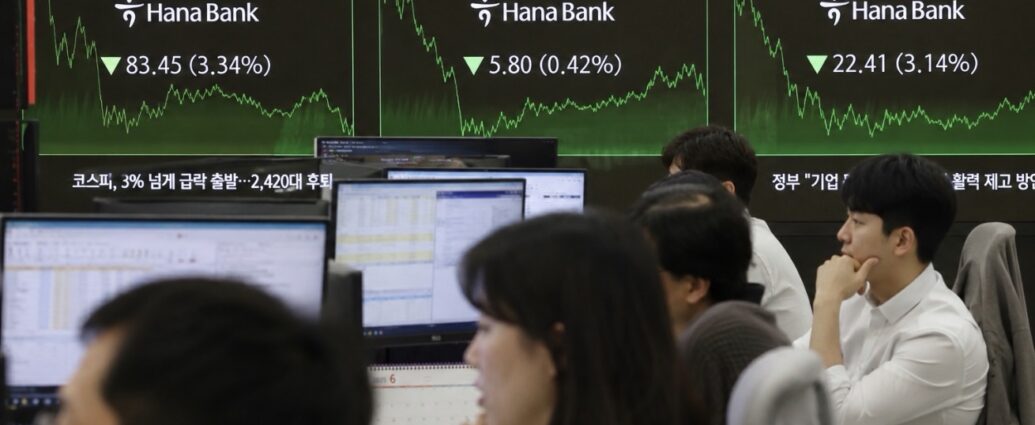
Houston billionaire Tilman Fertitta is finally getting the casino empire he has spent nearly a decade chasing.

On May 28, 2026, Fertitta Entertainment announced a definitive agreement to acquire Caesars Entertainment in an all-cash transaction valued at approximately $17.6 billion, including assumed debt, marking one of the largest gaming industry buyouts in years and dramatically reshaping ownership across the Las Vegas Strip.

The transaction ends Fertitta’s years-long pursuit of Caesars, a campaign that began in 2018 when he first proposed combining the company with his Golden Nugget casino business. Multiple attempts, competing bidders, and shifting market conditions delayed the effort over the years. Now, after nearly a decade of maneuvering, Fertitta has secured control of one of the most recognizable casino brands in the world.

Importantly, this is not a sale by a single owner.

Caesars is a publicly traded Nasdaq company, meaning Fertitta is effectively buying out thousands of public shareholders and taking the company private. Shareholders will receive $31 in cash per share, representing roughly a 49% premium to the company’s share price before takeover speculation accelerated earlier this year.

The equity portion of the deal values Caesars at roughly $5.7 billion.

The much larger headline figure — $17.6 billion — comes because Fertitta is also assuming approximately $11.9 billion in existing Caesars debt, underscoring just how leveraged the modern casino business has become after years of acquisitions, expansions, and pandemic-era financial restructuring.

Fertitta’s Biggest Bet Yet

For Fertitta, the acquisition represents the largest and most ambitious deal of his career.

The 68-year-old billionaire already controls a sprawling hospitality empire through Landry’s, which owns or operates hundreds of restaurants, hotels, entertainment venues, and casinos across the United States and internationally. His holdings include the Golden Nugget casino chain and the Houston Rockets, which he purchased in 2017 for $2.2 billion.

Adding Caesars dramatically expands that footprint.

The company operates roughly 52 casino properties across the United States, including some of the most iconic names on the Las Vegas Strip: Caesars Palace, Flamingo, Planet Hollywood, and Horseshoe among them.

The deal effectively gives Fertitta direct control over a major portion of America’s gaming and hospitality infrastructure.

Why The Financing Structure Matters

One of the most closely watched aspects of the transaction is how it is being financed.

Fertitta Entertainment emphasized that the acquisition is not subject to a financing contingency — a crucial point for investors after several high-profile leveraged buyouts in recent years encountered financing instability or collapsed under deteriorating credit conditions.

Instead, the acquisition will be funded through a combination of Fertitta equity contributions, newly arranged financing from a consortium of 10 banks, and the assumption of Caesars’ existing debt obligations.

That structure reduces execution risk and signals strong lender confidence despite elevated interest rates and tighter credit conditions across much of corporate America.

Still, the debt load remains substantial.

Fertitta has long embraced highly leveraged dealmaking, often betting that strong cash-flow-generating assets can comfortably support large borrowing levels over time. Caesars now becomes the largest version of that strategy he has attempted.

The Political Angle

The acquisition also carries a political dimension analysts believe could matter during regulatory review.

Fertitta has been a prominent supporter of President Donald Trump, contributed actively during the 2024 campaign cycle, and currently serves as U.S. ambassador to Italy under the Trump administration.

Gaming deals of this scale require extensive approval processes across multiple states where Caesars operates casinos and holds gaming licenses. Regulatory scrutiny often focuses heavily on ownership structure, financing stability, competitive concentration, and operational suitability.

Analysts including Lance Vitanza of TD Cowen suggested Fertitta’s political positioning and longstanding industry relationships may improve confidence that the deal ultimately secures the approvals it needs.

That does not mean approval is automatic.

The transaction still faces shareholder approval requirements, state-level gaming reviews, and antitrust examination tied to concentration of major Strip properties under one ownership umbrella.

The agreement also includes a “go-shop” period running through approximately July 11, allowing Caesars and its advisers to solicit or evaluate competing bids before the transaction becomes final.

Why The Timing Is Interesting

The deal arrives during a softer moment for Las Vegas itself.

Visitor spending growth has moderated, discretionary travel has become more uneven, and gaming revenue trends have softened compared with the explosive rebound period immediately following the pandemic reopening years.

Yet investors still responded positively.

Caesars shares rose following the announcement and have climbed roughly 16% since initial reports of Fertitta’s interest surfaced earlier this year, suggesting markets largely view the agreed price as credible and achievable despite broader industry caution.

The acquisition also continues a longer-term consolidation trend reshaping the casino industry.

Ownership of major Strip properties has increasingly concentrated into fewer hands over the past decade as rising development costs, digital gaming competition, sports betting expansion, and capital-intensive resort operations pushed operators toward larger scale.

Fertitta’s purchase accelerates that process further.

What Fertitta Is Really Buying

At one level, this is a casino deal.

At another, it is a bet on physical experience assets themselves.

Fertitta has spent much of his career accumulating businesses tied to entertainment, hospitality, tourism, food, nightlife, sports, and experiential spending — industries that increasingly command premium pricing in an economy where consumers continue prioritizing experiences over goods.

Caesars gives him one of the most globally recognized hospitality brands in America alongside enormous real-estate positioning across Las Vegas and regional gaming markets.

The risks are obvious: debt, regulatory scrutiny, softer consumer spending, and the cyclical nature of gaming.

But Fertitta’s approach has rarely centered on avoiding leverage.

It has centered on owning trophy assets large enough to generate cash flow through economic cycles.

And after nearly ten years of trying, Caesars has now become the biggest trophy of them all.

Las Vegas — JBizNews Desk

© JBizNews.com All Rights Reserved. Reproduction or distribution without written permission is prohibited.

Massachusetts believes California may have just handed Boston its best recruiting tool in years.

Business leaders, venture investors, and political officials across Boston are increasingly positioning a proposed California billionaire tax as a rare opportunity to reverse one of the city’s most frustrating economic patterns: training elite artificial intelligence founders at MIT and Harvard only to watch them leave for San Francisco.

The issue gained fresh urgency on May 28 after renewed attention around a proposed California ballot measure that would impose a one-time 5% tax on personal assets above $1 billion, aimed largely at funding healthcare programs.

For many startup founders, the danger is not theoretical.

A fast-growing AI company can achieve multibillion-dollar paper valuations long before founders actually receive liquid cash through an IPO or acquisition. That means entrepreneurs could theoretically face enormous tax obligations tied to unrealized wealth while still holding relatively limited personal liquidity.

That scenario is exactly what Boston now sees as an opening.

The Core Problem Boston Has Failed to Solve

Massachusetts has long produced some of America’s strongest technical talent.

The problem has never been education.

It has been retention.

Half of the 20 most valuable venture-backed AI companies in the United States reportedly have co-founders connected to MIT or Harvard. Yet virtually none are headquartered in Massachusetts. Instead, the companies overwhelmingly migrate westward into Silicon Valley’s financing, engineering, and startup ecosystem.

For decades, the gravitational pull of San Francisco proved nearly impossible to overcome.

Founders wanted proximity to venture capital, elite engineers, experienced startup operators, hyperscaler relationships, and other founders who had already built successful technology businesses.

That network effect became self-reinforcing.

Boston produced talent.

California captured the companies.

Now Massachusetts believes California’s own politics may finally weaken that cycle.

Why The Billionaire Tax Matters So Much To Founders

The proposed California measure is especially sensitive for technology entrepreneurs because startup wealth often exists primarily on paper.

Founders may control shares worth billions theoretically while lacking liquid cash to pay large tax bills before a company goes public or gets acquired.

That distinction is central to Boston’s argument.

Ankit Gupta, recently named Y Combinator’s first Boston-area general partner in more than a decade, warned that taxing unrealized startup wealth could create severe pressure on founders whose companies remain privately held.

He contrasted the proposal with Massachusetts’ own 4% surtax on income above $1 million, approved by voters in 2022.

That Massachusetts tax applies to realized income rather than unrealized asset appreciation — a difference many founders view as financially manageable compared with taxes tied to illiquid startup equity.

In effect, Massachusetts is trying to reposition itself politically.

For years, Boston carried a reputation as a relatively high-tax region compared with lower-tax states like Texas or Florida.

But compared directly against California and New York, the gap now looks narrower — especially if California expands taxation into unrealized wealth territory.

That shift changes the competitive narrative.

Boston’s Recruiting Push Is Already Underway

The effort is no longer abstract.

Governor Maura Healey traveled to San Francisco last month alongside Massachusetts Economic Development Secretary Eric Paley, a former venture capitalist tied to early investments in Uber and SeatGeek.

Meetings reportedly included AI giant Anthropic, accelerator powerhouse Y Combinator, and biotech leaders including Genentech.

Y Combinator CEO Garry Tan has publicly discussed exploring a Cambridge office, specifically citing the engineering concentration surrounding MIT and Harvard.

Boston Mayor Michelle Wu is also increasingly framing the city as a future center for “applied AI” — not necessarily competing directly with Silicon Valley on foundational model development, but specializing in practical AI deployment across healthcare, biotechnology, life sciences, drug discovery, hospitals, diagnostics, and enterprise systems.

That distinction matters strategically.

Boston already possesses one of the world’s densest concentrations of hospitals, research institutions, biotech firms, medical schools, and pharmaceutical infrastructure. The city’s argument is that AI’s next major commercial wave may involve integrating models into real-world healthcare and scientific systems rather than purely building the models themselves.

In that scenario, Boston may hold structural advantages Silicon Valley lacks.

Why Timing Suddenly Matters

The push also reflects economic necessity.

Boston’s biotech economy — long one of the city’s strongest growth engines — has cooled materially after years of aggressive expansion. Venture funding has slowed across life sciences, while federal research funding uncertainty tied to broader budget pressures has created additional strain for universities and medical institutions heavily dependent on federal grants.

Massachusetts leaders increasingly view AI as both an opportunity and a hedge against biotech deceleration.

Several major corporate and startup initiatives are already underway.

Genentech, owned by Roche, is expanding research operations on Harvard-linked property. Anthropic maintains a smaller Cambridge footprint. A coalition including Whoop, DraftKings, and AI music startup Suno launched the Massachusetts AI Coalition earlier this year aiming to double the number of billion-dollar tech and biotech companies headquartered in the state within five years.

The coalition has even proposed “founder starter parks” offering subsidized computing resources, office space, mentorship access, and operational support for startups willing to remain in Massachusetts during early-stage growth.

The logic is simple: once companies scale beyond roughly 10 employees, relocation becomes far harder operationally.

Boston is trying to intervene before founders leave in the first place.

The Bigger National Shift

Underneath the tax debate sits a broader structural question about the future geography of American technology.

For decades, Silicon Valley’s dominance appeared nearly unbreakable because capital, talent, and company formation all concentrated in one ecosystem simultaneously.

But remote work, distributed engineering teams, AI infrastructure, rising living costs in California, and shifting political dynamics are beginning to fragment that concentration model.

Boston is betting that taxation could accelerate the process further.

Not necessarily by driving a mass exodus from California overnight — but by making founders more willing to consider alternative ecosystems earlier in their company-building process.

The question is whether policy alone can overcome Silicon Valley’s still-enormous network advantages.

History suggests ecosystems rarely shift quickly.

But Massachusetts increasingly believes the economics surrounding startup formation are beginning to change.

And for the first time in years, Boston thinks the pull westward may no longer feel inevitable.

Boston — JBizNews Desk

© JBizNews.com All Rights Reserved. Reproduction or distribution without written permission is prohibited.

BEIJING — China’s factories posted their strongest monthly profit growth in more than two years in April, with earnings at the country’s largest industrial companies jumping 24.7% year-over-year, according to data released Wednesday, May 27, 2026 by China’s National Bureau of Statistics, underscoring how deeply the global artificial-intelligence boom is now reshaping manufacturing profits on both sides of the Pacific.

The gain marks the fastest pace of Chinese industrial profit growth since November 2023, accelerating sharply from a 15.8% increase in March and lifting year-to-date profit growth for the first four months of 2026 to 18.2%, up from 15.5% in the first quarter.

The numbers arrive as global equity markets — especially U.S. semiconductor stocks — continue surging on expectations of massive AI-driven spending on data centers, memory chips, networking equipment and computing infrastructure.

And increasingly, the same forces driving record valuations on Wall Street are also driving profits inside Chinese factories.

The strongest gains in China’s report came from the computing, communications and electronics manufacturing sector, now the country’s single largest industrial profit category. Earnings in that segment more than doubled from a year earlier as demand for AI-related hardware accelerated globally.

That matters directly to American investors.

On Tuesday, the S&P 500 closed at a fresh record high of 7,519.12, while the Nasdaq Composite finished at 26,656.18, also an all-time high, led overwhelmingly by semiconductor and AI infrastructure stocks.

Micron Technology surged roughly 19%, briefly crossing a $1 trillion market capitalization after UBS sharply raised its price target on the company. The VanEck Semiconductor ETF climbed more than 3% to a new 52-week high, while Advanced Micro Devices, On Semiconductor and Western Digital all posted major gains.

The link between the two markets is becoming increasingly obvious.

The global AI infrastructure buildout — from hyperscale data centers to inference clusters and advanced memory systems — is generating extraordinary demand across the entire semiconductor supply chain.

American chip designers are pricing that demand into equity valuations.

Chinese factories assembling servers, networking systems, electronics and hardware components are pricing it into margins and profit growth.

Both sets of numbers are effectively telling the same story at the same time.

The second major contributor to China’s April profit surge was energy.

Oil prices have climbed sharply amid the expanding Middle East conflict, with crude trading in roughly the $100 to $106 per barrel range during April. China’s oil and gas extraction industry swung from a 1.4% profit decline in the first quarter to an 8.1% gain through April as higher crude prices boosted margins for state-owned energy producers.

Government policy is also playing a role.

Chinese officials have spent years subsidizing strategic industrial sectors including semiconductors, advanced manufacturing and high-tech equipment through tax incentives, low-cost financing and direct state investment.

Earlier this year, Yu Weining, chief statistician at the National Bureau of Statistics, said profits in China’s equipment-manufacturing sector rose 21%, while high-tech manufacturing profits surged 47.4% during the first quarter alone.

But beneath the headline profit numbers, China’s broader economy remains uneven.

Industrial output growth slowed to 4.1% in April, while retail sales barely moved, rising just 0.2%. Fixed-asset investment — spending on factories, housing and infrastructure — contracted over the first four months of the year as China’s property slump continued weighing on domestic demand.

In other words, the factory-profit boom is real, but highly concentrated.

The strongest industries are tied directly to AI hardware, advanced electronics and energy — not to broad-based consumer recovery inside China.

There is also a pricing dynamic emerging underneath the data.

China’s Producer Price Index (PPI) rose 2.8% in April, the largest increase since July 2022, suggesting factories are finally regaining pricing power after more than two years of deflationary pressure and price wars across parts of Chinese industry.

Beijing has spent months trying to reduce aggressive domestic price competition that had crushed margins in sectors ranging from solar equipment to industrial machinery. April’s numbers suggest some of those efforts may now be feeding through into corporate profitability.

For Washington policymakers, however, the data also highlights a strategic complication.

The single strongest category inside China’s profit report — electronics and computing equipment — is the very sector the United States has spent years trying to constrain through semiconductor export controls and technology restrictions.

Since 2022, Washington has imposed multiple rounds of restrictions targeting advanced AI chips, semiconductor manufacturing equipment and high-end computing exports to China.

Yet Chinese manufacturers tied to AI infrastructure are still seeing profits surge.

That does not necessarily mean the export controls failed strategically, but it does suggest the global AI spending boom has become so large that Chinese firms continue benefiting even under significant restrictions.

Trade flows also remain surprisingly resilient.

China’s exports rose 14.1% year-over-year in April, while imports surged 25.3%, according to customs data released earlier this month.

Meanwhile, the fragile U.S.-China trade détente reached late last year continues holding for now. Earlier this month, Beijing confirmed an order for 200 Boeing aircraft, describing aviation as a “key area” for bilateral cooperation — a signal both governments appear eager to preserve at least limited economic stability despite broader geopolitical rivalry.

For Wall Street, the takeaway from Wednesday’s Beijing data is straightforward.

The AI capital-expenditure cycle is now large enough to push industrial profits, stock prices and corporate investment higher simultaneously across both the American and Chinese economies.

Chip designers, memory producers, foundries, server manufacturers and contract electronics firms are all feeding from the same underlying demand wave.

The Chinese numbers, in many ways, simply confirm what U.S. markets have already been pricing in for months.

The risks, however, remain equally clear.

China’s recovery remains narrow. American equity markets remain heavily concentrated in a small group of AI-linked technology companies. And the same Middle East conflict helping lift energy-sector profits also threatens broader economic stability if oil prices spike further or supply disruptions worsen.

This week, strategists at Goldman Sachs warned that today’s bull market still faces structural vulnerabilities tied to tech concentration, geopolitical tensions and volatility in bond markets.

For now, however, the message coming simultaneously from Beijing’s factory floors and the New York Stock Exchange is unmistakable:

AI hardware is generating real profits — and nearly everyone connected to the supply chain is benefiting at once.

Asia — JBizNews Desk

© JBizNews.com All Rights Reserved. Reproduction or distribution without written permission is prohibited.

American consumers are still spending — just far more selectively than they were a year ago.

That is the clearest message emerging from the first-quarter retail earnings season, where a surprisingly large number of U.S. chains are beating Wall Street expectations despite persistent inflation, elevated borrowing costs, and growing concerns about slower economic growth later this year.

According to the latest May 27 scorecard from the London Stock Exchange Group, 161 of the 188 companies tracked in its U.S. Retail and Restaurant Index have now reported quarterly results. Roughly 71% beat analyst profit expectations, while 70% exceeded revenue forecasts — unusually strong numbers for a sector many investors expected would show clear signs of consumer fatigue by now.

Across the index, profits are on pace to rise 26.4% from the same quarter last year, while total sales are tracking roughly 7.4% higher.

The results suggest something important about the current American economy: households have not stopped spending, but they are becoming dramatically more disciplined about where their money goes.

That distinction is shaping the entire retail landscape in 2026.

The Consumer Is Still Alive — But More Defensive

For much of the past year, economists and retailers feared that higher interest rates and lingering inflation would finally crack consumer spending.

Instead, shoppers continue showing resilience, supported by a still-solid labor market, rising wages in some sectors, accumulated household savings among higher-income consumers, and a growing tendency to prioritize experiences, essentials, and perceived value over discretionary splurges.

But the spending behavior itself has changed.

Consumers are comparison shopping more aggressively, trading down selectively, delaying larger purchases, and increasingly concentrating spending in categories where they believe they are getting measurable value for money.

That is why discount chains, off-price retailers, warehouse clubs, and selective specialty categories continue outperforming.

The quarter’s strongest retail results largely came from companies positioned around value, convenience, or highly targeted demand niches rather than broad discretionary consumption.

Dick’s Sporting Goods Shows Experience Spending Is Still Strong

One of the biggest surprises of the earnings season came from Dick’s Sporting Goods, which reported a massive 62.7% increase in quarterly revenue.

Comparable sales at stores open at least a year rose 6%, roughly double analyst expectations and one of the strongest major retail performances of the quarter.

The numbers align with broader federal retail data showing sporting goods remaining one of the strongest consumer spending categories recently — a sign that Americans are still allocating money toward fitness, outdoor activity, youth sports, and lifestyle-oriented purchases despite broader economic caution.

At the same time, Dick’s management maintained a relatively cautious tone about the rest of the year, acknowledging ongoing uncertainty surrounding consumer confidence and broader macroeconomic conditions.

That caution is becoming common across retail.

Even companies posting strong current results remain hesitant to declare the consumer fully healthy.

Foot Locker’s Small Improvement Carries Outsized Meaning

Buried inside the Dick’s results was another potentially important signal.

Foot Locker, which Dick’s now owns, posted a 0.6% increase in comparable sales — its first positive same-store sales reading in roughly two years.

On the surface, the number appears modest.

But for retail analysts, the significance is psychological as much as financial. Sneaker and youth apparel demand had become one of the clearest weak spots in discretionary spending over the past two years, particularly among younger consumers squeezed by inflation and rising living costs.

Even a small return to positive growth may suggest parts of discretionary retail spending are beginning to stabilize rather than deteriorate further.

Abercrombie’s Reinvention Continues

Perhaps no retailer better captures the broader transformation of American retail than Abercrombie & Fitch.

Once viewed as a declining mall-era brand, Abercrombie has now delivered 14 consecutive quarters of sales growth — one of the most remarkable turnarounds in modern apparel retail.

The company beat profit expectations again this quarter, though revenue came in slightly below forecasts.

Its strongest growth came from Asia and the Americas, particularly the core Abercrombie label, while weakness emerged in Europe and parts of the Middle East amid geopolitical instability and softer tourism demand.

Management specifically cited unrest in the Middle East as pressuring Hollister sales in the region, highlighting how global geopolitical conditions are increasingly affecting consumer-facing businesses even outside traditional industrial sectors.

Still, the broader takeaway remained positive: brands successfully repositioned around lifestyle identity, quality perception, and targeted demographics continue outperforming many traditional apparel peers.

Off-Price Retail Keeps Winning

The clearest winners of the quarter, however, were once again discount and off-price retailers.

Ross Stores and TJX Companies — parent of T.J. Maxx, Marshalls, and HomeGoods — both exceeded expectations and reinforced one of the strongest themes in retail right now: value-oriented shopping behavior is accelerating.

TJX raised full-year guidance after HomeGoods posted a 9% comparable-sales increase, while management said the current quarter has also started strongly.

The strength of off-price retail matters because it reveals how consumers are adapting to inflation psychologically.

Households are not necessarily spending less overall.

They are becoming far more strategic about where they spend.

Rather than abandoning consumption entirely, many shoppers are reallocating toward retailers that maximize perceived value, bargain discovery, or necessity-based spending.

That behavioral shift may prove more durable than investors initially expected.

Target’s Results Reveal The New Consumer Math

One of the most closely watched earnings reports came from Target, long viewed as a bellwether for middle-class consumer behavior.

The company exceeded both revenue and profit expectations, with comparable sales rising 5.6% — its first positive same-store sales growth in five quarters.

Digital sales climbed nearly 9%, helped by strong adoption of same-day fulfillment services tied to Target Circle 360.

Yet despite the strong report, Target shares still fell after earnings.

Why?

Because investors increasingly care less about what retailers just reported and more about whether the pace is sustainable.

Target itself maintained a cautious tone about the second half of the year, reflecting broader uncertainty around inflation, interest rates, consumer credit quality, and potential economic slowing.

That caution may ultimately define the retail story more than the headline beats themselves.

What Wall Street Is Really Watching

Underneath the earnings numbers, Wall Street is trying to answer one central question:

Is the U.S. consumer genuinely strong — or simply surviving longer than expected?

So far, the answer appears to be somewhere in between.

Consumers continue spending, but the quality of that spending is evolving rapidly. Value, convenience, and selective lifestyle categories are winning. Big-ticket discretionary purchases remain softer. Discount retail continues outperforming premium positioning in many categories.

The result is not a collapsing consumer economy.

It is a highly fragmented one.

That fragmentation explains why some retailers are producing exceptional numbers while others continue struggling despite operating in the same broader economy.

And it suggests the second half of 2026 may depend less on whether Americans keep spending — and more on where they decide the money is still worth it.

New York — JBizNews Desk

© JBizNews.com All Rights Reserved. Reproduction or distribution without written permission is prohibited.

WASHINGTON — U.S. Senator Rick Scott, the Florida Republican, reintroduced legislation earlier this week that would bar American payment companies, currency dealers and even the U.S. Postal Service from handling transactions involving China’s government-issued digital currency, escalating a broader Republican push to block the digital yuan from entering the American financial system.

The legislation, formally titled the Chinese CBDC Prohibition Act of 2026, was introduced on Thursday, May 21, 2026.

CBDC stands for central bank digital currency, essentially a digital form of money issued directly by a country’s central bank rather than by commercial banks or private cryptocurrency networks.

In a Senate release announcing the bill, Scott framed the issue as both an economic and national-security threat.

“The dollar is the reserve currency of the world and the CCP wants to undermine our leadership with a digital currency they can track and manipulate,” Scott said, referring to the Chinese Communist Party.

He added: “The digital Yuan is just another tool used by the Chinese Communist Party to spy on its people and all those who use it. Xi and his thugs have no business playing big brother to American citizens and how they spend their money.”

The bill would make it illegal for American money-services businesses to process, transfer or accept transactions involving a Chinese government-issued digital currency, including the digital yuan, also known as e-CNY.

The practical reach would be broad.

Companies and institutions potentially affected include PayPal, Venmo, Zelle, Western Union, MoneyGram, airport currency exchanges, and even the U.S. Postal Service when handling money orders or certain international payment services. Under the proposal, those entities would be prohibited from facilitating transactions tied to China’s state-backed digital currency infrastructure.

The legislation reflects mounting concern in Washington over China’s rapid progress in digital finance.

Over the past five years, the People’s Bank of China has built what is widely viewed as the world’s most advanced large-scale central bank digital currency system. The digital yuan has already been tested extensively in major Chinese cities including Beijing, Shanghai, Shenzhen and Hangzhou, with Chinese consumers using it for retail payments, transportation, tourism and salary distributions.

Beijing has also openly discussed using the digital yuan for cross-border trade settlement and international commerce, a move American lawmakers increasingly see as a challenge to the dominance of the U.S. dollar.

That dominance remains one of America’s biggest economic advantages. The dollar functions as the world’s primary reserve currency, meaning central banks, commodity markets and international businesses rely heavily on dollars for trade and savings. Oil is largely priced in dollars, global debt markets revolve around dollar financing, and the U.S. government benefits from lower borrowing costs because of persistent global demand for dollar-based assets.

Republican lawmakers argue a widely adopted Chinese digital currency could eventually weaken that position, particularly if countries hostile to Washington begin settling trade outside the dollar system.

The second concern — and the one Scott emphasized most heavily — is surveillance.

Unlike physical cash, transactions conducted through a central bank digital currency can potentially be monitored directly by the issuing government. In China’s case, critics argue that gives the Chinese Communist Party extraordinary visibility into how money moves through the economy.

Scott’s Senate release argued Beijing already uses the digital yuan “as a mechanism to control the lives of its population” and warned authorities could theoretically freeze accounts or restrict access to funds instantly.

The implication for American lawmakers is that U.S. businesses or individuals using the digital yuan for trade with Chinese suppliers could expose financial activity to Chinese state monitoring.

This is not the first congressional effort targeting Chinese digital currencies.

In 2022, Senators Tom Cotton, Mike Braun and Marco Rubio introduced legislation called the Defending Americans from Authoritarian Digital Currencies Act, which sought to block app stores such as Apple’s App Store and Google Play from hosting applications supporting the digital yuan.

That proposal never became law.

Scott himself has introduced earlier versions of similar legislation in prior Congresses. Previous attempts gained Republican backing but stalled before reaching a full Senate vote.

This time, however, the political environment is different.

Republicans now control both chambers of Congress while the Trump administration continues to frame competition with China as a central economic and national-security priority. That combination may give the proposal a stronger chance than previous versions.

The timing is notable.

Just days before the legislation was introduced, President Donald Trump and Chinese President Xi Jinping held high-level discussions aimed at stabilizing U.S.-China tensions surrounding trade and technology. Trump has also publicly encouraged expanded American business engagement with China in select sectors even as Congress simultaneously moves to harden barriers around Chinese financial and technological influence.

For American businesses, the immediate practical impact of the bill would likely be limited because very few U.S. companies currently conduct routine transactions using the digital yuan. Most trade between the United States and China still settles in either U.S. dollars or traditional Chinese yuan through conventional banking systems.

But the legislation is designed less to disrupt existing behavior than to prevent future adoption before the digital yuan gains broader international traction.

The bill also reflects a growing divide in Washington between privately issued cryptocurrencies and government-backed digital currencies.

Many Republicans who support decentralized assets like Bitcoin have simultaneously opposed central bank digital currencies, arguing they could expand government financial surveillance. Scott and several other Republican lawmakers have separately criticized the idea of a potential Federal Reserve digital dollar for similar reasons.

More broadly, the legislation fits into a wider congressional effort to reduce Chinese influence across strategic sectors of the American economy, including technology, pharmaceuticals, real estate, rare earth minerals and electric-vehicle supply chains.

Taken together, the measures point toward a Washington increasingly willing to wall off sensitive parts of the U.S. economy from Chinese financial and technological penetration.

The Chinese CBDC Prohibition Act of 2026 has now been referred to committee for review. If approved by the Senate, it would still need to pass the House before reaching President Trump’s desk.

For now, the digital yuan remains legal in the United States.

Very few Americans use it.

Scott’s bill is designed to ensure that stays true.

Washington — JBizNews Desk

© JBizNews.com All Rights Reserved. Reproduction or distribution without written permission is prohibited.

WASHINGTON — The Federal Aviation Administration (FAA) said Tuesday, May 26, 2026, that it is proposing a $165,000 civil fine against Alaska Airlines for allegedly allowing visibly intoxicated passengers to board 11 separate flights between February 2024 and February 2025, part of a broader federal crackdown on impairment and airline safety compliance.

In a statement released Tuesday, the FAA said federal aviation regulations prohibit airlines from allowing passengers who appear intoxicated to board commercial aircraft. The rule applies both to gate agents and flight attendants, who are expected to stop impaired travelers before they enter the aircraft cabin.

The agency did not identify the specific routes involved or disclose the conduct of the passengers at issue, but regulators said the violations occurred across multiple flights over a one-year period.

Alaska Airlines spokesperson Tim Thompson confirmed the carrier cooperated with the FAA’s review.

“We take seriously our responsibility to provide a safe and secure environment for our guests and employees,” Thompson said. “We participated fully with the FAA’s audit of our policies and practices as it relates to intoxicated guests on board our aircraft.”

He added that the airline has already implemented operational changes in response to concerns raised by regulators.

“Since the FAA shared these concerns with us over a year ago, we made meaningful changes to ensure compliance with the FAA’s expectations, including enhanced training for all flight attendants and customer service agents,” Thompson said. “We respect the results of the FAA’s audit and are confident in the changes that have been in place for the last year to ensure our shared standards are being met.”

The enforcement action highlights growing federal concern about intoxicated and disruptive passenger behavior aboard commercial aircraft, an issue that intensified nationwide after the pandemic and has remained a persistent challenge for airlines and flight crews.

Federal regulations under 14 CFR 121.575 prohibit airlines from both serving alcohol to visibly intoxicated passengers and allowing them to board aircraft in the first place. Once onboard, intoxicated travelers can create serious operational and safety risks ranging from medical emergencies and crew interference to violent confrontations and attempted breaches of aircraft systems.

One incident involving Alaska Airlines drew national attention last year. In December 2025, a passenger reportedly intoxicated after several days of drinking opened a cabin door midair during a flight between Deadhorse and Anchorage, Alaska. That event is not among the 11 flights cited in the FAA’s proposed penalty, but it underscored the dangers regulators associate with impaired passengers onboard aircraft.

The FAA’s action against Alaska Airlines is civil rather than criminal. The airline now has 30 days after receiving the enforcement notice to either pay the fine, negotiate a settlement with regulators or formally challenge the penalty before an administrative law judge.

The proposed fine is relatively small financially for the airline. Alaska Air Group, which trades on the New York Stock Exchange under the ticker symbol ALK, generates roughly $11 billion in annual revenue, meaning the penalty itself is unlikely to materially affect earnings.

The reputational impact, however, may matter more.

Alaska Airlines has spent much of the past two years rebuilding public confidence following the highly publicized January 2024 Boeing 737 MAX 9 door-plug blowout, when a fuselage panel detached during an Alaska Airlines flight shortly after takeoff, forcing an emergency landing and triggering a temporary nationwide grounding of that aircraft type.

The carrier also completed its $1.9 billion acquisition of Hawaiian Airlines in September 2024, creating a significantly larger combined airline operation spanning more than 1,200 daily flights and approximately 120 destinations across North America.

The FAA’s move against Alaska Airlines is not happening in isolation.

In April 2026, regulators proposed a separate $255,000 civil penalty against American Airlines after alleging the carrier allowed 12 flight attendants to return to safety-sensitive duties after testing positive for drugs or alcohol without completing required follow-up testing procedures.

According to the FAA, substances identified in that investigation included alcohol, cocaine, marijuana, methamphetamine and amphetamines.

Taken together, the two enforcement actions suggest the FAA is intensifying scrutiny not only of passenger behavior but also of how airlines manage impairment risks among employees and customers alike.

For travelers, the rules remain straightforward. Airlines can legally deny boarding to anyone appearing visibly impaired in the terminal or at the gate, and passengers who become disruptive onboard can face FAA fines of up to $37,000 per violation, in addition to possible federal criminal charges.

So far, investors have shown little reaction to Tuesday’s announcement. Shares of Alaska Air Group were relatively unchanged following the FAA statement.

For Alaska Airlines, however, the issue extends beyond the dollar amount. After years spent working to restore operational credibility following high-profile safety incidents, another FAA enforcement action tied to passenger management is precisely the kind of headline the carrier has been trying to avoid.

For now, the penalty remains only a proposal. The next step belongs to Alaska Airlines.

Washington — JBizNews Desk

© JBizNews.com All Rights Reserved. Reproduction or distribution without written permission is prohibited.
For weeks, global oil markets, grocery suppliers, and American consumers had been operating on the assumption that President Donald Trump would eventually feel political pressure from a prolonged conflict with Iran and move quickly toward a deal before the November midterm elections. On Wednesday, during a Cabinet meeting at the White House, Trump publicly pushed back against that idea.

“They want very much to make a deal. So far, they haven’t gotten there,” Trump said. “We’re not satisfied with it, but we will be. We will be either that, or we’ll have to just finish the job.”

When asked directly whether the upcoming election was influencing his decision-making, the president rejected the premise and suggested Iran believed political pressure in the United States would force him into concessions. That statement immediately carried implications for energy markets, inflation expectations, and Wall Street positioning.

The market reaction had already begun earlier in the day. U.S. crude oil fell 5.55% Wednesday to settle at $88.68 per barrel after Iranian state media claimed Tehran intended to restore commercial traffic through the Strait of Hormuz to pre-war levels within one month. The White House quickly disputed the report, calling it inaccurate, but traders still moved aggressively into a lower-oil scenario.

The Strait of Hormuz remains one of the world’s most important shipping chokepoints, carrying roughly 20% of globally traded seaborne crude oil. Any sign of stabilization immediately affects fuel prices, transportation costs, airline expenses, manufacturing forecasts, and food distribution costs across the United States.

Trump’s comments complicated that market assumption. By signaling publicly that he is prepared to continue negotiations without rushing toward a fast resolution, the administration effectively told markets that lower energy prices may not arrive as quickly as many traders had expected.

For consumers, the most immediate impact is gasoline. National fuel prices remain elevated compared with the same period last year, and the summer driving season traditionally increases demand further between Memorial Day and Labor Day. If tensions remain unresolved longer than anticipated, pressure on fuel prices could persist through the summer.

The second impact is groceries and consumer goods. Transportation costs influence pricing across nearly every part of the economy because food, retail inventory, refrigerated products, and imported goods depend heavily on diesel trucking, cargo shipping, and fuel-intensive logistics networks. Sustained oil prices near current levels can continue filtering into supermarket prices and household expenses.

Markets, however, continued to show resilience Wednesday despite the geopolitical uncertainty. The Dow Jones Industrial Average closed at a record 50,644.28, while the S&P 500 finished at 7,520.36 and the Nasdaq Composite closed at 26,674.73, also record highs.

The market’s willingness to continue buying equities despite prolonged Middle East uncertainty reflects broader investor confidence that the U.S. economy, corporate earnings, and the ongoing artificial intelligence investment cycle remain strong enough to offset geopolitical risks.

There is also a significant political layer underneath the administration’s posture. Trump entered Wednesday’s Cabinet meeting following a major Republican primary victory in Texas, where Attorney General Ken Paxton defeated four-term Senator John Cornyn after receiving Trump’s endorsement. The result reinforced Trump’s standing inside the Republican Party and may have reduced concerns within the White House that a prolonged conflict automatically weakens his political position heading into November.

At the same time, Republican strategists remain aware of the risks associated with prolonged inflation, elevated gasoline prices, and broader voter frustration tied to economic pressure. Competitive House districts across states such as Pennsylvania, Wisconsin, and Colorado remain highly sensitive to shifts in fuel costs and consumer sentiment.

For Tehran, Wednesday’s message was direct: the White House is signaling publicly that it does not view Election Day as a negotiating deadline.

For American households, the consequences are more practical. The timeline for lower gasoline prices, reduced grocery inflation, and broader economic relief may depend heavily on how long tensions in the Middle East continue — and whether negotiations ultimately produce a meaningful agreement.

The administration made clear Wednesday that it is prepared to continue the standoff longer than markets may have anticipated. Investors, consumers, and global energy markets are now adjusting to that possibility in real time.

Washington — JBizNews Desk

© JBizNews.com All Rights Reserved. Reproduction or distribution without written permission is prohibited.

Wall Street opened lower Thursday morning, but the market’s real message was not panic. It was confusion.

Investors on May 28 were forced to process three different forces hitting the market at the same time: inflation that is heating back up, oil prices surging again because of the Iran conflict, and a fresh reminder from Snowflake that the artificial intelligence boom is still producing real corporate growth. The result was a fractured market where indexes fell broadly while select AI-linked technology stocks exploded higher — a sign that traders are becoming far more selective rather than simply abandoning risk altogether.

The Dow Jones Industrial Average fell 0.63% shortly after the opening bell, while the S&P 500 slipped modestly and the Nasdaq Composite edged lower despite Snowflake’s massive rally. Treasury yields moved higher after the Commerce Department reported that the personal consumption expenditures price index — the Federal Reserve’s preferred inflation gauge — rose 0.4% in April and 3.8% from a year earlier.

That annual figure matters more than the headline reaction.

Just two months ago, annual PCE inflation was running at 2.8%. In March it accelerated to 3.5%. Now it sits at 3.8%, marking three straight months of upward movement and reinforcing fears that the inflation slowdown many investors expected earlier this year may have stalled entirely.

The market had spent much of early 2026 betting the Federal Reserve would begin cutting rates aggressively by summer. Thursday’s report further damaged that narrative.

“This is the type of number that keeps the Fed trapped,” one portfolio manager at a major New York asset manager said Thursday morning. “Growth is slowing, consumers are getting squeezed, but inflation is not cooling fast enough to justify cuts.”

That is what traders increasingly fear: not a recession, but something potentially more difficult — a stagflation-style environment where economic growth weakens while prices remain elevated.

Oil is making that fear worse.

Brent crude jumped more than 2.5% Thursday and briefly approached the psychologically critical $100-a-barrel level after Iran claimed responsibility for striking a U.S. air base in retaliation for fresh American military action. Traders immediately began repricing the risk of broader supply disruptions through the Strait of Hormuz, the narrow maritime corridor responsible for transporting roughly 20% of the world’s oil supply.

The move in crude matters beyond gasoline prices.

Higher oil feeds directly into transportation, manufacturing, food distribution, airline costs, chemicals, shipping, and consumer inflation expectations. It is one of the few commodities capable of rapidly spreading price pressure across nearly every part of the economy.

Federal Reserve officials Neel Kashkari and Austan Goolsbee both warned this week that renewed energy inflation could complicate any path toward lower rates. Markets are now beginning to understand that geopolitical risk may effectively be doing part of the Fed’s tightening work for it.

Yet even as the broader market weakened, investors poured aggressively into one area: artificial intelligence.

Snowflake surged roughly 37% after reporting quarterly revenue growth of 33%, one of the strongest large-cap software reports of the earnings season. Product revenue rose 34% to $1.33 billion, while the company raised its full-year forecast and announced an expanded multibillion-dollar relationship with Amazon Web Services.

What mattered most was not just the numbers themselves. It was what the rally revealed about investor psychology.

The AI trade is no longer based purely on speculation. Investors are now rewarding companies showing measurable enterprise spending tied to artificial intelligence infrastructure, cloud computing, and data management. In a market increasingly worried about slowing growth, Snowflake demonstrated that corporations are still willing to spend heavily on AI-related productivity tools even while cutting costs elsewhere.

That distinction is critical.

Wall Street is no longer rewarding “technology” broadly. It is rewarding companies perceived as direct beneficiaries of the AI spending cycle while punishing businesses exposed to consumer weakness, higher rates, or rising commodity costs.

The divergence showed up clearly Thursday morning.

Defensive retailers held relatively stable while economically sensitive sectors weakened. Small-cap stocks, represented by the Russell 2000, traded roughly flat early in the session — a subtle but important signal because smaller companies are typically among the most vulnerable to prolonged high interest rates due to heavier borrowing costs and weaker pricing power.

Investors are also increasingly focused on consumer behavior.

That is why Costco’s earnings report after Thursday’s closing bell carries outsized importance. Analysts are less interested in headline revenue than in what Costco says about discretionary spending patterns. If consumers are increasingly shifting toward essentials while pulling back elsewhere, it would reinforce fears that elevated inflation and energy prices are beginning to erode household resilience.

The market’s deeper problem is that all three dominant narratives now conflict with each other.

If inflation stays high, the Federal Reserve cannot cut aggressively.

If oil keeps rising, inflation may worsen further.

But if rates stay elevated while energy prices climb, economic growth eventually slows.

At the same time, AI-related companies continue producing some of the strongest growth numbers in corporate America, preventing investors from turning outright bearish.

That is why Thursday’s session felt so unstable beneath the surface.

Wall Street is no longer trading a single macro story. It is trading a collision between inflation persistence, geopolitical instability, and a once-in-a-generation technology spending boom. The result is a market becoming increasingly fragmented — one where indexes may struggle even as select winners continue soaring.

New York — JBizNews Desk

© JBizNews.com All Rights Reserved. Reproduction or distribution without written permission is prohibited.
EASTERN OUTER PORT LIMITS, off Malaysia — As of May 28, 2026, a stretch of open water roughly 45 miles off Malaysia’s southern coast has become one of the most important loopholes in America’s campaign to choke off Iran’s oil money. The Malaysian Maritime Enforcement Agency confirmed this month that aging tankers carrying sanctioned Iranian crude are gathering there to quietly hand off their cargo to other ships bound for China, exploiting what agency director-general Mohamad Rosli Abdullah described as gaps in maritime law that place many of the transfers beyond the reach of local enforcers.

The handoffs are the entire business model. One vessel unloads sanctioned crude onto another ship to blur the oil’s origin before it continues toward China, Iran’s biggest customer. Reporters who reached the area by boat on May 8 observed the Catalina 7, an aging tanker sanctioned by the United States for transporting Iranian crude, pumping oil through a thick transfer hose into another vessel whose name had been painted over in black. The scene underscored one of Tehran’s core economic advantages in its confrontation with Washington: despite sanctions, naval pressure, and diplomatic isolation, Iran can still sell oil and generate hard currency.

The location was chosen carefully. The Eastern Outer Port Limits lies roughly 70 kilometers off Malaysia’s Johor state, near one of the world’s busiest maritime corridors connecting the Middle East and East Asia. Many of the ship-to-ship transfers occur beyond Malaysia’s territorial waters and outside effective radar monitoring. Abdullah told reporters the area was deliberately selected to exploit jurisdictional gaps and complicate direct enforcement efforts.

The mechanics form a sprawling maritime deception network stretching thousands of miles. One group of tankers loads crude at Iran’s export facilities on Kharg Island, crosses the Indian Ocean, navigates through the Malacca and Singapore straits, and anchors offshore near Malaysia. A second group of ships then receives the oil through ship-to-ship transfers and carries it onward to China, primarily to the independent “teapot” refineries in Shandong province, which have become major buyers of sanctioned crude.

To disguise the trade, vessels frequently disable tracking transponders, obscure hull markings, repaint identification numbers, and alter registry details. Ying Cong Loh, a crude analyst at Kpler, said China often relabels Iranian oil as Malaysian-origin crude, allowing shipments to move through supply chains with limited scrutiny despite Beijing officially reporting no Iranian oil imports since 2022.

The scale is massive — and directly undermines the effectiveness of the U.S. pressure campaign. An Associated Press investigation tracked dozens of Iranian-linked oil transfers off Johor since the U.S.-Iran conflict intensified on February 28, even as Iran faced heightened naval scrutiny around the Strait of Hormuz. Advocacy group United Against Nuclear Iran said satellite imagery documented at least 42 transfers in the area during that period.

Despite the sanctions regime, the money continues flowing. The U.S.-China Economic and Security Review Commission estimates Iran has generated roughly $31 billion in oil revenue from China even without officially recorded imports. That revenue is precisely what Washington is attempting to cut off.

John Hurley, the Treasury undersecretary for terrorism and financial intelligence, said the United States remains committed to depriving Tehran of petroleum revenue used to finance military operations and weapons programs. Since returning to office, President Donald Trump has sanctioned more than 180 vessels connected to Iranian petroleum shipping, including 19 additional ships designated in May under what the administration calls its “Economic Fury” campaign.

But the fleet continues adapting faster than enforcement systems can respond.

Maritime intelligence firm Windward estimates roughly 430 tankers are currently involved in Iran-linked oil trade activity. Of those vessels, approximately 62% operate under false flags while 87% have already been sanctioned by Western authorities. Operators repeatedly restructure ownership chains, switch registries, rename ships, and acquire replacement vessels through intermediary companies faster than regulators can blacklist them.

China plays a central role in sustaining the network. Many tanker ownership entities are registered in Chinese cities, while crews are frequently Chinese nationals recruited specifically for higher-risk sanctioned trade routes. Shipping management firms openly advertise the elevated compensation tied to the work.

For global oil markets, the shadow network has become an essential pressure valve. Tanker-tracking firms estimate Chinese imports of Iranian crude averaged roughly 1.38 million barrels per day during 2025 before slipping to between 1.13 million and 1.2 million barrels daily in early 2026 as sanctions enforcement intensified. Roughly one-third of Iranian-linked tankers are now idling offshore, operating without active tracking systems, or conducting evasive maritime maneuvers.

Yet the oil continues moving.

That reality is shaping the broader negotiations surrounding Iran sanctions policy. Washington has so far resisted lifting oil restrictions during talks, viewing Tehran’s petroleum exports as the regime’s primary economic lifeline. But as long as Chinese refiners continue purchasing discounted crude and the offshore transfer system near Malaysia remains operational, Iran retains access to billions in hard currency despite escalating U.S. enforcement.

The result is a floating black market sitting in plain sight along one of the busiest trade arteries on Earth — a parallel oil economy that has so far proven resilient enough to survive sanctions, naval pressure, and one of the most aggressive financial enforcement campaigns ever mounted against an energy exporter.

Middle East — JBizNews Desk

© JBizNews.com All Rights Reserved. Reproduction or distribution without written permission is prohibited.

WASHINGTON — The U.S. Interior Department, led by Secretary Doug Burgum, announced that it is combining two major federal offshore drilling regulators into a single new agency called the Marine Minerals Administration, a restructuring that will oversee the largest expansion of American offshore energy development in decades and open new waters across the Gulf of Mexico, Alaska, California and Florida to oil, gas and seabed mining.

The move represents one of the most consequential energy-policy shifts of President Donald Trump’s second term and signals the administration’s determination to dramatically increase domestic energy production while reducing dependence on foreign mineral supplies, particularly from China.

At its core, the change merges two agencies created after the 2010 Deepwater Horizon disaster.

The first is the Bureau of Ocean Energy Management (BOEM), which has handled offshore lease sales and managed the commercial side of offshore energy development.

The second is the Bureau of Safety and Environmental Enforcement (BSEE), which has been responsible for inspecting offshore rigs, enforcing safety standards and responding to oil spills.

Both agencies were established in 2011 after investigators concluded that the previous regulator, the Minerals Management Service, had become too closely aligned with the oil industry it was supposed to oversee.

That conclusion followed the catastrophic Deepwater Horizon explosion in April 2010, when a BP-operated drilling rig exploded in the Gulf of Mexico, killing 11 workers and releasing nearly 5 million barrels of crude oil into the ocean over three months in what became the worst offshore oil spill in U.S. history.

Before that disaster, one agency handled both lease sales and safety enforcement. Critics argued the structure created an inherent conflict of interest because the same officials approving drilling projects were also responsible for policing the companies operating them.

The Obama administration broke the agency apart. The Trump administration is now putting those functions back together.

In announcing the merger, Burgum said the new structure would create a “streamlined approach” with “clearer coordination, better service to the public and stronger, more integrated oversight of offshore energy development.”

Critics, however, say the reorganization recreates many of the same structural risks exposed after Deepwater Horizon. Representative Jared Huffman, the top Democrat on the House Natural Resources Committee, has publicly opposed the merger, arguing that combining leasing and enforcement responsibilities under one roof weakens independent oversight.

The new agency will oversee three major initiatives.

The first is a dramatic expansion of offshore drilling.

In November 2025, the Interior Department proposed the 11th National Outer Continental Shelf Oil and Gas Leasing Program covering 2026 through 2031. The plan includes 34 offshore lease sales — including 21 in Alaskan waters, 7 in the Gulf of Mexico and 6 in Pacific waters off California — while also reopening areas near Florida that have not seen offshore lease activity in decades.

The scale marks a major reversal from the prior administration. President Joe Biden’s offshore leasing program proposed just three lease sales over five years, the smallest schedule ever offered by a U.S. administration.

The second major mission of the new agency is even more ambitious: building America’s first large-scale offshore mining industry.

The Marine Minerals Administration will oversee seabed mineral leasing in waters near Virginia, Alaska, Guam and the Northern Mariana Islands, targeting deep-sea deposits rich in nickel, cobalt, copper and rare earth elements — critical minerals used in batteries, electric vehicles, defense systems, semiconductors and advanced electronics.

The strategic significance is enormous because the United States currently depends heavily on Chinese-controlled supply chains for many of those materials.

Administration officials increasingly frame seabed mining not simply as an energy issue but as a national-security priority tied to competition with China in electric vehicles, artificial intelligence, military technology and semiconductor manufacturing.

The third mission of the agency is continuing the safety and spill-response role previously handled by BSEE, including rig inspections, environmental enforcement and emergency response operations.

There is one major complication: staffing and budget pressure.

Both BOEM and BSEE have lost personnel in recent years, and the Trump administration’s latest budget proposal reduces funding for the newly combined agency even as its responsibilities expand dramatically. Industry groups argue the merger will reduce duplication and improve efficiency, while critics warn the agency could become overstretched overseeing both aggressive leasing expansion and safety enforcement simultaneously.

The economic implications are substantial.

Offshore drilling already accounts for roughly 15% of total U.S. oil production, and federal estimates suggest the Outer Continental Shelf still contains approximately 68.8 billion barrels of recoverable oil and 229 trillion cubic feet of natural gas.

For major Gulf operators including Chevron, ExxonMobil, Shell and BP, the restructuring is expected to accelerate permitting and expand access to offshore acreage. Additional domestic production could eventually help moderate gasoline and natural gas prices, although most offshore projects require years of development before significant production begins.

The political response varies sharply by region.

Energy-producing states along the Gulf Coast, including Texas, Louisiana, Mississippi and Alabama, are expected to benefit economically from increased drilling activity, port traffic and infrastructure investment.

Meanwhile, officials in California, Florida and parts of Alaska are raising concerns about environmental risks, particularly the potential impact of spills on tourism, fisheries and coastal ecosystems.

The broader message from Washington is becoming increasingly clear. The Trump administration is pursuing the most aggressive expansion of offshore energy production and seabed mineral development the United States has seen in a generation — while simultaneously rolling back a regulatory structure created after the worst offshore environmental disaster in American history.

Supporters call the merger efficiency. Critics call it a return to the conditions that failed before Deepwater Horizon.

The administration is expected to finalize the new offshore leasing program by October 2026.

Washington — JBizNews Desk

© JBizNews.com All Rights Reserved. Reproduction or distribution without written permission is prohibited.

By JBizNews Desk

BEIJING — China Customs data released Tuesday, May 26, 2026, showed that the country’s electric vehicle exports jumped 40% year-on-year in April to 278,081 units, with Brazil emerging as the single largest destination after shipments to the South American economy soared 221% from a year earlier, underscoring how Chinese automakers are pivoting aggressively away from saturated Western markets toward Latin America, the Middle East, and emerging Asia to absorb mounting overcapacity at home.

The General Administration of Customs of the People’s Republic of China reported that Brazil alone took 38,144 EVs in April, the highest volume of any single nation or territory and a dramatic acceleration from a market that ranked outside the top ten as recently as 2024. The shift reflects both Brazil’s rapid embrace of affordable Chinese-built electric vehicles and a coordinated push by mainland automakers to plant manufacturing roots in the country before tariff increases scheduled for later this year fully take hold.

The April figures from China Customs confirm a structural rebalancing of Chinese EV exports that has accelerated throughout the first four months of 2026. Total EV shipments from China over the January–April period have approached 1.4 million units, more than double the same stretch of 2025, according to industry data tracked by the China Passenger Car Association and corroborated by analysts at Benchmark Mineral Intelligence.

The export boom is unfolding against a sharply weakening domestic Chinese EV market. Wholesale data published earlier this month by the China Association of Automobile Manufacturers showed domestic new energy vehicle sales in April fell 10.8% year-on-year to 914,000 units, the fourth consecutive month of double-digit declines tied largely to the expiry of consumer subsidies at the end of 2025. Manufacturers are increasingly redirecting unsold inventory and incremental production toward overseas buyers, transforming exports into the single most important growth lever for the sector.

BYD, now the world’s largest electric vehicle manufacturer by volume, has publicly committed to exporting 1.3 million vehicles in 2026, a 25% increase over last year. The Shenzhen-based automaker has become the dominant force behind the Brazil expansion, building a manufacturing complex in Bahia state and steadily expanding local capacity to absorb anticipated tariff pressure.

Rivals including Geely Holding Group, Chery Automobile, Great Wall Motor, and SAIC Motor are pursuing parallel strategies across Mexico, Thailand, Indonesia, the United Arab Emirates, and increasingly across Europe through local assembly arrangements designed to avoid direct tariff exposure.

Europe remains one of the largest targets for Chinese EV manufacturers, but the strategy there is rapidly evolving. According to Benchmark Mineral Intelligence, roughly 22% of all EVs sold in Europe so far in 2026 were built in China, up from 19% in 2025. But rather than exporting finished vehicles directly into the European Union, automakers are increasingly shifting toward European assembly operations to bypass anti-subsidy tariffs imposed by Brussels.

Stellantis and Leapmotor announced in April plans to produce the B10 electric SUV at Stellantis’s Zaragoza facility in Spain, while XPeng has begun local production of its P7+ model through Magna Steyr’s plant in Graz, Austria. BYD continues to ramp manufacturing operations at its new facility in Szeged, Hungary, positioning itself to deepen European penetration while reducing tariff exposure.

The picture in North America is far more restrictive. United States imports of Chinese EVs remain effectively blocked by tariffs and proposed federal legislation targeting connected Chinese automotive technology. Senator Bernie Moreno, an Ohio Republican, and Senator Elissa Slotkin, a Michigan Democrat, introduced the bipartisan Connected Vehicle Security Act of 2026, legislation that would prohibit Chinese-connected vehicles and software systems from operating on American roads over national security concerns.

The measure has drawn broad support from U.S. automakers and industry trade associations worried about both cybersecurity vulnerabilities and the competitive pressure posed by heavily subsidized Chinese manufacturers.

Analysts at AlixPartners project Chinese passenger-car exports overall will rise another 20% in 2026, with electric vehicles accounting for the overwhelming majority of that growth. The consultancy argues that China’s scale advantage in batteries, lower manufacturing costs, and increasingly sophisticated supply-chain control are creating structural advantages that Western competitors may struggle to reverse this decade.

Geopolitics is adding further momentum. The ongoing disruption tied to the Iran conflict and elevated global oil prices has intensified concerns about long-term fuel costs across emerging economies including Brazil, India, Mexico, and Southeast Asia. Analysts at the Atlantic Council recently argued that sustained volatility in global crude markets could provide a major structural tailwind for Chinese EV exports through the second half of 2026 and beyond.

For Beijing, the export surge serves multiple strategic goals simultaneously. It absorbs excess industrial capacity, supports manufacturing employment during a period of weak domestic demand, and entrenches Chinese technology standards across global EV infrastructure — from charging systems and battery chemistry to connected-vehicle software ecosystems.

For policymakers and legacy automakers in Detroit, Wolfsburg, Tokyo, and Seoul, the April China Customs figures reinforce a competitive challenge that appears to be widening rather than narrowing.

The 278,081-unit April figure is unlikely to mark a peak. With BYD, Geely, Chery, and a growing list of Chinese EV startups all ramping export programs simultaneously, analysts expect monthly shipment volumes to climb above 400,000 vehicles before the end of the summer.

© 2026 JBizNews. All Rights Reserved. Reproduction or distribution without written permission is prohibited.
By JBizNews Desk

The World Cup has not even kicked off yet, and FIFA is already under investigation by two state governments over how it sold tickets.

New York Attorney General Letitia James and New Jersey Attorney General Jennifer Davenport announced Wednesday that they have subpoenaed FIFA, demanding internal documents related to ticket pricing and seat assignments for the 2026 FIFA World Cup.

The investigation focuses on the eight matches scheduled for MetLife Stadium in East Rutherford, New Jersey — including the World Cup final on July 19.

A subpoena is not a lawsuit or a finding of wrongdoing. It is a legal demand for records and documents. But it signals that two major state consumer-protection offices believe there are enough complaints to warrant a formal investigation.

The case centers on two separate issues.

The first is ticket pricing.

The second is whether fans were moved out of the seats they originally believed they purchased.

Start with pricing.

For the first time in World Cup history, FIFA used “dynamic pricing” — a system where ticket prices rise and fall depending on demand. Airlines and concert promoters have used similar systems for years.

According to the attorneys general, FIFA raised ticket prices on more than 90 of the tournament’s 104 matches between October 2025 and April 2026, with average increases of roughly 34% across major seating categories.

At MetLife Stadium, some tickets are now averaging around $2,800, according to the states.

The attorneys general argue those prices are dramatically higher than previous World Cups.

But the issue is not simply that prices went up.

The larger complaint is that the pricing system may not actually have worked both ways.

In a May 7 letter sent to FIFA President Gianni Infantino, New Jersey Democratic lawmakers Frank Pallone and Nellie Pou alleged that prices remained elevated even when resale-market demand weakened.

“FIFA is continuing to sell these tickets at high prices, despite resale prices being lower,” the lawmakers wrote. “This suggests that prices are being held artificially high, even when the market signals otherwise.”

That allegation matters because FIFA promoted dynamic pricing as a market-based system that would reflect real-time demand.

Critics now argue the prices appeared to move mostly in one direction: upward.

Then there is the seating controversy.

According to the states, FIFA originally divided MetLife Stadium into four basic seating categories when tickets first went on sale.

Later, after fans had already purchased seats, FIFA reportedly created new “Front Category” premium sections inside those original seating zones.

The states allege some fans who believed they had purchased premium seats were subsequently reassigned to less desirable locations after the seating map changed.

According to the complaints, some buyers were moved farther from the field or behind the goal areas despite paying for what they believed were superior seats.

That accusation prompted unusually direct criticism from Davenport.

“Being honest about ticket sales is not complicated,” she said. “But FIFA has turned buying a ticket to the World Cup into a gauntlet of confusion, fake scarcity and impossibly high prices.”

James framed the issue more broadly as a consumer-protection matter affecting local fans.

“New Yorkers have been waiting years for the World Cup to come to their backyard, and they deserve a fair shot at affordable tickets,” she said. “No one should be manipulated into paying sky-high prices for seats, and fans should be able to trust that the tickets they purchased will be the ones they receive.”

The subpoenas seek internal FIFA records involving ticket allocation, pricing decisions, seat inventory, category changes and public communications about the sales process.

FIFA has defended its approach.

Infantino and FIFA officials have argued that World Cup demand is genuinely extraordinary and that high prices simply reflect limited inventory for one of the largest sporting events on earth.

That argument is not insignificant.

The World Cup final is among the most sought-after sports tickets globally, and resale listings for top seats have reportedly reached astronomical levels.

The investigation will likely focus on whether FIFA’s claims of scarcity accurately reflected the actual ticket inventory and pricing practices behind the scenes.

For fans in the New York and New Jersey area, the attorneys general are also encouraging consumers who believe they were affected to file complaints directly with their offices.

That detail suggests investigators are actively gathering firsthand accounts from ticket buyers in addition to reviewing FIFA’s internal records.

The tournament itself is not affected.

The first World Cup match at MetLife Stadium is scheduled for June 13, with the final set for July 19.

The games will go on.

The question now is whether FIFA will eventually need to explain its ticket strategy not just to soccer fans, but to regulators and possibly a courtroom as well.

New York — JBizNews Desk

© JBizNews.com All Rights Reserved. Reproduction or distribution without written permission is prohibited.

A Russian oil tanker carrying more than 240,000 barrels of diesel fuel just changed course in the Atlantic Ocean — and that decision could deepen Cuba’s energy collapse, intensify migration pressure on Florida, and become one of the clearest signs yet that the Trump administration’s new sanctions strategy is beginning to bite.

The Russian-flagged tanker Universal, which had spent weeks drifting in the Atlantic with Cuba listed as its destination, abruptly changed its status to “for order,” a shipping-industry term meaning the vessel is awaiting new instructions. By Wednesday, maritime tracking data showed the ship turning south toward the South Atlantic rather than continuing toward Havana.

For Cuba, the consequences are immediate.

The island is now experiencing its worst energy crisis in decades. Power outages lasting 20 to 24 hours have become increasingly common across parts of Havana and other cities as Cuba’s aging electrical infrastructure struggles without sufficient imported fuel. The country’s largest power plant, Antonio Guiteras, has repeatedly gone offline, while floating power-generation units and backup facilities have faced severe fuel shortages.

Cuba consumes roughly 112,000 barrels of oil per day but produces less than half that amount domestically. Without imported diesel and fuel oil, the country’s grid becomes increasingly unstable.

Residents have already begun publicly protesting the blackouts, with reports of street demonstrations, fires, and nightly pot-banging protests spreading across neighborhoods dealing with repeated outages.

The reason the tanker turned away appears closely tied to a major policy escalation from the Trump administration earlier this month.

On May 1, President Donald Trump signed an executive order authorizing secondary sanctions against any company, vessel, insurer, or financial institution involved in supplying fuel to Cuba. The measure dramatically raised the financial risk for shipping companies and banks involved in moving oil cargoes to the island because access to the U.S. financial system could potentially be restricted for violators.

The Universal itself is already sanctioned by the United States, the European Union, and the United Kingdom, making delivery logistics even more complicated.

For weeks, the vessel appeared unable to secure a workable path into Cuba without exposing insurers, intermediaries, or financial counterparties to potential U.S. penalties. The apparent decision to reroute the cargo elsewhere reflects how aggressively global shipping companies are recalculating the risks of doing business with Havana under the new sanctions environment.

The political pressure intensified further on May 20, when the Trump administration announced legal action against former Cuban leader Raúl Castro tied to the 1996 shootdown of aircraft belonging to the humanitarian organization Brothers to the Rescue, which killed four people, including three Americans.

Together, the sanctions escalation and the legal action signaled a much harder-line U.S. approach toward Havana than markets or diplomats had anticipated earlier this year.

For Americans, especially in Florida, the effects of Cuba’s economic deterioration rarely stay isolated to the island itself.

South Florida maintains deep economic and family ties to Cuba through remittances, travel, small-business trade, humanitarian shipments, and migration flows. Historically, worsening economic conditions on the island have led to increased migration pressure toward the United States, higher remittance transfers from Cuban-American families, and growing stress across the financial and logistical networks connecting Florida to Cuba.

Banks, money-transfer businesses, travel operators, freight services, and family-run import-export companies across Miami and South Florida often feel the impact quickly when conditions deteriorate on the island.

The crisis also highlights broader geopolitical questions surrounding Russia’s willingness and ability to continue supporting Cuba while simultaneously managing its war effort in Ukraine and its own oil-export restrictions under Western sanctions.

Only one major Russian-linked delivery has successfully reached Cuba this year — the tanker Anatoly Kolodkin, which delivered roughly 730,000 barrels of crude oil earlier this spring during what analysts viewed as a brief softening in enforcement pressure.

Since then, multiple attempted deliveries appear to have stalled, failed, or been rerouted.

Energy analysts following the region say the result is no longer a temporary shortage but an increasingly structural collapse of Cuba’s fuel-import system.

For ordinary Cubans, that means fewer hours of electricity, worsening shortages of refrigerated food and medicine, unreliable water systems, and a deteriorating business environment during the peak summer heat season.

For the United States, especially Florida, the concern is whether Cuba’s energy collapse remains contained — or evolves into another broader humanitarian and migration crisis only ninety miles from the American coastline.

The broader significance of the Universal’s course change is that it demonstrates how sanctions enforcement, shipping finance, energy markets, and geopolitics now intersect in real time. A single tanker changing direction in the middle of the Atlantic may appear minor on the surface, but for Cuba’s electrical grid, Florida’s migration pressures, and U.S.-Russia geopolitical signaling, the implications are substantial.

At least for now, the message from global shipping markets appears clear: the financial and political risks of supplying fuel to Cuba have risen sharply — and even Russia may no longer be fully willing to absorb them.

Miami — JBizNews Desk

© JBizNews.com All Rights Reserved. Reproduction or distribution without written permission is prohibited.

By JBizNews Desk

When Ford Motor Co. shares surged roughly 21% in two trading sessions earlier this month, the catalyst was not a new truck launch, not quarterly earnings, and not anything happening inside a dealership showroom.

It was a battery announcement.

The 122-year-old Dearborn automaker quietly launched a wholly owned subsidiary called Ford Energy, a business designed to build large-scale battery storage systems for utilities, industrial operators and the exploding artificial-intelligence data-center market — instantly giving Wall Street a new way to value Ford beyond cars.

The market reaction was immediate because investors increasingly believe the next phase of the AI boom will not be driven only by chips and software, but by the physical infrastructure required to power it.

Training and operating large language models such as ChatGPT, Gemini and enterprise AI systems consumes electricity at levels the U.S. power grid was never built to handle. New hyperscale data centers are being announced faster than utilities can bring new generation capacity online. The gap is increasingly being filled by one critical piece of infrastructure: large-scale stationary battery storage.

And Ford suddenly owns one of the country’s largest planned manufacturing footprints for it.

Ford Energy launched in mid-May as a wholly owned subsidiary focused on battery energy storage systems for utilities, data centers and industrial customers. Jim Farley, Ford’s chief executive, described the business as a “high-growth, high-margin, anti-cyclical” opportunity capable of diversifying Ford’s revenue away from the volatility of vehicle sales.

Within days of launching the subsidiary, Ford announced its first major deal.

Ford Energy and EDF Power Solutions North America, the U.S. arm of France’s EDF Group, signed a five-year framework agreement allowing EDF to procure up to 4 gigawatt-hours annually of Ford’s DC Block battery storage systems — representing as much as 20 GWh over the life of the agreement.

Deliveries are expected to begin in 2028.

“We are not simply delivering hardware,” said Lisa Drake, president of Ford Energy. “We are delivering the kind of predictable quality and long-term operational confidence that grid operators and large-scale developers require.”

Tristan Grimbert, CEO of EDF Power Solutions North America, said Ford’s domestic manufacturing strategy and supply-chain traceability standards aligned with EDF’s long-term infrastructure goals.

That was the moment Wall Street stopped viewing Ford purely as an automaker.

Shares jumped 13% the day of the announcement and added another 6.7% the following session as trading volume exploded to nearly 187 million shares, pushing Ford to its highest valuation since mid-2023 and lifting its market capitalization toward $58 billion.

The analyst note that intensified the rally came from Morgan Stanley.

Clean-tech and power analyst Andrew Percoco argued that Ford Energy alone could eventually be worth roughly $10 billion as a standalone infrastructure business — a valuation framework rarely applied to traditional auto manufacturers. Percoco projected roughly $588 million in EBIT at scale and suggested Ford Energy could soon sign contracts with hyperscalers — the cloud-computing giants operating the AI economy’s largest data centers.

The physical hardware behind the strategy is already being built in Kentucky.

Ford is converting part of its BlueOval Battery Park facility in Glendale — originally designed for electric-vehicle battery production — into a manufacturing hub for stationary energy-storage systems. Its flagship product, the DC Block, is a standardized 20-foot containerized battery unit capable of storing approximately 5.45 megawatt-hours of electricity using lithium iron phosphate chemistry favored by utilities for safety and long-duration cycling.

Ford Energy is targeting roughly 20 gigawatt-hours of annual production capacity by 2027.

The move also solves a growing business problem inside Ford.

Electric-vehicle demand has softened materially across much of the U.S. market, leaving several automakers with battery-production capacity planned for growth levels that never fully materialized. Redirecting those factories toward AI-linked grid storage potentially gives Ford a higher-margin and more stable industrial business than mass-market EV manufacturing alone.

Ford has already said its money-losing Model E electric-vehicle division is now targeted to reach profitability by 2029, with Ford Energy expected to contribute directly to that turnaround strategy.

There is, however, one geopolitical complication hanging over the story.

The battery-cell technology underlying Ford’s DC Block systems is licensed from Chinese battery giant CATL, formally known as Contemporary Amperex Technology Co. The same licensing arrangement previously drew scrutiny from U.S. lawmakers when Ford announced its multibillion-dollar Michigan battery project several years ago.

For now, political pressure appears temporarily reduced following recent diplomatic engagement between President Donald Trump and Chinese President Xi Jinping, which eased immediate tensions surrounding U.S.-China industrial cooperation. But analysts continue to identify the CATL relationship as one of the primary execution risks behind Ford Energy’s long-term outlook.

The broader significance of the move extends far beyond one automaker.

The AI investment cycle is rapidly spreading into traditional industrial sectors that manufacture the physical systems required to power and cool data centers. Caterpillar has benefited from demand tied to backup power infrastructure. Vertiv Holdings has surged on AI-driven cooling systems. Utilities, nuclear operators and grid-equipment suppliers have all been revalued by investors searching for secondary beneficiaries of AI expansion.

Ford has now joined that list through batteries.

For a company that has spent years battling electric-vehicle losses, supply-chain disruptions and shrinking margins in its core vehicle business, the question “What is Ford worth?” suddenly depends less on how many F-150s leave the factory and more on how many gigawatt-hours leave Glendale, Kentucky.

The company is still selling cars.

But the stock is no longer being priced like a car company.

Detroit — JBizNews Desk

© JBizNews.com All Rights Reserved. Reproduction or distribution without written permission is prohibited.

The future of American streaming television, cable news, and blockbuster movies took a major step forward Wednesday — not in Hollywood, but on Wall Street.

Warner Bros. Discovery Inc., the parent company of HBO, CNN, Warner Bros. Pictures, DC Comics, Max, and the Looney Tunes library, successfully raised $15 billion in one of the largest corporate loan deals of the year as investors rushed to finance the company’s next phase of restructuring and consolidation.

The transaction immediately became one of the clearest signs yet that credit markets remain wide open for major corporations despite years of warnings about rising interest rates and tightening debt conditions.

For ordinary Americans, however, the implications stretch far beyond Wall Street financing.

This is the financial infrastructure underneath the future of the streaming wars — the battle over what families watch, what they pay for subscriptions, which media brands survive, and how companies like Netflix, Disney, Amazon Prime Video, and Warner Bros. Discovery compete for attention inside millions of households.

Warner Bros. sold investors approximately $13 billion in dollar-denominated term loans along with roughly €1.72 billion in euro loans, bringing total financing to about $15 billion. Investor demand proved so strong that the company expanded the deal multiple times from its original target near $10 billion.

The financing was led by a syndicate of major global banks including JPMorgan Chase, Barclays, BNP Paribas, Deutsche Bank, UBS, Goldman Sachs, Wells Fargo, and others.

The loans were priced at roughly 2.5 percentage points above benchmark rates, with investors purchasing the debt at approximately 99.75 cents on the dollar.

The broader significance is that investors are still aggressively willing to lend massive sums to heavily indebted corporations — even companies operating inside industries undergoing major structural disruption.

That matters because Warner Bros. Discovery currently carries approximately $32.7 billion in total debt while simultaneously trying to navigate one of the most difficult transitions in modern media history: the collapse of traditional cable television and the rise of streaming.

The company’s financing efforts are also tied directly to the broader wave of media consolidation reshaping Hollywood.

The latest debt package helps refinance earlier bridge financing connected to the broader restructuring and acquisition activity surrounding the entertainment industry, including the massive Paramount-Skydance transaction and the ongoing battle among legacy media giants to compete with technology-driven streaming companies.

For years, traditional media companies depended on highly profitable cable bundles, movie theaters, and advertising revenue. That business model has weakened dramatically as consumers increasingly shift toward streaming platforms and on-demand viewing.

As a result, major entertainment companies are now racing to achieve enough scale to survive against streaming giants such as Netflix, Amazon, Apple, and Disney.

The outcome affects virtually every American household.

The combined media assets involved across the current consolidation wave include brands such as HBO, CNN, CBS, Paramount Pictures, Showtime, Nickelodeon, MTV, Max, Paramount+, and the broader Warner Bros. film and television catalog.

The likely result is further bundling of services, fewer standalone platforms, and continued pressure on subscription prices.

Industry analysts increasingly expect media companies to merge streaming offerings together into larger bundled ecosystems similar to how Disney integrated Hulu and Disney+. That could eventually place major entertainment franchises, sports rights, prestige television, and news programming under fewer subscription umbrellas — often at higher monthly costs for consumers.

At the same time, Wednesday’s financing success sends another important message about the broader U.S. economy.

For nearly two years, Wall Street analysts warned that corporations which borrowed heavily during the low-interest-rate era of 2020 and 2021 would eventually face painful refinancing conditions as debt matured at higher rates.

Instead, deals like Warner Bros.’ financing suggest large portions of the corporate credit market remain remarkably healthy. Pension funds, insurance companies, mutual funds, and institutional investors continue pouring money into corporate debt offerings, signaling strong liquidity across financial markets.

Ratings agencies still view Warner Bros. Discovery as highly leveraged, with debt ratings around BB+/Ba1, but agencies such as Moody’s continue projecting roughly $3 billion in annual free cash flow for the company, helping reassure investors that the business can continue servicing its obligations.

There is also a strategic reason investors were eager to participate.

Because portions of the debt were issued slightly below par value at 99.75 cents on the dollar, investors could potentially receive quick gains if future refinancing or ownership changes repay the debt at full value. That dynamic made the transaction particularly attractive for large institutional buyers searching for yield.

The political dimension remains unresolved.

Large-scale media consolidation involving companies such as Warner Bros., Paramount, and Skydance is expected to face scrutiny from federal regulators including the Federal Communications Commission and the Justice Department’s antitrust division. Questions surrounding media concentration, streaming competition, and news operations — particularly involving CNN — could become politically sensitive as regulatory reviews advance.

For now, however, financial markets delivered a clear verdict Wednesday: investors believe the entertainment industry’s restructuring wave is continuing, the financing remains available, and the largest media companies still have access to enormous pools of capital despite the challenges facing traditional television and streaming businesses.

The practical result for consumers is likely straightforward.

The entertainment companies Americans grew up with are becoming fewer, larger, more indebted, and more aggressively focused on scale.

And the future cost — and structure — of what families watch every night is increasingly being decided not in Hollywood studios, but inside Wall Street debt markets.

New York — JBizNews Desk

© JBizNews.com All Rights Reserved. Reproduction or distribution without written permission is prohibited.

For the past eighteen months, the biggest question hanging over corporate America has been whether artificial intelligence is actually replacing human work yet — or whether the technology is still mostly demonstrations, hype, and investor presentations. On Wednesday afternoon, Salesforce Inc. delivered the clearest answer yet.

The software giant reported first-quarter fiscal 2027 revenue of $11.1 billion, up 13% year-over-year, while GAAP earnings per share surged 52% to $2.42. Non-GAAP earnings came in at $3.88 per share, up 50%. But the number drawing the most attention on Wall Street was tied to the company’s rapidly expanding Agentforce platform — Salesforce’s artificial intelligence system designed to deploy autonomous AI agents that can perform customer service, sales, operations, and workflow tasks traditionally handled by humans.

Salesforce disclosed that Agentforce annual recurring revenue has now reached $1.2 billion, up an extraordinary 205% year-over-year. Combined with its Data 360 business, the segment now generates nearly $3.4 billion in annual recurring revenue.

“This was an outstanding quarter for Salesforce — record revenue, record deals, and cash flow,” Marc Benioff, Salesforce chairman and chief executive, said in the company’s earnings release. “Agentic AI is the biggest growth opportunity for our customers, and for Salesforce.”

For ordinary workers and business owners, the meaning behind those numbers is straightforward: artificial intelligence is rapidly moving beyond chatbots and into systems that actually perform work inside real companies.

“Agentic AI” refers to software agents capable of independently carrying out multi-step tasks such as answering customer inquiries, qualifying sales leads, processing refunds, updating databases, scheduling appointments, handling internal communications, and completing operational workflows — functions that previously required human employees.

Salesforce revealed that during the quarter, customers consumed approximately 3.8 billion Agentic Work Units, the company’s internal metric measuring completed AI-driven tasks. That figure may represent one of the clearest real-world measurements yet of how much routine business labor is beginning to shift from human workers to autonomous software systems.

The shift also changes how enterprise software companies make money.

For decades, software firms like Salesforce primarily charged businesses “per seat” — meaning companies paid licensing fees for each employee using the platform. With Agentforce, Salesforce increasingly charges customers based on how much work the AI agents actually perform.

That change dramatically alters the economics of enterprise software because AI systems can operate continuously without breaks, vacations, benefits, or turnover costs. A single AI deployment can potentially replace dozens of repetitive customer-service or administrative functions while generating recurring usage-based revenue for Salesforce around the clock.

That transition has also created tension on Wall Street.

Despite Salesforce’s aggressive AI expansion, the stock had entered Wednesday’s earnings report down roughly 32% year-to-date, making it one of the weakest performers in the Dow Jones Industrial Average during 2026. Investors have been debating whether the growth of Agentforce can outpace potential declines in Salesforce’s older seat-based software licensing business as customers reduce reliance on large human workforces.

Wednesday’s report offered the strongest defense yet for the bullish side of that argument.

Salesforce reported $6.7 billion in operating cash flow, up 3%, while free cash flow reached $6.6 billion, also rising year-over-year. Remaining performance obligations — essentially contracted future revenue already locked in — climbed to $33.6 billion, up 14%.

The company also announced a major shareholder-return program that included approximately $27.1 billion in share repurchases and a newly authorized $25 billion accelerated stock buyback initiative.

Those numbers suggest Salesforce is successfully transitioning toward AI-driven revenue without collapsing the profitability of its broader business model.

The broader labor implications, however, may prove even more important than the quarterly financial results.

Customer service remains one of the largest entry-level employment categories in the United States, employing roughly 3 million Americans. Salesforce data earlier this year showed AI-agent adoption inside customer-service operations climbing to approximately 66% of surveyed businesses.

That means two-thirds of companies in Salesforce’s ecosystem are already integrating AI agents into at least part of their operational workflows.

Industries including healthcare, banking, pharmaceuticals, retail, logistics, and professional services are increasingly deploying AI systems to handle customer communication, scheduling, administrative processing, and internal operational tasks.

Salesforce highlighted one example this quarter involving Pierre Fabre, the French pharmaceutical company, which selected Agentforce Life Sciences as part of its customer-engagement infrastructure. In practice, deployments like that mean functions previously handled by teams of sales representatives, support staff, or administrative employees are increasingly being automated through AI-driven systems.

Salesforce itself has already undergone multiple rounds of workforce reductions over the past two years while simultaneously accelerating AI investment — a pattern many analysts now expect to spread broadly across corporate America.

At the same time, Salesforce’s earnings also revealed that the transition may not be entirely smooth for investors.

The company issued full-year fiscal 2027 revenue guidance of $45.8 billion to $46.2 billion, representing expected annual growth of roughly 10% to 11% — solid growth, but slightly below some of Wall Street’s more aggressive expectations. Salesforce shares initially fell in after-hours trading following the release as investors weighed the rapid growth of Agentforce against slower expansion in legacy software segments.

For Benioff, however, the earnings report represented major validation of a strategy he has aggressively promoted for over a year. Salesforce has committed heavily to AI infrastructure spending, including substantial partnerships and AI-computing investments tied to large language model providers.

The results Wednesday suggest that enterprise AI agents are no longer theoretical technology experiments. They are already being integrated into the operational core of major corporations — generating revenue, reshaping workflows, and beginning to alter how businesses think about staffing, productivity, and cost structures.

For workers, executives, and investors alike, the message from Salesforce’s earnings report was difficult to miss: the AI transition inside the workplace has moved from experimentation into execution.

And increasingly, the software is no longer just assisting employees.

It is beginning to replace parts of the work itself.

San Francisco — JBizNews Desk

© JBizNews.com All Rights Reserved. Reproduction or distribution without written permission is prohibited.

By JBizNews Desk

Iran’s government voted Tuesday to reconnect the country to the global internet — just days after a senior official publicly acknowledged that Tehran had already purchased Chinese technology designed to permanently control and restrict online access.

According to the Iranian state-affiliated Fars News Agency, Iran’s cyberspace steering body voted 9-3 to restore broader internet access after nearly three months of nationwide restrictions. The body is chaired by First Vice President Mohammad Reza Aref, and the decision now reportedly awaits final approval from the country’s leadership. The outlet Iran Focus separately reported the same account, citing an informed source familiar with the meeting.

If approved, the decision would end what monitoring organization NetBlocks has described as the longest ongoing nationwide internet blackout in the world.

Iran’s 90 million citizens have been largely cut off from the global internet since February 28, when the country’s war with the United States and Israel began. The shutdown crippled access to international websites, messaging platforms, cloud services and financial systems, effectively isolating much of the country from the digital global economy.

But the vote comes as a major internal dispute inside Iran’s leadership has spilled into public view.

On Saturday, Mohammad Sarafraz, a member of Iran’s Supreme Council of Cyberspace and former head of state broadcaster IRIB, told the Iranian online newspaper Faraz that the government had already imported Chinese equipment intended for the “permanent shutdown of the internet.”

According to Sarafraz, the system would allow the government to maintain a heavily controlled internet indefinitely — permitting access only to state-approved users and select paying customers while keeping ordinary citizens confined to a restricted domestic-only network.

In other words, one part of Iran’s government voted this week to reopen the internet.

Another part already bought the hardware to close it permanently.

The technology Sarafraz described is widely associated with China’s “Great Firewall” system. It relies on deep packet inspection, or DPI — software and network infrastructure capable of monitoring and filtering internet traffic in real time. Unlike a complete shutdown, the system allows governments to selectively block platforms, throttle traffic, monitor communications and decide which users receive unrestricted access.

Sarafraz’s comments were notable not only because he acknowledged the technology exists inside Iran, but because he openly questioned the policy itself.

Iran’s leadership has defended the blackout as necessary to prevent cyberattacks, stop foreign intelligence operations and maintain wartime stability. Sarafraz publicly challenged all three arguments, saying some of Iran’s most serious cyber breaches occurred during periods of heavy restrictions and noting that the shutdown failed to stop attacks and assassinations targeting Iranian officials during the conflict.

He also argued the blackout has inflicted major psychological and economic damage on the population.

The economic pressure is becoming increasingly difficult for Tehran to ignore.

Afshin Kolahi, an official at Iran’s Chamber of Commerce, said in April that the shutdown was costing the country as much as $40 million a day in direct economic losses, with indirect losses reaching up to $80 million daily. Iranian reporting later estimated cumulative losses approaching $1.8 billion by mid-April.

Inside Iran, the blackout has also deepened class divisions.

Government-linked individuals have reportedly been granted “white internet” access — unrestricted connections exempt from the broader shutdown. Wealthier Iranians can reportedly purchase premium services known as “Internet Pro,” allowing limited access to the global web. Most ordinary citizens remain confined to heavily restricted domestic networks.

Sarafraz criticized what he described as a system riddled with conflicts of interest.

“The same people who one day sell VPNs,” he said during the Faraz interview, “are the next day providers of special internet access.”

His comments, widely circulated by Iranian opposition and independent outlets, fueled growing accusations that some officials and connected businesses are financially benefiting from the restrictions they publicly defend.

Other Iranian technology experts have also warned that Tehran may be trying to imitate China’s tightly controlled internet model without possessing the economic strength that allows Beijing to absorb the consequences.

Aryan Eqbal, a network researcher speaking to Iranian technology outlet Zoomit, argued that China’s economic rise did not happen because of internet restrictions, but despite them.

“Iran wants to copy the control side of China’s model,” Eqbal said, “without having the economic foundation that supports it.”

At the same time, Iran appears to be expanding the institutional structure needed for a more permanent system of control.

The newspaper Shargh reported on May 19 that Tehran is forming a new centralized authority called the “Headquarters for Organizing and Guiding Cyberspace,” consolidating internet oversight under a single command structure.

That is not the type of bureaucracy governments typically build for temporary wartime measures.

For businesses, the implications are substantial.

A country of 90 million people cut off from the global internet becomes increasingly disconnected from international banking systems, foreign suppliers, software platforms, cloud infrastructure and digital commerce. Even a partial restoration of connectivity would not erase the broader shift Sarafraz described: the infrastructure for permanent control is already inside the country.

The next few days may determine which direction Iran ultimately chooses.

One Iran appears focused on reopening access because the economic cost has become unsustainable.

Another appears determined to permanently redesign the internet into something the state can tightly control long after the war ends.

At the moment, both versions of Iran are operating inside the same government.

Middle East — JBizNews Desk

© JBizNews.com All Rights Reserved. Reproduction or distribution without written permission is prohibited.

By JBizNews Desk

Robinhood Markets shares climbed Wednesday after the retail brokerage announced plans to allow artificial intelligence agents to trade stocks and make credit-card purchases on behalf of customers, marking one of the clearest signs yet that AI is beginning to move from a productivity tool into an autonomous financial decision-maker for ordinary consumers.

The company’s stock rose roughly 3% during trading and continued gaining after hours following the announcement by Robinhood Chief Executive Vlad Tenev, who described the move as the next step in the company’s effort to “democratize finance for all.”

“Our mission has always been to democratize finance for all, and now that mission extends to AI agents,” Tenev said.

Robinhood’s new products — called Agentic Trading and the Agentic Credit Card — are designed to let AI software systems carry out financial actions automatically once users set goals and rules. The technology connects through Model Context Protocol servers, an open standard allowing outside AI systems to interact with financial platforms securely and in a structured way.

Under the setup, customers can create a dedicated AI-managed account separate from their main brokerage portfolio. Users decide how much money the AI can access and receive notifications when trades are executed. Robinhood said the beta version initially supports stock trading but is expected to expand into options, cryptocurrencies, futures, and event contracts over time.

The company also unveiled an AI-enabled virtual credit card tied to its existing Robinhood Gold Card. Users can set spending limits, require manual approval for purchases, and earn 3% cash back on transactions.

For many Americans, the announcement raises a bigger question: what exactly is an AI agent?

Unlike a traditional app that waits for a user to tap a button or enter a command, an AI agent can operate independently after receiving instructions. A customer might tell the software to buy a stock if it falls below a certain price, rebalance a retirement portfolio automatically, find the cheapest airfare for a trip, or make purchases under specific conditions. The AI then continuously monitors the situation and acts when the criteria are met — without requiring constant human involvement.

In simple terms, it functions less like a search engine and more like a digital personal assistant capable of making decisions and taking actions on a user’s behalf.

Robinhood’s move reflects a broader shift now spreading across the economy. Artificial intelligence is increasingly evolving from software that merely provides information into systems that actively perform work.

Technology firms are already using AI agents to write code and manage cybersecurity tasks. Law firms are deploying them to review contracts and draft documents. Sales organizations use them to respond to customer inquiries and qualify leads. Financial services and commerce now appear poised to become the next major battleground.

The implications could be enormous for how consumers shop, invest, and manage money.

If AI agents consistently search for the lowest prices, retailers may face increasing pressure on pricing power. If AI systems handle purchases automatically, traditional advertising strategies aimed at influencing human behavior could weaken. Brand loyalty may also erode if machines prioritize price, efficiency, and product specifications over emotional attachment to companies.

Financial markets could also become faster and more volatile as millions of autonomous systems react instantly to changing conditions without human hesitation.

Robinhood attempted to address some of the risks by emphasizing safeguards. AI trading accounts are segregated from users’ primary portfolios, spending limits can be capped, and customers can require manual approval before purchases or trades occur.

Still, concerns remain.

The same automation capable of generating profits around the clock could also amplify losses just as quickly if systems malfunction, misinterpret data, or encounter unexpected market conditions. Critics have long warned that widespread algorithmic trading can intensify market swings, and the addition of consumer-level AI agents may accelerate that trend further.

Robinhood has spent years positioning itself as the platform bringing Wall Street tools to ordinary Americans. With more than 27 million funded accounts, the company now appears to be betting that the next major transformation in finance will not simply involve giving people easier access to markets — but giving them AI systems capable of acting inside those markets on their behalf.

For consumers, investors, and businesses alike, that signals the beginning of a very different kind of economic era — one where software increasingly handles not just information, but decision-making itself.

New York — JBizNews Desk

© JBizNews.com All Rights Reserved. Reproduction or distribution without written permission is prohibited.

By JBizNews Desk

American investors face one of the most consequential trading days of the spring on Thursday, with the Bureau of Economic Analysis set to release the Federal Reserve’s preferred inflation gauge alongside a revised reading on first-quarter economic growth, while Costco Wholesale, Dell Technologies, and MongoDB headline a major slate of earnings reports later in the day. The releases arrive as the S&P 500 and Nasdaq Composite hover near record highs, the Dow Jones Industrial Average trades above 50,000, and the Iran conflict continues to inject volatility into energy markets and inflation expectations.

The key economic data lands at 8:30 a.m. Eastern time, when the government publishes the April Personal Consumption Expenditures price index, the inflation measure watched most closely by the Federal Reserve. The report will be released alongside personal income and personal spending figures, as well as the government’s second estimate of first-quarter GDP growth.

March PCE inflation came in at 3.5% headline and 3.2% core, both still well above the Fed’s 2% target. Economists expect inflation pressures to remain elevated as rising oil, shipping, and fertilizer costs tied to the Iran conflict continue flowing through the economy. Wall Street will focus especially on the month-over-month core reading, with anything above 0.3% likely reinforcing expectations that interest rates will remain higher for longer.

The data will also shape expectations heading into the Federal Reserve’s June 16–17 policy meeting, the first major meeting chaired by new Fed Chair Kevin Warsh, who recently took office. Markets are increasingly questioning whether the central bank will be able to cut rates at all this year if inflation continues reaccelerating.

At the same time, the government will publish its revised estimate for first-quarter Gross Domestic Product. The Atlanta Fed’s closely watched GDPNow tracker currently projects second-quarter growth above 4%, suggesting the economy remains surprisingly resilient despite higher borrowing costs and elevated energy prices.

Weekly jobless claims will also be released Thursday morning. Last week’s initial claims came in near 209,000, reflecting a labor market that continues to remain historically strong even as the Federal Reserve keeps monetary policy restrictive. Minneapolis Fed President Neel Kashkari said this week that the labor market remains “in decent shape,” giving policymakers room to continue prioritizing inflation.

Markets will also receive April durable goods orders data, offering another read on manufacturing and business spending trends.

Energy traders will turn their attention to the Energy Information Administration’s weekly crude oil and natural gas inventory reports at 10:30 a.m. Eastern. Oil prices have become increasingly unstable as markets swing between hopes for diplomacy with Iran and fears of wider military escalation near the Strait of Hormuz.

On Wednesday, West Texas Intermediate crude plunged more than 5% during the trading session after reports suggested a possible Iran agreement was near, only to rebound sharply after news emerged that U.S. forces had carried out fresh strikes on an Iranian military target. Crude later climbed back toward $90 a barrel.

After markets close Thursday, attention shifts to corporate earnings.

Costco Wholesale is expected to report quarterly earnings of roughly $4.92 per share, with investors closely watching consumer spending trends, membership growth, and pricing commentary as households continue facing elevated grocery and fuel costs. Costco has increasingly become one of Wall Street’s most important gauges of middle-class consumer behavior.

Dell Technologies will also report after the bell, with analysts expecting adjusted earnings near $2.95 per share. Dell has emerged as one of the largest beneficiaries of the artificial intelligence infrastructure boom, as corporations and cloud providers continue spending heavily on AI servers and computing equipment. Investors will closely monitor management commentary on AI demand and enterprise technology spending.

Database software company MongoDB rounds out the evening’s major reports, with consensus estimates calling for adjusted earnings of approximately $1.18 per share. The results will provide another snapshot of enterprise software demand as businesses balance technology investment against higher financing costs.

Before markets open, discount retailer Burlington Stores is expected to report earnings near $1.79 per share, with analysts watching same-store sales trends for signs of whether budget-conscious consumers continue shifting toward discount retail chains.

The setup heading into Thursday reflects one of the defining tensions of today’s market: U.S. stocks remain near record highs even as inflation stays elevated, interest rates remain restrictive, and geopolitical instability continues threatening global energy supplies.

Investors have largely continued betting on economic resilience, artificial intelligence growth, and the possibility that inflation will eventually cool without triggering a recession. Thursday’s combination of inflation data, GDP revisions, labor-market readings, energy inventories, and major earnings reports could determine whether that optimism remains intact heading into June.

By the end of the trading day, Wall Street may have a far clearer answer on the three questions now driving global markets: whether inflation is easing, whether the U.S. economy is slowing, and whether the AI-fueled rally powering technology stocks still has room to continue climbing.

New York — JBizNews Desk

© JBizNews.com All Rights Reserved. Reproduction or distribution without written permission is prohibited.

By JBizNews Desk

Around 7 p.m. Eastern time Wednesday, a senior U.S. official confirmed the development that abruptly reversed global oil markets: American forces had struck a new Iranian military site earlier in the day after officials said the location posed a threat to U.S. troops and commercial shipping near the Strait of Hormuz. U.S. forces also reportedly intercepted several Iranian drones operating in the area, marking the third American strike on Iran in three days.

Oil prices, which had spent most of the trading session plunging on hopes of a breakthrough peace agreement, immediately rebounded. West Texas Intermediate crude rose roughly $1.42 in late trading to about $90.10 a barrel after settling down more than 5% earlier in the session near $88.39, its lowest level since April. Brent crude, the international benchmark, climbed back toward $94 after briefly falling below $93 earlier in the day.

The sharp reversal underscored how unstable the conflict has become, with markets swinging violently between expectations of diplomacy and fears of wider war.

Earlier in the day, Iranian state media reported that a potential agreement with the United States was close, claiming discussions included a partial U.S. naval pullback from the Gulf and the gradual reopening of commercial shipping through the Strait of Hormuz under joint coordination involving Oman. The report even suggested Iran could impose transit fees on vessels passing through the strategic waterway.

Traders reacted immediately, driving oil sharply lower on expectations that supply disruptions could ease. WTI crude dropped more than 5% intraday, while Brent fell to its lowest level in more than a month.

But the White House quickly rejected the Iranian reports.

“This report from Iranian-controlled media is not true and the MOU they released is a complete fabrication,” the administration said in a statement Wednesday afternoon.

Speaking during a Cabinet meeting, President Donald Trump said he was “not satisfied” with Iran’s position and warned the United States remained prepared to “finish the job” if negotiations collapsed. Trump said Iran would not receive sanctions relief and insisted Tehran would have to surrender its stockpile of highly enriched uranium as part of any final agreement.

Secretary of State Marco Rubio attempted to calm tensions, saying negotiations were still ongoing and that a framework agreement could take several more days. Iran’s Revolutionary Guard responded by warning that renewed fighting would turn parts of the Gulf region into a “graveyard for aggressors.”

Then came confirmation of the new U.S. military strike, instantly shifting market sentiment back toward fears of escalation.

The economic consequences are increasingly visible for consumers and businesses alike. AAA reported strong gasoline demand over the Memorial Day travel period even as fuel prices reached some of their highest seasonal levels in years. Analysts warn prices could remain elevated throughout the summer if shipping through Hormuz does not normalize.

The Strait of Hormuz normally handles roughly 20% of global oil and liquefied natural gas flows. Since the conflict intensified earlier this year, commercial traffic has slowed dramatically. While two non-Iranian supertankers reportedly crossed the strait Tuesday, shipping volumes remain far below normal levels.

Inside Iran, economic pressure is also intensifying. Iranian officials acknowledged Wednesday that inflation, shortages, and falling oil-export revenues are worsening internal instability as the country struggles under mounting military and economic strain.

For oil markets, the pattern has become increasingly familiar: headlines suggesting diplomacy trigger sharp selloffs, followed by renewed military action that rapidly pushes prices higher again.

Until either a formal agreement is signed or the fighting decisively ends, traders, businesses, and consumers are likely to remain trapped in a cycle of extreme volatility — with the costs ultimately flowing through to fuel stations, supply chains, transportation networks, and household budgets worldwide.

Middle East — JBizNews Desk

© JBizNews.com All Rights Reserved. Reproduction or distribution without written permission is prohibited.

St. Paul — Local municipal assemblies across Minnesota began enacting comprehensive emergency bans on non-tobacco vapor products on May 26, 2026, directly challenging the U.S. Food and Drug Administration’s recent regulatory pivot that authorized sweet flavors. Association of Minnesota Cities Executive Director Luke Fischer confirmed that local city councils are executing a coordinated regional intervention following a highly controversial federal policy overhaul. The escalating bureaucratic standoff signals a severe constitutional clash over commercial preemption, as state-level health authorities aggressively move to block physical retail distribution channels after the White House systematically relaxed restrictions to clear multi-national alternative nicotine lines.
The localized regulatory counter-offensive is a direct reaction to an unprecedented federal policy shift finalized earlier this month. The FDA granted historic marketing orders to Los Angeles-based manufacturer Glas Inc., officially authorizing the sale of its Gold (mango) and Sapphire (blueberry) liquid pods at a high-potency 50mg/ml concentration. In subsequent directives drafted days before the sudden resignation of former FDA Commissioner Marty Makary, the agency published broad “enforcement discretion” guidelines. These measures effectively shield non-vetted electronic cigarettes and nicotine pouches from federal asset seizures provided the products remain under active “scientific review.” Senior agency officials confirmed to the press that executive leadership largely bypassed traditional internal vetting protocols, a maneuver that public health agencies argue has directly flooded regional retail markets with unregulated, child-appealing fruit profiles.
For consumer goods distributors and institutional tobacco investors, the localized legislative resistance introduces a significant layer of operational volatility. Shares of major domestic alternative nicotine manufacturers, including Juul Labs and Vuse parent company Reynolds American, retreated from their mid-week highs as equity analysts at Cowen & Co. downgraded near-term retail growth projections for the Upper Midwest. Financial models indicate that if municipal blockades successfully isolate major metropolitan markets like Minneapolis and Duluth, the projected revenue gains from tech-enabled age-gating infrastructure could be entirely neutralized by localized enforcement fines. While the FDA defended its national authorization by citing Glas Inc.’s Bluetooth-enabled smartphone authentication protocols as a sufficient barrier to underage acquisition, state lawmakers are rejecting the digital safeguards as an unproven corporate defense mechanism.
Public health tracking metrics compiled by the Truth Initiative and the Campaign for Tobacco-Free Kids have added significant momentum to the local banning movement. Regional enforcement data shows that sweet and fruit profiles comprise roughly 63% of all youth nicotine initiation vectors, with adolescent consumer demand heavily indexing toward unauthorized disposable brands like Geekbar. Municipal leaders in Minnesota argue that the federal government’s newly established enforcement loopholes make it impossible for local police departments to effectively monitor retail store compliance, leaving city-level zoning laws as the only viable mechanism to suppress adolescent consumption patterns.
The legal architecture governing the tobacco trade is subsequently bracing for a high-stakes corporate challenge. Attorneys representing regional convenience store coalitions and specialized vape distributors have already signaled intentions to file for immediate injunctions against the municipal bans, arguing that state-level prohibitions directly violate the Supremacy Clause of the U.S. Constitution given the FDA’s explicit federal marketing orders. However, localized legal teams intend to rely on historical judicial precedents that preserve the statutory right of individual municipalities to enforce stricter public safety ordinances than those mandated by Washington.
As the administrative gridlock deepens, the broader commercial landscape for alternative consumer products is facing systemic fragmentation. Multi-national tobacco conglomerates are watching the midwestern test cases closely to determine whether to invest capital into compliance engineering for state-by-state supply chains or completely suspend localized shipments until federal courts rule on the limits of city-level preemption. With the FDA currently operating under an interim, unconfirmed leadership structure following Makary’s departure, the lack of a centralized federal regulatory enforcement strategy ensures that the legal and commercial warfare between state assemblies and the alternative nicotine sector will intensify throughout the upcoming fiscal quarter.

JBizNews Desk | Midwest
© JBizNews.com. All rights reserved. This article is original reporting by JBizNews Desk. Unauthorized reproduction or redistribution is strictly prohibited.

Anthropic has acquired developer-tools startup Stainless for more than $300 million in a deal that quietly removes a critical software tool used by rivals including OpenAI and Google, escalating the infrastructure war inside the artificial intelligence industry.

The acquisition, announced by Anthropic on May 18, 2026, gives the AI company control over one of the most widely used developer connection platforms in the industry.

The significance goes far beyond the purchase price.

Anthropic is not simply buying a software company.

It is taking ownership of a tool relied upon by competing AI firms — and plans to phase out access for outsiders.

Stainless builds software libraries and API connectors that allow developers to easily integrate AI models into applications across multiple programming languages including Python, Java, Go, TypeScript, and Kotlin.

Those tools became deeply embedded throughout the AI ecosystem.

Companies using Stainless included:

  • OpenAI
  • Google
  • Cloudflare
  • Meta
  • Runway
  • Replicate

Millions of developers globally have used software generated through the platform.

Under Anthropic’s ownership, the hosted Stainless platform will eventually shut down for outside customers.

Existing integrations are expected to continue functioning, but competitors will no longer receive ongoing updates or infrastructure support through the service.

That forces companies like OpenAI and Google either to rebuild similar internal systems or seek alternative providers.

The move reflects how aggressively the AI industry is now competing beyond just model quality.

Developer infrastructure has become one of the most important battlegrounds in artificial intelligence.

The easier an AI platform is for outside developers to integrate into products, the more usage and revenue that platform ultimately generates.

That is exactly why Stainless mattered.

The company was founded by former Stripe engineer Alex Rattray, who built Stainless specifically to automate the process of generating developer libraries and SDKs used to connect applications with APIs.

Rattray confirmed the entire Stainless team would join Anthropic as part of the acquisition.

The deal continues a broader acquisition push by Anthropic over the past year as the company rapidly expands beyond being purely an AI research lab.

Anthropic previously acquired:

  • Bun
  • Vercept
  • Coefficient Bio

Each purchase added another layer of infrastructure, tooling, or operational capability around the company’s AI platform.

The company now appears focused on building a fully integrated AI ecosystem spanning:

  • Models
  • Developer tools
  • Infrastructure
  • Automation systems
  • Enterprise deployment

The strategy increasingly resembles how major cloud companies built vertically integrated software ecosystems during earlier technology cycles.

The acquisition is especially problematic for OpenAI because the company reportedly relied heavily on Stainless-generated tooling for portions of its API ecosystem.

Replacing those systems internally could require meaningful engineering resources and development time.

Google maintains larger internal developer infrastructure operations but still used portions of Stainless technology within certain AI initiatives.

Anthropic, meanwhile, has the financial resources to continue expanding aggressively.

The company’s valuation recently climbed above $180 billion following major investment commitments from firms including Microsoft and Nvidia.

Anthropic has also signed enormous computing agreements tied to AI infrastructure expansion, including multibillion-dollar arrangements involving SpaceX compute capacity.

The broader AI market is increasingly shifting into what resembles an arms race over infrastructure dependencies.

Rather than competing solely through consumer-facing products, companies are now buying suppliers, developer tools, infrastructure providers, and compute networks their rivals depend on.

The goal is not simply growth.

It is strategic leverage.

For developers currently using Stainless-generated tools tied to OpenAI or Google systems, little changes immediately.

Existing integrations should continue functioning.

But over time, companies relying on those tools may need to migrate infrastructure or adopt replacement SDK systems as support winds down.

The acquisition also highlights how quickly AI competition is evolving.

Only a year ago, most public discussion around artificial intelligence centered on chatbot quality and model performance.

Today the competition increasingly revolves around deeper infrastructure:
developer ecosystems, compute access, APIs, integrations, deployment systems, and software tooling.

Anthropic’s purchase of Stainless may ultimately matter less because of the revenue Stainless generated and more because of the operational pressure it now places on competitors.

In the AI industry of 2026, companies are no longer just building products.

They are buying the roads their rivals drive on.

JBizNews Desk — New York

© JBizNews.com All Rights Reserved. Reproduction or distribution without written permission is prohibited.
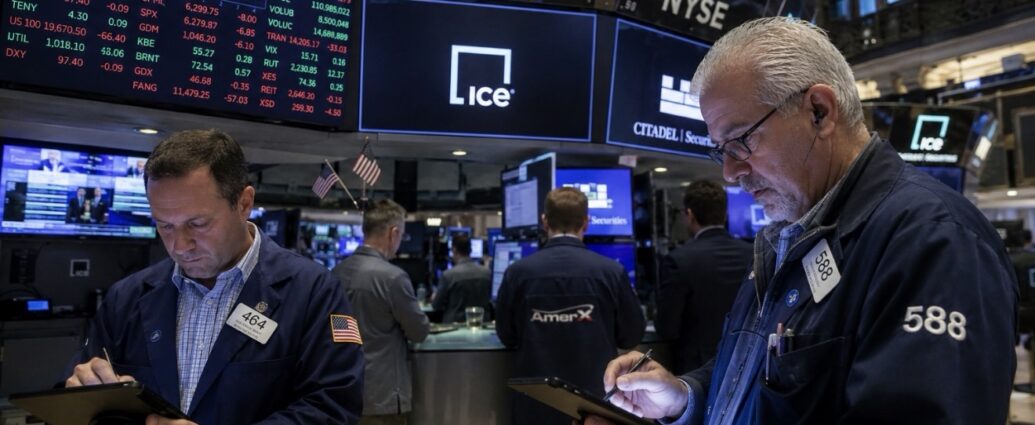

By JBizNews Desk

If you run a company that imports anything from China, this story is about you.

On May 26, 2026, court filings revealed that the federal government has filed a formal $285.5 million claim against bankrupt auto parts maker First Brands Group, accusing the company of cheating on the tariffs it owed for parts brought in from China. The number includes the unpaid duties plus penalties. First Brands filed for Chapter 11 bankruptcy on September 28, 2025, and it already owes more than $11.8 billion it cannot pay back. Now the U.S. Treasury wants its cut.

Here is why this matters far beyond one bankrupt auto parts company.

First Brands is not an isolated case. It is the latest name on a fast-growing list, and the people fighting this trend say what we are seeing in the data is staggering.

The Number That Should Worry Every Importer

According to a recent New York Times investigation, the average value of goods packed into a 20-foot shipping container coming from China dropped nearly 40% between January 2025 and February 2026. Over that same stretch, container values from the rest of the world barely budged.

That is not a market story. That is a paperwork story. Companies have been writing down the declared value of their Chinese shipments to lower the tariffs they pay.

Ryan Petersen, chief executive of supply chain firm Flexport, told the New York Times: “We’re seeing just total, rampant fraud.”

When the CEO of one of the largest logistics companies in America says fraud is rampant, regulators listen. And they are.

Meet The Agency Hunting Your Shipping Paperwork

On August 29, 2025, the U.S. Department of Justice and the Department of Homeland Security launched a brand-new joint operation called the Trade Fraud Task Force. It brings together civil prosecutors, criminal prosecutors, Customs and Border Protection investigators, and Homeland Security Investigations agents under one roof. Its stated mission is to go after anyone who tries to “evade tariffs and other duties.”

In May 2025, the DOJ had already put trade fraud on its list of ten “high-impact” enforcement priorities. In fiscal 2025, the DOJ recovered a record $6.8 billion through False Claims Act settlements. Seventy-eight percent of that money came from whistleblower-driven cases.

That last number is the one you need to circle. Most of these cases are not coming from government audits. They are coming from inside the building.

The Roster Of Recent Settlements Keeps Growing

This is where the First Brands case stops looking lonely.

In December 2025, the DOJ announced a $54.4 million settlement with Ceratizit USA LLC over allegations the company misrepresented tungsten carbide products from China as Taiwanese to avoid tariffs. At the time, it was called the largest False Claims Act customs fraud settlement on record.

That record did not last long.

Two weeks ago, the DOJ settled with Perfectus Aluminum for $549.5 million — more than ten times larger than the previous record — also tied to Chinese imports.

In July 2025, Grosfillex Inc. settled for $4.9 million over evading anti-dumping duties on aluminum products from China. The whistleblower in that case, a former employee, walked away with nearly $1 million.

There were smaller ones too:

  • King Kong Tools — $1.9 million
  • Dallco Marketing — $2.5 million
  • Homestar North America — $798,334

The whistleblowers collected hundreds of thousands of dollars in rewards.

That is the pattern. Same scheme. Same country of origin. Different companies. Growing penalties.

How The First Brands Case Started

The First Brands tariff case did not start with the government. It started with a whistleblower.

In March 2022, a company called Alder Wood LLC filed a sealed complaint in federal court in New York under the False Claims Act. Alder Wood alleged that First Brands imported brake parts from its own subsidiary in China without paying the right amount of tariffs.

The False Claims Act allows private parties to sue on behalf of the government when they believe a company is cheating taxpayers. If the government recovers money, the whistleblower gets a percentage.

The case stayed under seal for years while the DOJ investigated. It became public earlier this year. This week, the U.S. government formally joined it.

Mark Strauss, the attorney for Alder Wood, said this week that “the wrongdoing we alleged turns out to be the tip of the fraud iceberg.”

The Bigger Mess At First Brands

The tariff allegations were only part of the collapse.

About $2.3 billion of First Brands debt came from selling invoices to outside lenders through factoring arrangements.

Here is how factoring works in plain English. A company sells unpaid customer invoices to a lender at a discount in exchange for immediate cash. The lender then collects the payment later from the customer.

The lenders believed they were buying real invoices owed by real customers.

When First Brands filed for bankruptcy, only about $400 million of those invoices were considered legitimate, according to court filings from Leucadia Asset Management, a Jefferies-owned lender that bought roughly $885 million in invoices.

In April 2026, a court-appointed examiner found what the report called “widespread fraud” involving lenders including:

  • Raistone
  • Leucadia
  • Evolution Credit Partners
  • Katsumi Global

Some receivables were later resold to ING Belgium and Bank ABC.

First Brands founder Patrick James stepped down as CEO in October 2025.

Why This Is Happening Now

Tariff rates exploded higher in 2025.

Some imported goods were hit with rates as high as 73%, according to court filings. First Brands itself told the bankruptcy court tariffs added roughly $220 million in costs to the company.

When tariff rates triple, the incentive to manipulate customs paperwork rises with them.

A company facing a 10% or 25% tariff might decide the legal risk is not worth it. A company facing 73% tariffs starts making survival calculations.

That is what regulators believe is now happening across large parts of the importing system.

Who Could Be Next

Customs and Border Protection says the most commonly targeted categories include:

  • Steel
  • Aluminum
  • Furniture
  • Clothing
  • Honey
  • Shrimp
  • Catfish
  • Tools

The most common schemes are:

  • Undervaluation — declaring imports as worth less than they really are
  • Transshipment — routing Chinese goods through countries like Mexico, Vietnam, Malaysia, or the Philippines and relabeling them

The risks are massive.

The DOJ can seek:

  • Triple damages
  • Civil penalties
  • Criminal charges
  • Additional tariff penalties

And Customs inspects less than 1% of containers entering the United States, meaning whistleblowers are now doing much of the government’s discovery work.

The 120-Day Clock Companies May Not Know Exists

In May 2025, the DOJ Criminal Division introduced guaranteed declinations for companies that voluntarily disclose violations.

In March 2026, the department expanded that framework government-wide.

But there is a catch.

Once an internal whistleblower reports concerns inside a company, management has 120 days to self-disclose the issue to federal authorities or lose eligibility for a presumptive declination.

In plain English: the legal clock starts the moment an employee raises concerns internally.

The Bottom Line

The First Brands case is not an isolated bankruptcy story.

It is part of a growing federal crackdown that has now produced:

  • An $11.8 billion bankruptcy
  • A $549.5 million settlement
  • A $54.4 million settlement
  • A record $6.8 billion DOJ enforcement year
  • A nearly 40% collapse in declared Chinese container values that regulators increasingly believe reflects fraud

If your company imports from China — directly or indirectly — regulators are no longer assuming paperwork errors are accidental.

They are increasingly assuming intent.

And they now have whistleblowers, data analytics, Customs investigators, Homeland Security agents, and the full DOJ Trade Fraud Task Force looking for it.

JBizNews Desk — Washington

© JBizNews.com All Rights Reserved. Reproduction or distribution without written permission is prohibited.

The U.S. stock market closed Wednesday with the Dow Jones Industrial Average powering to another all-time high, while the broader S&P 500 and Nasdaq Composite barely moved as weakness in banks and semiconductor stocks offset a sharp drop in oil prices triggered by developments tied to the Strait of Hormuz.

The Dow gained 182.60 points, or 0.36%, to close at a record 50,644.28 after also reaching a new intraday high. The S&P 500 edged up 0.02% to finish at 7,520.36, while the Nasdaq Composite added 0.07% to close at 26,674.73. All three major U.S. indexes are now sitting at record highs, though Wednesday’s session reflected a market increasingly sensitive to geopolitical headlines, bank commentary, and the sustainability of the AI-driven rally.

The biggest driver of the session came from Iran. Iranian state media reported that Tehran intends to restore commercial shipping traffic through the Strait of Hormuz to pre-war levels within one month, sending crude prices sharply lower as traders rushed to remove part of the geopolitical risk premium that has fueled energy markets for months. U.S. crude oil fell 5.55% to settle at $88.68 per barrel.

The Strait of Hormuz remains one of the world’s most critical energy chokepoints, carrying roughly 20% of globally traded seaborne crude oil. Any indication of normalization immediately impacts pricing expectations across energy markets, transportation costs, inflation forecasts, and broader global trade sentiment.

The White House quickly disputed the Iranian report, calling it inaccurate, but markets largely traded on the expectation that supply disruptions may ease. Energy stocks remained under pressure while investors rotated back into technology and industrial names. Six of the eleven major S&P sectors finished positive, led by technology, industrials, and materials, while energy, healthcare, and consumer staples lagged.

Another major story weighing on sentiment came from JPMorgan Chase CEO Jamie Dimon, who spoke Wednesday at the Bernstein Strategic Decisions Conference in Manhattan. Dimon said the bank could deploy between $10 billion and $20 billion toward a major acquisition over the next several years, potentially marking the largest deal of his tenure.

“I do think there might be opportunities,” Dimon said. “There might be, in the next couple years, a chance to put $10 or $20 billion to work buying something.”

While the acquisition comments initially drew attention, investors focused more heavily on Dimon’s disclosure that JPMorgan now expects 2026 spending to rise to approximately $106 billion, above prior guidance. JPMorgan shares fell roughly 2%, weighing on the broader financial sector and making the stock one of the weakest performers in the KBW Bank Index.

Dimon also disclosed that JPMorgan currently has approximately 1,000 artificial intelligence use cases in development, with 50 to 60 considered significant, underscoring how aggressively major financial institutions are moving into AI deployment.

Semiconductor stocks also cooled after an extraordinary rally that has dominated markets throughout 2026. Micron Technology, which had surged 19% in the prior session and briefly crossed a $1 trillion market capitalization, traded more cautiously Wednesday as investors debated whether portions of the AI trade have become overheated.

Software stocks also remained in focus after the closing bell. Salesforce shares fell roughly 2.8% in after-hours trading after issuing softer-than-expected guidance, while Snowflake continued to benefit from enthusiasm surrounding its recent earnings report and a major Amazon Web Services commitment tied to AI infrastructure expansion.

Industrial companies helped support the Dow throughout the session. Caterpillar rose 3.26%, Honeywell gained 1.61%, and 3M advanced 1.08%, reflecting continued investor confidence in broader economic activity beyond the technology sector.

The broader picture heading into Thursday remains a market sitting at all-time highs across every major benchmark while becoming increasingly dependent on a narrow group of AI-driven technology names and rapidly shifting geopolitical headlines. Bond yields remained relatively stable, the U.S. dollar strengthened, and gold prices fell roughly 1.6% as safe-haven demand eased following the Hormuz developments.

For now, the Dow, the S&P 500, and the Nasdaq all remain at record levels. Whether the rally continues may depend less on economic data and more on geopolitical developments in the Middle East, corporate AI spending, and whether investors continue rewarding a market increasingly concentrated around a handful of dominant technology and semiconductor companies.

New York — JBizNews Desk

© JBizNews.com All Rights Reserved. Reproduction or distribution without written permission is prohibited.

By JBizNews Desk

WASHINGTON — U.S. Trade Representative Jamieson Greer said Tuesday, May 26, 2026, that tariffs on Mexico are not going away, even as American and Mexican negotiators begin formal talks this week on the future of the United States-Mexico-Canada Agreement (USMCA), underscoring how dramatically Washington’s approach to North American trade has shifted under President Donald Trump.

Speaking at the Council on Foreign Relations in Washington, Greer dismissed the idea that the upcoming USMCA review would restore the largely tariff-free trade environment that defined North America for decades under NAFTA and the original 2020 USMCA framework.

“The U.S. is going to have tariffs,” Greer said. “Even with somebody like Mexico, or other countries that are in our own hemisphere, we’re going to have tariffs as long as we have a giant trade deficit.”

The remarks landed as U.S. and Mexican officials opened the first formal negotiating round in Mexico City ahead of the July 1, 2026 review deadline built into the agreement’s sunset clause. Canada was notably absent from this week’s talks, highlighting growing strains between Washington and Ottawa that U.S. officials now openly describe as more difficult than the relationship with Mexico.

At the center of the negotiations is a fundamental question about what USMCA is supposed to be. When Trump negotiated the agreement during his first term to replace NAFTA, the White House pitched it as a modernized trade pact designed to keep manufacturing inside North America. Six years later, the administration is signaling the deal is evolving into something much more aggressive: a regional industrial alliance built around tariffs, supply-chain controls and coordinated pressure on China.

The current tariff structure already reflects that shift. A 50% tariff now applies to imported steel, aluminum and copper entering the United States. Mexican-made medium- and heavy-duty trucks face a 25% duty, while Mexican tomatoes carry a 17% tariff. None of those measures fall under the original USMCA framework, and Greer made clear they are not temporary.

The administration is also pushing for tougher rules of origin, one of the most important and contentious parts of the agreement. Rules of origin determine how much of a product must actually be made inside North America in order to qualify for tariff-free treatment.

Under the current USMCA structure, 75% of a vehicle’s content must come from the United States, Mexico or Canada to move across borders duty-free, and a portion of the labor must come from workers earning at least $16 an hour. The rules were designed to discourage automakers from importing low-cost parts from Asia, assembling products in Mexico and then shipping them into the U.S. market without tariffs.

Now Washington wants those requirements tightened further, with a greater percentage of manufacturing specifically tied to U.S.-made content.

The second major issue is what Greer described as “external tariff coordination.” In practical terms, the United States wants Mexico and Canada to align their own tariffs more closely with Washington’s trade barriers against countries outside the region, particularly China.

U.S. officials increasingly argue Chinese manufacturers have been routing products through Mexico and Canada to gain indirect access to the American market under USMCA rules. Earlier this month, Greer told the House Ways and Means Committee that Mexico has already raised tariffs on roughly 1,400 products from China, Vietnam and other countries. Mexican Economy Minister Marcelo Ebrard has acknowledged his government is currently working through 52 separate U.S. trade demands.

“If Mexico and Canada coordinate externally with us, there can be preferential treatment internally,” Greer said Tuesday. “Ultimately, at the end of the day, frankly, for national security reasons, I want to have our supply chain sourced from this hemisphere, right from North America.”

Mexico and Canada, however, are being treated very differently by Washington.

Mexican President Claudia Sheinbaum has worked to maintain a cooperative relationship with Trump while tying trade negotiations to White House priorities including cartel enforcement and illegal migration. Mexico has also avoided retaliating directly against U.S. tariffs and has instead moved to raise duties on Chinese imports, steps that appear to have preserved goodwill inside the administration.

Canada took the opposite approach after the Trump administration imposed tariffs last year, responding with retaliatory duties on American products. Greer said Tuesday the U.S. now has “significant” disputes with Ottawa extending well beyond trade policy alone, and he openly questioned whether a deal could be finalized before the July 1 review date.

The auto sector remains the largest pressure point in the negotiations. More than half of all vehicles and auto parts produced in Mexico are exported to the United States, alongside a major share of Mexican steel production. American manufacturers support tougher origin rules in theory but worry that escalating tariffs and shifting requirements could raise costs and disrupt deeply integrated supply chains built over three decades.

Farm products, aluminum, lumber and dairy are also emerging as flashpoints. U.S. farmers continue pushing for better access to Canadian dairy markets, while Canadian aluminum producers remain exposed to the administration’s tariff strategy.

The stakes stretch far beyond trade lawyers and diplomats. USMCA governs nearly $1.8 trillion in annual North American trade, making it one of the largest economic relationships in the world. Any major changes will ripple through car prices, appliance costs, manufacturing investment decisions and supply chains that touch millions of jobs across all three countries.

The review itself stems from a “sunset clause” built into the agreement. Every six years, the United States, Mexico and Canada must decide whether to extend USMCA for another 16 years or move into a rolling cycle of annual reviews that could eventually allow the deal to expire in 2036 if no agreement is reached.

Greer acknowledged Tuesday that negotiations are unlikely to conclude by July 1 and will continue through the summer and likely into the fall.

For businesses and consumers, however, the broader direction from Washington now appears unmistakable. The era of largely tariff-free North American trade that began with NAFTA in 1994 is ending. In its place, the United States is building a more protectionist economic bloc centered on tariffs, domestic manufacturing and strategic competition with China.

Washington — JBizNews Desk

© JBizNews.com All Rights Reserved. Reproduction or distribution without written permission is prohibited.

Buda Juice, Inc. became the latest company to dual-list on NYSE Texas this week as competition intensifies between multiple exchanges trying to turn Texas into a new center of American finance.

The Dallas-based juice company officially added its shares to NYSE Texas on May 26, 2026, while keeping its primary listing on NYSE American.

The move itself is relatively small financially.

The broader trend behind it is not.

Texas is rapidly becoming one of the biggest battlegrounds in the future of U.S. capital markets.

Just a few years ago, the state had no major stock exchanges.

Now it has:

  • NYSE Texas
  • The upcoming Texas Stock Exchange (TXSE)
  • Expanding operations from Nasdaq in Dallas

Together, they are reshaping the geography of Wall Street.

Buda Juice CEO Horatio Lonsdale-Hands said the listing reflects the company’s Texas roots as the brand continues national expansion.

The company produces cold-pressed juices and wellness beverages distributed through supermarkets and retailers across the country.

The listing itself is considered a “dual listing,” meaning shares trade simultaneously on more than one exchange.

For companies, dual listings are attractive because they create regional visibility without forcing businesses to move their primary exchange relationship.

That strategy has become central to the Texas exchange push.

NYSE Texas, launched by the New York Stock Exchange in 2025, has already signed more than 100 companies with combined market values exceeding $2 trillion.

The exchange is targeting companies seeking stronger ties to Texas’s rapidly growing business ecosystem while still maintaining connections to traditional financial centers.

Texas officials have spent years aggressively recruiting financial firms, investment companies, technology businesses, and corporate headquarters away from states like New York and California.

Lower taxes, lighter regulation, and faster development approvals have helped fuel the migration.

Texas now hosts more NYSE-listed companies than any other state, with combined market values approaching $4 trillion.

The next phase of the competition arrives later this year with the launch of the Texas Stock Exchange, commonly known as TXSE.

Unlike NYSE Texas, which operates under the NYSE umbrella, TXSE is an entirely separate exchange backed by major Wall Street institutions including:

  • BlackRock
  • Citadel Securities
  • Goldman Sachs
  • Bank of America
  • JPMorgan Chase
  • Charles Schwab

The exchange has already raised hundreds of millions of dollars ahead of launch.

TXSE CEO James Lee has openly criticized the quality of many companies currently trading on traditional exchanges and says his platform intends to operate with stricter standards while offering lower listing fees.

That fee competition could become important for mid-sized public companies looking to reduce costs.

Both Texas exchanges are initially focused more on attracting secondary listings than convincing companies to abandon the NYSE or Nasdaq entirely.

Switching primary exchanges can be expensive and operationally difficult.

Adding a Texas listing is far simpler.

The state’s broader business growth is helping fuel the momentum.

Texas continues attracting:

  • Technology firms
  • Financial companies
  • Energy businesses
  • Data-center developers
  • Artificial intelligence infrastructure projects

Large-scale data center developments across West Texas have accelerated as companies seek access to cheaper land and large energy supplies.

That growth has strengthened arguments that the state increasingly deserves its own major capital-markets ecosystem.

The biggest missed opportunity for Texas exchanges so far may be SpaceX.

Although Elon Musk’s SpaceX plans one of the largest IPOs in history, the company is expected to list on Nasdaq rather than NYSE Texas or TXSE.

Even so, the company’s massive Texas footprint continues reinforcing the broader narrative of financial and corporate migration toward the state.

The rise of multiple exchanges inside Texas reflects a larger shift happening across American business geography.

For decades, New York dominated capital markets almost entirely.

Now major portions of corporate America are increasingly operating from Texas, Florida, Arizona, Tennessee, and other lower-tax states.

Financial infrastructure is beginning to follow.

Companies like Buda Juice may represent relatively small listings today.

But they are early signs of a much larger battle over where the next generation of American capital markets will operate.

Wall Street is no longer competing only inside Manhattan.

It is now competing with Texas itself.

JBizNews Desk — Dallas

© JBizNews.com All Rights Reserved. Reproduction or distribution without written permission is prohibited.

New Jersey Governor Mikie Sherrill has forced down World Cup train fares from an originally proposed $150 round-trip ticket to $98 through a high-profile public standoff with FIFA and a newly assembled group of corporate sponsors.

The fight is becoming one of the clearest examples yet of how American cities and states may handle the growing financial burden of hosting global mega-events.

At the center of the battle was a simple question:
Who should pay to move hundreds of thousands of fans during the 2026 FIFA World Cup?

NJ Transit originally announced plans to charge $150 round-trip fares between New York Penn Station and MetLife Stadium during tournament matches.

The normal cost for the same route is roughly $13.

Transit officials argued the steep pricing reflected enormous operational costs tied to hosting the tournament, including:

  • Additional train service
  • Security operations
  • Staffing
  • Equipment upgrades
  • Crowd-control logistics

NJ Transit estimated total World Cup transportation costs near $48 million.

Governor Sherrill publicly pushed back almost immediately.

She argued New Jersey taxpayers and commuters should not absorb the burden while FIFA itself is expected to generate approximately $11 billion from the tournament globally.

The disagreement quickly became political.

Compared with other host cities, New Jersey’s pricing looked dramatically higher.

Public transportation costs for World Cup fans in cities like Houston, Atlanta, Philadelphia, and Los Angeles were only a fraction of the proposed New Jersey fare.

That comparison intensified pressure on state officials to find another solution.

The breakthrough came through corporate sponsorships.

On May 12, Sherrill announced the final fare would be reduced to $98 after outside companies agreed to help offset the cost difference.

Sponsors included:

  • DoorDash
  • Audible
  • FanDuel
  • DraftKings
  • PSE&G
  • South Jersey Industries
  • American Water

The arrangement effectively created a new public-private financing model for mega-event transportation infrastructure.

Rather than fully subsidizing fares through taxpayers or forcing fans to absorb the full operational cost, the state shifted part of the burden onto corporations seeking visibility and association with the tournament.

The strategy may now influence future host-city negotiations well beyond New Jersey.

Governments hosting major sporting events increasingly face backlash over public spending tied to stadiums, transportation systems, security operations, and tourism infrastructure.

Sherrill’s approach demonstrated that sponsorship-driven cost sharing may provide a politically safer alternative.

The economics behind the move are substantial.

MetLife Stadium will host eight World Cup matches, including the final.

Each match could draw roughly 78,000 spectators.

Reducing transportation costs by more than $50 per fan potentially shifts tens of millions of dollars back into restaurants, hotels, retail shops, and local entertainment businesses instead of transit expenses.

That consumer-spending effect became part of the state’s broader economic strategy.

New Jersey and New York officials have spent months promoting programs designed to push tournament spending toward local businesses rather than concentrating revenue entirely within stadium operations.

The state has also invested heavily in transportation preparation.

NJ Transit approved millions of dollars in additional bus contracts and infrastructure upgrades tied specifically to tournament logistics.

Officials say moving large crowds efficiently will be critical to avoiding major disruptions during the event.

FIFA itself reportedly pushed back privately against the fare controversy, arguing that high transportation costs could discourage attendance and hurt the overall fan experience.

Still, the organization has largely avoided directly funding local transportation operations in host cities.

That tension is likely to continue globally as the costs of hosting major sporting events rise.

For Sherrill politically, the confrontation also delivered valuable visibility.

The governor positioned herself publicly as defending commuters, taxpayers, and small businesses against both FIFA and steep transportation pricing.

The move generated significant national media attention while reinforcing broader economic messaging around affordability and local economic benefit.

Questions remain about whether the final pricing structure will fully cover NJ Transit’s operating costs.

The model depends heavily on high ridership volumes and sponsor participation.

If too many fans rely instead on driving, ride-share services, or private transportation, financial pressure on transit agencies could persist.

Even so, the larger precedent may already be set.

Future Olympic bids, World Cup host agreements, and other mega-event negotiations are likely to study closely what happened in New Jersey during 2026.

The emerging lesson is increasingly clear:
host governments may no longer quietly absorb massive event-related costs without demanding either corporate participation or greater financial contribution from event organizers themselves.

JBizNews Desk — New York

© 2026 JBizNews. All Rights Reserved. Reproduction or distribution without written permission is prohibited.

By JBizNews Desk

WASHINGTON — Fresh data published Monday, May 25, 2026, by the U.S. Energy Information Administration, alongside polling from the Kaiser Family Foundation and Climate Power, confirms that surging household electricity bills have moved to the center of the 2026 midterm election landscape, with affordability now eclipsing immigration, foreign policy, and even gasoline prices as the defining kitchen-table concern for voters across battleground states.

According to the EIA, average U.S. residential electricity rates rose nearly 13% nationwide between April 2020 and April 2025, and another 6% since President Donald Trump returned to office in January 2025. The agency projects rates could climb another 6% in 2026 and as much as 40% by 2030 if current trends in demand growth, infrastructure spending, and capacity constraints continue.

The increases are landing hardest in regions where voters had gone years without major utility hikes, transforming electric bills from a background expense into a central political issue heading into November.

The political consequences are already emerging. Climate Power, a Democratic-aligned advocacy organization, surveyed 2,710 voters nationwide in January and found that 84% cited rising electricity bills as a major economic concern. A separate Kaiser Family Foundation survey of 1,426 voters found 80% identified affordability as the most important issue heading into the election cycle, with electricity costs ranking just behind groceries and gasoline among the sharpest household pressures.

The epicenter of the crisis sits within PJM Interconnection, the regional grid operator serving 65 million Americans across 13 states and Washington, D.C. Capacity prices in PJM’s latest base residual auction reached $329.17 per megawatt-day, compared with just $28.92 two years earlier — a more than tenfold increase now flowing directly into residential utility bills.

Independent market monitor Monitoring Analytics attributed roughly 63% of the 2025–2026 auction price surge to soaring electricity demand from AI-focused data centers, translating into approximately $9.3 billion in additional annual costs for ratepayers.

The Natural Resources Defense Council estimates that without major regulatory intervention, cumulative costs tied to data-center-driven infrastructure expansion could reach between $100 billion and $163 billion for PJM customers through 2033. Tom Rutigliano, a senior advocate at NRDC, said the imbalance between exploding AI electricity demand and declining reliability from aging power generation is now driving capacity markets into crisis territory.

Pennsylvania Governor Josh Shapiro has emerged as one of the most aggressive political figures confronting the issue. Shapiro sued PJM over its pricing methodology in 2024 and later secured a settlement his office says saved consumers roughly $18 billion. At the same time, the governor has continued supporting selective data center investment projects, including public appearances with executives from PPL Corporation and Blackstone Inc. tied to new gas-fired generation projects intended to support AI infrastructure.

That balancing act increasingly reflects the broader national political dilemma: state leaders want the jobs and investment associated with hyperscale AI infrastructure while simultaneously trying to shield voters from rapidly rising utility bills.

The electoral warning signs are already visible. In Georgia’s 2025 off-year elections, Democratic challengers defeated two Republican incumbents on the Georgia Public Service Commission after campaigning heavily against repeated utility-rate increases approved for Georgia Power customers. Typical residential bills there have climbed to roughly $175 per month after multiple hikes over the past two years.

Georgia Power has since proposed another $15 billion in new generation investment, much of it designed to serve growing data center demand around Atlanta and rural Georgia counties aggressively courting AI infrastructure projects.

The pressure extends well beyond PJM territory. In Virginia, Dominion Energy customers are expected to absorb roughly $11 per month in additional charges this year and another increase in 2027. The Virginia State Corporation Commission approved a dedicated rate structure in late 2025 requiring large-scale customers, including AI data centers, to absorb a greater portion of transmission and generation costs beginning in 2027 — an effort regulators explicitly framed as protecting ordinary households from subsidizing hyperscale computing facilities.

A February report from Morgan Stanley Wealth Management, led by strategist Monica Guerra, described the situation as “the American energy paradox,” noting that the United States is simultaneously producing record oil and exporting record natural gas while household electricity affordability deteriorates across multiple swing states.

Republicans, who currently control the White House, Senate, and House of Representatives, enter the election cycle particularly exposed. Democrats are increasingly attempting to tie electricity costs to federal permitting policy, grid reliability concerns, and energy investment decisions made under the Trump administration, while Republicans argue that aggressive electrification policies and grid-transition mandates imposed over recent years accelerated the imbalance between supply and demand.

Several congressional battlegrounds in Pennsylvania, Michigan, Georgia, Virginia, Texas, Ohio, and California now overlap directly with regions experiencing both aggressive AI data center expansion and rising residential utility rates.

Consumer advocates warn the political pressure may intensify further because many approved utility increases have not yet fully appeared on household statements. Charles Hua, executive director of advocacy group PowerLines, said rate increases approved during the past 18 months are only beginning to flow through into customer bills and are likely to become more visible during the peak summer cooling season.

For millions of Americans opening utility bills while watching AI campuses rise across suburban and rural communities, the political question heading into November is becoming increasingly straightforward: who is paying for the infrastructure boom, and who is benefiting from it.

© 2026 JBizNews. All Rights Reserved. Reproduction or distribution without written permission is prohibited.

Delta Air Lines is using a homegrown artificial intelligence system to move more than 100,000 bags every day through Hartsfield-Jackson Atlanta International Airport, the busiest airport in the world by passenger traffic.

The system is part of a broader operational overhaul as airlines head into the busiest travel stretch of the year and increasingly turn to artificial intelligence to manage complex physical logistics in real time.

Paul Buckley, Delta’s director of operations in Atlanta, described the scale of the operation bluntly:
“Atlanta is an enormous operation, Delta’s biggest by a long way.”

The company says the AI-driven system has improved baggage transfer success rates by as much as 20%, a major operational gain in an industry where lost or delayed luggage remains one of the biggest customer frustrations.

The scale of the challenge is enormous.

On busy days, Delta handles well over 100,000 bags in Atlanta alone. Roughly three-quarters of those bags are connecting between flights rather than starting or ending their journeys there.

Each suitcase moves through a fast-moving network involving:

  • Aircraft unloading
  • Conveyor systems
  • Scanning stations
  • Ramp crews
  • Tug drivers
  • Gate transfers
  • Connecting departures

Even minor delays can result in bags missing flights.

The new AI platform is designed to reduce exactly that problem.

Previously, baggage tug drivers received lists of assignments and largely determined routing themselves.

The new system functions more like a real-time logistics engine.

Using live operational data, the AI constantly analyzes:

  • Aircraft arrival times
  • Gate changes
  • Weather conditions
  • Connection windows
  • Available drivers
  • Tug locations
  • Aircraft departure schedules

The software then dynamically routes baggage teams toward the most urgent transfers at any given moment.

Delta employees still physically move the bags, but the AI increasingly determines the fastest and most efficient way to do it.

The technology has already produced measurable improvements.

According to Delta, transfer success rates for connecting bags have improved significantly since implementation, reducing both delayed luggage claims and operational costs tied to baggage recovery.

The system is especially valuable during heavy travel periods when storms, delays, and gate changes create cascading operational pressure across airport systems.

The airline plans to expand the technology beyond Atlanta later this year, including deployments in Detroit and Minneapolis-St. Paul.

For Delta, Atlanta serves as the testing ground because few airports in the world present greater operational complexity.

The AI rollout also highlights a broader trend unfolding across corporate America:
artificial intelligence is increasingly moving beyond chatbots and software into large-scale physical operations.

Companies across logistics, retail, manufacturing, and transportation are now using AI systems to optimize movement, staffing, inventory, routing, and predictive maintenance.

In Delta’s case, the technology is being applied to one of aviation’s most difficult logistical challenges.

Importantly, the company says the system is not designed to replace workers.

Delta executives have emphasized that the AI functions as a decision-support tool rather than an automation replacement program.

The company says the software has proven especially helpful for newer baggage crews who may not yet have years of operational experience navigating Atlanta’s massive airfield efficiently.

The timing of the rollout is critical.

The Transportation Security Administration expects record summer passenger volumes this year as travel demand remains strong despite higher airfare and fuel costs.

Atlanta alone processes tens of millions of travelers annually, with Delta operating hundreds of departures daily from the airport.

For passengers, baggage systems typically go unnoticed when everything works correctly.

But delayed or lost bags remain among the most visible operational failures airlines face.

That makes improvements even at the margins financially meaningful for carriers.

The move also comes as airlines face increasing pressure to modernize aging infrastructure and improve reliability after several years of operational disruptions tied to weather events, staffing shortages, software failures, and record passenger demand.

For Delta, the technology represents a quieter but highly practical form of artificial intelligence deployment.

It is not flashy consumer AI generating images or writing essays.

Instead, it is software deciding which baggage tug should move which suitcase across one of the busiest airports in the world — and exactly when it needs to happen.

As summer travel volumes ramp up, the coming months will provide the largest real-world test yet for Delta’s expanding AI logistics system.

JBizNews Desk — Atlanta

© 2026 JBizNews. All Rights Reserved. Reproduction or distribution without written permission is prohibited.

More than 330,000 American companies paid tariffs that the U.S. Supreme Court later ruled unlawful, and now a massive refund battle is unfolding between importers and the Trump administration.

The dispute centers on billions of dollars in tariff payments collected under emergency trade powers that the Supreme Court ruled earlier this year exceeded presidential authority.

According to recent reporting and federal court filings, U.S. Customs and Border Protection has already begun processing refund claims through a newly created online portal, with more than $35 billion in repayments reportedly cleared so far.

But many companies are staying unusually quiet about the money.

The reason is increasingly political.

President Donald Trump has sharply criticized companies that publicly complained about tariffs or signaled plans to recover large refund amounts.

Corporate executives now fear becoming political targets while the legal fight continues.

The underlying case stems from a major February 2026 Supreme Court decision involving tariffs imposed under the International Emergency Economic Powers Act, commonly known as IEEPA.

In a 6–3 ruling, the Court found that the law did not authorize broad across-the-board tariff programs tied to imports from major trading partners.

The ruling invalidated portions of the administration’s earlier “Liberation Day” tariff structure along with several emergency tariffs tied to China, Mexico, and Canada.

The Court concluded that emergency economic powers did not give the executive branch unlimited authority to impose sweeping trade duties without congressional approval.

Within hours of the decision, however, the administration moved to rebuild parts of the tariff structure using different trade authorities already embedded in federal law.

That legal maneuvering triggered a second wave of lawsuits.

Earlier this month, the U.S. Court of International Trade ruled against portions of the administration’s replacement tariffs imposed under Section 122 of the Trade Act of 1974.

The court found that Section 122 authority was narrower and more temporary than the administration argued.

Still, the judges stopped short of issuing nationwide relief, meaning many tariffs remain in place while appeals continue.

Behind the scenes, companies across the country are now filing refund claims quietly through attorneys and customs specialists.

The affected firms span nearly every major industry:

  • Retailers
  • Manufacturers
  • Electronics companies
  • Auto suppliers
  • Food importers
  • Small businesses dependent on foreign components

Retail giants including Walmart, Costco, Home Depot, and Target are among the largest importers affected by the ruling, though most companies have avoided publicly discussing potential refund amounts.

Trade attorneys say many corporate executives fear public backlash or retaliation if they appear too aggressive in recovering tariff money while inflation and economic concerns remain politically sensitive.

The administration is also trying to limit the broader implications of the ruling.

Officials worry that large-scale refunds could weaken future presidential trade authority and discourage aggressive tariff use by future administrations.

The money involved is enormous.

Federal filings suggest roughly $166 billion in tariffs may ultimately be affected by ongoing litigation and refund processing tied to the Supreme Court ruling.

Customs officials say repayments may continue flowing for months because claims involve millions of individual import entries spread across multiple years.

Importers are also receiving interest payments attached to some refunds.

At the same time, many tariffs remain active under separate legal authorities.

The administration continues using Section 232 national-security powers and Section 301 trade authorities to maintain tariffs on categories including:

  • Steel
  • Aluminum
  • Autos
  • Auto parts
  • Copper
  • Select Chinese imports

The result is an increasingly fragmented tariff landscape where some duties have been overturned, others remain active, and several more continue moving through the courts.

For businesses, the uncertainty has become almost as disruptive as the tariffs themselves.

Companies must now decide:
whether to pursue refunds aggressively, stay politically quiet, or continue planning around tariffs that could disappear — or return — depending on future court rulings and elections.

The issue is likely to become even more politically charged heading toward the 2026 midterm elections.

With consumers already facing elevated prices for gasoline, groceries, and household goods, the administration is balancing competing pressures:
supporting domestic manufacturing rhetoric while avoiding additional inflation concerns tied to import costs.

For now, the refund money is moving slowly and mostly quietly into corporate accounts.

But the broader legal and political fight surrounding presidential tariff powers is far from over.

JBizNews Desk — New York

© 2026 JBizNews. All Rights Reserved. Reproduction or distribution without written permission is prohibited.

By JBizNews Desk

TEL AVIV — Avraham Novogrotzky, president of the Manufacturers Association of Israel, warned Monday, May 25, 2026, that the shekel’s powerful surge against the dollar is accelerating a structural shift of Israeli industrial production overseas, pointing to fresh filings from water-meter technology firm Arad as evidence that export-driven manufacturers are quietly relocating capacity to Spain, Italy, and Mexico to defend margins.

Novogrotzky said the appreciation of the shekel — which has strengthened roughly 20% against the U.S. dollar over the past year and surged a further 8.3% since the Bank of Israel’s previous rate decision — is squeezing exporters whose revenue is denominated in dollars while costs, especially wages, remain in shekels. He cited Central Bureau of Statistics data showing that Israeli production overseas climbed from $2.5 billion to $4.5 billion in a single quarter at the end of 2025, when the shekel’s rally began, and said the trend almost certainly intensified in the first quarter of 2026.

The dynamic was laid bare last week in financial disclosures from Arad, the Tel Aviv Stock Exchange-listed water-meter manufacturer controlled by Kibbutz Dalia and Kibbutz Ramot Menashe. The company, which carries a market capitalization of roughly 1.2 billion shekels, told investors it had taken deliberate steps to insulate itself from the currency’s appreciation, including shifting production for the European market from Israel to facilities in Spain and Italy, while moving production for the U.S. market to its group site in Mexico.

The moves are already paying off financially. Despite the dollar’s roughly 20% decline against the shekel over the past year, Arad reported first-quarter revenue rose 8% to $112.4 million while net profit climbed 26% to $9.2 million, driven by the offshore production strategy and continued strength in its domestic Israeli business.

Novogrotzky framed Arad’s disclosures as a warning shot, arguing that existing projects may remain in Israel but new industrial investment is increasingly being directed abroad. He said the Manufacturers Association is hearing similar concerns from member companies across Israel’s export sector, where competitiveness has steadily eroded as the shekel rallied to a 33-year high against the dollar.

The Arad case is not isolated. Polyram Plastic Industries, traded on the Tel Aviv Stock Exchange under ticker POLP, disclosed in its 2025 annual report that it had opened a new factory in Thailand and transferred select production lines out of Israel. The company told shareholders the move reflected a strategic repositioning of where its core manufacturing activity would be centered in the future.

Industry executives say Israeli manufacturers have long outsourced portions of production overseas to reduce labor costs and gain proximity to customers, particularly in Asia and North America. What has changed in 2026, according to Novogrotzky, is the pace and urgency of the shift, driven less by long-term planning and more by an immediate currency-driven profitability squeeze.

The pressure is colliding directly with the Bank of Israel’s broader policy challenge. Earlier Monday, the central bank cut its benchmark interest rate by 0.25 percentage points to 3.75%, explicitly citing the shekel’s strength as a key factor helping cool inflation. Yet the same currency appreciation celebrated by Governor Prof. Amir Yaron as a disinflationary force is simultaneously hollowing out the economics of Israel’s export manufacturing base.

Economists warn the trend could carry lasting consequences for Israel’s industrial footprint. Once factories, supplier networks, engineering operations, and management teams migrate overseas, they rarely return quickly. Production lines established in Spain, Italy, Mexico, or Thailand often become permanent components of a company’s global manufacturing chain.

That creates a growing disconnect inside the Israeli economy: macroeconomic indicators remain resilient, inflation is cooling, and the currency is strong, yet portions of the country’s traditional industrial base are steadily relocating abroad in search of lower costs and more stable margins.

For now, the Manufacturers Association of Israel is pressing policymakers to weigh the industrial consequences of the shekel’s rally alongside its inflation benefits, warning that without offsetting support measures or intervention, more Israeli production capacity will quietly leave the country in the coming quarters.

The Arad disclosures, Novogrotzky suggested, are not an isolated corporate adjustment. They may instead mark the early stages of a much broader manufacturing migration already underway.

© 2026 JBizNews. All Rights Reserved. Reproduction or distribution without written permission is prohibited.

By Duvi Honig

Australia’s climate minister, Chris Bowen, just gave the world a remarkably clear window into what large parts of the modern climate movement have actually become. Not simply a campaign to reduce emissions or protect the environment, but an international ecosystem capable of moving staggering amounts of taxpayer money under the protection of a cause few politicians feel safe questioning.

Bowen is defending more than 150 million Australian dollars — roughly 107 million U.S. dollars — tied to Australia’s role chairing the upcoming COP31 United Nations climate summit.

There is one important detail: Australia is not even hosting the conference. Turkey is.

Bowen’s government is spending that money largely to run the diplomatic process surrounding the summit, including staffing, travel, negotiations and administrative coordination. Documents obtained by The Australian newspaper showed government employees spent 485,602 Australian dollars on travel tied to the negotiations during just January and February 2026 alone, including trips to Turkey, Fiji, Germany and South Korea.

All of this is happening while Australian households face rising electricity bills, expensive mortgages, higher grocery prices and a cost-of-living crisis severe enough to dominate national politics.

And the most politically damaging part for Bowen is this: many of those same families struggling to pay their utility bills are living under the exact renewable-energy policies his ministry has aggressively promoted.

When opposition lawmakers called the spending a “vanity project,” Bowen responded by calling his counterpart “the biggest hypocrite in the federal parliament.”

That reaction misses the larger point entirely.

This is not really about one minister in Australia. It is about the operating structure that has grown around the global climate industry itself.

Every year, massive United Nations climate conferences draw anywhere from tens of thousands of delegates, activists, consultants, diplomats, corporate sponsors, nonprofit organizations and government officials from around the world. Entire hotel districts are reserved. International flights multiply. Temporary bureaucracies expand. Multi-million-dollar security operations are assembled.

Then the conference ends — usually with broad declarations, vague targets and promises that another conference will be needed the following year to revisit unresolved issues.

The summit itself increasingly becomes the product.

And the people paying for it are almost never the people attending it.

Bowen flies internationally to climate meetings while ordinary Australian families absorb higher power prices and taxes. Former U.S. climate envoy John Kerry faced criticism during the Biden administration for using private jets tied to climate-related travel while simultaneously warning Americans to reduce carbon emissions in daily life.

The contradiction is obvious to voters.

The pattern extends well beyond Australia.

The European Union has committed hundreds of billions of euros toward climate-transition policies even as parts of Europe struggle with energy affordability and industrial competitiveness. Germany, long viewed as the flagship of Europe’s green transition, has watched portions of its manufacturing base come under pressure from high energy costs.

In the United States, the Inflation Reduction Act authorized hundreds of billions of dollars in climate and clean-energy subsidies, much of it flowing into politically connected industries dependent on long-term government support.

Supporters argue these investments are necessary to accelerate technological transition and reduce future environmental risk.

Critics increasingly ask a different question: how much of the climate economy now exists primarily to sustain itself?

Meanwhile, the countries most responsible for future emissions growth continue expanding conventional energy production. China remains heavily dependent on coal and continues approving new coal-fired generation capacity. India is expanding fossil-fuel use to support industrial growth. Russia remains one of the world’s largest hydrocarbon exporters.

That geopolitical imbalance has become harder for Western voters to ignore.

They are being asked to absorb rising energy costs, taxes and lifestyle restrictions while many of the world’s largest emitters continue prioritizing industrial expansion and energy security.

Which brings the debate back to Bowen.

What exactly does 150 million Australian dollars buy here?

It does not directly lower electricity bills for Australian households. It does not immediately reduce global emissions. It does not suddenly solve the climate problem after three decades of increasingly large international conferences.

What it undeniably does buy is international visibility, diplomatic influence, conference infrastructure and participation inside a global climate system that has grown larger, more expensive and more bureaucratic every year.

Supporters call that leadership.

Critics increasingly call it a self-perpetuating ecosystem where the process itself has become the justification for more spending.

That perception matters politically because working families notice the contrast. They notice politicians and officials flying internationally to climate events while lecturing citizens about consumption, energy use and carbon footprints. They notice governments spending millions on conferences while households struggle with bills at home.

And once credibility begins eroding, rebuilding it becomes extremely difficult.

The danger for climate policymakers is not merely opposition from skeptics. It is broader public exhaustion with systems that appear expensive, permanent and disconnected from everyday economic reality.

The climate debate itself will continue. Serious people can disagree about policy, energy transition timelines and the balance between environmental goals and economic costs.

But the backlash now building around figures like Bowen reflects something deeper than emissions targets.

It reflects growing public suspicion that an international movement originally framed as an environmental necessity has, in some cases, evolved into a sprawling global spending structure whose most consistent outcome is the expansion of its own conferences, institutions and budgets.

And increasingly, voters are asking whether they can still afford it.

Duvi Honig is Founder & CEO of the Orthodox Jewish Chamber of Commerce and Co-founder and Secretary of the Multicultural Business Coalition.

Opinion — JBizNews Desk

© JBizNews.com All Rights Reserved. Reproduction or distribution without written permission is prohibited.

By JBizNews Desk

NEW YORK — The U.S. Department of Transportation (DOT) has officially activated its most aggressive consumer-protection enforcement campaign in aviation history as millions of Tri-State travelers prepare for the summer holiday travel cycle. Operating under newly finalized federal mandates, transportation officials confirmed that commercial airlines are now legally required to issue immediate, automatic cash refunds to passengers when flights are canceled or significantly delayed, dismantling the industry’s long-standing reliance on restrictive travel vouchers.

The emergency oversight is landing directly on major regional transportation hubs including Newark Liberty International Airport, JFK International Airport, and LaGuardia Airport, where seasonal congestion routinely creates delays and cancellations during peak travel months.

Under the DOT’s updated rules, a delay becomes officially “significant” once it exceeds three hours for domestic flights or six hours for international itineraries. If an airline cancels a flight or pushes departure times beyond those thresholds and the passenger rejects the carrier’s alternative itinerary, the airline must automatically process a full refund back to the customer’s original form of payment.

The move represents one of the most consequential shifts in consumer air-travel protections in decades.

Previously, airlines often issued future travel credits or promotional vouchers instead of direct refunds, forcing passengers to navigate expiration dates, blackout periods, and rebooking restrictions. The new federal mandates eliminate that flexibility entirely.

Under the updated framework, airlines must process refunds within seven business days for credit-card purchases and within 20 days for cash or alternative-payment transactions.

The timing is especially important for household budgets as airfare prices remain elevated following months of fuel-market volatility and strong post-pandemic travel demand.

The consumer protections also extend beyond canceled flights themselves. Passengers are now entitled to refunds for checked baggage fees if luggage is not delivered within 12 hours on domestic routes or within a specified 15-to-30-hour window on international flights.

Refund requirements also apply to paid services travelers never receive during transit, including onboard Wi-Fi, upgraded seating packages, and certain cabin amenities.

Transportation officials say the goal is to create a standardized national refund framework that prevents travelers from becoming trapped in customer-service disputes during periods of operational disruption.

Regional consumer advocacy groups are encouraging travelers throughout New York and New Jersey to monitor airline apps and booking platforms carefully as summer traffic accelerates.

Federal transportation investigators are also expected to increase monitoring at major airport hubs during the peak summer season to ensure airlines comply with the new requirements.

Major carriers including Delta Air Lines, United Airlines, American Airlines, JetBlue Airways, and Southwest Airlines have publicly stated they are adjusting operational and refund systems to align with the updated rules.

For everyday travelers, the regulations provide a major financial safeguard at a time when flight disruptions remain common and family travel costs continue climbing.

The message from Washington is increasingly straightforward: if an airline fails to provide the transportation service purchased, consumers are entitled to receive their money back automatically — not credits, points, or future travel promises.

JBizNews Desk | New York

© 2026 JBizNews. All Rights Reserved. Reproduction or distribution without written permission is prohibited.

.

Hotel owners in New York City may see their rates rise even higher after signing what industry officials call the most expensive union agreement in the city’s history, which would have resulted in significant wage increases for staff members while raising affordability concerns for travelers and smaller hotels.

The agreement, which was reported by The Wall Street Journal last week, increases hotel employees ‘ hourly pay by roughly 50 % over the course of eight years in order to prevent a strike prior to next month’s FIFA World Cup kickoff. Some maids are anticipated to make six-figure earnings by 2032.

Operating costs in a city with some of the nation’s highest common hotel prices outside of major destination markets are already significantly increased thanks to the agreement, according to resort owners. Last year, according to CoStar, average hotel rooms in New York cost$ 334 per day.

NEWSGUILD Wars NEW YORK TIMES OVER HYBRID WORK, WRONGLY EXCLUDING JOBS FROM UNION AND HEALTH FUND

According to David Sherwyn, a professor of hospitality at Cornell University,” the only way to keep your profit going when your costs go up is to keep raising your rates.” &nbsp,

According to industry leaders, the new agreement will increase hotel operating costs by about 15 % annually, putting pressure on establishments to pass those costs on to consumers at a time when many travelers already have to pay more for fuel, flights, and vacations.

AIRBNB LIVES MAJOR EXPANSION WITH LUGGAGE STORAGE, AI-POWERED TRAVEL TOOLS, AND AIRPORT PICKUPS.

Hotel owners who had hoped the FIFA World Cup would boost hotel occupancy were also at a hard time because of the labor agreement. Despite the place hosting eight games, including the final last, New York City hotel occupancy for June &ndash, when the game begins &ndash, was roughly 12 percentage points below last year’s levels, according to CoStar.

Some visitors and business travellers may be avoiding the area because of concerns about audiences and rising World Cup ticket prices, according to experts.

A LA VEGAS HOTEL-CASINO THAT WAS CLOSED DURING COVID AND WAS NEVER REOPENED IS DEMOLISHED.

Because higher-income guests continue to spend money despite rising costs, luxury hotels are expected to perform better. According to statistics from the Bank of America Institute, middle-class and lower-tier accommodations may be under force this year as lower-income families reduce travel costs.

The hotel industry in the city continues to be concerned about global commerce. Despite hotels reporting that demand is beginning to recover, some operators claim that as a result of political tensions relating to the Iran conflict, hotel bookings decreased earlier this year.

FOX BUSINESS ON THE GO: Press HERE.

Hotel executives warn that rising airline ticket prices, journey cuts, and concerns about U.S. border screenings may add to the decline in global journey, which has long been viewed as a key driver of New York’s tourism economy.

This post was originally published here

By JBizNews Desk

Cairo — May 26, 2026 — Egypt has launched its first nationwide airborne geophysical mineral survey in more than four decades, a major strategic push aimed at transforming the country into a regional mining powerhouse and attracting billions of dollars in foreign investment tied to gold, phosphate, copper and critical minerals.

The announcement was made Sunday by Karim Badawi, Egypt’s Minister of Petroleum and Mineral Resources, during a visit to the country’s flagship Sukari gold mine in the Eastern Desert.

The survey — Egypt’s first comprehensive aerial mineral mapping program since 1984 — comes as Cairo attempts to triple mining’s contribution to national GDP by 2030 while positioning itself as a rising competitor to Saudi Arabia in the global race for strategic mineral supply chains.

Egypt signed the mapping agreement with Spain-based Xcalibur Smart Mapping, one of the world’s leading airborne geophysics firms, under a contract covering six major geological regions stretching across the Eastern Desert, Sinai, the Western Desert and the Bahariya-Abu Tartour corridor.

The project will deploy specialized aircraft equipped with high-resolution magnetic and radiometric sensors capable of identifying underground mineral structures at depths and accuracy levels far beyond Egypt’s existing geological database.

Officials said the resulting data will become the foundation for future international licensing rounds and will headline the revamped Egypt Mining Forum scheduled for September 28–29 in the New Administrative Capital.

The timing reflects a broader strategic shift underway inside Egypt’s economy.

Despite holding significant mineral reserves — including an estimated 9 million ounces of gold and some of the world’s largest phosphate deposits — mining currently contributes less than 1% of Egyptian GDP.

Badawi has publicly committed to raising that figure to approximately 6% by the end of the decade.

The government increasingly sees mining as a critical pillar of foreign direct investment, export revenue and hard-currency generation at a time when Egypt continues operating under an International Monetary Fund stabilization program and faces ongoing pressure on its external finances.

The country has repeatedly devalued the Egyptian pound since 2022 while aggressively seeking new sources of foreign capital.

A modern investor-grade geological database is viewed inside Cairo as one of the key missing ingredients that prevented Egypt from competing effectively with faster-moving mining jurisdictions across the Gulf and Africa.

For years, global exploration firms complained that Egypt’s geological records remained fragmented, outdated and largely unusable for modern resource modeling.

The new airborne survey is designed to change that.

The commercial implications could be significant.

Egypt’s Eastern Desert — particularly the so-called “golden triangle” corridor linking Safaga, Quseir and Qena — is believed to contain extensive reserves of gold, copper, zinc, lead, phosphate and industrial minerals essential to fertilizer production and electric-vehicle battery supply chains.

Global mining companies are already beginning to position themselves.

AngloGold Ashanti entered as a strategic partner in Egypt’s Sukari gold operation, which produced more than 500,000 ounces of gold in 2025 and remains the country’s largest operating mine.

Meanwhile, Chinese industrial giant Hubei Xingfa Chemicals Group has reportedly been negotiating a nearly $2 billion phosphate investment tied to Egypt’s mineral corridor, according to disclosures made earlier this year by Badawi.

The phosphate angle is particularly important because phosphate is a critical input not only for fertilizers but also for lithium iron phosphate battery technology increasingly used across electric vehicles manufactured by companies including Tesla, BYD, Ford and major Chinese battery producers.

Egypt is also attempting to reposition itself legislatively to compete for global exploration capital.

Parliament approved reforms in 2025 converting the former Egyptian Mineral Resources Authority into the more commercially structured Mineral Resources and Mining Industries Authority (MRMIA).

The restructuring gives the authority significantly greater autonomy over contracts, revenue retention and project governance while allowing Egypt to move away from rigid production-sharing frameworks that long discouraged foreign operators.

Badawi has openly acknowledged that Egypt’s previous mining structure left the country uncompetitive compared with jurisdictions such as Saudi Arabia, Australia and Canada.

Saudi Arabia remains Egypt’s clearest regional competitor.

Under Crown Prince Mohammed bin Salman’s Vision 2030 initiative, Riyadh has aggressively expanded its own mining ambitions, unveiling mineral wealth estimates exceeding $2.5 trillion while positioning the Kingdom as a global critical-minerals hub through the Future Minerals Forum and state-backed investments tied to Ma’aden and Manara Minerals.

Egypt is now attempting to market itself as a complementary lower-cost regional alternative with direct access to Red Sea logistics corridors and Suez Canal shipping infrastructure.

The Xcalibur survey is expected to produce detailed mineral mapping data that officials hope will underpin Egypt’s first major international licensing round under the new mining framework.

For commodity markets, fertilizer producers, battery manufacturers and global mining investors, the survey represents more than a technical geology project.

It signals that one of the Middle East and North Africa’s largest untapped mineral jurisdictions is finally opening itself to large-scale competitive development.

After 42 years, Egypt is rewriting its mining maps — and preparing to put its underground wealth on the global auction block.

JBizNews Desk

© 2026 JBizNews. All Rights Reserved. Reproduction or distribution without written permission is prohibited.

Elon Musk’s SpaceX warned investors in its IPO filing that global shortages of advanced artificial intelligence chips could slow or limit the company’s ambitious plan to build massive AI data centers in space.

The disclosure appeared in the company’s S-1 registration filing submitted to the Securities and Exchange Commission as SpaceX prepares for what could become the largest public offering in financial history.

The company is reportedly targeting a valuation approaching $1.75 trillion ahead of its planned Nasdaq debut under the ticker symbol SPCX.

At the center of the filing is a major strategic shift:
SpaceX is no longer presenting itself simply as a rocket-launch company.

Instead, the company increasingly describes itself as a vertically integrated AI infrastructure platform spanning rockets, satellites, chip manufacturing, orbital computing, broadband communications, and artificial intelligence systems.

The filing repeatedly references “orbital AI” and outlines plans to eventually deploy large-scale AI compute systems directly into orbit.

But SpaceX also acknowledged a major obstacle:
the world may not have enough advanced chips available to support those plans.

To reduce dependence on outside suppliers, SpaceX disclosed that it is working on a chip-manufacturing initiative known internally as “Terafab,” designed to help produce specialized AI hardware for future orbital computing systems.

The filing states that Tesla and Intel are involved through framework agreements tied to the effort.

However, SpaceX also warned investors that neither company is obligated to complete the project and that the factory may not become operational within expected timelines.

That caution matters because AI chips have become one of the most supply-constrained technologies in the global economy.

Demand for advanced processors used in artificial intelligence systems has surged over the past two years as companies race to build massive AI infrastructure platforms.

SpaceX’s vision goes even further than terrestrial AI expansion.

The company plans to begin launching AI compute satellites into sun-synchronous orbit as early as 2028, with long-term ambitions involving what it describes as “orbital AI at scale.”

According to the filing, the ultimate objective would involve deploying up to 100 gigawatts of orbital compute capacity annually — a staggering figure requiring thousands of launches and unprecedented payload volumes.

SpaceX described the effort in the filing as “an incredibly difficult technical challenge.”

The idea behind orbital AI infrastructure is that space-based data centers could eventually operate with access to continuous solar energy while avoiding some of the cooling and land constraints faced by Earth-based facilities.

Musk has publicly promoted the concept for months.

At the World Economic Forum in Davos earlier this year, he argued that space could become the cheapest place in the world to operate AI computing systems within only a few years.

The IPO filing, however, takes a noticeably more cautious tone than Musk’s public comments.

While Musk has often projected confidence about rapid deployment timelines, the S-1 repeatedly highlights technical, manufacturing, and supply-chain risks that could delay execution.

Competition in the sector is also intensifying quickly.

Google-backed projects, Nvidia orbital-compute initiatives, Blue Origin satellite proposals, and multiple venture-funded startups are all pursuing various forms of space-based computing infrastructure.

The race is increasingly viewed inside Silicon Valley and Wall Street as a new frontier tied directly to the global AI boom.

Financially, the filing reveals a company in transition.

SpaceX generated approximately $18.7 billion in revenue during 2025, largely from its Starlink satellite broadband business.

At the same time, the company posted significant losses as it ramped spending on AI-related infrastructure and orbital-compute development.

The filing states that more than three-quarters of recent capital expenditures were directed toward AI infrastructure initiatives.

The broader SpaceX empire has also expanded dramatically following Musk’s merger earlier this year between SpaceX and his artificial-intelligence company xAI.

The combined organization now spans:

  • Rockets
  • Satellite broadband
  • AI models
  • Social media platforms
  • Developer software tools
  • Planned orbital computing systems

Investors evaluating the IPO are effectively being asked to fund one of the most ambitious infrastructure bets ever attempted in the technology sector.

The core question for Wall Street is becoming increasingly clear:
Can Starlink’s profitable satellite business generate enough cash flow to finance Musk’s much larger orbital AI vision before competitors catch up or supply constraints slow the effort?

The filing suggests SpaceX itself recognizes that answer remains uncertain.

When Musk speaks publicly, the future often sounds inevitable.

When SpaceX lawyers write disclosures for regulators and investors, the risks become harder to ignore.

That gap between ambition and execution may ultimately define the company’s IPO story.

JBizNews Desk — New York

© 2026 JBizNews. All Rights Reserved. Reproduction or distribution without written permission is prohibited.

Consumers squeezed by inflation are increasingly pulling back from premium coffee chains and shifting toward faster, lower-cost alternatives — and one of the fastest-growing winners is 7 Brew Coffee, the Arkansas-based drive-thru chain now racing to expand across the United States.

The privately held company, known for compact drive-thru-only locations and lower-priced beverages, has rapidly emerged as one of the hottest growth stories in the American quick-service restaurant industry. Industry data compiled this month by restaurant analytics firms including Technomic and Placer.ai shows 7 Brew continuing to post some of the strongest customer traffic growth in the coffee sector as value-conscious consumers search for cheaper daily routines without fully giving up specialty coffee purchases.

Founded in Rogers, Arkansas, the chain has expanded from a regional operator into a national growth platform in just a few years. 7 Brew now operates hundreds of locations across more than 30 states and has continued opening stores at a pace that rivals some of the largest restaurant growth stories in the country.

Unlike traditional coffeehouse models built around indoor seating and long customer dwell times, 7 Brew focuses almost entirely on speed, convenience, and lower operating costs. Most locations are compact double-lane drive-thru units with minimal indoor space, allowing stores to serve large volumes of customers with lower real-estate expenses and smaller staffing requirements.

That operating model is becoming increasingly attractive in the current economy.

Consumers across the country continue facing elevated prices for housing, insurance, groceries, and utilities, forcing many households to trade down from premium purchases while still seeking small affordable indulgences. Analysts say coffee remains one of the last discretionary habits consumers are reluctant to fully eliminate, creating opportunities for lower-priced operators.

The pricing gap has become especially noticeable against premium coffee chains where customized drinks can now regularly exceed $7 or $8 in major metropolitan markets.

Restaurant analysts say 7 Brew has benefited by positioning itself between fast-food coffee and high-end specialty chains, offering flavored drinks, energy beverages, teas, and espresso products at lower average ticket prices while emphasizing speed and convenience.

The company’s expansion is also occurring during a broader transformation inside the U.S. coffee industry.

Major chains including Starbucks and Dutch Bros have increasingly leaned into drive-thru service, mobile ordering, and labor-efficiency strategies as consumer traffic patterns shifted following the pandemic. But 7 Brew’s simplified operating structure has allowed it to expand aggressively into suburban and secondary markets where construction costs and labor expenses remain lower.

Private equity investors have also poured money into the sector.

Industry observers increasingly compare 7 Brew’s growth trajectory to the early national expansion years of chains like Dutch Bros, Raising Cane’s, and Chipotle Mexican Grill, all of which leveraged highly focused operating models into massive national footprints.

The company’s expansion has accelerated particularly across the South, Midwest, and Sun Belt states, regions experiencing strong population growth and relatively lower commercial development costs.

The strategy comes at a moment when consumers are becoming more price-sensitive across the broader restaurant industry.

Recent earnings reports from multiple fast-food and casual dining chains have shown customers increasingly reducing discretionary spending, visiting restaurants less frequently, or trading down toward value-oriented brands. Coffee chains have proven somewhat more resilient than full-service restaurants, but even premium operators are seeing pressure from consumers seeking cheaper alternatives.

For 7 Brew, that environment has created a major opening.

The company’s rapid expansion is also reshaping competition within local beverage markets, placing pressure on independent coffee shops and regional operators already dealing with higher labor costs, elevated rents, and rising ingredient prices.

Industry analysts expect consolidation and competitive pressure within the beverage sector to intensify through 2026 as chains race to capture customers looking for lower-cost convenience options.

Whether 7 Brew can sustain its breakneck growth pace nationally remains an open question, particularly as expansion eventually moves into denser urban markets where drive-thru-heavy formats become harder to scale.

But for now, the company is emerging as one of the clearest examples of how inflation and changing consumer habits are reshaping the American restaurant industry — one drive-thru lane at a time.

JBizNews Desk — Midwest

© 2026 JBizNews. All Rights Reserved. Reproduction or distribution without written permission is prohibited.

By JBizNews Desk

WASHINGTON, May 26, 2026 — Newly sworn-in Federal Reserve Chair Kevin Warsh signaled at his East Room swearing-in ceremony on Friday that he intends to model his leadership of the central bank after former Fed Chair Alan Greenspan, invoking the architect of the 1990s economic boom as he laid out a vision for a more restrained, less talkative and more discretionary Federal Reserve.

Warsh, who officially became the 17th chair of the Federal Reserve after taking the oath from Supreme Court Associate Justice Clarence Thomas, told guests that Greenspan was the first Fed chair to show him “what this role demands” and pledged to fill the office “with energy and purpose, just the way Chairman Greenspan did.” Standing alongside his wife, Jane Lauder, Warsh formally succeeded Jerome Powell, ending Powell’s eight-year run atop the central bank.

The reference to Greenspan was not simply ceremonial. Warsh assumes control of the Fed at a moment when inflation has remained above the central bank’s 2% target for more than five years, oil prices have surged following the Iran conflict, and the White House has openly pressured the Fed to lower interest rates. By repeatedly invoking Greenspan’s 1990s-era approach — when the Fed largely held rates steady during the technology boom on the belief that productivity gains were containing inflation — Warsh offered markets their clearest indication yet of how he intends to govern monetary policy.

President Donald Trump, hosting the ceremony at the White House, praised Warsh as a future “great chairman” and renewed his argument that lower borrowing costs would allow the U.S. economy to expand faster without reigniting inflation while simultaneously reducing federal debt-servicing costs. Trump also publicly encouraged Warsh to “do his own thing,” a line widely interpreted as an attempt to calm investor fears that the new Fed chair would operate under direct political pressure from the administration.

Treasury Secretary Scott Bessent, one of Warsh’s strongest backers inside the administration, has spent months building the intellectual case for a Greenspan-style Fed. In a January speech, Bessent described Greenspan as “the open-minded maestro” and argued that central banks should avoid prematurely tightening policy during periods of major technological transformation. He repeatedly pointed to the late 1990s as evidence that productivity booms can absorb inflationary pressures without requiring aggressive rate hikes.

Warsh himself has been laying out a similar framework for more than a year. He has argued publicly that artificial intelligence and automation will lift productivity, reduce structural inflationary pressures and eventually create room for lower rates. During his Senate Banking Committee confirmation hearing in April, Warsh also signaled that he wants the Fed to communicate less frequently, scale back forward guidance and stop telegraphing policy moves months in advance.

Most notably, Warsh declined to commit to holding a press conference after every Federal Open Market Committee meeting — a practice institutionalized by Powell that turned Fed communication into one of Wall Street’s primary policy signals.

That potential shift matters enormously for markets. Under Powell, the Fed used communication itself as a policy tool, conditioning investors through speeches, forecasts and repeated signaling. Under Warsh, the institution appears headed toward a more opaque model where fewer public remarks carry greater weight — echoing Greenspan’s famously cryptic approach, when markets often dissected every sentence from the chair for clues about future policy.

The economic backdrop, however, is far more complicated than the one Greenspan managed during the 1990s expansion.

Minutes from the Federal Reserve’s most recent meeting show that many policymakers remain deeply concerned about persistent inflation pressures tied to elevated oil prices, tariffs and supply-chain disruption. Several Fed officials indicated they now expect rates to remain elevated longer than anticipated earlier this year, while some suggested additional tightening could become necessary if inflation fails to ease.

Fed Governor Christopher Waller, widely viewed as one of the central bank’s more dovish members and another Trump appointee, said Friday that while he currently supports holding rates steady, he would not rule out hikes if rising oil prices create a longer-lasting inflation shock.

Markets are now pricing in the likelihood that the Fed will remain on hold through much of 2026, with some traders increasingly assigning probability to possible hikes in early 2027 — a stance that clashes both with Trump’s push for lower rates and with Warsh’s own optimism that technological productivity gains will ultimately suppress inflation.

In his prepared remarks Friday, Warsh framed the Fed’s mission in straightforward terms.

“Our mandate at the Fed is to promote price stability and maximum employment,” Warsh said. “When we pursue those aims with wisdom and clarity, independence and resolve, inflation can be lower, growth stronger, real take-home pay higher.”

He also pledged to oversee what he called a “reform-oriented Federal Reserve” capable of moving beyond “static frameworks and models” — language that aligns closely with his push for a more flexible and less communication-heavy central bank.

The symbolism of the ceremony itself also stood out. The East Room audience included Cabinet officials, Supreme Court Justices Clarence Thomas and Brett Kavanaugh, House Speaker Mike Johnson, National Economic Council Director Kevin Hassett, and Treasury Secretary Bessent. Federal Reserve chairs are traditionally sworn in at the Fed’s Eccles Building in Washington. The last chair to take the oath at the White House was Greenspan himself — a detail Warsh deliberately highlighted.

For businesses and investors, the message from Friday’s ceremony was increasingly clear: a Warsh-led Federal Reserve is likely to speak less, reveal less and rely more heavily on discretion than the Powell Fed that preceded it.

If Warsh’s thesis about artificial intelligence-driven productivity proves correct, that approach could allow inflation to cool without requiring another painful tightening cycle. But if energy costs, tariffs and geopolitical disruptions keep inflation stubbornly elevated, the same communication-light strategy may leave markets with less warning before future rate increases.

JBizNews Desk

© 2026 JBizNews. All Rights Reserved. Reproduction or distribution without written permission is prohibited.

Americans remain optimistic about the country’s ability to harness innovation and think it should be easier to build things in America, while they’re also skeptical about the government’s role in solving the issues confronting the nation, a new survey finds.

The findings of the Ronald Reagan Institute’s Reagan National Economic Survey, reviewed exclusively by FOX Business, showed that 65% of registered voters were optimistic about American-led innovation in areas like medicine, energy and artificial intelligence (AI) – including 81% of Republicans, 59% of Democrats and 57% of Independents.

“Americans are really optimistic about our future, which isn’t something that you would get just by looking at the media and kind of day-to-day portrayals of where Americans are,” Dan Rothschild, director of the Center for Civics, Education, and Opportunity at the Reagan Institute, told FOX Business.

“Members of Gen Z in particular have a 50-point net positive rating on the ability of American science and technology to build a better future. For a generation that’s widely described as being pessimistic, I thought that was a really stark finding,” he added.

HIGH ENERGY PRICES RISK KEEPING INFLATION ABOVE 2% TARGET, CONCERNING FED POLICYMAKERS

The survey asked Americans if they think it’s too hard, too easy or about right in terms of the difficulty of building housing, roads and highways, and factories in their communities – with respondents saying it’s generally either too hard or about right. 

In terms of housing, the survey found that 54% think it’s too hard to build homes versus 36% who said it’s about right, with 9% saying it’s too easy. 

The share of voters saying the difficulty is about right for building new roads and highways (48%) narrowly outpaced those saying it’s too hard (44%), and was well above the 8% who said it’s too easy. A similar pattern played out for factories, with 45% saying the ease of building was about right, while 43% said it’s too hard and 11% said it’s too easy.

“I was positively impressed by how much Americans want to build,” Rothschild said. “The vast majority of Americans believe that it is either too hard to build one or more of those types of facilities or that it’s just about right. Nobody believes, effectively, that we’re building too much.”

US NATIONAL DEBT BREACHES $39 TRILLION MILESTONE FOR FIRST TIME AMID SPENDING SURGE

The survey also asked Americans about their views regarding former President Ronald Reagan’s economic policies as commander-in-chief, finding a strong plurality believes his policies were generally positive for the country. It found that 47% of respondents said Reagan’s policies were good for America, versus 31% who said they weren’t. 

There was a notable partisan split on the question, with Republicans favoring Reagan’s policies good for the country by a 78% to 4% margin. Independents generally agreed, albeit by a smaller margin of 42% to 32%. 

A majority of Democrats took the opposite view, with 52% saying his policies were bad for America and 24% saying they were good for the country.

“You’ve got a loud group, mostly online, saying that President Reagan’s economic projects were bad for America, that we need to reject so-called ‘zombie Reaganism.’ We find basically no data that there’s a group of Republicans and Republican-leaning voters that believe this,” Rothschild said.

TRUMP SLAPS CANADA WITH EXTRA 10% TARIFF OVER ‘FRAUDULENT’ REAGAN ADVERTISEMENT: ‘HOSTILE ACT’

Voters were also asked whether they agree with Reagan’s statement from his first inaugural address that, “In our present crisis, government is not the solution to our problem; government is the problem.”

The question found broad agreement among Americans, with 81% of registered voters saying they think that statement is true today. That figure includes 93% of Republicans, 82% of Independents and 69% of Democrats.

“It probably means different things to different respondents and different voters. But I take away from it that it’s a vote of confidence in the American people, in American business, in American civic society – and not a vote of confidence in politicians to fix what’s wrong with America,” Rothschild said.

GET FOX BUSINESS ON THE GO BY CLICKING HERE

This post was originally published here

By JBizNews Desk

Europe’s financial markets are no longer treating the war in Ukraine as a regional conflict. They are treating it as the opening phase of a broader security and economic realignment that could redefine the continent’s budgets, debt markets and industrial priorities for the next decade.

That shift became more visible Sunday after Russia launched one of its largest aerial attacks on Kyiv this year, firing roughly 600 drones and 90 missiles overnight, including the nuclear-capable Oreshnik hypersonic missile. Ukrainian President Volodymyr Zelensky said Kyiv absorbed the heaviest strikes, while Mayor Vitali Klitschko reported damage across every district of the capital. European Union foreign policy chief Kaja Kallas described Moscow’s use of the Oreshnik as reckless nuclear brinkmanship intended to intimidate Europe politically as much as militarily.

The strike came just days after Moscow announced plans to file a case at the International Court of Justice accusing Estonia, Latvia and Lithuania of discriminating against Russian-speaking minorities — language European officials immediately recognized from the Kremlin’s playbook before the annexation of Crimea in 2014 and before Russia’s full-scale invasion of Ukraine in 2022.

For European governments, the issue is no longer whether Russia poses a threat. The question now is how much economic capacity Europe must permanently dedicate to deterring it.

That answer is already showing up in defense budgets.

Estonian Defense Minister Hanno Pevkur said this month that Estonia plans to allocate roughly 5.4% of GDP annually to defense between 2026 and 2029, while Lithuanian President Gitanas Nausėda announced plans to push Lithuanian defense spending toward 5% to 6% of GDP. Poland is already spending roughly 4.5% of GDP on defense, one of the highest levels in NATO.

The broader trend is striking. European Union defense spending has climbed from approximately €218 billion in 2021 to a projected €381 billion in 2025. At NATO’s summit in The Hague, alliance members — with the exception of Spain — backed a framework targeting 3.5% of GDP for core military spending plus another 1.5% for security-related investment.

If fully implemented, Europe’s combined defense spending could approach €800 billion annually by the end of the decade.

That figure is extraordinary when compared to Europe’s own central budget. The EU’s annual institutional budget remains under €200 billion. In practical terms, Europe is preparing to spend roughly four times its collective administrative budget on defense every year because policymakers increasingly believe the Ukraine war may not remain geographically contained.

Financial markets have been pricing in that possibility for months.

German defense giant Rheinmetall AG has become one of Europe’s biggest market winners since Russia’s invasion of Ukraine, with shares rising more than twelvefold. The company expects 2026 sales growth of 40% to 45% after reporting a massive €64 billion order backlog. Rheinmetall is now expanding artillery shell production from roughly 70,000 units in 2022 toward a targeted 1.5 million annually by 2030.

Investors are treating Europe’s defense sector less like a cyclical trade and more like a long-duration structural growth industry.

The STOXX Europe Aerospace and Defense Index now trades at roughly 43 times projected 2026 earnings, more than double the broader STOXX Europe 600 valuation. Norway’s Kongsberg Gruppen is projected to post annual growth above 20%, while Britain’s BAE Systems continues forecasting sustained multi-year expansion tied to NATO rearmament.

But despite the spending surge, analysts warn Europe still faces major structural weaknesses.

A February defense assessment from McKinsey found that European NATO countries remain below pre-2021 military equipment stockpile levels even after NATO Europe and Canada spent more than $482 billion on defense in 2024. One major reason is fragmentation. European NATO members currently operate 12 separate main battle tank platforms, compared with just one used by the United States military.

That fragmentation increases procurement costs, slows scaling and limits interoperability during an actual conflict scenario.

The strategic concern underlying much of the spending is the Baltic region.

A recent Harvard Belfer Center scenario study examined the risk of a Russian move aimed at isolating Estonia, Latvia and Lithuania through the Suwałki Gap — the narrow corridor between Belarus and the Russian enclave of Kaliningrad that connects the Baltic states to the rest of NATO territory.

While European officials publicly insist they do not view war with NATO as imminent, defense planning assumptions across the continent increasingly reflect the possibility that Moscow could eventually test alliance cohesion through hybrid operations, limited territorial incursions or coercive pressure against NATO’s eastern flank.

That fear is now embedded not only in military planning, but in sovereign borrowing costs, industrial policy and equity markets.

The bond spreads, the weapons orders and the emergency defense appropriations are all pointing toward the same conclusion: Europe is preparing financially for a world in which deterrence may become a permanent economic sector.

If Russia never expands the conflict beyond Ukraine, Europe will have built one of the largest defense spending programs in modern peacetime history. If Moscow eventually tests NATO directly, policymakers increasingly believe the current spending wave may only represent the beginning.

Europe’s markets appear to have already made their bet.

Europe — JBizNews Desk

© JBizNews.com All Rights Reserved. Reproduction or distribution without written permission is prohibited.

Walmart is warning that rising gasoline prices are beginning to pressure even the lower-income shoppers who have historically formed the backbone of the retailer’s customer base.

The warning came from Walmart executives during recent earnings discussions and signals growing strain across large segments of the American consumer economy as fuel and food costs continue climbing.

John David Rainey, Walmart’s chief financial officer, said wealthier consumers continue spending steadily, but lower-income households are becoming increasingly cautious and financially stressed.

“The high-income consumer is spending with confidence in many categories, whereas the low-income consumer, we can tell, is more budget-conscious,” Rainey said.

One number stood out sharply.

Walmart executives said many customers are now purchasing fewer than 10 gallons of gasoline per visit at Walmart fuel stations — something the company says it has not seen consistently since 2022.

That shift may sound small, but retailers view it as a major economic signal.

Consumers are increasingly buying only enough gas to get through the immediate week rather than filling their tanks completely, a behavior often associated with tighter household cash flow.

The backdrop is rising fuel costs tied to global energy disruptions.

According to AAA, the national average for regular gasoline has climbed above $4.50 per gallon following months of volatility linked to the Middle East conflict and ongoing disruptions tied to the Strait of Hormuz, one of the world’s most important oil shipping routes.

Higher fuel costs are now filtering through nearly every part of household spending.

Walmart’s U.S. chief executive, John Furner, said elevated fuel costs reduced company profit by roughly $175 million during the most recent quarter alone.

The retailer still posted strong sales growth.

Comparable U.S. sales excluding fuel rose 4.1%, while e-commerce growth remained robust.

But Walmart’s forward guidance came in weaker than some analysts expected, reflecting concerns that consumers are becoming more selective with discretionary spending.

Executives also warned that if elevated transportation and fuel costs continue, shoppers could begin seeing additional retail price inflation during the second half of the year.

That matters because Walmart has increasingly become one of the country’s primary economic barometers.

Over the past several years, middle-income consumers increasingly shifted spending toward Walmart in search of lower prices as inflation pressured household budgets.

That trade-down trend helped Walmart outperform many competitors across the retail sector.

Now the company is signaling that financial stress is moving deeper into lower-income households as well.

The pressure extends beyond gasoline.

The U.S. Department of Agriculture forecasts overall food prices will continue rising during 2026, with categories like beef and fresh produce seeing particularly sharp increases.

For many Walmart shoppers, groceries and gasoline make up the largest portions of monthly spending.

When both rise simultaneously, households often reduce restaurant visits, discretionary shopping, travel, and entertainment first.

Other companies are already seeing similar patterns.

Fast-food chains, discount retailers, and consumer lenders have all recently pointed to softer spending trends among lower-income consumers.

Federal retail data still shows headline consumer spending remaining positive overall, but much of the increase is being driven by higher prices rather than significantly larger purchasing volumes.

Walmart says it is attempting to offset some of the pressure through aggressive pricing initiatives, including thousands of rollback promotions across stores nationwide.

The retailer may also benefit from tariff-related refunds tied to recent court rulings overturning portions of earlier trade tariffs, potentially giving the company additional flexibility on pricing later this year.

Even so, Walmart’s broader message to Wall Street was clear:
American consumers are becoming more financially selective as inflation continues weighing on household budgets.

Importantly, Walmart itself is not struggling financially.

The company maintained full-year guidance and continues expanding delivery capabilities, e-commerce infrastructure, and logistics operations nationwide.

But the behavior of the shoppers walking through Walmart stores is changing.

When the nation’s largest retailer starts warning that its core lower-income customers are buying smaller amounts of gas, eating out less frequently, and watching every dollar more carefully, investors across the broader economy tend to pay attention.

As summer travel season begins, Walmart is signaling that many American families may be preparing for a more cautious spending environment than Wall Street had expected only a few months ago.

JBizNews Desk — New York

© 2026 JBizNews. All Rights Reserved. Reproduction or distribution without written permission is prohibited.

The U.S. construction industry is entering peak building season warning that a worsening labor shortage is delaying major infrastructure projects, increasing costs, and threatening the rollout of federally funded roads, bridges, semiconductor plants, power systems, and artificial intelligence data centers across the country.

Economists and trade groups tracking the sector say the shortage is becoming one of the biggest bottlenecks facing the broader American economy.

Anirban Basu, chief economist at the Associated Builders and Contractors, said the industry needs approximately 349,000 net new workers in 2026 simply to keep labor supply and demand balanced. That gap is expected to widen further to roughly 456,000 workers by 2027 as construction spending continues expanding.

Without those workers, Basu warned, labor shortages will intensify across multiple regions and specialized trades, pushing project costs even higher.

The warning arrives as total U.S. construction spending approaches roughly $2.05 trillion, fueled by the AI infrastructure boom, semiconductor manufacturing expansion, renewable-energy projects, and billions of dollars still flowing from the 2021 bipartisan infrastructure law.

According to ABC economic models, every $1 billion in construction spending generates roughly 3,450 to 3,550 construction-related jobs, meaning even modest spending increases create enormous labor demand.

Aging demographics are now colliding directly with that expansion.

Industry data shows roughly one in five U.S. construction workers is already over the age of 55, while the National Center for Construction Education and Research projects approximately 41% of the current construction workforce could retire by 2031.

Basu said much of the hiring demand now stems not from entirely new projects, but simply from replacing workers leaving the industry through retirement.

Mike Bellaman, president and chief executive of ABC, said the labor squeeze is hitting nearly every major growth segment of the economy simultaneously.

“The macrodynamics at play include an aging and retiring workforce, immigration enforcement, high materials prices, tariffs, office vacancies and rapidly evolving technologies,” Bellaman said in recent remarks addressing the industry outlook.

Specialized skilled trades are facing the most severe shortages.

Electricians, heavy-equipment operators, welders, and advanced industrial technicians are increasingly difficult to recruit as AI-driven data center construction accelerates nationwide. Industry forecasts estimate roughly $86 billion in data center spending alone this year, creating intense competition for highly specialized electrical labor.

The shortages are especially visible around semiconductor manufacturing hubs in Arizona, Ohio, Texas, and New York, where massive fabrication plants backed by the CHIPS Act are already competing for limited labor pools.

Contractors say the strain is now translating directly into delayed projects.

A nationwide workforce survey conducted by the Associated General Contractors of America and NCCER found that 92% of contractors are struggling to fill open positions, while nearly half report labor shortages are actively delaying projects already underway.

Approximately 88% of surveyed firms reported unfilled openings for craft workers, while 80% said they lacked enough salaried project-management staff.

Ken Simonson, chief economist at AGC, said labor shortages are affecting virtually every major category of construction simultaneously, including housing, transportation, manufacturing, energy infrastructure, and data centers.

Federal immigration enforcement has further complicated hiring efforts.

AGC survey data showed roughly 28% of construction firms reported direct or indirect workforce disruption tied to immigration enforcement activity over the past six months. Some contractors reported workers failing to appear at job sites following rumored immigration actions, while others said subcontractors lost substantial portions of their labor force.

The impact has varied heavily by state, with firms in Georgia, Virginia, Alabama, Nebraska, and South Carolina reporting some of the largest disruptions.

Construction companies are responding by aggressively raising wages and increasing training investments.

Industry surveys show roughly 95% of contractors increased base pay during the past year, while many firms also expanded apprenticeship programs and workforce-training initiatives. Larger contractors are investing heavily in prefabrication, modular construction, automation tools, and AI-driven scheduling systems to maximize productivity from limited labor pools.

Industry groups are also lobbying Congress for immigration reforms targeted specifically at construction labor.

AGC Vice President Brian Turmail said the organization is pushing for a construction-specific visa program and expanded legal pathways allowing undocumented workers already employed in the sector to remain active legally.

Industry leaders argue that without a major workforce solution, much of Washington’s infrastructure agenda risks running into delays, cost overruns, and incomplete projects despite the availability of federal funding.

The labor shortage is also colliding with broader cost pressures.

Contractors continue facing elevated prices for steel, aluminum, copper, lumber, transformers, and electrical equipment, while tariffs tied to ongoing trade disputes have added additional volatility to materials costs. Lead times for critical grid equipment and industrial electrical systems now stretch between two and four years in some cases.

For policymakers, the warning from the construction sector is increasingly blunt: the United States has approved the money, announced the factories, and launched the projects — but may not have enough workers available to build them all on schedule.

JBizNews Desk — Midwest

© 2026 JBizNews. All Rights Reserved. Reproduction or distribution without written permission is prohibited.

Chinese President Xi Jinping’s government implemented its zero-tariff policy for 53 African countries on May 1, 2026, formally opening China’s 1.4 billion-consumer market to duty-free imports from nearly the entire African continent — a sweeping trade move widely viewed by analysts as a direct geopolitical and economic counter to President Donald Trump’s tariff-heavy trade strategy.

The policy, first announced by Xi Jinping on February 14, was confirmed by China’s State Council and the Chinese Ministry of Commerce and has now been fully active for more than three weeks. Under the arrangement, all goods entering China from the 53 African nations that recognize Beijing instead of Taiwan now face zero customs duties.

The lone exception is Eswatini, the small Southern African kingdom that still maintains diplomatic ties with Taipei. Beijing excluded the country entirely, reinforcing China’s broader “One China” pressure campaign.

The scale of the move is historic.

The new tariff-free framework covers Africa’s largest economies, including South Africa, Nigeria, Egypt, Algeria, Kenya, Ethiopia, Ghana, Tanzania, Morocco, and Angola. It expands China’s earlier December 2024 decision that granted zero tariffs only to 33 least-developed African nations.

Now, virtually the entire continent has free access to the world’s second-largest economy.

For African exporters, the financial impact is immediate and massive.

A South African wine producer that previously paid a 14% import tariff to sell bottles in Shanghai now pays nothing. Nigerian cocoa exporters, Kenyan coffee growers, Egyptian cotton suppliers, Ethiopian sesame farmers, and Ghanaian cashew producers suddenly become significantly more competitive inside China’s enormous consumer market.

The timing is not accidental.

The policy arrives just as African exports to the United States are facing new tariffs under the Trump administration, while Washington’s long-standing Africa trade framework has weakened dramatically. The African Growth and Opportunity Act (AGOA) — the cornerstone of U.S.-Africa trade relations since 2000 — technically remains alive through December 31, 2026 after a temporary reauthorization, but confidence in Washington’s long-term commitment has sharply deteriorated.

At the same time, the Trump administration dismantled major portions of USAID, scaled back parts of the Export-Import Bank, and reduced development financing programs that historically helped anchor American influence across Africa.

China moved quickly to fill the vacuum.

According to official Chinese government data, China-Africa trade reached a record $295.6 billion in 2024, making China Africa’s largest trading partner by a wide margin. First-quarter 2025 trade totaled another $72.6 billion, up 2.7% year-over-year even before the full tariff elimination took effect.

Trade analysts now expect those numbers to accelerate sharply through the second half of 2026.

The bigger story is minerals.

Africa holds some of the world’s most important strategic resources: roughly 70% of global cobalt production, nearly half of known manganese reserves, major lithium deposits, rare earth elements, uranium, copper, platinum, graphite, and chromium — the raw materials powering the global race for artificial intelligence infrastructure, semiconductors, electric vehicles, defense systems, batteries, and renewable energy technology.

China’s new policy effectively gives African producers a stronger financial incentive to send those materials directly into Chinese supply chains rather than Western ones.

Companies positioned to benefit include CATL, BYD, CMOC Group, Zijin Mining, China Molybdenum, Ganfeng Lithium, Huayou Cobalt, and Tsingshan Holding Group, all of which already operate deep inside African mining and processing networks.

The move directly undercuts years of U.S. industrial strategy.

The Inflation Reduction Act, the CHIPS and Science Act, and U.S.-backed infrastructure projects like the Lobito Corridor rail network were all designed to reduce Western dependence on Chinese-controlled supply chains. China’s tariff elimination weakens the economics of those alternatives almost overnight.

For African governments, the appeal is simple: China is offering real market access with few political conditions attached.

There are no governance requirements, labor-rights benchmarks, or democratic reforms tied to the tariff removal. Leaders including South African President Cyril Ramaphosa, Nigerian President Bola Tinubu, Egyptian President Abdel Fattah el-Sisi, Kenyan President William Ruto, and Ethiopian Prime Minister Abiy Ahmed have publicly welcomed the deal.

China has also pledged financing support, exporter training, logistics coordination, and marketing assistance through what Beijing calls its “green channel” trade system.

The geopolitical signal is equally clear.

By excluding Eswatini, China demonstrated that diplomatic recognition of Taiwan now carries direct economic consequences. African nations considering closer relations with Taipei can now see exactly what they stand to lose.

For the United States, the policy represents a growing strategic problem.

American industrial giants including Caterpillar, John Deere, General Electric, Honeywell, Boeing, Cummins, and Bechtel now compete in African markets where Chinese companies can bundle infrastructure deals, financing, and guaranteed access to the world’s largest manufacturing ecosystem.

Meanwhile, cheaper African raw materials flowing into Chinese factories will help Beijing lower production costs for batteries, electronics, electric vehicles, magnets, and solar equipment — goods that still eventually reach global markets, including the United States.

Even Trump’s tariffs cannot fully block that dynamic.

Chinese goods can still enter global supply chains indirectly through countries like Mexico, Vietnam, Indonesia, and Malaysia, lowering the effectiveness of Washington’s tariff wall over time.

For everyday Africans, however, the benefits are immediate and tangible.

Workers in Lagos, Nairobi, Cairo, Addis Ababa, Johannesburg, Accra, and Lusaka stand to gain from rising exports, stronger currencies, higher commodity demand, and improved trade balances. Governments across the continent are expected to see increased foreign exchange reserves and stronger fiscal positions.

For Washington, the uncomfortable reality is becoming harder to ignore.

China spent two decades building the infrastructure, ports, rail systems, trade relationships, scholarships, diplomatic ties, and financing channels necessary to make a policy like this credible. The Belt and Road Initiative was not just about roads and bridges — it was about building long-term commercial dependence.

Now Beijing is cashing in on that investment.

The Trump administration has bet that tariffs and bilateral pressure can rebuild American industrial power. China has bet that opening its market to the developing world will buy lasting influence and strategic dominance.

Africa has become the first major battleground testing which model works better.

So far in 2026, the scoreboard favors Beijing.

JBizNews Desk

© 2026 JBizNews. All Rights Reserved. Reproduction or distribution without written permission is prohibited.

AutoZone beat Wall Street earnings expectations Tuesday, but investors focused instead on shrinking profit margins and weaker-than-expected international performance, sending shares of the auto-parts retailer sharply lower.

The company’s stock fell roughly 9.6% after reporting fiscal third-quarter results for the period ending May 9.

Phil Daniele, AutoZone’s president and chief executive officer, said the company remains focused on “a disciplined approach of increasing earnings and cash flows to drive shareholder value,” but the details inside the earnings report raised concerns across Wall Street.

AutoZone earned $641.5 million during the quarter, equal to $38.07 per share, beating analyst expectations of roughly $36.18 per share.

Revenue rose 8.4% to $4.84 billion, though that figure came in slightly below forecasts.

The biggest issue was margins.

Gross margin fell to 52.2%, down 57 basis points from a year earlier. Much of the decline came from a large accounting-related inventory charge tied to the company’s use of LIFO accounting — short for “last in, first out.”

Under LIFO accounting, the newest and often most expensive inventory costs are recognized first during inflationary periods, reducing reported profit margins.

AutoZone said the LIFO adjustment alone reduced quarterly gross margin by 77 basis points.

The pressure is expected to continue.

Jamere Jackson, the company’s chief financial officer, warned analysts during the earnings call that another significant LIFO-related hit is likely in the current quarter, with an estimated $30 million impact on operating profit.

That guidance disappointed investors who had hoped the inventory-related pressure would begin easing.

International operations also weakened.

AutoZone reported softer-than-expected results in Mexico and Brazil, two markets the company has increasingly relied upon to support long-term growth outside the United States.

Management maintained that the company continues gaining market share internationally, but slower growth in Latin America raised concerns about the pace of expansion abroad.

Domestic operations, however, remained relatively solid.

Comparable U.S. store sales rose 4.1%, with both do-it-yourself customers and commercial repair-shop demand holding up well.

The company opened 82 new stores during the quarter, including:

  • 57 in the United States
  • 20 in Mexico
  • 5 in Brazil

AutoZone now operates nearly 7,900 stores across North and South America.

Management reaffirmed plans to open approximately 350 to 360 stores during the current fiscal year.

The company also continued aggressively repurchasing its own stock.

AutoZone spent roughly $586 million buying back shares during the quarter and still has approximately $800 million remaining under its current authorization program.

Share repurchases have long been one of the company’s major drivers of earnings-per-share growth.

Despite the earnings beat, investors reacted strongly because AutoZone has historically traded as one of Wall Street’s most consistent and predictable retail performers.

When highly valued companies show any signs of margin pressure or slowing international growth, stock reactions often become amplified.

The broader backdrop remains mixed for the auto-parts industry.

Historically, companies like AutoZone benefit when consumers delay buying new vehicles and instead spend more maintaining older cars.

That trend still appears intact across much of the United States.

But inflation pressures, accounting impacts, and uneven overseas performance are now complicating the story.

Daniele also addressed concerns tied to rising global energy prices and supply disruptions surrounding the Middle East conflict, telling analysts the company does not currently view lubricant or inventory supply issues as materially disruptive to operations.

AutoZone maintained its broader fiscal 2026 outlook and said management still expects continued growth domestically and internationally.

Still, Tuesday’s sharp selloff reflected a broader reality on Wall Street:
even companies known for consistency can face significant investor backlash when profit pressures, elevated expectations, and international uncertainty collide in the same quarter.

JBizNews Desk — New York

© 2026 JBizNews. All Rights Reserved. Reproduction or distribution without written permission is prohibited.

The European Central Bank issued a sharp warning Tuesday: if the fast-growing private credit market runs into trouble, insurance companies could take the biggest hit — not banks.

The warning came in a financial stability report published in Frankfurt, but the risks reach far beyond Europe. The same trend has spread rapidly across the United States, especially through retirement and annuity products owned by millions of Americans.

Private credit has become one of the fastest-growing areas on Wall Street.

Instead of traditional banks making loans directly to companies, giant investment firms including Apollo Global Management, Blackstone, KKR, Blue Owl Capital, and Ares Management now raise money from investors and lend it out themselves.

The market has exploded in size over the past decade and is now estimated globally at between $1.5 trillion and $2 trillion.

Most ordinary consumers have never heard of private credit.

But many are already deeply connected to it through life insurance and retirement products.

When consumers buy annuities or retirement-focused insurance products, insurance companies invest those funds in order to generate returns over time. Increasingly, those insurers are putting large portions of that money into private credit loans.

According to the ECB, insurance companies and pension funds now account for roughly 70% of all money invested globally in private credit funds.

European insurers alone hold approximately €211 billion in private credit exposure, while pension funds hold another €52 billion.

The same pattern has accelerated across the United States.

Apollo owns Athene, one of the country’s largest annuity businesses with roughly $344 billion in assets. Athene now represents about half of Apollo’s overall business model.

KKR owns Global Atlantic. Blue Owl owns Kuvare, parent company of Guaranty Income Life and United Life. Blackstone manages significant insurance-related assets through partnerships including Corebridge Financial, formerly part of AIG.

Earlier this year, F&G Annuities & Life disclosed that roughly 20% of its investment portfolio is tied to private credit strategies managed by Blackstone.

U.S. regulators are increasingly paying attention.

In April, the Federal Reserve reportedly began asking major banks for detailed information regarding their lending exposure to private credit firms. Regulators are trying to determine how large the risks could become if defaults begin rising across the sector.

The international Financial Stability Board warned earlier this month that global banks currently maintain roughly $220 billion in direct credit lines to private credit funds, though some private estimates place the figure far higher.

Why the concern now?

Several warning signs have started appearing across the industry.

This spring, investors began withdrawing money from certain funds operated by Blackstone and Blue Owl. Shares of Apollo have also fallen sharply from late-2024 highs.

At the same time, ratings agency Moody’s noted earlier this year that private credit and insurance businesses now account for more than half of the combined operations at Apollo, Blackstone, KKR, and Carlyle.

That growing interconnection means stress in one part of the system could quickly affect the others.

The ECB also highlighted another risk: leverage.

Private credit funds often borrow money themselves in order to make larger loans and boost returns. According to the ECB, European private credit funds borrow roughly 40 cents for every dollar of investor capital, while U.S. funds average closer to 30 cents on the dollar.

That leverage magnifies profits when markets remain stable — but can also accelerate losses when borrowers struggle.

Some investors are warning that ordinary retirees may not fully understand how much exposure their retirement savings now have to private credit markets through annuities and insurance products.

There are also concerns about transparency.

The ECB said banks and regulators often cannot fully see when the same company owes money both to traditional banks and to private credit lenders simultaneously. U.S. regulators including the Treasury Department’s Office of Financial Research have raised similar concerns about visibility into insurance-company holdings.

Despite the growing worries, the private credit industry still has enormous amounts of capital available to lend.

According to the ECB, private credit funds held approximately €507.7 billion in committed but unspent capital as of last September, on top of more than €1.13 trillion already invested.

Wall Street firms continue pushing back against the concerns.

The firms argue their loans are generally backed by company assets and that insurance-company money is naturally suited for long-term lending because insurers do not face the same short-term withdrawal pressures as banks or mutual funds.

The ECB acknowledged that insurers may be structurally better positioned than many investors to hold illiquid long-term loans.

Still, the central bank’s warning Tuesday was direct.

If losses begin building across private credit markets, insurance companies may absorb the damage first — and millions of retirement savers could ultimately sit on the other side of that exposure.

Shares of Apollo, Blackstone, KKR, Ares, and Blue Owl all remain publicly traded on the New York Stock Exchange and have pulled back significantly from their highs reached during the peak of the private-credit boom.

For regulators, investors, and retirees alike, the question is no longer whether risks exist inside private credit.

The question is where the first cracks will appear.

JBizNews Desk — New York

© 2026 JBizNews. All Rights Reserved. Reproduction or distribution without written permission is prohibited.

By JBizNews Desk

LONDON — A historic early-season heat wave is sweeping across Western Europe, smashing temperature records in the United Kingdom and France and placing an estimated $11.8 trillion in economic activity under extreme stress before summer has officially begun.

The United Kingdom recorded its hottest May day ever on Tuesday, with temperatures at Kew Gardens in Greater London reaching 34.8 degrees Celsius (94.6 Fahrenheit) — shattering the previous national May record by roughly two degrees.

France’s national weather agency confirmed Monday was the country’s hottest May day ever recorded. Temperatures in Portugal are approaching 40 degrees Celsius (104 Fahrenheit), while parts of Spain are forecast to reach 38 degrees Celsius. Belgium is also on track to break historic May heat records.

Meteorologists say the event is being driven by a massive “heat dome” — a powerful high-pressure system trapping hot air from North Africa over Western Europe while blocking the cooler weather systems that would normally moderate temperatures.

In practical terms, the atmosphere has effectively placed a lid over Europe, allowing temperatures to climb 10 to 15 degrees Celsius (18 to 27 Fahrenheit) above seasonal averages across much of the region.

The economic exposure is enormous.

Researchers at the ClimaMeter consortium estimate roughly 242 million people across Western Europe are now living under heat conditions intensified by climate change in regions representing approximately $11.85 trillion in economic activity.

Of that total, roughly $5.89 trillion lies in the highest-intensity heat zone currently facing the most severe temperatures.

Those figures are not direct damage estimates. They reflect the size of the economies operating under elevated heat stress — including agriculture, transportation, retail, manufacturing, tourism and energy infrastructure.

The business consequences are already appearing across multiple sectors.

Agriculture Faces Accelerated Crop Stress

Farmers across France, Spain and southern Europe are reporting accelerated harvest cycles as crops ripen too quickly under the intense heat.

That may sound beneficial, but rapid ripening often reduces crop quality and lowers overall yields.

The European Environment Agency estimates that extreme weather events — including drought, heat, frost and hail — now account for roughly 80% of agricultural losses across the European Union, with drought alone responsible for 54%.

Wheat, corn, fruit and vegetable production are particularly vulnerable if the heat persists into June.

Agricultural traders are already watching European grain markets closely, with both Euronext milling wheat futures and U.S.-linked commodity contracts potentially vulnerable to price spikes if crop stress worsens.

Power Grids Are Coming Under Pressure

Heat waves strain electricity systems from both directions at once.

Demand surges as households and businesses increase air-conditioning usage, while power generation itself can weaken because rivers used for hydropower and nuclear-reactor cooling become warmer and run lower.

France’s nuclear fleet — which normally supplies roughly two-thirds of the country’s electricity — has historically been forced to reduce output during severe heat waves when river temperatures become too high to safely cool reactor systems.

Parts of Italy have already introduced restrictions on outdoor work during peak heat hours, while hundreds of homes in southeast England temporarily lost water service earlier this week after demand surged.

Retail, Labor and Tourism Are Being Disrupted

Extreme heat also hits labor productivity directly.

Outdoor construction crews, delivery networks, agricultural fieldwork and hospitality businesses all face operational slowdowns once temperatures climb above roughly 35 degrees Celsius.

Retailers face separate challenges including higher refrigeration costs, faster spoilage of fresh food and damage to temperature-sensitive goods.

Tourism patterns are shifting as well.

Coastal regions in southwest France and southern Europe have seen beaches fill unusually early, boosting some seasonal tourism businesses. But inland city centers, shopping districts and restaurant corridors are reporting weaker foot traffic as consumers stay indoors.

Wildfire and Insurance Risks Are Rising

The heat is also elevating wildfire risk across multiple countries.

A wildfire broke out near Arthur’s Seat, the well-known hill overlooking Edinburgh, Scotland, earlier this week. Similar heat patterns have historically preceded larger wildfire outbreaks across the Iberian Peninsula and southern France later in the summer.

The insurance industry is paying close attention.

Major European reinsurers including Munich Re, Swiss Re and Hannover Re, along with the Lloyd’s of London market, have steadily raised climate-related pricing in recent years as heat waves, droughts and wildfire losses become recurring annual events rather than isolated disasters.

Europe Is Warming Faster Than Most of the World

The broader trend worries climate scientists as much as the individual event itself.

According to the Copernicus Climate Change Service and the World Meteorological Organization, Europe is now warming at roughly twice the global average rate, making it the fastest-warming continent on Earth.

The continent’s 2024 heat waves were linked to more than 62,700 heat-related deaths, while the summer of 2025 produced record temperatures across parts of Spain.

This year’s heat event is arriving earlier and intensifying faster than last year’s.

American Companies and Investors Are Watching Closely

The implications extend well beyond Europe.

U.S.-listed air-conditioning and cooling manufacturers including Carrier Global, Trane Technologies and Lennox International are expected to benefit from growing European demand for residential cooling systems.

Historically, much of Western Europe had relatively low air-conditioning penetration compared with the United States. Repeated heat waves are rapidly changing that equation.

Energy utilities with heavy European exposure — including EDF, Enel, Iberdrola and RWE — face pressure balancing higher electricity demand against constrained generation capacity.

Commodity traders are monitoring grain markets closely, while global insurers and reinsurers are again confronting the reality that European climate exposure is becoming a structural cost issue rather than a seasonal anomaly.

The political timing also matters.

European governments are already managing pressure tied to high energy prices, food inflation, immigration tensions and elevated oil prices linked to the ongoing Middle East conflict.

A prolonged summer heat crisis would place additional strain on household budgets and public infrastructure at exactly the moment governments are already facing political fatigue.

For now, the immediate story is the records themselves.

Britain has never recorded a hotter May day. France’s weather agency is calling conditions “unprecedented.” Schools, hospitals, transit systems and outdoor workplaces across Western Europe are already operating under emergency protocols normally associated with peak summer conditions.

And forecasters warn the heat dome may intensify further before it finally breaks.

Summer, in effect, has arrived in Europe a month early.

The economic consequences are only beginning to emerge.

Europe — JBizNews Desk

© JBizNews.com All Rights Reserved. Reproduction or distribution without written permission is prohibited.

By JBizNews Desk

ANTWERP — Belgium is moving toward a prosecution that Jewish leaders across Europe say could fundamentally reshape the future of Jewish religious life on the continent — while also threatening one of Belgium’s most historically important business communities and export ecosystems.

On June 18, a Belgian court is expected to decide whether two mohels — Jewish ritual circumcisers — will stand trial on charges of “intentional assault or bodily harm with premeditation against minors” and the “unlawful practice of medicine.”

The case stems from police raids conducted last year in Antwerp’s historic Jewish quarter, where investigators reportedly seized circumcision instruments and demanded lists of recently circumcised infants.

For Belgium’s Jewish community, the issue extends far beyond a legal dispute.

Brit milah, ritual circumcision performed on the eighth day after birth, is among the oldest and most central practices in Judaism, observed continuously for thousands of years. Prosecuting mohels for carrying out the ritual is viewed by many Jewish leaders not as a regulatory matter, but as an attempt to criminalize a core religious obligation.

And because the case is unfolding in Antwerp, the economic implications are significant.

Antwerp has long served as the global center of the rough diamond trade, a business historically built and dominated by the city’s Orthodox Jewish community. For decades, the Antwerp diamond district handled the overwhelming majority of the world’s rough diamonds while supporting an interconnected ecosystem of trading firms, logistics providers, insurers, financiers, textile businesses, food suppliers and real estate operators.

At its peak, the broader trade was estimated in industry analyses at roughly $40 billion annually.

Jewish-owned businesses remain deeply embedded throughout those networks, even as the industry faces growing competition from Dubai, Mumbai and synthetic diamonds.

Now, many within the community see the prosecution as part of a broader pattern of pressure on Jewish religious life in Europe.

Earlier this week, 45 Jewish community leaders from across Europe signed an open letter accusing Belgian prosecutors of “effectively criminalizing the act of circumcision” and warning that the case was “reminiscent of efforts taken in Europe against Jewish practice prior to the Second World War.”

The letter, organized by the European Jewish Association, stated bluntly that “Belgian Jews are now second-class citizens with limited rights.”

Rabbi Menachem Margolin, chairman of the European Jewish Association, described the prosecution as “a clear attempt to misuse irrelevant constitutional provisions in order to effectively ban circumcision.”

“This is not borderline and not ambiguous — this is antisemitism,” Margolin said.

The dispute has already drawn international diplomatic attention.

Bill White, the United States ambassador to Belgium, publicly criticized the prosecution, calling it “a shameful stain on Belgium.” Earlier this year, White urged Belgian authorities to “stop this unacceptable harassment of the Jewish community.”

Israeli Foreign Minister Gideon Sa’ar called the case “a scarlet letter on Belgian society” and accused Belgium of joining “a short and shameful list” of countries using criminal law to target Jewish religious practice.

The economic pressure campaign escalated further Tuesday when Duvi Honig, founder and CEO of the Orthodox Jewish Chamber of Commerce and co-founder and secretary of the Multicultural Business Coalition, announced plans for a coordinated international response if the prosecutions move forward.

Honig described the Antwerp case as “a self-inflicted economic war by Belgium against its own Jewish business community, dressed up as medical regulation.”

He compared the situation to historical expulsions and restrictions on Jewish economic life in Europe, arguing that countries targeting longstanding Jewish communities often underestimate the economic consequences.

“The dressing has changed. The underlying act has not,” Honig said. “And the economic outcome will not change either.”

Honig said the Orthodox Jewish Chamber of Commerce would explore international boycott efforts targeting key Belgian export sectors, particularly pharmaceuticals and medical products, if the case proceeds.

The economic exposure is meaningful.

Belgium’s pharmaceutical sector is the country’s largest export industry, generating approximately $80.8 billion in exports in 2025, according to international trade data. Major global pharmaceutical companies including Pfizer, Johnson & Johnson, GSK Biologicals and Baxter maintain major operations in Belgium whom the Orthodox Jewish Chamber of Commerce has close working relationship with.

The Wallonia region alone reportedly derives more than one-third of its exports from pharmaceuticals, supporting tens of thousands of jobs directly and indirectly.

Honig argued that any boycott effort would focus not only on public pressure but also on reputational and procurement risks tied to Belgium’s treatment of religious minorities.

The broader concern inside the Jewish community is demographic and economic.

Belgium’s Jewish population has already faced growing security pressures amid rising antisemitic incidents across Europe. If families begin concluding they cannot freely practice core religious traditions inside Belgium, some leaders fear migration out of the country could accelerate.

For Antwerp, that would carry implications beyond religion alone.

The city’s Jewish business infrastructure is deeply intertwined with industries built on multigenerational trust networks, including diamonds, finance, trade logistics and specialty import-export sectors.

Those ecosystems are difficult to replace once they begin unwinding.

The issue also appears to be spreading.

Jewish organizations say authorities in Austria and Switzerland have begun examining similar legal theories surrounding ritual circumcision, raising fears that the Belgian case could become a broader European precedent.

For European governments already grappling with weak economic growth, high energy costs and political fragmentation, the prospect of alienating established business communities carries growing sensitivity.

The Antwerp hearing on June 18 will determine whether the two mohels formally stand trial.

But regardless of the court’s decision, many Jewish leaders say the signal has already been sent — not only to Belgium’s Jewish population, but to Jewish business communities across Europe watching closely to see whether longstanding religious practices can still be protected under modern European law.

Europe — JBizNews Desk

© JBizNews.com All Rights Reserved. Reproduction or distribution without written permission is prohibited.

Mastercard has walked away from a planned investment in crypto firm Zerohash as the company moves aggressively ahead with its $1.8 billion acquisition of stablecoin infrastructure company BVNK, marking one of the biggest moves yet by a traditional payments giant into blockchain-based finance.

The decision positions Mastercard as the first major global card network to use a multibillion-dollar acquisition to establish a direct foothold in the rapidly growing stablecoin market.

The deal, originally announced by Mastercard Chief Product Officer Jorn Lambert on March 17, 2026, is expected to close by the end of the year pending regulatory approvals.

The broader significance is clear: major financial companies are no longer experimenting cautiously with stablecoins. They are now spending billions to own the infrastructure behind them.

Stablecoins are digital currencies tied directly to traditional currencies like the U.S. dollar. Unlike volatile cryptocurrencies such as Bitcoin, stablecoins are designed to maintain a fixed value, making them more practical for payments, international transfers, and commercial transactions.

That is exactly why companies like Mastercard, Visa, PayPal, and Stripe are racing into the sector.

BVNK, founded in London in 2021 by CEO Jesse Hemson-Struthers, builds payment technology allowing businesses to send, receive, and manage stablecoin transactions globally.

The company currently processes roughly $30 billion in annual payment volume and works with firms including Worldpay, Deel, Rapyd, and Flywire.

Under the terms of the agreement, Mastercard will pay approximately $1.5 billion in cash upfront, with another $300 million tied to future performance targets.

The acquisition surpasses Stripe’s $1.1 billion purchase of Bridge in 2024 and becomes the largest stablecoin infrastructure acquisition completed so far.

According to reporting first published by CoinDesk, Mastercard also decided to abandon ongoing investment discussions with rival crypto infrastructure provider Zerohash, choosing instead to consolidate around a single stablecoin strategy centered on BVNK.

The company plans to integrate BVNK’s technology directly into Mastercard Move, its existing cross-border payment platform.

That would eventually allow businesses operating on Mastercard’s network to move stablecoin payments globally using Mastercard infrastructure.

For consumers and businesses, the appeal is speed and cost.

Traditional international bank transfers can take multiple days and often involve significant fees. Stablecoin transactions can settle within minutes while costing only a fraction as much.

The competitive pressure across the financial sector is intensifying quickly.

Visa invested in BVNK before Mastercard moved to acquire the company outright. PayPal launched its own stablecoin product known as PYUSD. Stripe bought Bridge. Large banks including JPMorgan Chase continue expanding blockchain-based payment systems internally.

The industry increasingly sees stablecoins not as speculative crypto products but as a possible future layer of the global payments system.

Regulation has also shifted dramatically.

The Trump administration has taken a more crypto-friendly approach than previous administrations, while Congress earlier this year passed stablecoin legislation establishing clearer legal frameworks for digital-dollar infrastructure providers.

That regulatory clarity is encouraging large financial firms to move faster.

For Mastercard, buying BVNK rather than building internally also saves time.

Executives said recreating BVNK’s licensing network and payment infrastructure independently would likely take years. The acquisition immediately gives Mastercard access to a global stablecoin payment framework already operating across more than 130 countries.

The transaction still faces regulatory review across multiple jurisdictions, including Europe, where BVNK recently secured approval under the European Union’s new Markets in Crypto-Assets (MiCA) regulatory framework.

Existing BVNK customers are expected to continue operating normally throughout the approval process.

The acquisition reflects a much larger transformation underway across global finance.

Only a few years ago, many traditional payment companies treated cryptocurrency cautiously and often distanced themselves publicly from blockchain-based finance.

Now the world’s largest payment firms are spending billions to secure ownership positions inside the stablecoin ecosystem before adoption expands further.

The race is no longer about whether stablecoins will matter.

It is about who controls the infrastructure when they do.

JBizNews Desk — New York

© JBizNews.com All Rights Reserved. Reproduction or distribution without written permission is prohibited.

By JBizNews Desk

Picture this. A regime that was broke three months ago is sitting in a hotel suite in Doha, Qatar, talking about getting $100 billion back. Their currency had collapsed. Their oil exports were near zero. Their people were furious about food prices.

And now they are about to walk away with a deal.

How did that happen? Let’s walk through it.

Who is at the table?

On the Iranian side, the chief negotiator is Mohammad-Bagher Ghalibaf, the Speaker of Iran’s Parliament. He flew to Qatar on Monday, May 25, 2026, and met with Qatari Prime Minister Sheikh Mohammed bin Abdulrahman Al Thani. He flew home to Tehran on Tuesday. With him in Doha were Iranian Foreign Minister Abbas Araghchi and Central Bank Governor Abdolnaser Hemmati. The central bank governor being in the room tells you everything. This is about money.

On the American side, President Donald Trump’s Middle East envoy Steve Witkoff is running point.

What does Iran want?

Two things, and Iranian officials are openly telling Arab mediators what they are. First, they want their money back — roughly $100 billion in assets that the West froze. Second, they want to sell oil on the world market again.

But there is a third goal, and this is the one that should make every American pay attention. Iranian officials told the mediators they want to give up just enough on their nuclear program to get the money — but not enough to let President Trump stand up and say he won.

In plain English: Iran wants the cash, but it does not want Trump to look like a winner.

What is America getting?

Here is where the story gets uncomfortable. The U.S. wants Iran to reopen the Strait of Hormuz, the narrow waterway where roughly one out of every five barrels of the world’s oil normally passes through. Iran mined it during the war. Ships cannot move. American drivers are paying more at the pump. That is the pressure squeezing the White House right now.

In exchange for reopening the Strait, Trump is offering Iran a 60-day window where sanctions get lifted, oil sales restart, and the frozen money starts moving.

What about Iran’s nuclear weapons program? That is supposed to get negotiated during those 60 days. Over the weekend, Trump softened one of his biggest demands. He had wanted Iran to ship its enriched uranium to the United States. Now he says he would accept Iran destroying it or sending it to another country.

That is a big walkback. Iran is sitting on 440.9 kilograms of uranium enriched to 60% purity, according to the International Atomic Energy Agency. That is one technical step away from a bomb.

Did they really keep talking while shooting at each other?

Yes. And this part tells you how desperate the regime is.

Late Monday night, U.S. Central Command struck Iranian speedboats it said were laying mines in the Strait of Hormuz. Iran fired on U.S. planes. The U.S. hit back at missile-launch sites in southern Iran. Several Islamic Revolutionary Guard Corps fighters were killed.

And what did Tehran do? It delayed announcing the deaths of its own soldiers so the talks in Doha would not blow up. Think about that. The regime would rather hide its own casualties from its own people than walk away from this deal. That is how badly Iran needs the money.

Why is Iran so desperate?

Because the regime is broke. Inflation hit 48.6% in October 2025 and 42.2% in December. The rial collapsed. Trump’s maximum-pressure order in February 2025 cut Iran’s oil exports to almost nothing. Then the war in February 2026 shut down the Strait. The regime ran out of room.

What does Israel think?

Israel hates this deal. A senior Israeli official told reporters this week that the agreement “is bad because it signals to the Iranians that they possess a weapon no less effective than a nuclear one, and that is the Strait of Hormuz.”

That is the Israeli argument in one sentence. Iran just learned that if it chokes the world’s oil supply, the United States will rush to the table and write a check. Why would Iran ever give that lever up?

Another person familiar with the talks told reporters that Israel is “very unhappy” with the deal and “angry” at Witkoff for “pushing a deal at any cost.”

What does the market think?

The market thinks something is coming. Brent crude dropped as much as 6.4% on Monday to $96.90 a barrel. WTI traded near $91. Charu Chanana, chief investment strategist at Saxo Markets in Singapore, told clients the two sides may be closer on a ceasefire but they are still far apart on sanctions and on the nuclear program. The market, she said, has priced in relief — but not a real fix.

According to the International Energy Agency’s May 2026 oil report, Brent has swung from a high of $144 a barrel all the way down below $100 and back up to about $110. More than 14 million barrels a day of Gulf oil has been shut in. The world has already lost more than one billion barrels of supply since the war began.

So yes, getting oil flowing again would help every American. That is real. That matters at the gas pump.

So what is the catch?

The catch is this. Iran gets oil sales, frozen funds, and a sanctions break. America gets verbal promises and a 60-day window to figure out the nuclear file. There is no signed cap on Iran’s uranium enrichment. There is no signed inspection deal. There is no signed plan to destroy the stockpile before the cash flows.

And in Tehran, lawmaker Ebrahim Rezaei, a spokesman for the parliament’s National Security and Foreign Policy Commission, posted on X this week that the Iranian delegation in Doha “must negotiate from a position of victorious power” and “not whitewash the red lines.” He called Iran “the definitive victor of the war.”

That is the message the regime is sending to its own people. They won. America blinked.

So who actually wins?

If the deal goes through, oil prices fall and gas gets cheaper. That helps Trump. That helps American families heading into summer.

But strategically? Iran is the regime that came in needing this. Iran is the regime that gets to keep its uranium. Iran is the regime that learned how powerful the Strait of Hormuz is as a weapon. And Iran is the regime that is privately telling Arab mediators that the whole goal is to walk away with the money — without giving Trump a clean win.

Secretary of State Marco Rubio said this week the Strait of Hormuz “will open one way or the other.” He is right that it will open.

The harder question is on whose terms.

For now, it looks like Tehran’s.

JBizNews Desk — Middle East

© JBizNews.com All Rights Reserved. Reproduction or distribution without written permission is prohibited.

NEW YORK — The S&P 500 and Nasdaq Composite closed at fresh all-time highs Tuesday as investors poured back into artificial intelligence and semiconductor stocks following the Memorial Day holiday, pushing technology shares sharply higher while more traditional consumer companies struggled.

The standout move came from Micron Technology, which surged nearly 20% and crossed a $1 trillion market value for the first time after a major Wall Street upgrade tied to exploding demand for AI memory chips.

The split between soaring technology names and weakness in consumer-focused companies defined the entire trading session.

The Closing Numbers

  • S&P 500: 7,519.12, up 0.61%, record close
  • Nasdaq Composite: 26,656.18, up 1.19%, record close
  • Dow Jones Industrial Average: 50,461.68, down 0.23%
  • Russell 2000: Broke above 2,900 for the first time ever

Technology stocks dominated the rally.

Sixteen of the top 20 gainers in the S&P 500 came from semiconductor or computer hardware companies as investors continued betting heavily on artificial intelligence infrastructure demand.

Micron Leads The Market

Micron Technology jumped 19.3% after UBS analyst Timothy Arcuri sharply raised his price target on the stock, citing overwhelming demand for high-bandwidth memory chips used inside AI systems.

The chips are essential for powering advanced AI processors built by companies like Nvidia, and demand has accelerated as hyperscale data center construction continues globally.

UBS said Micron’s production capacity for AI memory products is effectively sold out through the end of 2026.

The rally pushed Micron into the trillion-dollar market-cap club alongside:

  • Apple
  • Microsoft
  • Nvidia
  • Amazon
  • Alphabet
  • Meta
  • Tesla
  • Broadcom

The stock has risen roughly 700% over the past year.

Why The Dow Fell

While the Nasdaq and S&P hit records, the Dow Jones Industrial Average moved lower largely because of a sharp decline in AutoZone shares.

AutoZone fell 9.6% after reporting earnings that beat Wall Street estimates but revealed pressure on profit margins and softer international performance.

Because the Dow is price-weighted and AutoZone’s stock trades above $3,500 per share, the decline had an outsized impact on the index.

Walmart also weighed on the Dow after recent warnings from executives that higher gasoline prices are squeezing lower-income shoppers.

Quantum Stocks Stay Strong

Quantum computing companies continued climbing following last week’s announcement that the Trump administration will invest roughly $2 billion into nine American quantum firms in exchange for government ownership stakes.

Shares of:

  • D-Wave Quantum
  • Rigetti Computing
  • IonQ

all traded higher.

IBM, which is receiving the largest federal quantum grant, also gained.

Intel Slips After Downgrade

Intel moved lower after analysts at Northland Capital Markets downgraded the stock, warning that future spending by large cloud providers could slow as AI infrastructure costs continue rising.

The downgrade highlighted growing concerns that some technology companies may eventually hit limits on how much capital they can continue pouring into AI expansion.

Consumer Confidence Weakens

Markets also digested fresh economic data Tuesday.

The Conference Board reported that U.S. consumer confidence slipped in May as Americans expressed increasing concern over inflation and economic conditions tied to the Middle East conflict and higher fuel prices.

At the same time, a new Case-Shiller housing report showed home-price growth slowing sharply nationwide, with more than half of major U.S. cities now showing year-over-year price declines.

Treasury Yields Ease

The benchmark 10-year Treasury yield moved lower during the session.

Lower yields generally help technology valuations because future earnings become more attractive when borrowing costs decline.

Investors increasingly believe the Federal Reserve could still cut interest rates later this year despite elevated energy prices and geopolitical tensions.

Oil Remains Volatile

Oil prices remained elevated as investors monitored developments involving Iran and the Strait of Hormuz.

WTI crude traded above $90 per barrel during the session after new comments from Iran’s Revolutionary Guard raised concerns about potential retaliation tied to ceasefire negotiations.

Energy markets continue reacting sharply to any developments involving the region because roughly one-fifth of global oil shipments move through the Strait of Hormuz.

Space Stocks Rally Again

Several space-related companies also surged as enthusiasm surrounding the upcoming SpaceX IPO continued spreading across the sector.

Rocket Lab, Redwire, and AST SpaceMobile all posted strong gains.

SpaceX is expected to launch what could become the largest IPO in history next month with a targeted valuation near $1.75 trillion.

The Week Ahead

Investors are now focused on:

  • Friday’s Personal Consumption Expenditures inflation report
  • First-quarter GDP revisions
  • Upcoming earnings from Salesforce, Dell Technologies, and Zscaler
  • Multiple Federal Reserve speeches scheduled this week

Markets remain caught between two competing forces:
explosive AI-driven growth in technology and mounting pressure on consumers from higher prices and slowing affordability.

For now, the technology rally continues to overpower everything else.

JBizNews Desk — New York

© JBizNews.com All Rights Reserved. Reproduction or distribution without written permission is prohibited.

The Pentagon is running side-by-side tests of competing artificial intelligence models with 25 of the department’s designated “power users” to determine which system could replace Anthropic’s Claude across U.S. military operations, according to a Bloomberg report published Thursday morning.

The trials began in early March, days after Defense Secretary Pete Hegseth designated Anthropic a “supply-chain risk” to national security and ordered the federal government to stop doing business with the company over its refusal to permit the use of Claude for fully autonomous weapons systems and mass domestic surveillance.

Anthropic has since filed challenges in federal courts in San Francisco and Washington seeking to overturn the designation, arguing that the blacklist could cost the company billions of dollars in lost government and commercial business if allowed to stand.

Cameron Stanley, the Pentagon’s chief digital and AI officer, told Bloomberg earlier this year that the Defense Department would require more than a month to begin transitioning away from Anthropic products already embedded inside U.S. military operations tied to the Iran conflict.

More than two months later, that transition has evolved into an active competitive evaluation process. The 25 military “power users” participating in the testing are drawn from combatant commands and intelligence operations that rely heavily on large language models for battlefield analysis, planning and operational decision support.

The companies positioned to absorb the lost Anthropic business are already emerging. On May 1, the Department of Defense announced agreements with seven major AI firms to deploy systems across classified Pentagon networks: SpaceX, OpenAI, Google, Nvidia, Reflection, Microsoft, and Amazon Web Services. Anthropic was notably absent from the group.

According to the Pentagon, the participating companies share “the conviction that American leadership in AI is indispensable to national security.”

At the center of the dispute are Anthropic’s restrictions on how Claude can be used by military and government agencies. The company has maintained that it will not permit its models to be used for fully autonomous lethal targeting or mass surveillance of American citizens.

Senior Pentagon officials, including Hegseth, have argued those restrictions are incompatible with the operational demands of modern warfare.

Hegseth wrote earlier this year on X that “effective immediately, no contractor, supplier, or partner” doing business with the Pentagon could engage in commercial activity with Anthropic — an unusually sweeping designation that extended beyond direct government contracts into broader vendor relationships.

Anthropic chief executive Dario Amodei later met with White House Chief of Staff Susie Wiles and other administration officials on April 17 in what was widely viewed as an effort to ease tensions with the administration.

Following the meeting, President Donald Trump told CNBC that a deal with Anthropic remained “possible.”

“They’re very smart, and I think they can be of great use,” Trump said.

No formal resolution has emerged, and the legal fight remains active.

The financial stakes are substantial. Roughly $200 million in federal business is reportedly in question, while the administration has established a six-month timeline for agencies to migrate away from Anthropic systems.

Anthropic has also revised parts of its internal AI safety framework in recent months, shifting from binding internal scaling commitments toward a more flexible model the company says better reflects competitive realities in the global AI race.

Critics have characterized the changes as a concession designed to remain commercially competitive, while Anthropic argues that unilateral restraint by responsible developers does not prevent rivals from advancing more aggressively.

At present, Claude remains the only large language model authorized for certain classified U.S. military systems through Anthropic’s partnership with Palantir Technologies.

Competing systems including OpenAI’s ChatGPT, Google’s Gemini and xAI’s Grok are currently available inside unclassified Pentagon environments and have reportedly agreed to modified safeguard terms under their government access arrangements.

The Pentagon’s current testing process will help determine which of those systems — or combination of systems — ultimately fills Anthropic’s classified role.

The broader implications extend well beyond a single defense contract.

The Pentagon’s position effectively establishes that AI suppliers seeking government business must accept military-defined use cases without negotiating operational restrictions on a case-by-case basis.

That precedent is now forcing every major American AI developer to decide how far it is willing to go in balancing commercial opportunity, national-security cooperation and publicly stated safety commitments.

OpenAI announced its own Pentagon partnership on the same day the administration blacklisted Anthropic, with chief executive Sam Altman describing the arrangement as including “technical safeguards” accepted by the government. The specific details of those safeguards have not been publicly disclosed.

For the AI industry, the Anthropic dispute is becoming the first major test of what happens when a frontier AI company attempts to hold a published safety line against the largest government customer in the world.

If Anthropic succeeds in court, the outcome could strengthen the ability of AI firms to negotiate operational restrictions with government agencies. If the Pentagon prevails, the message to Silicon Valley will be that access to federal contracts comes on government terms — and that companies willing to remove restrictions will gain the advantage.

The Pentagon’s 25-user evaluation group is expected to issue recommendations in the coming weeks. The company ultimately selected will inherit one of the most consequential AI contracts in the federal government, while Anthropic’s path back may depend on whether the courts decide the blacklist can stand.

JBizNews Desk

© 2026 JBizNews. All rights reserved.

By JBizNews Desk

May 25, 2026 — Alaska’s long-dormant oil sector is experiencing its sharpest revival in nearly two decades as major discoveries, surging lease demand, elevated oil prices and accelerated federal permitting under the Trump administration pull capital and drilling activity back into the American Arctic.

Operators including ConocoPhillips, Santos Ltd., Repsol SA, Exxon Mobil Corp., Shell Plc and privately held Armstrong Oil & Gas are ramping up exploration and development programs across Alaska’s North Slope after a series of discoveries and lease sales reignited industry expectations for long-term production growth in the region.

The momentum accelerated in March when a lease auction inside the National Petroleum Reserve-Alaska (NPR-A) generated a record $164 million in winning bids, one of the strongest federal Arctic lease sales in modern history.

The revival marks a dramatic reversal for a basin many energy analysts believed was entering permanent decline.

Instead, the combination of new discoveries, stronger oil economics, geopolitical instability and aggressive permitting reforms is increasingly positioning Alaska once again as a strategic pillar of long-term American energy supply.

The clearest signal arrived May 18, when Australia-based Santos confirmed first oil production at its long-awaited Pikka development on Alaska’s North Slope — the first major new oil field brought online in the region in roughly twenty years.

Santos, which operates the project with a 51% stake alongside partner Repsol, is targeting plateau production of approximately 80,000 barrels per day later this year. Oil from Pikka flows through a newly constructed 22-mile pipeline connecting into the broader Trans-Alaska Pipeline System.

The company also confirmed successful appraisal drilling at its nearby Quokka discovery, which executives believe could eventually rival Pikka in production scale.

The discoveries are reviving optimism around Alaska’s broader resource base.

The U.S. Geological Survey estimates the NPR-A alone may contain roughly 8.8 billion barrels of technically recoverable oil — far more than many industry models assumed even a decade ago.

That resource potential is now intersecting with a dramatically more favorable political environment.

Under Interior Secretary Doug Burgum, the Trump administration has aggressively moved to accelerate energy permitting timelines throughout Alaska’s Arctic regions as part of its broader “American Energy Dominance” strategy.

Interior Department officials are developing a streamlined framework designed to allow qualifying North Slope projects to complete portions of environmental review and permitting in as little as 30 days through standardized programmatic analysis covering roads, well pads, pipelines and processing infrastructure.

The accelerated structure is expected to benefit projects including ConocoPhillips’ Willow development, additional Santos expansion phases and future drilling tied to acreage secured during the March lease sale.

The administration is also preparing a new offshore leasing framework through the Bureau of Ocean Energy Management that would reopen portions of Arctic territory previously restricted under both the Obama and Biden administrations.

The policy shift arrives at a moment when geopolitical instability has sharply increased strategic pressure for additional North American oil production.

The U.S.-Iran conflict and ongoing tensions surrounding the Strait of Hormuz have tightened global spare production capacity, revived energy-security concerns and pushed governments and investors to reassess the long-term importance of domestic supply.

Alaska’s revenue outlook has already improved materially as a result.

The Alaska Department of Revenue now forecasts Alaska North Slope crude prices averaging approximately $75 per barrel during fiscal 2026, including war-driven price spikes above $90 earlier this spring. Those assumptions translate into significantly higher royalty and severance-tax revenues for the state government after years of fiscal pressure tied to declining throughput in the Trans-Alaska Pipeline System.

For major operators, the opportunity is increasingly becoming difficult to ignore.

ConocoPhillips — currently the largest integrated producer on Alaska’s North Slope — said during first-quarter earnings that its massive Willow project reached roughly 50% completion during the winter construction season, with first production targeted for 2029.

Chief Executive Officer Ryan Lance also confirmed the company completed a four-well winter exploration program while securing what management described as “high-priority acreage” during the March NPR-A auction.

Combined with Pikka, Quokka and other adjacent discoveries, the projects could significantly reverse the long-running decline in North Slope production that has weighed on the Trans-Alaska Pipeline System for decades.

TAPS throughput has fallen from a peak above 2 million barrels per day in 1988 to roughly 475,000 barrels per day in recent years, forcing pipeline operators to engineer around low-flow risks including freezing and viscosity challenges.

New production from Willow, Pikka and future NPR-A developments could potentially push pipeline throughput back above 500,000 barrels per day for the first time in years while materially extending the system’s long-term economic viability.

The industry optimism, however, is colliding with growing legal and environmental resistance.

Groups including the Natural Resources Defense Council, Center for Biological Diversity, Friends of the Earth and several Alaska Native organizations have filed multiple lawsuits challenging expanded Arctic leasing and drilling approvals.

Community leaders in the Iñupiat village of Nuiqsut, located near several major development areas, have warned that expanded drilling activity threatens caribou migration routes and traditional subsistence resources.

Environmental groups also argue the broader revival narrative may be overstated, noting that several major oil companies reduced or exited portions of their Alaska portfolios over the past decade, including Shell’s retreat from offshore Arctic drilling and BP’s sale of Alaska assets to Hilcorp Energy.

But industry executives increasingly counter that the problem was never geology.

It was access.

Now, with elevated oil prices, stronger federal support, revived lease activity and multiple commercially viable discoveries coming online simultaneously, Alaska is once again drawing serious long-term capital back into the Arctic.

The strategic implications extend far beyond the state itself.

With Russian crude increasingly isolated from Western markets, Middle East shipping lanes vulnerable to disruption and global spare production capacity tightening, Alaska’s Arctic reserves are once again being viewed in Washington and across energy markets as a critical strategic asset rather than a stranded one.

Whether the industry can fully overcome the region’s legal battles, infrastructure costs and extreme operating conditions remains uncertain.

But for the first time since the glory years of the original Trans-Alaska Pipeline buildout, the discoveries, the capital, the policy environment and the global market signals are all moving in the same direction.

JBizNews Desk

© 2026 JBizNews. All Rights Reserved. Reproduction or distribution without written permission is prohibited.

More Americans are working two or more jobs than at almost any other point in modern history, as families struggle to keep up with rising costs for housing, groceries, insurance, and everyday necessities.

The latest data from the U.S. Bureau of Labor Statistics, released as part of the April 2026 employment report, shows roughly 8.5 million Americans currently hold more than one job. That follows a record 9.47 million multiple-job workers recorded in November 2025 — the highest number since the government began tracking the data in 1994.

In practical terms, roughly one out of every twenty working Americans now depends on more than one paycheck to make ends meet.

The percentage of workers holding multiple jobs has climbed to approximately 5.7%, the highest level in a quarter century.

The economic pressures driving the trend are increasingly straightforward: everyday costs have risen faster than wages.

According to federal inflation data, housing costs have increased roughly 28% over the past five years, while average wages have grown closer to 24% during the same period. Prices for groceries, utilities, insurance, child care, and transportation have also climbed sharply, leaving many households struggling to close the gap between earnings and expenses.

For millions of workers, taking a second job has become the only realistic solution.

The trend is no longer concentrated among lower-income workers alone.

A recent report from the Federal Reserve Bank of St. Louis found that more than half of Americans working multiple jobs now hold college degrees — a major shift from earlier decades when second-job workers were concentrated primarily in lower-wage service industries.

Today, teachers, nurses, accountants, software engineers, office managers, and corporate employees are increasingly supplementing their primary income through gig work, freelancing, consulting, evening retail shifts, rideshare driving, and remote contract work.

The number of Americans simultaneously working two full-time jobs has also surged.

The latest BLS figures show approximately 476,000 Americans currently hold two full-time jobs at the same time, the second-highest total ever recorded behind the December 2025 peak of 488,000. The number has more than doubled since 2020.

Financial planners and labor economists say the pattern reflects growing pressure on middle-class households rather than traditional unemployment distress.

Certified financial planner Carolyn McClanahan has publicly warned that many families now require substantial additional income simply to maintain what was once considered a standard middle-class lifestyle, including housing, transportation, child care, and healthcare coverage.

Julia Pollak, chief economist at ZipRecruiter, has also noted that some workers are taking second jobs after employers reduced hours or slowed salary growth amid broader economic uncertainty.

The expansion of remote work has accelerated the phenomenon further.

With millions of white-collar employees now working from home at least part-time, some workers have quietly taken on overlapping second positions — a trend often referred to online as “overemployment.”

Major corporations including JPMorgan Chase, Meta Platforms, and Amazon have publicly warned employees against secretly working multiple full-time jobs simultaneously, saying violations could lead to termination.

The broader financial strain is increasingly visible across the economy.

According to the Federal Reserve Bank of New York, U.S. credit card debt reached a record $1.21 trillion at the end of last year. Personal savings rates remain below pre-pandemic norms, while delinquencies on auto loans and credit cards continue rising, particularly among households earning under $75,000 annually.

Inflation has eased from its peak but remains elevated relative to wage growth.

The Consumer Price Index increased roughly 3% over the past year, while wage growth has slowed closer to 3.5%, leaving many workers feeling little real improvement in purchasing power.

The Trump administration has argued that deregulation, tax policy, and lower energy costs will eventually ease pressure on household finances. Treasury Secretary Scott Bessent has said economic growth and lower interest rates should gradually improve affordability conditions.

Critics, including economists at the Center for Economic and Policy Research, argue the continued rise in multiple-job workers reflects a labor market where incomes still have not fully caught up with years of elevated living costs.

The pressure spans both urban and rural America.

States with high living costs including California, New York, Massachusetts, and Hawaii report elevated levels of multiple-job workers, while lower-wage rural states continue facing similar strain because a single paycheck often no longer covers basic expenses.

Despite strong headline employment numbers and relatively low unemployment, economists increasingly say the multiple-job trend reveals a more complicated picture underneath the surface of the labor market.

Millions of Americans are technically employed — but are working longer hours than ever simply to maintain financial stability.

For policymakers, employers, and investors, that may be one of the clearest warning signs hiding beneath an otherwise resilient economy.

JBizNews Desk — New York

© 2026 JBizNews. All Rights Reserved. Reproduction or distribution without written permission is prohibited.

By JBizNews Desk

NEW YORK, May 26, 2026 — Retiring Representative Jerry Nadler announced in September 2025 that he would not seek a 17th term, opening New York’s 12th Congressional District for the first time in more than three decades and triggering what has quickly become the most expensive open-seat House race in the country.

The district — covering Manhattan’s Upper East Side, Upper West Side, Midtown, Hell’s Kitchen, Chelsea and Stuyvesant Town — is the wealthiest congressional district in New York State, one of the wealthiest in America, and among the most politically influential donor bases in the country. The June 23 Democratic primary is widely viewed as the real election in the heavily Democratic seat.

What makes the race extraordinary is not just the candidates. It is the money, the industries and the power centers lining up behind them.

Former New York Mayor Michael Bloomberg is preparing to spend roughly $5 million through allied outside groups backing Assemblyman Micah Lasher, according to NY1, marking one of the largest single-donor interventions in a House primary this cycle. Lasher previously worked for both Nadler and Bloomberg and is widely viewed inside Manhattan political circles as the establishment favorite.

For the business community, the race carries weight far beyond Manhattan politics.

Wall Street spent much of the past year reacting nervously to Mayor Zohran Mamdani’s political rise, with several finance executives warning publicly that New York’s competitiveness was under pressure. Pershing Square founder Bill Ackman became one of the most outspoken voices arguing that the city’s business climate was deteriorating. Inside finance circles, the NY-12 race is increasingly viewed as the next test of how Manhattan’s economic leadership wants to be represented in Washington.

Nadler himself endorsed Lasher in February, calling him the candidate best positioned to carry forward the district’s long-established political tradition. Lasher has raised roughly $2 million directly through the latest Federal Election Commission filing period, with his campaign emphasizing that most of his donations come from Manhattan itself.

But Lasher is far from alone.

Attorney and political commentator George Conway has turned the race into a nationalized anti-Trump fundraising machine, raising more than $3 million in the first quarter of 2026 alone, fueled heavily by national Democratic donors familiar with his television appearances and public criticism of President Donald Trump.

Then there is Alex Bores, the East Side assemblyman and former Palantir Technologies employee who has emerged as the race’s most important technology and artificial intelligence candidate.

Bores has centered much of his campaign around AI regulation and tech policy, triggering an unusual Silicon Valley proxy battle inside a New York congressional race. Pro-Bores outside groups funded by AI-industry executives are spending heavily to support him, while separate AI-aligned super PACs are simultaneously funding opposition efforts against him, according to campaign-finance filings reviewed by City & State New York.

The fight reflects growing tension inside the technology industry itself over how aggressively artificial intelligence should be regulated as AI becomes one of the largest investment themes in modern economic history.

Bores has raised nearly $2.9 million according to some campaign tallies, though critics note that much of his donor support comes from outside New York City, including substantial fundraising from California technology circles.

The race also includes one of America’s most recognizable political names.

Jack Schlossberg, the grandson of President John F. Kennedy, entered the race in November and quickly converted his social-media following into roughly $2 million in campaign fundraising. Schlossberg has leaned heavily into younger, digital-first campaigning styles and positioned himself as a generational-change candidate for Manhattan Democrats.

The broader stakes are enormous because NY-12 is not simply another congressional district.

The district’s donor ecosystem includes hedge fund managers, private-equity executives, major law-firm partners, real-estate developers, investment bankers and corporate executives who routinely finance national Democratic campaigns across the country. Whoever wins the seat inherits not only Nadler’s congressional position, but one of the most powerful fundraising networks in American politics.

Political observers increasingly see the race as a live proxy battle between several competing visions of elite Democratic power.

A Lasher victory would reinforce the Bloomberg-Nadler institutional establishment backed by Wall Street and traditional Manhattan political networks.

A Conway win would elevate a nationally known anti-Trump voice with crossover centrist appeal.

A Bores victory would hand Silicon Valley-aligned AI policy advocates a major platform inside Congress at the exact moment Washington is beginning to wrestle seriously with artificial intelligence regulation.

And a Schlossberg upset would instantly reshape the role celebrity, dynasty and social-media politics play inside modern House campaigns.

The filing deadline closed in April. Ten Democrats remain on the ballot. Early voting begins June 13.

For Wall Street, Silicon Valley and New York’s political establishment, the race is no longer just about replacing Jerry Nadler.

It is becoming a fight over who represents the future power structure of Manhattan itself.

JBizNews Desk

© 2026 JBizNews. All Rights Reserved. Reproduction or distribution without written permission is prohibited.

Facing persistent food inflation and increasingly cost-conscious consumers, a growing number of U.S. restaurants are experimenting with pay-what-you-want pricing models as operators search for ways to keep dining rooms full without driving customers away with higher menu prices.

One of the most visible experiments is unfolding in New York City at HAGS, the acclaimed Lower East Side restaurant run by James Beard-nominated chef Telly Justice and wine director Camille Lindsley.

The restaurant has spent several years operating pay-what-you-can weekend brunches and is now expanding the concept nationally through a new dinner series launching with partner restaurants in Philadelphia, New Orleans, and Charlotte.

The structure is simple but unusual for modern American dining: guests pay whatever they can afford rather than a fixed menu price.

At a time when tasting menus in major cities routinely exceed $200 per person, the model is gaining attention as independent restaurants struggle to navigate rising costs and weakening consumer demand.

Justice said the concept reflects growing pressure on diners who increasingly feel priced out of full-service restaurants altogether.

The model depends heavily on a mix of loyal regular customers, diners willing to pay above-average amounts, and enough overall traffic to offset lower individual payments from guests with tighter budgets.

Several restaurants testing the approach have adopted suggested pricing tiers tied loosely to income levels or financial flexibility. Diners are encouraged to pay more if they can afford it, pay approximately the actual cost if comfortable, or contribute a reduced amount if they otherwise would not dine out at all.

Restaurant owners say the structure helps remove some of the social awkwardness around deciding what feels “fair” while preserving accessibility.

The economic pressure driving these experiments is significant.

A nationwide consumer survey released earlier this year by restaurant technology firm Popmenu found roughly 68% of Americans are reducing restaurant spending in 2026 and prioritizing affordability and convenience more heavily than in prior years.

Average weekly restaurant spending declined to approximately $90 earlier this year from roughly $115 during mid-2025, according to the survey.

At the same time, 71% of restaurant operators said they planned additional menu-price increases this year as labor, rent, insurance, and food costs continue climbing.

Independent restaurants in cities like New York are facing especially intense pressure.

Operators are dealing with rising commercial rents, elevated wage costs, congestion pricing impacts, and ingredient inflation that the National Restaurant Association says remains roughly 30% above pre-pandemic levels.

At the same time, the financial gap between cooking at home and dining out has narrowed substantially as grocery inflation remains elevated.

The pay-what-you-want trend is also spreading beyond New York.

In Austin, Texas, Italian restaurant L’Oca d’Oro has drawn national attention for its “Pay What You Will Tuesdays,” which ownership says are generating stronger midweek traffic and higher overall revenue than traditional pricing previously produced on slower nights.

According to interviews with NPR, most diners still pay a substantial portion of the standard bill, while beverage sales and service charges continue generating stable revenue streams for the business.

Restaurant owners experimenting with the model say the goal is not charity but traffic preservation and customer retention during a period when consumers increasingly hesitate before spending on discretionary dining.

Large chains, however, remain skeptical.

Panera Bread famously experimented with a pay-what-you-want concept through its “Panera Cares” cafes beginning in 2010 before ultimately shutting the initiative down after years of financial losses.

That experience continues serving as a cautionary example throughout the industry and helps explain why most current experiments are concentrated among smaller independent operators rather than national chains.

The broader economics of the restaurant business remain difficult.

Industry analysts estimate operating costs across the U.S. restaurant sector remain roughly 30% above 2019 levels, while margins for many full-service restaurants continue hovering in the low single digits.

Food and beverage inflation is expected to continue rising through the remainder of 2026, while labor expenses remain elevated following years of wage increases across hospitality industries.

Consumer behavior is also shifting in ways that complicate traditional restaurant pricing strategies.

Cristin O’Hara, head of Bank of America Global Commercial Banking’s Restaurant Group, recently noted that many consumers who previously traded down toward fast-food chains for value are now reducing restaurant visits altogether or seeking visible affordability even at casual dining establishments.

Industry consultants say price sensitivity now cuts across nearly every income level.

For restaurants, that creates a difficult balancing act: raise prices too aggressively and traffic falls, but absorb inflation entirely and already-thin margins disappear.

The Trump administration’s tariffs on imported food products and packaging materials have added additional pressure across parts of the industry, particularly for restaurants dependent on imported seafood, produce, coffee, and specialty ingredients.

Few analysts believe pay-what-you-want pricing will become a mainstream national model.

But the fact that respected independent restaurants are experimenting with it — and in some cases generating stronger traffic and customer loyalty — highlights how dramatically consumer dining habits are changing under prolonged inflation pressure.

For restaurant owners across the country, the message is becoming increasingly clear: affordability is no longer just a marketing strategy. It is becoming central to survival.

JBizNews Desk — New York

© 2026 JBizNews. All Rights Reserved. Reproduction or distribution without written permission is prohibited.

New York — May 26, 2026 — The New York State Public Service Commission has approved Consolidated Edison’s latest long-running rate case settlement, authorizing electric-rate increases averaging approximately 3.5% in 2026 alongside additional increases through 2028 as New York businesses and households continue grappling with rising utility affordability pressure.

Natural gas rates are also set to rise by roughly 4.4% under the agreement.

ConEd President Matthew Ketschke has argued the increases are necessary to fund critical grid modernization projects, reliability upgrades and infrastructure investments tied to New York State’s broader electrification mandates under the Climate Leadership and Community Protection Act.

PSC officials emphasized the approved settlement represented a substantial reduction from ConEd’s original request.

James Denn, director of public affairs at the Public Service Commission, said regulators reduced the utility’s initial proposal by approximately 87%.

Even so, the impact on commercial users is expected to be significant.

Small businesses are projected to see summer electric bills rise by approximately 8%, while larger commercial accounts with higher electricity demand profiles could face increases approaching 9.8%.

ConEd serves more than 9 million customers and approximately 350,000 businesses across New York City and Westchester County, including roughly 183,000 small businesses.

The rate case became one of the region’s most politically charged utility battles over the past year.

ConEd originally sought roughly $1.6 billion in additional electric revenue and another $440 million in gas revenue through its initial filing, prompting fierce opposition from local officials, county governments and consumer advocates across the metropolitan region.

Westchester County Executive Ken Jenkins, the Westchester County Board of Legislators and elected officials across all five boroughs publicly challenged the proposal, arguing New Yorkers were already facing unsustainable housing and living costs.

Mayor Zohran Mamdani, then mayor-elect, reportedly raised ConEd affordability concerns directly during a post-election transition discussion with President Donald Trump.

The broader financial backdrop for ratepayers remains increasingly strained.

Nearly 414,000 ConEd customers entered 2026 at least 60 days behind on utility payments, with total arrears approaching approximately $871 million according to utility filings.

ConEd also disconnected nearly 88,000 households during the first half of 2025 alone, figures consumer advocates say reflect a deepening affordability crisis across one of the country’s most expensive metropolitan utility markets.

At the same time, ConEd’s financial performance has remained strong.

The company reported nearly $13 billion in operating revenue during the first nine months of 2025, roughly 12% above comparable 2024 levels.

ConEd says it provided approximately $244 million in utility bill discounts through its Energy Affordability Program last year, assisting roughly 530,000 customers, while also planning further expansion of the program during 2026.

The infrastructure spending tied to the rate increases is substantial.

ConEd has invested more than $2.35 billion since mid-2024 into substation upgrades, transmission hardening and distribution-system modernization as New York pushes toward increased electrification of transportation, heating and data infrastructure.

The utility argues those investments are essential to maintaining reliability across a city increasingly dependent on uninterrupted electricity flows.

For businesses across the tri-state region, however, the rate hikes arrive during an already difficult operating environment.

Commercial property taxes remain elevated, wage-and-hour liabilities are increasing, labor regulations continue tightening and broader inflation pressures are still filtering through supply chains and payroll costs.

Restaurant operators, retailers and light-industrial businesses with heavy summer cooling demand are expected to absorb the largest near-term impact from the utility increases.

The settlement still awaits final procedural implementation approval by regulators, and some customers could face retroactive adjustments depending on final billing timelines.

For many small businesses already operating on compressed margins, the bigger concern is no longer whether utility costs will rise.

It is how much additional cost increases the regional economy can absorb before the pressure begins showing up in closures, staffing cuts and reduced investment.

JBizNews Desk

© 2026 JBizNews. All Rights Reserved. Reproduction or distribution without written permission is prohibited.

By JBizNews Desk

A bipartisan coalition of state attorneys general is rapidly emerging as one of the most aggressive forces in American antitrust enforcement, moving to challenge major media and entertainment consolidation efforts as the Trump administration’s Justice Department scales back several high-profile merger fights.

The shift accelerated after a landmark April 15 jury verdict in the U.S. District Court for the Southern District of New York, where 33 states and the District of Columbia defeated Live Nation Entertainment and its Ticketmaster subsidiary on monopolization claims after the Department of Justice settled mid-trial without securing a breakup of the company.

The verdict is now reshaping expectations across Wall Street, corporate boardrooms, and the media industry.

California Attorney General Rob Bonta and New York Attorney General Letitia James led the coalition that refused to accept the DOJ settlement and instead pressed forward independently. The jury ultimately found that Live Nation unlawfully monopolized primary ticketing and amphitheater services while also illegally tying amphitheater access to concert promotion contracts.

Pennsylvania Attorney General Dave Sunday, a Republican, criticized the federal settlement as inadequate, saying it “falls far short of protecting consumers.” North Carolina Attorney General Jeff Jackson, a Democrat, called the DOJ’s approach “barely a slap on the wrist.”

The bipartisan push marked a significant moment in the balance of antitrust power between Washington and the states.

The remedies phase in the Live Nation case is still ongoing, with states seeking broad structural relief that could ultimately include a forced divestiture of Ticketmaster — a remedy federal officials declined to pursue. Live Nation Chief Executive Michael Rapino has repeatedly defended the company’s business model as procompetitive and consumer-friendly, but the jury rejected those arguments across the central claims presented at trial.

Attention is now shifting toward two major pending media transactions that state officials appear increasingly willing to challenge independently.

On April 17, Chief Judge Troy L. Nunley of the U.S. District Court for the Eastern District of California granted a preliminary injunction blocking further integration between Nexstar Media Group and Tegna, siding with an eight-state coalition led by California and New York.

The states argued the combination would substantially reduce competition across more than 30 local television markets and raise retransmission fees ultimately passed on to cable and satellite customers. Under the ruling, Nexstar must continue operating Tegna as an independent company pending final judgment.

Nexstar Chief Executive Perry Sook has argued the merger is necessary to compete against streaming giants and digital advertising platforms, but state enforcers contend the concentration in local broadcasting markets remains too severe.

The next major flashpoint may become the proposed Paramount Skydance Corporation acquisition of Warner Bros. Discovery, announced February 27 in a transaction valued at roughly $110 billion including debt.

Although the deal cleared the federal Hart-Scott-Rodino waiting period earlier this year, several attorneys general have signaled privately and publicly that federal clearance may no longer guarantee completion.

The transaction, backed by David Ellison and the Ellison family investor consortium, is being framed by executives as a necessary scale response to streaming competition from Netflix, Amazon, Disney, and YouTube. Paramount Chief Legal Officer Makan Delrahim, himself a former Trump-era DOJ antitrust chief, has defended the merger as procompetitive.

But after the Live Nation verdict, corporate advisers increasingly fear states could adopt the same litigation strategy against large media combinations even when federal regulators step aside.

The broader concern for corporate America is that states are no longer merely supplementing federal antitrust enforcement — they are increasingly replacing it.

Several consumer advocacy organizations and former enforcement officials have criticized the Trump administration’s merger posture, arguing that behavioral settlements and negotiated conduct remedies have replaced structural breakups that historically defined major antitrust cases.

The Live Nation case crystallized those frustrations and emboldened states to assert authority under both federal and state competition laws.

At the same time, states are building new procedural tools to expand oversight. California, Washington, and Colorado have already enacted state-level “mini-HSR” laws requiring merger notifications at the state level, while similar legislation is advancing in multiple additional states. The measures effectively create a second layer of merger review beyond Washington, significantly increasing regulatory complexity and closing risk for large transactions.

Markets are already reacting to the new environment.

Shares of Nexstar have underperformed since the California injunction, while merger arbitrage spreads tied to the Paramount-Warner Bros. Discovery transaction have widened amid growing uncertainty over potential state litigation. Live Nation shares also remain under pressure as investors wait to see whether courts ultimately order structural remedies involving Ticketmaster.

For corporate executives, private equity firms, and investment bankers, the lesson from the past several months is becoming increasingly clear: federal approval alone may no longer be enough to close transformative mergers in the United States.

State attorneys general — operating with growing legal sophistication, bipartisan political cover, and increasingly favorable court precedents — are now prepared to litigate national-scale antitrust battles on their own.

© 2026 JBizNews. All Rights Reserved. Reproduction or distribution without written permission is prohibited.

New York — Mid-market consumers across the Tri-State area are navigating a steep divergence in transportation costs as summer approaches. While localized dealership inventories show a minor 0.2% cooling in new vehicle sticker prices following a holiday weekend sales push, regional auto insurance premiums continue an aggressive upward climb, creating a compounding fixed cost for commuting households.

Regulatory Pressures Drive Local Premiums Higher

Data from regional regulatory filings indicates that the New York-New Jersey metropolitan area remains one of the most expensive corridors in the nation for automotive coverage. According to recent disclosures from the New York Department of Financial Services (DFS), New York drivers are now averaging just over $4,000 annually for comprehensive coverage, sitting nearly $1,500 above the baseline national average.
The regional spikes are a trailing reaction to severe underwriting losses from previous fiscal quarters, driven heavily by skyrocketing repair overhead for digital vehicle components, like bumper sensors and built-in camera arrays. Furthermore, state officials note that systemic issues like litigation bottlenecks, medical claim severity under the state’s no-fault system, and organized insurance fraud loops have added an estimated $300 premium penalty to every single driver’s annual policy.

Mandated Statutory Floor Hikes Hit New Jersey

Across the Hudson River, the New Jersey Department of Banking and Insurance (DOBI) is overseeing an equally sharp shift in baseline driver expenses. On January 1, 2026, the state officially executed Phase II of its mandatory auto insurance modernization reform under public law. This statutory change automatically raised the legal floor for bodily injury liability coverage from $25,000 to $35,000 per person, and from $50,000 to $70,000 per accident.
While the policy expansion was designed to shield crash victims from out-of-pocket medical debt caused by modern economic inflation, the higher legal baseline has automatically trickled down into standard monthly premium adjustments for budget-tier policyholders. Tri-State families renewing basic, state-minimum policies this season are encountering automatic rate hikes as carriers realign their baseline underwriting rules to match the new statutory thresholds.

Consumers Adjust Strategies to Dodge Price Volatility

For the everyday consumer, the shifting pricing structure is altering vehicle purchasing and maintenance strategies. Regional consumer protection panels report a significant increase in drivers opting for higher deductibles—shifting from a standard $500 to $1,000 threshold—in an immediate effort to suppress monthly premium bills.
However, local insurance analysts warn this exposure leaves working household budgets vulnerable to sudden out-of-pocket liabilities if minor accidents occur on dense commuter corridors like the Garden State Parkway or the Long Island Expressway. To offset the crunch, consumer advocates are urging drivers to aggressively audit their existing policy profiles by requesting multi-policy bundles or opting into telematics tracking applications, as individual zip-code pricing formulas vary wildly between metropolitan neighborhoods.

JBizNews Desk | New York
© JBizNews.com. All rights reserved. This article is original reporting by JBizNews Desk. Unauthorized reproduction or redistribution is strictly prohibited.

By JBizNews Desk

East Rutherford, N.J. — May 26, 2026 — New Jersey Governor Mikie Sherrill has secured another reduction in NJ Transit’s controversial 2026 FIFA World Cup fare pricing, cutting round-trip service from New York Penn Station to MetLife Stadium to $98 after the original $150 price triggered widespread backlash across the tri-state region.

The governor announced earlier this month that the latest reduction — down from an interim $105 fare — was achieved through a corporate sponsorship package funded by DoorDash, Audible, FanDuel, DraftKings, PSE&G, South Jersey Industries, and American Water, which she emphasized would come “without New Jersey taxpayer money.”

The pricing battle quickly became one of the most politically sensitive operational issues surrounding the 2026 World Cup buildup.

NJ Transit Chief Executive Officer Kris Kolluri had defended the original $150 round-trip fare as a necessary cost-recovery mechanism tied to roughly $48 million in tournament operating expenses and an estimated $6 million logistics bill per match day needed to move approximately 40,000 fans through the Meadowlands rail network during each of the tournament’s eight matches at MetLife Stadium.

The comparison to ordinary commuter pricing fueled the outrage.

A standard round-trip fare between New York Penn Station and MetLife Stadium currently costs approximately $12.90, meaning the original World Cup pricing represented an effective 11-times premium over normal transit service.

Criticism escalated rapidly after the April announcement, with local officials, transit advocates and commuters accusing NJ Transit and state officials of turning public infrastructure into a FIFA profit center at the expense of residents.

The sponsorship model ultimately became the political solution.

By replacing taxpayer subsidy with private corporate underwriting, Sherrill effectively repositioned the fare reduction from a government bailout into a high-profile public-private partnership tied to what is expected to become the largest sporting event ever hosted in North America.

For the sponsors, the economics are equally clear.

DoorDash, Audible, FanDuel and DraftKings gain massive global brand exposure tied to World Cup transportation and fan mobility infrastructure, while regulated utilities including PSE&G, South Jersey Industries and American Water strengthen goodwill with Trenton policymakers at a time when infrastructure approvals, energy-transition investments and future rate cases remain front and center across New Jersey politics.

The fare rollback also reflects growing coordination between New Jersey and New York officials seeking to maximize the economic impact of the World Cup across the broader metropolitan region.

New York Governor Kathy Hochul separately reduced MTA special-event bus pricing to $20 from $80 for New York City fans traveling to MetLife Stadium, reinforcing a broader tri-state strategy focused on visitor spending, tourism capture and regional transportation capacity.

Tourism officials across New York and New Jersey estimate the tournament could generate several billion dollars in combined economic activity across hospitality, retail, transportation and entertainment sectors during the June-through-July tournament window.

Operationally, however, the transportation challenge remains enormous.

NJ Transit’s board has already approved a contract worth up to $3.4 million with A Yankee Line, Inc. to provide emergency backup bus capacity, with 100 buses on standby during standard match days and 125 buses reserved for the July 19 World Cup final.

The pressure on the rail and bus system will intensify further because private parking at MetLife Stadium will largely be prohibited during match days, while ride-share access will also face significant restrictions designed to reduce roadway congestion and security risks.

That effectively forces tens of thousands of spectators directly onto the public transportation network.

The first World Cup match at MetLife Stadium is scheduled for June 13, with the venue hosting eight total matches, including the tournament final.

Ticket pricing itself has already underscored the event’s massive economic scale.

Early group-stage seats have started around $60, while premium Category 1 tickets for the final have exceeded $10,000 before resale markups, with secondary-market pricing in some cases already climbing far higher.

For Governor Sherrill, the fare reduction represents more than a transportation adjustment.

It converts what had become a politically damaging narrative around transit price gouging into a corporate-sponsored affordability initiative she can carry into the broader fiscal and infrastructure debates ahead of the 2026 election cycle.

The operational test, however, still lies ahead.

Once the crowds arrive next summer, the success or failure of the entire strategy may ultimately depend less on the ticket price — and more on whether the trains actually move.

JBizNews Desk

© 2026 JBizNews. All Rights Reserved. Reproduction or distribution without written permission is prohibited.

By JBizNews Desk

NEW YORK — May 24, 2026

Anthropic is in early discussions with Microsoft Corp. to run its Claude artificial intelligence models on Microsoft’s proprietary Maia 200 AI chips, a move that would transform a financial partnership into a direct infrastructure alliance and give Microsoft its first major external customer for its in-house silicon platform.

The talks, first reported Thursday by The Information and later confirmed by CNBC through a person familiar with the matter, remain preliminary and no agreement has been finalized. Anthropic declined to comment publicly, while Microsoft did not issue a statement. Microsoft shares traded little changed Thursday.

The negotiations arrive just six months after Microsoft committed up to $5 billion to Anthropic in a strategic funding arrangement that also included a separate $10 billion investment commitment from Nvidia Corp., valuing the AI startup near $350 billion.

As part of that deal, Anthropic agreed to spend approximately $30 billion on Microsoft’s Azure cloud infrastructure over time, while continuing to maintain major compute relationships with Amazon Web Services and Google Cloud.

At the center of the discussions is Microsoft’s Maia 200, the company’s newest custom AI processor unveiled earlier this year. Built on Taiwan Semiconductor Manufacturing Co.’s advanced 3-nanometer process, Maia 200 is optimized primarily for AI inference — the process of generating responses from already-trained models — rather than for large-scale training.

Microsoft Chairman and CEO Satya Nadella told investors during the company’s April earnings call that Maia 200 delivers more than 30% better tokens-per-dollar economics compared with leading chips currently deployed inside Microsoft’s infrastructure fleet. The company has already confirmed the chip powers portions of its Copilot ecosystem and will support OpenAI’s GPT-5.2 deployments.

Until now, however, Maia 200 has largely remained an internal Microsoft product.

A deal with Anthropic would mark the first significant use of Microsoft’s custom silicon by an outside frontier AI lab, placing Azure more directly into competition with Amazon’s Trainium platform and Google’s Tensor Processing Units, both of which already serve external AI developers.

For Anthropic, the motivation is straightforward: compute demand.

Usage of Claude and Anthropic’s fast-growing Claude Code developer tools has surged throughout 2026, forcing the company into a global race for processing capacity across multiple cloud and hardware providers.

In April, Anthropic signed a massive 10-year infrastructure arrangement with AWS reportedly worth more than $100 billion centered around Amazon’s Trainium chips. The company also expanded TPU commitments with Google last year, while continuing to rely heavily on Nvidia GPUs for both training and deployment workloads.

Earlier this week, SpaceX disclosed that Anthropic will pay approximately $1.25 billion per month through 2029 for compute infrastructure tied to Elon Musk’s expanding AI data-center network.

Against that backdrop, Maia 200 would likely serve as a dedicated inference engine rather than a training system.

That distinction matters financially.

Training frontier AI models remains dominated by Nvidia’s Hopper and Blackwell architectures along with Google’s TPU systems. But inference — the actual day-to-day generation of responses for users — increasingly represents the largest operating expense for AI labs at scale.

Every Claude API call, enterprise integration, coding request and chatbot response consumes inference capacity.

Reducing the cost of those workloads by even modest percentages could materially improve Anthropic’s gross margins as usage accelerates globally.

For Microsoft, the strategic importance is potentially even greater.

Azure has spent years trying to close the gap with AWS and Google in proprietary AI silicon, while simultaneously attempting to reduce dependence on Nvidia’s expensive GPU supply chain.

If Anthropic adopts Maia 200 meaningfully, Microsoft would gain a marquee external validation of its chip economics and demonstrate that Azure can compete not just as a cloud reseller of Nvidia hardware, but as a vertically integrated AI infrastructure platform.

The talks also deepen the increasingly complicated relationships among Microsoft, OpenAI and Anthropic.

Microsoft remains OpenAI’s largest strategic partner and investor, with roughly $13 billion committed to the ChatGPT creator. Yet over the past year Microsoft has simultaneously expanded ties with Anthropic, integrating Claude models into portions of its enterprise software stack, including Office and Copilot workflows.

A Maia 200 compute partnership would further solidify that relationship.

Industry executives also believe Anthropic could seek influence over future Maia chip designs if an agreement progresses — similar to the collaborative design relationships Anthropic already maintains with Amazon on Trainium and Nvidia on next-generation AI systems.

That type of long-term co-design arrangement would make Anthropic not merely a Microsoft customer, but a strategic infrastructure partner.

The broader significance extends beyond the two companies themselves.

The AI infrastructure landscape is increasingly evolving into a tightly interconnected system where hyperscalers, chipmakers and frontier AI labs simultaneously act as investors, suppliers, customers and competitors.

Anthropic now buys infrastructure from nearly every major player in the ecosystem: AWS, Google Cloud, Nvidia, CoreWeave, SpaceX and potentially Microsoft’s Maia platform.

OpenAI has followed a similar path across Microsoft, Oracle, Nvidia and AWS.

For investors, Thursday’s market reaction remained relatively muted because negotiations remain early-stage and no commercial agreement has yet been signed.

But the underlying signal is larger than one deal.

Microsoft is moving its custom AI silicon strategy from internal experimentation toward commercialization, while Anthropic’s willingness to test Maia 200 suggests growing confidence that alternative chips can meaningfully compete with Nvidia in high-volume inference workloads.

If the partnership materializes, the AI infrastructure race shifts another step away from Nvidia’s near-monopoly dominance and toward a more fragmented, full-stack competition among the world’s largest cloud providers.

Whether the talks ultimately result in a finalized agreement remains uncertain.

But six months after Microsoft wrote a $5 billion check into Anthropic, the relationship is clearly evolving beyond capital — and increasingly into the hardware foundation powering the next generation of artificial intelligence itself.

© 2026 JBizNews. All Rights Reserved. Reproduction or distribution without written permission is prohibited.

Two closely watched reports released Tuesday painted a weaker picture of the American consumer as higher energy prices tied to the Middle East conflict continue pressuring household budgets and the U.S. housing market loses momentum across much of the country.

The Conference Board reported Tuesday morning that its Consumer Confidence Index slipped to 93.1 in May, down from a revised 93.8 in April. The survey period covered May 1 through May 19 and captured growing concern over inflation tied to the ongoing war in the Middle East.

Less than an hour earlier, S&P Dow Jones Indices released new housing data showing national home-price growth slowed further in March, while more than half of major U.S. metro markets posted outright year-over-year declines.

Together, the reports point to an American consumer growing more cautious as energy costs rise, borrowing remains expensive, and household affordability pressures intensify.

Dana M. Peterson, chief economist at The Conference Board, said consumers grew more concerned during the survey period about current business conditions, employment prospects, and inflation pressures linked to the Middle East conflict.

The details inside the confidence report were mixed but generally soft.

The Present Situation Index, which measures how Americans view current economic and labor-market conditions, fell 3.2 points to 121.2. Consumers reported jobs becoming harder to find and business conditions appearing less favorable than a month earlier.

The Expectations Index, which measures how consumers view the next six months, rose slightly to 74.4 but remained well below the key 80 level historically associated with recession risk.

The index has now remained below 80 for several consecutive months.

Consumers are also becoming more selective with discretionary spending.

The Conference Board survey showed weaker plans for vacations, hotels, motels, and personal travel. Interest in major purchases also softened.

Categories tied to necessities — including utilities and healthcare — rose in importance, replacing hotels and travel among the top spending priorities households expect over the coming months.

Dining out, streaming subscriptions, and beauty-related spending held up better than travel but still weakened modestly from prior readings.

Pet-care spending was one of the few categories showing improvement.

The pressure is increasingly tied to inflation expectations.

Higher oil prices tied to instability in the Middle East continue feeding into gasoline, transportation, shipping, and food costs. For many households, rising gas prices remain one of the most immediate visible reminders of inflation.

The housing data released Tuesday reflected similar affordability strain.

According to the S&P CoreLogic Case-Shiller National Home Price Index, national home prices rose just 0.7% in March from a year earlier, slowing again from February’s already-weak 0.8% annual increase.

The 10-city composite index rose 1.4%, while the broader 20-city index increased only 0.8%.

More notably, more than half of the major metro areas tracked by the index recorded year-over-year price declines.

Nicholas Godec, head of fixed income tradables and commodities at S&P Dow Jones Indices, described the slowdown as both broadening and deepening across the housing market.

Regional performance varied sharply.

Chicago, New York, and Cleveland led the country in home-price gains, while Denver and Tampa experienced some of the steepest declines. Los Angeles and Washington, D.C. also turned negative year over year.

Mortgage rates remain a major obstacle.

With rates hovering near 6%, many potential buyers remain priced out of the market, while existing homeowners continue holding onto lower-rate mortgages secured during earlier years. That combination has slowed transactions and reduced upward price pressure.

Inflation-adjusted home values have now declined for roughly ten consecutive months.

Markets, however, were trading higher Tuesday morning despite the softer economic data.

The S&P 500 rose approximately 0.8% in morning trading, led by technology shares, while the Nasdaq Composite climbed roughly 1.3%. The Dow Jones Industrial Average traded near flat levels.

Shares of Micron Technology surged about 15% after UBS projected significant upside tied to long-term semiconductor supply agreements and continued AI-related demand growth.

Investors are also closely watching diplomatic developments surrounding the conflict involving Iran, with traders increasingly weighing the possibility of negotiations that could ease pressure on global oil markets.

The market rally follows a strong previous week on Wall Street.

The Dow Jones Industrial Average closed Friday at a record 50,579.70, while the S&P 500 completed its eighth consecutive weekly gain — its longest winning streak since 2023. The Nasdaq also ended last week at record highs.

Attention now shifts toward several major economic releases later this week.

The Bureau of Economic Analysis is scheduled to release the Personal Consumption Expenditures price index Friday, the Federal Reserve’s preferred inflation measure. Updated GDP, consumer spending, and personal income figures are also expected.

Corporate earnings from Salesforce, Dell Technologies, and Zscaler are scheduled in coming days as investors continue assessing both economic conditions and AI-related growth trends.

For consumers, however, Tuesday’s data carried a simpler message: prices remain elevated, confidence is softening, and households are becoming increasingly cautious about the months ahead.

JBizNews Desk — New York

© 2026 JBizNews. All Rights Reserved. Reproduction or distribution without written permission is prohibited.

Delta Air Lines is hiring more pilots and rebuilding the teams that schedule its flight crews after internal staffing-system breakdowns pushed cancellations sharply above much of the U.S. airline industry, according to company memos and comments from senior executives this month.

The operational strain comes at a critical moment for the carrier as the summer travel season begins ramping up.

“Our challenges, while not systemic, highlight where we must sharpen our operational edge,” Dan Janki, Delta’s chief operating officer, wrote in an internal employee memo addressing the situation.

At the center of the problem is Delta’s ability to quickly locate replacement pilots when original crew assignments become unavailable.

In an April 24 memo first reported by USA Today, Ryan Gumm, Delta’s senior vice president of flight operations, told employees that cancellations tied directly to pilot availability are running more than ten times historical norms and now account for approximately 35% of Delta mainline cancellations, up sharply from roughly 7% in 2024.

For certain aircraft types, Gumm said, it can now take Delta as long as 12 hours to secure a pilot replacement for a single flight.

A major factor behind the breakdown is that pilots are increasingly refusing additional trip assignments.

According to Gumm’s memo, pilot acceptance rates for uncovered flights have collapsed to roughly 2% this year, compared with approximately 37% a year ago. With fewer pilots volunteering to cover open trips, Delta has increasingly relied on an emergency contract mechanism known internally as “23.M.7” to fill last-minute scheduling gaps.

The system was originally designed for isolated operational emergencies — not daily usage across a large airline network.

Gumm acknowledged in the memo that Delta is now using the emergency scheduling tool between 10 and 15 times more frequently than last year, often creating cascading disruptions as reassigned pilots leave later flights short-staffed.

The operational weakness became highly visible during the first weekend of May when Delta canceled hundreds of flights despite relatively modest weather disruptions across parts of the country.

Competing airlines including American Airlines, United Airlines, and Southwest Airlines largely maintained stable operations during the same period.

According to aviation analytics firm Cirium, Delta’s domestic cancellation rate has remained above the overall U.S. airline average for much of 2026, with notable spikes in January and March before modest improvement during April and May.

The problems represent a rare stumble for an airline long viewed as the operational benchmark of the U.S. industry.

Delta’s reputation for reliability has supported premium pricing, strong customer loyalty, and some of the strongest profit margins in the airline sector for years.

Chief Executive Ed Bastian acknowledged during Delta’s recent first-quarter earnings call that changes to pilot-routing and scheduling systems under the current labor agreement contributed to recent operational stress.

Bastian said the company is devoting significant attention to restoring consistency and admitted recovery performance following weather disruptions had not always met Delta’s internal standards.

Pilot representatives have sharply criticized management’s handling of the situation.

The Air Line Pilots Association, which represents Delta pilots, told USA Today that the disruptions reflect “mismanagement of resources, lack of proper tools and training for crew schedulers, and numerous misguided attempts to pinch pennies.”

Pilots have also argued the company bypassed portions of the contractual trip-assignment process, contributing to frustration among senior pilots and reducing willingness to voluntarily pick up additional flights.

The labor tension arrives ahead of upcoming contract negotiations, with Delta’s current pilot agreement becoming amendable at the end of this year.

Delta says it is now accelerating hiring, expanding reserve-pilot pools, and adding additional staffing to crew scheduling and tracking departments in an effort to stabilize operations before peak summer demand.

According to Gumm, Delta currently employs approximately 20% more pilots than it did before the pandemic in 2019, and pilot hiring has outpaced overall flight-hour growth.

The airline also accelerated application reviews for pilots formerly employed by Spirit Airlines, which ceased operations earlier this month, while offering free standby travel to displaced Spirit employees.

Despite the recent turbulence, Delta’s broader financial position remains strong.

The company reaffirmed its full-year guidance during its first-quarter earnings call, citing resilient premium-cabin demand and continued growth in its lucrative SkyMiles partnership with American Express.

Wall Street analysts continue monitoring operational metrics closely as summer travel volumes rise and thunderstorm season approaches.

This is also not Delta’s first major operational technology setback in recent years.

The carrier faced heavy criticism during the 2024 CrowdStrike outage, when faulty cybersecurity software disrupted millions of Microsoft Windows systems globally. Delta’s recovery lagged behind several competitors, sparking public disagreements between Delta, CrowdStrike, and Microsoft over responsibility for the prolonged disruptions.

Industry-wide pressures remain significant as airlines continue navigating strained air-traffic-control staffing, weather volatility, and elevated operating costs.

But analysts note that Delta’s current problems appear driven primarily by internal scheduling systems and labor-management issues rather than broader external disruptions.

For investors and travelers alike, the key question now is whether Delta can stabilize operations before the busiest travel stretch of the year intensifies pressure across the network.

With peak summer travel approaching rapidly, Delta’s performance will likely be judged less by internal memos and more by what passengers ultimately see on airport departure boards.

JBizNews Desk — Atlanta

© 2026 JBizNews. All Rights Reserved. Reproduction or distribution without written permission is prohibited.

May 26, 2026 — Bond strategists at ING Bank NV, Goldman Sachs Group Inc., Barclays Plc and Deutsche Bank AG warned Sunday that the sharp rise in long-term Treasury yields triggered during the U.S.-Iran conflict is unlikely to meaningfully reverse even if the war ends, signaling what many on Wall Street increasingly view as a structural reset in global borrowing costs rather than a temporary oil-shock distortion.

The benchmark 10-year Treasury yield traded near 4.67% late last week — its highest level since January 2025 — after beginning the year below 4%. The 30-year Treasury bond yield climbed above 5.17%, approaching levels last seen before the 2008 financial crisis, while sovereign yields across Europe and Japan have moved sharply higher in parallel.

The message emerging from strategists is increasingly clear: the bond market’s problem is no longer just inflation. It is confidence.

In a Bloomberg analysis published Sunday, strategists argued that “real yields” — Treasury yields adjusted for inflation expectations — are now driving most of the selloff, suggesting investors are demanding materially higher compensation to finance swelling government deficits, escalating defense spending, heavy AI-related debt issuance and the growing possibility that the Federal Reserve under new Chair Kevin Warsh could still raise rates later this year rather than cut them.

“The argument that duration is selling off globally due to inflation fears is hard to square with market pricing of medium- and long-term inflation risk,” wrote Jonathan Pingle in commentary cited by Bloomberg, framing the move as a deeper repricing of fiscal and policy risk rather than a short-term energy spike.

At Goldman Sachs, Phillip Lee, head of real-money rate sales, said on a firm podcast that persistent deficits, expanding Treasury issuance and rising concerns over debt sustainability are increasingly forcing investors to demand higher compensation for holding long-dated government bonds.

“I think rates are going higher,” Lee said bluntly.

The shift marks a major change in how Wall Street is interpreting the bond market. Earlier in the Iran conflict, many investors viewed rising yields primarily as a response to surging crude prices and inflation fears tied to disruptions in the Strait of Hormuz. Increasingly, strategists believe the war merely accelerated pressures that were already building beneath the surface.

Ajay Rajadhyaksha, global chairman of research at Barclays, warned that the forces now driving the bond selloff are not temporary.

“Fiscal deterioration, defense spending, sticky inflation and central bank paralysis are not resolving next week,” Rajadhyaksha wrote. “They are getting worse.”

That view directly clashes with the more optimistic outlook being advanced by Treasury Secretary Scott Bessent, who told Reuters during last week’s G7 finance meetings in Paris that elevated inflation and bond yields remain “transient” and should ease once the conflict subsides.

Bessent argued oil markets themselves are signaling expectations for eventual stabilization, pointing to Brent crude trading near $105 for near-term delivery but closer to $88 for December contracts.

“I think headline will be high as long as the conflict’s going,” Bessent said. “I don’t think that will leak into core through three or four months out.”

Markets increasingly appear unconvinced.

Traders who entered 2026 expecting multiple Federal Reserve rate cuts have rapidly reversed course. Interest-rate futures now imply rising odds of at least one Fed hike before year-end despite slowing portions of the economy and leadership changes at the central bank.

Jim Reid, research strategist at Deutsche Bank, described the recent bond-market move as “aggressive,” while separate Deutsche Bank analysis warned yields could climb even higher if the U.S.-Israeli conflict with Iran triggers further economic disruption or prolonged fiscal spending increases.

A second major driver now compounding the selloff is the artificial-intelligence investment boom reshaping corporate capital markets.

While AI is widely expected to improve long-term productivity, strategists increasingly believe its near-term economic impact is inflationary. Technology giants including Microsoft, Meta Platforms, Alphabet, Amazon and Oracle are collectively spending hundreds of billions of dollars on AI infrastructure, data centers and semiconductor capacity — much of it financed through bond markets already absorbing historically large Treasury issuance.

The result is an extraordinary simultaneous demand for capital from both governments and corporations.

Stronger AI-driven economic growth could also reinforce higher yields by encouraging investors to favor equities over fixed income, forcing bond markets to offer increasingly attractive returns to remain competitive.

At the same time, sovereign debt burdens continue worsening across much of the developed world.

The U.S. federal deficit remains near record peacetime levels even before accounting for war-related military spending and higher interest costs. Treasury issuance is projected to continue climbing into 2027, while major economies including the United Kingdom, Japan, Germany and France face similar financing pressures.

Strategists increasingly believe the traditional buyer base — foreign central banks, commercial banks and institutional asset managers — is no longer willing to absorb that volume of debt at prior yield levels.

That repricing is beginning to ripple far beyond Wall Street trading desks.

Long-term Treasury yields directly influence mortgage rates, auto loans, corporate borrowing costs, credit-card refinancing and small-business lending across the U.S. economy. Mortgage rates have already resumed climbing alongside the 10-year yield, worsening affordability pressures throughout the housing market and placing additional strain on consumers already contending with elevated insurance, transportation and food costs.

For the Trump administration, the bond market is increasingly becoming the central economic constraint.

The White House’s hope that a diplomatic resolution with Iran could rapidly cool inflation and stabilize markets now collides with a growing strategist consensus that long-term borrowing costs are rising for deeper structural reasons that no ceasefire alone can solve.

If that view proves correct, the American economy may remain trapped in a world of elevated financing costs well into 2027 — regardless of what happens next in the Strait of Hormuz.

JBizNews Desk

© 2026 JBizNews. All Rights Reserved. Reproduction or distribution without written permission is prohibited.

By JBizNews Desk

JERUSALEM — The Bank of Israel’s Monetary Committee, led by Governor Prof. Amir Yaron, voted Monday, May 25, 2026, to lower the benchmark interest rate by 0.25 percentage points to 3.75% from 4.00%, citing easing inflation, a sharply stronger shekel, and resilient economic data that gave policymakers room to resume monetary easing despite ongoing regional instability.

The decision marks the central bank’s third cut since November 2025 and matched expectations from most economists and financial markets. The Bank of Israel had paused at its previous two meetings amid uncertainty surrounding the war with Iran, after delivering consecutive 0.25-point cuts in November and January.

In its policy statement, the Monetary Committee acknowledged that inflation has stabilized near the midpoint of the government’s official 1%–3% target range but warned that geopolitical and global inflationary pressures remain elevated. The committee said geopolitical uncertainty remains significant both domestically and globally, adding that while Israeli inflation has moderated, there has been a sharp increase in the global inflation environment since the previous rate decision.

Officials cautioned that risks remain for renewed inflation acceleration, citing energy prices, supply constraints, fiscal pressures, and regional developments tied to ongoing security concerns. At the same time, policymakers emphasized that the shekel’s rapid appreciation is helping offset inflationary pressures by lowering import costs and easing pressure on consumer prices.

The currency move has been dramatic. Since the previous interest-rate decision, the shekel strengthened 8.3% against the U.S. dollar, 7.2% against the euro, and 7.4% on a nominal effective exchange-rate basis, according to Bank of Israel data. The stronger currency has become one of the central bank’s most important disinflationary forces and a major factor allowing policymakers to continue cutting rates without triggering renewed price instability.

The central bank also addressed the economic impact of Operation Roaring Lion, Israel’s recent military campaign against Iran and Iranian-linked targets. According to the Bank of Israel, first-quarter 2026 GDP contracted at an annualized rate of 3.3%, reflecting disruptions tied to the operation and wartime economic conditions.

Still, officials emphasized that the downturn was milder than many economists had feared and less severe than the contraction experienced during Operation Rising Lion in June 2025. The committee said current indicators of economic activity point to recovery following Operation Roaring Lion. Officials noted that credit-card spending data, which declined during the military operation, has since rebounded and now sits slightly above the long-term trend line, signaling improving domestic demand and consumer activity.

The 0.25-point rate cut comes as central banks globally face increasingly difficult tradeoffs between slowing economic growth and persistent inflation concerns tied to energy markets and geopolitical disruptions. Israel’s situation has become particularly complex because the country is simultaneously managing wartime fiscal pressures, strong capital inflows, and a rapidly appreciating currency.

Markets reacted positively to the decision, with Israeli government bonds rising modestly and traders increasing expectations for at least one additional rate cut later this year if inflation continues cooling and geopolitical conditions stabilize.

Analysts say the Bank of Israel is attempting to engineer a delicate balancing act: supporting economic recovery after months of military disruptions while avoiding renewed inflation pressure from energy costs and wartime spending.

Governor Amir Yaron has repeatedly emphasized that future policy decisions will remain highly data dependent and closely tied to developments in both the security environment and global inflation trends.

For now, the central bank appears increasingly confident that the shekel’s strength and moderating domestic inflation are giving policymakers room to cautiously support growth — even as the broader Middle East remains on edge.

JBizNews Desk

© 2026 JBizNews. All Rights Reserved. Reproduction or distribution without written permission is prohibited.

Kevin Warsh, sworn in by President Donald Trump at the White House on Friday, May 22, 2026, as the new chair of the Federal Reserve, has openly vowed to bring “regime change” to the central bank. In speeches and interviews leading up to his confirmation, Warsh has called for shrinking the Fed’s $6.7 trillion balance sheet, removing forward guidance from Fed communications, encouraging more open dissent at policy meetings — what he has called “a good family fight” — and changing the data the Fed bases its decisions on. He blames “policy errors” by the Fed in 2021 and 2022 for the high inflation that followed.

The ambition is enormous. The catch, according to former Fed officials, ex-staffers, and central bank watchers interviewed over the weekend, is that Warsh cannot deliver any of this on his own. The Federal Reserve is a consensus-driven institution. On every major decision — interest rates, balance sheet policy, regulatory rules, communications frameworks — Warsh will need the backing of the Federal Open Market Committee, the 12-member body that includes the seven Fed governors and five voting reserve bank presidents.

“One of his primary things he’s going to be doing is presumably trying to build a consensus, when appropriate, to lower interest rates,” said Jon Faust, who previously worked as an adviser to former chairs Jerome Powell, Janet Yellen, and Ben Bernanke. The challenge for Warsh is that the rest of the FOMC does not necessarily share his views on either the magnitude or the urgency of the changes he wants.

Randall Kroszner, who served alongside Warsh as a Fed governor from 2006 to 2009 and now teaches at the University of Chicago, said the new chair’s power lies in persuasion rather than direct authority. “The chair has the power to persuade. And they’re in a very strong position to be able to persuade. But they still need to persuade.” Kroszner described Warsh as a “long-run strategic thinker” who “wants to bring people along” and added that he “understands that to get things done, you need to build a consensus around things.”

The most pivotal decisions — interest rates and the balance sheet — require FOMC votes. Warsh can chair the meetings, set the agenda, and shape the discussion, but he gets one vote like every other member. Jerome Powell, notably, is planning to remain on the Fed board even after his term as chair expired May 15. The Justice Department launched a controversial criminal probe into Powell earlier this year, then withdrew it. Powell’s decision to stay on the board means Warsh will sit across the table from his predecessor at every meeting — a dynamic with little precedent in modern Fed history.

The FOMC has historically functioned as a deliberative body where political considerations are explicitly left at the door. “I was going to FOMC meetings when Alan Greenspan was chair, so that’s a long time. Politics never enters that room,” said Loretta Mester, the former Cleveland Fed president. That tradition will be tested as Warsh navigates between Trump’s demands for lower rates and the committee’s independent assessment of an economy facing both elevated inflation from the U.S.-Iran war and slowing growth from tighter credit conditions.

There are areas where Warsh has clear unilateral authority. As Fed chair, he can choose how frequently he holds press conferences, how often he speaks publicly, and what he says. He sets the tone for Fed communications strategy. He chairs FOMC meetings and can change how they are structured. He represents the Fed publicly with Congress, foreign central banks, and global markets. None of those areas require committee approval.

But on bigger structural questions — like whether to eliminate or scale back the quarterly Summary of Economic Projections, the Fed communications tool that publishes policymakers’ forecasts for growth, unemployment, and inflation, or the “dot plot” showing officials’ projections for the federal funds rate — even an aggressive chair traditionally seeks broad input first. David Wilcox, former head of the Fed’s Division of Research and Statistics and now at Bloomberg Economics, recalled that when Ben Bernanke introduced the SEPs in 2007, “there was absolutely nobody on the committee who could say their views hadn’t been heard and carefully considered.”

If Warsh chooses to push through major changes without broad support, former Fed staffers warn he could find himself isolated when he most needs allies. Claudia Sahm, the former Fed economist behind the widely watched Sahm Rule recession indicator, said Warsh “should know better” than to push too hard against consensus. “When I disagree with him on a lot of things, I don’t think he is an agent of chaos,” Sahm said. “I think he wants the Fed to innovate and improve and do policy well. That should lead him to meet the committee where they are, and try to shift things gradually.”

The political pressure on Warsh is substantial. Trump repeatedly attacked Powell during his second term, publicly nicknaming him “Too Late” and threatening to fire him over the Fed’s reluctance to cut rates. At Friday’s swearing-in ceremony, Trump said directly: “I want Kevin to be totally independent. Don’t look at me, don’t look at anybody.” The fact that the ceremony was held at the White House at all — the first time a Fed chair has been sworn in there since Greenspan in 1987 — has raised bipartisan concerns about executive influence over the historically independent central bank.

Warsh’s real “regime change” may ultimately happen in less visible parts of the Fed. Loretta Mester noted that the central bank has struggled for years to clearly explain when it uses asset purchases to support markets versus when it uses them for broader monetary policy purposes. “The Fed hasn’t done a very good job, I think, over time of distinguishing and explaining when it’s using asset purchases for a monetary policy reason,” she said. Warsh could reshape expectations that the Fed will always step in whenever markets wobble — a belief that has defined Wall Street behavior since the financial crisis.

He has also expressed support for deregulatory efforts led by Fed Vice Chair for Supervision Michelle Bowman, including revisions to bank reserve rules and liquidity treatment during periods of stress. Dallas Fed President Lorie Logan recently praised those efforts publicly, suggesting Warsh may have more room to move on regulatory “plumbing” than on headline interest-rate decisions.

For markets, the immediate signal is patience. Most analysts expect the Fed to keep rates steady over the next several months while Warsh builds support within the committee. The federal funds rate currently sits between 3.5% and 3.75%, where it has remained since the Fed’s late-2025 rate cut. Trump’s push for aggressive reductions collides with the reality that inflation expectations are still climbing — the University of Michigan’s May survey showed year-ahead inflation expectations rising to 4.8%, with long-run expectations at 3.9% — while energy prices remain elevated because of the Iran conflict.

Cutting rates aggressively into that environment risks reigniting the same inflation cycle Warsh has spent years criticizing.

For consumers and businesses, the practical message is straightforward. Mortgage rates, auto loans, credit cards, small business lending costs, and savings account yields are unlikely to change dramatically through the summer. Any economic relief tied to lower Fed rates will almost certainly arrive slower than the White House hopes.

The early signs suggest Warsh understands this institutional reality. David Wessel, senior fellow at the Brookings Institution, said Warsh has “outlined a wide-ranging agenda” but cautioned that observers should “watch what he does, not what he has said.” Wessel added that Warsh “will not simply be able to impose his will on the central bank, and will have to work with his fellow policymakers.”

For investors, banks, businesses, and homeowners, the takeaway is important but measured. Warsh brings a different philosophy, communication style, and set of priorities than Powell. But the institution he now leads is designed to move slowly and deliberately.

Real “regime change” at the Federal Reserve does not happen in a quarter. It happens over years.

If Warsh builds credibility gradually, persuades colleagues carefully, and saves political capital for the moments that matter most, he could leave the Fed meaningfully changed by the end of his term. If he moves too quickly, he risks becoming isolated inside the very institution he wants to reform.

The next 90 days will tell Wall Street which path he chooses.

JBizNews Desk

© 2026 JBizNews. All Rights Reserved. Reproduction or distribution without written permission is prohibited.

Shares of Delivery Hero SE surged Tuesday after reports emerged that Uber Technologies Inc. is exploring a potential takeover of the German food-delivery giant, a move that could reshape the global online delivery industry and trigger one of the largest consolidation deals the sector has seen since the pandemic-era boom.

Delivery Hero shares jumped sharply in Frankfurt trading following the reports, adding billions of dollars in market value as investors reacted to speculation that Uber may be positioning itself to expand deeper into Europe, the Middle East, and Asia through a large-scale acquisition.

The reports come at a pivotal moment for the global delivery sector, where slowing growth, rising labor costs, and investor pressure for profitability have intensified consolidation expectations across the industry.

Delivery Hero operates food-delivery platforms in more than 70 countries and maintains particularly strong positions across Europe, the Middle East, Latin America, and parts of Asia. The company also holds stakes in several regional delivery businesses and quick-commerce operations.

Uber, meanwhile, has spent years aggressively expanding beyond ride-sharing into food delivery, grocery delivery, freight logistics, and broader local commerce services through its Uber Eats platform.

Industry analysts say a combination between Uber and Delivery Hero would dramatically expand Uber’s international delivery footprint while strengthening its position against competitors including DoorDash, Just Eat Takeaway, Meituan, Deliveroo, and Prosus-backed food delivery businesses.

The strategic logic behind such a transaction is increasingly clear.

Global food-delivery growth has slowed materially from the explosive levels seen during the COVID-19 pandemic, forcing companies to focus more heavily on scale, logistics efficiency, and profitability rather than pure customer acquisition. Investors have increasingly pushed management teams to reduce subsidies, cut marketing costs, and improve margins after years of aggressive expansion spending.

For Uber, acquiring Delivery Hero could provide instant scale in markets where Uber Eats remains weaker or fragmented, particularly across continental Europe and emerging international markets.

The potential deal would also likely attract heavy regulatory scrutiny.

Competition authorities in the European Union, the United Kingdom, and multiple international jurisdictions have already taken a far more aggressive stance toward technology mergers and platform consolidation over the past two years. Any large-scale Uber acquisition involving major delivery-market overlaps would likely face lengthy antitrust review processes.

Investors nevertheless reacted positively to the reports, viewing consolidation as one of the clearest paths toward stronger profitability in a sector that continues struggling with thin margins and intense promotional competition.

Delivery Hero has faced mounting pressure in recent years to improve financial performance after aggressive expansion into rapid grocery delivery and quick-commerce operations weighed heavily on earnings. The company has since pulled back from several markets and shifted more aggressively toward cash-flow improvement.

Uber Chief Executive Dara Khosrowshahi has repeatedly emphasized that the company is prioritizing profitable growth and operational scale following years of investor concern over cash burn and subsidy-heavy expansion strategies.

The broader market backdrop is also fueling takeover speculation.

Technology and platform companies globally are increasingly exploring acquisitions as lower interest-rate expectations, stabilizing capital markets, and pressure to accelerate growth encourage renewed merger activity.

For Europe specifically, a potential Uber-Delivery Hero transaction would represent one of the largest technology consolidation efforts in years and could significantly reshape the competitive balance across digital commerce, logistics, and local delivery infrastructure.

Neither Uber nor Delivery Hero publicly confirmed takeover discussions Tuesday.

Still, the sharp market reaction highlights how strongly investors believe further consolidation across the global food-delivery sector has become almost inevitable.

After years of expansion fueled by cheap capital and rapid pandemic growth, the industry is increasingly entering a new phase defined by scale, efficiency, and survival.

JBizNews Desk — Europe

© 2026 JBizNews. All Rights Reserved. Reproduction or distribution without written permission is prohibited.

By JBizNews Desk

America’s biggest banks are about to get significantly more powerful — and consumers, businesses, and investors are likely to feel the effects quickly.

Federal Reserve Vice Chair for Supervision Michelle Bowman outlined the administration’s direction in a February 19 speech at the Federal Reserve Bank of Atlanta and in congressional testimony the following week: Washington is rolling back a series of post-2008 banking rules that have constrained lending capacity for more than a decade.

According to consulting firm Alvarez & Marsal, the changes could ultimately unlock roughly $2.6 trillion in additional lending capacity across the U.S. banking system — capital that has largely remained trapped on bank balance sheets since the global financial crisis.

The figure is enormous. It exceeds the annual economic output of many developed nations and represents one of the largest structural shifts in American banking policy since the aftermath of 2008.

The core of the deregulation effort centers around changes to the supplementary leverage ratio, one of the key post-crisis rules requiring large banks to maintain sizable capital cushions against potential losses. The Federal Reserve, the Office of the Comptroller of the Currency, and the Federal Deposit Insurance Corporation finalized a looser version of the framework late last year.

Alvarez & Marsal estimates the immediate impact alone could free approximately $140 billion in deployable capital at the eight largest U.S. banks. Additional revisions targeting stress-testing procedures, mortgage regulations, and portions of the broader Basel III banking framework are expected to follow.

The banking industry has openly welcomed the shift.

JPMorgan Chase Chief Executive Jamie Dimon, whose bank now holds roughly $4.42 trillion in assets, has argued for years that U.S. regulators overcorrected after the financial crisis and placed American lenders at a competitive disadvantage versus European and Asian rivals.

Goldman Sachs Chief Executive David Solomon publicly praised Bowman’s appointment last year, while Bank of America Chief Executive Brian Moynihan described the regulatory pivot as a meaningful boost for bank profitability and lending flexibility.

The question now is where the money goes.

A significant portion is expected to flow directly into artificial intelligence infrastructure. Until now, large banks have largely watched from the sidelines as private credit firms financed the rapid buildout of AI data centers, semiconductor facilities, cloud infrastructure, and energy projects tied to companies such as Microsoft, Amazon, Alphabet, Meta Platforms, and Nvidia-linked suppliers.

With more balance-sheet flexibility, major banks are now positioning themselves to finance billions of dollars in new AI-related infrastructure projects.

Mortgage lending is another major target.

Speaking at the American Bankers Association community banking conference in Orlando earlier this year, Bowman previewed regulatory adjustments designed to make mortgage origination and servicing less expensive for traditional banks.

For years, many banks gradually retreated from the mortgage business as compliance burdens increased, allowing nonbank lenders to capture significant market share. Regulators now appear eager to reverse that trend in hopes of increasing credit availability for homebuyers.

The broader small-business economy could also benefit. Mid-sized manufacturers, regional businesses, and acquisition financing markets are expected to see expanded access to traditional bank credit after years in which private credit funds increasingly filled the gap.

The rise of private credit itself became one of the clearest signs that post-crisis banking rules had fundamentally reshaped corporate finance.

Critics, however, warn that the rollback carries real risks.

Former Federal Reserve Vice Chair for Supervision Michael Barr, who previously held Bowman’s role, has argued that weaker capital standards could leave the banking system more vulnerable during future periods of stress. Critics point to the collapses of Silicon Valley Bank, Signature Bank, and First Republic Bank in 2023 as evidence that banking instability remains a genuine threat even after years of reform.

Bowman has rejected that argument, contending that U.S. banks remain substantially better capitalized than they were before the 2008 crisis and that excessive regulation has become a greater threat to growth than bank fragility itself.

The Trump administration has aligned closely with that view.

Treasury Secretary Scott Bessent has framed the banking-rule rollback as part of a broader strategy to stimulate economic growth without relying entirely on Federal Reserve rate cuts. The logic is straightforward: if banks lend more aggressively, economic activity accelerates without requiring monetary policy alone to support growth.

Wall Street is already responding.

Bank stocks have broadly outperformed the wider market since Bowman assumed the Fed supervision role last June. The Financial Select Sector SPDR Fund and the SPDR S&P Bank ETF have both gained faster than the S&P 500 over the past year as investors anticipate larger dividends, expanded share buybacks, and stronger lending growth.

International regulators are now watching closely as well. European and Asian policymakers face increasing pressure to determine whether they should follow Washington’s lead or risk placing their own financial institutions at a competitive disadvantage globally.

For everyday Americans, the implications are increasingly direct.

The nation’s largest banks are about to have significantly more money available for mortgages, business loans, infrastructure financing, and corporate expansion. That could support economic growth, improve credit availability, and accelerate investment across sectors ranging from housing to artificial intelligence.

It could also mean operating with thinner safety margins than the system maintained during much of the post-2008 era.

Whether that trade-off ultimately strengthens the economy or creates new long-term financial vulnerabilities may define the next chapter of American banking.

© 2026 JBizNews. All Rights Reserved. Reproduction or distribution without written permission is prohibited.

Taiwan has officially overtaken India to become the fifth-largest stock market in the world, a remarkable shift driven almost entirely by the global artificial intelligence boom and the explosive rise of semiconductor giant Taiwan Semiconductor Manufacturing Company (TSMC).

Bloomberg market data published Monday showed Taiwan’s total stock-market capitalization reached approximately $4.95 trillion, narrowly surpassing India’s $4.92 trillion. Taiwan’s benchmark TAIEX index climbed to a record 44,097 points Tuesday morning, cementing the island’s new position behind only the United States, China, Japan, and Hong Kong in global equity-market rankings.

The reversal is extraordinary given the scale difference between the two economies.

Taiwan has a population of roughly 23 million people and an economy worth under $1 trillion. India has approximately 1.4 billion people and an economy more than four times larger. Yet Taiwan’s market has surged ahead because of one company dominating the center of the AI economy.

TSMC alone now represents roughly 42% of Taiwan’s total stock market value.

The company’s shares have surged nearly 50% this year as investors continue pouring money into businesses tied to artificial intelligence infrastructure. TSMC manufactures the advanced semiconductors powering AI systems used by companies including Nvidia, Apple, Advanced Micro Devices, Broadcom, Qualcomm, Amazon, Microsoft, and Meta Platforms.

The company is widely estimated to produce roughly 90% of the world’s most advanced chips — semiconductors essential for AI data centers, cloud computing, smartphones, autonomous systems, and advanced defense technologies.

As global AI spending accelerates, demand for TSMC’s manufacturing capacity has exploded alongside it.

TSMC Chief Executive C.C. Wei has repeatedly said the company remains effectively sold out at the high end of production, with customer demand continuing to exceed available supply despite aggressive expansion efforts.

The company is currently building or expanding manufacturing facilities in Arizona, Japan, and Germany, backed by billions of dollars in incentives and industrial-support programs from governments eager to secure domestic semiconductor production.

Even so, the most advanced chips in the world continue to be produced overwhelmingly inside Taiwan itself.

Taiwan’s government has also actively supported the rally.

Last month, Taiwan’s Financial Supervisory Commission relaxed concentration rules for domestic mutual funds, allowing investment funds focused on Taiwanese equities to allocate up to 25% of assets into a single stock if that company represents more than 10% of the broader market.

At present, TSMC is the only company qualifying under the revised rules.

Analysts at JPMorgan Chase estimated the regulatory change alone could attract more than $6 billion in additional inflows into Taiwanese equities over the coming months, further strengthening demand for TSMC shares.

India, meanwhile, has moved in the opposite direction.

According to Bloomberg data, foreign investors have withdrawn roughly $24 billion from Indian equities so far this year amid slowing corporate earnings growth, weakness in the rupee, and the global rotation toward AI-linked investments concentrated in semiconductor-heavy markets like Taiwan and South Korea.

The reversal has been rapid. Just two years ago, India’s stock market was nearly three times the size of Taiwan’s.

TSMC itself is now valued at more than $1 trillion, placing it among the most valuable companies in the world and reinforcing how deeply the AI boom has concentrated market gains into a relatively small number of semiconductor leaders.

But Taiwan’s success also exposes its greatest vulnerability.

Because such a large share of the country’s stock market depends on one company and one industry, any slowdown in AI spending, production disruption, or geopolitical instability could trigger severe market volatility.

The geopolitical risk remains especially significant given tensions between Taiwan and China.

Beijing continues to claim Taiwan as part of its territory and has never ruled out the use of force to achieve reunification. Semiconductor security and U.S. support for Taiwan remained a major topic during recent meetings between President Donald Trump and Chinese President Xi Jinping earlier this month in Beijing.

Taiwanese officials have publicly welcomed the market milestone while also acknowledging the risks of excessive dependence on semiconductors.

Premier Cho Jung-tai has urged policymakers to accelerate investment in industries including electric vehicles, biotechnology, and green energy in an effort to broaden Taiwan’s economic base beyond chips.

Those diversification efforts, however, remain in relatively early stages.

For India, the loss of fifth place arrives at a politically difficult moment.

Prime Minister Narendra Modi’s government has aggressively promoted manufacturing expansion and semiconductor investment initiatives aimed at reducing reliance on imports and building a domestic chip ecosystem. But replicating Taiwan’s semiconductor infrastructure — built over four decades with deep engineering specialization and global supply-chain integration — remains enormously difficult.

India’s stock market still ranks among the world’s largest emerging-market exchanges, but momentum has increasingly shifted toward AI-linked economies and semiconductor-heavy markets tied directly to the global computing buildout.

TSMC shares are expected to resume trading Wednesday in Taipei following Tuesday’s record close.

For now, the rise of a single company has fundamentally reshaped global stock-market rankings — and transformed Taiwan into one of the central financial winners of the artificial intelligence era.

JBizNews Desk — Asia

© 2026 JBizNews. All Rights Reserved. Reproduction or distribution without written permission is prohibited.

President Donald Trump signed an executive order before the Memorial Day weekend titled “Integrating Financial Technology Innovation Into Regulatory Frameworks,” directing the Federal Reserve and other federal financial regulators to review and ease rules that have long kept fintech companies and cryptocurrency firms from gaining direct access to the Federal Reserve’s payment system. According to the official White House fact sheet released the same evening, the order is intended to “streamline regulatory processes, reduce unnecessary barriers to entry, and encourage collaboration between fintech firms, federally regulated financial institutions, and Federal financial regulators.”

“The Federal Government must update regulations to allow integration of digital assets and innovative technology into traditional financial services and payment systems,” Trump said in the executive order. The directive specifically targets what the order calls “overly burdensome and fragmented regulations and supervisory practices that form barriers to entry and primarily benefit incumbent financial services firms” — language that effectively puts traditional banks directly in the administration’s crosshairs.

The executive order establishes two parallel review processes with firm deadlines. Federal financial regulators — including the Consumer Financial Protection Bureau, Commodity Futures Trading Commission, Federal Deposit Insurance Corporation, Office of the Comptroller of the Currency, National Credit Union Administration, and Securities and Exchange Commission — must conduct a review within 90 days, by August 17, 2026, to identify regulations, supervisory practices, guidance, and application procedures that “unduly impede fintech firms” from partnering with federally regulated institutions or obtaining bank charters themselves. Within 180 days, by November 15, 2026, those agencies must take concrete action based on their findings.

The order separately directs the Federal Reserve Board to complete its own review within 120 days examining whether “covered firms” — including uninsured depository institutions, fintech firms, stablecoin issuers, and cryptocurrency companies — should gain broader access to Federal Reserve payment accounts and settlement services. The Fed must also evaluate the legal pathways for expanding such access “to the extent permitted by law, subject to appropriate risk management requirements.”

At the center of the battle is something known inside the industry as a Federal Reserve master account. A master account gives a financial institution direct access to the Fedwire settlement network and the broader Federal Reserve payment system. Traditional banks use these accounts to move money instantly across the U.S. financial system. Without one, fintech and crypto firms must route transactions through partner banks, adding delays, fees, and dependence on incumbents.

For decades, those accounts have effectively been reserved for federally chartered banks. That wall has started to crack. In March 2026, the Federal Reserve Bank of Kansas City approved a limited-purpose master account for Payward, the parent company of crypto exchange Kraken, marking one of the first major openings of Federal Reserve payment access to a crypto-related entity. Trump’s order now accelerates the broader review process and forces regulators to publicly justify any future denials.

The implications for the fintech and crypto industries are enormous. Direct Federal Reserve access could dramatically reduce payment costs and settlement friction for stablecoin issuers, tokenization platforms, digital asset custodians, and instant-payment providers. Companies positioned to benefit include Circle Internet Group, issuer of the USDC stablecoin; Coinbase Global; Kraken; Anchorage Digital; Paxos; Fidelity Digital Assets; and fintech firms including Block, PayPal Holdings, Stripe, Plaid, Chime Financial, SoFi Technologies, Robinhood Markets, and Brex.

For Wall Street’s biggest banks, the order represents a direct competitive threat. JPMorgan Chase, Bank of America, Wells Fargo, Citigroup, U.S. Bancorp, and PNC Financial Services have long benefited from privileged access to the Federal Reserve’s payment rails. Lowering those barriers would force banks to compete more aggressively on fees, speed, technology, and customer experience against well-funded fintech challengers. Community and regional banks that generate revenue from correspondent banking relationships could feel even greater pressure.

For consumers, the long-term impact could be meaningful. If stablecoin issuers receive direct Federal Reserve settlement access, dollar-backed digital tokens could become faster and cheaper for online commerce, international transfers, and remittances. If fintech firms like Chime, Cash App, and SoFi gain easier access to banking infrastructure or charters, consumers could see more competitive interest rates, lower overdraft fees, and faster movement of money between accounts, brokerages, and payment apps.

The political backdrop is equally important. Trump’s administration has consistently embraced a fintech- and crypto-friendly stance since returning to office, sharply reversing what many in the industry described as the Biden administration’s “Operation Choke Point 2.0” approach toward crypto banking access. Treasury Secretary Scott Bessent and SEC Chairman Paul Atkins have both publicly supported greater fintech integration into the banking system.

Capital Alpha analyst Ian Katz wrote in a research note that “we don’t expect the order will be ignored by incoming Fed Chair Kevin Warsh,” referring to the former Federal Reserve governor widely viewed as the leading candidate to replace Jerome Powell, whose term expires on May 15, 2026.

Trump signed a second executive order the same evening directing regulators to strengthen Bank Secrecy Act enforcement against undocumented workers using unregistered payment services and peer-to-peer platforms to bypass tax reporting requirements. Together, the two orders outline a broader strategy: open the financial system to legitimate digital innovation while tightening enforcement against off-the-books financial activity.

Critics immediately raised concerns about Federal Reserve independence. Fed officials have historically resisted political pressure over master account access, arguing that opening payment rails to uninsured or lightly regulated firms creates financial stability and anti-money-laundering risks. But the administration’s hard deadlines now force regulators to publicly defend any refusal to broaden access.

The crypto industry reacted enthusiastically. Cardano ecosystem executive Bipananda Dadybayo said firms focused on tokenized treasuries, blockchain settlement systems, and digital payments could “benefit disproportionately” if the order leads to broader integration with the Federal Reserve system.

“For most of crypto’s history, the industry built systems outside traditional financial infrastructure,” Dadybayo said. “This potentially marks the beginning of a different phase — from crypto outside the system to crypto inside the rails.”

The move also ties directly into the larger global battle over digital money. As China, India, Brazil, and other BRICS countries push forward with central bank digital currencies designed partly to reduce dependence on the dollar, the Trump administration is making a different bet: that private-sector dollar stablecoins and fintech innovation can extend America’s monetary dominance into the digital age without creating a U.S. government-controlled digital currency.

The executive order does not immediately grant any fintech or crypto company new access. But it starts the clock. By August 17, regulators must report findings. By November 15, they must act. And by mid-September, the Federal Reserve must complete its own review.

For the first time in generations, the American financial system’s definition of who gets access to the core payment infrastructure — and who gets to compete with banks themselves — is formally being reconsidered.

JBizNews Desk

© 2026 JBizNews. All Rights Reserved. Reproduction or distribution without written permission is prohibited.

JbizNews —Frankfurt — The European Central Bank must proceed with an interest rate hike at its upcoming June monetary policy meeting regardless of whether ongoing diplomatic negotiations yield a peace deal in the Middle East, according to an explicit policy directive issued on May 26, 2026. ECB Executive Board Member Isabel Schnabel warned that the protracted geopolitical conflict in Iran has inflicted structural damage on the continent’s commercial pipeline, forcing a sharp upward revision in long-term inflation modeling. The central bank’s hardening stance signals that policymakers are preparing to prioritize structural price stability even as external energy shocks rapidly depress corporate profitability and squeeze aggregate consumer demand across the currency bloc.

The hawkish policy maneuver arrives on the heels of the European Commission’s official Spring 2026 Economic Forecast, which systematically downgraded Eurozone gross domestic product (GDP) expansion metrics while accelerating inflation targets. Under the newly calibrated baseline, real GDP growth across the EU is projected to contract to a sluggish 1.1% this year, while the core Eurozone is expected to post a meager 0.9% expansion. Simultaneously, widespread commodity volatility has driven projected headline inflation up by a full percentage point to 3.1% for the current calendar year. This restrictive macroeconomic environment is being directly exacerbated by a severe supply-side disruption following the closure of the Strait of Hormuz, which triggered a 50% spike in regional wholesale natural gas prices and a 65% surge in crude oil baselines between late February and the end of April.

For institutional market participants, the intersection of rising borrow costs and sticky input liabilities is triggering a notable contraction in industrial capital expenditure. European Commission forecasters noted that elevated sovereign yields are compounding corporate debt service burdens, pushing multi-national enterprises to alter near-term hiring and capital expansion plans. While nominal wage pressure remains highly elevated as regional labor unions seek compensation for eroding purchasing power, corporate operating margins are contracting under the weight of utility overhead. Commercial analysts at MUFG Research underscored that because domestic household savings buffers have been largely exhausted over the prior cyclical cycle, private consumption can no longer be relied upon to insulate corporate revenues from broader macroeconomic compression.

The structural fiscal health of member state governments is also fracturing under the financial burden of managing national energy grid interventions. Aggregate public sector deficits across the trading bloc are now anticipated to expand from 3.1% of GDP last year to 3.6% over the medium term. This widening budgetary mismatch is set to push the total EU debt-to-GDP ratio from 82.8% to 84.2% before the conclusion of the fiscal year, with core sovereign weights in the Eurozone hitting a more severe 90.2%. The expanding debt load is being further aggravated by an unfavorable, widening interest-growth differential that increases the long-term cost of rolling over outstanding government securities.

On the commercial labor front, the protracted tightening of the continental labor market has officially peaked. Institutional payroll modeling indicates that aggregate employment growth across the European Union will decelerate sharply to 0.3% this year, a noticeable decline from the 0.5% pace recorded during the prior expansionary leg. Total unemployment is projected to solidify at 6.0%, effectively halting a multi-year downward trajectory that had previously acted as a key pillar of support for corporate services and domestic retail spending.

Despite the prevailing headwinds, certain counter-cyclical sectors are showing strong structural resilience. Public sector capital outlays directed toward defense procurement and localized green energy infrastructure grids are expected to remain highly robust, partially mitigating the capital flight observed in private commercial real estate and residential construction markets. Furthermore, corporate investments into advanced generative artificial intelligence platforms are being cited by institutional economists as a primary supply-side tailwind that could unlock latent industrial productivity, provided that private enterprise implementation can bypass building regulatory friction within the Brussels legislative apparatus.

JBizNews Desk

© JBizNews.com. All rights reserved. This article is original reporting by JBizNews Desk. Unauthorized reproduction or redistribution is strictly prohibited.

By JBizNews Desk

SINGAPORE — Jeff Currie, chief strategy officer of energy pathways at Carlyle Group and co-chairman of Abaxx Markets, warned Monday, May 25, 2026, that Asian oil inventories have now fallen to so-called minimum operating levels and that Europe is likely only weeks behind, with the United States potentially facing meaningful physical supply shortages by July as the war with Iran continues to disrupt shipping through the Strait of Hormuz.

Speaking to CNBC on the sidelines of the UBS Wealth Conference in Singapore, Currie said headline global inventory figures are giving markets a false sense of security because a significant portion of stored crude oil cannot actually be used. Much of the world’s inventory, he said, is operational oil required to keep pipelines, terminals, storage caverns, and refining systems functioning safely.

“Asia is already at tank bottoms,” Currie said, describing a situation where inventories have effectively reached minimum operating requirements. Europe, in his view, is roughly four weeks behind, while the United States — still temporarily insulated by Strategic Petroleum Reserve flows and strong domestic production — could begin feeling genuine physical tightness by July.

Currie, formerly the longtime global head of commodities research at Goldman Sachs Group Inc., remains one of the most closely watched voices in global energy markets after helping shape Wall Street’s understanding of the post-2020 commodity supercycle.

The stress is already becoming visible inside refined-product markets. Currie noted that jet fuel prices surged first before easing, only for diesel prices to move sharply higher afterward. Diesel in Singapore is now trading above jet fuel, reflecting how refiners are struggling to allocate shrinking crude supplies across transportation, industrial, and aviation demand heading into peak summer consumption season.

The sequencing he outlined presents a stark picture of the next several weeks: Asia is already depleted, Europe is approaching similar conditions, and the United States could begin seeing tighter physical balances just as summer driving demand accelerates.

Currie’s warning came despite a sharp decline in crude prices Monday. Brent crude fell roughly 5% to around $97.61 per barrel amid renewed hopes for a diplomatic breakthrough between Washington and Tehran. But Currie argued that financial markets are focusing excessively on headlines while ignoring the slower-moving physical reality underneath.

“The market is trading diplomacy while inventories continue drawing down,” one commodities trader attending the conference summarized afterward.

The broader geopolitical backdrop remains highly unstable. Iran’s foreign ministry said Monday that no agreement with the United States was close, despite President Donald Trump signaling that negotiations were progressing constructively. Trump also confirmed that the U.S. naval blockade targeting Iranian shipping would remain fully in place until any agreement is formally signed and verified.

The International Energy Agency had previously assumed a reopening of the Strait of Hormuz by late May under its baseline market projections — a timetable that has now quietly passed without resolution.

The implications extend far beyond crude oil prices themselves. European refiners have increasingly depended on accelerated imports of U.S. crude exports to offset shortages tied to Hormuz disruptions. But Currie warned those temporary flows cannot continue indefinitely if U.S. domestic inventories begin tightening simultaneously.

Once Strategic Petroleum Reserve drawdowns slow and domestic inventories tighten further, Europe could rapidly face the same structural shortages already emerging in Asia.

The result could be mounting pressure across diesel, jet fuel, gasoline, shipping costs, and refining margins through the second half of the summer.

Currie’s comments also landed at a delicate moment for global central banks. Earlier Monday, the Bank of Israel cut interest rates by 0.25 percentage points to 3.75% while warning that global inflationary pressures tied to energy markets remain elevated. The Federal Reserve, European Central Bank, and Bank of England have each acknowledged in recent weeks that another sustained energy shock could complicate expected rate-cut paths later this year.

For oil markets, Currie’s framework increasingly suggests the coming months may be driven less by speculative positioning and more by simple physical availability.

If Asia is already operating at minimum inventory levels, Europe is only weeks behind, and the United States begins tightening by July, the global energy system could enter peak summer demand with very little operational cushion remaining.

The question now is whether diplomacy can move quickly enough to stabilize flows before physical shortages begin forcing prices materially higher again.

© 2026 JBizNews. All Rights Reserved. Reproduction or distribution without written permission is prohibited.

12:40am EST – By JBizNews Desk

NEW YORK — U.S. equity futures traded firmly higher Monday night, May 25, 2026, signaling a strong open when Wall Street returns from the Memorial Day holiday Tuesday, as oil prices tumbled and President Donald Trump said talks with Iran to end the three-month war are “proceeding nicely.” Dow Jones Industrial Average futures jumped as much as 441 points earlier in the evening before settling up 0.6% as of 9:12 p.m. Eastern, while S&P 500 futures gained 0.6% and Nasdaq-100 futures climbed 0.8%, according to CME Group data. West Texas Intermediate crude dropped roughly 5%, slipping back below the psychologically critical $100-a-barrel threshold.

The opening bell rings at 9:30 a.m. Eastern Tuesday at both the New York Stock Exchange and Nasdaq, with Treasury markets also returning to full trading after the Memorial Day closure. Wall Street enters the shortened four-day week with momentum, but traders face one of the heaviest macro calendars of the quarter — a week packed with inflation data, GDP revisions, retail earnings, and a fragile geopolitical backdrop that continues to swing oil prices and bond yields almost daily.

President Donald Trump told reporters Monday that negotiations with Tehran were advancing while reiterating that the United States could “go on the offensive” if diplomacy collapsed. Iranian officials reportedly traveled to Qatar for consultations tied to a potential framework agreement. The market response was immediate: energy prices fell, Treasury yields eased, and futures rallied as investors increasingly priced in the possibility that the Strait of Hormuz could reopen in the coming weeks.

Oil remains the market’s central macro variable. Brent crude settled just above $100 a barrel Friday after briefly surging as high as $140 earlier this spring. JPMorgan analysts continue forecasting an average Brent price near $97 through the remainder of 2026 if shipping traffic through Hormuz resumes by early summer. AAA said this Memorial Day weekend marked the most expensive for U.S. drivers in four years, with national gasoline prices averaging $4.51 per gallon — up roughly 51% since the conflict began on February 28. Saudi Aramco CEO Amin Nasser warned earlier this month that full normalization of global oil flows may not occur until 2027 if disruptions persist.

Stocks nevertheless continue to push higher. The Dow Jones Industrial Average closed Friday at a record 50,285.66 after gaining nearly 300 points. The S&P 500 remains near 7,445 while the Russell 2000 has recently outperformed amid investor rotation into economically sensitive small-cap names. The Dow advanced 2.13% last week, the S&P 500 gained 0.88%, and the Nasdaq Composite rose 0.45%.

The defining event of the week arrives Thursday morning at 8:30 a.m. Eastern when the Bureau of Economic Analysis releases the April Personal Consumption Expenditures Index, the Federal Reserve’s preferred inflation gauge. The release also includes personal income, personal spending, the second estimate of first-quarter GDP, durable goods orders, and weekly jobless claims — creating one of the densest economic report windows of the year.

The PCE report takes on outsized importance after April’s hotter-than-expected Consumer Price Index rattled markets earlier this month and reignited concerns that inflation tied to energy and supply chains could remain sticky well into the second half of 2026. Investors are now watching whether inflation continues cooling or whether oil-driven price pressures force the Federal Reserve into a prolonged higher-for-longer stance.

The policy backdrop became even more consequential Friday when Kevin Warsh officially assumed the role of Federal Reserve Chair. Warsh is viewed as significantly more hawkish on inflation than his predecessor, and several Fed officials have recently signaled diminishing appetite for near-term rate cuts. Markets are now increasingly debating whether the Fed’s next move could eventually shift back toward tightening if inflation accelerates further.

Tuesday itself brings several notable releases, including the Conference Board Consumer Confidence Index at 10 a.m. Eastern, the Philadelphia Fed Non-Manufacturing Survey at 8:30 a.m., and the Dallas Fed Manufacturing Survey later in the morning. Wednesday adds new home sales and the Richmond Fed Survey of Manufacturing Activity, while Friday closes the week with the Chicago Purchasing Managers’ Index, trade data, and wholesale inventory figures.

The final major wave of earnings season also arrives this week. AutoZone headlines Tuesday’s calendar alongside reports from Box, Champion Homes, Semtech, Elbit Systems, and Modine Manufacturing. Wednesday brings the most closely watched session, featuring results from Salesforce, HP Inc., Marvell Technology, Snowflake, Synopsys, Agilent Technologies, Abercrombie & Fitch, Bath & Body Works, and DICK’S Sporting Goods. Thursday includes reports from Dell Technologies, Autodesk, Best Buy, and Burlington Stores.

Wall Street will pay especially close attention to Salesforce and Marvell Technology as gauges for the artificial intelligence economy. Investors increasingly want proof that enterprise software companies can generate sustainable monetization from AI products rather than simply rebranding existing offerings. Marvell, Synopsys, and HP are also expected to provide insight into AI infrastructure spending, semiconductor demand, and broader enterprise technology budgets following Nvidia’s closely watched earnings report last week.

Nvidia reported record quarterly revenue of $81.6 billion, up 85% year over year, driven primarily by explosive growth in its data-center division, which generated $75.2 billion in sales. Yet despite the strong numbers, the stock failed to spark the type of euphoric post-earnings rally that has defined much of the AI trade over the past two years — a sign that investor expectations remain extraordinarily elevated.

Elsewhere, speculative growth names also continued attracting attention Monday night. BlackBerry shares jumped more than 8% amid renewed enthusiasm around its QNX automotive platform. Quantum-computing company Infleqtion rose after follow-through buying tied to last week’s federal funding announcement, while AST SpaceMobile gained sharply on progress tied to direct-to-cell satellite deployment.

The market’s risks remain straightforward but substantial. Any breakdown in Iran negotiations — or another sudden escalation in the Strait of Hormuz — could rapidly reverse the current futures rally. Reuters reported last week that Iran’s supreme leader instructed negotiators to keep enriched uranium inside the country, a position that could complicate any final agreement with Washington.

For now, however, traders appear willing to extend the same thesis that has powered equities throughout May: that AI-driven earnings growth, easing geopolitical premiums, and eventually lower oil prices will outweigh inflation fears and keep risk assets climbing. Whether Thursday’s PCE data validates that narrative — or undermines it — may determine the direction of Wall Street for the remainder of the summer.

© 2026 JBizNews. All Rights Reserved. Reproduction or distribution without written permission is prohibited.

By JBizNews Desk

President Donald Trump’s latest financial disclosure, filed with the U.S. Office of Government Ethics and detailed in a Bloomberg analysis published May 23, revealed 3,711 trades executed during the first quarter of 2026 — a volume and scale of activity without precedent for a sitting American president.

The disclosures, filed through two OGE Form 278-T reports, show transaction activity spanning technology, defense, aviation, banking, energy and consumer stocks, with estimated total trading volume ranging between roughly $220 million and $750 million during the three-month period.

The Trump Organization said the trades were executed by outside financial firms operating under standing portfolio-management mandates and that neither Trump, his family nor company executives directed individual buy-and-sell decisions.

Still, the sheer size of the activity — combined with the timing of several trades surrounding the U.S.-Iran conflict — is reigniting ethics debates across Washington and Wall Street over presidential market exposure, disclosure rules and the growing overlap between political power and financial markets.

Unlike most recent presidents, who broadly relied on blind trusts or diversified mutual funds, Trump’s filings show extensive single-stock trading across hundreds of publicly traded companies, many directly affected by federal policy decisions.

The disclosures were filed under the STOCK Act, the 2012 law requiring the president, vice president and members of Congress to report securities transactions exceeding $1,000 within 45 days. The filings disclose value ranges rather than exact amounts and do not reveal gains or losses tied to individual positions.

A Bloomberg review of the filings — alongside analysis from outside investment experts — suggests much of the activity reflects highly automated wealth-management strategies increasingly common among ultra-high-net-worth investors.

Several trades appear consistent with direct indexing, algorithmic portfolio rebalancing and tax-loss harvesting systems designed to scan large portfolios continuously for opportunities to offset gains and optimize taxes.

“Tax-loss harvesting is probably the single most common portfolio strategy we see among high-net-worth and ultra-high-net-worth investors today,” Samir Vasavada, co-founder of investment platform Vise, told Bloomberg. “When you’re holding hundreds or thousands of individual positions and the system is scanning for losses to harvest every day, you end up with a lot of trades.”

That explanation aligns with patterns throughout the filing.

A number of stocks repeatedly appear on both the buy and sell side within the same trading sessions — behavior more characteristic of automated portfolio-management systems than discretionary trading by a single investor. Trading spikes also appeared around key inflation releases from the Bureau of Labor Statistics earlier this year, suggesting portions of the portfolio may be operating under quantitative models tied to macroeconomic events.

But the trades drawing the greatest scrutiny are the ones that do not appear systematic.

Of the 3,711 trades disclosed, approximately 625 were labeled “unsolicited” by brokers — indicating they were not initiated by the brokerage firms themselves. Nearly all clustered during March, particularly immediately following U.S. military strikes against Iran.

More than 2,000 trades occurred during March alone as markets swung violently around wartime developments, with many of the unsolicited purchases concentrated in sectors directly exposed to geopolitical escalation, including defense contractors, aerospace companies, semiconductors and energy firms.

That timing is already attracting attention from ethics watchdogs and lawmakers.

“If you’re in the business of predicting contract awards, for example, then there might be some information embedded in these kinds of disclosures,” William Cassidy, an assistant finance professor at Washington University in St. Louis, told Bloomberg.

Cassidy did not allege insider trading, and no accusations or charges have been filed. But the disclosures are likely to intensify calls from both parties for tighter restrictions on securities trading by senior elected officials and executive-branch leadership.

The filings reveal extensive exposure to many of the market’s most influential technology and AI-linked companies.

Purchases of Nvidia, Microsoft, Broadcom, Amazon, Apple and Meta Platforms each ranged between $1 million and $5 million in disclosed value bands. Other positions included AMD, Intel, Goldman Sachs, Alphabet, Airbnb, DoorDash, Micron Technology, Oracle, Bank of America and Bloom Energy.

One Nvidia purchase in the $500,000-to-$1 million disclosure range reportedly occurred roughly one week before the Commerce Department approved additional Nvidia chip sales to China — a sequence congressional critics and outside analysts quickly highlighted after the filings became public.

According to Yahoo Finance analysis cited by MSNBC’s Stephanie Ruhle, the so-called “Magnificent Seven” technology stocks appeared in at least 94 separate transactions during the quarter.

A separate reconstruction by Euronews estimated several disclosed positions — including AMD, Intel, Marvell Technology, SanDisk, Seagate Technology, Bloom Energy and Intuitive Machines — had appreciated more than 100% by the end of March.

The Trump Organization has repeatedly emphasized that the president himself is not actively directing the portfolio.

While Trump family assets remain overseen operationally by Donald Trump Jr. and Eric Trump, portions of the filing indicate substantial third-party broker involvement operating independently under predefined mandates and investment rules.

The filings themselves do not specify how the mandates are structured, which accounts are managed externally or whether Trump receives real-time reporting regarding portfolio activity.

For markets, however, the disclosures are already becoming a roadmap for retail traders, political analysts and financial commentators attempting to identify signals tied to defense spending, AI investment trends and wartime sector rotations.

For Washington, the filings may revive legislative efforts that stalled several years ago to ban or heavily restrict individual stock trading by members of Congress, presidents and senior executive officials.

Sen. Josh Hawley, Sen. Jon Ossoff and former Rep. Abigail Spanberger have all introduced variations of such legislation in recent years, though none advanced into law.

The latest disclosures now provide reform advocates with the most extensive real-world example yet of how deeply modern political leadership can intersect with active financial-market exposure.

More broadly, the filings illustrate how the presidency itself increasingly sits inside the same high-frequency market ecosystem as institutional investors, hedge funds and ultra-wealthy portfolios — where every policy signal, geopolitical shock and economic data release can ripple immediately into asset prices.

And under the STOCK Act, the public now gets to watch those ripples appear — 45 days at a time.

JBizNews Desk

© 2026 JBizNews. All Rights Reserved. Reproduction or distribution without written permission is prohibited.

By JBizNews Desk

NEW YORK — The death of Toshifumi Suzuki, the Japanese retail pioneer who transformed 7-Eleven into the world’s dominant convenience-store chain, arrives at a defining moment for the company’s American operations — one marked by a delayed IPO, leadership uncertainty, store closures, and the lingering fallout from a failed multibillion-dollar takeover battle that nearly shifted control of one of America’s most recognizable retail brands to a Canadian rival.

Seven & i Holdings Co. confirmed Monday, May 25, 2026, that Suzuki died of heart failure on May 18 at age 93. The executive who introduced the American 7-Eleven concept to Japan in 1974 and later orchestrated the rescue of the bankrupt U.S. parent company, Southland Corp., in 1991 leaves behind a U.S. business now grappling with the same strategic challenge he spent decades solving: how to make convenience retail indispensable to daily life.

Today, 7-Eleven, Inc., headquartered in Irving, Texas, operates more than 9,000 stores across the United States and Canada and employs roughly 135,000 people. The chain remains the largest convenience retailer in North America by a wide margin. Yet the U.S. division has increasingly become the pressure point inside Suzuki’s global empire as inflation, changing consumer behavior, and declining cigarette sales reshape the economics of the sector.

The company is also navigating a major leadership transition. Longtime U.S. chief executive Joseph DePinto, who led the American business for more than two decades, retired at the end of 2025. Stan Reynolds and Douglas Rosencrans are currently serving as co-chief executives while parent-company CEO Stephen Hayes Dacus — the first foreign-born chief executive in Seven & i history — searches for a permanent successor to oversee the North American business.

That uncertainty is unfolding alongside a sweeping restructuring effort. Last year, 7-Eleven announced plans to close roughly 450 underperforming North American stores and raise approximately $750 million through sale-leaseback transactions after executives warned that “inflation-weary and pressured U.S. consumers” were reducing discretionary purchases. Since then, the company has expanded the effort to roughly 645 locations slated for closure or franchise conversion during 2026 while simultaneously investing in a major redesign of its U.S. stores modeled after the high-efficiency Japanese “konbini” concept Suzuki pioneered decades ago.

The company’s long-anticipated American IPO — expected to be one of the largest retail listings in years — has also been pushed back. Seven & i had targeted a second-half 2026 public offering for 7-Eleven Inc. on a U.S. exchange, but executives recently delayed the timeline, citing market conditions and the need to demonstrate sustained recovery in same-store sales before moving forward.

Suzuki’s influence remains embedded throughout the American business he rescued. When he engineered Ito-Yokado’s acquisition of Southland Corp. out of bankruptcy in 1991, he inherited a heavily indebted U.S. operator struggling under the weight of a failed leveraged buyout. He rebuilt it using operational systems developed in Japan: computerized point-of-sale tracking, real-time inventory analysis, rapid fresh-food rotation, and tightly monitored franchise accountability. Those systems now form the operational backbone of modern American convenience retail.

The strategic importance of Suzuki’s U.S. network became especially clear during the takeover battle that consumed the company through 2024 and 2025. Canadian retail giant Alimentation Couche-Tard, owner of Circle K, pursued Seven & i with a bid valued at roughly $47 billion before talks ultimately collapsed last year. Couche-Tard publicly accused Seven & i leadership of orchestrating a “calculated campaign of obfuscation and delay” during negotiations. A separate management-led buyout attempt spearheaded by Junro Ito also failed after financing efforts fell short.

The failed transactions forced Seven & i into a broader restructuring strategy centered around its American convenience-store business. The company installed Dacus as CEO, accelerated plans for the U.S. IPO, and agreed to sell supermarket and restaurant operations to Bain Capital in order to focus almost entirely on convenience retail — the business Suzuki built into a global powerhouse.

For U.S. consumers, the most visible manifestation of Suzuki’s legacy is the gradual transformation of American 7-Elevens into food-oriented neighborhood hubs modeled after Japanese convenience stores. The company has expanded fresh-food selections, introduced kids’ meals, catering options, and promotional “Slurpee happy hour” campaigns while redesigning stores under its “New Standard” concept in an attempt to replicate the high-frequency customer traffic that defines Japanese konbini culture.

Whether that strategy succeeds may ultimately determine the valuation of the eventual IPO — and whether the next American CEO inherits a growth platform or a difficult turnaround story.

Retail analysts say the timing of Suzuki’s death carries symbolic weight. The architect of modern convenience retail is gone just as the company he built faces a defining test of whether his operating philosophy can sustain the business into its next century without him as the guiding force.

What remains undeniable is the scale of Suzuki’s impact on American retail. The thousands of 7-Eleven stores he helped rescue from bankruptcy now represent the largest convenience-store network in the United States. Every late-night Slurpee run, every taquito warmer, every quick stop for coffee or gasoline traces back, in some measure, to the Japanese executive who was once told an American convenience-store concept could never succeed in Tokyo — and who later returned to save the American original itself.

The company he built now enters its next chapter without him.

© 2026 JBizNews. All Rights Reserved. Reproduction or distribution without written permission is prohibited.

JBizNews — Monday, May 25, 2026

A rare convergence of Jewish American religious leaders, civic organizations, business executives, and foreign diplomats gathered on Capitol Hill on May 19 during Jewish American Heritage Month to recognize Nobel laureate Dr. Harvey J. Alter — whose discovery of the hepatitis C virus and the screening protocols it spawned have saved millions of lives — underscoring the urgency of scientific preparation at a moment when the Bundibugyo strain of Ebola is spreading rapidly across the Democratic Republic of the Congo and Uganda, prompting major airlines to suspend or reduce service to affected regions.

The event, the annual Jewish American Heritage Month celebration organized by Ezra Friedlander’s Project Legacy, drew nine U.S. Senators, three U.S. Representatives, and ambassadors and trade ministers from Canada, Bahrain, Morocco, Egypt, Germany, and South Korea. The gathering was co-chaired by Malcolm Hoenlein, CEO Emeritus of the Conference of Presidents of Major American Jewish Organizations, and Eric J. Gertler, Executive Chairman of U.S. News & World Report. Held in the historic Kennedy Caucus Room of the Russell Senate Office Building, the event demonstrated the depth of Jewish American institutional reach across government, finance, philanthropy, religious life, and international commerce.

The timing is acute. As of May 24, the World Health Organization had recorded more than 1,000 suspected and confirmed Ebola cases and at least 231 deaths in the outbreak. Airlines including American Airlines, United Airlines, and Air France have suspended or sharply reduced flights to Kinshasa and other Central African hubs, citing operational and safety concerns. The flight suspensions are already disrupting trade and threatening to isolate the region from international commerce and medical supply chains.

The honorees — Dr. Alter, entrepreneur Elliott Broidy, and Rabbi David Baron — represented the breadth of Jewish American institutional contribution. Dr. Alter, the 2020 Nobel laureate in Physiology or Medicine for identifying the hepatitis C virus, embodied the Jewish American role in science and public health. His decades of work at the National Institutes of Health in the 1970s and 1980s proved that an unknown virus was driving post-transfusion hepatitis. The screening systems his research enabled have driven transfusion-transmitted hepatitis in the United States to near zero. His discovery spawned pharmaceutical franchises at Gilead Sciences, Merck, AbbVie, and Bristol Myers Squibb. Broidy, recipient of the Visionary Award, reflected the Jewish American entrepreneurial and philanthropic tradition. Rabbi David Baron of the Temple of the Arts in Beverly Hills, honored with the Creativity in the Jewish Community Award, represented the religious and cultural institutions anchoring the community’s identity.

The religious leadership present was notably diverse and unified. Rabbi Pini Dunner of Young Israel of Beverly Hills, Chairman of the Orthodox Jewish Chamber of Commerce West Coast, delivered remarks alongside Rabbi Mordechai Suchard of The Gateways Organization and Rabbi Levi Shemtov, Executive Vice President of American Friends of Lubavitch. This constellation — Orthodox, Modern Orthodox, and Lubavitch leadership appearing together on a Capitol Hill stage — demonstrated institutional cohesion across religious movements.

U.S. Senators Richard Blumenthal, John Fetterman, Tim Sheehy, John Hickenlooper, Elissa Slotkin, Ron Wyden, James Lankford, Jacky Rosen, and Pete Ricketts addressed the gathering, alongside Representatives Randi Fine, Ken Calvert, and Jeff Merkley. Senator Blumenthal emphasized that Dr. Alter could have monetized his hepatitis C discovery for enormous personal gain but instead released findings to the public-health system. Senator Fetterman delivered what attendees described as an unusually passionate bipartisan statement of support for the Jewish American community. Senator Sheehy framed scientific generosity as a uniquely American strength. The bipartisan presence — nine senators from both parties — signaled political consensus around the value of Jewish American institutional power.

Jewish American Heritage Month, observed each May since 2006, traces to 1980 when Congress designated April 21-28 as Jewish Heritage Week through conversations between Malcolm Hoenlein, President Ronald Reagan, and Nobel laureate Elie Wiesel. President George W. Bush expanded it to a full month of May in 2006, recognizing over 370 years of Jewish American contribution to science, business, law, and public service since 1654. The Weitzman National Museum of American Jewish History now stewards the observance with more than 200 organizations.

Ezra Friedlander, organizer of the event through Project Legacy, said: “This year’s honorees reflect a deep commitment to public service, innovation, philanthropy, and the fight against hatred and intolerance.”

The commercial dimension was substantial. Duvi Honig, Founder & CEO of the Orthodox Jewish Chamber of Commerce and co-founder and secretary of the Multicultural Business Coalition, who chaired World Trade Week NYC on Wednesday, spoke to the gathering’s purpose. “Building bridges through unity is what speaks to me most,” Honig said. “Each attendee walked away with new or reinforced relationships to help build a better tomorrow.” The ambassadors and trade ministers represented nations with which the United States maintains multi-billion-dollar trade flows in life sciences, defense, semiconductors, energy, agriculture, and finance.

Elliott Broidy, in accepting the Visionary Award, reflected on lessons from his parents about the responsibility that accompanies success. He praised Dr. Alter as an embodiment of tikkun olam — the Jewish concept of repairing the world — for identifying hepatitis C. Broidy framed the luncheon as a reaffirmation of shared responsibility to confront hatred and protect the values of tolerance, democracy, and human dignity at a moment when antisemitism has risen sharply.

The Capitol Hill gathering serves a dual purpose: honoring specific achievements, but also functioning as a high-level networking forum where ambassadors, senators, business leaders, and religious figures reinforce relationships that undergird international commerce, diplomatic coordination, and policy alignment. For the Jewish American community, the event demonstrates that institutional unity across Orthodox and non-Orthodox Judaism, business and nonprofit sectors, and civic and religious leadership remains a competitive advantage.

The recognition of Dr. Alter arrives as the global health system confronts the Ebola outbreak, making his innovation as a Jewish American leader who helped save millions of lives through epidemic-related medical breakthroughs even more meaningful amid the growing health and commercial disruption now unfolding. His career — patient, federally funded basic research conducted over decades for public good — produced breakthroughs that created entire pharmaceutical industries and prevention systems now viewed as essential global infrastructure. It also reflects the very purpose of Jewish American Heritage Month: recognizing the extraordinary contributions Jewish Americans have made to science, medicine, public service, innovation, and humanity as a whole.

JBizNews Desk

© 2026 JBizNews. All Rights Reserved. Reproduction or distribution without written permission is prohibited.

By JBizNews Desk

NEW YORK, May 24, 2026 — The man responsible for managing the retirement savings of millions of Canadians just delivered one of the clearest warnings yet about the artificial-intelligence stock boom driving global markets higher.

John Graham, chief executive of CPP Investments, said Thursday that he is increasingly concerned U.S. equity markets have become too concentrated around a small group of artificial-intelligence winners whose valuations may be running ahead of business fundamentals.

The comments came as CPP Investments reported strong annual results. The pension giant, one of the world’s largest institutional investors, said assets climbed to approximately $793 billion, generating a 7.8% net annual return and an 8.8% annualized return over the past decade.

Most pension executives would have used the moment to celebrate performance.

Graham instead used it to caution investors.

He said CPP Investments remains “knowingly underweight” artificial-intelligence exposure within its U.S. equity portfolio because of what he described as growing concentration risk surrounding the market’s largest technology companies.

That stance has carried a cost.

The so-called Magnificent Seven technology stocks — including Nvidia Corp., Microsoft Corp., Amazon.com Inc., Meta Platforms Inc., and other AI-linked megacaps — have continued powering indexes toward record highs throughout 2026, leaving more defensive institutional investors trailing benchmark performance.

Graham acknowledged the underweight position has been “super painful” while markets continue rallying.

But he also framed the AI debate in unusually direct terms for a pension-fund chief executive.

“Technology can change the world and be overvalued,” Graham said. “It can be both.”

The statement captures the increasingly uncomfortable tension sitting underneath the AI boom now dominating global markets. Many institutional investors believe artificial intelligence will fundamentally reshape industries, corporate productivity, and economic growth over the next decade. The question is whether current stock prices already assume too much future success too quickly.

Graham said the fund is not attempting to predict a market crash or call the top of the AI cycle. Instead, CPP is positioning itself around uncertainty.

“We actually don’t know” whether a bubble is forming, he said.

That uncertainty has shaped how the Canadian pension giant is allocating capital. Rather than aggressively chasing the highest-profile AI software and semiconductor names, CPP Investments has increasingly focused on what Graham described as the “picks and shovels” behind the AI buildout — infrastructure assets such as power systems, energy generation, data centers, land, cooling systems, and transmission capacity.

The strategy reflects a broader institutional shift now emerging among some of the world’s largest long-term investors.

Regardless of which AI platforms ultimately dominate, the underlying infrastructure powering artificial intelligence is expected to require enormous amounts of electricity, computing capacity, physical real estate, and network connectivity. Pension funds increasingly view those assets as more stable and less dependent on speculative equity valuations.

Several major global retirement systems are now signaling similar concerns.

Australia’s Aware Super, which manages roughly A$210 billion, recently warned about “orange lights” appearing inside portions of the AI financing ecosystem, particularly around circular funding arrangements in which companies indirectly finance demand for each other’s services.

AustralianSuper, one of the country’s largest pension managers, has also indicated plans to reduce portions of its global equity exposure heading into the second half of 2026.

The caution stands in sharp contrast to broader market momentum.

The Dow Jones Industrial Average closed at a record high Thursday above 50,000. The S&P 500 remains near historic highs, driven largely by continued investor enthusiasm surrounding AI-related spending and earnings growth.

At the same time, valuation measures are becoming increasingly stretched.

The S&P 500’s cyclically adjusted price-to-earnings ratio, one of Wall Street’s longest-running valuation gauges, has climbed toward levels historically associated with elevated future downside risk. Several prominent investors and policymakers have begun publicly discussing bubble conditions.

Federal Reserve Governor Lisa Cook recently warned she would not be surprised by “outsized asset price declines” if investor expectations eventually disconnect from economic fundamentals.

Bridgewater Associates founder Ray Dalio has similarly described artificial intelligence as being in the “early stages of a bubble,” comparing current investor enthusiasm to earlier periods of speculative excess.

Still, there remains a strong bullish argument supporting current valuations.

Artificial-intelligence spending has become one of the most powerful growth engines inside the U.S. economy. Analysts estimate AI-related capital expenditures contributed materially to U.S. GDP growth throughout 2025, while many of the companies leading the boom continue posting exceptionally strong revenue and profit expansion.

Unlike portions of the late-1990s dot-com bubble, today’s dominant AI companies are already highly profitable businesses generating enormous cash flow.

The debate, increasingly, is not whether AI changes the world.

It is whether the stock market has already priced in too much of that transformation too early.

That distinction explains why pension funds like CPP Investments are becoming more selective even while remaining invested overall. Graham and others are not abandoning markets. They are quietly shifting exposure toward assets they believe can survive multiple economic scenarios rather than relying entirely on continued multiple expansion in a handful of technology giants.

For long-duration investors managing retirement liabilities decades into the future, protecting against concentration risk matters more than outperforming over a single quarter or year.

And that may be the deeper message behind Graham’s warning.

The institutions with the longest investment horizons in the world are becoming more cautious precisely as public-market optimism reaches its highest levels.

That gap between rising market euphoria and increasingly defensive pension positioning is becoming one of the defining stories underneath the AI rally itself.

JBizNews Desk

© 2026 JBizNews. All Rights Reserved. Reproduction or distribution without written permission is prohibited.

By JBizNews Desk

NEW YORK, May 24, 2026 — For decades, one rule defined global finance during geopolitical crises: when war broke out, investors bought U.S. Treasury bonds.

That rule is now being tested in ways Wall Street has not seen in a generation.

Instead of rallying during the Iran conflict, the Treasury market has sold off sharply. Bond prices have fallen, yields have surged, and the world’s largest safe-haven asset class is suddenly behaving less like a shelter and more like an inflation trade.

The reason is straightforward but deeply consequential: investors no longer fear recession first. They fear inflation first.

The 10-year U.S. Treasury yield, the benchmark interest rate underpinning nearly every major borrowing cost in the American economy, climbed to roughly 4.60% this week after briefly touching a 16-month high near 4.7%. Since the Iran war escalated in late February, yields have risen approximately 70 basis points — an unusually large move for sovereign debt markets.

Historically, wars triggered the opposite reaction. Investors typically fled into Treasuries during global instability, pushing yields lower as bond prices rose. That relationship held through the Gulf War, the Iraq invasion, the September 11 attacks, the European debt crisis, and much of the pandemic era.

This time, the inflation shock is overpowering the traditional safety trade.

Energy markets sit at the center of the disruption. A substantial share of global oil and fertilizer shipments move through the Strait of Hormuz, and continued instability surrounding the corridor has amplified fears of prolonged supply disruptions and structurally higher energy costs.

The economic consequences are already spreading globally. Airlines across Europe have reduced or rerouted flights due to elevated fuel costs and regional security concerns. American consumers have spent tens of billions more on gasoline this year compared with prewar expectations. Agricultural markets across Asia are dealing with rising fertilizer uncertainty that could ultimately feed back into global food inflation.

Every one of those pressures flows into the same market calculation: persistent inflation reduces the Federal Reserve’s ability to lower interest rates.

That concern is now clearly visible in inflation-expectation markets. The one-year Treasury breakeven inflation rate has climbed above 3%, while medium-term inflation expectations remain materially above the Federal Reserve’s formal 2% target.

Translated into everyday terms, bond investors increasingly believe the inflation environment of the early 2020s is not fully gone.

That matters far beyond Wall Street.

The 10-year Treasury yield directly influences mortgage rates, auto financing, corporate borrowing costs, commercial real estate lending, and the federal government’s own debt-service expenses. When yields rise and remain elevated, borrowing costs throughout the economy reset higher.

The housing market has already absorbed much of the impact. Freddie Mac’s average 30-year mortgage rate has remained above 7% for most of 2026, contributing to one of the slowest housing turnover environments in years. Home affordability has deteriorated sharply, refinancing activity has collapsed, and existing homeowners remain reluctant to sell properties tied to older low-rate mortgages.

The Federal Reserve has also become increasingly constrained.

Minutes from the Fed’s latest policy meeting showed policymakers remain concerned that inflation could reaccelerate if energy prices remain elevated through the second half of the year. Interest-rate futures markets now reflect rising expectations that the central bank may need to maintain restrictive policy longer than investors anticipated only months ago.

At the start of 2026, traders debated how quickly the Fed might begin easing. The conversation has shifted toward whether another rate increase could eventually become necessary.

The pressure extends beyond inflation alone.

Governments worldwide are issuing record amounts of debt at the same moment central banks are no longer acting as dominant buyers. According to OECD estimates, member governments issued roughly $17 trillion in sovereign debt during 2025, with issuance expected to rise further in 2026. U.S. federal debt has now crossed $39 trillion.

That creates a structural supply problem inside global bond markets: more debt must be absorbed by private investors precisely when inflation uncertainty is increasing the compensation investors demand to hold long-duration bonds.

Foreign reserve managers are also behaving differently than in past crises.

For much of the modern era, geopolitical instability automatically strengthened demand for U.S. Treasuries and the dollar. While the dollar remains dominant globally, reserve diversification has accelerated in recent years. Gold prices have repeatedly reached record highs during the Iran conflict, while several foreign central banks have gradually reduced reliance on long-dated U.S. government debt.

China’s sovereign bond market, notably, has remained comparatively stable during the conflict, underscoring how fragmented global capital flows have become compared with prior decades.

Markets increasingly view the path of oil prices as the key variable determining whether Treasuries can stabilize.

President Donald Trump has repeatedly argued that a negotiated Iran framework capable of restoring normal energy flows through Hormuz would rapidly ease inflation pressures. Administration officials have signaled that discussions remain active, though no finalized agreement has yet emerged.

If energy prices retreat materially, inflation expectations could ease and Treasury markets may begin behaving more traditionally again, with yields stabilizing or falling as geopolitical risk subsides.

If not, bond investors appear increasingly willing to price a world defined by structurally higher inflation, tighter monetary policy, and permanently elevated borrowing costs.

What makes the moment historically significant is not simply the Iran war itself.

It is the possibility that the foundational assumption underpinning modern finance — that U.S. Treasuries automatically function as the ultimate global refuge during crises — is no longer operating as reliably as it once did.

For now, the bond market’s message is clear: inflation risk has become powerful enough to overpower fear itself.

JBizNews Desk

© 2026 JBizNews. All Rights Reserved. Reproduction or distribution without written permission is prohibited.

By JBizNews Desk

Elon Musk stands to collect roughly $1.8 trillion in equity awards across Space Exploration Technologies Corp. and Tesla Inc. if his companies hit the production, market-value, and operational targets attached to his stacked compensation deals — a sum larger than the annual economic output of nearly every country on Earth except the United States, China, Germany, Japan, India, and the United Kingdom. The disclosure surfaced in SpaceX’s S-1 filing submitted to the Securities and Exchange Commission last Wednesday ahead of what is expected to become the largest initial public offering in history.

To put $1.8 trillion into perspective, it approaches the annual GDP of Spain ($1.8 trillion) and exceeds the economies of South Korea ($1.95 trillion), Mexico ($1.85 trillion), Russia ($2.1 trillion), Brazil ($2.2 trillion), and Italy ($2.4 trillion). It also rivals much of the economic output of France ($3.2 trillion). Were Musk to fully realize the payout, his personal fortune would exceed the combined GDP of every country in Central America, nearly all nations across Africa, and much of Eastern Europe outside Russia. No private executive in modern history has ever been attached to compensation opportunities at this scale.

The S-1 filing by Space Exploration Technologies Corp., led by founder and CEO Elon Musk, revealed that Musk could receive more than 1.3 billion shares if the company reaches specific market capitalization and operational milestones. The SpaceX portion alone is estimated to be worth approximately $760 billion at the highest valuation targets, according to calculations tied to the Bloomberg Billionaires Index. Combined with Tesla’s restored 2018 compensation package and the company’s 2025 “Mars Shot” incentive structure, Musk’s potential payout becomes the first executive compensation framework in history to cross the trillion-dollar threshold.

The Tesla package operates over a 10-year horizon. Under the structure, the first earned tranches vest around 2033 for milestones achieved during the first half of the plan, while additional tranches vest around 2035 if Tesla reaches targets during years six through ten. Full vesting would require Tesla’s market capitalization to climb from roughly $1.54 trillion today to approximately $8.5 trillion, alongside cumulative delivery of 20 million vehicles, operation of one million robotaxis, deployment of one million Optimus humanoid robots, and generation of up to $400 billion in core profits.

The SpaceX compensation package has no fixed timeline. According to the filing, Musk must remain employed at SpaceX, where he has reportedly maintained a nominal salary of $54,080 annually since 2019. One of the most ambitious requirements calls for the establishment of a permanent human colony on Mars containing at least one million inhabitants. Another tranche would vest only if SpaceX successfully operates space-based data centers capable of at least 100 terawatts of compute capacity — equivalent to roughly 100,000 one-gigawatt nuclear reactors operating simultaneously.

Scientists remain skeptical. Paul Sutter, a NASA advisor and research scientist at Johns Hopkins University, previously wrote that Musk’s Mars timeline “doesn’t correspond to a real plan.”

In practical terms, Musk is likely to begin receiving Tesla-related equity first, potentially beginning in the 2033 vesting period, while the larger open-ended SpaceX awards remain dependent on technological breakthroughs and interplanetary colonization efforts that many scientists believe remain decades away — if achievable at all.

According to reports surrounding the anticipated IPO, SpaceX is targeting a valuation near $1.75 trillion, which alone would place the company among the ten most valuable corporations in the world immediately upon listing. At that valuation, Musk’s current pre-package ownership stake in SpaceX could already exceed $700 billion before any additional performance awards vest.

“The awards are obviously unprecedented and it’s kind of hard to wrap your brain around it,” said Jason Schloetzer, associate professor of accounting at Georgetown University’s McDonough School of Business.

The broader impact on Musk’s wealth would be historic. Forbes currently estimates Musk’s net worth near $811 billion, while the Bloomberg Billionaires Index places it closer to $636 billion. Musk also maintains significant ownership stakes in Neuralink Corp. and The Boring Company, alongside his holdings in Tesla and SpaceX.

If every milestone across Tesla and SpaceX were ultimately achieved, Musk’s combined business empire — including public, private, and contingent equity — could reach between $2.6 trillion and $2.8 trillion, a figure approaching the economic output of India and rivaling that of France.

The compensation structures are also raising major governance concerns ahead of the SpaceX listing. The filing confirms Musk controls approximately 85% of voting power, and the company plans to utilize governance exemptions that reduce certain independent oversight requirements commonly applied to newly public companies. The filing further states that Musk “can only be removed” from leadership positions through votes controlled by holders of super-voting shares that he himself controls.

That governance concentration has already drawn criticism from institutional investors. Norges Bank Investment Management, which oversees Norway’s roughly $2 trillion sovereign wealth fund, previously opposed Tesla’s compensation structure, citing the size of the award, dilution concerns, and concentration of executive power.

For Wall Street banks, the underwriting opportunity itself is historic. A SpaceX IPO valued near $1.75 trillion would eclipse the scale of Saudi Aramco’s 2019 public offering and instantly rank among the largest listings in financial history. Firms including Goldman Sachs, Morgan Stanley, and JPMorgan Chase are reportedly competing for lead underwriting roles.

The larger question now confronting corporate boards and compensation committees is whether the Musk model — compensation packages measured in trillions and tied to outcomes ranging from autonomous transportation to planetary colonization — becomes the new benchmark for founder-led companies or remains a once-in-history anomaly.

For now, no other executive on Earth operates under contracts remotely approaching Musk’s scale. Whether he ultimately collects depends not only on electric vehicles, artificial intelligence, and robotics — but potentially on humanity’s ability to establish life on another planet.

© 2026 JBizNews. All Rights Reserved. Reproduction or distribution without written permission is prohibited.

The Federal Bureau of Investigation’s Boston field office has just announced, that it has dismantled an India-based call center fraud operation that targeted elderly Americans through fake tech support scams, while two U.S. technology executives who helped route the scam calls have pleaded guilty to federal charges.

The case closes out a six-year investigation that has now produced convictions involving seven people across the United States and India — and highlights how a multibillion-dollar global scam industry continues draining retirement savings from older Americans.

The two U.S. executives identified by the FBI are Adam Young and Harrison Gevirtz, who served as chief executive officer and chief strategy officer of a call-tracking and analytics company that prosecutors say knowingly helped route scam calls from India to victims in the United States. According to federal prosecutors, the pair learned their customers were operating fraudulent tech support schemes but failed to report the activity between 2017 and April 2022.

Both men are scheduled to be sentenced on June 16, 2026.

“What the CEO and CSO of this well-known call tracking and analytics company did was downright despicable,” said Ted E. Docks, special agent in charge of the FBI’s Boston division. “By their own admission, they willfully profited from telemarketing and tech support scammers, here and abroad, who preyed on the elderly, exploited the vulnerable, and drained victims of their life savings and peace of mind.”

Federal authorities say the India-based scammers posed as representatives from companies such as Microsoft, Amazon, and government agencies, convincing victims their computers or bank accounts had been compromised. Victims were then pressured into sending money through gift cards, wire transfers, or cryptocurrency.

The five India-based defendants previously convicted in the case include Sahil Narang, Chirag Sachdeva, Abrar Anjum, and Manish Kumar, along with a former employee of the U.S. call-routing company. Prosecutors said the network defrauded Americans of millions of dollars, primarily targeting elderly victims.

The case reflects a much larger problem. According to the FBI’s Internet Crime Complaint Center (IC3), Americans lost roughly $2.1 billion to tech support scams in 2025 alone. Elderly Americans accounted for a disproportionate share of those losses.

Data from the Federal Trade Commission show Americans over age 60 lost $214 million in business and government impersonation scams involving losses between $10,000 and $100,000 during 2024. Victims reporting losses above $100,000 collectively lost another $445 million.

Older Americans are especially vulnerable because scammers often target retirees with savings accounts, home equity, or retirement funds. Fraud experts say many victims are manipulated through fear, confusion, and isolation.

The scams themselves have become highly organized businesses. Authorities earlier this year shut down three additional India-based call centers tied to nearly $49 million in losses involving more than 660 U.S. victims. Those operations were dismantled with assistance from India’s Central Bureau of Investigation after cooperation between U.S. and Indian law enforcement agencies intensified.

For the American technology industry, the case sends a warning well beyond one company.

Call-routing software, cloud phone systems, analytics tools, and customer-service platforms are legitimate multibillion-dollar businesses used daily by companies across the economy. Firms including Twilio, RingCentral, Five9, Cisco Systems, Microsoft, NICE Ltd., and Genesys provide communications infrastructure that powers customer support operations worldwide.

Federal prosecutors are now signaling that technology providers may face criminal exposure if they knowingly allow their systems to facilitate fraud.

That shift is drawing close attention from compliance officers and legal departments across the telecom and software industries, particularly companies involved in call routing, online advertising, customer analytics, and payment processing.

Banks and retailers are also deeply exposed. Fraud proceeds are often moved through Western Union, MoneyGram, gift cards sold at major retailers, and increasingly through cryptocurrency exchanges such as Coinbase, Kraken, and Binance.US.

Retailers including Walmart, Target, and Amazon have introduced warning signs and employee training programs aimed at helping consumers identify gift-card scams before money is lost. Financial institutions have also increased monitoring for suspicious transfers involving elderly customers.

The scams are creating broader economic consequences as well. AARP has repeatedly warned that elder fraud is becoming both a financial and public health issue. Victims often suffer depression, stress, and long-term financial insecurity after losing retirement savings.

For India, the reputational stakes are significant. The country’s business-process outsourcing industry generates more than $280 billion annually and employs millions of workers through legitimate companies such as Infosys, Tata Consultancy Services, Wipro, HCL Technologies, and Tech Mahindra.

Indian authorities have stepped up enforcement in recent years under pressure from Washington, but scam operations continue resurfacing because of low operating costs, high dollar-based profits, and historically inconsistent prosecutions.

The case also fits into the Trump administration’s broader focus on elder fraud enforcement and closer law-enforcement cooperation with the government of Prime Minister Narendra Modi. Attorney General Pam Bondi has made consumer fraud and elder exploitation a priority issue for the Department of Justice.

For ordinary Americans, investigators say the warning signs remain simple: unexpected calls claiming to be from tech support, the IRS, Social Security, Amazon, or a bank should immediately raise suspicion — especially if payment is requested through gift cards, wire transfers, or cryptocurrency.

The FBI urges victims to report scams through its IC3.gov reporting portal.

The broader reality is sobering. The money Americans lost to tech support scams last year alone exceeds the annual economic output of some small countries. And while this investigation shut down one network, authorities acknowledge that new scam operations continue appearing almost as quickly as old ones disappear.

JBizNews Desk

© 2026 JBizNews. All Rights Reserved. Reproduction or distribution without written permission is prohibited.

Volvo Group said that it will pay $197 million to settle a California investigation into heavy-duty diesel truck engines that regulators said emitted more pollution than allowed under state rules.

The settlement, announced jointly by the California Air Resources Board (CARB) and Volvo, covers more than 10,000 heavy-duty diesel engines sold in California between the 2010 and 2016 model years. Regulators said Volvo failed to properly disclose certain emissions-control software systems that affected how the engines handled pollution under different driving conditions.

California officials stressed that the case is not comparable to the intentional “cheat device” scandal that engulfed Volkswagen in 2015. Instead, the dispute centered on software disclosure and emissions calibration issues. CARB said Volvo cooperated fully with the investigation and acted “transparently and in good faith.”

Volvo said the settlement does not include any admission of wrongdoing.

The money will be split several ways. Volvo will pay $13 million in civil penalties, contribute $71 million to California’s Air Pollution Control Fund, spend $108 million on emissions-reduction projects across the state, and reimburse roughly $5 million in investigative costs. The company also agreed to provide software updates and extended warranty coverage for approximately 7,200 trucks still operating in California.

For Volvo, the financial hit is meaningful but manageable. The Sweden-based truckmaker said it will book the full amount as a second-quarter charge when it reports earnings on July 17. About $89 million of the impact will hit cash flow immediately, while the rest will be spread over the next five years.

The settlement involves Volvo Group, the commercial truck and equipment company that owns Volvo Trucks, Mack Trucks, Renault Trucks, and UD Trucks. It is separate from Volvo Cars, the passenger-car company owned by China’s Geely Holding Group.

The case highlights how powerful California has become in shaping the future of the trucking industry. The state has some of the strictest vehicle emissions rules in the world, and truckmakers that want access to California’s massive freight market must comply with CARB standards. The ports of Los Angeles and Long Beach together handle more than 40% of U.S. container imports, making California impossible for major truck manufacturers to ignore.

At the center of the dispute were “auxiliary emission control devices,” essentially software systems that adjust engine behavior depending on factors like temperature, altitude, and driving load. California rules require manufacturers to fully disclose how those systems work. Regulators said Volvo’s disclosures were incomplete and that some engine configurations exceeded permitted pollution limits.

The settlement lands as the trucking industry faces mounting pressure to move toward cleaner vehicles. California’s Advanced Clean Trucks rule requires manufacturers to steadily increase sales of zero-emission trucks through 2035, pushing companies including Volvo, Daimler Truck, Paccar, Navistar, and Tesla to accelerate electric and hydrogen-powered truck development.

For trucking companies, stricter emissions rules increasingly mean higher costs. Fleet operators including J.B. Hunt, Knight-Swift, Schneider National, Old Dominion, and XPO depend heavily on manufacturers like Volvo for their truck fleets. Software updates, warranty work, and compliance changes can affect maintenance schedules, fuel economy, and operating costs — especially for smaller trucking firms already dealing with tight profit margins.

Wall Street largely took the settlement in stride. Volvo Group generated roughly $48 billion in revenue and nearly $5 billion in net income last year, making the penalty financially absorbable. Analysts at Morgan Stanley, JPMorgan Chase, and UBS have repeatedly warned investors that emissions compliance costs are becoming a permanent expense across the global trucking sector.

The settlement also sends a message to the rest of the industry: California regulators are willing to negotiate with companies that cooperate, but enforcement pressure is only increasing. In recent years, Daimler Truck reached a separate emissions settlement with CARB, while diesel-engine giant Cummins agreed to pay roughly $2 billion in penalties tied to emissions violations involving Ram pickup trucks built by Stellantis.

For Volvo chief executive Martin Lundstedt, resolving the case removes a regulatory cloud hanging over the company ahead of a critical earnings cycle. For California regulators, the agreement adds another major enforcement victory as the state pushes aggressively toward a lower-emissions freight system.

For consumers, the bigger takeaway is simpler: the cost of meeting tougher environmental rules is increasingly becoming part of the price of moving goods across America.

JBizNews Desk

© 2026 JBizNews. All Rights Reserved. Reproduction or distribution without written permission is prohibited.

The housing market remains hot in much of the country, with rising prices creating affordability concerns for would-be buyers – though some markets are seeing sizable amounts of price cuts over the last month.

Data from Realtor.com found that nationally, the share of active listings that carry a price reduction was at 16.7% in April – a figure that is elevated compared with historical trends but is actually lower than a year ago as prices trended toward an equilibrium.

Several markets across the Sun Belt and Mountain West regions have seen price cuts more frequently than the national average, the data showed.

“Put simply, homes are not moving in these markets,” said Realtor.com senior economist Jake Krimmel. “That’s down in part due to ample supply but also anemic demand at current prices and interest rates.”

ONE TYPE OF PROPERTY IS QUIETLY SAVING AMERICANS THOUSANDS OF DOLLARS

Two of the metro areas also led Realtor.com’s report about major markets with price cuts in April 2025, as Phoenix and Tampa had 31.3% and 29.3% of listings with price cuts last year, respectively.

“Why are these metros continually topping this price cut list? It’s likely part unrealistic expectations and part wishful thinking, but price reductions do mean sellers are getting the message loud and clear,” Krimmel said.

Here’s a look at the five housing markets where price reductions were the most prevalent in April.

THESE 8 US HOUSING MARKETS FAVOR BUYERS

CALIFORNIA BUILT MORE HOMES THAN PEOPLE OVER SIX YEARS – SO WHY IS HOUSING STILL SO TIGHT?

GET FOX BUSINESS ON THE GO BY CLICKING HERE

This post was originally published here

By JBizNews Desk

NEW YORK, May 24, 2026 — The late Charlie Munger’s blunt warning about the American healthcare system is aging uncomfortably well.

The longtime Berkshire Hathaway vice chairman argued years ago that if insured families still had to pay thousands of dollars just to have a baby, then they did not really have insurance at all. Today, the numbers suggest the problem has only grown worse.

According to the Peterson-KFF Health System Tracker, using data from the Merative MarketScan Encounter Database, the average pregnancy, childbirth and postpartum care bill for women covered by employer-sponsored insurance now reaches $20,416, with families paying an average of $2,743 out of pocket even after insurance.

That does not include many of the costs that come afterward.

Newborn care adds another $5,820 in average medical spending during the baby’s first months, while cumulative healthcare costs for mother and child during the first two years now approach roughly $37,000 per family, according to KFF analysis. Families directly pay more than $4,200 of that amount themselves.

Munger saw the problem years ago.

In a widely discussed 2019 Yahoo Finance interview, Munger argued that a young couple facing a $5,000 deductible to deliver a baby effectively held an insurance product that failed its most basic purpose.

“If you have a policy with a huge deductible and you still can’t afford childbirth,” Munger said at the time, “what exactly are you insured for?”

The Berkshire executive went further, describing the broader U.S. healthcare system as something that had “grown like Topsy by accident” through decades of overlapping government intervention, private-sector inefficiency and distorted incentives.

His criticism was not ideological as much as economic.

Munger repeatedly pointed to Singapore as a model, arguing the country achieved better health outcomes at a fraction of America’s cost through mandatory medical savings accounts, universal coverage and strict cost controls. In his view, America’s healthcare system had become a hidden tax on workers, businesses and manufacturers that quietly weakened U.S. competitiveness.

The gap has only widened since then.

Federal out-of-pocket maximums under Affordable Care Act-compliant plans climbed to $9,200 for individuals and $18,400 for families in 2025. In 2026, those caps rise again to $10,600 and $21,200, according to federal guidance.

For many families, childbirth alone is enough to hit those limits.

The average allowed charge for a Cesarean-section birth now reaches roughly $28,998, compared with $15,712 for a vaginal delivery, according to Health Care Cost Institute and KFF data. About 32% of U.S. births now occur by C-section.

Many parents also get caught by timing.

Pregnancies often span two insurance-plan years, meaning families can hit deductibles and out-of-pocket maximums twice during a single pregnancy and delivery cycle.

The financial pressure arrives at exactly the moment household budgets are already under strain.

One parent often takes unpaid leave or reduced work hours while childcare, housing and basic living costs continue climbing. Industry analysts note that pregnancy remains the single most common cause of hospitalization for Americans covered by employer-sponsored insurance, making maternity costs one of the clearest stress points in the modern benefits system.

The issue has started attracting bipartisan political attention.

Lawmakers introduced legislation in 2025 that would eliminate cost-sharing for maternity care under employer-sponsored insurance plans, similar to how preventive services are currently treated under the Affordable Care Act. The proposal has not advanced, but its introduction reflected growing concern that high-deductible insurance models have shifted too much financial risk onto middle-class families.

Major corporations have spent years trying to address the problem themselves.

Companies including Walmart, JPMorgan Chase, and other large employers have experimented with direct healthcare contracting, bundled maternity-payment systems and employer-run clinics in an effort to reduce healthcare spending. So far, none have meaningfully changed the broader national cost trajectory.

U.S. healthcare spending surpassed 17% of GDP in 2024 — by far the highest level in the developed world — even as American life expectancy continues to lag behind many peer nations.

For Wall Street and corporate America, Munger’s argument still resonates because healthcare costs ripple through nearly every part of the economy.

Rising medical expenses feed directly into wage pressure, consumer spending patterns, government deficits, insurance premiums and employer labor costs. Families paying thousands of dollars out of pocket to have children are not just facing a healthcare issue — they are facing a broader affordability problem affecting everything from home purchases to retirement savings.

That was the core of Munger’s warning.

The question he posed in 2019 remains unresolved in 2026:

If insurance does not meaningfully protect families from the cost of having a child, what exactly is it protecting them from?

JBizNews Desk

© 2026 JBizNews. All Rights Reserved. Reproduction or distribution without written permission is prohibited.

President Donald Trump abruptly postponed the signing of a long-anticipated executive order on artificial-intelligence oversight Thursday afternoon, telling reporters in the Oval Office that he yanked the order off his desk because he feared it could slow the United States in its race against China to dominate the technology.

“I didn’t like what I was seeing,” Trump told reporters during an unrelated event with Environmental Protection Agency Administrator Lee Zeldin, according to remarks confirmed by multiple outlets present in the room. “We’re leading China, we’re leading everybody, and I don’t want to do anything that’s going to get in the way of that lead. I really thought that could have been a blocker.”

The signing ceremony had been scheduled for later in the afternoon, and the White House had already sent invitations to executives from leading AI companies. Representatives from Anthropic, OpenAI, Google, xAI and major industry trade groups had been briefed earlier in the week on the contents of the order. Trump added that AI is “causing tremendous good” and reiterated that he did not want federal action to interfere with American competitiveness.

The shelved order would have established a voluntary government review process for so-called frontier AI models before public release, giving federal agencies a window of up to 90 days to evaluate the most powerful new systems for cybersecurity and national-security risks. The framework was reportedly modeled in part on the United Kingdom’s approach, which distributes safety responsibilities across multiple agencies, with the Treasury Department taking a lead role in a proposed clearinghouse for identifying and patching flaws in unreleased AI systems.

The trigger for the policy push, according to people briefed on the discussions, was the emergence of a new generation of cybersecurity-capable models — including Anthropic’s Mythos system, which the company has declined to release publicly because of its ability to identify and exploit software vulnerabilities at unprecedented speed. OpenAI has acknowledged that its newest system has similarly powerful capabilities. Both companies have been quietly partnering with banks, hospital systems and federal agencies to test defensive uses of the technology rather than open the models to the broader public.

The decision to pull the order marks a significant victory for the business-aligned wing of the Trump administration, led by White House AI and Crypto Czar David Sacks, the venture capitalist and Craft Ventures founder who has consistently pressed for a light federal touch on AI development. Sacks has argued publicly that heavy compliance regimes would crush smaller AI startups and that the United States needs a single national framework rather than a patchwork of rules. In December, Trump signed a separate executive order directing the Justice Department to challenge state-level AI laws deemed onerous to the industry — an order Sacks helped shape.

For the AI industry, the postponement removes — for now — what would have been the most significant federal oversight measure since the administration revoked former President Joe Biden’s 2023 AI executive order on its first day in office. That earlier Biden directive had required leading AI developers to share safety test results with the federal government. Since then, the Trump administration’s posture has been almost exclusively pro-deployment, including scrapping the so-called AI Diffusion framework on chip exports and announcing the Stargate infrastructure project alongside OpenAI and partners.

The reversal also lands in a sensitive market moment. Investors had been watching the planned order closely because of its potential impact on Nvidia, the dominant supplier of graphics processors used to train frontier models, as well as on Meta Platforms, Alphabet and Microsoft, all of which have heavy exposure to the pace of AI model releases. A mandated pre-release review window of up to 90 days would have lengthened product cycles across the ecosystem and complicated the open-weight release strategy that Meta has used for its Llama family of models.

Critics inside the administration’s own coalition had pushed back hard in recent days. Parts of the MAGA movement that distrust large technology companies argued that any voluntary federal framework, even one rooted in cybersecurity, would calcify into a regulatory regime that favors incumbents over smaller competitors. Sacks himself faced renewed scrutiny in December over ethics waivers tied to more than 400 investments his firm holds in technology companies with AI exposure, a controversy that has shadowed his role in shaping the now-delayed order.

A White House spokesperson, asked for further comment on the timing or substance of the postponement, referred reporters to Trump’s public remarks. The president did not give a new target date for the signing, and it remains unclear whether the order will be reworked, narrowed to focus strictly on cybersecurity, or shelved entirely. The order has already been pushed back several times since planning began earlier this spring.

For now, the message from the Oval Office is the one that Silicon Valley wanted to hear: federal Washington is once again standing aside while the largest AI labs continue to set the pace.

© 2026 JBizNews. All Rights Reserved. Reproduction or distribution without written permission is prohibited.

JBizNews — May 25, 2026

Abu Dhabi National Oil Co. is quietly ferrying oil and gas cargoes out of the Persian Gulf using its own fleet, threading vessels past both the Iranian navy and U.S. warships to reach energy-starved buyers, according to vessel-tracking data and people with direct knowledge of the operations cited Sunday by Bloomberg. The state producer, known as Adnoc, has leaned on “dark transits” — sailing the Strait of Hormuz with transponders switched off — to emerge as the most successful exporter operating out of the Middle East nearly three months into the U.S.-Iran war that has paralyzed the world’s most important oil chokepoint.

The disclosure marks a turning point in a conflict that has frozen roughly a fifth of global liquefied natural gas supply and a sizable share of seaborne crude since late February. According to IMF PortWatch data, only two vessels transited Hormuz on May 17, the latest published day, against a pre-crisis baseline of roughly 95 per day — leaving the waterway functionally closed even as Tehran signals a conditional reopening tied to stalled peace talks with Washington.

Adnoc’s edge, traders and shipping executives say, lies in fleet control. While most Gulf producers and Western commodity houses lease tonnage and are hemmed in by owners’ risk appetite, Adnoc has been moving cargoes on vessels controlled by Navig8, majority owned by its shipping and logistics arm, and by joint-venture partner Wanhua Chemical Group. The shipments span crude, clean petroleum products and gas carriers. After clearing Hormuz, vessels typically transfer cargo to client tankers in safer waters or sail directly to India’s west coast before returning to the Gulf for fresh loadings — a short-haul rotation that maximizes proximity to the strait. Adnoc’s Upper Zakum crude loads at Zirku Island, while naphtha and LPG move from the Ruwais mega-refinery.

“With the UAE leaving OPEC and finding ways to send ships through Hormuz in the dark, Adnoc has been willing to take more risks in order to get their oil out,” said Matt Wright, senior freight analyst at Kpler. The UAE officially exited the Organization of the Petroleum Exporting Countries on May 1, freeing Adnoc from production discipline at precisely the moment its storage was filling up and its independent commercial posture was hardening.

Qatar, the world’s third-largest LNG supplier, is now following a similar playbook. The Al Rayyan LNG carrier was spotted north of Muscat, Oman, on Monday after clearing Hormuz en route to top customer China, ship-tracking data reviewed by Bloomberg show. The vessel had stopped broadcasting its signal around May 22 while idling near QatarEnergy’s Ras Laffan export plant. A second Qatari tanker loaded in late March also transited the strait between Sunday and Monday. The covert runs follow the May 10 transit of the Al Kharaitiyat, Qatar’s first successful LNG shipment through Hormuz since the war began. QatarEnergy had previously declared force majeure on contracted deliveries after Iranian strikes forced Ras Laffan offline in March.

Antonia Syn, gas and LNG research analyst at Rystad Energy, said the divergence between the two producers reflects strategy as much as luck. “Adnoc hasn’t declared force majeure, unlike QatarEnergy,” she said, noting that invoking the clause “formally reduces commercial pressure to attempt risky transits, and Adnoc appears determined to avoid fully conceding that gulf LNG is stranded.” The Emirati carriers currently slipping through the strait are older vessels of the same generation as sister tankers scrapped last year, Syn added — a sign Adnoc is putting its most expendable hulls on the front line.

The volumes remain a fraction of pre-war flows. Kpler and satellite-analysis firm SynMax data show Adnoc exported at least 6 million barrels of crude on four tankers from inside-Gulf terminals in April, against pre-war shipments that ran several times that level. Pre-conflict, the Persian Gulf routinely sent three LNG cargoes a day through Hormuz. Saudi Aramco has rerouted shipments entirely through the Red Sea, while Iraq and Kuwait have either halted sales or slashed prices to lure buyers willing to absorb the risk.

War-risk premiums and freight rates have surged in tandem. VLCC rates from the Gulf to China jumped 24% in a single session earlier in the conflict to $1.67 per barrel, the steepest one-day move of the year, Kpler reported. Insurers have layered additional war-risk charges on every cargo, and electronic interference around Iran’s Bandar Abbas port — flagged by the U.S.-led Joint Maritime Information Centre — has disrupted navigation systems, pushing the Baltic and International Maritime Council to advise members to avoid the Arabian Gulf entirely where possible.

For buyers in China, India, Japan and Pakistan, the dark-transit cargoes represent the thin lifeline keeping Asian LNG and crude inventories from buckling. For Adnoc, they represent something more strategic: a demonstration that an OPEC defector with its own ships, its own refineries and its own appetite for risk can keep the lights on in customer countries when its larger neighbors cannot. The longer Hormuz stays effectively shut, the more that capability looks like a structural shift in Gulf energy power.

JBizNews Desk

© 2026 JBizNews. All Rights Reserved. Reproduction or distribution without written permission is prohibited.

By JBizNews Desk

NEW YORK, May 25, 2026 — If you want to understand where Meta Platforms is spending its money, look at Alexandr Wang.

The 28-year-old founder of Scale AI is the executive Mark Zuckerberg has placed at the center of the biggest transformation in Meta’s history — and one of the most expensive bets in Silicon Valley. Wang is Meta’s first-ever Chief AI Officer, the head of a newly created division called Meta Superintelligence Labs, and the youngest Chief AI Officer at any Fortune 50 company. Nearly everything Meta is now doing in artificial intelligence runs through him.

The deal that brought him into the company stunned Wall Street.

In June 2025, Zuckerberg agreed to pay roughly $14.3 billion for a 49% stake in Scale AI, the data-labeling company Wang started from a Y Combinator house in 2016. The price bought Meta nearly half the company — but more importantly, it brought Wang directly into Meta’s executive ranks.

He entered as Chief AI Officer, immediately took control of a brand-new AI division built around him, and was given authority over Meta’s top AI leadership teams.

The assignment is massive.

Meta expects to spend between $115 billion and $135 billion in 2026 alone, much of it tied to AI infrastructure, chips and data centers. Zuckerberg has repeatedly told investors the company’s mission is to build what he calls “personal superintelligence for everyone.”

Wang is the executive responsible for turning that slogan into a real business.

His rise reads like a Silicon Valley movie script.

Born in New Mexico to Chinese immigrant physicists, Wang left MIT at 19 to build Scale AI alongside co-founder Lucy Guo. The pair reportedly slept on air mattresses while trying to grow the business. Within less than a decade, Scale AI became one of the most important hidden companies in the technology industry, supplying the labeled data used to train AI systems across Silicon Valley.

OpenAI, Microsoft, Google and Meta all became customers.

When Zuckerberg concluded Meta was falling behind in the AI race, he did not simply invest in Scale AI — he hired the founder running it.

Since arriving at Meta, Wang has moved aggressively.

He dismantled Meta’s older AGI Foundations structure, reorganized the company’s AI operations into four new groups under Meta Superintelligence Labs, and made one of the boldest strategic shifts in the company’s modern history: pulling back from Meta’s open-source AI identity.

For years, Meta’s Llama models had become the company’s flagship AI product and a centerpiece of Zuckerberg’s open-source strategy. Under Wang, Meta pivoted sharply. On April 8, 2026, the company released Muse Spark, its first major proprietary foundation model under the new structure.

The decision signaled a dramatic shift away from Meta’s prior philosophy and immediately sparked debate across Silicon Valley.

Not everyone inside Meta agreed with Wang’s direction.

Yann LeCun, the Turing Award-winning AI pioneer who led Meta’s FAIR research division for years, departed the company in late 2025 after publicly criticizing Wang as “young and inexperienced.” Months later, LeCun raised more than $1 billion for his own AI startup, setting up what many inside the industry now view as a philosophical rivalry over the future of artificial intelligence.

Reports have also suggested tension between Wang and Zuckerberg himself.

The Financial Times reported in late 2025 that Wang privately complained about the level of oversight Zuckerberg maintained over AI operations. Then in March 2026, new reports claimed Zuckerberg had quietly reduced Wang’s authority by creating a parallel AI engineering organization under Meta CTO Andrew Bosworth and executive Maher Saba.

Meta publicly rejected the idea.

Company spokesperson Andy Stone responded on X that Wang “still runs MSL” and continues to hold “growing, not waning influence” inside the company.

For investors, however, the internal politics matter less than the broader direction of Meta itself.

On May 20, Meta announced roughly 8,000 layoffs even as the company continued accelerating its AI spending plans. The contrast captured Zuckerberg’s current strategy clearly: reduce labor costs where possible while pouring tens of billions of dollars into artificial intelligence infrastructure.

To Meta’s leadership, AI is no longer a side business. It is the future of the company.

The financial stakes are enormous.

Meta’s advertising machine — powered by Facebook, Instagram, WhatsApp and Messenger — generated roughly $46.6 billion in quarterly ad revenue last year while serving more than 3.5 billion daily users across its platforms.

If Wang successfully uses AI to improve ad targeting, recommendation systems, creator tools and user engagement, the return on Meta’s investment could be enormous. If he fails, the company will have spent more building its AI strategy than the total value of many public corporations.

For now, Zuckerberg appears fully committed.

The Meta CEO reportedly spends between five and 10 hours a week personally coding AI-related projects and is said to be building his own internal AI assistant to help manage the company more efficiently.

The message to Meta employees and investors has become increasingly clear: artificial intelligence is no longer just another Meta initiative.

It is the company’s entire future.

And the person Zuckerberg has chosen to lead that future is Alexandr Wang.

JBizNews Desk

© 2026 JBizNews. All Rights Reserved. Reproduction or distribution without written permission is prohibited.

By JBizNews Desk

NEW YORK, May 24, 2026 — A new cancer therapy being developed by Merck & Co. and China’s Sichuan Kelun-Biotech has produced one of the strongest oncology trial results of the year, cutting the risk of tumor progression or death by as much as 65% in a late-stage lung cancer study ahead of the annual American Society of Clinical Oncology conference.

The drug, known as sac-TMT, belongs to one of the fastest-growing and most closely watched categories in cancer medicine: antibody-drug conjugates, or ADCs. These therapies are designed to function like precision-guided weapons against tumors — using antibodies to identify cancer cells before delivering targeted chemotherapy payloads directly into them while limiting damage to surrounding healthy tissue.

The latest results come from a Phase 3 trial known as OptiTROP-Lung05, where researchers tested sac-TMT in combination with Keytruda, Merck’s blockbuster immunotherapy drug, against Keytruda alone in patients with advanced non-small-cell lung cancer.

According to data scheduled for presentation at the ASCO annual meeting in Chicago beginning May 29, the combination achieved what researchers described as a statistically significant and clinically meaningful improvement in progression-free survival, meaning patients lived substantially longer without their cancer worsening.

The results add to a growing string of major wins for sac-TMT across multiple tumor types.

In a separate late-stage breast cancer study last year, the drug reduced the risk of progression or death by roughly 65% compared with conventional chemotherapy. Another lung cancer study showed the therapy lowered the risk of death by approximately 40% in heavily pretreated patients whose disease had stopped responding to prior therapies.

The consistency across different cancers and treatment settings is one of the reasons sac-TMT is increasingly viewed as one of the most important pipeline assets inside Merck’s future oncology strategy.

The drug targets a protein called TROP2, which appears on the surface of many common solid tumors, including lung, breast, ovarian, and several gastrointestinal cancers. Because the target exists across multiple cancer types, successful TROP2 therapies potentially represent multibillion-dollar franchises capable of treating millions of patients globally.

For Merck, the timing is critical.

The company’s dominant cancer medicine, Keytruda, generates more than $25 billion annually but faces major patent expirations beginning later this decade. Investors and analysts have spent years asking how Merck intends to replace that revenue stream once generic competition emerges.

Sac-TMT is rapidly becoming one of the clearest answers.

Merck is currently running at least five global Phase 3 lung cancer trials involving the drug, alongside additional studies in breast, ovarian, and other solid tumors. The company originally secured worldwide rights outside greater China through a massive licensing agreement signed with Kelun-Biotech in 2022 worth roughly $1.4 billion upfront and potentially up to $9 billion in milestone payments.

At the time, some investors questioned whether the deal was overly aggressive.

The latest ASCO data is making the transaction look increasingly strategic.

The lung cancer findings may also represent a broader scientific milestone beyond Merck itself.

According to researchers involved in the study, OptiTROP-Lung05 is believed to be the first successful Phase 3 trial showing that combining an antibody-drug conjugate with an immune checkpoint inhibitor improves first-line lung cancer outcomes versus immunotherapy alone.

That matters because pharmaceutical companies worldwide have been racing to determine whether ADCs can work synergistically with immune therapies like Keytruda, Opdivo, and Tecentriq.

If successful, the combination approach could fundamentally reshape standard treatment regimens across several major cancers.

There are important limitations investors and physicians are watching closely.

The OptiTROP-Lung05 study was conducted entirely in China and compared sac-TMT plus Keytruda against Keytruda alone. In the United States, frontline lung cancer treatment more commonly includes Keytruda combined with chemotherapy rather than as a standalone therapy.

As a result, the trial itself is unlikely to directly support U.S. regulatory approval.

Instead, analysts are focused on ongoing multinational studies testing sac-TMT against the broader global standard of care. Those results, expected over the next 18 to 24 months, will likely determine whether the therapy becomes a worldwide commercial breakthrough.

Even so, regulatory momentum is already building.

Kelun-Biotech has filed for approval in China, where regulators have accepted the application for review, while the U.S. Food and Drug Administration has already granted sac-TMT breakthrough therapy designation for certain lung cancer settings, potentially accelerating future review timelines.

The implications extend beyond one company or one drug.

Antibody-drug conjugates were once viewed as a niche technology area plagued by toxicity problems and repeated late-stage clinical failures. That perception changed dramatically after the success of AstraZeneca and Daiichi Sankyo’s Enhertu, which transformed treatment expectations in breast cancer.

Now nearly every major pharmaceutical company is racing to establish leadership in ADCs.

Pfizer, Roche, AstraZeneca, Gilead Sciences, and Merck have collectively committed tens of billions of dollars toward acquisitions, licensing deals, and research partnerships tied to the category.

For patients, the stakes are far more personal than market share.

Lung cancer remains the deadliest form of cancer globally, causing approximately 1.8 million deaths annually worldwide. Survival rates remain stubbornly low despite years of advances in immunotherapy and targeted medicine.

A treatment capable of significantly delaying tumor progression — particularly in earlier lines of therapy — represents the kind of advance oncologists believe could gradually shift long-term survival curves over time.

For Merck investors, the central question is becoming increasingly straightforward.

The company no longer simply needs to defend Keytruda.

It needs to prove it can build the next generation of oncology leadership before Keytruda’s patent clock expires.

And based on the latest data emerging ahead of ASCO, sac-TMT is beginning to look like one of the company’s strongest candidates to do exactly that.

JBizNews Desk

© 2026 JBizNews. All Rights Reserved. Reproduction or distribution without written permission is prohibited.

Target delivered a first-quarter result Wednesday that few on Wall Street expected, posting earnings per share of $1.71 against the $1.46 consensus estimate, revenue of $25.44 billion against expectations of $24.66 billion, and the company’s first positive comparable-sales quarter in more than a year.

Comparable sales rose 5.6%, store traffic increased 4.4%, and chief executive Michael Fiddelke raised the company’s full-year outlook for both revenue and earnings, signaling growing confidence that Target’s turnaround strategy is beginning to gain traction.

The surprise was not only the earnings beat but the breadth of the improvement. Target said sales increased across all six major merchandise categories, led by beauty, hardlines and food. Both digital and in-store traffic improved, and the gains were spread across geographic regions and demographic groups.

“First quarter financial results were stronger than expected, providing encouraging early signs that our clarified strategy is resonating with our guests and driving broad-based growth across our business,” Fiddelke said in the earnings release.

Speaking with analysts after the report, Fiddelke said the company is seeing consumers respond positively in categories where Target emphasizes “style, design, and value,” particularly across its private-label brands.

The company raised its full-year sales growth forecast to approximately 4%, double the roughly 2% growth guidance it issued earlier this year. Operating margin is now expected to exceed the 4.6% adjusted margin Target posted in 2025, while earnings per share are projected to land near the high end of the previously guided $7.50 to $8.50 range — above the $8.14 Wall Street consensus.

The results stand in sharp contrast to the broader narrative that the American consumer is slowing sharply. Lowe’s described the housing market this week as the weakest since the financial crisis, while home-improvement spending remains under pressure from elevated mortgage rates. Walmart has continued leaning aggressively on price competition. Home Depot has relied heavily on professional contractor demand.

Target, which had been viewed as the laggard among major big-box retailers for nearly two years, suddenly delivered numbers that looked far closer to Costco than to its own recent history.

Gross margin expanded to 29.0% from 28.2% a year earlier, helped by supply-chain efficiencies, higher advertising revenue from the company’s Roundel media business and lower markdown activity. Selling, general and administrative expenses also increased, which initially pressured the stock in premarket trading despite the earnings beat, though shares later stabilized.

Fiddelke’s strategy has focused heavily on repositioning Target around what management calls “busy families,” emphasizing private-label brands such as Cat & Jack, A New Day and Threshold while reducing less productive inventory categories.

The company has also continued prioritizing digital fulfillment, particularly same-day Drive Up services, which management sees as a major long-term growth driver.

The broader economic takeaway from the quarter is more nuanced than a simple retail rebound. Target’s customer base skews somewhat more affluent and suburban than the national average, and much of the strength came from discretionary categories such as beauty, apparel and home décor.

That reinforces the “split-economy” thesis that has increasingly defined corporate earnings over the last 18 months: higher-income consumers continue spending relatively freely, while lower-income households remain under pressure from inflation, housing costs and elevated borrowing rates.

For investors who had largely written off Target after five consecutive quarters of negative comparable sales, the earnings report marks the first meaningful evidence that Fiddelke’s turnaround strategy may be working.

The next challenge will come during the summer months, particularly if oil prices remain above $100 per barrel and rising gasoline costs begin to eat into discretionary household budgets.

Still, management’s decision to project sales growth in every quarter of 2026 suggests Target believes the momentum is durable rather than temporary.

JBizNews Desk

© 2026 JBizNews. All rights reserved.

The U.S. housing market is showing its clearest signs of stabilization in nearly four years, according to two major industry reports released Thursday, May 21, 2026. Redfin said home purchase cancellations declined slightly in April, while Realtor.com reported contract signings climbed to their strongest level in three years — a sign that both buyers and sellers are slowly returning to the market after a prolonged housing slowdown.

Redfin said just over 47,000 home purchase agreements fell through in April, equal to 13.4% of homes that went under contract during the month. That was slightly lower than March and tied with January for the lowest cancellation rate since September 2024.

At the same time, Realtor.com’s Spring 2026 Housing Market Progress Report found contract signings rose 4.5% year-over-year in April, marking the strongest annual increase since 2022.

Taken together, the reports suggest the housing market may finally be finding balance after several difficult years shaped by high mortgage rates, affordability pressures, and economic uncertainty.

“We’re seeing some buyers cancel purchase agreements, but no more than usual, and when buyers do back out, it’s typically because of post-inspection repair costs and appraisals,” said Timothy Hourigan, a Redfin Premier agent in Syracuse, New York.

For buyers, the market is beginning to feel more manageable.

Sellers who spent much of 2023 and 2024 pricing homes aggressively are increasingly adjusting expectations. More homes are being listed closer to realistic market value from the beginning, reducing the number of deals collapsing after inspections or financing negotiations.

Mortgage-rate stability has also helped.

While rates remain elevated compared with pandemic-era lows, buyers are adapting to the new environment. The average 30-year fixed mortgage rate fell for several weeks in April before rebounding modestly in May as inflation and geopolitical tensions pushed bond yields higher again.

Industry analysts say stable rates matter almost as much as lower rates because buyers gain confidence when financing costs stop swinging wildly week to week.

The recovery is not happening evenly across the country.

The strongest momentum is currently concentrated in the Midwest.

According to Realtor.com, Kansas City posted a 12.5% increase in new listings alongside a 20.7% jump in contract signings. Louisville saw listings rise 13.6% while contract signings climbed 18.9%. Indianapolis, Columbus, and Cincinnati also showed strong buyer and seller activity simultaneously.

Across the 50 largest U.S. metropolitan markets, 34 cities recorded higher contract signings this year compared with the same period in 2025.

The Sun Belt tells a slightly different story.

Markets such as Phoenix, Austin, Jacksonville, and parts of Florida are seeing contract signings improve even while new listings decline. Analysts say that is largely because home prices in those markets have already corrected significantly over the past 18 months, finally attracting buyers back into the market.

In Phoenix, new listings dipped slightly while contract signings rose more than 8%. Austin saw listings fall but buyer activity rise nearly 8% as well.

The cancellation picture also varies sharply by city.

Atlanta currently has the highest cancellation rate among major U.S. markets, with nearly 1 in 5 home contracts failing to close in April. Other high-cancellation markets include San Antonio, Jacksonville, and parts of Florida, where affordability pressure and insurance costs continue affecting buyers.

Meanwhile, San Francisco posted the lowest cancellation rate in the country, helped partly by renewed demand tied to the artificial intelligence technology boom and a rebound in high-income hiring.

For buyers, the market now offers more negotiating power than at any point in years.

In many markets, sellers are increasingly agreeing to price reductions, repair credits, and closing-cost assistance in order to keep deals together. Buyers are also regaining the ability to include inspection contingencies and financing protections — terms that largely disappeared during the ultra-competitive housing frenzy of 2021 and early 2022.

For sellers, the message is becoming clearer as well: homes priced realistically are still selling, while overpriced homes are sitting longer and attracting weaker offers.

The improving stability is also important for mortgage lenders and real estate companies.

When home deals collapse, lenders lose money on underwriting, appraisals, staffing, and processing costs. Stabilizing contract completion rates help companies including Rocket Mortgage, United Wholesale Mortgage, loanDepot, Guild Mortgage, and major bank lenders improve operational efficiency.

Real estate brokerages and platforms including Zillow, Redfin, Compass, eXp World Holdings, and Anywhere Real Estate also benefit when transaction volumes increase after several difficult years for the industry.

Nationally, housing inventory continues improving gradually.

New listings are now roughly 22% above the lows reached in 2023, though supply remains well below pre-pandemic levels in many regions. Analysts say the market is no longer deteriorating — it is slowly normalizing.

The housing market still looks very different from the boom years of 2021 and early 2022, when bidding wars, waived inspections, and all-cash offers dominated the market. Mortgage rates remain elevated, affordability remains challenging, and many first-time buyers are still struggling with down payments and monthly payment costs.

But for the first time in years, both buyers and sellers are beginning to move again instead of waiting on the sidelines.

For everyday Americans considering buying or selling a home, the message from the latest data is relatively simple: inventory is improving, sellers are negotiating again, and the market is becoming more balanced than it has been in years.

JBizNews Desk

© 2026 JBizNews. All Rights Reserved. Reproduction or distribution without written permission is prohibited.

By JBizNews Desk

Bunia, Democratic Republic of the Congo — May 24, 2026 — Hospitals across eastern Congo are “fighting with no tools at all,” according to Dr. Jean Kaseya, Director-General of the Africa Centres for Disease Control and Prevention, as a fast-moving outbreak of Bundibugyo ebolavirus spreads across one of Africa’s most strategically important mining corridors and begins rippling through the pharmaceutical, aviation, insurance and global commodities sectors.

The Democratic Republic of the Congo’s Ministry of Public Health, working alongside the World Health Organization and Africa CDC, has confirmed 968 suspected cases and 216 deaths across Ituri, North Kivu and South Kivu provinces, while neighboring Uganda has reported five imported cases in Kampala, the country’s capital and commercial hub.

The outbreak has already triggered emergency travel measures, intensified supply-chain monitoring and reignited fears of a broader regional disruption across Central Africa.

On May 18, the U.S. Centers for Disease Control and Prevention and the Department of Homeland Security imposed enhanced travel screening and routing restrictions for travelers recently transiting the DRC, Uganda or South Sudan. American citizens and permanent residents leaving affected areas are now being funneled through designated U.S. airports in Virginia, Texas and Georgia for additional screening procedures.

The measures are complicating operations for international carriers including Delta Air Lines, United Airlines, Air France-KLM and Brussels Airlines, the latter long serving as one of the primary Western aviation links into Kinshasa.

The outbreak is also colliding with a growing funding crisis inside global public health systems.

The WHO and Africa CDC have jointly requested more than $314 million in emergency funding for containment, treatment and surveillance operations, including roughly $54 million earmarked for neighboring high-risk countries such as Rwanda, Kenya, Tanzania, Angola, Burundi and South Sudan.

The United States has pledged approximately $50 million toward frontline response efforts, while Congo and Uganda are seeking a combined $320 million in additional support.

Kaseya warned this week that donor fatigue is rapidly becoming as dangerous as the virus itself.

International health assistance to African response systems has fallen sharply over the past five years, according to Africa CDC estimates, with several programs weakened further by recent aid reductions and shifting budget priorities across Western governments.

For pharmaceutical companies, the outbreak presents a uniquely difficult challenge: there is currently no approved vaccine or targeted therapeutic for the Bundibugyo strain now spreading across eastern Congo.

Merck & Co.’s Ervebo, the only FDA-approved Ebola vaccine, targets the Zaire strain of the virus and has not been approved for Bundibugyo. The company said existing cross-protection research remains limited and largely untested in human trials.

Regeneron Pharmaceuticals’ Inmazeb antibody treatment is also designed specifically for Zaire ebolavirus and is not approved for Bundibugyo infections.

Drugmakers including Johnson & Johnson and Bavarian Nordic are now evaluating whether experimental candidates can be accelerated into cross-strain testing, but WHO officials warned this week that any targeted vaccine rollout remains months away.

The timing is especially sensitive because the outbreak’s epicenter overlaps directly with one of the world’s most important critical-minerals regions.

Ituri Province sits near major gold, cobalt and coltan transport corridors central to global electric-vehicle and battery supply chains. The Democratic Republic of the Congo produces more than 70% of the world’s cobalt supply, a strategic material used by manufacturers including Tesla, Ford Motor Co., General Motors and major Chinese battery producers.

Mining companies including Glencore, CMOC Group and Barrick Mining have not yet announced operational suspensions, but previous Ebola outbreaks triggered widespread staff evacuations, travel restrictions and production disruptions throughout the region.

The WHO has already identified mining-related population movement as a major transmission risk.

The outbreak also raises concerns for regional banking, trade and logistics infrastructure.

Kampala, where imported cases have now been confirmed, serves as a key financial and transportation hub for East African institutions including Equity Group Holdings, KCB Group and Standard Bank. Kenya and Tanzania have intensified airport health screening procedures at Nairobi’s Jomo Kenyatta International Airport and Dar es Salaam’s Julius Nyerere International Airport.

Meanwhile, major insurers and reinsurers including Allianz, AXA and Marsh McLennan are reportedly reviewing pandemic-related exposure across African travel, trade-credit and logistics policies.

The broader market fear is not simply the current outbreak itself.

It is the possibility that the outbreak escapes containment and evolves into a larger regional emergency similar to the 2014–2016 West African Ebola crisis, which caused an estimated $53 billion in economic losses across Guinea, Liberia and Sierra Leone while severely disrupting mining operations and international investment flows.

Several warning signs are already intensifying concern among health officials and multinational operators.

The outbreak reportedly went undetected for nearly four weeks, healthcare workers have already died treating infected patients at Mongbwalu General Referral Hospital, and ongoing armed conflict across eastern Congo continues restricting medical access and surveillance operations.

With no approved Bundibugyo-specific treatment available and hospitals already overwhelmed, executives across pharmaceuticals, mining, aviation and global logistics are increasingly treating the outbreak not just as a humanitarian crisis but as a growing commercial and supply-chain risk.

The next major turning point may ultimately come down to funding speed.

If the WHO–Africa CDC emergency appeal is funded quickly, the outbreak may remain primarily a logistics and containment challenge.

If donor fatigue prevails, the crisis risks spreading deeper into regional trade routes, aviation corridors and critical-minerals supply chains already strained by geopolitical instability and global commodity competition.

JBizNews Desk

© 2026 JBizNews. All Rights Reserved. Reproduction or distribution without written permission is prohibited.

By JBizNews Desk

NEW YORK, May 24, 2026 — Oil prices and the U.S. dollar fell sharply Sunday night while stock futures and Asian markets moved higher after new signs that the United States and Iran may be inching toward a deal to reopen the Strait of Hormuz — a breakthrough that could eventually lower gasoline prices, ease inflation pressure and reduce the risk of future Federal Reserve rate hikes.

Brent crude dropped more than 4% in early electronic trading, while futures tied to the S&P 500, Dow Jones Industrial Average and Nasdaq climbed ahead of Tuesday’s Wall Street reopen. The U.S. dollar also weakened as investors moved back into riskier assets and away from the safe-haven trades that have dominated markets during the Middle East conflict.

The market reaction came even as President Donald Trump publicly told his negotiating team not to rush into a final agreement.

“Time is on our side,” Trump wrote Sunday on Truth Social, while criticizing opponents of the developing framework as “losers.” The comment followed his statement Saturday that a deal with Iran was already “largely negotiated,” though Trump also repeated his warning that military strikes could resume “at a much higher level and intensity” if negotiations collapse.

Secretary of State Marco Rubio, speaking Sunday in an interview with The New York Times from New Delhi, also cooled expectations for an immediate breakthrough.

“A deal like this cannot be done in 72 hours on the back of a napkin,” Rubio told the paper, signaling that negotiations may continue for weeks even as markets already begin pricing in a reopening.

Still, traders heard enough optimism to spark a major overnight move.

Because U.S. stock markets are closed Monday for Memorial Day, the first major reactions came from Asia and overnight futures trading. Markets in Tokyo, Seoul, Sydney, Shanghai and Taiwan all opened higher as investors bet that the worst-case energy scenario of 2026 may finally begin easing.

The reason is simple: the Strait of Hormuz matters to almost everything people buy.

The narrow waterway normally carries about 20% of the world’s oil and liquefied natural gas. Since fighting erupted in late February, its near-shutdown has driven gasoline prices higher, pushed up shipping costs, fueled inflation and added pressure to everything from airline tickets to groceries.

Even after Sunday night’s drop, oil prices remain dramatically elevated. Brent crude settled Friday at $103.54 a barrel and West Texas Intermediate crude closed at $96.60 — both still far above where they traded before the war began.

Analysts at Goldman Sachs estimate that every extra month Hormuz stays restricted adds roughly another $10 to oil prices. That is why even the possibility of reopening the route is enough to send markets moving sharply.

The falling dollar is another sign investors are becoming less fearful about the global economy.

During wars and financial shocks, investors often rush into the U.S. dollar for safety. As tensions ease, money tends to move back into stocks, commodities and foreign currencies. Sunday night’s decline in the dollar reflected growing belief that the worst-case economic scenario may be fading.

For American consumers, cheaper oil would matter immediately.

Lower crude prices would eventually filter into gasoline stations, transportation costs, manufacturing prices and consumer goods across the economy. It would also ease pressure on the Federal Reserve, which has spent years struggling to contain inflation.

That puts the spotlight directly on new Federal Reserve Chair Kevin Warsh, who was sworn in Friday at the White House.

Fed officials recently warned that high oil prices and tariffs could force them to keep interest rates elevated longer — or even raise rates again — if inflation refuses to cool. A drop in energy prices would make that much less likely and could reopen the door to eventual rate cuts later this year.

Some of the market winners and losers are already becoming clear.

Airlines, transportation companies, delivery firms and technology stocks generally benefit when fuel costs fall and interest-rate pressure eases. Energy giants like Exxon Mobil, Chevron, and ConocoPhillips, which surged during the oil spike, could face pressure if crude prices continue falling.

Defense companies that rallied during the conflict, including Lockheed Martin and Northrop Grumman, may also lose momentum if investors begin betting the war is winding down.

But the risks are far from gone.

Iran’s Supreme Leader Mojtaba Khamenei has reportedly insisted that enriched uranium remain inside the country, conflicting with one of Washington’s core demands. Iran is also discussing possible toll systems tied to Hormuz shipping traffic — an idea Trump has rejected outright.

The U.S. blockade of Iranian ports also remains in place, and military tensions in the Gulf have not disappeared.

That is why traders remain cautious about declaring victory too early.

Sunday night’s rally reflects growing belief that a deal may be coming. Trump’s actual message, however, was more complicated: negotiations are progressing, but Washington does not appear ready to finalize an agreement quickly.

That difference matters.

If talks break down or fighting resumes, oil prices could surge again almost immediately — and the same markets rallying Sunday night could reverse just as fast.

For now, though, global investors are betting on the possibility that the biggest economic shock of 2026 may finally begin easing.

JBizNews Desk

© 2026 JBizNews. All Rights Reserved. Reproduction or distribution without written permission is prohibited.

The decade-long hard seltzer boom that reshaped the American beverage aisle is losing momentum, and beverage executives, distributors and consumer-data firms increasingly believe the industry’s next major growth wave will come from still, non-carbonated drinks — from ready-to-drink teas and flat cocktails to functional waters and healthier energy beverages.

New data from Circana for the 52 weeks ended April 26 show malt-based hard seltzers — the category dominated by White Claw and Boston Beer Co.’s Truly — declining 1.1% in volume year over year, even as ready-to-drink premixed cocktails surged 46.4%, fueled by rapid growth from brands including Surfside, Sun Cruiser, BuzzBallz and Cutwater Spirits.

The shift is increasingly being driven by Generation Z consumers, whose beverage preferences are diverging sharply from the millennial-driven drinking trends that powered the seltzer explosion between 2018 and 2021.

“We’re seeing a lot of promiscuity within consumption and alcohol around new products,” Scott Scanlon, executive vice president of alcoholic beverages at Circana, said in remarks reported Sunday. “White Claw and Truly were the breakout brands eight years ago. Now you’re seeing Surfside and Sun Cruiser capturing that rotation.”

Industry consultants say the trend extends well beyond alcohol.

Randy Burt, Americas director of consumer products at AlixPartners, said consumer demand has decisively shifted toward still beverages across both alcoholic and non-alcoholic categories as younger consumers increasingly prioritize variety, tea-based drinks, lower carbonation and “better-for-you” positioning.

“Gen Z is a lot more likely to order tea-based beverages at happy hour,” Burt said. “They’re moving away from carbonated seltzers as the default healthier option.”

The growth differential is already beginning to reshape corporate strategy across the nearly $400 billion U.S. beverage industry.

According to BrewBound industry data, Stateside Brands’ Surfside and Boston Beer’s Sun Cruiser both posted triple-digit growth during the latest reporting period. Anheuser-Busch InBev’s Cutwater Spirits, which sells both sparkling and still cocktails, recorded strong double-digit gains, while BuzzBallz — acquired by Sazerac in 2024 — continues rapidly expanding into grocery and convenience-store distribution.

The non-alcoholic market is moving in the same direction.

Liquid Death, the fast-growing canned-water and iced-tea company valued above $1.4 billion in its latest funding round, has aggressively expanded its still-drink portfolio while preparing to enter the better-for-you energy category in 2026. The company said its ready-to-drink tea business is now growing roughly 20 times faster than the broader tea category itself.

Even within Liquid Death’s own lineup, still beverages are increasingly outpacing sparkling offerings.

The shift reflects a broader generational change in how younger consumers approach beverages altogether.

Gen Z consumers grew up during a period when soda consumption steadily declined from its late-1990s peak, reusable water bottles became lifestyle accessories and beverage shelves fragmented into hundreds of specialized categories built around wellness, functionality, caffeine, hydration and flavor experimentation.

Rather than locking into a single category the way prior generations often did, younger consumers increasingly rotate between teas, flavored waters, mocktails, energy drinks, cocktails and functional beverages depending on the occasion.

That fragmentation is forcing beverage companies to rethink product development, marketing and shelf allocation.

PepsiCo, which acquired prebiotic soda maker Poppi for nearly $2 billion last year, has been rapidly expanding its presence across healthier soda alternatives, hydration drinks and still functional beverages. The Coca-Cola Co. continues pouring investment into brands including Fairlife, BodyArmor and its broader still-water portfolio as growth in traditional carbonated soft drinks moderates.

Industry reports from Mintel, Circana and Tastewise have consistently shown younger consumers favoring beverages positioned around wellness, lower sugar, functionality and ingredient transparency. Tastewise data cited by industry analysts pointed to roughly 42% year-over-year growth in consumer interest surrounding “healthy soda” products.

The result is an increasingly crowded battle for what beverage executives call “share of throat” — the portion of consumer consumption captured by any given category.

Hard seltzer is not disappearing. But its role inside the industry appears to be changing from explosive-growth engine to mature category.

That transition carries major implications for retailers, distributors and investors.

Boston Beer Co., which rode Truly’s meteoric growth to record valuations before suffering through the seltzer slowdown, has increasingly leaned into Twisted Tea and Sun Cruiser, both positioned more directly around tea-based consumption trends. Molson Coors, after scaling back efforts tied to Vizzy and Topo Chico Hard Seltzer, is reallocating attention toward non-alcoholic and still-adult beverage categories.

Meanwhile, major spirits companies including Diageo, Brown-Forman and Constellation Brands are expanding ready-to-drink lineups centered around spirit-forward still formats rather than sparkling seltzer imitators.

For beverage executives, the message emerging from the latest sales data is increasingly difficult to ignore: the next era of category growth may belong less to bubbles and more to hydration, tea, wellness and flavor experimentation.

The bubble era is not over.

But the leadership of the bubble era increasingly appears to be changing.

JBizNews Desk

© 2026 JBizNews. All Rights Reserved. Reproduction or distribution without written permission is prohibited.

Crude carriers shifted into position near the Strait of Hormuz on Sunday, May 24, 2026, after President Donald Trump declared over the weekend that a framework deal with Iran to reopen the world’s most consequential energy corridor has been “largely negotiated” and will be unveiled imminently — even as Tehran publicly contested his version of events and tanker operators kept crews on hold pending a formal end to hostilities.

In a Saturday social-media post, Trump described the agreement as “subject to finalization between the United States of America, the Islamic Republic of Iran, and the various other Countries.” Iran’s Foreign Ministry said the two sides had locked in a memorandum of understanding as a first phase, with deeper negotiations to unfold over the following 30 to 60 days. A senior Iranian official, outlining the first-phase terms, said Tehran will return the Strait of Hormuz to pre-war operating conditions, underwrite shipping security through the waterway, give assurances that it will not pursue nuclear weapons, and resume exports of its own fuel and crude. The same official stressed that Iran has not agreed to hand over its enriched uranium stockpile, and that the nuclear question has been carved out for phase two.

Tehran’s counter-messaging muddied the picture almost instantly. Fars news agency reported that the Strait of Hormuz will stay under Iranian management and dismissed Trump’s framing as “incomplete and inconsistent with reality.” Iran’s chief negotiator Mohammad Bagher Ghalibaf struck a similar note after the latest round of talks, warning that Tehran “will not back down from the rights of our nation and country — especially when dealing with a party that has never shown sincerity.” Traders have seen this movie before: at least two prior reopening declarations during the war unraveled within days.

The Strait of Hormuz has been functionally closed to commercial transit since late February, when U.S. and Israeli strikes on Iran set off a cascade of Iranian retaliatory measures that throttled tanker movement to roughly five percent of its normal pace. The corridor moves about a fifth of the world’s daily crude shipments and a comparable slice of global LNG. General Dan Caine, Chairman of the Joint Chiefs of Staff, confirmed earlier this month that 22,500 mariners are stranded on more than 1,550 commercial ships trapped in and around the Gulf. Maersk, MSC, CMA CGM and Hapag-Lloyd halted transits in the conflict’s opening days and have yet to resume full service.

Vessel-tracking firm Kpler said crude carriers idling north of Dubai and Fujairah began nudging toward the chokepoint within hours of the weekend announcement — a near-repeat of April’s aborted reopening, when at least eight tankers advanced before the corridor refroze. Roughly 130 million barrels of crude and 46 million barrels of refined fuels are currently floating on some 200 tankers across the region, according to Kpler data, a backlog that would surge into global markets the moment flows truly restart.

Futures markets are already pricing the optionality. Brent crude has swung in a band between roughly $100 and $144 a barrel for nearly three months, settling near $105 last week, while North Sea Dated changed hands around $110 in early May. JPMorgan analysts, who had penciled in a June restart, now project oil will average $97 a barrel for the balance of 2026 if the strait reopens on track. Citigroup energy strategists Anthony Yuen and Eric Lee had earlier flagged that any closure would deliver a sharp but compressed spike, since every major economy is incentivized to restore flows. Michael Green, chief strategist at Simplify Asset Management, notes that Brent historically needs to hold near $60 a barrel before U.S. pump prices retreat to roughly $3 a gallon — a level still well south of where the market is trading.

The operational hurdle is steeper than the diplomatic one. Matt Wright, principal freight analyst at Kpler, said shipowners remain unwilling to send crews back into the corridor on a political signal alone. War-risk insurance premiums, which ran at about 0.25 percent of hull value before the conflict, have leapt to between three and eight percent — equating to $3 million to $8 million in coverage costs for a single very large crude carrier transit, according to Marsh Risk war leader Dylan Saunders-Mortimer. VLCC freight rates from the Gulf to China have spiked in recent sessions, with Kpler clocking a 24 percent single-day jump to $1.67 per barrel — the steepest move of the year. The U.S. International Development Finance Corporation has been assembling a $20 billion reinsurance facility intended to draw tanker operators back, but the program’s terms remain unsettled.

Secretary of State Marco Rubio, speaking in New Delhi on Saturday, reiterated that any final accord must reopen Hormuz toll-free, halt Iran’s nuclear weapons pursuit, and secure the transfer of enriched uranium. “This problem will be solved, as the president’s made clear, one way or the other,” Rubio said.

For corporate America, even a partial restart would ease pressure that has bled into every corner of the consumer economy. U.S. inflation has held at multi-year highs since the conflict began, gasoline prices have spiked, ocean-freight costs have lifted everything from manufacturing inputs to imported food, and supply chains have absorbed a parallel hit from the Red Sea. OPEC trimmed its 2026 global demand growth forecast to 1.17 million barrels per day in its May report, down from 1.38 million, citing the conflict’s drag on trade.

Even under the cleanest possible path — a finalized phase-one accord, Iranian compliance on safe passage, sustained U.S. and allied naval reassurance, and tanker operators willing to put crews and hulls back in harm’s way — the International Energy Agency and Wall Street energy desks expect Hormuz throughput to stay below pre-war norms well into the third quarter. Stranded barrels will hit the market first; restoring production at Saudi, Emirati, Iraqi and Kuwaiti loading facilities, and rebuilding the depleted floating-storage and onshore inventories the war has burned through, will take months, not weeks.

The next 72 hours will tell the market whether this is, at last, the real reopening — or another false start in a war that has produced several already.

JBizNews Desk

© 2026 JBizNews. All Rights Reserved. Reproduction or distribution without written permission is prohibited.

Newark, N.J. — May 24, 2026 — New Jersey’s suburban housing market has entered an increasingly extreme phase of bidding competition as inventory shortages, migration from New York City and land scarcity collide across the state’s highest-demand commuter corridors.

The pressure became visible this month after New Jersey real estate agent Amanda Cruz posted a viral social-media video describing how a client lost a home despite offering $150,000 above the asking price.

“Someone else came in much higher than us,” Cruz said. “Like, we weren’t even in the ballpark.”

The video quickly became a symbol of the broader affordability and supply crisis unfolding across Bergen, Essex, Morris, Hudson and Union counties, where buyers continue competing aggressively for limited single-family inventory near Manhattan.

The structural imbalance is increasingly straightforward: demand continues rising while buildable land for new detached housing has effectively disappeared across many of New Jersey’s wealthiest suburban markets.

As a result, inventory turnover now depends largely on existing homeowners deciding to sell rather than meaningful new supply entering the market.

The migration dynamics are accelerating the pressure further.

Analysts increasingly expect New York Governor Kathy Hochul’s proposed second-home tax targeting pied-à-terre owners and investment properties to push additional high-income households toward permanent residency in New Jersey rather than maintaining part-time Manhattan ownership.

That migration pressure is concentrating heavily in transit-oriented suburbs with direct access to New York City.

Montclair, Maplewood, South Orange, Summit, Millburn, Short Hills, Tenafly, Englewood Cliffs and Hoboken are now routinely seeing multiple-offer scenarios on homes priced below roughly $2.5 million, particularly those located within thirty minutes of Manhattan commuter access.

Similar patterns are emerging across parts of lower Fairfield County, Connecticut, including Greenwich, Westport and New Canaan.

The buyer pool itself is increasingly splitting into distinct tiers.

Younger professional families priced out of Brooklyn Heights, Cobble Hill, Park Slope and Williamsburg are moving into Jersey City, Hoboken, Montclair and Maplewood, while higher-net-worth buyers exiting Manhattan neighborhoods such as Tribeca, the Upper East Side and the Upper West Side are concentrating in Short Hills, Greenwich and Bronxville.

All-cash offers are becoming increasingly common across premium listings, particularly among finance and technology professionals already established in suburban markets and now seeking larger homes or school-district upgrades.

At the same time, institutional capital continues shifting heavily into multifamily and build-to-rent development projects across the state.

Transit-oriented housing remains one of the strongest-performing sectors in New Jersey real estate, with major developers including Roseland Residential Trust, Veris Residential, Mack-Cali and Toll Brothers Apartment Living expanding aggressively throughout key suburban corridors.

Recent projects include a 150-unit condominium development in Robbinsville launched by Sharbell Development Corp., blending market-rate and affordable housing components.

The broader policy environment is also shaping migration and investment flows.

Mayor Zohran Mamdani’s proposed rent freeze covering approximately one million rent-regulated apartments in New York City is increasingly cited by commercial real estate analysts as another factor encouraging both households and capital to shift toward New Jersey, where free-market multifamily economics remain significantly more flexible.

Meanwhile, Governor Mikie Sherrill’s discussions around utility-rate stabilization and affordability have so far done little to slow inbound residential demand.

The core issue remains supply.

Affordable-housing legislation has expanded multifamily development pipelines across the state, particularly in Hudson and Essex counties, but meaningful new single-family construction remains severely constrained by zoning, land scarcity and infrastructure limitations.

That imbalance is forcing many first-time buyers to fundamentally reset expectations.

Real estate brokers across Bergen, Essex and Morris counties increasingly report advising clients to raise target budgets by 15% to 25% compared with late-2025 pricing assumptions simply to remain competitive.

For many households, the question is no longer whether New Jersey housing is expensive.

It is whether there will be anything left to buy at all.

JBizNews Desk

© 2026 JBizNews. All Rights Reserved. Reproduction or distribution without written permission is prohibited.

May 24, 2026 — President Donald Trump slowed momentum toward a potential Iran agreement Sunday, warning negotiators not to rush into a deal as oil markets, inflation fears and mounting Republican backlash collided with White House efforts to stabilize the global economy before the 2026 midterms.

“The negotiations are proceeding in an orderly and constructive manner, and I have informed my representatives not to rush into a deal — time is on our side,” Trump wrote Sunday morning on Truth Social, a sharp change in tone from Saturday’s declaration that an agreement with Tehran had been “largely negotiated, subject to finalization.”

Trump also confirmed that the U.S. naval blockade on Iranian ports, imposed April 13 after Iran threatened commercial shipping lanes, “will remain in full force and effect until an agreement is reached, certified, and signed.”

“Both sides must take their time and get it right,” the president wrote. “There can be no mistakes!”

The reversal immediately eased concerns among Republican national-security hawks who feared the administration was moving too quickly toward an agreement that would leave Iran financially and militarily intact in exchange for temporary market stability and lower oil prices heading into the election season.

According to Axios, the proposed framework under discussion would include a 60-day ceasefire extension, the reopening of the Strait of Hormuz, renewed Iranian oil exports, sanctions relief and the release of tens of billions of dollars in frozen Iranian assets. Iranian outlet Tasnim reported the U.S. naval blockade itself could be dismantled within 30 days under the first phase of the agreement.

Trump moved Sunday to distance the negotiations from former President Barack Obama’s 2015 nuclear deal, calling the JCPOA “one of the worst deals ever made by our Country” and “a direct path to Iran developing a Nuclear weapon.” The current negotiations, he said, are “THE EXACT OPPOSITE.”

The Strait of Hormuz — the narrow passageway connecting the Persian Gulf to global shipping lanes — handles roughly 20% of the world’s seaborne oil supply, making the negotiations one of the most consequential economic flashpoints in the world economy. Since the war intensified this spring, energy traders, manufacturers, shipping companies and central banks have been bracing for a prolonged disruption capable of pushing inflation sharply higher worldwide.

Iran’s Revolutionary Guard told Fars News Agency on Sunday that only 33 vessels passed through Hormuz during the prior 24 hours, far below the prewar daily average of roughly 140 ships. Fars also reported that approximately 240 vessels remain queued awaiting Iranian authorization to transit the waterway, underscoring Tehran’s continuing leverage over one of the world’s most important energy chokepoints despite the American blockade on Iranian ports.

Brent crude has already fallen nearly 5% over the past week while West Texas Intermediate has dropped more than 7%, with traders rapidly unwinding wartime risk premiums that had built up earlier this month. Brent settled Friday near $103.82 per barrel while WTI closed near $97 as markets increasingly priced in a possible de-escalation scenario.

The pullback has already started easing pressure on American consumers after gasoline prices surged to wartime highs of roughly $4.48 per gallon earlier this month. But the inflation shock from the conflict continues rippling through supply chains, transportation costs and manufacturing inputs, keeping pressure on the Federal Reserve as headline inflation climbed to 3.3% in March, its highest reading since May 2024.

With midterm elections now just months away, the administration is balancing military leverage against growing voter anxiety over energy costs, inflation and recession fears. Goldman Sachs recently raised its recession probability outlook to 30%, while JPMorgan placed the odds even higher at 35%.

Secretary of State Marco Rubio acknowledged Thursday there were “good signs” negotiations were progressing but warned any arrangement would become “unfeasible” if Iran seeks permanent control over shipping through Hormuz, including the possibility of imposing transit tolls on commercial traffic.

The unresolved disputes over Hormuz transit authority, sanctions relief and Iran’s enriched uranium stockpile remain the largest obstacles to any final agreement.

Pressure inside Washington intensified dramatically over the weekend as Republican national-security hawks openly warned that Tehran could emerge from the conflict strategically stronger despite months of military strikes.

Sen. Ted Cruz called the reported framework a “disastrous mistake” in an X post that generated more than 6.3 million views within seventeen hours, warning that the administration risked allowing a regime still chanting “death to America” to emerge from the war with renewed oil revenue, sanctions relief and continued nuclear capability.

Sen. Lindsey Graham warned that any agreement leaving Iran effectively controlling the Strait of Hormuz would result in Tehran being viewed globally as “a dominate force.” Senate Armed Services Committee Chairman Roger Wicker called the proposed ceasefire structure “a disaster” that would render the gains of the U.S.-Israeli military campaign “for naught,” while Senate Intelligence Chairman Tom Cotton amplified Graham’s warning through official Senate Republican channels.

The criticism reflects growing fears among conservative national-security voices that Tehran is pursuing the same strategy it has relied on for decades: absorb military punishment, survive politically, regain access to capital markets and rebuild over time.

Iran’s missile infrastructure remains largely intact despite months of strikes, and Western intelligence officials continue monitoring reports that Tehran is rebuilding portions of its ballistic missile arsenal while deepening military coordination with China, including discussions involving anti-ship missile systems and advanced satellite-guidance technology.

For now, Trump appears determined to avoid rushing into an agreement that could fracture his political coalition while giving Tehran economic breathing room without permanently dismantling its nuclear and missile capabilities.

Whether Iran is willing to negotiate under a slower timetable — particularly with the naval blockade still fully operational — now becomes the central question heading into the week ahead.

For global markets, the stakes extend far beyond diplomacy. The outcome of the negotiations will shape oil prices, inflation trends, shipping flows, central-bank policy and the broader direction of the world economy through the second half of 2026.

For now, the blockade remains in place. Oil continues moving cautiously through Hormuz. And traders, businesses and governments worldwide remain suspended between the possibility of stabilization and the risk of another major escalation.

JBizNews Desk

© 2026 JBizNews. All Rights Reserved. Reproduction or distribution without written permission is prohibited.

By JBizNews Desk

NEW YORK, May 21, 2026 — The economic data says the U.S. labor market is healthy. Employers are still adding jobs, unemployment remains relatively low at 4.3%, consumer spending has not collapsed, and corporate earnings continue beating expectations. By traditional economic definitions, the United States is still operating inside what policymakers hoped would become a soft landing.

For millions of Americans graduating from college this spring, it does not feel that way at all.

The unemployment rate for recent college graduates has remained above the national unemployment rate for five consecutive years, according to data from the Federal Reserve Bank of New York, a reversal from the decades before the pandemic when college graduates almost always enjoyed materially lower unemployment than the overall workforce. In the first quarter of 2026, unemployment among recent graduates stood near 5.7%, while underemployment — graduates working jobs that do not require a four-year degree — remained above 41%.

In practical terms, more than four out of every ten employed recent graduates are now working positions beneath the education level they were told would unlock opportunity.

Beneath those headline numbers sits a structural shift that economists, universities, and employers are only beginning to fully understand. Entry-level white-collar hiring has slowed sharply since the generative AI boom accelerated in 2023, with companies increasingly automating the routine analytical, administrative, coding, and research tasks that historically served as the first rung on the corporate ladder.

Labor-market tracking data shows entry-level job postings have fallen roughly 35% since early 2023. The industries historically responsible for absorbing large waves of graduates — consulting, technology, finance back-office operations, media, marketing, and advertising — are among the sectors pulling back the hardest.

The result is an economy producing a deeply unusual contradiction: businesses are still profitable, still hiring selectively, and in many cases still growing, while simultaneously reducing the number of junior workers they bring into the system.

The National Association of Colleges and Employers, or NACE, initially projected that hiring for the graduating Class of 2026 would rise just 1.6% from the previous year, effectively flat once adjusted for population growth. But a spring revision showed employers now expect hiring to rise 5.6%, an improvement driven by more than one-third of surveyed companies increasing planned graduate recruitment.

Even that improvement came with an important caveat. The rebound is not broad-based. Hiring growth is concentrated in engineering, information services, construction, logistics, and specialized professional services rather than the traditional office-heavy sectors many graduates spent years preparing to enter.

Mary Gatta, NACE’s director of research and public policy, described the trend as less of a recovery and more of a recalibration. Companies that initially believed AI would allow them to dramatically shrink junior staffing are beginning to realize they still need employees capable of operating, supervising, and integrating AI systems into workflows.

But needing fewer entry-level workers than before is still not the same thing as needing none.

That distinction is now reshaping the bottom layer of the American white-collar workforce.

Research published by the Stanford Digital Economy Lab found employment among workers aged 22 to 25 in AI-exposed occupations has fallen 13% since late 2022. Junior software developer employment dropped roughly 20% during the same period, while older workers in comparable positions actually saw gains.

A separate study released by Harvard researchers in February 2026, analyzing more than 62 million workers, found companies adopting generative AI reduced junior staffing by roughly 9% to 10% while largely preserving senior-level positions.

The emerging pattern is becoming increasingly visible across corporate America: firms are not eliminating experienced workers. They are reducing intake at the bottom.

BlackRock Chief Executive Larry Fink warned earlier this year that the graduating class of 2026 could face one of the most difficult entry-level hiring environments in years because artificial intelligence is replacing portions of junior-level office work faster than the labor market can create new pathways.

Economists increasingly describe the current environment as a “no-hire, no-fire” labor market. Companies are reluctant to lay off experienced workers because skilled labor remains expensive and difficult to replace. At the same time, they are slowing or freezing the hiring pipelines that traditionally replenished future mid-level talent.

That dynamic helps explain why the labor market feels far weaker to young workers than broader economic indicators suggest.

The graduates themselves are adapting in real time. Data from ZipRecruiter’s 2026 Graduate Report shows roughly one in five employed graduates now believes they are overqualified for their current role, while a similar percentage said they deliberately applied for jobs below their education level simply to secure income and experience.

Student debt pressures are intensifying the situation. Higher-education expert Mark Kantrowitz estimates roughly 160,000 federal student-loan borrowers entered unemployment deferment programs during the first quarter of 2026 alone, with interest continuing to accrue for many borrowers despite paused payments.

There are important exceptions to the broader trend.

International Business Machines Corp. said this year it plans to triple entry-level hiring across parts of its U.S. workforce. IBM Chief Executive Arvind Krishna has argued that younger employees often adapt to AI-assisted workflows faster than mid-career workers because they have fewer legacy habits and are more comfortable collaborating directly with machine-learning systems.

The company says junior developers now spend less time performing repetitive coding tasks and more time interfacing directly with customers while AI handles foundational programming work underneath them.

Whether IBM’s approach becomes a blueprint for corporate America or remains an isolated strategy could become one of the defining workforce questions of the next several years.

Universities and workforce researchers are also experimenting with what some are beginning to call “AI apprenticeships” — entry-level programs where graduates use generative AI systems to perform at productivity levels once associated with more experienced workers while still receiving junior-level pay and training.

Supporters argue the model could preserve pathways into white-collar careers. Critics warn it may permanently compress entry-level employment and wages by allowing companies to operate with fewer people overall.

For now, the numbers tell the immediate story clearly: the entry-level labor market has frozen even as the broader economy remains relatively stable.

And beneath that freeze sits a longer-term risk for corporate America itself.

A labor market that automates away too much of the bottom rung may eventually discover there is nobody left prepared to fill the middle one.

JBizNews Desk

© 2026 JBizNews. All Rights Reserved. Reproduction or distribution without written permission is prohibited.

Guzman y Gomez Mexican Kitchen, an Australian-born Chipotle rival that once planned to open hundreds of U.S. locations, has abruptly closed all of its American restaurants after six years in the Chicago area.

“All GYG USA restaurants permanently closed,” a message on the company’s U.S. website says. “Effective from May 22nd, GYG USA restaurants will cease trading. Thank you for your support.”

The chain also announced the move on Instagram, thanking customers and employees in Chicagoland, where all eight of its U.S. restaurants were located.

“After six years of burritos and big dreams in Chicagoland, we’ve made the difficult decision to close our US restaurants,” the post read. “To every guest who came through our doors – you chose us, and we never took that for granted.”

CAVA BUCKS RESTAURANT INDUSTRY TREND WITH SUCCESSFUL NO-DISCOUNT STRATEGY

“To our team – thank you. Your passion and your purpose built something special. If you’re ever in Australia, Singapore or Japan, come find us – we’ll have your favs waiting for you. Chicagoland, Thank you!”

The shutdown marks a sharp reversal for Guzman y Gomez, which had recently reaffirmed its intent to expand in the U.S. market. The company (ASX: GYG) was founded in Australia by native New Yorkers Steven Marks and Robert Hazan and made its U.S. debut in 2020 with ambitions to build a much larger American footprint.

“I have always been confident in the differentiation of our food and guest experience, however this was not translating to an improvement in sales momentum,” Marks said in an Australian Securities Exchange announcement, Business News Australia reported.

“Having spent the last three months in the US, I realized this was going to take significantly more time and capital than we had expected.

“In assessing the trajectory of the current network, the board and I have concluded that the business is unlikely to deliver the performance that would justify continued investment of shareholder capital.”

FMR FAST FOOD CEO PREDICTS MORE RESTAURANTS WILL CLOSE NATIONWIDE OVER HIGHER PRICES

The company chose the Chicago area as its entry point. At the time, its founders said they intended to open “hundreds, if not thousands” of Guzman y Gomez locations across the country.

Instead, the company is exiting the U.S. entirely, which has helped is stock price in Australia surge more than $3 Australian from $18.05 to $21.10 when the news dropped Friday morning.

“We have a long runway ahead of us in Australia as we progress towards our longterm target of 1,000 restaurants and segment underlying EBITDA as a percentage of network sales of 10%,” Marks said.

“Concentrating our capital, focus and infrastructure behind this opportunity is the most effective way to compound shareholder value over the long term.”

The retreat comes as U.S. restaurants face pressure from cautious consumers, higher food costs and declining traffic.

ITALIAN RESTAURANT CHAIN FILES FOR BANKRUPTCY, CITING INFLATION AND HIGHER INTEREST RATES

TheStreet reported that three in 10 Americans have cut back on retail spending and restaurant visits compared with a year earlier, citing S&P Global data. Food-away-from-home prices rose 39.3% from January 2019 to January 2026, far faster than in the previous seven-year period, according to the same report.

Those headwinds have weighed on chains across the industry, especially those trying to scale in crowded categories.

Guzman y Gomez positioned itself as a cleaner take on fast-casual Mexican food, touting no added preservatives, no artificial flavors, no added colors and no “unacceptable additives” on its Australian website.

Its U.S. closure leaves Chipotle — which has roughly 4,000 restaurants — without one of its smaller fast-casual Mexican challengers in the American market.

GET FOX BUSINESS ON THE GO BY CLICKING HERE

RBC Capital Markets analyst Michael Toner told Reuters the exit could be positive for Guzman y Gomez’s broader business because its U.S. operations had limited prospects and were weighing on earnings.

“The U.S. business had very low prospects of being successful, and the losses of the business were weighing down the earnings of the group so the sooner exit than anticipated is positive,” Toner said.

Reuters contributed to this report.

This post was originally published here

HOUSE ADVANCES PERMANENT DAYLIGHT SAVING TIME BILL AS TRUMP BACKS END TO CLOCK CHANGES, WITH RETAILERS, RESTAURANTS AND WORKFORCE POISED FOR ECONOMIC BOOST

By JBizNews Desk

May 23, 2026 — The House Energy and Commerce Committee on Thursday, May 22, voted 48-1 to advance the Sunshine Protection Act, folding the long-stalled measure into the broader Motor Vehicle Modernization Act and sending it to the House floor in what Congressional sponsors are billing as the most serious push in four years to lock the United States into permanent daylight saving time. President Donald Trump endorsed the vote Thursday evening on Truth Social, writing that “Hundreds of Millions of Dollars are spent every year by people, Cities, and States, being forced to change their Clocks,” and pledging to “work very hard” to see the bill signed into law.

The legislation, originally introduced by Sen. Rick Scott (R-Fla.) and Rep. Vern Buchanan (R-Fla.), would permanently advance the nation’s clocks forward one hour, ending the twice-yearly springing forward and falling back that has governed American timekeeping for decades. Buchanan’s office confirmed the bill carries 32 bipartisan cosponsors in the House, with the Senate companion measure carrying 18 cosponsors. States such as Hawaii and most of Arizona that currently opt out of daylight saving would retain that flexibility under the bill’s framework.

For American businesses, the economic stakes are substantial. Chambers of Commerce across the country have historically backed permanent daylight saving time, citing extended evening daylight as a proven driver of after-work foot traffic into restaurants, retail centers, sporting venues and entertainment districts. Analysis from the JPMorgan Chase Institute has previously documented that the fall switch back to standard time triggers card-spending declines of between 2.2% and 4.9% depending on metro area, with supermarkets absorbing per-capita retail drops of nearly 6%. Locking in permanent daylight time would, in effect, eliminate that recurring autumn drag on consumer activity, delivering what one Orrin G. Hatch Foundation policy director previously described as “a stimulus package all on its own.”

Hospitality stands to be a primary beneficiary. PNC economist Kurt Rankin has noted that restaurants, hotels, golf operators, fuel retailers and outdoor recreation businesses capture outsized sales lifts from extended evening daylight, sectors that collectively employ tens of millions of American workers and remain central to small-business job creation. The National Retail Federation has historically backed daylight saving time as a tailwind for member sales, and the trade group has been actively examining the implications of a permanent shift on the broader retail economy.

The workforce productivity case is equally direct. University-based research has long documented that the spring-forward transition costs the average American worker roughly 40 minutes of sleep, producing measurable spikes in workplace errors, injuries and absenteeism in the days that follow. A 2014 University of Colorado Boulder study tied a 17% jump in traffic fatalities to the spring transition, while other peer-reviewed work has linked the biannual disruption to elevated heart attack and stroke risk in the immediate aftermath. Employers across manufacturing, logistics, healthcare and corporate sectors absorb those costs through lost output, higher insurance claims and degraded performance, a recurring annual tax on American labor productivity that the Sunshine Protection Act would eliminate outright.

Compliance and operational costs would also fall. Cities, school districts, transit systems, broadcasters and Fortune 500 IT departments collectively spend significant sums each year reconfiguring scheduling systems, signage, public clocks and software for the twice-annual shift, costs Trump highlighted in his Thursday statement, noting that “many of these Clocks are located in Towers, and the cost of renting, or using, Heavy Equipment to do this twice a year is prohibitive.” For multinational corporations coordinating across U.S. time zones, a fixed national clock simplifies meeting logistics, payroll cycles and supply-chain coordination with international partners.

The bill’s prospects on the House floor remain uncertain. The Senate unanimously passed an earlier version of the Sunshine Protection Act in March 2022 only to see it stall in the House, and Senate Commerce Committee Chair Ted Cruz has previously cautioned that there are “very real and complicated issues and countervailing arguments on both sides,” with sleep scientists and pediatric medicine groups continuing to lobby in favor of permanent standard time rather than permanent daylight time. But the 48-1 committee vote, the bipartisan cosponsor roster and direct White House backing mark the most favorable alignment for the measure since 2022.

For Congress, the calculation is increasingly an economic one. With the U.S. consumer economy representing roughly two-thirds of gross domestic product and small businesses driving the majority of net new job creation, even modest, durable tailwinds for retail and hospitality spending carry real macroeconomic weight. Eliminating the recurring productivity hit on the American workforce — across factories, offices, hospitals and the federal payroll itself — represents a rare piece of legislation with the potential to deliver measurable gains to GDP, employment and consumer activity without expanding the deficit. Whether the House converts this momentum into final passage will shape the daylight, and the economic rhythm, of every American workday going forward.

JBizNews Desk

© 2026 JBizNews. All Rights Reserved. Reproduction or distribution without written permission is prohibited.

JBizNews Desk
PARIS — Sunday, May 24, 2026

A Paris appeals court on Thursday found Airbus and Air France guilty of involuntary manslaughter over the 2009 crash of a Rio-to-Paris flight that killed 228 people, overturning a lower-court acquittal that had stood for nearly three years and reopening one of the most contested corporate-liability cases in European aviation.

The Paris Court of Appeal ruled that the French flag carrier and Europe’s largest aerospace manufacturer were “solely and entirely responsible,” ordering each company to pay 225,000 euros — roughly $261,000 — the maximum criminal fine allowed under French law for corporate manslaughter.

The financial penalties are relatively minor for companies of that scale, but the criminal convictions themselves are highly consequential: a rare instance of both an airline and an aircraft manufacturer being held criminally liable for a commercial aviation disaster.

Flight AF447, an Airbus A330 operating between Rio de Janeiro and Paris, crashed into the Atlantic Ocean on June 1, 2009, killing all 216 passengers and 12 crew members aboard. The victims included 72 French citizens and 58 Brazilians. The aircraft’s black boxes were not recovered until 2011 following a deep-ocean search operation costing tens of millions of dollars.

Investigators later determined that the chain of events began when ice crystals blocked the aircraft’s pitot tubes — external sensors used to measure airspeed — causing unreliable speed readings during severe turbulence at high altitude.

The aircraft’s autopilot disconnected automatically when the data became inconsistent, forcing the pilots to fly manually under deteriorating conditions. Investigators concluded that the crew inadvertently placed the aircraft into an aerodynamic stall after pulling the nose upward, causing the wings to lose lift before the aircraft descended into the ocean.

The technical sequence itself has long been established. Thursday’s ruling instead focused on whether Airbus and Air France failed to adequately address the risks associated with the system failure.

The appeals court concluded that Airbus underestimated the dangers linked to pitot tube malfunctions and failed to provide sufficient warnings to airlines regarding the severity of the risk. Air France was separately found to have inadequately trained pilots to respond to high-altitude instrument failures and emergency manual-flight conditions.

The verdict marks a sharp reversal from the companies’ acquittal in 2023, when a lower French court ruled there was insufficient evidence proving a direct causal link between corporate decisions and the crash itself. While civil liability had already been established previously, criminal responsibility had been rejected.

Families of the victims, led by the association Entraide et Solidarité AF447 and its president Danièle Lamy, appealed the acquittal and secured the retrial that ultimately produced Thursday’s ruling.

Airbus moved quickly Thursday to signal that the legal battle is far from over.

In a statement issued from Toulouse, the company acknowledged the ruling while emphasizing that the appeals court’s decision contradicted both the earlier acquittal and prior conclusions reached by French investigating magistrates and prosecutors.

Airbus said it would immediately appeal to the Court of Cassation, France’s highest court for criminal and civil matters. Air France is widely expected to pursue the same course.

Any further proceedings will focus less on the facts of the crash itself and more on the legal standards and reasoning used by the appeals court in assigning criminal responsibility.

For investors, the market reaction reflected the broader reputational implications more than the direct financial cost. Airbus shares fell roughly 4.3% in Paris trading Thursday, while Air France-KLM shares declined nearly 1%.

The AF447 disaster already reshaped global aviation standards years ago. Regulators and airlines revised pitot tube specifications, expanded pilot training for unreliable airspeed events and increased emphasis on manual handling of aircraft during automation failures.

The crash became one of the most heavily studied incidents in modern pilot training programs, particularly around how crews respond when automated systems unexpectedly transfer control back to humans during high-stress emergencies.

What changed Thursday was not aviation procedure but the legal record.

After 17 years, multiple investigations, two major trials and a sustained campaign by victims’ families, a French court has now placed criminal responsibility directly on both the aircraft manufacturer and the airline operator.

Whether those convictions ultimately survive the next round of appeals will determine whether AF447 is remembered primarily as a tragedy that transformed aviation safety — or as one of the rare cases where Europe’s aviation establishment was criminally held to account.

© 2026 JBizNews. All Rights Reserved. Reproduction or distribution without written permission is prohibited.

Walmart Inc. confirmed in internal memos circulated to staff on Friday, May 22, 2026, that two of its senior executives are departing the company. Tom Ward, chief operating officer of warehouse-club arm Sam’s Club, is retiring, and Cedric Clark, executive vice president of U.S. store operations, is leaving the business altogether. The memos, distributed from Walmart’s Bentonville, Arkansas headquarters, mark the first major leadership turnover under new chief executive John Furner, who succeeded Doug McMillon in February as Walmart’s sixth chief executive in company history.

The internal communications said a replacement for Clark will be named in the “coming weeks.” The timing of Ward’s succession at Sam’s Club has not been disclosed. Both departures come roughly four months into Furner’s tenure and follow the four senior executive elevations he announced in January when he took the top job.

The leadership turnover arrives during a period of sustained operational strength at Walmart. The company reported fiscal first-quarter earnings on Thursday, May 21, with mixed results, telling investors its business remains strong despite consumer pressures from elevated gas prices and the lingering economic strain of the U.S.-Iran war. Walmart’s e-commerce and delivery network now reaches 95% of U.S. households in under three hours, a capability the company has built through aggressive investment in supply chain technology and fulfillment automation.

Furner, a 32-year Walmart veteran who previously ran Walmart U.S. and Sam’s Club U.S., has signaled from the outset that his agenda centers on consolidating decision-making and harnessing artificial intelligence across retail operations. In a January statement, Furner said: “As AI rapidly reshapes retail, we are centralizing our platforms to accelerate shared capabilities, freeing up our operating segments to be more focused on and closer to our customers and members.”

That centralization push is the strategic context for the latest departures. Walmart has invested heavily in generative AI shopping tools, automated fulfillment, and a platform consolidation strategy that pulls historically separate operating units — Walmart U.S., Sam’s Club, and Walmart International — onto shared digital infrastructure. The reorganization has elevated technologists and platform leaders while compressing the traditional store-operations hierarchy that Clark oversaw.

Furner’s January reshuffle installed Daniel Guggina as the new chief operating officer of Walmart U.S., replacing Furner himself in that role. Chris Nicholas, formerly chief executive of Sam’s Club U.S., was promoted to president and chief executive of Walmart International, succeeding Kathryn McLay, who departed the company on April 30, 2026, after a decade of service. Latriece Watkins stepped up to lead Sam’s Club U.S. The company also added Shishir Mehrotra, chief executive of Superhuman and former leader at Grammarly, to its board of directors in January, deepening the technology bench at the governance level.

The board has telegraphed strong support for the transition. Lead independent director Randall Stephenson noted in Walmart’s 2026 proxy statement that the succession has been “seamless” and that the board “remains highly engaged in talent development and succession planning.” Chairman Greg Penner, a member of the Walton family that founded the company, has publicly endorsed the centralization strategy.

The financial backdrop is robust. Walmart returned $15.6 billion to shareholders through dividends and share repurchases in fiscal 2026 and authorized a new $30 billion share repurchase program. The company posted $483 billion in U.S. net sales and more than $713 billion in total revenue. Its market capitalization places it among the most valuable U.S. companies by enterprise scale, behind only the largest Magnificent 7 technology names.

The departing executives leave substantial legacies. Tom Ward, a longtime Walmart veteran, was central to building out Sam’s Club’s member experience and supply chain capabilities during a period of intensifying rivalry with Costco. Cedric Clark oversaw store operations across Walmart’s roughly 4,600 U.S. stores, responsible for execution at the physical heart of the business — the in-store experience that still generates the majority of company revenue despite the rapid growth of e-commerce.

The pattern of senior departures and internal promotions suggests Furner is consolidating authority around a smaller, more technology-focused leadership group. That mirrors the playbook used by other large-cap retailers — including Target under chief executive Brian Cornell and Amazon under chief executive Andy Jassy — as they reorganize around AI-enabled supply chain, merchandising, and customer-service capabilities.

For investors, the leadership churn at Walmart is being read as confirmation that Furner intends to move quickly. The company has long been seen as a deliberate, slow-changing institution under Doug McMillon’s 11-year tenure. Furner’s willingness to reshape his executive bench within four months marks a notable shift in pace. Whether that velocity translates into accelerated earnings growth, faster e-commerce gains against Amazon, and stronger differentiation against Costco and Target will be the central question heading into the company’s fiscal second-quarter results later this summer.

For Walmart’s more than two million U.S. associates and its global workforce, the message from the top is clear. The company that has dominated American retail for two decades is preparing for a different kind of next decade, and the leadership team being assembled in Bentonville reflects that bet.

JBizNews Desk

© 2026 JBizNews. All Rights Reserved. Reproduction or distribution without written permission is prohibited.

The cost of buying a home in America just got sharply more expensive. Freddie Mac reported Thursday morning that the average 30-year fixed-rate mortgage climbed to 6.51% for the week ending May 21, up from 6.36% a week earlier and the highest level in roughly nine months. A year ago, the same rate stood at 6.86%.

The jump, announced in Freddie Mac’s weekly Primary Mortgage Market Survey, lands at the worst possible moment for the housing market. Spring is the season when most American families try to close on a home before summer moves and the new school year. Instead, buyers are watching their monthly payments climb week by week with no clear ceiling in sight.

Sam Khater, chief economist at Freddie Mac, framed the shift bluntly in the release accompanying the data. He urged aspiring buyers to shop multiple lenders, noting that comparing quotes can save thousands as rates fluctuate. It was a quiet acknowledgment that the friendly rate environment many had banked on for 2026 has slipped away.

Other industry trackers showed conditions even tighter than Freddie Mac’s headline figure suggests. The Mortgage Bankers Association put the average 30-year rate at 6.56% through last Friday, a seven-week high. Mortgage News Daily, which tracks daily lender pricing rather than weekly averages, showed rates around 6.65% to 6.67% mid-week. Zillow’s lender survey pegged the average closer to 6.73%.

The driver is no mystery. The 10-year Treasury yield, the benchmark mortgage rates track most closely, has jumped roughly 15 basis points over the past week to about 4.6%. Bond investors are pricing in two related shocks at once: persistent inflation, after the April consumer price index showed prices rising 3.8% annually, and the economic fallout from the ongoing U.S.-Iran war, which has pushed oil prices sharply higher and rippled through the cost of everything from gasoline to manufactured goods.

Bob Broeksmit, president and CEO of the Mortgage Bankers Association, said higher Treasury yields continued to push mortgage rates higher through the prior week, weighing on affordability and application activity. Purchase applications have softened in step with the climb.

Inside the Federal Reserve, the calculation has flipped. Just months ago, futures markets were pricing in cuts to the federal funds rate before year-end. Now, traders see essentially no chance of a 2026 cut and rising odds that the Fed’s next move could be a hike. That marks one of the more dramatic policy reversals of the cycle and reflects how seriously policymakers are taking the inflationary pressure from the oil-price spike tied to the Middle East conflict.

For households, the math is unforgiving. At 6.51%, the monthly principal-and-interest payment on a $400,000 loan runs about $2,529, versus $2,492 at 6.36% just one week earlier and $2,624 had rates climbed to 7%. Mortgage originators say a return to the 5% range is what would actually unlock the sidelined buyers who have been waiting since 2022. That five-handle now looks distant.

The supply side offers little relief. Lawrence Yun, chief economist at the National Association of Realtors, said following the trade group’s latest existing-home sales release that inventory remains tight at a 4.4-month supply — well below the six months considered balanced. Existing-home sales ticked up just 0.2% in April to a 4.02 million annual pace, with the median price up 0.9% year over year to $417,800. Yun warned that unless supply meaningfully increases, home price growth could outpace wage growth and further erode the homeownership rate.

That leaves first-time buyers caught in the familiar squeeze: prices that won’t come down because inventory won’t come up, and financing costs that won’t come down because inflation won’t come down. Many are simply waiting. Nicholas Barta, division president at Security First Financial, said borrowers have psychologically adjusted to the mid-to-high-six range in a way they had not during the 2022–2023 spike, but the qualification math at 7% remains punishing.

For the spring season, the damage may already be done. Buyers who started shopping in March on the assumption that the Federal Reserve would soon cut, and that the 30-year would drift back into the high fives, are recalibrating in real time. Sellers are recalibrating too. Listings that sat through April at aspirational prices are starting to see cuts, particularly across parts of the South and West where inventory has loosened the most.

The path forward depends on factors well outside the housing market. A de-escalation in the Iran conflict and a meaningful drop in oil prices would pull Treasury yields lower and pull mortgage rates with them. A second inflation surprise in the May CPI report, due next month, would do the opposite. For now, the housing market is once again hostage to forces playing out thousands of miles away.

© 2026 JBizNews. All Rights Reserved. Reproduction or distribution without written permission is prohibited.

Major U.S. and global commercial real estate lenders, including Goldman Sachs Group and Deutsche Bank, have started aggressively unloading troubled property loans at steep discounts — in some cases taking losses of up to 85% — signaling that the long-running strategy known across the industry as “extend and pretend” is finally breaking down.

For the past three years, many banks avoided recognizing losses by repeatedly extending commercial real estate loans instead of forcing borrowers into default. Now, with interest rates still elevated, office buildings sitting half-empty, and hundreds of billions of dollars in debt coming due, lenders are beginning to accept painful losses rather than continue pretending troubled properties will recover quickly.

The shift is becoming visible across major U.S. cities.

In Manhattan, Shanghai Commercial Bank reportedly sold debt tied to a stalled condo conversion project at 335 W. 35th Street at roughly an 85% discount to the loan’s payoff amount. In Los Angeles, lenders led by Goldman Sachs seized control of the historic Radford Studio Center, with Netflix now reportedly negotiating to buy the property at a fraction of its previous valuation.

In San Francisco, investors tied to a $240 million commercial mortgage-backed securities (CMBS) deal backed by the office tower at 600 California Street absorbed major losses after the underlying loan sale generated only about $101 million for bondholders.

Meanwhile, in Downtown Los Angeles, Brookfield Property Partners and its lenders are trying to offload nearly 5 million square feet of office space tied to distressed buildings — roughly 18% of the entire downtown office market.

The numbers behind the crisis are staggering.

According to Trepp, the commercial real estate data firm, the delinquency rate for office loans packaged into CMBS securities surged to a record 12.34% earlier this year — higher than the worst periods of the 2008 financial crisis. The overall CMBS special servicing rate climbed to 11.38% in April, with office buildings driving most of the distress.

The biggest problem is refinancing.

During the ultra-low interest-rate years of 2020 and 2021, many office landlords borrowed money at rates near 3% or 4%. Those same borrowers are now trying to refinance loans at rates closer to 6% or 7%, while simultaneously dealing with lower occupancy rates caused by remote and hybrid work.

Many buildings simply no longer generate enough rent to support the new financing costs.

Nationwide office occupancy remains stuck around 80%, according to CommercialEdge, well below the levels many buildings need to break even.

The scale of debt coming due is enormous.

The Mortgage Bankers Association estimates roughly $875 billion in commercial real estate loans will mature during 2026 alone. Banks hold nearly half of that exposure.

Regional banks remain especially vulnerable because many concentrated heavily in commercial property lending during the low-rate era.

Bank analysts have repeatedly flagged institutions including New York Community Bancorp, Valley National Bancorp, Western Alliance, Zions Bancorporation, and Cullen/Frost Bankers as among the most exposed to commercial real estate stress.

The issue matters far beyond Wall Street or large office towers.

When regional banks absorb losses, they often tighten lending across the board. That means small business owners, restaurant operators, doctors, contractors, and families seeking home equity loans can all face tougher borrowing conditions.

Banks in stressed markets are already demanding larger down payments, shortening loan terms, and raising financing requirements for small-business and commercial borrowers.

The crisis is also reshaping cities themselves.

Empty office towers in San Francisco, Chicago, Los Angeles, Houston, Washington, D.C., and parts of New York City are reducing property-tax revenue that local governments rely on to fund schools, police, transit systems, and city services.

San Francisco officials have already warned of structural budget gaps tied partly to collapsing downtown office values. Chicago and New York are facing similar pressures.

Politicians are increasingly pushing office-to-apartment conversions as a solution.

Congress recently advanced bipartisan legislation designed to encourage developers to convert older office buildings into housing as the U.S. faces an estimated 4.7 million-home shortage.

But the reality is more complicated.

Many office towers are difficult or prohibitively expensive to convert because of plumbing layouts, window spacing, elevator configurations, and zoning rules. Industry experts say only a relatively small percentage of distressed office buildings are actually suitable for residential conversion.

While banks are taking losses, large investment firms are moving in aggressively.

Private equity giants including Blackstone, KKR, Apollo Global Management, Brookfield, Starwood Capital Group, and Carlyle Group have raised billions of dollars specifically to buy distressed commercial real estate loans at discounted prices.

Executives including Goldman Sachs CEO David Solomon, JPMorgan CEO Jamie Dimon, and Morgan Stanley CEO Ted Pick have all described distressed commercial real estate as one of the biggest investing opportunities of the current cycle.

The basic strategy is simple: buy distressed assets cheaply, wait for markets to stabilize, and eventually profit when values recover.

There are early signs the worst may eventually pass.

Industry analysts say the market cannot recover until losses are finally recognized and bad loans clear through the system. Banks taking losses today may actually help reset the market faster by allowing new investors and new uses for old properties to emerge.

But the pain is unlikely to end quickly.

The more than $130 billion in distressed commercial real estate debt already circulating through the financial system is expected to continue pressuring banks, property owners, and city budgets well into 2027.

The lesson of the current cycle is becoming increasingly clear: the lenders who accepted smaller losses early are moving forward. The ones who waited the longest are now absorbing the deepest pain.

JBizNews Desk

© 2026 JBizNews. All Rights Reserved. Reproduction or distribution without written permission is prohibited.

U.S. Southern Command, the Pentagon combatant command responsible for military operations in Central and South America and the Caribbean, announced on Wednesday, May 20, 2026, that the USS Nimitz aircraft carrier strike group has entered the Caribbean Sea as the Trump administration intensifies its economic, judicial, and diplomatic campaign against the Cuban government. The announcement, made through an official SOUTHCOM statement and a video posted to its X account, called the deployment “the epitome of readiness and presence, unmatched reach and lethality, and strategic advantage.”

The USS Nimitz is a nuclear-powered U.S. Navy aircraft carrier, effectively a floating military airbase capable of carrying dozens of fighter jets, surveillance aircraft, helicopters, and thousands of sailors and Marines. The broader carrier strike group includes guided-missile destroyers, support ships, radar systems, and combat aircraft designed to project American military power anywhere in the world without relying on foreign bases.

The strike group, deployed as part of the multinational Southern Seas 2026 maritime exercise, includes the carrier USS Nimitz (CVN 68), the embarked Carrier Air Wing 17 of nine squadrons flying F/A-18C/E/F Super Hornets, EA-18G Growlers, E-2D Hawkeyes, C-2A Greyhounds, and MH-60R/S Sea Hawks, the guided-missile destroyer USS Gridley (DDG 101), and the fleet oiler USNS Patuxent (T-AO 201). The carrier had recently completed joint naval exercises with the Brazilian Navy off Rio de Janeiro before transiting into SOUTHCOM’s area of responsibility.

The timing carries unmistakable political weight. The carrier’s arrival coincided with three coordinated moves by Washington the same day. The U.S. Department of Justice unsealed a federal criminal indictment against 94-year-old former Cuban leader Raúl Castro in connection with the 1996 shootdown of two civilian aircraft operated by the Miami-based exile group Brothers to the Rescue, in which four people were killed. Secretary of State Marco Rubio, the Florida Republican and son of Cuban immigrants, released a Spanish-language video urging Cubans to reject what he called the island’s communist leadership. And President Donald Trump posted a presidential statement linking Cuba to the captured former Venezuelan leader Nicolás Maduro, writing that the indictment and removal of Maduro “sent a clear message to his socialist allies in Havana: this is our hemisphere, and those who destabilize it and threaten the United States will face consequences.”

For business and markets, the deployment reads as the climax of a months-long pressure campaign that has already reshaped the regional economic landscape. According to U.S. Treasury and State Department records, the Trump administration has imposed more than 240 sanctions on Cuba since January 2026. U.S. Navy and Coast Guard assets have intercepted at least seven oil tankers carrying fuel destined for the island. Trump signed an executive order on May 1 expanding restrictions on Cuba’s energy, defense, mining, and financial services sectors. The cumulative result, according to regional energy analysts, is an 80% to 90% collapse in Cuban energy imports, triggering blackouts lasting up to 25 hours per day across more than 55% of the island’s territory.

The economic implications stretch well beyond Cuba’s borders. The Caribbean is one of the most important commercial corridors in the Western Hemisphere, anchoring trade flows between the Port of Houston, Port of New Orleans, Port of Miami, and Latin American export hubs. Roughly 40% of U.S. waterborne foreign trade transits through the region. Major shipping lines including A.P. Moller-Maersk, Mediterranean Shipping Company, Hapag-Lloyd, CMA CGM, and Crowley Maritime route container traffic through nearby waters. Any sustained military presence raises insurance, routing, and compliance costs for commercial operators, even without direct military conflict.

Cruise operators are especially exposed. Royal Caribbean Cruises, Carnival Corporation, Norwegian Cruise Line Holdings, and MSC Cruises all run major Caribbean itineraries, including stops in Jamaica, the Bahamas, the Cayman Islands, Aruba, and the Dominican Republic. The Caribbean cruise market generates roughly $30 billion annually in passenger spending across the region. Cruise stocks briefly fell last year when the USS Gerald R. Ford deployed to the Caribbean during the operation that resulted in Maduro’s capture. Investors are now watching closely for a similar market reaction tied to the Nimitz deployment.

The pressure campaign has also disrupted regional energy markets. With Cuba’s imports collapsing, fuel flows from Venezuela — historically Havana’s main supplier through subsidized oil agreements — have sharply declined. PDVSA, Venezuela’s state oil company now operating under a transitional government after Maduro’s removal, has reduced shipments to Cuba. The shift has tightened diesel and heavy fuel oil supplies across parts of the Caribbean and Central America, raising costs for utilities, freight operators, and businesses dependent on imported energy.

Financial institutions are also feeling the impact. Cuba has been largely cut off from U.S. banking channels since the 1960s, but some European and Canadian banks have continued facilitating trade and remittance flows. Trump’s May 1 executive order expanded restrictions on financial services tied to Cuban entities, increasing compliance pressure on banks including Banco Santander, BNP Paribas, and Royal Bank of Canada. Money-transfer channels used by Cuban families are facing increased scrutiny as Washington tightens enforcement.

The Cuban-American business community in South Florida, centered in Miami-Dade County, has emerged as one of the strongest supporters of the administration’s hardline approach. The community includes major real estate, hospitality, banking, and trade interests that have long favored stronger pressure on Havana. Rubio, before becoming secretary of state, was one of the most influential advocates of that position in Washington. Florida Governor Ron DeSantis has also aligned the state’s economic and political agenda with the administration’s broader Caribbean strategy.

CIA Director John Ratcliffe met with Cuban officials last week, warning that negotiations would not remain open indefinitely. The administration is reportedly seeking concessions involving political prisoners, migration controls, and counternarcotics cooperation. Cuban President Miguel Díaz-Canel rejected the indictment against Castro, calling it “a political maneuver, devoid of any legal foundation.”

For defense contractors, the deployment is quietly positive. Companies including Lockheed Martin, Northrop Grumman, RTX, General Dynamics, and Huntington Ingalls Industries benefit from ongoing carrier operations, maintenance cycles, munitions demand, and naval support contracts. Huntington Ingalls, which built all active Nimitz-class aircraft carriers, is also constructing the Navy’s next-generation Gerald R. Ford-class fleet. The USS Nimitz, commissioned in 1975, is scheduled for retirement in March 2027 following this deployment, making this one of its final major operations.

Regional governments are now navigating increasingly difficult trade and diplomatic calculations. Countries including Mexico, Jamaica, Colombia, and the Dominican Republic maintain significant migration, trade, tourism, and remittance ties with both Washington and Havana. Many are now assessing whether the administration’s tougher Cuba posture could expand more broadly across the hemisphere.

The Nimitz will eventually return to Naval Station Norfolk in Virginia after completing its Caribbean mission. But the message sent by its arrival — to Havana, Caracas, Beijing, and global markets — is likely to outlast the carrier itself.

JBizNews Desk

© 2026 JBizNews. All Rights Reserved. Reproduction or distribution without written permission is prohibited.

A proposed New York tax on all-cash home purchases above $1 million in New York City is likely to be dropped from the final state budget, according to people familiar with negotiations in Albany, marking a significant setback for Mayor Zohran Mamdani’s effort to close a multibillion-dollar city budget gap without raising broad income or corporate tax rates.

Bloomberg first reported the likely collapse Thursday morning, citing officials involved in the negotiations. The proposal would have imposed a 1% levy on buyers purchasing residential properties in cash above the $1 million threshold and was projected to generate roughly $160 million annually for New York City.

The measure formed part of the broader $8 billion state aid framework Gov. Kathy Hochul unveiled earlier this month in support of Mamdani’s proposed $124.7 billion city budget for the fiscal year beginning July 1.

Assembly Speaker Carl Heastie confirmed last week that the proposal was “part of the plan to help close the city’s deficit,” while State Senator James Skoufis, a member of the Senate Finance Committee, acknowledged the levy had become part of the wider budget negotiations.

But more than six weeks after the April 1 budget deadline, lawmakers familiar with negotiations now say the proposal is unlikely to survive the final vote as resistance from real estate interests and moderate Democrats intensified.

The policy argument behind the tax centered on how New York currently treats cash buyers versus financed buyers.

According to the nonprofit Center for New York City Neighborhoods, more than 60% of the nearly 18,000 home sales completed in New York City during the first half of 2025 were all-cash transactions, with a median purchase price of roughly $939,000.

In Manhattan’s luxury market, nearly nine out of every ten transactions above $3 million closed entirely in cash.

Mamdani’s office and progressive lawmakers argued that wealthy cash buyers — often institutional investors, second-home owners or foreign purchasers — effectively avoid the city’s mortgage-recording tax, which generates approximately $812 million annually but applies only to financed transactions.

The opposition came swiftly from the real estate industry, brokerage firms and centrist Democrats increasingly wary of Mamdani’s broader tax posture.

James Whelan, president of the Real Estate Board of New York, warned earlier this month that the city’s budget problems “will not be solved by more taxes,” adding that increasing transaction costs would discourage sales activity and potentially reduce overall revenue collected by the city, state and MTA.

Lobbying from broker associations and real estate trade groups intensified over the past two weeks as lawmakers weighed the proposal’s economic impact against the city’s fiscal needs.

The collapse also arrives during a broader wave of pushback against Mamdani’s economic agenda.

Earlier Thursday, JPMorgan Chase chief executive Jamie Dimon warned on Bloomberg Television that the mayor’s broader tax proposals risk damaging New York’s competitiveness as a business center.

“People think that somehow being anti-business is going to help the city, it’s not,” Dimon said.

Jeff Bezos separately criticized the administration this week on CNBC over New York City’s $43 billion school budget and broader spending structure.

Meanwhile, the Multicultural Business Coalition, an immigrant-led organization representing more than 50 chambers of commerce, has assembled a war chest exceeding $1 million to oppose Mamdani’s proposed city-owned grocery store initiative and is weighing legal action against the city.

The likely demise of the cash-purchase tax leaves another major proposal still alive inside negotiations: the pied-à-terre surcharge outlined by Hochul last week.

That measure would impose annual surcharges ranging from 0.8% to 1.05% on one- to three-family homes valued above $5 million, along with higher assessments on luxury condos and co-ops beginning at $1 million in market value. State officials estimate the proposal could generate roughly $500 million annually if approved.

The practical implications now move in two directions.

For City Hall, the loss of $160 million is not catastrophic on its own, but it reinforces a broader problem confronting Mamdani’s fiscal strategy. Each revenue proposal rejected in Albany increases pressure on the remaining tax measures — including the proposed 11.5% corporate tax rate and the 2% surcharge on residents earning more than $1 million annually.

Every failed revenue line eventually forces a choice between spending cuts, additional borrowing or new taxes elsewhere.

For the real estate market, however, the retreat is likely to produce short-term relief.

Luxury brokers said transaction activity slowed in March and April as buyers waited to see whether the levy would become law. With the proposal now appearing unlikely to survive, analysts expect some sidelined purchasers to move forward with transactions before future versions of the tax potentially re-emerge.

The Hamptons, Hudson Valley and several upstate luxury markets that had also been discussed in potential statewide expansions of the levy could similarly benefit from a rebound in transaction activity.

Politically, the episode reveals the limits of Mamdani’s support inside Albany even on comparatively targeted tax measures.

Unlike broader income or corporate tax increases, the cash-purchase levy focused almost exclusively on wealthy buyers and sought to address what supporters viewed as an imbalance in the existing mortgage-tax system.

That even this narrower proposal appears headed for defeat underscores how cautious the center of New York’s Democratic establishment remains toward large-scale tax expansion tied to Mamdani’s agenda.

The final state budget is expected before the end of May.

Neither Mamdani’s office nor Hochul’s office had publicly commented on the apparent collapse of the proposal by Thursday afternoon.

JBizNews Desk

© 2026 JBizNews. All rights reserved.

Bitcoin is closing one of its toughest stretches of the year as a rare convergence of macro, institutional, and technical headwinds bears down on the world’s largest cryptocurrency. The coin briefly broke below the key $75,000 support level this past week before paring losses to trade near $77,500 as of the Friday ETF market close, capping a multi-day slide that has erased more than $126 billion in crypto market value since mid-month.

The most striking signal came from the institutional side. U.S. spot Bitcoin ETFs bled $1.26 billion last week, the steepest weekly drawdown since late January, according to data cited by The Block. The exodus marked a six-day outflow streak that began May 15 and snapped what had been a six-week run of positive inflows. BlackRock’s iShares Bitcoin Trust (IBIT) posted $448 million in outflows on Monday alone — its second-largest single-day redemption of 2026 — followed by Ark Invest and 21Shares’ ARKB at $109.6 million and Fidelity’s FBTC at $63.4 million. Smaller outflows continued through Friday, when IBIT shed another $68 million and FBTC another $36 million, per Benzinga data.

The asymmetry has become sharp at the issuer level. BlackRock’s IBIT closed Friday with $61.1 billion in net assets against $64.8 billion in cumulative net inflows, meaning current market value now sits roughly $3.7 billion below the dollars investors have put into the fund. Fidelity’s FBTC, by contrast, still carries about a $3.2 billion cushion of net assets over cumulative inflows. IBIT alone accounts for roughly 4% of Bitcoin’s circulating supply, making its flows a closely watched proxy for institutional sentiment.

The macro backdrop has turned sharply against risk assets. April Producer Price Index data released by the Bureau of Labor Statistics showed wholesale inflation surging to 6% year-over-year, well above the 4.9% consensus and the highest reading since January 2023. Core PPI climbed to 5.2%, also above the 4.3% estimate. Both CPI and PPI now sit at three-year highs, driven in part by the energy spike tied to the U.S.-Iran war and lingering tariff pass-through from earlier in the year. The Cleveland Fed’s Inflation Nowcasting tool projects another 38-basis-point jump in trailing-twelve-month inflation to 4.18% by month-end.

Markets have responded by repricing the Federal Reserve’s path. CME FedWatch Tool data through late March showed roughly a 30% probability of a rate hike by year-end, with the odds of a cut collapsing to under 3%. The Atlanta Fed’s Market Probability Tracker placed rate-hike odds above rate-cut odds within a three-month window for the first time in this cycle. JPMorgan Chase projects the Fed’s next move will be an increase, though it expects the hike to come in the third quarter of 2027. Federal Reserve Chair Jerome Powell, whose term expires May 15, 2026, has thus far resisted calls to tighten in response to the energy shock, but markets are no longer pricing in the rate cuts that fueled the early-year crypto rally.

Bitcoin’s technical picture has weakened in step. The coin cleared $80,000 on May 4 and tested its 200-day moving average near $82,000 before stalling. The 20-day exponential moving average has now flipped from support to resistance near the $78,000 mark. Aggregate cumulative volume delta on Bitcoin’s spot order books ran negative for nine consecutive sessions through May 19, the longest sustained net-selling stretch of 2026, according to a Nexo note cited by The Block. Total crypto liquidations reached roughly $657 million in a single 24-hour window on Monday, with $584 million — about 89% — coming from long positions, per Glassnode and Bitcoin Magazine Pro data.

Spot Ether ETFs have fared even worse. The category logged a tenth consecutive day of outflows on Friday, the longest negative streak since March 2025, with Ether trading near $2,130 at the ETF close.

Bulls argue the structural picture remains intact. Despite the week’s losses, spot Bitcoin ETFs still hold $57.1 billion in cumulative net inflows and $98.9 billion in total net assets across all 12 funds, with year-to-date inflows still above $65 billion. The $1.26 billion in weekly outflows represents less than 2% of that cumulative base. Bloomberg ETF analyst Eric Balchunas has argued that even amid 2026’s redemption periods, “the overarching trend continues to be historically favorable” and that spot BTC ETFs have “substantially exceeded initial market forecasts” for inflows.

Some analysts read the rotation as healthy. FXTM senior market analyst Lukman Otunuga wrote in a recent note that “despite a difficult 2025, bitcoin may stage a comeback in 2026,” citing the prospect of lower rates and thinning active supply as eventual tailwinds. Whether the Fed’s rate path delivers those cuts is now the central question hanging over both crypto and broader risk assets.

The next catalysts will come from the macro calendar. May CPI data due in early June, the Fed’s June FOMC meeting, and any progress in the U.S.-Iran negotiations announced this weekend — which could pull oil sharply lower and ease inflation pressure — will all weigh heavily. A signed deal with Iran that reopens the Strait of Hormuz and brings Iranian crude back to global markets would be unambiguously bullish for Bitcoin, removing the energy-led inflation impulse currently driving hawkish Fed repricing.

For now, traders are watching $75,000 as the line in the sand. A clean break below that level, accompanied by accelerating ETF redemptions, would mark the most material crypto drawdown of the year. A hold and a rebound, particularly if paired with an Iran peace announcement and softer inflation data, could quickly reverse the narrative. Bitcoin, as always, sits at the intersection of macro, flow, and sentiment — and right now all three are pulling the same direction.

JBizNews Desk

© 2026 JBizNews. All Rights Reserved. Reproduction or distribution without written permission is prohibited.

Imagine for a moment that two countries are at war. One is firing missiles at the other. People are dying. Cities are being hit. And yet, in the middle of all of this, the country being attacked opens its doors to 30,000 citizens of the country attacking it — and welcomes them in to spend a week praying at its holiest religious site.

That is exactly what is happening right now in Saudi Arabia. The Iranian Hajj and Pilgrimage Organization confirmed through Iran’s state news agency IRNA on Friday, May 22, 2026, that roughly 30,000 Iranian pilgrims have safely arrived in Saudi Arabia for the annual Hajj — the once-in-a-lifetime religious journey that all Muslims with the means must make at least once in their lives. The Saudi Ministry of Hajj and Umrah, headed by Hajj Minister Tawfiq Al Rabiah, confirmed that more than 1.2 million total pilgrims from around the world have arrived in the kingdom, with 1.8 million expected by the time the rites begin Monday, May 26.

The natural question is the obvious one. Iran has been firing drones and missiles at Saudi Arabia for months. The Saudi air defense system, the PAC-3 interceptor network supplied by the United States, is down to about 14% of its pre-war stockpile because of how many incoming Iranian threats it has had to shoot out of the sky. The U.S. Embassy in Riyadh issued its first-ever Level 3 “Reconsider Travel” warning specifically targeting the Hajj.

So why on earth would Saudi Arabia open the gates to thousands of Iranian citizens right now?

The answer comes down to three things: money, religion, and a careful business decision both governments have quietly made.

The money is enormous.

The Hajj is not just a religious event. It is one of the largest annual businesses in the entire Arab world. According to Saudi General Authority for Statistics data, the Hajj and year-round religious tourism generate roughly $12 billion every year for the Saudi economy. That is more than the entire annual gross domestic product of dozens of countries.

That $12 billion supports more than 1 million jobs in Saudi Arabia. Hotels in Mecca and Medina. Restaurants. Taxi drivers. Bus operators. Airline workers at Saudia. Doctors and nurses staffing pilgrimage hospitals. Construction workers. Cleaners. Security guards. Telecommunications workers at STC, Mobily, and Zain Saudi Arabia. The Hajj is the lifeblood of an entire layer of the Saudi economy that has nothing to do with oil.

Crown Prince Mohammed bin Salman’s Vision 2030 plan is built on growing this number, not shrinking it. The kingdom wants to bring 30 million annual religious visitors to Saudi Arabia by 2030, generating an additional $13.32 billion in government revenue on top of what the Hajj already produces. Blocking Iranians from coming this year would mean publicly admitting that the religious tourism business can be turned off by war — which is the last message Mohammed bin Salman wants the world to hear.

The religion matters even more.

Saudi Arabia’s king holds a special title: Custodian of the Two Holy Mosques. That title gives the kingdom religious authority across the entire Muslim world — about 1.9 billion people. It is the foundation of Saudi Arabia’s soft power and a major reason the kingdom carries diplomatic weight far beyond what its size and population would normally justify.

If Saudi Arabia were to ban Iranian pilgrims because of the war, it would essentially be saying: we will deny Muslims their religious obligation because of politics. That is exactly the accusation Iran’s leadership has spent decades trying to make stick. Banning Iranians would hand Tehran a propaganda victory worth more than anything Iran could win on the battlefield. It would also alienate Shia Muslim populations across Iraq, Lebanon, Bahrain, Pakistan, and India — many of whom Saudi Arabia is actively trying to court diplomatically.

So Saudi Arabia does the opposite. It welcomes the Iranians in. It deploys security to protect them. It coordinates their entry with Iraqi authorities, who escort the pilgrims through border crossings in overland convoys. Crown Prince Mohammed bin Salman has personally ordered, according to Gulf News, the “full mobilization of operational, security, and preventive plans” to make sure the pilgrimage goes smoothly. Neither MBS nor Hajj Minister Al Rabiah mentioned Iran or the war by name in their public statements. The silence is the message: the Hajj is bigger than the war.

Iran needs this too.

For Iran, the calculation is just as cold and just as practical. Supreme Leader Ayatollah Mojtaba Khamenei could have ordered an Iranian boycott of the Hajj, as Iran did between 1988 and 1990 after a deadly clash in Mecca. Boycotting would have sent a powerful political message.

But it would have also denied tens of thousands of Iranian Muslims their religious obligation, particularly older pilgrims for whom the Hajj is the spiritual goal of a lifetime. It would have meant that Iran’s government was telling its own faithful: politics matters more than your Hajj. That is a message no leader of an officially Islamic republic wants to deliver to their population.

So instead, Iran quietly sent 30,000 pilgrims through Iraqi territory, coordinated with Saudi authorities through diplomatic back-channels, and called it a wartime compromise. The normal Iranian quota is 86,700. This year is about a third of that. Iran can claim it stayed religiously faithful. Saudi Arabia can claim it kept the holy sites open to all Muslims. Both governments get what they need.

How the system actually works.

The 2023 China-brokered deal that restored diplomatic relations between Saudi Arabia and Iran is the quiet machinery making all of this possible. That agreement, negotiated by Chinese President Xi Jinping’s team, reopened embassies in both capitals and established working channels between the two foreign ministries. The war has bent that relationship, but it has not broken it.

Iraq has taken a practical middleman role. Its Interior Minister, Lieutenant General Abdul Amir al-Shamari, announced Iraqi authorities are escorting Iranian pilgrim convoys through border crossings and coordinating directly with both Tehran and Riyadh. Ali Reza Rashidan, head of Iran’s Hajj Committee, confirmed direct discussions with the Saudi Ministry of Hajj and Umrah. Iranian Ambassador to Riyadh Ali Reza Enayati announced the safe arrival of the first pilgrim group on Saudi soil.

For pilgrims themselves, the experience is largely unchanged. “We know we are at the safest place in the world,” Fatima, a 36-year-old German housewife traveling with her family, told AFP reporters in Mecca. Mecca’s hotels are sold out. Jeddah’s restaurants are packed. Saudia is running additional flights. Pilgrimage infrastructure built over decades is operating at full capacity.

The lesson for the rest of the world.

The Hajj is teaching everyone a quiet lesson right now. Even in war, certain institutions are too valuable to break. Saudi Arabia earns $12 billion, preserves its religious authority over 1.9 billion Muslims, and maintains a diplomatic channel with its largest regional rival. Iran delivers its citizens’ religious obligation, preserves its own Islamic credentials, and keeps a working line of communication with Riyadh open.

Both countries are doing the math, and both are reaching the same conclusion. Block the pilgrimage and everyone loses. Allow it to happen and everyone wins something — including the pilgrims who just want to pray.

For everyday Americans, the takeaway is simple. The headlines about war suggest a region in chaos. The reality on the ground is more complicated. Countries that are firing missiles at each other can still find ways to keep oil flowing, ports running, planes in the air, and religious pilgrims moving across borders. The global economy holds together not because nations love each other, but because the cost of letting it fall apart is higher than anyone is willing to pay.

The pilgrimage runs through Friday, May 29. By then, several hundred thousand more Iranian and other pilgrims will have entered and exited the kingdom. If the rites pass without major incident — and Saudi Arabia is working overtime to make sure they do — both Riyadh and Tehran will quietly count it as a win. Neither will say so publicly. That, too, is part of how the system works.

— JBizNews Desk

© 2026 JBizNews. All Rights Reserved. Reproduction or distribution without written permission is prohibited.

Walmart chief financial officer John David Rainey confirmed on Thursday, May 21, 2026, that the world’s largest retailer has formally applied to recover money it paid under the International Emergency Economic Powers Act tariffs that the U.S. Supreme Court ruled illegal in a 6-3 decision on February 20, 2026. Speaking during Walmart’s fiscal first-quarter earnings discussion, Rainey said the filing places Walmart alongside Apple, Home Depot, General Motors, John Deere, FedEx, and Costco in defying President Donald Trump’s April 21 warning that he would “remember” companies that sought refunds.

“We have availed ourselves of the option to participate in those refunds. For us, it’s a relatively small part of our overall business,” Rainey said. He clarified that Walmart is the importer of record on roughly half of 1% of its U.S. sales — a figure that translates to about $2.42 billion in potentially eligible imports against the $483 billion in U.S. net sales the company posted in fiscal 2026.

The scale of the refund pool is staggering. U.S. Customs and Border Protection opened a portal in April for importers to claim more than $160 billion in refunds tied to the voided tariffs. Trump responded by telling reporters he would “fight” having to pay the money back and that companies would be “brilliant” not to seek refunds. His “I’ll remember” line was interpreted across corporate America as a thinly veiled threat to retaliate through future regulatory, procurement, or trade decisions.

For several weeks, the threat appeared to work. Apple, Amazon, and other politically exposed firms initially held off filing, over concerns about White House retaliation. That posture has now collapsed. Apple has confirmed it is seeking refunds. Levi Strauss chief financial officer Harmit Singh told investors earlier in May that the apparel maker expects to receive roughly $80 million in refunds for duties paid on denim and other imports. Gap Inc. chief financial officer Katrina O’Connell said in March that “the tariff impact has been significant to our performance,” signaling Old Navy, Banana Republic, Athleta, and the namesake Gap brand will all benefit.

Smaller companies are already receiving checks. Oshkosh Corporation chief financial officer Matt Field confirmed earlier this month that the truck and military vehicle manufacturer has begun receiving payments. “Following acceptance of our initial filing, we have begun receiving payments on our tariff refund claims, representing an initial portion of our total claims submitted,” Field said. Basic Fun, the toymaker behind Care Bears and Tonka trucks, has also started receiving funds. Chief executive Jay Foreman said the initial refunds represent about 5% of the company’s total claim. “We will utilize the refund dollars to help support our 2026 cash flow and invest in our team. This is the toughest time of the year for toy companies,” Foreman said. He added that the company will use the funds to increase salaries and announce promotions.

Logistics giants UPS, FedEx, and DHL have committed to filing refund claims on behalf of customer shippers who paid duties through their networks, requiring no further action from those importers. FedEx earlier sued the U.S. government in the U.S. Court of International Trade, seeking a full refund and citing “injury” from the duties.

The National Retail Federation, which represents retailers from Walmart down to small brands and manufacturers, has called for “a seamless process to refund the tariffs to U.S. importers,” arguing the refunds “will serve as an economic boost and allow companies to reinvest in their operations, their employees and their customers.”

The political backdrop remains tense. Trump has complained that the Supreme Court ruling did not include language barring refunds for tariffs already collected. “I’m not happy with the Supreme Court, I’ll be honest with you,” he told reporters in April. The president has separately floated using tariff revenue to fund direct “tariff dividend” checks to Americans, though any such program would require Congress to pass legislation.

Several refund-related bills are now sitting in committee. Senator Josh Hawley, Republican of Missouri, introduced the American Worker Rebate Act of 2025, proposing stimulus checks funded by tariff revenue. Senator Martin Heinrich, Democrat of New Mexico, introduced a separate March 2026 bill for tax rebates tied to tariff-driven price increases. Representative Tim Burchett, Republican of Tennessee, introduced the Trump Tariff Rebate Act, and Representative Henry Cuellar, Democrat of Texas, introduced the American Consumer Tariff Rebate Act of 2026. All four remain stalled.

“The likelihood of tariff refunds passing in Congress still seems remote,” Bankrate financial analyst Stephen Kates said. “A Republican-backed bill would all but admit that tariffs were a policy mistake.”

Consumers hoping for lower prices are likely to be disappointed. A survey by the CNBC CFO Council found that of 25 chief financial officers polled, 12 said their companies planned to apply for refunds, but none said they intended to pass the savings directly to customers. The funds, instead, are being earmarked for cash flow, capital expenditure, share buybacks, and worker compensation.

For investors, refund flows could become a meaningful near-term earnings tailwind for retailers and manufacturers that absorbed tariff costs without fully passing them through. Many large retailers, including Walmart and Gap, have not yet factored the Supreme Court ruling or potential refunds into their forward guidance, leaving room for upside revisions as checks arrive. Apparel companies, toymakers, automakers, logistics-heavy importers, and home improvement chains stand to benefit most.

The broader question hanging over corporate America is whether Trump will follow through on his retaliatory rhetoric. The fact that Walmart, the nation’s largest private employer, has now publicly disclosed its filing suggests the math has been done — and the financial upside has won.

JBizNews Desk

© 2026 JBizNews. All Rights Reserved. Reproduction or distribution without written permission is prohibited.

For a long time, the U.S. dollar has been the most important money in the world. Almost every country uses it to buy and sell things across borders. Oil is priced in dollars. Big international loans are made in dollars. Even when two countries that don’t speak English want to trade with each other, they usually agree to use dollars in the middle. People call the dollar the world’s “reserve currency” — like the main money everyone else trusts and saves.

But something is changing. People are using less and less paper money. Walk into a coffee shop in New York, London, or Tel Aviv and most people pay with their phone, a card, or a tap. Cash is slowly disappearing. And as money becomes digital, big countries are starting to ask a simple question: if money is just numbers on a screen now, why do we have to use America’s numbers? Why can’t we use our own?

This is the heart of the story. The world is moving to digital money, and the United States has to decide how to keep the dollar on top.

Here is the simple picture. Imagine the global economy as a giant playground. For 80 years, every kid who wanted to trade snacks had to first swap their snacks for dollar tokens. America made the tokens. America counted the tokens. If America didn’t like you, it could stop you from using the tokens — that’s what economic sanctions are. Now imagine the kids start saying, “Let’s just trade snacks directly. Or let’s make our own tokens.” That’s exactly what countries like China, Russia, India, Brazil, and others are starting to do.

The way they’re doing it is through something called a central bank digital currency, or CBDC. Think of it as official digital money made by a country’s central bank. China has one called the digital yuan or e-CNY. India has one called the e-rupee. Brazil has one called Drex. Europe is building one called the digital euro. The numbers are already big. China’s digital yuan has been used in more than 3.4 billion transactions worth about $2.3 trillion. India’s e-rupee has roughly 7 million users. These aren’t toys anymore.

A group of countries called BRICSBrazil, Russia, India, China, South Africa, plus newer members like the UAE, Iran, and Indonesia — is now trying to link all their digital currencies together. The plan is simple. If an Indian company wants to buy something from a Brazilian company, they could do it directly in e-rupees and Drex without ever touching a dollar. India, which is hosting the 2026 BRICS summit, has formally proposed this idea, led by its central bank, the Reserve Bank of India.

For the dollar, this is a real threat — at least in theory. If enough world trade moves off dollar rails, the U.S. loses some of its power.

So what is America doing about it? Here’s where the story gets interesting.

Most countries are responding by building their own government digital money. America has decided to do the opposite. President Donald Trump signed an executive order banning a U.S. central bank digital currency. Federal Reserve Chair Jerome Powell, whose term ended May 15, 2026, told Congress he would not pursue one either. The reason is mostly political. Many Americans, on both the right and left, don’t want the government to be able to track every dollar they spend. Banks don’t want it either, because it could pull money out of the banking system.

Instead, Washington has placed a bet on something called stablecoins. A stablecoin is digital money made by a private company, but each coin is backed by a real U.S. dollar — or by U.S. government bonds, which are basically promises from the U.S. Treasury. The two biggest are Tether (USDT) and Circle’s USDC. Together with smaller ones, the global stablecoin market is now worth about $200 billion.

Here’s the clever part. When someone in Argentina, Nigeria, Turkey, or Vietnam uses a dollar-backed stablecoin to save money or send a payment, they are — without thinking about it — buying dollars. The stablecoin company has to hold real dollars or U.S. Treasuries in the background to back the coin. Tether alone now holds about $100 billion in U.S. Treasuries, making it one of the biggest buyers of American government debt in the world.

So while China is building its own digital money to escape the dollar, America is letting private companies spread the dollar to every smartphone on the planet. It’s a different strategy with the same goal: keep the dollar on top.

Congress has been helping. The GENIUS Act, signed into law in July 2025, set the rules for how stablecoin companies have to operate in the United States. It banned them from paying interest to users, which protects American banks from losing deposits. House Financial Services Committee Chairman French Hill has said openly that growing the stablecoin market will “extend the reserve currency status” of the dollar around the world. That’s the official strategy in Washington.

The numbers behind dollar dominance still look strong. The U.S. dollar is on one side of 89% of all foreign exchange trades worldwide, compared to 29% for the euro and just 10% for the yuan. About 58% of global foreign-exchange reserves are still held in dollars. Oil, gold, and most major commodities are still priced in dollars. Even Saudi Arabia, despite years of speculation about it switching to yuan, still sells most of its oil in dollars.

But there are warning signs. Saudi Arabia, the UAE, Thailand, and Hong Kong are quietly testing a multi-country digital currency network called Project mBridge that can settle trades without dollars. Russia has been pushed off dollar rails by sanctions over the war in Ukraine and has been trading oil with China and India in local currencies. Iran, similarly cut off by sanctions, has joined the same effort. Argentina, Egypt, and parts of Africa are seeing huge growth in stablecoin use — which is good for the dollar — but they’re also exploring CBDC alternatives.

What does it all mean for normal people and investors?

A few simple things. First, the dollar isn’t disappearing anytime soon. The global system runs on it, and even the people trying to build alternatives know that replacing 80 years of dollar plumbing takes decades, not years. Second, the dollar is changing form. Less of it will be paper. More of it will be stablecoins on phones, instant payments through the Federal Reserve’s FedNow system, and digital tokens on bank apps. Third, the competition is real. China’s digital yuan and a future BRICS digital network are not going to overtake the dollar overnight, but they will chip away at its share — especially in regions like Africa, Latin America, and parts of Asia where America has less influence.

For U.S. companies, the cashless shift is mostly good news. Visa, Mastercard, PayPal, Block, Stripe, Coinbase, Robinhood, and the big banks all benefit when payments move to digital rails. U.S. Treasury demand from stablecoin issuers helps keep American borrowing costs lower than they would otherwise be. For foreign companies trying to escape the dollar, the path is harder than it looks — building parallel payment systems takes years and trust, and trust is something the dollar still has by default.

The bottom line is this. The world is going cashless, but cashless does not automatically mean dollar-less. The form of the money is changing, but the dollar’s role at the center of the global system is still mostly intact — for now. Washington’s bet is that stablecoins will carry the dollar into the digital age the same way Treasury bills carried it through the analog one. Beijing, New Delhi, and Brasília are betting the opposite. The race is on, and the next ten years will tell us who was right.

The dollar has been king for a long time. It still wears the crown. But for the first time in a generation, there are other players on the board.

JBizNews Desk

© 2026 JBizNews. All Rights Reserved. Reproduction or distribution without written permission is prohibited.

The Port Authority of New York and New Jersey announced on Friday, May 22, 2026, that Runway 4/22 at LaGuardia Airport reopened at 7:45 p.m. local time, ending a two-and-a-half-day closure that snarled travel during the unofficial kickoff to the Memorial Day weekend and exposed how a single piece of damaged airfield pavement can cascade through the U.S. aviation system. “Following a thorough inspection of LaGuardia’s airfield pavement using ground-penetrating radar, areas of concern were identified and proactively repaired. Those repairs are now complete, and Runway 4/22 has reopened. Our investigation into the cause of the sinkhole is ongoing,” the Port Authority said in a statement.

The sinkhole was first spotted at approximately 11 a.m. Wednesday, May 20, during a routine morning inspection of the airfield. The opening developed on taxiway Bravo, near but not directly on Runway 4/22, in an area where a new underground fuel pipeline had been constructed to bring jet fuel closer to aircraft and reduce the need for fuel trucks crossing the airfield. The runway was immediately taken out of service while engineers conducted core samples and sonar scans to check for additional weak points underground.

The business cost piled up quickly. According to flight-tracking service FlightAware, nearly 290 flights were canceled and more than 310 were delayed at LaGuardia on Wednesday alone, compounded by severe evening thunderstorms. Thursday saw another 51 cancellations. Friday delivered the biggest hit yet as the airport headed into the long weekend with one runway still down: by mid-morning Friday, 130 flight delays and five cancellations were already on the board, and the numbers grew through the day.

For the airlines that anchor LaGuardia — primarily Delta Air Lines, American Airlines, United Airlines, JetBlue Airways, Southwest Airlines, and Spirit Airlines — the disruption translates directly into real money. Industry estimates put the cost of a single canceled domestic flight at between $20,000 and $40,000 when factoring in crew repositioning, passenger compensation, hotel vouchers, rebooking expenses, and lost revenue. A three-day operational hit at one of the busiest domestic hubs in the country can push aggregate airline losses into the tens of millions of dollars before any indirect costs are counted.

LaGuardia, which mostly handles domestic travel, runs about half the daily traffic of nearby John F. Kennedy International Airport, but its location in Queens makes it the preferred gateway for business travelers heading to Manhattan. A disruption at LGA ripples outward to Boston Logan, Reagan National, Chicago O’Hare, Atlanta Hartsfield-Jackson, and other connected hubs, since aircraft and crews scheduled to fly in and out are forced to reposition. The Federal Aviation Administration advised travelers throughout the closure to check directly with carriers and posted real-time updates at fly.faa.gov.

Travelers absorbed the brunt. Sally Marchetto and her family, flying home to St. Louis, ended up rebooking onto separate flights and staying in an Airbnb in Queens. “Tomorrow, I’m leaving at 9 a.m., and my 80-year-old parents will have to go at like 2:30,” she told local reporters. Ossining resident Lee Weinberg lost a full day getting to Kansas City after Delta canceled his flight at 9:30 p.m. the night before. Olijuah Williams of Queens, headed to Atlanta, had his flight scrapped entirely. The stories repeated across hundreds of stranded passengers, many of whom turned to Airbnb, Marriott, Hilton, and Hyatt properties around the airport — a small windfall for hospitality businesses in East Elmhurst, Astoria, and Long Island City at the expense of the airlines.

For LaGuardia itself, the timing was awful. The airport has spent more than $8 billion over the past decade on a comprehensive redevelopment, replacing the aging terminals that former Vice President Joe Biden once compared to a “third-world country.” The new Terminal B and renovated Terminal C, anchored by Delta, were meant to symbolize a modern, reliable LGA. A sinkhole and a runway shutdown undercut that narrative in the worst possible week.

The episode also highlights a broader business concern: aging U.S. airport infrastructure. LaGuardia’s runway and taxiway system, like much of the nation’s airfield pavement, dates in parts to the mid-twentieth century. The American Society of Civil Engineers in its most recent infrastructure report card gave U.S. aviation a “D+” grade, citing deferred maintenance, capacity constraints, and outdated ground systems. The Bipartisan Infrastructure Law signed in 2021 allocated $25 billion for airport improvements, but disbursement has lagged demand, and large hubs like LGA continue to operate at or near full capacity with limited margin for surprise repairs.

This was not LaGuardia’s only operational crisis of 2026. The same runway was the site of a fatal collision in March between an Air Canada Express CRJ-900 regional jet operated by Jazz Aviation and an airport fire truck. Two pilots were killed. The National Transportation Safety Board, chaired by Jennifer Homendy, found that the airport’s ground surveillance system failed to generate a proximity alert and that the fire truck lacked a transponder to broadcast its location to air traffic control. That investigation remains open and has put fresh pressure on the Port Authority to upgrade ground-movement safety technology — a multimillion-dollar capital expenditure now likely to accelerate.

For investors, the larger story is exposure. Airline shares are tightly correlated to operational reliability at the major hubs. Delta, which has its largest New York presence at LGA, is most exposed to repeat disruptions. American Airlines and JetBlue carry significant LaGuardia schedules as well. Suppliers to airport modernization — including engineering and construction firms AECOM, Skanska, Turner Construction, and Jacobs Solutions — stand to benefit from any acceleration of infrastructure spending triggered by the year’s incidents.

Travelers will see residual delays through the weekend, the Port Authority warned, and the cause of the sinkhole remains under investigation. For the airlines, the airport, and the 70,000-plus passengers who pass through LaGuardia each day, the message from the past 72 hours is simple: in modern aviation, a single soft spot in the pavement can cost the industry millions and remind everyone how fragile the system really is.

JBizNews Desk

© 2026 JBizNews. All Rights Reserved. Reproduction or distribution without written permission is prohibited.

If you filled up your tank this weekend, you already know: gas is expensive again.

The American Automobile Association (AAA) said Thursday, May 21, 2026, that the national average price for regular gasoline has climbed to $4.56 a gallon — the highest Memorial Day weekend level in four years and $1.38 more than last year. By Sunday, millions of Americans were feeling it firsthand as a record 45 million people hit the highways for the holiday weekend.

A normal 15-gallon fill-up that cost around $48 last Memorial Day now costs roughly $68.

For families driving from New York to the Jersey Shore, Chicago to a lake house, or Los Angeles to San Diego, that difference adds up fast. A road trip that once felt affordable suddenly costs noticeably more before the vacation even begins.

“Travel demand remains strong, and despite higher fuel prices, many people are prioritizing leisure travel,” said Stacey Barber, vice president of AAA Travel.

People are still traveling. They’ve waited months for the holiday weekend. But many are watching every dollar more closely.

The current national average sits just below the all-time Memorial Day record of $4.61 per gallon, set in 2022 after Russia’s invasion of Ukraine disrupted global oil markets.

This time, the cause is different.

Gas prices have surged more than 50% since late February, when the U.S.-Iran conflict escalated and shipping through the Strait of Hormuz — one of the world’s most important oil routes — became heavily disrupted. Roughly 20% of the world’s oil supply normally passes through the strait, meaning instability there quickly affects fuel prices everywhere.

For the first time in nearly three years, every U.S. state is now averaging above $4 a gallon.

Drivers in California are paying the most, with average prices around $6.14 per gallon, meaning a standard fill-up can cost more than $90. Washington ($5.78), Hawaii ($5.64), Oregon ($5.35), Alaska ($5.27), Nevada ($5.27), Illinois ($5.01), Arizona ($4.81), Colorado ($4.76), and Ohio ($4.76) are also among the most expensive states.

Drivers in the Gulf Coast and Southeast are paying slightly less, though prices are still historically high. Mississippi currently has the cheapest average at $4.01, followed by Georgia, Louisiana, Texas, Oklahoma, Arkansas, Alabama, and South Carolina.

According to GasBuddy petroleum analyst Patrick De Haan, at least 19 states are expected to post record-high Memorial Day gas prices this weekend.

The pain is hitting working families hardest.

Research from Bank of America shows roughly 1 in 10 lower-income households are now spending more than 10% of monthly income on gasoline alone. Economists at Brown University’s Climate Solutions Lab estimate American households have spent an extra $24 billion on gasoline since the Iran conflict began earlier this year — roughly $200 extra per household.

For many families, that money would normally go toward groceries, utility bills, summer camps, or savings.

Americans are already changing habits to cope.

Costco, Sam’s Club, BJ’s Wholesale Club, Walmart, and Kroger discount fuel stations are seeing heavier traffic as drivers search for cheaper prices. Gas price apps are surging in popularity. More commuters are carpooling, combining errands, or working remotely extra days to avoid filling up as often.

Some families are shortening vacations altogether, replacing longer road trips with closer regional getaways.

Small businesses are under pressure too.

Contractors, landscapers, delivery drivers, plumbers, electricians, rideshare drivers, and trucking companies are all absorbing sharply higher fuel costs. Many are adding fuel surcharges or raising prices, which then pushes costs higher across the broader economy — from food delivery to home repairs.

Industry analysts warn prices may climb further.

GasBuddy projects the national average could approach $4.80 per gallon during peak summer travel season. If tensions in the Middle East worsen or the Strait of Hormuz remains partially closed deep into the summer, analysts say the all-time U.S. record of $5.02 per gallon set in June 2022 could come back into play.

The U.S. Energy Information Administration says gasoline demand is still rising while inventories are tightening, leaving little room for additional supply disruptions.

There is one possible relief valve.

The Trump administration is currently engaged in negotiations with Iran through mediators in Oman and Pakistan, and reports this weekend suggest Tehran may agree to surrender part of its enriched uranium stockpile as part of a broader agreement that could reopen the Strait of Hormuz.

If a deal is finalized, oil prices could fall quickly — and gasoline prices would likely follow. If negotiations collapse, drivers could face another leg higher at the pump.

For now, AAA says travelers should plan carefully: fill up in cheaper states when possible, monitor gas-price apps, avoid speeding, and check tire pressure to improve fuel economy.

For millions of Americans heading home from the holiday weekend, one thing is clear: the Iran conflict is no longer just a geopolitical story happening overseas. It is now directly shaping household budgets across the country every time drivers stop for gas.

JBizNews Desk

© 2026 JBizNews. All Rights Reserved. Reproduction or distribution without written permission is prohibited.

SpaceX successfully launched its upgraded Starship V3 rocket on Friday, May 22, 2026, from its Starbase facility in South Texas, deploying 20 mock Starlink satellites in space and executing a controlled splashdown in the Indian Ocean — a critical milestone for Elon Musk’s company just two days after SpaceX filed its prospectus with regulators to take the company public in what is expected to be the largest initial public offering in history. The test, the 12th major flight of the Starship program and the debut of the redesigned V3 version, lifted off at 5:30 p.m. local time from the southern tip of Texas and stretched halfway around the world during its hour-long flight.

The flight achieved most of its major objectives despite minor anomalies. One of the six engines on the Starship upper stage shut down early during ascent, and the Super Heavy booster spun out of control and broke apart over the Gulf of Mexico after the booster’s controlled re-entry burn failed. SpaceX lost communications with the booster moments before splashdown, indicating it likely disintegrated. But the Starship upper stage itself reached space, deployed its entire payload, scanned its own heat shield with two specialized companion satellites, and made a controlled re-entry through the atmosphere before splashing down upright in the Indian Ocean under what appeared to be full control. The vehicle then toppled over and ignited, as expected.

“It’s pretty incredible to see this happening live from space now,” SpaceX employee Kate Tice told viewers on the company’s livestream as applause and chants of “USA, USA” erupted from employees in the Starbase control room. Musk later called the launch and landing “an epic” event on his X social media platform.

The successful payload deployment is a critical commercial validation. The 20 mock satellites were designed to mimic the size, weight, and release mechanics of next-generation Starlink satellites — the larger, more powerful units that SpaceX plans to deploy at a much higher cadence once Starship enters operational service. Two additional modified satellites that Starship deployed scanned the spacecraft’s heat shield and transmitted data back to ground operators during the vehicle’s descent, providing real-time engineering data that will inform future flights. All of the satellites are expected to fall back to Earth and burn up in the atmosphere.

For SpaceX and its investors, the timing could not have been better. Musk announced earlier in the week that the company had filed its S-1 registration statement with the U.S. Securities and Exchange Commission, setting the stage for an IPO expected next month. Industry analysts estimate SpaceX could be valued at between $400 billion and $500 billion at the time of the offering, which would make it the largest U.S. IPO in history, eclipsing Saudi Aramco’s $25.6 billion offering in 2019 and Alibaba’s $25 billion raise in 2014. Investors are already getting exposure to the rocket company through exchange-traded funds, with shares of publicly traded space sector ETFs including ARKX rallying sharply this week on the IPO news and Friday’s successful test.

The financial stakes of Friday’s test were enormous. A spectacular failure, especially of the highly publicized V3 debut, would have raised hard questions for IPO underwriters about whether the Starship program is ready for the commercial cadence SpaceX has been promising. Back-to-back Starship test failures in January and March 2025 ended in midair explosions that rained debris into the Atlantic. The ninth test in May 2025 also failed. The tenth test in August 2025 became the first to successfully deploy mock satellites and execute a controlled splashdown. Friday’s flight took that progress and built on it with the larger, more powerful V3 design.

The new Starship V3 is significantly bigger and more capable than earlier versions. The fully stacked vehicle stands roughly 400 feet tall — taller than the Statue of Liberty including its pedestal. The Super Heavy booster generates more thrust at liftoff than any rocket ever built, surpassing NASA’s legendary Saturn V that sent astronauts to the moon in the 1960s and 1970s. V3 features upgraded engines, larger and stronger booster fins for stability, and a refined heat shield that SpaceX has been iteratively rebuilding flight after flight. The company’s stated goal is to ultimately catch the booster mid-air with the launch tower’s robotic “chopsticks” arms, fully reusing the rocket within hours of landing.

The commercial logic behind Starship is staggering. SpaceX intends to use the rocket to deploy thousands of next-generation Starlink satellites, which deliver internet service to consumers and enterprises in places where terrestrial broadband cannot reach. Starlink currently serves more than 5 million subscribers in over 100 countries, and the V3 Starlink satellites that Starship will eventually carry are designed to provide direct-to-cell service to standard smartphones — eliminating dead zones for T-Mobile, Verizon Communications, AT&T, and other partner carriers. The satellite communications market is projected to grow to more than $100 billion annually by 2030, and SpaceX is positioned to capture a dominant share.

NASA is equally invested. The U.S. space agency has ordered two Starships to serve as the lunar lander for its Artemis program, which intends to return American astronauts to the moon later this decade. NASA Administrator Sean Duffy has publicly emphasized Starship’s importance to U.S. space leadership, particularly as China accelerates its own crewed lunar program with the goal of landing Chinese astronauts on the moon by 2030. Every successful Starship test moves the Artemis timeline closer to reality.

Musk’s ultimate ambition extends much further. The Starship program is explicitly designed to enable human missions to Mars. SpaceX has been transparent about its intention to use the rocket to land cargo and eventually crew on the Red Planet within the next decade. Friday’s successful payload deployment is one small step in that long-term technology development, but every successful flight reduces the technical risk and validates the underlying engineering.

For investors, the story is even bigger than rockets. Musk has been openly framing SpaceX as an integrated artificial intelligence and satellite communications company, not just a launch provider. The Starlink subscriber base generates recurring revenue. The launch business generates contracted revenue from NASA, the U.S. Department of Defense, commercial satellite operators, and international space agencies. The data and connectivity layer Starlink provides enables a new generation of AI applications, autonomous vehicles, Internet of Things deployments, and global enterprise communications. Investors buying into the SpaceX IPO are buying exposure to all of those revenue streams at once.

The competition is intensifying. Jeff Bezos’s Blue Origin is developing its own large-class New Glenn rocket, which has flown several successful missions and is now positioning to compete for both NASA and commercial contracts. Boeing, Lockheed Martin, and the United Launch Alliance continue to dominate certain national security launches but face cost disadvantages against SpaceX. Rocket Lab, Relativity Space, Stoke Space, and other smaller competitors are pursuing niche segments. China’s State-Owned Long March rockets and the privately backed LandSpace are accelerating launch cadence at lower price points. The competitive pressure is real, but SpaceX’s lead in reusable rocketry — the technology that fundamentally lowers per-launch costs — remains substantial.

For everyday Americans, the SpaceX IPO will be one of the most-watched financial events of the year. Investment advisors at Charles Schwab, Fidelity Investments, Vanguard Group, Morgan Stanley, Edward Jones, and Merrill Lynch are already fielding client questions about how to get access. The IPO is expected to be heavily oversubscribed, with institutional allocations dominating early share distributions. Retail investors will likely need to wait for the secondary market for meaningful access, though some brokers including Robinhood Markets and SoFi Technologies have built IPO access tools that have democratized retail participation in earlier high-profile offerings.

The political backdrop is also significant. Musk’s complicated relationship with President Donald Trump — including Musk’s brief role leading the Department of Government Efficiency before his very public falling-out with the administration earlier this year — has not slowed SpaceX’s federal contracting. Starship’s central role in the Artemis program and SpaceX’s dominant share of U.S. national security launches make the company effectively too important to U.S. space and defense capabilities to be politically sidelined. Musk has also drawn renewed criticism for his political activities and X platform statements, but SpaceX the company has continued executing through the noise.

For the broader space economy, Friday’s test is a clear signal that the next phase of orbital commerce is real and arriving on a faster timeline than skeptics expected. Satellite internet, lunar logistics, in-space manufacturing, asteroid mining, space tourism, and eventually interplanetary cargo and crew transportation all depend on a working heavy-lift reusable rocket. Starship V3 is now closer than ever to delivering that capability.

The SpaceX IPO timeline appears intact. The Starship program is back on track. The Starlink business continues to grow. NASA’s moon program is moving forward. Musk’s Mars ambitions remain wildly aspirational, but each successful test brings them incrementally closer to credible.

For Wall Street, the practical message is straightforward. SpaceX just demonstrated that its next-generation rocket can fly, deploy payload, and return controlled — three weeks before its public offering. Investors will price that in.

— JBizNews Desk

© 2026 JBizNews. All Rights Reserved. Reproduction or distribution without written permission is prohibited.

John Doerr, the Kleiner Perkins chairman who wrote the 1999 check that turned Google into a $3.89 trillion company, said in a Wall Street Journal interview published Saturday, May 23, 2026, that artificial intelligence is the “biggest thing ever, since everything” and that the technology, far from being overhyped, “has been underhyped.”

The comments cut directly against a growing chorus of skeptics on Wall Street.

Doerr, 74, has tracked what he calls innovation “tsunamis” through five decades in venture capital. His timeline runs from the 1980 personal computer and microchip revolution, to the 1990s internet and browser wave, to the iPhone and cloud era of the late 2000s. By his reckoning, the tsunamis arrive roughly every 13 years. The current AI wave, he told the Journal, is bigger than all of them.

“We don’t know how AI is going to shape the new world of education, employment, healthcare — life as we know it,” Doerr said. “There is an insatiable hunger and appetite for electrons, and as in previous tsunamis, there will be winners and there will be losers.”

The interview lands at a tense moment in markets. Microsoft has guided to roughly $80 billion in AI-related capital spending in fiscal 2025, Alphabet to about $75 billion, Meta Platforms to as much as $65 billion, and Amazon to more than $100 billion. Nvidia, the chipmaker powering most of that buildout, has added trillions of dollars in market capitalization since OpenAI launched ChatGPT in late 2022. MIT economist Daron Acemoglu and Goldman Sachs head of global equity research Jim Covello have argued AI’s productivity payoff is being overestimated and that current spending resembles a classic late-cycle bubble. Doerr’s “underhyped” call comes from the investor who made the same contrarian bet on the internet in the late 1990s and was vindicated despite the dot-com crash.

Doerr backed his AI thesis with a striking adoption number. Three years after ChatGPT’s launch, 50% of Americans now say they use generative AI — a curve that has compressed into roughly half the time the consumer internet took to reach comparable scale. “The value creation is off the charts,” he told the Journal.

His current investing focus, he said, is funding entrepreneurs using AI in two areas: the climate transition and healthcare. He has invested in both sectors for nearly two decades, first through Kleiner Perkins, where he became chairman in 2016, and now also through his family office. His most recent disclosed AI investment, Hippocratic AI, a medical large language model company, closed a Series C round in November 2025. He remains on the board of Alphabet.

The interview produced Doerr’s sharpest line yet on what venture capital actually is. “At its heart, the venture-capital business is a human-capital business,” he said. That framing, he explained, is why he stayed out of cryptocurrency. He did not see human capital “playing a powerful role in the kind of innovation and market development.” He added that “there is still plenty of time for me to be wrong in that judgment.”

Doerr was also frank about his misses. After backing both the Segway and the failed electric-car maker Fisker, he said his partners reminded him of a venture saying: “never invest in anything with wheels.” He missed Tesla, now the world’s most valuable automaker under chief executive Elon Musk. But he reframed the lesson in the asymmetric math of venture investing. “You can only lose one time your money. You can make many times it if you get it right.”

The Google story remains the defining moment of his career. Doerr met Larry Page and Sergey Brin in 1999 at Google’s birthplace, a garage in Menlo Park. He wrote a $12 million check for 12% ownership at a $100 million valuation — at the time, the largest check at the highest price his firm had ever written. The investment is now worth nearly $470 billion on paper at Alphabet’s current market capitalization. “What made me fall off my chair was how big Larry and Sergey thought improving search could be,” Doerr told the Journal. “They saw something the rest of us hadn’t yet.”

That ability to back founders who see further is, in Doerr’s view, the entire job. The most amazing entrepreneurs, he said, “see the world differently than everyone else. They are fluent in using technology to change that world.” They are good recruiters and even better sellers — selling their vision to teammates, to customers, and to investors. His first filter when meeting a founder: “Would I mind getting into trouble with them?” Because no matter how successful a venture looks from the outside, “you take the lid off the can and inside it’s a can of worms.”

Doerr also made the broader economic case for venture capital. Over the last half-century, he noted, venture-backed companies accounted for 81% of patents issued to U.S. public companies by the U.S. Patent and Trademark Office. There were 5.3 million jobs at VC-backed companies in 2022 alone. “That isn’t an accident,” he said. “That’s a structural phenomenon that America enjoys.”

For investors, the immediate signal from the WSJ interview is not a trading call. Doerr’s comments will not move single names the way an analyst upgrade does. But the message will land in capital-allocation rooms. Major endowments, sovereign wealth funds, and pension plans take cues from venture capital legends in setting long-horizon technology weights. PitchBook data show U.S. venture deployment to AI startups held at record levels through the first quarter of 2026, with OpenAI, Anthropic, xAI, Mistral AI, and Perplexity all attracting multibillion-dollar rounds.

The political dimension is also live. Doerr has been an active voice in Washington, urging more federal AI research funding and faster deployment across U.S. industry. White House AI czar David Sacks has echoed parts of that framing, warning the U.S. risks losing the global AI race through what he calls “pessimism.” International Monetary Fund managing director Kristalina Georgieva in January separately warned of an AI “tsunami” coming for young workers and entry-level jobs. The same word now spans both bullish and cautionary takes on the technology.

Doerr bet against consensus on the internet in the 1990s, and the consensus was wrong. He has now placed the same bet on AI. Wall Street will spend the rest of this decade finding out whether the man who saw Google first has seen this one too.

JBizNews Desk

© 2026 JBizNews. All Rights Reserved. Reproduction or distribution without written permission is prohibited.

DEVELOPING — Saturday, May 23, 2026. A damaged chemical tank at the GKN Aerospace plant in Garden Grove, California has forced as many as 50,000 people from their homes across four Orange County cities and shut down a critical defense and commercial aerospace factory, after emergency crews concluded the tank can no longer be safely controlled and will either crack open or explode.

Garden Grove, a city of more than 170,000 residents in Southern California’s Orange County, sits roughly 30 miles from downtown Los Angeles and just five miles from Disneyland in neighboring Anaheim. Disneyland officials said Saturday the situation is not affecting their resorts and theme parks, which remain open to visitors.

The plant, at 12122 Western Avenue, is GKN Aerospace’s main U.S. transparencies facility. It is the sole producer of cockpit canopies for the Lockheed Martin F-35 Lightning II, the backbone of American and allied air power. The same factory also makes cockpit windshields and passenger cabin windows for the Boeing 787 Dreamliner, Boeing 737, Airbus A350, HondaJet, and Bombardier C-Series, according to GKN’s corporate website. That places the incident at the intersection of national security supply chains and global commercial aviation.

Orange County Fire Authority Division Chief Craig Covey said at a news conference Friday afternoon that the 34,000-gallon tank — still holding roughly 6,000 to 7,000 gallons of methyl methacrylate, a highly flammable acrylic chemical — cannot be drained or neutralized because of a faulty valve blocking access. “This thing is going to fail, and we don’t know when,” Covey said. Speaking separately to CBS Los Angeles, he added, “This is as bad as I’ve ever seen.”

The crisis began around 3:30 p.m. Thursday when the tank overheated and began venting toxic vapors. Evacuations were ordered, then briefly lifted Thursday night after crews believed cooling efforts were working. Early Friday morning, the tank destabilized again. By Saturday, the mandatory evacuation zone had expanded across Garden Grove, West Anaheim, Cypress, and Stanton, with ABC7 Los Angeles reporting roughly 50,000 residents displaced and CBS Los Angeles placing the figure above 44,000. Schools have closed, roads are shut, and regional events have been canceled.

California Governor Gavin Newsom declared a state of emergency for Orange County on Saturday, unlocking additional response resources and opening state-owned properties as shelter space. “We are mobilizing every state resource available to support local responders,” Newsom said. Evacuation centers at Savanna High School in Anaheim, Ocean View High School in Huntington Beach, John F. Kennedy High School in La Palma, and Freedom Hall at Mile Square Regional Park in Fountain Valley have absorbed displaced residents, with Freedom Hall reaching capacity Friday night.

A GKN Aerospace spokesperson said specialized hazardous-materials teams are assessing the situation and that “there are no reports of injuries at this time and our priority remains the safety of our employees, responders, and the surrounding community.” The company said it is “fully focused on working with emergency services and the relevant authorities.”

The business stakes are significant. GKN Aerospace, now part of Dowlais Group after being spun out of Melrose Industries in 2023, describes itself as “the world-leading supplier of cockpit transparencies and passenger cabin windows.” The Garden Grove site is qualified to build the F-35 canopy — a complex stealth-coated piece essential to the jet’s low-observable design — as well as transparencies for the F-22 Raptor, Boeing F-15 Eagle, F/A-18 Hornet, and AV-8B Harrier II.

For Lockheed Martin, the world’s largest defense contractor, any extended shutdown of canopy supply would add to existing pressure on the F-35 program, which has battled engine, sustainment, and parts-availability problems through the spring. Lockheed Martin shares closed Friday at elevated levels on heightened defense spending expectations tied to the Iran conflict; investors will be watching closely Monday for any guidance on production continuity. The Pentagon has historically kept only limited backup sourcing for military transparencies. PPG Industries runs a parallel canopy line at its Sylmar, California plant for the F-35A and F-35C variants, but qualification work on the F-35B short-takeoff version remains in progress, leaving GKN the dominant qualified supplier for parts of the fleet.

On the commercial side, the timing is rough for both Boeing and Airbus. Boeing, still working through 737 MAX certification and quality issues under chief executive Kelly Ortberg, relies on GKN’s Garden Grove output for windshield and cabin window assemblies on the 787 and 737 programs. Airbus, led by chief executive Guillaume Faury, sources transparencies for the A350 wide-body line from the same site. Both manufacturers are working through multi-year backlogs of thousands of aircraft, and supplier interruptions of even a few weeks have historically caused delivery delays, customer compensation claims, and disruption to airline fleet plans.

Beyond aerospace, the incident has revived broader questions about U.S. industrial safety, aging chemical storage infrastructure, and the concentration of defense-critical manufacturing in dense suburban areas. Methyl methacrylate is a known respiratory irritant; Orange County health officer Dr. Regina Chinsio-Kwong warned that vapor exposure can cause respiratory issues, eye irritation, nausea, and headaches. Crews have built sandbag containment barriers around the plant to prevent any chemical spill from reaching storm drains, creeks, or the nearby Pacific coast.

Wall Street will scrutinize Dowlais Group’s disclosures in the coming days for the financial impact, including potential damages, lost production, business interruption insurance recoveries, and any liability tied to the faulty valve at the heart of the failure. Analysts at major brokerages have not yet published formal notes on the incident, but defense and aerospace supply chain specialists are likely to flag the event as a case study in single-point-of-failure risk across high-value manufacturing.

For residents, the immediate concern is when they can return home. Chief Craig Covey and OCFA Chief TJ McGovern have offered no timeline, with McGovern acknowledging Friday, “We understand how disruptive and frightening this is to the public, particularly for the residents who have been asked to leave their homes for their own safety.” For investors, customers, and Pentagon planners, the more difficult question is how quickly the Garden Grove plant — and the strategic flow of canopies, windshields, and cabin windows it supplies — can be brought back online once the tank crisis is finally resolved.

JBizNews Desk

© 2026 JBizNews. All Rights Reserved. Reproduction or distribution without written permission is prohibited.

DEVELOPING — Saturday, May 23, 2026. Iran has agreed to relinquish its entire stockpile of highly enriched uranium as part of a framework agreement with the United States to end the months-long war, two senior U.S. officials told the New York Times on Saturday, marking a significant nonproliferation concession from Tehran and setting the stage for a meaningful repricing across global energy, equity, and shipping markets.

The breakthrough disclosure landed hours after President Donald Trump announced earlier Saturday that an agreement with Iran “has been largely negotiated,” telling reporters that calls he held overnight with Prime Minister Benjamin Netanyahu and a separate group of Middle Eastern leaders had gone well. Trump indicated the framework includes the reopening of the Strait of Hormuz — the critical maritime artery Tehran has largely blocked since the war’s outbreak roughly three months ago — and said a formal announcement could come “shortly.”

Trump had confirmed the contours of the uranium arrangement Thursday outside the White House, telling reporters, “We will get it. We don’t need it, we don’t want it. We’ll probably destroy it after we get it, but we’re not going to let them have it.” The 970-pound stockpile of uranium enriched to 60 percent purity — roughly 440 kilograms, just short of the 90 percent threshold required for weapons-grade material — has been the central sticking point in mediated negotiations conducted through Oman and Pakistan. Iran’s Parliament Speaker Mohammad Bagher Ghalibaf met with Pakistan Army Chief Syed Asim Munir in Tehran on Saturday, underscoring Islamabad’s role as a back-channel mediator.

According to the U.S. officials cited by the Times, Iran has committed only in a general statement to giving up the uranium, with the precise mechanism for transfer or downblending to be worked out in negotiations expected to follow a formal cessation of hostilities. The development comes despite a directive issued earlier in the week by Iran’s supreme leader, Ayatollah Ali Khamenei, that the near-weapons-grade material should not be sent abroad — a position that had whipsawed crude markets and rattled traders through Friday’s session. Iranian state media on Saturday also publicly contradicted Trump’s characterization of the Hormuz terms, insisting the waterway will remain under Iranian management, raising fresh questions about the durability of the framework.

Oil futures had already begun pricing the diplomatic thaw before Saturday’s reports. International benchmark Brent crude futures settled at $103.54 per barrel Friday, while U.S. West Texas Intermediate closed at $96.60, capping a week in which Brent lost more than 5 percent and WTI shed more than 8 percent. The declines followed Trump’s announcement Monday that he had called off imminent strikes on Iran at the request of U.S. Gulf Arab allies to give diplomacy additional runway.

U.S. Secretary of State Marco Rubio said Thursday there were “good signs” that an agreement to end the conflict is in sight, though he warned any deal would be “unfeasible” if Iran pursues measures to permanently control shipping through the Strait of Hormuz. The waterway, through which roughly a fifth of global crude transits, remains the second major sticking point. Tehran is reportedly working with Oman on a framework for a permanent toll system that would formalize Iranian control over maritime traffic — a proposal Trump has flatly rejected, insisting the strait remain open, free, and untolled.

The economic stakes of a final agreement are substantial. Analysts at SEB have estimated that sanctions relief tied to a nuclear accord could unlock an additional 800,000 barrels per day of Iranian crude for global markets, a development SEB analyst Ole Hvalbye called “undeniably bearish” for prices. Combined with the prospective reopening of the Strait of Hormuz to unimpeded traffic, a sustained agreement could pull Brent well below the $90 mark and ease the inflationary pressure that has dogged the Federal Reserve’s rate path through the spring.

Equity markets, particularly transportation, airline, refining, and consumer discretionary sectors hammered by elevated fuel costs since the war’s outbreak in February, stand to benefit from any durable de-escalation. Delta Air Lines, United Airlines, and American Airlines have all flagged jet fuel as a material drag on quarterly margins, while shipping giants A.P. Moller-Maersk and Hapag-Lloyd have absorbed surcharges and rerouting costs tied to Hormuz disruption. Conversely, U.S. shale producers including ExxonMobil, Chevron, ConocoPhillips, Pioneer Natural Resources, and Diamondback Energy, which have enjoyed a war-driven premium on every barrel, face compressed realized prices if Iranian supply returns at scale.

The proposed framework, according to multiple reports citing officials with knowledge of the talks, contemplates an immediate end to hostilities followed by a two-month negotiating window on the technical specifics of Iran’s nuclear program. The Financial Times reported that Trump is also demanding Iran dismantle its three principal nuclear sites — Natanz, Fordow, and Isfahan — all of which were struck by U.S. B-2 bombers in the opening phase of the war. CBS News reported that the proposal additionally includes the release of certain Iranian assets currently frozen in foreign banks, a concession likely to draw scrutiny from congressional hawks. Senior GOP senators on Saturday publicly criticized the reported terms as a “nightmare for Israel.”

For Iran, the economic case for capitulation is acute. The country’s oil exports, refining capacity, and banking sector have been crippled by both kinetic strikes and tightened secondary sanctions, and reopened access to international markets would deliver an immediate fiscal lifeline to a regime under sustained pressure. Oman Foreign Minister Badr al-Busaidi said earlier in the negotiations that Iran had effectively accepted the principle of “zero stockpiling” and that the existing material would be “downblended to the lowest level possible” and converted into irreversible reactor fuel.

Skeptics caution that prior Iranian commitments on enrichment have repeatedly unraveled and that the absence of detailed transfer protocols leaves room for backsliding. The Washington Post noted that Tehran’s pledge not to seek a nuclear weapon carries limited weight given its longstanding insistence that its program was never weapons-oriented to begin with. Israeli officials have warned that anything short of physical removal of the 440-kilogram stockpile would render the war, in the words of one senior Israeli military official, “one big failure.”

For markets, the asymmetry of outcomes is stark. A signed agreement removing both the nuclear overhang and the Hormuz chokepoint could trigger a sharp decline in crude prices, with knock-on relief for equities, bonds, and the dollar. A breakdown — particularly one driven by Khamenei’s reported intransigence on physical transfer, or Iranian state media’s Saturday repudiation of Trump’s Hormuz characterization — would send Brent sprinting back toward the highs above $115 per barrel that WTI touched in early April when Trump’s initial ultimatum expired.

Traders will return Tuesday from the U.S. holiday weekend to a market priced for cautious optimism but acutely sensitive to any signal — from Tehran, Washington, or the mediators in Muscat and Islamabad — that the framework is either firming or fraying. The next 72 hours of headlines will likely set the tone for crude, equities, and the inflation trajectory through the second half of the year.

JBizNews Desk

© 2026 JBizNews. All Rights Reserved. Reproduction or distribution without written permission is prohibited.

Intuit is cutting roughly 3,000 employees — about 17% of its full-time workforce — and lowering its annual TurboTax revenue forecast, in one of the clearest signals yet that artificial intelligence is restructuring the consumer software industry from the inside out.

The company announced the cuts after the market closed Wednesday alongside fiscal third-quarter earnings. Shares fell roughly 13% in after-hours trading before stabilizing Thursday morning.

Chief executive Sasan Goodarzi told employees in an internal memo that Intuit needs to move with “far greater velocity, urgency, and discipline” as it builds what he called an “AI-native platform” across TurboTax, Credit Karma, QuickBooks and Mailchimp.

The company will close offices in Reno, Nevada, and Woodland Hills, California, with most affected U.S. employees exiting by July 31. Severance packages include 16 weeks of base pay plus two additional weeks for every year of service, along with July restricted stock unit vesting and bonus eligibility.

Intuit lowered its fiscal 2026 TurboTax revenue guidance to between $5.277 billion and $5.282 billion, down from a previous projection of $5.305 billion to $5.330 billion.

Goodarzi told analysts on the earnings call that the overall tax-filing industry contracted this season, with total IRS filings projected to decline by roughly 2 million versus broader economic forecasts — the steepest industrywide drop since the immediate post-COVID period.

The company expects to incur between $300 million and $340 million in restructuring charges, primarily in the fiscal fourth quarter ending July 31.

Importantly, the layoffs are not tied to collapsing business performance. Revenue rose 17% year-over-year to $4.7 billion in the latest quarter, GAAP operating income jumped 44%, and earnings per share increased 49%.

Instead, the cuts reflect a strategic decision to replace layers of human workflow with AI-powered systems.

“Operate as a single, unified team and platform,” Goodarzi wrote in the memo.

He also acknowledged that Intuit will “pull back” portions of Mailchimp operations, an implicit recognition that the company’s $12 billion acquisition of the email-marketing platform in 2021 has failed to produce the expected growth trajectory.

The move places Intuit squarely inside a broader corporate restructuring wave tied to artificial intelligence.

Meta Platforms is reassigning roughly 7,000 employees into AI-focused roles. Cisco Systems recently announced cuts of fewer than 4,000 jobs. Standard Chartered is eliminating nearly 8,000 support roles over four years. Oracle has already laid off more than 10,000 workers and is expected to reach 30,000 by year-end.

According to the 2026 layoff tracker maintained by Intellizence, more than 1,600 companies have announced mass workforce reductions since January, with AI increasingly cited as the rationale.

For workers, the Intuit announcement underscores a growing disconnect in corporate America: healthy earnings no longer guarantee job stability.

The company is profitable, growing and raising guidance in parts of the business — yet it is still eliminating nearly one-fifth of its workforce because executives believe AI systems can perform many tasks faster and cheaper.

For the roughly 30 million Americans who use TurboTax each year and the millions of small businesses operating on QuickBooks, the customer-facing changes may appear subtle at first. But behind the screen, fewer human accountants and support representatives will be available, while more interactions are expected to be handled by large language models trained on tax law and accounting workflows.

Whether that ultimately creates a better product, a cheaper product or both is the bet Intuit is now making.

JBizNews Desk

© 2026 JBizNews. All rights reserved.

The Dow Jones Industrial Average climbed 294.04 points, or 0.58%, to a fresh all-time closing high of 50,579.70 on Friday, May 22, 2026, according to closing data from the New York Stock Exchange, capping the S&P 500’s eighth consecutive weekly gain — its longest winning streak since 2023. The S&P 500 rose 27.75 points, or 0.37%, to 7,473.47, inching closer to its all-time high set May 14. The Nasdaq Composite added 50.87 points, or 0.19%, to 26,343.97. The Russell 2000 gained 25.77 points, or 0.91%, to 2,869.23.

The rally extended into the Memorial Day weekend on twin tailwinds: easing oil prices and growing optimism that President Donald Trump’s mediated negotiations with Iran through Oman and Pakistan may yield a framework deal in the coming days. WTI crude settled at $96.60 per barrel and Brent crude at $100.21, both well off the recent highs that had spooked equity markets through the spring. The 10-year Treasury yield eased, the Cboe Volatility Index slipped to 16.70, and gold pulled back $19.30 to $4,523.20 per ounce as investors rotated out of safe havens.

The market gains came against a striking backdrop. The University of Michigan’s May Survey of Consumers showed household sentiment hitting a new low, with year-ahead inflation expectations climbing to 4.8% from 4.7% last month and long-run inflation expectations jumping to 3.9% in May from 3.5% in April. Both readings sit well above the 3.4% seen in February before the U.S.-Iran war began. The split between Wall Street optimism and Main Street pessimism is now as wide as it has been in years.

Earnings drove most of the day’s biggest movers. Ross Stores jumped 8.1% after the off-price retailer reported first-quarter profit and revenue that easily beat analyst expectations. The company raised its comparable sales forecast and full-year earnings guidance. Chief executive Jim Conroy said the retailer saw strong customer traffic during the quarter, with some boost likely tied to households spending tax refunds. Ross Stores has now decoupled from broader consumer concerns, with its value proposition resonating particularly well as inflation pressures intensify.

Workday surged 12.02% after the human-resources and finance software provider reported quarterly earnings of $2.66 per share, beating the $2.51 consensus by 5.98%, on revenue of $2.54 billion against an expected $2.52 billion. The company raised its full-year margin outlook. Co-founder Aneel Bhusri has returned as chief executive, a transition investors cheered for restoring founder-led strategic focus at a company facing intense competition from Microsoft and Oracle in enterprise software.

Zoom Communications jumped 9.2% after delivering a stronger-than-expected quarterly profit report, signaling that the video conferencing company is successfully pivoting from its pandemic-era growth model toward enterprise communications software and AI-powered productivity tools.

Qualcomm rallied more than 11% in midday trading on Friday and ended the week up 18%. The chipmaker has surged more than 50% since April 29 on the back of its fiscal second-quarter earnings beat and renewed investor enthusiasm for the artificial intelligence chip trade. SoftBank Group extended its scorching rally to a second day, rising more than 11% after closing up 20% Thursday on momentum from Nvidia’s blockbuster earnings, adding over $35 billion to its market capitalization in two sessions.

Estée Lauder jumped 11.9% after announcing it was no longer pursuing a possible merger with Puig, the Spanish fragrance and beauty products company. Puig shares plunged in Madrid trading on the news.

Take-Two Interactive rose 7% after a small revenue beat, with the company confirming Grand Theft Auto VI remains on track for a November launch — a release that Wall Street analysts have called the most important consumer technology launch of the year.

On the downside, Guzman y Gomez rose as much as 20.58% in Sydney trading after the Mexican-themed fast-food chain announced it would exit the U.S. market and refocus on Australia. Founder and co-chief executive Steven Marks said, “Having spent the last 3 months in the US, I realized this was going to take significantly more time and capital than we had expected,” adding that current U.S. performance “could not justify continued investment of shareholder capital.” The exit highlights how challenging the American restaurant market has become for international entrants competing against Chipotle Mexican Grill, Qdoba, and a fragmented field of regional Mexican-food chains.

The political and policy backdrop is reshaping itself in real time. President Donald Trump led a swearing-in ceremony Friday morning for Kevin Warsh as the new chair of the Federal Reserve, replacing Jerome Powell, whose term expired May 15. The ceremony took place in the East Room of the White House — the first time a Fed chair has been sworn in there since Alan Greenspan in 1987. “I want Kevin to be totally independent,” Trump said. “Don’t look at me, don’t look at anybody.” The president’s unprecedented public role in Warsh’s installation drew bipartisan concern about executive influence over the historically independent central bank.

Warsh inherits a central bank navigating an extraordinarily complex set of pressures: persistent inflation driven by the Iran war, elevated long-run inflation expectations, a rapidly rising private-credit default rate, the highest Memorial Day gas prices in four years, and a president with very specific expectations about interest rates. Goldman Sachs strategists this week warned of a growing risk that rising Treasury yields and inflation could trigger a stock market correction, even as the indexes sit at or near record highs.

For the week, the rally was broad. The S&P 500 rose 0.9% despite a rough Monday start, with concerns about persistent inflation and renewed Fed rate-hike risk giving way midweek to optimism on the Iran front. The index has now been above its 50-day moving average since April 8 and above its 200-day moving average for the same period. The 50-day moving average has been above the 200-day moving average since July 1, 2025 — a technical configuration known as a “golden cross” that historically supports continued upside.

For consumers, the disconnect between the stock market and household budgets continues to define the moment. 401(k) and IRA balances are at or near record highs for Americans with retirement accounts, providing a real boost to household wealth. At the same time, AAA reported the highest Memorial Day gas prices in four years at $4.56 a gallon, mortgage rates remain elevated, and grocery, restaurant, and service costs continue to climb. The Federal Reserve under new chair Warsh will be navigating between a stock market that does not appear to need help and a Main Street economy that may.

U.S. markets are closed Monday for Memorial Day. Traders return Tuesday to a calendar packed with macro data — including PCE inflation, durable goods orders, consumer confidence, and second-tier housing data — and continued attention to whether the Iran framework can be finalized into a signed agreement that reopens the Strait of Hormuz and pulls oil prices sharply lower.

For now, the trend is the bulls’ friend. Eight straight weekly gains is the longest streak in nearly three years. The Dow has crossed 50,000. The S&P 500 is within reach of fresh highs. But the cracks beneath the surface — consumer sentiment at record lows, private credit defaults at record highs, gas at a four-year peak, and inflation expectations climbing — remain.

— JBizNews Desk

© JBizNews.com. All rights reserved. This article is original reporting by JBizNews Desk. Unauthorized reproduction or redistribution is strictly prohibited.

By JBizNews Desk

WASHINGTON — May 22, 2026

The federal government is no longer just funding America’s quantum computing industry. It is buying into it.

Commerce Secretary Howard Lutnick announced Thursday that the U.S. Department of Commerce has signed letters of intent to provide more than $2 billion in federal incentives under the CHIPS and Science Act to nine quantum computing companies — and, in exchange, Washington will take minority, non-controlling equity stakes in each recipient.

The structure mirrors the Trump administration’s increasingly aggressive industrial-policy model already used with Intel Corp. and MP Materials, transforming the federal government from grant provider into direct shareholder across industries deemed strategically critical to U.S. national security and technological leadership.

At the center of Thursday’s package is IBM Corp., which will receive $1 billion to launch what the company describes as America’s first purpose-built quantum chip foundry.

The new entity, named Anderon, will be headquartered in Albany, New York, and operate as a 300-millimeter quantum wafer manufacturing facility designed to serve both IBM and external industry customers developing next-generation quantum hardware.

IBM Chairman and CEO Arvind Krishna said the project would position the United States at the center of the emerging global quantum supply chain while accelerating domestic manufacturing capacity.

“Anderon will be well-positioned to fuel America’s fast-growing quantum technology industry,” Krishna said Thursday.

IBM is matching the federal incentive dollar-for-dollar, committing another $1 billion in cash alongside intellectual property, infrastructure assets and staffing commitments. IBM shares rose roughly 4% in early trading following the announcement.

The remaining federal funding will be distributed across a broad range of quantum architectures and technologies, reflecting Washington’s strategy of diversifying bets across competing approaches to quantum computing.

GlobalFoundries is slated to receive approximately $375 million to establish a secure domestic quantum foundry capable of manufacturing chips across multiple architectures, including superconducting, trapped-ion, photonic, silicon-spin and topological systems.

Additional awards include up to $100 million each for D-Wave Quantum, Rigetti Computing, Infleqtion, Atom Computing, PsiQuantum, and Quantinuum.

The smallest disclosed allocation — roughly $38 million — will go to Australian-American startup Diraq.

Commerce officials said the funding will target some of the industry’s most difficult engineering bottlenecks, including quantum error correction, cryogenic integration, photonic packaging and large-scale qubit control systems.

Those technical hurdles remain the primary obstacle preventing quantum computing from moving from experimental research into commercially scalable machines.

Markets reacted immediately.

Shares of D-Wave Quantum surged roughly 19% in premarket trading, while Rigetti Computing gained 15%. IonQ, which was not included in Thursday’s funding package, climbed 9% on expectations of broader sector support.

Smaller speculative quantum names rallied sharply as well, with Arqit Quantum jumping more than 25% and Quantum Computing Inc. gaining nearly 20%.

The political framing from the administration was unmistakable.

“With today’s CHIPS Research and Development investments in quantum computing, the Trump administration is leading the world into a new era of American innovation,” Lutnick said.

He described the initiative as critical for securing domestic manufacturing, protecting U.S. technological leadership and creating high-paying American jobs tied to advanced computing infrastructure.

The announcement further expands the administration’s evolving industrial strategy, which increasingly blends subsidies, tariffs, direct investment and federal ownership stakes across industries viewed as strategically vital.

Last year, the government converted nearly $9 billion in Intel support into an equity position approaching 10% of the semiconductor giant.

That precedent now appears to be extending into quantum hardware.

The economic stakes behind Washington’s move are potentially enormous, though still highly speculative.

IBM estimates the quantum industry could generate as much as $850 billion in economic value globally by 2040.

Consulting firm McKinsey & Company has projected that sectors including automotive manufacturing, chemicals, financial services and life sciences could collectively unlock more than $1.3 trillion in value from quantum applications by 2035.

But the industry remains far from commercial maturity.

Quantum systems are extraordinarily sensitive to environmental disruption, including heat, electromagnetic interference and vibration. No company receiving Thursday’s funding has yet demonstrated a commercially practical, fully fault-tolerant quantum computer capable of outperforming conventional systems at scale.

What Thursday’s announcement changes is not the underlying physics challenge.

It changes the capital structure around the companies trying to solve it.

By taking direct equity stakes alongside providing billions in funding, Washington is signaling to private investors that the federal government intends to remain deeply embedded in the future of quantum computing — both financially and strategically.

The Commerce Department has not yet disclosed the exact size of the ownership stakes it will receive in each company, and the agreements still require finalization.

But the broader direction is increasingly clear.

After semiconductors, rare earths and energy infrastructure, quantum computing has now joined the growing list of industries Washington considers too strategically important to leave entirely to market forces or foreign supply chains.

For IBM, Anderon and the broader quantum sector, Thursday’s announcement marks the beginning of a far more consequential phase: not simply proving the science works, but proving that America intends to own the industrial foundation beneath it.

© 2026 JBizNews. All Rights Reserved. Reproduction or distribution without written permission is prohibited.

The Justice Department says four of the world’s biggest shipping container manufacturers secretly worked together during the COVID-19 pandemic to drive up prices on the metal containers used to move goods around the world — a scheme prosecutors say ultimately cost American consumers billions of dollars.

Federal prosecutors on Tuesday charged four major Chinese-linked container companies and seven executives with running what officials described as a global price-fixing cartel that controlled roughly 95% of the world’s standard shipping container supply.

For everyday Americans, the case matters because shipping containers are at the center of nearly everything sold in stores — from furniture and electronics to toys, clothing and appliances. When container prices surged during the pandemic, those costs flowed directly into higher prices for consumers.

According to the DOJ, the companies allegedly agreed to limit production beginning in late 2019, just before the pandemic disrupted global supply chains. By artificially restricting the number of containers available, prosecutors say the companies were able to push prices sharply higher as demand exploded.

Container prices more than doubled between 2019 and 2021, according to court filings.

The government says the companies made enormous profits during the period while businesses and consumers paid the price through shortages, shipping delays and rising inflation.

“Global price-fixing cartels strike at the heart of our economic liberty,” Associate Attorney General Stanley Woodward said Tuesday. “The defendants held hostage the world’s supply of ocean shipping containers during the Covid pandemic when our supply chains needed it the most.”

One company allegedly went from losing $110 million before the pandemic to making more than $180 million in profit by 2021. Another reportedly saw profits explode from roughly $20 million to nearly $1.75 billion.

In one of the more striking allegations, prosecutors say the companies even installed surveillance cameras inside one another’s factories to make sure no participant secretly produced more containers than agreed under the alleged cartel arrangement.

The four companies charged are:

  • China International Marine Containers Co. (CIMC)
  • Dong Fang International Container Co.
  • CXIC Group Containers Co.
  • Singamas Container Holdings Ltd.

Together, the firms dominate global container manufacturing and supply many of the world’s largest shipping companies.

Federal officials say the alleged conspiracy worsened supply chain chaos during the pandemic at a time when businesses were already struggling with factory shutdowns, labor shortages and transportation bottlenecks.

Consumers ultimately absorbed much of the damage through higher prices across the economy.

Shipping costs surged to record levels during the pandemic, with some freight routes increasing several-fold compared with pre-pandemic prices. Retailers and manufacturers often passed those higher transportation costs directly to shoppers.

The DOJ says one executive, Vick Nam Hing Ma, was arrested in France and is awaiting extradition to the United States. Six additional executives remain in China and are not currently in U.S. custody.

The criminal case could eventually lead to massive financial penalties. Under federal antitrust law, corporations can face fines reaching twice the profits gained from illegal conduct, potentially pushing total penalties into the billions of dollars.

Legal experts also expect major civil lawsuits to follow from shipping companies, retailers and importers seeking damages tied to inflated container prices.

The case arrives as Washington continues taking a tougher stance toward China on trade, supply chains and pandemic-era accountability.

It also highlights how heavily the global economy depends on a small number of overseas manufacturers for critical infrastructure used in global commerce.

For consumers still dealing with elevated prices years after the pandemic began, the case offers a new explanation for why goods became so expensive so quickly — and how a shortage of something as simple as steel shipping containers may have helped fuel one of the worst inflation spikes in decades.

— JBizNews Desk

© JBizNews.com. All rights reserved. This article is original reporting by JBizNews Desk. Unauthorized reproduction or redistribution is strictly prohibited.

Singapore is once again Southeast Asia’s biggest stock market, overtaking Indonesia after a sharp rally in Singapore shares and a difficult year for Indonesia’s markets and currency.

For everyday readers, the shift highlights how quickly global investors move money between countries when concerns about political stability, economic policy and financial markets begin to grow.

Singapore’s benchmark stock index, the Straits Times Index, climbed to a new record Tuesday, helping push the city-state ahead of Indonesia in total market value for the first time in years.

The rally has been fueled by investors looking for safer places to park money during growing global uncertainty tied to the Iran war, rising oil prices and volatility across emerging markets.

Singapore has increasingly benefited from its reputation as one of Asia’s most stable financial centers.

Its stock market is dominated by large banks, real estate firms and dividend-paying companies that investors often view as safer during turbulent periods.

The Singapore dollar has also remained relatively strong compared with many other Asian currencies, making Singapore assets more attractive to international investors.

Indonesia, meanwhile, has faced mounting pressure on several fronts.

Its stock market has struggled this year, while the Indonesian rupiah has hovered near record lows against the U.S. dollar. Foreign investors have also become increasingly worried about government policy, central bank independence and corporate governance standards.

Those concerns intensified after Indonesian President Prabowo Subianto appointed his nephew to a senior central bank role earlier this year, raising questions among investors about political influence over monetary policy.

Global index provider MSCI later warned Indonesia could risk losing its “emerging market” status if governance concerns are not addressed.

That matters because many large investment funds automatically buy or sell stocks based on those global index classifications.

If Indonesia were downgraded, billions of dollars could eventually flow out of the country’s stock market as index funds adjust their holdings.

Indonesia’s economy is also being hurt by high energy prices.

Although the country exports many commodities, it still imports large amounts of oil. Rising energy costs tied to Middle East instability have increased pressure on inflation and the country’s currency.

Meanwhile, slowing growth in China — one of Indonesia’s biggest trading partners — has added further economic strain.

Singapore’s rise reflects a broader trend happening globally:
during uncertain periods, investors often move money toward countries seen as politically stable, financially predictable and institutionally strong.

That has helped Singapore attract capital not only into its stock market, but also into private banking, real estate, hedge funds and family offices over the past several years.

The competition between Singapore and Indonesia has become symbolic of two very different investment stories in Southeast Asia.

Indonesia has traditionally offered faster economic growth and access to natural resources and consumer expansion.

Singapore, by contrast, offers stability, strong financial regulation and global investor confidence.

In strong economic periods, investors often favor faster-growing emerging markets like Indonesia.

During periods of global stress, many rotate back toward safer financial hubs like Singapore.

Analysts say that dynamic has accelerated sharply in 2026.

Despite Singapore reclaiming the top spot regionally, Southeast Asia’s markets remain relatively small compared with the world’s biggest companies and exchanges.

Several U.S. technology giants individually hold larger market values than entire Southeast Asian stock markets.

Still, the regional battle matters because global investors increasingly view Southeast Asia as an important long-term growth region amid slowing growth in China and higher valuations in India.

For Indonesia, regaining investor confidence may depend on restoring trust in economic management and avoiding further governance controversies.

For Singapore, the latest rally reinforces its position as Southeast Asia’s financial capital at a moment when investors globally are prioritizing stability over risk.

And in today’s market environment, stability is commanding a premium.

— JBizNews Desk

© JBizNews.com. All rights reserved. This article is original reporting by JBizNews Desk. Unauthorized reproduction or redistribution is strictly prohibited.

Japanese exports surged 14.8% year over year in April, marking the fastest monthly growth pace since January and significantly exceeding the 9.3% increase economists surveyed by Reuters had expected, according to data released Wednesday by Japan’s Ministry of Finance.

The strength came overwhelmingly from semiconductors and AI-linked industrial demand.

Semiconductor exports jumped 41.6% from a year earlier, reinforcing the view among investors and economists that the global artificial-intelligence infrastructure buildout continues accelerating despite tariffs, geopolitical tensions, and higher energy prices.

Exports to China, Japan’s largest trading partner, rose 15.5%, while exports to the United States climbed 9.5%, recovering after months of tariff-related weakness earlier this year.

Imports increased 9.7%, also above forecasts, while Japan’s monthly trade deficit narrowed to 301.9 billion yen from 643 billion yen in March. The yen strengthened modestly following the release, trading near 158.88 per dollar.

The report underscores Japan’s growing importance in what many analysts now describe as the global “AI Giga-Cycle” — the massive multiyear expansion in spending on data centers, semiconductor fabrication plants, AI chips, and supporting industrial infrastructure.

Japanese companies sit directly at the center of that supply chain.

Firms including Tokyo Electron, Screen Holdings, Disco Corp., Advantest, and Renesas Electronics manufacture many of the advanced tools and testing systems required by chipmakers such as Taiwan Semiconductor Manufacturing Co., Samsung Electronics, SK Hynix, Micron Technology, and Intel Corp.

Demand for lithography, etching, deposition, wafer testing, and advanced semiconductor packaging equipment has surged alongside spending by U.S. technology giants racing to expand AI capacity.

The Tokyo Stock Exchange’s semiconductor-related shares have rallied sharply this year as investors increasingly view Japanese industrial suppliers as one of the clearest global beneficiaries of AI infrastructure spending.

Still, economists warn the export boom may not fully shield Japan’s broader economy.

Norihiro Yamaguchi, lead Japan economist at Oxford Economics, told CNBC this week that while “gains in exports due to robust IT demand could provide some short-term support,” elevated energy costs and geopolitical uncertainty continue weighing on household spending and business investment.

Japan’s economy grew at an annualized 2.1% pace in the first quarter, above the 1.7% Reuters consensus forecast. But the Bank of Japan has simultaneously cut its full-year fiscal 2026 growth outlook to 0.5% from 1.0% while sharply raising its core inflation forecast to 2.8% from 1.9%, citing the economic shock from the Iran conflict and rising global energy costs.

The trade data also reflects a broader shift in global commerce.

Over the past year and a half, Japanese exports have become increasingly tied to Asian industrial demand rather than traditional Western consumer spending. Shipments to China, Taiwan, South Korea, and Southeast Asia are now deeply connected to semiconductor-fabrication expansion tied directly to AI-related infrastructure investment.

At the same time, the Trump administration’s revised trade arrangement with Japan appears to be stabilizing export flows to the United States.

Earlier this year, Japanese exports to the U.S. had declined as much as 5% amid tariff tensions before rebounding after Washington finalized a bilateral trade framework capping Japanese auto and industrial tariffs at 15%.

That agreement also included a massive Japanese investment commitment into the United States.

Japan pledged approximately $550 billion in U.S. investment under the framework, with an initial $36 billion tranche approved for projects including energy infrastructure, semiconductor-related synthetic-diamond production, and natural-gas export facilities.

Commerce Secretary Howard Lutnick has repeatedly described the arrangement as a model for future bilateral trade negotiations designed to attract foreign industrial capital into American manufacturing.

For U.S. investors, the Japanese export surge carries direct implications for the AI trade dominating equity markets.

Strong semiconductor-equipment exports to China and Taiwan signal that capital spending by hyperscalers including Microsoft Corp., Alphabet Inc., Amazon.com Inc., Meta Platforms Inc., and Oracle Corp. remains elevated. Combined AI-related capital expenditures among those firms are projected near $725 billion in 2026, up sharply from roughly $410 billion a year earlier.

That spending supports not only Japanese suppliers but also U.S.-listed semiconductor-equipment firms including Applied Materials Inc., Lam Research Corp., KLA Corp., and ASML Holding NV, along with the broader Philadelphia Semiconductor Index.

The largest near-term risk remains energy.

Japan imports nearly all of its crude oil, much of which historically passes through the Strait of Hormuz. President Donald Trump said earlier this week that he postponed potential military action against Iran to allow diplomatic negotiations to continue.

WTI crude traded near $98.96 per barrel Wednesday, while Brent crude remained near similar levels.

For Japanese households, the export surge offers mixed news. Stronger semiconductor demand is helping support corporate profits and the yen, potentially easing imported inflation pressures. But rising energy costs continue weighing heavily on consumer budgets, food prices, and household purchasing power.

For American businesses and investors, however, the signal from Tokyo is clearer.

The AI infrastructure buildout powering global equity markets is still accelerating. Semiconductor bottlenecks that worried investors a year ago — including wafer capacity, advanced packaging, and equipment shortages — are increasingly being addressed through expanding industrial output across Japan and Asia.

The data also provides a political boost for the White House’s trade strategy.

Japan’s 9.5% export increase to the United States occurred under the revised tariff framework, giving the Trump administration a concrete example it can point to as it negotiates trade arrangements with the European Union, South Korea, and India.

For now, the message from Tokyo remains straightforward: global AI demand continues pulling aggressively on every supply chain connected to semiconductor production — and Japan remains one of the most critical links in that chain.

— JBizNews Desk

© JBizNews.com. All rights reserved. This article is original reporting by JBizNews Desk. Unauthorized reproduction or redistribution is strictly prohibited.

By JBizNews Desk

NEW YORK, May 21, 2026 — The Dow Jones Industrial Average closed at a fresh record Thursday, overcoming a sharp midday selloff as crude oil prices reversed lower on renewed hopes that Washington and Tehran could still reach a diplomatic framework over Iran’s nuclear program. The blue-chip index gained 276.31 points, or 0.55%, to finish at 50,285.66, marking the highest closing level in its history. The S&P 500 added 0.17% to 7,445.72, while the Nasdaq Composite rose 0.09% to 26,293.10.

Markets spent most of the session reacting to a geopolitical headline rather than earnings or economic data. Reuters reported that Iran Supreme Leader Ayatollah Ali Khamenei issued an internal directive insisting that Iran’s stockpile of enriched uranium remain inside the country under any future agreement — a stance directly conflicting with Israeli officials’ assertions that President Donald Trump privately committed to requiring all enriched material be removed from Iranian territory as part of a final settlement.

The report initially sent energy markets sharply higher and pressured equities through midday trading as traders feared negotiations could deteriorate. Treasury yields climbed and defensive positioning accelerated before sentiment abruptly reversed later in the afternoon as investors concluded negotiations had not collapsed and that a diplomatic off-ramp still remained possible.

By settlement, the oil spike had fully unwound. West Texas Intermediate crude fell nearly 2% to $96.35 per barrel, while Brent crude dropped more than 2% to $102.58. The reversal eased pressure on yields and helped industrial, financial, and cyclical shares lead the Dow to a record finish.

The day’s most significant corporate mover came from Spotify Technology SA, which staged its first Investor Day since 2022 and delivered an aggressive long-term growth roadmap that energized growth investors. Shares surged 12.88% to close at $489.04, making Spotify one of the strongest performers in the S&P 500.

Spotify Chief Executive Daniel Ek told investors the company is targeting compounded annual revenue growth in the mid-teens, gross margins between 35% and 40% by 2030, and operating margins exceeding 20% within four years. Management also outlined a longer-term ambition of reaching 1 billion subscribers and generating $100 billion in annual revenue by the end of the decade.

The company simultaneously announced a licensing partnership with Universal Music Group that will allow Spotify to launch generative AI-powered music creation tools for premium subscribers. The agreement is viewed across the industry as one of the first large-scale frameworks attempting to address how artists, labels, and streaming platforms will monetize consumer-facing AI music products while protecting royalty economics.

The move immediately reignited debate across the entertainment and technology sectors over whether AI-generated music will become a subscription-growth driver or a disruptive threat to traditional recording economics.

Industrial names also contributed to Thursday’s rally. Deere & Co. posted a stronger-than-expected fiscal second-quarter report, while Bloom Energy Corp. surged more than 12% after announcing a partnership with European AI cloud operator Nebius Group, which itself jumped more than 16%.

The agreement underscored one of Wall Street’s newest AI investment themes: power generation. Analysts increasingly argue that electricity availability — rather than semiconductor supply — is becoming the primary bottleneck in expanding hyperscale artificial-intelligence infrastructure. Distributed gas-fired generation and energy resiliency providers are now emerging as secondary beneficiaries of the AI boom alongside chipmakers.

Speculative corners of the market also saw heavy momentum buying. The quantum-computing sector posted another outsized session, with Rigetti Computing Inc. soaring more than 30%, D-Wave Quantum Inc. climbing 22%, and Quantum Computing Inc. advancing 13%. IonQ Inc. gained 9%, while International Business Machines Corp. rose 7% and GlobalFoundries Inc. added 11%.

Rare-earth and strategic-mineral names extended gains as well. USA Rare Earth Inc. climbed 7% after announcing $19.3 million in funding support from the U.S. Department of Energy for pilot-scale rare-earth element separation development, reflecting continued federal emphasis on domestic critical-mineral supply chains.

Despite the Dow’s record finish, underlying breadth remained uneven for much of the session. At one point during afternoon trading, fewer than 180 stocks in the S&P 500 were advancing, according to data cited by TheStreet, before the late-session reversal in crude prices improved sentiment across broader indexes.

Looking ahead to Friday’s shortened pre-holiday session, futures pointed modestly lower late Thursday evening. S&P 500 futures were down roughly 0.22%, Dow futures declined 0.18%, and Nasdaq futures slipped 0.29%.

The corporate earnings calendar becomes lighter heading into Memorial Day weekend but still includes several closely watched reports. Booz Allen Hamilton Holding Corp. is expected to report fiscal fourth-quarter earnings before Friday’s opening bell, with Wall Street forecasting approximately $1.34 per share in earnings on $2.87 billion in revenue. Investors are closely watching whether the government consulting giant can stabilize margins after the stock lost more than 40% since the start of 2025 amid weakness in federal-services spending.

BJ’s Wholesale Club Holdings Inc., Frontline Ltd., Hub Group Inc., and Global Ship Lease Inc. are also scheduled to report Friday morning.

With the U.S. economic calendar relatively quiet, traders are entering the holiday weekend focused primarily on geopolitical risk. Markets remain highly sensitive to any additional statements from Tehran, Washington, or Israeli officials regarding uranium enrichment terms and the shape of a possible Iran agreement.

For now, however, Wall Street closes the week with a simple headline: the Dow at all-time highs, oil volatility unable to derail the rally, and Spotify unexpectedly emerging as one of the defining AI stories of the year.

JBizNews Desk

© 2026 JBizNews. All Rights Reserved. Reproduction or distribution without written permission is prohibited.

Mortgage rates jumped this week, mortgage buyer Freddie Mac said Thursday.

Freddie Mac’s latest Primary Mortgage Market Survey, released Thursday, showed the average rate on the benchmark 30-year fixed mortgage climbed to 6.51% from last week’s reading of 6.36%. 

The average rate on a 30-year loan was 6.86% a year ago.

“As rates fluctuate, aspiring buyers should remember that by shopping around for the best mortgage rate and getting multiple quotes, they can potentially save thousands,” said Sam Khater, Freddie Mac’s chief economist.

LOS ANGELES LEADS NATION IN MASSIVE POPULATION EXODUS AS ‘BREAKING POINT’ HITS GOLDEN STATE

The average rate on a 15-year fixed mortgage rose to 5.85% from last week’s reading of 5.71%.

“The conflict in the Middle East continues to play an outsized role in how investors are assessing the economic outlook, and mortgage rates are moving accordingly,” said Realtor.com senior economist Anthony Smith. “In recent weeks, headlines suggesting escalation have tended to push longer-term yields higher, while signs of progress toward resolution have had the opposite effect. That dynamic, rather than any domestic policy development, remains the primary force shaping borrowing costs right now.”

TWO CITIES NAMED SPRINGFIELD ARE DOMINATING AMERICA’S HOTTEST HOUSING MARKETS FOR DIFFERENT REASONS

The rise in mortgage rates comes a day before President Donald Trump is due to swear in Kevin Warsh as the Federal Reserve’s new chair, succeeding Jerome Powell, whom Trump criticized tirelessly for keeping interest rates too high.

Notwithstanding the change in guard, financial markets are betting the central bank will not cut short-term rates at all this year and may actually increase them if higher oil prices work their way into inflation more broadly, as some Fed policymakers say they worry is already happening.

MIAMI OVERTAKES LOS ANGELES AND NEW YORK AS WORLD’S RISKIEST HOUSING MARKET FOR BUBBLE RISK

“A Fed leadership transition is underway this week, but given that the chair is one vote among many, and that a resurgence in inflation is likely to reinforce caution among FOMC members regardless of leadership, that story is unlikely to move rates in a meaningful way,” Smith said.

Trump this week told the Washington Examiner that he will let Warsh do as he wishes with rates, and Warsh told lawmakers last month that he has made Trump no promises.

GET FOX BUSINESS ON THE GO BY CLICKING HERE

Mortgage rates are affected by several factors, including the Federal Reserve and geopolitics. Though mortgage rates are not directly affected by the Fed’s interest rate decisions, they closely track the 10-year Treasury yield. The 10-year yield hovered around 4.57% as of Thursday afternoon.

Reuters contributed to this report.

This post was originally published here

By JBizNews Desk
New York, Thursday, May 21, 2026

Oil prices spiked and U.S. stocks turned lower in midday trading Thursday after Reuters reported that Iranian Supreme Leader Ayatollah Mojtaba Khamenei issued a directive ordering that the country’s stockpile of near-weapons-grade enriched uranium cannot be shipped outside Iran, a hard line that directly contradicts the central American demand for ending the war.

Two senior Iranian sources confirmed the directive to Reuters. The White House has repeatedly told mediators that the removal of Iran’s enriched uranium stockpile is a non-negotiable condition for any peace deal, and President Donald Trump has personally assured Israeli officials that any agreement would include the transfer of the material out of Iranian hands.

West Texas Intermediate crude jumped as much as 4% in early trading, crossing $102 per barrel before pulling back to roughly $101.04, up about 2.9% on the day. Brent crude rose as much as 3.5% to $108.50 before settling near $107.36, a gain of 2.3%. The S&P 500 fell 0.45%, the Dow Jones Industrial Average dropped 0.48%, and the Nasdaq slid 0.50%. The Russell 2000 was the only major U.S. equity index in positive territory, up 2.56%, as small-cap energy names rallied on the crude move.

Trump told reporters at Joint Base Andrews on Wednesday that he was prepared to resume military action against Iran if the regime did not provide “100 percent good answers” in the current round of talks, but said he was willing to give diplomacy “a couple more days.”

“We’re all ready to go,” Trump said, referring to U.S. military assets in the region.

Earlier in the week, Trump said he called off an imminent strike package against Iranian targets at the request of Gulf Arab allies.

The market reaction was sharpened by a parallel warning from the International Energy Agency. Executive director Fatih Birol told reporters Thursday that the global oil market will enter a “red zone” this summer if the Strait of Hormuz does not reopen, with global crude inventories set to deplete as travel and air-conditioning demand picks up.

Iran has held the strait closed since early March, cutting traffic by more than 95% and pushing global oil supply chains into the worst disruption on record.

“Meanwhile, the Strait of Hormuz remains shut, another 14 million barrels of oil has failed to make it to market, and the first two months on the Brent curve are trading over $100,” said Robert Yawger, director of energy futures at Mizuho.

The combination of physical supply loss, a hawkish nuclear posture from Tehran and the IEA warning is rebuilding the geopolitical risk premium in crude that had been quietly fading over the past two weeks amid tentative ceasefire optimism.

Also weighing on equities was a 1.6% drop in shares of Nvidia, despite the chipmaker’s blockbuster earnings report Wednesday evening. Nvidia forecast second-quarter revenue of $91 billion and announced an $80 billion share repurchase authorization, but investors used the post-earnings strength to take profits. Treasury yields also rose across the curve, with the 10-year yield climbing on inflation concerns tied to higher oil prices.

For consumers, the math is straightforward and unwelcome. Every dollar increase in WTI crude typically translates to roughly 2.5 cents at the gas pump within two to three weeks. The move from $97 to $102 in a single session could add another 12 to 13 cents per gallon to gasoline prices by early June.

Airlines, trucking companies and food distributors that hedged jet fuel and diesel at lower levels in April are now watching those hedges expire into a higher-cost environment, with the pass-through to summer airfares and grocery prices already becoming visible.

Iranian officials are reportedly preparing a response to the latest American proposal, which Tehran’s ILNA news agency described as having “narrowed the gaps to some extent.” Whether that response includes any flexibility on the uranium question — the core issue in the negotiations — will determine whether markets are pricing in a genuine ceasefire path or a longer summer of $100-plus oil and renewed inflation pressure.

JBizNews Desk

© 2026 JBizNews. All rights reserved.