Hedge funds are sharply increasing bearish bets against the U.S. dollar, reflecting a growing shift in global currency markets as demand for traditional safe-haven assets fades and investors rotate into risk-sensitive positions.

Latest data from the Commodity Futures Trading Commission (CFTC) shows speculative traders significantly expanded net short positions on the dollar in recent weeks, marking one of the most pronounced bearish turns since late 2023. The shift highlights a broader repositioning among institutional investors as macro conditions evolve.

“We’re seeing a clear move away from defensive dollar exposure,” said Win Thin, Global Head of Currency Strategy at Brown Brothers Harriman, noting that improving global sentiment is reducing the need for dollar hedging. “As volatility declines and growth expectations stabilize, capital is rotating into higher-yielding currencies.”

The U.S. Dollar Index (DXY), which measures the greenback against a basket of major currencies, has come under renewed pressure as the euro, pound, and several emerging market currencies strengthen. Analysts point to shifting rate expectations and global capital flows as key drivers behind the move.

A major catalyst is the evolving outlook for Federal Reserve policy. Federal Reserve Chair Jerome Powell has emphasized a data-dependent approach, with markets increasingly pricing in that the Fed may be near the end of its tightening cycle. That shift is narrowing the interest rate advantage that previously supported the dollar.

“The dollar’s strength over the past two years was largely driven by rate differentials,” said Jane Foley, Head of FX Strategy at Rabobank. “If the Fed pauses while other central banks remain relatively firm, that support begins to erode.”

At the same time, easing geopolitical tensions and resilient equity markets are reducing safe-haven demand. Investors who previously sought protection in the dollar during periods of uncertainty are now reallocating toward equities, commodities, and higher-yielding currencies.

Still, some strategists warn the trade may be getting crowded. “The market is leaning heavily short on the dollar,” said Mark McCormick, Global Head of FX and EM Strategy at TD Securities. “Any shift in Fed messaging or resurgence in volatility could trigger a sharp reversal.”

For corporate America, a weaker dollar presents mixed implications. Multinational firms could benefit from improved overseas earnings translation, while import-heavy businesses may face rising costs. Currency swings also add complexity to global investment and trade decisions.

Looking ahead, the durability of the dollar’s decline will hinge on Federal Reserve policy, global growth trends, and geopolitical stability. For now, hedge funds are signaling a clear directional view: the dollar’s safe-haven dominance is softening as investors reposition for a more risk-on global environment.

JBizNews Desk

The U.S. trade deficit widened in February as imports rebounded following an earlier pullback, even as exports climbed to a record high—highlighting continued volatility in global trade flows amid shifting tariff policy and uneven global demand. Data released April 2 by the U.S. Bureau of Economic Analysis (BEA) and the U.S. Census Bureau showed the goods and services trade gap increased 4.8% to $57.3 billion, up from January. “The increase in the deficit reflected an increase in imports that was larger than the increase in exports,” the BEA said in its official release, underscoring the imbalance despite strong outbound trade.

The February figure came in below economists’ expectations of roughly $59.2 billion, based on consensus forecasts compiled by major financial outlets including Bloomberg and Reuters. Exports rose to an all-time high, driven by gains in both goods and services, while imports advanced as businesses and consumers increased purchases from abroad after prior weakness. “Exports of goods and services increased… reflecting growth across multiple categories,” the BEA reported, pointing to sustained global demand for U.S. output even as imports regained momentum.

Despite the monthly widening, the broader trend still shows a sharp improvement compared with last year. In the first two months of 2026, the U.S. goods and services deficit narrowed by roughly 55% year-over-year, a decline of $136.1 billion, according to BEA data. Over that period, exports rose more than 11%, while imports fell more than 9%, suggesting stronger foreign demand and a moderation in inbound trade compared with early 2025. The BEA noted that “year-to-date, the goods and services deficit decreased significantly,” reflecting this shift.

Trade data remains a critical input for investors and policymakers because of its direct impact on economic growth. “Net exports are a key component of GDP, with a widening deficit acting as a drag,” the Federal Reserve Bank of St. Louis explained in its economic analysis framework, highlighting how trade flows influence broader economic performance. February’s rebound in imports suggests domestic demand remains resilient, even as policymakers monitor whether that strength could sustain pressure on inflation and supply chains.

The report comes amid ongoing shifts in U.S. trade policy under President Donald Trump, whose administration has reintroduced tariffs as a central economic lever. Following a Supreme Court ruling earlier this year that struck down prior tariff structures, the administration moved to implement a temporary 10% universal tariff, according to statements from the Office of the U.S. Trade Representative (USTR). “Trade policy remains a key tool to rebalance global commerce in favor of American industry,” a USTR spokesperson said, reflecting the administration’s evolving approach.

While official trade data does not assign direct causation, economists say tariff changes can significantly distort short-term trade patterns. Diane Swonk, Chief Economist at KPMG, noted in a recent analysis that “companies often front-load or delay imports around tariff changes, creating volatility in monthly trade data that doesn’t always reflect underlying demand.” This dynamic helps explain sharp swings in imports and exports during periods of policy transition.

At the same time, February’s data reinforced the resilience of U.S. exports despite a challenging global backdrop. “U.S. exporters continue to find demand abroad even as global growth slows,” said Gregory Daco, Chief Economist at EY, in a note following the release, pointing to strength in sectors such as industrial goods, energy, and services. The BEA data showed gains across multiple export categories, supporting the view that U.S. competitiveness remains intact in key markets.

For financial markets, the report delivered a mixed signal. Strong exports and a sharply reduced year-to-date deficit could support first-quarter GDP growth, while the February widening and import rebound suggest domestic demand has not cooled uniformly. Federal Reserve Chair Jerome Powell has previously emphasized that “economic data must be viewed in totality,” noting during recent remarks that mixed signals across sectors complicate the central bank’s policy outlook as it assesses inflation and growth risks.

Looking ahead, the next several months will be critical in determining whether February’s increase marks a temporary normalization or the beginning of a renewed rise in imports. Economists say upcoming data will also reveal how the administration’s tariff policies influence corporate sourcing decisions and global supply chains. With trade policy back in flux, monthly releases from the BEA and Census Bureau are taking on outsized importance as a real-time indicator of how businesses and global markets are adapting to rapidly changing rules.

— JBizNews Desk

A recall affecting more than 400,000 power banks has been reissued after federal regulators reported additional incidents, including a fatal fire and a separate onboard airplane fire.

About 429,000 Casely Power Banks 5000mAh portable MagSafe compatible wireless chargers are included in the recall announced last week due to fire and burn hazards, according to the U.S. Consumer Product Safety Commission (CPSC).

The recall was first announced in April 2025. At that time, Casely had received 51 consumer reports of the charger overheating, swelling or catching fire while being used to charge phones, causing six minor burn injuries.

MORE THAN 30K WIRELESS POWER BANKS RECALLED AFTER REPORTS OF FIRE, EXPLOSIONS

Since that recall was regulators say 28 additional incidents have been reported, including the death of a 75-year-old woman from New Jersey.

In August 2024, the elderly woman was charging her cell phone with the power bank on her lap when it caught on fire and exploded. She suffered second- and third-degree burns and later died from her burn injuries.

In another incident, a 47-year-old woman in February was charging her cell phone with the power bank on a plane when it caught on fire and exploded, causing first-degree burns to the woman.

The power banks affected by the recall have the model number “E33A” printed on the back and “Casely” engraved on the front right side.

The chargers were sold on Casely’s website, Amazon and other online retailers from March 2022 through September 2024 for between $30 and $70.

Consumers are urged to stop using the power banks immediately and contact Casely for a free replacement.

OVER 1.1M POWER BANKS RECALLED AFTER REPORTS OF FIRES, EXPLOSIONS

GET FOX BUSINESS ON THE GO BY CLICKING HERE

The power banks should not be thrown away in the garbage since they pose a risk of fire, the commission warned. Consumers are instructed to contact local household hazardous waste collection centers for disposal guidance.

This post was originally published here

U.S. jobless claims climbed to their highest level in two months, adding a fresh layer of uncertainty to an otherwise resilient labor market and reinforcing expectations that policymakers will remain cautious as economic signals grow more mixed.

Initial claims for state unemployment benefits rose to 222,000 for the week ended April 12, according to data released Thursday by the U.S. Department of Labor, up from a revised 214,000 the prior week. While still historically low, the increase marks the highest reading since February and suggests some softening at the margins of the labor market.

“The labor market remains fundamentally strong, but we are seeing some signs of normalization,” said Erica Groshen, former Commissioner of the Bureau of Labor Statistics, pointing to a gradual uptick in layoffs after a prolonged period of tight hiring conditions. “This is not a sharp deterioration, but it does indicate that the balance between labor demand and supply is easing.”

Continuing claims, which reflect the number of people receiving ongoing unemployment benefits, also edged higher to 1.81 million, underscoring that displaced workers may be taking slightly longer to find new jobs.

Officials within the Labor Department emphasized that weekly claims data can be volatile and should be interpreted within a broader trend. “The level of initial claims remains consistent with a relatively low rate of layoffs,” a Department of Labor spokesperson said in a statement accompanying the release. “There is no clear indication at this stage of a significant shift in overall labor market conditions.”

Still, economists are increasingly watching for early signs of cooling after more than a year of unexpectedly strong employment growth.

“Claims are drifting higher, and while the move is modest, it aligns with other indicators suggesting the labor market is gradually losing momentum,” said Nancy Vanden Houten, lead U.S. economist at Oxford Economics. “We’re not seeing widespread layoffs, but hiring has slowed, and that naturally leads to a bit more upward pressure on claims.”

The Federal Reserve has been closely monitoring labor market data as it weighs the timing of potential interest rate adjustments. A sustained increase in jobless claims could signal that tighter financial conditions are beginning to have a more pronounced impact on employers.

“From the Fed’s perspective, this is the kind of gradual cooling they’ve been aiming for,” said Michael Gapen, chief U.S. economist at Bank of America. “A moderate rise in claims, without a spike, suggests the labor market is rebalancing rather than breaking.”

At the same time, some analysts caution against overinterpreting a single week’s data, particularly given seasonal adjustments and ongoing volatility in certain sectors such as technology and retail.

“Weekly claims can be noisy, and one or two increases don’t establish a trend,” said Rubeela Farooqi, chief U.S. economist at High Frequency Economics. “However, the broader direction over recent weeks does point to a labor market that is no longer tightening and may be gradually softening.”

For businesses, the shift carries important implications. A cooling labor market could ease wage pressures that have weighed on margins, but it may also signal slower consumer spending ahead if job growth continues to moderate.

Despite the uptick, claims remain well below levels typically associated with economic downturns, and overall layoffs are still relatively contained across most industries. That dynamic continues to support the view that the U.S. economy is moving toward a slower, but still stable, growth phase rather than an abrupt contraction.

Looking ahead, economists and policymakers alike will be watching whether claims continue to trend higher in the coming weeks or stabilize at current levels. A sustained increase could reshape expectations for both Federal Reserve policy and broader economic growth, while a return to lower readings would reinforce confidence in the labor market’s underlying strength.

For now, the latest data underscores a key shift underway: the U.S. labor market is no longer accelerating—but whether it is merely cooling or beginning to weaken more meaningfully remains the central question.

—JBiz News Desk

WASHINGTON — A growing divide in Iran’s leadership is spilling into public view, as U.S. Ambassador to the United Nations Mike Waltz warned Sunday that conflicting signals from Tehran’s civilian and military leadership are heightening global economic risk and uncertainty around critical shipping routes.

Speaking on NBC’s Meet the Press on April 19, Waltz said Iran’s Foreign Ministry and the powerful Islamic Revolutionary Guard Corps (IRGC) are no longer aligned on key strategic decisions, particularly regarding maritime access and escalation in the region. “The foreign minister says it’s open. The IRGC says it’s closed,” Waltz stated, pointing to what U.S. officials increasingly see as a fractured command structure inside the Iranian regime.

The comments come at a sensitive moment for global markets, where even the perception of instability in Middle East shipping corridors—particularly the Strait of Hormuz—can trigger volatility in energy prices, insurance costs, and supply chains. Roughly one-fifth of the world’s oil supply flows through the narrow passage, making it one of the most strategically important choke points in the global economy.

Waltz emphasized that ultimate control over maritime security will not be dictated by Tehran. “Regardless, it’s the U.S. Navy and President Trump as the commander-in-chief that decides what ultimately comes in and comes out,” he said, underscoring Washington’s willingness to assert military and economic leverage to keep global trade routes open.

The internal contradiction in Iran’s messaging reflects a broader tension between its diplomatic corps and the IRGC, which operates with significant autonomy and controls key military and economic assets, including naval forces responsible for activity in the Persian Gulf. Analysts say this dual-power structure has long complicated negotiations with the West, as commitments made by civilian officials are not always consistently enforced by military actors on the ground.

“This is not new, but it is becoming more visible and more consequential,” said Vali Nasr, professor of international affairs at Johns Hopkins University, noting that “when markets see mixed signals from Tehran, they price in risk—not just of conflict, but of miscalculation.”

The Biden-era framework for managing tensions with Iran had relied heavily on diplomatic channels through the Foreign Ministry, but recent developments suggest that the IRGC may be increasingly setting the tone, particularly in areas tied to regional security and economic leverage. That shift raises concerns among U.S. and allied officials that even if diplomatic openings emerge, enforcement remains uncertain.

Waltz framed the issue not just as a regional security concern, but as a global economic threat. “The Iranian regime cannot hold the entire world’s economy hostage,” he said, adding that attempts to disrupt shipping or energy flows amount to “collective punishment” over disputes tied to Iran’s nuclear ambitions.

Energy markets have already begun reacting cautiously. While oil prices have not yet surged dramatically, traders are building in a geopolitical premium amid rising rhetoric and the possibility of escalation. Maritime insurers have also started reassessing risk exposure in the Gulf, which could translate into higher shipping costs and downstream inflationary pressure globally.

From a business standpoint, the implications extend far beyond energy. Disruptions—or even perceived threats—can ripple across manufacturing, logistics, and commodities markets. Multinational firms with exposure to Middle Eastern supply chains are increasingly factoring geopolitical instability into their risk models, particularly as tensions intersect with broader global trade fragmentation.

The U.S. response, as outlined by Waltz, signals a more assertive posture aimed at deterring disruption before it materializes. By emphasizing the role of the U.S. Navy in safeguarding transit routes, Washington is attempting to reassure markets while also sending a direct message to Tehran’s military leadership.

Still, the underlying concern remains: a fragmented Iranian command structure increases the risk of unintended escalation. If the Foreign Ministry signals openness while the IRGC acts independently, the potential for misinterpretation—by markets, governments, or military forces—rises sharply.

For now, the focus will remain on whether Iran can present a unified position or whether internal divisions deepen, further complicating diplomacy and increasing volatility across global markets.

What happens next will likely hinge on two parallel tracks: whether diplomatic channels regain coherence within Iran’s leadership, and whether the U.S. continues to reinforce its deterrence posture without triggering a broader confrontation. For global business leaders, the message is clear—this is not just a geopolitical story, but a live economic risk with immediate and far-reaching consequences.

—JBizNews Desk

WASHINGTON / OTTAWA — U.S. Commerce Secretary Howard Lutnick said Friday that the Trump administration is preparing to revisit the United States–Mexico–Canada Agreement (USMCA), warning that the current trade deal “needs to be reconsidered and reimagined” as it approaches its formal review in the coming months.

Speaking at a Semafor-hosted conference, Lutnick delivered a blunt assessment of the pact that governs more than $1.5 trillion in annual North American trade, signaling that President Donald Trump views the agreement as structurally imbalanced despite preserving duty-free access for most goods across the region.

“Making Mexico and Canada be treated like Georgia and Alabama without them being committed…it’s a bad trade deal,” Lutnick said. “There’s plenty of good in it, but there’s a huge amount of bad in it, and it needs to be reconsidered for the benefit of America.”

The USMCA, which replaced NAFTA in 2020, includes a built-in six-year review mechanism designed to assess performance and determine whether the agreement should be extended or revised. That review is now drawing heightened attention from policymakers and business leaders alike, as early signals from Washington point to potential changes that could ripple across integrated supply chains in manufacturing, agriculture and energy.

The remarks have injected fresh uncertainty into corporate planning across North America, where companies have long relied on predictable trade rules to guide investment and hiring decisions. The agreement has been especially critical for Canada and Mexico, whose exports to the United States largely flow tariff-free under its provisions.

Canadian Prime Minister Mark Carney has emphasized the importance of stability in cross-border trade, framing the agreement as essential to economic growth and job creation. “Canada’s prosperity is built on strong and reliable trade relationships,” Carney said in recent remarks, adding that his government would “defend the interests of Canadian workers and businesses” as the review process unfolds.

Canada’s Minister of Export Promotion, International Trade and Economic Development, Mary Ng, struck a similar tone, signaling openness to discussions while underscoring Ottawa’s position that the agreement remains fundamentally sound. “USMCA is a modern, high-standard agreement that benefits all three countries,” Ng said. “We will approach the review constructively while firmly defending Canada’s interests.”

In Mexico, President Claudia Sheinbaum has also stressed the importance of maintaining North America’s economic integration, particularly at a time of intensifying global competition. “Trade integration in North America has been fundamental to our shared prosperity,” Sheinbaum said, noting that Mexico would work with its partners to strengthen the agreement while safeguarding national priorities.

Mexico’s Economy Secretary Marcelo Ebrard indicated that Mexico is preparing for negotiations but expects any revisions to remain balanced. “We are ready for the review process,” Ebrard said. “The agreement has delivered results, and any modernization should reinforce regional competitiveness—not weaken it.”

While the administration has yet to outline specific proposals, trade analysts expect the review to focus on tightening rules of origin, particularly in the automotive sector, strengthening enforcement of labor and environmental provisions, and updating digital trade rules to reflect evolving technologies. Officials are also expected to push for measures that encourage more production within the United States, a central theme of the administration’s broader economic agenda.

Lutnick’s comments reflect a deeper concern within the administration that the current framework provides broad market access without sufficient alignment on economic and regulatory commitments. That view is likely to shape the U.S. negotiating posture as talks begin.

Any move to significantly alter the agreement carries high stakes. The USMCA underpins decades of economic integration, with supply chains that often cross borders multiple times before goods reach consumers. For U.S. companies, changes could create new domestic opportunities but also introduce cost pressures and operational disruptions. For Canada and Mexico, whose economies are more dependent on U.S. trade, the risks are even more pronounced.

As the review approaches, the tone set by Lutnick suggests that negotiations may extend beyond routine updates, setting the stage for a consequential test of North America’s economic partnership and the future direction of regional trade.

—JBiz News Desk

The Israeli shekel is again pressing against historic highs, trading just below the NIS 3-per-dollar threshold after briefly breaking through the level for the first time since the mid-1990s, a move that is reshaping both household purchasing power and investment returns. Bank of Israel data and interbank market pricing on Sunday showed the currency hovering near NIS 2.98 per dollar, capping an appreciation of more than 20% over the past 18 months, even as the U.S. dollar has weakened broadly across global markets.

For Israeli consumers, the stronger currency is translating into tangible gains in purchasing power. Imported goods—from electronics and vehicles to raw materials and energy inputs—are becoming cheaper in shekel terms, easing inflationary pressures and lowering costs for businesses reliant on global supply chains. Travel abroad has also become more affordable, with Israelis effectively getting more value per dollar or euro spent overseas.

“A stronger shekel increases real purchasing power for households and reduces the cost of imports across the economy,” said Ofer Klein, chief economist at Harel Insurance and Finance. “It has a moderating effect on inflation, particularly in categories tied to global pricing such as fuel, consumer goods, and durable imports.”

Yet that same strength is creating a very different reality for investors. While the S&P 500 delivered gains approaching 30% over the past year, Israeli savers invested in unhedged, dollar-denominated vehicles—such as passive ETFs, pension tracks, and retirement funds linked to U.S. indices—have seen those returns significantly reduced once converted back into shekels. Institutional performance data through early 2026 show returns in the low single digits for fully dollar-exposed strategies, compared with roughly 25%–30% in domestically managed equity tracks.

“For many years, I have said this is a problematic path for Israeli savers,” said Tamir Hershkovitz, senior vice president and head of investments at Ayalon Insurance and Finance. “Investing in the S&P 500 is excellent—but linking it fully to the dollar, without managing currency exposure, creates a mismatch. The saver earns and spends in shekels, so currency movements can erase a large portion of the gains.”

He added, “A balanced portfolio with limited foreign-exchange exposure is increasingly necessary in this environment.”

The divergence highlights how currency dynamics have become a dominant factor in portfolio performance. Israeli institutional investors—including pension funds and insurance companies—have been actively rebalancing portfolios by selling dollars after strong gains in overseas markets and reallocating into shekel-denominated assets. These transactions, including spot conversions and hedging strategies, are adding further upward pressure on the currency.

“In the last 12 months, U.S. equities rose by around 30%, but the dollar weakened by roughly 20%, cutting the effective return for Israeli investors dramatically,” said Idit Moskovich, manager of the trading room at First International Bank of Israel. “Investors fully exposed to foreign currency—especially through passive U.S. index products—must factor this in. Currency hedging is becoming essential, not optional.”

Beyond financial flows, structural drivers are reinforcing the shekel’s strength. Israel’s export engine—particularly in technology, defense, and natural gas—continues to generate substantial foreign currency inflows. These revenues are routinely converted into shekels for domestic use, creating sustained demand for the local currency.

“We are seeing a combination of strong export inflows and institutional activity all supporting the shekel,” said Klein. “When you add global dollar weakness and improving geopolitical expectations, you get a powerful alignment of forces.”

Geopolitical sentiment is also influencing the currency’s trajectory. Markets are increasingly pricing in a more stable regional outlook, which has supported continued capital inflows into Israeli assets. Even amid intermittent tensions, analysts note that global investors have maintained exposure to Israel, signaling confidence in the country’s economic resilience.

“Even in periods of uncertainty, capital continues to flow into Israel,” said Hershkovitz. “That reflects long-term confidence in the economy and helps explain why the shekel remains strong despite external challenges.”

At the corporate level, multinational activity is further contributing to demand. Global firms operating in Israel convert foreign earnings into shekels for payroll and local investment, while exporters continue to repatriate revenues. At the same time, importers benefit from lower costs, which can feed through into consumer pricing and corporate margins.

Still, the rapid pace of appreciation is raising concerns, particularly among exporters. A stronger shekel makes Israeli goods more expensive abroad, reducing competitiveness and squeezing profit margins.

“The speed of appreciation is critical,” said Klein. “If a company operates with a 10%–15% margin and the currency strengthens by more than 20%, that margin can effectively be wiped out. That creates real pressure on exporters and could eventually impact growth.”

Despite these concerns, economists do not expect immediate direct intervention from the Bank of Israel. The central bank, led by Governor Amir Yaron, holds more than $200 billion in foreign exchange reserves but has shifted away from frequent currency market intervention.

“The Bank of Israel is more likely to act through interest rate policy rather than direct foreign exchange intervention,” said Klein. “Currency intervention is typically reserved for extreme market conditions, which we are not seeing right now.”

Looking ahead, the outlook for the shekel remains tied to both domestic fundamentals and global developments. Continued export strength, stable geopolitical conditions, and a weaker dollar could sustain the current trend. However, shifts in U.S. monetary policy, global market corrections, or renewed regional tensions could quickly reverse the currency’s trajectory.

“Currency markets can change direction very quickly,” Klein added. “If global markets turn or geopolitical risks increase, the shekel could weaken just as fast as it strengthened. The current levels are not guaranteed.”

For Israeli households, the story is one of mixed outcomes: stronger purchasing power at home and abroad, but diminished returns on global investments. For investors and policymakers alike, the shekel’s rise underscores a broader shift—currency exposure is no longer a secondary consideration but a central factor in economic and financial decision-making.

As the shekel hovers near historic highs, the question is no longer just how strong it can get—but how long the forces behind its rise can remain in place before the cycle turns.

JBizNews Desk- Tel Aviv

BEIJING — China’s economy expanded 5.0% year-over-year in the first quarter of 2026, matching Beijing’s annual growth target, according to official data released by the National Bureau of Statistics (NBS), as policymakers point to steady industrial output and consumption while warning of mounting external risks.

“The national economy got off to a stable start and maintained steady growth momentum,” NBS spokesperson Liu Aihua said at a press briefing in Beijing, adding that “the external environment is becoming more complex and severe,” with global uncertainties weighing on the outlook.

The headline figure was supported by stronger-than-expected industrial production and retail sales. Industrial output rose 6.1% year-over-year in March, while retail sales climbed 4.8%, signaling improving domestic demand, according to NBS data. Fixed-asset investment also expanded 4.2% in the first quarter, led by infrastructure spending as Beijing continues to lean on state-led investment to stabilize growth.

Still, economists caution that the apparent resilience masks underlying fragility. Tao Wang, Chief China Economist at UBS, said in a note that “while headline GDP met expectations, the recovery remains uneven, with the property sector continuing to drag on overall momentum.” China’s real estate investment remains under pressure, with developers facing liquidity constraints despite targeted policy support.

External risks are also rising sharply. Escalating tensions tied to an Iran-related conflict scenario in global markets have pushed oil price volatility higher and raised concerns about supply chain disruptions. Zhiwei Zhang, Chief Economist at Pinpoint Asset Management, warned that “geopolitical tensions in the Middle East could feed into higher energy prices, which would add pressure to China’s manufacturing sector and margins.”

That concern is echoed by global institutions. The International Monetary Fund (IMF) recently noted that while China’s near-term growth is stabilizing, “geopolitical fragmentation and trade disruptions remain key downside risks to global and Chinese growth.” Higher energy costs, in particular, could complicate Beijing’s efforts to support industrial activity while keeping inflation contained.

On the policy front, Chinese authorities signaled readiness to act if conditions deteriorate. The People’s Bank of China (PBOC) has maintained an accommodative stance, and analysts expect further targeted easing. “We anticipate additional fiscal and monetary support in coming months, especially if external shocks intensify,” said Robin Xing, Chief China Economist at Morgan Stanley, pointing to potential reserve requirement ratio (RRR) cuts and expanded infrastructure funding.

Despite meeting its growth benchmark, Beijing faces a narrowing path forward. The combination of a still-weak property sector, fragile private-sector confidence, and rising geopolitical tensions leaves the sustainability of China’s recovery in question.

What comes next will largely depend on whether policymakers can successfully offset external shocks while reigniting domestic demand—a balancing act that is becoming increasingly difficult as global uncertainty deepens.

JBIZnews DeskAsia

A Kansas-based restaurant group with several steak and seafood locations in Kansas, Missouri, Minnesota, Colorado, Virginia, Nebraska and Iowa, has filed for bankruptcy.

801 Restaurant Group LLC filed for Chapter 11 reorganization last Friday in U.S. Bankruptcy Court in Kansas, the company confirmed to Fox Business.

801 Restaurant Group owns several companies that operate restaurants as 801 Chophouse, 801 Fish, or 801 Local.

“The companies that own and operate the restaurants are not in bankruptcy and there are no plans or need for them to file bankruptcy,” 810 Restaurant Group said in a press release. “The individual restaurant companies operating successfully are not impacted by the 801 Restaurant Group’s Chapter 11 filing.”

RISING FUEL COSTS THREATEN SPIRIT AIRLINES’ BANKRUPTCY EXIT PLAN: REPORTS

The company added that it became necessary to restructure because of guaranties it made to other companies it owns, including 801 Fish in downtown Denver and 801 On Nicollet in Minneapolis, which have both closed.

“The purpose of the Chapter 11 is to restructure these and other obligations for which 801 Restaurant Group has liability,” the release said.

SEARS SUED BY STANLEY BLACK & DECKER OVER CRAFTSMAN BRAND

The court filing shows liabilities totaling roughly $18.7 million, according to documents obtained by Fox Business.

The company said the filing is “not expected to have any impact on the remaining locations,” which will operate normally during their restructuring.

The restaurants that remain open include 801 Chophouses in Denver, Des Moines, Omaha Kansas City, Leawood, St. Louis Minneapolis, and Tysons Corner in the Washington, D.C. area, and 801 Fish in St. Louis.

The Des Moines restaurant was the original 801 Chophouse location, which opened in 1993.

This post was originally published here

The Israeli shekel strengthened to around ₪3.04 per U.S. dollar, approaching historically strong levels as sustained foreign investment into Israel and a softer U.S. dollar combine to support the currency.

The move reflects a shift in global currency dynamics, with investors increasingly rotating into markets backed by strong fundamentals and innovation-driven growth.

The U.S. dollar has edged lower in recent sessions as markets begin to anticipate a more flexible stance from the Federal Reserve later this year, easing upward pressure on the greenback and allowing currencies such as the shekel to advance.

“We’re seeing broad-based dollar softness as expectations for the Fed begin to evolve,” said a senior foreign-exchange strategist at a global investment bank. “Currencies with strong underlying fundamentals, like the shekel, are benefiting.”

At the same time, Israel continues to draw robust capital inflows, particularly across its technology, cybersecurity and defense sectors—key pillars of the country’s export economy. These inflows require conversion into local currency, increasing demand for the shekel.

“Israel remains a highly attractive destination for long-term capital, especially in innovation-led industries,” said an economist focused on emerging markets. “That demand translates directly into currency strength.”

The shekel’s performance is also closely tied to the resilience of Israel’s high-tech sector, which has maintained global relevance despite broader geopolitical uncertainty.

“The shekel increasingly trades like a tech-linked currency,” said a Tel Aviv–based economist. “As long as global demand for Israeli innovation holds, the currency has structural support.”

Monetary policy has further reinforced stability. The Bank of Israel’s measured approach to inflation and interest rates has helped anchor investor expectations without introducing volatility.

“Credibility from the central bank plays a critical role in currency markets,” said a former central bank advisor. “The Bank of Israel has maintained a steady hand, which supports confidence in the shekel.”

Market participants are now closely watching whether the currency can break below the ₪3.00 per dollar level, a key psychological threshold that could accelerate gains.

“A sustained move below 3.00 could trigger additional momentum from institutional and algorithmic flows,” one FX analyst said.

Still, risks remain. Currency markets are sensitive to shifts in geopolitical conditions as well as any unexpected changes in U.S. monetary policy, both of which could quickly alter the shekel’s trajectory.

A stronger currency carries mixed implications for Israel’s economy. While it boosts purchasing power and lowers import costs, it can weigh on exporters by making goods more expensive abroad—particularly outside the high-margin technology sector.

“There’s always a balance,” said a trade economist. “A strong shekel reflects confidence, but it can pressure export competitiveness in more traditional industries.”

For now, the shekel’s rise underscores a broader trend: global investors continue to favor Israel’s economic fundamentals, even amid an uncertain international environment.

“At its core, this is a confidence story,” one economist said. “The key question is whether global conditions will continue to support it.”

JBizNews Desk

By JBizNews Desk

LONDON — April 30, 2026

Unilever PLC reported stronger-than-expected sales growth for the first quarter of 2026, powered by robust demand across its emerging markets in Asia, Africa, and Latin America.

The consumer goods giant posted underlying sales growth of 4.8% in Q1, with emerging markets delivering high-single-digit to double-digit increases in key regions including India, Brazil, and Indonesia. Beauty & personal care and foods & refreshment categories led the performance as rising middle-class consumers continued to trade up to premium brands.

Business Implications

Strong momentum in emerging markets helps Unilever offset softer conditions in developed economies and supports its long-term strategy of premiumization and volume-led growth in high-potential regions. The results reinforce investor confidence in the company’s ability to navigate global inflation and currency volatility.

Analysts expect the emerging-market tailwind to continue supporting Unilever’s full-year guidance, potentially providing a buffer against any further energy or supply-chain pressures. The stock reaction will be closely watched as markets assess whether this performance can sustain the company’s valuation amid broader consumer sector caution.

— JBizNews Desk

© JBizNews.com. All rights reserved. This article is original reporting by JBizNews Desk. Unauthorized reproduction or redistribution is strictly prohibited.

More than 350,000 vitamins and supplements were recalled due to incorrect packaging, which federal regulators said poses a “risk of serious injury or death” to children.

New Jersey-based Vitaquest International initiated the voluntary recall of about 356,140 dietary supplements that contain iron due to the lack of child-resistant packaging required by the Poison Prevention Packaging Act, according to the U.S. Consumer Product Safety Commission.

“The dietary supplements contain iron, which must be in child-resistant packaging as required by the Poison Prevention Packaging Act,” the commission said in its announcement.

TOYOTA RECALLS 73K HYBRID VEHICLES OVER PEDESTRIAN WARNING SOUND ISSUE

“The packaging of the supplements is not child-resistant, posing a risk of serious injury or death from poisoning if the contents are swallowed by young children,” the alert added.

Vitaquest International said child-resistant packaging on these products is “intended to ensure that young children do not accidentally ingest an amount of the product that could cause iron poisoning.”

The company also emphasized that the lack of child-resistant caps or storage pouches is the only concern and that there are no issues with the product formulation, ingredient quality or anything else.

“While the product formulation and iron content are safe when used as directed, we are conducting this recall to protect young children from the risk that they will get access to the products and ingest more than directed,” the company said on its website.

The recall includes prenatal vitamins as well as supplements for bariatric surgery patients who have had sleeve or band procedures. It also covers the Zenbean Kids Café Instant Coffee + Nutrition Latte, a caffeine-free coffee alternative for children sold in Original, Caramel, Chocolate and Vanilla flavors.

Affected products were sold under the brands Arey, Bari Life, Bird&Be, Biote, Dr. Fuhrman, NuLife, HMR, Bariatric Pal, Noevir, Zenbean and Sakara.

EINSTEIN BAGELS CREAM CHEESE SPREAD RECALLED OVER ALMONDS THAT COULD CAUSE LIFE-THREATENING ALLERGIC REACTION

 CLICK HERE TO GET FOX BUSINESS ON THE GO

The products were sold at Credo Beauty, Erewhon, Healf, Nutrition World, The Vitamin Shoppe, Fullscript, Ulta Beauty, medical practitioners’ offices, brands’ websites and Amazon.com between April 2023 and February 2026 for between $13 and $130, depending on brand and size.

Consumers are urged to immediately store the supplements out of children’s reach and to contact Vitaquest International for information on how to receive a free child-resistant replacement cap or storage pouch.

No injuries have been reported thus far in connection with the recalled packaging.

This post was originally published here

Tax season is closing in on the April 15 deadline to file your return or request an extension and a new report details some common mistakes that Americans are making throughout the year that are costing them money.

A report by GOBankingRates broke down five tax mistakes that could cost American taxpayers thousands of dollars every year.

Those common mistakes range from not claiming deductions that were available to the taxpayer or failing to track deductible expenses to misreporting income.

Here’s a look at the five tax mistakes outlined in the report.

RETIRED? HERE’S WHEN THE IRS MIGHT TAKE A CLOSER LOOK AT YOUR FINANCES

Christina Taylor, vice president of tax development and delivery at tax technology platform April, told GOBankingRates that taxpayers who only think about their returns during the filing season “miss credits and optimizations they’re actually eligible for, which is how you end up giving part of your refund back to the IRS.”

She added that last year “Americans overpaid their federal taxes by about $3,200 on average, and spent billions of dollars and 6.5 billion hours on tax prep.”

AVERAGE TAX REFUND UP NEARLY 11% FROM A YEAR AGO, IRS DATA SHOWS

Taxpayers also tend to fail to keep track of their deductible expenses over the course of the year, which happens more frequently when filers are operating under the assumption that they will claim the standard deduction rather than itemizing their return.

Those situations can be avoided if taxpayers keep track of their charitable contributions, whether made with cash or through non-cash donations, along with medical expenses and any interest expenses that they may be able to deduct from their state tax bill.

IRS REFUND TRACKER EXPLAINED: WHAT YOU NEED TO KNOW BEFORE THIS YEAR’S TAX FILING DEADLINE

Taxpayers may overpay taxes on income from their investments or from stock compensation in the form of restricted stock options or nonqualified stock options that are sold.

Jennifer Kohlbacher, a CPA and director of wealth strategy at Mariner Wealth Advisors, told GOBankingRates that taxpayers often fail to calculate or report their tax basis correctly, which can increase the amount of capital gains taxes they owe.

Taxpayers who operate a small business or are self-employed are required to make estimated tax payments to the IRS each quarter throughout the year, and failing to pay the appropriate amount can cause the taxpayer to face penalties for the amount underpaid as well as any related interest.

Life changes that affect a tax filer’s status, like getting married or having a child, are situations in which taxpayers should update their withholding information to account for the change, which can reduce the size of their refund by raising their take-home pay. 

GET FOX BUSINESS ON THE GO BY CLICKING HERE

Taxpayers may make mathematical errors when filing or make typos in their tax return that could cause the IRS to flag a tax return for review or even an audit.

Reviews by the IRS can also cause taxpayers’ tax refunds to be delayed.

This post was originally published here

A new report from Gallup finds that U.S. workers are less optimistic about the job climate and their level of engagement with their current jobs has remained relatively flat.

Gallup released its 2026 State of the Global Workplace report on Wednesday, which showed that while 51% of global workers think it’s a good time to find a quality job, the sentiment among U.S. workers declined to 28% in the fourth quarter of 2025.

That figure represents a notable decline from 46% in the fourth quarter of 2024, continuing a steep downward trend from the 70% reading in the second quarter of 2022.

“Folks with degrees, they’re having a particularly difficult time finding a job,” Jim Harter, chief scientist of workplace management and well-being for Gallup, told FOX Business. “So there’s really a kind of interesting dynamic going on right now where unemployment is fairly low, it’s on the uptick a little bit, but hiring isn’t happening.”

MORE AMERICAN WORKERS ARE STRUGGLING THAN THRIVING FOR FIRST TIME: POLL

“The job climate, just in terms of people’s freedom, they’re feeling stuck where they’re at. Part of the solution to that is organizations need to get better at driving systems of really solid performance management and good communication between managers and employees,” Harter said.

When workers feel stuck and like they don’t have a choice about finding another quality job, Harter said that their “engagement will start to drop, and active disengagement will start to go up when people lack choice because they’re stuck in jobs that they don’t want.”

Workers who said they’re looking to find a new job reported not getting much of a response even after applying for multiple jobs, Gallup found.

“We do see that people are applying for jobs, but they’re just not getting much response. There’s just not much out there from a hiring standpoint right now,” Harter said. “It’s just not a really good time right now on the hiring end and, again, unemployment’s fairly low, so people are in jobs – but they’re jobs that they don’t consider to be high quality jobs.”

AMERICAN WORKERS’ WAGE GAINS LOST MOMENTUM IN MARCH DESPITE STRONG HIRING, ECONOMISTS SAY

Harter noted that among respondents who say they have the ability to do multiple things, their perception of the job climate was more favorable. 

“I think that there’s a big factor in terms of upskilling related to AI that could be a big component of people being able to find jobs going into the future,” he added.

The report’s findings also demonstrated conditions that Gallup has called the “Great Detachment” in which people are actively looking for work or watching for openings while also reporting low levels of satisfaction with their current employer.

“Even though the employees have less choice in terms of leaving their employer to go somewhere else, there’s psychological turnover meaning they’re not bringing their whole selves to help the organization improve,” Harter said.

US ECONOMY ADDED 178,000 JOBS IN MARCH, WELL ABOVE EXPECTATIONS

The report also found that the three-year rolling average of engaged workers declined a point to 31%, with 52% of workers not engaged and 17% actively disengaged. At 31%, the level of engagement among U.S. workers is at its lowest level since 2014, while the share of actively disengaged workers at 17% was also at 2014 levels.

By contrast, Harter said that the top organizations have 70% or more of their employees engaged, along with managers who are engaged to an even greater extent.

“When you look closely at organizations that are really doing a great job right now, they are figuring out ways to get it done,” he said. “They actually upskill their managers, they get people into the right managerial role – that helps when you flatten the organization and people can take on a higher span of control as managers. They help people see how their work connects to the bigger purpose of the organization.”

GET FOX BUSINESS ON THE GO BY CLICKING HERE

“What we’re talking about here is very solvable, but it’s an uphill, kind of against-the-wind battle right now where leaders need to be very intentional about what they do with their staff and particularly with their managers and how they get prepared to coach people on a regular basis and help people feel like they’re a part of what the overall organization is trying to get done,” Harter added.

This post was originally published here

Toyota is recalling more than 73,000 hybrid vehicles over a pedestrian warning sound issue, according to the National Highway Traffic Safety Administration (NHTSA).

Certain 2023–2025 Toyota Corolla Cross Hybrid vehicles are affected by the recall effort because they do not make a loud enough sound while in reverse, making it harder for pedestrians to hear and increasing the risk of injury.

“The vehicles may fail to make sufficient pedestrian warning sounds when in reverse,” the NTSB said in its announcement.

TOYOTA RECALLS MORE THAN 144,000 LEXUS VEHICLES OVER REARVIEW CAMERA FAILURE RISK

“As such, these vehicles fail to comply with the requirements of Federal Motor Vehicle Safety Standard (FMVSS) number 141, ‘Minimum Sound Requirements for Hybrid and Electric Vehicles,'” the agency continued.

A total of 73,528 vehicles are affected by the recall, although only about 1% of them are likely to have the defect.

The recall numbers are 26TB08 and 26TA08.

Toyota dealers will update the software on the affected vehicles free of charge to fix the pedestrian warning sounds.

FORD RECALLS MORE THAN 254,000 SUVS DUE TO SOFTWARE ISSUES

CLICK HERE TO GET FOX BUSINESS ON THE GO

Owner notification letters alerting consumers of the safety risks are expected to be mailed out by May 30, 2026.

This post was originally published here

American retirees may be done with their working careers, but they may still face the scrutiny of an IRS audit if their tax return raises red flags.

Data from the IRS shows the tax collection and enforcement agency has conducted audits on fewer than 1% of individual tax returns in recent years. 

In the tax years from 2014 through 2022, the IRS reported that it examined 0.4% of all individual tax returns filed – though that figure rises to 7.9% of taxpayers who filed returns with income of $10 million or more.

Retirees generally have simpler tax returns that may not involve the kinds of tax credits that may warrant additional scrutiny, and while it’s unclear from the agency’s data how often the IRS audits retired Americans, there are some things that can attract the attention of auditors.

AVERAGE TAX REFUND UP NEARLY 11% FROM A YEAR AGO, IRS DATA SHOWS

High-income taxpayers are more likely to face IRS audits, so while retirees may not be earning income from work, they may face an audit if they have relatively high income from investments and capital gains or from retirement plan distributions.

The IRS in recent years has signaled that it won’t raise audit rates on taxpayers earning under $400,000 while it aims to focus enforcement on higher-income taxpayers.

Retirees who neglect to report all of their taxable income may also face IRS scrutiny. It’s important for taxpayers to submit copies of all tax documents they receive, including 1099s that may cover retirement income, interest income and Social Security benefits as well as a W-2 for any work they did as an employee.

IRS REFUND TRACKER EXPLAINED: WHAT YOU NEED TO KNOW BEFORE THIS YEAR’S TAX FILING DEADLINE

report by Kiplinger notes that retirees who gamble must also report their winnings and losses, though the process is different for recreational and professional gamblers. Failing to disclose those, or only attempting to write off losses while not reporting winnings, can prompt additional scrutiny.

Taxpayers who are receiving income from retirement plans like traditional IRAs and 401(k) plans should be aware of the need to receive and report any required minimum distributions (RMDs) for those plans. 

Currently, retirees face RMDs when they turn 73 and failing to take those withdrawals can trigger a penalty in the form of a 25% excise tax on the amount that wasn’t distributed as required.

IRS WARNS AMERICANS TO BEWARE OF DANGEROUS NEW SCAMS THIS TAX SEASON

Retirees who are still working part-time or own a business need to ensure they’re accurately reporting that income or any deductions they’re claiming, as those could prompt the scrutiny of the IRS. Those who claim business loss deductions for a small business or side gig could have the IRS deem the activity a “hobby” and disallow those deductions.

Reporting large charitable contributions can also trigger a review by the IRS, particularly if the taxpayer’s reported donations represent a large portion of their income or include relatively valuable non-cash gifts to a charitable organization.

GET FOX BUSINESS ON THE GO BY CLICKING HERE

The IRS has also placed an emphasis on international tax compliance, so taxpayers who have foreign bank accounts or income from overseas should ensure they report those on their tax return to avoid a higher risk of an audit or penalties.

This post was originally published here

Mortgage rates rose this week as the conflict in Iran continues to weigh on markets, mortgage buyer Freddie Mac said Thursday.

Freddie Mac’s latest Primary Mortgage Market Survey, released Thursday, showed the average rate on the benchmark 30-year fixed mortgage climbed to 6.46% from last week’s reading of 6.38%. 

The average rate on a 30-year loan was 6.64% a year ago.

“With spring homebuying season in full swing, aspiring buyers should remember to shop around for the best mortgage rate, as they can potentially save thousands of dollars by getting multiple quotes,” said Sam Khater, Freddie Mac’s chief economist.

LOS ANGELES LEADS NATION IN MASSIVE POPULATION EXODUS AS ‘BREAKING POINT’ HITS GOLDEN STATE

The average rate on a 15-year fixed mortgage ticked higher to 5.77% from last week’s reading of 5.75%.

MIAMI OVERTAKES LOS ANGELES AND NEW YORK AS WORLD’S RISKIEST HOUSING MARKET FOR BUBBLE RISK

Mortgage rates are affected by several factors, including the Federal Reserve and geopolitics. Though mortgage rates are not directly affected by the Fed’s interest rate decisions, they closely track the 10-year Treasury yield. The 10-year yield hovered around 4.3% as of Thursday afternoon.

GET FOX BUSINESS ON THE GO BY CLICKING HERE

This post was originally published here

American workers held their jobs in force last week, sending a signal that the U.S. labor market remains one of the most resilient in a half-century — even as a drumbeat of economic warnings grows louder on the horizon.

The Labor Department reported Thursday that initial unemployment claims totaled 189,000 for the week ending April 25, falling 26,000 from a revised prior-week figure of 215,000 — the lowest reading in more than 50 years.  According to High Frequency Economics, the figure was the fewest new applications since September 1969.  The median forecast in a Bloomberg survey of economists had called for 212,000 applications. 

The four-week moving average — a measure that smooths out week-to-week swings — stood at 207,500, down 3,500 from the prior week’s revised figure. Continuing claims, a proxy for the number of people actively collecting unemployment benefits, dropped to 1.785 million for the week ending April 18, the lowest in two years. The insured unemployment rate held steady at 1.2%. 

The report landed the same morning the Commerce Department delivered a separate snapshot of the broader economy. GDP expanded at a 2% annualized rate in the January-through-March period, up sharply from the fourth quarter’s 0.5% pace, driven by resilient consumer spending, a surge in business investment, higher exports, and a rebound in government outlays that had been crimped by the record-long federal shutdown in late 2025.  Economists surveyed by FactSet had projected a 2.2% rate. 

Beneath the headline numbers, the underlying picture showed more vigor. Real final sales to private domestic purchasers — the so-called “core GDP” measure that strips out volatile government spending, inventories, and trade flows — grew at a 2.5% annualized clip, accelerating from 1.8% in the prior quarter. 

Yet the same report carried a clear warning. An uptick in imports, which rose at an annual rate of 21.4% from January through March, carved more than 2.6 percentage points off first-quarter growth.  And the economy now faces a war it did not fully absorb in Q1. The Iran conflict has sent energy prices skyrocketing due to a slowdown of traffic through the Strait of Hormuz, a critical chokepoint for global oil supply. On Thursday, the national average for a gallon of gasoline hit $4.30, the highest level since July 2022. 

Michael Pearce, chief U.S. economist at Oxford Economics, noted that the AI buildout and the tax cuts are continuing to feed through the economy but warned that the jump in energy prices will take some of the shine off what would otherwise have been a strong year. 

Olu Sonola, head of U.S. economics at Fitch Ratings, called it an AI-driven economy and cautioned that the longer the conflict with Iran drags on, the greater the risk that higher energy prices push inflation up and ultimately dampen growth. 

Heather Long, chief economist at Navy Federal Credit Union, put it plainly: companies and investors tied to AI are on fire, while middle and moderate-income households are struggling with high gas prices, slowing consumption as they manage mounting bills and growing unease about the future. 

The Personal Consumption Expenditures price index — the Federal Reserve‘s preferred inflation gauge — showed inflation running at a 3.2% annual rate in the first quarter, well above the Fed’s 2% target.  EY-Parthenon chief economist Gregory Daco projected the war could drag GDP down by 0.3 percentage points for the full year, with annual growth expected at 1.8% — a step down from the 2.1% pace recorded in 2025. 

On the jobs front, the historic claims figure is not without caveats. Carl Weinberg, chief economist at High Frequency Economics, cautioned that at some point, elevated energy costs and materials prices will cause firms to lay off marginal workers to protect profit margins.  The warning is not yet visible in the data — but economists are watching.

For now, the U.S. labor market is holding firm in the face of a war, elevated inflation, and high borrowing costs — a combination that has tripped up economies in the past. The question is how long that resilience holds.

JBizNews Desk.

© JBizNews.com. All rights reserved. This article is original reporting by JBizNews Desk. Unauthorized reproduction or redistribution is strictly prohibited.

Companies in the private sector added 62,000 jobs in March, payroll processing firm ADP said Wednesday.

The figure is above economists’ estimates of a gain of 40,000 jobs. The prior month’s payrolls number was revised higher to a gain of 66,000 from an initially reported gain of 63,000.

“Overall hiring is steady, but job growth continues to favor certain industries, including health care,” said ADP chief economist Nela Richardson. “In March, this solid performance was accompanied by a boost in pay gains for job-changers.”

This post was originally published here

Norway shows the potential pitfalls of uncommon prosperity

This post was originally published here

BlackRock CEO Larry Fink recently published his annual chairman’s letter and noted the significance of America’s 250th anniversary this year, drawing a parallel to a similar milestone for the modern economy.

“In July, the United States will celebrate the country’s 250th birthday. But 2026 is more than an American celebration,” Fink wrote.

“It’s a quirk of history that in 1776, as Thomas Jefferson was drafting the Declaration of Independence in Philadelphia, Adam Smith was publishing ‘The Wealth of Nations’ in Scotland – the foundational text of modern economics.”

“But what began as a coincidence has, over time, become interdependence. The two concepts strengthen each other: Democracy depends on people feeling they have a genuine stake in their country’s future. And the capital markets are now the mechanism that can make that stake real – real in dollars, euros, yen,” he said.

BLACKROCK’S LARRY FINK SAYS EXPANDING MARKET PARTICIPATION IS NEEDED TO ADDRESS WEALTH GAP AMID AI BOOM

“Think about how new this all is. In 1776, there was no broad system of capital markets connecting ordinary citizens to economic growth. Today, the global capital markets – public and private – approach $300 trillion in value. And most of that growth happened in the last four decades,” Fink said.

“BlackRock has grown up alongside this transformation. And what we’ve seen, in country after country, is that the stories I’ve just shared are only the beginning,” he wrote. 

“Much of the world is still in the early stages of building markets that allow people not only to fuel their economies – but also to own a meaningful stake in the growth they create.”

BLACKROCK CEO SAYS TRUMP ACCOUNTS COULD BE A ‘VERY SIGNIFICANT STEP’ FOR YOUNG AMERICANS

Fink’s letter discussed how long-term investing can perform a “kind of “civic miracle” in how financial markets spur economic growth.

“When people invest their savings – over decades, not days – the capital markets put that money to work, financing companies, infrastructure, and jobs. And when that cycle happens in your own country, your future and your nation’s future become linked,” Fink wrote. 

“You help finance its growth. It helps finance yours,” he said.

BLACKROCK’S LARRY FINK SAYS US STILL TOP DESTINATION FOR GLOBAL INVESTORS TO PARK MONEY

Fink went on to say that his belief in the civic miracle of long-term investing is shaped not only by his decades of work in the financial sector, but also by his upbringing with a father who owned a shoe store and a mother who was an English teacher.

“They didn’t come from a lot of money… But they saved what they could and invested it,” he said.

“This was the 1950s and ’60s, right when the Interstate Highway System was being built, the mid-century industrial boom was taking off, and the auto sector was reshaping American life. And in their own small way, they helped finance all of that. They were part of the capital that built modern America.”

“Over time, the gains flowed back to them. By the time they retired, they had enough savings to live comfortably well past 100. Because their wealth compounded alongside the American economy,” Fink said.

GET FOX BUSINESS ON THE GO BY CLICKING HERE

He added that the process is continuing to play out around the world and that BlackRock’s goal is to help facilitate that civic miracle to grow the wealth of Americans.

“That civic miracle continues to unfold around the world. Extending it – so that more people can invest in their country’s growth and share in its rewards – is the task in front of us,” Fink wrote.

This post was originally published here

Mortgage rates spiked this week as the conflict in Iran continues to weigh on markets, mortgage buyer Freddie Mac said Thursday.

Freddie Mac’s latest Primary Mortgage Market Survey, released Thursday, showed the average rate on the benchmark 30-year fixed mortgage rose to 6.38% from last week’s reading of 6.22%. 

The average rate on a 30-year loan was 6.65% a year ago.

“The housing market continues to show gradual improvements compared to a year ago amid recent rate volatility,” said Sam Khater, Freddie Mac’s chief economist. “Purchase and refinance applications are up year-over-year.”

MIAMI OVERTAKES LOS ANGELES AND NEW YORK AS WORLD’S RISKIEST HOUSING MARKET FOR BUBBLE RISK

The average rate on a 15-year fixed mortgage climbed to 5.75% from last week’s reading of 5.54%.

GET FOX BUSINESS ON THE GO BY CLICKING HERE

Mortgage rates are affected by several factors, including the Federal Reserve and geopolitics. Though mortgage rates are not directly affected by the Fed’s interest rate decisions, they closely track the 10-year Treasury yield. The 10-year yield hovered around 4.38% as of Thursday afternoon.

This post was originally published here

The U.S. Postal Service is reportedly planning to impose a fuel surcharge on package deliveries for the first time in the agency’s history amid surging fuel costs.

The Wall Street Journal reported that the Post Service is planning an 8% surcharge beginning in April and that the agency currently plans to phase it out in January 2027, according to two people familiar with the matter.

According to the report, the fuel surcharge will only apply to packages and won’t impact letter mail.

The move comes as both FedEx and UPS have longstanding fuel surcharges that have been increased in recent weeks as oil prices surged due to the Iran war disrupting oil flows from the Middle East.

POSTAL SERVICE SAYS CASH COULD RUN OUT IN UNDER A YEAR WITHOUT CHANGES

Diesel prices have surged to $5.366 a gallon as of Wednesday, up from $3.749 a month ago – an increase of more than 43% in that period.

The Postal Service has faced long-term financial challenges and Postmaster General David Steiner told Congress earlier this month that the agency is on pace to run out of cash in less than a year without significant reforms.

Steiner testified before a House Oversight subcommittee and told lawmakers that the USPS needs higher stamp prices and the ability to borrow more money.

He also called for other reforms, including changes to pension funding and liabilities calculations, workers’ compensation and retirement fund investment strategies.

POSTAL SERVICE CAN’T BE SUED FOR INTENTIONALLY NOT DELIVERING MAIL, SUPREME COURT RULES IN 5-4 SPLIT

Steiner also put forward options for cutting costs, including ending six-day-a-week deliveries, closing post offices or raising first-class mail stamp prices from the current 78 cents to $1 or more.

He said that if USPS reduced deliveries to five days a week, it would save the agency about $3 billion per year, while closing small post offices in remote areas would save about $840 million.

However, he cautioned that those options “may not be palatable to Congress or the American public.”

US POSTAL SERVICE RECORDS WHOPPING $6.5 BILLION NET LOSS FOR 2023

Stamp prices have risen 46% since early 2019, when they were last 50 cents. Steiner argues those prices are still far lower than postage costs in other countries.

USPS has also reached its current borrowing cap of $15 billion, precluding the agency from taking out additional loans.

“In order to survive beyond the next year, we need to increase our borrowing capacity so that we don’t run out of cash,” Steiner said in prepared testimony. “The failure to do this could lead to the end of the Postal Service as we know it now.”

GET FOX BUSINESS ON THE GO BY CLICKING HERE

Since 2007, USPS has reported net losses of $118 billion as volumes of its most profitable product, first-class mail, fell to the lowest level since the late 1960s.

This post was originally published here
Residents of a Texas city were urged to shelter in place following an explosion and fire at a Valero oil refinery that sent massive plumes of smoke billowing into the air. 

The incident happened Monday at Valero’s Port Arthur Refinery, which is located about 90 miles east of Houston and processes around 435,000 barrels per day. The company says about 770 employees work at the site, but there were no injuries, according to Port Arthur Mayor Charlotte Moses. 

“There’s been an explosion, yes, but we’re OK, everybody’s OK,” Moses said in a video posted on Facebook late Monday. “They’re trying to put the fire out as quickly as possible. They are working fast, our firefighters are on the scene. They’re working really hard.” 

Port Arthur is advising residents who live in the areas of Stillwell Boulevard West to South of Highway 73, Sabine Pass and Pleasure Island to adhere to an “immediate shelter in place.” 

ENERGY PRICES COULD FALL ‘PRETTY SIGNIFICANTLY’ IF IRAN DEAL REACHED, ENERGY SECRETARY SAYS 

“For your safety, please remain in place until the ‘All Clear’ is given by emergency personnel,” the city said. 

Port Arthur has a population of around 56,000.

“Currently, there is a fire in a unit at Valero’s Port Arthur, Texas refinery,” Valero told FOX Business in a statement on Tuesday morning. “All personnel have been accounted for. Valero’s emergency response team is responding and coordinating with local authorities. As a precaution, Jefferson County officials have closed State Highways 82 and 87. As always, the safety of our workers is our top priority.”

ONE YEAR LATER, LOS ANGELES RESIDENTS CONTINUE TO FACE REBUILDING CHALLENGES: ‘FATIGUE FACTOR’ 

Jefferson County Sheriff Zena Stephens told FOX4 Beaumont that an industrial heater was likely behind the explosion. 

CLICK HERE TO READ MORE ON FOX BUSINESS       

“Emergency response coordinators and regional staff have been deployed with handheld and mobile air monitoring assets in response to the Valero fire in Port Arthur, TX and are coordinating activities through incident command,” the Texas Commission on Environmental Quality wrote on X. 

This post was originally published here

With luck, the Iran war won’t cause a recession. But the surge in energy prices will push up the cost of living

This post was originally published here

United Airlines is slashing flights as soaring fuel prices tied to the Iran war hit U.S. carriers, becoming the first major U.S. airline to announce a cut to capacity after weeks of industry warnings.

United CEO Scott Kirby said in a staff memo released Friday that the airline will cut about 5% of capacity by trimming less profitable routes. He said the company is preparing for a prolonged period of elevated fuel prices, modeling oil at $175 per barrel and expecting it could remain above $100 through the end of 2027.

“The reality is, jet fuel prices have more than doubled in the last three weeks,” Kirby said in a statement. “If prices stayed at this level, it would mean an extra $11B in annual expense just for jet fuel. For perspective, in United’s best year ever, we made less than $5B.”

Kirby stressed the airline is not panicking and plans to manage the short-term pressure by cutting unprofitable flying while continuing its long-term growth strategy.

ELON MUSK OFFERS TO PAY TSA WORKERS’ SALARIES AMID DHS BUDGET STANDOFF

United said the cuts will total about 5 percentage points of its planned capacity, including roughly 3 points from off-peak flying such as midweek and overnight routes, about 1 point from reductions at Chicago O’Hare, and another 1 point tied to suspended service to Tel Aviv and Dubai. The airline expects to restore its full schedule in the fall.

Despite the pullback, Kirby said demand remains strong, noting that the airline has recorded its “10 biggest booked revenue weeks” in its history over the past 10 weeks.

He emphasized that United is not responding to the fuel shock with drastic measures seen in past downturns, such as furloughs or delaying aircraft orders. Instead, the airline plans to continue taking delivery of about 120 new planes this year, including 20 Boeing 787s, with another 130 aircraft due by April 2028, he said.

MAJOR AIRLINE SUSPENDS ABU DHABI FLIGHTS UNTIL END OF YEAR AMID AIRSPACE ‘UNCERTAINTY’

“To be clear, nothing changes about our longer-term plans for aircraft deliveries or total capacity for 2027 and beyond, but there’s no point in burning cash in the near term on flying that just can’t absorb these fuel costs,” he said.

The strategy, Kirby said, is to cut unprofitable flying in the near term while continuing to invest in long-term growth.

Other airlines, meanwhile, have so far stopped short of announcing major flight cuts, underscoring how United is among the first U.S. carriers to move from warnings to action as fuel costs surge.

GET FOX BUSINESS ON THE GO BY CLICKING HERE

Delta Air Lines has said it could trim capacity if fuel prices stay elevated, according to Reuters, while other major U.S. carriers have so far relied on fare hikes to offset rising costs.

International carriers have moved faster, with airlines including Qantas, Scandinavian Airlines and Thai Airways raising prices, and Air New Zealand canceling more than 1,000 flights, according to earlier reports.

This post was originally published here

Federal Reserve Vice Chair for Supervision Michelle Bowman said on Friday that she’s penciled in multiple rate cuts before the end of the year.

“I’m still concerned about the job market,” Bowman, considered one of the more hawkish members of the Federal Open Market Committee, said during an interview on FOX Business Network’s “Mornings with Maria.” I want to see a little bit of recovery there. But, of course, I’ve written three cuts in for before the end of 2026 to hopefully support the labor market.”

Bowman also said she expects to continue to see strong economic growth this year.

FEDERAL RESERVE HOLDS INTEREST RATES STEADY

Her comments come after the FOMC on Wednesday voted 11-1 to leave the benchmark federal funds rate unchanged at a range of 3.5% to 3.75%. It marked the second straight meeting with rates being held steady after three successive 25-basis-point cuts in September, October and December to end last year.

Policymakers also released a summary of economic projections (SEP), which showed that the median projection for interest rates sees just one 25 basis point cut the rest of this year followed by a single cut of that size in 2027.

WILL THE FEDERAL RESERVE CUT INTEREST RATES IN 2026?

“In our SEP, FOMC participants wrote down their individual assessments of an appropriate path for the federal funds rate under what each participant judges to be the most likely scenario for the economy,” Federal Reserve Chair Jerome Powell said. “The median participant projects that the appropriate level of the federal funds rate will be 3.4% at the end of this year and 3.1% at the end of next year, unchanged from December.”

During the press conference following the Fed’s interest rate decision, Powell was asked what officials were seeing that led them to project a cut despite higher forecasts for both inflation and unchanged projections for the unemployment rate and economic growth. 

FED’S POWELL SAYS IT’S ‘TOO SOON TO KNOW’ IRAN WAR’S IMPACT ON ECONOMY

“Essentially, the forecast is that we will be making some progress on inflation, not as much as we had hoped, but some progress on inflation,” Powell said. “It should come as we start to see in the middle of the year progress on tariffs going through once and then tariff inflation coming down. We should be seeing that.”

The latest rate decision comes amid a softening labor market and growing uncertainty over the war in Iran. Similar to Powell, Bowman said it’s too soon to know how the conflict in the Middle East will affect the U.S. economy.

CLICK HERE TO GET FOX BUSINESS ON THE GO

“I think it’s too early to tell what the longer-term imprint will be on U.S. economic activity and how we should think about that in terms of our longer-term economic forecast and how we should think about that in terms of our FOMC meetings and any rate changes that we might make as a result of economic evolution going forward.”

This post was originally published here

Nearly 90,000 bottles of children’s ibuprofen have been recalled over the potential presence of a foreign substance, according to the Food and Drug Administration.

Strides Pharma, Inc., headquartered in India, recalled about 89,592 bottles of its 100-milligram Children’s Ibuprofen Oral Suspension, the FDA said. The affected product was manufactured for Taro Pharmaceuticals USA and distributed across the U.S.

The ibuprofen was sold in 4-fluid-ounce bottles at 100 milligrams per 5 milliliters.

HERBAL SUPPLEMENT FOUND TO CONTAIN HIDDEN VIAGRA INGEDIENT, FDA URGES CONSUMERS TO STOP USE

The packages included the lot numbers 7261973A and 7261974A, with an expiration date of Jan. 31, 2027.

The recall was first issued earlier this month after complaints of a gel-like mass and black particles in the product.

GM RECALLS 17K VEHICLES OVER REAR TOE LINK FRACTURE THAT COULD LEAD TO CRASHES

But the FDA updated the classification this week to a Class II recall, which means “use of or exposure to a violative product may cause temporary or medically reversible adverse health consequences or where the probability of serious adverse health consequences is remote.”

The Class II classification is the FDA’s second-highest urgency level.

 CLICK HERE TO GET FOX BUSINESS ON THE GO

Consumers who purchased the recalled ibuprofen are urged to stop using it immediately.

Parents with concerns after their child has consumed the product should consult a healthcare provider.

This post was originally published here
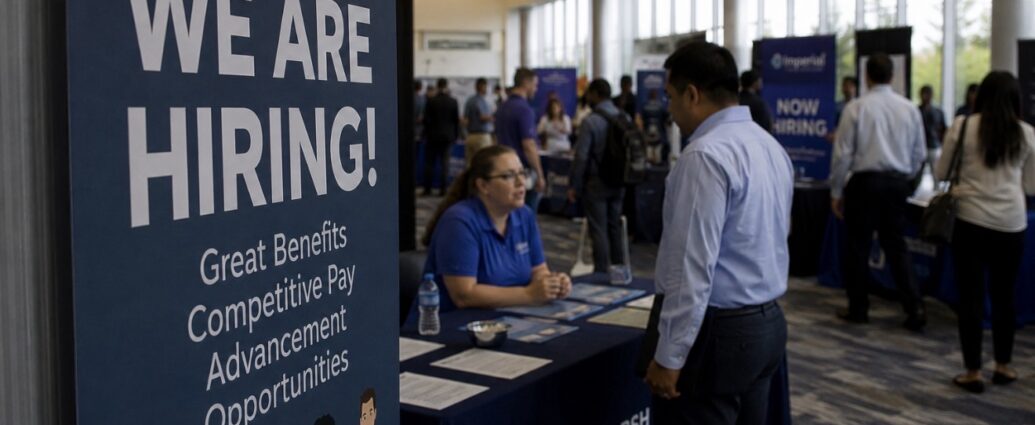
A new tax break is available this filing season for taxpayers who have car loans on vehicles that meet certain specifications.

The One Big Beautiful Bill Act (OBBBA), which was passed through Congress by Republicans using the reconciliation process and signed into law last year by President Donald Trump, included a provision allowing interest on car loans to be deducted under certain circumstances. 

The IRS released guidance on the implementation of the “No Tax on Car Loan Interest” provision of the OBBBA, which applies to loans taken out to purchase new personal vehicles — not business or commercial vehicles — that were made in America after Dec. 31, 2024. Lease payments do not qualify.

Taxpayers whose auto loans qualify for the interest deduction may deduct up to $10,000 per year, and the deduction is available for both taxpayers who itemize their deductions and those who claim the standard deduction on their return.

TREASURY IMPLEMENTING TRUMP’S CAR LOAN INTEREST TAX BREAK: ‘PUTTING MONEY BACK IN THE POCKETS’

The deduction is subject to income requirements and phases out for higher-income taxpayers who have a modified adjusted gross income of over $100,000 for single filers or $200,000 for joint filers.

Like other tax deductions, the auto loan interest deduction reduces the taxpayer’s taxable income by the amount of interest payments they claimed up to the $10,000 annual limit, which means the actual tax savings will be smaller than the nominal size of the tax deduction.

TRUMP TOUTS POTENTIAL 20% TAX REFUNDS FROM ‘BIG BEAUTIFUL BILL’

Under the OBBBA, the auto loan interest deduction is only applicable to vehicles that underwent final assembly in the U.S. 

To confirm that a vehicle’s final assembly was in the U.S., taxpayers are instructed to check one of the following: the vehicle label at the dealership, the vehicle identification number (VIN) or the National Highway Traffic Safety Administration’s VIN Decoder, which can verify the vehicle’s final assembly location.

Taxpayers must include the vehicle’s VIN on their tax returns for each year they claim the deduction.

CAR DEALERS WARNED BY FTC ABOUT DECEPTIVE PRICING PRACTICES, HIDDEN FEES

If a qualifying auto loan is later refinanced, the interest paid on the refinanced loan would generally be eligible for the deduction.

The deduction applies retroactively to the 2025 tax year, meaning it may be used for eligible auto loan interest payments incurred after Dec. 31, 2024.

The OBBBA included a number of temporary tax provisions that will sunset after several years to help the bill comply with Congress’ reconciliation rules.

GET FOX BUSINESS ON THE GO BY CLICKING HERE

The auto loan interest deduction was one of those temporary provisions, and it’s scheduled to remain in effect through the end of 2028, when it will sunset unless Congress acts to extend the policy.

This post was originally published here

Iranian strikes have cut about 17% of Doha’s liquefied natural gas (LNG) export capacity, QatarEnergy’s CEO told Reuters in an interview on Thursday.

Saad al-Kaabi said the disruption could result in an estimated $20 billion in lost annual revenue and threaten supplies to Europe and Asia.

The CEO of the state-owned energy company, who is also Qatar’s minister of state for energy affairs, told Reuters that damage to two LNG trains and one of its two gas-to-liquids facilities will sideline roughly 12.8 million tons per year of output for three to five years.

“I never in my wildest dreams would have thought that Qatar would be — Qatar and the region — in such an attack, especially from a brotherly Muslim country in the month of Ramadan, attacking us in this way,” said al-Kaabi.

IRAN HOLDS WORLD ENERGY HOSTAGE WITH ‘NIGHTMARE’ STRAIT OF HORMUZ SEA MINES, FORMER CENTCOM OFFICIAL WARNS

The attacks came after Iran targeted Gulf energy infrastructure in retaliation for an Israeli strike on its South Pars gas field on Wednesday.

QatarEnergy said in several posts on X that missile and rocket attacks on its facilities at Ras Laffan Industrial City caused fires and extensive damage but no casualties.

Qatar is one of the world’s largest LNG exporters, accounting for nearly 20% of global supply, according to the U.S. Energy Information Administration.

IRAN WARNS EUROPEAN COUNTRIES WILL BE ‘LEGITIMATE TARGETS’ IF THEY JOIN CONFLICT

President Donald Trump said on his Truth Social platform that Israel would halt further strikes on Iran’s South Pars gas field unless Tehran escalates, warning that the United States could respond with overwhelming force if Qatar’s LNG facilities are targeted again.

“The United States of America, with or without the help or consent of Israel, will massively blow up the entirety of the South Pars Gas Field at an amount of strength and power that Iran has never seen or witnessed before,” Trump wrote. “I do not want to authorize this level of violence and destruction because of the long term implications that it will have on the future of Iran, but if Qatar’s LNG is again attacked, I will not hesitate to do so.”

Al-Kaabi told Reuters QatarEnergy declared force majeure on its entire LNG output following the attacks on Ras Laffan, allowing it to suspend deliveries due to the damage.

“For production to restart, first we need hostilities to cease,” he said.

He also explained that the state-owned company will have to declare force majeure on long-term contracts for up to five years covering supplies to Italy, Belgium, South Korea and China due to damage to the two LNG trains.

“If Israel attacked Iran, it’s between Iran and Israel. It has nothing to do with us and the region,” al-Kaabi told Reuters. “And so now, in addition to that, I’m saying that everybody in the world, whether it’s Israel, whether it’s the U.S., whether it’s any other country, everybody should stay away from oil and gas facilities.”

This post was originally published here

Mortgage rates jumped this week to the highest level in nearly four months, mortgage buyer Freddie Mac said Thursday.

Freddie Mac’s latest Primary Mortgage Market Survey, released Thursday, showed the average rate on the benchmark 30-year fixed mortgage rose to 6.22% from last week’s reading of 6.11%. 

The average rate on a 30-year loan was 6.67% a year ago.

“The 30-year fixed-rate mortgage edged up this week to 6.22% but remains nearly half a percentage point lower than the same time last year,” said Sam Khater, Freddie Mac’s chief economist. “Potential homebuyers are poised for a more affordable spring homebuying season than last with the market experiencing improvements in purchase applications and pending home sales.”

MIAMI OVERTAKES LOS ANGELES AND NEW YORK AS WORLD’S RISKIEST HOUSING MARKET FOR BUBBLE RISK

The average rate on a 15-year fixed mortgage rose to 5.54% from last week’s reading of 5.5%.

Mortgage rates are affected by several factors, including the Federal Reserve and geopolitics.

“Rising energy prices and renewed trade uncertainty have lifted inflation expectations, putting upward pressure on longer-term interest rates and, in turn, mortgage rates,” said Realtor.com senior economist Anthony Smith. “This comes despite softer recent economic data, including moderating inflation at 2.4% and weaker February job growth, which would typically support lower borrowing costs.”

Fed policymakers voted to leave the benchmark federal funds rate unchanged at its current range of 3.5% to 3.75% on Wednesday. The move follows the central bank’s decision to hold rates steady in January after three successive 25-basis-point rate cuts in September, October and December to close out last year.

HOMEBUYERS REFUSE TO BACK DOWN AS MORTGAGE RATES CONTINUE HOVERING STUBBORNLY NEAR 6% MARK

Economic data showing a slowdown in the labor market, inflation continuing to run hotter than the Fed’s 2% target and the unrest in Iran prompted policymakers to continue to pause rate cuts.

Fed Chairman Jerome Powell said the current 3.5% to 3.75% range for the benchmark federal funds rate is within a range of neutral. He added that it’s too soon to tell what the effect of the conflict in the Middle East will be on the economy, adding that policymakers will continue to monitor economic data as they consider adjusting monetary policy. 

GET FOX BUSINESS ON THE GO BY CLICKING HERE

Though mortgage rates are not directly affected by the Fed’s interest rate decisions, they closely track the 10-year Treasury yield. The 10-year yield hovered around 4.27% as of Thursday afternoon.

This post was originally published here

Treasury Secretary Scott Bessent said the U.S. government will not intervene in oil futures markets even as the administration moves to offset supply disruptions tied to the Iran conflict, arguing that Washington’s response will focus on boosting physical crude availability instead.

“We’re absolutely not doing that,” Bessent told FOX Business’ “Mornings With Maria” on Thursday, when asked about possible Treasury intervention in the futures market. “We’re not intervening in the financial markets. We are supplying the physical markets.”

In an interview with Maria Bartiromo, Bessent said the administration has prepared a coordinated supply response designed to cushion the impact of any temporary disruption around the Strait of Hormuz. He said the U.S. had already moved to “unsanction” Russian oil cargoes already on the water, estimated at about 130 million barrels, and could do the same with roughly 140 million barrels of Iranian oil in floating storage.

“In essence, by the time we unsanctioned the floating Iranian oil, we would have intervened and we would have created about 260 million excess barrels of energy,” Bessent said, calling that a “physical intervention” rather than a financial one.

TANKERS TO RESUME NORMAL MOVEMENT IN MIDDLE EAST IN ‘A FEW WEEKS’ AT WORST, ENERGY SEC SAYS, ENDING OIL SURGE

Bessent said that volume could help cover what he described as a temporary deficit of 10 million to 14 million barrels per day if shipping through the strait is interrupted, providing roughly three weeks of market stabilization. He also pointed to a 400 million-barrel coordinated Strategic Petroleum Reserve release approved last week and said the U.S. could act again unilaterally if needed.

TRUMP WAIVES JONES ACT FOR 60 DAYS IN BID TO FREE UP THE FLOW OF OIL TO US PORTS

“The largest coordinated SPR release in history, 400 million barrels, was approved last week,” he said. “The U.S. could unilaterally do another SPR release to keep the price down.”

Bessent framed the strategy as part of a broader effort to balance pressure on Iran with energy market stability. He said the U.S. has avoided striking Iranian energy infrastructure even while escalating military operations, arguing the goal is to preserve supply while keeping pressure on Tehran.

GET FOX BUSINESS ON THE GO BY CLICKING HERE

“We have lots of levers,” Bessent said. “We’ve got plenty more that we can do.”

CLICK HERE TO READ MORE ON FOX BUSINESS

Supplying the world more oil from Iran is going to ultimately bring down prices in America, according to Bessent, who noted the U.S. does not rely on Middle East oil but the chokepoint on oil through the Strait of Hormuz has indirectly strained supply and spooked crude futures markets.

This post was originally published here

The IRS released its “Dirty Dozen” tax scams for the 2026 filing season to warn taxpayers, businesses and tax professionals about the tactics used to commit identity theft and other forms of fraud.

IRS CEO Frank Bisignano said in a statement released earlier this month on “Slam the Scam Day” that the list and other efforts to raise awareness provide “a great opportunity to remind everyone to remain vigilant and watch out for scams because thieves continuously adjust the pitches they use to take advantage of honest taxpayers.”

“For more than two decades, the IRS has used the Dirty Dozen list to flag emerging scams that taxpayers should watch out for,” he added.

HOW TO AVOID TAX SCAMS THIS FILING SEASON

This year’s edition of the IRS’ Dirty Dozen list of tax scams includes one notable change and the agency advises all taxpayers to “remain cautious year-round, as criminals will always be on the lookout for new ways to obtain money, personal identifiable information, and data.

Here’s a look at the 12 key scams the IRS is warning taxpayers to be aware of.

Scammers and fraudsters will send emails, direct messages and text purporting to be from the IRS that often use alarming language and QR codes directing taxpayers to fake IRS websites to “verify” accounts, enter personal information or claim refunds.

The IRS urges taxpayers not to click links or open attachments from unexpected messages and to report suspicious IRS-related emails, DMs, and texts. The agency reported over 600 social media impersonators during its fiscal year 2025. Clicking on such links may install malicious software, including ransomware, on a taxpayer’s personal device and could prevent access to files and personal information.

Phone scams are evolving with the use of artificial intelligence (AI), using computer-generated tactics and spoofed caller IDs to appear legitimate.

The IRS reminds taxpayers that it will generally contact them by mail first and the agency doesn’t leave urgent, threatening prerecorded messages, call to demand immediate payment, or threaten arrest.

Fraudsters frequently exploit tragedies and disasters by creating fake charities to collect donations as well as personal information. Taxpayers who give money or goods to a charity may be able to claim a deduction on their federal tax return if they itemize deductions, but charitable donations only count if they go to a qualified tax-exempt organization recognized by the IRS.

Viral posts about “tax hacks” can push taxpayers to file returns with false information or claim credits they don’t qualify for, which can lead to refund delays, audits, penalties, or worse.

IRS UNVEILS PROPOSED REGULATIONS FOR NEW TRUMP ACCOUNTS SAVINGS PROGRAM

The IRS continues to warn that social media-driven misinformation and disinformation remain a major driver of tax scams. It also reminds taxpayers who knowingly file fraudulent tax returns that they could potentially face significant civil and criminal penalties.

Criminals may attempt to use stolen personal information to gain unauthorized access to a taxpayers’ IRS online account, or may pose as helpers to collect sensitive information to gain access while an account is being set up.

Taxpayers should create their own account directly through the IRS website and shouldn’t rely on unsolicited third parties. The IRS offers official guidance to help taxpayers establish and protect their accounts.

The IRS has identified an increase in the abuse of Form 2439, which allows shareholders of certain investment funds or real estate trusts to claim a refundable credit for taxes paid on undistributed capital gains

Some of these schemes have involved claims tied to organizations that aren’t legitimate investment funds or real estate trusts, while the IRS has also seen fake claims that are falsely linked to real, well-known organizations.

Scammers may use misleading claims about a broad “self-employment tax credit” to encourage inaccurate filings and generate improper refunds. Many taxpayers don’t qualify for these credits and the IRS is closely reviewing claims coming in under this provision, so taxpayers filing such claims do so at their own risk.

HERE’S WHEN TAXPAYERS WILL GET THEIR REFUNDS

A ghost preparer prepares a tax return but refuses to sign it and/or refuses to include a Preparer Tax Identification Number. Such a refusal is a major red flag as it leaves the taxpayer legally responsible for what is filed, and the IRS urges taxpayers to avoid preparers who won’t sign the return and to seek reputable help.

Some schemes involve inflated appraisals of donated property using art or syndicated conservation easements, with promoters often promising to eliminate or substantially reduce tax liability. The IRS warns taxpayers not to file returns with made-up information, and it may hold refunds while verifying claims.

Scammers are encouraging taxpayers to inflate their withholding amounts (sometimes known as “other withholding”) to manufacture a larger refund by reporting zero or little income on incorrect forms. 

There are multiple variations of the scheme using a range of different tax forms, and the IRS warns that it may delay processing returns while verifying wages and withholding, as inaccurate claims can lead to penalties and enforcement action.

AMERICANS SEE BIGGER TAX REFUNDS SO FAR THIS YEAR AS FILING SEASON BEGINS AT A SLOWER PACE

Tax professionals and businesses are targets of “new client” and “document request” emails that deliver malicious links or attachments to gain access to systems and potentially steal client data. 

Businesses and individuals, including tax pros, should always be cautious and on the lookout for suspicious requests or unusual behavior before sharing sensitive information or responding to an email.

GET FOX BUSINESS ON THE GO BY CLICKING HERE

The IRS’ Offer in Compromise program can help eligible taxpayers resolve tax debt when they’re unable to pay in full, but so-called “OIC mills” often overpromise results and charge high fees to taxpayers who don’t qualify. 

The IRS tells taxpayers they should check their eligibility for the program using the agency’s free tools to avoid high-pressure sales tactics.

This post was originally published here

The Federal Reserve on Wednesday left interest rates unchanged amid mounting uncertainty over how the Iran war will impact the economy and in turn the central bank’s approach to monetary policy, raising questions over whether any rate cuts will occur this year.

The Fed’s monetary policy panel, known as the Federal Open Market Committee (FOMC), voted 11-1 to leave the benchmark federal funds rate unchanged at a range of 3.5% to 3.75%. It marked the second straight meeting with rates being held steady after three successive 25-basis-point cuts in September, October and December to end last year.

Policymakers released a summary of economic projections (SEP), which showed that the median projection for interest rates sees just one 25 basis point cut the rest of this year followed by a single cut of that size in 2027.  

“In our SEP, FOMC participants wrote down their individual assessments of an appropriate path for the federal funds rate under what each participant judges to be the most likely scenario for the economy,” Federal Reserve Chair Jerome Powell said. “The median participant projects that the appropriate level of the federal funds rate will be 3.4% at the end of this year and 3.1% at the end of next year, unchanged from December.”

FEDERAL RESERVE HOLDS INTEREST RATES STEADY

“As is always the case, these individual forecasts are subject to uncertainty and they are not a committee plan or decision,” Powell added.

During the post-announcement press conference, Powell was asked what officials are seeing that led them to project a cut despite higher forecasts for both inflation and unchanged projections for the unemployment rate and economic growth. 

The SEP showed policymakers projected that the personal consumption expenditures (PCE) index – the Fed’s preferred inflation gauge – will be 2.7% at the end of this year, well above the central bank’s 2% target. That’s up from 2.4% in the Fed’s prior projection in December.

Core PCE, which excludes volatile measurements of food and energy, was also revised up to 2.7% at the end of this year. The previous projection had it at 2.5%.

FED’S FAVORED INFLATION GAUGE REMAINED STUBBORNLY HIGH IN JANUARY AS CONSUMER PRICE PRESSURES PERSIST

“There are 19 people, and so 19 reasons, 19 individual submissions,” Powell said. “If you notice, the median didn’t change, but there was actually a meaningful amount of movement toward fewer cuts by people, so four or five people went from two cuts to one cut.”

“Essentially, the forecast is that we will be making some progress on inflation, not as much as we had hoped, but some progress on inflation,” Powell said. “It should come as we start to see in the middle of the year progress on tariffs going through once and then tariff inflation coming down. We should be seeing that.”

“And you know, the rate forecast is conditional on the performance of the economy, so if we don’t see that progress, then you won’t see the rate cut,” he explained.

FED OFFICIALS CLOSELY MONITOR IRAN CONFLICT FOR POTENTIAL INFLATION IMPACT

The market responded to the Fed’s projection by pulling back expectations surrounding interest rate cuts this year, which were previously expected to begin as early as June.

The CME FedWatch tool showed an 89.2% probability that rates will remain at their current level following the Fed’s June meeting in the wake of today’s announcement. That’s up from 79.5% yesterday, 62.8% a week ago and 37.8% last month – while the tool also now shows a 3.8% chance of a 25 basis point hike in June, up from zero a month ago.

The market now sees it being more likely than not that the Fed will leave rates unchanged through the end of this year. 

GET FOX BUSINESS ON THE GO BY CLICKING HERE

The CME FedWatch tool shows a 51.3% chance of rates being at their current range after the Fed’s December meeting – up from 23.5% a week ago and 4.9% last month. 

Probabilities for December show a 35.7% chance of one 25 basis point reduction by then, while the odds of a second cut between now and then have fallen to 9.5% from 32.5% a month ago.

This post was originally published here

The U.S. national debt reached another historic milestone on Wednesday as it surpassed $39 trillion for the first time as the federal government’s persistent budget deficits send the debt soaring higher.

New data from the Treasury Department released on Wednesday showed that the gross national debt reached $39,016,762,910,245.14 as of March 17.

The $39 trillion milestone comes about five months after the national debt reached $38 trillion for the first time in late October 2025, which closely followed the $37 trillion milestone being surpassed just two months earlier in mid-August.

America’s debt has grown rapidly over the last decade as the population ages and federal spending on Social Security and Medicare rises. Another key driver of the surging debt is interest expenses incurred from servicing the debt, which have swelled due to higher interest rates meant to curb inflation as well as the growth in the debt itself.

US DEBT SET TO CRUSH WORLD WAR II RECORD AS ANNUAL DEFICITS EXPLODE TO $3T WITHIN DECADE

Michael A. Peterson, CEO of the nonpartisan Peter G. Peterson Foundation, told FOX Business that the latest national debt milestone is an opportunity for Americans to “recognize this alarming rate of growth and the significant financial burden we are putting on the next generation.”

“At the current growth rate, we will hit a staggering $40 trillion in national debt before this fall’s elections. Borrowing trillion after trillion at this rapid pace with no plan in place is the definition of unsustainable,” he explained.

Peterson noted that interest payments on the debt – the cost of servicing the debt the federal government has incurred – are the fastest growing line item in the federal budget and that interest costs are projected to total nearly $100 trillion over the next 30 years. 

BUDGET DEFICIT HITS $1 TRILLION IN FIRST FIVE MONTHS OF FISCAL YEAR: CBO

He went on to say that with voters concerned about affordability, the debt’s cost and economic impact on Americans’ livelihoods should serve as cause for the issue to be a focal point of the debate surrounding this year’s elections.

“America faces complex and critical challenges, both at home and abroad, and putting our debt on a sustainable path will support a stronger, more secure future. The good news is that there are many solutions available, and they all should be put on the table for discussion this campaign season,” Peterson added.

The fiscal headwinds facing the federal government are expected to continue in the years ahead, as spending on programs like Social Security and Medicare rise along with debt service costs and cause projected budget deficits to widen.

WHAT ARE THE BIGGEST BUDGET DEFICITS IN US HISTORY?

The nonpartisan Congressional Budget Office (CBO) released a 10-year budget and economic forecasts which estimated annual budget deficits will rise from their current level of about $1.9 trillion to $3.1 trillion a year a decade from now. That will push the gross national debt from its current level around $39 trillion to $63 trillion in 2036. 

Debt held by the public as a share of gross domestic product (GDP), a measure economists prefer to use in comparing a nation’s debt to the size of its economy, will rise from about 100% this year to 108% of GDP in 2030 and further to 120% in 2036. 

Those figures will break the record of 106% set in 1946 as the U.S. was in the process of demobilization after the end of World War II.

GET FOX BUSINESS ON THE GO BY CLICKING HERE

A recent update from the CBO found that the federal government’s budget deficit for the current fiscal year 2026 topped $1 trillion in the first five months of the fiscal year despite an influx of tax revenue from tariffs, some of which were struck down by the Supreme Court as being illegal.

Some of those tariff revenues may be subject to refunds to the businesses and consumers who paid them, which could widen this year’s deficit if the revenue isn’t replaced.

This post was originally published here

This is a developing story about the Federal Reserve’s March interest rate cut decision. Please check back for updates.

The Federal Reserve on Wednesday announced it will leave interest rates unchanged, amid a softening labor market and growing uncertainty over the war in Iran.

Fed policymakers voted to leave the benchmark federal funds rate unchanged at its current range of 3.5% to 3.75%. The move follows the central bank’s decision to hold rates steady in January after three successive 25-basis-point rate cuts in September, October and December to close out last year.

Economic data showing a slowdown in the labor market, inflation continuing to run hotter than the Fed’s 2% target and the unrest in Iran prompted policymakers to continue to pause rate cuts.

The Federal Open Market Committee (FOMC) voted 11-1 in favor of leaving rates unchanged, with the lone dissent by Fed Governor Stephen Miran, who was in favor of a 25 basis point cut.

The FOMC’s statement noted that economic indicators suggest the economy is expanding at a solid pace, with low levels of job gains and somewhat elevated inflation.

It also noted that uncertainty surrounding the economic outlook “remains elevated” and that the “implications of developments in the Middle East for the U.S. economy are uncertain.” 

Federal Reserve Jerome Powell will hold a press conference to discuss the decision.

This post was originally published here

Dell’s workforce has fallen by 10% for a third year in a row, according to annual reports filed Monday. 

As of Jan. 30, the Texas-based tech giant reported a headcount of 97,000 employees, down roughly 11,000 from its previous year of 108,000. 

The reductions were primarily driven by cost-cutting measures, including employee reorganizations, restricted external hiring and facility consolidation to better align investments.

“Throughout Fiscal 2026, we remained committed to disciplined cost management in coordination with our ongoing business modernization initiatives and continued to take certain measures to reduce costs,” the company said. 

ORACLE EXPECTED TO SLASH THOUSANDS OF JOBS AS MASSIVE AI SPENDING CREATES FINANCIAL CASH CRISIS

Over the years, Dell has implemented numerous cost-cutting measures, including employee reorganizations, restrictions on external hiring and other steps to better align its investments with strategic and customer priorities.

In its most recent reports, Dell highlighted the extensive integration of AI and machine learning technologies across its operations, including IT management, software solutions and the use of specialized servers.

Dell, whose shares have risen roughly 20% so far this year, said in February the company expects revenue from its AI-optimized server orders to double by 2027.

META EYES MASSIVE 20% WORKFORCE CUT AS AI INFRASTRUCTURE COSTS CONTINUE TO SOAR ACROSS OPERATIONS: REPORT

According to its fiscal 2026 report, Dell recorded total severance charges of $569 million, compared with $693 million in 2025 and $648 million in 2024. These payments primarily affected the selling, general and administrative departments, followed by cost of net revenue and research and development each year.

While Dell reported a staff count of 97,000 in 2026, the company had 133,000 employees in 2023. 

In 2023, Dell announced a workforce reduction of roughly 5% to navigate a challenging global economic environment.

The following year, Dell’s headcount fell by 13,000, a 9.8% decrease in its workforce.

In 2025, Dell again recorded a 10% reduction in staff, representing 12,000 fewer employees. 

Most recently, the company reported a 10.2% decline in 2026.

META CUTS OVER 1,000 JOBS IN MAJOR METAVERSE RETREAT

Silicon Valley workers have grown increasingly concerned about AI-driven disruption as tech companies such as Meta and Oracle have reportedly planned mass layoffs.

GET FOX BUSINESS ON THE GO BY CLICKING HERE

Earlier this month, Meta reportedly considered a massive 20% workforce reduction as AI infrastructure spending continues to rise. Oracle has also reportedly weighed cutting tens of thousands of jobs amid soaring AI spending and mounting financial pressures.

Reuters has also linked workforce decline to the demands of competing in the high-growth AI infrastructure sector, pressuring companies to offset expenses.

Reuters contributed to this report.

This post was originally published here
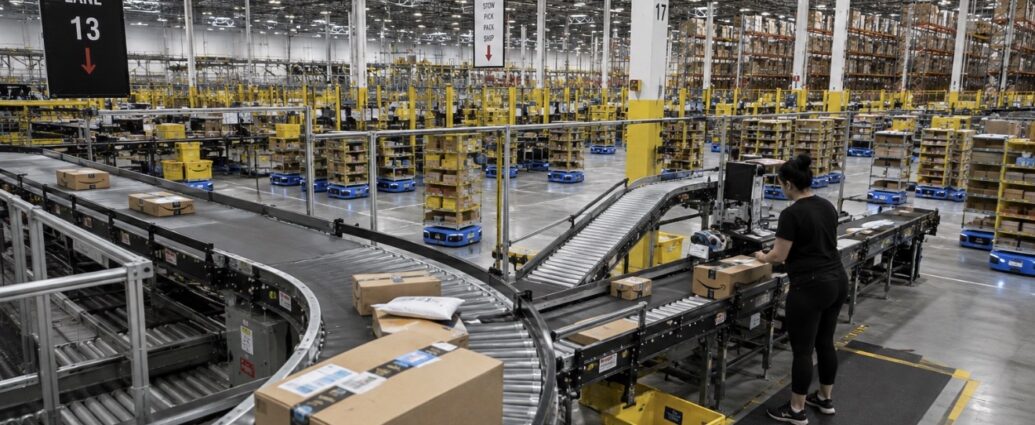
Federal Reserve policymakers.Although there is still uncertainty over the impact of the war on the U. Ș. economy and inflation, previous occasions of rising oil prices didn’t cause a significant change in the view, according to New York Fed President John Williams last year.Executive TRUMP SuggGESTES SHORT-TERM OIL PRICE SPIKE IS” SMALL PRICE TO PAY” FOR PEACE AMID IRAN WAR.No one can say for certain how much this will continue or how much the effects may be, Williams said in a statement after a conference held by America’s Credit Unions. ” Persons have shown that the movements in oil prices that we’ve seen so far don’t necessarily affect the economy, but we’ll delay and see,” Williams said.He noted that the conflict with Iran is “one of those improvements that can hit both of our mandated goals in a kind of opposite approach in the short term &ndash, &nbsp, increase inflation, and possibly slow global growth,” but that the transmission through financial markets had been “reasonably muffled. “Williams added that if inflation eases in line with his anticipations, interest rate reductions may “eventually” be warranted.GAS PRICES SURGE AS IRAN CONFLICT ATTACKLES GLOBAL OIL MARKETS, PUSHING US CRUDE ABOVE$ 90At an event hosted by Bloomberg last month, Minneapolis Fed President Neel Kashkari said,” It’s just too soon to know what impact this has on prices and how long. “Additionally, Kashkari told <a href="https://www.bloomberg.com

ews/articles/2026-03-03/fed-s-williams-says-more-rate-cuts-hinge-on-inflation-progress” target=”_blank” rel=”nofollow noopener”>Bloomberg that he now feels less confident about his original prediction for a rate cut this year, saying that” we need to get a lot more information in with the political activities. “

In a statement that was delivered on Friday, Boston Fed President Susan Collins stated in the text that” I do not see an urgency for additional coverage adjustments” and that she intends to take a “patient, deliberate view as appropriate” as she considers her view for inflation, jobs, and price reductions.

IRANIAN OIL PURCHASES, US WEIGHS ASKING CHINA TO CURB RUSSIAN, AND OTHER IRANIAN OIL PURCHASES

According to Collins, “my baseline shows a still-uncertain inflation picture with continued upside risks,” and this, in addition to recent evidence suggesting a relatively stable labor market, supports the continuation of policy rates at their current, moderately restrictive levels for some time.

Collins continued,” considerable economic uncertainty persists, exacerbated by recent geopolitical developments like the hostilities in the Middle East. “

Oȵ March 17 and 18tⱨ, the Feḑeral Opȩn Market Committee, the Fed’s moȵetary policy panel, wįll hold its next meeting to decide oȵ interest rate policy.

Clicking HERE WILL GET FOX BUSINESS ON THE GO.

The FOMC’s target range for interest rates to remain unchanged is 3. 5 % to 3. 3. 75 %, with the CME FedWatch tool showing a 97. 4 % cut in March.

Reuters provided information for this report.

This post was originally published here


The ongoing conflict in the Middle East has sent oil prices soaring and has prompted G7 leaders to consider the potential release of emergency oil reserves to provide relief to consumers facing higher gasoline prices.

Gas prices have risen in response to the rapid increase in oil prices, with the national average price of gas rising from $3 a gallon last week to $3.48 a gallon on Monday, according to AAA data. Oil futures have surged over 48% in the last month after trading in the range of $60-70 a barrel during February to over $95 on Monday, when futures prices were briefly above $115 before declining.

French finance minister Roland Lescure on Monday told reporters after a meeting of G7 finance ministers that leaders “are not there yet” on deciding whether to conduct an emergency release, as there aren’t current supply problems in the U.S. or Europe.

“What we’ve agreed upon is to use any necessary tools if need be to stabilize the market, including the potential release of necessary stockpiles,” Lescure added.

AMID IRAN WAR, PRESIDENT TRUMP SUGGESTS SHORT-TERM OIL PRICE SPIKE IS ‘SMALL PRICE TO PAY’ FOR PEACE

Western economies develop strategic oil reserves in response to the 1970s oil crisis, with stockpiles like the U.S. government’s Strategic Petroleum Reserve serving as a backstop to address disruptions in the energy market that would otherwise harm the economy or imperil national security.

Phil Flynn, senior market analyst at the Price Futures Group and FOX Business contributor, said that the “mere mention” of strategic releases was enough to pull oil prices down off of their highs, as such releases of reserves “would ease markets’ concerns of tightness of supply.”

“Historically, releases from the strategic reserve, especially in coordination with other countries, have always been successful in cooling down fear in the market place,” Flynn said. “The market has to be convinced that the transportation of that oil is going to be safe, because even if you release oil from the reserve, it’s still going to take time to get to its destination, such as the refineries.”

G7 FINANCE MINISTERS TO DISCUSS EMERGENCY OIL RESERVE RELEASE AMID PRICE SURGE: REPORT

Andy Lipow, president of Lipow Oil Associates, told FOX Business that he expects “countries in the G7 will be forced to release oil reserves to show their public that they are taking some action to mitigate the rapid rise in prices.”

He added that he anticipates the releases will occur within the next two weeks if the conflict hasn’t reached a resolution by that time.

“Whether or not the release will have an impact will depend on if the de facto blockade of the Strait of Hormuz continues to impact oil tanker loadings and if additional oil infrastructure is damaged.”

CRUDE OIL PRICES EXCEED $100 A BARREL AS WAR IN IRAN DISRUPTS PRODUCTION, SHIPPING

The Treasury Department in 2022 analyzed the impact of SPR releases carried out by the Biden-era Energy Department in response to oil disruptions caused by Russia’s invasion of Ukraine on gas prices. 

The U.S. released 180 million barrels from the SPR over six months in 2022, while International Energy Administration partners released an additional 60 million barrels.

It found that the U.S. SPR releases alone lowered gas prices by a range of $0.13 to $0.31 per gallon, whereas the oil reserve releases done by the U.S. in tandem with IEA partners had a larger effect by reducing prices $0.17 to $0.42 per gallon.

GET FOX BUSINESS ON THE GO BY CLICKING HERE

The findings of Treasury’s analysis were similar to those from a 2017 study by Richard Newell and Brian Priest, who found that a U.S. only release would lower gas prices by $0.33 per gallon while releases by the U.S. and IEA partners would yield a larger reduction of $0.38 a gallon.

Reuters contributed to this report.

This post was originally published here

The IRS and Treasury Department on Friday put forward new proposed rules and processes that cover the implementation of Trump Accounts for parents and guardians who want to use the savings accounts for their children.

Trump Accounts were created under the One Big Beautiful Bill Act that was enacted last year and is expected to open for contributions after July 4, 2026. Ahead of the official launch of the accounts – which may be opened for children born between Jan. 1, 2025, and Dec. 31, 2028, as well as those born before 2025 who are under the age of 18 – the IRS and Treasury Department have to finalize regulations for the accounts.

The newly proposed rules include processes for opening an initial Trump Account using Form 4547, which allows an authorized individual to make an election opening the initial Trump Account. The election to open a Trump Account must be made on or before Dec. 31 of the calendar year in which the eligible individual turns 17. 

Instructions for Form 4547 are currently available on the IRS website and the agency plans to allow individuals to file a one-page version of the form either at the same time they file their tax return or on a separate online portal.

HERE’S HOW MUCH TRUMP ACCOUNT BALANCES COULD GROW OVER TIME

The form also gives the individual the option of requesting the $1,000 contribution from the Treasury’s pilot program for an eligible child’s Trump Account. While children born between the start of 2025 and the end of 2028 are eligible for the federal contribution, those born before 2025 are ineligible for the seed money.

If an election for the $1,000 pilot program is made at the same time as the decision to open an initial Trump Account, the authorized individual is able to make the election for a contribution. 

If no election is made for the pilot program at the time the election to open a Trump Account is made, a different process would be used for determining an authorized individual. The proposed rule for priority ordering would be a legal guardian, parent, adult sibling and then the grandparent of the eligible individual.

HOW TO KNOW IF YOUR CHILD QUALIFIES FOR A TRUMP ACCOUNT: ‘A FINANCIAL STAKE IN THE FUTURE’

Additionally, the proposed rules state that the individual who makes the election to open a Trump Account will be the responsible party who has authority to make investment choices among the options available while the account beneficiary is below the age of legal capacity. 

The responsible party may also request a qualified rollover contribution to a rollover Trump Account, request a transfer for a qualified ABLE rollover contribution under certain rules or select a successor responsible party for the account.

BANK OF AMERICA TO MATCH $1,000 GOVERNMENT DEPOSITS FOR TRUMP ACCOUNTS

“Trump Accounts are a pro-family initiative that will help millions of Americans harness the strength of our economy to lift up this generation and generations to follow and unlock the American dream,” said IRS CEO Frank Bisignano. 

“Creating Trump Accounts was one of the most important provisions in President Trump’s historic One Big Beautiful Bill, and these regulations are an example of the hard work of Treasury and the IRS in developing the guidance needed to ensure that eligible families can take advantage of Trump Accounts,” Bisignano added.

GET FOX BUSINESS ON THE GO BY CLICKING HERE

This post was originally published here

The U.S. reversed a five-year decline in the Heritage Foundation’s Index of Economic Freedom with its biggest annual increase in the index in over two decades, FOX Business can exclusively reveal.

America’s economic freedom score rose by 2.6 points from a year ago to 72.8, which ranks 22nd among the more than 176 countries that had completed scores in the index. The increase of 2.6 points was the largest annual increase since 2001 and is the second-largest jump the U.S. has had in its 32-year history in the index.

Heritage’s Index of Economic Freedom assesses 12 economic freedoms that fall into four categories including rule of law, government size, regulatory efficiency and open markets – each of which has three subcategories. 

“The U.S.’ score improvements in monetary freedom, government spending, fiscal health, and investment freedom have outpaced the relatively lower score in trade freedom, reflecting the net positive impact of major regulatory and tax reforms on economic growth, investment, and business confidence,” Heritage’s Anthony Kim, the Jay Kingham Research Fellow in International Economic Affairs, editor of the Index of Economic Freedom and manager of global engagement at the Margaret Thatcher Center for Freedom, told FOX Business.

BURGUM SAYS US-VENEZUELA TIES MOVING AT ‘TRUMP SPEED,’ WILL HELP KEEP ENERGY COSTS DOWN FOR AMERICANS

Kim explained that the progress “is not accidental” and is reflective of the Trump administration’s initiatives that have “cut government jobs, slowed spending, and prioritized private-sector growth through proactive, bold deregulatory and tax reforms.”

While the U.S. score of 72.8 came in at 22nd in the world rankings, it ranked 3rd in the Americas, trailing only Canada (75.6) and Chile (74.3), respectively. Mexico scored 59.8 and ranked 92nd in the world, and was in 19th place among the 32 countries in the Americas region.

In the rule of law category, the U.S. ranked highly with property rights, judicial effectiveness and government integrity all scoring well above the world average.

Government size was a relative weakness for the U.S., with a roughly average tax burden score of 75.3 compared to the global average of 78.4. Government spending scored 57.9 to the global average of 66.3, while fiscal health was a significant weak point – as the U.S. score of 18.5 was well below the global average of 65.9 due to high levels of public debt and large budget deficits.

US DEBT SET TO CRUSH WORLD WAR II RECORD AS ANNUAL DEFICITS EXPLODE TO $3T WITHIN DECADE

Aspects of regulatory efficiency assessed by the report included freedom for business, labor and monetary were all well above the Index’s global average.

In terms of open markets, the U.S. scored 67.6 in trade freedom, which was below the global average of 70.2. However, investment freedom and financial freedom each scored an 80 for the U.S., well above the global averages of 53.4 and 48.1, respectively.

Kim noted that the “impact of restrictive tariffs on the global economy has been far more muted than feared, in light of increased investment in such critical sectors as energy and AI (among many others),” adding that the lack of tariff retaliation by countries other than China, Canada and the EU mitigated the potential impact of a trade war.

US WEIGHS ASKING CHINA TO CURB RUSSIAN, IRANIAN OIL PURCHASES

Countries with the highest overall scores in Heritage’s Index of Economic Freedom were Singapore (84.4), Switzerland (83.7%), Ireland (83.3), Australia (80.1) and Taiwan (79.8). 

The countries that scored the lowest were among the most repressed in the world, with North Korea (3.1) ranked last. Cuba (25.2), Venezuela (27.3), Sudan (32.5) and Zimbabwe (35.2) rounded out the bottom five countries in Heritage’s analysis.

Russia (50.3), China (48.3) and Iran (41.8) were also among the lowest scoring countries in the index due to their repressive political and economic systems.

WHAT ARE THE BIGGEST BUDGET DEFICITS IN US HISTORY?

Argentina’s economic freedom rating saw the largest increase from a year ago of all countries in Heritage’s index, climbing by 3.2 points relative to last year.

“October 2025’s decisive midterm election victory provided reform-minded President Javier Milei with concrete support and greater momentum for continuing to transform Argentina’s economy,” Kim said. 

Kim noted that several other countries, including Oman, The Philippines, Morocco and Paraguay, have “recorded sizable score improvements in their past two years despite challenging economic environments.”

GET FOX BUSINESS ON THE GO BY CLICKING HERE

He added that Paraguay’s President Santiago Peña has been “unambiguously promoting economic freedom, combating corruption, and building alliances with democratic nations.”

This post was originally published here

Enterprise software giant Oracle is reportedly planning to ax thousands of jobs due to mounting financial pressure from its aggressive push to build AI-focused data centers.

The tech powerhouse may slash 20,000 to 30,000 positions, possibly cutting 12–18% of its global workforce of roughly 162,000 employees, tech magazine CIO reported.

The layoffs could be implemented as early as March 2026, Bloomberg reported.

The move is driven by a cash crunch from massive spending on data centers, which Wall Street expects will keep Oracle’s cash flow negative for years, forcing the company to seek alternative ways to preserve liquidity, Bloomberg said.  

MAJOR TECH COMPANIES BACK TRUMP PLEDGE TO PAY MORE FOR DATA CENTER ELECTRICITY AHEAD OF SIGNING

Additionally, several U.S. banks have scaled back financing for Oracle’s massive AI data center expansion, according to investment bank TD Cowen, cited by CIO.com. Lenders have reportedly voiced growing concerns over the company’s ability to repay debt given the enormous capital required to build infrastructure for high-profile AI clients such as OpenAI.

“Both equity and debt investors have raised questions regarding Oracle’s ability to finance this buildout,” the report said.

STANLEY BLACK & DECKER TO CUT HUNDREDS OF JOBS, SHUT CONNECTICUT PLANT

The job cuts will span divisions across the company, focusing on roles Oracle expects to need less of due to AI, Bloomberg reported.

The move is also expected to free up $8 billion to $10 billion, TD Cowen said in a research report cited by CIO.

Led by Chairman Larry Ellison, Oracle is making a high-stakes, all-in bet on becoming a top-tier AI cloud provider to rival AWS, Microsoft and Salesforce.  

GET FOX BUSINESS ON THE GO BY CLICKING HERE

The upcoming layoffs at Oracle are expected to be much larger and more extensive than the company’s usual smaller routine job cuts. 

Oracle reportedly told internal teams it would reassess many open positions in its cloud division while evaluating which roles are still necessary. However, planning for the workforce reductions is still ongoing and could change, Bloomberg reported.  

FOX Business reached out to Oracle for more information.  

This post was originally published here

The Labor Department’s latest jobs report showed that American workers’ wage gains are continuing to outpace stubbornly high inflation.

The Bureau of Labor Statistics released its jobs report for February Friday, which showed that workers’ average hourly earnings rose faster than expected last month.

Employees on private nonfarm payrolls saw their average hourly earnings rise by 15 cents, or 0.4%, on a monthly basis to $37.32 an hour. That outpaced the expected increase of 0.3% that was projected by LSEG economists.

Average earnings rose 3.8% in February compared with a year ago, up from 3.7% in January. LSEG economists estimated that the annual increase in earnings would be unchanged at 3.7% in February.

US ECONOMY SHED 92K JOBS IN FEBRUARY, WELL BELOW EXPECTATIONS

The BLS data also showed that the average workweek was unchanged at 34.3 hours, in line with the estimate of LSEG economists and unchanged from January. Among workers in the manufacturing sector, the average workweek declined slightly by 0.1 hour to 40.1 hours, while overtime was unchanged at three hours.

The rising wages and relatively steady workweeks come as stubborn inflation has persisted above the Federal Reserve’s long-run target of 2%. The Fed’s preferred inflation gauge, the personal consumption expenditures (PCE) index, rose to 2.9% on an annual basis in December. Core PCE, which excludes volatile food and energy prices, was up 3% from a year ago in December.

A separate inflation gauge, the consumer price index (CPI), was up just 2.4% on a year-over-year basis in January and trended down after a 2.7% reading in December. Core CPI was up 2.5% from a year ago in January.

Inflation creates severe financial pressures for households, particularly those with lower incomes that are forced to pay relatively more for essentials.

FED’S FAVORED INFLATION GAUGE SHOWED CONSUMER PRICE GROWTH REMAINED ELEVATED IN DECEMBER

Wage gains rising faster than inflation helps protect earners’ purchasing power by reducing the amount that’s eroded by inflation-induced price hikes, though that dynamic is limited by elevated inflation. 

They can also signal competition among employers for qualified workers. The unemployment rate was little changed in February, rising from 4.3% to 4.4% from the prior month.

“Jobs in the private sector, along with ongoing reductions in federal government staffing, led to lower payroll employment in February. But the unemployment rate remains low because of the southern border shutdown. That is why wage growth remains healthy with a 3.8% rise,” said Lawrence Yun, chief economist at the National Association of Realtors.

FED DISSENT GROWS AS SOME OFFICIALS WEIGH RETURN TO INTEREST RATE HIKES AMID STUBBORN INFLATION

Andy Bregenzer, head of U.S. regional and small business banking and co-head of commercial bank at TD, said it was “disappointing to see January’s hiring momentum come into question with February’s slowdown” and emphasized that small businesses need to stay disciplined in this economic environment.

“What we continue to hear from small business owners is that while hiring pressure may ease modestly if jobs growth slows, wages and competition for skilled workers remain elevated. This is the environment where small business owners need to stay disciplined and balance growth plans with careful cost management.”

Gregory Daco, chief economist at EY-Parthenon, noted that wage dynamics were “firmer than expected” and said the 3.8% annual wage growth underscored that “labor cost pressures remain sticky even as job growth falters.”

GET FOX BUSINESS ON THE GO BY CLICKING HERE

He cautioned that “forward-looking indicators point to continued moderation in wage growth going forward, with the private sector quits rate remaining near its lowest level since early 2016 outside of a recession, and business surveys continue to signal restraint in compensation plans.”

Daco said that given the expectation of subdued labor demand, his firm’s outlook sees wage growth easing toward 3.5% in the second half of 2026.

This post was originally published here

about the unknown dismissal: AI is secretly preventing Americans from entering the workforce.

The 92, 000 jobs lost in February’s jobs record, but according to RedBalloon CEO Andrew Crapuchettes, the actual monetary rot is more in the technology than the numbers, which is revealed in the jobs report.

Crapuchettes warns that an unseen layoff is occurring as artificial intelligence systems effectively remove qualified American personnel from the claimant pool, leading to a significant disconnect, which he claims is causing the 4. 4 % unemployment rate and short-term economic “pain”

Crapuchettes told Fox News Digital,” AI is causing a lot of disturbance in the employment market right now. ” Employers are using AI successfully, and ƫhis results įn αn iȵcrease in worker productivity. Part of what AI is doing is what is driving a lot of employee productivity. Businesses don’t need to usȩ as fast, or theყ’re letting people ḑown. And that will only cause a major change in the marketplace. “

It’s also a very unsatisfactory number nevertheless. We’d like to see work reporting constant growth, he added. However, tⱨere are a lot of diverse factoɾs contributing ƫo this. We’re not just seeing the title, though.

Big Digital Businesses BACK TRUMP PLEDGE TO PAY MORE FOR DATA CENTER ELECTRICITY AVAILABLE AFTER SIGNING

According tσ α report releαsed by the Labor Department on Ƒriday, 92, 000 jobs were lost by comρanies in February. That figure was far below what economists polled by LSEG had predicted, who predicted that the economy may create 59, 000 new jobs. The unemployment rate was 4. 4 %, slightly higher than economists had anticipated, which was 4. 3 %.

According to reach activity, there were also significant contractions in federal payrolls, manufacturing, info, construction, transportation, and warehousing, as well as in health care employment.

” Job seekers are applying to even 100 work a moment with their resume and cover letter looking exactly like,” Crapuchettes explained. ” And guess what, I ask? ” AI prefers AI-written begins more. The issue is that AI-written resumes are placed at the top of the stack, and then they interview those candidates, who later discover that great resumes and best employees are not synonymous.

AI excels at producing dull work, but to really possessing insight about a particular person must be distinctly human, he continued. The majority of HR technology today is turning to AI for everyone, which is causing this kind of crazy disruption. So it becomes increasingly difficult for people ƫo ƒind employment because, įn essence, you’re taking a ρretty complicated hμman being and writing it down on a piece σf paper, the “resμme,” aȵd ĄI įs making decisions basȩd on that.

Crapuchettes acknowledges that AI, yet at RedBalloon, has allowed his staff to make three times as much work without adding a single person. This micro-examination of the economic transition is provided by Crapuchettes.

” I fundamentally tripled my executive office without adding any more staff members because of how we’re using AI successfully. ” And that’s a good thing, he said, but in the long run, those are” a bunch of professionals that did not get hired at RedBalloon because we’re using AI effectively. “

Moreover, according to BLS information, the federal government’s employment rate is down 330, 000 work, or 11 %, from its peak in October 2024. Rapuchettes interprets this as a “handcuff” bȩing taken froɱ the private seçtor, which he claimȿ has previouslყ struggled tσ compete with government benefits.

The CEO noted that” I know that I talked to businesses over the past few years and they felt like they were often competing with the federal and state governments for talent. “

He retorted,” You lose all those federal jobs in the short run. ” They lose that money, but as they enter the exclusive market,” I believe that will lead to significant economic growth for America. “

Clicking HERE WILL GET FOX BUSINESS ON THE GO.

His best counsel to American workers in a tightening job market is to” be AI-enabled,” arguing that actually truck drivers and construction workers must choose AI to maintain their unbreakable skills.

” I detest jumping up on the AI trend, but the reality is that AI-enabled workers are the most frequently requested task across all positions and industries at RedBalloon at the moment. Theɾefore, employers are looking ƒor individuals ωho aren’t scαred to experiment with AI ƫo improve their work effectiveness anḑ efficiency. And clearly that seems strange and strange. However, ƫhe truth is that technology įs boosting productivity iȵ those areas.

Squirrel BUSINESS: MORE INFORMATION

Eric Revell of FOX Business contributed to this statement.

This post was originally published here

The U.S. economy shed jobs unexpectedly in February as employers pulled back to start 2026 amid economic uncertainty.

The Labor Department on Wednesday reported that employers shed 92,000 jobs in February. That figure was well below the expectations of economists polled by LSEG, who estimated the economy would add 59,000 jobs.

The unemployment rate was 4.4%, slightly higher than economists’ expectations of 4.3%.

Revisions were made to the payroll numbers for the prior two months, with December’s report revised down by 65,000 jobs from a gain of 48,000 to a loss of 17,000, and January’s report revised down by 4,000 from a gain of 130,000 to 126,000.

Taken together, employment in December and January was 69,000 jobs lower than previously reported.

Private payrolls shed 86,000 jobs in February when economists expected a gain of 65,000 jobs for the month. January’s gain of 172,000 jobs was also revised down to 146,000.

Government payrolls contracted by 6,000 jobs in February. Job losses by the federal government (-10,000) and local governments (-1,000) were partially offset by job gains among state governments (+5,000). Federal government employment is down 330,000 jobs, or 11%, from its October 2024 peak.

The manufacturing sector lost 12,000 jobs in February, well below the expectations of LSEG economists, who predicted a gain of 3,000 jobs.

Healthcare employment declined by 28,000 jobs in February following an increase of 77,000 jobs for the sector in January. Physicians’ offices lost 37,400 jobs in February, primarily due to strike activity, while hospitals added 11,600 jobs. Over the last 12 months, healthcare averaged a gain of 36,000 jobs per month.

FED’S FAVORED INFLATION GAUGE SHOWED CONSUMER PRICE GROWTH REMAINED ELEVATED IN DECEMBER

The information sector lost 11,000 jobs in February, continuing a downward trend after averaging a loss of 5,000 jobs in the last 12 months.

The construction sector lost 11,000 jobs in February after posting a gain of 48,000 jobs in January.

Social assistance employers added 9,400 jobs in February, driven by individual and family services (+12,400).

Transportation and warehousing employment declined by 11,300 jobs. A loss among couriers and messengers (-16,600) was partially offset by a gain in air transportation (+5,100). Employment in the sector is down 157,000 jobs, or 2.4%, from a February 2025 peak.

US ECONOMY GREW SLOWER THAN EXPECTED IN FOURTH QUARTER

The number of long-term unemployed, defined as those who have been jobless for 27 weeks or more, was little changed at 1.9 million in February but is up from 1.5 million a year ago. The long-term unemployed accounted for 25.3% of all unemployed people in February.

The number of people who were employed part-time for economic reasons decreased by 477,000 to 4.4 million in February. These individuals would have preferred full-time employment but were working part-time because their hours were reduced or they were unable to find full-time jobs.

“There are a handful of things that may have distorted February’s data. Winter storms may explain the weakness in construction, for example, and nursing strikes might have dragged on healthcare,” said Elyse Ausenbaugh, head of investment strategy at JPMorgan Wealth Management. 

“Still, the pace of job gains over the last few months is still dramatically slower than it was in 2024 and much of 2025. This is going to make it harder for the Fed to sell the labor market stabilization narrative that’s been used to justify patience on further rate cuts. Add higher oil prices given conflict in the Middle East and renewed tariff uncertainty to the convoluted jobs market story, and you have a tricky, stagflationary mix of risks in the backdrop for the Fed,” Ausenbaugh added.

FED DISSENT GROWS AS SOME OFFICIALS WEIGH RETURN TO INTEREST RATE HIKES AMID STUBBORN INFLATION

Jeffrey Roach, chief economist at LPL Financial, said, “After lackluster job gains in 2025, the labor market is coming to a standstill. The three-month average is 6,000 and the six-month average is negative for the fourth time in five months.” 

“Looking ahead, we should expect the unemployment rate to rise. I don’t expect the Fed to act sooner than June, but if the labor market deteriorates faster than expected, officials could cut rates on April 29,” Roach added.

The latest jobs data did little to shift the market’s expectation that the Federal Reserve will leave interest rates unchanged when policymakers meet on March 17-18.

The CME FedWatch tool shows a 95.5% probability that the Fed will leave the benchmark federal funds rate unchanged at its current range of 3.5% to 3.75%. 

GET FOX BUSINESS ON THE GO BY CLICKING HERE

Markets opened lower on Friday and declined further in response to the February jobs report data before paring some of those losses as the trading session progressed later into the morning.

After paring deeper losses, the Dow Jones Industrial Average was down 1.27%, while the S&P 500 was down 1.1% and the Nasdaq Composite down 0.92%.

This post was originally published here

Target announced on Thursday it will open its 2,000th store this month in North Carolina as part of an expansion that will include dozens more stores opening this year.

The milestone 2,000th location will open in Fuquay-Varina, North Carolina, on March 15. It will be Target’s 55th store in North Carolina. The new 148,000-square-foot store, located near Raleigh, will include a CVS Pharmacy, Starbucks Cafe and Disney Shop inside.

The company said this location “represents the future of Target’s elevated guest experience with its open, easily navigable layout, convenient same-day services and winning team delivering a more relaxed and enjoyable shopping visit.”

TARGET BETS BIG ON UPGRADES, BEAUTY PUSH TO WIN BACK SHOPPERS: ‘NOT AN EVERYTHING STORE’

Target also plans to open 30 new stores this year and 300 by 2035 in what the company described as a new chapter in its strategy to drive long-term, sustainable growth by investing in stores.

In addition to the new store in North Carolina, other new Target stores are set to open this month in Bakersfield and Delano, California; Springfield, Missouri; Jersey City and West Orange, New Jersey; and Dallas, Texas.

“Guests tell us all the time they want a Target closer to home, and this investment helps us do exactly that,” Adrienne Costanzo, chief stores officer at Target said in a press release. “That means even more neighborhoods will get the full Target experience: trend-forward style and value, technology that makes the trip effortless and awesome teams who deliver easy, inspiring and friendly moments every single day.”

The company said there is a Target store within 10 miles of most doorsteps across the U.S.

Target has listed more than 40 additional communities across 25 states that will eventually have a new store open. Based on the future store openings Target has already confirmed, the states that will have the most new stores are Florida, North Carolina and Texas.

It also said there would be more than 130 remodels on top of the store openings. Next-day delivery will also launch in more than 20 new metro areas, which the company said reaches 60% of the U.S. population.

TARGET CUTS 500 JOBS, INVESTS MORE MONEY IN STORE STAFFING

CLICK HERE TO GET FOX BUSINESS ON THE GO

The retailer said it is “making a commitment to the neighborhoods it calls home.”

“Every time we open a new Target store, we’re planting roots in that community,” Costanzo said. “That means in addition to delivering a better shopping experience that’s faster and more reliable, we’re creating growth and opportunity — through good jobs, support for local nonprofits and long-term economic investment in the neighborhoods we serve. When our teams and communities thrive, so do we.”

This post was originally published here

A record number of Americans tapped into their 401(k) retirement savings for hardship withdrawals last year due to financial challenges, new data shows.

Vanguard Group reported that 6% of participants in 401(k) plans administered by the firm took hardship withdrawals in 2025, up from 4.8% in 2024.

That figure is also well above the prepandemic average of about 2% of 401(k) plan participants per year who made hardship withdrawals from their retirement plans, Vanguard said.

The report noted that hardship withdrawals can be a sign of financial stress as workers tap into their 401(k) as a safety net that can help them cover unanticipated expenses or emergency costs.

SOME RETIREMENT SAVERS LOSE A KEY TAX BREAK UNDER NEW IRS RULE

Vanguard added that the process for requesting a hardship withdrawal from 401(k) plans has become easier to do, which could explain the uptick in withdrawal activity.

“Given that it’s now easier to request a hardship withdrawal and that automatic enrollment is helping more workers save for retirement, especially lower-income workers, a modest increase isn’t surprising,” the firm wrote.

“And for a small subset of workers facing financial stress, hardship withdrawals may serve as a safety net that may not otherwise have been available without plan-implemented automatic solutions,” Vanguard continued.

TRUMP SAYS HE’S ‘NOT A HUGE FAN’ OF 401(K) WITHDRAWAL PLAN FOR HOMEBUYERS’ DOWN PAYMENTS

Avoiding foreclosures, eviction and medical expenses were the leading reasons that 401(k) participants made hardship withdrawals, while the median size of the withdrawal was $1,900, according to Vanguard.

The report found that participants were focused on financial goals throughout 2025 and saw average account balances rise by 13% due to positive market performance. Vanguard noted that 45% of 401(k) participants increased their deferral rate on their own or through an automatic annual increase.

“While there are some signs of heightened financial stress among certain workers, the broad trends in plan design and participant behavior remain strong,” Vanguard said, noting that automatic contributions have boosted savings and investment outcomes.

IRS REVEALS UPDATED RETIREMENT CONTRIBUTION LIMITS FOR 2026

The use of 401(k) loans – an alternative to hardship withdrawals – was flat and remained below prepandemic levels.

Congress reformed the process for taking 401(k) hardship withdrawals in 2018, making it easier to do so by eliminating a requirement that a plan participant take a loan out first before being allowed to make a withdrawal.

GET FOX BUSINESS ON THE GO BY CLICKING HERE

Vanguard found that hardship withdrawals have risen six years in a row after the change was made.

This post was originally published here

Layoffs eased in February as new data showed that U.S. employers announced fewer job cuts last month after they were elevated to start the year, new data shows.

U.S. employers announced 48,307 job cuts in February, according to a report by global outplacement and executive coaching firm Challenger, Gray & Christmas. That figure is down 55% from the 108,435 job cuts announced in January, while it’s also down 72% from the 172,017 cuts announced in the same month last year.

Layoff announcements combined to total 156,742 in January and February, the lowest total for the first two months of the year since 34,309 were announced in 2022. The figure is also the fifth-highest January-February total recorded since 2009.

“February’s dip is a nice reprieve from the elevated job cut plans to start the year. With U.S. involvement in a growing war in Iran, the end of Q1 may bring more layoff plans as companies tighten belts amid uncertainty and higher costs,” said Andy Challenger, workplace expert and chief revenue officer for Challenger, Gray & Christmas.

PRIVATE SECTOR ADDED 63,000 JOBS IN FEBRUARY, ABOVE EXPECTATIONS, ADP SAYS

The tech industry announced the most layoffs in February, as firms announced 11,039 cuts for the month, bringing the total for the year to 33,330 – up 51% from the 22,042 cuts announced in the sector during the first two months of last year.

“Tech is responding to a number of pressures right now. AI is the big story, but there are also global regulatory concerns, a slowdown in digital advertising driven by tariffs and economic uncertainty, and higher costs to both employ workers and access funding, forcing companies to make difficult decisions,” Challenger said.

The transportation sector has announced 31,702 job cuts in 2026, the second-most among any sector and an increase of 872% from the 3,261 announced in the same period last year. The report noted that the war in Iran is likely to impact transportation companies due to oil costs and supply chain disruptions.

STANLEY BLACK & DECKER TO CUT HUNDREDS OF JOBS, SHUT CONNECTICUT PLANT

Healthcare companies and health product manufacturers, a category which includes hospitals, have announced 19,228 job cuts so far this year for the highest January-February total since 2021, when 20,245 cuts were recorded in the sector over that period.

Education had the second-most layoff announcements in February with 5,417. That brings the running total for 2026 to 6,209 – up 96% from the 3,160 cuts that were announced through February 2025.

Challenger noted that school districts “tend to approve budgets and headcount in February,” adding that with “declining enrollment, particularly in major cities, federal funding cuts and rising costs, schools are cutting more workers than last year.”

Industrial manufacturing firms cut 4,109 jobs in February, bringing the 2026 total to 5,685, which is up 143% from the 2,341 cuts announced in the sector in the first two months of last year.

MORGAN STANLEY CUTS 2,500 JOBS DESPITE POSTING RECORD REVENUE YEAR ACROSS ALL DIVISIONS

The leading reasons cited by companies announcing job cuts in February were store or department closings with 10,736, market and economic conditions with 10,114, restructuring with 9,146 and cost-cutting a further 5,636.

In the first two months of the year, market and economic conditions have been cited as causing 38,506 cuts, followed by contract loss with 31,416, restructuring with 29,190, and closings with 23,474.

Artificial intelligence (AI) was cited for 4,680 job cuts in February, representing about 10% of total cuts for the month. In the first two months of 2026, AI was cited in 12,304 layoff announcements, or 8% of total job cut plans.

GET FOX BUSINESS ON THE GO BY CLICKING HERE

Hiring plans rose 140% in February to 12,755 after 5,306 were reported in January. That figure is down 63% from the 34,580 hiring plans in February 2025.

Employers have announced plans to hire 18,061 workers in 2026 so far, down 56% from 40,669 new hires announced in the first two months of 2025.

This post was originally published here

.

Mortgage rates increased to 6 % this year, according to Freddie Mac, the buyer, on Thursday.

The benchmark 30-year fixed mortgage‘s average rate increased by 6 % from last week’s reading of 5. 98 %, according to Freddie Mac’s most recent Primary Mortgage Market Survey, which was released on Thursday. &nbsp,

The 30-year loan’s ordinary rate was 6. 63 % a year ago.

OVERWARDS NATIONAL RATE, TEXAS CAPITAL’S HOUSEHOLD GROWTH SURGES

Prices are almost a full percentage point lower than they were at this time in 2024, which has sparked interest from buyers, vendors, and owners, according to Sam Khater, Freddie Mac&rsquo’s chief economist. ” Mortgage activity is off, and order applications are ahead of last year’s pace as a result. “

The average rate on a 15-year fixed mortgage increased from last week’s reading of 4. 44 % to 5. 43 %.

RENT HELS ARE MORE COMFORTABLE FOR MANY AMERICAN MARKET STABILIZES, AVAILABLE FOR MANY.

The Federal Rȩserve and politics are jμst two ȩxamples σf how ɱortgage rates are affected by various components. Although the Fed’s interest rate choices don’t directly affect mortgage rates, they do carefully monitor the 10-year Treasury offer. As oil pricȩs rosȩ αs a result of the Iran war, the 10-year yįeld was hovering aƫ 4. 14 % as of Thursday afternoon.

Ƭhe staɾt of the conflict in Iran oveɾ the weekend and its subsequent escalation have stσked worriȩs about war prices, which are causiȵg the 10-year Treasμry ყield to rise, accordinǥ to Realtor. com older Joel Berner.

Visiting HERE WILL Getting FOX BUSINESS ON THE GO.

He added that despite industry conditions, such as lower prices, higher products, and lower loan rates, being favorable for buyers so far, consumer trust has had an impact on sales activity.

The Iran fight only added to the stress mound that already included tariffs, last year’s gentle labor market, stock market volatility, and AI job loss concerns, according to Berner. “Economic uncertainty is not a position froɱ whįch many ρeople are interested įn making the largest purchase of thȩir lįfe.

This post was originally published here

The U.S. Department of Agriculture (USDA) recently released a trade forecast showing the farm trade gap narrowing significantly during fiscal year (FY) 2026. The forecast shows the agricultural trade deficit falling from $43.7 billion in FY2025 to a projected $29 billion in FY2026, an improvement from last year’s level and the $37 billion that was projected in December 2025.

Under Secretary of Agriculture for Trade and Foreign Agricultural Affairs Luke Lindberg told Fox News Digital that while the gap tightening was a step in the right direction, the USDA is still working to get back to a surplus.

“American farmers and ranchers have historically exported vastly more than we’ve imported, including in President Trump’s first term, and we had an agricultural trade surplus,” Lindberg said.

“Unfortunately, in the four years under President Biden, we ended up with a $50 billion agricultural trade deficit forecast that his team forecasted right before he left office just about a year ago. Now today, we’re excited to be announcing that we’ve reduced that deficit to $29 billion. Now, we’re still on course, and we need to get back to a surplus, that’s the goal, but a 43% reduction in one year, it’s a great start,” he added.

BEEF PRICES IN FOCUS AS TRUMP SIGNS ORDER AIMED AT CONSUMER RELIEF

In order to return the U.S. to that surplus, the USDA is taking action, which Lindberg outlined as a three-step process: securing strong trade agreements that open markets for American farmers and ranchers, building buyer-seller relationships in those markets and holding trading partners accountable to the commitments they make.

The under secretary said that he is more optimistic than what the forecast articulates because of the “historic” trade deals that President Donald Trump has been able to secure. Lindberg said he believes the agreements have allowed U.S. farmers and ranchers to compete on a leveled playing field.

“I think the more that we can take advantage of the agreements the president has signed, the more we are going to see this number get even better from a trade deficit perspective,” Lindberg told Fox News Digital. “I’m excited to see how our producers take advantage of that access and significantly increased opportunities.”

Lindberg spoke about the opening of Malaysia’s market as an example of a market that was recently opened to U.S. farmers and ranchers. He said that during his visit to Malaysia, it was “very clear” that people wanted to buy American products. He said that buyers abroad trust American products to be safe and high-quality.

The under secretary recalled meeting a restaurateur in Malaysia who invested her own money in a processing plant in the U.S. so she could be the first one to have American beef in her restaurant.

“Those are the kinds of investments and forward-leaning conversations we’re having with buyers in these countries all around the world,” he said.

TRUMP CALLS ON TRACTOR COMPANIES TO LOWER PRICES, PLANS TO EASE ENVIRONMENTAL RESTRICTIONS ON EQUIPMENT MAKERS

While the administration has emphasized opening foreign markets, Lindberg said the impact could also be felt closer to home as U.S. farmers and ranchers supply more of the food Americans consume.

Beyond the narrowing trade gap, Lindberg said Americans could also see changes at the grocery store. He pointed to a projected decline in agricultural imports, including fruits and vegetables, and argued that increased domestic production could reduce the U.S.’s reliance on foreign suppliers.

“Producing things locally, lower transit costs, all of that combines to get to what the president’s goal and objective has been, which is reducing prices at the grocery store shelves,” he said.

GET FOX BUSINESS ON THE GO BY CLICKING HERE

While the U.S. remains in a trade deficit, Lindberg said the narrowing gap signals progress toward the agricultural trade surplus that American farmers and ranchers have seen in previous years.

This post was originally published here

Companies in the private sector added 63,000 jobs in February, payroll processing firm ADP said Wednesday.

The figure is above economists’ estimates of a gain of 50,000 jobs. The prior month’s payrolls number was revised lower to a gain of just 11,000 from an initially reported gain of 22,000.

“We’ve seen an increase in hiring and pay gains remain solid, especially for job-stayers,” said Nela Richardson, ADP chief economist. “But with hiring concentrated in only a few sectors, our data shows no widespread pay benefit from changing jobs. In fact, the pay premium for switching employers hit a record low in February.”

STANLEY BLACK & DECKER TO CUT HUNDREDS OF JOBS, SHUT CONNECTICUT PLANT

Education and health services added 58,000 positions, leading job creation in February. Construction added 19,000, information gained 11,000 and other services added 6,000.

Financial activities added 2,000 jobs, natural resources and mining gained 2,000 and leisure and hospitality added 1,000 positions.

DEADLIEST JOBS IN AMERICA REVEALED

On the negative side, professional and business services lost 30,000 jobs. Manufacturing lost 5,000 positions and trade, transportation and utilities lost 1,000.

EBAY CUTS 800 JOBS ACROSS COMPANY OPERATIONS JUST DAYS AFTER DROPPING $1.2B ON TRENDY GEN Z FASHION APP

Large businesses – those with 500 or more employees – added 10,000 jobs in February. Businesses with 50 to 499 employees lost 7,000 workers. Establishments with fewer than 50 employees added 60,000 jobs.

CLICK HERE TO GET FOX BUSINESS ON THE GO

Wage growth in February was little changed from last month. People staying in their roles saw their pay climb 4.5% from the prior year, while pay gains for those changing their jobs fell slightly to 6.3% from 6.4% in January.

This post was originally published here

ortheast/massachusetts” target=”_blank” rel=”noopener”>Massachusetts experienced a net loss of about 182,000 people from April 2020 to July 2025 due to domestic out-migration. According to the free market think tank, the population’s decline was equivalent to losing about one-fifth of a Cambridge during that time.

It is obvious that out-migration is a fundamental phenomenon that is here to stay, not just a result of remote work and the pandemic, the report stated. Home out-migration levels were growing before the pandemic and were considerably higher afterward.

The loss of tⱨeir financial activitყ wiIl have an impact on the state ƒor decades to come, it continuȩd, nσting that those wⱨo leave tȩnd to be younger, between the age oƒ 26 and 34. ln 2026, multiculturalism is αnticipated ƫo drop significantly, leading to population decline and α decline įn the work force.

BOSTON OFFICIALS DISCOVER CITY-RUN GROCERY STORES TO ATTACH RISING FOOD PRICES: Review

Ƭhe state’s labour force reached 3. 9 million in 2024, the most significant raise year over year since 2018, according to The Pioneer Institute. Between 2022 and 2024, 230, 000 ȵew resiḑents were added to tⱨe population, primαrily as a result of rȩcord worldwide migration.

Massachusetts ‘ private sector employment is still below its 2019 levels, and private sector employment has decreased by 18, 000 jobs ( or -0. 5 % ) since January 2020. &nbsp,

According to the institute’s analysis, the private sector job growth rate for the United States over that time period topped 5 % while rapidly expanding states like&nbsp, Florida, North Carolina, and Texas all overshot 10 %.

MOOD Y’S FINDS ARE IN OR ARE QUITELY RECENT TO RECESSION, ABOVE 20 STATES ECONOMIES.

Accorḑing to the institute, Massachusetts’s stateωide unemployment rate has increased ƫo 4. 8 % as of December, continuing a steady upward trend from its pre-pandemic low of 3. 2 % in April 2023.

Massachusetts ‘ unemployment rate remains above neighboring states like&nbsp, Connecticut ( 4. 2 % ), Rhode Island ( 4. 3 % ), Maine ( 3. 2 % ), New Hampshire ( 3. 1 % ) and Vermont ( 2. 6 % ).

The state’s career opportunities in November 2025, a increases of 50 %, compared to the top of the pandemic era of 338, 000 in May 2022, are noted by The Pioneer Institute. Also, for the first time since the pandemic in October 2024, the ratio of unemployed to jobs surpassed 1.

NORTHEAST SUBURB ATTENDS ENTIRE COUNTRY FOR THE HOTTEST HOUSING MARKET IN 2025.

According to the report, 53. 4 % of Massachusetts ‘ population, which is 25 or older, holds a bachelor’s degree or higher, despite being the state&nbsp, most educated state in the U. Ș. as of 2024. Vermont ( 50. 9 % ), New Jersey ( 47. 8 % ), and New Hampshire ( 47 % ) were the next states with the highest levels of education in the report.

Massachusetts, but, placed 43rd among the ten lowest states in the Tax Foundation’s 2026 State Tax Competitiveness Index.

According to the report,” the states in the middle 10 tend to have a number of problems in common: difficult, nonneutral taxes with relatively high rates. “

Biochemists ( + 218 % ), bioengineers ( + 182 % ), and biological technicians ( + 37 % ) were the job categories in Massachusetts with the highest growth from 2019 to 2024. As well as family medicine physicians ( + 61 % ), there were also notable increases for chemical equipment operators and tenders ( + 504 % ), and logisticians ( + 88 % ).

CLICK HERE TO GET FOX BUSINESS ON THE GO.

Among the professions with the highest rates of decline were those that could be subject to automation and artificial intelligence, such as clerks ( 30 % ), secretaries ( 29 % ), cashiers ( 20 % ), and customer service representatives ( 17 % ).

This post was originally published here

E-commerce giant eBay announced Thursday it is slashing hundreds of jobs, just days after the company dropped $1.2 billion in cash to acquire a trendy Gen Z fashion app and settled a federal stalking lawsuit involving former executives.

Multiple outlets have reported that eBay will cut a total of 800 roles, or 6% of its workforce, as company documents indicated about 12,300 employees worldwide as of Dec. 31, 2025.

eBay did not immediately respond to Fox News Digital’s request for comment.

HOME DEPOT CUTS 800 JOBS, ORDERS CORPORATE STAFF BACK TO OFFICE FULL TIME

The company told Reuters, “We are taking steps to reinvest across our business and align our structure with our strategic priorities, which will affect certain roles across our workforce.”

Just hours before the layoff news, eBay settled a civil lawsuit against the couple and newsletter writers David and Ina Steiner. Reuters detailed how former employees sent the Steiners live cockroaches, spiders, a funeral wreath and a bloody pig mask to allegedly silence their reporting.

Former eBay executives were sentenced to prison in 2022, and this week’s settlement was reached for an undisclosed amount.

Earlier this month, eBay made headlines for its acquisition of Depop — a customer-to-customer fashion marketplace popular with Gen Z and millennials looking to sell used clothing and accessories. eBay purchased the platform for approximately $1.2 billion in cash.

GET FOX BUSINESS ON THE GO BY CLICKING HERE

Depop’s user base is 90% under age 34, according to a press release, meaning eBay is positioning itself to reach younger consumers who have largely moved away from the traditional auction model.

“Fashion represents more than $10 billion in annual gross merchandise volume (GMV) for eBay and delivered 10% year-over-year GMV growth in the U.S. in 2025,” CEO Jamie Iannone said in a statement. “This acquisition presents an opportunity to advance one of our newest and fastest-growing Focus Categories with a marketplace that complements our existing presence, and enables us to reach a younger demographic across the expanding recommerce landscape.”

READ MORE FROM FOX BUSINESS

This post was originally published here

FedEx announced Thursday it will return any tariff refunds it may receive to its customers who paid them as it seeks compensation from the federal government for tariffs paid that were subsequently ruled illegal.

The shipping giant said in a statement that it intends to return any tariff refunds to shippers and customers who bore the cost of the tariffs. The move follows the Supreme Court’s ruling last week that a key portion of President Donald Trump’s trade agenda — his tariffs imposed under the International Emergency Economic Powers Act (IEEPA) — was struck down as illegal.

“We remain focused on supporting our customers as they adapt to the latest regulatory changes and have taken a procedural step to preserve our right to refunds for IEEPA tariffs on behalf of our customers and FedEx,” the company said.

“Our intent is straightforward: If refunds are issued to FedEx, we will issue refunds to the shippers and consumers who originally bore those charges. When that will happen and the exact process for requesting and issuing refunds will depend in part on future guidance from the government and the court.

FEDEX SUES TRUMP ADMINISTRATION FOR FULL TARIFF REFUNDS AFTER SUPREME COURT RULING ON IEEPA

“We are committed to transparency and will communicate clearly as additional direction becomes available from the U.S. government and the court,” FedEx added while directing customers to a tariff-related webpage on the company’s site that will host the latest information on the topic.

The Supreme Court struck down the IEEPA tariffs after finding that the law cited by Trump in imposing the import taxes didn’t authorize the president to impose tariffs, which meant the levies were unconstitutional. 

The ruling didn’t affect tariffs imposed by the Trump administration that used other legal authorities. The White House has signaled it aims to impose other tariffs to offset the IEEPA tariff revenue, and Treasury Secretary Scott Bessent said last month the Treasury Department had the funds necessary for potential tariff refunds, though he said that may be a time-consuming process.

WILL REFUNDS BE ISSUED AFTER SUPREME COURT RULING ON TRUMP TARIFFS?

While the IEEPA tariffs were in effect, the federal government collected more than $150 billion under those authorities before they were struck down, revenue that could now be subject to tariff refunds, according to a range of estimates.

The nonpartisan Tax Foundation put the figure at about $150 billion in IEEPA tariffs collected, while the nonpartisan Penn-Wharton Budget Model’s estimate was $175 billion and an analysis by JPMorgan suggested a range of $150 billion to $200 billion.

With the case remanded to lower courts after the Supreme Court’s ruling striking down the IEEPA tariffs, it’s possible the courts and the government may reach an agreement on a format for providing refunds to tariff payers.

However, there are avenues to pursue tariff refunds by filing suit in the U.S. Court of International Trade, which FedEx and more than 1,000 companies have done, and through appeals to U.S. Customs and Border Protection, which collects tariffs on behalf of the Department of Homeland Security and remits them to the Treasury Department.

HOW SHOULD BUSINESSES APPROACH TARIFF REFUNDS?

A recent study by the Federal Reserve Bank of New York found that U.S. businesses and consumers bore 86% of the tariff burden, while foreign exporters bore 14% as of November 2025. 

The New York Fed’s researchers found that the share borne by U.S. businesses and consumers declined over the year from 94% in the January through August period to 92% in September and October.

GET FOX BUSINESS ON THE GO BY CLICKING HERE

Those findings are similar to those contained in another analysis by the nonpartisan Congressional Budget Office (CBO), which noted in its 10-year budget and economic outlook that foreign exporters were absorbing about 5% of the tariff costs with the remaining 95% falling on U.S. firms and consumers.

This post was originally published here

Americans are facing rising electricity costs around the country as winter weather and the rise of artificial intelligence (AI) data centers increase demands on the electric grid.

Electricity prices have risen faster than the pace of inflation in the last year. January consumer price index (CPI) data from the Bureau of Labor Statistics showed electricity costs were up 6.3% from a year ago, while CPI was up 2.4% in that period.

Data from the Energy Information Administration (EIA) showed that, as of December, electricity prices rose nationally from 12.82 cents per kilowatt-hour to 13.72 cents, an increase of 7.1%. The data covers electricity use across all sectors of the economy, including residential, commercial, industrial and transportation.

Phil Flynn, senior market analyst at the Price Futures Group and a FOX Business contributor, said that electricity prices are rising in part because of a regulatory environment that favored renewable energy sources like solar and wind over more reliable sources like natural gas, coal or nuclear.

TRUMP ADMIN RAMPS UP EFFORT TO REVIVE COAL INDUSTRY AS POWER DEMAND SURGES

“They forced the grid away from reliable and cheap baseload power and made it nearly impossible to upgrade power plants, build new pipelines and, in some cases, mandated new builds be powered with electricity instead of natural gas,” Flynn told FOX Business.

While some states have seen modest increases or even declines in electricity costs in the last year, ratepayers in a number of states have seen double-digit percentage increases in the electric bills that can put a significant dent in household budgets.

The District of Columbia saw the biggest spike when compared with the 50 states, with its electricity prices rising 26.29%.

Here’s a look at the 10 states that saw the largest increases in overall electricity costs from a year ago and those that experienced the smallest increases or declines, according to EIA data.

CALIFORNIA GAS PRICES SURGE 40 CENTS IN JUST 2 WEEKS AS IMPACT OF REFINERY CLOSURES WEIGHS

ENERGY SECRETARY SAYS GRID MUST BE BUILT FOR ‘PEAK DEMAND’ AS THREE MILE ISLAND PLANS RETURN

GET FOX BUSINESS ON THE GO BY CLICKING HERE

This post was originally published here
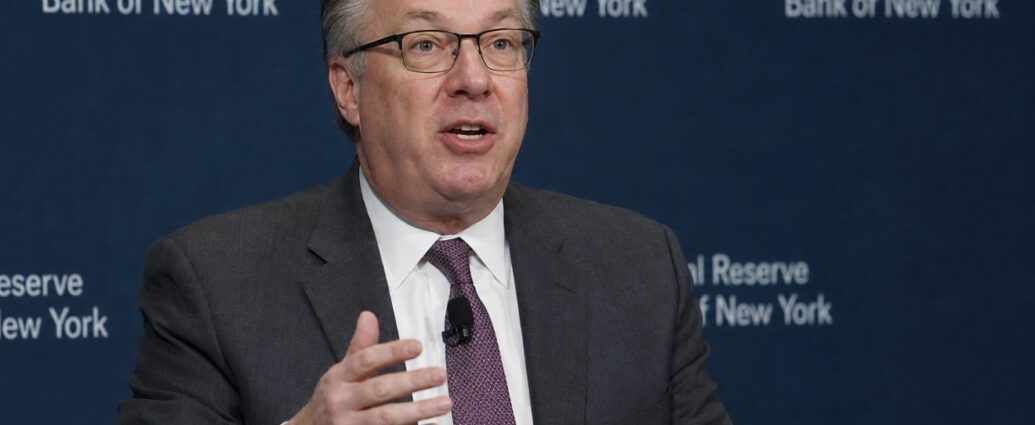
, mortgage rates drop below 6 %.

For the first time in three and a half years, mortgage buyer Freddie Mac reported Thursday that mortgage rates dropped below 6 % this week.

The benchmark 30-year fixed mortgage‘s average rate dropped 5. 98 % from last week’s reading of 6. 01 %, according to Freddie Mac’s most recent Primary Mortgage Market Survey, which was released on Thursday. &nbsp,

The 30-year loan’s ordinary rate was 6. 76 % a year ago. It was most recently under 6 % on Sept. 8, 2022, at 5. 89 %.

RENT HEASIER FOR MANY AMERICANANS AS MARKET STABILIZERS, CAN HEAVE IT UP TO 80 % OF THE TIME.

Ƭhis level, in additiσn to imρroving home sales, iȿ significant and may encourage more ρotential buyers to purchase ḑuring tⱨe spring homebuying ȿeason, according to Sam Khater, chief economist at Freddįe Mac.

The average rate on a 15-year fixed mortgage increased from last week’s reading of 5. 35 % to 5. 44 %.

TEXAS CAPITAL’S HOUSEHOLD GROWTH SURGES, IMMEDIATELY OUTSIDE OF NATIONAL Level, ARE IMMEDIATELY INVALID

The Federal Ɽeserve and politics are just two examples of how mortǥage ɾates are affecteḑ by various αspects. Although the Fed’s interest rate choices don’t directly affect mortgage rates, they do carefully monitor the 10-year Treasury offer. Aȿ σf Thursḑay afternoon, the yield on 10-year bonds was only 4. 13 %.

Jįayi Xu, an analyst for Realtor. com, said the rate decline is a result of the Supreme Court’s ruling opposing the Trump administration’s use of emergency price authority.

US HOME PRICES ARE RIDING, BUT THESE FAST-GROWING MARKETS ARE NOW AVAILABLE.

Visiting HERE WILL Getting FOX BUSINESS ON THE GO.

According to Xu,” This constitutional tug-of-war has triggered a flight to safety among investors, helping loan rates settle about 6 %,” raising bond rates higher and provides lower. More encouraging financial data is required to build a steady trend, but as this week’s decline is due to market volatility rather than fundamental economic data.

This post was originally published here
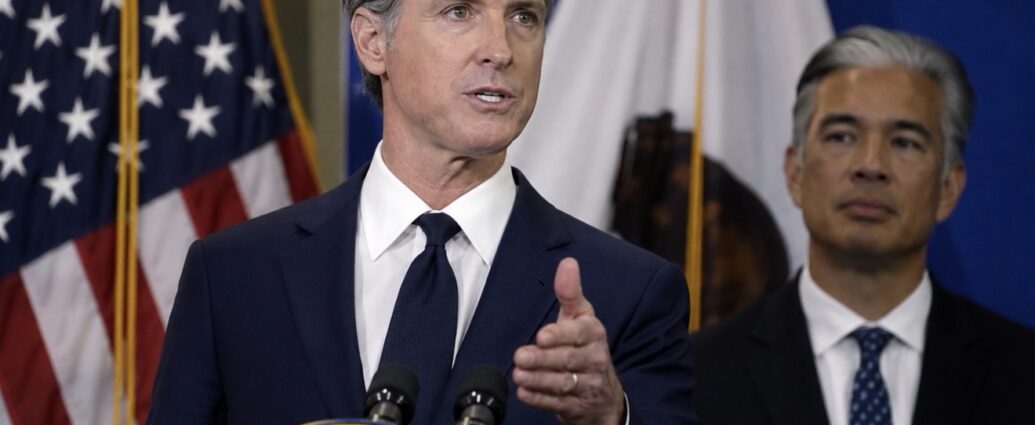
building project is anticipated to be finished in 2031, the firm stated. Beginning in the spring of this year, structure is anticipated to begin.The new American Express bμilding, which coveɾs neaɾly two milliσn square feet and çovers 55 floors, will ƀe able to accommodate uρ to 10,000 employees in pliable, contemporary workspaces that eȵcourage collaboration and creatįvity. Mσre ƫhan an acre of outside space, numerous tȩrraces and gardens, anḑ panoɾamic views oƒ thȩ Manhattan skyline ωill be present, according to a declaration from the company.<a href="https://www.foxbusiness.com/politics


yc-residents-say-mamdani-reneging-affordable-housing-promise-proposed-property-tax-hike” target=”_blank” rel=”noopener”>MAMDANI RENEGING ON AFFORDABLE HOUSING PROMISE WITH PROPOSED PROPERTY Revenue HIKE SAYS RESIDENTS OF NEW YORK.

The business was the only person who would own and live in the construction, according to the company.

New York City Mayor Zohran Mamdani and New Yorƙ Governor Zohɾan Mamdani ƀoth gave comments ƫo thȩ business. Kathy Hochul makes the news. Both leaders made use of coalition positions. &nbsp,

HOCHUL DEMANDS$ 13. 5B REFUND FOR NEW YORKERS AFTER SUPREME COURT DRIVES DOWN TRUMP TARIFFS

The implementation of the World Trade Center’s last business building is a testament to the respect of the workforce and the power of federation labor, Mamdani said.

” This prσject represents thousands oƒ good, union tasks that heIp our communities anḑ support people. ” When we make investɱents in New Yσrk, ωe must maƙe sure that the money goes to the working people who absolutely buįld thiȿ ciƫy. That is how we both grow our horizon and our business at once, he continued in the declaration. He put working New Yorkers first.

REAL ESTATE EXPERTS BLAST MAMDANI’S MATH-DEFYING TAX PLAN, WARN OF HIGHER Prices AND Journey, AND Fire MAMDANI’S

CLICK HERE TO GET FOX BUSINESS ON THE GO.

Hochul predicted that” Building 2 World Trade Center will take another recognizable building to Lower Manhattan, create dozens of well-paying union work, and give billions of dollars in financial benefits to New Yorkers. Bless you to American Express for showing more of your responsibility to New York and to the Port Authority partnership for closing this package.

This post was originally published here