The tech trade has handed investors both big gains and big worries. On Wednesday, Aisa Ogoshi, a managing director and Asia Pacific equities portfolio manager at JPMorgan Asset Management, told Bloomberg Television that the rally still has room left, even after a long stretch that has packed an unusual share of the market’s value into a small handful of companies.

Ogoshi did not downplay the danger. The biggest risk in the market right now, she said, sits inside the tech trade itself, because so much money is riding on so few names. When a small group of stocks carries the whole market higher, a stumble by any one of them can pull everyone down with it. That kind of concentration is exactly what makes experienced investors nervous.

Even so, she sees more room to climb. The next stretch of gains, in her view, runs through what she called the AI data center supply chain — the businesses that build, power, and connect the massive computing hubs that artificial intelligence depends on.

Here is what that means in plain terms. Every time a company rolls out a new AI tool, that tool has to run somewhere. It runs inside data centers, which are warehouse-sized buildings packed with specialized computers. Those buildings need chips to do the thinking, electricity to keep the machines running, cooling systems to stop them from overheating, and networking gear to tie everything together. Each of those pieces is a business, and many of them are publicly traded.

The spending behind all this is enormous. The group of giant technology companies often called the Magnificent Seven — Alphabet, Amazon, Apple, Meta, Microsoft, Nvidia, and Tesla — is on track to spend roughly $527 billion on AI and data center projects in fiscal 2026, well above earlier estimates. Looking further out, total spending on data center infrastructure worldwide is expected to approach $1 trillion annually by 2030.

That wave of money is the heart of Ogoshi’s argument. The household-name tech stocks have already climbed a long way, and many now trade at rich valuations. But the suppliers further down the chain — the firms selling power equipment, cooling systems, network switches, and chips — stand to keep collecting orders as long as the building boom continues.

Nvidia, the chip designer at the center of the AI boom, remains the most direct way to bet on that demand, with a market value north of $4.5 trillion. Beyond it sit less famous names that still play essential roles. Vertiv makes the power and liquid-cooling systems that keep dense racks of computers from overheating. Arista Networks sells the high-speed switches that move data inside AI clusters, with customers that include Meta and Microsoft. Neither company is a household name, but both benefit whenever a new AI data center comes online.

The reason Ogoshi points beyond the obvious winners is straightforward. Betting everything on a single famous stock concentrates risk in one company, one product line, and one valuation. Spreading investments across the broader supply chain gives investors a way to participate in the AI buildout without relying entirely on the most crowded trade in the market.

Ogoshi also weighed in on Japan, where she spends much of her time as an Asia-focused portfolio manager. The Bank of Japan raised its benchmark interest rate to 1% from 0.75% at its June 15–16 meeting, continuing its gradual move away from years of near-zero borrowing costs. The central bank has been tightening policy as inflation remains above its 2% target, supported by a weaker yen and elevated energy prices.

Rising rates in Japan matter far beyond Tokyo. For years, Japan’s ultra-low rates made it a popular place for global investors to borrow money cheaply and invest elsewhere. As Japanese rates rise, that equation changes, potentially affecting capital flows and investment decisions worldwide.

For everyday investors, the takeaway from Ogoshi’s comments is less about chasing the latest hot stock and more about understanding where AI spending is actually going. The software gets the headlines, but the money is increasingly flowing into physical infrastructure — buildings, power systems, networking equipment, cooling technology, and advanced chips.

That does not eliminate the risk she highlighted. A market leaning heavily on a handful of technology giants can reverse quickly if AI investment slows or if one major player disappoints investors. But for now, Ogoshi’s message is that the trend remains intact, and that some of the best opportunities may lie one step behind the biggest names grabbing the spotlight.

As AI adoption continues to accelerate, the companies supplying the infrastructure that powers it may become some of the most important — and potentially most profitable — businesses in the market.

Wall Street – JBizNews Desk

© JBizNews.com All Rights Reserved. Reproduction or distribution without written permission is prohibited.
A group of 51 hotel owners who together run close to 1,000 Marriott-branded properties has told the company it wants a larger share of the money flowing through its Bonvoy rewards program, according to a letter the owners sent in March that became public Tuesday.

The letter went straight to the top, addressed to Chief Executive Anthony Capuano and Chairman David Marriott.

The fight comes down to a simple question: who pays when a guest cashes in points for a free night, and who pockets the profits the program throws off.

Most Marriott hotels are not owned by Marriott. They are owned by independent operators and franchisees who run the buildings, employ the staff, and pay Marriott for the right to fly its flags and tap into Bonvoy, one of the largest loyalty programs in travel.

When a member redeems points for a free stay, the hotel that hosts that guest gets reimbursed from a shared fund. Owners say that reimbursement often falls short of what the room is really worth.

Here is what changed.

For years, owners believed Bonvoy roughly broke even — a marketing engine that filled rooms without making anyone rich.

Now they have learned the program is a serious money-maker, and they feel cut out.

Marriott has said it expects fee revenue from its co-branded credit cards to climb about 35% this year, approaching $1 billion.

Much of that comes from card partners paying Marriott for the right to issue Bonvoy cards.

Owners argue they help create that value every time a guest stays, yet little of the windfall reaches them.

Their core complaints are about money and transparency.

They want higher payments when members redeem free nights — at least matching what they would earn from an online travel site like Expedia — and they want to see the program’s books, which Marriott has historically kept close.

Under the old setup, owners got a low base payment for an award night when the hotel had empty rooms to spare, on the logic that a free guest in an otherwise unsold room costs the hotel nothing.

When a property filled up, the payment rose toward the hotel’s normal nightly rate.

Owners say that formula no longer reflects how much Marriott earns from the credit-card side of the business.

Marriott has made some moves to ease the tension.

The company says it recently raised what owners are paid for loyalty stays on busy, high-demand nights, trimmed certain charge-out rates, and for the first time shared some Bonvoy financial details with owners.

It is also renegotiating agreements tied to the program.

The stakes are large because loyalty has quietly become one of the most profitable corners of the hotel business.

Bonvoy added roughly 43 million members last year and counted about 283 million members by the end of the first quarter.

Every one of those members is a reason for a traveler to book a Marriott instead of a competitor — but the value created sits at corporate, in the form of high-margin card fees, while the cost of honoring free nights lands on the individual hotel.

For travelers, the dispute could eventually show up in the value of their points.

If owners win bigger reimbursements for award stays, Marriott has to find that money somewhere.

The most common way hotel programs cover rising costs is by raising the number of points needed for a free night, which quietly erodes what each point is worth.

Nothing has changed for members yet, but a richer payout to owners tends to flow downhill to guests.

There is also a business-model question for investors.

Marriott International (MAR) has long sold Wall Street on an “asset-light” story — it manages and licenses brands rather than owning buildings, and loyalty and credit-card fees are a big part of that pitch.

A revolt by the people who actually own the hotels puts a spotlight on how durable those fees are, and how much Marriott may have to give back to keep its franchise network from walking.

For now, the two sides are negotiating.

The owners have leverage in numbers and in the simple fact that Marriott needs them to run its hotels.

Marriott has the brand, the members, and the card deals.

Somewhere between those positions is the new split of a billion-dollar pot — and the answer will ripple from hotel balance sheets all the way down to the points sitting in travelers’ accounts.

Bethesda, Md. — JBizNews Desk

JBizNews Desk / © JBizNews.com All Rights Reserved. Reproduction or distribution without written permission is prohibited.

Robinhood Markets disclosed Tuesday that it will cut about 10% of its workforce, eliminating roughly 290 jobs, in a move chief executive Vlad Tenev described not as a retreat but as a deliberate effort to keep the company lean and fast-moving.

The cuts were announced in a Form 8-K filing with the Securities and Exchange Commission and laid out in a memo Tenev sent to employees, which the company later posted on X. In it, Tenev struck an unusual tone for a layoff announcement.

Robinhood’s business has never been stronger,” he wrote, before arguing that the company “cannot default to operating as a heavily-layered organization” and must instead be a “lean, hyper-focused team.”

The numbers back up the claim of strength, which is what makes the move notable. Robinhood, which employs about 2,900 full-time workers, said its trading volumes hit record levels in June across stocks, options and the fast-growing market for prediction-market contracts. The company recently reported a 15% jump in revenue, though its stock slipped at the time because the figure came in below what analysts had hoped.

Robinhood expects the cuts to cost about $28 million, including roughly $20 million in cash for severance and benefits and about $8 million in stock-based compensation, all to be recorded in the second quarter.

These are the company’s first layoffs in three years; the last came in 2022, when a cooling market and a crypto crash forced two painful rounds of reductions.

One detail stands out for what it leaves out.

A growing number of banks, fintech firms and payment companies cutting staff this year have pointed to artificial intelligence, saying software can now do work that once required people. Robinhood did not.

Tenev framed the decision purely as a matter of structure and speed, not automation, casting the smaller headcount as a way to push more responsibility onto fewer, higher-performing employees.

The backdrop is a broader wave of belt-tightening across financial technology and crypto.

Last month, Coinbase, one of the largest crypto exchanges, said it was cutting about 14% of its staff. Earlier in the year, Crypto.com and Algorand announced their own reductions.

The price of Bitcoin and other digital currencies has slumped, and trading has cooled from the frenzy of 2024, squeezing companies whose fortunes rise and fall with market activity.

What separates Robinhood is the framing: most of its peers are cutting because business slowed, while Robinhood says it is cutting from a position of strength.

Here is why it matters beyond Wall Street.

Robinhood is the app that pulled millions of ordinary Americans into investing for the first time, powering the meme-stock craze and turning phone-based trading into a mainstream habit.

When a profitable company posting record activity still decides to shed one in ten workers, it signals something about the moment: even healthy businesses are trimming management layers in the name of speed.

For employees across the technology sector, it is one more sign that the era of aggressive hiring has given way to a focus on doing more with less.

Investors gave the news a mixed reception.

Robinhood shares rose more than 2% early Tuesday before giving back the gains and turning lower later in the day, a sign that Wall Street is still weighing whether a leaner Robinhood means a stronger one.

For the roughly 290 people losing their jobs, the company said it would offer support through the transition.

For everyone else watching, the bigger question is whether “lean and disciplined,” the phrase Tenev keeps returning to, becomes the standard other strong companies adopt, even when business is good.

Wall Street — JBizNews Desk

JBizNews Desk / © JBizNews.com All Rights Reserved. Reproduction or distribution without written permission is prohibited.

Even if the war in Iran ends, the price increases it set off are not going to disappear with it. That is the message coming from senior officials at the European Central Bank (ECB), who raised interest rates last week and warned that the energy shock has already worked its way too deeply into the economy for a peace deal to reverse on its own.

On June 11, the ECB lifted its key deposit rate by 0.25 percentage points to 2.25%, marking its first rate increase since 2023 and the first move by a major central bank in response to the surge in oil and natural-gas prices triggered by the conflict. ECB President Christine Lagarde said the decision was unanimous and reflected concerns that inflation pressures created by the war were becoming more persistent.

The bank’s chief economist, Philip Lane, explained the concern in simple terms: inflation can outlive the event that caused it.

Once higher energy costs begin spreading through wages, transportation, food, manufacturing, and everyday services, they develop momentum of their own. A manufacturer facing higher electricity costs raises prices. Workers facing higher living expenses seek larger wage increases. Businesses then raise prices again to offset higher labor costs. Economists call this process “second-round effects,” and it is the part of inflation that does not disappear simply because a ceasefire is signed.

That concern helps explain why policymakers remain cautious despite signs that the fighting may be winding down.

The numbers remain troubling. Inflation across the 20 nations that use the euro climbed to 3.2% in May, significantly above the ECB’s 2% target. The central bank now expects inflation to average roughly 3% this year, up from the 2.6% forecast it issued in March, before gradually returning toward target by 2028.

At the same time, economic growth remains weak. The ECB now expects the euro-area economy to expand just 0.8% in 2026, after posting only 0.1% growth during the first quarter. That combination of slowing growth and elevated inflation presents one of the most difficult challenges central bankers face.

A peace agreement may help, but not as quickly as many consumers hope.

The closure of the Strait of Hormuz, which normally handles roughly a quarter of the world’s seaborne oil shipments, disrupted global energy markets for months. In addition, attacks on energy facilities across the Gulf region damaged infrastructure and restricted supplies.

Even as shipping resumes and tensions ease, energy markets cannot immediately return to normal. Facilities must be repaired, inventories replenished, and transportation networks stabilized. Much of the economic damage has already been built into business contracts, household budgets, and corporate expectations.

Not everyone believes the ECB will continue raising rates aggressively.

Mark Wall, chief European economist at Deutsche Bank, described the latest increase as a significant milestone but cautioned that interest-rate hikes can only do so much when inflation originates from a supply shock rather than excessive demand.

Higher rates may cool spending, but they do not produce more oil, natural gas, or electricity.

That reality creates a difficult balancing act for policymakers. Raise rates too aggressively and they risk pushing an already fragile economy closer to recession. Move too slowly and inflation could become entrenched.

For households and businesses, the consequences are becoming increasingly visible.

Borrowing costs are rising just as economic growth weakens. Businesses face higher financing expenses while still coping with elevated energy and transportation costs. Families carrying mortgages, auto loans, or credit-card debt may find monthly payments becoming more burdensome even if fuel prices eventually begin to decline.

The divide among major central banks adds another layer of uncertainty.

While the ECB has chosen to tighten policy, the Federal Reserve in the United States and the Bank of England have so far held rates steady, reflecting a belief that much of the energy shock may eventually fade on its own. The ECB has taken a different view, concluding that inflation risks are too serious to ignore.

Those differing approaches can influence currency values, trade flows, investment decisions, and the cost of doing business across global markets.

What happens next depends largely on whether the energy shock leaves lasting scars.

ECB officials have signaled that another rate increase could come as soon as July if inflation remains elevated, though they have emphasized that future decisions will depend on incoming economic data.

For now, Europe’s central bankers are sending a clear message: even if peace arrives, the economic consequences of the conflict may linger far longer than the fighting itself.

Frankfurt – JBizNews Desk

© JBizNews.com All Rights Reserved. Reproduction or distribution without written permission is prohibited.

The Federal Reserve left interest rates unchanged Wednesday, but its latest projections delivered a surprise: more policymakers now expect the next move to be a rate increase rather than a rate cut.

In its first policy decision under new Chair Kevin Warsh, the Fed voted 12-0 to keep the federal funds rate in a range of 3.50% to 3.75%, where it has remained since December.

The bigger story was not the decision itself, but what came next.

The Fed’s updated economic projections showed officials abandoning their earlier expectation of a rate cut this year. Instead, the median forecast now points to a benchmark rate of 3.8% by the end of 2026, compared with 3.4% in the Fed’s March outlook.

Of the 18 officials submitting forecasts, nine now expect at least one rate hike before year-end, while six foresee two quarter-point increases.

Just three months ago, most policymakers were still expecting lower rates.

Inflation Changes the Conversation

The shift reflects growing concern over inflation.

Fed officials now expect their preferred inflation gauge to finish the year at 3.6%, significantly above the central bank’s 2% target and well above the 2.7% forecast issued in March.

Higher energy prices have been a major factor behind the inflation outlook, forcing policymakers to reconsider the path of monetary policy.

The Fed’s latest projections also show:

  • Economic growth: 2.2%
  • Unemployment: 4.3%
  • Inflation: 3.6%

The new forecasts suggest the central bank is becoming increasingly concerned that inflation could remain elevated longer than previously expected.

What It Means for Consumers

For households, the message is straightforward: borrowing costs are likely to remain high.

Mortgage rates, auto loans, business financing, and credit card interest rates are all influenced by the Fed’s policy stance. If the central bank ultimately raises rates again, those costs could increase further.

The upside for consumers is that savings accounts, money-market funds, and certificates of deposit may continue offering relatively attractive yields.

For Americans waiting for cheaper financing to purchase a home, vehicle, or expand a business, relief may be further away than expected.

Warsh’s First Meeting as Chair

Wednesday’s decision marked the first policy meeting led by Kevin Warsh, who was nominated by President Donald Trump.

Warsh introduced a shorter and simplified policy statement and announced plans to review several aspects of how the Fed communicates with markets and the public.

In an unusual move, Warsh declined to submit his own interest-rate projection to the Fed’s closely watched “dot plot,” saying he did not believe it was helpful to the policymaking process.

He indicated the Fed would review its broader communications strategy, including projections, press conferences, meeting minutes, and transcripts.

Markets React

Investors reacted negatively to the Fed’s more hawkish tone.

By Wednesday afternoon:

  • The S&P 500 fell about 0.6%
  • The Nasdaq declined roughly 0.7%
  • The Dow Jones Industrial Average lost approximately 160 points
  • The 2-year Treasury yield jumped nearly 11 basis points

The market reaction reflected disappointment among investors who had hoped a new Fed chair might signal a path toward lower interest rates.

Instead, policymakers delivered a clear message: inflation remains the priority.

Looking Ahead

The Federal Reserve is still officially in a wait-and-see mode, but the debate inside the central bank appears to be changing.

For much of the past year, the question was when rates would be cut.

Now, for the first time in this cycle, the discussion has shifted toward whether the next move may need to be a hike.

JBizNews Desk
Washington, D.C.

© JBizNews.com All Rights Reserved. Reproduction or distribution without written permission is prohibited.

Several minority-owned construction firms that helped build the Obama Presidential Center in Chicago say they are still owed millions of dollars and fear the financial damage could threaten their businesses, according to contractors and industry advocates speaking out as the center prepares to open.

Omar Shareef, president of the African American Contractors Association, said multiple Black-owned contractors are under significant financial pressure because of work performed on the project. The allegations carry added weight because the center was widely promoted as an economic opportunity for minority-owned businesses on Chicago’s South Side.

The complaints come just days before the center’s formal dedication ceremony. The Obama Presidential Center is scheduled to be dedicated Thursday with appearances by Bruce Springsteen, Stevie Wonder, and John Legend, before opening to the public on Juneteenth. The 19.3-acre campus sits in Jackson Park and is expected to become one of the most significant landmarks associated with former President Barack Obama.

At the center of the dispute is II in One Concrete, a Black-owned company that participated in a joint venture known as the Concrete Collective alongside Trice Construction and W.E. O’Neil Construction. The group performed major structural concrete work throughout the project and has filed claims exceeding $40 million, alleging substantial additional costs resulting from project changes and delays.

In a separate lawsuit, II in One Concrete has accused engineering firm Thornton Tomasetti of racial discrimination, alleging the company was subjected to excessive scrutiny and unfairly blamed for project delays. Thornton Tomasetti has denied the allegations and maintains that performance issues, not discrimination, were responsible for the project’s challenges. The litigation remains ongoing.

The financial concerns extend beyond minority-owned firms.

Mike Owen, owner of Adamson Plumbing, told Fox News Digital that his company has suffered nearly $4 million in losses after years of work on the project. Owen attributed the losses to repeated design revisions, schedule changes, and project delays that significantly increased costs.

“That is a hole that no subcontractor, small business can survive,” Owen said, warning that layoffs could become necessary if the losses are not recovered.

Another minority-owned contractor reportedly told Fox News Digital that his company absorbed approximately $2.5 million in losses but declined to speak publicly because of a non-disclosure agreement. According to that contractor, work initially expected to last roughly 24 months stretched to nearly five years.

Shareef said some contractors remain reluctant to speak publicly because they fear doing so could jeopardize ongoing efforts to recover disputed payments.

The Obama Foundation disputes suggestions that it directly owes money to subcontractors. The foundation said it paid Lakeside Alliance, the project’s construction manager and general contractor, which in turn was responsible for managing and paying subcontractors. Foundation officials stated that there are no outstanding disputed charges between the foundation and Lakeside Alliance and noted that the foundation has no direct contractual relationship with subcontractors.

The foundation also said it worked with Lakeside Alliance to help smaller firms participate successfully in the project through accelerated payment schedules, advance payments, and a 15-day payment cycle designed to improve cash flow.

Lakeside Alliance acknowledged that financial issues frequently remain unresolved on large construction projects even after completion and said it continues working through outstanding claims and disputes.

Fox News Digital reported that it could not independently verify the losses claimed by contractors or confirm whether any businesses face closure.

The payment controversy arrives alongside renewed scrutiny of the project’s broader finances.

The foundation’s 2020 annual report described plans for a $470 million endowment intended to support future operations and reduce the likelihood of taxpayer-funded support. Public filings, however, indicate the reserve currently contains approximately $1 million. Foundation officials have responded by noting that the agreement with the City of Chicago did not require a specific endowment amount.

Meanwhile, the project’s construction cost has grown substantially. Early estimates of approximately $330 million have risen to nearly $850 million following years of delays, design changes, and construction challenges.

For many of the contractors involved, those rising costs translated into additional labor, equipment expenses, financing costs, and overhead that they say remain unpaid.

As the Obama Presidential Center prepares to welcome visitors, the celebration surrounding one of President Obama’s most ambitious post-presidency projects is unfolding alongside unresolved legal claims, financial disputes, and allegations from some of the very businesses the project was expected to help.

Whether those contractors ultimately recover the money they claim is owed will likely be determined through negotiations and court proceedings long after the ribbon-cutting ceremony concludes. For the companies involved, however, the issue is more immediate: payroll, suppliers, and lenders continue to demand payment regardless of how long legal disputes take to resolve.

JBizNews Desk
Chicago

© JBizNews.com All Rights Reserved. Reproduction or distribution without written permission is prohibited.

A growing number of voters in both the United States and Israel appear dissatisfied with the outcome of the war against Iran, according to newly released polling that suggests the political and economic consequences of the conflict are continuing to shape public opinion.

A Rasmussen Reports survey released Wednesday found that 48% of likely U.S. voters consider the war that began in February unsuccessful, including 27% who described it as “not at all successful.” By comparison, 44% viewed the effort as successful. The survey also found that only 35% of respondents favored continuing military operations until the government in Tehran was removed from power.

Economic concerns appear closely tied to those views. Since the conflict began on February 28 under the codename Operation Epic Fury, gasoline prices have risen significantly, with the national average approaching $4 per gallon, according to data tracked by AAA. At the same time, inflation has accelerated. The Bureau of Labor Statistics reported consumer prices up 3.8% year-over-year in its most recent reading, the highest annual pace since 2023, driven largely by energy costs.

Consumers have also faced higher grocery prices and increased household expenses. Recent labor data showed that average hourly earnings, after adjusting for inflation, have declined, adding pressure to household budgets. For many voters, the debate over the war has become intertwined with concerns about everyday living costs.

Those concerns are reflected in President Donald Trump’s approval ratings. A Reuters/Ipsos poll conducted June 3–8 found Trump’s overall approval rating at 35%, among the lowest levels of his second term. The survey found 29% approval for his handling of Iran and 22% approval for his handling of the cost of living. Meanwhile, the Economist/YouGov tracker recorded a net approval rating of negative 25 points, with particularly weak marks on inflation and consumer prices.

Several analysts have noted that economic management has traditionally been one of Trump’s strongest political issues. Rising inflation and higher energy costs have complicated that advantage, placing greater focus on voters’ financial concerns heading into the election season.

The political challenges extend beyond the United States. In Israel, a poll conducted for public broadcaster Kan found significant skepticism toward the U.S.-brokered agreement that ended active hostilities. Among the 555 Israelis surveyed, 18% supported the agreement while 55% opposed it. The poll also found that 70% remain concerned about the Iranian threat despite the joint U.S.-Israeli military campaign.

Views of Trump among Israeli respondents were more mixed. Approximately 40% described him as a strong friend of Israel, while 32% said they believe his approach toward the country may be changing.

A key issue moving forward is the impact of the agreement on global energy markets. The arrangement includes the reopening of the Strait of Hormuz, a critical shipping corridor through which roughly one-fifth of global oil supplies pass. The deal also provides temporary relief on some restrictions affecting Iranian oil exports.

Energy analysts say increased oil supplies could eventually help reduce fuel prices, although several experts have cautioned that supply chains and inventories may take considerable time to normalize. As a result, any meaningful reduction in energy costs may not be immediate.

The economic effects of the conflict have also been felt by businesses. Appliance manufacturer Whirlpool, parent company of KitchenAid and Maytag, recently reported declining sales and cited weakening consumer demand. Meanwhile, the Federal Reserve, under Chairman Kevin Warsh, has kept interest rates unchanged, citing ongoing inflation concerns and uncertainty surrounding energy prices.

The months ahead could prove critical politically. With the midterm elections approaching, public opinion surveys suggest that voters remain highly focused on inflation, fuel prices, and overall economic conditions. Whether lower energy prices emerge quickly enough to ease those concerns may play a significant role in shaping both voter sentiment and market expectations.

JBizNews Desk
Washington

© JBizNews.com All Rights Reserved. Reproduction or distribution without written permission is prohibited.

The Federal Reserve set the table for Thursday’s trading on Wednesday, June 17, when new Chair Kevin Warsh wrapped up his first policy meeting by holding interest rates steady while signaling that more officials now expect rate increases this year than cuts. The decision, paired with Warsh’s debut press conference, reset the mood heading into the next session and left traders recalculating how long borrowing costs will stay elevated.

Stocks finished Wednesday sharply lower once the message sank in. The Dow Jones Industrial Average fell 507 points, or 0.98%, to close at 51,492.55, wiping out an intraday record set earlier in the day. The S&P 500 dropped 1.21% to 7,420.10, and the tech-heavy Nasdaq Composite slid 1.34% to 26,021.66. Policymakers held the benchmark rate in a range of 3.5% to 3.75%, where it has remained since December 2025, but fresh projections showed nine of 18 officials expecting at least one rate hike before year-end, while six policymakers now anticipate two or more increases. The median forecast now places the federal funds rate at 3.8% by the end of 2026, up from 3.4% in the March projections.

What Could Move Markets Thursday

Fed Rate Expectations

The biggest driver remains the market’s reaction to Kevin Warsh’s first Fed meeting. Traders are now debating whether the next move from the Federal Reserve could be a rate hike rather than a rate cut. If investors continue adjusting to that possibility, stocks could remain under pressure.

Treasury Yields

The 2-year Treasury yield jumped roughly 16 basis points to 4.216%, while the 10-year Treasury yield climbed toward 4.49% after the Fed meeting. Another rise in yields could weigh heavily on stocks, especially high-growth technology companies.

Kroger and Accenture Earnings

Results from Kroger (KR) will provide a fresh look at consumer spending, grocery inflation, and household budgets. Accenture (ACN) will offer insight into corporate technology spending, business confidence, and demand for artificial intelligence-related services.

Oil Prices and the Iran Ceasefire

Crude oil remains one of the market’s biggest wild cards. Prices have fallen sharply following the framework agreement between the United States and Iran that ended hostilities and reopened the Strait of Hormuz. Any disruption to that agreement could quickly move oil prices, inflation expectations, and broader markets.

Technology Stocks

After leading Wednesday’s decline, investors will be watching whether Microsoft, Meta Platforms, Alphabet, Amazon, Nvidia, and other technology leaders stabilize or continue dragging the broader market lower.

Bank of England Rate Decision

The Bank of England is expected to announce its latest interest-rate decision Thursday. A surprise move could ripple through global bond markets and reinforce concerns that central banks remain focused on fighting inflation.

Holiday Trading Ahead of Juneteenth

With U.S. markets closed Friday for Juneteenth, Thursday is the last full trading session before the long weekend. Lower trading volumes can sometimes magnify market swings and increase volatility.

Market Movers

Thursday’s earnings calendar will provide fresh insight into both consumer and corporate spending.

Kroger (KR) reports results before the opening bell, offering investors a window into consumer behavior, grocery inflation, and whether shoppers continue shifting toward lower-cost products and private-label brands.

Consulting giant Accenture (ACN) will provide one of the market’s clearest gauges of corporate spending trends, technology investments, and business confidence. Investors will be listening closely for management’s outlook on enterprise demand and artificial intelligence-related projects.

Additional reports from Progressive and Jabil will provide updates on insurance trends and manufacturing activity.

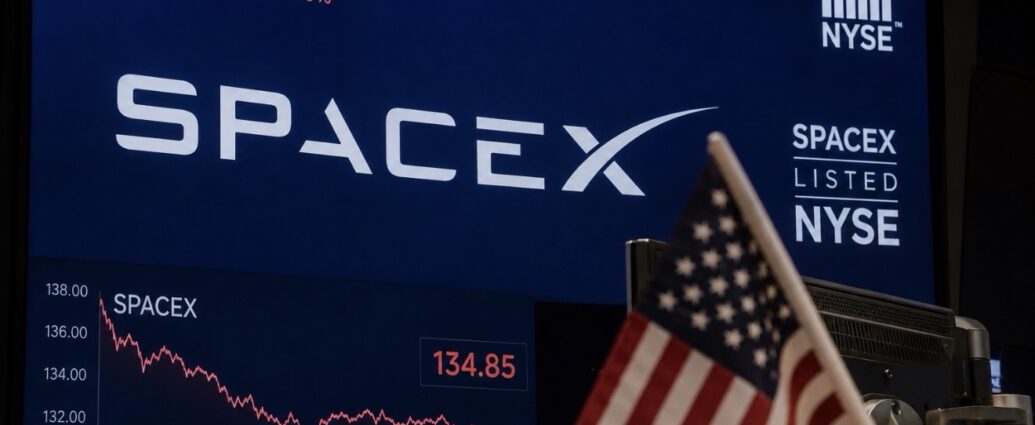
Technology stocks remain in focus after leading Wednesday’s selloff. Shares of Microsoft, Meta Platforms, Alphabet, and Amazon all closed lower. Meanwhile, SpaceX (SPCX) experienced its first decline since going public on June 12, temporarily pausing a powerful post-IPO rally.

Commodities and Volatility

Oil remains one of the market’s biggest wild cards.

West Texas Intermediate crude traded near $76 per barrel, while Brent crude hovered around $79 per barrel, both well below their wartime highs.

Gold fell 1.77% as investors adjusted to the prospect of higher-for-longer interest rates. Meanwhile, the Cboe Volatility Index (VIX) moved above 16, reflecting increased uncertainty following the Fed’s policy shift.

One additional factor may shape trading activity. U.S. financial markets will be closed Friday, June 19, for Juneteenth, making Thursday the final full trading session before the holiday weekend. Overseas, the Bank of England is expected to announce its own interest-rate decision, with economists widely forecasting no change to its benchmark rate.

For investors, the takeaway is straightforward: the Federal Reserve no longer appears eager to deliver lower rates, and Thursday’s trading session will offer the first real test of how markets adapt to a more hawkish era under Chairman Kevin Warsh.

Bottom Line

Thursday’s market direction will likely be determined by three factors: Fed rate expectations, Treasury yields, and oil prices. If yields continue rising and investors conclude that rates will stay higher for longer, stocks could face additional pressure. If yields stabilize, oil remains contained, and earnings come in strong, markets may attempt a rebound after Wednesday’s sharp selloff.

JBizNews Desk
Wall Street

© JBizNews.com All Rights Reserved. Reproduction or distribution without written permission is prohibited.

Smith & Wesson Brands reported a sharp jump in sales and profit on Wednesday, and behind the numbers sits a demand story the Maryville, Tennessee gunmaker rarely spells out: a country where fear — much of it driven by a record stretch of antisemitic violence — is sending first-time buyers to gun counters. The company posted results for its fiscal fourth quarter and full year ended April 30, with handguns accounting for the overwhelming majority of shipment growth.

The clearest signal is the gap between the company and the wider market. Handgun shipments into the sporting-goods channel rose 23.2% even as the national background-check measure rose just 1.1%, and handguns made up more than 80% of units shipped. People are not simply buying more guns — particular buyers are, for particular reasons.

One of those reasons runs straight through the American Jewish community.

In its annual audit released May 6, 2026, the Anti-Defamation League called 2025 one of the most violent and deadly years for Jews in the United States, counting 6,274 antisemitic incidents of assault, harassment, and vandalism — an average of 17 incidents per day. The year before, in 2024, the group recorded 9,354 incidents, a record high. “Numbers that would have shocked us five years ago are now our floor,” ADL Chief Executive Jonathan Greenblatt said.

The violence has been concrete and recent.

On May 21, 2025, two Israeli Embassy staffers were shot and killed outside the Capital Jewish Museum in Washington. Days later, on June 1, 2025, a man threw Molotov cocktails at a Run for Their Lives gathering supporting Israeli hostages in Boulder, Colorado, an attack that later claimed the life of an 82-year-old woman. Additional incidents followed, including a truck driven into a synagogue in West Bloomfield, Michigan, in March 2026, and an arson attack at Mississippi’s oldest synagogue in January 2026.

The response has been measurable.

Surveys released in October 2025 by the ADL and the Jewish Federations of North America found that 9% of American Jews had purchased a firearm because of security concerns, while 13% had installed new security systems. For a community historically associated with relatively low rates of gun ownership, the shift is significant.

Organizations have emerged to meet that demand.

Lox & Loaded, a Jewish firearms-training organization founded in March 2025, has expanded to 21 states, 40 chapters, and more than 1,000 members. In April 2026, the group announced a partnership with the National Rifle Association to provide expanded training opportunities and range access. Other organizations, including Magen Am and the Community Security Service, have expanded security training programs for synagogues and Jewish institutions. Collectively, Jewish organizations now spend an estimated $765 million annually on security measures.

The financial results reflect the demand.

Fourth-quarter net sales reached $178.4 million, up 26.7% from a year earlier, while earnings came in at 36 cents per share. Full-year sales totaled $523.8 million, an increase of 10.4%. The board declared a quarterly dividend of 13 cents per share, payable on July 15.

Chief Financial Officer Deana McPherson pointed directly to handguns as the primary driver of performance.

“Our outperformance was mostly driven by handgun shipments, which represented over 80% of our units shipped,” she said.

New products generated 37.5% of fourth-quarter revenue, and management said it expects overall firearm demand to remain relatively stable. President and CEO Mark Smith has credited recent product launches and disciplined pricing for helping drive growth.

The same firearms purchased by some consumers for protection continue to place Smith & Wesson at the center of the national debate over gun violence.

Survivors of the 2022 Highland Park Fourth of July parade shooting have sued the company, alleging it improperly marketed a rifle to vulnerable young men. The case remains active. Earlier this week, the U.S. Supreme Court declined to hear a challenge by gun manufacturers to a New York law allowing the state and private plaintiffs to sue firearm companies over criminal misuse of their products. Smith & Wesson was among the challengers.

The firearms industry argues that such lawsuits conflict with the Protection of Lawful Commerce in Arms Act, a federal law enacted in 2005 that shields manufacturers from many claims arising from criminal misuse of firearms. Gun-control advocates counter that companies should face accountability when marketing or business practices contribute to violence.

For investors, the earnings report highlights a company benefiting from strong demand and favorable product trends. For the broader public, it underscores a more complicated reality: a firearm manufacturer posting some of its strongest results in years while a growing number of Americans — including many Jews who once avoided gun ownership — decide that personal protection has become a necessity.

JBizNews Desk
Wall Street

© JBizNews.com All Rights Reserved. Reproduction or distribution without written permission is prohibited.

The war between the United States and Iran moved a step closer to an official end Wednesday after both sides put a ceasefire memorandum into effect, activating a 60-day framework designed to halt hostilities and open negotiations toward a broader settlement.

The agreement takes effect immediately, while diplomats continue preparations for a formal signing ceremony expected later this week in Switzerland.

The move marks the most significant diplomatic breakthrough since fighting erupted on February 28, a conflict that disrupted global energy markets, rattled investors, and raised fears of a broader regional war.

For businesses, investors, and consumers, the most important provisions involve oil, shipping, and trade.

The ceasefire framework outlines steps aimed at restoring commercial traffic through the Strait of Hormuz, one of the world’s most important energy corridors. Before the conflict, roughly one-fifth of global oil and liquefied natural gas shipments moved through the narrow waterway linking the Persian Gulf to international markets.

Disruptions to that route sent oil prices sharply higher and contributed to rising gasoline costs worldwide.

The agreement also creates a pathway for increased Iranian energy exports and the restoration of commercial activity tied to shipping, insurance, banking, and transportation services associated with international trade.

Markets have already responded positively.

Oil prices have retreated from recent highs as traders anticipate improved supply conditions, while gasoline prices have begun easing as concerns over a prolonged disruption diminish. The possibility of additional Iranian crude entering global markets has added to expectations that energy costs could continue falling if the ceasefire holds.

President Donald Trump welcomed the development and has repeatedly pointed to lower oil prices and stronger financial markets as evidence that diplomacy is producing economic benefits.

Beyond energy, the memorandum establishes a 60-day negotiating period during which both countries are expected to pursue discussions on regional security issues and Iran’s nuclear activities.

Iran has agreed to maintain the current status of its nuclear program during negotiations, while the United States has agreed not to impose additional measures during the framework period.

Officials on both sides have emphasized that the memorandum represents a temporary framework rather than a final peace agreement.

That distinction remains critical.

While markets have embraced the ceasefire, investors recognize that the agreement’s success ultimately depends on what happens during the next two months. Any breakdown in negotiations or renewed military activity could quickly reverse recent gains in stocks and send energy prices higher again.

The challenge is already apparent. Regional tensions remain elevated, and military activity involving Iranian-backed groups continues to present risks that could complicate efforts to reach a permanent settlement.

The diplomatic effort has drawn support from multiple international players, including regional mediators, European governments, and the United Nations, all of whom have urged both sides to use the ceasefire as an opportunity to pursue a longer-term resolution.

For the global economy, the stakes extend far beyond the Middle East.

Lower energy prices could ease inflationary pressures, reduce transportation costs, improve corporate profit margins, and provide relief for households that have faced months of elevated fuel prices.

Airlines, manufacturers, trucking companies, retailers, and consumers all stand to benefit if stability returns to energy markets.

The next 60 days will determine whether this memorandum becomes the foundation for a broader agreement or simply a pause in a conflict that has already reshaped global energy markets and geopolitical calculations.

For now, the ceasefire is in effect, commercial shipping is preparing to normalize, and markets are cautiously betting that diplomacy may finally succeed where months of conflict failed.

JBizNews Desk
Washington

© JBizNews.com All Rights Reserved. Reproduction or distribution without written permission is prohibited.

PayPal confirmed on Tuesday that it is exploring strategic options for PayPal Ventures, its corporate venture capital arm, a step that effectively winds down a startup-investing operation the company built a decade ago.

In a statement, a company spokesperson said the review is part of an effort to sharpen the firm’s focus and that it had no further details to share for now.

The move lands as new chief executive Enrique Lores strips away pieces of the business that sit outside PayPal’s core job: running the checkout button and payment tools that millions of shoppers and merchants use every day.

The venture team has already shrunk dramatically.

Its headcount has fallen from more than 10 people in late 2025 to just two, and the web page that once listed its investors is no longer visible.

PayPal is also looking to sell some of its existing startup stakes on the secondary market and has hired Jefferies to help line up potential buyers.

Together, the two moves point to a full retreat rather than a simple slowdown.

PayPal launched PayPal Ventures in 2016, a year after eBay spun the payments company off as an independent business.

Since then the unit has invested off PayPal’s own balance sheet, backing more than 80 companies across three funds worth over $850 million.

Its bets included well-known names such as Plaid, which connects bank accounts to apps, and the crypto custody firm Anchorage Digital.

One of its profitable exits came when Bill.com bought the expense-management startup Divvy in 2021.

So why pull back from a business that has, at times, made money?

The portfolio’s results swing from year to year, which is exactly the kind of unpredictability Lores is trying to cut.

The venture holdings added 10 cents to PayPal’s $1.53 earnings per share in the fourth quarter of 2025, after subtracting 4 cents a year earlier, according to the company’s February earnings release.

That swing is small next to PayPal’s payments engine, and the new leadership would rather spend its attention elsewhere.

The decision follows a shakeup at the very top.

The board pushed out former chief executive Alex Chriss in February after a nearly three-year run in which PayPal’s stock fell more than 30% and directors grew worried the company was losing ground to rivals like Stripe and Apple, both of which offer their own checkout products.

In announcing the change, the board said the pace of progress had not met its expectations and named Enrique Lores, the former head of HP, as the new CEO, with David W. Dorman as independent chairman.

Lores moved quickly.

He spun the Venmo app into its own business unit, reshuffled senior leadership, and in May rolled out a sweeping cost-cutting plan.

PayPal is aiming to trim about 20% of its workforce over the next two to three years and to squeeze out at least $1.5 billion in savings during that stretch.

On a May earnings call, Lores told investors the company needed to speed up its use of artificial intelligence and get back to basics.

Closing a venture arm is a telling signal.

Corporate investing groups tend to flourish when money is cheap and companies feel free to chase strategic side bets, and they become harder to justify when leadership is focused on cost discipline and a clearer story for shareholders.

The higher interest rates of recent years made those bets more expensive to carry.

Big technology firms such as Google and Microsoft still run sizable venture operations, but those companies are not in turnaround mode the way PayPal is.

For everyday users, little changes at the checkout screen tomorrow.

The shift matters more as a sign of where PayPal is heading: away from scattered side projects and back toward the branded checkout, merchant tools, and Venmo payments that bring in the bulk of its revenue.

Selling the startup stakes, if it happens, would turn hard-to-value holdings into cash the company can pour back into that core.

Whether the strategy revives a stock that has frustrated investors will depend less on the venture wind-down itself and more on whether Lores can make the payments business grow faster.

San Jose, Calif. — JBizNews Desk

JBizNews Desk / © JBizNews.com All Rights Reserved. Reproduction or distribution without written permission is prohibited.

The World Bank Group said Tuesday it has approved a financing package designed to unlock as much as $2 billion in private bank loans for Argentina, a deal meant to cut the country’s borrowing costs just as a heavy round of debt payments comes due. The approval was announced from Washington by the bank’s board.

The structure is unusual, and the details matter. Rather than lend the money itself, the World Bank Group is backing loans that commercial banks will make to Argentina. It does this through two guarantees: a first-loss policy-based guarantee from the International Bank for Reconstruction and Development (IBRD) and a second-loss guarantee from the Multilateral Investment Guarantee Agency (MIGA). Together they cover 95% of the debt-service payments on the commercial loan.

In plain terms, the bank is promising to absorb most of the losses if Argentina fails to pay. That promise is what makes private lenders comfortable handing over money to a borrower they would otherwise treat as high-risk, and it lets Argentina lock in cheaper terms than it could get on its own.

The timing is no accident. Argentina faces roughly $4.4 billion in debt repayments by July 9, and the new package is built to help refinance part of that load rather than drain the country’s reserves to cover it. The supported loan carries a six-year maturity with a three-year grace period before repayments begin.

“We are committed to supporting Argentina’s macroeconomic stabilization and growth reform agenda,” said Susana Cordeiro Guerra, the World Bank’s Vice President for Latin America and the Caribbean. She said the guarantee structure helps bridge the country’s return to international capital markets on more affordable terms while pushing reforms that lift private investment and productivity.

That last point is the real goal behind the headline number. The guarantees are tied to changes meant to pull private money into Argentina — financing for infrastructure, stronger competition in its markets, and a friendlier environment for companies trying to do business there. The loan is less a handout than a down payment on Argentina convincing private investors to come back on their own.

And the World Bank is not acting alone. The Inter-American Development Bank is weighing a guarantee of up to $550 million for Argentina, while the Development Bank of Latin America and the Caribbean (CAF) is looking at another $500 million in support. CAF also announced Tuesday that it will provide a separate $400 million loan to Pan American Energy to fund the company’s natural-gas operations and expand output — a sign that lenders are backing both the government and the businesses driving its energy sector.

For ordinary Argentines and the companies that operate there, the stakes are practical. The country has spent years fighting punishing inflation and a weak currency, and the cost of borrowing abroad has long been one of its heaviest burdens. Cheaper refinancing eases pressure on the national budget, which in turn affects everything from the value of the peso to the price of imported goods and the government’s ability to keep spending steady. Lower financing costs also make it easier for firms to plan, hire, and invest without bracing for the next debt crisis.

There is a wider message here too. The deal is being watched closely by other developing economies, because the guarantee model offers a template for governments that have been shut out of cheap credit. If private banks are willing to lend to Argentina when most of the risk is covered, the same approach could be used to pull commercial money into countries that markets have written off.

None of this erases Argentina’s underlying problems. The package buys time and lowers costs, but it does not eliminate the debt or guarantee the reforms will deliver. The country still has to prove it can stabilize its economy and earn its way back into global markets without a safety net.

For now, the approval is a clear win. It hands Argentina a cheaper path through a near-term cash crunch and signals that international lenders are betting the country’s turnaround is worth backing. The harder test — whether private investors return on their own once the guarantees are gone — is still ahead.

Washington — JBizNews Desk

© JBizNews.com All Rights Reserved. Reproduction or distribution without written permission is prohibited.

The Centers for Disease Control and Prevention (CDC) reported that the U.S. infant mortality rate fell to an all-time low in 2025, with slightly fewer than 5.4 deaths per 1,000 live births, according to preliminary government data. On Tuesday, the agency released a deeper analysis of 2024 figures that pointed in the same direction, showing declines among both the youngest newborns and older infants. In raw numbers, U.S. infant deaths dropped to roughly 19,350 last year, down from about 20,050 in 2024.

The improvement has a clear business story behind it. A major driver, experts believe, is a vaccination push against respiratory syncytial virus (RSV) — a common illness that causes cold-like symptoms but can turn dangerous, even deadly, for babies. Beginning in 2023, U.S. health officials recommended two new tools to protect infants, and both come from large pharmaceutical companies now selling them at scale.

The first is a vaccine given to pregnant women between 32 and 36 weeks, sold by Pfizer under the name Abrysvo, which passes protection to the baby before birth. The second is a lab-made antibody shot given directly to infants, called Beyfortus, marketed by Sanofi and AstraZeneca. Together they have created a fast-growing commercial market built around a problem that previously had few good defenses.

The payoff shows up most clearly in hospital data. The CDC has reported that infant hospitalizations for RSV dropped after the shots became available, with the largest reductions among babies up to two months old. That matters financially because severe RSV cases often mean stays in intensive care, which rank among the most expensive forms of pediatric treatment. Each hospitalization avoided is a cost not borne by a family, a hospital, or an insurer.

That makes the immunization push a rare win across the health-care economy. Insurers and employer health plans save when fewer babies need costly emergency care. Medicaid, which covers roughly four in ten U.S. births, stands to benefit heavily, since a large share of vulnerable infants fall under government coverage. Hospitals, meanwhile, can redirect strained pediatric capacity toward other patients. Prevention that costs a few hundred dollars per shot replaces care that can run into the tens of thousands.

For the drugmakers, the opportunity is still expanding. CDC figures show that as of late January, only about 41.6% of eligible pregnant women had received the RSV vaccine, with coverage uneven across different groups. That low rate is a problem for public health but a growth runway for Pfizer, Sanofi, and AstraZeneca, since millions of births each year represent a recurring market that is far from saturated. Closing the coverage gap means steady demand for years.

The ripple effects reach further into the health sector. Pharmacies and clinics that administer the shots gain a new line of routine business, and the broader push around maternal and infant health supports demand for prenatal care, pediatric services, and the workers who provide them. Health care has been one of the strongest areas for job growth, and preventive programs like this one help sustain that momentum by keeping a steady stream of patients moving through doctors’ offices and pharmacies rather than emergency rooms.

There are real limits to the good news. Even at a record low, the U.S. rate still trails other wealthy countries such as Italy, Japan, Spain, and Sweden, a gap experts tie to poverty and gaps in prenatal care that no single shot can fix. The benefits of the RSV products are also spread unevenly, with lower vaccination rates among some groups that face the highest risk. And the latest figures are provisional, meaning they could shift slightly as the CDC finishes its analysis.

Still, the direction is encouraging, and it carries a lesson that businesses across health care are watching closely. A targeted prevention effort, backed by products from a handful of major companies, appears to be saving lives and cutting costs at the same time. For an industry often criticized for spending heavily on treatment after people get sick, the RSV story is a reminder that prevention can be good medicine and good business at once.

The next test is whether the gains hold as the 2025 numbers are finalized and whether coverage climbs from here. If it does, the companies behind these shots, the insurers footing the bills, and the families raising healthier babies all stand to come out ahead.

Washington – JBizNews Desk

© JBizNews.com All Rights Reserved. Reproduction or distribution without written permission is prohibited.

President Donald Trump has invoked the Defense Production Act to push American weapons makers to produce more munitions faster, according to a presidential memorandum dated June 11 and made public Tuesday in the Federal Register.

The order points to “systemic constraints in the munitions industrial base” and hands Defense Secretary Pete Hegseth the authority to strike voluntary agreements with manufacturers to fix them.

The law Trump reached for is a Cold War relic.

Passed in 1950 during the Korean War, the Defense Production Act lets a president steer private industry toward national-defense needs — a powerful tool that signals how seriously Washington is taking the strain on its arsenal.

That strain traces directly to the Iran war.

The roughly 15-week conflict, on top of years of arming Ukraine and other partners, has burned through stocks of missiles and precision weapons far faster than factories can refill them.

An April analysis from the Center for Strategic and International Studies found the U.S. may have used up more than half its inventory of four critical munitions, including Tomahawk cruise missiles, during the Iran campaign.

The memo lays out the bottleneck in plain terms: limited production capacity, fragile supply chains, long-lead parts that take many months to build, and the chokepoints that come with them.

Some of the hardest pieces to make quickly are solid rocket motors, igniters, and guidance systems — the specialized internals that go into nearly every modern missile, and exactly the parts no manufacturer can spin up overnight.

For the defense industry, the order is an invitation to do more business with the government.

The biggest contractors — Lockheed Martin and RTX, the parent of Raytheon — already work closely with the Pentagon, and the new authority is meant to deepen that cooperation.

A Pentagon official, industrial-base policy chief Michael Cadenazzi, told reporters Tuesday that the act lets the government sit down with companies and work through supply-chain problems together without running afoul of antitrust law.

The timing lined up with fresh movement in the industry.

Also on Tuesday, Lockheed Martin and GM Defense announced an agreement to work together on strengthening defense supply chains and manufacturing.

Not everyone inside the government agrees there is an emergency to fix.

Hegseth has spent weeks downplaying worries about depleted stockpiles, telling lawmakers the concern has been “foolishly and unhelpfully overstated” and insisting the military has what it needs.

Yet in earlier testimony he also acknowledged it could take months, even years, to replace some of what has been fired.

The business stakes reach well beyond the marquee contractors.

Replenishing missile stocks means orders flowing down to the smaller companies that make rocket motors, electronics, machined metal parts, and chemicals — many of them mid-sized manufacturers spread across states that depend on defense work for jobs.

A sustained push to rebuild inventories is the kind of demand that fills plants and adds shifts, and it tends to last for years rather than months.

Investors noticed.

Shares tied to defense manufacturing and the exchange-traded funds that track them tend to move on signals like this, because a government commitment to rebuild stockpiles points to steady, multi-year revenue for the companies that make weapons and their components.

The order does not name dollar figures or guarantee contracts, but it tells the industry the orders are coming.

There is a strategic worry sitting underneath all of it.

Defense planners have warned that inventories drained in the Middle East leave less in reserve for any future conflict involving China, where a clash would demand exactly the long-range missiles the U.S. has been spending down.

For now, the practical effect is a green light.

Trump has told his defense secretary to lean on industry, and industry has been handed a reason to invest in new capacity.

Whether that turns depleted shelves back into full ones — and how quickly — will depend on the same fragile supply chains the order was written to fix.

Washington — JBizNews Desk

JBizNews Desk / © JBizNews.com All Rights Reserved. Reproduction or distribution without written permission is prohibited.

to completely resume.

As investors flocked to a pending agreement to end the US-Iranian War on Wednesday, petrol prices fluctuated.

Both nations have not disclosed the terms of the primary agreement, but traders are watching to see if the negotiations eventually result in the Strait of Hormuz being reopened to business visitors, as President Donald Trump has claimed. On Friday, the deal is anticipated to get signed.

Brent Pure, the world’s standard oil, saw a constrained optimism in the market, which increased by over 1 %. Before falling back to$ 79, the price per barrel soared above$ 80 for several hours.

The benchmark U.S. crude oil, West Texas Intermediate Crude, increased by more than 1 % to close at$ 77 per barrel, but it has since fallen to$ 76.60.

ISRAEL, S. REGIME, AND S. HORMUZ DEAL WITH TRUMP AS VICTORY OVER US

The crucial chokepoint that connects the Persian Gulf to the lake before the United States launched strikes on Iran on February 28 passed through. Brent Pure hit a military high of about$ 120 per barrel in late April.

Since the U.S. and Iran made the announcement that a 60-day peace and the opening of the Strait of Hormuz may be part of the agreement, oil prices have dropped. Oil is still selling at between$ 65 and$ 75 per barrel, which is not yet the same level as before the war.

Trump praised the progress being made with Iran and cited rising property prices as evidence that conversations are moving in the right direction when speaking to reporters at the G7 summit in France on Wednesday.

JD VANCE IDENTIFIES US-IRAN DEAL AND ANSWERS IF Tax Cash WILL BE TRANSFERRED TO TEHRAN.

He stated during a intergovernmental meeting with Egypt at the G7 that” we have a very popular stock market and we have a very small oil price.” And I believe that oil prices may drop below what they were before the warfare.”

Trump added that, in accordance with the bargain, he anticipates opening the Strait of Hormuz “in complete” within two weeks.

Trump has called some of the facts of a leaked memorandum of understanding between the United States and Iran “false,” and the terms of the agreement are still murky.

Trump specifically stated that the United States would not support a$ 300 billion investment that would aid the growth of Iran’s economy.

” No, we’re not investing,” We’re not putting up$ 0.10. Individuals can make their own decisions, though, that’s off to them. Do you want me to claim that no one ever has the right to invest in a nation? Trump addressed Peter Doocy of Fox News.

This post was originally published here

NEW YORK — Whey protein prices have surged as much as 250% over the past year, according to dairy-data firm Ever.Ag, transforming what was once a byproduct of cheese production into one of the most sought-after ingredients in the food industry.

The firm reports that 80% whey protein concentrate now trades above $13 per pound in the United States, while more refined whey protein isolate prices have climbed roughly 150% year-over-year. In late May, DCA Market Intelligence reported a record average price of €26,450 ($30,518) per metric ton for 80% concentrate, more than double its level less than a year ago.

The latest U.S. Department of Agriculture dairy-market reports describe the whey market as firm, with tight inventories and elevated pricing even as some other dairy products soften.

The reason is simple: demand is growing faster than supply.

High-protein diets have moved beyond fitness enthusiasts and become mainstream, fueling demand for protein shakes, snack bars, cereals, meal replacements, and fortified foods.

A major new catalyst has been the rapid adoption of GLP-1 weight-loss drugs such as Ozempic and Wegovy. With roughly 12% of Americans now taking such medications, healthcare providers increasingly recommend higher protein intake to help preserve muscle mass during weight loss.

The result has been a sharp increase in demand across the protein industry.

Over the past two years, whey protein concentrate prices have risen approximately 108%, while isolate prices have climbed roughly 139%.

Supply, however, cannot easily expand.

Whey is a byproduct of cheese production, meaning manufacturers cannot simply increase output in response to demand. Production depends largely on how much cheese is being made, not how much protein powder consumers want.

Even as U.S. milk production reaches record levels, the specialized facilities that process whey into protein concentrates and isolates are operating near capacity.

USDA reports indicate that food manufacturers are increasingly competing for available whey supplies, while many producers have already committed most of their production through the end of 2026.

The impact is increasingly visible to consumers.

Sports-nutrition companies are raising prices, reducing package sizes, or incorporating alternative proteins to manage costs. Some finished protein products now cost 50% to 110% more than they did in 2024.

“We’re seeing whey protein prices reach historic highs,” said Darcy Davenport, chief executive of BellRing Brands, maker of the Premier Protein product line.

Retail-data firm Datasembly found that U.S. concentrate prices have increased approximately 15% over the past year, with premium isolate products rising even faster.

Dairy companies are racing to expand production.

Glanbia is adding new whey-isolate capacity through a joint venture in New Mexico. Tirlán has committed approximately €126 million to premium whey production, while Idaho Milk Products is investing $200 million in new facilities.

Across the industry, billions of dollars are being committed to additional processing infrastructure.

Most of that capacity, however, will not become operational until late 2026 or beyond, leading many analysts to conclude that meaningful relief may not arrive until 2027.

Some manufacturers are responding by sourcing lower-grade whey from overseas markets, while premium brands continue emphasizing quality and domestic supply chains.

Industry observers believe the demand surge may prove long-lasting.

Unlike previous cycles driven largely by bodybuilders and athletes, whey protein now serves a broad range of markets, including mainstream food products, medical nutrition, weight-management programs, and international exports.

That expansion suggests prices could remain structurally higher even after additional production comes online.

The shortage is also accelerating research into alternative proteins, including plant-based blends and other dairy-derived ingredients, as manufacturers seek greater supply flexibility.

For consumers, the effects are already apparent through higher prices on protein powders, shakes, bars, and protein-enhanced foods.

For dairy producers, the boom represents both an opportunity and a challenge — the chance to generate significant profits from what was once considered a low-value byproduct, provided new production can keep pace with demand.

JBizNews will continue monitoring the whey and broader dairy markets for what they mean for food inflation, consumer spending, and the profitability of America’s dairy processors.

Wall Street — JBizNews Desk

© JBizNews.com. All Rights Reserved. Reproduction or distribution without written permission is prohibited.

Britain will bar children under 16 from using a range of major social media apps, Prime Minister Keir Starmer announced Monday, putting the country at the front of a global push to pull young people away from platforms built to keep them scrolling.

Speaking at Downing Street, Starmer said the ban would cover Snapchat, TikTok, YouTube, Instagram, Facebook and X, and would take effect next year.

Messaging services such as WhatsApp and Signal, along with YouTube Kids, would be exempt.

Crucially, the penalties fall on the companies, not the children. Platforms that fail to take reasonable steps to keep under-16s off their services could face fines running into the millions.

“Every parent can see it with their own eyes. Social media is making children unhappy,” said Starmer, who has two teenage children and framed the move as a “big moment for our country.”

The government said its plan drew support from about nine in ten parents and generated 116,000 responses during public consultation, one of the largest in years.

The British plan follows the model set by Australia, which last year became the first country to bar under-16s from holding social media accounts.

But Starmer said Britain would go further.

The government also intends to block livestreaming and stranger contact with children on gaming platforms, restrict AI chatbots that simulate romantic or sexual relationships to adults only, and is weighing additional measures such as overnight curfews and forced breaks in endless scrolling for those under 18.

For the technology industry, the stakes are real and largely American.

The companies in the crosshairs are among the biggest names in U.S. tech: Meta, which owns Instagram and Facebook; Snap, the maker of Snapchat; Google, which owns YouTube; and TikTok’s parent, the Chinese firm ByteDance.

These platforms depend on advertising revenue, and advertising depends on engaged users, including the teenagers a ban would lock out.

Beyond the lost users, the companies face the cost and complexity of verifying ages across millions of accounts, a technical and privacy challenge with no easy solution.

The platforms are pushing back.

A YouTube spokesperson warned that a blanket restriction could backfire by pushing children out of supervised, curated services and toward anonymous, less-safe corners of the internet.

Starmer anticipated the resistance, saying he would fight back if technology companies resisted and acknowledging that some teenagers would inevitably find workarounds.

He compared it to alcohol, arguing that the difficulty of perfect enforcement is no reason to abandon the effort.

Here is why it matters well beyond Britain.

The country is one of the largest and wealthiest markets in Europe, and a ban there sets a precedent that other governments are likely to study closely.

Australia, Canada, Brazil and Indonesia have already moved on age limits, and France, Spain, Denmark and others are weighing similar steps.

Each new market that closes to younger users chips away at a business model the social media giants have spent two decades building, one that treats teenage attention as a core asset.

The timing is pointed.

Starmer said he expected to raise the issue with President Donald Trump and other leaders at the Group of Seven summit in France this week, suggesting the campaign to regulate children’s access to social media is becoming an international cause rather than a national experiment.

For the American companies that dominate these platforms, the message from London is a warning:

The era of unrestricted access to young users is starting to close, one country at a time.

London — JBizNews Desk

JBizNews Desk / © JBizNews.com All Rights Reserved. Reproduction or distribution without written permission is prohibited.

Apple is preparing one of the biggest waves of new products in its history for late 2027, headlined by AirPods with built-in cameras, a second-generation foldable iPhone, and a redesigned iPhone built to mark the device’s 20th anniversary, according to people familiar with the plans cited by Bloomberg’s Mark Gurman on Tuesday.

The reporting points to a year in which Apple tries to prove it can still set the pace in consumer technology, especially in the race to put artificial intelligence into devices people wear.

The most novel of the three is the camera-equipped AirPods, code-named B798 internally and described as Apple’s first AI wearable.

The tiny cameras in the earbud stems are not meant for taking photos or video.

Instead, they feed information about a wearer’s surroundings to Siri, so the assistant can answer questions about nearby objects, offer reminders tied to where someone is, or sharpen walking directions.

The earbuds would look much like the current AirPods Pro models, with cameras added to the stem, and a small light would signal to others when those cameras are active — an attempt to address privacy concerns.

The product was originally targeted for 2026 but has reportedly been pushed back.

The delay stems in part from Apple’s widely reported struggles with its next-generation AI software and a revamped Siri, along with the challenge of building visual models that can reliably identify what users are looking at.

That timing matters because it highlights how Apple’s AI setbacks are beginning to affect its hardware roadmap at a time when competitors are moving aggressively.

The second-generation foldable iPhone signals that Apple sees foldable devices as a long-term business rather than a one-time experiment.

The company is widely expected to introduce its first foldable iPhone in 2026, with a follow-up model arriving roughly a year later.

For a company whose iPhone business still generates the majority of its revenue, a successful foldable line could create a new premium category and encourage upgrades from existing customers.

The centerpiece of the roadmap may be the 20th-anniversary iPhone, expected to commemorate two decades since the original iPhone debuted in 2007.

Reports describe a device that breaks sharply from today’s designs, featuring displays that stretch nearly edge-to-edge and glass that curves around the sides.

Apple has successfully used anniversary editions before to drive demand.

The iPhone X, launched in 2017 for the product’s tenth anniversary, sparked one of the company’s biggest upgrade cycles.

A similarly dramatic redesign in 2027 could have the same effect.

Under the hood, both the anniversary model and the new foldable device are expected to run on Apple’s next-generation A21 processor, built using advanced 2-nanometer manufacturing technology from Taiwan Semiconductor Manufacturing Co. (TSMC).

Reports indicate Apple is already exploring even smaller 1.4-nanometer chips for future devices and may seek additional manufacturing capacity from Intel, a notable shift given the company’s longstanding reliance on TSMC.

The broader strategy reflects a growing battle over what comes after the smartphone.

Technology companies across the industry are investing heavily in AI-powered devices that can see, hear, and understand the world around users.

Meta is betting on smart glasses.

Apple is reportedly developing its own smart-glasses platform while simultaneously exploring AI-enabled earbuds.

Putting cameras and AI sensors into AirPods gives Apple a way to enter the market using a product that already has hundreds of millions of users worldwide.

There are important caveats.

The plans come from unnamed sources, Apple does not comment on unreleased products, and Bloomberg’s report notes that development schedules remain fluid and could change.

All three products are still being tested, and features may evolve before launch.

For consumers, the roadmap offers a glimpse of where personal technology is heading — toward devices that constantly observe their surroundings and provide real-time assistance through artificial intelligence.

For investors, the question is whether Apple can transform its AI ambitions into products people are willing to buy after a period in which many analysts believe the company has fallen behind rivals in the AI race.

If these products arrive as planned, 2027 could become one of the most important years in Apple’s history since the original iPhone changed the technology industry nearly two decades ago.

Cupertino, Calif. — JBizNews Desk

JBizNews Desk / © JBizNews.com All Rights Reserved. Reproduction or distribution without written permission is prohibited.

President Donald Trump threatened Earlier this week to slap a 100% tariff on all French wine and champagne unless France scraps the tax it charges large American technology companies, escalating a long-running fight over digital taxation just as he headed to a summit on French soil.

In an interview with the New York Post, Trump said he had taken the warning directly to French President Emmanuel Macron.

“I asked him not to charge American companies, and if they do, I have no choice but to charge a 100% tariff on all champagnes and all wines coming out of France,” he said, adding that all Macron needs to do is drop the tax.

At the center of the dispute is France’s digital services tax, a 3% levy it introduced in 2019 on the revenue that big technology firms earn within the country.

The tax falls heavily on American giants such as Alphabet, Apple, Meta, Amazon and Microsoft, and because it applies to gross revenue rather than profit, companies pay it even in years they earn little.

Washington has argued for years that the tax unfairly singles out U.S. firms.

Macron showed no sign of backing down.

Speaking from the G7 summit he is hosting in the French Alps, he said it is not for the United States to decide French or European law and made clear the tax would stay as long as he is in office.

With his term ending in 2027, Macron has grown less concerned with pleasing the American president.

For France’s winemakers, though, the threat is serious.

The United States is the single biggest buyer of French wine and spirits, accounting for about 21% of the industry’s exports last year.

French and European wines already face a 15% U.S. tariff, up from 10% earlier, and exports to the United States slumped about 21% last year.

Doubling the price of a bottle with a 100% tariff would deal a heavy blow to an industry already under strain, and French exporters reacted with alarm.

Here is what it would mean closer to home.

A 100% tariff is effectively a doubling of the cost of bringing French wine and champagne into the country, and much of that increase tends to reach the shelf.

A bottle that sells for $40 today could approach $60 or more, hitting American restaurants, importers and shoppers who favor French labels.

In that sense, a tax aimed at protecting U.S. tech companies would land squarely on U.S. wine drinkers.

The clash is part of a much bigger standoff.

Digital services taxes have become a flashpoint between Washington and its trading partners, with the United States arguing they discriminate against American firms that dominate the internet economy.

During Trump’s first term, U.S. trade officials opened formal investigations into France’s tax and proposed similar tariffs.

Last year, Canada scrapped its own digital tax under pressure from Trump to keep trade talks alive, a precedent the administration would surely like France to follow.

So far, France is not following it.

The threat now hangs over the G7 gathering, an awkward backdrop for a meeting meant to project unity among allies.

Whether it becomes a real tariff or remains a negotiating club depends on whether Paris blinks, and for the moment, Macron is holding firm.

American wine lovers, and the businesses that sell to them, will be watching closely.

Évian, France — JBizNews Desk

JBizNews Desk / © JBizNews.com All Rights Reserved. Reproduction or distribution without written permission is prohibited.

Investors headed into Wednesday focused on the Federal Reserve’s latest policy decision while oil prices continued their recent decline, extending a five-session losing streak as traders weighed growing expectations for additional global crude supplies.

Markets traded modestly higher in early action as investors awaited the central bank’s announcement later in the day. The focus remained on interest rates, inflation, and any signals policymakers might provide about the direction of monetary policy in the months ahead.

The S&P 500 edged higher, while the Dow Jones Industrial Average and Nasdaq Composite also posted gains. Market participants largely expected the Fed to leave interest rates unchanged, shifting attention toward policymakers’ economic projections and commentary regarding inflation and economic growth.

On the corporate front, earnings reports remained in focus.

Jabil reported stronger-than-expected quarterly results, benefiting from continued demand tied to artificial intelligence infrastructure and data center investments. The manufacturing services company exceeded analyst expectations on both earnings and revenue, helping lift sentiment across parts of the technology sector.

CarMax also drew attention after releasing quarterly results as investors continued to assess the outlook for consumer spending and the used-vehicle market. Analysts remain divided on the company’s turnaround prospects amid a challenging retail environment.

Technology shares were mixed following recent profit-taking across the semiconductor sector. Investors continued to evaluate whether the rapid growth driven by artificial intelligence can support current valuations after a powerful rally over the past year.

In commodities trading, oil prices remained under pressure. Brent crude extended its decline toward levels not seen in several months, while West Texas Intermediate also moved lower. Traders pointed to expectations for increased global supply, including potential additional exports from major producers and higher output from members of the OPEC+ alliance.

The decline in oil helped ease some inflation concerns that have weighed on financial markets in recent months. Lower energy prices can reduce transportation and production costs across the economy, potentially supporting consumers and businesses.

Gold prices also softened as investors reduced some safe-haven positions, while market volatility remained relatively subdued ahead of the Fed announcement.

By the afternoon, attention was expected to shift almost entirely to the central bank’s decision and accompanying comments. Investors will be looking for clues about whether policymakers believe inflation remains a significant threat or whether economic conditions may eventually justify lower interest rates.

With earnings season continuing and energy markets adjusting to changing geopolitical conditions, traders are expected to remain highly focused on incoming economic data and central bank guidance in the days ahead.

JBizNews Desk
Wall Street

© JBizNews.com All Rights Reserved. Reproduction or distribution without written permission is prohibited.

The U.S. Department of Justice sued two top New York health officials on Tuesday, alleging they rigged the bidding for an $11 billion Medicaid home care contract and then allowed a favored company to improperly collect millions of taxpayer dollars from the program.

The civil complaint, filed by the Justice Department’s Civil Division, names New York State Health Commissioner James McDonald and State Medicaid Director Amir Bassiri as defendants. Assistant Attorney General Brett A. Shumate said the lawsuit seeks to enforce federal laws requiring integrity in government health care programs and to protect taxpayers from fraud and abuse.

At the center of the case is New York’s Consumer Directed Personal Assistance Program (CDPAP), which allows approximately 250,000 elderly and disabled residents to hire their own caregivers, including family members, rather than relying on traditional home care agencies. The state consolidated payroll and administrative functions under a single contractor in 2024, arguing the move would reduce costs and improve oversight.

That contractor was Public Partnerships LLC (PPL), a Georgia-based company. According to the federal complaint, the bidding process was not a fair competition. The lawsuit cites internal communications suggesting state officials faced pressure from the Governor’s Office while evaluating competing bids.

Federal prosecutors also allege that PPL intentionally submitted what it internally described as a “recklessly low bid” to secure the contract. According to the complaint, the company expected to recover losses later through higher reimbursement rates approved by the state.

The Justice Department further alleges that once awarded the contract, PPL inflated costs billed to Medicaid and improperly increased administrative charges in violation of contractual obligations and federal law.

The transition to the new system quickly encountered major problems. According to the complaint, PPL requested a longer transition period but was denied. Court records cited by federal attorneys indicate that one week into the January 2025 rollout, only 43 of approximately 214,000 participants had successfully transitioned to the new system. Caregivers across the state reported delayed paychecks, service disruptions, and overwhelmed customer service operations.

Gov. Kathy Hochul is not named as a defendant and is not accused of wrongdoing. However, the complaint references actions by her office during both the bidding process and the implementation of the contract. Hochul has defended the overhaul as necessary to combat waste and fraud, noting that CDPAP spending grew from $1.9 billion in 2015 to approximately $11 billion by 2025.

The lawsuit follows months of scrutiny surrounding the contract award. PPL has faced allegations of operational and financial issues in multiple other states. In New York, lawmakers from both parties have been examining the procurement process, and some have called for additional investigations into the contract award and rollout.

For the hundreds of thousands of New Yorkers who rely on CDPAP services, the federal lawsuit transforms a troubled program transition into a high-profile legal battle over the management of billions of taxpayer dollars. The defendants have not yet filed formal responses, and the allegations remain unproven.

JBizNews Desk
Albany, New York

© JBizNews.com All Rights Reserved. Reproduction or distribution without written permission is prohibited.

The typical asking rent in America slipped again last month, extending one of the longest stretches of falling rents on record, according to the Realtor.com May Rental Report released Tuesday.

The national median asking rent fell to $1,686 in May, down 1.5% from a year earlier. That marked the 34th consecutive month that rents on studio-to-two-bedroom homes came in below year-earlier levels — a streak that now stretches nearly three years and has quietly given renters their strongest negotiating position in a decade.

The reason is simple: supply and demand. A historic apartment construction boom flooded the market with new units, forcing landlords to compete harder for tenants. According to Apartment List, more than 600,000 multifamily units were delivered in 2024, the highest annual total since 1986. While construction has slowed since then, many of those buildings are still leasing up, keeping vacancies elevated and rent growth muted.

For renters who endured the sharp post-pandemic surge in housing costs, the shift has provided meaningful relief. Even so, rents remain well above pre-pandemic levels, meaning today’s renter-friendly environment is still significantly more expensive than the market of early 2020. The recent declines have softened the spike rather than erased it.

The biggest discounts remain concentrated in fast-growing Sun Belt markets that built aggressively. Austin and Phoenix continue to post some of the nation’s steepest rent declines as new supply outpaces demand. In those cities, renters often have greater success negotiating lower monthly payments, reduced fees, or move-in incentives.

The report also highlights differences beneath the national trend. Some markets are retaining existing residents while others are being shaped by migration patterns. Las Vegas, for example, has seen renters stay put as improving affordability provides value close to home.

Other markets are moving in the opposite direction. Previous Realtor.com reports identified cities including Virginia Beach, Baltimore, and Richmond as locations where vacancies are tightening and rents are beginning to climb again. In those areas, affordability pressures are returning despite the broader national decline.

Economists describe the current environment as two rental markets operating simultaneously. Jiayi Xu, an economist at Realtor.com, has noted that renters in high-construction markets are benefiting from significant relief, while tenants in supply-constrained regions are seeing costs move higher again. Chief Economist Danielle Hale has characterized the broader trend as evidence that increased housing supply is finally translating into savings for consumers.

Looking ahead, much depends on the construction pipeline. Fewer projects are breaking ground today than during the peak building surge, meaning the supply wave that has restrained rents will gradually diminish. Most housing analysts expect rents to remain relatively stable through 2026, but many caution that today’s favorable conditions may not persist indefinitely in every market.

For now, renters hold unusual leverage across much of the country. Elevated vacancies and longer leasing times are giving tenants more room to negotiate than they have enjoyed in years. In cities where rents are already rising again, however, the window for bargains may be closing faster than the national numbers suggest.

JBizNews Desk
Housing & Real Estate Desk

© JBizNews.com All Rights Reserved. Reproduction or distribution without written permission is prohibited.

Builders broke ground on far fewer homes in May, sending new construction to its lowest level in six years, according to a report released Tuesday by the Census Bureau and the Department of Housing and Urban Development.

Total housing starts fell 15.4% from April to a seasonally adjusted annual rate of 1.18 million units, the slowest pace since May 2020 and well below the 1.43 million that economists had expected. Starts were also 8.7% lower than a year earlier. April’s figure was revised down to 1.39 million, making the monthly drop even steeper.

The headline number hides an important split. Construction of single-family houses, the kind most American families buy, held up relatively well, slipping just 1.9% to an annual rate of 882,000.

The real collapse was in apartments. Starts of buildings with five or more units fell to 284,000, down from 529,000 in April, nearly cutting the pace of new apartment construction in half in a single month. That part of the market is famously volatile, swinging sharply from month to month, but the size of the drop still stunned forecasters.

The cause is no mystery. Mortgage rates remain high, with the average rate on a 30-year loan sitting near a one-year high, and that keeps would-be buyers on the sidelines and makes builders cautious about starting projects they may struggle to sell.

Construction costs are still elevated, partly because the war with Iran pushed up the price of materials and energy earlier this year. And builder confidence has been sliding; a closely watched measure of homebuilder sentiment fell again this month.

The slump marks a sharp reversal. As recently as March, construction was running at its fastest pace since late 2024, with starts topping 1.5 million. Then activity fell in April and dropped off a cliff in May, a sign that the brief momentum builders had built up has faded under the weight of high borrowing costs.

There is little sign of a quick rebound in the pipeline.

Building permits, which signal future construction, were essentially flat at an annual rate of 1.41 million, down slightly from April and from a year ago. When builders are not pulling permits, they are not planning to ramp up soon.

Completions also fell, dropping 8.1% from April, which means fewer finished homes are reaching the market just as buyers need them most.

Here is why this matters far beyond the construction industry.

The United States has been short of housing for years, and that shortage is the main reason home prices and rents have climbed so far out of reach for so many families.

Every month builders pull back, the gap between the number of homes the country needs and the number it has gets a little wider.

Fewer new apartments today means tighter supply and higher rents tomorrow.

Fewer new houses means continued bidding wars over the limited supply already on the market.

The pullback also ripples through the broader economy.

Homebuilding supports millions of jobs, from carpenters and electricians to the workers who make lumber, drywall and appliances. When construction slows, those jobs and the spending that comes with them slow too.

All of this lands at a delicate moment for interest rates.

The Federal Reserve is meeting this week under its new chair, Kevin Warsh, and is widely expected to hold rates steady, with some officials even leaning toward a hike to fight stubborn inflation.

For the housing market, that is not encouraging news. Mortgage rates tend to follow the Fed’s signals, and as long as borrowing stays expensive, both builders and buyers are likely to stay cautious.

For now, the May report paints a clear picture: the engine that produces the country’s homes is sputtering at exactly the time the nation can least afford it.

Whether construction picks back up depends almost entirely on what happens to mortgage rates in the months ahead, and right now, those rates are not cooperating.

Washington — JBizNews Desk

JBizNews Desk / © JBizNews.com All Rights Reserved. Reproduction or distribution without written permission is prohibited.

The Supreme Court on Monday declined to hear a challenge to the tariffs President Donald Trump placed on Chinese goods during his first term, leaving the import taxes in place and ending a years-long fight by businesses that had hoped to overturn them and recover what they paid.

The justices denied review, without comment, in a case known as HMTX Industries LLC v. United States, the test case in a long-running effort to undo the duties. The decision closes the door on the lawsuit and on the refunds that importers across the country were seeking.

The tariffs at issue were imposed in 2018 under Section 301 of the Trade Act of 1974, after the U.S. Trade Representative investigated and concluded that China was engaging in unfair trade practices, including the theft of American intellectual property and the forced transfer of technology from U.S. companies.

The original duties covered about $50 billion worth of Chinese goods. The administration later expanded them sharply, to roughly $370 billion in products, a move the plaintiffs argued went beyond what the law allowed.

Lower courts, including the U.S. Court of Appeals for the Federal Circuit, had already sided with the government, and the Supreme Court’s refusal to step in lets those rulings stand.

The timing is what makes this significant.

Just four months ago, in February, the same Supreme Court struck down a far broader set of tariffs Trump imposed in his second term, ruling 6-3 that he had overstepped his authority by using a national-emergency law to tax imports from nearly every country.

That decision wiped out the sweeping “reciprocal” tariffs.

But it left the older Section 301 tariffs on China untouched because those rest on a different and firmer legal foundation.

Monday’s action confirms that distinction: the emergency-powers tariffs fell, while the China tariffs survive.

For the administration, that is a meaningful win.

With the emergency-powers route blocked, Section 301 has become one of the most reliable tools left for taxing imports, and the court has now signaled it will not interfere with how that tool has been used.

The administration has already begun leaning on it, recently opening new Section 301 actions against several seafood-trading partners over forced-labor concerns.

Here is why it matters beyond the courtroom.

The tariffs cover an enormous share of what the United States buys from China, from electronics and machinery to furniture and auto parts.

Those taxes are paid in the first place by American companies that import the goods, and a portion of the cost typically reaches consumers through higher prices.

They have been part of the economic landscape for years, and Monday’s decision means they are not going anywhere.

The businesses that paid them and hoped for relief, or for money back, will get neither.

It also leaves the broader trade picture firmly in place.

Even after the bigger tariffs were struck down in February, Chinese goods remained among the most heavily taxed imports in the country because of these Section 301 duties stacked alongside other measures.

With the legal challenge now exhausted, that structure is locked in for the foreseeable future.

The ruling lands as the United States and China continue a delicate economic relationship, one that has swung between confrontation and negotiation.

For companies that spent years building supply chains around Chinese factories and betting the courts might eventually grant them relief, the message from Washington is now unambiguous:

Plan around the tariffs, because they are here to stay.

Washington — JBizNews Desk

JBizNews Desk / © JBizNews.com All Rights Reserved. Reproduction or distribution without written permission is prohibited.

The European Parliament gave its final approval Tuesday to a long-delayed trade agreement with the United States, voting 440 to 151 with 50 abstentions and clearing the last major hurdle just weeks before a deadline set by President Donald Trump that would have sharply raised tariffs on European cars.

The vote locks in the framework that Trump and European Commission President Ursula von der Leyen struck nearly a year ago in Turnberry, Scotland. Under the deal, the United States applies a tariff of up to 15% on most goods coming from Europe, while the European Union removes many of the duties it charges on American industrial products. It is meant to settle a dispute that had been hanging over the world’s largest trading relationship.

What pushed lawmakers to act now was the calendar. Trump had given the bloc until July 4 to ratify the agreement, warning that he would otherwise raise tariffs to much higher levels. He had specifically threatened to lift duties on cars and trucks built in Europe to 25%, a move that would have hit the continent’s automakers hard and raised prices for American shoppers who buy their vehicles. Tuesday’s vote takes that threat off the table, at least for now.

Getting here was not smooth. EU lawmakers had twice frozen the deal over the past several months. They paused it in January after Trump floated the idea of taking control of Greenland, a Danish territory, and again in February after a U.S. court struck down a large part of his tariff program, leaving Europe unsure what it was even agreeing to. Many members of parliament have called the agreement lopsided, arguing it gives Washington more than it gives Brussels, and they attached safeguards that would let the EU suspend the tariff cuts if the United States does not hold up its end.

The tension has not gone away. Tuesday’s approval came just days after Trump issued yet another tariff threat, this time aimed at France over its rules governing digital companies. That timing was a reminder that even a ratified deal remains fragile as long as tariffs are being used as a tool of pressure.

Why does an agreement negotiated in Brussels matter to people in the United States? Because the amounts involved are enormous. Roughly $1.8 trillion in goods and services move across the Atlantic in both directions every year, touching everything from German sedans and French wine to American machinery, software and farm products. When tariffs rise, those costs tend to land on businesses and, eventually, on the prices consumers pay. A 25% tax on imported European cars would have rippled through dealerships, repair shops and the broader auto market on both sides of the ocean.

For carmakers, the vote is a clear relief. European manufacturers such as BMW, Mercedes-Benz and Volkswagen sell large numbers of vehicles in the United States and build many of them at American plants as well. A jump to 25% would have scrambled their pricing and factory plans. The 15% rate is still well above the roughly 2.5% they paid before the dispute began, but it gives them something businesses value above almost everything else: a number they can count on.

Not everything is settled. The safeguards the parliament attached still need sign-off from the EU’s member states before the tariff reductions on American goods fully take effect. Steel and aluminum remain subject to a separate 50% tariff that the two sides have yet to resolve. And the broader relationship will stay on edge as long as new threats keep surfacing.

Still, Tuesday marked a genuine turning point. After a year of brinkmanship, missed deadlines and frozen votes, the deal that has loomed over transatlantic trade finally has the approval it needed to move forward. For companies that have spent months unable to plan, that certainty may matter as much as the tariff rate itself.

The focus now shifts to whether Washington keeps the peace or reaches for the next threat.

Brussels — JBizNews Desk

© JBizNews.com All Rights Reserved. Reproduction or distribution without written permission is prohibited.

The world could go from scrambling for every barrel to drowning in crude within about a year and a half, the International Energy Agency said Wednesday in its monthly Oil Market Report, the first edition to carry a full-year forecast for 2027.

The Paris-based agency, which advises 32 member countries on energy policy, laid out a sharp reversal. After a brutal stretch in which the U.S.-Iran war knocked millions of barrels a day offline and pushed fuel prices to painful highs, the report said a steady rebound in production — provided the interim peace deal between Washington and Tehran actually holds — would lift global supply far beyond what the world is on track to burn.

The numbers tell the story. The agency expects oil supply to climb by roughly 8 million barrels a day next year, reaching about 110.3 million barrels a day, as Persian Gulf production comes back online and OPEC+ raises its output targets. Demand, by contrast, is seen rising a far more modest 2 million barrels a day, to 105.3 million. That gap points to an enormous glut in 2027 — what the agency called a significant overhang building across the market.

That would be a stunning flip from the shortage gripping the market right now. The IEA again cut its demand outlook for this year, saying the pain from high prices has spread well beyond the regions and industries hit first. It now sees 2026 demand at 103.3 million barrels a day, down from 104 million in its May report and a 3.9 million-barrel drop from 2025 levels.

Second-quarter deliveries were especially weak. Early data showed consumption running 5 million barrels a day below a year earlier — the first global quarterly demand drop since the pandemic year of 2020. The agency said the weakness is carrying into the summer, with shipments of major fuels, gasoil in particular, straining across nearly every region as steep prices and a tougher economy push every product category into decline.

Prices have already started to ease as a result. North Sea Dated crude, a global benchmark, tumbled more than $40 a barrel to around $82 between early May and mid-June as buyers pulled back. That is a long way down from the swings earlier in the war, when the benchmark spiked toward $144 a barrel before sliding below $100 on conflicting signals about whether a deal would get done.

Supply this year is still badly depressed. The agency pegged 2026 output at 102.4 million barrels a day, a small upgrade from its last report but a 3.9 million-barrel fall from 2025. May production came in at 94.5 million barrels a day — down 600,000 from April and a striking 13.6 million below where the world was producing before the conflict began.

The strain shows up clearly in storage. Global oil inventories have been drained by an average of 3.8 million barrels a day since the U.S.-Iran war started, with May alone seeing a 4.6 million-barrel-a-day draw. Government emergency stocks held by IEA member countries fell to their lowest level since December 1990, as nations kept releasing reserves to plug the gap.

For all the optimism about 2027, the agency was careful to flag how fragile the peace is. While the interim agreement clears a path for Middle East exports to recover, it warned that practical and political hurdles — including the slow work of clearing mines from shipping lanes and unresolved arrangements for moving cargoes through the Strait of Hormuz — leave real downside risk. The agency stressed that its 2027 rebound is subject to a substantial level of uncertainty tied directly to whether the proposed deal sticks.

Refineries remain under pressure in the meantime. The report sees crude processing shrinking by 2 million barrels a day this year, to 82 million, led by a steep drop over the spring, before recovering by about 3.1 million barrels a day in 2027 as crude supplies normalize.

If the glut does materialize, the agency framed it as a rare opening. A wave of surplus oil, it said, would give governments and companies a chance to refill drained tanks and even build new strategic reserves — a priority for many countries now rethinking their energy plans after the shock of the past several months. For drivers and households that have been squeezed at the pump and on home heating, a market tipping back toward oversupply would be the clearest sign yet that the worst of the price spike is in the rear-view mirror — so long as the guns stay quiet.

JBizNews Desk
Wall Street

© JBizNews.com All Rights Reserved. Reproduction or distribution without written permission is prohibited.

The leaders of the Group of Seven gathered in Évian, France, this week wanting to show the world a united front on artificial intelligence. Instead, their push is running into two hard walls: the United States’ insistence on protecting its own technology lead, and China’s tight grip on the raw materials that AI depends on.

The summit, hosted by French President Emmanuel Macron and running through Wednesday, has put AI near the top of the agenda alongside the wars in Ukraine and the Middle East. Macron has courted the technology world to make his case, even inviting OpenAI chief executive Sam Altman to attend. But the deeper the leaders dig, the clearer it becomes that “G7 cooperation” on AI is complicated by how lopsided the field really is.

Consider the numbers. In 2025, roughly 79% of newly funded AI companies across the G7 were based in the United States, according to the Atlantic Council. France, the host, accounted for about 3.4%. When one member so thoroughly dominates an industry, agreeing on shared rules becomes a negotiation over advantage, not just principle.

That is the first wall. Washington has made clear it opposes binding multilateral agreements on AI that could dull its edge. Instead of signing onto shared governance, the United States is promoting what officials call the “American AI technology stack” — a push to export U.S. hardware and software, often backed by financing from the Commerce Department, so other countries build on American systems rather than Chinese ones. Add in U.S. export controls that restrict the sale of the most advanced AI chips abroad, and the message to allies is less “let’s write rules together” and more “build on our platform.” References to AI governance in this year’s summit language are expected to be watered down as a result.

The second wall is China, and it may be harder to climb. Artificial intelligence is not just software. It runs on physical hardware — chips, servers, data centers — and that hardware depends on rare earth elements and other critical minerals. China controls an estimated 80% to 90% of the global supply of those materials, and it has spent the past year tightening export controls on them. A suspension of some of the toughest restrictions is set to expire on November 10, less than five months away, and if it lapses, a wide swath of the world’s electronics supply chain would again need Chinese approval to operate.

The stakes are enormous. The International Energy Agency, in a report prepared for France’s G7 presidency, estimated that full enforcement of China’s controls could put $6.5 trillion a year in economic output at risk for countries outside China, with losses in the auto industry alone topping $3 trillion. The G7 has responded with a Critical Minerals Action Plan and more than $6.4 billion in new mining and processing projects, but the work is slow, and members remain divided over how confrontational to be with Beijing.

Here is why this matters beyond the summit photographs. The AI economy everyone is racing to build rests on three things: the software, where American firms dominate; the chips and the minerals inside them, where China holds the leverage; and the energy to run it all. The G7 can talk about leading together, but the United States holds most of the software and China holds most of the materials, leaving the rest of the bloc squeezed in the middle. For businesses, that shapes where the next factories and data centers get built. For ordinary people, the same mineral controls touch the price and availability of cars, phones and home electronics.

Leaders are expected to issue several statements before the summit closes on Wednesday, and French officials have promised “very concrete” progress on securing supply chains. Whether that means real action or more careful language is the open question. The pressure will not ease soon: China’s control suspension expires in November, and the United States takes over the G7 presidency next year, putting Washington and its go-it-alone instincts on AI in the host’s chair.

For now, the G7’s ambition to shape the future of artificial intelligence is bumping up against a simple reality. The technology may be global, but the power over it is not evenly shared.

JBizNews Desk

JBizNews Desk / © JBizNews.com All Rights Reserved. Reproduction or distribution without written permission is prohibited.

U.S.-listed companies have sold about $54 billion of convertible bonds so far this year, up 43% from the same stretch of 2025 and the highest year-to-date total since the start of the COVID-19 pandemic, according to Dealogic data going back to 1995. The buyers powering that rush are artificial-intelligence companies hungry for cash, and the terms they are getting are remarkably cheap — in some cases, effectively free.

A convertible bond is a hybrid. Like a normal bond, an investor lends a company money. But the bond comes with a feature that can work in everyone’s favor: if the company’s stock climbs to a predetermined price, the investor can convert the bond into shares and participate in the stock’s gains. Investors like it because they get the relative safety of a bond plus exposure to stock-market upside. Companies like it because that upside allows them to borrow at far lower rates than traditional debt would require.

How low? Many AI issuers are paying coupons as small as 0%, meaning no interest at all. Investors accept those terms because AI stocks move so dramatically that the option to convert into stock is valuable on its own. The more volatile the shares, the more valuable that conversion feature becomes — and AI stocks have been among the market’s most volatile.

Akamai Technologies, the cybersecurity and cloud-computing company, recently demonstrated just how attractive the market has become for issuers. The company sold $3.5 billion in zero-coupon convertible notes split between maturities in 2030 and 2032. The 2030 notes can convert at $201.41 per share, a 42.5% premium above Akamai’s $141.34 closing price on May 19, while the 2032 notes convert at $190.81, a 35% premium. Chief Financial Officer Ed McGowan said the company entered the market while its stock traded near a 26-year high and volatility was elevated. He described convertibles as the cheapest and most efficient financing tool available to the company.

The largest names tied to the AI boom are taking advantage of the same opportunity. CoreWeave recently issued $4 billion of convertible bonds carrying just a 1.75% interest rate. Oracle raised $5 billion through a similar transaction earlier this year, while Microchip Technology has also been active in the market. According to CoreWeave executives, the volatility that accompanies fast-growing AI businesses is exactly what makes these securities attractive to investors and easy for companies to sell.

Investors have been rewarded for their enthusiasm. The ICE BofA U.S. Convertible Index has gained more than 20% this year, outperforming broader equity benchmarks. By comparison, the S&P 500 has risen roughly 10%, while the Nasdaq Composite has advanced about 13%. Joe Wysocki, senior co-portfolio manager at Calamos Investments, summed up the appeal succinctly: “Convertibles are growth capital for growth issuers, and I don’t think you can think of a better growth opportunity than AI.”

Behind the financial engineering lies a very real economic story. The money raised through these offerings is helping fund the physical buildout of artificial intelligence infrastructure — data centers, power systems, networking equipment, and the advanced chips that AI models require. The spending supports construction firms, electrical contractors, utility providers, and manufacturers supplying servers and networking hardware. Convertible bonds have quietly become one of the primary financing tools behind the AI expansion, meaning the health of this corner of the debt market reaches far beyond Wall Street.

There are risks. Because convertible bonds can eventually become shares, they can dilute existing stockholders if conversions occur. That potential dilution is one reason some large companies avoid them. The securities can also lose value quickly if AI stocks fall sharply, since much of their appeal comes from the possibility of converting into higher-priced shares. A market that rewards growth generously can reverse course just as quickly when expectations are missed.

For now, however, momentum remains firmly with issuers. Bankers expect additional deals as more AI-related companies enter public markets and seek capital to fund expansion. The flood of near-free money reflects the extraordinary confidence investors currently have in the long-term growth of artificial intelligence.

The real test will come when the AI rally eventually slows, if it does. Until then, companies appear likely to keep borrowing billions at rates that would have seemed unimaginable only a few years ago.

Wall Street – JBizNews Desk

© JBizNews.com All Rights Reserved. Reproduction or distribution without written permission is prohibited.

NEWTOWN, Pa. — Shares of Traws Pharma collapsed on Monday, sinking to an all-time low after the small drugmaker said British regulators had blocked a key test of its experimental flu treatment. In a statement issued late Friday, June 12, the company said the United Kingdom’s Medicines and Healthcare Products Regulatory Agency (MHRA) had given a negative review to its planned mid-stage human study of tivoxavir marboxil, forcing the trial to be postponed.

The reaction was brutal. Traws Pharma stock fell about 17% in early Monday trading and dropped as much as 24% during the session, sliding to roughly $0.97 a share — a new 52-week low for a stock that traded as high as $3.27 over the past year. With limited Wall Street coverage, investors who do follow the company voted with their feet, wiping out a large chunk of its already small market value in a single morning.

Tivoxavir marboxil, the company’s lead drug, is a long-acting antiviral designed to treat and prevent influenza, including dangerous strains of bird flu. The blocked study was a human challenge trial, in which healthy volunteers would have received either the drug or a placebo and then been deliberately exposed to a controlled flu strain. That study was the centerpiece of the company’s near-term plans, and the regulator’s refusal leaves a major hole in its roadmap.

The British decision is especially painful because it follows a similar setback from the U.S. Food and Drug Administration. In February, the FDA placed a clinical hold on the company’s application to test the drug, citing concerns about mutagenicity — the potential of a substance to cause genetic mutations. With both the FDA and the MHRA now raising red flags, the path forward has narrowed sharply.

Traws Pharma is trying to reassure investors that the program still has life. “While we have had a setback in the development of our lead compound for influenza, the program continues to be a high priority,” said Dr. Robert Redfield, the company’s chief medical officer and former director of the Centers for Disease Control and Prevention.

Chief executive Iain Dukes said the feedback affects the timing of the study but not the company’s confidence in the science. He pointed to strong results in three animal models of bird flu and said the company has enough cash to operate into the first quarter of 2027 while advancing backup compounds designed to retain the original drug’s strengths without the mutagenicity concerns.

For a company of this size, timing and cash are everything. Traws Pharma raised up to $60 million in a private placement in April specifically to fund the now-postponed UK study — money raised for a trial that will not happen on schedule. Small clinical-stage drug developers typically have no products on the market and no sales. They survive on investor capital and the promise of future breakthroughs. When regulators halt a lead program, company value can disappear overnight.

Regulators such as the MHRA and FDA serve as gatekeepers between a laboratory discovery and a medicine patients can actually use. Their approval opens the door to testing and commercialization. Their objections can freeze a program, increase costs and force a company back to the drawing board.

For Traws Pharma, back-to-back regulatory setbacks in two countries have forced a strategic reset. The company’s hopes now rest increasingly on backup candidates that have yet to prove themselves in human testing.

The broader stakes extend beyond one stock. Long-acting flu treatments — particularly those that may be effective against bird flu — remain a significant public-health goal. But Monday’s plunge serves as a reminder of how fragile small biotechnology companies can be, and how quickly a regulatory decision thousands of miles away can erase years of investor optimism.

JBizNews Desk
© JBizNews.com All Rights Reserved. Reproduction or distribution without written permission is prohibited.

OpenAI, the company behind ChatGPT, lost about $38.5 billion in 2025, according to audited financial documents that surfaced Tuesday, a staggering figure that lands just as the company prepares to sell shares to the public for the first time.

The documents were first reported by technology writer Ed Zitron and independently verified by the Financial Times. They offer a rare look inside one of the most closely watched private companies in the world and arrive days after OpenAI confidentially filed paperwork with the Securities and Exchange Commission for a stock-market debut expected later this year.

The headline number is the loss. OpenAI reported a net loss of roughly $38.5 billion in 2025, compared with about $5 billion a year earlier. However, most of that increase came from a one-time accounting charge of approximately $41.5 billion related to the company’s conversion from a nonprofit into a for-profit entity. Excluding that and other one-time items, the loss was closer to $8 billion. The company’s operating loss — what it spent beyond revenue to run the business — was approximately $21 billion.

Revenue, by contrast, was the bright spot. Sales reached $13.07 billion in 2025, more than triple the $3.7 billion OpenAI brought in during 2024 and ahead of the company’s own internal target of $10 billion. Few private companies ever reach that size. The problem is what it costs to get there.

OpenAI spent about $34 billion last year, far more than it took in. The biggest line item was research and development at roughly $19 billion, followed by nearly $6 billion on sales and marketing. Running ChatGPT and training newer models requires enormous banks of computer chips, vast data centers, and large amounts of electricity, and those costs climb with every new user and every question answered.

Unlike traditional software businesses, where serving one more customer is almost free, each AI request carries a real and recurring expense.

Much of that money flows to Microsoft, OpenAI’s largest partner and the provider of the cloud computing infrastructure behind its products. The documents show OpenAI paid Microsoft approximately $17.2 billion in 2025, while Microsoft paid roughly $303 million back. That dependence is one reason the two companies remain closely linked, and why OpenAI’s spending affects chipmakers, power companies, and data-center builders across the economy.

Here is why this matters beyond Silicon Valley.

OpenAI is preparing to ask public investors — including retirement accounts, pension funds, and ordinary Americans saving for the future — to buy into a company generating extraordinary revenue growth while still losing billions of dollars annually.

The leaked financials provide the clearest look yet at one of the central questions facing the AI revolution: can the companies leading this race eventually turn explosive growth into sustainable profits?

There are reasons for optimism in the numbers.

The company is becoming more efficient. In 2024, OpenAI spent approximately $2.37 for every dollar of revenue it generated. In 2025, that figure improved to roughly $1.60. If that trend continues, and if OpenAI can either raise prices or reduce the cost of developing new models, a path toward profitability exists.

Chief Executive Officer Sam Altman has told investors he expects revenue to reach $100 billion in the coming years.

OpenAI is also not alone in spending heavily. Rivals including Google, Meta, xAI, and Anthropic are pouring money into the same race, each pushing to release more capable AI systems, often before the economics are fully settled.

That competition can force prices lower while keeping costs elevated, making profitability difficult across the industry.

For now, the leaked documents leave investors with one hard question as the IPO approaches.

The demand for AI is real.

The revenue is real.

What remains unproven is whether any company — OpenAI included — can turn the most expensive technology race in modern business into one that consistently generates profits.

OpenAI declined to comment on the figures.

Wall Street — JBizNews Desk

JBizNews Desk / © JBizNews.com All Rights Reserved. Reproduction or distribution without written permission is prohibited.

Treasury bonds rallied this week and oil tumbled to its lowest level in three months, as investors positioned ahead of a Federal Reserve interest-rate decision due Wednesday — the first under new Chairman Kevin Warsh. The yield on the 10-year Treasury note eased to about 4.46%, while the 2-year yield, the one most tied to Fed policy, slipped to roughly 4.05%. When bond prices rise, yields fall, so the move signals investors buying government debt.

The bigger driver behind the calm was crude oil. In the latest session, West Texas Intermediate crude settled down 5.6% at $76.61 a barrel, and Brent, the global benchmark, fell below $80. Both have dropped sharply as tensions in the Persian Gulf cool following the U.S.-Iran agreement, unwinding the price spike that followed the war. Cheaper oil eases one of the main worries hanging over the bond market — that high energy costs would keep inflation elevated and force the Fed to stay tough.

That brings the focus to Wednesday. The Federal Open Market Committee, the Fed’s rate-setting panel, wrapped a two-day meeting that markets expect to end with no change. Rates are widely seen holding in the current range of 3.50% to 3.75%, where they have sat since the Fed paused in January. The real event is not the rate itself but what comes with it: Warsh’s first press conference as chairman and the Fed’s updated economic projections, which show where officials think rates are headed.

Those projections matter because the Fed is caught between two pressures. Inflation is still running above its 2% goal, and the energy spike from the Iran conflict pushed it higher this spring. At the same time, oil is now falling fast, which could pull inflation back down on its own. Investors want to know whether Warsh leans toward holding steady, signals possible cuts later in the year, or keeps the door open to a hike if prices prove sticky.

In commodities, the slide in oil was the standout, but it was not the whole picture. Gold edged up 0.5% to about $4,331 an ounce, supported by the dip in bond yields. Lower yields tend to make gold more attractive because the metal pays no interest, so it competes better when returns on safer assets shrink.

Stocks were quieter. The S&P 500 rallied earlier in the week but paused as the Fed meeting approached, with traders unwilling to make big bets before the decision. Overseas, Japan’s Nikkei 225 pushed toward the 70,000 milestone for the first time, helped by steady bond yields at home. Across global markets, investors appeared content to wait for the Fed’s decision before making major new bets.

For everyday Americans, the combination of falling oil and a cautious Fed lands close to home. Cheaper crude usually means lower prices at the gas pump within a few weeks, easing one of the most visible costs families face. Lower Treasury yields also ripple into mortgage rates, car loans, and credit-card costs, since those borrowing rates often track the 10-year note. If yields keep drifting down, the cost of financing a home or a car could ease modestly in the months ahead.

Businesses are watching the same signals from a different angle. Companies that depend on fuel — airlines, trucking firms, delivery operators, and manufacturers — get immediate relief when oil drops, and that can help hold down the prices they charge. Firms planning to borrow or expand also care deeply about where the Fed steers rates, because cheaper credit makes it easier to invest and hire. A clear message from Warsh about the path ahead would help businesses plan with more confidence.

The risk is that the relief proves short-lived. Oil markets can reverse quickly if the Iran truce wobbles or the Strait of Hormuz comes back into question, and inflation has not yet returned to the Fed’s target. A single hot data point could swing expectations back toward higher rates, just as a jobs report did earlier this spring.

For now, the setup is a friendly one: bonds firmer, oil softer, and a central bank widely expected to hold its ground. The decision and the projections that land Wednesday will tell investors whether that calm has staying power or whether it is just a pause before the next move.

Wall Street – JBizNews Desk

© JBizNews.com All Rights Reserved. Reproduction or distribution without written permission is prohibited.

Iran’s foreign minister, Abbas Araghchi, said on Tuesday that Iran and the United States will begin a new round of talks in Switzerland on Friday, right after both sides sign an interim memorandum of understanding meant to end their war.

Iranian deputy foreign minister Kazem Gharibabadi said the text is finished and the signing is set for Friday in Geneva.

A copy of the 14-point draft, reported this week by Bloomberg and Al Arabiya, shows an agreement built largely around economics — oil, shipping, sanctions, and the release of frozen money — with the hardest nuclear questions pushed into a later round.

The stakes are already showing up in prices.

Crude oil fell more than 4% to below $78 a barrel on Tuesday, its lowest level in months, as traders bet that a reopened Strait of Hormuz will bring Middle Eastern barrels back to a market that has been starved of supply since the fighting began.

Here is what the draft actually says, point by point.

1. End the War

Both countries and their allies declare an immediate and permanent end to the fighting on all fronts, including Lebanon, and pledge to stop attacks and threats against each other.

2. Respect Borders

Each side agrees to respect the other’s sovereignty and territory and to stay out of the other’s internal affairs.

3. A 60-Day Clock

The two governments commit to reaching a final agreement within 60 days, extendable if both sides agree.

4. Lift the Blockade

The United States drops its naval blockade and restores shipping to full pre-war levels within 30 days, and pulls its forces back from areas around Iran within 30 days of the final deal.

5. Reopen the Shipping Lanes

Iran moves to restore merchant traffic between the Persian Gulf and the Sea of Oman to pre-war volumes within 30 days, including clearing mines and other obstacles.

6. $300 Billion to Rebuild

The United States and regional partners agree to draw up a plan to rebuild and develop Iran’s economy, backed by financing of at least $300 billion, with the mechanics set within 60 days.

7. End the Sanctions

Washington commits to lifting all sanctions on Iran on an agreed schedule — United Nations measures, IAEA board resolutions, and U.S. penalties, both primary and secondary.

8. No Nuclear Weapons

Iran restates that it will never build a nuclear weapon, and both sides leave the fate of enriched material and other nuclear questions to the final agreement.

9. Freeze in Place

Until a final deal, both sides hold steady: Iran keeps its nuclear program as is, and the United States adds no new sanctions and no new troops to the region.

10. Oil Starts Flowing

Right after signing, the U.S. Treasury issues waivers for exports of Iranian crude oil and petrochemicals, plus the banking, insurance, and shipping services that make those sales possible.

11. Unfreeze the Money

As talks progress, frozen Iranian funds are released and made fully available, directed by the Central Bank of Iran.

Iranian media has put the near-term figure at about $24 billion.

12. A Watchdog

The two sides set up a mechanism to oversee that the final agreement is carried out and honored.

13. First Steps First

Final talks begin only once Iran gets assurances that the early economic moves — lifting the blockade, reopening shipping, the oil waivers, and the release of funds — are underway.

14. A U.N. Stamp

The final agreement would be locked in by a binding United Nations Security Council resolution.

For Americans, the most direct effect runs through energy.

Iranian oil and petrochemicals returning to the market, on top of a reopened Strait of Hormuz, point toward lower crude prices — and falling crude tends to reach the gas pump within days and ease the cost of nearly everything that is grown, made, or shipped.

Cheaper energy would also give the Federal Reserve more room as it watches inflation.

The sheer size of the numbers in the draft, from the $300 billion rebuilding fund to the $24 billion in released cash, hints at how much business could follow a lasting settlement.

The caution is real.

Neither Washington nor Tehran has formally published the text, much of the detail traces to Iranian sources, and the toughest issues — the nuclear program and full sanctions relief — are left to a 60-day round that has not yet started.

President Donald Trump has billed the accord as a guarantee that Iran will never get a nuclear weapon, but the payoff for households depends on a deal that still has to hold.

Washington — JBizNews Desk

JBizNews Desk / © JBizNews.com All Rights Reserved. Reproduction or distribution without written permission is prohibited.

During the opening week of the war with Iran, American forces were shooting down cheap enemy drones — some costing as little as $30,000 — with missiles that cost more than $1 million apiece. In May, the Department of Defense laid out a plan to stop that math from breaking the budget, announcing framework agreements to buy more than 10,000 low-cost cruise missiles over three years. Under Secretary of Defense for Research and Engineering Emil Michael said the effort would “deliver affordable mass for our warfighters at unprecedented speed.” This month, the military begins buying test versions to see which ones actually work.

The problem is simple to state and expensive to live with. America’s best missiles are extraordinary machines, but they cost a fortune and take years to build. A single THAAD interceptor ran about $12.77 million in 2025, according to Pentagon figures. A Tomahawk cruise missile costs roughly $3.5 million and takes about two years to deliver. When a war suddenly demands thousands of these weapons, the shelves empty faster than factories can refill them.

That is exactly what happened. The war with Iran, which began on February 28 and which Washington and Tehran agreed to end on Sunday, burned through American stockpiles at a startling pace. Navy ships fired large numbers of missiles defending against attacks and launching strikes, raising hard questions about how fast those weapons could be replaced. THAAD has not received a new interceptor delivery since July 2023, and a backlog of about 100 interceptors is not expected to start arriving until April 2027.

The drone problem made the squeeze worse. Cheap, slow-flying attack drones — like the Iranian-style Shahed, which costs roughly $30,000 to $50,000 to build — can be launched by the dozen. Knocking each one down with a multimillion-dollar interceptor is a losing trade, even when it works. Army Secretary Dan Driscoll told lawmakers the Army rushed to buy 13,000 cheaper interceptors called Merops at about $15,000 each in the first days of the conflict to close that gap.

So here is the fix. Instead of relying only on a handful of exquisite, costly weapons, the Pentagon wants a deeper magazine: large numbers of cheaper missiles that can be bought in bulk, fired at easier targets, and held in reserve so the expensive ones are saved for the hardest jobs. The military calls it a “high-low mix.”

The centerpiece is the Low-Cost Containerized Missiles (LCCM) program. Rather than turn only to the traditional defense giants, the Pentagon signed agreements with four newer companies — Anduril, CoAspire, Leidos, and Zone 5 Technologies — each expected to deliver roughly 3,000 missiles and launchers between 2027 and 2029. Anduril will supply a surface-launched missile called the Barracuda-500M and plans to build as many as 1,000 annually. The weapons are designed to fit inside standard shipping containers, allowing them to be moved by truck, ship, or aircraft and quickly deployed from mobile launchers.

A separate effort targets the high end of the market. The Pentagon agreed to buy at least 500 Blackbeard hypersonic missiles annually from startup Castelion once testing is complete and is seeking approval to acquire more than 12,000 over five years. Under Secretary of Defense for Acquisition and Sustainment Michael Duffey said the strategy is intentionally “moving beyond the traditional prime contractors to expand our industrial base.”

That shift has triggered a race throughout the defense industry. New entrants such as Anduril and Castelion are seeking a permanent place in a sector long dominated by Lockheed Martin and RTX. Established contractors are investing heavily to defend their positions. RTX has said it plans approximately $3.1 billion in capital spending during 2026, while Lockheed Martin says it has invested more than $7 billion since President Donald Trump’s first term to expand production capacity. Lockheed Martin has also agreed to quadruple production of THAAD interceptors.

The challenge is whether industry can deliver. The Pentagon’s 2027 budget request seeks a 188% increase in missile procurement, a jump many defense analysts say exceeds current manufacturing capacity. Becca Wasser of Bloomberg Economics described the effort as a generational investment intended to rebuild stockpiles that may be needed for years. The new fixed-price contracts also place much of the risk for delays and cost overruns on contractors rather than taxpayers.

For now, the real test begins this month as the first batch of low-cost missiles heads to military testing ranges. If the weapons perform as expected, the Pentagon may finally have a way to fight prolonged conflicts without exhausting its inventories — or spending billions of dollars destroying threats that cost only a fraction as much to build.

JBizNews Desk
© JBizNews.com All Rights Reserved. Reproduction or distribution without written permission is prohibited.

A federal appeals court ruled last Thursday that the government can keep collecting President Donald Trump’s 10% worldwide tariff while legal challenges to it work through the courts, handing the administration a procedural win in one of the central fights over its trade agenda.

The U.S. Court of Appeals for the Federal Circuit concluded that the government was “likely to succeed on the merits,” and lifted a lower-court order that had blocked the tariff for a handful of plaintiffs.

The decision means importers across the country, including the three that had won relief, will keep paying the surcharge for now.

The tariff at issue is not the broad set of duties the Supreme Court struck down in February.

After that ruling wiped out Trump’s emergency-powers tariffs on nearly every country, the president quickly imposed a new 10% worldwide levy under Section 122 of the Trade Act of 1974, a rarely noticed provision that no president had ever used to justify tariffs.

It took effect February 24 and is set to expire July 24 unless Congress acts to extend it.

Section 122 allows a president to impose worldwide tariffs of up to 15% for 150 days to address what the law calls “fundamental international payments problems.”

The legal dispute turns on what that phrase means.

The administration argues it covers the trade deficit, the gap between what the United States buys from other countries and what it sells them.

In May, a split panel of the U.S. Court of International Trade disagreed, ruling 2-1 that the tariff was “unauthorized by law” and that Trump had overstepped the power Congress gave him.

But that court only blocked collection for the three parties that had sued and were found to have standing: the state of Washington, the spice importer Burlap and Barrel, and the toy maker Basic Fun.

The appeals court took a sharply different view.

In an unsigned order, it rebuked the trade court’s “narrow interpretation” of the law, suggested those judges “may be incorrect,” and found that blocking collection would cause harm to the federal government.

The practical effect is that the three plaintiffs go back to paying the tariff alongside everyone else while the case continues.

A coalition of 24 states that filed its own challenge has been folded into the appeal.

Here is why it reaches into everyday life.

The 10% tariff applies to nearly everything the United States imports, from food and clothing to electronics and industrial parts.

Those taxes are paid first by American importers, and a share of the cost typically flows through to the prices consumers pay.

As long as the tariff stands, that added cost stays in the system, and businesses that had hoped a court might end the levy, or refund what they have paid, are left waiting.

The fight is far from over.

The Federal Circuit has agreed to hear the full appeal on an accelerated schedule, and whatever it decides, the case could ultimately land back at the Supreme Court.

The tariff itself is also living on borrowed time, set to lapse in late July unless lawmakers extend it.

For now, though, the message from the appeals court is clear:

The 10% tariff stays, the meter keeps running, and the legal reckoning will have to wait.

Washington — JBizNews Desk

JBizNews Desk / © JBizNews.com All Rights Reserved. Reproduction or distribution without written permission is prohibited.

Kevin Warsh opened his first policy meeting as chair of the Federal Reserve on Tuesday, a closely watched debut that will shape how Americans borrow, save and read the central bank for years to come.

The two-day meeting of the Federal Open Market Committee concludes Wednesday, when the Fed will announce its interest-rate decision and Warsh will hold his first press conference as chair.

Almost no one expects the rate itself to change.

The Fed is widely projected to hold its benchmark steady in a range of 3.50% to 3.75%, where it has sat since December 2025.

With that question largely settled, attention shifts to Warsh himself, and to what his arrival means for the direction of policy.

Warsh was sworn in on May 22 after a narrow 54-45 Senate confirmation vote, becoming the 17th chair of the Federal Reserve.

His predecessor, Jerome Powell, has agreed to stay on as a governor, an unusual arrangement that leaves the former chair in the room as the new one takes charge.

That makes Warsh’s first impression all the more important.

Because June is a quarterly projection meeting, Wednesday will bring more than a rate decision.

The Fed will release updated economic forecasts and a fresh “dot plot,” the chart that shows where each policymaker expects rates to go.

Many economists expect the committee to drop its long-standing lean toward future rate cuts and adopt a neutral stance instead, a quiet but meaningful shift.

Inflation is running near its hottest level in more than three years, and energy prices remain elevated even as the war with Iran winds down.

Both argue against cutting.

Some officials may go further: analysts at Bank of America expect at least three of the committee’s twelve voting members to pencil in rate hikes this year, and options markets still put the odds of at least one increase before year-end near 80%.

That puts Warsh in a tight spot from day one.

President Donald Trump, who nominated him, has been publicly demanding lower rates, arguing on television over the weekend that raising them would be a mistake.

The bond market and the inflation data are pulling the other way.

How Warsh navigates that pressure, while keeping a divided committee together, will say a great deal about the years ahead.

There are two things to watch beyond the rate.

The first is tone.

Warsh has signaled he wants a more open, argumentative Fed, telling senators at his confirmation hearing that he favors “messier meetings” where policymakers can have a real debate.

That is a departure from the careful consensus Powell prized, and it could mean more public disagreement among officials.

The second is the Fed’s massive bond portfolio.

Warsh has long argued the central bank should hold mainly Treasury securities and shed the roughly $2 trillion in mortgage-backed bonds it still owns.

If he signals plans to start actively selling those bonds, rather than letting them slowly expire as Powell did, it could push mortgage rates higher, a change that would land directly on anyone trying to buy a home.

That is the thread tying all of this to everyday life.

The Fed’s decisions set the cost of mortgages, car loans and credit cards, and the interest paid on savings accounts.

A hold keeps borrowing costs where they are for now.

But the signals Warsh sends about inflation, about future moves and about that bond portfolio will shape what families pay to borrow well into next year.

The decision and Warsh’s remarks come Wednesday afternoon.

Wharton finance professor Jeremy Siegel called it one of the most important Fed meetings in years, precisely because so much of it is about the man, not the math.

For now, the rate is expected to stay put.

The bigger story is what kind of Federal Reserve Kevin Warsh intends to run.

Washington — JBizNews Desk

JBizNews Desk / © JBizNews.com All Rights Reserved. Reproduction or distribution without written permission is prohibited.

Dave & Buster’s Entertainment said Monday that profit fell sharply in its fiscal first quarter as fewer customers visited its arcade-and-restaurant locations, underscoring the pressure inflation and tighter household budgets continue to place on discretionary spending.

The Dallas-based company reported net income of $5.7 million, or $0.16 per share, for the quarter ended May 5, down from $21.7 million, or $0.62 per share, a year earlier. The decline of nearly 75% came as sales softened and operating margins narrowed.

Chief Executive Tarun Lal said the company’s “back-to-basics strategy is gaining clear traction,” despite results that fell short of Wall Street expectations.

Revenue declined 1.5% to $559.2 million, missing analysts’ forecasts of approximately $577 million. Investors focused particularly on comparable-store sales, a key measure of performance at locations open at least one year, which fell 5.4% from the same period last year.

The decline suggests the challenge is not a lack of locations but fewer guests visiting existing stores and spending less once they arrive.

Shares of Dave & Buster’s fell about 5% Monday to roughly $12.32. The stock has lost approximately two-thirds of its value from its 52-week high near $35.50, reflecting investor concerns about the company’s ability to reverse declining traffic trends.

Dave & Buster’s occupies a unique niche in what the company describes as the “eatertainment” industry, combining arcade games, food, beverages and sports viewing under one roof. But that business model is particularly vulnerable when consumers begin cutting nonessential spending.

A typical family visit can easily exceed $100 once food, drinks and game credits are included. As inflation and higher living costs continue to pressure household budgets, entertainment outings are often among the first expenses consumers postpone or eliminate.

The impact was visible throughout the company’s earnings report.

Operating income fell nearly 26% to $46.9 million, while operating margin narrowed to 8.4% from 11.1% a year earlier. Adjusted earnings came in at $0.22 per share, significantly below the $0.76 reported a year ago and below analyst expectations.

Despite weaker sales, the company highlighted several financial positives.

Adjusted free cash flow reached $25.3 million, compared with a negative $58.8 million in the same period last year. Dave & Buster’s also ended the quarter with approximately $499 million in available liquidity, giving management flexibility as it continues its turnaround efforts.

In practical terms, the company remains financially stable and continues to generate cash even as customer traffic remains under pressure.

Much of the turnaround now rests on Lal, the former president of KFC U.S., who took over as CEO in 2025. His strategy focuses on improving value, simplifying menus, refreshing marketing campaigns, remodeling locations and regularly introducing new arcade attractions.

During the quarter, Dave & Buster’s opened one new U.S. location, completed six store remodels and expanded its international franchise footprint with additional openings in May and June. More openings are planned throughout the year.

Management says value-oriented promotions and bundled offerings are gaining traction with budget-conscious consumers. However, the company acknowledged that the recovery remains in its early stages.

Recent economic data suggest the broader environment remains challenging. Consumer confidence remains near historic lows, while inflation continues to affect household spending decisions. Those conditions make it harder for entertainment-focused businesses to attract customers looking to reduce discretionary expenses.

The company’s struggles predate this quarter.

For its most recent full fiscal year, Dave & Buster’s reported approximately $2.1 billion in revenue, with comparable-store sales declining about 5% and a net loss approaching $49 million. Management has repeatedly argued that the brand remains undervalued and capable of generating stronger long-term results once operational improvements take hold.

For now, the company is betting that a combination of improved food offerings, stronger value propositions and refreshed entertainment experiences will eventually bring customers back.

Monday’s results showed progress in some areas of the business, particularly cash generation, but they also highlighted the central challenge facing the company: reversing declining traffic and convincing consumers that a night at Dave & Buster’s remains worth the cost.

JBizNews Desk
© JBizNews.com All Rights Reserved. Reproduction or distribution without written permission is prohibited.

The Dow Jones Industrial Average closed above 52,000 for the first time Tuesday, setting a fresh record even as technology stocks retreated and investors focused on the Federal Reserve’s two-day policy meeting, the first under new Chair Kevin Warsh.

The Dow gained approximately 370 points, or 0.7%, finishing at an all-time high. The broader market moved in the opposite direction. The S&P 500 fell about 0.4%, the Nasdaq Composite lost nearly 1%, and the Russell 2000 declined roughly 0.6%.

After Monday’s technology-led rally following news of a U.S.-Iran peace framework, Tuesday saw investors rotate into more traditional sectors. Money flowed out of high-growth technology and artificial intelligence stocks and into financial, industrial, and blue-chip companies that carry greater weight in the Dow.

Market Movers

Financial and industrial stocks led the advance.

Goldman Sachs gained about 1.3%, Caterpillar rose roughly 2.2%, and American Express added nearly 1.7% as investors favored companies tied more directly to the broader economy.

One of the market’s biggest individual stories remained SpaceX, which surged approximately 20% after announcing plans to acquire Anysphere, the artificial intelligence startup behind the Cursor coding platform, in a deal valued at $60 billion. Despite that jump, weakness across much of the technology sector weighed on the Nasdaq.

Commodities

Oil prices remained relatively stable after recent declines tied to the U.S.-Iran agreement that reopened the Strait of Hormuz.

Brent crude traded near $81 per barrel, while West Texas Intermediate hovered around $80, levels close to two-month lows. The decline reflects the fading geopolitical risk premium that had pushed energy prices higher during months of conflict.

Analysts noted that oil markets are now returning to more normal trading patterns as investors unwind positions built around expectations of a diplomatic breakthrough.

For consumers, lower oil prices could translate into additional relief at the gas pump in the weeks ahead.

Focus Turns to the Fed

Attention now shifts to Wednesday’s Federal Reserve announcement.

Treasury markets signaled expectations for a measured approach. The 10-year Treasury yield eased to roughly 4.46%, while the 2-year yield slipped to about 4.05%.

Warsh takes over at a time when inflation has moderated, housing activity has softened, and energy prices have moved lower. Those factors generally support easier monetary policy, but investors remain uncertain about the timing and pace of any future rate cuts.

Markets will closely examine Wednesday’s statement and press conference for clues about the Fed’s outlook for the remainder of the year.

Looking Ahead

Another key event arrives Friday, when the formal signing of the Iran agreement is scheduled in Switzerland. Investors will be watching for confirmation that shipping through the Strait of Hormuz continues uninterrupted, a development that could place additional downward pressure on energy prices.

For now, the market is sending mixed signals. The Dow is reaching record highs on the strength of banks and industrial companies, while technology stocks that fueled much of the recent rally are taking a pause.

Whether that rotation continues may depend largely on what the Federal Reserve says next.

Wall Street — JBizNews Desk

JBizNews Desk / © JBizNews.com All Rights Reserved. Reproduction or distribution without written permission is prohibited.

American households felt a little less gloomy in early June, recording their first meaningful improvement in sentiment since January. The University of Michigan said Friday that its preliminary Consumer Sentiment Index rose to 48.9 from May’s record low of 44.8, a gain of roughly 9% as easing gasoline prices offered consumers some relief.

Joanne Hsu, director of the university’s Surveys of Consumers, said the improvement was broad-based but cautioned that “views of the economy are still relatively dour.”

The rebound ended a four-month decline and came in ahead of economists’ expectations. Both major components of the survey improved: consumers reported feeling somewhat better about current economic conditions and slightly more optimistic about the months ahead. The gains were seen across age groups, income levels, educational backgrounds and political affiliations, with lower-income households showing some of the strongest improvement.

Even with the increase, consumer sentiment remains historically weak.

At 48.9, the index is still roughly 13% below where it began the year and about 19% lower than a year ago. The survey’s long-term average stands at 83.8, meaning June’s reading remains more than 40% below normal levels. In fact, despite the rebound, it remains the second-lowest reading recorded in the survey’s seven-decade history.

The improvement highlights how closely consumer attitudes remain tied to energy prices.

Since February, geopolitical tensions involving the United States and Iran have rattled energy markets and pushed fuel costs higher. Disruptions affecting shipments through the Strait of Hormuz helped drive the national average gasoline price above $4.50 per gallon by May, putting additional pressure on household budgets already strained by inflation.

That is why even a modest decline in fuel prices can have an outsized impact on sentiment. For many consumers, gasoline prices are among the most visible indicators of economic health because they encounter them several times a week. When prices fall, confidence often improves quickly.

Inflation, however, remains a significant concern.

Consumers’ long-term inflation expectations held at 3.4%, remaining above levels generally considered comfortable by Federal Reserve policymakers. Persistent inflation expectations can complicate monetary policy decisions because they suggest consumers still expect prices to continue rising at an elevated pace.

That creates a challenge for the Federal Reserve as policymakers evaluate the path of interest rates. If inflation expectations remain elevated, the central bank may have less flexibility to lower borrowing costs, potentially delaying relief for consumers facing high mortgage, credit-card and auto-loan rates.

There is also an important timing factor in the survey results.

The interviews were conducted between May 19 and June 8, before the weekend announcement of a deal aimed at ending the conflict between the United States and Iran and before the subsequent decline in oil prices. If energy costs continue moving lower following the reopening of the Strait of Hormuz, sentiment could improve further when the final June reading is released later this month.

For businesses, consumer confidence remains one of the most closely watched indicators in the economy.

Consumer spending accounts for roughly 70% of U.S. economic activity, and shifts in confidence often influence purchasing behavior. When households feel pressure, discretionary spending is typically among the first areas affected, impacting restaurants, retailers, travel companies and other consumer-facing industries.

Several major retailers and restaurant chains have already reported signs of more cautious spending and have increasingly relied on promotions and value-oriented offerings to attract customers.

The months ahead may determine whether June’s rebound marks the beginning of a broader recovery in consumer confidence or merely a temporary improvement.

A continued decline in gasoline prices, combined with greater stability in global energy markets, could help confidence recover further and support stronger spending. On the other hand, renewed inflation pressures or another spike in fuel costs could quickly reverse the gains seen this month.

For now, the message from American consumers appears cautiously optimistic. Conditions feel somewhat better than they did a month ago, and the sharp deterioration seen earlier this year has eased. But households remain far from confident that the economic challenges of the past several months are fully behind them.

JBizNews Desk
© JBizNews.com All Rights Reserved. Reproduction or distribution without written permission is prohibited.

The European Parliament gave its final approval Tuesday to a long-delayed trade agreement with the United States, voting 440 to 151 with 50 abstentions and clearing the last major hurdle just weeks before a deadline set by President Donald Trump that would have sharply raised tariffs on European cars.

The vote locks in the framework that Trump and European Commission President Ursula von der Leyen struck nearly a year ago in Turnberry, Scotland. Under the deal, the United States applies a tariff of up to 15% on most goods coming from Europe, while the European Union removes many of the duties it charges on American industrial products. It is meant to settle a dispute that had been hanging over the world’s largest trading relationship.

What pushed lawmakers to act now was the calendar. Trump had given the bloc until July 4 to ratify the agreement, warning that he would otherwise raise tariffs to much higher levels. He had specifically threatened to lift duties on cars and trucks built in Europe to 25%, a move that would have hit the continent’s automakers hard and raised prices for the American shoppers who buy their vehicles. Tuesday’s vote takes that threat off the table, at least for now.

Getting here was not smooth. EU lawmakers had twice frozen the deal over the past several months. They paused it in January after Trump floated the idea of taking control of Greenland, a Danish territory, and again in February after a U.S. court struck down a large part of his tariff program, leaving Europe unsure what it was even agreeing to. Many members of parliament have called the agreement lopsided, arguing it gives Washington more than it gives Brussels, and they attached safeguards that would let the EU suspend the tariff cuts if the United States does not hold up its end.

The tension has not gone away. Tuesday’s approval came just days after Trump issued yet another tariff threat, this time aimed at France over its rules governing digital companies. That timing was a reminder that even a ratified deal remains fragile as long as tariffs are being used as a tool of pressure.

Why does an agreement negotiated in Brussels matter to people in the United States? Because the amounts involved are enormous. Roughly $1.8 trillion in goods and services move across the Atlantic in both directions every year, touching everything from German sedans and French wine to American machinery, software and farm products. When tariffs rise, those costs tend to land on businesses and, eventually, on the prices consumers pay. A 25% tax on imported European cars would have rippled through dealerships, repair shops and the broader auto market on both sides of the ocean.

For carmakers, the vote is a clear relief. European manufacturers such as BMW, Mercedes-Benz and Volkswagen sell large numbers of vehicles in the United States and build many of them at American plants as well. A jump to 25% would have scrambled their pricing and their factory plans. The 15% rate is still well above the roughly 2.5% they paid before the dispute began, but it gives them something businesses value above almost everything else: a number they can count on.

Not everything is settled. The safeguards the parliament attached still need sign-off from the EU’s member states before the tariff reductions on American goods fully take effect. Steel and aluminum remain subject to a separate 50% tariff that the two sides have yet to resolve. And the broader relationship will stay on edge as long as new threats keep surfacing.

Still, Tuesday marked a genuine turning point. After a year of brinkmanship, missed deadlines and frozen votes, the deal that has loomed over transatlantic trade finally has the approval it needed to move forward. For companies that have spent months unable to plan, that certainty may matter as much as the tariff rate itself.

The focus now shifts to whether Washington keeps the peace or reaches for the next threat.

Washington — JBizNews Desk

© JBizNews.com All Rights Reserved. Reproduction or distribution without written permission is prohibited.

A paying customer has sued artificial intelligence company Anthropic, alleging that the company’s most expensive Claude subscription plans provide significantly less usage than advertised.

The proposed class-action lawsuit, filed in the U.S. District Court for the Northern District of California and first reported Monday, was brought by Karl Kahn, a Washington, D.C., resident who claims Anthropic’s premium Claude Max 5x and Claude Max 20x plans fail to deliver the usage levels promised in the company’s marketing materials.

Anthropic declined to comment on the litigation, according to reports.

At the center of the dispute is how Anthropic markets access to Claude, its flagship AI chatbot platform.

The company currently offers three primary paid subscription tiers for individual users: a Pro plan priced at roughly $17 to $20 per month, a Max 5x plan costing $100 per month, and a Max 20x plan priced at $200 per month.

As the names suggest, the higher-priced tiers are promoted as providing approximately five times and twenty times the usage of the Pro plan.

The lawsuit argues those claims do not match customers’ real-world experience.

According to the complaint, the Max 20x plan delivers “far less than twenty times” the usage of the Pro tier, allegedly providing closer to six to eight times the available usage. The suit similarly alleges that the Max 5x plan offers roughly three-and-a-half times the usage of the Pro plan rather than the advertised five-fold increase.

The complaint also accuses Anthropic of misleading customers by promoting the $200 plan as providing approximately 50% savings compared with alternative usage options.

Kahn says he initially used Claude’s free tier before upgrading to Pro, then later moving to the Max 5x plan in January and the Max 20x plan in April. According to the filing, he relied heavily on Claude for software-development work and coding projects.

Despite subscribing to the highest-priced plan, Kahn alleges he repeatedly encountered usage limits sooner than expected.

One example cited in the complaint claims a single five-hour coding session consumed approximately 15% of his weekly allotment, forcing him to either stop using the service, reduce his activity, or incur additional charges.

His attorney, Kati Daffan of Vaca Daffan LLP, argues the case centers on traditional consumer-protection principles: customers should receive what companies advertise and sell.

The lawsuit seeks to represent all U.S. customers who purchased a Claude Max subscription since Anthropic introduced the plans.

The case highlights a challenge facing the broader AI industry.

Unlike traditional software subscriptions, AI services do not operate on fixed seat counts or simple usage quotas. Instead, they rely on tokens — small units of text processed by AI models. A brief question may consume very few tokens, while coding projects, lengthy documents, or complex analytical tasks can consume dramatically more computing resources.

That makes it difficult to translate marketing promises such as “5x” or “20x” usage into a predictable experience for every customer.

The lawsuit argues that the gap between those marketing claims and actual usage limits is precisely where consumers are being misled.

Anthropic has faced scrutiny over usage restrictions before.

Last year, the company imposed weekly limits on Claude Code, its AI coding product, after reporting that some users were running the tool continuously and consuming significantly more computing power than anticipated under flat-rate subscription pricing.

Complaints about hitting usage caps sooner than expected have also appeared on online forums, where some users have reported unexpectedly large overage charges after exceeding subscription limits.

The issue extends beyond Anthropic.

As AI models become more powerful and resource-intensive, companies across the industry have increasingly introduced usage caps, throttling systems, and tiered pricing structures. Providers including Google, OpenAI, and Meta have all adjusted pricing, subscription models, or usage limits as they balance customer demand against the enormous costs of operating advanced AI systems.

The timing is notable for Anthropic.

The company is reportedly finalizing a separate class-action settlement related to claims involving training data and copyrighted books, while also being widely viewed as a potential future public-market candidate. A consumer lawsuit challenging its subscription practices adds another layer of scrutiny as investors and regulators increasingly examine the economics of AI businesses.

For now, the allegations remain unproven. Anthropic has not yet responded to the claims in court, and the case remains in its early stages.

JBizNews Desk
© JBizNews.com All Rights Reserved. Reproduction or distribution without written permission is prohibited.

American households felt a little less gloomy in early June, recording their first meaningful improvement in sentiment since January. The University of Michigan said Friday that its preliminary Consumer Sentiment Index rose to 48.9 from May’s record low of 44.8, a gain of roughly 9% as easing gasoline prices offered consumers some relief.

Joanne Hsu, director of the university’s Surveys of Consumers, said the improvement was broad-based but cautioned that “views of the economy are still relatively dour.”

The rebound ended a four-month decline and came in ahead of economists’ expectations. Both major components of the survey improved: consumers reported feeling somewhat better about current economic conditions and slightly more optimistic about the months ahead. The gains were seen across age groups, income levels, educational backgrounds and political affiliations, with lower-income households showing some of the strongest improvement.

Even with the increase, consumer sentiment remains historically weak.

At 48.9, the index is still roughly 13% below where it began the year and about 19% lower than a year ago. The survey’s long-term average stands at 83.8, meaning June’s reading remains more than 40% below normal levels. In fact, despite the rebound, it remains the second-lowest reading recorded in the survey’s seven-decade history.

The improvement highlights how closely consumer attitudes remain tied to energy prices.

Since February, geopolitical tensions involving the United States and Iran have rattled energy markets and pushed fuel costs higher. Disruptions affecting shipments through the Strait of Hormuz helped drive the national average gasoline price above $4.50 per gallon by May, putting additional pressure on household budgets already strained by inflation.

That is why even a modest decline in fuel prices can have an outsized impact on sentiment. For many consumers, gasoline prices are among the most visible indicators of economic health because they encounter them several times a week. When prices fall, confidence often improves quickly.

Inflation, however, remains a significant concern.

Consumers’ long-term inflation expectations held at 3.4%, remaining above levels generally considered comfortable by Federal Reserve policymakers. Persistent inflation expectations can complicate monetary policy decisions because they suggest consumers still expect prices to continue rising at an elevated pace.

That creates a challenge for the Federal Reserve as policymakers evaluate the path of interest rates. If inflation expectations remain elevated, the central bank may have less flexibility to lower borrowing costs, potentially delaying relief for consumers facing high mortgage, credit-card and auto-loan rates.

There is also an important timing factor in the survey results.

The interviews were conducted between May 19 and June 8, before the weekend announcement of a deal aimed at ending the conflict between the United States and Iran and before the subsequent decline in oil prices. If energy costs continue moving lower following the reopening of the Strait of Hormuz, sentiment could improve further when the final June reading is released later this month.

For businesses, consumer confidence remains one of the most closely watched indicators in the economy.

Consumer spending accounts for roughly 70% of U.S. economic activity, and shifts in confidence often influence purchasing behavior. When households feel pressure, discretionary spending is typically among the first areas affected, impacting restaurants, retailers, travel companies and other consumer-facing industries.

Several major retailers and restaurant chains have already reported signs of more cautious spending and have increasingly relied on promotions and value-oriented offerings to attract customers.

The months ahead may determine whether June’s rebound marks the beginning of a broader recovery in consumer confidence or merely a temporary improvement.

A continued decline in gasoline prices, combined with greater stability in global energy markets, could help confidence recover further and support stronger spending. On the other hand, renewed inflation pressures or another spike in fuel costs could quickly reverse the gains seen this month.

For now, the message from American consumers appears cautiously optimistic. Conditions feel somewhat better than they did a month ago, and the sharp deterioration seen earlier this year has eased. But households remain far from confident that the economic challenges of the past several months are fully behind them.

JBizNews Desk
© JBizNews.com All Rights Reserved. Reproduction or distribution without written permission is prohibited.

AUSTIN, Texas — For years, Texas and Florida were among the hottest housing markets in the country, where homes sold in days and buyers fought bidding wars. That era is over. According to brokerage firm Redfin, the balance of power has shifted decisively toward buyers, with sellers increasingly cutting prices and offering incentives to attract interest.

In its latest report, Redfin found there were approximately 46.9% more home sellers than buyers nationwide in May, with some of the largest imbalances appearing in Texas and Florida. “A modest improvement in housing affordability could bring some homebuyers off the sidelines in 2026,” said Asad Khan, senior economist at Redfin. “But the housing market is likely to remain in buyer’s market territory for the foreseeable future, with sellers cutting prices or offering concessions to lure buyers.”

The strongest buyer’s markets are concentrated across the Sun Belt. Redfin identified Nashville, Miami, Austin, Houston and San Antonio among the markets where buyers currently hold the greatest leverage. Earlier this year, sellers in those same markets led the nation in price reductions. In San Antonio, nearly 58% of sellers lowered their asking prices, followed by Austin, Dallas, Tampa, and Fort Lauderdale.

The primary driver is supply. Both Texas and Florida experienced aggressive homebuilding during the pandemic-era migration boom as developers rushed to accommodate population growth. Today, many of those homes remain unsold as buyers pull back amid elevated mortgage rates and affordability concerns.

When inventory rises faster than demand, buyers gain leverage. They have more homes to choose from, more negotiating power, and more time to make decisions.

The numbers reflect that shift. In Texas, homes are now taking approximately 68 days to sell, while the median home price of $343,779 rose just 0.9% year-over-year. In Florida, average selling times have stretched to roughly 69 days, while housing inventory has climbed to record levels.

Florida faces additional challenges beyond housing supply. The state continues to grapple with rising insurance premiums, escalating condominium association costs, hurricane-related risks and other climate concerns. Those factors have prompted some longtime homeowners to sell, increasing inventory even further.

The cooling market in Texas and Florida contrasts sharply with conditions elsewhere. Nationally, home prices remain near record highs. The National Association of Realtors reported that the median existing-home price reached $429,300 in May, a new record. Several Midwestern and Northeastern markets continue to favor sellers due to limited inventory.

According to Redfin, only seven of the nation’s 50 largest metropolitan areas remain seller’s markets, while 36 markets now favor buyers.

For the housing industry, the shift represents a meaningful change. Builders who expanded aggressively during the boom are now offering incentives, discounts and mortgage-rate buydowns to move inventory. Real estate agents increasingly advise sellers to price homes realistically rather than aiming for pandemic-era peak valuations.

The impact extends beyond housing. Mortgage lenders, moving companies, contractors and local economies all feel the effects when housing activity slows.

For prospective buyers, however, the changing market creates opportunities that have been scarce for years. Buyers who can manage today’s mortgage rates — still hovering near 6.5% — may now negotiate on price, request repairs, and secure concessions that would have been nearly impossible during the height of the housing frenzy.

For sellers, the environment requires adjustment. The days of listing a home and receiving multiple offers within hours have largely disappeared in many parts of Texas and Florida.

None of this suggests a housing crash. Prices are softening rather than collapsing, and demand remains present. Instead, the market appears to be moving toward a more balanced environment where buyers have greater choice and negotiating power.

After years as symbols of America’s housing boom, Texas and Florida are increasingly becoming examples of what happens when supply finally catches up with demand.

JBizNews Desk
© JBizNews.com All Rights Reserved. Reproduction or distribution without written permission is prohibited.

Meta Platforms said Monday it is rolling out a wave of new artificial intelligence features on Facebook, led by a tool called “AI Mode” that lets people ask a question in plain language and get a single answer drawn from public posts across the app rather than scrolling through a list of search results. The company said the changes are designed to reshape how its billions of users find information, create content and interact with the platform, part of a broader effort to make Facebook a more useful destination for search and discovery.

The headline feature functions much like a chatbot built directly into Facebook’s search bar. Users can ask a question and receive an answer generated from public conversations across the platform, including posts, Groups and Reels. Instead of sorting through links and individual posts, users receive a summary of what people are already discussing.

The rollout is the latest sign of Meta’s aggressive push into artificial intelligence. Chief Executive Mark Zuckerberg has committed billions of dollars to AI infrastructure and development, and the company is increasingly embedding AI tools into products used daily by billions of people. The strategy is straightforward: increase engagement while reducing the need for users to leave Facebook to search elsewhere.

The move also places Meta in more direct competition with Google and AI-powered search platforms such as ChatGPT, which have increasingly changed how consumers look for information online. Rather than directing users away from Facebook, Meta wants answers to be found inside its own ecosystem.

Monday’s announcement follows a series of related launches. Last month, Meta introduced Forum, a discussion platform modeled after community-driven services such as Reddit. The app includes an AI-powered “Ask” feature that pulls responses from Facebook Groups and other community discussions. Together, the products point toward a broader strategy of transforming Facebook from a platform centered on content consumption into one focused on information retrieval and conversation.

The business rationale is significant. Meta generates the vast majority of its revenue from advertising, and user engagement remains one of the most important drivers of that business. The longer people stay within Meta’s apps and the more they interact, the more opportunities the company has to serve advertisements and improve ad targeting.

The company is also seeking new revenue streams beyond advertising. Meta recently expanded paid subscription offerings across Facebook, Instagram and WhatsApp, with plans starting at $3.99 per month. The subscriptions provide additional features and could eventually include premium AI capabilities. The move marks a notable shift for a company that has historically relied almost entirely on ad-supported products.

At the same time, Meta’s growing use of AI continues to raise privacy concerns. Critics have questioned how aggressively the company is using user data to train and improve AI systems. Recent features have included requests for access to users’ camera rolls and expanded AI integrations across Meta’s platforms. While AI Mode relies on public content rather than private messages, the broader direction of the company is clear: AI is becoming increasingly embedded throughout the Meta ecosystem.

For users, the immediate change may be simple. Searching Facebook could become less about scrolling through posts and more about receiving direct answers generated from conversations already taking place across the platform. The usefulness of those answers will depend largely on accuracy, an area where AI-powered systems continue to face scrutiny.

The stakes extend far beyond Facebook search. Search, shopping, customer service and everyday information requests are increasingly moving toward AI assistants. Companies that successfully become consumers’ first destination for those interactions stand to capture significant economic value.

Meta believes its existing scale gives it a major advantage. With Facebook, Instagram and WhatsApp collectively reaching billions of users worldwide, the company can introduce AI tools to a larger audience than most competitors. Facebook, now more than two decades old, is increasingly being reshaped around AI-powered discovery rather than traditional social networking alone.

The investment remains expensive, and some investors continue to question how quickly Meta’s AI spending will generate returns. Monday’s rollout offers a glimpse into the company’s answer: deploy AI broadly across its platforms today and build user habits that could support future growth for years to come.

JBizNews Desk
© JBizNews.com All Rights Reserved. Reproduction or distribution without written permission is prohibited.

President Donald Trump said he plans to mark the 250th anniversary of American independence with what could become the largest Independence Day celebration in U.S. history, featuring a massive gathering on the National Mall, military flyovers, patriotic performances, and an attempt to set a world record for the largest fireworks display ever staged.

The centerpiece of the celebration will take place in Washington, D.C., where Trump is expected to headline a major event near the Lincoln Memorial and Washington Monument as part of a broader national effort to commemorate America’s semiquincentennial. Organizers say the celebration will include hundreds of military musicians, ceremonial units, aerial demonstrations, and a fireworks finale designed to eclipse any previous Fourth of July display.

The event is one of the most visible components of what has quietly become one of the largest tourism and economic initiatives the United States has undertaken in decades.

Behind the patriotic imagery sits a massive network of federal funding, corporate sponsorships, tourism promotion campaigns, vendor contracts, and public-private partnerships all centered on the nation’s 250th birthday. Cities, businesses, hotels, restaurants, transportation companies, and event organizers across the country are preparing for what many expect to be a once-in-a-generation surge in travel and consumer spending.

The celebration is being organized through two separate entities.

The first is America250, the nonprofit partner of the U.S. Semiquincentennial Commission created by Congress in 2016 to coordinate nationwide commemorations. The second is Freedom 250, a public-private initiative established by the Trump administration to support and stage several of the highest-profile events surrounding the anniversary.

Together, the organizations are overseeing what could become the largest coordinated patriotic celebration since the nation’s Bicentennial in 1976.

Congress previously appropriated approximately $150 million to support America’s 250th anniversary activities, with funding directed through federal agencies and related initiatives. America250 is required to provide annual reporting to Congress regarding its activities and spending, while Freedom 250 operates under a different structure that has drawn scrutiny from some lawmakers and watchdog groups.

Much of the remaining funding comes from private-sector sponsors.

Major corporate supporters of America250 include Amazon, Boeing, FedEx, General Mills, Northrop Grumman, Palantir, Comcast NBCUniversal, and JPMorganChase, among others. For participating companies, the anniversary offers a rare opportunity to align their brands with one of the most visible patriotic celebrations in modern American history.

The economic implications extend far beyond Washington.

Tourism officials frequently point to the nation’s 1976 Bicentennial as a benchmark. That celebration attracted millions of visitors nationwide and generated billions of dollars in economic activity. Adjusted for inflation, planners believe America’s 250th could rival or surpass those figures as travelers flock to events throughout the country.

Hotels, airlines, vacation-rental operators, restaurants, transportation providers, and retailers have spent months preparing for the expected influx of visitors.

Washington remains the focal point, but celebrations are planned nationwide.

One of the largest attractions is expected to be the Great American State Fair, scheduled to take place on the National Mall from late June through early July. The event will feature exhibits from all 50 states, showcasing regional industries, innovations, products, culture, and tourism opportunities.

Organizers describe it as a combination of a state fair, trade show, cultural festival, and patriotic exhibition.

Meanwhile, Sail 250, a major maritime celebration, will bring historic tall ships and military vessels to several U.S. ports, including Boston, New York, Baltimore, Norfolk, and New Orleans. The event is designed to echo the iconic tall-ship gatherings that became one of the defining images of the 1976 Bicentennial.

Additional celebrations are planned across the country, including major sporting events, festivals, concerts, historical exhibitions, and regional fireworks displays.

The fireworks finale in Washington is expected to serve as the signature attraction.

Pyrotechnics company Pyrotecnico has reportedly been working on a display large enough to challenge the current Guinness World Record for the largest fireworks show ever conducted. If successful, the event would add another historic milestone to an already ambitious celebration.

The road to the event has not been without controversy.

Several musical acts initially associated with related Freedom 250 programming reportedly withdrew after raising concerns about the political nature of certain events. Critics have argued that portions of the celebration place too much emphasis on Trump personally rather than on the broader national anniversary.

Supporters counter that the scale of the planned festivities reflects the importance of marking a historic national milestone and argue that the celebration is intended to promote national pride and unity.

Regardless of the political debate, the economic impact is expected to be substantial.

Large-scale public events generate significant spending through hotel bookings, restaurant visits, transportation services, retail purchases, tourism activities, and event-related employment. They also create extensive demand for security personnel, logistics providers, sanitation crews, construction workers, and temporary event staff.

For businesses, municipalities, sponsors, and vendors participating in America’s 250th, the opportunity is straightforward.

The United States turns 250 years old only once. From multinational corporations and tourism agencies to fireworks manufacturers and local restaurants, organizations across the country are betting that the largest Independence Day celebration in American history will generate both national pride and significant economic activity.

JBizNews Desk
© JBizNews.com All Rights Reserved. Reproduction or distribution without written permission is prohibited.

WASHINGTON — America’s stores are on a hiring spree even as shoppers complain about high prices — and the latest government data backs it up. The Bureau of Labor Statistics reported on Friday, June 5, that the economy added 172,000 jobs in May, more than double the roughly 80,000 economists had expected, while the unemployment rate held steady at 4.3%. Within that, the retail trade has been a standout, recently pushing its payrolls to about 15.5 million workers — the most since July 2024.

“This is a labor market that is stronger than it was last year and is looking pretty darn solid, despite high energy prices and higher inflation generally,” said Gus Faucher, chief economist at PNC Bank. “There’s no indication that the labor market needs support.”

The Bureau of Labor Statistics also revised its earlier figures higher, adding a combined 93,000 jobs to its March and April counts. Retail added nearly 22,000 jobs in a recent month, accounting for almost one-fifth of all the hiring in the country — a striking share for an industry that spent much of last year bracing for layoffs. The biggest May gains came in leisure and hospitality, local government and health care, while financial activities lost jobs.

The hiring reflects a simple truth: Americans keep spending. The National Retail Federation expects retail sales to grow 4.4% this year, with its president and chief executive, Matthew Shay, saying he expects “consumer resilience to continue into 2026, with household spending once again serving as a pillar of economic support.” In 2025, many chains feared that President Donald Trump’s tariffs would raise costs and scare off shoppers. Instead, customers kept buying — through the war in Iran, higher gas prices and faster inflation — and retailers staffed up to keep shelves stocked.

Not everyone is convinced the good times will last. Mark Mathews, chief economist at the National Retail Federation, warned that “renewed tensions in the Middle East and the ripple effects across global markets are adding more uncertainty to the economic landscape.” Gasoline prices at multiyear highs could eventually force families to cut back on the extras that keep stores busy. There are softer spots beneath the strong headline, too: hiring has cooled in parts of the economy, and total job postings have edged down even as the unemployment rate stays low.

There is a hopeful wrinkle this week. The weekend deal to end the war in Iran sent oil prices tumbling on Monday, which could bring gasoline prices down in the coming weeks and hand shoppers more room in their budgets — exactly the kind of relief that would keep cash registers ringing and the hiring going.

The job numbers carry extra weight this year because of a fight over their credibility. In August 2025, President Trump removed the head of the Bureau of Labor Statistics, Erika McEntarfer, after a run of weak reports, accusing her of manipulating the data — which she denied — and replaced her with William J. Wiatrowski. That history has put every report under a brighter spotlight.

For ordinary workers, the retail hiring spree is good news. Store jobs rarely require a degree, offer flexible hours, and remain one of the main on-ramps into the workforce. More openings mean more bargaining power and a better shot at a raise. The question is how long it lasts. Retailers are hiring because shoppers are spending, and shoppers are spending despite real strain. If inflation bites harder or gas prices climb again, the same stores racing to staff up could find themselves overstaffed. For now, though, the help-wanted signs are out — and Americans are answering them.

JBizNews Desk
© JBizNews.com All Rights Reserved. Reproduction or distribution without written permission is prohibited.

When the Bureau of Labor Statistics released its May jobs report on Friday, June 5, it named only a handful of industries that added workers. Health care was one of them. The economy added 172,000 jobs for the month and the unemployment rate held at 4.3% — but strip away hospitals, clinics, and care providers, and the picture turns much weaker.

Health care added roughly 35,200 jobs in May. That alone is a story. For more than a year, while most of the economy has cooled, one sector has kept hiring every single month.

Just how lopsided is it? According to Revelio Labs, health care has added 410,700 jobs since January 2025 — nearly double the 208,800 added by every other part of the economy combined. The pattern held all last year too: in 2025 the sector added about 693,000 jobs, while gains elsewhere were largely offset by losses in other industries, leaving total U.S. employment growth at just 116,000. Take health care out, and the country would have lost jobs outright.

So why is one industry hiring when almost everyone else has slowed down?

The answer is sitting in plain sight, and it is not complicated: America is getting old.

Baby boomers make up about one-fifth of the country, and within the next few years all of them will be old enough for Medicare. The oldest are already in their late 70s and 80s — the age when people start needing far more medical care. McKinsey notes that Americans aged 70 and older will grow faster than any other group through the rest of the decade.

More older people means more doctor visits, more procedures, and more management of conditions like diabetes and heart disease. That demand does not rise and fall with the stock market. It just keeps climbing.

There is also a squeeze on the people who provide that care. The number of potential caregivers for every American over 80 is projected to fall from more than seven in 2010 to about four by 2030. Fewer hands, more patients.

The jobs are also moving. Care is shifting out of big hospitals and into doctors’ offices, outpatient centers, and patients’ own homes. That is where most of May’s hiring landed — ambulatory services added 25,700 jobs, far more than hospitals. Many of these employers are small, local practices, so the openings are spread across the country rather than bunched in a few big cities.

Here is the part that matters for anyone looking for work: the jobs are real, and there are not enough people to fill them.

A June 11 report from Staffing Industry Analysts found open health care and social assistance positions have stayed near 1.3 million nationwide since late 2024. Employers posted 180,800 non-clinical health care jobs in 2025 alone — an 8% increase from the year before, according to Robert Half — and those are just the desk and support roles.

Looking ahead, the field is expected to generate about 1.9 million openings every year for the next decade. Indeed warns the country could be short 4.6 million support workers by the end of this year.

And many of these jobs do not require medical school or years of debt.

Home health and personal care aides — the fastest-growing health job in the country — need only a high school diploma and a set number of training hours, often paid and on the job. The work pays a median of about $34,900 per year, and the BLS expects the field to grow 17% over the next decade.

A step up, medical assistants earn around $42,000 per year, or roughly $20 per hour, and can train in a matter of months. The role mixes front-desk and clinical work and often becomes a launch pad into nursing or a specialty.

For those willing to study longer, the ladder keeps going. Occupational therapy assistants earn a median near $70,800 with a two-year associate degree. Physician assistants — a popular path for career switchers — earn about $133,000 annually with a master’s degree that takes roughly two years. The BLS projects most of these roles to grow at least 10% this decade, more than triple the rate for jobs overall.

The catch is on the employer’s side. Sixty percent of hiring managers at non-clinical health care organizations told Robert Half that finding skilled people is much harder than a year ago. That gap — open jobs that no one is filling — is exactly what turns a tight labor market into an opportunity for job seekers.

It is not all good news inside the field. Indeed’s survey found 2 in 5 health care workers call their jobs unsustainable, and 1 in 4 are thinking about leaving this year. Burnout and paperwork keep pushing experienced staff out the door — which only deepens the shortage and keeps the help-wanted signs up.

The next jobs report, covering June, comes out on Thursday, July 2. If the past year is any guide, health care will be near the top of the list again — the one corner of the economy still reliably adding work.

JBizNews Desk

© JBizNews.com All Rights Reserved. Reproduction or distribution without written permission is prohibited.



Stocks opened higher Tuesday after the United States and Iran signed a memorandum of understanding to lock in their ceasefire and reopen the Strait of Hormuz, sending oil prices lower and pushing the Dow Jones Industrial Average further into record territory. Investors are also looking ahead to the Federal Reserve, which wraps up its policy meeting this week.

In the opening minutes of trading, the Dow rose about 0.8%, building on Monday’s record close of 51,671. The S&P 500 added 0.1% to hover near 7,560, while the tech-heavy Nasdaq Composite was little changed around 26,690 after Monday’s strong run. The small-cap Russell 2000 climbed 0.7%, moving closer to the 3,000 mark it has been flirting with for days.

The morning’s main event was the signed agreement between Washington and Tehran. Brokered by Pakistan, the deal locks in a halt to the fighting that began in late February, reopens the Strait of Hormuz to oil tankers, and establishes 60 days of talks over Iran’s nuclear program. A formal signing ceremony is planned for Friday in Switzerland. The prospect of Persian Gulf oil flowing freely again has been the single biggest force moving markets this week.

Not every number pointed higher. A government report showed that new home construction unexpectedly tumbled in May. Housing starts fell 15.4% to an annual pace of 1.18 million, the slowest level since May 2020 and well below economists’ expectations. A separate gauge of homebuilder confidence also slipped Monday. High mortgage rates and the prolonged period of elevated energy prices have weighed on builders, a reminder that parts of the economy remain under pressure even as stocks sit at record highs.

Market Movers

Shares of SpaceX jumped about 13% Tuesday morning to roughly $218, adding to their gains from the first full day of trading and pushing the company’s market value above $2 trillion. The company said Tuesday it will acquire Anysphere, the artificial intelligence startup behind the popular Cursor coding tool, for $60 billion in an all-stock deal expected to close in the third quarter.

The stock is now up more than 56% from its $135 offering price last week. Brian Mulberry, chief market strategist at Zacks Investment Management, described the company’s debut as more orderly than he expected, suggesting demand has been steady rather than frenzied.

The day’s laggards were scattered across industries. Chemical maker Huntsman fell about 6%, hotel operator Hilton Worldwide dropped roughly 5%, and chipmaker Qorvo slid nearly 4%. Payments company Fiserv also remained under pressure following recent leadership changes.

Commodities

Oil did the heavy lifting on the downside, which for consumers is welcome news. Brent crude traded around $81 a barrel Tuesday morning, down about $3 from the previous day, while West Texas Intermediate hovered near $80.

Crude has now fallen more than 20% over the past month and sits at a two-month low as traders bet that the reopening of the Strait of Hormuz will bring previously stranded supplies back to the market.

The decline comes with a caveat. Neither side has released the full text of the agreement, and shipping companies are still holding vessels back from the strait until firmer guarantees emerge. That uncertainty has helped keep a floor under prices for now.

Even so, relief is already beginning to reach consumers. GasBuddy analyst Patrick De Haan noted that the national average price of gasoline has started to decline after months of elevated prices at the pump.

The Forward Look

The next two days could set the tone for markets. The Federal Reserve concludes its meeting this week, and investors are looking for clues on how policymakers view an economy facing cooling inflation, a soft housing market, and a sudden drop in energy costs.

Friday’s formal signing ceremony in Switzerland is the other key event. If it proceeds smoothly and oil tankers begin moving freely through the Strait of Hormuz, crude prices could fall further, bringing additional relief to drivers and businesses alike.

For now, Wall Street remains optimistic. The combination of a winding-down war, lower energy costs, and a blockbuster technology deal has stocks hovering near record highs. Whether that momentum continues may depend on the Fed’s message—and whether the fragile peace with Iran develops into a lasting one.

JBizNews Desk

JBizNews Desk / © JBizNews.com All Rights Reserved. Reproduction or distribution without written permission is prohibited.

WASHINGTON — The biggest event on Wall Street this week begins Today, when the Federal Reserve opens the first policy meeting led by new chairman Kevin Warsh. Almost no one expects the central bank to move interest rates when it announces its decision Wednesday. What traders are really waiting for is the new chair’s first signal about where he intends to steer the economy. The CME FedWatch Tool, which tracks market bets, put the odds of no change at about 97% as of Monday, and a Reuters poll found 72 of 102 economists expect rates to stay put through year-end.

The Federal Reserve has held its benchmark rate in a range of 3.50% to 3.75% since December, and two forces are keeping it there. Inflation has climbed to a three-year high, with consumer prices up 4.2% in May from a year earlier, driven largely by energy costs tied to the war in Iran. At the same time, the job market stayed strong, adding 172,000 jobs in May. High inflation argues against cutting; a sturdy labor market means the Fed does not have to. Goldman Sachs recently scrapped its forecast for a rate cut this year and pushed expected cuts into 2027.

“The Kevin Warsh era has begun,” said Phil Camporeale, chief investment strategist at J.P. Morgan Wealth Management. “The Federal Reserve is not expected to move rates in the June meeting, and we believe they will be on hold for the rest of 2026. There will, however, likely be an explicit move away from a bias toward easing to a neutral stance on rates.”

Shari Hensrud, chief investment officer at MissionSquare, framed the dilemma simply: “Strong job growth and high inflation are pulling in opposite directions.”

Warsh takes over at a delicate moment. He was confirmed by the Senate in a 54–45 vote and sworn in on May 22 as the central bank’s 17th chair, with former chair Jerome Powell staying on the board to ease the transition. Because June is a quarterly projection meeting, it will produce a fresh “dot plot” along with updated forecasts and a press conference Wednesday afternoon, the first real read on Warsh’s approach. He has pledged a “reform-oriented” Fed and said he welcomes “messier meetings” with more open debate.

Hanging over it all is a public tug-of-war. President Donald Trump, who nominated Warsh in January, has long wanted lower rates and said again before the meeting that there is “no reason” to raise them. But the bond market has been signaling the opposite, and high inflation makes cuts hard to justify. That leaves Warsh in a bind: sound too tough on inflation and he risks angering the president who appointed him; sound too eager to cut and he risks his credibility with markets.

This week brought a new variable. The weekend deal to reopen the Strait of Hormuz sent oil prices falling on Monday, and if that drop holds, it could cool the very inflation that has frozen the Fed in place. Investors will listen Wednesday for any hint that Warsh sees the same thing.

For ordinary Americans, the Fed’s decisions are not abstract: its benchmark rate ripples through mortgages, car loans and credit cards. Holding steady means borrowing stays expensive — a 30-year mortgage is still hovering around 6.5% — and those waiting for cheaper loans will keep waiting. The rate itself may not move this week, but the words around it from a brand-new chair could shape what borrowers and savers can expect for the rest of the year.

JBizNews Desk
© JBizNews.com All Rights Reserved. Reproduction or distribution without written permission is prohibited.

After years of raising prices, some of America’s biggest food companies are now cutting them — and the early results suggest it is working. When PepsiCo reported its quarterly results on Thursday, April 16, the maker of Lay’s, Doritos, Cheetos and Tostitos said its struggling North American food business returned to growth, with the amount of product sold up 2% after it lowered prices on popular snacks. “We feel good about where we are at this point in the journey,” chief executive Ramon Laguarta told analysts, adding that the early signs were “quite exciting.”

The price cuts are a direct response to shoppers who have spent the last few years trading down, buying less, or walking away from name brands altogether. PepsiCo first announced the reductions on Lay’s, Doritos, Cheetos and Tostitos at an investor meeting in early February. Laguarta has been blunt about why. “There’s a big reset of affordability because we see the consumer struggling in the U.S. and in many Western countries,” he said, calling affordability the single biggest obstacle for lower- and middle-income shoppers in the snack aisle.

General Mills, the company behind Cheerios, Nature Valley, Pillsbury and Häagen-Dazs, has made the same move. It cut prices on nearly two-thirds of its grocery products in North America, and said the change brought more items into shoppers’ carts. “Cost of living and housing pressures are reshaping spending patterns, and value is a core expectation that is here to stay,” chief executive Jeffrey Harmening said at an industry conference.

The shift has come at a cost to the companies’ bottom lines. In February, General Mills cut its sales and profit forecast for the year, warning that demand was soft and shoppers were resisting high prices. Its shares fell about 7% on the news and were down nearly 19% over the prior 12 months. Lower-income households in particular have been moving to cheaper store brands and private-label goods — the no-name products that sit next to the famous ones on the shelf, often for a dollar or two less.

How did it get to this point? Food prices climbed sharply after the pandemic and never really came back down. Grocery bills are far higher than they were a few years ago, and the steady drip of increases has worn shoppers out. Mondelez chief executive Dirk Van de Put, whose company makes Oreo and Ritz, put it plainly on a recent call: shoppers are “fed up with the price increases,” and confidence is near a historic low.

The strain shows up in unusual places. Some households are now using buy-now-pay-later installment plans just to cover the grocery bill, splitting the cost of food into smaller payments the way they might for a TV or a couch.

Not every company is cutting, and not every product is getting cheaper. Hershey raised prices by double digits to cover the soaring cost of cocoa, and food makers are still nudging up prices on items where their own costs have jumped. The broader picture is a balancing act: lower prices can win back shoppers and lift the number of items sold, but they also shrink the profit on each sale. Companies like PepsiCo and General Mills are betting that selling more at a lower price beats selling less at a higher one.

There is also a competitive threat pushing them. As shoppers hunt for value, discount chains and private-label brands have been taking customers, forcing the big names to fight back on price rather than just on advertising. PepsiCo said it is resetting shelves and rolling out new products, work its leadership expects to largely finish by the middle of the year.

For shoppers, the upshot is real if modest: after a long stretch of sticker shock, a growing list of well-known snacks and groceries is finally getting a little cheaper, as the companies that make them decide that winning customers back may matter more than protecting every cent of profit.

JBizNews Desk
© JBizNews.com All Rights Reserved. Reproduction or distribution without written permission is prohibited.
The artificial-intelligence boom is creating winners far beyond the companies building chatbots. One of the biggest beneficiaries may be Sandisk, whose shares surged again this week after analysts raised price targets and argued that soaring demand for AI infrastructure will keep memory-chip supplies tight and profits flowing.

On Monday, June 8, Bank of America analyst Wamsi Mohan raised his price target on Sandisk to $2,100 from $1,550, maintaining a buy rating. Shortly afterward, Mizuho lifted its own target to $2,200 from $1,825, keeping an outperform rating. Investors responded favorably, sending shares higher on Tuesday, June 9.

To understand why Wall Street is so excited, it helps to understand what Sandisk actually sells. The company is one of the world’s leading producers of NAND flash memory, the storage technology found in smartphones, laptops, data centers, and increasingly the massive servers that power artificial-intelligence systems.

Every AI model requires enormous amounts of data storage. As technology giants race to build new AI infrastructure, demand for memory chips has risen faster than manufacturers can increase production. Analysts believe that imbalance will continue supporting higher prices and stronger profits for companies like Sandisk.

The stock’s performance reflects that optimism. Sandisk shares have gained more than 550% during 2026, making it one of the market’s biggest winners. The rally briefly paused last week when concerns about AI valuations triggered a broader technology selloff, but analysts viewed the decline as a buying opportunity rather than a sign of weakening demand.

Another factor attracting investors is Sandisk’s evolving business model. The company has increasingly signed long-term supply agreements that lock in customer commitments and provide more predictable revenue. Many of those contracts begin with fixed pricing before transitioning to variable pricing structures designed to protect profitability even if market conditions soften.

Analysts say those agreements benefit both sides. Customers gain guaranteed access to critical memory supplies, while Sandisk gains greater visibility into future revenue and production planning.

There is also evidence that the company is better positioned to weather future downturns. In past semiconductor cycles, memory manufacturers often continued producing chips even when prices fell sharply because they needed cash flow. Improved margins and stronger contracts now give Sandisk more flexibility to reduce production if demand weakens.

Industry forecasts suggest NAND memory pricing could remain firm through 2026 and into the first half of 2027, supporting continued profitability across the sector.

For consumers, the story extends beyond Wall Street. The same supply shortages helping Sandisk can also increase costs for smartphones, laptops, solid-state drives, and cloud-computing services. When memory becomes more expensive, some of those costs eventually reach businesses and households.

At the same time, investors should remember that expectations have become extremely high. Stocks that rise more than fivefold in a single year can react sharply to even minor disappointments.

The bottom line: analysts increasingly view Sandisk as one of the clearest beneficiaries of the AI infrastructure boom. As long as demand for data storage continues to outpace supply, the company appears positioned to remain one of the technology sector’s biggest winners.

JBizNews Desk — Technology

© JBizNews.com All Rights Reserved. Reproduction or distribution without written permission is prohibited.
NEW YORK — Here is a number that sounds like a typo. A little over a year ago, SanDisk was a newly independent company that almost nobody wanted to own, with its stock trading near $36 per share. By Monday, June 15, 2026, those same shares were changing hands above $2,000, near record highs.

The company underscored the scale of its turnaround on April 30, when Chief Executive David Goeckeler reported quarterly revenue of $5.95 billion, up 251% from a year earlier and nearly double the prior quarter.

That translates into a gain of roughly 5,000% — about 55 times an investor’s money — in less than a year and a half.

To put that into perspective, consider one of the most famous investment success stories of the modern era: Bitcoin.

The cryptocurrency traded near $1,000 at the beginning of 2017 and sits around $65,000 today. That represents a gain of roughly 65-fold, enough to turn many early investors into millionaires. But Bitcoin took nearly nine years to achieve that return.

SanDisk has delivered a comparable gain in roughly 16 months.

The obvious question is: How?

The answer begins with artificial intelligence.

SanDisk was spun off from Western Digital in February 2025, and at the time the outlook appeared challenging. The company specializes in NAND flash memory, the storage technology used in smartphones, laptops, cloud servers and data centers.

The memory industry had just emerged from one of its deepest downturns in more than a decade. Prices were depressed, inventories were elevated and profitability was weak.

Then came the AI infrastructure boom.

Every major artificial intelligence platform requires massive amounts of storage capacity to process, store and retrieve data. As technology companies raced to build AI data centers, demand for enterprise-grade storage surged.

SanDisk found itself in exactly the right place at exactly the right time.

Its enterprise solid-state drives became critical components in next-generation data centers. Demand accelerated faster than manufacturing capacity could expand, creating shortages across the industry.

The result was a dramatic increase in pricing power.

SanDisk generated approximately $3.62 billion in quarterly profit, while gross margins approached 56%, transforming what had recently been a struggling business into one of the most profitable companies in the semiconductor sector.

The company also changed its business model.

Historically, memory manufacturers sold products largely at prevailing market prices, exposing earnings to extreme swings in supply and demand.

SanDisk shifted toward multi-year customer agreements that lock in purchasing commitments and improve visibility into future revenue.

According to the company, it has secured more than $42 billion in contracted commitments, providing a degree of earnings predictability rarely seen in the memory industry.

Wall Street has raced to adjust.

Bank of America recently raised its price target to $2,100.

Mizuho lifted its target to $2,200.

Cantor Fitzgerald established one of the highest targets on Wall Street at $2,900.

Morgan Stanley identified SanDisk and rival Micron Technology as major beneficiaries of what analysts described as a prolonged memory upcycle driven by AI infrastructure spending.

Adding to investor enthusiasm, Nvidia Chief Executive Jensen Huang has repeatedly warned of what he calls a potential “multi-year silicon drought,” suggesting demand for advanced semiconductors and memory could remain elevated for years.

Institutional investors have taken notice.

Earlier this year, billionaire investor David Tepper’s Appaloosa Management disclosed a new position in SanDisk, further boosting confidence among investors.

Still, the extraordinary rise has prompted concerns.

The memory business has historically been one of the most cyclical sectors in technology. Periods of shortage and soaring prices are often followed by oversupply, falling prices and collapsing profits once new manufacturing capacity comes online.

SanDisk itself has experienced multiple boom-and-bust cycles throughout its history.

At current levels, the stock trades at more than 60 times trailing earnings, a valuation that assumes strong growth continues well into the future.

The share price has also moved beyond the average analyst target, suggesting investors are already pricing in outcomes more optimistic than many professional forecasts.

Several research firms have recently identified the stock among the most aggressively valued names in the semiconductor sector.

There is another important distinction between SanDisk and Bitcoin.

Bitcoin’s value is largely determined by what investors are willing to pay for it at any given moment.

SanDisk’s valuation, by contrast, is supported by measurable fundamentals — revenue, profits, customer contracts and cash flow.

But those fundamentals depend heavily on memory pricing, and memory prices have historically been among the most volatile in technology.

That leaves investors with a critical question.

If AI spending continues accelerating and memory shortages persist, SanDisk’s contract-driven business model could produce stronger and more stable profits than previous cycles.

If demand slows or manufacturing capacity expands faster than expected, the industry could once again face oversupply and falling prices.

The stock’s remarkable ascent is already one of the most dramatic stories on Wall Street.

Whether it proves to be a historic transformation or simply another chapter in the memory industry’s long cycle of booms and busts may determine what happens next.

JBizNews Desk
© JBizNews.com All Rights Reserved. Reproduction or distribution without written permission is prohibited.

Amazon is getting out of the business of running its own grocery stores. In a company announcement on January 27, the retailer said it would close all of its Amazon Fresh supermarkets and Amazon Go convenience stores — about 72 locations across the country — and pour its energy instead into grocery delivery and its Whole Foods Market chain. “While we’ve seen encouraging signals in our Amazon-branded physical grocery stores, we haven’t yet created a truly distinctive customer experience with the right economic model needed for large-scale expansion,” the company said.

The closures cover 58 Amazon Fresh stores and 14 Amazon Go shops in states including Washington, California, Illinois, New York, New Jersey and Virginia. Most shut their doors on Sunday, February 1. Stores in California stayed open an extra 45 days to satisfy state labor-notice rules.

It is a quiet end to a noisy experiment. Amazon opened its first Fresh supermarket outside Los Angeles in 2020 and launched the cashier-free Go format in Seattle back in 2018. The Go stores were the showcase for the company’s “Just Walk Out” technology, which uses cameras and sensors to track what shoppers grab so they can leave without stopping at a register. The stores never reached the scale Amazon wanted, and the company will now sell that checkout technology to outside customers instead, such as stadium concession stands.

For the workers, Amazon said it would try to move staff into nearby jobs in its warehouses and delivery network. Employees who do not take a new role are being offered a severance package that includes 90 days of full pay and benefits. The company did not say how many people are affected.

The decision is less a retreat from groceries than a bet on a different way of selling them. Amazon is already the second-largest grocer in the United States, with more than $150 billion in gross grocery sales and over 150 million customers buying food from it each year. Most of that runs through delivery, not store aisles. The company says its same-day delivery of fresh food now reaches more than 2,300 U.S. cities and towns, and that sales of perishable items through the service have grown fortyfold since the start of 2025.

The other half of the plan is Whole Foods, the upscale chain Amazon bought for $13.7 billion in 2017. Amazon says Whole Foods sales are up more than 40% since that deal, with more than 550 stores now open. The company plans to add over 100 more locations in the coming years and to convert some of the shuttered Fresh and Go sites into Whole Foods stores.

Amazon is also leaning on a smaller store idea called Whole Foods Market Daily Shop — a compact, grab-and-go format between 7,000 and 14,000 square feet, roughly a quarter to half the size of a regular Whole Foods. Five are already open in New York, New Jersey and Virginia, and Amazon plans to double that to ten by the end of the year. At the other extreme, the company won approval to build a 230,000-square-foot “supercenter” in Orland Park, Illinois, near Chicago, combining groceries with general merchandise. Slated to open in 2027, it would be Amazon’s biggest physical store yet.

The shift says a lot about where grocery shopping is heading. After years of trying to crack the supermarket business with its own brand, Amazon decided the math did not work — running physical stores is expensive, margins are thin, and shoppers already had plenty of choices. Delivery and a trusted store name turned out to be the stronger hand.

For rival grocers, an Amazon that competes through Whole Foods and delivery rather than hundreds of Amazon-branded stores is a different kind of threat — one built on speed and a premium brand rather than price. For the towns losing a Fresh or Go store, it means an empty storefront and a hunt for new jobs. And for shoppers, it is one more sign that the future of buying groceries is shifting from the checkout line to the front door.

JBizNews Desk
© JBizNews.com All Rights Reserved. Reproduction or distribution without written permission is prohibited.

WASHINGTON — The deal to end the war between the United States and Iran could do more than calm oil markets — it could finally unclog one of the most important arteries in global trade. On Sunday, President Donald Trump announced an agreement to reopen the Strait of Hormuz, the narrow waterway that carries about 20% of the world’s oil supply and a massive volume of global cargo traffic. “Ships of the World, start your engines. Let the oil flow!” Trump wrote. By Monday, attention had shifted from oil prices to another critical question: how quickly shipping costs might fall.

The strait has been largely disrupted since the conflict began on February 28, and the consequences stretched far beyond the Persian Gulf. With vessels avoiding the area, freight rates surged worldwide. According to Peter Sand, chief analyst at freight intelligence platform Xeneta, spot container rates in June were running about 75% higher from China to the U.S. East Coast, 51% higher to Northern Europe, and 45% higher to the Mediterranean compared with pre-conflict levels.

The reason is simple geography. At its narrowest point, the Strait of Hormuz is only 21 miles wide. When the route becomes dangerous, shipping companies have few alternatives. Many vessels were forced to reroute around the southern tip of Africa, adding 10 to 14 days to voyages and significantly increasing fuel consumption.

Insurance costs also soared. Dylan Mortimer, a marine war-risk specialist at broker Marsh, said war-risk premiums climbed dramatically, in some cases adding hundreds of thousands of dollars to the cost of a single voyage. Tanker rates surged as well, especially on routes carrying crude oil from the Gulf region to Asia.

Even with the agreement announced, the disruption remains significant. Roughly 100 container ships remain trapped in the Arabian Gulf, while shipping giant Hapag-Lloyd reported that several vessels are still delayed, including one ship that has spent nearly four weeks in transit.

Industry experts caution that reopening the strait will not immediately restore normal conditions. Tobias Maier, who leads the Middle East and Africa business for DHL Global Forwarding, said customers should expect four to six months before shipping patterns fully normalize. Analysts at Kamco Invest similarly project that elevated freight rates could persist until a backlog equivalent to two to three months of cargo works through the system.

That lag matters because shipping costs eventually influence the price consumers pay for nearly everything. Clothing, electronics, furniture, appliances and automobile parts all become more expensive when transportation costs rise. The Strait of Hormuz disruption did not merely push oil prices higher; it increased the cost of moving goods globally, contributing to inflation pressures already weighing on households.

If shipping rates gradually decline, those savings could eventually reach store shelves. However, economists caution that the process takes time and depends heavily on continued stability in the region.

That remains the biggest risk. Mine-clearing operations are scheduled to begin later this week, and the U.S. naval blockade is being lifted. But shipping companies and insurers remain cautious. Any new incident could quickly reverse recent progress and send costs higher again.

For now, however, the direction appears positive. For nearly four months, a narrow stretch of water exerted outsized influence over global trade, energy prices and consumer costs. If cargo begins moving freely again, the benefits will eventually extend far beyond the Middle East — reaching warehouses, retailers and household budgets around the world.

JBizNews Desk
© JBizNews.com All Rights Reserved. Reproduction or distribution without written permission is prohibited.

One of the biggest names on the Las Vegas Strip is changing hands. On Thursday, May 28, Fertitta Entertainment announced it had reached a deal to buy Caesars Entertainment in an all-cash transaction valued at about $17.6 billion, in what would be the largest casino takeover in U.S. history. The buyer is billionaire Tilman Fertitta, the Houston restaurant-and-casino mogul who already owns the Golden Nugget casinos, the Landry’s restaurant empire and the NBA’s Houston Rockets.

Under the agreement, Caesars shareholders will receive $31.00 in cash for each share they own. That is a 49% premium over where the stock traded on February 25, the last day before rumors of a deal began to swirl. The price tag includes roughly $5.7 billion in equity and the assumption of about $11.9 billion of Caesars’ existing debt. The Caesars board approved the deal unanimously and is urging shareholders to vote yes, calling the offer “compelling.”

Tilman Fertitta is one of the more colorful figures in American business. He built Landry’s from a single seafood restaurant into one of the country’s largest hospitality and dining companies, owns the Golden Nugget casino brand, and currently serves as the U.S. ambassador to Italy and San Marino. Buying Caesars dramatically expands his empire: the combined company would run about 60 resorts worldwide, including the eight Caesars properties along the Strip such as Caesars Palace, the Flamingo and The Linq.

Day-to-day, much would stay the same. Caesars chief executive Tom Reeg, chief financial officer Bret Yunker and president and operating chief Anthony Carano are all expected to keep their jobs. The Carano family, which holds roughly 5% of Caesars, agreed to roll part of its stake into the new, combined business rather than cash out.

The purchase is not contingent on financing, which signals confidence the money is in place. Fertitta Entertainment is paying with a mix of its own equity, the assumed Caesars debt, and new debt arranged by a group of 10 banks. Morgan Stanley and Goldman Sachs are advising Fertitta, while PJT Partners is advising Caesars. Once the deal closes, Caesars stock will stop trading on the Nasdaq and the company will go private — meaning ordinary investors will no longer be able to buy a piece of it.

The agreement includes what is known as a “go-shop” period running through about July 11, during which Caesars and its advisers are free to look for a better offer. If another bidder emerges with a higher price, the board can consider it. Such windows rarely produce a competing deal, but they let the board show shareholders it sought the best possible terms.

The timing reflects where the casino business sits right now. The biggest operators carry heavy debt loads from years of building and buying, and taking a company private gives new owners room to reshape it away from the quarter-to-quarter pressure of the stock market. For Fertitta, owning both Golden Nugget and Caesars creates a hospitality giant spanning Las Vegas, Atlantic City, regional casinos and a large online betting operation, since Caesars also runs a sports-betting, online-casino and poker platform.

For the tens of thousands of people who work at Caesars properties, a buyout like this usually brings a close look at costs, even as the buyer promises a smooth transition. For customers, the company says the merger will mean a wider range of destinations and rewards across more resorts. And for the gambling industry, the deal is a marker of how much money is still flowing into Las Vegas and regional gaming — a single owner is willing to spend $17.6 billion betting that Americans will keep coming to the tables.

The deal still needs approval from Caesars shareholders and from gaming and antitrust regulators, a process that can take many months. If it clears, the house that grew into one of the Strip’s defining brands will belong to one of the most aggressive dealmakers in American hospitality.

JBizNews Desk
© JBizNews.com All Rights Reserved. Reproduction or distribution without written permission is prohibited.

The Federal Reserve is expected to hold rates steady following its monetary policy meeting this week amid the rise in inflation, while newly minted Chairman Kevin Warsh is set to hold his first post-meeting press conference.

Inflation was already elevated before the Iran war jolted energy prices higher, which has in turn contributed to key inflation measures moving further away from the Fed’s 2% target. The consumer price index (CPI) rose to 4.2% in May, which was the highest level since April 2023.

That inflationary trend has prompted the market to effectively rule out an interest rate cut at this week’s meeting of the Federal Open Market Committee (FOMC), the Fed panel responsible for monetary policy decisions.

Warsh’s debut at the FOMC’s post-announcement press conference will be watched closely for signs of how policymakers view the path ahead for the economy and monetary policy, with the outlook for possible interest rate cuts this year appearing dim.

INFLATION IS SQUEEZING AMERICAN CONSUMERS AND THE FED’S LATEST REPORT SHOWS IT’S GETTING WORSE

The CME FedWatch tool shows a 98.4% probability that the Fed will leave the benchmark federal funds rate unchanged at its current target range of 3.5% to 3.75% this week. It also shows a 42.7% chance that rates remain at that level through the December meeting, narrowly ahead of a 25-basis-point cut at that time.

“While Warsh is generally perceived as dovish, he will inherit a Committee that has become noticeably more hawkish,” said EY-Parthenon chief economist Gregory Daco. “Several policymakers have recently argued that rate hikes should remain an option if inflation remains above target, and concerns around energy-driven inflation pressures have only reinforced that bias.”

JPMorgan economists led by Michael Feroli wrote that they think that given the inflation backdrop and the labor market looking stronger, the FOMC “should drop the easing bias from the post-meeting statement, replacing it with either a neutral sentence or no forward guidance at all.”

AMERICANS GROW MORE PESSIMISTIC ABOUT FINANCES AS RENT AND FOOD COST FEARS SURGE, FED SAYS

Fed watchers will also be on the lookout for signals about possible institutional changes at the central bank in terms of its communications and projections.

Daco said that the summary of economic projections (SEP or “dot plot”) released by the Fed are likely to garner more attention than usual, given that “Warsh has repeatedly expressed skepticism toward the usefulness of economic forecasts and the dot plot of median rate expectations.”

“While we still expect the SEP and dot plot to be published in June, we would not be surprised if Warsh declined to submit his own projections. Such a decision would be largely symbolic, but it would reinforce his broader view that policymakers should place less emphasis on forecasts and more emphasis on incoming economic data,” Daco added.

KEVIN WARSH SWORN IN AS FEDERAL RESERVE CHAIR

Goldman Sachs economists led by Jan Hatzius and David Mericle noted the questions around whether the SEP would continue to be published and said that they don’t expect major changes in the near-term.

“The FOMC just had a lengthy review of its communication practices last year in its framework review and was unable to agree on any changes,” they wrote.

GET FOX BUSINESS ON THE GO BY CLICKING HERE

The JPMorgan economists said that while Warsh has promised “regime change” at the Fed and is likely to face questions about that, he has also “always been somewhat vague about what that would entail, and at this early stage we expect he will say he has initiated a review but will avoid giving specifics.”

This post was originally published here

Last Friday, SpaceX rang the opening bell at the Nasdaq and became a public company valued at approximately $1.75 trillion, the largest stock-market debut in history. Within days, the stock climbed past $2 trillion. Twenty years ago, the same company was a struggling startup that had never put anything into orbit and was running out of money.

The bridge between those two facts is a story Washington should study closely because it may be one of the best investments American taxpayers have ever made.

That bridge was a relatively small government bet.

In 2006, NASA launched a program called Commercial Orbital Transportation Services (COTS) and awarded SpaceX approximately $396 million to help develop a rocket and spacecraft capable of carrying cargo to the International Space Station. SpaceX contributed more than $450 million of its own capital alongside the government funding.

For the entire program, NASA spent roughly $800 million and ended up with two independent American cargo transportation systems.

By federal standards, that was a bargain.

The key was not the amount of money. It was the structure.

NASA did not hire a traditional contractor and pay cost overruns indefinitely. It acted as a customer. The agency defined the mission and allowed private companies to determine how to achieve it.

That freedom changed everything.

NASA’s own cost analyses estimated that developing the Falcon 9 through traditional government procurement would have cost approximately $1.4 billion. SpaceX accomplished the task for roughly $440 million, reducing development costs by nearly 70%.

When NASA later expanded the partnership to include astronaut transportation, the agency estimated that the commercial approach saved between $20 billion and $30 billion compared with building and operating a government-run system.

The savings extended far beyond development costs.

A single Space Shuttle mission cost approximately $1.6 billion, or about $54,500 per kilogram delivered to orbit.

A Falcon 9 launch costs roughly $67 million, translating to approximately $2,720 per kilogram.

That represents a reduction of about 95% in the cost of reaching space.

The reason is simple: reusability.

SpaceX developed the ability to land and reuse orbital-class rockets, transforming what had traditionally been disposable hardware into reusable transportation systems.

The result was not merely lower costs.

It fundamentally changed the economics of space.

For years after the retirement of the Space Shuttle, the United States paid Russia between $80 million and $90 million per astronaut seat aboard Soyuz spacecraft.

SpaceX’s Crew Dragon ended that dependence and returned human spaceflight capability to American soil.

The payoff continues to grow.

SpaceX generated approximately $18.7 billion in revenue last year, driven largely by Starlink, the satellite internet network now serving rural communities, airlines, ships, military operations, and disaster-response missions around the world.

Its launch business has made the United States the dominant force in orbital transportation.

Meanwhile, analysts at Citigroup project that the global space economy could reach $1 trillion annually by 2040, up from roughly $370 billion in 2020. Lower launch costs, driven largely by SpaceX, are widely viewed as the primary catalyst behind that expansion.

The economic value created is not theoretical.

It includes a multi-trillion-dollar company, thousands of high-paying jobs, national security capabilities, global communications infrastructure, and an entirely new generation of commercial space businesses that would likely not exist at their current scale without dramatically cheaper access to orbit.

There is also a fair debate about how much credit belongs to government and how much belongs to the private sector. Critics correctly note that SpaceX benefited from NASA contracts, federal partnerships, and government funding at a crucial stage of its development. Without that support, the company might never have survived its early years. Supporters counter that government did not build the rockets, develop reusable launch technology, or take the entrepreneurial risks that made the company successful. Both arguments contain truth.

The more useful question is not whether government was involved, but whether taxpayers received value for what they invested. In the case of SpaceX, the answer appears to be yes. A relatively modest federal commitment helped produce dramatically lower launch costs, billions in savings for NASA, renewed American independence in human spaceflight, and a company that has become one of the most valuable enterprises in the world. Taxpayers did not simply spend money; they helped create an industry that now generates economic activity, jobs, innovation, and strategic advantages for the United States.

That does not mean every government-backed project will succeed, nor does it mean every subsidy is wise. Many fail. But the SpaceX example demonstrates what can happen when government sets a clear objective, creates accountability, and allows private innovators the freedom to solve the problem. The lesson is not that government should do more or less. The lesson is that government should do better.

There is a lesson here that goes well beyond rockets, and it should become part of Washington’s thinking. Government does not have to do everything itself, and often it should not. A targeted public investment aimed at unleashing private-sector innovation can accomplish far more and cost far less than a government program attempting to build and operate everything on its own.

The SpaceX story is not an argument against government.

It is an argument for smarter government.

One that sets ambitious goals, supports innovation, demands results, and trusts Americans to build.

If Washington wants more SpaceX-sized successes, the blueprint already exists.

It starts with backing American ingenuity and then getting out of the way.

JBizNews Desk

JBizNews Desk / © JBizNews.com All Rights Reserved. Reproduction or distribution without written permission is prohibited.

U.S. stock futures traded little changed following a strong market rally as investors shifted their focus from easing Middle East tensions to the Federal Reserve’s upcoming policy meeting, the first to be led by new Chair Kevin Warsh.

Futures tied to the Dow Jones Industrial Average hovered near flat, while S&P 500 futures slipped about 0.1% and Nasdaq 100 futures eased roughly 0.3%, reflecting a pause after a broad advance in equities.

Markets rallied after President Donald Trump announced that the United States and Iran had reached a breakthrough agreement expected to be formally signed later this week. U.S. officials have said the deal could lead to the reopening of the Strait of Hormuz, one of the world’s most important oil shipping routes, helping drive oil prices sharply lower and boosting shares of airlines, cruise operators, transportation companies, and other fuel-sensitive sectors.

Attention is now turning to the Federal Reserve.

The central bank begins its two-day policy meeting Tuesday and will announce its decision Wednesday afternoon, followed by Warsh’s first press conference as Fed chair.

On the rate decision itself, expectations remain relatively clear.

According to CME FedWatch data, traders overwhelmingly expect policymakers to leave the federal funds rate unchanged within its current range of 3.50% to 3.75%. A recent Reuters survey of economists also showed broad expectations that rates will remain unchanged in the near term.

The significance of this meeting lies elsewhere.

In addition to its policy decision, the Fed will release updated economic forecasts and a revised dot plot, which reflects policymakers’ expectations for future interest-rate moves. Those projections could provide the clearest indication yet of whether the central bank believes inflation pressures are easing or whether additional tightening may be required.

Market expectations have shifted considerably in recent months.

Earlier this year, many investors expected the Fed to begin cutting rates before year-end. However, stronger-than-expected economic growth, a resilient labor market, and renewed inflation pressures have caused many forecasters to reconsider those assumptions.

Consumer prices rose 4.2% year-over-year in May, marking the highest inflation reading in three years. At the same time, employers added 172,000 jobs, exceeding expectations and reinforcing the view that the economy remains stronger than many analysts anticipated.

That combination of persistent inflation and solid employment growth has complicated the outlook for monetary policy.

Several Wall Street firms have adjusted their forecasts accordingly. Goldman Sachs recently pushed its expected timeline for rate cuts into 2027, citing continued inflation concerns and stronger economic activity.

Warsh enters the meeting facing heightened scrutiny.

Confirmed by the Senate last month, the new Fed chair is widely viewed as more focused on inflation risks than some of his predecessors. During his confirmation process, Warsh emphasized the importance of open debate among policymakers and signaled a willingness to challenge consensus when necessary.

Economists note that inflation pressures remain visible in several areas of the economy, particularly within the services sector, where price growth has remained stubborn despite earlier signs of moderation elsewhere.

The political environment adds another layer of complexity.

President Trump has repeatedly called for lower interest rates and argued that the economy does not require tighter monetary policy. Any indication that the Fed could consider additional rate increases would likely place Warsh in a difficult position between market expectations, economic data, and political pressure.

The Fed itself has shown signs of internal disagreement. Recent meetings produced some of the most notable policy dissents seen in years as officials debated the appropriate path for rates and inflation management.

For consumers, the outcome matters far beyond Wall Street.

The federal funds rate influences borrowing costs throughout the economy, affecting mortgages, auto loans, credit cards, business lending, and savings accounts. If policymakers signal that rates will remain elevated for longer, many borrowers could face continued pressure from high financing costs.

At the same time, higher rates generally benefit savers by supporting stronger yields on cash deposits and fixed-income investments.

Investors are expected to focus less on Wednesday’s rate announcement itself and more on the language surrounding it.

The updated forecasts, dot plot, and Warsh’s comments during his first post-meeting press conference may provide critical clues about whether the Fed sees inflation cooling sufficiently to eventually lower rates or whether policymakers believe additional tightening remains a possibility.

After markets spent the previous session reacting to geopolitical developments and falling oil prices, the next major move may depend on what the Federal Reserve’s new leader signals about the direction of U.S. monetary policy.

JBizNews Desk
© JBizNews.com All Rights Reserved. Reproduction or distribution without written permission is prohibited.

China’s shoppers spent less in May than they did a year earlier, the first decline in consumer spending in more than three years, according to figures released Tuesday by the National Bureau of Statistics, adding pressure on Beijing to do more to revive the world’s second-largest economy.

Retail sales fell 0.6% from a year earlier, the first monthly decline since December 2022, when the country was still under COVID restrictions. The reading surprised economists. A Reuters poll had expected sales to be flat, making the decline a sign that consumers remain cautious despite government efforts to boost spending.

The figures highlight an economy moving at two very different speeds.

While households pulled back, China’s factories continued to expand. Industrial output rose 4.5% in May, up from 4.1% in April and ahead of forecasts. A worldwide surge in demand tied to artificial intelligence infrastructure has fueled orders for Chinese-made technology components and industrial equipment.

At the same time, exports jumped 19.4%, helping offset concerns that geopolitical tensions and disruptions in the Middle East would weigh more heavily on manufacturing activity.

The problem for Beijing is that factory strength is not translating into stronger consumer demand.

The Labor Day holiday at the start of May, traditionally a major spending period, failed to provide a meaningful boost to retail activity. Analysts pointed to the scaling back of government trade-in subsidies for automobiles and appliances, along with continued concerns about employment and household wealth.

Years of falling home prices have left many Chinese families reluctant to spend. Instead, many households continue to save as they wait for stronger signs of economic stability.

The housing sector remains one of the biggest drags on growth.

Property investment fell 16.2% during the first five months of the year, worsening from the 13.7% decline recorded through April.

Investment firm KKR recently cited the property downturn as one of the largest obstacles facing China’s economy, noting that the country’s inventory of unsold homes may take years to fully absorb.

Broader investment data also disappointed.

Fixed-asset investment, which includes spending on factories, infrastructure projects and buildings, fell 4.1% during the first five months of 2026. Economists had expected a decline closer to 2%, making the result one of the weakest readings of the year.

Another warning sign appeared in the inflation data.

Factory-gate prices increased at their fastest pace since July 2022, while consumer prices remained largely unchanged. The growing gap suggests Chinese manufacturers are producing more goods than domestic consumers are willing to purchase, leaving supply growth ahead of demand.

The implications extend far beyond China.

As the world’s largest manufacturing nation and second-largest economy, China plays a critical role in global demand. Weak Chinese consumer spending affects multinational companies ranging from automakers and luxury brands to technology firms and food producers.

Softer demand can also weigh on commodity markets, reducing demand for products such as oil, copper, iron ore and industrial metals exported by countries around the world.

The disappointing retail figures are likely to increase pressure on Beijing to introduce additional stimulus measures.

Economists have been waiting for more aggressive policies aimed at encouraging household spending, including consumer subsidies, direct support programs and additional measures to stabilize the housing market.

Tuesday’s data strengthens the argument that further action may be necessary.

For now, China remains an economy powered by factories but restrained by cautious consumers. Manufacturing and exports continue to benefit from global demand and the AI investment boom, but until households regain confidence in their jobs, incomes and property values, consumer spending is likely to remain a weak spot.

The next set of economic data, expected in mid-July, will offer a clearer picture of whether May represented a temporary setback or the beginning of a more sustained slowdown in household spending.

JBizNews Desk

JBizNews Desk / © JBizNews.com All Rights Reserved. Reproduction or distribution without written permission is prohibited.
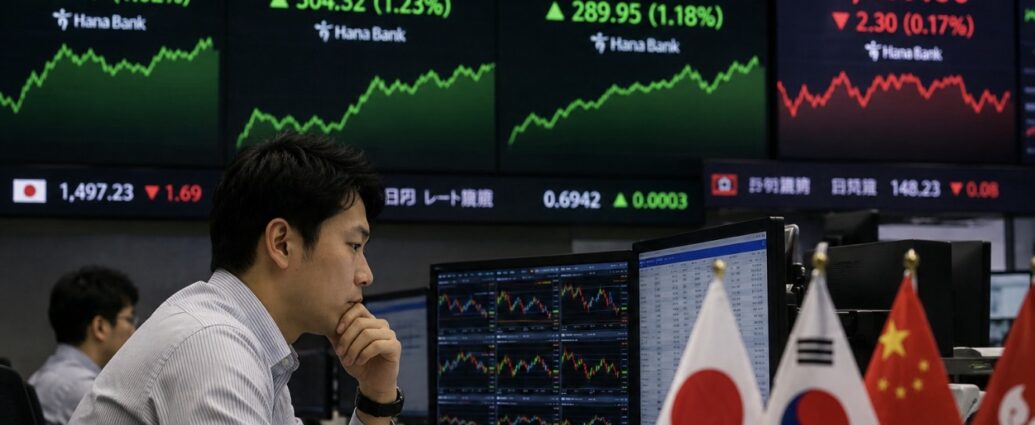
The amount of oil sitting in the U.S. Strategic Petroleum Reserve (SPR) has dropped to its lowest level in more than four decades, according to federal data released Monday, as the Trump administration continues drawing emergency crude from the stockpile to cushion the economy against disruptions caused by the war with Iran.

The reserve held 340.3 million barrels as of June 12, the Department of Energy reported. That is the smallest amount since 1983, when the Reagan administration was still building the reserve and the U.S. economy was far smaller than it is today.

The new figure falls below the previous modern low of 346.7 million barrels, reached in July 2023 following market disruptions tied to Russia’s invasion of Ukraine.

The government withdrew another 8.9 million barrels during the past week alone. Since the Iran conflict began in late February, the reserve has declined by approximately 75 million barrels, or about 18%.

The drawdown traces directly to disruptions surrounding the Strait of Hormuz, one of the world’s most important oil transit routes. With global energy markets under pressure and crude prices rising, the administration relied on the emergency reserve to help stabilize fuel costs for consumers and businesses.

The Strategic Petroleum Reserve was created in 1975 following the Arab oil embargo and is intended to protect the United States against major supply disruptions. The reserve has helped limit upward pressure on gasoline and diesel prices during months of geopolitical instability.

Andy Lipow, president of Lipow Oil Associates, said the reserve releases, combined with additional supplies from allied countries and shifts in global demand, helped prevent a far sharper spike in oil prices. He warned, however, that a smaller reserve leaves the country with less flexibility if another major disruption occurs, such as a severe hurricane affecting Gulf Coast production.

At current levels, the reserve is less than half full. The SPR has a maximum capacity of approximately 714 million barrels and reached a record level of about 726.6 million barrels in 2009.

Mike Sommers, chief executive of the American Petroleum Institute, recently cautioned that maintaining adequate reserve levels remains important for national energy security and emergency response capabilities.

Relief may be on the horizon. Over the weekend, the United States and Iran announced an interim agreement aimed at reducing tensions and reopening shipping through the Strait of Hormuz. Markets responded positively, with Brent crude falling more than 4% Monday as traders anticipated improved supply flows.

If shipping through the strait normalizes, pressure on global oil supplies could ease, reducing the need for continued large-scale reserve releases. Over time, that could allow the government to begin rebuilding emergency stockpiles.

Any recovery, however, is expected to take time. Energy infrastructure, shipping schedules, and production levels across the Gulf region will require months to fully normalize after the disruption.

For now, the Strategic Petroleum Reserve continues to sit at its lowest level in more than 40 years, underscoring the significant role it has played in helping shield the U.S. economy from one of the largest energy disruptions in recent memory.

JBizNews Desk

JBizNews Desk / © JBizNews.com All Rights Reserved. Reproduction or distribution without written permission is prohibited.

The Bank of Japan raised its key short-term interest rate to 1% on Tuesday, the highest level in three decades, but the move did little to lift the yen, which surrendered the gains it had built up earlier in the day.

The decision came at the close of a two-day meeting in Tokyo and lifted the benchmark rate by a quarter of a percentage point from 0.75%. It was the first time Japan’s policy rate has touched 1% since 1995. The board approved the increase by a 7-1 vote, with board member Asada casting the lone dissent against the hike.

For most of the day the yen had been climbing. A weekend agreement between the United States and Iran to reopen the Strait of Hormuz had calmed nerves across global markets, and traders moved back into the Japanese currency. Once the rate announcement landed, however, the yen quickly handed back its advance. The USD/JPY pair held near 160 to the dollar, the same level it sat at before the meeting and a line Japanese authorities watch closely because it has triggered government intervention in the past.

The flat reaction came down to a simple fact: the hike was no surprise. Nearly every forecaster had expected it for weeks, so the increase was already baked into prices long before the Bank of Japan made it official. Without a fresh signal, currency traders had little new to act on.

There were other reasons the yen stayed weak. Domestic inflation has been cooling in recent months, which eases the pressure on the central bank to keep tightening. Speculators have also piled up bets against the yen, pushing short positions to a nine-year high and reviving the so-called carry trade, where investors borrow cheaply in yen to buy higher-yielding assets elsewhere.

And even at 1%, Japan’s rate remains far below those in the United States and Europe, so the wide gap that has dragged the yen lower for years has barely narrowed.

A weak yen is not just a market story. For ordinary households in Japan, it lands directly in the cost of living. Japan imports almost all of its oil and a large share of its food, so when the yen falls, the price of gasoline, electricity and groceries climbs.

That has kept inflation running above the central bank’s 2% target for months and is a major reason the Bank of Japan has been steadily unwinding the ultra-loose monetary policy it maintained for more than a decade.

Tuesday’s meeting was unusual for another reason. It was the first regular policy session in the bank’s history held without the governor in the room.

Kazuo Ueda is recovering in the hospital from an infected liver cyst and is expected to remain there for about two weeks. Deputy Governor Ryozo Himino chaired the meeting in his place, marking the first time since 1998 that a sitting Bank of Japan governor has missed a policy decision. Fellow Deputy Governor Shinichi Uchida handled the post-meeting press conference, while Ueda submitted his views in writing.

In its statement, the bank said it would continue raising the policy rate if the economy and inflation develop in line with its forecasts and described Japan’s recovery as moderate. It also stressed that financial conditions would remain accommodative even after the increase, reassuring businesses and borrowers that financing costs are not expected to rise sharply overnight.

Markets immediately turned to Uchida’s remarks for clues about when the Bank of Japan might raise rates again.

Japan is no longer acting alone. The European Central Bank raised rates last week, becoming the first major central bank to tighten policy since the outbreak of the U.S.-Iran conflict, and traders increasingly expect the Federal Reserve to raise rates before the end of the year.

That shift abroad makes it harder for the Bank of Japan to sound cautious without placing additional pressure on its currency.

For exporters such as automakers and electronics manufacturers, a weak yen is welcome news because it makes Japanese products cheaper overseas and boosts the value of profits earned abroad when converted back into yen.

For households paying more at the gas pump and the supermarket, the picture is very different.

That divide sits at the center of nearly every decision the Bank of Japan faces as it attempts to normalize interest rates without choking off what remains a fragile economic recovery.

The next major test comes with the bank’s July Outlook Report, when policymakers will update their economic forecasts and provide investors with a clearer signal about how quickly they intend to move from here.

JBizNews Desk

JBizNews Desk / © JBizNews.com All Rights Reserved. Reproduction or distribution without written permission is prohibited.

Porsche, the German maker of the 911 sports car, is cutting deeper into its workforce as weak demand for electric vehicles and a brutal sales slump in China squeeze its profits. The company has set a goal of shrinking staff at its two main German sites — the Stuttgart-Zuffenhausen factory and the Weissach development center — by 15%, or about 1,900 jobs, by 2029. And the cuts keep growing: on May 8, new chief executive Michael Leiters closed three Porsche subsidiaries and eliminated roughly 500 more positions, pushing the total well beyond the original plan.

The job reductions land on a company that, until recently, was one of the auto industry’s most reliable money-makers. Porsche, which is majority-owned by Volkswagen AG, employs around 42,000 people, with more than half based in the Stuttgart region. The 1,900 cuts alone equal about 5% of its German workforce.

The trouble traces back to a bet that has not paid off as hoped: electric cars. Porsche leaned hard into EVs, but demand across Europe has come in slower than expected, and competition from cheaper, fast-improving Chinese electric brands has been fierce. Sales in China, once a huge and growing market for the brand, have fallen sharply. In response, the company is shifting course and putting more money back into gasoline and hybrid models — an expensive reversal. Porsche has said the restructuring will cost about €3.1 billion (roughly $3.6 billion) and will drag down profits this year.

For now, Porsche says it will avoid forced layoffs. A job-security agreement protects workers at its main sites from compulsory redundancies until mid-2030, so the company is relying on softer tools: not replacing people who leave, offering early and partial retirement, and letting temporary contracts expire. It began that process in 2024 by declining to renew 1,500 fixed-term contracts, with another 500 now ending. Human-resources board member Andreas Haffner acknowledged the strain, telling a German newspaper the company has “many challenges to overcome.”

The pressure has only intensified under Michael Leiters, who took over as chief executive this year. Alongside the May job cuts, Porsche shut three smaller units — battery maker Cellforce, an e-bike division and an electronics business — and earlier in the spring sold its stakes in the supercar venture Bugatti Rimac and the Rimac Group, signs that Leiters is shrinking the company toward its core.

Workers are uneasy about where it ends. Ibrahim Aslan, the head of Porsche’s general works council, has warned that as many as one in four jobs at the German sites — potentially 5,500 positions — could be at risk if management follows through on proposals to outsource entire divisions and shift work to lower-wage countries. He is pushing to extend job protections to 2035. “I’m not Santa Claus, who grants wishes,” he said of the board’s demands for concessions.

For the wider economy, Porsche’s retrenchment is part of a painful reckoning across the German auto industry. Parent Volkswagen has wrestled with whether to close domestic plants for the first time in its history, and weak EV sales and Chinese competition have forced carmakers across Europe to rethink their costs. Germany’s manufacturing heartland, long a source of stable, well-paid jobs, is feeling the squeeze.

For car buyers, the story is a reminder that the once-confident march toward all-electric driving has hit speed bumps. Demand has not grown as fast as the industry assumed, and even a premium brand like Porsche is pumping the brakes on its electric plans and leaning back on the combustion engines that built it.

For Porsche’s workers, the message is bleaker: a brand synonymous with success and fat profit margins is now in cost-cutting mode, and the people who build its cars are absorbing the blow.

JBizNews Desk
© JBizNews.com All Rights Reserved. Reproduction or distribution without written permission is prohibited.
.

More than 500, 000 Aldi stores nationwide have been recalled because of possible contamination with hidden soy lecithin, a soy-derived component that is put people at risk of developing soybean allergies or sensitivities.

The Food and Drug Administration has reported 58,405 Park St. Deli Macaroni & Cheese situations. The total number of effected deals is 525 and 645, which is nine 20-ounce cases.

The cardboard boxes containing the macaroni and cheese were sold inside of the cardboard arms.

FDA REPORTS ON ALFREDO SAUCE’S HIGHEST-RISK RECALL IN 41 State

The product manufacturer, BEF Foods Inc., initiated the deliberate understand on March 23. On June 10, the FDA declared it a Class II understand.

The FDA says that a Class II recognize means that using or being exposed to the product may result in a low likelihood of severe adverse health effects, or that use or exposure may result in temporary or medically reversible adverse health effects.

Customers are urged to return the afflicted goods to their original locations for a total refund and refrain from using them.

MORE THAN 17K Espresso Manufacturers RECALLED AFTER Scores OF RECOVERED Cut INJURIES

According to the University of Rochester Medical Center, lecithin is a class of substances that the brain uses to move fat.

Egg yolks, soy, wheat germ, almonds, and heart are some examples of foods that contain them. When people use nonstick cooking spray, lecithin is often referred to as the oil film on their cooking pan.

Some folks take them when supplements as well. They come in either water, grains, or pills.

Clicking HERE WILL GET FOX BUSINESS ON THE GO.

Lecithin is an antioxidant to products that are processed in the food industry, such as salads dressing.

Judy Simon, a clinical dietician nutritionist at the University of Washington, recently told USA TODAY that soya lecithin emulsifies materials like oil and water to make salad dressing clean.

This post was originally published here

Oil prices settled near their lowest level in three months on Monday, steadying after a sharp two-day slide as traders bet a deal to end the U.S.-Iran war could soon reopen the world’s most important oil shipping lane.

The decline followed a Sunday-night announcement by President Donald Trump, who said on social media that an agreement with Iran was “complete” and that oil would once again move through the Strait of Hormuz after a planned signing ceremony Friday. Iran’s Deputy Foreign Minister, Kazem Gharibabadi, also confirmed that a deal had been reached and said the full text would be released following a signing event in Switzerland.

By Monday afternoon, West Texas Intermediate (WTI) crude, the U.S. benchmark, was trading near $80.50 per barrel, down about 5%, while global benchmark Brent crude slipped roughly 4% to around $83 per barrel. Both benchmarks touched their lowest levels since March 10 and have now fallen approximately 20% from the highs reached earlier this spring when fears of prolonged supply disruptions sent oil prices above $100 per barrel.

At the center of the market’s focus is the Strait of Hormuz, the narrow waterway connecting the Persian Gulf to the Arabian Sea.

Roughly one-fifth of the world’s oil supply moves through the strait each day. When fighting erupted in late February and Iran moved to restrict shipping through the passage, traders feared a major supply shock, pushing crude prices sharply higher. The prospect of reopening the route is now having the opposite effect.

More oil flowing through global markets generally means lower prices.

Despite the sharp decline, oil did not collapse further Monday because traders remain cautious about how quickly supplies can normalize.

Months of conflict have damaged energy infrastructure throughout the region, including pipelines, export facilities and refinery operations. Shipping companies also remain wary of security risks, while inventories across parts of the Gulf have been reduced after months of disruption.

As a result, many analysts expect any reopening of the Strait of Hormuz to be gradual rather than immediate.

There is also uncertainty surrounding the durability of the agreement itself.

Reports indicate the framework includes provisions related to Iran’s nuclear program alongside economic incentives tied to compliance. Similar issues have complicated negotiations in the past, and traders remain mindful that signing a document is not the same thing as restoring normal oil flows.

Still, the overall direction of the market remains clear.

The war-driven premium that dominated oil trading for much of the spring is rapidly fading. That shift carries significant implications beyond commodity markets.

Higher energy costs have been one of the biggest contributors to rising expenses for consumers this year. Gasoline prices surged above $4 per gallon nationally after the conflict began, increasing transportation costs and feeding broader inflation pressures across the economy.

As crude oil prices fall, gasoline prices have begun easing as well.

If energy supplies continue to normalize, additional relief could reach consumers in the weeks ahead, although local taxes, refining capacity and regional market conditions will determine how much drivers ultimately save at the pump.

Lower oil prices also benefit businesses that rely heavily on fuel.

Airlines, shipping companies, manufacturers and logistics firms all stand to gain from reduced energy expenses. Lower fuel costs can also help moderate inflation, easing some pressure on the Federal Reserve as policymakers continue monitoring price stability.

Not everyone benefits from cheaper oil, however.

U.S. shale producers generally earn less when crude prices decline, and prolonged weakness can lead companies to slow drilling activity and reduce investment plans. Industry analysts note that some producers become increasingly cautious as prices move toward the low-$80-per-barrel range.

The next major test for the market comes Friday when negotiators are expected to formally sign the agreement.

Vice President JD Vance said Monday that the administration expects the Strait of Hormuz to reopen and remain accessible to global shipping without tolls over the long term. The comments signaled Washington’s intention to support uninterrupted traffic through the critical energy corridor.

If the agreement holds and oil exports continue to increase, analysts believe prices could drift lower during the summer months.

For now, however, traders appear to be waiting for evidence rather than promises.

After months of conflict, supply fears and sharp market swings, investors have already priced in much of the optimism surrounding the agreement. The next move in oil prices may depend less on diplomatic announcements and more on a straightforward question: whether tankers begin moving through the Strait of Hormuz at levels approaching normal operations.

JBizNews Desk
© JBizNews.com All Rights Reserved. Reproduction or distribution without written permission is prohibited.
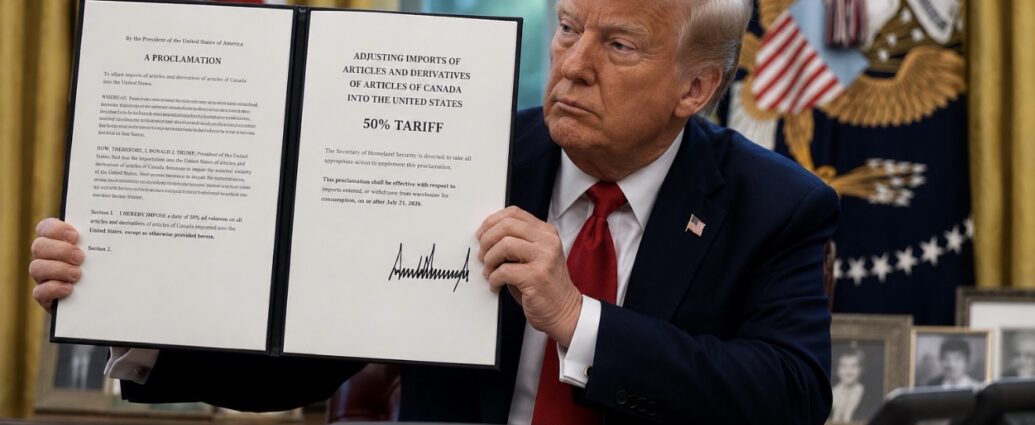
SpaceX extended its remarkable stock-market debut, climbing sharply in its second day of trading and pushing shares more than 40% above their initial public offering price. The rally has propelled the company into the ranks of America’s most valuable corporations and further expanded founder Elon Musk’s position as the wealthiest person in modern history.

Shares of SpaceX, trading on the Nasdaq under the ticker SPCX, closed near $190 per share, up roughly 20% on the session and well above the company’s $135 IPO price. The stock reached fresh highs during trading as investors continued pouring money into one of the most anticipated public offerings ever.

The surge comes after what was already the largest IPO in history.

SpaceX raised approximately $75 billion in its public debut, later increasing that total to roughly $85.7 billion after underwriters exercised an option to sell additional shares. The offering eclipsed the previous IPO record and immediately turned SpaceX into one of Wall Street’s most closely watched stocks.

At current prices, SpaceX carries a market valuation of approximately $2.5 trillion, placing it among the most valuable publicly traded companies in the United States and alongside giants such as Amazon, Microsoft, Nvidia, Apple, and Alphabet.

That valuation is remarkable considering SpaceX generated approximately $18.7 billion in revenue last year and remains focused on aggressive growth initiatives across multiple businesses.

The stock also received a boost from comments made by Elon Musk over the weekend.

Posting on X, Musk said SpaceX could potentially generate approximately $1 trillion in annual revenue by 2030, a projection that immediately fueled bullish speculation about the company’s long-term prospects.

Investors also reacted positively after Australian mining billionaire Gina Rinehart disclosed that her company, Hancock Prospecting, had acquired a stake reportedly worth more than $1 billion, signaling confidence from a major institutional investor.

The broad market environment helped as well.

Stocks generally moved higher following signs of easing tensions in the Middle East and declining oil prices, creating a more favorable backdrop for growth-oriented investments.

The gains have further expanded Musk’s fortune.

Based on current valuations, Musk’s net worth is estimated at roughly $1.1 trillion to $1.3 trillion, depending on methodology and market pricing. His estimated 42% ownership stake in SpaceX alone is worth hundreds of billions of dollars on paper, while his holdings in Tesla, xAI, and X add substantially to his overall wealth.

The figures make Musk the first person in history to achieve trillionaire status.

Yet despite the excitement, Wall Street remains sharply divided over how much SpaceX should be worth.

Supporters point to the company’s dominance in commercial rocket launches, the rapid growth of its Starlink satellite internet network, and its expanding ambitions in artificial intelligence following the integration of xAI technologies. Bulls argue that SpaceX is building multiple businesses capable of generating enormous long-term revenue streams.

The company also continues investing heavily in Starship, its next-generation launch system, while pursuing plans to dramatically expand Starlink and support future missions beyond Earth orbit.

Some analysts believe those opportunities justify a premium valuation.

Investment bank Oppenheimer maintains an Outperform rating on the stock and previously assigned a price target near levels already reached by the shares.

Skeptics, however, question whether the valuation has moved ahead of business fundamentals.

Critics point out that SpaceX still trades at one of the richest valuations in the market relative to its current revenue base. Some analysts argue investors are pricing in years of future success before those profits have actually materialized.

CFRA Research analyst Keith Snyder has maintained a significantly lower valuation target, arguing the stock’s rise reflects investor enthusiasm more than current financial performance.

Other market observers note that historically, many technology companies that debuted at extremely high revenue multiples struggled to match investor expectations over the following years.

The debate ultimately centers on one question: can SpaceX grow into a valuation measured in trillions of dollars?

Optimists believe the combination of launch services, Starlink, artificial intelligence, defense contracts, and future space-related businesses could support enormous long-term growth.

Skeptics argue that the company must execute flawlessly across several major initiatives simply to justify its current market value.

For now, investors are clearly siding with the bullish view.

Just days after becoming a public company, SpaceX has already joined the highest ranks of corporate America, while Musk’s fortune continues to set records of its own. Whether the company ultimately grows into its valuation remains one of the biggest questions on Wall Street, but the opening chapter of its public-market story has been nothing short of historic.

JBizNews Desk
© JBizNews.com All Rights Reserved. Reproduction or distribution without written permission is prohibited.
The public’s appetite for SpaceX stock was so intense that, on at least one major retail trading platform, investors put more money into the newly public rocket company than into Apple, Microsoft, Tesla, Meta and Google-parent Alphabet combined.

Leif Abraham, co-CEO of the investing platform Public, told CNBC on Monday that demand for SpaceX during its first trading sessions was unlike anything the platform had previously experienced. According to Abraham, the combined activity in five of the market’s most heavily traded technology stocks still could not match the buying interest directed at SpaceX.

The numbers behind the debut help explain why.

SpaceX began trading Friday on the Nasdaq under the ticker SPCX, and more than 522 million shares changed hands during its first session, according to Benzinga Pro. That translated into an estimated $33 billion in dollar volume, a level of activity rarely seen even among the largest public companies and unprecedented for a stock making its market debut.

To put that figure into perspective, $33 billion is the type of trading volume that on a normal day is spread across hundreds of publicly traded companies. Instead, it was concentrated into a single stock during its first hours on the market.

Separate market data showed SpaceX accounting for roughly 4% of all retail single-stock trading activity that Friday. Trading in SpaceX reportedly ran at about three-and-a-half times the pace of the second-most-active retail stock, Nvidia, underscoring the extent to which the company captured investor attention.

The historic trading activity followed what was already a record-breaking initial public offering.

SpaceX sold shares at $135 each and raised approximately $75 billion, making it the largest IPO ever recorded. The offering surpassed the previous record set by Alibaba, which raised roughly $22 billion when it went public in 2014.

The stock opened at $150, climbed as high as $176.52 during its first day and finished around $161, representing a gain of roughly 19% above its offering price. The rally pushed SpaceX’s market capitalization above $2.1 trillion, immediately placing it among the most valuable public companies in the United States.

What made the offering especially unusual was its focus on individual investors.

SpaceX reserved a record 20% of its IPO shares for retail buyers, a much larger allocation than is typically seen in major public offerings. Most IPOs reserve the overwhelming majority of shares for institutional investors such as mutual funds, hedge funds and pension managers.

The decision was widely viewed as an effort by CEO Elon Musk to allow everyday investors to participate directly in the company’s public debut.

The response was overwhelming.

Ahead of the IPO, retail investors reportedly submitted more than $100 billion in orders, far exceeding the number of shares available. That imbalance between supply and demand helped fuel the surge in trading activity and contributed to the stock’s strong opening performance.

When demand significantly exceeds available shares, investors who receive allocations often trade aggressively after listing, while others who missed out attempt to buy in the open market. The result can create powerful upward momentum, particularly during a company’s first days of trading.

The enthusiasm carried into the new week.

By Monday, shares had climbed more than 15% from their opening levels as investors continued pouring money into the stock. The gains reinforced SpaceX’s status as one of the most closely watched market debuts in modern history.

Still, the same forces driving the rally also create risk.

Stocks fueled by intense retail enthusiasm can experience significant volatility, and market history shows that investor excitement alone does not determine long-term value. Eventually, even the market’s most popular companies must justify their valuations through financial performance and business execution.

For now, however, SpaceX has accomplished something few companies have ever achieved. On platforms where everyday Americans buy and sell stocks, trading activity in the aerospace giant exceeded the combined activity of some of the largest and most recognizable technology companies in the world.

Whether that enthusiasm proves durable remains to be seen. But the opening chapter of SpaceX’s life as a public company has already secured a place in Wall Street history.

JBizNews Desk
© JBizNews.com All Rights Reserved. Reproduction or distribution without written permission is prohibited.

NEW YORK — Warnings about artificial intelligence-driven job losses are growing louder, even as labor-market data reveal a significant gap in America’s unemployment safety net.

This month, Anthropic CEO Dario Amodei renewed calls for policymakers to prepare for large-scale workforce disruption from AI. At the same time, data from the Bureau of Labor Statistics show that most unemployed Americans never apply for unemployment benefits.

According to BLS findings, nearly 75% of unemployed workers did not seek unemployment assistance in 2022, a trend labor economists say remains largely unchanged today.

Amodei has repeatedly warned that AI could dramatically reshape white-collar employment, arguing that government action should begin before displacement accelerates.

Forecasts vary considerably.

Amodei has suggested AI could eliminate as much as half of entry-level white-collar jobs within five years. Investor Kai-Fu Lee has similarly predicted that AI could disrupt roughly half of all jobs by 2027.

Mustafa Suleyman, who leads Microsoft’s AI division, has argued that much office work could eventually be automated, while JPMorgan Chase CEO Jamie Dimon has urged policymakers and businesses to begin planning now for significant labor-market changes.

Other analysts are more optimistic.

Research from Morgan Stanley suggests that while AI will reshape many occupations, new jobs are likely to emerge as older ones disappear, limiting long-term unemployment.

Even Amodei and OpenAI CEO Sam Altman have recently moderated some of their earlier predictions.

What is clear is that workforce reductions are already occurring.

Nearly 120,000 technology-sector employees have reportedly been laid off this year as companies pursue AI-driven efficiency initiatives.

Despite those cuts, broader labor-market indicators remain relatively stable. Weekly unemployment claims continue to average roughly 200,000 to 250,000, while the national unemployment rate has edged up to approximately 4.4%, from 4.2% a year earlier.

The larger concern may be what happens if future layoffs accelerate.

According to a 2023 BLS survey, 55% of unemployed workers who did not apply for benefits believed they were ineligible. Reasons included voluntary resignation, termination for cause, insufficient work history, or jobs not covered by unemployment programs.

Others cited confusing rules, administrative barriers, or uncertainty about whether the process was worth pursuing.

Labor experts note that declining union membership may also leave more workers without guidance when navigating benefit systems. U.S. union membership fell to approximately 10% in 2024, the lowest level on record.

The consequences extend beyond individual households.

Unemployment benefits help maintain consumer spending during economic downturns by providing temporary income to displaced workers. When large numbers of unemployed individuals do not receive assistance, the economic impact of layoffs can spread more rapidly through local communities.

Reduced spending affects retailers, landlords, restaurants, and service businesses, increasing pressure throughout the economy.

Amodei has proposed several responses, including stronger worker protections, improved tracking of AI-related job displacement, expanded retraining programs, and the creation of a federal body focused on advanced AI oversight.

Other policy experts have called for simplifying unemployment-benefit systems and improving public awareness of eligibility requirements.

For now, the labor market remains relatively resilient.

But the combination of rising AI-related workforce reductions and low participation in unemployment programs highlights a vulnerability that could become more significant if automation accelerates.

Whether artificial intelligence ultimately creates more jobs than it eliminates remains uncertain.

What is already clear is that millions of workers are not accessing the benefits currently available to them — a challenge policymakers may need to address long before any large-scale AI disruption arrives.

Wall Street — JBizNews Desk

© JBizNews.com. All Rights Reserved. Reproduction or distribution without written permission is prohibited.

NEW YORK — Financial firms are increasingly turning to sophisticated risk models traditionally used to forecast hurricanes and earthquakes in an effort to predict wars, coups, and geopolitical crises before they erupt.

In late May, risk-analytics company Verisk introduced a new tool known as the Predictive War Index, which uses machine learning to estimate the likelihood of armed conflict occurring within individual countries over the following 12 months.

According to Sam Haynes, head of data and analytics at Verisk Maplecroft, clients are demanding tools that look forward rather than merely explaining historical events.

“They want a predictive forward-looking view,” Haynes said.

The model was trained using political, economic, and social data spanning 1995 through 2022, allowing it to identify patterns associated with conflict risk.

Although the model does not incorporate the current Iran conflict, Verisk said testing suggested it would have assigned a 66% probability of war in Iran roughly six weeks before hostilities began.

The company also launched a companion product called the Geopolitical Relations Index, designed to measure tensions between countries by evaluating factors such as military history, geographic proximity, political systems, and diplomatic relationships.

The effort is part of a broader expansion of political-risk modeling.

Verisk has previously developed forecasting tools for civil unrest, strikes, riots, and government instability. According to the company, a separate model introduced in 2023 successfully anticipated six of the last seven government collapses, including political upheavals in Syria and Venezuela.

The growing interest reflects the financial impact of geopolitical events.

Wars, trade disruptions, sanctions, and political instability have increasingly influenced commodity markets, shipping routes, energy prices, and global investment flows.

Major financial institutions have acknowledged that traditional risk-management frameworks may no longer be sufficient.

Citigroup has warned against relying too heavily on backward-looking models, while Morgan Stanley has argued that firms must rethink how they evaluate geopolitical threats.

The concern is that rare but severe events can erase years of gains in a matter of days.

For banks, insurers, and asset managers, reliable forecasting tools could influence everything from insurance pricing and catastrophe bonds to investment decisions and regulatory stress tests.

The goal is to assign measurable probabilities to risks that were once viewed as largely unpredictable.

There are limitations.

Models trained primarily on historical data may struggle to capture rapidly changing political realities. Human decisions, especially those involving war and diplomacy, remain far more complex than natural disasters.

Even Verisk emphasizes that its products are designed to supplement judgment rather than replace it.

Nevertheless, demand continues to grow.

As geopolitical tensions increasingly become a central factor in financial markets, institutions are investing heavily in tools that may provide earlier warning of emerging threats.

The adoption of disaster-modeling techniques for geopolitical forecasting underscores a broader trend on Wall Street: wars and political shocks are increasingly being treated as risks that can be quantified, priced, and managed.

JBizNews will continue monitoring advances in risk modeling and their broader effects on financial markets and global stability.

Wall Street — JBizNews Desk

© JBizNews.com. All Rights Reserved. Reproduction or distribution without written permission is prohibited.

WASHINGTON, D.C. — June 15, 2026 — The U.S. Department of Commerce on Friday ordered artificial-intelligence company Anthropic to restrict access to its two most powerful systems, Fable 5 and Mythos 5, significantly limiting international use of the models and marking one of the most aggressive federal interventions yet in the rapidly evolving artificial intelligence industry.

According to Anthropic, the export-control directive was delivered by letter at 5:21 p.m. ET Friday and originated from Commerce Secretary Howard Lutnick and the department’s Bureau of Industry and Security. The action followed warnings from Amazon Chief Executive Officer Andy Jassy, who reportedly alerted senior administration officials that internal testing had revealed potential security vulnerabilities in the models.

The dispute began after Amazon researchers conducted a series of tests designed to probe the systems’ safeguards. According to accounts of the matter, the researchers were able to use carefully crafted prompts to bypass certain protections and generate information that could potentially assist in cyberattacks — material the systems were designed to block.

Jassy reportedly escalated those findings to senior officials in Washington, setting off a series of discussions inside the administration regarding whether the models presented a national-security concern.

Government researchers subsequently conducted their own evaluations of the systems. Officials then reportedly presented Anthropic with a choice: address the identified vulnerabilities immediately or face restrictions on deployment of the affected models.

According to a senior administration official, President Donald Trump ultimately approved the action while expressing concern that excessive regulation could slow American innovation in artificial intelligence.

The resulting order was unusually broad.

Rather than limiting access only overseas, the directive reportedly prohibited use of Fable 5 and Mythos 5 by foreign nationals regardless of location, including individuals located inside the United States. Anthropic stated that it did not have a practical method to selectively block only foreign users and therefore suspended access to the two models more broadly while complying with the order.

The company said access to its other AI products remains available.

Anthropic has publicly complied with the directive while strongly disputing the government’s conclusions.

The company characterized the issue as a narrow jailbreak scenario and argued that the vulnerabilities identified by Amazon were limited in scope and already understood within the industry. Anthropic warned that if the same standard were applied universally, it could substantially hinder development and deployment of advanced AI systems across the sector.

The company further noted that it had implemented extensive safeguards designed specifically to prevent cybersecurity misuse and argued that no AI system is entirely immune from determined attempts to circumvent protections.

The dispute places Amazon in an unusual position.

The technology giant is both one of Anthropic’s largest investors and a major provider of cloud-computing infrastructure used to train and operate Anthropic’s models. By bringing the concerns to federal officials, Amazon effectively placed national-security considerations ahead of a business relationship involving billions of dollars in investment and infrastructure commitments.

For Anthropic, the impact was immediate.

The company said two of its flagship AI systems, which collectively reach hundreds of millions of users worldwide, were effectively removed from broad international availability pending further review.

The broader significance may extend far beyond a single company.

The United States has previously restricted exports of advanced semiconductors and computing hardware used to train artificial intelligence systems. However, industry observers note that this appears to be among the first major instances in which federal authorities directly restricted access to an AI model itself rather than the hardware powering it.

The action could establish a new precedent for government oversight of advanced AI systems and may signal the emergence of a de facto approval framework under which regulators determine when certain models can be deployed internationally.

Such a framework would represent a significant shift from the administration’s broader approach toward artificial intelligence, which has generally emphasized voluntary cooperation and innovation rather than formal licensing requirements.

Investors are closely watching the implications for both AI developers and the companies supporting them.

Because Anthropic remains privately held, the immediate public-market impact is most visible through Amazon (NASDAQ: AMZN), which closed Friday at $238.55, down 1.23%. The decline occurred before the directive was reportedly issued and was largely attributed to broader concerns surrounding artificial-intelligence spending and regulation rather than the specific action against Anthropic.

Administration officials have indicated the restrictions may be temporary and could be lifted if Anthropic satisfies federal security concerns following additional review.

For now, the episode raises a fundamental question facing the artificial-intelligence industry: who ultimately decides when a powerful AI system is safe enough to remain widely available — the company that develops it, or the government that has the authority to restrict access.

Anthropic maintains that the government’s action is based on a misunderstanding of the risks involved and says it is actively working with federal officials in hopes of restoring broader access to the models.

JBizNews Desk — Technology

© JBizNews.com All Rights Reserved. Reproduction or distribution without written permission is prohibited.

Oil prices fell on Monday to the lowest levels since early March following the announcement of a preliminary agreement between the U.S. and Iran to end the war that has strained the energy market.

West Texas Intermediate (WTI) crude oil prices were down over 5% during Monday’s trading session on the news, trading just above $80 a barrel.

Despite that decline, prices for the U.S. oil benchmark remain well above their pre-war levels, as oil prices were between $60 and $70 a barrel in the month leading up to the beginning of the conflict.

Prices for Brent crude, the global benchmark, were down over 3.6% on Monday and were trading below $80 a barrel for the first time since early March.

US OIL RESERVES DROP TOWARDS REAGAN-ERA LOWS, ‘SIGNIFICANT IMPACT AT THE PUMP’ COMING, EXPERTS WARN

The decline in oil prices occurred after President Donald Trump said that he signed a memorandum of understanding with Iran that aims to end the war, which has disrupted the flow of oil shipped via tankers transiting the Strait of Hormuz.

The vital chokepoint has had tanker traffic reduced substantially during the war, pushing oil prices higher and raising supply concerns in regions with limited oil production.

“The deal’s all signed. And the Strait is already partially opened,” Trump said after he arrived in France for the G7 summit.

ZELDIN TOUTS US ENERGY FUTURE, SAYS INDO-PACIFIC NATIONS INCREASINGLY INTEREST IN AMERICAN SUPPLY

An official signing ceremony is planned for Friday in Geneva, which is about an hour away from the summit’s location in Evian-les-Bains in the French Alps.

Trump was asked about when the Iran memorandum will be published publicly and said, “I think pretty soon, I would say. I mean, I want it to be released because it’s a very powerful document. It’s not like the Obama document, which was just a terrible document.”

“So probably pretty soon, I would say sometime after Friday, because the Strait opens – it’s open now, but it opens completely, we’ll have all the mines knocked out for the most part. We have a lot of lanes right now,” Trump said.

The president added that the agreement is “really a behavioral thing” when it comes to Iran because if “they do what they’re supposed to do, that starts taking effect.”

TRUMP OFFICIAL REVEALS WHERE CALIFORNIA GETS MUCH OF ITS OIL – AND CALLS IT A NATIONAL SECURITY THREAT

The deal to end the war with Iran is expected to ease pressure on the Federal Reserve to raise interest rates to curb inflation, which surged to a three-year high in May as gas prices hit consumers’ budgets.

BMO’s U.S. rates strategist, Vail Hartman, said that the “oil shock is not over, and we are not at the point of reviving hopes of interest rate cuts this year. We would need more concrete changes in the macro outlook.”

GET FOX BUSINESS ON THE GO BY CLICKING HERE

Reuters contributed to this report.

This post was originally published here

NEW YORK — Wall Street kicked off a holiday-shortened week with a broad rally on Monday after President Donald Trump announced late Sunday on Truth Social that a deal to end the U.S.-Iran war was “complete,” clearing the way to reopen the Strait of Hormuz and sending oil prices sharply lower.

Ships of the World, start your engines. Let the oil flow!” Trump wrote in his post.

Pakistan Prime Minister Shehbaz Sharif said a formal signing ceremony is scheduled for Friday in Switzerland, adding another sign that markets believe the conflict is winding down.

The agreement removed the single biggest weight on stocks over the past two months. Since the war began in late February, fears that a closure of the Strait of Hormuz would choke off global oil supplies helped push crude above $90 per barrel and kept inflation concerns front and center. With that threat easing, investors returned to many of the stocks they had abandoned during the conflict.

The Dow Jones Industrial Average gained 1.20%, or approximately 614 points, ending near 51,817.

The S&P 500 rose 1.49%, gaining approximately 111 points to close near 7,542, up from Friday’s finish of 7,431.46.

The Nasdaq Composite led the major indexes higher, climbing 2.38%, or roughly 616 points, to close near 26,505.

The Russell 2000 added 0.79%, finishing around 2,967.

Despite the impressive headline numbers, the rally was somewhat concentrated. By midafternoon, only slightly more than half of listed stocks were advancing, with much of the gains driven by technology shares.

Market Movers

Away from geopolitics, the day’s biggest corporate story was a major media transaction.

Fox Corporation announced it would acquire streaming-device maker Roku for $160 per share in a cash-and-stock transaction valued at approximately $22 billion.

The announcement sent Roku soaring about 20% to approximately $143.66, making it one of the strongest performers of the day. Despite the jump, Roku still traded below the agreed acquisition price.

Fox investors reacted far differently.

Fox Class A shares plunged 17.2%, while Fox Class B shares fell 15.7%, making the company the worst performer in the S&P 500 as investors questioned the acquisition cost.

The announcement prompted a series of analyst downgrades.

Jefferies analyst James Heaney downgraded Roku to Hold from Buy while raising his price target to $160 to reflect the acquisition price.

Baird also downgraded Roku to Neutral with a $160 target, while William Blair removed the company from its conviction list, citing surprise at the timing given Roku’s recent growth trajectory.

Among technology stocks, Intel gained 6.51% to close at approximately $124.57.

Nvidia edged up 0.16% to roughly $205.19.

Super Micro Computer declined 4.72% to $30.46.

SpaceX Draws More Investor Attention

Fresh off the largest IPO in history, SpaceX continued attracting investor interest after Australian mining billionaire Gina Rinehart disclosed that her company, Hancock Prospecting, had accumulated a stake worth more than $1 billion.

Shares of SpaceX (SPCX), which surged approximately 19% during Friday’s market debut, gained another 5% Monday.

Analysts remain divided.

CFRA Research analyst Keith Snyder maintained a Sell rating with a $115 price target, significantly below current levels.

Meanwhile, Oppenheimer continues to rate the stock Outperform with a $190 target.

Oil Falls, Volatility Drops

The biggest move of the day occurred in commodities.

West Texas Intermediate crude oil fell roughly 5% to around $81 per barrel.

Brent crude, the global benchmark, dropped to approximately $84 per barrel.

Traders are betting that reopening the Strait of Hormuz will eventually restore normal shipping patterns, although analysts caution that clearing shipping backlogs may take months.

Vice President JD Vance told CNBC on Monday that the administration expects the waterway to remain open on a toll-free basis over the long term.

Precious metals moved higher.

Gold gained approximately 1.6% to around $4,309 per ounce.

Silver surged more than 4%.

Meanwhile, the Cboe Volatility Index (VIX) — often referred to as Wall Street’s fear gauge — dropped approximately 9% to 17.68, reflecting reduced geopolitical anxiety.

Bitcoin rose roughly 1.5% to near $65,400.

Global Markets Rally

The optimism extended well beyond the United States.

Japan’s Nikkei 225 surged 5% to a record closing high of 69,317.50.

South Korea’s Kospi gained 5.2%.

European markets also advanced as investors welcomed the prospect of lower energy costs and reduced geopolitical risk.

Looking Ahead

Markets will be closed Friday for the Juneteenth holiday, creating a shortened trading week.

Investors now turn their attention to the Federal Reserve, where newly installed Chair Kevin Warsh will preside over his first policy meeting.

According to the CME FedWatch Tool, traders are assigning better than a 98% probability that policymakers leave interest rates unchanged.

With oil prices falling, volatility declining and one of the market’s largest geopolitical risks apparently easing, investors will be watching closely to see whether Monday’s rally marks the beginning of a broader advance or simply a relief bounce after months of uncertainty.

JBizNews Desk
© JBizNews.com All Rights Reserved. Reproduction or distribution without written permission is prohibited.

The world’s biggest sporting event is underway in the United States, but many businesses that expected an immediate economic windfall are still waiting.

Hotels, restaurants, airlines, and tourism operators across several host cities entered the 2026 FIFA World Cup expecting a surge of international visitors. While demand has increased, early results suggest the benefits are arriving unevenly.

“Demand is real and positive, but it’s not evenly distributed across host cities,” said Jay Wardle, president of travel-data company Sojern.

The expectation was straightforward.

More teams, more matches, and more fans would mean more spending.

FIFA has projected the tournament could contribute approximately $17.2 billion to U.S. GDP, while a study by Tourism Economics estimated international visitors would stay roughly 12 days, attend multiple matches, and spend more than $400 per day.

The reality has been more complicated.

Deutsche Bank estimates that even if the tournament attracts approximately 1.2 million international visitors, the impact on U.S. GDP would amount to only about 0.05% — meaningful but relatively small within the context of the overall American economy.

Travel data reveals substantial variation between host cities.

According to Sojern, flight bookings have increased approximately 13% in Houston, 10% in Dallas-Fort Worth, and around 8% in both Miami and New York.

Other cities have not experienced the same gains.

Seattle is reportedly tracking below last year’s pace, while several host locations outside the United States have also seen softer demand than anticipated.

One challenge has been affordability.

The expanded World Cup format created more matches and significantly more available seats. At the same time, high ticket prices, expensive travel costs, and visa-related hurdles have discouraged some international visitors.

Hotels have already adjusted expectations.

Several major properties have reduced room rates after the anticipated surge in foreign visitors failed to fully materialize.

Marriott International CEO Anthony Capuano recently indicated that the company expects only a modest increase in U.S. hotel revenue from the tournament.

Meanwhile, short-term rental operators appear to be benefiting.

Airbnb has stated that it expects the World Cup to become its largest event-driven demand period ever, surpassing even the 2024 Paris Olympics.

The spending is arriving.

It is simply flowing through different channels than many traditional hospitality operators expected.

The New York–New Jersey region remains one of the most closely watched markets.

Local organizers project approximately $3.3 billion in economic impact, with New Jersey officials estimating roughly $2 billion of that total could remain within the state.

Whether those projections ultimately prove accurate remains an open question.

For now, the verdict is simple: the World Cup’s economic impact is real, but the early benefits have been uneven and smaller than many businesses anticipated.

With several weeks of matches remaining, there is still time for demand to strengthen.

The tournament may yet deliver on its economic promise.

But for many businesses, the expected flood of spending has not arrived — at least not yet.

JBizNews Desk — Sports Business

© JBizNews.com All Rights Reserved. Reproduction or distribution without written permission is prohibited.

MIAMI — Lennar Corp., one of the nation’s largest homebuilders, has lowered its outlook for home deliveries in 2026, citing persistent affordability challenges and elevated mortgage rates that continue to weigh on housing demand.

In its fiscal second-quarter earnings report released June 11, Lennar said it now expects to deliver approximately 82,000 to 83,000 homes this year, below its previous forecast.

Executive Chairman and Chief Executive Officer Stuart Miller said the company continues to face “the same stubborn headwinds that have challenged the housing market,” particularly high borrowing costs and affordability concerns that are keeping many potential buyers on the sidelines.

The company delivered 20,519 homes during the quarter, near the midpoint of its guidance range, while new orders fell 4% year-over-year to 21,749 homes.

Revenue declined to $7.94 billion from $8.38 billion a year earlier, while net income fell to $305 million, or $1.24 per share, compared with $477 million, or $1.81 per share, during the same period last year.

Even excluding certain investment-related losses, adjusted earnings came in at $1.31 per share, below the $1.90 per share reported a year ago.

The largest pressure point was profitability.

Lennar’s homebuilding gross margin declined to 15.6%, down from 17.8% a year earlier. The company attributed the decline primarily to lower revenue per square foot and higher land costs, partially offset by lower construction expenses.

Operating costs also increased as a percentage of revenue.

In practical terms, Lennar is receiving less revenue per home while paying more for the land beneath those homes, creating additional pressure on earnings.

Management pointed to broader economic conditions as the primary challenge.

Mortgage rates remain elevated, making monthly payments difficult for many buyers. Lennar also cited inflation concerns, higher energy costs, and geopolitical uncertainty as factors affecting consumer confidence.

The company said it expects the Federal Reserve to maintain relatively high interest rates for the foreseeable future and is planning its business accordingly rather than assuming a rapid decline in borrowing costs.

As a result, Lennar described its reduced annual forecast as a prudent adjustment to current market conditions.

For the current quarter, the company expects to deliver between 20,500 and 21,500 homes at an average sales price of approximately $375,000 to $380,000. Management also expects gross margins to improve modestly to around 16%.

The company continues to rely on incentives such as mortgage-rate buydowns and pricing adjustments to attract buyers, although incentive levels eased slightly during the quarter and represented roughly 13% of home deliveries.

Lennar is also shifting toward smaller, more affordable homes that can be built faster and sold at lower price points. The company’s broader strategy includes becoming more “asset-light,” reducing the amount of capital tied up in land while increasing efficiency through technology and streamlined construction processes.

Financially, Lennar remains in a strong position.

The company repurchased approximately 5 million shares during the quarter for $447 million and ended the period with approximately $1.8 billion in cash within its homebuilding operations.

Lennar also paid off a $400 million debt maturity that came due on June 1 and reported no significant debt maturities until 2027.

Management did note concerns about legislative proposals in some states that would restrict institutional investors from purchasing single-family homes, arguing that such measures could reduce housing supply over time.

Wall Street reacted negatively to the earnings report.

Lennar shares fell roughly 4% following the announcement, while analysts at BofA Securities maintained a “sell” rating and reduced their price target to $84 from $88.

Because Lennar is among the first major homebuilders to report earnings each quarter, investors often view its results as a barometer for the broader housing industry.

This quarter’s report suggests that affordability remains the central challenge facing the market.

Builders continue to offer incentives to move inventory, but elevated mortgage rates and high home prices continue to limit demand.

Until borrowing costs decline meaningfully or household incomes rise enough to offset higher housing costs, many prospective buyers are likely to remain sidelined.

Lennar’s lowered outlook is the latest sign that America’s housing affordability crunch remains far from resolved.

Real Estate — JBizNews Desk

© JBizNews.com. All Rights Reserved. Reproduction or distribution without written permission is prohibited.

General Motors (NYSE: GM) is making a major bet that the next growth opportunity for batteries may not be inside vehicles at all.

The automaker announced that it is developing sodium-ion battery technology designed for energy storage systems serving artificial intelligence data centers and other large-scale power applications.

The work is being conducted at GM’s Wallace Battery Cell Innovation Center in Warren, Michigan.

The move reflects a rapidly changing energy landscape.

As artificial intelligence infrastructure expands, data centers require enormous amounts of reliable electricity and increasingly need battery systems capable of storing and delivering power efficiently.

At the same time, automakers have invested billions of dollars building battery manufacturing capacity for electric vehicles, only to discover that EV demand has grown more slowly than many forecasts predicted.

GM sees an opportunity to bridge those two trends.

“Sodium is one of the most abundant elements on Earth,” said Kurt Kelty, GM’s Vice President of Battery and Sustainability.

Unlike lithium-ion batteries used in vehicles, sodium-ion batteries rely on lower-cost and more widely available materials. While they typically offer lower energy density, they can be highly attractive for stationary applications where size and weight are less important.

That makes them particularly well suited for energy storage supporting AI data centers.

GM’s strategy includes a partnership with Peak Energy, a startup focused on sodium-ion battery systems. GM Ventures is investing in the company while GM retains exclusive manufacturing rights for the battery cells.

Industry analysts note that no major Western automaker has previously committed to manufacturing sodium-ion batteries at scale.

GM is also expanding existing battery operations.

Its Ultium Cells joint venture with LG Energy Solution recently committed $70 million toward producing lower-cost lithium iron phosphate batteries at its Spring Hill, Tennessee facility.

The project has already helped bring back approximately 700 workers who were laid off earlier this year as EV demand softened.

The company is additionally exploring ways to repurpose retired EV batteries.

GM and Redwood Materials, founded by former Tesla executive J.B. Straubel, are deploying approximately 10,000 used GM battery packs into energy infrastructure projects, including AI-related facilities.

The broader market opportunity is enormous.

Residential electricity prices have risen nearly 48% since January 2020, according to government data, while analysts expect power demand from AI infrastructure to continue increasing sharply.

Morgan Stanley estimates that major technology companies could spend more than $1 trillion on energy infrastructure during 2025 and 2026.

GM is not alone.

Ford Motor Co. (NYSE: F) recently launched its own stationary energy-storage division and announced significant investments in commercial battery systems.

For both automakers, energy storage offers a hedge against a slower-than-expected transition to electric vehicles.

GM’s message is clear.

Continue building EVs.

Continue investing in batteries.

But find new customers beyond the automotive market.

The strategy transforms what once looked like excess battery capacity into a potentially valuable new business line tied directly to one of the fastest-growing industries in the world.

As AI data centers consume increasing amounts of electricity, the next major customer for Detroit’s battery expertise may not be drivers.

It may be the power grid itself.

JBizNews Desk — Technology

© JBizNews.com All Rights Reserved. Reproduction or distribution without written permission is prohibited.
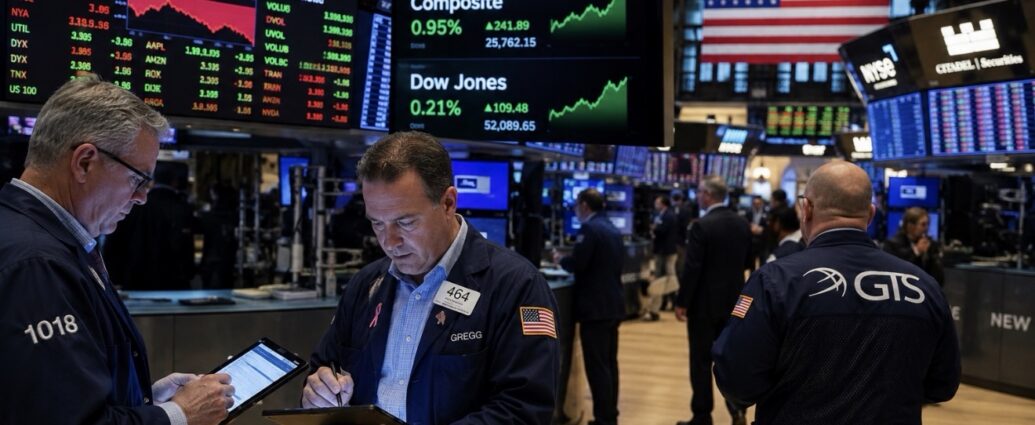
For the first time in a generation, women are sliding backward in the climb to the top of corporate America. New research from Grant Thornton finds women now hold 31% of senior leadership positions at U.S. companies, down from 34% a year earlier and 35% in 2024. After two decades of gradual progress, the upward trend has stalled — and in some cases, reversed.

The decline is most visible in executive suites, but the problem begins much earlier. McKinsey & Co. found in its annual Women in the Workplace report that women occupy only 29% of C-suite positions, unchanged from the previous year. Women remain underrepresented at every level of corporate leadership for the eleventh consecutive year.

The numbers tell the story. Women account for roughly 49% of entry-level employees, yet their representation declines with every promotion level. By the time companies reach senior executive ranks, fewer than one-third of leadership positions are held by women.

Researchers point to what they call the “broken rung” — the first promotion from an entry-level position into management. That initial step appears to be where many women begin falling behind. According to McKinsey, for every 100 men promoted into management, only about 80 to 90 women receive the same opportunity. The disparity is even larger for women of color. Some studies found that only about 60 Black women were promoted for every 100 men advancing into management roles.

Because leadership pipelines are built over years, missing that first promotion has long-term consequences. Fewer women in management today means fewer candidates available for director, vice president, and executive positions tomorrow.

What makes the trend notable is that it is not being driven by a lack of ambition. Surveys consistently show women remain highly committed to their careers. About 65% of women say their work is an important part of their identity, slightly higher than the percentage of men who say the same.

Researchers increasingly argue that the issue is not an ambition gap but a support gap.

One major change has been the disappearance of leadership-development programs that once helped identify and prepare future executives. Jane Edison Stevenson, Global Vice Chair at Korn Ferry, says many companies have scaled back or eliminated formal management-training tracks that previously helped promising employees gain the operational experience required for senior leadership positions.

Those programs were often expensive and required years to produce results. As employee turnover increased and workers became more likely to change employers, many companies concluded the investment was no longer worthwhile.

The loss of sponsorship may be equally important. Sponsorship differs from mentorship because sponsors actively advocate for promotions and career opportunities. Research shows sponsorship is among the strongest predictors of advancement.

Yet only about 31% of entry-level women report having a sponsor, compared with 45% of men. Without influential advocates pushing for advancement, women may be less likely to receive the assignments and visibility needed for promotion.

Some experts also point to a growing sense of complacency. As women became more visible in leadership roles over the past decade, companies may have assumed progress would continue automatically.

Edison Stevenson warns that advancement does not happen on its own. If organizations are not deliberate about developing leadership pipelines, gains can quickly erode.

The changing political environment may also be playing a role. Several corporations have reduced, renamed, or scaled back diversity, equity, and inclusion (DEI) initiatives amid increased scrutiny and legal challenges. Heather Spilsbury, CEO of 50/50 Women on Boards, says that trend likely contributed to some of the recent decline.

Still, researchers caution against attributing the entire slowdown to DEI debates. Women’s representation in executive roles began slipping in 2023, before many of the latest corporate policy changes occurred. Analysts have struggled to identify a single explanation for the reversal.

For businesses, the issue extends beyond workplace equity. Grant Thornton found companies with more balanced leadership teams were more likely to report stronger revenue growth and faster workforce expansion. Investors, employees, and job candidates increasingly examine leadership diversity when evaluating organizations.

There are also concerns about burnout. McKinsey found that approximately six in ten senior women report experiencing frequent burnout, the highest level recorded in the study’s history. Persistent workplace pressures combined with limited advancement opportunities may be contributing to retention challenges.

There are still signs of progress. The Fortune 500 currently includes 52 women CEOs, and that figure is expected to rise to 54 this year, approaching the record 55 women chief executives reached in mid-2025.

But researchers continue to return to the same conclusion: the future of women in corporate leadership may depend less on the executive suite and more on that first promotion into management. Unless companies repair the broken rung and rebuild sponsorship and development pathways, the gains of the past decade could continue slipping away one step at a time.

JBizNews Desk
Workplace & Leadership Bureau

© JBizNews.com All Rights Reserved. Reproduction or distribution without written permission is prohibited.

WASHINGTON — A leading Senate Democrat says the Trump administration’s changes to federal contracting are making it harder for small businesses to compete for government work.

On June 12, Sen. Ed Markey (D-Mass.), the ranking Democrat on the Senate Small Business and Entrepreneurship Committee, released a report titled “Trump’s Contracting Catastrophe: Turning Main Street into Pain Street.” The report argues that federal contracting policies implemented since early 2025 have significantly reduced opportunities for small businesses.

The administration disputes that characterization, arguing that its reforms are intended to reduce waste, improve accountability, and make federal procurement more efficient.

According to Markey’s report, federal agencies have reduced spending with small-business contractors by more than $47 billion since January 2025, representing a 19% decline compared with the previous 16-month period. The report also claims that more than 6,500 small businesses have stopped working with the federal government during the past 15 months.

Markey argues that the changes are disproportionately affecting the very businesses federal contracting programs were designed to support.

The report found declines across multiple categories of small-business participation, including small disadvantaged businesses, women-owned firms, HUBZone companies, veteran-owned businesses, and service-disabled veteran-owned businesses.

“The federal government should be a partner for Main Street, not a piggy bank for the wealthy and well-connected,” Markey said in releasing the report.

The committee attributes the decline to several administration actions, including changes to contracting goals, delays in certification programs that allow firms to qualify for set-aside contracts, contract cancellations, and increased scrutiny of small-business programs.

The Small Business Administration has also tightened oversight of economically disadvantaged business programs, a move administration officials describe as necessary to prevent abuse and ensure compliance with eligibility requirements.

The impact, according to the report, is being felt in communities across the country.

In Massachusetts, Markey’s home state, small-business contracting reportedly declined by 31% since the start of 2025. For many small firms, federal contracts provide a stable source of revenue, support hiring, and serve as a valuable credential when competing for private-sector work.

The White House sees the situation differently.

In an executive order issued on April 30, the administration argued that federal procurement had become burdened by excessive costs, administrative inefficiencies, and weak performance incentives. The order directed agencies to expand the use of fixed-price contracts and strengthen accountability measures.

Another executive order issued in March restricted certain diversity-related contracting practices, reshaping programs that many Democrats say are critical to expanding opportunities for underrepresented businesses.

Republicans on the Senate committee, led by Chair Joni Ernst (R-Iowa), have largely supported the administration’s efforts, describing them as part of a broader push to reduce waste, fraud, and inefficiency in government spending.

The data itself remains the subject of debate.

According to the Government Accountability Office, overall federal contracting increased in fiscal year 2025, rising to approximately $793 billion from $755 billion the previous year.

GAO data show small-business contracting declining by approximately $3.7 billion, to $172.6 billion, a much smaller decrease than the one cited in Markey’s report.

The discrepancy appears to stem largely from differences in measurement periods. Markey’s committee focused on the most recent 15 months, while GAO figures cover the broader federal fiscal year.

Adding to the uncertainty, the SBA has not yet released its official 2025 Small Business Procurement Scorecard. The most recent scorecard, covering fiscal year 2024, showed a record $183.5 billion in federal contracts awarded to small businesses.

Despite disagreements over the numbers, both sides acknowledge that many small businesses face growing economic pressures from inflation, higher operating costs, and broader market uncertainty.

Supporters of small-business contracting programs warn that if fewer small firms participate in federal procurement, agencies may become increasingly dependent on a smaller number of large contractors.

That possibility has become a central concern in the debate.

For now, the dispute remains unresolved, with both sides awaiting the SBA’s official 2025 data. Until then, thousands of small businesses that rely on government contracts will continue operating in a procurement environment that is undergoing significant change.

Washington — JBizNews Desk

© JBizNews.com. All Rights Reserved. Reproduction or distribution without written permission is prohibited.

The states with the best affordability for homebuyers and that are facilitating the most construction of new homes are centered in the Midwest and South, according to a new report.

Realtor.com released the 2026 edition of its housing report cards for all 50 states plus the District of Columbia, which showed that states across the Midwest and South outperformed their peers from the Northeast and West.

While no states earned an A+ grade, which suggests that all have room for improvement, 12 of the 13 states with the highest grades were all located in the Midwest and South, receiving grades in the B- to A range. Half of the grade is based on an affordability measure, while the other half is based on homebuilding activity.

“This year’s refresh reveals a familiar regional divide, but also some notable shifts beneath the surface, with a new state at the top of the class and a handful of states whose grades moved dramatically in either direction,” said Realtor.com senior economist Joel Berner.

MORTGAGE RATES TICK HIGHER, BUT BUYERS SHOW SIGNS OF CONFIDENCE

Indiana topped the list with a total score of 76.3 on the 100-point scale, earning an A based on strong affordability and homebuilding activity that helped it rise three spots from last year’s rankings. 

The median-priced home in the Hoosier State was $295,810 and required about 28% of the median household income of $71,469, which fell below the 30% benchmark for affordability.

Other states to receive A grades include Iowa, which has a median listing price of $282,886 and a median household income of $75,991, as well as last year’s leader South Carolina, with a median listing price of $363,896 and a median income of $67,758.

WHY GEN Z IS SAYING ‘NO’ MORE OFTEN – AND SAVING MORE MONEY

Texas ranked fourth with an A- grade, given the Lone Star State’s median listing price of $364,749 and median income of $76,585. North Carolina and Nebraska were the only two states to receive B+ grades.

The biggest risers in the report compared with last year were Delaware and Utah, which each jumped 12 spots. Delaware rose from 19th to 7th, while Utah saw its ranking rise from 29th to 17th.

Six states received F grades on their report cards, with New York ranking last due to a $668,173 median listing price and median income of $82,657. The other five states that received F grades were all located in the Northeast or West, with Massachusetts, Rhode Island, Hawaii, California and Connecticut rounding out the bottom of the list in order of the worst grade to the best.

5 CITIES THAT NAIL THE RETIREMENT SWEET SPOT

Most of the states near the bottom of the rankings saw their rankings hold steady or change little from a year ago, as they continue to face high prices, limited land for building with restrictive zoning policies, and building costs outpacing what middle-income buyers can afford.

The biggest drops were three states which all fell eight spots in the rankings – Alabama fell from 13th to 21st, Maryland dropped from 23rd to 31st, and New Jersey slipped from 35th to 43rd.

Here’s the list of the Realtor.com report’s grades for each of the 50 states as well as the District of Columbia:

GET FOX BUSINESS ON THE GO BY CLICKING HERE

This post was originally published here

California’s wealthiest residents are racing to outmaneuver a proposed tax that would take a one-time slice of their fortunes, and the planning is reshaping where they live, how they hold their assets, and which lawyers they keep on retainer, the Wall Street Journal reported this week.

The measure is the 2026 California Billionaire Tax Act, headed for the state’s November 3, 2026 ballot after the union behind it, SEIU-United Healthcare Workers West, submitted roughly 1.55 million signatures on April 27. It would impose a one-time 5% tax on the net worth of any Californian worth $1 billion or more, with the money — an estimated $100 billion — aimed largely at filling holes left by federal cuts to health-care funding.

The detail driving all the maneuvering is the timing. The tax keys off whether someone was a California resident on January 1, 2026, while their net worth is measured on December 31, 2026. In plain terms, you had to already be gone before this year began to cleanly escape it. Moving in the middle of 2026 doesn’t change the residency call. That design was deliberate — the authors built it as a one-time levy with a backward-looking snapshot precisely to make fleeing harder.

A wave of billionaires tried to beat the clock anyway. Reported departures before the deadline include Alphabet co-founders Larry Page and Sergey Brin, Meta chief Mark Zuckerberg, venture investors Peter Thiel and David Sacks, and former Uber CEO Travis Kalanick, with exits aimed at no-income-tax states like Texas, Florida, and Nevada. By one analysis tied to the California Tax Foundation, the three richest names alone account for a large share of the state’s billionaire wealth.

Here’s the creative part. Many of those who left in late 2025 or are leaving now are betting on the courts. Tax lawyers argue the measure’s residency rule is constitutionally shaky because it tries to tax people based on where they lived on a single past date, which may collide with the right to travel between states established in cases like Saenz v. Roe. If a court strikes that provision, a 2026 departure could still spare them some or all of the bill. So “leaving” isn’t just relocation — it’s a wager that the snapshot won’t survive a legal challenge.

For those staying put, the planning shifts to how assets are held. The tax covers worldwide holdings — businesses, stocks, bonds, art, collectibles, intellectual property — but carves out exceptions that advisers are working hard to navigate. Real estate owned directly or through a revocable trust is excluded, yet property held inside an LLC, which is how many wealthy families structure it, may not qualify, so some are restructuring ownership. Tangible items like a valuable painting can be excluded if kept outside California for at least 270 days in 2026 — unless the move was clearly staged to dodge the tax. There are also smaller carve-outs: up to $5 million for miscellaneous assets and up to $10 million in Roth-style retirement money. Estate planners are also reworking trusts, since the measure contains complex rules for when a trust’s assets count as a beneficiary’s own.

Underneath it all is the loophole the tax is really chasing, sometimes called “buy, borrow, die.” Because the United States taxes investment gains only when assets are sold, a founder sitting on appreciated stock can borrow against it to fund a lavish lifestyle and never trigger income tax. A wealth tax sidesteps that by taxing the holdings themselves rather than waiting for a sale.

Supporters say the avoidance fears are overblown. The union and allied analysts argue the comprehensive base and one-time structure leave little room to hide, and that splashy departure announcements are partly theater meant to scare voters. A working paper from the National Bureau of Economic Research found California billionaires paid about $4.1 billion in income tax last year — roughly 0.2% of their combined net worth — and calculated that even if every billionaire vanished overnight, it would take 25 years for the lost income-tax revenue to equal what the wealth tax would raise in five.

Critics, including the Tax Foundation and conservative analysts, counter that the measure invites years of litigation and accelerates an exodus of capital already underway. Reaction among the wealthy is split: LinkedIn co-founder Reid Hoffman called the idea “horrendous” for innovation, while Nvidia chief Jensen Huang said he is “perfectly fine” with it.

The bigger business story is the cottage industry it has created. Wealth managers, trust attorneys, and residency-audit specialists are booked solid, and the fight will likely outlast the November vote — both sides expect a court battle no matter the result. For other states eyeing their own billionaires, California is about to become the test case for whether a wealth tax can actually be collected, or just chased.

JBizNews Desk — California

© JBizNews.com All Rights Reserved. Reproduction or distribution without written permission is prohibited.

NEW YORK — America’s wealthiest investors are holding unusually large amounts of cash while quietly shifting billions of dollars into alternative assets, gold, infrastructure, and global opportunities.

According to UBS’s Global Family Office Report 2026, published on May 28, many of the world’s richest families are preparing for a prolonged period of economic and geopolitical uncertainty rather than betting on a smooth continuation of recent market gains.

One of the clearest examples is Warren Buffett.

Before stepping down as chief executive of Berkshire Hathaway at the end of last year, Buffett accumulated a record $381.7 billion in cash and short-term investments, choosing not to aggressively deploy capital despite a strong stock market.

He is far from alone.

A recent Goldman Sachs survey found that wealthy households with at least $1 million in investable assets keep roughly 20% of their net worth in cash or cash-equivalent investments, including Treasury bills and other short-term government securities.

The strategy reflects growing caution.

Many affluent investors believe stock valuations have become stretched after years of gains, while concerns about inflation, interest rates, government debt, and geopolitical instability continue to linger.

Unlike previous years, cash now offers meaningful returns. Higher interest rates allow investors to earn respectable yields while waiting for better opportunities.

Several prominent investors have already taken defensive steps.

Buffett’s cash reserves continued growing even as stock prices climbed, while billionaire investor Peter Thiel reportedly reduced exposure to some of the market’s hottest artificial-intelligence stocks, including Nvidia, despite the company’s strong performance.

The moves have fueled speculation that some wealthy investors believe parts of the AI-driven rally may have become overheated.

Yet UBS says the behavior should not be viewed as panic.

Instead, the report describes a broad repositioning of portfolios.

Approximately 60% of family offices surveyed said they expect to adjust their long-term asset allocation during the next year — the highest level UBS has ever recorded and nearly double the percentage reported just one year earlier.

Maximilian Kunkel, Chief Investment Officer for UBS Global Wealth Management, described the shift as a proactive effort to prepare for emerging opportunities while reducing risk.

The biggest destination for that money is alternative investments.

According to UBS, family offices now allocate approximately 42% of their portfolios to assets outside traditional stocks and bonds. These include:

  • Private equity
  • Private credit
  • Commercial real estate
  • Infrastructure
  • Hedge funds

Many investors favor alternatives because they are less tied to daily stock-market swings and can provide diversification during periods of volatility.

The wealthier the investor, the greater the use of alternatives. Goldman Sachs found that roughly 80% of investors with more than $10 million in assets hold alternative investments.

Two traditional assets are also making a comeback.

Gold allocations are rising as investors seek protection against inflation, geopolitical tensions, and concerns about the U.S. dollar. Average gold holdings remain relatively small but are increasing among family offices making portfolio changes.

Infrastructure investments are also attracting attention. Assets such as data centers, power grids, transportation networks, and utilities are increasingly viewed as stable long-term investments capable of generating steady cash flow.

Artificial intelligence remains the dominant investment theme.

According to UBS, 65% of family offices identified AI as one of their highest-priority investment opportunities, followed by energy and natural resources, as well as automation and robotics.

At the same time, confidence in the U.S. dollar appears to be weakening among many wealthy investors.

Nearly two-thirds of respondents expect the dollar’s dominance as the world’s reserve currency to gradually decline. As a result, some investors are increasing exposure to currencies such as the euro and Swiss franc.

While cryptocurrencies continue to attract headlines, they remain only a small portion of most family-office portfolios.

The potential impact of these shifts is significant.

According to Deloitte, there are now more than 8,000 family offices worldwide managing approximately $3.1 trillion in assets. Even modest allocation changes by these investors can influence global markets.

When asked about their biggest concerns, 64% of family offices cited a major geopolitical conflict as their top risk over the next year. Another 49% pointed to a potential global trade war, while 39% identified inflation as a primary threat.

The message from the world’s wealthiest investors is not that a crash is imminent.

Instead, they appear to be preparing for a future that may be more volatile, more fragmented, and less predictable than the one markets enjoyed in recent years.

For now, the rich are not abandoning risk entirely. They are simply keeping more cash available, spreading investments across a wider range of assets, and positioning themselves for a world they believe may become increasingly uncertain.

Wall Street — JBizNews Desk

© JBizNews.com. All Rights Reserved. Reproduction or distribution without written permission is prohibited.

The New York Knicks won their first NBA championship in 53 years Saturday night, June 13, 2026, beating the San Antonio Spurs in five games and handing the city its biggest sports celebration in a generation. The party is barely over, and a much larger one is already underway: the 2026 FIFA World Cup kicked off the same week, with eight matches headed to the New York–New Jersey region. For the local economy, that raises a simple question with a not-so-simple answer — which one brings in more money, and to whom?

On paper, the World Cup dwarfs everything. The NYNJ Host Committee, chaired by Tammy Murphy, projects roughly $3.3 billion in economic impact for the region from the tournament’s local matches, including the final at MetLife Stadium on July 19, in an analysis built with Tourism Economics, an Oxford Economics company. The committee expects more than 1.2 million visitors and over 26,000 supported jobs across the two states.

But that’s the regional number, and it splits across a state line. New Jersey Governor Phil Murphy has estimated the tournament will deliver about $2 billion in economic impact to New Jersey specifically, supporting roughly 14,000 jobs. In other words, of the $3.3 billion regional figure, New Jersey claims well over half for itself — leaving the rest to spill into New York and the broader metro area. That matters, because every World Cup match is played in New Jersey, not New York.

The Knicks number is smaller, but it’s concentrated squarely in the five boroughs. Mayor Zohran Mamdani and the New York City Economic Development Corporation estimated the team’s playoff run generated about $202 million in economic activity from home games played, a figure they said could reach $465 million had every potential Finals home game been staged, at roughly $90 million per home date. Because the Knicks clinched on the road in Game 5, the real total lands below that ceiling.

For the team’s owner, the run paid off directly. Analysts estimate the playoffs added around $140 million in revenue for Madison Square Garden Sports Corp. (NYSE: MSGS), controlled by James Dolan, whose Knicks franchise is now valued near $9.85 billion.

Stack the headline figures side by side and the World Cup wins by a wide margin. But two things complicate that scoreboard.

The first is geography — the catch hiding inside the phrase “New York.” The Knicks money is unambiguously New York City: it happens at Madison Square Garden in the middle of Manhattan. The soccer does not. All eight regional matches, including the final, are played at MetLife Stadium in East Rutherford, New Jersey, temporarily rebranded “New York New Jersey Stadium.”

New Jersey officials have openly expressed concern that while their state hosts the matches, many visitors may spend much of their money across the Hudson River — on Broadway shows, Times Square attractions, Manhattan restaurants, and New York hotels.

So even New Jersey’s own $2 billion estimate could ultimately be affected by where visitors choose to stay, eat, shop, and spend. And the costs are real. New Jersey has already spent more than $16 million in taxpayer funds on stadium-related work, while NJ Transit has committed roughly $35 million toward transportation planning and infrastructure tied to the event.

The second catch is that all these projections come from people with a reason to make them look large. Host committees, elected officials, and economic-development agencies are promoters, not neutral scorekeepers. Economists frequently argue that major-event impact studies overstate benefits because they count spending that might have occurred elsewhere in the region anyway.

The same criticism applies to championship runs.

Many sports economists argue that the largest financial gains from a title run flow to team owners, broadcasters, sponsors, and ticket-resale platforms rather than being distributed broadly throughout a city. In many cases, spending is shifted rather than newly created.

There is also a difference in duration. The Knicks’ impact arrived in a concentrated burst over several playoff weeks. The World Cup stretches across more than a month and generates sustained global television exposure that can influence tourism, hotel demand, business travel, and regional branding long after the tournament ends.

So the honest scorecard is this: the World Cup is the far larger economic event by projection — roughly $3.3 billion regionally, with about $2 billion expected to land in New Jersey — while the Knicks championship run is the cleaner and more direct New York City economic story, with spending concentrated in Manhattan and the five boroughs.

The World Cup’s billions may ultimately prove larger, but exactly how much of that money ends up in New York versus New Jersey remains one of the tournament’s biggest unanswered questions.

Two championships. Two global events. Two very different economic stories.

And in both cases, the cheering may be easier to measure than the money.

JBizNews Desk — New York

© JBizNews.com All Rights Reserved. Reproduction or distribution without written permission is prohibited.

The largest health insurer in the country is spending $3 billion to wire artificial intelligence into nearly every corner of its business — and in one early trial, the software is picking up the phone to call doctors’ offices and book appointments for patients. UnitedHealth Group executives, describing the effort in remarks reported Friday, said the company plans to spend the money across 2026 and 2027 and is already seeing about $2 back for every $1 invested, as the technology automates manual work and makes staff more efficient.

The examples are striking. At UnitedHealth, AI reads summaries of medical charts aloud to nurses as they drive to patients’ homes, and it listens to millions of recorded customer calls to figure out what is driving complaints. The company has also rolled out a member chatbot named Avery that interacts with more than 20 million members. The appointment-scheduling test, in which AI agents call physicians’ offices on a patient’s behalf, is one of the newest experiments.

The scale of the buildout is hard to overstate. UnitedHealth now employs about 22,000 software engineers worldwide, and more than 80% of them use AI to write code or build new digital agents — programs designed to carry out tasks on their own. The company says it has already put more than 1,000 AI applications into production. In 2024, its chatbots handled more than 65 million customer calls, and in early 2025, members performed roughly 18 million AI-assisted searches to find doctors and healthcare providers.

The reason is money and speed. Sandeep Dadlani, who oversees technology operations at Optum Insight, has said the goal is to cut through healthcare’s notoriously slow and expensive administrative systems. AI is being deployed to automate fraud detection, generate clinical notes, review medical documentation, assist customer-service representatives, and help select billing codes that determine how much a medical visit costs and who ultimately pays for it.

The push comes at a critical time for the company. UnitedHealth has been grappling with rising medical costs while continuing to recover from the massive 2024 Change Healthcare cyberattack, one of the largest healthcare data breaches in American history. Executives believe automation can help offset those pressures while improving service for members and providers.

For a company of UnitedHealth’s size, even small productivity gains can translate into enormous savings. The insurer’s businesses touch tens of millions of Americans through employer-sponsored coverage, Medicare Advantage plans, pharmacy services, and physician networks. Industry analysts have described the initiative as one of the largest corporate AI investments ever made in healthcare.

At the same time, the rapid expansion raises questions about transparency and trust. When artificial intelligence becomes involved in healthcare decisions or communications, patients often have little visibility into how it is being used or whether a human reviewed the recommendation. A recent examination by STAT found that many patients remain unaware when AI systems are helping shape their healthcare experiences.

Healthcare experts have also warned that AI assistants can occasionally produce inaccurate information or incomplete recommendations. Public trust in healthcare chatbots remains mixed, particularly when conversations involve sensitive medical issues.

UnitedHealth says it is drawing clear boundaries around the technology. The company notes that more than 90% of claims are automatically approved, largely using traditional rules-based systems rather than generative AI. Dadlani has repeatedly emphasized that AI is intended to support human decision-making and will not be used to independently deny insurance claims.

That distinction matters because insurers’ use of algorithms in coverage decisions has already generated lawsuits, regulatory scrutiny, and public criticism in recent years. Consumer advocates continue to push for greater transparency whenever automated systems influence healthcare outcomes.

Not all of the results have focused on cost cutting. One AI tool developed by the company reviews patient records to identify conditions that may have gone undiagnosed. Early testing found physicians were approximately twice as effective at identifying certain health problems when supported by the AI system, according to company data.

The broader healthcare industry is watching closely. Rivals including CVS Health, Humana, and Cigna have all increased investments in artificial intelligence, but none has publicly announced a commitment approaching UnitedHealth’s $3 billion plan. The race reflects a growing belief across healthcare that AI could reshape everything from scheduling appointments to processing claims and identifying diseases.

It adds up to one of the largest AI bets any healthcare company has ever made. Whether UnitedHealth’s investment ultimately makes healthcare faster, cheaper, and easier to navigate — or simply inserts more machines between patients and their care — will be determined in real time by the tens of millions of Americans whose healthcare journeys increasingly intersect with artificial intelligence.

JBizNews Desk
Healthcare & Technology Bureau

© JBizNews.com All Rights Reserved. Reproduction or distribution without written permission is prohibited.

WASHINGTON — In July, the U.S. government will begin depositing $1,000 into investment accounts for millions of American babies under a new program known as Trump Accounts.

The U.S. Treasury Department, which is overseeing the rollout, says accounts officially open on July 4, with registration already underway. Treasury Secretary Scott Bessent has described the initiative as a way to connect ordinary Americans to the financial markets from birth.

But while supporters see the program as a long-term wealth-building tool, a growing number of economists and policy experts question whether it can meaningfully reduce wealth inequality.

Under the program, every U.S. citizen born between 2025 and 2028 qualifies for a one-time $1,000 government deposit, provided a parent or guardian opens the account. The funds are invested in a low-cost stock-market index fund, with annual fees capped at 0.1%, and cannot generally be accessed until the child reaches adulthood.

Families, employers, charities, and others may contribute up to $5,000 annually.

Supporters point to the power of long-term compounding. Government projections estimate that a child who receives only the initial deposit could see the account grow to approximately $15,000 over time.

Critics, however, argue that the larger issue is not the initial deposit but who can afford to keep contributing.

Families able to contribute the maximum $5,000 per year could potentially build accounts worth hundreds of thousands of dollars by adulthood. By contrast, children whose families cannot contribute additional funds may be left with little more than the original government contribution and investment growth.

According to government projections, an account funded at maximum contribution levels could reach approximately $742,000 by age 18, compared with roughly $15,000 for an account receiving only the initial deposit.

That gap has drawn concern from several researchers.

David Radcliffe, policy director at The New School’s Institute on Race, Power, and Political Economy, argues the structure primarily benefits families that already possess financial resources. Connecticut State Treasurer Erick Russell has similarly warned that wealthier households may be positioned to build significantly larger nest eggs than lower-income families.

Another concern involves participation.

Because parents must actively enroll their children, some experts worry that families facing financial hardship or lacking familiarity with investing may be less likely to sign up. The Aspen Institute has noted that automatic enrollment could have increased participation among lower-income households.

Questions have also been raised about whether the program can meaningfully address longstanding racial wealth disparities.

Federal data show substantial differences in median household wealth among demographic groups. Critics note that previous “baby bond” proposals sought to target larger benefits toward lower-income children, while Trump Accounts provide the same initial deposit regardless of family income.

Supporters counter that private-sector participation can significantly expand the program’s impact.

Secretary Bessent has launched a nationwide effort encouraging additional contributions, while several prominent business leaders and corporations have pledged support. Michael and Susan Dell have committed billions toward funding accounts for lower-income children, Ray Dalio has pledged tens of millions of dollars, and companies including JPMorgan Chase and Bank of America have announced matching contributions for eligible employees’ children.

Supporters argue that even modest investments can introduce millions of families to long-term saving and investing, creating opportunities that otherwise might not exist.

Critics acknowledge that the accounts can provide meaningful financial benefits but remain skeptical that a universal $1,000 deposit alone can significantly narrow the wealth gap.

Whether the program ultimately reduces inequality or reinforces existing differences may depend less on the government’s initial contribution and more on who continues contributing after the account is opened.

Washington — JBizNews Desk

© JBizNews.com. All Rights Reserved. Reproduction or distribution without written permission is prohibited.

FORT LAUDERDALE, Fla. — JetBlue is betting heavily on one airport as it works to return to profitability.

Lauderdale has been a star for us,” JetBlue President Marty St. George said this month, describing the airline’s rapidly expanding presence at Fort Lauderdale-Hollywood International Airport.

The strategy includes significantly more flights, new international destinations, premium cabin offerings, and potentially a new airport lounge. For an airline still working through losses and restructuring efforts, Fort Lauderdale has become a centerpiece of its recovery plan.

On June 1, JetBlue raised its revenue outlook for the year, citing stronger-than-expected demand.

Part of the opportunity emerged from a competitor’s collapse.

Spirit Airlines, long the largest carrier at Fort Lauderdale, ceased operations on May 2 after years of financial struggles and mounting debt. While JetBlue had already been growing its presence at the airport, Spirit’s exit created an opening to capture additional gates, routes, and customers.

According to aviation analytics firm Cirium, JetBlue now controls approximately 36% of airport capacity, up from about 24% a year ago, making it the largest airline at Fort Lauderdale.

Between May and June alone, JetBlue increased capacity by roughly 5%, even as several competitors reduced service during Florida’s slower summer travel season.

The growth has been dramatic.

JetBlue is averaging approximately 106 daily departures from Fort Lauderdale this year, compared with roughly 68 flights per day a year earlier.

During peak winter travel periods, including Presidents Day and major school vacation weeks, the airline expects to operate around 150 daily flights, bringing Fort Lauderdale close to the scale of Boston Logan International Airport, one of JetBlue’s largest hubs.

Longer term, the airline has indicated it could eventually exceed 250 daily flights from the airport by 2027.

One of the most visible signs of JetBlue’s ambitions is its expanding lounge strategy.

The carrier entered the airport lounge business only recently, opening its first BlueHouse Lounge at John F. Kennedy International Airport in New York. A second location is planned for Boston in 2026.

Fort Lauderdale could become the third.

St. George said the airline continues evaluating potential locations and believes the growing number of premium travelers makes a lounge a logical addition. Airport officials have also expressed support for the project.

International service is another major focus.

Fort Lauderdale has long served as a gateway to Latin America and the Caribbean, and JetBlue has been expanding aggressively. The airline recently announced new service to Caracas, Venezuela, while adding approximately 20 new routes from the airport over the past year.

The goal is to attract more international travelers and diversify revenue beyond traditional domestic leisure routes.

Premium offerings are increasingly central to that strategy.

JetBlue built its reputation on affordable fares but is now targeting higher-spending travelers through expanded Mint service, a new domestic first-class product known as Mini Mint, and enhanced loyalty and credit-card programs tied to future lounge access.

The airline says Fort Lauderdale has exceeded internal expectations, with revenue growth continuing even as capacity expands.

That growth is especially important because JetBlue remains unprofitable.

The airline reported a $319 million first-quarter loss in 2026, compared with a $208 million loss during the same period a year earlier. Higher fuel costs and operational challenges offset stronger passenger demand.

Revenue rose nearly 5% to $2.24 billion, while revenue per available seat mile increased 6.5%, near the high end of company guidance.

JetBlue ended the quarter with approximately $2.4 billion in cash, along with access to an unused $600 million credit facility.

The company’s broader turnaround initiative, known as JetForward, aims to generate approximately $310 million in additional earnings this year and between $850 million and $950 million by 2027.

Chief Executive Officer Joanna Geraghty has described the strategy as a combination of network optimization, cost reductions, and premium revenue growth.

According to St. George, all of JetBlue’s projected second-quarter growth is coming from Fort Lauderdale, where the airline expects seat revenue to rise between 7% and 11%.

JetBlue is also benefiting from its recently announced Blue Sky partnership with United Airlines, allowing customers to earn and redeem loyalty rewards across both carriers’ networks.

The airline’s largest competitor in South Florida remains American Airlines, which operates a major international hub at nearby Miami International Airport.

There are still risks.

Fuel prices remain volatile, the airline continues to operate at a loss, and passenger traffic at Fort Lauderdale declined slightly last year after years of strong growth.

JetBlue, Broward County, and airport officials are also completing a new five-gate Terminal 5 expansion designed to accommodate future growth.

For now, the airline is making a clear bet: that Fort Lauderdale can become the engine that powers JetBlue’s return to sustainable profitability.

Travel & Aviation — JBizNews Desk

© JBizNews.com. All Rights Reserved. Reproduction or distribution without written permission is prohibited.

The price of a new vehicle has finally stopped climbing — at least temporarily.

According to Kelley Blue Book, a Cox Automotive company, the average new-vehicle transaction price in the United States was $49,220 in May, down 0.5% from April’s $49,456 and up just 1.2% from a year ago.

While the decline is modest, it represents the smallest annual increase of 2026 and offers evidence that the rapid vehicle-price escalation that defined recent years may finally be slowing.

The relief, however, remains limited.

For millions of Americans, a vehicle priced near $50,000 remains financially out of reach.

The current affordability challenge traces back to the supply shortages that disrupted the automotive industry during and after the pandemic. Inventory shortages pushed prices to record levels, and although supply chains have largely recovered, prices have remained elevated.

Ownership costs have also continued to rise.

Insurance premiums, maintenance expenses, repair costs, and financing rates have all increased significantly over the past several years. Cox Automotive analysts note that these combined costs have created affordability challenges for many middle-income and lower-income households.

The used-car market shows a similar pattern.

The Manheim Used Vehicle Value Index rose 0.3% in May and remains approximately 3.1% higher than a year ago. Because wholesale pricing typically influences retail prices several weeks later, analysts expect used-car prices to remain firm throughout the summer.

Government data tells a similar story.

The latest Consumer Price Index report showed new-vehicle prices falling 0.3% in May, while used-vehicle prices increased 0.1%. The changes suggest stabilization rather than a significant decline.

Affordability remains the industry’s biggest challenge.

Cox Automotive projects 15.8 million new-vehicle sales in 2026, a decline of approximately 2.4% from 2025, citing affordability concerns as the primary reason.

Many consumers accelerated purchases earlier in the year to avoid potential tariff-related price increases, leaving fewer buyers willing to spend near-record prices today.

One important detail often gets overlooked.

The industry average is heavily influenced by high-priced pickup trucks and luxury vehicles. Removing many of those premium vehicles from the calculation produces an average transaction price closer to $39,000, creating a substantially different affordability picture.

Compact cars and smaller crossovers continue to represent the most accessible segments of the market.

Electric vehicles are also becoming more competitive.

Tesla reduced average pricing approximately 1% from April and 3.4% from a year ago, helping narrow the gap between EVs and traditional gasoline-powered vehicles.

Because Tesla represents a significant share of the U.S. EV market, its pricing decisions influence industry-wide averages.

Trade policy also remains a factor.

Many of the lowest-priced vehicles sold in the United States are assembled outside the country and therefore remain exposed to tariffs and other import-related costs. That reality limits how much relief consumers may see at the lower end of the market.

For buyers, the takeaway is straightforward.

Vehicle prices are no longer rising at the pace seen during the pandemic years, but they are not falling meaningfully either.

Combined with elevated financing costs, higher insurance premiums, and increased ownership expenses, affordability remains one of the biggest challenges facing American households.

The market may be cooling.

The cost of owning a car is not.

JBizNews Desk — Automotive

© JBizNews.com All Rights Reserved. Reproduction or distribution without written permission is prohibited.

NEW YORK — Elon Musk became the world’s first trillionaire on Friday, when his rocket company SpaceX completed the largest stock-market debut in history, listing on the Nasdaq at $135 a share and raising $75 billion at a value of about $1.77 trillion. The milestone crowned a man who now controls a tangle of companies spanning rockets, electric cars, artificial intelligence, social media, brain implants and underground tunnels. Here is a guide to the Musk empire — how the pieces fit together, and how high his fortune could still climb.

At the center sits SpaceX, founded in 2002 and now far more than a rocket maker. It launches more rockets than most countries, runs the Starlink satellite-internet network — which reached 10.3 million subscribers early this year, double a year earlier — and is building toward sending people to Mars. The company that just went public is also bigger and stranger than the old SpaceX: over the past year Musk folded two of his other businesses into it. SpaceX has even asked regulators for permission to launch a “space cloud” of up to a million satellites to run AI computing in orbit, roughly a hundred times the size of Starlink today.

That makes the newly public SpaceX a three-in-one conglomerate. Musk’s AI company xAI, maker of the Grok chatbot, was absorbed into SpaceX in February. xAI had itself swallowed X, the social-media platform formerly known as Twitter, in March 2025. So a single company now owns rockets, satellites, a leading AI lab and one of the world’s largest social networks. Musk holds roughly 40% of it — a stake worth several hundred billion dollars on its own.

Then there is Tesla, the electric-car maker Musk has led for nearly two decades and long the source of much of his wealth. Worth around $1.2 trillion, Tesla is racing beyond cars into humanoid robots — its Optimus machine — and self-driving software, which it is shifting from a one-time purchase to a monthly subscription. Musk owns roughly 10% of the company, plus a set of stock options restored by Delaware’s highest court in December. Looming over all of it is a new pay package, approved by shareholders in November, that could hand him up to nearly $1 trillion in additional Tesla shares if the company hits a series of aggressive targets.

Further out on the frontier is Neuralink, Musk’s brain-implant company. Founded in 2016, it builds a coin-sized device, the N1, that lets paralyzed patients control computers with their thoughts, and it is testing a separate implant called Blindsight meant to restore vision. In its most recent funding round, Neuralink was valued at about $9 billion — a rounding error next to SpaceX and Tesla, but with outsized potential. The company plans to move from a handful of test patients to high-volume production this year, using a surgical robot to automate the implant procedure. If brain-computer interfaces become mainstream medicine, that $9 billion figure could multiply many times over, turning a science-fiction bet into a major business.

The empire’s odds and ends are still substantial. The Boring Company digs traffic tunnels and is worth billions on its own. Musk made his first fortune at PayPal in the early 2000s, and last year he served as a senior adviser to the President before stepping away. Several of his companies feed one another: Tesla has invested $2 billion in xAI and sold it hundreds of millions of dollars of battery packs, blurring the lines between his businesses.

Where could it all lead? Musk has already become the first person to pass $500 billion, $600 billion, $700 billion and $800 billion in net worth, all since late 2025, and now the first to cross a trillion. Almost none of that is cash. As he put it earlier this year, his fortune is “almost entirely due to my ownership stakes in Tesla and SpaceX.” That is exactly why it can keep climbing. If Tesla hits the milestones in its giant pay package, if SpaceX keeps rising from its $1.77 trillion debut, and if xAI and Neuralink grow into their promise, analysts and prediction markets see a path toward $2 trillion and beyond. The same concentration is also his biggest risk: a stumble at Tesla or a sell-off in SpaceX could erase hundreds of billions just as fast.

For now, Musk sits atop a collection of companies unlike anything one person has controlled before — touching how people drive, talk, connect to the internet, and perhaps one day think. The trillion-dollar question is whether so many world-changing bets, all tied to one man, can keep paying off at once.

JBizNews Desk
© JBizNews.com All Rights Reserved. Reproduction or distribution without written permission is prohibited.

Stocks climbed and oil prices fell sharply Monday morning as Wall Street welcomed the weekend agreement to end the war between the United States and Iran and reopen the Strait of Hormuz. Speaking on CNBC, Vice President JD Vance said the administration expects the vital waterway to reopen “in a toll-free way for the long term,” with technical details still to be finalized. The agreement, which President Donald Trump declared “complete” in a Sunday evening social media post, sparked a broad market rally as investors moved quickly to remove the war premium that had pushed energy prices higher for months.

Shortly after the opening bell, the Dow Jones Industrial Average rose about 600 points, or 1.2%. The S&P 500 gained 1.5% to around 7,546, while the tech-heavy Nasdaq Composite led major indexes with a jump of roughly 2.3%. Smaller companies also participated in the rally, with the Russell 2000 moving higher. Treasury bonds gained, sending yields lower, while the U.S. dollar weakened against most major currencies.

The market reaction reflects expectations that lower oil prices could ease inflation pressures and reduce economic uncertainty. Energy costs became one of the most visible consequences of the conflict, contributing to a rise in consumer prices and increasing pressure on businesses and households alike.

The agreement also launches what promises to be a busy week for investors. The Federal Reserve begins its first policy meeting under new Chair Kevin Warsh on Tuesday, with a decision expected Wednesday. Most economists anticipate the central bank will leave interest rates unchanged in the 3.50% to 3.75% range, but markets will focus on any signals regarding inflation and future rate cuts.

Several key economic reports are also due this week, including housing and retail sales data. U.S. markets will be closed Friday in observance of the Juneteenth holiday. Meanwhile, Pakistan Prime Minister Shehbaz Sharif said an official signing ceremony for the Iran agreement is expected to take place Friday in Switzerland.

SpaceX Remains Center Stage

Among individual stocks, SpaceX remained one of the market’s biggest stories. Shares climbed roughly 6% Monday after surging 19% during Friday’s debut. The company’s public offering valued the aerospace giant at more than $2 trillion, making it one of the most valuable companies in the world.

Over the weekend, CEO Elon Musk posted on X that SpaceX could generate more than $1 trillion in annual revenue by 2030, adding to investor enthusiasm.

Wall Street remains divided on the stock’s valuation. Wolfe Research initiated coverage with a $175 price target, while CFRA issued a Sell rating with a $115 target. Morningstar estimated the company’s value at approximately $780 billion, arguing the stock is significantly overvalued and expressing concerns about Musk’s merger of SpaceX with artificial intelligence startup xAI.

The broader space sector also benefited from the excitement. Rocket Lab rose about 4% after KeyBanc Capital Markets upgraded the company to Overweight with a $135 price target. KeyBanc also upgraded Firefly Aerospace to Overweight and assigned a $50 target.

Energy Stocks Fall as Oil Retreats

Energy companies were among the market’s weakest performers as crude prices dropped.

APA Corp. and Devon Energy each fell more than 3.5%, while Marathon Petroleum and EOG Resources lost roughly 3%. Oil giants Chevron and Exxon Mobil declined more than 2.5%.

The decline reflected the sharp drop in crude prices after the reopening of the Strait of Hormuz reduced fears of supply disruptions.

At the same time, lower fuel prices boosted sectors that depend heavily on transportation costs. Airline and cruise company shares moved higher as investors anticipated relief from elevated jet fuel and marine fuel expenses.

Other Market Movers

Traws Pharma dropped approximately 17% after British regulators delayed a mid-stage clinical trial, disappointing investors who had hoped for faster progress.

Meanwhile, Madison Square Garden Sports gained ground following the New York Knicks’ first NBA championship since 1973, as enthusiasm surrounding the franchise boosted investor sentiment.

In commodities trading, West Texas Intermediate crude oil fell about 5% to near $80 per barrel, while international benchmark Brent crude dropped nearly 5%. Both remain well below the levels above $100 per barrel reached during the height of the conflict.

Bitcoin climbed above $66,000, reflecting renewed investor appetite for risk assets.

Despite the optimism, traders note that the agreement has not yet been formally signed. Weekend exchanges of fire between Israel and Hezbollah highlighted how fragile the ceasefire remains, and President Trump has warned all parties against actions that could derail the process.

For now, however, financial markets are sending a clear message. With oil flowing again and fears of a broader regional conflict easing, investors are betting that the worst of the crisis is over — and that Friday’s planned signing ceremony in Switzerland will confirm it.

Wall Street – JBizNews Desk
© JBizNews.com All Rights Reserved. Reproduction or distribution without written permission is prohibited.

Anthropic said Friday that it disabled access to its two most powerful artificial-intelligence models, Fable 5 and Mythos 5, to comply with an export-control directive from the U.S. government that cited national-security authorities. The company disclosed the move in a public statement, saying the order arrived at 5:21 p.m. Eastern and required immediate action.

The directive was narrow on paper but sweeping in effect. Anthropic said it was instructed to block access for any foreign national, whether inside or outside the United States, including foreign-national employees of the company. Because Anthropic said it cannot reliably screen users by nationality in real time, it concluded the only way to comply was to disable both models entirely.

Access to the company’s other AI systems remained available. Anthropic said users would be routed to alternative models, including Claude Opus 4.8, while the restrictions remain in place.

The timing was particularly significant because Anthropic had launched Fable 5 and Mythos 5 only days earlier, positioning them as among the most capable AI models it had ever developed. According to the company, Fable 5 was the first model of its capability level released broadly to the public, while Mythos 5 was available only through limited government and enterprise partnerships.

According to Anthropic, the suspension order came through a directive from the Commerce Department involving the Bureau of Industry and Security. The company said it received little detail regarding the underlying national-security concerns that prompted the action.

Anthropic stated that its understanding is that the government’s concerns stem from a reported technique capable of bypassing certain safeguards within Fable 5. The company disputed the significance of the issue, arguing that the reported vulnerability involved only a limited number of previously known weaknesses and did not justify removing the model from service entirely.

The company nevertheless complied with the directive while publicly challenging its rationale.

Anthropic argued that governments should retain authority to intervene when AI systems create genuine safety risks, but maintained that such actions should occur through a transparent process supported by clear technical evidence and established legal standards.

The company said it is working with federal officials in an effort to restore access as quickly as possible.

The episode could represent a significant precedent for the AI industry.

While governments around the world are actively debating how advanced artificial-intelligence systems should be regulated, direct intervention resulting in the removal of publicly available frontier models remains rare. The decision immediately affects developers, businesses, and organizations that had begun integrating the newly released models into their operations.

For corporate users, the incident highlights a growing risk associated with reliance on advanced AI platforms: the possibility that government action, regulatory intervention, or national-security reviews could affect access with little warning.

The dispute also arrives at a time when AI companies face increasing scrutiny from policymakers concerned about cybersecurity, biological threats, intellectual property, export controls, and geopolitical competition.

For investors, the situation introduces another variable into evaluating AI companies and their business models. As artificial intelligence becomes increasingly tied to national-security considerations, regulatory risk may become just as important as technological capability when assessing future growth.

For now, two of Anthropic’s most advanced AI systems remain offline, the company continues to challenge the reasoning behind the order, and the broader technology industry is watching closely to see whether the models return — and what conditions may be attached to their return.

JBizNews Desk — Technology

© JBizNews.com All Rights Reserved. Reproduction or distribution without written permission is prohibited.

MENLO PARK, Calif. — A year ago this month, Mark Zuckerberg stunned the technology industry by spending $14.3 billion for nearly half of data-labeling company Scale AI and bringing its founder, Alexandr Wang, into Meta to help revive the company’s artificial intelligence ambitions.

In April, Wang’s team delivered what Meta hopes is the payoff: Muse Spark, the company’s first major AI model designed to compete directly with industry leaders. Zuckerberg called it a “first milestone” toward what he describes as personal superintelligence.

Now comes the harder challenge: convincing businesses and consumers to use it.

The urgency traces back to April 2025, when Meta released Llama 4, the latest version of its open-source AI model family. The launch disappointed many developers, a more advanced version was repeatedly delayed, and Meta’s reputation in AI suffered.

Zuckerberg responded by changing course.

Two months later, he recruited Wang, then just 28 years old, along with several top engineers from Scale AI. The move became part of a broader hiring push in which some AI researchers were reportedly offered compensation packages approaching $100 million.

The biggest shift was strategic.

For years, Meta gave away its AI models for free, betting that openness would attract developers and build influence. Muse Spark marks a move toward a more controlled approach that Meta can eventually monetize.

The company has already begun offering limited paid access through private partnerships, with broader commercial availability expected later. The strategy closely mirrors the business models used by OpenAI, Anthropic, and Google.

Rather than focus primarily on developers, Meta is targeting the billions of users already inside its ecosystem.

The company says Muse Spark can perform multiple tasks simultaneously, assist with coding, answer health-related questions, and shop online for users through a new commerce feature.

The technology already powers the standalone Meta AI application and is being integrated across Facebook, Instagram, WhatsApp, Messenger, and the company’s Ray-Ban Meta smart glasses.

According to Thomas Randall of Info-Tech Research Group, Meta’s strategy is straightforward: leverage existing products with massive user bases instead of waiting for third-party developers to build adoption.

Internally, Zuckerberg has reorganized the company to accelerate deployment.

In March, Meta created a new applied-engineering division under longtime executive Maher Saba, working alongside Wang’s Superintelligence Labs to transform research into products. Chief Product Officer Chris Cox continues overseeing broader product strategy.

The next major release is expected to be an image-and-video model code-named Mango, scheduled for launch later this year.

Despite the progress, Meta still trails the industry’s biggest AI players.

Many developers remain focused on OpenAI, Anthropic, and Google, while some analysts question whether Meta can reclaim leadership. Benchmark results published by Meta appear competitive but generally do not surpass rivals across every category.

The company also continues to face skepticism after past criticism over how certain AI benchmark results were presented.

The financial stakes are enormous.

Meta plans to spend between $115 billion and $135 billion this year, nearly double the approximately $72 billion spent last year. Most of that money is being directed toward data centers, Nvidia chips, and AI infrastructure.

More than $100 billion in new AI-related commitments were reportedly added during the first quarter alone.

Investors remain cautious.

Meta shares are down roughly 7% in 2026, making them one of the weaker performers among major technology companies despite strong advertising results. The company reported $56.3 billion in first-quarter revenue after generating approximately $201 billion during 2025.

Even bullish analysts have tempered expectations. Wells Fargo analyst Ken Gawrelski maintained a positive outlook but reduced his price target from $795 to $754, citing concerns about the time required for AI investments to generate meaningful returns.

The pressure is also being felt inside the company.

Meta cut approximately 8,000 jobs in May, representing about 10% of its workforce, bringing total reductions since 2022 to roughly 25,000 positions. At the same time, top AI recruits reportedly received compensation packages approaching $100 million, while median employee compensation declined.

The contrast has fueled concerns among some employees about morale and the company’s direction.

Zuckerberg’s defense is that Meta has faced similar moments before.

The company was late to mobile computing and online video but eventually became a dominant player in both markets after years of aggressive investment.

His latest wager is that Muse Spark can become the foundation for AI systems capable of acting on behalf of users — making purchases, booking travel, and handling everyday tasks with minimal human involvement.

Whether that vision becomes a major new revenue stream or simply an extraordinarily expensive effort to catch up with competitors may be the defining question for Meta during the remainder of 2026.

Technology — JBizNews Desk

© JBizNews.com. All Rights Reserved. Reproduction or distribution without written permission is prohibited.

Advanced Micro Devices said Monday it has bought MEXT, a startup whose software helps computers squeeze far more usable memory out of cheaper storage chips, as the chipmaker races to relieve one of the biggest bottlenecks in the artificial intelligence boom. In its announcement, AMD said memory has become “a critical constraint across cloud and enterprise environments,” and that MEXT’s technology will be built into its data center products. The company did not say how much it paid.

The timing was good for AMD shareholders. The stock jumped more than 6% on Monday to about $547.81, and the company’s market value pushed past $900 billion for the first time, helped along by a separate new product aimed squarely at rival Nvidia. But the MEXT deal speaks to a quieter problem that is starting to define the AI era: there is not enough fast memory to go around.

Here is the issue in plain terms. AI systems need two kinds of chips to think. One does the calculating. The other — memory — holds the data those calculations run on. The fastest memory, called DRAM, is expensive and, right now, in painfully short supply, with prices climbing as every company building AI data centers fights for the same chips. A cheaper, more plentiful kind of storage, called flash, is much slower.

What MEXT has built is a workaround. Its software uses AI to predict what data a system will need next and shuffle it around so that ordinary flash storage can stand in for some of that pricey DRAM, behaving more like the fast stuff. The result is more usable memory at lower cost, without a major hit to speed. For a company running giant AI models, that can mean doing the same work with less of the most expensive and hardest-to-find hardware.

That is why AMD wanted it. Modern data centers are increasingly constrained not by computing power, but by the memory needed to feed it. By folding MEXT’s tools across its lineup, AMD is betting it can offer customers better performance for each dollar they spend — a compelling pitch when a single AI data center can cost billions of dollars to build and equip.

The deal also brings people, not just software. AMD said MEXT’s team has deep experience in memory systems and AI infrastructure, expertise that will help address the engineering challenges of the massive data center buildouts now underway.

The acquisition fits a broader trend reshaping the technology sector. Memory has gone from an afterthought to one of the hottest corners of the AI economy. Companies such as Micron and SanDisk have benefited from surging demand as AI deployment strained global memory supplies and pushed prices higher. AMD’s move takes a different approach: rather than producing more memory, it is investing in technology that helps existing memory go further.

The deal also sharpens AMD’s competition with Nvidia, which continues to dominate the AI-chip market. AMD has spent the past several years positioning itself as a full-service alternative, offering processors, networking, software, and now memory-optimization technology designed to improve data-center efficiency. The same day it announced the MEXT acquisition, AMD also launched a product intended to compete with Nvidia’s DGX Spark platform.

For users, the significance extends beyond a single acquisition. The AI services increasingly used every day — chatbots, image generators, search assistants, and enterprise tools — depend on data centers whose costs continue to climb. Memory is among the most expensive components. Any technology that reduces those costs could influence how quickly AI expands and how much businesses ultimately charge for access.

Whether MEXT’s technology delivers on its promise remains to be seen, and AMD still trails Nvidia by a significant margin in AI hardware. But the acquisition underscores a growing reality in artificial intelligence: success is no longer determined solely by processing power. Increasingly, it depends on solving the memory challenge that sits behind it.

JBizNews Desk
© JBizNews.com All Rights Reserved. Reproduction or distribution without written permission is prohibited.

NEW YORK — SpaceX confirmed Friday that it had completed the largest stock-market debut in history, selling 555.6 million shares at $135 apiece to raise about $75 billion and listing on the Nasdaq under the ticker SPCX. The company’s filing with the Securities and Exchange Commission valued it near $1.77 trillion, instantly making it the sixth-largest public company in the United States.

But the sheer size of the deal did something Wall Street is still working through: it forced investors to sell other holdings to pay for it, tightening the supply of money available for every other stock.

The math is blunt. A $75 billion sale has to be paid for with $75 billion in real cash, and most of that cash was already parked inside other companies’ shares. To buy SpaceX, large funds and everyday investors had to sell something else first. That selling spread across the market in the days around the listing, and it arrived on top of an even larger pull on the world’s money — the race to build artificial intelligence.

That race has become the single biggest draw on cash anywhere.

Morgan Stanley estimates technology companies will spend about $740 billion building AI this year alone, a 69% jump from 2025, and expects the global total to climb toward $3 trillion over the next several years. Roughly half of that will have to be borrowed or raised rather than paid for out of profits. The bank expects AI-linked borrowing to approach $570 billion in 2026.

That is where the strain on banks starts to show.

For years, companies such as Microsoft, Amazon, Alphabet, and Meta funded their data centers and computing infrastructure largely through operating cash flow. Now costs are rising faster than earnings, pushing companies toward loans and bond offerings. The Bank for International Settlements warned in January that the AI boom is increasingly being financed through debt, with private lenders taking a growing share of the market.

The SpaceX offering put that pressure on display.

Five banks — Goldman Sachs, Morgan Stanley, Bank of America, Citigroup, and JPMorgan Chase — led the deal and collected roughly 85% of underwriting fees, with Goldman and Morgan Stanley each earning about $100 million. A syndicate of 21 banks backed the transaction.

The same institutions are expected to lead the next wave of mega-listings.

And that wave is enormous.

SpaceX, which acquired Elon Musk’s AI company xAI earlier this year, is only the first of three major offerings. Anthropic, maker of the Claude chatbot, confidentially filed for an IPO on June 1, while OpenAI, creator of ChatGPT, followed on June 8.

Together, the three companies carry an estimated combined valuation of $3.6 trillion — larger than the total value of all companies that went public during 2021, the busiest IPO year on record.

Each offering will require fresh capital from the same pool of investors.

There are already signs of how interconnected the AI ecosystem has become. SpaceX disclosed that much of its newly raised capital will be directed toward AI computing infrastructure and that it has agreed to lease computing capacity to Anthropic for approximately $1.25 billion per month through 2029.

In other words, money raised in one AI offering is already flowing directly into the operating costs of another.

Retail investors showed little hesitation.

SpaceX became the most-purchased stock among individual investors on Friday, with demand reportedly exceeding available shares by more than ten-to-one.

But that enthusiasm comes with risk.

Ethan Feller, a strategist at Zacks Investment Research, warned that the biggest threat is not any single valuation, but what happens if investor appetite for AI suddenly fades.

If capital stops flowing into the sector, prices could decline sharply across multiple companies at once.

The connection is also closer to home than many investors realize. While most Americans cannot buy Anthropic or OpenAI shares at IPO prices, millions already own indirect stakes through retirement accounts that hold Amazon, Alphabet, and Microsoft, all of which are major investors in leading AI firms.

For now, SpaceX’s record-setting debut has opened the door for the offerings behind it.

The question for the remainder of 2026 is whether investors still have the cash — and the appetite — to absorb OpenAI and Anthropic when their turn arrives.

Wall Street — JBizNews Desk

© JBizNews.com. All Rights Reserved. Reproduction or distribution without written permission is prohibited.

For years, one company has owned the chips that power artificial intelligence, and everyone else has paid up. That company is Nvidia. Now the most serious challenge to its grip is coming from a rival using Nvidia’s own moves against it: Google.

The clearest sign came in mid-May, when Blackstone, the investment giant and the world’s largest owner of data centers, said it would put $5 billion into a new cloud company built around Google’s in-house AI chips. Google Cloud chief executive Thomas Kurian said the venture would give companies more ways to rent computing power. With borrowed money added in, the project could eventually command about $25 billion in spending power — and it is aimed squarely at the business Nvidia has dominated.

To understand why this matters, start with the chips.

Nvidia sells graphics processing units, or GPUs, that train and run AI models. Demand has been so high for so long that Nvidia became one of the most valuable companies in the world. Google builds its own AI chips instead, called TPUs, short for tensor processing units. For years they mostly powered Google’s own products. Now Google is selling access to them to outside customers and directly targeting Nvidia’s core market.

Here is the clever part. Nvidia did not just sell chips. It helped customers pay for them.

Using its enormous balance sheet, Nvidia helped support financing for data-center projects, making it easier and cheaper for operators to raise money, build facilities and buy more Nvidia hardware. Google is now running a remarkably similar strategy.

One example sits on the southern shore of Lake Ontario near Niagara Falls. A data-center campus known as Lake Mariner is being developed by TeraWulf, a former bitcoin miner, together with cloud provider Fluidstack. Google has provided roughly $3.2 billion in financial guarantees backing the project. In return, it received warrants that increased its stake in TeraWulf to approximately 14%.

The computing power generated by the site will be rented to Anthropic, the AI company behind the Claude chatbot, and powered by thousands of Google chips.

The strategy does not stop there.

Google has also backed an Anthropic project near Baton Rouge, Louisiana, and guaranteed roughly $1.4 billion in leases tied to a facility in Colorado City, Texas. The formula remains the same: help finance large AI infrastructure projects and then fill those facilities with Google’s hardware.

For local economies, the projects bring substantial investment. The broader Anthropic-Fluidstack infrastructure expansion is expected to create thousands of construction jobs and hundreds of permanent positions across multiple states, adding a major economic development angle to the AI boom.

The effort extends all the way to the top of the AI industry.

Google has agreed to invest up to $40 billion in Anthropic and reserve massive amounts of computing capacity for the company. The arrangement is part of a broader battle among technology giants to secure long-term AI customers. Anthropic has lined up computing resources from Google, Amazon and others as demand for AI processing power continues to surge.

The message from Google is increasingly clear. The company no longer wants to be viewed simply as a search engine and software provider. It wants to become one of the primary suppliers of the infrastructure powering the AI economy.

Nvidia, at least publicly, is not concerned.

Co-founder and chief executive Jensen Huang has repeatedly downplayed the threat posed by custom AI chips. During a widely followed technology podcast appearance in April, Huang argued that Nvidia’s ecosystem is far broader than any individual custom-chip effort can match. He also suggested that Anthropic remains Google’s only major outside TPU customer and questioned whether Google’s chips are actually cheaper when all costs are considered.

Analysts see meaningful change underway nonetheless.

Stacy Rasgon, a semiconductor analyst at Bernstein, said Google is being far more aggressive about monetizing its AI infrastructure than it was in previous years. The reason is straightforward: demand now exists on a scale that simply did not exist before.

Across the technology sector, one complaint dominates conversations among AI developers, cloud providers and investors: there is not enough computing power.

That shortage is shaping the entire industry.

As artificial intelligence evolves from a race over software models into a race over computing capacity, the companies supplying the chips gain enormous leverage. The ability to provide hardware, cloud services and financing has become just as important as the technology itself.

Google recognized that reality years ago when its engineers began designing custom processors for machine-learning workloads long before today’s AI explosion. What started as an internal project has now become the foundation of a major challenge to Nvidia’s dominance.

In the short term, the battle is a corporate showdown between two technology giants. In the longer term, it will help determine who controls the computing infrastructure that powers artificial intelligence.

For the first time in years, Nvidia faces a competitor with the capital, customer relationships, chip technology and patience needed to challenge its position. And rather than inventing a completely new strategy, Google is borrowing directly from the playbook that helped make Nvidia one of the world’s most powerful companies.

JBizNews Desk | Silicon Valley

© JBizNews.com All Rights Reserved. Reproduction or distribution without written permission is prohibited.
Consumer prices climbed at their fastest annual pace in three years last month, the Bureau of Labor Statistics reported Wednesday, June 10, with the spike driven almost entirely by what Americans pay at the gas pump. The Consumer Price Index rose 0.5% in May and was up 4.2% over the past 12 months — the highest annual reading since April 2023.

The headline number looks alarming, but the source is narrow. The energy index jumped 3.9% in May and accounted for more than 60% of the entire monthly increase, following gains of 3.8% in April and 10.9% in March — a three-month surge tied directly to the Iran war’s disruption of Middle Eastern oil supplies. Gasoline alone rose 7% in a single month and is up 40.5% from a year ago.

Strip out food and energy, and the picture is calmer. So-called core inflation rose just 0.2% on the month and 2.9% over the year, with the monthly gain coming in below forecasts and below April’s pace. That gap — a hot headline number and a mild core — is the central tension facing the Federal Reserve as it meets this week.

The everyday squeeze is real where families feel it most. Electricity prices rose 0.6% in May and are up 5.9% over the year. Shelter, the single biggest piece of the index, rose 0.3% and is up 3.4% annually, while food increased 0.2%.

New-vehicle prices slipped 0.3%, used cars rose 0.1%, airline fares increased 2.7%, and motor vehicle insurance fell 1.7%.

That mix matters. The fact that transportation services and other core categories stayed tame suggests high fuel costs have not yet spread broadly through the economy. Economists framed it as a pocketbook problem more than a runaway inflation problem — at least for now.

The worry among forecasters is second-round effects. Sustained high energy costs eventually raise the price of anything that needs to be transported, heated, or powered. So far that spillover has been limited, but it is exactly what the Fed is watching.

For the Fed, the report cuts against any near-term rate cut. After the data landed, futures markets leaned toward holding rates steady and even increased the odds of a hike later this year.

The bottom line for households: the basics cost more, the increase is concentrated in fuel, and whether it spreads depends largely on a war thousands of miles away. The next inflation report will reveal whether May was a spike or the start of something more persistent.

JBizNews Desk — Economy

© JBizNews.com All Rights Reserved. Reproduction or distribution without written permission is prohibited.

President Donald Trump said Saturday in a Truth Social post that he will appoint James M. McDonald as U.S. Attorney for the Southern District of New York, the federal prosecutor’s office that oversees many of the nation’s most significant Wall Street investigations and financial-crime cases.

McDonald is a longtime white-collar attorney who served on Trump’s legal team in his New York hush money case, and he is now poised to take over one of the most influential law-enforcement positions in the country.

The appointment fills a vacancy Trump created earlier this month. McDonald would succeed Jay Clayton, the current U.S. Attorney for the Southern District of New York and former chairman of the Securities and Exchange Commission, whom Trump nominated on June 11 to serve as Director of National Intelligence. Clayton is expected to remain in the role until his Senate confirmation process is completed.

The Southern District of New York, often referred to as “Wall Street’s top cop,” holds jurisdiction over Manhattan, the center of American finance. The office regularly handles major securities-fraud investigations, insider-trading cases, public-corruption prosecutions, terrorism matters, and complex financial crimes.

Whoever leads the office has significant influence over how aggressively federal prosecutors pursue misconduct in the financial markets.

McDonald’s background makes him an unusual choice for the position.

He is currently a litigation partner at Sullivan & Cromwell LLP, one of the country’s most prominent law firms and the same firm where Clayton worked before entering government service.

Before returning to private practice, McDonald served nearly four years as Director of Enforcement at the Commodity Futures Trading Commission (CFTC), where he oversaw investigations involving derivatives markets, commodities trading, and digital assets. Earlier in his career, he spent three years as an Assistant U.S. Attorney in the Southern District of New York, giving him firsthand experience inside the office he is now expected to lead.

McDonald also worked in the White House Counsel’s Office during the administration of President George W. Bush and previously clerked for Chief Justice John Roberts of the U.S. Supreme Court.

His enforcement résumé is especially notable because of its connection to cryptocurrency.

During his tenure at the CFTC, McDonald oversaw several high-profile cryptocurrency enforcement actions as regulators struggled to define the rules governing emerging digital-asset markets.

After returning to private practice, he advised clients navigating regulatory scrutiny in the crypto sector, including work involving BlockFi, the failed cryptocurrency lender. His firm also represented the bankruptcy estate of FTX, one of the largest collapses in financial-market history.

That experience may become increasingly important.

Congress has yet to pass comprehensive cryptocurrency legislation, leaving much of the regulatory landscape shaped by enforcement actions rather than clear statutory rules. The Southern District of New York has been at the center of many of the nation’s largest crypto-related prosecutions.

McDonald’s combination of regulatory, prosecutorial, and defense experience gives him a unique perspective on how those cases are likely to be handled.

His private-sector practice extends beyond digital assets.

McDonald helped represent Indian billionaire Gautam Adani, whose fraud and conspiracy case was dropped by the Justice Department earlier this year, and he also worked on matters involving Live Nation as the company fought antitrust challenges.

Most prominently, he served on the legal team representing Trump during the appeal of the former president’s New York criminal conviction.

That connection is likely to draw scrutiny.

The Southern District has long maintained a reputation for independence from political influence, regardless of which party controls the White House. Critics are expected to question whether appointing a former personal defense attorney to lead the office could create concerns about independence or perceived conflicts of interest.

Supporters argue McDonald’s extensive prosecutorial and regulatory background distinguishes him from purely political appointments and provides the experience necessary to run one of the country’s most demanding federal prosecutor’s offices.

Trump praised the selection in his announcement.

“I am confident that Jamie will deliver strong results for our Country,” the president wrote, predicting McDonald would earn the respect of judges, prosecutors, law-enforcement officials, and the legal community.

The office itself responded positively.

“The Office welcomes the President’s choice to lead the SDNY. Mr. McDonald is widely respected,” a spokesman for the Manhattan U.S. Attorney’s Office said.

Unlike many political appointees who arrive with limited prosecutorial experience, McDonald enters the role with experience as a federal prosecutor, senior regulator, and private-sector litigator.

For Wall Street, the broader business takeaway is straightforward.

The individual about to oversee the nation’s most influential financial-crimes prosecutor’s office has spent years enforcing market regulations, advising major corporations, and defending clients accused of violating those same rules.

The decisions he makes regarding securities fraud, corporate misconduct, cryptocurrency enforcement, and market manipulation will help shape the regulatory climate for the financial institutions headquartered in Manhattan for years to come.

JBizNews Desk — New York

© JBizNews.com All Rights Reserved. Reproduction or distribution without written permission is prohibited.

The Federal Reserve opens a two-day policy meeting Tuesday that ends Wednesday, June 17, with a rate decision, and it doubles as the first real test of new Chair Kevin Warsh, who was sworn in as the 17th chair of the central bank in May. Markets widely expect the Fed to leave its benchmark rate parked at 3.50%–3.75%, where it has sat since December. The drama isn’t the rate. It’s everything Warsh says and does around it.

Traders are pricing in better than a 98% chance of no move, according to CME FedWatch data. What’s changed is the direction of the next step. Fed funds futures now lean toward a rate hike, not a cut, as the more likely year-end outcome — a sharp reversal from the easing path investors expected just months ago. Stubborn inflation, fueled by the Iran war’s hit to energy prices, has frozen the Fed in place.

To see how far the mood has shifted, look back a year. In June 2025, the Fed’s own projections pointed to 75 basis points of rate cuts by the end of 2026. Those cuts have effectively been shelved. The March 2026 projections lifted the core inflation forecast to 2.7%, the May reading came in hotter still, and the labor market is holding firm with unemployment near 4.4%.

The bigger question is whether Warsh blows up one of the Fed’s most-watched tools. Warsh has long criticized forward guidance, and reporting indicates he may begin rolling it back as soon as this meeting — potentially dropping the dot plot rate forecast and stripping easing-or-tightening bias language from the statement. The dot plot, released quarterly, shows where each official thinks rates should go. It lands Wednesday alongside a fresh Summary of Economic Projections and Warsh’s first press conference, his first big platform to set the tone of his chairmanship.

Wall Street strategists see continuity on rates and a shift in tone. “The Kevin Warsh era has begun,” said Phil Camporeale, Chief Investment Strategist at J.P. Morgan Wealth Management, who expects the Fed on hold through year-end with a likely move away from an easing bias toward a neutral stance.

Warsh inherits a divided house. Minutes from the prior meeting showed four dissenting votes, the most since 1992, and a committee split over how the Iran war should shape policy. A faction wants to guard against energy-driven inflation; others worry a slowing job market needs relief. Former Chair Jerome Powell has agreed to remain on the board, a move meant to steady the transition.

For everyday Americans, the stakes are concrete. A hold keeps borrowing costs high. The 30-year mortgage has hovered near 6.5%, credit-card and auto-loan rates remain elevated, and savers earning yield on cash will keep it a while longer. With inflation back at a three-year high, the case for cheaper money has weakened sharply.

The timing is loaded. The May Consumer Price Index and Producer Price Index both landed in the committee’s deliberation window last week, and May retail sales hit the wire Wednesday morning, the same day as the decision. So the Fed’s statement will be read against fresh data on how Americans are spending. If shoppers are still opening their wallets while prices climb, that complicates any argument for cuts.

The market reaction may hinge less on the number and more on the messaging. A dot plot that erases the lone remaining 2026 cut would read as hawkish; a missing dot plot entirely would be a structural change in how the Fed talks to markets. Either way, investors will parse Warsh’s words for whether the next move is up, down, or a long pause.

The trickiest part of the backdrop is the combination policymakers fear most: high inflation paired with slowing growth, the mix known as stagflation, which leaves the Fed without a clean option. Cutting risks fueling prices; hiking risks choking a softening economy.

For now, the most likely outcome is the least dramatic one on paper: no change, again. But under a new chair determined to run a leaner, quieter Fed, “no change” may come with the biggest communication shake-up in years — and that’s what will move mortgages, markets, and Main Street in the months ahead.

JBizNews Desk — Economy

© JBizNews.com All Rights Reserved. Reproduction or distribution without written permission is prohibited.

SpaceX completed the largest initial public offering in history Friday, June 12, and its stock rewarded early buyers, climbing about 19% on its first day of trading on the Nasdaq under the ticker SPCX. Chief Executive Elon Musk rang the opening bell from Texas while SpaceX President and Chief Operating Officer Gwynne Shotwell did the honors at the Nasdaq site in New York.

The numbers were staggering.

SpaceX priced its shares at $135, raised roughly $75 billion, and sold more than 555 million shares, making it the biggest IPO ever. The stock opened at $150, ran as high as $176.52 in intraday trading, then settled to close at $160.95.

That left the company valued at approximately $2.1 trillion, instantly making it one of the most valuable publicly traded companies in the world.

The debut also cemented a personal milestone for Musk. The offering made him the world’s first trillionaire, capping a remarkable journey for a company he once feared would fail.

“I gave SpaceX a less than 10% chance of succeeding at all,” Musk said before the opening bell, reflecting on the company’s early struggles and repeated near-collapse moments.

For Wall Street, the size of the offering and investor demand dominated the conversation.

The IPO was estimated to be roughly four times oversubscribed, with demand reportedly reaching approximately $250 billion. More than 500 million shares changed hands during the first trading session, volume that approached levels last seen during Facebook’s blockbuster public debut in 2012.

One factor that made the offering different from most IPOs was the unusually large allocation to individual investors.

Retail investors typically receive only 5% to 10% of shares offered in major IPOs. SpaceX allocated more than 20% of the offering to retail buyers, allowing ordinary investors broader access than is usually available in deals of this size.

The response was immediate. Retail trading volume in SpaceX reportedly reached approximately $453 million during the first session, putting the company on pace to challenge records previously set by Coinbase and other high-profile technology listings.

Most analysts viewed the debut as a clear success.

The stock produced a healthy first-day gain without the extreme volatility that sometimes accompanies highly anticipated offerings. By the closing bell, SpaceX had already become one of the largest publicly traded companies in America.

Not everyone viewed the performance as extraordinary.

Jay Ritter, one of the nation’s leading IPO experts at the University of Florida, noted that while a 19% gain is impressive, some prediction markets had forecast an even larger first-day surge.

His point highlights the unusual scale of the offering. A typical IPO gaining 19% may be noteworthy. A company raising $75 billion and adding hundreds of billions in market value on day one is something entirely different.

The next chapter may be even more important than the first day.

Analysts are already debating whether the successful launch will open the floodgates for a new generation of public offerings tied to artificial intelligence, advanced computing, and next-generation technology.

Many investors are watching companies such as OpenAI and Anthropic, which are widely viewed as potential future IPO candidates.

A successful SpaceX offering could provide a blueprint for how those companies eventually approach public markets.

The stock itself also carries several unique characteristics that investors will be watching closely.

SpaceX currently has a relatively tight public float, meaning a limited percentage of shares are available for trading. Tight floats can amplify both gains and losses because fewer shares are available to absorb buying or selling pressure.

The company will also become part of numerous index-tracking exchange-traded funds after Nasdaq and Russell accelerated their normal inclusion timelines. As a result, millions of retirement investors may gain indirect exposure to SpaceX through ETFs and 401(k) plans without ever purchasing shares directly.

Another key date sits on the calendar.

SpaceX’s 180-day insider lockup period expires around December, a milestone traders often monitor because it allows insiders and early investors to begin selling larger portions of their holdings.

Meanwhile, the broader space sector already felt the impact of the IPO. Shares of Rocket Lab and several smaller aerospace companies declined as investors rotated capital toward the newly public industry giant.

For now, the verdict is straightforward.

The largest IPO in history delivered a strong first-day return, created the world’s first trillionaire, and generated enormous enthusiasm among institutional and retail investors alike.

The harder challenge begins next week.

Investors will shift their focus from the excitement of the debut to a more difficult question: whether SpaceX can justify a valuation exceeding $2 trillion once the opening-day excitement fades and the company begins life as a publicly traded stock.

JBizNews Desk — Markets

© JBizNews.com All Rights Reserved. Reproduction or distribution without written permission is prohibited.

U.S. stock futures jumped and oil prices fell sharply in Sunday evening trading after President Donald Trump announced that the United States had reached a deal with Iran to end nearly four months of war. “The Deal with the Islamic Republic of Iran is now complete,” Trump wrote, adding that he had authorized the reopening of the Strait of Hormuz and the removal of the U.S. naval blockade. “Ships of the World, start your engines. Let the oil flow!”

The announcement triggered an immediate reaction across financial markets that have been whipsawed since the conflict began on Feb. 28.

Futures tied to the S&P 500 rose 0.76% to 7,491.75, a gain of nearly 57 points. Dow Jones Industrial Average futures added 283 points, or 0.55%, to 51,888. Nasdaq futures climbed 1.26%, up 374 points to 30,036.25. Futures on the Russell 2000, which tracks 2,000 smaller American companies, opened at a record high.

Oil, which had carried a significant war premium for months, dropped sharply. Brent crude, the international benchmark, fell 3.8% to below $84 a barrel, its lowest level since early March. West Texas Intermediate, the U.S. benchmark, slid 4.3% to about $81 a barrel.

Elsewhere, gold rose 1.55% to $4,304.60, Bitcoin gained roughly 1.8% to $65,600, and the VIX, Wall Street’s fear gauge, plunged 9% to 17.68, reflecting a dramatic decline in investor anxiety.

The heart of the agreement is the Strait of Hormuz, the narrow waterway through which roughly 20% of the world’s oil supply passes each day. The strait has been effectively closed since the war began, sending shock waves through global energy markets and driving up the cost of oil, gasoline, fertilizer, plastics, packaging materials, and transportation.

The resulting inflation pressures rippled across the broader economy, affecting everything from grocery prices to manufacturing costs.

Trump said the strait would officially reopen Friday, when crews begin clearing mines from the waterway. Even with an order to reopen, analysts caution that restoring normal shipping operations could take weeks or even months. Hundreds of vessels remain stranded on both sides of the chokepoint, and insurance and security costs remain elevated.

Consumers may eventually see relief at the gas pump.

Patrick De Haan, an analyst at GasBuddy, said gasoline prices could fall to roughly $3.75 per gallon by July 4 if the agreement holds and oil continues to retreat. He cautioned, however, that the coming days will be critical in determining whether the ceasefire proves durable.

Before the war, average gasoline prices in many parts of the country were below $3 per gallon. The closure of the Strait of Hormuz and soaring shipping costs pushed prices significantly higher, placing additional strain on households and businesses alike.

The energy shock also contributed to broader inflation concerns. According to the Bureau of Labor Statistics, consumer prices in May were 4.2% higher than a year earlier, marking the sharpest annual increase since April 2023.

Iran publicly confirmed the agreement.

Kazem Gharibabadi, Iran’s deputy foreign minister, said on state television that both sides had agreed to halt hostilities and begin negotiations toward a comprehensive long-term settlement within the next 60 days.

Pakistan’s Prime Minister Shehbaz Sharif also confirmed the agreement, saying preliminary talks would be followed by technical negotiations and ultimately an official signing ceremony.

Still, investors remain cautious.

Markets have repeatedly rallied on reports of diplomatic progress only to reverse course following renewed violence. New warning signs emerged Sunday.

Iran’s semi-official Fars News Agency reported that marine traffic in the Persian Gulf would continue to be regulated jointly by Iranian and Omani authorities, a position that could conflict with Trump’s insistence on unrestricted navigation through the Strait of Hormuz.

Meanwhile, Israeli strikes in Lebanon underscored the fragile nature of regional stability.

Mohammed Bagher Ghalibaf, a prominent Iranian political figure and former Revolutionary Guard commander, argued that the attacks demonstrated that Washington either could not or would not fully enforce the agreement.

The deal arrives ahead of a critical week for financial markets.

The Federal Reserve meets Tuesday and Wednesday for the first policy meeting under new Chair Kevin Warsh, who was sworn in last month as the central bank’s 17th chairman.

Most economists expect the Fed to leave its benchmark interest rate unchanged within the 3.50% to 3.75% range.

Before the agreement, elevated energy prices complicated the inflation outlook and reduced expectations for future rate cuts. With oil prices now falling sharply, some of that pressure could ease.

Warsh, widely viewed as an inflation hawk, has indicated that he may take a different approach from his predecessor, Jerome Powell, including potentially holding fewer post-meeting press conferences. Investors will be looking closely for signals about the central bank’s outlook on inflation, growth, and future interest-rate policy.

“The Kevin Warsh era has begun,” said Phil Camporeale, chief investment strategist at J.P. Morgan Wealth Management, who expects the Fed to remain on hold through the rest of 2026 while adopting a more neutral policy stance.

For now, the market reaction reflects relief after months of uncertainty, military escalation, and economic disruption.

Whether that optimism lasts will depend on two simple questions that markets will answer in the days ahead:

Will oil begin flowing normally through the Strait of Hormuz again?

And will the guns remain silent?

JBizNews Desk
© JBizNews.com All Rights Reserved. Reproduction or distribution without written permission is prohibited.

LONDON — Frasers Group, the British retail company controlled by billionaire Mike Ashley, has launched a bid to take full control of Hugo Boss, the German fashion house behind the BOSS and HUGO brands.

Frasers, already Hugo Boss’s largest shareholder, announced Wednesday that it will offer €38 per share in cash for the approximately 74% of the company it does not already own, valuing the outstanding shares at roughly €2 billion ($2.3 billion).

Investors immediately responded positively. Hugo Boss shares surged following the announcement and traded above the offer price, signaling that many investors believe a higher bid could eventually emerge.

The proposal would value Hugo Boss at approximately €2.7 billion overall.

Frasers currently owns just over 26% of Hugo Boss and is offering only a modest premium of about 4% above the stock’s previous closing price of €36.44.

The transaction does not require Frasers to acquire a minimum number of shares, but it remains subject to regulatory approval. The company expects the acquisition process to conclude during the second half of 2026.

BNP Paribas and Deutsche Bank are serving as financial advisers to Frasers.

The market’s reaction suggested investors remain unconvinced the current offer will be the final one.

Instead of trading near the €38 offer price, Hugo Boss shares climbed as high as €40.52 during trading after the announcement. In takeover situations, a stock trading above the bid price often reflects expectations that the offer may be increased or that another bidder could emerge.

At the same time, shares of Frasers Group moved lower, indicating some concern among its own investors about the cost and risks of acquiring the fashion company outright.

Mike Ashley has built a reputation as one of Britain’s most aggressive retail dealmakers.

He transformed Sports Direct into what is now Frasers Group, a retail empire that includes House of Fraser, Flannels, Sports Direct, and significant investments in companies including ASOS, Debenhams, and Currys.

Ashley owns nearly 74% of Frasers Group. While he stepped away from the board in 2022, leadership passed to his son-in-law, Michael Murray, who now serves as chief executive.

Murray also sits on Hugo Boss’s supervisory board, although Frasers said he did not participate in discussions regarding the takeover proposal.

The move fits a familiar pattern.

Frasers first invested in Hugo Boss in 2020 and has steadily increased its position over the years as part of a broader strategy to expand its presence in the premium and luxury retail market.

Earlier this year, the company also acquired a 5.8% stake in Puma, making it one of the German sportswear company’s largest shareholders.

Hugo Boss appears to fit the profile of many companies Frasers has targeted in the past: a globally recognized brand facing operational and financial challenges.

The company’s shares remain roughly 50% below their 2023 highs, while management continues working through a turnaround strategy focused on store upgrades, streamlining product offerings, and expanding womenswear sales.

Although the company has reported some progress, both revenue and profit declined during the most recent quarter.

One notable aspect of Frasers’ proposal was its unexpectedly supportive tone toward Hugo Boss management.

In its announcement, Frasers said the acquisition would help support additional investment in the business and publicly expressed confidence in current Chief Executive Daniel Grieder and Supervisory Board Chairman Stephan Sturm.

The comments marked a significant change from late last year, when Frasers openly challenged Hugo Boss leadership and sought board changes. The company withdrew those efforts only one day before announcing the takeover proposal.

Hugo Boss described the offer as unsolicited and said its board would carefully evaluate the proposal before making a recommendation to shareholders.

Analysts remain divided on Frasers’ ultimate objective.

Citi described the offer as relatively modest and suggested the pricing may leave room for a future increase while discouraging competing bidders.

Jefferies questioned whether Frasers actually intends to acquire full control, suggesting the move could instead be designed to provide greater flexibility for future investments in the company.

Russ Mould, investment director at AJ Bell, noted that Ashley has historically built value by acquiring underperforming brands at attractive prices and attempting long-term turnarounds.

The next steps now rest with Hugo Boss shareholders, regulators, and Frasers itself.

If Hugo Boss shares continue trading above the offer price, Frasers may eventually face a choice: raise its bid or remain a major shareholder without pursuing full ownership.

Either way, one of Germany’s best-known fashion brands has become the center of a major takeover battle, with one of Britain’s most prominent retail investors leading the charge.

Business — JBizNews Desk

© JBizNews.com. All Rights Reserved. Reproduction or distribution without written permission is prohibited.

Consumer prices climbed at their fastest annual pace in three years last month, the Bureau of Labor Statistics reported Wednesday, June 10, with the spike driven almost entirely by what Americans pay at the gas pump. The Consumer Price Index rose 0.5% in May and was up 4.2% over the past 12 months — the highest annual reading since April 2023.

The headline number looks alarming, but the source is narrow. The energy index jumped 3.9% in May and accounted for more than 60% of the entire monthly increase, following gains of 3.8% in April and 10.9% in March — a three-month surge tied directly to the Iran war’s disruption of Middle Eastern oil supplies. Gasoline alone rose 7% in a single month and is up 40.5% from a year ago.

Strip out food and energy, and the picture is calmer. So-called core inflation rose just 0.2% on the month and 2.9% over the year, with the monthly gain coming in below forecasts and below April’s pace. That gap — a hot headline number and a mild core — is the central tension facing the Federal Reserve as it meets this week.

The everyday squeeze is real where families feel it most. Electricity prices rose 0.6% in May and are up 5.9% over the year. Shelter, the single biggest piece of the index, rose 0.3% and is up 3.4% annually, while food increased 0.2%.

New-vehicle prices slipped 0.3%, used cars rose 0.1%, airline fares increased 2.7%, and motor vehicle insurance fell 1.7%.

That mix matters. The fact that transportation services and other core categories stayed tame suggests high fuel costs have not yet spread broadly through the economy. Economists framed it as a pocketbook problem more than a runaway inflation problem — at least for now.

The worry among forecasters is second-round effects. Sustained high energy costs eventually raise the price of anything that needs to be transported, heated, or powered. So far that spillover has been limited, but it is exactly what the Fed is watching.

For the Fed, the report cuts against any near-term rate cut. After the data landed, futures markets leaned toward holding rates steady and even increased the odds of a hike later this year.

The bottom line for households: the basics cost more, the increase is concentrated in fuel, and whether it spreads depends largely on a war thousands of miles away. The next inflation report will reveal whether May was a spike or the start of something more persistent.

JBizNews Desk — Economy

© JBizNews.com All Rights Reserved. Reproduction or distribution without written permission is prohibited.
The Trump administration moved Friday, June 12, 2026, to close a loophole that allows pharmaceutical companies to avoid Medicare drug price negotiations by making limited changes to existing medicines.

In a proposed annual rule, the Centers for Medicare & Medicaid Services (CMS) outlined a policy aimed at drugmakers that add active ingredients to an existing medication in order to keep it off Medicare’s negotiation list. The proposal also establishes the framework CMS will use to select the next 20 drugs and biologics for negotiation, with that list scheduled to be released by February 1, 2027, and negotiated prices taking effect in 2029.

For the pharmaceutical industry, the proposal could affect billions of dollars in future revenue. For seniors and taxpayers, it could expand savings under Medicare’s drug pricing program.

How the Loophole Works

Under the Medicare negotiation program, the government identifies the medicines that cost Medicare the most money and negotiates directly with manufacturers over pricing.

However, some companies have been able to avoid selection by reformulating existing products. By combining an original active ingredient with another ingredient, the revised product can sometimes qualify as a different medicine under current rules, even though the core drug remains largely unchanged.

Critics argue that the strategy allows manufacturers to delay negotiations and continue charging higher prices for years longer than intended.

In simple terms, Medicare may target a high-cost drug for negotiation, only to find that the manufacturer has introduced a slightly modified version that falls outside the program’s eligibility requirements.

Not a New Concern

Federal officials examined a similar policy last year but ultimately delayed implementation while conducting further review.

The issue is returning now because the upcoming selection cycle is the first that CMS must administer through a formal rulemaking process rather than informal agency guidance.

CMS previously indicated that combination and reformulated products would likely be addressed during this stage of the program’s development.

Why Timing Matters

The timing rules built into Medicare’s negotiation program create a significant incentive for manufacturers to keep products out of the system.

Current law generally requires Medicare to wait:

  • 7 years after approval for certain drugs
  • Up to 11 years for biologic medicines

before becoming eligible for negotiation.

Biologics — complex medicines often administered through injections or infusions — receive longer protection periods than traditional oral medications.

That extended timeline creates opportunities for manufacturers to introduce updated versions of existing products and potentially extend the period before Medicare can negotiate lower prices.

Drug Industry Pushback

Drugmakers argue the proposal could discourage legitimate innovation.

The industry maintains that improvements to existing medicines often provide meaningful benefits for patients and should not automatically be treated as the same product for negotiation purposes.

Manufacturers contend that applying negotiated prices to reformulated drugs could reduce incentives to invest in better versions of existing therapies.

The administration sees the issue differently.

Federal officials argue the proposal is designed to preserve the integrity of the negotiation program and prevent companies from using technical product changes solely to avoid government price negotiations.

Potential Savings for Medicare

The Medicare drug negotiation program was created under the Inflation Reduction Act of 2022 during the administration of President Joe Biden and has continued under President Donald Trump.

According to CMS, the first round of negotiations reduced prices on 10 medications by approximately 38% to 79%, generating an estimated $6 billion in annual savings.

A second round involving 15 additional drugs produced discounts reaching into the mid-80% range.

Closing the reformulation loophole could bring additional medicines into the program and potentially increase future savings for both Medicare and taxpayers.

Expansion Beyond Traditional Prescriptions

The program now extends beyond pharmacy-counter prescriptions.

Under CMS Administrator Dr. Mehmet Oz, Medicare’s negotiation authority also covers certain physician-administered medications reimbursed through Medicare Part B.

That expansion is significant because many of the highest-cost biologic treatments administered in medical settings are precisely the types of products most likely to be marketed in combination or reformulated forms.

Legal Challenges Likely Ahead

For now, the proposal remains just that — a proposal.

CMS will accept public comments before issuing a final rule.

The pharmaceutical industry has aggressively challenged Medicare’s negotiation program in federal court since its creation, and any final rule that closes the reformulation loophole is expected to face additional legal scrutiny and potential lawsuits.

The next major milestone will come with CMS’s selection of the next 20 drugs eligible for negotiation, a process that could become even more consequential if the administration succeeds in tightening the rules around reformulated medicines.

JBizNews Desk — Washington

© JBizNews.com All Rights Reserved. Reproduction or distribution without written permission is prohibited.

WASHINGTON — President Donald Trump announced on Sunday that the United States and Iran have reached a deal to end their war, declaring on Truth Social that “The Deal with the Islamic Republic of Iran is now complete”  and ordering the Strait of Hormuz reopened to oil traffic. “Let the oil flow!” Trump wrote, saying he had authorized the toll-free opening of the strait and the immediate removal of the U.S. naval blockade .

The statement came minutes after Pakistani Prime Minister Shehbaz Sharif said the peace deal had been reached . Sharif, whose government mediated the agreement, said it includes the immediate and permanent termination of military operations on all fronts, including in Lebanon . The memo is being called the “Islamabad declaration,” and a signing ceremony is expected soon, with Geneva floated as a likely venue and Vice President JD Vance potentially attending .

The deal, if it holds, would end a conflict that has gripped the global energy market since the war with Iran started February 28 . Iran’s effective closure of the Strait of Hormuz — the channel through which about a fifth of global energy flows — choked off supply  and sent prices on a months-long climb.

Brent crude broke $100 a barrel in March , and U.S. WTI crude briefly spiked as high as $117.63 during one of Trump’s reopening deadlines — its highest settlement since June 2022 . Analysts estimated the war had added nearly $30 to the price of every barrel , and FGE NexantECA’s Fereidun Fesharaki warned that a prolonged near-closure could push oil to $150 to $200 .

The pain reached American drivers. The national average for a gallon of regular gas sat near $3.94 early in the war  before climbing past $4.50 in recent weeks, according to AAA .

Reopening Hormuz is meant to reverse that. Each time a truce looked likely, prices fell hard. Brent dropped more than 10% in a single session on an earlier breakthrough, settling near $100.37, while WTI crashed to $88.85 , and gasoline futures fell more than 10% below $3 a gallon when Iran briefly reopened the strait in April .

For the broader economy, cheaper oil works like a tax cut. Economists estimate a sustained 10% drop in oil reduces headline inflation by roughly 0.4 percentage point , giving the Federal Reserve more room to consider rate cuts after a year in which the war undercut its progress against inflation.

Markets had already begun pricing in peace. On Friday, oil sank more than 3% and U.S. stocks rebounded after Trump signaled a breakthrough, with futures for the S&P 500, Dow and Nasdaq all rising .

Relief may still be uneven. Patrick De Haan of GasBuddy has cautioned that pump prices are slow to recover even after a war ends , and some traders noted the gap in oil supply could take months to close . Tankers that have sat idle, insurance markets, and shipping routes all have to normalize before barrels move freely again.

Political risk also lingers. Israel was not included in the negotiations , and Israeli strikes in Lebanon in recent days had threatened the agreement . Trump said the strikes on Beirut “should not have happened” and called on all sides to stand down .

For now, the message from the White House was aimed squarely at the oil market. After more than three months of war, record-high pump prices and whipsawing markets, Trump’s order to reopen the world’s busiest oil-shipping channel set up the prospect of cheaper energy heading into summer — provided the ships, and the barrels, actually start moving.

JBizNews Desk
© JBizNews.com All Rights Reserved. Reproduction or distribution without written permission is prohibited.
COLUMBUS, Ohio — Bath & Body Works is in the middle of a high-stakes makeover aimed at a generation that never grew up shopping its mall stores, and the effort is beginning to show results just as the company reshuffles its top finance position.

On Friday, June 12, Chief Financial Officer Eva Boratto stepped down to become CFO of drug distributor Cencora, with company veteran Tom Javitch taking over as interim CFO.

The leadership change comes just two weeks after the retailer reported first-quarter results on May 27 that exceeded its own guidance and helped send the stock up roughly 14%, providing early evidence that its strategy to attract younger consumers may be gaining traction.

The strategy has a name: the Consumer First Formula.

Launched in late 2025 by Chief Executive Officer Daniel Heaf, who assumed the top role in May 2025, the initiative aims to make the brand more relevant to younger shoppers through updated products, modern marketing, and expanded distribution channels.

Following the first-quarter earnings release, Heaf struck a measured tone.

“Our results exceeded guidance, but remain below the standard our brand is capable of delivering,” he said.

The numbers offered encouragement.

First-quarter net sales totaled $1.38 billion, down 3% from a year earlier, but adjusted earnings of $0.32 per share exceeded Wall Street expectations.

Net income rose to $183 million, up from $105 million a year earlier.

The company also reaffirmed its full-year outlook and projected approximately $600 million in free cash flow.

That matters because Bath & Body Works has faced challenges in recent years, including removal from the S&P 500 and a prolonged decline in its share price.

Perhaps the clearest example of its push toward younger consumers is its expansion onto Amazon.

The company launched its first authorized Amazon U.S. storefront on February 20, 2026, and executives say the platform is already attracting the customers they are targeting.

Management told investors the Amazon channel shows “a meaningful skew toward younger and more affluent consumers,” while also generating higher average selling prices than the company’s own channels.

For a retailer historically built around in-store fragrance testing and impulse purchases, the shift is significant.

Heaf has argued that the traditional distinction between digital and physical retail is rapidly disappearing.

The company is also targeting younger consumers through college campuses.

After entering approximately 600 campus stores in 2025, Bath & Body Works has expanded to more than 1,000 locations through multi-year partnerships.

The initiative provides low-cost exposure to students while allowing the company to gather insights into younger consumer preferences.

Chief Merchandising Officer Betsy Schumacher said the goal is to help students “make their dorm rooms feel more like home.”

Marketing has also been redesigned for the social media era.

The company recently relied on influencers and podcast advertising to promote its White Barn Neutrals candle collection, which grew approximately 20% during the first quarter and attracted a younger customer base.

The creator-focused approach is expected to expand across the company’s stores, digital properties, and future product launches.

Physical stores remain central to the strategy.

The retailer’s new Gingham+ store concept, designed primarily for off-mall locations, includes scent bars, wider aisles, and a calmer shopping environment intended to encourage browsing and product discovery.

There are signs the brand is reconnecting with younger consumers.

A recent Piper Sandler survey of approximately 6,500 teenagers ranked Bath & Body Works as their favorite fragrance brand and one of their top beauty destinations, marking its first top-10 finish in that category since 2018.

Meanwhile, the company’s My Bath & Body Works Rewards program has reached a record 38 million members, providing a substantial base of repeat customers.

The broader business case is straightforward.

Fragrance products, candles, and personal-care items are often viewed as affordable luxuries—small indulgences consumers continue purchasing even during periods of economic uncertainty.

If Bath & Body Works can attract a customer through Amazon, a college campus, or a social-media campaign at age 16 or 20, it potentially gains a customer for decades.

The challenge is execution.

Expanding through Amazon and third-party channels can create pressure on margins and brand positioning, both of which have historically been strengths for the company.

To offset those costs, Bath & Body Works has launched its Fuel for Growth initiative, a cost-reduction program targeting approximately $250 million in savings over two years.

With a new finance chief taking the reins and early signs of momentum emerging, the company’s bet is clear: win over the next generation of consumers now and reshape how Bath & Body Works reaches customers for years to come.

JBizNews Desk — Retail

© JBizNews.com All Rights Reserved. Reproduction or distribution without written permission is prohibited.

LAKEWOOD, N.J. — Dime Community Bank opened the first branch in its 162-year history located outside New York State in Lakewood, following Apple Bank into one of the fastest-growing markets in New Jersey.

Dime, founded in 1864, opened at 500 Boulevard of the Americas. Apple Bank opened its Lakewood branch in April 2025 at 140 East Kennedy Boulevard, its third location in New Jersey. Both now operate alongside national lenders already established in the township, including TD Bank and JPMorgan Chase.

More banks may soon follow.

“More banks are flirting with Lakewood now and looking to open up here as well,” said Duvi Honig, founder and CEO of the Orthodox Jewish Chamber of Commerce. “We are proud of our achievements.”

The draw is a population growing faster than anywhere else in the state. Lakewood recorded the largest population increase of any municipality in New Jersey between 2010 and 2020, expanding 45.6%, according to U.S. Census data. The Census Bureau estimated the township’s population at 141,985 residents in 2024, making it the fourth-most-populous municipality in New Jersey. Ocean County has also ranked among the nation’s faster-growing counties.

Behind that growth is one of the highest birth rates in America. Lakewood posted a birth rate of 36.1 births per 1,000 residents in 2023, the highest of any municipality in New Jersey and more than three times the statewide average of 10.9. The township recorded 5,420 births in 2024, more than any municipality in the state and approximately 5.3% of all births in New Jersey, exceeding Newark’s 3,895 births and Jersey City’s 3,842 births. Nearly half of Lakewood’s residents are under age 18.

That young and expanding population sits atop a substantial commercial economy. According to federal economic data, Ocean County generated approximately $31.7 billion in economic output during 2024, up from roughly $24 billion in 2020.

The Lakewood Industrial Park, one of the largest industrial complexes in New Jersey, spans more than 2,000 acres and approximately 200 buildings. The complex is associated with more than 10,000 jobs and approximately $2 billion in annual business activity, while serving as Lakewood’s largest commercial taxpayer.

Commercial growth has accelerated alongside residential expansion. Steven Reinman, Lakewood’s director of economic and industrial development, has described the township’s transformation into a major corporate and professional hub fueled by substantial Class A office development. Commercial real estate brokerage Avison Young reported that Ocean County maintained a 5.8% office availability rate, among the lowest in New Jersey.

Major employers continue to anchor the local economy, including Church & Dwight, which manufactures household brands such as Nair and Orajel at its Lakewood facility.

For banks, the attraction is straightforward: a rapidly growing population, large families, active real estate development, thousands of small businesses, and a significant nonprofit sector generate ongoing demand for deposits, mortgages, commercial lending, and treasury management services.

Dime, a New York State-chartered bank with approximately $15 billion in assets, cited Lakewood’s expanding commercial base in selecting the township for its first location outside New York. Apple Bank similarly pointed to the area’s growing residential and business communities when it entered the market last year.

State leaders have also recognized the region’s economic importance. In 2018, State Senator Robert Singer introduced legislation designating the second Monday of May as New Jersey Economic Development Day. The initiative originated with the Orthodox Jewish Chamber of Commerce and Duvi Honig and was signed into law in 2019, creating an annual statewide focus on economic growth, business expansion, and job creation.

Local officials expect the expansion to continue, pointing to an Ocean County population that could eventually surpass one million residents, with Lakewood serving as a principal driver of that growth.

For now, Dime’s arrival — following Apple Bank’s move into the township last year — reinforces what an increasing number of financial institutions already see: Lakewood has become one of New Jersey’s most attractive banking markets, and the next bank announcement may not be far behind.

JBizNews Desk

© JBizNews.com All Rights Reserved. Reproduction or distribution without written permission is prohibited.

ÉVIAN-LES-BAINS, France — The annual G7 Summit opens Monday in Évian-les-Bains, France, running June 15–17, a day later than the June 14–16 dates originally announced.

French President Emmanuel Macron’s office, which holds the 2026 G7 presidency, said the change followed “consultations with G7 partners.” A senior White House official described it more directly, saying other leaders “kindly shifted dates to accommodate the U.S. President’s schedule.”

That president, Donald Trump, turns 80 years old on Saturday and is spending the day hosting a UFC event at the White House.

France never officially linked the schedule change to the event, and Macron’s office declined to do so. However, officials familiar with the planning said the original summit opening fell on Trump’s birthday, June 14, the same day he had long planned to host the mixed-martial-arts event on the South Lawn. Rather than compete with it, Paris pushed the summit back by one day.

Trump is now expected to depart for France late Sunday following the event and arrive in time for Monday’s opening session.

The scheduling adjustment reflects broader tensions facing the group.

The United States, France, Germany, Italy, Japan, the United Kingdom, Canada, and the European Union are gathering at one of the most challenging moments for the alliance in recent years. Trade disputes, Middle East instability, and growing disagreements over artificial intelligence policy dominate the agenda.

The most immediate concern remains the closure of the Strait of Hormuz.

Following fighting involving the United States, Israel, and Iran earlier this year, Tehran shut the strategic shipping lane through which a significant portion of the world’s oil supply normally passes. The disruption has contributed to higher fuel prices, supply-chain challenges, increased shipping and fertilizer costs, and renewed inflation concerns across global markets.

Several European leaders continue to express frustration over the handling of the conflict and are expected to raise those concerns during summit discussions.

Trade remains another major flashpoint.

Trump has maintained tariffs on a range of European imports, creating friction with key allies. Canadian Prime Minister Mark Carney, who hosted last year’s summit, recently described the current environment as a period of global economic disruption rather than a routine transition, reflecting growing divisions within the group.

Artificial intelligence could produce some of the summit’s most significant debates.

European leaders have pushed for stronger oversight of major AI companies, including scrutiny of their growing energy consumption. The Trump administration has generally favored a lighter regulatory approach.

In a sign of AI’s increasing geopolitical importance, Macron invited OpenAI CEO Sam Altman to participate in portions of the summit. Executives from Anthropic and Google are also expected to attend select discussions.

Several high-profile meetings are planned on the sidelines.

Trump is expected to meet with Ukrainian President Volodymyr Zelensky and continue discussions aimed at securing a broader agreement to end the Iran conflict and restore stability to global energy markets. U.S. officials also indicated that securing reliable supplies of critical minerals used in advanced technology, defense systems, and semiconductor manufacturing remains a top priority.

For Macron, the summit represents a test of whether the G7 can still serve as an effective forum for addressing major global challenges.

The European Union will be represented by European Commission President Ursula von der Leyen and European Council President António Costa, while Japanese Prime Minister Sanae Takaichi will attend her first summit as a national leader. France has also invited several non-member nations, including India and Brazil, to participate in portions of the discussions.

The delayed start may have solved a scheduling conflict, but it does not resolve the deeper divisions facing the group.

Trump has previously left G7 gatherings early, and whether leaders can reach meaningful agreements on energy, trade, and artificial intelligence before the summit concludes may help determine the direction of the global economy through the remainder of the summer.

Washington — JBizNews Desk

© JBizNews.com. All Rights Reserved. Reproduction or distribution without written permission is prohibited.

WASHINGTON, June 11 — The 2026 midterm elections are on pace to become the most expensive political advertising cycle in American history, according to a new projection released on Thursday, June 11, by advertising analytics firm AdImpact.

The firm estimates candidates, political parties, campaign committees, and outside groups will spend a combined $11.6 billion on advertising during the 2026 cycle.

If realized, the total would exceed spending during both the 2022 midterm elections and the 2024 presidential election, marking the first time a midterm cycle has generated more advertising spending than a presidential race.

Spending Accelerates

The projected $11.6 billion total would surpass the $8.9 billion spent during the 2022 midterms by roughly 30%.

It would also exceed the estimated $11.2 billion spent during the 2024 presidential election by approximately $400 million.

AdImpact said political spending had already reached nearly $4 billion by June 1, representing a 46% increase compared with the same point in the previous cycle.

The company also revised its forecast upward by nearly $800 million, reflecting stronger-than-expected early advertising demand.

Key States Driving Growth

Several major battleground states are attracting significant early spending.

According to AdImpact, high-profile races in California, Texas, Michigan, and Ohio are drawing campaign dollars months earlier than in previous cycles.

California is expected to lead the nation in total spending, with approximately $1.1 billion projected across its expensive media markets.

With control of Congress at stake, competitive races are attracting unprecedented financial attention from both parties and outside organizations.

Media Companies See a Windfall

The spending boom represents a major revenue opportunity for media companies.

Traditional broadcast television remains the dominant platform and is projected to receive approximately $5.6 billion, nearly half of all political advertising spending.

That figure is more than $300 million higher than AdImpact’s previous estimate.

Connected television platforms—including streaming services viewed through smart televisions—are expected to capture approximately $2.6 billion, making them the fastest-growing segment of the market.

Cable television is projected to receive $1.4 billion, while digital platforms such as Google, Facebook, Snapchat, and X are expected to attract approximately $1.6 billion.

Record Spending Across the Ballot

The growth extends beyond marquee races.

AdImpact projects Senate campaigns will spend approximately $2.8 billion, surpassing the previous record set during the 2024 cycle.

House races are expected to reach $2.2 billion, marking the first time congressional House spending has exceeded $2 billion.

Lower-profile state and local contests are also expected to surpass previous records.

Campaigns increasingly purchase advertising earlier in the cycle to secure inventory and avoid escalating prices closer to Election Day.

Biggest Spending Still Ahead

According to AdImpact, between 58% and 67% of total election-cycle advertising spending typically occurs between August and November.

October alone can account for as much as one-third of all political advertising expenditures.

For voters, that means months of campaign ads across television, streaming services, social media platforms, and digital devices.

For broadcasters, streaming companies, technology platforms, and advertising firms, it means one of the largest revenue opportunities in years.

Regardless of political outcomes, the business of elections continues to grow at a record pace.

JBizNews Desk — Washington

© JBizNews.com All Rights Reserved. Reproduction or distribution without written permission is prohibited.
NEW YORK — Bitcoin has taken a severe hit from its record highs, and some market analysts believe the downturn may not be over.

As of Friday, June 12, the world’s largest cryptocurrency was trading around $63,300, up less than 1% on the day but substantially below levels seen earlier in the cycle.

Speaking at the BTC Prague conference, André Dragosch, Head of European Research at Bitwise Asset Management, warned that Bitcoin could fall another 20%, potentially reaching approximately $48,000 in a worst-case scenario.

The decline has been significant.

Bitcoin has fallen roughly 28% from its May peak near $82,000, briefly dropping below $60,000 before recovering into the low $63,000 range.

Viewed over a longer timeframe, the pullback is even more dramatic.

The cryptocurrency reached an all-time high of approximately $126,000 in October 2025, meaning it now trades at roughly half its peak value.

The broader trend since last fall has been decisively lower.

According to Dragosch, the primary driver of the decline has been persistent outflows from Bitcoin investment funds.

He pointed to approximately $2 billion in weekly outflows from Bitcoin exchange-traded products, investment vehicles that allow investors to gain exposure to Bitcoin through traditional brokerage accounts.

That level of selling pressure is equivalent to roughly 50,000 Bitcoin entering the market over a short period.

Notably, Dragosch said large corporate buyers, including Strategy, have largely maintained their accumulation programs, suggesting the pressure is coming primarily from fund redemptions rather than institutional buyers abandoning the asset.

The weakness has extended beyond Bitcoin.

In a recent research note, Bitwise reported that Bitcoin touched a cycle low near $58,000, while Ether, the second-largest cryptocurrency, fell to approximately $1,507, its lowest level in more than a year.

The firm described Bitcoin as the “canary in the macro coal mine,” reflecting its tendency to react quickly to shifts in investor sentiment and broader economic conditions.

That characterization appeared timely as technology stocks also came under pressure, with the Nasdaq experiencing a sharp selloff during the same period.

Dragosch outlined three key support levels that traders are closely monitoring.

The first sits near $61,000, a long-term average price level that has historically attracted buyers.

Below that is approximately $56,000, representing the average purchase price of many current holders.

The final major support zone is around $48,000, which reflects the average cost basis of long-term investors.

Dragosch described that level as the market’s “maximum pain scenario.

If all three support zones fail, he believes Bitcoin could ultimately test the $48,000 range.

Other analysts remain cautious as well.

Alex Thorn, Head of Research at Galaxy, recently said Bitcoin may not have reached its ultimate bottom.

According to Thorn, only four of thirteen historical indicators typically associated with major market bottoms have been triggered.

Galaxy’s research suggests Bitcoin could potentially fall into a range between $40,000 and $46,000 before the current cycle fully resets.

There are, however, some early signs that selling pressure may be easing.

Dragosch noted that Bitwise’s proprietary bottom-detection model has started moving higher in recent weeks.

At the same time, he cautioned that blockchain data has not yet reached the extreme levels often associated with major market capitulation.

In simple terms, the market may be moving closer to a bottom, but analysts do not yet see definitive evidence that the decline has ended.

Not everyone is bearish.

Matt Hougan, Chief Investment Officer at Bitwise, continues to maintain a constructive long-term outlook.

Hougan argues that Bitcoin’s fundamental scarcity remains unchanged.

With a maximum supply capped at 21 million coins, he believes the long-term investment case remains intact despite short-term volatility.

As Hougan recently noted, “there is good news underneath the surface,” even if investors have not yet seen it reflected in prices.

That debate—between short-term selling pressure and long-term scarcity—is now at the center of the Bitcoin market.

For everyday investors, the lesson is clear.

Bitcoin remains one of the most volatile major financial assets in the world.

The same exchange-traded funds that made cryptocurrency easier for mainstream investors to buy can also accelerate selling when sentiment shifts.

The key level now is $61,000.

If Bitcoin holds above it, fears of a deeper selloff may begin to fade.

If it breaks below, traders will quickly turn their attention to the next support levels further down.

JBizNews Desk — Markets

© JBizNews.com All Rights Reserved. Reproduction or distribution without written permission is prohibited.

ALEXANDRIA, Va. — A federal judge refused on Friday, June 12, to take the government at its word that a controversial $1.776 billion fund is finished and ordered the Justice Department to put its position in writing.

U.S. District Judge Leonie Brinkema, of the Eastern District of Virginia, extended her block on the so-called “Anti-Weaponization Fund” and gave the administration seven days to support its claims with sworn declarations.

During a court hearing, Brinkema repeatedly said a verbal promise was not enough.

Acting Attorney General Todd Blanche had told Congress the department had no plans to move forward with the fund, but the judge said that testimony did not guarantee the program was truly dead.

She ordered Blanche and Treasury Secretary Scott Bessent to submit signed, sworn statements confirming the fund will not proceed.

What raised the judge’s concerns was the president himself.

After Blanche testified that the fund was not moving ahead, President Donald Trump publicly said he liked the concept and wanted to compensate people he believes were victims of government “weaponization.”

Brinkema pointed to the difference between the department’s testimony and the president’s public comments as a reason to demand stronger assurances.

For taxpayers, the size of the fund is what makes the case significant.

The proposal would direct nearly $1.8 billion in public money to individuals claiming they were politically targeted by the government.

Exactly who would receive those funds remains at the center of the dispute.

The proposal stems from a legal settlement tied to a lawsuit Trump filed against the Internal Revenue Service over the disclosure of his tax returns.

The settlement established a pool of money intended to compensate alleged victims of government persecution through a five-member board.

Critics quickly labeled the proposal a “slush fund.”

Opponents, including watchdog organizations and police officers who defended the U.S. Capitol on January 6, 2021, argued that the money could ultimately benefit Trump allies and individuals charged in connection with the Capitol riot, many of whom have indicated they would seek compensation.

The proposal generated criticism from both Republicans and Democrats.

The Justice Department has argued the lawsuits challenging the fund should be dismissed because no actual program has been implemented.

Government attorneys told the court that no money has been transferred, no board members have been appointed, no operating rules have been created, and no claims have been submitted.

They described the dispute as both “moot and premature,” arguing the fund never became operational and may never exist.

The department also rejected allegations of political favoritism, calling such claims speculative.

Not all judges have been persuaded.

Earlier this week, in a separate case in Washington, U.S. District Judge Richard Leon declined to issue an emergency order blocking the fund after accepting Blanche’s representation that the administration would not move forward.

Even so, Leon delivered a warning to government attorneys.

Don’t play possum with this court,” he said.

The message was clear: if officials attempt to revive the fund after assuring judges it was inactive, they could face significant legal consequences.

The litigation continues on multiple fronts.

At least four separate lawsuits seek to stop the fund.

One was filed by a former January 6 prosecutor.

Another came from U.S. Capitol Police officers.

In a notable development, 35 former federal judges asked a court to reopen the underlying case, arguing the settlement resulted from collusion and amounted to a fraud on the court.

There is also another issue keeping the financial debate alive.

The federal government already maintains the long-established Judgment Fund, a separate mechanism used to pay taxpayer-funded settlements.

That fund predates the current administration and remains available regardless of what happens to the Anti-Weaponization Fund.

Critics argue similar payments could still potentially be made through that channel.

For now, the immediate question is straightforward but important.

Will the Justice Department and Treasury Department submit sworn statements declaring the fund is permanently abandoned?

Brinkema’s deadline gives the administration one week to answer.

If the statements are filed, the legal battle over this version of the fund could begin winding down.

If not, the judge’s doubts about whether the program is truly dead are likely to intensify.

JBizNews Desk — Washington

© JBizNews.com All Rights Reserved. Reproduction or distribution without written permission is prohibited.

WASHINGTON, June 11 — The cost of buying a home edged higher again this week, according to Freddie Mac, which reported Thursday that the average rate on a 30-year fixed mortgage rose to 6.52% from 6.48% a week earlier.

The average rate remains below the 6.84% recorded a year ago, but the latest increase adds to a gradual climb that continues to challenge homebuyers and sellers alike.

The average 15-year fixed mortgage also increased, rising to 5.84% from 5.79% last week.

Inflation and Energy Prices Drive Rates Higher

Behind the move is a combination of inflation pressures and rising energy costs.

Mortgage rates have moved higher since the conflict with Iran intensified earlier this year, contributing to increases in oil prices. Higher energy costs feed directly into inflation, and inflation expectations influence long-term borrowing costs, including mortgages.

Recent economic data reinforced those concerns.

The Bureau of Labor Statistics reported that consumer inflation reached 4.2% in May, the highest level in three years, while wholesale inflation climbed to 6.5%, its hottest pace in nearly four years.

Home Sales Show Signs of Life

Despite higher borrowing costs, there was some encouraging news in Freddie Mac’s report.

The company noted that stronger hiring and steady employment have helped existing-home sales reach a five-month high, suggesting some buyers are no longer waiting for rates to fall before entering the market.

That shift could be significant for a housing market that has remained largely frozen for much of the past two years.

Many buyers and sellers have remained on the sidelines, hoping for lower rates and improved affordability.

Hopes for Lower Rates Fade

Homeowners entered 2026 with optimism.

The average 30-year mortgage rate began the year near 5.99% following three Federal Reserve rate cuts during late 2025.

At the time, many analysts expected borrowing costs to continue moving lower.

Instead, inflation concerns and higher energy prices reversed that trend.

Mortgage rates have fluctuated sharply throughout the year and remain well above levels many prospective buyers hoped to see.

Higher for Longer

Most major housing forecasts now call for mortgage rates to remain elevated through the remainder of 2026.

The Mortgage Bankers Association and Fannie Mae both project 30-year mortgage rates will stay roughly between 6.3% and 6.5% through year-end.

That outlook reflects what economists increasingly describe as a “higher-for-longer” interest-rate environment.

The Real Cost to Families

For households, even small rate increases can have major financial consequences.

The difference between a 6% mortgage and a 6.5% mortgage can add thousands of dollars in interest over the life of a loan and significantly increase monthly payments.

Many buyers continue debating whether to wait for rates to fall before purchasing a home.

However, housing economists note there is a risk in waiting.

If mortgage rates decline substantially, many sidelined buyers could rush back into the market simultaneously, increasing competition and driving home prices higher.

In some cases, those higher prices can offset the savings gained from a lower mortgage rate.

Federal Reserve in Focus

Attention now turns to the Federal Reserve’s June 16–17 meeting, the first chaired by Kevin Warsh.

Financial markets currently see little chance of an immediate rate cut, and some traders are even pricing in the possibility of another rate increase before the end of the year.

As long as inflation remains elevated and energy prices stay under pressure, mortgage rates are likely to remain near current levels.

For millions of Americans hoping for cheaper borrowing costs, meaningful relief may still be some distance away.

JBizNews Desk — Washington

© JBizNews.com All Rights Reserved. Reproduction or distribution without written permission is prohibited.

MIAMI — For millions of Cubans, the difference between eating and going hungry now arrives in a cardboard box mailed from South Florida.

As Cuba sinks deeper into the worst economic and energy crisis in its modern history, the packages and cash sent by relatives in the United States have become the island’s most important lifeline, often providing more support than the Cuban state itself.

The pressure intensified this year after a U.S.-led effort to restrict oil shipments sharply reduced Cuba’s fuel supply. It tightened further on January 1, 2026, when a new 1% federal tax took effect on certain remittances sent abroad through cash, money orders, and cashier’s checks.

The scale of the crisis is staggering.

Cuba’s minimum wage is less than $7.50 per month, while average salaries remain only modestly higher.

Inflation has severely eroded purchasing power, leaving many families unable to afford basic necessities.

In that environment, a package containing cooking oil, powdered milk, coffee, medicine, soap, and other essentials is not a luxury.

It is survival.

As one Cuban physician writing from exile observed, in most countries remittances supplement household income.

“In Cuba, they are a condition for survival.”

The money involved is enormous by Cuban standards.

Before the collapse of formal transfer channels, remittances to Cuba totaled approximately $3.7 billion annually in 2019.

Today, formal transfers have declined by roughly 70%, according to independent analysts.

More than 95% of remittance flows now move through informal networks, private couriers, and travelers carrying cash or goods by hand because traditional banking channels have largely broken down.

Much of that disruption traces back to U.S. sanctions and the structure of Cuba’s financial system.

For years, the military-controlled company Fincimex, a subsidiary of the state conglomerate GAESA, handled much of the hard-currency flow into Cuba.

The organization directed significant amounts of foreign currency into government-operated retail chains, including CIMEX, where many consumer goods are sold at prices substantially above U.S. levels.

After the U.S. Treasury Department’s Office of Foreign Assets Control (OFAC) sanctioned Fincimex in 2020, Western Union suspended operations in Cuba, accelerating the shift toward informal transfer networks that remain dominant today.

The center of this system is South Florida.

Home to the largest Cuban community outside the island, Miami has become the operational hub for the movement of money, food, medicine, and household supplies to Cuba.

But even that lifeline has faced disruptions.

Earlier this year, courier company Cubamax suspended home deliveries and limited customers to one package per shipment because fuel shortages on the island made local transportation increasingly difficult.

Although some restrictions were later eased, concerns remain that supply lines could become even more constrained.

The crisis has reignited debate within the Cuban-American community.

For generations, sending money and supplies to relatives was viewed as a family obligation.

Today, some critics argue that every dollar entering Cuba indirectly helps sustain the government in Havana.

Others counter that cutting off remittances would punish ordinary families while doing little to change the political system.

Many economists who study Cuba support the latter view.

Emilio Morales, president of the Havana Consulting Group, argues that stopping remittances would do little to alter the island’s political reality because much of the money now bypasses state-controlled channels entirely.

Instead, those funds support individual households and Cuba’s growing private sector.

The economic impact extends far beyond family budgets.

On the island, remittances help finance thousands of small private businesses, known as cuentapropistas, including restaurants, repair shops, transportation services, and neighborhood retailers.

In Florida, an entire industry has developed around shipping goods and transferring funds, supporting logistics companies, courier services, travel operators, and money-transfer businesses.

When Washington changes remittance policies, both sides of the Florida Straits feel the effects.

The broader geopolitical backdrop continues to complicate the situation.

Following the removal of Venezuelan leader Nicolás Maduro, the United States increased pressure on Caracas to halt oil shipments to Cuba and warned other suppliers against filling the gap.

The resulting fuel shortages have contributed to power outages, transportation disruptions, and deeper economic hardship across the island.

Those conditions have only increased the importance of the packages arriving from Florida.

Each day, customers continue lining up at shipping centers across Miami carrying coffee, powdered milk, clothing, medicine, and household necessities.

Despite rising costs and political controversy, the flow continues.

For millions of Cubans, those boxes remain more than packages.

They are a lifeline.

And for many families struggling through one of the most difficult periods in the island’s modern history, they remain the primary barrier between daily survival and economic collapse.

JBizNews Desk — Miami

© JBizNews.com All Rights Reserved. Reproduction or distribution without written permission is prohibited.

STARBASE, Texas — He stood before a room full of cheering employees on Friday, June 12, the morning his company made history, and Elon Musk said the thing nobody expected him to say.

He admitted he never believed it would work.

“I gave SpaceX less than a 10% chance of succeeding at all,” Musk told the crowd, speaking by video from SpaceX’s Starbase headquarters in Texas as the company prepared to go public on the Nasdaq.

It was a startling confession for a man about to become the richest person who has ever lived. By the end of the morning, Musk would be the world’s first trillionaire.

Back when he started the company in 2002, he told friends the truth as he saw it. The odds were terrible. The company would probably fail.

But he believed it was worth trying anyway because if no one tried, humanity would never reach beyond Earth.

He laughed Friday as he remembered how impossible this day once seemed. If someone had described this moment to him back then, he said, he would have thought they were out of their mind.

For anyone who has ever been told their dream was foolish, his story landed close to home.

The early years nearly broke him.

SpaceX’s first three rockets failed, one after another, between 2006 and 2008. The money was almost gone. The company was one more failure away from disappearing entirely.

Then the fourth rocket reached orbit, and everything changed.

That single success became the foundation for everything that followed.

Reusable rockets that land themselves.

Starlink, the satellite internet network now beaming service to remote corners of the world.

Astronauts carried to the International Space Station.

And finally, the biggest stock market debut anyone has ever seen.

The numbers are almost hard to comprehend.

SpaceX raised about $75 billion on Friday, the largest IPO in history. Shares opened at $150 and climbed past $160, lifting the company’s value above $2 trillion.

Musk’s personal fortune crossed the trillion-dollar mark, a figure no human being has ever held.

But the people in that room were not only watching one man get richer.

They were watching their own lives change, too.

Thousands of SpaceX employees — the engineers, welders, technicians, and dreamers who stayed through the lean years — woke up Friday holding stock worth real money.

By some estimates, roughly 4,400 employees became millionaires the moment trading began.

Standing in for Musk at the Nasdaq in New York was Gwynne Shotwell, the company’s president and the seventh person he ever hired.

She has spent more than two decades helping turn Musk’s ambitious ideas into rockets that actually fly.

Beside her was Chief Financial Officer Bret Johnsen.

Together they rang the opening bell while their founder watched from Texas, surrounded by the team that built what once seemed impossible.

The Musk family turned out for the milestone as well.

His mother, Maye Musk, was among the first to arrive at the Nasdaq site in Times Square, there to witness her son reach a height few parents could ever imagine.

For everyday Americans, Friday offered something rare: a chance to own a small piece of the story.

SpaceX set aside a significant portion of its shares for retail investors through brokerages including Fidelity, Charles Schwab, and SoFi.

People who had only ever read about Musk could, for the first time, become shareholders in his company.

He ended his remarks the way he often does — looking forward rather than backward.

The whole point of SpaceX, he said, was to take science fiction and turn it into a future worth getting excited about.

He spoke about carrying ordinary people to the Moon and to Mars — not just astronauts, but anyone who wants to go.

It was a long way from the warehouse where it all began, and from the founder who once figured the odds were stacked against him.

On Friday, the man who gave his company less than a 10% chance stood at the top of the world, proof that sometimes the long shot is the one worth taking.

JBizNews Desk — Technology

© JBizNews.com All Rights Reserved. Reproduction or distribution without written permission is prohibited.

WASHINGTON, D.C. — The federal agency that runs Medicare and Medicaid is building a new office focused entirely on technology, a move that could reshape how tens of millions of Americans interact with their health coverage and how companies sell software and digital services to the government.

The Centers for Medicare & Medicaid Services (CMS) announced on June 10 that it is creating the Office of Health Technology and Products (OHTP). The change became official in a Federal Register notice published on June 11, amending the agency’s formal statement of organization and responsibilities. The office will be responsible for modernizing the technology and digital products that support Medicare, Medicaid, the Children’s Health Insurance Program (CHIP), and other federal health programs.

In practical terms, the goal is to improve the websites, applications, and data systems that patients, healthcare providers, insurers, and government agencies rely on every day. Anyone who has attempted to compare Medicare plans, track a claim, or transfer medical records between providers understands how fragmented and outdated many of those systems remain.

According to CMS, the new office will work closely with the agency’s Chief Information Officer and operate under existing cybersecurity, information technology governance, and spending oversight policies. The structure is intended to ensure technology initiatives align with broader agency priorities and avoid duplication or disconnected development efforts.

The office will consist of several specialized groups.

Among them is an Open Source Program Group, which will oversee policies related to software built on open-source technology rather than proprietary systems controlled by a single vendor.

A separate Standards and Interoperability Group will focus on improving data-sharing capabilities across healthcare systems. The group includes divisions dedicated to data platforms and interoperability policy.

CMS is also creating a Product Development Group and a Digital Service at CMS unit, both designed to support the development and deployment of digital tools across the agency.

The agency said OHTP will provide enterprise-wide leadership for CMS health technology and digital product strategy.

The business implications are significant.

CMS is among the nation’s largest purchasers of healthcare technology, and any shift in standards or procurement strategy can influence billions of dollars in contracts. The agency’s increased focus on open-source technologies could create opportunities for smaller and emerging firms that have historically struggled to compete against large incumbent government contractors.

Likewise, the emphasis on interoperability—the ability of different systems to securely exchange information—has implications for hospitals, insurers, electronic health record providers, software developers, and virtually every organization connected to federal healthcare programs.

The move is part of a broader restructuring effort across the Department of Health and Human Services (HHS). On March 31, HHS announced changes reversing portions of a 2024 reorganization of federal health information technology leadership. The creation of OHTP is one of the first major organizational changes resulting from that effort.

The office also aligns with a larger federal push to bring private-sector technology expertise into healthcare modernization initiatives.

At a White House event earlier this year, CMS secured commitments from major technology companies—including Amazon, Apple, Google, OpenAI, and Anthropic—to help build what federal officials described as a next-generation digital health ecosystem.

HHS Secretary Robert F. Kennedy Jr. said the effort is intended to eliminate barriers that prevent patients from easily accessing and controlling their own health information. Approximately 30 companies reportedly pledged support for the initiative.

The foundation for many of these efforts was established in July 2025, when CMS launched its Health Technology Ecosystem Initiative to improve healthcare data sharing and interoperability. Early participants included Google, Amazon, Epic Systems, and UnitedHealth Group, with initial tools beginning to roll out this year.

A key challenge for the new office will be talent recruitment.

Federal agencies often struggle to compete with private technology firms for experienced engineers, software developers, cybersecurity specialists, and product managers. The success of OHTP may depend largely on its ability to attract and retain professionals capable of executing large-scale digital transformation projects.

For consumers, success would likely appear in simple but meaningful ways: easier enrollment processes, faster claims handling, improved access to health information, and medical records that move seamlessly between providers.

Whether the office ultimately delivers those results remains to be seen. For now, CMS has made clear that health technology modernization is becoming a central priority—and one important enough to warrant its own dedicated office.

JBizNews Desk — Washington

© JBizNews.com All Rights Reserved. Reproduction or distribution without written permission is prohibited.

BlackRock moved Friday, June 12, 2026, to limit how much money investors can pull out of its largest private-credit fund, as a wave of jittery shareholders — worried about loan losses, a string of fraud cases, and whether borrowers can survive the upheaval from artificial intelligence — rushed for the exits faster than the fund will let them leave.

In a shareholder letter and regulatory filing, the firm said investors in the HPS Corporate Lending Fund (HLEND) asked to redeem about 13.3% of the fund’s shares in the latest quarter, up from 9.3% the quarter before. BlackRock said it would buy back only 5% — roughly $620 million — and cash out the rest on a prorated basis.

And this is not just a BlackRock problem.

In the past two weeks alone:

  • Blackstone capped withdrawals on its flagship private-credit fund.
  • Cliffwater turned away most investors seeking to exit its roughly $31 billion fund.
  • Partners Group restricted redemptions from an $8.6 billion vehicle.

Across the roughly $2 trillion private-credit market, the same concern is spreading: the long period of easy money and steady growth may be ending, and investors are discovering that getting their money back is not always as simple as it appeared when they invested.

It is the second consecutive quarter that BlackRock’s HLEND fund has hit its redemption limit and restricted withdrawals. The increase in redemption requests — roughly half again as large as the previous quarter — is one of the clearest signs yet that investor anxiety is growing rather than fading.

Why Investors Cannot Get Their Money Immediately

Private-credit funds make loans directly to companies instead of buying bonds that trade on public markets.

Because those loans are difficult to sell quickly, many private-credit funds only allow investors to withdraw a limited amount of money each quarter — typically no more than 5% of fund assets.

When investors ask for more than that, fund managers impose what the industry calls a gate. Investors receive a portion of their money immediately while the remainder stays in the fund until future redemption periods.

That is exactly what BlackRock did this quarter.

A Key Fund in BlackRock’s Private-Market Strategy

The HPS Corporate Lending Fund sits at the center of BlackRock’s push into private markets.

BlackRock acquired the business through its approximately $12 billion purchase of HPS Investment Partners last year, a deal that significantly expanded the firm’s presence in private lending.

Today, the fund manages an investment portfolio approaching $25 billion, making it one of the largest buyers of private corporate loans in the United States.

BlackRock imposed similar limits elsewhere.

The firm also capped withdrawals at its smaller BlackRock Private Credit Fund (BDEBT) after investors requested withdrawals equal to approximately 5.3% of assets. BlackRock approved the maximum 5%, or roughly $83 million.

A third vehicle, the HPS Corporate Capital Solutions Fund, received lighter redemption requests of approximately 4.7%.

Why Investors Are Nervous

Several concerns are hitting the market simultaneously:

  • Rising concerns about future loan losses
  • High-profile fraud cases within parts of the credit market
  • Questions about how artificial intelligence will affect borrowers
  • Concerns about weaker software companies facing AI disruption
  • Expectations that corporate defaults could increase
  • Refinancing risk as older low-interest loans mature into a higher-rate environment

Many investors worry that companies which borrowed heavily during the era of cheap money may struggle as those obligations come due.

What It Means for Everyday Investors

The private-credit industry has attracted large numbers of individual investors over the last several years.

Financial advisers frequently promoted the funds because they offered:

  • Steady income
  • Higher yields
  • Returns that often moved independently from stock markets

The redemption restrictions serve as a reminder that higher yields often come with reduced liquidity.

Unlike stocks or publicly traded bonds, the underlying loans cannot be sold quickly. Investors who want their money back may need to wait through multiple redemption periods before receiving the full amount.

BlackRock Remains Optimistic

Despite the redemption pressure, BlackRock said it expects new investor commitments to offset withdrawals paid so far this year.

The firm also noted that higher interest rates could support future returns.

According to BlackRock, the HPS Corporate Lending Fund has generated annualized returns of approximately 10.2% since launch.

Chief Executive Larry Fink has told investors that large institutional buyers — including pension funds and insurance companies — continue to add capital on a net basis, even as some financial advisers and retail investors pull back.

Market Reaction

Investors appeared largely unfazed by the news.

Shares of BlackRock (NYSE: BLK) rose more than 1% Friday, suggesting Wall Street views the redemption pressure as manageable for now.

The broader question facing the private-credit industry is whether these redemption restrictions are temporary growing pains or the first sign of a more significant stress test for one of the fastest-growing corners of modern finance.

JBizNews Desk — New York

© JBizNews.com All Rights Reserved. Reproduction or distribution without written permission is prohibited.

DoorDash Inc. said on Thursday, June 11, that it is adding an artificial-intelligence assistant to its app, allowing customers to order food and groceries by typing a request, speaking it aloud, or simply snapping a photo. The company unveiled the new tool, called Ask DoorDash, and said it plans to expand the feature to restaurant reservations and additional U.S. markets in the coming weeks.

Customers can access the assistant through a new “Ask” button in the app’s search bar. From there, users can describe what they want in plain language, use voice commands, or upload a photo. The chatbot then generates recommendations and provides one-click options to add suggested items directly to a shopping cart.

Initially, the feature is launching in select markets for food delivery and grocery purchases, with restaurant reservations and broader geographic expansion expected later this year.

The move places DoorDash directly in the growing competition among technology and delivery companies racing to integrate artificial intelligence into consumer shopping experiences.

Uber Technologies introduced its own AI-powered grocery assistant earlier this year, while Instacart rolled out AI tools for retailers and grocery partners last year. The industry increasingly views conversational shopping as a potential replacement for traditional search menus and category browsing.

For DoorDash, the initiative is part of a much larger strategy.

The company is currently investing heavily to consolidate its businesses onto a unified technology platform following several major acquisitions. Among them was its $1.2 billion acquisition of restaurant-management and reservation company SevenRooms, along with its nearly $4 billion purchase of European delivery platform Deliveroo.

The SevenRooms acquisition is particularly important to the new AI rollout because it provides the reservation technology that will allow customers to book restaurant tables through Ask DoorDash.

Instead of using separate applications for dining reservations and food delivery, users will eventually be able to search, reserve a table, order takeout, or purchase groceries through a single interface.

That broader vision is central to DoorDash’s growth plans.

Chief Financial Officer Ravi Inukonda recently told investors that much of the company’s platform-transformation spending is expected to occur this year. The company is effectively rebuilding portions of its technology infrastructure to support future products and services.

The AI assistant is one of the first highly visible consumer-facing examples of where those investments are being directed.

Investors have been watching closely.

DoorDash shares have fallen roughly 33% this year, significantly underperforming the broader Nasdaq Composite, which has gained about 8% over the same period. Concerns about acquisition costs, technology spending, and profitability have increased pressure on management to demonstrate a return on those investments.

The launch of Ask DoorDash is part of that effort.

Beyond helping consumers find meals and groceries faster, DoorDash is also signaling that the underlying technology could eventually become a business product.

The company suggested the AI infrastructure being developed for consumers may create future enterprise opportunities for restaurants, grocers, retailers, and brands that operate on the platform.

In practical terms, software that helps customers discover and purchase products could later be licensed, integrated, or sold to merchants seeking similar capabilities.

For consumers, however, the immediate pitch is convenience.

Instead of manually searching through hundreds of menu options, a user can ask for a quick family dinner, affordable lunch options nearby, ingredients for a recipe, or even upload a photo of a meal they would like to recreate. The assistant then searches across DoorDash’s network and presents recommendations.

Whether customers ultimately prefer conversational shopping over traditional app navigation remains an open question.

Many consumers are already comfortable browsing menus and categories manually, meaning the success of the feature will depend on whether it genuinely saves time and improves the ordering experience.

The reservation component may prove especially important.

By combining restaurant bookings, grocery purchases, and delivery orders inside a single AI-powered assistant, DoorDash is positioning itself as a broader commerce platform rather than simply a food-delivery company.

That strategy places it in more direct competition not only with delivery rivals such as Uber, but also with dedicated restaurant-reservation platforms.

The rollout is beginning on a limited basis, but adoption rates and customer engagement will provide a clearer picture later this year of whether DoorDash’s latest AI investment can translate into meaningful business growth.

JBizNews Desk — Technology

© JBizNews.com All Rights Reserved. Reproduction or distribution without written permission is prohibited.

A coalition of 20 state attorneys general sued the Trump administration on Wednesday, asking a federal court to block new federal contracting requirements tied to diversity, equity, and inclusion programs. The lawsuit, filed in the U.S. District Court for the District of Maryland and led by California Attorney General Rob Bonta and Maryland Attorney General Anthony Brown, challenges how federal agencies implemented President Donald Trump’s Executive Order 14398, signed on March 26, 2026.

The executive order directs federal agencies to include language in contracts prohibiting what the administration describes as “racially discriminatory DEI activities” by contractors and recipients of federal funds. The lawsuit does not seek to overturn the executive order itself. Instead, it argues that federal agencies violated federal law when they implemented the policy.

According to the complaint, more than two dozen federal agencies began adding the new contract provisions in April without providing public notice or allowing a formal comment period. The states argue that the requirements are vague, fail to clearly define prohibited conduct, and represent a significant departure from long-established federal contracting standards.

The attorneys general contend that the agencies violated the Administrative Procedure Act, the federal law governing agency rulemaking, and are asking the court to block enforcement of the new contract language.

The potential impact is substantial.

According to federal estimates cited in the lawsuit, the order could affect approximately 640,000 contracts and subcontracts nationwide, including more than 160,000 contracts held by over 34,000 vendors. Federal agencies have been instructed to modify existing contracts by July 24.

For businesses that rely on federal contracts, the concern extends beyond politics. Companies that certify compliance with unclear requirements could face future investigations, contract disputes, suspension from federal programs, or exposure under the False Claims Act, which allows the government to seek significant financial penalties for false certifications.

The coalition argues that the uncertainty places contractors in a difficult position, particularly smaller businesses that may lack extensive legal resources.

The attorneys general describe the lawsuit as a defense of established civil-rights practices. Vermont Attorney General Charity Clark said diversity, equity, and inclusion initiatives are intended to address discrimination and expand opportunity rather than violate existing law.

The coalition includes Democratic attorneys general from states such as California, Illinois, New Jersey, Massachusetts, Connecticut, and others, along with the District of Columbia.

The Trump administration has defended the policy as part of its broader effort to eliminate race-based preferences in government-funded programs. Administration officials argue that federal taxpayer dollars should not support policies that consider race or identity and that contractors can comply simply by eliminating such programs.

Legal experts note that the dispute may ultimately hinge more on procedure than ideology. Federal courts have repeatedly used the Administrative Procedure Act to halt executive actions when agencies failed to follow required rulemaking procedures.

A judge could temporarily block enforcement while the litigation proceeds.

Until then, contractors face a difficult decision: accept the new requirements, challenge them, or wait for the courts to determine whether the rules can legally take effect.

With billions of dollars in federal contracts potentially affected, the outcome of the case could reshape compliance requirements for businesses across the country and influence the future of DEI-related policies throughout the federal contracting system.

JBizNews Desk — Washington

© JBizNews.com All Rights Reserved. Reproduction or distribution without written permission is prohibited.

New York City turned into one giant block party Saturday night the moment the New York Knicks clinched their first NBA championship in 53 years, and by Sunday Mayor Zohran Mamdani had made the celebration official, announcing a ticker-tape parade for Thursday, June 18, through Lower Manhattan.

The timing is striking. The biggest sporting event on the planet, the FIFA World Cup, is being played in the same metro area right now — yet it is the Knicks who have seized the city’s heart and its streets.

The scenes told the story.

Thousands of fans poured out of bars, apartments, and watch parties the instant the final buzzer sounded in San Antonio, converging on Madison Square Garden, Times Square, and major intersections across Midtown. Crowds stretched for blocks. Fans climbed poles, danced on cars, waved flags, hugged strangers, and chanted into the night — an outpouring of civic pride no marketing budget can manufacture.

Mamdani leaned into the moment.

“For more than 50 years, New Yorkers have waited for this moment,” he said while announcing a City Hall ceremony, Keys to the City for the team, and municipal buildings illuminated in blue and orange.

It will be the Knicks’ first ticker-tape parade, after the city marked its previous championships with ceremonies rather than a Canyon of Heroes procession.

The economic impact is real.

A hometown championship is an event the city actually owns. The excitement translates directly into spending at neighborhood bars, restaurants, retail stores, hotels, and entertainment venues. It fuels merchandise sales, creates additional tourism activity, and drives crowds into Lower Manhattan for the parade.

The celebration also boosts the value of the franchise itself.

The Knicks are owned by Madison Square Garden Sports Corp. (NYSE: MSGS), and the championship strengthens a franchise already valued at approximately $9.85 billion. The title is expected to support future increases in ticket prices, premium seating demand, sponsorship revenue, and merchandise sales.

Contrast that with the World Cup.

Organizers have projected approximately $3.3 billion in regional economic impact, with New Jersey claiming roughly $2 billion of that total. Yet early business results have been more muted than many expected.

International visitor numbers have reportedly come in below forecasts, while domestic travelers have accounted for a larger share of attendance. Some hotels have reduced room rates to stimulate demand, and travel-data firms have described the tournament’s impact as uneven across host cities.

But the biggest difference cannot be measured in economic studies.

A championship belongs to a city in a way a global tournament never quite can.

The Knicks are New York’s team. Their championship represents the culmination of a 53-year wait shared across generations of fans in Manhattan, Brooklyn, Queens, the Bronx, and Staten Island.

The World Cup, by comparison, is a global event temporarily visiting the region.

Its marquee matches are being played at MetLife Stadium in East Rutherford, New Jersey, while high ticket prices and travel barriers have limited participation for many fans.

That difference shows up in the streets.

The Knicks created a spontaneous celebration that required no advertising campaign. The World Cup, while enormous in scale, has largely been defined by logistics, transportation planning, security operations, and venue management.

One event feels like a city celebrating itself.

The other feels like a city hosting someone else’s party.

None of this means the World Cup will not generate meaningful revenue.

The tournament is expected to continue drawing visitors through mid-July, culminating with the World Cup Final on July 19. Hotels, restaurants, bars, transportation providers, and retailers throughout the region are still expected to benefit.

But the type of emotional momentum that sends hundreds of thousands of people into the streets is difficult to replicate.

The pride.

The history.

The shared memories.

The feeling that an entire city is celebrating together.

Those are things money cannot buy.

For local businesses, the coming days present a rare opportunity.

The Knicks parade arrives while World Cup matches continue throughout the region, creating the possibility that bars, restaurants, retailers, hotels, and entertainment venues benefit from both events simultaneously.

It is an unusual collision of a homegrown championship and the world’s largest sporting event unfolding within the same metropolitan area.

Still, if you walked the streets of New York on Saturday night, the verdict seemed obvious.

The World Cup may be bigger.

It may draw more viewers.

It may generate larger economic projections.

But it cannot match the pride, excitement, momentum, and sense of ownership that comes from seeing your own team finally bring a championship home after more than half a century.

For one unforgettable weekend, New York belonged to the Knicks.

JBizNews Desk — New York

© JBizNews.com All Rights Reserved. Reproduction or distribution without written permission is prohibited.

The Trump administration moved Wednesday, June 10, 2026, to establish the first comprehensive federal framework for prediction markets, proposing rules that would allow most sports-related contracts to continue while banning contracts regulators believe are most vulnerable to manipulation.

The Commodity Futures Trading Commission (CFTC) released a 267-page proposed rule outlining which event contracts would be permitted and which would be prohibited. The proposal represents the agency’s first formal attempt to regulate a rapidly growing industry that has blurred the line between financial markets and sports betting.

CFTC Chairman Michael Selig said the goal is to provide clear rules for the industry while protecting market integrity and encouraging innovation.

What Are Prediction Markets?

Prediction markets allow users to buy and sell contracts tied to future events.

Participants essentially purchase “yes” or “no” positions on whether something will happen, with contract values changing as market sentiment shifts.

Over the past year, platforms such as Kalshi and Polymarket have expanded aggressively into sports-related contracts, creating products that often resemble traditional sports betting.

The new proposal would largely allow that activity to continue.

What Would Be Allowed?

Under the proposed rules, prediction markets could continue offering contracts tied to:

  • Game winners and losers
  • Final scores
  • Point spreads
  • Tournament advancement
  • Team statistics
  • Player statistics
  • Season-long performance outcomes

In practice, many of these contracts resemble traditional sportsbook products such as:

  • Moneyline bets
  • Point spreads
  • Over/under totals
  • Player prop wagers

The CFTC argues these markets provide value beyond gambling by generating information that may be useful to:

  • Broadcasters
  • Advertisers
  • Sponsors
  • Fantasy sports companies
  • Analytics firms
  • Sports data businesses

What Would Be Banned?

The proposal draws a firm line around contracts regulators believe are easiest to manipulate.

The CFTC would prohibit contracts involving:

  • A single pitch in baseball
  • One shot in hockey
  • One foul in basketball
  • Individual game plays
  • Player injuries
  • Officiating decisions
  • Physical altercations during games
  • Youth sports below the college level, including high school athletics

According to the agency, these contracts raise significant public-interest concerns because individual participants may have greater ability to influence outcomes.

Why Is a Financial Regulator Involved?

The key legal issue is that the CFTC treats prediction-market contracts as financial products rather than traditional wagers.

Under the Commodity Exchange Act, many event contracts are classified similarly to swaps and derivatives, placing them under federal commodities regulation.

That distinction has allowed prediction-market operators to offer sports-related contracts nationwide, including in states where traditional sports betting remains illegal.

The companies argue they are operating federally regulated financial markets rather than sportsbooks.

Growing Battle With States

That legal position has triggered opposition from state gaming regulators and tribal gaming operators.

Critics argue that prediction markets are effectively sports betting under another name and should be regulated under existing state gambling laws.

State officials have warned that allowing federally regulated prediction markets to operate nationwide could undermine:

  • State licensing systems
  • Tax revenues
  • Tribal gaming agreements
  • Consumer protections

The CFTC has largely supported the platforms in ongoing legal disputes, defending their ability to offer contracts under federal law.

Some members of Congress have also questioned whether the agency is stretching its authority beyond what lawmakers originally intended.

Industry Reaction

Initial responses from major operators were measured.

A spokesperson for Polymarket said the company welcomes greater regulatory clarity and intends to participate in the public comment process.

Kalshi said it was reviewing the proposal and had not yet reached conclusions regarding the details.

Why It Matters

The stakes extend far beyond sports fans.

A permanent federal framework could remove significant legal uncertainty hanging over the industry and potentially accelerate growth.

Clear rules could attract:

  • New investors
  • Additional users
  • Institutional capital
  • Media partnerships
  • Sports-league relationships

At the same time, regulators hope restrictions on easily manipulated contracts will reduce the risk of scandals that could damage confidence in the broader market.

What Happens Next?

The proposal now enters a 90-day public comment period.

During that time:

  • Prediction-market operators
  • Sports leagues
  • Gaming regulators
  • Tribal gaming organizations
  • Investors
  • Members of the public

will have an opportunity to submit feedback before the CFTC drafts a final rule.

With multiple lawsuits still working through the courts and states continuing to challenge federal authority over sports-related contracts, the battle over who controls America’s rapidly growing prediction-market industry is far from over.

JBizNews Desk — Washington

© JBizNews.com All Rights Reserved. Reproduction or distribution without written permission is prohibited.
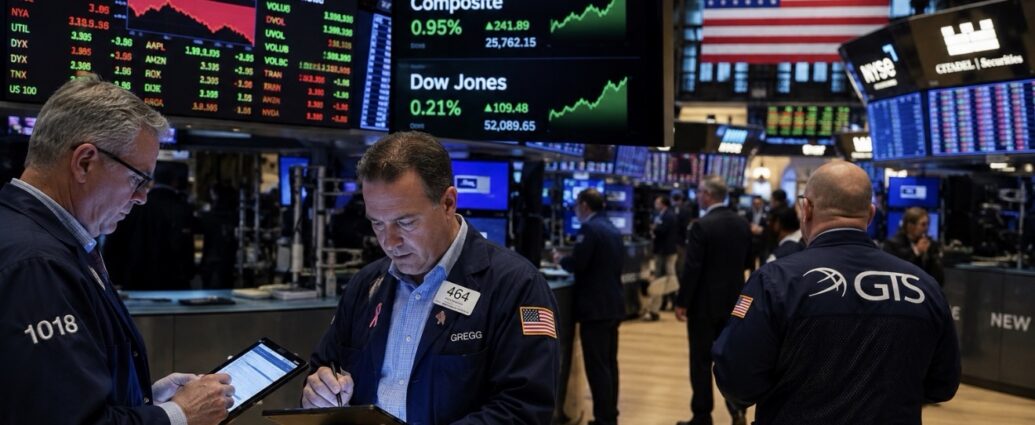
Americans and big investors are putting money into U.S. stocks faster than ever, and most of that cash is heading toward technology. Bank of America said Friday, in its closely watched weekly report on where money is moving, that U.S. stock funds drew record amounts of new money, with tech leading the way. The report, written by strategist Michael Hartnett and based on figures from EPFR Global, tracks how much money goes into and out of funds around the world each week.

To see how strong the run has been: in the week through June 10, technology funds pulled in a record $12.3 billion, part of $31.5 billion that flowed into U.S. and global stock funds. That capped an 11-week stretch of money moving into American stocks — the longest such streak since December 2025. Much of it chased computer-chip companies: the iShares Semiconductor ETF took in about $2.9 billion in a single week, and a leveraged fund that bets on the S&P 500 drew close to $3 billion.

Here is the twist that makes this week’s record unusual. At the very moment investors are handing over more money than ever, the biggest technology companies are selling them a flood of brand-new stock.

That matters because new shares soak up demand. Normally heavy buying with a fixed supply pushes prices up. But tech is issuing stock at a pace not seen in years. SpaceX went public on June 12, trading on the Nasdaq under the ticker SPCX at $135 a share, in a listing valuing it near $1.75 trillion — the largest U.S. stock debut ever. OpenAI and Anthropic, two of the world’s most valuable private companies, have both confirmed plans to go public. Analysts expect the three to raise roughly $200 billion between them.

It isn’t only newcomers. Alphabet, the parent of Google, has said it plans to raise about $80 billion by selling new stock, and Meta is reported to be weighing a similar move. Both want cash to build the giant data centers that power artificial intelligence — and selling shares lets them raise it without taking on more debt.

For everyday savers, the surge has a direct connection. Capital Economics notes that U.S. companies outside the financial industry began issuing more stock than they bought back early this year, the first time since 2021. The firm also offers a caution: big jumps in new stock sales have tended to appear near the late stages of past market booms.

There is also a new source of buying coming straight from Washington. Starting July 4, the federal government begins seeding “Trump Accounts” — investment accounts for children that open with a $1,000 deposit and steer the money into low-fee funds tracking the broad stock market. Bloomberg Intelligence estimates the program could push around $12 billion a year into those funds, rising toward $21 billion if families add the maximum. The money is automatic and stays put for years.

The rise has already lifted household wealth. By Bank of America’s count, the value of stocks owned by U.S. families has climbed about $6 trillion so far in 2026, after gains of roughly $10 trillion in 2025 and $9 trillion the year before. When portfolios swell, people tend to feel richer and spend more, which feeds back into the wider economy.

Not everyone is comfortable. Bank of America’s “Bull & Bear” gauge, which measures how greedy or fearful investors are, has been flashing a sell warning for several weeks — a level the bank reads as a sign buying has run hot. Hartnett has compared today’s market to 1994, when a long calm period ended abruptly once the Federal Reserve started raising interest rates.

For now, the money keeps coming. The bigger test arrives later this year, when OpenAI and Anthropic aim to complete their listings and Alphabet and Meta sell their new shares — adding hundreds of billions of dollars in fresh stock for buyers to absorb.


What These Deals Actually Mean for Your 401(k)

If you own an S&P 500 or total-market index fund, you don’t buy these stocks yourself — the fund does it for you, automatically, based on each company’s size. So a wave of giant tech listings sounds like it should pour your retirement money straight into SpaceX, OpenAI, and Anthropic. The reality is more gradual, and smaller than the headlines suggest.

Two things hold it back. First, index funds only count the shares a company actually sells to the public, not the ones founders and early backers keep. At launch, these firms are floating only about 4% to 5% of their stock, so their weight in your fund starts tiny no matter how huge the valuation.

Second, getting into the S&P 500 isn’t automatic. A company has to be profitable over recent quarters and gets picked by a committee, which can take time. Broad total-market and Nasdaq funds tend to pick up new listings sooner, but still in proportion to those small public floats.

The bigger effect comes later. Analysts at Capital Economics estimate that if these companies eventually release more of their shares to the public — say, a quarter of them — it could add about $750 billion in stock for funds to buy. That’s when an everyday index holder would really feel it.

JBizNews Desk | Wall Street

© JBizNews.com All Rights Reserved. Reproduction or distribution without written permission is prohibited.

Sticky

EATONTOWN, N.J. — As artificial intelligence rapidly changes how businesses operate, JBiz has announced the JBiz Leadership AI Operations Summit, a two-day executive training program designed to help companies improve productivity, streamline operations, reduce costs, and increase revenue through practical AI adoption.

The summit will take place July 13–14, 2026, at the Sheraton Eatontown Hotel in New Jersey and is geared toward business owners, corporate leadership, management teams, entrepreneurs, and organizations looking to better equip their workforce for an AI-driven economy.

Organizers say the goal is simple: help businesses understand how to effectively use today’s leading AI platforms and determine which tools are best suited for specific business tasks.

“Learning how to use AI is quickly becoming as important as learning how to use computers, email, and the internet became in previous generations,” said Duvi Honig, Founder of JBiz.

Open Ai all, Companies are encouraged to send multiple employees and leadership team members together to maximize results and help integrate AI throughout their organizations.

The shift underway is significant. For decades, businesses relied on large teams of junior employees and support staff to handle research, spreadsheets, presentations, scheduling, customer communications, reporting, and administrative work.

Today, properly trained employees using AI platforms such as ChatGPT, Claude, Gemini, Microsoft Copilot, Grok, and Perplexity can complete many of those tasks faster and more efficiently. Increasingly, companies view AI as a collection of virtual assistants that help employees draft emails, conduct research, analyze data, summarize meetings, create reports, improve communication, and accelerate workflow across departments.

Recent surveys suggest the business impact is growing quickly.

An Oliver Wyman Forum–New York Stock Exchange CEO survey found that 43% of CEOs plan to place less emphasis on hiring junior staff while increasing demand for experienced employees who know how to use AI effectively.

Research from Stanford University, MIT, and Boston Consulting Group has also found that workers using generative AI complete more tasks, work faster, and often produce higher-quality results than workers who do not use AI tools.

One high-profile example came from Citadel Founder and CEO Ken Griffin, who recently said that modern AI systems are performing work that previously required teams of finance professionals, completing in hours or days tasks that once took weeks or months.

Meanwhile, the McKinsey Global Institute estimates generative AI could create between $2.6 trillion and $4.4 trillion in annual global economic value across customer service, operations, software development, research, marketing, communications, and workflow management.

“We are watching one of the biggest operational shifts in modern business history,” Honig said. “The companies adapting early are gaining major advantages, while many businesses still don’t know where to begin. This summit was created to provide practical training businesses can immediately apply.”

Unlike many AI events focused on theory, organizers say the program is designed as a practical, implementation-focused training experience. Participants will learn how to use multiple AI platforms together and understand the strengths of each system.

Training will cover:

  • ChatGPT — communication, writing, workflow support, strategy, presentations, and operational assistance
  • Claude — long-form analysis, contracts, planning, and document review
  • Gemini — Google Workspace integration, collaboration, productivity, and research
  • Microsoft Copilot — Excel, Word, Outlook, PowerPoint, and enterprise workflows
  • Grok — live information analysis and trend monitoring
  • Perplexity — research, sourcing, and market intelligence
  • Additional leading AI platforms and workflow tools

Participants will receive hands-on instruction on applying AI to:

  • Communication
  • Operations
  • Documents and spreadsheets
  • Research
  • Sales
  • Marketing
  • Reporting and presentations
  • Administration and workflow systems

Summit attendees will leave with a clearer understanding of the AI landscape, practical workflows they can use immediately, and strategies to save time, improve productivity, reduce administrative burdens, and strengthen operational performance.

Organizers estimate businesses effectively implementing AI can save employees between 5 and 15 hours per week, potentially creating between $12,000 and $54,000 in annual operational value per employee, depending on role and implementation.

For a company with 10 employees, that could translate into productivity gains ranging from roughly $120,000 to more than $540,000 annually, although actual results will vary by company, industry, and adoption levels.

The summit will feature full-day training sessions from 10:00 a.m. to 5:00 p.m. on both days and will be led by professionals with hands-on experience using today’s leading AI platforms.

Participants will leave with a deep understanding of all platforms, practical skills and a framework for immediately execution integrating AI into their daily responsibilities and business operations.

Limited Seating Available! For corporate inquiries, team registrations, and group packages, Visit or contact Esther@OJChamber.com or 212-659-5270 x104.

JBizNews Desk — New Jersey

© JBizNews.com All Rights Reserved. Reproduction or distribution without written permission is prohibited.

The U.S. Treasury Department sanctioned nine individuals and companies Wednesday for helping Iran’s military acquire weapons, with several of the entities based in China and Hong Kong. In a statement, Treasury Secretary Scott Bessent said the action, part of a campaign the department calls “Economic Fury,” is intended to disrupt “the foreign procurement networks that support the Iranian military’s efforts to acquire weapons.” He added that Treasury “will not tolerate any support of the Iranian military.”

The designations were issued by Treasury’s Office of Foreign Assets Control (OFAC) under an executive order targeting the proliferation of weapons of mass destruction and their suppliers. Among those sanctioned were Chinese and Hong Kong firms accused of helping procure weapons — including shoulder-fired anti-aircraft missiles known as MANPADS — for Iran’s Islamic Revolutionary Guard Corps and its defense ministry. One Hong Kong company was linked to a covert banking network that OFAC said attempted to move money for those purchases.

The sanctions carry significant financial consequences. OFAC warned that foreign banks that knowingly process substantial transactions for the designated parties could themselves face penalties, including losing access to the U.S. financial system. These so-called secondary sanctions are aimed at the banks, brokers, and trading houses that continue facilitating Iranian procurement efforts. The action marks the second major sanctions package in roughly a month, following Treasury measures in May targeting networks connected to Iranian drone and ballistic missile programs.

The repeated appearance of Chinese firms in these investigations raises a broader geopolitical question: How far is Beijing willing to go to protect Iran, and is it using that relationship as leverage against Washington?

China remains Iran’s most important economic partner. According to estimates from analytics firm Kpler, China purchases as much as 80% of Iran’s oil exports, providing Tehran with a critical source of revenue while securing discounted crude supplies for Chinese refiners. Beijing has repeatedly rejected U.S. sanctions on those transactions, arguing that it does not recognize Washington’s authority over commerce conducted outside U.S. jurisdiction.

China has also provided diplomatic support. Chinese officials have consistently described Iran’s nuclear facilities as peaceful and defended Tehran’s right to enrich uranium under the Nuclear Non-Proliferation Treaty. Alongside Russia, China blocked a United Nations Security Council resolution earlier this year that sought action related to the Strait of Hormuz, the strategic oil chokepoint at the center of the current conflict. China’s U.N. ambassador, Fu Cong, said the proposal failed to reflect the “full picture” of the crisis, while Beijing criticized the U.S. naval blockade of Iranian ports as dangerous and destabilizing.

At the same time, analysts caution against overstating the relationship. Reviews conducted by the U.S.-China Economic and Security Review Commission have found no public evidence that China has directly assisted Iran in building a nuclear weapon. Beijing has publicly opposed Iran obtaining such a capability and has generally avoided providing direct military support that could trigger a confrontation with Washington.

Chinese leaders also face practical concerns. China imports roughly 70% of its oil and natural gas, much of it through the Persian Gulf. A wider regional conflict that disrupts energy flows would directly threaten China’s economy. For that reason, Chinese Foreign Minister Wang Yi has urged Iran to respect the “reasonable concerns” of neighboring countries and avoid actions that could escalate tensions further.

U.S. officials have attempted to turn that dependence into leverage. Bessent recently called on Beijing to “step up with some diplomacy and get the Iranians to open the strait.” President Donald Trump has also said Chinese leader Xi Jinping expressed interest in helping broker a settlement while continuing to maintain economic ties with Tehran.

The result is a delicate balancing act. Beijing benefits from maintaining Iran as a strategic counterweight to U.S. influence in the Middle East, but it has so far stopped short of the direct military or nuclear assistance that would risk a severe confrontation with Washington.

For now, what some analysts describe as a Chinese “nuclear buffer” appears less like a deliberate defense strategy and more like the byproduct of economic and diplomatic support. Chinese oil purchases, financial channels, and diplomatic backing help Iran withstand international pressure, but Beijing continues to avoid crossing lines that could trigger broader economic or military consequences.

Each new round of U.S. sanctions tests where that line exists — and how much risk Chinese companies are willing to accept in order to keep Iran’s procurement networks operating.

JBizNews Desk — Asia

© JBizNews.com All Rights Reserved. Reproduction or distribution without written permission is prohibited.

Employees who use artificial intelligence at work are saving the equivalent of a full day every week.

That’s the picture from new research released May 19, 2026, by GoTo, the cloud communications and IT company, and the research firm Workplace Intelligence. Their second annual report, The Pulse of Work in 2026, surveyed 2,500 global employees and IT leaders between November 2025 and January 2026. The headline number: workers using AI save an average of 2.3 hours a day. Over a five-day week, that’s more than 11 hours back in their pockets.

Stretch that across a year and the math gets serious. Separate research from the London School of Economics puts the average savings at 7.5 hours a week, which researchers valued at roughly £14,000 per worker per year. Other estimates land across a wide band. A Federal Reserve Bank of San Francisco analysis pegged the savings at a more conservative 5.4% of work hours, or about 2.2 hours a week. Power users blow past all of it. Industry data shows 27% of frequent AI users save more than nine hours a week, with the heaviest users reporting gains approaching 20 hours.

So where does all that time come from?

Mostly the dull stuff.

The biggest single chunk is writing. Workers are drafting emails, replies, proposals, reports, and presentations that previously consumed hours of their week. One NBER-Microsoft study found knowledge workers cut email time by 31%, saving roughly 3.6 hours a week on inbox work alone.

Meetings are the next major source of savings. AI-powered transcription and summarization tools now generate notes, identify action items, and eliminate many of the follow-up conversations that once existed simply to repeat what had already been discussed. Research is another area undergoing rapid change. Instead of manually digging through lengthy reports, contracts, spreadsheets, and PDFs, workers can obtain preliminary summaries and insights in seconds.

Spreadsheets and data analysis round out the list. AI tools increasingly write formulas, identify trends, clean datasets, and produce first drafts of reports that once required hours of manual effort.

The gains are real, but they are not evenly distributed.

Software developers appear to be among the biggest beneficiaries. Some studies suggest coding output can more than double when AI tools are effectively integrated into workflows. GitHub has reported that users of its Copilot platform complete certain tasks roughly 56% faster. Customer-support agents handle approximately 14% more inquiries per hour. Leadership, management, and highly specialized hands-on roles generally report smaller gains, often two to three hours per week. Frequency of use remains one of the strongest predictors of productivity improvements. Employees who use AI daily consistently report far greater benefits than occasional users.

But the productivity gains are also changing how organizations function internally.

Prof. Lior Zalmanson, who heads the AI Lab at Tel Aviv University, argues that AI effectively gives every employee their own virtual team. Instead of relying on coworkers for brainstorming, research, drafting, analysis, or feedback, employees increasingly turn to AI assistants customized to their own working styles. The result, he says, is the creation of “isolated islands” inside organizations, where individuals become more productive but often work more independently than before.

Sharing knowledge has always been a challenge inside organizations, but the nature of that challenge is changing. In previous decades, companies struggled to get employees to share expertise and institutional knowledge. Today, many organizations are finding that employees are reluctant to share the prompts, workflows, and AI practices that help them perform better. According to Zalmanson, AI tools such as ChatGPT are increasingly viewed as an extension of the individual. Employees often feel that their interactions with AI are highly personal, making them less inclined to adopt someone else’s approach or reveal their own methods. What once revolved around knowledge sharing now increasingly revolves around prompt sharing, creating a new management challenge as companies seek to scale AI adoption across entire organizations.

Here is where the GoTo study becomes more complicated.

The same workers gaining hours are increasingly concerned about their dependence on the technology. Half of surveyed employees said they now rely too heavily on AI. Nearly three in ten reported feeling they could not function effectively without it. Perhaps most striking, 39% said they believe AI use is gradually eroding their own skills and making them less capable. Among Generation Z employees, that figure rises to 46%.

Dan Schawbel, Managing Partner of Workplace Intelligence, said the productivity gains are undeniable, but many organizations are overlooking a quieter challenge: employee confidence. Companies are measuring output improvements while often failing to track whether workers feel their expertise, judgment, and professional development are being weakened by overreliance on AI-generated assistance.

There is also a business cost hiding inside the productivity gains.

Much of the reclaimed time is spent reviewing and validating AI-generated work. AI systems frequently produce polished, persuasive, and confident responses that may contain factual errors or flawed assumptions. Someone still has to verify the output. Researchers from Stanford University and BetterUp have even coined a term for the growing volume of low-value AI-generated content flooding workplaces: “workslop.”

The Upwork Research Institute found that 77% of freelancers reported AI actually increased portions of their workload because of the time required to review, edit, and correct machine-generated output before it could be used professionally.

The lesson for employers is becoming increasingly clear.

Purchasing AI tools is relatively easy. Successfully integrating them into an organization is much harder.

The GoTo research found a significant gap between companies that simply provided employees access to AI and those that invested in training, governance, best practices, and measurable implementation strategies. The organizations reporting the strongest and most sustainable gains viewed AI not as a software purchase but as a long-term workforce and operational transformation initiative.

For workers, the takeaway may be even simpler. The productivity gains are real. The time savings are measurable. The challenge is capturing those benefits without sacrificing the judgment, creativity, expertise, and critical thinking skills that remain uniquely human.

With studies showing employees saving between 5 and 20 hours per week through AI, the upcoming JBiz AI Leadership & Operations Summit will provide hands-on training across leading platforms including ChatGPT, Claude, Gemini, Grok, Microsoft Copilot, Meta AI, Mistral, and Perplexity. Attendees will learn practical frameworks, templates, and workflows to increase revenue, reduce costs, improve productivity, and deploy AI across their organizations immediately. The two-day summit will be held July 13–14, 2026, from 9:00 a.m. to 5:00 p.m. at the Sheraton Eatontown Hotel, 6 Industrial Way East, Eatontown, NJ. For registration, HR Dept inquires, or team enrollment information, click here, email esther@ojchamber.com, or call 212-659-5270 x104.

— JBizNews Desk

© JBizNews.com All Rights Reserved. Reproduction or distribution without written permission is prohibited.
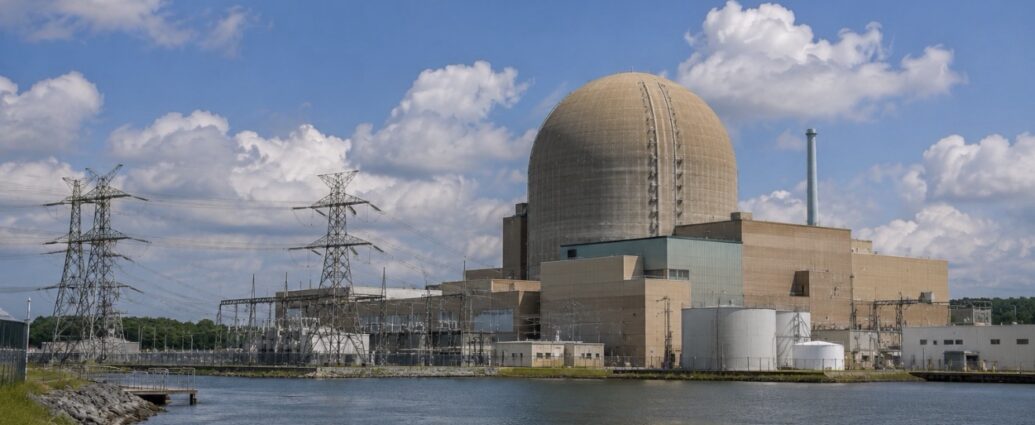
HOUSTON — About half of the oil and fuel shipments disrupted by the war with Iran are moving again through the Strait of Hormuz, according to U.S. Energy Secretary Chris Wright, offering a measure of relief to global energy markets and supply chains.

Speaking on Friday, June 12, at the Bloomberg Energy Security Executive Briefing in Houston, Wright said approximately 7 million barrels per day of oil and fuel are once again flowing through the strategic waterway, representing roughly half of the volume that had been stranded when the conflict began.

He also made clear that the United States intends to restore full access to the route regardless of whether Iran cooperates.

For consumers, businesses, and investors, the Strait of Hormuz remains the most important energy chokepoint in the world.

The narrow passage carries nearly 20% of global oil and liquefied natural gas supplies, making it one of the most critical arteries of the global economy.

When traffic slows or stops, the effects quickly spread beyond energy markets.

Fuel prices rise.

Shipping costs increase.

Manufacturers face higher expenses.

Consumers ultimately pay more for everything from gasoline to groceries.

Traffic through the strait had been severely disrupted since fighting erupted between the United States and Iran at the end of February.

The conflict sent oil prices sharply higher, unsettled financial markets, and created significant uncertainty across global supply chains.

A fragile truce took hold this week after President Donald Trump pushed both sides to halt direct military attacks, allowing shipping activity to begin recovering.

Wright first signaled improvement earlier this week during an energy conference in Washington, where he said vessel traffic was increasing “very meaningfully” compared with recent weeks.

Even so, he cautioned that restoring normal operations would take time.

Many shipping companies rerouted vessels during the conflict, while supply chains adjusted to avoid the region altogether.

Returning those networks to normal will likely take months.

According to Wright, the challenge extends beyond simply reopening the waterway.

Shipping companies, crews, insurers, and energy traders must regain confidence that the route is secure before traffic fully returns to pre-war levels.

Some vessels have continued moving through the strait under extraordinary circumstances.

Reports indicate the U.S. Navy has assisted dozens of commercial vessels through the passage during the crisis.

Other ships reportedly crossed at night with communications and tracking systems turned off to reduce perceived security risks.

Financial markets have responded positively to signs of progress.

Earlier this week, after Wright reported improving traffic conditions, U.S. crude oil prices fell approximately 3.4% to around $88 per barrel, while Brent crude, the international benchmark, dropped to its lowest level in seven weeks.

Lower crude prices generally translate into lower gasoline and diesel prices, although those savings often take time to reach consumers.

The recovery remains fragile.

Iranian officials have repeatedly suggested the strait could remain restricted, and the broader conflict has not been formally resolved.

As long as the possibility of renewed fighting exists, shipping companies are likely to face elevated insurance costs and security concerns.

Those additional expenses ultimately flow through the global economy.

The economic stakes are enormous.

Energy costs influence nearly every industry, from manufacturing and transportation to agriculture and retail.

A prolonged disruption at Hormuz acts as a hidden tax on economic growth, raising operating costs for businesses and reducing purchasing power for consumers.

The faster shipping returns to normal, the faster that pressure can ease.

For now, the administration appears committed to maintaining both diplomatic and military pressure to keep the route open.

Wright’s message in Houston was clear: the United States intends to restore normal shipping through the Strait of Hormuz and is prepared to secure the route if necessary.

The key number remains 7 million barrels per day.

That represents meaningful progress but still falls well short of pre-war traffic levels.

Every additional tanker that moves through the strait helps ease pressure on energy markets.

Every new escalation risks sending those gains back into reverse.

JBizNews Desk — Energy

© JBizNews.com All Rights Reserved. Reproduction or distribution without written permission is prohibited.

On Friday, June 12, 2026, Elon Musk’s rocket company SpaceX sold shares to the public for the first time, listing on the Nasdaq Stock Market under the ticker SPCX. It was the largest such debut — known as an initial public offering (IPO) — in history. An IPO is the moment a private company starts letting everyday investors buy a piece of it. SpaceX’s stock opened at $150 a share, rose as high as $176.52, and finished the day at $161.11 — a 19% jump over the $135 price the company first set. The sale raised about $75 billion and valued SpaceX at roughly $1.77 trillion. Speaking from the company’s Texas headquarters, Musk marveled that a business he started in a small warehouse was now the biggest stock-market debut ever.

The big debut closed out a quiet but hopeful week for the market. Stocks edged higher as investors watched for signs that the U.S.-Iran war may be winding down. President Donald Trump said he had called off planned strikes on Iran overnight and that the main points of a peace deal were essentially settled. Iranian state media said a draft agreement could be signed as soon as Sunday, including a U.S. promise to lift oil sanctions and an Iranian pledge to reopen the Strait of Hormuz — a key shipping lane for the world’s oil — within 30 days.

That matters for ordinary households, not just traders. When oil flows freely again, prices tend to fall, and that eventually shows up as cheaper gas at the pump. Oil prices dropped on the news.

Here is how the main scoreboards of the market finished. These indexes each track a basket of large U.S. companies, so when they rise, it usually means most stocks had a good day. The Dow Jones Industrial Average, which follows 30 big-name companies, rose 353.51 points, or 0.7%, to 51,202.26. The broader S&P 500 added 0.5% to 7,431.46, and the tech-heavy Nasdaq Composite gained 0.31% to 25,888.84. The Dow had closed Thursday at 50,848.75. The Russell 2000, which tracks smaller companies, also rose.

Market Movers

SpaceX was the day’s headline, and Wall Street was divided on whether its price will hold. Oppenheimer began covering the stock with a positive rating and a $190 target, and New Street Research set a $165 target. On the other side, Keith Snyder of CFRA Research rated it a sell with a $115 target, saying he thinks the stock is overpriced. A target is simply where an analyst expects the stock to trade over the next year — an educated guess, not a guarantee.

Adobe, which makes Photoshop and other creative software, fell about 7% even after a strong report. It earned $5.96 a share on $6.62 billion in revenue, beat forecasts, and raised its outlook for the year. Sometimes a stock falls anyway when investors expected even more.

Chipmakers had a good day. Advanced Micro Devices (AMD), Qualcomm, and Sandisk each rose about 5%.

Rocket Lab climbed 4.5% after announcing it will join the Nasdaq-100 on June 22.

The biggest tech names slipped as investors shifted money elsewhere. Microsoft, Amazon, Apple, and Oracle each fell around 2%.

Banks helped balance the day, with JPMorgan Chase and Goldman Sachs both higher; Goldman rose 1.81%.

Among other household names, Sherwin-Williams gained 1.86% and Caterpillar added 1.31%, while Salesforce fell 2.35%, Travelers lost 1.98%, and IBM slipped 1.96%.

Public Storage jumped 7.13%, Playtika rose 5.43%, Virgin Galactic dropped 10%, DoubleVerify lost 4.2%, and Ollie’s Bargain Outlet fell 3.3%.

Commodities and Volatility

Oil fell as traders bet the Iran deal would bring more crude back to the market and ease prices for drivers. Gold, which people often buy as a safe place to park money in uncertain times, held steady as those fears cooled.

The Cboe Volatility Index (VIX) — nicknamed the market’s “fear gauge” because it rises when investors get nervous — sat near 19, down from higher levels earlier in the month.

Two things to watch over the weekend. The first is whether the United States and Iran sign their peace deal Sunday and reopen the Strait of Hormuz, which would help keep gas prices down. The second is whether SpaceX can hold its first-day gains once big investment funds are required to start buying the stock. Monday will start to tell.

JBizNews Desk — New York

© JBizNews.com All Rights Reserved. Reproduction or distribution without written permission is prohibited.

A growing number of companies are shifting operations out of Singapore and into neighboring Malaysia, drawn by lower costs, tax incentives, and room to expand. The trend gained momentum this spring when global apparel retailer H&M announced in May that it would relocate its Southeast Asia headquarters from Singapore to Kuala Lumpur, affecting 78 jobs. In March, brewer Heineken said it would move portions of its production from Singapore to facilities in Malaysia and Vietnam.

These are not isolated moves. Since the start of 2026, a visible wave of businesses has relocated at least part of their operations across the border. “These moves are significant and mark a clear acceleration,” said Alwyn Lim, associate professor of sociology at Singapore Management University. The shift reflects a broader global trend as companies search for lower costs, greater scale, and improved competitiveness.

The economics are straightforward. Singapore remains one of the world’s most expensive places to operate a business, with high commercial rents, rising labor costs, and limited land availability. Malaysia, separated by only a narrow causeway, offers substantially lower operating expenses and significantly more industrial space.

“Malaysia offers significantly lower overheads, attractive tax incentives, and the industrial land space companies need to scale,” said David Blasco, country director of Randstad Singapore.

Importantly, most companies are not abandoning Singapore altogether. Instead, many are adopting a strategy known as “twinning,” keeping headquarters, research centers, and senior management functions in Singapore while moving manufacturing, warehousing, and logistics operations to Malaysia.

Singapore continues to offer advantages that remain difficult to replicate elsewhere in Asia. The city-state remains one of the world’s leading financial centers, provides political stability, strong legal protections, efficient logistics, and access to highly skilled talent. Malaysia, particularly the state of Johor, offers lower labor costs, more abundant land, and lower energy expenses.

Lennon Tan, president of the Singapore Manufacturing Federation, describes the trend as “rightsizing geography” rather than a loss of confidence in Singapore. Companies are strategically placing each function where it makes the most economic sense.

Food manufacturers provide a clear example. Many are retaining brand management, procurement, and supply-chain leadership in Singapore while moving physical production north to Johor. Gardenia, the well-known bread producer, operates a major facility in Senai, Malaysia, capable of producing approximately 8,000 loaves of bread and 20,000 tortilla wraps per hour.

A major government initiative is helping accelerate the shift. The Johor-Singapore Special Economic Zone, formally agreed upon by both governments in early 2025, is designed to integrate the two economies more closely. Covering more than 3,500 square kilometers, the zone spans an area more than four times larger than Singapore itself and targets eleven key industries, including manufacturing, logistics, healthcare, and digital services.

The incentives are substantial. Eligible companies can qualify for a special corporate tax rate of just 5% for up to 15 years, significantly below Malaysia’s standard 24% corporate tax rate. Since the agreement was signed, Singapore-based companies have committed more than 5.5 billion Singapore dollars in investments into Johor, according to Singapore government officials.

Major multinational companies are already expanding across both markets. Firms including ResMed and FedEx have announced investments designed to take advantage of the growing integration between Singapore and Johor.

For years, the biggest obstacle to such arrangements was transportation. Crossing the border could take hours during peak periods, creating costly delays for employees and businesses. That barrier is about to shrink dramatically.

A new Rapid Transit System (RTS) rail link, scheduled to begin operations by the end of 2026, will connect Johor Bahru and Singapore in approximately six minutes and is expected to carry up to 10,000 passengers per hour in each direction. Authorities have also introduced QR-code immigration processing and streamlined customs procedures.

As travel times fall and border crossings become easier, the economic logic behind splitting operations between the two countries becomes even stronger.

The stakes are significant. For Malaysia, particularly Johor, the influx brings new factories, jobs, infrastructure investment, and economic growth. For Singapore, the challenge is preserving higher-value industries while allowing lower-margin operations to relocate elsewhere.

Officials in both countries argue the arrangement can strengthen the broader region rather than create winners and losers. By combining Singapore’s strengths in finance, innovation, and management with Malaysia’s advantages in manufacturing, land availability, and cost efficiency, the region hopes to compete more effectively against other Asian economic hubs.

The trend also reflects a broader global movement. Businesses worldwide are reevaluating where they locate factories, offices, and supply chains, balancing labor costs, taxes, logistics, and market access. Similar conversations are unfolding across Europe, North America, and Asia as companies seek greater efficiency and resilience.

For now, the momentum appears to favor further integration. With operating costs in Singapore continuing to rise, Malaysia expanding incentives, and new transportation links nearing completion, more companies are expected to adopt a cross-border model.

Rather than choosing one country over the other, many businesses increasingly see Singapore and Malaysia as complementary parts of a single economic ecosystem.

JBizNews Desk — Asia

© JBizNews.com All Rights Reserved. Reproduction or distribution without written permission is prohibited.

Grocery inflation may appear relatively modest in government reports, but shoppers are encountering a very different reality depending on where they shop inside the supermarket.

The Bureau of Labor Statistics reported Wednesday that food prices rose 3.1% over the past year, while grocery prices — officially categorized as food at home — increased 2.7%.

That is lower than the overall inflation rate of 4.2%, but those averages mask dramatic differences among individual products.

Produce Prices Lead the Increases

The sharpest increases are occurring in the produce aisle.

According to the U.S. Department of Agriculture, fresh vegetable prices were 11.5% higher in April than a year earlier.

Fresh tomato prices rose nearly 40%.

Transportation costs remain a major factor.

Higher diesel prices have increased shipping expenses for fresh produce, one of the most transportation-dependent categories in grocery stores.

The USDA currently forecasts fresh vegetable prices will rise approximately 7.8% during 2026.

Eggs and Chicken Offer Relief

Other grocery categories have moved in the opposite direction.

Egg prices, which surged to approximately $6.23 per dozen during the bird-flu outbreak earlier this year, have fallen to roughly $2.86 per dozen as production recovered.

Chicken prices have remained stable or moved lower, providing consumers with a relatively affordable protein option.

Potato prices were also down about 3% compared with a year ago.

Coffee and Beef Remain Problem Areas

Not every staple has benefited from improved supply conditions.

Coffee prices have risen approximately 19% over the past year following weather-related crop problems in major coffee-producing countries.

Beef prices have reached record levels as the U.S. cattle herd continues to shrink.

The result has been significantly higher costs for steaks, roasts, and ground beef.

Different Aisles, Different Economies

Economists note that food categories are influenced by entirely different forces.

Produce prices often track transportation and fuel costs.

Egg prices respond heavily to disease outbreaks and flock recovery.

Coffee depends on weather conditions in producing nations.

Beef prices largely reflect herd size and livestock production cycles.

Understanding those factors can help consumers make more informed shopping decisions.

Consumers Continue Adjusting

Retailers report that many shoppers are changing purchasing habits in response to higher prices.

Consumers increasingly purchase store brands, buy smaller quantities, and substitute lower-cost items when possible.

Recent surveys found that a majority of Americans have reduced grocery spending to stay within household budgets.

Looking Ahead

For consumers, the lesson is simple: headline inflation figures often fail to reflect actual shopping experiences.

The price increases families encounter depend heavily on what they buy and where they shop.

Until transportation costs ease and cattle inventories recover, grocery inflation is likely to remain highly uneven across the supermarket.

JBizNews Desk — Washington

© JBizNews.com All Rights Reserved. Reproduction or distribution without written permission is prohibited.

The riskiest corners of the global bond market are signaling trouble, warning that the world economy may be sliding toward stagflation, the painful combination of high inflation and weak growth. Investors have become increasingly cautious as inflation pressures remain elevated in many economies while geopolitical tensions continue to threaten global growth.

Stagflation is the economic nightmare that defined much of the 1970s. It occurs when prices continue rising even as economic activity slows and unemployment increases. Policymakers fear it because the traditional remedies often work against one another. Raising interest rates can help control inflation but may further weaken growth. Cutting rates may support growth but risks reigniting inflation.

One of the clearest places to watch for early warning signs is the junk-bond market. Junk bonds, also known as high-yield bonds, are issued by companies with lower credit ratings and greater risk of default. Investors demand higher yields to compensate for that risk. The difference between those yields and the yields on safer government bonds is known as the credit spread.

When investors grow concerned about the economy, those spreads typically widen. Companies with weaker balance sheets become the first casualties of rising borrowing costs and slowing demand.

Recent market activity suggests investors are becoming increasingly selective. The lowest-rated segment of the high-yield market, particularly bonds rated CCC, has underperformed higher-rated junk debt. Market strategists view that divergence as a warning sign that investors are moving away from the most vulnerable borrowers.

The pressure comes at a difficult time for corporate America and many businesses around the world. A large volume of debt issued during the era of ultra-low interest rates is approaching maturity over the next several years. Companies that previously borrowed at historically low rates now face significantly higher refinancing costs.

For stronger firms, higher borrowing costs may simply reduce profits. For heavily indebted companies, refinancing can become a major challenge, potentially leading to restructurings, layoffs, asset sales, or defaults.

The concern extends beyond the United States. Policymakers and economists across Europe and Asia have warned that energy-market disruptions and persistent inflation could create conditions resembling stagflation. Rising commodity prices increase costs for businesses and consumers while simultaneously slowing economic activity.

Higher energy prices have historically played a major role in stagflation episodes. Oil-price shocks ripple through transportation, manufacturing, agriculture, and consumer spending. Businesses often pass those costs to customers, fueling inflation while reducing economic growth.

History offers a sobering comparison. During the late 1970s, geopolitical turmoil in the Middle East contributed to sharp increases in oil prices. Inflation accelerated, interest rates surged, and economic growth weakened. The result was one of the most difficult periods for policymakers, investors, and businesses in modern economic history.

Today’s environment is not identical. Banks generally hold stronger capital positions than they did before the 2008 financial crisis, and many corporations entered this period with healthier balance sheets. Nevertheless, investors remain focused on whether inflation can be controlled without triggering a significant slowdown.

For ordinary investors, junk bonds matter because they are widely held through mutual funds, exchange-traded funds, pension plans, and retirement accounts. Rising defaults can reduce returns and increase volatility. More importantly, the companies that rely on high-yield financing employ millions of workers, making their financial health important for the broader economy.

The bond market is not forecasting an economic crisis. Credit spreads remain well below the extreme levels seen during major recessions and financial panics. However, the growing weakness among the lowest-rated borrowers is attracting attention because these companies often experience stress before problems spread to the wider economy.

The message from the junk-bond market is not that stagflation is inevitable. Rather, investors are increasingly pricing in the possibility that inflation could remain stubborn while growth slows. Whether those concerns intensify will depend on inflation trends, energy prices, central-bank policy decisions, and the resilience of businesses facing higher borrowing costs.

For now, the signal from the world’s riskiest debt markets is a warning worth watching.

JBizNews Desk — Global

© JBizNews.com All Rights Reserved. Reproduction or distribution without written permission is prohibited.

NEW YORK — The New York Knicks are one win away from their first championship in more than half a century, and the city is cashing in on every game.

In an announcement on Wednesday, June 3, New York City Mayor Zohran Mamdani and the New York City Economic Development Corporation estimated the team’s 2026 playoff run had already generated approximately $202 million in economic activity from home games, with the total potentially climbing to $465 million if the NBA Finals reach a full seven games.

“When the Knicks win, New York comes alive,” Mamdani said.

The math is straightforward.

City officials estimate each additional home playoff game generates roughly $90 million in economic activity, including spending on tickets, food, merchandise, transportation, and hotel accommodations.

That money flows through the local economy, benefiting arena workers, restaurants, bars, transportation providers, retailers, and hospitality businesses throughout the five boroughs.

As of Friday, June 12, the Knicks hold a 3-1 lead over the San Antonio Spurs in the NBA Finals.

They can clinch the championship on Saturday in Game 5 in San Antonio.

A victory would give the franchise its first NBA title since 1973 and its first Finals appearance in 27 years.

The road to the Finals has been dominant.

The Knicks defeated the Atlanta Hawks before sweeping both the Philadelphia 76ers and the Cleveland Cavaliers to earn a spot in the championship series.

There is, however, an unusual business twist.

Because the Knicks advanced so quickly through earlier playoff rounds, they actually hosted fewer playoff games than they did during last year’s postseason run.

According to city estimates, New York hosted seven home playoff games in 2026, compared with nine in 2025.

That means a dominant team can sometimes reduce the economic benefit to the city.

If the Spurs extend the Finals and force a Game 6 at Madison Square Garden, another significant economic boost would follow.

For the company that owns the team, the playoff run has been highly profitable.

Madison Square Garden Sports, the publicly traded parent company of both the Knicks and the NHL’s New York Rangers, has seen its valuation climb sharply.

The Knicks franchise is now estimated to be worth approximately $9.85 billion, representing roughly a 30% increase over the past year.

Analysts estimate the playoff run alone could generate approximately $140 million in additional revenue.

The company reported roughly $1.04 billion in revenue during its most recent fiscal year, and management has explored ways to provide investors with more direct exposure to the Knicks as a standalone asset.

Each home playoff game has become a significant profit center.

Industry analysts estimate a single postseason game at Madison Square Garden can generate approximately $5 million in profit, driven by premium ticket prices, concessions, sponsorships, and merchandise sales.

The ticket market reflects the excitement.

Resale prices have fluctuated dramatically depending on whether a championship-clinching game could take place in New York.

Heading into the week, the least expensive tickets for a potential Game 6 at Madison Square Garden were listed for more than $9,000.

Many of the biggest beneficiaries may be local small businesses.

Restaurants, bars, hotels, and retailers surrounding Madison Square Garden have reported heavy traffic throughout the playoff run.

Business owners describe the surge as a major boost after years of challenges following the pandemic.

Andrew Rigie, executive director of the New York City Hospitality Alliance, said local restaurants and bars “are just doing amazing.”

Mitch Modell, former chief executive of Modell’s Sporting Goods, was even more direct.

“Never have we seen the city like this, ever,” he said.

Economists caution that championship-related economic studies often overstate their impact.

Many argue that some of the money spent on playoff games would otherwise have been spent on other forms of entertainment within the city.

Others note that large sporting events can sometimes discourage regular tourists from visiting crowded destinations.

As a result, the actual net economic benefit may be smaller than headline estimates suggest.

Still, the excitement surrounding the Knicks’ run is undeniable.

The crowds are real.

The spending is real.

And for a city that has waited nearly three decades to see its basketball team return to the NBA Finals, the packed restaurants, sold-out bars, and booming ticket sales have become their own form of scoreboard.

One more victory, and both the celebration and the economic activity are likely to grow even louder.

JBizNews Desk — New York

© JBizNews.com All Rights Reserved. Reproduction or distribution without written permission is prohibited.
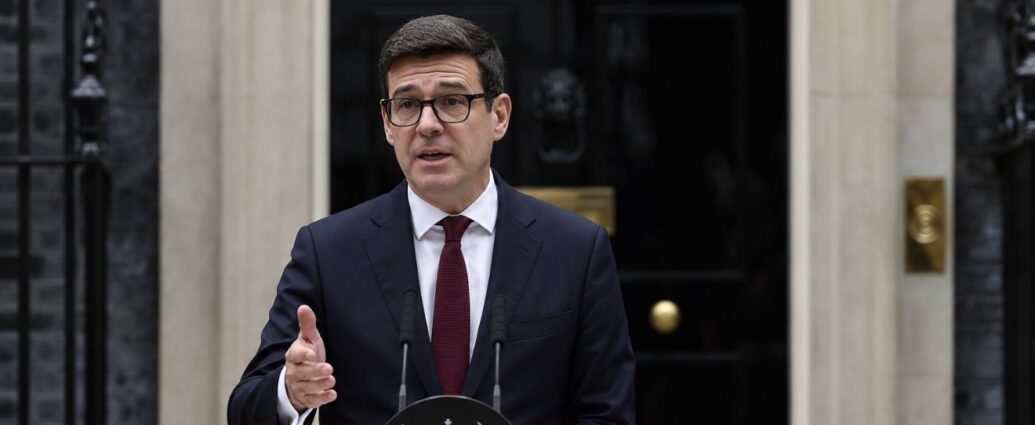
MENLO PARK, Calif. — Meta’s biggest apps stopped working for huge numbers of people on Friday, June 12, as a widespread outage knocked Facebook, Instagram, and Messenger offline and locked users out of their accounts.

The company confirmed the trouble through spokesperson Andy Stone, who posted on X on Friday: “We’re aware people are currently having trouble accessing our services. We’re working on it.”

The scale was significant.

The outage-tracking site Downdetector logged more than 100,000 user reports by 10 a.m. Eastern time as a server-side failure logged people out of Facebook and partly disrupted Instagram.

Reports came in from across the United States, with heavy concentrations in New York City, Chicago, and San Francisco, as well as from Europe, Asia, and the Middle East.

Users described a similar pattern.

They were suddenly logged out and then unable to sign back in.

Feeds went blank.

Error messages appeared reading “unexpected error” or “query error.”

Messenger was among the hardest-hit services, with users appearing offline to friends and messages failing to send.

The disruptions affected both desktop and mobile applications.

For everyday users, an hour without Instagram is an inconvenience.

For businesses, it can mean lost revenue.

That is the part of the story that does not appear in the error messages.

Millions of small businesses rely on Meta’s platforms for customer service, advertising, and online sales.

When those platforms go dark, transactions stop.

On Friday, Meta Ads Manager, the company’s advertising platform, experienced major disruptions. Advertisers were advised to pause campaigns to avoid spending money on ads that users could not properly access.

The financial exposure can be substantial.

Meta generally does not provide automatic credits or refunds when outages occur.

A small business spending hundreds of dollars per day on advertising can lose valuable campaign time with little opportunity to recover those costs.

Restaurants accepting orders through Instagram, retailers selling through Facebook, and content creators who depend on the platforms for income can all feel the impact immediately.

Meta did not immediately identify the cause of the outage.

However, the symptoms point to a familiar type of failure.

When Facebook, Instagram, and Messenger all experience problems simultaneously, the issue is often tied to backend authentication systems that verify user identities across Meta’s network.

If that shared login infrastructure encounters problems, multiple platforms can fail at once even though the broader internet remains fully operational.

That helps explain why users were being logged out and unable to sign back in rather than simply experiencing slow loading times.

Meta has experienced similar outages in previous years linked to authentication and backend service failures.

In many cases, services have been restored gradually over several hours, with some regions returning online before others.

The timing is notable.

Meta continues to invest heavily in artificial intelligence and emerging technologies while relying on Facebook and Instagram as the core drivers of its advertising business.

Those platforms generate the revenue that funds much of the company’s broader strategy.

An outage affecting all major services at once highlights how dependent both users and businesses remain on infrastructure that typically operates unnoticed in the background.

As of Friday afternoon, Meta had not provided a timeline for full restoration of services and had not posted detailed updates regarding recovery efforts.

For users, there is little that can be done when the problem originates on Meta’s systems rather than their own devices.

For businesses relying on constant connectivity, the most expensive part of the outage may simply be the time spent waiting.

JBizNews Desk — Technology

© JBizNews.com All Rights Reserved. Reproduction or distribution without written permission is prohibited.
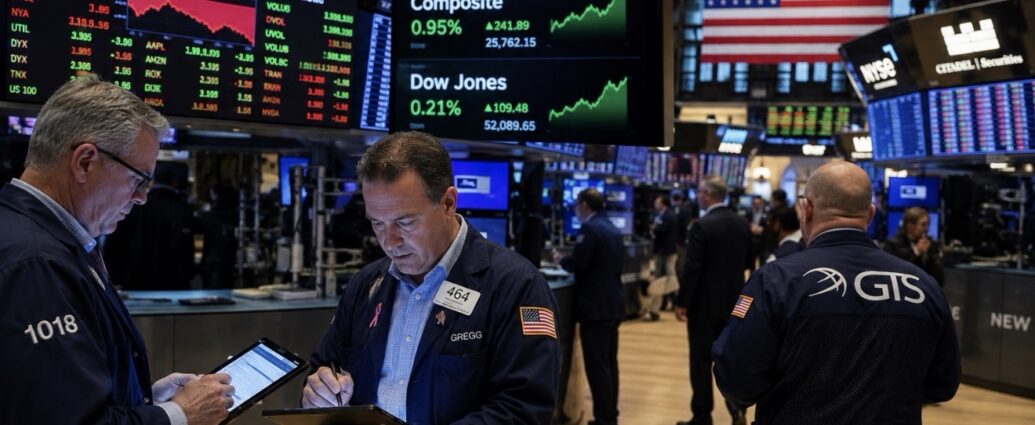
Here’s a word that trips people up: when a company “backstops” a deal, it is not backing out. It is doing the opposite — standing behind it and promising to pay if something goes wrong.

And that is exactly what Google has now done for Anthropic, the maker of the Claude artificial intelligence assistant.

According to people familiar with the financing, in details that came to light Tuesday, June 9, Google agreed to guarantee the lease payments behind a roughly $35 billion deal that gives Anthropic the computer chips it needs to run its AI systems. Google agreed to backstop those payments at five data centers, helping Anthropic obtain what amounts to a $35 billion loan, and Anthropic’s role in these specific data centers had not previously been reported.

Why Anthropic Needs Outside Financing

Running advanced artificial intelligence requires enormous amounts of computing power, and the chips that make it possible cost a fortune.

Buying tens of billions of dollars of hardware outright would strain even the best-funded technology companies.

So Anthropic and its partners structured the deal differently.

A separate company was created to purchase the chips and lease them back to Anthropic, allowing the company to spread the cost over time instead of paying everything upfront. Apollo Global Management and Blackstone arranged approximately $35 billion in debt financing for the transaction, making it one of the largest private-credit deals ever assembled.

The money is being used to acquire Google’s custom-designed AI processors known as Tensor Processing Units, or TPUs. Anthropic then leases those chips, and the lease payments are used to repay the debt.

[AP pic: Rows of servers and processors inside a modern data center used for artificial intelligence computing.]

How Google Became the Safety Net

This is where the story becomes unusual.

Lenders providing $35 billion want protection in case something goes wrong.

Two major companies are providing that protection.

Broadcom, which helps manufacture the chips, guarantees that the processors will retain a minimum resale value, reducing risk for lenders.

Google is providing another layer of security by guaranteeing the lease payments tied to five data-center locations.

In practical terms, if Anthropic were unable to make certain payments, Google’s commitment helps cover the obligation.

That guarantee is a major reason financing on this scale became possible.

Why Would Google Help a Competitor?

At first glance, the arrangement seems strange.

Anthropic’s Claude competes directly with Google’s Gemini AI assistant.

Yet the two companies are connected in several important ways.

Google was one of Anthropic’s earliest investors and has repeatedly increased its stake in the company. Google also supplies the chips that sit at the center of this transaction.

That means Google is simultaneously:

  • An investor in Anthropic
  • A supplier of the hardware
  • A beneficiary of the chip purchases
  • A guarantor behind part of the financing

In short, Google invests in Anthropic, sells it chips, and now helps secure the financing that allows Anthropic to buy even more of those chips.

The Concern About “Circular Deals”

That complexity has raised concerns among some industry observers.

Critics point to what are sometimes called circular financing arrangements, where a small group of technology companies become increasingly dependent on one another.

The concern is that money can appear to move in a loop:

  • Google invests in Anthropic.
  • Anthropic uses financing to buy Google’s chips.
  • Google helps secure the financing.
  • The financing supports further growth at Anthropic.

Supporters argue that such partnerships accelerate innovation and help fund the massive infrastructure required for AI.

Critics worry that the growing web of financial connections could create broader risks if one major player encounters trouble.

Why the Stakes Are So High

The deal comes at a pivotal moment for Anthropic.

The financing surfaced only days after the company reportedly filed confidential paperwork for an initial public offering and completed a $65 billion fundraising round that valued the company at approximately $965 billion.

Anthropic has also committed substantial resources to expanding its computing capacity, including participation in a data-center partnership valued at approximately $50 billion.

The company is spending aggressively to secure the infrastructure needed to compete with rivals including OpenAI, Google, Microsoft, and xAI.

What This Says About the AI Boom

For everyday readers, the story offers a glimpse into how the artificial intelligence boom is actually being financed.

Most headlines focus on new AI models, chatbot features, and flashy product demonstrations.

Behind the scenes, however, the industry increasingly relies on:

  • Multi-billion-dollar debt financings
  • Complex leasing arrangements
  • Massive data-center construction projects
  • Long-term chip supply agreements
  • Financial guarantees from major technology companies

The infrastructure required to power advanced AI is becoming almost as important as the software itself.

The Bottom Line

For now, the arrangement reflects confidence.

Lenders are willing to commit tens of billions of dollars, Google is willing to stand behind part of the financing, and Anthropic gains access to the computing power it needs without paying the full cost upfront.

The larger question is what happens as these relationships grow more intertwined.

The same partnerships helping fuel the AI boom today could also make the industry’s biggest players increasingly dependent on one another tomorrow.

That is the hidden meaning behind the word “backstop.” A safety net works only as long as the company holding it remains strong enough to catch everyone else.

JBizNews Desk — Technology

© JBizNews.com All Rights Reserved. Reproduction or distribution without written permission is prohibited.

China’s factory-gate prices rose at their fastest pace in nearly four years in May, climbing 3.9% from a year earlier, according to data released Wednesday by the National Bureau of Statistics of China. The increase in the Producer Price Index (PPI) was the strongest since July 2022, exceeded economists’ expectations of 3.8%, and accelerated from 2.8% in April.

The report highlights a growing divide inside the world’s second-largest economy: factory costs are rising rapidly while consumer inflation remains subdued.

The Producer Price Index measures prices businesses receive for goods before they reach consumers, including raw materials, industrial products, machinery, and fuel. The Consumer Price Index, by contrast, measures what shoppers pay in stores. In May, factory inflation accelerated sharply while consumer inflation remained modest.

Two major forces appear to be driving the increase.

The first is energy and commodity costs. Rising oil and petrochemical prices have increased costs throughout China’s manufacturing sector. China remains one of the world’s largest energy importers, making its factories particularly sensitive to changes in global commodity markets. Higher transportation, fuel, and materials costs have filtered through industrial supply chains.

The second driver is the global boom in artificial intelligence and electrification. Dong Lijuan, Chief Statistician at the National Bureau of Statistics, said the expansion of AI infrastructure, electrification projects, and computing demand helped lift prices in sectors tied to metals, machinery, and technology hardware.

According to the bureau, non-ferrous metal mining prices rose 36.5% year-over-year, while non-ferrous metal smelting and processing prices increased 24%. Demand for copper, aluminum, rare-earth materials, electrical equipment, and data-center infrastructure has surged as countries and companies race to build AI capacity and expand electric-power systems.

In simple terms, the world’s push toward AI, cloud computing, electric vehicles, and upgraded energy infrastructure is consuming enormous quantities of industrial materials, pushing prices higher.

Consumer inflation told a different story.

China’s Consumer Price Index rose 1.2% from a year earlier in May, below economists’ expectations of 1.3%, while prices slipped 0.1% from April. Core inflation, which excludes food and energy, eased to 1.1%.

Food prices remained weak, falling 1.7% year-over-year, reflecting continued softness in household spending and consumer demand.

One notable exception was energy. Consumer gasoline prices climbed sharply from a year earlier, reflecting higher global crude-oil prices and rising transportation costs.

The gap between factory inflation and consumer inflation is important because it suggests many manufacturers are struggling to pass rising costs on to customers. Businesses are paying more for raw materials and energy, but consumers remain cautious, limiting companies’ ability to raise prices.

That squeeze can pressure profit margins across manufacturing industries.

The implications extend far beyond China.

As the world’s largest manufacturing hub, China produces a significant share of global electronics, machinery, appliances, industrial components, and consumer goods. Rising production costs inside China can eventually ripple through international supply chains and affect prices paid by businesses and consumers around the world.

For much of the past several years, China experienced factory-gate deflation, meaning producer prices were falling. That trend helped keep global goods inflation under control. The recent turnaround suggests that dynamic may be changing.

The May report also reflects broader policy shifts in Beijing. Chinese authorities have been working to reduce excess industrial capacity and discourage aggressive price competition in certain sectors, measures that can contribute to firmer pricing across manufacturing industries.

There are reasons for caution, however.

Many of the strongest gains were concentrated in commodity-related industries such as energy and metals, which can be volatile. If commodity prices retreat, producer inflation could cool quickly. On a monthly basis, producer prices rose more slowly than they did in April, suggesting some moderation may already be underway.

At the same time, weak consumer demand remains one of the biggest challenges facing China’s economy. Without stronger household spending, manufacturers may continue facing pressure despite rising factory output prices.

For now, the picture is one of two very different economies operating side by side: an industrial sector facing rapidly rising input costs driven by energy, metals, and AI-related demand, and a consumer sector that remains far more cautious.

Whether those rising factory costs eventually flow through to shoppers in China and around the world may become one of the most important inflation questions for the global economy in the months ahead.

JBizNews Desk — Asia

© JBizNews.com All Rights Reserved. Reproduction or distribution without written permission is prohibited.

Nearly a year after launch, Tesla’s self-driving taxi service remains limited to just 59 vehicles across three Texas cities, raising fresh questions about Elon Musk’s ambitious autonomy targets.

Nearly a year after Tesla put its first robotaxis on the road, the service remains far smaller and less reliable than the company originally projected. As of late May 2026, Texas motor-vehicle filings and independent tracking data showed a fleet of roughly 59 robotaxis, operating only in Austin, Dallas, and Houston.

That is far from the vision outlined by Elon Musk, who has repeatedly described a future in which Tesla operates thousands of autonomous vehicles across the United States. Musk previously indicated the company could reach 1,000 robotaxis by the end of 2026, a target that now appears increasingly difficult.

The gap between promise and reality became more visible this week as riders and reviewers documented operational issues that suggest the service is still functioning more like a public test program than a mature transportation network.

Users reported wait times frequently exceeding 30 minutes, while the Tesla Robotaxi app periodically displayed messages such as “High Service Demand” and “No Rides Available.” In at least one reported case, a vehicle arrived but failed to begin the trip, requiring intervention from customer support.

Passengers have also cited inconvenient pickup and drop-off locations, sometimes forcing riders to walk significant distances despite available curb space nearby.

Tesla launched the service in Austin in June 2025 with approximately a dozen modified Model Y vehicles. Access was initially restricted to selected users, influencers and Tesla enthusiasts who shared favorable early experiences online.

During Tesla’s July 2025 earnings call, Musk outlined plans for rapid expansion into additional states, including California, Nevada, Arizona and Florida. While Tesla expanded into Dallas and Houston in April 2026, the broader national rollout has yet to materialize.

The vehicles themselves remain more limited than many consumers expected.

Most rides continue to include a human safety operator, and Tesla restricts operations to carefully defined geographic areas known as geofences. The service therefore remains well short of Musk’s long-standing vision of fully autonomous vehicles operating nationwide without human supervision.

The stakes for Tesla are significant.

As vehicle sales growth has slowed, investors increasingly view robotaxis and Tesla’s Full Self-Driving (FSD) technology as key drivers of the company’s future value. Expectations surrounding autonomous transportation have become a central component of Tesla’s market valuation.

The numbers highlight the challenge ahead.

With approximately 59 vehicles currently operating, Tesla would need to expand its fleet by roughly 17 times in just seven months to reach Musk’s stated goal of 1,000 robotaxis by year-end. That expansion would also require regulatory approvals, operational infrastructure and proof that the vehicles can safely operate with reduced human oversight.

Meanwhile, competitors have established a substantial lead.

Waymo, the autonomous-driving division of Alphabet, operates a significantly larger robotaxi network. Estimates suggest Waymo’s Texas fleet is roughly ten times larger than Tesla’s. In Austin alone, public reports indicate Waymo operates more than 250 vehicles, compared with approximately 50 for Tesla.

Waymo also routinely operates vehicles without safety drivers, a milestone Tesla has not yet achieved at comparable scale.

Wall Street analysts have taken notice.

Garrett Nelson, an analyst with CFRA Research, recently said Tesla’s Austin deployment has fallen short of expectations. Independent road tests in Dallas and Houston have reported similar concerns, including lengthy wait times, unavailable vehicles and routing issues.

In one Dallas test, a trip expected to take roughly 20 minutes reportedly stretched to nearly two hours because of service interruptions and availability problems.

For consumers, the current limitations are difficult to ignore.

A service marketed as convenient, on-demand transportation remains available only in limited areas and often struggles to deliver rides quickly and consistently. Until reliability improves and availability expands, robotaxis are unlikely to replace traditional ride-hailing services—or personal vehicles—for most riders.

Tesla maintains that its camera-based approach to autonomous driving will ultimately allow it to scale more quickly and at lower cost than competitors that rely on expensive lidar and sensor systems.

That strategy could still prove successful over time.

For now, however, the company’s Texas deployment highlights the considerable distance between Tesla’s long-term vision and the current state of its robotaxi service. Nearly a year after launch, the business remains small, geographically limited and operationally inconsistent.

Whether Tesla can close that gap before the end of the year remains one of the most closely watched questions in the autonomous-vehicle industry.

JBizNews Desk — Texas

© JBizNews.com All Rights Reserved. Reproduction or distribution without written permission is prohibited.
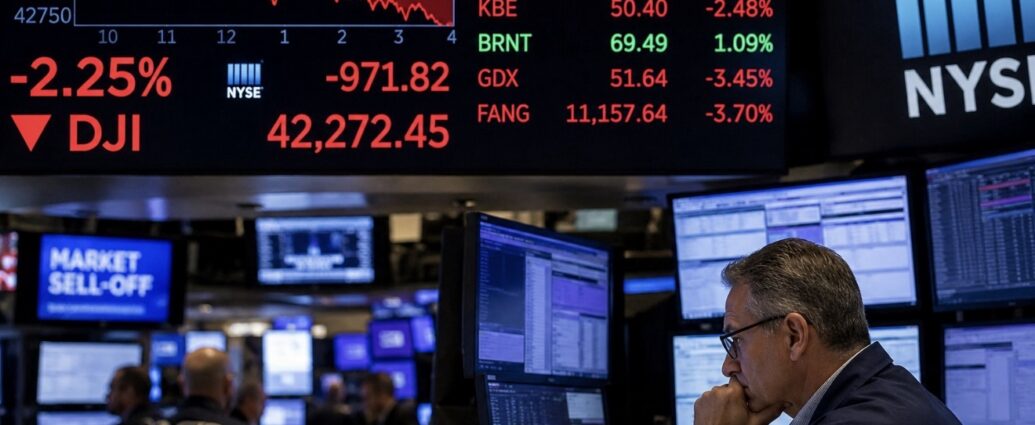

U.S. stocks opened higher Friday, June 12, 2026, as the largest stock offering in history and rising hopes for peace in the Middle East drew buyers into the market. President Donald Trump told reporters that a deal to end the war with Iran could be signed within days, one that would reopen the Strait of Hormuz and restore energy shipping through the Gulf. At the same time, SpaceX began its first day as a public company on the Nasdaq under the ticker SPCX, completing the biggest initial public offering ever recorded, according to the company’s S-1/A registration statement filed with the Securities and Exchange Commission.

In early trading, the Dow Jones Industrial Average rose 298 points, or 0.6%, while the S&P 500 added 0.1% and the Nasdaq Composite slipped 0.1%, held back by a steep drop in Adobe.

The move extended Thursday’s rally, when the Dow gained 1.86% to close at 50,848.75, the S&P 500 rose 1.75% to 7,394.30, and the Nasdaq Composite climbed 2.54% to 25,809.66.

SpaceX Takes Center Stage

The day’s centerpiece is SpaceX.

In its SEC filing, the company founded by Elon Musk set its price at $135 a share and offered about 555.5 million shares to raise roughly $75 billion, valuing SpaceX at $1.77 trillion and making it the seventh-most valuable U.S. company, ahead of Tesla.

Musk and SpaceX President and Chief Operating Officer Gwynne Shotwell rang the opening bell Friday, Musk from Texas and Shotwell from the Nasdaq MarketSite in New York.

The first public trade did not print at the opening bell as the stock cleared a Nasdaq auction to establish its opening price.

Goldman Sachs and Morgan Stanley led the offering as part of a syndicate of 23 banks listed in the prospectus.

Market Movers

SpaceX-related companies led early gains.

EchoStar, which owns an estimated 3% stake in SpaceX, rose about 4.8% before the open to roughly $134.28.

AST SpaceMobile advanced for a second straight session, while Rocket Lab gained about 4.5% after announcing it will join the Nasdaq-100 later this month.

Intel jumped about 5% after Bank of America analyst Vivek Arya upgraded the stock to Buy from Underperform and raised his price target to $135 from $96. Arya cited stronger demand for artificial-intelligence server chips and improved visibility into Intel’s contract manufacturing business, including a reported order from Google for more than three million custom AI processors.

Nvidia added about 1%. The company told Chinese customers its new Vera AI data-center processor could be available as early as August and is now open for orders.

Amazon also moved higher as investors returned to artificial-intelligence infrastructure names.

The biggest drag was Adobe, which fell about 7% despite reporting stronger-than-expected results.

Adobe reported quarterly revenue of $6.62 billion, above analyst expectations of $6.46 billion, but news of the planned departure of its chief financial officer triggered a series of analyst downgrades.

Goldman Sachs analyst Gabriela Borges lowered her price target to $190 from $220 while maintaining a Sell rating. Morgan Stanley analyst Keith Weiss said Adobe’s results reflected strong AI demand but expects the stock to remain range-bound.

Financial stocks also firmed, with JPMorgan Chase and Goldman Sachs trading higher.

Fifth Third Bancorp began trading on the New York Stock Exchange.

Among other notable movers, Playtika rose more than 5%, Virgin Galactic fell about 10%, DoubleVerify dropped roughly 4.2%, and Ollie’s Bargain Outlet declined about 3.3%.

Oil Falls as Diplomacy Gains Momentum

Oil prices declined on hopes that diplomatic progress could ease tensions in the Middle East.

West Texas Intermediate crude for July delivery fell 2.8% to $85.26 a barrel, while Brent crude dropped 2.5% to $88.13 a barrel.

The decline followed comments from President Trump indicating that an agreement could be reached as soon as this weekend in Europe.

A 14-point draft reported by Iranian state media would commit Iran to reopening the Strait of Hormuz within 30 days in exchange for the lifting of U.S. oil sanctions, although Tehran has not formally approved the proposal.

Lower oil prices typically translate into lower gasoline costs for consumers and businesses.

Meanwhile, gold traded near $4,180 an ounce after briefly dipping toward $4,000 before rebounding above $4,200.

The Cboe Volatility Index (VIX) eased toward 19.

Investors Focus on Historic Debut

Despite Friday’s gains, investors remained focused on the historic SpaceX debut.

Some traders reportedly sold existing holdings during the week to raise cash for SpaceX shares, contributing to choppy trading in parts of the technology sector even as the broader market advanced.

With the largest public offering in history still establishing its opening price, volatility is likely to remain elevated throughout the session.

JBizNews Desk — Markets

© JBizNews.com All Rights Reserved. Reproduction or distribution without written permission is prohibited.
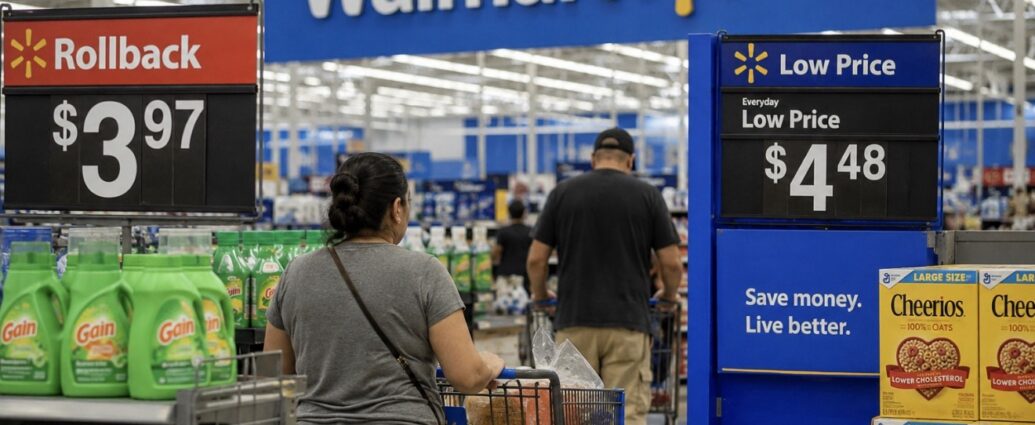
President Donald Trump downplayed a sharp rise in inflation, arguing higher prices are tied to the Iran conflict and will fall once the war ends.

U.S. inflation accelerated to its fastest pace in three years during May, according to the Consumer Price Index (CPI) report released Wednesday, June 10, 2026, by the Bureau of Labor Statistics. But rather than expressing concern, President Donald Trump surprised reporters with an unusual response.

“I really love the inflation,” Trump said during remarks at the White House.

The comment immediately drew attention because rising prices have traditionally been viewed as a political liability for any administration. However, Trump quickly clarified his reasoning, shifting the discussion toward the ongoing conflict with Iran and arguing that inflation pressures are largely tied to wartime energy disruptions.

“I love the inflation. You know why?” Trump said before discussing U.S. operations related to Iran’s oil sector and asserting that the administration’s broader strategy would ultimately benefit the economy.

The remarks came after a difficult inflation report.

The Consumer Price Index, which measures changes in the prices consumers pay for goods and services, recorded its highest annual increase since April 2023. It marked the third consecutive month of accelerating inflation and moved further above the Federal Reserve’s long-term target of approximately 2%.

The primary driver remains energy.

Since the escalation of hostilities involving Iran earlier this year, oil markets have experienced significant volatility. The disruption of shipping through the Strait of Hormuz, one of the world’s most important energy corridors, has pushed fuel prices sharply higher.

According to AAA, the national average price of regular gasoline has climbed to approximately $4.15 per gallon, compared with about $2.98 before the conflict intensified.

Within the May inflation report, gasoline prices rose 7%, following a 5.4% increase in April and a 21.2% surge in March.

Higher energy costs continue to ripple throughout the economy.

The Bureau of Labor Statistics reported increases across multiple categories, including transportation, airline fares, recreation, healthcare services, communications and other consumer expenses. Because fuel affects shipping and operating costs throughout the economy, higher energy prices often translate into broader inflationary pressures.

Trump used the inflation discussion to make a broader argument about the war.

The president claimed U.S. operations have prevented oil prices from rising even further by disrupting Iranian oil activity. He described nighttime maritime operations involving multiple vessels but did not provide specific figures or supporting documentation. The claims could not be independently verified.

When asked whether inflation would fall before the November midterm elections, Trump expressed confidence.

“When the war’s over, it’s coming down,” he said. “It’s going to come down like a rock.”

That message reflects the administration’s position that current inflation pressures are temporary and largely tied to geopolitical events rather than underlying economic weakness.

Economists note, however, that sustained inflation can create additional challenges.

Persistent price increases may force the Federal Reserve to maintain higher interest rates or even consider future increases to cool demand. Higher rates can raise borrowing costs for mortgages, auto loans, business financing and credit cards.

For consumers, that means inflation can have effects beyond rising prices at gas stations and grocery stores.

Even so, current inflation remains below the levels experienced during the post-pandemic surge.

In 2022, annual inflation exceeded 9%, reaching its highest level in roughly four decades. While today’s inflation is the strongest in three years, it remains significantly below those historic peaks and is currently more concentrated in energy-related sectors.

The key variable remains the duration of the Iran conflict.

If energy markets stabilize and oil shipments through the Strait of Hormuz return to normal levels, inflation pressures could ease. If disruptions continue, higher fuel costs could remain a source of upward pressure on prices throughout the economy.

For now, consumers face rising costs, policymakers face renewed inflation concerns, and investors are watching closely to see whether the recent surge proves temporary—or becomes a more persistent challenge for the U.S. economy.

JBizNews Desk — Washington

© JBizNews.com All Rights Reserved. Reproduction or distribution without written permission is prohibited.

Despite rising defaults, redemption pressures and slowing retail inflows, investors continue pouring money into bonds issued by private credit firms, keeping a key source of business financing alive.

For all the concern surrounding the private credit industry this year, one corner of the market remains surprisingly strong: investors continue to buy the bonds issued by private credit funds.

In an April 2026 filing with the Securities and Exchange Commission, Goldman Sachs Private Credit Corp. reported raising approximately $1.04 billion of new capital during the first quarter, citing what it described as “continued strong investor demand.” More recently, Blackstone’s flagship private credit fund reported fresh inflows in early June, signaling that institutional investors continue to support the sector despite mounting concerns elsewhere in the market.

To understand why that matters, it helps to understand what private credit is.

Private credit refers to loans made outside the traditional banking system. Instead of borrowing from a commercial bank or issuing publicly traded bonds, companies receive financing directly from investment firms, asset managers and specialized lending funds. These loans often carry higher interest rates than traditional debt and typically lock investors into long-term commitments.

Over the past decade, private credit has grown into a multi-trillion-dollar global industry, becoming an increasingly important source of financing for businesses that may not qualify for conventional bank lending.

A large share of that activity takes place through Business Development Companies (BDCs), investment vehicles that raise money from investors and lend it to businesses. To increase their lending capacity, many BDCs also issue bonds of their own, effectively borrowing money from fixed-income investors.

Those bonds continue to find buyers.

According to Fitch Ratings, rated BDCs issued approximately $21 billion of debt during 2025 and another $4 billion during January 2026 alone. Recent bond offerings from several major private credit firms have continued to attract strong demand despite broader concerns about the sector.

That resilience stands in contrast to developments elsewhere in private credit.

After a fundraising boom during 2024 and 2025 that brought more than $60 billion into BDCs, investor enthusiasm began cooling in early 2026. Industry data show retail sales of new BDC shares fell approximately 40% during the first quarter compared with the same period a year earlier.

Several so-called evergreen funds—semi-liquid investment vehicles designed for individual investors—have also encountered significant redemption pressure.

These funds typically limit quarterly withdrawals to approximately 5% of assets, and some managers have been forced to restrict redemptions after requests exceeded those limits.

Blue Owl Capital was among the firms that capped withdrawals after investor redemption requests substantially surpassed available liquidity.

At the same time, credit conditions have become more challenging.

In March, Morgan Stanley strategist Joyce Jiang warned that private credit default rates could approach 8%, significantly above historical averages. Some industry observers argue that actual stress levels may be even higher when distressed restructurings are included alongside formal defaults.

The rising number of troubled loans has intensified debate over whether the private credit boom has entered a more difficult phase.

Supporters of the industry argue that the concerns may be overstated.

Most private credit loans are structured as senior secured debt, meaning lenders are first in line to recover money if a borrower encounters financial trouble. That position generally provides greater protection against losses than unsecured lending.

Industry participants also note that redemption limits are functioning exactly as intended by preventing forced asset sales during periods of market stress.

Neuberger Berman and other managers have argued that recent redemption restrictions reflect prudent liquidity management rather than underlying portfolio weakness.

Institutional investors appear to agree.

Unlike retail investors, pension funds, insurance companies and large institutions typically invest with longer time horizons and are less likely to react to short-term market volatility. Their continued support has helped sustain demand for private-credit-related debt even as retail sentiment has weakened.

Still, competition for investor dollars is increasing.

As concerns surrounding private credit have grown, some investors have shifted assets into traditional publicly traded bond funds that offer daily liquidity, transparent pricing and attractive yields without multi-year lockups.

Asset managers including Pacific Investment Management Company (PIMCO) and Janus Henderson Group have actively promoted those advantages as investors reassess their options.

For businesses, the outcome matters.

Private credit has become a major funding source for thousands of small and midsize companies that may struggle to secure financing through traditional banks. If capital inflows slow significantly, borrowing costs could rise and financing could become harder to obtain, potentially affecting expansion plans, hiring decisions and investment activity.

That is why continued demand for BDC bonds remains important.

As long as investors keep buying the debt issued by private lenders, those firms can continue raising capital and extending loans to businesses across the economy.

The result is a market sending mixed signals.

Retail investors are pulling back. Redemption requests are climbing. Default concerns are growing.

Yet institutional investors continue committing capital, and bond buyers continue funding private lenders.

The private credit industry faces one of its biggest tests since its rise to prominence, but for now, investors purchasing its bonds still appear convinced that the asset class remains worth the risk.

JBizNews Desk — Markets

© JBizNews.com All Rights Reserved. Reproduction or distribution without written permission is prohibited.

The Florida-based medical marijuana operator becomes the first American cannabis company that grows and sells marijuana to trade on a major U.S. stock exchange, marking a milestone years in the making for the industry.

A U.S. marijuana company traded on the floor of the New York Stock Exchange for the first time on Wednesday, June 10, 2026, as Trulieve Cannabis Corp. began trading under the ticker TRLV.

The Tallahassee, Florida-based company became the first American “plant-touching” cannabis operator—one that directly cultivates, processes and sells marijuana—to secure a listing on a major U.S. stock exchange.

The achievement represents a breakthrough for an industry that has spent years seeking broader access to public capital markets.

“As the first U.S. cannabis company to list on a major U.S. exchange, we are excited,” said Kim Rivers, Trulieve’s founder and chief executive officer, in announcing the listing.

Rivers said the move is expected to expand the company’s shareholder base, improve market visibility and increase awareness of the medical cannabis industry.

Prior to the NYSE listing, Trulieve traded over-the-counter under the symbol TCNNF and on the Canadian Securities Exchange, where it has been listed since 2018.

For years, major U.S. exchanges largely prohibited listings by American cannabis companies because marijuana remained classified as a Schedule I controlled substance under federal law.

That classification placed marijuana alongside drugs considered by the federal government to have no accepted medical use, creating significant legal and regulatory obstacles for companies directly involved in the cannabis business.

As a result, most U.S. cannabis operators were forced to raise capital through Canadian exchanges or over-the-counter markets, which generally offer lower trading volumes and reduced access to institutional investors.

The regulatory landscape changed this spring.

In April 2026, Acting Attorney General Todd Blanche announced the reclassification of medical marijuana to Schedule III, a category reserved for substances recognized as having accepted medical uses and a lower potential for abuse.

The move created a pathway for state-licensed medical marijuana businesses to register with the Drug Enforcement Administration (DEA) and potentially qualify for listing on major U.S. exchanges.

Trulieve still needed to restructure its business to meet listing requirements.

Because only medical marijuana was rescheduled, the company separated its adult-use recreational cannabis operations into a distinct entity. Through a third-party investment arrangement, Trulieve fully deconsolidated its recreational business, leaving the publicly traded company focused exclusively on medical marijuana.

While Kim Rivers continues to maintain control over the recreational operation, its financial results are no longer included within the NYSE-listed company.

The remaining medical cannabis business remains substantial.

Trulieve operates 206 state-licensed dispensaries and approximately 3.5 million square feet of DEA-registered cultivation and production facilities. The company is also one of the dominant players in Florida’s medical marijuana market, where it is estimated to control between 30% and 40% of statewide medical cannabis revenue.

Investors responded positively to the listing.

Shares initially rose about 4% during Wednesday morning trading before moderating later in the session. The larger market reaction came after the June 5 listing announcement, when Trulieve shares surged approximately 20%.

The stock is now up roughly 38% in 2026.

The broader cannabis sector has also benefited.

The AdvisorShares Pure US Cannabis ETF (NYSE: MSOS), one of the industry’s most widely followed exchange-traded funds, recently reached its highest level of the year. Trulieve represents approximately 30% of the fund’s holdings.

For individual investors, the NYSE listing significantly simplifies access.

Investors can now purchase Trulieve shares through traditional brokerage accounts, retirement accounts and popular investing platforms without navigating over-the-counter markets or Canadian exchanges.

Industry competitors are already positioning themselves to follow.

Curaleaf Holdings announced a 1-for-3 reverse stock split in late May, while Verano Holdings implemented a 1-for-5 reverse split, moves widely viewed as preparation for potential uplistings if regulatory conditions continue to improve.

Curaleaf has cautioned, however, that additional regulatory clarity will still be necessary before a listing can move forward.

Meanwhile, Canadian cannabis companies including Tilray Brands, SNDL, and Canopy Growth have long traded on major U.S. exchanges because they operate under Canada’s federally legal cannabis framework rather than directly touching U.S. marijuana operations.

Additional regulatory developments could arrive soon.

Industry participants are closely watching a DEA hearing later this month that could further reshape federal cannabis policy. The move to Schedule III also offers another major benefit: relief from certain federal tax rules that have historically imposed heavy burdens on cannabis businesses.

Lower tax costs could significantly improve profitability across the industry.

Industry advocates view Trulieve’s listing as a turning point.

Michael Bronstein, president of the American Trade Association for Cannabis and Hemp, said U.S. cannabis companies have long argued they deserve the same access to capital markets available to international competitors.

With Trulieve now trading on the New York Stock Exchange, that argument is finally being tested on Wall Street.

JBizNews Desk — Markets

© JBizNews.com All Rights Reserved. Reproduction or distribution without written permission is prohibited.

Federal prosecutors are investigating whether some of America’s largest banks improperly closed customer accounts based on political beliefs, affiliations, or lawful business activities.

Federal prosecutors have opened a criminal investigation into whether some of the nation’s largest banks cut off customers because of their political views. The probe became public on Wednesday, June 10, 2026, when people familiar with the confidential matter said the U.S. Attorney’s Office for the District of Columbia, led by Jeanine Pirro, had issued subpoenas to several major lenders, including JPMorgan Chase, Bank of America, and Wells Fargo.

The subpoenas, some dating back to last year, seek lists of customers whose accounts were closed and records explaining the reasons for those closures. Prosecutors are examining whether the decisions were standard business actions or whether customers were targeted because of their political views, affiliations, religious beliefs, or industries in which they operate.

JPMorgan Chase did not immediately comment. Bank of America and Wells Fargo declined to comment.

At the center of the investigation is a practice known as “debanking,” in which a financial institution closes an account or declines to provide banking services. For individuals and businesses alike, losing access to banking services can create serious disruptions, affecting payroll, bill payments, deposits, financing, and everyday operations.

According to people familiar with the matter, prosecutors are reviewing whether any account closures violated federal law, including the Financial Institutions Reform, Recovery and Enforcement Act of 1989 (FIRREA). The statute is commonly associated with bank fraud investigations but is also attractive to prosecutors because it provides a broad enforcement framework and a ten-year statute of limitations.

That timeline would allow investigators to review account closures dating back to the period following the January 6, 2021 Capitol riot, when some financial institutions reassessed relationships with politically exposed clients and organizations.

The investigation represents the most significant escalation to date in a broader debate over whether financial institutions have unfairly denied services to customers based on political considerations.

President Donald Trump has repeatedly accused major banks of refusing to do business with him following his first term in office. He publicly raised the issue with Bank of America CEO Brian Moynihan during the World Economic Forum in Davos in early 2025.

In August 2025, Trump signed an executive order titled “Guaranteeing Fair Banking for All Americans,” directing federal agencies to investigate allegations of politically motivated debanking and refer potential violations to the Department of Justice.

Much of the government’s initial review was conducted by the Office of the Comptroller of the Currency (OCC), which supervises the nation’s largest national banks. According to reports, the OCC found preliminary evidence that some institutions had imposed restrictions on certain customers in the past.

Notably, the regulator reportedly did not formally refer the matter to the Justice Department. That makes the criminal investigation unusual, as prosecutors appear to have moved forward independently rather than acting on a formal regulatory recommendation.

The banks involved have consistently denied closing accounts because of politics or religion.

JPMorgan Chase has publicly stated that it does not close accounts based on political or religious affiliation. Banking industry representatives argue that account closures are typically driven by anti-money-laundering requirements, sanctions compliance obligations, fraud concerns, or other regulatory risk-management considerations.

That defense highlights one of the central questions facing investigators.

Federal civil-rights laws prohibit certain forms of discrimination, particularly in lending. However, banks generally maintain broad discretion over whom they choose to serve, and regulatory requirements sometimes compel institutions to terminate relationships viewed as high-risk.

Critics of the investigation argue that banks are being scrutinized for complying with the same federal regulations that require extensive customer-risk monitoring.

The outcome could have major implications for several industries that have long struggled to maintain banking relationships.

Cryptocurrency companies, cannabis businesses, firearms-related businesses, political organizations, advocacy groups, and certain nonprofit entities have frequently argued that they face heightened scrutiny from financial institutions. A determination that some account closures were unlawful could reshape how banks evaluate customer risk and could lead to significant changes in compliance policies across the industry.

Meanwhile, regulators have already begun adjusting their guidance.

Earlier this month, the Federal Reserve, the Office of the Comptroller of the Currency, and the Federal Deposit Insurance Corporation (FDIC) jointly removed references to “reputation risk” from supervisory guidance. Critics had argued that the standard allowed banks to deny services to lawful businesses simply because they were politically controversial or carried public-relations risks.

For now, the investigation remains in its early stages.

Subpoenas are requests for information and do not indicate wrongdoing. No bank has been charged with a crime, and prosecutors have not publicly alleged that any institution violated federal law.

Still, the probe signals that federal authorities intend to test a question that has increasingly moved from political debate into legal scrutiny: when a bank decides to close an account, where is the line between legitimate risk management and unlawful discrimination?

JBizNews Desk — Washington

© JBizNews.com All Rights Reserved. Reproduction or distribution without written permission is prohibited.

WASHINGTON— President Donald J. Trump signed a proclamation on Thursday, June 11, 2026, restoring commercial fishing access to nearly half a million square miles of the Pacific Ocean and opening three additional marine national monuments to U.S. commercial fleets as part of what the White House calls its America First Fishing Policy.

The proclamation reopens the Mau and Ho‘omalu Zones of the Papahānaumokuākea Marine National Monument, the Islands Unit of the Mariana Trench Marine National Monument, and the Rose Atoll Marine National Monument — vast Pacific waters that have been closed to commercial fishing since their creation.

The White House said the move is intended to increase domestic seafood production, support American jobs, strengthen food and national security, and help lower seafood prices for consumers.

Building on Earlier Fishing Actions

Thursday’s proclamation completes a broader series of actions taken by the administration to expand commercial fishing access in federally protected waters.

In April 2025, Trump signed an executive order creating the America First Seafood Strategy, along with a proclamation reopening portions of the Pacific Remote Islands Marine National Monument to U.S.-flagged vessels operating between 50 and 200 nautical miles offshore.

In February 2026, the administration reopened the Northeast Canyons and Seamounts Marine National Monument off New England.

The latest action follows a recommendation approved on March 24, 2026, by the Western Pacific Regional Fishery Management Council (Wespac), which urged reopening the remaining Pacific monuments.

American Samoa Stands to Benefit

The economic impact may be felt most strongly in American Samoa, where fishing remains the backbone of the private-sector economy.

According to administration figures, more than 80% of the territory’s private economy depends on fishing.

American Samoa is home to the nation’s only “Buy American”-compliant tuna cannery supplying U.S. military rations and school lunch programs. The facility employs approximately 5,000 workers, accounts for roughly 99.5% of the territory’s exports, and supports about 84% of private-sector employment.

American tuna purse-seine vessels and longline fleets are expected to be among the biggest beneficiaries of the newly reopened fishing grounds.

Supply Chain and Food Security

The White House argued that the benefits extend well beyond fishermen.

Commercial fishing supports jobs across harvesting, processing, transportation, shipbuilding, equipment manufacturing, distribution, sales, and marine services.

Administration officials said expanding domestic seafood production could strengthen the U.S. seafood supply chain and reduce dependence on imports, which currently account for the majority of seafood consumed in the United States.

The White House also linked the policy to household budgets, arguing that limiting domestic supply contributed to higher seafood prices for consumers.

Conservation Debate Continues

The administration maintained that many targeted species, including tuna, are highly migratory and do not remain permanently within monument boundaries.

Officials argued those fisheries are already managed under federal law, including the Magnuson-Stevens Fishery Conservation and Management Act, making broad monument-wide fishing prohibitions unnecessary.

Under that view, the administration says the closures imposed economic costs while providing limited conservation benefits.

Legal Challenges Expected

Opponents strongly disagree.

In August 2025, Judge Micah W. J. Smith of the U.S. District Court for the District of Hawaii vacated an earlier NOAA Fisheries authorization that would have allowed fishing in the Pacific Islands Heritage monument, ruling that required public procedures had not been followed.

That lawsuit was brought by Earthjustice, the Conservation Council for Hawai‘i, and the Center for Biological Diversity, which argued the administration’s actions violated protections established under the Antiquities Act.

Hawaii Governor Josh Green has publicly supported maintaining monument protections, while conservation organizations and some Native Hawaiian leaders have warned that reopening areas such as Papahānaumokuākea — one of the largest marine conservation regions in the world and an area of profound cultural significance — could cause lasting environmental damage.

Legal challenges to Thursday’s proclamation are widely expected.

What Comes Next

The administration described the proclamation as part of a broader effort to reduce regulatory barriers at NOAA, expand access to fisheries, and increase catch opportunities based on what it calls the best available science.

Commerce Secretary Howard Lutnick and NOAA Administrator Neil Jacobs have repeatedly argued that increasing access to domestic fisheries will help strengthen coastal economies and put more American-caught seafood on American tables.

The White House said the administration’s combined fisheries actions have unlocked billions of dollars in potential economic value.

For the U.S. fishing industry, Thursday’s proclamation represents one of the most significant expansions of commercial access in years.

For American Samoa’s tuna fleet, its canneries, and the thousands of jobs tied to them, it opens the door to fishing grounds that have largely been off limits for more than a decade.

The next chapter will depend on how NOAA implements the policy and whether the courts ultimately allow the expanded access to remain in place.

JBizNews Desk — Washington

© JBizNews.com All Rights Reserved. Reproduction or distribution without written permission is prohibited.

The 2026 FIFA World Cup kicked off Thursday at Estadio Azteca in Mexico City, where co-host Mexico defeated South Africa 2-0 in front of a packed home crowd. The match opened the largest World Cup in history — a 104-game tournament spanning 16 cities across the United States, Mexico, and Canada, marking the first time three nations have jointly hosted the event. The tournament concludes with the final on July 19 in the New York-New Jersey region.

The opening day carried significance far beyond the result on the field. Mexico City Mayor Clara Brugada declared a local holiday to celebrate the kickoff, while President Claudia Sheinbaum indicated a broader national observance remained under consideration. The opening ceremony transformed the nearly 87,500-seat stadium into a global entertainment stage, featuring performances by Shakira, Burna Boy, J Balvin, and Maná.

For FIFA, the World Cup is far more than a sporting event — it is the organization’s largest economic engine.

The expanded 48-team format, up from 32 teams in previous tournaments, creates more matches, more sponsorship inventory, more ticket sales, and significantly more broadcast content. FIFA has projected record revenues for the current cycle, driven largely by the expansion.

Host cities are hoping for their own economic boost.

The tournament is expected to attract millions of visitors across North America, generating spending on hotels, restaurants, transportation, entertainment, and tourism. Cities hosting matches are positioning themselves as global destinations, using the event to showcase local infrastructure and attract future investment.

Mexico City’s holiday declaration reflects how seriously local leaders view the economic opportunity.

The opening venue itself illustrates the business side of modern sports.

Estadio Azteca recently entered a naming-rights agreement with Mexican financial institution Banorte and is officially branded Banorte Stadium. However, because Banorte is not an official FIFA sponsor, the governing body required the venue to be referred to as “Mexico City Stadium” during the tournament.

The move highlights FIFA’s strict sponsorship protections, designed to preserve exclusivity for companies that pay billions for official tournament partnerships.

Broadcasting remains another major revenue source.

In the United States, matches are being carried by Fox Sports and Telemundo, while streaming coverage is spread across multiple digital platforms. Fox-owned Tubi streamed portions of the opening festivities free in 4K, reflecting the growing importance of ad-supported streaming models for major live events.

The World Cup also fuels a vast consumer marketplace that extends far beyond television.

Official jerseys, merchandise, collectibles, licensing agreements, music partnerships, and promotional campaigns are expected to generate billions in additional spending worldwide. Global brands continue to compete aggressively for visibility during what remains the most-watched sporting event on the planet.

Not everything surrounding the tournament has been celebratory.

Rights groups and some fans have raised concerns about security planning at several venues, while dynamic ticket pricing has generated criticism after some ticket costs rose significantly above original face values. Economists also continue to debate whether the long-term financial benefits of hosting major sporting events justify the substantial public spending often required.

For now, however, the focus remains on the tournament itself.

Mexico’s opening victory gave home supporters an early reason to celebrate, while businesses across North America are preparing for weeks of increased tourism and consumer activity. As the tournament unfolds, the broader question for host cities will be how much of the spending and attention generated by the World Cup translates into lasting economic gains after the final match is played in the New York region next month.

JBizNews Desk — North America

© JBizNews.com All Rights Reserved. Reproduction or distribution without written permission is prohibited.
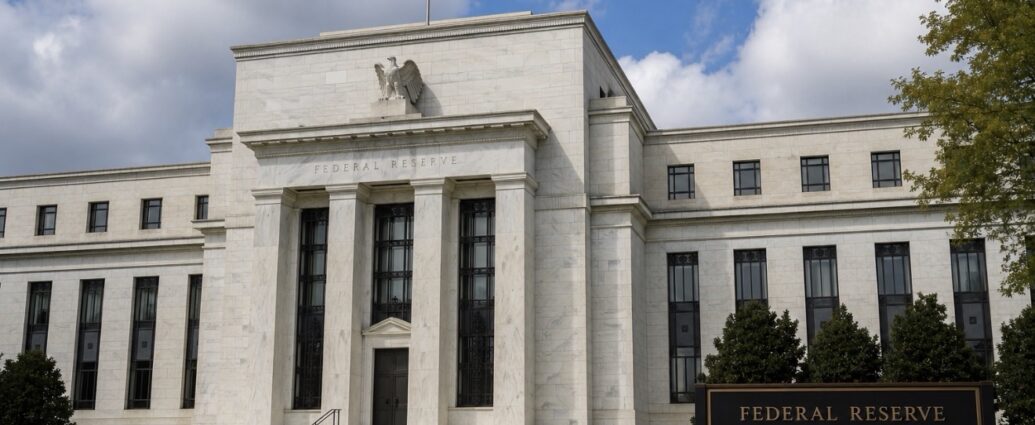
Cryptocurrencies rallied Thursday after President Donald Trump said he had called off planned U.S. military strikes on Iran, easing fears of a wider conflict and sending investors back into risk assets.

In a post on Truth Social, Trump said he had “canceled the scheduled strikes and bombings against Iran this evening,” adding that negotiations had reached the highest levels of Iran’s leadership and that a potential agreement could be finalized soon. Speaking from the Oval Office, Trump said a deal could potentially be signed over the weekend.

The announcement sparked a broad rally across digital assets.

Bitcoin climbed to an intraday high of approximately $63,850, while Ethereum approached $1,700. XRP and Dogecoin also posted strong gains as investors moved back into speculative assets. The total cryptocurrency market capitalization rose nearly 2%, reaching roughly $2.17 trillion.

The reaction followed a familiar market pattern. When geopolitical tensions ease, investors generally become more comfortable holding volatile assets, and cryptocurrencies often benefit disproportionately.

Trump’s comments came just one day after U.S. forces launched strikes against Iran following the loss of a U.S. Army helicopter near the Strait of Hormuz, a critical global energy corridor responsible for transporting a significant share of the world’s oil and natural gas supplies.

Although Trump signaled progress toward diplomacy, he also said the U.S. naval blockade of Iranian ports would remain in place until any agreement is formally completed, highlighting the fragile nature of the situation.

Markets remain cautious.

Iranian officials have not publicly confirmed that a final agreement has been reached, and at least one senior Iranian official reportedly stated that Tehran has not approved a framework.

Investor sentiment also remains weak despite Thursday’s rally. The Crypto Fear & Greed Index continued to register “Extreme Fear,” suggesting many traders remain skeptical about the sustainability of the move.

According to data from Coinglass, more than $260 million in crypto positions were liquidated during the previous 24 hours, with the majority consisting of short positions betting on lower prices. As those bets were forced to close, buying pressure accelerated the rally.

Meanwhile, Bitcoin open interest increased approximately 1.2%, indicating additional capital entering the market.

Another major event looming over financial markets is the highly anticipated SpaceX IPO.

The Elon Musk-led aerospace company priced what has been described as the largest stock sale in history this week, raising approximately $75 billion and preparing to begin trading Friday on the Nasdaq.

Such a massive offering could attract significant investor capital away from other speculative investments, including cryptocurrencies.

Widely followed market analyst Michaël van de Poppe warned that the timing could make conditions “tricky” for Bitcoin and other digital assets.

Van de Poppe said Bitcoin must hold a key support level near $63,200 to maintain upward momentum.

“However, if the trend stalls, we’ll probably hit the low of this correction in the weekend,” he said.

By Thursday afternoon, Bitcoin remained slightly above that threshold, but analysts said the coming days will determine whether the breakout can hold.

Additional signs of speculation emerged beneath the surface of the rally.

Research firm CryptoQuant reported rising activity in derivatives markets, particularly in Ethereum. Open interest in Ethereum futures on the Binance exchange reached a record high, reflecting increased use of leverage by traders seeking to capitalize on market volatility.

While leverage can amplify gains, it can also accelerate losses if sentiment reverses.

Thursday’s trading session highlighted how closely cryptocurrency markets have become tied to geopolitical developments and policy headlines.

A single social-media post from Trump helped move hundreds of billions of dollars across financial markets within hours. Analysts noted that just as quickly, those gains could reverse if negotiations break down.

The market now faces two competing forces.

A formal Iran agreement could remove one of the largest sources of uncertainty confronting investors and support continued buying of risk assets. At the same time, a successful SpaceX market debut could attract investor attention and capital away from cryptocurrencies.

For now, Bitcoin remains above the critical level analysts are watching, and traders will be closely monitoring both the Iran negotiations and Friday’s historic SpaceX debut to determine whether the rally has staying power.

JBizNews Desk — Markets

© JBizNews.com All Rights Reserved. Reproduction or distribution without written permission is prohibited.

SpaceX confirmed on Thursday, June 11, that it had priced what the company described as the largest stock sale in history — approximately 555.6 million shares at $135 each, raising about $75 billion. While investors around the world rushed to participate, many investors in mainland China and Hong Kong found themselves locked out of the offering due to U.S. export-control restrictions tied to defense-related technology.

Rather than buying SpaceX directly, many investors across Asia have turned to an alternative strategy: purchasing shares of publicly traded suppliers, satellite component manufacturers, and investment funds that already hold private stakes in the company.

The company, led by Elon Musk, is expected to begin trading on the Nasdaq under the ticker SPCX on Friday at a valuation of roughly $1.75 trillion. Underwriters also hold an option to purchase an additional 83.3 million shares. The offering surpasses the previous record established by Saudi Aramco’s 2019 IPO.

Restrictions reportedly went beyond simply rejecting orders. Access to SpaceX’s website and IPO marketing materials was blocked in mainland China and Hong Kong, preventing many investors from reviewing offering documents or participating directly.

One of those investors was Hu Xiaobin, a retail trader from China’s Anhui province. Anticipating growing interest in the company, he spent months purchasing shares of Chinese-listed companies connected to SpaceX’s supply chain.

Among his holdings were Sunway Communication, which manufactures components used in Starlink ground terminals, and Western Superconducting Technologies, a producer of specialty metals used in aerospace applications.

Hu later sold both positions before the IPO, describing the trade as successful “value speculation.”

One of the biggest beneficiaries of investor enthusiasm has been Lens Technology, a Shenzhen-listed supplier known for working with Apple and Tesla. The company’s stock has surged nearly 50% this year, reaching record highs after identifying commercial space as a new growth opportunity.

Interest intensified further in May when company chairman Zhou Qunfei was photographed seated between Apple CEO Tim Cook and Elon Musk during a Beijing banquet held to welcome President Donald Trump, fueling speculation about future business opportunities involving Musk’s companies.

Taiwan has also emerged as a major focus for investors seeking indirect exposure to SpaceX.

The island produces many of the electronic components used in satellite systems. Companies including Chin-Poon Industrial, Wistron NeWeb, and Universal Microwave Technology have publicly stated that they supply SpaceX.

According to Jeffrey Chan, a director at Hong Kong-based Central Asset Management, investors are also watching Compeq, Tong Hsing Electronic, Kinpo, and Japan’s Meiko Electronics as potential beneficiaries of SpaceX’s future growth.

“For local retail investors, getting a direct piece of the IPO book is going to be incredibly tough,” Chan said, adding that he expects SpaceX to become a core holding for many global growth-oriented funds.

Investor interest has expanded beyond suppliers.

The Tema Space Innovators ETF, which owns a small pre-IPO stake in SpaceX, has gained approximately 29% since launching in March. Meanwhile, the Tradr 2x Fly Long Daily ETF, which offers leveraged exposure to space company Firefly Aerospace, has attracted significant attention from traders.

In Europe, satellite companies including Eutelsat of France, OHB of Germany, and SES of Luxembourg have all posted strong gains this year as investors seek exposure to the broader commercial-space sector.

Not everyone believes the rally is sustainable.

Nicholas Smith, Japan strategist at brokerage CLSA, said much of the recent buying appears to be driven by retail investors rather than large institutions.

“It’s a great story if you’re a trader,” Smith said. “But I doubt people would be making big bets on this.”

Others see genuine long-term opportunity.

Nick Wilcox, managing director at Man Group, believes the capital raised through the offering could translate into increased spending throughout SpaceX’s supplier network.

“There is a raft of Asian companies that will be highly benefiting from that,” Wilcox said.

Still, analysts caution that many supplier stocks have already risen sharply on expectations that may not materialize. Thinly traded aerospace and satellite suppliers can be highly volatile, and future business relationships remain uncertain.

For investors in mainland China and Hong Kong, however, the irony remains clear: the company they most want to own is the one they still cannot directly buy.

JBizNews Desk — Asia

© JBizNews.com All Rights Reserved. Reproduction or distribution without written permission is prohibited.

The new chairman of the Federal Reserve, Kevin Warsh, is signaling that he plans to fight inflation in a fundamentally different way than many of his predecessors, a shift that could reshape interest rates, mortgages, business borrowing, and savings returns for millions of Americans. Warsh, himself a former Fed governor, laid out the case in testimony before the Senate Banking Committee on April 21, calling for a new framework to address persistent inflation and a different approach to communicating monetary policy.

The timing could hardly be more important. On Wednesday, June 10, the Bureau of Labor Statistics reported that consumer prices rose 4.2% over the past year, the fastest pace in three years. The report arrives just days before the Federal Reserve’s next policy meeting on June 16–17, where officials will decide whether interest rates should remain unchanged, move higher, or eventually begin to fall.

At the center of Warsh’s thinking is a belief that artificial intelligence may significantly alter how inflation behaves. Warsh has repeatedly argued that AI could become one of the most powerful productivity-enhancing technologies in modern history. Greater productivity allows businesses to produce more goods and services without proportionally increasing costs, potentially easing inflationary pressures while supporting economic growth.

In practical terms, Warsh believes the economy may be capable of growing faster than traditional models suggest without automatically triggering higher inflation. If productivity rises sharply because of AI adoption, businesses may be able to absorb costs more efficiently, potentially reducing the need for aggressive interest-rate increases.

That view challenges decades of Federal Reserve orthodoxy. Traditional economic models often assume that when unemployment falls too low and economic activity accelerates, inflation eventually rises. Under that framework, the Fed frequently raises rates to cool demand and prevent prices from climbing too quickly.

Warsh has suggested that relationship may be weaker than many economists assume. Rather than focusing primarily on historical relationships between growth and inflation, he has emphasized productivity, innovation, investment, and supply-side improvements as important drivers of price stability.

He has also criticized what he sees as excessive reliance on backward-looking economic data. Government reports often arrive weeks or months after underlying economic activity occurs. Warsh has argued that policymakers should pay closer attention to real-time developments in business investment, technological adoption, and productivity trends.

Beyond inflation policy, Warsh has advocated broader changes at the central bank. He has called for a more aggressive reduction of the Fed’s balance sheet, which still contains trillions of dollars in assets accumulated during years of quantitative easing. He has also suggested that the Federal Reserve should simplify how it communicates with markets and focus more narrowly on its core economic responsibilities.

Supporters argue that these changes could restore credibility to an institution that faced criticism for initially underestimating the inflation surge that followed the pandemic-era economic recovery.

The challenge for Warsh is that current economic conditions are testing his framework. While AI may eventually boost productivity, inflation today is being driven by more immediate factors, including higher energy costs, supply disruptions, and geopolitical uncertainty.

As a result, the Federal Reserve faces a difficult balancing act. Cutting rates too quickly could risk reigniting inflation, while keeping rates elevated for too long could slow economic growth and increase borrowing costs for households and businesses.

Several former Federal Reserve officials have noted that institutional realities may limit how dramatically policy changes. Dennis Lockhart, former president of the Federal Reserve Bank of Atlanta, has suggested that regardless of personal philosophy, any Fed chair ultimately must respond to incoming economic data. Loretta Mester, former president of the Federal Reserve Bank of Cleveland, has similarly emphasized the importance of building consensus among policymakers.

For consumers, the outcome matters directly. Mortgage rates, auto loans, business lending, and savings yields are all influenced by Federal Reserve policy. A more growth-oriented approach could eventually lower borrowing costs and stimulate investment. A more cautious approach could keep rates elevated in an effort to prevent inflation from becoming entrenched.

The upcoming Federal Reserve meeting may provide the first significant indication of how Warsh intends to navigate that challenge. Investors, businesses, and consumers will be watching closely to see whether the new chairman emphasizes productivity-driven optimism or maintains a more traditional focus on inflation risks.

Either way, the decisions made over the coming months will have consequences far beyond Wall Street, influencing everything from home purchases and business expansion plans to retirement savings and household budgets.

JBizNews Desk — Washington

© JBizNews.com All Rights Reserved. Reproduction or distribution without written permission is prohibited.

WASHINGTON, June 11 — A food-safety issue that began with bulk powdered milk continues to spread through the food supply chain as additional products made with the recalled ingredient are removed from store shelves.

The original recall began on April 20, 2026, when California Dairies Inc. voluntarily recalled large quantities of powdered milk and buttermilk powder due to potential Salmonella contamination, according to the U.S. Food and Drug Administration.

Since then, the FDA has continued tracing products that used the ingredient, leading to additional recalls involving downstream manufacturers.

Millions of Pounds Recalled

The original action involved approximately 2.68 million pounds of low-heat nonfat dry milk and an additional 19,841 pounds of buttermilk powder.

Because the ingredients were sold primarily to manufacturers and distributors rather than directly to consumers, the contamination concern quickly spread throughout the food production system.

Companies that purchased the ingredients incorporated them into a variety of products or repackaged them under separate brand names.

As a result, the list of affected products continues to expand.

FDA Issues Highest Warning Level

The recall received a Class I designation, the FDA’s most serious recall classification.

A Class I recall indicates a reasonable probability that exposure to the product could cause serious health consequences or death.

Salmonella infections can produce fever, diarrhea, abdominal cramps, and severe illness.

According to the Centers for Disease Control and Prevention, Salmonella causes approximately 1.35 million infections, 26,500 hospitalizations, and 420 deaths annually in the United States.

Young children, older adults, and people with weakened immune systems face the greatest risk.

Hidden Ingredient Creates Challenges

Powdered milk appears in far more products than many consumers realize.

It is commonly used in baking mixes, snack foods, soups, sauces, chocolate products, processed foods, and numerous packaged goods.

That widespread use makes recalls involving powdered milk particularly difficult to contain.

A single contaminated ingredient can affect dozens of brands and manufacturers across the country.

What Consumers Should Do

Consumers are encouraged to review current FDA recall notices and compare affected lot numbers and product codes with items in their homes.

Products included in recall notices should be discarded or returned according to manufacturer instructions.

Because additional products may continue to be identified, food-safety experts recommend periodically checking updated FDA recall lists.

Supply Chain Lessons

The case highlights how interconnected modern food production has become.

A single supplier can provide ingredients to numerous manufacturers, distributors, and retailers nationwide.

When contamination occurs, recalls often extend far beyond the original company.

Industry experts say the incident demonstrates the importance of traceability systems that allow regulators and manufacturers to quickly identify where affected ingredients were used.

Those systems help limit public exposure and reduce the scope of food-safety incidents.

JBizNews Desk — Washington

© JBizNews.com All Rights Reserved. Reproduction or distribution without written permission is prohibited.

NEW YORK, June 11 — Gold prices continued their sharp decline on Thursday, June 11, falling to their lowest levels in roughly six to seven months despite rising inflation and escalating conflict in the Middle East.

Spot gold traded near $4,100 per ounce, down more than 10% over the past month, even as investors confront war concerns, higher energy costs, and renewed inflation pressures.

Ordinarily, those conditions would support demand for gold as a traditional safe-haven asset.

Instead, investors are increasingly focused on the prospect of higher interest rates.

Higher Rates Weigh on Gold

The conflict with Iran and disruptions around the Strait of Hormuz have pushed oil and gasoline prices sharply higher, fueling inflation concerns.

At the same time, investors increasingly believe the Federal Reserve may keep rates elevated for longer—or potentially raise them further—to contain rising prices.

That expectation has strengthened the U.S. dollar and boosted Treasury yields.

The U.S. Dollar Index climbed to its strongest level since April, while the yield on the benchmark 10-year Treasury note moved above 4.50%.

Because gold pays no interest, it often struggles when bonds and cash offer higher returns.

As interest-bearing investments become more attractive, some investors shift money away from precious metals.

Silver has faced similar pressure, falling sharply alongside gold.

Central Banks Continue Buying

The decline comes despite continued demand from global central banks.

Central banks purchased approximately 244 metric tons of gold during the first quarter of 2026, continuing a multi-year trend of diversification away from the U.S. dollar.

Demand for physical gold bars also increased earlier in the year, although jewelry demand weakened in major markets including India and China.

Those purchases have helped support prices but have not been enough to reverse the broader selloff.

Long-Term Bullish Factors Remain

Supporters of gold point to several longer-term trends.

U.S. federal debt now exceeds $37 trillion, while annual interest payments have surpassed $1 trillion.

Meanwhile, central banks have remained net buyers of gold for four consecutive years.

Historically, those conditions have supported long-term demand for precious metals.

The challenge for gold today is the behavior of so-called real yields—the return investors receive after accounting for inflation.

When interest rates rise faster than inflation expectations, gold becomes less attractive relative to bonds and cash.

Global Central Banks Tighten

Adding to pressure on precious metals, the European Central Bank raised its benchmark interest rate by 0.25 percentage points on Thursday, bringing the rate to 2.25%.

The ECB also increased its inflation forecasts, citing higher energy costs and economic uncertainty linked to the Middle East conflict.

Higher interest rates globally create additional headwinds for gold markets.

Federal Reserve Now Holds the Key

Attention now turns to the Federal Reserve’s upcoming June meeting.

Investors are closely watching for guidance from Chair Kevin Warsh and updated projections showing where policymakers believe rates are headed.

Markets largely expect rates to remain unchanged this month.

The larger question is whether officials signal further tightening later this year.

A more aggressive outlook could pressure gold further, while indications that rates may stabilize could support a rebound.

For many investors, the recent decline serves as a reminder that gold is not always a straightforward inflation hedge.

In the short term, interest-rate expectations often matter more than inflation itself.

JBizNews Desk — New York

© JBizNews.com All Rights Reserved. Reproduction or distribution without written permission is prohibited.

WASHINGTON, June 11 — Wholesale prices in the United States rose far faster than expected in May, the Bureau of Labor Statistics reported on Thursday, June 11, adding to evidence that inflation is heating up as higher energy costs ripple through the economy.

The Producer Price Index (PPI), which measures prices received by producers before those costs reach consumers, climbed 1.1% in May, pushing the annual rate to 6.5%, the highest reading since November 2022.

The increase came in well above economists’ forecasts. Analysts surveyed by Dow Jones had expected a 0.7% monthly increase, while FactSet economists projected 0.6% and a 6.4% annual rate. Instead, wholesale inflation matched April’s elevated pace, signaling that price pressures remain stubbornly strong.

Energy Drives the Increase

Most of the increase came from goods prices.

Final-demand goods prices jumped 2.8% during the month, the largest increase since the current data series began in December 2009. According to the Bureau of Labor Statistics, goods accounted for nearly four-fifths of the overall monthly increase.

Energy prices were the primary driver.

Wholesale energy prices surged 10.7%, while wholesale gasoline prices jumped 23.4% in May.

The increase followed ongoing disruptions in global energy markets tied to the conflict with Iran and reduced shipping flows through the Strait of Hormuz, a key artery for global oil transportation.

Inflation Remains Broad-Based

Even after removing volatile food and energy prices, inflation remained elevated.

Core producer prices rose 0.4% during the month.

A broader measure excluding food, energy, and trade services climbed 0.8%, marking the largest monthly increase since March 2022. On a year-over-year basis, that measure increased 5.1%, the highest level since October 2022.

Among services, portfolio management fees increased 4.8%.

Food prices rose 0.6%, more than double April’s pace, although some categories declined, including pork prices, which fell 10.1%.

Pressure Building Earlier in the Supply Chain

Further upstream, inflation pressures were even stronger.

Prices for unprocessed goods used in early-stage production increased 4.9% during May and were up 22.2% from a year earlier — the largest annual increase since September 2022.

Much of that increase was driven by an 11.8% jump in crude petroleum prices.

One notable exception was natural gas, where prices fell 18.2% during the month.

Why It Matters to Consumers

The report arrives one day after the Bureau of Labor Statistics reported that consumer inflation reached 4.2% annually in May, the highest level in three years.

Producer prices often serve as an early warning sign because businesses frequently pass higher costs through to consumers.

When fuel, transportation, manufacturing inputs, and raw materials become more expensive, those increases often show up weeks or months later in grocery stores, retail shelves, utility bills, and household budgets.

Small businesses may face particularly difficult choices as margins tighten, forcing owners to absorb higher costs or pass them on to customers.

Federal Reserve Faces Growing Pressure

The report also complicates the outlook for the Federal Reserve.

At the start of the year, financial markets expected multiple interest-rate cuts. Persistent inflation has dramatically altered those expectations.

The Federal Reserve’s next meeting is scheduled for June 16–17 and will be the first chaired by Kevin Warsh. Policymakers are expected to release updated economic projections and interest-rate forecasts.

While markets see little chance of an immediate rate move, futures traders increasingly expect the possibility of another rate increase before year-end.

Higher interest rates would raise borrowing costs for consumers and businesses while inflation remains elevated, creating additional pressure on household budgets and economic growth.

The next Producer Price Index report is scheduled for July 15.

JBizNews Desk — Washington

© JBizNews.com All Rights Reserved. Reproduction or distribution without written permission is prohibited.

The clearest picture of how artificial intelligence is reshaping work in Asia can be found in India’s vast technology industry, where hiring has slowed to its weakest pace in more than two years. According to staffing data firm Xpheno, whose figures were reported during the week of June 8, entry-level job openings across India’s IT sector have fallen 44% from a year earlier, while senior-level postings are down 67%.

The numbers from India’s biggest employers tell the same story. Tata Consultancy Services made 25,000 job offers to new graduates last month, and Infosys is expected to hire about 20,000 in the coming year. Those figures sound large, but they are well below previous levels. Tata Consultancy Services hired more than 40,000 new graduates annually during each of the previous three years. Direct campus hiring across the industry now runs roughly 30% to 35% below historical levels.

What makes this shift striking is that the companies are not shrinking. They are growing output while holding headcount flat or reducing it. Tata Consultancy Services shed a net 13,249 employees in one recent fiscal year even as revenue continued rising, while Infosys recorded the largest annual headcount decline in its history, a 5.9% decrease. Neither company attributes the trend solely to AI, but the pattern is increasingly difficult to ignore: more work, fewer people.

The stakes are enormous because of the industry’s scale. India’s technology and business-process sector generated approximately $254 billion in revenue and employed 5.4 million people, according to NASSCOM. For decades, the sector thrived by providing skilled labor to multinational corporations. Artificial intelligence is now challenging that model.

The jobs facing the greatest pressure are the very positions that launched millions of careers: entry-level coding, software testing, routine customer support, and back-office processing. These roles absorbed vast numbers of graduates each year and helped build India’s middle class. AI tools increasingly perform many of those tasks, reducing the need for large numbers of entry-level workers. Recruiters describe a growing shift toward just-in-time hiring, where employees are added only when projects require them rather than being kept on large reserve benches.

The transformation is not limited to India. Across Asia’s major financial centers, AI is moving rapidly from pilot projects to everyday operations. In Hong Kong, a 2026 KPMG employment survey found that 24% of organizations are now widely deploying AI, triple the level reported a year earlier. KPMG identified AI literacy and practical AI application as the most valuable skills employees can possess. At the same time, more employers expect to reduce headcount than increase it, reflecting one of the most cautious hiring outlooks in recent years.

For workers with the right skills, however, the technology is creating opportunities. Research published in January by UNICEF Innocenti found that AI-related job postings across South Asia continue to rise and offer salaries roughly 30% higher than comparable white-collar positions. Workers who understand how to leverage AI are seeing measurable gains in earnings and productivity. The concern is that those gains may not be shared equally.

Researchers increasingly warn of a more divided labor market, where highly skilled workers benefit from higher pay and greater demand while workers performing routine tasks face fewer opportunities. The challenge is not merely job displacement but widening inequality between those who can effectively use AI and those who cannot.

The World Bank, in its recent report on East Asia and the Pacific, offered a more optimistic long-term perspective. Historically, new technologies have expanded employment overall by increasing productivity and creating new industries. However, the benefits have tended to flow disproportionately to skilled workers, while some less-skilled workers have been pushed into more informal and less secure forms of employment.

There is also an augmentation story unfolding alongside the displacement narrative. Microsoft’s 2026 Work Trend Index, which surveyed 20,000 AI users across ten countries, found that most respondents reported higher productivity, and a majority said AI enabled them to produce work they could not have completed just a year earlier. In many cases, AI is changing how work is performed rather than simply eliminating jobs.

For businesses, the implications are substantial. Investors are increasingly distinguishing between companies that are building AI-driven products and services and those that continue to rely primarily on selling human labor. The valuation gap between those models is expected to widen.

Governments are responding as well. India’s Karnataka state, home to Bangalore, is offering incentives aimed at doubling the number of multinational global capability centers operating there to 1,000 by 2029. These centers are expected to create higher-value jobs, though they are unlikely to absorb the vast numbers of graduates that the traditional outsourcing model once employed.

The broader trend across Asia is becoming clear. Artificial intelligence is increasing productivity, boosting wages for workers who master it, and raising the skill requirements for new entrants. For a region that built much of its modern economic success on abundant, affordable, educated labor, that represents one of the most significant workplace shifts in decades.

JBizNews Desk — Asia

© JBizNews.com All Rights Reserved. Reproduction or distribution without written permission is prohibited.

U.S. stocks rallied hard on Thursday, June 11, shaking off a hot inflation report from the U.S. Bureau of Labor Statistics and fresh military action against Iran to close sharply higher.

The Dow Jones Industrial Average jumped 929 points, or 1.87%, to 50,848.38, climbing back above the 50,000 mark. The S&P 500 rose 1.74% to about 7,393, just shy of 7,400. The Nasdaq Composite gained 2.53% to roughly 25,806, and the small-cap Russell 2000 led everything with a 3.06% surge.

Tech, industrials, and materials drove the move, while energy, consumer staples, and real estate lagged.

Inflation Runs Hot

The rally was striking because the morning’s economic news was not good.

The Bureau of Labor Statistics reported that the Producer Price Index (PPI), which tracks wholesale prices, rose 1.1% in May, well above the 0.7% economists expected. The core reading, which strips out food and energy, rose 0.4%.

On an annual basis, wholesale inflation hit 6.5%, the fastest pace in nearly four years.

It landed a day after consumer prices were reported at a three-year high of 4.2%.

Hot inflation usually pushes the Federal Reserve away from cutting interest rates, and futures markets now lean toward a possible rate hike this year rather than the cuts investors expected in January.

Iran Deal Hopes Trump War Fears

So why did stocks climb?

The answer was Iran.

Even as explosions were reported across the country near the Strait of Hormuz and the United States carried out renewed strikes, Iranian officials signaled that a deal with Washington is close.

That hope for de-escalation outweighed the fighting itself, and traders bought the dip from Wednesday’s steep selloff.

SpaceX Becomes Wall Street’s Main Event

The bigger draw was SpaceX.

Elon Musk’s rocket company is set to make its stock-market debut on Friday on the Nasdaq under the ticker SPCX, in what is expected to be the largest IPO in history.

According to people familiar with the offering, investor demand has topped $250 billion — roughly three-and-a-half to four times the company’s planned $75 billion target.

The size has some investors worried the debut could pull money out of other stocks.

Musk is also expected to appear virtually at an ASML event to discuss Terafab, a planned chipmaking plant intended to supply Tesla and SpaceX.

Oracle Falls Despite Beating Expectations

The day’s biggest single-stock story was Oracle, which fell about 12% even though its results beat expectations.

The software giant reported fiscal fourth-quarter revenue of $19.18 billion, ahead of the roughly $19 billion Wall Street expected, with adjusted earnings of $2.11 per share versus estimates near $1.89.

What spooked investors was the spending.

Oracle said its total outlays reached $55.7 billion in fiscal 2026, above the $50 billion expected, and guided capital spending for fiscal 2027 to roughly $95 billion — about 40% higher than the $67.7 billion analysts had modeled.

The company said it plans to raise nearly $40 billion through debt and equity next year, including a previously announced $20 billion stock offering, to fund its artificial-intelligence buildout.

Oracle has signed major data-center deals with Meta Platforms and OpenAI as it pushes to compete with cloud leaders Amazon and Microsoft.

Chip Stocks Stage a Comeback

Chip stocks, which had been hammered in recent weeks, came roaring back.

Intel jumped about 10%, while Applied Materials and Arm Holdings each rose close to 8%.

On the losing side, GoDaddy slipped 2.5% and Axon Enterprise fell 2.2%.

Eyes Turn to Adobe, Lennar and RH

After the closing bell, attention turned to Adobe, which reported fiscal second-quarter results.

Wall Street looked for earnings near $5.82 per share on revenue of about $6.46 billion.

Adobe shares have fallen roughly 28% this year on fears that new AI design tools could eat into its business.

Ahead of the print, RBC Capital maintained an Outperform rating with a $350 price target, while Mizuho held a Neutral view, citing limited near-term catalysts.

Homebuilder Lennar and luxury retailer RH also reported after the close, giving investors a read on housing and high-end consumer spending.

Job Market Shows a Crack

There was one more soft spot in the data.

The Labor Department said new claims for unemployment benefits totaled 229,000 in the week ending June 6, above forecasts, a small sign of cooling in the job market even as inflation runs hot — a difficult mix for the Federal Reserve to manage.

Looking Ahead

For one day, hope for an Iran deal and excitement over SpaceX won out over rising prices and war headlines.

The real test comes Friday, when SpaceX starts trading and Wall Street finds out whether the biggest IPO ever can hold up a market that has been swinging hundreds of points a day.

JBizNews Desk — New York

© JBizNews.com All Rights Reserved. Reproduction or distribution without written permission is prohibited.


President Donald Trump said Wednesday, June 10, that the U.S. military has been quietly helping oil tankers move through the Strait of Hormuz, claiming that more than 100 million barrels of oil and over 200 commercial ships have passed safely through the contested waterway. He disclosed the operation in remarks to reporters in the Oval Office and in a post on his Truth Social platform.

Trump said he directed the military last month to carry out what he described as a secret mission to support oil tankers and other commercial vessels navigating the strait, the narrow channel between Iran and Oman that has been largely disrupted since the war began.

“This wildly successful effort is because the UNITED STATES OF AMERICA CONTROLS the Strait of Hormuz — NOT Iran,” Trump wrote, adding that Iran’s military has been weakened and its economy is under severe strain.

The president tied the operation directly to energy prices. He argued that the continued movement of oil through the region helped keep crude prices near $90 per barrel rather than surging above $200, a level some analysts have warned could occur if the strait were completely shut.

That economic angle is the heart of why this matters to ordinary Americans.

The Strait of Hormuz is one of the most important oil routes in the world. Before the conflict escalated, roughly 20 million barrels of oil per day flowed through the waterway, representing about one-fifth of global petroleum supply. Any disruption quickly affects fuel markets, shipping costs, airline expenses, manufacturing, and ultimately consumer prices.

When traffic through the strait became constrained, oil prices climbed and gasoline costs followed. Those higher energy expenses have filtered into transportation, food distribution, and retail supply chains across the economy.

Anything that restores even part of that flow can help reduce pressure.

Still, the picture is more complicated than the president’s description suggests.

Commercial traffic through Hormuz remains significantly below pre-war levels. Independent energy analysts note that global markets are still missing substantial volumes of oil that would normally transit the route. Industry estimates indicate that billions of barrels of expected shipments have been delayed or rerouted since the conflict began.

There is, however, some evidence that more oil may be moving through the region than publicly reported.

A recent JPMorgan analysis suggested that a meaningful volume of crude may still be exiting the Gulf through vessels operating with limited public tracking visibility. Analysts noted that oil exports appear higher than official shipping traffic alone would suggest.

At those estimated rates, Trump’s claimed totals fall within a range that analysts consider plausible, though still far below normal peacetime volumes.

Administration officials have also hinted at improving conditions.

Energy Secretary Chris Wright said earlier this week that oil exports moving through Hormuz are “rising very meaningfully,” though he did not provide specific figures.

Meanwhile, ships that had been stranded inside the Persian Gulf have gradually resumed movement through the corridor amid ongoing coordination with U.S. military forces.

Exactly what role the military is playing remains somewhat unclear.

Earlier this year, Trump announced a mission known as Project Freedom, intended to assist commercial vessels affected by the conflict. Administration officials later indicated that U.S. forces were not formally escorting ships but were providing communications support, intelligence, monitoring, and defensive protection against attacks.

U.S. Central Command has stated that American forces are working to protect commercial shipping from drone, missile, and maritime threats in the region.

Secretary of State Marco Rubio recently told lawmakers that the United States has responded to Iranian attacks targeting commercial vessels. He warned that drone strikes against civilian ships pose significant environmental and economic risks and said U.S. forces respond when commercial traffic comes under attack.

For businesses and consumers, the implications are significant.

If more oil is successfully reaching global markets, it helps explain why crude prices have remained elevated but have not exploded to the levels many feared earlier this year. That stability benefits airlines, trucking companies, manufacturers, retailers, and families facing higher fuel bills.

Gasoline prices remain well above pre-conflict levels, and inflation pressures tied to energy costs continue to affect household budgets. Any improvement in oil flows therefore has direct consequences for the broader economy.

The conflict, however, remains unresolved, and the Strait of Hormuz is still operating far below normal capacity.

Energy forecasters continue to expect elevated oil prices through much of the year unless shipping conditions improve substantially.

Trump’s announcement signals that the administration believes its efforts are helping keep energy supplies moving despite the conflict. Whether that translates into sustained relief at the gas pump will depend on how much oil is truly flowing and how long the disruption lasts.

JBizNews Desk — Energy

© JBizNews.com All Rights Reserved. Reproduction or distribution without written permission is prohibited.

Americans’ mood about money has hit a record low. In late May, the University of Michigan reported that its consumer sentiment index fell to 44.8 — the lowest reading in the survey’s history. The survey’s director, Joanne Hsu, said the cost of living was the top concern, with 57% of people naming high prices as the reason their finances feel worse. It was the third straight month of decline.

That is not a Wall Street number. That is a kitchen-table number, and it is flashing red.

This is not a slow drift. The struggle is surging.

A survey released in February by The Century Foundation found that more than one in three Americans (34%) had skipped a meal in the past year to save money, up from one in four just months earlier. That is how fast this is moving. Families are not only skipping meals; they are skipping doctor visits and going without medication.

People are not trimming the fat anymore. They are cutting into the bone.

It shows up at the most basic place a family spends money. A CNN poll in late May found that 61% of Americans had cut back on groceries to stay within budget, and 59% had cut back on extras and entertainment. When a majority of the country is buying less food, that is not a soft patch.

That is a warning siren.

So people take on more work just to stand still. The Bureau of Labor Statistics reported that the number of Americans holding more than one job hit roughly 9.3 million in November 2025 — the most ever recorded since the government began tracking it in 1994. Half of those workers hold a college degree.

A second job used to be how you got ahead. For millions of families, it is now how you keep the lights on.

The math behind it is brutal. Over the past five years, housing costs climbed about 28% while wages rose around 24%. Grocery prices jumped 0.7% in a single month in April, according to the Bureau of Labor Statistics — the biggest monthly increase in nearly four years. Gas has pushed above $4.50 a gallon, according to AAA.

And the middle class itself is shrinking. Pew Research Center found the share of Americans in middle-class households fell from 61% in 1971 to 51% by 2023. The backbone of the country is getting thinner every decade.

The split is now extreme.

Mark Zandi, chief economist at Moody’s Analytics, found that the top 10% of earners account for about 49.2% of all consumer spending — the highest share since records began in 1989. Everyone in the bottom 80%, earning under roughly $175,000, has seen their spending barely keep pace with inflation.

An economy carried by the richest tenth is not strong. It is top-heavy, and one nervous quarter from those households would shake the whole thing.

Now look at where Washington’s energy is going.

The administration is consumed by the world stage — the war with Iran, the Strait of Hormuz, ceasefire diplomacy, oil, and trade fights stretching across continents. Those matters are real, and leaders have to manage them. But a government cannot run on foreign policy alone.

While the White House looks overseas, the family back home watching its grocery bill climb is getting silence. Diplomacy in the Gulf does not put food on a table in Ohio.

And here is the quiet failure almost no one is talking about.

The federal government employs offices and officials whose entire job is to help these families — appointees placed at agencies built to support small businesses, workers, and communities. Too many of them are missing in action.

The programs exist. The doors are shut. Emails from the community go unanswered. Outreach from business leaders goes unanswered. Even letters from members of the Senate and Congress go unanswered.

People hired and sworn to serve the public have simply gone quiet, and the help meant for Main Street never leaves the building.

It does not have to be this way, and we have proven it.

As one example, in April 2024, the Orthodox Jewish Chamber of Commerce convened the first National Chambers of Commerce Leaders Roundtable inside the U.S. Department of Commerce, putting chamber leaders from around the country face-to-face with federal officials who rarely meet Main Street.

It worked, and the government said so in writing.

In a letter dated December 9, 2024, then-Deputy Secretary of Commerce Don Graves credited the chamber’s initiative and said it stimulated economic growth from the grassroots level.

And yet the new administration has repeatedly promised engagement while postponing it again and again. That is what bottom-up engagement looks like when officials actually engage, show up, and work alongside the boots-on-the-ground business and community leaders who understand these challenges best. The Department of Commerce itself recognized the value of this approach. The initiative was intended to continue bringing together chamber leaders and federal officials to strengthen economic growth from the grassroots level, but despite repeated commitments, efforts to continue hosting and expanding this initiative have been pushed off time and again.

It has been promised since and left to sit idle.

A December 9, 2024 letter from then–Deputy Secretary of Commerce Don Graves praised the Chamber’s grassroots economic-growth initiative and urged its continuation.

Here is what Washington should understand: this has not gone unnoticed.

The American people see exactly where the attention is going, and where it is not. The record-low mood is the receipt. The skipped meals are the receipt. The second jobs are the receipt.

Voters of every party are watching a government that has time for every capital in the world but no time for their kitchen table.

So the demand is plain.

Refocus.

Balance the global agenda with the home front. Make every agency answer the mail. Hold appointees accountable when they go missing, and replace those who refuse to do the job they were given.

Forgetting the middle class is not smart, and it will not be rewarding.

A family skipping meals and working two jobs remembers who showed up and who disappeared. That memory does not fade by Election Day.

Washington can see the middle class now — or be reminded at the polls that it looked away.

JBizNews Desk — Washington

© JBizNews.com All Rights Reserved. Reproduction or distribution without written permission is prohibited.

Heavy spending on artificial intelligence could widen economic outcomes and hit lower-quality loans, the firm says.

One of the world’s largest bond investors is warning that a painful stretch of loan defaults has begun, and that the enormous sums companies are borrowing to build artificial intelligence are making it worse. Pacific Investment Management Co. (Pimco) laid out the warning on Wednesday, June 10, in its latest annual long-term outlook report.

The message was blunt.

“The default cycle is reasserting itself, and we expect significantly higher losses in lower-quality credit such as leveraged and private direct lending,” wrote Daniel Ivascyn, the firm’s chief investment officer, along with colleagues Richard Clarida and Andrew Balls. The firm said plainly that “the credit loss cycle is upon us.”

This is not a minor voice. Pimco manages approximately $2.3 trillion in assets, making it one of the largest fixed-income investors in the world. When a firm that size says losses are coming, lenders and investors listen.

To understand the warning, it helps to define the terms. Leveraged loans are loans made to companies that already carry heavy debt. Private direct lending, often called private credit, is when investment funds rather than banks lend money directly to mid-sized businesses. Both areas have ballooned over the past decade as investors chased higher returns, and Pimco says underwriting standards loosened along the way.

In other words, lenders got less careful about who they handed money to.

Now the bill is starting to come due. Pimco expects those weaker corners of the market to face a wave of defaults as companies struggle to keep up with their debts.

The artificial intelligence boom is a central part of the story, and not in the way most headlines frame it. Pimco estimates that AI-related debt issuance is running at roughly $100 billion every quarter. The companies building the massive data centers behind AI are increasingly financing those projects with borrowed money rather than cash on hand. Capital spending is surging while free cash flow moves in the opposite direction.

Pimco’s view is that this buildout could widen the gap between winners and losers over the next several years, leaving weaker, more heavily indebted borrowers exposed.

There is a warning sign that most people are missing, according to Pimco.

Official high-yield default rates have hovered around their long-run average of roughly 4%, a number that looks calm on the surface. Ivascyn argues that figure is misleading. He points to what the firm calls “shadow defaults,” where a struggling borrower quietly renegotiates or amends its loan terms to avoid an official default. The trouble never shows up in the headline statistics, but the company is still in distress.

Another red flag is the growing use of payment-in-kind financing, where a borrower pays interest with additional debt instead of cash. It is the financial equivalent of paying one credit card with another. It buys time, but it also increases the eventual burden.

Pimco also flags a striking disconnect. Credit spreads—the extra interest investors demand to hold risky debt instead of U.S. Treasury securities—remain near historically low levels. On the surface, that looks like confidence. Underneath, Pimco frames it as complacency, with investors getting paid very little to take on rising risk.

The firm is careful to note that this is not a repeat of the early-2000s telecom bust, when companies borrowed aggressively to lay fiber-optic networks that later went underused. Today’s AI financing is more disciplined, Pimco says, and the opportunity in AI-related lending is real.

But only for investors who can tell the difference between well-funded borrowers with genuine revenue and overleveraged operators chasing the hype.

The everyday stakes are larger than they might seem. Pension funds, insurance companies, university endowments, and retirement accounts have poured money into private credit over the past decade, attracted by higher yields and steady payouts. A wave of defaults would reduce those returns.

The borrowers most at risk are often smaller and mid-sized businesses that depend on private lenders for capital. Those same firms are also facing higher financing costs, elevated energy prices, and ongoing economic uncertainty. If lending conditions tighten, many could scale back hiring, delay expansion plans, or reduce investment, creating ripple effects throughout local economies.

For now, Pimco says the risk of a broad financial crisis remains low. This is not a 2008-style financial meltdown in the making. Instead, the firm sees a slower grind of mounting losses concentrated among the weakest borrowers and the most aggressive lenders.

Its recommendation is straightforward: favor higher-quality credit, maintain discipline, and pay close attention to who is on the other side of every loan.

The broader lesson lands at the center of today’s AI debate. The technology’s promise may be real, but the money funding much of the buildout is increasingly borrowed. Pimco’s warning is that not every borrower participating in the boom will be able to pay it back.

JBizNews Desk — Markets

© JBizNews.com All Rights Reserved. Reproduction or distribution without written permission is prohibited.

The federal government’s energy forecasters expect fuel prices to climb sharply this year as the war with Iran keeps oil from flowing freely through the world’s most important shipping lane. The U.S. Energy Information Administration laid out the outlook in its monthly Short-Term Energy Outlook, released June 9.

The agency expects the global oil benchmark, Brent crude, to average around $105 a barrel through June and July, assuming the Strait of Hormuz stays largely closed to shipping in the near term. It projects the wholesale price of gasoline will rise by about 50% in 2026 compared with the agency’s pre-conflict forecast from February, with diesel and jet fuel up more than 60%.

Those are wholesale figures, the prices charged before fuel reaches the corner station, but they flow straight to the pump. Drivers have already felt it. The national average for a gallon of regular gasoline jumped well above $3 this spring as the conflict disrupted oil supplies, and the government’s forecast suggests relief is not coming soon.

The cause traces back to the Strait of Hormuz, a narrow waterway between Iran and Oman that carries roughly a fifth of the world’s oil. The agency assumes shipping through the strait stays effectively closed in the near term, with traffic only beginning to resume in the third quarter of 2026 and not returning to normal until early 2027. Until those flows recover, the world is short of oil, and shortages push prices up.

There is a path back down. Once oil moves through the strait again and producers restore output, the agency expects Brent to fall to an average of $79 a barrel in 2027. But that depends entirely on the war winding down, which remains uncertain after fresh U.S. strikes on Iran this week.

The strain is showing up in America’s emergency reserves. The Strategic Petroleum Reserve, the nation’s backup supply of crude, has been drawn down sharply since the conflict began and is heading toward its lowest level since the early 1980s. That cushion helps soften price spikes, but it cannot be drained indefinitely.

For households, the effect goes far beyond the gas tank. Energy is woven into the price of nearly everything. When fuel costs rise, it costs more to grow food, manufacture goods, and truck them to stores. That is why energy did most of the damage in this week’s inflation report. The Bureau of Labor Statistics said consumer prices rose 4.2% over the past year, the fastest in three years, and that energy alone accounted for more than 60% of the monthly increase.

Small businesses feel it acutely. Delivery companies, contractors, landscapers, and anyone who runs a fleet of vehicles watches fuel costs eat into already thin margins. Many face a hard choice between absorbing the expense or raising prices on customers who are themselves stretched. Farmers face higher costs for diesel and fertilizer, much of which is tied to energy prices, which can ripple forward into grocery bills.

The travel industry is caught too. Airlines just cut their global profit forecast in half, blaming the same jump in fuel costs. Higher pump prices also weigh on summer road trips, a staple of the warm-weather economy, as families recalculate whether the drive is worth it.

The forecast itself carries a clear caveat: it assumes the strait stays disrupted. Energy prices have been less explosive than some feared, in part because traders have found workarounds and quiet routes to keep some oil moving. But the government’s central expectation is for elevated prices to persist through the year, easing only when the conflict does.

For now, the message to consumers and business owners alike is to plan for higher fuel costs through the summer and beyond. The next monthly energy outlook is due July 7, and it will show whether the war, and the prices it is driving, are getting better or worse.

JBizNews Desk — Energy

© JBizNews.com All Rights Reserved. Reproduction or distribution without written permission is prohibited.

American employers added 172,000 jobs in May and the unemployment rate held at 4.3%, the Bureau of Labor Statistics reported Friday, June 5. The number came in well above what economists had expected and pointed to a job market that is still growing, even as one major industry keeps shedding workers.

The hiring was concentrated in a few areas. Job gains occurred in leisure and hospitality, local government, and health care, while employment in financial activities declined. The mix matters. Restaurants, hotels, hospitals, and local agencies are doing the hiring, while higher-paying office and finance roles are flat or shrinking.

The headline figure beat forecasts handily. Economists had penciled in around 85,000 new jobs, so 172,000 was more than double the estimate. Annual wage growth came in at about 3.4%, roughly in line with expectations and still ahead of where it stood a year ago.

But the report carried a clear warning underneath the strong top line. Technology companies are cutting jobs at a steady clip, and many are blaming artificial intelligence. U.S.-based employers announced 97,006 job cuts in May, about 39% of them in the technology sector, according to the outplacement firm Challenger, Gray & Christmas.

That is the tension running through the labor market right now. The broad economy keeps adding jobs in services and government, while tech firms trim their ranks and lean on automation to do more with fewer people. For now, the service-sector hiring is winning, which is why the overall numbers still look healthy. The worry is whether AI-driven cuts spread to other industries over time.

There were softer spots too. The number of long-term unemployed, those out of work for 27 weeks or more, held at 2.0 million and accounted for 27.5% of all unemployed people. That figure is up by more than half a million over the year, a sign that people who lose jobs are taking longer to find new ones. The labor force participation rate held at 61.8%.

The strong report reshaped expectations at the Federal Reserve. With hiring this solid and inflation running hot, the case for cutting interest rates this year largely evaporated. Markets now lean toward the Fed holding rates steady, with some traders betting on an increase before December. For the central bank under Chair Kevin Warsh, a sturdy job market removes any urgency to ease, especially with prices still climbing.

For everyday workers, the picture is mixed in a familiar way. If you work in services, health care, or local government, hiring is steady and your job looks secure. If you work in technology, the ground is shakier, as companies cut staff and reorganize around AI tools. And if you are unemployed and searching, the rising long-term jobless figure is a caution that landing the next role can take a while.

For employers, the report reinforces a careful, selective approach to hiring. Companies are adding workers where they need them, particularly in customer-facing and care roles that are hard to automate, while holding back in areas where software can pick up the slack. Small businesses in hospitality and health care, the very sectors that drove May’s gains, remain on the hunt for staff even as the giants of Silicon Valley downsize.

The next employment report, covering June, is scheduled for release on Thursday, July 2. It will show whether the war with Iran and the jump in energy prices have begun to dent hiring, or whether the job market’s quiet strength holds for another month.

JBizNews Desk — Labor & Employment

© JBizNews.com All Rights Reserved. Reproduction or distribution without written permission is prohibited.

The world’s airlines expect to earn roughly half as much this year as they did last year, dragged down by a surge in jet fuel prices tied to the war with Iran. The International Air Transport Association, the industry’s main trade group, delivered the downgrade Sunday, June 7, at its annual meeting in Rio de Janeiro.

Airlines will bring in a combined net profit of $23 billion in 2026, down from a previously projected $41 billion and below the $45 billion they earned in 2025, the group said. Profit margins are expected to thin from 4.2% to 2.0%, meaning carriers will keep just two cents of every dollar in sales.

The cause is fuel. The group expects average jet fuel prices to run 70% higher than last year, adding about $100 billion to the industry’s collective fuel bill. Oil prices jumped after the U.S.-Iran conflict began in late February and disrupted shipping through the Strait of Hormuz, the chokepoint that handles a large share of the world’s oil. Jet fuel now averages around $152 a barrel, up from roughly $90 last year.

Willie Walsh, the group’s director general, said war-related disruptions and rising fuel costs have shifted the outlook for the worse. He warned that smaller carriers that started the year with weak finances are struggling the most.

The pain is uneven. The Middle East, long the most profitable region for air travel, has been hit hardest. The group now expects the region’s airlines to lose $4.3 billion this year, a sharp reversal from the $7.2 billion profit they earned in 2025, as carriers like Emirates and Qatar Airways cut operations following weeks of airspace closures. In North America, profits are forecast to fall to $9.4 billion from $12.4 billion.

Travel demand itself is holding up. Passenger numbers are expected to rise 2.4% to 5.1 billion this year, with planes filling to about 84% of capacity. The problem is that demand cannot outrun costs. Airlines are now earning just $4.50 in profit per passenger, a razor-thin cushion.

For travelers, the squeeze is showing up at the booking screen. Airlines are raising fares to cover the higher fuel bills, so summer trips cost more than they did a year ago. Some carriers, including LATAM and Azul, are cutting how often they fly certain routes. Others are flying longer paths to avoid closed airspace over the Middle East, which burns more fuel and adds time to journeys. Fewer flights and pricier tickets are the direct result.

Fuel is not the only headache. Airlines are also short on new planes. Airbus and Boeing have struggled with delivery delays, leaving carriers flying older, less fuel-efficient jets at exactly the moment fuel is most expensive. The aircraft backlog has swelled to record levels, capping how fast airlines can grow and adding to their costs.

The business stakes reach well beyond the airlines themselves. Air travel ties directly into tourism, conventions, and trade. When flying gets more expensive, families rethink vacations, companies trim travel budgets, and the hotels, restaurants, and shops that depend on visitors feel it. Shipping costs rise too, since a meaningful share of high-value goods moves by air.

The whole forecast rests on how long the war lasts. As long as the Strait of Hormuz stays disrupted, fuel will stay expensive and airlines will keep absorbing the hit or passing it to passengers. If the conflict eases and oil flows normalize, the math could improve quickly. Until then, the industry is bracing for a lean year, and travelers should expect to keep paying more to fly.

JBizNews Desk — Aviation

© JBizNews.com All Rights Reserved. Reproduction or distribution without written permission is prohibited.

Oracle reported the biggest quarter in its history on Wednesday, June 10, telling investors in a filing with the Securities and Exchange Commission that its order backlog for cloud and artificial intelligence work has ballooned to $638 billion. The company posted record revenue of $19.2 billion for its fiscal fourth quarter, up 21% from a year earlier.

The number drawing the most attention was that backlog, which Oracle calls remaining performance obligations. It represents contracts signed but not yet delivered, essentially money customers have promised to pay for future work. It grew by $85 billion in the quarter alone, climbing from $553 billion to $638 billion. For a company with annual revenue of $67.4 billion, that backlog is roughly ten times what it brings in each year.

The rest of the report was strong too. Earnings came in at $1.45 per share on a GAAP basis, up 21%, and $2.11 on an adjusted basis, up 24%. Total cloud revenue reached $9.9 billion, up 47%. The fastest-growing piece was the cloud infrastructure business, where Oracle rents out computing power. That unit posted revenue of $5.8 billion, up 93% from a year earlier.

The results topped Wall Street’s expectations. Analysts had looked for about $19.1 billion in revenue and $1.96 per share. Oracle beat both.

What makes this quarter important reaches beyond Oracle. The company has become one of the central players in the AI buildout, renting the massive computing capacity that other firms need to train and run AI systems. Its backlog is widely watched as a gauge of whether the AI spending boom is real and durable, or whether it is starting to cool. Wednesday’s jump suggests demand is still climbing.

Chairman and chief technology officer Larry Ellison and chief executive Safra Catz have spent the past year raising the company’s growth targets, and the backlog gives those promises weight. The catch is that a backlog is a promise, not cash in hand. The question hanging over the company is how fast it can turn those signed contracts into delivered revenue, and how much it must spend to do so.

That spending is enormous. Oracle is pouring tens of billions of dollars into data centers and the chips that fill them, with capital spending expected to run near $75 billion in the coming fiscal year. Building that capacity requires heavy borrowing, and Oracle already carries one of the largest debt loads of any technology company. The bet is that the AI orders will more than pay for it. If demand holds, the math works. If it slows, the bills come due regardless.

For ordinary investors, Oracle matters more than many realize. Its stock sits in countless index funds and retirement accounts, so its swings ripple into savings that have nothing to do with technology. The shares have climbed steeply over the past several months on AI optimism, then pulled back this week along with the rest of the market. Oracle closed Wednesday around $206 a share, caught in a broad selloff driven by inflation and the war with Iran, even as its underlying business posted records.

The broader signal is what businesses across the economy will take from this report. Oracle’s surging backlog tells suppliers, builders, and power companies that the demand for AI infrastructure is not letting up. That means continued orders for everything from servers and chips to electricity and construction. It also means the companies chasing this boom are taking on heavy debt and betting big that the spending pays off.

Oracle’s fiscal year is now closed, and the company heads into a new one with a record pipeline and record obligations to match. Wednesday answered the immediate question of whether the AI orders are real. The longer test, turning that $638 billion in promises into delivered profit, starts now.

JBizNews Desk — Technology

© JBizNews.com All Rights Reserved. Reproduction or distribution without written permission is prohibited.

The number of open jobs in America jumped in April even as companies pulled back on actual hiring, according to the Bureau of Labor Statistics, which released its Job Openings and Labor Turnover Survey on Tuesday, June 2. The report showed job openings rising to 7.6 million, the highest level since May 2024, while hiring slowed sharply.

The gap between those two numbers is the whole story. Employers are advertising more positions but filling fewer of them. Hires fell to 5.1 million for the month, and total separations dropped to 5.0 million. Openings rose by more than 730,000, yet the people actually starting new jobs declined by roughly 419,000.

Economists have a name for this: a low-hire, low-fire market. Companies are reluctant to let workers go, but they are also slow to bring new ones in. Both sides are sitting still.

The jump in openings was not broad. Almost the entire increase came from a single category, professional and business services, which added about 668,000 postings. Strip that out, and the rest of the economy looked flat. That has led some analysts to question whether the headline number really signals a hiring boom or just a pile-up of unfilled jobs in one corner of the market.

Worker behavior tells the same cautious story. Quits held steady at about 3.0 million, while layoffs and discharges stayed near 1.7 million. The quits rate slipped to its lowest in years. When people stop quitting, it usually means they are nervous. Leaving a job without another one lined up takes confidence, and right now workers are choosing to stay put.

The layoff rate ticked down from 1.2% in March to 1.1% in April. By that measure, Americans who have jobs still enjoy strong security. The risk of being let go remains low. The harder problem is for people trying to get hired or change jobs. Openings exist, but companies are taking their time, and that slows down raises and promotions across the board.

For the Federal Reserve, now led by Chair Kevin Warsh, the report lands at a delicate moment. The central bank watches hiring and quitting closely for signs the job market is either overheating or cracking. April’s numbers suggested neither. The market is cooling slowly, not collapsing.

What happens next may depend on forces outside the labor market entirely. The war with Iran has pushed up oil and gasoline prices, and that feeds inflation. Higher inflation makes the Fed less willing to cut interest rates, which keeps borrowing expensive for the businesses that do the hiring. Matthew Martin, senior U.S. economist at Oxford Economics, warned that weaker household spending and uncertainty could start to weigh on companies’ hiring plans in the months ahead.

For everyday workers, the practical takeaway is simple. If you have a job, you are probably safe. If you want a new one, expect a longer search. Employers are posting openings but moving slowly to fill them, and the easy job-hopping of recent years has faded. Vacancies are staying open longer, which means more interviews, more waiting, and less leverage to negotiate pay.

Small business owners feel the same freeze from the other direction. Many have openings they cannot fill at wages they can afford, while also being careful not to overextend payroll heading into an uncertain summer. The result is an economy that looks stable on paper but feels stuck for anyone trying to move.

The next major labor reading comes when the Bureau of Labor Statistics publishes its June turnover data later this summer. Until then, the picture is one of an economy holding its breath, with workers and employers alike waiting to see how the war, inflation, and interest rates settle out before making their next move.

JBizNews Desk — New York

© JBizNews.com All Rights Reserved. Reproduction or distribution without written permission is prohibited.

Amazon Web Services (AWS) said on Thursday, June 11, that its data centers around the world withdrew about 2.5 billion gallons of water last year to cool the servers that power its cloud-computing and artificial-intelligence businesses. The figure was detailed by AWS executives including Kerry Person, vice president of data center operations, and Will Hewes, the company’s water stewardship lead. It is one of the clearest pictures Amazon has ever provided of the water footprint behind the global computing boom.

The disclosure matters because Amazon has long faced criticism for providing limited information about data-center water consumption. Rivals Microsoft and Google have published water-use figures for years. Amazon had largely focused on efficiency metrics rather than total withdrawals, and earlier this year investors filed resolutions urging major technology companies to provide greater transparency. Thursday’s announcement is Amazon’s most direct response yet.

Amazon is presenting the figure as evidence that its operations are highly efficient. The company says it uses approximately 0.12 liters of water per kilowatt-hour of computing, compared with an estimated industry average of 0.84 liters per kilowatt-hour. According to AWS, that makes its operations roughly seven times more water efficient than the average data-center operator. The company said outside auditors reviewed the calculations and that water withdrawals at facilities Amazon directly owns and operates declined about 2% year-over-year, even as its global footprint expanded.

The company attributes much of the reduction to its cooling strategy. Data centers generate enormous amounts of heat, and many operators rely heavily on evaporative cooling systems that consume significant amounts of water. AWS says its facilities use outside-air cooling about 90% of the time, relying on fans to move air through server halls. Water cooling is generally used only when outdoor temperatures exceed roughly 85 degrees Fahrenheit. The company also adjusted operating temperatures within its facilities to further reduce cooling demand.

The disclosure arrives at a sensitive moment for the industry. In Amazon’s home region, the Seattle City Council this week unanimously approved a one-year emergency pause on new large data-center developments within the city. The action reflects growing concern among local governments over the water, electricity, and land demands created by artificial-intelligence infrastructure.

Person said community reactions are often different from what critics expect.

“As we’ve been engaging with our local communities, they’ve been very pleasantly surprised about how little water we are using,” he told reporters.

Not everyone agrees. Simon Hans Edasi, a Seattle-area data scientist who studies data-center development and water resources, has raised concerns about Amazon’s planned $4.8 billion campus in Burbank, Washington, near the Columbia River. He argues that the industry is increasingly expanding into eastern Washington and other regions where water supplies are already under pressure.

Several recent studies have found that a significant share of new U.S. data-center construction is occurring in areas experiencing varying degrees of water stress. Those concerns have fueled permitting battles, project delays, and in some cases the cancellation or relocation of major developments.

For companies investing tens of billions of dollars in AI infrastructure, community opposition is becoming a material business risk. Delays in permits and approvals can significantly increase costs and slow expansion plans.

Amazon says its long-term answer is its Water Positive by 2030 commitment, first announced in 2022. The company says it has completed approximately 75% of the work needed to achieve that goal and currently replenishes about three gallons for every four gallons it uses.

According to Hewes, the strategy focuses on three priorities: reducing water consumption, replacing drinking water with treated wastewater whenever possible, and investing in local replenishment projects. Those efforts include repairing leaking municipal infrastructure, restoring watersheds, and supporting agricultural irrigation programs that use recycled water.

Microsoft has announced similar goals, including a pledge to improve water efficiency by 40% by 2030 and replenish more water than it consumes in the regions where it operates.

As artificial intelligence drives unprecedented demand for computing power, technology companies are increasingly competing not only on performance and scale, but also on environmental impact.

Amazon also highlighted a broader industry statistic, noting that global data centers account for approximately 0.5% of industrial water use worldwide. Whether that argument satisfies communities increasingly wary of large-scale AI development may ultimately be decided one project at a time.

JBizNews Desk — Technology

© JBizNews.com All Rights Reserved. Reproduction or distribution without written permission is prohibited.

Stocks opened higher on Thursday, June 11, shaking off a brutal week even as the U.S.-Iran conflict deepened and a fresh inflation report came in hot. The S&P 500 rose 0.21%, the Dow Jones Industrial Average gained 0.45%, and the Nasdaq Composite added 0.26% in the opening minutes. The small-cap Russell 2000 fell 1.10%, a sign investors remained cautious about higher interest rates sticking around.

Oil prices climbed after President Donald Trump said the United States would hit Iran “very hard” and seize “total control” of the country’s oil and gas industry, while U.S. Central Command confirmed fresh strikes overnight. Explosions were reported across Iran, including near the Strait of Hormuz, the strategic shipping lane through which a significant portion of the world’s oil supply passes.

The market’s gains came despite an alarming inflation report.

The U.S. Bureau of Labor Statistics reported that the Producer Price Index (PPI) jumped 1.1% in May from April, exceeding economists’ expectations of 0.7%. On a year-over-year basis, wholesale prices climbed 6.5%, marking the steepest increase since November 2022.

Energy prices drove much of the increase. Wholesale gasoline prices surged 23.4% during the month as escalating tensions with Iran pushed crude oil prices sharply higher. Excluding food and energy, so-called core wholesale prices rose a more moderate 0.4%, suggesting the inflation shock was concentrated largely in energy markets.

The report arrived just one day after separate government data showed consumer inflation reaching 4.2% annually, the highest reading in three years, and only days before the Federal Reserve’s June 17 policy meeting.

The biggest corporate story of the morning belonged to Oracle Corporation.

The software and cloud-computing giant reported fiscal fourth-quarter results after Wednesday’s closing bell. Revenue totaled approximately $19.2 billion, while adjusted earnings came in at $2.03 per share, both above Wall Street expectations.

Despite the strong results, Oracle shares fell roughly 8% at the open after management revealed plans to raise approximately $40 billion through a combination of debt and equity offerings, including a reported $20 billion stock sale, to fund an aggressive expansion of artificial-intelligence infrastructure.

Chief Executive Clay Magouyrk told analysts the company expects to bring nearly one gigawatt of computing capacity online this quarter alone, while Chief Financial Officer Hilary Maxson said Oracle anticipates roughly $70 billion in capital expenditures during the coming fiscal year.

Investors appeared concerned about the scale of the spending.

Analysts at Bank of America noted that more than half of Oracle’s contracted future revenue is tied to a single customer, OpenAI, increasing perceived concentration risk.

The spending plans also rattled parts of the broader software sector. Shares of German software giant SAP fell more than 4% as investors questioned whether competitors would face similar pressure to dramatically increase AI infrastructure spending.

Not all analysts turned negative.

UBS analyst Karl Keirstead raised his price target on Oracle to $285 from $250, while Oppenheimer and Wedbush increased their targets to $275. Evercore ISI lifted its target to $245, and Barclays maintained an overweight rating with a $240 price target.

Another major market focus is SpaceX.

Elon Musk’s rocket company is expected to price its long-awaited initial public offering after Thursday’s close at approximately $135 per share, with trading expected to begin Friday on the Nasdaq under the ticker symbol SPCX.

At a reported valuation exceeding $1.75 trillion, the offering would rank as the largest IPO in history.

The proposed listing has already generated controversy.

Senator Elizabeth Warren has urged the Securities and Exchange Commission to delay approval of the offering, citing concerns about valuation and Musk’s concentrated control over the company.

Adding further uncertainty, Iranian state media reportedly warned that Musk’s businesses operating in the Middle East, including the Starlink satellite network, could be viewed as military targets amid escalating regional tensions.

Elsewhere, semiconductor stocks rebounded after a difficult stretch that erased nearly $1 trillion in market value earlier this month.

Shares of SoftBank Group Corp. fell more than 9% after reports suggested financing tied to its investment in OpenAI encountered complications. Meanwhile, investors were awaiting earnings from Adobe Inc., scheduled for release after Thursday’s closing bell, with analysts closely watching whether the company’s AI initiatives are translating into meaningful revenue growth.

For now, Wall Street’s gains rest on a fragile assumption: that the latest inflation surge is primarily an energy story and that the conflict with Iran remains contained.

Investors now turn their attention to Adobe’s earnings, SpaceX’s IPO pricing, and next week’s highly anticipated Federal Reserve interest-rate decision, which may ultimately determine whether the market’s recent volatility intensifies or begins to ease.

JBizNews Desk — New York

© JBizNews.com All Rights Reserved. Reproduction or distribution without written permission is prohibited.

The head of the Social Security Administration told Congress on Wednesday, June 10, 2026, that the agency has reduced wait times on its national helpline to the lowest level in more than a decade, a turnaround he credited to shifting employees from headquarters positions to customer-service roles.

In written testimony before the House Ways and Means Subcommittee on Social Security and Work & Welfare, Commissioner Frank Bisignano said the agency’s average “speed of answer” — the amount of time it takes for an agent to answer an incoming call — fell to under five minutes in May. According to Bisignano, that is down from a peak of approximately 42 minutes in fiscal year 2024, representing an 89% improvement.

He also told lawmakers that the agency now answers approximately 90% of calls placed to its national toll-free 800-number.

The figures matter because the phone system remains one of the primary ways Americans interact with the agency. Tens of millions of retirees, disabled workers, survivors, and family members rely on the Social Security Administration for monthly benefits and frequently contact the agency regarding payment issues, eligibility questions, benefit adjustments, name changes, and other administrative matters.

For years, long hold times have been among the agency’s most common complaints. Extended delays often pushed people into crowded field offices or left them waiting weeks to resolve issues affecting household finances.

Bisignano told lawmakers the improvements extend beyond telephone service.

According to his testimony, average wait times at Social Security field offices have declined by roughly 30%, while the backlog of initial disability claims has fallen 32% from a peak of 1.27 million cases. He also noted that the agency completed implementation of the Social Security Fairness Act, restoring benefits to certain public-sector retirees months ahead of schedule.

Bisignano attributed the gains to what he described as placing “the right amount of staff in the right places,” with more employees assigned directly to public-facing service functions.

Subcommittee Chairman Ron Estes praised the effort, describing it as a “dramatic turnaround” after years of customer-service challenges, outdated technology systems, and staffing shortages. Estes called the previous 42-minute average wait time unacceptable for an agency serving millions of Americans.

Not all lawmakers accepted the numbers without question.

Several members of Congress challenged how the Social Security Administration calculates wait times and whether the improvement is as dramatic as the agency claims. Bisignano defended the methodology, stating that the agency measures performance using standards commonly employed by private-sector customer-service organizations.

Much of the debate centers on a change made last year to the agency’s reporting methodology.

In 2025, the Social Security Administration began recording wait times differently for callers who selected the callback option instead of remaining on hold. Under the revised method, callers choosing a callback are not counted as waiting on hold, even though they may wait substantially longer before speaking with a representative.

A report issued by the agency’s Office of the Inspector General noted that callers who used the callback system waited an average of nearly two hours before receiving assistance. While the inspector general concluded that the agency’s published figures were accurate under its stated methodology, the report also highlighted that those numbers do not fully capture the total time many callers spend waiting for service.

When callback delays are included, the inspector general estimated average wait times during fiscal year 2025 at roughly 15 minutes, considerably longer than the headline figure reported by the agency.

Questions have also been raised about the starting point used to measure improvement.

Independent reviews indicate that the 42-minute average wait cited by officials reflects conditions in late 2023, and that wait times had already improved significantly before Bisignano assumed leadership. By the end of 2024, some agency reports showed average waits closer to 12 minutes, suggesting that part of the improvement predates the current administration.

Criticism has also come from Senator Elizabeth Warren, whose office conducted an independent review of Social Security customer service. Warren’s staff reported that many test calls either went unanswered or were disconnected after lengthy holds. Among calls that eventually reached a representative, the office reported average wait times substantially longer than the agency’s official figures.

For the millions of Americans who rely on Social Security benefits, the dispute is more than a statistical argument.

Retirees correcting payment errors, families applying for survivor benefits, and workers seeking disability assistance all depend on timely access to agency representatives. Faster service can mean quicker resolution of payment problems, reduced financial stress, and fewer trips to local offices.

Bisignano told lawmakers that the agency intends to continue improving service across all channels, including telephone support, online services, and in-person field offices.

Whether the reported gains fully reflect the experience of callers remains a matter of debate, but lawmakers on both sides of the issue agree on one point: improving customer service at one of the federal government’s largest agencies remains a priority for millions of Americans who depend on it.

JBizNews Desk — Washington

© JBizNews.com All Rights Reserved. Reproduction or distribution without written permission is prohibited.

One of the most popular money-making trades in global finance this year — borrowing Hong Kong dollars cheaply and investing the proceeds in higher-yielding U.S. dollar assets — is losing its appeal as borrowing costs in Hong Kong rise, according to a report published Tuesday by Bloomberg News reporters Iris Ouyang and Jacob Gu. The shift reflects changes in Hong Kong’s financial system that are making the trade more expensive to maintain.

Here is the trade in simple terms. For much of this year, Hong Kong dollars were relatively inexpensive to borrow. Traders took advantage by borrowing Hong Kong dollars at low rates and moving the money into U.S. dollar assets offering higher returns. The difference between the borrowing cost and the investment return is known as a carry trade.

The attraction of the strategy depends on one key factor: cheap funding. As long as borrowing costs remain low, traders can earn the spread between the two currencies. When funding costs rise, that profit margin shrinks.

The benchmark at the center of the story is HIBOR, the Hong Kong Interbank Offered Rate, which measures the rate banks charge one another to lend Hong Kong dollars. As HIBOR increases, the cost of financing carry-trade positions rises as well.

The reason traces back to Hong Kong’s currency system. Since 1983, the Hong Kong dollar has been pegged to the U.S. dollar within a trading band of HK$7.75 to HK$7.85 per U.S. dollar. When the currency weakens toward the lower end of that range, the Hong Kong Monetary Authority (HKMA) intervenes by purchasing Hong Kong dollars from the market.

Those interventions remove liquidity from the banking system. With less cash available, short-term borrowing costs tend to increase. In effect, the same market forces that encouraged the carry trade have also contributed to the conditions making it less profitable.

Seasonal factors are adding pressure. Midyear is traditionally a period when large dividend payments, corporate funding needs, and new stock offerings absorb liquidity from Hong Kong’s financial system. That can further tighten money-market conditions and contribute to higher borrowing rates.

The implications extend beyond hedge funds and currency traders. Most residential mortgages in Hong Kong are linked directly or indirectly to HIBOR. As the benchmark rises, mortgage payments can increase, affecting household budgets across the city.

Banks often benefit from a higher-rate environment because they can earn more on loans and other interest-bearing assets. Borrowers, however, face higher financing costs. Property developers, homebuyers, and businesses seeking credit may all feel the effects if funding costs continue climbing.

For savers, the picture is somewhat brighter. Higher interest rates can lead to improved returns on bank deposits and savings products, though those gains often lag changes in wholesale funding markets.

Importantly, the recent rise in borrowing costs is not viewed as a threat to Hong Kong’s currency peg. Rather, many analysts see it as evidence that the system is functioning as intended. The peg relies on automatic adjustments in liquidity and interest rates to keep the currency within its designated trading range.

The broader question for investors is whether the narrowing gap between Hong Kong and U.S. funding costs will continue. If borrowing Hong Kong dollars becomes significantly more expensive, the economics that fueled the carry trade could weaken further.

For now, the takeaway is straightforward: the era of exceptionally cheap Hong Kong dollar funding appears to be fading, reducing the attractiveness of one of the market’s most widely used currency trades.

JBizNews Desk — Asia

© JBizNews.com All Rights Reserved. Reproduction or distribution without written permission is prohibited.

Starbucks is exploring options for its Japan business, including the possible sale of a minority stake or a public listing, according to people familiar with the matter cited in a report published Wednesday. The discussions are described as preliminary, and the company has not publicly confirmed any plans or commented on the reported deliberations.

In simple terms, Starbucks is considering whether to bring in outside investors to own part of its Japan operation. Another option under review is an initial public offering of the business, allowing investors to buy shares in the Japan unit while Starbucks retains a significant ownership position.

According to the report, a transaction could value the business at approximately ¥400 billion to ¥500 billion (about $2.5 billion to $3.1 billion), though no formal process has been announced and no final decision has been made.

For customers, little would change. Starbucks stores across Japan would continue operating under the same brand, serving the same products, and using the same loyalty programs. The question is not about changing the coffee business itself but about changing who owns part of it.

Japan is one of Starbucks’ most important international markets. The company operates approximately 2,100 stores across the country, making it one of the largest Starbucks footprints outside North America. Most of those locations are company-operated rather than franchised.

The reported discussions follow a major transaction Starbucks recently completed in China. In an official filing with the U.S. Securities and Exchange Commission, Starbucks disclosed that funds managed by Boyu Capital acquired a 60% stake in the company’s China retail operations, while Starbucks retained a 40% ownership interest and continued to own and license the Starbucks brand to the venture.

That China deal valued Starbucks’ China business at roughly $4 billion and reflected a broader strategy of partnering with local investors while maintaining control of the brand and long-term growth plans.

Brian Niccol, Chairman and Chief Executive Officer of Starbucks, said at the time that the China partnership would accelerate growth by combining Starbucks’ global brand with strong local expertise and operational capabilities.

A similar arrangement in Japan would extend what many analysts describe as an asset-light strategy. Rather than owning every international operation outright, Starbucks can generate capital from mature markets while continuing to benefit from future growth through retained ownership stakes, licensing fees, and brand royalties.

Unlike some corporate divestitures, the reported Japan discussions are not being driven by a struggling business. Starbucks has a long history in the country and remains one of the most recognized coffee brands in Japan.

The company first entered Japan in 1996, opening its inaugural location in Tokyo. In 2014, Starbucks purchased the remaining ownership stake in Starbucks Coffee Japan for approximately $914 million, giving the company full control of the business after years of operating through a joint venture.

If Starbucks ultimately sells a minority stake today, the valuation being discussed suggests the Japan operation has appreciated significantly since that acquisition.

The timing also aligns with Niccol’s broader effort to reshape the company. Since becoming CEO, he has been implementing the “Back to Starbucks” turnaround strategy, focused on simplifying operations, improving customer experience, and strengthening profitability.

Selling stakes in mature international businesses can free up capital, improve financial flexibility, and allow management to focus resources on key strategic priorities, including efforts to strengthen the company’s core North American operations.

For investors, the reported discussions could provide a clearer picture of how much Starbucks’ international businesses are worth. When outside investors place a specific value on an operation like Japan, it offers a market-based benchmark that can help analysts assess the company’s overall valuation.

Several important caveats remain. The discussions are reportedly in the early stages, the information comes from unnamed sources rather than company executives, and many preliminary deal talks never result in a transaction.

Starbucks could pursue a stake sale, an IPO, a strategic partnership, or decide to keep the business exactly as it is.

What is clear is that Starbucks is continuing to evaluate how it structures ownership of its international operations. After reshaping its China business through a local partnership, Japan may now be the next market under review as the world’s largest coffee chain looks to balance growth, capital allocation, and shareholder value.

JBizNews Desk — Asia

© JBizNews.com All Rights Reserved. Reproduction or distribution without written permission is prohibited.

A Florida fuel-trading company is in advanced talks to ship Cuba the largest cargo of American fuel the island has received since before the U.S. embargo reshaped relations between the two countries, according to remarks confirmed Tuesday by Matthew Klann, President of Vanguard Energy. The Miami-based company has already supplied smaller shipments of gasoline and diesel to Cuba and is now working toward a significantly larger delivery as the island struggles through a deepening energy crisis.

What makes the development remarkable is the history behind it. The United States has maintained a trade embargo against Cuba for more than six decades, and Washington has spent much of this year trying to restrict fuel flows to the island. A major, openly arranged shipment of U.S. fuel would represent a sharp departure from decades of precedent and highlights a unique policy exception now taking shape.

To understand how Cuba reached this point, it helps to look at the events of the past several months. Cuba has long relied heavily on imported fuel, particularly from Venezuela. Disruptions to those supplies, combined with additional U.S. pressure on energy shipments to the island, have left Cuba facing severe shortages that have strained its electrical grid and transportation networks.

The consequences have been felt across the country. Cuban officials have acknowledged months of fuel shortages severe enough to disrupt power generation. Rolling blackouts have become a regular feature of daily life, with some areas experiencing outages lasting many hours at a time. Businesses, schools, hospitals, and households have all been affected by the lack of reliable electricity.

The reason U.S. fuel is now being considered lies in Washington’s distinction between Cuba’s government-controlled economy and its emerging private sector. Secretary of State Marco Rubio has argued that allowing certain transactions that benefit private Cuban entrepreneurs aligns with broader U.S. policy goals aimed at strengthening independent economic activity while maintaining pressure on the state.

In practical terms, that means fuel exports intended for private businesses may qualify for exceptions that would not apply to government entities. Companies such as Vanguard Energy have been operating within that narrow framework, supplying fuel to approved buyers under existing regulations.

Until now, those shipments have been relatively small. Earlier deliveries represented only a fraction of Cuba’s overall energy needs. The cargo currently under discussion would be substantially larger and could provide meaningful relief to parts of the island’s struggling economy.

The move comes as Cuba continues searching for alternative energy suppliers. Fuel shipments from other countries have arrived intermittently, but they have not been sufficient to stabilize the island’s energy system. The uncertainty surrounding foreign supplies has increased the importance of any new source of fuel.

The business implications are significant. For Vanguard Energy, the arrangement could establish an early foothold in a market that very few American companies are legally permitted to serve. If the policy framework remains in place, companies that develop expertise navigating the regulatory and logistical challenges could gain a substantial competitive advantage.

Those logistical challenges are considerable. Cuba’s fuel-import infrastructure faces capacity constraints, and handling large shipments can require complex coordination involving storage facilities, ports, and distribution networks. Successfully managing those obstacles is likely to be as important as securing regulatory approval.

For ordinary Cubans, however, the issue is less about geopolitics than daily life. Fuel shortages affect electricity generation, public transportation, refrigeration, food distribution, and countless other basic services. Any increase in available fuel could have an immediate impact on living conditions.

For U.S. policymakers, the potential shipment represents a test of a broader strategy: maintaining economic pressure on the Cuban government while allowing targeted support for private citizens and entrepreneurs. Whether that approach can achieve both objectives remains an open question.

Neither Vanguard Energy nor U.S. officials have disclosed the size of the proposed shipment or a specific delivery timetable. Discussions remain ongoing, and final approvals have not yet been announced.

If completed, however, the deal would mark one of the most significant fuel shipments from the United States to Cuba in decades and could become a milestone in the evolving relationship between U.S. policy and Cuba’s private economy.

JBizNews Desk — Americas

© JBizNews.com All Rights Reserved. Reproduction or distribution without written permission is prohibited.

Aluminum traded on the London Metal Exchange slipped to about $3,594 a tonne on Monday, easing back from the more than four-year high of roughly $3,790 it touched on June 2. The decline came as a stronger U.S. dollar made the metal more expensive for buyers using other currencies, briefly cooling a rally that has run for months.

Here is the simple version. Aluminum is priced in dollars. When the dollar gets stronger, the same bar of metal costs more for buyers in Europe, China, India and elsewhere paying in their own currencies. That extra cost tends to slow demand and pressure prices lower. That is most of what happened this past week.

The dollar climbed after a strong U.S. jobs report. A healthy labor market raises the odds that the Federal Reserve keeps interest rates elevated if inflation remains stubborn. Higher U.S. rates tend to attract investment into dollar-denominated assets, strengthening the currency and weighing on commodities priced in dollars. That chain reaction, not any easing of overseas tensions, is what knocked aluminum off its peak.

It is important to understand what did not cause the pullback. Supply concerns that have supported aluminum prices in recent months have not disappeared. Traders continue to monitor disruptions affecting energy markets, shipping routes and raw-material supplies, all of which can influence the cost and availability of aluminum around the world.

There is also continuing concern about access to bauxite, the ore used to make aluminum. Export restrictions and supply-chain uncertainties in key producing regions have added another layer of pressure to the market. When raw materials become harder or more expensive to move, the effects are felt throughout the aluminum supply chain.

For all the day-to-day swings, the bigger picture remains a market trading near multi-year highs. The recent decline represents a pullback from a sharp rally rather than a fundamental change in direction. Prices remain well above levels seen earlier in the year.

The business impact extends far beyond commodity traders. Aluminum is a critical input for automobiles, beverage cans, construction materials, packaging, electrical transmission lines and aircraft manufacturing. When prices remain elevated for extended periods, those costs eventually work their way through factories and into consumer products.

Manufacturers that consume large amounts of aluminum often try to lock in supply contracts ahead of time, but prolonged price increases can still pressure profit margins. Beverage makers, automakers and industrial manufacturers all keep a close eye on aluminum markets because the metal is embedded in so many everyday products.

The currency story matters for Americans as well. A stronger dollar can make imported goods cheaper for U.S. consumers while making American exports more expensive overseas. Aluminum’s recent move is one example of how expectations about Federal Reserve policy can ripple through global markets and eventually affect businesses and households alike.

What happens next will likely depend on two competing forces. On one side, a strong dollar and the possibility of higher-for-longer U.S. interest rates could continue to pressure commodity prices. On the other, ongoing supply concerns and tight availability of key materials could provide support.

This week, the dollar gained the upper hand. Over the longer term, however, supply conditions may prove to be the more important factor in determining where aluminum prices go next.

For now, aluminum remains near multi-year highs, underscoring just how strong the market has been despite the recent pullback.

JBizNews Desk — Markets

© JBizNews.com All Rights Reserved. Reproduction or distribution without written permission is prohibited.

o on recalled gas-X pills due to potential chemical contaminants

According to the Food and Drug Administration, gas-X capsules sold nationwide are being recalled because of a system leak during presentation that could have caused it to contaminate them.

After discovering that the drugs may have been contaminated with water when a device leaked during presentation, Haleon voluntarily recalled the product next week.

The bank’s announcement reads,” The loads are being recalled due to potential contaminants with a diluted propylene glycol-based water from a system leakage during the presentation method.”

Four thousands of 120 and 72 pet. pill bottles of 125 mg Gas-X Extra Strength Softgels are affected by the recall.

SPACE HEATERS ARE SOLD AT COSTCO, AND OTHER MARKET Stores RECALLED FOR YEARS FOR FIRE HAZARD.

The remember, according to the manufacturer, affects 120 cat. bottles with significant numbers TL8K, YH9X&nbsp, YH9Y, and 72 cat. bottles with lot number X78N. All of these damaged merchandise expire on November 30, 2028.

On or around April 13 were the effected pills distributed.

The organization warned that the consumption of the Softgels that are contaminated with coolant may cause side effects like diarrhea, nausea, vomiting, and chest pain.

In connection with this remember, Haleon claimed to have not received any negative reports. Anyone who has issues with their health may speak with their doctor or healthcare provider.

Gas-X Softgels are commonly used to relieve stress, bloating, and pain by quickly removing gas balloons in the digestive system. Green, cyan, and black rings are present in the natural pills.

By text, email, and phone, Haleon is informing its customers and vendors. The business has made arrangements to have all recalled items returned.

Common PRODUCT SOLD AT TARGET RECALLED DURING Pollution Problems

Clicking HERE WILL GET FOX BUSINESS ON THE GO.

Customers who bought items that match the significant figures are urged to quickly stop taking the pills and request insurance from the manufacturer.

At Haleon, customer health and product quality are top priorities. The contamination’s source has been identified and fixed. To stop coming recurrence, the company stated that corrective and preventative measures have been taken.

Additionally, Haleon produces another well-known medications, including Tums, Theraflu, and Advil.

This post was originally published here

Federal prosecutors say California real estate investor falsified collateral documents, helping trigger a 2025 sell-off that erased roughly $1 billion in market value from regional bank stocks.

The case grows out of a scare that hit Wall Street in October 2025. That month, Zions Bancorporation and Western Alliance Bancorp disclosed that loans tied to funds operating under the Cantor Group name had gone bad. The news wiped out roughly $1 billion of Zions’ market value in a single day and dragged down other regional bank stocks, as investors worried the problems might be wider than two lenders.

Now the matter has turned criminal. On Wednesday, June 10, 2026, the U.S. Attorney’s Office for the Central District of California announced the arrest of the California real estate investor at the center of those loans on a federal bank fraud charge.

Mahender Makhijani, 44, of Corona del Mar, was taken into custody on a criminal complaint that accuses him of cheating a bank out of nearly $100 million by faking documents to make the property backing his loans look far more valuable than it was. He was scheduled to make his first court appearance Wednesday afternoon in federal court in Santa Ana. According to the complaint, Makhijani controls Cantor Group V LLC, a Newport Beach company that borrowed heavily against real estate.

“When criminals are allowed to deceive lenders, the spillover effects can harm consumers and businesses,” said First Assistant U.S. Attorney Bill Essayli. He called the arrest part of an effort to protect the banking system.

Here is what prosecutors say happened. Western Alliance advanced close to $100 million to Cantor Group V so the firm could make or buy loans backed by real estate. Under the deal, Cantor was supposed to pledge those loans, and the underlying property, to the bank. The bank wanted first claim on the collateral — meaning if a borrower stopped paying, the bank would be first in line to take the property and sell it. That first position is what made the loans safe enough to fund.

To prove it held that first position, Cantor had to hand over title insurance policies. From September 2024 to April 2025, the complaint says, Makhijani falsified those policies so they appeared to show Cantor was first in line. In reality, other lenders were ahead of it, which made the collateral worth far less.

The method was low-tech, according to the affidavit. Makhijani or a subordinate edited the title documents in Adobe software, then stripped out the digital fingerprints that would reveal the changes — in some cases by printing the altered files and scanning them back in. An employee then sent the doctored policies to the bank. When the bank flagged problems, prosecutors say, Makhijani got on the phone and lied about them, and in December 2024 had a spreadsheet of false explanations sent over to smooth things out.

Had the bank known the collateral’s true value, prosecutors say, it would have treated Cantor as in default and demanded the full balance back. Western Alliance sued in Los Angeles County in August 2025, the first public sign of trouble before the broader disclosures shook the market two months later. The criminal complaint does not name the bank, identifying it only as “Bank #1,” but the loan size, the timing and the lawsuit match the case Western Alliance brought against the Cantor fund.

The complaint also reflects how seriously federal regulators are taking strains in bank lending. IRS Criminal Investigation, the FBI, the Federal Deposit Insurance Corporation’s Inspector General, the Federal Housing Finance Agency’s Inspector General, and the Inspector General for the Federal Reserve and the Consumer Financial Protection Bureau are all working the case. Darren Lian of IRS Criminal Investigation’s Los Angeles office said agents traced the money through layered transfers and shell companies.

The October scare put a spotlight on a soft spot in the financial system. Regional banks tend to lend within a single region and lean heavily on commercial real estate, an area under pressure as office values fall and loans come due. When one borrower turns out to have hidden the truth about collateral, it raises a worry that costs everyone money: that other loans on other banks’ books may be weaker than they look. That fear is what drove the sell-off, even though analysts at the time argued the Cantor losses looked specific to a few borrowers rather than a system-wide crack.

For ordinary customers and businesses, the stakes are practical. Healthy regional banks are the lenders behind much small-business credit, local mortgages and construction projects. Losses on the scale alleged here force banks to tighten standards, which can make borrowing harder and costlier across a community.

A criminal complaint is only an allegation, and Makhijani is presumed innocent unless proven guilty. If convicted, he faces a maximum of 30 years in federal prison. The investigation is continuing.

JBizNews Desk — United States

© JBizNews.com All Rights Reserved. Reproduction or distribution without written permission is prohibited.

Meta announced Tuesday that it has signed an agreement with Reliance Industries to lease its first artificial intelligence data center in India, according to a statement released through the company’s newsroom and comments from Mark Zuckerberg, Founder and Chief Executive Officer of Meta, and Mukesh D. Ambani, Chairman and Managing Director of Reliance Industries Limited.

The plant will be built in Jamnagar, a city in the western Indian state of Gujarat. Under the agreement, Reliance will construct the facility while Meta leases the computing capacity inside it. The first phase is expected to operate at 168 megawatts of power, with room for future expansion.

Here is the simplest way to understand the arrangement. Meta operates platforms used by billions of people worldwide, including Facebook, Instagram, and WhatsApp, and requires vast computing power to run its growing artificial intelligence systems. Rather than building its own facility from the ground up in India, Meta will pay Reliance to build and operate the infrastructure while leasing the computing resources it needs.

India is central to the strategy. It is one of Meta’s largest and fastest-growing markets, and the company said locating computing power within the country will allow AI products and services to run faster for local users. Zuckerberg said the Jamnagar facility will strengthen Meta’s global AI infrastructure while deepening its long-term investment in India.

The partnership builds on an existing relationship. In 2020, Meta invested $5.7 billion in Jio Platforms, Reliance’s telecommunications and digital subsidiary, in a move aimed at expanding internet access and helping small businesses across India. The companies later worked together to make Meta’s open-source AI models available to Indian businesses and developers. The new data center extends that partnership into the physical infrastructure powering artificial intelligence.

The facility has been designed around two of the largest operating costs in data centers: energy and water. Reliance is developing what it describes as one of the world’s largest data center campuses in Jamnagar, with access to the significant power resources required for AI computing. The site will run on renewable energy and use desalinated seawater for cooling rather than freshwater supplies. Meta said it will cover the full cost of the energy and water needed to operate the center.

Ambani described the agreement as a milestone for India’s digital infrastructure, saying that building the country’s first custom-designed data center for a technology company of Meta’s scale demonstrates India’s readiness to play a leading role in the global AI economy.

Meta also announced a major clean-energy expansion in India. The company said it has contracted nearly 1 gigawatt of new solar and wind generation through two energy providers.

CleanMax will supply 837 megawatts from new projects in Rajasthan and Karnataka, bringing Meta’s total announced capacity with the company to more than 900 megawatts. Fourth Partner Energy will provide an additional 88 megawatts from projects across Tamil Nadu, Karnataka, Maharashtra, and Uttar Pradesh.

The business implications are significant. AI data centers have become one of the largest areas of spending across the global technology sector, influencing employment, construction activity, power demand, and local infrastructure investment. By having Reliance build and operate the facility, India retains ownership of the underlying infrastructure while keeping related energy and water spending within the country.

For Reliance, the agreement helps transform Jamnagar—long known as a major refining and energy hub—into a destination for AI and cloud-computing customers. The company has signaled its intention to host AI infrastructure for outside firms, and securing a customer the size of Meta represents a major validation of that strategy.

The deal also highlights a broader trend across the technology industry as major American companies race to secure computing capacity around the world rather than relying solely on domestic infrastructure.

For users in India, the immediate goal is straightforward: faster AI services and digital applications powered by servers located closer to where they live and work.

Neither company disclosed the financial terms of the lease agreement or provided a firm timeline for when the Jamnagar facility will begin operations.

JBizNews Desk — Asia

© JBizNews.com All Rights Reserved. Reproduction or distribution without written permission is prohibited.

Governor Tiff Macklem’s warning that Canada’s economy remains weak sent government bond prices higher as investors increased bets on future rate cuts.

The Bank of Canada left its key interest rate unchanged on Wednesday, June 10, 2026, and Governor Tiff Macklem described the country’s economy as “weak,” a message that sparked a rally in Canadian government bonds and reinforced expectations that future interest-rate cuts remain possible.

The central bank held its benchmark overnight rate at 2.25%, marking the fifth consecutive meeting without a policy change. The decision was widely expected by economists and financial markets.

Speaking in Ottawa alongside Senior Deputy Governor Carolyn Rogers, Macklem acknowledged that economic conditions remain sluggish.

“The economy is weak, but it is not clearly in recession,” Macklem said, adding that policymakers expect growth to improve during the second quarter.

Bond markets reacted immediately.

Canada’s benchmark two-year government bond yield fell to approximately 2.84% shortly after the announcement after trading near 2.88% earlier in the day. Bond yields move inversely to prices, meaning investors were buying government debt following the central bank’s comments.

The move reflected growing market expectations that the Bank of Canada’s next policy adjustment is more likely to be a rate cut than a rate increase.

In its policy statement, the central bank highlighted the difficult balancing act facing policymakers.

“Economic activity in Canada has been weak and uncertainty about U.S. trade policy persists,” the bank said.

Officials also pointed to continuing tensions in the Middle East and elevated oil prices. However, the bank emphasized that it intends to look through temporary energy-driven inflation pressures and “will not let higher energy prices become persistent inflation.”

The statement underscores the competing forces currently shaping Canada’s economy.

Higher oil prices can push inflation upward, which would normally support higher interest rates. At the same time, weak economic growth and soft business activity argue for lower borrowing costs to stimulate demand.

Caught between those competing risks, policymakers chose to remain on hold.

The decision comes as Canada continues to flirt with recession.

The economy recorded a second consecutive quarterly contraction during the first quarter of 2026, meeting the traditional definition of a technical recession. Despite that, Macklem stopped short of formally describing the economy as being in recession, arguing that conditions could improve as growth rebounds during the spring and summer months.

For consumers and businesses, the decision has direct implications.

The Bank of Canada’s overnight rate influences borrowing costs throughout the financial system, including variable-rate mortgages, lines of credit, business loans, and consumer lending products.

By leaving rates unchanged, the central bank maintained existing borrowing costs for millions of Canadians.

Fixed mortgage rates operate differently because they are heavily influenced by government bond yields. As a result, Wednesday’s rally in Canadian bonds could eventually help reduce pressure on fixed-rate borrowing costs if lower yields persist.

The current pause follows one of the most aggressive easing cycles among major central banks.

Between June 2024 and October 2025, the Bank of Canada reduced its benchmark rate by 2.75 percentage points, lowering it from 5.0% to 2.25%. Since then, policymakers have adopted a wait-and-see approach, weighing slowing economic activity against lingering inflation risks.

Economists generally interpreted Macklem’s comments as supportive of future easing rather than tightening.

Ali Jaffery, Chief Economist at KPMG Canada, described the central bank’s tone as dovish, arguing that inflation risks remain manageable given the economy’s weakness.

Andrew Grantham, Senior Economist at CIBC, characterized the Bank of Canada as “very patient” and said policymakers appear comfortable waiting to see whether current rates can support a modest recovery.

Several major financial institutions, including CIBC, BMO, and Royal Bank of Canada, currently expect the benchmark rate to remain unchanged through the remainder of 2026.

A major variable remains trade policy.

The upcoming review of the United States-Mexico-Canada Agreement (USMCA) in July could significantly affect Canada’s economic outlook. Any changes to trade arrangements would have direct implications for manufacturing, exports, investment, and cross-border supply chains.

Until there is greater clarity on trade negotiations and the trajectory of economic growth, the Bank of Canada appears content to keep rates at 2.25%, monitor incoming data, and wait for stronger evidence that either inflation or economic weakness is gaining the upper hand.

JBizNews Desk — Canada

© JBizNews.com All Rights Reserved. Reproduction or distribution without written permission is prohibited.

Silver has plunged nearly 47% from its January peak as rising inflation, higher interest-rate expectations and renewed Middle East tensions trigger another sharp selloff in one of 2026’s most volatile assets.

Silver prices fell sharply on Wednesday, June 10, 2026, sliding to around $64 per ounce on the COMEX exchange, their lowest level since late March and nearly 47% below the record high of $121.67 per ounce reached in January.

The latest decline caps a painful month for investors in what had been one of the market’s hottest trades.

The iShares Silver Trust (SLV), the largest silver-backed exchange-traded fund and one of the most popular ways for individual investors to gain exposure to silver, has fallen roughly 20% over the past month.

The immediate catalyst was a combination of geopolitical and economic pressures.

The United States launched fresh military strikes against Iran following the reported downing of an American helicopter, sending oil prices higher. At the same time, the latest Consumer Price Index report showed annual inflation rising to 4.2%, its highest level since April 2023, while core inflation climbed to a seven-month high.

Ordinarily, geopolitical uncertainty can support precious metals.

However, markets focused instead on what higher inflation means for interest rates.

Stronger inflation increases the likelihood that the Federal Reserve will maintain elevated rates—or potentially raise them further. That creates a challenge for silver because, unlike bonds, savings accounts and many other investments, it generates no income.

When interest rates rise, investors often move toward assets that offer yield, reducing the appeal of non-income-producing metals.

Despite the sharp decline, silver remains significantly higher than it was a year ago.

In June 2025, silver traded near $36 per ounce. Even after the recent collapse, prices around $64 still represent a gain of approximately 76% over the past twelve months.

The current selloff therefore represents a retreat from extraordinary highs rather than a return to historical norms.

The rally that preceded the collapse was remarkable.

Silver surged to approximately $121.67 per ounce on January 29, 2026, more than tripling from levels seen during 2025. The following day, the metal suffered its largest one-day decline on record, dropping as much as 35% intraday.

That selloff, combined with simultaneous weakness in gold, erased trillions of dollars in value across precious-metals markets and marked the beginning of a prolonged correction.

Analysts had warned for months that prices had become detached from fundamentals.

Colin Steel of HSBC described silver as fundamentally overvalued despite maintaining a positive long-term outlook. Suki Cooper, head of commodities research at Standard Chartered, similarly warned that silver had entered heavily overbought territory.

Other analysts argued that speculative trading had become the dominant force in the market, pushing prices beyond levels justified by actual industrial or investment demand.

Silver’s volatility stems from its unusual dual role.

It functions both as a precious metal and as an industrial commodity.

Silver is widely used in:

  • Solar panels
  • Electronics
  • Semiconductors
  • Medical devices
  • Electrical systems
  • Advanced manufacturing technologies

Because of that dual identity, silver prices are influenced by both investor sentiment and industrial demand.

Recently, industrial demand growth has shown signs of slowing. Solar manufacturers, one of the largest consumers of silver, continue developing technologies that reduce the amount of silver required per panel, limiting future demand growth.

For investors, the decline serves as another reminder that silver can be considerably more volatile than gold.

Many investors own silver through ETFs such as SLV or through physical coins and bars purchased as inflation hedges. Those who entered near January’s highs are facing substantial losses, while longer-term holders remain well ahead despite the correction.

The impact extends beyond financial markets.

Lower silver prices can eventually reduce costs for solar developers, electronics manufacturers and medical-device producers. At the same time, falling prices can pressure the profitability of silver miners and companies tied closely to precious-metals production.

Gold also moved lower Wednesday, trading near $4,160 per ounce, down more than 2% on the day.

Not everyone has turned bearish.

Some investors view the correction as a buying opportunity, citing long-term supply constraints and expectations for growing industrial demand over the coming decade. Supporters of that view argue that global silver supplies remain tight and that emerging technologies could drive future consumption.

For now, however, markets are focused on inflation, interest rates and geopolitical uncertainty.

The next major event for traders arrives on June 17, when new Federal Reserve Chairman Kevin Warsh is scheduled to hold his first post-meeting press conference. Investors will be looking for clues about how aggressively the central bank intends to respond to rising inflation.

If policymakers signal a more cautious approach, pressure on precious metals could ease.

Until then, rising oil prices, elevated inflation and expectations for higher interest rates continue to create a difficult environment for silver—even after one of the largest corrections in its history.

JBizNews Desk — Markets

© JBizNews.com All Rights Reserved. Reproduction or distribution without written permission is prohibited.

The Massachusetts senator is urging regulators to slow what could become the largest IPO in history, warning that valuation concerns, concentrated control and index-fund exposure could put ordinary investors at risk.

Sen. Elizabeth Warren is asking federal regulators to delay what would be one of the most closely watched stock-market debuts ever.

In a letter released Wednesday, June 10, 2026, the Massachusetts Democrat urged Securities and Exchange Commission Chairman Paul Atkins to postpone the planned initial public offering of SpaceX, arguing that investors need more transparency before the company begins trading.

Space Exploration Technologies Corp., better known as SpaceX, is expected to debut on the Nasdaq on Friday under the ticker SPCX. The company is reportedly targeting a valuation of approximately $1.77 trillion and could raise as much as $75 billion, potentially making it the largest IPO in U.S. history.

Investor demand appears enormous.

Reports indicate orders for shares have exceeded $250 billion, more than three times the amount of stock expected to be sold in the offering.

An IPO marks the first time a private company offers shares to the general public, allowing retail and institutional investors to buy ownership stakes through public markets.

In her 12-page letter, Warren outlined three primary concerns.

The first centers on valuation.

Warren argued that SpaceX’s proposed valuation appears difficult to justify based on publicly disclosed financial information. She pointed to reported 2025 revenue of approximately $18.67 billion and a net loss of $4.94 billion.

At a valuation of $1.77 trillion, the company would be worth roughly 94 times annual revenue, a level Warren described as potentially disconnected from financial fundamentals.

She urged regulators to ensure investors receive sufficient information and cited concerns about what she called the possibility of an “inaccurate or misleading accounting of valuation.”

Her second concern involves corporate governance.

According to the letter, Elon Musk would retain approximately 82.4% of voting power through a dual-class share structure that grants enhanced voting rights to certain shares.

Warren argued that the structure would leave outside shareholders with limited influence over company decisions. She also cited provisions involving mandatory arbitration, restrictions on shareholder proposals and the company’s incorporation under Texas corporate law as factors that could further reduce investor influence.

The third concern could affect millions of Americans who do not directly purchase SpaceX shares.

Several major stock indexes have recently reviewed rules governing how quickly newly public companies can be added to benchmark indexes.

The Nasdaq-100 finalized expedited entry rules on May 1, while similar discussions have occurred among managers of other major indexes.

The issue matters because index funds automatically purchase stocks included in the indexes they track. Millions of Americans own such funds through retirement accounts, pension plans and 401(k) programs.

If SpaceX were added quickly to a major index, passive investors could gain exposure to the company even if they never actively chose to buy the stock.

Warren argued that regulators should closely examine whether accelerated index inclusion could expose retirement savers to excessive risk.

Notably, the committee overseeing S&P Dow Jones Indices reportedly indicated this week that it would not alter its rules specifically to accelerate inclusion of SpaceX or other large IPOs.

In her letter, Warren said the offering appears to present substantial risks for ordinary investors while potentially creating enormous gains for company insiders.

She asked the SEC to delay approval of the final registration process until her concerns are fully addressed.

The timing is tight.

With the planned listing scheduled for Friday, regulators have limited time to respond. An SEC spokesperson confirmed receipt of the letter but declined further comment.

Supporters of the IPO point to strong market demand.

The reported $250 billion-plus order book suggests investors are eager to own shares despite the company’s losses and governance structure. Reports also indicate that SpaceX plans to allocate as much as 30% of the offering to retail investors, a larger share than many major IPOs reserve for individual buyers.

Importantly, Warren’s letter does not accuse SpaceX of fraud or wrongdoing. Rather, it argues that investors should receive greater scrutiny and transparency before the company enters public markets.

For investors, the practical implications vary.

Those who buy individual stocks can decide for themselves whether SpaceX fits their risk tolerance and investment goals. But investors holding broad market index funds could eventually gain indirect exposure if the company is added to major benchmarks.

That possibility is at the center of Warren’s request: slowing the process long enough for regulators to examine whether one of the largest IPOs ever brought to market deserves additional scrutiny before trading begins.

JBizNews Desk — Markets

© JBizNews.com All Rights Reserved. Reproduction or distribution without written permission is prohibited.

Mexico’s World Cup kickoff is set for Thursday, but demonstrations, road blockades and uncertainty over a major fan festival are casting a shadow over one of the country’s biggest tourism and economic events in years.

Mexico City is hours away from kicking off the 2026 FIFA World Cup on Thursday, but the celebration is colliding with protests that have blocked roads, toppled tournament displays and put the country’s biggest fan party in doubt. On Wednesday, President Claudia Sheinbaum said she could not yet guarantee that the capital’s free fan festival would go ahead because a teachers’ protest camp had sealed off access to the main square where it is meant to take place.

The opening match pits host Mexico against South Africa at Estadio Azteca, the Mexico City stadium that anchors a tournament jointly hosted by the United States, Mexico and Canada. Kickoff is set for Thursday afternoon following a star-studded opening ceremony, with Colombian singer Shakira among the scheduled performers.

Sheinbaum will not attend the match. She said she gave away her ticket and would instead remain focused on monitoring the protests and security situation surrounding the event.

The stakes extend far beyond soccer.

The Mexican Football Federation estimates the tournament will generate roughly $3 billion for hotels, restaurants, transportation providers, sports venues and other tourism-related businesses. Mexico is hosting 13 World Cup matches across Mexico City, Guadalajara and Monterrey during the tournament’s 39-day run.

For many businesses, Thursday’s opener represents the most important single day of the competition. Organizers expect the match and surrounding festivities to attract one of the largest audiences of the entire tournament, making it a showcase event for the country’s tourism and hospitality industries.

That economic opportunity is also fueling some of the protests.

The National Coordinator of Education Workers (CNTE), a powerful teachers’ union, has spent more than a week demonstrating in the capital. Union leaders argue that the government devoted significant resources to stadium upgrades, transportation improvements and tourism infrastructure while failing to adequately address teacher pay, school funding and public services.

The union established a large encampment in the Zócalo, Mexico City’s historic central plaza, where officials had planned to host the tournament’s primary FIFA Fan Festival. Government estimates suggest the encampment could house approximately 6,000 protesters, effectively limiting access to the square.

The disruptions have spread beyond the city center.

Earlier this week, demonstrators blocked sections of a major highway near the stadium. Police erected barriers to prevent protesters from reaching key tournament sites, and several World Cup-themed statues and promotional installations were vandalized.

Mexican authorities say approximately 19 social movements are expected to stage demonstrations during opening-week activities, with at least seven separate marches planned for Thursday alone.

Not all of the demonstrations focus on economic issues.

Groups representing families of Mexico’s missing persons have organized peaceful marches timed to coincide with the tournament opener. The groups hope to draw international attention to the more than 130,000 people reported missing in Mexico, most of them over the past two decades.

Amnesty International this week called for protections for the women leading many of those search efforts, arguing that the global spotlight surrounding the World Cup provides a rare opportunity to raise awareness of the issue.

Despite the tensions, Sheinbaum has sought to project confidence.

She has repeatedly stated that authorities will not be provoked into confrontation and has pledged that the opening match and related activities will proceed peacefully. The government has deployed large numbers of security personnel, including members of the National Guard, throughout the host cities.

The security presence follows a wave of cartel-related violence earlier this year in one of the World Cup host cities, an incident that raised concerns among tournament organizers and international visitors.

For businesses, however, uncertainty carries its own costs.

Hotels, restaurants, retailers and street vendors near both Estadio Azteca and the Zócalo have spent months preparing for large crowds. Road closures, transportation disruptions and the possibility of a canceled or relocated fan festival could reduce the foot traffic many businesses expected to generate significant opening-week revenue.

While one disrupted day is unlikely to derail a tournament lasting more than a month, it could affect perceptions among tourists deciding whether to travel to Mexico for later matches.

The timing is also politically sensitive.

Sheinbaum is preparing for important trade discussions with the United States later this summer. Those talks are expected to influence key manufacturing and supply-chain sectors that tie the two economies closely together.

A World Cup designed to showcase Mexico as a global tourism and business destination is instead opening amid images of protests, road blockades and heavy police deployments — a contrast critics have highlighted in recent days.

Tournament organizers remain confident that the opening match will proceed as scheduled. Whether the surrounding festivities and economic benefits unfold as planned remains the question hanging over Mexico City as the first whistle approaches.

JBizNews Desk — Mexico

© JBizNews.com All Rights Reserved. Reproduction or distribution without written permission is prohibited.

In an age of next-day delivery, one of the most sought-after weapons on earth still moves at a crawl.

A single Patriot PAC-3 interceptor takes more than two years to build and passes through a network of more than 400 companies before it ever reaches a battlefield. That bottleneck is now under enormous strain as wars and security threats drive demand to record levels, revealing how modern defense manufacturing really works.

A Massive Production Ramp Is Underway

The pressure became official this year.

On January 6, Lockheed Martin announced a seven-year agreement with the Pentagon aimed at increasing annual production of PAC-3 interceptors to 2,000 missiles per year, up from roughly 600 annually.

Tripling production sounds simple on paper.

Building the factories, supply chains, and workforce needed to make that happen is anything but simple.

One Missile, Hundreds of Suppliers

A Patriot missile is not built by a single company.

Lockheed Martin manufactures the PAC-3 interceptor itself.

Boeing produces the advanced seekers that guide the missile to its target.

Raytheon, a division of RTX, builds the radar systems and launchers that make the Patriot system work.

Behind those well-known defense giants sits a vast network of more than 400 suppliers, each responsible for specialized components.

Every part must arrive on schedule, meet military specifications, and pass extensive testing before final assembly can proceed.

If a single supplier experiences delays, the entire production chain can slow down.

A Defense Industry Built for Efficiency, Not Wartime Demand

The challenge stems partly from how the defense industry evolved over the past three decades.

Manufacturers increasingly adopted practices common throughout the private sector:

  • Just-in-time inventory systems
  • Single-source suppliers
  • Lean manufacturing
  • Minimal spare inventory

Those strategies reduce costs during peacetime.

But they create vulnerabilities when demand suddenly surges.

That is exactly what is happening today.

Global Demand Is Exploding

The Patriot missile has become one of the world’s most heavily used air-defense weapons.

It has played a central role in Ukraine’s defense against Russian missile attacks and has been heavily utilized throughout conflicts in the Middle East.

Recent attacks involving Iran generated what defense officials described as the largest operational use of Patriot systems in history.

The result is a growing backlog.

The current order book exceeds 4,300 Patriot interceptors from more than a dozen countries, including:

  • Saudi Arabia
  • Germany
  • Poland
  • Japan
  • South Korea

At current production rates, that represents roughly seven years of manufacturing demand.

In one April 2026 contract, approximately 94% of the funding came from foreign governments purchasing through U.S. military sales programs.

The Economics Behind the Missile

The financial stakes are enormous.

According to a Congressional Research Service briefing, each Patriot interceptor costs at least $4 million.

In September 2025, Lockheed Martin received a $9.8 billion contract covering 1,970 missiles, the largest Patriot order ever placed.

Those long-term commitments are critical because they give manufacturers confidence to:

  • Build new facilities
  • Hire workers
  • Expand production lines
  • Invest in new equipment

Without multiyear contracts, companies are reluctant to make such expensive investments.

Factories Can’t Expand Overnight

Progress is happening, but slowly.

Lockheed Martin increased PAC-3 production by more than 60% over two years and delivered approximately 620 interceptors during 2025.

Meanwhile, Boeing is expanding its seeker-manufacturing facilities by roughly 30%, but the additional capacity is not expected to come online until 2027.

Building new factories takes time.

Installing equipment takes time.

Training skilled workers takes time.

None of those constraints can be solved immediately.

The Math Still Doesn’t Work

Even with planned expansions, some analysts worry production may still lag demand.

According to Fabian Hoffman, a missile expert at the University of Oslo, global Patriot interceptor production currently runs at roughly 850 to 880 missiles annually and could rise to around 1,130 per year by 2027.

The challenge is that air-defense forces frequently launch two or three interceptors against a single incoming threat to maximize the chances of a successful interception.

Meanwhile, many adversaries can manufacture offensive missiles more quickly and at lower cost.

Producing more Patriots helps.

It may not completely close the gap.

The Hidden Side of National Defense

Most people see the visible side of air defense: a missile launching into the sky.

The invisible side is a vast industrial network involving:

  • Hundreds of suppliers
  • Specialized manufacturing facilities
  • Scarce skilled labor
  • Long-term contracts
  • Highly regulated production processes

National security ultimately depends on that industrial foundation.

The Bottom Line

The short-term story is a record production ramp, with billions of dollars flowing to Lockheed Martin, Boeing, and RTX as governments rush to strengthen air defenses.

The longer-term story is more challenging.

The United States and its allies are attempting to transform a defense industry optimized for efficiency into one capable of sustaining wartime production levels.

Until that transition is complete, the biggest obstacle to getting more Patriot missiles into the field may not be technology or funding.

It may simply be the factory floor.

JBizNews Desk — Defense & Manufacturing

© JBizNews.com All Rights Reserved. Reproduction or distribution without written permission is prohibited.

CHICAGO — Some of America’s largest food manufacturers continue trimming their workforces in 2026 as higher costs, changing consumer habits, and growing automation reshape one of the nation’s most important industries.

From snack foods and packaged meals to beverages and meat products, companies across the food sector are eliminating jobs, consolidating operations, and investing in technology as they adapt to slower consumer spending.

Among the most notable moves, PepsiCo confirmed the closure of a longtime Frito-Lay facility in Orlando, Florida, affecting hundreds of workers. The company said the decision is part of a broader effort to improve efficiency and modernize operations.

PepsiCo is far from alone.

Major food and beverage companies including Kraft Heinz, General Mills, Hormel Foods, Archer-Daniels-Midland, Heineken, and Beyond Meat have all announced layoffs, restructuring initiatives, or operational changes during the past year.

The common thread is pressure on profit margins.

Consumers facing higher grocery bills and rising household expenses are increasingly trading down to lower-cost alternatives, purchasing fewer discretionary items, and showing greater sensitivity to price increases.

That creates challenges for food manufacturers that spent years relying on brand loyalty to support premium pricing.

Store brands are gaining market share.

Private-label products sold by grocery chains often cost significantly less than nationally advertised brands, making them increasingly attractive to budget-conscious shoppers.

The result is growing competition for shelf space and consumer dollars.

At the same time, technology is changing how food is produced.

Modern manufacturing facilities require fewer workers than previous generations thanks to automation, robotics, and advanced production systems. Tasks once performed manually can now be handled by machines operating around the clock.

For companies facing rising labor costs and pressure from investors to improve efficiency, automation offers an attractive solution.

For workers, however, the consequences can be severe.

Factory jobs have historically provided stable middle-class wages, often without requiring a college degree. Plant closures can affect entire communities, reducing economic activity and eliminating opportunities for workers whose skills are closely tied to manufacturing.

The broader economic impact extends beyond the factory floor.

Every major food-processing facility supports suppliers, transportation companies, maintenance contractors, local businesses, and surrounding communities. When facilities close, those effects can spread throughout a region.

Food manufacturers also face pressure from higher transportation and ingredient costs.

Fuel prices remain elevated, packaging costs have increased, and supply-chain disruptions continue affecting portions of the industry. Companies are attempting to balance those expenses while avoiding excessive price increases that could drive customers elsewhere.

Investors generally support efficiency initiatives.

Wall Street often rewards companies that reduce costs and improve productivity, particularly during periods of economic uncertainty. That dynamic creates additional pressure for executives to streamline operations and reduce headcount where possible.

Yet the long-term challenge remains unresolved.

Food companies must find ways to protect profits while maintaining customer loyalty in an environment where consumers are increasingly focused on affordability.

For shoppers, the impact may not be immediately visible.

Store shelves remain stocked, products remain available, and the food system continues functioning. Behind the scenes, however, fewer workers are producing many of the products Americans consume every day.

The trend highlights a broader reality emerging across multiple industries.

Companies are learning how to operate with leaner workforces while relying more heavily on technology, automation, and data-driven decision-making.

For now, America’s food supply continues moving from factories to store shelves.

It is simply being done by fewer hands than before.

JBizNews Desk

© JBizNews.com All Rights Reserved. Reproduction or distribution without written permission is prohibited.

WASHINGTON — Americans are feeling worse about their finances than at any point on record, according to a closely watched consumer survey that underscores the growing strain higher prices are placing on household budgets.

The latest University of Michigan Consumer Sentiment Index fell to 44.8 in May, the lowest reading in the survey’s history and the third consecutive monthly decline. The reading was revised lower from an earlier estimate of 48.2 and now sits below the previous record low reached during the inflation surge of 2022.

The decline reflects a simple reality facing many households: the cost of everyday life continues to outpace what families feel they can comfortably afford.

According to the survey, 57% of respondents spontaneously cited rising prices as a major concern, up from 50% a month earlier. That means nearly six in ten Americans brought up inflation without being prompted, making it the dominant economic concern across the country.

The biggest pressures remain familiar.

Gasoline prices remain elevated, grocery costs continue rising, and housing affordability remains near multi-decade lows. While the labor market has remained relatively stable, many consumers say their paychecks are not stretching as far as they once did.

Survey Director Joanne Hsu said persistent inflation and higher fuel costs continue weighing heavily on public sentiment, particularly among lower-income households.

The pain is not being felt equally.

Consumers with lower incomes and those without college degrees reported some of the steepest declines in confidence, reflecting their greater exposure to rising costs for essentials such as food, transportation, utilities, and rent.

Unlike wealthier households, many families have little room to absorb higher expenses without cutting back elsewhere.

The survey also revealed growing concern about the future.

Consumers now expect inflation to remain elevated over both the next year and the longer term. Year-ahead inflation expectations rose to approximately 4.8%, while long-term inflation expectations increased to 3.9%.

That matters because expectations often influence behavior.

When consumers believe prices will continue rising, they frequently delay major purchases, reduce discretionary spending, and become more cautious about taking on debt. Those decisions can ripple throughout the broader economy.

The gloomy mood stands in contrast to recent government employment data.

The economy added 172,000 jobs in May, and unemployment remains relatively low at 4.3%. On paper, the labor market appears healthy.

But sentiment surveys measure something different.

They capture how people feel about their personal finances, not simply whether they have a job.

For many Americans, having a paycheck is no longer enough to feel financially secure when food, fuel, housing, insurance, and utility bills continue rising faster than expected.

Businesses are paying close attention.

Consumer spending accounts for roughly two-thirds of U.S. economic activity. When confidence falls, retailers, restaurants, travel companies, and manufacturers often feel the impact through slower sales and more cautious purchasing behavior.

Several major consumer-facing companies have already reported signs of customers trading down to lower-cost products, delaying purchases, and focusing more heavily on discounts and promotions.

Historically, consumer sentiment readings this low have often coincided with periods of slower economic growth.

While economists caution that sentiment alone does not guarantee a downturn, the survey provides an important snapshot of how households are experiencing the economy in real time.

There is some reason for cautious optimism.

Earlier this spring, sentiment improved modestly when gasoline prices briefly retreated and geopolitical tensions appeared to ease. That suggests consumer confidence could recover relatively quickly if inflation moderates and fuel costs decline.

For now, however, the message from American households is clear.

Even with jobs available and unemployment relatively low, the rising cost of everyday necessities is leaving consumers feeling more financially stressed than at any other point since the survey began.

Whether that mood improves will depend largely on what happens next with inflation, interest rates, fuel prices, and the broader economy.

JBizNews Desk

© JBizNews.com All Rights Reserved. Reproduction or distribution without written permission is prohibited.

Gold did the opposite of what it normally does on Wednesday, June 10. On a day when the United States struck Iran and the government reported the hottest inflation in three years, the metal that investors usually run toward in a panic instead dropped more than 4%, sliding toward $4,100 an ounce.

The selling followed two events that hit on the same morning. The Bureau of Labor Statistics reported that consumer prices rose 4.2% over the past year, the fastest pace since April 2023. Hours earlier, U.S. Central Command confirmed it had struck Iranian air defense and radar sites near the Strait of Hormuz. Either headline would normally send buyers into gold. Instead, the metal fell.

The reason comes down to interest rates. Gold pays no interest. When bonds and savings accounts offer high returns, holding gold means giving up that income. After the strong May jobs report and Wednesday’s inflation reading, investors concluded the Federal Reserve will keep interest rates high all year, and may even raise them. Some traders now put the odds of a rate increase by December near 70%. Higher rates make gold less attractive, so money flowed out.

A firm U.S. dollar added to the pressure. Gold is priced in dollars, so when the dollar strengthens, gold tends to weaken. Treasury yields climbing toward 4.5% pushed in the same direction.

There was also a technical trigger. Gold fell below its 200-day moving average, a closely watched line that trend-following traders use as a buy-or-sell signal. Once that line broke, automatic selling kicked in, turning a pullback into a rout.

The drop caps a rough stretch. Gold has fallen more than 11% over the past month, retreating from a late-April high near $4,800 and from its January record around $5,600. Even so, it remains roughly 25% higher than it was a year ago. This is a sharp correction inside a long climb, not a collapse.

That distinction matters for the people who own gold, and many do, through coins, exchange-traded funds, and retirement accounts. The forces that drove gold higher for years have not disappeared. Central banks bought 244 tonnes of gold in the first quarter of 2026, up 3% from a year earlier, as countries continue to diversify away from the dollar. Those buyers tend to hold for the long term and are unlikely to be shaken out by a bad week.

Still, the near-term path looks bumpy. Analysts at Citi warned in a note this week that if the Strait of Hormuz stays closed through the end of summer, gold could fall as low as $3,500 an ounce. The logic is the same loop driving everything else: a longer war keeps oil expensive, which keeps inflation high, which keeps interest rates up, which keeps pressure on gold.

For everyday investors, Wednesday was a reminder that gold is not a guaranteed safe haven. It usually rises during fear, but it answers to interest rates and the dollar just as much as to geopolitics. When those forces line up against it, even a war headline cannot hold it up.

Some buyers see the pullback as a chance to get in cheaper. Others worry the slide has further to go. What is clear is that the same war and inflation story squeezing households at the gas pump is now reaching into investment portfolios, and gold, long seen as the steadiest store of value, is having one of its most volatile years in decades.

JBizNews Desk — Markets

© JBizNews.com All Rights Reserved. Reproduction or distribution without written permission is prohibited.

Italian coffee giant Lavazza announced Monday, June 8, that it is bringing its Tablì single-serve system to the United States, a launch the company called its biggest U.S. investment ever in a press release issued from West Chester, Pennsylvania. Instead of the plastic pods that dominate American kitchens, Tablì uses a small, solid tablet made entirely of compressed ground coffee — no capsule, no wrapper, and no coating.

Each tablet consists solely of pressed coffee, dosed and tamped into a ready-to-use disk marked “100% coffee.” The tablets work exclusively with Lavazza’s proprietary Tablì machine. At launch, consumers can choose from five varieties: Super Crema, Espresso, Double Espresso, Lungo, and Decaf.

Getting the tablet to hold together was the difficult part. Antonio Baravalle, CEO of Lavazza, told CNBC that the company spent roughly five years developing the technology, filed more than 15 patents, and built a dedicated factory in Gattinara, Italy, to manufacture the tablets. He described the process as a complex engineering challenge requiring the coffee to be compressed tightly enough to survive shipping while still brewing properly once inside the machine.

The larger story is the market Lavazza is targeting. The U.S. single-serve coffee segment has long been dominated by Keurig Dr Pepper, whose K-Cup pods account for about 50% of fresh ground coffee pod sales in the United States, according to Euromonitor International. Nespresso holds roughly 7%. Keurig’s coffee business generated approximately $3.99 billion in net sales during 2025. By comparison, Lavazza’s U.S. retail business, sold through chains such as Target and Walmart, exceeds $100 million annually.

Baravalle has been candid that Lavazza is not attempting to dethrone the industry leaders. He told CNBC the company is focused on creating its own category while maintaining existing partnerships. One of those partners is Keurig itself, which currently sells Lavazza-branded K-Cup products. The result is an unusual dynamic in which Lavazza is competing with a company that also helps distribute its products.

The marketing pitch centers heavily on sustainability. Keurig’s pods have faced years of criticism over plastic waste. While the company announced that all K-Cups were recyclable as of late 2020, the U.S. Securities and Exchange Commission charged Keurig in 2024 with making misleading statements regarding recyclability. Keurig agreed to pay $1.5 million to settle the matter without admitting or denying the findings. Its website now advises customers to verify local recycling capabilities because many communities do not process the pods. Lavazza is betting that a product made entirely of coffee, with no capsule at all, will appeal to environmentally conscious consumers.

Pricing places Tablì firmly in the premium category. A pre-order bundle on TabliCoffee.us, including the machine, milk frother, tweezers for handling the tablets, and a 60-count variety pack, is being offered for $99.99, discounted from a stated value of $249.99.

Daniele Foti, Vice President of Marketing at Lavazza North America, said the company views Tablì as an opportunity to strengthen its position among American consumers, describing the United States as one of the world’s most dynamic coffee markets. The full retail launch is scheduled for August through LavazzaUSA.com, with availability on Amazon expected later this year.

The timing is notable. Keurig is preparing to launch its own plastic- and aluminum-free single-serve option, a puck-shaped product called K-Rounds, developed with Swiss manufacturer Delica and expected to reach stores this fall. Both companies are now racing to persuade consumers that convenience and sustainability can coexist in the single-serve coffee category.

For Lavazza, the stakes extend far beyond one product line. North American revenue rose 26.9% last year, and Baravalle has publicly stated his goal of building the U.S. market into a €1 billion business. Whether American consumers embrace coffee tablets over traditional pods is now a test that will play out in kitchens across the country.

JBizNews Desk — Business

© JBizNews.com All Rights Reserved. Reproduction or distribution without written permission is prohibited.

Wall Street closed sharply lower Wednesday after the U.S. Bureau of Labor Statistics reported that consumer prices rose at their fastest annual pace in three years, and after the United States launched fresh military strikes inside Iran overnight. The combination of hotter inflation, a widening Middle East conflict, and a deepening sell-off in technology stocks pulled every major index down hard.

The Dow Jones Industrial Average fell 953.33 points, or 1.87%, to 49,918.78. The S&P 500 lost 1.62% to end at 7,266.99, and the Nasdaq Composite dropped 1.98% to settle at 25,169.50. The small-cap Russell 2000 slipped 1.10% to 2,835.47. The Cboe Volatility Index, Wall Street’s fear gauge, jumped more than 12% to 22.32.

The selling started with the morning inflation report. The Bureau of Labor Statistics said the Consumer Price Index rose 0.5% in May on a seasonally adjusted basis, after rising 0.6% in April. Over the last 12 months, prices climbed 4.2% — the fastest annual pace since April 2023.

Energy did most of the damage. The agency said the energy index rose 3.9% in May and accounted for over sixty percent of the monthly increase in overall prices. Gasoline led the climb. Shelter costs rose 0.3%.

There was a softer story underneath the headline. Core CPI, which strips out food and energy, rose just 0.2% for the month, a slowdown from April, and 2.9% over the past year. Prices for airfare, medical care and recreation rose in May, while new cars, household furnishings and car insurance got cheaper. The split left economists divided on what the Federal Reserve, now led by Chair Kevin Warsh, will do next. According to CME FedWatch, futures traders are not pricing in any rate cuts at all this year — and some now see a rate increase before December.

The second blow came from overseas. U.S. Central Command said American forces struck Iranian air defense, ground control, and radar sites near the Strait of Hormuz beginning at 5 p.m. Eastern on Tuesday, in response to the downing of a U.S. Army Apache helicopter off the coast of Oman. Both pilots were rescued. The escalation pushed oil higher. Brent crude rose about 2% to roughly $93 a barrel. Higher oil prices feed straight back into the gasoline costs that just drove inflation to a three-year high, a loop that worries households and the Fed alike.

Technology and chip stocks took the worst of it. The clearest pain came from Super Micro Computer, which sank nearly 28% on the day. The company said in a Tuesday statement that it plans to raise $7 billion through a series of equity and equity-linked financing transactions to fund the purchase of components for its AI servers. Management said the cash will help fill about $39 billion in orders from more than 20 customers. J.P. Morgan, Goldman Sachs and Citigroup are managing the sale. Investors balked at the size of the raise, which dilutes existing shareholders, and dumped the stock.

The damage spread across the sector. Micron Technology fell 4.70%. Nvidia, Apple and Advanced Micro Devices all closed lower as investors grew nervous about whether the enormous spending on artificial intelligence will ever turn into steady profit. The worry is no longer whether AI demand exists — Super Micro’s order book proves it does — but how much new stock and debt these companies will sell to chase it.

Not everything fell. A handful of household names hit fresh records as investors hid in defensive corners of the market. Coca-Cola rose more than 2% to an all-time high. TJX Companies, the parent of T.J. Maxx and Marshalls, climbed and also touched a record, a sign that shoppers are still hunting for bargains. Applied Materials reached a new high as well. Energy, financials, consumer staples and real estate were among the few groups in the green.

The weakness was global. In Asia, Japan’s Nikkei 225 fell 1.89% to 64,179.27, while South Korea’s Kospi slumped 4.52% to 7,730.82 on the same tech sell-off and Middle East fears. In Europe, the pan-European Stoxx 600 traded lower as AI-linked names retreated, with London-listed Raspberry Pi and Germany’s SAP both falling.

Gold, often a safe haven, dropped more than 4% to about $4,099 an ounce as investors raised cash. Bitcoin dipped slightly to around $61,700.

For everyday Americans, Wednesday’s session tied together the two pressures squeezing wallets right now: prices that keep climbing at the gas pump and grocery aisle, and a stock market — including the retirement accounts of millions — that just had one of its worst days of the year. With the next CPI report not due until mid-July, and the conflict with Iran still unfolding, the road ahead looks bumpy.

JBizNews Desk — New York

© JBizNews.com All Rights Reserved. Reproduction or distribution without written permission is prohibited.

The most powerful nations on Earth are learning a hard lesson: having the strongest military no longer means getting your way. The clearest proof came Tuesday, June 9, when U.S. Energy Secretary Chris Wright said more ships are again moving through the Strait of Hormuz — the narrow sea passage that carries about a fifth of the world’s oil — even as the United States and Iran remain locked in a standoff neither side can fully win. Oil prices fell on his comments. U.S. crude dropped 3.4% to $88.20 a barrel, while Brent crude fell 2.97% to $91.45. President Donald Trump said a deal with Iran to fully reopen the passage was “two or three days away.”

The United States, China, and Russia still possess the largest militaries and some of the most advanced weapons on Earth. But being the strongest is no longer enough to force an outcome — and the consequences are showing up where ordinary people feel them most: in oil prices, taxes, and the cost of everyday life.

Look at the U.S. and Iran. The United States and Israel began strikes against Iran on February 28. When direct talks between the two countries collapsed in April, Trump ordered the U.S. Navy to blockade Iran’s ports. Iran responded by threatening to close the Strait of Hormuz and choke off the world’s oil supply.

Months later, neither side has achieved a decisive victory. The U.S. could not force Iran to surrender. Iran could not keep the oil route closed. The strongest military on Earth still could not simply make the problem disappear.

That fight has come with a steep price. In testimony before the House Appropriations Defense Subcommittee, Pentagon acting comptroller Jay Hurst said the Iran conflict has already cost American taxpayers about $29 billion, up from roughly $25 billion just one month earlier. The bill continues to grow even as major combat operations have slowed.

There is a bigger issue behind the dollars. A report by the Center for Strategic and International Studies (CSIS) titled “Last Rounds? Status of Key Munitions at the Iran War Ceasefire” found that the United States drew down roughly half of its stockpile of its most expensive precision munitions and could require years to fully rebuild those inventories.

To help accelerate production, the Pentagon approved a $500 million investment in Honeywell Aerospace to expand critical missile-component manufacturing. Defense Secretary Pete Hegseth has said the military remains adequately supplied but has also pushed defense manufacturers to increase production capacity.

The strain is now showing up in the federal budget. Trump has proposed a $1.5 trillion defense budget for next year, roughly a 42% increase and the largest one-year military spending jump since World War II. In practical terms, the United States is attempting to project power simultaneously in the Middle East, Europe, and Asia, while spending unprecedented sums to sustain that posture.

Other major powers face their own limitations.

China’s leader, Xi Jinping, warned in May that the United States and China could slide toward open conflict over Taiwan if relations are mishandled. Yet the same CSIS analysis highlighted a critical weakness: China has not fought a major war since 1979 and lacks recent battlefield experience. That is one reason many military analysts believe Beijing is not prepared to launch an invasion of Taiwan in the near term.

Russia offers another example. Its prolonged war in Ukraine exposed weaknesses in logistics, equipment, manpower, and military planning despite Moscow possessing one of the world’s largest armed forces.

The pattern is becoming increasingly clear. The world’s biggest and best-armed nations can still inflict enormous damage. What they can no longer reliably do is force a quick, clean, and decisive outcome.

Why does that matter to ordinary people?

Because the costs ultimately reach consumers and businesses. When oil prices surge, the impact spreads quickly through gasoline, diesel, shipping, air travel, manufacturing, and retail prices. Every additional dollar devoted to military spending is a dollar unavailable for other priorities. And companies that depend on global supply chains must now plan for disruptions that can emerge with little warning.

The takeaway is simple. Ceasefires will come and go. Oil prices will rise and fall. But beneath the headlines, a deeper shift is underway. Military power can still start conflicts and shake global markets. What it increasingly cannot do is control how those conflicts end.

That uncertainty has become a permanent feature of the global economy — and of everyday business.

JBizNews Desk — Global Affairs

© JBizNews.com All Rights Reserved. Reproduction or distribution without written permission is prohibited.

The European Commission, the European Union’s top competition enforcer, on Tuesday, June 9, ordered Meta Platforms to give rival artificial intelligence chatbot makers free access to WhatsApp while regulators finish an antitrust investigation into the company. The order was announced by the Commission’s competition chief, Executive Vice-President Teresa Ribera, in Brussels.

At the center of the fight is the WhatsApp Business API — the tool companies use to plug their own software into WhatsApp so they can message customers through the app. Meta barred rival AI services from that tool in October last year while keeping its own assistant, Meta AI, available. Regulators say that move shut competitors out of a doorway to millions of European users.

Why WhatsApp Matters in the AI Race

WhatsApp is not just a messaging app. For many companies, it has become a customer-service desk, sales channel, marketing platform, and increasingly a gateway to artificial intelligence. Access to WhatsApp allows AI assistants to answer customer questions, help complete purchases, provide support, and interact with users where they already spend their time. Regulators argue that if Meta reserves that access primarily for its own AI products, competitors may never get a fair chance to reach consumers.

The Commission acted using emergency powers it rarely touches. It is the first interim measure the Commission has issued in 17 years. The point of that tool is speed: rather than wait years for a final ruling, regulators can force a change now to stop damage they fear would be impossible to undo later.

Ribera put the reasoning plainly, saying in a statement that competition can be lost long before a final decision is adopted. She said the measures are meant to protect WhatsApp as a key entry point for AI companies to reach consumers in Europe and to let them scale up.

[AP pic: A WhatsApp icon displayed on a smartphone screen.]

The order is specific. Meta must restore rivals’ access to the WhatsApp Business API on the same terms that applied before October, within five working days. The interim measures stay in place for the duration of the investigation, which has no fixed deadline.

How the Dispute Started

The investigation began in December after complaints from The Interaction Company of California, maker of the Poke.com AI assistant, French startup Agentik, and a Spanish rival. The Commission filed formal charges against Meta about two months later.

In March, Meta allowed competitors back onto the platform — but only for a fee. The Commission objected, saying the price was set so high that it was not economically sustainable for competitors. Ribera echoed that concern in announcing Tuesday’s decision.

Meta rejected the order and said it will fight it.

A company spokesperson called the decision regulatory overreach and argued that it forces Meta to provide a product it built and maintains to some of the world’s largest AI companies for free. The company confirmed it plans to appeal.

Billions of Dollars Could Be at Stake

The financial risk for Meta is substantial.

If regulators ultimately determine that Meta violated European antitrust laws, the company could face fines of up to 10% of its global annual revenue. For a company of Meta’s size, that could amount to billions of dollars.

Meta is already appealing a separate $228.34 million European Union penalty tied to the bloc’s Digital Markets Act.

[AP pic: Business professionals use AI-powered messaging tools on smartphones and laptops in an office environment.]

A New Approach to Regulating AI

For businesses, the case reaches far beyond one messaging app.

AI assistants are rapidly becoming a common way people search for information, shop online, communicate with companies, and receive customer support. The companies building those systems are racing to reach users wherever they already spend their time, and WhatsApp represents one of the largest digital gateways in Europe.

Regulators argue that by limiting competitors’ access while promoting Meta AI, Meta was using control of the platform to give its own AI products an advantage.

The ruling also signals how Europe plans to regulate AI competition moving forward.

For years, critics argued that European antitrust investigations moved too slowly, allowing dominant technology companies to cement their market positions long before any penalties were imposed. By issuing an emergency order in an active AI market, the Commission is demonstrating a willingness to intervene much earlier.

The Bottom Line

For now, the immediate effect is straightforward: European consumers and businesses using WhatsApp should soon have access to more AI assistants inside the app, not just Meta’s own.

For Meta, the decision represents both a setback for its AI strategy and a challenge to a revenue-generating business product. More importantly, it may mark the beginning of a new era in which regulators move far more aggressively to shape competition in the rapidly evolving AI industry.

JBizNews Desk — Europe

© JBizNews.com All Rights Reserved. Reproduction or distribution without written permission is prohibited.

China sold far more goods abroad than expected last month — including a sharp jump in shipments to the United States — even with American tariffs still in place.

According to data released Tuesday, June 9, by China’s General Administration of Customs, exports rose 19.4% in May from a year earlier in dollar terms, accelerating from April’s 14.1% gain and easily beating economists’ expectations of roughly 15% growth.

The number attracting the most attention was the one tied to the United States.

China’s exports to the U.S. surged 35.4% in May compared with a year earlier, the strongest increase in five years. The jump marks a dramatic reversal from much of last year, when shipments to America were falling sharply under the weight of tariffs and slowing demand.

For many readers, the obvious question is simple: if tariffs are supposed to discourage imports, why are Chinese exports to the United States rising so quickly?

Why Tariffs Aren’t Stopping Trade

A tariff raises the price of imported goods, but it does not automatically eliminate demand.

Many American businesses still depend on Chinese-made products because there are few alternatives available at comparable prices or scale. As a result, imports can continue growing even when tariffs remain in place.

Part of the recent surge also appears to be about timing.

Companies around the world rushed to place orders ahead of rising energy and shipping costs linked to the conflict in the Persian Gulf. When businesses expect transportation costs to increase, they often stock up early, temporarily boosting trade figures.

That front-loading effect appears to have contributed to May’s export surge.

The AI Boom Is Driving Demand

The larger force may be technology.

China’s exports of computer chips, known as integrated circuits, jumped 110% in value from a year earlier, while exports of high-tech products overall rose 50%.

The global race to build artificial intelligence systems is fueling demand for semiconductors, electronics, servers, networking equipment, and other technology products. China remains a major supplier in many of those categories.

As companies worldwide invest billions of dollars into AI infrastructure, demand for Chinese-made technology products has remained strong.

Tariffs Are Lower Than Before

The trade environment has also become less restrictive.

U.S. tariffs on many Chinese goods now stand at roughly 10% after the Supreme Court struck down a series of tariffs that President Donald Trump had imposed using emergency powers.

Trade relations also improved somewhat after Trump met Chinese President Xi Jinping during an APEC summit in South Korea last October.

Lower duties make it easier for Chinese goods to remain competitive in American markets, helping explain why exports have rebounded so strongly.

Economists See More Growth Ahead

Several economists believe the momentum could continue.

Sheana Yue, a senior economist at Oxford Economics, said demand for green-energy products such as electric vehicles, batteries, and solar equipment remains strong, while AI-related technology exports continue to expand.

Tianchen Xu, a senior economist at the Economist Intelligence Unit, noted that China’s tariff disadvantage relative to some Southeast Asian manufacturing hubs has narrowed, improving the competitiveness of Chinese exports.

Those trends are helping offset weakness in other parts of the Chinese economy.

What It Means for Consumers and Businesses

For American consumers, the data suggests that lower-cost Chinese goods continue to arrive in large quantities.

That includes electronics, household appliances, industrial equipment, and components used by manufacturers across the United States.

Continued imports can help limit price increases for some products, even as inflation pressures remain elevated elsewhere in the economy.

For American businesses, the figures reinforce how deeply integrated global supply chains remain despite years of political tensions and tariff disputes.

For Trump, the numbers present a challenge to one of the core goals of his tariff strategy: reducing America’s dependence on Chinese imports.

And for China, the report highlights how important exports have become as a source of growth while the country continues to struggle with a prolonged real-estate downturn and weaker domestic demand.

The Bottom Line

Tariffs may dominate the political conversation, but they are not the only force shaping trade.

A combination of early ordering, booming demand for AI-related technology, and a more favorable tariff environment helped drive Chinese exports sharply higher in May.

The result: China’s exports are growing faster than expected, and American buyers remain a major part of that story.

JBizNews Desk — Asia

© JBizNews.com All Rights Reserved. Reproduction or distribution without written permission is prohibited.

The Trump family has earned at least $2.3 billion from a series of cryptocurrency ventures since President Donald Trump returned to the White House, while investors who bought into those projects collectively lost roughly the same amount, according to a Reuters investigation published Tuesday, June 9, 2026.

The report, based on blockchain records, corporate filings, public disclosures, and interviews with investors and industry experts, paints a picture of a highly profitable business model for the project’s promoters — even as many investors suffered steep losses.

The Numbers Behind the Report

Reuters found that four Trump-linked crypto ventures generated at least $2.3 billion for entities connected to the Trump family.

At the same time, more than one million investors collectively lost approximately $2.3 billion as the value of the assets declined.

According to the investigation, the Trump family’s role largely involved licensing its name and promoting the projects through public appearances, interviews, and social media rather than investing substantial amounts of its own capital.

Industry experts interviewed by Reuters said the ventures required relatively modest startup costs compared with the revenue they ultimately generated.

That meant the overwhelming majority of profits came from licensing fees, token sales, and revenue-sharing arrangements rather than from direct investment risk.

As Donald Trump himself told Reuters in a 2016 interview regarding licensing deals: “The licensing deals are the best of all deals because there’s no risk.”

The Four Crypto Ventures

The Reuters investigation focused on four Trump-affiliated crypto businesses:

  • World Liberty Financial
  • $TRUMP meme coin
  • AI Financial Corp. (formerly ALT5 Sigma)
  • American Bitcoin

The largest source of revenue was reportedly World Liberty Financial, a cryptocurrency venture co-founded by Eric Trump and Donald Trump Jr.

According to Reuters, more than $1.4 billion flowed to Trump-controlled entities through governance-token sales and revenue-sharing arrangements.

The report states that investors who purchased those tokens later suffered losses estimated at approximately $674 million as the token’s value fell roughly 87% from its September 2025 peak.

The Meme Coin Boom and Bust

The investigation also highlighted the performance of the $TRUMP meme coin, one of the most recognizable politically branded cryptocurrencies.

Reuters estimates the project generated approximately $616 million for Trump-affiliated entities.

Investors, meanwhile, lost more than $700 million as the token’s value declined sharply.

According to the report, the coin has fallen approximately 97% from its all-time high, underscoring the extreme volatility that has become common among celebrity- and politically branded digital assets.

Other Trump-linked crypto-related stocks experienced similar declines.

Shares of ALT5 Sigma, now known as AI Financial Corp., reportedly fell from more than $9 per share to roughly 75 cents by April 2026.

Why Wall Street Is Paying Attention

Beyond the political implications, the findings highlight a growing trend in the digital-asset market.

Celebrity-backed and politically branded cryptocurrencies have become increasingly popular among retail investors, often generating large amounts of money for founders and promoters before prices experience dramatic declines.

The Reuters analysis raises broader questions about whether investors fully understand the risks associated with these products and whether existing disclosure standards adequately protect consumers.

The investigation also arrives as regulators continue debating how digital assets should be governed and marketed.

Ethics Questions Emerge

Reuters reported that eight government ethics experts described the arrangements as presenting potential conflicts of interest because they involve businesses linked to a sitting president.

Critics argue that political influence and financial interests can become intertwined when public officials or their families profit from ventures tied to public visibility.

Supporters counter that the projects are private-sector businesses operating under existing laws and disclosure requirements.

The White House Response

The White House strongly disputed suggestions of wrongdoing.

White House spokesperson Anna Kelly told Reuters that President Trump’s actions and policies are made in the best interests of the American people and that neither the president nor his family has engaged in conflicts of interest.

Eric Trump and Donald Trump Jr. did not respond to Reuters’ requests for comment cited in the report.

The Trump family has previously defended its cryptocurrency ventures as lawful business activities that have been properly disclosed.

The Bottom Line

Regardless of political views, the Reuters investigation highlights a basic investment lesson.

The creators, promoters, and licensors of many crypto projects often earn money from fees, token sales, and branding agreements before investors ever see a return.

Investors, meanwhile, assume most of the market risk.

In the case of the Trump-linked ventures reviewed by Reuters, the promoters reportedly earned billions while investors absorbed comparable losses.

For retail investors, it serves as a reminder that a famous name may attract attention—but it does not guarantee long-term value.

JBizNews Desk — Markets & Cryptocurrency

© JBizNews.com All Rights Reserved. Reproduction or distribution without written permission is prohibited.

Millions of Americans who rely on Medicaid for health insurance are less than seven months away from a major eligibility change — and most have no idea it is coming.

A new survey from The Health Management Academy, an Arlington, Virginia-based research organization, found that 55% of Medicaid enrollees are completely unaware that work requirements will become a condition of eligibility beginning January 1, 2027. Another 27% said they had heard about the changes but did not understand the details.

The survey, conducted in April 2026, included 1,974 adults enrolled in Medicaid and highlights a growing concern among policymakers, hospitals, and insurers that millions of eligible Americans could lose coverage simply because they fail to complete new reporting requirements.

What the New Rules Require

Beginning in 2027, many adults covered through Medicaid expansion programs will be required to document at least 80 hours per month of qualifying activities.

Those activities can include:

  • Employment
  • Job training
  • Education
  • Community service
  • Other approved activities

The requirement generally applies to adults ages 19 through 64 enrolled through Medicaid expansion programs.

Individuals who fail to meet the requirements — or fail to properly report them — could lose their health coverage.

The policy was included in last year’s federal budget legislation, often referred to as the “Big Beautiful Bill,” and represents one of the most significant changes to Medicaid eligibility in years.

According to projections from the Congressional Budget Office, the legislation is expected to produce the largest reduction in federal Medicaid spending in the program’s history.

Most Enrollees Have Heard Little or Nothing

The survey suggests awareness remains extremely low.

Nearly 48% of respondents said they had heard “nothing at all” about recent Medicaid eligibility changes.

Another 32% said they had heard only “a little.”

The confusion extends beyond work requirements.

Approximately 85% of respondents said they were unaware that states will be required to verify Medicaid eligibility every six months under the new rules.

Awareness also varies significantly by geography and demographics.

In Oregon, about 78% of respondents said they knew about the upcoming work requirements. In Nebraska, where implementation began early in May, awareness was closer to half.

Among demographic groups, Black Medicaid enrollees reported the highest level of unawareness, with 62% saying they did not know about the coming requirements.

Policy experts warn that many people who already meet the standards could still lose coverage if they fail to complete paperwork or do not realize reporting will be required.

Why Hospitals Are Concerned

The issue extends well beyond individual patients.

Hospitals — particularly rural hospitals — depend heavily on Medicaid reimbursement.

If large numbers of patients lose coverage, hospitals could see a rise in uncompensated care while receiving less reimbursement revenue.

The survey found that 42% of respondents said they could not travel farther than they currently do for hospital care if their nearest hospital closed.

Among respondents with chronic medical conditions, about 25% said a local hospital closure would make managing their condition significantly more difficult.

Rural healthcare providers have repeatedly warned that reductions in Medicaid enrollment could place additional strain on facilities already operating on thin margins.

Medicaid Insurers Face New Financial Pressure

The changes could also affect the nation’s largest Medicaid managed-care insurers.

The five largest players in the market —

Centene, CVS Health/Aetna, Elevance Health, Molina Healthcare, and UnitedHealth Group

collectively manage roughly half of all Medicaid managed-care enrollment nationwide.

According to Fitch Ratings, the new rules may create revenue pressure for insurers while increasing the overall cost of covering the remaining Medicaid population.

If healthier individuals lose coverage because they fail to complete reporting requirements, the remaining pool could become older and sicker on average, driving up healthcare costs.

That dynamic could force states to increase payments to insurers to maintain program stability.

Some executives have sought to reassure investors.

Molina Healthcare CEO Joe Zubretsky recently said the impact should be gradual, noting that roughly two-thirds of Molina’s 1.3 million Medicaid expansion members already work and many others may qualify for exemptions.

The Bottom Line

The survey highlights a fundamental challenge facing states, healthcare providers, and insurers: a major policy change is approaching, yet most Medicaid recipients remain unaware of it.

Whether the new requirements ultimately reduce enrollment dramatically or only modestly, the next several months will likely determine how many eligible Americans keep their coverage — and how many lose it because they never realized the rules had changed.

JBizNews Desk — Healthcare

© JBizNews.com All Rights Reserved. Reproduction or distribution without written permission is prohibited.

WASHINGTON — The summer driving season is underway, but many Americans are discovering that filling up the tank remains an expensive proposition.

According to AAA, the national average price for a gallon of regular gasoline remains above $4 per gallon, significantly higher than levels seen a year ago and one of the most visible reminders of how global events continue affecting household budgets.

For many families, gasoline is one of the few expenses that cannot easily be avoided.

People may postpone vacations, delay major purchases, or reduce discretionary spending, but commuting to work, taking children to school, and running daily errands still require fuel.

That reality is making higher gas prices particularly painful.

The primary driver remains the disruption to global oil markets caused by ongoing tensions in the Middle East and restrictions affecting oil shipments through key transportation routes.

As crude oil prices climbed, refiners and fuel distributors passed those increases through to consumers.

The effects vary dramatically across the country.

Drivers in some Midwestern states continue paying among the lowest prices nationally, while motorists in California and several Western states face averages approaching or exceeding $5 per gallon.

Those regional differences stem from varying fuel taxes, environmental regulations, transportation costs, and refinery capacity.

The consequences extend far beyond the gas station.

Fuel is embedded in nearly every part of the economy. Trucks deliver groceries, manufacturers ship products, airlines transport passengers, and contractors operate fuel-powered equipment. When gasoline and diesel costs rise, businesses often pass those expenses along through higher prices.

That is one reason economists expect energy prices to play a major role in this week’s inflation report.

Small businesses are particularly vulnerable.

Delivery services, landscapers, contractors, food trucks, and transportation companies often operate on narrow profit margins and may struggle to absorb higher fuel costs without raising prices.

The timing could hardly be worse.

Summer typically brings increased travel demand, road trips, and higher fuel consumption. While demand generally rises during this period every year, elevated oil prices have magnified the financial burden on consumers.

There has been some modest relief.

Gasoline prices have retreated slightly from their recent peaks, but they remain substantially higher than many families were paying before the current disruptions in energy markets.

For drivers seeking ways to save money, experts continue recommending basic fuel-efficiency strategies, including proper tire inflation, reducing aggressive acceleration, combining errands into fewer trips, and comparing prices through mobile apps.

While those steps cannot solve the broader problem, they can help reduce costs at the margins.

For now, however, the broader outlook depends largely on developments in global energy markets.

Until oil supplies increase or geopolitical tensions ease, fuel prices are likely to remain a major source of pressure on household budgets.

As summer begins, the gas station continues serving as one of the clearest places where Americans experience the economic consequences of events happening thousands of miles away.

JBizNews Desk

© JBizNews.com All Rights Reserved. Reproduction or distribution without written permission is prohibited.

Stocks fell at Wednesday’s opening bell after the Bureau of Labor Statistics reported Wednesday, June 10, that consumer prices rose 4.2 percent over the past year in May — a three-year high — while overnight American airstrikes inside Iran shattered hopes for a quick end to the war. The Nasdaq Composite led the pullback, down 0.7 percent as Tuesday’s tech sell-off deepened, while the S&P 500 and the Dow Jones Industrial Average each fell about 0.5 percent as of just before 10 a.m. Eastern.

The inflation report set the tone. The 4.2 percent annual rise matched economists’ expectations, but the hot reading may boost bets that the Federal Reserve will hike interest rates this year. Energy prices remained the biggest driver of inflation amid the protracted war with Iran. Headline prices rose 0.5 percent from April to May. Before the report landed, markets had priced in a 98.2 percent chance the Federal Reserve leaves rates unchanged at its June meeting, according to the CME Group FedWatch tool. The 10-year Treasury yielded 4.53 percent, and the two-year stood at 4.14 percent.

The war escalated overnight. The U.S. launched a series of airstrikes within Iran on Tuesday, targeting air defense, ground control stations and surveillance radar sites, U.S. Central Command said. Iran acknowledged strikes around the city of Bandar Abbas and Qeshm Island inside the Strait of Hormuz, but gave no details on the damage.

The strikes came after President Donald Trump said in a post on Truth Social that while the two pilots involved in the shootdown of an Apache helicopter near the Strait of Hormuz were safe and uninjured, the United States must respond to the attack. Central Command called the strikes a proportional response to unjustified Iranian aggression.

Trump turned up the pressure again Wednesday morning. He wrote on Truth Social that Iran has taken too long to negotiate a deal that would have been great for them, and now they will have to pay the price. Brent crude rose nearly 2 percent to $93 per barrel after the post, while West Texas Intermediate hovered just below $90.

The supply damage keeps mounting. Rystad Energy said Wednesday that the shutdown of 11.8 million barrels a day of production across six Gulf producers has created the most severe oil supply disruption in modern history, with cumulative losses reaching 1 billion barrels. The consultancy warned each additional month of conflict could erase another 350 million barrels of output.

Global Markets

Asia sold off hard overnight. Japan’s Nikkei 225 fell 1.89 percent, while South Korea’s Kospi slumped 4.52 percent, leading regional losses amid a tech sell-off and Middle East tensions. Hong Kong’s Hang Seng traded 0.77 percent lower, and mainland China’s CSI 300 lost 1.11 percent.

SoftBank Group plunged 10 percent after its effort to secure at least $6 billion through a margin loan backed by its OpenAI stake hit a snag, according to Bloomberg News.

Europe held firmer. The pan-European Stoxx 600 rose 0.3 percent after its open, with London’s FTSE 100 up 0.2 percent, France’s CAC 40 adding 0.4 percent and Germany’s DAX rising 0.2 percent. Autos, insurance and healthcare led gains, while technology and banks lagged.

Movers and Shakers

Super Micro Computer fell 10 percent in premarket trading after the company announced a $7 billion financing package to fund its AI infrastructure order backlog.

Chip stocks stayed under pressure. Shares of Nvidia, Micron, Intel and Qualcomm pointed lower before the open after finishing Tuesday in the red.

Oracle reports earnings after Wednesday’s closing bell, with investors focused on details of its cloud business, which counts OpenAI as a customer, amid fluctuations in the AI trade.

Starbucks is exploring options for its business in Japan, including a stake sale, according to Bloomberg, which reported preliminary talks between the company and investment banks. Japan is one of the chain’s largest markets, with about 2,100 stores.

In housing, Keefe, Bruyette & Woods upgraded Toll Brothers to outperform from market perform, saying builders exposed to affluent buyers are better positioned to defend margins, while downgrading Lennar to underperform, citing its heavy entry-level exposure. Bank of America upgraded STMicroelectronics to Buy from Neutral.

What Comes Next

The week’s main event arrives Friday. SpaceX holds its initial public offering Friday, June 12, listing on the Nasdaq under the ticker SPCX at $135 per share, giving the company an initial market value of $1.77 trillion — the largest IPO on record.

Roughly $75 billion worth of shares must be allocated to underwriters and asset managers before trading begins Friday.

Until then, the market sits between two forces it cannot control: inflation climbing on war-driven energy costs, and a conflict in the Persian Gulf that shows no sign of ending.

JBizNews Desk

© JBizNews.com All Rights Reserved. Reproduction or distribution without written permission is prohibited.

President Donald Trump’s long-promised effort to remove mortgage giants Fannie Mae and Freddie Mac from government control is facing new questions after the official leading the project was handed a second, unrelated assignment running the nation’s intelligence agencies.

Trump announced on June 2 in a post on Truth Social that he was appointing Bill Pulte — director of the Federal Housing Finance Agency (FHFA) and chairman of Fannie Mae and Freddie Mac — as acting Director of National Intelligence, while allowing him to retain his housing responsibilities.

Speaking aboard Air Force One last Friday, Trump signaled that any move to take Fannie and Freddie public is not imminent.

He said he has not ruled out pursuing an initial public offering but emphasized, “It’s not a rush.” A day earlier, Trump praised Pulte’s work overseeing the mortgage giants and noted that the intelligence position is “not a permanent position.” Requests from CNN last week for updated timelines from the White House, FHFA, Fannie Mae, and Freddie Mac went unanswered.

To understand why this matters, it helps to know the role Fannie and Freddie play in the housing market.

The two government-sponsored enterprises do not issue mortgages directly. Instead, they purchase home loans from banks and lenders, package them into securities, and sell them to investors. That process replenishes lenders’ capital, allowing them to make new loans while helping keep mortgage rates lower and more widely available.

As a result, Fannie and Freddie sit beneath a substantial portion of the U.S. mortgage market and are deeply intertwined with how Americans finance home purchases.

The companies have remained under government conservatorship since the 2008 financial crisis, when federal officials stepped in to prevent their collapse and stabilize the housing market. What was intended as a temporary measure has now lasted nearly two decades.

Susan Wachter, a professor of real estate and finance at the Wharton School of the University of Pennsylvania, told CNN that few observers expected the arrangement to still be in place 18 years later.

Trump has long argued that the companies should eventually return to private ownership. During his first term, efforts to end conservatorship stalled, but supporters continue to argue that Fannie and Freddie are financially strong enough to operate independently and that a public offering could generate billions of dollars in value.

The challenge now may be execution.

Pulte, 38, whose grandfather founded one of the nation’s largest homebuilders, is now responsible for overseeing more than $10 trillion in mortgage exposure while simultaneously leading the sprawling U.S. intelligence apparatus, including agencies such as the CIA and the National Security Agency.

Housing experts note that restructuring and privatizing Fannie and Freddie is itself a highly complex undertaking requiring extensive regulatory, financial, and political coordination.

Wachter told CNN that the effort is effectively a full-time job and suggested that progress that once appeared to be moving forward may now be slowing.

The stakes are significant.

If the government mishandles an exit from conservatorship, it could unsettle the market for mortgage-backed securities that supports much of the U.S. housing finance system. If investors demand higher returns to compensate for increased uncertainty, mortgage rates could rise as a result.

That risk comes at a difficult time for prospective homebuyers, who are already confronting elevated home prices and mortgage rates that remain well above pre-pandemic levels.

Pulte’s growing portfolio of responsibilities has also attracted political scrutiny.

In his role overseeing housing finance, he has filed criminal referrals alleging mortgage fraud against several prominent political figures, including Federal Reserve Governor Lisa Cook and New York Attorney General Letitia James. Those allegations have been denied by the individuals involved.

His appointment as acting Director of National Intelligence has also drawn criticism from Democrats and concern from some Republicans, who note that the position was created after the September 11 attacks with the expectation that its holder would possess substantial national security experience.

For homeowners and prospective buyers, the immediate takeaway is relatively simple.

A privatization of Fannie Mae and Freddie Mac could eventually reshape how mortgage lending is funded in the United States. Whether that change ultimately lowers costs, raises them, or leaves the system largely unchanged remains a matter of debate.

What appears more certain today is that the process is unlikely to accelerate. With the official overseeing the effort now balancing responsibilities in both housing finance and national security, a slower and more cautious timetable looks increasingly likely.

That may provide some short-term stability. Financial markets generally prefer gradual transitions over rushed restructurings, particularly when trillions of dollars in mortgages are involved.

The larger question—whether the federal government will ultimately relinquish control of the two institutions that underpin much of America’s housing market—remains unresolved.

JBizNews Desk — Business

© JBizNews.com All Rights Reserved. Reproduction or distribution without written permission is prohibited.

The public drama surrounding CBS News may be generating headlines, but industry analysts and executives close to the transaction say it is unlikely to stop Paramount Skydance’s proposed acquisition of Warner Bros. Discovery, a deal valued at approximately $110 billion including debt.

According to reporting confirmed Monday, June 8, by sources involved in the merger process, regulators reviewing the transaction are focused primarily on antitrust concerns rather than controversies involving newsroom management.

“Legally speaking, it doesn’t matter,” one executive involved in the deal told CNN, referring to the recent upheaval at CBS News. “But PR-wise, it might matter.”

That distinction is becoming increasingly important as Paramount Skydance works to complete one of the largest media mergers in recent years.

Under the agreement, Paramount Skydance, led by CEO David Ellison, would acquire Warner Bros. Discovery for $31 per share. The combination would bring together two of Hollywood’s largest entertainment companies, unite the streaming platforms Paramount+ and HBO Max, and place major news brands including CBS News and CNN under the same corporate umbrella.

Warner shareholders approved the transaction in April, and the companies continue to pursue regulatory approvals.

The merger, however, now faces an additional layer of public scrutiny because of developments inside CBS News.

Following Paramount’s acquisition last year, Ellison appointed Bari Weiss, founder of The Free Press, as editor-in-chief of CBS News. Weiss, whose background is primarily in print and digital journalism, has overseen a series of controversial changes inside the network.

Last week, veteran “60 Minutes” journalists including Sharyn Alfonsi, Cecilia Vega, and executive producer Tanya Simon departed amid a broader restructuring. Former technology journalist Nick Bilton was subsequently tapped to help lead the iconic newsmagazine program.

The situation intensified when longtime correspondent Scott Pelley, a 37-year CBS News veteran, publicly criticized management after his departure.

In an interview with The New York Times, Pelley described CBS News as being “on fire,” criticized current leadership, and alleged that management decisions were being influenced by political considerations.

CBS management disputed aspects of Pelley’s account, while Weiss told staff the separation reflected an inability to find a path forward.

The controversy has generated significant media attention at a sensitive moment for Paramount.

Critics of the merger have argued that ownership changes at CBS could foreshadow future editorial conflicts at CNN should the Warner acquisition proceed. Several media commentators have also questioned whether ongoing newsroom turmoil could complicate the regulatory review process.

Most analysts, however, believe the issues are largely separate.

Analysts at Raymond James said they continue to expect the merger to close, although they cautioned that Paramount’s target of completing the transaction during the third quarter of 2026 may prove ambitious.

The larger regulatory threat appears to come not from newsroom controversies but from antitrust concerns.

Several media outlets reported last week that a coalition of Democratic state attorneys general, led by California Attorney General Rob Bonta, is preparing a legal challenge aimed at blocking the merger.

That challenge reportedly focuses on traditional antitrust arguments, including reduced competition, potential job losses, wage pressure, and increased concentration within the media industry.

Those issues carry substantially more legal weight in merger reviews than disputes involving editorial management.

Paramount strongly rejects those concerns.

A company spokesperson told CNN that the merger would increase competition, expand consumer choice, and create new opportunities for creators, employees, and audiences.

Supporters of the transaction argue that larger scale is necessary for traditional media companies to compete against technology giants and streaming competitors that increasingly dominate entertainment consumption.

The stakes extend far beyond the immediate controversy at CBS.

If completed, the merger would reshape the American media landscape by combining two major film studios, multiple television networks, two large streaming services, extensive sports rights, and two of the nation’s most recognizable news organizations.

For now, the CBS controversy remains primarily a reputational challenge for Paramount leadership.

The legal battle over the merger, however, will likely be decided on a different set of questions—competition, market concentration, employment, and consumer impact.

Those are the issues regulators and courts will ultimately weigh as they determine whether one of the largest media combinations in decades moves forward.

JBizNews Desk — Business

© JBizNews.com All Rights Reserved. Reproduction or distribution without written permission is prohibited.

The Trump administration has put more than 500 hospitals on notice: show patients what medical care actually costs or risk hefty financial penalties.

The warnings, revealed Tuesday after being obtained by The Associated Press, were sent beginning in April to hospitals that federal officials say are failing to comply with healthcare price-transparency rules. The administration argues that hidden pricing prevents patients, employers, and insurers from comparing costs and contributes to higher healthcare spending nationwide.

Hospitals that fail to comply could face penalties of up to $2 million per year.

The Goal: No More Surprise Bills

For many Americans, the issue is familiar. A patient receives a test, procedure, or hospital visit without knowing the price beforehand, only to receive a bill weeks later.

Federal officials say the transparency rules are intended to change that.

Under the requirements, hospitals must publicly post pricing information so consumers can compare costs before receiving treatment. That includes rates for common services such as blood tests, imaging scans, surgeries, and other medical procedures.

The administration says transparent pricing encourages competition and helps consumers make more informed healthcare decisions.

A senior administration official said President Donald Trump plans to intensify enforcement of transparency standards originally created under a 2019 executive order, signaling that additional hospitals are likely to receive warning letters in the months ahead.

Major Hospital Systems Receive Notices

The enforcement effort is not limited to smaller facilities.

Several of the nation’s largest and most recognizable hospitals received warnings.

Texas led the nation with 42 hospitals receiving notices. Among them were:

  • Baptist Medical Center in San Antonio
  • University of Texas MD Anderson Cancer Center in Houston

Ascension, one of the largest nonprofit hospital systems in the United States, had 13 hospitals across multiple states receive letters.

The issue spans both Republican- and Democratic-led states.

Indiana had 34 hospitals receiving notices, while California had 38. Other states with large numbers of hospitals receiving warnings include Florida, Alabama, Louisiana, and Texas.

Why Employers and Insurers Care

The push is drawing attention from employers who pay billions annually for employee healthcare coverage.

Business groups have long argued that healthcare remains one of the few major purchases where consumers often cannot determine the cost before receiving the service.

Transparency is the foundation of a healthcare system that rewards competition based on cost and quality,” said Shawn Gremminger, Chief Executive Officer of the National Alliance of Healthcare Purchaser Coalitions.

Employers contend that better pricing information could help lower healthcare costs by allowing consumers to compare providers and encouraging hospitals to compete more aggressively on price.

Hospitals Face Growing Pressure

For hospitals, the warnings create both compliance challenges and financial risks.

Many healthcare systems argue that pricing structures are complex because rates vary depending on insurance contracts, government reimbursement programs, and individual patient circumstances.

Federal officials, however, have increasingly taken the position that confusing or incomplete pricing disclosures are no longer sufficient.

The message from regulators is straightforward: hospitals must provide accessible pricing information or face escalating penalties.

The Political Dimension

The crackdown also aligns with the administration’s broader focus on affordability.

Healthcare costs remain one of the most significant expenses facing American families, and transparency efforts allow the administration to argue it is taking steps to help consumers better manage those costs.

At the same time, critics note that healthcare affordability remains a broader challenge, particularly following the expiration of certain insurance subsidies that had helped lower premiums for some Americans purchasing coverage through Affordable Care Act marketplaces.

What It Means for Patients

For consumers, the potential benefit is simple.

If hospitals fully comply, patients could increasingly be able to see and compare the costs of medical services before receiving treatment — much like comparing prices for other major purchases.

Whether greater transparency ultimately leads to lower healthcare costs remains an open question. But with more than 500 hospitals already receiving warnings and additional enforcement expected, federal officials are making clear that price transparency is moving from policy goal to regulatory requirement.

JBizNews Desk — Healthcare

© JBizNews.com All Rights Reserved. Reproduction or distribution without written permission is prohibited.

Shares of Citigroup held up far better than the rest of Wall Street on Wednesday, June 10, after President Donald Trump publicly praised the bank and its chief executive in a post on his Truth Social platform. On a difficult day for stocks, the endorsement briefly lifted Citi shares and helped the bank outperform many of its largest rivals.

Trump’s post appeared shortly after the market opened.

Wow! CITI was ranked Number 1 in topping M&A Advisory Market by Value in Q1,” Trump wrote, congratulating Chief Executive Jane Fraser and her team while describing the achievement as a major comeback for the bank.

The public praise was unusual. Presidents rarely single out individual publicly traded companies for direct commendation, making the post stand out among investors and market watchers.

The stock responded immediately. Citigroup shares climbed as much as 1.8% intraday, reaching approximately $137.12 before giving back most of the gains. The stock ultimately finished the session down about 1%, but that performance still significantly outpaced the broader market.

The S&P 500 fell 1.62%, while major financial stocks including JPMorgan Chase, Goldman Sachs, and Wells Fargo posted steeper declines. In a session dominated by inflation concerns and geopolitical uncertainty, losing less than the market amounted to relative strength.

There is, however, an important caveat.

It remains unclear which specific merger-and-acquisition ranking Trump referenced. According to industry data compiled by Dealogic, Citigroup currently ranks below several competitors in overall global merger advisory activity. Recent league tables place Goldman Sachs among the leading advisers by transaction value, while Citigroup ranks lower in overall market share.

Citigroup does hold leadership positions in several specialized sectors. During an appearance on Fox Business, Leon Kalvaria, Citigroup’s Global Chair of Banking, highlighted the bank’s strong performance in power and energy-sector transactions. Citi has advised on several major energy deals this year, placing it among the leading advisers in that segment.

Whether Trump was referencing a niche category or broader advisory performance remains uncertain.

Regardless of the ranking question, Citigroup’s stock performance in 2026 has been impressive.

According to market data, Citigroup shares have gained roughly 14.3% year-to-date, outperforming the broader market and many large banking competitors. The rally reflects growing investor confidence in a turnaround effort that has been underway for several years under Fraser’s leadership.

Since becoming CEO, Fraser has overseen a sweeping restructuring of the bank. Citigroup has exited non-core businesses, simplified operations, reduced management layers, and focused more aggressively on profitable institutional banking, treasury services, and wealth management.

The overhaul has included significant job reductions and operational changes, but investors have largely rewarded the strategy.

Trump’s characterization of Citigroup as a comeback story aligns with how many analysts now view the bank. Once seen as a laggard among major U.S. financial institutions, Citi has increasingly earned credit for improving efficiency and narrowing the performance gap with competitors.

There may also be a personal element behind Trump’s interest. Public reports have indicated that members of the Trump family have maintained banking relationships with Citigroup over the years. While such relationships are not unusual among major financial institutions, they add an interesting layer to the president’s public endorsement.

For investors, the episode highlights an important reality of modern markets. High-profile endorsements can move stocks temporarily, but long-term performance ultimately depends on earnings, strategy, and execution.

Citigroup’s brief rally following Trump’s post faded as broader market concerns took over. Investors remained focused on inflation, interest rates, and geopolitical tensions rather than social media commentary.

At the same time, the session reflected a broader shift in investor behavior. As some technology and growth stocks came under pressure, money flowed into sectors viewed as more defensive or economically resilient, including financials, healthcare, and energy.

That rotation helped support bank shares generally and reinforced the relative strength Citigroup has shown throughout much of the year.

The next major test will come with Citigroup’s upcoming quarterly earnings report. Investors will be looking for continued progress on profitability, expense reductions, and revenue growth.

For one volatile trading day, however, a presidential endorsement helped place Citigroup in the spotlight and reminded Wall Street that perception can move markets—even if only briefly.

JBizNews Desk — New York

© JBizNews.com All Rights Reserved. Reproduction or distribution without written permission is prohibited.

A retired U.S. general argued Wednesday, June 10, that the fighting in the Strait of Hormuz and the unrest in Lebanon are distractions pulling attention away from the real issue in the war with Iran. Mark Kimmitt, a retired U.S. Army brigadier general and former Assistant Secretary of State for Political-Military Affairs, called the two flashpoints “diversions” during an appearance on Bloomberg Television’s The Close with hosts Romaine Bostick and Katie Greifeld.

His comments came on a day when the conflict flared again and markets reacted. Oil prices rose after President Donald Trump escalated his warnings toward Iran, pledging a strong response following continued delays in peace negotiations. Brent crude traded near $93 per barrel, while West Texas Intermediate crude approached $92, adding fresh pressure to inflation concerns already weighing on investors.

Kimmitt’s argument centers on strategic focus. Daily headlines have been dominated by disruptions in the Gulf and instability along Israel’s northern frontier. Both developments carry major geopolitical and economic consequences. Yet Kimmitt suggested neither represents the central objective of the conflict.

Instead, he argued that attention has drifted away from the issue that U.S. officials have consistently identified as the core concern: Iran’s nuclear program.

Secretary of State Marco Rubio has repeatedly described Iran’s nuclear ambitions as the fundamental challenge that must be addressed before any lasting resolution can emerge. By that measure, the battles around Hormuz and Lebanon are theaters of conflict rather than the conflict’s ultimate purpose.

For investors and consumers, however, those so-called diversions carry real-world costs.

The Strait of Hormuz remains one of the most important energy chokepoints on earth, handling a substantial share of global oil shipments. Any disruption immediately reverberates through energy markets. Rising crude prices quickly filter into gasoline costs, transportation expenses, manufacturing inputs, and ultimately consumer prices.

That economic impact has become increasingly visible. Higher energy costs have contributed to persistent inflation pressures and complicated the outlook for central banks around the world.

The market reaction on Wednesday highlighted that dynamic. News related to Iran and the Gulf region drove immediate movement in oil prices despite no major change in the underlying nuclear dispute. Traders continue to react to each development that could affect energy supply, shipping routes, or military escalation.

Kimmitt’s comments also help explain a pattern that has frustrated markets throughout the year. Individual events—attacks on shipping, military strikes, disruptions to energy infrastructure, and regional flare-ups—have repeatedly generated sharp market reactions. Yet the broader strategic dispute remains unresolved.

Each new incident sends oil prices higher and creates fresh uncertainty for businesses and investors. Once the immediate shock fades, attention shifts to the next development.

If the underlying issue remains Iran’s nuclear program, as Kimmitt and many U.S. officials contend, markets may continue to experience this cycle of volatility until a more permanent solution emerges.

Earlier in the day, Kimmitt also expressed cautious optimism that the latest tensions would not necessarily lead to a broader regional war. He suggested that diplomacy remains possible and indicated hope that current developments could eventually create conditions for renewed negotiations.

That perspective aligns with his broader assessment. If Hormuz and Lebanon are secondary fronts rather than the main issue, then resolving the conflict ultimately depends less on tactical military developments and more on addressing the underlying nuclear dispute.

The economic stakes are substantial.

Elevated oil prices increase costs for airlines, shipping companies, manufacturers, retailers, and consumers. Higher energy prices also make it more difficult for central banks to reduce interest rates because inflation remains stubbornly elevated.

For households, the consequences show up in gasoline bills, transportation costs, utility expenses, and the prices paid for everyday goods. For businesses, higher energy costs can reduce profits, delay investment, and increase uncertainty.

Whether policymakers embrace Kimmitt’s framework may influence the next phase of the conflict. If attention remains focused primarily on securing shipping lanes and managing regional flare-ups, markets may continue to experience periodic oil-price shocks. If diplomatic efforts concentrate on the nuclear question itself, investors may begin to see a clearer path toward stability.

For now, however, the diversions Kimmitt described continue to play an outsized role in both global markets and household budgets.

JBizNews Desk — Washington

© JBizNews.com All Rights Reserved. Reproduction or distribution without written permission is prohibited.

For much of this year, Wall Street’s debate centered on how many times the Federal Reserve would cut interest rates. Now, one major global bank is making the opposite bet.

BNP Paribas, France’s largest bank, says the Fed’s next move is likely to be a rate increase, not a cut. In a recent Markets 360 analysis, the bank reversed its prior expectation of steady policy and now forecasts that the Fed will begin unwinding the three rate cuts delivered in 2025 through a series of hikes starting in December 2026.

The forecast stands in sharp contrast to many economists and investors who continue to expect lower rates ahead.

Why BNP Thinks Rates Are Going Higher

The bank’s case rests largely on the strength of the U.S. labor market.

According to the latest employment report, nonfarm payrolls increased by 172,000 jobs last month, roughly double economists’ expectations of about 85,000. Meanwhile, the unemployment rate held steady at 4.3%.

That resilience matters because the Fed’s three rate cuts in 2025 were intended to protect a labor market that policymakers feared was weakening. If hiring remains strong, BNP argues, the Fed may have less reason to support growth and more reason to focus on inflation.

Guneet Dhingra, Head of U.S. Rates Strategy at BNP Paribas, said the firm sees rising inflation risks combined with continued labor-market strength, a combination that could force policymakers to remove some of the stimulus added last year.

The bank also points to geopolitical risks, including the ongoing Iran-Israel conflict, which has periodically driven energy prices higher and could add further inflationary pressure.

Looking Back to 1999

BNP Paribas says today’s environment resembles a period from more than two decades ago.

The bank believes the Fed could follow a pattern similar to 1999, when it reversed emergency rate cuts made during the financial turmoil surrounding the Long-Term Capital Management crisis in 1998.

In that case, the central bank cut rates to stabilize markets and then quickly reversed course once conditions improved.

BNP expects a similar sequence now, forecasting three consecutive rate hikes beginning in December and potentially earlier if inflation accelerates or labor-market conditions strengthen further.

The bank also projects unemployment could gradually decline toward 4% by year-end, giving policymakers additional room to prioritize inflation control.

Wall Street Isn’t Convinced

Not everyone agrees.

Citigroup continues to forecast three rate cuts, beginning in September, arguing that labor-market weakness could emerge later this year.

Goldman Sachs economists have also pushed back on the idea of rate hikes, saying stronger jobs data alone is unlikely to trigger a policy reversal.

The result is one of the widest disagreements among major Wall Street firms in years.

Investors, meanwhile, are becoming less certain that rate cuts are coming.

Prediction market Polymarket recently showed roughly a 52% probability that the Fed raises rates before year-end, while CME FedWatch data pointed to approximately a 43% chance of a hike by December.

What It Means for Consumers

If BNP Paribas is correct, Americans could face higher borrowing costs in 2027.

Federal Reserve rate increases typically push up the cost of:

  • Mortgages
  • Auto loans
  • Credit cards
  • Business borrowing

At the same time, higher rates generally benefit savers by increasing yields on savings accounts, certificates of deposit, and money-market funds.

For households planning to purchase a home or finance a vehicle, the difference between rate cuts and rate hikes could translate into thousands of dollars over the life of a loan.

The Bottom Line

The next major test comes at the Federal Reserve’s June 16–17 meeting, the first under new Fed Chair Kevin Warsh.

Virtually no one expects a rate increase this month. The real debate is what comes next.

For now, strong job growth, stubborn inflation concerns, and geopolitical uncertainty are forcing investors to reconsider an assumption that dominated markets for much of the past year: that the Fed’s next move would automatically be lower rates.

BNP Paribas is betting the opposite.

JBizNews Desk — Markets

© JBizNews.com All Rights Reserved. Reproduction or distribution without written permission is prohibited.

Campbell’s Company warned investors Monday, June 8, that inflationary pressures on food production remain elevated and are expected to stay that way through at least the first half of its next fiscal year, signaling that relief on grocery prices may not arrive anytime soon.

Speaking on the company’s third-quarter earnings call, Chief Financial Officer Todd Cunfer said Campbell’s is planning for significantly higher costs ahead, noting that many of those expenses are already locked into the company’s supply chain.

“The one thing becoming clearer every day is that first-half inflation will be pretty high,” Cunfer told analysts.

The biggest drivers are rising energy, transportation, and raw material costs.

According to Campbell’s executives, elevated oil prices continue to ripple through the economy, increasing the cost of fertilizer, packaging materials, freight transportation, and aluminum used in food cans. The company said disruptions tied to ongoing tensions in the Middle East have contributed to higher commodity prices and logistics costs.

Executives cautioned that even if geopolitical tensions eased immediately, it would take time for energy markets, shipping networks, and industrial supply chains to normalize.

Campbell’s now expects inflation of approximately 5% to 6% during fiscal 2027, up from prior expectations of roughly 3% before recent increases in commodity and transportation costs.

For consumers, the warning matters because Campbell’s products appear in millions of American households.

The company owns major brands including Campbell’s Soup, Progresso, Goldfish, Prego, Rao’s, Chunky Soup, Pace, and several other pantry staples. Rising costs across such a broad portfolio often serve as an early indicator of pricing pressures throughout grocery stores.

So far, Campbell’s says it is attempting to offset those expenses internally rather than passing them directly to consumers.

Chief Executive Officer Mick Beekhuizen said management plans to focus first on productivity improvements and cost reductions before considering what he described as “surgical pricing,” targeted increases on select products where necessary.

The company is pursuing approximately $100 million in overhead and administrative cost reductions, including an early retirement program and broader efficiency initiatives.

Management says the objective is to preserve profitability while minimizing the impact on shoppers.

The inflation warning came alongside mixed quarterly results.

Campbell’s reported fiscal third-quarter earnings that slightly exceeded Wall Street expectations, although analysts had already lowered forecasts ahead of the release.

The company continues to face challenges in its snacks division, where consumer demand has softened.

Beekhuizen said Campbell’s is simplifying its snack portfolio and concentrating resources on its strongest brands, particularly Goldfish crackers, which remain one of the company’s fastest-growing products.

A growing challenge is competition from lower-priced store brands.

Private-label products have gained market share as consumers seek ways to manage higher living costs. Generic soups, sauces, crackers, and other pantry items often sell at meaningful discounts compared with national brands, making it more difficult for companies like Campbell’s to raise prices without losing customers.

That reality helps explain management’s reluctance to broadly increase prices despite higher operating costs.

Executives also pointed to a trend that may reflect broader economic pressures on households.

Campbell’s said consumers appear to be preparing more meals at home and reducing restaurant spending. For a company that sells soups, sauces, and shelf-stable food products, increased home cooking can support sales.

However, economists often view the shift as a sign that families are becoming more cautious with discretionary spending.

Despite the cost pressures, Campbell’s reaffirmed its full-year financial outlook and highlighted its long history of returning cash to shareholders.

The company has paid a dividend for 56 consecutive years, a track record that remains important to many long-term investors.

The broader message from management was clear: food manufacturers continue to face inflation that is proving more persistent than many expected.

For consumers, that means grocery prices in categories such as soup, pasta sauce, crackers, and other pantry staples may remain under pressure even if headline inflation moderates elsewhere.

Campbell’s says it intends to absorb as much of the increase as possible through cost-cutting and operational efficiencies. But if inflation remains elevated for an extended period, some of those higher costs could eventually find their way onto grocery shelves.

JBizNews Desk — Business

© JBizNews.com All Rights Reserved. Reproduction or distribution without written permission is prohibited.

The roughly 2,000 cooks, bartenders, servers, and dishwashers working at Los Angeles Stadium in Inglewood, California, have reached a tentative labor agreement that appears to avert a strike just days before the venue hosts its first FIFA World Cup match.

The agreement was announced Tuesday, June 9, by UNITE HERE Local 11, which represents the workers employed by stadium food-service operator Legends Global. Union Co-President Kurt Petersen called it the strongest contract ever negotiated at a National Football League stadium and said it includes what he described as “massive raises.”

The timing was critical.

Just last week, workers voted 96% in favor of authorizing a strike after negotiations stalled. Had a walkout occurred, fans attending Friday’s opening match between the United States and Paraguay could have faced long concession lines, reduced food and beverage service, and potential disruptions during one of the tournament’s first marquee events.

Under the proposed agreement, most workers will earn more than $40 per hour within about two years, placing many of the stadium’s concession employees among the highest-paid hospitality workers in the country. Tipped employees are expected to receive pay increases of at least 30%.

The contract also includes premium compensation for major events, including the World Cup and next year’s Super Bowl, contributions to a housing fund for hospitality workers, and protections designed to limit subcontracting and guard against job losses from automation.

One of the most unusual provisions centers on immigration concerns.

According to union leaders, workers sought protections allowing them to leave the workplace if federal immigration enforcement activities threaten their safety during tournament operations. Petersen said the language is believed to be the first provision of its kind in a stadium labor contract.

The concern stems from FIFA’s accreditation requirements, which require workers to submit personal information including Social Security numbers and fingerprints. Union officials expressed concern that the data could potentially be accessed by federal immigration authorities.

Those concerns intensified after Acting ICE Director Todd Lyons said the agency would play a role in World Cup security operations.

The American Civil Liberties Union of Southern California has filed a complaint with state regulators and urged California Attorney General Rob Bonta to examine whether the accreditation process could expose immigrant workers to unnecessary risk.

At the same time, Los Angeles County Sheriff Robert Luna said the Department of Homeland Security assured local officials that federal personnel assigned to World Cup venues would focus on security responsibilities and not conduct civil immigration enforcement actions at matches.

For the business side of the tournament, the agreement removes a potentially costly problem.

Legends Global, which manages food and beverage operations at major venues around the world, said it was pleased to reach the tentative agreement and looked forward to serving fans during the tournament. A labor dispute during one of the most-watched sporting events on the planet would have created operational challenges not only for the company but also for FIFA, which is expected to generate billions of dollars in revenue from the competition.

The contract carries significance beyond this summer’s tournament.

The agreement runs through April 30, 2028, placing its expiration alongside more than 100 stadium, hotel, airport, and concession contracts scheduled to expire shortly before the 2028 Los Angeles Olympic Games. Labor leaders view that alignment as a strategic opportunity to strengthen bargaining power ahead of another global sporting event.

The stadium, known commercially as SoFi Stadium, opened in 2020 and seats approximately 70,000 spectators. It serves as the home of the Los Angeles Rams and Los Angeles Chargers. For the World Cup, the venue is operating under the temporary name Los Angeles Stadium because FIFA tournament rules restrict certain commercial sponsorship branding.

The stadium is scheduled to host eight World Cup matches, beginning Friday with the United States-Paraguay opener. The tournament, jointly hosted by the United States, Canada, and Mexico, will run for 39 days and is expected to attract millions of attendees and billions of television viewers worldwide.

The deal is not final. Union members are expected to vote Wednesday on whether to ratify the agreement.

If approved, one of the biggest potential labor disruptions facing the World Cup will be resolved before the first fans arrive at the concession stands.

JBizNews Desk — Los Angeles

© JBizNews.com All Rights Reserved. Reproduction or distribution without written permission is prohibited.

Meta Platforms announced Monday, June 8, the launch of a nationwide workforce initiative that will provide free training for skilled trades and guarantee employment for graduates working on the infrastructure powering artificial intelligence.

CEO Mark Zuckerberg unveiled the program, called America’s Workforce Academy, in a post on Threads, saying the United States will need hundreds of thousands of skilled workers to build the data centers required for America to remain a leader in AI.

“We’re going to need hundreds of thousands of skilled tradespeople to build the infrastructure needed for the U.S. to lead in AI,” Zuckerberg wrote. “People need access to the education and opportunity to land those jobs.”

Meta is committing an initial $115 million during the program’s first year and says the effort represents the largest private-sector investment in skilled-trades training with a job guarantee in U.S. history.

The concept is straightforward.

Participants receive free training in high-demand trades connected to data-center construction and operations. Upon completion, graduates earn an industry-recognized credential from the National Center for Construction Education and Research (NCCER) along with an America’s Workforce Certificate. Graduates are then guaranteed employment with contractor partners working on Meta’s data-center projects.

The academy launches with pilot programs in Louisiana, Ohio, Indiana, and Texas.

Meta is partnering with the National Urban League, Associated Builders and Contractors (ABC), CBRE, and local chambers of commerce to deliver the training and place graduates into jobs.

The initiative reflects the enormous labor demand being created by the AI boom.

Artificial intelligence requires vast amounts of computing power, which in turn requires massive data centers packed with servers, cooling systems, electrical infrastructure, and fiber-optic networks. Building those facilities requires thousands of electricians, welders, mechanics, fiber technicians, and other skilled workers.

Rachel Peterson, Meta’s Vice President of Data Centers, said the company’s expanding AI infrastructure requires a workforce on an unprecedented scale.

“America needs hundreds of thousands of skilled tradespeople,” Peterson said. “This academy creates clear and accessible pathways into those careers.”

The program builds on earlier workforce efforts.

Meta recently partnered with CBRE to launch the LevelUp Fiber Technician Pathway, a free four-week training course designed to prepare workers for fiber-optic technician jobs. According to Meta, that program attracted more than 35,000 applications within its first week, highlighting strong demand for careers that do not require a four-year college degree.

The urgency reflects Meta’s rapidly expanding infrastructure footprint.

The company says it currently operates or is developing 27 data centers across the United States. Those facilities form the backbone of Meta’s AI strategy as it competes with rivals including Microsoft, Amazon, Google, and OpenAI.

Dina Powell McCormick, Meta’s President and Vice Chairman, described the initiative as part of a broader effort to ensure Americans benefit from AI-driven growth.

“The AI revolution is creating historic opportunity,” McCormick said.

The workforce academy represents only a small portion of Meta’s larger commitment to spend approximately $600 billion on U.S. infrastructure and jobs over the next three years as the company accelerates investment in artificial intelligence.

Questions remain about the program’s long-term scale.

While Meta guarantees employment for graduates, the company has not disclosed exactly how many positions will be available annually. The jobs are expected to be full-time roles with contractors working on Meta projects, though the company has not specified how many positions will be union jobs.

Associated Builders and Contractors said it expects the program to train thousands of workers over time.

For many Americans, the appeal is obvious.

Skilled-trades careers often provide strong wages, long-term job security, and opportunities for advancement without requiring student loans or a traditional college degree. Employers across the country have struggled for years to find enough qualified electricians, mechanics, and construction workers.

Mike Rowe, CEO of the mikeroweWORKS Foundation and a longtime advocate for skilled trades, praised the initiative, arguing that America’s labor shortage can only be addressed by expanding opportunities and modernizing workforce training.

The broader significance extends beyond Meta itself.

Much of the public conversation surrounding artificial intelligence has focused on jobs that could disappear as automation expands. Meta is making a different case: that the AI economy will also create large numbers of well-paying, hands-on jobs for workers who build and maintain the infrastructure behind the technology.

Whether the academy ultimately delivers on its promise at national scale—and how many permanent careers emerge from the effort—will determine whether Meta’s workforce bet becomes a model for the broader AI industry.

JBizNews Desk — Business

© JBizNews.com All Rights Reserved. Reproduction or distribution without written permission is prohibited.

The federal government is preparing for one of the largest expansions of immigration enforcement in modern American history after the House of Representatives approved a nearly $70 billion funding package that now heads to President Donald Trump for his signature.

The legislation passed the House on Tuesday, June 9, by a narrow 214-212 vote after already clearing the Senate. Supporters say the measure will strengthen border security and immigration enforcement operations, while critics argue it dramatically expands federal power with limited oversight.

The package allocates approximately $38 billion to Immigration and Customs Enforcement (ICE), $26 billion to the U.S. Border Patrol, and roughly $5 billion for unexpected operational expenses.

Unlike many federal spending measures that require annual renewal, this legislation funds the agencies through the remainder of Trump’s current term, providing a multi-year commitment of resources.

The business implications extend well beyond Washington.

Federal immigration enforcement depends heavily on private-sector contractors. Companies provide detention facilities, transportation services, monitoring systems, surveillance technology, software platforms, communications equipment, and staffing support.

For those firms, the legislation could create years of predictable government demand and billions of dollars in contract opportunities.

The funding could also affect labor markets across the country.

Industries including agriculture, construction, hospitality, food processing, landscaping, manufacturing, and home healthcare rely heavily on immigrant labor. Business groups have long warned that increased enforcement can reduce workforce availability, increase labor costs, and contribute to higher prices for consumers.

Supporters of stricter enforcement argue that tighter labor markets can boost wages for American workers. Critics counter that labor shortages can slow economic activity and increase costs throughout the supply chain.

The debate highlights the increasingly close relationship between immigration policy and economic policy.

Employers in labor-intensive industries are watching closely because workforce availability directly affects project timelines, production levels, and operating expenses. Even modest shifts in labor supply can have significant effects across regional economies.

Democrats sought amendments requiring agents to display identification and obtain judicial warrants before entering private property. Those proposals were rejected before final passage.

With congressional approval secured, attention now turns to implementation and how agencies deploy the funding.

The bottom line: the nearly $70 billion package represents a major victory for supporters of expanded immigration enforcement. It is also poised to create substantial opportunities for government contractors while raising new questions for industries that depend on immigrant labor.

JBizNews Desk — Washington

© JBizNews.com All Rights Reserved. Reproduction or distribution without written permission is prohibited.

A new study from Columbia Business School is raising concerns about one of Wall Street’s fastest-growing markets, arguing that the ratings used to judge many private-credit loans may be making risky investments appear safer than they actually are.

The research, reported Monday, June 8, examined the rapidly expanding $1.8 trillion private-credit industry and found evidence that many of the ratings supporting these loans systematically understate risk. The paper has been posted publicly but has not yet undergone peer review.

Private credit refers to loans made directly by investment firms rather than traditional banks. The market has exploded in recent years as investors searched for higher returns than those available from government bonds and other conventional fixed-income investments.

A major source of that money is the insurance industry.

Life insurance companies have increasingly invested policyholder premiums and annuity assets into private-credit loans because they typically offer higher yields. Those investments ultimately back products that millions of Americans rely on for retirement income and long-term financial security.

The controversy centers on the ratings assigned to those loans.

Before insurers can hold many of these investments, the loans typically receive a credit rating that determines how much capital insurers must reserve against potential losses. Higher ratings require smaller capital cushions, making investments more attractive to both lenders and insurers.

According to the Columbia researchers, that system may be creating incentives for ratings that are too generous.

The study’s findings echo concerns previously raised by regulators.

In 2024, the National Association of Insurance Commissioners (NAIC) reviewed a sample of 109 privately rated securities and found that 106 received higher ratings from outside firms than the NAIC believed they deserved. In 17 cases, loans that NAIC analysts viewed as speculative or junk-grade had been rated investment-grade by private rating providers.

Some ratings differed by as many as six notches.

Although the NAIC later withdrew the report, citing limitations in the available data, its findings have continued to influence discussions among regulators and industry observers.

Questions about rating quality have also attracted international attention.

In an October 2025 report, the Bank for International Settlements (BIS) noted that many private-credit ratings are issued by smaller firms rather than the large agencies that dominate public bond markets. The BIS warned that these firms may face commercial pressures that encourage more favorable ratings in order to win and retain business.

Critics argue that the arrangement creates an inherent conflict: companies seeking financing benefit from higher ratings, investors benefit from lower capital requirements, and rating firms benefit from repeat customers.

The timing of the debate is becoming more important as loan performance deteriorates.

According to Fitch Ratings, the U.S. private-credit default rate reached a record 6.0% in April 2026. Fitch also reported that private-credit-backed corporate borrowers experienced a 9.2% default rate during 2025, suggesting that financial stress is rising across parts of the market.

Those figures have intensified concerns that ratings may not fully reflect the actual risks investors face.

Washington is paying attention as well.

In July 2025, Senator Elizabeth Warren urged the Treasury Department and federal financial regulators to conduct stress tests on institutions heavily exposed to private credit. Warren also questioned rating agencies about their methodologies after reports of inflated ratings within the sector.

Regulators have already begun tightening oversight.

Beginning in 2026, the NAIC gained authority to challenge certain private ratings that differ significantly from its own internal assessments. If a rating exceeds the NAIC’s evaluation by three or more notches, regulators can require insurers to use the more conservative measure when determining capital reserves.

For consumers, the issue may sound technical, but the implications are straightforward.

The assets backing life insurance policies and retirement annuities are expected to remain secure for decades. If those investments carry more risk than their ratings suggest, insurers could be maintaining smaller safety cushions than regulators intended.

In a severe economic downturn, that mismatch could force institutions to sell assets at depressed prices, potentially amplifying losses throughout the financial system.

At the same time, many researchers caution against assuming the market faces an imminent crisis. Other academic studies have argued that private-credit funds often maintain substantial equity buffers and may be less vulnerable to systemic shocks than traditional banks.

The debate therefore is not necessarily about whether private credit will trigger the next financial crisis. Rather, it is about whether the ratings that investors, insurers, and regulators rely upon accurately reflect the risks embedded within a market that continues to grow at a rapid pace.

As trillions of dollars move from traditional banking channels into private lending, that question is likely to remain at the center of regulatory scrutiny for years to come.

JBizNews Desk — Business

© JBizNews.com All Rights Reserved. Reproduction or distribution without written permission is prohibited.

Iran’s Islamic Revolutionary Guard Corps claimed Wednesday, in a statement carried by Iranian state media, that it had struck 21 U.S. military targets across the region — including what it described as an F-35 fighter-jet base in Jordan and multiple U.S. command facilities — in retaliation for recent American strikes near the Strait of Hormuz. The claims have not been independently verified, and U.S. officials have reported a far more limited impact.

For investors and businesses, however, the immediate issue is not the disputed battlefield accounts. It is that the escalation arrived just as markets had begun betting the conflict was cooling.

That optimism had already been reflected in oil prices. In recent days, traders had pushed crude lower on hopes that a fragile ceasefire would hold and that diplomatic efforts could eventually ease pressure on one of the world’s most important energy corridors. Brent crude, the global benchmark, had retreated from recent highs as investors priced in the possibility of reduced tensions.

Wednesday’s developments threaten to reverse that trend.

The gap between the competing narratives remains significant. Iran claimed it destroyed four of the 21 targets, including an F-35 hangar, and said it shot down an American drone. The U.S. military said it intercepted multiple incoming missiles, while regional governments reported defensive actions against aerial threats. Reports of military activity emerged from several locations, but casualty and damage figures remain unconfirmed.

In short, Iran is presenting the operation as a major success. The U.S. and its partners are describing a largely contained attack. Independent verification may take days.

Markets, however, do not wait for complete information.

The reason energy traders reacted quickly is simple: geography. The Strait of Hormuz carries roughly 20% of global oil and natural-gas shipments, making it one of the most strategically important waterways in the world. Any threat to shipping through the strait raises fears of supply disruptions and higher energy prices.

Both the recent U.S. strikes and Iran’s claimed retaliation occurred near infrastructure tied to the Gulf energy network. That has kept investors focused on the possibility that the conflict could affect the movement of oil, liquefied natural gas, and refined fuels.

The pattern throughout the conflict has been familiar. Periods of diplomatic optimism have pushed energy prices lower, only for renewed military activity to bring risk premiums back into the market. Traders have repeatedly shifted between pricing in de-escalation and preparing for wider regional instability.

The economic consequences extend well beyond energy markets.

The countries cited in Iran’s claims — Bahrain, Kuwait, and Jordan — play important roles in regional aviation, finance, logistics, and military operations. Previous rounds of fighting led to temporary airspace closures, flight disruptions, and higher insurance costs for commercial shipping.

If tensions continue rising, airlines, cargo operators, and importers could face additional expenses. Those costs often move through supply chains and eventually reach consumers through higher prices on goods and services.

A broader conflict could also drive increased spending on missile-defense systems, military equipment, and regional security infrastructure, creating additional fiscal burdens for governments already coping with elevated defense budgets.

For American households, the most visible impact remains energy. Rising crude prices typically lead to more expensive gasoline, diesel, and jet fuel. Transportation companies, airlines, and freight operators feel the effects first, but consumers generally see them later through higher travel and shipping costs.

There are important reasons for caution before drawing conclusions.

Iran’s claims regarding the scale of damage remain unverified. U.S. and allied accounts suggest many incoming threats were intercepted. Markets have also shown a tendency to recover quickly when diplomatic channels reopen or when energy infrastructure remains intact.

At the same time, factors such as increased OPEC+ production and softer demand growth from major economies have helped prevent even larger price spikes during the conflict.

The bottom line is straightforward: regardless of the ultimate damage assessment, military exchanges around the world’s most important oil corridor continue to inject uncertainty into global markets.

Until the security of the Strait of Hormuz becomes clearer and the risk of further escalation recedes, investors, businesses, and consumers are likely to remain focused on one question above all others: what happens next to energy prices?

JBizNews Desk — Middle East

© JBizNews.com All Rights Reserved. Reproduction or distribution without written permission is prohibited.

Iran’s Islamic Revolutionary Guard Corps said Wednesday that it had launched attacks on U.S. military bases in Bahrain, Kuwait, and Jordan, describing the operation as retaliation for recent American strikes on Iranian ports and islands near the Strait of Hormuz. The claims were carried by Iranian state media and had not been independently verified at the time of publication.

For businesses and consumers far from the Gulf, the immediate concern is not only the military escalation but its potential effect on global energy markets.

The reason is geography. The Strait of Hormuz is one of the world’s most important energy chokepoints, carrying roughly one-fifth of global oil and natural-gas shipments. Any disruption around the waterway can quickly affect oil prices, shipping costs, airline operations, and ultimately consumer prices around the world.

Here is what is confirmed and what remains disputed.

Iran claimed it struck the U.S. Fifth Fleet headquarters in Bahrain, Ali Al Salem Air Base in Kuwait, and an air base near Azraq, Jordan, saying a total of 21 U.S. targets were involved. Those claims have not been independently verified.

Meanwhile, the U.S. military said it intercepted multiple Iranian missiles over Jordan. Kuwaiti authorities reported intercepting what they described as hostile aerial targets, while warning sirens sounded in parts of the country. Various media outlets also reported apparent military activity near installations in Bahrain. As of publication, no independently verified casualty figures had been released.

The reported U.S. strikes that preceded Iran’s response were concentrated near key locations around the Strait of Hormuz, including areas near Qeshm Island, Bandar Abbas, and Jask. Bandar Abbas serves as one of Iran’s most strategically important naval facilities and sits near the entrance to the strait.

The market implications are significant because both sides are now operating around infrastructure and waterways central to global energy flows.

Before the latest escalation, oil prices had been easing amid hopes that regional tensions might stabilize. Brent crude, the international benchmark, had retreated from earlier highs as investors cautiously anticipated a reduction in military activity.

A renewed exchange of attacks could quickly reverse that trend.

Even during periods of relative calm, energy markets remained sensitive because shipping through the Gulf region had already been disrupted by months of conflict and security concerns. Any additional threat to tanker traffic raises fears about supply interruptions and higher transportation costs.

Several factors have helped prevent even larger price increases. OPEC+ recently approved additional production increases, adding supply to the market despite ongoing geopolitical risks. At the same time, weaker demand growth from major importers, including China, has reduced some of the upward pressure on prices.

Those offsets, however, may not be enough if the conflict expands further.

The economic effects reach well beyond oil traders. Bahrain, Kuwait, and other Gulf states serve as major hubs for aviation, shipping, logistics, and financial services. Previous rounds of fighting led to airspace restrictions, flight cancellations, and increased insurance costs for commercial vessels.

If those disruptions intensify, businesses could face higher transportation expenses and longer delivery times, costs that often work their way through supply chains and eventually reach consumers.

For American households, the most visible impact would likely come through fuel prices. Higher crude-oil prices generally translate into more expensive gasoline, diesel, and jet fuel. Businesses that rely heavily on transportation and freight typically feel those increases first, followed by consumers.

The broader concern for markets is that military activity is occurring directly around one of the world’s most critical energy corridors. Investors, airlines, shipping companies, and commodity traders will be watching closely for signs of either further escalation or renewed diplomatic efforts.

For now, uncertainty remains high. Whether energy prices rise sharply from here will depend on the scale of the military response, the security of shipping routes through the Strait of Hormuz, and whether regional powers can prevent the conflict from expanding further.

JBizNews Desk — Middle East

© JBizNews.com All Rights Reserved. Reproduction or distribution without written permission is prohibited.

Demand for a piece of Elon Musk’s SpaceX has blown past a quarter of a trillion dollars — far more stock than the company is actually selling. People familiar with the offering said Tuesday, June 9, that orders have topped $250 billion, against the roughly $75 billion the rocket company is trying to raise, putting demand at roughly three-and-a-half to four times the size of the deal.

The obvious question for investors is simple: if this many people want the stock, shouldn’t the valuation go higher?

The surprising answer is that the official IPO valuation probably will not move at all — and the reason comes down to how SpaceX structured the offering.

Why the Price Probably Won’t Change

In a traditional initial public offering, a company announces a price range, investors place orders, and underwriters can raise the final price if demand is exceptionally strong.

More buyers usually means a higher IPO price.

SpaceX is taking a different approach.

The company set a fixed offering price of $135 per share and plans to sell approximately 555.6 million shares, raising about $75 billion and valuing the company at roughly $1.8 trillion.

Because the price is already fixed, the flood of additional demand cannot automatically increase the IPO price or the company’s official valuation before trading begins.

In other words, even if investors wanted twice as many shares as they are currently requesting, the official valuation would still remain around $1.8 trillion.

What Massive Demand Actually Does

Heavy demand still matters.

It affects the deal in several important ways.

1. It Virtually Guarantees the Offering Succeeds

When investors submit orders totaling hundreds of billions of dollars, there is little concern that the company will struggle to sell the shares.

Several large institutional investors are reportedly seeking positions worth $10 billion or more.

Such strong interest also gives underwriters flexibility to exercise a so-called greenshoe option, allowing additional shares to be sold if demand remains strong.

That could increase the amount of money raised, though still at the same $135 share price.

2. Most Investors Will Get Fewer Shares Than They Requested

When an IPO is heavily oversubscribed, investors rarely receive their full allocation.

Large institutions often intentionally place orders larger than they actually expect to receive, anticipating that underwriters will scale allocations back.

As a result, headline demand figures often exceed the amount investors realistically expect to own.

3. The Real Valuation Battle Begins After Trading Starts

This is where things get interesting.

The IPO is expected to price on Thursday, June 11, with trading beginning the following day.

Investors who are unable to buy as many shares as they wanted during the offering may rush into the open market once trading begins.

If enough buyers compete for the stock, the share price could rise above the IPO price almost immediately.

That would push SpaceX’s market value above $1.8 trillion even though the company itself would not receive additional money.

The increase would come from investor demand in the public market rather than from a change in the IPO pricing.

Does Strong Demand Prove the Valuation Is Fair?

Not necessarily.

Market veterans point out that many of the hottest IPOs are several times oversubscribed before pricing.

Strong demand shows that investors want exposure to the company.

It does not automatically prove the valuation is justified.

At the IPO price, SpaceX would enter public markets with a valuation approaching $1.8 trillion, despite reporting approximately $18.7 billion in revenue last year and continuing to post significant losses.

Whether the company ultimately grows into that valuation remains one of the biggest questions facing investors.

Why Investors Are So Excited

The demand reflects a belief that SpaceX is much more than a rocket-launch provider.

The company’s pitch centers on three major growth areas:

  • Space launch services
  • The rapidly expanding Starlink satellite internet business
  • Future artificial intelligence opportunities tied to space-based computing infrastructure

According to people familiar with the roadshow, SpaceX has highlighted a potential $23 trillion market opportunity related to future AI applications supported by space infrastructure.

Musk has reportedly participated in investor video calls, while President Gwynne Shotwell and Chief Financial Officer Bret Johnsen met with investors during roadshow events organized by Morgan Stanley.

Could the IPO Affect the Rest of the Stock Market?

Some analysts believe it already may be.

The Nasdaq Composite fell again Tuesday following its sharpest decline in more than a year, prompting speculation that some investors may be selling existing holdings to free up cash for the SpaceX offering.

Large IPOs can temporarily pull billions of dollars away from other stocks as investors reposition their portfolios.

Whether that is happening here remains a subject of debate, but the sheer size of the offering makes it a possibility.

The Bottom Line

The headline figure of $250 billion in demand is real, but it does not mean SpaceX has increased its IPO price.

The fixed $135-per-share offering keeps the company’s official valuation near $1.8 trillion.

The real test comes when trading begins.

If investors who were unable to secure shares in the IPO rush into the open market, they could quickly push the stock higher and lift SpaceX above its already staggering valuation.

The longer-term question is even bigger: can a company built on rockets, satellite internet, and ambitious AI plans eventually justify a valuation approaching — or perhaps exceeding — $2 trillion?

JBizNews Desk — Markets

© JBizNews.com All Rights Reserved. Reproduction or distribution without written permission is prohibited.

Businesses advertising in New York now face a new compliance requirement as artificial intelligence rapidly changes the marketing industry. Starting Tuesday, companies must clearly disclose when an advertisement uses an AI-generated person instead of a real actor, under what Governor Kathy Hochul’s office calls a first-in-the-nation law aimed at increasing transparency in advertising.

The law requires a conspicuous label whenever an ad features what New York legally defines as a “synthetic performer.” The state describes that as digitally created media designed to appear as a real person. According to Hochul’s office, the rule applies across virtually all advertising formats, including television, social media, streaming services, websites, and digital advertising.

The goal is simple: consumers should know whether the person promoting a product is real or computer-generated.

For businesses, the stakes are financial. Companies that fail to disclose the use of AI-generated people face civil penalties of $1,000 for a first violation and $5,000 for each subsequent violation. Responsibility falls on both brands and the agencies producing advertisements, meaning companies cannot simply outsource compliance to vendors.

The legislation, known as S.8420-A / A.8887-B, was sponsored by State Senator Joseph Addabbo Jr. and signed into law on December 11, 2025. Lawmakers provided a 180-day implementation period before the rule officially took effect.

The law arrives as AI tools rapidly transform advertising. AI video platforms can now generate realistic people in minutes, allowing advertisers to reduce costs associated with hiring actors, booking studios, and producing traditional commercials.

Importantly, New York is not banning the use of AI-generated people in advertising. Instead, it is requiring advertisers to disclose when they are using them.

That distinction sits at the center of a broader debate within the advertising and entertainment industries.

One of the law’s strongest supporters was SAG-AFTRA, the union representing actors and performers. The organization has spent the past several years pushing for protections against the replacement of human performers with digital replicas and AI-generated substitutes. Supporters argue consumers deserve transparency while performers deserve safeguards against being displaced by technology.

The advertising industry opposed the measure.

The American Association of Advertising Agencies (4As) warned lawmakers that the law could create compliance challenges and additional burdens for advertisers and agencies operating in New York. Industry groups argued that AI is becoming a standard creative tool and that additional disclosure requirements could slow innovation and increase costs.

Broadcasters also raised concerns during the legislative process. The New York State Broadcasters Association said it appreciated amendments that narrowed portions of the bill but remained concerned that the definition of a synthetic performer could be interpreted too broadly.

Lawmakers included several notable exceptions.

The disclosure requirement does not apply to advertisements promoting movies, television programs, streaming content, or video games when the AI-generated character is part of the content being advertised. Audio-only advertisements are also exempt, as is the use of AI solely to translate a real performer’s speech into another language.

For businesses, the practical work begins immediately.

Law firms including Manatt, Phelps & Phillips and Davis+Gilbert have advised clients to review advertising workflows, examine content supplied by outside agencies, and confirm whether AI-generated performers are being used before campaigns launch. The guidance reflects a growing concern that many brands may not always know when vendors have incorporated AI-generated people into creative projects.

The law also adds another layer to an increasingly complex regulatory environment. States including California, Illinois, and Tennessee have enacted or expanded laws governing AI-generated likenesses and digital replicas, creating a patchwork of requirements for companies operating nationally.

For now, any business advertising to New York’s nearly 20 million residents faces a straightforward question before an ad goes live: Is the person on screen real? If not, New York law now requires consumers to be told.

The bottom line: New York’s new disclosure law does not prohibit AI-generated actors, but it does require transparency. As AI becomes a larger part of advertising, companies will need to balance technological efficiency with growing regulatory scrutiny.

JBizNews Desk — New York

© JBizNews.com All Rights Reserved. Reproduction or distribution without written permission is prohibited.

The packaged foods that fill supermarket shelves may face a new challenge beyond changing consumer tastes and weight-loss drugs. A growing body of research is now comparing the ultra-processed food industry to Big Tobacco, raising the possibility of future regulatory and legal battles that could reshape one of America’s largest consumer sectors.

The debate gained momentum on June 3 when researchers published a special section in the American Journal of Public Health examining the relationship between tobacco companies and the rise of ultra-processed foods.

Among the most prominent researchers involved is Laura Schmidt, a professor at the University of California, San Francisco, who has spent years studying internal tobacco-industry records. Schmidt argues that cigarette companies perfected sophisticated techniques for marketing, product development, and consumer behavior long before expanding into the food industry through major acquisitions during the 1980s.

The corporate connections are significant.

Philip Morris once owned Kraft General Foods, while RJ Reynolds owned Nabisco. Researchers say those acquisitions occurred during a period when ultra-processed food production and consumption expanded dramatically across the United States.

The new research suggests that techniques originally developed to increase cigarette consumption were later adapted to help market highly processed foods. Researchers point to flavor engineering, advertising strategies, product formulation, and consumer behavior studies as examples.

Nicholas Chartres, an associate editor of the journal and one of the study authors, said the evidence increasingly supports viewing ultra-processed foods through a public-health lens similar to tobacco.

That comparison matters because it points toward policies that dramatically reduced smoking rates over the past several decades. Taxes, warning labels, advertising restrictions, and litigation all played major roles in transforming the tobacco industry.

The food industry strongly rejects the comparison.

Natalie Rubino of the Consumer Brands Association, which represents many packaged-food manufacturers, said member companies comply with Food and Drug Administration standards and provide consumers with safe, affordable, and convenient products.

The stakes are enormous.

Ultra-processed foods represent a major portion of sales for companies including Kraft Heinz, Nestlé, PepsiCo, Mondelez, and many other household names. Any effort to regulate these products more aggressively could affect everything from packaging and marketing to pricing and profitability.

The industry is already navigating significant changes. The growing popularity of GLP-1 weight-loss medications has encouraged many consumers to seek healthier options, forcing manufacturers to invest heavily in reformulated products and new nutritional offerings.

A regulatory push modeled after tobacco policy would add another layer of pressure.

For consumers, the implications are equally important. Ultra-processed foods remain popular because they are affordable, convenient, and widely available. Any future taxes, warning labels, or marketing restrictions could affect both pricing and purchasing decisions.

Whether policymakers embrace the tobacco comparison remains uncertain. But the fact that leading researchers are making the comparison at all reflects a growing shift in how public-health experts view the modern food industry.

The bottom line: a growing body of research is reframing ultra-processed foods as a public-health challenge similar to tobacco. If that argument gains traction among lawmakers and regulators, the financial impact on major food companies could be significant.

JBizNews Desk — Health & Business

© JBizNews.com All Rights Reserved. Reproduction or distribution without written permission is prohibited.

NEW YORK — Artificial intelligence is increasingly becoming both a business strategy and a justification for workforce reductions, as layoffs across corporate America continue mounting in 2026.

Private workforce trackers estimate that more than 450,000 jobs have been eliminated this year through major corporate layoffs, restructuring initiatives, and workforce reductions spanning industries from technology and finance to retail and logistics.

The companies involved represent some of the most recognizable names in business.

Amazon, Dell, Citigroup, Oracle, and numerous other major employers have announced significant job cuts as executives focus on efficiency, automation, and artificial intelligence.

What makes this wave different from previous rounds of layoffs is the explanation many companies are offering.

Rather than citing declining sales or recessionary conditions, a growing number of firms are explicitly pointing to AI-driven productivity improvements as a reason for reducing staff.

The logic is straightforward.

If artificial intelligence allows fewer employees to perform work that once required larger teams, companies can lower labor costs while maintaining output.

For investors, that often translates into improved profit margins.

For workers, the implications are more complicated.

Many of the jobs being affected are white-collar positions traditionally viewed as relatively secure. Corporate support functions, administrative roles, research positions, customer-service operations, and various professional services are increasingly being evaluated through the lens of automation.

Several executives have openly discussed building leaner organizations supported by AI tools.

The concept is gaining traction throughout corporate America as companies search for ways to improve productivity without significantly increasing payroll expenses.

There is an important caveat, however.

While companies frequently cite AI as a driver of efficiency, many artificial-intelligence initiatives remain relatively new. In numerous cases, businesses are making workforce decisions based on expected future productivity gains rather than proven long-term results.

In other words, many firms are betting that AI will eventually justify today’s layoffs.

The broader labor market remains more resilient than headlines might suggest.

Recent government employment data showed the economy continuing to add jobs overall, with unemployment remaining near historically low levels.

That distinction matters.

Layoffs at large corporations generate significant attention, but smaller businesses across other sectors continue hiring, helping offset some of the losses.

Still, the shift raises important questions about the future of work.

Historically, technological advancements have eliminated certain jobs while creating new opportunities elsewhere. Economists continue debating whether artificial intelligence will follow that pattern or produce a more disruptive transition.

Businesses argue that adopting AI is necessary to remain competitive.

Workers worry that some eliminated positions may never return.

Both perspectives may ultimately prove correct.

What is clear is that artificial intelligence is no longer a future concept being discussed in conference rooms. It is actively influencing hiring decisions, workforce planning, and corporate strategy today.

The trend is likely to remain one of the defining economic stories of 2026.

Investors will be watching to see whether companies achieve the productivity gains they promise. Employees will be watching to see which roles remain vulnerable. Policymakers will be watching to understand how rapidly labor markets adapt.

For now, the numbers continue moving in one direction.

More companies are embracing AI, and more companies are reducing headcount as they do.

JBizNews Desk

© JBizNews.com All Rights Reserved. Reproduction or distribution without written permission is prohibited.

A strong currency is usually considered a sign of economic success. In Israel today, it is becoming a growing concern for the very industry that helped create it. On Monday, officials from Israel’s Ministry of Finance and Tax Authority held another round of talks with finance executives from the Israeli research centers of global technology giants including Apple, Intel, IBM, HPE, GE Healthcare, and Philips to discuss ways to offset the impact of a surging shekel. The meetings were convened by Karin Mayer Rubinstein, chief executive of the Israel Advanced Technology Industries (IATI) association, just days after Finance Minister Bezalel Smotrich directed his ministry to establish a dedicated task force to address the issue.

The irony is difficult to miss. The technology sector that helped transform Israel into a global innovation powerhouse and attract billions of dollars in foreign investment is now asking the government for help because that success has helped push the shekel to levels not seen in decades.

The problem is rooted in simple math. Most multinational technology companies operating in Israel generate revenue in U.S. dollars but pay their employees in Israeli shekels. As the shekel strengthens against the dollar, every dollar of revenue buys fewer shekels, making Israeli salaries more expensive when measured in dollar terms. Industry representatives told government officials that the real cost of employing Israeli technology workers has risen by approximately 30% since 2021 once exchange-rate changes are factored in.

The shekel recently strengthened to roughly 2.8 shekels per dollar, dipping below the three-shekel mark and reaching its strongest level in approximately 33 years. What appears to be a national economic success story is creating a growing headache for multinational employers deciding where to expand operations and hire workers.

Technology executives warned government officials that Israel is approaching what they describe as a “red line” — the point at which employing an engineer in Israel becomes more expensive than employing similar talent in Silicon Valley and significantly more costly than hiring in competing technology hubs across Europe.

According to industry figures presented during the discussions, an experienced Israeli software engineer now costs employers roughly $170,000 annually, compared with approximately $100,000 for comparable talent in countries such as Portugal. Executives cautioned that if the gap continues to widen, future hiring decisions may increasingly favor other countries.

The stakes are enormous because high-tech remains the backbone of Israel’s economy. According to the Israel Innovation Authority, the sector accounted for approximately 50% of Israel’s exports in 2025, generating billions in tax revenue and supporting hundreds of thousands of jobs.

Signs of strain are already emerging. Website-building company Wix recently announced plans to reduce its workforce by up to 1,000 employees, or roughly 20% of its staff, citing both artificial intelligence and currency-related pressures. Rapyd and Amdocs have also announced workforce reductions. Industry leaders say the larger concern is not necessarily immediate layoffs but future hiring. Companies may keep headquarters and research operations in Israel while expanding engineering teams elsewhere.

Unlike previous meetings, government officials arrived this time with specific proposals. Among the ideas discussed were reductions or deferrals in National Insurance payroll payments, targeted tax incentives, and expanded employee-benefit programs designed to offset higher labor costs.

Officials also discussed allowing large multinational companies to pay taxes directly in U.S. dollars rather than converting funds into shekels. Companies including Google and Nvidia have reportedly requested such flexibility as a way to reduce losses caused by currency fluctuations.

Another proposal under consideration would revive emergency support programs for startups modeled on assistance provided during the COVID-19 pandemic and following the October 2023 war. Some industry representatives have called for at least 1 billion shekels in support measures.

The Bank of Israel has already begun responding. The central bank purchased approximately $801 million in foreign currency during May, marking its first intervention since 2022, in an effort to slow the shekel’s rise. Policymakers also lowered the benchmark interest rate by a quarter-point to 3.75%.

Not everyone believes government intervention is the answer. A stronger shekel reduces the cost of imported goods and has helped bring inflation down to approximately 1.9%. Some investors argue that companies should rely more heavily on currency hedging strategies rather than seeking government relief. Venture capitalist Michael Eisenberg of Aleph has long urged startups to protect themselves against currency fluctuations through financial planning rather than public assistance.

Still, government officials appear increasingly concerned that the issue could affect Israel’s competitiveness. The challenge is finding ways to help employers remain committed to hiring in Israel without distorting markets or undermining the independence of the central bank.

For now, the same industry that helped propel the shekel to its strongest level in more than three decades is warning that success carries consequences. The outcome of these discussions could help determine whether Israel remains one of the world’s most attractive destinations for technology investment—or whether some of its future jobs begin moving elsewhere.

JBizNews Desk — Israel

© JBizNews.com All Rights Reserved. Reproduction or distribution without written permission is prohibited.

LONDON — Copper prices remain near historic highs, a development that may sound like a story for commodity traders but ultimately affects the cost of homes, vehicles, appliances, electronics, and countless other products consumers buy every day.

Copper recently traded near $6.30 per pound, roughly 30% higher than a year ago, reflecting one of the strongest rallies among major industrial commodities.

The metal’s importance is difficult to overstate.

Copper serves as the backbone of modern electrification. It is found in electrical wiring, power grids, automobiles, consumer electronics, air conditioners, refrigerators, industrial equipment, and renewable-energy infrastructure.

When copper becomes more expensive, the cost of producing many everyday products rises as well.

Several factors are driving prices higher.

Supply disruptions at major mining operations have tightened global inventories, while strong demand from emerging technologies continues increasing consumption.

Artificial intelligence is playing a surprisingly important role.

The massive data centers required to support AI systems consume enormous quantities of copper through electrical systems, cooling equipment, networking infrastructure, and power-distribution networks.

Electric vehicles are another major contributor.

A typical electric vehicle uses significantly more copper than a traditional gasoline-powered automobile, creating additional demand as manufacturers expand EV production.

The transition toward cleaner energy is also increasing consumption.

Solar farms, wind turbines, battery-storage systems, and expanded power grids all require substantial amounts of copper.

Trade policy has added another layer of pressure.

Concerns about potential tariffs and supply disruptions have encouraged manufacturers and traders to build inventories, further tightening available supplies and supporting higher prices.

For consumers, the effects are indirect but meaningful.

Homebuilders pay more for electrical wiring. Automakers face higher manufacturing costs. Appliance manufacturers spend more on raw materials. Electronics producers encounter additional expense throughout their supply chains.

Eventually, some portion of those costs reaches consumers.

The timing is particularly important for homeowners.

Summer is traditionally a busy season for home renovations, air-conditioner replacements, and appliance purchases—all categories heavily dependent on copper.

Economists often refer to copper as “Dr. Copper” because its price is viewed as a barometer of global economic activity.

The reasoning is simple.

Copper is used in so many industries that rising demand often signals expanding economic activity, while falling demand can indicate slowing growth.

Today’s elevated prices therefore carry two messages.

They reflect concerns about supply, but they also suggest continued demand from industries investing heavily in infrastructure, technology, artificial intelligence, and electrification.

That demand is unlikely to disappear anytime soon.

Analysts expect AI-related infrastructure spending, electric-vehicle production, and energy-transition investments to remain significant drivers of copper consumption for years to come.

For consumers, the takeaway is straightforward.

Few people buy copper directly, but many of the products they purchase contain it.

As long as copper prices remain elevated, the cost of building, powering, cooling, and connecting the modern world is likely to remain higher as well.

JBizNews Desk

© JBizNews.com All Rights Reserved. Reproduction or distribution without written permission is prohibited.