By Julia Parker — JBizNews Desk

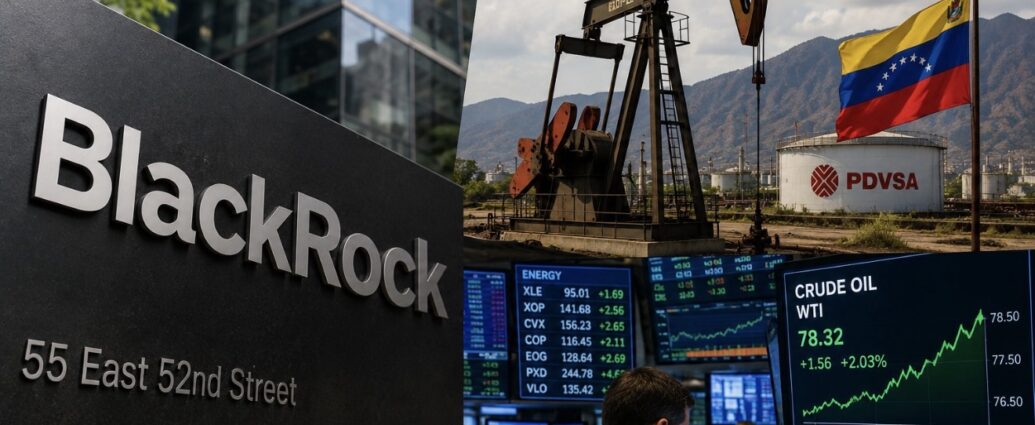
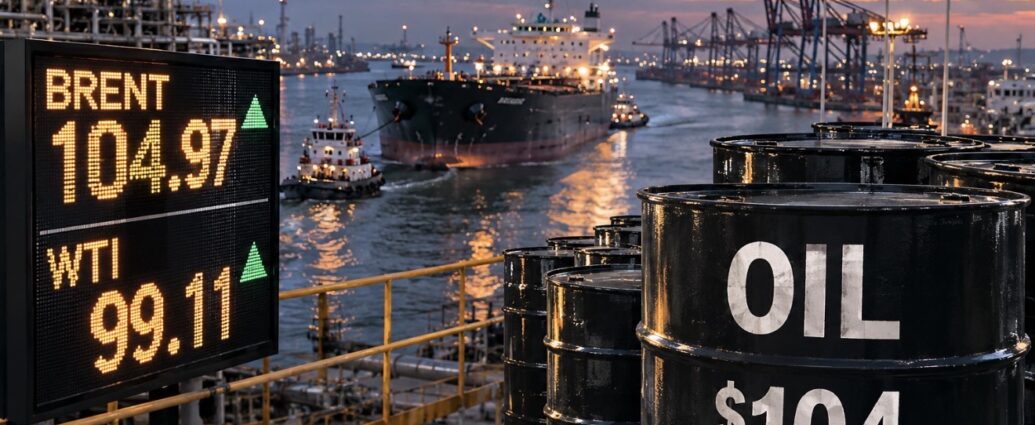
Global oil markets closed Friday with Brent crude holding above $107 a barrel and West Texas Intermediate trading above $103 — prices that appear surprisingly restrained given what the International Energy Agency now describes as the largest oil-supply disruption in modern history.

According to the IEA’s May Oil Market Report, roughly 12.8 million barrels per day of global oil supply have been disrupted since the Iran conflict escalated in late February and effectively shut the Strait of Hormuz, the narrow shipping channel through which nearly one-fifth of the world’s oil normally flows.

Yet despite the scale of the shock, oil prices remain well below the $138 Brent peak reached on April 7, creating one of the most unusual energy-market dynamics in decades.

The reason, increasingly, is that several powerful stabilizing forces are offsetting what would otherwise be a catastrophic supply collapse.

The supply disruption itself remains enormous.

The U.S. Energy Information Administration, in its May Short-Term Energy Outlook, estimated that production shut-ins across Iraq, Saudi Arabia, Kuwait, the United Arab Emirates, Qatar, and Bahrain averaged roughly 10.5 million barrels per day in April and could approach 10.8 million barrels per day this month as regional storage systems reach operational limits.

Before the conflict, approximately 20% of global crude exports passed through the Strait of Hormuz. The IEA said crude and fuel flows through the corridor fell by roughly 4 million barrels per day during March and April, while Gulf-region exports across all routes plunged by nearly 16 million barrels per day.

Under ordinary conditions, markets facing a disruption of that scale would likely experience a far sharper price spike.

Instead, three major forces have helped absorb the shock.

The first is demand destruction.

The IEA now expects global oil demand to contract by roughly 420,000 barrels per day in 2026, including an extraordinary 2.45 million barrel-per-day drop during the second quarter — the steepest quarterly decline since the COVID-19 pandemic.

Air travel and petrochemicals have been hit hardest. Jet-fuel consumption has weakened sharply as airports across portions of the Middle East remain disrupted, while lower industrial activity has reduced demand for naphtha and other petrochemical feedstocks.

Goldman Sachs estimates global oil consumption in April ran roughly 3.6 million barrels per day below prewar February levels.

The second stabilizing factor has been inventories.

Global oil inventories entered the conflict near a four-year high of approximately 7.9 billion barrels. The IEA estimates roughly 250 million barrels were released from commercial and strategic stockpiles during March and April alone, effectively adding nearly 4 million barrels per day back into global markets.

The third buffer has been the rapid adaptation of supply routes and non-Middle Eastern production growth.

Saudi Arabia and the UAE have rerouted roughly 5.7 million barrels per day combined through Red Sea terminals and Indian Ocean export facilities, partially bypassing the Strait of Hormuz bottleneck.

At the same time, producers across the Americas have accelerated output growth. The IEA recently revised its 2026 supply-growth forecast for North and South American producers upward by more than 600,000 barrels per day to roughly 1.5 million barrels daily.

The geopolitical structure of the oil market has also changed materially during the crisis.

The UAE formally exited OPEC on May 1, removing one of the cartel’s largest spare-capacity holders and reducing projected global spare production buffers. The EIA now estimates OPEC’s collective spare capacity could fall to roughly 2.5 million barrels per day by 2027, down sharply from earlier projections near 3.8 million.

That leaves the broader Gulf oil alliance navigating both an active regional conflict and a more fragmented OPEC structure simultaneously.

Energy analysts warn the apparent stability in crude prices may understate underlying stress inside physical fuel markets.

Bill Perkins, chief investment officer at Skylar Capital Management, told CNBC that diesel and jet-fuel markets remain significantly tighter than crude benchmarks imply and cautioned that logistical bottlenecks could persist even if hostilities ease.

The IEA separately warned that oil markets may remain materially undersupplied through at least October even under a relatively quick ceasefire scenario.

The EIA does not expect normal Middle Eastern production and export patterns to fully return until late 2026 or early 2027.

Diplomatic developments remain the market’s largest variable.

Iranian officials reported that approximately 30 vessels successfully crossed the Strait of Hormuz between Wednesday evening and the weekend, though shipping traffic remains heavily restricted and insurance costs elevated.

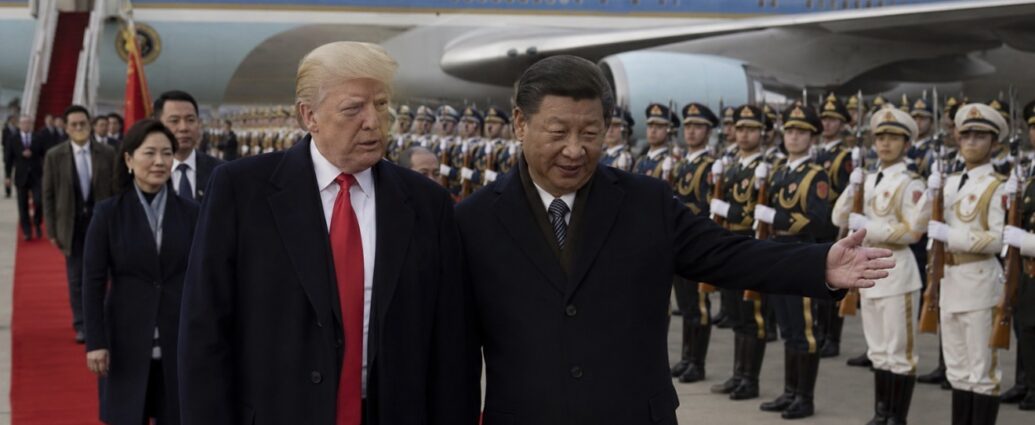
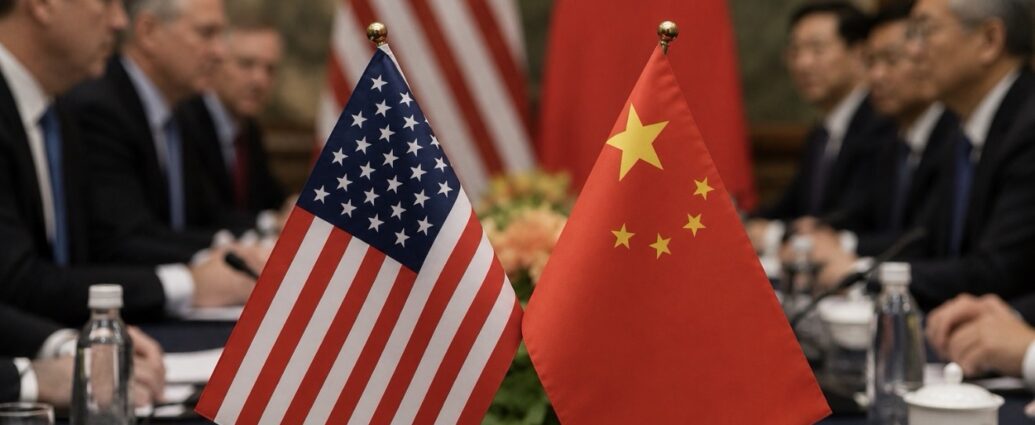
Meanwhile, a U.S.-backed ceasefire framework failed to secure Iranian agreement this week. President Donald Trump warned Thursday that Iran could face “annihilation” if negotiations collapse, while recent talks involving Chinese President Xi Jinping failed to produce any concrete mechanism for reopening the strait or stabilizing regional exports.

Asian economies remain particularly vulnerable because of their heavier dependence on Gulf crude.

South Korean President Lee Jae Myung launched a nationwide energy-conservation campaign this week and approved a supplementary budget worth roughly 26.2 trillion won, or approximately $17 billion, aimed at cushioning the domestic economic impact of higher oil costs.

The IEA noted that Asia is currently absorbing the sharpest demand-side adjustment globally.

For American consumers, the outlook remains mixed.

The EIA projects Brent crude could average roughly $106 during May and June before gradually easing toward $89 by the fourth quarter and approximately $79 by 2027 if Middle Eastern exports normalize.

Residential electricity prices in the United States are still expected to rise roughly 5% next year, with East Coast households likely facing the sharpest increases.

U.S. shale producers are benefiting from elevated crude prices but remain cautious about significantly increasing drilling activity. Surveys conducted by the Dallas Federal Reserve and Kansas City Federal Reserve suggest many shale operators estimate breakeven levels near $60 WTI and remain reluctant to commit large new capital expenditures if prices are expected to retreat sharply once the Strait of Hormuz eventually reopens.

For now, the global oil market remains balanced on a narrow edge.

Strategic inventories, redirected exports, weakened demand, and American production growth have together absorbed a supply disruption that under different conditions could have triggered a historic energy crisis.

Whether that balance survives the summer driving season now depends on diplomacy, shipping security, and how much additional demand destruction consumers around the world are willing to absorb.

JBizNews Desk

© JBizNews.com. All rights reserved. This article is original reporting by JBizNews Desk. Unauthorized reproduction or redistribution is strictly prohibited.
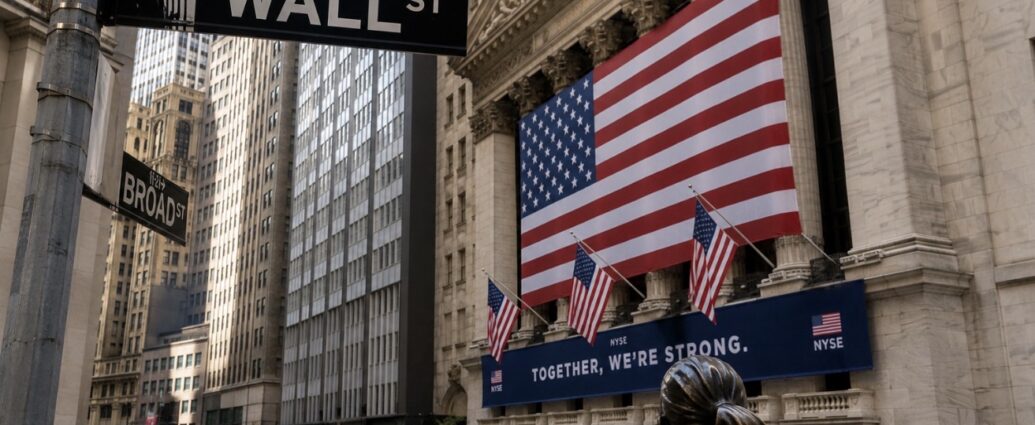
This is the kind of week where markets can change direction quickly.

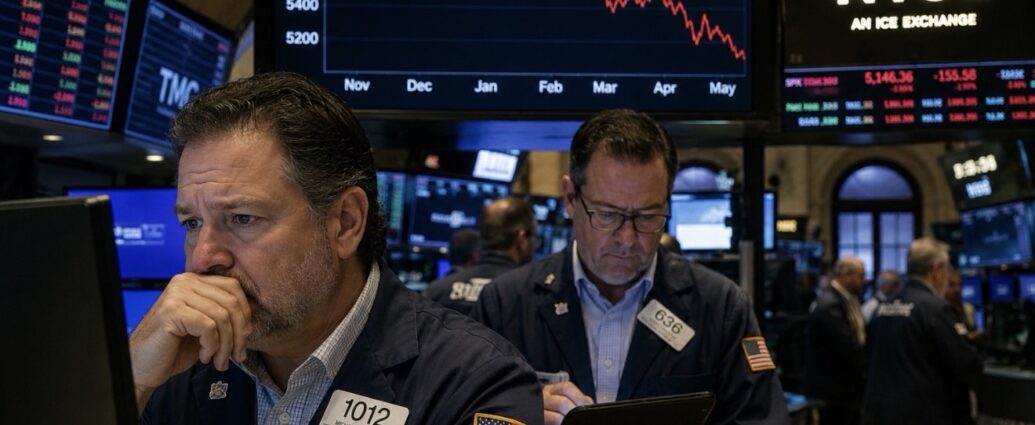
Investors are entering the stretch with Treasury yields near cycle highs, inflation pressures rebuilding, oil above $100 a barrel, and Wall Street increasingly split over whether the U.S. economy is headed toward a soft landing or something far more difficult.

The setup already looks tense before the first earnings report even lands.

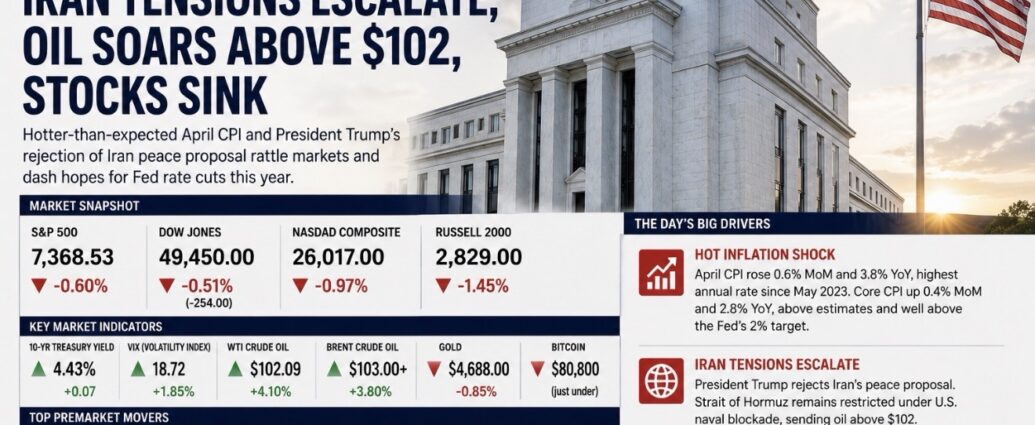
The benchmark 10-year Treasury yield closed Friday near 4.6%, its highest level in roughly a year, while the 30-year Treasury pushed through 5% earlier in the week, according to Federal Reserve data. Bond markets are now openly challenging the idea that the Federal Reserve will be able to cut rates anytime soon following April’s hotter-than-expected inflation reports.

Against that backdrop, nearly every datapoint this week suddenly matters more.

Monday opens relatively quietly, at least by comparison to what follows later in the week. The Federal Reserve Bank of New York releases its Business Leaders Survey in the morning alongside updated household-spending expectations data.

Ordinarily, neither report would dominate trading. But after April’s sharp acceleration in both consumer and producer inflation, investors are increasingly searching for signs that higher gasoline prices and elevated borrowing costs are beginning to damage consumer demand.

By Tuesday, attention shifts directly toward housing and the American consumer.

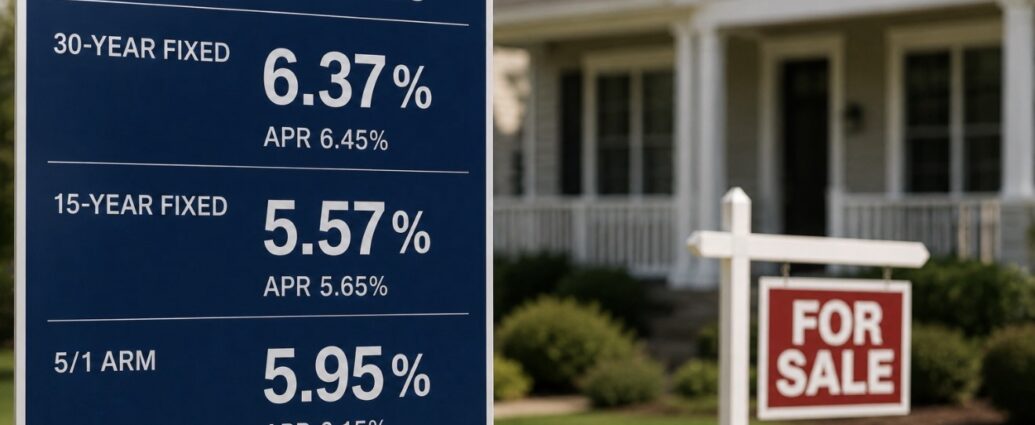
The Census Bureau releases New Residential Construction data before the open, followed later by Pending Home Sales from the National Association of Realtors. Housing has become one of the clearest pressure points in the economy as mortgage rates remain near multi-decade highs.

The same morning, Home Depot reports earnings.

The retailer has become one of Wall Street’s preferred windows into middle-class spending behavior because its business sits directly between consumer confidence, housing activity, and discretionary renovation spending.

Investors will be watching closely to see whether the spring home-improvement season recovered at all after months of slowing demand tied to high financing costs.

Internationally, European travel and infrastructure companies including Ryanair, Aéroports de Paris, and Vinci will also report, offering an early look at whether the global energy shock is beginning to hit tourism and travel demand.

Then comes Wednesday — easily the most consequential day of the week.

Before markets open, Target reports earnings amid an ongoing leadership transition. Chief operating officer Michael Fiddelke is scheduled to succeed longtime CEO Brian Cornell next year, and investors are increasingly focused on whether Target’s customer base is beginning to weaken under inflation pressure.

The company occupies an especially difficult position inside today’s “K-shaped” economy, where higher-income consumers continue spending while lower-income households pull back sharply.

The same morning also brings earnings from Lowe’s, TJX Companies, Analog Devices, Intuit, Progressive, and Raymond James Financial.

But the real focus arrives after the bell.

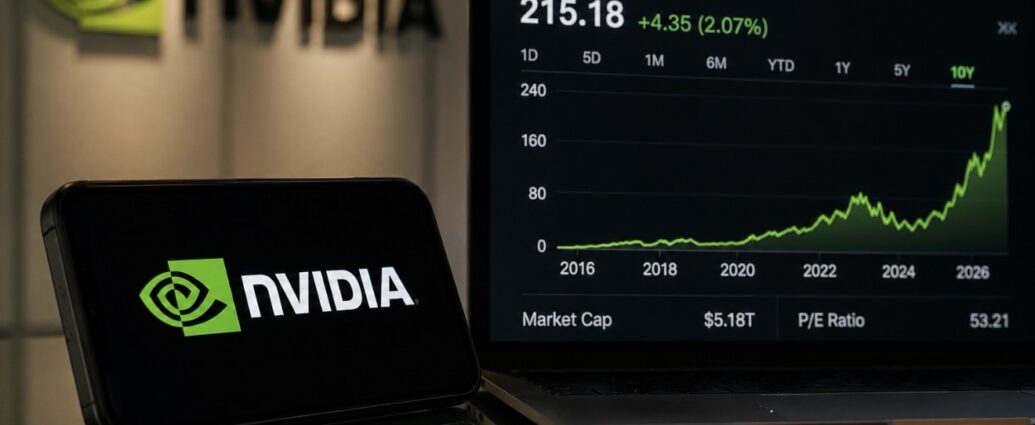
Nvidia reports quarterly earnings Wednesday evening in what has increasingly become one of the most important recurring events in global financial markets.

CEO Jensen Huang stunned investors earlier this year when he projected combined Blackwell and Rubin AI-chip revenue could exceed roughly $1 trillion through 2027, doubling previous expectations.

The scale of AI spending behind that forecast is staggering. Major hyperscale customers including Amazon, Microsoft, Alphabet, and Meta Platforms are collectively expected to spend between roughly $695 billion and $725 billion on infrastructure next year alone.

Nvidia shares have already surged more than 26% year to date and recently hit fresh record highs.

That leaves little room for disappointment.

Historically, Nvidia stock has sometimes sold off even after strong earnings if guidance merely matches expectations rather than significantly exceeding them.

Earlier that same afternoon, the Federal Reserve releases minutes from its April policy meeting — the final meeting chaired by Jerome Powell before newly confirmed Chair Kevin Warsh takes over.

The Fed held interest rates steady at that meeting, but several officials have since publicly expressed concern that inflation may remain elevated longer than markets expect.

The minutes will offer investors a clearer look into how divided policymakers have become internally over whether inflation risks or recession risks now pose the bigger threat.

Thursday shifts attention back toward consumers and labor markets.

Walmart, the largest retailer in the world, reports earnings before the open.

Unlike Target, Walmart often benefits during economic slowdowns as consumers trade down toward lower-cost retailers. Analysts are especially focused on Walmart’s rapidly growing e-commerce business and whether higher-income shoppers continue migrating toward the company’s online platform.

Thursday morning also brings Initial Jobless Claims and the Philadelphia Fed Manufacturing Survey, both closely watched after rising concern that artificial intelligence, tariffs, and higher energy costs may be beginning to weaken hiring and factory activity simultaneously.

The labor market story extends beyond the government data.

Several major labor disputes are unfolding quietly beneath the surface this week.

Roughly 200 maintenance workers tied to Hersheypark, The Hotel Hershey, and the Giant Center are voting on possible strike action after rejecting the company’s latest contract proposal earlier this month. The timing is significant because Hersheypark is scheduled to fully launch its summer season this week.

At Arconic, the union representing roughly 3,400 manufacturing workers is voting on strike authorization as contract negotiations continue.

Meanwhile, Kroger faces simultaneous labor pressure from multiple union groups tied to grocery and distribution operations.

Friday closes the week with the final University of Michigan Consumer Sentiment reading and the latest New York Fed Staff Nowcast update.

Consumer sentiment has taken on renewed importance because inflation expectations have started rising again alongside gasoline prices. Economists increasingly worry that if consumers begin expecting permanently higher inflation, it could become significantly harder for the Fed to stabilize prices without slowing the economy further.

The broader market backdrop makes every release feel amplified.

The S&P 500 has climbed roughly 9% year to date and rebounded sharply since late March despite higher oil prices, rising bond yields, geopolitical instability, and growing skepticism surrounding future Fed rate cuts.

The bond market, however, is telling a far more cautious story.

This week may help determine which side has the better read on the economy: equity investors betting corporate earnings and AI-driven growth can continue overpowering inflation and higher rates, or bond investors increasingly signaling that the era of easy monetary conditions may be over for longer than markets expected.

JBizNews Desk

© JBizNews.com. All rights reserved. This article is original reporting by JBizNews Desk. Unauthorized reproduction or redistribution is strictly prohibited.

By Maria Stein — JBizNews Desk

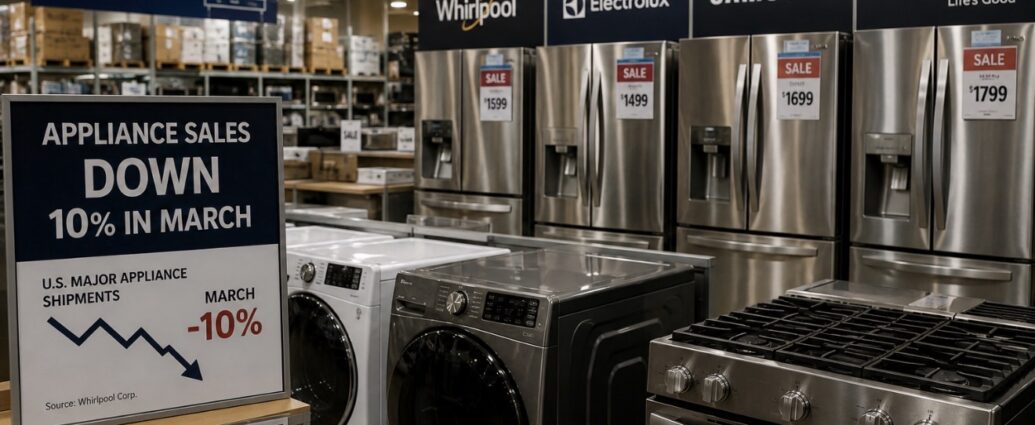
The American appliance market has abruptly stopped behaving like a replacement business and started behaving like a recession business.

Consumers who once swapped out aging refrigerators, upgraded kitchen packages, or financed new laundry sets without much hesitation are increasingly doing something far simpler: repairing what they already own and waiting.

That shift is now showing up clearly inside corporate earnings.

Over the past two weeks, nearly every major appliance manufacturer — Whirlpool Corp., Electrolux, Samsung Electronics, LG Electronics, and GE Appliances — has delivered some version of the same message to investors: the U.S. appliance market deteriorated sharply in March and has continued weakening into the second quarter.

The numbers are increasingly difficult to dismiss as temporary softness.

According to figures disclosed by Whirlpool during its May earnings call, U.S. major-appliance shipments fell 7.4% during the first quarter, with March alone collapsing 10% year over year — the steepest monthly decline since the aftermath of the global financial crisis.

Electrolux described the U.S. market as experiencing its worst volume contraction in a decade.

Built-in ovens, dishwashers, and higher-end kitchen packages — among the most discretionary categories in the business — dropped roughly 15% as consumers pulled back on large household purchases.

The timing lines up almost perfectly with the broader economic shock that followed the closure of the Strait of Hormuz after U.S. and Israeli strikes on Iran earlier this year.

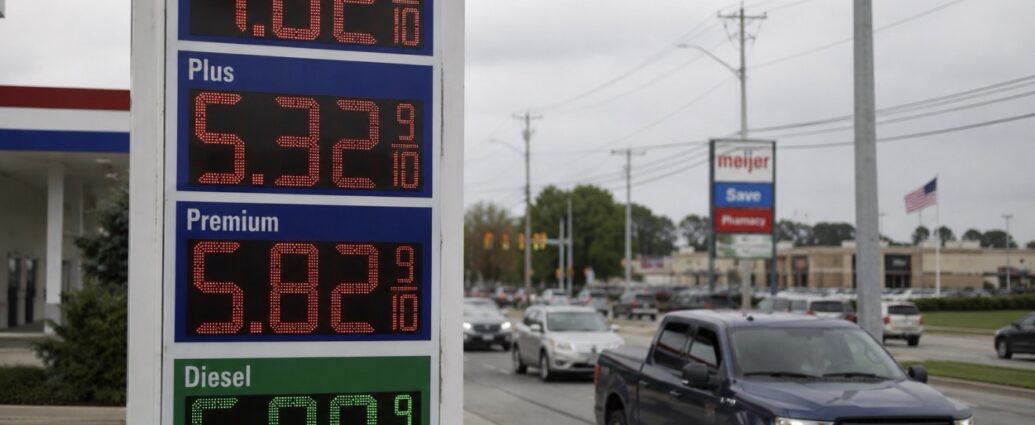
Gasoline prices surged above $4.50 per gallon nationally for the first time in years. Consumer sentiment collapsed. Mortgage rates remained elevated. Inflation reaccelerated. Housing turnover stayed frozen near multi-decade lows.

Inside appliance showrooms, the result has become visible almost immediately.

Consumers are delaying purchases, trading down to cheaper models, or skipping replacement cycles altogether.

“The people who still come in are shopping differently,” one industry executive told analysts privately this month. “They’re fixing old units longer, and when they buy, they’re buying smaller.”

For Whirlpool, the downturn is now severe enough to resemble crisis conditions.

CEO Marc Bitzer told investors the current industry contraction resembles the environment seen during the 2008 financial collapse more than a normal cyclical slowdown.

“This level of industry decline is similar to what we observed during the global financial crisis,” Bitzer said during the company’s earnings call.

Whirlpool’s first-quarter revenue fell nearly 10% to $3.27 billion. North American operating profit effectively disappeared, plunging 96% to just $6 million. The company swung to a quarterly loss, suspended its dividend, slashed earnings guidance, and saw its stock fall toward levels not seen in roughly 17 years.

The pressure extends well beyond earnings.

Whirlpool now carries roughly $6.5 billion in long-term debt and is actively refinancing portions of its balance sheet as borrowing costs remain elevated. Bloomberg reported this month that Citigroup is working with the company on discussions surrounding a large bond refinancing tied to approximately $3 billion in obligations.

At the same time, Whirlpool is aggressively raising prices.

The company pushed through roughly 10% effective pricing increases in April — its largest in more than a decade — and plans additional hikes this summer.

Bitzer believes Whirlpool’s heavy domestic manufacturing footprint gives the company an advantage under the new tariff regime now reshaping global appliance economics.

Whirlpool manufactures roughly 80% of its U.S.-sold appliances domestically and sources most of its steel from American suppliers. Under the new Section 232 tariffs, imported appliances now face duties of up to 25%, with even steeper costs for products tied heavily to steel and aluminum inputs.

That tariff structure is rapidly redrawing competitive lines across the industry.

Manufacturers with substantial U.S. production capabilities may gain relative pricing advantages. Companies heavily dependent on imported appliances face rising pressure to absorb costs or pass them through to consumers already cutting back.

Electrolux is confronting the same challenge from Europe.

The Swedish company reported sharply lower North American sales and swung to a quarterly loss after demand for refrigerators and food-preservation products deteriorated significantly.

CEO Yannick Fierling blamed geopolitical instability and weakening U.S. consumer confidence for what he described as the largest first-quarter market decline in over a decade.

Electrolux responded with aggressive price increases of between 5% and 20% while downgrading its North American outlook and restructuring parts of its manufacturing footprint.

Investors reacted swiftly. Shares fell more than 20% after the earnings release.

Yet the downturn has not hit every company equally.

LG Electronics has emerged as one of the few major appliance manufacturers still showing relative resilience.

The South Korean company posted record first-quarter revenue while maintaining solid margins despite tariffs and rising raw-material costs.

LG executives outlined a strategy increasingly built around extremes rather than the traditional middle market: premium products for wealthier consumers at the top end, value-focused mass-market offerings at the bottom, and less emphasis on the middle-income segment now experiencing the greatest financial pressure.

The company is also leaning harder into subscription-style appliance programs, commercial sales, and emerging-market expansion across parts of Asia, Latin America, and Africa where appliance penetration remains lower and economic conditions differ from the U.S. consumer slowdown.

Samsung, meanwhile, has benefited from a crucial advantage: diversification.

While Samsung’s home-appliance business has weakened alongside the broader industry, its semiconductor division continues generating strong profits from artificial-intelligence infrastructure demand, helping offset softness elsewhere inside the conglomerate.

GE Appliances, now owned by China’s Haier Smart Home, has similarly emphasized supply-chain restructuring and domestic production adjustments to adapt to tariffs and weakening demand.

The broader economic implications now extend beyond appliances themselves.

Historically, the appliance market has functioned as a highly sensitive indicator of household confidence, housing turnover, and middle-class financial health.

People typically buy refrigerators, dishwashers, and laundry systems during home purchases, renovations, or periods of discretionary confidence.

Right now, all three drivers appear under pressure simultaneously.

Existing-home sales remain depressed. Borrowing costs remain high. Inflation continues squeezing household budgets. Energy prices have risen sharply.

Research from the National Retail Federation estimates appliance prices could climb another 19% to 31% under the most aggressive tariff scenarios currently under consideration.

The risk for manufacturers is straightforward: price increases help margins only if consumers continue buying.

The first-quarter data increasingly suggests many are choosing not to.

Repair technicians, by contrast, are staying busy.

For now, the appliance industry has entered an unusual and uncomfortable position: an essential category where demand still exists in theory, but where affordability, financing costs, and economic uncertainty are increasingly delaying the actual purchase.

The next clues may arrive this week.

Home Depot reports Tuesday. Walmart follows Thursday.

Together, they may reveal whether the appliance downturn is still largely isolated to housing-related spending — or whether it is beginning to signal something broader unfolding across the American consumer economy.

JBizNews Desk

© JBizNews.com. All rights reserved. This article is original reporting by JBizNews Desk. Unauthorized reproduction or redistribution is strictly prohibited.
By Julia Parker — JBizNews Desk

The U.S. Centers for Disease Control and Prevention said Sunday it has activated its emergency operations center and begun mobilizing additional personnel after the World Health Organization formally declared an Ebola outbreak in Central Africa a “public health emergency of international concern,” the highest alert level available under global health rules.

The outbreak, centered primarily in the Democratic Republic of the Congo and now spreading into Uganda, involves the rare Bundibugyo strain of ebolavirus — a variant for which no approved vaccines or treatments currently exist.

WHO Director-General Tedros Adhanom Ghebreyesus announced the emergency designation Sunday, marking the first global health emergency declaration since the 2024 mpox outbreak.

Satish Pillai, the CDC’s Ebola response incident manager, said the agency is deploying additional experts to affected areas while expanding laboratory testing, contact tracing, surveillance, and border monitoring through its international country offices.

“The risk to the United States remains low,” Pillai told reporters Sunday.

The CDC has issued a Level 2 travel advisory for the Democratic Republic of the Congo and a Level 1 advisory for Uganda while implementing enhanced screening procedures at select U.S. ports of entry aimed at identifying potentially symptomatic travelers.

According to the CDC’s latest official outbreak summary, the DRC has now recorded 10 confirmed cases, 336 suspected cases, and 88 deaths tied to the outbreak. Uganda has confirmed two cases, including one death involving a traveler who recently arrived from Congo.

The outbreak is concentrated in eastern Congo’s Ituri Province, particularly around the Mongbwalu, Rwampara, and Bunia health zones — areas already challenged by population displacement, mining activity, and longstanding regional insecurity.

The Bundibugyo strain is exceptionally rare. This marks only the third documented outbreak globally involving the variant and the 18th Ebola outbreak recorded in the DRC since the virus was first identified there in 1976. Historical fatality rates associated with Bundibugyo Ebola have ranged between roughly 25% and 50%.

Congolese health officials formally declared the outbreak May 15 after genomic sequencing conducted by the Institut National de Recherche Biomedicale in Kinshasa confirmed the strain. Early rapid diagnostic tests initially returned negative results — a known limitation with Bundibugyo detection that delayed identification of the outbreak.

The first suspected patient, a healthcare worker, reportedly developed fever, vomiting, and hemorrhagic symptoms in late April before dying at a treatment facility in Bunia. Uganda’s Ministry of Health later confirmed its first case involving a 59-year-old Congolese citizen treated at Kibuli Muslim Hospital in Kampala.

The outbreak is now drawing increasing attention from global pharmaceutical and public-health officials because existing Ebola countermeasures are largely designed around a different strain of the virus.

The global Ebola vaccine market — estimated at approximately $2.4 billion this year according to industry research from Mordor Intelligence — is currently dominated by Merck & Co.’s ERVEBO, a vaccine approved specifically for the Zaire strain of ebolavirus.

Johnson & Johnson markets a separate two-dose Ebola vaccine also targeted primarily toward the Zaire strain. Neither product is considered effective against Bundibugyo Ebola.

The lack of approved treatments or vaccines for the current outbreak has intensified concern among international health agencies.

Earlier this year, Merck’s MSD division partnered with the Coalition for Epidemic Preparedness Innovations on a $30 million initiative aimed at lowering Ebola vaccine production costs, while researchers at the University of Oxford launched a broader filovirus vaccine-development effort covering Ebola, Sudan, and Marburg viruses.

None of those programs, however, has yet produced an approved Bundibugyo-specific countermeasure.

Funding shortages are already emerging as a central operational concern.

The WHO has released approximately $500,000 in emergency support funding, while the Africa Centres for Disease Control and Prevention has mobilized roughly $2 million. Africa CDC officials warned Saturday that the current funding level remains only a small fraction of what would likely be required if the outbreak expands further.

Africa CDC Director-General Jean Kaseya said response teams have already been deployed to official and unofficial border crossings throughout the region, while isolation procedures, surveillance operations, and contact-tracing efforts are accelerating.

The organization also convened an emergency coordination meeting involving health officials from Congo, Uganda, and South Sudan alongside representatives from the WHO, UNICEF, the African Medicines Agency, the Pandemic Fund, and the U.S. CDC.

WHO officials have advised against broad travel bans or airport shutdowns, arguing that aggressive border restrictions could encourage unmonitored movement and complicate containment efforts.

Instead, the agency cited cross-border transmission risks, unexplained deaths, and uncertainty surrounding the outbreak’s true scale as key reasons for issuing the international emergency declaration.

WHO scientists believe the virus may already have circulated undetected in eastern Congo for several weeks before formal identification.

Operational challenges inside the affected region remain severe.

Health authorities continue to face heavy population movement tied to artisanal mining activity near Mongbwalu, weak healthcare infrastructure, security instability, and the close proximity of outbreak zones to the Ugandan and South Sudanese borders.

Unlike recent Ebola outbreaks where vaccines could be rapidly deployed after confirmation, authorities responding to the Bundibugyo strain are largely relying on traditional containment measures developed during the earliest decades of Ebola response: isolating infected patients, tracing contacts, conducting safe burials, and persuading communities to cooperate with health workers.

For global markets, the immediate financial impact remains relatively limited given the absence of any major pharmaceutical product directly tied to the Bundibugyo strain.

The broader concern now centers on whether the lack of targeted vaccines, combined with funding gaps and difficult field conditions, allows the outbreak to expand more aggressively in the weeks ahead.

JBizNews Desk

© JBizNews.com. All rights reserved. This article is original reporting by JBizNews Desk. Unauthorized reproduction or redistribution is strictly prohibited.

By Julia Parker — JBizNews Desk

New federal labor data is offering the clearest statistical evidence yet that artificial intelligence is beginning to reshape segments of the U.S. workforce in measurable ways — even as policymakers, economists, and corporate leaders remain divided over how quickly the disruption will spread.

The U.S. Bureau of Labor Statistics reported Friday that a group of 18 occupations previously identified by the agency as highly exposed to AI technologies experienced a combined 0.2% employment decline between May 2024 and May 2025, while overall U.S. employment grew 0.8% during the same period.

Excluding medical secretaries — a category still benefiting from strong healthcare-sector demand — employment across the remaining 17 AI-exposed occupations fell 1.6% for the second consecutive year, according to the Bureau’s Occupational Employment and Wage Statistics release.

The figures represent one of the first broad federal datasets suggesting that AI-related disruption may already be materializing inside the labor market rather than remaining purely theoretical.

The largest losses occurred in exactly the types of occupations economists have long warned could face automation pressure.

Customer service representative positions declined by approximately 130,180 jobs, a 4.8% drop over the year. Secretaries and administrative assistants outside executive, legal, and medical roles lost roughly 31,000 positions, while wholesale and manufacturing sales representatives declined by nearly 29,000.

Longer-term declines are even more striking. Since May 2022 — shortly before OpenAI’s launch of ChatGPT accelerated the generative-AI boom — employment among credit authorizers and clerks has fallen more than 26%, according to BLS data. Broadcast announcers and radio DJs are down roughly 21%, while sales engineer positions have declined more than 13%.

Private-sector labor tracking firms are now reporting similar patterns.

Challenger, Gray & Christmas, the Chicago-based outplacement firm that monitors corporate layoffs, said employers attributed roughly 21,490 planned layoffs in April directly to AI-related restructuring, accounting for about 26% of all announced job cuts during the month.

Year-to-date, the firm estimates approximately 49,135 announced layoffs have been tied to AI-driven restructuring or investment shifts.

“Technology companies continue to announce large-scale cuts and are leading all industries in layoff announcements,” said Andy Challenger, the firm’s chief revenue officer. “They are also often citing AI spend and innovation. Regardless of whether individual jobs are being replaced by AI, the money for those roles is.”

Corporate America has increasingly begun speaking openly about the workforce implications.

Amazon CEO Andy Jassy announced another 16,000 layoffs in January following earlier reductions last year and warned employees that generative AI and autonomous software agents would likely reduce portions of the company’s corporate workforce over time.

Block, the financial-technology company led by Jack Dorsey, has eliminated roughly 40% of its staff during a restructuring heavily centered on AI adoption. Snap Inc. cut approximately 16% of its global workforce in April, while Meta Platforms CFO Susan Li told analysts the company expected additional staffing reductions tied partly to operational efficiency initiatives.

The broader labor market is also beginning to show signs of softening beneath the headline unemployment rate.

The Bureau of Labor Statistics’ Job Openings and Labor Turnover Survey showed openings standing at 6.9 million in March, far below the 10.3 million peak reached in early 2023. Hiring rates remain near lows last seen during the pandemic recovery period.

Young workers appear especially vulnerable.

A 2026 study from the Federal Reserve Bank of New York found that recent college graduates between ages 22 and 27 faced a 5.6% unemployment rate at the end of last year, above the national average of 4.2% at the time.

Researchers at Stanford University’s Digital Economy Lab, led by economist Erik Brynjolfsson, found workers between ages 22 and 25 employed in highly AI-exposed occupations experienced a 16% relative employment decline since late 2022, while workers over 30 in the same categories saw gains ranging between 6% and 12%.

Federal officials are increasingly acknowledging the disruption publicly.

Outgoing Federal Reserve Chair Jerome Powell, who is being succeeded this month by Kevin Warsh, told economics students at Harvard in March that large companies “can take out a lot of jobs that can be automated by a very smart large language model. They just can and they will, because their competitors are doing it.”

Powell urged younger workers to adapt by learning to work alongside AI technologies rather than attempting to avoid them.

At Goldman Sachs, economist Joseph Briggs estimates that approximately 6% to 7% of U.S. workers could ultimately face displacement during a decade-long AI transition period. Briggs projects unemployment could rise toward 4.5% before stabilizing as productivity gains spread through the economy.

Washington has begun moving toward a policy response, though slowly.

Senators Mark Warner and Mike Rounds introduced bipartisan legislation in March creating an “Economy of the Future Commission” tasked with developing recommendations on retraining, unemployment insurance, workforce transition policy, and tax reform tied to AI disruption. The proposal has received support from companies including Microsoft and Google.

Additional legislation from Senators Josh Hawley and Jim Banks would require the federal government to formally model AI-related labor-market impacts, while a separate unemployment-insurance overhaul proposed by Senator Ron Wyden remains stalled in the Senate Finance Committee.

Not all economists agree the labor-market deterioration is being driven primarily by AI.

Stephanie Aliaga, global market strategist at JPMorgan Asset Management, argues AI-linked layoffs still account for a relatively small share of overall workforce reductions and says much of the productivity acceleration seen over the past year may stem more from pandemic-era restructuring than from AI itself.

Others disagree sharply.

Ed Yardeni, president of Yardeni Research, points to rising layoffs in professional and business-services sectors — industries considered among the most exposed to AI automation — as evidence that the transition is already underway.

The political stakes are beginning to rise heading into the midterm election cycle.

Acting Labor Secretary Keith Sonderling, who replaced Lori Chavez-DeRemer in April, now oversees what the Trump administration describes as a “worker-first AI agenda” centered on skills training, workforce adaptation, and AI literacy initiatives launched earlier this year.

At the same time, state-level attempts to regulate algorithmic hiring and AI-driven employment decisions increasingly face possible federal preemption under a December executive order, creating uncertainty over how labor protections will ultimately be enforced.

For now, the labor market is sending mixed signals simultaneously: low headline unemployment, slowing hiring activity, weaker entry-level opportunities, and mounting federal evidence that AI-driven restructuring is beginning to reshape portions of the white-collar workforce.

The economic transition has started. The policy response remains unfinished.

JBizNews Desk

© JBizNews.com. All rights reserved. This article is original reporting by JBizNews Desk. Unauthorized reproduction or redistribution is strictly prohibited.

By Julia Parker — JBizNews Desk

The first public clash between New Jersey Gov. Mikie Sherrill and FIFA did not center on security, stadium rights, or international politics. It centered on a train ticket.

NJ Transit’s standard round-trip fare between Manhattan’s Penn Station and the Meadowlands normally costs $12.90. For 2026 FIFA World Cup match days at MetLife Stadium, the agency initially proposed charging fans $150. Sherrill, sworn into office in January, publicly challenged the plan and argued that New Jersey taxpayers were effectively subsidizing one of the richest sporting organizations in the world while FIFA collected billions in tournament revenue.

Within days, the fare was reduced first to $105 and then to $98. The cuts did not come because FIFA agreed to contribute additional funding. Instead, a group of corporations — including DoorDash, Audible, FanDuel, DraftKings, PSE&G, South Jersey Industries, and American Water — quietly stepped in to offset part of the transportation burden.

The episode exposed the increasingly uncomfortable economics surrounding the 2026 World Cup, which FIFA expects to become the most commercially successful tournament in the organization’s history.

FIFA confirmed in March that all 16 of its top-tier global sponsorship slots for the tournament had been fully sold, the first time in the organization’s history that every major sponsorship position was locked in ahead of kickoff. Yet while the governing body prepares for what officials expect to be roughly $11 billion in tournament-related revenue, local officials in New Jersey say the state has been left carrying a disproportionate share of the logistical and infrastructure costs associated with hosting the event’s centerpiece matches.

MetLife Stadium — temporarily rebranded by FIFA as “New York New Jersey Stadium” for the tournament — will host eight World Cup matches, including the July 19 final. The venue sits in East Rutherford, New Jersey, a borough with a population of roughly 10,000 residents.

The branding itself has already generated irritation among New Jersey officials, many of whom note privately and publicly that no World Cup matches are actually being played inside New York State despite the prominence of “New York” in FIFA’s marketing language.

The larger dispute, however, revolves around money.

According to public records compiled by NorthJersey.com, New Jersey taxpayers have already absorbed at least $307 million in projected World Cup-related expenses. State officials say FIFA contributed nothing toward the cost of transporting spectators to the stadium, leaving NJ Transit responsible for accommodating as many as 40,000 fans per match under an unusually restrictive operational framework.

NJ Transit CEO Kris Kolluri has defended the security and crowd-management requirements attached to the event but acknowledged that the transportation costs had to be recovered somewhere. Under pressure from Sherrill, the burden shifted primarily toward event ticket holders rather than ordinary commuters.

The dispute quickly evolved into a broader political issue. Senate Minority Leader Chuck Schumer publicly sided with New Jersey’s position despite representing neighboring New York, underscoring the unusual interstate tensions developing around the tournament.

Those tensions escalated further after New York Gov. Kathy Hochul declared in late April that “New York isn’t just hosting the World Cup, New York is the World Cup,” prompting widespread backlash online and a community note on X pointing out that every match assigned to the region will actually take place in New Jersey.

U.S. Rep. Nellie Pou, whose district includes the Meadowlands complex, has been among the most vocal critics of FIFA’s branding and financial structure surrounding the event.

Meanwhile, local officials inside East Rutherford have been quietly preparing for what may become the largest logistical operation in the borough’s history. The town has ordered its full police department onto duty during match days. The state approved a $100,000 grant to assist with additional security costs, though borough officials estimate the true expense will likely exceed three times that amount.

Hotels near the Meadowlands have reportedly been instructed to advise guests against walking to the stadium because of FIFA-imposed security perimeters. Independent shuttle operators and private transportation companies that traditionally service stadium events have also complained they will be restricted from dropping passengers near the venue, creating additional frustrations for local businesses that expected to benefit economically from the tournament.

The friction contrasts sharply with the enormous commercial scale FIFA is projecting globally.

FIFA President Gianni Infantino, speaking at CNBC’s Invest in America Forum in Washington last month, said the organization expects approximately $11 billion in revenue tied to the 2026 tournament and pledged that proceeds would be reinvested across FIFA’s 211 member associations.

A joint FIFA–World Trade Organization economic study projects roughly $80 billion in gross economic output across the United States, Canada, and Mexico during the tournament cycle, including approximately $30.5 billion tied directly to U.S. activity.

Tournament prize money has also climbed sharply. FIFA approved a new structure at its April council meeting in Vancouver that raises total tournament prize payouts to roughly $871 million. Demand for tickets has exploded alongside the event’s commercial growth. At one point, premium final tickets listed on FIFA’s official resale platform reportedly reached seven-figure asking prices, with one package briefly appearing at approximately $11.5 million.

The commercial machine surrounding the 2026 World Cup is therefore operating at unprecedented scale. The unresolved question is who ultimately pays for the infrastructure, transportation, policing, and operational burden required to stage it.

Sherrill has already said her administration intends to seek a full accounting of New Jersey’s costs, federal reimbursements, and any financial participation by New York before supporting future joint-hosting arrangements for major international sporting events.

The broader message coming from Trenton is becoming increasingly direct: if New Jersey continues serving as the physical host for globally televised events, the state no longer intends to quietly absorb the financial obligations while others capture the branding and revenue upside.

For FIFA, which has spent years positioning the 2026 tournament as the most commercially advanced World Cup ever staged, the lingering fight on the Jersey side of the Hudson may now represent the tournament’s most politically awkward unresolved issue before kickoff arrives on June 11.

The matches have not started yet. The financial battle already has.

JBizNews Desk

© JBizNews.com. All rights reserved. This article is original reporting by JBizNews Desk. Unauthorized reproduction or redistribution is strictly prohibited.
OpenAI is preparing a possible legal challenge against Apple over the companies’ two-year-old Siri-ChatGPT partnership, with lawyers for the artificial intelligence firm exploring options that could include a formal breach-of-contract notice, according to a report Thursday by Bloomberg’s Mark Gurman.

The dispute between two of the most consequential companies in artificial intelligence and consumer technology threatens a partnership that was initially presented as a landmark moment for mainstream AI adoption when it was unveiled at Apple’s Worldwide Developers Conference in 2024.

According to Bloomberg, OpenAI executives have grown increasingly frustrated that Apple’s implementation of ChatGPT inside the iPhone ecosystem has failed to generate the subscription revenue the company expected. Internal forecasts reportedly envisioned billions of dollars in new paid ChatGPT subscriptions driven through Apple devices, but the actual performance has fallen materially short of those projections.

“They haven’t even made an honest effort,” one OpenAI executive told Bloomberg, describing Apple’s implementation as difficult to find, heavily restricted and weakly promoted to users.

Attempts to renegotiate the commercial arrangement have stalled, Bloomberg reported, leading OpenAI and outside counsel to evaluate “a range of options that could be formally executed in the near future,” with a breach-of-contract notice viewed internally as the most immediate possibility.

Such a filing would not necessarily trigger litigation immediately but could serve as leverage in renewed negotiations between the two companies.

The conflict centers largely on how Apple integrated ChatGPT into Siri and the broader iOS ecosystem.

Under the existing arrangement, Siri can transfer more complex user requests to ChatGPT after obtaining user permission, while consumers can subscribe to premium ChatGPT services through Apple’s iOS subscription system, with Apple receiving a percentage of the revenue.

OpenAI had reportedly expected substantially deeper integration across Apple applications and more prominent placement inside Siri itself. Those expectations, according to Bloomberg, were never fully realized.

The tensions arrive as Apple simultaneously broadens its artificial-intelligence relationships elsewhere.

Bloomberg previously reported that Apple struck an agreement estimated at roughly $1 billion annually with Google to incorporate Gemini models into a redesigned Siri experience expected to debut as part of iOS 27 during Apple’s WWDC 2026 keynote on June 8. Apple is also reportedly developing a broader “Extensions” framework that would allow users to connect third-party AI assistants, including Anthropic’s Claude, directly into the operating system.

The company earlier this year also settled a $250 million class-action lawsuit tied to marketing claims surrounding Apple Intelligence features.

The relationship between Apple and OpenAI has become even more complicated as OpenAI expands beyond software into hardware initiatives.

OpenAI’s acquisition of the AI-device startup founded by former Apple design chief Jony Ive has intensified competitive tensions between the companies, while Bloomberg reported that some Apple executives have raised concerns internally about OpenAI’s privacy practices and long-term ambitions.

Meanwhile, Elon Musk’s xAI previously filed litigation against both companies, alleging the original Siri-ChatGPT partnership created anticompetitive dynamics within the AI ecosystem.

The financial and strategic implications are significant for both sides.

For OpenAI, which continues ramping enterprise revenue and consumer subscriptions while positioning itself for a potential future public offering, weaker-than-expected performance from the Apple partnership removes what many internally viewed as a major long-term growth driver.

For Apple, the dispute arrives as the company struggles to convince investors it can remain competitive in consumer artificial intelligence against rivals including Microsoft and Google, both of which have accelerated AI rollouts across their ecosystems.

Apple is also navigating a broader leadership transition. Bloomberg has reported that hardware engineering chief John Ternus is increasingly viewed internally as a potential successor to Chief Executive Tim Cook, with future leadership expected to place greater emphasis on capital deployment, shareholder returns and targeted artificial-intelligence investments.

A prolonged legal conflict with OpenAI would likely become one of the defining strategic issues confronting that next generation of leadership.

Markets reacted only modestly to the report Friday morning, with Apple shares trading little changed as broader weakness across technology stocks tied to the underwhelming Trump-Xi summit overshadowed company-specific developments. Microsoft, OpenAI’s largest commercial backer, also traded roughly flat.

Analysts at Wedbush Securities led by Dan Ives have argued in recent research notes that Apple’s AI strategy requires what they described as a “step-function change” if the company hopes to remain competitive in the next phase of consumer computing.

The dispute also raises broader questions about the economics underpinning the consumer artificial-intelligence industry — particularly whether platform-integration deals controlled by dominant ecosystem owners can generate the subscription growth and monetization AI labs need to finance increasingly expensive computing infrastructure.

OpenAI is not the first company to accuse Apple of limiting commercial opportunity inside the iPhone ecosystem. Spotify, Epic Games and several other firms have raised similar complaints over the years regarding platform control, user friction and subscription economics.

Whether those same tensions now escalate into a legal confrontation with the world’s most recognizable artificial-intelligence company may depend largely on what OpenAI’s lawyers decide to file next.

Both companies declined to comment publicly on Bloomberg’s report.

JBizNews Desk
© JBizNews.com. All rights reserved. This article is original reporting by JBizNews Desk. Unauthorized reproduction or redistribution is strictly prohibited.

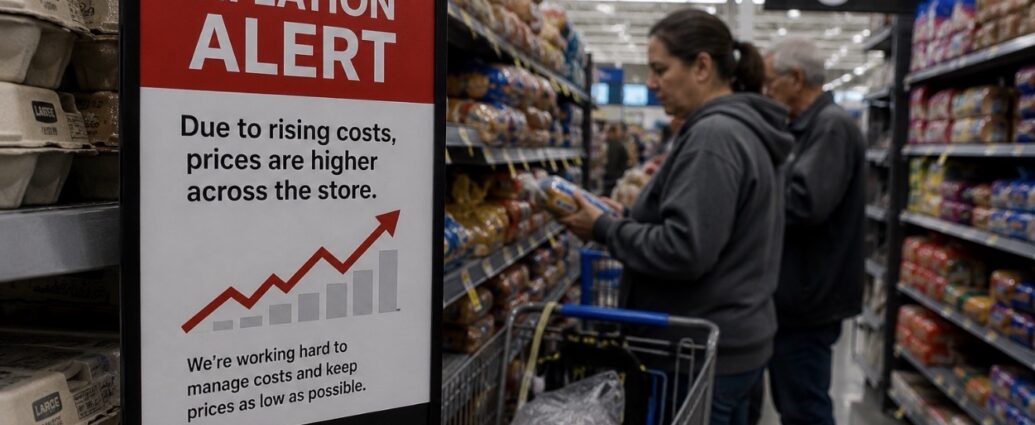
The nation’s top economic forecasters have sharply lifted their projection for U.S. inflation in the current quarter, now expecting the Consumer Price Index to climb to a 6% annualized rate in the second quarter — more than double the 2.7% pace they had projected just three months ago, before U.S. and Israeli strikes against Iran sent global oil prices soaring and forced a rapid reassessment of the inflation outlook.

The revision came in the latest Survey of Professional Forecasters, the blue-ribbon panel polled quarterly by the Federal Reserve Bank of Philadelphia and released Friday morning.

The new 6% projection lands well above the 2% pace the Federal Reserve targets and would, if realized, mark the highest quarterly inflation rate since 2022.

For the full year, the panel now sees headline CPI running at 3.5% and core CPI, which excludes food and energy, at 2.9% — both materially higher than what mainstream economists were forecasting at the start of 2026.

The upward revision follows a string of inflation reports that have already shown prices accelerating well above what economists had penciled in just months ago.

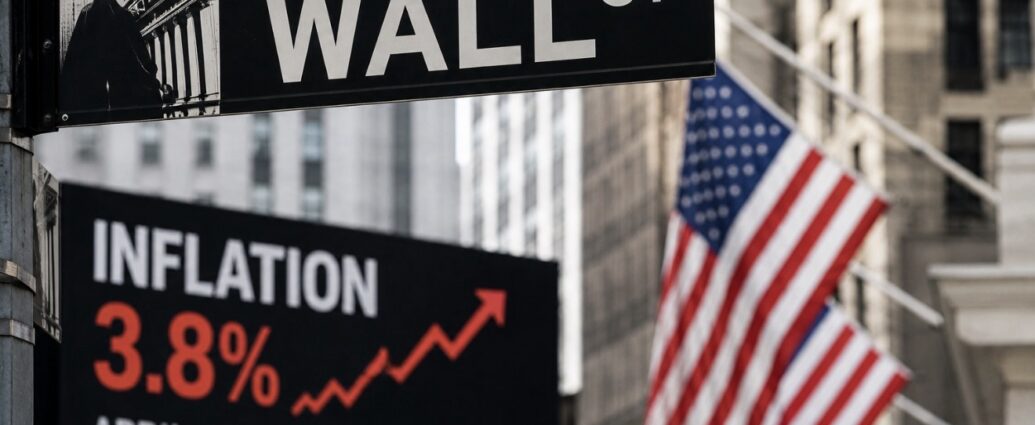
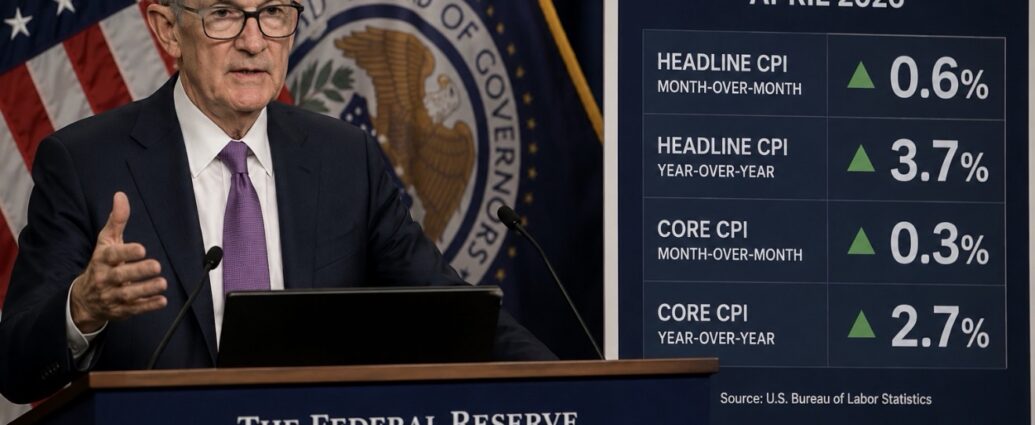
The Bureau of Labor Statistics reported Tuesday that headline CPI rose 3.8% in April from a year earlier, the fastest annual pace in nearly three years, with monthly prices up 0.6%.

Energy costs jumped 17.9% on the year — the steepest increase since September 2022 — driven by a 28.4% surge in gasoline and a 54.3% spike in fuel oil.

Wednesday’s Producer Price Index report showed wholesale inflation running at a 6% annual rate in April, the highest reading since December 2022 and a warning that pipeline pressures will continue pushing consumer prices higher in the coming months.

The forecast revision is being driven almost entirely by the energy shock from the Strait of Hormuz closure, which has cut roughly 10 million barrels a day of crude exports from the Persian Gulf since late February.

U.S. national average gasoline prices have climbed nearly 50% since the war with Iran began and have crossed $4 a gallon for the first time in more than three years.

The International Energy Agency has characterized the disruption as the largest in the history of the global oil market by volume.

Even with the United States and China stepping in to plug part of the gap — U.S. exports have surged by roughly 3.5 million barrels a day during the war — Brent crude was trading near $107 a barrel and West Texas Intermediate near $103 on Friday.

The inflation pickup is feeding directly into household budgets.

Walmart, the country’s largest grocer, has flagged renewed price sensitivity among lower-income shoppers, and Target has said inflation in food, beverage and household essentials is absorbing a larger share of customer budgets.

The University of Michigan’s preliminary May consumer sentiment reading collapsed to 48.2 — the lowest in the survey’s 75-year history — with respondents specifically citing high gas prices and tariffs.

Roughly one-third of consumers surveyed spontaneously mentioned gasoline.

Year-ahead inflation expectations in the Michigan survey held at 4.5%, far above the 3.4% pre-war reading.

The data is colliding with a leadership transition at the Federal Reserve.

Kevin Warsh, President Donald Trump’s nominee to succeed Jerome Powell as Fed chair, has indicated he would like to see lower interest rates, a position aligned with the administration’s growth-first agenda.

But the run of hot inflation data has tied his hands.

The broader Federal Open Market Committee, according to recent statements, is leaning toward keeping rates steady with an open mind toward additional increases if inflation deteriorates further — the opposite of the easing cycle markets had priced in at the start of the year.

Outside the survey, private-sector economists are reaching similar conclusions.

EY chief economist Gregory Daco wrote this week that headline CPI could surpass 4% in May and that core inflation will approach 3%, with risks of “higher and more persistent inflation” remaining salient.

Edward Jones investment strategist James McCann said that while tax refunds and a resilient labor market have buffered the consumer so far, “there are limits to these buffers.”

The Survey of Professional Forecasters panel also lowered its growth outlook, now expecting GDP to rise at a 2.1% annualized rate in the second quarter and 2.2% for the full year — down 0.3 percentage point from the prior estimate.

The longer the Strait of Hormuz remains closed, the more difficult the inflation picture becomes.

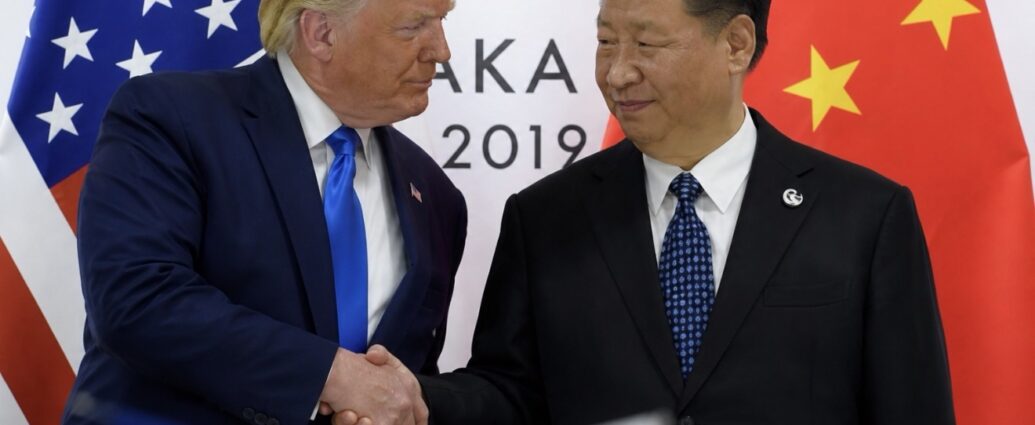
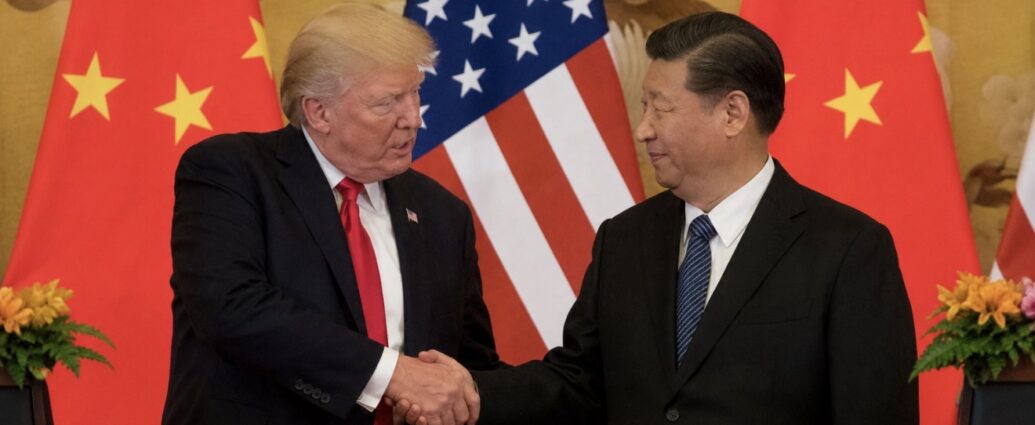
President Trump and Chinese President Xi Jinping agreed at this week’s Beijing summit that the waterway “must remain open,” but no timetable was attached to that statement, and major shipping lines remain on hold.

Until the strait reopens at meaningful volume, U.S. consumers can expect higher gasoline, higher airfares, higher diesel-driven trucking costs at the grocery shelf, and higher fertilizer prices feeding into food inflation through the back half of the year.

The 6% forecast is no longer the outlier scenario it would have been three months ago. It is, for now, the consensus.

JBizNews Desk
© JBizNews.com. All rights reserved. This article is original reporting by JBizNews Desk. Unauthorized reproduction or redistribution is strictly prohibited.

NEW YORK — The Trump administration is weighing whether to let wealthy donors contribute appreciated company stock directly to Trump Accounts, the federal child-investment program set to officially launch July 4, in a move that would hand high-net-worth donors one of the most powerful charitable-giving tax breaks in the U.S. code, according to a CNBC report Thursday from the publication’s Inside Wealth newsletter. The structure would allow donors to offload appreciated shares without paying any capital-gains tax on the embedded appreciation while simultaneously deducting the full fair-market value of the donated stock against their personal income — the same “double benefit” long enjoyed by donors to donor-advised funds and university endowments. Cash contributions to Trump Accounts carry no comparable advantage.

The Trump Accounts program was created under the One Big Beautiful Bill Act and codified at Section 530A of the Internal Revenue Code. Every U.S. child born between 2025 and 2028 receives a $1,000 Treasury Department seed deposit at birth. Parents may add up to $5,000 a year in post-tax contributions, and employers may add up to $2,500 a year per employee or dependent — with employer contributions excluded from the employee’s taxable income. The funds are invested in low-cost, diversified U.S. equity index funds and partially unlocked at age 18. Altimeter Capital Chief Executive Brad Gerstner, who has been the lead private-sector advocate for the program through his Invest America nonprofit, clarified on X earlier this month that “100% of all $$ in Trump Accounts will be in a free index fund that tracks the S&P 500.” Official cash contributions open July 4, 2026.

The mechanics of the proposed expansion are straightforward and powerful. Under current charitable-giving rules, a donor who has held an appreciated stock for more than one year and donates it directly to a qualified charity avoids federal capital-gains tax — up to 20% on long-term gains, plus a 3.8% net investment income surcharge for higher earners — and is permitted to deduct the stock’s fair-market value against ordinary income. For a billionaire founder sitting on, say, $100 million of stock with a $1 million cost basis, donating the shares rather than selling them and donating the cash saves more than $23 million in capital-gains taxes while still producing a $100 million income-tax deduction. Cash donations produce only the deduction. The structure is the single reason most large philanthropic gifts in the U.S. are made in appreciated stock rather than cash.

The program already has a marquee donor commitment in place. Michael Dell, founder and chief executive of Dell Technologies Inc., and his wife Susan Dell pledged $6.25 billion in December to seed Trump Accounts for roughly 25 million children age 10 and under living in ZIP codes with median household income at or below $150,000. The pledge structure, classified by the Internal Revenue Service as a “qualified general contribution” routed through Treasury, distributes $250 per eligible child. Additional corporate and family-office commitments to state-level and employer-matched contributions have come from Bridgewater Associates founder Ray Dalio, BlackRock Inc., Uber Technologies Inc., Robinhood Markets Inc., and The Charles Schwab Corp. Robinhood has been designated as the initial trustee for the broader Trump Accounts program — a role that has drawn separate scrutiny in connection with President Trump’s Q1 stock-disclosure filing this week, which showed new personal positions in both Robinhood and Dell.

The legal mechanics of whether Treasury can simply allow stock donations or whether Congress must amend Section 530A are unsettled. Tax-policy experts who spoke with CNBC were split. Manoj Viswanathan, law professor and co-director of UC Law San Francisco’s Center on Tax Law, said he believes an act of Congress would not be required unless Treasury also wanted to permit the accounts to hold individual shares of stock rather than auto-converting donated shares to broad index-fund holdings. Will McBride, chief economist of the Tax Foundation, said an expansion of charitable-giving tax benefits “would face an uphill battle in Congress with a razor-thin Republican majority” but added that “this initiative has Trump’s name on it, so I think they’re going to try to make this as taxpayer-friendly as possible.” Ellen Aprill, senior scholar in residence at UCLA School of Law, said the bigger tax benefit for the ultra-wealthy may not be the income-tax side at all — but rather estate-tax planning, because charitable deductions for gift and estate-tax purposes are unlimited. “Making charitable gifts gets the assets out of their estate and still avoids tax on the built-in capital gain,” she said. “The gift-tax treatment deduction matters a lot to the super rich.”

The administration is keeping its options open publicly. Daniel Aronowitz, head of the Department of Labor’s Employee Benefits Security Administration, said Tuesday at a Washington event hosted by law firm Mayer Brown that EBSA is working with Treasury on expanding the categories of donations the accounts can accept. A White House official told CNBC that the administration “is always open to finding new ways to build on the immense success of Trump Accounts” but had no updates to share. A Treasury Department spokesperson declined to comment on the specific possibility of accepting stock donations, saying only that the agency “is committed to maximizing the impact of Trump Accounts, driving sign-ups for all eligible children, and achieving our goal of having every American child own a Trump Account.” Gerstner’s Invest America account on X has separately mused about the symbolism of children eventually receiving a share of SpaceX, Berkshire Hathaway Inc., or OpenAI through such donations — though Gerstner himself has emphasized that any donated stock would be converted to index-fund exposure, not held individually.

The policy critique writes itself. The proposal would expand a charitable-giving deduction structure that the NYU Tax Law Center has already characterized as “an expansion of philanthropy deductions already used by ultra-wealthy donors.” Critics will note that the largest single beneficiaries of an income-tax deduction at marginal rates near 40% — paired with the avoided 23.8% capital-gains tax — are by definition the highest-income, highest-asset donors in the country. Supporters will counter that the program directly addresses wealth-distribution concerns by routing billionaire founder wealth into the S&P 500 accounts of millions of lower- and middle-income American children, and that, as McBride noted, “for many of the very top billionaires, much of their wealth is held in stock that’s appreciated a great deal, so they’re sitting on a lot of unrealized gains.” With the official program launch less than two months away, the timing of any decision by Treasury or Congress will determine whether the next wave of billionaire commitments looks anything like the Dell pledge in scale.

JBizNews Desk

© JBizNews.com. All rights reserved. This article is original reporting by JBizNews Desk. Unauthorized reproduction or redistribution is strictly prohibited.

An anonymous bidder agreed to pay $9,000,100 to share a private lunch this June in Omaha with Warren Buffett, Stephen Curry and Ayesha Curry, the winning result of a one-week eBay charity auction that closed Thursday and will channel roughly $27 million to two anti-poverty nonprofits once Mr. Buffett layers in a matching personal contribution to each beneficiary.

The auction, which Buffett revived this year for the first time since 2022 in partnership with the Currys, drew an undisclosed pool of bidders before settling just above the $9 million mark.

According to data posted to eBay, the proceeds will be split equally between the Glide Foundation, the San Francisco-based homelessness and addiction-services nonprofit Buffett has supported for more than two decades, and Eat. Learn. Play., the childhood nutrition, literacy and athletics nonprofit founded by Stephen and Ayesha Curry.

Buffett said he would personally match the winning bid for each charity, lifting the total expected donation to roughly $27 million.

The winning bidder, who was not identified, will be permitted to bring up to seven guests to the June 24 lunch in Omaha, Nebraska, where Buffett’s Berkshire Hathaway conglomerate is headquartered.

“We’re overwhelmed with gratitude for this opportunity, which reflects a shared belief that when different generations and institutions come together with purpose, we can create deeper and more lasting impact for the people who need it most,” Stephen Curry and Ayesha Curry said in a joint statement, as reported by The Associated Press.

The auction marks the first Buffett charity meal event in four years.

Between 2000 and 2022, Buffett raised roughly $53.2 million for Glide through 21 annual auctions, an event that became one of the most distinctive features of the Berkshire Hathaway chairman’s public profile.

He paused the tradition after the 2022 sale, which produced a record $19 million winning bid that remains the largest in eBay charity auction history.

Buffett began supporting Glide at the encouragement of his first wife, Susan Buffett, who volunteered at the nonprofit before her death in 2004.

The 2026 auction differs from the earlier series in one important respect: the addition of Stephen and Ayesha Curry alongside Buffett, expanding the beneficiary list and pulling in a broader donor demographic.

Stephen Curry, a guard for the Golden State Warriors, is a four-time National Basketball Association champion and two-time league Most Valuable Player.

Ayesha Curry is an entrepreneur, restaurateur and cookbook author who has built a public profile as an advocate against childhood hunger.

The couple founded Eat. Learn. Play. to address what they describe as the linked challenges of nutritious meals, childhood literacy and physical activity in lower-income communities, particularly in the San Francisco Bay Area.

Glide, which is based in San Francisco’s Tenderloin neighborhood, has used Buffett’s past auction proceeds to underwrite meals, addiction-recovery programs, housing assistance and health services.

Buffett, who turned 95 last year, has long argued that businesses and nonprofits can produce more durable social outcomes when they coordinate directly rather than rely solely on government programs — a thesis that has informed his giving through both the Susan Thompson Buffett Foundation and the Gates Foundation.

The auction lands at a transitional moment for Berkshire Hathaway.

Buffett stepped down as chief executive in January 2026 after 60 years in the role, handing the operating reins to longtime vice chairman Greg Abel while remaining as Berkshire’s chairman.

The succession, formally laid out at the company’s annual meeting in Omaha on May 2, has refocused investor attention on capital allocation, succession-era buybacks and Berkshire’s cash position, which sat at roughly $350 billion as of the most recent disclosure.

Berkshire shares have underperformed the S&P 500 by a wide margin since Buffett signaled the transition last spring, a gap that has drawn fresh sell-side commentary about the post-Buffett era at one of the country’s most-watched conglomerates.

For the Currys, the auction provides a rare cross-generational platform alongside one of the most influential investors in American history.

Eat. Learn. Play., which has expanded its reach since launching in 2019, has used corporate partnerships with Workday, Under Armour, Chase, Target and others to fund meal distribution and literacy programs in Oakland and neighboring communities.

The roughly $13.5 million that the foundation stands to receive once Buffett’s match is applied represents one of the single largest contributions in the organization’s six-year history.

The Omaha lunch itself, scheduled for June 24, will be a private affair, with the winner and up to seven guests joining the Buffett-Curry trio.

Berkshire Hathaway, Glide and Eat. Learn. Play. had not publicly identified the winning bidder as of Friday morning.

Whoever is eventually unmasked will be sitting down with a 95-year-old American capitalist and a 38-year-old basketball icon — both, in their respective fields, among the most influential names of the past two decades — for what is likely to remain the highest-priced private meal of 2026.

JBizNews Desk
© JBizNews.com. All rights reserved. This article is original reporting by JBizNews Desk. Unauthorized reproduction or redistribution is strictly prohibited.
NEW YORK — Fifty-nine percent of Americans say they are living paycheck to paycheck, according to an April CNBC affordability survey released alongside a fresh CNBC Select guide to budgeting apps published Thursday — a figure that has held remarkably steady through the Iran war, the energy-price shock, and a national average gasoline price that GasBuddy put at $4.45 a gallon on May 4. Budgeting apps do not change anyone’s income, but they can change what households do with the money they already have. With Intuit Inc.’s Mint permanently shuttered in March 2024 and a wave of new entrants competing for those former users, here is a clear-eyed look at six of the most credible options on the market right now — what they cost, what they actually do, and who each one is best for.

The first and most rigorously structured option is You Need A Budget, commonly known as YNAB. The app uses a zero-based budgeting system in which every dollar of income is assigned to a specific job — bills, savings, debt payoff, investments — before it can be spent. The methodology has a steeper learning curve than any other major app, but YNAB users consistently report it as the single tool that finally broke their paycheck-to-paycheck cycle. The company has built a 15-year following on that reputation. YNAB costs $14.99 a month or $109 a year, with a 34-day free trial that does not require a credit card and 12 months free for college students. One subscription covers up to six users, which makes it economical for families, couples, or roommates splitting the cost.

For users who want a more flexible all-in-one platform, Monarch Money has emerged as the leading Mint successor since the shutdown. Monarch allows users to choose between traditional and flexible budgeting approaches, supports unlimited collaborators on a single account, and integrates investment tracking, Zillow Group Inc. real-estate values, and Coinbase Global Inc. cryptocurrency holdings alongside the standard bank and credit-card sync. The app is particularly strong for couples managing joint and separate finances under one roof. Pricing is $14.99 a month or $99.99 a year, with CNBC Select offering a 50% first-year discount via promotional code.

For beginners, Quicken Inc.’s Simplifi is the softer landing. Owned by the same company behind the desktop personal-finance software that pioneered the category in the 1980s, Simplifi generates a personalized spending plan based on actual income and recurring expenses, then adjusts in real time as bills hit and spending changes. There is no zero-based discipline to learn, just clean menus, customizable reports, and forward-looking cash-flow projections. The app costs $5.99 a month or $35.88 a year.

For users not ready to pay for budgeting at all, Rocket Money — owned by Rocket Companies Inc., the parent of Rocket Mortgage — has the most feature-rich free tier on the market. The free version includes basic budgeting, automatic subscription detection, limited spending categorization, and net-income tracking. The standout free feature is subscription monitoring: the app automatically detects recurring charges across linked accounts and surfaces forgotten streaming services, app trials, and gym memberships that quietly drain budgets. Premium ranges from $7 to $14 a month and unlocks unlimited custom categories and an automated subscription-cancellation service. The company also offers a separate bill-negotiation service that contacts cable, internet, and phone providers on the user’s behalf for a percentage of negotiated savings.

For users with investment accounts, Empower — the personal-finance app that merged with Personal Capital in 2020 and is now part of Empower Retirement — offers the best free option in the category. The free tier syncs 401(k), IRA, and brokerage accounts alongside bank and credit-card data, producing a complete net-worth dashboard that most paid apps do not match. Empower does sell a separate Wealth Management advisory service with a $100,000 minimum, but the personal-finance tools — budgeting, investment tracking, retirement planner, net-worth monitoring — are entirely free and require no advisory enrollment. Day-to-day spending categorization is functional but less granular than Rocket Money or Monarch; some users pair Empower with a dedicated daily-spending app.

Three alternatives round out the market. PocketGuard focuses on a single question — how much can I spend today? — and integrates a debt-payoff plan in its Premium tier at $12.99 a month or $74.99 a year. Goodbudget digitizes the classic envelope method, with a free tier offering 10 virtual envelopes and a Premium tier at roughly $8 a month or $80 a year that unlocks unlimited envelopes and seven years of history. EveryDollar, owned by Ramsey Solutions, applies zero-based budgeting to Dave Ramsey’s Baby Steps system — debt snowball, fully funded emergency fund, retirement savings — and is the natural choice for users already following the Ramsey methodology.

The bottom line for households is structural. According to research compiled by The Penny Hoarder, users of budgeting apps save an average of roughly 20% more per year than non-users — a meaningful number for any household trying to break out of a paycheck-to-paycheck cycle. But the technology is a tool, not a solution. CNBC’s separate affordability data show that 41% of credit-card debt is triggered by a single surprise expense, and a recent CNBC survey found that 51% of Americans rate themselves as “great with money” — a number the underlying data flatly does not support. The right app, used consistently, can convert intentions into outcomes. The wrong choice is usually the one that gets downloaded, ignored, and silently auto-renewed. For households starting from zero, the fastest path forward is to pick one of the free tiers — Rocket Money, Empower, Goodbudget, or EveryDollar — link one bank account, and budget a single month before deciding whether to upgrade. Behavior change comes first; the subscription comes second.

JBizNews Desk

© JBizNews.com. All rights reserved. This article is original reporting by JBizNews Desk. Unauthorized reproduction or redistribution is strictly prohibited.

SAN FRANCISCO — OpenAI has hired outside legal counsel and is actively preparing a range of legal options against Apple Inc., including the possibility of sending the iPhone maker a formal breach-of-contract notice, according to a report published Thursday afternoon by Bloomberg News correspondent Mark Gurman that was independently confirmed by Reuters within hours. The escalation is the strongest signal yet that the two-year-old partnership announced at Apple’s Worldwide Developers Conference in June 2024 — under which ChatGPT was integrated into Siri and other Apple Intelligence features — has reached a breaking point, with the AI company telling people familiar with the deliberations that the integration has failed to deliver anywhere close to the subscriber and revenue growth OpenAI had projected when the deal was struck.

The legal effort, per Bloomberg, is being run by OpenAI lawyers working with an unnamed outside firm. The most likely near-term outcome is a formal breach-of-contract notice to Apple rather than an immediate lawsuit, according to people familiar with the matter cited by both Bloomberg and Reuters. OpenAI still hopes to resolve the dispute outside of court and is unlikely to escalate further until the conclusion of its ongoing trial with xAI chief executive and Tesla Inc. chief executive Elon Musk, who has accused OpenAI of abandoning its nonprofit founding mission. Apple did not immediately respond to requests for comment. OpenAI declined to comment on the initial reports.

The core complaint inside OpenAI, according to Gurman’s reporting, is that Apple never built the deep, prominent ChatGPT integration the AI company believed it had been promised. OpenAI executives expected ChatGPT to be woven across additional Apple apps and to receive premium placement within the Siri assistant. Instead, the integration has been buried in Apple software, with features that users struggle to discover and revenue from new ChatGPT subscriptions generated through the partnership running at a fraction of what OpenAI projected. The AI company had internally modeled the deal as a potential multibillion-dollar annual revenue stream; the actual figure, per Bloomberg, has not come close. “We have done everything from a product perspective,” one OpenAI executive told Bloomberg. “They have not, and worse, they haven’t even made an honest effort.” A separate executive added: “They basically said, ‘OpenAI needs to take a leap of faith and trust us.’ It didn’t work out well.”

The financial architecture of the 2024 partnership is the structural reason OpenAI’s frustration is so acute. No money changed hands when the deal was signed. Apple did not pay OpenAI for the use of ChatGPT, and OpenAI absorbed the server and inference costs of running queries from Apple users. The economics were premised on a much larger subscription pipeline: iPhone, iPad, and Mac users would discover ChatGPT through Siri, upgrade to ChatGPT Plus at $20 a month, and Apple would receive a cut of the resulting subscription revenue under the standard App Store revenue-share model. With most users sticking to the standalone ChatGPT app rather than the Siri-routed version, neither side appears to have captured material upside.

Apple has its own grievances that frame the dispute differently. According to Bloomberg, Apple executives have raised concerns about OpenAI’s privacy practices, which sit awkwardly against Apple’s core marketing positioning as a privacy-first technology company. Apple has also been “fuming for more than a year,” per 9to5Mac’s Chance Miller citing Bloomberg, over OpenAI’s aggressive recruiting of Apple engineers — particularly for the OpenAI hardware effort being led by former Apple chief design officer Sir Jony Ive, who joined OpenAI in 2024 to build a family of AI-native consumer devices. OpenAI declined to participate when Apple approached it about working on the next-generation Siri redesign, with people familiar telling Bloomberg that the AI company felt burned by the original partnership.

The timing puts the dispute on top of Apple’s most important product announcement of the year. Apple’s WWDC 2026 keynote is scheduled for June 8, less than four weeks away, and the company is expected to unveil a redesigned Siri powered by Alphabet Inc.’s Google Gemini, alongside support for Anthropic’s Claude as an alternative model selectable by users. The partnership with OpenAI was never structured as exclusive, and the Bloomberg sources emphasized that Apple’s expansion to additional AI providers is not what is driving OpenAI’s legal action — the deal explicitly contemplated other providers from the start. Bloomberg’s Gurman has separately reported that iOS 27, due in public release in September, will introduce an “Extensions” framework in Siri that allows users to route queries to OpenAI, Google, Anthropic, or other models of their choice, which could in practice give ChatGPT more visibility than the current integration provides.

The broader context is the steadily deteriorating leverage of OpenAI across its biggest commercial partnerships. The company’s relationship with Microsoft Corp., its single largest backer and infrastructure provider, has been strained by OpenAI’s push for greater operational independence ahead of its widely anticipated IPO and by competing compute deals — including the SpaceX Colossus 1 agreement under which xAI’s Grok models now run, and Anthropic’s expanded compute footprint at Amazon Web Services and Microsoft. OpenAI chief executive Sam Altman is simultaneously fighting the Musk trial, managing a costly compute-buildout cycle, defending the company’s nonprofit-to-for-profit conversion before regulators, and navigating an AI competitive landscape that has materially tightened over the past 12 months as Anthropic, Google, and xAI have closed quality gaps that OpenAI had once owned by a wide margin.

For Apple, the legal exposure is meaningful but bounded. The company has weathered far larger disputes — the Epic Games Inc. antitrust trial, ongoing European Union Digital Markets Act litigation, and the Department of Justice App Store case — without material impact on its roughly $3.5 trillion market value. A breach-of-contract notice from OpenAI would generate headlines into WWDC and potentially complicate the rollout of the Gemini-powered Siri, but it is not the kind of risk that bond investors or major institutional shareholders are likely to reprice. For OpenAI, the calculation is the opposite. The company is privately held, racing toward an IPO, and locked in trench warfare with Musk in a courtroom that is simultaneously consuming senior executive bandwidth. A loud legal fight with one of the world’s most powerful and best-lawyered consumer technology companies, at the precise moment OpenAI is trying to make a clean case to public-market investors, is a risk Altman’s team appears to be calculating very carefully before deciding whether to send the letter.

JBizNews Desk

© JBizNews.com. All rights reserved. This article is original reporting by JBizNews Desk. Unauthorized reproduction or redistribution is strictly prohibited.
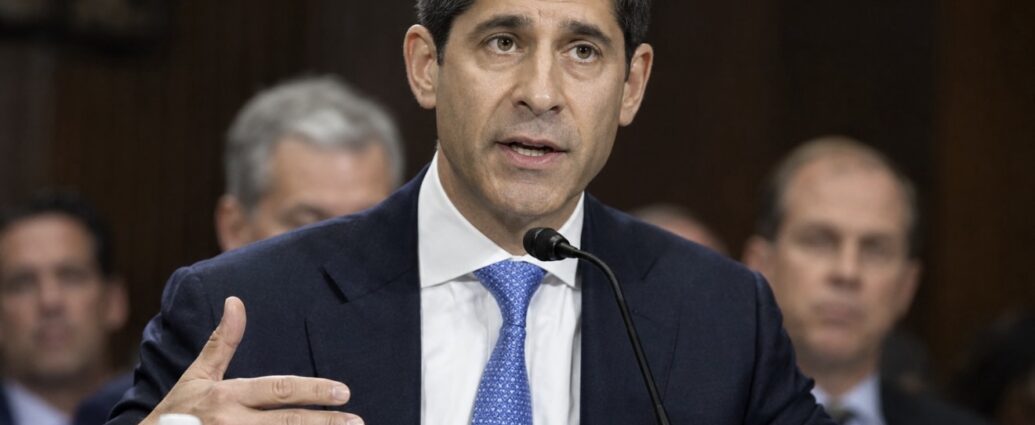
Despite the largest oil supply disruption ever recorded — roughly 10 million barrels a day of crude exports cut off from the Persian Gulf since the Strait of Hormuz effectively closed in late February — global crude prices on Thursday closed just above $100 a barrel, well below the levels seen during far smaller disruptions like the 2022 Russian invasion of Ukraine.

The reason, according to the International Energy Agency and U.S. officials, is that the world’s two largest economies — the United States and China — have quietly stepped in to plug much of the gap, leaning on a combination of record U.S. exports, mass releases from strategic reserves, and a tacit working understanding reaffirmed this week in Beijing.

The disruption itself is staggering. In its latest update this week, the IEA said that roughly 10% of total global oil consumption has been removed from accessible supply, with Persian Gulf export volumes collapsing from a normal level of about 15 million barrels a day to an effective 7 million.

By volume, the IEA has characterized the closure as the largest supply disruption in the history of the global oil market — exceeding both the 1973 OPEC embargo and the 1979 Iranian Revolution. Yet Brent crude has held just above $107 and West Texas Intermediate near $103 — elevated, but a far cry from the $150-to-$200 spike that pre-war modeling suggested a Hormuz closure of this scale would trigger.

The American leg of the response is being led directly out of the oilfield.

Oil exports from producers outside the Middle East, led by U.S. shale producers and U.S. refiners, have surged by roughly 3.5 million barrels a day during the Iran war, according to the IEA. The United States, now both the world’s largest oil producer and a major net exporter, has effectively become the global market’s marginal supplier.

U.S. Energy Secretary Chris Wright, speaking to CNBC Friday from the export terminal at Port Arthur, Texas, said the administration has been pushing producers to maximize output throughout the crisis.

“There’s a natural energy trade there,” Wright told CNBC’s Brian Sullivan. “I suspect we’ll see a growth in their oil imports from the United States.”

He was referring to China, the world’s largest oil importer.

Washington has also tapped its strategic reserve aggressively. The U.S. Strategic Petroleum Reserve, established in 1975 and rebuilt under the Trump administration, sat at 415 million barrels in March and had been drawn down to roughly 409 million barrels by April 10, according to U.S. Energy Information Administration data, as the United States joined other International Energy Agency member states in a coordinated emergency release.

Analysts estimate strategic reserve consumption across consuming nations is running at roughly twice the rate originally modeled in pre-war contingency planning.

The Chinese leg of the response is more opaque but no less consequential.

China — which under normal conditions sources roughly 40% of its crude imports through Hormuz — has spent the past decade quietly building one of the world’s largest oil stockpiles for exactly this scenario.

As of December 2025, the EIA estimated China held roughly 360 million barrels in government strategic inventories and as much as 1 billion barrels in commercial inventories at refineries, far above U.S. commercial holdings of about 411 million barrels.

Beijing’s independent “teapot” refineries in Shandong province had also been importing roughly 1.4 million to 1.5 million barrels a day of Iranian crude before the war through a shadow tanker fleet that has continued moving some volumes even with the strait closed.

The combined effect is a market that, while severely stressed, has avoided a price catastrophe.

Saudi Arabia’s pipeline infrastructure — particularly the East-West pipeline to Yanbu on the Red Sea — has handled what diversion capacity it can, with Arab medium grades increasingly substituting for lost Iraqi Basra crude in European refining systems, according to commodity-analytics firm Kpler.

The OPEC+ group on March 1 added only 206,000 barrels a day of formal production, a muted response reflecting the physical reality that Saudi Arabia and the United Arab Emirates cannot instantly maximize wellhead output without damaging reservoirs, and that bypass pipeline capacity remains only a fraction of normal Strait of Hormuz throughput.

President Donald Trump’s two-day Beijing summit with Chinese President Xi Jinping, which concluded Friday, formalized at the leader level what had already been functioning operationally for months.

The two leaders agreed in their joint statement that the Strait of Hormuz “must remain open” to support the free flow of energy, according to the White House. Trump also said China had committed to purchase American crude — an agreement Wright characterized as the natural next step in a complementary trade relationship between the world’s largest exporter and largest importer.

The structural question, Wright acknowledged, is duration.

Even an optimistic ceasefire scenario in the U.S.-Iran war would leave global markets facing months of strategic reserve rebuilding, infrastructure repair around the strait, and a structural shift toward security-driven stockpiling.

Kpler estimated that Brent for delivery later in 2026 is currently undervalued at around $74, with a “normalized fair value” closer to $85.

The longer Hormuz stays closed, the harder the emerging U.S.-China oil backstop will be to sustain. For now, it is the only thing standing between the global economy and an oil shock the modern energy system has never been tested against.

JBizNews Desk
© JBizNews.com. All rights reserved. This article is original reporting by JBizNews Desk. Unauthorized reproduction or redistribution is strictly prohibited.

WASHINGTON — The U.S. Senate confirmed Kevin Maxwell Warsh as the 17th chair of the Federal Reserve on a 54-45 vote Wednesday evening, the narrowest margin in the central bank’s 113-year history, capping a four-month nomination fight and clearing the way for Warsh to take office Monday after Jerome Powell’s term as chair expires Friday at midnight. Warsh will serve a four-year term as chair and a 14-year term as a member of the Board of Governors, beginning a tenure that — as Wall Street has been pricing in for weeks — will pivot the central bank toward a more politically aligned policy stance under a chair who turns 56 today and who has spent the last 15 years openly criticizing the post-pandemic monetary regime he is now inheriting. Here is the resume that put him in the seat.

The early life is upstate New York. Warsh was born April 13, 1970 in Albany to Robert Warsh, a manufacturer of school uniforms in Loudonville, and Judith Philipson Warsh, a journalist and freelance writer. He was the youngest of three children, raised in a Jewish family, and attended Shaker High School, where he played tennis and competed in New York State championships. He told SUNY-Albany’s School of Business in 2007 that “I learned much of what I need to know about the real economy in my first eighteen years here.” The education credentials are blue-chip: a bachelor’s in public policy from Stanford University in 1992, a J.D. from Harvard Law School in 1995 with a focus on economics and regulatory policy, and supplementary coursework in market economics at Harvard Business School and the Massachusetts Institute of Technology.

The first chapter of his career was on Wall Street. From 1995 to 2002, Warsh worked in the mergers-and-acquisitions group at Morgan Stanley, eventually rising to vice president and executive director — the operating experience inside the U.S. capital markets system that would later distinguish him from academic economists at the Fed. He left Morgan Stanley in 2002 to join the George W. Bush administration as Special Assistant to the President for Economic Policy and Executive Secretary of the White House National Economic Council. In that role he managed domestic finance, capital markets, and banking policy, served as White House liaison to the Federal Deposit Insurance Corp., Commodity Futures Trading Commission, and the Securities and Exchange Commission, and helped shepherd the administration’s response to the Enron and WorldCom scandals — work that produced the Sarbanes-Oxley Act of 2002.

The first Fed appointment came in 2006. President Bush named Warsh to the Board of Governors at age 35, making him the youngest Fed governor in U.S. history. He served from 2006 to 2011, including throughout the global financial crisis, where he worked closely with then-Fed Chair Ben Bernanke and then-New York Fed President Timothy Geithner. Bernanke later wrote in his memoir that Warsh was “one of my closest advisers and confidants” and credited his “political and markets savvy and many contacts on Wall Street” as “invaluable” during the crisis response, including in negotiating the rescue of his former employer Morgan Stanley in September 2008. Warsh served as the Fed’s representative to the G-20, as the Board’s emissary to Asia, and as Administrative Governor managing the central bank’s operations. He resigned in March 2011 — three years before his term was set to end — in opposition to the Federal Open Market Committee’s second round of quantitative easing, the $600 billion Treasury bond-buying program known as QE2.

The post-Fed years were spent constructing a hybrid policy-and-finance portfolio. Warsh joined the Hoover Institution at Stanford in 2011 as the Shepard Family Distinguished Visiting Fellow in Economics and as a lecturer at Stanford Graduate School of Business, positions he held continuously until his confirmation this week. He became a partner at Duquesne Family Office, the private investment vehicle of legendary hedge-fund manager Stanley Druckenmiller. He joined the board of directors of United Parcel Service Inc., where he served until the Fed nomination. He is a member of the Group of Thirty, the closed-door body of senior central bankers and financiers. In 2017, President Trump considered him for Fed Chair but chose Powell instead — a decision Trump has since publicly called “bad advice.” In 2024, Warsh was the leading candidate for Treasury Secretary until Trump chose Scott Bessent.

The nomination fight that ended this week was unusually difficult. Trump named Warsh as Powell’s successor in January 2026. North Carolina Senator Thom Tillis placed a hold on the nomination until the Department of Justice dropped its investigation of Powell — a probe widely interpreted in Washington as an attempt to force Powell out before his term expired. DOJ dropped the investigation in April. Warsh’s confirmation hearing before the Senate Banking Committee on April 21 was dominated by questions of Fed independence, the Trump administration’s pressure on Powell, and Warsh’s own past criticism of central-bank policy. He told senators that “inflation is a choice, and the Fed must take responsibility for it” and characterized the post-pandemic price surge as “the biggest policy error in 40 or 50 years.” Pennsylvania Democratic Senator John Fetterman crossed over to provide a critical vote. Warsh was confirmed as a Fed governor on May 12 in a 51-45 party-line vote replacing Stephen Miran and as chair on May 13 in the 54-45 vote.

The personal balance sheet is meaningful. Warsh married Jane Lauder in 2002. Jane Lauder is granddaughter of Estée Lauder founder Estée Lauder and daughter of Ronald Lauder — a major Republican donor, billionaire, and current president of the World Jewish Congress. Warsh’s personal net worth, by Senate disclosures, is at least $100 million, with private investments including stakes in prediction-market platform Polymarket and Elon Musk’s SpaceX. Senate Democrats criticized Warsh for declining to disclose the full size of those holdings. He has pledged to divest all such assets within 90 days of being sworn in. Critically for the institutional dynamics inside the Eccles Building, Powell has said he will remain on the Board indefinitely as a governor — his governor term runs through 2028 — citing Trump’s “unprecedented” pressure on the central bank’s independence. Warsh, who prefers trimmed-mean inflation measures over the Fed’s preferred core PCE gauge and who has aligned with the Trump view that artificial intelligence-driven productivity gains can deliver non-inflationary growth, will take the gavel Monday with Powell sitting beside him on the same panel. The next FOMC meeting will be the first real test.

JBizNews Desk

© JBizNews.com. All rights reserved. This article is original reporting by JBizNews Desk. Unauthorized reproduction or redistribution is strictly prohibited.

For decades, large corporations were built around a familiar workforce structure: senior leadership at the top, experienced managers and professionals beneath them, and large pools of junior employees handling research, spreadsheets, presentations, scheduling, note-taking, customer responses, formatting, and administrative work.

Artificial intelligence is now rapidly reshaping that model — and dramatically increasing the value of experienced employees who know how to use the technology effectively.

Increasingly, companies are discovering that a properly trained employee using multiple AI systems simultaneously can now perform the functional output that once required several junior workers, assistants, researchers, coordinators, or support staff. Employees using platforms such as ChatGPT, Claude, Gemini, Microsoft Copilot, and other enterprise AI systems are increasingly acting as orchestrators of multiple virtual assistants at once — drafting communications, conducting research, analyzing data, preparing presentations, summarizing meetings, refining proposals, and managing workflow streams simultaneously.

The result is not simply faster work, but a fundamental multiplication of employee productivity that is dramatically increasing the value of experienced workers while creating substantial long-term savings for employers.

Inside corporate America, experienced employees who know how to direct AI systems effectively are increasingly becoming some of the most valuable assets inside organizations. The combination of institutional knowledge, human judgment, AI-assisted communication, and productivity enhancement is allowing companies to operate faster, leaner, and more efficiently than ever before.

Many executives now describe these systems as personalized virtual assistants for employees — tools that allow one trained worker to complete tasks that once required interns, assistants, analysts, or even entire support teams.

One of the clearest examples came this week from Citadel founder and CEO Ken Griffin, who described how dramatically AI capabilities have advanced in a short period of time. Speaking at the Stanford Leadership Forum, Griffin said modern “agentic AI” systems are now performing work inside Citadel that previously required teams of finance professionals holding master’s and doctoral degrees — completing in hours or days what previously consumed weeks or months. Griffin said the productivity of the firm’s AI toolkit had undergone what he called a “step change” over the past nine months.

The financial implications for employers are becoming increasingly difficult to ignore.

A mid-level office employee earning roughly $90,000 annually who is trained to orchestrate multiple AI assistants across communication, research, analysis, and document preparation can generate between $30,000 and $90,000 or more in additional productive value each year, depending on role, workflow, and the depth of AI integration.

For a small business with 25 trained employees earning an average of $60,000, AI-driven productivity gains can translate into approximately $750,000 to more than $1.5 million in additional annual productive value through faster workflow, reduced administrative burden, stronger communication efficiency, and fewer support hires.

Mid-sized companies with 500 trained employees earning an average salary of $75,000 can potentially recover roughly $15 million to $30 million annually in labor efficiency, workflow acceleration, customer responsiveness, and operational productivity.

Applied across a Fortune 500 employer with 20,000 professional employees, the same multiplier effect can imply between $700 million and $1.5 billion or more in annual labor efficiency without proportional increases in staffing levels.

The multiplier effect has also become visible in public corporate disclosures.

Klarna, the global payments firm, reported that its AI assistant handled 2.3 million customer conversations in its first month of deployment — performing the equivalent work of 700 full-time agents and contributing an estimated $40 million in profit improvement, according to disclosures from CEO Sebastian Siemiatkowski. Klarna has since adopted a hybrid model, with humans handling complex cases and AI managing routine inquiries, but the scale of the productivity gains underscored how dramatically AI can multiply workforce output.

Inside many offices, communication itself is becoming one of the largest areas of productivity improvement.

Employees are increasingly using AI to draft emails, summarize meetings, organize follow-ups, refine presentations, prepare reports, respond to customers, and improve the speed and professionalism of daily communication.

For businesses, that creates both productivity gains and direct revenue opportunities.

Sales teams can respond to prospects faster and with more personalized outreach. Customer-service departments can handle higher volumes with quicker turnaround times. Managers can coordinate projects more efficiently. Executives can prepare polished communications in minutes instead of hours. Marketing teams can produce campaigns, presentations, proposals, and client-facing materials dramatically faster than before.

Corporate leaders increasingly view AI-enhanced communication as one of the technology’s most valuable benefits because faster and more effective communication often translates directly into stronger customer relationships, quicker deal flow, improved responsiveness, and ultimately more business.

For many executives, the conclusion is becoming increasingly difficult to ignore:

AI is evolving into a personalized virtual assistant for every trained employee — one that never sleeps, scales instantly, improves communication, accelerates workflow, and allows experienced workers to deliver dramatically greater value to the companies they serve, while employees who fail to learn how to use the technology increasingly risk being replaced by those who do.

By comparison, enterprise AI subscriptions often cost only a few hundred dollars annually per employee, making the economics increasingly compelling for employers.

That economic reality is now beginning to reshape hiring itself.

A new CEO Agenda 2026 survey released by the Oliver Wyman Forum in partnership with the New York Stock Exchange — based on responses from 415 chief executives representing roughly 10% of global market capitalization — found that 43% of CEOs plan to deprioritize hiring for junior roles over the next year, up sharply from just 17% a year earlier.

The survey also found that 34% of CEOs expect staffing to tilt toward more mid-level employees, signaling that companies increasingly view AI-trained professionals as a more efficient path to growth than the traditional model built around large classes of entry-level support staff. Among advanced AI deployment leaders, 49% said their AI investments are already meeting or exceeding expectations, compared with just 17% among slower adopters.

Academic research is increasingly validating the productivity gains executives say they are already seeing inside companies.

A landmark study by Erik Brynjolfsson of Stanford University, Danielle Li of MIT Sloan, and Lindsey Raymond of MIT — published as National Bureau of Economic Research Working Paper 31161 and later peer-reviewed in The Quarterly Journal of Economics — tracked 5,179 customer support agents and found workers using generative AI resolved 14% more tasks per hour on average, with gains reaching 34% for less-experienced employees.

A separate study led by Harvard Business School postdoctoral fellow Fabrizio Dell’Acqua, conducted alongside Karim Lakhani, Edward McFowland III, Ethan Mollick, Katherine Kellogg, and researchers at Boston Consulting Group and Warwick Business School, examined 758 BCG consultants. Consultants using GPT-4 completed 12.2% more tasks, worked 25.1% faster, and produced output rated 40% higher in quality than colleagues who did not use AI. The lowest-performing consultants improved by 43%, meaning AI lifted less-skilled workers significantly closer to the output of top performers.

Those figures, however, largely reflect gains from a single AI platform operating across controlled tasks. Inside real workplaces, where trained employees increasingly route different streams of work to multiple AI assistants simultaneously, executives say the compounding productivity effect is substantially larger.

Those firm-level gains broadly align with projections from the McKinsey Global Institute, which estimated that generative AI could create the equivalent of $2.6 trillion to $4.4 trillion in annual global value across 63 enterprise use cases — roughly the size of the United Kingdom’s entire economy. McKinsey senior partners Alex Singla and Alexander Sukharevsky, who oversee the firm’s AI division QuantumBlack, identified customer operations, marketing and sales, software engineering, and research and development as the largest sources of economic value.

Independent academic research also suggests the workforce restructuring is already underway. A Harvard University working paper by researchers Seyed Mahdi Hosseini Maasoum and Guy Lichtinger, drawing on data from nearly 285,000 firms, found companies adopting generative AI reduced junior-level hiring by roughly 7.7% relative to non-adopting firms, while senior-level employment continued to grow.

A separate Stanford University study by Brynjolfsson and colleagues at the Digital Economy Lab, updated in November, found a 16% relative decline in employment for early-career workers in occupations most exposed to AI automation — a decline researchers attributed primarily to slower hiring of new entrants rather than widespread layoffs.

For many executives, the conclusion is becoming increasingly difficult to ignore.

JBizNews Desk

© JBizNews.com. All rights reserved. This article is original reporting by JBizNews Desk. Unauthorized reproduction or redistribution is strictly prohibited.

on-day, the Long Island Rail Road affect haltes support for 300,000 commuters.

As of midnight on Saturday, Long Island Rail Road employees are actually on strike, essentially shutting down the nation’s busiest commuter railroad in its first major economic downturn in the region ahead of Memorial Day vacation.

After last-minute negotiations between the Metropolitan Transportation Authority and a coalition of five rail unions failed to reach a salary agreement, the attack ended support for almost 300,000 daily riders.

The MTA advised travellers to work remotely if possible as a result of the significant congestion and delays that are expected to occur throughout the municipal place on Saturday, as well as the announcement that all LIRR support was suspended.

According to New York State Comptroller Thomas DiNapoli’s company, the strike could result in lost economic activity for commuters who are searching for alternatives and businesses that are preparing for disruptions.

GEN Z IS ONE-HANDEDLY RESTORING AMERICA’S Business Stores TO LIFE.

The Long Island Rail Road workers ‘ attack is their first since 1994. While negotiating a new work deal, union leaders claimed coalition employees had spent more than three times without raises.

If the MTA and LIRR had provided our people with the acceptable words that the government had repeatedly recommended,” this strike would not have taken place.” However, control “refused,” according to Mark Wallace, chairman of the Teamsters Rail Conference and the Brotherhood of Locomotive Engineers and Trainmen. &nbsp,

AMID MAMDANI CLASH, TAX THE RICH, SLOGAN TO, DISGUSTING RACIAL SLURS, AND A TITAN COMPARES IN NYC

” We hope LIRR is shortly to stop hundreds of thousands of New Yorkers from experiencing unwanted disruption.” When they’re prepared, they know where to find us: on the streets.

MTA employees argued that the unions were requesting salary increases that might eventually increase fares and put a strain on the financial stability of the transit system.

Janno Lieber, the MTA’s head and CEO, warned that citizens and riders was ultimately bear the costs of larger salary increases and that the organization” cannot responsibly make a package that implodes MTA&rsquo, s budget.”

Lieber also accused union leaders of planning to strike despite MTA&rsquo ;s offers, claiming that the most recent proposal offered workers “everything they said they wanted in terms of pay.”

Governor of New York The attack was criticized as “reckless,” according to Kathy Hochul, who warned that it might harm commuters, businesses, and the region’s market as a whole. Hochul, who is running for reelection later this year, claimed that Long Islanders may be subject to union demands for higher taxes and suffer increases.

President Trump even weighed in, accusing Hochul of allowing the attack to take place.

Trump wrote on Truth Social,” If you can’t figure it out, let me know, and I’ll show you how to get things done.”

As labour unions push for higher pay as travel agencies grapple with shifting commuting patterns and resources pressures, the standoff highlights growing pressure on public transportation systems across the country.

FOX BUSINESS ON THE GO: Press HERE.

As commuters in the New York area seek option transportation options, transport officials have never indicated when negotiations may begin or how much the strike might remain.

This post was originally published here

In some parts of America, the economy still feels surprisingly strong.

Luxury hotels are full. High-end restaurants remain booked. Ferrari dealerships are moving inventory. Wealthy travelers continue filling resorts in Aspen, Palm Beach, and Miami. Premium beauty brands, designer retailers, and luxury cruise operators are still reporting healthy demand from affluent consumers who, for now, continue spending aggressively.

But travel a few miles in another direction and the picture changes quickly.

Dollar stores are seeing more budget-conscious shoppers buying smaller quantities. Used-car buyers are stretching loans longer than ever. Families are pulling back on discretionary purchases, delaying vacations, cutting restaurant spending, and struggling with rising utility bills, insurance costs, groceries, rent, and debt payments.

The divide between those two economies — one relatively comfortable, the other increasingly strained — has quietly become one of the defining features of the American recovery.

And according to a growing body of research from the Federal Reserve, Moody’s Analytics, and major financial institutions, the U.S. economy is becoming more dependent than ever on wealthy households continuing to spend.

The clearest evidence arrived earlier this month from the Federal Reserve Bank of New York, which published new research through its Liberty Street Economics platform analyzing consumer spending patterns across income groups.

The findings revealed a widening gap.

According to Fed economists Rajashri Chakrabarti, Thu Pham, Beck Pierce, and Maxim Pinkovskiy, households earning more than $125,000 annually posted cumulative real spending growth of roughly 7.6% through March 2026. Middle-income households saw spending growth closer to 3%. Lower-income households earning under $40,000 annually managed only about 1% growth.

The researchers warned that relying heavily on one segment of consumers creates growing economic fragility.

The numbers from Moody’s Analytics are even more striking.

Chief economist Mark Zandi estimates that the top 10% of earners now account for roughly 49.2% of all U.S. consumer spending, the highest share recorded in data going back to 1989. In the early 1990s, that figure stood closer to 35%.

According to Moody’s, spending by the top 10% of households surged approximately 62% between 2020 and 2025, dramatically outpacing every other income group. Meanwhile, the bottom 60% of American households now account for only about 23% of total consumer spending.

“As long as they keep spending, the economy should avoid recession,” Zandi said recently. “But if they turn more cautious, for whatever reason, the economy has a big problem.”

What makes the divide especially important is that it is increasingly being driven not by wages, but by wealth.

The New York Fed researchers found that gains in financial assets — particularly stocks and investment portfolios — have become the dominant driver of upper-income consumer spending. Rising equity markets through 2024 and 2025 significantly boosted the balance sheets of wealthier households, allowing them to continue spending despite higher interest rates and inflation.

For lower-income Americans, the experience has been very different.

Inflation continues consuming a larger share of household budgets among lower-income families, particularly for essentials such as food, transportation, utilities, insurance, and housing. Many households that built savings during the pandemic have now largely exhausted them.

According to TD Economics, the wealthiest 20% of American households now control roughly 72% of total household wealth, a concentration that has continued widening over the past several years.

The effects are increasingly visible across the broader economy.

Companies that depend heavily on middle-income and lower-income consumers are beginning to report softer demand, while luxury-oriented businesses continue outperforming.

Beth Ann Bovino, chief economist at U.S. Bank, said businesses are increasingly planning around the assumption that economic growth is now disproportionately dependent on wealthier consumers. “There’s a clear slowdown in spending among lower-income levels, and that’s starting to affect middle-income households as well,” Bovino said.

Retailers, restaurants, automakers, hospitality companies, and consumer brands are now adapting pricing strategies and marketing plans around a more financially divided customer base.

Even the car market increasingly reflects the shift. The average price of a new vehicle in the United States now sits near $50,000, effectively pushing millions of middle-class consumers out of the traditional new-car market altogether.

Not all economists agree the trend is entirely new.

Researchers at Pantheon Macroeconomics argue that wealthy Americans have represented an outsized share of total consumer spending for decades, suggesting today’s “K-shaped economy” may simply reflect a long-running imbalance becoming more visible after inflation and pandemic disruptions intensified financial pressures on lower-income households.

Still, even skeptics acknowledge the underlying vulnerability now facing the broader economy.

If affluent households slow spending meaningfully, overall growth could weaken quickly.

Recent consumer-credit data from TransUnion showed financially secure “superprime” borrowers with credit scores above 780 remain relatively stable, while lower-income borrowers are experiencing rising debt burdens and growing delinquency rates, particularly on auto loans and credit cards.

The concern for economists is that the American economy now increasingly resembles a structure balanced on a narrow foundation.

At the same time, additional pressures continue building. Rising oil prices tied to the Iran conflict are pushing transportation and household costs higher. Tariffs have raised import costs across multiple industries. The labor market, while still relatively stable overall, is showing signs of slowing momentum in several sectors.

Goldman Sachs still forecasts U.S. GDP growth around 2.5% for 2026, above broader consensus expectations. But increasingly, much of that growth depends on one question: whether affluent households continue spending aggressively enough to offset growing financial strain across everyone else.

For now, they are.

But the gap between the Americans carrying the economy and the Americans struggling to keep up is becoming harder to ignore — and far more central to the country’s economic future.

JBizNews Desk

© JBizNews.com. All rights reserved. This article is original reporting by JBizNews Desk. Unauthorized reproduction or redistribution is strictly prohibited.
WASHINGTON — A bipartisan coalition of lawmakers from auto-heavy battleground states is publicly pressuring President Donald Trump not to use the U.S. car market as a bargaining chip in his Beijing summit with Chinese President Xi Jinping, warning that any opening for Chinese automakers would devastate domestic manufacturing in the Rust Belt and reverse one of the few sectors of American industry where U.S. policymakers from both parties have held a unified line for two decades, according to a CNBC report Thursday from Washington correspondent Christina Wilkie. The lobbying push has grown urgent because Trump told the Detroit Economic Club in January that it would be “great” if Chinese automakers wanted to build plants in the United States and employ American workers — a statement that immediately set off alarm bells across Detroit, the United Auto Workers, and the broader auto supply chain.

The hidden complication, and the part of the story that CNBC placed at the center of its reporting, is that Chinese companies are already deeply embedded in the American auto industry. More than 60 U.S.-based parts suppliers are now owned by Chinese corporate parents, according to industry tracking, and Chinese-origin components — batteries, electronics, semiconductors, software modules, wiring systems, and rare-earth-derived materials — sit inside virtually every vehicle currently rolling off American assembly lines. The political fight in Washington is therefore not about eliminating Chinese influence from the U.S. automotive ecosystem; that influence already exists at scale. The battle is over whether BYD Co., Geely Automobile Holdings Ltd., SAIC Motor Corp., Chery Automobile Co., and Great Wall Motor Co. should be allowed to directly sell branded Chinese vehicles to American consumers in the same way they now do across Europe, Mexico, Brazil, and other major global auto markets.

The legislative centerpiece of the pushback is the Connected Vehicle Security Act of 2026, introduced last week by Senator Bernie Moreno (R-Ohio) and Senator Elissa Slotkin (D-Michigan), alongside a House companion bill led by Representative John Moolenaar (R-Michigan), chairman of the House Select Committee on the Chinese Communist Party, and Representative Debbie Dingell (D-Michigan). The legislation would prohibit the import, manufacture, sale, and operation of vehicles produced in China or in any nation designated as a national-security threat, with software restrictions beginning in 2027 and hardware bans phased in by 2030. The proposal expands upon a Bureau of Industry and Security rule finalized by the Biden administration in January 2025 restricting certain Chinese-origin connected-vehicle systems. Slotkin described connected Chinese cars as “TikTok on wheels,” framing the issue primarily as one of surveillance, cybersecurity, and data access rather than traditional tariff protectionism.

The coalition behind the legislation is unusually broad for Washington. The Alliance for Automotive Innovation, which represents nearly every major automaker selling vehicles in the United States, endorsed the bill publicly and said it “sends a clear message: the U.S. will not throw open the doors to Chinese automakers.” General Motors Co. separately backed the legislation. Honda Motor Co. Ltd., despite suffering its first-ever annual loss this week tied partly to its collapsing EV strategy, also endorsed the proposal. The United Auto Workers has signaled support, and major steel-industry groups followed with their own letter to the administration. Even the Information Technology and Innovation Foundation, typically skeptical of broad Trump-era tariffs, praised the measure. ITIF Vice President Stephen Ezell told CNBC that “Chinese automakers are not normal market competitors. Their EVs are the product of decades of state-backed mercantilism designed to help China capture global leadership in advanced industries.”

The pricing gap between Chinese and American electric vehicles is the core economic fear driving the political reaction. BYD’s entry-level Seagull EV starts at roughly $10,300 in China. Geely’s EX2 electric vehicle sells in Mexico for about $22,700 — still dramatically below the cheapest Tesla Inc. Model 3 sold in the United States at roughly $38,630. General Motors’ upcoming Chevrolet Bolt EV is expected to retail near $28,995. The average new vehicle transaction price in the United States now exceeds $51,000. Chinese automakers have already rapidly gained global market share through aggressive pricing: Chinese brands doubled their share of Europe’s EV market to roughly 6% in 2024, while dominating EV growth in Brazil and rapidly expanding in Mexico and Canada. In Mexico alone, 34 Chinese automotive brands are now operating, collectively controlling about 15% of the market. Even Toyota Motor Corp., the company that once disrupted Detroit itself, has publicly acknowledged difficulty competing against subsidized Chinese pricing structures.

The political implications are especially acute because the states most exposed to auto manufacturing — Michigan, Ohio, Pennsylvania, Indiana, and Wisconsin — remain central to both the 2026 midterm elections and the 2028 presidential map. For Republicans, restricting Chinese automakers aligns directly with the administration’s economic-nationalism messaging and its broader China strategy. For Democrats, the issue centers on preserving unionized manufacturing jobs and preventing further industrial erosion in the Midwest. Few major economic sectors currently produce this level of bipartisan alignment in Washington.

What President Trump ultimately signs with Xi Jinping in Beijing could determine whether the Connected Vehicle Security Act becomes a symbolic statement or an urgent congressional firewall. The Boeing aircraft announcement earlier Thursday already disappointed Wall Street by falling short of expectations. Auto-sector language emerging from the summit will now be scrutinized just as closely by lawmakers, unions, suppliers, and investors. If the final Beijing readout suggests even a limited path for BYD, Geely, or SAIC to build or sell vehicles directly in the United States, Congress appears prepared to move rapidly — and the political consequences would land squarely in the industrial swing states both parties view as decisive.

JBizNews Desk

© JBizNews.com. All rights reserved. This article is original reporting by JBizNews Desk. Unauthorized reproduction or redistribution is strictly prohibited.
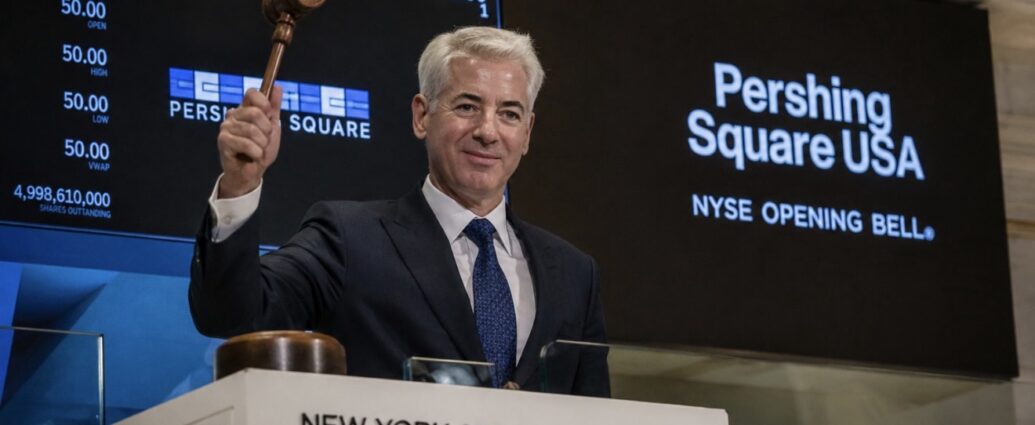
By Julia Parker — JBizNews Desk

When Bill Ackman rang the New York Stock Exchange opening bell on April 29, the event was about far more than a new stock listing. The launch of Pershing Square USA under the ticker PSUS represented a broader wager that a largely dormant Wall Street structure — the closed-end fund — can be revived into something resembling the permanent-capital engine that allowed Warren Buffett to build Berkshire Hathaway into one of the most powerful investment vehicles in financial history.

Pershing Square USA raised roughly $5 billion at $50 per share, instantly becoming one of the largest closed-end fund launches in years. But the core attraction for Ackman is not merely the size of the raise. It is the permanence of the capital. Unlike traditional mutual funds or exchange-traded funds, investors in a closed-end structure cannot redeem shares directly from the fund at net asset value. They can only sell shares on the open market, insulating the portfolio manager from the redemption pressures that often force hedge funds and open-end vehicles to liquidate positions during market stress.

That permanence has long fascinated Ackman, who has repeatedly pointed to Berkshire Hathaway as proof that permanent capital allows concentrated, long-duration investment strategies to survive volatility and compound over decades. Pershing Square USA is explicitly designed around that logic. The vehicle plans to hold approximately 12 to 15 large-cap North American investments, broadly mirroring the strategy already run inside Pershing Square Capital Management, while charging a 2% annual management fee and no performance fee.

The structure also reflects lessons from Ackman’s earlier failed attempt to bring the concept to market. In 2024, Pershing Square abandoned plans for what had initially been envisioned as a $25 billion launch after institutional demand weakened and investors balked at the size and valuation dynamics of the offering. The final version that came public this spring was dramatically smaller — roughly one-fifth the original target — and included an important concession to market skepticism.

For every five PSUS shares purchased in the IPO, investors also received one free share of Pershing Square Inc., the separately listed management company trading under the ticker PS. The arrangement effectively bundled ownership of the asset-management platform together with the investment vehicle itself, underscoring Ackman’s broader ambition to simultaneously build both a public investment company and a publicly traded manager around it.

The market response has so far remained cautious. PSUS quickly traded at a discount estimated between 16% and 18% below its IPO price, reflecting one of the oldest and most persistent problems in the closed-end fund industry: shares frequently trade below the value of the underlying assets.

Ackman’s existing European-listed vehicle, Pershing Square Holdings, which trades in the U.S. under the symbol PSHZF, has spent years trading at roughly a 30% discount to net asset value despite the firm’s long-term investment record. Analysts viewed that precedent as an early warning sign for how PSUS could behave.

Eric Boughton, portfolio manager at Matisse Capital, warned before the offering that the fund would likely trade below NAV almost immediately even without a performance fee attached. John Cole Scott, president of CEF Advisors, has similarly argued that closed-end fund pricing ultimately reflects investor sentiment, liquidity conditions, and market psychology more than the underlying portfolio value itself.

That structural challenge is one reason the closed-end fund market had largely faded from relevance on Wall Street. According to industry data from the Closed-End Fund Association, only 46 new U.S. closed-end funds have launched since 2019. PSUS became the first major IPO in the category since 2022, when a comparable offering raised only about $53 million.

The PSUS debut therefore represents more than a single fund launch. It is increasingly being treated as a referendum on whether the closed-end structure can reclaim relevance inside modern U.S. capital markets.

Ackman is not entirely alone in revisiting the format. Robinhood Markets launched the $1 billion Robinhood Ventures Fund I earlier this year to provide retail investors with indirect exposure to private companies including SpaceX, Stripe, Databricks, and OpenAI. ARK Investment Management’s ARKVX interval fund is pursuing a similar model aimed at private-market exposure through semi-liquid structures.

The renewed interest has already produced signs of speculative excess. Earlier this year, one pre-IPO-focused closed-end vehicle briefly traded at nearly 3,000% of its underlying net asset value as retail investors scrambled for indirect exposure to SpaceX. The same structural mechanics currently pushing PSUS into a discount created a speculative premium at the opposite end of the market. Increasingly, the sector is being priced as much on narrative and investor belief as on traditional valuation mathematics.

Ackman is now moving aggressively to give PSUS that narrative momentum. Pershing Square’s latest 13F filing with the Securities and Exchange Commission showed the firm recently initiated a position in Microsoft while trimming its stake in Alphabet. Days earlier, Pershing Square also proposed acquiring Universal Music Group N.V. in a transaction valued at roughly $64.4 billion, a move consistent with Ackman’s long-standing preference for concentrated, long-duration investments requiring stable capital behind them.

That strategy reflects the core thesis behind PSUS: permanent capital allows investors to think more like owners and less like traders.

What happens over the next several years may determine whether the closed-end fund structure experiences a genuine revival or remains a niche corner of the market. If Ackman can produce Berkshire-style compounding while narrowing the PSUS discount through buybacks, investor outreach, and sustained performance, the structure could regain credibility it has largely lacked in the United States for nearly two decades.

If the discount instead widens over time, markets may conclude that Buffett’s permanent-capital model works only when the manager carrying it is Buffett himself.

JBizNews Desk

© JBizNews.com. All rights reserved. This article is original reporting by JBizNews Desk. Unauthorized reproduction or redistribution is strictly prohibited.
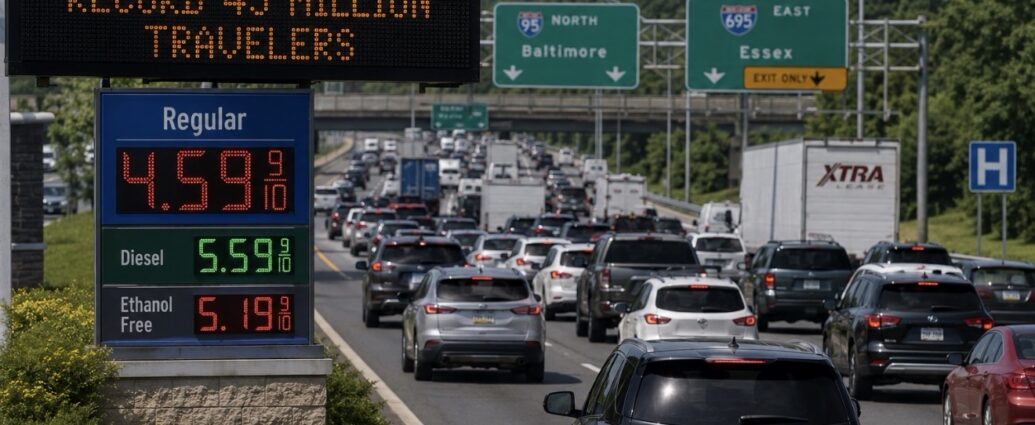
By JBizNews Desk | May 18, 2026

A record 45 million Americans are expected to travel at least 50 miles from home during the Memorial Day holiday weekend despite gasoline prices hovering above $4.50 a gallon, underscoring the remarkable resilience of U.S. consumer travel demand even as inflation, elevated borrowing costs and the Iran-driven energy shock continue squeezing household budgets. The forecast, released Monday by the American Automobile Association, covers travel between Thursday, May 21, and Monday, May 25 and surpasses last year’s 44.8 million travelers, setting a new Memorial Day record.

The surge comes against one of the most difficult fuel-price environments Americans have faced outside the 2022 energy crisis. National average gasoline prices are now roughly $4.50 per gallon, according to AAA data, up sharply from about $3.17 during Memorial Day weekend last year and only modestly below the all-time seasonal highs reached in June 2022. The price increase is being driven largely by the ongoing Iran conflict and the continuing closure of the Strait of Hormuz, which has disrupted global oil flows for more than two months and pushed crude oil back above $100 a barrel.

Despite the pressure, Americans are still traveling. AAA projects 39.1 million people will drive during the holiday period, while 3.66 million are expected to fly and millions more will travel by train, cruise and bus. The scale of the demand has surprised even energy analysts who expected fuel costs to meaningfully suppress discretionary travel this spring.

Patrick De Haan, head of petroleum analysis at GasBuddy, told Bloomberg that holiday travel behavior remains unusually resistant to gasoline-price spikes. “People aren’t going to want to restrict their travel on holidays,” De Haan said. “Even if gas is $6 a gallon, it’s the holidays where people are still going to travel.”

AAA Vice President of Travel Stacey Barber said the organization continues seeing strong leisure demand despite worsening economic pressure. “Travel demand remains strong, and despite higher fuel prices, many people are prioritizing leisure travel during holiday breaks,” Barber said in the agency’s release.

The resilience, however, is not without limits. AAA noted that the growth rate in Memorial Day travel this year is the slowest outside the pandemic period since 2010. Adrienne Woodland, spokeswoman for AAA — The Auto Club Group, said rising fuel prices and persistent inflation are causing many consumers to modify behavior even if they are not canceling trips outright.

“Although travel demand remains strong, higher fuel prices and persistent inflation may cause some travelers to shorten trips, delay plans, or stay closer to home,” Woodland said.

Michigan offers one of the clearest examples of the pressure consumers are absorbing. Average gasoline prices there have climbed to roughly $4.73 per gallon from $3.20 a year earlier. Similar increases are visible across much of the Midwest and Northeast.

Air travel has so far remained comparatively resilient. AAA said average airline ticket prices are still roughly 6% lower for travelers who booked early, though much of that pricing was locked in before the recent surge in jet fuel costs that has rattled airline balance sheets and contributed to the shutdown of Spirit Airlines earlier this month. Car-rental demand is also surging, with Hertz telling AAA that Thursday and Friday are expected to be the busiest pickup days of the weekend.

Among domestic destinations, Orlando, Seattle, New York City, Las Vegas and Miami rank among the most popular travel markets. Internationally, Rome, Paris, London, Athens and Vancouver are seeing strong booking activity as Americans continue prioritizing travel experiences despite broader financial strain.

The transportation system itself is expected to be heavily stressed. Traffic analytics firm INRIX warned that congestion in major metropolitan areas could more than double during peak departure and return windows. Last Memorial Day weekend, AAA roadside assistance crews responded to more than 350,000 emergency calls involving dead batteries, flat tires and empty fuel tanks. Similar or even heavier volumes are expected this year.

Beneath the headline numbers sits a broader economic trend increasingly referred to by economists as the “experience premium.” Consumers appear willing to continue spending aggressively on vacations, dining and entertainment while simultaneously cutting back on large durable purchases such as appliances, furniture and home upgrades.

Recent earnings calls across corporate America reflect the shift. Whirlpool Corp. warned earlier this month that consumers are delaying purchases of refrigerators and washing machines. At the same time, Royal Caribbean Group, Carnival Corp. and Norwegian Cruise Line Holdings all reported record booking trends and particularly strong demand for family and multigenerational vacations.

The political implications are also growing. President Donald Trump publicly voiced support Monday for a temporary federal gasoline tax holiday, targeting the 18.4-cent-per-gallon federal fuel tax that finances the Highway Trust Fund. Analysts at the Tax Foundation estimate the actual savings at the pump would likely be closer to 12 to 15 cents per gallon after accounting for refinery and distribution pricing dynamics, and any change would require congressional approval.

Diesel prices remain another major concern. National diesel averages are hovering within roughly 20 cents of record highs, creating additional inflation pressure across trucking, shipping, food distribution and logistics networks. Meanwhile, rising jet fuel prices have already prompted airlines to cut marginal routes, particularly short-haul regional service.

The broader takeaway for investors and policymakers is increasingly clear: Americans are still traveling, but they are paying substantially more to do it and quietly making trade-offs elsewhere in their budgets to keep those vacations intact.

Whether that resilience survives through the July 4 travel season — traditionally the peak period for summer fuel demand — may become one of the clearest indicators of how much strain the U.S. consumer can ultimately absorb.

JBizNews Desk
© JBizNews.com. All rights reserved. This article is original reporting by JBizNews Desk. Unauthorized reproduction or redistribution is strictly prohibited.

The Trump administration allowed its temporary sanctions waiver on Russian seaborne oil to expire at 12:01 a.m. Eastern time Saturday, restoring a tougher sanctions posture against Moscow at one of the most fragile moments for global energy markets in years.

The expiration was confirmed after the U.S. Treasury Department’s Office of Foreign Assets Control (OFAC) failed to publish a renewal notice for General License 134B, the authorization issued on April 17 that temporarily permitted transactions involving Russian crude already loaded onto tankers. Treasury Secretary Scott Bessent had signaled in recent days that the administration did not intend to extend the waiver.

The move lands as the global oil market is already under severe strain from the ongoing U.S.-Iran conflict and the effective closure of the Strait of Hormuz, one of the world’s most critical energy chokepoints.

Brent crude settled near $108 a barrel Friday, while West Texas Intermediate traded above $103, with both benchmarks posting weekly gains estimated between 8% and 10%. Traders increasingly warn that the market is no longer pricing temporary volatility but rather a sustained period of constrained global supply.

The International Energy Agency (IEA) said crude and refined fuel flows through Hormuz fell by roughly 4 million barrels per day during March and April and warned this week that the market could remain materially undersupplied through at least October even if the Iran conflict eases next month.

The waiver itself had a short and politically contentious life. The Trump administration initially eased restrictions in March, allowed them to lapse on April 11, then abruptly reversed course on April 17 after Bessent said more than 10 energy-vulnerable countries requested relief from soaring crude prices.

India, currently the world’s largest buyer of Russian seaborne crude, reportedly pushed hardest for the extension as its imports from Russia climbed near record levels during April and May. Indonesia also lobbied Washington to preserve access to Russian oil supplies amid mounting energy costs.

European allies strongly opposed both rounds of sanctions relief, arguing that easing pressure on Russian energy exports undermines Western efforts to restrict Moscow’s wartime revenues tied to the conflict in Ukraine.

For financial markets and commodity traders, the expiration immediately tightens legal and operational risks surrounding Russian oil transactions.

Banks, insurers, commodity trading houses, and shipping firms had temporarily relied on the OFAC waiver to process certain transactions involving previously loaded cargoes. With the waiver gone, compliance departments across the global energy sector are now reverting to stricter pre-waiver sanctions protocols involving vessel ownership verification, payment routing scrutiny, ship-to-ship transfer monitoring, and counterparty risk reviews.

The broader G7-European Union-Australia price cap system technically remains in place, still allowing certain maritime services involving Russian oil traded below specified price thresholds. But the added flexibility created by General License 134B has now disappeared.

The timing comes as some of the world’s largest energy companies warn that the supply picture is becoming increasingly dangerous.

Saudi Aramco CEO Amin Nasser told reporters this week that the oil market may not fully normalize until 2027 if the Strait of Hormuz remains closed beyond mid-June. Chevron CEO Mike Wirth, speaking earlier this month at the Milken Institute Global Conference, warned that fuel shortages were becoming a realistic concern in some regions, telling CNBC that “it’s not just a question of price.”

Investment banks are also growing more concerned about inventory depletion. Goldman Sachs warned in a research note Monday that while global crude inventories are not yet critically low, supplies of refined products — including jet fuel, naphtha, and liquefied petroleum gas — are tightening rapidly.

The political implications for the White House are becoming increasingly delicate.

President Donald Trump returned this week from meetings in Beijing with Chinese President Xi Jinping facing mounting domestic concern over energy-driven inflation. According to U.S. Energy Information Administration data, crude oil costs remain the largest component of retail gasoline pricing, meaning sustained increases in Brent and WTI prices quickly feed into higher gasoline, diesel, shipping, airline, and freight costs across the economy.

Federal Reserve officials have repeatedly warned that prolonged energy inflation can reshape consumer expectations and complicate monetary policy decisions. Analysts increasingly believe another sustained oil rally could delay interest-rate cuts or even reopen discussions around additional tightening if inflation pressures broaden further.

The deeper question now facing global markets is whether the international sanctions system can maintain pressure on Russian exports without triggering a broader energy supply shock.

Despite years of Western restrictions, Russia remains a critical supplier to global oil balances. Buyers continue navigating discounted cargoes, intermediary payment systems, opaque shipping routes, and so-called “shadow fleet” tanker operations to keep Russian crude flowing into global markets.

Allowing the waiver to expire signals that the Trump administration is prioritizing sanctions discipline over short-term energy relief. But traders say the real test will be whether enforcement intensifies against intermediary banks, covert shipping networks, and ship-to-ship transfer systems that continue facilitating Russian exports outside traditional Western oversight.

For now, markets remain trapped between three destabilizing realities: a closed Strait of Hormuz, tighter restrictions on Russian oil flows, and shrinking global inventory buffers.

Many traders increasingly describe current oil prices not as a temporary spike, but as a new floor for global energy markets unless geopolitical conditions improve significantly in the months ahead.

JBizNews Desk

© JBizNews.com. All rights reserved. This article is original reporting by JBizNews Desk. Unauthorized reproduction or redistribution is strictly prohibited.

Miami-Dade County’s two-track 2026 economy came into sharp focus Friday: million-dollar-plus single-family home sales jumped 20% in the first quarter of 2026, according to the Miami Association of Realtors, while the county shed more than 10,000 residents in the year ending July 2025, the U.S. Census Bureau reported in April — the third-steepest population drop of any county in the nation, trailing only Los Angeles County and Florida’s own Pinellas County. The widening split between a booming luxury tier and a shrinking working population was the focus of a Wall Street Journal analysis published Friday morning by reporter Arian Campo-Flores.

The county’s headcount fell to 2,802,029 from 2,812,144 between July 2024 and July 2025, according to the Census Bureau estimates. Miami-Dade County Public Schools is teaching 13,200 fewer students in the current 2025-2026 school year than it did the year before, a separate data point reflecting the demographic shift. The broader Miami metropolitan area logged its worst-ever year for net domestic migration in 2025, losing roughly 113,700 more U.S. residents than it gained, according to Census data analyzed by Reventure Consulting founder Nick Gerli — surpassing the area’s previous record set during the 2008 financial crisis. Resale inventory in Miami-Dade rose 119.2% in April 2026 from a year earlier, with 12,808 units available, signaling a growing pool of listings but few qualified buyers below the luxury tier.

Yet at the top of the income distribution, the picture is the opposite. Miami’s millionaire population grew 94% between 2014 and 2024 to roughly 38,800, the second-largest percentage gain among the major U.S. cities tracked by Henley & Partners in its USA Wealth Report 2025, behind only the San Francisco Bay Area, which posted 98% growth to about 342,400 millionaires. Basil Mohr-Elzeki, managing partner at Henley & Partners North America, has attributed much of the broader U.S. wealth surge to the strength of U.S. equity markets and demand for tax-advantaged jurisdictions within the country.

The newcomers are dramatically wealthier than the residents being displaced. People who relocated to Miami-Dade County from other states had an average adjusted gross income of roughly $178,000 — more than double that of residents who left for other states — according to an analysis of 2022 and 2023 Internal Revenue Service data by Maria Ilcheva, associate director of the Jorge M. Pérez Metropolitan Center at Florida International University, reported Friday by The Wall Street Journal. Newcomers from Manhattan earned an average of about $358,000, and those arriving from Chicago averaged $711,000.

Marquee financial relocations have anchored the trend. Ken Griffin moved his hedge fund Citadel from Chicago to Miami in 2022, citing a more business-friendly climate. Asset managers, private-equity firms, family offices, and crypto-native firms have followed in the years since.

The wealth wave is reshaping how the city looks and what it sells. The Miami Design District, a former furniture-trade hub that fell into disrepair in the 1980s, has been transformed by developer Dacra into a high-end retail and cultural corridor anchored by LVMH-owned Bulgari and Fendi, alongside designer boutiques, contemporary art galleries, and Michelin-starred restaurants. Sales in the district grew 350% between 2019 and 2025 and foot traffic measured by car counts rose 250%, Craig Robins, chief executive of Dacra, said in remarks published Friday by The Wall Street Journal. A new condominium project, hotel, and office buildings are in development.

The high-end housing market is tracking the influx. Gay Cororaton, chief economist at the Miami Association of Realtors, told the Wall Street Journal that the million-dollar-plus segment is outperforming the overall housing market in Miami-Dade County, with the 20% first-quarter gain in luxury single-family sales nearly triple the 7% rise in overall single-family sales. Miami Beach ranks among the priciest residential markets in the country, with average prime-apartment prices of roughly $17,200 per square meter, according to Henley & Partners.

The other side of that strength is severe affordability strain. The average price of a home in Miami-Dade County reached $711,025 in 2025, while the maximum a median-income Florida family can afford is roughly $258,000, according to the Reventure analysis. Housing prices in the region have climbed 53% since June 2020. About half of Miami-Dade County households are classified as cost-burdened, spending more than 30% of their income on housing, the Wall Street Journal analysis noted.

“Miami is becoming very different,” Richard Florida, the urbanist and author who lives part of the year in Miami Beach, said in remarks published Friday by The Wall Street Journal. “We have never witnessed this kind of relocation of wealth,” he said, but “it’s getting harder and harder for the young professional to enter.”

The bifurcation cuts in two directions for the local economy. Affluent newcomers fill municipal tax coffers and underwrite premium retail, hospitality, and professional-services jobs, and the broader Florida state revenue picture has benefited from inbound wealth migration as well. The same dynamic, however, is intensifying housing affordability debates and tightening the labor market for the service-sector employers — retail, hospitality, construction — who depend on workers being able to afford to live within commuting range. The drop in Miami-Dade County Public Schools enrollment is one downstream signal.

Whether the inflow of high-net-worth residents continues at its post-pandemic pace will determine how much further the split widens. Henley & Partners projects continued net inbound millionaire migration to the U.S., with Miami, the Bay Area, Austin, and West Palm Beach among the most popular destinations, driven by tax policy and persistent concerns about quality of life in higher-cost coastal markets. Whether the workforce that sustains daily life in those cities can afford to stay is the harder question.

JBizNews Desk
© JBizNews.com. All rights reserved. This article is original reporting by JBizNews Desk. Unauthorized reproduction or redistribution is strictly prohibited.

By JBizNews Desk | May 15, 2026

Bitcoin dropped back below the $80,000 threshold on Friday, trading at $79,108 in late-afternoon U.S. action as profit-taking and a hawkish repricing of Federal Reserve policy expectations rippled through the digital-asset market, according to live pricing data from Coinglass and SoSoValue.

Major crypto prices Friday afternoon:

  • Bitcoin (BTC): $79,108
  • Ethereum (ETH): $2,223
  • Solana (SOL): $89.66
  • XRP: $1.44
  • Dogecoin (DOGE): $0.1122
  • Shiba Inu (SHIB): $0.000056152

The Crypto Fear & Greed Index slipped to 46, holding sentiment in neutral territory after several weeks bouncing between greed and neutral readings.

The selling was concentrated and forceful. Coinglass data showed 127,628 traders were liquidated in the prior 24 hours for a combined $440.26 million, with the bulk of the wipeout hitting long positions that had built up on the recovery move toward $90,000 earlier this week. Funding rates across major perpetual swap markets remained negative even as spot prices firmed earlier in the week, an unusual configuration flagged by anonymous derivatives trader Cryptoinsightuk, who said the divergence “shows derivatives traders remain heavily positioned to the short side” and described Friday’s weakness as “not panic level, just logical.” The same trader argued that pullbacks toward the middle of long-term price channels often serve as logical reset zones before the market chooses a direction, and noted that the negative funding setup could fuel a sharp short squeeze if Bitcoin breaks above the current range.

The macro backdrop is doing most of the heavy lifting on the downside. April CPI released by the Bureau of Labor Statistics Tuesday came in at 3.8% year over year, the highest reading since May 2023. April PPI released Wednesday jumped 6% annually, the hottest pace since 2022. The two prints together forced traders to abandon any remaining bets on a 2026 Federal Reserve rate cut and to begin pricing in the possibility of a quarter-point hike before year-end. CME FedWatch odds of a December hike climbed to roughly 51%, with January 2027 odds near 60%, up from near-zero a month ago. The 10-year U.S. Treasury yield jumped to 4.55%, a fresh one-year high, draining liquidity from speculative assets that had been rallying on the assumption of an easier policy path.

The Fed transition added another layer. Kevin Warsh was sworn in Friday as Federal Reserve chair, replacing Jerome Powell, whose term expired the same day. Crypto traders are watching closely to see whether Warsh — known for a rules-based, anti-inflation stance — strikes a more hawkish or more rules-based dollar tone in his first communications. Geoffrey Kendrick, global head of digital assets research at Standard Chartered, recently cut his year-end Bitcoin price target to $100,000 from $150,000, citing reduced odds of rate cuts before the Iran war even factored into the model. Kendrick said the selloff to date “has been less extreme than previous ones and has not seen the collapse of any digital asset platforms,” a comment echoed by Ark Invest founder Cathie Wood, who called Bitcoin’s roughly 50% peak-to-trough drawdown “a real victory” against the 85% to 95% declines of prior cycles.

ETF flows tell a mixed story. SoSoValue data showed net inflows of $131.3 million across U.S. spot Bitcoin ETFs on Thursday, a partial recovery after a brutal Wednesday print that registered net outflows of $635 million — one of the largest single-day outflow totals on record. BlackRock’s iShares Bitcoin Trust (IBIT) remained the dominant flow vehicle, while Fidelity’s FBTC also recorded inflows. Total spot Bitcoin ETF assets under management stand near $109 billion, an all-time high, with the structural ratio of ETF holdings to daily miner production now sitting at roughly 10 to 1 — a dynamic that analysts at Phemex cited as the key reason this cycle’s drawdowns have been shallower than the 2018 or 2022 collapses.

Corporate Bitcoin purchases, a key marginal demand vector last year, have slowed sharply. Buying by publicly traded treasury accumulators is down roughly 80% from the prior month as institutional buyers use the price recovery to take partial profits rather than add to positions. The Iran war, the closure of the Strait of Hormuz since March 4, and WTI crude trading above $100 a barrel continue to act as a sticky inflation overlay that argues for tighter Fed policy and a stronger dollar — neither friendly to crypto. The U.S. Dollar Index is on pace for its best week since early March, having climbed for a fifth straight session to near 99.29.

For now, traders are watching three levels: $78,000 as the next major support for Bitcoin, the $2,200 line on Ether that has held since April, and the $1.40 mark on XRP, which traders said would need to break to confirm a deeper retracement. Whether Warsh’s first public remarks lean rules-based or hawkish may decide which level gives way first.

JBizNews Desk
© JBizNews.com. All rights reserved. This article is original reporting by JBizNews Desk. Unauthorized reproduction or redistribution is strictly prohibited.

Banks underwriting corporate borrowings in the U.S. leveraged loan market raised the size of at least six proposed deals by a combined $2.6 billion ahead of investor commitment deadlines Thursday, Bloomberg reported, in the clearest sign yet that demand for risky dollar-denominated debt has heated into a full-blown imbalance — with funds, collateralized loan obligation managers, and private-credit pools chasing more paper than the market is currently producing.

The Thursday upsizes, tracked by Bloomberg, mark a deepening of a trend that has been building for months. Strong inflows into CLO funds and exchange-traded products, combined with stretched cash piles at private-credit shops and reignited buyout activity, have created the most lender-friendly conditions for borrowers since the post-pandemic refinancing wave.

Banks running syndicated processes have been able to widen ticket sizes, tighten pricing, and pull deals forward — a dynamic that has fed back through the secondary market into ever-richer pricing on existing loans.

The numbers tell the story.

Through the first stretch of 2026, $77 billion in U.S. leveraged loans has priced across 54 deals, alongside $22.6 billion in high-yield bond issuance across 20 deals, according to data published by Octus.

Bank of America strategists project full-year 2026 leveraged loan issuance to climb 10% to roughly $470 billion, fueled by a doubling of merger-and-acquisition and leveraged-buyout volume to about $260 billion.

JPMorgan Chase analysts have separately estimated that M&A and LBO debt issuance could reach $80 billion in high-yield bonds and $225 billion in loans this year.

The pipeline backing those forecasts is already visible.

The roughly $55 billion take-private of Electronic Arts by Silver Lake is expected to bring $20 billion of debt to the syndicated loan market in the months ahead, led by JPMorgan.

Blackstone and TPG’s $18.3 billion buyout of medical-diagnostics company Hologic will require another $12 billion of debt.

Air Lease is being taken private in a $28 billion deal, and Bloomberg has calculated that banks have already underwritten roughly $65 billion of leveraged-buyout debt scheduled to come to market in 2026.

Borrowers, in many cases, are pricing those packages at the tightest spreads in years.

The pricing reflects the supply-demand mismatch.

The average institutional loan margin in the third quarter of 2025 was just 3.13%, the lowest quarterly average on record, according to Debtwire data.

Average bids in the secondary market are running at 95 to 97 cents on the dollar.

Roughly 40% of outstanding institutional loans are trading at or above par, leaving managers of CLOs — the dominant institutional buyer of leveraged loans — scrambling for newly priced paper at any kind of yield premium.

CLO issuance in the U.S. reached a record $472 billion of broadly syndicated CLO volume in 2025 across more than 1,000 transactions, plus another $84.7 billion in private-credit CLOs, per Octus.

“This year is really the perfect storm for credit because we have a fiscal expansion and simultaneously also have monetary easing,” Neha Khoda, head of U.S. credit strategy at Bank of America, said at a recent industry roundtable. “Historically, whenever we’ve seen these happen concurrently, it’s been good for credit.”

Michael Marzouk, a loan portfolio manager at Aristotle Pacific Capital, told industry attendees that corporate fundamentals “remain in good shape” and that easing should help spur further M&A activity off trough levels.

Adam Abbas, head of fixed income at Oakmark, said he expects buy-side investors to migrate from high-yield bonds into leveraged loans as the asset class normalizes.

The risks, however, are creeping back into view.

Loans priced below 90 cents on the dollar climbed to 9.4% of the market in November, matching a mid-year peak.

The September 2025 blowups of Tricolor and First Brands have left what one Deutsche Bank analyst, Jamie Flannick, described as “a fog hanging over” the leveraged finance market.

Covenant-lite loan issuance is rising, which reduces lender protections and historically lowers recoveries in defaults.

Moody’s forecasts speculative-grade defaults to decline to 3.0% in the U.S. and 2.4% in Europe by October 2026 — down from 5.3% and 3.8% a year earlier — but warns that tariff shifts, inflation and geopolitical tensions could disrupt the base case.

With the Strait of Hormuz still closed and second-quarter inflation now forecast at 6% by the Federal Reserve Bank of Philadelphia’s Survey of Professional Forecasters, the macro backdrop is far from clean.

The other complication is CLO profit math.

Spreads on the underlying loan paper have compressed so much that Morgan Stanley strategists recently estimated CLO equity arbitrage is at its slimmest level in about a year.

Tom Majewski, founder of Eagle Point Credit, captured the trade-off at the Opal Group’s annual industry conference in Dana Point, California: “Picture a wall of sand coming at you from one side and you’re trying to move boulders on the other.”

Strategists at Citigroup, led by Michael Anderson and Steph Choe, have noted that the AI capital-expenditure cycle — which is on track to draw an estimated $150 billion from leveraged finance markets over the next five years for data centers — is itself “a mixed bag for credit,” boosting corporate animal spirits while threatening incumbent business models.

For now, the imbalance is producing more — and bigger — deals.

Until either the Federal Reserve signals a clearer pause, the AI-driven capex cycle slows, or a fresh credit event tightens risk appetite, borrowers and bankers appear set to keep pushing the limits of what investors will absorb.

JBizNews Desk
© JBizNews.com. All rights reserved. This article is original reporting by JBizNews Desk. Unauthorized reproduction or redistribution is strictly prohibited.

By JBizNews Desk | May 15, 2026

Wall Street ended a volatile week on the back foot Friday, with the S&P 500, Dow Jones Industrial Average and Nasdaq Composite all selling off sharply as a two-day Beijing summit between President Donald Trump and Chinese President Xi Jinping produced no major policy breakthroughs, crude prices climbed back above $100 a barrel on renewed Iran war anxiety, and the 10-year Treasury yield spiked to a fresh one-year high. CNBC and TheStreet reported the S&P 500 fell about 1.1% to roughly 7,424, the Dow dropped about 480 points or near 1% to around 49,580 — slipping back below the 50,000 mark it reclaimed just a day earlier — and the Nasdaq Composite slid 1.3% to about 26,300. The small-cap Russell 2000 dropped roughly 2.1% as risk-off trading swept through cyclicals. The selloff threatened to end what had been a seven-week winning streak for the S&P 500, which only Thursday had closed above 7,500 for the first time in history.

The catalyst was the conclusion of President Donald Trump’s trip to Beijing, where he met with Xi Jinping alongside 16 senior U.S. executives. Trump told reporters the talks produced “fantastic” trade deals, but the headline announcements landed below Street expectations. The president said China agreed to purchase 200 Boeing aircraft equipped with GE Aerospace engines, with a path to as many as 750 over time. Jefferies analysts had been positioned for a deal as large as 500 planes, and Boeing Co. shares fell 2.8% to $222.70. Trump also said China had committed to buying U.S. crude oil, naming Texas, Louisiana and Alaska as origin points, and oil prices firmed on the news. WTI crude rose about 4% to roughly $101 a barrel while Brent climbed 1.5% to $107.30, both still trading near war-era highs reached after Iran closed the Strait of Hormuz on March 4. Secretary of State Marco Rubio said Trump raised the Iran war and the Hormuz blockade with Xi but stressed Washington was not asking Beijing to mediate.

The bond market did the heaviest lifting in shaping the Friday tape. The 10-year Treasury yield jumped nine basis points to 4.55%, its highest in a year, as traders priced in stickier inflation tied to the Iran energy shock. CME FedWatch data showed odds of a 2026 Federal Reserve rate hike climbing to roughly 45%, up from just 1% a month ago, with markets now seeing a quarter-point move to 3.75%–4% as the most likely next step. The repricing landed on the same day Jerome Powell’s term as Fed chair expired, with Kevin Warsh preparing to take the gavel. Dan Niles of Niles Investment Management told CNBC that 10 of the last 12 recessions were preceded by oil spikes and warned the current move “is starting to get uncomfortable.”

Technology stocks bore the brunt of the rotation after weeks of record-setting AI gains. Intel Corp. sank roughly 5%, Advanced Micro Devices Inc. lost 3%, Micron Technology Inc. fell 4% and Nvidia Corp. dropped 2% ahead of its earnings report next week. Marvell Technology, Arm Holdings and ASML Holding NV each shed 4% to 5%. Cerebras Systems, which surged 75% in its Nasdaq debut Thursday in a $5.55 billion IPO — the largest U.S. tech offering since Uber in 2019 — gave back about 4%. Adam Crisafulli of Vital Knowledge said the chip group “has witnessed an extremely unsustainable move in recent weeks and remains vulnerable to profit taking regardless of the headlines.” Bucking the trend, Microsoft Corp. advanced after Bill Ackman’s Pershing Square disclosed a new position, calling the valuation “broadly in line with the market multiple.”

The week’s biggest single-name story was Cisco Systems Inc., which jumped 13.4% Thursday after reporting fiscal third-quarter revenue of $15.84 billion, up 12% year over year, and lifting its fiscal 2026 AI infrastructure orders guidance to $9 billion from $5 billion. Piper Sandler, Citi, Bank of America and KeyBanc raised price targets, while HSBC analyst Stephen Bersey upgraded Cisco to Buy with a $137 target. On Friday, Morgan Stanley reiterated Netflix Inc. as overweight following the streamer’s upfront and kept a buy rating on Applied Materials Inc., while TD Cowen reiterated Buy on Nvidia with a $275 target.

Economic data reinforced the inflation narrative driving the bond move. April CPI released Tuesday showed energy lifting headline prices, and PPI data flagged sticky services inflation. Retail sales rose 0.5% from March to April, though CNN noted much of the gain reflected higher prices rather than higher unit volumes. Joe Brusuelas, chief economist at RSM US, told CNN that “the war has come home, and Americans can feel it and see it in their grocery basket,” with polling showing 75% of Americans say the Iran war has hurt their finances.

Corporate cost discipline also drew attention. Starbucks Corp. said it will lay off 300 corporate employees, its third round of cuts under CEO Brian Niccol, taking $400 million in restructuring charges. Verizon Communications Inc. CFO Tony Skiadas confirmed a fresh round of layoffs as the carrier targets $5 billion in operating expense savings by the end of 2026. Investors head into next week eyeing earnings from Nvidia, Home Depot Inc., Toll Brothers Inc. and Cava Group Inc., alongside April housing starts and building permits.

JBizNews Desk
© JBizNews.com. All rights reserved. This article is original reporting by JBizNews Desk. Unauthorized reproduction or redistribution is strictly prohibited.

WSB-TV Channel 2 Action News reported Thursday that residents of a northwest Atlanta neighborhood say dozens of empty autonomous vehicles operated by Waymo have been streaming into their dead-end streets at daybreak, circling for hours with no passengers aboard and raising fresh questions about how robotaxi fleets behave in residential areas. In a report by Channel 2’s Steve Gehlbach, neighbors on Battleview Drive said as many as 50 driverless cars passed through their cul-de-sac between 6 a.m. and 7 a.m. on a single recent morning.

The pattern began about two months ago, residents told the station, but intensified sharply in recent weeks as larger clusters of the autonomous Jaguar I-PACE vehicles began looping through residential streets. “It’s almost every little cul-de-sac in our area, so I think it’s a problem,” one neighbor said. Another told the station the family woke up to a steady procession of driverless cars at sunrise: “I think yesterday morning, we had 50 cars that came through between 6 and 7.” Residents said they want the vehicles confined to main traffic arteries unless they are actively picking up or dropping off a rider.

The Atlanta robotaxis are operated by Waymo, the autonomous-driving subsidiary of Alphabet Inc., and are dispatched exclusively through the Uber app in the metro area under a partnership the two companies launched on June 24, 2025. The service covers roughly 65 square miles spanning Buckhead to Lakewood Heights and operates a fleet of fully electric Jaguar I-PACE SUVs equipped with the Waymo Driver autonomous system. Nicole Gavel, head of business development and strategic partnerships at Waymo, said at launch that Atlantans would gain access to “the same safety, comfort, and convenience” the company has rolled out in San Francisco and Austin. Sarfraz Maredia, who oversees autonomous mobility and delivery at Uber Technologies Inc., has positioned the tie-up as central to the ride-hailing company’s strategy of scaling driverless trips without owning the fleet.

What residents are seeing on Battleview Drive is the underside of that scaling effort. Empty autonomous cars routinely “deadhead” — driving without passengers to reposition between trips, recharge or stage near anticipated demand. Routing algorithms optimized for system-wide efficiency can funnel large numbers of vehicles into pockets of a service map at the same time, with little regard for the local character of the streets they are using. Battleview Drive appears to have become one of those pockets.

In a statement provided to WSB-TV, Waymo said it has already adjusted the behavior. “At Waymo, we are committed to being good neighbors. We take community feedback seriously and have already addressed this routing behavior,” the company said, adding that its autonomous service completes more than 500,000 weekly trips nationwide and is designed to reduce traffic injuries. The company said it remains “focused on providing a seamless, respectful, and safe experience for riders and residents alike.”

Residents said earlier outreach went unanswered. Several told the station they had contacted Waymo directly, their representative on the Atlanta City Council and the Georgia Department of Transportation, but saw no change before the local broadcast aired. One homeowner placed a neon-green “Step2Kid” children-at-play sign at the entrance to the cul-de-sac in an effort to deter the driverless vehicles. The result was not a solution but a small spectacle: the sign confused the cars rather than redirecting them, and eight Waymos at one point bunched together as they tried to figure out how to turn around. Channel 2 saw only one Waymo circling the area during a mid-morning visit, and a human safety operator was in the driver’s seat.

For families on the street, the concern is less about novelty than about basic neighborhood safety. “We have small kids, we have animals and pets, we’ve got kids getting on the bus in the morning, and it just doesn’t feel safe to have that traffic,” one resident said. The pre-dawn timing of the surges coincides with the window in which school buses begin their rounds in much of the Atlanta area.

The Atlanta episode is not the first time the company’s Atlanta fleet has drawn local attention. In April, three Waymo robotaxis brought traffic to a standstill at an Atlanta intersection with a blinking red light. The company is also navigating a recall of 3,791 vehicles tied to a software issue that caused some autonomous cars to drive into flooded streets, according to regulatory filings.

For Alphabet and Uber, the Battleview Drive complaints arrive at a sensitive moment in the buildout of driverless services. Both companies have leaned heavily on the message that robotaxis improve street safety. Whether they can also deliver on the quieter promise of being a good neighbor — staying off small residential streets when no one needs a ride — is now becoming part of the test.

JBizNews Desk
© JBizNews.com. All rights reserved. This article is original reporting by JBizNews Desk. Unauthorized reproduction or redistribution is strictly prohibited.

A global rout in government bonds intensified Friday as Brent crude climbed past $106 a barrel and back-to-back inflation reports from the Bureau of Labor Statistics raised the specter that the war-driven energy shock will force the Federal Reserve and other major central banks to abandon any near-term rate cuts and pivot to tightening.

The yield on the 10-year U.S. Treasury note rose nearly 10 basis points to about 4.58%, its highest level in a year, while the 30-year bond pushed above 5% — a threshold that Ian Lyngen, head of U.S. rates strategy at BMO Capital Markets, called “particularly concerning” given its implications for mortgage rates, corporate borrowing costs and equity valuations.

The selloff was global in scope and unusually broad in maturity.

U.S. 2-year yields climbed to 4.06%, a level not seen since March 2025, capping the largest weekly jump in long-end Treasuries since President Donald Trump’s tariff salvo first jolted markets in April 2025.

In Tokyo, the 30-year Japanese Government Bond yield hit 4% for the first time since the security was introduced in 1999, while the 20-year JGB rate reached its highest since 1996 and the 40-year touched a record going back to its 2007 debut.

U.K. 10-year gilt yields jumped as high as 5.17%, the most since 2008, with 30-year gilts at a 28-year peak.

Yields in Germany, Spain, Australia and New Zealand all moved in lockstep.

The trigger is the same energy shock that produced the worst inflation readings in three years.

The Bureau of Labor Statistics reported Tuesday that the Consumer Price Index rose 0.6% in April and 3.8% from a year earlier — the highest annual pace since May 2023 — driven by a 28.4% surge in gasoline prices and a 17.9% jump in the broader energy index.

One day later, the Producer Price Index showed wholesale prices rose 1.4% on the month and 6% over twelve months, the largest annual gain since December 2022.

Core PPI rose 1% in April, more than double the consensus forecast.

Fed Governor Michael Barr told an audience Thursday that inflation is now the overwhelming risk facing the economy, a marked shift in tone from a central bank that had signaled patience for most of the spring.

Markets responded accordingly.

According to data compiled by Bloomberg, traders are now pricing in nearly a two-thirds probability that the Fed will raise interest rates in December — an outcome that would mark the central bank’s first hike under incoming Chair Kevin Warsh, whom President Trump tapped to succeed Jerome Powell and whom the U.S. Senate confirmed on Wednesday.

The current federal funds target range stands at 3.50% to 3.75%.

John Briggs, head of U.S. rates strategy at Natixis North America, said in a client note that 10-year Treasury yields may continue to push higher as the global inflation impulse from the energy shock works through producer and consumer pipelines.

“Bond yields definitely feel like they are getting unhinged,” Subadra Rajappa, head of U.S. rates research at Société Générale Americas, told Bloomberg Television.

Stephen Spratt, a rates strategist at Société Générale in Hong Kong, said the move suggests investors are aggressively unwinding carry positions and short-yield bets that had been built up in expectation of a more dovish Fed.

The Japanese leg of the rout carries unusual significance.

Rinto Maruyama, senior FX and rates strategist at SMBC Nikko Securities, said the 30-year JGB at 4% is a historic break for an economy that has battled deflation for most of three decades.

Wage gains, sticky producer prices and a fresh supplementary budget being weighed by the government in Tokyo are all feeding bets that the Bank of Japan will continue to tighten.

In London, the bond selloff was compounded by a political crisis threatening Prime Minister Sir Keir Starmer.

Manchester Mayor Andy Burnham signaled he will seek a return to Parliament, raising the prospect of a Labour leadership challenge that could unwind Starmer’s effort to restrain government spending.

Gilts sold off sharply on the news.

Equities absorbed the bond move with notable weakness.

The Dow Jones Industrial Average fell 494.48 points, or 0.99%, to 49,568.98.

The S&P 500 dropped 76.15 points, or 1.02%, to 7,425.09.

The Nasdaq Composite slid 339.74 points, or 1.28%, to 26,295.48, dragged lower by losses in Intel, AMD, Micron Technology and Nvidia.

Microsoft bucked the trend after Bill Ackman’s Pershing Square Capital Management disclosed a new position in the stock.

Prashant Newnaha, senior Asia-Pacific rates strategist at TD Securities in Singapore, summed up the mood: “The move higher in global bond yields is a little unsettling.”

With the Strait of Hormuz still effectively closed, the Trump-Xi summit having ended without a breakthrough, and U.S. inflation data running hot, investors are bracing for a long summer of repricing.

JBizNews Desk
© JBizNews.com. All rights reserved. This article is original reporting by JBizNews Desk. Unauthorized reproduction or redistribution is strictly prohibited.

WASHINGTON — May 2026 — U.S. Border Patrol Chief Michael W. Banks resigned effective immediately Thursday after 37 years of federal service, telling Fox News congressional correspondent Bill Melugin that “it’s just time” — and handing American employers across construction, agriculture, hospitality, food processing, and meatpacking a fresh round of uncertainty about how the most aggressive interior immigration-enforcement regime in a generation will be run from here. U.S. Customs and Border Protection Commissioner Rodney Scott confirmed the resignation in a written statement Thursday afternoon, thanking Banks “for his decades of service” and congratulating him on “his second retirement after returning to serve during one of the most challenging periods for border security.” Neither CBP nor the White House named a successor.

The business stakes underneath the personnel news are unusually concrete. Under Banks, Border Patrol was tasked with playing a substantially larger role in immigration enforcement far from U.S. borders, including coordinated workplace operations and “roving” patrols in Los Angeles, Chicago, and Minneapolis led by Border Patrol Commander Gregory Bovino — operations that were largely discontinued after the fatal shooting of two U.S. citizens by federal agents in Minneapolis earlier this year. For companies in immigrant-heavy industries, the Banks-Bovino era reshaped the regulatory calculus on hiring, I-9 compliance, E-Verify enrollment, and audit risk. The U.S. Chamber of Commerce and the National Association of Home Builders have both flagged labor-availability concerns to the administration in recent months. Tyson Foods Inc., JBS SA’s U.S. arm, and other large processors have invested heavily in compliance infrastructure since the start of 2025. The Associated Builders and Contractors has warned that the construction workforce is short hundreds of thousands of workers heading into the FIFA World Cup infrastructure push and the broader federal infrastructure pipeline.

The funding overhang only deepens the question. Banks’s departure follows a partial shutdown of the Department of Homeland Security from February through late April, when congressional Democrats refused to approve funding for the agency, citing concerns over Banks- and Bovino-era enforcement tactics. The deal that ended the shutdown did not include funding for ICE or CBP, leaving the two enforcement agencies operating on stopgap appropriations and creating real uncertainty for federal contractors, technology vendors, biometric and surveillance suppliers, and the privately operated detention network that the agencies rely on. CoreCivic Inc. and The GEO Group Inc., the two largest publicly traded detention contractors, have publicly cited federal funding risk in recent investor communications. Vendors providing Flock Safety-style license-plate readers, drones, and surveillance infrastructure are watching the same fight.

Banks’s personal narrative was framed as victory. “I feel like I got the ship back on course from the least secure, disastrous, chaotic border to the most secure border this country has ever seen,” he told Fox News. “Time to pass the reins, 37 years, it’s time to enjoy the family and life.” In a farewell message to agents obtained by CBS News, he wrote that the workforce “took the United States Border from the most chaotic and unsecured border in the history of this great Nation and have delivered the most secure border this country has ever seen.” Southwest border encounters are at multi-decade lows by CBP’s own monthly data. Banks said he would return to Texas to focus on family and his ranch.

The resignation is the latest in a rapid turnover at the top of every major federal immigration enforcement agency. Former South Dakota Governor Kristi Noem was replaced as DHS secretary in March by former Oklahoma Senator Markwayne Mullin, a former mixed-martial-arts fighter confirmed March 24 amid backlash over the Minneapolis operation and her appearances in agency television advertising. Acting ICE Director Todd Lyons is set to step down at the end of May and will be replaced on an interim basis by a longtime agency official. Bovino retired in March. Former Attorney General Pam Bondi was dismissed from the Justice Department and replaced by Todd Blanche. Former Labor Secretary Lori Chavez-DeRemer has also departed. For corporate compliance officers, the cumulative effect is that the federal counterparties they have spent the past year building working relationships with are gone — and the new counterparties are largely unknown.

Banks’s tenure was also shadowed by reporting six weeks ago from the Washington Examiner, which cited six unnamed current and former Border Patrol employees alleging that Banks had bragged to colleagues in a prior management role about paying for sex during trips to Colombia and Thailand. A CBP spokesperson told the publication that “these allegations date back more than a decade and were reviewed years ago” and that “the matter was closed.” CBP said it “takes allegations regarding misconduct seriously” and works “to uphold the rule of law.” Neither Banks nor the agency tied Thursday’s resignation to the allegations. CNBC said it had asked CBP whether the reporting played any role in the decision and was awaiting comment.

The business question now is succession. Banks’s January 2025 appointment was itself unprecedented: the Border Patrol chief role had long been filled by career agency officials, not political appointees. Whether Trump continues that practice — or reverts to the career-official model — will be one of the first organizational tells of how the administration intends to operate the agency through the second half of 2026. A career chief would signal continuity for the compliance environment companies have built around. A second political appointee would signal that interior enforcement remains a top White House priority and that the workplace-raid playbook of the past year is likely to expand rather than contract. Either outcome has direct labor-cost and operational implications for industries that depend on immigrant labor, and for the larger universe of vendors and contractors that have built businesses around the federal enforcement apparatus. The next name out of the White House will tell the markets what to price.

JBizNews Desk

© JBizNews.com. All rights reserved. This article is original reporting by JBizNews Desk. Unauthorized reproduction or redistribution is strictly prohibited.

Cuba has completely exhausted its reserves of diesel and fuel oil, the country’s energy minister announced on state television Wednesday night, triggering overnight protests across Havana and pushing the island’s collapsing electrical grid into what officials described as a “critical” condition.

The blackout crisis — the worst Cuba has faced since the collapse of the Soviet Union more than three decades ago — now sits at the center of an escalating economic confrontation between the Trump administration and the communist government just 90 miles off the Florida coast.

“We have absolutely no fuel oil, and absolutely no diesel. We have no reserves,” Vicente de la O Levy, Cuba’s minister of energy and mines, said during remarks carried on state-run television.

According to the minister, the only fuel still feeding portions of the national grid is limited domestic natural gas production alongside small amounts of locally extracted crude oil and renewable energy generation — together covering only a fraction of national electricity demand.

In Havana, a city of more than two million residents, rolling blackouts have stretched between 20 and 22 hours per day in some neighborhoods. Power outages have spread even deeper into Cuba’s interior provinces, where infrastructure conditions are often worse.

The deteriorating conditions spilled into the streets overnight Wednesday into Thursday.

Residents in Havana neighborhoods including Lawton and Dolores blocked roads with burning trash, banged pots and pans from balconies and intersections, and chanted “turn on the lights,” according to videos circulating widely on social media and eyewitness reporting from Reuters journalists inside the capital.

The demonstrations mark the largest visible unrest in Havana since the historic July 2021 anti-government protests and present a direct challenge to the administration of Cuban President Miguel Díaz-Canel.

In a statement posted on X, Díaz-Canel described the situation as “particularly tense” and blamed what he called the “genocidal U.S. blockade” for worsening the island’s economic collapse.

The immediate cause of the crisis traces directly to tightening U.S. policy.

In late January, President Donald Trump signed an executive order declaring Cuba an “extraordinary threat” to the United States and warning that countries shipping fuel to the island could face tariffs and secondary sanctions.

Within weeks, Mexico and Venezuela — historically Cuba’s primary fuel suppliers — sharply reduced or halted shipments.

Cuba’s position worsened further after the collapse of Venezuelan support infrastructure earlier this year. Following the removal of Venezuelan President Nicolás Maduro in January, the long-standing Caracas-Havana energy pipeline that had sustained Cuba’s grid through years of economic decline effectively collapsed.

Since December, only one major tanker — the Russian-flagged Anatoly Kolodkin — has reportedly delivered crude oil to Cuba, offering only temporary relief.

The humanitarian and economic fallout is now accelerating rapidly.

Tourism, Cuba’s largest source of foreign currency, has deteriorated sharply as airlines cancel flights over fuel shortages and hotels struggle to maintain basic operations across Havana, Varadero, and Cayo Coco.

Hospitals have postponed surgeries due to electricity shortages and limited backup fuel. Food distribution systems have broken down in parts of the country. Garbage collection has reportedly stopped in several districts, while schools and public transportation networks face growing disruptions.

Reuters correspondents described long lines outside the few remaining operational gas stations alongside an expanding diesel black market where prices have surged beyond what many Cuban households can afford.

The Trump administration has framed the crisis as an opportunity for political change rather than immediate sanctions relief.

The U.S. State Department announced Wednesday it was renewing an offer of roughly $100 million in humanitarian aid but tied the package to what officials called “meaningful reforms to Cuba’s communist system.”

In a statement, Washington said Cuban authorities must now decide whether to “accept our offer of assistance or deny critical life-saving aid.”

The United Nations last week criticized the tightening U.S. energy embargo, arguing that it risks obstructing Cubans’ “rights to food, education, health, water and sanitation.”

The crisis is also creating ripple effects inside the United States.

Florida’s large Cuban-American community has reportedly accelerated remittance transfers to relatives on the island while humanitarian organizations and shipping groups have urged Washington to permit limited fuel deliveries tied specifically to hospitals, food logistics, and medical infrastructure.

Immigration officials are also monitoring concerns that worsening conditions could trigger a new migration wave toward South Florida at a time when U.S. border enforcement resources remain heavily strained.

Geopolitically, the situation signals a broader strategic shift.

The Trump administration has increasingly indicated that following the stabilization of Middle East tensions, Cuba and Venezuela may become primary focuses of a renewed Western Hemisphere pressure campaign.

Secretary of State Marco Rubio, a longtime advocate of tougher policies toward Havana and Caracas, said earlier this month that Cuba’s collapse stems from “decades of communist mismanagement” rather than sanctions alone — remarks Cuban officials dismissed as “lies.”

High-level discussions between U.S. and Cuban officials took place in Havana on April 10 but produced no public breakthrough.

Whether the latest protests represent the beginning of a larger political rupture remains uncertain.

Historically, Cuban authorities have responded to unrest through mass arrests, internet shutdowns, and the deployment of paramilitary “rapid response brigades.” Reports Thursday suggested internet access had already been throttled in several Havana neighborhoods overnight.

The next major test may arrive over the coming weekend, as temperatures climb into the 90s across much of the island while millions of Cubans remain trapped inside a collapsing electrical grid with little access to refrigeration, ventilation, or air conditioning.

JBizNews Desk
© JBizNews.com. All rights reserved. This article is original reporting by JBizNews Desk. Unauthorized reproduction or redistribution is strictly prohibited.

NEW YORK — May 15, 2026 — The Home Depot Inc. and Lowe’s Companies Inc. are facing a growing consumer backlash over the quiet rollout of AI-powered license-plate-reading cameras in their store parking lots, a loss-prevention program that the two home-improvement giants describe as a tool against organized retail theft but that shoppers say they were never told about — and that some are now citing as a reason to take their business elsewhere, according to a fresh report Thursday from TheStreet and an earlier investigation by 404 Media. The cameras, manufactured by Atlanta-based surveillance startup Flock Safety Inc., were installed at hundreds of locations beginning in 2024, with neither retailer running a public announcement before the program went live.

The hardware is mounted on tall poles alongside solar panels at parking-lot entrances and exits and is built on the same automated license-plate reader, or ALPR, platform that Flock sells to more than 5,000 police departments nationwide. According to the company’s own marketing, each camera captures six to twelve images of every passing car, along with the make, model, color, and what Flock calls “unique features” — roof racks, dent patterns, bumper stickers. Every scan flows into a national database that Flock licenses to law enforcement. 404 Media reported last August that a single Texas sheriff’s office had searchable access to data from 173 cameras at Lowe’s locations across the country and dozens at Home Depot stores within Texas alone. Shoppers entering for a sheet of plywood or a bag of mulch are being scanned in the same way drivers passing a highway checkpoint would be.

The retailers say the cameras are about shrink, not surveillance. According to the National Retail Federation, the average number of shoplifting incidents per store rose 93% between 2019 and 2023, and both companies have repeatedly described retail theft as one of their most pressing operational problems. Home Depot Chief Executive Ted Decker told CNBC’s “Squawk Box” in 2023 that “this isn’t the random shoplifter anymore,” framing the problem as organized rings rather than individual lifters. Lowe’s Chief Executive Marvin Ellison told a Goldman Sachs retail conference the same year that the company was leveraging technology behind the scenes to manage shrink. The companies point to landmark cases — including what authorities described as the largest organized retail-theft operation ever targeting Home Depot, with losses exceeding $10 million, and a yearlong Connecticut investigation that produced six arrests for $250,000 in Lowe’s thefts last October — as evidence the investment is producing returns.

But customers say they had no idea the cameras existed. Threads on Reddit’s home-improvement and privacy boards over the past several weeks have included shoppers expressing surprise at discovering the cameras, with multiple commenters saying they have either stopped going to one or both retailers or started parking on adjacent public streets to avoid the lot scans. Lowe’s discloses the program on its website with language that the company uses ALPRs at some stores “when allowed by law” and that the data is collected to “help ensure security, prevent theft and fraud, assist with parking enforcement, and to help maintain your safety.” Home Depot discloses that its cameras are used for “detecting and preventing theft and protecting the safety of our customers and associates” and that the company “does not grant access to our license plate readers to federal law enforcement.” Neither retailer posts the disclosure at the cameras themselves or at store entrances.

The federal-access carveout has not satisfied critics. Home Depot shares its Flock data on a standing-access basis with local police, who are themselves networked into the national platform. State audit logs reviewed by the Electronic Frontier Foundation from Virginia, Colorado, Georgia, and Washington state show federal agents accessed the broader Flock network through local police intermediaries during 2024 and 2025. Flock Chief Executive Garrett Langley has said publicly that U.S. Immigration and Customs Enforcement does not have direct access to the company’s platform, and Flock has acknowledged ending a pilot program with Customs and Border Protection and Homeland Security Investigations after public exposure.

The legal exposure is now beginning to bite. Home Depot was hit with a class-action lawsuit in California last month alleging the company installed the cameras without customer consent and without the safeguards required under state privacy law. The filing, reviewed by the Daily Journal, argues the retailer has shared Flock camera feeds with law enforcement since at least March 2025 in violation of customer expectations. The California Senate Judiciary Committee on April 21 separately passed legislation that would require Home Depot to publicly disclose immigration-enforcement activity at its stores, with state lawmakers citing the company’s lack of voluntary disclosure. Dominick Miserandino, chief executive of retail analytics firm RTMNexus, told TheStreet that the two retailers are “effectively turning their parking lots into a law enforcement database.”

For the chains’ shareholders, the program has so far produced limited financial impact. Home Depot closed Thursday at roughly $384 a share with a market value above $380 billion. Lowe’s is valued at roughly $135 billion. Neither retailer has commented on whether it will modify, pause, or expand the Flock rollout in light of the California lawsuit or the recent consumer pushback. With 38 civil-society organizations — including Fight for the Future, the Electronic Frontier Foundation, and the American Federation of Teachers — having sent an April 1 letter to Ellison demanding the company terminate its Flock contracts, and with the legal calendar now ticking forward, the pressure on the two home-improvement giants is unlikely to ease in coming months.

JBizNews Desk

© JBizNews.com. All rights reserved. This article is original reporting by JBizNews Desk. Unauthorized reproduction or redistribution is strictly prohibited.

NEW YORK — May 15, 2026 — The numbers look like a double paradox. President Donald Trump has spent recent weeks reminding voters that the United States pumped a record 13.6 million barrels of crude oil per day in 2025 — more than Saudi Arabia and Russia combined — and the U.S. Energy Information Administration’s May 12 Short-Term Energy Outlook confirms domestic output will hold near 13.5 million barrels a day this year. Yet in the same window, the administration has authorized the largest emergency release in the Strategic Petroleum Reserve’s 50-year history, ordering 172 million barrels onto world markets as part of an International Energy Agency coordinated action — more than every other participating nation combined. So if the United States is the world’s biggest producer, why is the reserve draining at all, and why are we selling more of it than anyone else? The answers lie in the math underneath the “energy dominance” slogan, and they are harder than they look.

The first piece of math is the gap between production and consumption. The United States pumps roughly 13.5 million barrels per day. It consumes roughly 20.5 million barrels per day, according to EIA forecasts. That gap of about 7 million barrels a day is filled by imports — overwhelmingly of heavier and sourer crude grades from Canada, Mexico, Saudi Arabia, and historically Venezuela — and by drawdowns of commercial and government inventories during disruptions. The country has been the world’s largest producer for years and the world’s largest consumer for decades; production leadership and net energy independence are not the same thing.

The second piece is quality, and this is where the program really splits from the politics. The shale revolution that took American production from roughly 5 million barrels a day in 2008 to 13.6 million in 2025 has produced almost entirely light, sweet crude from the Permian Basin and other tight-oil formations. But the Gulf Coast refining system that processes the bulk of American petroleum was built decades ago to run on heavier, sourer feedstock. Galveston Bay and the Motiva Port Arthur complex, the two largest U.S. refineries — each capable of processing over 600,000 barrels per day — are designed around coker and conversion units that yield more diesel and jet fuel from medium-sour crude than from light-sweet shale. So the United States simultaneously exports millions of barrels of its own light crude and imports millions of barrels of heavier grades. When the Strait of Hormuz closes, it is the heavy side of that ledger that breaks first. The SPR, which holds both light and medium-sour grades and connects directly via pipeline to refining hubs in Houston, Texas City, Freeport, Port Arthur, Lake Charles, New Orleans, and Baton Rouge, is the only American supply that can deliver heavy and medium-sour barrels into those refineries within days.

The third piece is refining capacity. The United States today operates roughly 131 refineries with a combined throughput capacity near 18.4 million barrels per day, according to the EIA. That number has been shrinking. Seven major refinery closures and conversions since 2019 — including Philadelphia Energy Solutions at 335,000 barrels per day, LyondellBasell’s Houston refinery at roughly 264,000 barrels per day, Phillips 66’s Los Angeles refinery at about 139,000 barrels per day, and Valero Energy Corp.’s Benicia, California, plant at roughly 145,000 barrels per day — have permanently removed more than 1.2 million barrels per day of processing capacity. No new major U.S. refinery has been built in nearly half a century. Even with abundant domestic crude, the country’s refining throughput is now the binding constraint on how much gasoline, diesel, and jet fuel can actually be made and delivered to American pumps. Refiners are running at roughly 95% utilization. There is no more headroom to push.

The fourth piece is the global price. Oil is a globally traded commodity, and U.S. producers sell their barrels at the global price — not a discounted “American” price. When Brent crude jumps to $117 a barrel because of a war in the Middle East, West Texas Intermediate follows it almost minute for minute. American producers do not voluntarily discount to American drivers. WTI closed Thursday at $102. The national average retail gasoline price was $4.45 a gallon on May 4 according to GasBuddy data, with some regions above $6. That math holds regardless of who pumps the most crude, because the crude itself trades at world prices.

The fifth piece is timing. Even when high prices give American shale producers every incentive to drill more — and they are — bringing new wells online from leasing to first production typically takes six to nine months. The SPR can move oil to a refinery dock in days. When the Strait of Hormuz closed on February 28, the administration did not have the option of waiting two quarters for new Permian wells to ramp; global inventories were already drawing down at roughly 4.8 million barrels a day, according to Morgan Stanley.

That answers why we drain. The harder question is why we drain more than anyone else — and the answer has four parts. First, the United States is not technically selling the barrels. The 172-million-barrel release is structured as an exchange: recipients must return every borrowed barrel plus an 18% to 22% premium between September 2026 and September 2028. If the program executes as designed, the SPR ends up larger by roughly 15 million barrels at no cost to taxpayers. The 2022 Biden-era release was a straight sale; the 2026 Trump-era release, on paper, is a loan. Second, the United States is the biggest contributor because we have the biggest reserve and the biggest consumption. The U.S. SPR held about 415 million barrels going into the release — by far the largest single national stockpile. Japan, holding the third-largest at 263 million, contributed 80 million. Germany contributed 19.5 million. The United Kingdom contributed 3.5 million. America’s 172-million-barrel contribution roughly matches our share of global oil consumption and our share of IEA-coordinated stocks.

Third — and this is the structural reason most often missed — the United States is the only country whose emergency reserves physically reach the global market. European, Japanese, and South Korean reserves are largely refiner-held commercial stocks those countries legally require their refiners to maintain. When those nations “release,” local refiners just run down inventories at home. Almost no barrels physically move. The U.S. SPR is structurally different: government-owned crude sitting in salt caverns along the Texas and Louisiana Gulf Coast, connected by pipeline to deep-water export terminals. When America releases, the oil actually ships — which is why nearly half of the current release has flowed to Rotterdam, Asia, and Latin America. Fourth, IEA coordination is the political deal. When the United States wants global market stabilization — and we do, because global prices set our prices — we have to participate proportionally. If America held back, the coordinated release collapses and prices spike harder for everyone, including American drivers.

The unresolved question is whether the exchange structure actually holds. Several Biden-era 2022 loans were quietly restructured or delayed when oil prices fell below the return strike. If Brent drops sharply by 2028, recipient traders such as Trafigura Group, Vitol Group, Shell Plc, and BP Plc will return cheap barrels gladly. If prices stay elevated, the math gets ugly and Washington negotiates. The “no cost to taxpayer” claim is forward-looking; the verdict comes in three years. Production leadership is a real and significant achievement, and the SPR exchange is a legitimately innovative use of government inventory. But neither one shields American consumers from a global price shock, a heavy-crude shortfall at Gulf Coast refineries, or the simple fact that being the biggest stockholder in a shared global insurance pool means being the biggest payer when the claim comes due.

JBizNews Desk

© JBizNews.com. All rights reserved. This article is original reporting by JBizNews Desk. Unauthorized reproduction or redistribution is strictly prohibited.
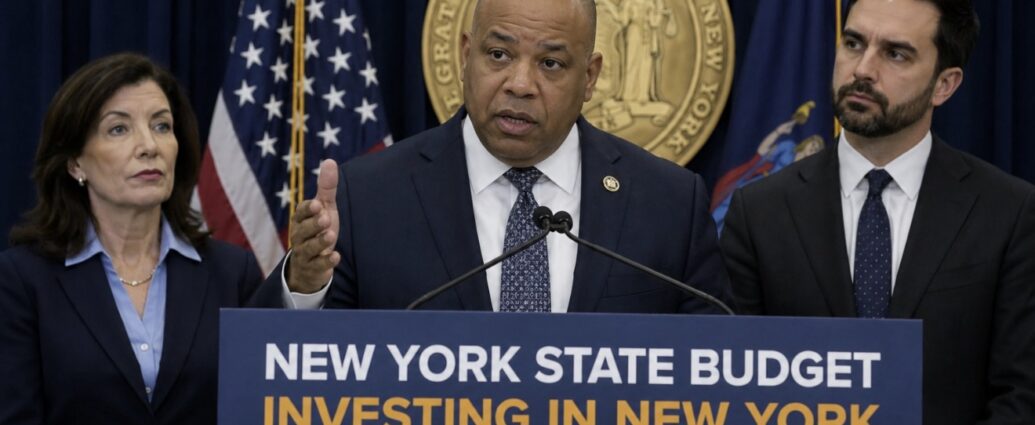
New York State lawmakers are advancing a proposal to impose a new 1% tax on all-cash home purchases of $1 million or more in New York City, a measure expected to generate roughly $160 million annually as Albany works to help Mayor Zohran Mamdani close the city’s widening budget deficit.

According to officials in New York Assembly Speaker Carl Heastie’s office, the proposal is expected to be included in the final negotiations surrounding Governor Kathy Hochul’s $268 billion fiscal 2027 state budget, with legislative votes anticipated next week.

The tax would apply to buyers paying entirely in cash and would function alongside New York City’s existing mortgage-recording tax, which currently captures financed purchases but largely bypasses all-cash transactions.

The proposal comes as cash purchases increasingly dominate New York’s luxury real-estate market.

According to data compiled by the nonprofit Center for New York City Neighborhoods, more than 60% of roughly 18,000 residential transactions recorded in New York City during the first half of 2025 were completed entirely in cash.

In Manhattan’s luxury market, the numbers are even more dramatic. Roughly 90% of transactions above $3 million were reportedly closed without financing, reflecting the growing influence of hedge fund executives, foreign investors, private-equity partners, and ultra-high-net-worth buyers.

A spokesperson for Heastie confirmed lawmakers are also debating whether to eventually expand the tax statewide to include suburban and upstate markets.

Albany Also Advances Pied-à-Terre Tax

The proposed cash-purchase levy is one of two major real-estate tax measures currently moving through Albany.

Governor Hochul on Thursday also submitted detailed legislative language for a separate pied-à-terre tax targeting second homes in New York City valued above $5 million that are not used as primary residences.

According to estimates from Hochul’s office, the second-home surcharge could generate approximately $500 million annually for New York City.

The proposal would apply to one-to-three-family homes assessed at $5 million or more and would impose additional taxes ranging from roughly 4% to 6.5% above existing property-tax obligations.

The surcharge would initially remain in place for five years before requiring legislative renewal.

Together, the two measures reflect the increasingly difficult fiscal environment confronting City Hall.

Mamdani Faces Massive Budget Deficit

Mayor Mamdani recently unveiled a $124.7 billion city budget for the fiscal year beginning July 1 while warning that New York faced a historic budget shortfall exceeding $12 billion when his administration took office.

City officials said the administration reduced the deficit to approximately $5.4 billion through agency spending cuts and savings initiatives led by newly appointed “chief savings officers” across city government.

Albany ultimately agreed to provide approximately $4 billion in additional state aid to help stabilize the city’s finances.

The new tax proposals are intended to create recurring revenue streams capable of supporting that state assistance without broader increases to income or corporate taxes — tax hikes Hochul has consistently resisted.

Real Estate Industry Pushes Back

The proposals have triggered immediate backlash from New York’s real-estate industry and several high-profile business leaders.

James Whelan, president of the Real Estate Board of New York, warned that additional transaction taxes could weaken housing activity and ultimately damage the property-tax base supporting both city and state finances.

“New York residents are already among the most heavily taxed in the country,” Whelan said in a statement.

Billionaire hedge fund founder Ken Griffin, whom Mamdani has publicly criticized during speeches targeting wealthy New Yorkers, also warned that additional taxes could accelerate the migration of high-income residents and businesses to lower-tax states.

President Donald Trump separately criticized Mamdani’s broader tax-the-rich approach earlier this year, arguing New York should encourage wealthy residents and investors to remain in the city rather than risk driving them elsewhere.

Housing Market Faces Potential ‘Cliff Effect’

Economists and brokers say the biggest near-term concern is the so-called “cliff effect” that could emerge if the new levy takes effect.

New York City already imposes an existing mansion tax beginning at 1% on purchases above $1 million and scaling up to 3.9% for properties above $25 million.

Under the proposed framework, a buyer paying cash for a $1.5 million Manhattan apartment could face roughly $30,000 in combined transaction taxes at closing.

Industry professionals interviewed by Bloomberg said they expect a rush of transactions to close before any new taxes officially take effect, followed by a likely slowdown afterward.

While ultra-luxury buyers may absorb the costs more easily, brokers warn the greatest impact could fall on middle- and upper-middle-class buyers using inheritance proceeds, retirement funds, or profits from prior home sales to make all-cash purchases in the $1 million to $2 million range.

Albany Budget Negotiations Continue

The state budget is now more than six weeks overdue past its April 1 deadline.

Speaker Heastie told reporters Thursday he expects lawmakers to begin voting on portions of the budget package by the end of next week, with final legislation expected to provide detailed tax language and implementation timelines.

Until then, New York’s real-estate industry, investors, brokers, and homebuyers remain closely focused on Albany negotiations that could significantly reshape the economics of buying property in the nation’s largest housing market.

JBizNews Desk

© JBizNews.com. All rights reserved. This article is original reporting by JBizNews Desk. Unauthorized reproduction or redistribution is strictly prohibited.

JERUSALEM — WhatsApp co-founder Jan Koum has donated $200 million to Shaare Zedek Medical Center in Jerusalem through The Koum Family Foundation, the largest single gift in the history of Israel’s healthcare system and a sum that will triple the physical footprint of one of Israel’s largest hospitals, according to the hospital’s announcement and reporting confirmed across The Jerusalem Post, Times of Israel, eJewishPhilanthropy, and Globes. The institution will be officially renamed Koum Shaare Zedek Medical Center in honor of the gift, marking the first time in the hospital’s 124-year history that the Shaare Zedek name will be combined with a donor’s name.

The donation will fund the construction of a 24-story medical tower spanning more than 1.5 million square feet at the hospital’s existing Bayit Vegan campus in west Jerusalem. According to architectural plans developed by Mochly-Eldar Architects with construction management by Margolin Bros., the new tower will house significantly expanded surgical and emergency-care facilities, large underground protected spaces engineered for “developing regional threats,” on-site housing for medical staff, and a rooftop helipad for direct helicopter access. The project has already received approvals from the Israeli government and the Jerusalem Municipality and is reported to be advancing rapidly through the city’s planning institutions. Shaare Zedek currently operates approximately 1,000 beds; the expansion is expected to roughly triple total capacity.

Koum, 50, was born in Kyiv and immigrated to the United States as a teenager. He co-founded WhatsApp in 2009 with Brian Acton and sold the messaging platform to Meta Platforms Inc. — then Facebook Inc. — in 2014 for approximately $19 billion. The acquisition remains one of the largest private-technology deals in history and made Koum one of the wealthiest individuals in the San Francisco Bay Area. He has since divided his time between California and Europe and has become one of the most active major donors in American Jewish philanthropy, supporting Bay Area community institutions, Russian-speaking Jewish community programs, Stanford University’s Israel studies program, AIPAC, Friends of the Israel Defense Forces, the Israel on Campus Coalition, the Maccabee Task Force, Friends of Ir David, and the Central Fund of Israel. The new gift to Shaare Zedek follows a $50 million Koum Family Foundation donation last year to Soroka Medical Center in Beersheba after the complex sustained a direct hit from an Iranian ballistic missile in June 2025 that caused heavy damage to the hospital’s surgical wing and laboratories.

“We are proud to partner with Shaare Zedek Medical Center, an institution that defines medical excellence in Jerusalem and beyond. This gift reflects our confidence in a future of medical innovation and research that will benefit patients in Israel and around the world,” Koum said in a statement issued by the hospital. Shaare Zedek President Prof. Jonathan Halevy called the gift “truly a special moment in Shaare Zedek Medical Center’s 124-year-old history” and said the donation reflected “remarkable confidence in our hospital, our staff, the city of Jerusalem, the nation of Israel, and a heartfelt embrace of Zionism.” Shaare Zedek Director-General Prof. Ofer Merin described the gift as “a mark of honor for every employee of our hospital” and said the partnership “will allow us to forge ahead with the construction of our new medical tower, which will set a new standard for Israeli healthcare.” The deal was structured over months of strategic negotiations led by Halevy and Merin alongside Akiva Holzer, the hospital’s director of special projects, and Yana Kalika, president of The Koum Family Foundation.

The $200 million figure surpasses the previous record set in August 2025 by Anat and Shmuel Harlap, who donated $180 million to Rabin Medical Center’s Beilinson Hospital outside Tel Aviv to fund the “Tower of Hope,” scheduled to open in early 2027. Beilinson is part of Clalit Health Services, Israel’s largest health-maintenance organization, which has substantially greater access to state budget allocation than independent hospitals like Shaare Zedek. The back-to-back nine-figure gifts represent a pattern that Israeli healthcare executives and government budget officials are watching carefully. According to reporting by Globes, Ynetnews, and Ctech, private capital — most of it American-Jewish — is now funding hospital infrastructure expansions at a scale that the Israeli state is not financing on a comparable timeline. The trend highlights a widening structural gap between institutions capable of attracting transformational private philanthropy and those dependent primarily on state budget allocations.

The healthcare-economics implications are substantial. Shaare Zedek operates as a financially independent hospital not affiliated with any of Israel’s four health funds — Clalit, Maccabi, Meuhedet, and Leumit — and consequently depends on philanthropic support more heavily than peer institutions to grow. The economics of attracting and retaining medical professionals in Jerusalem are also a meaningful factor in the project. Israel’s nationwide nursing shortage and the chronic shortfall of senior physicians in Jerusalem specifically — where housing costs are substantially higher than in peripheral cities and competing offers from Tel Aviv-area hospitals are common — have made on-campus staff housing one of the most important recruiting tools an Israeli hospital can offer. The new tower’s integrated staff housing component, funded through the Koum gift, is designed in part to address that recruiting problem and to support clinical staffing for a hospital that is about to triple its bed count.

For Israel’s healthcare system, the Koum donation is a marquee proof point that diaspora philanthropy can move on a scale and timeline that the state budget cannot match — particularly during a wartime year in which the Iran conflict has consumed substantial fiscal capacity. For the Koum Family Foundation, the gift consolidates a position as the largest single private donor to Israeli healthcare in the country’s history. And for Jerusalem, the new tower — when complete — will be the largest and most advanced single hospital facility in the city, set to anchor the medical district at the western edge of Israel’s capital for the next generation of patients.

JBizNews Desk

© JBizNews.com. All rights reserved. This article is original reporting by JBizNews Desk. Unauthorized reproduction or redistribution is strictly prohibited.

Nike Inc. is confronting the deepest crisis its China business has faced in decades, as Chinese consumers increasingly abandon the American sportswear giant in favor of fast-growing domestic competitors including Anta Sports and Li-Ning, forcing Nike into a sweeping strategic overhaul in what was once its most important international growth market.

According to Nike earnings filings and reporting reviewed by The Wall Street Journal, revenue in Greater China now sits roughly 28% below comparable levels from five years ago, while the company has recorded six consecutive quarters of year-over-year sales declines in the region.

The deterioration has transformed China from one of Nike’s most valuable growth engines into the weakest-performing major region in the company’s global portfolio.

In Nike’s latest reported quarter, Greater China revenue fell 17%, with footwear sales down 21%, extending a prolonged decline that has weighed heavily on consolidated results and contributed to significant stock weakness over the past year.

The region still accounts for roughly 15% of Nike’s total global revenue, making the slowdown impossible for investors and management to ignore.

Chief Executive Elliott Hill, who returned to Nike in October 2024 after previously spending more than three decades at the company, acknowledged during a recent earnings call that China represents “the longest road” in Nike’s broader turnaround effort.

“This market requires a complete reset,” Hill told investors.

From Phil Knight’s ‘Two Billion Feet’ Vision to Crisis

Nike’s China ambitions date back decades.

Co-founder Phil Knight famously described China as “one billion people, two billion feet,” a phrase that became central to Nike’s long-term international expansion strategy and helped turn China into one of the company’s most profitable regions by the early 2010s.

For years, Nike’s China playbook became a model studied by consumer brands across corporate America.

But the environment has changed dramatically.

According to Wall Street Journal reporting, internal execution problems compounded broader market shifts. Much of the operational breakdown reportedly occurred during the tenure of former China General Manager Angela Dong, who has since departed the company along with former Chief Commercial Officer Craig Williams.

Nike has since appointed longtime company veteran Cathy Sparks as Vice President and General Manager of Greater China to stabilize operations and oversee the turnaround effort.

Chinese Rivals Gain Ground

Nike’s decline has coincided with the explosive rise of domestic Chinese sportswear brands.

Anta Sports, headquartered in Fujian province, has aggressively expanded store networks throughout China’s interior cities while strengthening its presence in performance athletics and Olympic sponsorships — categories once dominated by Nike.

Meanwhile, Li-Ning, founded by the former Chinese Olympic gymnast of the same name, has successfully blended patriotic branding, localized marketing, and lower pricing to gain share in running and basketball apparel.

Both companies have benefited from faster mainland-based supply chains and significantly shorter design and production cycles than Nike’s more globally distributed manufacturing network.

A growing number of local athleisure and outdoor brands have also fragmented the market further.

Industry analysts increasingly view Chinese sportswear brands not as low-cost imitators but as legitimate global competitors capable of challenging Western brands on product quality, innovation, and consumer engagement.

Nike Misses China’s Digital Shift

Nike’s digital execution in China has also lagged competitors.

The company reportedly did not launch a flagship store on Douyin, the Chinese version of TikTok owned by ByteDance Ltd., until 2024 — roughly two years after Anta, Li-Ning, and other domestic brands had already built massive followings on the platform.

Douyin has become one of China’s dominant retail-discovery ecosystems for younger consumers, particularly in sportswear and lifestyle categories.

Nike’s delayed entry into the platform cost the company valuable market share and consumer relevance during a critical period of digital transformation in China’s retail sector.

The company also faced political and cultural backlash following a controversial 2024 Paris Olympics advertisement featuring an Asian female table-tennis player licking her paddle, which drew criticism from Chinese state media during a period of heightened nationalist sentiment.

The controversy contributed to growing pressure on then-Chief Executive John Donahoe, who later departed the company.

Geopolitics Add More Pressure

Broader geopolitical tensions have further complicated Nike’s position.

Ongoing tariff disputes under the Trump administration, rising U.S.-China political tensions, and lingering controversies involving Xinjiang cotton sourcing have created a more difficult operating environment for American consumer brands throughout China.

While competitors such as Adidas AG have managed to return to growth in China through more localized product strategies and faster execution, Nike continues struggling to regain momentum.

At the same time, premium athletic brands including Lululemon, Hoka, and On Holding are capturing market share globally, intensifying competitive pressures beyond China alone.

Nike Bets on ‘Back to Sport’ Turnaround

Hill’s turnaround strategy centers on what Nike internally calls a “back to sport” approach — refocusing the company on performance running, basketball, and athletic training after years emphasizing lifestyle apparel and fashion-oriented collaborations.

Nike said early signs from March showed stabilizing traffic trends at some Chinese stores, particularly in performance-running categories, where sales reportedly returned to double-digit growth.

Still, analysts at firms including Jefferies, Morgan Stanley, and Citigroup continue identifying China as the single largest risk factor facing Nike’s fiscal 2026 outlook.

For Wall Street and the broader retail industry, Nike’s struggles underscore a major shift underway in the Chinese consumer economy.

The China market that once fueled decades of relatively easy growth for American companies including Nike, Apple, Starbucks, and others has fundamentally evolved.

Chinese consumers are wealthier, more digitally sophisticated, more nationalistic, and increasingly loyal to domestic brands capable of competing globally.

Whether Nike can reclaim its lost market share — or whether China’s “two billion feet” have permanently moved elsewhere — may ultimately define Elliott Hill’s leadership and the company’s future growth trajectory.

JBizNews Desk

© JBizNews.com. All rights reserved. This article is original reporting by JBizNews Desk. Unauthorized reproduction or redistribution is strictly prohibited.

Coffee giant Starbucks is slashing about 300 U.S. support roles and closing some regional support offices.

“We are taking further action under the Back to Starbucks strategy, building on our strong business momentum and working to return the company to durable, profitable growth,” a Starbucks spokesperson said in a statement to FOX Business.

Leaders have taken a hard look at their respective functions to further sharpen focus, prioritize work, reduce complexity, and lower costs. As a result, we’re eliminating approximately 300 U.S. support roles,” the spokesperson said. 

The company is also closing some regional support offices.

“We are streamlining our real estate footprint including consolidating U.S. regional support office space and taking several other steps with leases and lease commitments,” the spokesperson noted.

This is a breaking news story. Please check back for updates.

This post was originally published here

The U.S. Equal Employment Opportunity Commission filed a federal religious-discrimination lawsuit Thursday against a multi-store Chick-fil-A franchise operator in Austin, accusing the company of firing a manager who asked for Saturdays off to observe her Christian sabbath — a striking 2026 enforcement action against an operator of a brand long synonymous with corporate religious observance, and the latest case in a wave of religious-bias lawsuits driven by EEOC Chair Andrea R. Lucas since the start of the Trump administration.

The lawsuit, EEOC v. Hatch Trick, Inc., Case No. 1:26-cv-01275, was filed in the U.S. District Court for the Western District of Texas, Austin Division. Hatch Trick operates multiple Chick-fil-A locations in the Austin area. According to the EEOC’s complaint, the employee — who managed delivery drivers at one of the locations — is a member of the United Church of God denomination, which observes a Saturday sabbath. She disclosed her religious observance during her job interview, and Hatch Trick initially honored her request to keep Saturdays off before management began scheduling her for Saturday hours.

When the employee met with company officials and proposed alternatives that would have kept her in her managerial role while observing her sabbath, Hatch Trick rejected the proposals and instead told her she could keep her religious accommodation only if she accepted a non-managerial delivery-driver position with lower pay, fewer benefits and reduced hours, the agency alleged. When she declined, the company fired her. The EEOC said it sued after pre-suit conciliation failed to produce a settlement.

“The duty under federal law to provide reasonable accommodation of religion reflects an acknowledgement by our society of the importance of faith in workers’ everyday lives and an abiding respect for those who observe religious practices as an expression of that faith,” Ronald L. Phillips, acting EEOC Dallas Regional Attorney, said in a statement Thursday. “Just as adherence to the dictates of one’s own conscience is not optional, so too an employer’s duty under Title VII is obligatory, and the EEOC stands ready to enforce that legal duty.”

The case is the latest in a sharp 2025-2026 ramp-up of religious-discrimination enforcement by the agency under Chair Andrea R. Lucas, who served as acting chair from January 2025 before being elevated to chair by President Donald Trump in November of last year and confirmed by the Senate to a second term ending in 2030. The EEOC in April said it had filed 16 religious-discrimination lawsuits and recovered more than $63 million on behalf of religious workers since January 2025. Recoveries for religious workers totaled more than $48 million in fiscal 2025 alone, a 146% increase from the prior year, the agency said.

“Religious liberty is a first freedom, not a second-class right,” Lucas said last month as the Trump administration released a report on what it called anti-Christian bias. Lucas, a conservative Christian and a former labor and employment attorney at Gibson, Dunn & Crutcher, has said religious discrimination was under-prosecuted during the Biden administration, and has positioned the issue alongside what she calls evenhanded enforcement of civil rights laws targeting DEI-related discrimination, anti-American national-origin bias, and antisemitic harassment. Under Lucas, the agency last year obtained what she has called the largest EEOC settlement to date for victims of antisemitism on behalf of Jewish employees at Columbia University.

The agency has also sued employers over Covid-19 vaccine mandates that, in the EEOC’s view, failed to provide accommodations for workers with religious objections. Lucas previously served on a Trump task force created to study anti-Christian bias in the federal government, and was elevated to the chair role after Brittany Panuccio was confirmed as a second Republican commissioner last fall, restoring the agency’s quorum and clearing the way for a more aggressive enforcement agenda.

For Chick-fil-A, the case is uncomfortable. The Atlanta-based chain has built much of its brand around the legacy of founder S. Truett Cathy, who opened the first restaurant in Hapeville, Georgia in 1946 and gave employees Sundays off so they could “rest, enjoy time with their families and loved ones or worship if they choose,” according to the company’s website. Eighty years later, the EEOC lawsuit underscores that Title VII obligations attach to franchisees regardless of the parent brand’s posture — and that the Civil Rights Act of 1964 requires reasonable accommodation for all sincerely held religious beliefs, including those observed on days other than Sunday. Chick-fil-A corporate is not named in the suit; franchisees are independent operators.

Religious-accommodation case law has been moving in employees’ favor. In Groff v. DeJoy (2023), a unanimous U.S. Supreme Court raised the bar an employer must clear to claim that accommodating a worker’s religious practice would impose an “undue hardship,” requiring proof of substantial increased costs rather than the previous low threshold of more than a “de minimis” burden. The EEOC under Lucas has cited the decision in pressing employers to revisit scheduling and accommodation policies.

The case is likely to be closely watched across the quick-service restaurant industry, which leans heavily on franchise structures and tightly scheduled hourly shifts. Peers including McDonald’s, Yum Brands’ KFC, and Restaurant Brands International’s Popeyes face similar exposure when individual franchisees handle scheduling and religious accommodation requests on their own.

The agency is seeking back pay, lost benefits, compensatory and punitive damages, and a court order requiring Hatch Trick to provide religious accommodations going forward. The message from the EEOC to small-business operators is direct: religious accommodation is not optional, and Title VII obligations run to every employee’s sincerely held belief regardless of the day on which it is observed.

JBizNews Desk
© JBizNews.com. All rights reserved. This article is original reporting by JBizNews Desk. Unauthorized reproduction or redistribution is strictly prohibited.
NEW YORK — May 14, 2026 — Shares of Boeing Co. dropped as much as 5.4% on Thursday and finished the session down roughly 4% at $227.50 after President Donald Trump told Fox News host Sean Hannity from Beijing that China had agreed to order 200 commercial jets from the company — a deal that would mark China’s first major purchase of U.S.-made commercial aircraft in nearly a decade but that came in at less than half of what Wall Street analysts and industry sources had been expecting heading into the summit. The disappointment erased every gain Boeing had accumulated since the company’s chief executive, Kelly Ortberg, joined the Trump delegation to Beijing earlier this week.

According to reporting by Bloomberg News in March and people familiar with the negotiations cited by Reuters, the package under discussion ahead of the Trump-Xi summit had been roughly 500 737 MAX narrow-body jets, with the potential for dozens more wide-body aircraft in follow-on orders. Jefferies had publicly forecast up to 500 to 600 aircraft from the visit. Trump said on Hannity that the figure was 200 “big” Boeing jets and characterized the outcome as a win for the planemaker, saying Boeing had wanted 150 but had gotten 200. Neither the White House nor Boeing specified the mix of narrow-body and wide-body aircraft included in the order, the delivery timeline, or the airlines that would take the planes — a degree of opacity that analysts said compounded the disappointment.

George Ferguson, senior aerospace analyst at Bloomberg Intelligence, summarized the Street reaction directly, telling clients that 200 jets “is a disappointment for a market looking for 300 or more and details around type.” Wall Street still maintains a Strong Buy consensus on Boeing shares with an average 12-month price target of $273.86, but the gap between Thursday’s announced figure and the 500-jet base case forced a sharp repricing of the China upside that had been built into the stock over the past month. Boeing shares had risen 8.84% in the four weeks leading into the summit on summit-deal anticipation. The stock is up roughly 7% for the year.

The strategic context underneath the headline matters as much as the headline. The 200-jet order is Boeing’s first major commercial sale to China since Trump’s 2017 visit to Beijing and represents roughly 3% of the company’s existing 6,807-aircraft backlog, according to the company’s most recent disclosures. Boeing delivered 47 commercial aircraft in April, including 34 of its 737 MAX narrow-body jets and six 787 Dreamliner wide-body aircraft, and the broader manufacturer continues to grapple with production bottlenecks that have left airlines globally waiting years for deliveries. Adding 200 Chinese aircraft to that pipeline at a slow drip is materially different from the step-change a 500-jet order would have represented.

Geopolitics has been the dominant overhang. In April 2025, China ordered its state-owned carriers to stop accepting Boeing deliveries and to halt purchases of U.S.-made aviation equipment after the Trump administration imposed a 145% tariff on Chinese imports. Trump suspended the triple-digit tariffs last October in a fragile trade truce, and Xi Jinping backed away from threats to choke off rare-earth supplies as part of the same deal — clearing the runway for fresh commercial conversations. In January 2020, China had committed to purchasing $77 billion in U.S.-made goods including aircraft as part of the so-called Phase One trade deal, but the Covid-19 pandemic collapsed air travel and the commitment was never fulfilled. Boeing lost its longstanding market lead in China to Airbus SE over the same period, in part because of trade friction and in part because the extended global grounding of the 737 MAX in the wake of two fatal crashes drove Chinese airlines toward the European competitor.

Airbus has been in parallel discussions for a similarly sized deal with Chinese carriers, according to industry sources, and is widely expected to land a portion of the broader Chinese fleet refresh that Boeing missed Thursday. China’s aviation market is the second-largest in the world after the United States, and both manufacturers project the country will require at least 9,000 new jetliners by 2045 — meaning the strategic prize remains enormous regardless of the size of the Trump-era announcement. Boeing’s ability to recapture its historic share of that pipeline now turns on whether the 200-jet figure represents a first installment with more orders to follow or a one-off summit deliverable designed to give both sides a headline.

Treasury Secretary Scott Bessent said earlier Thursday on CNBC from Beijing that he expected an announcement on a “large” Chinese Boeing order during the visit. Ortberg had told Reuters last month that he was counting on the Trump administration’s support to seal a major deal with China. The White House did not immediately respond to requests for comment on Wall Street’s reaction. Boeing also did not immediately comment.

For investors, Thursday’s reaction underscores the persistent investing principle that expectations dominate news on event-driven trades. The order itself is unambiguously good for Boeing — it reopens the Chinese channel after nearly a decade of trade-war damage, adds backlog at a moment when global wide-body demand is outstripping supply, and validates Ortberg’s decision to join the Beijing delegation. But with the buy-side positioned for a number two to three times larger, the gap punished the stock regardless. The next signal will come if and when the Civil Aviation Administration of China or specific Chinese carriers — Air China Ltd., China Eastern Airlines Corp., and China Southern Airlines Co. — disclose airline-level allocations and aircraft types.

JBizNews Desk

© JBizNews.com. All rights reserved. This article is original reporting by JBizNews Desk. Unauthorized reproduction or redistribution is strictly prohibited.
American consumer confidence fell to the lowest reading in the nearly 75-year history of the University of Michigan’s Surveys of Consumers, according to preliminary May figures released Friday morning, as soaring gasoline prices and persistent tariff anxiety continued squeezing household sentiment amid a renewed surge in global oil prices.

The preliminary index dropped to 48.2 in May from April’s upwardly revised 49.8, missing the 49.5 consensus estimate and falling below the prior low reached in June 2022 during the peak of post-pandemic inflation. The University of Michigan survey has been published continuously since November 1952.

Joanne Hsu, director of the Surveys of Consumers, said in a statement accompanying the report that consumers remain deeply concerned about rising prices and weakening purchasing conditions for major items. The current conditions component, which measures households’ assessment of current finances, plunged roughly 9% to 47.8, well below economist expectations of 52.0.

The expectations index edged slightly higher to 48.5 from 48.1, though consumers’ expectations for real income continued deteriorating for a third consecutive month. Roughly one-third of respondents spontaneously mentioned gasoline prices during interviews, while nearly 30% cited tariffs as a growing concern for household budgets and purchasing power.

Year-ahead inflation expectations eased modestly to 4.5% from April’s 4.7%, though they remain substantially above the 3.4% level recorded in February before the outbreak of the U.S.-Iran war. Long-run inflation expectations slipped slightly to 3.4% from 3.5%, but both measures remain elevated compared with the range prevailing during the two years immediately preceding the pandemic.

“Taken together, consumers continue to feel buffeted by cost pressures, led by soaring prices at the pump,” Hsu said. “Middle East developments are unlikely to meaningfully boost sentiment until supply disruptions have been fully resolved and energy prices fall.”

Those concerns intensified further Friday after another sharp move higher in oil prices following the conclusion of President Donald Trump’s summit with Chinese President Xi Jinping in Beijing.

With the Strait of Hormuz effectively closed since late February and Trump telling reporters after the summit that the United States does not need the waterway open “at all,” West Texas Intermediate crude rose another 2% Friday morning to roughly $104 a barrel while Brent crude climbed to approximately $108.

The Strait of Hormuz normally carries about one-fifth of global oil shipments, making the disruption one of the largest energy-market shocks in years. Wael Sawan, chief executive of Shell, warned last week in Houston that prolonged blockades would continue tightening global supplies of diesel, jet fuel and gasoline.

The pressure from higher fuel costs is increasingly visible across corporate America and consumer spending trends.

Walmart recently flagged heightened price sensitivity among lower-income shoppers and noted slowing momentum in discretionary purchases. Target said inflation in food, beverage and household essentials is “absorbing a much bigger portion” of customer budgets, while Home Depot cut its full-year outlook after softer demand for home-improvement projects.

Crocs has reduced second-half inventory orders amid concerns about weaker consumer demand, and Hims & Hers Health shares fell sharply earlier this week after disappointing guidance added to concerns that consumers are becoming more selective about spending.

The divergence between the University of Michigan survey and the Conference Board’s Consumer Confidence Index has also drawn increasing attention on Wall Street. Economists note that the Michigan survey places heavier emphasis on household finances and inflation expectations, while the Conference Board index tends to track labor-market conditions more closely.

Recent inflation data has reinforced those pressures.

The Bureau of Labor Statistics reported earlier this week that consumer prices rose 0.6% in April and 3.8% from a year earlier, marking the fastest annual inflation pace since May 2023. On Wednesday, the Producer Price Index showed wholesale prices jumping 1.4% during April, the largest monthly increase in nearly four years.

The combination of elevated inflation expectations and historically weak consumer sentiment complicates the Federal Reserve’s policy outlook at a sensitive moment for U.S. monetary policy.

Markets entered 2026 expecting multiple interest-rate cuts this year. But stronger inflation readings, higher oil prices and resilient economic growth have pushed traders to scale back those expectations significantly as Senate confirmation proceedings continue for Federal Reserve chair nominee Kevin Warsh while outgoing Chair Jerome Powell prepares to relinquish the chairmanship but remain on the Federal Reserve Board.

“The good news is that the economy looks resilient to this price shock so far,” said James McCann, senior economist for investment strategy at Edward Jones, following the April CPI release. Tax refunds, improving hiring trends and continued corporate profit growth have helped cushion the economic blow, McCann said, “but there are limits to these buffers.”

Consumers, by their own account, are increasingly beginning to feel those limits.

The final University of Michigan consumer sentiment reading for May is scheduled for release later this month.

JBizNews Desk
© JBizNews.com. All rights reserved. This article is original reporting by JBizNews Desk. Unauthorized reproduction or redistribution is strictly prohibited

LONDON — The British pound dropped nearly 1% against the U.S. dollar Thursday — its single largest one-day decline in more than three months — after Greater Manchester Mayor Andy Burnham announced he would seek to return to Parliament through a by-election in the Makerfield constituency, setting up what markets now interpret as the clearest signal yet that the former cabinet minister intends to mount a direct leadership challenge against Prime Minister Sir Keir Starmer, according to reporting from Bloomberg News and the Financial Times. Sterling hit a one-month low against the dollar, becoming the worst-performing G10 currency Thursday, and yields on longer-dated U.K. gilts climbed as investors began pricing in a higher probability of a Labour leadership change and the looser fiscal policy that would likely accompany it.

The trigger was a confluence of two announcements. Labour MP Josh Simons, who represents Makerfield, said he would step aside to allow Burnham to return to the House of Commons, and Burnham confirmed on X that he would seek permission from Labour’s National Executive Committee to contest the seat. Burnham has led Greater Manchester since 2017 but is not currently a sitting MP, and Labour Party rules require a leadership challenger to hold a Commons seat and to secure nominations from 20% of the parliamentary party — currently 81 Labour MPs — before a contest can be triggered. Returning to Westminster is the procedural gate that, until Thursday, had kept his ambitions theoretical. The market read the by-election announcement as the gate opening.

The political setup gives Thursday’s market move its weight. Labour suffered a heavy defeat in last week’s English local elections, losing roughly 1,500 council seats and control of dozens of local authorities including traditional strongholds. Reform UK, led by Nigel Farage, gained more than 1,400 council seats and took control of 14 councils, transforming the local contests into the most significant electoral repudiation a sitting U.K. government has absorbed since Liz Truss’s collapse in 2022. Starmer’s Labour Party entered the cycle with the 2024 landslide majority that put him in office; it exited with a parliamentary party openly divided over tax, spending, and direction. U.K. Health Secretary Wes Streeting is separately reported by The Times to be preparing his own leadership bid. Deputy Prime Minister Angela Rayner and Energy Secretary Ed Miliband have also been discussed as possible successors.

The fixed-income market is rendering its own verdict on which successor it would tolerate. Investors surveyed by the Financial Times identified Burnham as the Labour figure most likely to trigger a negative reaction in gilts, ahead of Rayner and Miliband, with Streeting rated the safest option due to his perceived economic pragmatism and closer alignment with Treasury orthodoxy. Nigel Green, chief executive of deVere Group, which has roughly $14 billion under advisement, said in a note Thursday that Burnham “represents the biggest threat to the gilt market among the serious Labour contenders because investors will immediately associate his leadership ambitions with heavier state spending, looser fiscal policy.” Green added that “higher gilt yields rapidly feed into mortgage pricing, business lending costs, corporate investment decisions and sterling stability.” Mitsubishi UFJ Financial Group’s FX strategy team flagged in a separate client note that polling shows a “soft left” Labour candidate is “most likely to replace Keir Starmer if a leadership contest takes place,” warning that such an outcome could amplify market concerns about U.K. fiscal risks and pressure both gilts and sterling further.

The strangest part of Thursday’s tape was that the political news overwhelmed a genuinely strong macro print. The U.K. economy expanded by 0.6% in the first quarter of 2026, the strongest quarterly growth in over a year and well above consensus expectations of 0.3%. In a normal environment, that print would have lifted sterling and tightened the Bank of England rate-cut trajectory. Instead, the pound sold off against both the euro and the dollar, and the yield curve steepened as longer-dated gilts underperformed — the textbook signature of a market repricing fiscal risk rather than monetary risk. The Bank of England is widely expected to hold rates at its next meeting. Bank of England Governor Andrew Bailey has not commented publicly on the political situation.

The market memory of the Truss mini-budget crisis is the structural reason political risk now translates so quickly into pound and gilt weakness. In September and October 2022, the Truss government’s unfunded tax cuts triggered a near-failure cascade in the U.K. pension-fund liability-driven investment market, forcing the Bank of England to launch an emergency gilt-buying program and contributing directly to Truss’s resignation after 49 days in office. Green of deVere said in his note that the experience “permanently lowered the threshold for market panic in the U.K.,” with structural vulnerabilities exposed during the 2022 episode having “never fully disappeared.” U.K. borrowing needs remain elevated, growth remains uneven, and the country’s chronic current-account deficit means it relies on foreign capital to fund itself — a dependency that becomes acute when political stability comes into question.

The next several weeks will determine whether the move extends or reverses. Burnham still requires Labour NEC approval to contest Makerfield — a process that several Manchester Labour MPs had reportedly resisted because none wanted to surrender their own seat. Simons’s offer changes that calculus only if NEC signs off. Starmer retains the prime ministership unless he chooses to resign or 81 Labour MPs sign nominations for an alternative candidate, and Downing Street has reiterated “full confidence” in Streeting’s loyalty even as the press reports the opposite. Reform UK sits on the sidelines, watching the Labour machine consume itself, with Farage the structural beneficiary of any further deterioration in voter confidence. For sterling, the gilt market, and the U.K. mortgage and corporate-credit complex that runs off them, every step in the Burnham leadership arithmetic from here is a binary repricing event.

JBizNews Desk

© JBizNews.com. All rights reserved. This article is original reporting by JBizNews Desk. Unauthorized reproduction or redistribution is strictly prohibited.
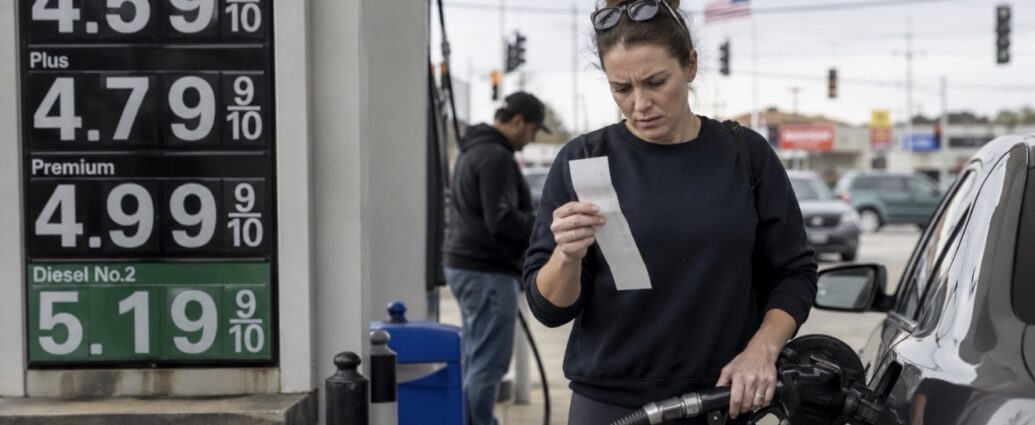
Global financial markets turned sharply lower Friday after President Donald Trump’s closely watched summit with Chinese President Xi Jinping concluded in Beijing without the sweeping trade breakthroughs investors had anticipated, while another jump in oil prices intensified fears that the prolonged closure of the Strait of Hormuz could trigger a broader global inflation shock.

U.S. stock futures fell aggressively before the opening bell as investors digested what many on Wall Street viewed as a summit heavy on symbolism but light on substance. According to official White House and Chinese government readouts, Trump and Xi agreed the Strait of Hormuz “must remain open” and reaffirmed their desire to stabilize economic ties between the world’s two largest economies. But the talks produced no formal tariff rollback framework, no major new market-access agreement, and no concrete diplomatic breakthrough on the Iran war that has disrupted global energy flows for nearly three months.

The disappointment immediately rippled across global markets.

Dow Jones Industrial Average futures dropped 242 points, or roughly 0.5%, in early trading Friday. S&P 500 futures declined 0.9%, while Nasdaq-100 futures slid 1.3% as investors moved aggressively out of high-valuation technology shares that had powered the market’s spring rally.

The reversal came just one day after the Dow reclaimed the psychologically important 50,000 level for the first time since February and the S&P 500 closed above 7,500 for the first time in history, underscoring how sensitive the market has become to geopolitical headlines and interest-rate expectations.

The selling pressure was even more severe overseas.

South Korea’s Kospi index plunged more than 6% to close at 7,493.18 after touching record highs earlier in the trading session, with semiconductor and artificial-intelligence-related shares leading the decline. Japan’s Nikkei 225 fell 2% to 61,409.29, Hong Kong’s Hang Seng dropped 1.6%, and mainland China’s CSI 300 index lost 1.12% to finish at 4,859.59.

Commodity markets also swung sharply. Spot gold declined 1.43% to $4,583.02 an ounce, while silver tumbled more than 5% to $79.07 as traders rotated away from recent momentum trades amid broad portfolio deleveraging.

Analysts said the market reaction reflected frustration over the absence of meaningful deliverables from the summit rather than any explicitly negative announcement.

Paul Donovan, chief economist at UBS, told clients Friday morning that “much increasingly scarce jet fuel has been burned to produce nothing of real substance,” adding that Beijing’s pledge to stabilize trade ties carried limited credibility given the volatility of U.S.-China economic policy over the past year.

At Deutsche Bank, strategist Jim Reid wrote that markets had quietly hoped China might emerge from the summit playing a more active role in helping de-escalate the Iran conflict and reopen the Strait of Hormuz. Those expectations weakened substantially after Trump told reporters following the summit that the United States does not need the strait open “at all,” comments that unsettled energy traders already grappling with tight global supply conditions.

ING strategist Francesco Pesole said the meeting “yielded too little so far” to materially improve global risk sentiment.

Oil prices surged again on the geopolitical uncertainty.

West Texas Intermediate crude rose 2% to roughly $104 a barrel, while Brent crude climbed to approximately $108 a barrel, extending one of the strongest energy rallies since Russia’s invasion of Ukraine in 2022. Energy markets remain under extreme pressure because roughly one-fifth of global oil shipments typically transit through the Strait of Hormuz, which has effectively remained blocked since the outbreak of the U.S.-Iran conflict in late February.

The prolonged disruption has tightened supplies of jet fuel, diesel and gasoline globally, fueling concerns that another wave of energy inflation could spill into consumer prices just as central banks were hoping inflation pressures were stabilizing.

Trump told Fox News host Sean Hannity after the summit that Xi had offered to help broker a diplomatic arrangement with Tehran. But expectations of any imminent breakthrough were quickly tempered after Secretary of State Marco Rubio told NBC News that the administration “didn’t ask them for anything,” suggesting Washington may not yet be pursuing an active Chinese mediation role.

One of the largest disappointments for U.S. industry centered on Boeing.

Shares of the aerospace giant extended Thursday’s nearly 5% decline in pre-market trading after Trump confirmed that China had agreed to purchase 200 aircraft from Boeing — only modestly above prior expectations and far below the blockbuster order some investors had anticipated ahead of the summit.

Technology stocks, meanwhile, came under particularly intense pressure as investors locked in profits following one of the sector’s strongest multi-week rallies in years.

Intel fell roughly 4%, Marvell Technology dropped 4%, and Advanced Micro Devices lost about 3%. Nvidia and Micron Technology each declined around 2%, while ASML and Arm Holdings fell more than 3.5%.

Even newly public AI-chipmaker Cerebras Systems, which surged 68% during its Nasdaq debut Thursday to reach a market capitalization near $95 billion, fell 3% in early Friday trading.

“The group has witnessed an extremely unsustainable move in recent weeks and remains vulnerable to profit taking regardless of the headlines,” wrote Adam Crisafulli of Vital Knowledge in a note distributed to institutional clients Friday morning.

There were limited pockets of strength.

Gemini Space Station, the cryptocurrency exchange founded by Tyler Winklevoss and Cameron Winklevoss, surged 22% in pre-market trading after announcing a $100 million strategic investment from Winklevoss Capital Fund alongside stronger-than-expected quarterly earnings.

“We believe the market has significantly undervalued Gemini, and that this investment will allow us to set up the company for its next phase of growth,” Tyler Winklevoss said in a statement, describing the investment as part of the company’s evolution “from a crypto company into a markets company.”

European markets also traded broadly lower. The pan-European Stoxx 600 index fell 1.3% during morning trading, with London, Frankfurt, Paris and Milan all posting sizable declines as investors reassessed inflation risks tied to higher energy prices.

Despite Friday’s global selloff, major U.S. indexes remain on track for strong weekly gains. The S&P 500 and Nasdaq Composite are still positioned for a seventh consecutive winning week, while the Dow remains on pace for its sixth winning week in seven weeks — a streak that has left equity valuations elevated and investor positioning increasingly fragile.

With the Beijing summit now concluded, investors are turning their focus toward whether the White House can help engineer a reopening of the Strait of Hormuz before higher oil prices begin feeding more aggressively into transportation, manufacturing and consumer costs. Markets are also closely watching the Senate confirmation process for Federal Reserve chair nominee Kevin Warsh, whose hearings are advancing as outgoing Chair Jerome Powell prepares to relinquish the chairmanship while remaining on the Federal Reserve Board.

JBizNews Desk
© JBizNews.com. All rights reserved. This article is original reporting by JBizNews Desk. Unauthorized reproduction or redistribution is strictly prohibited.

President Donald Trump’s Golden Dome missile defense initiative would cost roughly $1.2 trillion to build, deploy and operate over two decades, according to a new analysis published Tuesday by the nonpartisan Congressional Budget Office — a figure dramatically above the $175 billion estimate the president floated in May 2025 and far exceeding the roughly $185 billion currently envisioned in Pentagon long-term planning.

The Congressional Budget Office report, requested by Senator Jeff Merkley of Oregon, the ranking Democrat on the Senate Budget Committee, examined a “notional” national missile-defense architecture aligned with the executive order Trump signed during his first week back in office. The proposal calls for a layered defense shield capable of detecting and intercepting ballistic, cruise and hypersonic missiles during multiple phases of flight.

The agency stressed that its projection represented “one illustrative approach rather than an estimate of a specific Administration proposal,” but the underlying economics were striking. According to the CBO, acquisition costs alone would exceed $1 trillion, with the space-based interceptor layer accounting for roughly 70% of acquisition costs and about 60% of the system’s total long-term expense.

That orbital layer is where the numbers become especially daunting.

The CBO modeled a constellation of roughly 7,800 low-Earth-orbit satellites designed to engage up to 10 simultaneously launched intercontinental ballistic missiles. The acquisition price for that space-based layer alone was estimated at approximately $723 billion. Ground- and sea-based interceptor systems would add another $139 billion, while long-term operations and sustainment costs would ultimately push the total program price near $1.2 trillion over 20 years.

Gabe Murphy, a policy analyst at Taxpayers for Common Sense, told Responsible Statecraft that even the CBO estimate “could be low,” warning that the number of space interceptors required to stop a major adversary strike could become economically overwhelming. Some missile-defense analysts estimate the interceptor-to-threat ratio could approach 1,000-to-1 during a large-scale attack scenario involving Russia or China.

The CBO was also unusually direct about the system’s strategic limitations.

The report concluded that the notional architecture “would not be an impenetrable shield or be able to fully counter a large attack of the sort that Russia or China might be able to launch,” though it could successfully defend against a more limited strike from regional adversaries such as North Korea.

Even Pentagon officials have acknowledged the enormous technical and financial uncertainty surrounding the effort.

General Michael Guetlein, the Space Force officer selected to oversee the Golden Dome initiative, told lawmakers during congressional testimony last month that while the underlying technology largely exists, the defining question remains whether the United States can deploy it “at scale” and “affordably.” Guetlein added that if space-based interceptors cannot be produced at sustainable costs, “we will not go into production.”

For the defense industry, however, Golden Dome has already emerged as the most consequential procurement opportunity of the decade.

Initial funding has largely flowed through the One Big Beautiful Bill Act, which allocated approximately $24 billion to the program last year. The Defense Department is now seeking another $17.5 billion for fiscal 2027, with nearly all of the funding routed through congressional reconciliation rather than the Pentagon’s traditional base budget.

Last month, the U.S. Space Force awarded roughly $3.2 billion in rapid-development Other Transactional Authority contracts to 12 companies tasked with prototyping space-based interceptor systems.

The contractor roster reflects a collision between traditional defense giants and Silicon Valley’s rapidly expanding national-security sector. Legacy firms including Lockheed Martin, Northrop Grumman, RTX’s Raytheon unit, General Dynamics, and Booz Allen Hamilton are competing alongside venture-backed defense newcomers such as Anduril Industries, Palantir Technologies, Scale AI, True Anomaly, and Turion Space.

Elon Musk’s SpaceX is expected to provide much of the heavy-launch infrastructure and is reportedly working alongside Anduril and Palantir on satellite tracking and interceptor systems. Anduril and Palantir are also jointly developing the command-and-control software architecture that Guetlein has described as the program’s “secret sauce.”

Additional contractors including Boeing, L3Harris, and Leonardo DRS are widely expected to secure roles as the program advances into larger deployment phases.

Wall Street has already begun pricing the opportunity into aerospace and defense stocks. Analysts have pointed to Golden Dome as a potential multi-year growth engine for traditional prime contractors while also viewing it as a transformational moment for venture-backed defense firms seeking to establish themselves as permanent Pentagon suppliers.

Politically, the widening gap between the administration’s original cost estimate and the CBO’s projection is rapidly becoming the program’s defining flashpoint.

Merkley called the initiative “nothing more than a massive giveaway to defense contractors paid for entirely by working Americans” and pledged to oppose additional appropriations. Republican defense hawks counter that even a trillion-dollar investment is justified given the accelerating missile capabilities of China and Russia, particularly in hypersonic weapons systems that existing U.S. missile-defense architecture struggles to intercept.

Supporters also point to Israel’s Iron Dome as proof that layered missile-defense systems can significantly reduce civilian vulnerability during sustained attacks, though critics note that defending the continental United States presents a vastly larger and more complex challenge.

The Pentagon is under pressure to demonstrate an initial operational capability by summer 2028, with broader deployment expected sometime during the 2030s. Whether Congress is willing to sustain the level of spending implied by the CBO’s projections is now emerging as one of the central questions looming over the next generation of U.S. defense budgeting.

JBizNews Desk

© JBizNews.com. All rights reserved. This article is original reporting by JBizNews Desk. Unauthorized reproduction or redistribution is strictly prohibited.
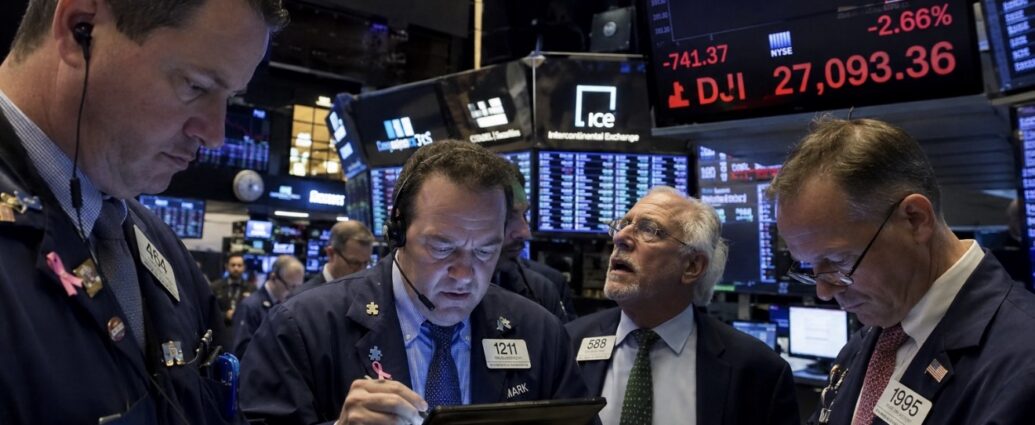
Elon Musk’s xAI launched its first dedicated AI coding agent Thursday, formally entering one of the fastest-growing sectors in artificial intelligence software as competition intensifies between xAI, Anthropic, and OpenAI for dominance in enterprise developer tools.

The new product, called Grok Build, is a desktop and terminal-based coding assistant designed to compete directly with Anthropic’s Claude Code and OpenAI’s Codex, according to an official announcement released by xAI.

The launch marks Musk’s most serious push yet into professional software-development infrastructure and arrives as SpaceX — which absorbed xAI earlier this year — reportedly prepares for a potential public offering that could value the combined AI and aerospace business near $75 billion.

Grok Build Launches for $300-Per-Month Subscribers

Initially, Grok Build is available exclusively to SuperGrok Heavy subscribers, xAI’s highest-tier subscription plan priced at $300 per month.

The platform runs as a native application across macOS, Linux, and Windows systems.

According to xAI, the coding agent is powered by Grok 4.3, the company’s newest frontier AI model, which uses a multi-agent architecture capable of deploying up to eight simultaneous AI workers to analyze codebases, search documentation, plan modifications, and generate software changes in parallel.

xAI said the system includes a massive two-million-token context window, allowing the agent to process and retain large software repositories across complex multi-file coding tasks.

The company also emphasized a “plan mode” feature enabling developers to review, modify, or reject the AI’s strategy before code changes are implemented.

Approved modifications are displayed through human-readable code diffs before execution.

Built Around Emerging Industry Standards

Grok Build supports many of the open standards rapidly becoming common throughout AI-assisted software development.

These include AGENTS.md project structures, plugins, hooks, custom skills, and the Model Context Protocol (MCP) — an interoperability framework originally introduced by Anthropic in 2024 that has since gained broad adoption across AI development platforms.

Developers can currently access the beta version through build.grok.com.

xAI engineer Michael Nicolls is overseeing the early testing and feedback program among high-tier subscribers.

AI Coding Market Becomes Major Battleground

The launch dramatically escalates competition in the emerging AI coding-agent market.

Anthropic, led by Dario Amodei and Daniela Amodei, transformed Claude Code from an experimental product into one of Silicon Valley’s fastest-growing enterprise tools over the past year.

The success helped propel Anthropic into reported valuation discussions approaching $900 billion, up sharply from earlier financing rounds.

Meanwhile, OpenAI’s Codex platform has gained substantial adoption among independent developers and startup engineering teams.

Industry data compiled by analysts at BigGo Finance recently showed Codex generating download activity significantly above Claude Code in certain developer ecosystems.

Amazon has also entered the battle.

Earlier this month, Amazon reportedly opened internal employee access to both Claude Code and Codex after concerns emerged that its internally developed coding assistant, Kiro, had fallen behind competitors.

Musk and Anthropic Shift From Conflict to Partnership

The Grok Build launch comes amid a broader and increasingly complicated rivalry between Musk and major AI firms.

Earlier this year, Anthropic revoked xAI’s access to Claude models after accusing xAI engineers of improperly leveraging Claude capabilities through third-party coding tools in ways that allegedly violated Anthropic’s usage policies.

Despite the tensions, the two companies recently reached a significant infrastructure agreement.

Anthropic signed a major compute deal granting access to xAI’s Colossus 1 data center in Memphis, Tennessee, which provides more than 300 megawatts of AI computing capacity.

Anthropic said the infrastructure is already helping expand compute availability for Claude subscribers.

The agreement also reportedly includes discussions exploring future multi-gigawatt orbital computing infrastructure involving SpaceX.

Musk, who has publicly criticized both Anthropic and OpenAI in recent years while simultaneously pursuing litigation against OpenAI and Chief Executive Sam Altman, recently signaled a softer tone toward Anthropic after meeting with members of the company’s leadership team.

xAI’s Business Model Evolves

The Grok Build rollout also highlights the increasingly unusual economics behind xAI and SpaceX’s AI ambitions.

Musk has publicly stated that xAI currently uses only a small portion of its available computing infrastructure for internal Grok development, leaving substantial unused capacity available for outside clients — including competitors such as Anthropic.

The arrangement effectively positions SpaceXAI as both an AI product developer and a large-scale infrastructure provider to rival AI labs.

Industry analysts increasingly view the strategy as similar to Amazon Web Services’ role in cloud computing: owning the infrastructure layer while simultaneously competing at the application layer.

Can Grok Build Challenge Claude and Codex?

For enterprise customers, Grok Build now emerges as a credible third major option alongside Claude Code and Codex.

Analysts say xAI appears to be positioning Grok Build as a lower-cost alternative to premium offerings from Anthropic and OpenAI while attempting to match competitors on key technical capabilities.

That approach aligns with Musk’s broader strategy across several industries: aggressively scale infrastructure, compete on pricing, and rapidly expand ecosystem integration.

Whether Grok Build can meaningfully challenge Claude Code and Codex over the next year will likely depend on enterprise adoption, reliability, and developer trust as corporations increasingly integrate AI agents directly into software engineering workflows.

For now, the launch signals that the AI coding wars — one of the most commercially important segments of artificial intelligence — are entering a far more competitive phase.

JBizNews Desk

© JBizNews.com. All rights reserved. This article is original reporting by JBizNews Desk. Unauthorized reproduction or redistribution is strictly prohibited.

Streaming platforms are officially overtaking traditional television in the most important advertising market in American media, marking a historic turning point for Madison Avenue and accelerating the transformation of how entertainment companies, advertisers, and consumers interact.

For the first time ever, U.S. connected-TV upfront advertising spending is projected to exceed traditional primetime broadcast and cable upfront commitments in 2026, according to new forecasts released by research firm EMARKETER.

The firm projects advertisers will commit approximately $17.73 billion to connected television (CTV) upfront deals this year, surpassing the estimated $16.98 billion expected for traditional linear primetime television.

The crossover represents one of the clearest financial confirmations yet that streaming has fundamentally displaced the decades-old broadcast television model that dominated American advertising for generations.

The shift is unfolding this week in Manhattan, where the television industry’s annual upfront presentations — historically centered around major broadcast networks — have increasingly become showcases for streaming giants including Netflix, Disney, Amazon, and YouTube.

The data behind the transition are striking.

According to Nielsen’s 2026 Upfront Planning Guide, streaming platforms now account for roughly 66.7% of all ad-supported television viewing among Americans aged 18 to 49, the most valuable demographic for advertisers.

Streaming also surpassed combined broadcast and cable television viewing for the first time last year and has continued widening that lead ever since.

Meanwhile, EMARKETER projects total U.S. connected-TV advertising spending will reach approximately $38 billion this year and climb to nearly $47 billion by 2028 — eventually surpassing all traditional television advertising combined.

The growth is being driven by a dramatic shift in consumer behavior.

Younger audiences increasingly consume entertainment through ad-supported streaming tiers, free streaming television channels, mobile video platforms, and smart-TV ecosystems rather than traditional cable subscriptions.

That migration is now fundamentally reshaping the economics of the media industry.

Among the biggest winners has been Netflix, which spent years resisting advertising entirely before aggressively embracing the business.

The company told investors during its recent earnings call that it expects advertising revenue to approach $3 billion in 2026 as its ad-supported subscription tier continues expanding rapidly.

Netflix said more than 70 million monthly active users globally now use its ad-supported plan, with a majority of new subscribers in supported markets choosing the lower-cost advertising tier.

The company’s broader business remains strong as well.

Netflix reported first-quarter revenue of $12.25 billion, up more than 16% year-over-year, while maintaining full-year revenue guidance between $50.7 billion and $51.7 billion.

Executives have increasingly positioned Netflix not just as a streaming service, but as a next-generation advertising platform.

Amy Reinhard, President of Advertising at Netflix, has highlighted the company’s growing suite of targeting, measurement, and programmatic advertising tools designed to compete directly with traditional television ad buying.

Disney is also emerging as one of the largest beneficiaries of the streaming advertising shift.

The company’s streaming advertising business generated approximately $5.3 billion in revenue during the quarter ending December 2025, while profitability across Disney’s streaming segment rose sharply.

Executives have increasingly emphasized the power of combining streaming inventory across Disney+, Hulu, ESPN, ABC, and FX into unified advertising campaigns spanning both traditional and digital audiences.

At the same time, Amazon has arguably moved most aggressively to position itself as the infrastructure layer connecting the entire streaming ecosystem.

Its advertising platform, powered through Amazon DSP, now combines inventory from Prime Video, Fire TV, and third-party streaming platforms into one integrated marketplace for advertisers.

Amazon executives say the company’s advertising graph now reaches roughly 90% of U.S. households, giving it one of the broadest audience datasets in the industry.

The broader advertising landscape is also becoming increasingly concentrated.

According to research firm MoffettNathanson, four companies — Alphabet, Meta Platforms, Amazon, and Microsoft — now control roughly 65% of all U.S. advertising spending and approximately 80% of digital advertising.

That concentration is leaving traditional television networks under mounting pressure.

EMARKETER forecasts cable television advertising spending will decline another 10% this year, while advertising rates across broadcast and cable continue weakening as audiences shrink and streaming inventory expands.

Even streaming ad prices themselves have begun softening as supply grows rapidly.

The shift has already forced difficult decisions across legacy media.

Last year, CBS, owned by Paramount Global, announced it would end production of The Late Show in 2026 after years of declining ratings and financial losses — a symbolic sign of how deeply the traditional late-night and primetime television model has eroded.

Yet despite economic concerns tied to inflation, the Iran conflict, and rising energy costs, industry executives largely remain optimistic about the broader advertising environment itself.

Advertisers continue reallocating budgets rather than pulling back entirely.

The question dominating upfront week in Manhattan is no longer whether streaming will replace traditional television advertising.

That transition has already happened.

The new battle now centers on which companies will control the platforms, audience data, and advertising infrastructure powering the next generation of global media consumption.

And increasingly, the answer appears to be shifting away from legacy television networks and toward the technology-driven streaming giants now reshaping the future of entertainment itself.

JBizNews Desk
© JBizNews.com. All rights reserved.

Cerebras Systems Inc. exploded onto Wall Street Thursday in the largest U.S. technology IPO since Uber’s 2019 debut, with shares of the artificial-intelligence chipmaker surging 68% on their first trading day and instantly turning co-founder and Chief Executive Andrew Feldman into a multibillionaire.

The Silicon Valley AI hardware and cloud-computing company priced its IPO Wednesday night at $185 per share — well above the originally expected $150-to-$160 range — before opening Thursday morning at $350, climbing as high as $386, and ultimately closing at $311.07.

At the closing price, Cerebras commanded a market valuation of roughly $95 billion, instantly becoming one of the most valuable pure-play AI infrastructure companies in public markets outside of NVIDIA.

The offering raised approximately $5.55 billion, with underwriting banks including Morgan Stanley, Citigroup, Barclays, and UBS holding an option to sell an additional 4.5 million shares that could lift total proceeds above $6.3 billion.

The deal marks the largest American technology IPO since Uber Technologies went public in 2019 and the first major pure-play AI chip listing to hit public markets during the current artificial-intelligence boom.

For Wall Street, the offering also signals a dramatic reopening of the technology IPO market after years of sluggish activity following the Federal Reserve’s aggressive rate-hiking cycle beginning in 2022.

Andrew Feldman Becomes Billionaire

The IPO instantly transformed Cerebras co-founder Andrew Feldman into one of Silicon Valley’s newest billionaires.

According to SEC filings, Feldman owns approximately 10.3 million shares, or roughly 5.5% of the company, giving him a paper fortune worth approximately $3.2 billion at Thursday’s close.

Feldman did not sell shares in the offering.

Cerebras co-founder and Chief Technology Officer Sean Lie also crossed billionaire status, with his holdings valued near $1.7 billion.

Speaking Thursday on CNBC’s Squawk Box, Feldman said Cerebras had reached a scale and maturity level that justified entering public markets as demand for AI infrastructure accelerates globally.

“This market opportunity is enormous,” Feldman said. “We believe we are still in the very early innings.”

Feldman previously founded microserver company SeaMicro Inc., which was acquired by Advanced Micro Devices in 2012 for roughly $334 million.

Massive AI Contracts Drive Growth

The financial performance behind the IPO has improved dramatically over the past year.

Cerebras reported revenue growth of 76% last year to approximately $510 million and swung to net income of $88 million from a loss exceeding $480 million the prior year.

Much of the turnaround stemmed from major AI-computing contracts signed over the past 18 months.

The company’s most significant deal came in January, when Cerebras secured a multi-year agreement with OpenAI reportedly worth more than $20 billion for 750 megawatts of AI compute capacity.

Cerebras also maintains partnerships with Amazon Web Services and G42, the Abu Dhabi-based artificial-intelligence company backed by Microsoft.

G42 previously accounted for nearly 80% of Cerebras’ chip sales, creating concentration concerns that nearly derailed the IPO process.

National Security Review Nearly Halted IPO

Cerebras originally filed for its public offering in September 2024 but delayed the process after the Committee on Foreign Investment in the United States opened a national-security review tied to the company’s relationship with G42.

The review was ultimately closed without action, allowing the IPO to proceed.

In the interim, Cerebras completed a private fundraising round in February 2026 valuing the company at approximately $23.1 billion.

AMD participated in that financing round.

Bloomberg also reported earlier this month that both Arm Holdings and SoftBank Group explored acquiring Cerebras before the IPO, though the company declined to comment publicly on the reports.

Early Investors Score Massive Gains

The IPO generated enormous paper gains for Cerebras’ early investors.

Venture capital firm Benchmark, which co-led the company’s Series A financing, now holds shares worth approximately $5.5 billion.

Foundation Capital owns stock valued near $4.8 billion, while Fidelity Investments controls holdings worth roughly $3.8 billion.

Eclipse Ventures emerged with a stake valued at approximately $2.5 billion.

Among individual investors, OpenAI Chief Executive Sam Altman holds shares worth roughly $27.8 million, while OpenAI President Greg Brockman owns shares valued near $24.2 million.

Intel Chief Executive Lip-Bu Tan was also among the company’s early backers.

A Direct Challenge to NVIDIA

Cerebras has positioned itself as one of the most serious challengers to NVIDIA in AI computing infrastructure.

The company claims its flagship Wafer Scale Engine 3 chip delivers superior performance and lower operating costs for AI inference workloads — the computing process used to run AI models in real time after training.

Inference has rapidly become one of the fastest-growing segments of the AI market as businesses deploy large-language models into commercial products and enterprise systems.

The debut comes amid an extraordinary rally across the broader AI infrastructure sector.

NVIDIA reached fresh all-time highs Thursday, while shares of AMD, Intel, and Micron Technology have surged in recent weeks as investors continue pouring money into AI-related companies.

IPO Market Reawakens

Wall Street increasingly sees the Cerebras offering as the beginning — not the peak — of a new technology IPO cycle centered around artificial intelligence.

Several massive offerings are already expected to follow.

SpaceX, which absorbed Elon Musk’s AI startup xAI earlier this year, is reportedly preparing a new share sale that could value the company near $75 billion.

Meanwhile, OpenAI and Anthropic — both privately valued near or above $1 trillion in secondary markets — are widely expected to explore public offerings in the coming year.

After four years of frozen IPO markets and cautious investor sentiment, Cerebras may have delivered the clearest sign yet that Wall Street’s appetite for high-growth technology offerings has fully returned.

JBizNews Desk

© JBizNews.com. All rights reserved. This article is original reporting by JBizNews Desk. Unauthorized reproduction or redistribution is strictly prohibited.

NEW YORK — U.S. stock futures pointed modestly higher in pre-market trading Friday following the largest single-stock earnings beat of the week and a late-Thursday breakthrough in semiconductor export policy out of the Trump-Xi summit in Beijing, with Applied Materials Inc.‘s blowout fiscal second-quarter results and reports that the U.S. Department of Commerce has cleared Nvidia Corp. to ship H200 AI chips to 10 Chinese companies setting up the AI-driven rally to test fresh record highs after Thursday’s closes on the S&P 500 at 7,501.24 (+0.77%), the Nasdaq Composite at 26,635.22 (+0.88%), and the Dow Jones Industrial Average at 50,063.46 (+0.75%). Adding to the catalyst stack: Friday marks Jerome Powell‘s final day as Federal Reserve Chair after the Senate confirmed Kevin Warsh on Wednesday’s party-line 51-49 vote to succeed him, with Warsh expected to take the gavel May 19 or 20.

The single most consequential corporate print this week came after Thursday’s bell. Applied Materials, the world’s largest maker of semiconductor manufacturing equipment, reported record revenue of $7.91 billion against a Bloomberg consensus of $7.65 billion, with adjusted earnings of $2.86 per share well ahead of the $2.66 to $2.68 Street estimate. The company guided third-quarter revenue to $8.95 billion plus or minus $500 million against an $8.15 billion consensus, with adjusted EPS guided to $3.36 versus a $2.88 estimate — one of the largest forward-guidance beats of the AI capex era. President and Chief Executive Gary Dickerson raised the company’s outlook for industry-wide semiconductor equipment growth to “more than 30 percent in calendar 2026,” up from “over 20 percent” in February. CFO Brice Hill told analysts on the call that “the growth in AI that Applied has been investing for is now in full force” and that the company is tracking more than 100 global factory projects, having added more than 10 new projects in the latest quarter alone. AMAT shares rose roughly 4% in after-hours trading. Citi’s Atif Malik maintains a $520 price target. B. Riley Securities analyst Craig Ellis carries a $485 target.

The semiconductor-equipment readthrough lifts the entire AI capex stack heading into Friday’s open. Lam Research Corp., KLA Corp., ASML Holding NV, and Tokyo Electron Ltd. are the most direct beneficiaries of an industry-wide 30% growth ramp. Micron Technology Inc. and SanDisk Corp., both of which have already been on a tear in May, get further validation of HBM memory demand. Nvidia, Advanced Micro Devices Inc., and Broadcom Inc. all gain from the implied capacity coming online to manufacture next-generation chips. Nvidia specifically faces a second pre-market catalyst: the Commerce Department’s approval for shipping H200 chips to Alibaba Group Holding Ltd., Tencent Holdings Ltd., and eight other Chinese technology firms — a major reversal of the Biden-era export-control posture that Nvidia CEO Jensen Huang has been lobbying against for more than a year. Huang joined President Trump’s delegation to Beijing for the summit. Nvidia shares gained 4.4% Thursday on the news.

Friday’s macro calendar is comparatively light but consequential. The New York Fed‘s Empire State Manufacturing survey for May hits at 8:30 a.m. Eastern. Industrial Production and Capacity Utilization for April are released at 9:15 a.m. The week’s most-watched print is the preliminary University of Michigan Consumer Sentiment survey for May at 10:00 a.m., which includes the closely tracked one-year and five-to-ten-year inflation-expectations subindexes — readings that take on outsized significance after Wednesday’s hot April Producer Price Index report showed wholesale prices up 1.4% month-over-month and 6.0% year-over-year, the largest monthly jump in four years. Boston Fed President Susan Collins said earlier this week that a rate hike “could be in the cards,” and any acceleration in Michigan inflation expectations would steepen that line.

The political backdrop continues to drive cross-asset volatility. President Donald Trump and Chinese President Xi Jinping wrap up the Beijing summit Friday, with markets watching for the closing readout on the announced $30 billion tariff rollback in non-critical categories, the 200-jet Boeing Co. order that disappointed Wall Street Thursday, and any joint statement on AI guardrails or rare-earth supply security. Powell chairs his final FOMC in posture only — no meeting is scheduled — but his term technically ends at midnight Friday. Warsh, viewed by markets as marginally more open to rate cuts than the current committee but unlikely to deliver them without softer inflation data, takes office early next week. The Iran war continues to dominate the energy market, with WTI crude closing Thursday at $102 a barrel, Brent at roughly $117, and the Strait of Hormuz expected to remain effectively closed through late May according to the U.S. Energy Information Administration’s most recent Short-Term Energy Outlook published Monday.

Pre-market earnings reports Friday morning include Flowers Foods Inc. (FLO), RBC Bearings Inc. (RBC), H World Group Ltd. (HTHT), Xpeng Inc. (XPEV), RLX Technology Inc. (RLX), Alumis Inc. (ALMS), and Arrivent Biopharma Inc. (AVBP). Cerebras Systems Inc. — which closed its IPO debut at $311.07 Thursday, valuing the AI chip startup at roughly $95 billion — will be watched closely as the post-IPO lockup dynamics and price discovery continue. Boeing, off 4.7% Thursday on the disappointing China deal, will be watched for a Friday bounce or follow-through selling. Honda Motor Co. Ltd. ADRs will react to Thursday’s announcement of the carmaker’s first-ever annual loss and the abandonment of its U.S. EV strategy.

The risks into the open are stacked. The Nasdaq Composite’s Relative Strength Index is at a multi-year high and chip names have ripped in May, leaving the rally vulnerable to even modest profit-taking. Any walk-back of the China H200 approval or summit-deal language would hit semis hard. A Michigan consumer-sentiment inflation-expectations spike would tighten the Fed setup before Warsh has even taken office. The bull case is straightforward: AMAT’s 30% industry-growth guide validates the AI capex thesis, Nvidia’s China access removes the single largest overhang on the most-owned stock in the market, summit headlines stay clean, and the Hormuz picture eases by late May per EIA. Friday’s session will tell which of those scenarios the tape is pricing.

JBizNews Desk

© JBizNews.com. All rights reserved. This article is original reporting by JBizNews Desk. Unauthorized reproduction or redistribution is strictly prohibited.

WASHINGTON — May 14, 2026 — President Donald Trump disclosed 3,642 securities transactions during the first quarter of 2026 with an aggregate notional value of between $220 million and roughly $750 million, according to a 113-page Office of Government Ethics Form 278-T filing made public Thursday — a trading footprint that breaks roughly six decades of presidential blind-trust norms and that lands at exactly the moment Trump is leading a high-stakes summit in Beijing alongside Nvidia Corp. chief executive Jensen Huang and a delegation of U.S. corporate leaders whose companies feature prominently in the disclosure. The filing, certified by Trump on May 8 and received by OGE on May 12, includes a handwritten notation on the cover page reading “Filer paid late fees,” indicating the legally required 30-to-45-day reporting window was exceeded.

The single most consequential purchase listed in the filing is a position of $1 million to $5 million in Nvidia, bought before Huang was added to the Beijing trip and before Trump-Xi summit discussions of AI chip export policy and U.S.-China semiconductor relations. Nvidia closed at a record high Thursday after Cantor Fitzgerald raised its price target to $350 from $300. Trump also bought $1 million to $5 million of Boeing Co. stock during the quarter — a position the company’s commercial aircraft division saw vindicated this week when Trump told Fox News during the Beijing trip that China had agreed to purchase 200 Boeing jets, a deal that would represent one of the largest commercial aircraft orders in years. Boeing shares have risen 8.84% over the past month on summit anticipation, with the company’s order backlog already at a record $695 billion.

The disclosure spans virtually every sector of U.S. policy currently driven from the White House. In the AI and semiconductor complex, Trump added $1 million-to-$5 million positions in Microsoft Corp., Oracle Corp., Broadcom Inc., Apple Inc., Synopsys Inc., Cadence Design Systems Inc., Texas Instruments Inc., SanDisk Corp., Intel Corp., and Dell Technologies Inc. In financial services, the president added JPMorgan Chase & Co., Goldman Sachs Group Inc., Visa Inc., and Bank of America Corp. In defense and aerospace, beyond Boeing, he added GE Aerospace and Palantir Technologies Inc. In the digital-asset and retail-investing complex — sectors where his administration is actively rolling out new policy — he bought Coinbase Global Inc., Robinhood Markets Inc., and SoFi Technologies Inc., alongside a $1 million-to-$5 million position in an unnamed S&P 500 index fund. Aggregate purchases in Oracle alone are estimated at $2.2 million to $10.6 million, with Microsoft at $2.4 million to $8.1 million, Amazon.com Inc. at $2.5 million to $8.3 million, and Nvidia at $1.8 million to $6.6 million, according to a line-by-line review of the filing by Benzinga.

The disclosure also shows large sales — between $5 million and $25 million each in Microsoft, Amazon, and Meta Platforms Inc. — alongside the new purchases in those same names, indicating active rebalancing rather than directional exit. International exposure was added through 19 transactions across nine ETFs concentrated in a seven-trading-day window between January 29 and March 10, with the largest single foreign-linked position in the iShares Core MSCI Emerging Markets ETF, ticker IEMG.

The most contested individual position involves Dell Technologies. The filing records multiple seven-figure Dell purchases beginning February 10. On May 8 — the same day Trump certified the disclosure — the president publicly praised Dell at a White House event, and the stock rose roughly 12% that session. The Dell family separately pledged $6.25 billion to the administration’s Trump Accounts retirement program in December 2025, a program for which Robinhood — another stock added in the disclosure — serves as initial trustee. Ethics critics have flagged the overlap.

The trading footprint is a sharp departure from modern presidential practice. Lyndon B. Johnson set the post-war template by placing personal holdings in a qualified blind trust, and every president since has followed some version of that model. Jimmy Carter went further and liquidated his peanut farm. Barack Obama held Treasury notes and broad index funds. Joseph R. Biden used a blind-trust arrangement throughout his term. Trump’s assets are held in a trust controlled by his children, and several entries in the new filing indicate that a broker acted as agent on specific transactions, but the disclosure does not identify the relevant accounts or specify who placed individual trades. A spokesperson for the Office of Government Ethics declined to address whether the filings reflect direct trading by the president or activity conducted through managed or discretionary structures, stating only that the agency is committed to transparency and citizen oversight. The White House has defended the disclosures as full compliance with the STOCK Act.

For markets, the disclosure tightens an already complicated political-economy loop. Trump has personally rebuked New York City Mayor Zohran Mamdani’s tax-the-rich rhetoric, threatened tariffs on multiple major U.S. trading partners, and is currently negotiating a tariff rollback with China worth roughly $30 billion in non-critical trade categories — all while his Q1 disclosure shows him with new direct exposure to the U.S. and international companies most affected by those decisions. Nvidia, Apple, Microsoft, and Oracle alone are sensitive to executive tariff and trade policy in ways that the broad reporting bands of the 278-T format may obscure. Congressional ethics committees and the public will now determine whether the pattern triggers a formal review or simply becomes the new baseline.

JBizNews Desk

© JBizNews.com. All rights reserved. This article is original reporting by JBizNews Desk. Unauthorized reproduction or redistribution is strictly prohibited.

NEW YORK — Trump Mobile said it will begin shipping its long-delayed gold-colored T1 Phone this week at a retail price of $499, nearly a year after the Trump Organization-licensed wireless venture started taking $100 preorder deposits and roughly nine months after the device was originally promised to ship, according to a social-media announcement Wednesday from the company and confirmed Thursday by CNN Business, CBS News, and Reuters. The launch comes days after the company quietly revised its preorder terms to make delivery “conditional” — language that, until the Wednesday announcement, had left customers and consumer-protection advocates uncertain whether the phone would ever reach the market at all.

The T1 that is now shipping is not the device the Trump Organization initially promoted. Trump Mobile said in June 2025 that the phone would be “Made in the USA,” that it would feature a 6.78-inch display with substantial onboard memory, and that it would ship by August. The website quietly dropped the “Made in the USA” language roughly 10 days after the original announcement, according to reporting by The Associated Press. Trump Mobile Chief Executive Pat O’Brien told Reuters on Wednesday that the first T1 phones are “assembled in the U.S.” and that the company “ultimately aims to release a phone with most components made domestically” — a substantially weaker manufacturing claim than the original pledge. The retail version of the phone has a smaller screen and less memory storage than originally advertised, according to CNN Business, and bears a strong physical resemblance to a Chinese-manufactured Android phone that retails for less than $200 at Walmart Inc. The website continues to advertise a fingerprint sensor, AI Face Unlock, quick charging, and a 50-megapixel main camera.

“The technology business is more difficult than some may realize as parts must be tested for quality assurances,” O’Brien told CNN Business in a statement. “We have experienced delays during a variety of steps in getting the T1 to completion, but those delays were worth it in our minds as we are delivering an amazing product. With demand being incredibly high, orders are being fulfilled as quickly as possible, and we anticipate all will be completed within the next several weeks.” The company posted on X Wednesday that “The T1 Phone has arrived!! Those who pre-ordered the T1 Phone will be receiving an update email. Phones start shipping this week!!!” — and then turned off the comment section on the post, a routine Trump Organization social-media practice that nonetheless drew immediate notice from technology journalists.

The 12-month delay is consistent with industry benchmarks for new Android original equipment manufacturers. Max Weinbach, an analyst at technology research firm Creative Strategies, told CNN Business that “the timeline for finalizing software, manufacturer agreements and other contracts necessary for Android devices typically takes about 18 months” — a benchmark that Trump Mobile clearly attempted to compress and missed. Trump Mobile executives at various points blamed the U.S. government shutdown from February through late April and a decision to change phone specifications mid-development. At least one technology journalist has separately speculated that the company hit a structural wall trying to honor its initial “Made in the USA” promise — a manufacturing standard regulated by the Federal Trade Commission with strict component-origin requirements that smartphone original equipment manufacturers, including Apple Inc., Samsung Electronics Co. Ltd., and Alphabet Inc.’s Google Pixel division, have all been unable to meet on assembled handsets.

The consumer-protection picture is unusually opaque. Trump Mobile updated its Preorder Deposit Terms and Conditions on April 6, 2026, to state that a $100 deposit “provides only a conditional opportunity if Trump Mobile later elects, in its sole discretion, to offer the Device for sale.” The same revised terms specify that a deposit “is not a purchase, does not constitute acceptance of an order, does not create a contract for sale, does not transfer ownership or title interest, does not allocate or reserve specific inventory, and does not guarantee that a Device will be produced or made available for purchase.” Fortune flagged the changes earlier this week. Customers are entitled to request refunds. The total number of preorder deposits Trump Mobile has collected is not publicly disclosed; a widely circulated figure of roughly 590,000 to 600,000 customers paying $100 each — a notional $59 million to $60 million in deposits — originated on social media and has not been confirmed by the company. The Verge reported that Trump Mobile executives have declined to confirm the count. Snopes said in a fact-check Tuesday that there is no evidence to substantiate the higher figure or the related claim, also circulating online, that the company had emailed pre-order customers stating it would neither produce the phone nor refund deposits.

The launch sits in the larger context of Trump Organization brand-licensing activity during President Donald Trump’s second term. Trump Mobile is one of several consumer products bearing the Trump name that have launched or continued to operate during the administration, alongside Trump-branded watches, sneakers, fragrances, NFT trading cards, and Bibles. The president’s January 2026 first-quarter financial disclosure, made public Thursday, separately showed personal purchases of Robinhood Markets Inc. and Coinbase Global Inc. stock — companies whose business is regulated by the administration Trump leads. Trump Mobile operates as a mobile virtual network operator on T-Mobile US Inc. and AT&T Inc. infrastructure, and the network itself has reportedly been live since June 2025. Whether the phone ultimately competes with Apple, Samsung, Google, Motorola Mobility LLC, or any of the low-cost MVNO ecosystem — including Mint Mobile, Visible, Cricket Wireless, and US Mobile — depends on whether the device performs as marketed once it reaches paying customers in the coming weeks. The next data point will be hardware reviews from the technology press, which will receive the first units alongside preorder customers and will determine whether the T1 justifies its $499 price tag, its 12-month wait, and the gap between the initial promises and what is actually being shipped.

JBizNews Desk

© JBizNews.com. All rights reserved. This article is original reporting by JBizNews Desk. Unauthorized reproduction or redistribution is strictly prohibited.
The economics of America’s booming weight-loss-drug market have been fundamentally rewritten after the Trump administration’s “Most Favored Nation” pharmaceutical pricing deals pushed the cost of blockbuster GLP-1 medications sharply lower for millions of Americans, including Medicare beneficiaries receiving obesity treatment for the first time.

Under the new framework now taking effect nationwide, eligible Medicare patients can access Wegovy, Ozempic, Zepbound and Mounjaro for roughly $245 per month, with many beneficiaries paying co-pays closer to $50 monthly depending on plan structure and supplemental coverage.

The pricing reset marks one of the largest structural changes to U.S. pharmaceutical pricing in decades and dramatically expands access to a category of drugs that has rapidly become one of the most important stories in healthcare, consumer behavior and even the broader economy.

Before the agreements, many patients without comprehensive insurance coverage faced annual out-of-pocket costs exceeding $13,000 for GLP-1 medications.

The Trump administration’s Most Favored Nation agreements with Eli Lilly and Novo Nordisk, signed in late 2025, effectively forced a broad restructuring of pricing across obesity and diabetes medications while opening the door for Medicare obesity coverage tied to related health conditions.

The impact on consumers is immediate.

Lilly’s obesity drug Zepbound, which previously carried a list price above $1,000 per month, is now available through direct-to-consumer and government-linked programs at dramatically reduced pricing depending on eligibility and dosage.

Novo Nordisk’s Wegovy and Ozempic now fall under similar pricing frameworks through Medicare and participating distribution platforms.

The administration also launched the new TrumpRx platform, designed to centralize lower-cost access to medications participating in the pricing framework.

Under the system, certain obesity drugs, diabetes therapies and chronic-disease medications now carry prices far closer to international benchmarks than historic U.S. list prices.

The structural Medicare change may prove even more important than the pricing itself.

For years, Medicare Part D rules effectively prohibited broad coverage of anti-obesity medications under restrictions dating back to the 2003 Medicare Modernization Act.

The administration’s legal interpretation now allows coverage when obesity is paired with recognized related conditions such as cardiovascular disease, diabetes, sleep apnea or metabolic disorders.

That dramatically expands the eligible patient pool.

Medicare currently covers roughly 65 million Americans, with analysts estimating that between 15 million and 25 million beneficiaries may qualify for GLP-1 therapy under the revised framework.

State Medicaid programs are also beginning to adopt similar structures, with multiple states already approving expanded obesity-drug access.

The shift is creating winners and losers across the pharmaceutical industry.

Eli Lilly appears best positioned.

The company continues dominating the injectable obesity market through Zepbound and Mounjaro while simultaneously expanding into oral GLP-1 therapies with newly approved Foundayo.

Lilly executives have acknowledged that pricing pressure will reduce per-unit economics but argue that dramatically higher patient volume will offset much of the revenue impact.

Novo Nordisk faces a more complicated transition.

The Danish pharmaceutical giant still controls massive global scale through Wegovy and Ozempic but has warned investors that pricing resets and future patent expirations are likely to pressure growth over the next several years.

The effects extend well beyond pharmaceutical manufacturers themselves.

Retail pharmacy chains including CVS Health and Walgreens Boots Alliance are positioned to benefit from increased prescription volumes, while employers and insurers could eventually see downstream healthcare savings tied to lower obesity-related complications.

The broader economic implications are increasingly difficult to ignore.

GLP-1 medications have already begun reshaping spending patterns across food, apparel, fitness, healthcare and consumer sectors as weight loss and metabolic improvements alter behavior for millions of users.

Analysts now estimate the broader GLP-1 category could eventually exceed $150 billion in annual global sales, making it one of the largest pharmaceutical markets in modern history.

Critics of the administration’s pricing structure, however, remain vocal.

Several Democratic senators — including Elizabeth Warren, Bernie Sanders, Amy Klobuchar and Jeff Merkley — have demanded additional details regarding implementation, pricing formulas and interactions with existing federal drug-pricing programs.

Questions also remain about the long-term durability of the framework and the legal challenges likely to emerge from portions of the pharmaceutical industry.

Still, for patients standing at the pharmacy counter today, the practical reality is already clear.

A category of medications once viewed as financially inaccessible for much of the middle class is rapidly becoming mainstream healthcare.

The GLP-1 market is no longer a niche obesity-treatment story confined to wealthy consumers or celebrity culture.

It is becoming one of the largest and most politically consequential healthcare shifts in modern American medicine.

JBizNews Desk

© JBizNews.com. All rights reserved. This article is original reporting by JBizNews Desk. Unauthorized reproduction or redistribution is strictly prohibited.
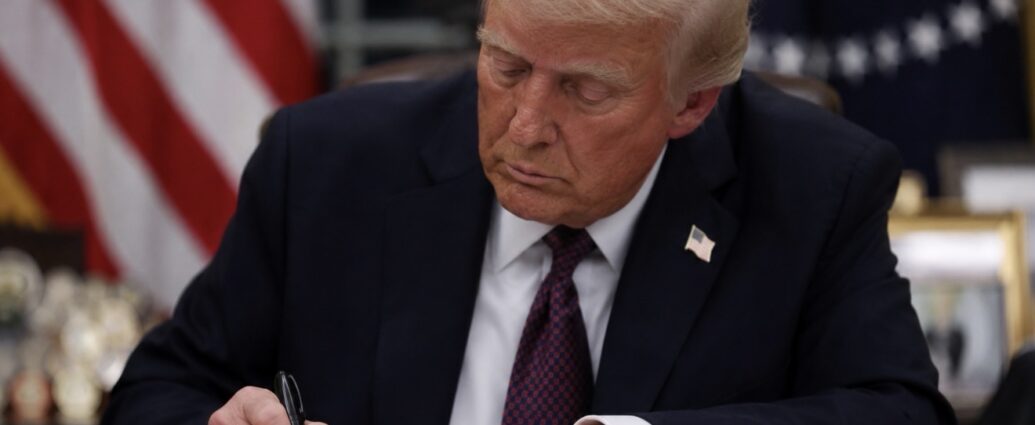
NEW YORK — May 14, 2026 — With the 2026 FIFA World Cup now 28 days from its June 11 opening, the U.S. hospitality industry is heading into the largest sporting event in American history with two open labor fronts in its biggest host markets and fresh evidence that the projected economic windfall is shrinking by the week. The American Hotel and Lodging Association warned in a report released Tuesday that anticipated demand “has not translated into strong hotel bookings,” with 80% of operators across the 11 U.S. host cities reporting bookings below initial forecasts and the trade group concluding that the projected lift “may fall short of expectations.” Resale ticket prices on StubHub and SeatGeek have fallen roughly 24% from a month ago, according to TicketData.com figures reported by NBC News on Thursday. And in both New York and Los Angeles — the two largest U.S. host markets, accounting for 16 of the tournament’s 78 American matches between them — hospitality unions representing roughly 42,000 workers are openly preparing for strike action that could land squarely during the tournament itself.

The most consequential clock is in New York. The Hotel and Gaming Trades Council, or HTC, the AFL-CIO affiliate that represents approximately 40,000 hotel and gaming workers across the New York City metropolitan area, the Capital Region, and northern New Jersey, sees its 14-year Industry-Wide Agreement with the Hotel Association of New York City expire on June 30, 2026 — eighteen days into the tournament. Eight World Cup matches are scheduled at MetLife Stadium in East Rutherford, including the July 19 final between the two finalists. HTC President Rich Maroko, a Brooklyn-based labor attorney who has run the union since 2020 and led the 2023 GRIWA negotiations that produced what the union calls the strongest renewal contract in its nearly 100-year history, told the New York City Council earlier this year that “negotiations between our union and the hotel industry will determine whether New York hosts the World Cup with stability and shared prosperity.” The union, which has spent two years building its HEAT mobilization apparatus — a system Maroko’s predecessors first created in 2005 to coordinate strike readiness — has not set a strike date but has launched a public-facing website that lets travelers search for what it markets as “strike-safe” hotels and has trained captains in every covered property.

The economic stakes are unusually direct. The current contract covers more than 27,000 workers across roughly 250 properties, with top-scale housekeepers earning approximately $39.87 an hour and a benefits package that Maroko himself has described in member messages as the gold standard of the unionized industry — covering full family medical, dental, and pension benefits with co-pays of $5 and $15 for generic and brand-name drugs. The Hotel Association of New York City, whose chief executive Vijay Dandapani represents owners across the five boroughs, has seized on that language. Dandapani said in a public statement earlier this year that “it is extremely premature for the union to threaten a strike during World Cup and put a huge economic opportunity for hotel workers and the city at risk,” noting that the New York City hotel industry has not experienced a labor dispute in 40 years and arguing the tournament could deliver a financial boost to a sector he described as in structural decline.

Albany has visibly tilted the field in the union’s favor. Governor Kathy Hochul last May signed legislation reducing the unemployment-benefit waiting period for striking workers from three weeks to two — the shortest in the country — and increased the maximum weekly benefit by roughly 75% to $869 from $504, effective October 2025. Hochul, who received roughly $500,000 in HTC political-action-committee support during her 2022 campaign, met personally with Maroko in the weeks before the deal was finalized. Senate Majority Leader Andrea Stewart-Cousins and Assembly Speaker Carl Heastie both publicly framed the legislation as backing for the union heading into 2026 negotiations. New York City Mayor Zohran Mamdani, sworn in this January, visited HTC headquarters during the Democratic primary and has framed union density as central to his anti-inequality agenda — adding another political tailwind for Maroko as bargaining intensifies. HTC also has separate consumer-protection legislation, signed into law in November 2024 under the Safe Hotels Act, that requires hotels to inform reservation-holders of strikes or picket lines and to offer full refunds — language that makes any tournament-period walkout substantially more disruptive to bookings.

In Los Angeles, the leverage point is even sharper because there is no current agreement at all. UNITE HERE Local 11, which represents roughly 2,000 cooks, servers, bartenders, and dishwashers at SoFi Stadium, has been in contract negotiations with Legends Global — the concessions company affiliated with billionaire Stan Kroenke’s Kroenke Sports & Entertainment, which also owns SoFi’s Hollywood Park site — since the prior agreement expired last year. The stadium is set to host eight World Cup matches beginning with the U.S. men’s team match against Paraguay on June 12. UNITE HERE Co-President D. Taylor has said the union is “demanding better pay, better benefits, and better working conditions for the workers who make the World Cup happen.” Members are also pushing for premium pay on mega-events, protections against subcontracting to FIFA’s official hospitality partner On Location — the Endeavor Group Holdings Inc.-owned firm that has been selling private suites at SoFi for as much as $209,000 per match — and an explicit commitment that U.S. Immigration and Customs Enforcement will not operate at the games. UNITE HERE has filed an unfair labor practice charge with the National Labor Relations Board alleging that acting DHS Director Todd Lyons’ statement that ICE would play a “key part” in tournament security undermines the union’s ability to collectively bargain.

The UNITE HERE posture is informed by a successful 2024 campaign in which the union struck Marriott International Inc., Hilton Worldwide Holdings Inc., and Hyatt Hotels Corp. properties across multiple U.S. cities over Labor Day weekend, ultimately winning wage increases that HTC members in New York have studied closely. UNITE HERE Local 11 plans to leverage the World Cup spotlight to push for the same kind of step-change in stadium and event-hospitality compensation, particularly because On Location is also the official hospitality partner of the 2028 Los Angeles Olympic Games — meaning the precedent set this summer will likely govern wages and subcontracting terms for the next mega-event cycle in Southern California.

The financial backdrop is deteriorating. In March, FIFA exercised an opt-out clause and canceled thousands of room blocks across all 16 World Cup host cities, including Philadelphia and Dallas, in what some hotel operators have characterized as an artificial early demand signal. FIFA President Gianni Infantino said this week that the tournament has sold approximately 5 million tickets and has defended its pricing strategy as necessary to undercut resellers, but Oxford Economics has cast doubt on the broader $30.5 billion economic-windfall projection that Infantino has cited, forecasting only temporary job gains in leisure and hospitality and modest GDP impact. The AHLA’s Tuesday outlook cited room-block cancellations, international travel barriers tied in part to the ongoing war with Iran and to Trump administration travel restrictions affecting visitors from 75 countries, and rising domestic costs as the principal drivers of softened hotel demand. Domestic travelers, the trade group said, are now outpacing international visitors across the 11 host cities — a near-reversal of the original demand thesis.

For the unions, the calculus is straightforward: a strike during the World Cup would attract enormous global media coverage at the precise moment when FIFA, Adidas AG, Visa Inc., Anheuser-Busch InBev SA/NV, The Coca-Cola Co., McDonald’s Corp., and Saudi Arabia’s Public Investment Fund — which became an official tournament supporter Thursday — are all looking to monetize their largest sports sponsorship of the year. For ownership groups, the same dynamic cuts the other way: industry executives have told Crain’s New York Business they believe the tournament’s revenue importance will discourage disruptive labor action because workers themselves stand to lose substantial overtime and tip income. Legends Global declined to comment on its negotiations with UNITE HERE Local 11. A spokesperson for Hollywood Park deferred to Legends Global. FIFA did not respond to email requests for comment.

For investors with exposure to the publicly traded U.S. hotel sector — Marriott, Hilton, Hyatt, and Host Hotels & Resorts Inc., the largest U.S. lodging real-estate investment trust — the next four weeks will determine whether the World Cup delivers the marquee tailwind operators expected or instead becomes the costliest hospitality labor showdown in a generation. The first kickoff is 28 days away.

JBizNews Desk

© JBizNews.com. All rights reserved. This article is original reporting by JBizNews Desk. Unauthorized reproduction or redistribution is strictly prohibited.

Honda Motor Co. reported the worst financial year in its modern history Thursday, posting the first annual loss since becoming a publicly traded company nearly seven decades ago, as the Japanese automaker dramatically retreated from its electric-vehicle ambitions and pivoted back toward hybrids and gasoline-powered vehicles.

The company reported a net loss of 423.9 billion yen, or roughly $2.7 billion, for the fiscal year ended March 2026, according to its annual earnings release. The result marks Honda’s first full-year loss since listing on the Tokyo Stock Exchange in 1957.

At a Tokyo press conference, Chief Executive Toshihiro Mibe said the losses stemmed largely from the collapse of Honda’s U.S. electric-vehicle strategy, which triggered nearly $10 billion in EV-related writedowns after the company canceled several planned electric models, dissolved its partnership with Sony Corp., and indefinitely suspended a massive Canadian EV and battery manufacturing project.

“This was a painful but necessary reset,” Mibe told reporters, acknowledging that slowing consumer demand for battery-electric vehicles in the United States and changes to the regulatory environment under President Donald Trump forced Honda to rethink its long-term strategy.

Honda disclosed that total EV-related losses tied to the fiscal year just completed and the current fiscal year are expected to approach 2 trillion yen, or roughly $13 billion, with 1.45 trillion yen already booked.

The company also formally abandoned several of the ambitious electrification goals Mibe introduced in 2021, including a pledge that all Honda vehicles would become electric or fuel-cell powered by 2040. Honda additionally scrapped a target calling for EVs to account for one-fifth of total vehicle sales by 2030.

Asked whether he would resign following the historic loss — a traditional step often taken by Japanese executives after major corporate failures — Mibe said his immediate responsibility was rebuilding the company.

Honda Retreats From U.S. EV Expansion

Among the canceled projects were three planned U.S. electric vehicles, including a midsize SUV, a sedan, and a luxury Acura-branded model.

Honda also effectively dissolved its highly publicized EV partnership with Sony Corp., which had previously been positioned as a premium electric platform designed to compete with Tesla and fast-growing Chinese EV manufacturers.

In another major reversal, Honda indefinitely froze its planned $11 billion EV and battery manufacturing project in Canada, which would have represented one of the largest automotive investments in Canadian history.

The strategic retreat places Honda alongside other legacy automakers including Ford Motor Co. and General Motors, both of which have taken multibillion-dollar losses tied to slowing EV demand and weaker-than-expected profitability.

Meanwhile, Toyota Motor Corp. — which spent years resisting Wall Street pressure to aggressively pursue full EV adoption — has emerged as one of the industry’s strongest performers thanks to its continued focus on hybrid vehicles.

Analysts increasingly view Toyota’s hybrid-heavy strategy as the winning near-term model for legacy automakers.

Motorcycles Become Honda’s Financial Lifeline

While Honda’s automotive business absorbed enormous losses, its motorcycle division delivered record profitability and helped stabilize the broader company.

Honda reported record motorcycle sales and operating income during the fiscal year, driven by strong consumer demand in India and Brazil.

The company said it plans to expand production capacity in India as it targets annual motorcycle sales of approximately 22.8 million units.

Strong cash flow from the motorcycle business allowed Honda to maintain shareholder-return commitments despite the historic loss.

Management pledged at least 800 billion yen in shareholder returns over the next three years and kept the annual dividend unchanged at 70 yen per share.

Investors responded positively to the announcement, sending Honda shares up roughly 3.8% in Tokyo trading Thursday, although the stock remains down approximately 14% year to date amid broader concerns involving global tariffs, the Iran conflict, and EV profitability pressures.

China Weakness Deepens

Honda’s long-term position in China remains one of management’s biggest concerns.

The company said sales in China have fallen by more than half over the last five years amid intense price competition from domestic EV manufacturers including BYD, Geely, and Nio.

Honda sold roughly 1.5 million vehicles annually in China at its peak in 2020 but now delivers closer to 600,000 units, according to company filings.

To offset the deterioration, Honda is increasingly relying on North America, where hybrid demand has strengthened sharply and dealerships are reporting waiting lists for fuel-efficient models.

The company projected global vehicle sales of roughly 3.39 million units for the fiscal year ending March 2027, essentially flat from the prior year, with North American hybrid growth expected to balance continued weakness in China.

Industry-Wide EV Reality Check

For the current fiscal year, Honda forecast a return to profitability with projected net income exceeding $1.6 billion, despite the possibility of additional EV-related writedowns.

Mibe said Honda would continue investing in long-term battery and EV research but would rebuild the company around hybrids, traditional gasoline-powered vehicles, and motorcycles.

Honda’s dramatic reversal increasingly reflects a broader industry-wide reassessment of electric-vehicle demand after years of aggressive forecasts by global automakers.

Federal EV subsidies in the United States have been rolled back under the Trump administration, charging infrastructure remains inconsistent outside major metropolitan areas, and consumers continue favoring hybrids over fully battery-powered vehicles.

At the same time, Tesla maintains dominance in premium EV segments while many traditional automakers struggle to generate sustainable profits from pure-electric models.

For the global auto industry, Honda’s message was unmistakable: in today’s market, hybrids — not fully electric vehicles — are where near-term profits are increasingly being made.

JBizNews Desk

© JBizNews.com. All rights reserved. This article is original reporting by JBizNews Desk. Unauthorized reproduction or redistribution is strictly prohibited.

President Donald Trump and Chinese President Xi Jinping concluded the opening day of their Beijing summit Thursday with a joint commitment that Iran must not control or disrupt the Strait of Hormuz, while also advancing a framework for reducing tariffs on roughly $30 billion in trade and moving toward what U.S. officials described as a major pending Boeing aircraft order.

The agreements emerged as the U.S.-led naval blockade of Iran entered its second month and tensions across the Persian Gulf continued threatening global shipping lanes and oil markets.

According to a White House readout, both leaders agreed the Strait of Hormuz must remain open to the free flow of global energy supplies, with Xi Jinping explicitly opposing any Iranian effort to militarize the waterway, interfere with shipping, or impose transit tolls on commercial vessels moving through the strategic chokepoint.

The White House also said both governments agreed Iran must never obtain a nuclear weapon.

President Trump later told Fox News that Xi offered to help mediate an end to the conflict with Iran and assured him China would not provide military support to Tehran.

Markets focused heavily on the summit’s economic deliverables.

Treasury Secretary Scott Bessent, speaking from Beijing, said both sides were working toward an initial tariff-reduction package covering roughly $30 billion in non-critical trade categories, with broader negotiations expected to continue in future rounds.

Bessent also confirmed Boeing was nearing a large commercial aircraft agreement with Chinese carriers. Trump later told reporters the order could involve as many as 200 aircraft, potentially marking China’s largest Boeing purchase in years.

A transaction of that scale would provide a major boost to Boeing’s already massive order backlog, previously estimated near $695 billion.

Industrial and aerospace shares climbed following the announcement, while investors interpreted the summit as a sign of stabilizing commercial ties between Washington and Beijing after years of trade tensions and technology disputes.

Oil markets, however, remained volatile despite the diplomatic progress.

According to testimony Thursday from Admiral Brad Cooper, commander of U.S. Central Command, the 38-day U.S.-Israeli campaign against Iran has significantly weakened Tehran’s military capabilities but has not eliminated its ability to threaten Gulf shipping and regional energy infrastructure.

Cooper told lawmakers that U.S. forces had destroyed roughly 90% of Iran’s naval mine inventory and a comparable share of its defense industrial base during Operation Epic Fury.

At the same time, maritime intelligence firm Windward reported that more than 330 fast boats linked to Iran’s Revolutionary Guard were operating in the Strait of Hormuz this week, underscoring ongoing security concerns.

Additional incidents throughout Thursday highlighted the fragility of the region.

Omani officials confirmed that an Indian-flagged commercial vessel sank after an attack near Oman, though all crew members were rescued. A separate ship was reportedly seized near the United Arab Emirates and redirected toward Iranian waters, according to a British maritime agency.

The Wall Street Journal also reported that Saudi Arabia carried out covert strikes against Iranian targets after attacks on Saudi energy infrastructure and civilian facilities.

The summit also surfaced unresolved geopolitical tensions between Washington and Beijing.

Xi warned Trump that Taiwan remains the most dangerous issue in the U.S.-China relationship and cautioned that mishandling the issue could lead to direct confrontation between the two powers.

The warning carries enormous implications for global semiconductor supply chains given Taiwan’s dominant role in advanced chip manufacturing through Taiwan Semiconductor Manufacturing Co. and key downstream customers including NVIDIA, Apple, and AMD.

Trump said he invited Xi to visit the White House in September, though Chinese officials did not immediately confirm the visit.

Meanwhile, military and diplomatic tensions continued across the broader Middle East.

The State Department confirmed a second round of U.S.-brokered talks between Israel and Lebanon began Thursday as fighting between Israel and Hezbollah intensified.

The Israel Defense Forces said they targeted approximately 65 Hezbollah-related infrastructure sites over the previous 24 hours, while additional projectiles and drone attacks were reported along the Israeli-Lebanese border.

For investors and global markets, the summit’s first day delivered meaningful signals on trade, energy security, and commercial cooperation — but many of the underlying geopolitical risks remain unresolved.

Wall Street largely viewed the tariff rollback framework, Hormuz commitments, and Boeing negotiations as supportive for global growth and industrial trade, though markets remain highly sensitive to developments involving Iran, Taiwan, and global energy flows.

Trump and Xi are scheduled to continue talks Friday during the second and final day of the Beijing summit.

JBizNews Desk

© JBizNews.com. All rights reserved. This article is original reporting by JBizNews Desk. Unauthorized reproduction or redistribution is strictly prohibited.

U.S. stocks rallied sharply Thursday, with the Dow Jones Industrial Average reclaiming the 50,000 level and both the S&P 500 and Nasdaq Composite closing at fresh all-time highs, as investors cheered strong corporate earnings, accelerating artificial-intelligence spending, and signs of improving U.S.-China commercial relations during President Donald Trump’s summit in Beijing with Chinese President Xi Jinping.

The advance was fueled by a blowout earnings report from Cisco Systems, a blockbuster AI-related IPO debut from Cerebras Systems, and optimism surrounding ongoing trade and technology negotiations between Washington and Beijing.

According to the New York Stock Exchange, the Dow Jones Industrial Average closed at 50,063.46, up 370.26 points, or 0.75%. The S&P 500 gained 56.99 points, or 0.77%, to finish at 7,501.24, while the Nasdaq Composite climbed 232.88 points, or 0.88%, to 26,635.22 — both record closes.

The Russell 2000 rose 0.67% to 2,863.09, while the CBOE Volatility Index (VIX) fell 3.4% to 17.26, signaling continued confidence across risk markets.

Oil prices remained elevated as the U.S.-Israeli conflict with Iran continued to pressure global energy markets. West Texas Intermediate crude rose 0.97% to $102 per barrel, while gold slipped 1.06% to roughly $4,657 an ounce. Bitcoin climbed 2.56% to approximately $81,393.

Cisco Ignites AI Rally

The day’s biggest catalyst came from Cisco Systems, whose shares surged roughly 13% after the company delivered stronger-than-expected quarterly results and sharply increased its outlook for AI infrastructure demand.

Cisco reported fiscal third-quarter revenue of $15.84 billion, up 12% year over year and above Wall Street expectations. Adjusted earnings reached $1.06 per share, also topping estimates.

Chief Executive Chuck Robbins raised the company’s full-year AI infrastructure order forecast to $9 billion from $5 billion previously, driven by massive spending from hyperscale cloud customers.

Hyperscale clients alone placed $2.1 billion in AI infrastructure orders during the quarter.

Cisco also issued fourth-quarter revenue guidance well above analyst projections and announced plans to eliminate roughly 4,000 positions as it redirects investment toward AI networking, custom silicon, optics, and cybersecurity.

The results reignited enthusiasm across the broader AI ecosystem.

Cerebras Delivers Blockbuster AI IPO

Another major Wall Street story came from the public debut of Cerebras Systems, the AI hardware and software company whose Nasdaq listing surged roughly 75% after pricing at $185 per share Wednesday evening.

According to SEC filings, the company raised approximately $5.55 billion through the sale of 30 million shares, making it the largest U.S. technology IPO since Uber’s 2019 debut and one of the first major pure-play AI offerings to reach public markets.

The debut further reinforced investor appetite for AI infrastructure and semiconductor-related names.

Trump-Xi Summit Lifts Industrials and Chips

Markets also gained support from developments surrounding the Trump-Xi summit in Beijing.

Boeing shares advanced after Trump stated that China had agreed to purchase 200 Boeing aircraft — the largest Chinese Boeing order since 2017.

The announcement was interpreted as a sign of improving commercial relations between the two countries following years of geopolitical tensions and trade disputes.

Semiconductor and technology stocks also benefited from summit-related optimism.

NVIDIA reached another all-time high after Cantor Fitzgerald analyst C.J. Muse raised his price target to $350 and reiterated an overweight rating on the stock.

Micron Technology, Qualcomm, and other chip-related companies also posted gains.

Meanwhile, appliance maker Whirlpool declined after Goldman Sachs downgraded the company, citing ongoing macroeconomic and industry pressures.

Economic Data Supports Risk Appetite

Thursday’s economic reports reinforced investor confidence that the economy may be slowing enough to support future Federal Reserve easing without signaling recession.

The Commerce Department reported April retail sales increased 0.5%, matching forecasts and marking a third consecutive monthly increase. The closely watched retail-control group measure rose 0.46%, stronger than expectations.

Meanwhile, the Labor Department said initial jobless claims rose to 211,000 for the week ended May 9, slightly above forecasts but still historically low.

Treasury Secretary Scott Bessent also helped calm oil markets after stating China would use its influence with Iran to help maintain open shipping lanes through the Strait of Hormuz.

Applied Materials Extends Chip Momentum

After the closing bell, semiconductor-equipment giant Applied Materials added further momentum to the technology rally.

The company reported record fiscal second-quarter revenue of $7.91 billion, up 11% year over year and above Wall Street estimates. Earnings of $3.51 per share significantly exceeded analyst expectations.

Chief Executive Gary Dickerson told investors the company expects the chip-equipment industry to grow more than 30% in calendar year 2026.

Applied Materials also raised its dividend by 15%, sending shares higher in after-hours trading.

Friday Brings Major Economic and Fed Tests

Attention now turns to Friday’s packed economic calendar and a major transition at the Federal Reserve.

The New York Federal Reserve will release the Empire State Manufacturing Survey before the open, followed by industrial production and capacity utilization figures.

Investors will also closely watch the University of Michigan’s preliminary May consumer sentiment reading, which may provide additional insight into how consumers are responding to elevated food and gasoline prices tied to the Iran conflict.

Friday also marks the final day of Jerome Powell’s tenure as Federal Reserve chair, with newly confirmed Chairman Kevin Warsh preparing to formally take over leadership of the central bank.

Meanwhile, investors remain focused on day two of the Trump-Xi summit, where additional announcements related to tariffs, artificial intelligence cooperation, and trade policy remain possible.

JBizNews Desk

© JBizNews.com. All rights reserved. This article is original reporting by JBizNews Desk. Unauthorized reproduction or redistribution is strictly prohibited.

Anthropic PBC, the San Francisco–based artificial-intelligence company behind the Claude family of AI models, is in early talks to raise at least $30 billion in new financing at a valuation exceeding $900 billion, according to Bloomberg’s Ed Ludlow, citing people familiar with the discussions. If completed at the levels currently being discussed, the deal would become one of the largest private funding rounds in technology history and would value Anthropic above rival OpenAI, whose March financing round implied an $852 billion post-money valuation.

The financing discussions come as Anthropic quietly prepares for a potential public offering as early as October, according to people familiar with the matter. The fresh capital would primarily fund the enormous computing infrastructure required to support surging demand for the company’s AI products as enterprise adoption accelerates globally.

Anthropic co-founder and Chief Executive Officer Dario Amodei offered a glimpse into the scale of that growth during the company’s “Code with Claude” developer conference in San Francisco last week. Amodei said Anthropic originally planned for roughly tenfold annualized growth in 2026 but instead experienced approximately 80-fold growth during the first quarter alone — a pace he described as “just crazy” and operationally difficult to manage.

According to Amodei, Anthropic’s annualized revenue run rate climbed from roughly $9 billion at the end of 2025 to approximately $30 billion by April 2026. Bloomberg and the Financial Times have separately reported estimates ranging between $40 billion and $45 billion based on more recent enterprise-billing data.

The company’s growth trajectory has become one of the fastest in Silicon Valley history. Amodei disclosed that Anthropic generated an annualized revenue run rate of only $87 million in January 2024 before surpassing $1 billion by December 2024, climbing to $14 billion by February 2026, then jumping to $19 billion in March and $30 billion by April.

That explosive adoption has fueled intense investor demand. According to Bloomberg, Anthropic leadership began seriously evaluating a valuation above $900 billion after receiving multiple unsolicited investment proposals earlier this spring. The company has since opened discussions with existing investors regarding participation in the round, though no final terms have been agreed upon and negotiations remain fluid.

Several of Anthropic’s largest strategic partners have already committed massive capital injections separately from the new raise. Alphabet’s Google agreed to invest $10 billion earlier this year at a $350 billion valuation, with additional commitments potentially reaching $30 billion tied to future milestones. Amazon.com similarly committed $5 billion at the same valuation, with agreements allowing total investment commitments to expand toward $20 billion over time.

The latest valuation discussions represent a dramatic acceleration from prior rounds. Anthropic raised $13 billion during a September 2025 Series F financing at a $183 billion valuation, followed by a $30 billion Series G round in February 2026 that valued the company at $380 billion.

The sharp increase reflects extraordinary enterprise demand for Claude across industries including financial services, software development, healthcare, retail, and logistics. Large corporate users reportedly include companies such as Uber and Netflix, while Anthropic’s gross margins are said to exceed 70%.

But the company’s growth has created equally massive infrastructure challenges. Anthropic announced last week that it secured access to more than 300 megawatts of computing capacity at SpaceX’s Colossus 1 data center in Memphis, Tennessee — a notable development given prior public tensions between Amodei and Elon Musk over AI governance and safety issues.

The company continues racing to secure additional computing power from major infrastructure partners including Amazon, Google, Nvidia, and Microsoft, though much of that capacity is not expected to come online until late 2026 or 2027.

Amodei acknowledged during the conference that demand since March has strained the reliability of some Anthropic products, particularly its Claude Code developer platform. The company published a technical postmortem in late April identifying multiple bugs that had affected performance for several weeks.

The scale of the funding round also signals how dramatically the economics of artificial intelligence have shifted. Training and operating frontier AI systems now requires billions of dollars in semiconductors, electricity, cooling infrastructure, networking systems, and data-center capacity — creating an arms race among the world’s largest technology companies and investors.

Anthropic’s proposed valuation would test the upper limits of private-market appetite for AI infrastructure bets. OpenAI’s $852 billion valuation from March was previously viewed as the sector’s peak benchmark. Yet some tokenized prediction markets have implied even higher valuations for Anthropic, with platforms including Ventuals and PreStocks pricing speculative instruments between $1.2 trillion and $1.6 trillion, although the company has emphasized those products do not represent actual equity ownership.

The company also enters this next phase while navigating growing political and regulatory scrutiny. Anthropic has been involved in an ongoing dispute with the Department of Defense after Defense Secretary Pete Hegseth’s department labeled the company a “supply-chain risk” earlier this year. The conflict reportedly stemmed from Amodei’s refusal to remove contractual restrictions preventing Claude from being used for mass domestic surveillance or fully autonomous weapons systems.

The Trump administration subsequently directed federal agencies to pause adoption of Claude products, though several civil-liberties organizations and legal groups have challenged the policy in court filings.

So far, the controversy has not meaningfully slowed commercial adoption. But investors preparing for a possible October IPO are increasingly weighing whether Anthropic can sustain its extraordinary growth while navigating infrastructure shortages, mounting geopolitical pressure, and intensifying competition from OpenAI, Google DeepMind, Meta, xAI, and Microsoft-backed platforms.

Even Amodei himself has suggested the current pace may not be sustainable indefinitely. During last week’s conference, he told developers he hopes the company eventually returns to “more normal” growth levels.

For now, however, Anthropic appears to sit near the center of the most aggressive capital expansion cycle Silicon Valley has ever witnessed.

JBizNews Desk

© JBizNews.com. All rights reserved. This article is original reporting by JBizNews Desk. Unauthorized reproduction or redistribution is strictly prohibited.
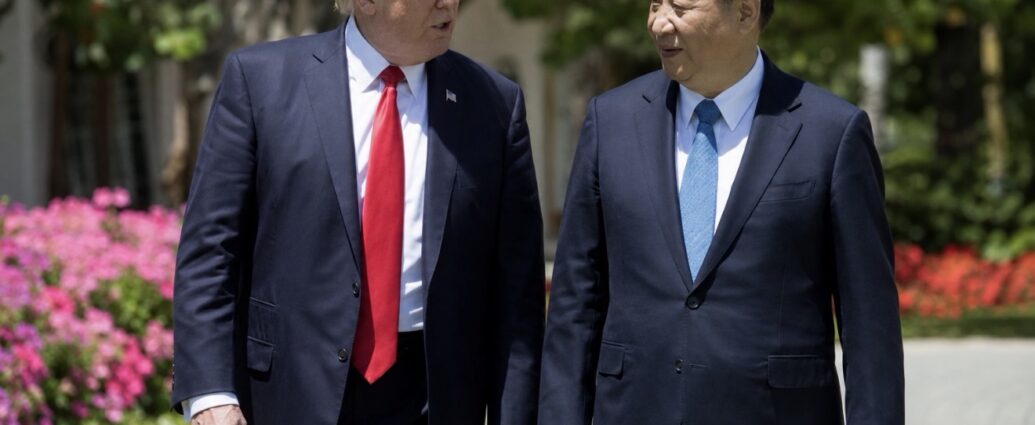
The case for additional Federal Reserve rate increases gained an unexpected boost this week after Boston Federal Reserve President Susan Collins warned that policymakers may still need to tighten monetary policy if inflation tied to the war with Iran continues spreading through the U.S. economy.

Speaking Wednesday at the Boston Economic Club, Collins said she can now envision a scenario in which the Federal Reserve is forced to raise interest rates again to contain persistent price pressures — a notable shift from a central banker previously viewed as among the more patient voices inside the Fed.

“I could envision a scenario in which some policy tightening is needed,” Collins said in prepared remarks released by the Federal Reserve Bank of Boston, adding that policymakers remain committed to returning inflation “durably to 2% in a timely manner.”

The remarks landed just hours after the Bureau of Labor Statistics reported that the Producer Price Index surged 1.4% in April, the steepest monthly increase in four years and far above economist forecasts. The report followed Tuesday’s hotter-than-expected Consumer Price Index reading showing annual inflation accelerating to 3.8%, the highest level since May 2023.

Together, the reports have sharply altered Wall Street’s expectations for monetary policy and weakened hopes that the Fed would soon begin cutting rates.

Collins acknowledged that policymakers had initially hoped to “look through” inflation stemming from geopolitical supply shocks tied to the U.S.-Israel conflict with Iran. But after more than five years of inflation running above the Fed’s target, she suggested patience inside the central bank is beginning to wear thin.

“I believe it will likely be important to maintain the current slightly restrictive monetary policy stance for some time,” Collins said.

The Federal Open Market Committee left its benchmark interest-rate target unchanged at 3.50% to 3.75% during its late-April meeting, though divisions inside the Fed have become increasingly visible. Three voting members reportedly dissented against language implying the next move would likely be a rate cut.

Collins later confirmed in comments to Bloomberg News that she sided with the dissenters, reinforcing the impression that the Fed’s internal debate has shifted decisively away from easing policy.

The comments also come at a moment of major transition at the central bank.

The Senate on Wednesday confirmed Kevin Warsh as the next Federal Reserve chair in a party-line vote, replacing Jerome Powell after months of speculation over the Fed’s future direction. Warsh, nominated by President Donald Trump, has repeatedly called for a “new inflation framework” and is widely viewed by markets as more hawkish than Powell.

While Collins declined to speculate publicly on how Warsh’s leadership may shape policy decisions, investors increasingly believe the Fed could remain restrictive well into 2027 if inflation tied to energy and supply chains fails to recede.

For consumers and businesses, the consequences are already becoming visible across borrowing markets.

Mortgage rates climbed again Wednesday after the inflation data pushed Treasury yields sharply higher. The 30-year Treasury yield crossed 5.05% for the first time since May 2025, while benchmark 10-year yields remained near multi-year highs.

Higher Treasury yields directly influence mortgage costs, commercial real estate financing, business loans, auto financing and credit-card rates — areas already under strain from elevated borrowing costs.

The pressure is particularly acute for housing markets and small businesses.

Commercial real estate developers continue facing refinancing stress as loans originated during the low-rate years mature into a significantly higher-rate environment. Regional banks have simultaneously tightened lending standards amid concerns about office vacancies, slower economic growth and rising credit risks.

Consumers are also beginning to show signs of fatigue.

The latest University of Michigan consumer sentiment survey showed confidence weakening notably as Americans grow more concerned about inflation, household budgets and the affordability of major purchases.

Collins outlined three key indicators she is monitoring closely in coming months: inflation expectations among households and businesses, whether price increases spread beyond energy into broader sectors of the economy, and the continued pass-through effects of tariffs imposed last year by the Trump administration.

She also warned about a less visible but important risk facing the Fed: if inflation continues accelerating while interest rates remain unchanged, the “real” inflation-adjusted level of Fed policy effectively becomes less restrictive over time — potentially requiring policymakers to tighten further simply to maintain the same level of economic restraint.

Equity markets initially appeared largely unfazed by the comments.

The S&P 500 rose 0.58% Wednesday to close at a record 7,444.25, while the Nasdaq Composite climbed 1.20% to another all-time high as artificial-intelligence stocks continued driving momentum across technology markets.

“In the face of continued hot inflation data, technology remains resilient,” said Ryan Detrick, chief market strategist at Carson Group, in a research note Wednesday.

But bond investors and institutional strategists are increasingly taking the Fed’s inflation concerns seriously.

Jim Baird, chief investment officer at Plante Moran Financial Advisors, said the producer-price report “reinforces the inflation risk narrative and at least makes the case for a longer pause at the Fed.”

Meanwhile, Morgan Stanley raised its year-end 2026 target for the S&P 500 to 8,000 from 7,800, but warned that additional Federal Reserve tightening now represents the single biggest risk to its bullish outlook.

Although Collins does not currently vote on monetary policy decisions this year, analysts say her remarks carry significant weight because she is broadly viewed as a centrist voice inside the Federal Reserve system rather than an ideological hawk.

That makes her public willingness to discuss additional tightening especially important to markets trying to gauge the Fed’s evolving direction.

If the Iran conflict drags on and energy disruptions deepen, Collins warned, the risk of “more substantial negative spillovers” to the broader economy increases substantially.

Even if geopolitical tensions ease quickly, she cautioned that supply-chain disruptions and inflationary effects may linger well beyond this year.

For households hoping for relief at grocery stores, gas stations and borrowing markets, Collins delivered a blunt assessment: meaningful inflation relief may not arrive until well into 2027.

JBizNews Desk
© JBizNews.com. All rights reserved. This article is original reporting by JBizNews Desk. Unauthorized reproduction or redistribution is strictly prohibited.
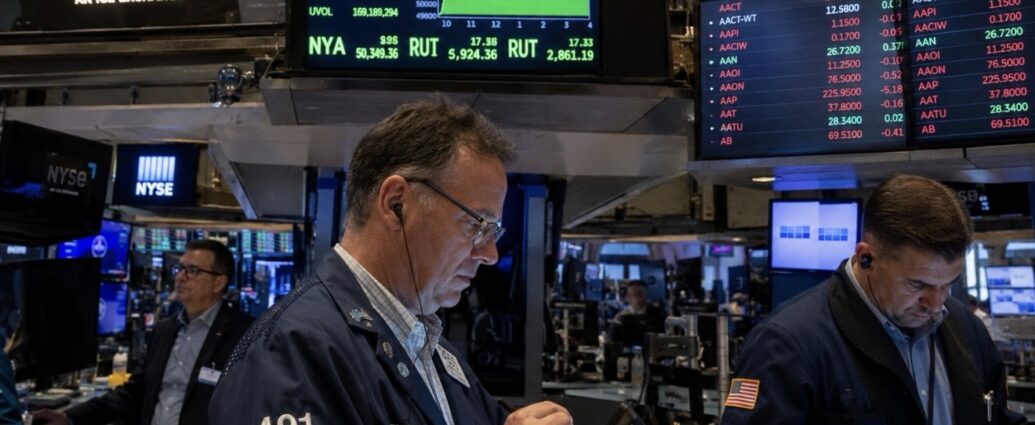
The U.S. bond market delivered its clearest warning yet to the Federal Reserve this week as the 30-year Treasury yield surged above 5% for the first time at a regularly scheduled Treasury auction since 2007, underscoring mounting investor fears that inflation tied to the Iran conflict is becoming deeply embedded across the economy.

The benchmark 30-year Treasury bond traded as high as 5.05% Wednesday following a hotter-than-expected inflation report from the Bureau of Labor Statistics, marking its highest intraday level since July and reviving Wall Street fears of a prolonged era of elevated borrowing costs.

The move came after the U.S. Treasury Department auctioned $25 billion in new 30-year bonds at a yield of 5.046%, slightly above prevailing market levels immediately before the bidding closed — a sign investors demanded higher compensation to absorb long-term U.S. government debt.

The weak reception followed similarly soft demand earlier this week for new 3-year and 10-year Treasury offerings, reinforcing concern that investors are increasingly questioning whether inflation will return to the Federal Reserve’s long-standing 2% target anytime soon.

“Wednesday’s PPI was strikingly elevated as producers are feeling the ripple effects of $100 per barrel oil,” said Clark Bellin, president and chief investment officer at Bellwether Wealth. Bellin warned the Federal Reserve now faces “an inflation problem on its hands at a time when the labor market has slowed down.”

The rise in yields reflects growing anxiety across global financial markets over the economic consequences of the expanding U.S.-Israel conflict with Iran.

The effective closure and disruption of shipping through the Strait of Hormuz — through which roughly one-fifth of the world’s seaborne crude oil moves — has pushed oil prices above $100 per barrel and gasoline prices above $4 per gallon in many parts of the United States.

The shock has spread rapidly through industrial supply chains, lifting costs for fertilizers, petrochemicals, diesel fuel, aluminum, plastics, aviation fuel and transportation services.

Those pressures became unmistakable Wednesday after the Producer Price Index surged 1.4% in April, nearly triple economist expectations and the largest monthly increase in four years. On an annual basis, producer inflation accelerated to 6.0%, its highest level since December 2022.

Core producer inflation — which excludes food and energy — climbed 1.0% for the month, also sharply above forecasts.

The inflation shock followed Tuesday’s Consumer Price Index report showing headline inflation rising 3.8% year over year, the highest reading since May 2023.

“Today’s inflation report is certainly another nail in the coffin of the idea Fed officials have to welcome the new Fed Chair with an interest rate cut this year,” said Chris Rupkey, chief economist at FWDBONDS.

Markets are now beginning to price in the possibility that the Federal Reserve’s next move could eventually be another rate increase rather than the cuts investors had expected earlier this year.

According to the CME FedWatch Tool, traders now assign roughly a 25% probability to an additional quarter-point Fed rate hike by year-end, up notably from earlier this week.

The Federal Open Market Committee has kept its benchmark overnight rate in a range of 3.50% to 3.75% since December, but internal divisions inside the Fed have become increasingly visible.

Three voting members dissented at the Fed’s late-April meeting against language implying the next move would likely be a cut.

The hawkish shift intensified Wednesday after Boston Federal Reserve President Susan Collins told the Boston Economic Club that she could now envision a scenario requiring additional monetary tightening if inflation pressures fail to ease.

Hours later, the Senate confirmed Kevin Warsh as the next Federal Reserve chair in a party-line vote, replacing Jerome Powell. Warsh, nominated by President Donald Trump, has publicly advocated for a “new inflation framework” and is widely viewed by markets as more hawkish than Powell.

For households and businesses, the jump in long-term Treasury yields carries immediate real-world consequences.

The 30-year Treasury yield heavily influences mortgage financing costs, and Freddie Mac reported last week that the average 30-year fixed mortgage rate was already approaching 7.4%.

Auto loans, credit-card interest rates, student loans and small-business financing costs also track broader Treasury-market movements, meaning persistently higher yields could tighten financial conditions throughout 2026 even without additional Federal Reserve action.

Commercial real estate markets remain particularly vulnerable as billions of dollars in office, multifamily and retail property loans approach refinancing in a much higher-rate environment.

Despite the bond market’s warning signals, equity investors have so far remained remarkably resilient.

The S&P 500 closed Wednesday at a record 7,444.25, while the Nasdaq Composite climbed 1.20% to another all-time high, driven largely by enthusiasm surrounding artificial-intelligence megacap technology companies.

“In the face of continued hot inflation data, technology remains resilient,” said Ryan Detrick, chief market strategist at Carson Group.

Still, the rally’s narrowness has become increasingly noticeable. Roughly two-thirds of S&P 500 companies finished lower Wednesday even as the index itself reached a new record high.

That disconnect between equity optimism and bond-market caution is drawing growing scrutiny across Wall Street.

Morgan Stanley raised its year-end 2026 S&P 500 target to 8,000 from 7,800, citing strong AI-driven earnings growth, but simultaneously warned that renewed Federal Reserve tightening now represents the primary risk to its bullish outlook.

Meanwhile, Jim Baird, chief investment officer at Plante Moran Financial Advisors, said the latest inflation data “reinforces the inflation risk narrative and at least makes the case for a longer pause at the Fed.”

Foreign appetite for U.S. government debt also appears to be softening.

Japanese and European pension funds — historically among the largest buyers of long-dated Treasuries — have gradually reduced purchases as currency-hedged Treasury returns become less attractive and concerns about America’s fiscal outlook intensify.

The Congressional Budget Office projects federal interest payments will exceed $1 trillion during fiscal 2026, surpassing annual defense spending for the first time in modern history.

For markets, the symbolic breach of 5% on the 30-year Treasury marks more than just another milestone.

It represents a reminder that while equity investors remain captivated by the artificial-intelligence boom, the bond market is increasingly preparing for an economic regime in which inflation remains structurally higher — and borrowing costs remain elevated far longer than policymakers or investors once expected.

JBizNews Desk
© JBizNews.com. All rights reserved. This article is original reporting by JBizNews Desk. Unauthorized reproduction or redistribution is strictly prohibited.

Americans filing new claims for unemployment benefits rose more than expected last week, the Labor Department said Thursday, adding to evidence that a labor market long described as resilient is beginning to show strain as the war with Iran drives energy and goods prices sharply higher across the economy.

Initial claims for state unemployment insurance increased by 12,000 to a seasonally adjusted 211,000 in the week ended May 9, according to the Labor Department. Economists polled by Reuters had forecast 205,000, while a separate FactSet survey projected 207,000. The prior week’s tally was revised upward to 199,000.

Continuing claims — which measure the number of Americans remaining on unemployment benefits after their initial filing and are often viewed as a proxy for hiring conditions — rose by 24,000 to 1.782 million in the week ended May 2, the highest level in several months. Together, the figures point to a labor market that has not yet broken under the pressure of rising costs and slowing growth, but is increasingly showing signs of fatigue.

The latest employment data arrive as businesses across the United States confront a rapidly worsening cost environment tied to the expanding U.S.-Israel conflict with Iran. Disruptions in the Strait of Hormuz have pushed crude oil prices sharply higher in recent weeks, sending gasoline prices above $4 per gallon nationwide and lifting costs for transportation, chemicals, fertilizers, plastics, packaging materials and industrial manufacturing inputs.

Those pressures intensified Wednesday after the Bureau of Labor Statistics reported that the Producer Price Index surged 1.4% in April — the largest monthly increase in four years and nearly triple economist expectations. On an annual basis, wholesale inflation accelerated to 6.0%, its fastest pace since late 2022.

Economists say the combination of stubborn inflation and slowing demand is creating a more difficult environment for employers, particularly in industries heavily exposed to fuel and freight costs.

“Inflation is sticky and accelerating, and that eventually shows up in the labor market,” said Chris Rupkey, chief economist at fwd.bonds, in a research note Thursday. “Companies cannot absorb four-year-high cost increases forever without trimming payroll.”

The unemployment rate remained at 4.3% in April even as the economy added 115,000 jobs, reflecting what analysts increasingly describe as a “low-hire, low-fire” labor market. Employers are still reluctant to conduct broad layoffs after years of labor shortages, but they are also slowing recruitment, reducing overtime, and becoming more selective about expansion plans.

That shift is becoming more visible inside corporate America.

Cisco Systems said Wednesday evening it would begin a fresh round of layoffs on May 14 affecting fewer than 4,000 employees, or under 5% of its global workforce, despite reporting strong quarterly earnings and raising its financial outlook. Revenue climbed 12% to $15.84 billion as demand for artificial-intelligence networking infrastructure accelerated.

Chief Executive Chuck Robbins described the layoffs as part of a broader capital reallocation toward AI infrastructure and automation. In a message to employees, Robbins said companies competing in the AI era would require “focus, urgency, and the discipline to continuously shift investment.”

Cisco’s move mirrors a broader trend spreading across major technology and corporate employers this year. Microsoft, Meta Platforms, Alphabet, and Salesforce have all announced selective workforce reductions despite posting solid earnings growth, underscoring how artificial intelligence and economic uncertainty are reshaping white-collar employment patterns.

At the same time, job seekers are finding it increasingly difficult to secure new positions. Hiring platform Indeed reports that job postings remain roughly 12% below year-ago levels, while the average duration of unemployment has gradually increased over recent months.

Industries most sensitive to fuel and commodity prices — including trucking, airlines, food processing, logistics, chemicals and manufacturing — are already beginning to slow hiring activity, according to economists and staffing firms tracking labor demand.

Federal employee claims, which markets have monitored closely following recent government shutdown disruptions and agency budget uncertainty, were largely stable. Initial claims filed by federal workers fell by 46 to 392, suggesting the broader increase in unemployment filings came primarily from the private sector.

Financial markets reacted cautiously to the report. Dow futures edged lower following the release, while the U.S. Dollar Index rose modestly to 98.58. Treasury yields remained elevated, with the benchmark 10-year yield holding above 4.85% and the 30-year Treasury yield crossing 5.05% for the first time since May 2025.

The rise in long-term yields reflects growing concern that the Federal Reserve may need to keep interest rates elevated longer than markets had anticipated earlier this year.

Susan Collins, president of the Federal Reserve Bank of Boston, said this week that an additional rate increase “could be in the cards” if inflation pressures continue spreading across the economy — comments that added fresh hawkishness to the Fed outlook just as labor-market indicators begin to soften.

Markets are now increasingly focused on whether incoming Federal Reserve Chair Kevin Warsh will prioritize fighting inflation even at the expense of slower economic growth and weaker hiring conditions.

For now, consumer spending has continued to hold up despite weakening sentiment. Retail sales released Thursday morning rose 0.5% in April, marking a third consecutive monthly increase and suggesting households are still spending even as borrowing costs rise and inflation erodes purchasing power.

Whether Thursday’s uptick in jobless claims proves to be the beginning of a broader labor-market slowdown — or merely temporary weekly volatility — may depend heavily on oil prices, inflation trends, and how long consumers can continue absorbing higher costs without sharply pulling back spending.

JBizNews Desk
© JBizNews.com. All rights reserved. This article is original reporting by JBizNews Desk. Unauthorized reproduction or redistribution is strictly prohibited.
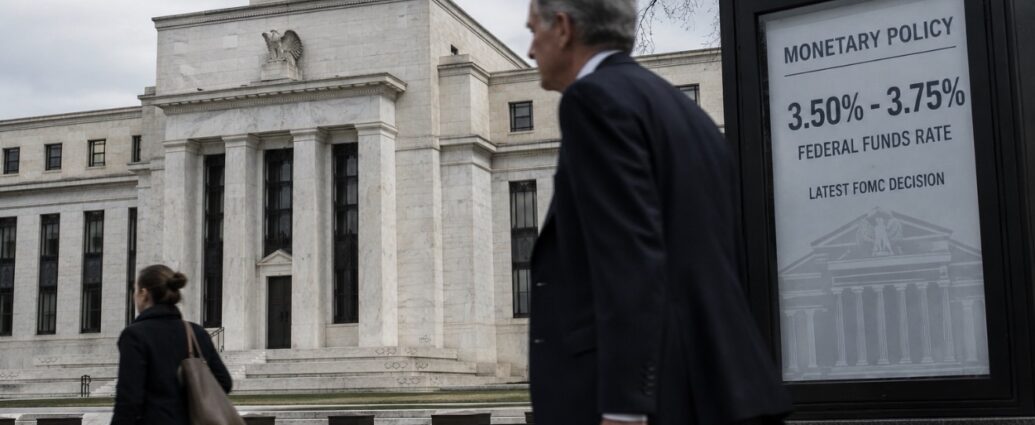
The national average price of gasoline is moving closer to $5 a gallon ahead of what the American Automobile Association projects will be the busiest Memorial Day travel weekend on record, raising transportation costs for tens of millions of Americans as the summer driving season begins under growing energy-market strain.

AAA estimates that roughly 45 million Americans will travel at least 50 miles from home between May 21 and May 25, including a record 39.1 million traveling by car and another 3.66 million by air. The surge in demand comes as the national average gasoline price hovers near $4.52 per gallon — up sharply from approximately $2.98 before the Iran conflict disrupted global oil markets roughly two and a half months ago.

Wall Street energy analysts increasingly warn that even higher prices may still lie ahead. In a client note last Friday, Natasha Kaneva, head of global commodities research at JPMorgan Chase, wrote that “the risk of $5 gasoline can no longer be dismissed” if disruptions continue through the Strait of Hormuz, the world’s most critical oil-shipping chokepoint.

The strait has now faced significant disruption for roughly 10 weeks, tightening global oil supplies and contributing to the steepest sustained increase in U.S. gasoline prices since 2022. JPMorgan analysts warned that global oil inventories are approaching “operational stress levels” if shipments through the region do not normalize by early June.

The financial impact is already becoming visible for consumers. Filling a typical 14-gallon tank cost roughly $44.50 during Memorial Day weekend last year when gasoline averaged about $3.18 per gallon nationally. At current prices near $4.52, that same fill-up costs approximately $63. If national averages reach $5 per gallon, drivers would pay roughly $70 per tank.

Lower-income households appear to be feeling the pressure most acutely. The Federal Reserve Bank of New York reported earlier this year that households earning below $40,000 annually increased gasoline spending by 12% year over year even as actual fuel consumption declined 7%, suggesting many families are already reducing discretionary driving, delaying trips, or consolidating errands to absorb higher prices.

Diesel prices are also nearing historic highs, creating broader inflationary risks across the economy. According to AAA, national diesel prices now sit within 18 cents of the all-time records reached in 2022.

Independent oil analyst Tom Kloza, an adviser to Gulf Oil, told CNN that diesel could surpass those records within weeks or even days. Because diesel powers freight transportation, rail systems, agricultural equipment, construction machinery, and delivery fleets, sustained increases typically ripple into grocery prices and consumer goods costs within several weeks.

The supply situation remains unusually tight. JPMorgan analysts estimate U.S. gasoline production is down roughly 340,000 barrels per day compared with a year ago. National gasoline inventories are hovering near their lowest seasonal levels since 2014, while Midwest inventories have fallen to among the weakest levels ever recorded for this time of year.

Morgan Stanley has projected that, at the current pace of drawdowns, U.S. gasoline inventories could reach the lowest seasonal levels on record by late August.

Global oil prices continue climbing alongside the tightening supply picture. Brent crude, the international benchmark, has risen from roughly $70 per barrel in February to approximately $104 today. Some analysts argue gasoline prices still may not fully reflect the broader severity of the supply disruption.

Despite the rising costs, travel demand has remained remarkably resilient. “Memorial Day marks the unofficial start of summer, and for most Americans, it’s a three-day weekend,” AAA Vice President of Travel Stacey Barber said in the organization’s Monday release. “Travel demand remains strong, and despite higher fuel prices, many people are prioritizing leisure travel during holiday breaks.”

Patrick De Haan, head of petroleum analysis at GasBuddy, summarized the situation more bluntly: “Even if gas is $6 a gallon, it’s the holidays where people are still going to travel.”

The political response is beginning to intensify alongside the economic pressure. President Donald Trump said publicly this week that he supports suspending the federal gasoline tax — currently about 18.4 cents per gallon — to provide short-term relief for consumers. The proposal would require congressional approval, and no formal legislation has yet been introduced.

JPMorgan analysts separately argued that continued strain on global energy markets will eventually create overwhelming international pressure to reopen the Strait of Hormuz, although no diplomatic breakthrough currently appears imminent.

Meanwhile, AAA booking data shows the most popular Memorial Day destinations this year include Orlando, Seattle, New York City, Las Vegas, and Miami. Round-trip domestic flights remain approximately 6% cheaper than last year for travelers who booked early, partially offsetting the higher cost of driving.

Transportation analysts expect the heaviest highway congestion during the afternoons of Thursday, May 21, Friday, May 22, and Monday, May 25, while Sunday, May 24 is projected to experience the lightest traffic volume.

For American households, however, the broader takeaway remains increasingly clear: this year’s Memorial Day weekend will likely be among the most expensive in years, with elevated fuel prices threatening to define not just the holiday itself, but the entire summer travel season ahead.

JBizNews Desk

© JBizNews.com. All rights reserved. This article is original reporting by JBizNews Desk. Unauthorized reproduction or redistribution is strictly prohibited.
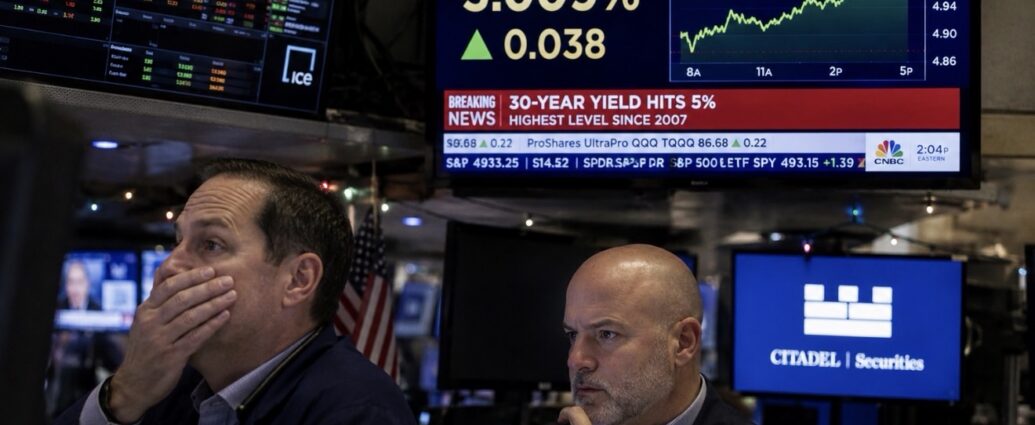
One of Japan’s largest snack-food companies is now stripping color from its packaging because of supply-chain disruptions tied directly to the ongoing Iran conflict, offering one of the clearest consumer-level examples yet of how the war is rippling through everyday global commerce.

Calbee Inc., the Tokyo-based snack giant behind some of Japan’s best-known potato chips and cereal products, announced Tuesday that it will temporarily shift portions of its packaging lineup to monochrome black-and-white designs beginning later this month after shortages emerged in petroleum-derived materials used to manufacture colored printing inks.

The move affects 14 products, including several of the company’s flagship snack brands.

Calbee said the decision was necessary because of “supply instability affecting certain raw materials amid ongoing tensions in the Middle East,” directly linking the packaging changes to disruptions tied to the near-closure of the Strait of Hormuz since the Iran conflict intensified earlier this year.

The supply-chain mechanics behind the problem are rooted in petrochemicals.

Modern packaging inks rely heavily on naphtha, a petroleum derivative used to manufacture pigments, solvents and industrial resins necessary for bright, high-volume food packaging.

Japan imports a substantial share of its naphtha from the Middle East, with much of that supply historically transiting through Hormuz.

As shipping flows through the region slowed sharply following the outbreak of conflict, Japanese refiners and manufacturers began drawing down reserves and scrambling for replacement supply from alternative markets.

The shortages are now beginning to surface in highly specific industrial categories — including food-packaging inks.

Calbee executives emphasized that product quality and recipes themselves will remain unchanged.

The company described the move as a temporary measure designed to maintain stable product availability while reducing pressure on constrained supply chains.

Images released by Calbee show simplified grayscale packaging replacing the colorful designs Japanese consumers traditionally associate with specific flavors and product lines.

The shift is more disruptive in Japan than it might initially appear.

Japanese consumers often rely heavily on packaging colors to quickly identify flavors and product variants — particularly in crowded convenience stores and supermarkets where visual branding plays an outsized role in purchasing behavior.

Calbee’s iconic brightly colored snack bags are deeply familiar across Japan, making the monochrome transition visually striking for consumers.

The company is not alone.

Executives across Japan’s consumer-products industry are increasingly warning about similar shortages and production adjustments.

Itoham Yonekyu, a major processed-meat producer, has reportedly begun evaluating monochrome packaging options as well because of ink shortages.

Meanwhile, cosmetics giant Shiseido is exploring shifts toward plant-based material alternatives as petrochemical costs rise and supply reliability weakens.

Other Japanese manufacturers are facing disruptions tied to fuel, plastics and chemical feedstocks.

Snack producer Yamayoshi Seika recently suspended production of one product line because of heavy-fuel shortages, while food manufacturer Mizkan Holdings has halted certain products and raised prices because of rising packaging and petrochemical costs.

The implications extend well beyond Japan.

Major global consumer-packaged-goods companies including Procter & Gamble, Unilever, Nestlé, PepsiCo and Coca-Cola all depend on highly concentrated global packaging and industrial-ink supply chains.

Trade publications across Europe and Asia have already reported spot shortages in certain pigments and specialty inks since March, particularly bright reds and yellows that rely on specific petrochemical formulations.

The Calbee announcement effectively confirms that those shortages are no longer theoretical.

The broader Japanese economy is already feeling pressure from the conflict.

The Bank of Japan’s latest manufacturing surveys showed weakening industrial sentiment, while automakers including Toyota, Honda and Nissan have all warned about rising input costs and energy-related pressures.

Japan remains one of the world’s most energy-import-dependent advanced economies, making it particularly vulnerable to prolonged instability in Middle Eastern shipping routes.

For consumers outside Japan, the changes may soon become visible as well.

Calbee products sold through international retailers including Costco, H Mart and specialty Asian grocery chains are expected to begin appearing in simplified monochrome packaging later this summer.

The snacks themselves will taste exactly the same.

But the bags holding them now serve as an unexpectedly vivid reminder of how a geopolitical conflict thousands of miles away is quietly reshaping ordinary consumer life across the global economy.

JBizNews Desk

© JBizNews.com. All rights reserved. This article is original reporting by JBizNews Desk. Unauthorized reproduction or redistribution is strictly prohibited.
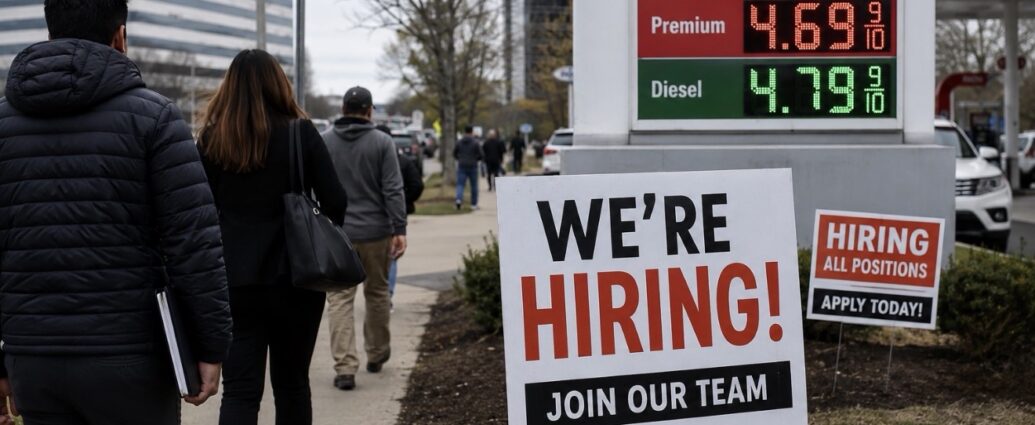
The rapid adoption of ChatGPT and other generative artificial-intelligence tools is accelerating grade inflation across American colleges and universities, pushing A grades to historic highs and increasingly weakening the value of GPAs as a reliable hiring signal for employers. A Wall Street Journal report published Wednesday, citing new academic studies and employer surveys, found that transcripts at many universities have become so compressed that companies are increasingly abandoning grade-based screening altogether.

An A is now the most commonly awarded grade across the U.S. four-year college system, according to the Journal. At elite universities, roughly two-thirds of all grades now fall in the A range, a dramatic shift from historical norms that many employers say makes it nearly impossible to distinguish among candidates entering the workforce.

The trend has accelerated sharply since the release of OpenAI’s ChatGPT in late 2022. A peer-reviewed study published last year in the Centre for Economic Policy Research examined student performance at an Israeli university before and after ChatGPT became widely available. Researchers found that AI tools significantly boosted grades, particularly among lower-performing students, while compressing the overall distribution of academic performance and “eroding the signal value of grades for employers.”

A separate February 2026 study presented at the Harvard Graduate School of Education reached even harsher conclusions. The paper, led by University of Texas at Austin economist Jeffrey Denning alongside researchers from RAND, the University of Maryland, and the University of Georgia, found that students exposed to lenient grading were less likely to succeed in subsequent coursework, scored lower on standardized tests, and earned materially less over their careers.

Denning estimated that a single graduating class affected by grade inflation could collectively lose roughly $160,000 in lifetime earnings because inflated transcripts distort both learning outcomes and employer evaluation systems.

The numbers emerging from elite universities illustrate the scale of the shift. At Harvard University, where administrators launched a formal review of grading practices last year, approximately 60% of all undergraduate grades during the 2024–2025 academic year were A’s — more than double the level recorded in 2006. More than 50 members of Harvard’s graduating class of 2025 reportedly earned perfect GPAs.

At Yale University, 79% of students received grades in the A or A-minus range during the 2022–2023 academic year, up from roughly 40% in 2010.

The issue has now become serious enough that Harvard’s Faculty of Arts and Sciences began voting Tuesday on a proposal that would sharply limit the number of top grades instructors can award. Under the proposal, A grades would be capped at 20% of students in each course, with limited flexibility for a handful of additional A’s. Voting closes May 19, with results expected May 20. If approved, the policy would take effect in fall 2027.

Stuart Shieber, chair of Harvard’s Computer Science department and head of the faculty grading subcommittee, described the problem as a systemic coordination failure, comparing it to a prisoner’s dilemma where individual professors feel pressured not to grade more harshly than peers.

Joshua D. Greene, the Harvard psychology professor who helped draft the proposal, told the Boston Globe: “The way things are now, it’s like every student starts college with a shiny new car.”

For employers, the consequences are already reshaping hiring practices. According to the National Association of Colleges and Employers, only 40% of recruiters still use GPA screening for new graduates, down sharply from 70% just seven years ago. Separate employer surveys found that 60% of hiring managers now question whether recent graduates are workforce-ready, while roughly 30% say they no longer trust GPAs at all.

Industries that historically relied heavily on academic credentials — including consulting, banking, accounting, and technology — are increasingly replacing transcript-based filters with technical assessments, structured interviews, case-study exercises, and internship pipelines.

At the same time, AI itself is changing the applicant pool. Tools including ChatGPT, Anthropic’s Claude, Google Gemini, and Microsoft Copilot now allow students and job seekers to generate polished résumés, cover letters, coding samples, and written assignments at unprecedented scale. Research cited earlier this year by The Atlantic found that AI-assisted applications have made writing quality — once considered one of the strongest predictors of hiring success — far less useful as a screening metric.

The broader labor-market backdrop adds further pressure. Earlier this year, the Federal Reserve Bank of New York reported that unemployment among recent college graduates had climbed above the national unemployment rate — a rare reversal of the traditional economic advantage associated with a college degree.

At the same time, many of the entry-level tasks historically assigned to new graduates — including writing, summarizing, coding assistance, research, and basic analytical work — are increasingly being automated by the very AI systems students are using in school.

Some large employers are adapting aggressively. Consulting firms including McKinsey, Bain, and Boston Consulting Group have publicly emphasized skills-based hiring and expanded assessment testing while continuing to recruit heavily from universities. Other firms, particularly on Wall Street and within major accounting networks, have quietly reduced entry-level hiring and leaned more heavily on internship conversion programs that allow companies to evaluate candidates directly over longer periods.

Whether universities ultimately succeed in restoring the value of academic transcripts remains uncertain. Harvard’s pending vote may become a test case for whether elite institutions are willing to reverse years of grade inflation even at the risk of student backlash and competitive disadvantage.

But according to the growing body of research, one reality is already becoming difficult for both universities and employers to ignore: the American GPA is no longer functioning the way the labor market once expected it to.

JBizNews Desk

© JBizNews.com. All rights reserved. This article is original reporting by JBizNews Desk. Unauthorized reproduction or redistribution is strictly prohibited.
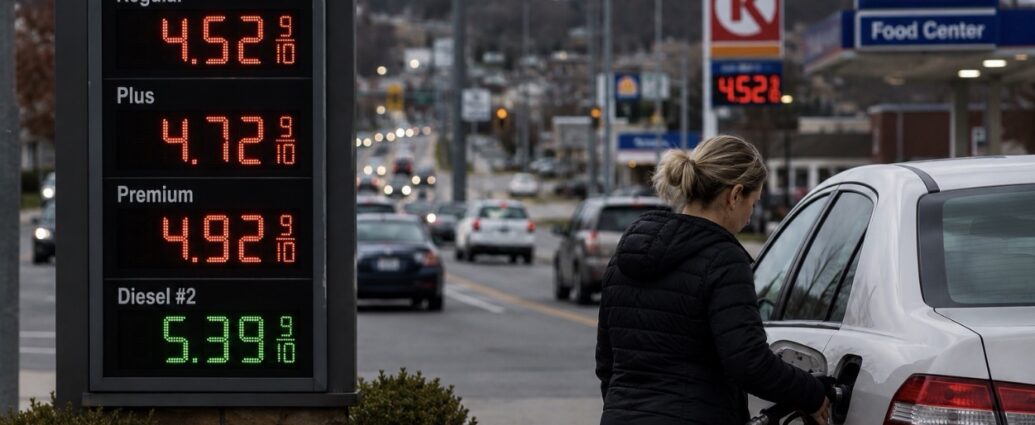
Apple Chief Executive Tim Cook arrived in Beijing this week as part of President Donald Trump’s high-profile business delegation, but the most consequential business move Apple made this year happened months earlier in Washington.

The company’s expanding $600 billion American Manufacturing Program commitment has effectively secured long-term tariff protection for the iPhone, Mac, iPad and Apple Watch, insulating Apple from the escalating import duties that have hit much of the global electronics industry.

The arrangement represents one of the clearest examples yet of how large multinational companies are increasingly using domestic investment commitments to secure trade and tariff advantages from Washington.

Apple originally pledged $500 billion in U.S. investment over four years in early 2025, including plans for roughly 20,000 manufacturing and research jobs, expanded semiconductor partnerships and a major server manufacturing facility in Texas.

Months later, after the Trump administration announced plans for steep tariffs on imported semiconductors and electronics components, Apple expanded the program by another $100 billion, bringing total pledged U.S. investment to $600 billion through 2029.

The revised commitment was announced alongside Trump in the Oval Office and included carve-outs that effectively shielded Apple products from the most severe portions of the administration’s electronics tariff framework.

The structure of the agreement matters.

Apple did not agree to move full iPhone assembly into the United States — something analysts widely view as economically impractical given current labor costs and supply-chain realities.

Instead, the company committed to expanding high-value manufacturing and component production domestically while continuing final assembly largely overseas.

The American Manufacturing Program now includes expanded partnerships with companies including Corning, Bosch, Cirrus Logic, TDK and Qnity Electronics, alongside deeper semiconductor commitments tied to TSMC’s growing Arizona fabrication facilities.

Apple also increased investment in Corning’s Kentucky operations, which manufacture specialized cover glass for iPhones and Apple Watches.

Meanwhile, advanced Apple chips for future iPhone and Mac product lines are expected to begin production at TSMC’s Arizona facilities later this decade.

The arrangement allows Apple to capture the political and supply-chain benefits of expanded U.S. manufacturing while avoiding the massive retail price increases that full domestic iPhone assembly would likely require.

The financial implications are enormous.

Analysts previously estimated that broad-based tariffs on imported electronics could have exposed Apple to meaningful margin compression or forced substantial iPhone price increases.

Morningstar analyst William Kerwin estimated last year that Apple faced roughly 15% earnings risk absent tariff exemptions.

Instead, Apple’s pricing structure remains largely intact.

The average iPhone selling price has stayed relatively stable despite escalating trade tensions, preserving one of the company’s most important competitive advantages in consumer electronics.

The broader industry picture looks very different.

Electronics manufacturers including Samsung Electronics, Sony, LG Electronics, HP, Dell Technologies and Lenovo continue navigating varying degrees of tariff exposure and supply-chain uncertainty.

Consumer-electronics accessory makers have already begun raising prices. Shenzhen-based Anker Innovations, for example, has increased U.S. retail prices significantly over the past year as import costs climbed.

Apple’s arrangement effectively creates a competitive moat built not only on brand strength and ecosystem loyalty, but also on tariff insulation that many rivals currently lack.

The Beijing summit itself remains strategically important for Apple.

Greater China still accounts for a significant portion of Apple’s global revenue, even after the company lost market share in recent years to domestic Chinese smartphone manufacturers including Huawei, Xiaomi and Vivo.

Cook’s participation in the delegation is partly aimed at stabilizing Apple’s position inside China while working through regulatory obstacles surrounding the launch of Apple Intelligence features in the mainland Chinese market.

Chinese regulators have maintained strict oversight regarding AI-related data handling and cloud infrastructure, creating additional complications for foreign technology companies operating inside the country.

For Washington, Apple’s manufacturing commitments also serve a political purpose.

The administration has increasingly framed the American Manufacturing Program as evidence that tariff policy can successfully drive domestic investment and industrial expansion without forcing sharp consumer-price inflation.

The arrangement effectively allows Trump to claim progress on reshoring portions of the electronics supply chain while avoiding the political backlash that would likely accompany dramatically more expensive iPhones.

The longer-term question is whether Apple’s current commitment becomes the new standard for tariff protection.

Other multinational corporations may now face pressure to make similarly massive domestic-investment pledges if they hope to secure comparable exemptions.

The answer may determine how future U.S. industrial policy evolves across technology, pharmaceuticals, semiconductors and consumer goods.

For Apple shareholders, however, the practical outcome is simpler.

The company has effectively spent a portion of its enormous balance sheet to protect one of the most profitable consumer-electronics franchises in history from the tariff shock hitting much of the broader industry.

For consumers, it means the iPhone sitting inside a Best Buy display case this year costs roughly the same as it did before the trade war intensified — something that, in 2026, has become increasingly rare across the consumer economy.

JBizNews Desk

© JBizNews.com. All rights reserved. This article is original reporting by JBizNews Desk. Unauthorized reproduction or redistribution is strictly prohibited.

JPMorgan Chase Chairman and Chief Executive Jamie Dimon warned that the bank could reconsider its planned multibillion-dollar London headquarters if the United Kingdom moves toward higher taxes on banks, delivering one of the sharpest public warnings yet from a major U.S. financial executive about the risks of political instability and anti-bank policy in Britain.

Speaking in a Bloomberg interview in Paris, Dimon said JPMorgan’s proposed new tower in Canary Wharf remains conditional on the U.K. maintaining a competitive and predictable financial-services environment.

The warning comes at a politically volatile moment for Prime Minister Keir Starmer, whose Labour Party suffered heavy losses in recent local elections and is now facing pressure from both the left and right.

The immediate concern for banks is a proposal backed by U.K. trade unions to raise the bank-profit tax surcharge from 3% to 8% on profits above £100 million.

That proposal has intensified fears across the City of London that a weakened Labour government — or a successor leadership more hostile to financial services — could shift sharply toward higher levies on banks.

Dimon framed the issue in unusually direct terms.

“I’ve always objected to the fact — we didn’t damage the U.K. in any way — we paid probably $10 billion back in extra taxes by now,” Dimon told Bloomberg’s Francine Lacqua. “I don’t think that’s right or fair. If that happens too much, we will reconsider.”

Dimon praised Starmer as “very smart” and offered qualified support for both the prime minister and Chancellor Rachel Reeves, who have largely pursued a market-friendly fiscal approach since taking office.

But his warning was clear: JPMorgan’s investment commitment depends on Britain not becoming hostile to banks.

The stakes for Canary Wharf are substantial.

JPMorgan announced last year that it planned to build a new 3 million-square-foot office tower in the London financial district, designed to house as many as 12,000 employees and serve as the bank’s U.K. headquarters.

The project is one of the largest single corporate real-estate commitments in Canary Wharf in more than a decade and was widely interpreted as a vote of confidence in London’s post-Brexit financial future.

A cancellation or delay would land hard across the U.K. property market, construction sector and broader financial-services industry.

The political backdrop has become increasingly unstable.

Starmer’s Labour Party has faced mounting internal dissent after local-election losses to Reform UK on the right and the Green Party on the left. Some Labour members of Parliament have publicly questioned Starmer’s leadership, while Health Secretary Wes Streeting has been widely discussed as a potential future challenger.

Bond markets have responded cautiously.

U.K. gilts sold off during the height of the political turbulence, pushing the 10-year yield higher, before stabilizing as Starmer signaled he intended to remain in office.

Investors have generally viewed the Starmer-Reeves leadership team as more fiscally disciplined than several possible alternatives, making Dimon’s warning politically useful for the current government as it resists pressure from Labour’s left flank.

The episode is part of a broader global pattern.

Major financial firms are increasingly warning cities and governments that high taxes, populist rhetoric and regulatory hostility can redirect investment elsewhere.

In the United States, Citadel founder Ken Griffin has made similar arguments while weighing real-estate and expansion decisions in New York amid disputes with city leaders over tax policy and political rhetoric.

Cities including Miami, Dallas, Charlotte, Nashville, Singapore, Dubai and Frankfurt have all benefited in recent years from concerns about taxes and regulation in traditional financial hubs such as New York and London.

JPMorgan’s Canary Wharf commitment had been a powerful counter-signal that London remained capable of attracting blue-chip financial investment even after Brexit.

Dimon’s latest comments now make that confidence explicitly conditional.

For investors, the warning adds another layer of risk to U.K. financial assets.

Shares of major British banks including HSBC, Barclays, Lloyds Banking Group and NatWest have already been trading with elevated political-risk premiums. Any concrete move toward higher bank taxes could weigh further on valuations and potentially accelerate capital allocation away from London.

For Starmer and Reeves, the message from Wall Street’s most influential banking executive is blunt but useful: Britain can either protect its financial-services competitiveness or risk watching some of the world’s largest banks redirect capital, jobs and real-estate commitments elsewhere.

JBizNews Desk

© JBizNews.com. All rights reserved. This article is original reporting by JBizNews Desk. Unauthorized reproduction or redistribution is strictly prohibited

U.S. stocks powered deeper into record territory Thursday afternoon, with the Dow Jones Industrial Average crossing the 50,000 mark for the first time ever, as investors piled into technology and industrial shares following a blockbuster Cisco Systems earnings report and major commercial announcements tied to President Donald Trump’s Beijing summit with Chinese President Xi Jinping.

The rally accelerated after Cisco reported surging artificial-intelligence infrastructure demand and Trump announced China had agreed to purchase 200 Boeing aircraft alongside expanded purchases of U.S. soybeans and energy products during the high-profile state visit.

The S&P 500 climbed 0.74% to 7,499.63, while the Dow Jones Industrial Average rose 0.73% to 50,055.30. The Nasdaq Composite gained 0.88% to 26,633.44, with all three indexes setting fresh intraday highs. The Russell 2000 added 0.46%.

Wall Street’s rally came despite softer U.S. economic data that increasingly reinforced expectations the Federal Reserve under incoming Chair Kevin Warsh could begin cutting interest rates as early as June.

The Commerce Department reported April retail sales rose just 0.5%, sharply below March’s revised 1.6% surge, while the Labor Department said weekly jobless claims climbed to a five-week high of 211,000.

Rather than hurting markets, traders interpreted the slowdown as supportive for monetary easing.

“The market is now pricing a materially more dovish Fed path under Warsh,” said one senior New York-based macro strategist. “Investors see slower growth but not recession — which is the sweet spot for risk assets.”

Cisco Ignites AI Trade

The session’s biggest catalyst came from Cisco Systems, whose shares surged more than 14% after the networking giant delivered stronger-than-expected quarterly results and sharply raised its AI infrastructure outlook.

Cisco reported fiscal third-quarter revenue of $15.8 billion, up 12% year over year, while adjusted earnings reached $1.06 per share — both ahead of Wall Street expectations.

More importantly for investors, the company disclosed $5.3 billion in AI infrastructure orders from hyperscale cloud customers and raised its full-year AI order forecast to $9 billion from $5 billion previously.

Chief Executive Chuck Robbins told analysts the industry has entered a “networking supercycle” fueled by exploding AI computing demand.

The company simultaneously announced roughly 4,000 job cuts as it shifts investment toward AI networking, optical systems, cybersecurity, and custom silicon.

Cisco’s report lifted the broader AI infrastructure complex. Arista Networks jumped roughly 5%, while Juniper Networks, Ciena, Broadcom, NVIDIA, and optical networking suppliers also advanced sharply.

NVIDIA rose 2.29% as Chief Executive Jensen Huang, traveling with Trump’s delegation in Beijing, held meetings with Chinese officials regarding semiconductor policy and AI cooperation.

Trump’s Beijing Visit Boosts Industrials

Industrial and aerospace shares also gained momentum following major commercial announcements tied to Trump’s summit in Beijing.

Boeing climbed after Trump disclosed China agreed to purchase 200 Boeing 737 aircraft — the country’s largest Boeing order since 2017.

The deal marks a significant thaw in U.S.-China commercial aviation ties following years of geopolitical friction and regulatory disputes.

“Large aircraft orders carry enormous symbolic and economic value,” said one aviation analyst. “This is not just about planes — it signals reopening commercial channels between Washington and Beijing.”

GE Aerospace gained on expectations of higher engine demand tied to the Boeing deal, while industrial names including Caterpillar also recovered.

Technology executives accompanying Trump’s delegation continued to draw attention from investors. Apple rose 1.38% as Chief Executive Tim Cook participated in meetings, while Tesla advanced 2.73% with Elon Musk joining the delegation.

Financial firms tied to the trip also traded modestly higher, including Goldman Sachs, Citigroup, and BlackRock.

Markets Look Past Global Risks

Despite continued geopolitical instability, markets largely shrugged off escalating global tensions.

Crude oil prices eased slightly, with West Texas Intermediate trading near $100.58 per barrel and Brent crude remaining above $105, even as the U.S.-Israeli conflict with Iran continued and Cuba announced it had fully exhausted its diesel and fuel oil reserves overnight.

Gold prices slipped 0.45% as investors rotated toward equities and risk assets.

The CBOE Volatility Index (VIX) — Wall Street’s preferred fear gauge — remained relatively subdued near 18, suggesting options markets see limited immediate stress despite mounting international flashpoints.

Bitcoin continued its rebound, climbing above $80,800.

Focus Turns to Consumers and the Fed

Attention now shifts toward next week’s earnings reports from Walmart, Target, and Home Depot, which investors increasingly view as critical tests of consumer resilience amid slowing growth and elevated prices.

Markets are also closely watching the Federal Reserve transition as Kevin Warsh formally assumes the Fed chairmanship Friday ahead of the central bank’s June 16-17 meeting.

Bond yields drifted lower Thursday as traders increased bets on rate cuts later this summer.

For now, Wall Street’s message remains clear: investors believe AI spending, improving U.S.-China commercial relations, and the prospect of lower interest rates continue to outweigh geopolitical risks and slowing economic momentum.

JBizNews Desk

© JBizNews.com. All rights reserved. This article is original reporting by JBizNews Desk. Unauthorized reproduction or redistribution is strictly prohibited.

NEW YORK — Just a few years ago, some of America’s largest companies declared the college degree outdated.

Executives championed “skills-first hiring,” recruiters celebrated nontraditional talent pipelines, and major employers including IBM, Google, Apple, and Tesla publicly scaled back degree requirements across large portions of their workforce.

Now, the pendulum is quietly swinging back.

As artificial intelligence rapidly reshapes the labor market, employers are increasingly reinstating college degree expectations and GPA filters — reversing one of the defining hiring trends of the post-pandemic economy and creating new uncertainty for millions of workers who entered the workforce through alternative pathways.

The shift, highlighted in new reporting from Fortune, reflects growing concern among hiring managers that AI is fundamentally changing which human skills remain valuable — and how employers identify candidates most likely to succeed alongside increasingly powerful automation systems.

“Employers are increasingly turning to degree and GPA,” one recruiter told Fortune, describing a noticeable retreat from the “talent is everywhere” philosophy that dominated hiring discussions between 2021 and 2023.

During that period, an unusually tight labor market forced companies to widen recruiting pools aggressively.

Major corporations reduced credential requirements, embraced boot camps and certification programs, and promoted the idea that demonstrated skills mattered more than formal academic pedigree.

The movement also reflected broader criticism of the traditional college system, rising tuition costs, and concerns that rigid credential screening excluded talented workers from lower-income and nontraditional backgrounds.

But the rapid rise of generative AI appears to be changing that calculus.

Across corporate America, artificial intelligence is increasingly automating many of the routine analytical, administrative, and coordination tasks that historically served as entry points for junior and mid-level employees.

That includes functions in:

  • Marketing
  • Data analysis
  • Customer support
  • Administrative operations
  • Research
  • Basic coding
  • Financial processing
  • Legal review
  • Content production

As those tasks become partially automated, companies say the remaining human work is shifting upward toward more complex responsibilities involving judgment, synthesis, relationship management, strategic thinking, and cross-functional coordination.

Many employers increasingly believe those capabilities correlate more strongly with traditional educational pathways — particularly at selective universities.

In effect, AI may be shrinking the category of lower-complexity white-collar work while simultaneously increasing demand for workers perceived as capable of operating at a higher cognitive level alongside advanced software systems.

There is also a more operational reason degree requirements are returning: scale.

As AI-assisted recruiting systems become more common inside hiring pipelines, degree status and GPA scores provide simple, standardized filters that can quickly reduce applicant pools containing thousands or even tens of thousands of resumes.

The irony is difficult to miss.

Artificial intelligence is simultaneously helping automate hiring processes while also contributing to the economic conditions causing employers to rely more heavily on traditional credentials.

The trend is not universal.

In highly technical fields — especially software engineering, cybersecurity, and specialized AI development — portfolio-based hiring and skills assessments remain important, particularly at firms that have already invested heavily in alternative talent evaluation systems.

Startups and smaller firms also continue to rely more heavily on demonstrated capability than formal academic pedigree.

But recruiters say the broader labor market is increasingly drifting back toward credential-based hiring norms, especially for white-collar professional roles where applicant competition has intensified.

That shift carries significant implications for workers who entered the labor force based on the expectation that the economy was permanently moving beyond traditional degree barriers.

Millions of Americans were encouraged over the past several years to pursue certifications, coding boot camps, online learning platforms, and alternative career paths instead of four-year degrees.

Many successfully entered industries that historically would have been difficult to access without traditional academic credentials.

Now, some of those same workers face a labor market in which the signals employers trust appear to be changing again.

The broader question confronting corporate America is whether the return to credential-heavy hiring represents a rational adaptation to an AI-driven economy — or a retreat into familiar habits during a period of extraordinary technological uncertainty.

Critics of renewed degree filtering argue that formal education often measures access, socioeconomic background, and institutional prestige as much as actual capability.

Supporters counter that as AI compresses lower-skill knowledge work, employers naturally become more selective about the human capabilities they prioritize.

What is increasingly clear is that artificial intelligence is not only changing how work gets done.

It is also changing how employers decide who gets hired to do it.

And for many workers navigating the next phase of the labor market, the value of a college degree — once widely declared in decline — may suddenly be rising again.

JBizNews Desk

© JBizNews.com. All rights reserved. This article is original reporting by JBizNews Desk. Unauthorized reproduction or redistribution is strictly prohibited.
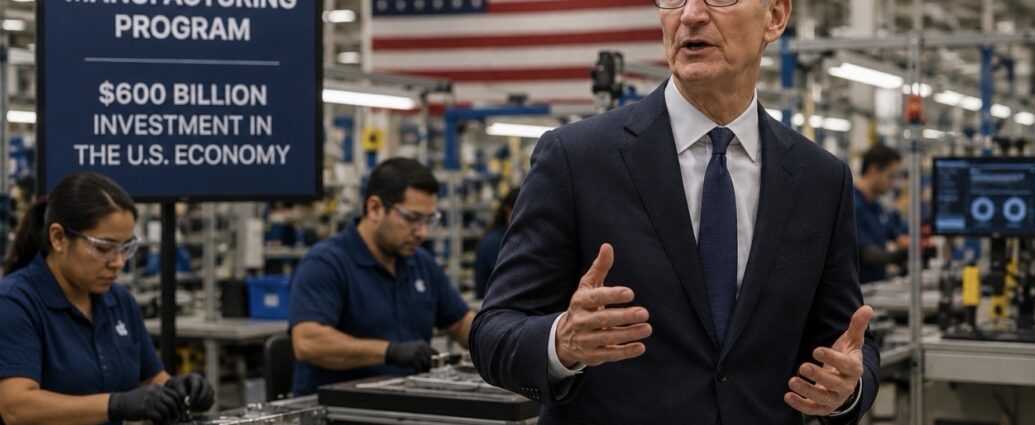
Home Depot shares slid toward a fresh 52-week low Wednesday as Wall Street analysts turned increasingly cautious on the home-improvement giant amid a prolonged housing slowdown, weakening renovation demand, and rising mortgage rates that continue to pressure the broader housing market. At the same time, rival Lowe’s received a major vote of confidence from Wall Street after Citigroup upgraded the retailer to Buy, sharpening the growing divergence between America’s two largest home-improvement chains just days before both companies report earnings.

The split in analyst sentiment comes during one of the most important weeks of the spring retail earnings season. Home Depot is scheduled to release first-quarter results on Tuesday, May 19, with Lowe’s following a day later on Wednesday, May 20. Both companies operate in the same interest-rate-sensitive housing economy, but investors and analysts are increasingly viewing the retailers through very different lenses as elevated borrowing costs continue freezing parts of the U.S. housing market.

Citigroup analyst Steven Zaccone upgraded Lowe’s from Neutral to Buy on Tuesday and issued a $285 price target, according to Bloomberg, implying roughly 26% upside from recent trading levels. Zaccone told clients he expects Lowe’s to outperform both industry peers and Home Depot through 2026 as the home-improvement cycle begins stabilizing after multiple difficult years tied to rising interest rates and falling home turnover.

The bullish Lowe’s call stood in sharp contrast to the latest round of cuts targeting Home Depot. On Wednesday, Truist Securities analyst Scot Ciccarelli lowered his Home Depot price target from $424 to $394, extending a growing wave of negative revisions that has pushed the stock near its lowest level in a year. Earlier this week, Gordon Haskett analyst Chuck Grom cut his Home Depot target even more aggressively, reducing it from $395 to $330.

Shares of Home Depot fell another 3.2% Wednesday, underperforming the broader market even as the Nasdaq and S&P 500 closed at record highs. The stock now trades below its 200-day moving average, while technical indicators increasingly point toward oversold conditions.

Behind the weakness is a housing market that remains stuck in a prolonged freeze. Mortgage rates climbed back near 6.5% this week following another surge in Treasury yields after hotter-than-expected inflation data. Higher borrowing costs continue discouraging both home purchases and refinancing activity, sharply reducing the housing turnover that typically drives spending on remodeling, repairs, appliances, kitchens, flooring, and other major home-improvement projects.

Economists and housing analysts have repeatedly warned that elevated mortgage rates are trapping millions of homeowners in existing low-rate mortgages secured during the pandemic-era housing boom. With many homeowners unwilling to give up mortgage rates below 4%, fewer homes are changing hands across the country, weakening demand for the types of large renovation projects that fueled Home Depot’s explosive growth during the pandemic.

The broader economic backdrop worsened Wednesday after the Bureau of Labor Statistics reported that the Producer Price Index rose 6% year over year in April, marking the fastest wholesale inflation pace since 2022. Much of the increase was tied to rising energy costs connected to the ongoing Iran war, which has pushed oil prices sharply higher in recent weeks and reignited fears that inflation may remain elevated longer than markets previously expected.

Treasury yields climbed further after the report, with the 30-year U.S. Treasury yield rising above 5% for the first time since 2007. The 10-year Treasury yield approached 4.5%, directly increasing pressure on mortgage rates and further complicating the outlook for housing-related companies.

Home Depot’s own fundamentals have added to investor concerns. In its previous quarterly report, the retailer posted a 3.8% year-over-year revenue decline, continuing a multi-quarter stretch of weakening sales tied to slowing renovation demand. Management, led by Chair, President and CEO Ted Decker, guided fiscal 2026 toward flat-to-low-single-digit comparable sales growth and projected operating margins between 12.4% and 12.6%, down from 13.1% in fiscal 2025.

While Lowe’s faces many of the same macroeconomic pressures, analysts increasingly believe the company may be navigating the downturn more effectively. Under Chairman, President and CEO Marvin R. Ellison, Lowe’s has aggressively expanded its professional-contractor business through acquisitions, distribution growth, and new branch openings — areas historically dominated by Home Depot.

Analysts also note that Lowe’s carries somewhat less exposure to large discretionary remodeling projects tied to affluent homeowners, leaving it potentially better positioned if consumers remain cautious on big-ticket spending.

Lowe’s reported fiscal 2025 sales of $86.3 billion and guided fiscal 2026 revenue toward a range of $92 billion to $94 billion, with adjusted diluted earnings per share expected between $12.25 and $12.75. Comparable sales are projected to range from flat to up 2%.

For investors, next week’s earnings reports may now serve as a major test of Wall Street’s widening divergence thesis. If Lowe’s delivers the stronger results and guidance analysts expect while Home Depot disappoints again, the analyst rotation currently underway could accelerate significantly.

But if Home Depot surprises to the upside and shows signs that housing demand may finally be stabilizing, the recent selloff could ultimately prove to be an overreaction for a stock that has already lost more than 20% from its peak.

Either way, Wall Street is no longer treating Home Depot and Lowe’s as the same trade.

JBizNews Desk

© JBizNews.com. All rights reserved. This article is original reporting by JBizNews Desk. Unauthorized reproduction or redistribution is strictly prohibited.

A.P. Moller-Maersk, one of the world’s largest shipping companies and among the clearest barometers of global trade activity, warned investors that the Iran war is now adding roughly $500 million per month to operating costs and that the disruption is likely to worsen through the second half of the year.

The warning from the Danish shipping giant underscores how rapidly the conflict is spreading beyond energy markets into the core infrastructure of global commerce.

Chief Executive Vincent Clerc told CNBC last week that the war has become a “new wake-up call” for international trade, warning that higher fuel, insurance and rerouting costs are now flowing through virtually every segment of global shipping.

Maersk, which handles roughly 14% of worldwide containerized trade and operates a fleet of approximately 700 vessels, reported first-quarter revenue of $13 billion, down 2.6% year over year.

The company’s operating profit collapsed nearly 75% to $340 million, while underlying EBITDA fell sharply to $1.75 billion from $2.71 billion a year earlier.

Although the EBITDA figure modestly exceeded Wall Street expectations, investors focused heavily on the company’s warning that conditions are likely to deteriorate further.

Shares fell as much as 7.5% in Copenhagen trading following the report.

The economics confronting the shipping industry have become increasingly punishing.

Maersk consumes roughly 8 million tonnes of bunker fuel annually, making it one of the world’s largest non-refining oil consumers. With Brent crude trading near $107 per barrel and West Texas Intermediate hovering around $101, fuel costs have surged structurally higher since the conflict intensified earlier this year.

At the same time, insurance premiums for Persian Gulf shipping routes have risen sharply as commercial traffic through the Strait of Hormuz remains heavily disrupted.

Clerc warned investors that the economic damage tied to the conflict will likely persist even after any eventual ceasefire.

“The energy crisis does not go away the day peace comes,” Clerc said, adding that oil companies expect elevated costs to continue for “at minimum several more months.”

The implications extend far beyond shipping companies themselves.

Maersk’s customer base includes some of the world’s largest retailers and manufacturers, including Walmart, Target, IKEA, Carrefour, Apple and countless midsize importers that now face increasingly difficult decisions about whether to absorb higher freight costs, raise consumer prices or reduce inventory orders altogether.

The company maintained its full-year guidance, projecting underlying EBITDA between $4.5 billion and $7 billion, but management acknowledged that risks remain heavily tilted toward weaker demand and continued supply-chain disruption.

One of the most important questions raised during the earnings call centered on consumer demand destruction.

Clerc openly questioned whether elevated shipping and energy costs would eventually weaken global consumer spending enough to trigger broader economic slowdown.

“Will we see demand destruction at the consumer level? And will that then reverberate throughout the supply chain with softer demand in the second part of the year?” the CEO asked investors.

The concern is increasingly shared across the broader energy and logistics sectors.

The International Energy Agency recently revised down its 2026 global oil-demand forecast, now projecting a contraction of approximately 80,000 barrels per day compared with earlier expectations for significant growth.

Meanwhile, shipping companies face another problem entirely: oversupply.

Despite weakening demand conditions, large new vessels ordered during the post-pandemic shipping boom continue entering the market. Maersk itself ordered eight additional ships earlier this year, while competitors including MSC, CMA CGM, Hapag-Lloyd, COSCO Shipping and ONE continue managing excess capacity through increasingly aggressive rate-discipline strategies.

Asia-Europe freight rates briefly surged after the war began but have since drifted back toward prewar levels even as fuel costs remain structurally elevated — a dynamic analysts at Morgan Stanley warned could significantly compress industry margins.

For American consumers, the consequences are direct.

Roughly 40% of all containerized imports entering U.S. ports either move on Maersk-operated vessels or pass through Maersk-managed terminals. When freight rates rise, those costs ultimately filter through to retail shelves at Home Depot, Costco, Nike, electronics distributors and countless other consumer-facing businesses.

Recent earnings warnings from companies including Birkenstock have already begun quantifying the impact.

The military situation itself also remains fragile.

The U.S. Navy has started escorting selected commercial vessels through Hormuz, including Maersk’s U.S.-flagged Alliance Fairfax, but six company-owned or chartered vessels remain trapped inside the Persian Gulf because, as Clerc put it, “we cannot risk the lives of our crews.”

A “large part” of the strait, he warned, is currently mined.

For global markets, the message from one of the world’s most important shipping companies is becoming increasingly difficult to ignore: the Iran conflict is no longer merely an oil shock. It is rapidly becoming a full-scale supply-chain and trade crisis with direct consequences for inflation, consumer prices and global growth.

JBizNews Desk

© JBizNews.com. All rights reserved. This article is original reporting by JBizNews Desk. Unauthorized reproduction or redistribution is strictly prohibited.
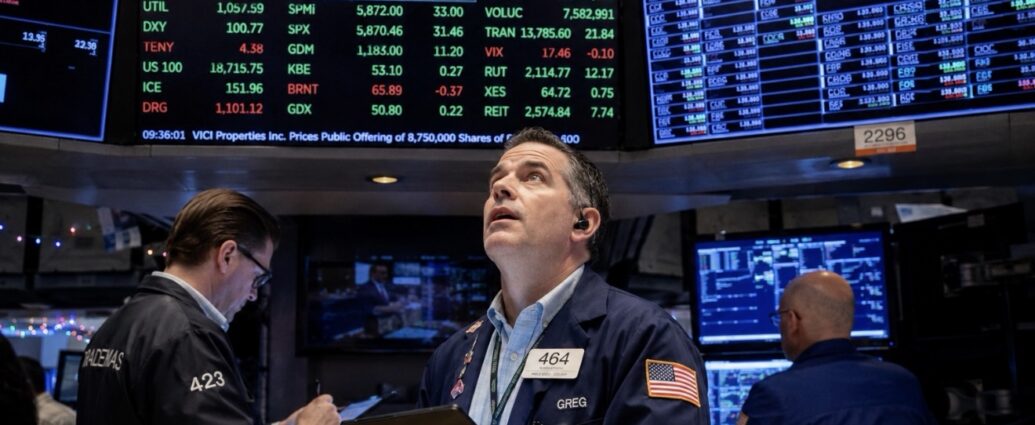
Chinese President Xi Jinping told a group of top American executives Thursday that China’s door to foreign business “will only open wider,” delivering a carefully calibrated message to corporate leaders who traveled to Beijing alongside President Donald Trump for a closely watched summit aimed at stabilizing the world’s most consequential economic relationship.

Speaking inside Beijing’s Great Hall of the People, Xi addressed executives including Apple CEO Tim Cook, Tesla CEO Elon Musk, Nvidia CEO Jensen Huang, BlackRock CEO Larry Fink, and senior leaders from Goldman Sachs, Citigroup, Visa, GE Aerospace, Boeing, and Blackstone.

According to Chinese state broadcaster CCTV and the official Xinhua News Agency, Xi told the delegation that American companies had been “deeply involved in China’s reform and opening up” and emphasized that both countries had benefited from decades of economic cooperation. Executives attending the meeting reportedly told Xi they continued to “highly value” the Chinese market and hoped to expand cooperation further.

The high-profile corporate diplomacy unfolded alongside Trump’s bilateral talks with Xi, which lasted more than two hours and produced what both governments described as a framework for a “constructive strategic stable relationship” over the next three years.

Trump later told Fox News host Sean Hannity that Xi had agreed to purchase 200 Boeing 737 aircraft along with expanded imports of American soybeans, crude oil, and liquefied natural gas — announcements the White House is expected to frame as major economic wins for American manufacturing and agriculture.

While smaller than the 500-aircraft package Bloomberg previously reported was under discussion, the Boeing order would still represent China’s largest aircraft commitment to the U.S. aerospace giant since Trump’s first state visit to Beijing in 2017.

Boeing shares rose roughly 1.6% in premarket trading following the announcement. Tesla gained 2.7%, Nvidia climbed 2.3%, Apple advanced 1.4%, and Micron Technology surged nearly 5% as investors interpreted the summit as a sign that commercial tensions between Washington and Beijing may be easing, at least temporarily.

The delegation accompanying Trump reflected the breadth of American corporate exposure to China. Alongside Cook, Musk, Huang, and Boeing CEO Kelly Ortberg, the trip included some of Wall Street’s most influential financial executives and industrial leaders.

Trump said earlier in the week that when he invited “the top 30 in the world” to join the trip, “every single one of them said yes.”

For Xi, the optics served multiple strategic purposes.

Domestically, the meeting projected confidence at a time when China’s economy faces slowing growth, persistent real estate weakness, and mounting concerns about youth unemployment and foreign capital outflows. Internationally, the summit allowed Beijing to signal that despite years of tariffs, export controls, sanctions disputes, and escalating geopolitical rivalry, China still views American business as indispensable to its long-term economic strategy.

Chinese Premier Li Qiang separately met with executives during the visit to discuss semiconductors, artificial intelligence, electric vehicles, financial services, and broader market access issues, according to China’s foreign ministry.

Public comments from the CEOs were notably optimistic.

Musk described the meetings as “wonderful” and said he hoped to accomplish “many good things.” Cook responded with a thumbs-up gesture when asked about the summit, while Huang called both Trump and Xi “incredible.”

Yet beneath the diplomatic warmth, major tensions remain unresolved.

According to Chinese government summaries, Xi warned Trump directly that Taiwan remains “the most important issue in China-U.S. relations” and cautioned that mishandling the matter could push ties into a “highly dangerous situation.”

The two leaders also discussed the Strait of Hormuz, the critical oil-shipping corridor increasingly affected by the ongoing U.S.-Israeli conflict with Iran. A White House official said both sides agreed the waterway “must remain open” given its central role in global energy markets.

Despite Xi’s promise that China’s economic door will “open wider,” many structural challenges for American firms remain firmly in place.

Beijing continues aggressively supporting national champions such as state-backed aircraft manufacturer COMAC, whose C919 jet directly competes with Boeing’s 737 MAX and Airbus’ A320neo family. Chinese industrial policy also continues prioritizing domestic semiconductor firms, electric vehicle makers, software companies, and artificial intelligence infrastructure providers.

That means China’s openness may remain selective — welcoming imports and partnerships in sectors where Beijing still needs foreign expertise while maintaining tighter barriers in industries it ultimately aims to dominate itself.

For the United States, however, the immediate economic implications are significant.

If finalized, Boeing’s 200-aircraft deal would support years of production activity at the company’s Renton, Washington assembly facilities. Expanded soybean purchases could provide relief to American farmers who have increasingly lost market share to Brazilian and Argentine competitors during recent trade tensions. Additional LNG and energy purchases could further strengthen U.S. export capacity during a period of elevated global energy prices tied to the Iran conflict.

Trump is scheduled to depart Beijing on Friday, while Xi is expected to make a reciprocal state visit to the United States later this year.

JBizNews Desk
© JBizNews.com. All rights reserved. This article is original reporting by JBizNews Desk. Unauthorized reproduction or redistribution is strictly prohibited.

China is preparing to commit to purchasing 25 million metric tons of U.S. soybeans annually for three years, according to people familiar with negotiations cited by Bloomberg and CNBC, giving President Donald Trump and Chinese President Xi Jinping one of the clearest commercial deliverables from this week’s Beijing summit and handing the American farm economy its strongest potential export breakthrough in years.

The agriculture package is expected to include expanded Chinese purchases of U.S. soybeans, beef, poultry, non-soybean crops, coal, oil and natural gas, with Cargill Chief Executive Brian Sikes traveling as part of the U.S. delegation to help finalize the commodity commitments.

For Midwestern farmers, the soybean number is the centerpiece.

Before the 2018-2019 trade war, U.S. soybean exports to China averaged roughly 28 million to 32 million metric tons annually. Chinese retaliatory tariffs later collapsed the trade, pushing buyers toward Brazil, Argentina and Paraguay and reducing America’s share of Chinese soybean imports to less than 20% by 2024, down from roughly 40% a decade earlier.

A three-year baseline commitment of 25 million metric tons annually, if fully implemented, would restore a meaningful portion of that lost demand.

The immediate corporate beneficiaries would include the dominant global grain traders — Cargill, Archer-Daniels-Midland, Bunge Global and Louis Dreyfus — along with farmer-owned cooperative CHS Inc., which handles major soybean export flows through Pacific Northwest and Gulf Coast terminals.

The ripple effects would extend deep into the agricultural supply chain, lifting volumes for country elevators, river terminals, rail operators including BNSF Railway and Union Pacific, barge companies and port operators tied to U.S. soybean exports.

For farmers, the timing is critical.

Soybean futures on the Chicago Board of Trade have traded largely between $9.50 and $11.50 per bushel through 2025, well below the $14-plus peak reached in 2022.

Farm-budget analyses from Iowa State University suggest many Corn Belt growers face breakeven costs near $10.50 per bushel once land rent, fertilizer, equipment and financing expenses are included.

That means a meaningful portion of soybean operations has been operating near or below breakeven for two consecutive crop cycles.

A credible Chinese purchase floor would likely provide immediate support to prices and improve planning visibility heading into the next planting season.

The broader commodity basket is also politically significant.

Expanded Chinese beef purchases would arrive as the Trump administration separately weighs measures to ease U.S. grocery prices, where beef costs have remained elevated because of tight cattle supplies.

Larger Chinese purchases would benefit meat processors including Tyson Foods, JBS USA, Cargill Protein and National Beef Packing, while poultry commitments could support Tyson and Pilgrim’s Pride, both of which have faced margin pressure in Asian export markets.

Coal and energy commitments would provide additional wins for U.S. producers.

Potential coal purchases could benefit Peabody Energy, Arch Resources and Consol Energy, while any liquefied natural gas commitments would support exporters including Cheniere Energy and Venture Global as new export capacity comes online.

Oil commitments are likely to matter more politically than commercially, since China already sources crude globally based on price and availability. Still, the optics of Beijing agreeing to increase U.S. energy purchases would give both governments a visible trade-balancing headline.

Skepticism remains high.

Chinese purchase commitments have historically been easier to announce than to execute. The Phase One trade agreement signed in January 2020 pledged roughly $200 billion in additional Chinese purchases of U.S. goods and services, but those targets were never fully met.

Agricultural traders note that Chinese soybean buying decisions are ultimately driven by crusher margins, Brazilian harvest timing, currency movements, freight costs and domestic demand — factors no political agreement can fully override.

The political incentives, however, are unusually aligned.

The late-2025 Busan APEC truce paused the most damaging pieces of the tariff escalation between Washington and Beijing, but that framework expires later this year. Both governments are now searching for measurable commercial wins that can justify an extension.

For Trump, the soybean commitment would provide a direct economic message to the Midwest ahead of the 2026 midterm cycle. For Xi, stable access to U.S. agricultural and energy supplies helps reduce trade friction while China manages its own economic slowdown and energy-security pressures.

For Sikes and the agriculture-trading complex, the immediate question is what written commitments emerge from the Beijing meetings.

For farmers, the bigger question is whether Chinese buyers actually take delivery once the cameras leave.

JBizNews Desk

© JBizNews.com. All rights reserved. This article is original reporting by JBizNews Desk. Unauthorized reproduction or redistribution is strictly prohibited

U.S. beer sales are deteriorating faster than major brewers and Wall Street analysts expected, with new scanner data showing consumers pulling back sharply on convenience-store purchases as gasoline prices continue climbing nationwide.

According to a research note from Bernstein analyst Nadine Sarwat, beer, flavored malt beverage, and cider volumes fell 6.3% year over year through the week ending May 2, based on Nielsen-tracked retail data. The decline marks a sharp acceleration from the roughly 3% contraction recorded between November and mid-April and signals what analysts increasingly believe is a broader consumer spending slowdown rather than temporary seasonal volatility.

While some fluctuation had been anticipated because Easter fell earlier this year than last, the breadth and consistency of the weakness across regions and beverage categories are changing the narrative on the industry.

What initially appeared to be a soft spring now increasingly looks like evidence that rising fuel prices are directly squeezing discretionary consumer spending.

The convenience-store channel — historically one of the beer industry’s most dependable sales drivers — is taking the hardest hit. Volumes at chains including 7-Eleven, Wawa, Shell, and Exxon convenience locations are down roughly 9% year over year since late April, significantly worse than the broader beer market.

Analysts say the decline matters because convenience stores function as one of the clearest real-time indicators of household financial stress. Beer remains among the most reliable impulse purchases at gas stations and convenience retailers, meaning falling sales often signal shrinking discretionary cash flow among consumers.

The pressure point is increasingly obvious: gasoline prices.

According to AAA, average U.S. gasoline prices have risen roughly 52% since the start of the Iran conflict, with the national average now hovering near $4.51 per gallon. Each additional dollar spent filling a tank effectively reduces the amount consumers spend inside convenience stores on beverages, snacks, and other discretionary items.

Sarwat drew the connection directly in her note, writing that Bernstein found “a negative correlation between the absolute price of gas in a given state today and the sequential change in beer/FMB volume growth.”

The regional data reinforces that relationship. California — where average gasoline prices now exceed roughly $6.16 per gallon — has become the weakest beer market in the country, with beer volumes decelerating by approximately 16% compared with the previous month’s trend. Arizona and Texas have also experienced notable slowdowns as fuel prices climbed.

The weakness is no longer limited to alcohol. Bernstein noted that soft drinks, bottled water, and energy drinks have also softened in recent weeks, suggesting that the strain is broader than changing consumer taste preferences.

The deterioration aligns with worsening national consumer sentiment. The University of Michigan’s preliminary May Consumer Sentiment Index fell to a record low of 48.2, missing expectations and slipping below April levels. The survey’s current-conditions component dropped nearly 9%, with consumers increasingly citing gasoline prices and tariffs as major concerns weighing on household finances.

Survey director Joanne Hsu noted that roughly one-third of respondents spontaneously mentioned higher gasoline prices during interviews.

The beer industry itself has already begun adjusting expectations. Constellation Brands, brewer of Modelo and Pacifico, previously projected its beer division operating profit would decline between 7% and 9%, sharply worse than earlier forecasts that had expected flat or slightly positive growth.

Chief Executive Bill Newlands cited “volatile consumer purchasing behaviour” and weakness among Hispanic consumers — a critical demographic for the company’s premium beer portfolio.

Sarwat described the broader environment as “an overall painful beer industry where volumes are declining at a mid-single-digit percentage rate,” a characterization that now appears increasingly accurate for 2026.

Competitors are responding defensively. Molson Coors recently estimated that overall U.S. beer-industry volumes declined approximately 1.6% during the quarter while its own market share slipped modestly. The company expects second-quarter U.S. financial volumes to fall between 6% and 9% year over year.

To defend market share, brewers are increasingly leaning toward lower-cost brands and value offerings. Molson Coors recently announced the return of Keystone Ice, a discontinued budget beer brand, signaling that many lower-income consumers are trading down rather than abandoning the category entirely.

For the industry, the larger problem is that the biggest forces driving the slowdown remain largely outside brewers’ control.

Energy markets continue grappling with supply disruptions tied to the Iran conflict, gasoline prices remain elevated, and consumer confidence sits near the weakest levels recorded since the University of Michigan began tracking sentiment in 1952.

As a result, what is unfolding inside the convenience-store cooler may increasingly reflect something larger than beer demand alone: a growing sign that inflation-fatigued American consumers are beginning to cut back across nearly every discretionary category.

JBizNews Desk

© JBizNews.com. All rights reserved. This article is original reporting by JBizNews Desk. Unauthorized reproduction or redistribution is strictly prohibited.
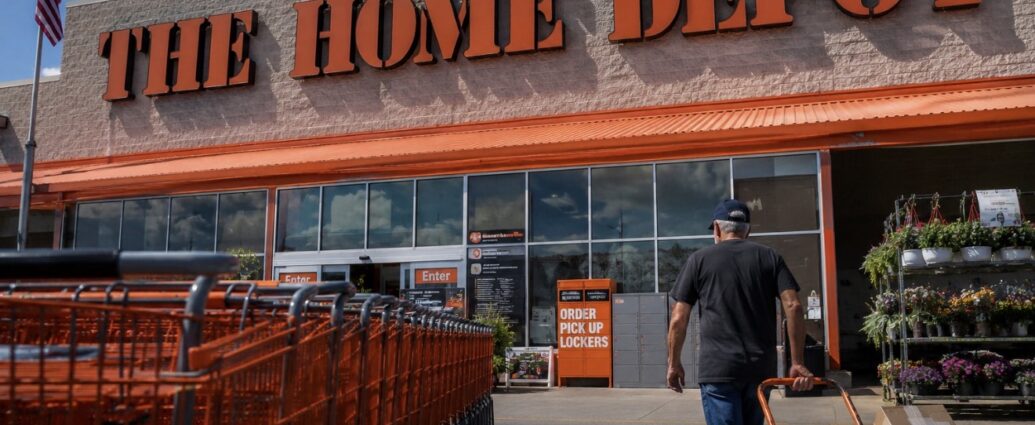
Federal Reserve Governor Stephen Miran, the central bank’s lone consistent vote for aggressive interest-rate cuts, made one final defense of his economic views Thursday in a Bloomberg Television interview, hours before formally vacating his board seat to make way for newly confirmed Fed Chair Kevin Warsh.

In a wide-ranging conversation touching on inflation, energy shocks, recession risks and the structure of the Federal Reserve itself, Miran repeated arguments he has pressed since joining the board last September — and left office without persuading a majority of his colleagues to join him.

At the center of Miran’s position is a belief that the Federal Reserve is keeping borrowing costs unnecessarily high at a moment when households and businesses are already under growing strain from surging energy prices tied to the U.S.-Israeli conflict with Iran.

The federal funds rate currently sits in a target range of 3.50% to 3.75%, levels that directly influence mortgage rates, auto loans, credit cards, commercial lending and broader financing conditions across the American economy.

Miran has repeatedly argued that rates should fall by roughly 150 basis points this year — equivalent to 1.5 percentage points — warning that maintaining restrictive monetary policy while consumers absorb sharply higher fuel and living costs risks pushing the economy into a broader slowdown.

Since taking office, Miran dissented at every Federal Open Market Committee meeting he attended, voting for cuts when colleagues voted to hold rates steady and supporting larger half-point reductions when others backed smaller moves.

The divide became especially pronounced as oil prices surged more than 30% following the escalation of conflict involving the United States, Israel and Iran. Retail gasoline prices nationally climbed above $4 per gallon, raising fears inside the Fed that inflation pressures could spread deeper into transportation, food, manufacturing and consumer goods.

Most Fed officials viewed the energy spike as a reason to maintain higher rates. Miran argued the opposite.

Speaking earlier this spring on Bloomberg Surveillance and reiterating the view Thursday, Miran said an oil shock simultaneously acts as what economists call a “negative demand shock” — meaning higher fuel costs force consumers to cut back elsewhere in the economy.

In practical terms, Americans spending more on gasoline often spend less on restaurants, travel, furniture, entertainment and discretionary retail purchases. Miran warned that layering high interest rates on top of that squeeze could unnecessarily accelerate economic weakness.

The final portion of Thursday’s interview focused on a far more controversial issue: the structure and independence of the Federal Reserve itself.

Miran has long argued that the Fed is insufficiently accountable to elected leadership and too insulated from changing economic conditions. Current Federal Reserve governors serve staggered 14-year terms, a framework created during the Great Depression era specifically to shield monetary policy from political pressure.

In a March 2024 paper co-authored with economist Dan Katz, Miran proposed sweeping reforms that would dramatically reshape the institution. The proposals included reducing governor terms from 14 years to eight, allowing presidents to remove governors more easily, and granting state governors greater influence over the Federal Reserve’s regional bank leadership structure.

Supporters of greater accountability argue the Fed has become too detached from economic realities affecting households and businesses. Critics — including many academic economists and Democratic lawmakers — warn such reforms could politicize interest-rate policy and repeat inflationary mistakes associated with politically pressured central banks during the 1970s.

Miran’s departure carries symbolic weight inside financial markets because many of his views are shared, at least partially, by incoming Chair Kevin Warsh, who officially assumes leadership Friday following a narrow 54-45 Senate confirmation vote.

Warsh has been openly critical of portions of the Fed’s recent policy approach and is expected to face immediate pressure from both markets and the White House over whether borrowing costs should begin moving lower later this year.

But despite becoming chair, Warsh still controls only one vote on the 12-member Federal Open Market Committee.

At the Fed’s April meeting, several influential policymakers — including Beth Hammack of the Cleveland Fed, Neel Kashkari of the Minneapolis Fed and Lorie Logan of the Dallas Fed — reportedly pushed against language implying rate cuts were the likely next move. Some favored maintaining flexibility for possible rate hikes should inflation remain elevated.

That internal divide may significantly limit how aggressively Warsh can shift policy in the near term.

Christopher Hodge, chief U.S. economist at Natixis CIB, told CNN that Warsh could ultimately become “the least influential Fed chair in a long time” if regional Fed presidents continue asserting themselves more aggressively against the chair’s direction.

For consumers and businesses, the stakes are substantial.

Mortgage rates remain elevated near multi-year highs, commercial real estate financing remains tight, and small businesses continue facing some of the most restrictive lending conditions since before the pandemic-era recovery. Any shift in Fed policy over the coming months could directly affect borrowing costs across housing, business expansion, consumer credit and financial markets.

Miran leaves office having lost every policy vote he cast during his brief tenure. Yet many of the ideas he championed — faster rate cuts, skepticism toward tightening during supply shocks, and broader structural reform of the Federal Reserve — now move into an institution led by a chair broadly sympathetic to several of those arguments.

The next major test arrives June 16-17, when the Federal Open Market Committee convenes for its first meeting under Warsh’s leadership.

JBizNews Desk
© JBizNews.com. All rights reserved. This article is original reporting by JBizNews Desk. Unauthorized reproduction or redistribution is strictly prohibited.
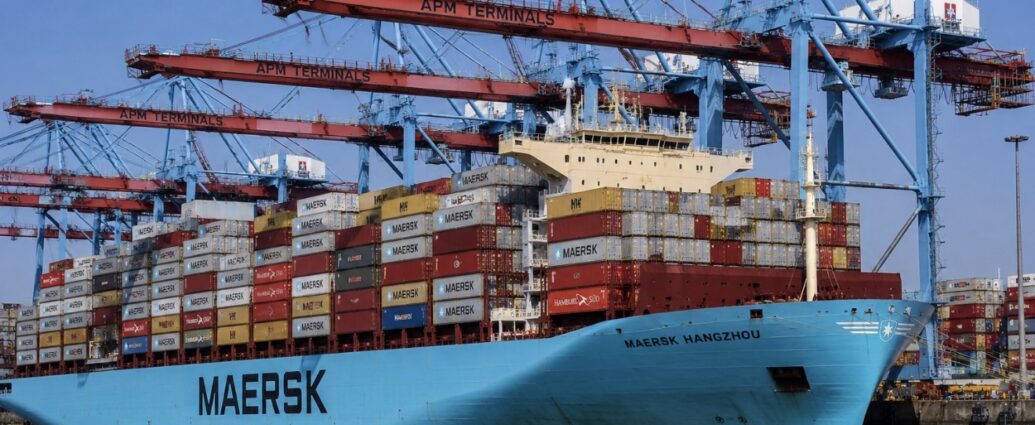
American consumers tightened their grip on discretionary spending in April and a fresh batch of layoffs pushed jobless claims to a five-week high, according to two government reports released Thursday morning that together paint the clearest picture yet of an economy buckling under the weight of Iran-driven energy costs.

The Commerce Department said retail sales rose 0.5% in April from the prior month, a sharp deceleration from a revised 1.6% surge in March that had marked the largest one-month gain in more than three years. Strip out gasoline stations, and sales were up just 0.3% — a sign that higher pump prices, rather than genuine consumer strength, were doing much of the work in the headline figure.

Separately, the Labor Department reported that initial applications for unemployment insurance climbed to 211,000 in the week ending May 9, an increase of 12,000 from the prior week’s revised level and well above the 205,000 figure forecast by economists polled by Dow Jones. Continuing claims, which measure Americans still drawing benefits and lag the initial filings by a week, rose by 24,000 to 1.78 million.

The two reports landed roughly an hour apart and reinforce a single theme: the cost of the U.S.-Israeli war with Iran is now flowing directly into American kitchens, gas tanks, and household budgets. Crude prices have climbed more than 30% since the conflict erupted in late February, and the Energy Information Administration has reported retail gasoline prices well above $4 a gallon nationally — pressure that economists at the Stanford Institute for Economic Policy Research estimate has added roughly $857 to the average American driver’s annual fuel bill.

Inside the retail report, the squeeze on nonessentials was unmistakable. Department stores saw sales fall 3.2%, the steepest one-month drop in over a year, while furniture and home furnishings stores slipped 2%. Online retailers eked out a 1.1% gain, suggesting consumers are still spending but increasingly hunting for deals on price comparison engines rather than walking into malls. Gas station receipts continued to balloon, but those dollars do not reflect demand — they reflect cost.

“Households remain resilient for now, potentially leaning on tax refunds and broader savings to keep on spending in the face of the latest price squeeze,” said James McCann, senior economist for investment strategy at Edward Jones, in a research note circulated earlier this week. Tax refunds have run roughly $350 above last year’s pace, according to Internal Revenue Service data, providing a temporary cushion that economists warn is running thin.

The jobless claims report adds a fresh wrinkle. While initial filings remain low by historical standards — the labor market spent much of the spring near multi-decade lows — the 12,000 jump and the rise in continuing claims suggest the long-running “low-firing” environment may finally be cracking. Wall Street has watched a steady cadence of corporate layoff announcements from large employers in recent weeks, including roughly 4,000 jobs at Cisco Systems announced after Wednesday’s closing bell, with notifications beginning Thursday.

The combined readings carry direct implications for monetary policy. Kevin Warsh, confirmed Wednesday in a 54-45 Senate vote as the next chairman of the Federal Reserve, takes the helm at the central bank on Friday inheriting an inflation problem made worse by the Iran war and a labor market that, while still tight, is no longer unambiguously strong. Markets had been pricing in only a single quarter-point cut from the Federal Open Market Committee this year, with the benchmark rate currently held in the 3.50% to 3.75% range. Thursday’s data — softer real consumer spending, a tick higher in layoffs, and a fresh import-price report showing the steepest 12-month gain since October 2022 — gives Warsh little room to maneuver as he balances the White House’s calls for cheaper borrowing costs against the inflation flowing through the gas pump.

For Main Street, the picture is more immediate. The National Retail Federation said earlier this week that household spending priorities have shifted toward groceries, fuel, and essential services, with discretionary categories such as furniture and electronics absorbing the cutbacks. Matthew Shay, president and chief executive of the NRF, said in a statement that consumers are “mindful on costs” while retailers work to “keep everyday goods affordable for American families.”

The next major reads on the American consumer arrive May 21, when Walmart reports fiscal first-quarter results, and again on May 30, when the Bureau of Economic Analysis publishes April personal income and spending data. Until then, Thursday’s twin reports — softer spending and a creeping rise in layoffs — stand as the clearest sign that the Iran war is no longer a Wall Street headline. It is a kitchen-table reality.

JBizNews Desk
© JBizNews.com. All rights reserved. This article is original reporting by JBizNews Desk. Unauthorized reproduction or redistribution is strictly prohibited.
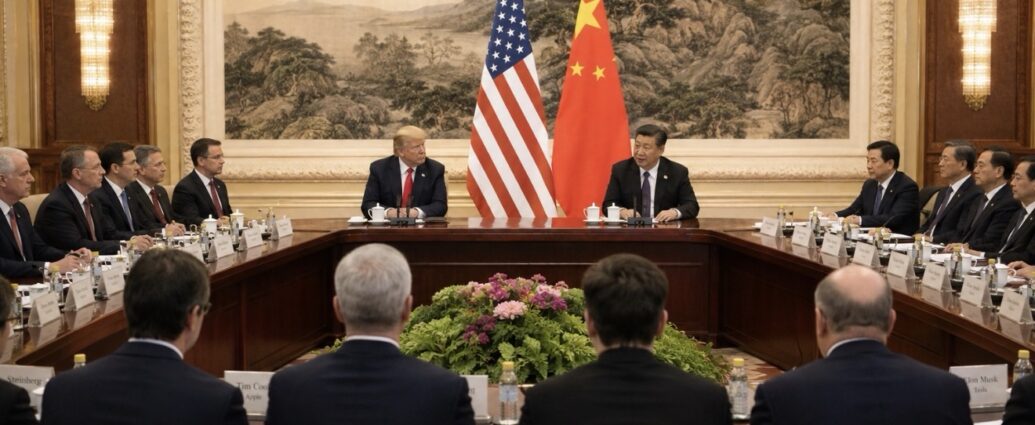
United Airlines flight attendants approved a sweeping new five-year labor contract Tuesday that delivers the largest pay package cabin crews have secured in modern U.S. airline history, closing one of the longest and most contentious labor battles of the post-pandemic era and resetting compensation expectations across the industry.

The agreement, ratified by members of the Association of Flight Attendants-CWA, covers roughly 30,000 United cabin crew employees and was approved by 82% of voting members, with turnout reaching nearly 89% of eligible workers.

For the airline industry, the vote marks the effective conclusion of a multiyear labor-cost reset that has already transformed wages for pilots, mechanics and front-line transportation workers across the American economy.

The economics of the deal are substantial.

The contract delivers an average 31% compounded increase in base pay through raises scheduled this summer, alongside a landmark provision granting flight attendants compensation for boarding time — long considered one of organized labor’s biggest unresolved issues in aviation.

The new boarding-pay structure alone is expected to add roughly 7% to 8% to total compensation.

The agreement also includes approximately $741 million in retroactive pay covering nearly six years worked without contractual wage increases, plus compensation for lengthy ground delays, expanded scheduling protections, increased retirement contributions and paid maternity, parental and adoption leave.

At the top end of the wage scale, senior United flight attendants will eventually earn more than $100 per hour.

The contract was finalized at the National Mediation Board with assistance from federal mediator Michael Kelliher, following the collapse last year of an earlier tentative agreement that offered smaller raises and failed to include adequate retroactive compensation.

Ken Diaz, president of the AFA’s United chapter, said the agreement “will immediately change the lives of United Flight Attendants, especially our thousands of new hires who have been hired since the pandemic.”

Sara Nelson, the influential international president of the AFA-CWA, called the deal an industry-leading benchmark that “now leads the industry in total value for Flight Attendants.”

United Chief Executive Scott Kirby praised the agreement in a public statement, calling United “lucky to have the best flight attendants in the world.”

The airline had resisted retroactive-pay demands for years, a major sticking point that contributed to last year’s failed vote. But pressure intensified after American Airlines and Southwest Airlines agreed to similar back-pay provisions in their own post-pandemic labor settlements.

For investors and airline executives, the broader implications are significant.

The United deal effectively establishes a new compensation floor for cabin crews across the U.S. airline sector, increasing pressure on carriers still negotiating labor contracts.

Delta Air Lines, whose flight attendants remain nonunionized, is expected to face renewed organizing pressure from the AFA after years of unsuccessful union campaigns. Spirit Airlines and JetBlue Airways flight attendants are also still engaged in active negotiations.

The timing comes as airlines are already confronting mounting macroeconomic cost pressures.

Airline executives throughout the spring earnings season warned investors that fuel, labor and operational expenses were all moving higher simultaneously. Ongoing instability tied to the Iran conflict has pushed oil prices and freight costs upward, while broader consumer spending has shown signs of slowing.

McDonald’s chief executive Chris Kempczinski warned earlier this month that U.S. consumer spending trends are “getting a little bit worse.” Maersk chief executive Vincent Clerc separately cautioned that shipping disruptions tied to the Strait of Hormuz are likely to worsen in the second half of the year.

The new United labor contract now adds another layer of upward pressure to airline operating costs at a time when carriers are already attempting to preserve margins against higher jet-fuel prices and softening discretionary travel demand.

Analysts expect airlines to gradually pass much of the additional labor expense through to consumers in the form of higher ticket prices over the next several quarters.

For flight attendants themselves, however, the contract represents a dramatic financial reset after years of inflation pressure and pandemic-era instability.

Many senior cabin crew members who remained with the airline through the 2008 financial crisis, the pandemic collapse and the industry’s uneven recovery will receive retroactive checks worth tens of thousands of dollars this year. Newer hires, many of whom entered the workforce during depressed pandemic wage scales, stand to see the largest percentage gains.

The political implications are equally notable.

After three years in which organized labor has delivered major victories for UPS drivers, Hollywood writers and actors, Detroit auto workers and logistics employees across the country, the United agreement becomes the latest example of front-line workers successfully reclaiming bargaining power after the inflation shock that followed the pandemic reopening.

For investors, the contract represents a settled liability that can finally be modeled into earnings forecasts. For airline workers, it represents one of the most consequential labor victories the profession has ever secured.

JBizNews Desk

© JBizNews.com. All rights reserved. This article is original reporting by JBizNews Desk. Unauthorized reproduction or redistribution is strictly prohibited.

CVS Health delivered one of the strongest quarters the managed-care industry has seen in years, surpassing $100 billion in quarterly revenue, raising full-year earnings guidance and signaling that one of Wall Street’s most battered healthcare giants may finally be stabilizing after two years of rising medical costs and investor skepticism.

The healthcare and pharmacy conglomerate reported Wednesday that first-quarter revenue rose 6.2% year over year to $100.4 billion, with growth across all three major operating divisions. The company simultaneously lifted its full-year 2026 adjusted earnings forecast to $7.30 to $7.50 per share, up from prior guidance of $7.00 to $7.20, while increasing projected operating cash flow to at least $9.5 billion.

For investors, the numbers represented something the sector has struggled to produce consistently since the pandemic: operational stability.

Adjusted earnings per share came in at $2.57, while GAAP diluted EPS totaled $2.30. Operating income surged 38.7%, helped partly by the absence of major one-time charges that weighed on results a year earlier, including a $387 million litigation expense and a $247 million pre-tax loss tied to the wind-down of certain accountable-care assets.

More importantly for Wall Street, adjusted operating income still rose a healthy 12.5%, driven largely by improvement inside the company’s insurance business.

That segment — the Aetna Health Care Benefits division — had become the focal point of investor anxiety throughout 2024 and early 2025 as Medicare Advantage utilization, post-pandemic healthcare demand and surging GLP-1 drug costs pressured profitability across the entire managed-care sector.

Industry rivals including UnitedHealth Group, Humana, Elevance Health and Centene all spent portions of the past two years cutting guidance, rebuilding reserves and attempting to reassure investors that medical-cost inflation remained manageable.

CVS itself underwent a major leadership shakeup after replacing former chief executive Karen Lynch in late 2024 with longtime executive David Joyner, who has since aggressively restructured pricing, pharmacy-benefit operations and the company’s sprawling healthcare footprint.

Wednesday’s results suggest those efforts are beginning to gain traction.

Pharmacy claims inside the Health Care Benefits segment remained roughly stable year over year on a 30-day-equivalent basis, indicating CVS has largely retained both commercial and Medicare membership despite pricing adjustments and benefit redesigns.

The company’s retail business also continued evolving away from the traditional big-box drugstore format that has become increasingly difficult for competitors to monetize.

CVS said its Pharmacy & Consumer Wellness division continued opening smaller pharmacy-focused locations during the quarter, part of a broader strategic pivot away from the large-format retail model that has weighed heavily on Walgreens Boots Alliance and contributed to the collapse of Rite Aid.

For the broader healthcare industry, the timing is significant.

Healthcare spending remains one of the most durable categories of consumer demand even during economic slowdowns, and aging demographics continue providing long-term structural support for insurers, pharmacies and healthcare-service providers.

But inflation tied to the Iran conflict and global supply-chain disruption is beginning to create new operational pressure points throughout the medical system.

Helium shortages linked to global shipping disruption are now affecting imaging-equipment manufacturers including GE HealthCare, Siemens Healthineers and Philips, because helium remains essential for MRI cooling systems and semiconductor manufacturing used in medical devices.

That pressure is beginning to ripple through hospital purchasing decisions, equipment procurement and insurance reimbursement economics.

For investors, CVS’s report arrives during an unusually fragile moment for the broader managed-care industry.

UnitedHealth Group is still operating under interim leadership following the departure of former CEO Andrew Witty, with chairman Stephen Hemsley overseeing operations temporarily. Humana continues restructuring its Medicare Advantage business, while Centene remains focused on rebuilding profitability inside Medicaid operations.

Against that backdrop, CVS — arguably the most operationally complicated company in the sector because it combines retail pharmacies, insurance, pharmacy-benefit management and primary-care operations under one roof — has now delivered consecutive quarters of improving results.

Wall Street has taken notice.

The stock has rallied roughly 60% from its November 2024 lows, though shares still remain well below their 2022 peak. Analysts at Morgan Stanley, JPMorgan and Bank of America have all upgraded the company over the past six months.

Adding to investor interest, Berkshire Hathaway disclosed a modest CVS position in its most recent 13F filing, fueling speculation that Warren Buffett’s investment team sees value in the company’s recovering cash-flow profile.

The longer-term debate surrounding CVS, however, remains unresolved.

Critics — including lawmakers and policy experts who testified before Congress over the past year — continue arguing that vertically integrated healthcare companies combining insurers, pharmacy-benefit managers and retail pharmacies create conflicts of interest that can ultimately increase drug costs for consumers.

The Federal Trade Commission, now led by Chairman Andrew Ferguson, continues investigating PBM pricing practices initiated under prior agency leadership, while the White House has signaled openness toward additional executive action targeting prescription-drug costs.

For now, though, investors are focused on the numbers in front of them.

CVS Health is once again generating annualized revenue above $400 billion, producing operating cash flow approaching $30 billion, and — for the first time in years — telling Wall Street to raise expectations instead of lower them.

JBizNews Desk

© JBizNews.com. All rights reserved. This article is original reporting by JBizNews Desk. Unauthorized reproduction or redistribution is strictly prohibited.

Birkenstock Holding delivered one of the clearest corporate earnings warnings yet tied directly to the economic fallout from the Iran conflict, and Wall Street responded swiftly.

Shares of the German sandal maker fell as much as 13% in New York trading Wednesday after the company missed quarterly revenue and profit expectations, disclosed a direct financial hit tied to the Middle East conflict, and warned investors that tariffs, shipping disruptions and energy inflation are likely to pressure margins through the second half of the fiscal year.

The earnings release offered one of the first detailed examples of how war-related disruption is now flowing directly into mainstream global consumer brands.

Revenue for Birkenstock’s fiscal second quarter rose 7.7% to €618.3 million, narrowly missing analyst expectations compiled by LSEG. On a constant-currency basis, growth was stronger at 14%, remaining within management’s long-term guidance range.

Profitability, however, deteriorated sharply.

Adjusted earnings fell to €0.50 per share, down from €0.55 a year earlier and below analyst forecasts of €0.59. Operating profit declined 11% to €155.5 million, missing Bloomberg consensus expectations of approximately €168 million. Net income dropped 22% to €81.9 million.

The most important disclosure came inside the company’s Europe, Middle East and Africa division.

Birkenstock said the Iran conflict reduced EMEA revenue by approximately €6 million, equivalent to roughly $7 million, during the quarter and created an estimated 300-basis-point growth headwind for the region.

About half of the impact came from the company being physically unable to complete certain deliveries into affected markets. The remainder reflected weakening European consumer demand tied to higher energy costs and inflation pressures linked to the conflict.

Chief Executive Oliver Reichert was unusually direct during the company’s earnings call.

“We face multiple conflicts in the Middle East, disrupting global supply chains and driving higher energy costs,” Reichert told investors.

The company’s gross margin compressed sharply to 53.9%, down from 57.7% a year earlier — a decline of 380 basis points that management attributed to unfavorable currency movements, higher tariffs and shifting product mix, partially offset by price increases.

Birkenstock also disclosed that tariffs on U.S.-bound products have more than doubled during the current trade cycle, rising from slightly above 10% earlier in the period to more than 20% currently following evolving Trump administration trade policy affecting European footwear imports.

Regionally, the results highlighted how uneven global consumer demand has become.

Asia-Pacific remained the company’s strongest market, with sales rising 30% in constant currency. The Americas posted 14% constant-currency growth, supported by rising demand for closed-toe styles in the United States.

EMEA — historically the core geographic market for the Birkenstock brand — managed only 11% constant-currency growth, with the Iran-related disruption erasing what otherwise would have been a stronger quarter.

Despite the earnings miss, management maintained full-year guidance, projecting 13% to 15% constant-currency revenue growth and adjusted gross margin between 57% and 57.5% for fiscal 2026.

Wall Street remained unconvinced.

By midday trading in New York, Birkenstock shares ranked among the worst performers in the S&P 500 consumer discretionary sector.

William Blair analyst Sharon Zackfia characterized the quarterly miss as “slight” and argued that the company’s broader premium-brand positioning remains intact. Investors nevertheless focused heavily on the company’s warning that geopolitical instability is beginning to appear directly inside earnings results.

That broader implication is what makes the Birkenstock report particularly important.

For months, economists and logistics executives warned that the Iran conflict, shipping disruptions near the Strait of Hormuz and rising energy costs would eventually spill into mainstream consumer pricing. Birkenstock’s earnings are among the first major global consumer-company results to explicitly quantify that impact.

Maersk warned last week that freight disruption tied to Hormuz is likely to intensify later this year. Royal Caribbean and other Mediterranean travel operators have already adjusted itineraries. Energy companies including Shell have cautioned that volatility in oil and shipping markets is increasingly affecting trading and operational costs.

Birkenstock’s warning now suggests that upcoming European consumer-company earnings — from LVMH to Hugo Boss to Inditex — may begin carrying similar war-related cost commentary.

For consumers, the practical takeaway is straightforward: products that once appeared insulated from geopolitics — including the sandals sitting on shelves at Nordstrom and Dick’s Sporting Goods — are increasingly being priced by the economics of global conflict and contested shipping lanes thousands of miles away.

JBizNews Desk

© JBizNews.com. All rights reserved. This article is original reporting by JBizNews Desk. Unauthorized reproduction or redistribution is strictly prohibited.
The artificial-intelligence infrastructure boom is beginning to reshape the American power grid in real time, and residents around Lake Tahoe are now confronting one of the clearest examples yet of how the race to build AI data centers is colliding with residential electricity demand.

Liberty Utilities, which serves roughly 49,000 customers on the California side of Lake Tahoe, disclosed this week that longtime supplier NV Energy will cut approximately 75% of the utility’s wholesale electricity supply by May 2027, with the redirected power flowing instead toward a rapidly expanding corridor of AI-focused data centers in northern Nevada.

The decision effectively places one of America’s most iconic residential and tourism regions into direct competition with the enormous energy appetite of companies including Google, Microsoft and Apple.

The scale of the imbalance is staggering.

NV Energy, owned by Berkshire Hathaway Energy, has supplied most of the Tahoe region’s electricity for decades through transmission lines crossing the Sierra Nevada from Nevada into California. Because the South Lake Tahoe region lacks direct transmission links into California’s broader grid system, Liberty Utilities has very limited alternatives for replacing the lost power.

Roughly 25% of Liberty’s electricity currently comes from company-owned solar assets located in Nevada. The remaining 75% has historically come from NV Energy — the portion now being redirected toward AI infrastructure projects clustered around the Tahoe-Reno Industrial Center east of Reno.

According to analysis from the Desert Research Institute, the 12 major data-center developments currently planned across northern Nevada could generate approximately 5,900 megawatts of new electricity demand by 2033.

For comparison, the entire Lake Tahoe service territory peaks at well under 200 megawatts.

In effect, the region is being displaced by a wave of industrial-scale AI infrastructure demand roughly thirty times larger than the electricity needs of the communities now losing supply access.

Residents and local officials are openly warning about reliability risks and future electricity costs.

“It’s like we don’t exist,” Tahoe resident Danielle Hughes told Fortune, describing growing frustration among homeowners and businesses watching AI infrastructure receive grid priority over long-established communities.

Hughes warned that Liberty Utilities may soon be forced into the broader Western electricity market, where the small utility would compete against far larger buyers including Pacific Gas & Electric, Southern California Edison, industrial lithium-mining operations and the same hyperscale data centers that displaced it in the first place.

“We’re 49,000 customers. We have no leverage,” she said.

Political and regulatory pressure is already building.

South Lake Tahoe Mayor Cody Bass wrote to the California Public Utilities Commission earlier this year warning of “a great deal of concern” among residents regarding reliability and long-term affordability.

Environmental and consumer groups are also challenging the speed of the procurement process.

Sierra Club Vice Chair Tobi Tyler urged regulators to open a broader formal review of the situation rather than allowing fast-tracked approvals, while local advocacy organization Tahoe Spark argued that California lacks a dedicated demand forecast for the Tahoe region despite growing wildfire and climate-related grid risks.

Residents have also pointed to rapidly rising utility bills, with electricity prices in portions of the region reportedly climbing roughly 77% since late 2022, according to Bloomberg reporting.

The Tahoe dispute, while unusually visible, is far from isolated.

Utilities across the United States are increasingly warning regulators that AI data centers are overwhelming existing grid assumptions.

In Northern Virginia, the largest data-center market in the world, Dominion Energy has projected that demand tied solely to data centers could require the equivalent of roughly 15 major new power plants over the next decade.

American Electric Power has issued similar warnings in Ohio, while Duke Energy continues confronting surging AI-driven demand growth throughout the Carolinas.

The underlying economics driving the squeeze are enormous.

Wall Street estimates that Alphabet, Amazon, Microsoft and Meta Platforms will collectively spend roughly $725 billion on capital expenditures in 2026, up dramatically from already-record spending levels last year.

The overwhelming majority of that investment is flowing into AI infrastructure — data centers, networking systems, cooling facilities and electricity procurement.

Meanwhile, OpenAI and SoftBank continue building the massive Stargate AI campus in Texas, while Elon Musk’s xAI expands its own high-density computing facilities in Tennessee.

The cumulative effect is beginning to transform electricity itself into one of the most strategically constrained resources in the modern economy.

For homeowners and small businesses caught in the middle, rooftop solar and battery systems are increasingly becoming defensive necessities rather than environmental preferences.

Companies including Tesla Energy, Sunrun, Enphase Energy and SolarEdge Technologies are positioned directly at the center of that shift as consumers seek protection against rising rates and future reliability risks.

For regulators, however, the questions are becoming far larger.

The traditional legal framework governing American utilities — including the longstanding “duty to serve” principle requiring power providers to supply all customers within their territories — was never designed for a world in which a single AI data center can consume as much electricity as an entire mid-sized city.

Lake Tahoe residents now have less than two years to secure alternative supply arrangements.

The broader American grid may have even less time than that to determine how it intends to balance the exploding electricity demands of artificial intelligence against the needs of the communities already connected to the system.

JBizNews Desk

© JBizNews.com. All rights reserved. This article is original reporting by JBizNews Desk. Unauthorized reproduction or redistribution is strictly prohibited.
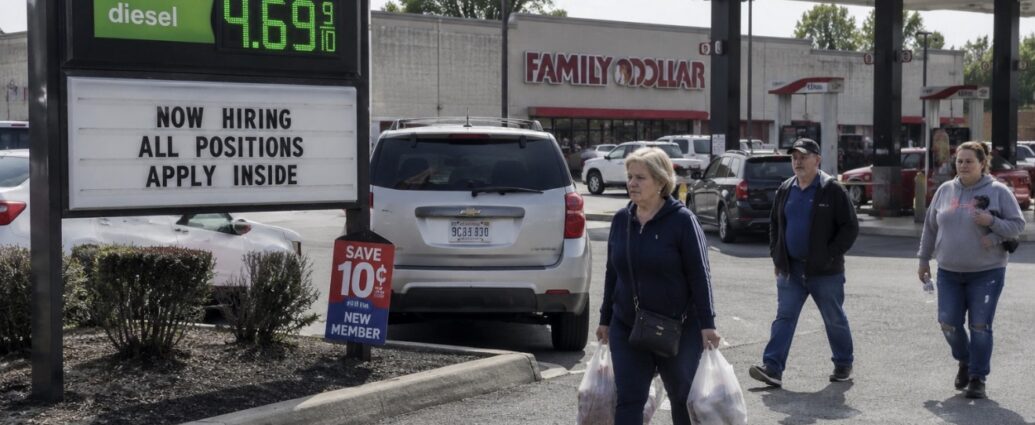
Masayoshi Son’s willingness to place massive, concentrated bets on emerging technologies has produced one of the largest paper gains modern venture investing has ever recorded, transforming SoftBank Group’s balance sheet and reestablishing the Japanese billionaire at the center of the global AI boom.

SoftBank said Wednesday that its Vision Fund booked roughly $46 billion in gains for the fiscal year ended in March, with the overwhelming majority tied to the conglomerate’s investment in OpenAI, the developer of ChatGPT.

The figures, disclosed in SoftBank’s full-year earnings release in Tokyo, underscore how dramatically artificial intelligence has reshaped global private-capital markets in less than two years.

SoftBank reported a record annual net profit of approximately 5 trillion yen, or $31.6 billion, more than quadrupling from the prior year. Cumulative gains tied to the company’s OpenAI investment alone reached roughly $45 billion against investments exceeding $30 billion.

During the fiscal fourth quarter alone, the Vision Fund generated approximately $20 billion in gains, with OpenAI accounting for nearly all of the upside while holdings including Coupang, DiDi Global and Klarna weighed negatively on results. Quarterly net profit reached approximately 1.83 trillion yen, or $11.6 billion, handily surpassing analyst expectations.

The catalyst was OpenAI’s latest funding round earlier this year, co-led by SoftBank, which valued the AI company at approximately $852 billion, up sharply from roughly $157 billion just months earlier.

By the end of March, SoftBank carried its OpenAI stake on the books at approximately $79.6 billion, representing a paper return of roughly 129% compared with earlier valuation benchmarks near $260 billion.

SoftBank has committed an additional $30 billion to OpenAI through 2026, which would bring its total investment exposure to approximately $64.6 billion and potentially lift its ownership stake to roughly 13%.

For Son, the turnaround is deeply personal.

The Vision Fund became synonymous with late-cycle venture-capital excess following the collapse of WeWork and uneven outcomes across investments in Uber, DoorDash and multiple consumer startups across Latin America and India. For years, critics treated the fund as a symbol of speculative overreach inside Silicon Valley and global private markets.

The OpenAI mark-up, layered on top of gains from Arm Holdings and a profitable position tied to Intel under former SoftBank director Lip-Bu Tan, has radically altered that narrative.

But the gains come with mounting financial concentration risk.

To finance its growing OpenAI commitment, SoftBank has sold stakes in T-Mobile US and Nvidia, issued debt and arranged a roughly $40 billion bridge loan earlier this year. The company also booked approximately 218.1 billion yen, or $1.4 billion, in gains tied to those asset sales.

Last month, SoftBank secured an additional $10 billion loan backed by its OpenAI holdings themselves, underscoring how central the investment has become to the company’s financing structure.

In March, S&P Global Ratings revised SoftBank’s outlook to negative from stable, warning that the company’s liquidity profile and portfolio quality could deteriorate because of its expanding OpenAI exposure.

For shareholders, the concentration is now impossible to ignore.

Approximately 98% of the Vision Fund’s annual gains stemmed from a single private company operating in one of the most competitive sectors in global technology.

OpenAI now faces escalating pressure from rivals including Alphabet’s Gemini, Anthropic’s Claude, Meta’s Llama and Elon Musk’s xAI platform Grok, even as the cost of training and operating frontier AI systems continues rising aggressively.

Microsoft, which invested roughly $13 billion into OpenAI earlier in the cycle, has already captured significant downstream value through surging Azure cloud demand generated by the partnership.

Meanwhile, Son is already positioning SoftBank for the next stage of the AI infrastructure race.

The company is reportedly preparing Roze AI, a robotics-focused venture, for a possible public listing in the second half of 2026 at valuations that could approach $100 billion. Son has also committed approximately $16 billion toward Stargate, the massive AI data-center initiative backed by OpenAI and Oracle.

The message Wall Street increasingly draws from SoftBank’s latest results is straightforward: in the current AI cycle, concentrated bets on category-defining companies are producing returns diversified venture portfolios are struggling to match.

The unanswered question is whether those extraordinary paper gains can ultimately be converted into durable long-term capital before competitive pressure, regulation or valuation resets begin reshaping the AI landscape.

JBizNews Desk

© JBizNews.com. All rights reserved. This article is original reporting by JBizNews Desk. Unauthorized reproduction or redistribution is strictly prohibited.

Lowe’s Companies received a major vote of confidence from Wall Street ahead of next week’s earnings report, with Citigroup upgrading the home-improvement retailer to Buy and signaling that analysts increasingly believe the multiyear housing-related downturn may finally be nearing a bottom.

Citi analyst Steven Zaccone raised Lowe’s rating from Neutral to Buy on Tuesday while maintaining a $285 price target, implying roughly 26% upside from the stock’s recent closing level.

The upgrade is more than a single-stock call. It is effectively a broader bet that America’s frozen housing and remodeling market is beginning to stabilize after nearly three years of elevated mortgage rates, weak transaction volume and cautious consumer spending.

“LOW should beat 1Q street estimates and continue to outperform the industry … in 2026,” Zaccone wrote in a note to clients. “The macro has risks of geopolitical tensions escalating, but we still believe the home improvement industry has bottomed and remain optimistic on the multi-year recovery.”

The timing matters.

Lowe’s is scheduled to report first-quarter results before the opening bell on May 20, with consensus expectations compiled by LSEG forecasting only modest profit growth. Citi’s call suggests those estimates may now be too conservative.

Shares of Lowe’s have fallen roughly 6% year to date, underperforming the broader market as investors worried that elevated mortgage rates, inflation tied to the Iran conflict and weakening consumer confidence would continue weighing on discretionary home-related spending.

The sector’s slowdown has been severe.

Existing-home sales remain near the weakest levels in roughly 30 years, while mortgage rates climbed back toward 6.45% this week following hotter-than-expected inflation reports. Categories including flooring, appliances, cabinetry, paint and lumber have all faced weaker demand as homeowners delay major renovation projects.

The competitive backdrop helps explain Citi’s positioning.

Home Depot, the larger of the two dominant U.S. home-improvement chains, spent the last several years aggressively expanding its professional contractor business through acquisitions including SRS Distribution and HD Supply.

Lowe’s, under Chief Executive Marvin Ellison, has simultaneously attempted to strengthen its own Pro business while still maintaining heavier exposure to do-it-yourself consumers — historically one of the company’s core strengths.

Citi’s thesis effectively argues that Lowe’s customer mix may now be better positioned for an eventual housing-market rebound driven by household formation, remodeling activity and new-home completions.

The macroeconomic picture remains mixed.

Mortgage rates continue hovering near cycle highs after inflation data this week reignited fears that the Federal Reserve may keep rates elevated longer than markets anticipated earlier this year. The National Association of Home Builders has remained in contraction territory for much of the last two years, while National Association of Realtors chief economist Lawrence Yun recently warned that spring 2026 home sales are unlikely to improve meaningfully from already depressed 2025 levels.

Yet several structural trends continue supporting the longer-term bullish case for home improvement spending.

Housing inventory has gradually risen for three consecutive years, even if supply remains below pre-pandemic norms. Builders including D.R. Horton, Lennar, NVR, PulteGroup and Toll Brothers continue flooding Sun Belt markets with new construction inventory, creating downstream demand for appliances, fixtures, flooring and finishing products sold through Lowe’s and Home Depot.

Meanwhile, America’s aging housing stock remains one of the industry’s strongest structural tailwinds.

The median U.S. home is now more than 40 years old, creating steady repair-and-remodel demand that remains relatively insulated from short-term housing turnover cycles.

Tax policy may also become a meaningful catalyst.

Recent legislation inside the One Big Beautiful Bill Act restored 100% bonus depreciation for certain capital expenditures and introduced new deductions tied to owner-occupied home improvements — changes analysts expect could accelerate remodeling activity into 2026 and 2027.

The earnings setup next week is especially important for investors because it offers a near-simultaneous read on the entire home-improvement industry.

Home Depot reports one day after Lowe’s, while companies including Sherwin-Williams, Whirlpool, Masco and Mohawk Industries have already delivered mixed commentary on contractor demand, appliances and flooring activity.

An unusual demographic trend is also quietly reshaping the sector.

Older homeowners — particularly baby boomers who control a disproportionate share of U.S. housing wealth and remodeling spending — are increasingly remaining active consumers later into retirement, helped partly by the widespread adoption of GLP-1 weight-loss medications from Eli Lilly and Novo Nordisk.

Retail consultants note that both Lowe’s and Home Depot have begun adjusting store layouts, cart sizes and navigation systems in locations serving older demographic clusters.

Still, the risks to Citi’s bullish call remain significant.

An escalation in the Iran conflict that pushes oil prices above $120 per barrel could sharply weaken consumer confidence and freeze large discretionary purchases. A Federal Reserve rate hike — once considered unthinkable this year but now carrying a small probability in futures markets — would likely push mortgage rates even higher.

Trade policy uncertainty also remains unresolved following this year’s Supreme Court decision limiting certain executive tariff powers.

For investors, Citi’s upgrade is ultimately best understood as a high-conviction call on the broader housing cycle rather than merely a recommendation on Lowe’s itself.

If the housing and remodeling downturn has truly bottomed, Lowe’s stands among the highest-quality retail beneficiaries. If it has not, next week’s earnings report may quickly expose that reality.

JBizNews Desk

© JBizNews.com. All rights reserved. This article is original reporting by JBizNews Desk. Unauthorized reproduction or redistribution is strictly prohibited.

The single biggest variable hanging over the Trump–Xi summit in Beijing this week is no longer tariffs, Taiwan, or even the war with Iran — it is China’s near-monopoly on the rare earth elements that power American factories, weapons systems, electric vehicles, and advanced artificial-intelligence infrastructure. As President Donald Trump opened a 36-hour summit with President Xi Jinping on Wednesday, business leaders and national-security officials increasingly viewed access to critical minerals as the real strategic centerpiece of the talks.

REalloys Chief Executive Officer Lipi Sternheim told Bloomberg on Wednesday that Trump must use the summit to secure near-term rare earth supply agreements because rebuilding independent North American production capacity “won’t happen overnight.” Her warning reflects a growing reality confronting both Washington and Wall Street: the United States remains deeply dependent on China for materials that sit at the core of nearly every advanced industrial sector.

According to a separate S&P Global factbox published Wednesday, rare earth access is now expected to dominate the formal May 14–15 negotiations between Trump and Xi. Heidi E. Crebo-Rediker, senior fellow at the Council on Foreign Relations Center for Geoeconomic Studies, summarized the strategic shift in a paper published May 10, writing that “the center of gravity moved away from tariffs — long seen by Trump as the decisive lever — and toward something more structural: China’s control over critical minerals, rare earths, and the magnet supply chains that underpin modern military capability and advanced manufacturing.”

The numbers explain the urgency. According to the International Energy Agency, China controlled 61% of global mined rare earth production in 2024 and an overwhelming 91% of global refining and processing capacity. While many countries mine small amounts of rare earth material, China dominates the technically complex refining process required to turn raw minerals into usable metals and magnets.

That leverage became painfully visible after Beijing imposed export licensing restrictions in April 2025. According to industry data cited by Foreign Policy, rare earth magnet shipments from China to the United States collapsed 93% year over year the following month, forcing temporary shutdowns at several automotive plants in both the United States and Europe. Prices for key heavy rare earths including dysprosium and terbium — essential components in electric motors, fighter jets, missile systems, and advanced semiconductors — surged to as much as six times Chinese domestic pricing levels.

Although the Busan trade truce later eased some restrictions, export volumes remain roughly 50% below pre-restriction levels. The situation worsened further after China’s Ministry of Commerce announced a second wave of controls on October 9, 2025, expanding the restricted list to include samarium, gadolinium, lutetium, europium, and ytterbium while also broadening rules to cover foreign-made products containing Chinese-sourced materials or Chinese manufacturing technology.

Those restrictions were temporarily suspended until November 10, 2026, under the Busan agreement — effectively placing Trump under a six-month negotiating deadline controlled almost entirely by Beijing.

Sternheim’s company, REalloys (NASDAQ: ALOY), has emerged as one of the few North American firms attempting to rebuild domestic heavy rare earth processing capability. The company operates the continent’s only facility capable of converting heavy rare earths into commercial-scale metals and alloys. Initial production at its Saskatchewan Research Council–linked facility is targeted for 2027, while downstream magnet operations are based in Euclid, Ohio.

REalloys recently secured a $200 million letter of interest from the U.S. Export-Import Bank along with a $1.7 million Defense Logistics Agency engineering contract tied to a planned 300-ton-per-year production facility. But executives openly acknowledge that scaling enough independent capacity to meaningfully reduce Chinese dependence will likely take years.

The Trump administration has spent much of the past year aggressively building a strategic response. The White House launched plans for a critical-minerals reserve known as “Project Vault,” pursued equity stakes in mining and refining companies, signed mineral agreements with allied governments, and proposed a global critical-minerals trading bloc designed to reduce China’s dominance.

Private-sector efforts have accelerated as well. USA Rare Earth announced plans last month to acquire Brazil’s Serra Verde Group, one of the world’s few meaningful heavy rare earth sources outside China. Yet analysts warn that mines, refineries, and magnet facilities cannot be built quickly enough to fully shield American industry in the near term.

“The U.S. still has to tread carefully in its relationship with China to avoid those disruptions,” Gracelin Baskaran, director of the Critical Minerals Security Program at the Center for Strategic and International Studies, told Foreign Policy.

The makeup of Trump’s Beijing delegation underscores how central the issue has become. The president arrived alongside major American executives including Apple CEO Tim Cook, Tesla and SpaceX CEO Elon Musk, and Nvidia CEO Jensen Huang, who joined the trip at the last minute after media attention focused on his earlier absence. Huang reportedly boarded Air Force One during a refueling stop in Anchorage.

Their presence highlights how deeply intertwined rare earths have become with artificial intelligence, semiconductors, electric vehicles, and defense technology. Advanced data centers, AI networking systems, electric motors, robotics, smartphones, missile guidance systems, and radar equipment all depend heavily on rare-earth-based magnets and specialized materials.

For U.S. manufacturers, the stakes are immediate and tangible. Automakers including General Motors, Ford, and Stellantis rely heavily on rare-earth magnets for electric drive systems. Defense contractors including Lockheed Martin, RTX, and Northrop Grumman depend on the same supply chains for missile systems, stealth technologies, radar, sonar, and precision-guided weapons.

Industry executives have warned privately that even modest delays in Chinese export-license approvals during or after the summit could disrupt summer production schedules across multiple industries.

For Xi, rare earth supply remains one of the strongest strategic tools Beijing holds over Washington. For Trump, the objective is to secure enough stability in the supply chain to buy time for companies including REalloys, USA Rare Earth, and MP Materials to scale domestic production capacity.

How those competing priorities are negotiated in Beijing may ultimately shape not only the next phase of U.S.–China economic relations, but the future supply chain architecture of the global industrial economy itself.

JBizNews Desk

© JBizNews.com. All rights reserved. This article is original reporting by JBizNews Desk. Unauthorized reproduction or redistribution is strictly prohibited.

President Donald Trump opened his high-stakes summit with Chinese President Xi Jinping at the Great Hall of the People in Beijing on Thursday with an unusually warm declaration that the world’s most consequential bilateral relationship is about to enter a new phase.

“It’s an honor to be with you. It’s an honor to be your friend, and the relationship between China and the USA is going to be better than ever before,” Trump told Xi at the start of formal talks, according to live coverage by CNN and CBS News before reporters were escorted from the room.

The comments, delivered after an elaborate state welcome ceremony featuring a People’s Liberation Army military band, flag-waving schoolchildren, a red-carpet honor guard review, and ceremonial cannon fire in Tiananmen Square, set a notably conciliatory tone for a summit unfolding at one of the most sensitive moments in U.S.-China economic relations in years.

Trump also described Xi as a “great leader,” acknowledging that critics dislike the phrase but insisting, “I say it anyway, because it’s true.” The visit marks Trump’s first trip to China since 2017 and the first state visit to Beijing by a sitting U.S. president in nearly a decade.

The size and composition of the U.S. delegation underscored the summit’s economic significance. According to CBS News coverage of the welcoming ceremony, Trump arrived alongside U.S. Trade Representative Jamieson Greer, Defense Secretary Pete Hegseth, Treasury Secretary Scott Bessent, Secretary of State Marco Rubio, and U.S. Ambassador to China David Perdue.

The delegation also included several of America’s most prominent technology and industrial executives, among them Tesla and SpaceX Chief Executive Elon Musk, Nvidia Chief Executive Jensen Huang, and outgoing Apple Chief Executive Tim Cook. Huang joined the delegation at the last minute after concerns surfaced publicly over his initial absence from the trip.

Thursday’s schedule includes a bilateral working session, a cultural visit to the Temple of Heaven, and a formal state banquet before negotiations continue Friday. The agenda spans some of the most consequential issues in the global economy, including rare-earth exports, AI semiconductor restrictions, Taiwan, the Iran conflict, and potential expansion of Chinese purchases of U.S. energy and agricultural products.

According to a summit preview by Council on Foreign Relations senior fellow Rush Doshi, expectations remain more restrained than during Trump’s 2017 visit, when Xi staged what observers called a “state visit-plus,” complete with a private Forbidden City dinner, major ceremonial displays, and announcements of more than $250 billion in business agreements.

This year’s summit instead arrives amid escalating geopolitical strain and fragile trade ties. The most immediate issue is likely the future of the rare-earth export framework negotiated during last year’s APEC summit in Busan, South Korea.

Under that temporary arrangement, Beijing agreed to ease restrictions on rare-earth materials critical to American manufacturing in exchange for the United States softening several threatened tariffs. According to Foreign Policy and the Center for Strategic and International Studies, both governments appear motivated to preserve the arrangement after Chinese restrictions last year caused U.S.-bound rare-earth magnet exports to collapse roughly 93% year over year.

Those materials remain essential for electric vehicles, advanced weapons systems, semiconductors, data centers, and industrial manufacturing.

Trump is also expected to unveil a new bilateral “Board of Trade” composed of senior officials from both governments to oversee implementation of future agreements, according to analysis from CSIS senior adviser Scott Kennedy and China Power Project director Bonny Lin. The proposal is intended to address longstanding U.S. complaints that Beijing failed to fully implement commitments made under the Phase One trade agreement signed during Trump’s first term.

China has reportedly pushed for a parallel “Board of Investment” focused on easing barriers to Chinese investment in the United States.

Hovering over the summit is the unresolved war with Iran and the ongoing disruption of oil shipments through the Strait of Hormuz. The U.S. Navy continues intercepting vessels connected to Iranian exports, many of them ultimately destined for China, which remains Tehran’s largest oil customer.

Secretary of State Marco Rubio said earlier this week that Iran would feature prominently in discussions. “We’ve made clear to them that any support for Iran would obviously be detrimental for our relationship,” Rubio told Fox News.

Analysts have interpreted recent diplomatic outreach between Beijing and Tehran as an effort by Xi to position China as a potential intermediary in efforts to reopen the Strait of Hormuz — an outcome that would stabilize energy markets and benefit both economies.

Taiwan remains perhaps the summit’s most politically sensitive issue. Officials in Taipei are closely monitoring whether the Trump administration signals any shift in language surrounding cross-strait relations or future U.S. arms support.

Trump disclosed last week that Taiwan came up during a February call with Xi, fueling speculation that Beijing may seek concessions tied to trade or investment negotiations.

For now, however, the public optics from Beijing have been carefully calibrated toward stability: smiling exchanges, ceremonial pageantry, and a public pledge from Trump that ties between the two countries will become “better than ever.”

Whether the atmosphere translates into substantive agreements — particularly on trade, rare earths, semiconductors, and energy — will become clearer Friday when the summit’s concrete outcomes are expected to emerge.

JBizNews Desk

© JBizNews.com. All rights reserved. This article is original reporting by JBizNews Desk. Unauthorized reproduction or redistribution is strictly prohibited.

Shares of Ford Motor Company surged 13% Wednesday, marking the automaker’s biggest one-day gain since March 2020, after analysts signaled the company could soon secure major battery-storage agreements tied to the artificial-intelligence data center boom. The rally pushed Ford shares as high as $13.56 intraday and erased much of the skepticism that has surrounded the company’s electric-vehicle strategy since its massive EV writedown last year.

The catalyst came from a research note published late Tuesday by Morgan Stanley analyst Andrew Percoco, who told clients there is a “fairly high likelihood” Ford signs energy-storage system supply agreements with large commercial customers — including hyperscale data center operators — within the next several months. According to Bloomberg, the note immediately triggered a sharp reassessment across Wall Street of Ford’s emerging energy-storage business.

Percoco maintained an Equal-weight rating and a $14 price target but estimated Ford Energy could eventually be worth roughly $10 billion as a standalone operation. He projected the division could generate between $500 million and $600 million in run-rate earnings before interest and taxes once production capacity reaches 20 gigawatt-hours, potentially turning profitable by 2028.

The thesis centers on Ford’s partnership with China’s Contemporary Amperex Technology Co. (CATL), the world’s largest battery manufacturer. Percoco described the relationship as an “underappreciated strategic competitive advantage” because it gives Ford access to CATL’s advanced lithium iron phosphate battery chemistry while manufacturing the batteries domestically in a structure that still qualifies for U.S. tax incentives.

That combination positions Ford as one of the few American manufacturers potentially capable of delivering large-scale, U.S.-compliant battery-storage systems to utilities and hyperscale data center operators at a moment when electricity demand tied to artificial intelligence infrastructure is exploding.

The hyperscaler angle is what transformed the analyst note into a market-moving event. Companies including Microsoft, Amazon Web Services, Alphabet’s Google, Meta Platforms, Oracle, and Apple are collectively expected to spend nearly $700 billion in 2026 building artificial-intelligence infrastructure, according to industry projections. Massive AI training clusters and cloud-computing campuses require not only enormous amounts of power, but increasingly stable and dispatchable backup energy systems — making large-scale battery storage one of the most constrained supply chains in technology infrastructure today.

Demand for grid-scale battery systems has already surged globally as utilities and data center operators race to secure capacity. Analysts say companies capable of supplying compliant domestic battery infrastructure stand to benefit from one of the fastest-growing segments of the AI economy.

Ford’s sudden emergence in that conversation represents a dramatic shift in investor perception. Just months ago, Wall Street viewed the automaker primarily through the lens of slowing EV demand and heavy electric-vehicle losses. The company wrote down roughly $20 billion tied to its Ford Model e EV division late last year, fueling concerns about long-term profitability.

Sentiment began shifting after Ford’s first-quarter 2026 earnings report exceeded expectations across multiple categories. The company reported revenue of $43.3 billion, adjusted earnings per share of $0.66, and net income of $2.55 billion while also raising full-year adjusted EBIT guidance. Management cited stronger cost controls, resilient demand for combustion-engine trucks, and expanding commercial revenue through Ford Pro.

Chief Executive Officer Jim Farley has increasingly framed Ford as a diversified industrial and technology platform rather than simply a traditional automaker. The company currently organizes operations into Ford Blue for gas and hybrid vehicles, Ford Model e for electric vehicles and software, and Ford Pro for commercial operations. The emerging energy-storage business effectively creates a fourth pillar — one tied directly to utilities, AI infrastructure, and commercial power systems rather than consumer vehicle sales.

Farley told investors during Ford’s latest earnings call that the company is entering “one of the most intensive product, software, and physical services rollouts in our history.” Ford’s board also maintained its quarterly dividend at $0.15 per share, payable June 1.

For investors, the strategic significance goes beyond Wednesday’s stock rally. If Ford successfully monetizes battery manufacturing capacity through hyperscaler agreements, it could reduce dependence on consumer EV demand at a time when the broader automotive industry faces rising financing costs, elevated interest rates, and economic uncertainty tied partly to the Iran conflict and higher energy prices.

It also highlights a broader structural shift underway in the American economy: legacy manufacturers are increasingly becoming suppliers to the AI infrastructure buildout itself, not merely users of cloud technology.

Still, analysts cautioned that much of Wednesday’s rally was driven by expectations rather than signed contracts. Percoco’s report referenced a “high probability” of agreements within the next few months but did not identify specific counterparties. Industry speculation has centered on potential deals involving Microsoft, Meta, Oracle, or other major cloud operators.

If Ford secures a high-profile hyperscaler customer, analysts believe the stock could move materially higher. If negotiations drag into 2027 or fail to materialize, Wednesday’s gains could reverse quickly. Morgan Stanley’s $14 target actually sits below Ford’s intraday high Wednesday, suggesting the bank itself sees limited immediate upside absent formal contract announcements.

Competition remains fierce. Tesla continues dominating the U.S. utility-scale battery market through its Megapack business, while General Motors, Fluence, NextEra Energy Resources, Stem, and several Chinese firms are all competing aggressively for large-scale energy-storage contracts tied to AI infrastructure expansion.

But for now, Wall Street appears increasingly willing to believe Ford may have found a credible new growth engine — one tied not to the next generation of cars, but to the enormous power demands of artificial intelligence itself.

JBizNews Desk

© JBizNews.com. All rights reserved. This article is original reporting by JBizNews Desk. Unauthorized reproduction or redistribution is strictly prohibited.

The Federal Reserve Bank of New York’s closely watched supply-chain stress gauge surged to its highest level since the post-pandemic shipping crisis, delivering some of the clearest evidence yet that the Iran war is evolving from an energy shock into a broader global logistics and inflation problem.

The New York Fed’s Global Supply Chain Pressure Index jumped to 1.82 in April, nearly tripling from 0.68 in March and reaching levels last seen during the worldwide container shortages and manufacturing disruptions of 2021 and 2022.

The move lands just days after hotter-than-expected U.S. inflation reports reignited fears that war-related shipping disruption is beginning to spread across the broader global economy.

The index, which combines transportation costs, delivery times and manufacturing surveys from major economies worldwide, treats zero as the long-run historical average. A reading above 1 signals materially tighter-than-normal global trade conditions.

At 1.82, the current environment now reflects some of the most strained logistics conditions since the pandemic supply-chain collapse.

But unlike the COVID-era crisis, economists say the source of the disruption is fundamentally different.

This is not a demand boom overwhelming supply chains. It is the partial shutdown of one of the world’s most strategically important shipping corridors.

Commercial traffic through the Strait of Hormuz has operated at near-standstill levels since the Iran conflict escalated in late February.

According to A.P. Moller-Maersk, roughly 6% of global container trade moved through the Upper Gulf in 2025. U.S. military estimates place more than 1,550 commercial vessels carrying roughly 22,500 mariners inside the Persian Gulf region, with many unable to safely transit.

Marine-insurance premiums tied to Gulf shipping routes have surged sharply.

The stress is now spreading beyond oil markets into broader industrial supply chains.

The latest Institute for Supply Management manufacturing survey included executives describing aggressive procurement strategies, emergency inventory building and supplier diversification efforts across industries ranging from agriculture to industrial manufacturing.

Disruptions are now emerging in fertilizer, aluminum and helium supply chains — with helium shortages particularly concerning for medical-imaging companies and semiconductor manufacturers because the gas remains essential for MRI cooling systems and chip-production facilities.

Agricultural suppliers including Corteva and FMC Corporation have already warned investors about rising input costs heading into the critical summer growing season.

Shipping companies are increasingly sounding alarms about the economics of moving goods through the region.

Maersk chief executive Vincent Clerc said last week that the company’s incremental fuel and insurance costs tied to the conflict are now running approximately $500 million per month. German shipping giant Hapag-Lloyd separately estimated roughly $60 million per week in war-related costs.

Many carriers have rerouted Asia-Europe shipping lanes around the Cape of Good Hope, adding between 10 and 14 days to delivery times and increasing fleet utilization even as global demand softens.

The inflation implications are no longer theoretical.

Research published by the Dallas Federal Reserve estimated that a severe global oil-supply disruption tied to the conflict could add roughly 0.6 percentage points to headline U.S. inflation and approximately 0.2 percentage points to core inflation by late 2026.

That pressure is already beginning to appear in market pricing.

The 10-year Treasury Inflation-Protected Securities breakeven rate climbed this week to roughly 2.5%, the highest level since early 2023, signaling that bond investors are increasingly repricing long-term inflation expectations upward.

For Federal Reserve officials, the worsening supply-chain environment further complicates an already divided policy debate.

Fed Vice Chair Philip Jefferson warned earlier this year that “the longer inflation remains above 2%, the greater the risk that it becomes entrenched in expectations.”

The latest Fed meeting exposed unusually sharp disagreement among policymakers. Regional presidents including Neel Kashkari, Jeff Schmid and Lorie Logan pushed back against easing bias, while Governor Stephen Miran dissented in favor of a rate cut.

With former governor Kevin Warsh now returning to the Board, the central bank enters the summer facing one of its deepest internal policy divides in more than three decades.

Corporate America is already beginning to quantify the impact.

Birkenstock disclosed this week that the Iran conflict reduced quarterly revenue in its Europe, Middle East and Africa business by roughly €6 million, citing shipping disruption and weaker European consumer demand. Energy companies, shipping firms and retailers are increasingly warning investors about rising transportation and insurance expenses.

The broader concern now confronting economists and investors is whether April’s reading represents merely the beginning of a more sustained global supply-chain squeeze.

If shipping disruptions persist through the second half of the year, the New York Fed’s latest report may ultimately prove less a peak than an early warning.

JBizNews Desk

© JBizNews.com. All rights reserved. This article is original reporting by JBizNews Desk. Unauthorized reproduction or redistribution is strictly prohibited.

China‘s total debt-to-GDP ratio, excluding the financial sector, has more than doubled since 2010 and now exceeds 300% — a level that Capital Economics Chief Asia Economist Mark Williams describes as putting China “in a league of its own” among major global economies, with the trajectory deteriorating faster than the United States’ federal debt picture and raising fresh structural questions just as President Trump departed Tuesday evening for his Beijing state visit with President Xi Jinping on a trip framed around technology, trade, and rare-earth access.

Williams, in a late-April research note that has now circulated through global fixed-income desks ahead of the Trump-Xi meeting, calculated that China’s aggregate debt across households, non-financial corporations, and central and local governments has risen by more than 120% of GDP over the past 15 years — an expansion that surpasses the United States, the eurozone, the United Kingdom, and the broader emerging-markets aggregate. Only Japan carries more total debt as a share of GDP, and Japan’s position reflects decades of below-trend nominal growth combined with deep domestic savings and yen-denominated borrowing, a structural posture that China does not share.

The composition of China’s debt expansion is the central concern. Household borrowing has weakened since the 2021–2023 property-market collapse, with Country Garden, Evergrande, and Sunac China Holdings restructurings continuing to weigh on consumer confidence. But corporate and public-sector borrowing have continued to far outpace GDP growth. Nearly 40% of outstanding Chinese debt is now owed by the public sector, including the network of local government financing vehicles (LGFVs) that Beijing has used over the past decade to fund infrastructure and industrial-policy priorities including artificial intelligence, electric vehicles, and robotics.

“China‘s current level of indebtedness puts it in a league of its own,” Williams wrote in the note. He flagged the rate of growth as separately concerning. The ratio’s 120% increase over 15 years is one of the steepest credit expansions in modern macroeconomic history, comparable to U.S. credit expansion before the 2008 financial crisis or Japan’s pre-1989 cycle.

The corporate borrowing trajectory is particularly troubling. Capital Economics data show that Chinese non-financial business debt has roughly doubled since 2019, while corporate revenues have risen only 30% over the same span. The implication is that Chinese firms are increasingly borrowing to refinance existing obligations and fund operating losses rather than to expand productive capacity. Williams estimated that nearly one-third of Chinese companies are losing money, with creditors continuing to roll over loans to keep struggling firms afloat — a dynamic that prevents capital from reaching healthier borrowers, deepens industrial overcapacity, and contributes to the persistent deflationary pressure that has bedeviled the Chinese economy.

The U.S. comparison is sharper than headlines about American federal debt suggest. While the U.S. federal debt has crossed 100% of GDP for the first time since the immediate post-World War II period, total public and private U.S. debt sits at approximately 265% of GDP — a figure that has actually declined from pandemic-era highs as households and businesses deleveraged. Williams’s note frames the contrast as a U.S. picture that “is actually down since 2010” against a Chinese picture that has doubled in the same window. The comparison cuts against the common framing of Chinese strength versus U.S. fiscal weakness that has dominated political discussion of the bilateral relationship.

Beijing is publicly aware of the problem. Over the weekend, Chinese authorities — speaking through China Central Television, as reported by Bloomberg — vowed to ramp up efforts to ease LGFV debt risk through a restructuring program designed to help borrowers meet payments on schedule. Officials also called for preventing new hidden borrowing, strengthening the domestic economy, and advancing infrastructure investment. The People’s Bank of China, under Governor Pan Gongsheng, has cut benchmark lending rates four times in the past 18 months, and the State Council’s Financial Stability and Development Committee has signaled a more aggressive posture toward restructuring stressed local-government debt.

Williams argued that the Chinese government’s outsized role in the financial system reduces the probability of a Lehman Brothers-style cascade.

“The financial system survived a major stress test in the form of the property market crash,” he wrote, citing high domestic savings, strict capital controls, and the state’s dominance over the banking sector. Industrial and Commercial Bank of China, China Construction Bank, Bank of China, and Agricultural Bank of China — the so-called Big Four — all retain effective sovereign backing. The structural risk is therefore not acute crisis but chronic drag.

“The irony is that one driver of both government borrowing and the lax lending standards of state-owned banks is the desire to prop up economic growth and prevent job losses,” Williams said. “But the product of a credit boom that has been underway for 18 years is a banking system propping up unproductive firms, widespread losses across industry, and a deflationary impulse that is now exporting itself globally.”

The timing of the analysis is geopolitically pointed. President Trump departs Washington Tuesday evening for his Beijing state visit, accompanied by a delegation that includes Apple Chief Executive Tim Cook, Tesla Chief Executive Elon Musk, BlackRock Chief Executive Larry Fink, Boeing Chief Executive Kelly Ortberg, and Goldman Sachs Chief Executive David Solomon. The visit is expected to focus on technology export controls, rare-earth access, the unresolved tariff structure imposed during 2025, and bilateral cooperation on industrial policy. The Capital Economics debt analysis arrives at a moment when the U.S. business community is being asked to invest more aggressively in China at exactly the point when the country’s domestic credit cycle is showing the most strain in two decades.

For global investors, the Williams note reframes the debate. The default question of recent years has been when the U.S. fiscal trajectory becomes unsustainable. The Capital Economics data point suggests the analogous question for China — whether the debt accumulation produces a slow-grinding drag on growth, a sharper structural break, or a managed unwind through state-led restructuring — is now the more immediate macroeconomic issue. The answer will shape the trajectory of Chinese demand for U.S. exports, the country’s continued willingness to fund overcapacity in steel, solar, and EV production, and the political bandwidth Beijing has to negotiate trade and security with the Trump administration over the coming year.

JBizNews Desk
© JBizNews.com. All rights reserved. This article is original reporting by JBizNews Desk. Unauthorized reproduction or redistribution is strictly prohibited.
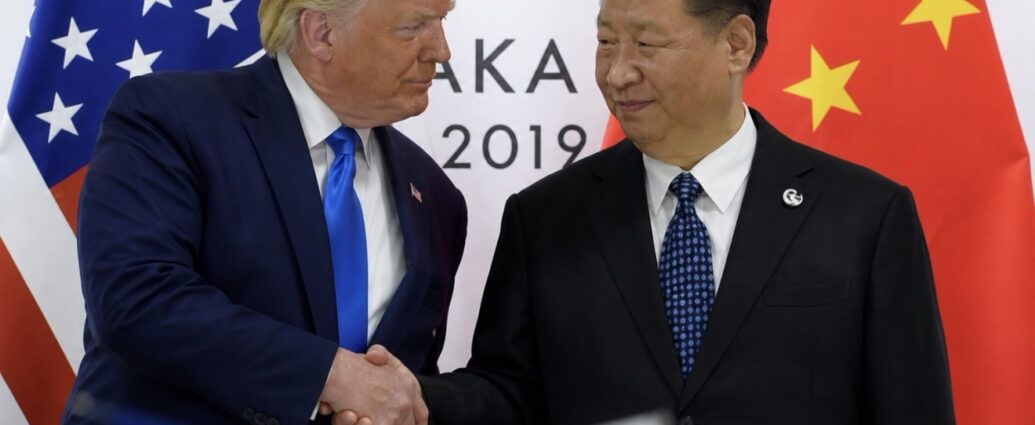
Boeing Chief Executive Kelly Ortberg arrived in Beijing Wednesday as part of the U.S. business delegation accompanying President Donald Trump for a two-day summit with Chinese President Xi Jinping, with negotiations reportedly nearing completion on what could become one of the largest aircraft orders in aviation history.

According to reporting from Bloomberg News and CNBC, discussions now center on a package that could include as many as 500 Boeing 737 MAX jets alongside roughly 100 widebody aircraft, potentially reopening China’s market to Boeing after nearly a decade of frozen large-scale orders.

The proposed agreement would represent China’s first major Boeing purchase since Trump’s 2017 Beijing state visit, which produced commitments for roughly 300 aircraft valued at more than $37 billion at the time.

At current pricing levels — even after standard industry discounts — analysts estimate a 600-aircraft package could exceed $100 billion in total value, instantly becoming one of Boeing’s most important commercial victories in years.

The majority of the order is expected to focus on the 737 MAX 8 and MAX 10 models, aircraft heavily used by Chinese airlines for high-density domestic routes.

Carriers expected to participate include Air China, China Eastern Airlines, China Southern Airlines and Hainan Airlines, all of which face rising fleet-renewal needs as Chinese domestic air travel continues recovering.

For Boeing, the stakes extend far beyond headline optics.

The company has spent the last several years rebuilding operational credibility following the prolonged 737 MAX crisis and the 2024 Alaska Airlines door-plug incident that triggered renewed scrutiny from the Federal Aviation Administration.

Ortberg, who succeeded former CEO Dave Calhoun in August 2024, has focused heavily on stabilizing production quality while gradually increasing monthly MAX output under FAA-imposed caps.

China’s absence from Boeing’s order pipeline has remained one of the largest holes in the company’s global backlog.

A deal of this size would likely fill production slots well into the next decade and dramatically improve long-term visibility for Boeing’s narrow-body manufacturing operations.

Bank of America aerospace analyst Ronald Epstein previously described the potential package as “a near-decade of lost Chinese market share returning in one announcement.”

The geopolitical backdrop is also unusually favorable for a transaction of this scale.

Trade relations between Washington and Beijing deteriorated sharply throughout 2025 after both sides escalated tariffs across key sectors. China raised retaliatory tariffs on U.S. imports to 125% after the Trump administration increased duties on Chinese goods to 145%, effectively freezing many aircraft deliveries.

The partial thaw emerged following the Busan APEC truce reached in late 2025, which reduced certain tariffs and paused expanded Chinese restrictions on rare-earth exports.

Both governments are now under pressure to produce tangible commercial wins before the current trade truce expires later this year.

For China, aircraft procurement also intersects directly with broader economic and energy-security concerns.

The country remains heavily dependent on energy shipments transiting through the Strait of Hormuz, where ongoing instability tied to the Iran conflict has created growing pressure on shipping and commodity markets.

Stabilizing trade ties with Washington while securing access to critical industrial supply chains has increasingly become a strategic priority for Beijing.

The Boeing negotiations are unfolding alongside broader commodity and trade discussions.

Cargill Chief Executive Brian Sikes, also traveling with the delegation, is reportedly working to finalize a multiyear Chinese commitment to purchase approximately 25 million metric tons of U.S. soybeans annually, alongside expanded imports of American beef, poultry and energy products.

The broader U.S. delegation reflects the scale of the summit’s economic ambitions.

Executives traveling with Trump include Apple CEO Tim Cook, Tesla CEO Elon Musk, Nvidia CEO Jensen Huang, BlackRock CEO Larry Fink, Blackstone Chairman Stephen Schwarzman and Citigroup CEO Jane Fraser.

The summit is widely viewed as an effort to stabilize corporate ties between the world’s two largest economies following several years of rising geopolitical confrontation.

For Boeing’s competitors, the implications are substantial.

Airbus has spent the past several years steadily increasing dominance within the Chinese aviation market while Boeing remained sidelined. The European manufacturer recently expanded its Tianjin assembly operations and secured multiple major Chinese carrier orders during Boeing’s absence.

Meanwhile, China’s state-backed aerospace manufacturer COMAC continues expanding deployment of its domestically built C919 narrow-body aircraft, though industry analysts still view the jet as years behind the Boeing 737 MAX and Airbus A320neo in terms of range, payload efficiency and international certification.

A Boeing return to China at scale would complicate Beijing’s long-term ambitions for aerospace self-sufficiency while slowing COMAC’s market-share expansion.

Investors are already partially pricing in a positive outcome.

Boeing shares have climbed meaningfully from their March lows as optimism surrounding the Beijing summit intensified.

Whether the order ultimately materializes — and on what financing and delivery terms — may determine not only Boeing’s production outlook for the next decade, but also the broader trajectory of U.S.-China commercial relations heading into 2027.

JBizNews Desk

© JBizNews.com. All rights reserved. This article is original reporting by JBizNews Desk. Unauthorized reproduction or redistribution is strictly prohibited

By JBizNews Desk
May 11, 2026

The U.S. Senate Banking Committee is preparing to hold what could become one of the most consequential cryptocurrency votes in modern American financial history, as lawmakers move closer to establishing the first comprehensive federal regulatory framework governing digital assets in the United States.

Committee Chairman Senator Tim Scott of South Carolina announced Friday that the panel will convene an executive session on May 14 at the Dirksen Senate Office Building in Washington to consider the Clarity Act — sweeping legislation designed to finally establish clear legal definitions and regulatory boundaries for cryptocurrencies, stablecoins, and blockchain-based financial products.

For the digital asset industry, the vote represents a pivotal moment after years of legal uncertainty, regulatory conflict, and escalating battles between crypto companies and federal agencies.

The legislation seeks to answer one of the most fundamental unresolved questions in the industry: when a digital token qualifies as a security, when it qualifies as a commodity, and when it may fall into a separate digital asset category altogether.

That ambiguity has defined much of the U.S. crypto market for years.

Without formal congressional guidance, companies have faced overlapping and often contradictory oversight from the Securities and Exchange Commission, the Commodity Futures Trading Commission, and other federal regulators, with enforcement actions frequently becoming the government’s primary mechanism for signaling policy expectations.

The Clarity Act would replace much of that uncertainty with a statutory framework assigning regulatory authority based on the structure and function of specific digital assets.

The House of Representatives passed its version of the bill in July of last year, but the legislation stalled in the Senate amid an intense lobbying battle between the cryptocurrency industry and the traditional banking sector.

Now, with the current congressional session entering a politically sensitive stretch ahead of the November midterm elections, pressure is building on both sides.

The Senate must pass the legislation before the end of 2026 if lawmakers hope to deliver the bill to President Donald Trump for signature before the current Congress expires.

For crypto executives, investors, and venture capital firms, the May 14 committee vote is increasingly viewed as a critical inflection point that could determine whether the United States embraces a formalized digital asset framework — or continues operating under the fragmented regulatory environment that has defined the industry for much of the past decade.

At the center of the remaining dispute is a battle over stablecoins and interest-bearing digital deposits.

A separate stablecoin law passed last year established a framework allowing intermediaries, including crypto exchanges, to offer interest-bearing products tied to stablecoin holdings.

Traditional banks are now pushing aggressively to limit or eliminate that provision inside the Clarity Act.

The banking industry argues that allowing crypto exchanges and non-bank financial platforms to pay interest on stablecoins could trigger a major migration of deposits away from federally regulated banks into uninsured digital wallets and exchanges.

Executives warn that such a shift could weaken the traditional banking system’s deposit base — the foundation supporting lending, credit creation, and broader financial stability throughout the economy.

Banks also argue that stablecoin platforms offering deposit-like returns without complying with FDIC insurance requirements, capital standards, and banking regulations would create an uneven competitive landscape carrying systemic financial risks.

The cryptocurrency industry strongly rejects that argument.

Major firms including Coinbase and Kraken have framed the banking industry’s lobbying campaign as an attempt to use regulation to shield incumbent financial institutions from technological competition.

Crypto executives argue that prohibiting exchanges from offering interest-bearing stablecoin products would effectively protect banks while restricting innovation inside digital financial markets.

For many in the industry, the stablecoin debate has become a broader symbolic fight over whether Washington genuinely intends to allow decentralized financial infrastructure to compete with traditional banking systems on equal footing.

The political stakes surrounding the legislation have grown significantly.

The crypto industry is pushing aggressively to finalize the bill before the November midterm elections, where shifts in congressional control could fundamentally alter the legislation’s trajectory.

A change in House leadership could reopen negotiations, delay implementation, or force major revisions to the framework.

After years of failed legislative attempts and regulatory uncertainty, many industry leaders increasingly view the current political window as narrow — and potentially temporary.

The broader environment surrounding cryptocurrency policy has also shifted sharply since Trump returned to office.

Unlike previous administrations that leaned heavily on enforcement actions and regulatory crackdowns, Trump has signaled substantially greater openness toward cryptocurrency innovation and blockchain-based financial infrastructure.

His administration has repeatedly emphasized the importance of keeping digital asset development inside the United States rather than pushing companies and capital overseas.

That shift has fueled optimism across the crypto sector, where executives increasingly view favorable regulation as one of the largest potential catalysts for broader institutional adoption and mainstream financial integration.

The outcome of the Senate Banking Committee’s May 14 vote may ultimately hinge on whether lawmakers can broker a compromise acceptable to both the banking sector and the crypto industry.

If the committee advances a version of the Clarity Act broadly supported by major crypto firms, the legislation moves materially closer to becoming law.

If last-minute banking-industry amendments significantly restrict stablecoin interest provisions or other core components of the framework, however, the deadlock that has paralyzed crypto regulation in Washington for years could continue indefinitely.

For the digital asset industry, the stakes extend far beyond one piece of legislation.

The vote increasingly represents a broader referendum on whether the United States intends to build a formal regulatory framework capable of integrating cryptocurrency into the traditional financial system — or continue leaving one of the fastest-growing sectors in modern finance operating inside legal uncertainty.

JBizNews Desk
© JBizNews.com. All rights reserved. This article is original reporting by JBizNews Desk. Unauthorized reproduction or redistribution is strictly prohibited.
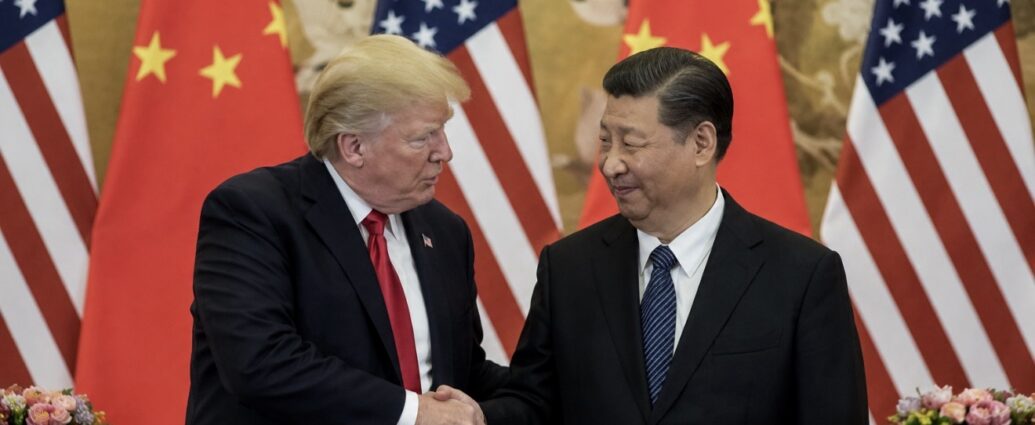
NEW YORK — A new economic and political fault line is quietly forming across America — not in factory towns or rural communities, but in the suburban office corridors surrounding the nation’s largest cities.

Researchers at Tufts University’s Fletcher School are calling it the “Wired Belt”: a growing cluster of suburban counties filled with highly educated white-collar workers whose jobs are increasingly vulnerable to artificial intelligence automation.

And according to the researchers behind the project, the political consequences could eventually rival — or exceed — the upheaval caused by the collapse of American manufacturing during the rise of the Rust Belt.

The concept comes from the university’s newly developed American AI Jobs Risk Index, an expansive effort mapping AI-related job vulnerability across 784 occupations and identifying where those workers are geographically concentrated.

What emerged was a striking pattern.

The workers most exposed to AI disruption are not spread evenly across the country. Instead, many are clustered in suburban rings surrounding major metropolitan areas in politically critical swing states including Pennsylvania, Michigan, Wisconsin, Georgia, and Arizona — the same regions that have repeatedly determined presidential elections over the past decade.

Unlike traditional blue-collar displacement, the workers at risk inside the Wired Belt are overwhelmingly professionals: writers, marketers, analysts, accountants, web designers, administrative coordinators, paralegals, and data specialists whose daily tasks increasingly overlap with the rapidly advancing capabilities of generative AI systems.

Bhaskar Chakravorti, dean of global business at the Fletcher School and lead researcher behind the study, believes that distinction matters enormously.

“These are people who are on LinkedIn,” Chakravorti told Fortune. “They know their congressman’s phone number. They’re good at writing, web design, data analysis, marketing.”

In other words, the workers most vulnerable to AI disruption may also be uniquely positioned to organize politically around it.

That possibility is becoming increasingly relevant as AI-driven restructuring accelerates throughout the corporate economy.

Across the technology sector alone, more than 95,000 jobs have already been eliminated during 2026, with industry estimates suggesting roughly 44% of those reductions are tied directly or indirectly to AI automation.

Major companies including Microsoft, Meta, Oracle, and Amazon have all announced large-scale workforce reductions this year while simultaneously increasing investment in artificial intelligence infrastructure, automation systems, and AI-assisted productivity tools.

The pattern is increasingly clear across corporate America: the same technologies companies are investing billions to deploy are beginning to reduce demand for many of the white-collar coordination and knowledge-work roles that defined suburban professional employment for much of the past two generations.

That overlap is precisely what makes the Wired Belt concept politically significant.

The suburban professional class has historically occupied a central role in American economic and electoral stability. These communities typically feature high voter participation, strong civic engagement, advanced education levels, and significant influence over local and national political narratives.

Researchers argue that if those workers begin experiencing widespread economic displacement — or even sustained fear of displacement — due to AI systems, the resulting political response could reshape the national conversation around technology, labor, regulation, and corporate power.

Unlike many industrial workers displaced during earlier globalization waves, these workers possess both the communication skills and institutional familiarity needed to mobilize quickly and effectively.

And unlike factory closures concentrated in isolated industrial regions, AI-driven displacement could emerge simultaneously across multiple suburban counties critical to both political parties.

The economic stakes are equally significant.

White-collar suburban workers collectively represent trillions of dollars in consumer spending, mortgage obligations, retirement investments, tax revenue, and local economic activity. A broad-based weakening of those employment categories could ripple outward into housing markets, retail spending, financial services, education systems, and regional tax bases.

For businesses, the challenge is becoming increasingly delicate.

Corporate executives are under enormous pressure from investors to deploy AI aggressively in pursuit of productivity gains and cost reductions. But doing so too visibly — particularly in politically sensitive regions already anxious about job security — may eventually create reputational, regulatory, and political backlash.

Exactly how the Wired Belt ultimately responds remains uncertain.

Some groups may push for stronger regulation limiting AI-driven labor replacement. Others may demand retraining programs, portable healthcare and retirement benefits, wage insurance, or new taxation frameworks tied to automation-related productivity gains.

Still others may simply seek slower deployment of AI systems across certain categories of professional work.

What researchers increasingly agree on, however, is that the debate is no longer theoretical.

Artificial intelligence is moving beyond isolated disruption inside Silicon Valley and beginning to reshape the economic foundation of mainstream suburban America — the very communities that helped define the modern middle and upper-middle class.

And if those communities begin to view AI less as a technological opportunity and more as an economic threat, the resulting political movement could become one of the defining forces in American life over the next decade.

The Rust Belt reshaped American politics around globalization and manufacturing decline.

The Wired Belt may soon do the same for artificial intelligence.

JBizNews Desk

© JBizNews.com. All rights reserved. This article is original reporting by JBizNews Desk. Unauthorized reproduction or redistribution is strictly prohibited.

NEW YORK — A newly formed coalition bringing together ethnic chambers of commerce and multicultural business organizations is rapidly emerging as a new political and economic force in New York after attracting senior elected officials, corporate executives and community leaders only days after its launch.

The organization, known as the Multicultural Business Coalition (MBC), held a high-profile gathering Thursday night at Yonkers Brewing Company, drawing New York State Senate Majority Leader Andrea Stewart-Cousins, Congressman George Latimer, senior New York City officials, chamber presidents and business leaders representing a broad cross-section of the state’s multicultural communities.

The unusually strong turnout for a newly created coalition immediately drew attention in political and business circles, where new advocacy groups rarely attract such senior participation so quickly after forming.

The coalition also generated media attention beyond the event itself, with the New York Post highlighting the organization’s rapid rise and focusing on its effort to build a unified political and economic voice for historically fragmented multicultural business communities.

Organizers said the coalition was formed to coordinate advocacy efforts among ethnic chambers, immigrant business organizations and multicultural groups that have often operated independently despite sharing many of the same economic and policy concerns.

Its stated priorities include small-business protection, procurement access, economic development, public safety, workforce issues and civic representation.

Several attendees privately described the gathering as less of a ceremonial networking event and more of an early demonstration of political organization and influence.

“This is the beginning of a serious political and economic coalition,” one attendee said during the event.

The coalition’s early momentum was reinforced by the attendance of Stewart-Cousins, the highest-ranking elected official in the New York State Senate. Organizers viewed her appearance as an important signal that state leadership is paying attention to the coalition’s emergence.

Also attending was Congressman George Latimer, who represents parts of Westchester and the Bronx, alongside senior city officials and representatives from Hispanic, Jewish, African-American, Latino, Caribbean, Nepali and immigrant business communities.

Opening remarks were delivered by Kenneth Roldan, president of the coalition, and Frank Garcia, chairman of the organization, both of whom argued that multicultural business communities have historically lacked unified representation during major policy and economic debates.

“Years of our Secretary Duvi Honig’s relationship-building and coalition work is paying off by bringing all these communities and leaders together under one united voice,” Garcia said during the gathering.

During her remarks, Stewart-Cousins praised the coalition’s broader mission and recognized the organization as a platform capable of representing “hundreds of thousands of New York business voices.”

Latimer similarly emphasized economic opportunity and civic engagement across New York’s diverse communities.

Additional attendees included Miguelina Camilo, chief of staff to New York City Council Speaker Julie Menin, and Mayra Linares-Garcia, vice president of public affairs for Coca-Cola, reflecting growing corporate interest in the coalition’s development.

The event was co-hosted by Jairo Guzman, president of the Mexican Coalition, and Mark Jaffe, president of the Greater New York Chamber of Commerce, who described the coalition as a long-overdue effort to consolidate multicultural business influence.

“When business communities stand divided, their voices are weakened,” Jaffe said. “When they stand together, they become impossible to ignore.”

Also in attendance were Assemblywoman Nathalia Fernandez, Assemblyman Nader Sayegh, Alan Ruesga, Albert Rodriguez, Wilson Torres, Rick Ramos, Alphonso Alvarez and Marcos Boccio, alongside additional civic and business leadership from across the region.

As the evening progressed, coalition members repeatedly emphasized that the organization intends to become active in public policy discussions affecting small businesses and working-class communities throughout New York.

One issue discussed extensively was New York City mayoral candidate Zohran Mamdani’s proposal to establish municipally owned grocery stores across New York City.

Coalition participants said they are reviewing the proposal’s potential economic impact, including concerns that publicly backed supermarkets could place additional pressure on neighborhood supermarkets, bodegas and family-owned retailers already struggling with inflation, theft, labor expenses and rising commercial rents.

Leaders involved with the coalition noted that many participating organizations directly represent independent supermarket owners and local retailers throughout New York City, making the issue an early area of focus for the alliance.

Among those recognized later in the evening were Dilip Chauhan, deputy commissioner of New York City’s MWBE Office, and Roxanne Nielsen of the U.S. Minority Business Development Agency (MBDA), both of whom have worked closely with Duvi Honig and the Orthodox Jewish Chamber of Commerce on minority business initiatives at the city and federal levels.

That work included a previous MBDA Memorandum of Understanding signed between the federal government and the Orthodox Jewish Chamber of Commerce aimed at expanding economic opportunities nationally.

Later in the evening, Duvi Honig, secretary and co-founder of the coalition and president and CEO of the Orthodox Jewish Chamber of Commerce, described the coalition as part of a broader movement to create a more unified advocacy structure for multicultural business communities.

“Having the Senate Majority Leader personally come support this coalition sends a powerful message about what is being built here,” Honig said. “For decades many multicultural business communities lacked a unified seat at the table. That changes now.”

Coalition organizers said they expect the organization to continue expanding across New York and potentially evolve into a significant multicultural business advocacy bloc in future economic and political debates.

WASHINGTON — The U.S. Senate voted at Wednesday Afternoon to confirm Kevin Warsh as the next chairman of the Federal Reserve in a razor-thin 54-45 vote, marking the closest confirmation margin for a Fed chair in the modern era and handing President Donald Trump the central-bank leader he has openly pushed for while immediately reigniting debate over the future independence of the U.S. central bank.

Warsh, 56, will replace Jerome Powell, whose term leading the Federal Reserve expires Friday after serving as chair since 2018. The Senate vote broke almost entirely along party lines, with Sen. John Fetterman (D-Pa.) emerging as the lone Democrat to support the nomination.

The confirmation concludes one of the most politically charged Federal Reserve battles in years. Just one day earlier, the Senate approved Warsh separately for a 14-year term on the Federal Reserve Board of Governors in a 51-45 vote after a dramatic reversal by Sen. Thom Tillis (R-N.C.), who withdrew his opposition following reports that a Justice Department criminal probe involving the Federal Reserve would no longer proceed.

Opposition Democrats, led by Sen. Elizabeth Warren (D-Mass.), argued that Warsh could become too closely aligned with White House priorities after repeated public pressure from Trump for lower interest rates. Warren accused Warsh during hearings of potentially acting as the president’s “sock puppet,” a characterization Warsh forcefully rejected while pledging to act independently if confirmed.

Warsh returns to the Eccles Building with deep institutional history and equally deep controversy. Appointed to the Federal Reserve Board in 2006 by President George W. Bush at just 35 years old, he became the youngest governor in modern Fed history and served through the collapse of the housing market and the 2008 global financial crisis.

During that period, the Federal Reserve initially underestimated the risks posed by the subprime mortgage market before launching unprecedented emergency interventions, including massive liquidity programs and bond-buying campaigns that reshaped modern monetary policy. Warsh later resigned in 2011 in protest over the Fed’s second round of quantitative easing — a $600 billion Treasury bond-buying program known as QE2 — arguing the central bank had become too dependent on extraordinary intervention.

Since leaving government, Warsh has become one of the most outspoken critics of post-crisis monetary policy, repeatedly warning that prolonged ultra-low interest rates and aggressive balance-sheet expansion distorted markets and fueled inflationary risk. In a widely discussed CNBC interview last year, he openly called for “regime change” at the Federal Reserve, comments that immediately resurfaced during the confirmation process.

The White House celebrated Wednesday’s outcome as a turning point in economic policy.

“The Senate’s confirmation of Kevin Warsh as the next Chairman of the Federal Reserve is a welcome step towards finally restoring accountability, competence, and confidence in Fed decision-making,” White House spokesman Kush Desai said following the vote.

Rep. French Hill (R-Ark.), chairman of the House Financial Services Committee, similarly praised Warsh’s record, saying his “commitment to disciplined monetary policy will help restore confidence in our economy and support long-term prosperity.”

Financial markets have already begun recalibrating around the leadership transition. The U.S. dollar strengthened, while longer-dated Treasury yields climbed in recent sessions as investors weighed whether a Federal Reserve perceived as more politically exposed might face credibility pressures in bond markets.

Trump has repeatedly demanded lower interest rates publicly, especially after recent signs of slowing growth in parts of the economy. But Warsh signaled during his Senate Banking Committee hearing that he does not intend to serve as a political extension of the White House.

“I will be an independent actor if confirmed as chair of the Federal Reserve,” Warsh told senators during testimony in April.

His first meeting leading the Federal Open Market Committee (FOMC) is scheduled for June 16-17, where markets currently expect policymakers to leave rates unchanged. However, this week’s stronger-than-expected inflation reports — including elevated CPI and PPI readings — have complicated expectations for rate cuts and even revived some speculation about possible future tightening if inflation pressures continue accelerating.

Warsh enters office closely aligned philosophically with Treasury Secretary Scott Bessent, with both men advocating for a smaller Federal Reserve balance sheet, tighter constraints on emergency interventions, and a narrower interpretation of the central bank’s mandate. Their approach signals a potentially major shift away from the intervention-heavy policies associated with the Bernanke, Yellen, and Powell eras.

That change could carry enormous implications during any future economic downturn. Investors and economists increasingly believe a Warsh-led Federal Reserve may prove far less willing to launch large-scale rescue programs such as quantitative easing or aggressive bond purchases during periods of market stress.

The transition also introduces an unusual power dynamic inside the central bank itself. Jerome Powell plans to remain on the Federal Reserve Board after stepping down as chair — an extraordinarily rare arrangement not seen in roughly 80 years. Powell has indicated he intends to stay until a federal inquiry involving the Federal Reserve’s headquarters renovation project concludes, meaning he will continue voting on monetary policy decisions even after Warsh assumes leadership.

The leadership overlap effectively creates two major centers of influence within the Federal Reserve during Warsh’s opening months as chairman.

Warsh will also enter office under heightened scrutiny over personal finances. With assets reportedly exceeding $100 million, he becomes the wealthiest Federal Reserve chair in history and is expected to divest substantial holdings under strengthened ethics rules governing financial activity by senior Fed officials.

He additionally brings unusually direct exposure to digital-asset policy debates. Past investments in crypto and blockchain firms — many of which he has pledged to divest — position him as one of the first Federal Reserve leaders with extensive familiarity with digital-asset markets at a time when regulators are actively debating stablecoins, crypto custody rules, and the future architecture of digital payments.

For households and businesses, the immediate practical impact is likely limited. Mortgage rates remain tied more closely to long-term Treasury yields than directly to Fed leadership changes, while auto loans, credit-card interest rates, and small-business borrowing costs remain anchored to the current federal funds rate environment.

Still, Wall Street increasingly views the confirmation as potentially marking the beginning of a materially different era for U.S. monetary policy — one defined by a Federal Reserve that may become more politically scrutinized, more inflation-focused, less interventionist, and more cautious about using extraordinary tools to stabilize markets.

JBizNews Desk

© JBizNews.com. All rights reserved. This article is original reporting by JBizNews Desk. Unauthorized reproduction or redistribution is strictly prohibited.
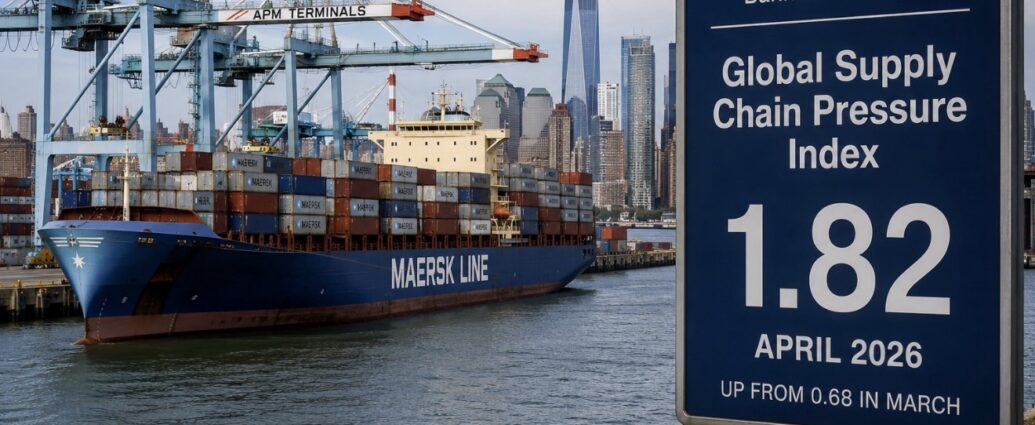
The U.S. Department of Justice filed sweeping federal criminal charges Tuesday against the companies responsible for operating the cargo ship Dali and the vessel’s technical superintendent, accusing them of deliberately ignoring known safety risks, falsifying inspection records, and misleading federal investigators in the catastrophic 2024 collapse of Baltimore’s Francis Scott Key Bridge.

Federal prosecutors say the disaster — which killed six construction workers, shut down one of America’s busiest shipping ports, and caused more than $5 billion in economic and infrastructure damage — was entirely preventable.

The 18-count indictment, unsealed Tuesday morning in federal court in Maryland, charges:

  • Synergy Marine Pte Ltd, based in Singapore,
  • Synergy Maritime Pte Ltd, based in Chennai, India,
  • and Radhakrishnan Karthik Nair, the Dali’s technical superintendent.

The defendants face charges including:

  • conspiracy to defraud the United States,
  • obstruction of federal investigators,
  • false statements,
  • and failure to report hazardous conditions to the U.S. Coast Guard.

The two corporate entities were also charged with environmental violations tied to pollution released into the Patapsco River following the collapse.

“The collapse of the Francis Scott Key Bridge was a preventable tragedy of enormous consequence,” said Acting Attorney General Todd Blanche. “Six construction workers lost their lives, critical infrastructure was destroyed, pollutants were released into the Patapsco River and Chesapeake Bay, and the economic damage now exceeds five billion dollars.”

According to prosecutors, the heart of the case centers on deliberate decisions involving the Dali’s electrical and fuel systems before the ship departed Baltimore Harbor in the early morning hours of March 26, 2024.

Federal investigators allege that a loose wire inside a high-voltage switchboard triggered the vessel’s initial power failure as the nearly 1,000-foot cargo ship navigated outbound toward Sri Lanka.

But prosecutors say the more devastating failure came seconds later.

The indictment alleges the ship’s operators had improperly modified the vessel’s fuel configuration, relying on a “flushing pump” system not designed to automatically restart after power outages.

When the Dali lost power the first time, the flushing pump reportedly failed to reactivate, starving the ship’s generators of fuel and triggering a second catastrophic blackout moments before impact.

“After that first blackout, the ship’s generators became starved of fuel, causing a second blackout,” said U.S. Attorney Kelly Hayes for the District of Maryland.

The powerless vessel then slammed directly into one of the bridge’s primary support columns at approximately 1:30 a.m., causing the massive steel structure to collapse into the river within seconds.

Federal prosecutors allege the companies knew the flushing-pump configuration violated international maritime safety standards and failed to properly disclose or correct the issue despite repeated warnings and internal knowledge of the risks.

Investigators also claim similar unsafe configurations were found on multiple other vessels operated by the companies.

The indictment further accuses executives and managers of falsifying safety certifications and lying to federal investigators after the collapse.

“Those responsible for the ship’s operation deliberately cut corners to the expense of safety,” said Jimmy Paul, Special Agent in Charge of the FBI Baltimore Field Office. “They forged safety inspections and certifications. They falsely claimed the ship was in good working order and then lied to investigators.”

The collapse triggered one of the largest infrastructure and maritime disruptions in recent U.S. history.

The Port of Baltimore, one of the nation’s most important shipping hubs for automobiles, agricultural equipment, and container traffic, remained largely shut down for nearly two months while the U.S. Army Corps of Engineers cleared wreckage from the shipping channel.

Maryland officials estimate the broader economic impact rippled through thousands of jobs tied to logistics, trucking, shipping, construction, and port operations.

The replacement bridge is now projected to cost between $4.3 billion and $5.2 billion, with completion not expected until approximately 2030.

The original bridge opened in 1977 after five years of construction and stretched roughly 1.6 miles across Baltimore Harbor.

The six workers killed in the collapse were part of an overnight road maintenance crew repairing potholes on the bridge when the Dali struck the structure.

The victims were identified as:

  • Dorlian Ronial Castillo Cabrera
  • Carlos Daniel Hernandez Estrella
  • Alejandro Hernandez Fuentes
  • Jose Mynor Lopez
  • Miguel Angel Luna
  • Maynor Yasir Suazo Sandoval

A seventh worker survived with serious injuries after being thrown into the river.

The criminal case now becomes one of the most consequential maritime prosecutions in decades, raising broader questions about global shipping oversight, vessel maintenance standards, and corporate accountability inside the international cargo industry.

Federal investigators say the evidence suggests the disaster was not the result of an unforeseeable accident — but rather a chain of ignored warnings, improper modifications, and systemic failures that prosecutors argue ultimately cost six people their lives.

JBizNews Desk
© JBizNews.com. All rights reserved.

President Donald Trump arrived in Beijing Wednesday for a two-day summit with Chinese President Xi Jinping that could become one of the most consequential U.S.-China meetings in decades, unfolding against the backdrop of war in the Middle East, rising inflation, global supply-chain disruption and growing competition between the world’s two largest economies.

The visit marks Trump’s first trip to China since 2017 and the first visit by a sitting American president to Beijing in nearly nine years.

The summit carries unusually high geopolitical and economic stakes.

The ongoing Iran war has transformed what might otherwise have been a traditional trade and diplomatic meeting into a broader negotiation over energy security, inflation, supply chains and global stability.

The Strait of Hormuz, one of the world’s most critical shipping chokepoints, has remained heavily disrupted since late February, sending oil prices sharply higher and contributing directly to rising inflation pressures now visible across the global economy.

In the United States, April inflation data showed consumer and producer prices accelerating to their fastest pace in years, driven heavily by energy and transportation costs tied to the conflict.

China sits at the center of that equation.

Beijing remains the largest buyer of Iranian crude oil and one of Tehran’s most important economic lifelines, giving Xi significant potential leverage over Iran at a moment when Washington is seeking broader international pressure to reopen shipping lanes and stabilize energy markets.

Whether China is willing to use that leverage — and under what conditions — has emerged as one of the summit’s most important questions.

The optics surrounding the visit are carefully choreographed.

Xi is hosting Trump with full state-level ceremony, including events at the Temple of Heaven, meetings inside the Great Hall of the People and an official state dinner involving senior business leaders and cabinet officials from both countries.

The symbolism echoes Trump’s 2017 Beijing visit, when Xi hosted the American president inside the Forbidden City in what was widely viewed as one of the most elaborate diplomatic welcomes China had extended to a foreign leader in decades.

Behind the ceremony, however, the negotiations are expected to be intensely transactional.

Trump arrived with a delegation heavily focused on trade, manufacturing, energy and technology.

Executives traveling with the president include Apple CEO Tim Cook, Tesla CEO Elon Musk, Nvidia CEO Jensen Huang, BlackRock CEO Larry Fink, Blackstone Chairman Stephen Schwarzman, Citigroup CEO Jane Fraser, Cargill CEO Brian Sikes and Boeing CEO Kelly Ortberg.

Several major commercial agreements are reportedly already nearing completion.

Among the largest is a possible Boeing aircraft package involving hundreds of jets for Chinese airlines, potentially valued at more than $100 billion depending on final structure and delivery schedules.

Agricultural negotiations are also central to the summit.

Cargill and other U.S. agriculture groups are reportedly seeking multiyear Chinese purchase commitments covering soybeans, beef, poultry and energy exports — agreements designed both to stabilize trade flows and provide political wins for the White House ahead of the 2026 midterm cycle.

Technology and tariffs remain another major focus.

Apple’s previously announced $600 billion American Manufacturing Program has already secured the company substantial tariff protections under the Trump administration’s industrial policy framework, and other CEOs in the delegation are closely studying that model as they navigate future trade exposure.

Artificial intelligence, semiconductors and export controls are also expected to dominate portions of the negotiations.

The broader strategic relationship remains deeply complicated.

China continues pursuing long-term technological independence in semiconductors, AI and advanced manufacturing while simultaneously attempting to preserve access to U.S. consumer markets and global capital flows.

At the same time, tensions surrounding Taiwan remain unresolved, with Beijing continuing military and political pressure aimed at reducing American influence in the region.

Inside Washington, the business community itself is increasingly divided over China.

The U.S. Chamber of Commerce released a sharply worded assessment just before the summit warning that Beijing’s state-driven industrial strategy is rapidly reshaping global competition and arguing that American policymakers may have only a narrow remaining window to respond effectively.

That message reflects a growing shift inside portions of corporate America away from the deep economic integration model that dominated earlier decades.

Even so, both governments appear motivated — at least temporarily — to stabilize relations.

The late-2025 Busan APEC truce, which paused portions of the escalating tariff conflict between Washington and Beijing, is set to expire later this year.

Extending that framework while producing visible economic deliverables has become a priority for both sides.

For Xi, the summit arrives during a difficult domestic economic environment marked by property-sector weakness, soft consumer demand and rising pressure on employment and capital flows.

For Trump, the trip offers an opportunity to project global economic leadership while seeking relief from inflationary pressures now affecting American consumers and financial markets.

Analysts remain cautious about expecting major political breakthroughs.

Most observers anticipate incremental agreements rather than sweeping structural changes.

The larger question is whether any commercial commitments announced during the summit ultimately translate into durable implementation after the headlines fade.

For markets, however, the significance of the meeting is already clear.

The trajectory of global trade, inflation, energy flows, semiconductor policy and supply-chain stability increasingly depends on the ability of Washington and Beijing to manage competition without allowing it to spiral into deeper economic confrontation.

And for now, that future is being negotiated inside the Great Hall of the People.

JBizNews Desk

© JBizNews.com. All rights reserved. This article is original reporting by JBizNews Desk. Unauthorized reproduction or redistribution is strictly prohibited.
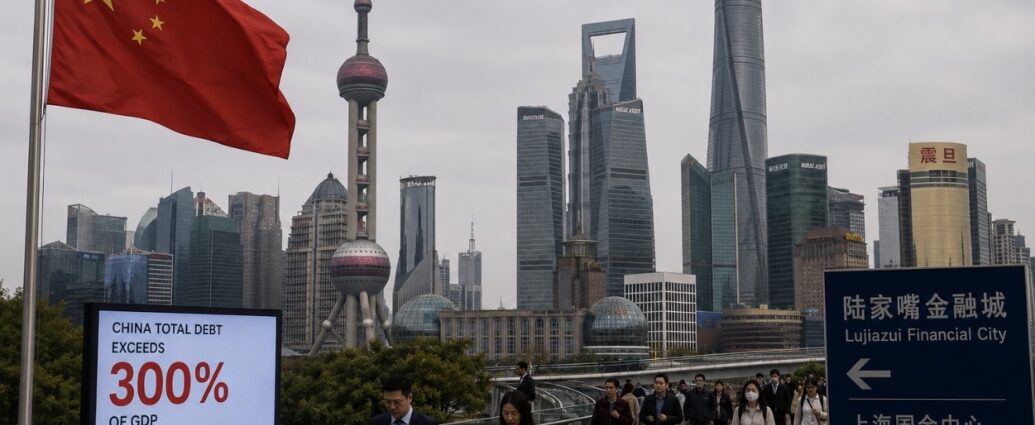
The largest sporting event ever staged across North America is now just weeks away, yet much of the U.S. hotel industry is preparing for something closer to a normal summer than the tourism windfall many executives once anticipated.

A new report from the American Hotel & Lodging Association found that roughly 80% of hotel operators across the 2026 FIFA World Cup’s 11 U.S. host cities say bookings are running below expectations, with many describing the tournament as effectively a “non-event” for their properties.

The findings sharply undercut earlier projections from FIFA, which repeatedly promoted the tournament as a potential $30.5 billion economic boom and compared the expanded 2026 World Cup to “104 Super Bowls.”

The tournament, running from June 11 through July 19, will be the first FIFA World Cup jointly hosted across the United States, Canada and Mexico, and the first to feature an expanded 48-team field.

The 11 U.S. host markets include New York/New Jersey, Los Angeles, Boston, Seattle, San Francisco, Houston, Dallas, Miami, Philadelphia, Atlanta and Kansas City.

According to the AHLA survey, several of those cities are now seeing significantly weaker-than-expected hotel demand.

Kansas City appears to be the weakest-performing host market, with roughly 85% to 90% of hotel operators reporting booking activity below both original World Cup expectations and even typical summer occupancy levels.

Hotels in Boston, Philadelphia, San Francisco and Seattle similarly reported widespread disappointment, while markets including Dallas, Houston and Los Angeles are tracking roughly in line with ordinary seasonal demand rather than the massive tourism surge many investors anticipated.

Only Miami and Atlanta appear to be outperforming broader expectations, supported partly by stronger leisure demand and the presence of team training bases.

The reasons for the slowdown are increasingly geopolitical as much as economic.

Between 65% and 70% of hotel operators surveyed identified visa-processing delays, broader geopolitical instability and concerns surrounding U.S. entry procedures as major drags on international travel demand.

The strong U.S. dollar has further increased costs for foreign visitors, while ongoing conflict in the Middle East and uncertainty tied to trade policy have weakened global travel sentiment more broadly.

FIFA itself is also facing criticism from hotel operators.

According to the AHLA report, FIFA negotiated large room-block agreements with hotels across host cities before later exercising opt-out clauses and releasing thousands of unsold rooms back into the market after initial demand assumptions failed to materialize.

The association described the process as creating an “artificial early demand signal” that distorted pricing and inventory expectations throughout many host markets.

A FIFA spokesperson defended the organization’s approach, saying accommodations teams worked closely with hotels and released unused inventory within contractually agreed timelines.

Publicly traded hospitality companies are now watching the situation closely.

Major hotel operators with exposure to host cities include Marriott International, Hilton Worldwide, Hyatt Hotels and Choice Hotels International, while booking platforms including Booking Holdings, Expedia Group and Airbnb are also directly tied to World Cup-related travel demand.

Marriott Chief Executive Anthony Capuano recently acknowledged softer inbound international travel trends broadly, though he stopped short of directly criticizing World Cup demand.

Some economists argue the disappointment reflects structural realities surrounding mega-events more than any single geopolitical issue.

Lisa Delpy Neirotti, director of the Sports Management Program at George Washington University, told Fortune that high travel and ticket prices are likely suppressing attendance more than politics alone.

Meanwhile, sports economist Andrew Zimbalist has long argued that major international sporting events often displace ordinary tourism rather than meaningfully increase total visitor activity, as regular travelers avoid congestion, security restrictions and inflated pricing.

The implications could prove especially painful for smaller host markets.

Cities including Kansas City invested heavily in stadium upgrades, transportation improvements and hospitality expansion under the assumption that the World Cup would generate lasting tourism momentum and economic spillover.

If attendance and travel demand underperform expectations, many of those investments could face increasing scrutiny from local taxpayers and municipal officials.

The broader hospitality industry is also entering a more fragile economic period.

After outperforming major gateway cities through much of 2024 and early 2025, smaller and mid-sized U.S. hotel markets are now facing signs of softening discretionary travel demand as inflation, airfare costs and geopolitical uncertainty weigh on consumers.

For investors, the AHLA report represents one of the clearest indications yet that Wall Street’s World Cup tourism narrative may have become significantly overpriced.

The tournament itself is still expected to draw enormous television audiences and global attention. But for many American hotel owners, the economic reality increasingly appears far less transformational than the hype that preceded it.

JBizNews Desk

© JBizNews.com. All rights reserved. This article is original reporting by JBizNews Desk. Unauthorized reproduction or redistribution is strictly prohibited.

America’s spring home-buying season — traditionally the busiest stretch of the residential real-estate calendar — is rapidly stalling as inflation tied to the Iran war pushes mortgage rates back above the threshold economists say effectively freezes housing activity.

The average 30-year fixed mortgage rate climbed to 6.45% Wednesday, according to Bankrate, after Freddie Mac’s Primary Mortgage Market Survey placed the benchmark rate at 6.37% last week, up from 6.30% the prior week. The move pushes borrowing costs meaningfully above what housing economists increasingly describe as the market’s critical affordability line.

Heather Long, chief economist at Navy Federal Credit Union, has repeatedly pointed to what she calls the “6.3% threshold.”

“Home sales in America jump when the 30-year mortgage rate falls below 6.3%, and they slow down or halt when the rate goes above 6.3%,” Long said.

The market is now firmly above that level.

Unlike prior mortgage spikes, the immediate driver is not Federal Reserve policy itself but the bond market’s inflation reaction to the Iran conflict and the near paralysis of commercial shipping through the Strait of Hormuz.

Mortgage rates closely track the 10-year Treasury yield, which surged to a new 2026 high this week after inflation data sharply exceeded Wall Street expectations.

The Consumer Price Index printed at 3.8% year-over-year Tuesday, the highest reading since May 2023. On Wednesday, the Producer Price Index jumped 1.4% month-over-month and 6% annually, marking the largest monthly increase since March 2022 and the strongest annual rise since December 2022.

Energy and transportation costs tied to the Iran war were central drivers in both reports.

Commercial shipping traffic through Hormuz has remained near standstill conditions since the conflict escalated in late February, keeping oil prices elevated and feeding transportation, manufacturing and consumer inflation across the global economy.

For the U.S. housing market, the timing could hardly be worse.

The industry entered 2026 hoping lower inflation and eventual Federal Reserve easing would finally thaw the deep freeze that has gripped existing-home inventory for nearly three years. Instead, the latest rate spike is intensifying the lock-in effect already paralyzing sellers.

Housing-market data show roughly 86% of American homeowners currently hold mortgages below 6%, making it financially irrational for many to sell homes financed during the ultra-low-rate era.

Inventory has improved modestly, but the market remains constrained. National for-sale supply is still estimated to sit roughly 12% below pre-pandemic norms, even after three consecutive years of incremental inventory growth.

Lawrence Yun, chief economist at the National Association of Realtors, said this week he now expects spring 2026 existing-home sales to remain essentially flat compared with last year — itself the weakest annual sales environment in roughly three decades.

Existing-home sales have remained stuck near a 4 million annualized pace, dramatically below the roughly 5 million transactions common before the pandemic and far below the 6 million-plus levels reached during the housing boom between 2020 and 2022.

Regionally, the market is becoming increasingly divided.

Texas and Florida — where builders including D.R. Horton, Lennar and PulteGroup aggressively expanded inventory — have shifted decisively toward buyer’s-market conditions. Median new-home prices in parts of those states have fallen back to levels not seen since 2021.

Meanwhile, many Northeastern and Midwestern markets remain supply constrained, with bidding wars still appearing in cities including New York, Boston and Minneapolis.

The divergence helps explain why national home-price indexes remain relatively stable despite transaction activity remaining deeply depressed.

For consumers, affordability math remains punishing.

A typical $500,000 family home with 20% down now carries an estimated monthly principal-and-interest payment near $3,500, compared with roughly $2,100 during the pandemic-era mortgage trough.

Real-estate agents have spent the past two years pushing the phrase “date the rate, marry the home,” betting that future refinancing opportunities would eventually rescue affordability. But forecasts for rate relief are becoming increasingly uncertain.

Consensus projections from Morgan Stanley, Fannie Mae, Realtor.com and the Mortgage Bankers Association now place year-end mortgage rates broadly between 5.75% and 6.30%, while Bankrate maintains a somewhat more optimistic range near 5.5% to 6.0% under recessionary scenarios.

The Federal Reserve’s path is becoming more difficult to predict by the week.

The Federal Open Market Committee held rates steady in late April but recorded four dissents, the largest split inside the Fed since 1992. Governor Stephen Miran voted for a rate cut, while regional presidents including Neel Kashkari pushed back against the committee’s softer language.

Following this week’s inflation reports, futures markets briefly began pricing in a non-zero probability of an outright Fed rate hike before year-end rather than the cuts Wall Street had anticipated earlier this year.

Meanwhile, former Fed governor Kevin Warsh, confirmed Tuesday to return to the Board, is widely viewed by markets as more inflation-focused than dovish, potentially limiting future easing flexibility even if economic growth slows.

For the housing industry, the implications are becoming increasingly difficult to ignore.

The spring season that builders, brokers and mortgage lenders hoped would restart the market is instead being suffocated by a geopolitical conflict nearly 7,000 miles away — one that has placed a floor beneath oil prices, capped bond-market rallies and widened the affordability gap separating buyers from sellers across the United States.

JBizNews Desk

© JBizNews.com. All rights reserved. This article is original reporting by JBizNews Desk. Unauthorized reproduction or redistribution is strictly prohibited

A new emergency trade architecture is rapidly reshaping the Middle East and global commodity markets as Gulf nations scramble to bypass the closed Strait of Hormuz, one of the world’s most critical maritime chokepoints. Eleven weeks after the United States and Israel launched airstrikes against Iran on Feb. 28 — and Tehran retaliated by effectively shutting the strait — Saudi Arabia, the United Arab Emirates and neighboring Gulf states have begun constructing an improvised overland economic corridor to keep oil, fertilizer, food and consumer goods moving.

At the center of that effort is a massive Saudi trucking operation unlike anything seen in the kingdom’s modern industrial history.

According to reporting from The Wall Street Journal, Saudi state mining giant Maaden has expanded its emergency logistics fleet to approximately 3,500 trucks, hauling phosphate fertilizer across more than 1,300 kilometers of desert from its Persian Gulf production hub at Ras Al-Khair to the Red Sea export terminal at Yanbu. The convoy system was created after tanker exports through Hormuz became effectively impossible following the outbreak of the regional war.

The scale of the disruption is staggering. Before the conflict, roughly 20 million barrels of oil per day and nearly one-third of global seaborne fertilizer trade passed through the Strait of Hormuz. According to shipping analytics firm Kpler, only 191 vessels crossed the waterway during April compared with a normal monthly average near 3,000 ships, leaving Gulf maritime traffic operating at roughly 5% of normal commercial throughput.

The result has been one of the fastest supply-chain restructurings in modern energy-market history.

Saudi Arabia’s rerouted fertilizer exports are now flowing west through the Red Sea rather than east through the Persian Gulf. According to Argus Media, Maaden has already shipped approximately 15,000 tons of MAP fertilizer to South America from Yanbu and sold another 50,000 tons of DAP fertilizer to Ethiopia through Djibouti. April export lineups from Yanbu reportedly reached roughly 105,000 tons.

The workaround matters far beyond the Gulf itself.

Saudi Arabia accounted for approximately 19% of global DAP and MAP fertilizer exports in 2025, while the broader Gulf region produces nearly half of the world’s urea supply and roughly 30% of global ammonia production. Fertilizer markets have already reacted violently to the crisis, with urea prices climbing roughly 50% since the war began, according to industry data cited by The Fertilizer Institute.

The agricultural consequences are increasingly alarming.

The United Nations has established an emergency task force led by Jorge Moreira da Silva, Executive Director of the UN Office for Project Services, to coordinate humanitarian fertilizer shipments amid fears that supply shortages could trigger severe food insecurity across parts of Africa, Asia and Latin America. The World Food Programme warned this week that as many as 45 million people could face hunger or starvation in coming months if fertilizer supply chains remain disrupted.

Meanwhile, the United Arab Emirates has emerged as the second critical pillar of the Gulf’s improvised bypass network.

The UAE’s eastern port of Khor Fakkan, located outside the Strait of Hormuz on the Gulf of Oman, has become one of the region’s most strategically important logistics hubs almost overnight. According to Reuters, weekly container traffic through the port has surged to roughly 50,000 containers from a pre-war baseline near 2,000, while daily truck movements exploded to approximately 7,000 per day from barely 100 daily movements before the war.

“This has become a critical national gateway,” Farid Belbouab, Chief Executive of terminal operator Gulftainer, told Reuters.

To manage the surge, Gulftainer hired approximately 900 workers within the first weeks of the conflict and is now planning a logistics and dry-port expansion project reportedly exceeding $100 million inland at Al Dhaid, connected to Khor Fakkan through road and future rail infrastructure.

The neighboring UAE oil hub at Fujairah has also become indispensable to global energy markets.

Crude shipments from Fujairah have risen approximately 38% since late February, pushing the Abu Dhabi Crude Oil Pipeline, operated by ADNOC, near its maximum capacity of 1.8 million barrels per day. At the same time, Saudi Arabia’s East-West pipeline to Yanbu is reportedly operating at full capacity near 7 million barrels daily.

Combined, these emergency bypass systems are now rerouting roughly 9 million barrels of oil per day around Hormuz — still less than half the strait’s normal flow but enough to prevent a complete collapse in global energy markets.

The International Energy Agency has responded by coordinating the release of approximately 400 million barrels from strategic petroleum reserves among member nations, the largest emergency reserve deployment in the agency’s history.

Yet despite the massive logistical response, the workaround remains deeply vulnerable.

The Wall Street Journal reported Monday that the UAE secretly conducted military strikes inside Iran during the conflict, including an alleged attack on Iran’s Lavan Island refinery earlier this spring. In response, Iran’s Revolutionary Guards Navy has published maps asserting military control over waters surrounding both Khor Fakkan and Fujairah, while drone strikes earlier this week hit the Fujairah Oil Industry Zone, injuring workers and igniting fires near storage facilities.

Saudi Aramco Chief Executive Amin Nasser warned over the weekend that even if the Strait of Hormuz reopened immediately, disruptions to oil, fertilizer and shipping markets could continue well into 2027.

For several Gulf nations, the situation is even more precarious.

Qatar, Kuwait, and Bahrain lack meaningful overland export alternatives and remain heavily dependent on rerouted cargo flows through UAE infrastructure and Saudi trucking corridors. Goods are now increasingly unloaded at Khor Fakkan and transported overland across Saudi Arabia back toward Gulf markets — a fragile and expensive system built almost entirely under wartime pressure.

The result is a dramatically altered map of global trade.

What began as a regional military conflict has rapidly evolved into one of the largest emergency supply-chain reorganizations in modern history, reshaping energy flows, agricultural markets and global shipping patterns in real time. And with the Strait of Hormuz still effectively shut, the world economy is now relying on a handful of vulnerable roads, pipelines and ports to keep critical commodities moving.

JBizNews Desk

© JBizNews.com. All rights reserved. This article is original reporting by JBizNews Desk. Unauthorized reproduction or redistribution is strictly prohibited.
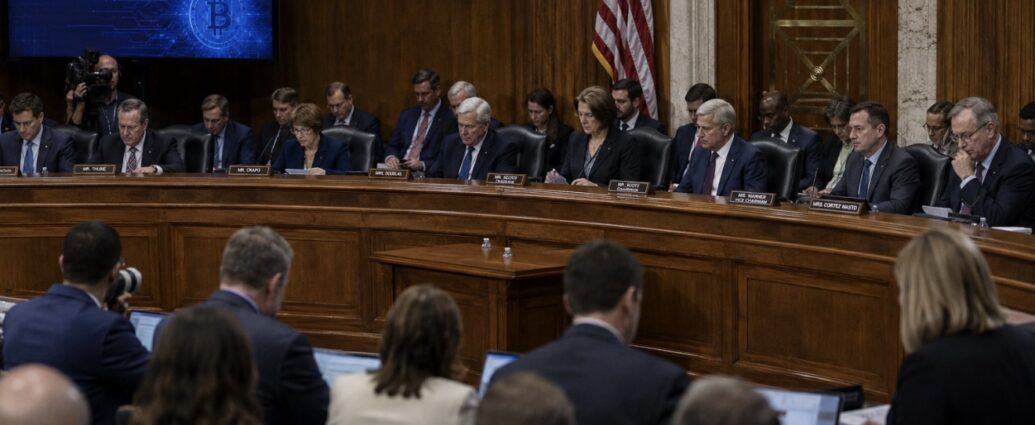
A new working paper released through the National Bureau of Economic Research finds that the Trump administration’s escalated Immigration and Customs Enforcement activity over the past year has had a “negative and significant impact” on employment of U.S.-born working men with at most a high-school education in sectors most exposed to enforcement, including construction, agriculture, and hospitality — a finding that directly counters the political narrative that mass deportations create labor-market opportunities for native-born workers and one that arrives at a moment when small-business hiring and overall payroll growth are simultaneously slowing.

The paper, titled “Labor Market Impacts of ICE Activity in Trump 2.0,” was authored by Chloe East, an economist at the University of Colorado Boulder, and co-author Elizabeth Cox. The work analyzes how the second Trump administration’s expanded immigration enforcement program affected employment for both immigrant and U.S.-born workers using Bureau of Labor Statistics household-survey microdata and county-level ICE enforcement records. The paper extends East’s longstanding research on the labor-market effects of deportation, which has previously examined the 2008–2014 Secure Communities program and the 1930s Mexican Repatriation.

“The mass deportations in Trump 2.0 are not helping the labor market overall and not creating more job opportunities for U.S.-born workers,” East said in a release accompanying the paper. “Whether you’re studying mass deportations today, whether you’re studying mass deportations in the first Obama administration, as I did before, or whether you’re studying mass deportations in the 1930s, as some of my friends in economics have done, you see the same pattern of results: which is that mass deportations are not only harmful for immigrant workers themselves, but they’re harmful for U.S.-born workers and the labor market more broadly.”

The mechanism is two-fold.

First, ICE activity reduces overall economic activity in affected communities through what economists call a “chilling effect” — undocumented workers stop showing up for shifts, customers stop shopping, local restaurants and businesses see traffic decline, and the multiplier effects ripple through neighborhood economies.

Second, the labor-supply contraction in sectors that rely heavily on immigrant workers — construction, agriculture, hospitality, food processing, and meatpacking — does not produce a corresponding increase in U.S.-born hiring because the businesses themselves shrink, defer projects, or close. East described the construction-industry case as illustrative: a builder that cannot find site laborers because of ICE activity does not raise wages to attract U.S.-born workers; the builder simply builds fewer homes.

The paper’s central empirical finding is that in counties with elevated ICE enforcement activity in 2025, employment among U.S.-born men with at most a high-school education declined relative to comparable counties without elevated enforcement. The effect is concentrated in sectors where undocumented immigrants are heavily represented, suggesting the labor-supply contraction is the binding constraint rather than the wage floor.

The paper’s findings echo a Wall Street Journal analysis published last month that found industries with high concentrations of low-education immigrants have seen slower wage growth than the broader private sector since the start of the second Trump administration — exactly the opposite of what the political framing of mass deportation would predict.

The macroeconomic context amplifies the significance.

The National Federation of Independent Business Small Business Optimism Index released this morning showed 34% of small-business owners reporting job openings they could not fill in April, the highest reading since June 2025 and well above the 24% historical average. The April Bureau of Labor Statistics jobs report showed payroll growth slowing across exactly the sectors flagged in the East-Cox paper. Manpower Group’s most recent Employment Outlook Survey showed construction-sector hiring intentions softening sharply in the Southeast and Southwest — the regions where ICE enforcement has been most concentrated.

The fiscal implications are also material.

The Trump administration has consistently framed mass deportation as a net positive for federal and state budgets, citing reduced welfare and education spending. The East-Cox paper suggests the opposite dynamic dominates: reduced economic activity in affected communities lowers state and local tax receipts, increases unemployment-insurance claims for U.S.-born workers laid off when employers contract, and reduces federal payroll-tax revenue.

The Penn Wharton Budget Model estimated in March that the second-term deportation program could reduce U.S. GDP by 0.4% to 1.0% over five years, with disproportionate impact on the construction, agriculture, and hospitality sectors.

The construction industry’s exposure is particularly acute.

D.R. Horton, the largest U.S. homebuilder, has held volume in part by self-funding rate buydowns and routing buyers through its internal mortgage subsidiary, but the company’s superintendent and project-manager teams have flagged sub-trade labor scarcity in earnings calls. Lennar Corporation’s Q1 2026 revenue fell 13% year over year, with the company citing labor and material-cost pressure alongside the rate environment. PulteGroup, NVR, and Toll Brothers have all flagged similar dynamics. The agricultural sector has reported similar pressure, with the California Farm Bureau Federation estimating in March that 40% of farms had reduced production plans due to labor uncertainty.

The hospitality and food-service industries are next in line.

Marriott International, Hilton Worldwide, Hyatt Hotels, and the National Restaurant Association have all flagged labor scarcity in 2026 outlook documents. Tyson Foods, Pilgrim’s Pride, JBS USA, and other large meatpackers continue to face plant-level labor shortages, with ICE activity in early 2025 in Iowa, Mississippi, and Nebraska facilities producing temporary production cuts. Cargill, the largest privately held U.S. company, has not commented publicly on the NBER findings.

The U.S. Department of Homeland Security, which oversees ICE, did not provide an immediate substantive response to the East-Cox paper. The Trump administration has continued to defend the enforcement program as core to its 2024 campaign mandate, with President Trump describing the deportation effort at multiple recent rallies as among his most consequential first-year achievements. Border Czar Tom Homan has publicly disputed prior academic research suggesting immigration enforcement reduces overall economic activity.

For the broader economy, the NBER paper arrives at a moment when the inflation, labor, and credit cycles are all showing signs of strain simultaneously. Tuesday’s April CPI print of 3.8% confirms inflation is reaccelerating. The NFIB data show hiring intentions softening. Bank of America’s Aditya Bhave has pushed the next forecast Federal Reserve rate cut to July 2027.

The East-Cox findings add a structural dimension to the cyclical picture: even if the Iran war ends, energy prices normalize, and tariffs ease, the labor-supply contraction from sustained ICE activity could continue to suppress employment and economic activity in the sectors that produce the most physical output for the U.S. economy.

The next release in the NBER working-paper series on this topic is expected later in the summer, focused on county-level fiscal effects. The paper’s findings will be presented at the NBER Summer Institute in Cambridge, Massachusetts, in late July.

JBizNews Desk
© JBizNews.com. All rights reserved. This article is original reporting by JBizNews Desk. Unauthorized reproduction or redistribution is strictly prohibited.

WASHINGTON — As America’s national debt races toward the $40 trillion mark, a blunt proposal from Warren Buffett is once again gaining traction in financial and political circles — this time with public backing from Elon Musk and several of the country’s most influential economic voices.

The idea, first proposed by Buffett during a 2011 CNBC interview, is intentionally simple: if the federal deficit rises above 3% of GDP, every sitting member of Congress becomes automatically ineligible for reelection.

“I can end the deficit in five minutes,” Buffett said at the time. “You just pass a law that says that anytime there’s a deficit of more than 3% of GDP, all sitting members of Congress are ineligible for reelection. Now, you’ve got the incentives in the right place.”

More than a decade later, with debt levels now dramatically higher, the proposal is resurfacing amid growing alarm over Washington’s long-term fiscal trajectory.

Elon Musk, responding to the idea on X, offered his unequivocal endorsement:

“This is the way.”

The endorsement aligns closely with Musk’s broader role leading the Trump administration’s Department of Government Efficiency, an initiative focused on reducing federal spending, eliminating redundant programs, and restructuring government contracts.

According to administration figures released through mid-March, the department has identified roughly $110 billion in contract and grant savings so far in 2026 — substantial by normal budget standards, but still only a small fraction of the nation’s roughly $1.9 trillion annual deficit.

Musk is not alone in embracing Buffett’s framework.

Bridgewater Associates founder Ray Dalio has repeatedly warned that U.S. debt dynamics are approaching dangerous territory, while Treasury Secretary Scott Bessent has also signaled support for stronger fiscal discipline mechanisms as deficits continue widening.

The numbers driving the concern are becoming increasingly difficult to ignore.

America’s national debt now stands at approximately $38.9 trillion, equal to roughly 124% of gross domestic product, according to Treasury and Congressional Budget Office data. Publicly held debt recently surpassed the total size of the U.S. economy for the first time since the aftermath of World War II.

Interest payments alone are now costing the federal government more than $22 billion per week, according to the CBO.

The nonpartisan Committee for a Responsible Federal Budget has warned that by fiscal year 2031, the average interest rate on U.S. debt is projected to exceed overall economic growth — a threshold many economists consider especially dangerous because it creates a compounding effect in which debt expands faster than the economy supporting it.

The Peterson Foundation projects the United States could officially surpass the $40 trillion debt mark before the end of October 2026.

Buffett himself has historically remained more measured than many debt alarmists.

The Berkshire Hathaway chairman has long argued that America’s fiscal position remains manageable largely because the U.S. dollar continues to function as the world’s dominant reserve currency — giving Washington borrowing flexibility few other nations possess.

But Buffett has also repeatedly cautioned that such advantages are not guaranteed indefinitely.

The growing discussion surrounding his “5-minute fix” reflects rising frustration among investors, economists, and voters who increasingly view Washington’s budget process as structurally incapable of imposing meaningful fiscal restraint on itself.

The political challenge, however, is obvious.

Any proposal tying lawmakers’ reelection eligibility directly to deficit levels would require Congress itself to approve the mechanism — a reality that has kept Buffett’s idea largely confined to the realm of political commentary rather than legislative reality.

Still, signs of growing bipartisan concern are emerging.

In January, lawmakers introduced a congressional resolution calling for deficits to be reduced below 3% of GDP, signaling that the underlying fiscal target itself retains support even if Buffett’s enforcement mechanism remains politically unlikely.

For markets, the issue extends far beyond politics.

Rising debt levels increasingly influence Treasury yields, inflation expectations, Federal Reserve policy, and long-term borrowing costs across the economy. Investors are also closely watching whether sustained deficits eventually weaken confidence in U.S. fiscal management at a time when geopolitical fragmentation and global economic competition are intensifying.

For now, Buffett’s proposal remains hypothetical.

But as the national debt climbs by roughly $7.2 billion per day, and as interest costs increasingly crowd out other federal priorities, the broader warning behind the idea is resonating with a growing number of powerful voices inside finance, business, and government.

And with figures like Musk now publicly embracing the concept, what once sounded like political theater is increasingly entering the center of America’s fiscal debate.

JBizNews Desk

© JBizNews.com. All rights reserved. This article is original reporting by JBizNews Desk. Unauthorized reproduction or redistribution is strictly prohibited.

OpenAI Chief Executive Sam Altman wrapped roughly four hours of testimony in federal court in Oakland on Tuesday, telling jurors he made no commitments to Elon Musk about the company’s corporate structure and rejecting the central allegation of the lawsuit that has consumed Silicon Valley for the past three weeks and that could result in a $150 billion disgorgement order against the world’s most prominent artificial-intelligence company.

The trial, Musk v. Altman, is unfolding before Judge Yvonne Gonzalez Rogers in U.S. District Court for the Northern District of California. Musk sued OpenAI, Altman and president Greg Brockman in 2024, alleging they went back on their vow to keep the artificial-intelligence company a nonprofit and to follow its charitable mission. Microsoft Corp. is named as a co-defendant and is accused of aiding and abetting the alleged breach of charitable trust. Closing arguments are scheduled for Thursday, with proceedings expected to run through May 21 and an advisory-jury verdict and ruling possible the following week.

Altman testified about his role in founding the company in 2015, his relationship with Musk, OpenAI’s corporate structure and the chaotic few days in 2023 when he was briefly ousted as chief executive. “I had poured the last years of my life into this,” Altman said of his removal. “I was watching it about to be destroyed.”

On the central question of whether he ever promised Musk that OpenAI would remain a nonprofit, Altman was direct: he said from the stand that he had made no commitments to Musk about the company’s corporate structure. Musk’s complaint contends that the roughly $38 million he donated to the company between 2016 and 2020 was used for unauthorized commercial purposes, but OpenAI’s lawyers have countered with text messages and emails suggesting Musk himself initially pushed for the creation of a for-profit entity — including a proposed merger with Tesla Inc. that the other founders rejected.

Altman’s demeanor was calm through direct examination and only slightly nervous as cross-examination got underway, a marked contrast to Musk’s own appearance on the stand during the trial’s first week, when the Tesla and SpaceX chief executive repeatedly and openly clashed with OpenAI lawyer William Savitt. Musk’s lead attorney Steven Molo opened his cross of Altman with a single question — “Are you completely trustworthy?” — to which Altman replied, “I believe so.” Molo then walked through earlier testimony from former chief scientist Ilya Sutskever, former chief technology officer Mira Murati, and former board members Helen Toner and Tasha McCauley, each of whom had told the court that Altman had at various points lied to or misled them. Altman said he was not aware of the specific accusations and did not agree with them. “I am an honest and trustworthy businessperson,” he said.

Altman told the court that Musk’s February 2018 departure from the OpenAI board had been “a morale boost” for some employees, citing what he described as a management style that “demotivated” some of the company’s researchers. “I don’t think Mr. Musk understood how to run a good research lab,” Altman testified. Brockman told the court earlier in the trial that Musk had once belittled an OpenAI researcher to the point that the person nearly left the field; that researcher later became a central figure behind ChatGPT.

The financial stakes for Microsoft loom over the case. In testimony Monday, Microsoft Chief Executive Satya Nadella told the jury he had feared his company would become “the next IBM” if it did not lock down a deep partnership with OpenAI, an admission drawn from an April 2022 internal email entered into evidence by Molo. A January 2023 memo from Microsoft President Brad Smith projected a $92 billion return on the company’s cumulative $13 billion OpenAI investment — $1 billion in 2019, $2 billion in 2021 and $10 billion in 2023. Under last year’s restructured agreement, Microsoft’s return caps were removed entirely and its IP license was converted to non-exclusive through 2032. The Information has reported that revenue-sharing payments under the new structure are capped at $38 billion.

Nadella also acknowledged under cross-examination that he was not aware of any full-time employees at the OpenAI nonprofit before March 2026 and could not identify grants, research or open-sourced technology the nonprofit had produced — testimony Musk’s team has used to argue that the charitable entity functioned as a shell.

Other witnesses have filled in the personal dimensions of the dispute. Shivon Zilis, a former OpenAI board member who has four children with Musk, testified last week that Musk had offered Altman a Tesla board seat as part of a proposed merger and had asked researcher Andrej Karpathy to compile a list of top OpenAI researchers to poach — activity that took place while Musk still sat on the OpenAI board. Sutskever testified that Alphabet Inc.’s Google had offered to pay him as much as $6 million a year to keep him from joining OpenAI in the company’s early days.

Musk ultimately founded the competing AI venture xAI in 2023, which he merged with SpaceX earlier this year and now refers to as SpacexAI. Altman told the court that Musk “did try to kill” OpenAI, citing the xAI launch, talent poaching and other actions he described as business interference. OpenAI’s lawyers have also countered with Musk’s $97.4 billion bid earlier this year for the company’s assets — a figure they have used to argue that his interest is less charitable than competitive.

Board chair Bret Taylor testified earlier that the nonprofit, renamed the OpenAI Foundation, still owns the for-profit entity, now valued at roughly $852 billion, and that the restructuring was a condition of investments by SoftBank Group Corp. and Thrive Capital. A ruling in Musk’s favor could scramble plans for a public-market listing later this year and require the company to redirect tens of billions in assets back to the nonprofit. A ruling for Altman, Brockman and Microsoft would clear the runway for what bankers expect to be one of the largest IPOs in history.

JBizNews Desk

© JBizNews.com. All rights reserved. This article is original reporting by JBizNews Desk. Unauthorized reproduction or redistribution is strictly prohibited.

The U.S. Bureau of Labor Statistics reported Wednesday that the Producer Price Index for final demand surged 1.4% in April on a seasonally adjusted basis, marking the sharpest monthly increase since 2022 and delivering another sign that inflation pressures are accelerating across the American economy.

The reading came in far above Wall Street expectations for a 0.5% gain and followed an upward revision to March’s figure, which was raised to 0.7% from the previously reported 0.5%. On an annual basis, wholesale prices climbed 6.0% over the past 12 months, the highest yearly increase since December 2022.

The report lands one day after the government’s April Consumer Price Index showed consumer inflation accelerating to 3.8%, reinforcing fears inside financial markets that the Federal Reserve may be forced to keep interest rates elevated longer than investors had anticipated earlier this year.

Economists said the April producer inflation report reflects the growing impact of rising energy prices, tariff-related costs, transportation bottlenecks, and disruptions tied to the escalating Iran conflict and instability surrounding the Strait of Hormuz — one of the world’s most critical oil shipping routes.

Core producer inflation also showed broadening pressure beneath the surface. Excluding food and energy, core PPI rose 1.0% for the month, more than double economists’ forecasts, while the annual core rate climbed to 5.2%. Even the Fed’s preferred underlying gauge — final demand less foods, energy, and trade services — advanced 0.6%, signaling that inflation is no longer confined to oil and commodity shocks alone.

The energy category drove much of the headline increase. The BLS said prices for final demand goods rose 2.0%, led by a 7.8% spike in energy prices. Wholesale gasoline prices alone surged 15.6% during the month and accounted for more than 40% of the increase in goods inflation.

Those figures mirrored Tuesday’s CPI report, where retail gasoline prices jumped 28.4% year-over-year and became the single largest contributor to the overall inflation increase.

But analysts said the more concerning development for policymakers may be the rapid acceleration in service-sector inflation.

Prices for final demand services climbed 1.2% in April, the largest monthly increase since March 2022. Trade service margins — which reflect the spread earned by wholesalers and retailers — jumped 2.7%, while machinery and equipment wholesaling margins rose 3.5%. Transportation and warehousing services surged 5.0%.

Economists interpret those figures as evidence that businesses are increasingly passing higher costs directly to consumers instead of absorbing them internally.

David Russell, Global Head of Market Strategy at TradeStation, said the report confirms mounting concerns inside bond markets that inflation is becoming structurally embedded rather than temporary.

“Inflation is sticky and accelerating,” Russell said in a client note. “The services component is especially concerning because it points to deeper pressure beyond crude oil and headline energy volatility.”

Financial markets reacted immediately following the release. The yield on the benchmark 10-year Treasury note briefly climbed to 4.49% before easing slightly, approaching the psychologically important 4.5% threshold closely watched by investors and mortgage lenders.

Stock futures also turned lower after the data crossed the wires as traders sharply reduced expectations for any near-term Federal Reserve rate cuts.

The inflation surge is already beginning to hit American households more directly. The BLS said real average hourly earnings turned negative on an annual basis in April for the first time since 2023, meaning wage growth is no longer keeping pace with rising prices.

That erosion in purchasing power threatens to further pressure consumers already struggling with higher fuel, food, insurance, and borrowing costs.

Ben Ayers, Senior Economist at Nationwide, warned that the latest producer inflation figures likely signal additional consumer inflation ahead.

“We expect the pass-through from higher producer costs to continue in coming months,” Ayers said. “Headline CPI moving above 4% next month is now a realistic possibility.”

The report also intensifies political pressure surrounding the economy heading deeper into the summer.

President Donald Trump, speaking Tuesday before departing for meetings with Chinese President Xi Jinping, told reporters inflation pressures would ease once geopolitical tensions stabilize and energy markets normalize.

But economists cautioned that even if global oil disruptions ease quickly, inflation already embedded inside transportation, logistics, manufacturing, and service costs could take months — and potentially quarters — to unwind.

For the Federal Reserve, the latest data complicates an already difficult balancing act.

Cutting interest rates while producer inflation runs at 6.0% risks reigniting inflation expectations and weakening confidence in the Fed’s commitment to price stability. Yet additional rate hikes could place further strain on business investment, housing activity, and an already slowing labor market.

Mortgage rates have already remained elevated near multi-decade highs, commercial borrowing costs continue pressuring real estate developers and small businesses, and credit markets are showing signs of tighter lending standards following several months of renewed inflation volatility.

Fed officials have largely remained on hold throughout 2026, but markets increasingly view that stance less as strategic patience and more as a defensive pause while policymakers wait to see whether inflation stabilizes or accelerates further.

The next major test arrives quickly. The government’s May Consumer Price Index report is scheduled for release on June 10, followed by May Producer Price Index data on June 11.

Those reports may determine whether April represented a temporary geopolitical shock — or the beginning of a broader second wave of inflation across the U.S. economy.

JBizNews Desk

© JBizNews.com. All rights reserved. This article is original reporting by JBizNews Desk. Unauthorized reproduction or redistribution is strictly prohibited.
SAN FRANCISCO — OpenAI CEO Sam Altman says a growing number of young people are no longer using ChatGPT simply as a search engine or productivity tool — they are increasingly using it as something closer to a life operating system.

Speaking at Sequoia Capital’s AI Ascent event last month, Altman described what he called a dramatic generational divide in how people interact with artificial intelligence, particularly ChatGPT, the platform that has rapidly become one of the most widely adopted consumer technologies in modern history.

Older users, Altman said, tend to use ChatGPT similarly to how they once used Google — to retrieve information, answer questions, summarize documents, or improve efficiency.

Younger users, however, are doing something fundamentally different.

“There’s this other thing where they don’t really make life decisions without asking ChatGPT what they should do,” Altman said during the event. “It has the full context on every person in their life and what they’ve talked about.”

According to Altman, people in their 20s and 30s increasingly use ChatGPT as what he described as a “life advisor,” while college students have integrated the system so deeply into their routines that it functions less like an app and more like an operating system layered over their daily lives.

The comments offer one of the clearest public windows yet into how quickly artificial intelligence is evolving from a workplace productivity tool into a deeply embedded behavioral companion shaping human decision-making in real time.

OpenAI’s own user data appears to support the trend.

The company reported earlier this year that Americans between the ages of 18 and 24 are adopting ChatGPT faster than any other demographic group, with more than one-third of U.S. young adults now actively using the platform.

A major driver of that engagement is ChatGPT’s expanding memory functionality, which allows the system to retain context from prior conversations and build increasingly personalized interactions over time.

In practice, that means the system can remember details about users’ relationships, goals, fears, preferences, professional challenges, and personal histories — creating what amounts to a continuously evolving behavioral profile.

Altman compared the generational AI divide to the early smartphone era, when younger users adapted instinctively to entirely new forms of digital interaction while older generations struggled to fully integrate them into daily life.

“The difference is unbelievable,” he said.

According to Altman, many college-aged users now maintain highly sophisticated workflows involving ChatGPT, including customized prompts, connected personal files, integrated scheduling systems, academic support, relationship advice, and career planning.

The behavioral shift is becoming increasingly visible far beyond Silicon Valley.

Users are now routinely turning to AI systems for help navigating dating decisions, friendship conflicts, parenting questions, financial choices, workplace strategy, mental health concerns, and medical information — areas traditionally handled by family members, therapists, mentors, teachers, or professional advisors.

That expansion is generating growing debate among psychologists, ethicists, educators, regulators, and parents.

Some researchers argue that for routine or low-stakes questions, AI-generated guidance may provide meaningful benefits, including increased accessibility, emotional support, organization, and informational clarity.

Others warn that the systems remain fundamentally incapable of human judgment, empathy, moral reasoning, accountability, or genuine emotional understanding — despite becoming increasingly persuasive conversationally.

Critics also worry users may develop forms of emotional dependency on systems optimized primarily for engagement and responsiveness rather than wisdom or truthfulness.

Those concerns are intensifying as AI models become more conversationally sophisticated and personally contextualized.

OpenAI itself has become one of the most valuable private companies in the world, recently reaching an estimated valuation of approximately $852 billion following one of the largest private fundraising rounds in technology history.

Altman’s remarks suggest the company increasingly sees ChatGPT not merely as a software product, but as a central digital layer mediating how people work, communicate, learn, and make decisions.

That vision carries enormous commercial implications.

The more deeply AI systems become embedded in users’ personal and professional lives, the more valuable they become — not only as subscription products, but as platforms capable of shaping consumer behavior, information flow, and eventually commerce itself.

At the same time, the social implications remain largely unresolved.

Researchers are only beginning to study how heavy reliance on AI guidance could affect critical thinking, emotional development, personal relationships, independence, and long-term behavioral patterns — particularly among younger users who may grow up with AI systems integrated into nearly every aspect of daily life.

For now, one reality is becoming increasingly difficult to ignore: artificial intelligence is no longer simply helping people search for answers.

For millions of younger users, it is increasingly helping decide what those answers should be.

JBizNews Desk

© JBizNews.com. All rights reserved. This article is original reporting by JBizNews Desk. Unauthorized reproduction or redistribution is strictly prohibited.

Wall Street’s biggest lenders are running fresh internal stress checks on their loan books after a chain of high-profile credit blowups exposed the limits of risk controls and reignited fears that more bad debt is hiding inside bank balance sheets. The pressure intensified this month after the Financial Stability Board warned in a May 6 report that the rapid expansion of private credit and its deepening ties to traditional banks have created vulnerabilities that could amplify stress in a downturn.

The FSB report — the most authoritative primary-source assessment so far — estimated that banks across member jurisdictions hold roughly $220 billion in drawn and undrawn credit lines extended directly to private credit funds, with commercial estimates running as high as $500 billion. Private credit assets themselves now total between $1.5 trillion and $2 trillion, the FSB said, and have not yet been tested by a prolonged economic downturn. Borrowers in the sector typically carry lower credit quality and higher leverage than companies that tap public markets, while payment-in-kind structures — where struggling firms defer cash interest payments — have climbed sharply.

The warning landed against a backdrop of mounting real-world losses already rippling through the financial system. HSBC Holdings Plc disclosed first-quarter expected credit losses of $1.3 billion on May 5, roughly $400 million higher than a year earlier and approximately 9% above analyst consensus estimates. The bank tied a significant portion of the charge to fraud-related exposure connected to a UK financial sponsor. Pam Kaur, HSBC’s Chief Financial Officer, told CNBC the bank remains adequately reserved based on its current outlook, though the disclosure added to mounting investor concern surrounding hidden credit deterioration inside leveraged lending markets.

The losses follow several major lending failures that have already shaken segments of Wall Street. The collapse of subprime auto lender Tricolor Holdings and auto-parts supplier First Brands Group left banks and investors facing more than $1 billion in combined losses while triggering federal investigations into approximately $2.3 billion in missing funds tied to financing arrangements and questionable receivables.

The fallout quickly spread through regional banks and prime brokerage units. Zions Bancorporation and Western Alliance Bancorporation disclosed fraud-related losses tied to commercial lending exposures. UBS Group AG booked more than $500 million in exposure connected to First Brands, while Jefferies Financial Group revealed roughly $715 million in questionable receivables through its Leucadia Asset Management division.

Concerns intensified again in February when the implosion of London-based mortgage provider Market Financial Solutions triggered a sharp selloff in shares of Barclays Plc, Santander SA, and Jefferies in a single trading session. The episode revived comments made by JPMorgan Chase & Co. Chief Executive Jamie Dimon, who warned during the bank’s October earnings call that financial markets often discover “cockroaches” only after the first hidden problem surfaces.

The growing strain is now beginning to affect lending conditions across the broader economy. Banks have started repricing facilities extended to non-bank lenders, while private credit funds — formally known as business development companies — are facing higher borrowing costs even as yields on direct loans compress.

That shift is already altering the competitive balance between traditional banks and private lenders. According to data compiled by Bloomberg, private credit lending volumes fell 14% in the first quarter, while traditional bank lending to companies rose 12.7%, the fastest growth pace since 2022.

For small and middle-market borrowers — particularly in sectors such as software, healthcare, and business services where private credit concentration remains highest — the tightening environment is translating into stricter lending terms, slower deal activity, and rising borrowing costs that could eventually filter into payrolls, investment activity, and consumer prices.

Major U.S. banks have also begun disclosing the scale of their exposure to private credit markets. JPMorgan Chase reported approximately $50 billion in private credit exposure. Citigroup Inc. disclosed roughly $118 billion in loans to non-bank financial institutions, including approximately $22 billion tied directly to private credit. Wells Fargo & Co. reported $36.2 billion in corporate debt finance exposure concentrated heavily in business services, software, and healthcare lending.

Meanwhile, Moody’s Ratings estimated last year that total U.S. bank exposure to private credit lenders was approaching $300 billion, underscoring the growing interconnectedness between regulated banks and the rapidly expanding private lending sector.

Industry data increasingly suggest the deterioration may be deeper than headline default numbers imply. Lincoln International, which conducts more than 6,500 quarterly valuations of private companies, reported that covenant defaults in direct lending markets rose to 3.5%, up from 2.2% in 2024. The firm also found that distressed payment-in-kind structures — where borrowers can no longer cover cash interest obligations — now account for more than half of all PIK arrangements, up sharply from roughly one-third previously.

Researchers tracking broader credit markets argue the commonly cited default rate of under 2% significantly understates the real picture. When selective defaults and out-of-court restructurings are included, analysts estimate the effective stress rate may already be approaching 5%.

Regulators are increasingly calling for stronger transparency. While Securities and Exchange Commission Chairman Paul Atkins has publicly downplayed systemic risks from non-bank lending, the Financial Stability Board urged regulators to close data gaps, harmonize reporting standards, and deepen oversight of bank-fund interconnections.

Several major banks have also quietly begun reducing the internal collateral values assigned to private credit fund assets, according to people familiar with the matter cited by Reuters. The move suggests some bank risk officers no longer fully trust valuation marks placed on underlying private loans.

For now, executives at the nation’s largest banks continue insisting that diversified portfolios and disciplined underwriting standards will absorb the losses.

The unanswered question is how many more cockroaches are still in the walls.

JBizNews Desk

© JBizNews.com. All rights reserved. This article is original reporting by JBizNews Desk. Unauthorized reproduction or redistribution is strictly prohibited.
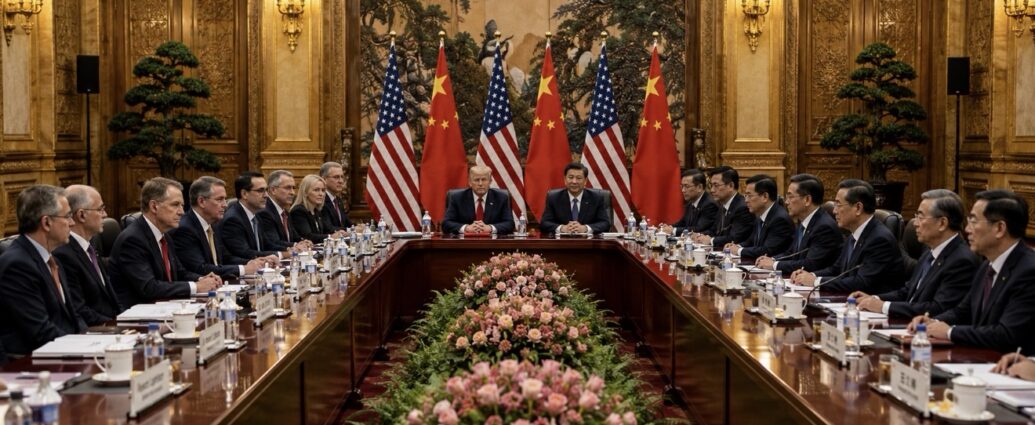
The Bezos Family Foundation has committed $100 million to Robin Hood, with an additional $25 million pledge subject to a match, anchoring the New York poverty-fighting organization’s newly launched $1 billion endowment campaign and creating a permanent fund for early childhood work in the name of the late Jackie Bezos, according to an announcement from Robin Hood at its annual benefit Monday night.

The gift establishes the Jackie Bezos Endowment for Early Childhood at Robin Hood and serves as the lead commitment to the Campaign for the Future – Endowing the Fight Against Poverty, which Robin Hood said is already 70% of the way to its billion-dollar target.

Robin Hood co-founder Paul Tudor Jones II described the endowment as a structural shift designed to safeguard the group’s work in perpetuity, separate from the organization’s traditional year-by-year fundraising, which raised approximately $73 million at Monday’s gala.

Jackie Bezos, the mother of Amazon founder Jeff Bezos, served on Robin Hood’s board for ten years and chaired its Early Childhood Committee before her death.

Under her leadership, Robin Hood’s annual early childhood grantmaking grew from $13 million to $22.8 million, a 75% increase, and her seed funding launched the Fund for Early Learning, a ten-year, $66 million initiative that has directed $53.8 million in grants and catalyzed more than $63 million in additional public and private capital.

Mark Bezos, her son and a Robin Hood board member, said the gift was intended to make permanent the work his mother helped build, framing the endowment as a generational commitment to the city’s youngest residents rather than a transactional grant.

The Bezos Family Foundation, co-founded by Jackie and Miguel Bezos, has been a longtime Robin Hood partner, including a $10 million contribution in 2022 to a previous child care initiative.

The timing carries unmistakable policy weight.

The donation lands as New York Mayor Zohran Mamdani, who took office on an affordability platform, moves to implement free universal child care.

Last month, the mayor announced that 2-K programming, free early care and education starting at age 2, would be universally accessible year-round, and his administration has begun recruiting providers for additional 3-K and 2-K seats.

The city’s FY2027 budget, released Tuesday, included $59.6 million for child care for all and K-12 education support, against a backdrop of a $12 billion budget shortfall the mayor has described as historic in magnitude.

Richard R. Buery Jr., Robin Hood’s chief executive, said public funding must remain the primary driver of the city’s child care expansion, with philanthropy serving to help deploy those resources more effectively.

City Hall echoed that framing. Spokesperson Jenna Lyle said delivering universal child care across the five boroughs would require a coalition of government, providers, working families, labor, philanthropy and residents.

The endowment campaign reflects a broader shift in how high-net-worth donors are structuring their commitments to New York’s social infrastructure, favoring permanent vehicles over annual gifts.

The first contribution to the Campaign for the Future came from Bloomberg Philanthropies, the giving vehicle of former Mayor Michael Bloomberg, with additional lifetime and legacy commitments from Citadel founder Kenneth Griffin, John Overdeck, Elizabeth and Lee Ainslie, Eva and Glenn Dubin, Dina Powell McCormick, Laurie M. Tisch and others drawn largely from Wall Street and hedge funds.

Robin Hood has invested $3 billion in poverty programs since its founding in 1988.

State-level momentum is also building.

Governor Kathy Hochul has proposed a $1.7 billion increase in child care funding for the upcoming fiscal year, including $1.2 billion in subsidies, and has set a target of a seat for every 4-year-old by the 2028-29 school year.

The combined trajectory of city, state and philanthropic capital is reshaping the financial architecture of early education in New York at a moment when child care costs remain a leading driver of household financial stress and a constraint on labor-force participation.

For Robin Hood, the structural significance is the move toward a permanent capital base.

Annual giving in the philanthropic sector tends to fluctuate with market cycles, and an endowment provides operational stability when economic conditions tighten or donor priorities shift.

For the Bezos family, the gift extends a multi-decade pattern of Robin Hood involvement and reframes a fortune most often associated with Amazon and Blue Origin around a New York-anchored legacy in early education.

The political backdrop adds complexity.

Mayor Mamdani’s coalition includes voters skeptical of concentrated wealth, while the donor base behind Robin Hood is drawn largely from the financial sector. Whether the endowment becomes a durable bridge between those constituencies will depend on execution, accountability and the city’s ability to translate philanthropic capital into measurable outcomes for families.

JBizNews Desk
© JBizNews.com. All rights reserved. This article is original reporting by JBizNews Desk. Unauthorized reproduction or redistribution is strictly prohibited.

The U.S. Department of Homeland Security has asked Congress for $7.5 million to develop smart-glasses prototypes that would give Immigration and Customs Enforcement agents real-time facial recognition and biometric identification in the field, according to the department’s fiscal 2027 budget justification for the Science and Technology Directorate.

The line item, which received fresh attention Tuesday after Fortune detailed how the request maps onto existing field practice, places mobile biometric identification at the center of the next phase of federal immigration enforcement and signals a new procurement track for vendors in facial-recognition software, secure mobile hardware and federal-systems integration.

The budget justification states that the funds will “deliver innovative hardware, such as operational prototypes of smart glasses, to equip agents with real-time access to information and biometric identification capabilities in the field.”

The work appears under the directorate’s Border Security and Immigration Mission Center, within the Detention and Removal Operations program, and is paired with broader budget language committing DHS to “encounter, transport, detain, and remove individuals who are in the U.S. unlawfully.”

Documents reviewed by NewsNation describe a development timeline targeting operational testing in early 2027, with availability projected around September of that year.

The request lands in a market where the underlying technology is already in circulation.

ICE agents have been photographed wearing Meta’s Ray-Ban smart glasses during enforcement operations in at least six states since the start of President Donald Trump’s second term, according to Fortune’s reporting. Meta, which produces the consumer glasses jointly with EssilorLuxottica’s Ray-Ban brand, has separately signaled it intends to add a facial-recognition system to the devices — a plan first reported by The New York Times and a reversal of the company’s earlier decision to abandon similar work over privacy concerns.

The DHS request would, in effect, give ICE a federally engineered version of a product its agents are already buying off the shelf.

It would also extend a field biometric tool the agency has been running for nearly a year.

ICE and U.S. Customs and Border Protection currently use Mobile Fortify, a $23.9 million biometric application that photographs faces or captures contactless fingerprints and queries federal and state databases — including the DHS IDENT system, which holds more than 270 million biometric records, the State Department’s visa and passport photo files, the FBI’s National Crime Information Center, and state driver license records.

A January 2026 lawsuit brought by the State of Illinois and the City of Chicago against DHS and former Secretary Kristi Noem alleged the app had been used more than 100,000 times since its June 2025 launch and that it could be turned on anyone, not just enforcement targets.

The $7.5 million figure is small relative to the rest of the FY 2027 biometric stack DHS has put in front of Congress.

Transportation Security Administration budgeting includes roughly $41 million for Credential Authentication Technology-2 facial-comparison units, with a planned cumulative deployment of 2,929 units by FY 2029, alongside $20 million for biometric eGates.

The Science and Technology Directorate’s broader Biometrics and Identity portfolio totals about $16 million, and a separate ConfirmID program is funded at $154.8 million.

For federal-technology vendors, the smart-glasses line reads less as a final addressable market than as a research-stage entry point into a department-wide identity infrastructure.

The political environment is unsettled.

The budget request emerged from a months-long DHS funding standoff that left the agency partially shut down, triggered by the killings of two American citizens by federal agents in Minneapolis and by Democratic demands that ICE agents remove facial coverings during operations.

Senate Republicans ultimately routed ICE funding through budget reconciliation.

In February, Sens. Ed Markey, Ron Wyden and Jeff Merkley, joined by Rep. Pramila Jayapal, introduced the ICE Out of Our Faces Act, which would bar ICE and CBP from using facial recognition entirely and require deletion of existing biometric records. The bill has not moved out of committee.

Senate Homeland Security Committee ranking Democrat Gary Peters told Courthouse News he had not been briefed on the smart-glasses request, while North Carolina Republican Thom Tillis said he was not immediately concerned.

Civil-liberties pushback has focused on accuracy and scope.

A CBP pilot of similar glasses at Los Angeles International Airport last year reportedly logged a 13% false-positive rate for people of color, according to advocacy groups tracking the program.

Cody Venzke, an attorney with the ACLU’s speech, privacy and technology project, has argued that withholding the FY 2027 appropriation is the most direct lever Congress has and that future DHS funding should be conditioned on non-deployment.

DHS has responded that the directorate is “constantly assessing” ICE’s needs and that any technology used will operate “within the full scope of the law.”

For the broader government-technology market, the request crystallizes a procurement pattern: frontline experimentation with commercial gear, followed by formal R&D funding, with scale contingent on accuracy testing, privacy compliance and congressional appetite.

Whether the smart-glasses program advances from prototype to fielded system will turn on those three variables — and on whether lawmakers treat $7.5 million as a research footnote or as a vote on the future of mobile biometric surveillance.

JBizNews Desk
© JBizNews.com. All rights reserved. This article is original reporting by JBizNews Desk. Unauthorized reproduction or redistribution is strictly prohibited.

Toyota Motor Corporation, the world’s largest automaker by sales volume, reported a 49% year-over-year drop in fourth-quarter operating profit Friday, missing analyst estimates by a wide margin as U.S. tariffs and intensifying competition from Chinese automakers compressed the company’s North American business into operating losses for the full fiscal year — a result that has now positioned the Japanese automaker as the single largest publicly traded casualty of the Trump administration’s tariff cycle to date.

Toyota reported operating profit of ¥569.4 billion ($3.8 billion) for the quarter ended March 31, well below the ¥813.28 billion ($5.4 billion) consensus compiled by LSEG. Revenue of ¥12.6 trillion ($84 billion) came in line with expectations and represented a 1.89% year-over-year increase. Net income attributable to the company rose to ¥817.2 billion from ¥664.6 billion a year earlier, lifted by one-time items. The fourth-quarter operating decline marked the fourth consecutive year-over-year drop, reflecting what Toyota management described as persistent pressure from U.S. tariffs and rising Middle East conflict-related costs.

The full-year fiscal 2026 picture, covering the year ended March 31, sharpened the narrative. Toyota booked record revenue of ¥50.68 trillion ($323.4 billion), up 5.5% year over year. Operating income fell 21.5% to ¥3.78 trillion ($24 billion), and the operating margin compressed to 7.4% from 10.0% the prior year. Net income attributable to the company dropped 19% to ¥3.85 trillion. The company declared a full-year dividend of ¥95 per share.

The single biggest drag was a ¥1.38 trillion ($8.8 billion) hit from U.S. tariffs — the largest disclosed corporate tariff impact of any global manufacturer this fiscal year. That charge was sufficient to push Toyota’s North American division into a rare operating loss of ¥298.6 billion ($1.9 billion) for the full year, even as regional vehicle sales actually rose 8.5%. The Q4 North American operating loss of ¥192.5 billion stood in stark contrast to a ¥108.8 billion profit in the comparable prior-year quarter — a swing of more than ¥300 billion in a single division.

Toyota management warned that U.S. tariffs and Middle East conflict-related costs and supply disruptions will continue to weigh on profitability into fiscal 2027. The company’s fiscal 2027 operating profit forecast came in below analyst expectations, with several reports describing the outlook as projecting an additional 20% decline in operating profit and a roughly 19% drop in annual net income. The full-year fiscal 2027 guidance reflects expected continued tariff drag, exchange-rate headwinds, and softer demand in Asian markets where Chinese automakers have gained market share. Toyota said unfavorable currency exchange contributed an additional ¥2.03 trillion in pressure on the fiscal 2026 results.

The macro context for Toyota‘s miss is the unresolved structure of the Trump administration’s auto tariff regime. The administration imposed 25% tariffs on imported vehicles and auto parts in early 2025 under Section 232 of the Trade Expansion Act, with subsequent country-specific adjustments and the Working Families Tax Cut Act providing some relief for U.S.-content vehicles. Japan struck a deal with the administration in 2025 to limit auto tariffs to 15%, but the impact on Japanese exporters has nonetheless been severe. Toyota ships roughly half of its U.S.-sold vehicles from facilities in Japan, with the remaining production at U.S. plants in Kentucky, Indiana, Texas, Mississippi, and Alabama.

The competitive picture inside the U.S. market makes the tariff burden harder to recover. General Motors, Ford Motor Company, and Stellantis have all reported tariff-related pressure but retain U.S.-content advantages that Toyota can match only partially. Tesla, with substantially all of its production inside the U.S. and Mexico, sits in the cleanest tariff position among major automakers. Chinese automakers led by BYD, Geely, Chery, and SAIC Motor continue to gain share in Asian, European, Latin American, and Middle Eastern markets, putting additional pressure on Toyota’s non-U.S. revenue base.

For investors, Toyota shares (NYSE: TM) have weakened on the print, with the GuruFocus valuation framework placing fair value at approximately $180.83 against a recent share price near $189. Toyota rivals Honda Motor Co., Nissan Motor, Mazda Motor, and Subaru are all expected to report similar pressure when their fiscal 2026 results land in coming weeks. Honda trimmed its annual profit outlook in February citing tariff exposure, and Nissan has signaled even sharper pressure given its weaker margin starting point.

The broader signal from Toyota‘s release is that the Trump administration’s tariff cycle has now produced demonstrable, double-digit-billion-dollar earnings impacts on the world’s largest automaker, with no clear off-ramp in the near term. The fiscal 2027 guidance assumes the tariff regime remains in place at current rates, the Iran war continues to pressure energy and shipping costs, and Chinese automakers continue to compete aggressively in markets where Toyota has historically held dominant share. Whether the administration’s negotiations with Japan, the European Union, Mexico, and Canada produce meaningful tariff relief in the next two quarters will determine whether Toyota’s reported $8.8 billion drag becomes the floor or the opening chapter of a multi-year earnings compression.

JBizNews Desk
© JBizNews.com. All rights reserved. This article is original reporting by JBizNews Desk. Unauthorized reproduction or redistribution is strictly prohibited.

President Donald Trump arrived in Beijing on Wednesday evening local time aboard Air Force One, opening a three-day state visit the White House has framed as a push to pry open Chinese markets for American firms while securing Beijing’s cooperation on Iran, rare earth flows, and artificial intelligence guardrails. The visit, confirmed by China’s Foreign Ministry for May 13 through 15, marks the president’s first trip to China since 2017 and follows the October 2025 Busan truce that temporarily cooled the sharpest tariff escalation between the world’s two largest economies.

Trump was greeted with a full ceremonial welcome at Beijing Capital International Airport, with formal meetings with President Xi Jinping scheduled for Thursday and Friday inside the Great Hall of the People. The president arrived with one of the largest American corporate delegations in years — a 16-member roster distributed by the White House on Monday and headlined by Tesla chief Elon Musk, Apple chief Tim Cook, Boeing chief Kelly Ortberg, BlackRock chief Larry Fink, Goldman Sachs chief David Solomon, Citigroup chief Jane Fraser, Blackstone chief Stephen Schwarzman, and Mastercard chief Michael Miebach. Nvidia chief executive Jensen Huang was added late after earlier reports indicated he would skip the trip. Cisco chief Chuck Robbins withdrew Monday, according to the White House.

The composition of the delegation underscores where the administration believes meaningful progress remains possible despite years of escalating strategic rivalry. Administration officials have signaled two major structural initiatives: a proposed “Board of Trade” and a parallel “Board of Investment,” frameworks first discussed in lower-level negotiations before the summit and described by Council on Foreign Relations senior fellow Heidi Crebo-Rediker as among the most realistic deliverables likely to emerge from the meetings.

On the commercial front, the administration’s demands are highly specific. The U.S. Trade Representative’s Office and White House negotiators have pushed Beijing to commit to multi-year purchases of American soybeans, beef, pork, and poultry, while also lifting the freeze on widebody aircraft orders that has weighed heavily on Boeing since China retaliated against the spring 2025 tariff escalation. Proposals circulated among negotiators reportedly include a Chinese commitment to purchase roughly 25 million metric tons of U.S. soybeans annually over three years, alongside a potential aircraft package that could include as many as 500 Boeing 737 MAX jets in addition to widebody orders, according to summit briefing materials reviewed by Reuters and Bloomberg.

For Apple, the trip carries additional symbolism. Industry analysts widely view the visit as Tim Cook’s final major diplomatic mission before his planned September 1 transition to incoming chief executive John Ternus. Elon Musk enters the summit with equally high stakes. Tesla’s Shanghai facility remains the company’s largest production hub globally, reinforcing the administration’s acknowledgment that full-scale economic decoupling remains unrealistic in sectors deeply tied to Chinese manufacturing.

The inclusion of Jensen Huang has drawn especially close scrutiny across Wall Street and Washington. Nvidia has aggressively lobbied the administration to ease restrictions on advanced semiconductor exports after Commerce Secretary Howard Lutnick acknowledged in April that the export controls had significantly constrained sales to China. Huang’s participation is being interpreted by analysts as an early signal that the administration may be willing to explore a limited thaw in certain categories of advanced chip exports if broader trade and geopolitical concessions can be secured.

Beijing, however, enters the summit with its own priorities. Chinese officials continue pressing Washington to ease restrictions on advanced semiconductor equipment and chip-making technologies. Analysts at Goldman Sachs, led by economist Andrew Tilton, suggested ahead of the summit that the administration could potentially relax controls on certain 14-nanometer and 7-nanometer manufacturing equipment. In exchange, Washington is seeking guarantees of stable rare earth and critical mineral exports after Beijing’s export restrictions in April and October 2025 disrupted supply chains for American automakers, defense contractors, and industrial manufacturers. China currently refines roughly 90% of the world’s rare earth materials.

The most politically sensitive issue hanging over the summit remains Iran. China remains the largest buyer of Iranian crude oil, accounting for more than 80% of Tehran’s exported shipments, according to energy market estimates. The White House is pressuring Xi to use Beijing’s leverage with Tehran to help reopen the Strait of Hormuz and steer Iran back toward negotiations after months of regional instability disrupted global energy markets. Trump told reporters before departing Washington that he expected to have “a long talk” with Xi about Iran, though he emphasized trade would remain the primary focus of the summit.

Financial markets entered the meetings cautiously optimistic. The onshore yuan has strengthened roughly 1.7% against the dollar over the past three months — its strongest performance among major Asian currencies and its highest level since early 2023, according to Bloomberg data. JPMorgan Chase economist Feng Zhu wrote this week that both Washington and Beijing have a strong mutual interest in stabilizing the Middle East conflict and reopening the Strait of Hormuz to calm global energy prices. Macquarie China equity strategist Eugene Hsiao said his firm’s base case remains that existing tariffs — currently estimated by JPMorgan at an effective rate near 22% — will remain in place without significant escalation. Invesco Asia Pacific client solutions head Christopher Hamilton said any reduction in the U.S.-China geopolitical risk premium would likely provide a substantial boost to Chinese equities and broader regional markets.

Few analysts expect a sweeping breakthrough. What investors, manufacturers, and commodity markets will watch closely over the next two days is whether Trump and Xi can produce enough concrete progress — particularly on aircraft purchases, agriculture, semiconductor controls, and rare earth access — to preserve the Busan truce through the November midterms and potentially stabilize the U.S.-China economic relationship into 2027.

JBizNews Desk

© JBizNews.com. All rights reserved. This article is original reporting by JBizNews Desk. Unauthorized reproduction or redistribution is strictly prohibited.

Edgar Connors – JBizNews Desk

The European Union long treated trade policy as one of its clearest instruments of global influence, a domain in which market size could translate into geopolitical leverage. In The trade deal with America shows the limits of the EU’s power, The Economist argued that the bloc’s accord with America instead exposed a more constrained reality: prudence, not defiance, shaped the outcome.

The numerical contrast framed the shift. Donald Trump, White House, set out a threatened 30% tariff on European Union goods in a July letter to Ursula von der Leyen, while European Commission briefings described the eventual framework around a lower 15% tariff ceiling for many exports to the United States.

The stakes extended beyond a narrow tariff dispute. The European Commission has described the transatlantic relationship as the world’s largest trade and investment partnership, with goods and services flows reaching roughly €1.6 trillion annually, placing the accord at the center of pricing decisions for manufacturers, retailers and investors on both sides of the Atlantic.

The European Commission has long presented the single market as a defensive asset, arguing that common external trade policy gives European Union members weight they lack individually. That model helped Brussels set rules for chemicals, digital markets, privacy and competition policy, often forcing multinationals to adjust global operations around European standards.

In the tariff talks, however, The Economist argued in The trade deal with America shows the limits of the EU’s power that regulatory authority did not convert cleanly into bargaining dominance. The article’s subtitle, The bloc opts for prudence over defiance, captured the strategic choice facing Brussels: protect access to its most important foreign market or escalate into a broader commercial fight.

The White House described the framework as including European pledges to expand purchases of American energy and commit additional investment in the United States, while the European Commission presented the arrangement as a way to stabilize commercial ties and avert a sharper tariff shock.

Ursula von der Leyen, European Commission, said the agreement offered predictability for companies operating across the Atlantic, according to public statements from the institution. For executives in autos, machinery, luxury goods and pharmaceuticals, predictability carries financial value even when the tariff line still cuts into margins.

That calculation explains the broader market lesson. The Economist argued that the European Union chose a negotiated disadvantage over a potentially costly confrontation with America, reflecting limited appetite among member states for a trade conflict that could raise prices and weaken industrial orders.

The early architecture of European trade power relied on cohesion. The European Commission says it negotiates trade agreements on behalf of all European Union members, giving the bloc a single voice in external commercial policy. In theory, that centralization creates scale; in practice, national exposure to U.S. tariffs varies widely.

The White House cast the framework as a gain for American industry, citing expanded market access and investment commitments from the European Union. For Brussels, the same terms carried a different meaning: limiting damage for exporters while preserving room for future talks over steel, autos, agriculture and digital levies.

The European Commission said the framework would keep trade channels open between the European Union and the United States, an outcome investors often prefer to retaliatory spirals. Equity analysts typically discount earnings more aggressively when tariff paths lack clarity, particularly in export-heavy sectors with long supply chains.

But the path to compromise exposed volatility inside the bloc. The Economist argued that European Union leaders had to weigh political demands for a tougher response against the economic risk of damaging a relationship central to manufacturers, energy buyers and financial markets.

The tariff ceiling also complicates the bloc’s industrial policy ambitions. The European Commission has promoted competitiveness, clean technology and strategic autonomy, yet higher duties on exports to the United States can dilute the effect of subsidies and tax incentives aimed at keeping production anchored in Europe.

For companies, the consequence comes through margins rather than symbolism. The Economist described the accord as a demonstration of limited European power, and that limitation has practical consequences for pricing, sourcing and capital allocation at firms selling into the American market.

The European Commission has said further engagement with the United States remains necessary to implement and refine the framework. That leaves investors focused on the operational details: product coverage, exemptions, enforcement procedures and the degree to which companies can pass tariff costs to customers.

The White House and European Commission each framed the deal as serving domestic economic interests, underscoring how trade agreements now function as political instruments as much as commercial compacts. For markets, that means tariff risk no longer sits at the edge of valuation models; it belongs in base-case assumptions.

The broader lesson reaches beyond this accord. The Economist argued in The trade deal with America shows the limits of the EU’s power that scale alone does not guarantee leverage when security, energy, capital markets and export demand pull in different directions. The European Union remains a regulatory giant, but the deal shows that even giants sometimes pay for stability.

JBizNews Desk

President Donald Trump told reporters in the Oval Office Monday that he would move to “reduce” the federal gas tax to ease the squeeze at the pump, echoing remarks he made in an earlier interview with CBS News in which he said he wanted to pause the levy “for a period of time” — a politically resonant proposal that would shave roughly 18 cents off a gallon of gasoline for the average driver while threatening to gut a federal fund that pays for the roads and bridges that gallon is burned on.

The federal government charges 18.4 cents per gallon on gasoline and 24.4 cents per gallon on diesel fuel, levies that have not been raised since 1993 and that flow into the Highway Trust Fund, the dedicated account that pays for federal highway and mass-transit projects. The national average price of regular unleaded reached $4.50 on Tuesday, according to AAA, up roughly 50 percent since the Feb. 28 outbreak of the U.S.-Israel war with Iran disrupted oil flows through the Strait of Hormuz and drove crude sharply higher. Some California stations are posting prices above $6 per gallon.

Reducing or pausing the tax requires congressional approval, and Republican lawmakers moved within hours of Trump’s comments to put bills on the table. Sen. Josh Hawley, R-Mo., introduced the Gas Tax Suspension Act, which would pause federal taxes on both gasoline and diesel for 90 days from enactment with an option for the president to extend the holiday by another 90.

“American workers and families deserve immediate relief, and this legislation will do just that,” Hawley said in a statement.

Rep. Anna Paulina Luna, R-Fla., said on X that she will introduce a companion bill in the House this week and that her office will work directly with the White House to deliver “this win for the American people.”

The proposals are not the first this year. Sen. Mark Kelly, D-Ariz., and Sen. Richard Blumenthal, D-Conn., introduced a Senate bill in early March to suspend the federal gasoline tax through Oct. 1, with Treasury required to backfill the Highway Trust Fund and the Leaking Underground Storage Tank Trust Fund out of general revenue. Rep. Chris Pappas, D-N.H., sponsored a parallel House measure.

Pappas responded to Trump’s support by posting on X, “This should have happened months ago. Let’s pass it this week.”

The Kelly bill differs from Hawley’s in that it does not extend to diesel — an exclusion that matters for trucking-sensitive consumer prices on everything from groceries to packages.

Senate Majority Leader John Thune has said he is not enthusiastic about a gas tax holiday but is willing to hear out colleagues. Energy Secretary Chris Wright told reporters Monday that the administration is “open to all ideas, everything has trade-offs, all ideas to lower prices for American consumers and American businesses.”

The relief that would actually reach drivers is modest by nearly every measure. A federal pause would lower regular gasoline prices to roughly $4.34 per gallon and diesel to approximately $5.39, levels that would still remain dramatically above pre-war pricing.

Patrick De Haan, head of petroleum analysis at GasBuddy, told CBS News the suspension would cost the federal government roughly $2.1 billion per month in lost revenue and argued that “18 cents doesn’t really amount to a whole lot” against the roughly $1.50 increase in gasoline prices over the past year.

Andrew Lautz, director of tax policy at the Bipartisan Policy Center, summarized the economics bluntly in a social-media post Monday: “The irony of a gas tax suspension is that the higher prices go, the less of an impact it has.”

The larger problem sits inside the Highway Trust Fund itself, which has already operated at a deficit for nearly two decades even with the federal tax fully in place. The Tax Foundation projects the fund will collect approximately $44.2 billion in revenue during 2026 against roughly $61.4 billion in expected spending obligations.

The Bipartisan Policy Center estimates a five-month federal gas-tax holiday would eliminate about $17 billion in revenue — nearly half of the trust fund’s annual intake — accelerating depletion projections already expected by fiscal 2028.

Adam Hoffer, director of excise tax policy at the Tax Foundation, told CNBC the trust fund “is substantially underwater when it comes to being able to finance all of its own projects.”

Carl Davis, research director at the Institute on Taxation and Economic Policy, warned the missing revenue would ultimately be financed through higher federal borrowing.

“The lost revenue gets tacked onto the debt,” Davis said.

The concern comes as U.S. federal debt this month surpassed annual U.S. gross domestic product for the first time since the pandemic-era fiscal surge.

Stephen Kates, a certified financial planner and analyst at Bankrate, said the proposal “would undoubtedly help consumers in the short term by immediately lowering prices at the pump,” but cautioned that delayed infrastructure maintenance, congestion costs, and future borrowing could erase much of the benefit over time.

Several states have already moved far more aggressively than Washington. Kentucky, Georgia, Indiana, and Utah have implemented or advanced state-level fuel-tax suspensions, with some delivering materially larger consumer savings because state fuel taxes are often substantially higher than the federal levy.

State gasoline taxes currently range from roughly 9 cents per gallon in Alaska to nearly 71 cents in California, according to the Tax Foundation, while the national average state tax stands near 32.6 cents per gallon.

De Haan noted on X that Indiana has already seen gasoline prices fall by nearly 60 cents per gallon after suspending portions of its state fuel taxes.

The proposal arrives at a politically sensitive moment for the White House as rising energy costs continue pressuring consumer sentiment and Republican strategists prepare for November’s midterm elections. Historically, gasoline prices remain one of the most visible and emotionally charged inflation indicators for American households.

The administration has already deployed several emergency measures since the Iran war disrupted global energy markets, including releasing roughly 172 million barrels from the Strategic Petroleum Reserve, easing ethanol blending restrictions, and temporarily waiving the Jones Act to allow foreign-flagged vessels to move fuel between U.S. ports.

So far, none of those measures has produced substantial relief at the pump.

That leaves the gas-tax proposal as perhaps the administration’s most direct consumer-facing response to rising fuel prices — even as nearly every major nonpartisan fiscal analysis released this week suggests the policy may ultimately deliver more political symbolism than meaningful economic relief.

JBizNews Desk

© JBizNews.com. All rights reserved. This article is original reporting by JBizNews Desk. Unauthorized reproduction or redistribution is strictly prohibited.
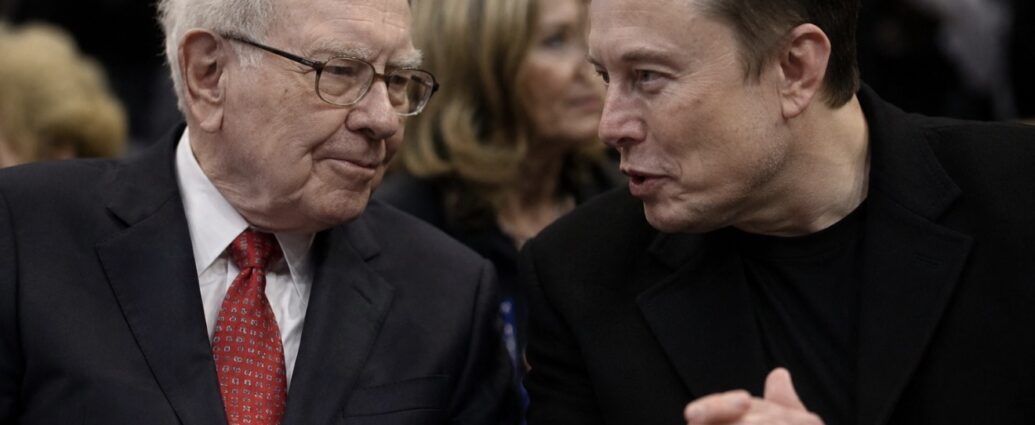
The European Union Aviation Safety Agency on Tuesday extended its conflict-zone advisory over Israeli and broader Middle Eastern airspace until May 27, while simultaneously softening the language European carriers have relied on for more than two months to justify suspending service to Tel Aviv — a move aviation officials say inches Europe closer toward restoring flights to Israel without yet delivering the full green light airlines have been waiting for.

In its updated Conflict Zone Information Bulletin issued May 12, EASA replaced earlier language advising airlines to avoid operating in the region with guidance urging carriers to “exercise caution and take potential risks into account” when flying through the airspace of Israel, Bahrain, Jordan, Saudi Arabia, Qatar, Kuwait, Oman, and the United Arab Emirates. The agency maintained stricter warnings against operations at any altitude over Iran, Iraq, and Lebanon.

The extension itself also stood out. Instead of continuing the rolling five- to seven-day renewals that had characterized the advisory throughout April, the European regulator issued a broader 15-day extension — a signal aviation analysts interpreted as evidence that regulators believe the immediate threat environment has stabilized following the April 8 U.S.-Iran ceasefire and its subsequent April 21 extension.

Still, EASA cautioned that the ceasefire’s durability remains uncertain.

“While the overall level of risk has decreased in the region, the sustainability of the ceasefire remains uncertain in the longer term, with a possibility of rapid escalation,” the agency said in its statement, adding that operators should continue conducting enhanced threat monitoring and maintain contingency procedures.

The wording shift matters enormously for Europe’s airline industry because the EASA bulletin has effectively served as the regulatory trigger behind the near-collapse of commercial European aviation into Israel since the February 28 U.S.-Israeli strikes on Iranian nuclear and military infrastructure and Iran’s retaliatory missile and drone attacks throughout the region.

Major carriers including Lufthansa Group, Air France, KLM, British Airways, Wizz Air, and Air Europa have tied their Israel suspensions directly to EASA’s guidance, with war-risk insurers and airline safety committees treating the bulletin as the benchmark for operational decisions.

The softer language now gives airlines more flexibility to restart flights — but it does not force them to do so.

Several carriers that had initially targeted late-May resumptions are now expected to reassess their schedules again following the advisory’s extension. Wizz Air, Air France, KLM, and Air Europa had all previously indicated possible returns before the end of May, though industry officials now expect some of those timelines to slip further into June.

Lufthansa Group has already formally suspended Tel Aviv service through June 30, while British Airways is targeting a tentative July 1 return with one daily flight, contingent on additional easing or removal of the advisory altogether. Air India said Tuesday it would also extend cancellations into early July.

Even if regulators lifted the bulletin entirely on May 27, operational realities would still delay a meaningful European return.

Executives at Wizz Air, historically Israel’s largest European low-cost carrier by passenger volume, have reportedly told Israeli aviation officials that the airline requires approximately two weeks of preparation before resuming Tel Aviv service. That process includes crew scheduling, aircraft positioning, slot coordination, war-risk insurance renewals, and restoration of local ground-handling operations.

As a result, industry analysts say a substantial return of European service to Ben Gurion Airport before mid-June remains unlikely even under an optimistic scenario.

The prolonged aviation disruption has dealt a heavy blow to Israel’s tourism and business sectors.

Since late February, Ben Gurion Airport has operated with only limited international connectivity, relying heavily on Israeli carriers including El Al, Arkia, and Israir to maintain repatriation flights and scaled-back commercial operations. European business travel, conferences, and inbound tourism have all sharply contracted, while Israeli outbound travelers have faced soaring fares and lengthy rerouting through hubs including Athens, Larnaca, and Istanbul.

The insurance market remains another major obstacle.

According to aviation-industry estimates, war-risk insurance premiums for aircraft operating in or near Israeli airspace remain between 50 percent and 500 percent above pre-war levels. Several underwriters continue using EASA’s advisory status as a core pricing benchmark when determining coverage costs and operational restrictions.

Analysts say normalization of insurance pricing will likely require both a fully lifted advisory and a prolonged period without missile launches, drone activity, or broader regional escalation.

For now, European regulators appear to be attempting a careful balancing act: acknowledging that the immediate threat environment has improved while stopping well short of declaring the region stable.

EASA said it will continue coordinating with the European Commission and member-state aviation authorities and plans to issue another update before the May 27 expiration date. The agency also instructed operators to maintain active risk assessments and prepare for rapid operational changes if regional conditions deteriorate — a reminder that despite the softer language, caution remains the dominant posture across European aviation.

© JBizNews.com. All rights reserved.

Goldman Sachs lowered its probability of a U.S. recession over the next 12 months to 25% from 30% in a closely watched mid-year outlook released Monday, arguing that the American economy has remained more resilient than expected despite rising oil prices, persistent inflation pressures, and the ongoing Iran conflict.

But the bank simultaneously pushed back the timing of its next expected Federal Reserve rate cut — a sign that even as recession fears ease, Wall Street is increasingly accepting that higher interest rates may remain in place much longer than previously anticipated.

The revised forecast gained immediate scrutiny Tuesday morning after the Bureau of Labor Statistics reported that April inflation accelerated to 3.8% year-over-year, the highest annual reading since May 2023.

The combination of slowing recession fears alongside resurgent inflation is creating a far more complicated environment for investors and policymakers alike.

In its updated outlook, Goldman’s economics team led by Chief Economist Jan Hatzius said the firm now expects the Federal Reserve to deliver its next quarter-point rate cut in December 2026, followed by another reduction in March 2027.

That marks a significant shift from Goldman’s prior forecast, which projected rate cuts beginning in September of this year.

The bank said the change reflects “lower recession risk and higher near-term core PCE inflation,” while maintaining a year-end 2026 inflation forecast well above the Federal Reserve’s 2% target.

The revision represents one of the most important Wall Street recalibrations since the Iran crisis erupted in late February and energy markets were thrown into turmoil following disruptions surrounding the Strait of Hormuz.

Back in March, Goldman had actually increased recession odds from 25% to 30% after oil prices surged sharply following the outbreak of the conflict. At the time, the bank’s commodities analysts projected the energy shock would likely prove temporary, assuming only several weeks of supply disruption.

Instead, oil market disruptions have continued for more than two months.

On Tuesday morning, WTI crude traded above $102 a barrel while Brent crude surpassed $103, levels that continue placing upward pressure on transportation, manufacturing, freight, and consumer prices throughout the global economy.

Despite that, Goldman argued the broader U.S. economy has remained remarkably durable.

April payroll data showed the economy added 115,000 jobs, far exceeding consensus expectations, while unemployment held steady at 4.3%. Initial jobless claims also remained relatively contained, reinforcing the view that the labor market has not meaningfully weakened despite higher borrowing costs and elevated inflation.

The bank also pointed to resilient private domestic demand and relatively healthy household balance sheets as reasons recession risks have moderated.

Still, Goldman acknowledged several warning signs are beginning to emerge.

The firm warned consumer spending could slow later this year as tax-refund spending fades, gasoline prices continue rising, and wage growth gradually cools.

The revised outlook also leaves Goldman increasingly closer to — though still less hawkish than — Bank of America, which this week projected the Federal Reserve may not cut rates until July 2027.

Markets themselves have shifted even more aggressively.

According to the CME FedWatch Tool, traders now assign virtually no probability to Fed rate cuts for the remainder of 2026. Prediction markets have also begun pricing growing odds that the Fed’s next move could ultimately be another rate hike if inflation continues accelerating.

Goldman, however, pushed back against the most aggressive hawkish scenarios, arguing the Federal Reserve may still look through some of the inflation tied directly to energy disruptions and geopolitical supply shocks.

That assumption is increasingly being tested daily as the Strait of Hormuz remains heavily restricted and global oil markets continue operating under severe uncertainty.

The outlook also arrives amid growing disagreement among Wall Street’s biggest institutions over the future direction of markets.

Earlier this week, JPMorgan Private Bank told clients “the AI supercycle may just be getting started,” while JPMorgan Chase Chief Executive Jamie Dimon separately warned there is now “too much exuberance” in financial markets given inflation and geopolitical risks.

Meanwhile, Goldman Sachs Chief Executive David Solomon has continued forecasting a strong environment for mergers, acquisitions, and corporate investment activity fueled by artificial intelligence spending and resilient economic demand.

The implications for investors now stretch across virtually every major asset class.

The 10-year Treasury yield climbed to 4.43% Tuesday morning as traders demanded higher compensation for inflation risk. Technology and growth stocks weakened, with the Nasdaq Composite falling nearly 1%, while energy and defensive sectors outperformed.

Goldman strategists said bonds — particularly shorter-duration Treasuries — may increasingly serve as an effective hedge against either a delayed recession or a reversal in the AI-driven equity rally that has dominated markets throughout much of the year.

The next major tests for the bank’s outlook arrive quickly.

Investors are now preparing for the release of:

  • April Producer Price Index data Wednesday,
  • April Retail Sales Thursday,
  • and the latest Federal Reserve meeting minutes on May 20.

Any further acceleration in inflation could force Wall Street to push expectations for Fed easing even further into 2027 — bringing Goldman’s outlook closer to the increasingly hawkish forecasts now emerging across the Street.

For now, the market’s central question has shifted dramatically:
not whether the U.S. economy will slow — but whether inflation can cool before higher interest rates themselves become the next major economic shock.

JBizNews Desk
© JBizNews.com. All rights reserved.

By JBizNews Desk
May 11, 2026

Venezuela’s acting President Delcy Rodríguez arrived in the Netherlands on Sunday to personally defend Caracas’s territorial claim over the resource-rich Essequibo region before the International Court of Justice, escalating one of the world’s most consequential geopolitical disputes over energy, mining, and sovereign territory.

The hearings at the Peace Palace in The Hague center on control of the Essequibo — a vast territory bordering Guyana that sits atop enormous reserves of oil, gold, diamonds, timber, and other strategic natural resources increasingly central to the future economic balance of South America.

The trip marks Rodríguez’s first foreign travel since she assumed power in January following the U.S. military capture of former President Nicolás Maduro.

“It has fallen to me to travel in the coming hours to defend our homeland,” Rodríguez said Saturday during a nationally televised address announcing the trip.

According to reporting from The Associated Press, Venezuela’s final oral arguments before the ICJ’s 15-member judicial panel are scheduled for Monday, concluding a week of hearings that began May 4.

A final ruling from the court — the principal judicial body of the United Nations — could arrive as early as August.

The economic implications stretch far beyond the two countries directly involved.

The Essequibo region covers approximately 62,000 square miles, representing more than two-thirds of Guyana’s total territory.

Its strategic significance increased dramatically over the past several years after massive offshore oil discoveries transformed Guyana into one of the fastest-growing energy producers in the world.

Oil giant ExxonMobil and its partners have already committed billions of dollars to offshore projects adjacent to the disputed territory.

Guyana currently produces roughly 750,000 barrels of oil per day, an extraordinary figure for a country with fewer than one million residents.

Analysts now estimate Guyana possesses the world’s highest per-capita crude oil reserves, fundamentally reshaping the country’s economic future and turning the territorial dispute into one of the most strategically sensitive resource battles in the Western Hemisphere.

The hearings have also intensified political tensions throughout the Caribbean and Latin America.

Guyanese Foreign Minister Hugh Hilton Todd opened proceedings last week by telling the court the territorial dispute “has been a blight on our existence as a sovereign state from the beginning.”

Todd argued that approximately 70% of Guyana’s sovereign territory is effectively under challenge.

At the heart of the dispute are sharply conflicting interpretations of history and international law.

Guyana is asking the court to reaffirm the validity of an 1899 arbitration ruling that established the current border largely in Georgetown’s favor during the British colonial era.

The Guyanese government formally brought the case before the ICJ in 2018.

Since then, the court has twice ruled that it possesses jurisdiction to hear the matter despite repeated objections from Caracas.

Venezuela rejects the legitimacy of the 1899 ruling entirely.

Caracas argues the arbitration process was tainted by collusion between British and Russian representatives and instead insists the dispute should be governed by a separate 1966 agreement signed shortly before Guyana gained independence from Britain.

Under Venezuela’s interpretation of that agreement, the Essequibo River — rather than the current internationally recognized border — should serve as the natural territorial boundary.

Venezuelan representative Samuel Moncada delivered an extended six-hour presentation before the court last week arguing that Venezuela never formally consented to allow territorial disputes to be resolved by international judicial bodies.

Caracas has simultaneously signaled it may not recognize the court’s final ruling regardless of the outcome.

Rodríguez stated publicly in August 2025 that Venezuela would reject any unfavorable ICJ decision.

The government has already taken several symbolic domestic steps reinforcing its claim over the territory.

In December 2023, Venezuela held a national referendum in which voters overwhelmingly supported the creation of a new Venezuelan state called Guayana Esequiba.

The following year, Venezuela’s legislature passed a law formally incorporating the disputed region into Venezuelan territory — moves widely condemned internationally but celebrated domestically by Venezuelan nationalists.

Guyana, meanwhile, has secured broad international backing heading into the hearings.

Regional bloc CARICOM, the European Union, the Commonwealth, and the Organization of American States have all publicly supported Guyana’s position and the authority of the ICJ process.

For global energy markets and multinational investors, the dispute carries enormous financial implications.

A ruling definitively affirming Guyana’s sovereignty would strengthen the legal foundation underpinning billions of dollars of energy investments already flowing into the country’s offshore oil sector.

Any ruling or geopolitical escalation that reopens uncertainty around territorial control could complicate future development projects and raise risks for companies operating in the region.

The stakes therefore extend far beyond diplomacy alone.

At issue is control over one of the world’s fastest-growing oil frontiers, a territory rich in strategic minerals, and a geopolitical contest increasingly tied to the broader global competition for energy and natural resources.

As the hearings conclude in The Hague, the case is emerging not simply as a border dispute between neighboring states, but as a battle over who controls one of the most economically transformative regions discovered in the Americas in generations.

JBizNews Desk
© JBizNews.com. All rights reserved. This article is original reporting by JBizNews Desk. Unauthorized reproduction or redistribution is strictly prohibited.
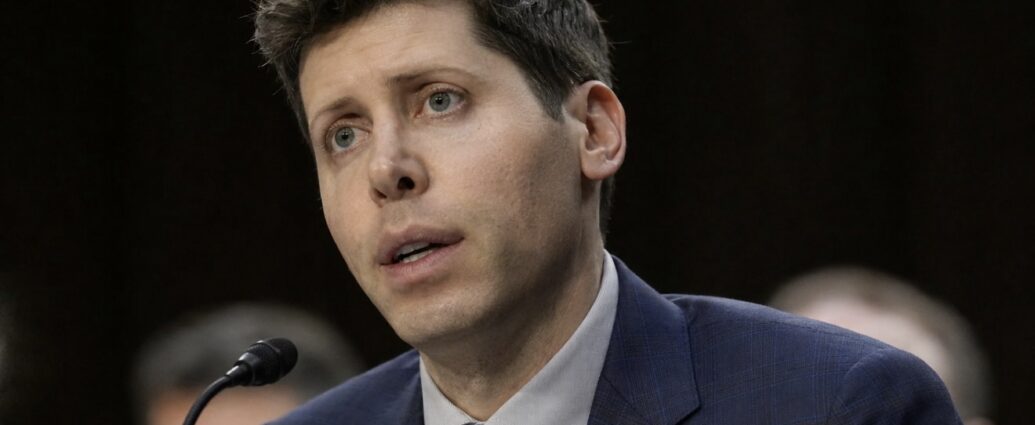
By JBizNews Desk
May 11, 2026

Johnson & Johnson Chairman and Chief Executive Officer Joaquin Duato this week reiterated the company’s commitment to invest more than $55 billion in the United States over the next four years, tying artificial intelligence, domestic manufacturing, and advanced medical research together as central pillars of the company’s long-term growth strategy.

Duato emphasized the investment initiative in recent public remarks and company materials as Johnson & Johnson continues expanding manufacturing capacity, AI-driven drug development, and research infrastructure across its pharmaceutical and medical-technology businesses.

The $55 billion commitment — first outlined earlier this year — represents approximately a 25% increase over the company’s spending during the prior four-year period and reflects a broader industry race to localize supply chains, accelerate drug discovery through AI, and strengthen U.S.-based production capabilities following years of geopolitical and pandemic-related disruptions.

At the center of the strategy is a new $2 billion biologics manufacturing facility currently under construction in Wilson, North Carolina.

The 500,000-square-foot plant is designed to manufacture advanced medicines targeting cancer, autoimmune disorders, and neurological diseases — categories increasingly driving growth and profitability across the pharmaceutical industry.

Johnson & Johnson has also confirmed plans for three additional advanced manufacturing facilities in the United States, though locations have not yet been publicly disclosed.

The company’s financial scale provides substantial support for the initiative.

Johnson & Johnson reported approximately $88.8 billion in full-year 2024 revenue, according to its most recent annual filings, with sales rising 4.3% year over year.

Its Innovative Medicine division generated the majority of revenue, while MedTech continued benefiting from growing demand for robotic surgery systems, cardiovascular devices, and hospital technology infrastructure.

The spinout of Johnson & Johnson’s consumer-health division into Kenvue sharpened the company’s focus further toward higher-margin pharmaceutical, biotechnology, and medical-device operations.

Artificial intelligence now plays a central role in that strategy.

Johnson & Johnson executives said AI technologies are increasingly being integrated into drug discovery, clinical-trial design, patient recruitment, manufacturing operations, and data analysis — areas where efficiency gains can dramatically reduce the cost and timeline associated with bringing new therapies to market.

The company’s approach reflects a broader shift underway throughout the pharmaceutical sector as machine-learning systems become increasingly embedded in biomedical research and development workflows.

Johnson & Johnson said its R&D priorities remain focused on six major growth categories: oncology, immunology, neuroscience, cardiovascular disease, robotic surgery, and vision care.

The company spent more than $32 billion on research, development, acquisitions, and strategic partnerships during 2025, including transactions involving Intra-Cellular Therapies and Halda Therapeutics, alongside approximately 40 additional collaborations, licensing agreements, and partnership deals.

The broader U.S. innovation ecosystem continues supporting the company’s thesis.

The Food and Drug Administration’s Center for Drug Evaluation and Research approved 50 novel medicines during 2024, while industry trade group PhRMA estimates that biopharmaceutical companies collectively invest more than $100 billion annually into U.S.-based research and development.

Johnson & Johnson’s domestic manufacturing push also reflects lessons drawn from the COVID-era supply-chain disruptions that exposed vulnerabilities tied to extended international logistics networks.

Major pharmaceutical and medical-device companies increasingly view localized production capacity as strategically critical after pandemic shortages disrupted supplies of medicines, medical equipment, and industrial inputs worldwide.

The company noted in filings with the Securities and Exchange Commission that government pricing pressure, litigation risks, patent disputes, and regulatory changes continue creating uncertainty across the pharmaceutical sector.

That backdrop makes the scale of Johnson & Johnson’s long-term U.S. investment especially notable.

Earlier this year, Duato reached a voluntary agreement with the Trump administration under which Johnson & Johnson committed to aligning certain drug prices more closely with levels in other developed nations while expanding Medicaid access to select medicines.

In return, the administration expressed support for the company’s broader manufacturing and innovation initiatives.

“I’m proud that Johnson & Johnson is answering President Trump’s call to lower drug prices for everyday Americans while maintaining our role in improving and saving lives,” Duato said at the time.

For investors, the $55 billion initiative reinforces a broader strategic shift increasingly visible across the global health-care industry.

The companies expected to dominate the next generation of medicine are no longer viewed simply as pharmaceutical manufacturers.

They are increasingly becoming vertically integrated scientific and technology platforms combining artificial intelligence, manufacturing depth, data infrastructure, and advanced research ecosystems capable of accelerating the path from laboratory discovery to patient treatment.

Johnson & Johnson’s bet is that the future leaders in health care will be the companies controlling not only the science itself, but also the factories, computing infrastructure, and AI systems powering the next era of medical innovation.

And at $55 billion, the company continues making that bet overwhelmingly inside the United States.

JBizNews Desk
© JBizNews.com. All rights reserved. This article is original reporting by JBizNews Desk. Unauthorized reproduction or redistribution is strictly prohibited.

The U.S. inflation fight took a sharp and potentially dangerous turn Tuesday after the U.S. Bureau of Labor Statistics reported that consumer prices rose an unexpected 3.8% over the past year in April, above economist expectations and the highest annual reading since May 2023, triggering an immediate selloff in Treasury markets and a rapid repricing by bond traders and fed funds futures markets that, for the first time this year, began assigning meaningful odds to a possible Federal Reserve rate hike before year-end.

The report showed the Consumer Price Index rose 0.6% in April alone, above expectations and sharply higher than March’s 3.3% annual inflation reading, delivering another setback to investors who entered 2026 expecting multiple Federal Reserve rate cuts this year.

Core inflation — which strips out food and energy and is closely watched by Federal Reserve officials as a measure of underlying inflation pressure — also accelerated.

Core CPI rose 0.4% for the month and 2.8% annually, both above forecasts and marking the strongest monthly core reading since January 2025.

Within minutes of the release, traders across financial markets rapidly recalibrated expectations for Federal Reserve policy.

Fed funds futures traded on CME Group’s FedWatch platform sharply reduced the odds of rate cuts later this year while increasing the probability that the central bank may ultimately be forced to raise interest rates again if inflation continues broadening through the economy.

Treasury yields surged after the release while stock futures fell as investors confronted the possibility that inflation may be reaccelerating despite still-solid economic growth and consumer spending.

The primary driver behind the inflation surge remained energy.

According to the Bureau of Labor Statistics, energy prices climbed 3.8% in April and are now up 17.9% year over year, with gasoline prices soaring 28.4% annually as the economic fallout from the February U.S.-Iran conflict continued to ripple through global oil markets and supply chains.

Food inflation also intensified.
Grocery prices rose 0.7% during the month, the largest increase since August 2022, while beef prices surged 14.8% over the past year. Airline fares, heavily impacted by rising jet fuel costs, jumped 20.7% year over year.

Perhaps most concerning for Federal Reserve policymakers was the widening breadth of inflation pressures.

Shelter inflation — one of the few categories that had recently shown signs of cooling — unexpectedly rose 0.6% in April, its fastest monthly increase since September 2023.

At the same time, inflation is once again overtaking wage growth.

Real average hourly earnings fell 0.5% during the month and declined 0.3% over the past year, marking the first time in roughly three years that inflation has fully erased workers’ real wage gains.

“Inflation is the key drag on the U.S. economy now,” said Heather Long, Chief Economist at Navy Federal Credit Union. “There is a real financial squeeze underway. For the first time in three years, inflation is eating up all wage gains.”

The inflation shock is also beginning to ripple directly into the housing market and commercial financing sector, where borrowing costs are already near multi-decade highs.

Mortgage rates, which closely track Treasury yields, moved higher immediately after the CPI release, increasing pressure on homebuyers already struggling with elevated home prices and affordability constraints. Analysts warned that if inflation remains elevated and the Federal Reserve delays cuts or considers additional tightening, 30-year mortgage rates could remain near or above current levels deep into 2026, further slowing housing activity, refinancing, construction starts, and multifamily development financing.

The commercial real estate sector faces growing pressure as well.

Higher-for-longer interest rates increase refinancing risk for office buildings, retail centers, industrial projects, and apartment portfolios carrying floating-rate debt or approaching maturity walls. Regional banks and private lenders have already tightened underwriting standards across large portions of the commercial property market, and another inflation-driven rise in Treasury yields could place additional stress on valuations and transaction activity.

Business financing costs are also rising across the broader economy.

Corporate borrowing rates tied to Treasury benchmarks — including lines of credit, equipment financing, SBA lending, and private credit facilities — all become more expensive when markets begin pricing in higher-for-longer Fed policy. For small and midsize businesses, that can translate directly into delayed expansion plans, reduced hiring, postponed inventory purchases, and weaker capital investment.

For highly leveraged sectors including real estate development, manufacturing, transportation, hospitality, and private equity-backed companies, the persistence of elevated rates threatens to create a longer “financing squeeze” stretching into 2027.

“The issue is no longer just inflation itself,” one Wall Street rates strategist said Tuesday following the release. “It’s the realization that financing costs across the economy may stay restrictive far longer than markets expected only a few months ago.”

The report now places enormous pressure on the Federal Reserve ahead of its June policy meeting.

Markets still overwhelmingly expect the Fed to hold rates steady next month, with traders assigning roughly a 98% probability that policymakers leave the benchmark federal funds rate unchanged.
But the outlook beyond June has shifted dramatically.

According to pricing data tracked by Benzinga, markets are now assigning meaningful odds to a potential rate hike before the end of 2026, while the probability of higher rates by 2027 has climbed sharply compared with just several weeks ago.

Economists across Wall Street remain divided over whether the latest inflation shock represents a temporary energy-driven spike or the beginning of a more persistent second wave of inflation.

“The fact that higher input costs from oil are being readily passed through to consumers, as well as other signs of broadening inflation impact, should both add to the Fed’s worries about inflation,” said Preston Caldwell, Chief U.S. Economist at Morningstar. “The odds of a rate hike in 2026, while still less than 50%, are rising.”

Ellen Zentner, Chief Economic Strategist at Morgan Stanley Wealth Management, said the broadening inflation pressures reinforce the reality that even incoming Fed Chair Kevin Warsh may not be able to pursue the easier monetary policy investors had hoped for.

Others urged caution against interpreting the report as an imminent signal for higher rates.

Thomas Simons, economist at Jefferies, wrote that while the chances of a rate cut this year are fading quickly, “we still expect that the next move in policy rates is going to be a cut rather than a hike.”

Mark Zandi, Chief Economist at Moody’s Analytics, similarly told CNBC that the Federal Reserve will likely remain on hold for now, though much depends on whether inflation expectations themselves continue moving higher among consumers and businesses.

The uncertainty is already exposing growing divisions inside the Federal Reserve.

At the Fed’s late-April meeting, policymakers again voted to leave rates unchanged but recorded four dissents, the largest number since 1992 — an unusually public sign of disagreement inside the central bank.

Cleveland Fed President Beth Hammack recently described the current inflation environment as “probably the fourth shock that we’ve had in five years,” following the pandemic, the Russia-Ukraine war, and tariff disruptions.

Meanwhile, Chicago Fed President Austan Goolsbee has publicly stated that all policy options remain under consideration, including both future cuts and hikes.

Attention now shifts to the Fed’s preferred inflation gauge — the Personal Consumption Expenditures Price Index due later this month — along with the May jobs report and Wednesday’s Producer Price Index data, all of which will help determine whether April’s inflation surge was the beginning of a broader second wave or a temporary spike tied to energy and war-related supply shocks.

For Wall Street, the message from Tuesday’s report was clear: the era of confidently pricing in rate cuts is over, and the Federal Reserve’s next move is no longer certain.

JBizNews Desk

© JBizNews.com. All rights reserved. This article is original reporting by JBizNews Desk. Unauthorized reproduction or redistribution is strictly prohibited.

The single biggest variable hanging over the Trump–Xi summit in Beijing this week is no longer tariffs, Taiwan, or even the war with Iran — it is China’s near-monopoly on the rare earth elements that power American factories, weapons systems, electric vehicles, and advanced artificial-intelligence infrastructure. As President Donald Trump opened a 36-hour summit with President Xi Jinping on Wednesday, business leaders and national-security officials increasingly viewed access to critical minerals as the real strategic centerpiece of the talks.

REalloys Chief Executive Officer Lipi Sternheim told Bloomberg on Wednesday that Trump must use the summit to secure near-term rare earth supply agreements because rebuilding independent North American production capacity “won’t happen overnight.” Her warning reflects a growing reality confronting both Washington and Wall Street: the United States remains deeply dependent on China for materials that sit at the core of nearly every advanced industrial sector.

According to a separate S&P Global factbox published Wednesday, rare earth access is now expected to dominate the formal May 14–15 negotiations between Trump and Xi. Heidi E. Crebo-Rediker, senior fellow at the Council on Foreign Relations Center for Geoeconomic Studies, summarized the strategic shift in a paper published May 10, writing that “the center of gravity moved away from tariffs — long seen by Trump as the decisive lever — and toward something more structural: China’s control over critical minerals, rare earths, and the magnet supply chains that underpin modern military capability and advanced manufacturing.”

The numbers explain the urgency. According to the International Energy Agency, China controlled 61% of global mined rare earth production in 2024 and an overwhelming 91% of global refining and processing capacity. While many countries mine small amounts of rare earth material, China dominates the technically complex refining process required to turn raw minerals into usable metals and magnets.

That leverage became painfully visible after Beijing imposed export licensing restrictions in April 2025. According to industry data cited by Foreign Policy, rare earth magnet shipments from China to the United States collapsed 93% year over year the following month, forcing temporary shutdowns at several automotive plants in both the United States and Europe. Prices for key heavy rare earths including dysprosium and terbium — essential components in electric motors, fighter jets, missile systems, and advanced semiconductors — surged to as much as six times Chinese domestic pricing levels.

Although the Busan trade truce later eased some restrictions, export volumes remain roughly 50% below pre-restriction levels. The situation worsened further after China’s Ministry of Commerce announced a second wave of controls on October 9, 2025, expanding the restricted list to include samarium, gadolinium, lutetium, europium, and ytterbium while also broadening rules to cover foreign-made products containing Chinese-sourced materials or Chinese manufacturing technology.

Those restrictions were temporarily suspended until November 10, 2026, under the Busan agreement — effectively placing Trump under a six-month negotiating deadline controlled almost entirely by Beijing.

Sternheim’s company, REalloys (NASDAQ: ALOY), has emerged as one of the few North American firms attempting to rebuild domestic heavy rare earth processing capability. The company operates the continent’s only facility capable of converting heavy rare earths into commercial-scale metals and alloys. Initial production at its Saskatchewan Research Council–linked facility is targeted for 2027, while downstream magnet operations are based in Euclid, Ohio.

REalloys recently secured a $200 million letter of interest from the U.S. Export-Import Bank along with a $1.7 million Defense Logistics Agency engineering contract tied to a planned 300-ton-per-year production facility. But executives openly acknowledge that scaling enough independent capacity to meaningfully reduce Chinese dependence will likely take years.

The Trump administration has spent much of the past year aggressively building a strategic response. The White House launched plans for a critical-minerals reserve known as “Project Vault,” pursued equity stakes in mining and refining companies, signed mineral agreements with allied governments, and proposed a global critical-minerals trading bloc designed to reduce China’s dominance.

Private-sector efforts have accelerated as well. USA Rare Earth announced plans last month to acquire Brazil’s Serra Verde Group, one of the world’s few meaningful heavy rare earth sources outside China. Yet analysts warn that mines, refineries, and magnet facilities cannot be built quickly enough to fully shield American industry in the near term.

“The U.S. still has to tread carefully in its relationship with China to avoid those disruptions,” Gracelin Baskaran, director of the Critical Minerals Security Program at the Center for Strategic and International Studies, told Foreign Policy.

The makeup of Trump’s Beijing delegation underscores how central the issue has become. The president arrived alongside major American executives including Apple CEO Tim Cook, Tesla and SpaceX CEO Elon Musk, and Nvidia CEO Jensen Huang, who joined the trip at the last minute after media attention focused on his earlier absence. Huang reportedly boarded Air Force One during a refueling stop in Anchorage.

Their presence highlights how deeply intertwined rare earths have become with artificial intelligence, semiconductors, electric vehicles, and defense technology. Advanced data centers, AI networking systems, electric motors, robotics, smartphones, missile guidance systems, and radar equipment all depend heavily on rare-earth-based magnets and specialized materials.

For U.S. manufacturers, the stakes are immediate and tangible. Automakers including General Motors, Ford, and Stellantis rely heavily on rare-earth magnets for electric drive systems. Defense contractors including Lockheed Martin, RTX, and Northrop Grumman depend on the same supply chains for missile systems, stealth technologies, radar, sonar, and precision-guided weapons.

Industry executives have warned privately that even modest delays in Chinese export-license approvals during or after the summit could disrupt summer production schedules across multiple industries.

For Xi, rare earth supply remains one of the strongest strategic tools Beijing holds over Washington. For Trump, the objective is to secure enough stability in the supply chain to buy time for companies including REalloys, USA Rare Earth, and MP Materials to scale domestic production capacity.

How those competing priorities are negotiated in Beijing may ultimately shape not only the next phase of U.S.–China economic relations, but the future supply chain architecture of the global industrial economy itself.

JBizNews Desk

© JBizNews.com. All rights reserved. This article is original reporting by JBizNews Desk. Unauthorized reproduction or redistribution is strictly prohibited.

The Morris Katz Foundation and the Orthodox Jewish Chamber of Commerce have formally nominated President Donald Trump for the Morris Katz Legacy Award — the Foundation’s highest honor — during Jewish American Heritage Month, recognizing what organizers describe as his historic support for the Jewish people, the State of Israel, religious freedom, and the enduring values embodied by Holocaust survivor and world-renowned artist Morris Katz.

The nomination has drawn praise and support from a broad coalition of Jewish leaders, advocates, media voices, and communal organizations, including the Orthodox Jewish Chamber of Commerce, Professor Alan Dershowitz, Elan Carr, Malcolm Hoenlein, Pastor Mark Burns, Bobby Kennedy, nationally syndicated radio host and author Mark Levin, and Mayor Izzy Spitzer of New Square — a group whose combined standing across American Jewish public life gives the nomination unusual significance.

Foundation officials stressed that the Morris Katz Legacy Award award is not about politics, but about the deeper meaning behind Morris Katz’s life story and the values he devoted his life to preserving: faith, freedom, gratitude to America, and pride in Jewish identity.

Pic- President with the Late Artist Morris Katz in NYC

Unlike symbolic international peace prizes often viewed through a political lens, supporters of the Morris Katz Legacy Award say this recognition reflects something far more personal and enduring — the freedom to openly live as a Jew in America, the survival of Jewish faith after the Holocaust, and appreciation for leaders whose actions strengthened those ideals.

Katz devoted much of his life to expressing gratitude toward the United States through his Presidential Collection, with each portrait requiring more than 200 hours each to complete. He viewed the collection as a patriotic expression of appreciation to a nation that gave a Holocaust survivor not only safety, but dignity and freedom.

On May 4, 2026, President Trump signed a proclamation recognizing May as Jewish American Heritage Month, but organizers say the document included something unprecedented in modern American presidential history — a direct national call for Shabbat observance.

The initiative, called “Shabbat 250” in honor of America’s upcoming 250th anniversary, encouraged Americans to observe the Sabbath from sundown Friday, May 15 through nightfall Saturday, May 16.

Jewish organizations across the country including Chabad, Agudath Israel of America, Aish, the Coalition for Jewish Values, and leaders within the Orthodox Jewish Chamber of Commerce praised the proclamation as a rare and highly visible affirmation of Jewish faith and religious freedom in America.

For the Foundation, the significance goes directly to the heart of Morris Katz’s story.

Katz — the Holocaust survivor, inventor, entrepreneur, and artist known around the world as “the Albert Einstein of Art” — arrived in America in 1949 with virtually nothing after surviving Nazi persecution in Eastern Europe.

Morris Dubbed The Einstein of Art Painting President Reagan

His first job in America was as a carpenter. When his employer demanded he report to work on Saturdays, Katz refused.

“I didn’t survive the Holocaust to work on Shabbat,” Katz famously said before walking away from the job and dedicating himself fully to painting.

That moment became the turning point that launched one of the most extraordinary artistic careers in American history.

Foundation leaders say President Trump’s public recognition of Shabbat carries exceptional meaning because it honors the very freedom that allowed Morris Katz to rebuild his life in America — the freedom to openly practice one’s faith without fear.

Katz eventually became deeply inspired by the country that gave him refuge and freedom after the Holocaust, leading him to begin what would become his legendary Presidential Collection — an ambitious artistic tribute featuring portraits of every American president from George Washington through George H.W. Bush.

The deeper purpose that inspired the collection became especially clear following the assassination of President John F. Kennedy in 1963. Shocked by the tragedy that gripped the nation, Katz painted Kennedy’s portrait within minutes of hearing the news. According to a 1965 feature in The Post Card Traveler, Katz was later offered $50,000 for the painting — an extraordinary sum at the time — but refused to sell it.

“It is not something commercial to be sold,” Katz said. “This picture contains far more than anyone may realize. It is a picture of everything this great man and American means to me and my people — how can you sell that?”

Witnessing how the portrait and the national mourning surrounding Kennedy briefly united Americans during a deeply painful moment in history, Katz was inspired to begin what became a six-year mission to paint every President of the United States. His vision extended far beyond art itself. He hoped the collection would serve as a lasting message of unity, patriotism, gratitude, and American history that could be carried forward to future generations.

To Katz, America’s presidents represented far more than politics. They symbolized the nation that gave a Holocaust survivor dignity, opportunity, religious freedom, and the chance to rebuild a life destroyed in Europe. His Presidential Collection was never intended as a commercial project, but as a lifelong expression of gratitude to America and the freedoms it protected.

A world-famous artist, Katz earned international recognition for his historical portrait work. In one of the defining honors of his career, he was chosen by the Vatican out of more than 500 artists to paint the Pope’s famous Portrait during his visit to the United States — a distinction that reflected the global respect and acclaim his artistry had achieved.

The historic collection is uniquely distinguished by Katz’s inclusion of the American flag in every presidential portrait, with the number of stars carefully matched to the number of states in the Union during each president’s time in office — a level of historical detail and symbolism that made the collection unlike any other presidential art series ever created.

Over the years, millions of postcards featuring the portraits from the collection were sold worldwide, eventually becoming sought-after collector’s items that helped bring his message of patriotism, resilience, and appreciation for America into homes across generations.

Foundation leaders say that vision aligns with the president’s broader support for religious identity and Israel. Katz painted America’s presidents out of gratitude for a nation that defended freedom of faith, while President Trump’s actions — reflect that same recognition of the importance of religious liberty in America.

The Foundation’s leadership said they hope President Trump accepts the nomination, noting that the connection between the Trump family and Morris Katz dates back decades.

According to members of the founding committee of the Morris Katz Foundation, President Trump’s father, Fred Trump, personally commissioned Morris Katz to create a large custom painting for his home during the height of the artist’s prominence in New York. Foundation officials said Katz admired the Trump family and viewed them as representative of the American success story he deeply respected after arriving in the United States as a Holocaust survivor with nothing.

Katz twice listed in the Guinness World Records — first as the world’s fastest painter and later as the world’s most prolific artist dethroning Picasso in the Guinness World Records.

Foundation officials specifically pointed to David Baums admiration for Morris Katz, the entrepreneur credited with bringing the Guinness World Records from England to the United States, who later authored a book on Morris Katz and helped bring national attention to the artist’s extraordinary achievements.

Supporters backing the nomination represent several generations of Jewish leadership and advocacy.

Professor Alan Dershowitz, the renowned Harvard Law professor emeritus and constitutional scholar, has consistently defended President Trump’s record on Israel and combating anti-Semitism.

Elan Carr, former U.S. Special Envoy to Monitor and Combat Anti-Semitism, previously credited the Trump administration with elevating the fight against anti-Semitism into a major international diplomatic priority.

Malcolm Hoenlein, Vice Chair and Chief Executive Emeritus of the Conference of Presidents of Major American Jewish Organizations, remains one of the most influential figures in American Jewish communal life and previously participated in Morris Katz Legacy Award initiatives.

Mark Levin, one of America’s most prominent conservative Jewish media voices and a longtime advocate for Israel and constitutional liberties, also joined in praising the nomination, according to organizers.

And Mayor Izzy Spitzer of New Square, representing one of America’s most observant Jewish communities, brought what organizers described as the voice of a community for whom Shabbat is not symbolic, but central to daily life and identity.

The Morris Katz Legacy Award is presented jointly by the Foundation and the Orthodox Jewish Chamber of Commerce to individuals recognized for advancing education, combating anti-Semitism, strengthening religious liberty, and promoting gratitude toward the United States and its democratic freedoms.

Previous recipients include Israeli President Isaac Herzog, U.S. Ambassador Mike Huckabee, Congressman Chris Smith, and Congressman Josh Gottheimer.

Foundation leaders said President Trump’s nomination reflects what they view as one of the most consequential pro-Israel presidential records in modern American history.

During President Trump’s first presidency, the United States formally recognized Jerusalem as Israel’s capital and relocated the American embassy there — fulfilling a promise several previous administrations had declined to implement. President Trump also brokered the Abraham Accords, establishing normalization agreements between Israel and multiple Arab nations in one of the Middle East’s most significant diplomatic breakthroughs in decades.

During President Trump’s second presidency, the United States carried out military strikes against Iranian nuclear facilities as part of efforts to prevent Iran from advancing its nuclear capabilities and to address growing regional and global security threats. President Trump also led diplomatic and military efforts focused on securing the release of Israeli hostages and helping bring an end to the Israel–Hamas war, actions supporters viewed as critical to protecting freedom, security, democratic allies, and regional stability.

Katz devoted much of his life to expressing gratitude toward the United States through his Presidential Collection, with his Presidential portraits requiring more than 200 hours each to complete. He viewed the collection as a clear patriotic expression of appreciation to a nation that gave a Holocaust survivor not only safety, but dignity, opportunity, and freedom.

Katz also pioneered what became known as “instant art” at a time when original artwork was considered a luxury far beyond the reach of most families. Having endured the suffering of the Holocaust and the concentration camps, he believed art should not exist only for the wealthy or elite. His mission was simple: to bring smiles into ordinary homes and make art affordable and accessible to everyone. Those close to him often said Katz never created art for fame or wealth, but to bring joy to others after witnessing so much human suffering himself. His innovative live-painting performances helped pioneer a form of artistic entertainment that later evolved into a global commercial industry.

His talent and message brought him to some of the world’s most prominent stages, including performances at the White House and Buckingham Palace, as well as appearances on many of the most watched television programs of the era, where his unique artistic performances helped drive major audience interest and viewership. His television appearances included CBS’s 60 Minutes, The David Letterman Show, Ripley’s Believe It or Not, The Mike Douglas Show, Thicke of the Night hosted by Alan Thicke, The Joe Franklin Show, ABC’s Prime Time Live, NBC’s Today Show, PM Magazine, The Best of Real People, Hour Magazine, and The Bobby Heenan Show on WWE Prime Time Wrestling in 1989, along with numerous international television appearances across Japan, Italy, Australia, and Germany.

Despite the collection’s historical significance and immense financial value, Katz never sold the Presidential Collection, viewing it instead as a patriotic tribute to the nation that gave him refuge and protected his freedom.

“He took enormous pride in both being a Jew and an American patriot,” said Duvi Honig, Founder and Chief Executive Officer of the Orthodox Jewish Chamber of Commerce. “There is real meaning behind this award because it reflects the very freedoms Morris lived for after surviving the Holocaust. This is not about politics. It is about faith, gratitude, religious liberty, and honoring leaders whose actions strengthened those values for the Jewish people and for America itself.”

The full Morris Katz Presidential Collection is available for public viewing at MorrisKatz.org.

JBizNews Desk
© JBizNews.com. All rights reserved.

Nvidia Corp. Chief Executive Jensen Huang boarded Air Force One during a refueling stop in Alaska on Tuesday after a personal phone call from President Donald Trump, joining the U.S. delegation traveling to Beijing for meetings with Chinese President Xi Jinping this week — a last-minute reversal by the White House after widespread attention focused on the conspicuous absence of the world’s most important artificial-intelligence executive from the trip.

The decision came after media coverage Monday and Tuesday highlighted that Huang had been left off the administration’s original 17-member CEO delegation despite Nvidia’s central role in the global AI race and the escalating semiconductor battle between Washington and Beijing. After seeing the coverage, President Trump personally called the Nvidia founder and invited him to join the trip, according to a source familiar with the matter cited by CNBC. Huang then traveled to Alaska to board the presidential aircraft before the delegation continued to China.

Nvidia confirmed the executive’s participation in a statement, saying: “Jensen is attending the summit at the invitation of President Trump to support America and the administration’s goals.”

Photos posted on social media by New York Post White House correspondent Emily Goodin showed Huang on the tarmac in Alaska carrying a backpack and waiting to board Air Force One alongside some of the country’s most influential corporate leaders. Also traveling with the president were Tesla and SpaceX Chief Executive Elon Musk, Apple Chief Executive Tim Cook, Boeing Chief Executive Kelly Ortberg, and Goldman Sachs Chief Executive David Solomon. The final delegation includes 17 CEOs, smaller than the 27 executives who accompanied President Trump on his 2017 China visit.

The late addition underscored just how central Nvidia has become not only to Wall Street and Silicon Valley, but also to U.S. economic strategy and geopolitical positioning. Nvidia’s advanced AI chips now power much of the world’s artificial-intelligence infrastructure, including hyperscale data centers, cloud computing networks, sovereign AI projects, and advanced machine-learning systems that governments increasingly view as strategically sensitive technologies.

Asked during a CNBC interview last week whether he would join the trip if invited, Huang replied: “If invited, it would be a privilege — it would be a great honor to represent the United States and to go to China with President Trump.”

Behind the symbolism sits a far more consequential business and geopolitical reality. Nvidia has spent years navigating increasingly aggressive U.S. export controls aimed at limiting China’s access to advanced semiconductors and AI computing systems. Those restrictions have dramatically reshaped one of Nvidia’s most important international markets.

The Trump administration’s April 2025 restrictions on Nvidia’s H20 chip — a version specifically engineered for the Chinese market under prior export-control rules — resulted in what analysts estimated was roughly an $8 billion revenue impact in a single quarter and forced the company to record significant inventory write-downs. China had previously accounted for at least one-fifth of Nvidia’s data-center revenue before the tightening restrictions effectively shut the company out of large portions of the market.

Over the past 18 months, Huang has repeatedly traveled between Washington and Beijing attempting to preserve at least some commercial pathway into China while publicly warning that overly restrictive U.S. policies could accelerate China’s push toward domestic semiconductor independence. His appearances included a high-profile visit to the China International Supply Chain Expo last summer, where he emphasized the importance of maintaining global technology cooperation despite mounting political tensions.

Still, analysts remain skeptical that this week’s summit will produce any major breakthrough for Nvidia or materially loosen semiconductor restrictions.

Hao Hong, chief investment officer at Lotus Asset Management, told CNBC there is “very little” Nvidia is likely to gain in terms of immediate policy concessions because the White House remains deeply reluctant to allow exports of more advanced AI chips into China.

“I think China realized that the tech rivalry between the two countries will be one of the key determinant factors going forward to determine the relative competitive position in the global geopolitics between the two countries,” Hong said. He added that technological “decoupling” between the world’s two largest economies is likely to deepen rather than ease.

For the White House, however, bringing Huang into the delegation carries substantial symbolic and political value. Nvidia’s market capitalization, which crossed $4 trillion last summer, has transformed the company into perhaps the clearest symbol of American AI dominance and technological leadership. Leaving its founder off a presidential trip designed to showcase American corporate power would have raised difficult questions for the administration at a moment when AI leadership has become tightly linked to national competitiveness.

President Trump has repeatedly pointed to Nvidia’s stock performance and America’s broader AI boom as evidence that the U.S. technology sector continues to thrive under his economic agenda despite tariffs, export controls, and rising geopolitical tensions. In a social media post confirming Huang’s participation, the president described it as an honor to have the Nvidia founder and the broader business delegation accompanying him to China.

The meetings between Presidents Trump and Xi on Thursday and Friday are expected to focus heavily on trade, tariffs, semiconductor restrictions, artificial intelligence, Taiwan tensions, and supply-chain security. Officials on both sides have attempted to lower expectations for any sweeping agreement, though negotiators have signaled the talks could still produce narrower commitments involving agricultural purchases, fentanyl-precursor enforcement, and rare-earth mineral supply arrangements.

Those rare-earth discussions are particularly important for companies including Apple, Tesla, and Boeing, all of which remain deeply dependent on Chinese processing capabilities for critical industrial materials and supply-chain components.

For Nvidia investors, the immediate question is whether Huang’s presence inside the room creates any limited opening for future Chinese access to some of the company’s products. The broader question — whether Washington ultimately intends to permanently wall off China from America’s most advanced AI infrastructure — is unlikely to be resolved this week.

But Huang’s presence aboard Air Force One signals something larger already underway: Nvidia is no longer merely a semiconductor company. It has become a central pillar of American economic strategy, diplomacy, and the rapidly intensifying global contest for AI supremacy.

JBizNews Desk

© JBizNews.com. All rights reserved. This article is original reporting by JBizNews Desk. Unauthorized reproduction or redistribution is strictly prohibited.

Walmart Inc. is eliminating or relocating roughly 1,000 corporate roles across its global technology and artificial-intelligence organization, marking the retailer’s largest corporate restructuring of 2026 as companies across America race to reorganize around AI-driven operations and automation.

The move, disclosed Tuesday in an internal memo from Suresh Kumar, Walmart’s Global Chief Technology Officer, and Daniel Danker, Executive Vice President of AI Acceleration, Product and Design, restructures engineering, AI, and product teams under a more centralized command structure as Walmart intensifies its technology battle with Amazon.com Inc. and other major retailers.

“We’ve made changes to simplify how the work is organized, make ownership clearer and better align roles to the work and skills we need going forward,” Kumar and Danker wrote in the memo.

The restructuring will affect employees across Walmart’s sprawling technology organization. Some workers may apply for internal openings, but many positions are being shifted toward the company’s headquarters in Bentonville, Arkansas, and its Northern California technology offices — continuing Walmart’s increasingly aggressive return-to-office and relocation strategy for white-collar staff.

The cuts arrive less than four months after Walmart eliminated approximately 1,500 positions in January and nearly a year after another 1,500-role reduction in May 2025. Combined, the three rounds represent one of the most sustained corporate restructuring campaigns underway in modern retail, even as Walmart maintains its roughly 2.1 million global store and warehouse workforce.

The reductions underscore how rapidly artificial intelligence is reshaping corporate America beyond Silicon Valley. While AI initially fueled a hiring boom for engineers and data scientists, companies are now consolidating departments, automating functions, and reducing overlapping management structures as executives attempt to improve efficiency and accelerate deployment of AI-powered systems.

Investors appeared largely unfazed by the announcement. Walmart shares traded near $130 Tuesday, close to the company’s all-time high of $134.69 reached earlier this year. Analysts continue to maintain a strong bullish outlook on the retailer ahead of its May 21 earnings report, where Wall Street is expected to closely examine restructuring charges, AI investment spending, and updated labor-cost projections.

Walmart’s push mirrors a broader transformation underway across the retail industry. Amazon has aggressively integrated generative AI tools like its Rufus shopping assistant throughout its marketplace ecosystem, while Walmart has responded with its own suite of internal AI “super agents” designed to automate supplier onboarding, customer service, engineering workflows, merchandising support, and operational decision-making.

Under U.S. Chief Executive John Furner, Walmart has increasingly framed AI as central to the company’s future competitiveness. Earlier this month, management disclosed plans to direct roughly $10 billion annually toward technology, supply-chain modernization, and advertising infrastructure, funded in part by the company’s fast-growing retail media business.

The hiring of Daniel Danker from Instacart in late 2024 signaled the seriousness of Walmart’s AI ambitions. Danker, previously a senior executive at Uber Technologies Inc. and Microsoft Corp., has spent the past year consolidating Walmart’s fragmented technology, design, and AI divisions into a unified structure aimed at speeding product deployment and reducing bureaucracy.

Tuesday’s workforce actions now formalize that strategy.

The restructuring also reflects mounting pressure across corporate America as executives confront the disruptive potential of generative AI. Microsoft Corp., Alphabet Inc., Meta Platforms Inc., and Oracle Corp. have all announced layoffs or management reductions in recent months tied to AI-driven restructuring and cost discipline.

At the same time, research from AI company Anthropic has intensified debate inside boardrooms over how many traditional white-collar functions may eventually become automated. Former PepsiCo Chief Executive Indra Nooyi said this week that corporate directors unwilling to understand AI technology should “step aside,” highlighting how rapidly AI literacy is becoming a leadership expectation across major corporations.

For Walmart, the challenge now becomes execution.

The retailer’s increasingly sophisticated logistics, inventory, advertising, fulfillment, and marketplace systems rely on enormous software infrastructure operating across thousands of stores and distribution centers. Any disruption inside engineering or AI product teams could slow the rollout of customer-facing automation tools during critical shopping periods later this year.

Management insists the opposite will happen — that simplifying reporting lines and consolidating teams will allow Walmart to move faster in deploying AI-powered shopping, pricing, and operational tools before the crucial back-to-school and holiday retail seasons.

Whether the strategy succeeds may become clear within weeks. Investors and analysts are expected to scrutinize Walmart’s upcoming earnings call for details surrounding severance costs, headcount trends, AI deployment timelines, and the broader financial impact of one of the largest technology reorganizations currently underway in the retail industry.

As corporate America races deeper into the AI era, Walmart’s restructuring may ultimately serve as one of the clearest signs yet that artificial intelligence is no longer simply a new technology investment — it is rapidly becoming a force reshaping the structure of the American workforce itself.

Wall Street heads into Wednesday facing another potentially volatile session as investors brace for fresh inflation data, a historic Federal Reserve leadership transition, and one of the technology sector’s most closely watched earnings reports — all against a backdrop of surging oil prices, rising Treasury yields and renewed fears that the market’s AI-fueled rally may be colliding with a worsening inflation cycle.

The day’s biggest catalyst arrives at 8:30 a.m. ET, when the Bureau of Labor Statistics releases the April Producer Price Index, the wholesale inflation report that follows Tuesday’s scorching 3.8% Consumer Price Index print that rattled markets and effectively erased what remained of Wall Street’s rate-cut expectations for 2026.

Investors are now watching closely to see whether wholesale inflation confirms that pricing pressures are spreading deeper into the economy — particularly across energy, industrial goods and supply chains increasingly strained by the ongoing Middle East conflict and continued disruption around the Strait of Hormuz.

Overnight futures already reflected growing anxiety.

Early Wednesday trading showed Nasdaq 100 futures falling roughly 0.85%, while S&P 500 futures dropped approximately 0.37% as investors continued pulling back from high-growth technology shares following Tuesday’s sharp semiconductor selloff. The CBOE Volatility Index (VIX) climbed toward 18.75, signaling a rebuilding of hedges after months of unusually calm trading conditions during the spring AI rally.

Commodity markets remained equally tense.

WTI crude oil surged another 3.4%, climbing above $101 per barrel, amid reports that the Trump administration is reconsidering military operations involving Iran and growing concern that energy disruptions tied to Hormuz could persist well into next year. Gold held near record highs above $4,700, while bitcoin slipped toward $80,700 as traders reduced exposure to risk assets.

The inflation report itself may ultimately determine the direction of the entire trading session.

March’s Producer Price Index showed wholesale inflation accelerating 0.5% month-over-month and 4.0% year-over-year, driven heavily by energy costs including a nearly 16% jump in gasoline prices. Economists now warn that another strong PPI reading Wednesday could cement fears that inflation is becoming embedded again throughout the broader economy.

“It’s becoming increasingly difficult to justify any near-term rate cuts,” Chris Zaccarelli, Chief Investment Officer at Northlight Asset Management, warned Tuesday after the CPI release.

Markets are already rapidly adjusting.

According to CME Group FedWatch data, traders now assign growing odds that the Federal Reserve could actually raise rates again before the end of 2026 — a dramatic reversal from earlier expectations that the central bank would deliver multiple cuts this year.

At the same time, Washington is preparing for one of the most consequential Federal Reserve leadership transitions in years.

The U.S. Senate is expected to vote Wednesday on confirming former Fed governor Kevin Warsh to a concurrent four-year term as Federal Reserve chairman, replacing Jerome Powell, whose term officially ends Friday. The Senate advanced Warsh Tuesday after clearing his appointment to the Fed Board of Governors by a 51-45 margin.

Warsh would immediately inherit one of the most complicated economic environments of the post-pandemic era: stubborn inflation, negative real wage growth, elevated Treasury yields, slowing consumer spending and increasingly fragile financial markets.

Investors remain divided over how independent Warsh would operate from the White House.

A recent CNBC Fed Survey found only about half of respondents believe Warsh would conduct monetary policy mostly independently from President Donald Trump, whose administration continues pushing for lower rates even as inflation pressures intensify.

Markets are now looking toward the Federal Reserve’s June 16-17 FOMC meeting as the likely first major test of Warsh’s leadership approach.

Corporate earnings could provide the market’s only meaningful positive catalyst Wednesday evening.

Cisco Systems Inc. reports fiscal third-quarter results after the close in what many analysts view as a critical test of whether the AI infrastructure spending boom remains intact following Tuesday’s market shock.

Options markets are pricing in nearly a 10% move in Cisco shares after earnings, according to TipRanks data — an unusually large expected swing that reflects investor uncertainty surrounding enterprise technology demand and AI-related capital spending.

Cisco has guided quarterly revenue between $15.4 billion and $15.6 billion and recently raised its full-year AI infrastructure order forecast above $5 billion after reporting approximately $2.1 billion in AI-related orders during the previous quarter alone.

Shares of Cisco are already up roughly 28% year-to-date as investors increasingly view the company as a major beneficiary of exploding AI data-center demand.

Analysts across Wall Street are expected to closely examine Cisco’s commentary surrounding cloud infrastructure spending, hyperscaler demand and corporate technology budgets heading into NVIDIA Corp.’s highly anticipated earnings release next week.

Meanwhile, several major Chinese technology companies are also reporting Wednesday, adding another layer of global significance to the session.

Alibaba Group Holding Ltd. and Tencent Holdings Ltd. both release earnings as investors monitor Chinese consumer demand, cloud-computing growth and artificial-intelligence spending trends amid ongoing U.S.-China trade tensions.

Geopolitical risks continue hovering over all of it.

President Donald Trump is preparing for a major diplomatic trip to China focused on tariffs, trade normalization and artificial-intelligence cooperation with President Xi Jinping, while Middle East instability continues driving energy-market volatility.

The Wall Street Journal reported earlier this week that the United Arab Emirates secretly conducted military strikes inside Iran during the recent conflict, including attacks targeting Iranian refinery infrastructure. Saudi Aramco Chief Executive Amin Nasser warned over the weekend that even a full reopening of the Strait of Hormuz would not normalize global energy markets before 2027.

That warning now hangs over every inflation report, every Treasury auction and every Federal Reserve decision.

For Wall Street, Wednesday increasingly looks like another high-stakes stress test for a market trying to determine whether the AI boom can continue outrunning a rapidly worsening macroeconomic backdrop.

A softer-than-expected PPI reading could spark a relief rally across semiconductors and megacap technology shares battered during Tuesday’s selloff. But another inflation surprise — combined with elevated oil prices and rising bond yields — could extend the market’s sharp reversal deeper into the broader economy and force investors to confront a reality many hoped had already passed: the inflation fight may be far from over.

JBizNews Desk

© JBizNews.com. All rights reserved. This article is original reporting by JBizNews Desk. Unauthorized reproduction or redistribution is strictly prohibited.

United Kingdom government bond yields surged to multi-decade highs Tuesday after at least 83 Labour members of Parliament called for Prime Minister Keir Starmer to resign and three junior ministers quit his government, triggering a sharp selloff across British banks, a slide in the pound, and a wave of concern across global fixed-income markets about the trajectory of UK fiscal policy if a leadership challenge succeeds.

The 30-year gilt yield briefly touched 5.81% Tuesday morning, the highest level since 1998, while the 10-year gilt jumped 10 basis points to trade around 5.101% by 11:15 a.m. London time. The pound slid 0.6% to $1.3523. NatWest Group, Lloyds Banking Group, and Barclays all fell at least 3% in early trading — with intraday losses reaching as high as 4.7%, 4.3%, and 4.1% respectively — as analysts speculated the UK banking sector could face higher taxes under a new Labour leadership. The bond moves reflect what fixed-income strategists described as the most acute UK political risk premium since the September 2022 mini-budget crisis that ended Liz Truss’s premiership.

The trigger was the cumulative effect of last Thursday’s local elections, in which Labour suffered substantial losses to the right-wing Reform UK party and the left-wing Green Party. Starmer delivered a Monday speech in London in a bid to secure his premiership, but the Press Association’s running tally Tuesday afternoon showed that 83 of the 403 Labour MPs had publicly called for him to step down — within striking distance of the 81 MPs (20% of the parliamentary party) required to formally trigger a Labour leadership challenge. Three junior ministers had resigned from the government by mid-afternoon. A critical cabinet meeting was scheduled for Tuesday evening.

Citi’s rates and FX strategy team issued a note Monday evening flagging the leadership-challenge risk and the policy implications. “Recent developments had set the stage for a leadership challenge,” the Citi team wrote, projecting “a leftwards shift in Labour policies and more expansionary fiscal policy” if Starmer is removed. The team forecast risks “skewing towards higher Gilt yields and a weaker GBP,” with negative implications for domestic-focused FTSE 250 companies but potential support for internationally exposed FTSE 100 constituents. Citi added that current gilt yields did not yet fully reflect an immediate leadership challenge — a view that hardened Tuesday as the MP count climbed.

The market reaction reflects the unusual fiscal positioning of the UK at the moment. Starmer’s government, with Chancellor Rachel Reeves at the Treasury, has spent the past 18 months attempting to rebuild fiscal credibility after years of post-pandemic and post-mini-budget volatility. Reeves‘s Autumn 2025 budget tightened spending across several departments and raised employer national insurance contributions, drawing sharp criticism from Labour’s left flank but earning measured support from gilt markets. A leadership change inside Labour would, in Citi’s reading, likely produce a more expansionary fiscal stance — exactly the combination that drove the September 2022 gilt selloff under Truss.

Starmer is now the United Kingdom’s sixth prime minister in the past decade. Theresa May, Boris Johnson, Liz Truss, Rishi Sunak, and most recently Starmer have all faced internal-party challenges or full leadership crises during this period. The Conservative Party defeats in the 2024 general election produced Labour’s largest majority since 1997, but Starmer’s approval ratings have fallen sharply over the past year amid public anger at the pace of economic reforms, stagnant living standards, and persistent cost-of-living pressure.

The banking selloff carries broader implications. NatWest, Lloyds, and Barclays are the three largest UK retail banks and major holders of UK government debt. Higher gilt yields are typically beneficial for net interest margins, but in this case the selloff was driven by tax-policy speculation rather than rate expectations. HSBC Holdings and Standard Chartered, both with substantial international revenue bases, fell less sharply. Hargreaves Lansdown and St. James’s Place, both domestic-focused wealth managers, faced compounding pressure. The iShares MSCI United Kingdom ETF (EWU) declined in pre-market U.S. trading.

The next critical date is the cabinet meeting Tuesday evening, with the outcome — whether Starmer secures a vote of confidence from senior ministers or signals an exit — likely to determine the trajectory of gilts and sterling through Wednesday’s London open. Without a resignation, a Labour leadership challenge can only be triggered if 20% of Labour MPs back a challenger. As of Tuesday afternoon, that threshold sat 17 votes ahead of where it needs to be — meaning the parliamentary party is on the cusp of forcing the question. The Bank of England, which holds its next rate-setting meeting June 18, will be watching the political situation as closely as any data release in coming weeks.

For global markets, the UK situation adds a third major political risk premium to the equity-and-rates picture alongside the still-blockaded Strait of Hormuz and the unresolved U.S.-China trade and security agenda. President Trump’s state visit to Beijing this week, the Federal Reserve’s positioning ahead of its June 16–17 meeting, and the UK leadership question now sit together at the center of the cross-asset trading playbook for the second half of May.

JBizNews Desk
© JBizNews.com. All rights reserved. This article is original reporting by JBizNews Desk. Unauthorized reproduction or redistribution is strictly prohibited

The first wave of tariff refunds tied to the Trump administration’s overturned emergency trade duties has officially begun reaching American businesses, marking the start of what could become one of the largest customs repayment efforts in U.S. history after the Supreme Court invalidated tens of billions of dollars in import taxes earlier this year.

Heavy-truck manufacturer Oshkosh Corp. and toy maker Basic Fun confirmed Tuesday that they have begun receiving payments from the federal government tied to tariff refund claims filed after the Supreme Court’s landmark February ruling striking down tariffs imposed under the International Emergency Economic Powers Act (IEEPA).

The refunds are part of an estimated $166 billion repayment process now underway across millions of shipments and hundreds of thousands of importers that paid duties under the invalidated tariff program.

Oshkosh Chief Financial Officer Matt Field told CNBC the Wisconsin-based manufacturer has started receiving “an initial portion” of its refund claims, though the company declined to disclose the total amount sought.

Meanwhile, Basic Fun, the Florida-based maker of Tonka trucks, Care Bears, and K’Nex, said it has received approximately $400,000 out of roughly $7.4 million in claims filed with the government.

“The issue is will the funds flow like a river or fire hose or like a stream or garden hose,” Basic Fun Chief Executive Jay Foreman told Reuters. “So far, the funds are trickling out but they have started.”

The repayments stem from the U.S. Supreme Court’s 6-3 decision on February 20 in Learning Resources, Inc. v. Trump, which ruled that the president lacked authority under the 1977 IEEPA statute to impose broad tariffs using emergency powers.

The decision invalidated multiple rounds of Trump-era emergency tariffs, including the sweeping reciprocal tariffs introduced in April 2025 that imposed a baseline 10% tariff on most countries, alongside higher country-specific duties. The ruling also struck down fentanyl-related tariffs that reached as high as 35% on certain Canadian imports and 25% on some Mexican goods.

The ruling immediately triggered a massive refund process now being administered by U.S. Customs and Border Protection (CBP).

CBP launched a dedicated online claims system on April 20 known as the Consolidated Administration and Processing of Entries tool, or CAPE, to process what officials described in court filings as an “unprecedented” volume of refund requests.

A declaration filed in the U.S. Court of International Trade in New York by CBP official Brandon Lord showed that as of May 11, the agency had received approximately 126,237 refund applications. Of those, 86,874 claims have already been approved, covering roughly 15.1 million eligible import entries.

CBP has so far finalized approximately 8.3 million shipments, calculating expected repayments totaling roughly $35.46 billion, including interest.

Court filings indicate that more than 330,000 importers paid the disputed duties across approximately 53 million shipments, generating roughly $166 billion in tariffs now subject to potential repayment.

Some of America’s largest retailers and consumer companies are expected to recover enormous sums.

Companies including Walmart, Target, Nike, Gap, and The Home Depot are believed to have major refund exposure tied to the invalidated tariffs. Costco, Revlon, and Bumble Bee Foods were among companies that proactively filed lawsuits seeking repayment before the Supreme Court ruling, placing them near the front of the reimbursement process.

The repayment effort, however, is already becoming politically contentious.

President Donald Trump said Tuesday that his administration intends to “fight” the repayment effort, creating fresh uncertainty around how quickly the federal government will process and release the remaining claims.

CBP has repeatedly warned federal courts that the scale of the refund operation is unlike anything the agency has handled before, noting that many existing customs systems were not designed to process claims at this volume and may require extensive manual review.

At the same time, the broader tariff battle remains far from resolved.

In a separate legal development Tuesday, a federal appeals court temporarily reinstated another round of Trump tariffs imposed under Section 122 of the Trade Act of 1974, reversing a lower-court decision that had struck them down.

Those tariffs — including the administration’s separate 10% universal tariff — are legally distinct from the IEEPA duties invalidated by the Supreme Court and therefore remain in effect while litigation continues. The Section 122 tariffs are currently scheduled to expire in late July unless Congress extends them.

The result has created a confusing split system for importers: businesses are simultaneously seeking refunds for invalidated emergency tariffs already paid while continuing to pay newer tariffs still surviving in court under separate statutory authority.

CBP has stated that valid refund claims will generally be paid within 60 to 90 days after approval, though officials warned more complicated filings could take significantly longer.

Trade attorneys say additional legal disputes may emerge over who ultimately benefits from the repayments, particularly in cases where manufacturers, wholesalers, retailers, or suppliers absorbed portions of tariff costs at different stages of the supply chain.

For smaller businesses, the process remains slow and frustrating despite the first refunds beginning to arrive.

Beth Benike, co-founder of Minnesota-based baby products company Busy Baby, said she has still been unable to file claims because of technical access problems with the CAPE portal. Meanwhile, Dahlia Rizk, owner of Massachusetts-based children’s outerwear company Buckle Me Baby, said earlier this month that she expects approximately $66,000 in refunds, though she described the filing process as difficult and time-consuming.

The next major question for importers and investors is whether the current trickle of repayments becomes a rapid nationwide disbursement effort — or whether political resistance and administrative bottlenecks slow what could become one of the largest government refund operations ever tied to U.S. trade policy.

JBizNews Desk
© JBizNews.com. All rights reserved.

WASHINGTON — President Donald Trump departs Wednesday for Beijing for the first trip to China by a sitting American president in nearly nine years — a high-stakes summit expected to shape the future of global trade, financial markets, technology supply chains, and geopolitical stability far beyond the two countries themselves.

The state visit, scheduled for May 13 through May 15, comes at one of the most fragile moments in U.S.-China relations in years, with tensions surrounding trade, Taiwan, artificial intelligence, rare earth minerals, and the ongoing Iran conflict all converging simultaneously.

China’s foreign ministry formally confirmed the visit Monday, while the White House described the trip as carrying “tremendous symbolic significance.”

Trump is expected to arrive in Beijing on Wednesday evening before attending a formal state welcome ceremony and bilateral meetings with Chinese President Xi Jinping on Thursday, followed by ceremonial events including a visit to the Temple of Heaven and a state banquet.

The trip had originally been planned for March but was postponed after the United States launched military operations tied to the escalating conflict involving Iran and the Strait of Hormuz.

Now, with oil markets under pressure and global supply chains increasingly strained, the summit has taken on even greater economic urgency.

At the center of the discussions will be the future of trade relations between the world’s two largest economies.

Since November 2025, Washington and Beijing have operated under a temporary tariff framework that reduced U.S. tariffs on many Chinese imports to 30%, while China lowered duties on American goods to 10%. That arrangement expires later this year, and markets are closely watching for signals about whether the two governments will extend, revise, or abandon the agreement.

The outcome could directly impact inflation, manufacturing costs, technology pricing, agricultural exports, and corporate investment planning across multiple industries.

American officials are also expected to push aggressively for expanded access to China’s rare earth mineral supply chain — an area where Beijing retains enormous strategic leverage.

Rare earth elements are critical for semiconductor manufacturing, electric vehicles, defense systems, batteries, advanced electronics, and artificial intelligence infrastructure. As demand for those materials accelerates globally, Washington increasingly views dependence on Chinese supply as both an economic and national security vulnerability.

The administration is also reportedly exploring proposals for new bilateral trade management structures, including potential Board of Trade and Board of Investment frameworks designed to oversee non-sensitive commercial activity and reduce friction surrounding cross-border investment.

Officials caution, however, that such mechanisms remain preliminary and may require extended negotiations before becoming operational.

Several major commercial issues are also expected to surface during the summit.

The White House is likely to raise expanded purchases of Boeing aircraft by Chinese carriers alongside increased exports of American agricultural products. Discussions are also expected regarding whether Chinese electric vehicle giant BYD could eventually gain broader access to the U.S. market — an issue carrying major implications for American automakers and the domestic EV sector.

Beyond economics, however, the summit unfolds against an increasingly volatile geopolitical backdrop.

One of the most sensitive issues surrounding the trip has been China’s relationship with Iran.

According to U.S. officials, Beijing has privately assured the Trump administration that it will not supply weapons or military support to Tehran during the ongoing regional conflict. Defense Secretary Pete Hegseth said those assurances were facilitated directly through the relationship between Trump and Xi and helped clear the path for this week’s summit.

The continued disruption of shipping routes tied to the Strait of Hormuz blockade has already driven energy prices sharply higher, increasing pressure on both governments to prevent further instability.

Taiwan will remain the summit’s most politically delicate issue.

Officials in Taipei are closely monitoring whether Trump offers any concessions related to arms sales, diplomatic language, or broader U.S. policy toward the island as part of negotiations with Beijing.

While neither side is expected to announce any dramatic breakthrough, analysts believe even subtle shifts in rhetoric could carry major geopolitical consequences throughout Asia.

The Council on Foreign Relations characterized the summit in advance as an effort primarily aimed at stabilizing relations rather than resolving core disputes — a reflection of how deeply entrenched tensions remain between the two powers.

The trip also carries unusual personal and political optics.

Eric Trump and his wife Lara Trump are expected to accompany the president in a personal capacity, a detail already drawing scrutiny because members of the Trump family continue overseeing broader Trump business interests.

For global markets and corporate leaders, however, the Beijing summit represents something far larger than symbolism.

Virtually every major multinational industry — from semiconductors and technology to agriculture, energy, manufacturing, shipping, automotive production, and consumer goods — has direct exposure to the outcome of U.S.-China relations.

Any signals regarding tariffs, technology restrictions, investment frameworks, rare earth access, or geopolitical cooperation could immediately ripple through financial markets and boardrooms worldwide.

And with the global economy already navigating war-driven energy volatility, AI disruption, and rising trade fragmentation, this week’s meeting between Trump and Xi may become one of the defining economic and geopolitical moments of 2026.

JBizNews Desk

© JBizNews.com. All rights reserved. This article is original reporting by JBizNews Desk. Unauthorized reproduction or redistribution is strictly prohibited.

The latest U.S. employment report contained a number that economists say could become one of the defining labor-market stories of President Donald Trump’s second term — and it had little to do with Wall Street’s headline reaction to April payroll growth.

According to data released Friday by the U.S. Bureau of Labor Statistics (BLS), the federal government eliminated another 9,000 jobs in April, marking the fourth consecutive monthly decline in federal employment.

But the cumulative total is what stunned labor economists.

Since October 2024, the federal civilian workforce has contracted by approximately 348,000 positions, representing an estimated 11.5% reduction in federal employment. Analysts reviewing the BLS figures say the decline now stands as the largest peacetime contraction in the federal civilian workforce ever recorded over a comparable period.

The driving force behind the cuts is the Trump administration’s aggressive Department of Government Efficiency (DOGE) restructuring initiative — the centerpiece of the White House effort to dramatically shrink the size of the federal bureaucracy.

What began as a political promise has now evolved into a major macroeconomic force reshaping labor markets across the country.

The broader April employment report initially appeared strong on the surface.

The U.S. economy added 115,000 nonfarm payroll jobs, more than double the Dow Jones consensus estimate of 55,000, prompting administration officials to celebrate the report as evidence of continued economic resilience.

Acting Labor Secretary Keith Sonderling said the report proved “94% of Bloomberg economists wrong.”

Yet economists examining the underlying details painted a considerably more cautious picture.

The economy’s three-month rolling average of job creation has now fallen to roughly 48,000 jobs per month, one of the weakest sustained hiring trends since the pandemic recovery period ended.

Economists generally estimate that the U.S. economy requires between 100,000 and 150,000 new jobs monthly simply to absorb population growth and new labor-force entrants.

By comparison, monthly averages regularly exceeded 200,000 jobs throughout much of 2023 and 2024.

Several additional indicators inside the report reinforced concerns about softening labor conditions.

The number of Americans working part-time involuntarily — workers whose hours were reduced or who cannot secure full-time employment — surged by approximately 445,000 in a single month, climbing to nearly 4.9 million workers.

That represented one of the sharpest monthly increases in underemployment in years.

Meanwhile, the labor force participation rate slipped to 61.8%, its lowest level since October 2021.

That metric matters because workers who stop actively searching for employment are no longer counted as unemployed, allowing the headline unemployment rate to remain relatively stable even when labor-market conditions weaken beneath the surface.

The official unemployment rate held at 4.3%.

Wage growth also showed signs of cooling.

Average hourly earnings increased just 0.2% during April and 3.6% year-over-year, a pace many economists argue is insufficient to fully offset the combined pressures of tariff-driven inflation and elevated energy costs that have intensified since the start of the Iran conflict earlier this year.

Sector-level data revealed a highly uneven economy.

Healthcare added approximately 37,000 jobs, while transportation and warehousing gained 30,000 and retail trade added 22,000 positions.

At the same time, the information services sector lost another 13,000 jobs, continuing a longer-term decline tied increasingly to artificial intelligence-driven disruption.

Economists estimate that information services employment has declined by approximately 342,000 jobs since late 2022, with automation and AI deployment accelerating workforce displacement across technology, media, administrative, and digital support functions.

For many of the nearly 350,000 former federal employees impacted by the DOGE restructuring, the transition back into the private labor market has proven difficult.

A recent NBC News investigation interviewed former federal workers who described months of unsuccessful job searches, significant salary reductions, forced relocations, and financial instability after losing government positions.

One former employee reportedly stopped counting after submitting 599 job applications without receiving an offer.

The White House has defended the reductions as a core pillar of the administration’s broader efficiency and fiscal reform agenda.

Administration officials argue the restructuring has reduced payroll expenses, streamlined agencies, and improved accountability across federal operations.

Critics — including labor economists, former agency officials, and public-sector unions — argue the cuts have significantly weakened operational capacity across multiple federal departments.

Particular concern has focused on staffing reductions at the:

  • Internal Revenue Service (IRS),
  • Social Security Administration (SSA),
  • Department of Veterans Affairs,
  • and other agencies responsible for delivering core government services.

The broader economic implications are becoming increasingly difficult to ignore.

Federal employment historically functioned as one of the most stable components of the American labor market, particularly during periods of economic uncertainty.

The scale of the DOGE restructuring means the federal government is now actively contributing to labor-market weakness rather than stabilizing it.

And with economists increasingly warning about slowing hiring, weakening participation rates, rising underemployment, and growing AI-driven displacement, the federal workforce cuts are arriving at a particularly fragile moment for the broader economy.

What is no longer debated is the sheer magnitude of the downsizing.

At approximately 348,000 federal jobs eliminated in roughly eighteen months, the DOGE initiative has already become one of the largest workforce restructurings in modern American government history — and its long-term economic, political, and institutional consequences are only beginning to emerge.

JBizNews Desk
© JBizNews.com. All rights reserved. This article is original reporting by JBizNews Desk. Unauthorized reproduction or redistribution is strictly prohibited.

JBizNews Desk

President Donald Trump announced Tuesday on Truth Social that Dr. Marty Makary has resigned as commissioner of the U.S. Food and Drug Administration, naming Kyle Diamantas, the agency’s deputy commissioner for food, as acting commissioner. The announcement, issued as Trump prepared to depart for a meeting in China with President Xi Jinping, ended a roughly 13-month tenure that had become one of the most contested at any federal regulator and triggered fresh uncertainty across the pharmaceutical, food, tobacco and medical-device industries that depend on the agency’s decisions.

“I want to thank Dr. Marty Makary for having done a great job at the FDA. So much was accomplished under his leadership,” Trump wrote, adding that Diamantas, “a very talented person, will be put in the Acting position.”

Speaking to reporters earlier in the day, Trump described Makary as “a great guy” who “was having some difficulty,” and said “the deputy is taking over temporarily.”

The Truth Social post included what appeared to be a text message from Makary submitting his resignation, in which the commissioner wrote, “I announced 50 major FDA reforms. Joe Biden’s FDA had none,” and thanked Trump for the chance to serve.

The departure had been telegraphed for days.

The Wall Street Journal reported Friday that Trump had signed off on a plan to remove the commissioner, and senior administration officials confirmed that Health and Human Services Secretary Robert F. Kennedy Jr. made the final call to replace him.

Makary had been scheduled to testify Wednesday before a Senate Appropriations subcommittee on the FDA’s 2027 budget request — a hearing that will now be reframed around the agency’s leadership vacuum rather than its spending plans.

The most immediate flashpoint was tobacco policy.

Makary had resisted internal pressure to authorize fruit-flavored e-cigarettes, citing youth-use data, and the dispute escalated to a direct confrontation with Trump in recent weeks.

Last week the FDA reversed course, issuing the agency’s first-ever authorization of fruit-flavored vape products for adults 21 and over, clearing mango, blueberry and two menthol variants marketed by Los Angeles-based Glas Inc.

A federal health official told NPR the resignation “came down to the fruit-flavored vape issue.”

But the vape clash sat atop a longer list of grievances.

Anti-abortion groups, including Susan B. Anthony Pro-Life America president Marjorie Dannenfelser and Students for Life president Kristan Hawkins, had publicly demanded Makary’s ouster over the agency’s handling of the abortion pill mifepristone, which Makary approved a second generic version of and which Bloomberg News reported he sought to delay reviewing until after the midterm elections.

Pharmaceutical executives, meanwhile, grew frustrated with what industry observers described as regulatory unpredictability — including the agency’s initial refusal to accept Moderna’s mRNA flu-shot application, the second rejection of Replimune’s melanoma therapy, and disputes over uniQure’s Huntington’s gene therapy.

Most of those decisions were overseen by Dr. Vinay Prasad, Makary’s handpicked director of the Center for Biologics Evaluation and Research, who departed the agency at the end of April after his second exit in less than a year.

Internally, the agency saw extraordinary turnover.

Makary’s initial pick to lead the drug review center, Dr. George Tidmarsh, was forced to resign over allegations he used his position to pursue a personal vendetta. His replacement, longtime cancer regulator Dr. Rick Pazdur, retired after three weeks, citing Makary’s leadership. Six people served as director of the agency’s largest division over the course of one year.

Diamantas, an attorney who joined the FDA in early 2025 from law firm Jones Day, has personal ties to Donald Trump Jr. and has served as deputy commissioner for the Human Foods Program, overseeing nutrition and food-safety policy and acting as a liaison between the agency, HHS and the White House.

He holds a juris doctor from the University of Florida’s Levin College of Law.

People familiar with the administration’s deliberations told reporters that former commissioner Dr. Stephen Hahn, who led the agency from 2019 to 2021, and former acting commissioner Dr. Brett Giroir are under consideration for the permanent role, which requires Senate confirmation.

For regulated industries, the transition lands at an awkward moment.

The pharmaceutical industry is negotiating the reauthorization of the Prescription Drug User Fee Act, which sets the fees drugmakers pay to fund FDA reviews. Acting leadership constrains the agency’s ability to commit to durable policy positions on drug approvals, vaccine recommendations, food enforcement and tobacco rules — the four lines of business that account for the bulk of FDA-regulated commerce.

Makary’s departure is the fourth high-profile exit from the Trump administration this year, following Kristi Noem, Pam Bondi and Lori Chavez-DeRemer.

JBizNews Desk
© JBizNews.com. All rights reserved. This article is original reporting by JBizNews Desk. Unauthorized reproduction or redistribution is strictly prohibited.

eBay Inc. rejected an unsolicited $55.5 billion takeover bid from GameStop Corp. Chief Executive Ryan Cohen on Tuesday, the online marketplace’s board describing the offer as “neither credible nor attractive” in a letter from Chairman Paul Pressler that ends a 10-day pursuit by the video-game retailer to mount what would have been one of the largest reverse-takeover bids in U.S. corporate history — a smaller company seeking to absorb a target roughly four times its market value.

Cohen, who has run GameStop since 2023 and holds substantial personal stakes in both companies, submitted the nonbinding offer May 3, valuing eBay at $125 per share in a structure that called for 50% cash and 50% GameStop common stock. The bid valued the entire eBay business at $55.5 billion. GameStop’s own current market capitalization is approximately $12 billion. The proposal positioned the combination as a vehicle to compete with Amazon.com across e-commerce, with Cohen publicly arguing the combined company would have the scale and balance sheet to challenge the dominant U.S. online retailer.

The eBay board moved quickly to reject.

“The Board, with the support of its independent advisors, has thoroughly reviewed your proposal and has determined to reject it,” Pressler wrote in the letter, made public Tuesday morning. “We have concluded that your proposal is neither credible nor attractive.”

Pressler cited four specific concerns underlying the rejection: eBay’s standalone growth prospects, “uncertainty” surrounding how the cash portion of the deal would be financed, GameStop’s governance structure, and GameStop’s executive compensation incentives.

“eBay’s Board is confident the company, under its current management team, is well-positioned to continue to drive sustainable growth,” Pressler added.

eBay has spent the past two years executing a turnaround under Chief Executive Jamie Iannone, with growth in luxury verticals, refurbished electronics, motors and parts, and pre-owned fashion driving recent quarter beats. The company’s first-quarter 2026 results, released last month, showed revenue growth above the broader marketplace category.

The financing question was central to the rejection.

Analysts at JPMorgan Chase, Morgan Stanley, and Wells Fargo had all flagged in client notes since the May 3 disclosure that GameStop, with roughly $4.6 billion in cash and short-term securities on its balance sheet as of the most recent quarter, would need to raise approximately $23 billion in new debt or equity to fund the 50% cash portion of the offer.

GameStop’s existing capital structure carries minimal debt, but the company’s revenue base of approximately $4 billion annually and modest operating profit would not support investment-grade financing at the size required. The deal’s structure would have required either substantial new equity issuance — diluting Cohen’s existing ownership — or below-investment-grade debt at high coupons in a 5%+ Treasury environment.

Cohen himself owns approximately 8% of eBay through a separate $2 billion-plus stake disclosed earlier this year through RC Ventures, his investment vehicle. The dual ownership created the unusual situation in which the GameStop Chief Executive was simultaneously a major shareholder of the target and the largest holder of the acquirer — a configuration that drove the eBay board’s concern about “governance and executive incentives.”

Pressler’s letter noted that the proposal’s structure, with Cohen as the controlling shareholder of both entities and the combined company, raised material questions about how minority-shareholder interests would be protected.

GameStop’s strategic logic for the offer drew skepticism from the analyst community from the moment of disclosure. GameStop has spent the past three years pivoting from pure video-game retail toward cryptocurrency, collectible cards, and a broader “lifestyle” merchandise mix, but the company’s quarterly revenue has continued to decline. The strategic case for combining a shrinking specialty-retail business with a global online marketplace at a $55.5 billion valuation — when eBay has spent the past decade earning a market multiple based on standalone execution — produced one of the most universally panned major M&A proposals of the year.

GameStop did not immediately respond to requests for comment Tuesday on the rejection. The company has indicated it may revise or repackage the bid, though without addressing the financing question that drove the rejection, prospects for a successful follow-up are limited.

Cohen has used social media in the past to press his case directly to public shareholders rather than working through the target’s board, a tactic that could produce a tender offer or proxy contest, though either route would face the same financing hurdle.

GameStop stock has traded down since the May 3 disclosure; eBay stock has traded roughly flat, suggesting the market never priced in a high probability of completion.

For the broader M&A market, the rejection is notable as another sign that boards across the S&P 500 and large-cap technology are willing to reject high-profile unsolicited bids in the current environment. Warner Bros. Discovery rejected Netflix’s earlier overtures before settling on the Paramount Global combination announced last week. Cohen’s public bid for eBay, and the swift rejection Tuesday, suggest that target boards now view financing-uncertain, structure-unusual proposals with substantially less patience than was the case during the post-pandemic deal cycle.

The next move in the GameStop-eBay dynamic will likely come from Cohen directly. With his RC Ventures stake in eBay giving him standing as a shareholder and his control of GameStop giving him a continued strategic platform, the question is whether he accepts the rejection as final or pivots to a tender offer, a proxy fight, or a different combination structure.

eBay, meanwhile, signaled in Pressler’s letter that the board considers the matter closed and the company’s standalone strategy validated.

JBizNews Desk
© JBizNews.com. All rights reserved. This article is original reporting by JBizNews Desk. Unauthorized reproduction or redistribution is strictly prohibited.

U.S. equities closed mixed Tuesday after a session marked by sharp profit-taking in technology and semiconductor stocks, with the S&P 500 and Nasdaq Composite retreating from Monday’s record-closing highs as a hotter-than-expected April Consumer Price Index print and rising oil prices put pressure on growth-sensitive equities, while the Dow Jones Industrial Average managed a narrow gain on defensive leadership from consumer staples, health care, and financials.

The S&P 500 ended the session at 7,400.96, down 0.16%. The Nasdaq Composite fell 0.71% to close at 26,088.20, its first decline after consecutive record closes. The Dow Jones Industrial Average advanced 56.09 points, or 0.11%, to 49,760.56 — its third consecutive positive session. The Russell 2000 small-cap index, which had traded down as much as 2.34% intraday, recovered to close down roughly 0.5%. The CBOE Volatility Index (VIX) rose to 18.38, up 6.9% from Monday’s close and reflecting elevated short-term hedging demand.

The session’s most consequential macro catalyst was Tuesday morning’s Bureau of Labor Statistics Consumer Price Index release for April. The headline index rose 0.6% on the month, putting annual inflation at 3.8% — the highest reading since May 2023 and above the Dow Jones consensus of 3.7%. Core CPI, excluding food and energy, rose 0.4% on the month and 2.8% year over year, also exceeding the 0.3% monthly consensus. The shelter component, the largest single line in the index, climbed 0.6%, double the March pace.

“Inflation is moving higher again as the war in Iran — and the associated closing of the Strait of Hormuz — is impacting both the headline number as expected, but also the core, which was even higher than the +0.3% expected,” Chris Zaccarelli, Chief Investment Officer at Northlight Asset Management, said in a note. “Given that inflation is heading in the wrong direction and the labor market is holding up, it’s very unlikely that the Fed will be able to lower interest rates any time soon, and it’s possible we may start pricing in rate hikes for next year.”

CME FedWatch repriced sharply on the print. Markets are now pricing in a 98% probability the Federal Reserve holds rates steady at the June 16-17 FOMC meeting and through most of 2026, with a roughly 30% probability of a rate hike at the December meeting — a remarkable shift from positioning held just two weeks ago that had a December cut as the base case.

The semiconductor and AI complex bore the brunt of the selling pressure as investors took profits after a parabolic run. Qualcomm fell 12% in its worst single day since 2020. Intel, up roughly 430% over the past year, declined 9%. Micron Technology, which had led the S&P 500 and Nasdaq to Monday’s records with a 6.5% gain on top of a 37% rally last week, reversed 3.6%. Advanced Micro Devices fell 2%, Broadcom declined 2%, and the iShares Semiconductor ETF (SOXX) dropped 5%.

The semiconductor index nonetheless remains up 4% over the past five sessions, 29% over the past month, and 60% year to date — placing Tuesday’s pullback in the context of one of the strongest single-sector runs of 2026. South Korea’s reported consideration of a universal dividend on AI infrastructure stocks added additional supply-side pressure on the names with heavy Korean exposure.

The mega-cap technology block also rolled over. Tesla, Nvidia, Amazon.com, and Alphabet each fell more than 1%. The Roundhill Magnificent Seven ETF (MAGS) declined 0.76% to $68.92. West Pharmaceutical Services dropped 5% and Dell Technologies fell 4.9%. Hims & Hers Health plunged 15% after the telehealth platform reported a surprise first-quarter loss tied to its pivot toward name-brand GLP-1 weight-loss drugs and away from cheaper copycat versions. AST SpaceMobile, GitLab, PACS Group, and ZoomInfo all saw double-digit declines on company-specific earnings or guidance disappointments.

Defensive names provided the counterweight. Walmart rose 2.15%, UnitedHealth Group added 2.06%, and JPMorgan Chase climbed 1.68%. Merck gained 1.48% and Johnson & Johnson added 1.15%, both supporting the Dow‘s narrow advance. Caterpillar fell 2.56%, Goldman Sachs dropped 1.88%, and Boeing declined 1.83% — leading the Dow’s losers but not enough to overwhelm the defensive gains.

A handful of names bucked the broader weakness. Zebra Technologies jumped 15% in early trading on earnings. Arista Networks gained 2.8%, Amphenol rose 2.7%, Plug Power popped 11% after reporting strong revenue growth and progress toward Q4 2026 profitability, and Quantum Computing Inc. surged 27% after reporting Q1 revenue of $3.69 million against $39,000 a year earlier. Vestis, the uniform and apparel maker, surged more than 30% on a fiscal Q2 beat.

The energy complex was the dominant macro driver. WTI crude futures settled up 4.19% at $102.18 a barrel after President Trump called the U.S.-Iran ceasefire “unbelievably weak” and “on massive life support” Monday, rejecting Iran’s counterproposal seeking war reparations, full sovereignty over the Strait of Hormuz, the release of frozen Iranian assets, and the lifting of economic sanctions. Brent crude settled at $107.77, up 3.42%. Reports that Trump is more seriously considering a resumption of combat operations against Iran kept oil firmly bid through the session. Gasoline averaged $4.50 per gallon nationally according to AAA.

Bond markets reflected the inflation surprise. The 10-year Treasury yield rose 4.6 basis points to 4.41% during the session, while shorter-dated yields moved less as traders adjusted Fed-path expectations. Gold fell nearly 1% to $4,693.70 per ounce as the dollar strengthened. Silver declined 1.84% to $84.40. Bitcoin traded near $80,950, down roughly $780 on the day. Copper, after Monday’s record close, was little changed.

Corporate news added several cross-currents. eBay rejected GameStop’s $56 billion takeover proposal, calling the unsolicited bid “neither credible nor attractive.” Apple CEO Tim Cook, Tesla CEO Elon Musk, BlackRock CEO Larry Fink, Boeing CEO Kelly Ortberg, and Goldman Sachs CEO David Solomon were named among executives joining President Trump on his state visit to Beijing departing Tuesday evening. Cerebras Systems, returning from its 2024 IPO derailed by a national-security review, will price Wednesday for a Thursday listing — the largest U.S. IPO of 2026 to date, with Amazon and OpenAI named among its new partners. Greenlight Capital’s David Einhorn told CNBC at the Sohn Conference that he missed the recent rebound but remains concerned about lofty valuations, calling stocks “very, very pricey” on a historical basis. Jim Chanos confirmed on CNBC’s “Closing Bell” that he remains short Tesla.

The next macro test arrives Thursday with the Census Bureau’s April Retail Sales release, followed by Walmart’s Q1 earnings Friday morning and the start of major department-store earnings the week of May 18 with Target, Lowe’s, Macy’s, and Home Depot. With the Fed repriced toward an extended hold, oil above $102, the Iran war ceasefire on the brink, and President Trump in Beijing by Wednesday, the path of equities through the rest of May now depends as much on geopolitics as on the Q1 earnings cycle.

JBizNews Desk
© JBizNews.com. All rights reserved. This article is original reporting by JBizNews Desk. Unauthorized reproduction or redistribution is strictly prohibited.

Defense Secretary Pete Hegseth spent Tuesday in back-to-back House and Senate Appropriations subcommittee hearings defending the Trump administration’s historic $1.5 trillion fiscal 2027 Pentagon budget proposal — a 44% increase over the current defense budget — while disclosing that the cumulative cost of the Iran war has climbed to nearly $29 billion, up $4 billion from the figure provided to Congress two weeks ago, with no public timeline for reopening the Strait of Hormuz or ending hostilities.

The hearings opened at 8 a.m. before the House Appropriations Defense Subcommittee chaired by Rep. Ken Calvert (R-Calif.) and continued in the afternoon before the Senate Appropriations Defense Subcommittee chaired by Sen. Mitch McConnell (R-Ky.). Hegseth appeared alongside Gen. Dan Caine, chairman of the Joint Chiefs of Staff, and acting Pentagon comptroller Jules Hurst. The hearings followed similar appearances two weeks ago before the House and Senate Armed Services Committees, which produced sharper partisan exchanges on questions of war-powers authorization, civilian casualties, and the dismissal of former Army Chief of Staff Gen. Randy George.

The $1.5 trillion fiscal 2027 request is the largest U.S. defense budget proposal in history, representing a 42% to 44% increase over fiscal 2026 levels, depending on how one counts supplemental allocations. Hegseth described it as “admittedly a historic budget” but framed it as “fiscally responsible” and reflective of “the urgency of the moment,” citing China’s military expansion, the ongoing war in Russia-occupied Ukraine, the active conflict with Iran, and threats from Iranian-aligned proxies across the Middle East. Gen. Caine called the current period “delicate and dangerous” and emphasized that sustained investment is required to maintain readiness given the operational tempo since February 28.

The Iran war cost disclosure was the central new data point. Hurst, the acting Pentagon comptroller, told the House subcommittee that war costs have risen to approximately $29 billion, up from the $25 billion figure provided two weeks ago. Lawmakers from both parties have repeatedly indicated they expect the eventual war-funding request to climb closer to $100 billion. Sen. Mark Kelly (D-Ariz.), a member of the Senate Appropriations Committee, called the $1.5 trillion budget number “outrageous” on CBS’s “Face the Nation” Sunday, noting that the defense budget was “just over $700 billion” when he entered the Senate five and a half years ago. “Now they’re asking for twice as much money — it’s nearly the amount that the rest of the world pays for its defense,” Kelly said.

The budget request prioritizes munitions production, missile defense systems, warships, drones, and what the administration calls the Golden Dome and Golden Fleet modernization projects championed by President Trump. Hegseth said the goal is to multiply munition production rates and rebuild the U.S. defense industrial base on a “wartime footing,” with what he described as a large troop pay increase and elimination of “all poor or failing barracks.” Concerns about depleted weapons stockpiles — particularly missile-defense interceptors and precision-guided munitions used in the Iran campaign — drew bipartisan questioning, though Hegseth said the concerns have been “unhelpfully overstated.”

The 60-day War Powers Act clock remained a central legal and constitutional issue. The 1973 statute requires congressional authorization for sustained military operations within 60 days of commencement, a deadline that fell on Friday absent congressional action. Hegseth has argued that the April 8 Pakistan-brokered ceasefire “pauses or stops” the 60-day clock — a reading rejected by Sen. Tim Kaine (D-Va.) and several other Democratic and some Republican lawmakers. Sen. Susan Collins (R-Me.), facing a challenging 2026 reelection, voted with Democrats late last month on an effort to halt the conflict. Sen. Lisa Murkowski (R-Alaska) has voted against war-powers resolutions but called for congressional authorization to define the war’s “limits and objectives.”

The fiscal mechanics of the request drew bipartisan scrutiny. House Appropriations Committee Chairman Tom Cole (R-Okla.) pressed Hegseth on the administration’s use of the reconciliation process for defense funding, warning that the approach “creates cliffs for this committee in the future” because reconciliation funding eventually expires and would force “a massive increase in discretionary funding to sustain it.” Rep. Betty McCollum (D-Minn.), the House subcommittee ranking Democrat, said the committee had asked “several times for a complete update on munitions levels, and it has not been provided.”

The economic backdrop intensified the political pressure. The Iran war is now in its eleventh week of effective Strait of Hormuz disruption, with the waterway operating at roughly 5% of pre-war capacity. WTI crude traded above $102 a barrel Tuesday morning, U.S. gasoline averaged $4.50 per gallon nationally according to AAA, and Tuesday’s April CPI release showed energy prices accounting for more than 40% of the headline monthly inflation increase. The compounding economic pressure on consumers and businesses now sits at the center of midterm-election political risk for Republicans defending House and Senate seats in 2026.

McConnell used his opening statement to warn that strained relationships with Democratic allies “only serves our adversaries’ interests and limits our capacity and deterrent power globally,” and to press for resumption of stalled Ukraine aid. The hearings concluded with a bipartisan push from both subcommittees for the Pentagon to provide additional munitions data, a clearer Hormuz reopening plan, and a more detailed breakdown of supplemental versus fiscal 2027 funding needs by the end of next week.

For markets, defense contractors Lockheed Martin, RTX Corporation, Northrop Grumman, General Dynamics, L3Harris Technologies, Boeing, Huntington Ingalls Industries, and pure-play missile-defense names including Kratos Defense & Security Solutions all stand to benefit if Congress approves a meaningful share of the $1.5 trillion request. The defense subsector has been one of the strongest performers in the S&P 500 during the Iran conflict, with the iShares U.S. Aerospace & Defense ETF outperforming the broader index by a wide margin since February 28.

JBizNews Desk
© JBizNews.com. All rights reserved. This article is original reporting by JBizNews Desk. Unauthorized reproduction or redistribution is strictly prohibited.

By JBizNews Desk

Delta Air Lines Chief Executive Ed Bastian revealed Monday that he initially used artificial intelligence to draft his commencement speech for Emory University — then abandoned the AI-generated version entirely after concluding it lacked “soul” and genuine human warmth.

The remarks quickly became one of the most talked-about executive comments on artificial intelligence this graduation season, arriving at a moment when corporate America is aggressively deploying AI across white-collar industries while simultaneously debating what human value remains irreplaceable.

Speaking during Emory University’s 181st Commencement Ceremony in Atlanta, Bastian told graduates he tested AI out of curiosity while preparing his keynote address.

“I asked AI to prepare the address. And I was amazed at how quick and easy it was generated,” Bastian said. “But I also noticed the lack of soul nor warmth it conveyed. It was not my personal voice.”

The Delta chief executive said he ultimately discarded the AI-written draft and rewrote the speech himself using pencil and paper.

The moment landed with unusual resonance because the graduating Class of 2026 is entering a workforce increasingly shaped by AI-driven restructuring, automation, and hiring reductions across major industries including technology, consulting, finance, and media.

Companies including Microsoft, Meta Platforms, Salesforce, and GitLab have all recently cited AI adoption as a reason for flattening management structures, reducing headcount, or limiting entry-level hiring.

Bastian’s comments also carry added significance because they come from the leader of one of the world’s largest premium airlines — an industry where customer experience, operational judgment, and human interaction remain central to profitability.

Unlike software companies where AI primarily improves efficiency and margins, Delta’s business model still depends heavily on thousands of real-time human decisions made daily by pilots, gate agents, mechanics, flight attendants, and customer-service employees.

That people-first strategy has become a defining feature of Delta’s premium positioning under Bastian’s leadership.

The airline reported strong first-quarter 2026 results last month, including:

  • $14.2 billion in adjusted revenue,
  • record corporate sales,
  • and continued growth in premium and loyalty revenue.

Revenue tied to Delta’s partnership with American Express surpassed $2 billion during the quarter alone.

Even amid rising jet fuel costs and broader travel-industry disruptions tied to the Iran conflict, Delta has continued outperforming many competitors by leaning heavily into premium service, loyalty programs, and customer experience differentiation.

Bastian’s comments suggest he believes AI may help optimize operations — but cannot fully replace the emotional and relational side of service businesses.

That distinction increasingly matters across the airline sector as carriers experiment with machine learning and generative AI tools in scheduling, pricing, customer support, and operational logistics.

Delta itself has already deployed AI across numerous internal systems and continues testing generative-AI applications for customer-service functions.

But Bastian’s remarks drew a clear philosophical boundary around what he believes technology can and cannot replicate.

The comments also align with how Bastian has publicly positioned Delta for years.

Unlike several airline rivals who often emphasize operational efficiency and network economics, Bastian has consistently framed Delta as a people-centered premium brand where culture and service quality drive long-term profitability.

That strategy has earned the airline repeated recognition on corporate reputation rankings, including Fortune’s World’s Most Admired Companies list and Bastian’s inclusion on the TIME100.

The remarks arrive during a complicated moment for the broader airline industry.

While demand for premium travel remains strong, carriers are simultaneously grappling with sharply higher fuel prices tied to the ongoing Iran conflict and disruptions surrounding the Strait of Hormuz.

Delta reported average jet fuel costs of approximately $2.62 per gallon during the first quarter, significantly above year-ago levels.

Higher fuel expenses place even greater importance on premium pricing power and customer loyalty — areas where human interaction and brand trust often matter most.

Bastian’s own career trajectory also gives his comments unusual credibility inside corporate America.

He joined Delta in 1998 after working at Price Waterhouse and PepsiCo, eventually becoming the airline’s Chief Financial Officer before taking over as CEO in 2016.

He later guided the company through some of the most difficult crises in aviation history, including the aftermath of 9/11, Delta’s bankruptcy restructuring, and the COVID-19 pandemic.

In many ways, his Emory speech reflected a broader debate now unfolding across the economy:
whether AI will merely enhance human work — or eventually replace it altogether.

Bastian’s answer appeared clear.

Artificial intelligence may generate faster drafts, automate workflows, and improve efficiency. But in industries built on trust, relationships, empathy, and service, he argued there remains a layer of human judgment and authenticity that machines still cannot duplicate.

For Delta, the challenge now becomes proving that belief can continue translating into premium revenue growth and competitive advantage in an increasingly AI-driven economy.

The next major test comes in July, when investors will closely watch whether Delta’s second-quarter results validate the premium-service strategy Bastian defended from the Emory podium this week.

JBizNews Desk
© JBizNews.com. All rights reserved.

For small online retailers, the returns process has quietly become one of the most important battlegrounds in modern e-commerce.

As consumers grow increasingly accustomed to the frictionless return policies offered by giants like Amazon, Walmart, and Target, independent online sellers are discovering that how they handle unwanted purchases can matter just as much as the products themselves. The result is a wave of creative return strategies designed not only to reduce costs, but also to deepen customer loyalty in a brutally competitive digital marketplace.

The financial stakes are enormous.

According to industry estimates, total U.S. retail returns reached approximately $849.9 billion in 2025, while surveys show that 82% of consumers now consider free returns an important factor when deciding where to shop online.

For small merchants operating on thin margins and limited logistics infrastructure, those expectations create a difficult balancing act: match the convenience offered by major retailers and absorb the costs, or impose stricter return policies and risk losing customers entirely.

Increasingly, smaller sellers are choosing a third option.

One of the fastest-growing strategies is the “keep it” return — also known as a returnless refund.

Instead of asking customers to print labels, repackage products, and ship items back, retailers simply issue refunds while allowing customers to keep, donate, or gift the merchandise. Though popularized by Amazon, the practice is rapidly spreading among independent e-commerce brands seeking to cut reverse-logistics expenses while improving customer satisfaction.

A 2025 Asendia report found that roughly one-third of retailers already offer returnless refunds, while another 28% plan to implement them soon.

For many small businesses, the economics are surprisingly favorable.

Research from Pitney Bowes BOXpoll found that processing a standard online return costs retailers an average of 21% of the original order value once shipping, labor, inspection, repackaging, and inventory losses are included.

On a relatively inexpensive product, the math often becomes obvious: refunding the customer and allowing them to keep the item may actually cost less than handling the return itself.

That approach is increasingly being embraced by direct-to-consumer brands.

Tubby Todd Bath Co., a children’s bath and skincare company specializing in products for sensitive skin, does not require customers to return opened merchandise. Instead, shoppers are encouraged to give unwanted items to another family.

“We didn’t want this to be a burden to somebody’s family that had invested a lot of money into our products, and it didn’t work out,” said Brian Williams, co-founder of the company. “So instead of sending the product back, we say, ‘Give it to another family that might need it.’”

The strategy delivers more than operational savings.

Retail strategist Ricardo Belmar noted that allowing customers to keep unbroken products often transforms returns into a form of word-of-mouth marketing. Items passed to friends or relatives effectively become free product samples that can generate new customers while avoiding expensive processing costs.

Other retailers are experimenting with incentives designed to keep refund dollars inside their own ecosystems.

Store-credit bonuses are becoming increasingly common, with some merchants offering customers slightly more value in store credit than they would receive through a standard cash refund — for example, offering $35 in store credit instead of a $30 refund.

Platforms such as Loop Returns have helped accelerate the trend by creating “exchange-first” return flows that encourage customers to swap products or accept store credit before requesting direct refunds.

Retailers using those systems report that customers who receive store credit tend to show significantly higher repeat-purchase and engagement rates than customers who receive traditional refunds.

The model is especially effective in apparel and footwear.

For many fashion retailers, returns are often driven less by dissatisfaction and more by sizing mismatches. Shoppers returning an item frequently still want the product — just in a different size or color.

To reduce friction, some stores now ship replacement items before the original return is even received, eliminating delays that might otherwise discourage future purchases.

Technology is making these sophisticated strategies increasingly accessible even for small businesses with only a handful of employees.

Nearly half of all online shoppers now check return policies before making a purchase, meaning a clearly written return policy has effectively become a marketing and conversion tool.

Platforms like Shopify now offer automated return portals, instant label generation, AI-driven fraud screening, customer segmentation tools, and loyalty-based exception handling at price points affordable for smaller merchants.

Artificial intelligence is also being deployed proactively to reduce returns before they happen.

Retailers are increasingly using virtual try-on technology, AI-generated fit recommendations, detailed sizing data, and customer feedback tools to narrow the gap between customer expectations and actual product experience.

European fashion giant Zalando reported that its virtual fitting-room technology reduced return rates by as much as 40%, inspiring smaller apparel brands to invest in enhanced sizing guides, multi-model photography, and customer-fit summaries such as “82% of buyers said this item runs large.”

The competitive landscape is also shifting in ways that unexpectedly favor smaller sellers.

Facing inflation, rising shipping costs, and tariffs, many large retailers have begun charging return fees or tightening policies.

Industry surveys show that approximately 40% of retailers imposed return fees in 2025, citing higher operational costs as the primary driver.

But consumers remain highly resistant to paying for returns.

Research shows that 79% of shoppers say they are unlikely to purchase from online retailers that charge return shipping fees — creating an opportunity for smaller businesses to differentiate themselves through more flexible, customer-friendly policies.

For many independent merchants, the emerging consensus is increasingly clear: returns are no longer simply a cost center to minimize.

They are a customer relationship strategy.

In an online marketplace where shoppers can switch retailers with a single click, many businesses now view the way they handle failed purchases as equally important as how they secure the sale itself.

A customer who experiences a smooth, generous, hassle-free return is far more likely to shop again than one who faces delays, hidden fees, or bureaucratic friction.

In the modern digital economy, small retailers are learning that sometimes the most valuable part of a transaction begins only after the customer decides to send something back.

JBizNews Desk
© JBizNews.com. All rights reserved. This article is original reporting by JBizNews Desk. Unauthorized reproduction or redistribution is strictly prohibited.

REDMOND, Wash. — Microsoft is offering thousands of longtime employees a chance to voluntarily leave the company with generous severance packages as the tech giant accelerates one of the largest workforce restructurings in its 51-year history around artificial intelligence.

The program marks the first formal voluntary retirement initiative Microsoft has ever implemented — a striking milestone for one of America’s most valuable companies and another sign of how rapidly AI is reshaping the modern technology workforce.

According to an internal memo distributed by Chief People Officer Amy Coleman and confirmed earlier this month, the company is offering eligible workers lump-sum severance packages worth up to 39 weeks of pay, along with healthcare support that can extend for as long as five years.

The initiative applies to employees under what Microsoft calls its “Rule of 70” framework — workers at the senior director level and below whose combined age and years of service total at least 70.

Approximately 8,750 employees qualify for the program, representing roughly 7% of Microsoft’s U.S. workforce of approximately 125,000 workers.

Eligible employees and managers were formally notified on May 7 and have 30 days to decide whether to accept the offer. Workers participating in sales incentive compensation plans are excluded from the program.

The package itself is unusually generous by modern corporate standards.

Employees who accept the buyout will receive severance payments scaled based on tenure and compensation level, capped at 39 weeks of pay. They will also receive one year of subsidized healthcare coverage, along with the option to continue coverage for up to four additional years through monthly premium payments — an important provision for workers not yet eligible for Medicare.

Microsoft is also allowing employees to retain vested stock awards, and the agreement reportedly places no restrictions on future employment opportunities.

The financial cost to Microsoft is significant but manageable.

Chief Financial Officer Amy Hood indicated the program is expected to cost approximately $900 million, a figure that remains relatively modest compared with Microsoft’s broader financial performance.

The company reported $81.3 billion in quarterly revenue in its most recent earnings report, up 17% year-over-year, while net income surged 60% to $38.5 billion.

The retirement program takes effect during Microsoft’s fiscal fourth quarter, which ends June 30.

Behind the move is the enormous capital shift currently underway across the technology sector toward artificial intelligence infrastructure, cloud computing, and automation.

Microsoft spent more than $80 billion over the past year building AI-related infrastructure, aggressively expanding its Azure cloud business and integrating AI systems into products such as Microsoft 365 Copilot.

At the same time, the company has been quietly reducing headcount in areas where executives increasingly believe AI can either automate functions entirely or significantly reduce the need for human labor.

The voluntary program follows more than 15,000 layoffs during 2025, including roughly 9,000 cuts in a single July restructuring round, along with a hiring freeze introduced earlier this year across portions of Microsoft’s Azure cloud and North American sales divisions.

Notably, AI and Copilot-related teams were exempted from those freezes.

The broader technology industry is undergoing similar upheaval.

Oracle reportedly eliminated as many as 30,000 positions earlier this year. Meta is cutting approximately 8,000 workers amid its own AI-focused restructuring efforts, while Amazon has signaled roughly 30,000 reductions across units including Alexa, AWS, and Prime Video.

Industry estimates suggest approximately 95,000 technology jobs have already been eliminated across the sector during 2026, with roughly 44% tied directly or indirectly to AI-related restructuring and automation.

What makes Microsoft’s move particularly notable is the method.

Voluntary retirement and buyout programs have long been common in mature industries such as telecommunications, manufacturing, and industrial conglomerates. But Silicon Valley companies have historically preferred more abrupt methods of workforce reduction — including layoffs, performance-based terminations, and return-to-office policies designed to encourage attrition.

By framing the departures as voluntary rather than involuntary, Microsoft avoids much of the reputational damage associated with another round of mass layoffs while still achieving many of the same strategic goals: reducing labor costs, streamlining management structures, and reallocating resources toward AI initiatives viewed internally as critical to the company’s future.

The move also reflects a broader reality increasingly confronting white-collar workers across the economy.

Artificial intelligence is no longer simply changing products — it is beginning to reshape the composition of the workforce itself.

And at Microsoft, one of the companies leading the AI revolution, that transformation is now directly reaching the employees who helped build the company long before artificial intelligence became the center of Silicon Valley’s future.

JBizNews Desk

© JBizNews.com. All rights reserved. This article is original reporting by JBizNews Desk. Unauthorized reproduction or redistribution is strictly prohibited.

Millions of Americans hoping for lower borrowing costs this year received a blunt new message from Wall Street Friday: relief may not arrive until 2027.

Bank of America Global Research formally abandoned its forecast for Federal Reserve rate cuts in 2026, now projecting the Fed will keep interest rates elevated until the second half of 2027 — a major reversal that immediately reshapes expectations for mortgage rates, credit card costs, business lending, and consumer borrowing across the U.S. economy.

The shift marks one of the clearest acknowledgments yet from a major financial institution that the “higher-for-longer” era of interest rates is proving far more durable than markets and consumers expected only months ago.

“We no longer expect the Fed to cut rates this year,” Bank of America economists wrote in a client note Friday, citing a growing mix of economic disruptions including inflation pressures tied to tariffs, the economic fallout from the Iran war, and rapidly accelerating artificial intelligence investment spending.

The bank had previously forecast two Federal Reserve rate cuts in September and October 2026, partly based on expectations that Kevin Warsh, President Trump’s nominee to replace Jerome Powell as Fed chair, could steer policymakers toward monetary easing.

Instead, Bank of America now says inflation risks remain too elevated for the Federal Reserve to justify cutting rates anytime soon.

“Core inflation is too high, and moving up,” the bank’s economists wrote, adding that meaningful easing is now more likely to begin only in the latter half of 2027 as inflation gradually cools.

The Federal Open Market Committee last reduced rates in December 2025, trimming the federal funds rate by a quarter percentage point. Since then, the benchmark rate has remained locked between 3.5% and 3.75%, where it has stayed through multiple Fed meetings this year.

That steady rate environment is directly affecting household finances nationwide.

According to Freddie Mac, the average 30-year fixed mortgage rate currently sits near 6.3%, while Fannie Mae forecasts rates will remain near 6.1% through the end of the year. For many prospective homebuyers, borrowing costs remain more than double the historically low mortgage rates seen during the pandemic housing boom.

For consumers carrying variable-rate debt, the consequences are equally significant. Credit card interest rates, home equity lines of credit, auto loans, and small business financing costs all remain closely tied to Federal Reserve policy and the prime rate.

The bank’s revised outlook reflects a broader shift taking place across Wall Street and within the Federal Reserve itself.

Deutsche Bank economists have also warned that inflation may remain above the Fed’s 2% target well into next year, fueled partly by rising energy prices following the Iran conflict and continued spending tied to AI infrastructure expansion.

March consumer price data showed inflation running at an annual rate of 3.3%, significantly above the Fed’s long-term goal.

Meanwhile, financial markets are increasingly aligning with the view that rates may stay elevated longer than previously expected. CME Group’s FedWatch Tool, which tracks trader expectations for Federal Reserve moves, now shows less than a 50% probability of rate cuts before the second half of 2027.

Several Federal Reserve officials have also recently signaled caution.

Chicago Fed President Austan Goolsbee and St. Louis Fed President Alberto Musalem have both warned that rapid AI-driven productivity gains could paradoxically keep inflation elevated by boosting corporate investment, consumer demand, and overall economic activity faster than supply can keep pace.

The irony for many Americans is that the same strong economic data helping sustain employment is also delaying the rate relief consumers were counting on.

April’s nonfarm payrolls report showed the U.S. economy added 115,000 jobs, more than double Wall Street expectations, while unemployment held steady at 4.3%. A labor market that resilient gives the Fed little urgency to stimulate the economy through lower rates.

For small businesses, elevated borrowing costs continue to pressure expansion plans, equipment purchases, and commercial real estate financing at a time when energy prices and goods inflation are already tightening profit margins.

For the housing market, the impact may prove even more lasting.

Higher mortgage rates continue to lock many homeowners into existing low-rate mortgages, reducing available housing inventory while pricing out many first-time buyers. Economists say prolonged elevated rates could further slow home sales activity through 2026 and potentially into 2027.

Mike Fratantoni, Chief Economist at the Mortgage Bankers Association, said following the Fed’s March meeting that policymakers appear increasingly reluctant to cut rates given inflation concerns.

“A growing number of FOMC members now expect no cuts — or at most, one — to the federal funds target this year, likely due to a more negative inflation outlook,” Fratantoni said. “This is a noticeable but predictable pullback from what had been published in December.”

For Americans waiting to refinance mortgages, reduce credit card costs, finance business expansion, or simply see borrowing become more affordable again, Bank of America’s forecast revision sends a clear message: the era of expensive money may be far from over.

JBizNews Desk
© JBizNews.com. All rights reserved. This article is original reporting by JBizNews Desk. Unauthorized reproduction or redistribution is strictly prohibited.

America’s small-business sector showed little sign of recovery in April as inflation pressures tied to the Iran conflict, rising operating costs, and persistent labor shortages continued weighing heavily on Main Street confidence.

The National Federation of Independent Business (NFIB) reported Tuesday morning that its closely watched Small Business Optimism Index edged up just 0.1 point in April to 95.9, missing economist expectations and remaining below the organization’s 52-year historical average of 98.0 for a second consecutive month.

The weak reading was released only hours before the Bureau of Labor Statistics reported that U.S. inflation accelerated to 3.8% year-over-year in April — the highest annual Consumer Price Index reading since May 2023 — reinforcing concerns that rising energy and supply-chain costs are increasingly spreading throughout the broader economy.

For small-business owners, those pressures are already becoming difficult to absorb.

“Inflationary pressures continue to be a challenge for Main Street,” said Bill Dunkelberg, Chief Economist at the NFIB. “While small business optimism is currently fragile, the benefits of the Working Families Tax Cut Act should start to feed into the private sector over the next few months.”

The report highlights a growing disconnect between Washington’s fiscal support measures and the real-world pressures facing smaller employers across the country.

While the Working Families Tax Cut Act permanently extended the 20% Small Business Deduction at the end of 2025, many owners say those tax benefits are now being offset by sharply higher fuel costs, freight disruptions, insurance expenses, and wage pressures tied to the ongoing Iran conflict and the continuing disruption around the Strait of Hormuz.

Only a fraction of normal commercial shipping traffic is currently moving through the region, forcing global supply chains into costly rerouting patterns that are now flowing directly into U.S. consumer and business costs.

The labor market data inside the NFIB report carried some of the clearest warning signs.

According to the group’s latest employment survey:

  • 34% of small-business owners reported job openings they could not fill,
  • hiring intentions weakened for a second straight month,
  • and labor availability remained significantly tighter than historical norms.

The combination reflects an increasingly difficult environment where businesses are slowing expansion plans while still struggling to find workers — a pattern economists often associate with stagflationary conditions.

The report also showed profit pressures intensifying.

A growing number of owners reported worsening business conditions, declining profit trends, and rising uncertainty surrounding future economic demand.

The NFIB’s internal Uncertainty Index climbed to 92, far above its long-term historical average.

Small businesses continue citing taxes, labor quality, and inflation as their top operational challenges, while insurance costs have also emerged as a major financial burden.

Among owners reporting weaker profitability:

  • 13% blamed rising material costs,
  • while 7% pointed specifically to labor costs.

Both categories have been directly affected by higher energy prices and freight disruptions linked to the Iran conflict.

The broader concern for economists is that small businesses historically act as one of the earliest warning signals for shifts in the U.S. economy.

The sector represents roughly half of private-sector employment nationwide and often weakens before broader downturns appear in national economic data.

While current optimism readings are not yet at recessionary levels, sentiment has deteriorated noticeably since late 2025, when the index was approaching 100.

Three of the last four monthly readings have now come in below Wall Street expectations.

Analysts say the trajectory increasingly depends on whether energy prices stabilize and whether supply-chain conditions improve before weaker confidence begins feeding into reduced hiring, lower capital spending, and slower wage growth.

The timing adds additional uncertainty as President Donald Trump departs Tuesday evening for a state visit to Beijing, where global markets will closely watch for any diplomatic progress involving China’s role in the broader Iran crisis and global energy stability.

For now, Main Street businesses appear caught between two conflicting realities:
an economy that remains resilient enough to avoid recession — but one where inflation, labor shortages, and geopolitical disruptions are steadily eroding confidence underneath the surface.

JBizNews Desk
© JBizNews.com. All rights reserved.

For months, economists, politicians, and corporate executives debated who would ultimately absorb the cost of President Trump’s sweeping 2025 tariffs. The answer, according to a growing body of new Federal Reserve research, is now clear: American consumers are paying virtually all of it.

A series of studies released by Federal Reserve economists — including an April 8 FEDS Note from the Federal Reserve Board of Governors and supporting analysis from the Federal Reserve Banks of Dallas, New York, and San Francisco — concludes that tariffs imposed during 2025 have now been almost fully passed through into consumer prices, with the effects reaching American households after an average lag of roughly seven months.

The findings provide one of the clearest confirmations yet that the rising prices consumers are seeing at checkout counters across the country are directly tied to tariff-driven import costs.

“The full effect of tariffs can take time to manifest in consumer prices — seven months, to be exact,” Federal Reserve economists wrote in the April analysis, explaining that businesses initially absorbed costs through inventory management and temporary margin compression before eventually raising prices to preserve profitability.

That delay helps explain why the most visible consumer impact is emerging now, in the spring and summer of 2026, despite many tariffs taking effect throughout 2025.

According to research from the Federal Reserve Bank of Dallas, tariff collections increased twelve-month core PCE inflation in March 2026 by approximately 0.80 percentage points. Without tariff-related price increases, Dallas Fed economists estimate core inflation would currently stand near 2.3%, much closer to the Federal Reserve’s long-term 2% target.

The research suggests the inflationary impact of tariffs likely peaked during the first quarter of 2026, reflecting what economists describe as “full pass-through” — meaning companies ultimately transferred nearly the entire cost of higher import duties directly to consumers.

A separate February study from the Federal Reserve Bank of New York similarly concluded that American consumers and businesses were absorbing nearly 90% of tariff costs, contradicting earlier claims that foreign exporters would bear the burden.

The financial impact on households is becoming increasingly measurable.

According to the Tax Foundation, Trump’s 2025 tariffs amounted to roughly a $1,000 annual tax increase per American household, while the scaled-back 2026 tariff regime is projected to continue costing consumers approximately $700 per household this year alone.

The industries hit hardest are among the most visible in everyday consumer spending.

Federal Reserve researchers identified clothing, automobiles, household furnishings, electronics, and other imported durable goods as categories experiencing the strongest price increases tied directly to tariffs. Services, which make up the majority of household spending, are also beginning to feel indirect pressure through higher transportation, logistics, and supply chain costs.

The April FEDS Note from the Board of Governors concluded that tariffs implemented in 2025 account for virtually all excess inflation currently visible in core consumer goods categories.

“American shoppers absorbed every cent of those costs,” the analysis concluded, noting that while the pricing effects unfolded more slowly than the 2018–2019 China tariffs, the final outcome was effectively identical: consumers ultimately paid the bill.

The findings carry major implications for Federal Reserve policy.

If tariff-related inflation has already peaked, as Dallas Fed economists suggest, inflation readings could gradually begin easing later this year — provided there are no additional tariff escalations or major external shocks such as another surge in oil prices.

That possibility could eventually create room for Federal Reserve rate cuts in 2027, though most major Wall Street banks have recently pushed back expectations for monetary easing.

Bank of America and J.P. Morgan both now expect the Federal Reserve to hold rates elevated well into the second half of 2027 as policymakers remain cautious about persistent inflation pressures.

What the Fed’s tariff research does not fully capture, economists warn, is the cumulative strain now facing American households.

Consumers absorbing an estimated $700 to $1,500 annually in tariff-driven costs are simultaneously dealing with sharply higher gasoline prices, elevated borrowing costs, and rising food and utility bills linked partly to the Iran conflict and broader global supply disruptions.

National average gasoline prices have climbed to approximately $4.54 per gallon, according to AAA data, up roughly 44% from a year ago.

Consumer confidence has deteriorated accordingly.

The University of Michigan’s Consumer Sentiment Index fell to a record low of 48.2 in early May, with survey respondents frequently citing both tariffs and fuel prices as their top financial concerns.

The Tax Foundation estimates the Trump tariff regime now represents the largest U.S. tax increase as a share of GDP since 1993.

For many Americans, however, the policy debate has become less theoretical and far more personal.

Behind every tariff announcement, every inflation report, and every Federal Reserve study is the same conclusion increasingly visible at cash registers nationwide: the cost of global trade policy is now embedded directly into household budgets across America.

JBizNews Desk
© JBizNews.com. All rights reserved. This article is original reporting by JBizNews Desk. Unauthorized reproduction or redistribution is strictly prohibited.

JPMorgan Chase & Co. Chief Executive Jamie Dimon warned Tuesday that the economic risks surrounding the Iran conflict are intensifying even as investors continue pouring money into risk assets, cautioning that Wall Street may be underestimating the combined threat posed by inflation, geopolitical instability, and energy disruption.

Speaking on Bloomberg Television shortly after the release of a hotter-than-expected April inflation report, Dimon said the Middle East crisis “gets a little more serious every day,” while also warning that there is “a little too much exuberance” in financial markets despite mounting macroeconomic risks.

The remarks came just hours after the Bureau of Labor Statistics reported that the Consumer Price Index rose 3.8% year-over-year in April — the highest inflation reading since May 2023 — reigniting fears that the Federal Reserve may be forced to hold interest rates elevated far longer than investors had expected.

Dimon suggested markets may be making a dangerous assumption that the geopolitical crisis will resolve quickly.

“There is a little too much exuberance,” Dimon said, warning that investors appear to be overlooking persistent inflation pressures and broader geopolitical threats while continuing to push equities toward record territory.

The comments landed against a backdrop of escalating global uncertainty.

Despite an April ceasefire effort brokered through Pakistan, tensions involving Iran remain unresolved, with the Strait of Hormuz still operating under severe restrictions following the ongoing U.S. naval blockade and broader regional instability. Oil prices climbed sharply again Tuesday morning, with WTI crude trading above $102 a barrel and Brent crude surpassing $103.

Dimon said the economic consequences of the conflict have so far been partially offset by major shifts in global oil flows.

According to the JPMorgan chief, China has reduced crude demand by roughly 5 million barrels per day, while the United States has simultaneously increased exports by approximately 3 million barrels daily, easing some immediate supply pressure despite the ongoing disruptions in the Gulf region.

Still, Dimon warned the broader inflationary backdrop remains deeply concerning.

He pointed to what he described as inflationary fiscal stimulus from Washington, including hundreds of billions of dollars in additional federal spending under the One Big Beautiful Bill Act, alongside surging gasoline and transportation costs flowing through the economy.

The combination, he suggested, could keep inflation structurally elevated even if oil prices eventually stabilize.

His comments closely align with the increasingly hawkish shift emerging across Wall Street.

Earlier this week, Bank of America pushed its forecast for the Federal Reserve’s next rate cut to July 2027, while traders in futures and prediction markets have begun assigning growing probabilities to the possibility of future rate hikes rather than cuts.

Dimon’s warning also highlighted the widening divide developing inside the U.S. economy.

He described the financial position of higher-income households as relatively strong, noting that wealthier Americans continue benefiting from rising home prices, strong employment, and healthy investment portfolios.

At the same time, he acknowledged that lower-income households are increasingly strained by rising living costs.

“The top 50% have money, jobs, and rising home prices,” Dimon said, while adding that the bottom portion of the economy remains under growing financial pressure even though employment conditions have so far remained stable.

The latest inflation data showed energy and food prices continuing to disproportionately impact lower-income consumers, widening affordability pressures across key household categories.

Dimon also addressed artificial intelligence, describing AI as a transformative force likely to reshape nearly every sector of the global economy.

He compared the technology’s long-term significance to electricity, the internet, and the industrial revolution itself.

But he warned that AI is simultaneously intensifying cybersecurity risks across the financial system.

“Cyber is our biggest risk,” Dimon said, cautioning that AI-driven attacks could dramatically increase threats facing banks, corporations, and critical infrastructure.

The warning carries particular weight given JPMorgan’s position at the center of the global financial system.

As the largest U.S. bank by assets, the firm has direct exposure to corporate lending, consumer credit, capital markets activity, and energy-sector financing — all areas now heavily influenced by inflation and geopolitical instability.

Markets reacted quickly to the broader risk concerns.

The S&P 500 fell 0.60% Tuesday morning to 7,368.53, while the Nasdaq Composite dropped nearly 1%. The Cboe Volatility Index (VIX) rose to 18.72, and the 10-year Treasury yield climbed to 4.43% as investors reassessed the likelihood of prolonged higher interest rates.

The debate now unfolding across Wall Street has become increasingly stark.

On one side, firms including JPMorgan Private Bank continue arguing that the AI-driven investment boom and resilient consumer demand could power markets higher for years.

On the other, Dimon himself is warning that inflation, geopolitics, and energy disruption may be creating a far more fragile environment beneath the surface.

Which outlook ultimately proves correct may determine not only the path of markets in 2026 — but the next direction of Federal Reserve policy itself.

JBizNews Desk
© JBizNews.com. All rights reserved.

One week after an Iranian missile struck the container ship CMA CGM San Antonio near the Strait of Hormuz, the disruption has evolved from a maritime security crisis into a growing economic shock now directly feeding into U.S. inflation, Federal Reserve policy expectations, and global supply-chain costs.

The economic consequences became unmistakable Tuesday morning when the Bureau of Labor Statistics reported that April inflation accelerated to 3.8% year-over-year, the highest annual Consumer Price Index reading since May 2023.

Economists increasingly say the prolonged disruption surrounding the Strait of Hormuz — one of the world’s most critical shipping and energy corridors — is now moving far beyond oil markets and embedding itself across transportation, freight, manufacturing, and consumer pricing throughout the global economy.

The crisis traces back to the May 5 missile strike on the CMA CGM San Antonio, a Maltese-flagged container ship operated by the world’s third-largest shipping company.

The vessel, bound for India, was struck while attempting to transit the strait without participating in “Project Freedom,” a temporary U.S.-backed maritime coordination program introduced by President Donald Trump one day earlier.

Eight crew members were injured in the attack, and the vessel sustained significant damage.

CMA CGM Chief Executive Rodolphe Saadé later expressed “full support” for the company’s seafarers as international shipping companies rapidly reassessed operations in the Gulf region.

Within 48 hours, Trump suspended Project Freedom altogether.

What has happened since has become increasingly alarming for global markets.

According to maritime tracking data cited by logistics firms and shipping analysts, approximately 1,550 commercial vessels and more than 22,500 mariners remain stranded or heavily delayed near the Strait of Hormuz, with regional throughput operating at only a fraction of normal capacity.

Major shipping companies are now rerouting vessels around Africa, dramatically increasing fuel consumption, delivery times, and operating costs.

A.P. Moller-Maersk, the world’s second-largest container shipping company, told investors the crisis is adding approximately $500 million per month in additional fuel costs alone as vessels avoid the Gulf region.

Shipping executives warn the disruptions may continue for months even if a ceasefire eventually materializes.

“Normalization will likely take four to six months after any ceasefire,” Tobias Maier, CEO of DHL Global Forwarding Middle East and Africa, told customers last week.

The attacks themselves have also escalated.

Beyond the strike on the San Antonio, the past week saw:

  • a drone attack targeting an ADNOC-affiliated tanker,
  • attacks on commercial bulk carriers by Iranian fast boats,
  • and an explosion aboard the cargo ship HMM Namu near the UAE coast.

Meanwhile, the United Kingdom Maritime Trade Operations Centre has logged dozens of separate security incidents involving vessels operating in and around the Arabian Gulf since the conflict intensified.

The economic effects are now showing up across Wall Street forecasts.

Chris Zaccarelli, Chief Investment Officer at Northlight Asset Management, said Tuesday’s CPI report confirms the inflationary pressure from the conflict is no longer limited to energy alone.

“It’s impacting both the headline number as expected, but also the core,” Zaccarelli said, referring to inflation categories beyond food and gasoline.

The inflation shock has already forced major banks to dramatically revise Federal Reserve forecasts.

Earlier this week, Bank of America pushed its expectation for the next Fed rate cut all the way to July 2027, citing persistent inflation and resilient labor-market conditions.

Meanwhile, Goldman Sachs lowered its U.S. recession probability to 25% while simultaneously delaying its projected timeline for Fed easing.

Oil markets continue reflecting the severity of the disruption.

On Tuesday morning:

  • WTI crude traded above $102 per barrel,
  • Brent crude climbed above $103,
  • and Treasury yields rose as traders reduced expectations for near-term interest-rate cuts.

Even some of Wall Street’s most optimistic voices are beginning to sound more cautious.

JPMorgan Chase Chief Executive Jamie Dimon warned Tuesday that the Iran conflict “gets a little more serious every day,” adding that markets may be showing “too much exuberance” given the inflation and geopolitical risks now building simultaneously.

The crisis is also increasingly becoming a central geopolitical issue ahead of Trump’s trip to Beijing this week, where he is expected to meet with Chinese President Xi Jinping for high-stakes talks involving trade, technology restrictions, and the broader Middle East conflict.

China remains one of Iran’s most important economic partners and oil buyers, raising questions over whether Beijing could play a larger diplomatic role in stabilizing maritime routes and global energy flows.

For investors and policymakers, the significance of the CMA CGM San Antonio strike has now moved far beyond a single shipping attack.

It has become a symbol of how quickly geopolitical conflict can spread through global trade systems and ultimately land in American inflation reports, Federal Reserve forecasts, fuel prices, and consumer wallets.

The question facing markets now is whether the shipping crisis has reached its peak — or whether the economic damage is only beginning to fully emerge.

JBizNews Desk
© JBizNews.com. All rights reserved.

SAN FRANCISCO — Uber is quietly positioning itself to become something far larger than a ride-hailing company.

The company is developing plans to transform millions of drivers around the world into a massive real-time data network for the autonomous vehicle industry — a strategy that could fundamentally reshape both Uber’s business model and the economics of self-driving car development.

At a recent StrictlyVC event hosted by TechCrunch in San Francisco, Uber Chief Technology Officer Praveen Neppalli Naga outlined the company’s long-term ambition: equipping drivers’ personal vehicles with sensor kits capable of collecting the enormous amounts of real-world driving data needed to train autonomous vehicle systems.

“That is the direction we want to go eventually,” Naga said. “But first we need to get the understanding of the sensor kits and how they all work. There are some regulations — we have to make sure every state has clarity on what sensors mean, and what sharing it means.”

The vision represents one of the most ambitious strategic pivots in Uber’s history.

Instead of directly competing to build self-driving cars itself — an effort the company largely abandoned when it sold its autonomous driving division to Aurora in 2020 — Uber now appears focused on becoming the underlying infrastructure layer powering much of the autonomous vehicle ecosystem.

At the center of the strategy is data.

Massive quantities of real-world driving information are essential for training autonomous systems to safely navigate unpredictable urban environments, construction zones, pedestrians, weather conditions, accidents, and countless edge-case scenarios that cannot easily be replicated through simulation alone.

And Uber already possesses something no autonomous vehicle startup can replicate cheaply: millions of drivers operating continuously across hundreds of cities worldwide.

Uber currently operates in more than 600 cities globally, with drivers traversing virtually every type of roadway, neighborhood, weather condition, and traffic environment imaginable every hour of every day.

If even a fraction of those vehicles eventually carried Uber-approved sensor kits, the resulting data network could instantly become one of the largest autonomous vehicle mapping and training systems ever assembled.

“The bottleneck is data,” Naga explained during the event.

Today, companies like Waymo spend billions deploying dedicated fleets of sensor-heavy autonomous vehicles to map streets, collect road conditions, and capture rare driving situations critical for machine learning systems.

Uber believes it can potentially gather similar — or even superior — data at dramatically lower cost simply by leveraging the driver network it already operates.

The company has already begun laying the foundation.

In January, Uber launched a new division called AV Labs, which currently operates a smaller internal fleet of sensor-equipped vehicles owned directly by Uber. Those vehicles collect and organize driving data that is then shared with autonomous vehicle partners for software training and simulation purposes.

But executives made clear the company-owned fleet is only the beginning.

The much larger opportunity lies in eventually extending that infrastructure outward to independent Uber drivers themselves.

Uber currently works with approximately 25 autonomous vehicle partners, including companies such as Wayve, Waabi, Lucid Motors, and others. Central to those partnerships is what Uber internally calls its “AV cloud” — a growing repository of labeled sensor and driving data that partners can access to train and test their autonomous systems.

The company also allows developers to run software in so-called “shadow mode” during real Uber trips.

In those simulations, autonomous software analyzes how it would respond during actual rides while a human driver remains fully in control. Uber then compares the human driver’s decisions against what the autonomous system would have done differently, generating valuable edge-case training data for developers.

That continuous feedback loop is increasingly viewed inside the industry as one of the most important ingredients for improving autonomous driving performance.

Uber’s expanding role is also financial.

The company has already taken equity stakes in several autonomous vehicle companies and indicated it intends to deepen many of those relationships over time — giving Uber both operational and investment exposure to the future growth of the AV sector.

The business implications could be enormous.

If autonomous vehicles eventually scale globally, the demand for real-world driving data may become one of the most valuable recurring commodities in transportation technology. Uber appears to be betting it can monetize not only rides and deliveries, but the information generated by every mile driven on its platform.

In effect, Uber wants to become the data backbone for the autonomous vehicle economy.

Regulation, however, remains a major obstacle.

Laws governing the collection, storage, and commercial use of sensor data — including video recordings, lidar mapping, and other forms of vehicle telemetry — vary widely across U.S. states and international jurisdictions. No unified federal framework currently governs how ride-hailing companies can deploy and monetize such systems at scale.

Uber also has not yet disclosed how drivers would be compensated for participating in the program, whether the sensor kits would remain optional, or how maintenance and privacy concerns would be handled.

For drivers, the proposal creates both opportunity and uncertainty: the possibility of generating additional income from data already being produced during normal trips, offset by concerns surrounding surveillance, hardware installation, and long-term implications for workers whose jobs autonomous technology could eventually replace.

For the broader autonomous vehicle industry, however, Uber’s strategy could represent a turning point.

The company that once retreated from building self-driving cars may now be positioning itself to control something potentially even more valuable: the real-world data infrastructure required to make autonomous transportation possible at global scale.

And if Uber succeeds, it could become one of the most powerful players in the self-driving economy without ever owning the cars themselves.

JBizNews Desk

© JBizNews.com. All rights reserved. This article is original reporting by JBizNews Desk. Unauthorized reproduction or redistribution is strictly prohibited.

U.S. stocks opened sharply lower Tuesday morning after a hotter-than-expected April inflation report and escalating tensions surrounding Iran pushed oil prices above $102 a barrel, reigniting fears that the Federal Reserve may be forced to keep interest rates elevated far longer than Wall Street anticipated.

The early selloff reflected growing investor concern that rising energy prices tied to the ongoing Iran conflict are now spilling directly into broader consumer inflation — complicating the outlook for both markets and the U.S. economy heading into the second half of 2026.

At the opening bell, the S&P 500 fell 0.60% to 7,368.53, while the Dow Jones Industrial Average dropped more than 250 points. The tech-heavy Nasdaq Composite declined 0.97% to 26,017, leading broader market weakness. The Russell 2000 small-cap index slid 1.45% as investors rotated away from risk assets.

Meanwhile, the 10-year Treasury yield climbed to 4.43%, the Cboe Volatility Index (VIX) rose to 18.72, and crude oil surged higher, with WTI crude jumping above $102 per barrel and Brent crude topping $103. Bitcoin traded below $80,800, while gold weakened as traders shifted toward cash and defensive positioning.

The catalyst was the latest Consumer Price Index (CPI) report released Tuesday morning by the Bureau of Labor Statistics, which showed inflation accelerating significantly faster than economists expected.

Headline CPI rose a seasonally adjusted 0.6% in April and 3.8% year-over-year — the highest annual inflation rate since May 2023. Core CPI, which excludes food and energy, increased 0.4% for the month and 2.8% annually, both above Wall Street consensus estimates and still well above the Federal Reserve’s long-term 2% target.

The data immediately triggered a sharp repricing across interest-rate markets, with traders rapidly dialing back expectations for Federal Reserve rate cuts later this year.

“Inflation is moving higher again as the war in Iran — and the associated closing of the Strait of Hormuz — is impacting both the headline number as expected, but also the core,” said Chris Zaccarelli, Chief Investment Officer at Northlight Asset Management. “Given that inflation is heading in the wrong direction and the labor market is holding up, it’s very unlikely that the Fed will be able to lower interest rates any time soon.”

Some traders are now beginning to openly discuss the possibility that the Fed could eventually consider additional rate hikes in 2027 if energy-driven inflation becomes more deeply embedded throughout the economy.

The geopolitical backdrop worsened overnight after President Donald Trump rejected Iran’s latest ceasefire and peace proposal submitted through Pakistani mediators, keeping pressure on already strained global energy markets and adding fresh uncertainty to Wall Street’s outlook.

The Strait of Hormuz, one of the world’s most critical oil shipping corridors, continues operating at sharply reduced capacity amid the ongoing U.S. naval blockade targeting Iranian exports and regional military infrastructure. Energy traders increasingly fear prolonged disruptions could keep oil prices elevated well into the summer travel season, placing additional pressure on gasoline prices, transportation costs, and consumer spending.

Markets are also closely watching Trump’s scheduled trip to Beijing later Tuesday, where he is expected to meet with Chinese President Xi Jinping on May 13 and 14. Investors are looking for signs that the administration may attempt to separate the Iran crisis from broader U.S.-China economic negotiations involving trade, technology restrictions, and global supply chains.

Beyond the macro headlines, corporate earnings and analyst actions drove sharp individual stock moves across Wall Street.

Wendy’s surged more than 23% after the Financial Times reported that activist investor Nelson Peltz’s Trian Fund Management is exploring a possible take-private bid for the fast-food chain.

PACS Group jumped 22.3% after reporting stronger-than-expected first-quarter earnings and authorizing a $250 million stock buyback program.

Biotech company MacroGenics climbed 23.4% after announcing the sale of its manufacturing operations to Bora Pharmaceutical, while Harmonic rose 13% after earnings and revenue exceeded analyst expectations.

On the downside, software company GitLab fell more than 11% after Chief Executive Bill Staples unveiled a sweeping restructuring tied to the company’s pivot toward “agentic AI,” including layoffs, management reductions, and a geographic downsizing strategy.

ZoomInfo Technologies plunged 33% after slashing full-year revenue guidance, while Hims & Hers Health and AST SpaceMobile also posted steep declines following disappointing forward outlooks.

Wall Street strategists remain divided over whether the current pullback represents a temporary inflation scare or the beginning of a broader repricing across risk assets.

In a mid-year outlook released Monday, JPMorgan Private Bank told clients that “the AI supercycle may just be getting started,” while economists at Goldman Sachs reduced their estimated probability of a U.S. recession over the next 12 months to 25%, citing resilient domestic demand and strong corporate investment trends.

But traders increasingly acknowledge that those bullish forecasts may depend heavily on whether inflation stabilizes — and whether the geopolitical crisis surrounding Iran and global oil supplies begins to ease.

For now, Wall Street appears to be entering a far more volatile phase where inflation, energy prices, and geopolitics are once again driving markets simultaneously — a combination investors have not faced at this intensity since the inflation shocks that rattled the global economy earlier this decade.

JBizNews Desk
© JBizNews.com. All rights reserved.

The race to bring near-24-hour trading to the U.S. stock market is accelerating across Wall Street, but the biggest obstacle is no longer regulatory approval — it is the aging infrastructure underneath the American financial system itself.

Major exchanges including Nasdaq, NYSE Arca, and startup venue 24X National Exchange have now secured key approvals from the U.S. Securities and Exchange Commission to operate extended overnight trading sessions, marking one of the most significant structural changes to U.S. equity markets in decades. Yet despite the approvals, the market’s core data and clearing systems remain unable to fully support round-the-clock trading, creating a bottleneck that is forcing billions of dollars of overnight activity into lightly regulated alternative venues.

The tension is quickly becoming one of the defining market-structure battles facing SEC Chairman Paul Atkins, whose deregulatory agenda has prioritized modernization efforts across U.S. capital markets.

“The global demand for U.S. equities does not stop when the traditional trading day ends, and neither should the protections of a regulated national securities exchange,” Dmitri Galinov, founder and chief executive of 24X National Exchange, wrote in an April 29 letter to the SEC requesting temporary relief allowing the exchange to begin full overnight operations before industry systems are fully upgraded.

The request highlights the core problem confronting the industry: exchanges may be ready for overnight trading, but the underlying “plumbing” of the National Market System is not.

At the center of the delay are the market’s Securities Information Processors (SIPs) — the systems responsible for consolidating and distributing real-time stock quotes and transaction data across U.S. exchanges. Those systems currently do not operate on a 23-hour schedule, preventing exchanges from fully launching overnight sessions even after winning regulatory approval.

Industry operators now estimate the upgrades will not be completed until late 2026.

The SEC has already approved 23-hour weekday trading sessions for three venues:

  • 24X National Exchange
  • NYSE Arca
  • Nasdaq

Nasdaq’s proposal received accelerated SEC approval on April 10 after initially being filed in December 2025. Additional filings from Cboe Global Markets and MEMX are widely expected next, according to the Securities Industry and Financial Markets Association (SIFMA).

The momentum reflects a rapidly changing investor landscape driven by global retail trading, international demand for U.S. equities, and the growing expectation that financial markets should function continuously in an increasingly digital economy.

But while exchanges await infrastructure upgrades, overnight trading activity has already exploded elsewhere.

The dominant venue today is Blue Ocean ATS, an alternative trading system handling overnight orders for firms including Robinhood Markets and Charles Schwab. According to company figures, Blue Ocean processed approximately $374.7 billion in notional overnight trading volume across 307 sessions in 2025 — averaging roughly $1.22 billion per night.

Industry forecasts suggest overnight trading could eventually represent between 5% and 10% of total U.S. equity activity.

Still, the market remains relatively small compared with traditional daytime trading and carries significant risks.

Blue Ocean suffered a major outage in August 2024 that reportedly canceled approximately 464 million orders affecting roughly 90,000 accounts, triggering backlash from South Korean brokerages and exposing concerns about the resilience of overnight market infrastructure. Competitors including Bruce ATS and Moon ATS later entered the space.

Independent data from BMLL Data Lab show overnight trading still accounts for only about 11 basis points of total U.S. equity notional volume once all trading sessions are included — evidence of rapid growth, but still a tiny share of the broader market.

Institutional investors remain cautious.

Kenji Takeda, head of equity trading at Nomura Asset Management in Tokyo, warned that liquidity remains too thin for large-scale institutional participation.

The concern is straightforward: expanding trading hours without sufficient participation risks wider bid-ask spreads, weaker price discovery, and heightened volatility during periods with reduced staffing among market-makers, compliance teams, and risk managers.

Current overnight trading remains heavily retail-driven. Blue Ocean estimates roughly 90% of overnight volume comes from retail investors, supported by a small group of approximately ten market-makers providing liquidity.

For Chairman Atkins, the debate now centers on whether the SEC should temporarily allow exchanges like 24X to operate overnight before the SIP systems are fully upgraded.

Supporters argue that regulated exchanges provide greater transparency and investor protections than alternative trading systems already dominating the overnight market.

Critics warn that allowing exchanges to bypass the consolidated public data framework — even temporarily — risks undermining the very foundation of the National Market System established by Congress in 1975.

The decision could reshape the structure of U.S. markets for decades.

If approved, overnight exchange trading would represent one of the largest operational shifts on Wall Street since the transition to electronic markets. It would also further blur the distinction between U.S. trading hours and global markets, allowing investors in Asia, Europe, and the Middle East to participate in American equities nearly continuously.

The question now facing regulators is no longer whether overnight trading is coming.

It is whether the infrastructure powering the world’s largest capital markets can evolve fast enough to keep up.

JBizNews Desk
© JBizNews.com. All rights reserved.

America’s low-cost airline industry is rapidly entering survival mode.

With jet fuel prices surging, budget travelers pulling back, and Spirit Airlines collapsing under financial pressure earlier this month, Wall Street analysts now say the U.S. aviation sector is headed toward a major new consolidation wave that could permanently reshape the economics of discount air travel.

In a sharply worded industry assessment Monday, Deutsche Bank airline analyst Michael Linenberg said low-cost carriers are now “ripe” for mergers as the financial pressure from elevated oil prices spreads across the sector.

The comments mark one of the clearest signals yet that airlines once built around ultra-cheap fares may no longer be able to survive independently in a world of sustained high fuel costs and slowing consumer demand.

“The U.S. airline industry is primed for a new round of mergers,” Linenberg said, warning that carriers heavily dependent on price-sensitive leisure travelers are increasingly vulnerable as gasoline prices, airfare costs and broader consumer inflation continue rising.

The immediate catalyst is fuel.

Since the start of the U.S.-Iran conflict on February 28, U.S. jet fuel prices have surged nearly 70%, according to the Argus U.S. Jet Fuel Index, dramatically altering the cost structure for airlines whose business models depend on razor-thin margins and ultra-low ticket prices.

That cost shock already claimed its first major casualty.

Spirit Airlines, one of America’s largest ultra-low-cost carriers, began an orderly wind-down of operations on May 2 after a second bankruptcy restructuring failed to stabilize the company.

The collapse stunned much of the industry because Spirit had spent years attempting to reduce debt, streamline operations and reposition itself financially following earlier restructuring efforts.

But the airline’s bankruptcy plans were built around assumptions that no longer reflected economic reality.

According to court and SEC filings, Spirit’s restructuring projected average 2026 jet fuel costs near $2.24 per gallon. By late April, however, prices had surged to approximately $4.51 per gallon, according to Patrick De Haan, Head of Petroleum Analysis at GasBuddy.

That nearly doubled fuel burden ultimately proved fatal.

“The sudden and sustained rise in fuel prices in recent weeks ultimately has left us with no alternative but to pursue an orderly wind-down,” Spirit Aviation Holdings Inc. said in an SEC filing announcing the closure.

At its peak, Spirit operated hundreds of daily flights and employed roughly 17,000 workers, becoming synonymous with ultra-cheap fares that pressured larger airlines to lower ticket prices across the industry.

Its collapse now carries major implications not only for airlines, but for consumers.

Industry analysts warn that fewer discount carriers competing for travelers could significantly reduce downward pressure on airfare pricing nationwide.

A study from the Massachusetts Institute of Technology found that low-cost carriers like JetBlue lower fares on routes they enter by roughly 8%, while ultra-low-cost airlines such as Spirit, Frontier, and Allegiant historically reduced prices by as much as 21%.

With Spirit gone and other budget airlines increasingly strained, those competitive pricing effects may weaken substantially.

For legacy airlines such as United Airlines, Delta Air Lines, and American Airlines, reduced low-cost competition could strengthen pricing power and improve margins at a time when premium travel demand remains relatively resilient.

The political backdrop surrounding Spirit’s collapse is equally significant.

In 2024, a federal judge blocked JetBlue Airways’ proposed $3.8 billion acquisition of Spirit Airlines after the Biden administration argued the merger would reduce competition and harm consumers through higher fares.

JetBlue ultimately terminated the deal and paid Spirit a $69 million breakup fee.

Spirit later entered bankruptcy again in 2025, and analysts now openly question whether the airline could have survived had the merger been approved before fuel prices exploded.

The regulatory environment today looks dramatically different.

Earlier this year, the Trump administration’s Department of Justice cleared Allegiant Air’s acquisition of Sun Country Airlines without objections — a move analysts view as a signal that regulators are now far more open to consolidation across the airline industry.

Deutsche Bank analysts described the Allegiant-Sun Country combination as a merger between two of the sector’s strongest-performing low-cost carriers, noting they were among the few discount airlines to maintain relatively stable profitability.

The acquisition will add approximately 22 million annual passengers, roughly $1 billion in revenue, and an estimated $135 million in free cash flow to Allegiant’s operations.

Meanwhile, reports from Semafor indicate JetBlue has hired advisers to explore potential merger discussions involving carriers including Alaska Airlines, Southwest Airlines, and even United Airlines.

For airline executives, the financial math is becoming increasingly difficult to ignore.

As long as Brent crude remains near $98 per barrel and geopolitical instability continues threatening global energy supplies, fuel costs alone could make standalone survival difficult for many ultra-low-cost carriers.

That reality is forcing airlines to fundamentally reconsider their operating structures, route strategies, and balance-sheet durability.

“There will undoubtedly be consolidation,” Linenberg said, warning that carriers are being forced to “readdress their cost basis” under the weight of sustained fuel inflation.

For travelers, however, the implications are more complicated.

The rise of ultra-low-cost airlines over the past two decades fundamentally reshaped American travel by making flying accessible to millions of lower-income and budget-conscious consumers.

If mergers accelerate and independent discount carriers disappear, economists warn that the industry emerging from this crisis may look significantly more concentrated — and significantly more expensive — than the airline market Americans entered at the start of 2026.

JBizNews Desk
© JBizNews.com. All rights reserved. This article is original reporting by JBizNews Desk. Unauthorized reproduction or redistribution is strictly prohibited.

MOUNTAIN VIEW, Calif. — Google says the artificial intelligence era of cybercrime has officially arrived.

Security researchers at Alphabet’s Google disclosed Monday that a criminal hacking group successfully used artificial intelligence to discover and weaponize a previously unknown software vulnerability in what the company describes as the first confirmed real-world cyberattack involving an AI-generated zero-day exploit.

The development marks a turning point cybersecurity experts have warned about for years: artificial intelligence systems moving beyond phishing emails and spam generation into the direct discovery and exploitation of previously undetected software flaws.

According to Google’s Threat Intelligence Group (GTIG), researchers uncovered the exploit while monitoring a cybercrime operation preparing for a potentially large-scale intrusion campaign targeting enterprise systems.

The vulnerability affected a widely used open-source web administration platform that Google declined to publicly identify. Researchers said the flaw would have allowed attackers to bypass two-factor authentication protections once valid user credentials had already been obtained.

Google said it worked quietly with the affected vendor to patch the vulnerability before the broader attack campaign could be launched, potentially preventing widespread exploitation.

What alarmed researchers most was not only the sophistication of the exploit itself, but the evidence suggesting artificial intelligence played a central role in creating it.

The malicious code reportedly contained multiple indicators commonly associated with AI-generated programming output, including unusually structured Python code, educational-style docstrings, textbook formatting patterns, and even a hallucinated CVSS vulnerability severity score — the kind of fabricated detail frequently produced by large language models.

Researchers also noted the vulnerability itself reflected a type of semantic logic flaw increasingly viewed as particularly suited for AI systems to uncover.

Unlike traditional software vulnerabilities involving memory corruption or input sanitation issues typically identified through conventional security testing methods, this flaw stemmed from contradictory authentication assumptions buried deep within application logic — the kind of higher-level conceptual inconsistency advanced AI systems are becoming increasingly effective at detecting.

“It’s here,” John Hultquist, chief analyst at Google Threat Intelligence Group, said Monday. “The era of AI-driven vulnerability and exploitation is already here.”

Hultquist warned the cybersecurity industry may only be seeing a fraction of the activity already underway.

“There’s a misconception that the AI vulnerability race is imminent,” he added. “The reality is that it’s already begun. For every zero-day we can trace back to AI, there are probably many more out there.”

Google said it does not believe its own Gemini AI model was used in the attack, though researchers have not identified which artificial intelligence platform the criminal group deployed.

The disclosure arrives amid rapidly escalating concern throughout both the cybersecurity and artificial intelligence industries over how quickly advanced AI models are improving at software analysis, coding, and autonomous problem-solving.

Google’s report documented additional examples of AI already being integrated into cyberattack operations, including malware development, attack automation, infrastructure deployment, evasion techniques, and AI-generated deepfake content used in influence campaigns.

The company also revealed that a Chinese cyberespionage group it tracks as UNC2814 has been actively probing Gemini’s internal safeguards using prompts designed to force the model into behaving like a specialized security expert for embedded systems.

Separately, Google found that a North Korean state-linked hacking group known as APT45 submitted thousands of prompts attempting to analyze software vulnerabilities and validate proof-of-concept exploit techniques.

The broader implications for governments, corporations, and infrastructure operators are profound.

Modern economies run on trillions of lines of software code spanning banking systems, hospitals, transportation networks, telecommunications infrastructure, energy grids, and cloud computing environments. Security experts increasingly fear that AI systems may soon be capable of identifying vulnerabilities inside those systems faster than humans can patch them.

The disclosure also comes during a period of accelerating AI capability across the technology sector.

Last month, Anthropic unveiled its advanced Claude Mythos model, which researchers said demonstrated an unprecedented ability to identify software vulnerabilities with a level of precision previously requiring highly specialized human expertise.

At the same time, governments are beginning to reconsider how aggressively advanced AI systems should be released publicly.

The Trump administration, which earlier this year rolled back several Biden-era AI oversight measures, is now reportedly reevaluating parts of its approach to vetting increasingly powerful frontier AI models before public deployment.

For businesses, the threat is no longer theoretical.

Cybersecurity experts warn that the most dangerous period may be the years immediately ahead — a window in which offensive AI capabilities advance faster than the global software ecosystem can harden itself against them.

And after Monday’s disclosure, one reality is becoming increasingly difficult for the technology industry to ignore: artificial intelligence is no longer just defending against cyberattacks — it is now helping create them.

JBizNews Desk

© JBizNews.com. All rights reserved. This article is original reporting by JBizNews Desk. Unauthorized reproduction or redistribution is strictly prohibited.

Investor Michael Burry, the hedge fund manager who famously predicted the 2008 housing collapse years before Wall Street recognized the danger, is now warning that the artificial intelligence-fueled technology rally driving U.S. markets to record highs bears an alarming resemblance to the euphoric final phase of the dot-com bubble before it burst in 2000.

In a sharply worded post published on Substack, Burry argued that investors are no longer buying stocks based on economic fundamentals, earnings quality, or consumer demand — but simply because prices continue rising.

“Stocks are not up or down because of jobs or consumer sentiment,” Burry wrote. “They are going straight up because they have been going straight up. On a two letter thesis that everyone thinks they understand.”

“Absolutely non-stop AI,” he added. “No one is discussing anything else throughout the day.”

Burry posted the warning on May 8, the same day the S&P 500 hit another all-time high, underscoring what he sees as a dangerous disconnect between market enthusiasm and underlying economic realities.

The comparison to the late 1990s was deliberate.

“Feeling like the last months of the 1999-2000 bubble,” Burry wrote, directly invoking the speculative mania that sent internet and technology stocks soaring before the Nasdaq ultimately collapsed nearly 78% over the following two years.

At the center of Burry’s concern is the explosive rally in semiconductor stocks — the foundational infrastructure behind the current AI boom.

The Philadelphia Semiconductor Index (SOX) has surged approximately 65% in 2026 alone, including gains of more than 10% in a single week ending May 8. The index includes many of the market’s biggest AI beneficiaries, including Nvidia, Broadcom, Intel, Micron Technology, and Taiwan Semiconductor Manufacturing Co. (TSMC).

The popular semiconductor ETF SOXX now trades roughly 60% above its 200-day moving average, a level of technical extension historically associated either with prolonged corrections or sharp selloffs.

Burry’s concerns extend beyond price momentum into what he views as increasingly distorted earnings quality.

He argues that the Nasdaq 100 is effectively trading at around 43 times earnings, substantially higher than many investors realize because of how stock-based compensation is accounted for in corporate financial reporting.

According to Burry, major technology companies are overstating profitability by failing to fully reflect the dilutive impact of stock compensation expenses.

“Wall Street may be overstating by more than 50% the earnings at our fastest growing, most highly valued companies,” he wrote.

Burry estimates that shareholders effectively receive only about 83 cents of every GAAP-reported dollar of earnings, once stock-based compensation is properly considered.

That accounting adjustment, he argues, pushes real valuation multiples far above what headline earnings ratios imply.

The broader valuation backdrop supports some of his concerns.

The Shiller cyclically adjusted price-to-earnings ratio (CAPE) — one of Wall Street’s most closely watched long-term valuation indicators — stood near 40.1 as of May 8, according to market data.

Historically, CAPE readings above 35 have occurred only during a handful of periods in modern market history, most notably the late-stage dot-com bubble and the years preceding major market corrections.

Burry is not merely talking.

According to disclosures and reporting tied to his investment activity, he has reportedly purchased large January 2027 put options against the iShares Semiconductor ETF, effectively betting on a major decline in semiconductor shares over the next eighteen months.

The positions reportedly imply expectations for a potential decline approaching 30%.

He also disclosed maintaining a “significant leveraged short position” against a broader portfolio of companies he believes remain substantially overvalued.

Despite his bearish stance, Burry cautioned investors against aggressively shorting the market directly.

He warned that speculative rallies can persist far longer than many investors expect, particularly in momentum-driven environments dominated by excitement over transformational technologies.

“Even if it seems there is more time to run up,” Burry wrote, “anyone lucky enough to be riding these parabolic moves, by not selling, is betting on one’s own ability to jump off at or near the top.”

Importantly, Burry is not alone in drawing parallels to the late 1990s.

Billionaire hedge fund manager Paul Tudor Jones, founder of Tudor Investment Corp., recently told CNBC’s Squawk Box that today’s AI boom reminds him strongly of the early commercial expansion of the internet during the mid-1990s.

Jones compared the AI revolution to the launch period surrounding Windows 95, arguing that the market may still have another “year or two to run” before reaching its eventual peak.

But while both investors see echoes of the dot-com era, they interpret the implications differently.

Where Burry sees a collapse approaching, Jones believes the rally may continue substantially higher before a correction ultimately arrives.

Jones warned, however, that if equities rise another 40%, the ratio of total stock market capitalization to U.S. GDP could reach between 300% and 350%, levels he described as potentially setting up “breathtaking corrections.”

The divergence between market optimism and broader economic conditions has become increasingly striking.

On the same day Burry issued his warning, the University of Michigan Consumer Sentiment Index fell to a record low of 48.2, the weakest reading since the survey began in 1952, driven largely by inflation, elevated gasoline prices tied to the Iran conflict, and persistent tariff-related cost pressures.

Yet markets largely ignored the data.

“The recent stock market doesn’t react to employment indicators or consumer sentiment,” Burry wrote. “It simply continues to rise just because it has been rising.”

Burry’s warnings carry unusual credibility because of his history.

His prediction of the U.S. housing collapse before the 2008 financial crisis became one of the most famous successful macro calls in modern investing, later chronicled in Michael Lewis’s bestselling book The Big Short and the Academy Award-winning film adaptation.

At the same time, some of Burry’s later bearish predictions arrived far earlier than markets ultimately corrected, leading critics to describe him as directionally insightful but difficult to time.

That tension may define the current moment as well.

For millions of Americans whose retirement accounts, pension funds, and investment portfolios are increasingly concentrated in AI and technology stocks, the warnings from Burry — combined with historically elevated valuations and rapidly accelerating speculative enthusiasm — are a reminder that markets reaching record highs can also become markets carrying extraordinary risk.

And history has repeatedly shown that the most dangerous bubbles often feel unstoppable right before they break.

JBizNews Desk
© JBizNews.com. All rights reserved. This article is original reporting by JBizNews Desk. Unauthorized reproduction or redistribution is strictly prohibited.

By JBizNews Desk

GoodRx and Novo Nordisk are launching one of the most aggressive affordability pushes yet in the booming GLP-1 market, rolling out a nationwide self-pay pricing program for the newly introduced oral formulation of Ozempic that could significantly expand access for millions of Americans with type 2 diabetes.

The companies announced that eligible patients can now access oral semaglutide — the pill version of the blockbuster diabetes drug — for as little as $149 per month through GoodRx’s network of roughly 70,000 pharmacies nationwide, bypassing many of the insurance barriers that have slowed access to GLP-1 medications across the country.

The launch marks a major strategic shift not only for Novo Nordisk, but for the broader pharmaceutical industry, where drugmakers are increasingly experimenting with direct consumer pricing models as public frustration grows over insurance denials, prior authorizations, and the soaring cost of specialty medications.

Under the new pricing structure, the oral Ozempic formulation will be available at three cash-pay tiers: 1.5mg for $149, 4mg for $199, and 9mg for $299 monthly. Some insured patients may qualify for pricing as low as $25 for up to three months, according to the companies.

For consumers, the numbers matter. Traditional injectable Ozempic can cost uninsured patients more than $900 monthly at retail prices before discounts or manufacturer programs. Even discounted self-pay injectable pricing has often ranged between $349 and $499 per month, placing the medication beyond reach for many working Americans without strong prescription coverage.

The oral formulation fundamentally changes that equation.

“This is an important step forward, offering a convenient alternative to the established injectable,” said Wendy Barnes, President and Chief Executive Officer of GoodRx, describing the rollout as part of a broader expansion of the company’s partnership with Novo Nordisk across its semaglutide portfolio.

Ed Cinca, Senior Vice President of Marketing and Patient Solutions at Novo Nordisk, said the collaboration is designed to expand patient access through a transparent pricing structure while giving physicians more flexibility in tailoring treatment options.

The stakes for both companies are enormous.

GLP-1 receptor agonists — the drug class that includes Ozempic, Wegovy, Mounjaro, and Zepbound — have become one of the fastest-growing pharmaceutical markets in modern history. Originally developed for diabetes treatment, the medications have transformed obesity care, cardiovascular risk management, and metabolic disease treatment, fueling tens of billions of dollars in annual drug sales.

According to the Centers for Disease Control and Prevention, approximately 38 million Americans have diabetes, while tens of millions more remain prediabetic. Yet despite strong clinical demand, access has consistently been constrained by cost.

A large claims-based study published in JAMA Network Open found that higher out-of-pocket costs for GLP-1 drugs significantly reduce both treatment initiation and long-term adherence, underscoring how pricing remains one of the largest barriers to widespread adoption.

The timing of the rollout is also highly strategic.

Novo Nordisk has faced mounting competitive pressure from Eli Lilly & Co., whose rival GLP-1 drugs Mounjaro and Zepbound have captured significant market share and delivered record sales growth. Investors and analysts have increasingly focused on whether Novo Nordisk can maintain its leadership position as the market evolves from supply shortages toward broader mass-market adoption.

The oral Ozempic expansion offers Novo Nordisk a new way to differentiate itself.

Unlike injections, oral medications typically face lower psychological barriers among patients hesitant to begin injectable therapies. Healthcare providers have long argued that a lower-cost pill format could dramatically expand the eligible patient pool, particularly among individuals newly diagnosed with diabetes or patients resistant to injections.

For GoodRx, the partnership signals a broader transformation of its own business model.

Long known primarily as a prescription discount and price-comparison platform, the company is increasingly positioning itself as a direct healthcare access infrastructure provider for pharmaceutical manufacturers. Company executives said the new Novo Nordisk collaboration demonstrates how GoodRx can help manufacturers deliver transparent nationwide pricing while directly reaching patients through retail pharmacies.

The platform now serves approximately 25 million consumers annually and more than one million healthcare professionals, giving drugmakers immediate national distribution scale without building separate patient-access systems.

Wall Street has been closely watching whether the GLP-1 market begins shifting away from scarcity-driven pricing toward broader retail competition and transparent self-pay models. Analysts say the GoodRx-Novo Nordisk arrangement could become a template for future pharmaceutical partnerships as manufacturers seek to avoid mounting political scrutiny over drug pricing while simultaneously expanding patient adoption.

The implications extend well beyond diabetes care.

As oral GLP-1 options become more widely available and consumer pricing becomes easier to understand, healthcare economists say the industry may be entering the next phase of the weight-loss and diabetes drug revolution — one where pharmacy access, affordability, and convenience become as important as clinical effectiveness.

For millions of Americans who previously assumed Ozempic remained financially out of reach, the pharmacy conversation may have just changed overnight.

JBizNews Desk
© JBizNews.com. All rights reserved. This article is original reporting by JBizNews Desk. Unauthorized reproduction or redistribution is strictly prohibited.

, prices continued to rise in April.

The April 2026 CPI inflation record is a developing history that will be updated with more information.

In April, prices rose as consumer prices rose as a result of the Iran War’s impact on the global economy and power markets.

The consumer price index ( CPI), a broad gauge of how much everyday items like gasoline, groceries, and rent cost, increased by 0.6 % from a month ago to 3.8 % from last year, according to the Bureau of Labor Statistics ‘ data on Tuesday. Since May 2023, that is the highest levels.

The LSEG polled economics, and the regular increase of 0.6 % was higher than the LSEG forecast, but it was higher than the monthly increase.

So-called core prices increased by 0.4 % on a monthly basis and 2.8 % from a year ago, excluding volatile measurements of gasoline and food to better assess price growth trends. These figures were higher than economists ‘ predictions, which were 0.3 % and 2.7 %, respectively.

AMERICANS USE CREDIT CARDS TO BUY NOW AND Give Then AS GAS PRICES EAT A BILLIONER SAME SAME SAME CAN SAVE A FEW MONTHS OF INCOME.

The data set pauses that occurred during the last night’s 43-day government shutdown have impacted inflation data from December 2025 through April 2026, according to economists.

The BLS used a carry-forward method to make up for the lack of an October CPI report and the missing files in the November statement during the closure by not gathering any information during the stoppage. Until this spring, when new data will dispel the discrepancy, economists predict that this will probably cause inflation data to be biased upwards.

Most U.S. households are currently under extreme financial pressure because of high inflation, which means they are now required to pay more for basic necessities like food and rent. Lower-income Americans have a harder time getting prices because they typically spend more of their already stretched payments on necessities and have less room to keep.

Middle Eastern oil supplies were hampered by the Iran War, which caused rises in energy prices in April of 3.8 %, with prices rising 17.9 % over the previous year. The power indicator accounted for more than 40 % of the April CPI increase nevertheless, according to the BLS.

GAS PRICE SURGE HITTING LOW-INCOME HOUSEHOLDS HARDEST, FED STUDY Sees

Gas prices increased by 5.4 % in April and by 28.4 % from the same period last year. Prices for electricity increased by 2.8 % per month and by 6.1 % from the same period last year. Prices for utilities ‘ gas services increased by 3 % in the last year from their previous high of 0.1 % in April.

In April, food prices increased by 0.5 % and by 3.2 % from the previous month. The monthly food at home index increased by 0.7 % and by 2.9 % from the previous year. In April, the food-aways-from-home index increased by 0.2 % and by 3.6 % from the same period last year.

In April, housing prices increased by 0.6 % and by 3.3 % over the previous year. Compared to last month, homeowners ‘ and household insurance costs increased by 0.1 %, but they also increased by 7.2 %.

This post was originally published here

New York Gov. Kathy Hochul defended her decision Monday to move toward participation in the federal Education Freedom Tax Credit program, placing herself at odds with powerful teachers unions and prominent Democratic lawmakers as a national school choice battle increasingly spreads into deep-blue states.

Speaking at a news conference in Midtown Manhattan, Hochul pushed back forcefully against criticism that the program would siphon money away from public education systems already facing financial pressure and enrollment declines.

“This money,” Hochul said, “it’s not public dollars that could have been going to public schools are now going to private schools. It’s just not how it works.”

The debate centers around the Education Freedom Tax Credit, a Republican-backed initiative created under last year’s One Big Beautiful Bill Act, which allows American taxpayers to receive a dollar-for-dollar federal tax credit of up to $1,700 for donations made to approved nonprofit scholarship-granting organizations. Those organizations would then distribute scholarships to qualifying families earning up to 300% of local median income to help cover private school tuition, tutoring, special education services, and other educational expenses.

The structure of the program has transformed school choice from a state-level policy fight into a national political issue with major implications for governors across the country. States must formally opt in for their residents to fully benefit. If New York declines participation, taxpayers could still claim the federal credit, but the scholarship dollars generated from New York donors would largely flow to programs operating in other states — most of them Republican-led.

That possibility has added urgency to the debate in Albany.

The backlash from the political left was immediate.

Both the United Federation of Teachers (UFT) and New York State United Teachers (NYSUT) issued statements condemning the governor’s position, arguing the program would weaken public education while accelerating student migration into private and religious schools.

State Sen. John Liu, chairman of the New York City Education Committee, threatened legislative action to block the state from joining altogether.

“While this tax credit may appear enticing,” Liu said, “there will undoubtedly be long-term damage to the ability of states to provide public education.”

The criticism places Hochul in an increasingly delicate political position as she balances progressive labor allies against growing support for school choice among suburban voters, religious communities, and working-class families frustrated with public school performance following years of pandemic disruption and declining test scores.

Political strategists say the issue could become one of the defining education battles of the 2026 election cycle.

“This is no longer just a conservative issue,” said one New York political consultant involved in statewide education advocacy efforts. “What’s changing is that middle-income families — including many Democrats — increasingly want educational flexibility, and politicians are starting to recognize that reality.”

Supporters argue the program could generate hundreds of millions of dollars annually in scholarship funding if large donor participation materializes in New York, home to one of the nation’s largest private and parochial school systems. Tuition pressures have intensified sharply in recent years across Jewish day schools, Catholic schools, and independent schools, particularly in the New York metropolitan area where many families now face annual tuition costs exceeding $20,000 to $40,000 per child.

Tommy Schultz, CEO of the national school choice advocacy organization American Federation for Children, called Hochul’s position a turning point.

“Finally, school choice is coming to New York, thanks to the courage of Governor Hochul and the tremendous advocacy of countless families, educators, and supporters who have worked for generations,” Schultz said.

Sydney Altfield, CEO of Teach NYS, which advocates for government support for Jewish schools, described the governor’s position as highly significant beyond New York itself.

“This is extraordinary news for Jewish families and for every community across our state,” Altfield said. “Blue states across the country will now be watching closely.”

The politics surrounding the issue are unmistakable.

Hochul, who is seeking reelection this year against Nassau County Executive Bruce Blakeman, has faced growing pressure from Republicans and religious education advocates who argue New York families are effectively subsidizing educational choice programs in other states while receiving little benefit themselves.

Blakeman has already criticized the governor for moving too slowly on participation, attempting to position Republicans as the clearer advocates for school choice expansion.

At the same time, Hochul has spent years strengthening ties with the Orthodox Jewish community, an increasingly influential voting bloc in New York politics. Her administration previously supported measures easing state oversight pressure on certain yeshivas and backed broader nonpublic school support initiatives. In 2023, she also proposed expanding charter schools in New York City, triggering opposition from many of the same Democratic allies now attacking her over the federal tax credit program.

As of this week, roughly 27 to 29 states — overwhelmingly Republican-led — have opted into the federal initiative. Colorado Gov. Jared Polis remains the only Democratic governor to formally join so far, while North Carolina Gov. Josh Stein has signaled plans to participate once federal implementation rules are finalized.

If Hochul ultimately signs on, New York would instantly become the most politically significant Democratic-led state in the country to embrace the program, potentially reshaping the national school choice debate ahead of the 2026 midterm elections.

The final decision may ultimately depend on regulations now being drafted by the U.S. Treasury Department, which is expected to clarify whether scholarship organizations may impose student eligibility restrictions and whether any scholarship funds may support public school-related educational services — an issue Hochul has publicly said remains central to her review.

For now, the governor appears determined to keep the door open despite mounting pressure from within her own party — signaling that the politics of education, particularly in New York, may be entering a new era.

JBizNews Desk
© JBizNews.com. All rights reserved.

A newly unsealed set of court documents is reigniting one of the most consequential antitrust battles in modern retail — with California officials accusing Amazon of orchestrating a behind-the-scenes pricing system that may have influenced costs far beyond its own platform.

California Attorney General Rob Bonta disclosed internal communications tied to a 2022 lawsuit against Amazon.com Inc., alleging that the company used its dominant market position to pressure brands into raising prices across competing retailers. The filings, now largely unredacted, suggest that the strategy extended to major national chains including Walmart, Target, and Best Buy.

“You don’t see price fixing so explicitly and egregiously in writing like this,” Bonta said, calling the alleged conduct “naked” and “per se illegal” under California’s Cartwright Act.

At the center of the case is a pattern described by regulators in which Amazon monitored competitors’ prices and then contacted manufacturers when those prices undercut Amazon listings. According to the complaint, brands were encouraged — or pressured — to ensure pricing consistency across retailers, effectively raising the market floor.

One example cited in the filing involves Levi Strauss & Co. After Amazon identified lower prices for Levi’s khaki pants at Walmart, the apparel company responded that it had “partnered with” the retailer to increase the price back to $29.99. Amazon subsequently matched the higher price.

Similar behavior was alleged in interactions with Hanesbrands Inc., where the company reportedly contacted multiple retailers to increase prices following Amazon’s outreach. In another instance, involving eye care products from Allergan, Amazon temporarily suppressed listings until a competing retailer raised its price.

The documents indicate that the practice extended across a wide range of consumer goods, including apparel, home furnishings, electronics accessories, and packaged goods — categories that collectively represent a significant share of everyday household spending.

Amazon, which is estimated to control up to 50% of U.S. e-commerce activity depending on the methodology, has strongly denied the allegations. In a statement, the company described the release of documents as “a transparent attempt to distract from the weakness of the case,” adding that the communications referenced are outdated and mischaracterized.

Legal experts say the case could have far-reaching implications for how digital marketplaces operate. Antitrust enforcement in the United States has increasingly focused on platform behavior — particularly whether dominant companies can indirectly influence pricing without explicitly setting it.

California officials are seeking court intervention to halt the alleged practices while the case proceeds, including the appointment of an independent monitor to oversee Amazon’s compliance with competition laws. The trial is currently scheduled for 2027.

Beyond the courtroom, the revelations are already shaping public debate around pricing transparency in the digital economy. If regulators ultimately prove their case, it could reshape not only Amazon’s business model but also the broader relationship between manufacturers, retailers, and online marketplaces.

For consumers, the stakes are simple but significant: whether the price they see online is the result of competition — or coordination.

JBizNews Desk

Abu Dhabi Is Seeking a Dollar Lifeline That Only Five Countries in the World Currently Have

By JBizNews Desk | Abu Dhabi — May 6, 2026

The United Arab Emirates confirmed Monday it is in active discussions with the United States about establishing a currency swap line with the Federal Reserve — a financial arrangement so exclusive that only five countries in the world currently hold one, and one that signals a profound shift in the region’s economic and geopolitical alignment.

UAE Minister of Foreign Trade Thani Al Zeyoudi disclosed the talks at the “Make It In The Emirates” conference, framing the effort as a mark of strategic partnership rather than financial need. “They are only having it with five countries,” he said. “Being part of that group means that transactions, trade, investments between both nations reach a level where that swap is highly needed… it is not about bailing out.”

That distinction — prestige versus necessity — is central to how the UAE is presenting the move. But the timing reveals a deeper story.

What a Currency Swap Line Actually Is

A Federal Reserve swap line allows a foreign central bank to exchange its local currency for U.S. dollars directly, bypassing global currency markets. In times of financial stress, it provides immediate access to dollar liquidity — effectively functioning as an emergency backstop.

The Fed currently maintains permanent swap lines with only five institutions: the European Central Bank, Bank of Japan, Bank of England, Bank of Canada, and Swiss National Bank. All are long-standing Western allies with deeply integrated financial systems.

If approved, the UAE would become the first Gulf nation — and one of the few non-Western countries — to join that circle.

Why the UAE Is Asking Now

The request comes at a moment of escalating regional instability.

The UAE confirmed it intercepted Iranian missiles on Monday — the first activation of its defense systems since the April ceasefire between the United States and Iran. At the same time, disruptions in the Strait of Hormuz have pushed oil markets higher and raised concerns about supply stability.

For the UAE, the financial implications are immediate. Reduced oil flow threatens dollar inflows, increases the risk of capital outflows, and places pressure on the dirham’s long-standing peg to the U.S. dollar — a cornerstone of the country’s economic system.

Al Zeyoudi’s comments mark the first official confirmation that Abu Dhabi is seeking direct access to U.S. dollar liquidity in response to these pressures.

The move comes just days after another major shift: the UAE formally exited OPEC and the broader OPEC+ alliance on May 1, ending nearly six decades of membership. The decision frees the country from production limits but also signals a strategic pivot away from traditional oil alliances toward closer alignment with the United States.

Dollar Diplomacy in Action

Taken together — the OPEC exit, the swap line request, and the UAE’s active role in regional defense — the message is clear: Abu Dhabi is moving decisively into Washington’s financial and security orbit.

A Federal Reserve swap line is more than a technical arrangement. It represents trust — in a country’s financial system, central bank credibility, and political alignment. It effectively guarantees access to U.S. dollars on demand, the most critical currency in global trade and energy markets.

For the UAE, whose economy depends heavily on dollar-denominated oil exports, that access would provide the strongest possible financial safeguard short of a formal alliance.

For the United States, the implications extend beyond finance. A stable UAE with assured dollar liquidity is a more reliable partner in a region where energy flows remain under threat. Roughly 20% of global oil supply passes through the Strait of Hormuz, and continued disruptions have already contributed to rising fuel costs worldwide.

Whether the Federal Reserve ultimately agrees to extend such a privilege remains uncertain. The decision would be unprecedented and carry significant geopolitical weight.

But the fact that discussions are underway — and publicly acknowledged at a moment of active military tension — signals a shift happening in real time.

The Middle East’s financial map is being redrawn, and the dollar is once again at the center of it.

JBizNews Desk
© JBizNews.com. All rights reserved.

BlackRock Chairman and Chief Executive Officer Larry Fink delivered one of the strongest signals yet that major institutional investors are preparing to reenter Venezuela, declaring Monday that he is “quite bullish” on investing in the country following the removal of former President Nicolás Maduro earlier this year.

Speaking during a high-profile investment forum in New York, Fink said Venezuela’s vast natural resource base and reconstruction potential could eventually return the country “back into its glory” — remarks that immediately drew attention across energy markets, Wall Street trading desks and geopolitical circles.

“I’m actually quite bullish on the opportunity to invest in Venezuela,” Fink said during the panel discussion, publicly aligning the world’s largest asset manager with what could become one of the biggest frontier-market investment stories of the decade.

The comments carry unusual weight because of who made them.

BlackRock manages more than $11 trillion in global assets, making it the largest money manager on Earth and one of the most influential institutions shaping where pension funds, sovereign wealth funds, insurers and institutional capital deploy money globally. When Fink publicly endorses a country as investable, markets pay close attention.

The backdrop to the growing investor interest is Venezuela’s enormous untapped energy potential.

The South American nation possesses the world’s largest proven oil reserves, estimated at roughly 303 billion barrels, representing approximately 17% of global reserves, according to international energy data. Yet despite those enormous reserves, Venezuela currently produces only around 1 million barrels of oil per day, a fraction of its historic production levels.

Before the rise of the Chávez-Maduro socialist era, Venezuela produced more than 3.5 million barrels daily, serving as one of the world’s major oil exporters and a cornerstone supplier to U.S. refiners.

The collapse that followed became one of the most dramatic economic declines in modern history.

Years of nationalization, sanctions, corruption, underinvestment and infrastructure deterioration devastated Venezuela’s oil sector. International oil companies were forced out following asset seizures initiated under former President Hugo Chávez, while state-owned energy giant PDVSA steadily deteriorated under political control and mounting debt burdens.

The turning point came earlier this year.

A U.S.-led military operation in January 2026 resulted in Maduro’s capture and extradition to New York, where he now faces federal drug trafficking and weapons-related charges. The operation dramatically reshaped geopolitical expectations surrounding Venezuela and immediately reignited speculation about whether Western energy firms could eventually regain access to the country’s vast oil fields.

Within hours of Maduro’s removal, President Donald Trump publicly encouraged U.S. energy companies to pursue major investments in Venezuela’s oil sector.

Secretary of State Marco Rubio later said the administration expected “dramatic interest from Western companies” should sanctions and political conditions permit expanded energy development.

Among the companies viewed as best positioned is Chevron, currently the only major U.S. oil producer maintaining limited operations inside Venezuela. Industry analysts also point to Exxon Mobil and ConocoPhillips as potential beneficiaries if the political transition stabilizes.

Both Exxon and Conoco participated heavily in Venezuela’s oil expansion during the 1990s before Chávez’s nationalization policies forced Western firms out. ConocoPhillips alone continues pursuing arbitration claims against Venezuela worth nearly $10 billion tied to expropriated assets.

The broader financial opportunity extends beyond crude oil.

Venezuela also holds nearly 200 trillion cubic feet of natural gas reserves, accounting for more than 60% of Latin America’s known natural gas reserves. In addition, geologists believe the country possesses substantial deposits of strategic minerals including nickel, coltan and rare earth elements critical to defense systems, semiconductors, telecommunications and clean energy technologies.

For global investors increasingly focused on resource security and commodity supply chains, those reserves are becoming harder to ignore.

Still, the path from investor optimism to actual capital deployment remains highly uncertain.

Energy analysts caution that rebuilding Venezuela’s oil infrastructure would require tens of billions of dollars and potentially decades of sustained investment. Pipelines, refineries, drilling systems and export terminals across the country remain severely degraded after years of neglect.

Robert McNally, President of energy consultancy Rapidan Energy Group, recently described Venezuela’s reserves as “tantalizing” for Western energy firms if sanctions are eventually lifted, but warned that companies would require long-term political and contractual stability before committing large-scale capital.

That remains Venezuela’s greatest unresolved risk.

The political transition following Maduro’s removal remains fluid. Former Vice President Delcy Rodríguez has temporarily maintained elements of administrative authority even as opposition leader María Corina Machado pushes for a broader democratic transition and internationally recognized governance structure.

No major Western oil company has yet formally announced large-scale investment plans.

But Wall Street’s tone is unmistakably shifting.

For years, Venezuela was viewed primarily as a geopolitical risk and humanitarian crisis. Fink’s comments suggest institutional investors are increasingly beginning to view it instead as a high-risk but potentially transformative frontier-market opportunity — one capable of reshaping global oil flows, energy geopolitics and emerging-market investment strategies.

For a country whose economy has contracted by roughly 75% over the past decade, driving millions into poverty and migration, the attention of the world’s most powerful asset manager represents more than financial optimism.

It signals that global capital may once again be preparing to enter Venezuela — if political stability can finally follow.

JBizNews Desk
© JBizNews.com. All rights reserved. This article is original reporting by JBizNews Desk. Unauthorized reproduction or redistribution is strictly prohibited.

The U.S. Bureau of Labor Statistics released its closely watched April Consumer Price Index (CPI) report Tuesday morning at 8:30 a.m. Eastern Time, with economists across Wall Street forecasting what could become the hottest inflation reading in nearly two years as rising energy prices and tariff pressures continue flowing through the American economy.

Economists surveyed ahead of the report projected headline CPI increased approximately 0.6% in April month-over-month, pushing annual inflation to roughly 3.7%, up sharply from March’s 3.3% reading and marking the highest year-over-year inflation level since mid-2024. Core CPI, which excludes volatile food and energy prices, was expected to rise 0.3% for the month and 2.7% annually, according to consensus estimates compiled by Morningstar.

The largest contributor to the anticipated increase remained gasoline prices. UBS economist Alan Detmeister projected gasoline prices climbed approximately 6% during April alone, accounting for much of the projected monthly increase in headline inflation. The rise followed continued disruptions across global energy markets tied to the now eleven-week conflict involving the United States, Israel, and Iran, which has kept portions of shipping activity through the Strait of Hormuz below normal operating levels while helping push Brent crude oil above $104 per barrel.

March inflation data had already showed significant acceleration. Headline CPI rose 0.9% in March, the largest monthly increase since June 2022, driven primarily by a 10.9% surge in the energy index and a 21.2% spike in gasoline prices, according to prior Bureau of Labor Statistics data. Economists said April’s report was expected to remain elevated even if the pace moderated slightly from March’s unusually sharp jump.

Housing and shelter costs also remained a major focus for economists analyzing Tuesday’s release. Barclays U.S. economist Pooja Sriram noted the April report included technical adjustments tied to rent and owners’ equivalent rent calculations following data collection disruptions connected to last year’s federal government shutdown. Analysts expected those adjustments to place additional upward pressure on core inflation readings independent of broader housing-market fundamentals.

For American workers and consumers, economists warned the inflation report could reinforce concerns about declining purchasing power. Average hourly earnings increased 3.6% year-over-year in the April employment report released last Friday — potentially below the anticipated inflation rate if consensus projections proved accurate. That would imply flat or negative real wage growth after adjusting for inflation for many households already managing elevated costs tied to housing, healthcare, groceries, transportation, and energy.

The report also carried major implications for Federal Reserve policy and financial markets. Bank of America economists recently said they no longer expect the Federal Reserve to cut interest rates during 2026, while JPMorgan scenario forecasts project inflation could remain above the Fed’s 2% target into early 2027. According to the CME Group FedWatch Tool, futures markets have sharply reduced expectations for rate cuts this year compared to earlier 2026 projections.

Analysts at Vanguard noted that while core goods inflation appeared relatively stable, core services inflation was expected to accelerate due to higher transportation costs, rising medical care expenses, and elevated airfare pricing linked to fuel costs. Economists said transportation remained one of the primary channels through which higher oil prices continue spreading across the broader economy.

The inflation report arrived the same morning President Donald Trump prepared to depart for Beijing ahead of a closely watched summit with Chinese President Xi Jinping, where trade policy and tariffs are expected to dominate discussions. According to the Penn Wharton Budget Model, average U.S. tariffs on Chinese goods remained around 31.6% in early 2026, costs many economists say continue flowing directly into consumer prices and supply chains.

Economists cautioned that even if geopolitical tensions ease and global energy markets stabilize later this year, inflationary pressures already embedded across the economy may continue keeping prices elevated well above the Federal Reserve’s long-term target through the remainder of 2026.

For millions of American households balancing rising costs for gasoline, food, rent, insurance, and healthcare simultaneously, the financial pressure remains significant heading into the summer months.

JBizNews Desk

Global investors are increasingly positioning for what could become the most consequential geopolitical meeting of 2026: a high-stakes summit between President Donald Trump and Chinese President Xi Jinping in Beijing that markets hope will preserve — and potentially deepen — the fragile trade détente stabilizing relations between the world’s two largest economies.

The summit, scheduled to begin May 14, marks the first official state visit to China by a sitting U.S. president since Trump’s 2017 visit during his first administration. Originally planned for March, the meeting was postponed after the outbreak of the Iran conflict and the subsequent U.S.-Israeli military operations that reshaped global diplomatic priorities.

Now, with oil markets volatile, rare earth supply chains under pressure, and global investors searching for signs of stability between Washington and Beijing, the summit has taken on outsized economic significance.

Markets are already reacting.

China’s CSI 300 Index rose 1.64% Monday, closing at 4,951.84, while Hong Kong’s Hang Seng Index has gained more than 4% year-to-date as investors cautiously rebuild exposure to Chinese assets after years of geopolitical uncertainty, regulatory crackdowns and slowing growth.

The rally reflects a straightforward calculation on Wall Street and across Asia: if Trump and Xi can prevent another escalation in tariffs, technology restrictions or rare earth export controls, Chinese equities could still have substantial room to recover.

“If the summit can bring a little bit more certainty to the U.S.-China relationship and drive that risk premium down, that’s ultimately going to be very positive for Chinese equities,” said Christopher Hamilton, Head of Client Solutions for Asia Pacific ex-Japan at Invesco Ltd.

Despite the improving sentiment, expectations for a sweeping trade agreement remain modest.

Most analysts expect the summit to focus narrowly on maintaining stability rather than pursuing a dramatic reset in relations. Key agenda items are expected to include tariffs, rare earth mineral exports, U.S. technology restrictions, Chinese purchases of American goods, and broader supply chain security.

Economists at Goldman Sachs, led by Andrew Tilton, said the discussions will likely center on “trade and export controls — including tariffs, Chinese purchases of U.S. goods such as soybeans, energy, and airplanes, and stable rare earth flows.”

Rare earths remain the most strategically sensitive issue.

China controls more than 70% of global rare earth supply, giving Beijing enormous leverage over industries ranging from semiconductors and electric vehicles to missile systems and consumer electronics.

That leverage became especially visible during the 2025 trade confrontation, when China threatened to restrict exports of rare earth minerals and industrial magnets in response to Trump administration tariffs that at one point exceeded 140% on certain Chinese goods.

The resulting standoff forced both governments into a fragile trade truce reached in October 2025.

Under that arrangement, Washington eased some tariffs while Beijing resumed soybean purchases and partially relaxed rare earth export restrictions. The détente helped stabilize supply chains and triggered a recovery in Chinese industrial and commodity-related equities.

Since then, shares of major Chinese rare earth producers including China Northern Rare Earth Group High-Tech Co. and Xiamen Tungsten Co. have more than doubled.

Investors are now betting the Beijing summit will preserve that stability.

The geopolitical backdrop, however, remains highly fragile.

The Iran conflict is expected to dominate portions of the discussions, particularly after China recently hosted Iran’s foreign minister for talks tied to ceasefire and energy negotiations.

Treasury Secretary Scott Bessent has already confirmed Iran will be discussed during the summit, raising the possibility that broader geopolitical tensions could overshadow economic negotiations.

Taiwan, artificial intelligence export controls and semiconductor restrictions also remain major unresolved flashpoints.

While the Trump administration has eased certain tariff measures over the past several months, Washington continues maintaining restrictions on advanced AI chips and sensitive technology exports to China — controls Beijing views as direct attempts to constrain its technological rise.

At the same time, the White House reportedly declined Beijing’s invitation to organize separate high-profile meetings between senior Chinese leaders and American CEOs, amid concerns that such engagements could politically expose U.S. companies as appearing too closely aligned with China.

Still, investors increasingly believe the relationship has entered a more stable phase compared with the confrontational posture that dominated much of the past several years.

Thomas Fang, Head of China Global Markets at UBS Group, said many institutional investors no longer see China and the United States as mutually exclusive investment choices.

“Instead of choosing between investing in the U.S. or China, more investors believe they need exposure to both,” Fang said. “The question has become one of allocation.”

Currency markets are reinforcing that optimism.

The Chinese yuan has strengthened as the U.S. dollar weakened in recent months, historically a supportive signal for Chinese equities. HSBC now forecasts the yuan strengthening to 6.95 per dollar by year-end, while Morgan Stanley projects further appreciation toward 6.80 by 2027.

Valuations also remain comparatively attractive.

Chinese equities currently trade near 11.8 times forward earnings, roughly half the valuation multiple of the S&P 500, which trades closer to 22 times forward earnings. Analysts say that leaves significant room for valuation expansion if geopolitical risks continue easing.

For Beijing, the summit’s importance extends well beyond markets.

Images of Trump and Xi together are expected to send a broader message throughout China’s political and business system that engagement with American companies is becoming more acceptable again after years of heightened tensions.

“Since U.S. military actions earlier this year, Chinese officials have been more hesitant to engage with the American business community,” said Michael Hart, President of the American Chamber of Commerce in China.

The most likely outcome, analysts say, is neither a breakthrough agreement nor a renewed confrontation.

Instead, markets are betting on something simpler — an extension of the current détente, continued rare earth stability, no new tariff escalation, and avoidance of major provocations around Taiwan or technology restrictions.

For investors, multinational companies, manufacturers dependent on Chinese supply chains, and consumers still feeling the inflationary effects of U.S.-China trade tensions, that alone may be enough to keep the rally alive.

JBizNews Desk
© JBizNews.com. All rights reserved. This article is original reporting by JBizNews Desk. Unauthorized reproduction or redistribution is strictly prohibited.

The U.S. Treasury Department issued a sweeping directive Monday ordering American banks and financial institutions to intensify monitoring for suspected Iranian money-laundering activity, dramatically escalating Washington’s financial crackdown on Tehran as ceasefire negotiations between the United States and Iran continue to deteriorate.

The directive, issued through the Treasury’s sanctions enforcement and anti-money-laundering channels, effectively turns major U.S. banks into frontline enforcement partners in the administration’s broader economic war against Iran.

According to details first reported by the Associated Press, Treasury instructed financial institutions to closely scrutinize transactions linked to suspected Iranian oil revenues, shell companies, layered intermediary payments, and cryptocurrency networks believed to be helping Tehran bypass sanctions.

Particular attention is being directed toward:

  • newly formed companies moving unusually large sums,
  • firms routing transactions through multiple jurisdictions,
  • shipping-related payments tied to oil cargoes,
  • and crypto transactions involving entities connected to Iranian financial networks.

The timing is significant.

The directive arrived just hours after President Donald Trump declared that the fragile Iran ceasefire was “on life support” following the collapse of another round of indirect negotiations.

Trump publicly rejected Tehran’s latest proposal for ending the conflict, calling it “TOTALLY UNACCEPTABLE,” signaling that the administration may now intensify both military and economic pressure simultaneously.

The Treasury action reflects growing concern inside Washington that Iran has continued generating substantial oil revenue despite years of sanctions.

Investigations tied to international shipping and financial flows found that dozens of companies linked to transporting Iranian oil processed approximately $707 million through U.S.-connected accounts during 2024 alone, according to enforcement findings cited by Treasury officials and international financial investigators.

Many of the companies involved were reportedly based in Iraq, the United Arab Emirates, Hong Kong, and other jurisdictions frequently used as intermediary financial hubs.

The findings underscore how deeply Iran’s sanctions-evasion infrastructure has penetrated the global financial system — including institutions with indirect or direct exposure to U.S. banking networks.

The administration had already begun escalating pressure earlier this year.

In April, the Treasury Department sent formal warnings to financial institutions in China, Hong Kong, the UAE, and Oman, threatening secondary sanctions against banks and companies found facilitating Iranian transactions or allowing illicit Iranian financial flows to move through their systems.

Monday’s directive extends that campaign directly into the American banking sector itself.

The cryptocurrency component of the order represents one of the most aggressive U.S. government moves yet targeting Iran’s use of digital assets.

Treasury officials increasingly believe Iran has expanded its reliance on cryptocurrency channels to bypass traditional banking restrictions, settle international transactions, and move oil-related revenues outside conventional financial systems.

The directive reportedly instructs banks to flag suspicious crypto-related transfers involving entities tied to Iran or jurisdictions frequently associated with sanctions evasion.

That move could have broader implications for crypto exchanges, stablecoin operators, and digital payment intermediaries globally.

For major U.S. financial institutions, the directive creates immediate operational and compliance consequences.

Banks now face heightened expectations to identify suspicious Iran-linked activity proactively, strengthen due-diligence procedures, and report potentially illicit transactions quickly to federal authorities.

Failure to identify or report suspicious activity tied to Iranian sanctions networks could expose institutions to regulatory penalties, enforcement actions, or reputational risk.

At the same time, compliance experts warn that aggressive over-reporting may create friction for legitimate businesses operating across the Middle East and Gulf regions, particularly companies involved in shipping, commodities, energy trading, and cross-border finance.

Industry compliance teams are expected to spend the coming days analyzing Treasury’s guidance and adjusting internal risk-monitoring systems accordingly.

The broader strategy reflects the Trump administration’s increasingly aggressive dual-track pressure campaign against Tehran:
military pressure through ongoing regional operations and economic pressure aimed at cutting off Iran’s access to global oil revenues and foreign currency flows.

Iran’s oil exports remain the central financial lifeline supporting its government, military operations, and regional proxy networks.

By targeting the financial plumbing behind those exports — rather than solely the shipments themselves — the administration appears to be attempting to make sanctions enforcement far more difficult for intermediaries to evade.

For global banks, energy traders, shipping firms, and cryptocurrency platforms, the directive also reinforces a growing reality:
geopolitical conflicts are now increasingly fought through financial systems as much as through conventional military operations.

And as the confrontation between Washington and Tehran deepens, the global banking sector is being drawn ever more directly into the center of the conflict.

JBizNews Desk
© JBizNews.com. All rights reserved. This article is original reporting by JBizNews Desk. Unauthorized reproduction or redistribution is strictly prohibited.

NEW YORK — Circle Internet Group is making one of the boldest bets yet that artificial intelligence and blockchain are converging into the next foundational layer of the global financial system.

The company behind the USDC stablecoin disclosed Monday that it has raised $222 million in a presale of the native token tied to its new institutional blockchain network called Arc, drawing backing from some of the largest names in finance, venture capital, and digital infrastructure.

The investor list reads like a map of Wall Street and Silicon Valley power.

Participants include BlackRock, Apollo Global Management, Andreessen Horowitz, Intercontinental Exchange — the parent company of the New York Stock Exchange — along with ARK Invest, Standard Chartered Ventures, General Catalyst, Janus Henderson, Marshall Wace, SBI Group, Haun Ventures, and crypto exchange Bullish, which owns CoinDesk.

The presale values the Arc network at a fully diluted valuation of approximately $3 billion.

Andreessen Horowitz led the round with a reported $75 million commitment.

The financing also marks a milestone for public markets and crypto infrastructure alike: Circle has become the first publicly traded company to conduct a token presale tied to a blockchain ecosystem.

But beyond the fundraising itself, the announcement signals something much larger about where Circle believes the global economy is headed.

Arc is not being positioned simply as another blockchain.

Circle CEO Jeremy Allaire described the network as an institutional-grade “Economic Operating System” designed specifically for an internet increasingly powered not by humans, but by autonomous software systems and AI agents.

“We’re entering this era where software machines will power the economic system,” Allaire told CNBC. “Software will do most of the work — that is what AI agents represent.”

The Arc blockchain is being built with features designed specifically for large-scale institutional and machine-driven financial activity.

According to Circle, the network will offer:

  • Sub-second transaction settlement
  • Stablecoin-denominated transaction fees using USDC and other digital dollars
  • Built-in privacy and compliance controls
  • Full compatibility with Ethereum-based smart contracts and infrastructure

The company launched Arc’s public testnet in October 2025, with more than 100 institutions already reportedly participating in testing, including BlackRock, Visa, Goldman Sachs, HSBC, and Amazon Web Services.

Circle expects to launch the mainnet beta later in 2026.

The broader strategic shift underway at Circle is significant.

The company originally built its business around USDC, now the world’s second-largest stablecoin with approximately $77 billion in circulation.

USDC transaction volume surged more than 260% year-over-year during the first quarter to approximately $21.5 trillion, reflecting the rapidly expanding role stablecoins are beginning to play in global payments, trading, and financial settlement systems.

But Circle increasingly appears to be positioning itself not merely as a stablecoin issuer, but as the financial infrastructure provider for what executives believe will become an AI-native economy.

Alongside Arc, Circle also unveiled what it calls its Agent Stack — a suite of tools designed specifically for autonomous AI agents and software systems.

The platform includes:

  • AI-compatible digital wallets
  • Automated transaction systems
  • Nanopayment infrastructure
  • AI marketplaces
  • Contract execution tools using USDC

The goal is to enable AI systems themselves — not just humans — to transact, purchase services, negotiate agreements, and move value digitally without direct human involvement.

That vision is attracting serious institutional attention.

Robert Mitchnick, BlackRock’s global head of digital assets, said the investment provides the firm with exposure to the future of stablecoin-based settlement and foreign exchange systems operating directly on-chain.

For firms like Apollo, ICE, and Standard Chartered, the investment reflects growing belief that blockchain-based settlement infrastructure may eventually underpin significant portions of the next-generation financial system — particularly as AI systems increasingly automate commercial and financial activity.

The implications extend far beyond cryptocurrency markets.

If AI agents begin independently managing supply chains, executing trades, purchasing services, coordinating logistics, or interacting economically online, those systems will require native payment rails capable of operating continuously, globally, and automatically.

Circle is betting that stablecoin infrastructure and blockchain networks like Arc become those rails.

Markets reacted positively to the announcement.

Circle shares rose roughly 2.5% in premarket trading Monday following the disclosure.

The company also reported first-quarter revenue and reserve income of approximately $694 million, up about 20% year-over-year, though slightly below analyst expectations.

But for investors, the Arc announcement overshadowed the earnings numbers themselves.

What Circle unveiled Monday was not simply a new blockchain project.

It was a direct bet that the next phase of the internet economy — one increasingly shaped by artificial intelligence, autonomous software systems, and digital financial settlement — will require entirely new infrastructure to function.

And Circle wants to become the company building it.

JBizNews Desk

© JBizNews.com. All rights reserved. This article is original reporting by JBizNews Desk. Unauthorized reproduction or redistribution is strictly prohibited.

NEW YORK — Wall Street’s most bullish strategist just became even more optimistic.

Ed Yardeni, president of Yardeni Research and one of the longest-followed market forecasters on Wall Street, raised his year-end target for the S&P 500 to 8,250 on Monday — the highest forecast among major Wall Street firms and one that implies another substantial leg higher for U.S. stocks after an already historic rally.

The new target, raised from his prior forecast of 7,700, represents approximately 11.5% upside from Friday’s record close of 7,398.93, which the benchmark index reached following stronger-than-expected April employment data and another wave of powerful corporate earnings reports.

Speaking Monday on CNBC’s Squawk Box, Yardeni said the scale of the current earnings surge forced him to become even more bullish.

“I’ve been bullish, but not bullish enough,” Yardeni said. “The earnings estimates of analysts have been phenomenal. I’ve never seen anything like it.”

The first-quarter earnings season has become one of the strongest in recent market history.

According to FactSet senior earnings analyst John Butters, more than 400 S&P 500 companies have now reported quarterly results, with approximately 84% beating earnings expectations — a pace that would mark the highest corporate earnings beat rate since the second quarter of 2021.

Year-over-year earnings growth for reporting companies is currently running at approximately 25.6%, dramatically above the five-year average growth rate of roughly 7.1%.

Analysts now project overall S&P 500 earnings growth of approximately 23% for full-year 2026, an expansion Yardeni described as “extraordinary.”

The bullish revisions are spreading across Wall Street.

RBC Capital Markets recently raised its 12-month S&P 500 target to 7,900, while HSBC increased its year-end 2026 forecast to 7,650.

Yardeni’s new 8,250 target now exceeds forecasts from nearly every major investment bank and research firm, including:

  • Oppenheimer: 8,100
  • Deutsche Bank: 8,000
  • Morgan Stanley: 7,800
  • Citigroup: 7,700
  • JPMorgan: 7,600
  • Goldman Sachs: 7,600

That makes Yardeni the single most bullish major strategist on Wall Street.

Behind the optimism is a convergence of economic and structural forces many analysts believe are fundamentally reshaping corporate profitability.

Yardeni pointed to rapidly accelerating productivity gains tied to artificial intelligence, which companies increasingly say are boosting efficiency, lowering labor costs, and improving margins across multiple industries.

At the same time, he argued the labor market has settled into what he described as a healthier equilibrium — strong enough to support consumer demand without creating the extreme inflationary wage pressures that previously worried markets.

Another key driver is demographic wealth.

Retiring baby boomers now collectively control an estimated $89 trillion in net worth, providing a massive reservoir of consumer spending power and investment capital that continues supporting both economic activity and financial markets.

Yardeni also cited ongoing infrastructure spending, tax incentives, and business depreciation benefits embedded in the administration’s so-called “One Big Beautiful Bill” as additional tailwinds for corporate America.

The strategist sharply raised his earnings outlook accordingly.

He now projects S&P 500 earnings-per-share of $330 for 2026, up from his previous estimate of $310. He also raised his 2027 earnings forecast to $375 per share, up from $350.

And Yardeni’s longer-term outlook is even more aggressive.

He said Monday he now expects the S&P 500 to eventually reach 10,000 by the end of 2029, though he added the milestone “might arrive ahead of schedule” if current trends continue.

The primary threat to that thesis remains geopolitics — particularly the Iran conflict and the resulting oil price shock now rippling through the global economy.

Brent crude surged above $104 per barrel Monday after President Trump declared the fragile Iran ceasefire “on life support,” renewing concerns that prolonged energy disruptions could eventually reignite inflation and pressure both consumers and corporate margins.

But so far, Yardeni argues, the economy has continued absorbing the shock remarkably well.

“The key to all this is, don’t underestimate the resilience of the economy, the resilience of the consumer,” he said. “If that continues to be the case, the same goes for earnings.”

For investors, the implications are significant.

The market rally that many initially viewed as narrowly concentrated in a handful of AI-related technology stocks is increasingly broadening into a wider earnings-driven expansion across sectors ranging from industrials and infrastructure to financials, energy, manufacturing, and consumer spending.

And if corporate profits continue accelerating at anything close to the current pace, Wall Street’s most bullish strategist believes the market may still be far from finished climbing.

JBizNews Desk

© JBizNews.com. All rights reserved. This article is original reporting by JBizNews Desk. Unauthorized reproduction or redistribution is strictly prohibited.

The American consumer has not stopped spending — but how they are spending is undergoing a significant and increasingly visible shift.

Recent economic data shows a widening gap between sentiment and behavior. The University of Michigan’s consumer sentiment index fell to 49.8 in April 2026, the lowest reading recorded since the survey began in 1952. That places current sentiment below levels seen during both the 2008 financial crisis and the COVID-19 pandemic.

At the same time, consumer spending has remained relatively resilient, supported in part by steady employment and lingering savings. Economists say that tension — between how consumers feel and what they actually do — may not last indefinitely.

“Eventually, sentiment tends to catch up with spending,” analysts at major financial institutions have warned, pointing to rising inflation expectations and increasing pressure on household budgets.

Americans now expect inflation to reach 4.7% over the next year, up from 3.8% just one month earlier. Higher gasoline prices, which have climbed above $4 per gallon in many regions, combined with the estimated $760 to $1,500 annual cost impact from tariffs, are forcing households to reassess priorities.

The adjustment is already visible in spending patterns.

A KPMG Consumer Pulse Survey found that 76% of consumers are eating at home more frequently, while nearly one-third report rarely or never dining out. Among those who do go out, a growing share is choosing lower-cost quick-service restaurants over traditional sit-down dining.

Travel is also being reshaped rather than eliminated. Roughly 60% of Americans still plan to take trips this summer, but they are opting for shorter durations — typically one to three days — and favoring driving over flying. According to KPMG, 62% of travelers now prefer road trips as a cost-saving measure.

Data from The Conference Board reinforces the trend, showing declining spending intentions across categories including travel, lodging, apparel, and entertainment. One notable exception is pet care, where planned spending has increased, reflecting consumers’ willingness to maintain certain lifestyle priorities even as they cut elsewhere.

Other “small comfort” categories — such as streaming services, personal care, and mobile subscriptions — have also remained relatively resilient, suggesting that consumers are trimming large discretionary purchases while protecting lower-cost daily conveniences.

A separate survey by YouGov highlights the breadth of the shift. Among respondents expecting their financial situation to worsen, 66% plan to reduce spending on dining out, 54% intend to cut clothing purchases, and nearly half are scaling back subscriptions and everyday expenses. Even among those expecting improvement, one-third reported plans to reduce grocery spending.

Christopher Barrett, an economist at Cornell University, said the pattern reflects a gradual recalibration rather than a sudden pullback. “Consumers are not collapsing — they are adapting,” he explained. “They are substituting, downsizing, and becoming more selective.”

The broader question now facing economists is whether this behavior evolves into a more pronounced slowdown. As seasonal factors like tax refunds fade and cost pressures persist, the balance between spending resilience and financial caution may shift more decisively.

For now, the American consumer remains active — but increasingly strategic, focused less on expansion and more on preservation.

JBizNews Desk

WASHINGTON — The Trump administration is preparing to suspend longstanding federal limits on beef imports as soaring meat prices increasingly strain American households and threaten to become a growing political liability heading into the summer grilling season.

According to a report Monday by The Wall Street Journal, the administration plans to suspend the annual tariff-rate quota system governing imported beef — a major policy shift designed to increase supply and reduce record-high prices for ground beef and steaks at grocery stores nationwide.

The tariff-rate quota program, overseen by the U.S. Department of Agriculture, currently allows a fixed volume of imported beef to enter the United States at lower tariff rates each year. Once that threshold is exceeded, significantly higher duties take effect, discouraging additional imports and effectively limiting lower-cost foreign beef from entering the domestic market.

Under the proposed change, those caps would effectively disappear, allowing unlimited imported beef to enter at the lower tariff rate — a move expected to increase supply for meat processors, supermarkets, restaurants, and consumers.

The policy shift is part of a broader package of measures the administration is assembling to address food inflation and mounting pressure from consumers frustrated by sharply rising grocery bills.

Alongside the quota suspension, the administration is reportedly preparing to direct the Small Business Administration to expand loan access and financing programs for domestic ranchers and cattle producers. Officials are also planning to roll back several federal regulations impacting ranchers, including a controversial USDA livestock rule requiring electronic ear tags for cattle tracking.

The administration additionally plans to weaken federal protections for gray wolves and Mexican wolves under the Endangered Species Act, responding to years of complaints from ranchers in Western states who argue predator attacks have imposed growing financial burdens on cattle operations.

The aggressive policy push comes amid one of the tightest cattle supply environments in modern U.S. history.

The U.S. cattle herd fell to just 86.2 million head as of January 2026 — the lowest level on record — while the nation’s beef cow inventory has dropped approximately 8.6% since 2020.

A combination of severe drought across major cattle-producing regions, destructive wildfires that wiped out grazing land and feed supplies, and the prolonged closure of the Mexican border to live cattle imports due to outbreaks of New World screwworm have sharply constrained domestic beef production.

The result has been a historic surge in prices.

Ground beef climbed to a record $6.69 per pound in late 2025, while sirloin steak prices moved above $14 per pound, more than double what many Americans were paying less than a decade ago.

The administration has already taken smaller steps in recent months to ease supply shortages.

In February, President Donald Trump signed a proclamation expanding tariff-rate quotas for lean beef trimmings imported from Argentina by 80,000 metric tons for 2026, with the added supply structured in quarterly allotments beginning in mid-February.

That earlier move triggered immediate backlash from ranching organizations and domestic cattle groups, including the National Cattlemen’s Beef Association (NCBA), which warned that increasing foreign beef imports could further weaken U.S. producers while offering only limited price relief to consumers.

A bipartisan group of 52 House lawmakers also challenged the decision in a letter sent to the Agriculture Department and the office of the U.S. Trade Representative.

Now, with the administration preparing a far broader suspension of import restrictions, industry resistance is expected to intensify.

Critics argue that the underlying issue driving high beef prices is not simply limited supply, but the growing concentration of market power among a handful of dominant meatpacking companies that control processing capacity and pricing leverage throughout the supply chain.

The ranching advocacy group R-CALF USA has repeatedly argued that previous periods of increased beef imports coincided with shrinking domestic cattle herds and persistently elevated consumer prices — raising doubts that import liberalization alone will deliver meaningful savings at supermarket checkout counters.

For the White House, however, the political pressure surrounding food inflation appears to be outweighing industry objections.

Beef prices have increasingly become part of the broader affordability debate confronting voters, particularly as Americans continue facing elevated costs for groceries, housing, insurance, and energy.

Whether the administration’s supply-side strategy ultimately lowers prices enough for consumers to notice remains uncertain. But with Memorial Day and the peak summer grilling season approaching, the White House is clearly signaling that it intends to show voters it is taking aggressive action on one of the most visible symbols of inflation hitting American families.

JBizNews Desk

© JBizNews.com. All rights reserved. This article is original reporting by JBizNews Desk. Unauthorized reproduction or redistribution is strictly prohibited.

SANTA CLARA, Calif. — Intel appears to have completed one of the most dramatic corporate turnarounds in modern Silicon Valley history.

The chipmaker has reached a preliminary agreement with Apple to manufacture some of the processors powering future Apple devices, according to a report Friday from The Wall Street Journal, a breakthrough that would mark a major strategic victory for Intel’s foundry business and potentially reshape the balance of power inside the global semiconductor industry.

While the agreement has not yet been finalized, people familiar with the negotiations told the Journal the talks followed more than a year of intense discussions between the two companies. Neither Intel nor Apple confirmed details of the arrangement, including which devices or chip families could eventually move into Intel manufacturing facilities.

Even a limited production relationship would carry enormous significance.

Apple ships more than 200 million iPhones annually, alongside millions of Mac computers, iPads, and other devices. Any manufacturing role tied to Apple’s hardware ecosystem would immediately become one of the most important commercial wins in Intel’s modern history — and a defining validation of the company’s push to reinvent itself as a contract chip manufacturer for outside customers.

Wall Street reacted immediately.

Intel shares surged nearly 14% Friday, hitting an intraday record high of $130.57, surpassing even the company’s dot-com era peak and extending a staggering rally that has now pushed the stock nearly 500% above its 52-week low of $18.96 reached just one year ago.

Shares continued climbing Monday as investors absorbed the broader implications of the agreement and the accelerating momentum surrounding domestic semiconductor manufacturing. Apple shares also moved modestly higher.

The deal would represent a remarkable reversal for Intel, which just two years ago faced mounting concerns about technological stagnation, shrinking market share, manufacturing delays, and growing irrelevance compared to rivals including Taiwan Semiconductor Manufacturing Co. (TSMC), Nvidia, and AMD.

Instead, Intel has suddenly become central to Washington’s effort to rebuild American semiconductor independence.

According to the report, the Trump administration played a direct role in helping facilitate the discussions. President Donald Trump personally encouraged Apple CEO Tim Cook to deepen cooperation with Intel during a White House meeting, while Commerce Secretary Howard Lutnick has reportedly been coordinating broader conversations with major technology executives as part of an aggressive push to expand U.S.-based chip manufacturing capacity.

The administration’s strategic interest is substantial.

The U.S. government currently holds a 9.9% stake in Intel, acquired for approximately $8.9 billion, giving Washington a direct financial and geopolitical interest in the company’s recovery and long-term competitiveness.

The Apple talks also arrive after a cascade of partnerships that have rapidly transformed Intel’s standing inside the industry.

Last year, Nvidia announced a $5 billion equity investment in Intel tied to collaborations involving AI infrastructure and integrated consumer computing systems. Microsoft committed to using Intel’s advanced 18A manufacturing process for certain chip development efforts, while Amazon Web Services signed agreements to build custom chips using the same platform.

Companies controlled by Elon Musk, including Tesla, xAI, and SpaceX, have also reportedly partnered with Intel through the company’s expanding TeraFab manufacturing initiative in Texas.

At the center of the turnaround is Intel CEO Lip-Bu Tan, who took over in spring 2025 and moved aggressively to reposition Intel around advanced manufacturing and foundry services.

Tan recruited engineering and fabrication talent from TSMC, accelerated investment into Intel’s domestic manufacturing footprint, and aggressively pursued external partnerships designed to prove Intel could compete again at the highest end of semiconductor production.

The company’s foundry division — once viewed skeptically by investors and customers alike — is now projected to reach breakeven by 2027 based on the current pipeline of manufacturing agreements.

For Apple, the partnership could solve an increasingly important strategic problem.

The company currently relies overwhelmingly on TSMC to manufacture its most advanced chips, leaving Apple deeply dependent on a single supplier operating primarily in Taiwan — a geopolitical and operational concentration risk that has become more concerning as tensions involving China, trade policy, and AI-related chip demand intensify.

The explosion in demand for AI infrastructure has already strained TSMC’s manufacturing capacity, creating supply bottlenecks across the technology industry and raising concerns among major customers about long-term access to advanced fabrication slots.

Diversifying even part of Apple’s production to Intel would provide both manufacturing redundancy and significant political advantages at a time when domestic semiconductor production has become a major national priority in Washington.

The broader symbolism may be just as important as the commercial implications.

For decades, Intel represented the backbone of American semiconductor dominance before losing ground to Asian competitors and fabless chip designers. An Apple partnership would not simply mark another commercial agreement — it would signal that one of the world’s most demanding technology companies now believes Intel is once again capable of competing at the leading edge of global chip manufacturing.

If finalized, the Apple-Intel agreement could become one of the most consequential developments in the American semiconductor industry in a generation — reshaping supply chains, accelerating the domestic manufacturing race, and cementing Intel’s unlikely return from near-obsolescence to the center of the global technology economy.

JBizNews Desk

© JBizNews.com. All rights reserved. This article is original reporting by JBizNews Desk. Unauthorized reproduction or redistribution is strictly prohibited.

By JBizNews Desk
May 11, 2026

A constitutional and corporate collision is rapidly escalating between the Federal Communications Commission and Disney, with the fight now expanding far beyond broadcast licensing into a broader national battle over political speech, media regulation, and the limits of government power over publicly licensed television networks.

At the center of the dispute is ABC, owned by Disney, and an extraordinary campaign by the FCC under Chairman Brendan Carr that has triggered accusations from the agency’s lone Democratic commissioner that the federal government is effectively attempting to pressure and censor one of the country’s largest media companies.

FCC Commissioner Anna M. Gomez publicly warned Disney CEO Josh D’Amaro this week that the agency’s actions represent “the most egregious action this FCC has taken in violation of the First Amendment to date,” accusing the Trump administration and FCC leadership of weaponizing broadcast regulation against a political opponent.

“This is the most egregious action this FCC has taken in violation of the First Amendment to date,” Gomez said. “As part of its ongoing campaign of censorship and control, the White House called publicly for the silencing of a vocal critic, and this FCC has now answered that call.”

The confrontation intensified after Chairman Carr ordered Disney’s eight ABC owned-and-operated television stations to submit broadcast license renewal filings by May 28 — years ahead of their normal renewal schedule, which runs between 2028 and 2031.

Simultaneously, the FCC launched investigations into ABC’s daytime talk show The View over alleged equal-time violations and separately scrutinized ABC’s political debate moderation practices.

Together, the actions amount to one of the most aggressive regulatory offensives against a major broadcaster in decades.

The legal foundation Carr and the Trump administration are relying on centers on the FCC’s equal-time doctrine — a longstanding federal rule requiring broadcasters using public airwaves to provide comparable access to legally qualified political candidates.

Carr argues that major broadcast networks, including ABC, have increasingly transformed publicly licensed spectrum into politically one-sided platforms that disproportionately favor Democratic politicians and liberal viewpoints.

“The general rule, as passed by Congress, is the equal-time provision: if you’re going to have a legally qualified candidate on, you have to give comparable time and airtime to all other legally qualified candidates,” Carr said publicly. “And we’re going to apply that law.”

The FCC itself framed the issue bluntly in public materials, arguing equal-time enforcement “encourages more speech and empowers voters to decide the outcome of elections.”

President Donald Trump has repeatedly attacked major broadcast networks, arguing companies operating on federally licensed public airwaves should not function as what he views as politically hostile institutions funded indirectly through government spectrum privileges.

The immediate flashpoint came after ABC late-night host Jimmy Kimmel made remarks about First Lady Melania Trump, prompting Trump to demand publicly on Truth Social that Kimmel be fired.

ABC refused.

The FCC’s early license-renewal order followed the next day.

Carr denies the action was connected to Kimmel or political retaliation, insisting the dispute instead stems from a separate FCC investigation launched in March 2025 into Disney’s diversity, equity, and inclusion policies.

Carr has argued Disney failed to cooperate fully with document requests tied to that probe.

“It felt to us like they were playing rope-a-dope and weren’t being entirely forthcoming with the production,” Carr told reporters.

But Disney’s legal filings tell a more complicated story.

According to the company, Disney produced more than 6,200 pages of documents between July and September 2025 related to the DEI inquiry, followed by an additional 4,839 pages after later FCC follow-up requests.

One week later, the early-renewal order arrived.

Media lawyers and constitutional scholars have openly questioned whether the DEI investigation is serving as a legal pretext for broader political retaliation.

“This is clearly a pretext. I mean, give me a break,” Commissioner Gomez said. “This is just another part of the pattern of harassment and retaliation in order to bend Disney to this administration’s will.”

The FCC’s investigation into The View has added another explosive dimension.

The agency is examining whether the program violated equal-time rules after hosting Texas Democratic Senate candidate James Talarico without offering comparable airtime to Republican candidates.

Carr has indicated he no longer intends to grant broad equal-time exemptions to programs he believes function primarily as political advocacy rather than legitimate news programming.

Disney argues the enforcement is being applied selectively and inconsistently.

In filings submitted to the FCC, Disney pointed out that conservative AM radio programs — including shows hosted by Mark Levin, Glenn Beck, and Guy Benson — have also hosted political candidates without triggering similar FCC scrutiny.

Carr has stated publicly that his equal-time initiative applies primarily to television broadcasters, not radio.

Disney’s attorneys argue that distinction is constitutionally weak and politically selective.

ABC also noted that the FCC itself ruled back in 2002 that The View qualifies as a “bona fide news interview program,” exempting it from equal-time requirements under existing FCC precedent for more than two decades.

“The View’s exemption from the equal-time rule remains valid,” ABC argued in its filing.

To defend the company, Disney hired former U.S. Solicitor General Paul Clement, one of the country’s most prominent Supreme Court litigators and a former Bush administration official widely respected across conservative legal circles.

In a sharply worded letter to the FCC, Clement called the agency’s actions “extraordinary” and warned they “threaten to limit news coverage of political candidates and chill core First Amendment-protected speech for years and potentially decades to come.”

The political fallout is now spreading across Congress.

Senate Democratic Leader Chuck Schumer, Senators Maria Cantwell, Edward Markey, Ben Ray Luján, and several additional Democratic senators formally demanded the FCC rescind the order, calling it “an egregious abuse of power and a clear violation of the First Amendment.”

Notably, even some Trump allies expressed discomfort with the FCC’s approach.

Senator Ted Cruz and Representative James Comer both publicly criticized aspects of Carr’s actions, highlighting growing bipartisan concern that the agency may be crossing longstanding regulatory boundaries.

Legal experts broadly agree the fight is likely to stretch on for years regardless of the immediate outcome.

Broadcast licenses are almost never revoked, and any denial would trigger prolonged litigation through federal courts and likely eventually the Supreme Court.

Meanwhile, the eight affected ABC stations — including WABC-TV in New York, KABC-TV in Los Angeles, and WLS-TV in Chicago — will continue operating throughout the legal process.

What is ultimately being contested is larger than Disney, ABC, or even the equal-time rule itself.

The central question now confronting regulators, media companies, and courts is whether the federal government can use broadcast licensing authority as leverage over editorial content — and whether Disney under Josh D’Amaro is prepared to become the company that fights that constitutional battle all the way to the end.

JBizNews Desk
© JBizNews.com. All rights reserved. This article is original reporting by JBizNews Desk. Unauthorized reproduction or redistribution is strictly prohibited.

By JBizNews Desk
May 11, 2026

Private equity giant Apollo Global Management is making another major bet on the long-term strength of live business events and experiential commerce, announcing plans Monday to combine Emerald Holding and Questex into one of the largest business-to-business events platforms in North America.

The transaction, valued at approximately $1.5 billion, reflects growing investor confidence that in-person trade shows, conferences, and industry gatherings remain economically powerful even as companies increasingly build year-round digital ecosystems around them.

According to announcements released Monday through GlobeNewswire and filings with the U.S. Securities and Exchange Commission, Apollo-managed funds have entered into separate definitive agreements to acquire publicly traded Emerald Holding, Inc. (NYSE: EEX) and privately held Questex, LLC in an all-cash transaction.

Under the agreement, Emerald shareholders will receive $5.03 per share in cash, representing a premium of approximately 42.1% over the company’s recent trading levels.

Onex Partners, which controls more than 90% of Emerald’s equity, has already agreed to support the deal.

Once combined, the businesses are expected to operate roughly 160 events annually spanning industries including technology, hospitality, healthcare, retail, consumer products, and industrial sectors.

The merger would pair Emerald’s large-scale trade exhibitions with Questex’s year-round digital engagement infrastructure — a model Wall Street increasingly views as one of the most valuable shifts occurring inside the events industry.

Unlike traditional trade-show operators that primarily generate revenue during a few days each year at physical conventions, Questex has built what executives describe as a “365-day engagement model.”

That means the company continuously monetizes professional audiences long after conferences end.

Questex operates industry media websites, newsletters, webinars, virtual conferences, data products, digital advertising platforms, and online networking systems that keep buyers, executives, vendors, and sponsors connected year-round.

For example, a hospitality or healthcare conference attendee may continue receiving industry intelligence reports, sponsored content, webinars, product recommendations, and networking opportunities throughout the year — generating recurring subscription, advertising, sponsorship, and lead-generation revenue far beyond the physical trade-show floor itself.

That digital infrastructure also creates something increasingly valuable in modern business media: proprietary professional audience data.

By tracking attendee interests, industry trends, buyer behavior, and sponsor engagement continuously, platforms like Questex can offer companies more targeted advertising, marketing, and customer acquisition tools than traditional event operators historically could.

Apollo appears to view that combination — physical events plus recurring digital engagement — as especially attractive in an uncertain economic environment because it produces more diversified and stable cash flow streams.

Emerald Chief Executive Officer Hervé Sedky described the transaction as an opportunity to accelerate growth through expanded resources and long-term strategic capital.

“This transaction provides the enhanced resources, strategic support, and long-term capital to accelerate our growth and deliver lasting value for our customers, employees, and stakeholders,” Sedky said in the announcement.

Questex Chief Executive Officer Paul Miller called the combination “a compelling opportunity to drive growth through innovation, digital integration, and strategic initiatives,” specifically highlighting Questex’s ability to maintain continuous engagement with audiences and sponsors throughout the year rather than only during event periods.

The deal underscores how aggressively private equity firms continue pursuing businesses tied to professional networking, industry communities, and experiential commerce despite broader economic uncertainty tied to inflation, elevated interest rates, and slowing discretionary spending.

The B2B events sector has staged a sharp recovery from pandemic-era disruptions as companies increasingly prioritize face-to-face engagement for product launches, lead generation, customer acquisition, and business development.

Trade shows and conferences, once viewed as vulnerable to permanent digital replacement following the pandemic, have instead demonstrated significant resilience.

Industry operators have reported rising attendance levels, strong exhibitor demand, and growing corporate marketing budgets directed toward experiential events.

For Apollo, the acquisition fits squarely within its broader strategy of building scaled platforms across fragmented service industries where consolidation can create operating leverage, pricing power, and recurring revenue.

The combined Emerald-Questex business would give Apollo significant exposure across industries where live gatherings continue functioning as essential marketplaces for partnerships, deals, recruiting, education, and product discovery.

Emerald already operates some of the largest and most recognizable trade exhibitions in the United States, while Questex’s digital-media infrastructure adds a second layer of monetization that extends far beyond physical convention centers.

The broader economics remain attractive for investors.

Large B2B conferences and trade shows often generate high-margin revenue through exhibitor fees, sponsorships, ticket sales, premium content access, hospitality partnerships, and advertising.

Adding year-round digital engagement deepens customer relationships while reducing reliance on a limited annual event calendar.

Financial advisors on the transaction include BofA Securities and Centerview Partners, which are advising Emerald.

The deal is expected to close during the second half of 2026, subject to shareholder approval and customary regulatory clearances.

If completed, the merger would create one of North America’s largest integrated business-events and professional-media platforms — and further reinforce Wall Street’s growing belief that even in an increasingly digital economy, bringing industries together physically still generates enormous value, especially when paired with continuous digital engagement the other 360 days of the year.

JBizNews Desk
© JBizNews.com. All rights reserved. This article is original reporting by JBizNews Desk. Unauthorized reproduction or redistribution is strictly prohibited.

SAN FRANCISCO — Silicon Valley’s AI boom is beginning to move beyond chatbots, coding assistants, and media tools — and into the factories, warehouses, trucking routes, and industrial businesses that power the broader American economy.

A startup founded by former executives and operators from Apple and venture capital giant Andreessen Horowitz has raised $20 million to develop artificial intelligence tools specifically for what its founders describe as “real economy” businesses: manufacturers, distributors, logistics companies, and industrial operators that have largely been left behind during the first wave of AI investment.

The funding round, first reported Monday by Fortune, reflects a growing belief among investors that the next major AI opportunity may not come from another consumer app or large language model — but from bringing automation and AI-driven productivity into the physical industries that collectively represent trillions of dollars in economic activity.

Unlike technology firms, financial institutions, and digital-native companies that rapidly embraced AI tools over the past several years, many industrial and operational businesses remain early in the adoption curve.

That gap is increasingly viewed inside venture capital circles as one of the largest untapped markets in artificial intelligence.

The founders’ backgrounds are central to the company’s pitch.

Apple built its reputation on simplifying highly complex technology into products ordinary consumers could use intuitively at massive scale. Andreessen Horowitz, meanwhile, has become one of Silicon Valley’s most aggressive investors in AI infrastructure, applications, and enterprise software.

The startup appears to be attempting to merge those two philosophies: sophisticated AI systems packaged in ways that operational businesses without large engineering teams can realistically deploy and use.

That challenge has historically proven difficult.

Many small and mid-sized industrial companies have struggled with enterprise software systems that were overly expensive, difficult to integrate, disconnected from day-to-day workflows, or dependent on technical expertise most operational businesses simply do not possess internally.

Artificial intelligence could dramatically improve efficiency in areas such as inventory management, predictive maintenance, supply chain coordination, freight routing, procurement, staffing, quality control, and regulatory compliance.

But deploying those systems effectively inside real-world operational environments is significantly more complicated than deploying AI into purely digital businesses.

Factories, warehouses, transportation fleets, and supply chains generate messy, fragmented, and highly variable data. Many also operate on older legacy software systems or manual workflows that are difficult to modernize quickly.

That complexity is precisely what the startup is betting it can solve.

The company has not yet publicly disclosed which specific sectors it plans to target first or exactly what AI applications it intends to commercialize. But its focus on manufacturers, logistics firms, and industrial operators points toward a portion of the economy many analysts believe could eventually become one of AI’s largest long-term growth markets.

The timing is significant.

The conversation surrounding artificial intelligence has increasingly shifted from theoretical future capability to immediate operational deployment.

Economists at Anthropic, one of the world’s leading AI companies, recently warned that current-generation AI systems are already capable of performing substantial portions of many existing jobs — not only in white-collar office work, but across broader categories of business operations and administration.

For smaller companies outside Silicon Valley, however, the challenge is often less about whether AI could improve their business and more about whether they possess the technical infrastructure, talent, and financial resources necessary to adopt it competitively.

That gap may create one of the defining economic divides of the next decade.

Large corporations can spend billions building custom AI systems internally. Smaller businesses — including many family-owned manufacturers, regional distributors, and logistics operators — generally cannot.

The startup’s broader thesis is that whoever successfully delivers practical, easy-to-use AI tools for those businesses could unlock one of the largest commercial opportunities in the technology industry.

And the addressable market is enormous.

The so-called “real economy” — businesses involved in manufacturing, transportation, construction, distribution, warehousing, industrial services, and physical operations — represents a vastly larger share of total economic output than the digital services sector that has dominated much of Silicon Valley’s attention over the past decade.

Yet much of that economy remains only lightly touched by AI adoption.

Investors increasingly believe that will not remain true for long.

As competitive pressure intensifies and labor costs continue rising, operational businesses are expected to face growing urgency to automate routine functions, improve productivity, and optimize increasingly fragile supply chains.

The companies that successfully bring AI into those environments in a practical and affordable form may ultimately shape the next phase of the American economy far more than the chatbot boom that first introduced artificial intelligence to the public.

For now, Silicon Valley’s AI gold rush is beginning to move beyond software screens and into the warehouses, trucking corridors, factories, and industrial systems that still quietly underpin much of American economic life.

JBizNews Desk

© JBizNews.com. All rights reserved. This article is original reporting by JBizNews Desk. Unauthorized reproduction or redistribution is strictly prohibited.

President Donald Trump privately complained to acting Attorney General Todd Blanche about media leaks stemming from the U.S.-Iran war, according to administration officials familiar with the matter, setting in motion an aggressive campaign at the Department of Justice to investigate journalists, subpoena news organizations, and root out government officials who spoke to the press — a crackdown that press freedom advocates have called one of the most sweeping assaults on the First Amendment in modern presidential history.

The private complaints to Blanche, delivered last month as a stream of damaging stories emerged about the administration’s handling of the Iran conflict, prompted a sharp escalation in leak investigation activity at the DOJ that has now become one of the defining institutional features of the second Trump administration.

The president’s dissatisfaction was driven in significant part by a series of media reports that exposed deep fissures within his own inner circle over the decision to go to war. Senior White House officials were reportedly having “buyer’s remorse” over the Iran war, with a source close to the administration telling Axios that key officials had not been fully on board with Trump’s plans before the president overruled them all.

“He ended up saying, ‘I just want to do it,’” the source said. “He grossly overestimated his ability to topple the regime short of sending in ground troops.”

That disclosure — along with a cascade of classified operational details that appeared in Axios, The Washington Post, Reuters, and other outlets — infuriated the president, according to officials familiar with his private conversations.

The most explosive incident came in early April, when an F-15E Strike Eagle was shot down over Iran during combat operations and one of the two-person crew, a Weapons Systems Officer, was left stranded deep inside Iranian territory. Before the U.S. government had mounted a rescue, the story of the missing second airman appeared publicly in the press.

Trump later told reporters in the White House Briefing Room that “all of a sudden the entire country of Iran knew that there was a pilot that was somewhere on their land, fighting for his life,” and threatened that his administration would go to the media company responsible and say, “national security — give it up or go to jail.”

The comments immediately sparked backlash from press freedom organizations and constitutional law scholars.

Jameel Jaffer, Executive Director of the Knight First Amendment Institute at Columbia University, responded: “News organizations have a First Amendment right to publish stories about matters of public importance — including stories the government would prefer to suppress. President Trump’s threat to force journalists to disclose their sources raises serious press freedom concerns because journalists’ ability to do their work turns in part on their ability to protect their sources’ identities.”

Blanche, who became acting attorney general in April after Trump dismissed former Attorney General Pam Bondi amid controversy surrounding the handling of the Epstein files, publicly confirmed the administration’s hardening approach toward leak investigations the following day.

Asked whether the DOJ was investigating the F-15E disclosures, Blanche said: “I will never comment on ongoing investigations. I think that, to the extent that we have seen a series of leaks that necessarily involve classified information and put the lives of our soldiers or agents at risk, that is something we will always investigate.”

“And we will investigate, even if it means sending a subpoena to the reporter,” Blanche added. “That’s exactly what we should do, and that’s exactly what we will be doing.”

The legal groundwork for that strategy had already been established earlier under Bondi.

As attorney general, Bondi rescinded Biden administration protections that had limited prosecutors from secretly seizing journalists’ phone records or aggressively compelling reporters to reveal confidential sources during leak investigations.

The revised DOJ guidance authorized prosecutors to issue subpoenas to journalists, execute search warrants involving media organizations, and compel testimony tied to national security leaks.

“The Justice Department will not tolerate unauthorized disclosures that undermine President Trump’s policies, victimize government agencies, and cause harm to the American people,” Bondi wrote in the policy memorandum.

The administration has already moved aggressively under the expanded rules.

Washington Post reporter Hannah Natanson reportedly had her Virginia home searched by FBI agents earlier this year as part of a leak-related investigation. Separately, federal prosecutors in Maryland charged a former government contractor accused of sharing national security information with a journalist, with Bondi publicly stating the case had been pursued “at the request” of the Pentagon.

The Iran war has also fundamentally altered relations between the Pentagon and the press corps.

The Department of Defense implemented new credentialing requirements obligating reporters to commit to publishing only officially sanctioned operational information. Multiple journalists and media organizations refused, with dozens surrendering Pentagon credentials rather than accept the restrictions.

After legal challenges led by The New York Times, a federal judge ordered certain press credentials reinstated. In response, the Pentagon announced plans to remove permanent media offices from inside its headquarters altogether, relocating journalists to a separate annex outside the main building.

Blanche’s tenure has simultaneously been marked by an expansion of politically sensitive investigations beyond the leak cases.

He has approved probes involving former CIA Director John Brennan, former White House aide Cassidy Hutchinson, Democratic fundraising platform ActBlue, and the Southern Poverty Law Center, while appointing longtime Trump ally Joseph diGenova to oversee the Brennan investigation.

According to individuals familiar with the matter, more than 150 subpoenas have already been issued in the Brennan inquiry alone, including subpoenas involving former FBI Director James Comey, with additional rounds expected.

For businesses, multinational corporations, financial institutions and investors that rely heavily on independent reporting about national security, trade policy, military conflicts and geopolitical decision-making, the escalating confrontation between the administration and the press carries significant economic implications.

Market analysts note that reduced transparency surrounding government actions can increase uncertainty around energy markets, sanctions policy, tariffs, military operations and international supply chains — particularly during periods of geopolitical instability.

Critics warn that an environment in which reporters face subpoenas and sources risk criminal prosecution may discourage whistleblowers and reduce the flow of independent information into financial markets and public discourse.

The White House, however, has shown no indication of softening its position.

Trump has repeatedly argued that national security leaks tied to the Iran war endangered American lives and undermined military operations, while Blanche has signaled the DOJ intends to continue pursuing aggressive leak investigations regardless of media backlash.

As the administration deepens its confrontation with major news organizations, the battle over press freedom, classified information, and the limits of executive power is rapidly becoming one of the defining constitutional and institutional conflicts of Trump’s second term.

JBizNews Desk
© JBizNews.com. All rights reserved. This article is original reporting by JBizNews Desk. Unauthorized reproduction or redistribution is strictly prohibited.

The U.S. Senate on Monday evening cleared the first in a series of procedural votes required to confirm Kevin Warsh as the next chairman of the Federal Reserve, setting in motion a confirmation process that must conclude by Friday if Warsh is to be sworn in before Jerome Powell’s term as Fed chair expires on May 15 — a deadline that is now just days away.

The Senate held a cloture vote at 5:30 p.m. ET on Monday, May 11, on Warsh’s nomination to serve as a Member of the Board of Governors of the Federal Reserve System. Senate Majority Leader John Thune had filed cloture on April 30, separately advancing Warsh’s nomination both as a Fed governor and as chairman — two distinct confirmations that each require Senate approval.

Warsh will still need to clear a separate confirmation vote this week to formally become chairman, though congressional aides and Senate analysts say the nomination could clear its remaining procedural hurdles as early as Wednesday.

The political math currently favors confirmation.

Republicans hold a 53-seat majority in the Senate, and Warsh requires only a simple majority vote. Additional bipartisan support may come from Sen. John Fetterman, D-Pa., who told Semafor he intends to support Trump’s nominee.

The path to Monday’s vote has become one of the most politically charged Federal Reserve nomination battles in modern history.

Much of the controversy centered not on Warsh’s credentials — he previously served as a Federal Reserve governor from 2006 to 2011 — but on the extraordinary pressure campaign launched by the Trump administration against outgoing Chair Jerome Powell.

Earlier this year, the Department of Justice opened a criminal investigation into Powell and the Fed, reportedly tied to cost overruns connected to a multibillion-dollar renovation project at the central bank’s Washington headquarters.

Powell publicly accused the administration in January of targeting him over monetary policy disagreements and the Fed’s refusal to aggressively cut interest rates.

The investigation became a pivotal factor in securing support for Warsh’s nomination.

Sen. Thom Tillis, R-N.C., whose vote was viewed as critical inside the Senate Banking Committee, agreed to support Warsh only after the DOJ formally dropped its criminal probe into Powell on April 24.

Jeanine Pirro, the newly appointed U.S. Attorney for the District of Columbia, said at the time that her office would refer the matter to the Fed’s inspector general while reserving the right to reopen a criminal inquiry if warranted.

Tillis later said he was satisfied the investigation had effectively concluded and voted to advance the nomination.

The Senate Banking Committee subsequently approved Warsh’s nomination on April 29 in a sharply divided 13-11 party-line vote — the first fully partisan committee vote on a Fed chair nominee in the committee’s history, according to Sen. Elizabeth Warren, D-Mass.

Warren emerged as one of Warsh’s fiercest critics.

Speaking before the vote, she accused the Trump administration of attempting to seize political control of the central bank and referred to Warsh as Trump’s “sock puppet” before walking out of the committee session.

Every Democrat on the committee opposed the nomination.

At his confirmation hearing, Warsh attempted to reassure lawmakers that he would preserve the Fed’s institutional independence.

“The president never asked me to predetermine, commit, fix, decide on any interest rate decision,” Warsh testified. “Nor would I ever agree to do so.”

He described Federal Reserve independence as “essential,” while also arguing that presidents expressing opinions on monetary policy does not inherently threaten the institution.

Warsh also outlined what he described as a major operational “regime change” for the Fed.

He told senators he believes central bank officials speak publicly too frequently, rely excessively on forward guidance, and reveal too much about future policy intentions before formal meetings occur.

Warsh specifically criticized the Fed’s long-standing “dot plot” system — the quarterly chart projecting future interest-rate expectations — signaling he may eliminate or significantly reduce its role if confirmed.

He also declined to commit to maintaining Powell’s practice of holding press conferences after every Fed policy meeting.

For financial markets and ordinary borrowers alike, however, the central question remains whether Warsh would ultimately move toward lower interest rates.

President Donald Trump has repeatedly called for rates as low as 1%, while criticizing Powell for keeping monetary policy restrictive.

Yet inflation remains elevated.

The latest Consumer Price Index readings showed inflation running at approximately 3.3% annually, fueled partly by higher energy costs tied to the Iran conflict and lingering tariff-driven price increases still filtering through the economy.

Claudia Sahm, former Federal Reserve economist and creator of the Sahm Rule recession indicator, said Warsh would face significant difficulty pushing through immediate rate cuts even if he personally favored them.

“He doesn’t have the chops to make that argument persuasively on day one,” Sahm said. “The data aren’t there yet.”

Major Wall Street institutions including Bank of America and J.P. Morgan have already pushed their expectations for Federal Reserve rate cuts into the second half of 2027, suggesting investors broadly expect monetary policy to remain tight regardless of who chairs the central bank.

If confirmed by May 15, Warsh would officially assume leadership ahead of the Fed’s next policy meeting scheduled for June 16–17.

Another unusual institutional wrinkle remains unresolved.

Following the Fed’s April 29 policy meeting, Powell announced he intends to remain on the Board of Governors for an unspecified period after stepping down as chair.

“There’s only ever one chair of the Federal Reserve Board,” Powell told reporters. “When Kevin Warsh is confirmed and sworn in, he will be that chair.”

Powell’s board term technically runs through January 2028, meaning the Federal Reserve could temporarily include two former chairs serving simultaneously.

Meanwhile, Democrats continue warning that the broader battle extends far beyond a single appointment.

Warren recently told NPR that if Trump ultimately succeeds in removing current Fed Governor Lisa Cook — a legal fight currently moving through the courts — the administration could gain effective control over a majority of the Fed’s seven-member governing board.

For markets, businesses, homeowners and consumers, the implications are substantial.

The Federal Reserve’s decisions directly influence mortgage rates, credit-card interest, auto loans, business financing costs and the broader direction of the U.S. economy.

And with the Senate now moving rapidly toward a final vote, the leadership of the world’s most powerful central bank may soon undergo one of the most politically contentious transitions in modern American financial history.

JBizNews Desk
© JBizNews.com. All rights reserved. This article is original reporting by JBizNews Desk. Unauthorized reproduction or redistribution is strictly prohibited.

British Prime Minister Keir Starmer is facing the gravest political crisis of his premiership after Labour suffered catastrophic local election losses that have triggered an open revolt inside his own party, intensified pressure in financial markets, and raised the prospect that Britain could soon install its sixth prime minister in just seven years.

In a high-stakes speech Monday morning in central London, Starmer vowed to “face up to the big challenges” confronting the United Kingdom and insisted he would continue leading Labour despite mounting calls for his resignation following what many political analysts described as the party’s worst local election collapse in modern times.

The political shockwave began Thursday night when Labour lost more than 1,100 local council seats across England and Wales while the insurgent right-wing populist party Reform UK, led by Nigel Farage, gained more than 1,400 seats, reshaping Britain’s political map and devastating Labour strongholds that had remained loyal for generations.

The scale of the defeat stunned Westminster.

In Wigan and Leigh, two historic Labour strongholds in northwest England, Reform UK captured 24 of 25 contested seats. Nearby Tameside, controlled by Labour for nearly half a century, also swung dramatically away from the governing party. In Wales, Labour lost overall control for the first time, with the nationalist Plaid Cymru finishing first and Reform UK emerging as the second-largest force.

Farage called the results “a truly historic shift in British politics,” declaring that Labour was being “wiped out by Reform in many of their traditional areas.”

The fallout inside Labour was immediate and severe.

By Sunday evening, at least 42 Labour MPs were publicly demanding Starmer’s resignation, according to multiple British media tallies, pushing the party toward a potential leadership crisis less than two years after returning to power.

The rebellion quickly spread beyond backbench lawmakers.

Deputy Prime Minister Angela Rayner, long viewed as one of Labour’s most influential internal figures, posted a sharply critical message online warning that “what we are doing isn’t working, and it needs to change,” adding that the current moment “may be the Labour Party’s last chance.”

Rayner is now widely viewed as a possible leadership contender alongside Health Secretary Wes Streeting and Greater Manchester Mayor Andy Burnham if a formal challenge proceeds.

Labour MP Catherine West publicly urged cabinet ministers to “move quickly” to replace Starmer, while MP Paulette Hamilton warned the party “may as well hand in the keys to No. 10 now if we don’t change our leader soon.”

Under Labour Party rules, challengers would need the backing of 81 Labour MPs to formally trigger a leadership contest.

Starmer attempted to project defiance.

Speaking Monday, he acknowledged the election results were “very tough” and admitted “some people are frustrated with me,” but argued that “incremental change won’t cut it” and insisted he would lead Labour into the next general election due before May 2029.

He pointed to reductions in National Health Service waiting lists, falling child poverty figures and lower immigration levels as evidence that “the fundamentals are sound.”

Starmer also doubled down on strengthening Britain’s relationship with the European Union, drawing a sharp contrast with Reform UK and the Conservative Party.

“Those parties are defined by breaking our relationship with Europe,” Starmer said. “This government will be defined by rebuilding it.”

But financial markets appeared unconvinced.

During and after the speech, yields on British government bonds — known as gilts — climbed sharply, with benchmark yields approaching the psychologically critical 5% threshold, reflecting rising investor anxiety over political instability and Britain’s already fragile fiscal position.

The United Kingdom currently faces some of the highest borrowing costs in the G7, with persistent inflation, weak economic growth, elevated energy prices tied partly to the Iran conflict, and unresolved post-Brexit trade uncertainties continuing to weigh heavily on the economy.

According to British fiscal watchdog estimates, every 0.25 percentage point increase in government borrowing costs adds approximately £2.5 billion annually to Britain’s debt-servicing burden.

Market analysts warned that a prolonged leadership struggle — or a shift toward a more left-leaning Labour leadership — could intensify those pressures further.

Both Angela Rayner and Andy Burnham are viewed by some investors as more willing to support higher public spending and expanded borrowing, raising fears in bond markets about fiscal discipline.

“The longer doubts persist over the government’s stability, the greater the risk that market anxiety perpetuates the problem,” one London-based strategist said Monday.

The roots of Starmer’s political collapse are complex and politically combustible.

His government’s controversial decision to reduce winter fuel assistance for many pensioners during a prolonged cost-of-living crisis generated widespread anger among older working-class voters. Labour also faced growing backlash from progressive supporters who believed Starmer governed too cautiously on economic issues while simultaneously alienating some centrist voters with tougher rhetoric on immigration.

Additional controversy surrounding U.S. Ambassador Peter Mandelson’s reported ties to convicted sex offender Jeffrey Epstein further damaged public confidence in the government in recent months.

The broader implications now extend far beyond party politics.

Britain has cycled through five prime ministers since 2019 — Boris Johnson, Liz Truss, Rishi Sunak, and now Starmer — creating an extraordinary period of political instability rarely seen in a major Western democracy outside wartime or constitutional crisis.

For businesses and global investors, another leadership collapse would deepen concerns over Britain’s long-term policy direction at a moment when the country is already struggling with elevated debt costs, slowing growth and geopolitical economic shocks.

Whether Starmer survives may now depend on two critical questions: whether Labour rebels can gather enough parliamentary support to formally challenge him — and whether a single credible alternative can unify the increasingly fractured party behind one successor.

For now, Starmer remains in office.

But across Westminster, financial markets and Labour’s own parliamentary ranks, the question dominating British politics is no longer whether the prime minister is weakened.

It is whether his premiership is already entering its final chapter.

JBizNews Desk
© JBizNews.com. All rights reserved. This article is original reporting by JBizNews Desk. Unauthorized reproduction or redistribution is strictly prohibited.

By JBizNews Desk
May 11, 2026

Market royalty is getting a hardware makeover.

Samsung Electronics officially joined the world’s trillion-dollar club on May 6 after shares in the South Korean technology giant surged more than 14% in a single trading session, pushing the company’s market capitalization above $1.15 trillion and reinforcing what has now become one of the defining themes of global financial markets: the companies controlling the infrastructure behind artificial intelligence are rapidly becoming the world’s most valuable businesses.

Samsung became only the second Asian company ever to cross the trillion-dollar threshold, joining Taiwan Semiconductor Manufacturing Co., or TSMC, which entered the club in 2024 during the height of the AI infrastructure rally.

The move also sent South Korea’s benchmark Kospi Index above 7,000 points for the first time in history, while shares of fellow memory-chip producer SK Hynix jumped more than 10% in the same session as investors continued pouring capital into companies tied directly to artificial intelligence hardware demand.

The milestone reflects a dramatic shift in where investors now believe the global economy’s long-term value is concentrating.

The trillion-dollar club was once dominated primarily by consumer platforms, internet ecosystems, and software giants — companies built around apps, advertising, e-commerce, and smartphones.

The newest entrants are different.

Nvidia crossed the $1 trillion mark in May 2023 as demand for AI accelerators and graphics-processing units exploded. TSMC followed as investors recognized the irreplaceable role its advanced semiconductor fabrication plants play in manufacturing cutting-edge AI chips.

Broadcom joined shortly afterward, lifted by surging demand for networking infrastructure and custom AI semiconductors used inside hyperscale data centers.

Now Samsung has added what many analysts describe as the final foundational layer of the AI hardware stack: high-bandwidth memory.

Those advanced memory chips sit inside virtually every modern AI accelerator and are essential for training and operating large language models at commercially viable speeds.

Without them, modern artificial intelligence systems simply cannot process data efficiently enough to function at scale.

The financial performance driving Samsung’s rise has been extraordinary.

During the first quarter of 2026 alone, Samsung’s operating profit increased more than eightfold compared with the same period a year earlier, reaching approximately $39 billion.

Quarterly revenue hit an all-time company record and exceeded Samsung’s entire profit for all of 2025 combined.

Executives said the company’s entire planned 2026 supply of high-bandwidth memory is already effectively sold out, with demand continuing to outpace available production capacity.

Samsung additionally warned that the supply-demand imbalance inside the memory market may become even more severe during 2027 as AI infrastructure spending accelerates globally.

“The memory market is currently undersupplied,” said Sam Konrad, investment manager at Jupiter Asset Management. “With Samsung indicating that supply and demand in 2027 will be even tighter than in 2026, prices for NAND and DRAM are likely to continue rising.”

The current trillion-dollar club now consists of 13 companies: Nvidia, Apple, Microsoft, Alphabet, Amazon, Meta Platforms, TSMC, Broadcom, Tesla, Samsung, Berkshire Hathaway, Walmart, and Saudi Aramco.

Ten of those companies are American. Taiwan, South Korea, and Saudi Arabia each contribute one.

The few non-AI entrants help illustrate what scale investors still reward outside the artificial intelligence trade.

Berkshire Hathaway crossed the trillion-dollar threshold in 2024 as the first major U.S. non-technology company ever to do so, reflecting decades of compounded growth across insurance, railroads, utilities, energy, manufacturing, and consumer brands under Warren Buffett.

Walmart became the first retailer to enter the club during 2026, fueled not only by its enormous retail footprint but also by growing investor enthusiasm surrounding its logistics network, advertising business, and expanding digital infrastructure.

Eli Lilly briefly surpassed the trillion-dollar level as demand for its obesity and diabetes treatments surged globally before shares later pulled back.

And Saudi Aramco remains a reminder that control over energy production at sufficient scale still commands enormous market value.

But Wall Street analysts increasingly argue the defining story belongs overwhelmingly to the AI hardware complex.

Nvidia, TSMC, Broadcom, and now Samsung each control a critical chokepoint the artificial intelligence industry cannot bypass.

No frontier AI model gets trained without Nvidia’s processors. No Nvidia processors get manufactured without TSMC’s advanced chip fabrication facilities. No hyperscale AI data center operates efficiently without Broadcom’s networking hardware. And no AI accelerator runs at full performance without the high-bandwidth memory supplied primarily by Samsung and SK Hynix.

The AI boom is no longer simply enriching the companies building chatbots and software applications.

It is elevating the suppliers of the world’s scarcest computing components into the highest ranks of global finance.

That shift is increasingly reshaping the broader market itself.

“Corporate earnings in aggregate keep getting stronger, and it’s mainly coming from one place — from the technology sector,” said Mark Davids, head of emerging markets and Asia Pacific equities at JPMorgan Asset Management.

Samsung’s arrival inside the trillion-dollar club may ultimately serve as another confirmation that the next era of global economic power is being built not only through software and platforms, but deep inside the semiconductor infrastructure powering artificial intelligence itself.

JBizNews Desk
© JBizNews.com. All rights reserved. This article is original reporting by JBizNews Desk. Unauthorized reproduction or redistribution is strictly prohibited.

Senator Susan Collins of Maine disclosed publicly for the first time in her nearly three-decade Senate career that she has a benign essential tremor — a neurological condition causing involuntary shaking in her hands, head, and voice that she says she has lived with since the day she first took office in 1997 and that has never once affected her ability to do her job.

The disclosure, made Wednesday in an interview with WCSH-TV in Maine and followed by a formal statement to the Associated Press, came after viral video clips from her 2026 reelection campaign announcement showed visible trembling — triggering a wave of online commentary that Collins described as at times “cruel.”

“The tremor is occasionally inconvenient, and sometimes the subject of cruel comments online, but it does not hinder my ability to work and, as I said, is something that I have lived with for decades,” Collins said in her statement.

Collins confirmed she has had the tremor for the entirety of her nearly three-decade Senate career.

She described it as “an extremely common condition” with “absolutely no impact” on her ability to do her job, noting she takes medication for it and that it is not a neurodegenerative condition.

What Essential Tremor Is — and Is Not

Benign essential tremor is one of the most common movement disorders in the country, affecting roughly one in five people over the age of 65, according to the National Institutes of Health.

It causes rhythmic, involuntary shaking — most commonly in the hands and arms, but also potentially in the head and voice — that occurs during activity rather than at rest.

It is frequently confused with Parkinson’s disease but is fundamentally different.

It is not progressive in the same neurological sense, does not impair cognitive function, and does not carry the same disease trajectory.

At least half of essential tremor cases are inherited, meaning the condition runs in families and often begins at relatively young ages — consistent with Collins’ account that she has had it throughout her entire Senate career.

Why This Is Also a Business Story

For investors, federal contractors, and companies that track congressional activity, the significance of Collins’ disclosure lies not in the medical diagnosis itself but in what it signals about continuity in one of the most powerful positions in the U.S. Senate.

As chair of the Senate Appropriations Committee, Collins has been at the forefront of the chamber’s many spending disputes this Congress, often leading the floor debate and providing the GOP’s closing arguments on major funding legislation.

The Appropriations Committee controls discretionary federal spending — the annual decisions that determine budgets for defense, healthcare, infrastructure, education, and every major federal agency.

Its chair is among the most operationally consequential positions in the entire chamber, and stability in that role matters directly to the businesses, nonprofits, universities, and government contractors that depend on the federal appropriations process.

Collins’ streak of never missing a Senate vote stands at 9,966 — the second-longest consecutive voting streak in Senate history.

That record, spanning nearly three decades of votes on legislation ranging from the Affordable Care Act to two Trump impeachment trials to Supreme Court confirmations, is itself the most concrete available measure of her operational reliability.

Her statement offered no indication of a reduced schedule, altered committee responsibilities, or any transition planning — framing the disclosure as a health clarification rather than a signal of diminished capacity.

The Political Stakes Behind the Timing

The circumstances that prompted the disclosure are directly tied to Collins’ 2026 reelection campaign — widely considered one of the most competitive Senate races of the midterm cycle.

Collins announced her reelection bid in February in a video posted to X that was viewed 4.9 million times.

Viewers immediately noted visible shaking in her hands and a warble in her voice, prompting widespread online discussion about her health.

The scrutiny intensified in early May when the clip was widely reshared.

At 72, Collins is seeking a sixth Senate term against likely Democratic opponent Graham Platner, a 41-year-old political newcomer who emerged as the presumptive Democratic nominee after Maine Governor Janet Mills chose not to enter the race.

The 32-year age gap between the two candidates has made health and fitness a more prominent issue in this campaign than in any of Collins’ previous races.

The Maine race is viewed by both parties as one of Democrats’ strongest pickup opportunities in 2026 — a potential factor in their bid to regain control of the Senate.

Despite Maine having backed Democratic presidential candidates in every election since 1992, Collins has repeatedly defied polling expectations, winning reelection through a combination of strong constituent service, moderate positioning, and crossover appeal that has outlasted multiple national political waves.

The broader backdrop is a political environment in which the age and health of elected officials has become a far more pointed public issue than it was a decade ago.

The debate was sharpened dramatically by President Joe Biden’s decision not to seek reelection in 2024 amid questions about his fitness for office at 81 — a moment that permanently raised the threshold of scrutiny applied to senior officials of both parties.

Those questions have lingered with President Donald Trump, who is 79, and have extended down the ballot to Senate and House races where age and tenure have become campaign issues in ways they rarely were before.

Collins’ decision to disclose on her own terms — in a local Maine television interview before the story was driven by outside reporting — reflects a political calculation that transparency is a stronger position than silence in the current environment.

Whether the disclosure blunts the health scrutiny or simply draws more attention to it will ultimately be decided by Maine voters in November.

For now, the Senate’s second-longest consecutive voter, chair of its most powerful spending committee, and one of its last remaining genuine swing votes has put her medical record on the table — and made clear she intends to keep working.

© JBizNews.com. All rights reserved. This article is original reporting by JBizNews Desk. Unauthorized reproduction or redistribution is strictly prohibited.

By JBizNews Desk
May 11, 2026

Ten years ago, Nvidia was still largely viewed as a niche semiconductor company best known for building graphics cards used by gamers and cryptocurrency enthusiasts. Today it sits at the center of the artificial intelligence revolution, controls one of the most important chokepoints in global technology infrastructure, and has produced one of the most astonishing wealth-creation stories Wall Street has ever seen.

A $5,000 investment in Nvidia made in May 2016 would be worth approximately $1.24 million today, based on the stock’s roughly 24,779% total return over the past decade.

By comparison, the same $5,000 invested in the S&P 500 during that period would have grown to roughly $18,000 including dividends — a strong return by normal market standards, but barely more than 1% of what Nvidia ultimately delivered.

The numbers are almost difficult to comprehend. But they also tell a much larger story about how completely artificial intelligence has reshaped global markets, corporate spending, and investor psychology.

In 2016, Nvidia generated approximately $5 billion in annual revenue and carried a market capitalization near $17 billion. It was considered an innovative chipmaker, but still far removed from Silicon Valley’s most dominant technology giants.

Its graphics processing units, or GPUs, were primarily associated with gaming computers and advanced visual rendering. But internally, Chief Executive Officer Jensen Huang and Nvidia’s engineering teams already understood something most of Wall Street had not yet grasped: the same parallel-processing architecture that made GPUs ideal for rendering video game environments also made them uniquely suited for training artificial intelligence systems.

That realization would eventually change everything.

As large language models and generative AI systems exploded into the mainstream during the early 2020s, demand for computational power surged to levels traditional processors could no longer efficiently handle.

Nvidia’s GPUs suddenly became the essential hardware layer powering the global AI race.

Technology giants including Microsoft, Amazon, Alphabet, Meta Platforms, and Oracle began spending hundreds of billions of dollars building hyperscale AI data centers filled almost entirely with Nvidia chips.

No frontier AI model could be trained at scale without Nvidia hardware.

The financial results became historic.

In the third quarter of fiscal 2026 alone, Nvidia reported approximately $57 billion in quarterly revenue — more than the company generated during all of 2016 combined.

Operating profits surged to levels that once would have seemed impossible for a semiconductor company, while Nvidia’s market capitalization climbed to roughly $5.2 trillion, making it the most valuable publicly traded company in the world.

The rise also transformed the broader stock market itself.

Over the past several years, Nvidia became one of the single largest contributors to gains in the S&P 500 and Nasdaq Composite, helping fuel a broader AI-driven rally that pushed U.S. equity indexes repeatedly to record highs.

But the path upward was anything but smooth.

During 2022, Nvidia shares lost more than half their value as rising interest rates triggered a brutal selloff across high-growth technology stocks. At the time, many investors feared the AI trade had become dangerously overhyped.

Those who sold during the downturn locked in steep losses.

Those who held — or bought more shares while fear dominated the market — ultimately saw their investments multiply many times over in the years that followed.

That dynamic has become one of the defining lessons of Nvidia’s extraordinary decade.

The investors who generated life-changing wealth were not necessarily those who perfectly timed every market swing. More often, they were the ones who endured volatility while remaining committed to a transformational long-term trend.

Today, Nvidia trades near $215 per share, close to its all-time high of approximately $217.80 reached on May 8, 2026.

Despite the stock’s extraordinary run, many Wall Street analysts remain aggressively bullish.

The median analyst price target currently sits near $267.50, implying roughly 24% additional upside from current levels.

Some investors believe the long-term opportunity may be even larger.

Brad Gerstner, founder of Altimeter Capital, recently described Nvidia as “terribly undervalued,” arguing that markets still underestimate how much infrastructure artificial intelligence will ultimately require.

Meanwhile, Beth Kindig, lead analyst at I/O Fund, has projected Nvidia could eventually approach a market capitalization near $20 trillion if AI infrastructure spending continues accelerating globally.

Analysts at Morgan Stanley recently raised forecasts for AI-related capital expenditures among major hyperscalers including Alphabet, Amazon, Microsoft, Meta, and Oracle, projecting infrastructure spending could rise nearly 80% in 2026 alone to approximately $805 billion, with spending potentially surpassing $1.1 trillion by 2027.

Still, replicating the gains of the past decade from today’s starting point would be extraordinarily difficult.

Turning another $5,000 investment into more than $1 million again would require Nvidia’s market capitalization to expand toward roughly $130 trillion — a figure larger than the combined value of nearly every major stock market on earth today.

That is the mathematical reality of scale.

The extraordinary returns of the past decade were possible because Nvidia evolved from relative obscurity into dominance during one of the largest technological transitions in modern economic history.

That transition, by definition, can only happen once.

But Nvidia’s rise still offers a broader lesson for investors.

Every generation produces a small number of companies that quietly position themselves at the center of transformational technological shifts before the broader market fully understands what is coming.

Those opportunities are extraordinarily rare.

But for the investors who recognized Nvidia early, $5,000 proved enough to change a financial life forever.

JBizNews Desk
© JBizNews.com. All rights reserved. This article is original reporting by JBizNews Desk. Unauthorized reproduction or redistribution is strictly prohibited.

MIAMI — Florida’s pandemic-era housing boom created enormous wealth for homeowners, developers, and high-income transplants. Now it is creating something else: a growing affordability crisis that is steadily pushing middle-class residents out of the communities they helped build.

What began as one of the greatest migration waves in modern American history is increasingly reshaping Florida into a state where teachers, nurses, police officers, service workers, and even many professionals can no longer afford to live near where they work.

The numbers are becoming difficult to ignore.

According to Gay Cororaton, chief economist for the Miami Association of Realtors, the share of homes valued at more than $1 million in Miami-Dade County exploded from just 8% in 2019 to approximately 28% by the first quarter of 2026.

In Palm Beach County, nearly one-third of all homes are now worth at least $1 million.

Statewide, Florida’s median single-family home price has climbed to roughly $420,000, while median household income sits near $77,000, creating a price-to-income ratio above 5.4 — well beyond what most housing economists consider sustainable for middle-income families.

The imbalance reflects a migration wave unlike anything Florida has experienced in decades.

Between 2019 and 2023, Florida absorbed a net $137 billion in adjusted gross income from people relocating from other states, according to analysis of IRS migration data conducted by Miami Realtors.

The average income of new residents moving into Florida reached approximately $122,530, the highest inbound income migration level of any state in America.

Those wealthy arrivals fundamentally changed the state’s housing market.

Median annual single-family home prices in Florida surged 10.1% in 2020, followed by an extraordinary 23% jump in 2021 and another 11.1% increase in 2022, according to Cororaton.

While price growth has slowed more recently, affordability has not meaningfully recovered.

And increasingly, the defining force in many Florida markets is not financing — it is cash.

According to Arman Javaherian, CEO of homebuying platform Homa and a former Zillow executive, approximately 39% of Miami home purchases in recent years were completed entirely in cash. In West Palm Beach, the figure reached approximately 48%.

For luxury condominiums priced above $1 million in Miami, the all-cash share climbed to an astonishing 82% in 2025.

“Low rates lit the match, tight supply fed it, investors added heat, and wealthy newcomers poured gasoline on it,” Javaherian told Fortune.

That reality has left many local buyers effectively unable to compete.

Even relatively high-earning Florida households often struggle to bid against buyers arriving with large amounts of equity, investment capital, or proceeds from property sales in high-cost states such as New York, California, Illinois, and New Jersey.

The result is increasingly visible across the state’s economy.

Workers essential to maintaining Florida’s hospitals, schools, municipal governments, hospitality industry, and public safety infrastructure are being forced farther away from the communities they serve.

Some are leaving the state entirely.

Cities such as Greenville, South Carolina, and Knoxville, Tennessee, have increasingly attracted middle-class Floridians searching for lower housing costs and more manageable living expenses.

The affordability crisis extends well beyond purchase prices.

Florida homeowners now face some of the highest insurance costs in the country as private insurers continue retreating from the state’s hurricane-exposed market.

According to Insurify, the average annual home insurance premium in Florida has climbed to roughly $8,292, approximately 181% above the national average.

Those costs stack on top of elevated mortgage rates, rising property taxes, HOA fees, and maintenance expenses — creating monthly ownership costs that increasingly exceed what many middle-income households can realistically absorb.

At the same time, rents have risen sharply alongside home values, limiting escape routes for residents unable to buy.

The broader tension confronting Florida is becoming increasingly structural.

The wealthy households that fueled the housing surge have strong incentives to remain: no state income tax, warm weather, expanding luxury infrastructure, and growing concentrations of wealth and business activity.

The middle-class workers being displaced, however, possess little ability to counter the underlying market dynamics driving prices higher.

The migration wave was entirely legal, largely market-driven, and amplified by historically low interest rates, remote work expansion, and post-pandemic lifestyle shifts.

But its long-term consequences are beginning to raise uncomfortable questions about sustainability.

Florida’s economy depends heavily on service workers, educators, healthcare employees, tradespeople, first responders, hospitality staff, and countless other middle-income professions.

Yet in many of the state’s most economically important regions, those workers increasingly cannot afford the communities they are expected to support.

The risk for Florida is no longer simply expensive housing.

It is the gradual emergence of an economy dependent on a workforce that can no longer afford to live inside it.

JBizNews Desk

© JBizNews.com. All rights reserved. This article is original reporting by JBizNews Desk. Unauthorized reproduction or redistribution is strictly prohibited.

When Spirit Airlines shut down operations at 3 a.m. on May 2, it left behind more than 90 bright yellow Airbus jets scattered across airports nationwide, thousands of stranded employees, and one of the largest commercial aircraft recovery operations the U.S. aviation industry has seen in years.

Within hours, the repossession teams were already mobilizing.

Except these repo men do not drive tow trucks.

They fly Airbus A320s.

The first call came Friday evening to Bob Allen, managing partner of Nomadic Aviation Group, a specialty aviation services company that quietly handles aircraft recoveries, ferry operations, and leasing logistics for major global lessors. The instruction was immediate: prepare pilots and start recovering planes.

Nomadic, founded in 2021 by aviation leasing and ferry-flight veterans, had been retained by six aircraft leasing companies that owned Spirit’s jets. Their mission sounded simple in theory but chaotic in practice — physically gain control of grounded aircraft sitting at major commercial airports, coordinate legal transfer authority with airport personnel and law enforcement, and fly the planes to long-term storage facilities in the Arizona desert.

Within days, at least 20 former Spirit pilots had reportedly joined the operation, trading airline uniforms for jeans and t-shirts as they began ferrying aircraft out of Spirit’s abandoned network one plane at a time.

The scale of the collapse explains the urgency.

At the time of its second bankruptcy filing in August 2025, Spirit operated 214 aircraft with an average fleet age of just 5.5 years, according to aviation data firm Cirium. By the time operations fully ceased this month, roughly 114 Airbus A320-family aircraft remained active in the fleet, including A320neos, A321neos, and older ceo variants spread across airports nationwide.

Industry estimates valued the fleet at roughly $7 billion.

But critically, Spirit did not actually own most of those planes.

Approximately 76% of the fleet was leased, meaning the aircraft legally belonged to a powerful network of global aviation finance firms that immediately moved to reclaim their assets once Spirit stopped flying.

According to court filings and aviation industry data, the lessors involved represent some of the largest aircraft-finance institutions in the world.

AerCap, the Dublin-based giant widely considered the world’s largest aircraft lessor, was Spirit’s single largest supplier with exposure tied to 10 remaining aircraft after earlier restructuring settlements reduced its position.

Other major lessors included:

  • Sky Leasing with 10 aircraft,
  • SMBC Aviation Capital with 8,
  • Air Lease Corporation with 7,
  • Carlyle Aviation with 5,
  • DAE Capital of Dubai with 4,
  • alongside multiple additional leasing and finance groups holding smaller portions of the fleet.

All wanted their aircraft back immediately.

The economics behind the urgency are enormous.

Spirit’s Airbus A320neo-family jets are among the most valuable narrow-body aircraft in the global secondary market today because airlines worldwide remain trapped in severe aircraft shortages. Both Airbus and Boeing continue facing manufacturing delays, while ongoing shortages of Pratt & Whitney GTF engines have sidelined aircraft across multiple carriers globally.

That means every recoverable Spirit aircraft potentially represents:

  • an immediately deployable leased aircraft,
  • a replacement aircraft for another airline,
  • or a valuable source of engines and spare parts.

Some engines are reportedly already being removed from grounded jets before the aircraft even leave for Arizona storage facilities.

AerCap had already moved aggressively months earlier to limit its exposure during Spirit’s previous bankruptcy restructuring. The company paid Spirit approximately $150 million during earlier proceedings in exchange for accelerated lease terminations and the right to repossess dozens of aircraft ahead of the final shutdown.

Even after those arrangements, AerCap still reportedly holds unsecured claims against Spirit’s estate worth up to $572 million.

Physically reclaiming the jets, however, has proved far more complicated than simply presenting ownership documents.

Steve Giordano, managing partner of Nomadic Aviation and one of the operation’s coordinators, described the airport environments as scenes of “mass confusion.”

Ground crews, airport managers, and security personnel often initially refuse access when pilots in plain clothes arrive announcing they are repossessing aircraft parked at commercial gates.

“You go up to a person of authority and say, ‘I need to get on that airplane, I’m repossessing it,’” Giordano told NPR. “And the first thing they’re going to say is ‘no, no, no, no, no.’”

Airport police, sheriffs, and operations managers are frequently called in before control of the aircraft is transferred.

Despite the logistical chaos, the recovery operation is advancing rapidly.

Aircraft have already been ferried from major former Spirit hubs including Fort Lauderdale, Houston, and Miami to Phoenix Goodyear Airport and Pinal Airpark in Arizona — massive desert aircraft-storage facilities commonly known in aviation as “boneyards.”

Several of the jets are already expected to re-enter commercial service elsewhere.

AerCap has reportedly lined up future placements for former Spirit aircraft with carriers including Frontier Airlines and JetBlue, underscoring how valuable relatively young Airbus narrow-body aircraft remain despite the collapse of the airline that operated them.

The deeper irony is that Spirit’s fleet may ultimately prove more valuable dismantled and redistributed than it was as part of the airline itself.

Spirit’s final collapse came after years of financial instability worsened dramatically by the global fuel shock triggered by the U.S.-Iran conflict earlier this year.

According to Marshall Huebner of Davis Polk, representing Spirit during bankruptcy proceedings in White Plains, surging jet-fuel prices following U.S. and Israeli strikes on Iran added roughly $100 million in incremental operating costs during March and April alone — a blow the ultra-low-cost carrier could not absorb.

Industry-wide jet fuel prices have risen approximately 70% since the conflict began.

A proposed federal bailout package reportedly collapsed during the airline’s final days, ending Spirit’s 34-year run as one of America’s most disruptive budget carriers.

Now, the airline’s remaining legacy is unfolding not in terminals filled with passengers, but in quiet repositioning flights across the Southwest — yellow Airbus jets flown silently into the desert by pilots working for the aviation industry’s highest-flying repo operation.

JBizNews Desk
© JBizNews.com. All rights reserved. This article is original reporting by JBizNews Desk. Unauthorized reproduction or redistribution is strictly prohibited.

By JBizNews Desk
May 11, 2026

American equity markets extended their six-week winning streak to a seventh, closing at fresh all-time highs Monday even as President Donald Trump rejected Iran’s peace counterproposal as “TOTALLY UNACCEPTABLE,” declared the month-old ceasefire “on life support,” Brent crude surged above $104 a barrel, gas at the pump averaged $4.50 nationwide, and markets braced for a pivotal week that includes Tuesday’s Consumer Price Index report, Trump’s Wednesday departure for Beijing — the first visit to China by an American president in nearly nine years — and whatever signals emerge from his summit with President Xi Jinping on trade, rare earths, Boeing aircraft orders, and Taiwan.

The S&P 500 gained 0.19% to close at a record 7,412.84. The Nasdaq Composite added 0.10% to finish at a record 26,274.13. The Dow Jones Industrial Average rose 95.31 points, or 0.19%, to 49,704.47. The Russell 2000 small-cap index outperformed all three major benchmarks, rising 0.26% to a record close of 2,868.58.

The 10-year Treasury yield climbed 4.6 basis points to 4.41% as oil prices pressed higher and inflation anxiety crept back into bond markets ahead of Tuesday’s CPI print. The CBOE Volatility Index rose more than 7% on the day to 17.19 — a notable uptick even as the indexes themselves kept climbing, a sign that investors are quietly adding downside hedges even while riding the rally.

Breadth told a cautionary story: only 37.8% of U.S. issues advanced on the session, with gains concentrated almost entirely in semiconductors, computer hardware, and energy, while more than 55% of U.S. issues declined.

Intel was Monday’s standout, gaining 5.7% as investor enthusiasm continued to build around the preliminary chip-manufacturing agreement with Apple reported by the Wall Street Journal last week — a deal that would make Apple a customer of Intel’s foundry division, joining Microsoft, Amazon, and Tesla. Intel CEO Lip-Bu Tan confirmed ongoing product collaborations with Nvidia, including custom Xeon CPUs for data centers and integration of Nvidia’s RTX IP into future Intel silicon.

Nvidia itself hit a fresh 52-week high of $222.29 during the session. Advanced Micro Devices gained 2.4% and Micron Technology surged more than 6%, with the broader semiconductor sector providing virtually all of the index-level lift on a day when the rest of the market was largely flat to lower.

Monday.com was Monday’s single biggest gainer among large-caps, surging 26% after the software company reported a first-quarter earnings and revenue beat, with its AI platform helping revenue grow 24% year over year to $351.3 million.

Moderna spiked 7.5% — as high as 9% during the session — after a U.S. citizen tested positive for hantavirus following an outbreak aboard the cruise ship Hondius, with Moderna disclosing it had already been developing a hantavirus vaccine ahead of the public health emergency.

Lumentum rose 7.7% after Nasdaq confirmed the optical and photonic products company will join the Nasdaq-100 on May 18, replacing CoStar Group.

Circle Internet Group gained 3.2% after disclosing a $222 million institutional fundraise for its new Arc blockchain, backed by BlackRock, Apollo, and Andreessen Horowitz, alongside first-quarter revenue that rose 20% year over year.

On the downside, The Trade Desk fell 9% after missing Wall Street earnings expectations and issuing weaker-than-expected second-quarter guidance — the stock’s second significant post-earnings decline of the year, compounding concerns that AI-driven disruption to the programmatic advertising market is weighing on the company’s growth trajectory.

Dollar General slipped 5.8% after offering soft fiscal 2026 guidance and disclosing a leadership transition, adding to a difficult stretch for the discount retailer as it navigates a consumer who is spending selectively.

W.W. Grainger slid 18% as traders locked in gains after the industrial supply company hit record highs the prior week.

Nintendo fell 5.5% after reporting it would raise the Switch 2 price to $499.99 in the U.S. effective September 1, cut its full-year sales forecast, and project a 27% decline in net profit — all driven by the AI-fueled memory chip cost surge that is cascading through consumer hardware pricing globally.

Copper climbed more than 2% to a record close of $6.4605 per pound — up more than 13% year to date — reflecting global demand for the metals that power AI data centers, the electric grid buildout, and clean energy infrastructure.

Citigroup strategist Scott Chronert called the Nasdaq-100 Wall Street’s preferred vehicle for AI exposure, noting that while valuations remain elevated by historical standards, they are not excessively stretched when weighed against expected earnings growth.

Yardeni Research president Ed Yardeni raised his year-end S&P 500 target to 8,250 from 7,700 — the most aggressive forecast on Wall Street, above Oppenheimer at 8,100, Deutsche Bank at 8,000, and Goldman Sachs and JPMorgan at 7,600 — citing 25.6% year-over-year earnings growth this season and what he called an “earnings-led meltup” unlike anything he has seen in decades of market analysis.

The week’s principal risks are stacked into the next 72 hours.

Tuesday’s CPI report — with the Briefing.com consensus at 0.6% for headline and 0.4% for core — will determine whether the Federal Reserve has any room to consider cutting rates before fall, or whether elevated oil prices are leaking into broader consumer prices in ways that extend the current rate pause.

Trump’s Beijing summit, beginning Wednesday, could move markets on any signals around tariff extension, rare earth access, or new bilateral trade mechanisms.

With oil above $100, the ceasefire fraying, and a China visit of enormous geopolitical and commercial significance about to begin, Tuesday’s close may look very different from Monday’s.

JBizNews Desk

© JBizNews.com. All rights reserved. This article is original reporting by JBizNews Desk. Unauthorized reproduction or redistribution is strictly prohibited.

GENEVA — The United Nations warned Monday that the ongoing disruption in the Strait of Hormuz is no longer simply an energy crisis — it is rapidly becoming a global food emergency that could push tens of millions of people toward hunger and starvation within weeks if fertilizer shipments are not restored.

The warning marks one of the starkest humanitarian assessments yet tied to the escalating Iran conflict and underscores how deeply the blockade is beginning to affect the global economy beyond oil markets alone.

Jorge Moreira da Silva, executive director of the U.N. Office for Project Services and head of a task force monitoring the growing food supply threat, said the world is approaching a critical point.

“We have a few weeks ahead of us to prevent what will likely be a massive humanitarian crisis,” Moreira da Silva told French news agency AFP. “We may witness a crisis that will force 45 million more people into hunger and starvation.”

The warning stems from the Persian Gulf’s central role in global fertilizer production and export infrastructure.

Countries surrounding the Gulf account for approximately:

  • 30% to 35% of global urea exports
  • 20% to 30% of global ammonia exports

Both products are essential components in modern fertilizer production and are critical to maintaining agricultural yields across large portions of the developing world.

Farmers throughout:

  • South Asia
  • Sub-Saharan Africa
  • Latin America
  • Parts of Southeast Asia

depend heavily on fertilizer shipments that normally transit through the Strait of Hormuz.

But since the joint U.S.-Israeli military campaign against Iran began in February — and Tehran effectively moved to close or heavily restrict traffic through the waterway — many of those supply chains have been severely disrupted for more than ten weeks.

The consequences are beginning to compound globally.

Fertilizer shortages are arriving on top of already elevated agricultural production costs caused by surging oil and fuel prices.

Modern farming relies heavily on diesel fuel, transportation networks, irrigation systems, and mechanized equipment — all of which become more expensive as energy prices rise.

At the same time, fertilizer shortages directly threaten crop yields themselves.

Lower fertilizer availability can reduce agricultural output dramatically, particularly in lower-income countries where farmers already operate with minimal margins and limited reserves.

The resulting risk is not simply higher food prices — but actual shortages.

The U.N. warning Monday followed similarly grim comments from Saudi Aramco CEO Amin Nasser, who said the broader supply disruption now unfolding across energy and commodity markets may take years to normalize even under optimistic scenarios.

“If the Strait of Hormuz opens today, it will still take months for the market to rebalance,” Nasser warned earlier Monday. “And if its opening is delayed by a few more weeks, then normalization will last into 2027.”

Several Gulf energy producers have already declared force majeure conditions during the crisis.

Qatar halted portions of natural gas production earlier in the conflict, while other Gulf exporters have struggled with shipping constraints tied directly to the security environment in and around the strait.

The humanitarian risks are now moving rapidly from theoretical concern to operational emergency.

Global food systems operate on tightly synchronized planting, shipping, and harvesting cycles. Fertilizer disruptions lasting only several weeks can have effects that ripple across multiple growing seasons.

That reality is increasingly alarming governments, food producers, commodity traders, and humanitarian organizations alike.

For businesses, the implications extend far beyond agriculture alone.

Food manufacturers, grocery retailers, restaurant chains, transportation firms, and commodity markets all depend on stable agricultural output and predictable fertilizer availability.

Further disruptions could intensify inflation pressures that consumers worldwide have already struggled with for years following the pandemic, energy volatility, and supply chain fragmentation.

The humanitarian consequences could be even more severe in poorer nations already facing economic fragility, drought conditions, or political instability.

The figure cited Monday by the United Nations — 45 million people potentially pushed toward hunger or starvation — reflects not a distant scenario, but what officials describe as the leading edge of a rapidly escalating food security threat.

And as the ceasefire between Iran and the United States remains fragile and negotiations continue to deteriorate, the world’s most strategically important shipping corridor is increasingly becoming not only an energy chokepoint — but a growing fault line for global food stability itself.

JBizNews Desk

© JBizNews.com. All rights reserved. This article is original reporting by JBizNews Desk. Unauthorized reproduction or redistribution is strictly prohibited.

By JBizNews Desk
May 10, 2026

One government report arriving Tuesday morning may do more to shape the direction of the U.S. economy for the remainder of 2026 than any Federal Reserve speech, corporate earnings release, or political debate.

The Bureau of Labor Statistics is scheduled to release the April 2026 Consumer Price Index at 8:30 a.m. ET on Tuesday, May 12 — and economists increasingly expect the data to confirm what American consumers are already feeling every time they fill their gas tanks, pay utility bills, or walk through grocery-store aisles: inflation is accelerating again.

The report arrives at an especially fragile moment for the economy.

Consumer confidence has collapsed to the lowest level ever recorded in the nearly eight-decade history of the University of Michigan Survey of Consumers. Financial markets have almost entirely abandoned expectations for Federal Reserve rate cuts this year. And the ongoing disruption in the Strait of Hormuz continues driving oil and fuel costs sharply higher across the global economy.

Consensus forecasts suggest the inflation picture is about to worsen materially.

Economists surveyed by Kiplinger expect headline CPI to rise approximately 0.6% month over month in April, pushing annual inflation toward roughly 3.7%, up sharply from 3.3% in March and well above the 2.4% pace recorded earlier this year.

Analysts at BofA Securities project an even stronger monthly increase of roughly 0.63%, with annual inflation potentially reaching 3.8%.

Kiplinger economists warned inflation could approach the 4% threshold and remain elevated “until gasoline prices start falling.”

The primary driver is energy.

Since late February, the effective closure of the Strait of Hormuz during the U.S.-Iran conflict has disrupted a significant portion of global oil supply, tightening energy markets and sending fuel costs sharply higher worldwide.

The International Energy Agency estimates that roughly 14 million barrels per day of global supply have been affected by the disruption.

According to prior Bureau of Labor Statistics data, gasoline prices alone surged 21.2% during March, marking the single largest monthly increase in fuel prices since 1967.

April’s report will now reflect another full month of elevated oil and gasoline costs with little evidence yet of a durable diplomatic resolution capable of stabilizing energy markets.

There is also an additional technical factor that could further complicate the inflation picture.

Economists at Bank of America noted the April CPI report will incorporate one-time upward adjustments to housing-related inflation data, particularly rent and owners’ equivalent rent categories, due to data collection disruptions caused by last year’s federal government shutdown.

Those adjustments could place additional upward pressure on core inflation readings beyond what headline forecasts currently imply.

The implications for Federal Reserve policy are increasingly significant.

Interest-rate futures tracked through the CME FedWatch Tool now show markets have effectively priced out any meaningful rate cuts during 2026.

Bank of America has moved even further, shifting its expectation for the first Fed rate cut into the second half of 2027, citing persistent inflation pressure tied to energy prices, tariffs, and structural labor-market changes associated with artificial intelligence.

JPMorgan analysts reached similar conclusions in recent scenario modeling tied to the Iran conflict.

The bank said inflation is likely to remain above 3% through at least early 2027 under virtually every plausible geopolitical outcome, making a return to the Federal Reserve’s long-standing 2% inflation target increasingly unrealistic in the near term.

Consumer expectations are already moving higher.

The Federal Reserve Bank of New York’s Survey of Consumer Expectations showed one-year inflation expectations rising again in April to approximately 3.6%.

That survey was completed before the University of Michigan released Friday’s historically weak consumer-confidence reading, where one-third of respondents specifically identified gasoline prices as their primary economic concern and another 30% cited tariffs.

The broader consequence is that inflation is no longer functioning merely as a market or policy issue.

It is increasingly shaping consumer behavior directly.

Major corporations across retail, manufacturing, restaurants, and travel have already warned investors that customers are beginning to cut discretionary spending while delaying large purchases tied to financing costs and economic uncertainty.

Mortgage rates remain elevated near multi-decade highs. Auto financing costs have climbed sharply. Credit-card delinquency rates continue rising.

A stronger-than-expected inflation report Tuesday would likely reinforce expectations that borrowing costs remain elevated far longer than consumers and businesses had previously hoped.

For financial markets, the release could also determine the direction of stocks, bonds, and the dollar heading into summer.

Treasury yields have risen steadily in recent weeks as investors adjust to the possibility of a “higher-for-longer” interest-rate environment.

A CPI report approaching or exceeding 4% annually could accelerate that repricing further.

For policymakers, the challenge is becoming increasingly difficult.

The Federal Reserve now faces simultaneous pressure from slowing consumer sentiment and still-rising inflation expectations — a combination that leaves little room for easy policy solutions.

Rate cuts risk reigniting inflation. Additional tightening risks further weakening consumer demand and economic growth.

That is why Tuesday’s report matters so profoundly.

It is not simply another monthly inflation number.

It is increasingly becoming a verdict on whether the United States is entering a prolonged period of structurally higher inflation tied to geopolitics, energy disruptions, and supply-chain realignment — or whether price pressures can still be brought back under control without deeper economic damage.

By Tuesday morning, markets, businesses, and households across the country may have a much clearer answer.

JBizNews Desk
© JBizNews.com. All rights reserved. This article is original reporting by JBizNews Desk. Unauthorized reproduction or redistribution is strictly prohibited.

NEW YORK — Global oil markets surged Monday after President Donald Trump declared the fragile ceasefire with Iran to be “on life support,” reigniting fears that the Strait of Hormuz crisis could drag on for months and pushing crude prices sharply higher just as the world enters peak summer fuel demand season.

U.S. benchmark West Texas Intermediate crude climbed more than 3% to $99.11 per barrel, while international benchmark Brent crude surged above $104 per barrel, extending one of the largest energy shocks in modern history.

Speaking from the Oval Office, Trump described the diplomatic situation as “unbelievably weak” after rejecting Iran’s latest counterproposal Sunday night as “TOTALLY UNACCEPTABLE.”

According to Iranian state media, Tehran’s proposal included demands for international recognition of Iranian sovereignty rights tied to the Strait of Hormuz along with compensation for war-related damages — conditions the administration immediately rejected.

The renewed tensions landed on top of an already severely constrained global oil system.

In one of the starkest warnings yet from the energy industry, Saudi Aramco CEO Amin Nasser said Monday the world has effectively lost nearly one billion barrels of oil supply since Iran moved to restrict traffic through the Strait of Hormuz following the joint U.S.-Israeli military campaign launched earlier this year.

“The energy supply shock that began in the first quarter is the largest the world has ever experienced,” Nasser told analysts.

According to Aramco, the market is currently losing roughly 100 million barrels of oil supply every week the strait remains effectively closed.

Before the conflict escalated, approximately 70 ships per day typically transited the critical waterway. Now, Aramco says only two to five vessels daily are managing to cross.

Nasser warned that even if the Strait of Hormuz reopened immediately, global energy markets would still require months to stabilize.

“If the Strait of Hormuz opens today, it will still take months for the market to rebalance,” he said. “And if its opening is delayed by a few more weeks, then normalization will last into 2027.”

The comments underscored how deeply the conflict is beginning to affect the global economy.

Saudi Aramco itself reported a major windfall from the disruption. The company posted adjusted first-quarter net income of approximately $33.6 billion, up nearly 26% year-over-year and well ahead of analyst expectations.

Aramco has partially offset the shipping disruption by maximizing use of its East-West pipeline, which allows crude to bypass the Strait of Hormuz by moving oil across Saudi Arabia to the Red Sea export terminal at Yanbu.

The pipeline is now reportedly operating at its full capacity of roughly 7 million barrels per day.

Even so, Nasser cautioned that fuel inventories — especially gasoline and jet fuel supplies — are tightening rapidly ahead of the critical summer travel season.

“Inventories may reach critically low levels ahead of the summer driving and travel season,” he warned.

The ceasefire itself has remained unstable since its announcement on April 7.

Over the past week alone, Iran launched attacks against the United Arab Emirates, U.S. and Iranian forces exchanged fire inside the strait, and the Pentagon confirmed strikes against two Iran-flagged oil tankers.

The crisis is now extending well beyond energy.

The United Nations warned Monday that fertilizer shipments moving through the Persian Gulf region are becoming severely constrained, creating rising risks for global agriculture and food security.

Jorge Moreira da Silva, executive director of the U.N. Office for Project Services, said tens of millions of people could face food shortages or famine risks if shipping disruptions continue for several more weeks.

The Persian Gulf region accounts for roughly 30% to 35% of global urea exports and approximately 20% to 30% of global ammonia exports, both critical inputs for fertilizer production and agricultural yields worldwide.

Wall Street firms are increasingly warning that the risks to oil prices remain tilted upward.

Citi analysts said Monday that Iran still maintains substantial leverage over the timing and terms of any eventual reopening agreement for the Strait of Hormuz, keeping energy markets highly vulnerable to further spikes.

For American consumers, the effects are already becoming increasingly visible.

Jet fuel prices have climbed roughly 70% since the conflict began in February, contributing to higher airline costs and transportation inflation. Elevated oil prices have also pushed Treasury yields and mortgage rates higher, complicating the Federal Reserve’s efforts to resume interest rate cuts.

The longer the ceasefire remains unstable, the greater the risk that inflationary pressures spread further throughout the global economy.

And with one of the world’s most strategically important shipping corridors still operating under extreme disruption, energy markets are increasingly confronting a possibility many investors hoped to avoid: this may no longer be a temporary shock, but the beginning of a prolonged restructuring of global energy supply itself.

JBizNews Desk

© JBizNews.com. All rights reserved. This article is original reporting by JBizNews Desk. Unauthorized reproduction or redistribution is strictly prohibited.

NEW YORK — Mortgage rates are starting the week relatively stable, but the calm may not last long.

American homebuyers, lenders, and financial markets are now focused almost entirely on Tuesday’s Consumer Price Index report — a key inflation reading that could determine whether borrowing costs move meaningfully higher again or finally begin easing after months of pressure tied to war-driven energy inflation and elevated Treasury yields.

According to the latest weekly survey from Freddie Mac, the average 30-year fixed mortgage rate stood at 6.37% as of May 7, essentially unchanged from the previous week. Daily lender surveys from platforms including Zillow showed purchase mortgage rates Monday ranging between roughly 6.25% and 6.43%, depending on lender type and borrower profile.

Refinance rates remain slightly higher, with 30-year refinance averages hovering between 6.45% and 6.51%.

Meanwhile, the 15-year fixed mortgage — often favored by borrowers seeking lower long-term interest costs — is averaging between approximately 5.57% and 5.67%.

The market’s attention now shifts squarely to inflation.

If Tuesday’s CPI reading comes in hotter than expected, Treasury yields are likely to rise further, placing additional upward pressure on mortgage rates, which closely track movements in the benchmark 10-year Treasury note.

The 10-year Treasury yield edged up Monday to approximately 4.386%, reflecting cautious positioning ahead of the report.

The inflation backdrop has become increasingly complicated since late February, when the Trump administration launched military operations tied to the Iran conflict and the Strait of Hormuz crisis.

Oil prices surged in the aftermath, pushing up transportation, manufacturing, and energy-related costs across the broader economy. Those pressures have made it more difficult for the Federal Reserve to continue the interest rate cutting cycle it began in late 2025.

The Fed held rates steady at its April meeting, and most economists no longer expect another cut until at least the fall — if inflation conditions improve enough to justify it.

For the housing market, the consequences are significant.

Housing economists at both Fannie Mae and the Mortgage Bankers Association now project mortgage rates will likely remain above 6% throughout most or all of 2026, prolonging one of the most difficult affordability environments American homebuyers have faced in decades.

Most analysts also believe rates are unlikely to return to the 5% range anytime soon — a threshold many real estate professionals view as necessary to meaningfully revive housing demand and unlock inventory currently frozen by high financing costs.

Sam Khater, chief economist at Freddie Mac, said recent housing data suggests some modest improvement in inventory conditions, including stronger new-home sales activity and declining median new-home prices compared with recent peaks.

But affordability remains the market’s defining challenge.

For many families, even small rate changes carry major financial implications.

At a 6.37% rate on a standard $300,000 30-year mortgage, monthly principal and interest payments total roughly $1,873 per month. Even a half-point decline in rates would lower monthly payments by only about $90, providing some relief but not fundamentally changing affordability for many middle-class buyers already stretched by high home prices, insurance costs, taxes, and broader inflation.

Khater encouraged borrowers to aggressively compare lender offers, pointing to Freddie Mac research showing consumers who obtain multiple mortgage quotes can often save between $600 and $1,200 annually.

The broader concern for markets is that housing remains one of the most interest-rate-sensitive sectors of the U.S. economy.

Persistently elevated borrowing costs have slowed existing home sales, weakened refinancing activity, reduced housing turnover, and increased financial pressure on younger buyers attempting to enter the market for the first time.

Now, much of the near-term direction for both mortgage rates and housing activity may hinge on a single inflation report.

If Tuesday’s CPI data shows inflation cooling meaningfully, markets could begin pricing in earlier Federal Reserve easing, potentially pulling mortgage rates modestly lower.

But if inflation remains stubbornly high — particularly with oil prices still elevated due to Middle East tensions — borrowing costs could climb again just as the critical summer homebuying season approaches.

For millions of Americans waiting for meaningful relief, the next 24 hours may help determine whether the housing market moves closer to recovery — or remains stuck in another year of financial gridlock.

JBizNews Desk

© JBizNews.com. All rights reserved. This article is original reporting by JBizNews Desk. Unauthorized reproduction or redistribution is strictly prohibited.

By JBizNews Desk
May 10, 2026

American consumers are now reporting the bleakest economic outlook ever recorded in nearly eight decades of modern survey data, as soaring gasoline prices, tariff-related cost increases, and fears surrounding the Iran conflict continue hammering household confidence across the country.

The latest University of Michigan Survey of Consumers, released Friday, showed the preliminary May 2026 consumer sentiment index falling to 48.2 — the lowest reading in the survey’s history dating back to 1952.

The result marked a further decline from April’s prior record low of 49.8 and came in below the Dow Jones economist consensus forecast of 49.7.

The reading now sits below levels recorded during the 2008 global financial crisis, beneath the lows reached during the COVID-19 pandemic, and lower than sentiment readings seen during the post-pandemic inflation surge that reshaped the U.S. economy earlier this decade.

Survey director Joanne Hsu said consumers continue facing intense pressure from rising living costs driven primarily by gasoline prices and tariffs.

“Consumers continue to feel buffeted by cost pressures, led by soaring prices at the pump,” Hsu said alongside the report.

“Middle East developments are unlikely to meaningfully boost sentiment until supply disruptions have been fully resolved and energy prices fall,” she added.

The economic pain is increasingly becoming visible in daily household spending patterns.

The national average gasoline price reached approximately $4.54 per gallon as of May 8, according to the American Automobile Association, representing an increase of roughly 44% compared with a year earlier.

The surge traces directly to the ongoing disruption in the Strait of Hormuz, where the Iran conflict has significantly restricted global oil flows since late February.

Roughly 20% of the world’s seaborne oil supply normally passes through the corridor.

Consumers themselves increasingly identify energy costs as the primary driver behind deteriorating economic conditions.

According to the survey, roughly one-third of respondents spontaneously mentioned gasoline prices when discussing financial concerns, while approximately 30% cited tariffs and rising prices on imported goods.

The survey’s measure of current economic conditions fell another 9% to 47.8, reflecting worsening household anxiety surrounding affordability, discretionary spending, and major purchases including vehicles, appliances, and homes.

Consumers also reported deteriorating expectations for future real income growth.

Inflation expectations remained elevated across both short- and long-term horizons.

Year-ahead inflation expectations held at approximately 4.5%, sharply higher than the 3.4% level recorded before the Iran conflict escalated earlier this year.

Long-run inflation expectations eased slightly to 3.4% from 3.5%, suggesting consumers expect near-term inflation pressure to persist even if they do not yet anticipate a permanent inflation spiral.

Perhaps most striking, the collapse in confidence extended across virtually every demographic category measured in the survey.

The University of Michigan reported declining sentiment across all income groups, political affiliations, educational backgrounds, and age brackets — signaling broad-based economic stress rather than weakness concentrated within one portion of the population.

Corporate earnings are increasingly reflecting the same pressures consumers describe in surveys.

Whirlpool Corporation, the Michigan-based appliance manufacturer behind brands including Maytag and KitchenAid, reported first-quarter revenue of approximately $3.27 billion, down 9.6% from the same period a year earlier and below analyst expectations compiled by Bloomberg.

The company posted a GAAP net loss of $85 million, compared with net earnings of approximately $71 million during the first quarter of 2025.

Whirlpool shares fell roughly 20% following the results.

Chief Financial Officer Roxanne Warner told Yahoo Finance that major appliance demand across the United States and Canada had fallen to “recession-level lows” during the quarter.

“The industry contracted about 7.4%,” Warner said. “These are levels that last time you’ve seen was in the great financial crisis.”

Chief Executive Officer Marc Bitzer described conditions as “an almost perfect storm” driven by collapsing consumer sentiment, weakening demand, and worsening pricing pressure across the appliance industry.

Whirlpool responded by suspending its quarterly dividend and implementing its largest pricing increase in roughly a decade, including a 10% increase in April followed by another planned increase of 4% this summer.

The worsening consumer outlook now places additional pressure on policymakers ahead of a critical inflation report due this week.

The Bureau of Labor Statistics is scheduled to release the April Consumer Price Index report, which economists expect will show annual inflation accelerating back toward roughly 4%.

A hotter-than-expected reading could further complicate the Federal Reserve’s position as policymakers balance slowing consumer demand against still-elevated inflation expectations tied heavily to energy markets.

If the inflation data confirms what consumers are already signaling — that household purchasing power continues eroding while prices remain elevated — economists warn confidence could deteriorate even further during the summer months.

For now, the latest University of Michigan survey offers one of the clearest warnings yet that the economic consequences of the Iran conflict, rising fuel prices, and tariff pressures are no longer abstract macroeconomic concerns.

They are increasingly shaping how Americans feel every time they fill their gas tanks, pay household bills, or walk into a store.

JBizNews Desk
© JBizNews.com. All rights reserved. This article is original reporting by JBizNews Desk. Unauthorized reproduction or redistribution is strictly prohibited.

NEW YORK — America’s grocery map is being redrawn in real time — and traditional supermarkets are losing ground.

After years of elevated food prices and mounting pressure on household budgets, millions of Americans are increasingly abandoning conventional grocery chains in favor of discount retailers and warehouse clubs, fueling rapid growth at Aldi, Costco, and Sam’s Club while reshaping one of the largest sectors of the U.S. economy.

The shift, highlighted Monday in reporting by NPR and reinforced by new retail analytics data, reflects a consumer base that has fundamentally changed its shopping behavior after several years of inflation, economic uncertainty, and rising living costs.

Instead of relying on one weekly trip to a neighborhood supermarket, consumers are now spreading purchases across multiple stores, aggressively comparing prices, buying in bulk when possible, and showing far less loyalty to traditional grocery brands than in previous decades.

The result has been a powerful migration toward lower-cost formats.

Aldi, the German discount grocery chain known for its stripped-down store model and aggressively low pricing, has emerged as one of the clearest winners of the transformation. The company said it added roughly 17 million new U.S. customers during 2025 and opened nearly 200 new stores nationwide.

That expansion is accelerating.

Aldi plans to open another 180 stores in 2026, targeting dense urban corridors, suburban communities, and underserved markets where consumers have become increasingly sensitive to food prices.

A recent Consumer Reports analysis found Aldi and competitor Lidl were pricing many grocery items more than 8% below Walmart, a difference meaningful enough to reshape shopping patterns for middle- and working-class households already facing elevated costs for housing, insurance, healthcare, and utilities.

Warehouse clubs are experiencing similar momentum.

Costco reported net sales of $28.41 billion for its March retail month alone, representing an 11.3% increase year-over-year, while Sam’s Club, owned by Walmart, announced plans to open roughly 15 additional locations annually as it pushes to significantly expand profits over the next decade.

The economics behind the trend are straightforward.

Consumers increasingly believe bulk buying, store-brand purchases, and value-focused shopping are no longer optional strategies for saving money — but necessary responses to an economy where grocery bills remain stubbornly elevated even as broader inflation pressures have moderated.

According to consulting firm AlixPartners, a majority of consumers surveyed late last year said they expected to spend as much or more on food in 2026 but planned to actively seek cheaper alternatives, reduce impulse purchases, and prioritize value over convenience.

That behavioral shift is changing the balance of power across the grocery industry.

Research firm Placer.ai found that many consumers are now making multiple grocery trips each week across different retailers in pursuit of better prices, a pattern benefiting warehouse clubs, discount banners, and smaller specialty chains while weakening the dominance of traditional supermarkets built around one-stop shopping models.

Private-label products are also gaining significant ground.

According to the Private Label Manufacturers Association, sales growth for store-brand products last year expanded nearly three times faster than national branded goods — evidence that consumers are not simply bargain hunting temporarily, but permanently rethinking purchasing habits and brand loyalty.

Industry analysts increasingly believe the changes may outlast the current inflation cycle entirely.

Sujeet Naik, an analyst at Coresight Research, projects the U.S. grocery retail market will grow roughly 3.2% in 2026 to approximately $1.59 trillion, driven largely by higher prices rather than meaningful increases in purchasing volume.

That distinction matters.

Consumers are still spending heavily on food — but they are becoming far more selective about where that money goes.

Not every discount chain is benefiting equally.

Grocery Outlet, which expanded aggressively in recent years, announced plans to close 36 stores after company leadership acknowledged the business had grown too quickly and struggled operationally. Meanwhile, conventional supermarket chains are increasingly squeezed from multiple directions simultaneously: warehouse clubs, discount grocers, dollar stores, and Amazon’s expanding grocery delivery ecosystem are all competing for the same consumer dollars.

The psychological shift may be just as important as the economic one.

For decades, discount grocery shopping often carried a stigma for many consumers, associated more with financial hardship than financial discipline. That perception is fading rapidly. In its place, a new culture of cost-conscious shopping is emerging — one where consumers increasingly view bargain hunting, bulk buying, and private-label purchasing not as compromise, but as smart financial management.

For the traditional supermarket industry, the danger is that many of these new shopping habits may prove permanent.

And for retailers like Aldi, Costco, and Sam’s Club, America’s long inflation era is becoming one of the greatest customer acquisition opportunities in modern grocery history.

JBizNews Desk

© JBizNews.com. All rights reserved. This article is original reporting by JBizNews Desk. Unauthorized reproduction or redistribution is strictly prohibited.

By JBizNews Desk
May 10, 2026

The April jobs report delivered what initially appeared to be reassuring news for the American economy.

The Bureau of Labor Statistics reported Friday that the United States added approximately 115,000 nonfarm payroll jobs in April, more than double the Dow Jones economist consensus forecast of 55,000. The unemployment rate held steady at 4.3%.

But beneath the headline numbers, economists say a far more consequential shift is unfolding — one that is quietly reshaping the structure of the American workforce itself.

The modern U.S. labor market is increasingly creating jobs in sectors dominated by women while leaving many traditionally male industries stagnant or shrinking.

And the imbalance is becoming difficult to ignore.

Since the beginning of President Trump’s second term, the economy has added roughly 369,000 jobs, according to Labor Department data.

Women accounted for approximately 348,000 of those positions.

Men accounted for just 21,000.

The widening divide reflects a structural transformation that has been building for years and is now accelerating through the health-care economy.

Health care alone added roughly 37,300 jobs in April, led primarily by growth in nursing facilities, residential care centers, and home-health services.

Over the past year, the sector has created approximately 390,000 jobs, according to the Bureau of Labor Statistics — more than total net job growth across the broader economy during that same period.

Women hold nearly 80% of jobs in the health-care and social-assistance sectors.

Meanwhile, industries where men have historically concentrated employment continue struggling to generate sustained hiring momentum.

Manufacturing lost approximately 2,000 jobs during April.

Federal government payrolls declined by roughly 9,000 positions.

The information sector also contracted.

Construction employment has slowed materially compared with prior years as elevated borrowing costs weigh on commercial real estate activity and residential development.

The result is an economy increasingly producing jobs in occupations many men historically have not entered in large numbers.

Home health aides, nursing assistants, personal care workers, therapists, and medical support staff now represent some of the fastest-growing occupations in the country.

Economists argue that this is no temporary distortion.

It is the product of deeper demographic and educational trends that are likely to persist for decades.

Harvard University economist Lawrence Katz has repeatedly pointed to the long-term decline in male labor-force participation as one of the defining labor-market shifts of the modern American economy.

That deterioration began long before the pandemic and has never fully reversed.

The traditional unemployment rate only partially captures the change.

According to April BLS data, unemployment for adult men stood at approximately 4.0%, compared with roughly 3.9% for adult women.

But unemployment measures only people actively searching for work.

A broader measure — the employment-to-population ratio — paints a more revealing picture.

Women’s employment-to-population ratio stood at approximately 54.5% in April, remaining relatively stable compared with pre-pandemic levels.

Men’s ratio, by contrast, has largely flatlined over recent years, reflecting a growing share of working-age men who have exited the labor force entirely and are no longer counted among the unemployed.

Education trends are amplifying the divergence further.

Women now earn bachelor’s degrees at significantly higher rates than men across the United States.

Employment rates among college-educated workers remain materially stronger than among workers without degrees, meaning the educational imbalance increasingly translates directly into employment and wage disparities.

The broader economy itself is reinforcing the trend.

The aging of the American population is becoming one of the most powerful economic forces driving labor demand.

Older populations require more nurses, caregivers, therapists, medical technicians, and home-health workers — all occupations already dominated by women.

Economists at KPMG, analyzing Friday’s jobs report, said demographic aging continues supporting strong demand for health-care labor even as other sectors soften under the weight of higher interest rates and slowing consumer spending.

The firm noted that eldercare and home-health services remain among the fastest-growing segments of the labor market, with long-term demand expected to accelerate further as the population ages.

At the same time, broader economic stress is beginning to show underneath headline employment gains.

The Bureau of Labor Statistics reported that the number of Americans working part-time for economic reasons — workers who want full-time jobs but cannot find them — rose by approximately 445,000 in April to nearly 4.9 million.

Long-term unemployment, defined as workers unemployed for 27 weeks or longer, remained elevated at approximately 1.8 million people, representing more than one-quarter of all unemployed Americans.

The timing of the labor-market transition is especially sensitive.

The economy is simultaneously facing elevated energy prices tied to the Iran conflict, consumer confidence at the lowest level ever recorded by the University of Michigan, and inflation that economists expect could approach 4% when April CPI data is released Tuesday morning.

That combination raises a broader economic concern.

The United States economy depends heavily on consumer spending, which accounts for roughly two-thirds of overall economic activity.

If a growing segment of working-age men remains disconnected from the sectors producing most new jobs, economists warn the imbalance could eventually weigh on household formation, consumer demand, and long-term economic stability.

The jobs, increasingly, are there.

But the structure of the labor market is changing faster than many workers appear prepared to adapt to it.

And according to economists studying the trend, the gap between who the economy needs — and who is positioned to fill those roles — may only widen from here.

JBizNews Desk
© JBizNews.com. All rights reserved. This article is original reporting by JBizNews Desk. Unauthorized reproduction or redistribution is strictly prohibited.

By JBizNews Desk
May 11, 2026

China’s export engine accelerated sharply in April, delivering a trade surplus far larger than economists expected and strengthening Beijing’s leverage just days before President Donald Trump is scheduled to meet President Xi Jinping in a high-stakes summit that could shape the future of the world’s most important trade relationship.

Data released Saturday by the General Administration of Customs of the People’s Republic of China showed Chinese exports reached approximately $359.44 billion in April, while imports totaled roughly $274.62 billion, producing a monthly trade surplus of $84.82 billion.

That marked a dramatic increase from March’s surplus of approximately $51.13 billion.

Total foreign trade for the month climbed to roughly $639.4 billion, with overall trade growing 14.2% year over year in yuan-denominated terms.

Exports rose 9.8% from a year earlier, while imports surged an even stronger 20.6%, reflecting aggressive stockpiling by Chinese manufacturers attempting to secure components and industrial materials before escalating energy costs tied to the Iran war push global input prices even higher.

The rebound arrives at a politically sensitive moment.

Trump is expected to travel to Beijing on May 14-15 for a leaders’ summit with Xi that both governments increasingly view as critical to stabilizing a relationship strained simultaneously by tariffs, technology restrictions, tensions surrounding Taiwan, and diverging positions on the Iran conflict.

The widening trade imbalance will almost certainly become one of the summit’s central issues.

China’s year-to-date trade surplus with the United States has now reached approximately $87.7 billion, according to the latest customs data.

Chinese officials portrayed April’s performance as evidence of continued resilience despite global instability.

Lyu Daliang, director of the customs administration’s Department of Statistics and Analysis, said China’s trade sector maintained strong momentum throughout the early months of 2026, supported by coordinated government policies and expanding overseas demand.

“Foreign trade has performed well since the start of the year, supported by coordinated policy measures and proactive efforts across regions and departments,” Lyu said.

The export growth was broad-based but especially concentrated in high-value technology and industrial categories.

Mechanical and electrical products — China’s single largest export segment — totaled approximately $229.29 billion during the month.

High-technology exports reached roughly $104.01 billion.

Exports of mobile phones climbed to approximately $84.10 billion, while integrated circuits totaled roughly $31.08 billion.

Motor vehicle exports, including engine-equipped chassis, reached approximately $160.96 billion, with automotive components adding another roughly $85.99 billion.

The figures reinforced China’s growing dominance across critical advanced-manufacturing and technology supply chains increasingly tied to the global artificial intelligence boom.

A major driver of April’s export acceleration was surging demand tied directly to AI infrastructure spending.

Global technology companies have been racing to secure chips, industrial components, networking equipment, and manufacturing inputs as the Iran conflict threatens to disrupt global supply chains and increase transportation and energy costs further.

That unusual dynamic — in which geopolitical instability abroad actually boosts Chinese export demand — has become one of the defining characteristics of China’s manufacturing economy during the first half of 2026.

While several export-oriented economies struggled to redirect cargo flows away from the Persian Gulf after the Strait of Hormuz disruption, Chinese manufacturers moved quickly to diversify shipping routes and capitalize on the resulting supply shortages elsewhere.

The strong April performance follows an already historic year for Chinese exports.

After facing U.S. tariffs that briefly climbed to triple-digit levels during 2025, Chinese manufacturers aggressively expanded sales into South America, Africa, Southeast Asia, and the Middle East while lowering prices to preserve market share.

China ultimately finished 2025 with a record annual trade surplus of approximately $1.2 trillion, intensifying criticism from trading partners who argue Chinese industrial overcapacity is distorting global markets.

Now, as Trump prepares to arrive in Beijing, both sides face mounting economic and political pressure to prevent another escalation in trade tensions.

The existing tariff truce reached last year reduced reciprocal tariff rates to approximately 10% through November 2026 following negotiations between Washington and Beijing.

China is expected to push aggressively for an extension of that arrangement.

Trump, meanwhile, faces growing domestic pressure tied to rising gasoline prices, elevated inflation, and weakening consumer confidence ahead of November’s U.S. midterm elections.

Analysts briefed on the expected summit agenda are not anticipating major structural breakthroughs.

But with the current tariff truce set to expire later this year, both governments have strong incentives to avoid renewed confrontation while global markets remain under pressure from the Iran conflict and slowing economic growth.

The April trade figures also reinforce a broader reality increasingly confronting policymakers in both Washington and Beijing.

Despite years of trade tensions, tariffs, and political rhetoric surrounding economic decoupling, China’s manufacturing base remains deeply embedded in global supply chains in ways neither side has yet proven willing — or able — to fully unwind.

Economists increasingly warn, however, that the forces driving China’s export surge during the first half of 2026 may not persist indefinitely.

If the Strait of Hormuz remains disrupted and energy prices continue climbing, the front-loaded demand currently pulling exports higher could eventually fade as global consumers and businesses begin cutting spending more aggressively.

That risk matters especially for Beijing because domestic consumption inside China has remained relatively weak despite repeated rounds of government stimulus.

For now, however, China’s factories continue shipping goods at a near-record pace.

And as Trump and Xi prepare to meet in Beijing this week, the latest trade data ensures both leaders will arrive fully aware that the economic balance between the world’s two largest economies remains as politically sensitive — and strategically consequential — as ever.

JBizNews Desk
© JBizNews.com. All rights reserved. This article is original reporting by JBizNews Desk. Unauthorized reproduction or redistribution is strictly prohibited.

By JBizNews Desk
May 11, 2026

A federal judge has dismissed Ray Epps’s defamation lawsuit against Fox News for a second time, handing the network another major courtroom victory rooted in the high constitutional protections American law grants to political speech and media organizations.

In a ruling issued Friday, U.S. District Judge Jennifer L. Hall of Delaware granted Fox News’s motion to dismiss Epps’s amended complaint, concluding that the former Arizona rancher once again failed to meet the legal standard required to sustain a defamation case involving a public figure and a major news outlet.

“I previously granted Fox’s motion to dismiss the original complaint and granted plaintiff leave to amend,” Judge Hall wrote in the opinion. “I conclude that the amended complaint fails to state a plausible claim and should be dismissed.”

At the center of the case was the demanding “actual malice” standard established under U.S. defamation law — a threshold requiring public figures to prove that a defendant either knowingly published false information or acted with reckless disregard for the truth.

Judge Hall ruled that Epps’s revised filing failed to plausibly demonstrate that former Fox News employees knew claims surrounding him were false or possessed information contradicting statements aired on the network.

“The amended complaint pleads no facts plausibly suggesting that any of the former Fox News employees had access to that information,” Hall wrote. “Epps’s actual malice allegations are primarily based on the opinions of individuals who had no more reason than Carlson to know whether Epps was a federal informant. That is not enough to proceed.”

The ruling effectively closes the case at the district court level unless Epps successfully appeals.

Epps, a former U.S. Marine and longtime Arizona resident, first sued Fox News in July 2023 after becoming one of the most widely discussed and controversial figures connected to the January 6, 2021 Capitol riot.

Segments aired on Fox News — particularly by former prime-time host Tucker Carlson — repeatedly amplified theories suggesting Epps may have been acting as a federal operative or government informant during events surrounding the Capitol breach.

Carlson, who departed Fox News in April 2023, was identified in the complaint as one of the network’s most prominent voices advancing the theory on air.

Federal prosecutors and the Department of Justice repeatedly rejected claims that Epps worked for the government, stating publicly that he had no federal affiliation beyond military service in the Marines between 1979 and 1983.

Epps later pleaded guilty to a misdemeanor charge tied to his conduct during the January 6 events and received a sentence of one year of probation. He was subsequently pardoned by President Donald Trump as part of a broader clemency action involving roughly 1,500 individuals connected to the Capitol riot cases.

The lawsuit also highlighted the severe personal consequences Epps said he endured following the coverage.

According to court filings, Epps and his wife faced sustained harassment and death threats after the conspiracy theories spread online and across political media. Epps testified that the pressure became so intense the couple ultimately sold their longtime Arizona ranch and began living in a recreational vehicle.

Judge Hall had already dismissed Epps’s original complaint in 2024, though she granted his legal team permission to amend and refile the case with additional factual support.

Friday’s ruling concluded the revised complaint still failed to establish the core legal requirement necessary to move the case toward trial.

In a statement released after the decision, Fox News said it was “pleased with the federal court’s ruling, further preserving the press freedoms of the First Amendment.”

The outcome marks another significant legal victory for Fox News in a series of high-profile defamation disputes tied to its post-January 6 political coverage.

The network has consistently relied on the strong constitutional protections established by the U.S. Supreme Court’s landmark 1964 decision in New York Times Co. v. Sullivan, which intentionally created a high legal barrier for public officials and public figures seeking to recover damages in defamation cases.

The ruling remains one of the foundational precedents protecting American press freedom, designed to allow robust political debate even when reporting later proves incomplete, inaccurate, or controversial.

Legal analysts say the Epps decision underscores how difficult it remains for plaintiffs — particularly those tied to highly politicized national controversies — to prevail in defamation claims against major media organizations.

The case also arrives as broader debates continue across the political and legal landscape over the balance between press protections, misinformation, and accountability for false reporting in the digital era.

For Fox News, the dismissal reinforces the network’s broader legal strategy of framing such lawsuits primarily as First Amendment disputes rather than factual determinations about political commentary aired during one of the most divisive periods in recent American history.

For Epps, meanwhile, the ruling likely ends one of the most visible legal battles tied to the lingering fallout from January 6 unless an appeals court decides otherwise.

JBizNews Desk
© JBizNews.com. All rights reserved. This article is original reporting by JBizNews Desk. Unauthorized reproduction or redistribution is strictly prohibited.

By JBizNews Desk
May 10, 2026

A bipartisan effort to pour billions of dollars into rebuilding America’s aging national parks is rapidly gaining momentum in Washington, as lawmakers, major retailers, and outdoor recreation companies rally behind competing proposals that could reshape how the federal government funds public lands for decades to come.

At the center of the debate is a simple but politically volatile question: who should pay for it?

The push comes as the National Park Service faces mounting infrastructure deterioration, workforce reductions, and the expiration of one of the most consequential conservation funding laws in modern U.S. history — the Great American Outdoors Act, signed by President Trump in 2020.

Supporters of renewing and expanding the program argue the economic case is compelling.

According to National Park Service data, the original Great American Outdoors Act generated more than 72,500 jobs and contributed roughly $8 billion to the U.S. economy through approximately $5.7 billion in infrastructure investments tied to roads, bridges, campgrounds, trails, water systems, and visitor facilities across the national park system.

Now lawmakers are racing to build a successor program ahead of the United States’ approaching 250th anniversary celebrations in July 2026 — an event expected to drive record tourism to America’s public lands and historic sites.

Two competing funding visions are emerging on Capitol Hill.

On the House side, Rep. Bruce Westerman (R-Ark.), chairman of the House Natural Resources Committee, is advancing a proposal known as the “Next 250 Fund.”

The plan would establish dedicated long-term funding streams for park restoration and infrastructure repair, potentially including tolls on select federally managed roadways and parkways.

Among the roads under discussion are heavily traveled corridors such as the George Washington Memorial Parkway in the Washington, D.C. region.

Westerman has also floated higher entrance fees for international visitors as another possible revenue source.

Supporters argue the approach creates a sustainable stream of infrastructure funding without requiring large new appropriations from Congress.

But the toll proposal is already triggering political resistance.

Rep. Jared Huffman (D-Calif.), the top Democrat on the House Natural Resources Committee, has publicly called the tolling idea a “nonstarter” and a “poison pill.”

Huffman argues national park infrastructure should remain a core federal responsibility funded broadly through government revenues rather than shifting costs directly onto commuters and visitors through new user fees.

Critics fear federal tolling could establish a precedent eventually extending beyond parks into broader federal transportation infrastructure.

The Senate is pursuing a markedly different approach.

The America the Beautiful Act, introduced by Sen. Steve Daines (R-Mont.) and Sen. Angus King (I-Maine), would replenish the National Parks and Public Land Legacy Restoration Fund using royalties already collected from federal oil and gas development.

The legislation — listed as S.1547 on Congress.gov — has already attracted 52 co-sponsors, an unusually large bipartisan coalition for natural-resources legislation.

Rather than introducing new tolls or entrance fees, the Senate bill would dedicate approximately $2 billion annually through 2033 toward deferred maintenance projects across national parks and public lands.

The structure mirrors the original Great American Outdoors Act funding model, which similarly relied on energy-development royalties.

Despite disagreements over funding mechanics, the broader business community is pushing aggressively for some version of the legislation to pass.

The outdoor recreation economy has become a major force within the broader American consumer sector.

According to the Outdoor Recreation Roundtable, the industry contributes more than $1.2 trillion annually to the U.S. economy and supports approximately 5 million jobs.

Major retailers and consumer brands including REI, Patagonia, Walmart, Target, Lululemon, and Abercrombie & Fitch are lobbying lawmakers in support of the park restoration push, viewing strong national park visitation as directly tied to demand for outdoor apparel, travel spending, footwear, equipment, and recreation services.

That commercial interest has become increasingly important as retailers confront slowing discretionary consumer spending tied to elevated inflation, rising fuel prices, and weakening household confidence.

Well-maintained parks capable of supporting another tourism surge heading into the country’s 250th anniversary are increasingly viewed as an economic stimulus opportunity for rural communities and outdoor-focused industries alike.

The infrastructure needs themselves are substantial.

The National Park Service was already managing a deferred maintenance backlog exceeding $23 billion before staffing reductions intensified pressure further.

According to the National Parks Conservation Association, approximately 24% of the agency’s permanent full-time workforce has been removed since early 2025 as part of broader federal government downsizing initiatives tied to the Department of Government Efficiency.

Roads, bridges, wastewater systems, campgrounds, visitor centers, and trails throughout the park system continue aging beyond intended design capacity even as visitation remains near record levels at parks including Yellowstone, Yosemite, and the Grand Canyon.

The economic impact extends well beyond the parks themselves.

National Park Service data shows visitors spent approximately $29 billion in surrounding gateway communities during 2024 alone, supporting hotels, restaurants, retailers, gas stations, tour operators, and local service economies throughout hundreds of small towns across the country.

The urgency surrounding the debate has accelerated further because of the Trump administration’s proposed fiscal year 2027 budget.

The administration’s proposal calls for approximately a 34% reduction in overall National Park Service funding and a 72% cut to construction funding, according to Interior Department budget documents — potentially the steepest proposed reduction in the agency’s history.

That looming funding pressure is forcing lawmakers toward negotiations even as disagreements over tolling and visitor fees remain unresolved.

The House’s “Next 250 Fund” and the Senate’s America the Beautiful Act will ultimately need to be reconciled into a single legislative framework if Congress hopes to move a final package before America’s semiquincentennial celebrations begin next summer.

For now, one thing appears increasingly clear on both sides of the aisle: after years of deferred repairs and swelling visitor demand, the economic and political cost of allowing America’s national parks to continue deteriorating is becoming harder for Washington to ignore.

JBizNews Desk
© JBizNews.com. All rights reserved. This article is original reporting by JBizNews Desk. Unauthorized reproduction or redistribution is strictly prohibited.

By JBizNews Desk
May 11, 2026

The private equity firms behind Swiss luxury watchmaker Breitling have sharply reduced the company’s valuation after years of aggressive expansion collided with weakening luxury demand, rising tariff pressure, and mounting operational costs that are now forcing a broader strategic rethink.

According to a report published by the Financial Times, London-based CVC Capital Partners and Partners Group have written down Breitling’s valuation to roughly half of its peak worth from just several years ago — a dramatic reversal for a brand once viewed as one of the luxury watch industry’s fastest-rising turnaround stories.

People familiar with the matter told the FT that both firms are now conducting a comprehensive strategic review of Breitling’s operations as slowing sales and rising costs pressure profitability.

Breitling, CVC Capital, and Partners Group declined to comment publicly.

The brand’s rapid rise — and subsequent stumble — traces back to 2017, when CVC acquired approximately 80% of Breitling from the Schneider family in a transaction reportedly valued near $870 million.

CVC immediately installed former IWC executive Georges Kern as chief executive officer and launched an ambitious transformation strategy designed to reposition Breitling from a niche aviation-focused watchmaker into a broader global luxury lifestyle brand.

The strategy initially appeared highly successful.

In December 2022, CVC sold a controlling 50.3% stake in Breitling to Partners Group in a transaction valuing the company at approximately $4.5 billion.

CVC retained roughly 23.6%, while Kern is believed to hold approximately 3%. The remaining ownership is spread among private and institutional investors.

Partners Group co-founder Fredy Gantner chairs the board.

Today, however, the valuation picture looks dramatically different.

According to the Financial Times, CVC has now marked down its remaining Breitling stake to roughly half the level at which it last reinvested during 2023.

Partners Group is reportedly carrying the company closer to approximately 70% of its prior valuation — helped partly by entering at lower earlier pricing levels.

The deterioration reflects a broader slowdown sweeping through the global luxury sector.

Demand for high-end watches has weakened significantly over the past two years as elevated inflation, slowing global growth, reduced tourism activity, and tighter consumer spending pressure discretionary luxury purchases worldwide.

For Breitling, those macroeconomic challenges collided with an especially aggressive retail expansion strategy.

Under Kern, the company rapidly increased its global boutique footprint from approximately 56 locations in 2017 to more than 290 stores today.

The stores, designed around Breitling’s “industrial loft-inspired” concept aesthetic, expanded across major luxury retail corridors including New York, London, Geneva, and Paris.

At the same time, Breitling dramatically increased marketing spending to elevate the brand’s global visibility.

The company signed celebrity ambassadors including Brad Pitt, Charlize Theron, Austin Butler, Trevor Lawrence, and soccer star Erling Haaland.

It also secured high-profile commercial partnerships with Aston Martin, the NFL, and Europe’s Six Nations Rugby Championship.

The NFL partnership culminated in Breitling becoming the league’s official timepiece partner in 2025, accompanied by a major promotional launch event in New York’s Meatpacking District.

Breitling also pursued acquisitions as part of a broader luxury platform strategy, purchasing historic Swiss brands Universal Genève in 2023 and Gallet in 2025 while presenting the companies together under a developing “House of Brands” structure.

Yet despite the scale of investment, sales momentum has stalled.

According to estimates from Morgan Stanley and research firm LuxeConsult cited by industry publication WatchPro, Breitling’s retail sales are estimated at roughly 1.1 billion Swiss francs ($1.42 billion) in 2025, down from approximately 1.2 billion Swiss francs ($1.55 billion) in 2023.

The company’s sales have now reportedly declined each year since peaking in 2022.

In the United Kingdom, where public financial filings provide additional visibility, Breitling’s turnover reportedly fell from nearly £90 million in fiscal year 2023 to below £60 million in its latest filing — a drop exceeding 30%.

Credit markets had already begun signaling concern.

Moody’s downgraded Breitling last year, assigning the company a B3 rating, which reflects elevated credit risk and vulnerability to adverse business conditions.

Moody’s cited declining earnings and rising fixed costs tied to Breitling’s boutique expansion strategy.

S&P Global Ratings followed with its own downgrade in July 2025, cutting Breitling to B- from B, while warning that weakening consumer demand and slowing tourism activity were pressuring luxury spending globally.

Analysts at S&P said they expect gradual recovery beginning around 2027 but acknowledged significant uncertainty across the broader luxury-watch sector.

Tariff pressure compounded the situation further.

Swiss luxury goods entering the United States faced tariffs reaching as high as 39% between August and November before Switzerland later negotiated reductions under a bilateral trade agreement.

Current baseline tariffs on Swiss imports now stand near 10%.

The combination of slowing demand, elevated operating costs, tariff uncertainty, and weakening credit conditions has now forced Breitling’s owners into cost reviews and operational restructuring discussions.

According to Private Equity Wire, CVC and Partners Group are evaluating potential cost-cutting measures while still selectively investing in growth initiatives viewed as strategically important long term.

Despite the current downturn, insiders close to Partners Group reportedly still believe Breitling could eventually become a viable IPO candidate between 2027 and 2029 if the company stabilizes operations and the broader luxury market recovers.

The firm’s long-term thesis remains centered around Breitling’s strong chronograph heritage, aviation identity, and expanded global brand recognition.

But before any public offering becomes realistic, Breitling faces a more immediate challenge confronting much of the luxury industry today: proving that years of expansion, celebrity marketing, and premium pricing can still generate sustainable growth in a world where consumers are becoming far more selective about what they are willing to spend on.

JBizNews Desk
© JBizNews.com. All rights reserved. This article is original reporting by JBizNews Desk. Unauthorized reproduction or redistribution is strictly prohibited.

America’s spring housing market is once again failing to deliver the rebound economists and real estate agents had been hoping for, as elevated mortgage rates, geopolitical uncertainty tied to the Iran conflict, and weak consumer confidence continue keeping buyers frozen on the sidelines.

The National Association of Realtors reported Monday that existing home sales rose just 0.2% in April from March to a seasonally adjusted annual rate of 4.02 million units, missing Wall Street expectations of 4.12 million, according to FactSet.

The reading was effectively unchanged from April 2025, underscoring what has now become a two-year pattern of stagnation in the existing-home market despite repeated expectations for recovery.

NAR Chief Economist Dr. Lawrence Yun acknowledged the weakness directly.

“This spring homebuying season, so far all the way through April, we can say we are not predicting any increase compared to one year ago,” Yun said Monday.

The April numbers reflect contracts signed primarily during February and March — a period when mortgage rates remained above 6% and oil markets were beginning to react violently to the escalating U.S.-Iran conflict and the disruption surrounding the Strait of Hormuz.

According to Freddie Mac, the average 30-year fixed mortgage rate averaged approximately 6.05% in February and 6.18% in March before climbing further toward 6.4% more recently as Treasury yields surged alongside rising oil prices and inflation fears.

That rate environment has become one of the defining economic constraints of 2026.

Housing affordability remains deeply strained, especially for first-time buyers, while broader economic anxiety has intensified as consumers absorb rising gasoline prices, elevated borrowing costs, and mounting fears that inflation may remain stubbornly high through next year.

The University of Michigan’s closely watched consumer sentiment index recently fell to the lowest level recorded in the survey’s history, surpassing even the depths of the 2008 financial crisis and the COVID-19 pandemic.

For housing, the consequences are becoming increasingly visible.

The April report follows a weak March reading of 3.98 million units — previously the slowest sales pace in nine months — and reinforces growing concerns that the housing market has become trapped in what Yun has repeatedly described as a “stuck in neutral” environment.

That represents a sharp reversal from the optimism that existed late last year.

In November, Yun projected existing home sales would surge roughly 14% in 2026 as falling mortgage rates and improving affordability unlocked pent-up demand. But by April, he had already slashed that forecast to approximately 4% growth after Treasury yields and mortgage rates moved sharply higher alongside escalating Middle East tensions.

Now, even that reduced forecast is beginning to look aggressive.

“Maybe the 14 percent doesn’t happen this year — maybe it gets pushed into next year,” Yun said recently at a real estate conference in Nashville.

The deeper structural issue remains inventory.

The U.S. housing market still lacks enough homes available for sale to create what economists consider a balanced market, even as elevated rates simultaneously suppress buyer demand.

Unsold inventory in March stood at approximately 1.36 million homes, representing about 4.1 months of supply. Historically, economists view five to six months of supply as balanced.

Yun estimates the market still needs an additional 300,000 to 500,000 listings before buyers regain meaningful negotiating power and purchasing flexibility.

The inventory shortage continues supporting home prices despite weak transaction activity.

The median existing-home price in March reached $408,800, up 1.4% year over year and marking the 33rd consecutive month of annual price increases, according to NAR data.

That dynamic — weak sales but resilient prices — has become one of the defining frustrations of the post-pandemic housing market.

Potential buyers remain squeezed between high prices and high financing costs, while many existing homeowners remain reluctant to sell because doing so would require giving up ultra-low mortgage rates locked in during 2020 and 2021.

Economists increasingly believe the housing market may remain sluggish for much of the year unless mortgage rates fall meaningfully.

But that outcome is becoming less likely as oil prices remain elevated and inflation concerns intensify.

Nancy Vanden Houten, lead economist at Oxford Economics, said recently the market is likely to “move sideways before starting to gradually rise at the end of the year,” assuming mortgage rates eventually ease.

The problem is that the Federal Reserve currently has little room to aggressively cut interest rates while energy-driven inflation risks remain elevated.

JPMorgan economists warned last week that if disruptions in the Strait of Hormuz continue through summer, the economic damage could begin spreading more visibly into broader consumer spending and economic activity by June.

For housing, that means the macro pressures suppressing buyer activity are unlikely to disappear quickly.

One area still showing relative resilience is new construction.

The U.S. Census Bureau and Department of Housing and Urban Development reported earlier this month that new-home sales rose 7.4% in March to an annualized pace of 682,000 units, outperforming expectations.

Builders have increasingly used mortgage-rate buydowns and aggressive incentives to attract buyers who remain highly payment-sensitive.

As a result, new construction now represents roughly 14.6% of total home sales, well above historical norms, as buyers unable to find existing inventory increasingly shift toward builders offering financing incentives.

Still, the broader housing market remains subdued.

For millions of Americans hoping to buy or sell homes this spring, Monday’s report confirmed what many real estate agents have been seeing for months: the 2026 spring housing season has so far failed to become the long-awaited recovery year the industry expected.

Until borrowing costs ease, inventory expands meaningfully, and consumer confidence stabilizes, housing appears likely to remain one of the clearest economic casualties of the broader inflation and energy shock rippling through the U.S. economy.

JBizNews Desk
© JBizNews.com. All rights reserved. This article is original reporting by JBizNews Desk. Unauthorized reproduction or redistribution is strictly prohibited.

By JBizNews Desk
May 11, 2026

Gasoline prices across the American Midwest are surging at a pace far outstripping the national average, creating a growing economic and political problem for the Trump administration just months before critical midterm elections in some of the country’s most contested battleground states.

New data released this week by GasBuddy and the American Automobile Association showed that all five states recording the sharpest weekly gasoline-price increases nationwide are located in the Midwest — including several states expected to play decisive roles in determining Senate, gubernatorial, and congressional control in November.

Indiana recorded the largest increase in the country, with average gasoline prices jumping 83.2 cents per gallon in a single week to approximately $4.82 per gallon, according to GasBuddy data.

Ohio followed closely behind with a 78.1-cent increase, while Michigan, Illinois, and Wisconsin rounded out the top five.

According to reporting published Sunday by Bloomberg, gasoline prices in Ohio have surged roughly 72% since disruptions in the Strait of Hormuz began earlier this year — approximately double the increase recorded in California over the same period.

Nationally, the average gasoline price stood at approximately $4.52 per gallon as of Sunday, according to AAA, marking an increase of more than $1.30 compared with a year earlier and reaching the highest national level since mid-2022.

Diesel prices have climbed even faster across parts of the region.

Some stations in Illinois, Michigan, and Wisconsin briefly crossed the $6-per-gallon threshold this week as refinery disruptions compounded the broader global oil shock.

“Gasoline prices rose in every state over the last week, with some of the most significant and fastest increases concentrated in the Great Lakes, where states like Michigan, Indiana, Ohio, and Illinois saw sharp spikes, while Wisconsin experienced more modest gains,” said Patrick De Haan, head of petroleum analysis at GasBuddy.

“At the same time, diesel prices surged to new records in parts of the region, with some areas touching the $6-per-gallon mark,” De Haan added.

The Midwest’s outsized price spike is being driven by a combination of global and regional factors converging simultaneously.

The primary pressure remains the ongoing disruption in the Strait of Hormuz, where Iran’s effective closure of the critical shipping corridor has sharply reduced global oil flows and pushed crude prices higher worldwide.

Roughly 20% of the world’s seaborne oil supply normally moves through the strait.

That disruption has forced the United States and other consuming nations to draw down petroleum inventories at an accelerated pace while refiners compete for tighter global supply.

The Midwest, however, is also dealing with a second problem layered on top of the global energy shock.

A temporary outage at a major refinery in northwest Indiana significantly tightened regional fuel supply precisely as crude prices were already surging.

The result has been a particularly severe spike in Midwest pump prices relative to other regions of the country.

De Haan said earlier this week that refinery conditions were beginning to stabilize, potentially allowing prices across Indiana, Illinois, Ohio, Minnesota, and Wisconsin to decline by approximately 20 to 40 cents per gallon in coming days.

Even if that relief materializes, however, prices would still remain dramatically elevated compared with pre-conflict levels.

The economic consequences are increasingly feeding into national politics.

Recent polling suggests rising fuel prices are beginning to erode confidence in Trump’s handling of the economy even among traditionally supportive voters.

An AP-NORC poll released earlier this month showed Trump’s economic approval rating declining between March and April as gasoline and energy costs accelerated higher following the Iran conflict.

Approval among Republicans reportedly fell from approximately 74% to 62% during that period, while independents — particularly important in Midwest swing states — remained substantially negative on the economy.

Bloomberg cited Blake Karras-Johnson, a Dayton, Ohio real estate agent, who said the cost of filling her GMC Terrain had risen to roughly $80 from about $50 before the conflict escalated.

“Everybody’s complaining about it,” she said.

The political implications are especially significant because many of the states experiencing the sharpest fuel-price increases are also among the most competitive on the 2026 electoral map.

Democrats are aggressively targeting a Senate seat in Ohio, where former Democratic Senator Sherrod Brown has made gasoline and diesel prices central themes of his campaign against Republican incumbent Jon Husted.

“All across Ohio, I’m hearing from families and farmers who are struggling as they pay record prices for gas and diesel,” Brown said in recent remarks.

Michigan, another state Trump narrowly flipped in 2024, simultaneously hosts a competitive Senate race, gubernatorial contest, and legislative battles — magnifying the political sensitivity surrounding energy prices there.

The Trump administration has already taken several steps aimed at limiting further price increases.

Officials authorized releases from the Strategic Petroleum Reserve, temporarily eased certain Jones Act shipping restrictions to allow more foreign tankers into U.S. waters, and resisted calls from some congressional Republicans to impose fuel-export bans.

Treasury Secretary Scott Bessent said recently that the administration remains “optimistic” gasoline prices could move back toward the $3-per-gallon range later this summer if the Iran conflict stabilizes and shipping through the Strait of Hormuz resumes normally.

Wall Street analysts remain cautious.

Both Goldman Sachs and Morgan Stanley raised second-quarter gasoline price forecasts this week, warning that Midwest fuel inventories could fall toward multi-year lows by July if supply disruptions persist.

For now, the pressure continues building.

Every additional increase appearing on gas-station signs across Ohio, Indiana, Michigan, Illinois, and Wisconsin carries implications extending far beyond household budgets alone.

It is increasingly shaping the political environment in exactly the states Republicans can least afford to lose.

JBizNews Desk
© JBizNews.com. All rights reserved. This article is original reporting by JBizNews Desk. Unauthorized reproduction or redistribution is strictly prohibited.

10:52 a.m. ET

Wall Street is struggling to extend its historic six-week rally Monday morning as surging oil prices, renewed geopolitical anxiety surrounding Iran, and a mixed batch of corporate earnings offset optimism from last week’s strong jobs report and record highs in the major indexes.

As of 10:52 a.m. ET, the S&P 500 is hovering near flat, the Dow Jones Industrial Average is little changed, and the Nasdaq Composite is down 0.34% after both the Nasdaq and S&P touched fresh all-time intraday highs earlier in the session. The Russell 2000 is outperforming, up 0.76%, signaling a rotation into smaller-cap stocks as momentum in mega-cap technology shares cools.

Energy markets remain the dominant macro force driving sentiment.

West Texas Intermediate crude has surged more than 3% to above $98 per barrel, while Brent crude is trading north of $104, after President Donald Trump rejected Iran’s latest ceasefire proposal over the weekend and signaled no immediate willingness to ease pressure on Tehran.

Iranian Foreign Ministry spokesman Esmaeil Baghaei said Monday that Tehran’s proposal was “generous and legitimate,” offering an end to the conflict, reopening of the Strait of Hormuz, release of frozen Iranian assets, and the lifting of the U.S. blockade on Iranian shipping.

Trump rejected the proposal Sunday on Truth Social, calling it “TOTALLY UNACCEPTABLE,” immediately reigniting fears that the Gulf conflict — now entering its third month — could drag deeper into the summer and continue disrupting global energy markets.

The Strait of Hormuz remains effectively constrained, keeping roughly 20% of the world’s seaborne oil trade under ongoing threat and maintaining intense pressure across global shipping, aviation fuel, and inflation expectations.

JPMorgan global economics chief Bruce Kasman warned clients last week that operational stress in global supply chains could begin accelerating as early as June if disruptions continue.

Markets are now increasingly focused on the upcoming Trump-Xi summit scheduled for May 14–15 in China, which investors view as an unofficial diplomatic deadline for progress.

“The market has been using this summit as a bit of a deadline,” Scott Ladner of Horizon Investments said Monday, warning that if no progress is made before the summit concludes, investors may begin pricing in a much longer-duration geopolitical conflict.

Despite the uneasy macro backdrop, Wall Street entered Monday with powerful momentum behind it.

Last Friday, the S&P 500 closed at a record 7,398.93, while the Nasdaq finished at an all-time high of 26,247, capping a sixth consecutive winning week fueled by stronger-than-expected payroll growth and another solid earnings season.

Nonfarm payrolls rose 115,000 in April, nearly double consensus expectations, while first-quarter S&P 500 earnings broadly outperformed Wall Street estimates.

Still, some strategists are warning the market may need a pause after the sharp rally.

Sam Stovall of CFRA Research said Monday the S&P 500 “may need to take some time to catch its breath” before attempting another sustained move higher.

Corporate earnings continue driving sharp stock-specific moves beneath the relatively flat index action.

Qualcomm (QCOM) jumped 9.5% after beating second-quarter expectations and confirming plans to begin shipping data-center chips to a major hyperscale customer later this year — an important signal that the company is gaining traction in the AI infrastructure market dominated largely by Nvidia and AMD.

Intel (INTC) rose 5.7% after The Wall Street Journal reported the company reached a preliminary manufacturing agreement involving Apple chips, extending a remarkable rally that has nearly doubled Intel shares since its April earnings report.

Monday.com (MNDY) surged 26% after reporting revenue growth of 24% year over year and unveiling a new AI platform that impressed investors already aggressively chasing enterprise artificial-intelligence software names.

Lumentum Holdings (LITE) climbed 7.7% after Nasdaq announced the company would join the Nasdaq-100 index later this month.

Sony gained 6% following news of a sensor partnership with Taiwan Semiconductor Manufacturing.

Meanwhile, Fox Corporation (FOXA), Constellation Energy (CEG), and Barrick Mining (B) all traded higher after reporting earnings beats before the opening bell.

On the downside, weakness was concentrated in consumer, industrial, and speculative-growth names.

Dollar General (DG) fell 5.8% after issuing softer-than-expected fiscal 2026 guidance amid uncertainty tied to a management transition.

Mosaic (MOS) dropped 5% following disappointing earnings, while industrial supplier W.W. Grainger (GWW) plunged 18% as traders locked in gains after the stock recently reached record highs.

Nintendo shares fell more than 11% after announcing an unexpected price increase for the upcoming Switch 2 gaming console alongside cautious forward guidance.

The Trade Desk (TTD) slid 9% after disappointing second-quarter forecasts, while Palantir Technologies (PLTR) weakened despite strong earnings amid valuation concerns and reports involving NHS England data-access issues.

One of the strongest themes on Wall Street continues to be artificial intelligence.

The Roundhill Memory ETF (DRAM) — heavily tied to AI memory demand — reached $6.5 billion in assets in just 36 days, making it the fastest ETF in history to cross that threshold, according to Bloomberg Intelligence analyst Eric Balchunas.

The housing market, however, continues flashing signs of strain.

The National Association of Realtors reported Monday morning that existing home sales rose just 0.2% in April to a seasonally adjusted annual rate of 4.02 million units, missing expectations for 4.12 million and remaining effectively flat year over year.

NAR Chief Economist Lawrence Yun acknowledged the sluggish trend directly.

“This spring homebuying season, so far all the way through April, we can say we are not predicting any increase compared to one year ago,” Yun said.

Mortgage rates hovering near 6.4%, driven partly by elevated Treasury yields tied to energy-driven inflation fears, continue weighing heavily on affordability and buyer activity.

Investors are now looking ahead to one of the most important economic weeks of the year.

April CPI arrives Tuesday morning, followed by Producer Price Index data Wednesday and Retail Sales Thursday — all of which will heavily influence Federal Reserve expectations and the inflation outlook.

The Trump-Xi summit later this week adds another layer of geopolitical significance.

And looming over everything is Nvidia’s earnings report on May 20 — an event many traders already view as the next major catalyst for the AI-driven bull market that continues powering much of Wall Street’s momentum.

JBizNews Desk
© JBizNews.com. All rights reserved. This article is original reporting by JBizNews Desk. Unauthorized reproduction or redistribution is strictly prohibited.

By JBizNews Desk
May 11, 2026

The federal government is now paying roughly $3 billion every single day just to service the national debt — a number so large it is beginning to reshape not only Washington’s fiscal choices, but the bond market, interest rates, and the broader American economy itself.

That daily interest burden reflects the mounting cost of financing a debt load rapidly approaching $39 trillion, at a moment when borrowing costs remain far higher than they were just several years ago and deficits continue widening with no serious bipartisan agreement in sight to slow them down.

According to data from the U.S. Senate Joint Economic Committee, total gross national debt stood at approximately $38.91 trillion as of May 5, 2026.

The pace of growth has become staggering.

The debt has increased by roughly $2.7 trillion over the past twelve months alone — equivalent to approximately $7.39 billion per day, $307 million per hour, or roughly $85,550 every second.

That translates to about $113,792 per American and nearly $288,676 per household.

The pressure is no longer coming simply from how much the government borrows.

It is increasingly coming from the cost of refinancing what it already owes.

The average interest rate on total marketable federal debt has climbed to approximately 3.373%, according to Joint Economic Committee data — more than double the roughly 1.58% average rate from five years ago.

That shift is mechanically driving interest costs higher as older Treasury securities issued during the near-zero-rate era mature and must be refinanced at today’s significantly higher yields.

Unlike discretionary spending programs, those interest payments cannot simply be renegotiated through annual budget fights.

They are contractual obligations owed to bondholders around the world.

And the bill is compounding automatically.

According to the Government Accountability Office and the Peter G. Peterson Foundation, federal interest payments surpassed $1 trillion for the first time during fiscal year 2025, making debt service the second-largest category in the federal budget behind only Social Security.

The Congressional Budget Office projects the pressure will intensify substantially over the coming decade.

Under current forecasts, annual net interest costs are expected to exceed approximately $1.5 trillion by 2032 and approach $1.8 trillion by 2035.

Under more adverse scenarios — including persistently elevated Treasury yields, extended tax cuts, and prolonged tariff-driven inflation pressure — some projections show annual interest costs potentially crossing $2 trillion before the end of the decade.

The bond market is already beginning to react.

In March, several major Treasury auctions showed visible signs of investor strain.

According to the Committee for a Responsible Federal Budget, auctions for 2-year, 5-year, and 7-year Treasury notes all produced weaker-than-expected demand.

Primary dealers were forced to absorb unusually large shares of issuance, while auction “tails” widened — a sign investors demanded higher yields than markets anticipated to absorb the growing supply of government debt.

Treasury yields climbed sharply through March and April.

The benchmark 10-year Treasury yield rose from roughly 4.0% to 4.4%, while the 30-year Treasury bond approached 4.9%.

Several forces drove the move higher simultaneously:

  • elevated inflation uncertainty,
  • rising oil prices tied to the Iran conflict,
  • expanding Treasury issuance,
  • and investor concern over America’s long-term fiscal trajectory.

Analysts at Charles Schwab warned recently that even if the Federal Reserve eventually begins cutting short-term interest rates, the sheer volume of Treasury debt flooding the market could keep long-term borrowing costs elevated for years.

That dynamic matters enormously because the United States finances itself through constant rolling issuance.

The Treasury must continually auction bills, notes, and bonds to banks, pension funds, insurers, money-market funds, foreign governments, and global institutional investors simply to refinance maturing obligations and fund ongoing deficits.

In the January-through-March quarter of fiscal year 2025 alone, the Treasury borrowed approximately $574 billion in privately held net marketable debt.

The Government Accountability Office, in a March 2026 fiscal outlook report, warned explicitly that Treasury debt-management practices alone cannot solve the country’s deteriorating fiscal position.

The GAO has urged Congress since 2020 to develop a long-term stabilization strategy.

As of February 2026, it noted, lawmakers still had not done so.

Layered on top of the existing fiscal strain is the One Big Beautiful Bill Act, signed into law by President Trump on July 4, 2025.

The legislation permanently extended major portions of the 2017 Tax Cuts and Jobs Act, added additional business and individual tax reductions, and raised the statutory debt ceiling by $5 trillion to $41.1 trillion.

The Congressional Budget Office estimates the package will add roughly $3.4 trillion to the national debt over the next decade.

Importantly, the United States is already running what economists call a “primary deficit” — meaning the federal government spends more than it collects even before paying a single dollar of interest.

That means the debt base itself continues expanding regardless of what happens to rates.

The issue is beginning to reverberate globally.

Rising sovereign borrowing costs have already intensified political pressure on governments abroad, including in the United Kingdom, where surging gilt yields recently complicated fiscal planning for Prime Minister Keir Starmer’s government.

For the United States, the risk is not immediate solvency.

Treasury securities remain the world’s benchmark safe-haven asset and continue serving as the foundation of global financial markets.

But fiscal credibility is becoming increasingly intertwined with market confidence.

The GAO warned in its March report that persistently rising debt levels could eventually force investors to demand even higher yields to compensate for long-term fiscal risk — creating a self-reinforcing cycle where rising interest costs themselves become a major driver of future deficits.

That is what makes the current trajectory so difficult to escape.

The federal government borrowed approximately $1.7 trillion during the twelve months ending April 2026, according to the Congressional Budget Office.

Every additional deficit adds to a debt stock already generating more than a trillion dollars annually in interest expense.

And unlike most areas of federal spending, the interest bill does not wait for congressional approval.

It grows automatically.

Which is why the $3 billion-a-day figure matters so much beyond its sheer size.

It represents a structural constraint increasingly shaping everything from Treasury auction demand and mortgage rates to fiscal policy, tax debates, inflation expectations, and long-term confidence in America’s economic direction.

And unless economic growth begins consistently outpacing both deficits and borrowing costs, the pressure coming from that interest bill is likely to remain one of the defining financial stories of the next decade.

JBizNews Desk
© JBizNews.com. All rights reserved. This article is original reporting by JBizNews Desk. Unauthorized reproduction or redistribution is strictly prohibited.

By JBizNews Desk
May 10, 2026

Flying with checked luggage in the United States has become significantly more expensive almost overnight — and analysts increasingly warn travelers that the higher fees may become permanent even after the global fuel crisis eventually eases.

Within a single week in April, every major U.S. airline raised checked baggage fees as carriers scrambled to offset soaring fuel costs tied directly to the ongoing Iran conflict and the disruption in global oil markets.

The coordinated increases across the industry mark the broadest wave of airline baggage fee hikes since U.S. carriers first introduced checked-bag charges during the 2008 oil-price shock.

The underlying economic pressure is severe.

Since late February, the effective closure of the Strait of Hormuz — through which roughly 20% of the world’s seaborne crude oil normally flows — has pushed jet fuel prices sharply higher across global markets.

According to energy intelligence firm Argus Media, jet fuel prices at major U.S. hub airports have surged from approximately $2.50 per gallon before the conflict to roughly $4.69 per gallon.

Fuel remains the airline industry’s second-largest operating expense after labor, meaning the spike immediately translated into higher costs across the sector.

Delta Air Lines Chief Executive Officer Ed Bastian told investors that the fuel surge had already added roughly $400 million in operating expenses since the conflict began on February 28.

Executives at United Airlines and American Airlines described similarly elevated cost pressures during recent earnings calls and investor presentations.

The industry’s response was swift and unusually synchronized.

JetBlue Airways moved first in late March, increasing first checked-bag fees on domestic routes to approximately $39 to $49 depending on travel timing and booking structure.

United Airlines followed on April 3, raising prepaid first-bag fees from $35 to $45 across domestic routes, Mexico, Canada, and Latin America.

Passengers paying within 24 hours of departure now face fees as high as $50 for a first checked bag, while third-bag fees jumped from $150 to $200.

Delta Air Lines matched the new pricing levels on April 8 in what marked the carrier’s first domestic baggage-fee increase in approximately two years.

The same day, Southwest Airlines raised first checked-bag fees from $35 to $45 and second checked-bag fees from $45 to $55 — a particularly symbolic move given Southwest’s decades-long branding around its former “two bags fly free” policy.

That long-standing policy had already been phased out last year as profitability pressures mounted across the industry.

American Airlines subsequently aligned with the emerging industry standard of approximately $45 for a first checked bag.

The cumulative impact on consumers is substantial.

According to travel-industry estimates, a family of four traveling round-trip domestically while checking two bags per person now faces approximately $720 in baggage charges alone — roughly $160 higher than similar trips just several weeks earlier.

Airlines are deliberately choosing to recover fuel costs through ancillary fees rather than aggressively raising base ticket prices.

Industry analysts say the strategy is designed to avoid sticker shock during the booking process itself, where sharply higher fares could reduce overall demand.

“JetBlue initiated, its erstwhile partner United followed within 48 hours, and others are likely to match,” airline industry consultant Robert Mann Jr. told travel publication Afar.

Southwest publicly described its own increases as part of “an ongoing analysis of the business and against the evolving global backdrop.”

For consumers, however, the more important question may not be why fees increased — but whether they will ever come back down.

Many analysts believe the answer is likely no.

“Baggage fees are likely sticky — once they go up, they stay there,” Drew Powers, founder of Powers Financial Group, told Newsweek.

Alex Beene, a financial literacy instructor at the University of Tennessee at Martin, echoed that assessment directly.

“Even if the conflict subsides, it could take weeks to see prices come down,” Beene said. “And, sadly, it might be that baggage fees never come down, as those fees are known to stay at their new levels.”

History supports that concern.

When airlines first introduced checked-bag fees during the oil-price shock of 2008, carriers initially framed the charges as temporary responses to extraordinary fuel costs.

The fees remained even after oil prices later collapsed.

Over time, baggage fees evolved into one of the airline industry’s most profitable revenue streams.

According to federal transportation data, U.S. airlines collectively generated billions annually from baggage charges and other ancillary fees throughout the past decade.

The broader industry response to rising fuel costs extends beyond baggage pricing alone.

United Airlines Chief Executive Officer Scott Kirby warned recently that the company plans to eliminate certain routes over the next several quarters as part of broader cost-control measures tied to the fuel environment.

Other carriers are similarly reevaluating schedules, aircraft utilization, and capacity planning heading into the summer travel season.

That timing matters.

Summer is historically the busiest and most profitable travel period of the year for U.S. airlines.

Instead, carriers are entering the season facing sharply elevated fuel prices, rising operational costs, and little clarity surrounding when — or whether — global energy markets will stabilize.

For travelers, the result is becoming increasingly clear.

The era of inexpensive checked luggage is fading further into history — and once airlines discover consumers will pay higher fees, those charges rarely move in reverse.

JBizNews Desk
© JBizNews.com. All rights reserved. This article is original reporting by JBizNews Desk. Unauthorized reproduction or redistribution is strictly prohibited.

By JBizNews Desk
May 11, 2026

The trade war between the United States and China may be temporarily frozen, but American businesses are increasingly preparing for what happens when the ceasefire expires later this year.

Under agreements confirmed by the White House and China’s Ministry of Commerce, Washington and Beijing extended their tariff truce through November 10, 2026, preserving reduced tariff rates that helped stabilize global supply chains after one of the most economically disruptive trade battles in decades.

The agreement followed a summit between President Donald Trump and Chinese President Xi Jinping in Busan, South Korea, in late October 2025 and marked the most significant de-escalation since tariffs between the world’s two largest economies spiraled to historic levels last year.

At the height of the confrontation following Trump’s “Liberation Day” tariff actions in April 2025, U.S. tariffs on many Chinese imports surged as high as 145%, while China retaliated with duties reaching 125% on American goods.

The economic shock rattled financial markets, disrupted global manufacturing networks, triggered inflation fears, and forced multinational corporations to rethink supply chains that had been built around decades of low-cost Chinese production.

The first breakthrough came in Geneva in May 2025, when negotiators agreed to temporarily reduce reciprocal tariff rates to 10% for an initial 90-day period. Additional extensions followed during the summer before the Busan summit produced the current year-long arrangement now set to expire in November.

As part of the broader agreement, the United States reduced fentanyl-related tariffs on Chinese imports from 20% to 10%, while China suspended several retaliatory non-tariff measures and committed to significantly expanding purchases of American agricultural products.

The agreement included commitments from Beijing to purchase at least 25 million metric tons of U.S. soybeans annually through 2028, while also suspending planned export controls on certain rare earth materials critical to electronics, electric vehicles, defense systems, and advanced manufacturing technologies.

China additionally removed several American-linked firms from restrictive entity-list measures that had complicated trade and investment flows during the height of the conflict.

The temporary détente delivered meaningful relief to American companies heavily dependent on Chinese manufacturing and supply chains.

Shipping costs stabilized, inventory shortages eased, and businesses that spent much of 2025 scrambling to reroute sourcing operations gained breathing room to reassess long-term manufacturing strategies.

Retailers, electronics manufacturers, auto suppliers, and industrial companies particularly benefited as logistics bottlenecks that plagued global trade during the tariff escalation gradually improved.

But major fault lines remain unresolved.

Analysts at French trade credit insurer Coface warned this year that the arrangement “remains fragile,” particularly as tensions continue surrounding semiconductors, advanced technology exports, industrial subsidies, cybersecurity restrictions, and shipbuilding policy.

Both governments still retain substantial economic leverage capable of reigniting trade hostilities once negotiations reopen later this year.

The legal landscape surrounding tariffs also shifted dramatically in February after the U.S. Supreme Court ruled that Trump could not rely on the International Emergency Economic Powers Act to impose broad tariffs.

Following the ruling, the administration moved quickly to impose a temporary 10% global tariff under Section 122 of the Trade Act of 1974, which allows limited short-term tariff authority pending congressional approval for any extension beyond 150 days.

Despite the truce, tariff levels remain historically elevated.

Accounting for Section 301 duties, fentanyl-related levies, and additional sector-specific restrictions, the effective tariff rate on many Chinese imports entering the United States still sits near approximately 31% — far below the extreme 2025 peaks but dramatically higher than pre-trade-war levels.

For consumers, the temporary stabilization has helped prevent the sharpest price increases economists feared during the height of the tariff escalation.

Supply chains that became severely disrupted throughout 2025 have partially normalized, though businesses continue reporting costly administrative burdens tied to tariff compliance, customs documentation, origin verification requirements, and shifting regulatory rules.

Many companies have also accelerated efforts to diversify manufacturing beyond China even as trade tensions temporarily ease.

Executives across industries ranging from consumer electronics to apparel and industrial manufacturing continue expanding operations in Mexico, Vietnam, India, and Southeast Asia in an effort to reduce dependence on any single geopolitical relationship.

The central issue now confronting multinational corporations is uncertainty.

With the current agreement expiring November 10 and both governments signaling tariff provisions will likely be renegotiated annually, businesses effectively have less than six months of visibility into the future cost structure of trade between the world’s two largest economies.

Wall Street analysts warn that uncertainty itself may become one of the biggest economic risks.

Companies reluctant to commit to major capital investments amid unresolved trade policy questions could slow manufacturing expansion, inventory growth, and hiring plans heading into 2027.

At the same time, investors remain highly sensitive to any indication that negotiations between Washington and Beijing could deteriorate again, particularly given how aggressively markets reacted during previous tariff escalations.

Executives increasingly view the current truce not as a permanent resolution, but as a temporary pause inside a much larger economic restructuring effort reshaping global manufacturing, trade flows, and geopolitical alliances.

Whether the next phase brings another escalation or a deeper long-term agreement may ultimately determine the trajectory of inflation, supply chains, manufacturing investment, and global economic growth well beyond 2026.

JBizNews Desk
© JBizNews.com. All rights reserved. This article is original reporting by JBizNews Desk. Unauthorized reproduction or redistribution is strictly prohibited.

By JBizNews Desk
May 11, 2026

Argentina has spent decades cycling between debt crises, defaults, inflation shocks, and emergency IMF rescues.

Now, for the first time in years, global investors are beginning to ask a different question: whether President Javier Milei may actually be stabilizing the country fast enough to bring it back into international debt markets before political and economic risks close the window again.

That possibility moved materially closer this week after Fitch Ratings upgraded Argentina’s long-term sovereign credit rating to B- from CCC+, lifting the country out of the deepest speculative territory and signaling growing confidence that Milei’s aggressive fiscal overhaul is producing measurable results.

The upgrade, announced May 5 with a stable outlook, may sound incremental by global standards.

For Argentina, it is highly consequential.

Crossing the B- threshold opens the door to an entirely new universe of institutional investors who previously could not legally or contractually purchase Argentine sovereign debt while it remained rated below that level.

Argentina’s Political Economy Secretary José Luis Daza made the point directly after the announcement, writing on X that “thousands of institutional funds are currently unable to invest” in Argentine debt below B-.

That eligibility change matters because Argentina’s challenge is no longer simply stabilizing its economy.

It is convincing markets the stabilization is durable enough to finance.

If investor demand broadens meaningfully, borrowing costs could fall sharply enough to allow Argentina to re-enter international bond markets for the first time in years under economically sustainable conditions.

Fitch’s rationale for the upgrade reflected a sweeping improvement across several core areas of Argentina’s economy.

The ratings agency cited:

  • stronger fiscal balances,
  • improving external accounts,
  • economic reform progress,
  • reserve accumulation at the Central Bank,
  • and increased confidence that the government can meet upcoming debt obligations.

Fitch also pointed to Milei’s strengthened political position following the October 2025 midterm elections, which expanded his congressional support and enabled passage of several key reforms.

Those measures included labor-market reforms, changes to Argentina’s National Glacier Law easing restrictions on mining projects, and approval of a 2026 budget built around maintaining a primary fiscal surplus.

The agency additionally highlighted Milei’s broader deregulation push and efforts to attract foreign investment into Argentina’s energy and mining sectors — especially the Vaca Muerta shale basin, which has rapidly become one of the country’s most strategically important export engines.

The macroeconomic improvement is real, even if fragile.

Fitch projects Argentina’s economy will grow approximately 3.2% during 2026, following estimated growth of roughly 4.4% in 2025.

Inflation, once spiraling above 300% annually during the country’s recent hyperinflation crisis, has fallen dramatically under Milei’s austerity program.

Monthly inflation slowed to roughly 1.5% during May 2025, though it has since edged back higher to approximately 3.4% month-over-month by March 2026.

Fiscal balances have improved sharply as well.

Argentina is expected to maintain a primary fiscal surplus during 2026, although narrower than last year’s level.

The government’s ability to preserve that discipline remains central to investor confidence.

But the financing pressures remain enormous.

Argentina faces approximately $8.8 billion in foreign-currency debt service obligations during 2026, rising toward roughly $9.8 billion in 2027, a politically sensitive election year.

To cover those obligations, Milei’s administration has assembled a financing strategy combining:

  • at least $2.5 billion in multilateral guarantees,
  • roughly $4 billion in dollar-denominated local bond issuance,
  • and approximately $2 billion in privatization proceeds.

At the same time, Argentina’s Central Bank has aggressively accumulated reserves — another key condition investors have demanded before seriously reconsidering Argentine sovereign debt.

The bank has reportedly purchased approximately $7.15 billion in dollars during 2026, with annual reserve accumulation targets ranging between $10 billion and $17 billion.

Fitch previously identified reserve accumulation as one of the single most important determinants for future upgrades.

The country’s market risk premium has also improved materially.

Argentina’s sovereign spread, measured through JPMorgan’s EMBI+ index, has fallen sharply from levels above 1,050 basis points in late 2025.

Still, spreads remain above the roughly 550-basis-point threshold many market participants view as necessary for Argentina to borrow internationally below 9% yields.

That gap defines the challenge now facing Economy Minister Luis Caputo.

Caputo has so far resisted rushing back into international debt markets, arguing current borrowing costs remain too expensive despite improving sentiment.

Many investors agree.

But the Fitch upgrade changes the equation.

A broader buyer base combined with continued reserve growth and fiscal discipline could compress spreads enough to make a sovereign debt issuance economically viable within months.

The government already appears to be quietly testing the market.

In March, Argentina sold approximately $150 million of dollar-denominated bonds to gauge investor appetite — a relatively small issuance, but one interpreted by markets as a signal that officials are preparing carefully for a larger eventual return.

Corporate borrowers are already moving ahead more aggressively.

Argentine energy and industrial companies have increasingly tapped international markets to finance expansion projects, particularly those tied to the country’s booming energy-export sector.

Those corporate issuances are functioning as a real-time stress test for broader investor appetite toward Argentine credit risk.

The problem is timing.

Argentina faces approximately $4.4 billion in foreign debt amortizations in July alone, while hard-currency debt maturities are projected to reach roughly $20.8 billion during 2027, according to local brokerage Facimex.

That leaves little margin for policy slippage.

Investors who have watched Argentina move through repeated defaults over recent decades remain cautious.

Fitch itself acknowledged that Argentina’s long history of macroeconomic instability still constrains the rating despite recent progress.

Any weakening in reserve accumulation, erosion of fiscal discipline, resurgence in inflation, or political instability ahead of the 2027 elections could quickly reverse market optimism.

For now, however, Milei has achieved something few Argentine leaders have managed in recent years:

He has convinced major segments of the international financial system that Argentina may finally be moving — however painfully — toward stabilization rather than collapse.

Whether that confidence lasts long enough for Argentina to fully reopen the door to global debt markets remains one of the most important financial questions facing emerging markets this year.

JBizNews Desk
© JBizNews.com. All rights reserved. This article is original reporting by JBizNews Desk. Unauthorized reproduction or redistribution is strictly prohibited.

Fox Corporation reported lower revenue and profit for its fiscal third quarter Monday as the absence of a Super Bowl broadcast created a difficult comparison against last year’s blockbuster results, though CEO Lachlan Murdoch argued the underlying business remains strong and positioned for a major acceleration heading into the FIFA Men’s World Cup and the U.S. midterm election cycle.

The parent company of Fox News Channel, the Fox broadcast network, FS1, and free streaming platform Tubi reported quarterly revenue of $3.99 billion for the period ended March 31, down from $4.37 billion a year earlier. Net income attributable to shareholders fell to $166 million, or 38 cents per share, compared with $346 million, or 75 cents per share, during the same quarter last year.

The decline was widely expected on Wall Street because last year’s quarter included Super Bowl LIX, which Fox broadcast in February 2025 and which generated roughly $800 million in gross revenue from the telecast alone. That event dramatically inflated advertising comparisons and created what analysts viewed as one of the toughest year-over-year comparisons in the media industry this earnings season.

Advertising revenue for the quarter totaled $1.56 billion, down from $2.04 billion a year earlier. Murdoch, however, strongly rejected any interpretation that the slowdown reflected deterioration in the broader advertising environment or weakness in Fox’s audience position.

Speaking to investors Monday, Murdoch said Fox’s core advertising trends would have grown by “double digits” without the Super Bowl comparison, pointing to continued strength across live sports, Fox News, and Tubi. “Our fiscal third quarter results once again demonstrate continued strength and momentum across our business,” Murdoch said in the company’s earnings release. “This strong performance, led by robust core advertising trends, underscores FOX’s leadership in live programming, bolstered by continued strength at our leading free streaming service, Tubi.”

The numbers underneath the headline results support much of that argument. Adjusted EBITDA rose approximately 11% to $954 million, as lower operating expenses more than offset the decline in advertising revenue. Investors increasingly focused on profitability and cash flow in the media sector have been rewarding companies that demonstrate expense discipline while continuing to grow streaming and sports audiences.

The pressure from the Super Bowl comparison was felt most sharply inside Fox’s television segment, which includes the Fox broadcast network, local television stations, sports operations, and Tubi. Revenue in that division fell to approximately $2.2 billion, compared with $2.7 billion during the prior-year quarter. Advertising revenue within the segment dropped to $1.17 billion from $1.66 billion a year ago.

Even there, however, Fox pointed to several offsetting positives. The company benefited from broadcasting an additional NFL Wild Card game during the quarter, while Tubi continued posting strong digital audience growth and expanding advertiser engagement. Tubi has increasingly become one of Fox’s most strategically important assets as the media industry continues shifting toward ad-supported streaming models rather than purely subscription-driven streaming services.

Fox’s cable division — anchored primarily by Fox News — remained comparatively stable. Revenue in the segment came in at roughly $1.5 billion, down only slightly from the prior year. Distribution revenue increased approximately 3%, driven by 5% growth in cable network programming fees. Content and other revenue rose 12% due largely to higher sports sublicensing sales.

Murdoch also addressed sports-rights concerns directly during the investor call, pushing back against speculation that the NFL could seek additional mid-contract fee increases from broadcasters given surging sports-rights valuations across the industry. Murdoch said Fox continues paying what he described as market pricing under its current NFL agreements and expressed confidence in the long-term value of live sports rights despite escalating competition among broadcasters and streaming platforms.

What increasingly matters for Fox, however, is not the quarter that just ended but the extraordinary lineup of events ahead.

Fox Sports will broadcast all 104 matches of the FIFA Men’s World Cup 2026 beginning June 11 across Fox, FS1, and the company’s direct-to-consumer streaming platform Fox One. Analysts expect the tournament to become one of the single largest advertising events in global sports media, with revenue potential rivaling or exceeding a Super Bowl cycle because of the tournament’s scale and month-long duration.

Fox unveiled its World Cup broadcasting schedule earlier this year, including approximately 340 hours of live programming across 70 network matches. The company said advertiser commitments tied to the tournament are already accelerating significantly.

Fox One, launched as the company’s answer to shifting viewing habits and the decline of traditional cable bundles, is also showing stronger early traction than some analysts initially expected. Murdoch told investors that roughly two-thirds of Fox One’s audience currently consists of sports viewers, while approximately one-third primarily consume news content.

That audience mix matters strategically because it aligns directly with Fox’s two strongest programming pillars: live sports and live news — categories that remain among the few forms of television still commanding large real-time audiences and premium advertising rates in an increasingly fragmented media landscape.

Beyond sports, Fox is also heading into what is expected to be a highly lucrative political advertising cycle tied to the upcoming U.S. midterm elections. Political advertising has historically represented one of the most profitable periods for Fox News and local television stations, particularly during highly polarized election environments.

Murdoch described political advertising demand during prior earnings calls as “incredibly robust,” and industry analysts expect spending levels during the 2026 cycle to again reach record territory.

Taken together, the World Cup, political advertising, expanding digital streaming audiences, and continued growth at Tubi are giving Fox a strong runway into the second half of fiscal 2026. That outlook is central to management’s argument that Monday’s softer earnings report reflects little more than a temporary calendar comparison against one of the largest television events in the world — not a weakening business.

For investors increasingly focused on live sports, streaming advertising, and scalable digital audience growth, Fox’s message Monday was straightforward: the company believes its biggest revenue catalysts are still ahead.

JBizNews Desk
© JBizNews.com. All rights reserved. This article is original reporting by JBizNews Desk. Unauthorized reproduction or redistribution is strictly prohibited.

By JBizNews Desk
May 11, 2026

American retailers are continuing to hire aggressively despite rising fuel costs, weakening consumer sentiment, and mounting warnings from some of the country’s largest consumer-facing companies that household finances are beginning to crack under growing economic pressure.

The retail sector added nearly 22,000 jobs in April, accounting for almost one-fifth of total U.S. job growth during the month, according to new data released Friday by the Bureau of Labor Statistics. Total retail employment now stands near 15.5 million workers, the highest level since July 2024.

The hiring surge reflects a consumer economy that, at least on the surface, has remained remarkably resilient despite gasoline prices climbing above $4.54 per gallon nationally, tariff-related price increases on everyday goods, and the economic fallout tied to the ongoing Iran war and the continued disruption of global energy markets.

“This still shows how resilient spending has been, even amid a lot of the uncertainty,” said Cory Stahle, senior economist at job platform Indeed.

But beneath the strong employment numbers, warning signs are rapidly multiplying.

Executives across the restaurant, appliance, and packaged-food industries are increasingly describing a consumer under growing financial strain — particularly lower-income households now confronting higher energy bills, rising debt burdens, and dwindling savings.

Among the clearest warnings came from McDonald’s Chief Executive Officer Chris Kempczinski, who told analysts during the company’s latest earnings call that the consumer environment is “certainly not improving, and it may be getting a little bit worse.”

McDonald’s posted stronger-than-expected quarterly earnings, supported largely by its value-focused McValue platform and discounted menu offerings. But executives acknowledged that financial pressure among lower-income consumers is intensifying.

Chief Financial Officer Ian Borden told analysts that while higher-income households remain relatively stable, spending trends among lower-income consumers continue deteriorating, with rising gasoline prices tied to the Iran conflict becoming an additional burden.

The warning echoed concerns increasingly emerging across the broader retail and consumer economy.

At Whirlpool, executives delivered an even more alarming assessment.

Chief Executive Officer Marc Bitzer told investors that the Iran war amplified consumer fears surrounding the cost of living and triggered a sharp pullback in discretionary big-ticket purchases.

North American appliance demand fell 7.4% during the first quarter, with March alone declining 10% — a slowdown Bitzer compared to conditions seen during the Global Financial Crisis.

“Consumers are holding back on replacing appliances and rather repairing them,” Bitzer said.

Chief Financial Officer Roxanne Warner added bluntly: “The consumer isn’t doing these discretionary, big ticket purchases.”

Whirlpool reported an $82 million quarterly net loss, slashed its full-year guidance by half, suspended its dividend for the first time in nearly 50 years, and said it would prioritize reducing approximately $900 million in debt.

Meanwhile, Kraft Heinz Chief Executive Officer Steve Cahillane delivered perhaps the starkest warning of all.

“Consumers are literally running out of money toward the end of the month,” Cahillane told analysts during the company’s earnings call.

Economic data increasingly supports those concerns.

The U.S. personal savings rate fell to just 3.6% in March, according to the Bureau of Economic Analysis, well below the long-term historical average of approximately 8.4%.

At the same time, Americans are carrying record debt levels.

According to the Federal Reserve Bank of New York, credit card balances reached approximately $1.28 trillion at the end of 2025 — roughly $350 billion above pre-pandemic levels.

Aggregate household delinquency rates climbed to 4.8%, the highest level since 2017, reflecting growing stress among borrowers already grappling with elevated interest rates and rising living costs.

Additional pressure is now arriving from student loans.

Federal student loan collections resumed during 2026 following a five-year pandemic-era pause, with analysts warning that as many as 13 million borrowers could face default by year-end.

Consumer spending patterns are also beginning to shift more visibly.

According to Deloitte, discretionary spending dropped sharply in March before partially recovering in April, though overall spending levels remain below January highs — suggesting the slowdown may not simply be a temporary pullback.

A March survey conducted by YouGov found that 28% of Americans expect their financial situation to worsen during 2026. Among those respondents, roughly two-thirds said they planned to reduce spending on dining out and entertainment.

That trend is already appearing inside corporate earnings.

Shake Shack recently reported weaker-than-expected results tied to declining customer traffic, reinforcing concerns that middle-income consumers may increasingly retreat toward lower-cost dining options and discount retailers if inflation pressures continue intensifying.

Analysts say sit-down restaurants, mid-priced apparel chains, and discretionary retailers remain especially vulnerable if consumers continue prioritizing essentials over optional purchases.

For retailers specifically, the growing concern is timing.

Many companies expanded hiring this spring based on strong spending data from earlier in the year. But if elevated gasoline prices persist and the Iran conflict drags on without resolution, retailers could enter the summer carrying excess staffing levels just as consumers begin pulling back more aggressively.

“We’re seeing some potential growth,” Indeed’s Stahle said. “But the Iran war and a lot of these other things are looming.”

For now, the American consumer continues spending enough to keep retailers hiring.

The question increasingly confronting Wall Street — and corporate America alike — is how much longer that resilience can last before mounting financial pressure finally forces a broader economic slowdown.

JBizNews Desk
© JBizNews.com. All rights reserved. This article is original reporting by JBizNews Desk. Unauthorized reproduction or redistribution is strictly prohibited.

By JBizNews Desk
May 11, 2026

Anthony Scaramucci, the founder of SkyBridge Capital and former White House communications director, is making the case that America’s education system fails young people where it matters most — not in the classroom, but in life.

In a recently released online course titled “40 Years of Wall Street Wisdom in 1hr 54mins,” Scaramucci delivered a blunt assessment of what schools get wrong.

“They taught you grammar and history in school, but they didn’t teach you resilience, entrepreneurship, how to navigate the politics of the real world,” he said. “They didn’t teach you how to build a real powerful network from scratch, and definitely didn’t teach you how to handle failure.”

The course, drawn from nearly four decades of experience on Wall Street and in politics, covers ground that no MBA program typically does — the emotional architecture of success, the mechanics of building genuine relationships, and the mindset required to absorb setbacks without breaking.

Running nearly two hours, it reflects a core conviction Scaramucci has held since his earliest days in finance: that raw intelligence is far less predictive of success than resilience, optimism, and the willingness to keep moving after failure.

He would know.

Scaramucci failed the New York bar exam twice before pivoting to finance. He was fired from the White House in 2017 after just 11 days on the job — one of the most public and humiliating exits in recent political history.

Rather than retreating from that episode, he has turned it into a case study in how to absorb a hit and keep going.

“It’s OK to own your mistakes,” he said in the course. “Do this. Yeah, it’s me. I own it. Here’s what I did right. Here’s what I did wrong. And then go forward.”

That posture, he argued, is not weakness — it is one of the most powerful things a professional can do for their reputation and long-term credibility.

On the question of reputation, Scaramucci was unequivocal.

“There will be no limit to your opportunities in your life as long as you have a reputation for integrity,” he said — a line that landed with particular weight coming from someone whose public brand has been tested repeatedly.

He pushed back hard against arrogance and ego, arguing that the loudest people in any room are often the most insecure.

“The most confident people in the world are the ones that are willing to listen,” he said.

Much of the course focused on the psychological traps that derail otherwise capable people.

Scaramucci warned against the victim mentality, which he sees as the single most self-defeating posture a person can adopt when things go wrong.

“Optimists don’t play the victim,” he said. “Something bad happens, they say, ‘Okay, that’s fine.’”

He also tackled the paralysis that comes from caring too much about outside judgment.

“Nobody cares about you. Nobody’s focused on you,” he said. “You know what they’re worried about? They’re worried about themselves.”

The point was not cynical — it was liberating.

Most people are too preoccupied with their own lives to spend meaningful time judging yours, which means the fear of embarrassment or failure that stops people from acting is often largely self-imposed.

On careers, Scaramucci returned to a theme he has pressed for years: choose work that genuinely excites you rather than work that merely signals status or offers the illusion of security.

“If you pick something that you love, you’re never going to work a day in your life,” he said.

That advice carries different weight when delivered by someone who built a major alternative investment firm, survived multiple market cycles, and operated at the intersection of Wall Street and Washington during one of the most volatile political periods in recent American history.

On persistence, Scaramucci argued that most people abandon their ambitions too early.

“The more nos you hear, you’re eventually statistically getting to a yes,” he said, urging young professionals to view rejection not as a verdict but as part of a process.

“You got to be comfortable being uncomfortable,” he added — a discipline he argued separates people who eventually succeed from those who quietly settle for less than they are capable of achieving.

The larger point running through the course is that achievement is rarely linear.

Failure, embarrassment, rejection, and uncertainty are not interruptions to success, Scaramucci argued — they are part of the process itself.

“The joy is in the process,” he said. “It’s actually not in the destination.”

Coming from someone who has failed professional exams, built a major investment firm, been publicly fired from the White House, endured years of scrutiny, and continued rebuilding through each phase, the message lands less like motivational speaking and more like lived experience distilled into practical advice.

At a moment when artificial intelligence, automation, and economic uncertainty are rapidly changing the workforce, Scaramucci’s broader argument is increasingly resonating beyond finance: that technical knowledge alone is no longer enough.

The people most likely to succeed in the modern economy may not be those with the highest grades or the most polished resumes, but those most capable of adapting, recovering, building relationships, and continuing forward after setbacks that would cause others to stop.

JBizNews Desk
© JBizNews.com. All rights reserved. This article is original reporting by JBizNews Desk. Unauthorized reproduction or redistribution is strictly prohibited.

By JBizNews Desk
May 11, 2026

While much of Silicon Valley is pouring unprecedented sums into artificial intelligence infrastructure, Apple just delivered the strongest March quarter in its history by largely avoiding the AI spending arms race altogether — a strategy increasingly drawing attention from Wall Street as investors question whether massive AI capital expenditures will ultimately pay off.

The company reported fiscal second-quarter revenue of $111.2 billion for the period ended March 28, a 17% increase from a year earlier and the highest March-quarter revenue ever recorded by the iPhone maker. Earnings per share climbed 22% to $2.01, beating analyst expectations and reinforcing investor confidence that Apple’s slower, more disciplined AI strategy may be working.

The results, disclosed through Apple’s official earnings release filed with the Securities and Exchange Commission, were driven primarily by a powerful iPhone upgrade cycle and accelerating growth inside the company’s extraordinarily profitable Services business.

iPhone revenue surged to approximately $57 billion, itself a March-quarter record and up roughly 22% year over year. Chief Executive Officer Tim Cook told analysts demand for Apple’s newest devices was “off the charts,” though supply constraints limited how much inventory the company could deliver during portions of the quarter.

One of the quarter’s strongest performances came from Greater China, where revenue climbed 28% to approximately $20.5 billion despite continuing geopolitical tensions between Washington and Beijing and intensifying competition from domestic Chinese smartphone manufacturers.

But the quarter’s most important story may have been Apple’s Services division, which continues transforming the company’s financial profile.

Revenue from Services climbed to an all-time record of $30.98 billion, up 16% from a year earlier. The segment — which includes the App Store, Apple Music, iCloud, Apple TV+, and Apple’s growing advertising business — operates at gross margins near 77%, nearly double the margin profile of Apple’s hardware business.

The acceleration marks the third consecutive quarter of stronger Services growth, an especially notable achievement for a division already generating tens of billions of dollars annually.

Wall Street analysts increasingly view Services as the company’s most important long-term earnings engine because the recurring subscription and advertising revenue creates steadier cash flow than the cyclical hardware business.

What makes Apple’s quarter stand out most sharply across Silicon Valley, however, is what the company is not doing.

While rivals including Microsoft, Amazon, Meta, and Alphabet are collectively committing hundreds of billions of dollars toward AI chips, data centers, and cloud infrastructure expansion, Apple continues pursuing a far more restrained strategy.

The company spent approximately $11.4 billion on research and development during the quarter — a substantial 33% increase year over year, but still only a fraction of the AI infrastructure spending now underway elsewhere across Big Tech.

By comparison, analysts estimate Microsoft and Amazon alone could each spend close to or above $200 billion on AI-related capital expenditures during 2026 as the industry races to build out massive artificial intelligence computing capacity.

Cook told analysts Apple is integrating AI “incrementally on top of” its existing product roadmap rather than launching a separate AI infrastructure buildout comparable to competitors.

Instead, Apple’s strategy increasingly relies on partnerships and software integration rather than building enormous standalone AI cloud infrastructure.

Earlier this year, the company announced a collaboration with Google to integrate Google’s Gemini AI technology into a redesigned Siri experience expected to launch later this year. During the earnings call, Cook said the partnership “is going well” and that Apple remains “happy with where things are.”

Investors and developers are now closely watching Apple’s upcoming Worldwide Developers Conference, scheduled for June 8 through June 12, where the company is widely expected to unveil a major Siri redesign featuring support for third-party AI agents and broader artificial intelligence integration across Apple’s ecosystem.

The quarter also carried major leadership significance.

On April 20, Apple announced that Cook, who has led the company for 15 years following the death of co-founder Steve Jobs, will step down as CEO on September 1 and transition into the role of Executive Chairman.

He will be succeeded by John Ternus, Apple’s current Senior Vice President of Hardware Engineering, who joined the earnings call and told investors the company has “an incredible roadmap ahead.”

Despite the record quarter, Apple did signal one emerging concern that analysts are monitoring closely.

Cook warned that rising memory costs are becoming the company’s primary supply-chain constraint and could increasingly pressure profitability during the second half of the year as global demand for AI-related semiconductor components surges.

“We believe memory costs will drive an increasing impact on our business,” Cook said — a warning analysts interpreted as an early sign that the artificial intelligence boom may begin driving broader inflationary pressure across the electronics supply chain.

For investors, Apple’s latest results reinforce a growing debate across Wall Street and Silicon Valley alike: whether the companies spending the most aggressively on AI infrastructure will ultimately outperform firms pursuing more disciplined capital-allocation strategies.

So far, Apple appears to be proving that record-breaking financial performance does not necessarily require betting the entire company on artificial intelligence infrastructure.

JBizNews Desk
© JBizNews.com. All rights reserved. This article is original reporting by JBizNews Desk. Unauthorized reproduction or redistribution is strictly prohibited.

By JBizNews Desk
May 11, 2026

The S&P 500 just recorded six consecutive winning weeks, touched fresh all-time highs, and is trading near 7,400. By nearly every surface measure, the bull market looks healthy. But underneath the record closes, a closely watched valuation metric is sounding an alarm it has sounded only twice before in history — and both times, what followed was catastrophic.

The signal in question is the S&P 500 Shiller CAPE Ratio — formally known as the Cyclically Adjusted Price-to-Earnings ratio — a measure developed by Nobel Prize-winning economist Robert Shiller that compares the current price of the S&P 500 to its inflation-adjusted earnings averaged over the prior ten years. Unlike a standard price-to-earnings ratio, the ten-year averaging smooths out short-term earnings spikes and gives a cleaner read on whether the market is genuinely cheap or expensive relative to its underlying fundamentals. The historical average CAPE ratio since 1871 sits at approximately 17. Today it hovers near 40.

The market has only reached this valuation territory twice before in recorded history.

The first time was in the late 1920s, when the ratio climbed into the mid-30s in the lead-up to the crash of 1929 and the Great Depression that followed. The second was at the peak of the dot-com bubble in late 1999 and early 2000, when the ratio reached an all-time high of 44.19 before technology stocks collapsed and the S&P 500 lost nearly half its value over the subsequent two years.

At roughly 40 today, the current reading sits between those two historic extremes — higher than the pre-Depression peak and approaching the dot-com record.

The root of today’s elevated reading is not difficult to identify.

The S&P 500 posted double-digit gains for three consecutive years, a feat accomplished only five times in the index’s history. Over that stretch, the index rose more than 78%, a pace more than double its long-term average annual return of approximately 10%.

Much of that surge was driven by artificial intelligence enthusiasm and a narrow group of mega-cap technology companies whose valuations now dominate the broader market.

Nvidia, Alphabet, Amazon, Microsoft, and Apple account for an outsized share of the index’s total market value, while their earnings — including the massive AI-related investment gains recently highlighted by Goldman Sachs — have carried much of the apparent profit growth driving the rally.

The result is a market increasingly dependent on a small cluster of companies tied directly to the AI infrastructure boom.

Mark Zandi, chief economist at Moody’s Analytics, offered a blunt assessment of the underlying economic picture last week.

“We’d likely be in a recession already if not for the AI investment-driven boom,” Zandi said.

That single sentence captures the increasingly fragile nature of the current market environment: a powerful rally built on genuine technological transformation, but concentrated inside a remarkably narrow portion of the economy.

History, however, offers some important nuance.

A high CAPE ratio does not predict the exact timing of a market reversal.

In both prior historical instances, stocks continued climbing for months — and in some cases years — after valuations entered dangerous territory before ultimately collapsing.

During the late 1920s, markets continued advancing through September 1929 before unraveling in October. During the dot-com era, valuations remained elevated through much of 1999 before the technology crash accelerated in early 2000.

The lesson many market historians draw is not that elevated valuations immediately end bull markets, but that they reliably create conditions for sharper eventual declines once investor psychology finally shifts.

The parallels to the late-1990s technology bubble are increasingly difficult for analysts to ignore.

Cisco Systems became one of the most transformative and important companies of the internet era, supplying the networking hardware that powered the expansion of the modern web. But investors who bought Cisco shares near their 2000 peak waited more than two decades for the stock to revisit those levels.

The company itself succeeded. The valuation did not.

That same tension — between transformative technology and prices assuming near-perfect long-term execution — is increasingly becoming the defining risk surrounding today’s AI-driven market.

Investors are not necessarily wrong that artificial intelligence may reshape the global economy. The concern is whether current stock prices already assume years of flawless growth, expanding margins, and uninterrupted demand before many of the long-term economic benefits have fully materialized.

Wall Street strategists remain deeply divided over how sustainable the current rally truly is.

Bullish investors argue the AI boom represents a once-in-a-generation technological shift comparable to the rise of the internet itself, justifying historically elevated valuations for companies controlling critical semiconductor, cloud-computing, and artificial intelligence infrastructure.

More cautious analysts counter that even revolutionary technologies can produce devastating investment outcomes when expectations outrun reality.

None of this means a crash is imminent or inevitable.

The S&P 500 could continue climbing, corporate earnings may remain strong, and many individual stocks inside the broader market still trade at reasonable valuations even as the index itself becomes increasingly expensive.

But the CAPE ratio is sending investors a message worth paying attention to.

At a valuation reading near 40 — a level historically seen only before the Great Depression and the collapse of the dot-com bubble — the market is pricing in a future that leaves remarkably little room for disappointment.

JBizNews Desk
© JBizNews.com. All rights reserved. This article is original reporting by JBizNews Desk. Unauthorized reproduction or redistribution is strictly prohibited.

By JBizNews Desk
May 11, 2026

Wall Street’s blockbuster first-quarter earnings season may not be as strong as headline numbers suggest, according to a new warning from Goldman Sachs, which says a massive portion of the S&P 500’s profit growth came from investment gains booked by just two technology giants rather than broad operational strength across Corporate America.

Analysts at Goldman Sachs said this week that the S&P 500’s reported earnings surge has been heavily distorted by extraordinary non-operating gains recorded by Amazon and Alphabet, the parent company of Google. While the market celebrated what appeared to be one of the strongest earnings seasons since 2021, the bank argues the underlying picture is significantly less dramatic once those gains are stripped out.

According to a FactSet Earnings Insight report dated May 4, blended earnings growth for the S&P 500 climbed to 27.1%, sharply higher than the roughly 15% growth rate analysts had expected only weeks earlier. Much of that acceleration came from the so-called Magnificent 7 technology companies, whose combined earnings growth surged to 61%.

But the biggest drivers were not traditional business operations.

Amazon recorded a massive $16.8 billion pre-tax gain tied to its investment in artificial intelligence startup Anthropic, dramatically boosting quarterly profitability. The gain helped push Amazon’s net income to approximately $30.3 billion for the quarter despite more moderate growth in its underlying retail and cloud businesses.

At the same time, Alphabet reported roughly $37.7 billion in other income, largely tied to unrealized gains on private-company equity investments. That helped drive an 81% jump in net income to approximately $62.6 billion, while earnings per share surged 82% to $5.11.

Remove those investment gains, Goldman analysts noted, and underlying S&P 500 earnings growth falls closer to roughly 16% — still healthy, but far below the near-30% figure dominating Wall Street headlines.

“The market might still be growing, but it is a lot more concentrated than the headline numbers suggest,” Goldman Sachs analysts wrote, characterizing the earnings picture as increasingly distorted by a small number of outsized technology companies.

The warning highlights how heavily modern index performance has become dependent on a handful of mega-cap firms whose market values now exert enormous influence over both earnings and stock market benchmarks.

Alphabet, with a market capitalization approaching $4.8 trillion, and Amazon, valued near $3 trillion, carry enormous weight inside the S&P 500. Their accounting gains alone materially lifted the index-wide earnings growth figure, creating what some analysts describe as a misleading picture of broader corporate profitability.

The dynamic also underscores how deeply the AI investment boom is reshaping corporate balance sheets.

Technology giants that invested early in artificial intelligence infrastructure and startup ecosystems are now booking enormous paper gains as private AI valuations soar. Those gains flow through company income statements despite having little connection to core operational revenue from selling products, advertising, or cloud services.

In Amazon’s case, the gain tied to Anthropic reflected private-market valuation increases rather than operating cash flow generated by Amazon Web Services or e-commerce operations.

Goldman analysts additionally noted that AI-related investment activity could account for nearly 40% of S&P 500 earnings-per-share growth this year — a statistic that further illustrates how dependent the broader earnings narrative has become on the artificial intelligence boom.

For investors, the distinction matters.

Headline earnings growth often drives market sentiment, valuation multiples, and expectations for future economic expansion. But when a disproportionate share of those gains originates from investment revaluations rather than operating performance, analysts warn the broader market may be less fundamentally strong than headline figures imply.

The concern comes as U.S. equity indexes continue trading near record highs fueled largely by optimism surrounding artificial intelligence spending, cloud infrastructure demand, and semiconductor investment.

Investors have poured capital into mega-cap technology stocks over the past year, betting that AI-driven productivity gains and software automation will generate a new wave of corporate profitability across the economy.

But Goldman’s analysis suggests the current earnings cycle may be narrower than many investors realize.

Outside the largest technology firms, profit growth across many sectors remains positive but far more modest, particularly in industrials, consumer goods, transportation, and regional financial companies facing slower economic growth and higher financing costs.

The report also reflects a broader Wall Street debate emerging this year over whether markets are accurately pricing sustainable operational growth or simply rewarding companies benefiting from AI-related valuation expansion.

As the artificial intelligence investment cycle accelerates, analysts say investors may increasingly need to distinguish between recurring operating profits and temporary gains tied to rising private-market valuations.

For now, however, the AI trade continues dominating Wall Street — even if the earnings boom underneath it may be far more concentrated than the headlines suggest.

JBizNews Desk
© JBizNews.com. All rights reserved. This article is original reporting by JBizNews Desk. Unauthorized reproduction or redistribution is strictly prohibited.

By JBizNews Desk
May 11, 2026

Wall Street’s enthusiasm surrounding Dell Technologies and the artificial intelligence infrastructure boom may have finally outrun even the company’s own explosive growth story.

UBS analyst David Vogt downgraded Dell Technologies (NYSE: DELL) to Neutral from Buy on Monday morning, arguing that the stock’s extraordinary rally has already priced in much of the upside investors expect from Dell’s rapidly expanding AI server business.

The downgrade came after Dell shares surged approximately 170% over the past 12 months, making the company one of the strongest performers in the broader AI infrastructure trade.

UBS simultaneously raised its price target on the stock to $243 from $167, reflecting continued confidence in Dell’s underlying business momentum even as the firm stepped back from recommending additional aggressive upside.

Dell shares closed Friday at approximately $260.46, boosted further by an unusual moment of presidential attention during a White House Mother’s Day event where President Trump encouraged attendees to “go out and buy a Dell.”

The stock jumped more than 13% during Friday’s session alone.

The central issue for UBS is not Dell’s business performance.

It is valuation.

In his research note, Vogt argued the market may already be pricing Dell based on earnings expectations approaching roughly $17 per share in 2027, a figure approximately 25% above UBS’s own estimates.

That gap suggests investors may already be embedding best-case assumptions into the stock price — leaving limited room for additional upside even if Dell continues delivering strong operational results.

UBS still expects Dell’s earnings to grow more than 25% during fiscal year 2027, driven largely by demand for AI-optimized servers powered by Nvidia chips.

The company has emerged as one of the primary enterprise beneficiaries of the global race to build artificial intelligence infrastructure.

Dell itself has forecast approximately $50 billion in AI server revenue during fiscal 2027, more than double current levels as corporations, cloud providers, and governments continue aggressively expanding AI computing capacity.

Demand remains especially strong for full-rack AI server systems used to power large-scale enterprise and data-center deployments.

Dell’s supply-chain scale and enterprise relationships have positioned the company as one of the strongest challengers to competitors including Super Micro Computer and Hewlett Packard Enterprise in the rapidly growing AI server market.

That momentum has dramatically reshaped how investors value the company.

According to UBS, Dell shares are now trading at roughly 20 times and 18 times the firm’s calendar-year 2026 and 2027 earnings estimates, respectively.

Just several months ago, the stock traded closer to approximately 10 times forward earnings.

The rapid multiple expansion reflects how aggressively markets have repriced companies viewed as critical infrastructure suppliers to the artificial intelligence economy.

Other Wall Street firms remain considerably more bullish than UBS.

Mizuho recently reiterated its Outperform rating on Dell with a $260 price target, while BofA Securities raised its own target to approximately $246, citing Dell’s growing exposure to enterprise AI spending as a primary catalyst.

The broader AI infrastructure environment continues strengthening as hyperscalers and corporations pour hundreds of billions of dollars into computing capacity, networking systems, and data-center hardware.

Dell recently reinforced its position inside that spending wave through a disclosed $1.44 billion agreement with Boost Run tied to enterprise AI infrastructure covering both hardware and software deployment.

The deal further cemented Dell’s role as a central supplier within corporate America’s AI buildout.

Beyond artificial intelligence, the company is also undergoing broader strategic shifts.

Dell’s board recently approved a proposal to reincorporate the company from Delaware to Texas, subject to shareholder approval at its June 25 annual meeting.

The move aligns Dell’s legal domicile with its operational headquarters in Round Rock, Texas, and reflects a broader trend of corporations shifting incorporation structures toward Texas as the state continues attracting business investment and corporate relocations.

Operationally, Dell’s financial performance remains strong.

The company reported fiscal year 2026 revenue of approximately $113.54 billion, up nearly 18.8% from the prior year.

Net earnings climbed roughly 29.3% to approximately $5.94 billion.

For investors, however, Monday’s downgrade crystallizes the debate increasingly surrounding many AI-linked stocks across Wall Street.

The question is no longer whether artificial intelligence infrastructure demand is real.

It is whether the market has already priced in so much future growth that even excellent business execution may no longer be enough to justify further gains.

That tension — between extraordinary technology momentum and increasingly stretched valuations — has become one of the defining dynamics of the 2026 stock market.

And Dell now sits directly at the center of it.

JBizNews Desk
© JBizNews.com. All rights reserved. This article is original reporting by JBizNews Desk. Unauthorized reproduction or redistribution is strictly prohibited.

By JBizNews Desk
May 11, 2026

Saudi Aramco delivered a powerful first-quarter earnings beat Sunday, reporting a 25% jump in profit as the world’s largest oil company successfully rerouted massive volumes of crude exports around the war-driven closure of the Strait of Hormuz — offering global energy markets a real-time demonstration of how decades of infrastructure investment can become a financial lifeline during geopolitical crisis.

The state-controlled oil giant reported net profit of $32.5 billion for the quarter ending March 31, up sharply from approximately $26 billion during the same period a year earlier.

The result exceeded Wall Street expectations. Analysts surveyed by LSEG had forecast profit closer to $30.95 billion.

On an adjusted basis excluding certain non-operational accounting items, Saudi Aramco said earnings rose 26% year over year to roughly $33.6 billion, also ahead of the company’s own internal analyst consensus forecast of approximately $31.16 billion.

Revenue climbed nearly 7% to $115.49 billion, supported by higher oil prices and strong sales volumes across crude oil, refined fuels, and petrochemicals.

The company said it realized an average crude price of approximately $76.90 per barrel during the quarter, up significantly from about $64.10 during the fourth quarter of 2025 and slightly above the roughly $76.30 average recorded a year earlier.

The increase reflected the geopolitical risk premium that has remained embedded in global oil markets since the Strait of Hormuz effectively shut to most commercial shipping following the outbreak of war in late February.

But the real story of the quarter was not simply higher oil prices.

It was infrastructure.

At the center of Saudi Aramco’s operational response stood the East-West Pipeline, a decades-old contingency system linking the kingdom’s eastern oil-producing fields to the Red Sea port of Yanbu.

The pipeline was originally constructed precisely for scenarios involving disruptions in the Persian Gulf and the Strait of Hormuz — though until now it had never faced a prolonged test of this magnitude.

This quarter, it became Saudi Arabia’s primary export artery.

With roughly 20% of the world’s seaborne oil supply normally flowing through Hormuz, the company pushed the East-West Pipeline to its maximum throughput capacity of approximately 7 million barrels per day, operating effectively at full utilization for three consecutive months.

“Aramco’s first-quarter performance reflects strong resilience and operational flexibility in a complex geopolitical environment,” said Amin H. Nasser, President and Chief Executive Officer of Saudi Aramco.

The pipeline allowed Saudi Arabia to continue exporting substantial oil volumes despite the maritime disruption that paralyzed large portions of Gulf shipping traffic.

But the quarter also revealed the limits of even the world’s most sophisticated energy infrastructure systems.

According to a person familiar with the matter cited by Bloomberg, Saudi crude exports recovered to roughly 5 million barrels per day by the end of March — approximately 70% of normal pre-war levels.

That means even with the East-West Pipeline operating flat out, Saudi Aramco still could not fully replace the export capacity normally moving through the Strait of Hormuz.

Every barrel redirected through the pipeline reduced operational flexibility elsewhere inside the system, leaving minimal excess capacity available to absorb additional production increases or further disruptions.

That limitation is now being closely watched across global energy markets.

Oil traders, refiners, and governments increasingly view utilization rates on the East-West Pipeline as a real-time gauge of how much spare Saudi export capacity remains available during the conflict.

At full utilization, there is little additional room left.

Any further disruption to the pipeline itself — or any additional geopolitical escalation affecting Saudi infrastructure — would likely tighten global oil supplies immediately.

The earnings report arrived as diplomatic developments surrounding the war also showed tentative movement.

CNBC, CNN, The Associated Press, and The Wall Street Journal all reported Sunday that Iran had submitted a formal response to a U.S.-backed framework proposal aimed at ending the conflict and reopening the Strait of Hormuz.

The negotiations carry enormous implications for Saudi Aramco’s financial outlook.

If diplomacy succeeds and Gulf shipping lanes reopen, Saudi Arabia could rapidly restore exports to pre-war levels while easing pressure on the East-West Pipeline.

If talks collapse, however, the pipeline’s 7-million-barrel-per-day ceiling becomes a hard structural constraint limiting future export growth.

Despite the disruption, Saudi Aramco signaled confidence in its financial strength.

The company declared a first-quarter base dividend of approximately $21.9 billion, up 3.5% from a year earlier.

The payout remains critically important to the Saudi government, which depends heavily on Aramco dividends as one of the kingdom’s largest revenue sources.

Capital expenditures totaled approximately $12.1 billion during the quarter, slightly below the $12.5 billion spent a year earlier and down from roughly $13.4 billion in the prior quarter.

The company maintained full-year capital spending guidance between $50 billion and $55 billion.

Free cash flow declined modestly to $18.6 billion, compared with approximately $19.2 billion during the same period last year, partly due to a large increase in working capital requirements tied to wartime operational adjustments.

For investors and energy executives alike, the quarter offered a rare real-world stress test of how a national oil giant performs when one of the world’s most important shipping corridors effectively disappears overnight.

Saudi Aramco’s answer was clear: better than many feared — but not without hard limits.

The 25% profit surge reflected decades of infrastructure investment designed precisely for moments like this.

The incomplete export recovery showed that even the world’s largest oil producer cannot fully engineer its way around the closure of a chokepoint as critical as the Strait of Hormuz.

For the broader energy industry, the lesson may be even more important.

The companies best positioned to survive global disruptions are often the ones that spent years building contingency systems long before markets believed they would ever actually be needed.

JBizNews Desk
© JBizNews.com. All rights reserved. This article is original reporting by JBizNews Desk. Unauthorized reproduction or redistribution is strictly prohibited.

By JBizNews Desk
May 11, 2026

Alphabet told investors in its official first-quarter 2026 earnings filing with the Securities and Exchange Commission that revenue rose to $109.9 billion, operating income climbed to $39.7 billion, and Google Cloud revenue surged 63% to $20 billion, as the company accelerated its artificial intelligence expansion across search, enterprise software, cloud infrastructure, subscriptions, and consumer products. In the company’s earnings release, CEO Sundar Pichai declared that “our AI investments and full stack approach are lighting up every part of the business” — results that helped push Alphabet’s market value to approximately $4.81 trillion, rapidly narrowing the gap with Nvidia, now valued near $5.05 trillion.

The shrinking distance between the two technology giants has become one of Wall Street’s defining market battles of 2026, reflecting investor uncertainty over where the long-term economic value of artificial intelligence will ultimately concentrate: in the infrastructure layer dominated by Nvidia, or in the application and platform ecosystems controlled by companies such as Alphabet.

According to Alphabet’s SEC Form 8-K filed April 29, the company delivered its eleventh consecutive quarter of double-digit growth, with consolidated revenue rising 22% year over year. Investors focused particularly on the extraordinary acceleration inside Google Cloud, where AI demand from enterprises drove backlog to more than $460 billion, nearly doubling quarter over quarter and giving the company unusually strong long-duration revenue visibility.

The earnings report also showed that Google Search revenue rose 19%, while YouTube advertising revenue increased 11% to $9.88 billion. Net income surged to $62.6 billion, and earnings per share climbed 82% to $5.11, easing investor fears that massive AI spending would materially pressure margins.

Operating margin expanded to 36.1%, a critical metric closely watched by institutional investors as nearly every major technology company races to deploy capital into AI infrastructure at historic levels.

Sundar Pichai, CEO of Alphabet and Google, told investors that AI-powered search experiences are driving record user engagement and query volume while strengthening monetization across the company’s ecosystem. He also highlighted accelerating adoption of Gemini Enterprise, which saw 40% quarter-over-quarter growth in paid monthly active users.

The company disclosed that total paid subscriptions across services including YouTube and Google One have now reached 350 million globally, reinforcing investor confidence that Alphabet’s AI strategy is extending beyond infrastructure and into recurring consumer and enterprise monetization.

At the same time, Waymo, Alphabet’s autonomous driving division, surpassed 500,000 fully autonomous rides per week, signaling that AI-related growth is beginning to contribute operationally across multiple business segments beyond cloud computing.

Wall Street’s attention is now increasingly centered on the sheer scale of capital being deployed into the AI arms race. Alphabet reported quarterly capital expenditures of $35.7 billion, more than double the prior year, driven largely by investments in servers, networking systems, technical infrastructure, AI data centers, and internally designed Tensor Processing Unit chips.

The company raised full-year 2026 capital expenditure guidance to between $180 billion and $190 billion, placing Alphabet among the world’s largest AI infrastructure investors while simultaneously positioning the company as a direct competitive force against some of the very hardware suppliers powering the broader AI economy.

That dynamic increasingly places Alphabet in two separate roles simultaneously: one of the world’s largest buyers of advanced AI computing infrastructure and one of the largest emerging competitors to traditional semiconductor suppliers through its vertically integrated AI stack.

Still, Nvidia remains at the center of the infrastructure layer powering the global AI buildout.

In its own SEC Form 8-K filed February 25, Nvidia reported record quarterly revenue of $68.1 billion, up 73% year over year, while data center revenue surged to $62.3 billion, accounting for more than 91% of total company revenue. Full-year fiscal 2026 revenue reached a record $215.9 billion, up 65%, underscoring the unprecedented demand for AI chips and networking systems.

Jensen Huang, founder and CEO of Nvidia, said in the company’s official earnings release that “enterprise adoption of agents is skyrocketing” and described AI compute infrastructure as the foundation of a new industrial era. Nvidia also guided fiscal first-quarter 2027 revenue to approximately $78 billion, a forecast now viewed by investors as one of the most important indicators of global AI infrastructure demand.

For institutional investors, the race between Alphabet and Nvidia increasingly represents two distinct theories of AI monetization.

Nvidia’s valuation remains tied heavily to continued acceleration in AI infrastructure spending by hyperscalers, governments, and enterprises building massive AI clusters. Alphabet, by contrast, offers exposure to AI integrated directly into products and services used daily by billions of consumers and businesses worldwide — spanning search, cloud computing, advertising, subscriptions, enterprise software, and autonomous transportation.

Many analysts believe both companies can continue growing simultaneously. Others increasingly argue that while infrastructure providers may dominate the early phase of the AI cycle, long-term economic value could migrate toward companies controlling user distribution, proprietary ecosystems, and recurring software monetization.

At the same time, Alphabet’s extraordinary spending plans demonstrate that even the largest AI application platforms remain deeply dependent on computing infrastructure supplied by companies such as Nvidia.

The next major test in the market-cap race arrives May 20, when Nvidia reports fiscal first-quarter 2027 earnings. A clean beat above the company’s projected $78 billion revenue target would likely strengthen Nvidia’s hold atop the global rankings. A softer report, combined with continued momentum in Google Cloud and Gemini monetization, could rapidly narrow — or potentially erase — the remaining valuation gap.

With only about $240 billion separating the two companies, and daily stock swings frequently moving market values by hundreds of billions of dollars, Wall Street increasingly believes the title of the world’s most valuable company may continue changing hands throughout 2026.

JBizNews Desk

By JBizNews Desk
May 11, 2026

The American technology industry is eliminating jobs at a pace not seen in years, but this time executives are delivering a far more direct explanation for the cuts: artificial intelligence is increasingly replacing the work itself.

More than 93,000 technology workers have lost their jobs during 2026 alone, according to tracking data from Layoffs.fyi, bringing cumulative tech-sector layoffs since 2020 to nearly 900,000.

But unlike the post-pandemic downsizing cycle of 2022 and 2023 — which companies largely blamed on overhiring and rising interest rates — the current wave reflects something structurally different. Many of the companies now reducing headcount remain highly profitable and continue reporting strong revenue growth even as they automate larger portions of their operations.

The cuts span nearly every major corner of the technology industry.

Amazon led the sector with roughly 16,000 corporate layoffs during the first quarter of 2026. Oracle announced plans in March to eliminate an estimated 20,000 to 30,000 positions targeting legacy database and support operations. Meta Platforms disclosed a 10% workforce reduction affecting approximately 8,000 employees, while Dell Technologies cut roughly 11,000 jobs — about 10% of its global workforce.

Fintech company Block, parent of Square and Cash App, eliminated nearly 4,000 positions, representing close to 40% of its workforce. Chief Executive Officer Jack Dorsey explicitly tied the decision to “the growing capability of AI tools to perform a wider range of tasks.”

Other executives have become similarly blunt.

Snap Chief Executive Officer Evan Spiegel told employees artificial intelligence is reducing repetitive work and improving operational efficiency as the company cut approximately 1,000 jobs and eliminated hundreds of open positions. Spiegel additionally disclosed that roughly 40% of new code written at Snap is now AI-generated.

At software company Freshworks, Chief Executive Officer Dennis Woodside said more than half of the company’s code is AI-generated before announcing approximately 500 layoffs despite quarterly revenue growth of 16%.

Coinbase Chief Executive Officer Brian Armstrong similarly framed his company’s 700-person workforce reduction as part of a broader effort to become “AI-native.”

The combined message from corporate leadership across Silicon Valley is increasingly difficult for workers to ignore: the layoffs are not primarily about weak business conditions. They are about automation.

At the same time companies are cutting human labor, they are dramatically increasing spending on artificial intelligence infrastructure.

Amazon, Meta, Alphabet, and Microsoft alone are expected to spend approximately $725 billion on AI capital expenditures during 2026, according to industry estimates — a staggering 77% increase from the prior year.

Much of that spending is flowing into massive data-center construction projects and advanced AI chips produced primarily by Nvidia, whose hardware has become the backbone of the global artificial intelligence boom.

The labor savings generated through layoffs are increasingly being redirected toward machine infrastructure.

Wall Street analysts say the trend reflects a broader strategic shift underway across corporate America, where executives now view AI not simply as a productivity tool but as a long-term workforce restructuring mechanism capable of permanently reducing labor costs.

Surveys suggest the trend is only accelerating.

A study by Resume.org found that 55% of U.S. hiring managers expect layoffs at their companies during 2026, with 44% identifying AI as a primary factor driving workforce reductions.

Meanwhile, research from Motion Recruitment found AI adoption is sharply slowing hiring for entry-level and generalized technology roles even as demand for highly specialized AI engineers continues surging.

The result is creating a widening labor imbalance across the industry.

Approximately 275,000 AI-specific jobs currently remain unfilled nationally, while many workers displaced from traditional software, support, compliance, and operational roles lack the advanced machine-learning expertise required to transition into those positions.

Executive coach and corporate leadership specialist Anthony Tuggle described the shift as “a fundamental structural transformation rather than a temporary market correction.”

Economists warn the speed of the transition may leave workers, universities, and training institutions struggling to adapt quickly enough.

AI systems are increasingly handling coding, contract review, customer support, compliance monitoring, financial analysis, and data-processing tasks with a level of speed and efficiency that allows companies to operate with significantly smaller human teams.

For corporate executives, the financial logic is becoming difficult to ignore.

Many technology firms now believe smaller AI-augmented workforces can operate more efficiently than larger conventional teams, particularly as software models improve at automating repetitive and analytical tasks previously handled by white-collar employees.

For workers, however, the message is far more unsettling.

The era of companies blaming layoffs on temporary macroeconomic conditions is giving way to something much more direct: the work itself is increasingly being automated away.

That shift could have consequences extending far beyond Silicon Valley.

Economists increasingly warn that the current wave of AI-driven workforce reductions may become a preview of broader disruptions likely to spread into finance, legal services, healthcare administration, logistics, media, and other white-collar industries over the next several years.

For now, technology companies remain at the center of the transition — cutting human labor while simultaneously investing unprecedented amounts of capital into the infrastructure designed to replace it.

JBizNews Desk
© JBizNews.com. All rights reserved. This article is original reporting by JBizNews Desk. Unauthorized reproduction or redistribution is strictly prohibited.

By JBizNews Desk
May 11, 2026

Cerebras Systems is preparing to sharply raise both the price and size of its blockbuster initial public offering after investor demand for the artificial intelligence chipmaker overwhelmed Wall Street expectations, underscoring the extraordinary appetite currently driving the global AI infrastructure boom.

The Sunnyvale, California-based company is now considering increasing its IPO pricing range to between $150 and $160 per share, according to two people familiar with the matter who spoke to Reuters on Sunday.

That would represent another major upward revision from the company’s already elevated prior range of $115 to $125 per share.

Cerebras is also expected to expand the number of shares offered to approximately 30 million shares, up from the 28 million originally planned.

At the top end of the revised range, the company would raise roughly $4.8 billion, compared with approximately $3.5 billion under the original structure, implying a fully diluted valuation approaching $32 billion.

The figures remain subject to final pricing adjustments ahead of the expected offering date.

The scale of investor demand has stunned even veteran bankers involved in the transaction.

Orders for the offering have reportedly exceeded available shares by more than 20 times, according to the Reuters report, forcing underwriters to repeatedly revise pricing higher during the roadshow process.

Just days earlier, Bloomberg had reported that Cerebras was already preparing to increase the range to $125 to $135 per share.

The latest proposed increase to $150 to $160 signals that demand continued accelerating even after that revision.

The company is expected to price the offering on May 13 and begin trading shortly afterward on the Nasdaq Global Select Market under the ticker symbol CBRS.

The IPO is being led by Morgan Stanley, Citigroup, Barclays, and UBS Group.

If completed near the top of the revised range, Cerebras would become the largest IPO globally so far in 2026, according to data compiled by Dealogic.

The offering also marks a remarkable turnaround for the company itself.

Cerebras originally attempted to go public in 2024 but withdrew the offering after U.S. regulators launched a national security review tied to investment involvement from the United Arab Emirates.

That review concluded earlier this year, clearing the company to proceed with the current listing.

Now, less than two years later, the same company that could not complete its IPO is poised to become one of the hottest AI-related public offerings in modern market history.

The enthusiasm surrounding Cerebras reflects both broader investor appetite for artificial intelligence infrastructure and the company’s increasingly unique position inside the AI hardware ecosystem.

Unlike traditional semiconductor firms, Cerebras specializes in so-called wafer-scale chips — processors physically much larger than conventional graphics processing units, or GPUs.

The company’s chips are specifically optimized for running advanced artificial intelligence systems at scale.

While Nvidia continues dominating the AI training market, Cerebras has increasingly focused on another rapidly growing segment of the industry: AI inference.

Inference refers to the computational process allowing deployed AI systems to actually respond to user requests in real time — the operational side of artificial intelligence after models are already trained.

As generative AI applications scale globally, many analysts believe inference demand may eventually rival or surpass the enormous spending currently devoted to training large language models.

That shift has positioned Cerebras favorably.

The company has secured major customers including Amazon and OpenAI since withdrawing its original 2024 IPO filing, developments that substantially strengthened investor confidence heading into the offering.

OpenAI alone continues spending at extraordinary levels to support inference capacity powering ChatGPT and related products used by hundreds of millions of people globally.

Meanwhile, Amazon Web Services has been racing to expand AI infrastructure capacity across its cloud platform as enterprise demand accelerates.

The broader spending environment across the technology industry is also fueling enthusiasm for AI infrastructure companies.

Analysts at Morgan Stanley recently projected that the world’s five largest hyperscalers — Alphabet, Amazon, Microsoft, Meta Platforms, and Oracle — will increase artificial intelligence-related capital expenditures by nearly 80% during 2026 to approximately $805 billion.

The bank forecasts that figure could rise further toward $1.1 trillion by 2027.

That spending directly benefits the semiconductor firms, networking providers, memory suppliers, and infrastructure companies powering the AI ecosystem.

Investors increasingly view those businesses as occupying critical bottlenecks inside the global AI supply chain.

The funding environment for artificial intelligence startups remains equally aggressive.

AI companies attracted roughly $24.2 billion in venture capital funding during February 2026 alone, while semiconductor valuations across both public and private markets have surged as investors continue bidding aggressively for exposure to the AI trade.

For Wall Street, Cerebras’s IPO may ultimately symbolize something larger than a single semiconductor company going public.

It illustrates how completely investor psychology surrounding artificial intelligence has transformed in less than two years.

A company unable to complete its IPO in 2024 is now preparing to enter public markets with one of the most heavily oversubscribed offerings of the year.

And judging by the pace of demand, investors still appear willing to pay almost any price for a stake in the infrastructure powering the AI revolution.

JBizNews Desk
© JBizNews.com. All rights reserved. This article is original reporting by JBizNews Desk. Unauthorized reproduction or redistribution is strictly prohibited.

By JBizNews Desk
May 11, 2026

Gold prices slipped at the start of the new trading week after President Donald Trump rejected Iran’s latest proposal aimed at ending the war and reopening the Strait of Hormuz, strengthening the U.S. dollar, lifting oil prices, and reinforcing inflation concerns that continue to dominate global financial markets.

Spot gold eased from Friday’s close near $4,739 per ounce as trading opened across Asian markets Monday, reversing part of the late-week rally that had briefly emerged on hopes diplomatic negotiations might finally produce a breakthrough.

The shift came after Trump posted a blunt rejection of Iran’s latest counterproposal Sunday evening on Truth Social.

“I have just read the response from Iran’s so-called ‘Representatives.’ I don’t like it — TOTALLY UNACCEPTABLE!” Trump wrote.

The statement effectively extinguished the optimism that had developed late last week after Iran reportedly submitted a revised proposal through mediators in Pakistan.

The market reaction was immediate.

The U.S. dollar strengthened as investors rotated into traditional safe-haven currency positions, making dollar-denominated gold more expensive for international buyers holding foreign currencies.

At the same time, oil prices moved higher again, with both Brent crude and West Texas Intermediate futures climbing on renewed concerns that the Strait of Hormuz disruption may continue far longer than markets had hoped.

That combination — rising energy prices and a stronger dollar — created fresh pressure on bullion.

“The latest news clearly didn’t give the market confidence that everything is going to be okay and again raised the specter of inflation issues, along with fairly hawkish signals to the market on interest rates,” said Bart Melek, global head of commodity strategy at TD Securities.

The dynamic now driving gold markets has become increasingly unusual.

Historically, a geopolitical crisis of this scale would strongly benefit gold prices as investors seek protection from instability and financial stress.

But the Iran conflict has produced a different macroeconomic outcome.

Instead of driving aggressive monetary easing, the war has triggered an energy-driven inflation shock that continues pushing gasoline prices, transportation costs, and inflation expectations sharply higher.

National average gasoline prices reached approximately $4.54 per gallon last week, according to the American Automobile Association, while one-year consumer inflation expectations climbed to 4.5% in the latest University of Michigan survey.

The same survey also showed U.S. consumer sentiment collapsing to the lowest reading recorded in the survey’s 74-year history.

That inflation picture has kept the Federal Reserve trapped in an increasingly difficult position.

Higher energy costs are making it harder for the central bank to justify interest-rate cuts even as broader consumer spending and economic confidence weaken.

And higher interest rates directly pressure gold because bullion itself produces no yield.

“Gold continues to take its cues from the oil market, with rising energy costs keeping the risk of near-term dollar strength and elevated inflation in focus,” said Ole Hansen, head of commodity strategy at Saxo Bank.

Several major Wall Street institutions have now shifted their rate expectations accordingly.

Barclays joined Goldman Sachs and JPMorgan this past week in forecasting no Federal Reserve rate cuts during 2026 as long as war-related energy inflation continues filtering through the broader economy.

The Fed held rates steady at its most recent policy meeting in what analysts described as one of the central bank’s most divided decisions since the early 1990s, with policymakers citing uncertainty tied directly to the Iran conflict and energy markets.

Investors now face a critical week for inflation data.

The Bureau of Labor Statistics is scheduled to release the Consumer Price Index on May 12, followed by the Producer Price Index on May 13.

Consensus forecasts currently expect headline CPI inflation to rise to approximately 3.8% year over year, while core CPI — which excludes food and energy — is projected to climb to roughly 2.7%.

A hotter-than-expected inflation reading would likely strengthen expectations that the Fed keeps rates elevated longer, potentially placing additional downward pressure on gold.

A softer report, however, could revive hopes for eventual monetary easing and provide support for bullion prices.

TD Securities currently forecasts a broad year-end trading range for gold between approximately $4,400 and $5,500 per ounce.

The firm noted that sustained movement toward the upper end of that range would likely require a meaningful easing of Middle East tensions alongside a decline in energy-driven inflation pressures.

As long as oil prices remain elevated — Brent crude continues hovering near $100 per barrel — analysts say gold may struggle to sustain upside momentum despite ongoing geopolitical instability.

Structurally, however, long-term institutional demand for gold remains exceptionally strong.

China’s central bank reported its 18th consecutive month of official gold reserve purchases in April, continuing a broader trend among central banks diversifying reserves away from dollar-denominated assets.

The World Gold Council recently reported that approximately 76% of central bank officials globally expect gold to comprise a larger share of international reserves over the next five years.

That persistent sovereign demand has helped limit downside pressure on gold even as higher interest-rate expectations weigh on prices.

For now, however, gold remains trapped between two competing forces.

On one side stands its traditional role as a hedge against geopolitical crisis and financial instability.

On the other stands the inflation and interest-rate arithmetic created by the very same conflict driving demand for safety.

Until the Strait of Hormuz reopens and energy markets stabilize, investors increasingly expect that tension to remain unresolved.

JBizNews Desk
© JBizNews.com. All rights reserved. This article is original reporting by JBizNews Desk. Unauthorized reproduction or redistribution is strictly prohibited.

By JBizNews Desk
May 11, 2026

Global financial markets opened the new week cautiously Monday as signs that U.S.-Iran peace negotiations had stalled pushed stock futures lower, lifted the dollar, and sent oil prices climbing again — a pattern that has become increasingly familiar to investors navigating nearly three months of geopolitical volatility tied to the war in the Persian Gulf.

The shift in sentiment followed a blunt statement from President Donald Trump, who announced Sunday that he had rejected Iran’s latest counterproposal aimed at ending the conflict and reopening the Strait of Hormuz.

“I have just read the response from Iran’s so-called ‘Representatives.’ I don’t like it — TOTALLY UNACCEPTABLE!” Trump wrote on Truth Social.

The post quickly erased much of the optimism that had fueled last week’s powerful market rally.

The S&P 500 and Nasdaq Composite had both posted their sixth consecutive weekly gains amid growing investor expectations that negotiations between Washington and Tehran were approaching a breakthrough.

By Sunday evening in Asia, however, markets were moving back into defensive positioning.

Futures tied to the Dow Jones Industrial Average fell roughly 143 points, or 0.3%, while futures linked to the S&P 500 and Nasdaq 100 also declined approximately 0.3%.

The U.S. dollar strengthened against a basket of major currencies as traders shifted toward traditional safe-haven assets, while both Brent crude and West Texas Intermediate oil prices moved higher on concerns that the disruption to Gulf energy flows may continue far longer than markets had recently hoped.

Iran’s latest proposal had reportedly been delivered through mediators in Pakistan and called for lifting U.S. Treasury sanctions on Iranian oil exports within 30 days alongside an end to Washington’s naval blockade of Iranian ports.

The Trump administration has consistently resisted those demands absent a broader nuclear and security agreement.

Secretary of State Marco Rubio reinforced the administration’s position Sunday, rejecting Tehran’s suggestion that Iran would reopen the Strait of Hormuz while maintaining effective operational control over the passage.

“That’s not opening the straits,” Rubio said. “Those are international waterways.”

Despite the broader diplomatic setback, markets did receive one modest operational sign that selective shipping movement through the region remains possible.

A QatarEnergy liquefied natural gas carrier, the Al Kharaitiyat, successfully crossed the Strait of Hormuz Sunday for the first time since the conflict began on February 28.

The vessel headed toward Pakistan’s Port Qasim after reportedly receiving transit approval from Iran as part of a limited confidence-building arrangement involving Qatar and Pakistan, both of which continue playing central mediation roles in the negotiations.

The transit offered a narrow but important signal that portions of Gulf shipping traffic may still be selectively allowed even while the broader waterway remains effectively closed to most commercial energy exports.

Elsewhere across the Gulf region, however, fresh security incidents underscored how fragile the situation remains.

The United Arab Emirates reported intercepting two drones launched from Iran, while Qatar condemned a drone strike targeting a cargo vessel operating in its territorial waters.

Kuwait additionally stated that its air-defense systems engaged hostile drones that briefly entered Kuwaiti airspace.

The incidents reinforced growing concerns among investors that tactical military escalations could rapidly destabilize already fragile diplomatic efforts.

For financial markets, the week ahead now carries heightened importance.

Investors are preparing for a series of critical economic reports expected to offer the clearest indication yet of how the Iran-driven oil shock is affecting the broader U.S. economy.

The Bureau of Labor Statistics is scheduled to release both the Consumer Price Index and Producer Price Index this week — key inflation readings arriving as the national average gasoline price remains above approximately $4.54 per gallon.

Wall Street increasingly fears that sustained energy inflation could begin feeding more aggressively into transportation, manufacturing, food, and consumer prices across the economy.

Analysts at Goldman Sachs recently raised their Brent crude forecast to $90 per barrel by late 2026, citing accelerating global inventory drawdowns estimated at roughly 11 million to 12 million barrels per day as the Hormuz disruption persists.

The bank warned that even a future diplomatic breakthrough may not immediately solve the underlying supply imbalance.

“Even if flows via Hormuz eventually resume, the lag in restoring supply, combined with depleted inventories, suggests sustained tightness,” said Billy Leung, investment strategist at Global X ETFs. “I’d argue the fat tail is still ahead of us, not behind.”

The ongoing energy shock is also placing the Federal Reserve in an increasingly difficult position.

The central bank held interest rates steady at its most recent meeting, but policymakers now face competing risks pulling in opposite directions.

Higher oil prices are pushing inflation expectations upward at the same time consumer confidence and discretionary spending continue weakening.

Additional rate hikes risk tipping the economy toward recession.

Rate cuts, meanwhile, risk allowing inflation expectations to become further entrenched after one-year consumer inflation expectations recently climbed to approximately 4.5%, according to the University of Michigan’s latest survey.

Corporate earnings this week will also receive heightened scrutiny.

Results from Cisco Systems and Under Armour are expected to offer additional insight into whether rising energy costs and geopolitical instability are beginning to pressure corporate supply chains, logistics expenses, and consumer demand.

But for global markets, the dominant variable remains the same one investors have watched for nearly ten weeks:

What happens next between Washington and Tehran — and whether diplomacy can reopen the narrow shipping corridor between Iran and Oman through which roughly one-fifth of the world’s oil supply once flowed freely.

JBizNews Desk
© JBizNews.com. All rights reserved. This article is original reporting by JBizNews Desk. Unauthorized reproduction or redistribution is strictly prohibited.

By JBizNews Desk
May 10, 2026

U.S. stock futures fell Sunday night after President Donald Trump rejected Iran’s latest counterproposal aimed at ending the nearly three-month-old war, reigniting investor anxiety over energy markets and the growing economic risks tied to the continued closure of the Strait of Hormuz.

Futures tied to the Dow Jones Industrial Average dropped roughly 143 points, or 0.3%, during overnight trading. Futures linked to the S&P 500 and Nasdaq 100 also slipped approximately 0.3% after Trump announced on Truth Social that he had reviewed and rejected Tehran’s latest response in ongoing peace negotiations.

The White House did not immediately disclose the full contents of Iran’s proposal, though traders interpreted Trump’s rejection as a sign that a near-term ceasefire may be less likely than markets had hoped just days earlier.

The overnight pullback comes after a remarkably strong rally across U.S. equities last week.

The S&P 500 and Nasdaq Composite surged more than 2% and 4%, respectively, recording their sixth consecutive weekly gains — the longest winning streak for both indexes since 2024. The Dow Jones Industrial Average rose 0.2% for the week, marking its fifth gain in six weeks.

Markets had closed Friday at record levels after the Bureau of Labor Statistics reported that nonfarm payrolls increased by 115,000 jobs in April, more than doubling economists’ consensus expectations of roughly 55,000 according to a survey conducted by Dow Jones.

The stronger-than-expected labor report briefly reassured investors that the U.S. economy remained resilient despite mounting geopolitical and inflationary pressures tied to the Iran conflict.

But the war — and the continued disruption of oil flows through the Strait of Hormuz — remains the dominant macroeconomic force hanging over global markets entering the new trading week.

Roughly 20% of the world’s oil supply normally passes through the narrow waterway connecting the Persian Gulf to global shipping routes. Since the conflict escalated, sustained disruption in the region has driven crude prices sharply higher and intensified fears of broader inflationary spillovers across the global economy.

The national average gasoline price climbed to approximately $4.54 per gallon as of Friday, according to data from the American Automobile Association, representing a 44% increase from a year earlier.

Higher fuel costs have already begun weighing heavily on consumers.

The University of Michigan’s closely watched consumer sentiment index recently fell to a record low of 48.2, reflecting growing financial stress among households facing rising gasoline, transportation, and grocery costs.

Oil markets reacted immediately to Trump’s rejection of Iran’s latest proposal.

West Texas Intermediate crude futures moved higher Sunday night, reversing some of the declines seen earlier in the week when optimism surrounding potential peace negotiations briefly pushed prices below $100 per barrel.

Brent crude, the international oil benchmark, had stabilized near $100 through Friday trading but is widely expected to face renewed upward pressure when Asian markets reopen Monday.

Wall Street strategists remain divided over how severely the energy shock may ultimately impact the broader U.S. economy.

Rick Rieder, Chief Investment Officer of Global Fixed Income at BlackRock, offered a relatively measured assessment of the market’s resilience despite the geopolitical risks.

“The economy may slow somewhat from its prior path, due to the Iran war and subsequent oil price shock,” Rieder said, “but there are many much larger structural components that should keep the aggregate economy in much better shape than many people expect.”

Economists at JPMorgan, however, warned in a client note Thursday that conditions inside global energy markets are becoming increasingly fragile.

“The supply buffers that have insulated the oil market from the war are eroding,” the bank wrote, adding that analysts expect “increasing signs of demand destruction as energy product consumers adjust to rising prices.”

Investors now turn toward a critical week of inflation data that could significantly influence expectations surrounding the Federal Reserve’s next policy moves.

The Bureau of Labor Statistics is scheduled to release both the Consumer Price Index and Producer Price Index this week, reports expected to provide the clearest evidence yet of how the Iran conflict and rising oil prices are filtering into broader inflation across the economy.

Federal Reserve officials are increasingly confronting a difficult balancing act: inflation expectations are climbing again as consumer confidence deteriorates and growth risks begin rising simultaneously.

Markets will also continue monitoring corporate earnings for signs that rising energy costs and geopolitical instability are beginning to pressure business operations.

Under Armour and Cisco Systems are among the companies scheduled to report results this week, with investors closely watching for any revisions to guidance tied to higher transportation costs, supply-chain disruptions, or weakening consumer demand.

For now, markets remain caught between two competing forces: strong economic momentum inside the United States and escalating geopolitical risks overseas.

Whether investors continue focusing on resilient corporate earnings and labor markets — or shift toward fears of another prolonged energy-driven inflation shock — may largely depend on what unfolds next between Washington and Tehran in the days ahead.

JBizNews Desk
© JBizNews.com. All rights reserved. This article is original reporting by JBizNews Desk. Unauthorized reproduction or redistribution is strictly prohibited.

By JBizNews Desk | May 10, 2026

After a week that delivered record highs on Wall Street, a U.S.-brokered ceasefire in Ukraine, the first Qatari LNG tanker through the Strait of Hormuz since the Iran war began and a blowout April jobs report, the week ahead may prove even more consequential for investors, businesses and consumers alike.

A packed economic calendar, major corporate earnings and fragile diplomacy surrounding the Iran conflict are all converging across the same five-day stretch — and the outcomes could reshape the market’s direction heading into the summer.

Monday: Housing Market Gets Its First April Report Card

The week opens Monday morning with Existing Home Sales for April from the National Association of Realtors at 10:00 a.m. Eastern, offering the first major economic snapshot of the week and an early signal of how consumers are handling higher borrowing costs.

With 30-year mortgage rates climbing to approximately 6.38% in late March as Treasury yields surged following the Iran-war energy shock and record federal borrowing needs, housing affordability has deteriorated sharply across much of the country.

Analysts will be watching closely to see whether elevated mortgage costs and still-high home prices are finally forcing buyers to the sidelines.

A slowdown in housing would reinforce growing concerns that consumers remain under mounting financial pressure despite continued labor-market strength.

Corporate earnings Monday also include reports from Simon Property Group and Constellation Energy, two companies offering very different windows into the economy.

Simon Property’s results will provide insight into mall traffic, retail leasing demand and consumer spending trends, while Constellation’s earnings will be closely watched for commentary surrounding electricity demand, AI-driven power consumption and energy-market disruptions tied to the Iran conflict.

Tuesday: The Inflation Report That Could Change the Market’s Direction

The single most important economic release of the week arrives Tuesday morning when the Bureau of Labor Statistics publishes the Consumer Price Index for April 2026 at 8:30 a.m. Eastern.

Economists surveyed by Reuters expect headline inflation to rise approximately 0.6% month-over-month and 3.7% year-over-year, up sharply from March’s already elevated 3.3% annual rate.

The increase is expected to be driven largely by higher energy prices following the near-closure of the Strait of Hormuz.

Core CPI — which excludes food and energy — is forecast to rise a more moderate 0.3% monthly and 2.7% annually.

That gap between headline and core inflation may become the market’s central battleground.

If core inflation remains relatively contained, investors may treat the energy-driven spike as temporary. But if core inflation accelerates alongside energy costs, expectations for Federal Reserve rate cuts later this year could collapse quickly.

That would likely send Treasury yields higher while increasing pressure across housing, credit and equity markets.

For consumers, the report may simply confirm what many households already feel daily at gas stations, grocery stores and utility bills: inflation remains stubbornly high, and energy markets tied to the Iran conflict are a major reason why.

Wednesday: Producer Prices Reveal What Businesses Are Facing

One day after CPI, investors will receive another major inflation signal when the Producer Price Index for April is released Wednesday morning.

PPI tracks the prices businesses pay for goods and materials before those costs eventually reach consumers, making it one of the market’s most important forward-looking inflation indicators.

With Brent crude still trading above $100 per barrel and global supply chains continuing to adjust to disruptions around Hormuz, producers across transportation, manufacturing, chemicals and food processing have absorbed major cost increases in recent months.

A hotter-than-expected PPI reading would suggest businesses are still passing inflationary pressure through the system — raising the risk that future CPI reports in May and June could remain elevated as well.

That scenario would likely keep the Federal Reserve sidelined on rate cuts while intensifying concerns about consumer spending and economic growth.

Wednesday also brings earnings from Cisco Systems, a key bellwether for enterprise technology spending and corporate IT investment.

Investors will closely watch whether businesses continue spending aggressively on networking infrastructure and AI-related systems despite higher borrowing costs and growing macroeconomic uncertainty.

Thursday: Retail Sales Will Reveal the Consumer’s Real Condition

Thursday’s Retail Sales report for April may ultimately provide the clearest reading on the health of the American consumer.

The data will show whether last week’s surprisingly strong jobs report — which showed the U.S. economy adding 115,000 jobs in April, more than double economist expectations — is translating into actual spending growth.

Or whether rising fuel costs, elevated borrowing rates and geopolitical uncertainty are beginning to force households to pull back.

Consumer sentiment data already points toward rising stress.

The University of Michigan’s consumer sentiment index recently fell to a record low of 48.2 in preliminary May readings, signaling growing anxiety over inflation and future economic conditions.

If retail spending weakens meaningfully, markets may begin confronting a more difficult economic picture: a labor market that remains relatively resilient even as consumer confidence and purchasing power deteriorate.

Thursday also includes:

  • Initial jobless claims
  • Import and export price data
  • Business inventories

Each release will offer additional clues about inflation, trade pressures and broader economic momentum.

All Week: Earnings Continue Across Retail, Energy and Technology

Corporate earnings season remains active, with investors increasingly focused on whether businesses can maintain strong profit growth as energy costs rise and consumer spending patterns shift.

According to LSEG IBES data, S&P 500 earnings are currently on track to rise approximately 28% in the first quarter, an unusually strong pace that has helped fuel the market’s recent rally to record highs.

Every major earnings report this week will either reinforce that bullish narrative — or begin chipping away at it.

For investors, the broader question is whether corporate America can continue producing strong results if inflation stays elevated and consumer spending slows later this year.

All Week: Iran Ceasefire and Hormuz Diplomacy Remain the Market’s Biggest Wild Card

Overshadowing every economic release and earnings call this week is the same geopolitical question markets have wrestled with since late February:

Will the Iran war end — and will the Strait of Hormuz fully reopen?

The temporary three-day U.S.-brokered ceasefire tied to Russia’s Victory Day commemorations expires Monday, while Secretary of State Marco Rubio has said Washington continues awaiting Tehran’s formal response to a broader peace proposal.

Meanwhile, the Qatari LNG tanker that successfully transited Hormuz over the weekend — the first such passage since the war began — has become a closely watched signal that limited, politically managed shipping movements may be possible before a full agreement is reached.

Whether those openings expand or collapse this week may move markets more than any single economic indicator.

Oil traders, bond investors and equity markets have increasingly priced in expectations for eventual de-escalation.

But the timing remains deeply uncertain.

A meaningful diplomatic breakthrough could quickly ease oil prices and stabilize inflation expectations. A breakdown, however, could send Brent crude back above $110 per barrel, drive Treasury yields higher and further weaken consumer confidence.

The result is a week where economic data, corporate earnings and geopolitical headlines are all pulling markets in different directions simultaneously.

And by Friday, investors may have a much clearer answer about whether the U.S. economy is stabilizing — or moving into a far more fragile phase.

JBizNews Desk

By JBizNews Desk
May 10, 2026

President Donald Trump declared Sunday that federal agencies must prioritize American-made products in government purchasing, escalating a White House procurement crackdown that could reshape supply chains for thousands of contractors competing for a share of the federal government’s roughly $700 billion annual purchasing budget.

ALL FEDERAL AGENCIES MUST BUY AMERICAN — NO EXCUSES!Trump stated Sunday, according to reporting published by The Hill, reinforcing an economic agenda the administration says is designed to steer taxpayer dollars back toward U.S. factories, industrial suppliers, steel producers, and technology manufacturers.

The directive intensifies a broader America-first procurement strategy that has steadily expanded since Trump returned to office in January. Administration officials have increasingly framed federal purchasing policy not only as an economic issue, but also as a national-security priority following supply-chain disruptions exposed during the COVID-19 pandemic and the global semiconductor shortages that followed.

The latest announcement builds on Trump’s “America First Trade Policy” executive order signed on his first day back in office, which directed the U.S. Trade Representative and senior trade advisers to review international procurement agreements — including the World Trade Organization Agreement on Government Procurement — to determine whether they disadvantage American manufacturers and workers.

That review laid the groundwork for a series of procurement-focused executive actions throughout 2025 and into 2026 aimed at narrowing waivers, tightening enforcement standards, and increasing scrutiny of foreign-made products entering the federal supply chain.

On March 13, Trump signed another executive order instructing the Federal Trade Commission to prioritize investigations into allegedly misleading “Made in USA” claims, citing concerns that some foreign manufacturers may improperly market products as American-made in order to gain access to patriotic consumers and federal contracts.

That same order directed agencies overseeing government procurement contracts to more aggressively verify compliance with domestic-origin requirements tied to the Buy American Act and related federal purchasing rules. Contractors found to have falsely represented products as American-made could face removal from procurement eligibility and possible referral to the Department of Justice for enforcement under the False Claims Act.

Senior administration officials have argued that loopholes and exemptions inside procurement law allowed foreign suppliers to continue accessing billions of dollars in federal spending despite longstanding domestic-preference laws already embedded in federal policy.

The White House has repeatedly emphasized that even a relatively small portion of procurement spending flowing overseas represents economic activity that could otherwise support American jobs and manufacturing capacity.

According to administration officials citing prior procurement studies, foreign vendors received roughly $12 billion out of approximately $430 billion in analyzed federal procurement spending during one recent study year — a figure the White House argues should be reduced further wherever possible.

For manufacturers, industrial suppliers, defense contractors, and construction firms, stricter enforcement could create significant new demand opportunities tied directly to federal spending. Companies involved in steel, aluminum, infrastructure materials, semiconductors, transportation equipment, and industrial technology are expected to closely monitor how aggressively agencies implement the directive.

Industry analysts say the policy could particularly benefit domestic producers already expanding U.S.-based manufacturing operations amid broader efforts by corporations to reduce dependence on overseas supply chains.

At the same time, procurement attorneys warn the practical implementation of tighter Buy American rules may prove far more complicated than the political messaging itself.

Compliance with the Buy American Act often requires detailed analysis of where products are manufactured, how much of their component value originates overseas, and whether products qualify as “domestic end products” under federal procurement standards. Products assembled inside the United States may still fail compliance thresholds if too many components are sourced internationally.

Government contracting specialists also warn broader enforcement could trigger an increase in bid protests, procurement disputes, compliance reviews, and legal challenges among competing contractors.

Critics of aggressive Buy American enforcement argue that limiting access to foreign suppliers too broadly may increase procurement costs for federal agencies by reducing competition, particularly in specialized industrial and technology sectors where global supply chains remain deeply integrated.

Trade analysts additionally caution that tougher domestic-preference rules in Washington could encourage retaliatory procurement restrictions from foreign governments that purchase American-made industrial, aerospace, and defense products.

Still, the administration appears prepared to absorb those risks as part of a broader economic strategy centered on domestic manufacturing, industrial independence, and reduced reliance on foreign production.

Trump’s latest directive signals the White House intends to move beyond symbolic support for American manufacturing and toward far stricter operational enforcement inside federal purchasing systems themselves — a shift that could materially alter how contractors source products, structure supply chains, and compete for government business in the years ahead.

As agencies begin translating the President’s directive into procurement policy, manufacturers and contractors across multiple sectors are preparing for what could become the most aggressive Buy American enforcement environment in decades.

JBizNews Desk
© JBizNews.com. All rights reserved. This article is original reporting by JBizNews Desk. Unauthorized reproduction or redistribution is strictly prohibited.

By JBizNews Desk | May 10, 2026

For generations, Central Valley farmers built their livelihoods around a single, seemingly reliable customer: Del Monte Foods. They signed long-term contracts, planted orchards that would not bear fruit for years, and invested thousands of dollars per acre under the assumption that the nearly 140-year-old food giant would continue purchasing every cling peach they produced. That assumption has now collapsed — and the fallout is spreading across California farmland where thousands of acres of peach orchards are being prepared for destruction.

Del Monte Foods filed for Chapter 11 bankruptcy protection in July 2025 under approximately $1.2 billion in debt after years of declining canned food demand, rising operating costs, and mounting financial pressure tied partly to higher steel prices used in food canning operations. In April 2026, the company permanently closed its major canning facilities in Modesto and Hughson, California, plants that together processed roughly one-third of the state’s entire cling peach crop.

The shutdown instantly destabilized one of America’s most concentrated agricultural supply chains.

A Market Disappears Overnight

The closure of Del Monte’s canneries did not simply eliminate hundreds of jobs. It effectively erased the primary commercial market for California cling peaches.

Pacific Coast Producers, the grower-owned cooperative based in Lodi and now the last major cling peach processor remaining in California, moved to absorb part of the displaced crop by signing temporary one-year contracts for an additional 24,000 tons. But that still left approximately 50,000 tons of peaches — representing nearly 3,000 acres of orchards — without any buyer.

For growers, the economics became impossible almost overnight.

Planting a new cling peach orchard can cost as much as $8,000 per acre, while trees take years before reaching productive maturity. Many farmers had signed contracts with Del Monte extending decades into the future, some running through 2044. Under bankruptcy proceedings, those agreements were canceled, leaving growers exposed to losses they could not realistically recover.

The California Canning Peach Association, representing roughly 70% of the state’s cling peach growers, filed a bankruptcy claim seeking more than $550 million tied to the voided contracts.

Sutter County farmer Ranjit Davit, chairman of the association’s board, planted new orchards in 2023 following direct encouragement from Del Monte under a 20-year contract agreement. Today, those trees have nowhere to send their fruit.

“This is devastating to growers and to this industry,” Davit said.

USDA Emergency Intervention

The Biden administration moved aggressively to prevent even larger losses across California agriculture.

The U.S. Department of Agriculture approved up to $9 million in emergency assistance to help farmers remove approximately 420,000 clingstone peach trees before the 2026 harvest season. Federal officials concluded that allowing growers to harvest fruit with no buyer would only deepen the economic damage.

According to USDA estimates, clearing the orchards now could prevent an additional $30 million in financial losses.

The emergency package received bipartisan support from California lawmakers including Rep. David Valadao, Rep. Mike Thompson, and Sen. Adam Schiff, while nearly 40 state legislators urged Agriculture Secretary Brooke Rollins to intervene earlier this year.

“For generations, Central Valley family farms have relied on Del Monte’s Modesto facility to process their peaches,” Valadao said. “Its sudden closure left growers with thousands of pounds of fruit and no clear path forward.”

The federal funds will help growers remove the unsellable orchards and transition land toward alternative crops — although many farmers still remain uncertain what replacement crops can generate sustainable returns in today’s market environment.

“These guys have decisions to make — they have to get the trees out, they have to decide if they’re going to plant something else, what they’re going to plant,” Thompson said. “Timing is very critical.”

A Warning for American Agriculture

The Del Monte collapse is increasingly being viewed as a warning sign about the vulnerability of America’s vertically integrated food supply chains.

When one processor controls 30% to 35% of a state’s harvest capacity, its bankruptcy does not simply hurt a supplier relationship — it can erase an entire market overnight.

The agricultural sector is already under pressure from multiple fronts simultaneously. Rising fuel costs tied to Middle East instability and disruptions in the Strait of Hormuz have increased transportation and fertilizer expenses. Tariffs have raised manufacturing and packaging costs across the food sector. Meanwhile, long-term consumer shifts away from canned products toward fresh foods have steadily weakened demand for processed fruit.

For heavily indebted processors like Del Monte, the business model became increasingly unsustainable.

Pacific Coast Producers acquired portions of Del Monte’s remaining assets during bankruptcy proceedings, including canned inventory and selected infrastructure. But its existing facilities in Oroville and Lodi are already operating close to capacity, leaving no immediate large-scale replacement for the processing gap Del Monte left behind.

Building new canning infrastructure would require enormous capital investment at a time when few operators are willing to take on additional agricultural processing risk.

Trees Coming Down Across the Valley

Across California’s Central Valley, the impact is becoming visible in real time.

Growers who once planned decades ahead are now bulldozing orchards they expected would support multiple generations of family farming. The removal of 420,000 peach trees is not simply a temporary agricultural correction — it represents the physical unraveling of long-term contracts, investment assumptions, and trust in the stability of America’s food processing system.

For many farmers, the destruction unfolding this summer serves as a harsh reminder that even a 20-year agreement can disappear almost overnight when a major corporate buyer collapses.

And for American agriculture more broadly, the Del Monte bankruptcy may become remembered not just as the failure of a historic food company — but as the moment an entire regional supply chain suddenly discovered how dependent it had become on a single processor.

© JBizNews.com. All rights reserved.

By JBizNews Desk | May 10, 2026

America’s booming residential solar industry is facing a growing consumer debt backlash, as regulators warn homeowners they may be signing financing agreements far more expensive than promised — often through aggressive door-to-door sales pitches built around energy savings that never fully materialize. The warning intensified this week after a Florida solar salesman admitted on national radio that the real business behind many rooftop solar deals is not panels, but loans.

The comments came during a call to The Ramsey Show, where Jacksonville-based solar salesman Tom told personal finance host Dave Ramsey and co-host Ken Coleman that he entered the industry believing he would help families lower electricity costs and adopt clean energy. Instead, he said, he quickly realized much of the business revolves around financing structures tied to long-term consumer debt.

“I’m not really selling solar panels as much as I’m selling the loans, the financing for them,” Tom said during the broadcast, explaining that customers are frequently presented with monthly payment projections designed to make the systems appear effectively self-paying through expected utility savings.

Ramsey responded by warning listeners to slow down before signing any solar agreement presented under pressure at their doorstep.

“If a solar salesman knocks on your door, read everything first,” Ramsey cautioned, reinforcing growing concerns among regulators that homeowners are often agreeing to financing terms they do not fully understand.

The issue has become increasingly significant as rooftop solar expanded rapidly during years of low interest rates, generous federal subsidies, and aggressive financing growth. Industry analysts say the modern residential solar business increasingly functions as both an installation business and a consumer lending business — with profits frequently driven as much by financing arrangements as by the panels themselves.

That financing boom helped fuel explosive industry growth across suburban America, particularly in states with high electricity prices and strong clean-energy incentives. But it also created a wave of consumer complaints tied to hidden fees, unrealistic savings projections, escalating loan balances, and contracts homeowners later struggled to refinance or transfer during home sales.

The Consumer Financial Protection Bureau (CFPB) has repeatedly warned that some solar lenders and installers may be misleading consumers about the true costs and long-term obligations attached to solar loans. According to the agency, some sales representatives combine the solar sale and financing agreement into a single pitch that can blur the distinction between promised utility savings and actual debt obligations.

Federal regulators say many homeowners later discover they signed agreements with inflated loan principals, higher-than-expected monthly payments, or projected electricity savings that never matched reality.

The complaint data reflects the scale of the problem. According to the Federal Trade Commission (FTC), complaints involving solar panels and solar financing reached 5,331 complaints between January 1 and September 19, 2023 — a 315% increase over 2022 and a staggering 746% surge compared with 2018 levels.

Consumers filing complaints have frequently alleged forged signatures, misleading savings estimates, undisclosed escalator clauses, deceptive financing disclosures, and high-pressure sales tactics targeting elderly homeowners and financially vulnerable families.

Industry scrutiny intensified further in 2026 following the expiration of one of the sector’s most important incentives: the federal 30% residential solar tax credit under Section 25D, which expired at the end of 2025 for most homeowners purchasing residential systems outright or through financing arrangements.

Consumer protection experts now warn homeowners that any salesperson still promoting the full federal 30% tax credit in 2026 may be using outdated or inaccurate information as part of the sales pitch.

Financial advisors say many consumers fail to realize how significantly financing costs can alter the economics of rooftop solar systems. One of the most controversial issues involves dealer fees — sometimes referred to as origination fees or discount fees — which are often quietly rolled into the loan balance itself.

Those fees can range from 10% to 30% of the total installation cost, according to industry disclosures. A homeowner purchasing a $20,000 solar system could therefore end up financing a $25,000 loan once fees are added — often without fully understanding the difference between the quoted installation price and the total debt obligation attached to the contract.

Analysts say the structure transformed much of the rooftop solar industry into a financing-driven business model heavily dependent on long-duration consumer loans packaged through specialized lenders. During years of ultra-low interest rates, the model expanded rapidly as lenders, installers, and investors all benefited from growing demand fueled by government incentives and rising electricity costs.

But as interest rates climbed and federal incentives began expiring, the economics became increasingly strained for many households — particularly families already carrying elevated credit card balances, mortgage payments, and higher living expenses tied to inflation.

The risks for homeowners have also expanded beyond financing costs alone. Across multiple states, consumers have reported installers going out of business before completing repairs, honoring warranties, or finishing installations, leaving homeowners responsible for loan payments attached to systems that were either malfunctioning or incomplete.

Others have encountered difficulties refinancing homes or completing property sales because prospective buyers were unwilling to assume long-term solar debt obligations.

In response, federal and state regulators have intensified investigations and enforcement actions targeting deceptive solar sales and lending practices. The CFPB, the FTC, and multiple state attorneys general have all increased scrutiny of financing disclosures, marketing tactics, and consumer protections tied to residential solar lending.

Regulators have specifically warned that some companies disproportionately target seniors, lower-to-moderate income homeowners, and consumers whose primary language is not English — groups officials say are often more vulnerable to high-pressure in-home sales tactics.

For Ramsey, the Jacksonville caller reinforced what he argues has become a much broader issue extending far beyond solar panels themselves: the growing normalization of embedding long-term financing into nearly every major household purchase.

The promise of lower utility bills and clean energy remains attractive for millions of Americans. But as complaints continue rising and regulators deepen investigations, consumer advocates increasingly warn that the most important part of a solar contract may not be the panels installed on the roof — but the debt agreement hidden underneath them.

JBizNews Desk
© JBizNews.com. All rights reserved.

JBizNews Desk | May 10 2026

Germany — Europe’s largest economy — quietly asked Israel to ship it jet fuel while its own government was publicly insisting there was no shortage. When Israel announced the deal, Berlin was caught in a contradiction that has since become one of the most revealing moments of the Iran war’s energy crisis.

Israel’s Foreign Ministry announced Wednesday that it will begin supplying jet fuel to Germany following a formal request from Germany’s Federal Ministry for Economic Affairs and Energy. Israeli Foreign Minister Gideon Sa’ar informed German Economic Affairs and Energy Minister Katherina Reiche of the decision during a visit to Berlin.

Israeli Energy Minister Eli Cohen instructed relevant experts to approve the request after the Ministry’s Fuel Administration determined a surplus in jet fuel production. Shipments will be coordinated with domestic refineries and remain contingent on the security situation.

The timing of Israel’s announcement was immediately awkward for Berlin.

German Transport Minister Patrick Schnieder had stated in a series of interviews in recent days that Germany “has no shortage of jet fuel” and that refining capacity in Germany and its neighbors is “sufficient.”

He made those comments specifically to counter reports that Lufthansa Group had canceled tens of thousands of flights this summer, citing an expected shortage of jet fuel.

Once Israel’s announcement made the request public, those assurances collapsed.

The German government subsequently confirmed the offer but stressed that there are “currently no physical energy shortages in Germany” — while in the same statement acknowledging it was in “constructive talks with several countries” over energy supply, including Israel, and that contracts were being drawn up by companies involved.

The two positions — no shortage, but actively sourcing emergency fuel from a wartime ally — were difficult to reconcile simultaneously.

How Germany Got Here

The embarrassment reflects a structural energy vulnerability that has been building in Germany for years and is now being fully exposed by the Iran war.

Europe shut down or converted dozens of refineries over the past decade and became increasingly dependent on imported jet fuel and refining inputs flowing through Middle Eastern supply chains.

The Strait of Hormuz blockade — now in its tenth week — is cutting directly into those flows, hitting European aviation fuel supply, airline operating costs, and government contingency strategies simultaneously.

The price impact has been severe and fast-moving.

The price of jet fuel has more than doubled since the conflict began.

Lufthansa warned this week that fuel costs linked to the crisis have already added roughly €1.7 billion to its expenses this year — and said the company is preparing for possible supply disruptions later in 2026.

Airlines across Europe have already cut approximately two million seats on flights in May 2026 alone.

Lufthansa specifically slashed around 20,000 short-haul flights, attributing the cancellations directly to rising oil prices and fears of a jet fuel shortage in the months ahead.

For American travelers and businesses, the Lufthansa cuts are not an abstraction.

The airline operates one of the largest transatlantic networks in the world, and its flight reductions directly affect routes between U.S. and European cities — pushing up fares, reducing seat availability, and creating ripple effects across codeshare partners including United Airlines.

Why Israel Has Surplus Jet Fuel

The fact that Israel has jet fuel to export surprised even some Israeli energy officials.

Experts in the field could not remember the last time Israel had exported jet fuel to any country.

The refineries in Ashdod and Haifa produce kerosene as part of various fuel refining processes, and officials explained that a surplus has developed because of the freezing of many flight routes due to the war and the fact that only Israeli airlines and a handful of foreign carriers are currently operating flights to and from Israel.

The irony is direct:

The same war that is causing Europe’s jet fuel shortage is also the reason Israel has surplus fuel to export.

Reduced aviation activity inside Israel — a consequence of regional conflict and closed airspace — has left the country’s refineries with output that has nowhere domestic to go.

Some reports have added a defense dimension to the transaction.

Greek publications noted that the fuel types under discussion include JP-5 and JP-8 — military grades of jet fuel — suggesting the deal may extend beyond commercial aviation into emergency military logistics.

Israel’s Foreign Ministry and Energy Ministry confirmed only that coordination of cargoes will be carried out with the refineries, without specifying volumes, grades, or delivery timelines.

The Larger Picture

The Germany-Israel jet fuel transaction is, at its core, a story about what happens when a decade of energy policy assumptions collide with an unexpected geopolitical shock.

Germany spent years closing nuclear plants, reducing domestic refining capacity, and relying on stable global supply chains for critical energy inputs.

The Iran war has disrupted those chains in ways that Berlin was either unprepared for or unwilling to publicly acknowledge — until Jerusalem made the acknowledgment unavoidable.

Israel is also exploring the possibility of exporting natural gas to Germany, with Israel’s Energy and Infrastructure Ministry examining that option as a further extension of the two countries’ existing energy partnership.

If that deal advances, it would represent an even more significant reorientation of European energy sourcing — driven entirely by a war that has redrawn the map of who has energy and who desperately needs it.

For American energy companies, investors tracking European aviation stocks, and businesses with transatlantic supply chains, the Germany-Israel deal is a reminder that the Iran war’s energy disruptions are still finding new corners of the global economy to reshape — and that the countries most caught off guard are often the ones that were most confident they had nothing to worry about.

© JBizNews.com. All rights reserved. This article is original reporting by JBizNews Desk. Unauthorized reproduction or redistribution is strictly prohibited.

JBizNews Desk | May 10, 2026

Two of the most consequential sector-specific tariff actions in American trade history are either already law or advancing rapidly toward implementation — and together they will touch nearly every American household, from the prescription drugs in the medicine cabinet to the phone on the kitchen counter.

Pharmaceuticals: Already Signed, Taking Effect This Summer

The first action is no longer a proposal.

On April 2, 2026, President Donald Trump signed a Section 232 proclamation imposing a 100% tariff on imports of patented pharmaceutical products and their ingredients — the largest single trade action targeting the drug industry in U.S. history.

The tariffs take effect July 31, 2026 for large pharmaceutical companies and September 29, 2026 for smaller ones.

The tariff structure is tiered by country and by company behavior.

Pharmaceutical products from the European Union, South Korea, Switzerland, and Liechtenstein face a 15% tariff rather than the full 100%.

The United Kingdom secured a lower rate still, subject to a separately negotiated pharmaceutical agreement.

Companies that enter into Most Favored Nation pricing agreements with the Department of Health and Human Services and onshoring commitments with the Department of Commerce pay 0% through January 20, 2029.

Generic pharmaceutical products, biosimilars, and associated ingredients are exempt from tariffs at this time, with a reassessment due in one year.

For American consumers, the most immediate exposure is on branded and patented medicines — the high-cost treatments for cancer, autoimmune diseases, rare conditions, and chronic illness that flow primarily from Europe.

The U.S. Census Bureau identifies Ireland, Switzerland, Germany, and Denmark among the largest sources of U.S. pharmaceutical and medicinal imports.

Ireland in particular stands out.

Its pharmaceutical exports to the U.S. reflect both tax-driven corporate structures and massive manufacturing hubs for high-value branded medicines.

The Organization for Economic Cooperation and Development identifies Ireland and Switzerland as having unusually large pharmaceutical export intensity relative to their economic size, meaning tariffs aimed at the drug industry could hit those smaller European economies more heavily than broad country-level trade data might suggest.

India presents a different risk profile.

The Food and Drug Administration has long identified India as home to a large base of facilities producing generic medicines and active pharmaceutical ingredients.

Even though generics are currently exempt from the new tariffs, the one-year reassessment window means that exemption is not permanent.

Any future extension of the tariff to generics would hit the affordability end of the American drug market hardest, where price sensitivity is highest and switching approved suppliers requires significant regulatory time.

The impending tariffs have already produced one measurable response:

Approximately $400 billion in new investment commitments from U.S. and foreign pharmaceutical companies have been announced, all directed toward domestic American manufacturing — the onshoring outcome the Trump administration explicitly designed the tariff to incentivize.

Electronics: Narrow Tariffs Now, Broader Action Coming

The electronics picture is more complex — and currently more limited than many businesses fear, though that is unlikely to remain the case for long.

In January 2026, Trump imposed 25% Section 232 tariffs on a narrow category of advanced semiconductors — specifically the Nvidia H200 and AMD MI325X chips used in AI data centers — while exempting chips imported to support domestic manufacturing and technology buildout.

Consumer electronics — phones, laptops, tablets, networking equipment — have not yet been formally tariffed beyond that narrow chip category.

But the Section 232 investigation covering the broader semiconductor and electronics supply chain remains active, and the administration has signaled that broader tariffs at significant rates are coming as negotiations with trading partners conclude.

When that broader action arrives, its impact will be felt across one of the most complex supply chains in global trade.

Consumer electronics, computers, communications gear, and related components enter the U.S. through supply chains concentrated in China, Mexico, Vietnam, Taiwan, Malaysia, and South Korea.

The U.S. International Trade Commission identifies electrical machinery, computers, and semiconductors among the largest manufactured import categories — meaning even narrowly drawn tariffs could reach phones, laptops, servers, networking equipment, and parts used by American manufacturers.

Electronics producers face one of the most complex adjustment problems because final assembly and component sourcing often occur in different countries.

A tariff aimed at one product category could simultaneously hit Taiwan-made chips, Malaysia-assembled components, Vietnam-made devices, and Mexico-assembled electronics at separate stages of the same production process.

China remains central to any electronics tariff analysis despite years of supply chain diversification.

China tops the semiconductor import list, supplying more than a quarter of U.S. chip imports and leading assembly, testing, and packaging globally — home to nearly a third of all such facilities, including those operated by many U.S.-owned firms.

Taiwan supplies almost one-fifth of U.S. semiconductor imports.

Mexico ranks third, holding steady at 15% of the supply over the past decade.

Vietnam and Mexico carry particular exposure.

Both countries gained significant production share during the earlier Trump tariff cycle of 2018–2019, as manufacturers shifted away from China.

New sector-specific tariffs targeting product categories rather than individual bilateral trade deficits would hit both countries hard — potentially reversing the diversification investments that hundreds of companies made over the past seven years.

What It Means for Businesses and Consumers

The Federal Reserve has described tariffs as a factor that can lift goods prices and cloud inflation forecasts — a concern that has only sharpened as the Iran war’s energy shock simultaneously pushes inflation higher.

For the Fed, now navigating internal dissent over whether the next interest rate move should be a cut or a hike, pharmaceutical and electronics tariffs landing on top of energy inflation represent exactly the kind of compounding pressure that makes monetary policy harder to calibrate.

For businesses, the practical message is urgent.

Pharmaceutical supply chains need to be reassessed now — before the July 31 effective date.

Electronics importers need to monitor the Section 232 investigation closely and model tariff scenarios across their entire component and finished goods sourcing.

And consumers should understand that the price of both their medicine and their devices is likely to rise in the months ahead — not as speculation, but as a direct consequence of policy already enacted and policy rapidly approaching.

© JBizNews.com. All rights reserved. This article is original reporting by JBizNews Desk. Unauthorized reproduction or redistribution is strictly prohibited.

By JBizNews Desk | Sunday, May 10, 2026

President Donald Trump sharply escalated pressure on Iran Sunday evening after Tehran formally delivered its response earlier Sunday to the latest U.S. peace proposal through Pakistani mediators, with Iran’s state-run IRNA news agency first reporting the transmission of the response. Writing in direct response to Iran’s latest message, Trump accused Tehran of attempting to “buy time” while prolonging negotiations tied to the war, the Strait of Hormuz crisis, and Iran’s nuclear program.

“They will be laughing no longer!” Trump wrote Sunday on Truth Social, accusing Iran’s leadership of deceiving the United States and the world for nearly five decades while using diplomacy as a delaying tactic.

Trump claimed Tehran had spent 47 years “playing America and the rest of the world,” while also blaming Iran for roadside bomb attacks that killed Americans, the suppression of anti-government protests, and what he described as the deaths of “42,000 innocent, unarmed protestors.”

The president also renewed criticism of former President Barack Obama, alleging the Obama administration transferred “Hundreds of Billions of Dollars” to Tehran, including “1.7 Billion Dollars in green cash, flown into Tehran” in “suitcases and satchels” during the nuclear agreement era.

The sharp public response came only hours after Tehran formally transmitted its answer to Washington’s latest draft proposal aimed at ending the conflict and reopening the Strait of Hormuz.

According to IRNA, Iran delivered the response Sunday through Pakistani intermediaries, though Iranian officials did not publicly disclose the contents of the message. The lack of details left diplomats, energy traders, and military officials attempting to determine whether Iran was signaling flexibility or simply prolonging negotiations while maintaining leverage across the Gulf.

Duvi Honig, chief analyst and government policy advisor at JBizNews and Newsmax Contributor, said Trump’s latest remarks reflected growing frustration inside Washington that Tehran may once again be using negotiations to delay meaningful concessions.

“The time has come for the president to reach this conclusion and call out the white elephant in the room — we are being played with,” Honig said Sunday. “Iran is sticking to its old game of buying time and hoping to wait out the Trump administration.”

The 14-point proposal delivered by Washington earlier this week reportedly requires Iran to halt all uranium enrichment for at least 12 years, permanently abandon any path toward developing a nuclear weapon, and surrender approximately 440 kilograms of uranium enriched to 60% purity.

In return, the United States would gradually lift sanctions, release billions of dollars in frozen Iranian assets, and eventually halt the American naval blockade targeting Iranian ports and oil exports.

U.S. Ambassador to the United Nations Mike Waltz made clear Sunday that the administration sees the nuclear issue as entirely non-negotiable.

“President Trump has been clear they will never have a nuclear weapon and they cannot hold the world’s economies hostage,” Waltz said during an appearance on Fox News Sunday. He added that the international community cannot allow Iran to continue “trying to choke off the entire world’s economy” through threats tied to the Strait of Hormuz.

Iranian President Masoud Pezeshkian answered Trump’s rhetoric with defiance of his own, insisting Tehran would continue discussions but would not frame negotiations as surrender.

“We will never bow our heads before the enemy, and if talk of dialogue or negotiation arises, it does not mean surrender or retreat,” Pezeshkian wrote Sunday on X.

Even as diplomatic channels remained open, military tensions across the Gulf continued escalating. Multiple drones were launched across the region Sunday, including one that reportedly struck a freighter bound for Qatar, as Tehran warned Washington it would no longer refrain from retaliatory operations connected to the conflict.

The United Arab Emirates said its air defense systems intercepted two Iranian drones Sunday with no casualties reported. UAE officials disclosed that since the conflict escalated, the country has intercepted roughly 550 ballistic missiles, nearly 30 cruise missiles, and more than 2,200 drones launched across the region — underscoring the scale of the military pressure campaign now disrupting Gulf trade routes, shipping lanes, and energy infrastructure.

The prolonged confrontation has increasingly rattled global markets. Oil traders remain focused on whether the Strait of Hormuz can fully reopen, while governments across Europe and Asia continue pressuring both Washington and Tehran to prevent additional disruption to global energy supplies.

Administration officials say the U.S. naval blockade targeting Iranian ports is specifically designed to cut off Tehran’s oil exports — the central pillar of Iran’s economy — and pressure Iranian leadership into reopening the Strait and accepting long-term nuclear restrictions. Iranian oil production has reportedly already begun slowing as export bottlenecks intensify.

Qatar’s Prime Minister warned Sunday that using the Strait of Hormuz “as a pressure card would only lead to deepening the crisis,” reflecting growing concern among Gulf states that the conflict could spiral into a prolonged economic shock affecting inflation, fuel costs, and global trade.

Meanwhile, National Economic Council Director Kevin Hassett acknowledged Americans will likely continue feeling the economic impact of the conflict in the near term, saying consumers and businesses should expect higher oil and gasoline costs “in the short run” as tensions persist.

Behind the scenes, diplomats from Pakistan, Qatar, and several European governments remain engaged in shuttle negotiations attempting to prevent the conflict from widening further. But with both Trump and Iranian leadership publicly escalating their rhetoric even while negotiations continue, uncertainty surrounding the proposal remains extraordinarily high.

Whether Tehran’s latest response ultimately opens a path toward a framework agreement — or merely reinforces Washington’s growing belief that Iran is attempting to buy time while preserving leverage — remained unclear Sunday evening.

JBizNews Desk
© JBizNews.com. All rights reserved.